Disclosure Day: Why We Never Get Tired of First Contact
Steven Spielberg has spent more than half a century asking us to look to the skies. With Disclosure Day, he’s done it again. So why, after decades of UFOs, alien visitors and ominous objects hovering over major cities, are we still obsessed with first contact?
By Rachael Harper

Image Credit: © 2026 UNIVERSAL STUDIOS. ALL RIGHTS RESERVED
There are some things science fiction simply refuses to give up. Time travel. Artificial intelligence becoming worryingly self-aware. Well-dressed government guys being suspiciously secretive. And aliens. Especially aliens arriving on Earth.
By this point, you’d think we might have seen every possible variation. Extraterrestrials have come in peace, come to invade, come to make friends, come to fall in love with us, come to destroy civilisation and, occasionally, come to hide in somebody’s shed.
Yet put one unexplained light in the sky and we’re interested all over again. Steven Spielberg certainly is.
With Disclosure Day, the filmmaker returns to extraterrestrial territory with a story involving UFOs, government secrecy and the rather significant possibility that humanity is not alone. Of course, this is familiar ground for Spielberg, but then he has been thinking about what might be up there since he was a child.
“I remember one summer, my dad took me out to look at the annual Perseid meteor shower when we were living in New Jersey,” Spielberg says. “Overnight, I developed a real curiosity about what is happening up there in the stars, on some planet orbiting in any number of countless solar systems, and if one of them might have a civilisation that was advanced enough to travel the universe.”
That curiosity clearly stuck. At 17, he directed Firelight, a feature-length Super 8 film about scientists investigating UFO sightings. “My first UFO movie,” Spielberg nods.
Not, as it turned out, his last.
Spielberg keeps looking up
Spielberg has returned to alien life repeatedly throughout his career, but crucially, he hasn’t always found the same thing waiting for him.
Close Encounters Of The Third Kind treated contact with something beyond our world with awe. E.T. The Extra-Terrestrial brought the alien into the family home. War Of The Worlds took one look at all that optimism and decided perhaps we shouldn’t rush to put out the welcome mat.
What links them isn’t really aliens. It’s curiosity.
 Spielberg has been thinking about aliens since he was a kid.
First-contact stories allow filmmakers to ask one of the biggest questions imaginable: what if we’re not alone? And then use the answer to talk about absolutely anything they like. Fear. Faith. Politics. Communication. Vegas. Paranoia. Family. Humanity’s place in the universe. And, in the case of Disclosure Day, truth.
Spielberg himself draws an important distinction between this film and Close Encounters. “During Close Encounters of the Third Kind, I would say to myself: ‘Wouldn’t it be wonderful if all of this turned out to be true?’” Spielberg says. “Almost 50 years later, I’m now thinking: ‘Wouldn’t it be wonderful for us to actually know that all of this is true?’”
That small shift, from wondering to knowing, is basically the entire reason the first-contact movie still has life in it. There is always another question. And we always want to find out the answers.
Spielberg certainly isn’t alone in his fascination. Our appetite for first contact has long since escaped the cinema screen and developed a slightly unruly life of its own. Entire documentaries, podcasts and television series are devoted to UFO sightings, alleged encounters and the eternal question of what governments might know but aren’t telling us.
Indeed, Area 51 has become such a powerful piece of pop-culture mythology that, in 2019, a joke Facebook event encouraging people to “Storm Area 51” spiralled into a genuine global phenomenon, with millions expressing interest in going to Nevada to, as the meme put it, “see them aliens”. Whether you believe any of it or think the little green men are having a good laugh at our expense, the fascination is revealing. We don’t merely enjoy stories about discovering extraterrestrial life. A surprisingly large number of us really, really want those stories to be true.
First contact… except somebody got there before us
On the surface, Disclosure Day arrives with plenty of the furniture you’d expect from the ‘first contact’ genre. There are mysterious events. Secretive military organisations. Hidden knowledge. Advanced technology. People who know far more than they’re willing to say. So far, so gloriously UFO movie.
But Disclosure Day flips one of first contact’s most familiar ideas. Normally, the alien arrival is the event. You know what we mean; the ship appears, the signal comes through, somebody drops a coffee mug in a control room in slow motion. Humanity suddenly discovers something is out there.
Here, however, the more troubling possibility is that contact is old news. Someone already knows. And they haven’t told us. How rude.
That turns the classic first-contact movie into a conspiracy thriller. Emily Blunt’s Margaret Fairchild and Josh O’Connor’s Daniel Kellner find themselves connected to decades of secrecy, while Colin Firth’s Noah Scanlon heads WARDEX, an organisation built around the belief that some truths may simply be too dangerous to share.
 We told you the shady government types would be well dressed…
It is still a story about aliens. But it’s also a story about information. Who controls it? Who decides when the public is ready? And what happens when something capable of rewriting humanity’s understanding of itself can no longer be kept secret?
Suddenly the question isn’t “Are they here?” It’s “Who knew they were here?” Which, frankly, feels like a much more stressful conversation.
The age of disclosure
That idea has a particularly contemporary origin. Spielberg’s interest in UFOs was reignited by the renewed public discussion around UAPs and reports of government investigations into unexplained phenomena.
“That article blew up my interest again in the whole UFO/UAP phenomenon,” Spielberg says of the 2017 New York Times report on a previously undisclosed Pentagon programme.
“I wasn’t alone. When that story came out, it grabbed the attention of people who never believed in UFOs to begin with, and so many more of us who have always believed that something’s been going on that we just simply haven’t been told. I think people’s questions about what’s going on—in our skies; in our world; with reality itself—has reached a critical mass of complete fascination. Are we alone or not? And if the government knows, why haven’t we been told? And that is what got me wondering if maybe it was time for another story in my canon of extraterrestrial stories that I have been involved in throughout my whole career.”
 The New York Times report on a previously undisclosed Pentagon programme reignited Spielberg’s interest in UFOs.
And there, really, is the hook. First contact has always been about the unknown. Disclosure Day is about what happens when the unknown becomes information.
That feels particularly potent in an era when humanity has never had greater access to information while simultaneously seeming less capable of agreeing on any of it.
If incontrovertible proof of extraterrestrial life appeared tomorrow, would everybody accept it? Of course not. Within minutes somebody would call it fake, somebody else would have a 47-part online thread explaining why they predicted it in 2009, there would probably be a TikTok dance, and someone would almost certainly be selling commemorative T-shirts.
The truth is out there. Now what?
That makes Disclosure Day both comfortably familiar and slightly unusual as a first-contact movie. It gives us UFO lore, secret programmes and the tantalising possibility of recovered extraterrestrial technology (all dependable ingredients in the ‘first contact’ genre cupboard) while shifting the real conflict towards our ability to process the truth.
Spielberg puts it most clearly himself: “Disclosure Day is a movie about misinformation and the challenge of finding truth in a culture when powerful people have tools to blur the lines of fact and fiction, of what is real and unreal, in service of protecting and advancing their agendas,” he says. “It’s a movie that also asks questions about what we do with truth that expands our understanding of the universe in a way that challenges the beliefs that give us meaning, including religion. The X-Files taught us that the truth is out there, but what happens when we find it? Can we accept it? Do we reject it? Will it bring us together or divide us further?
“Ultimately, though, I think Disclosure Day is a story about empathy as an extraordinary resource, and how it needs to be shared globally, with the entire world, not hoarded for self-interest or reserved for those closest to us.”
 Disclosure Day is a story about empathy as an extraordinary resource.
And that is why filmmakers keep making first-contact movies. The aliens can change. The spaceships can change. The threat can change. But the really interesting thing is always us.
How would we react? What would we believe? Would we unite, panic or immediately start arguing?
Spielberg has been asking versions of those questions since Firelight. Nearly 50 years after Close Encounters, he is still fascinated by the possibility that something might be waiting beyond our world.
Only now, the question has evolved. For years, first-contact movies have asked what happens when aliens finally arrive. Disclosure Day asks something potentially much more awkward: What happens when we discover they arrived a long time ago, and somebody forgot to mention it?
{ https://www.scifinow.co.uk/category/news/ }


 Scientists found a giant magnetized object beneath the Moon’s surface
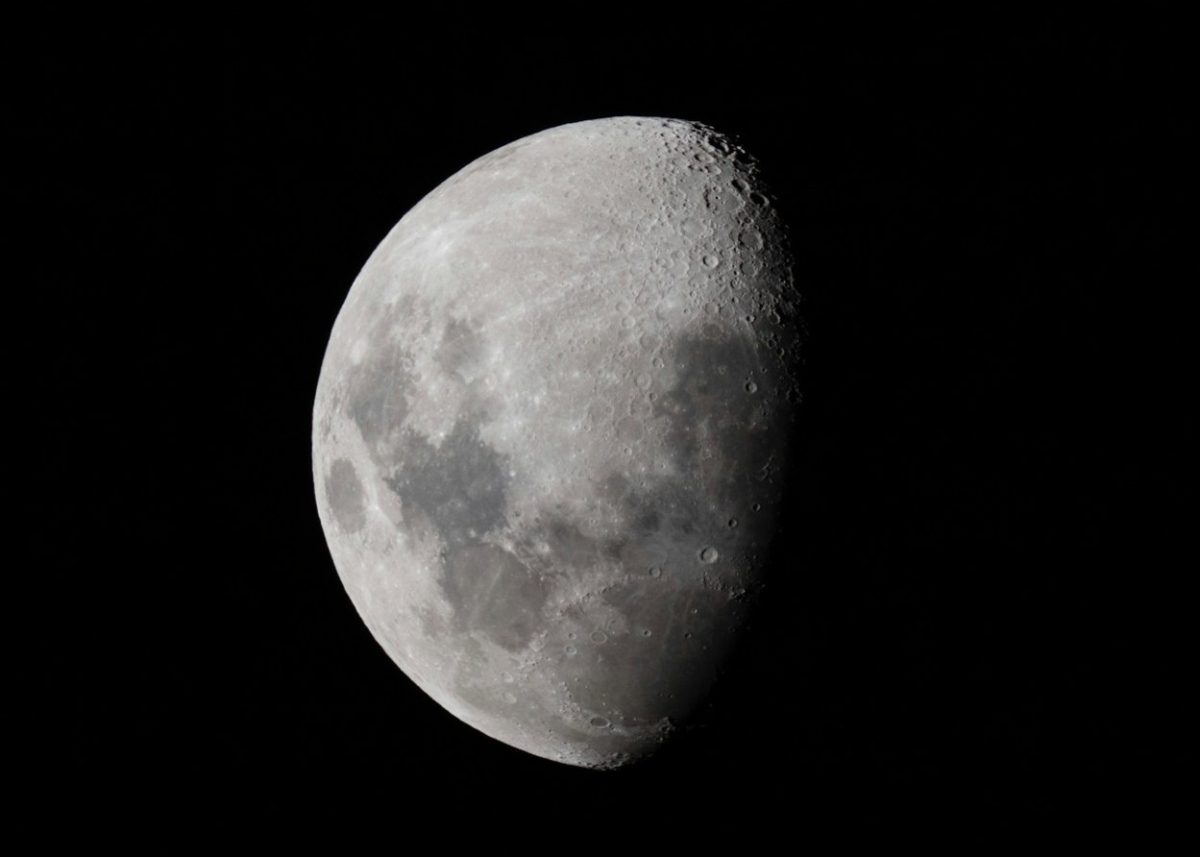 The Moon is defenseless against space because of the absence of a magnetic field.
Photo: Unsplash
The Moon is defenseless against space because of the absence of a magnetic field.
Photo: Unsplash
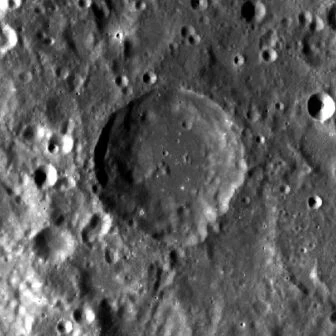 Dewar crater, photographed by the Lunar Reconnaissance Orbiter spacecraft.
Source: Wikimedia Commons
Dewar crater, photographed by the Lunar Reconnaissance Orbiter spacecraft.
Source: Wikimedia Commons
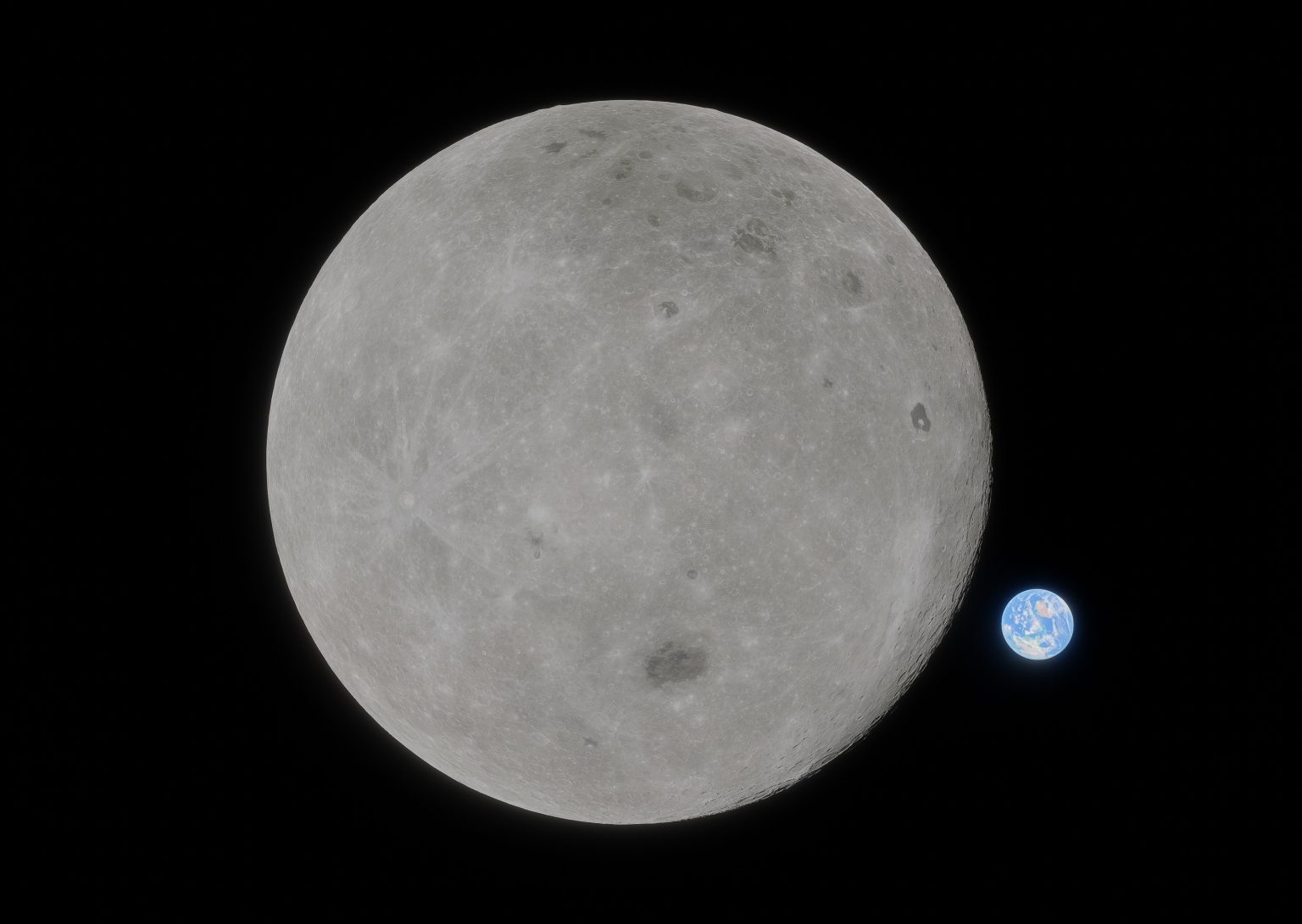 The far side of the Moon.
Image: Space Engine
The far side of the Moon.
Image: Space Engine
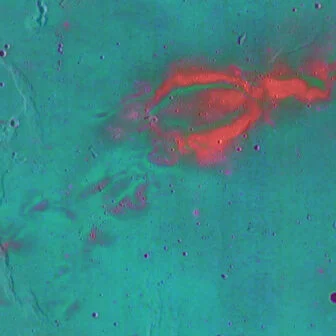 A lunar swirl photographed on the near side of the Moon.
Source: NASA
A lunar swirl photographed on the near side of the Moon.
Source: NASA