Physicist Thomas Campbell Claims Dead Relatives Who Greet Us After Death Are Not Real
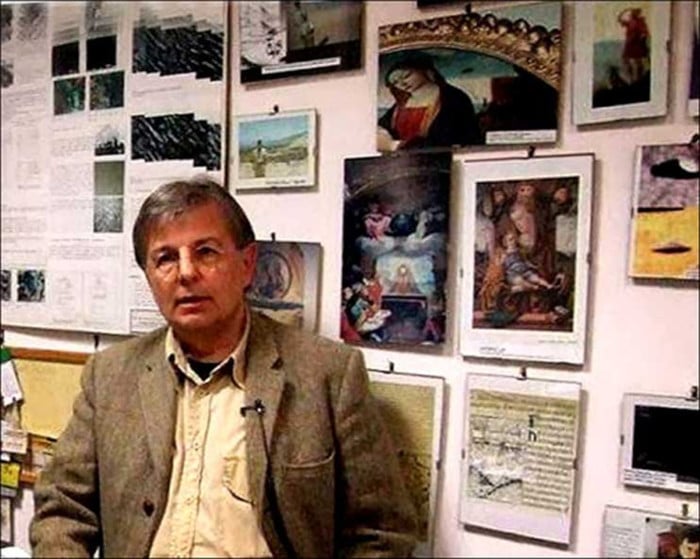
Physicist Thomas Campbell, who previously worked as a consultant for NASA, claims that people who die may be welcomed by familiar faces of deceased relatives, only to discover that those relatives are not actually their loved ones. He believes a larger consciousness system creates these appearances to comfort people during their first moments after death. The reunion lasts only a few minutes before the person is directed elsewhere, and memories of the life they just lived begin disappearing.
Campbell described what he believes happens to consciousness after the physical body dies. He said he had investigated the process in two unusual ways.
He claims to have connected his consciousness to people who were dying and followed their experiences beyond physical death. Second, he says he spent months working inside what he calls a transition reality, an environment supposedly designed to help newly deceased people adjust before beginning another life.
He explained that someone trained in altered states of consciousness could establish what he calls a mind-to-mind connection with another person. According to Campbell, this connection allows one consciousness to experience what another person experiences without relying on ordinary physical senses.
He claims to have used this method with people approaching death. Rather than physically observing them or attempting to communicate through conventional means, Campbell says he connected directly with their consciousness and remained connected as they died. In his account, the physical body stops functioning, but consciousness continues receiving experiences through another reality. He believes this allowed him to observe the dying process from the perspective of someone undergoing it.
Campbell had described this method before. During his October 20, 2025, interview with Danny Jones, he said he had followed two or three people through death using this technique. He compared the connection to the fictional mind meld performed by Spock in Star Trek, although he described his own experience as a direct exchange of consciousness rather than anything involving physical contact. These accounts are based on Campbell’s reported personal experiences, and there is no independently verified evidence that he successfully followed another person’s consciousness beyond death.
His second account is even more unusual because he claims to have played a role inside the afterlife itself. Campbell told Jones that many years ago, he began entering a particular nonphysical environment whenever he closed his eyes and fell asleep. He says this happened repeatedly for a couple of months, allowing him to become familiar with the people, activities, and procedures taking place there. He described his role as being like a Walmart greeter, welcoming people who had recently died and helping them understand where they were.
Campbell believes he was placed in this environment by what he calls the Larger Consciousness System, the underlying intelligence that, according to his theory, generates our physical universe and other reality systems. He says the experience was intended to teach him how the transition between lives operates. Later, when he claims to have followed dying people into the same environment, he recognized the process he had previously observed from the other side.
According to Campbell, death begins with an abrupt change in surroundings. A person suddenly becomes aware of existing somewhere unfamiliar, no longer receiving the sensory information associated with their physical body. They may initially be alone and confused, but they soon realize they are still conscious. Campbell believes the experience depends partly on the person’s expectations, fears, and understanding of consciousness.
The Larger Consciousness System then provides an environment intended to reduce confusion and help the person accept what has happened. For someone frightened by death, Campbell says this may involve seeing deceased family members approaching with reassuring expressions. The figures might appear exactly as the person remembers them, with familiar faces, voices, personalities, and mannerisms. The encounter can feel like a genuine reunion, even though Campbell believes something very different is happening.
“They’re not really your dead relatives.” He explained that the Larger Consciousness System is effectively playing the roles of those relatives to help the newly deceased person relax and release their attachment to the life they have just left.
This raises an unsettling possibility within his theory. A person might spend their final years longing to see a deceased parent, spouse, child, or close friend again. When death finally arrives, they may experience what feels like the reunion they wanted, without realizing that the familiar person standing before them is a representation generated by the system rather than the actual consciousness of their loved one.
Campbell does not describe this as a malicious deception. He believes the experience serves a practical purpose by preventing fear and emotional attachment from interfering with the transition. In his model, the system is concerned with helping consciousness move forward rather than preserving a permanent afterlife reunion based on relationships from one particular lifetime.
He also believes these meetings are brief. He described the deceased person spending a few minutes with the familiar figures before being encouraged to move elsewhere. At that point, the afterlife begins to resemble something surprisingly ordinary. A person might encounter someone who directs them toward a woman standing near a line of other people, where they are told to wait for further instructions.
Campbell says the lines and instructions are not actually necessary. They are activities created to occupy the newly deceased while their memories of physical life gradually fade. The person believes they are waiting for something important, but the waiting itself serves the purpose of helping them adjust. When Jones compared the environment to purgatory, Campbell rejected the description. He said it was simply a temporary transition reality, not a place of punishment.
During his August 27, 2026, appearance on Mayim Bialik’s Breakdown, Campbell had already described a similar process. He compared the waiting areas to the long queues found at Disney World, explaining that the apparent activities were designed to give consciousness time to release its attachment to the previous existence. In that discussion, he also said people who were already comfortable with death might not encounter deceased relatives at all.
The most disturbing part of Campbell’s explanation concerns what happens to memory. He says recollections of the life just completed begin fading almost immediately, much like a vivid dream that becomes difficult to remember after waking up. A person might initially recognize their previous identity, remember family members, and understand what happened before death. Within a short period, however, those memories supposedly become increasingly distant.
Campbell told Jones that by the time someone has walked toward the assigned line and waited there for a while, the memories of their previous lifetime may already have disappeared. Campbell, however, sees the loss of memory as an essential part of how consciousness evolves. He argues that the individual does not lose everything developed during a lifetime. What disappears is the personal history, including names, relationships, experiences, and intellectual knowledge associated with the physical identity. What supposedly remains is the underlying quality of consciousness shaped by the person’s choices.
In Campbell’s theory, someone who spent a lifetime becoming more compassionate, patient, and understanding would carry that development into the next incarnation. A person who remained dominated by fear, anger, or selfishness would continue working through those tendencies. Campbell describes this process in terms of reducing entropy, a concept he uses to describe consciousness becoming more organized, cooperative, and less driven by fear.
He argues that remembering previous lives would interfere with the process because people would already know what they were supposed to learn. Someone might behave kindly simply because they remembered that kindness was rewarded, rather than because compassion had become a genuine part of their character. Campbell believes meaningful growth requires decisions to arise naturally from the individual, without a record of previous lessons explaining exactly how to behave.
This is also why he believes people return under very different circumstances. One lifetime might involve wealth and security, while another brings poverty or hardship. A person may experience life as a man, a woman, or someone raised in an entirely different culture. Campbell says those differences expose consciousness to new choices and challenges that would be unavailable if every incarnation repeated the same conditions.
Before another incarnation, some people may also undergo what Campbell describes as a life review. He does not believe everyone needs one. According to his account, the review is intended for individuals who have not understood the effects of their actions or recognized recurring personal problems. They may be shown situations from their previous life, including moments when anger, fear, or selfishness influenced their behavior, so they can better understand what they need to change.
Campbell’s interest in these experiences has a long history. He consulted for NASA’s Ares I program, where his responsibilities involved analyzing technical risks and vulnerabilities that could affect mission and crew safety. His professional work in these fields is separate from his claims about the afterlife, which are not findings established by NASA research.
In the early 1970s, Campbell began working with Robert Monroe, the American businessman and researcher whose book Journeys Out of the Body became influential among people interested in altered states of consciousness. Campbell and engineer Dennis Mennerich helped develop equipment and experiments at Monroe’s research laboratory in Virginia. Their work included exploring binaural beats, an audio technique intended to help participants enter unusual states of awareness.
Monroe’s own accounts provide a striking historical connection to Campbell’s description of the afterlife. In a personal account preserved by the Monroe Institute, Monroe described visiting what he called the Park, an apparent recovery area for people who had recently died. He said he first encountered this environment in 1965 and later returned to investigate it after his wife, Nancy Penn Monroe, became seriously ill.
Monroe claimed that frightened or confused deceased people could be brought to this environment, where they would receive assistance before deciding what to do next. The institute subsequently developed a program called Lifeline, conceived in 1991, that teaches participants to explore what Monroe called Focus Levels 23 through 27. Its official description identifies the Park as a reception center where newly deceased people can supposedly recover from the shock of death.
The similarities between Monroe’s account and Campbell’s transition reality are difficult to overlook. Both involve temporary environments, people who help the newly deceased, and a period of adjustment before further experiences. However, there is an important difference. Monroe’s descriptions allow for reunions with actual deceased loved ones, while Campbell believes the familiar relatives encountered during the initial transition may be representations generated by the larger system.
As discussed in our earlier article about Campbell’s claimed visits to other realities, he believes consciousness was never physically contained inside the human brain. Instead, he compares the body to an avatar controlled by consciousness through an information stream. The physical universe is one of many virtual reality environments, and an out-of-body experience supposedly involves shifting awareness from one information stream to another.
Campbell developed this broader model in his book trilogy My Big TOE, published in February 2003. His theory attempts to explain consciousness, physical reality, paranormal experiences, and personal development through a single information-based system. The afterlife he describes is therefore not a separate religious destination but another environment within the same larger reality. His previous claims include communicating with beings in other reality systems and interacting with environments that feel as physical as the world around us.
Some aspects of Campbell’s account resemble experiences documented by researchers who study dying patients. One of the best-known investigators is physician Christopher Kerr, whose work at Hospice and Palliative Care Buffalo examines dreams and visions reported by people approaching death. Unlike Campbell’s description of experiences after death, Kerr’s research concerns patients who are still alive and able to describe what they have seen.
In a study published in the Journal of Palliative Medicine in 2014, Kerr and his colleagues enrolled 66 hospice patients, with 59 included in the final analysis. The researchers conducted 453 interviews and found that most participants reported at least one end-of-life dream or vision. Encounters with deceased friends and relatives were particularly meaningful, and visions involving deceased loved ones were rated as especially comforting.
During a 2024 interview with The ASCO Post, Kerr explained that these experiences often helped patients reconnect emotionally with people who had been important throughout their lives. Some described meeting deceased parents, spouses, or other loved ones, while others dreamed about travel or preparing to go somewhere. The experiences often became more frequent as death approached.
Kerr also emphasized that these dreams and visions should not automatically be confused with delirium. His research involved patients who were sufficiently alert to describe their experiences and participate in interviews. Delirium can involve disorganized thinking, confusion, and agitation, while many of the patients in Kerr’s studies described coherent experiences that brought comfort. Nevertheless, researchers have not established that these visions represent genuine communication with deceased people.
A systematic review published in 2022 examined research on end-of-life dreams and visions and found that such experiences were reported by a substantial proportion of dying patients across the studies analyzed. The findings reinforce the observation that encounters with deceased loved ones are not isolated anecdotes. They are recurring experiences that deserve attention in medical care, even though their ultimate cause remains uncertain.
There is also an important distinction between deathbed visions and near-death experiences. People who report near-death experiences have survived a medical crisis, sometimes involving cardiac arrest, and later described unusual awareness, life reviews, or encounters with other beings. In the AWARE II study published in 2023, researchers led by Sam Parnia investigated awareness during resuscitation in 567 hospital cardiac arrest cases. Among 28 survivors who completed interviews, six described transcendent recalled experiences of death.
The study also recorded signs of brain activity during resuscitation in some patients, raising questions about how awareness can return or persist during severe physiological stress. However, those findings do not demonstrate that consciousness survives irreversible death. They also do not verify Campbell’s account of a transition environment, deceased relatives being impersonated, or memories being removed before reincarnation.
Another unusual line of research concerns children who report memories of previous lives. The University of Virginia’s Division of Perceptual Studies has investigated thousands of such cases over several decades, beginning with psychiatrist Ian Stevenson and continuing through researchers including Jim Tucker. These cases sometimes involve children describing people, places, or events that their families later attempt to connect with the lives of deceased individuals.
A particularly interesting development appeared on October 18, 2026, when the university reported findings from a new analysis of reincarnation cases. Researchers Saeedeh Sadeghi, Marieta Pehlivanova, and Philip Cozzolino examined 1,678 reports in which purported memories had been associated with identifiable deceased people.
They found that the median reported interval between death and supposed rebirth was 16 months. More unexpectedly, cases involving sudden or unanticipated deaths were associated with shorter intervals. The most unexpected deaths corresponded to an average reduction of approximately 40% in the interval between death and the claimed reincarnation. The researchers reported that this relationship remained after considering several cultural and psychological factors, and was stronger among families whose religious backgrounds did not support reincarnation.
Read also:
The findings do not prove reincarnation, and the researchers themselves did not claim that they had established its existence. The cases depend on retrospective accounts, attempted identifications, and other evidence that can be difficult to verify independently. Still, the study introduces a particularly interesting question when compared with Campbell’s theory. If memories are supposedly removed during the transition process, why do some children report remembering previous lives?
Campbell’s model allows for an underlying consciousness to continue across different identities, but the circumstances in which detailed memories might survive are less clearly established. The University of Virginia cases cannot confirm or disprove his explanation because they do not directly test the transition system he describes. They do, however, show how difficult the question of memory becomes when attempting to explain what might persist between lives.
There is another unresolved problem in Campbell’s account. He believes the relatives who welcome a person after death may be convincing representations rather than their actual consciousness. Yet he also believes consciousness survives physical death and continues learning through other experiences. His theory therefore leaves an emotionally important distinction between the survival of a person at some deeper level and the survival of the particular personality, memories, and relationships through which that person was known.
RELATED
{ https://howandwhys.com/ }


 Pterodactyl-like creature filmed over Mexico