Ontdek de Fascinerende Wereld van UFO's en UAP's: Jouw Bron voor Onthullende Informatie!
Ben jij ook gefascineerd door het onbekende? Wil je meer weten over UFO's en UAP's, niet alleen in België, maar over de hele wereld? Dan ben je op de juiste plek!
België: Het Kloppend Hart van UFO-onderzoek
In België is BUFON (Belgisch UFO-Netwerk) dé autoriteit op het gebied van UFO-onderzoek. Voor betrouwbare en objectieve informatie over deze intrigerende fenomenen, bezoek je zeker onze Facebook-pagina en deze blog. Maar dat is nog niet alles! Ontdek ook het Belgisch UFO-meldpunt en Caelestia, twee organisaties die diepgaand onderzoek verrichten, al zijn ze soms kritisch of sceptisch.
Nederland: Een Schat aan Informatie
Voor onze Nederlandse buren is er de schitterende website www.ufowijzer.nl, beheerd door Paul Harmans. Deze site biedt een schat aan informatie en artikelen die je niet wilt missen!
Internationaal: MUFON - De Wereldwijde Autoriteit
Neem ook een kijkje bij MUFON (Mutual UFO Network Inc.), een gerenommeerde Amerikaanse UFO-vereniging met afdelingen in de VS en wereldwijd. MUFON is toegewijd aan de wetenschappelijke en analytische studie van het UFO-fenomeen, en hun maandelijkse tijdschrift, The MUFON UFO-Journal, is een must-read voor elke UFO-enthousiasteling. Bezoek hun website op www.mufon.com voor meer informatie.
Samenwerking en Toekomstvisie
Sinds 1 februari 2020 is Pieter niet alleen ex-president van BUFON, maar ook de voormalige nationale directeur van MUFON in Vlaanderen en Nederland. Dit creëert een sterke samenwerking met de Franse MUFON Reseau MUFON/EUROP, wat ons in staat stelt om nog meer waardevolle inzichten te delen.
Let op: Nepprofielen en Nieuwe Groeperingen
Pas op voor een nieuwe groepering die zich ook BUFON noemt, maar geen enkele connectie heeft met onze gevestigde organisatie. Hoewel zij de naam geregistreerd hebben, kunnen ze het rijke verleden en de expertise van onze groep niet evenaren. We wensen hen veel succes, maar we blijven de autoriteit in UFO-onderzoek!
Blijf Op De Hoogte!
Wil jij de laatste nieuwtjes over UFO's, ruimtevaart, archeologie, en meer? Volg ons dan en duik samen met ons in de fascinerende wereld van het onbekende! Sluit je aan bij de gemeenschap van nieuwsgierige geesten die net als jij verlangen naar antwoorden en avonturen in de sterren!
Heb je vragen of wil je meer weten? Aarzel dan niet om contact met ons op te nemen! Samen ontrafelen we het mysterie van de lucht en daarbuiten.
…when animals first diversified some 542m or more years ago in the Cambrian “explosion”, there may have been an even greater diversity of fundamental body plans. Consider the five-eyed and trunked Opabina in the image above, or the stalked and almost flower-like Dinomischus alongside our own distant relative, the chordate Pikaia.
Speculating about what aliens look like has kept children, film producers and scientists amused for decades. If they exist, will extra terrestrials turn out to look similar to us, or might they take a form beyond our wildest imaginings? The answer to this question really depends on how we think evolution works at the deepest level.
Hollywood has given us its fair share of humanoid aliens over the years. Initially this was through necessity, as special effects required someone to clamber into a rubber suit. Ironically, now that CGI makes anything possible, aliens sometimes look even more human in order to help the cinema goer make an emotional connection with them – such as in James Cameron’s Avatar.
At present, the only life forms we can study are here on Earth. These had a single origin around 3.5 billion years ago, but this common ancestor gave rise to perhaps 20m living species of animals alone. These have bodies organised according to about 30 different body plans in major groups called phyla.
The five-eyed fossil Opabinia could have given rise to five-eyed animals today. Nobu Tamura/wikimedia, CC BY-SA
But when animals first diversified some 542m or more years ago in the Cambrian “explosion”, there may have been an even greater diversity of fundamental body plans. Consider the five-eyed and trunked Opabina in the image above, or the stalked and almost flower-like Dinomischus alongside our own distant relative, the chordate Pikaia.
Rerunning the Tape of Life
In a famous thought experiment, biologist Stephen Jay Gould asked what might happen if we were to rewind the “tape of life” and rerun it. Gould argued for the importance of chance in evolution: change one small thing early on, and the consequences magnify through time. In the version of history we know, Pikaia(imaged below) or something very like it survived and ultimately gave rise to fishes, amphibians, reptiles, mammals and ultimately ourselves. But what if it had perished? Might some other group have given rise to intelligent beings, and might you now be reading this with five eyes rather than the customary two? If our own origins on Earth really turned on such fine hinges, why should aliens – evolving on different planets – even remotely resemble us?
Pikaia – an early chordate, the group to which humans belong. Nobu Tamura/wikimedia, CC BY-SA
The answer, according to evolutionary biologist Simon Conway Morris, lies in the phenomenon of evolutionary convergence: the process by which distantly related animals come to closely resemble each other. For example, the similar streamlined shape of dolphins, tuna fish and the extinct ichthyosaurs all evolved independently in response to the same selective pressures for moving efficiently through water at speed.
But what aspects of alien biology might we expect? Carbon-based biochemistry is likely given that carbon forms stable backbone chains, and makes stable but readily breakable bonds with other elements. Other elements, notably silicon and sulphur, make less stable bonds at Earth-like temperatures. Water or some other solvent also seems necessary. For evolution to occur there needs to be some mechanism for storing and replicating information with moderate fidelity, such as DNA, RNA or some analogue. Although the first cells appeared on Earth quite early, multicellular animals took nearly 3 billion more years to evolve. So it may well be that life on other planets could get stuck at the single-celled stage.
On an Earth-like planet it is also likely that radiation from the alien sun or suns would be used in biochemical pathways as a source of energy. For moderately large multicellular primary producers, harnessing light efficiently probably necessitates a light gathering system of leaves and branches. Similar shapes and habits have evolved convergently on Earth, so we might expect “plants” with broadly familiar forms on Earth-like planets.
With few exceptions, animals either eat the primary producers or each other, and there are only so many ways of doing this. Pursuing food often necessitates moving with the mouth first, so the animal has a head and tail end. Teeth and probably jaws evolve to hold and tackle food items. Moving against a hard surface requires specialised structures (such as cilia, a muscular foot or legs) at the interface, so that there is a back and front side. Typically, this also imparts bilateral (left/right) symmetry: indeed, most animals belong to a “super-group” called the Bilateria.
Why not Giant Intelligent “Insects”?
But what about the large brained and intelligent creatures that might be capable of crossing interstellar distances? Insects are by far the most species rich group on Earth: why shouldn’t aliens look more like them? Unfortunately, having your skeleton on the outside makes growth difficult, and entails periodic shedding and regrowth. On Earth-like planets, all but relatively small terrestrial animals with external skeletons would collapse under their own weight during moulting, and some critical size may be necessary for suitably complex brains.
The giant weta: one of the largest insects. New Zealand Department of Conservation, CC BY-SA
Relatively large brains, some degree of tool use and problem-solving abilities appear to be correlated on Earth, and have evolved multiple times: in apes, whales, dolphins, dogs, parrots, crows and octopuses. However, the apes have developed tool use to a vastly greater degree. This is at least partly the result of walking on two legs, which frees up the front limbs, and because of the dexterity of our fingers (which may also be a key to the origins of written language).
Ultimately, the jury is out on the extent to which intelligent aliens – if they exist – would resemble us. It may or may not be significant that humans have just two eyes and ears (just enough for stereo vision and hearing), and just two legs (reduced from the initially more stable four). Many other organs also come in pairs as a consequence of our evolutionarily deep-seated – and perhaps inevitable – bilateral symmetry. Still other elements of our body plan are probably nothing more than chance. The fact that we have hands and feet with five digits is a consequence of the fixation on five in our early tetrapod ancestors – close relatives experimented with seven or eight.
Indeed, most species have been subject to an accidental “locking down” during development – making body plans become stereotyped and inflexible with evolutionary time. Untangling the functional from the accidental is one of the big outstanding challenges in evolutionary biology – and may help us better understand how alien lifeforms could differ from us.
The main way we now search for intelligent life in space is by listening for radio or gamma transmissions. These efforts are increasingly being concentrated on star systems with Earth-like planets, as these are believed to be the most likely to harbour life. After all, it is easier to search for “life as we know it” than life as we don’t.
Multiple F/A-18 Pilots Reported alleged UFO sightings using new RADAR technology
Multiple Fighter jet pilots from the United States Navy have reported alleged unidentified flying objects while operating their aircraft mid-air.
Five U.S. Navy F/A-18 Super Hornet crewmen have recounted a number of incredibly strange encounters with unidentified flying objects off the East Coast of the United States. Two of the pilots went on the record.
Experienced lieutenants Ryan Graves and Danny Accoin, as well as three other anonymous squadron pilots, who fly F/A-18 Super Hornet jets, told The New York Times they first noticed the objects in 2014.
Lt Graves and Lt Accoin were part of the VFA-11 ‘Red Rippers’ squadron at the time of the alleged incidents.
The pilots’ accounts also point to a major sensor upgrade on their aircraft that made the presence of these crafts even detectable at all.
In the vision of one incident recorded by Lt Graves’ squadron while performing training manoeuvres between Virginia and Florida off the Theodore Roosevelt aircraft carrier, the silhouette of a strangely-elongated object was caught in one of the jets’ cameras.
The pilots recorded the shapes flying over the ocean at high speed, suddenly stopping and rotating mid-air.
“These things would be out there all day,” Lt Graves told The New York Times.
“These things would be out there all day… Keeping an aircraft in the air requires a significant amount of energy. With the speeds we observed, 12 hours in the air is 11 hours longer than we’d expect.”
The persistence of these crafts was in no way the strangest thing about them. Beyond being able to drop tens of thousands of feet in a matter of a second or two and possessing flight characteristics that are unobtainable with known technology, the unannounced visitors looked like nothing else on the planet.
Lt Graves and his team reported the sightings to the US Department of Defence’s Advanced Aerospace Threat Identification Program run from the Pentagon, however, they were only ever described as “a striking series of incidents”.
Those incidents led to the pilots questioning whether the objects were part of a classified US Government drone program unbeknown to military personnel.
Here is a famous ‘gimbal video’ was supposedly recorded on one of the Red Rippers’ training missions:
According to Graves, Naval Aviators really began noticing the objects in their training areas after Active Electronically Scanned Array (AESA) radars were integrated into fighter jets
Before the mid-2000s, Navy tactical fighter aircraft were equipped with mechanically scanned array (MSA) pulse doppler radar systems of varying capabilities and power outputs. F/A-18AC/D Hornets were largely equipped with the AN/APG-73 radar.
AN/APG-65 radar installed in an F/A-18 Hornet.
But as the production of the Super Hornet, the AN/APG-79 Active Electronically Scanned Array radar was installed in place of the AN/APG-73.
Super Hornet with the AN/APG-79 RADAR
The AESA equipped fighters can see farther, better understand what was being detected, and have a hugely enhanced ability to see detect objects flying low over surface clutter. Even small or low observable (stealthy), or slow-moving targets, or those that attempt to hide in the ‘doppler notch’ of a threatening fighter’s radar by flying perpendicular to it, have a tougher time eluding detection and engagement when facing opposition fighters packing AESA radar sets.
The New YorkTimes writes:
The pilots began noticing the objects after their 1980s-era radar was upgraded to a more advanced system. As one fighter jet after another got the new radar, pilots began picking up the objects, but ignoring what they thought were false radar tracks.
“People have seen strange stuff in military aircraft for decades,” Lieutenant Graves said. “We’re doing this very complex mission, to go from 30,000 feet, diving down. It would be a pretty big deal to have something up there.”
But he said the objects persisted, showing up at 30,000 feet, 20,000 feet, even sea level. They could accelerate, slow down and then hit hypersonic speeds.
Lieutenant Accoin said he interacted twice with the objects. The first time, after picking up the object on his radar, he set his plane to merge with it, flying 1,000 feet below it. He said he should have been able to see it with his helmet camera, but could not, even though his radar told him it was there.
A few days later, Lieutenant Accoin said a training missile on his jet locked on the object and his infrared camera picked it up as well. “I knew I had it, I knew it was not a false hit,” he said. But still, “I could not pick it up visually.”
At this point the pilots said they speculated that the objects were part of some classified and extremely advanced drone program.
But then pilots began seeing the objects. In late 2014, Lieutenant Graves said he was back at base in Virginia Beach when he encountered a squadron mate just back from a mission “with a look of shock on his face.”
He said he was stunned to hear the pilot’s words. “I almost hit one of those things,” the pilot told Lieutenant Graves.
What was strange, the pilots said, was that the video showed objects accelerating to hypersonic speed, making sudden stops and instantaneous turns — something beyond the physical limits of a human crew.
Asked what they thought the objects were, the pilots refused to speculate.
The Theodore Roosevelt carrier left the US, deployed to the Persian Gulf in 2015 to form part of the fight against Islamic State. The pilots have since said the alleged sightings have stopped since their departure.
As twisted magnetic fields snap and realign, they fling particles across space at speeds approaching the speed of light. This process is called magnetic reconnection.
Light-speed travel is a staple of science fiction in space. No "Star Wars" movie seems complete until the Millennium Falcon (or a rival ship) uses its hyperdrive. And many "Star Trek" fans enjoy talking about the relative star-system-jumping speeds of the USS Enterprise, against the speeds of other Federation ships.
But in real life, physics gets in the way. Einstein's theory of special relativityessentially puts a speed limit on cosmic travel; as far as we can tell, nothing goes faster than the speed of light. Worse, any object that has mass tends to get more and more massive — dragging down the object's velocity — as it approaches light speed. So as far as we know, only small particles can get anywhere near the speed of light.
The sun is a wacky environment to study physics, because it is so extreme compared to Earth. It's also a real-life laboratory showing how nuclear reactions happen. It also is an example of an environment with electromagnetic fields — which, as NASA points out, is the same force that stops magnets from falling off your fridge.
Magnetic fields and electric fields work together to accelerate particles with an electric charge. This charge allows electromagnetic fields to push particles along — sometimes at speeds approaching the speed of light.
We can even simulate this process on Earth. Huge particle accelerators (like at the Department of Energy's Fermi National Accelerator Laboratory, or at the European Organization for Nuclear Research's Large Hadron Collider) create pulsed electromagnetic fields. These fields accelerate charged particles close to the speed of light. Next, scientists often crash these particles together to see what particles and energy are released.
In fractions of a second after these collisions, we can quickly observe elementary particles that were around in the first few seconds after the universe was formed. (That event, called the Big Bang, happened about 13.8 billion years ago.)
2. Magnetic explosions
The sun is also host to phenomena called solar flares. Dancing above the sun's surface is a tangle of magnetic fields. At times, these fields intersect and snap, sending plumes of solar material off the surface — and, sometimes, charged particles along with it.
"When the tension between the crossed lines becomes too great, the lines explosively snap and realign in a process known as magnetic reconnection," NASA officials said in the statement. "The rapid change in a region's magnetic field creates electric fields, which causes all the attendant charged particles to be flung away at high speeds."
Particles streaming off the sun may accelerate close to the speed of light, thrown from the sun thanks to magnetic reconnection. One example of such objects is the solar wind, the constant stream of charged particles the sun emits into the solar system. (There may be other factors speeding these particles as well, such as wave-particle interactions — which is explained in the next section of this article.)
Magnetic reconnection also likely happens at large planets, such as Jupiter and Saturn. Closer to home, NASA studies magnetic reconnection near Earth using the Magnetospheric Multiscale mission, which measures our planet's magnetic field using four spacecraft. The results may be useful to better understand how particles accelerate all over the universe, NASA officials said.
3. Wave-particle interactions
Particles can also careen at high speeds when electromagnetic waves collide; that phenomenon is more technically called wave-particle interactions.
"When electromagnetic waves collide, their fields can become compressed. Charged particles bouncing back and forth between the waves can gain energy similar to a ball bouncing between two merging walls," NASA officials said.
These interactions take place all over the universe. Near Earth, NASA missions such as the Van Allen probes are watching wave-particle interactions to better predict particle movements — and protect electronics on satellites. That's because high-speed particles can damage these delicate spacecraft parts.
Supernovas, or star explosions, may also play a role in more far-away interactions. Researchers have theorized that after a star explodes, it creates a blast wave — a shell of hot, dense compressed gas — that zooms away from the stellar core at high speed. These bubbles are full of charged particles and magnetic fields, creating a likely environment for wave-particle interactions. This process may eject high-energy cosmic rays — which consist of particles — at velocities close to the speed of light.
The rock-studying rover looks up from time to time.
Like the rest of us, NASA's Curiosity Mars rover likes to watch the clouds roll by from time to time.
The car-size robot craned its neck skyward on May 7 and May 12, capturing gorgeous imagery of wispy clouds scudding through the Red Planet's atmosphere.
The clouds seem to lie about 19 miles (31 kilometers) up and are likely composed of water ice, NASA officials said. Cirrus clouds here on Earth are also made of water ice, but that doesn't mean the two planets' atmospheres are similar; Mars' air is 100 times thinner than that of Earth and is dominated by carbon dioxide, with just tiny traces of oxygen. (Earth's atmosphere is 78% nitrogen, 21% oxygen and trace amounts of various other substances.)
Curiosity wasn't just killing time or recharging its metaphorical batteries here. Mission scientists hope to learn a thing or two about Mars' atmospheric dynamics, especially after comparing Curiosity's observations with those gathered by NASA's InSight lander, which is camped out about 373 miles (600 kilometers) away.
"Capturing the same clouds from two vantage points can help scientists calculate their altitude," NASA officials wrote Wednesday (May 29) in a description of the newly released imagery.
NASA's Curiosity Mars rover took this selfie on May 12, 2019 (the 2,405th Martian day, or sol, of the mission). To the lower left of the rover are its two recent drill holes, at targets called "Aberlady" and "Kilmarie."
Curiosity landed inside Mars' 96-mile-wide (154 km) Gale Crater in August 2012, tasked with determining if the area could ever have supported microbial life. The answer to that question is yes; Curiosity's work has shown that Gale hosted a potentially habitable lake-and-stream system for long stretches in the ancient past.
Since September 2014, Curiosity has been making its way up through the foothills of Mount Sharp, the 3.4-mile-high (5.5 km) mountain that rises from Gale's center. The goal is to climb high enough to learn about Mars' long-ago transition from a relatively warm and wet world to the cold desert planet we know today.
Curiosity has recently been exploring a region that mission team members call "the clay-bearing unit," because Mars orbiters have spotted evidence of clay minerals there. And the rover provided some definitive ground truth.
"Two samples the rover recently drilled at rock targets called 'Aberlady' and 'Kilmarie' have revealed the highest amounts of clay minerals ever found during the mission," NASA officials wrote in the photo description.
Clay minerals are associated with liquid water, so the new observations help flesh out the habitability history of Gale Crater.
"It's likely that the rocks in the area formed as layers of mud in ancient lakes — something Curiosity also found lower on Mount Sharp," NASA officials wrote. "Water interacted with sediment over time, leaving an abundance of clay in the rocks there."
The former leader of the U.S. government's top-secret UFO program has stories to tell, and he is sharing some of them for the first time in a new documentary.
Intelligence officer Luis Elizondo served as the former director of the Pentagon's Advanced Aerospace Threat Identification Program (AATIP), an initiative launched in 2007 to study reports of UFO encounters. Elizondo departed the agency in 2017; that year, he spoke with reporters at The New York Times, confirming the existence of the shadowy agency and describing its mission.
Now, Elizondo is pulling back the curtain on his tenure with the AATIP, which he left because of a lackluster official response to the agency's findings, and their unwillingness to address potential risks from UFOs, according to the new show "Unidentified: Inside America's UFO Investigation," premiering May 31 on the History Channel at 10 p.m ET/9 p.m. CT.
No, there isn't a big reveal that UFOs were alien spacecraft all along. But delving into long-hidden accounts of UFO investigations will hopefully encourage people — and authorities — to overcome long-standing stigmas and talk more openly about these mysterious aircraft, some of which may pose a bigger threat than we realize, Elizondo told Live Science.
In 2014 and 2015, pilots with the U.S. Navy reported multiple UFO sightings during training maneuvers.
UFOs have perplexed and fascinated people for decades; they also pose a unique challenge to federal agents trying to determine if they represent a threat to national security. Before AATIP, the U.S. Air Force had launched Project Blue Book, which investigated more than 12,000 purported UFO sightings from 1952 to 1969.
During Elizondo's tenure at AATIP, observers reported UFOs flying at hypersonic speeds — more than five times the speed of sound. Yet there were none of the signatures that usually accompany aircraft flying at such fantastic speeds, such as sonic booms, he said.
The UFOs were also unexpectedly mobile, traveling so fast that they would have experienced gravitational forces, or G-forces, that far exceed the limits of endurance for both humans and aircraft. The F-16 Fighting Falcon aircraft, one of the most maneuverable in the U.S.'s arsenal, reaches its limit at around 16 to 18 G's, while the human body can withstand about 9 G's "for a very short time" before a person would start to black out, Elizondo said.
"These things that we were observing were pulling 400 to 500 G's," he said. "They don't have engines or even wings, and they are able to seemingly defy the natural effects of Earth's gravitational pull."
Some of the UFO sightings reported to AATIP were eventually resolved, as aerial drones or test firings of new types of missiles that were spotted from an unusual angle. But while many astonishing UFOs still defied explanation, there simply isn't enough evidence to suggest they belonged to extraterrestrials, Elizondo added.
However, another possibility is even more unsettling than the prospect of an alien invasion: that a foreign adversary had secretly developed technologies that are "strategic game-changers," unlike anything ever seen before, he said. Addressing that potential threat is a necessary step that government officials — even those that supported AATIP — don't take seriously enough, according to Elizondo.
What's more, the entrenched secrecy shrouding official UFO investigations only reinforces the association of UFOs with "tinfoil hats and ridiculous stories."
"We trust the American people to know that North Korea has nuclear warheads pointed at Los Angeles, yet we don't trust them with the knowledge that there's something in our skies and we don't know what it is? That seems counterproductive to me," Elizondo said.
Editor's Note:This story was updated with the correction that Luis Elizondo left the Pentagon in 2017, not 2011.
WEIRD FLASHES KEEP APPEARING ON THE MOON AND SCIENTISTS DON’T KNOW WHY
NASA/JPL/VICTOR TANGERMANN
VICTOR TANGERMANN
Strange Flashes
Several times a week, short bursts of light appear on the surface of the Moon — and so far, scientists have only been able to guess as to why. But a team of German astronomers have a new theory, and it could provide crucial information for humans who want to settle the Moon.
“Seismic activities were also observed on the moon,” said Hakan Kayal, professor of space technology at Julius-Maximilians-Universität (JMU) Würzburg in Germany in a statement. “When the surface moves, gases that reflect sunlight could escape from the interior of the moon. This would explain the luminous phenomena, some of which last for hours.”
Scanning The Skies
The strange flashes were actually first observed in the 1950s, but have received little attention from the world of science. But the team of JMU wants to change that with their newly built lunar telescope in southern Spain that started scanning the night sky in April.
Two cameras watch for the strange flashes at night. If both see the same flash, they take a series of photos and videos. But the software for their new telescope still needs a bit of work. Kayal and his team are planning to upgrade it with a neural network that can filter out false positives like birds and airplanes.
Street View
Understanding the phenomenon could be paramount to keep human settlers on the Moon safe.
“Anyone who wants to build a lunar base at some point must of course be familiar with the local conditions,” said Kayal.
These false-color frames extracted from the original black and white video show the explosion in progress. At its peak, the flash was as bright as a 4th magnitude star.
NASA's lunar monitoring program has detected hundreds of meteoroid impacts. The brightest, detected on March 17, 2013, in Mare Imbrium, is marked by the red square.
An artists impression of a lunar explosion – caused by the impact of a meteorite.
In 1974, the late Stephen Hawking argued in a now-famous study that besides mass and spin, black holes can be characterized by a unique temperature. He also claimed that black holes don’t just devour matter, but also emit radiation. Researchers at the Israel Institute of Technology have set out to test this theory by creating a black hole analog in the lab. The results agreed with Hawking’s predictions, giving more credence to the theory.
Credit: Pixabay.
A black hole is defined as a region of spacetime whose extremely strong gravity prevents anything, including light, from escaping. This essentially means that we can’t see a black hole directly — although this year astronomers captured a picture of a black hole’s event horizon (the swirling, bright boundary of the black hole). Scientists are confident that black holes exist, judging from their theoretical calculations and observations of X-rays emitted by swirling disks of gas around the black hole. The motions of nearby stars can also infer the presence of a black hole. In fact, most galaxies — the Milky Way included — are thought to be held together by the gravity of supermassive black holes (with masses millions of times that of the sun), which lie at the galactic center.
But if everything gets sucked into a black hole, never to return, what happens to the information that these objects used to hold? According to the laws of quantum mechanics, matter cannot simply disappear without leaving behind information of its previous state. So, on the one hand, we have physics that says information is never truly lost, nor is it truly copied, while on the other hand, we know that an object that gets too close, and crosses the black hole’s event horizon, it can never escape.
This is known as the black hole information paradox — and Stephen Hawking had been trying to crack it for decades. His investigations eventually led him to develop the Hawking radiation theory, in which the physicist argued that not all matter falls into a black hole. In some cases, when entangled pairs of particles are attracted into a black hole, only one of them would fall in, while the other escaped. Hawking named these escaping particles Hawking radiation, theorizing that its nature should be thermal radiation whose temperature would depend on the size of the black hole.
Testing such a theory is virtually impossible because we currently lack the technology required to measure the radiation from a real black hole. Which is why a team of researchers at the Israel Institute of Technology had to come up with a creative solution. For their new study, the authors made a Bose-Einstein condensate (BEC) — the fifth form of matter where familiar physics fades away, and quantum phenomena start to take over, even at a macroscopic scale. BEC matter almost stops behaving as particles and starts behaving more like waves. In a BEC you can observe “waves of atoms”, moving synchronized with each other just like water drops in an ocean wave.
The experimental setup for the black hole analog.
Credit: Jeff Steinhauer.
To make BEC, the Israeli researchers trapped 8,000 rubidium atoms in a focused laser beam, chilling matter to only a billionth of a degree above absolute zero. A second laser fired on one side of the BEC made it denser on that side. According to the researchers, this led to a transition that moves at a constant speed through the condensate from the denser area (outside of the black hole) to the less dense area (analogous to the inside of the black hole). This is where it gets a bit tricky: the researchers say that sound waves traveling through the denser region move faster than this transitional flow, allowing sound to move in either direction. However, in the less dense region, sound waves can only travel away from the sharp transition — in other words, further into the black hole analog.
Light can either move away or into a black hole (and never escape) and in this experiment, light was replaced by sound. In experiments, researchers forced one of a pair of phonons (like photons for sound) to fall into the flow of rubidium atoms, while the other was allowed to escape. When the researchers measured both phonons, they recorded an average temperature of .035 billionths of a Kelvin, which agrees with Hawking’s predictions.
These findings in no way prove Hawking’s theory — that would require technology that doesn’t currently exist. However, the study published in Natureshows that Hawking was definitely on to something.
Russia recently launched the world’s longest submarine called Belgorod. This special submarine is one of Russia’s most secret weapon carriers, which has been designed for carrying out different kind of missions.
The Belgorod is officially known as Project-09852 and is equipped to carry out underwater spy missions and to launch Poseidon nuclear torpedoes. It is neither an attack submarine nor a ballistic missile sub, but it will be a mothership to other undersea vessels.
Here are some of its incredible features:
It is 184-meter (604 feet) long, double the size of a normal submarine.
14,700-ton Belgorod is a nuclear-powered submarine.
Belgorod can dive to around 1,700 feet and it is guided by artificial intelligence.
Submarine is capable of carrying six thermonuclear warheads
It will be the carrier of rescue deep-water and autonomous underwater drones.
These drones are capable of carrying nuclear warheads weighing up to two megatons and their operational depth is over 3,000 feet.
These Poseidon drones can hit coastal targets 6,000 miles away
The Poseidon can target coastal areas with a heavy nuclear weapon, causing a devastating tsunami wave.
Did 2 F15s Intercept Contagion Spraying High Speed Craft? Event Now Confirmed!
Did a craft get taken down that was carrying Ebola? I do not know but the creator of this video seems to think so. Sorry about his Caps below in the description. It would take me forever to go thru it. What do you think about this channel and his story? Thank you. J.P.
5*30*19~UPDATE(!)DID 2 F15s INTERCEPT CONTAGION-SPRAYING HIGH SPEED CRAFT(?!)EVENT NOW CONFIRMED(!)
Night after night, Helena Adelina would wake up unable to move and convinced that something evil was in her room, clawing at her inert body or whispering in her ear.
Sometimes she would see a shadowy figure lurking in the darkness next to her. Other times she would sense or hear his presence.
‘He was a slim, tall figure but with no features, like a silhouette,’ says Helena, 24. ‘My sense was that he was terrifying, an ancient being, very dark and pure evil.
Frozen in fear: Elise Robson in new film the Nightmare, which explores the phenomenon of 'sleep paralysis'
‘Sometimes I would wake and not see him but hear his voice in my ear talking about destruction, war and death. Sometimes he would grab me around the ankles and drag me under the covers. I would be fighting it and be struggling to breathe.’
These were no ordinary dreams. Every time Helena felt that she was fully awake but utterly unable to move and gripped by an ungodly and suffocating fear.
And it wasn’t always a man.
‘Sometimes a woman would enter the scene, laughing and cackling,’ she recalls. ‘She would keep slapping me around the face and laughing and finding it very amusing. And there would be a serious ringing in my ears. When I came out of it my ears would be ringing very badly.
‘At the time it was happening it felt like it was going on for ever; how long it went on for I don’t know.’
It’s difficult for those who have never had a night-time ‘visitation’ or waking nightmare to imagine the pure horror of the experience. For Helena, a film student in London at the time, they got so bad she dreaded falling asleep.
Helena’s trauma is far from rare. She is one of tens of thousands of Britons who experience severe ‘sleep paralysis’; a terrifying medical condition that leaves sufferers frozen in the disturbing world that lies between sleeping and waking and which is the focus of a new documentary, The Nightmare.
In its classic form, sufferers wake up frightened, unable to move and convinced someone, or something, malevolent is close by. Often they see a shadowy man or a witch-like figure. Some sense the presence of an evil spirit in the room or feel something oppressive lying on their chest.
It may sound unlikely if you have never experienced it, but the phenomenon has been recorded in almost every culture throughout history and is almost certainly responsible for most of the myths of spirits, demons and ghosts that prey upon the sleeping.
Academics have linked it to the origin of the vampire; a hypnotic figure that visits entranced women at night, and the ‘incubus’, the medieval spirit which assaults women as they sleep.
Sometimes she would see a shadowy figure lurking in the darkness next to her. Other times she would sense or hear his presence
Sleep paralysis is the focus of a new documentary, The Nightmare (pictured, the film's poster), which is in cinemas now
T he condition probably explains the German folk stories of the ‘mare’, a goblin that rides on the chests of people while they sleep, and the Newfoundland Old Hag, a woman who sits on a sleeper’s chest to suffocate them.
The Japanese tell of the ghosts of children who sit on the chests of sleepers, while in St Lucia, sleepers are visited by the ‘kokma’ — the spirit of an unbaptised baby which throttles its victims in bed.
Sleep paralysis could even account for tales of alien abductions. Professor Chris French, psychologist at Goldsmiths, University of London, and one of the UK’s leading experts in sleep paralysis, believes about 30 per cent of the population experience the phenomenon at least once, while five per cent have more frequent episodes.
‘It is a very common experience but typically people haven’t heard of it,’ he says.
‘I have people calling me about it and often they have the same story; they’ve been suffering and never told anyone because others would think they were crazy. In the whistles and bells version, people get a strong sense of a presence and they may also get hallucinations. They may see dark shadows and lights and monstrous figures, or footsteps and mechanical sounds or voices.
‘They may feel as if they are being dragged out of bed. It is absolutely terrifying. There is also intense fear. It doesn’t have a dream-like quality; it feels incredibly real.’
The sufferer’s eyes are open during this state, so to an onlooker they seem fully awake, although they cannot move.
Tens of thousands of Britons experience severe ‘sleep paralysis’; a terrifying medical condition that leaves sufferers frozen in the disturbing world that lies between sleeping and waking
After a time, which can feel interminable for those afflicted, the ability to move returns, which may be a gradual or sudden process.
Thankfully, few are affected as badly as Helena, who began to be afflicted in her first year at university. ‘I started to dread falling asleep and began to suffer from insomnia,’ she says.
‘It had a knock-on effect on my mental health but I didn’t tell anyone how much of a state I was in.’
For a phenomenon so common, few people seem to know about it. After talking to Prof French and Helena, I asked friends and relatives if they had experienced anything similar. A remarkably high number said yes.
One friend recalled how she woke up in bed when living in China to see a man with pointed teeth eating her feet. The vision was vivid and unlike any dream. ‘Even thinking about it now makes my heart skip a beat,’ she said.
Another recalled lying in her boarding school bed, frozen to the spot as a bearded dwarf walked across the dormitory in the dead of night. To this day, she vividly recalls the figure’s terrifying red eyes.
Another told me how she regularly wakes up convinced that a shadowy man is trying to get into her bedroom at night yet she is unable to scream or shout. She finally gets control of her body, gasping and petrified.
Scientists have only a rough idea of what causes sleep paralysis and why some suffer more than others. During a normal night’s sleep you go through 90-minute cycles and within each you go through different stages of sleep,’ says Prof French.
‘One of these is REM, or rapid eye movement, sleep. This is the phase typically associated with vivid dreams and, during REM sleep, it is normal for your muscles to be paralysed to stop you acting out your dreams.’
People are most likely to recall their dreams when they wake during REM sleep. Normally, as our bodies come out of REM sleep, we gain control over our muscles before we wake, but with sleep paralysis something goes wrong. The conscious mind wakes up but the body doesn’t, and in this halfway house between sleeping and waking, images and hallucinations from dreams break into reality.
In its classic form, sufferers wake up frightened, unable to move and convinced someone, or something, malevolent is close by
The imagery or sensations vary but almost all suffer intense fear, whether or not they see or sense demons, witches or evil spirits.
That suggests to Prof French that fear is not the brain’s reaction to scary hallucinations but is an integral part of sleep paralysis, caused by unusual activity in the amygdala, the part of the brain responsible for fear.
It’s possible the visions of shadow-men and hags are concocted by the confused brain to justify why it is experiencing so much terror for no apparent cause. If you are unlucky enough to suffer from these waking nightmares, what can you do?
A ccording to Prof French, getting into good sleeping patterns helps. Avoid alcohol, caffeine and eating too close to bedtime, go to bed at the same time each night and avoid sleeping on your back — all of which can lead to disturbed sleep.
If you sleep with a partner, encourage them to wake you if you seem distressed.
‘Even learning that there is such a thing as sleep paralysis can help you appreciate that you are not crazy, and that it is not ghosts or demons, so you are not lying awake worried that it may happen,’ he says.
Some people have even learned to accept it and enjoy the experience, just as they would a horror film, but they are, it must be said, an extreme minority. Most sufferers find the experience ghastly.
Helena Adelina, a film-maker who has made short films and animations about her experiences and now lives with her parents in Somerset, says the episodes have become less frequent and she is no longer frightened about going to sleep.
‘I experience it every now and then, but it has not been as terrifying,’ she says. ‘It’s usually when I am overtired or stressed, but it’s had knock-on effects. I still have a bit of a phobia about the dark and I have to have a nightlight.’
Kimberly Rackley is a gifted psychic anda very good friend of mine. She has had a lifetime of paranormal experiences, including multiple, terrifying encounters with the Men in Black. In terms of her early MIB encounters, Kim said in an interview I did with her: “Since I was a teenager I’ve always had the same dream and then, of course, I didn’t know what they were. Two Men in Black would come through my bedroom window and take me away to a place that’s underground. They would sit me in a chair, with this green light that comes down over the chair. If I would reach out with my arm, it would electrocute me. It would send energy up my arm. Then, I would find myself back in bed again. I had that dream since I was probably fifteen. This was when I was living in Florida. Then, after that, they went away. Not until I was probably, I think, thirty-two was when they started to come back. From being a teenager to now, this has probably happened about fifteen or sixteen times.”
Kim adds: “They are always in black and they are very tall – probably six-five. There’s no structure to the face; no cheekbones; none. I could see where the face should be, but it would look melted, like putty. That’s what their faces always remind me of: Silly Putty; white Silly Putty. There are no eyes. And, you could see where there would be an outline of a nose and a mouth, but there’s nothing actually there. If you put a stocking over your face – like a bank-robber – it would look exactly like that. That’s just how they look. When I see them, it’s like their skin is not skin. The face moves, like a vibration, like a frequency. So, it’s like they appear solid, but they’re not solid at all; they’re an energy.”
She had far more to say: “When you’re dreaming, everyone automatically goes to the astral plane; but most people aren’t even aware of that. On the astral plane there are different levels. Some people call them different degrees: different degrees of Heaven, different degrees of Hell, and different degrees of the astral plane. Any other entities from another realm can open doors to our astral plane, when we are sleeping. So, with the right frequency, you can get on the astral plane. It doesn’t matter if you’re a being from Heaven or Hell, they can all access the astral plane. So, I think some of those dimensional beings have the frequency codes to access the astral plane and that’s how they meet their agenda with people who are dreaming. That’s how they get into my dreams – the guys in black.
“Every person has what you could call an imprint. It’s a frequency. Everyone has a soul imprint which identifies them specifically. So do angels. And so do demons. But, once they have your imprint, it’s like an ID code. Once they have it they can find you. Anywhere. People told me that when I moved to Texas from Florida in 2016, the dark stuff would stop, because they wouldn’t be able to find me. But, they still found me. That’s really when I began realizing that the whole soul imprint thingis probably true.”
It was in late June 2016 when Kim had one of her most terrifying encounters. On June 22, Kim told me: “Had an experience last night / morning. A little drained this morning. Freaked me out. I was awoken by what seemed like thousands of voices that were excited and upset. I sometimes hear the astral plane at night but this was crazy. I need to make it stop so I lift into astral and all these entities are everywhere in agitated state. I ask what’s wrong and they all circle me and then this being, very tall and slender, in a black suit but with a long coat comes straight for me. The entities circling me close in tighter. They are trying to protect me. But he pushes them away with a flick of his hand and I’m suddenly back in my body. There, in my room, was the man. He had the same non-aura energy, like MIB. He pointed at me and the place in my wrist where the previous MIBs always try to place a chip in me started burning. Then I passed out. I feel electric inside, like I’m going to jump out of my skin and I’m nauseated. Kind of frightened. I look like death” (Ibid.).
Later on, Kim got back to me and wrote: “If you feel like death warmed-over then you most definitely look like death warmed-over as I discovered this morning when I ungraciously made my way to the bathroom. You would feel and look the same if you experienced the more than unnerving events I had. Yours truly is still trembling, not quite certain if it is from the panic of the frightening encounter or the electrical jolt received. Being a medium I am not fearful of the supernatural or unearthly, but there is one thing that has filled me with terror since I was a child and that is the MIB. I’ve told the story of my repetitive MIB encounters before but it needs repeating because I believe it is significant to the most recent encounter.”
More from Kim: “From the time I was eight and witnessed a glowing figure slightly similar to a grey walking down the hallway of my home, I have been subject to frequent MIB visits. These visits are always from the same two men, mostly in my dream state until I began realizing my abilities as a medium and then the visits would occur in meditation or altered states of consciousness. Never before this newest encounter has one been a physical encounter. The two men come to me, usually appearing through my bedroom window. My normal MIB’s resemble ninja’s or soldiers, always in black skin-tight clothing or fatigue uniforms, and always with the aura of intense panic. They will point at me and say ‘No, Kya, not yet.’ I have no idea why they call me Kya. Is it too much to hope for that they have me confused with someone else? I also have no inkling of what ‘not yet’ signifies. They then pull up a holographic ball where they show me that I will be taken away and put in this metal room, underground. The room has one single chair and surrounding me is a bluish force field. Sounds like a science fiction movie, right? Then they point at my right wrist, and a chip appears under my skin. They vanish, leaving me always in full panic mode.
“I know you are wondering about the chip. I have yet to discover its purpose but each occasion that they place the chip, I immediately remove it. Alien or dimensional implants are more common than you might imagine and can be detected when you are in the theta state. These implants have an etheric vibration which means they can be removed etherically as well. This newest encounter was much different than the above so let me get on with the story. I was awoken around 4:00 a.m. to a thousand voices in my head. It is quite common for me to hear the astral plane but this was like a war going on. I know I have to stop the voices before I end up on Zany Street with men in white coats chasing me. I lift up to the astral where I find the entities in an agitated and anxious state. Curiously they are all gathered in a very close proximity to each other.”
The story continues: “I ask what is wrong and the entities immediately circle me. I am not afraid as I have been to the astral many times and have friends here. Suddenly, a very tall man comes from the mist. He is in a black suit and wearing a long coat. The man is whitish-gray, bald, and no facial hair; yeah, not even an eyelash. I’m filled with immediate panic because I see no aura or residual of life force energy. The same non-energy I see with the MIB. However, there was an electrical charge around him which is something I always see around the MIB of my past encounters. The entities attempt to tighten the circle around me but the being in black swipes them away with a flick of his hand. I fall back into my body, sit up and to my horror the being is standing in my room. He raises his arm, palm out and I am jolted with a shot of intense energy. I pass out.
“When I awaken, it all comes flooding back to me. My body feels as if I am going to jump out of my skin and I am nauseated. I realize that the astral voices may have been attempting to warn me and certainly they were trying to protect me. This indicates that whatever the MIB are, even the astral plane is aware and afraid of them. Could it be that my recent talk with [you] on this very subject have triggered this encounter? I believe the MIB have every account of who attempts to reveal them. I’m always left with sheer panic and more questions after an encounter with the MIB. The panic I experience however, won’t stop me from seeking the truth nor will it stop me from being who I am or doing what I do.”
Kim’s most recent experience reads as follows: “The encounter happened when I was at the Free Comic Book Day in Folsom, California on June 12, 2017. I was staying with a friend; it was the first night I was there and I went to be about ten-thirty; I was so tired. Usually, I wake up about every forty-five minutes or so; it’s just how I sleep. But, that night, I slept for four hours straight, and then I just suddenly woke up, because I felt something pulling at me; something was tugging at me in the bed. I sit up and on the right side of the bed and there are two of the men. They had that pasty skin; the Silly Putty again; the bank-robber-stocking look. And they pointed at me and said: ‘It’s time to come.’ I was like: ‘I don’t think so!’ So, I went to turn around to the front of the bed, to psychically try to make them go away. To push light at them. And, the next thing I know, literally my feet were pulled out from under me. I was dragged off the bed to the door of the bedroom. Then, they were gone; it was over. I don’t remember anything after that until the morning.”
As Kim’s extensive, decades-long encounters with the Men in Black demonstrate, there is nothing positive about the MIB. They are among the most disturbing of all entities that lurk in the realm of Ufology.
One of the often-cited explanations for alleged UFO sightings is ball lightning, a rare natural phenomenon which remains somewhat of an unsolved mystery despite centuries of reports and several attempts by scientists to explain it. The unexplained electrical phenomenon appears as luminous orbs ranging from pea-sized to several meters across that can last up to several seconds. Reports of ball lightning are often connected to thunderstorms, but not always. There are numerous reports of ball lightning floating straight through walls, dancing around ship masts, traveling down electrical lines, or even inside submarines.
It’s generally accepted that ball lightning is some unknown type of electrical discharge that can form under certain specific circumstances, but its true nature remains somewhat of a mystery. The latest scientific study to take a stab at the ball lightning phenomenon was published this month in Optik, a scientific journal devoted to the research of optics, light, and electrons. In this current research, Vladimir Torchigin from the Russian Academy of Sciences claims that ball lightning isn’t lightning at all, but instead a “bubble of light” trapped inside a thin sphere of air.
As it turns out, whenever any particle absorbs and emits electromagnetic radiation, it ‘jiggles’ slightly from the force. This latest research claims that whenever traditional lightning strikes, it can cause air molecules to jiggle in just the right way to trap photons in a rotating pressurized sphere of air if just the right conditions are met. According to the study, the “intensity of the rotating light is more than a billion times greater than that of the light propagating in a straight line,” leading to ball lightning’s incredible luminosity.
Torchigin seems pretty confident that he’s finally solved the ball lightning mystery, writing that “we have shown that the behavior of a light bubble and ball lightning are the same, and there are no mysteries in the behavior of ball lightning. The question of the nature of ball lightning resolved.” Has the mystery actually been solved?
Whether or not it has, I’m all for this research – think about it: if we can learn the mechanism by which ball lightning is created, we could theoretically find ways to create it for ourselves. Remember that weird story about Russia’s secret “dome of light” weapon? Sounds pretty familiar. Could we harness these “bubbles of light” to create our own ball lightning?
You’d have to be living on another planet not to have heard one of the biggest news stories in recent times: After years of denial, it turns out that the US government has a secret program, researching and investigating UFOs.
The conspiracy theorists were right all along.
The story broke in December 2017 and generated unprecedented mainstream media coverage of the UFO phenomenon, which continues to this day, as the story continues to unfold. This coverage includes The Post’s new docu-series “The Basement Office,” which delves into this story as part of a wider investigation of the UFO mystery.
The Pentagon’s secret UFO program was called AATIP — Advanced Aerospace Threat Identification Program. The title cleverly blurred the lines between next-generation aviation threats and the phenomena they were really studying. Maybe as an unintended consequence, but perhaps by design, the cryptic title also kept the program hidden from the numerous people who make Freedom of Information Act requests about “UFOs.” AATIP was set up in 2007, largely on the initiative of the then-Senate majority leader, Harry Reid. When AATIP’s existence was revealed, Reid tweeted: “The truth is out there. Seriously.”
Related revelations and developments came thick and fast. Details were released of multiple events where UFOs have been tracked on radar and chased by military jets, including a November 2004 incident where the USS Nimitz carrier strike group was buzzed by multiple UFOs. Videos of three of these spectacular midair encounters have been made public, though many more have yet to be released. The Senate Armed Services Committee investigated the USS Nimitz incident last year and interviewed some of the pilots and radar operators. Also last year, the Defense Intelligence Agency briefed Congress on AATIP’s work.
In a Jan. 9, 2018, letter to John McCain — copied to other senior congressional figures and to key committees — the DIA disclosed that they had researched anti-gravity, warp drives, wormholes and other theoretical physics concepts needed for interstellar travel, as part of an effort to understand what they termed “foreign advanced aerospace weapon threats.” It raised the question “How foreign is foreign?” — did they mean Russia, China, or somewhere considerably farther afield?
In April of this year, the Navy announced they would issue new guidance to pilots who encountered UFOs, following a recent upsurge in “incursions” by “unidentified aircraft.” Then, just last week, The Post secured a stunning admission from the DOD that AATIP investigated “unidentified aerial phenomena” — a phrase they had previously been very careful to avoid. This bombshell revelation was the final proof that this had never been about Russian or Chinese aircraft, missiles and drones. Unidentified aerial phenomena (UAP) is the accepted government, military and intelligence community term for what the public calls UFOs.
When I worked on this issue for the UK’s Ministry of Defence, we used “UAP” in our internal policy discussions, thus avoiding the pop-culture baggage that came with the term “UFO” and reframing the discussion as a defense and national security issue. That’s how those of us who have looked at the phenomenon from within government view it.
UFOs have finally come out of the fringe and into the mainstream. Multiple stories have appeared in major media outlets. There is congressional interest. Pilots, radar operators and intelligence officers involved in these encounters and investigations are going on the record, calling for action. It’s difficult to avoid the conclusion that there’s a bigger picture here. The pace of events is picking up, and we seem to be building up to something. Something is happening. Something new. Something big.
Nick Pope worked for the UK Ministry of Defence for 21 years. From 1991 to 1994, he was posted to a division where his duties included researching and investigating unidentified aerial phenomena.
Between 2014 and 2015, seasoned pilots in the U.S. Navy experienced a number of harrowing encounters with UFOs during training missions in the U.S. While pilots were mid-flight, their aircraft cameras and radar detected seemingly impossible objects flying at hypersonic speeds at altitudes up to 30,00 feet (9,144 meters); these mysterious UFOs did so with no visible means of propulsion, The New York Times reported on May 26.
However, none of the pilots suggest that these perplexing UFOs represent an extraterrestrial invasion, according to The Times, which previously wrote about Navy pilots encountering UFOs in 2004.
In total, six pilots who were stationed on the aircraft carrier U.S.S. Theodore Roosevelt between 2014 and 2015 told The Times about spotting UFOs during flights along the southeastern coast of the U.S., extending from Virginia to Florida. [7 Things Most Often Mistaken for UFOs]
Two of the pilots who spoke with The Times about the inexplicable sightings share their stories in the new History Channel documentary series "Unidentified: Inside America's UFO Investigation," premiering May 31.
Video of two aerial encounters appears in the series, showing clips of UFOs: one tiny white speck and one large, dark blob. These UFOs later came to be known respectively as "Go Fast" and "Gimbal."
The objects had "no distinct wing, no distinct tail, no distinct exhaust plume," Lt. Danny Accoin, one of the Navy pilots who reported UFO sightings beginning in 2014, said in the documentary.
"It seemed like they were aware of our presence, because they would actively move around us," Lt. Accoin said.
According to Lt. Accoin, when a strange reading shows up on radar for the first time, it's possible to interpret it as a false alarm, "but then when you start to get multiple sensors reading the exact same thing, and then you get to see a display, that solidifies it for me.".
Accoin told The Times he encountered UFOs twice, during flights that were a few days apart. He also said that though tracking equipment, radar and infrared cameras on his aircraft detected UFOs both times, he was unable to capture them on his helmet camera.
Lt. Ryan Graves, an F-18 pilot, said in the documentary that a squadron of UFOs followed his Navy strike group up and down the eastern coast of the U.S. for months. And in March, 2015, after the Roosevelt was deployed to the Arabian Gulf, Graves said the UFOs reappeared.
"We did have issues with them when we went out to the Middle East," Lt. Graves said.
Pilots who spotted the UFOs speculated among themselves that the unnerving objects may have belonged to a highly classified drone program using unknown technology, and they did not consider them to be extraterrestrial in origin, The Times reported. T
Lt. Graves and others are speaking out now because what they saw raised concerns for them about their comrades and national security, Christopher Mellon, a former Deputy Assistant Secretary of Defense for Intelligence, told the History Channel.
In 2015, following this spate of UFO sightings, the U.S. Navy issued official guidelines for personnel to report and investigate aerial objects, according to The Times. Those Navy protocols were updated earlier this year; all data will be classified information and will not be made available to the general public, Live Science previously reported.
"Unidentified: Inside America's UFO Investigation" airs on the History Channel on May 31 at 10 p.m. ET/9 p.m. CT.
At a joint press conference in Tokyo May 27 with Prime Minister Shinzo Abe, President Donald Trump mentioned cooperation in space exploration as one outcome of their meetings during the president’s visit to the country.
"I am pleased to confirm that Prime Minister Abe and I have agreed to dramatically expand our nations’ cooperation in human space exploration," Trump said. "Japan will join our mission to send U.S. astronauts to space. We'll be going to the moon. We'll be going to Mars very soon. It's very exciting."
A NASA chart released in March, prior to the announcement NASA would speed up its human lunar landing to 2024, identifies potential contributions by international partners, including the Japanese space agency JAXA.
Neither Trump nor Abe elaborated on the nature of that agreement, which was not released. A fact sheet released by the State Department May 27 noted that the two "agreed on the importance of a sustained human presence on and around the moon."
"Building on its International Space Station (ISS) experience, Japanese astronauts will strive to join American astronauts on the moon and destinations beyond," the State Department fact sheet noted.
A cooperative agreement of some kind between the United States and Japan was expected to be signed during Trump's visit. Japan, a major partner on the ISS, had shown an interest in participating in aspects of NASA's renewed push to return to the moon, including contributing modules to the Gateway facility NASA plans to develop in lunar orbit to support human lunar landings.
"It's a great pleasure to collaborate with NASA in that endeavor," Hiroshi Yamakawa, president of the Japanese space agency JAXA, said in a video released by NASA May 28 about international cooperation on the development of the Gateway and its overall lunar plans.
In a May 28 tweet, NASA Administrator Jim Bridenstine said he was “very excited” about the agreement announced by Trump and Abe. “Japan and [JAXA] are critical partners in our efforts to go forward to the Moon and on to Mars!”
With NASA accelerating its plans to return humans to the lunar surface by 2024, versus the 2028 date in its previous plans, major roles for international partners will mostly be deferred to the second phase, which will focus on establishing a sustainable human presence on and around the moon after the 2024 landing. That would include contributions such as Gateway modules, which could give contributing countries slots on later lander missions in much the same way ISS partners get crew slots on space station missions.
"Accelerating the landing date to 2024 makes it harder for us to incorporate our international partners early," acknowledged Ken Bowersox, deputy associate administrator for human exploration and operations at NASA, during a May 28 meeting of a NASA Advisory Council committee. "We're still looking at working with our international partners. A lot of their elements were going to come after 2024 anyway."
However, he added that if international partners can accelerate their contributions, "they're welcome to participate in the early phases."
It's unclear if this agreement with have any effect on other aspects of U.S.-Japan space activities, government or commercial, but companies welcome the agreement in any event. An example is Japanese company ispace, which is developing commercial lunar landers and is part of a team led by American company Draper that won one of nine Commercial Lunar Payload Services agreements from NASA last November to transport research payloads to the lunar surface.
"We are thrilled to learn that the U.S. and Japan will deepen its strong relationship in space exploration through a focused effort on lunar exploration," Takeshi Hakamada, founder and chief executive of ispace, said in a statement to SpaceNews. "Alongside our American partner, Draper, ispace is well prepared and eager to support this new endeavor between the U.S. and Japan."
Wetenschappers hebben een planeet ontdekt, die ruim drie keer zo groot is als de Aarde. Niet alleen de grootte van het gevaarte is opmerkelijk, maar ook de locatie. Astronomen ontdekten het hemellichaam immers in de zogenaamde Neptunuswoestijn van de ruimte, een plaats waarvan gedacht werd dat er geen planeet in kon bestaan. Vandaar krijgt de planeet nu de titel: ‘de verboden planeet’.
De verboden planeet is drie keer groter dan onze planeet. Opmerkelijk natuurlijk, maar het hemellichaam is wel nog altijd twintig procent kleiner dan Neptunus. De temperatuur kan oplopen tot maar liefst 1.000 graden Celsius, wat dan weer bijzonder is. De verboden planeet is immers warmer dan Mercurius.
Neptunuswoestijn met NGTS-4b
NGTS-4b, het klinkt wat minder poëtisch dan “verboden planeet”, maar onder die naam beschrijven wetenschappers de eerste exoplaneet die in de Neptunuswoestijn is ontdekt. In die regio naast een ster kunnen normaal geen planeten bestaan. De straling is daar immers zo sterk dat al het gas rond de planeet meteen zou verdampen en er enkel nog een steenachtige kern overblijft. Maar deze planeet kon die gasachtige atmosfeer wel degelijk behouden, wat het zo uniek maakt.
De hamvraag is dan ook duidelijk, zo schrijft wetenschapper Richard West, de auteur van de studie rond de verboden planeet. “Hoe komt het dat de planeet kon overleven?” Daar zijn verschillende pistes voor. Ofwel is de verboden planeet daar “net” gearriveerd in het laatste miljoen jaar, ofwel is de atmosfeer van die planeet zo groot dat ze nog steeds aan het verdampen is.
Ontdekt vanuit woestijn
De planeet werd ontdekt in een woestijn, maar ook vanuit een woestijn. Een internationaal team van astronomen plaatste NGTS – het Next-Generation Transit Survey Telescopes-system – immers in de Atacamawoestijn in Chili. Die telescopen kijken naar vlekjes tegen de achtergrond van de zon. Als een vlek beweegt op meerdere beelden dan kan er sprake zijn van een planeet.
De “verboden planeet” is nooit eerder ontdekt omdat die in verhouding relatief klein is. “De meeste telescopen zien immers enkel vlekken die één procent van het licht van de zon “dimmen”. Maar de NGTS-4b blokkeert maar 0,2 procent van de zon. Dat maakt deze vondst zo uniek”, concludeert West. Zijn team blijft nu zoeken, om te kijken of de Neptunuswoestijn mogelijk minder “droog” is dan verwacht.
Curiosity’s drilling instrument has gathered two samples from a Martian soil unit geologists called the “clay-bearing” unit. Worthy of its name, the unit turned out to contain a substantial amount of clay — a mineral typically formed in the presence of water.
The rover snapped this selfie after gathering the samples. To the lower-left of the rover are its two recent drill holes, at targets called “Aberlady” and “Kilmarie.”
Image credits: NASA/JPL-Caltech/MSSS.
Although the Curiosity Rover was expected to run for two years, it’s still providing valuable information now, seven years after its landing in 2012. The rover is currently located on the side of lower Mount Sharp, in an area that drew the attention of NASA scientists even before Curiosity landed on Mars because it seemed to contain quite a lot of clay. Prosaically, they called it the “clay-bearing unit“.
However, prosaic or not, the name was very accurate. Curiosity harvested two small drills in the area, using its CheMin instrument (Chemistry and Mineralogy) to confirm that the unit has the highest amounts of clay minerals ever found on Mars.
This animation shows the initial proposed route for NASA’s Curiosity rover on Mount Sharp on Mars. The annotated version of the map labels different regions that scientists working with the rover would like to explore in the coming years.
This strongly suggests that this area on Mount Sharp contained significant amounts of water. Clays typically form over long periods of time, through a process of weathering and accumulation of diluted solvents. Judging by the appearance and chemistry of this clay (which also includes very small amounts of hematite, an iron oxide that was abundant in the vicinity of the clay-bearing unit), it seems that these rocks formed as layers of mud in ancient lakes.
It’s not the first time Curiosity has found traces of ancient water on Mars. Time and time again, the rover has confirmed that water once flowed on Mars, sparking a heated debate about the possibility of microbial life on the Red Planet. Unfortunately, Curiosity is not well-equipped to look for signs of life so for now, that will remain a matter of speculation.
NASA’s Curiosity Mars rover imaged these drifting clouds on May 17, 2019,
Image credits: NASA/JPL-Caltech.
After the analysis, the rover took a well-deserved rest, taking advantage of the moment using its black-and-white Navigation Cameras (Navcams) to snap images of drifting Martian clouds. NASA believes these are likely water-ice clouds — so Curiosity is not only finding water beneath the ground — it’s also finding it in the sky.
A recently discovered gaseous planet called NGTS-4B – or better known as the “Forbidden Planet” – is almost the same size as Neptune (20% smaller than Neptune and three times the size of Earth) and is around 920 light years away from Earth. There’s one major problem with this planet: it shouldn’t exist.
Located in a region of space called the “celestial desert”, the planet has a surface temperature of 1,000 degrees Celsius (or 1,832 degrees Fahrenheit). With a temperature that hot, the atmosphere on the planet should have evaporated since it’s so close to its star. But incredibly it still exists and it orbits around its star every 1.3 days.
(Not NGTS-4B)
It’s also the first exoplanet to have been discovered in the Neptunian Desert, which is an area close a star where no Neptune-size planets have ever been located. Being that close to its star, the planet’s gaseous atmosphere should be completely evaporated; leaving it with nothing more than a rocky core, but NGTS-4B still contains its gassy atmosphere.
It was first discovered when telescopes that were run by the University of Warwick noticed the planet when it passed in front of its star as the brightness of the star dimmed by 0.2 percent. Researchers are baffled as to why the planet remains in existence being so close to its star. They do, however, have some theories, such as the planet ended up in its current position within the last million or so years; or that the planet was once much bigger than it currently is and it’s continuously getting smaller as the atmosphere is evaporating.
(Not NGTS-4B)
Dr. Richard West, who works in the Department of Physics at the University of Warwick, said, “This planet must be tough – it is right in the zone where we expected Neptune-sized planets could not survive,” adding, “It is truly remarkable that we found a transiting planet via a star dimming by less than 0.2 percent – this has never been done before by telescopes on the ground, and it was great to find after working on this project for a year.”
This incredible discovery has researchers looking for more possible Neptune-sized planets surviving so close to their host star. “We are now scouring out data to see if we can see any more planets in the Neptune Desert – perhaps the desert is greener than was once thought,” West stated
HIDDEN DEPTHS Pluto sports pimple-like peaks and jagged cracks across its surface, especially to the west of heart-shaped Sputnik Planitia. Some of those cracks could be cryovolcanoes that spewed liquid water onto the surface.
Z.L. DOYLE/SWRI/JHU-APL/NASA
Red ice found on Pluto suggests the dwarf planet recently spewed fountains of water into space. And it hints at complex — and possibly organic — chemistry in Pluto’s salty subsurface sea, researchers report May 29 in Science Advances.
“This was a huge surprise to all of us about Pluto,” says planetary scientist Dale Cruikshank of the NASA Ames Research Center in Moffett Field, Calif. “It means there are lots of surprises waiting to be uncovered in that part of the solar system.”
Cruikshank and colleagues analyzed the wavelengths of light, which can act as signatures of chemical compounds, in images of Pluto’s surface taken when the New Horizons spacecraft flew past the dwarf planet in July 2015 (SN: 12/26/15, p. 16). Those images previously had revealed a variety of ices overlaying a bedrock of water ice, which at Pluto’s frigid temperatures is so hard that it can sculpt mountains.
In the new analysis, the researchers found signs of ammonia where that water ice was exposed. Ammonia is a fragile molecule that can be broken down by ultraviolet sunlight and cosmic rays in just 400,000 to a billion years. “If you find it at all, it suggests that it has been put there fairly recently,” Cruikshank says. “There is really no limit [to how recently], as far as I can see in the geology.”
The ammonia-rich water ice is clustered around a large crack in the dwarf planet’s surface called Virgil Fossa, west of Pluto’s large heart-shaped feature. That crack is probably a fissure, from which liquid water once erupted in a cryovolcano, the team reports.
Watery window
The jagged red crack called Virgil Fossa, shown in this 2015 image (left) cutting across the surface of Pluto, could represent a volcano that violently sprayed ammonia and organic-rich water recently. In the colored image (right), the red, yellow, orange and purple pixels correspond to higher concentrations of ammonia in water ice.
C.M. DALLE ORE ET AL/SCIENCE ADVANCES 2019
Previous observations had suggested Pluto could hide a watery ocean beneath its icy crust (SN Online: 9/23/16). But “there’s a big difference between seeing evidence of liquid ocean from various surface features, and seeing parts of the ocean, the liquid, actually come out onto the surface,” says planetary scientist Steven Desch of Arizona State University in Tempe, who was not involved in the new discovery.
Seeing evidence for a cryovolcano on Pluto is vindicating, Desch says. “We have thought for a long time that these [small, icy] planets, Pluto included, should have cryovolcanic activity,” he says. “It’s kind of a mystery why we don’t see more indications of it.”
Ammonia is an excellent antifreeze that can lower water’s freezing point by 100 degrees Celsius, Desch says. If Pluto’s subsurface ocean contains ammonia, that could explain how the water remains liquid so far from the sun.
Some scientists are still waiting for more evidence of cryovolcanism, though. "I’d love to believe this,” says Marc Neveu, an astrobiologist at NASA Goddard Space Flight Center in Greenbelt, Md., who was not involved in the study. “But the images are still a little bit too blurry to really make this a slam dunk." Barring getting better pictures, scientists could use a combination of New Horizons data and laboratory studies to analyze the ammonia and organics in the mix to figure out how those molecules might have formed in a space environment.
Evidence suggests Pluto’s eruption, or eruptions — the researchers can’t tell if it was a one-time event or not — spread ammoniated ice as far as 200 kilometers from the fissure, Cruikshank says. That means the eruption would have shot water at about 300 meters per second up into the atmosphere, where it froze midair before falling back to the surface across a wide swath.
“It would have been a violent thing,” Cruikshank says, not unlike his experience standing 50 meters from an erupting geyser in Yellowstone National Park one winter. “I was completely coated with frozen ice.”
The ice observations on Pluto revealed another surprise: a red material that Cruikshank’s team thinks represents complex organic material. The team had seen organic molecules on Pluto before and thought the molecules were formed on the surface or in the atmosphere. This is the first suggestion that the subsurface ocean could contain organic molecules, too.
Irradiating ice rich in ammonia and organics in the lab can create molecules that are important to life, including the nucleobases that make up DNA and RNA, Cruikshank and colleagues noted in the journal Astrobiology in March. That doesn’t necessarily mean life got a start on Pluto, but it could mean that the chemical precursors to life can happen in surprisingly inhospitable environments.
"It’s telling you pretty much that you don’t need to be around a star for interesting things to happen,” the NASA astrobiologist Neveu says. “If it happens deep inside Pluto, in the dark, with a very cold surface ... this prebiotic, prelife chemistry can happen anywhere."
For years – or perhaps even for centuries – the Men in Blackhave been elusive, fear-inducing figures who hover with disturbing regularity upon the enigmatic fringes of the UFO subject. They nurture and weave their very own unique brand of terror and intimidation. Like true specters from the outer edge, the MIB appear from the murky darkness, and roam the countryside provoking paranoia and fear in their notorious wake, before returning to that same shrouded realm from which they originally oozed. Very often traveling in groups of three, this definitive trinity of evil seemingly appears and disappears at will. They are very often seen driving 1950s-style black Cadillac’s. Particularly strange is the fact that most of the witnesses say that the cars of the Men in Black vanish almost impossibly quickly. It’s almost as if the vehicles of the MIB are beamed aboard UFOs. Maybe, that’s not too far from the truth.
As bizarre as it might sound, there are a number of reports on record of black cars (A) entering and exiting UFOs late at night; and (B) of apparent aliens exiting UFOs and getting in cars. Yep, I know: it’s really weird. Back in 2009, longtime Ufologist Tim Beckley shared just such a story with me. Tim said: “I remember one incident where I was lecturing and a gentleman – a professor at the college where I was lecturing – came up to me and told this story about how he was driving outside of a town in Michigan. It was rather late at night, and he saw these lights in the woods. He pulled over, and there was no other traffic coming in either direction, but there was already another car parked at the edge of the road.”
Tim continued: “He described seeing some sort of ship in the distance – a UFO. A group of human-like aliens got out of the UFO, walked to the car – which was a Cadillac, or something like that. He watched them and could see they looked human. They just got in the car and drove off. But then, a couple of weeks later, he sees one of the same guys in a supermarket. These reports sound farfetched, but there’s so many of them of what seem to be aliens being able to move among us.”
Moving on, there’s the very odd tale of a man named Michael Wilcox. On the night of March 6, 1961, Wilcox had an encounter of the creepy car kind. At the time, Wilcox was living in South Miami, Florida. His home backed onto an eight-acre tomato field. At around 10:15 P.M., Wilcox saw to his amazement, through the window of his living-room, a huge object hanging low in the night sky. He described it as looking “like a Navy blimp.” He added that, “…but it was larger than any blimp I had ever seen.” Wilcox raced outside and watched with amazement as a large doorway on the craft slowly began to open. When the doorway was open to its fullest, three small, circular objects exited the craft and shot away into the darkness. But, that was only the start of things. Matters were about to get really strange.
According to Wilcox, one-by-one three black-colored Ford Galaxie cars were lowered from the UFO to the ground by “a hydraulic”-like elevator. Yes, you did read that right! When the three cars were safely on the ground, a rectangular-shaped object exited the UFO and landed in the field, adjacent to the cars. Then, something amazing happened, as Wilcox noted: Four groups of four people walked out of that same rectangular-shaped craft “and entered each car.” Wilcox looked on dumbfounded, as the cars – one after another – raced out of the field and onto the nearby road! He quickly lost sight of them as they hit South Miami’s 136th Street. The amazing encounter was over.
There’s absolutely no doubt at all that cases like the ones I have detailed above are not just controversial but way beyond controversial. Nevertheless, such accounts – of mysterious cars, of MIB, and of vanishing vehicles abound. Here’s one example and here’s another. Given that I’ve written four books on the MIB and one on the Women in Black, maybe my next book should be titled Cars in Black…
One of my home state’s most well-known unexplained phenomena was caught on camera recently by a group of researchers from Appalachian State University. The team has two cameras set up in the mountains near Morganton, North Carolina trained on Brown Mountain. For over a century, witnesses have reported strange orbs or streaks of light darting among the hills of the Pisgah National Forest around Brown Mountain, but scientists have yet to produce a definitive explanation for the phenomenon. Will we ever solve the mystery of the Brown Mountain Lights?
The Brown Mountain Lights have been covered by North Carolina newspapers for decades, and one of the earliest accounts of the Brown Mountain Lights was published in the Charlotte Daily Observer in 1913. This most recent documented took place earlier this year when one of the cameras set up by an Appalachian State research team caught a few unidentified lights on camera. See the footage for yourself.
A picture of the lights from 1962.
While the video certainly shows a few ambiguous streaks of light, it sure does look a lot like the “rod” phenomenon which occurs when cameras capture insects flying faster than their frame rate. The result is that tiny insects can appear like massive flying rods, which themselves have been the source of several studies and paranormal claims. The fact that they are caused by flying insects is still disputed by some.
Were these alleged Brown Mountain Lights merely insects? Even the video’s author notes that they are “likely lightning bugs but it’s winter.” The video was taken months before lightning bug season in North Carolina, but that doesn’t mean another insect couldn’t have reflected light from traffic in the distance. In his YouTube description of the footage, Appalachian State astronomer Dr. Daniel Caton claims the lights were captured on two different cameras, but that the second camera’s footage is unusable “due to camera quitting after a storm.” It’s always the camera, isn’t it?
Brown Mountain
While many simple explanations for the Brown Mountain Lights have been put forward over the years, they are still considered a mysterious phenomenon and are somewhat rare. A few friends of mine claim to have seen them inadvertently while camping, but then there are those who have looked for them for years and have never witnessed the lights. Still, reports and studies of other similar unexplained Earth lights around the world lend legitimacy to reports of the Brown Mountain Lights.
In Norway’s Hessdalen valley for instance, witnesses have for decades reported strange orbs of light of various colors that appear both by day and night. Possible explanations include piezoelectric discharge due to underground conductive crystals rubbing together, some unknown type of chemical combustion which can occur under extremely specific conditions, or even by ionization of air and dust caused by deposits of radioactive elements underground.
Unexplained illumination photographed over Table Rock, North Carolina
(image by Bill Fox).
What could be causing these strange, seemingly natural Earth lights? Are they indeed a natural phenomenon? It’ll take a lot more than one blurry YouTube video to get to the bottom of this mystery.
One of the most distinguishable human features is our upright mode of locomotion, which is unique among mammals. Scientists have proposed many ideas that might explain the circumstances that enabled our species to evolve as bipeds. Perhaps the most ‘out there’ theory proposed thus far comes from astronomers at the University of Kansas who claim that human bipedalism might have been triggered by giant cosmic explosions. But before you laugh, read on because, wild as it may sound, this theory has some interesting evidence backing it up.
Some time ago, scientists reported that ancient seabeds contain a layer of iron-60 isotopes. These rare isotopes cannot be made on Earth, which means their origin must be extraterrestrial, most likely the result of a supernova — a transient astronomical event that occurs during the last stellar evolutionary stages of massive star’s life. Because iron-60 has a known half-life, it is relatively easy to accurately date when the supernovae’s cosmic rays reached our planet.
Scientists traced the isotopic signatures to two major events: one 6.5 to 8.7 million years ago (300 light-years away from Earth) and the second 1.7 to 3.2 million years ago (163 light-years). That’s around the time ofHomo habilis, the upright human ancestor nicknamed “handyman” because of their ability to master stone tool technology.
Based on this information, Adrian Melott and colleagues at the University of Kansas hypothesized what kind of changes these cosmic rays might have caused on Earth. One of the first things that should have happened was a dramatic increase in the rate of ionization of the lower atmosphere.
Ionization is the process by which an atom or molecule acquires a negative or positive charge by gaining or losing electrons. In this case, the cosmic rays knocked off electrons from molecules in the atmosphere. According to Melott, the supernova events would have increased ionization in the atmosphere by 50-fold. With so many free electrons in the atmosphere, cloud-to-ground lightning would have been much easier to occur, increasing the odds of forest fires.
“The bottom mile or so of atmosphere gets affected in ways it normally never does,” Melott said. “When high-energy cosmic rays hit atoms and molecules in the atmosphere, they knock electrons out of them — so these electrons are running around loose instead of bound to atoms. Ordinarily, in the lightning process, there’s a buildup of voltage between clouds or the clouds and the ground — but current can’t flow because not enough electrons are around to carry it. So, it has to build up high voltage before electrons start moving. Once they’re moving, electrons knock more electrons out of more atoms, and it builds to a lightning bolt. But with this ionization, that process can get started a lot more easily, so there would be a lot more lightning bolts.”
In time, savannas replaced torched forests in northeast Africa. Now, walking was far more advantageous for our ancestors than climbing trees. The upsurge in global wildfires is supported by the discovery of carbon deposits found in soils that correspond with the timing of the cosmic-ray bombardment.
“It is thought there was already some tendency for hominins to walk on two legs, even before this event,” said Melott, professorof physics & astronomy at the University of Kansas. “But they were mainly adapted for climbing around in trees. After this conversion to savanna, they would much more often have to walk from one tree to another across the grassland, and so they become better at walking upright. They could see over the tops of grass and watch for predators. It’s thought this conversion to savanna contributed to bipedalism as it became more and more dominant in human ancestors.”
That’s quite a great deal of speculation but the evidence suggests that such a scenario might have been possible — however improbable as it may sound. What about something like happening in the future? Slim chance, say the researchers who point to the fact that the nearest supernova candidate is now 652 light-years away from Earth. Instead, Melott says we should be cautious about a more immediate threat — solar flares.
“Betelgeuse is too far away to have effects anywhere near this strong,” Melott said. “So, don’t worry about this. Worry about solar proton events. That’s the danger for us with our technology — a solar flare that knocks out electrical power. Just imagine months without electricity.”
Pluto’s volcanoes appear to have spewed out ammonia-rich watery fountains into space, hinting at a complex (and quite possibly, organic) chemistry of Pluto’s subsurface sea.
“This was a huge surprise to all of us about Pluto,” says planetary scientist Dale Cruikshank of the NASA Ames Research Center in Moffett Field, Calif. “It means there are lots of surprises waiting to be uncovered in that part of the solar system.”
Pluto just got a lot more interesting.
Image credits: Z.L. Doyle/SWRI/JHU-APL/NASA.
Before the New Horizons mission, our understanding of Pluto was very limited. The interplanetary space probe whooshed by the planetoid, offering an unprecedented view of Pluto’s surface and that of its satellites, showing that the entire planetary system is much more complex than previously anticipated. This sparked a renewed interest for studying Pluto — and data from New Horizons keeps coming in.
Now, a new analysis of spectral images obtained with the New Horizons spacecraft indicates the presence of ammonia on Pluto’s surface. These spectral data (essentially different wavelengths of light) can reveal the chemical signature of different substances. Cruikshank and his colleagues analyzed the images and found a variety of ice on top of a bedrock of water ice — Pluto’s surface temperature is about minus 390 degrees Fahrenheit (minus 270 degrees Celsius), which is cold enough to form mountains from water ice. It’s not this water that was surprising — researchers have suspected for a while that Pluto’s dense core surrounded by a mantle of water ice, and they’ve also known that Pluto’s surface hosts mountains of water ice.
Instead, it’s the ammonia that was surprising.
Ammonia isn’t able to survive for a long time on the surface of a body like Pluto. Without an atmosphere to protect it, ammonia is destroyed with relative ease, in as many as 400,000 years (which, at a planetary scale, is the blink of an eye). So the presence of ammonia suggests that Pluto has a young or renewed surface.
“If you find it at all, it suggests that it has been put there fairly recently,” Cruikshank says. “There is really no limit [to how recently], as far as I can see in the geology.”
A section of Virgil Fossae. Arrows point to topographic features that are muted in form by an apparent mantling by material ejected in a cryovolcanic event within the fossa main channel. Below, the same region shown with water ice distribution: darker shade of blue indicates greater concentration. It’s stunning that we can see features on Pluto in such detail.
Image credit: NASA, Johns Hopkins University, Southwest Research Institute
This isn’t the only possibility though. Ammonia might also survive in a more durable chemical form such as a hydrated or an ammoniated salt, which are much more resilient. However, the location of the newly-discovered ammonia signatures is also intriguing: it appears to be clustered around a geological feature called Virgil Fossae — essentially a large ditch-like feature, probably a fissure associated with ice volcanism (also called cryovolcanism).
Ammonia is also an excellent antifreeze, researchers write. In sufficient quantities, ammonia can lower water’s freezing point by 100 degrees Celsius. If Pluto’s subsurface mantle ocean contains ammonia, that would help explain how the water remains liquid despite sub-freezing temperatures. A recent study also shed more light on Pluto’s liquid water, suggesting that it is kept in place by a thin layer of gas.
The observations revealed another surprise: a red material that Cruikshank’s team thinks represents complex organic material. This is consistent with the existence of ammonia molecules and could suggest that Pluto’s ocean also has organic molecules. This was not confirmed, and even if this is the case, it doesn’t mean that Pluto can host life — it merely suggests that the chemical precursors to life can emerge even in such inhospitable places.
Distribution of red-tinted water ice exhibiting the spectral signature of ammonia in Virgil Fossae and surrounding terrain. (B) is an image illustrating the uniquely bright red coloring of Virgil Fossa, while (C) showcases the geographical distribution of water ice and ammonia.
Image credit: NASA, Johns Hopkins University, Southwest Research Institute.
Not everyone is convinced, however.
Marc Neveu, an astrobiologist at NASA Goddard Space Flight Center in Greenbelt, Md., who was not involved in the study, says that the quality of these images is not sufficient to draw a definite conclusion. Also, without a direct chemical analysis, it’s very difficult to assess the exact chemistry of Pluto’s surface.
Also, there’s no indication so far as to whether this was a singular eruption or a regular phenomenon. Ammoniated ice was spread as far as 200 kilometers from the fissure, but this could have been produced by a singular eruption. If this was the case, the eruption would have shot water at speeds of over 300 meters per second (1080 km/h), with the water freezing midair before falling down around Virgil Fossae.
At any rate, the Virgil Fossae complex is part of a tectonic system, which seems to include some form of cryovolcanism. Researchers make a good case for supporting this idea, suggesting that these eruptions also bring ammonia from Pluto’s mantle up to the surface. While the case isn’t settled yet, it’s yet another indication of how intriguing Pluto’s geology really is.
University of WarwickWetenschappers ontdekten een exoplaneet in de ‘Neptunuswoestijn’.
WETENSCHAP & PLANEET Wetenschappers hebben een planeet ontdekt die maar liefst drie keer groter is dan onze planeet. Merkwaardig: de planeet werd ontdekt in de zogenoemde ‘Neptunuswoestijn’, een plek waarvan de astronomen dachten dat het onmogelijk was. De unieke vondst kreeg bijgevolg de naam ‘verboden planeet’. Dat staat te lezen in het wetenschappelijke vakblad ‘Monthly Notices of the Royal Astronomical Society’.
De ‘verboden planeet’ is ook bekend als NGTS-4b. Deze exoplaneet is drie keer groter dan onze planeet en ongeveer twintig procent kleiner dan Neptunus. De temperatuur kan er oplopen tot maar liefst 1000 graden Celsius, dat is zelfs warmer dan de planeet Mercurius.
Het is de eerste exoplaneet die werd gevonden in de ‘Neptunuswoestijn’. “Dit is een zone vlak bij de ster, waar normaal geen planeten van de grootte van Neptunus te vinden zijn”, zo verduidelijkt onderzoeker Richard West van de Universiteit van Warwick. De straling is er namelijk zo sterk dat al het gas rond zo’n planeet onmiddellijk verdampt, waarna er enkel nog een steenachtige kern aanwezig is. Opvallend genoeg kan de ‘verboden planeet’ toch een gasachtige atmosfeer behouden.
Verklaringen
Hoe kan de NGTS-4B overleven in de ‘Neptunuswoestijn’, zo luidt de hamvraag van de onderzoekers. Het wetenschappelijke team geeft enkele mogelijke verklaringen. Het is mogelijk dat de planeet slechts recent - in de laatste miljoen jaar - in de ‘Neptunuswoestijn’ arriveerde. Een tweede optie is dat de planeet erg groot was en dat de atmosfeer op dit moment nog steeds aan het verdampen is.
De ‘verboden planeet’ werd gevonden met behulp van het Next-Generation Transit Survey Telescopes-systeem (NGTS). De telescopen staan opgesteld in de Atacamawoestijn in Chili, waar onderzoekers kijken naar vlekjes tegen de achtergrond van de zon. Als een vlekje beweegt over verschillende foto’s, wijst dat erop dat het een planeet(achtige) is. NGTS-4b is zo klein dat andere telescopen deze planeet waarschijnlijk niet hadden opgespoord.
“We zijn nu aan het bekijken of er zich nog meer planeten in de Neptunuswoestijn bevinden,” zegt West. “Misschien is die woestijn wel groener dan we dachten.”
Paging Agent Mulder: UFO Hunter Spies New Underground Base Near Area 51 (VIDEO)
The conspiracy buff also directed his attention toward the two fields located near the suspected underground facility, speculating that these crops might be part of some genetic research programme.
While the US Air Force facility known as Area 51 has already become the staple of conspiracy theories regarding extraterrestrial spacecraft and alien lifeforms, famous UFO hunter Scott C. Waring now claims that a new underground installation is being constructed in the vicinity.
According to Waring, who had apparently stumbled upon this discovery while studying satellite maps, the new facility is located 55 miles to the north-east of Area 51's perimeter.
He also took note of two fields located near the base, speculating that these crops may be "grown for genetic research".
"They are altering the genetics of the plants for unknown reason. This worries me…because if they are doing genetic research…then why do they need an underground base to do the research? Unless of course it includes other research that could endanger the public", Waring pondered.
One YouTuber, however, claimed that Waring’s discovery is merely “an artwork allegedly being made by a single artist” who has been given continuous grants to build these mounds for years.
In response, Waring argued that no artist would be allowed to do their art inside Area 51, dubbing this sort of explanation as an “expert way to cover it up, by leaving calling it something different”.
UFO-jager spot nieuwe ondergrondse basis bij Area 51. Bekijk de beelden
In de buurt van Area 51 zou een ondergrondse installatie worden gebouwd. Dat zegt althans UFO-jager Scott C. Waring, meldt het Russische persbureau Sputnik.
Waring deed de ontdekking toen hij satellietfoto’s aan het bestuderen was. De nieuwe installatie bevindt zich naar verluidt op zo’n 88 kilometer ten noordoosten van Area 51.
Hij ontdekte ook twee velden nabij de basis en speculeerde dat daar mogelijk gewassen geteeld worden voor ‘genetisch onderzoek’.
Gevaar
“Ze passen het DNA van de planten om onbekende redenen aan,” zei hij. “Dit maakt me bezorgd.”
“Als ze genetisch onderzoek doen, waarom hebben ze dan een ondergrondse basis nodig voor hun onderzoek?” vroeg hij.
Tenzij het natuurlijk gaat om onderzoek dat een gevaar zou kunnen vormen voor de volksgezondheid, aldus Waring.
Toegang
Volgens één iemand waren de velden een ‘kunstwerk gemaakt door één enkele kunstenaar’.
Waring reageerde dat geen enkele kunstenaar ooit toegang zal krijgen tot Area 51 om daar kunstwerken te maken.
What is under the ice of Antarctica? Many mysterious reports have been coming out of Antarctica in the last couple of years, centred around a strange “anomalies” recently detected on the perpetually frozen Continent.
Something extraordinary, must be going on down for all these world leaders visiting the place. One things for sure, the strangeness surrounding Antarctica seems to be about more than protecting the penguins..
We Went to the Moon but We Found Things There That Can't Be Explained
There’s a lot of evidence around that there are alien bases on the far side of the Moon. Even some unretouched fresh NASA photos show some items that don’t look exactly like rocks.
There is more to the moon than it just being a satellite of the Earth. Mike Bara has done a lot of research concerning ancient civilizations on the moon.
What Bara has done here is greatly expand on the already extensive amount of discussion about non-naturally-occurring structures photographed on the Lunar surface.
There are certain areas in the world that are prone to earthquakes. California, Japan, and other regions sitting on fault lines all run the risk of these geological upheavals, and the people who live in these areas are well aware of it, living in a constant haze of fear in the back of their minds that one may strike at any moment. Yet there have been other areas of the world that do not face such anxiety, where earthquakes should really be one of the least of their worries, but despite this there have been anomalous quakes that have come and gone on to become baffling mysteries. Such is the case of a series of earthquakes that hit the Midwest region of the United States in the 19th century, which were not only odd that they happened at all, but also rather weird in that they are some of the most powerful quakes the country, and indeed the world, has ever seen.
The morning of December 16, 1811 probably started much as any other day in the central Mississippi Valley of the United States, yet at approximately 2:15 AM the entire region was jolted and viciously rocked by a powerful tremor which would later be determined to have originated at an epicenter in northeast Arkansas. Considering that this was the Midwest of the United States, probably the last thing that was on anyone’s mind was that they would be struck by an earthquake, and not only was it unusual, but it was exceptionally potent, measuring a magnitude of 7.5 to 7.9, causing massive damage, and felt as far away as New York City, Boston, Ohio, Massachusetts, Montreal, and Washington D.C. Even more terrifying still was that this was just the beginning, with a 7.4 magnitude aftershock striking later that same day, and unfortunately more was to come.
Over the next few months the region would be hit by more earthquakes measuring between magnitude 7 and 8, as well as countless aftershocks, until by March of 1812 the region had been terrorized by thousands of powerful temblors. Two of the earthquakes after the initial one were just as intense as the first, if not more so, such as a magnitude 7.8 quake on January 23, 1812, and the third major quake on February 7, 1812, which was estimated as being as much as a massive magnitude 8.8, all interspersed by countless aftershocks that all caused havoc, capsized boats, leveled forests, and even reshaped the landscape by forming islands, new waterfalls, massive sand boils, geysers, numerous deep fissures said to have even swallowed people alive, and creating Reelfoot Lake. What would go on to become the New Madrid Earthquakes, named after the Mississippi River town of New Madrid, would be felt to some degree over an area of around 1 million square miles fanning out from the central Midwest, and making it all even more frightening were some of the odd phenomena surrounding them.
A commonly reported phenomenon during the quakes was the presence of a loud roaring noise, like thunder or explosions, which was reported by countless locals and which made it all the more ominous. There were also reported the presence of dark clouds in the sky and a sort of foul smelling smog that descended upon the land to make breathing difficult and obscure vision, as well as the smell of sulphur and mysterious flashes of light in the sky, likely the result of a phenomenon known as seismoluminescence. Also rather unusual is that there were reports from boatmen of the Mississippi River actually flowing in the opposite direction at the time of the original quake and for up to several hours after. One rather frightening report of all of this mayhem was given by an eyewitness who illustrated the chaos:
On the 16th of December, 1811, about two o’clock, a.m., we were visited by a violent shock of an earthquake, accompanied by a very awful noise resembling loud but distant thunder, but more hoarse and vibrating, which was followed in a few minutes by the complete saturation of the atmosphere, with sulphurious vapor, causing total darkness. The screams of the affrighted inhabitants running to and fro, not knowing where to go, or what to do—the cries of the fowls and beasts of every species—the cracking of trees falling, and the roaring of the Mississippi— the current of which was retrograde for a few minutes, owing as is supposed, to an irruption in its bed— formed a scene truly horrible.
It must have seemed like the ends of days, and of course considering all of these strange phenomena and the fact that the Midwest region had never experienced anything like this before, there were immediately dire omens about what it all meant. Many highly religious people believed it to be a sign from God, and stated that many of the details could be found in Bible scripture. Native tribes of the area also had their theories that it was tied to their angry great spirits, and it did not go unnoticed that a comet not seen since the time of Ramses II in Egypt had arrived in the previous months and was at its brightest during the earthquakes, making it believed to have been some sort of portent to disaster.
Although the sparsely inhabited nature of the region at the time meant that the death toll was kept to a minimum, the New Madrid earthquakes were, and still are, considered to be the most powerful and most prolonged earthquakes to hit the United States east of the Rocky Mountains in recorded history, which is quite odd and surprising for an area of the United States not known for its earthquakes, and which does not lie on the edge of any of the earth’s 15 tectonic plates. Despite all of the more supernatural explanations that have popped up in the wake of the quakes, there is likely a more scientific explanation, but it is poorly understood, made even more difficult because the region has had so few earthquakes in its history as a basis of comparison.
What is now called the New Madrid Seismic Zone is a bit of an anomaly to say the least. In most cases, earthquakes occur along the edges of Earth’s tectonic plates, where friction between two of the plates sliding against or pushing or pulling each other causes the tremors, but that is not the case for the New Madrid earthquakes since they originated practically right in the center of one of these plates. There have been all manner of hypotheses for why this zone should cause these powerful quakes, such as that it is the result of magma pushing up from beneath the earth, a weakened crust in the area, the result of the release of stress at the surface from the retreat of glaciers, local changes to the mantle flow, and others.
One of the most popular recent theories is that the quakes were caused by a spider web of fissures underground called the Reelfoot Rift, formed 700 million and 540 million years ago when the ancient supercontinent of Rodinia broke apart and split, creating a system of fissures and weakened, fractures crust deep in the earth that is possibly prone to earthquakes, although not in the traditional sense. Despite all of these theories, no one is still really sure why these powerful quakes should hit the region, and research is ongoing. One seismologist at the University of Memphis in Tennessee, Christine Powell, has said of it all:
Here, in the center of a plate, we don’t have a theory that we can attribute the earthquakes to. So in order to understand why they’re occurring, you have to think outside the box.
Whatever the reasons for the New Madrid Earthquakes may be, it was certainly not a one-time freak occurrence. Ever since these earthquakes the region has been consistently hit with numerous temblors, to the tune of about 4,000 mild to moderate quakes since 1974, and it is thought that there is a 25 to 45% chance of a magnitude 6 or greater earthquake in the area within the next 50 years, which would be devastating to the now highly populated area. In the end we are left with quite the geological mystery. How is it that not only was there a strong series of earthquakes, but also some of the most relentless and intense the country has ever seen, right out in the middle of nowhere where no earthquake should have been in the first place? It is tetament to the fact that there are still mysteries of our planet we do not fully understand, and until we do we can only wait and see if there will be another repeat of that 1811 catastrophe.
Anyone who has spent any time surfing the Internet has at one time or another seen a picture (cute or otherwise) of a meerkat suddenly standing up when it hears something. There was a time in history when this was not the case and some brave or confused meerkat probably accidentally discovered the maneuver and its benefits. Most people assume the same thing happened with the first ancient human who carefully leaned against a tree or cave wall and fell forward while moving his or her legs in order to stay upright. According to a new study, this assumption is wrong. A new paper uses geology to propose that there was a supernova bombing Earth with cosmic energy a few million years ago that caused constant worldwide lightning strikes which burned down the forests of trees out ancestors were hanging out in and forced them to the grassy ground where they learned how to stand and run from the fires and lightning. Plausible? Could this have caused the first upright meerkat brigade too?
“The observation is that there’s a lot more charcoal and soot in the world starting a few million years ago. It’s all over the place, and nobody has any explanation for why it would have happened all over the world in different climate zones. This could be an explanation.”
Professor Adrian L. Melott of the Department of Physics and Astronomy at the University of Kansas co-authored the paper, “From Cosmic Explosions to Terrestrial Fires?” published this week in the Journal of Geology. He explains in a press releasehow he and co-author Brian Thomas of the Department of Physics and Astronomy at Washburn University in Kansas built their theory on some known facts. For example, it is accepted that a layer of iron-60 deposits lining the world’s sea beds came from a very near supernovae explosion only about 163 light years away during the overlap of the Pliocene Epoch and Ice Age. That roughly coincides with the appearance of Lucy, owner of the earliest bipedal hominin species (Australopithecus afarensis) fossils ever found. Why is the iron-60 significant?
“We contend it would increase the ionization of the lower atmosphere by 50-fold. Usually, you don’t get lower-atmosphere ionization because cosmic rays don’t penetrate that far, but the more energetic ones from supernovae come right down to the surface — so there would be a lot of electrons being knocked out of the atmosphere.”
Electrons in motion is the cause of lightning bolts, but this 50-fold increase means there were a LOT of lightning bolts as a result of this atmospheric ionization and they were striking all around the world, resulting in massive fires that forced Lucy and her relatives to jump/climb/fall to the ground. Lucy died from the fall but we’re living proof that some of her kin didn’t and they eventually got tired of bloody knees and palms.
“After this conversion to savanna, they would much more often have to walk from one tree to another across the grassland, and so they become better at walking upright. They could see over the tops of grass and watch for predators. It’s thought this conversion to savanna contributed to bipedalism as it became more and more dominant in human ancestors.”
This definitely sounds plausible. Unfortunately, it causes modern humans to wonder if this catastrophic supernova-caused cosmic bombardment could happen again … perhaps from Betelgeuse, which is only 652 light years from Earth. Fortunately, Melott says that’s not likely. Unfortunately, he thinks we have bigger things to be concerned with.
“Worry about solar proton events. That’s the danger for us with our technology — a solar flare that knocks out electrical power. Just imagine months without electricity.”
The NASA New Horizon team has finally published the first study of the data it gathered on Ultima Thule, the strange, distant binary object consisting of two conjoined pancake-shaped lobes which resemble a half-melted snowman. Ultima Thule lies four billion miles away from Earth in the Kuiper belt, the ring of rocky and icy asteroids just past Neptune. NASA’s New Horizon spacecraft has been studying Ultima Thule since late 2018, and the mission marks the first ever study of a planetesimal, a half-formed object leftover from the era of planetary formation.
Ultima Thule gets its name from a Latin term which refers to the most distant place beyond the borders of the known world – but unfortunately that same term was used by the Nazis to refer to the mythical homeland of the Aryan race in all of that weird Nazi mythology. Whoops. Despite the somewhat controversial name, the object offers astronomers the chance to study a truly unique and mysterious object right here in our own Solar System, just a few billion miles away. We’re practically neighbors!
Ultima Thule
Ultima Thule is about 22 miles long and has two distinctly differently shaped lobes, or bodies, joined at a central ‘neck.’ Just how the two objects came to be conjoined in such a way is a mystery, but it likely happened as many other planetesimals were crashing together on their way to becoming a planet. For some reason, these two bodies didn’t make the final cut and were likely ejected from that burgeoning planet’s gravity and left adrift in the cold blackness of space some time in the cosmic past.
“We’re looking into the well-preserved remnants of the ancient past,” said New Horizons Principal Investigator and rock star astronomer Alan Stern in a press release. “There is no doubt that the discoveries made about Ultima Thule are going to advance theories of solar system formation.”
Composite image of Ultima Thule
In their new publication in Science, the New Horizons team disclosed some of their initial findings about Ultima Thule and discussed the features they are continuing to study. Already, they have discovered that Ultima Thule is a rocky, reddish object lined with hills, pits, and craters and the reddish color is believed to come from methanol, water ice, and organic molecules on Ultima Thule’s surface, a rare discovery if confirmed. NASA will continue its flyby of Ultima Thule until 2020.
According to one version of the panspermia hypothesis, organic molecules hitching rides on objects like Ultima Thule could be the ‘seed’ which spreads life throughout the universe. Could the molecules lurking on Ultima Thule hold the keys to life itself? All it takes a few nuggets of carbon, a few chunks of hydrogen, throw some oxygen in there, mix in a pinch of nitrogen, add calcium and phosphorus to taste, crash it all into a volatile oxygen-rich planet, wait a few billion years and boom: Big Macs, Facebook, and Boeing 737s. The universe is a weird place.
Where will Ultima Thule ultimately end up? Will their reality TV be as miserable as ours?
An interesting story has been making the rounds about an alleged never-before-detected underground base near Area 51picked up on a Zoom.Earth satellite map. It’s Area 51 so it certainly is a plausible idea. Even more interesting was the rapid rebuttal by another website which revealed what this huge expanse of puzzling ground surface actually is – a giant art project! Really!
“I found something in Area 51 that appears to be a newly-built underground base. But why would the US government need another underground base there? I’m not using Google Maps, because they block out a lot of stuff. Look at this facility, it is really quite incredible.”
This analysis is part of the audio presented by Scott Waring on a YouTube video associated with his revamped ET Data Basesite (formerly Ufo Sightings Daily). Always controversial for his far-fetched assurances that the photos he posts are actual alien bases, actual alien spacecrafts, actual aliens and the like, the site is entertaining for both his vivid imagination and the occasional tidbit of reality. We have both here with his proposal that this surface anomaly located 55 miles to the north-east of Area 51’s official perimeter is some sort of underground base under construction that, in order to make this idea plausible, is on “private government land.” (Zoom.Earth image) (Google Earth image)
It’s not a base.
But the actual explanation for the anomaly is even better, more imaginative … and real.
“As long as you’re going to make a sculpture, why not make one that competes with a 747, or the Empire State Building, or the Golden Gate Bridge.” – Michael Heizer
If you’re going to think big, artist Michael Heizer would be a great role model. He’s a pioneer of a contemporary form known as Land Art in which he makes massive surface sculptures using earth-moving equipment. Are you figuring this out yet? A few YouTube commenters and Tyler Rogoway at The Drivepointed out that the image in the Zoom.Earth photo is ‘City’ – a project Heizer has been working on since 1972.
“City comprises five phases, each consisting of a number of structures referred to as complexes, and in total measuring approximately a 1/4 mile in width and a 1-1/2 miles in length.”
As described on Heizer’s website,City was inspired in part by Native American traditions of mound-building and the ancient cities of Central and South America. Located in Garden Valley in Nevada’s Lincoln County – the same county where Area 51 resides — it was initially self-funded but is now getting money from multiple foundations and is scheduled to be completed in 2020.
Area 51 looks nothing like art
If you’re looking for a conspiracy associated with City, here’s the closest you’ll get. Garden Valley has long been attractive to the federal government as a location for rail lines connecting secret missile silos or the proposed Yucca Mountain Repository for nuclear waste – acquisitions of land which would have prompted Heizer to put an end to City. However, in 2014, then U.S. Senator Harry Reid of Nevada (of the Pentagon UFO study fame) introduced the “Garden Valley Withdrawal Act” to preserve the land around City. In 2015, a group of top American museums joined together to urge preservation of the area and in that same year, the area became part of the newly-created Basin and Range National Monument, thus protecting it from development – federal, military, alien or otherwise.
Was Harry Reid protecting City or possibly hiding something else? Scott?
The Makhonjwa Mountains in eastern South Africa may end up being one of the most significant locations in the history of our planet. Scientists this week announced the discovery of organic molecules found deep in the Earth inside volcanic sediment from over 3.3 billion years ago. While primordial organic matter is exciting in it’s own right, the origin of this organic matter is what makes it unique. As it turns out, this organic matter comes from outer freakin’ space. Will one of these discoveries one day confirm the panspermia hypothesis?
The panspermia hypothesis posits that life is spread throughout the universe on space dust, meteors, asteroids, comets, and other traveling celestial bodies. According to this hypothesis, life was introduced to Earth after one of these life-bearing objects crashed into the surface of the planet or exploded in the atmosphere like a biological piñata. There is some archaeological and scientific evidence to confirm those theories, with recent discoveries even suggesting cosmic radiation was the ‘spark’ that brought Earth’s organic compounds to life. Now, these latest volcanic rocks dug up in South Africa seem to confirm that panspermia is indeed a possibility by proving that extraterrestrial organic matter indeed came to Earth from space at some point in our past.
“This is the very first time that we have found actual evidence for extraterrestrial carbon in terrestrial rocks,” says astrobiologist Frances Westall from the CNRS Centre for Molecular Biophysics in France. “The organic matter from the carbon-rich meteorites must have been raining down at quite a high rate.”
A study of the organic matter has been published in Geochimica et Cosmochimica Acta for other scientists to review. According to the study, the extraterrestrial compounds likely fell to Earth as part of a micrometeorite swarm which exploded in the atmosphere and mixed with volatile volcanic ash. If confirmed, this discovery may prove to be some of the first evidence we have so-called “soft panspermia” or “molecular panspermia” theories which argue that rather than full-on lifeforms landing on Earth aboard comets, perhaps merely the chemical building blocks landed here and eventually began the reactions that led to abiogenesis.
There are several variations of the panspermia theory, the most popular being lithopanspermia – the theory that organic molecules or organisms embedded into meteorites crashed into Earth and seeded life.
Did life come to Earth from space? Could 3.3 billion year-old volcanic dust contain evidence which might answer that question? Like most scientific discoveries, it could be years before the full ramifications of this recent find are known.
The much anticipated six-part series, “Unidentified: Inside America’s UFO Investigation” airs on History Channel on May 31st. A joint venture between A&E and UFO mogul Tom DeLonge’s To the Stars, the show promises to blow the doors wide open on the government’s recent examination of the UFO phenomenon. Having the opportunity to see the first episode early, I was also able to sit down with Anthony Lappé, the program’s showrunner and executive producer, to talk about some of the ‘behind the scenes’ moments which led to the creation of this project. Please note that this review DOES contain ‘Spoilers.’
The show opens with the audience meeting a former Pentagon staffer and intelligence agent, Luis Elizondo, who left his position in US intelligence to pursue the UFO enigma full time. We learn more about some of his background, as well as the now famous Advanced Aerospace Threat Identification Program, or AATIP. We also learn about “the team,” the small collection of experts put together by Tom DeLonge and To the Stars Academy. This group is comprised of Steve Justice, Chris Mellon, and Hal Puthoff. Leading this band is Luis Elizondo and DeLonge himself.
Lappé explained that this team is what really makes the show compelling. He stated,
“What we really try to do with this show was to turn the UFO genre on its head. We almost never say the word ‘alien’ in in the show. We’re really just trying to look at it from a really hard journalistic point of view…And that’s one of the key things that we really try to understand, and that is what’s so fascinating. We have these guys who are from the inside, helping us, guiding us, and introducing us to more people on the inside. I think people, when they see the series, are really going to have a much better understanding of what’s going on inside the military and our government. It’s very complicated. I’ve reported on the military intelligence world many times before, and what people don’t realize is there is no such thing as the US government. There are seventeen intelligence agencies. Everyone has different agendas and information, and especially information like this, it is highly siloed…”
Tom DeLonge
(image: courtesy A&E/Andrew Cagle)
The episode provides a brief explanation of how DeLonge began contacting these individuals but does not go into much detail as to how some of these connections were made. After leaving Blink 182, DeLonge plunges himself into the UFO world full time and begins to form bonds with some very important people. We are left to wonder how he did it, but as George Knapp states in the episode, “he used shoe leather,” made phone calls and knocked on doors. A little awkwardly, the episode poses the question as to whether DeLonge is a pawn in a bigger government intelligence game, and Knapp states that he is not. That entire conversation felt a little forced, but it clearly is meant to address some of DeLonge’s critics and their belief that the musician is another Paul Bennewitz. The episode touches upon the Wikileaks hack where DeLonge’s e-mails to former White House staffer John Podesta became public, Chris Mellon’s work as the Deputy Assistant Secretary of Defense for Intelligence, a little about Area 51 and Politico’s Bryan Bender just generally being a cool guy with whom I would like to go for beers with. Maybe he can come to my next UFO-themed viewing party? Open invitation Bryan.
The bulk of the episode, however, deals with the recounting of a specific UFO event, known as the 2004 Nimitz Tic-Tac incident. Luis Elizondo travels to meet with two key witnesses regarding the encounter, retired Navy pilot Commander David Fravor and the (kinda) anonymous female pilot who was Fravor’s wingman during the incident. I won’t go over all the details of the event, and you can read more about it here, but in November of 2004, the USS Nimitz battle group encountered a series of strange unidentified flying objects that resembled forty-foot Tic-Tacs. It is undoubtedly one of the most interesting modern UFO cases to grace the discourse, and the source of the “Flir Video” which was taken by one of the F-18 Super Hornets in the air that day, and features an odd object accelerating quickly off to the left. A retired Top Gun pilot and aviation expert, as well as a retired commercial pilot with 35 years’ experience, turned consultant assess the footage in the episode. Only a week ago, new claims have surfaced full length uncut and higher quality versions of the videos featured in the episode, the “Flir Video” included, not only exist but are in the possession of private citizens.
USS Nimitz
Lappé expressed that the show has a clear objective,
“There is no doubt that this is a real phenomenon. What is it? That is still a gigantic question mark. But I think you won’t be able to watch this series of six episodes and walk away saying this is some weather phenomenon or even an American military test. I think we really put that to bed…”
I asked Lappé about how his personal opinion of the UFO phenomenon has changed as a result of producing this program. He explained,
“It’s definitely changed my life. This is a topic that I had a sort of a mild curiosity about especially when the New York Times article came out…but I never really had any direct evidence to make me believe…but this process of working on it, and it really has less to do with Luis Elizondo and Chris Mellon than it has to do with people like that female wingman pilot…and other pilots that we met. I mean, when you’re sitting in a room with these people who are so credible and have dedicated their lives to serving their country and keeping us safe. And they’re freaked out by it. You can’t help but get freaked out. It definitely changed my life. It really opened my eyes to what’s going on. On a personal level, I had nightmares in the first few months of working on this and meeting these pilots.”
Compared to other UFO documentary programs, this show is definitely one of the better ones. It does not go into the dark and nebulous ideological pit of extraterrestrials or interdimensional beings, at least in the first episode. It spends its time primarily on the cases themselves and doesn’t rely on the alien trope. While hardcore UFO researchers will find nothing startling or new in the first episode, members of the general public will find it quite compelling. We can only hope that this show will provide some more content that has never been seen before by both the public and the UFO research community. With that being said, I know I plan to keep watching.
Unidentified: Inside America’s UFO Investigation airs on May 31st on History Channel.
Potential risk of Taurid meteor swarm - 'Harbinger?'- Rogue Fireball near-missed Coast of Australia!
A new study from Western University posits proof to the possibility that an oncoming swarm of meteors – likened to the Loch Ness Monster and Big Foot by some extraterrestrial experts – may indeed pose an existential risk for Earth and its inhabitants this summer. (That's us.)
When considering catalysts for catastrophic collision, there are two main sources Near Earth Objects (NEOs) like asteroids and meteoroids and interlopers from the outer solar system, which are typically comets.
The Taurid swarm is a third potential source of risk that changes the probabilities of possible catastrophic impacts.
An almost catastrophic impact happened last week in Australia when a rogue meteorite has near-missed the coast of Australia, striking the Great Australian Bight with the force of a nuclear bomb.
According to Express.co.uk the incredible meteor lit up the night skies as it passed over the south coast of Australia on Tuesday, May 21.
According to NASA’s Centre for Near-Earth Object Studies (CNEOS), the meteor entered the atmosphere at 11.5km per second or 25,724mph.
The meteor then partially broke up and crash landed in the waters of the Great Australian Bight bay some 186 miles (300km) west-southwest of Mount Gambier. Before this happened, however, the fireball released enough energy in the sky to equal a “small nuclear bomb”.
NASA said that the meteor entered the atmosphere with the force of 1.6 kilotons or 1,600 tonnes of TNT, it’s in the range of a small nuclear weapon but because it exploded at an altitude of 31.5 km it didn’t do any damage.
The Moon's Ryder Crater Pyramid And Triangular Spacecraft, UFO Sighting News.
This is a post by the late great Streetcap1, a friend of mine that became famous on my site and then died mysteriously after doing an intervene with a beautiful Russian news caster that had also been trying to contact me. I wanted him against it, but he let them into his house. A few months later...the family notified me that he had passed of a sudden and unexpected heart attack. She...tried contacting me again for a sixth time a few days ago. It gave me shivers. Its been 11 months since he passed and I have to say the UFO community is feeling it. Scott C. Waring Streetcap1 states:
I am convinced that at one time the Moon had an Intelligent Civilization. Something happened to wipe out that Society. Some evidence remains as a testimony to these people who were perhaps destroyed by some awful disaster. SC1.
UFOs Caught In Slow Motion Over Arizona Mountains, Video, UFO Sighting News.
Date of sighting: April 16, 2019 Location of sighting: Estrella Mountains, Arizona, USA Here is a video by Youtuber UFOmania. He got a report sent into him of a UFO shooting in front of a low mountain ridge in Arizona. The disk is very flat and long. Its not a perfect circle, but more like a diamond shape. The original poster of the video, Preach Zona says says its a slowed down video showing two UFOs coming down out of the sky over Arizona. Both videos below. UFOmania has a great close up of it. Scott C. Waring
Two UFOs Cloaked In Clouds During Sunset In Spain, May 29, 2019, UFO Sighting News.
Date of sighting: May 29, 2019
Location of sighting:Puerto Veneciam, Spain
These two UFO cloud photos were sent into me today by email. The eyewitness said that the shape of the cloud appears to be two disks, one big and one small in front of it. That they hovered over the area very slowly for about half an hour during sunset.
He's right, if you look closely you can see a smaller cloud ring attached to the larger one. Its very possible that this is two UFOs that made a cloud around its and sunset lit it up like a roman candle blowing their cover.
You see alien are out there and they want to study us. Why? Most alien species are so old, so ancient that their past history at our level was long forgotten billions of years ago. You know how books confuse history even after a few decades...so imagine writing a history book about what happened a billion years ago at the birth of your people on the planet. Yeah...thats a bit hard. The study, they learn, and knowledge is move valuable to them than anything. So...they study us. Now the real question is...did they create us to study us? Are we all just an experiment?
Like most planets in our solar system, the Earth has its own magnetic field. Thanks to its largely molten iron core, our planet is in fact a bit like a bar magnet. It has a north and south magnetic pole, separate from the geographic poles, with a field connecting the two. This field protects our planet from radiation and is responsible for creating the northern and southern lights – spectacular events that are only visible near the magnetic poles.
However, with reports that the magnetic north pole has started moving swiftly at 50km (31 miles) per year – and may soon be over Siberia – it has long been unclear whether the northern lights will move too. Now a new study, published in Geophysical Research Letters, has come up with an answer.
Our planetary magnetic field has many advantages. For over 2,000 years, travellers have been able to use it to navigate across the globe. Some animals even seem to be able to find their way thanks to the magnetic field. But, more importantly than that, our geomagnetic field helps protect all life on Earth.
Earth’s magnetic field extends hundreds of thousands of kilometers out from the center of our planet – stretching right out into interplanetary space, forming what scientists call a “magnetosphere”. This magnetosphere helps to deflect solar radiation and cosmic rays, preventing the destruction of our atmosphere. This protective magnetic bubble isn’t perfect though, and some solar matter and energy can transfer into our magnetosphere. As it is then funneled into the poles by the field, it results in the spectacular displays of the northern lights.
A wandering pole
Since Earth’s magnetic field is created by its moving, molten iron core, its poles aren’t stationary and they wander independently of one another. In fact, since its first formal discovery in 1831, the north magnetic pole has travelled over 1,240 miles (2,000 km) from the Boothia Peninsula in the far north of Canada to high in the Arctic Sea. This wandering has generally been quite slow, around 9km (6 mi) a year, allowing scientists to easily keep track of its position. But since the turn of the century, this speed has increased to 30 miles (50 km) a year. The south magnetic pole is also moving, though at a much slower rate (6-9 miles, or 10-15 km a year).
This rapid wandering of the north magnetic pole has caused some problems for scientists and navigators alike. Computer models of where the north magnetic pole might be in the future have become seriously outdated, making accurate compass-based navigation difficult. Although GPS does work, it can sometimes be unreliable in the polar regions. In fact, the pole is moving so quickly that scientists responsible for mapping the Earth’s magnetic field were recently forced to update their model much earlier than expected.
Will the aurora move?
The aurora generally form in an oval about the magnetic poles, and so if those poles move, it stands to reason that the aurora might too. With predictions suggesting that the north pole will soon be approaching northern Siberia, what effect might that have on the aurora?
The northern lights are currently mostly visible from northern Europe, Canada and the northern U.S. If, however, they shifted north, across the geographic pole, following the north magnetic pole, then that could well change. Instead, the northern lights would become more visible from Siberia and northern Russia and less visible from the much more densely populated U.S./Canadian border.
Fortunately, for those aurora hunters in the northern hemisphere, it seems as though this might not actually be the case. A recent study made a computer model of the aurora and the Earth’s magnetic poles based on data dating back to 1965. It showed that rather than following the magnetic poles, the aurora follows the “geomagnetic poles” instead. There’s only a small difference between these two types of poles – but it’s an important one.
Magnetic versus geomagnetic poles.
Image via Wikipedia.
The magnetic poles are the points on the Earth’s surface where a compass needle points downwards or upwards, vertically. They aren’t necessarily connected and drawing a line between these points, through the Earth, would not necessarily cross its center. Therefore, to make better models over time, scientists assume that the Earth is like a bar magnet at its center, creating poles that are exactly opposite each other – “antipodal”. This means that if we drew a line between these points, the line would cross directly through the Earth’s center. At the points where that line crosses the Earth’s surface, we have the geomagnetic poles.
Positions of the north magnetic pole (red) and the geomagnetic pole (blue) between 1900 and 2020.
The geomagnetic poles are a kind of reliable, averaged out version of the magnetic poles, which move erratically all the time. Because of that, it turns out they aren’t moving anywhere near as fast as the magnetic north pole is. And since the aurora seems to follow the more averaged version of the magnetic field, it means that the northern lights aren’t moving that fast either. It seems as though the aurora are staying where they are – at least for now.
We already know that the magnetic pole moves. Both poles have wandered ever since the Earth existed. In fact, the poles even flip over, with north becoming south and south becoming north. These magnetic reversals have occurred throughout history, every 450,000 years or so on average. The last reversal occurred 780,000 years ago meaning we could be due for a reversal soon.
So rest assured that a wandering pole, even a fast one, shouldn’t cause too many problems – except for those scientists whose job it is to model it.
Batman Existed in Mesoamerican Mythology and His Name Was Camazotz
As social media is abuzz with who might be cast in the next Batman movie, with concerns that some of the candidates might not be menacing enough to fill those big black boots, it might be time to look again at one of the bat figures that featured as an imposing power in Mesoamerican mythology – Camazotz.
Camazotz, (meaning ‘death bat’ in the Kʼiche’ Mayan language of Guatemala) originated deep in Mesoamerican mythology as a dangerous cave-dwelling bat creature. A cult following for the creature began amongst the Zapotec Indians of Oaxaca, Mexico and the figure was later adopted into the pantheon of the Maya Quiche tribe and the legends of the bat god were later recorded in Maya literature.
Bats are considered to be menacing creatures in many cultures. They are nocturnal and thus associated with the night, which is also often associated with death. Many common species also have a relatively bizarre appearance, which makes them all the more off-putting for humans. It doesn’t help that there is a species that actually sucks blood (the vampire bat, Desmodus Rotundus ).
In the Maya culture , the bat god Camazotz is linked to death. Camazotz is also the name of a monstrous creature which inhabited a cave called “the house of bats” in the Popol Vuh . Most scholars believe that Camazotz was inspired by the common vampire bat, but others have suggested that it was based on a giant vampire bat that (probably) went extinct sometime during the Pleistocene or Holocene periods.
In the Popol Vuh , an ancient Mayan mythological text, Zotzilaha was the name of a cave inhabited by the Camazotz, a monster with a roughly humanoid body, the head of a bat, and a nose that resembled a flint knife. The monster was said to attack victims by the neck and decapitate them. In the Popol Vuh , it is recorded that this creature decapitated the Maya hero Hunahpu. Camazotz is also one of the four animal demons responsible for wiping out mankind during the age of the first sun.
Bat-like demons and monsters are common in South America and Central America. Another example of such a story is the Chonchon in Peru and Chile, which is thought to be created when a sorcerer, known as a kaku, performs a magical rite causing his severed head to sprout giant ears and talons at death. The giant ears become wings.
This ubiquity of giant bat monster legends leads many archaeologists to propose that the monsters have a basis in encounters with a real animal - such as the vampire bat. The vampire bat is favored because of its historical association with bloodletting and sacrifice. It is, however, possible that the legends could be derived from a giant bat that was present during the Pleistocene or early Holocene – one which may still exist today.
In 1988, a fossil of a vampire bat was discovered in the Mongas province of Venezuela. The bat was larger than the modern vampire bat by 25% and was dubbed Desmodus Draculae . It is more popularly known as the giant vampire bat.
Sites containing examples of it have been found in the Yucatan, Belize, northern Brazil, and Venezuela. In 2000, a tooth from D. Draculae was found in Argentina - much farther south of the modern range of the Desmodus genus. It is difficult to date exactly when D. Draculae went extinct, or if it went extinct at all. All of the sites have been dated so far to between the Late Pleistocene and Late Holocene.
The latest age found for a D. Draculae site is 300 BP (circa 1650 AD). The latest age in central America is hard to ascertain, but it is probably either Late Pleistocene or Holocene. These dates make it very possible that D. Draculae coexisted with humans in South America and Central America, and humans could have come into contact with D. Draculae, though towards the Late Holocene they would have been vanishingly rare.
D. Draculae Sightings
In addition to this evidence, there have been mysterious sightings of giant bats or bat-like creatures. One of the earliest sightings dates to 1947 when J. Harrison claimed to have seen several large flying creatures which were described as giant bats (though some people also claimed that they were living pterosaurs).
In the early 1950s, a Brazilian couple claimed that they encountered a bat-like creature in the same valley that fossils of D. Draculae were discovered in Brazil. Another incident occurred in 1975 when an outbreak of animal mutilations hit Puerto Rico. A farmer said that he was repeatedly attack by two grey bird-like creatures. These creatures were also seen by others throughout the mutilation outbreak. Another sighting occurred in the mid-1970s in Texas, when a farmer asserted that he had encountered bald bat or pterosaur-like creatures with short beaks and gorilla-like faces. Three toed prints of this creature were also said to have been found.
The common vampire bat, D. Rotundus has an eight-inch (20.32 cm) wingspan. Since D. Draculae was 25% larger, it would have required more blood and probably would have attacked larger animals - and possibly even humans. It is undoubtable that an attack by a rare giant bat would give rise to legends of supernatural monsters.
Comparisons of the fossil skulls of Desmodus draculae (left) with the Common Vampire Bat, Desmodus rotundus .
(Illustrations by Jan Freedman , based on the Figures in Morgan et al. 1988)
Despite the tantalizing fossil evidence, and the strange stories about encounters with giant bats, there isn’t any indisputable evidence at the moment that D. Draculae was common enough to be encountered by ancient inhabitants of South America and Central America on a regular basis, or that the giant vampire bat is still alive today and could thus be the creature reported in giant bat sightings.
Nonetheless, the fact that the fossil evidence suggests that D. Draculae may have coexisted with humans for thousands of years in the Americas and the ubiquitous legends of bat-like monsters all over south and central America does make it a plausible connection.
Top image:Camazotz Maya style Batman suit created by Mexican designer Kimbal, Batman Exhabition, 2015. Source: Kimbal Design
On May 26, 2019, the New York Times published a story about five US Navy pilots reporting UFO sightings in 2014 and 2015 off the coast of Florida. The story cites their descriptions of unknown craft that could fly at hypersonic speeds and hover over the ocean. Their reports were handed off to the Pentagon’s Advanced Aerial Threat Identification Program (AATIP).
The five Navy pilots were interviewed by the New York Times reporters about the UFO sightings that occurred while they were conducting training maneuvers off the aircraft carrier Theodore Roosevelt before deployment to the Middle East. The Times reporters said that due to the 2014 and 2015 sightings, that the Navy upgraded its classified guidance for how pilots are to report UFOs, which now are officially referred to as Unexplained Aerial Phenomena (UAP).
A video was included of one of the UFO incidents where the pilots could be heard exclaiming: “Wow, what is that, man? Look at it fly!” The video had been released over a year earlier and was the subject of a March 12, 2018, Fox News interview with Luis Elizondo, the former Pentagon official, who headed AATIP from its 2007 up to 2017 when he retired in protest over the lack of support the program was receiving.
In the Times story, the pilots made clear that no known piloted aircraft could perform the UFO’s complex aerial maneuvers:
What was strange, the pilots said, was that the video showed objects accelerating to hypersonic speed, making sudden stops and instantaneous turns — something beyond the physical limits of a human crew.
They speculated that the UFOs might be part of a highly advanced drone program that raised several safety issues due to the possibility of a midair collision. They refused to speculate further about the UFO’s origins. Earlier in April 2019, the Navy issued new guidelines for reporting UFO sightings, and cited safety concerns as a factor for the need to improve the reporting process.
There are several important takeaways from this latest New York Times story that follows a December 16, 2017 story that analyzed similar sightings reported by Navy pilots back in 2004.
The first is that the US Navy is allowing its pilots to go on the public record about UFO sightings that have national security implications. This has effectively reversed a decades-long military policy dating back to 1954 called JANAP 146(C), which forbade military and civilian pilots discussing UFO sightings that were deemed to have national security implications. JANAP 146 referred to possible prosecution under Espionage Laws for unauthorized transmission of UFO sightings reported by military and civilian pilots that fell under the official reporting mechanism established by JANAP.
The second takeaway is that the Pentagon is allowing official military surveillance video to be leaked to the public about a phenomenon which on the surface appears unknown, at least to the pilots witnessing them. It is more than likely, however, that the phenomenon is very well known to the military hierarchy who have sanctioned the leaking of the videos, which it needs to be emphasized are official Navy videos whose unauthorized disclosure carries severe penalties as JANAP 146 makes clear.
Third, the fact that the New York Times has released the story is sending a clear signal to other mainstream media sources that it is OK to discuss UFO sightings and their national security implications. We can, therefore, expect many more mainstream media stories about UFOs/UAPs in the near future as evidenced by multiple news sources immediately reporting on the Times story.
What can be concluded about the mainstream media’s newfound enthusiasm to discuss pilot reports of UFO?
It’s important to emphasize that there is no way the Pentagon would reverse its decades-long policy (JANAP 146) unless it was convinced that it could adequately explain the national security implications of UFO sightings. It’s more than likely the video leaks and pilot interviews are part of an official disclosure process of advanced aerospace technologies that are well known to US military leaders.
The Pentagon is slowly educating the public about advanced technologies it has secretly developed. There is abundant and compelling evidence that both the USAF and US Navy have developed secret space programs that utilize the kind of advanced aerospace technologies witnessed by the Navy pilots in the 2014/2015 and 2004 incidents.
It is most likely, however, that the US Air Force’s arsenal of advanced aerospace technologies will be the first secret space program that is to be revealed given the abundance of evidence proving its existence as I have documented in the US Air Force Secret Space Program. While the Navy program focused on deep space operations, the Air Force focused on near Earth operations and its craft deployed technologies that will be easier to explain as human engineered.
It will help the unfolding UFO disclosure narrative greatly if US Navy pilots are bewildered by the advanced technologies they are witnessing, thereby pointing to such technologies belonging to another military service. This will deflect attention away from the Navy SSP to the Air Force’s SSP.
It’s becoming very clear that the Pentagon has decided to move forward with preparing the general public for future announcements of advanced aerospace technologies that have been secretly developed in highly classified programs. This will be used to explain the origins of many UFO sightings over the decades, including those witnessed by military pilots that were studied by AATIP. I for one, don’t believe all UFO sightings can be explained as terrestrially developed advanced technologies, but certainly a great many are.
The advanced aerospace technologies secretly developed by the Air Force, as I explain in the US Air Force Secret Space Program, will be gradually disclosed with the official launch of Space Force, which is part of a long term strategic plan to eventually disclose and merge all advanced aerospace technologies developed by different branches of the US military. In the meantime, to get more information about AATIP and multiple military pilot reports of UFOs since 2007, you can tune in this Friday to the official launch of the History Channel’s, “Unidentified: Inside America’s UFO Investigation”.
US Navy orders laser cannon to be mounted on active warship within a year
A fully operational laser cannon is about to be fitted to a US destroyer. It will be the first time such a weapon will be carried by an active warship.
Jamie Seidel
It’s big. It’s bright. It’s dangerous. And it will go to sea on a front-line warship for the first time before 2021. The US Navy has announced it has ordered Lockheed Martin to fit a High Energy Laser Integrated Optical weapon with Surveillance (HELIOS) aboard a destroyer in its Pacific fleet.
The 60-kilowatt laser cannon is capable of burning holes in boats and melting vital components on drones. Ultimately, it’s hoped the defensive weapon will be able to sear incoming hypersonic missiles out of the sky.
The US Navy has placed a $US150 million order for two of the devices.
But Russia is already rolling out a similar system to defend its ground-based installations.
Artist’s rendering of Lockheed Martin’s HELIOS system.
Picture: Lockheed MartinSource:Supplied
ALL ABOARD
“We are going to burn the boats if you will and move forward with this technology,” Rear Admiral Ron Boxall told the 2019 Directed Energy Summit.
One laser cannon will be installed at the White Sands Missile Range for testing, Lockheed Martin says. The other will be installed upon a modern Flight IIA Arleigh Burke-class guided missile destroyer.
“The HELIOS program is the first of its kind, and brings together laser weapon, long-range ISR (Intelligence, Surveillance and Reconnaissance) and counter-UAS (Unmanned Aerial System) capabilities, dramatically increasing the situational awareness and layered defence options available to the US Navy,” says Lockheed Martin spokesman Michele Evans.
The challenge will be getting it to work in harmony with all the other sensors and weapons systems attached to the destroyer’s complex AEGIS computer network.
“The problem I have today is the integration of that system into my existing combat system. If I’m going to burn the boats, I’m going to replace something I have today with that system doing that mission with these weapons,” Admiral Boxall said.
“If I have this system that can kill and I have a system that can actually sense, then I have to make sure it integrates with the other things I have on my ship that can sense and kill, namely the Aegis weapon system.”
It’s not the first time the US Navy has sent a laser weapon to sea.
It did so with the USS Ponce, amphibious transport ship converted to test new technologies, in 2014. Named LaWS (Laser Weapon System), that experimental cannon had only one third the strength of the new device.
HELIOS, however, is hoped to meet a new generation of threats.
A group of Arleigh Burke Class Destroyers fire missiles during a training exercise. One of these ships will soon be fitted with the world's first operational laser cannon to go to sea.
Picture: US Navy Source:Supplied
BABY STEPS
It’s hoped HELIOS will be fast enough and strong enough to cripple swarms of armed speedboats, such as those used by Iran in the Persian Gulf.
It’s also hoped it will be accurate enough to counter swarms of cheap drones — whether through the raw power of its laser or its ability to ‘dazzle’ some sensors.
These capabilities are nothing new. Current generation automatic Phalanx gattling-guns and Rolling Airframe Missile (RAM) systems do the same thing.
It’s just that it takes time to reload these defensive weapons, and only limited stocks of ammunition can be carried. A Phalanx can only fire for a total of 20 seconds before it is emptied. And RAM launchers only come with 21 missiles each.
What both RAM and Phalanx can do that the HELIOS can’t is shoot down attacking cruise missiles.
Nevertheless, facing a threat potentially involving hundreds of cheap drones and dozens of small attack boats, the US Navy finds the ability for HELIOS to be recharged any number of times by the ship’s own engines appealing.
And it hopes ongoing development of the laser will soon give it an antimissile capability.
A third, less defined, feature of HELIOS is an ability to provide long-range surveillance. This may involve the weapon’s new targeting system, or a digital scan mode for the laser itself.
Russia's Peresvet laser cannon unfolds from the back of a truck. It is believed to be an area-defence weapon, similar to the US Navy's HELIOS system.
Picture: Russian Ministry of Defence Source:Supplied
RUSSIA’S LASER CANNON
One of President Vladimir Putin’s six new ‘superweapons’ announced a year ago is now rolling out into active service.
It’s called Peresvet. It’s a truck-mounted laser cannon probably intended to defend an area from hostile drones and missiles.
Exactly what it is capable of is unknown.
But Moscow is hyping its new weapon, releasing a series of videos and reports on the advanced technology.
“Peresvet laser systems, based on new physical principles, entered combat service in [a] testing regime with the Russian armed forces,” the Russian Defence Ministry’s news service said in December.
In 2021, the USS Preble, a destroyer operating out of the Pearl Harbor naval base, will be equipped with the HELIOS, according to The Honolulu Star-Advertiser — and the weapon will become the Navy’s go-to system for disabling any inbound cruise missiles launched by China and Russia.
Infinite Ammo
Right now, the Navy uses a Gatling gun called the Phalanx to shoot down missiles or drones, per The Honolulu. With a new laser system, the Navy hopes to improve its anti-drone and anti-missile capabilities.
“We are making the decision to put the laser on our [destroyers],” Ronald Buxall, the Navy’s director of surface warfare, told Defense News. “It’s going to start with Preble in 2021, and when we do that, that will now be her close-in weapon that we now continue to upgrade.”
Room For Improvement
Lockheed Martin, the company that developed the laser weapon, demonstrated that a 10-kilowatt laser can destroy drones and 30 kilowatts is enough to disable a truck, according to the newspaper.
The HELIOS system that will be attached to the USS Preble can fire at 60 kilowatts, according to The Honolulu, and the Navy expects to upgrade it to 150 kilowatts of power.
Scientists have found a new way that future Mars explorers could potentially generate their own oxygen.
Mars is a long way from Earth, so being able to create breathable air on-site would save money and effort in having to haul oxygen all the way from our own planet.
A research team discovered this new oxygen-generating reaction by studying comets. Most of these small icy worlds originate in a distant area of the solar system known as the Oort Cloud, far beyond the orbit of Neptune. If a comet's orbit brings it close to the sun, heat begins pushing cometary ice off into space. This reaction produces long tails that can stretch for thousands of miles.
A team of researchers from the California Institute of Technology (Caltech) in Pasadena found a new way to explain how comets generate molecular oxygen, the two atoms of oxygen that come together to form breathable air.
One already-known method is through kinetic energy. A sublimating comet is a busy environment, where the solar wind (the constant stream of particles emanating from the sun) can push floating water molecules into the comet's surface at high speed. If there are oxygen-containing compounds on the surface, careening water molecules can rip oxygen atoms off and produce molecular oxygen.
Molecular oxygen can also be produced through carbon dioxide reactions, the team found. (Carbon dioxide contains a single carbon atom and two oxygen atoms.) Former Caltech postdoctoral fellow Yunxi Yao and current Caltech chemical engineering professor Konstantinos Giapis simulated this reaction by crashing carbon dioxide into gold foil. Since gold foil cannot be oxidized, by itself it should not produce any molecular oxygen. But when carbon dioxide careens into the foil at high speed, the gold surface emits molecular oxygen.
Diagram showing how carbon dioxide can be converted into molecular oxygen inside a reactor.
"This meant that both atoms of oxygen come from the same CO2 [carbon dioxide] molecule, effectively splitting it in an extraordinary manner," Caltech representatives said in a statement.
To better understand how carbon dioxide can break down into molecular oxygen, Caltech chemistry professor Tom Miller and postdoctoral fellow Philip Shushkov created a computer simulation.
One challenge in modeling the reaction is that the reacting molecules are very "excited," meaning they vibrate and rotate in a complex way, the researchers said.
"In general, excited molecules can lead to unusual chemistry, so we started with that," Miller said in the statement. "But, to our surprise, the excited state did not create molecular oxygen. Instead, the molecule decomposed into other products."
Rather, the scientists discovered that extremely "bent" carbon dioxide molecules — those with an unusual geometry — can be created without exciting the carbon dioxide. This in turn would produce oxygen.
When Yao and Giapis smashed the carbon dioxide molecules into gold foil, they electrically charged the individual carbon dioxide molecules and then accelerated them using an electric field. However, Giapis said the reaction could take place at a slower speed as well, which could account for why there is some oxygen floating high in the Martian atmosphere.
"You could throw a stone with enough velocity at some CO2 [carbon dioxide] and achieve the same thing," he said in the statement. "It would need to be traveling about as fast as a comet or asteroid travels through space."
Before, scientists thought that Mars' tiny concentration of atmospheric oxygen is probably generated after ultraviolet light from the sun hits carbon dioxide molecules in the Red Planet's air. Giapis theorizes, however, that Martian oxygen could also be generated when dust particles, accelerated to high speed in the atmosphere, crash into molecules of carbon dioxide.
The reactor Giapis used is very low-yield, generating only one or two oxygen molecules for every 100 carbon dioxide molecules careening through the accelerator. Giapis said, however, that perhaps his reactor could be modified one day to create breathable air for astronauts on Mars. And on Earth, the reactor may be useful to pull carbon dioxide (which is also a potent greenhouse gas, and the main driver of global warming) out of the atmosphere and convert it into oxygen.
"Is it a final device? No. Is it a device that can solve the problem with Mars? No," he said. "But it is a device that can do something that is very hard. We are doing some crazy things with this reactor."
A paper based on the research, led by Yao, was published last week in the journal Nature Communications.
By the way, NASA is about to give oxygen-generating tech a test run on Mars. A technology demonstrator called MOXIE (Mars Oxygen In situ resource utilization Experiment) will fly aboard the agency's 2020 Mars rover, which is scheduled to launch next summer and land on the Red Planet in February 2021. MOXIE will split atmospheric carbon dioxide electrochemically, and NASA wants to see if the method could be scaled up to help support people on the Red Planet.
A new computer model confirms that the warming Arctic produces strong winds and extreme weather in the northern hemisphere, where 90% of Earth’s population is living.
Clouds along a jet stream over Canada.
Image credits: NASA.
We often talk about climate change as if it’s a uniform thing, but the planetary average is not representative of all the places on Earth. Since 1901, the planet’s surface has warmed by 0.7–0.9° Celsius, but the Arctic area has warmed up almost twice as much, and Alaska and western Canada’s temperatures have risen by 3 to 4 °C.
At first glance, you might think that’s a good thing. After all, very few people live in the Arctic, and its ecosystem also isn’t particularly rich. However, what’s happening in the Arctic can have cascading effects on the rest of the planet. For instance, it means that snow and ice will melt at an accelerated pace, giving way to darker soil and water, which absorb even more solar energy and create a warming feedback loop. Melting ice also causes sea level rise, as well as the release of methane trapped in the Arctic permafrost. Also, a warming Arctic can mess up the global wind circulation, particularly something called the jet stream.
Jet streamsare fast flowing, narrow, meandering air currents, typically marking the boundary between the cold polar air and the warmer air mass to the south. For decades, researchers have tried to assess the impact that climate change has on the Arctic jet stream, and the cascading effects this impact will have on local weather in the northern hemisphere.
Depiction of the polar jet stream, can travel at speeds greater than 180 km/h (110 mph). Higher wind speeds colored in red.4 Image credits: NASA/Goddard Space Flight Center.
In recent years, wind data shows that these jet streams increasingly faltering. They are also changing course, being less often parallel on the Equator, and instead, sweeping across different areas of the northern hemisphere. This does not only cause strong winds locally, but also injects cold Arctic air into lower latitudes, as was the case with the extreme coldthat struck the Midwest of the USA in late January 2019. At the same time, a weakened jet stream can lead to prolonged heatwaves and drought, as was experienced in Europe in 2015 and 2018. In other words, although some politicians seem to have difficulties grasping this concept, climate change altering the jet stream can produce more extreme weather — both cold and warm.
However, while the general principle was clear, the observations did not exactly fit the existing climate models — until now. The breakthrough came when researchers incorporated ozone chemistry into their model using a new machine learning algorithm. When this was added to existing models, the results fit the observations perfectly.
“We’ve developed a machine learning algorithm that allows us to represent the ozone layer as an interactive element in the model, and in so doing, to reflect the interactions from the stratosphere and ozone layer,” says first author and atmospheric researcher Erik Romanowsky. “With the new model system we can now realistically reproduce the observed changes in the jet stream.”
The reason why ozone is important is that sea-ice retreat creates an area of ozone-amplified warming in the polar stratosphere. This warming is counterbalancing the frigid temperatures which act as the engine of the jet stream, essentially weakening these air currents.
In turn, this indicates that it’s not just the warming directly, but the loss of sea ice that’s causing changes in the jet stream.
“Our study shows that the changes in the jet stream are at least partly due to the loss of Arctic sea ice. If the ice cover continues to dwindle, we believe that both the frequency and intensity of the extreme weather events previously observed in the middle latitudes will increase,” says Prof Markus Rex, also an author of the study. “In addition, our findings confirm that the more frequently occurring cold phases in winter in the USA, Europe and Asia are by no means a contradiction to global warming; rather, they are a part of anthropogenic climate change.”
The study also represents an important technological achievement — the use of machine learning to substantially improve climate models and improve our understanding on the planet we live on.
Journal Reference: Romanowsky et al. The role of stratospheric ozone for Arctic-midlatitude linkages. Scientific Reports, 2019; 9 (1) DOI: 10.1038/s41598-019-43823-1
Mysterious gassy 'Forbidden Planet' discovered 920 light years from Earth shouldn't exist so close to its host star as its 1,832°F atmosphere should have burned away, experts say
'Forbidden' is the moniker for the planet known formally as NGTs-4B
Is 3 times the size of Earth, 20 times the mass and found 920 light years away
Atmosphere is hotter than Mercury with temperatures exceeding 1,000°C
Found in a 'Neptunian Desert' which is a region around a star where Neptune-sized planets were thought not to exist
A gaseous planet roughly the size of Neptune which was recently discovered is being cited as an astrological anomaly because it shouldn't exist.
NGTS-4B, dubbed the 'Forbidden planet', was found in a region referred to as a celestial 'desert' 920 light years from Earth.
The planet has a surface temperature of 1,800°C and defies all previous research by existing so close to its star that its atmosphere should have evaporated.
This wasteland around a star caused by immense levels of radiation was thought to create a swath of space devoid of any gassy planets.
But 'Forbidden' has been spotted in the middle of this zone orbiting every 1.3 days around a star 920 light years away from Earth.
Scroll down for video
NGTS-4B, dubbed the 'Forbidden planet' (artist's impression, pictured), defies all previous research by existing close so close to its star that its atmosphere should have evaporated
The Neptunian planet, known formally as NGTs-4b, was found by telescopes run by the University of Warwick in an international collaboration of astronomers.
It is 20 per cent smaller than Neptune, about three times the size of Earth and has a surface temperature of more than 1,000°C (1.800°F) - hotter than Mercury.
Nick-named 'The Forbidden Planet' by researchers it orbits around the star in only 1.3 days and is the first exoplanet of its kind to have been found in the Neptunian Desert.
It was thought a large planet the size of NGTs-4b would not be sustainable this close to a host star as the immense radiation would cause the gases to evaporate and disappear, leaving just a rocky core behind.
Researchers at the University of Warwick are unsure why the planet defies logic and exists in its current location.
WHAT IS A 'NEPTUNIAN DESERT'?
The Neptunian Desert is the region close to stars where no Neptune-sized planets are found.
This area receives strong irradiation from the star, meaning the planets do not retain their gaseous atmosphere as they evaporate leaving just a rocky core.
However NGTS-4b still has its atmosphere of gas.
They speculate the planet either wandered to its current position recently - within the last million years or so - or it was previously even larger than its current girth and the atmosphere is still evaporating.
Experts discovered it when it orbited in front of the star and caused its brightness to dip by just 0.2 per cent.
Dr Richard West, from the Department of Physics at the University of Warwick comments: 'This planet must be tough - it is right in the zone where we expected Neptune-sized planets could not survive.
'It is truly remarkable that we found a transiting planet via a star dimming by less than 0.2 per cent - this has never been done before by telescopes on the ground, and it was great to find after working on this project for a year.
'We are now scouring out data to see if we can see any more planets in the Neptune Desert – perhaps the desert is greener than was once thought.'
WHAT IS NGTS-4B?
It is a planet with a mass 20 times that of Earth.
It is a large planet, with a radius 20 per cent smaller than Neptune - about three times the size of Earth.
Its atmosphere is around 1,000 degrees Celsius.
It orbits around the star in only 1.3 days.
NGTS-4 is about 920 light-years from Earth.
It exists in a so-called 'Neptunian Desert' - a region around a star where Neptune-sized planets were thought not to exist.
This unusual behaviour has led to its nickname of 'Forbidden'.
It was detected by telescopes run by the University of Warwick as it passed in front of its large star, dimming its brightness by just 0.2 per cent.
Astronomers have discovered a Neptune-like exoplanet in an area where it shouldn’t be able to hold its atmosphere together. Pictured: Neptune. Image via Pixabay.
The rogue exoplanet, which comes complete with its very own atmosphere, has been discovered by an international team of researchers, a collaborative effort that included members from the Universities of Warwick, Leicester, Cambridge, and the Queen’s University Belfast, together with Observatoire de Genève, DLR Berlin, and Universidad de Chile.
What’s strange about this planet is that, according to our understanding of astrophysics, it shouldn’t be able to exist on its current orbit — yet, it does. NGTS-4b, also nicknamed ‘The Forbidden Planet’ by its discoverers, is a Neptune-like exoplanet about three times the size of Earth. It orbits its star in what is known as the Neptunian Desert, an area where planets of its ilk cannot remain stable.
The Desert Wanderer
“This planet must be tough — it is right in the zone where we expected Neptune-sized planets could not survive,” says Dr. West, from the Department of Physics at the University of Warwick, first author of the study describing the findings.
“We are now scouring out data to see if we can see any more planets in the Neptune Desert — perhaps the desert is greener than was once thought.”
NGTS-4b has around 20 times the mass of Earth, and is about 4/5ths the size of Neptune. It’s also around 1000 degrees Celsius.
That temperature is the product of how close NGTS-4b orbits around its star — the two are so close that NGTS-4b does a full orbit around it in 1.3 days. To give you a rough comparison, the Earth takes 1 year to move around the Sun. This orbiting time increases proportionally with distance.
Because it’s so close to its host star, NGTS-4b falls into what is known as the Neptunian Desert, which is understandably quite unexpected for a Neptunian planet. This is a region close to stars where no Neptune-sized planets are found. It’s highly irradiated and swept by solar winds, meaning that any planets in this area are stripped of their atmosphere, leaving behind just a hot, rocky core (similar to Mercury). However, NGTS-4b still retains its atmosphere.
The rogue planet was identified through the NGTS (Next-Generation Transit Survey), a ground-based robotic search for exoplanets carried out at the European Southern Observatory’s Paranal Observatory in the heart of the Atacama Desert, Chile. When looking for new planets, astronomers hone their telescopes on a particular star and then wait for a dip in the light it’s putting out. These dips are caused by planets orbiting said star and blocking the light. Usually, only dips of 1% and more are picked up by ground-based searches, but the NGTS telescopes can pick up a dip of just 0.2% — as was the case for NGTS-4b.
“It is truly remarkable that we found a transiting planet via a star dimming by less than 0.2% — this has never been done before by telescopes on the ground, and it was great to find after working on this project for a year.”
Researchers believe the planet may have moved into the Neptunian Desert recently, in the last one million years, or it was very big and the atmosphere is still evaporating.
The paper “NGTS-4b: A sub-Neptune transiting in the desert” has been published in the journal Monthly Notices of the Royal Astronomical Society.
Three different source videos bring da Vinci’s Mona Lisa to life.
Credit: Samsung.
Researchers used machine learning to create an amazing AI that can create eerie videos of people talking starting from a single frame — a picture or even a painting. The ‘talking head’ in the videos follows the motions of a source face (a real person), whose facial landmarks are applied to the facial data of the target face. As you can see in the presentation video below, the target face mimics the facial expressions and verbal cues of the source. This is how the authors brought Einstein, Salvador Dalí, and even Mona Lisa to life using only a photograph.
This sort of application of machine learning isn’t new. For some years, researchers have been working on algorithms that generate videos which swap faces. However, this kind of software required a lot of training data in video form (at least a couple of minutes of content) in order to generate a realistic moving face for the source. Other efforts rendered 3D faces from a single picture, but could not generate motion pictures.
Credit: Samsung
Computer engineers at Samsung’s AI Center in Moscow took it to the next level. Their artificial neural network is capable of generating a face that turns, speaks, and can make expressions starting from only a single image of a person’s face. The researchers call this technique “single-shot learning”. Of course, the end result looks plainly doctored, but the life-like quality increases dramatically when the algorithm is trained with more images or frames.
Credit: Samsung.
The authors also employed Generative Adversarial Networks (GAN) — deep neural net architectures comprised of two nets, pitting one against the other. Basically, each model tries to outsmart the other by creating the appearance of something “real”. This competition promotes a higher level of realism.
If you pay close attention to the outputted faces, you’ll notice that they’re not perfect. There are artifacts and weird bugs that call out the fakeness. That being said this is surely some very impressive work. The next obvious step is making Mona Lisa move her lower body as well. In the future, she might dance for the first time in hundreds of years — or her weird AI avatar, at least.
The work was documented in the preprint server Arxiv.
Daniel W. Drezner is a professor of international politics at the Fletcher School of Law and Diplomacy at Tufts University and a regular contributor to PostEverything.
The term “UFO” automatically triggers derision in most quarters of polite society. One of Christopher Buckley’s better satires, “Little Green Men,” is premised on a George F. Will-type pundit thinking that he has been abducted by aliens, with amusing results. UFOs have historically been associated with crackpot ideas like Big Foot or conspiracy theories involving crop circles.
The obvious reason for this is that the term “UFO” is usually assumed to be a synonym for “extraterrestrial life.” If you think about it, this is odd. UFO literally stands for “unidentified flying object.” A UFO is not necessarily an alien from another planet. It is simply a flying object that cannot be explained away through conventional means. Because UFOs are usually brought up only to crack jokes, however, they have been dismissed for decades.
One of the gutsiest working paper presentations I have witnessed was Alexander Wendt and Raymond Duvall presenting a draft version of “Sovereignty and the UFO.” In that paper, eventually published in the journal Political Theory, Wendt and Duvall argued that state sovereignty as we understand it is anthropocentric, or “constituted and organized by reference to human beings alone.” They argued that the real reason UFOs have been dismissed is because of the existential challenge that they pose for a worldview in which human beings are the most technologically advanced life-forms:
UFOs have never been systematically investigated by science or the state, because it is assumed to be known that none are extraterrestrial. Yet in fact this is not known, which makes the UFO taboo puzzling given the ET possibility.... The puzzle is explained by the functional imperatives of anthropocentric sovereignty, which cannot decide a UFO exception to anthropocentrism while preserving the ability to make such a decision. The UFO can be “known” only by not asking what it is.
When Wendt and Duvall made this argument, there were a lot of titters in the audience. I chuckled, too. Nonetheless, their paper makes a persuasive case that UFOs certainly exist, even if they are not necessarily ETs. For them, the key is that no official authority takes seriously the idea that UFOs can be extraterrestrials. As they note, “considerable work goes into ignoring UFOs, constituting them as objects only of ridicule and scorn.”
In recent years, however, there has been a subtle shift that poses some interesting questions for their argument. For one thing, discussion of actual UFOs has been the topic of some serious mainstream media coverage. There was the December 2017 New York Times story by Helene Cooper, Ralph Blumenthal and Leslie Kean about the Defense Department’s Advanced Aerospace Threat Identification Program, which was tasked with cataloguing UFOs recorded by military pilots. DoD officials confirmed its existence. Though this story generated some justified skepticism, it represented the first time the U.S. government acknowledged the existence of such a program.
What we know — and don't know — about aliens and UFOs
The Post's Cleve R. Wootson Jr. explains why a recent admission from the government is like pouring kerosene on UFO conspiracy theories.(Video: Monica Akhtar/Photo: Bill O'Leary/The Washington Post)
Then, there were the reports last November about Oumuamua, “a mysterious, cigar-shaped interstellar object [that] fell through our solar system at an extraordinary speed,” according to New York’s Eric Levits. Oumuamua’s shape and trajectory were unusual enough for some genuine astrophysicists to publish a paper suggesting the possibility that it was an artificial construction relying on a solar sail. Again, this prompted skeptical reactions, but even those skeptics could not completely rule out the possibility that extraterrestrial activity was involved.
The strange objects, one of them like a spinning top moving against the wind, appeared almost daily from the summer of 2014 to March 2015, high in the skies over the East Coast. Navy pilots reported to their superiors that the objects had no visible engine or infrared exhaust plumes, but that they could reach 30,000 feet and hypersonic speeds.
“These things would be out there all day,” said Lt. Ryan Graves, an F/A-18 Super Hornet pilot who has been with the Navy for 10 years, and who reported his sightings to the Pentagon and Congress. “Keeping an aircraft in the air requires a significant amount of energy. With the speeds we observed, 12 hours in the air is 11 hours longer than we’d expect.”....
No one in the Defense Department is saying that the objects were extraterrestrial, and experts emphasize that earthly explanations can generally be found for such incidents. Lieutenant Graves and four other Navy pilots, who said in interviews with The New York Times that they saw the objects in 2014 and 2015 in training maneuvers from Virginia to Florida off the aircraft carrier Theodore Roosevelt, make no assertions of their provenance.
The Times reporters broke new ground by getting pilots on record. What is interesting about this latest news cycle, however, is that DoD officials are not behaving as Wendt and Duvall would predict. Indeed, Politico’s Bryan Bender reported last month that, “The U.S. Navy is drafting new guidelines for pilots and other personnel to report encounters with ‘unidentified aircraft,’ a significant new step in creating a formal process to collect and analyze the unexplained sightings — and destigmatize them.” My Post colleague Deanna Paul followed up by reporting that “Luis Elizondo, a former senior intelligence officer, told The Post that the new Navy guidelines formalized the reporting process, facilitating data-driven analysis while removing the stigma from talking about UFOs, calling it ‘the single greatest decision the Navy has made in decades.’ ”
What appears to be happening is that official organs of the state are now acknowledging that UFOs exist, even if they are not literally using the term. They are doing so because enough pilots are reporting UFOs and near-air collisions so as to warrant better record-keeping. They are not saying that these UFOs are extraterrestrials, but they are trying to destigmatize the reporting of a UFO.
Still, the very fact that this step has been taken somewhat weakens the Wendt and Duvall thesis. This was always a two-step process: (a) Acknowledge that UFOs exist; and (b) Consider that the UFOs might be ETs.
In recent years, the U.S. national security bureaucracy has met the first criterion. What happens to our understanding of the universe if great powers meet that second one?
UFO’s bestaan en iedereen moet daar maar aan wennen. Deze professor houdt rekening met buitenaardse hypothese
UFO’s zijn niet hetzelfde als buitenaards leven, maar we moeten wel rekening gaan houden met deze mogelijkheid, schrijft professor Daniel W. Drezner van de Tufts University voor de Washington Post.
Er wordt vaak een beetje lacherig gedaan als het gaat om UFO’s, maar Drezner stelt onomwonden: UFO’s bestaan en iedereen moet daar maar aan wennen.
Waarom werden UFO’s lange tijd afgedaan als onzin?
Bedreiging
Drezner verwijst naar een paper van Alexander Wendt en Raymond Duvall waarin wordt gesteld dat het bestaan van UFO’s een bedreiging vormt voor het wereldbeeld waarin mensen de meest geavanceerde levensvormen zijn.
Geen enkele officiële autoriteit neemt het idee dat UFO’s buitenaards kunnen zijn serieus, aldus het tweetal.
Sterker nog: kosten noch moeite werden gespaard om ervoor te zorgen dat het UFO-onderwerp wordt genegeerd en belachelijk gemaakt.
Voor het eerst
Professor Drezner merkt op dat hier de laatste jaren verandering in is gekomen. Eind 2017 onthulde de New York Times bijvoorbeeld dat het Pentagon jarenlang in het geheim onderzoek deed naar UFO’s.
Het was voor het eerst dat de Amerikaanse overheid het bestaan van zo’n programma erkende, aldus Drezner.
Afgelopen november kwam Oumuamua in beeld, een mysterieus, sigaarvormig interstellair object dat volgens sommige wetenschappers een buitenaardse ruimtesonde zou kunnen zijn.
Destigmatiseren
Verder neemt de Amerikaanse marine UFO’s serieus, nu steeds meer legerpiloten onverklaarbare objecten in het luchtruim waarnemen.
“Wat er lijkt te gebeuren is dat officiële agentschappen nu erkennen dat UFO’s bestaan, zelfs al gebruiken ze die term niet,” klinkt het.
“Dat doen ze omdat er genoeg piloten zijn die melding maken van UFO’s,” zegt Drezner. “Ze proberen het melden van UFO’s te destigmatiseren.”
Meer van UFO'S of UAP'S, ASTRONOMIE, RUIMTEVAART, ARCHEOLOGIE, OUDHEIDKUNDE, SF-SNUFJES EN ANDERE ESOTERISCHE WETENSCHAPPEN - DE ALLERLAATSTE NIEUWTJES


 What do Aliens Look Like? The Clue is in Evolution



 The women who haven't had sex for more than a decade: What...
 When it's WOMEN whose snoring sparks war in the bedroom:...
 The grandmother who can sniff out Parkinson's: Special skill...
 At last, a cure for bags under your eyes: The treatment...
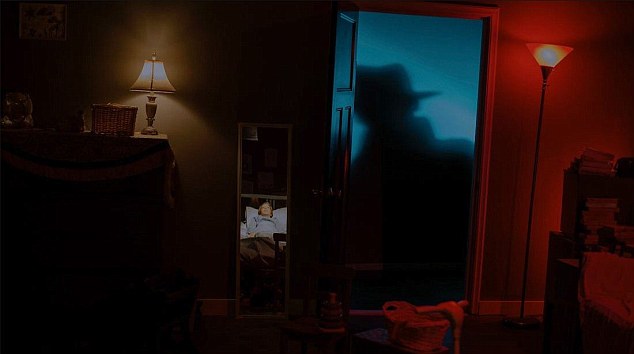







 How a barrage of lightning strikes triggered by ancient...
 Astronomers spot a spike in mysterious 'blades' on Jupiter's...
 Scientists declare Earth has entered the 'Age of Man':...
 Game of Thrones universe is brought to life: Moving tectonic...