Ontdek de Fascinerende Wereld van UFO's en UAP's: Jouw Bron voor Onthullende Informatie!
Ben jij ook gefascineerd door het onbekende? Wil je meer weten over UFO's en UAP's, niet alleen in België, maar over de hele wereld? Dan ben je op de juiste plek!
België: Het Kloppend Hart van UFO-onderzoek
In België is BUFON (Belgisch UFO-Netwerk) dé autoriteit op het gebied van UFO-onderzoek. Voor betrouwbare en objectieve informatie over deze intrigerende fenomenen, bezoek je zeker onze Facebook-pagina en deze blog. Maar dat is nog niet alles! Ontdek ook het Belgisch UFO-meldpunt en Caelestia, twee organisaties die diepgaand onderzoek verrichten, al zijn ze soms kritisch of sceptisch.
Nederland: Een Schat aan Informatie
Voor onze Nederlandse buren is er de schitterende website www.ufowijzer.nl, beheerd door Paul Harmans. Deze site biedt een schat aan informatie en artikelen die je niet wilt missen!
Internationaal: MUFON - De Wereldwijde Autoriteit
Neem ook een kijkje bij MUFON (Mutual UFO Network Inc.), een gerenommeerde Amerikaanse UFO-vereniging met afdelingen in de VS en wereldwijd. MUFON is toegewijd aan de wetenschappelijke en analytische studie van het UFO-fenomeen, en hun maandelijkse tijdschrift, The MUFON UFO-Journal, is een must-read voor elke UFO-enthousiasteling. Bezoek hun website op www.mufon.com voor meer informatie.
Samenwerking en Toekomstvisie
Sinds 1 februari 2020 is Pieter niet alleen ex-president van BUFON, maar ook de voormalige nationale directeur van MUFON in Vlaanderen en Nederland. Dit creëert een sterke samenwerking met de Franse MUFON Reseau MUFON/EUROP, wat ons in staat stelt om nog meer waardevolle inzichten te delen.
Let op: Nepprofielen en Nieuwe Groeperingen
Pas op voor een nieuwe groepering die zich ook BUFON noemt, maar geen enkele connectie heeft met onze gevestigde organisatie. Hoewel zij de naam geregistreerd hebben, kunnen ze het rijke verleden en de expertise van onze groep niet evenaren. We wensen hen veel succes, maar we blijven de autoriteit in UFO-onderzoek!
Blijf Op De Hoogte!
Wil jij de laatste nieuwtjes over UFO's, ruimtevaart, archeologie, en meer? Volg ons dan en duik samen met ons in de fascinerende wereld van het onbekende! Sluit je aan bij de gemeenschap van nieuwsgierige geesten die net als jij verlangen naar antwoorden en avonturen in de sterren!
Heb je vragen of wil je meer weten? Aarzel dan niet om contact met ons op te nemen! Samen ontrafelen we het mysterie van de lucht en daarbuiten.
Fossils belonging to very ancient sponges dating back nearly a billion years have been discovered in northwest Canada and may be the oldest ever evidence of animal life on our planet.
Geologist Elizabeth Turner made an incredibly significant discovery on rocks located in a very remote area in the Northwest Territories that is only accessibly by helicopter. However, about a billion years ago, this area which is now covered with steep mountains was a marine environment.
In the thin layers of rock, she noticed the fossilized remains of what looked similar to sponges from modern times but they were much older than that. Analysis of the rock layers revealed that the fossils date back approximately 890 million years. This is absolutely jaw-dropping as the previous oldest sponge fossils were 350 million years younger.
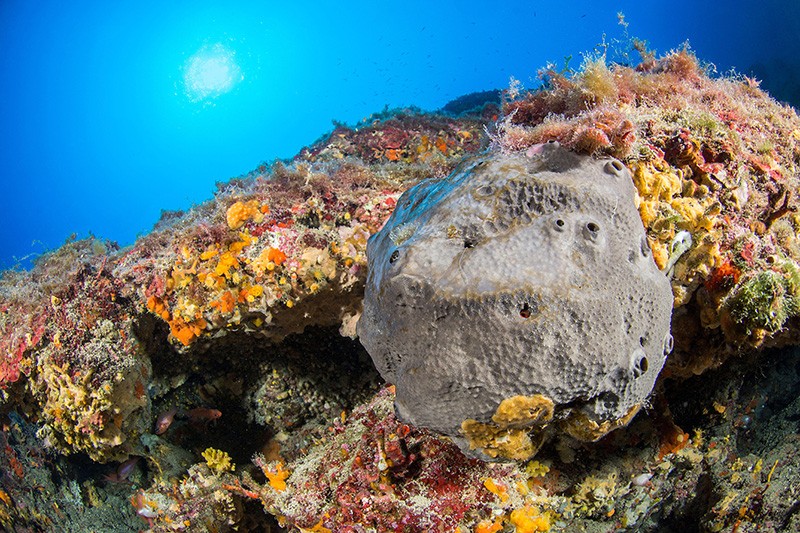
Close-up of a sponge.
A lot of scientists think that the first groups of animals that were present on our planet included soft sponges or sponge-like creatures that didn’t have any nerves or muscles but did have cells with numerous functions as well as sperm. Unfortunately, there isn’t much animal evidence that dates back close to a billion years and that’s why this recent discovery is so fascinating and important.
It is believed that life first appeared on our planet approximately 3.7 billion years ago and that the first animals only showed up many years later but the exact date is still unknown and highly debated.
Since the previous oldest sponge fossil dated back about 540 million years during the Cambrian Period and this new specimen is around 890 million years old, it means that it was around for hundreds of millions of years longer than first estimated and possibly even longer (perhaps a billion years). Since sponges didn’t have any hard shells or skeletons that would have remained preserved over time, evidence of them dating back 890 million years is astonishing.
Another close-up of a sponge.
Paco Cardenas, who is an expert on sponges at Sweden’s Uppsala University but wasn’t involved with the study, stated, “This would be the first time that a sponge fossil has been found from before the Cambrian, and not only before, but way before — that’s what’s most exciting,” adding, “To have discovered sponge fossils from close to 900 million years ago will greatly improve our understanding of early animal evolution.”
Further analysis needs to be conducted on the fossilized sponge, but if it is confirmed to be 890 million years old, it would mean that the first animals to have inhabited our planet would have survived during a time when scientists didn’t think anything would have been able to live based on the small amount of oxygen that was in our oceans and atmosphere. (Pictures of the sponge’s remains found in the Northwest Territories can be seen here.)
Researchers believe they have pinpointed the location in space where the asteroid that killed the dinosaurs about 66 million years ago originally came from and it’s not where you’d expect.
According to researchers from Southwest Research Institute in San Antonio, Texas, the asteroid probably came from a “safe” location in the outer area of the main asteroid belt that orbits between Mars and Jupiter. While the theory was that there weren’t as many impacting asteroids in that location, it’s not as “safe” as previously believed as the researchers now claim that large asteroids from that specific area have been sent to our planet much more often than what was previously theorized.
They came to this conclusion by studying the composition of space rocks from that “safe” area in the asteroid belt and compared their findings to the asteroid that killed the dinosaurs and left the Chicxulub crater in Mexico’s Yucatán Peninsula. More specifically, they analyzed rock samples from the crater and compared them to computer models of 130,000 asteroids that came from the main asteroid belt.
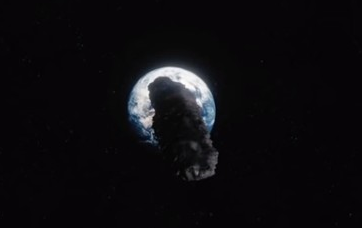
Asteroid belt
As for how the asteroids ended up leaving the belt, they were sent to “escape hatches” by thermal forces and were ultimately sent flying out towards Earth. In fact, large asteroids similar to the 6-mile one that destroyed the dinosaurs were “at least 10 times more often” to impact our planet than previous studies have estimated.
Asteroids that were around 6 miles in width have impacted Earth at an average of once every 250 million years and about half of them were carbonaceous chondrites which are believed to be the same type of asteroid that wiped out the dinosaurs and have been described as being “some of the most pristine materials in the solar system”.
In a statement, Dr. Simone Marchi noted, “This result is intriguing not only because the outer half of the asteroid belt is home to large numbers of carbonaceous chondrite impactors, but also because the team’s simulations can, for the first time, reproduce the orbits of large asteroids on the verge of approaching Earth.”
Dr. David Nesvorný weighed in by stating, “This work will help us better understand the nature of the Chicxulub impact, while also telling us where other large impactors from Earth’s deep past might have originated.”
Their study was published in the scientific journal Icaruswhere it can be read in full.
ALL RELATED VIDEOS; selected and posted by peter2011
A video interview with the Navy pilot who coined the name “Tic-Tac” for the UFO he saw off the coast of San Diego in 2004 has finally been released in its entirety and it reveals why he picked that name and much more. The pilot is Commander Chad Underwood and the interviewee is documentary filmmaker Jeremey Corbell, who has been slowly revealing the videos he has found through his own efforts and with the help of government insiders since the story broke in 2017. The 25-minute video is well worth watching in its entirely (see it here) but here are a few of the more interesting highlights if you need convincing.
Then-Lieutenant Underwood’s F/A-18 Super Hornet was in the air with Black Aces commanding officer David Fravor, who has become the face of the pilots reporting the encounter due to his many media appearances. However, Underwood’s plane was the one that took the famous FLIR (Forward Looking InfraRed) video. Actually, we now know there was also an 8mm radar video taken, but Underwood reveals that it probably won’t be seen by the public.
Still image from the footage of the “tic-tac” UFO
“No, and they’re probably not going to see it for a long time. Because the radar tape is are … there’s two types of sensors that we record on the aircraft, active sensors and passive sensors. The FLIR is a passive sensor, the radar however, is what we call an active sensor. So it’s shooting emissions out and receiving data in and an active sensor can be exploited by our enemies if they can see the data that’s on that screen.”
That’s disappointing, because Underwood says the active radar recording would show his initial contact with the UAP. Speaking of contact, Underwood also gives more details on the report that his radar was jammed – that would be an act of war, yet there was no military response to it, leading some to believe Underwood was mistaken or there was no jamming.
“I was not consulted for that report. I have been interviewed 1/10 of 1% from the government, as I have from yourself. I did get jamming cues on my radar tape, and you can see cues of jamming on both your radar and your FLIR tape. You know when Commander Fravor described on your FLIR tape, when you see like 99.9 range to target. That means you’re being jammed.”
Of course, the best part of the video is Underwood’s explanation for how he came up with the Tic Tac description. He was talking about the encounter to other personnel on the USS Nimitz after landing.
“And so we popped the tapes in and they were like, what would you describe this as? And my thoughts going through my head where the scene from Airplane where the reporters are asking that guy Johnny, one of the ground controllers, “Can you describe this plane? And he’s like, Oh, it’s a big white shiny plane with wheels. And you know, it looks like a big Tylenol.””
“And I knew if I described it as a big Tylenol that that’s too much not taking it seriously. And anyone who knows me, I don’t take a whole lot of things seriously, but I was like, ah, I probably shouldn’t say that. It’s just it’s too on the nose. And so I was like, well, it looks like a big Tic Tac, you know, and it did. Like just kind of this white, oblong, featureless thing. It looks like a Tic Tac and it just kind of became the name for it for the next few days, little did I know that 17 years ago, it would still be a thing.”
The interview gets serious as Underwood gives a minute-by-minute account of what he saw, the actions he took, the conversations he had with on-ship personnel and the unbelievable actions of the “Tic Tac.” His radar and FLIR should have been able to track it, but didn’t.
“And so once it shot off to the left, immediately aggressively maneuver my fire to the left to try to require and it moved with a velocity that I’ve not seen, I should be able to reacquire that aircraft, or whatever it was. And that’s just, I mean, we’re talking an $80 million fighter, you know.”
He saw no exhaust or heat.
“And my estimation at this point is that was about 10 to 15 miles off my nose, I should be able to see an exhaust plume on my FLIR, you should be able to see that heat, I should be able to tell that it’s an aircraft, it’s got wings, I should be able to tell what type of aircraft it is, I should be able to know that. And I wasn’t seeing any of that.”
Underwood also makes an interesting observation about the possibility that the UAP was our own secret technology – a “black project.”
“What happens is, when you’re in the Intelligence Center, CVIC, you describe what you saw, they describe what you’ve seen, they make you sign a nondisclosure agreement or an NDA. And they say, this is the project name. They don’t describe what it is or what it does, or, you know, anything like that. It’s just, you know, you shall not speak of this again.”
That didn’t happen with Underwood or Fravor, so he feels it was not ours – especially since it would have had to have been kept secret for 17 years. So, what was it?
“I have no idea. Like, it was just this weird thing that I should normally be able to identify or identify with characteristics. Yeah, it had no flight characteristics, you know, a method of lift, propulsion, things like that. And it was at a range where I should be able to distinguish flight characteristics, and that just just didn’t happen.”
Aliens? See for yourself what Cmdr. Underwood thinks of that question in the video or read the transcript at Mystery Wire. Kudos as always to Cmdr. Chad Underwood for continuing to address the famous and still unexplained sightings, and to Jeremy Corbell for his uncanny ability to obtain the videos and the interviews.
There are a few places on this green earth that you should not dare visit even if you get a free ticket and an all-expenses paid trip. Some of these are caves that will kill you in minutes, caves that will have your temperature at boiling point, radioactivity enough to melt you as well as rats that will give you plagues. This belief might make you put your passport very far away.
11 UFO ORBS MAKE PATTERN NEXT TO MOON : This is MUFON CASE : 117120 New Hartford, NY, July 31, 2021 : Mutual UFO Network : MUFON SUBMISSIONS
Long Description of Sighting Report
I had second thoughts about releasing this video but later decided the world needs to see it. Maybe somebody can figure out what the sign means. This sighting was witnessed by 2
Date Submitted : 2021-07-31 Date of Event : 2021-07-25 MUFON SUBMITTER FILE : 11ORBS.mp4
NASA Deep Web Images Show Human Cities On The Moon in 1968
In December 1968, the crew of Apollo 8 became the first humans to leave Earth orbit and head for the moon.They also became the first to look : NASA Deep Web Images Show Human Cities On The Moon in 1968
YOU HAVE THE BEST OPINION
credit : Portal Siniestro : 20 october 2020
Pulsating UFO Sighted Over Săceni, Romania ( July 1, 2021 )
Pulsating light over Săceni village, Teleorman, Muntenia, Romania. The video was received by Mr. President Dan D. Farca ș on messenger from Nu țu Ion from Rosiori de Vede, ASFAN member. What information does Mr. Nu țu give us about the video : ′′ The video was taken by a friend of mine, Gabriel B. Agent from the Local Police, on 01.07.2021, at 21.37 o'clock, from the right of Satu Vechi. The object filmed was stationary and was under the cloud layer above the village of S cceni, located 15-16 km. by the Rosary of Vede At some point he disappeared, but he became visible again shortly and started moving slightly to the left, after which, he accelerated to the right and disappeared!!! Gabriel took the movie below and two photos." I got a photo but the image is moved and the object is not showing well. Thank you to Mr. Nu țu for your information.
credit : ASFAN
UFO Sighted From A Plane Over Germany ( July 28, 2021 )
Impressive UFO sighted Over Germany on July 28, 2021
STATEMENT : Recorded from a plane by a German tourist with Nikon P900 camera
credit : U.S.F
note : no audio
Morphing UFO Sighted Over Quincy, Massachusetts ( July 27, 2021 )
Morphing or Shapeshifting UFO was sighted over Quincy, Massachusetts
STATEMENT : Ufo in Quincy Massachusetts July 27 , 7:00pm
credit : Santiago Sawyer
Massive UFO Sighted Over The Moon ( July 29, 2021 )
Massive UFO was sighted flying over the moon. Filmed by Homero Soto Lozoya from Chihuahua City, Mexico live on July 29, 2021
STATEMENT : Flying object when watching the moon, speed reduced to 20 % and repeat again freezing the image 1 sec. : Objeto volador al observar la luna, velocidad reducida a un 20% y vuelto a repetir congelando la imagen 1 seg.
MUFON CASE : 117064 Lake Tapps, Washington ( July 25, 2021 )
Mutual UFO Network : MUFON SUBMISSIONS : We were walking on the street and we suddenly stopped just to see at least eight objects floating through the sky. This event lasted for just about over four minutes.
Long Description of Sighting Report - Case 117064
We were walking on the street and we suddenly stopped just to see at least eight objects floating through the sky this event lasted for just about over four minutes.
Date Submitted : 2021-07-25 Date of Event : 2021-07-24 / 9:44 PM MUFON SUBMITTER FILES :
This image from video posted Dec. 23, 2020, shows an object flying through the air off the coast of California. Sling Pilot Academy/YouTube
Iron Man might be dead in the Marvel Cinematic Universe, but he appears to be very much alive in the real-world vicinity of the Los Angeles International Airport, where pilots have reported seeing a sky-high individual with a jetpack.
The mystery man or woman was spotted cruising around the airport at a high altitude on Wednesday evening, according to the U.S. Federal Aviation Administration (FAA) and air traffic controller recordings from LAX.
“A Boeing 747 pilot reported seeing an object that might have resembled a jetpack 15 miles east of LAX at 5,000 feet altitude,” the FAA said.
“Out of an abundance of caution, air traffic controllers alerted other pilots in the vicinity.”
Audio recordings from the airport suggest there was a person flying that jetpack, though his or her identity remains unknown.
“Skywest 3626, use caution. The jet man is back,” an air traffic controller can be heard saying on Wednesday evening, in audio obtained by CBS Los Angeles. “Let me know if you see him.”
The controller then presses the pilot for more info. “SkyWest 3626, did you see the UFO?”
“We were looking,” the pilot responds, “but we did not see Iron Man.”
Jetpacks are experimental, expensive, noisy and hard to find on the commercial market. However, someone appears to have figured out how to build and fly one at high altitudes in California, where he or she has been spotted at least four times to date.
Pilot sees man in jetpack while approaching LAX airport – Sep 1, 2020
The sightings date back to last August, when two commercial airline crews reported seeing a person with a jetpack. One crew said that he or she came dangerously close to their aircraft, which was carrying passengers at the time.
A China Airlines flight later reported seeing “someone in a jetpack” at 6,000 feet in October.
“We just saw a flying object like a flight suit that’s passing by us,” the crew said.
The FBI and the FAA have been investigating the sightings for months, though they’ve been unable to determine the origin of the jetpack.
The FBI suggested last November that the object might be a drone designed to look like a man in a jetpack, and that it’s unlikely that an actual person might be piloting it.
However, the reports have persisted for over a year.
An L.A.-area flight school claimed to have captured actual footage of the “jetpack man” in December, when he or she was spotted at around 3,000 feet off the coast of Palos Verdes.
The object in the video strongly resembles a human figure with a jetpack on their back, but it remains unverified.
The FAA says it’s still investigating the strange jetpack phenomena and has yet to identify the person behind it.
Perhaps they’re simply waiting for the person to come forward and say what all the Marvel fans want to hear: “I am Iron Man.”
In a report submitted to the United Nations in January 1979, the Department of Scientific and Industrial Research (DSIR) classified the objects as "UFOs until identified", but said the "prospect of extra terrestrial intervention being proved is regarded as extremely remote".
The document is one of a large group of declassified documents regarding "Unidentified Flying Objects" at Archives New Zealand, which came from New Zealand's post at the UN between 1977 and 1982.
In the briefing, DSIR debunks one film of the famous event, but has trouble in doing the same with TV1's footage.
What we learned from the United States UFO Report
The United States released a report on UFOs earlier this year.
"Both Crockett's and TV1's films are highly distorted," the briefing reads.
ADVERTISEMEN
"Crockett's film now considered unmeritous because of visual discrepancies produced by filming through an argosy window. DSIR have actually duplicated Crockett's results by shining a torch light onto the plane's window.
"TV1's film proving more interesting as it was a straight shot free of any distortion produced by filming through glass and plastic.
"However, aberrations are apparent in the film which is making it difficult to analyse. DSIR are now converting the film to computer readout and are hopeful that distortions can be erased."
DSIR said atmospheric conditions could explain false radar readings at the time of the sightings, where both Christchurch and Wellington air traffic control registered signals.
They said the readings weren't consistent with the sightings of pilots, or ground sightings.
"DSIR are not willing to make definite statements yet but their conjecture is that the objects filmed will turn out to be no more than general illumination (possibly produced by Jupiter or Venus) on the horizon.
"The objects remain classified as UFOs until identified. Prospect of extra terrestrial intervention being proved is regarded as extremely remote."
UNCREDITED/AP
UFO sightings have received significant media coverage in recent months. This 2015 image from video provided by the US Department of Defense shows anunexplained object as it soars high along the clouds, travelling against the wind.
Other documents show the lobbying New Zealand received from the nation of Grenada, which wanted the United Nations to "initiate, conduct and co-ordinate research into the nature and origin of unidentified flying objects and related phenomena".
New Zealand was chairing the Western European and Other States Group in November, 1978, when Grenada wanted to table their suggestion, and was not too pleased at the suggestion.
"We are disenchanted with Grenada resolution and would hope that the item can be disposed of without vote," one document reads.
"If put to the vote our inclination would be to vote against."
UNSPLASH
A report to the United Nations in 1979 said the "prospect of extra terrestrial intervention being proved is regarded as extremely remote".
Another document said: "A number of countries who were members of the Outer Space Committee (particularly Austria) were unhappy at the proposal. They felt it would damage the Committee's credibility and divert resources from more imporant work."
New Zealand's Ministry of Foreign Affairs said it shared the opinion of the committee.
"The matter is not appropriate for discussion in a United Nations context.
"We would hope, therefore, that the matter would be disposed of without vote.
"If put to the vote a negative vote would be appropriate though the delegation has discretion to abstain in appropriate company."
Grenada eventually pulled its pursuit of an UFO investigations unit in the UN, at the urging of the United Kingdom.
This story was originally published on RNZ.co.nz and is republished with permission.
New York UFO sighting: 11 ORBs make pattern next to the Moon
Here’s one new footage filmed on 25th July 2021 and it was just published on MUFON’s website. It shows these unknown bright orbs making a “V” pattern over New Hartford, New York.
Witness report:
I had second thoughts about releasing this video but later decided the world needs to see it. Maqybe somebody can figure out what the sign means. This sighting was witnessed by 2
ANUNNAKI KINGS 2021 | The Devil. War Of The Gods – Dragons & Serpents In The Bible
Do the Bible and many ancient narratives around the world tell a story of humanities contact with Ancient Aliens? Why is the serpent of Genesis 3 so often equated with evil, with the Devil or Satan. Nothing in the Genesis story makes that equation. So where does that association come from?
Stanford astronomers discover light from back of black hole for 1st time
Scientists at Stanford say they've made a breakthrough discovery about light and black holes that startled even seasoned astrophysicists. And their work appears to prove Einstein's theory about gravity over a century ago was right.
Black holes deep in space continue to fascinate scientists, their gravity so powerful that matter and light get sucked in and can never escape. Even at 800 million light years away, orbiting telescopes have been able to see x-ray spectrum light from the front side, but never from the back side.
Stanford astrophysicist Dan Wilkins and his research colleagues are reporting they witnessed and recorded a series of bright flares for the first time, coming from the far side.
In a video, they saw a band of yellow light in the x-ray spectrum that's invisible to humans. The black hole's gravity causes those x-rays to bend around it. The telescopes captured a secondary flash, which is emanating from behind the black hole. Einstein predicted this phenomenon in 1916 in his theory of general relativity.
"The color of these flashes, the color of those echoes as well as the time that they were delayed after the original flare told us that these were the echoes coming from the gas that's hidden from our view behind the black hole," said Dr. Wilkins, a research scientist at Kavli Institute for Particle Astrophysics and Cosmology at Stanford.
"Some of it will shine back down onto the gas that's falling into the black hole, and this gives us really quite a unique view of this material in its final moments before it's lost into the black hole," he explained.
Two aging telescopes helped with this breakthrough: the European Space Agency's 22 year old XMM-Newton and NASA's nine-year-old NuSTAR. Wilkins is on the team building the next-generation x-ray telescope Athena.
"It's a key part of the puzzle to understanding how the galaxies formed and how the universe as we know it became how it is," Dr. Wilkins said.
Wilkins says modestly they were lucky. Perseverance also plays a role.
Russian module mishap destabilises International Space Station
Nauka (centre) joined the ISS high above the border between Mongolia and China
The International Space Station (ISS) was destabilised after engines of a newly arrived Russian module inadvertently fired up.
"Mission control teams corrected the action and all systems are operating normally," US space agency Nasa said.
This was done by activating thrusters on other modules of the ISS. An investigation is now under way.
US and Russian officials stressed that the seven crew members aboard the space station were never in any danger.
The malfunction happened three hours after the Nauka module docked with the ISS on Thursday, following an eight-day flight from Earth.
Nasa officials said Nauka's jets started firing uncommanded at 12:34 EDT (16:45 GMT) "moving the station 45 degrees out of attitude".
The Russian Zvezda segment and a Progress freighter then responded to push the station back into its correct pointing configuration. The incident was over by 13:29 EDT.
"What we saw today was just an awesome job by the mission control flight teams," said Joel Montalbano, Nasa's ISS programme manager.
"Those guys were rock stars again and got us back in attitude control. That also shows you what a robust vehicle we have, and our ability to take these contingencies, recover from them and move on," he told reporters.
Communications with the ISS crew were lost for two periods, of four minutes and seven minutes, during the incident. However, the US agency said that the astronauts were safe. They "really didn't feel any movement", it added.
The mishap forced Nasa and Boeing to push back Friday's uncrewed test flight of Boeing's Starliner capsule, a vehicle intended to carry astronauts in the future.
"We wanted to give the ISS programme time to assess what had happened today, to determine the cause and make sure that they were really ready to support the Starliner launch," explained Steve Stich, the manager of Nasa's commercial crew programme.
"Right now the earliest opportunity would be Tuesday, 3 August, which would be a 13:20 EDT (17:20 GMT) launch.
IMAGE SOURCEESA
image captionThe delay for Nauka has also affected the European robotic arm
The 13m-long, 20-tonne Nauka was earlier attached to the rear of the orbiting platform, linking up with the other major Russian segments on the station.
The module should have launched in 2007, but the vessel suffered repeated slips in schedule, in part because of budget difficulties but also because engineers encountered a raft of technical problems during development.
Even after it launched from the Baikonur Cosmodrome in Kazakhstan a week ago, it experienced propulsion issues that required workarounds from controllers in Moscow.
In the end, however, it docked with the station on the planned date.
The new module will result in a significant boost in habitable volume for the ISS, raising it by 70 cubic metres.
Cosmonauts will use the extra space to conduct experiments and to store cargo. They'll also use it as a rest area, and it has another toilet for crew to use on the station.
In addition, the module carries with it a large robotic arm (ERA) supplied by the European Space Agency (Esa).
This 11m-long device will be able to operate all around the Russian end of the ISS. With the aid of an "elbow" joint, it will shift position by moving hand over hand.
Nauka's installation comes just as Russia has been questioning its future role in the ISS project.
Moscow officials recently warned about the more-than-20-year age of some of their on-orbit hardware and intimated the country could pull out of the station in 2025. And Russia has shown little interest in joining the US-led lunar platform, known as the Gateway, which will be assembled later this decade.
300,000-Year-Old Nanostructures in the Ural Mountains: Alien Technology?
A team of archaeologists was surprised during an investigation to find strange microscopic objects; a mysterious nanostructures in the Ural Mountains in Russia.
Ural Mountains, in Russia.
During a geological investigation for the extraction of gold in 1991 , a group of archaeologists found themselves on the banks of the Balbanyu, Narada and Kozhim rivers , in the Ural Mountains. In the process, they found nanostructures. Some extremely strange microscopic objects.
Nanostructures in the Ural Mountains
Due to the minute dimensions of the structures, various theorists suggest that they were made by a very ancient advanced civilization .
This civilization could have, approximately 300,000 years ago , the capacity to develop nanotechnology.
They found metallic coils and spirals axes that make up the list of rare nanopiezas. These were found embedded in a rock over 100,000 years old .
This nanotechnology, in addition, was classified as an Oopart, or an object out of time. The scientists agreed that it is impossible for such technology to be around 300,000 years old.
For an object to be considered an Oopart, it must be unique and little known in historical or paleontological archaeological records. Scientists classify it as something “anomalous”, since they are found when and where they ” should not be “. Hence, it contradicts the traditional story.
Mainstream research regarding these objects is usually looking for a logical explanation . For archeology it is ” impossible to affirm” that there existed a degree of technology and culture more advanced than that known to the academic world.
However, alternative researchers are convinced of the existence of ancient astronauts . Or extraterrestrial beings that visited Earth in the past.
The strange pieces are the same ones used in rockets and spaceships.
Discovery investigation
The study was originally conducted by the Russian Academy of Sciences in Syktyvkar. After conducting different tests on the nanostructures, the experts found strange characteristics .
The larger pieces are made of pure copper , the smaller ones were made of molybdenum and tungsten . These metals have been used in the manufacture of missiles and spacecraft due to their high resistance to high temperatures.
The length of the smallest object is only one tenth of an inch.
Subsequently, they underwent intensive investigations at facilities in Moscow, Saint Petersburg and Helsinki in order to find clues about their origin.
The scientists concluded that these components were not a product of nature , but that their origin is artificial. In short, they were built.
Experts said the nanostructures were the rocket parts from the Plesetsk launch base.
However, a report that was made in 1966, excluded this possibility, since the analysis showed that they were found in great depth .
As if the discovery of these objects was not mysterious enough, the Ural Mountains have always been the subject of theories and strange events.
One of the most enigmatic events to take place in the region was the Dyatlov Pass incident . A group of Russian hikers were found dead in strange circumstances.
Many theories were created from the event, from UFOs , secret experiments. Even even from a Yeti or unknown tribes.
Could they be alien technology? If so, these nanostructures would confirm the visit of ancient astronauts in the remote past.
ALL RELATED VIDEOS, selected ans posted by peter2011
So far, over 4,000 exoplanets have been found and they come in all different sizes, temperatures, orbits, etc… For example, some exoplanets are gas giants that are larger than Jupiter, while others are rocky worlds about the same size as Earth. They can be exceptionally hot or have very cold temperatures. They can complete a full orbit around their star (or stars) injust a few days or much longer, and some don’t even have a host star.
Some exoplanets have been described as “hot Jupiters” and recent studies have revealed new and surprising facts about them. First of all, the fact that scientists have found hot Jupiters is amazing as they once believed that they were so unlikely that they probably didn’t even exist. These are exceptionally hot giants that orbit their star at an incredibly close range.
So far, astronomers have detected over 700 hot Jupiters in our Milky Way Galaxy and the data collected by NASA’s Spitzer Space Telescope allowed experts to focus in on a specific number of them. In fact, 49 hot Jupiters were chosen to be extensively studied for the new research project.
Jean-Michel Desert, who is an astronomer at the University of Amsterdam, stated, “Hot Jupiters – all of them are quite peculiar,” adding, “But we do see families of [these] exoplanets.” To better understand this, they are grouped into three families – “cooler” hot Jupiters with atmospheric temperatures as high as 1,300 degrees Fahrenheit (704 degrees Celsius); “hot” hot Jupiters with temperatures between 1,300 and 3,100 degrees Fahrenheit (704 to 1,704 degrees Celsius); and ultra-hot Jupiters with temperatures hotter than 3,100 Fahrenheit (over 1,704 degrees Celsius).
As for what the researchers found, one surprise was that the “cooler” hot Jupiters didn’t have any methane in their atmospheres as stated by Claire Baxter from the University of Amsterdam, “To not find methane in any of the planets [at temperatures lower than about 1,300 degrees Fahrenheit] was surprising with the basic assumptions we had made.”
On the ultra-hot Jupiters, carbon monoxide and methane were mixed together in their atmospheres. “Seeing the evidence for vertical mixing in a statistical sense is an important step because it is predicted by models and was also previously seen in brown dwarfs [a kind of failed star],” Baxter explained, “Now we have collected evidence that this effect is also seen in exoplanet atmospheres.”
Another thing they discovered was that hot Jupiters have approximately the same amount of metal content as their stars which contradicts previous theories that they had a much higher amount.
This is a very important step in learning more about hot Jupiters and with future observations from the James Webb Space Telescope as well as the European Space Agency’s ARIEL mission, astronomers will be able to gather even more data regarding these giant exoplanets.
If there’s one thing you can say about aliens, it’s that most of them don’t really look like us. Okay, there’s the head, the torso, the arms and the legs, but largely that’s where things come to an end. For example, the small “Greys” have huge heads, large black eyes and emaciated bodies. The “Reptilians” are hardly human-looking. The lesser-known “hairy dwarfs”and the Flatwoods Monster of 1952 were nowhere near human-like. That said, however, there are a number of reports of non-human entities that look almost identical to us. There’s no doubt this applies, chiefly, to the “Space Brothers” and “Space Sisters” of the 1950s. They were encountered, usually, in desert locations and near the West Coast of the United States. The females were practically identical to us. The males, too. That is, apart from their 1980s-era-style, heavy-metal-band hair. They had fun and memorable names, such as “Rondolla” of the Fourth Density; “Zolton;” of Vela; “Ah-Ming” of Tarr; and “Numa” of Uni. Much better than the nameless Greys, right? Right! Then, there was Aura Rhanes, the ultimate alien uberbabe of the 1950s and a proud citizen of the planet Clarion, which, by the way, has never been found. Until his death in 1969, Contactee Truman Bethurum was totally entranced by Captain Rhanes. There are, however, other aliens that look just like us and who can pass for us on the streets, in the malls, and at the Friday night game. Whether or not they bet on the game, I don’t know.
Giant Rock, California, where human-looking ETs with stupid-but-fun names loved to hang out in the 1950s
(Nick Redfern)
Giant Rock, California, where human-looking ETs with stupid-but-fun names loved to hang out in the 1950s (Nick Redfern) have friends who fully believe the Black Eyed Children are aliens. Personally, though, I think that is what we call in the U.K. “complete and utter bollocks.” In my view the BEC are something supernatural, rather than extraterrestrial. I have to admit, however, that those strange black eyes and the pale, sickly-looking faces do suggest that the BEC just might be ETs. Give them some human-like contact lenses, and, yes, they certainly could pass for us. Just maybe. Now, let’s take a trip to a store. UFO authority, and author, Denise Stoner told me the following: “At least three times here in Florida at a particular combination health/grocery/restaurant I have been observed by a strange character. This is a good place to blend as many folks who shop here are ‘odd characters’ to begin with or ‘hippie like,’ gone back to nature types. So, the person who has observed me is wearing a gauzy outfit, thin hair, woven straw Panama type hat and sun glasses fits right in.” Denise continued:
No way these guys are going to pass for us
“His skin, hair, and clothing are all almost the same beige color. The difference is he has a drink in front of him, a notebook, stares at me the whole time as we eat at a table on the sidewalk. He never has food of his own nor does he touch the drink. It seems he knows when we are almost finished eating, he gets up, walks slowly past our table, rounds the corner that is clearly visible but must pass a pillar on the corner of the shopping plaza by our table. Once he goes behind that pillar, he never comes out the other side. There is literally nowhere for him to go but out the other side, then down the sidewalk or out to the parking lot – but no, he is gone. I cannot get up to follow thinking I am going to bump in to him on the other side of the pillar. He lets me know in no uncertain terms that he is watching me or letting me know he is there.”
Captain Aura Rhanes. Now, that’s more like it.
For his book Selected by Extraterrestrials, William Tompkins wrote: “The time was 1:30 p.m. It was an afternoon in late 2010. The location was an exclusive neighborhood in Oceanside, California. I needed some things from our local store. Walking fairly close to the rear entrance, I spotted an expensively dressed, tall, blonde, vision that immediately reminded me of the first day I met Jessica, my Nordic alien. She stopped and turned, facing me. With a sincere, deep, penetrating look, this vision said, ‘My father is several levels above 32 Mason, and I’m going to help you with your book.’ We talked for about ten minutes, outside of the door. She gave me her phone number and said, ‘Meet me tomorrow, in the coffee lounge at 1:30.’ Obviously, I was extremely impressed and in total confusion about her remarks, because I never met her and didn’t know who she was. How could she have known I was writing a book? And what did her Freemason father have to do with the subject matter in my book?” Don’t ask me. I’m just the messenger.
There’s no doubt, whatsoever, this story is a bizarre one. How could it not be when supermarkets, UFOs and aliens become integral parts of it all? Aliens that look so much like us they can wander the aisles, get stuck in the check-out lines for twenty minutes (just like me and you!), choose the shopping cart with the fucked-up front-wheel, and not be outed for what they really are? Now, that’s impressive!
Aliens thinking about invading Earth need to be ready to start hearing cries of “Semper Fi!” now that a select group of “space Marines” have commenced training at the Army’s Space and Missile Defense School in Colorado Springs, Colorado, where they will prepare to fight our country’s battles from the halls of Montezuma to the shores of Tranquility … on the Moon and beyond. Someday soon, if extraterrestrials ever look on heaven’s scenes, they will find our skies are guarded by United States Marines.
“We are in our initial building stage of SOPs (standard operating procedures) and TTPs (tactics, techniques, and procedures) and force structure. Right now this is a capability that doesn’t exist in the Marine Corps. It’s always us reaching out to the joint force to provide it.”
It wouldn’t be a military announcement without acronyms, so the press release quotes Marine Capt. Jacob Loya, a communications officer with a background in satellite communications working with 1st Space Brigade to train the Marines, had a few to say. The Marines are part of the newly activated Marine Corps Forces Space Command at Offutt Air Force Base in Omaha, Nebraska, and after training will embed with Army Space Support Teams. The training will include, situational awareness of space capabilities, space assets, space products, and the impact of space on operations. According to the press release, the goal is from the Marines to eventually establish their own autonomous Marine Space Support Teams.
What about the Space Force?
“With the renewed emphasis on space and the standing up of the Space Force and Space Command, the Marine Corps needs to have skin in the game. We want to be able to operate independently and that starts by learning all the TTPs built out by 1st Space Brigade. It’s a knowledge base we just don’t have.”
The Space Force is a separate branch of U.S. uniformed services, although it’s considered to be a sister-branch of the U.S. Air Force. It’s responsible for organizing, training, and equipping space forces, which are then deployed by the United States Space Command. So, according to the chain of command and distribution of responsibilities, it appears the Space Force trained the Army’s Space and Missile Defense School personnel which then trains its own Army and Marine space support teams, which in this case are the Space Marines – although that’s not their official designation.
According to Task and Purpose, the space Marines will be a part of the Army Space Support Team (ARSST) providing enhanced “intelligence and operation planning capabilities” for units in the field, especially in the area of space-based military capabilities like satellite intelligence and communications. They will also be able to jam enemy communications and take part in “navigation warfare.”
John Glenn
It’s the 100th anniversary of his birth, so we’ll salute the most famous space Marine – John Glenn. Glenn trained as a Navy pilot, but accepted a transfer to the Marines and flew missions in World War II and the Korean War before becoming a test pilot and eventually one of the first U.S. astronauts – the first American to orbit the Earth. (That’s real space travel, Bezos and Branson.)
Would John Glenn be interested in becoming an official Space Marine and fight alien invasions? He never hesitated to serve when his country called, so it’s easy to answer that question.
“From dawn to setting sun; We have fought in every clime and place Where we could take a gun.”
Since the dawn of time human beings have moved forward through resourcefulness, invention and technology. It is what brought us up from mere apes cowering in the dark, to the advance being we are today, travelling to the stars and unravelling the secrets of the universe. Discovery and innovation have driven us to be the most advanced species the world has ever known, and all of this comes from the discoveries and inventions of those who have managed to unfurl the layers from what we do not understand. But discovery and invention are hard. It takes a lot of work and trial and error, and so for as long as amazing discoveries have been around there have been those who have just tried to fake it. Here are some of the boldest, cunning, and most baffling technological hoaxes from the annals of history.
A very early hoax involved a type of robot before robots were ever even really a thing. In 1769, a Hungarian nobleman by the name of Baron Wolfgang von Kempelen built what he claimed to be a fully-functioning, chess playing robot, which at the time were typically referred to as “automatons.” It appeared as a large wooden box filled with gears, cogs, wires, and other fancy looking technological stuff, and atop this box sat a wooden mannequin dressed in Turkish clothes for some reason, and with maneuverable arms and hands. There was a large handle on the side, which Kempelen would dramatically wind up to activate the automaton, after which it would creepily spring to life to play chess. It had dexterous hands, could pick up and move chess pieces on its own, and not only that, it was touted as having the ability to “think,” planning strategies and studying and reacting to its opponent’s moves.
When Kempelen first unveiled his creation it caused a major stir, as no one had ever seen any automaton that could do anything other than merely mimic humans and animals at the most rudimentary level. By all appearances, this was an actual thinking robot able to interact with an opponent, which was mind-blowing at the time. Kempelen then toured all over the place giving demonstrations of his wondrous machine. A typical show would be for him to crank up the robot, which was affectionately nicknamed “The Turk,” and then invite someone from the audience to come up and try to play chess with it, and they almost always lost to it. He was always very willing to show that it was not an illusion, opening the side of the machine to allow spectators to see that there was not a man hidden inside, and no one could quite figure out how it all worked. Before long, these demonstrations were immensely popular, bringing in nobles, aristocrats, and even Benjamin Franklin, who lost a chess match to it. Everyone was held in awe.
Kempelen’s chess-playing robot
These demonstrations would go on until 1790, when Kempelen would have his creation taken apart and put into storage. Upon his death in 1805, it was sold by his family to a German by the name of Johann Nepomuk Maelzel, who put it back together and began touring it around America. As it began to gain more fame, speculation on how it worked began doing the rounds again, with many skeptics surmising that there had to somehow be a person, maybe even a dwarf, hidden within the box or even the wooden Turk itself. It would not be until 1837 that the secret would finally come out, when those involved with the scam came forward to tell how it was done. It would turn out that various chess masters had been hidden inside the box as many had suspected, and that a series of sliding panels, mirrors, and a rolling chair had been used to conceal them while audience members inspected the inside of the box. It was then just a matter of using magnetic pieces over the hidden player’s head to gage where the opponent had moved, and then use a system of levers to move his own pieces. In the end, it was quite a simple explanation for a device that had baffled and delighted audiences for the better part of a century, and it caused great disappointment. The Turk itself would be put back into storage, and its days were finally put to an end by a warehouse fire in 1854.
At the same time that Maelzel was touring the chess-playing robot, another inventor was widely promoting what he claimed to be an actual, fully functioning perpetual motion machine. The concept of what has become known as “perpetual motion” is simple at its core. It basically describes an object or body that remains in continuous motion forever without any external energy source. If a machine were to be built using some sort of perpetual motion technology, it would theoretically run forever without any need for fuel, batteries, or power of any kind. This means basically unlimited energy, freeing us from the tethers of finite sources of fuel and giving us devices that will never wind down or die out. It has become a sort of holy grail for certain individuals, who continue to plug away at this seemingly unobtainable dream, and it is just amazing how much the idea of perpetual motion has enthralled people over a large portion of history. One of these was first unveiled in 1812 by an until then rather unknown man named Charles Redheffer, who began exhibiting his invention in his home in Philadelphia, in the United States.
His fantastical machine featured a gravity-driven pendulum with a large horizontal gear on the bottom, and a smaller gear that interlocked with the larger one, with the large gear and the shaft able to rotate independently. On the gear were two ramps that held weights, and it all supposedly worked by these weights pushing the large gear away from the shaft, which would create friction that would cause the shaft and gear to spin. This spinning gear would then power the interlocked smaller gear, and on and on it would go, supposedly forever unless the weights were removed. The machine was put on display and immediately became a smash sensation, drawing in droves of amazed spectators and scientists alike, all of whom were charged a hefty admission fee by Redheffer and none of who could figure out how it all worked. It was largely whispered that he had finally cracked perpetual motion, that he had achieved the seemingly impossible dream. Before long Redhefer was getting quite rich off of his oddball machine, and there was much excited speculation that he had actually done it and achieved true perpetual motion, despite raised eyebrows from the scientific community.
Diagram of Redheffer’s machine
Redheffer, emboldened by the response to his device, actually requested funding from the state of Pennsylvania to build a much larger version, and on January 21, 1813, state inspectors were sent to take a look at the machine before any money would be paid. Unfortunately for Redheffer, he had never let anyone ever take a good, close look at his device, and it would soon become apparent why. The inspectors arrived and were immediately suspicious when it turned out they could only view it through a window into a locked room. Even so, there were cracks appearing in Redheffer’s claims when it was noticed that the gear cogs were worn down in such a way as to suggest that the weights, shaft, and large gear were not powering the smaller gear, as Redheffer claimed, but rather the other way around. To them this was an obvious hoax, but the way they dealt with it is rather amusing. Rather than call out Redheffer on his scam, inspector Nathan Sellers hired a local engineer by the name of Isaiah Lukens to build a replica that was more compact and set within a solid baseboard with a square piece of glass at the top. There was no discernible way as to why it could work, yet concealed within the machine was a wind able motor that was wound through the covert use of a wooden decorative finial. With a little sleight of hand, the illusion was nearly perfect, and when he saw it Redheffer himself was so incredibly surprised to see what he took to be a real perpetual motion machine that he allegedly secretly offered Lukens a large amount of money to know the secret. After this, the news did the rest of the work and Redheffer was undone and exposed through a taste of his own medicine.
Amazingly, this did not put a stop to Redheffer. Undeterred, he simply moved to New York to set up shop there where his reputation hadn’t been as tarnished, once again enjoying some amount a fame and drawing in droves of curiosity seekers. One of these was an engineer by the name of Robert Fulton, who noticed something fishy as he observed the mysterious device in action. He could see a slight wobble to it, and also noticed a very slight unevenness to its speed and the sounds it made, both things that should not be present in a real perpetual motion device. A real device of this type would need to be frictionless and perfectly silent because friction and sound would be a loss of energy, so these were glaring clues that something was off, especially to his trained eye. Realizing that it was obviously being somehow powered by crank motion, Fulton confronted Redheffer on the spot, but the inventor amazingly held his ground, insisting that the machine was real.
Fulton then challenged Redheffer to allow him to search for any possible source of outside power, to which Redheffer foolishly agreed. After this, Fulton simply tore out a section of wall in full view of a gathered audience to find a concealed cable that led to an upstairs room, where an old man was found operating a crank. The spectators, who had all paid good money to see the amazing “perpetual motion machine,” were less than thrilled. They reportedly immediately took out their frustrations on the machine itself, smashing it to pieces, and might have done the same to Redheffer if he hadn’t already hi-tailed it out of there to later skip town. Unbelievably, Redheffer would claim several years later that he had created another machine, and that it was totally, for sure real this time, and he even got a patent for it in 1920, but since it was never put on display or examined and the patent was lost in a fire who knows if there was any truth to it.
Such an invention would be groundbreaking, completely changing our world, and it is a fascinating thing to think about it, yet according to our current knowledge of physics it simply just isn’t possible, as such a machine would violate one or more of the laws of thermodynamics. To put it in simple terms, the First Law of Thermodynamics basically is about the conservation of energy, and says that energy cannot be created or destroyed, only transformed from one form to another, making the idea of a machine constantly creating its own energy without any outside influence impossible. There is also the Second Law of Thermodynamics, which in simple terms more or less says that an isolated system will always move toward a state of disorder, for instance heat will always dissipate and energy will be lost on any number of variables, including moving parts, friction, even sound, with the more energy formed meaning the more energy wasted. It is all much more complicated than this very basic explanation, but the gist is, a perpetual motion machine is impossible according to our current understanding of the universe and the laws of the conversation of energy. Alas, all of the many supposed perpetual motion machines have proven to be hoaxes.
In 1875 we have the strange story of John Worrell Keely, who founded the Keely Motor Company. Keely made the rather bold claim that he had invented what he called a “vibratory generator” that could purportedly wrest enough power out of a quart of water to pull a fully loaded train. He would give some seemingly successful demonstrations of this amazing device, and soon had investors throwing money at him to develop it. He would keep taking their money and stalling as he fine tuned his device, but after more than a decade of this suspicions began to arise. Nevertheless, it was such a potentially ground breaking marvel that there was still hope it might all be real. Sadly, when Keeley died in 1898 it was discovered that he had been pulling the wool over everyone’s eyes, with him having merely used a clever ruse of having a compressed air machine hidden away that would provide power to the engine. This would not be the last time someone would try to fool everyone into thinking they could turn power into fuel, and we will get to another case later.
John Worrell Keely
Not all bogus inventions were for benevolent purposes. In 1876 a self-proclaimed “Professor” by the name of James C. Wingard, of New Orleans, came forth with what he claimed to be a weapon that he had designed that could utterly destroy Naval vessels. It was supposedly essentially a death ray that he said projected a “nameless force,” and which could devastate any vessel “so as to leave no trace of them in their former shape” from a range of up to 5 miles. Wingard heavily promoted his device as the future of warfare, and promised that any one who had possession of it would rule the seas and be unstoppable, able to annihilate any enemy. This obviously had the attention of the military, and he went about arranging a demonstration on June 8, 1876 at Lake Pontchartrain. As a large crowd looked on, Wingard engaged his device, aiming it at a large wooden schooner. There was apparently a lag of around a minute before the schooner exploded into a rain of fire and smoke, after which the vessel rapidly sank.
It would soon be found that the schooner had been completely obliterated, with one statement saying “even the small timbers aft of the mainmast were broken all to pieces,” and the test seemed to have been a resounding success. Wingard then formed a stock company in Boston and continued his work on refining his groundbreaking weapon, attracting many investors. As with Keeley, they were soon demanding results, so he set up another demonstration in Boston Harbor. However, when he activated the device, there was an explosion far from the target vessel, and an investigation would find a disintegrated rowboat and two bodies in the water. Wingard cancelled the demonstration and that was all highly suspicious, with skeptics now suggesting that he was merely sending a crew out on a rowboat to secretly plant explosives on the target vessel and then using a triggering mechanism to ignite it. Wracked with guilt, Wingard would come clean and admit that this was the case, and that his team had died when the explosives had accidentally gone off. The death ray had been a sham all along.
Moving onto 1896 we have the bizarre story of Rev. Prescott Ford Jernegan, of Middletown, Connecticut, who claimed to have developed a way to extract gold from sea water with a device he called the “Gold Accumulator.” It was not a new idea at the time, but no one had ever even come close to accomplishing it. He first came to a jeweler named Arthur Ryan with this amazing invention, and offered to perform a demonstration. The machine itself looked like a simple wooden box with holes that water could pass through, with the inside containing mercury that would be electrically charged to activate a “secret ingredient.” The box was to be lowered into sea water, left overnight, and when it was pulled up the next day it would be filled with gold due to some mysterious chemical process. When Ryan agreed to see a demonstration, Jernegan simply gave him the box and told him he could do it on his own.
In February of 1897 Ryan went about testing the device on a wharf outside of Providence, Rhode Island, along with several colleagues. They used it as its inventor had instructed them to, lowered it into the water, and the next morning sure enough there were flecks of gold within it. It wasn’t as much as they had been expecting, but it was still over $100 dollars of gold in today’s money so it was seen as promising. If a collection of such machines could be set up running day and night, it could prove to be quite lucrative indeed. Jernagan said he could churn out a further 1,000 devices within the year, and there were dollar signs dancing through Ryan’s eyes. Jernegan, Ryan, and a team of investors founded the Electrolytic Marine Salts Company, and got to work on getting stinky filthy rich.
They set up an array of accumulators in Maine and Boston, and began pulling in more gold from them, “proving” it worked and attracting people wanting to buy stock in the company. Investors were pouring in money, interest was high, and it seemed to be too good to be true, and sadly, it was. In July of 1898, Jernegan suddenly vanished without a trace, later found to have hi-tailed it to Europe under a fake name. Not long after they were gone, the accumulators stopped producing gold, and it didn’t take a genius to figure out that they had all been scammed. It would turn out that Jernegan had an assistant named Charles Fisher, who also happened to have been a trained diver. It turned out that he had been secretly diving into the sea to load the accumulators with gold, a small price to pay considering how much they were pulling in from investors. As soon as the orders for their machines had gone up, they had taken all of the invested money and made a run for it, making a cool $200,000 each, about a bajillion dollars in today’s money. The two scam artists were never caught, but the idea of extracting gold from sea water remained for quite some time.
In 1909, we have the clever hoax of an inventor named Wallace Tillinghast, from Worcester, Massachusetts, who claimed that he had built an amazing new type of airplane. This was only a few years after the Wright Brothers had made their first flight, and aircraft were still in their infancy, slow and only capable of short stints with little extra weight. Indeed, the longest flight up to then was Louis Blériot’s solo flight across the English Channel, which had gone only 22 miles. In comparison, Tillinghast claimed that his own design could hold three passengers and fly over 300 miles at an average speed of 120 miles an hour, which might as well have been magic at the time. He further claimed that he had performed several test flights of his aircraft that confirmed these numbers, and excitement was high.
Through all of this, Tillinghast was very secretive as to how his airplane worked, claiming that he did not want the plans to get into the wring hands, but he assured the public that he would come forward with his amazing invention. In the meantime, there were alleged sightings of the new airplane all over New England, with thousands of witnesses and many claiming that it often shot a searchlight below it. However, there were many skeptics. Wilbur Wright himself dismissed Tillinghast’s claims as “too palpably absurd from the first to take seriously,” and reporters who had been following him and even staking out his home could find no evidence that he had any such plane or workshop where he claimed to be working on it.
As this was going on there were still numerous sightings of a mysterious airship the like of which no one had ever seen, and Tillinghast insisted that he was telling the truth. Eventually, a local man named C.D. Rawson admitted to causing the sightings with lights and reflectors attached to owls as a hoax, but Tillinghast did not budge from his adamant position that his invention was real. 1910 came and went with no further word on the amazing new airplane, and the public ended up merely shrugging their shoulders and moving on. It would largely be looked at as a huge hoax, with no evidence that Tillinghast had any such aircraft or had ever made a flight at all, and he would just sort of fade away into the background.
Moving on into more modern times, we have still more mysterious supposed inventions that could have had world changing implications. In the 1970s, a man named Thomas Ogle claimed to have developed a new type of car carburetor that supposedly could make gasoline into a pressurized vapor and utilize it on the engine’s firing chambers in an incredibly super efficient manner, allowing vehicles to allegedly run over 100 miles to the gallon. In addition, Ogle claimed that any car could be modified to use the new system easily and for not much additional cost, making the whole thing seem almost too good to be true. Ogle himself showed off a Ford Galaxie that had supposedly been fitted with the new miracle carburetor and was clocked at around 113 miles to the gallon.
Unfortunately we will never know. Ogle died in 1981 without ever having divulged just how the vapor carburetor worked, and even his death has sparked controversy, with some saying he was intentionally poisoned by someone within the big gasoline companies who stood to lose the most from such an innovative product. Considering that no one has ever been able to replicate the process, it has been speculated that the whole thing could have been a hoax, with Ogle simply showing an illusion utilizing hidden fuel tanks, but other have defended his invention as having been real, and in the end the fact is we simply don’t know. All we know is that it would have been a revolutionary development way ahead of its time.
Thomas Ogle
Getting back to perpetual motion machines, one was unveiled in 1979 by American inventor Joseph Newman. The machine was called the DC motor, and according to him worked by using “energy in a magnetic field consisting of matter in motion,” and which he claimed could produce more energy than was put into it. He even went about seeking a patent for his invention, but it was denied as the Patent Office could not see how it could feasibly work. When Newman appealed this decision, it was found in an investigation by the National Bureau of Standards that the device’s power output was never above 100% of the power supplied to it, which was not promising. Newman would continue to adamantly insist that his machine really worked, but he sort of fell into obscurity after making all manner of other crackpot claims over the years. Whether his supposed perpetual motion machine ever really worked or not remains unknown, but everything we know about science says probably not. For now, the notion of a real working perpetual motion machine really does sit in the realm of science fiction, and it has mostly been a pursuit abandoned by most real scientists. It has come to be relegated to mad inventors working in their garages against all odds to try and make the impossible possible.
Our species is always going to reach towards the horizon and penetrate into the mysteries that we don’t understand, further opening up new discoveries and propelling our progress. This is an innate feature of our kind, and to be sure there will be leaps and bounds made over the coming decades that will bring true progress. Yet looking back at cases such as these it seems that for as much progress as we make, there will always be those willing to fake it for fame or money.
In my latest article on the strange world of the Collins Elite (a small group in the U.S. government that believes aliens are really demons) I told the story of how the group began and how I came to meet a few of the people involved. My key source for the story was Ray Boeche, both a priest and ufologist. In 1991, Ray was approached by two members of the group, both of whom were physicists working for the U.S. Department of Defense. They wanted guidance on how to handle some of the weirder aspects of their investigations into the world of all things demonic. It’s a little-known fact, though, that Ray’s two informants didn’t just speak with him. Linda Howe had contact with them, too, three years after Ray Boeche met them. They particularly wanted to read Howe’s book, Glimpses of Other Realities, Volume 1: Facts & Eyewitnesses. In June 1994, they provided a statement for Howe that revealed much about the group’s belief-systems and the kinds of things they were into. With that said, I’ll let you read what they had to say. Their words began as follows:
“Dear Ms. Howe: Your book is an excellent, thought-provoking work. Overall many salient points are covered quite well. Following are some random notes for your consideration. Study David Bohm’sWholeness and the Implicate Order. Much insight into the mechanics of the NHEs (non-human entities) can be gained from study of his ideas. He [was] on target with his concepts, and our program is attempting, unfortunately to exploit them. Perhaps a better description might be that the mechanics of the NHEs ability to interact with our physical reality is what Bohm’s work details, and the contact with the NHEs has occurred, and will continue to occur, regardless of our understanding of the mechanism of the contact. Our misguided program directors cling to the false belief that we can control or manipulate the NHEs, when in actuality, the reverse is occurring – we are the ones being manipulated and deceived. Cellular changes in plants from within genuine crop circle formations are due to the same sort of energy release/exposure as that used in the so-called ‘negative healing’ experimentation. Once again, [the] forces being utilized by NHEs, to interact with us in a bizarre, confusing manner, designed to divert us and draw our attention from the true purpose of their actions: manipulation and deceit.”
They continued: “The penultimate diversion in this whole area is the mutilation of thousands of animals. The NHEs, with the ability to work unseen (read invisibly), and to create incisions and excise tissue in manners which seem humanly impossible (because they are) and to either remain totally undetected, or to create the illusion of extraterrestrial beings (the apparent UFO/phantom helicopter sightings, and concomitant occupant sightings often associated with the events), provide an extremely effective smoke screen. People are now busy chasing secret government projects, satanic cults, and UFOs, while the actual perpetrating agents go unsuspected. Regarding the phantom helicopters, while many are direct NHE ‘productions’ (craft is not an appropriate term as they do not need to travel via a propulsion device), many are related to our program, especially regarding running checks and surveillance on mutilation sites and so-called abduction victims. The comment left on your telephone answering machine referenced on Page 194 (Glimpses, Vol. 1) may very well have been made by someone within the government hierarchy who has been convincingly fed the false ET scenario propagated as disinformation by those who are in charge of the NHE projects. Many variations of this exist, and all who are privy to a particular variation are convinced they have ‘the answer.’ With our society as it is now, the core truth of the situation is such that the public really could not handle it.”
There was more to come: “The ultimate diversionary tactic to this point (and diversions will begin to increase in frequency, degree of strangeness, and in a more overt fashion, visible to greater numbers of observers) is the UFO abduction scenario. The concept of these events, real though they are, being the result of extraterrestrial beings is a masterful piece of disinformation to divert attention away from the real source of the NHEs. Our information as to the true nature of these events does not negate the possibility of extraterrestrial life. But the causal source of the UFO and UFO abduction phenomena is not extraterrestrial. The so-called Roswell crash of 1947 did indeed occur and debris of a non-earthly type was found, as were non-human bodies. Although in our position we cannot speak with authority, we believe that there is a basis in truth for Bob Lazar’s story of government-held ‘craft.’ However, the origin is not extraterrestrial. The NHEs being dealt with in our psi (mind control) weapons development, and who are apparently allowing themselves to be used, for a time, are neither benevolent nor neutral. It was our feeling that very few could understand or accept this. That is the reason we approached our mutual friend (Ray Boeche). His theological training, his acceptance of orthodox Christian thought, and his obvious abilities as an astute researcher, seemed to indicate to us that we might effectively communicate our concerns through him, and still maintain our positions, which would enable us to accurately monitor the ongoing work. He has made some blunt statements which run counter to the positions of his peers, and has been roundly criticized by many for his position, but we desperately hope that at least some are listening.”
Things got even more intriguing: “Your comments and thoughts (in Glimpses of Other Realities) concerning ancient civilizations and their contacts with the NHEs need to be considered in light of the bigger picture of the deception of mankind as a whole. If this grand deception is taking the course it seems to be, then it makes complete sense to analyze the false gods of ancient civilizations in light of the current level of deception. It is only logical that given their non-human, other-dimensional nature, the NHEs would be able to foresee the need to establish a foundational base, the facts of which could be slightly twisted, or distorted, by the fog of antiquity and forgotten cultural distinctiveness, to seemingly establish themselves as the bringers of all good things to humanity. Explore [Jacques] Vallee’s Passport to Magonia again, for more close parallels between the ‘faerie’ manifestation of the NHEs, and current events. Dr. Vallee was so close to the truth of the situation, with the exception that the ultimate manipulators are not human.”
Finally, there were these words from the two Deep Throats: “You have created a remarkable piece of work which helps to begin to point to the final truth behind the phenomena. Our mutual friend could be most helpful to you in explaining details of the deception. We, on our part, will be happy to answer specific questions you may wish to put to us. You must understand, however, that some things simply can’t be discussed. Please transmit your questions and or concerns via our friend. We believe you can understand our need for discretion, and the wisdom of limiting the number of direct contacts we make. We applaud your efforts, and we look forward to your next volume. You are a very bright and obviously courageous woman who seems to remember the maxim, ‘You shall know the Truth, and the Truth shall make you free.’ With our sincerest best wishes.”
Another piece of a strange story that continues to grow.
Bad News. Those Underground Lakes on Mars? They’re Probably Just Frozen Clay
If you were planning an ice-fishing trip to the Martian south pole and its sub-surface lakes observed by radar in 2018, don’t pack your parka or ice auger just yet. In a research letter published earlier this month in Geophysical Research Letters by I.B. Smith et al., it seems that the Martian lakes may be nothing more smectite, that is, a kind of clay. Should the findings of the paper, titled A Solid Interpretation of Bright Radar Reflectors Under the Mars South Polar Ice (a solid title if you ask me), turn out to be correct, it would be a significant setback for those hoping to find life on the red planet. So why were these supposed lakes so critical for the search for life on Mars? How were they discovered in the first place? Why have our dreams of Martian ice-fishing turned to dust (or, more correctly, clay)?
The bright white region of this image, captured by Europe's Mars Express spacecraft in December 2012, shows the icy cap that covers Mars’ south pole, composed of frozen water and frozen carbon dioxide. (Image credit: ESA/DLR/FU Berlin/Bill Dunford)
Lake Vostok, roughly the size of Lake Ontario, is buried under several kilometers of ice in Antarctica yet has been found to support life. Credit: Nicolle Rager-Fuller / NSF
Like Mars, Antarctica had a warm and wet past. As geological and tectonic processes migrated the great continent to the south pole, it underwent extreme glaciation. Microbes adapted to the radical climate change and eventually gave rise to the ecosystem that thrives there today. While the glaciation of Antarctica was driven by the tectonic action of continental drift, the climate change on Mars was global and likely due to the loss of the atmosphere from erosion by the solar wind. It is not unreasonable to imagine microbes adapting to this extreme climate change and clinging stubbornly to life in subsurface lakes at the Martian poles.
Computer-generated image depicting ESA’s Mars Express in orbit above the surface of Mars. The MARSIS instrument on Mars Express famously showed evidence of subsurface lakes in the southern polar region of Mars in 2018. Credit: NASA/JPL/Corby Waste
Mars Express utilized Mars Advanced Radar for Subsurface and Ionosphere Sounding instrument or MARSIS. The radar was pulsed and carefully measured, revealing reflectivity data for the surface and below to a depth of 1.5 kilometers. An exceptionally bright area, roughly 20 kilometers wide, was consistent with what would be expected if a large body of liquid were present.
The authors of the recent paper disputing the validity of the claims of Martian lakes raise some questions that cannot be answered by radar reflectivity alone. They claim that the required amounts of salt and heat needed to sustain the supposed lake are not plausible. Mars is too cold, and while there is salt present on the planet, there is no known mechanism that would concentrate it to the salinity levels necessary for liquid water to persist. They also estimate that the local geothermal flux (would Mars-thermal flux be a more appropriate term?) is one-sixth that is required to maintain liquid as well.
The south pole of Mars as seen by Mars Express. Credit ESA/DLR/FU Berlin
In science, especially when the stakes are as high as identifying possible biomes for extraterrestrial life, it is crucial to seek out the simplest explanation for an observation. The authors posit that rather than a portion of the south pole exhibiting highly anomalous salinity and heating levels, a particularly reflective clay called smectite that is abundant on Mars is the more likely culprit for the radar results seen by MARSIS.
Somewhat ironically, the formation of the smectite is thought to have been formed by various weathering processes that involve groundwater, hydrothermal systems, or surface water bodies. The clay also likely contains water, but critically, frozen solid and distributed throughout the layer of extremely cold smectite. The mineral is common on Mars and has even been detected by the Curiosity rover!
This is not the first time in Martian history (or rather in the history of Earthly observation of Mars) that a tantalizing feature has turned out to be non-existent. Famously, late 19th and early 20th century observers like Giovanni Schiaparelli and Percival Lowell observed so-called canals on the planet’s surface. These were imagined to be works of engineering constructed by a civilization of highly advanced Martian life forms. The widespread belief in Martian life from this time inspired countless works of science fiction, including the HG Wells work The War of the Worlds.
Illustrations showing supposed canals on Mars made by Percival Lowell. These features were later found to beoptical illusions and are not present on the planet. Credit: Percival Lowell
While it is easy to get swept away in the excitement of imagining alien civilizations or even just subsurface lakes on Mars, it is critical to do good science in our explorations of the solar system. Discovering Mars as it truly is, in reality, is an extraordinary achievement and our findings inform us of the nature of the solar system. Despite crushing our hopes of bodies of liquid water, there’s no understating how extraordinary Mars Express is, and the incredible sophistication required to analyze the data displayed by the team in this recent paper is out-of-this-world.
Lead image: Radar imagery provided by Mars Express showing a supposed body of liquid water in the subsurface. This is now thought to be a mineral layer of smectite clay. Credit Context map: NASA/Viking; THEMIS background: NASA/JPL-Caltech/Arizona State University; MARSIS data: ESA/NASA/JPL/ASI/Univ. Rome; R. Orosei .et al. 2018
The colored dots represent sites where bright radar reflections have been spotted by ESA’s Mars Express orbiter at Mars’ south polar cap. Such reflections were previously interpreted as subsurface liquid water, but their prevalence and proximity to the frigid surface suggest they may be something else. (Image credit: ESA/NASA/JPL-Caltech)
"My daughter and her aunt were traveling southbound on the I-101 Southbound near Fair oaks exit #394 in Santa Clara, CA. On or around 5:33pm. My daughter caught footage of the event with her cell phone camera. The object seemed to hover or wobble and was traveling very swiftly (see video) object disappeared and could not be seen anymore".
Mi hija y su tía viajaban hacia el sur por la I-101 en dirección sur cerca de la salida de Fair Oks # 394 en Santa Clara, CA. Alrededor de las 5:33 pm. Mi hija captó imágenes del evento con la cámara de su teléfono celular. El objeto parecía flotar o tambalearse y viajaba muy rápido (ver video) el objeto desapareció y ya no se podía ver.
UFO sighted over Herriman, southwestern Salt Lake County, Utah, on July 29, 2021
STATEMENT : Herriman, UT
credit : U.S.F
Strange Events On Earth ( July 2021 )
The planet is waking up with Record Breaking Natural Disasters : July has seen some crazy events. : The planet waking up, but most of the population is still fast asleep
UFO Sighted Over Sobral, Ceará, Brazil. ( July 29, 2021 )
UFO sighted over Sobral municipality in the state of Ceará, Brazil on July 29, 2021
STATEMENT : Região de Sobral, Ceará-Brasil : Sobral Region Ceará-Brazil
credit : U.S.F
UFO Sighted Over Tbilisi, Georgia ( July 28, 2021 )
Amazing UFO sighted over Tbilisi, Georgia on July 28, 2021
STATEMENT : Has been shot yesterday in Tbilis Country of Georgia. Just an UFO watching for parking place
Here I present the original and approach.
More evident everyday
credit : Lev Kc
UFOs Sighted Over Louisville, Kentucky ( July 24, 2021 )
Amazing UFOs captured in Louisville, Kentucky on the night of 24/07/2021 : Here I present the original and in the wake with approach.
Witness captured an unknown object that moved smoothly and steadily. There were no visible wings or other directional or control surfaces; no vapor trails or sound.
Bright shining object flying over Santa Clara, California.
Witness while traveling near Santa Clara captured an unknown object flying very swiftly until it could not be seen anymore.
This bright unidentified flying object was seen flying over Crediton, UK on 28th July 2021.
Witness report:
It was late evening and we were outside the front of the house with the dogs. The sun was low but it was still daylight with good visibility. The sky was mostly clear blue with very high thin cloud in places and broken cumulus to the west. I looked up to the south where a bright object in the sky caught my attention. It wasn’t bright like a star, but appeared to glow. It moved smoothly and steadily, passing over our heads, from the south to the north. It was difficult to make out its size or altitude; but it appeared to be below the high level thin haze. To me, it appeared to be a similar height to that maintained by the light aircraft that fly from the local airport. So, not very high. There were no visible wings or other directional or control surfaces; no vapour trails or sound. My girlfriend, who had the presence of mind to start filming it, thought she saw a flashing light above it at one point, but I did not observe any flashing, flickering or strobing. The object continued to head north until it our view was obscured by our house roof. We then moved indoors and upstairs to where we could observe it again from our landing window. We watched it continue north at the same steady pace, with the same brightness, until we lost sight of it. We cannot be sure if it just winked out, or moved off at great speed; but it was there one minute and gone the next.
These unknown lights were maneuvering in the sky above Louisville, Kentucky on 24th July 2021. Don’t forget to check out new private Telegram group about UFOs: https://t.me/joinchat/rrN8h_ZVrsljMDNk
The Event Horizon Telescope Zooms in on Another Supermassive Black Hole
On April 10th, 2019, the world was treated to the first image of a black hole, courtesy of the Event Horizon Telescope (EHT). Specifically, the image was of the Supermassive Black Hole (SMBH) at the center of the supergiant elliptical galaxy known as M87 (aka. Virgo A). These powerful forces of nature are found at the centers of most massive galaxies, which include the Milky Way (where the SMBH known as Sagittarius A* is located).
Using a technique known as Very-Long-Baseline Interferometry (VLBI), this image signaled the birth of a new era for astronomers, where they can finally conduct detailed studies of these powerful forces of nature. Thanks to research performed by the EHT Collaboration team during a six-hour observation period in 2017, astronomers are now being treated to images of the core region of Centaurus A and the radio jet emanating from it.
Image of the Centaurus A galaxy, combining optical, x-ray, and infrared data. Credit: X-ray: NASA/CXC/SAO; Optical: Rolf Olsen; Infrared: NASA/JPL-Caltech
For decades, astronomers have known that SMBHs reside at the heart of most massive galaxies surrounded by massive rings of dust and gas. These rings are caused by the SMBHs tremendous gravitational pull, which accelerates the dust and gas to relativistic speeds (a fraction of the speed of light) and triggers the release of massive amounts of electromagnetic energy (including radio waves).
This process is what leads to galactic nuclei becoming “active” – aka. an Active Galactic Nucleus (AGN) or quasar – where the core region vastly outshines the galactic disc many times over. Whereas matter on the edge of the black hole is accreted onto its face, some of the surrounding matter escapes into space moments before it is captured in the form of relativistic jets – one of the most energetic features in the known Universe.
As they indicate in their study, the data obtained from the 2017 EHT observation campaign allowed the team to capture images that were ten times higher in terms of frequency and sixteen times sharper in resolution. This was made possible by the EHTs resolving power, which is the result of eight radio observatories that – when combined – make up a virtual telescope with an aperture the size of Earth.
Located over 13 million light-years from the Milky Way, Centaurus A is the closest radio galaxy to our own and (when imaged in radio wavelengths) is one of the largest and brightest objects in the night sky. Using the same interferometry technique that allowed for images of M87 to be taken, the team to observe Centaurus A with incredibly sharp resolution at a wavelength of 1.3 mm.
Close-up images of the relativistic jet emanating from Centaurus A. Credit: M. Janssen, H. Falcke, M. Kadler, E. Ros, M. Wielgus et al.
As study co-author Heino Falcke, an EHT board member and professor for Astrophysics at Radboud University, said in a NOVA press release:
“This allows us for the first time to see and study an extragalactic radio jet on scales smaller than the distance light travels in one day. We see up close and personally how a monstrously gigantic jet launched by a supermassive black hole is being born…
“These data are from the same observing campaign that delivered the famous image of the black hole in M87. The new results show that the EHT provides a treasure trove of data on the rich variety of black holes and there is still more to come.”
Previously, the task of monitoring Centaurus A at radio wavelengths was overseen by Tracking Active Galactic Nuclei with Austral Milliarcsecond Interferometry (TANAMI), a multiwavelength program that consists of nine radio telescopes located on four continents. Since the mid-2000s, TANAMI has been studying the core region of Centaurus A with VLBI at centimeter wavelengths, as well as other relativistic jets and Active Galactic Nuclei (AGN) in the Southern Sky.
However, the new image was not only much higher in terms of resolution, but it also revealed features of Centaurus A that were never before seen. For example, the EHT team noticed that Centaurus A is brighter at the edges compared to the center, a phenomenon that has been observed with other jets but never as pronounced. These observations will inform astrophysicists’ attempts to model how matter behaves in the presence of SMBHs, which is still unclear.
In particular, astrophysicists are still trying to figure out exactly how relativistic jets are launched or how they can extend for light-years without dispersal. “We found it challenging to explain with the same models we used for M87,” Said Sera Markoff, the Vice-Chair of the EHT Science Council and a co-author on the study. “Something different must be happening, like helical magnetic fields, which gives us new clues about how they may ‘squeeze’ the jets.”
Thanks to the new EHT observations of the Centaurus A jet, it is believed that the launching point of the jets conforms to the likely location of the SMBH. Based on this, the research team predicts that future observations at even shorter wavelengths and resolutions would be able to photograph the SMBH at the center of Centaurus A – similar to what was done in 2019 with M87.
This will likely require space-based observations, which will allow for more precise baseline interferometry (being free of atmospheric distortion). The ongoing study of this phenomena, made possible thanks to arrays like the EHT, is also letting astronomers observe how the laws of physics work in the most extreme environments in the Universe.
A black horny sponge (Scalarispongia scalaris) growing off the coast of France. Some types of horny sponge are today harvested for bath sponges.
Credit: Biosphoto/Alamy
Most major groups of animals — including arthropods, molluscs and worms — first appear in the fossil record during the Cambrian explosion, 541 million years ago. But according to a paper published today in Nature1, sponge fossils from northwestern Canada could be 350 million years older, significantly pushing back the date of Earth’s earliest-known animals.
The ancient discovery is igniting debate among palaeontologists, who have long contested when complex animal life first evolved.
“If I’m right, animals emerged long, long before the first appearance of traditional animal fossils,” says study author Elizabeth Turner, a sedimentary geologist at Laurentian University in Sudbury, Canada. “That would mean there’s a deep back history of animals that just didn’t get preserved very well.”
Weird and wonderful shapes
Some scientists, however, are not convinced that the microscopic patterns in Turner’s 890-million-year-old fossils indicate an ancient sponge, given the evidence provided in the study.
“It’s such a big claim that you really have to eliminate all the other possibilities,” says Rachel Wood, a geoscientist at the University of Edinburgh, UK, who researches fossil reefs. “Microbes, for example, produce weird and wonderful shapes and forms.” Sometimes crystals also grow in a way that looks like patterns formed by living organisms, she says, meaning that the rock samples Turner found might not be fossils at all.
Crystalline tubes seen in rocks (left) might have been formed when the collagen-like skeleton of an 890-million-year-old sponge decayed and fossilized. Some modern sponges have internal scaffolding (right) that resembles the shapes in the rocks.
Credit: Elizabeth C. Turner
Turner counters that none of the known reef-building organisms that existed 890 million years ago, such as cyanobacteria or algae, can explain the complex structures in her samples.
She collected the purported fossils from ancient microbial reefs preserved in the rocks of Canada’s remote Northwest Territories, starting during her graduate studies in the 1990s.
When Turner examined slices of the rock under a microscope, she saw branching networks of crystalline tubes. She later realized that these structures resemble the internal scaffolding of modern horny sponges, and line up with the expected decay and fossilization patterns of spongin, a collagen protein that forms their scaffolding.
“These rocks are beautiful, but you don’t expect to find something that complicated or weird in them,” she says.
Early history of animal life
It wasn’t until the past few years, when she saw studies that described similar structures in much younger rocks — from a time when sponges were known to exist — that Turner felt confident in publishing her results. But those studies, too, are disputed on the grounds that they might not be actual sponge fossils.
The authors of one of these papers2 took photographs of many thin slices of their rock sample and used them to generate a 3D model of the purported sponge. Wood says that a similar piece of evidence would have strengthened Turner’s claim.
If Turner’s structures do prove to be sponge fossils, says David Gold, a geobiologist at the University of California, Davis, “it would be very exciting, and help us nail down the early story of animal evolution”, a subject that has been hotly debated for decades.
But although “it’s easy to find things that look like sponges in the fossil record”, he says, it’s more difficult to back them up with other evidence. He and other researchers, for instance, have supported3 fossil claims by pointing to rock samples containing traces of biological molecules that are linked to sponges. Unfortunately, given the sheer age and type of Turner’s rock samples, this type of preservation isn’t really possible, he adds.
It’s not inconceivable that sponges could have pre-dated the Cambrian explosion, says Phoebe Cohen, a geobiologist at Williams College in Williamstown, Massachusetts. Scientists estimate how long ago the ancestors of groups of living animals diverged using ‘molecular clocks’, which measure the rate of mutation in DNA and proteins over time.
The majority of these estimates suggest that the last common ancestor of all animals alive today evolved before the Cambrian explosion, but not by as much as 350 million years, says Cohen. Nevertheless, she says she could be convinced that Turner’s samples are sponge fossils if she saw more evidence, including studies on how horny sponges fossilize.
Molecular-clock estimates
The palaeontological community is split on whether the dearth of animal fossils from before the Cambrian period is because the creatures that lived then rarely survived as fossils to the present day, or because molecular-clock estimates of animal origins are wrong. Gold is convinced there were sponges before the Cambrian, but says that exactly how far back is a big, unresolved question.
Ancient worm fossil rolls back origins of animal life
If the ancestors of modern sponges really were alive 890 million years ago, then it means early animals survived through very trying conditions for life, such as extremely low levels of oxygen and ‘snowball Earth’ periods during which the surface of the planet almost entirely froze over, says Gold.
Turner argues that sponges could have survived the low-oxygen environment by eking out a living in cavities and crevices in the microbial reef next to photosynthetic cyanobacteria, which release oxygen. The sponges might also have been nourished by organic ooze that the bacteria produced. “There was probably a delicious and very copious supply of ‘snot’ for these filter-feeding organisms to have eaten,” she says.
Scientists are passionate about their views of when animal life started on Earth. The paper could reinvigorate the debate that has been quietly simmering for decades, says Gold. “But I suspect it’s not going to change a lot of minds for those who have made a decision about how old animals are.”
For the first time on camera... Commander Chad Underwood clarifies and informs what happened when he encountered and recorded what is now the most famous modern UFO footage of all-time. Cmdr. Underwood is a badass Navy Weapon Systems Officer from VFA-41 (the legendary Black Aces). He was flying in an F/A-18 Super Hornet - and was responsible for fighting the aircraft. Underwood’s testimony represents the first time in history a military “whizzo” recorded a UFO during operations - and the encounter footage has been confirmed directly by the United States Government as being ACTUAL footage of an Advanced Aerospace Vehicle of unknown origin - a real UFO.
Cmdr. Underwood’s account and footage also represents independent corroborating evidence to accompany the experience of Cmdr. David Fravor - the man who CHASED a TIC TAC shaped UFO with his fighter jet for our military.
The advanced and unidentified craft they observed and engaged that day - was able to outpace & outmaneuver our nation's most advanced war planes. It did in-fact “zoom off” to the left of Underwood’s wing - and it broke the lock on his ATFLIR targeting pod. It had no typical aeronautics or aerospace propulsion signatures - no tail, no wings, no exhaust plumes - and it also was able to Offensively Jam our fighter plane's radar & weapons systems. This is NOT an isolated event - quite the opposite.
Under the circumstances of this encounter - this is considered an ACT OF WAR by the United States Department of Defense. And typically - there are consequences. However - nothing about Cmdr. Underwood’s & Cmdr. Fravor’s experiences - were typical.
What you are about to hear in this interview is important. It has historic value. It’s evidence - of advanced and unknown aerospace vehicles operating in our restricted airspace - with impunity. Displaying instantaneous acceleration and impossible speeds - technology, we simply do not have. If this is not a National Security issue - I don’t know what is. Certainly, this is an existential conundrum - and it’s time we face the UFO reality head on - whatever it might represent.But let’s hear what Commander Underwood has to say about it - after all - he is the man that filmed it… and he was there.
Impressive clear footage of a UFO that was recorded over a Temple in Thailand on July 28, 2021
STATEMENT : ประเทศไทย : Thailand
credit : U.S.F
UFO Sighted Over Samara, Russia
This is a UFO Institute Special : The amazing UFO from Samara Russia : This footage was captured by the camera of an automobile on 25/02/2020 stationed in Russia in Samara, Michurina Street / Ovrag Podpolschikov area : Here I present the original and approach.
credit : Mikhailovich.
note : no audio
Strange Phenomena Sighted In The Skies ( July 28, 2021 )
This extraordinary video shows a Strange Phenomena causing a flashing light to come from behind a cloud. The strange flashing was sighted in the skies on July 28, 2021 video :
submitted : no location
related video
UFO Sighted Inside Apocalyptic Cloud Over Mendoza, Argentina ( July 28, 2021 )
Stunning apocalyptic cloud was sighted with a UFO inside. This was recorded in the skies of Mendoza, in Argentina’s Cuyo region on July 28, 2021
credit : Giezon Patricio
UFO Sighted Over Fontana, California ( July 28, 2021 )
STATEMENT : Dude my neighbor and i finally saw a UFO... it disappeared and kept coming back ... it looks like the extraterrestrials "RECONNAISSANCE"... [I think it was a interdimensional vehicle of some kind]... not a space ship but their "RECONNAISSANCE".... If you don't know what "RECONNAISSANCE" mean or is plz look it up... this is truly FASCINATING to me ....❤
credit : Nyce Rockwell
UFO Fleet Sighted Over Atlanta, Georgia ( July 24, 2021 )
Amazing record of this UFO fleet held in Atlanta Georgia on 24/07/2021 Here I present the original and following with embossed filter application for better observation. They are already here
Telescope Mount Assembly at the Vera C. Rubin Observatory, currently under construction. Credit:Rubin Obs/NSF/AURA(CC BY 4.0)
Avi Loeb, a Harvard astrophysicist who doesn’t hesitate to swim in the shark-infested waters of controversy, is proposing a major effort to find aliens in our solar system, perhaps even in our airspace. He has raised $1.7 million in private funding to launch something he calls the Galileo Project, an initiative to bring the rigor of experimental science to ufology.
Loeb’s plan is to use a telescope now under construction, the Vera C. Rubin Observatory, to study interstellar objects that come into our solar system. In addition, the project envisions building a network of small telescopes, in groups of two, that can photograph and determine the distance to anything they see in our atmosphere.
Is this project something to be lauded, or laughed at? Although academe may dismiss the Galileo Project as nothing more than pandering to a gullible public, such prejudice is unhelpful and myopic.
Even critics acknowledge that Loeb has credentials and talent. Nonetheless, he is regarded by some in the astronomy community as a knight-errant, tilting at windmills. That’s largely because of his unorthodox views about the object ‘Oumuamua. Roughly the size of a strip mall, ‘Oumuamua was first seen as a dot on a telescope image four years ago. Its orbit tells us that it comes not from the outer reaches of our own solar system, but from somewhere else in the galaxy. While many astronomers say that ‘Oumuamua is either a comet or an asteroid, eroded and encrusted thanks to its lengthy journey through space, Loeb has suggested that it might be a chunk of alien hardware—perhaps a solar sail.
Clearly, that’s a radical hypothesis. It’s also a rebuff to Occam’s razor. The latter would caution against invoking extraterrestrial engineering when more conventional explanations suffice for understanding ‘Oumuamua.
But Loeb stands by his suggestion, and he’s recently weighed in on another puzzle, one produced by the recently released report to Congress about UAP (unidentified aerial phenomena). This study was the result of a bill passed last December instructing government intelligence agencies to put on the table all they know about UAP (also known as UFOs). In particular, the report was to address the experiences of some Navy pilots who’ve seen and photographed mysterious objects in the sky. That report, delivered in late June, said nothing about alien spacecraft (at least not in the publicly released version), but did admit that of 144 intriguing incidents, the intelligence agencies could explain only one.
So, the Galileo Project is stepping in to say “Enough already.” Let’s try and nail down such enticing phenomena with legitimate science.
The public has been whipsawed by these stories. For seven decades, the UFO believers have been belittled by serious scientists for making extraordinary claims without offering any extraordinary evidence. Now a credentialed researcher seems ready to step in to help.
That will cause some folks to roll their eyes and conclude that Loeb has gone over to the dark side. But that’s too easy. The subject is obviously important, and it should be addressed without preconceived notions or opinions based on the poor UFO evidence of the past.
But while it may be tough for Loeb to find support from his peers, those are the very people who should be grateful for his effort. The SETI (search for extraterrestrial intelligence) community, has so far failed to find either a radio or light signal from other star systems. Yes, this type of SETI experiment is getting faster all the time, and its practitioners (including myself) are hopeful that when a substantially larger number of targets has been scrutinized, an unequivocal alien signal will be found.
But an alternative SETI strategy is to search for artifacts that highly advanced societies may have constructed. That’s certainly a legitimate approach to uncovering aliens, and one that doesn’t rely on a signal reaching us just as we’re looking for it. It also takes note of the fact that the universe is three times the age of the Earth. Consequently, there should be intelligence in the galaxy at a level that is millions or billions of years beyond our own. Maybe that intelligence really does have an interest in sending hardware to other star systems.
So, it’s at least possible that we are being visited, and the Galileo Project says it will perform observations to check that out.
Still, the project is a long shot, motivated by phenomena that only a few scientists think are worthy of study. The feeling among most astronomers is that ‘Oumuamua is simply a well-traveled rock. The three tantalizing videos released by the Navy can be understood by invoking aircraft and balloons. And as for that network of telescopes put in place to record extraterrestrial hardware cruising our cluttered skies … well, the 700 orbiting satellites that already surveil our planet haven’t seen anything that humans didn’t put there.
In other words, none of the phenomena that have spurred the Galileo Project is likely to be the handiwork of aliens.
But is that good enough reason to dismiss Loeb’s exercise? In his defense, one must admit that the road less traveled occasionally leads to something interesting.
Loeb has secured private funding and has the intellectual chops to ensure the project’s scientific rigor. Anyone with lesser credentials would have difficulty getting it off the ground.
Free from the banal consideration of tenure, and with a willingness to ignore side-eye from peers, Avi Loeb is able to bet on a dark horse. As a SETI scientist, I’m grateful that he has the freedom, and the guts, to sidestep the barrier of conventional wisdom and boldly go where few would dare to go.
This is an opinion and analysis article; the views expressed by the author or authors are not necessarily those of Scientific American.
Alien invaders will ‘crack this planet open like a nut’ warns UFO expert
Nick Pope is a UFO expert who formerly worked at the Ministry of Defence (Picture: File images)
If alien visitors ever arrived to take over planet Earth, humans wouldn’t stand a chance.
In fact, they’d ‘crack this planet open like a nut’, according to one famed UFO expert.
Nick Pope, who investigated UFOs for the Ministry of Defence, says humans are toast if E.Ts invade because their weapon technology will probably be billions of years ahead of ours.
He says sci-fi flicks where humans vanquish hordes of invading little green men are unrealistic, as their weapons would be so advanced they’d seem like ‘magic’ to us.
It concluded that 143 unidentified aerial phenomena (UAP) sightings by US military pilots since 2004 remained unexplained, fuelling further fears of alien invasion.
The report added: ‘UAP clearly pose a safety of flight issue and may pose a challenge to US national security.’
But Mr Pope slammed the ‘idea we would suddenly pull something out of the bag and defeat an alien invasion’.
He added: ‘Just to put this in context, the universe is nearly 14 billion years old, and there might be civilisations out there with a billion year head start on us.’
Alien invaders would have sufficiently advanced weaponry to defeat humankind without much trouble (Credits: Getty Images)
‘Now if you think about the difference in technology, think how far we’ve come in the last two three hundred years, basically from horse and cart and ships sailing across the ocean using the wind, we have come from that to stealth fighters, space probes and smartphones in just that short period of time.
‘Now imagine that hypothetical civilisation or rather civilisations, look, the chances of there being just one other civilisation in the universe are as vanishingly small as the chances of being alone, it’s going to be very crowded out there.
‘The chances that we will encounter a civilization and it will be 20/30 years ahead of us in scientific understanding and technological advancement, that’s not going to be the situation.
‘They will be, like I say, millions, maybe a couple of billion years ahead of us and their technology will be indistinguishable from magic.
‘Again, people say we have a space program so we’re doing it too, well, yes and no,
‘Our fastest space probes that we have ever built, if we had pointed them at the nearest star aside from our own sun, they would take 75,000 years to get there.
‘So if we are being visited, a civilisation that has figured out viable interstellar travel is going to be able to crack this planet open like a nut, if they wanted to.’
Baroness Goldie told the House of Lords last month that while the MoD doesn’t hold information on UAPs, it ‘constantly monitors UK airspace to identify and respond to any credible threat to its integrity, and is confident in the existing measures in place to protect it’
She added: ‘The MoD deals with actual threats substantiated by evidence. The government continues to take any potential threat to the UK seriously.’
Infrared cockpit-camera footage taken by the U.S. Navy squadron showing Unidentified Aerial Phenomena mystery flying objects (Picture: U.S. Department of Defense)
Lady Goldie also told the Lords: ‘The MoD has no plans to conduct its own report into UAP because in over 50 years no such reporting had indicated the existence of any military threat to the United Kingdom.’
One Tory peer, Viscount Ridley, said: ‘Unidentified does not mean suspicious. Does the minister recognise the US report referred to says there is no clear indication that there is any non-terrestrial explanation for the 144 sightings?’
‘The idea that in an era of mobile phone cameras, drones and frequent travel there could possibly be alien spaceships whizzing about undetected in our atmosphere on a regular basis is not I think very plausible.
‘It’s much more likely that these blurred images have boring explanations, alas.’
Lady Goldie said in response: ‘The UK air defence community detect and monitor all flying air systems 24 hours a day to provide an identified air picture as part of the UK’s national security posture and our commitment to the integrity of Nato airspace.’
Little appetite in Japan to search for E.T. following U.S. UFO report
THE ASAHI SHIMBUN
A video image of an unidentified flying object taken by American filmmaker Jeremy Corbell
(Captured from Twitter)
Though the U.S. government has released video and a report concerning unidentified flying objects, the Air Self-Defense Force and Japanese scholars are only slowly moving to catch up with research efforts in the West on the phenomena.
The official position of the Defense Ministry is that no eyewitness sighting of UFOs has yet been confirmed, but some of those connected with the ASDF admit seeing objects they could not identify.
A few years ago, a pilot of a surveillance plane was puzzled when the plane's infrared detection device found something making irregular movements.
“What is that?” a member of the radar crew asked.
The object was about 10 kilometers in front of the plane and was not only not visible to the naked eye, but also didn't show up on radar.
Less than a minute later, the object “disappeared” from the infrared detection device so the crew verbally reported they had lost sight of it.
No official report of the sighting was made by the plane crew.
In response to questions from The Asahi Shimbun, the pilot said, “I felt no one would believe us and so it was difficult to say we saw something. But there are a number of colleagues who claim to have seen similar objects.”
Other SDF members also said they had heard about similar experiences from their colleagues.
Gen. Shunji Izutsu, the ASDF chief of staff, revealed at a July news conference that 30 years ago a senior ASDF member told him about sighting a large object that remained stationary in the air.
“The fact that we are here does not mean we can deny intelligent life similar to us exists somewhere different and very far away,” Izutsu added.
After the U.S. Department of Defense released the videos last year, the SDF also compiled measures for dealing with similar encounters.
The objects in such encounters were defined as “any flying unidentified object that could have an effect on Japan’s defense and security.” The compiled measures stated that efforts should be made to photograph the object so that further analysis could be conducted.
But the measures, despite being quite broad, contain no specific steps to be taken should a UFO be spotted.
Ordinarily, ASDF jets are scrambled whenever a suspect plane is spotted near territorial airspace. The jets call on the plane to not enter Japanese airspace and if no response is received, one option is to fire warning shots.
But as there is no telling what a UFO might do in return, the most realistic response would be to leave the scene if an ASDF jet came under attack, an official in charge said.
INTERNATIONAL PLAN JUST FOR RADIO SIGNALS
The International Academy of Astronautics (IAA) in 1989 compiled a set of principles in the event that signals from extraterrestrial intelligence were detected.
The three major steps are to first verify and confirm with other researchers before actually announcing the detection; inform the United Nations secretary-general and other international organizations about the confirmation of detection of such signals; and release the findings to the world through the mass media.
But the principles were meant to deal with radio signals rather than actual encounters with UFOs.
Since the 1960s, research under the acronym of SETI, or Search for Extraterrestrial Intelligence, has been taking place around the world using radio telescopes.
SETI researchers in Japan met in 2009 to discuss how to proceed with their research, according to Shinya Narusawa, a senior researcher at the University of Hyogo Nishi-Harima Astronomical Laboratory.
One agreement reached should a signal be detected in Japan was to report the matter to the Cabinet Office, National Astronomical Observatory of Japan and the Science Council of Japan.
While researchers at a number of prominent Western universities are engaged in SETI research, there is no similar enthusiasm in Japan, given that many scholars do not want to spend their entire careers trying to detect extraterrestrial intelligence when the possibility of finding it is astronomically small.
Narusawa, however, said, “SETI is an opportunity to think about the future of humans living on Earth and is a journey in search of oneself.”
(This article was written by Yu Miyaji, Yoshitaka Ito and Kaigo Narisawa.)
Alien, angel or shapeshifter? New viral footage of some strange aerial phenomenon is the choose-your-own-adventure story of the conspiracy theory hive right now.
In a video that reportedly first appeared in June on Facebook, a UFO — for lack of a better term — was spotted by an air traveler against a clear blue sky backdrop, with characteristics that looked more like something seen in a biology book, according to some who saw the clip.
YouTuber Neal “Grimreefar” Evans, whose channel Disclose Screen regularly publishes sightings of UFOs and other “bizarre” phenomena, soon picked up on the new footage, which has even skeptics scratching their heads.
“This one has me stumped. No clue,” one said.
Is this shapeshifting phantasm just an optical illusion?
“People are going to call this a UFO,” Evans narrates in a voiceover, heard by over 42,000 on YouTube so far. “Well, technically, it is, but I’m leaning more towards this being a biological entity or a plasma-based life form living in our upper atmosphere.”
However, one viewer’s plasmodial mirage is another’s heavenly glow, while others have suggested the phantasm could be a “portal” to other worlds.
“It is real close to the huge Angel type sightings by some of our Astronauts,” said one viewer, referring to the story of Russian cosmonauts aboard the Salyut 7 in 1984 who saw what the men later described as angelic beings.
Those disseminating the footage claim the ghost-like apparition was captured with a high-resolution Nikon P900 camera, from the window of a plane flying between 10,000 and 30,000 feet in the air.
“Nice hoax,” said one viewer, who blamed the reflection on a double-paned airplane window for the optic trickery, along with others who proposed that moisture at high altitudes could also fool the eyes. “Ice crystals in the double-glazed windows….. They jump and move around and shift shape in an instant,” another hypothesized.
Perhaps the most convincing theory is even simpler than that: “It’s a high altitude balloon, used by organizations like NASA, NOAA and the military.”
Indeed, giant balloons are often used by scientific and government agencies for a variety of research purposes, and they don’t always look like the floating rubber orbs we see at birthday parties. As with those sometimes used in weather research, they can instead resemble a formless plastic bag caught in the wind.
Air officials have yet to weigh in on the mysterious shapeshifting phenomenon. However, the pursuit of truth remains a priority for astronomy researchers as controversial Harvard professor Avi Loeb has recently announced the launch of the Galileo Project, which aims to search for extraterrestrial life by developing new algorithms to parse data from astronomical surveys and a global network of telescopes.
Loeb has decried those who stigmatize his study as hurdles to “the scientific method of unbiased, empirical inquiry.” He told Live Science in a statement this week, “Science should not reject potential extraterrestrial explanations because of social stigma or cultural preferences … We now must ‘dare to look through new telescopes,’ both literally and figuratively.”
This Harvard Astronomer says Aliens Are Real and he thinks you should believe that too!
When an object called Oumuamua was detected flying through our solar system in 2017, scientists were baffled by its strange behavior.
Many said it was just a bizarre space rock, but Harvard astrophysicist Avi Loeb believes it was most likely a relic of an alien civilization. And he thinks you should believe that too.
Now, astrophysicist Avi Loeb has started up The Galileo Project for the Systematic Scientific Search for Evidence of Extraterrestrial Technological Artifact.
According to the official website of the Galileo Project: The Galileo Project is dedicated to the proposition that humans can no longer ignore the possible existence of Extraterrestrial Technological Civilizations (ETCs), and that science should not dogmatically reject potential extraterrestrial explanations because of social stigma or cultural preferences, factors which are not conducive to the scientific method of unbiased, empirical inquiry.
The goal of the Galileo Project is to bring the search for extraterrestrial technological signatures of Extraterrestrial Technological Civilizations (ETCs) from accidental or anecdotal observations and legends to the mainstream of transparent, validated and systematic scientific research.
The US government has released a highly anticipated UFO report. The Pentagon studied more than 140 incidents reported by navy pilots of UAP seen over the last two decades for the report. Many were seen from the summer of 2014 into the spring of 2015. The report said that some incidents could be the result of technical errors in sensors or observers, but it noted that most of the UAP reported: “probably do represent physical objects” since they were registered across multiple sensors. UFO researcher Prof Tim Murithi spoke to SABC News about the report explaining how significant this first-of-its-kind report is.
The US government has released a highly anticipated UFO report. The Pentagon studied more than 140 incidents reported by navy pilots of UAP seen over the last two decades for the report. Many were seen from the summer of 2014 into the spring of 2015. The report said that some incidents could be the result of technical errors in sensors or observers, but it noted that most of the UAP reported: “probably do represent physical objects” since they were registered across multiple sensors. UFO researcher Prof Tim Murithi spoke to SABC News about the report explaining how significant this first-of-its-kind report is.
Borgs seem to be associated with single-celled microorganisms known as archaea, shown in this scanning-electron microscopy image.
Credit: Eye of Science/SPL
The Borg have landed — or, at least, researchers have discovered their counterparts here on Earth. Scientists analysing samples from muddy sites in the western United States have found novel DNA structures that seem to scavenge and ‘assimilate’ genes from microorganisms in their environment, much like the fictional Star Trek ‘Borg’ aliens who assimilate the knowledge and technology of other species.
Borgs seem to be associated with single-celled microorganisms known as archaea, shown in this scanning-electron microscopy image of Sulfolobus sp. archaea.
These extra-long DNA strands, which the scientists named in honour of the aliens, join a diverse collection of genetic structures — circular plasmids, for example — known as extrachromosomal elements (ECEs). Most microbes have one or two chromosomes that encode their primary genetic blueprint. But they can host, and often share between them, many distinct ECEs. These carry non-essential but useful genes, such as those for antibiotic resistance.
Borgs are a previously unknown, unique and “absolutely fascinating” type of ECE, says Jill Banfield, a geomicrobiologist at the University of California, Berkeley. She and her colleagues describe their discovery of the structures in a preprint posted to the server bioRxiv1. The work is yet to be peer-reviewed.
Unlike anything seen before
Borgs are DNA structures “not like any that’s been seen before”, says Brett Baker, a microbiologist at the University of Texas at Austin. Other scientists agree that the find is exciting, but have questioned whether Borgs really are unique, noting similarities between them and other large ECEs.
In recent years “people have become used to surprises in the field of ECEs”, says Huang Li, a microbiologist at the Chinese Academy of Sciences in Beijing. “However, the discovery of Borgs, which undoubtedly enriches the concept of ECEs, has fascinated many in the field.”
Their vast size, ranging between more than 600,000 and about 1 million DNA base pairs in length, is one feature that distinguishes Borgs from many other ECEs. In fact, Borgs are so huge that they are up to one-third of the length of the main chromosome in their host microbes, Banfield says.
Banfield studies how microbes influence the carbon cycle — including the production and degradation of methane, a potent greenhouse gas — and, in October 2019, she and her colleagues went hunting for ECEs containing genes involved in the carbon cycle in Californian wetlands. There, they found the first Borgs and later identified 19 different types from this and similar sites in Colorado and California.
Borgs seem to be associated with archaea, which are single-celled microorganisms distinct from bacteria. Specifically, those Banfield and her team have discovered are linked to the Methanoperedens variety, which digest and destroy methane. And Borg genes seem to be involved in this process, says Banfield.
Researchers found Borgs at this site on the East River, Colorado.
Credit: Jordan Hoff
Scientists can’t yet culture Methanoperedens in the laboratory — an ongoing challenge for many microbes — so the team’s conclusions that Borgs might be used by the archaea for methane processing are based on sequence data alone.
“They’ve made an interesting observation,” says systems biologist Nitin Baliga, at the Institute for Systems Biology in Seattle, Washington. But he cautions that when researchers sift through fragments of many genomes and piece them together, as Banfield’s team has done, it’s possible to make errors. Finding Borgs in cultured Methanoperedens will be necessary for the finding to be considered definitive, he adds.
Costs and benefits
Assuming Borgs are real, maintaining such a massive ECE would be costly for Methanoperedens, Banfield and colleagues say, so the DNA structures must provide some benefit. To learn what that might be, the researchers analysed the sequences of hundreds of Borg genes and compared them with known genes.
Borgs seem to house many genes needed for entire metabolic processes, including digesting methane, says Banfield. She describes these collections as “a toolbox” that might super-charge the abilities of Methanoperedens.
So what makes a Borg a Borg? In addition to their remarkable size, Borgs share several structural features: they’re linear, not circular as many ECEs are; they have mirrored repetitive sequences at each end of the strand; and they have many other repetitive sequences both within and between the presumptive genes.
Individually, these features of Borgs can overlap with those seen in other large ECEs, such as elements in certain salt-loving archaea, so Baliga says the novelty of Borgs is still debatable at this stage. Borgs also resemble giant linear plasmids found in soil-dwelling Actinobacteria, says Julián Rafael Dib, a microbiologist at the Pilot Plant for Microbiological Industrial Processes in Tucumán, Argentina.
Banfield counters that although the individual features of Borgs have been seen before, “the size, combination and metabolic gene load” is what makes them different. She speculates that they were once entire microbes, and were assimilated by Methanoperedens in much the same way that eukaryotic cells gained energy-generating mitochondria by assimilating free-living bacteria.
Now that scientists know what to look for, they might find more Borgs by sifting through old data, says Baker, who used to work in Banfield's lab. He thinks he might already have discovered some candidates in his own genetic database since the preprint was posted.
Resistance is futile
When analysing the Borg genome, Banfield and colleagues also saw features suggesting that Borgs have assimilated genes from diverse sources, including the main Methanoperedens chromosome, Banfield says. This potential to ‘assimilate’ genes led her son to propose the name ‘Borg’ over Thanksgiving dinner in 2020.
Banfield’s team is now investigating the function of Borgs and the role of their DNA repeats. Repeats are important to microbes: differently-structured repeats called CRISPR are snippets of genetic code from viruses that microbes incorporate into their own DNA to ‘remember’ the pathogens so they can defend against them in the future.
CRISPR and its associated proteins have been a boon for biotechnology because they have been adapted into a powerful gene-editing technique — hinting that Borg genomes might also yield useful tools. “It could be as important and interesting as CRISPR, but I think it’s going to be a new thing,” says Banfield, who is collaborating on future investigations with her preprint co-author, Jennifer Doudna, a pioneer of CRISPR-based gene editing at the University of California.
One potential application that the researchers see for Borgs could be as an aid in the fight against climate change. Fostering the growth of microbes containing them could, perhaps, cut down the methane emissions generated by soil-dwelling archaea, which add up to about 1 gigatonne globally each year. It would be risky to do this in natural wetlands, Banfield says, but it might be appropriate at agricultural sites. So, as a first step, her group is now hunting Borgs in Californian rice paddies.
A mysterious crop circle has appeared on a field in Dorset.
These striking drone images captured from the skies show the geometric pattern on a field at Okeford Hill, near Blandford.
Incredible aerial shots clearly show the geometric pattern
Picture: Droning On (Echo Camera Club)
The images were taken after a heavy mist yesterday evening by a member of the Echo Camera Club, 'Droning On,' who said: "Whatever your views of such formations, I have to say this was an impeccably chosen location, made all the more stunning by the weather.
"The passing thunder storm and rising mist made for some great shots."
The pictures were made all the more dramatic by the weather Picture: Droning On
(Echo Camera Club)
Crop circles, or crop formations, are patterns produced by flattening crops.
Experts agree they are man-made although some people claim there are mysterious forces behind the patterns.
In May 2015 the Echo reported that an impressive crop circle, in a Celtic design, had appeared in a field at Thornicombe, near Blandford.
Farmers have reported finding strange circles in their fields for centuries. The earliest mention of a crop circle dates back to the 1500s.
Mentions of crop circles were rare until the 20th century, when circles began appearing in the 1960s and '70s in England and the United States.
The crop circle close up Picture: Droning On
(Echo Camera Club)
But the phenomenon didn't gain attention until 1980, when a farmer in Wiltshire county, England, discovered three circles, about 60 feet (18 meters) across each, in his oat crops.
UFO researchers and media descended on the farm, and the world first began to learn about crop circles.
The coronavirus sports a luxurious sugar coat. “It’s striking,” thought Rommie Amaro, staring at her computer simulation of one of the trademark spike proteins of SARS-CoV-2, which stick out from the virus’s surface. It was swathed in sugar molecules, known as glycans.
“When you see it with all the glycans, it’s almost unrecognizable,” says Amaro, a computational biophysical chemist at the University of California, San Diego.
Many viruses have glycans covering their outer proteins, camouflaging them from the human immune system like a wolf in sheep’s clothing. But last year, Amaro’s laboratory group and collaborators created the most detailed visualization yet of this coat, based on structural and genetic data and rendered atom-by-atom by a supercomputer. On 22 March 2020, she posted the simulation to Twitter. Within an hour, one researcher asked in a comment: what was the naked, uncoated loop sticking out of the top of the protein?
Amaro had no idea. But ten minutes later, structural biologist Jason McLellan at the University of Texas at Austin chimed in: the uncoated loop was a receptor binding domain (RBD), one of three sections of the spike that bind to receptors on human cells (see ‘A hidden spike’).
Source: Structural image from Lorenzo Casalino, Univ. California, San Diego (Ref. 1); Graphic: Nik Spencer/Nature
In Amaro’s simulation, when the RBD lifted up above the glycan cloud, two glycans swooped in to lock it into place, like a kickstand on a bicycle. When Amaro mutated the glycans in the computer model, the RBD collapsed. McLellan’s team built a way to try the same experiment in the lab, and by June 2020, the collaborators had reported that mutating the two glycans reduced the ability of the spike protein to bind to a human cell receptor1 — a role that no one has previously recognized in coronaviruses, McLellan says. It’s possible that snipping out those two sugars could reduce the virus’s infectivity, says Amaro, although researchers don’t yet have a way to do this.
Since the start of the COVID-19 pandemic, scientists have been developing a detailed understanding of how SARS-CoV-2 infects cells. By picking apart the infection process, they hope to find better ways to interrupt it through improved treatments and vaccines, and learn why the latest strains, such as the Delta variant, are more transmissible.
What has emerged from 19 months of work, backed by decades of coronavirus research, is a blow-by-blow account of how SARS-CoV-2 invades human cells (see ‘Life cycle of the pandemic coronavirus’). Scientists have discovered key adaptations that help the virus to grab on to human cells with surprising strength and then hide itself once inside. Later, as it leaves cells, SARS-CoV-2 executes a crucial processing step to prepare its particles for infecting even more human cells. These are some of the tools that have enabled the virus to spread so quickly and claim millions of lives. “That’s why it’s so difficult to control,” says Wendy Barclay, a virologist at Imperial College London.
It starts with the spikes. Each SARS-CoV-2 virion (virus particle) has an outer surface peppered with 24–40 haphazardly arranged spike proteins that are its key to fusing with human cells2. For other types of virus, such as influenza, external fusion proteins are relatively rigid. SARS-CoV-2 spikes, however, are wildly flexible and hinge at three points, according to work published in August 2020 by biochemist Martin Beck at the Max Planck Institute of Biophysics in Frankfurt, Germany, and his colleagues3.
That allows the spikes to flop around, sway and rotate, which could make it easier for them to scan the cell surface and for multiple spikes to bind to a human cell. There are no similar experimental data for other coronaviruses, but because spike-protein sequences are highly evolutionarily conserved, it is fair to assume the trait is shared, says Beck.
Cryo-electron tomography images of SARS-CoV-2 virions. (Scale bar: 30 nanometres.)
Credit: B. Turoňová et al./Science
Early in the pandemic, researchers confirmed that the RBDs of SARS-CoV-2 spike proteins attach to a familiar protein called the ACE2 receptor, which adorns the outside of most human throat and lung cells. This receptor is also the docking point for SARS-CoV, the virus that causes severe acute respiratory syndrome (SARS). But compared with SARS-CoV, SARS-CoV-2 binds to ACE2 an estimated 2–4 times more strongly4, because several changes in the RBD stabilize its virus-binding hotspots5.
Worrying variants of SARS-CoV-2 tend to have mutations in the S1 subunit of the spike protein, which hosts the RBDs and is responsible for binding to the ACE2 receptor. (A second spike subunit, S2, prompts viral fusion with the host cell’s membrane.)
The Alpha variant, for example, includes ten changes in the spike-protein sequence, which result in RBDs being more likely to stay in the ‘up’ position6. “It is helping the virus along by making it easier to enter into cells,” says Priyamvada Acharya, a structural biologist at the Duke Human Vaccine Institute in Durham, North Carolina, who is studying the spike mutations.
The Delta variant, which is now spreading around the world, hosts multiple mutations in the S1 subunit, including three in the RBD that seem to improve the RBD’s ability to bind to ACE2 and evade the immune system7.
Restricted entry
Once the viral spikes bind to ACE2, other proteins on the host cell’s surface initiate a process that leads to the merging of viral and cell membranes (see ‘Viral entry up close’).
The virus that causes SARS, SARS-CoV, uses either of two host protease enzymes to break in: TMPRSS2 (pronounced ‘tempress two’) or cathepsin L. TMPRSS2 is the faster route in, but SARS-CoV often enters instead through an endosome — a lipid-surrounded bubble — which relies on cathepsin L. When virions enter cells by this route, however, antiviral proteins can trap them.
SARS-CoV-2 differs from SARS-CoV because it efficiently uses TMPRSS2, an enzyme found in high amounts on the outside of respiratory cells. First, TMPRSS2 cuts a site on the spike’s S2 subunit8. That cut exposes a run of hydrophobic amino acids that rapidly buries itself in the closest membrane — that of the host cell. Next, the extended spike folds back onto itself, like a zipper, forcing the viral and cell membranes to fuse.
An animation of the way SARS-CoV-2 fuses with cells.
The virus then ejects its genome directly into the cell. By invading in this spring-loaded manner, SARS-CoV-2 infects faster than SARS-CoV and avoids being trapped in endosomes, according to work published in April by Barclay and her colleagues at Imperial College London9.
The virus’s speedy entry using TMPRSS2 explains why the malaria drug chloroquine didn’t work in clinical trials as a COVID-19 treatment, despite early promising studies in the lab10. Those turned out to have used cells that rely exclusively on cathepsins for endosomal entry. “When the virus transmits and replicates in the human airway, it doesn’t use endosomes, so chloroquine, which is an endosomal disrupting drug, is not effective in real life,” says Barclay.
The discovery also points to protease inhibitors as a promising therapeutic option to prevent a virus from using TMPRSS2, cathepsin L or other proteases to enter host cells. One TMPRSS2 inhibitor, camostat mesylate, which is approved in Japan to treat pancreatitis, blocked viral entry into lung cells8, but the drug did not improve patients’ outcomes in an initial clinical trial11.
“From my perspective, we should have such protease inhibitors as broad antivirals available to fight new disease outbreaks and prevent future pandemics at the very beginning,” says Stefan Pöhlmann, director of the Infection Biology Unit at the German Primate Center in Göttingen, who has led research on ACE2 binding and the TMPRSS2 pathway.
Deadly competition
The next steps of infection are murkier. “There are a lot more black boxes once you are inside the cell,” says chemist Janet Iwasa at the University of Utah in Salt Lake City, who is developing an annotated animation of the viral life cycle. “There’s more uncertainty, and competing hypotheses.”
After the virus shoots its RNA genome into the cell, ribosomes in the cytoplasm translate two sections of viral RNA into long strings of amino acids, which are then snipped into 16 proteins, including many involved in RNA synthesis. Later, more RNAs are generated that code for a total of 26 known viral proteins, including structural ones used to make new virus particles, such as the spike, and other accessory proteins. In this way, the virus begins churning out copies of its own messenger RNA. But it needs the cell’s machinery to translate those mRNAs into proteins.
How a rampant coronavirus variant blunts our immune defences
Coronaviruses take over that machinery in many ways. Virologist Noam Stern-Ginossar and her team at the Weizmann Institute of Science in Rehovot, Israel, zoomed in on three mechanisms by which SARS-CoV-2 suppresses the translation of host mRNA in favour of its own. None are exclusive to this virus, but the combination, speed and magnitude of the effects seem unique, says Stern-Ginossar.
First, the virus eliminates the competition: viral protein Nsp1, one of the first proteins translated when the virus arrives, recruits host proteins to systematically chop up all cellular mRNAs that don’t have a viral tag. When Stern-Ginossar’s team put that same tag on the end of a host mRNA, the mRNA was not chopped up12.
Second, infection reduces overall protein translation in the cell by 70%. Nsp1 is again the main culprit, this time physically blocking the entry channel of ribosomes so mRNA can’t get inside, according to work from two research teams13,14. The little translation capacity that remains is dedicated to viral RNAs, says Stern-Ginossar.
Finally, the virus shuts down the cell’s alarm system. This happens in numerous ways, but Stern-Ginossar’s team identified one clear mechanism for SARS-CoV-2: the virus prevents cellular mRNA from getting out of the nucleus, including instructions for proteins meant to alert the immune system to infection. A second team confirmed this finding, and again pointed to Nsp1: the protein seems to jam up exit channels in the nucleus so nothing can escape15.
Because gene transcripts can’t get out of the nucleus, the infected cells don’t release many interferons — these are signalling proteins that alert the immune system to the presence of a virus. SARS-Cov-2 is particularly efficient at shutting down this alarm system: compared with other respiratory viruses, including SARS-CoV and respiratory syncytial virus, SARS-CoV-2 infection induces significantly lower levels of interferons16. And this June, researchers reported mutations in the Alpha variant that seem to enable it to subdue interferon production even more efficiently17.
“It’s clear that SARS-CoV-2 is a very fast virus that has a unique ability to prevent our immune system from recognizing and combating infection in the first stages,” says Stern-Ginossar. By the time the immune system does realize there is a virus, there is so much of it that immune-response proteins sometimes flood the bloodstream at a faster rate than normal — which can cause damage. Doctors saw early in the pandemic that some people with COVID-19 who become very ill are harmed by an overactive immune response to SARS-CoV-2, as well as by the virus itself. Some proven treatments work by dampening down this immune response.
Renovation station
Once the virus has taken over host translation, it starts a home makeover, extensively remodelling the interior and exterior of the cell to its needs.
First, some of the newly made viral spike proteins travel to the surface of the cell and poke out of the host-cell membrane. There, they activate a host calcium-ion channel, which expels a fatty coating onto the outside of the cell — the same coating found on cells that naturally fuse together, such as muscle cells. At this point, the infected cell fuses to neighbouring cells expressing ACE2, developing into massive individual respiratory cells filled with up to 20 nuclei.
Fused cell structures (syncytia) seen in cells expressing the SARS-CoV-2 spike protein (green). Nuclei are in blue and the cell skeleton is in red.
Credit: Mauro Giacca
These fused structures, called syncytia, are induced by viral infections such as HIV and herpes simplex virus, but not by the SARS virus, says molecular biologist Mauro Giacca at King’s College London, who led the team that published the finding in April18. He hypothesizes that forming syncytia allows infected cells to thrive for long periods of time, churning out more and more virions. “This is not a hit-and-run virus,” he says. “It persists.” A second team, led by researcher Qiang Sun at the Chinese Academy of Medical Sciences in Beijing, found that some COVID-19-infected cells even form syncytia with lymphocytes — one of the body’s own immune cells19. This is a known mechanism of immune evasion by tumour cells, but not by viruses. It suggests that infected cells avoid immune detection by simply grabbing on to and merging with nearby immune scouts.
On the inside of the cell, even more change is occurring. Like other coronaviruses, SARS-CoV-2 transforms the long, thin endoplasmic reticulum (ER), a network of flat membranes involved in protein synthesis and transport, into double-membrane spheres, as if the ER were blowing bubbles. These double-membrane vesicles (DMVs) might provide a safe place for viral RNA to be replicated and translated, shielding it from innate immune sensors in the cell, but that hypothesis is still being investigated.
Proteins involved in making DMVs could be good drug targets, because they seem to be necessary for viral replication. For instance, a host protein, TMEM41B, is needed to mobilize cholesterol and other lipids to expand the ER membranes so that all the virus parts will fit inside20. “When you take TMEM41B out, it has a major impact on infection,” says Vineet Menachery, a coronavirus researcher at the University of Texas Medical Branch in Galveston, who was involved in the research. The coronavirus transmembrane protein Nsp3 could also be a target: it creates a crown-like pore in the walls of the DMVs to shuttle out newly made viral RNA21.
Most viruses that have an outer wrapping, known as an envelope, form this feature by assembly directly at the edge of the cell, co-opting some of the cell’s own plasma membrane on their way out. But newly made coronavirus proteins take a different path.
For years, evidence has suggested that coronaviruses are transported out of the cell through the Golgi complex, an organelle that works like a post office, packaging molecules in membranes and sending them off to other parts of the cell. There, the virus forms a lipid envelope from the Golgi complex’s membrane; newly formed virions are then carried inside Golgi vesicles to the cell surface, where they are spat out of the cell, says virologist and cell biologist Carolyn Machamer at Johns Hopkins University in Baltimore, Maryland, who has studied coronaviruses for 30 years.
But in December, cell biologist Nihal Altan-Bonnet at the US National Heart, Lung, and Blood Institute in Bethesda, Maryland, and her colleagues reported that they had detected coronaviruses leaving the cell through lysosomes — cellular rubbish bins full of enzymes that break down cell parts22. Blocking the Golgi-based secretory pathway didn’t seem to affect the amount of infectious virus being released, says Altan-Bonnet. Her team’s evidence22 suggests that viral proteins form an envelope by budding into the ER, then take over lysosomes to get out of the cell. The researchers are currently testing inhibitors that block the lysosomal exit process as potential antiviral candidates.
Leaving a cell through either the Golgi or lysosomes is slow and inefficient compared with budding out of a plasma membrane, so scientists don’t know why SARS-CoV-2 does it. Machamer suspects that the lipid composition of a Golgi- or lysosome-derived envelope is somehow more beneficial to the virus than one from the plasma membrane. “If we understood this part a little bit better, there would be great opportunities for novel antiviral therapeutics,” she says.
Last slice
On the way out of the cell, one more event makes this virus into an infectious juggernaut: a quick snip at a site of five amino acids prepares the virus to strike its next target.
Where other coronaviruses have a single arginine amino acid at the junction of the S1 and S2 subunits of the spike, SARS-CoV-2 has a line of five amino acids: proline, arginine, arginine, alanine and arginine. “Because the site was unusual, we focused on it, and it turned out that, yes, the site is essential for invasion of lung cells,” says Pöhlmann. In May 2020, he and his colleagues reported that a host-cell protein called furin recognizes and clips that string of amino acids — and the cut is “essential” for the virus to enter human lung cells efficiently23.
It’s not the first time that researchers have identified a furin cleavage site on a virus; highly pathogenic avian influenza viruses also have it, says Barclay. When a colleague sent Barclay a strain of SARS-CoV-2 in culture that had spontaneously lost the furin cleavage site, her team found that ferrets infected with this strain shed viral particles in lower amounts than did those infected with the pandemic strain, and did not transmit the infection to nearby animals9. At the same time as Barclay’s team reported its results in a September 2020 preprint, a study in the Netherlands also found that coronavirus with an intact furin cleavage site enters human airway cells faster than do those without it24.
Furin is suspected to cut the site at some point during virion assembly, or just before release. The timing might explain why the virus exits through the Golgi or lysosomes, says Tom Gallagher, a virologist at Loyola University Chicago in Illinois. “The virus, once assembled, moves into an organelle where it can be bathed in the presence of the furin protease.”
By snipping the bond between the S1 and S2 subunits, the furin cut loosens up virion spike proteins so that during cell entry they respond to a second cut by TMPRSS2, which exposes the hydrophobic area that rapidly buries itself in a host-cell membrane, says Gallagher. If spikes are not pre-clipped by furin —and they aren’t always — they bypass TMPRSS2, and enter through the slower endosomal pathway, if at all.
The race for antiviral drugs to beat COVID — and the next pandemic
Two coronavirus variants, Alpha and Delta, have altered furin cleavage sites. In the Alpha variant, the initial proline amino acid is changed to a histidine (P681H) ; in the Delta variant, it is changed to an arginine (P681R). Both changes make the sequence less acidic, and the more basic the string of amino acids, the more effectively furin recognizes and cuts it, says Barclay. “We would hypothesize that this is the virus getting even better at transmitting.”
More furin cuts mean more spike proteins primed to enter human cells. In SARS-CoV, less than 10% of spike proteins are primed, says Menachery, whose lab group has been quantifying the primed spike proteins but is yet to publish this work. In SARS-CoV-2, that percentage rises to 50%. In the Alpha variant, it’s more than 50%. In the highly transmissible Delta variant, the group has found, greater than 75% of spikes are primed to infect a human cell.
Known unknowns
The scientific community is still scratching the surface of its understanding of SARS-CoV-2. Key unknowns include the number of ACE2 receptors needed to bind to each spike protein; when exactly the S2 site is cleaved by TMPRSS2; and the number of spikes needed for virus–cell membrane fusion, says McLellan — and that’s just for entry. In April 2020, a team at the University of California, San Francisco, identified at least 332 interactions between SARS-CoV-2 and human proteins25.
It is not easy to keep pace with the quickly mutating virus. Most mutations so far are associated with how effectively the virus spreads, not with how much the virus damages the host, experts agree. This month, a study reported that the Delta variant grew more rapidly and at higher levels inside people’s lungs and throats than did earlier versions of the virus26.
But it is not yet certain how Delta’s mutations have supercharged the variant in this way, says Stern-Ginossar. “This is something many labs are trying to figure out.”
9,350-year-old structure found in the Mediterranean “could rewrite history”
In 2015 a strange 11.88 meter high monolith was discovered off the coast of Sicily, 39 meters deep. This structure is very similar to Stonehenge and could rewrite history.
The Stonehenge was found off the coast of Sicily.
The Stonehenge found in the Mediterranean Sea is at least 9,350 years old . Studies revealed that it weighs about 15 tons and is divided into two parts.
An underwater Stonehenge?
Emanuele Lodolo , an oceanographer at the National Institute of Oceanography and Experimental Geophysics in Italy, along with Zvi Ben-Avraham, from the University of Haifa and Tel Aviv, were responsible for finding the monolith.
“The monolith is made of stones other than those that make up all the neighboring outcrops, and is quite isolated from them.”
The stones that compose it are chalcirudites, from the late Pleistocene age , as determined from radiocarbon measurements.
The structure was found on the Bank of Panteleria Vecchia, an ancient island in the Sicilian Channel. This island, according to archaeologists, was submerged during a flood 9,300 years ago.
This time chronologically squares with the beginning of the Mesolithic of Europe and the Middle East. The discovery of this monolith fully expands the knowledge of the first civilizations of the Mediterranean basin and the knowledge about their technology and development.
The structure required a cutting, extraction, transportation and installation system that undoubtedly demonstrates advanced engineering skills and techniques.
“The belief that our ancestors lacked the knowledge, skill and technology necessary to exploit marine resources or make sea voyages must be progressively abandoned.
The recent findings of submerged archeology have definitively dismantled the idea of technological primitivism that is usually attributed to the hunter-gatherer coastal settlers ”, the archaeologists concluded.
Radar view of the monolith.
Who built the monolith?
While it is true that the monolith of Sicily is very similar to Stonehenge, this could explain more about the civilizations that inhabited the Mediterranean basin.
To date it is not known if the structure was alone and if it was part of a group, like the monument in England , which is much younger.
Currently, little or nothing is known about the inhabitants of Pantalleria Vecchia some 10,000 years ago . However, this construction demonstrates his skill for construction.
Experts believe that this town traded with the fish they caught, with other islands. The stone may have served as a primitive “lighthouse” , even as a place to moor or anchor ships.
Although, its enormity does not convince much that it was used for that purpose. If so, the boats must be huge.
All this information suggests that a prehistoric civilization not only prospered, but was much more advanced than is believed. This could change the history of the region completely. Here is an interesting video of submerged cities.
Osirians: the “advanced civilization” that lived in Egypt before the pharaohs
The Osirians, a civilization that comes from the Mediterranean and predates Dynastic Egypt. Many researchers have discovered vestiges of the advanced of this civilization, showing that they had ships similar to the Vimanas.
Evidence has been found that the Osirians inhabited the Mediterranean.
Years of research have revealed that the Mediterranean was an immense fertile valley . Specifically in times where Atlantis existed. During that time, another possible civilization existed , known as the Osirians.
It is believed that they were extremely advanced , having inappropriate technology for the time. Making use of ships equivalent to the Hindu Vimana .
The Osirians: Ancient Technology
During the existence of the Osirian civilization, the Nile was known as the Stix River , and it traveled a different course.
Instead of emptying into the Mediterranean Sea, it continued to the Osirian Valley and then turned west, to flow into the deepest part of the Mediterranean Valley, where it created a large lake.
It then flowed between Malta and Sicily and south to Sardinia, reaching the Atlantic at Gibraltar. This immense valley, together with the Sahara, was the territory where the Osirians inhabited.
The archeology agree that there are in the Mediterranean Sea, to the least 200 sunken cities . The Egyptian civilization, along with the Minoan and Mycenaean of Crete and Greece are, in theory, remains of the Osirian culture.
This civilization erected earthquake-proof buildings , they possessed electricity and other common technologies in the time of Atlantis.
“They also had flying craft similar to Vimanas and other means of transportation, usually powered by electricity . One of the great proofs of this are the car tracks found in Malta, which cross large cliffs until they are lost under the water ”.
The Osirians are believed to have used these routes to transport stones from quarries to cities that are now submerged .
The Ba’albek platform , in Lebanon, has been one of the main mysteries of archeology, and is believed to be Osirian technology .
This platform is made of the largest carved rocks in the world ; the ashlars of Ba’albek. Some of these pieces are more than 24 meters long and 4 meters long . They are believed to weigh between 1,200 to 1,500 tons .
The Ba’albek platform Osirian technology?
Birth and end of the Osirian civilization
According to mythology, this civilization was created by the god Osiris . According to Egyptian legends, Osiris is the son of Nut, goddess of the sky and Geb, god of the Earth.
Osiris married Isis and from that union, the god Horus was born. Osiris is the brother of Nepthys, goddess of death and of Set, god of chaos and disorder.
It is even believed that the name Osiris comes from the Greek corruption of the word Asar or Uso, which means “the force of the Eye” or “He who sees the throne.” This translation is based on the hieroglyphs used to represent Osiris: a throne and an eye.
As for his disappearance, it is also a mystery. It is believed to have existed about 15,000 years ago and was “one of the most sophisticated civilizations of the time of Atlantis.”
They had magnificent cities and roads, ports, trade routes, and more. It was home to sailors and merchants. In addition, he built megalithic structures with unique earthquake-proof technology.
However, during the destruction of Atlantis, it is believed that there was a colossal change in the Atlantic Ocean. This caused the Stix River to completely change its course, and the Mediterranean basin began to flood.
The churning of the water destroyed most of the Osirian cities, forcing them to move to higher ground.
This theory would explain the mysterious megalithic remains that have been found throughout the Mediterranean. This has caused thousands of sailors, archaeologists and researchers to venture each year in search of the ruins of the Osirian civilization.
With billionaire Jeff Bezos joining billionaire Richard Branson in almost-space, and billionaire Elon Musk raking in more money transporting NASA astronauts to space, winning NASA contracts to put humans on the moon and planning – with or without NASA – to send humans to Mars, it’s no wonder a popular meme making the rounds asks the question, “What if UFOs are just billionaires from other planets?” Unlike many memes, it’s a serious question … and one reason why space travel may be just for billionaires is a main reason why NASA’s budget is so high – the cost of space food. Is a new NASA study researching bacteria that eat rocks actually creating a future menu?
Food — $2000 per person, per day Rate for food and beverages from NASA (free-flight and/or docked). Upmass and trash disposal not included.
That doesn’t sound so bad, does it? What’s upmass?
Upmass/Disposal — $88,000 – $164,000 per person, per day Estimated rate for pre-staging food and crew provisions on ISS, as well as disposing of pre-staged items on NASA vehicles. Cost will vary depending upon quantities of items flown and disposed of on NASA vehicles.
View of Astronaut Peggy Whitson, flight engineer (left) and Cosmonaut Valery Korzun, commander (right), eating a meal in the Service Module (SM)/Zvezda. Tomato and hamburger are floating. Photo was taken during Expedition Five on the International Space Station (ISS).
(NASA)
NASA recently updated its prices for “private astronaut missions” to the ISS and the cost of food and waste disposal alone may be the real hidden reason why Bezos and Branson only spent a few minutes in near-space and didn’t serve snacks to their passengers. NASA isn’t competing with either company for the space tourism business – those prices are for corporations interested in conducting scientific and research missions on the ISS. As it explains:
“The new pricing for private astronaut missions reflects full reimbursement for the value of NASA resources that are above the space station baseline capability.”
“Due to the complexity of private astronaut missions and differing mission concepts, reimbursable values for these missions may vary.”
Of course they will. NASA knows that government contracts never go down in price – only up. To put these prices in layman’s terms, Space Daily looked at the cost of sending an item that most people travelers want to take along with them on a flight.
“The cost of a single 16-ounce bottle of water ranges from $9,100 to $43,180.”
$43,800! Can you go with water from Costco instead of the truffle-infused, gold-flaked artisan stuff from the Alps? Of course, when you’re on an expense account and someone else is paying for it, money is no object. An Italian astronaut who took an espresso machine with him to the ISS set the Italian government back $1.9 million.
Perhaps we should just wait for a Star Trek-style replicator which fictionally turned pure energy into food, complete with plates and utensils. Physicists from Imperial College London’s Blackett Physics Laboratory proved in 2014 that it’s possible to create matter from light, and Cemvita Factory Inc. in Houston is said to be developing a photobioreactor that converts carbon dioxide into nutrients and pharmaceutics. However, most current projects use 3D printers that merely turn matter into different forms of matter. No wonder NASA is still recycling urine into water.
Astronaut Brian Duffy, STS-92 mission commander, samples a beverage during a crew food evaluation session in the food laboratory at the Engineering and Applications Development Laboratory at the Johnson Space Center (JSC).
(NASA)
If all else fails, NASA’s BRAILLE Project is studying life in volcanic caves as an analog for possible life on Mars and found bacteria that lives by consuming rocks. Is it any wonder Elon Musk is now saying Tesla’s new Cybertruck’s may cost a million dollars each?
As Giorgio Tsoukalos might say:
“I’m not saying it’s billionaire aliens … but it’s billionaire aliens.”
Eduard “Billie” Albert Meier was born in the town of Bülach in the Zürcher Unterland of Switzerland in 1937, and from a very young age he would begin to have some very odd experiences. At the age of just 5, when in 1942 he claims to have met a gentleman by the name of “Sfath,” who was supposedly from a race of extraterrestrials he would call the Pleiadians, from the Pleiadian star cluster. Over the years he would make telepathic contact with other Pleiadians, in particular a woman named Asket, and they would purportedly teach him of their ways, culture, and life on their world, as well as instructing him on how to get humanity back on track after having lost our way long ago. This would continue until 1964, when Meier would claim that all contact with the aliens suddenly ceased. However, this seems to have not been the end of his strange adventures, and he would go on to become a very controversial figure in the field of UFOs.
In 1975, Meier claims that he was contacted once again by the Pleiadians, this time a woman named Semjase, who was apparently the granddaughter of Sfath. This contact would inspire Meier to start a program called the Freie Interessengemeinschaft für Grenz- und Geisteswissenschaften und Ufologiestudien (Free Community of Interests for the Border and Spiritual Sciences and Ufological Studies), and over the decades he would claim hundreds of telepathic meetings with these aliens, especially Semjase, and it was with her that he would start to churn out photographs that have been simultaneously iconic and controversial in Ufology to this day.
Eduard Albert Meier
According to Meier, the Pleiadians began allowing him to clearly photograph what he calls their “beamships,” and he would begin to release these photographs at a rapid clip, ultimately taking 1,476 photos and 34 films between the years of 1975 and 1981, all remarkable in their clarity. He even took photos of the aliens themselves, as well as those that were allegedly taken off world or even in the prehistoric past. In addition to this, he would take transcripts of his conversations with the aliens, as well as metal samples, sound recordings and film footage, often supposedly giving technological insights and predictions claimed to be well ahead of their time. Much of this has actively embraced by some in the field, with one article on the prnewswire, which refers to the research of UFO researcher Michael Horn and says:
Some of Billy Meier’s 1,200, were independently authenticated, pre-digital era UFO photos, taken 1975 – 1981, provided to Harvard professor Avi Loeb as the best evidence of extraterrestrial UFOs. During the course of researching thousands of pages of information Meier claims the extraterrestrials provided, Horn and other researchers have found over 250 examples of specific, previously unknown scientific information that Meier published up to more than 60 years before “official discovery.” Ironclad proof that Meier published the information first is established by internationally recognized copyrights. Conveyed in the clear language of science, and subsequently confirmed by NASA discoveries, is information about every planet in the solar system, as well as black holes, the speed of gravity, the impending threat posed by asteroid Apophis, and terrestrial environmental, seismic and volcanic events, etc.
The pictures themselves are iconic and instantly recognizable, even if you don’t consciously realize where they came from. For instance, Agent Mulder’s “I want to believe” UFO poster in his office in the hit show X Files is one of Meier’s, although only in the first three seasons and was changed in the 4th season due to an intellectual property suit brought by Meier, as the creators of the show never obtained permission to use the image. When the photos were first released, they made major waves, becoming the most highly publicized UFO photos of all time. You can see a selection of some of the photos here. No one had ever seen such clear photos of UFOs before, but it was this clarity and the prolific nature of them that immediately drew skeptics. For one, the photos have been pointed out as, well, looking pretty fake and staged, with sometimes even strings visible. There is also the fact that the aliens themselves conveniently look exactly like humans, and none of this was helped by Meier’s wife’s confession in 1997 that he had been making plastic UFO models to photograph, and that the aliens he had taken pictures of were merely photos of Michelle DellaFave and Susan Lund, members of the singing and dancing troupe The Golddiggers, which was later verified. Also fueling the skepticism was Meier’s group being increasingly seen as a creepy UFO cult, and his bold claims that he was the seventh reincarnation after six prophets common to Judaism, Christianity, and Islam.
This all seems pretty damning for the veracity of Meier’s famous collection of photographs, but he has had those willing to stand up for him as well, and who continue to vouch for his authenticity. There have even been claims that the fake looking photos have been manipulated to seem that way in order to be dismissed as fake as part of a government cover-up and disinformation program. The 1988 booklet, The Truth About Billy Meier says of this:
UFO contact person, Billy Meier, is often attacked by uninformed people who do not have the slightest knowledge of Billy’s comprehensive contacts and his mission, and all the details. They have never even met Billy in person. Uninformed critics and untrustworthy people who feel Billy’s contacts and mission are impossible, discredit and accuse him of being a charlatan or worse, and try to ridicule him. However, generally speaking, they are ill-informed on the issues and contexts and, therefore, are in no position to pass any realistic and competent judgement on the mission, the contacts, or Billy’s person. Billy did not strive for these contacts with extraterrestrials. On the contrary, he was sought out by the Pleiadians, because of an ancient mission from thousands of years ago. Furthermore, it has been shown that Billy did not agree to these contacts for financial gain, publicity, or personal fame, which can be evidenced by his withdrawn lifestyle.
Many people still claim that Billy faked the hundreds of UFO photos he has taken to achieve some form of personal fame and/or monetary gain for himself, despite the positive analyses performed by several competent scientists and photo experts. In particular, they seem to be people who, because of some strange opinions concerning the rest of the world, politics, or religions, cannot bear the truth that may differ from their own beliefs. They are willing to suppress the truth with the aid of mean, dishonest methods, and to extinguish it, if possible, even if it means going over dead bodies, tarnishing and destroying the reputation of another human being. Most of these allegations are not even backed up by scientific research, or they contain false, distorted data. In addition, it is a known fact that numerous photos of Billy’s were carefully manipulated in the past to show strings and similar anomalies and were widely distributed in attempts to discredit him. However, the decision as to their authenticity ultimately lies with each and every individual.
One of Meier’s photos
There is also the researcher Horn, who has tirelessly stood up for Meier’s photographs and data, urging people to look deeper into the matter and not disregard this supposed “evidence.” He has said of it:
While Meier’s evidence is certainly extraordinary, the term itself is prejudicial. Wasn’t it once ‘extraordinary’ to claim that the earth moved around the sun? Testing any claims using scientific methodologies will determine the actual facts. The internet allows anyone to examine Meier’s evidence, check copyright dates, etc., and use today’s state-of-the-art software – not available until decades after Meier took his UFO photos – to analyze and authenticate his evidence. If deemed genuine, we are now confronted with the most important – and unexpected – discovery in science and human history, the confirmed existence of, and ongoing contact with, intelligent extraterrestrial life. Should that be the case, we will want to pay particular attention to the warnings they have provided about coming environmental, geopolitical and financial events that may threaten our future survival. And I think this may be the underlying…reason for the Meier contacts.
It’s all pretty sketchy reasoning, and the photos definitely look fake. Whatever one may think, the infamous Billy Meier photos have been largely debunked, although there are still plenty of people who hold them up as the real deal. Regardless of their pedigree, they are among some of the most well-publicized, instantly recognizable UFO photos there are, and have managed to reverberate through the UFO community to this day, for better or worse.
ALL RELATED VIDEOS, selected and posted by peter2011
UFO Sighted Over Orlando, Florida ( July 9, 2021 )
STATEMENT : Fantastic Sighting in Orlando, Florida ; Huge glowing orange light sphere filmed rising from the sea. Orlando , FL on July 9th , 2021
This sphere shines so brightly that it could be mistaken for the sun if it wasn't for the logical reason it was filmed overnight. The powerful glow of orange light reflects off the ocean creating a trail much like the full moon in the clear night sky.
We can observe that the sphere that seems to have left the ocean, slowly ascends towards the layers of clouds and as soon as it crosses , its strong glow forms an imense orange colored disk that slowly disappears in the darkness of the night.
It's just extraordinary when the sphere touches the clouds and starts to cross it, an impressive and powerful orange disk of light is created as if the sky itself was melting and the intense glow spreads out completely illuminating the entire area over the ocean around Orlando. Quickly researchers literally rushed to get information if any spacecraft had been launched that night nearby or even anywhere in the United States...
... and researching government agencies and space programming on that particular night, neither NASA and SPACE X or any other private space companies launched any kind of spacecraft or rocket to space .
In addition , any kind of rocket would leave a huge trail in the night sky , as it happens all over the world . So any activity related to space missions or any other is totally ruled out and the huge orange ball of light emerged from the ocean near the beach and we can clearly see that it is slowly rising towards the clouds until it crosses and its glow disappears behind the clouds. Just as the coast of California is a hotspot of incredible sightings of extraterrestrial crafts and glowing lights underwater , Unidentified Submerged Objects ( USOs ) , the coast of Florida is also another place where hundreds if not thousands of UFO sightings have been properly recorded by both civilians as military .
I think it is not necessary to remember you all that right in front is the Bermuda or Devil's Triangle , one of the greatest mistery of world ufology until present day which has an overwhelming arsenal with the most bizarre UFOs sightings all time .
credit : Uillian Braga
RELATED VIDEOS
UFO Sighted Over Russia ( July 25, 2021 )
Impressive UFO making Strange lights was sighted over the skies of Russia on July 25, 2021 : what is this ?
credit : U.S.F
Shapeshifting UFO Sighted Over Newport, Rhode Island ( July 16, 2021 )
Amazing Shapeshifting UFO was sighted over Newport, Rhode Island on July 26, 2021
STATEMENT : Do ufo hide in clouds? This is in Newport
In October 2019, U.S. Navy Commander David Fravor, who was the subject of a New York Times articleabout his 2004 UFO sighting, discussed a spooky new sighting a fellow pilot revealed to him after they were both out of the Navy.
According to Fravor, the eyewitness was a former pilot of the MH-53E Sea Dragon, the Navy version of the Marine Corps’ CH-53E Sea Stallion, based at Naval Station Roosevelt Roads, on the island of Puerto Rico. Twice while recovering spent practice munitions out of the water, the pilot spotted a weird underwater object.
This content is imported from YouTube. You may be able to find the same content in another format, or you may be able to find more information, at their web site.
In the first incident, the pilot saw a "dark mass" underwater as he and his team retrieved a flying practice drone. The pilot described the object as a “big” mass, “kinda circular,” and he was certain it wasn't a submarine. In the pilot’s second sighting, a practice torpedo that the pilot was sent to recover was “sucked down” into the depths of the ocean in the presence of a similar underwater object. The torpedo was never seen again.
Elsewhere in the interview, Fravor reveals that a 79-year-old woman contacted him after his sighting went public. The woman explained that her father, a naval officer, was at one time based at the naval station in San Francisco in the 1950s. When she was a child, her father showed her a telegram that stated unidentified objects had been sighted going in and out of the water at a now forgotten set of latitude and longitude coordinates. The woman’s father told her, “We get these all the time, and it’s always in the same area.”
A BQM-174 high performance target drone similar to that recovered according to retired U.S. Navy Commander David Fravor.
DAN KITWOODGETTY IMAGES
These sightings are similar to Fravor’s own sighting. According to the retired Navy pilot, the only reason he had seen the now-infamous "Tic Tac" UFO was because it was hovering above a mysterious larger object that was sighted underwater. Fravor describes the object as cross shaped and approximately the size of a Boeing 737 jetliner. He has further described the water above it as though it were "boiling" or "frothing," and said the object disappeared after it caught his attention.
United Airlines 737-924 airliner.
ICON SPORTS WIREGETTY IMAGES
In 1970, biologist Ivan Sanderson published the book Invisible Residents. Sanderson, a noted student of unusual phenomena, devoted the book to sightings of what were later called Unidentified Submerged Objects, or USOs. USOs are defined as unknown craft that are sighted in the water, sighted rising up out of the water, or diving into the water. Sanderson catalogued scores of reports of USOs:
On the 19th of April, 1957, crew members aboard the Kitsukawa Maru, a Japanese fishing boat, spotted two metallic silvery objects descending from the sky into the sea (original emphasis). The objects, estimated to be ten meters long, were without wings of any kind. As the hit the water, they created a violent turbulence. The exact location was reported as 31° 15’ N and 143° 30’ E.
Sanderson also reports an incident that reportedly took place off the coast of Puerto Rico in 1963 during an anti-submarine warfare exercise.
The maneuvers were conducted off Puerto Rico in the Atlantic some 500 miles southeast of the continental United States. All reports seem to agree that there were five “small” naval vessels concerned, but in more than one account the aircraft carrier Wasp is stated to have been the command ship…
A sonar operator on one of the small vessels, otherwise listed as a destroyer, reported to his bridge that one of the submarines had broken formation and gone off in what appeared to be pursuit of some unknown object. This operator did not, of course, know if this was a “plant”, since the maneuvers they were engaged in were exercises designed to train personnel in detection of enemy craft...However, this operator’s report was not all within the limits of any such simulation,. Trouble was that said subaqueous object was traveling at “over 150 knots”!
USS Wasp in 1964.
U.S. NAVY VIA NAVSOURCE
According to Sanderson, “no less than [13] craft,” including anti-submarine warfare patrol aircraft, tracked the high-speed, unknown object. Furthermore:
It is said that technicians kept track of this object for four days, and that it maneuvered round about, and to depths of 27,000 feet.
USS Wasp was indeed an anti-submarine warfare carrier in 1963 and served in the Atlantic Fleet until decommissioning in 1972. Unfortunately, Sanderson doesn't provide any sourcing for the incident nor is there any other information about it posted on the internet.
The National UFO Recording Center maintains a database of sightings reported to the NUFORC, both by email and hotline. There are many reports of UFO-type objects seen coming out of or going into the ocean.
Off the coast of Half Moon Bay, California, an eyewitness reported that in 2007 she observed three UFOs while aboard the cruise ship Dawn Princess (renamed in 2017 Pacific Explorer.)
“After about 5 minutes, three softly glowing objects came into view – three uniform, nearly spherical objects, evenly spaced in a line parallel to the ship’s hull and hovering just above the water surface… They appeared to stay in one place while the ship moved past them. They were hovering, but didn’t disturb the water below them. Just as they went out of my sight, the left one (toward the bow) splashed down into the water and disappeared."
The cruise ship Dawn Princess, Western Australia, 2013.
JAMES D. MORGANGETTY IMAGES
One report logged in April 2019 states that an object resembling a “small white boat” flew up out of the water near Imperial Beach, California, “at about [500] feet.” The object promptly “flew south at a very high rate of speed.”
Whatever USOs are—figments of the imagination, mechanical malfunctions, secret government craft, or even the work of extraterrestrials—there's a long history of sightings. Fravor’s anonymous helicopter pilot is just the latest in a long line of mysteries.
On June 25, 2021, the Office of the Director of National Intelligence released a much-anticipatedreport on UFOs to Congress.
The military has rebranded unidentified flying objects as unidentified aerial phenomena – UAPs – in part to avoid the stigma that has been attached to claims of aliens visiting the Earth since the Roswell incident in 1947. The report presents no convincing evidence that alien spacecraft have been spotted, but some of the data defy easy interpretation.
I'm a professor of astronomy who has written extensively on the search for life in the universe. I also teach a free online class on astrobiology. I do not believe that the new government report or any other sightings of UFOs in the past are proof of aliens visiting Earth. But the report is important because it opens the door for a serious look at UFOs. Specifically, it encourages the U.S. government to collect better data on UFOs, and I think the release of the report increases the chances that scientists will try to interpret that data. Historically, UFOs have felt off limits to mainstream science, but perhaps no more.
Three videos from the U.S. military sparked a recent surge in interest in UFOs.
What's in the UFO report?
The No. 1 thing the report focuses on is the lack of high-quality data. Here are the highlights from the slender nine-page report, covering a total of 144 UAP sightings from U.S. government sources between 2004 and 2021:
“Limited data and inconsistent reporting are key challenges to evaluating UAP."
Some observations “could be the result of sensor errors, spoofing, or observer misperception."
“UAP clearly pose a safety of flight issue and may pose a challenge to U.S. national security."
Of the 144 sightings, the task force was “able to identify one reported UAP with high confidence. In that case, we identified the object as a large, deflating balloon. The others remain unexplained."
“Some UAP many be technologies deployed by China, Russia, another nation, or non-governmental entity."
UFOs are taboo among scientists
UFO means unidentified flying object. Nothing more, nothing less. You'd think scientists would enjoy the challenge of solving this puzzle. Instead, UFOs have been taboo for academic scientists to investigate, and so unexplained reports have not received the scrutiny they deserve.
Another reason for the scientific hesitance is that UFOs have been co-opted by popular culture. They are part of a landscape of conspiracy theories that includes accounts of abduction by aliens and crop circles. Scientists worry about their professional reputations, and the association of UFOs with these supernatural stories causes most researchers to avoid the topic.
However, a review in 1998 by a panel led by Peter Sturrock, a professor of applied physics at Stanford University, concluded that some sightings are accompanied by physical evidence that deserves scientific study. Sturrock also surveyed professional astronomers and found that nearly half thought UFOs were worthy of scientific study, with higher interest among younger and more well-informed astronomers.
If astronomers are intrigued by UFOs – and believe some cases deserve study with academic rigor – what's holding them back? A history of mistrust between ufologists and scientists hasn't helped. And while UFO research has employed some of the tools of the scientific method, it has not had the core of skeptical, evidence-based reasoning that demarcates science from pseudoscience.
A search of 90,000 recent and current grants awarded by the National Science Foundation finds none addressing UFOs or related phenomena. I've served on review panels for 35 years, and can imagine the reaction if such a proposal came up for peer review: raised eyebrows and a quick vote not to fund.
Radio telescopes like the Allen Telescope Array seen here scan the sky looking for signs of intelligent life in the universe.
While the scientific community has almost entirely avoided engaging with UFOs, a much more mainstream search for intelligent aliens and their technology has been going on for decades.
The search is motivated by the fact that astronomers have, to date, discovered over 4,400 planets orbiting other stars. Called exoplanets, some are close to the Earth's mass and at just the right distance from their stars to potentially have water on their surfaces – meaning they might be habitable.
This confidence has fueled an active search for extraterrestrial intelligence, known as SETI. It has been unsuccessful so far. As a result, researchers have recast the question “Are we alone?" to “Where are the aliens?" The absence of evidence for intelligent aliens is called the Fermi paradox. First articulated by the physicist Enrico Fermi, it's a paradox because advanced civilizations should be spread throughout the galaxy, yet we see no sign of their existence.
The SETI activity has not been immune from scientists' criticism. It was starved of federal funding for decades and recently has gotten most of its support from private sources. However, in 2020, NASA resumed funding for SETI, and the new NASA administrator wants researchers to pursue the topic of UFOs.
In this context, the intelligence report is welcome. The report draws few concrete conclusions about UFOs and avoids any reference to aliens or extraterrestrial spacecraft. However, it notes the importance of destigmatizing UFOs so that more pilots report what they see. It also sets a goal of moving from anecdotal observations to standardized and scientific data collection. Time will tell if this is enough to draw scientists into the effort, but the transparency to publish the report at all reverses a long history of secrecy surrounding U.S. government reports on UFOs.
I don't see any convincing evidence of alien spacecraft, but as a curious scientist, I hope the subset of UFO sightings that are truly unexplained gets closer study. Scientists are unlikely to weigh in if their skepticism generates attacks from “true believers" or they get ostracized by their colleagues. Meanwhile, the truth is still out there.
This article has been updated to clarify that the report was produced by the Office of the Director of National Intelligence.
Mysterious orbs and ray of light in the sky over Zhengzhou, China
Asuspected ray of light and two orbs appear in the clouds over Zhengzhou, China on July 24, 2021.
The video shows two bright orbs and a strange ray of light with blue lights flashing and moving around the two orbs. It is unknown what the phenomenon could have been.
Welcome to UFO Seekers℗ Radio. Tim explains what’s inside of AREA 51 and why you can’t take pictures of it. Disclaimer: The opinion(s) of the host do not represent the view(s) of UFO Seekers®. “Let’s see what’s out there.” UFO & Alien Investigators based in Bakersfield, California founded in 2016. Join us in the field as we sky-watch for UFO activity, talk to witnesses, investigate hot spots, visit locations, search for aliens, and more.
Meer van UFO'S of UAP'S, ASTRONOMIE, RUIMTEVAART, ARCHEOLOGIE, OUDHEIDKUNDE, SF-SNUFJES EN ANDERE ESOTERISCHE WETENSCHAPPEN - DE ALLERLAATSTE NIEUWTJES


 Canadian Sponges Nearly a Billion Years Old May Be Earth’s First Animals