Ontdek de Fascinerende Wereld van UFO's en UAP's: Jouw Bron voor Onthullende Informatie!
Ben jij ook gefascineerd door het onbekende? Wil je meer weten over UFO's en UAP's, niet alleen in België, maar over de hele wereld? Dan ben je op de juiste plek!
België: Het Kloppend Hart van UFO-onderzoek
In België is BUFON (Belgisch UFO-Netwerk) dé autoriteit op het gebied van UFO-onderzoek. Voor betrouwbare en objectieve informatie over deze intrigerende fenomenen, bezoek je zeker onze Facebook-pagina en deze blog. Maar dat is nog niet alles! Ontdek ook het Belgisch UFO-meldpunt en Caelestia, twee organisaties die diepgaand onderzoek verrichten, al zijn ze soms kritisch of sceptisch.
Nederland: Een Schat aan Informatie
Voor onze Nederlandse buren is er de schitterende website www.ufowijzer.nl, beheerd door Paul Harmans. Deze site biedt een schat aan informatie en artikelen die je niet wilt missen!
Internationaal: MUFON - De Wereldwijde Autoriteit
Neem ook een kijkje bij MUFON (Mutual UFO Network Inc.), een gerenommeerde Amerikaanse UFO-vereniging met afdelingen in de VS en wereldwijd. MUFON is toegewijd aan de wetenschappelijke en analytische studie van het UFO-fenomeen, en hun maandelijkse tijdschrift, The MUFON UFO-Journal, is een must-read voor elke UFO-enthousiasteling. Bezoek hun website op www.mufon.com voor meer informatie.
Samenwerking en Toekomstvisie
Sinds 1 februari 2020 is Pieter niet alleen ex-president van BUFON, maar ook de voormalige nationale directeur van MUFON in Vlaanderen en Nederland. Dit creëert een sterke samenwerking met de Franse MUFON Reseau MUFON/EUROP, wat ons in staat stelt om nog meer waardevolle inzichten te delen.
Let op: Nepprofielen en Nieuwe Groeperingen
Pas op voor een nieuwe groepering die zich ook BUFON noemt, maar geen enkele connectie heeft met onze gevestigde organisatie. Hoewel zij de naam geregistreerd hebben, kunnen ze het rijke verleden en de expertise van onze groep niet evenaren. We wensen hen veel succes, maar we blijven de autoriteit in UFO-onderzoek!
Blijf Op De Hoogte!
Wil jij de laatste nieuwtjes over UFO's, ruimtevaart, archeologie, en meer? Volg ons dan en duik samen met ons in de fascinerende wereld van het onbekende! Sluit je aan bij de gemeenschap van nieuwsgierige geesten die net als jij verlangen naar antwoorden en avonturen in de sterren!
Heb je vragen of wil je meer weten? Aarzel dan niet om contact met ons op te nemen! Samen ontrafelen we het mysterie van de lucht en daarbuiten.
NASA’S CURIOSITY MARS ROVER IS DESIGNED TO TEAR OFF ITS OWN WHEELS
WHO NEEDS 'EM?
NASA/JPL-CALTECH/MSSS
Body Mod
Over the course of its nearly decade-long stay on Mars, NASA’s Curiosity rover team has considered making a couple of unusual modifications to the robot’s structure.
Driving around on Mars for that long has been pretty rough on Curiosity’s wheels. And as the damage worsens over the coming years, the NASA crew might decide to steer Curiosity into a sharp rock in order to rip out its own wheels, IEEE Spectrum reports. That way, there’s less of a chance that the damaged pieces end up breaking Curiosity’s wiring or other components, bringing the whole mission to a halt.
Break a Leg
Thankfully, IEEE Spectrum reports that even the most damaged of Curiosity’s wheels could survive for another decade or more before they need to be removed. That’s based on NASA’s predictions for how much driving the rover will do over the coming years, coupled with a recent effort to stick to gentler terrain as much as possible.
“Since other mitigations that the team has put in place are extending wheel life predicts further and further into the future, it is unlikely that we will need to perform a wheel shed maneuver,” Curiosity team member Evan Graser told IEEE Spectrum. “There’s always a chance of reaching the end of a wheel’s life during the mission, but we’re many years away from even needing to make the decision whether to pursue shedding further.”
Lessons Learned
The big question is whether NASA’s newest Mars rover, Perseverance, will face the same risks. Graser told IEEE Spectrum that NASA was well aware of the damage to Curiosity’s wheels before Perseverance left Earth, so engineers were able to build far more resilient wheels that should last a lot longer.
But maybe, someday, if Perseverance happens to last for years and years as well, we may someday see it scooting along the Martian landscape with some shredded up wheels left behind in its dust.
When you’re in an unexplored wilderness, you’d better be quiet, because you never know whether there might be dangerous predators lurking. Unfortunately, Earth has not been following this cautionary principle so far: we’ve been broadcasting radio waves into space for more than a century. If there are technological civilizations within a hundred light-years that monitor their sky with radio telescopes similar to ours, then they may already know about our existence. We could hear from them in the future. Our saving grace might be that chemical rockets, similar to those used in the Voyager or New Horizons missions, would take a million years to traverse that hundred light years. And so, we might be out for prolonged suspense before encountering our cosmic neighbors.
If extraterrestrials eventually arrive at our doorstep, the question is: how should we respond? Clearly, interstellar affairs are not an imminent policy concern for any nation at this moment, so there is no international protocol issued by the United Nations for what to do. We should keep in mind that within a million years, humans might reside on the moon, Mars or free-floating space platforms, and each community might choose to respond differently. It is premature to contemplate a global policy long before it is required.
How much advance warning will we have? That depends on the size of the vehicle used by the ETs. Even without generating artificial light, any alien spacecraft would reflect sunlight. The Pan-STARRS observatory in Hawaii can detect reflected sunlight from objects bigger than a few hundred feet, the scale of a football field, that pass within the orbit of the Earth around the sun. The first interstellar visitor of such size was discovered by this telescope on October 19, 2017, and named ‘Oumuamua—“scout” in the Hawaiian language. The object showed many anomalous properties that made it different from any natural comet or asteroid that we had witnessed before in the solar system, allowing for the possibility that it is a product of alien technology, as discussed in my new book, Extraterrestrial.
If it is, the question arises as to whether it is likely to be a probe intended to spy on us. The chances are small, since it took ‘Oumuamua more than 10,000 years to traverse the entire solar system, and our civilization has obviously not been transmitting signals for that long. Even if ‘Oumuamua is an artificial craft, it is ancient and likely out of commission. Most stars formed billions of years before the sun, and the technological relics that their civilizations launched to space are probably too old to be functional. We can retrieve more information about technological relics by taking close-up photographs or by searching on the surface of the moon (or Mars) for unusual objects that have collected there over the past billions of years. The lack of an atmosphere or geological activity would make the moon’s surface, in particular, like a museum of extraterrestrial equipment.
Are we the smartest kid on our cosmic block? To find out, we should keep our eyes open and search through our telescopes for items from our nearest neighbors, taking proper precaution about a vessel masquerading as a Trojan Horse. There might be plenty of small, fast-moving objects that are constantly traveling through the solar system and that we fail to recognize given the limited sensitivity of our telescopes. It would be interesting to search for them in future data streams from the Large Survey of Space and Time (LSST) on the Vera C. Rubin observatory, which will start monitoring the Chilean sky in less than three years. In addition, my student Amir Siraj and I have shown that a global network of several hundred optical cameras on Earth can identify flares from interstellar meteors entering the Earth’s atmosphere at an unusually high speed of up to the speed of light.
The Laser Interferometer Gravitational-Wave Observatory (LIGO) discovered gravitational waves only after the National Science Foundation (NSF) invested $1.1 billion in it. Similarly, we should expect to find extraordinary evidence for ETs only after we invest major funds in a search. It would be most appropriate to allocate taxpayer funds to the search for our cosmic neighbors, given the major impact that such a discovery would have on society—far exceeding the implication of discovering gravitational waves.
Putting our hands on a piece of alien technology would change the way we perceive our place in the universe, our aspirations for space and our philosophical and theological beliefs. Our psychological shock would resemble the one encountered by my daughters when they met kids smarter than they were on their first day in the kindergarten.
Or we could choose to stay ignorant about our neighbors until they show up. This would be equivalent to my daughters choosing to stay at home. The possible existence of ETs will not go away if we ignore them, just like the Earth continued to move around the sun after religious authorities refused to look through Galileo’s telescope. The dinosaurs dominated the planet for many millions of years, but their reign was abruptly ended 66 million years ago, when the giant Chicxulub rock showed up on the sky, on a collision course with Earth.
UFO Leaves Aviation Authority Clueless As Blue Spaceship Passes Hawaii
Some people spotted a blue unidentified flying object (UFO) in the skies of Hawaii on Dec. 29, 2020. Several residents reported to have seen the blue spacecraft in the sky and that it had eventually landed on the sea. Another white light, according to eyewitnesses, took the same direction as the blue UFO and then vanished into the sea. They were taken aback by what they saw that they dialed 911. But they were still "at a loss" for words when officers arrived.
A few moments after, the Freedom of Information Act requested the Federal Aviation Administration to elucidate the mystery sighting. However, aviation authorities unveil that they are entirely unaware of the sighting. According to the Federal Aviation Administration, no planes were in the region when locals saw the mysterious object in the sky.
John Greenewald of Black Vault asked for the FAA's report on the incident via a Freedom of Information request. He received a response on Apr. 12. Authorities said that they are still "at a loss" to identify the UFO.
As the Hawaii sighting continues to confuse people, some internet users claim that these sightings may be genuine evidence of alien life. According to these alien hunters, advanced extraterrestrial civilizations from deep space have been visiting Earth in UFOs for hundreds of thousands of years, and governments and space agencies such as NASA are well aware of alien life.
A few weeks ago, Former Israeli space security chief Haim Eshed suggested that alien presence on Earth is possible. Eshed also confirmed that world forces such as the United States and Israel are collaborating with extraterrestrials. He also hinted that a galactic union may exist. According to the former space security chief, there is a deep underground base on Mars where aliens and humans collaborate.
"The Unidentified Flying Objects have asked not to publish that they are here, humanity is not ready yet," Eshed said. Former President Donald Trump knew the extraterrestrials' presence, according to Eshed. Trump, Eshed mentioned, was "on the verge of disclosing" facts. However, he was asked not to do so to avoid "mass hysteria."
Nobody beli eved him until he grabbed a cellphone and recorded the phenomenon.Shutterstock/Dennis van de Water
What Really Lies Hidden in the Vatican Secret Archives?
What Really Lies Hidden in the Vatican Secret Archives?
Mystery and intrigue are inherent to the Holy See. People will always wonder what religious authorities are conspiring to behind closed doors, what treasures lie within the vaults of the Vatican. Despite claims that the Pope has evidence of extraterrestrials and demons tucked away in his catacombs, the truth of the secret archives is much more realistic. Because of this, it is also much more interesting.
From handwritten letters of historic personages such as Mary Queen of Scots and Abraham Lincoln to papal bulls excommunicating Martin Luther, the contents of the archives are enough to make any scholar’s eyes go wide. Yet, the high-level nature that makes the contents so fascinating is also what makes them so closely guarded. For in truth, it is not evidence of aliens that the Vatican is hiding from the public eye but rather documents that may show the Church was complicit in Mussolini’s state-sponsored terror and, possibly, even in Hitler’s anti-Semitic pogroms.
Archivum Secretum
The truth behind the secret archives stems from a mistranslation of Latin. The actual name of the Vatican archives is Archivum Secretum Apostolicum Vaticanum . ‘Secretum’ in Latin does not mean ‘secret’ as some may suppose. It is more accurately translated to mean ‘personal’ or ‘private’. The archives are in fact made up of the private letters and historic records of past popes over the past four centuries.
The archives were established by Pope Paul V. The Pope clearly had a sense of the historic importance of papal correspondence and knew that such documents should be preserved. However, the 17th century was firmly of the mentality that common people should not be privy to words exchanged by kings and popes. So the archives were kept under lock and key.
It was not until 1881 that Pope Leo XIII allowed researchers to view some of the archive’s contents. However, it was no simple matter for one to view the documents and the procedure has not changed much over the last 200 years. First of all, journalists, students, and amateur historians are not given access.
Once an interested party has proven that he or she is a serious enough scholar, credentials are granted that must be renewed every six months. To enter the archives, a “scholars enter through the Porta Sant’Anna , pass Swiss Guards, walk through the Cortile del Belvedere , and present credentials” (O’Loughlin, 2014).
The Porta Sant Anna, where visitors must pass through to reach the archives.
Once admitted, scholars must request which specific documents they wish to review. They are only allowed to request three per day. So instead of being able to browse the contents of the archive, they must select articles from catalogs in which items are handwritten in Italian or Latin. These catalogs are quite imposing considering that the archives contain “50 miles [80km] of shelving and documents dating back to the eighth century” (Keyser, 2015).
“If in just a few minutes they realize that what they’re seeking isn’t in the requested folders, they’re forced to pack up for the day - a challenge for scholars on a deadline or those who have traveled long distances” (O’Loughlin, 2014). Computers are allowed but not photography, so scholars spend most of the sessions in reading rooms typing up notes.
The Vatican Archives Contain Historical Gems
If a person is fortunate enough to gain access to the Vatican Archives, he or she would be able to pursue such historical gems as:
The 197-foot-long (60 meters) scroll containing the minutes of the trials of the Knights Templar, which lasted for several years starting in 1307.
The Inter caetera , the papal bull issued by Pope Alexander VI in 1493 that split the world between the Spanish and the Portuguese
The 1521 papal bull of Pope Leo X excommunicating Martin Luther
The 1530 petition Henry VIIIsent to Pope Clement VII in order to request an annulment of the king’s marriage to Catherine of Aragon, which includes the signatures and seals of over 80 English lords and clergymen (the Pope refused)
A letter to Pope Sixtus V from Mary, Queen of Scots begging the Church to intervene shortly before her execution
Notes relating to the 1633 trial against Galileo
A letter to Pope Innocent X from Grand Empress Dowager Helena Wang of China
A letter from Pope Clement XII to the Seventh Dalai Lama requesting protection for Franciscan missionaries in Tibet.
Letters from both Abraham Lincoln and Jefferson Davis (both written in 1863, neither man Catholic) in efforts to have Pope Pius IX come down in favor of the Union or the Confederacy
A letter from King Henry VIII to Anne Boleyn, held in the Vatican archive.
David Kertzer, a historian from Brown University, was able to examine documents from the reign of Pope Pius XII (1922 - 1939). He concluded that the pope “made deals with Mussolini to protect the Church’s interest in exchange for silence on state-sponsored anti-Semitism, a conclusion at odds with the Church’s account” (O’Loughlin, 2014). Groups pressured Pope Francis to make fully available the contents relating to Pope Pius XII (1939 - 1958) in order that the world may finally know for certain the man’s involvement with the Nazis.
Some say that he supported Hitler, either in a manner similar to the Church’s support of Mussolini or perhaps even more substantially. Others say that the Pope worked against the Nazis and helped to hide Jews and other targets of Nazi aggression. “People talk, scholars talk. Are there things that aren’t being made available because they’re seen as unflattering from a Church point of view?” said Kertzer. Still, Kertzer admits, the Secret Archives are staffed by professionals, and “there’s an appreciation of serious historical scholarship.” (O’Loughlin, 2014)
In March 2020, Pope Francis made “the fundamental documentation of Pius XII’s pontificate” available to historians, saying that that the church is “not afraid of history.” When researchers convened this year in a webinar to discuss their assessment of the archives so far they said, “it would likely take years to assess the material the Vatican has made available,” according to National Catholic Reporter .
Nonetheless, David Kertzer states, “I do not think there is going to be one smoking gun — in fact, I would despair of any evidence that's actually changing people’s minds these days.” However, Nina Valbousquet, a researcher at the Ecole Française de Rome, said that she found some Vatican correspondence from a time shortly after the war which suggests some officials had “a deep lack of understanding of what had happened during the Holocaust and harbored antisemitic sentiments.”
In 2012, in celebration of the 400th anniversary of the archives, 100 documents were made available for the public to see in an exhibit called Lux in Arcana . However the tradition of only granting permission for about 1,000 scholars to access the archives in-person per year continues.
Lux in Arcana - The Vatican Secret Archives Reveals Itself.
Credit: The Vatican
According to Pope Francis, the Vatican Archives are no longer ‘secret,’ instead they’re ‘apostolic.’ In 2019 he decided to change the centuries-old title of the Archivum Secretum Vaticanum , the Vatican Secret Archives , to the Vatican Apostolic Archives because, Vatican News reports, “in Latin both secretum (which means separate, private) and apostolicum (that is, belonging to the domnus apostolicus , who is only the pope) refer to the same reality, even juridical.”
The Pope made his decision based on the need to meet modern ‘sensibilities’, which often associate the word secretum with ideas of mysteries and hidden artifacts locked away in vaults.
Nevertheless, the Vatican Archives remain the Pope’s private archives – “subject to him alone and to his exclusive governance,” as Vatican News states.
Top image: Some of the 50 miles of bookshelves in the Vatican secret archive Photo: The Vatican
Just 7% of Human DNA Is Unique, Says Latest Large-scale Genetic Study
Among all the species of man that ever existed, Homo sapiens (modern man) is the sole survivor. But that doesn’t make us quite as special as we thought. A genetic study carried out by researchers at the University of California Santa Cruz (UC Santa Cruz) found that modern humans only possess a small fraction of fully unique human DNA. The vast majority of our collective genetic inheritance is something we shared with other species of ancient man, specifically our long extinct “cousins” the Neanderthals and the Denisovans
So how much of human DNA belongs exclusively to us, and was never carried by any other human species? Just seven percent, the researchers responsible for this research explain in their Science Advances journal study .
“That's a pretty small percentage,” UC Santa Cruz computational biologist and study co-sponsor Nathan Schaefer told the Associated Press . “This kind of finding is why scientists are turning away from thinking that we humans are so vastly different from Neanderthals.”
That seven percent is something we share with all modern humans who have lived and died over the past 200,000 years, the approximate time that has passed since Homo sapiens first evolved. Of this seven percent, the majority is present in some people but not others. Just 1.5 percent of their DNA is both unique to us and shared by everyone currently living on the planet.
Modern humans are not a singular or special creation of evolution. They are mostly a mixture of genetic materials taken from other ancient species, all of which developed long before Homo sapiens came into existence.
Fig. 2 from the Science Advances study: Performance of SARGE on SGDP and archaic hominin dataset: (A) Pairwise coalescence times for randomly sampled sets of up to 10 pairs of phased genome haplotypes per population in ka (thousands of years ago). Values are calibrated using a 13 million years ago (13 Ma) human-chimp divergence time. (B) Unweighted pair group method with arithmetic mean trees computed using nucleotide diversity from SNP data (top and left) against similarity matrix from shared recombination events inferred by SARGE (Speedy Ancestral Recombination Graph Estimator).
Tracking The Shared Genetic Inheritance in Human DNA
To complete this study, the team of researchers from UC Santa Cruz examined genetic data collected from the fossilized remains of Neanderthals and Denisovans that lived between 40,000 and 50,000 years ago. They compared this ancient DNA to genetic material extracted from 279 people living today, searching for overlaps and differences.
Since ancient genomes taken from human fossils aren’t always complete, this is a difficult comparison to make. But the researchers developed a method that allowed them to fill in the blanks when information was missing from ancient genomes . As a result, they were able to identify all the genetic material shared between modern humans and Neanderthals or Denisovans, which represented 93 percent of the total found in the Homo sapiens genome.
It is important to emphasize that Neanderthals and Denisovans are not the direct ancestors of Homo sapiens (we didn’t evolve from them, in other words). Instead, they share common ancestors with us, which is why they are often referred to as our cousins. The 93 percent of our DNA that we share with Neanderthals and Denisovans was inherited from those ancestors, who lived on earth millions of years ago.
This shows how close the genetic relationship between these three species actually was and explains how humans could interbreed with the others despite their differences.
It is known that interbreeding occurred, since a small part of the human genetic code contains DNA inherited from Neanderthals and Denisovans (interbreeding with Neanderthals was far more common ). Modern humans began migrating out of Africa and spreading across the planet in significant numbers between 100,000 and 70,000 years ago. They would have lived side by side with the other two species for 50,000 years or so after that, until the Denisovans and Neanderthals became extinct ( the exact dates when that happened are disputed ).
It is possible to see the Neanderthal and Denisovan decision to interbreed with modern humans as a kind of survival strategy. By doing so, they guaranteed their species would never die out completely. They exist even now, as traces of DNA that are still shaping our development.
What is it then that makes humans unique? The answer is neural development and brain function. This modern woman's brain is "wired" differently than the brains of our prehistoric ancestors.
Human Uniqueness? Neural Development and Brain Function!
Some of the most eye-opening information obtained in this new study emerged from an analysis of the 1.5 percent of modern human DNA that is shared by everyone. Further study of this genetic material may help scientists understand what separates Homo sapiens from other species of man, since it never existed in those other species but is universal in us.
"We can tell those regions of the genome are highly enriched for genes that have to do with neural development and brain function ," explained UC Santa Cruz computational biologist Richard Green, a co-author of the Science Advances study.
The primary goal of this study was to uncover what genetic factors make modern humans unique. Homo sapiens is the only hominin (the biological group made up of modern humans, extinct humans, and all our immediate ancestors) that survived into the modern era, meaning it likely possessed some qualities that the others lacked.
It is presumed the advantage had something to do with cognitive abilities . This would seem to make the discovery of unique genes in humans that affect mental development and brain function highly significant.
Of course, it is possible that Homo sapiens survived by luck rather than skill. As the populations of all three species grew, maybe Homo sapiens just happened to be living in the right places at the right times, enjoying more favorable weather and more access to food and water when resources started to become scarce.
Most likely, good luck and evolutionary advantages both played a role in deciding the final outcome.
Top image: Neanderthal skull (left) compared with a modern human skull (right). A recent study has revealed that only 7% of human DNA is unique. The other 93% of human DNA is shared with our ancient “cousins” the Neanderthals and Denisovans. Source: procy_ab / Adobe Stock
Submerged Settlements And Roman Road Discovered Under Venice Waters
An underwater sonar mapping project by archaeologists in Italy has determined that the bottom of the Venetian Lagoon was once dry land. The team of researchers have confirmed that an ancient Roman road and settlement once thrived in the area some 500 years before Venice was founded in the 5th century.
In the 1980s, surveys of the Treporti Channel in the northern part of Venice's outer lagoon identified what ‘looked like’ a submerged Roman roadwith structures aligned along its course. Recent archaeological dives revealed stones with a smooth upper face and ovoid undersides that were similar to “Roman basoli.” Now, it has been confirmed that an ancient Roman road was indeed submerged in the Venice Lagoon, and it was lined with “extensive settlements.”
Left) the reconstruction of the Roman Road in the Treporti Channel in the Venice Lagoon made on the basis of the multibeam data. Credit: Antonio Calandriello and Giuseppe D'Acunto. Right) the same area now submerged.
Professor Fantina Madricardo is a geophysicist with the Institute of Marine Science (ISMAR) in Venice, and last week she published her new study in the journal Scientific Reports about the recent sonar explorations of lagoon islands and waterways. Hoards of artifacts were discovered suggesting human occupation and even evidence of a structure that is suspected to be an ancient harbor, or dock.
These new investigations of the suspected ancient route were delayed by extensive industrial developments around the lagoon. But now, “12 archaeological structures” have been identified on a northeasterly alignment extending “1,140 meters” in an area of the lagoon known as the Treporti Channel,” according to the study.
The new discoveries at the bottom of the Treporti channel determine the structure was indeed a Roman road and the foundations clinging to its sides measure 2.7 meters (9 ft) tall by 52.7 meters (173 ft) long. Four additional structures measured four meters (13 ft) tall and 134.8 meters (442 ft) long which are thought to represent a harbor, or dock.
High resolution bathymetry of the Treporti Channel (The numbers 1 to 12 indicate the alignment of structures. The letters a to d identify other structures found in the area. The zoom-in pictures show the detail of some of the archaeological structures: the sites 3, 8-9 and 10 (bottom-right) and the structure a (top-left), with the profiles I-II and III-IV, that could possibly be possibly part of a harbour structure. The lower part of the picture represents the bathymetric profile extracted along all identified structures (white dashed line).
Professor Madricardo told Live Science that the Venice lagoon formed after the main sea-level rose at the end of the last Ice Age . She said that since Roman times, about 2,000 years ago, “the sea level there rose [up to] two and a half meters [8 feet].” This means what was once dry land is now underwater. It is thought the Roman road ran along the top of a sandy ridge where the outermost islands of the lagoon are located today. Water would have lapped both sides of the road with the eastern side facing the sea and the western side being an enclosed inland waterway, the researchers said in the study.
Reconstruction of the Treporti Channel paleobeach ridge and the Treporti Channel road (TC road) in Roman Times from an aerial perspective, with the Venice lagoon to the left and the Adriatic Sea to the right. The position of the TC road corresponds exactly to the position of the archaeological structures mapped.
Having waited since the 1980s, what these new archaeological confirmations mean is that a permanent settlement was established in the Treporti Channel during the Roman era . From this, the authors of the new study suggest the road “may have been linked to a wider network of Roman roads in the Italian Veneto Region.” The team speculate that the settlement might even have been a staging post for sailors and traders heading to and from the city of Chioggia in the Northern Venice Lagoon and the Roman trading center of Altinum in the north.
Now that the presence of the Roman road has been confirmed by sonar mapping and underwater divers, and that the structures have been measured, the next part of this underwater quest is to date when the road was built. Moreover, it is yet to be determined how long it took the skilled Roman road builders to create the route. And it is not yet understood how long the trade route was functional before it was reclaimed by the rising sea. Professor Madricardo says the lagoon sediment cores have been damaged over the last two centuries, but she is hopeful the floor of the lagoon can be radiocarbon dated , which might answer these big outstanding questions.
Top image: The Roman road detected under what is now the Treporti Channel in Venice Source: (Fantina Madricardo / Nature)
Did Japanese Population Originate with this Minatogawa Man?
A new scientific report published in Nature has concluded that the modern Japanese descended from the Minatogawa people of the Paleolithic era. This is based on a DNA study of a 20,000-year-old human, codenamed Minatogawa 1, who was discovered in a limestone quarry in the Japanese Okinawa Prefecture back in 1970.
Replica of the Minatogawa man’s skeleton with DNA ties to modern Japanese population.
(National Museum of Nature and Science, Tokyo)
The Origins of Modern Human Japanese Population
Paleoanthropologists have long assumed that modern man ( Homo sapiens ) first migrated east out of Africa and into modern-day China about 50,000 BC. The popular belief is that the first humans on the Japanese Archipelago migrated from somewhere in southeast Asia. According to human migration models and archaeological evidence, people first reached Japan in the late Pleistocene, around 40,000 or 30,000 years ago, at a time when the archipelago was connected to the Asian continent.
The frequently told story of human history in Japan claims that the modern-day Japanese descended from two different groups of migrants. These were the historic ancestors of the Jomon people, hunter-gatherers who existed between 14,500 BC and 1,000 BC. Later they were followed by a second wave of farming human migrants from Northeast Asia known as the Yayoi who existed between 1,000 BC and 250 AD. Both cultures have been identified due to their distinctive pottery styles.
Forensic reconstruction and skull of a Jomon person in Japan.
In the late 1960s, amateur archaeologist Seiho Oyama purchased a series of stone blocks in which he observed fossilized bone fragments within. This unexpected discovery led to his near obsession with the Minatogawa quarry in the Okinawa Prefecture, on the Japanese Ryukyu Islands, from where they had been sourced. In 1968 Oyama reported the discovery of human remains to a Tokyo University professor who then proceeded to excavate the site up until 1974.
Digs at the site took place in a 1-meter-wide (3.28 ft) exposed fissure at the quarry. Archaeologists unearthed bone fragments belonging to between 5 and 9 individual skeletons, which they named the Minatogawa people. The Tokyo University professor who led the excavations, Hisashi Suzuki, argued that these Paleolithic individuals had been killed by arrows or spears and were then cannibalized.
The males were about 1.55 meters tall (5 ft) while the women were about 1.4 meters (4.6 ft) tall. “Narrow-shouldered, they had a sturdy lower-body skeletal build, which experts believe made them suited to running on barren land,” explains Archaeology News Network . Minatogawa 1 is the name given to a complete skeleton found at the site, a replica of which is now on display at the Tokyo University Anthropology Museum.
This discovery was very exciting for Japanese archaeology, due to the lack of skeletal remains and DNA unearthed to date on the islands. This is caused by the acidic soil composed of volcanic ash which creates “an environment which is detrimental to the preservation of ancient biomolecules,” explains the report in Nature. The 20,000-year-old remains discovered at the Okinawa quarry “are amongst the few Paleolithic humans whose remains have so far been discovered in Japan,” explains Archaeology News Network .
Reconstruction on display of a Minatogawa man in Japan.
Science Uncovers New Links to Explain the Origins of Japanese Population
Nevertheless, after the excitement subsided researchers were unable to uncover the link between these Minatogawa peoples and the story of human history in Japan as evidenced in the rest of the archaeological record. Were these Minatogawa peoples the ancestors for the Jomon? Had the Minatogawa died out? Or had they simply emigrated somewhere else at some point in ancient history?
Due to a lack of evidence to prove any direct connection, Archaeology News Network highlights that “the issue had remained moot, not least because the facial skeleton of the Minatogawa people bore little resemblance to Jomon people.” That is until a group of researchers from a selection of institutions, including the Graduate University for Advanced Studies and Toho University, came together to look at mitochondrial DNA.
Minatogawa 1, the male Paleolithic human found at the quarry, became the focus of the study after the team managed to extract a complete mitogenome sequence. Their hope was to trace the human origins of Japanese population further back than the Jomon. To understand why this was an important breakthrough, “Mitochondrial DNA is passed down from mothers to their children and contains region-specific vestiges due to mutations, which allows origins of populations to be traced,” highlights Archaeology News Network .
Through analysis of Minatogawa 1’s DNA, the team were able to identify a component common to the Jomon, the Yayoi and modern Japanese humans. While an analysis of about 2,000 modern-day members of the Japanese population did not find any direct descendants, that doesn’t rule out the possibility that Minatogawa direct ancestors will not be discovered in future studies.
In a nutshell, this means that the “modern Japanese likely have distant ancestral ties with Minatogawa people.” Nevertheless, to truly decipher the human history of Japanese populations, archaeology will need to keep digging to find more Paleolithic bones and do more tests on existing human remains. The lead author of the study, Jun Gojobori, stressed that they “hope to study the bones of more Paleolithic people to better understand the origins of the Japanese .”
Top image: The Japanese population is descended from the Minatogawa man, depicted here in an artistic reconstruction. Source: Teruya Yamamoto / National Museum of Nature and Science, Tokyo
The annals of UFO lore are peppered with accounts of alien encounters and abductions, these mysterious entities coming for us for inscrutable reasons we may never understand. Some such cases really serve to bring on the weird, with plenty of clues and details that cloak them in a thick layer of oddness and high strangeness, leaving us to wonder just what is going on. One such surreal account played out in a rural area of the U.S. state of Indiana back in 1983, and it has gone on to become a classic example of just how truly bizarre such encounters can be.
It was a hot summer night, on June 30, 1983, and Debbie Jordan-Kauble was going about her usual routines on what had until then been a very ordinary, mundane evening. At the time she was living in a rural area near a place called Copley Woods, outside of Indianapolis, Indiana, along with her two young sons and parents and on this evening her father was off at his second shift at an automobile factory. That night Debbie, her mother, and two sons ordered take-out fried chicken, and it couldn’t have been more normal, but as she washed the dishes and the grease off her hands things would begin to get weird, spiraling into a harrowing experience that would change her life forever. She would say of what happened:
I was washing the grease off my hands before I left to go to the neighbors house to cut some more patterns out. She lived one block over and one road behind us so I wouldn’t be far in case Mom needed help getting the boys to settle down. As I stood at the kitchen sink and looked aimlessly out the window, I noticed an odd light coming out of the swimming pool pump house. First of all, I knew the door SHOULD be closed because I remembered wrestling with the rusty slide lock. I had been out there just a few hours earlier, putting some more chlorine tabs in the pool floater. It was getting dark out so the strange light really caught my eye. It was not like the incandescent bulb that was in there. It looked more like florescent, white light. And it was very bright. I pointed this out to my mother and asked her if she wanted me to stay home. She thought it was odd but told me not to worry about it. She would lock the doors and if she needed me she would call me. In the five minutes it took me to get in my car and make a quick detour to the turnabout in back of the house, to check on the light before I left, the light was gone. And the door to the pump house was closed. But the pedestrian door to the side garage attached to the house was now open. I do not know why I didn’t stop then and go back inside. I should have but I didn’t. I headed on to our neighbors’ house.
Debbie reached her neighbor’s house without incident and called her mother to tell her she had arrived safely. At this point her mother was calm and sounded normal, but shortly after this, practically right after hanging up, there was a phone call from her mother, who now sounded frightened and urgently implored her to come back home right away. It would only later turn out that Debbie’s mother had seen a “basketball-sized ball of light” hovering around in the back yard, but at the time it was not clear why she was so panicked and scared, so insistently begging Debbie to come home immediately. Debbie then excused herself, apologizing to the neighbor and driving the short distance back home, where she found her mother cowering within and frantically looking through the window outside. Debbie says of what happened next:
Once I arrived, I pulled around to the back of the house again. This time I stopped at the sun room outside access door and found Mom standing there waiting for me. As I walked in, I went for the shotgun Daddy had behind the trash compactor. Mom made a comment about the gun not being loaded and I said to her that whoever was out there didn’t know that and I could always beat the crap out of them with it. I have to say, at this point, that I do not know what came over me. I am no fool and at that time in my life, I was the biggest chicken in the world. If I had know why mom called me back that night, I would have never gone out back. I would have gone in the front door, grabbed my mom and kids and high-tailed it out of there so fast it would make your head spin.
Making the whole situation even eerier and more surreal was that at the time Debbie’s mother not only had no idea why she was in a panic, but she didn’t even remember calling her daughter. At this point, they both thought it was just an intruder, and so Debbie crept outside with the shotgun and approached the pump house, ready to wave her empty gun to frighten any trespassers, but no one was in the pump house, nor was there any sign of an intruder anywhere. The only thing out of place was her dog cowering under a truck and growling uncontrollably. As she did her search of the yard, outbuildings, and garage, she was suddenly aware of a growing, burning sensation throughout her body, which she would later equate to being splashed with acid, and whish grew in intensity until she had the sudden, undeniable urge to get out of there immediately, that her life was in danger. She would say of what happened next:
I suddenly felt as if I was on fire. All the skin on my body started burning. It felt like I was covered with acid. And I thought, “I’ve gotta get out of here RIGHT NOW!” I turned to run out the pedestrian door and that is when I was hit in the chest by something VERY bright and electrifying. I have never been hit by lightning. But if I could imagine what it would feel like, I would say it was like this. It felt as if I had first been punched by a huge, electric fist, right in the gut. The burning, electrical feeling slowly moved down my legs to my feet, out my arms to my fingertips and around my head. Then, I could feel every molecule of my body vibrating. I couldn’t move. And I couldn’t see because the flash was so bright. I know I could not have tolerated more than a few seconds of this but I swear it felt as if this lasted for several minutes. I assume it couldn’t have lasted more than a few seconds. I remember thinking, “I’m DEAD! This is what it feels like to die.” I was shaking and burning and I felt like I was vibrating to my very core. The brightness wore off fast. Then, the vibrating and shaking subsided. But I still couldn’t move. I was able to see bits and pieces. VERY much like having been ‘flashed’ in the eye by a camera flash. I had big blind spots in my vision but I could see some shadow and some movement in the yard in front of my. I can now feel someone pulling on my right shoulder, as if to pull me down a bit. Then, I felt a stabbing, burning sensation in my right ear. And I could hear someone telling me it was unfortunate that I had to feel pain.
After this, she suddenly and inexplicably found herself outside, with no idea of how she had gotten there, and above her hovered a bight light about the size and shape of a basketball. The light moved up and down, as if scanning her, and then slowly became an oval shape before disappearing. At this moment, Debbie saw another egg-shaped object, around which several humanoid figures could be seen. She explains:
I could see something about the size of the pool pump house. Maybe 8 to 10 feet tall and shaped like an egg. (Not very big as far as UFOs go.) And I could see 6 people in the yard in front of me. They are at various spots in the yard. At the same time, they all seemed to line up and slide to the left, back to this egg shaped thing in front of me. They were smaller than me. Shorter. I thought they looked like children. Bullet shaped children. Bigger in the head and getting narrow at the feet. I couldn’t see much detail, mostly just silhouettes. The rest of this event is still a blur after 20 years. The next thing I remember is hearing someone say. “It’s over.” I suddenly remembered my kids. I thought, “MY KIDS! Oh my God!” And immediately I heard the voice say that my kids were okay. I heard my name being called and I was able to move and I turned and began to walk up the lower porch steps, toward the back kitchen door. With each step I took, the memory of what had just transpired, faded until by the time I reached my mom at the back door, I did not remember anything after I entered the garage. I said to my mom, “Everything’s cool.” And with that, she became animated again. It was as if she was standing there, in a daze, until she heard my voice.
Debbie then went back to the neighbor’s house, where they told her she had been gone for 2 hours, despite the fact that to her only 15 minutes had passed. At this point, she rather oddly felt like going for a swim in the pool, inviting the neighbor and her daughter to join her. As they made their way to the pool, things would get even stranger still, of which Debbie says:
As we walked though the back yard to the swimming pool, my neighbors’ daughter suddenly jumped and yelled, “OUCH.” She said she had stepped on something that made her foot burn, and now her foot was getting numb. By the time we reached the pool, she said her foot felt numb all the way to the knee, but yet she could walk on it. We weren’t in the pool more than 10 or 15 minutes when we all started feeling nauseated, and my eyesight started getting real fuzzy, even though I had not had my head under water. I could see halos around all the outside lights and it was making me dizzy. The girls left and I went to bed. When I woke up the next morning, I could not open my eyes. They were swollen completely shut.
My mother took me to the emergency room. They, in turn, sent me directly to an eye specialist across the street from the ER because they didn’t have anyone on call in ER who was able to treat something like this. This doctor was just across the street and agreed to work me in and see me that morning. He was stunned at the extent of my injury. He kept asking me if I had looked into the arc of a welder’s torch or the sun. I had not. I was given several tubes of cream and some drops to try to heal my eyes. It took SEVERAL weeks for them to fully recover and to this day, my eyes are VERY sensitive to light. And my vision is very far-sighted. Sometimes my eyes will still suddenly burn and turn red, for no apparent reason. Fortunately, this only lasts for a few minutes.
The following week after the incident, they were having a BBQ in their backyard when one of the guests noticed an 8 foot circle with a 20 foot swath of wilted dead grass coming off of it, which for some reason instilled a sense of panic in her. This mark would prove to have some rather strange qualities, of which Debbie has said:
The mark in the yard remained there for nearly five years. Every year snow melted off of it. Animals would not walk on it. There were no bugs in the soil. Even when the grass finally did begin to grow back, the grass in that place was thick, rubbery and kind of a bluish green color. The dandelions that grew around the mark were three times the size of normal ones. The tomato plants my mom had out by the pool, were the size of grapefruits but when you tried to eat them, they were so acidic the skin on your lips would peel off. And the vines were as big around as my forearm. The leaves on a patch of trees behind the mark withered, turned brown and fell off. The power line above the mark shorted out and blew a transformer, melted the wiring and blew out the tubes on the Heathkit HAM radios in the basement of the house, which was right next to the place in the yard.
In addition to the strangeness with that mark in the yard, Debbie would over the years be plagued with inexplicable health issues, nightmares, and other odd incidents, of which she says:
The aftermath of this day was a nightmare for several years. I was ‘shell shocked’. I sat up at night, watching over my children and waiting. Waiting for something. But I didn’t remember what it was I was waiting for. I got sick and stayed sick for over a year. I developed life-threatening allergies, rashes, fevers, swollen glands, diarrhea, bleeding gums and my hair started falling out. My fingernails started growing thin, peeled and had horizontal ridges in them. I developed irregular heartbeats (PAC’s) I started having panic attacks. Almost daily for a long time.
And the dog that was out there with me that night? She had to be put to sleep about 2 and a half months later. All her hair fell out from the head down. She developed black, oozing sores all over her back, her eyes got milky white and she was obviously going deaf. Her teeth all fell out and her gums bled, as well. When we took her to the vet, he was shocked to see how quickly she had deteriorated. She was not that old (about 6 or 7 years) and the way she looked you would have thought she was 20 years old. He advised us to put her down because he felt she was suffering and he could not help her. He figured she was ‘eaten up’ with cancer of some kind. I think of my dog, and the fate she met. In my heart, I believe whatever she encountered that night was directly related to her untimely death. And there is a part of me that STILL worries I will eventually have some kind of cancer related to my experience of that night. There is nothing I can do about it right now, except take good care of myself and hope for the best.
It would also turn out that other people in the area had seen basketball-sized orbs of light flitting about at the time, and it was all weird enough that she reached out to UFO researcher Budd Hopkins, who would conduct a thorough investigation into the incident and write of it in his best-selling 1987 book Intruders – The Incredible Visitation at Copley Woods, after which it would hit the public consciousness and appear in a 1992 CBS mini-series of the same name. In 1993, Debbie’s sister would write a book on it as well, called Abducted! The Story of the Intruders Continues, and it has gone on to be one of the most shocking and intriguing alien encounter reports on record, being investigated by other notable UFO researchers such as Linda Moulton Howe. As for her own thoughts on the whole affair, Debbie herself has remained rather introspective on it all, rather bravely embracing what happened to her and looking at it as a defining moment in her life. She has said of this:
I often wonder what my life would have been like had I not had the experience. I can’t imagine. Truthfully, despite the obvious trauma, I don’t think I would change a thing. I have become a much stronger person. I don’t give credit to the experience or the ‘Intruders’, other than it FORCED ME to be strong, to survive and grow. And I kinda like that about me. That is the story of this day. You know when you can name the date and time of an event, it MUST have made quite an impression on you. June 30th, 1983, made such an impression on me that it actually crushed the old me while molding the new one. Now THAT’S a defining moment.
What was going on here? What forces came for this woman out in that remote location? Was this aliens, interdimensional interlopers, or something else altogether? What has come to be known as the “Copley Woods Encounter” has gone on to become one of the weirder bizarre incidents in UFO lore, and for good reason. It has many elements that are beyond bizarre, full of high strangeness, and while we may never get true answers it stands tall as a singularly weird account.
The Search for Extraterrestrial Intelligence just got two big boosts – a large influx of cash and a famous scientist and ET life proponent to spend it on a new project. The money comes from four rich donors inspired by the words of Harvard astronomy professor Avi Loeb – famous for his theories that the ‘Oumuamua interstellar object was a spaceship – and the new Galileo Projectit is funding will look for SETI with a network of new telescopes and cameras. Is Loeb pushing the SETI envelope to the point where he could end up like the real Galileo – declared a heretic and kept under house arrest for his own unconventional theories and discoveries?
“Science should not reject potential extraterrestrial explanations because of social stigma or cultural preferences that are not conducive to the scientific method of unbiased, empirical inquiry. We now must ‘dare to look through new telescopes’, both literally and figuratively.”
In the press release for the Galileo Project, Avi Loeb tackles the heresy potential head-on – it’s time to “dare to look” at exoplanets and space objects in a new way. He also addresses the type pf researchers that the UFO and ET community is in dire need of.
“After the recent release of the ODNI report on Unidentified Aerial Phenomena (UAP), the scientific community needs the determination to systematically, scientifically and transparently look for potential evidence of extraterrestrial technological equipment. The impact of any discovery of extraterrestrial technology on science, our technology, and on our entire world view, would be enormous.”
The three main objectives of the Galileo Project are to obtain high-resolution images of UAPs (UFOs) using a network of dedicated small-aperture telescopes; search for interstellar objects similar to Oumuamua; and search for extraterrestrial satellites orbiting the Earth. Loeb introduced a sizeable scientific research team at the project announcement. He’s surrounded himself with scientists from various fields and challenged them, other scientists, world leaders and the public to not treat this research the way Galileo’s was treated.
“Moreover, Galileo complained that some of the philosophers who opposed his discoveries had even refused to look through his telescope, e.g., to see the mountains on the Moon, or the four largest moons of Jupiter. Let us not repeat their mistake.”
Look and learn
They refused to look through his telescope. Does this sound like any prevailing practices and philosophies today? The Galileo Project is funding but looking for more financial support from individuals and foundations. In addition to open wallets, what the Galileo Project really needs is open minds. As the real Galileo once said:
“All truths are easy to understand once they are discovered — the point is to discover them.”
Alien abductions come in all shapes and sizes. They range from the odd to the full-on absurd, and everything in between. Yet one assumption that many people might have is that the aliens always get their person, and this is simply not true. Through a series of missteps and and other forces of chance, it would seem that at times these aliens fail in their missions to abduct human beings. While rare, here are some of the more spectacular such accounts.
A very strange account comes to us from the year 1964, from California, in the United States. On September 4, 1964, 28-year-old Donald Shrum and his friends went out bow hunting at Cisco Grove, in Placer County, California, and at some point, he would become separated from his group. Since nightfall was approaching, he decided to sleep in a tree for the night and catch up with his companions the following day, but sleep would not be easy for him on this night. As he drifted in and out of a half-sleep daze and daydreams, his attention was captured by a bright white light zigzagging through the dim darkness of the trees, which he at first took to be a helicopter but would soon prove to be anything but when the mysterious light approached him to begin silently hovering nearby.
Shrum tried to stay out of sight, but it was obvious that it had noticed him, and not only that, three strange beings could be seen on the ground approaching the tree. He would describe two of them as humanoid in general shape, but the other as looking like some sort of outlandish robot, and he was startled when they began shaking the tree with great force, seemingly in an effort to dislodge him and make him drop out. As this was going on, the robot apparently exuded a white mist from its mouth that caused him to fall asleep. When he awoke not long after, the strange creatures were still seemingly trying to get him out of the tree, and he fought back by dropping lit matches on them, which caused them to back off a bit but did not stop them. He then resorted to shooting at them with his bow, noticing that his arrows caused sparks when they bounced off the robot.
As the night wore on, more of the robot-like creatures appeared, and the humanoids began trying to crawl up the tree towards him. Shrum claims that he shot arrows until he ran out, after which he began hurling anything he could find at the strange entities. At one point he was gassed again by that white smoke, but he would snap out of it again to find the creatures still unsuccessfully trying to reach him. He claims that this happened until sunrise, after which they finally gave up and left him alone. Somewhat corroborating his story is that his hunting companions would also later report having seen strange lights in the area at the time.
From 1967 we have an equally harrowing encounter, this time from the vicinity of town of Ririe, Idaho. On November 2, 1967, two Native American boys by the names of Guy Tossie and Will Begay were driving south on Highway 26 when they claim to have seen a small, glowing domed object appear in front of them in a flash of light, about eight feet wide and with humanoid entities of some sort observed within the transparent dome. As the two witnesses looked on in astonishment, their car suddenly came to a stop, the engine dying for no reason, after which the dome of the bizarre craft opened as if on hinges. After this, one of the entities within exited and floated to the ground as if defying gravity, and at this point the witnesses could see that it was only about 3 feet tall, with large black eyes and a hairless head.
This creature then apparently walked right up to their car and let itself in, taking a seat behind the wheel while pushing them out of its way, after which the car began to move forward towards the UFO, which was still hovering there about 5 feet over the road. The car then veered off-road into a field of wheat as the object followed it, the terrified witnesses unable to really comprehend what was going on. When the car rolled to a stop in the field, Tossie made a run for it, heading for the farmhouse of a local farmer named Willard Hammon. The whole way he was followed by the UFO, but it gave up and headed back to the car, where Begay was still with that enigmatic being at the wheel. The creature apparently turned to him to spew forth a barrage of unintelligible sounds “like a bird,” perhaps upset that Tossie had escaped, and then left the car to go floating back up to the waiting craft, which sped off in a zigzag path.
Tossie would later bring the farmer back to his friend, and they would both file a report with the police. Although authorities at first didn’t put much stock in the story, they would find several other witnesses who described seeing strange lights in the sky and their livestock acting bizarrely. Both of the witnesses would insist that these aliens had been trying to abduct them, and that Tossie’s break for freedom had probably saved them from an inscrutable fate. Coming to 1973 we have the od case of Lyndia Morel, who was a masseuse at the Swedish Sauna in Manchester, New Hampshire. On the evening of November 2, she finished a late shift at 2:45 AM and headed towards her home in nearby Goffstown, about eight miles west of Manchester. As she drove, she intermittently saw a strange light in the sky that flashed between yellow, blue, and green colors, but she at first thought it was either an aircraft or a planet. However, it kept blinking and moving about, appearing to get brighter as she drove along. At one point, it appeared right in front of her, so close that she could se that it was a glowing orb covered in hexagonal shapes “like a honeycomb.” At this point, her head was filled with a high-pitched squeal, and she found that she could not remove her hands from her steering wheel, even as her car began moving by itself towards the object. She could see through a window on the side of the object “a smallish humanoid figure standing behind a console of some sort,” which seemed to be trying to send her a telepathic message to calm down and not be afraid. She started to feel a sense of calm come over her, a sleepiness that she couldn’t resist.
It seems that she then suddenly snapped out of a sense of calm that had come over her and managed to regain control of her car, veering off to go speeding off towards a nearby house. She would stop the car and run to the residence to pound on the door even as the UFO hovered nearby as if watching her, that high pitched shriek still assailing her ears. When the residents of the house opened the door and saw the terrified woman, they let her in and called police. It was at this time that the mysterious craft gave up trying to get her and disappeared into the night.
A very spectacular case which may or not have been an attempted abduction, but which still seems worth mentioning, is that of an incident that allegedly went down at the Alsworth Air Force Base in South Dakota in 1977. On November 16 of that year, a security alarm was received at the base, which resulted in an A-1C Jenkins & A-1C Raeke dispatched to investigate the disturbance. When the two arrived at the location of the alarm, they spotted a bright light hovering over the fence line, and Raeke went to investigate. As he climbed a low hill towards the light, he then saw “an individual dressed in a glowing, green metallic uniform and wearing a helmet with visor,” who Raeke commanded to halt and surrender. The trespasser apparently ignored these commands, upon which Raeke aimed his M-16 and once again ordered the strange to stop. This entity then pointed some sort of object at Raeke and a beam of light allegedly struck the M-16 to disintegrate it and severely burn the airman’s hands.
This was an unambiguous sign of aggression, with Raeke taking cover and radioing for backup, and Jenkins soon came to his aid. Jenkins would see two further figures approaching, and he too ordered them to stop, but they came right towards them, prompting him to fire off two rounds from his own weapon. One of the bullets allegedly struck one of the intruders in the chest, while another hit its companion in the helmet, but this did not stop them. One of the figures emitted a beam from an object in its hand, which Jenkins dodged while taking cover. The two intruders then moved off and could be seen getting into a disc-shaped object measuring around 20 feet in diameter, after which they sped off. Raeke would later be found to have suffered second and third degree burns to his hands, as well as levels of radiation found on his person.
A more recent case was given to me personally by a witness who does not want to be named. This individual told me of a surreal experience that started off as just a night drive home from work one evening in an unspecified rural area of California. The story follows some familiar beats with this sort of case, with the car’s radio going haywire and the engine dying. It was at this point he saw a glowing disk around 50 feet in diameter bloom out of the night, and simultaneously felt numbed and paralyzed. He says there was a flash of light, after which he found himself inexplicably outside of his car in the desert night, with two large-headed entities dragging him towards the object. At this point, things would get very odd. He says:
One of these things was doing most of the dragging while the other had some sort of device trained on me. I had the suspicion that this was what was keeping me paralyzed and under control, and then something funny happened. I suddenly felt sensation returning to my limbs, and this creature looked surprised. It then started inspecting its device, and I kid you not, actually smacked its hand against it like you might do with a wonky remote control. I used this moment to kick out at them, knocking one to the ground, and I ran back to my car. The two creatures then seem to have given up. They just looked at me, went into their UFO, and sped off into the night. Although I was terrified at the time, in retrospect it is kind of funny that an alien should have an equipment malfunction like that.
Although the witness in this case provided me with the details very seriously, it is unknown how much veracity it has, and all attempts to get more information have failed. Nevertheless, it seems to belong here, and the thought of an alien having its equipment malfunction is too good to pass up. All of the cases such as these and others like them serve to show that these alien entities might not be as infallible as they are made out to be. Perhaps they are just as lost and at the whims of the fates as any of us, and that is perhaps a comforting thought the next time strange entities come for you in the night.
Multiple UFOs Sighted Over Phoenix, Arizona ( July 22, 2021 )
Phoenix Lights are back : Amazing this UFO Fleet : filmed in the famous Phoenix, Arizona : Multiple Unidentified Flying Objects or UFOs were observed on July 22, 2021
They are everywhere
credit : C. C.
RELATED VIDEOS
Portal / UFO Sighted From ISS ( July 24, 2021 )
Portal / UFO was sighted near the ISS : International Space Station on July 24, 2021 : Sighted on external HD camera mounted to the ISS.
: Starting the original video and next to approach.
credit : UStream | NASA
note : no audio
RELATED VIDEO
Spinning UFO Sighted From ISS ( July 26, 2021 )
Amazing spinning UFO was sighted from ISS : International Space Station on July 26, 2021
STATEMENT : Recorded now by ISS App A spinning light object!!
note : no audio
credit : Lisi Ane
UFO Sighted Over Medellín, Colombia ( July 25, 2021 )
Incredible UFO was sighted over the skies of Medellín, Colombia on July 25, 2021 : Super Clear Footage
They are everywhere
credit: S.A
Triangular Craft Spotted Over Shanghai China.
A Triangle shaped craft recorded and witnessed by several people as it was seen over head in the clouds in Shanghai China on June 25 2021.
Did the US Air Force actually build a flying saucer?
Project 1794 is from the early 50’s, by the United States Air Force and AVRO Aircraft. It used to be secret, but in 2012 the information has been declassified. I was really hyped when I found these two reports online at the National Archives, placed a link on my IFO site so that others could find it, but it didn’t really get picked up. Kind of understand why: on the National Archives these pictures are not that easy to view, and they didn’t color correct the scans. The video I made here is in 4K, so you can read all the pages clearly. (more than 200 pages!)
So yes; a flying saucer! This was serious research, about how to build a real flying saucer, not a UFO of course, but disc shaped aircraft called: Silverbug, Y-2, and the prototype P.V. 704.
They were designed to be VTOL (Vertical Take-Off and Landing) fly supersonic and at extremely high altitudes. Up to Mach 3+ and a 100,000 feet. These specifications are not of a jet fighter. When flying this high and fast, think instead of what has been build in the 60’s: the Lockheed SR-71 “Blackbird”.
The 2 original reports can be found at “the National Archives”.
We've entered an exciting new era in the hunt for aliens.
Jupiter's ocean-harboring moon, Europa, imaged here by NASA's Galileo spacecraft, is widely regarded as one of the solar system's best bets to host alien life.
The desire to know our place in the universe is a core human yearning, and people have pondered the question for thousands of years. Indeed, hundreds of years before the birth of Christ, Greek philosophers such as Anaximander and Epicurus speculated that the cosmos is teeming with planets, many of which may support life.
We couldn't move beyond mere speculation for a very long time, however — until we invented telescopes and developed a proper understanding of the scientific method. Humanity notched both of those milestones centuries ago, and scientists are now going great guns in the search for alien life.
Well, "going great guns" is a bit of an overstatement. But we've made considerable progress, especially in the last decade or so, and some big discoveries may be coming soon. Let's take a brief look at where the hunt for ET has been and where it's headed.
The "cosmic pluralism" theory espoused by Anaximander, Epicurus and their followers didn't take off, unfortunately; it was quashed by the ideas of heavyweights like Plato and Aristotle, who held that Earth is unique.
This latter view aligned nicely with the Christian doctrine that came to dominate Europe throughout the Middle Ages and beyond. So, for a very long time, it was considered strange and was often downright dangerous to hypothesize the existence of life-supporting worlds beyond our own.
The pendulum began swinging back the other way in the 16th century with the dawn of the Copernican Revolution.
"Once it was realized that all the planets go around the sun, it was not hard to imagine that the other planets could be like Earth," then-NASA Chief Historian Steven Dick told writer Michael Schirber back in 2009.
That momentum built as intellectual giants like Johannes Kepler, Galileo Galilei and Isaac Newton continued fleshing out how our solar system works, efforts that reached a near fever pitch during the Enlightenment.
In the 17th century, for example, Czech astronomer Anton Schyrleus considered what creatures on Jupiter might look like. And in the waning years of the 18th century, William Herschel, who discovered both Uranus and the existence of infrared light, postulated that life was widespread throughout the solar system — including on the surface of the sun. (Herschel thought the sun was a giant planet.)
Around this same time, scientists began thinking about how to communicate with our putative cosmic neighbors. One of the pioneers in this nascent field of messaging extraterrestrial intelligence (METI) was the famed German mathematician Carl Friedrich Gauss. In the early 1800s, Gauss proposed carving huge geometric shapes into the Siberian forest to show "lunarians" living on the moon that we're here and know how to do some math.
At the same time, Austrian astronomer Joseph Johann von Littrow suggested digging giant trenches in the Sahara Desert, filling the ditches with water and topping that liquid layer with kerosene. The kerosene would then be lit, producing a fiery signal that would hopefully catch the eye of any aliens keeping tabs on Earth.
These particular ideas were never carried out. But a century later, scientists did start putting some of this alien-hunting talk into action.
One of the first actual life-searching projects took place in August 1924, when a team of scientists led by astronomer David Peck Todd used an airship to loft a radio receiver several miles above the ground — a good spot, it was thought, to listen for messages from creatures on Mars, which was making a particularly close approach to Earth at the time.
But the concerted search for extraterrestrial intelligence (SETI) didn't really kick off until 1960. In that year, Cornell University astronomer Frank Drake used a radio telescope in West Virginia to listen for signals coming from the stars Tau Ceti and Epsilon Eridani. Called Project Ozma, this effort incorporated ideas from a seminal 1959 paper by Giuseppe Cocconi and Philip Morrison.
Scientists have been scanning the heavens for "technosignatures" ever since then. Initially, they focused almost exclusively on radio signals, but flashes of light are in play now as well; these are the targets of increasingly common "optical SETI" efforts.
SETI scientists have to keep an open mind; after all, we don't know what sorts of messages an advanced alien civilization might beam out. So, astronomers in the field generally look for signals that appear weird and artificial, something coming from deep space that isn't produced by any known natural astrophysical phenomenon.
It would also be nice if the signal recurs, so it can be studied repeatedly and in detail. One-offs can remain forever and frustratingly mysterious, as 1977's famous "Wow!" signal shows. In that case, a radio dish operated by The Ohio State University picked up something so intriguing that astronomer Jerry Ehman wrote "Wow!" on the data printout. Researchers scoured that same patch of sky again and again, hoping to get another ping, but they never did.
The SETI hunt, it should be noted, has historically been a shoestring operation; finding enough money to keep the telescopes running has been a consistent problem. The U.S. Congress axed a planned NASA SETI project in 1993, and ever since then, ET hunters have mostly had to turn to the private sector for cash.
Without steady funding, progress was slow for several years. But private money has flowed more freely into the SETI field recently. Most of it comes from one man: tech billionaire Yuri Milner. Passionate about the search for alien life, Milner established an ambitious program in 2015 called Breakthrough Initiatives to seek out extraterrestrials.
Among the projects under the Breakthrough umbrella are the $100 million Breakthrough Listen SETI campaign and the $100 million Breakthrough Starshot, which aims to develop the technology required to send tiny robotic probes to nearby exoplanet systems at about 20% the speed of light.
There's also Breakthrough Message, which aims to both help humanity craft the best possible message to send out into the cosmos and encourage debate and conversation about SETI in general.
And there is considerable debate within the scientific community about SETI.
Some people, including the late physicist Stephen Hawking, have argued that it's unwise to advertise our presence to aliens, whose nature and intent are complete mysteries to us; these creatures may pillage our planet after picking up our ping, after all. But other researchers think any creatures advanced enough to travel to Earth to enslave or eat us would already know we're here anyway.
Breakthrough Message pledges not to actually broadcast any SETI signals until this debate has played itself out. But humanity has already beamed out messages on multiple occasions, most famously in 1974 with the Arecibo message. And those are just the intentional, directed missives; we're leaking radio signals in all directions at all times, providing cosmic bread crumbs for anyone close enough to find them.
Around the same time that SETI was getting off the ground, planetary scientists began getting their first good looks at alien worlds.
In 1964, Mariner 4 flew by Mars, returning the first up-close images of the Red Planet. Those photos revealed a dry, heavily cratered and seemingly desolate world, forcing many scientists to recalibrate previously optimistic notions of Mars' habitability. (Hopes of a life-supporting Mars had been famously stoked around the turn of the 19th century by astronomer Percival Lowell, who claimed that channels on the planet were actually canals built by intelligent creatures.)
But the optimists got some good news in 1969, after Mariner 9 arrived in orbit around Mars, becoming the first spacecraft to circle another planet in the process. This probe spotted river channels and other evidence of past liquid-water activity on the Martian surface. These discoveries helped spur NASA to develop two ambitious life-hunting Mars missions, Viking 1 and 2, which launched a few weeks apart in 1975.
The identical Viking landers each carried four biology experiments, which hunted for signs of microbial life in the red dirt. One of those experiments, called Labeled Release (LR), returned data consistent with evidence of microbial life. Indeed, LR principal investigator Gil Levin argued (and continues to argue today) that the Vikings found evidence of Mars life. However, most scientists who studied the data disagreed with Levin, determining that the data could be explained by abiotic (non-life-based) chemical reactions.
The Viking results taught NASA and astrobiologists some valuable lessons — chiefly, that they didn't know enough about Mars to mount a proper life hunt there. So, the space agency eventually embarked on a long-term "follow the water" exploration strategy, seeking to learn more about ancient environmental conditions on the Red Planet and how they changed over time.
NASA's Curiosity Mars rover has been exploring Gale Crater since August 2012. The six-wheeled robot captured this selfie in front of a rock outcrop named Mont Mercou in March 2021. (Image credit: NASA/JPL-Caltech/MSSS)
This strategy gave us many prominent Mars missions over the past few decades, including the orbiters Mars Odyssey, Mars Reconnaissance Orbiter, and Mars Atmosphere and Volatile Evolution (MAVEN); the rovers Spirit, Opportunity and Curiosity; and the Phoenix lander.
These robotic explorers did their jobs well, finding lots of evidence that ancient Mars was quite wet and helping scientists better understand why, how and when the Red Planet transitioned to the frigid desert world it is today. Curiosity has taken this work the furthest, finding that its landing site, the 96-mile-wide (154 kilometers) Gale Crater, hosted a long-lived lake-and-stream system billions of years ago that could have supported Earth-like life.
Meanwhile, some scientists continued the hunt for Mars life, focusing on aliens that may have fallen fortuitously to Earth. Over the eons, billions of Red Planet rocks have made their way here, after being blasted into space by powerful asteroid or comet impacts. A lot of Earth material has ended up on Mars as well, but the ledger is decidedly unbalanced; the sun's powerful gravity pulls more stuff inward, toward Earth. (This extensive rock-swapping, by the way, has led some scientists to postulate that life actually arose first on Mars, then made its way to Earth later.)
In 1996, researchers announced that they'd found potential signs of life in one such Mars meteorite, known as Allan Hills 84001 (ALH84001). It was a very big deal; the result was published in the prestigious journal Science, and President Bill Clinton held a press conference about the news on the White House lawn.
The ALH84001 story ended up going down a Viking path. Other scientists picked at the claim, and a consensus emerged that the meteorite evidence was ambiguous at best. But, like Levin, the ALH84001 team held firm in its findings, and continues to do so today.
THE OCEAN MOONS
NASA and the broader exploration community weren't focused solely on Mars for all these years, of course. The Cassini-Huygens mission, which ended in September 2017, transformed scientists' understanding of the Saturn system and our solar system's potential to host alien life. That mission found that Titan, Saturn's largest moon, has a hydrocarbon-based weather system and that the frigid moon's surface harbors lakes and seas of liquid ethane and methane. Life could swim around in these seas, though it would have to be very different than the life we know here on Earth.
And the Cassini orbiter spotted geysers blasting from the south pole of another Saturn moon, the ice-covered Enceladus. This discovery, and other Cassini observations, revealed that Enceladus harbors a big ocean of salty liquid water beneath its shell.
The geysers produce a huge plume of water ice and other material, a cloud so substantial that it creates Saturn's E ring. Cassini flew through this plume on multiple occasions, gathering samples that scientists analyzed for clues about the moon's subsurface environment. The researchers found carbon-containing organic compounds and free hydrogen, the latter of which suggests the existence of a hydrothermal system in Enceladus' buried ocean. Undersea hydrothermal vents are one popularly invoked environment for the origin of life on Earth. (Cassini didn't look for signs of life in this plume material; the spacecraft wasn't equipped to do so, because nobody knew about the plume before that mission launched.)
Buried oceans are relatively common in the outer solar system, scientists have come to realize. Multiple ice-covered Jupiter moons seem to have these oceans — Ganymede, Callisto and, most intriguingly, Europa. Europa's huge subsurface sea seems to be in contact with the moon's rocky core, like the ocean of Enceladus is, making possible a range of complex chemical reactions that could theoretically have led to life. (Scientists think the oceans of Ganymede and Callisto are more boring, sandwiched between layers of ice.)
Titan seems to have a buried ocean of salty water as well, meaning the moon likely has two very different potentially habitable environments. Observations by NASA's New Horizons spacecraft indicate that liquid water may slosh beneath Pluto's surface, too.
And the list goes on. Indeed, the abundance of water worlds in the outer solar system suggests that looking for "Earth 2.0" may not be the best life-hunting strategy; most of the habitable real estate in the cosmos may be buried under ice.
These revelations about our celestial backyard have come in parallel with big news about the cosmos at large. Over the past decade or so, we have learned that our Milky Way galaxy is teeming with potentially life-supporting worlds, as Anaximander and Epicurus surmised so many centuries ago.
Much of this knowledge comes courtesy of NASA's pioneering Kepler space telescope, which operated from 2009 through November 2018. Kepler is responsible for nearly two-thirds of the 4,400 confirmed exoplanet discoveries to date, and mission data reveal that planets outnumber stars in our galaxy.
Many of those planets might bear more than a passing resemblance to Earth. Kepler found that at least 20% of Milky Way stars probably host rocky planets in their habitable zones, the just-right range of orbital distances where liquid water could persist on a world's surface.
Some of these potentially habitable worlds are just a stone's throw away in the cosmic scheme of things. For example, the nearest star to the sun — Proxima Centauri, which is about 4.2 light-years away from us — hosts a roughly Earth-size planet in the habitable zone. (This world, called Proxima b, is a prime Breakthrough Starshot target.) And the TRAPPIST-1 system, which lies 39 light-years from us, boasts seven rocky worlds, three of which may be capable of supporting life as we know it.
However, both Proxima Centauri and TRAPPIST-1 are red dwarfs, like 70% of the Milky Way's stellar population. Red dwarfs are small but very active stars, and their intense flaring may severely dampen their planets' habitability.
Kepler's legacy is being carried on by other exoplanet missions, such as NASA's Transiting Exoplanet Survey Satellite (TESS), which is expected to find thousands more alien worlds circling nearby stars, and ESA's CHEOPS probe, which aims to characterize some of these neighboring worlds.
The avalanche of exoplanet discoveries, as well as finds much closer to home, have brought astrobiology from the scientific fringe firmly into the mainstream. NASA is openly prioritizing the search for alien life these days, as some current and coming missions show.
In July 2020, for example, the agency launched the Perseverance rover, which landed in February 2021 to hunt for signs of ancient Mars life and collect samples for eventual return to Earth. Finding evidence of long-dead microbes is expected to be a very tricky task, one ideally carried out by teams of scientists in well-equipped labs studying pristine pieces of Mars specifically selected for their life-preserving potential. (The European Space Agency had planned to launch its own life-hunting Mars rover, called Rosalind Franklin, in July 2020 as well, but technical issues pushed the launch back to the next window, the fall of 2022.)
In 2024, NASA's Europa Clipper mission is scheduled to launch toward the Jupiter system. Clipper will orbit the gas giant but make dozens of flybys of Europa, characterizing the moon's subsurface ocean and scouting out good touchdown sites for a future life-hunting lander, among other tasks.
And in 2027, NASA plans to launch Dragonfly, a probe that will fly through Titan's thick, smoggy skies. Dragonfly's main goals involve investigating the complex chemistry that could set the stage for life's emergence and assessing Titan's habitability, but the rotorcraft will also search for biosignatures.
The agency will also soon start hunting for aliens much farther afield. NASA's $9.7 billion James Webb Space Telescope, the oft-delayed successor to the iconic Hubble Space Telescope, is scheduled to launch in late 2021.
One of the many things the powerful new telescope will do once aloft is probe the atmospheres of nearby exoplanets for potential biosignatures — gases such as oxygen and methane, whose simultaneous presence in a world's air would provide a strong case for life.
Three highly anticipated megascopes will begin doing similar work from the ground in the mid- to late 2020s, if all goes according to plan. The Giant Magellan Telescope and the Extremely Large Telescope will do their observing from the mountains of Chile, whereas the Thirty Meter Telescope will sit atop Hawaii's Maunakea volcano, if the telescope team and the local community can come to an agreement.Controversy over giant telescope roils astronomy conference in Hawaii
SETI activities may ramp up considerably soon, too, and not just because of Breakthrough Listen. The biggest radio telescope ever built, China's Five-hundred-meter Aperture Spherical radio Telescope (FAST), came fully online in early 2020, and searching for technosignatures is one of its many charges.
This is just a partial list of the coming life-hunting activities, of course. And the full list may eventually become gloriously ungainly, thanks to the continuing drop in the cost of building and launching spacecraft. This trend could eventually make astrobiology missions feasible for a variety of interested parties, from university groups to private citizens. Indeed, Milner has already mused about launching a life-hunting mission to Enceladus or Europa.
Some of this alien searching will continue to occur in Earth-based studies, and it won't just involve inspection of Mars meteorites. There's an ongoing search for a "shadow biosphere" on our planet — an entire tree of life separate from the one that includes bacteria, bats, birds and everything else we currently recognize as alive.
This pursuit isn't so crazy if you think about it. After all, life appeared on Earth about 4 billion years ago — very quickly, considering that our planet formed just 4.5 billion years ago and remained hot and inhospitable for a long time thereafter. So, life's emergence doesn't seem miraculous, which, in turn, implies that it could have happened here more than once.
Given the incredible abundance of potentially habitable real estate — and that's just for Earth-like life, to say nothing of the environments that could support "strange life" of various types — why haven't we found ET yet?
Nobel Prize-winning physicist Enrico Fermi famously posed this question in 1950, specifically referring to intelligent aliens. Seven decades later, the answer to the Fermi paradox remains elusive.
"Answers" is probably a better formulation, however, because multiple factors are probably working together to keep us from finding intelligent aliens. Among the foremost is the vastness of space, which makes it difficult for two civilizations to touch base. Consider: Proxima b is just 4.2 light-years away, in a galaxy 100,000 light-years wide. But 4.2 light-years is about 26 trillion miles (42 trillion km), an expanse that would take humanity's current spacecraft tens of thousands of years to cross.
Contact with intelligent aliens would require temporal and temperamental alignments as well; their civilization would have to rise in sync with ours, no mean feat in a universe that's 13.82 billion years old. And ET would have to want to reach out. That's no given, either; there are many reasons some aliens may want to keep quiet, as the METI pessimists have pointed out.
Or maybe intelligence is rare throughout the cosmos, even if life isn't. Earth has been inhabited for about 4 billion years, after all, but we've been sending out radio waves for just a century or so and launching spacecraft only since 1957. And it's tough to find faraway microbes, which presumably have not yet invented the radio.
Our technological youth may be the biggest factor of all: We've just begun the search for our cosmic neighbors, after all. And that search has mostly been halting and haphazard, conducted by small teams of dedicated researchers who've had to scrounge money to keep the lights on.
But that's changing, as the exciting new missions and instruments currently in development show. So we may start getting some answers very soon.
Evidence of ancient life on Mars has been ‘erased’, scientists say, as Nasa’s Curiosity rover has found parts of the Red Planet’s rock record has been removed.
Mars has a huge number of ancient rocks and mineralscompared with the Earth, and in order to try and gather more knowledge about the history of the planet scientists sent Curiosity into Mars’ Gale Crater.
The crater has been dried out for billions of years, and scientists have evidence that supersalty water (brines) seeped through the cracks in the lake bottom and altered the minerals below it.
Using the CheMin (Chemistry & Mineralogy X-Ray Diffraction) tool, scientists compared samples taken from two areas approximately 400 meters from each other. Surprisingly, they discovered that half of the clay minerals they expected to find in one area were missing; they were replaced with mudstones rich with iron oxides, which give Mars is red colour.
It is likely that the briny water filtered through overlaying sediment layers is the reason why the rock record has disappeared. The salty water likely originated from lakes that existed when Mars was drier, unlike the freshwater lakes which would have been present when the mudstones formed.
“We used to think that once these layers of clay minerals formed at the bottom of the lake in Gale Crater, they stayed that way, preserving the moment in time they formed for billions of years,” said Tom Bristow, CheMin principal investigator at Nasa’s Ames Research Center, in a statement. “But later brines broke down these clay minerals in some places – essentially resetting the rock record.”
Scientists believe these results show the impacts of Mars’ climate change, which took place eons ago. Nasa already knew that before Gale Crater’s lakes dried out its groundwater had moved beneath the surface, dissolving and hiding chemicals that scientists could study.
After these minerals were deposited the mudstone changed due to interactions with them in a process known as “diagenesis,” which complicates or erases scientists’ ability to understand the soil’s previous history. This also, however, creates an underground experience that could support microbial life – known on Earth as “deep biospheres”.
“These are excellent places to look for evidence of ancient life and gauge habitability,” said John Grotzinger, CheMin co-investigator at the California Institute of Technology. “Even though diagenesis may erase the signs of life in the original lake, it creates the chemical gradients necessary to support subsurface life, so we are really excited to have discovered this.”
The scientists said they were fortunate to be able to find both mudstones so close together, as they can use minerology to tell which part of the Martian rock will illuminate our search for alien life and which will not.
Amateur Astronomer Discovers New Moon Orbiting Jupiter
Kai Ly spotted the unnamed satellite using telescope images from 2003
Jupiter and its largest moon Ganymede are shown in this image. Ganymede is slightly larger than the planet Mercury. Meanwhile, Jupiter's new 80th moon is much smaller, likely only a few dozen miles in diameter. (NASA, ESA, and E. Karkoschka (University of Arizona))
Amateur astronomer Kai Ly is on a roll. They rediscovered four “lost” Jupiter moons last year. Now, Ly has located a previously unknown moon orbiting the biggest planet in our solar system.
“I’m proud to say that this is the first planetary moon discovered by an amateur astronomer!” they posted June 30 in a message at the Minor Planet Mailing List (MPML), an online community of the world’s leading amateur astronomers.
Using old telescope images, Ly was able spot the unnamed satellite orbiting Jupiter, which is nearly 385 million miles from Earth. The distant planet has at least 79 moons—now 80—some so small and indistinct they can only be detected by a large telescope one month of the year. (Ly posted their data visuals in Imgur.)
To locate this satellite, Ly scoured images taken by the Canada-France-Hawaii Telescope in 2003, reports Jeff Hecht of Sky & Telescope. This dataset was the same one they used to find the four “lost” moons last year. The barely discernable satellites disappeared from view until Ly was able replot their trajectories and identify them on the images.
The amateur astronomer found the missing moons in the Carme cluster, a group of 22 space rocks with similar orbits, reports Doris Elin Urrutia at Space.com. With an average radius of 14 miles, Carme is the largest of these satellites, which NASA scientists suspect was an asteroid that broke apart into smaller parts.
This group is also where the new moon was found. (The finding was submitted to scientific journals, but has not yet been published.) Ly observed an object originally spotted by NASA in 2003 and thought it was a satellite. Ly calculated its 22-day arc using data from another observatory, the Subaru Telescope, to verify the object was in fact a moon orbiting Jupiter, reports Aubrey Clarke for The Science Times.
A dozen new moons were discovered orbiting Jupiter in 2018. The latest find would add another satellite to the Carme group. (Carnegie Inst. for Science / Roberto Molar Candanosa)
“In the end, I measured a total of 76 observations spanning an arc of 15.26 years (5,575 days),” Ly writes in the MPML message. “The orbit of this Jovian moon is now well-secured for decades to come, so I hereby present to you: Jupiter’s 80th moon, EJc0061 = S/2003 J 24 (provisional designation pending)!”
Another amateur stargazer Sam Deen tells is “quite impressed” with Ly’s discovery, which was made possible because observatories post data online for everyone to see and use. “The main obstacle is just getting to know what you’re doing and having the tolerance to go looking through the data for hours before turning up anything worthwhile,” Deen tells Sky & Telescope.
Ly describes their search as “a summer hobby before I return to school,” they tell Sky & Telescope. They plan to review more images in hopes of making another discovery.
“I will continue my hunt for unidentified Jovian moons in the February 2003 dataset, so stay tuned for additional Jovian moon discoveries by me in the next coming months!” Ly writes at MPML.
NASA FINALLY KNOWS WHAT IS BENEATH THE SURFACE OF MARS
“The fact that we recorded it confirmed that the core is liquid.”
IF YOU’VE EVER TAKEN a planetary science course, or maybe just cracked open a book on the Solar System, you may have seen diagrams of the internal structure of the planets, showing their crusts, mantles, and cores.
What you may not realize, NASA Jet Propulsion Laboratory geophysicist Mark Panning tells Inverse, is that those diagrams “are cartoons and guesses,” based on gravitational measurements. The only planet whose structure scientists actually understand in detail is Earth.
We know the innards of Earth through seismology measurements — something that hasn’t been available for other planets. Until recently, this was true: According to a trioofpapers published Thursday in Science, researchers can finally confirm Mars has a large liquid metal core.
Panning is the JPL project scientist for the NASA InSight mission, which landed a seismometer on the Red Planet in 2018 and has been recording Marsquakes ever since. NASA's InSight (Interior Exploration using Seismic Investigations, Geodesy and Heat Transport) lander was designed to reveal the inner structure of Mars through seismological and thermal readings taken from a landing site on Elysium Planitia, a plain along the Martian equator.
Panning and colleagues used InSight seismometer data to establish the thickness and possible structure of the Martian crust, the temperature of the planet’s mantle and make the first direct seismological confirmation of Mars’ core.
“This goes from cartoons to our actually knowing what the inside looks like,” he says.
WHAT’S NEW
In the study of Martian crust, researchers used readings of two kinds of seismic waves — P-waves and S-waves — to determine the potential structure and thickness of the crust.
P-waves are faster than S-waves, Panning says, and measuring the difference in their arrival times at the InSight seismometer allows researchers to locate a Marsquake.
Importantly, when a P-wave crosses a physical transition, such as from the mantel to the crust, “most of the energy continues on as a P-wave, but a little bit gets turned into an S-wave,” Panning says. Measuring the difference in timing of those two waves tells researchers when the waves have crossed a layer.
This region of Mars is called Cerberus Fossae. This is where the two largest quakes detected by InSight likely originated. NASA/JPL-Caltech/University of Arizona
The researchers saw three “bumps” in the resulting data that can be explained equally well by two models.
In one model, the crust beneath InSight has two layers and is about 20 kilometers thick. In the other, the crust has three layers and is about 39 kilometers thick.
Extrapolated across the planet, this suggests the Martian crust averages between 24 and 72 kilometers thick, and “both of those are actually on the thin end of our pre-mission expectations,” Panning says. Some models had previously put the crust at 100 kilometers thick.
Meanwhile, the study examining Mars’s mantle found the structure looked at seismic waves bouncing off the surface multiple times to arrive later than P- and S-waves, Panning says, and measured their velocity to understand the consistency and temperature of the mantle.
“In order to match the velocities we observed, you have to keep the mantle relatively cool compared to the range of models we considered before we had data,” he said.
The findings mesh with the results of the crustal study since a hotter mantle under a thinner crust would result in more volcanism than is seen on Mars today, Panning added. The cooler mantle observations also drove the researchers’ estimate that the Martian crust is richer in heat-producing radioactive elements — by a factor of 13 to 20 — than the mantle.
The Martian core study used ScS waves — S-waves bouncing off the core — to define the core’s radius of around 1,800 kilometers while also confirming gravity measurements that suggested the core was liquid.
“A solid core would not have produced a strong enough reflection for us to have seen it,” Panning says. “The fact that we recorded it confirmed that the core is liquid.”
HOW THEY DID IT
The core measurements were the most difficult to obtain, Panning says, and scientists needed multiple measurements to confirm the tiny ScS-waves were real.
“None of these events are big. The biggest event we’re looking at is maybe a magnitude 3.8,” he says. “That’s a size that in California where I am, there’s a really good chance you wouldn’t even feel it, depending on how close you are.”
The measurements were made possible first by the extreme sensitivity of the seismometer, which Panning says can measure vibrations on the scale of a hydrogen atom, but also due to the measurements being done on a dry planet like Mars.
“On Earth, there’s always seismic noise that a seismometer records the oceans drive that,” he says. “Our seismometer on Mars is probably two orders of magnitude quieter than the best station on earth.”
WHY IT MATTERS
Earth is really why research on the deep interior of Mars matters.
Earth is a rocky planet, as are Mercury, Venus, and Mars, and understanding the formation and evolution of other rocky planets is key to understanding the one we call home.
“If you want to be a doctor and you only study one patient, you’re not going to be a very good doctor,” Panning says.
WHAT’S NEXT
The next steps for Panning’s team will be to dig deeper into the data they have now, but with InSight scheduled to keep operating into 2022, they are also continuing to record Marsquakes.
If they get lucky enough to measure some quakes at different ranges than their current measurements, it might even allow them to resolve whether the two or three-layer model of the Martian is correct.
“The story is not over,” he says. “We have to wait and see.”
Martian Crust Study abstract:
A planet’s crust bears witness to the history of planetary formation and evolution, but for Mars, no absolute measurement of crustal thickness has been available. Here, we determine the structure of the crust beneath the InSight landing site on Mars using both marsquake recordings and the ambient wave field. By analyzing seismic phases that are reflected and converted at subsurface interfaces, we find that the observations are consistent with models with at least two and possibly three interfaces. If the second interface is the boundary of the crust, the thickness is 20 ± 5 kilometers, whereas if the third interface is the boundary, the thickness is 39 ± 8 kilometers. Global maps of gravity and topography allow extrapolation of this point measurement to the whole planet, showing that the average thickness of the martian crust lies between 24 and72 kilometers. Independent bulk composition and geodynamic constraints show that the thicker model is consistent with the abundances of crustal heat-producing elements observed for the shallow surface, whereas the thinner model requires greater concentration at depth.
Martian Mantle Study abstract:
For 2 years, the InSight lander has been recording seismic data on Mars that are vital to constrain the structure and thermochemical state of the planet. We used observations of direct (PandS) and surface-reflected(PP, PPP, SS, andSSS) body-wave phases from eight low-frequency marsquakes to constrain the interior structure to a depth of 800kilometers. We found a structure compatible with a low-velocity zone associated with a thermal lithosphere much thicker than on Earth that is possibly related to a weak S-wave shadow zone at teleseismic distances. By combining the seismic constraints with geodynamic models, we predict that, relative to the primitive mantle, the crust is more enriched in heat-producing elements by a factor of 13 to20. This enrichment is greater than suggested by gamma-ray surface mapping and has a moderate-to-elevated surface heat flow.
Martian Core Study abstract:
Clues to a planet’s geologic history are contained in its interior structure, particularly its core. We detected reflections of seismic waves from the core-mantle boundary of Mars using InSight seismic data and inverted these together with geodetic data to constrain the radius of the liquid metal core to 1830 ±40 kilometers. The large core implies a martian mantle mineralogically similar to the terrestrial upper mantle and transition zone but differing from Earth by not having a bridgmanite-dominated lower mantle. We inferred a mean core density of 5.7 to 6.3 grams per cubic centimeter, which requires a substantial complement of light elements dissolved in the iron-nickel core. The seismic core shadow as seen from InSight’s location covers half the surface of Mars, including the majority of potentially active regions—e.g., Tharsis—possibly limiting the number of detectable marsquakes.
NASA investigates renaming James Webb telescope after anti-LGBT+ claims
Some astronomers argue the flagship observatory — successor to the Hubble Space Telescope — will memorialize discrimination. Others are waiting for more evidence.
The James Webb Space Telescope, which is scheduled to launch this year.
Credit: NASA/Chris Gunn
NASA is considering whether to rename its flagship astronomical observatory, given reports alleging that James Webb, after whom it is named, was involved in persecuting gay and lesbian people during his career in government. Keeping his name on the US$8.8-billion James Webb Space Telescope (JWST) — set to launch later this year — would glorify bigotry and anti-LGBT+ sentiment, say some astronomers. But others say there is not yet enough evidence against Webb, who was head of NASA from 1961 to 1968, and they are withholding judgement until the agency has finished an internal investigation.
The JWST, which will peer into the distant reaches of the cosmos, is NASA’s biggest astronomical project in decades, so the stakes are high. In May, citing Webb’s purported involvement in discrimination, four prominent astronomers launched a petition to change the telescope’s name. It has amassed 1,250 signatories, including scientists who have been awarded observing time on the telescope.
Coronavirus pandemic threatens launch of world's most-expensive telescope
NASA’s acting chief historian, Brian Odom, is working with a non-agency historian to review archival documents about Webb’s policies and actions, according to agency officials. Only after the investigation concludes will NASA decide what to do.
“We must make a conscious decision,” Paul Hertz, head of NASA’s astrophysics division, told an agency advisory committee on 29 June. “We must be transparent with the community and with the public for the rationale for whichever decision we make.”
Searching the archives
Former NASA administrator Sean O’Keefe named the JWST after Webb in 2002, when the telescope was in the early stages of development. It was a unilateral decision that took many by surprise, because NASA’s telescopes are typically named after scientists. Webb, who died in 1992, was a bureaucrat who held several administrative roles in the US government.
James Webb was NASA's second-ever administrator, running the agency from 1961 to 1968.
Credit: NASA
O’Keefe chose the name because Webb had advocated that NASA keep science as a key part of its portfolio in the 1960s, even as the Apollo programme of human space exploration soaked up most of the agency’s attention and budget. O’Keefe tells Nature he was not aware of the accusations when he picked the name, and he supports keeping it unless more information surfaces. “Without James Webb’s leadership, there may have been no telescope or much of anything else at NASA noteworthy of a naming controversy,” he says.
As Webb was beginning his career with the US government in the late 1940s, gay and lesbian employees were being systematically rooted out and fired because of their sexual orientation — a campaign encouraged by several prominent members of Congress. The period is known as the lavender scare, echoing the anti-Communist ‘red scare’ with which it was often intertwined. During the lavender scare, gay people were cast, untruthfully, as perverts who might be desperate to keep their sexual orientation secret and thus be susceptible to revealing government secrets under blackmail. Its epicentre was the Department of State, which handles foreign policy.
The four astronomers leading the renaming petition say that when Webb worked for the state department in the high-ranking position of undersecretary from 1949 to 1952, he passed a set of memos discussing what was described as “the problem of homosexuals and sex perverts” to a senator who was leading the persecution. They point to records found in the US National Archives by astronomer Adrian Lucy at Columbia University in New York City. “The records clearly show that Webb planned and participated in meetings during which he handed over homophobic material,” the petition leaders wrote earlier this year in an opinion piece in Scientific American.
US astronomers plot wish list for the next decade
The four astronomers are Lucianne Walkowicz at the Adler Planetarium in Chicago, Illinois; Chanda Prescod-Weinstein at the University of New Hampshire in Durham; Brian Nord at the Fermi National Accelerator Laboratory in Batavia, Illinois; and Sarah Tuttle at the University of Washington in Seattle. “We felt that we should take a public stand on naming such an important facility after someone whose values were so questionable,” they write in an e-mail to Nature. “It’s time for NASA to stand up and be on the right side of history.”
David Johnson, a historian at the University of South Florida in Tampa who wrote the 2004 book The Lavender Scare, says he knows of no evidence that Webb led or instigated persecution. Webb did attend a White House meeting on the threat allegedly posed by gay people, but the context of the meeting was to contain the hysteria that members of Congress were stirring up. “I don't see him as having any sort of leadership role in the lavender scare,” says Johnson.
Walkowicz and their colleagues note that as a leader, Webb bore responsibility for discriminatory policies enacted at his agency. They also note the case of Clifford Norton, who was fired from his job at NASA because he was suspected to be gay in 1963, when Webb was NASA administrator. “We believe the known historical record speaks clearly in favour of renaming the telescope,” they say.
NASA has given no estimate of when its investigation might be complete. Odom says that the COVID-19 pandemic has limited historians’ access to archival records.
A reflection of values
The push to rename the telescope falls into the broader reckoning over naming buildings, facilities and other objects after questionable historical figures. Last year, an aerospace executive began an as-yet unsuccessful effort to rename a NASA centre in Mississippi that is named after John Stennis, a senator who voted repeatedly in favour of racial segregation in the 1960s. In the past year or so, NASA has tried to address past discrimination against Black scientists and against women by naming its Washington DC headquarters after Mary Jackson, the first Black female engineer at the agency, and announcing that the flagship space telescope after the JWST will be named after Nancy Grace Roman, NASA's first chief astronomer.
Delays mount for NASA’s $8-billion Hubble successor
The JWST debate comes near the end of a long and exhausting push to launch the observatory into space. Originally conceived in 1989 as the successor to the iconic Hubble Space Telescope, the craft is many years and billions of dollars over budget.
To some, the telescope’s potential to transform astronomy makes it even more important that the JWST carry a name that reflects modern values. “For me, it really comes down to what kind of message we want to send to the more junior folks and students in our field,” says Peter Gao, a planetary scientist at the University of California, Santa Cruz. “The people we choose to celebrate by naming our telescopes after them is a reflection of our values.”
The final decision lies with NASA administrator Bill Nelson, who has not said anything publicly on the matter. There is no clear list of alternative names, although many people have made unofficial suggestions. Walkowicz and the other astronomers who are leading the petition suggest Harriet Tubman, after the formerly enslaved woman who fought to end slavery in the United States in the nineteenth century and used the stars to guide Black people to freedom. Saurabh Jha, an astronomer at Rutgers University in New Brunswick, New Jersey, suggests Cecilia Payne-Gaposchkin, whose work revolutionized astronomers’ understanding of the composition of the Universe in the early twentieth century.
Hubble telescope spies water raining on distant world
Some astronomers who plan to use the JWST are already thinking about what they will do if the telescope is not renamed. One idea is to acknowledge LGBT+ rights in the acknowledgements sections of papers published using JWST data, says Johanna Teske, an astronomer at the Carnegie Institution for Science in Washington DC.
Many are keen to see what the NASA investigation might unearth. “It’s important to look at what happened and what the facts are,” says Rolf Danner, an astronomer at NASA’s Jet Propulsion Laboratory in Pasadena, California, who is chair of the American Astronomical Society’s committee on sexual orientation and gender minorities in astronomy. “And then really ask ourselves — would we make that choice again?”
They will look for evidence of technologies crafted by intelligent alien civilizations.
(Image credit: Shutterstock)
Are there intelligent extraterrestrial civilizations capable of building technologies that can travel between the stars? An international research project is poised to find out.
The Galileo Project, helmed by a multi-institutional team of scientists led by Avi Loeb, a professor of science in the Department of Astronomy at Harvard University, will seek and investigate evidence that could represent defunct or still-active "extraterrestrial technological civilizations," or ETCs, project representatives said in a statement released on Monday (July 26).
The project will analyze data from astronomical surveys and telescope observations, and design new algorithms using artificial intelligence (AI), in order to identify potential interstellar travelers, alien-built satellites and unidentified aerial phenomena (UAP), according to the statement.
"Science should not reject potential extraterrestrial explanations because of social stigma or cultural preferences that are not conducive to the scientific method of unbiased, empirical inquiry," Loeb said in the statement. "We now must 'dare to look through new telescopes,' both literally and figuratively."
Loeb, who is also director of the Institute for Theory and Computation at the Harvard-Smithsonian Center for Astrophysics, has previously suggested that the oddball cosmic object 'Oumuamua — which passed by Earth in 2017 and was widely identified as a comet or asteroid — was an example of alien tech. 'Oumuamua was visible only briefly before it continued on its journey to distant stars, and its flattened, cigarlike shape and erratic motion stymied many astrophysicists; Loeb was one of several scientists who proposed that the object could be a type of spacefaring equipment made by extraterrestrials, Live Science previously reported.
"We can only speculate whether 'Oumuamua may be explained by never-seen-before natural explanations, or by stretching our imagination to 'Oumuamua perhaps being an extraterrestrial technological object, similar to a very thin lightsail or communications dish, which would fit the astronomical data rather well," Loeb said.
'Oumuamua was our solar system's first interstellar visitor (that we know of, at least), but that doesn't mean it'll be the last, and one of the Galileo Project's research branches will focus on developing strategies for finding and tracking such objects, from space and from ground-based telescopes. Other project research areas will include searching for small ETC satellites that may be observing Earth, and analysis of UAP sightings.
UAPs — also known as unidentified flying objects, or UFOs — are of particular interest now, following the recent release of an unclassified report by the Pentagon describing UAP sightings by members of the military, Loeb said. Of the 144 UAP sightings between 2004 and 2021 that were documented in the report, just one was identified with "high confidence" — as a deflating balloon. The rest remain unexplained, Live Science reported.
"Rigorously validated" evidence
The Galileo Project, not to be confused with Rice University's Galileo Project (an online resource for information on Galileo Galilei's life and work) likewise takes its name from the pioneering Italian astronomer, who lived from 1564 to 1642. Galileo used telescopes of his own design to observe celestial objects, leading to astonishing discoveries such as lunar craters, Saturn's rings and the four moons of Jupiter, according to a biography by Live Science sister site Space.com.
Galileo's observations and research also confirmed the then-controversial hypothesis of 16th-century astronomer Nicolaus Copernicus: that Earth — and all the solar system's planets — orbited the sun, rather than everything rotating around Earth. Should the Galileo Project discover "rigorously validated scientific evidence of extraterrestrial technology," the impacts would reshape scientists' perception of the cosmos, much as Galileo's discoveries did centuries ago, project representatives wrote in the statement.
Whether or not the Galileo Project will definitively settle the question about intelligent extraterrestrials' existence (and their purported technological prowess) remains to be seen. But actively searching for such physical evidence greatly improves the chances of finding the first examples of alien tech, according to the statement.
As the project's namesake Galileo wrote in "Dialogue Concerning the Two Chief World Systems" in 1632: "All truths are easy to understand once they are discovered — the point is to discover them."
An ancient road as well as the remnants of a dock and structures were found submerged in a lagoon located in Venice, Italy. While there is a lagoon there now, this proves that the location once had some dry land. The discoveries were located in the Treporti channel in the northern part of Venice’s outer lagoon.
A research team conducted sonar scans and archaeological dives in the channel and that’s when they discovered several stones that had an ovoid underside and a smooth upper face that were very similar to Roman basoli which were stones that were used to pave the upper surfaces of ancient roads.
Additionally, they found 12 archaeological structures within a distance of 1,140 meters (3,740 feet). They measured as high as 2.7 meters (9 feet) and 52 meters in length (171 feet) and could have possibly been part of a road-bed. Then they located other structures around 9 meters (30 feet) underneath the road that might have been part of a dock.
Remains of an old dock were found.
They even found the remains of what they believe were several settlements that were located along the ancient road such as bricks, roof tiles, and even pottery.
Based on what they found, the researchers think that the road connected the dock and settlements to several additional roads that connected other towns in the southern portion of the now-lagoon to the northern Roman trading center of Altinum. Although there would have been lots of dry land in that area during that time, there would have also been a decent amount of water – the sea coast would have been on the eastern side of the road while an enclosed waterway would have been on the other side.
As for when the road and settlements were constructed as well as how long they were in use for, the researchers aren’t entirely sure but they are hopeful that radiocarbon dating will help to answer those questions. (A reconstructive photo of the road can be seen here.)
Here, a reconstruction of the Treporti channel road in Roman rimes. The Venice lagoon would have been to the left of the road and to the Adriatic Sea to the right. (Image credit: Antonio Calandriello and Giuseppe D’Acunto/Scientific Reports, doi.org/10.1038/s41598-021-92939-w)
(Not the old road found in Venice)
In an email to Live Science, Fantina Madricardo, who is a geophysicist at the Institute of Marine Science (ISMAR) in Venice, stated, “The Venice lagoon formed from the main sea-level rise after the last glaciation, so it’s a long-term process,” adding, “We know that since Roman times — about 2,000 years — that the sea level there rose [up to] two and a half meters [8 feet].”
The study was published in the journal Scientific Reports where it can be read in full.
Figure 1
(A) The study geographical setting in the North-East of Italy with the location of the Grado and Marano Lagoon (in the pink box, Figure A2 in Supplementary Material); (B) The bathymetry of the Venice Lagoon tidal channels and inlets120 and the study area in the northern part of the Venice lagoon. The yellow and green boxes represent the location of Figs. 2 and 6, respectively. Satellite image source: Esri DigitalGlobe, GeoEye, i-cubed, USDA,USGS,AEX,Getmapping, Aerogrid, IGN, IGP, swisstopo, and the GIS User Community, https://services.arcgisonline.com/ArcGIS/rest/services/World_Imagery/MapServer.
Figure 2
The Venice Lagoon and the bathymetry of the tidal channels. High resolution bathymetry of the Treporti Channel (DTM horizontal resolution 0.2 m, vertical exaggeration 5 x). The numbers 1 to 12 indicate the alignment of structures whose properties are summarized in Table 1. The letters a to d identify other structures found in the area. The zoom-in pictures show the detail of some of the archaeological structures: the sites 3, 8–9 and 10 (bottom-right) and the structure a (top-left), with the profiles I–II and III–IV, described in the text. The lower part of the picture represents the bathymetric profile extracted along all identified structures (white dashed line).
Figure 3
Stratigraphy of cores extracted below the archaeological layer under the structures 8 and 9 (Fig. 2) and their position on the bathymetric map.
Figure 4
Upper part. Pictures of material discovered in the Treporti Channel in correspondence to the structure 8–9 (Figs. 2, 3) in 1985: (a) Basoli; (b,c) small amphora; (d) basoli on the seafloor; (e) Dressel 6A type amphora; (f) vase discovered in 1985; Lower part. Pictures extracted from the videos recorded by the divers of the Nucleo Sommozzatori della Polizia di Stato during the shooting of a documentary (see Supplementary Material) in different points along the structure 3, depicted in Fig. 3: (g) about 50 cm × 50 cm cubic stone found close to the flat stones; (h) preserved alignment of flat stones (basoli?); (i) inclined flat stone (basolo?) flanked by square stones in alignment; (j) detail of the square stone flanking the (basolo?).
Figure 5
RSL data points (red dots) extracted from the database by Vacchi et al.47 and their location in the Venice Lagoon plotted as calibrated age against sea level relative to the present. The error bars represent the elevation and age errors.
Figure 6
The position of the paleobeach ridge in the Treporti Channel in Roman Times (in yellow in transparency over the current satellite data) and the alignment of Roman lithic remains and levee road (red dots and lines), buildings (green squares) and brick walls (white pentagons); the map was modified from the Archaeological Map of the Venice Lagoon11. The pink solid line indicates the position of the structures reconstructed by this study (Fig. 2). Satellite image source: Esri DigitalGlobe, GeoEye, i-cubed, USDA,USGS,AEX,Getmapping, Aerogrid, IGN, IGP, swisstopo, and the GIS User Community,
Reconstruction of the Treporti Channel paleobeach ridge and the Treporti Channel road (TC road)in Roman Times: (a) from an aerial perspective, with the Venice lagoon to the left and the Adriatic Sea to the right. The position of the TC road corresponds exactly to the position of the archaeological structures mapped (Fig 2), whereas the extension of the TC paleobeach ridge is only hypothetical since the area has been radically modified over the centuries; (b) a zoom-in view and (c) section of the TC road based on the stratigraphy of the cores extracted under the basoli (Fig. 3).
Figure 8
(Left) Roman road and waterways network in the Augustan Venetia et Histria Regio in the North-East Italy. (Right) zoom on the Venice Lagoon showing the fossa Popilliola in blue (after Dorigo22) and the hypothetical path of the Roman road along the littoral in red, with the TC road segment in purple and the segment reconstructed from Canal11 (Fig. 6, 123), in yellow. Satellite image source: Esri DigitalGlobe, GeoEye, i-cubed, USDA, USGS, AEX, Getmapping, Aerogrid, IGN, IGP, swisstopo, and the GIS User Community,
There has been a disconcerting habit in recent years of even credible, trusted news sources to report fake news. It may not always be explicitly on purpose, but these sources have been known to put forward amazing content which is only very loosely disguised as being anything but real. Chief among this worrying trend are TV shows that have sprung forth from traditionally educational outlets, which have served to confuse people, spread misinformation, and inspire debate as to their reality. Here are some of the worst offenders.
Perhaps one of the most famous hoax “documentaries” ever was one involving an alleged alien body. The stunt took the form of a video supposedly obtained from a retired military officer stationed at none other than Area 51 in Roswell, New Mexico, by a British music and video producer named Ray Santilli. Released in 1990, the footage is black and white and very grainy, purportedly showing a skinny alien body with large eyes and an oversized head being dissected by a team in biohazard suits at the top-secret facility. Santilli was very precise in the details he gave about the video, explaining how many rolls of film it had been on and even how much it cost him to procure them, and the video was widely taken to be the real deal. The “documentary” spread to over 30 countries, capturing the imaginations of the countless people who thought that this was finally the real evidence of what was going on at Roswell, and the “Alien Autopsy Film” became an absolute sensation at the time.
Although there were obviously skeptics, there were also enough testimonies by supposed photographic experts and special effects wizzes proclaiming how real it all looked and how difficult it would be to fake it that a lot of people believed. It would alas be proved to be a hoax once and for all when Santilli himself admitted to the fraud. In 2006 he came forward to explain that the “Alien Autopsy” was all faked and even how he had done it, but even then there was some mystery remaining, as he claimed that although the “documentary” he had released was bogus, it had been a re-creation based frame by frame on real footage that had simply been too deteriorated to release. Hmmm. Whether there was ever another “real” video or not, this hoaxed footage has not aged particularly well, and looking back on it seems almost absurd that so many people were taken in by it, believing this now admittedly very fake looking alien dummy to be real, but believe it they did. While the alien autopsy video was a supposed “leaked video” and perhaps does not meet the strict criteria of a documentary, it unfortunately set the stage for numerous faked documentaries throughout the years. Particularly notorious for these are what would normally be traditionally considered to be legitimate sources for credible documentary programming, namely the History Channel, the Discovery Channel, Animal Planet, and the National Geographic Channel. These are beloved channels that do indeed provide quality, very educational programming, yet in recent years there has been a tendency to release more and more spectacular programs of what are often referred to as “mockumentaries.”
These are programs which go through great lengths to pass as genuine documentaries, presenting realistic footage, evidence, interviews with eyewitnesses, and talks with various “experts” within the field. The programs are extremely convincing in their portrayal of events, and although they are usually marked as at least partially fictional in fleeting disclaimers at the beginning and end of the programs, to the causal viewer they seem to be the real deal, and indeed they are obviously meant to be taken that way. Mixed within the realistic depictions of various phenomena, these documentaries make heavy use of “expert testimony” which is often gained through less than reputable means. Real experts are often led along a manipulative, misleading line of questioning meant to draw out the answers that producers seek, which are then edited in such a way as to seem to be endorsements for whatever mystery the show is peddling. If an expert is not available, then the interview is simply faked with actors posing as professionals, with credentials that cannot be traced, and even the eyewitness testimonies can be faked with actors. “Found footage” and photographs are spruced up with clever CGI and spliced together to complete the ruse. The end result is a program that on the surface for all intents and purposes genuinely feels like an authentic documentary portraying real events and exhibiting honest expert opinions, yet which is at its heart a farce, with only very fleeting blink-and you’ll miss-it disclaimers labelling the programs as for entertainments purposes only.
One of the worst offenders in recent memory was in 2012, when the Discovery Channel and Animal Planet aired a show entitled Mermaids: The Body Found, which was created to seem like an actual documentary which followed the the research of a scientific team investigating the footage of a mysterious body purported to be that of a real mermaid. The scientists claimed that an autopsy had been performed on a dead mermaid and that the government had swooped in and covered the whole thing up. It was all done very convincingly. The show made it a point to make everything seem as realistic as possible, using serious, authentic looking interviews with “scientists” who were actually actors, a somber documentary tone throughout, facts seamlessly woven in with fiction, and realistic computer generated footage to give the implication that it was a factual documentary. For all appearances, the program seemed to be an authentic documentary program, and although there was a disclaimer at the end of the program alerting viewers to the fact that what they were viewing was a fiction based on “scientific theory,” this was not prominently shown, and was more of an easily missed tacked-on message. As a result, the vast majority of viewers went away believing that what they had seen was a legitimate documentary and that mermaids had been found to be real.
A follow-up program on Animal Planet in 2013 entitled Mermaids: The New Evidence, raised the stakes in sensationalism, and truly propelled the hoax into the stratosphere. The program was similarly made in a very realistic looking documentary style and opened with a bang. The first scene showed purported “new footage” of a mermaid taken by a cellphone, which shows the creature sliding off of a rock into the ocean. Upping the ante was another piece of footage which claimed to be of a mermaid encounter in the Greenland Sea. This clip shows a webbed hand touching the window of a submersible, as well as the ghostly face of a purported mermaid blooming out of the dark before the creature darts off. The footage was all fake, but looks quite convincing and is ostensibly presented as the real deal. The show adds in very professional looking interviews with the “biologist” Dr Paul Robertson, as well as a “former scientist” with the National Oceanic and Atmospheric Administration (NOAA), who talked about the existence of mermaids and both of which were actually actors. Topping off the whole illusion, the network actually made a spin-off website, which simply informed visitors that it had been shut down by the U.S. Department of Justice and the Department of Homeland Security. The whole thing was so well done that Ed Stockly of the LA Times said of it:
It’s remarkable how well this fake documentary mimics actual programs claiming to reveal actual creatures. Substitute Mermaids for Bigfoot, Chupacabra, the Loch Ness monster, ghosts and aliens, and it’s hard to make a distinction between what’s real but faked, and what’s really fake.
The sensational program attracted 3.6 million viewers, by far Animal Planet’s largest audience ever. Unfortunately, although the network had included a fleeting, easy-to-miss disclaimer at the end, most of these viewers were convinced that it was all real. Immediately following the airing of Mermaids: The New Evidence, social networking sites such as Twitter were exploding off the charts with talk of the amazing footage, and clips of the videos were streamed at a phenomenal rate. In the end, millions of people were duped by the program, to the point where the real National Oceanic and Atmospheric Administration would go on to totally dismiss the whole thing, saying Mermaids: The New Evidence is just entertainment. No evidence of aquatic humanoids has ever been found.” Many people expressed a good amount of anger when they found out they’d essentially been tricked, and social media came alive once again with those voicing their disappointment and frustration at the network.
Although there were the disclaimers announcing the shows as based on speculation and fiction, Animal Planet did very little to make sure that these were visible or prominent, and indeed did very little to let audiences know that the programs were bogus at all. In a press release for the program, the network went through great lengths to sound official and expound on “scientific facts,” pertaining mostly to the generally dismissed Aquatic Ape Theory, a theory that humans went through a phase of aquatic evolution, yet there were only two fleeting references to the show being science fiction in the entire 1,000 word statement. All of this has led to the idea that Animal Planet may have intentionally misled people on the nature of the programs. The show’s executive producer, Charlie Foley, even personally stated that they had wanted viewers to think of it as real, and that this was the reason they had chosen the documentary format. He would say to ABC News of the programs:
We wanted people to approach the story with a sense of possibility and a sense of wonder. Hopefully that’s what Mermaids allowed viewers to do…allowed them to suspend their disbelief.
Although it is unclear whether Animal Planet willfully intended to trick its audience and create a widely believed hoax, they probably weren’t too upset about the whole thing considering the record smashing ratings the shows generated for them. It is unfortunate that this success has ensured that other such fake documentary style programs have become popular and continue to be made, with Animal Planet and the Discovery Channel, two mostly well-respected wildlife networks, being the primary culprits. Another repeat offender in shamelessly sensationalist mockumentary programming is Discovery Channel’s “Shark Week.” In recent years, the network has increasingly upped the ante on turning up the spooky factor with its annual Shark Week episodes, becoming more and more brazen. During Shark Week, the Discovery Channel has released several of these mockumentaries, which have served to draw in viewers and have the unsuspecting masses buy the whole thing hook, line, and sinker.
For instance, the Discovery Channel released several high profile such programs for several years running concerning the continued existence of the Megalodon, and these often involved supposed stories of aggressive attacks by the beasts. In 2013 and 2014, the network released two programs entitled Megalodon: The Monster Shark Lives and Megalodon: The New Evidence. The programs offered up several pieces of supposed photographic evidence for the continued existence of the Megalodon, such as one photo purportedly showing a monster shark cruising past a Nazi U-boat during World War II in what is advertised as a “declassified image.” The photo was claimed to show a shark estimated as being around 100 feet long, and at first glance seems to be genuine, but it turns out that according to many astute commenters it was very likely a complete fake or at least heavily doctored. Other photos presented showed half-eaten whales and extremely large sharks swimming off shore, all of which are of unknown and questionable authenticity. There are also presented sonar readings claimed to be of massive sharks far larger than any currently known to exist.
The same programs presented the harrowing tale of a South African vessel that was purportedly attacked by a Megalodon, killing four of its crew members. The footage is presented as a sort of “found footage” scenario from a crew aboard a charter fishing vessel on April 5, 2013 in Hout Bay, South Africa. The video purportedly shows a very large, unknown animal aggressively capsizing the boat either through ramming it or biting it, which allegedly had six people aboard. According to the show, the bodies of four of those aboard were never recovered. The video is presented as absolutely real, and the program goes through great lengths to reinforce the genuine feel of the whole incident, even showing purported news footage in the aftermath that seems to show a news conference with South African authorities speaking on the frightening incident. The problem with this whole amazing account is that follow up investigation has not been able to turn up any official reports or news items that the whole incident ever happened at all, and the South African media seems surprisingly silent on the matter, leading many to suspect the whole thing was a clever, well orchestrated fake. In an article called Megalodon — The Monster Shark Lives! (Not), dinosaur expert Bob Strauss criticized the whole alleged incident, saying:
What can you say about a TV documentary in which the suspiciously good-looking lead protagonist — “marine biologist” Collin Drake — comes up empty in a Google search? Or, for that matter, his equally attractive “marine biologist” pal Madelyn Joubert, who joins him halfway through the show, and whom a cursory web search easily demonstrates not to exist? And, not to belabor the point, a TV show that starts with suspiciously staged-looking video footage of a charter boat capsizing off the coast of South Africa, and no references can be found about this accident (in which three passengers were supposedly killed) from reliable online news sources? I don’t know much about charter boats, but I do know that people whose ship is in the process of sinking do not take the trouble to center their subjects on frame.
Another rather dramatic incident portrayed in the program is the tale of a group of marine biologists who claimed to have tagged a terrifyingly massive shark from a shark cage. The huge shark was tagged and is then said to have lurched at them and then to dive at great speed down to a depth beyond which any known shark is capable of. Although the team claims they did not get a good look at the creature, they are fairly certain it was a monstrous shark, perhaps a living Megalodon. Unfortunately, it is nearly impossible to tell how real any of this account is. Another Shark Week program aired in 2014 called Shark of Darkness: Wrath of Submarine, outlines the tale of a colossal, 35-foot long shark, named Submarine, which is said to prowl the South African coast attacking boats and whales. The legendary shark was supposedly first spotted in 1970, after which it is said to have stalked these waters and frequently capsize fishing vessels or ravaged sea life. The program claims that Submarine is well known by locals, and provides interviews with eyewitnesses who have seen it, but it is unclear whether these witnesses are genuine or merely actors. The Discovery Channel attached to the show an easy-to-miss disclaimer noting that the material presented is “based on rumor and hearsay,” but does not actually admit to faking anything. Nevertheless, Submarine is supposedly still sighted to this day. Is it a real cryptid or something totally created by the program? It is hard to say.
In response to the outcry and accusations of misleading the public with these programs, the executive producer of Shark Week, Michael Sorensen, stated that three disclaimers had been aired with the shows, including one which read “none of the institutions or agencies that appear in the film are affiliated with it in any way, nor have approved its contents.” Other disclaimers stated “certain events and characters in this film have been dramatized,” and that “legends of giant sharks persist all over the world; there is still debate about what they may be.” However, these disclaimers still manage to cleverly avoid outright admitting any blatant fakery, and it is uncertain just what “dramatized” means in relation to the programs or to what extent it is used. Sorensen was similarly evasive when he commented on the shows, saying:
With a whole week of Shark Week programming ahead of us, we wanted to explore the possibilities of Megalodon. It’s one of the most debated shark discussions of all time, ‘can Megalodon exist today?’ It’s (the) ultimate Shark Week fantasy. The stories have been out there for years and with 95 percent of the ocean unexplored, who really knows?
Regardless, like the Mermaid mockumentaries, the Megalodon shows managed to smash ratings records, becoming the most watched episodes of Shark Week ever aired, so people are obviously interested in the topic. How much of the programs was true and how much is whole cloth fabrications? Is there any merit to what was presented in these shows concerning the Megalodon or is it all just pure made-up hogwash? It is difficult to tell, and the network remains quite ambiguous and evasive about the whole thing. Until a serious documentary that is more interested in informing than in sensationalism, entertainment, and getting ratings, it is probably best to take whatever is presented in these types of programs with a healthy grain of salt. Sadly, there was a time when the Discovery Channel was a place where one could usually rely on getting such genuine, educational documentaries.
Adding to the deceptive quality of such programming is the fact that these shows sometimes get real scientists to appear on them through false pretenses, trickery, and outright lies. When making a fake Shark Week documentary called Voodoo Sharks, about a legendary monster shark called the Rooken, which said to lurk in the swamps and bayous of Louisiana, Discovery Channel approached biologist and shark expert Jonathan Davis to appear. When Davis went to meet with the film crew out in the field, his inquiries as to what exactly the show would be about were continually deflected or even ignored. The frustrated scientist was only able to glean that they were supposedly making a program about shark research in Louisiana. When the show was finally aired, Davis was astonished to see that the program was about mythical cryptid sharks, which he had not been told of at all. Further adding to his shock was the fact that the show presented his interviews wildly out of context, things he had said were mixed and matched to make it seem as though he was endorsing the existence of the mystery shark, and that the interviews had been spliced together with other footage to make it seem as though he was in a race against another team to see who could find the mythical shark first. Davis would later lament that during his interviews with the crew, he had been led along certain routes and asked to say or rephrase things that would fit into what the producers wanted, including things that Davis admitted he would have never said on his own. The clever line of questioning also managed to glean responses to vague questions that could be used out of context to be responses for different questions. Indeed, this practice of deceiving and manipulating experts and their testimony has become commonplace on these cryptid “mockumentaries” and other cryptozoology shows in general.
Besides aliens, mermaids, and the Megalodon, we can’t forget about Bigfoot, and of course there is an equally misleading mockumentary about this cryptid as well. In 2015, the History Channel released Breaking History: Bigfoot Captured, which similarly used faked footage, paid actors, twisted expert testimony, and flat out lies to sell the idea that a Bigfoot had actually been caught. The program starts on the premise that a researcher has actually managed to capture a specimen, but really just follows a fake, paid actor posing as someone trying to capture one, and it really goes all out in sensationalizing Bigfoot in a major way. Predictably, the program brings in experts, in this case anthropologist Dr. Jeffrey Meldrum, who would go on to very publicly denounce how badly his words were misrepresented in the show, and it also features a badly rendered CGI rendition of a Bigfoot actually captured and locked in a cage. The whole thing is really over the top, but actually created a Twitter storm of people wondering if it was real or not. The shamelessness of this show was very amusingly broken down by Jim Vorel, at the site Paste, who does not mince words when he says:
This style of BS programming has now been refined into a science of its own. The narrative elements are careful in going out of their way to not “tell you what to believe,” or at least not directly. Instead, they present you with mounds of fake evidence and rely on the impressionable viewer to “come to their own conclusion.” Ignorant, close-minded skeptic characters are used as straw men to shoot down any potential arguments before they’re raised. It all taps into the same desire that fuels conspiracy theorists in general—the desire to be a possessor of secret knowledge, to feel intelligent. The History Channel execs understand that the more ignorant portions of their audience desperately want to feel like they belong to a fraternity of people with knowledge that “they” (whoever the hell ‘they’ are in this scenario) DON’T WANT YOU TO KNOW. Perhaps they already believe these sorts of things—in that case, Bigfoot Captured simply triggers their confirmation bias.
In order to be on History Channel in the first place, the program has to make some sort of claim toward veracity—hence, the fake documentary format. Simultaneously, in order to not be called charlatans, the official position of History Channel has to be “people are just watching to be entertained, no one is taking this seriously.” SIMULTANEOUSLY, the show has to be believable enough to still fool people, because if it didn’t, no one would be watching. Just writing that makes my brain want to gnaw its way out of my skull, seeking sweet freedom.
The problem is that no, not everyone knows it’s entertainment. And if you’re intelligent enough to know that, then you should also realize that it’s the impressionable people watching who most need a source they can actually trust in order to provide real information. These people don’t need entertainment. They need a network that’s actually serving their best interest—and for the record, their best interest is “Not having pseudoscientific beliefs that they’ll pass on to anyone in earshot.” This is the responsibility that History Channel claims it’s upholding when a two-hour long program is preceded by a disclaimer on screen for a few seconds saying that the program features “some dramatization.” At least, that’s what I’m told appeared, because I started watching 60 seconds after the program began. For me, and anyone else who joined at any other point during that ludicrous 120-minute runtime, there was zero other indication that you were seeing anything other than an (admittedly shitty) documentary. Not until the end credits, with its clear listing of actors in the “scripted story” segments, do they come close to admitting what you’ve been watching that whole time. Good thing that American audiences always closely monitor TV credits, right? Congratulations, History Channel. You’ve truly earned the title of “that network with less dignity than ABC Family.” Be proud.
Even if the networks are not intentionally trying to deceive audiences, there are obviously dishonest practices going on in the way they are presented for the purpose of generating maximum mystery and intrigue, provoking belief in the fantastic, and giving the audience what they want to see. Whether the ultimate goal is outright deception or not, these sly television programs do a lot of damage to the credibility of any potentially real discoveries or footage found. It seems at the very least that it would be helpful to make more of an effort to more prominently show that these programs are fictional, and to present interviews with scientists and experts in a more honest manner. It seems that in this day and age, with the blooming popularity of paranormal programming, it is probably best to view most shows on the matter with a grain of salt.
Mijlpaal voor Marshelikopter: meer dan 1,6 kilometer gevlogen over rode planeet
De Markshelikopter Ingenuity heeft een nieuwe mijlpaal bereikt. De helikopter heeft meer dan een mijl (1,6 kilometer) over de rode planeet gevlogen. Dat maakt NASA zelf bekend.
NASA meldt dat Marshelikopter Ingenuity intussen tien vluchten heeft gemaakt over de rode planeet. In totaal heeft het toestel meer dan één mijl (1,6 kilometer) afgelegd, een record. Volgens de ruimteorganisatie was de laatste vlucht de meest complexe tot nog toe.
De helikopter maakte een vlucht langs tien vooraf bepaalde punten op een hoogte van ongeveer twaalf meter. Die vlucht duurde bijna 3 minuten. Dat is een stuk langer dan de eerdere vluchten van ongeveer 40 seconden. De helikopter maakte beelden van een aantal bergkammen.
Voor de Marshelikopter, die vorig jaar aan boord van het NASA-wagentje Perseverance (Volharding) werd gelanceerd, zijn de omstandigheden op Mars extreem. De rotoren moeten door de ijle atmosfeer, ruwweg maar 1 procent van die op aarde, meer dan 2.500 omwentelingen per minuut maken om los te komen van de grond. Daarnaast is de zonne-energie geringer en hebben de accu’s te lijden onder de lage temperaturen ‘s nachts, wanneer het kwik kan zakken tot 90 graden onder nul.
Hoelang de Marshelikopter nog blijft vliegen, is momenteel ook voor de wetenschappers nog een verrassing. Normaal zou de missie eind november ten einde lopen. De Marshelikopter doet echter beter dienst dan verwacht en blijft dus verder ingezet worden. “We verwachten wel dat er een einde aan komt”, zei projectmanager MiMi Aung eerder. “Het blijft een verrassing hoelang de onderdelen blijven werken.”
STATEMENT : I seen a strange light in the Sky while on the balcony at the Kalahari Resort in Sandusky, Ohio on July 20, 2021 around 11:30 pm. It came just after a heavy rain. Wish I could have got video the first time I seen it because it was doing some pretty exceptional moves. I was so amazed that by the time I thought to take a video and phone ready, it was gone. It came back about 20 minutes later and I got a short recording.
credit : Joel Bob
UFO Sighted Over Madisonville, Kentucky ( July 24, 2021 )
Fast moving UFO was sighted over Madisonville, Kentucky on July 24, 2021
STATEMENT : I seen this last night, western KY...thoughts??
credit : Jacob Beeny
UFO Sighted Over Brighton, Colorado ( July 24, 2021 )
STATEMENT : We saw this last night! It was flying back and forth, then stopped when we all pulled our phones out. After about 10 min, it started flying up and down in one area, then back and forth again before vanishing.
credit : KaRin Joy Gecobe
UFOs Sighted Over Irajá, Brazil ( July 24, 2021 )
UFOs Sighted Over Irajá, Rio de Janeiro, Brazil
STATEMENT : Hoje fui sair para jantar fora com minha família quando olhei para o céu e vi isso que experiência eu nunca tinha visto Josi Gomes
RIO DE JANEIRO BAIRRO DE IRAJA ...... Today I went out to dinner with my family when I looked at the sky and saw this what experience I had never seen Josi Gomes
RIVER OF JANUARY IRAJA BAIRRO....
credit : Thiago Silva
RELATED VIDEOS
UFO Sighted Over Russia ( July 25, 2021 )
Impressive UFO making Strange lights was sighted over the skies of Russia on July 25, 2021 : what is this ?
credit : U.S.F
UFO Sighted Over Houston, Texas ( July 20, 2021 )
Amazing display of UFOs were sighted over the skies of Houston, Texas on July 20, 2021 : UFOs were sighted by the Interstate 10 : I-10
credit : Cheryl Westbrook
Closer every day
UFO Sighted Over Paraná, Brazil ( July 25, 2021 )
STATEMENT : estava no litoral do paraná quando fiz essa gravação hoje aproximadamente 13h não acredito que seja um balão primeira vez que vejo um nesse formato.. TRANSLATE : was on the coast of paraná when I made this recording today approximately 13 pm can't believe it's a balloon first time seeing one in this format..
credit : Mylenna Stica
UFO Immerses From Sabaneta, Colombia ( June 21, 2021 )
STATEMENT : ovni durante tormenta en sabaneta? : ocurrió en sabaneta estuve filmando tremendo aguacero y solo me percaté del objeto durante la edición de cámara lenta. es ... extraño pero fascinante!
TRANSLATE : UFO during storm in Sabaneta? : it happened in sabaneta i was filming a tremendous downpour and i only noticed the object during slow motion editing. it's ... strange but fascinating!
STATEMENT : This was filmed on July 24 2021 Bayville New Jersey at around 9 pm. We have no idea what we are looking at. I thought it was 3 drones but it appears they are moving away and never do we see them come down. Please disregard the drunken banter lol . Let me know what you think
Possible Flying Saucer with Dome half buried in Antarctic Snow
Apossible crashed UFO half buried in the snow found 6 km from an unknown station in the middle of nowhere in Antarctica.
The upper part of the disc measures 30 meters whose dome appears to have broken off during the crash.
It is said that NAZI UFO craft have been stationed in Antarctica before, during and after World War II and since the dome of the disc seems to have been built in the last century, we may wonder whether it is a NAZI UFO eg a Glocke as well as could it be that this station has served as air traffic control for NAZI UFOs in the past?
WHAT DO A MIGHTY morphing dinosaur, several children in a trench coat, and a swarm of smiling robots have in common? They know there’s power in numbers — at least when it comes to their constituent parts.
Megazord from the Power Rangers franchise and the Teselecta from Doctor Who are examples of superstructures, or a structure in robotics made up of tinier robots. And they’re not just science fiction anymore.
In a new paper published Wednesday in the journal Science Robotics, a team of physicists from the University of Bordeaux designed a new kind of superstructure that uses mindless mini-robots to power a seemingly intelligent superstructure that can squeeze through obstacles, pull things, and even battle other superstructure bots.
“We made them play games — we played billiards — and they do it so well that you're like, ‘The hell with it, they are intelligent!’” Hamid Kellay, a professor of physics at the University of Bordeaux and a senior author on the paper, tells Inverse. “But they’re not.”
WHAT’S NEW
When it comes to the mini-robots themselves, which Kellay calls “bugs,” he says they’re not too different from what you find in similar studies on this subject. And in fact, they’re the same kind of small, vibrating toy you might give a child or a cat. They’re roughly 1.7 inches long and less than an inch tall and colored orange and red with tiny, non-functional legs.
Using these off-the-shelf toys helps the lab cut down on time and money in 3D printing something of their own, Kellay explains.
With no intelligence to be found, these bots are still capable of working together to overcome obstacles.Boudet et al. / Science Robotics
The true significance of their studies lies in the collaborative motion they observed when a collection of the robot bugs were set loose in a thin, flexible shell — similar to putting a wind-up toy inside a rubber band. Even though these bugs are truly mindless (i.e., they’re just a plastic shell and a vibrating motor), they appear to move intelligently within the flexible scaffold.
Studying how these superstructures move through different obstacles will help the research team understand the new kinds of forces these superstructures exert, says Kellay. In other words, how they interact with the world around them.
WHY IT MATTERS
These kinds of superstructures are still in the early stages of development. Still, Kellay says they could have several practical applications in the future, including cleaning hard-to-reach or dangerously infected areas of your house.
And if they were to be scaled down much smaller in the future, these bots might one day also play an important role in the future of internal drug delivery.
The same toy bug your kid loves to play with is powering nearly intelligent superstructure robots.H. Kellay and collaborators / University of Bordeaux
HOW IT WORKS
Unlike complex speaking or dancing robots that might seem standard today, Kellay says that these robots and driven purely by “physics and chance.”
Here’s how they work in a nutshell:
The robot bugs are painted with small lines to help the researchers keep track of their orientation
These bugs are then let loose in a flexible scaffold on a flat surface
Turned on, these bugs vibrate and move randomly until they run into one another
Running into each other then creates a “clustering” movement where the bugs align together at a barrier
This collaborative movement at the barrier then propels the entire scaffold, or superstructure, forward
The team put these superstructures through many trials, including climbing through small openings, cleaning up obstacles, and even battling each other for supremacy.
The robot bug wearing its modified light-sensing backpack. Courtesy of Hamid Kellay
In later trials, the team also outfitted a group of the bugs with what Kellay describes as a tiny backpack containing an extra motor, light sensor, and battery. When exposing this group of bugs to bright light, the researchers found they would change their motion from a straight line to a small orbit.
“If you have no lights, they will go straight, but if you turn the light on and turn the second motor on, they start orbiting,” explains Kellay. “This orbiting actually turns out to be very nice because when you put a bunch of these things into this scaffold when they're turning like this, they generate more collisions... and cluster faster.”
This means you need fewer bugs to accomplish the same result.
WHAT’S NEXT
In the future, Kellay says he’s interested in exploring more options for controlling these structures using flashing lights to maneuver individual bots at a time.
And as a professor, Kellay says he’s also excited for the learning opportunity these “idiotic” little bugs offer for students just getting interested in the field of physics.
“Things like this are of really of high educational value,” says Kellay. “Show this to kids, and you get them immediately interested... As a university professor, that’s very important to me.”
Abstract:
A swarm of simple active particles confined in a flexible scaffold is a promising system to make mobile and deformable superstructures. These soft structures can perform tasks that are difficult to carry out for monolithic robots because they can infiltrate narrow spaces, smaller than their size, and move around obstacles. To achieve such tasks, the origin of the forces the superstructures develop, how they can be guided, and the effects of external environment, especially geometry and the presence of obstacles, need to be understood. Here, we report measurements of the forces developed by such superstructures, enclosing a number of mindless active rod-like robots, as well as the forces exerted by these structures to achieve a simple function, crossing a constriction. We relate these forces to the self-organization of the individual entities. Furthermore, and based on a physical understanding of what controls the mobility of these superstructures and the role of geometry in such a process, we devise a simple strategy where the environment can be designed to bias the mobility of the superstructure, giving rise to directional motion. Simple tasks—such as pulling a load, moving through an obstacle course, or cleaning up an arena—are demonstrated. Rudimentary control of the superstructures using light is also proposed. The results are of relevance to the making of robust flexible superstructures with nontrivial space exploration properties out of a swarm of simpler and cheaper robots.
The Sombrero galaxy likely merged with a relatively massive galaxy several billions years ago. In a new study published in the Monthly Notices of the Royal Astronomical Society, astronomers analyzed wide-field deep images of the Sombrero galaxy’s outskirts obtained with a small amateur telescope with the purpose of detecting any tidal structures — such as stellar streams and tails — from the possible ancient merger.
This Hubble image shows the Sombrero galaxy.
Image credit: NASA / ESA / Hubble Heritage Team / STScI / AURA.
The Sombrero galaxy is located approximately 28 million light-years away in the constellation of Virgo.
Also known as Messier 104, M104 or NGC 4594, the galaxy was discovered on May 11, 1781 by the French astronomer Pierre Méchain.
It has a diameter of approximately 49,000 light-years, about 3 times smaller than our Milky Way Galaxy.
“The Sombrero galaxy shows characteristics of both of the dominant types of galaxies in the Universe, the spirals and the ellipticals,” said Dr. David Martínez-Delgado, an astronomer at the Instituto de Astrofísica de Andalucía – CSIC, and his colleagues.
“It has spiral arms, and a very large bright central bulge, which makes it look like a hybrid of the two types.”
The recent discovery of extremely metal-rich stars in the halo of the Sombrero galaxy suggested that the galaxy had undergone a recent major merger with a relatively massive galaxy.
“According to the latest cosmological models, large spiral galaxies such as the Milky Way grew by absorbing smaller galaxies, by a sort of galactic cannibalism,” the astronomers said.
“Evidence for this is given by very large structures, the tidal stellar streams, which are observed around them, which are the remains of these satellite galaxies.”
“But the full histories of the majority of these cases are hard to study, because these flows of stars are very faint, and only the remains of the most recent mergers have been detected.”
An artist’s impression of the tidal stream around the Sombrero galaxy.
Image credit: Jon Lomberg / Stellar Tidal Stream Survey.
In the new study, the researchers observed the ring-like tidal structure in the inner halo region of the Sombrero galaxy.
“It is remarkable that thanks to these advanced photometric techniques we have been able to do front line science with a Messier object using only an 18-cm-diameter telescope,” said co-author Dr. Javier Román, a postdoctoral researcher in the Instituto de Astrofísica de Andalucía – CSIC, the Instituto de Astrofísica de Canarias, and the Universidad de La Laguna.
The team’s result is in agreement with the hypothesis that the galaxy was created by a ‘wet major merger’ event more than 3.5 billion years ago that heated up the stellar population.
“A ‘wet merger’ is a scenario in which a large elliptical galaxy is rejuvenated by large quantities of gas and dust from another massive galaxy, which went into the formation of the disk which we now observe,” they said.
“In our search, we have been able to trace for the first time the complete tidal stream which surrounds the disk of the Sombrero galaxy and our theoretical simulations have let us reconstruct its formation in the last 3 billion years, by cannibalism of a satellite dwarf galaxy.”
_____
David Martínez-Delgado et al. A feather on the hat: Tracing the giant stellar stream around the Sombrero galaxy. MNRAS, published online July 20, 2021; doi: 10.1093/mnras/stab1874
This image shows seven of the ultraviolet wavelengths observed by the Atmospheric Imaging Assembly on board NASA’s Solar Dynamics Observatory. The top row is observations taken from May 2010 and the bottom row shows observations from 2019, without any corrections, showing how the instrument degraded over time. Credit: Luiz Dos Santos/NASA GSFC
A group of researchers is using artificial intelligence techniques to calibrate some of NASA's images of the Sun, helping improve the data that scientists use for solar research. The new technique was published in the journal Astronomy & Astrophysics on April 13, 2021.
A solar telescope has a tough job. Staring at the Sun takes a harsh toll, with a constant bombardment by a never-ending stream of solar particles and intense sunlight. Over time, the sensitive lenses and sensors of solar telescopes begin to degrade. To ensure the data such instruments send back is still accurate, scientists recalibrate periodically to make sure they understand just how the instrument is changing.
Launched in 2010, NASA's Solar Dynamics Observatory, or SDO, has provided high-definition images of the Sun for over a decade. Its images have given scientists a detailed look at various solar phenomena that can spark space weather and affect our astronauts and technology on Earth and in space. The Atmospheric Imagery Assembly, or AIA, is one of two imaging instruments on SDO and looks constantly at the Sun, taking images across 10 wavelengths of ultraviolet light every 12 seconds. This creates a wealth of information of the Sun like no other, but—like all Sun-staring instruments—AIA degrades over time, and the data needs to be frequently calibrated.
Since SDO's launch, scientists have used sounding rockets to calibrate AIA. Sounding rockets are smaller rockets that typically only carry a few instruments and take short flights into space—usually only 15 minutes. Crucially, sounding rockets fly above most of Earth's atmosphere, allowing instruments on board to to see the ultraviolet wavelengths measured by AIA. These wavelengths of light are absorbed by Earth's atmosphere and can't be measured from the ground. To calibrate AIA, they would attach an ultraviolet telescope to a sounding rocket and compare that data to the measurements from AIA. Scientists can then make adjustments to account for any changes in AIA's data.
There are some drawbacks to the sounding rocket method of calibration. Sounding rockets can only launch so often, but AIA is constantly looking at the Sun. That means there's downtime where the calibration is slightly off in between each sounding rocket calibration.
"It's also important for deep space missions, which won't have the option of sounding rocket calibration," said Dr. Luiz Dos Santos, a solar physicist at NASA's Goddard Space Flight Center in Greenbelt, Maryland, and lead author on the paper. "We're tackling two problems at once."
Virtual calibration
With these challenges in mind, scientists decided to look at other options to calibrate the instrument, with an eye towards constant calibration. Machine learning, a technique used in artificial intelligence, seemed like a perfect fit.
As the name implies, machine learning requires a computer program, or algorithm, to learn how to perform its task.
The top row of images show the degradation of AIA’s 304 Angstrom wavelength channel over the years since SDO’s launch. The bottom row of images are corrected for this degradation using a machine learning algorithm. Credit: Luiz Dos Santos/NASA GSFC
First, researchers needed to train a machine learning algorithm to recognize solar structures and how to compare them using AIA data. To do this, they give the algorithm images from sounding rocket calibration flights and tell it the correct amount of calibration they need. After enough of these examples, they give the algorithm similar images and see if it would identify the correct calibration needed. With enough data, the algorithm learns to identify how much calibration is needed for each image.
Because AIA looks at the Sun in multiple wavelengths of light, researchers can also use the algorithm to compare specific structures across the wavelengths and strengthen its assessments.
To start, they would teach the algorithm what a solar flare looked like by showing it solar flares across all of AIA's wavelengths until it recognized solar flares in all different types of light. Once the program can recognize a solar flare without any degradation, the algorithm can then determine how much degradation is affecting AIA's current images and how much calibration is needed for each.
"This was the big thing," Dos Santos said. "Instead of just identifying it on the same wavelength, we're identifying structures across the wavelengths."
This means researchers can be more sure of the calibration the algorithm identified. Indeed, when comparing their virtual calibration data to the sounding rocket calibration data, the machine learning program was spot on.
With this new process, researchers are poised to constantly calibrate AIA's images between calibration rocket flights, improving the accuracy of SDO's data for researchers.
Machine learning beyond the Sun
Researchers have also been using machine learning to better understand conditions closer to home.
One group of researchers led by Dr. Ryan McGranaghan—Principal Data Scientist and Aerospace Engineer at ASTRA LLC and NASA Goddard Space Flight Center—used machine learning to better understand the connection between Earth's magnetic field and the ionosphere, the electrically charged part of Earth's upper atmosphere. By using data science techniques to large volumes of data, they could apply machine learning techniques to develop a newer model that helped them better understand how energized particles from space rain down into Earth's atmosphere, where they drive space weather.
As machine learning advances, its scientific applications will expand to more and more missions. For the future, this may mean that deep space missions—which travel to places where calibration rocket flights aren't possible—can still be calibrated and continue giving accurate data, even when getting out to greater and greater distances from Earth or any stars.
AT SEA - JANUARY 18: An F/A-18E Super Hornet fighter aircraft descends to land on the flight deck ... [+]
GETTY IMAGES
After weeks of media speculation about the U.S. government’s potentially revelatory recent report on so-called unidentified aerial phenomena (UAP) —- which your grandparents likely called flying saucers and your parents likely called UFOs (unidentified flying objects) —- the report itself was frustratingly inconclusive.
Arguably, its most interesting admission was that “UAP clearly pose a safety of flight issue and may pose a challenge to U.S. national security.” The report primarily covered UAP incidents that occurred between 2004 and 2021 and concludes that most UAP reported probably do represent physical objects and a limited number appeared to exhibit unusual flight characteristics.
Whether these phenomena are the result of technologies wholly of this earth remains unclear, however. That’s a mystery that won’t be settled anytime soon, but here are several points to consider.
—- Astronomers are far from experts on the UAP-UFO phenomena
Astronomers are quite adept at observing and analyzing everything from passing near-Earth objects to galaxies forming near the dawn of time. But they are no more equipped to make educated judgements about potential alien spacecraft operating within our atmosphere than proverbial pig farmers in Iowa.
Such discussions are best left to the professional aerospace community as well as atmospheric scientists. The people who actually work day-in and day-out designing and building all manner of flying vehicles —- from drones to hypersonic weaponry. And the people who have spent their lives researching earth’s meteorology and atmosphere.
Astrobiologists and astronomers are really not the right people to turn to with such questions. Yet continually, the mainstream media does just that.
—- If they are not ours and they represent some sophisticated surveillance technology from one our potential adversaries like Russia or China, then we are in bad shape.
That would mean that Russia and China are much further along than anyone could have dreamed. But given the power-hungry nature of their past and present leadership, surely, this technology would have already been used to basically subdue any nation they choose.
—- Why the sudden interest in publicizing this phenomena?
Why release 15-year-old gun-camera footage of bizarre objects now? Especially, when through the decades the U.S. military has never had any qualms about keeping secrets. Is this sudden UAP concern merely a disinformation smokescreen to provide cover for new technologies of which even our own fighter pilots are unaware?
—- Full disclosure. I’ve never seen a UFO nor a wayward alien.
I’d rather run across a pack of angry rattlesnakes than to ever come face to face with extraterrestrials. Consider the miserable fate of this continent’s own indigenous populations. Time and again, when primitive societies have come into contact with a civilization that is more technologically advanced, the outcome is mostly catastrophic.
—- The idea that technological civilizations a minimum of 10,000 years ahead of us could not have found a way to circumvent the laws of physics to get here in record time is unfathomable.
We earthlings do little or nothing to research interstellar propulsion. This is a subject that I’ve covered for the past 25 years and less is being done to research advanced propulsion technologies today than a quarter century ago. This is obviously not a priority for any of the major space agencies.
But even $500,000 to facilitate the research of refereed papers probing the possibilities of how to make a warp drive that doesn’t violate Einstein’s axiom about the speed of light would help. Give some postdoctoral researcher a $10,000 grant to take time to write a paper that would then be submitted to a refereed astrophysics and/or applied physics journal. If someone would even donate $100,000 to generate ten such papers per year, then you would start to see real progress in out-of-the-box propulsion technologies.
—- Don’t forget that in 1910, vaunted Harvard University astronomer William Henry Pickering declared that transatlantic airplane travel was something “wholly visionary…”.
Thus, my advice is not to turn to the professional astronomical community for answers about whether or not aliens could visit us or whether we will eventually be able to visit the aliens. I think both are possible, but if we want to get out beyond our own solar system, then we are going to have to start taking interstellar propulsion more seriously than we have in the last half century.
It took six decades after NASA astronaut Alan Shepard’s first suborbital flight before the first private commercial entity was able to send its founder into sub-orbit in his own spaceship. I applaud Richard Branson for doing so, but I’m astounded that this wasn’t done in 1980. I’m continually at a loss for why humanity is so backward and unimaginative in its thinking.
—- If interstellar travel is truly not possible, perhaps there is an advanced civilization that is already in our solar system and they originated here.
Astrobiologists go on forever and a day about the possibility of complex life evolving in oceans underneath the frozen surfaces of Europa and Enceladus. If such putative life evolved and became truly intelligent and technological, then perhaps they found a way to dig out of their frigid home oceans and develop a civilization that could build spacecraft. Admittedly, this sounds far-fetched. But, if so, perhaps they’ve been visiting earth for thousands of years, even though they still call these moons of Saturn and Jupiter home.
—- We also need to drop the assumption that a longlived civilization will inherently be altruistic.
Although our presence is likely known to anyone with half a brain within thirty light years of Earth, I’ve never been one to advocate making active contact via radio signals intentionally sent into the cosmos. The idea that our relatively primitive hundred-year-old technological society would somehow benefit from an encounter with sentient creatures from parts unknown is shocking and misguided. For the same reason, i would not thrash around like some sort of maniac in shark-infested waters.
As for me, I personally don’t have a dog in this hunt. To paraphrase Jill Tarter of the SETI (Search for Extraterrestrial Intelligence) Institute who I first interviewed three decades ago, if our civilization ends up being the only technology-bearing species in the cosmos, that’s a philosophically humbling result.
But I don’t expect us to be the only spacefaring civilization in the cosmos. The views from any number of remote mountaintops in northern Chile are simply too thick with stars to bet against astrophysics and evolution.
Filmmaker Reuben Langdon spoke to RT about how the government is controlling the messaging around the new information around UFOs to keep justifying its bloated military budget and terrify Americans.
For my ninth birthday, my brother got me a telescope. In rural Northern Wisconsin, on my family’s farm, I would look at the stars across the night sky with no light pollution to block the waves of patterns webbing across the dark. Michael, my older brother, patiently set up my telescope and showed me the constellations and told me their ancient names; we would also wonder about possible other worlds and UFOs.
The first time I could find the constellations on my own, I was lit up and forever transfixed by stars. My brother explained the history, “This is the Ursa major and Ursa minor, the bears, the protectors.” I looked up at him, strong and tall, Michael, like the bear constellation, was my constant protector until his death took him somewhere beyond the stars.
Recently, international media began reporting more and more stories about Unidentified Flying Object (UFO) sightings, following the release of American government information relating to secret projects on the subject. For a long while, UFOs weren’t taken seriously by mainstream media, they featured them only as clickbait for ‘cranks’ on the internet. But now, as more and more credible people have come forward with their experiences, a shift has occurred in public perception.
There was a movement for the American government to release under the Freedom of Information Act documentation relating to projects involving UFOs. Former Navy pilots and civilians have since come forward for interviews about what they witnessed in the skies and the way the military chose to conceal sightings of the advanced technology demonstrated by UFOs. Yet, for all the supposed transparency there was a message of fear creeping into the narrative.
As the American empire always seeks to justify its bloated weapons spending to the tune of trillions of dollars, the sudden release of these CIA documents seems at best suspect and at worst diabolical with a view to blaming the presence of this unrecognized technology on Russia or China. Unfortunately, instead of seeing the opportunity to expand awareness for humanity the framing of the new information became one with a thread of distrust and war.
In the words of filmmaker and actor Reuben Langdon, the corporate media gives us
“fear porn.”
He added:“The people doing the work (researching UFOs) seem to have the best of intentions. It comes down to the media and forcing their hand. We have a media that is so focused on the negative news with very few positives. A lot of the researchers in the field have trouble to even bring forth the information. Like, Chris Mellon who said, first we have to have the conversation and unfortunately many will not listen unless it has that negative spin.”
Reuben began his career as a stuntman and has featured in Hollywood blockbusters including Avatar and Pirates of the Caribbean, as well as numerous video games, and became interested in UFOs following an experience he had while filming the James Cameron sci-fi epic. For over a decade he has been researching extraterrestrial phenomena amongst other things and entered a successful documentary making career.
Is the CIA controlling the messaging around this using the media to justify some other agenda? As we hear more stories about the phenomenon, the American government defaults their messaging to fear.
Several years ago, Reuben was involved in a citizen congressional hearing including former members of Congress discussing the history of UFOs and the coverup by the American government. Several high-ranking military intelligence figures shared information at this mock hearing to show what a real investigative Congressional hearing could be like if it were ever allowed. The hope was that it would raise enough awareness to force a public inquiry.
One of the highlights was watching the late Senator Mike Gravel demand that information that was hidden from the public by the US intelligence about UFOs and the history be released for everyone. As I discussed this project with Reuben Langdon, he described what it was like to coordinate the emulated hearing, quite unique in its approach.
He added: “I disagree with projecting fear with the UFO stories. It is an approach to get it in the media but not my approach to this phenomena. The national (American) media seems to be about selling fear and scaring as many people as possible because… fear sells.…”
One of the biggest challenges regarding the UFO coverage is getting it to be taken in a serious way at all. Reuben described the challenge of bringing forth information.
“I think that the Government may see this as an opportunity to put forth their agenda which is one of control of power…taking a bird’s eye, how it is approached by media… be prepared for false flags in the media, like an alien invasion.… We can choose to support people with a fear based narrative or support people with a non-fear based narrative. There is no reason to be in fear, if you are aware of it.”
Reuben had also made a documentary exploring alternative energy sources and the inventors who created them. The documentary was ultimately rejected by top executives for distribution. Undaunted, Reuben outlined how with his own equipment he embarked on the journey of two seasons of his show, Interviews with Extra Dimensionals, which ended up being a top show on the network GAIA. Reuben’s tenacity is driven by a curiosity based on his own personal experiences.
He said:“To some it may seem like the end of the world when in actuality it is humanity waking up to our true potential. The realization we are sovereign, independent beings that can create our own reality and not rely on others to do it for us.”
Reuben’s new project is a film about the adventurer F.A. Mitchell Hedges (the man Indiana Jones character was based on) and the crystal skull. It was discovered in the 1920’s at a Mayan temple, by his daughter. Reuben explores the mystique surrounding the object and its larger meaning to those who believe it has spiritual powers.
He added:“There seems to be an interaction between sacred spots and different places on the Earth, that indigenous hold in sacredness. The feature is setting up Hedges’ research and work. The film will also uncover the legend about the possibilities that there are 13 skulls around the Earth and if all found the legend says, humanity will enter a new era.”
The Crystal Skull is thought by some to be similar to an ancient computer that holds some sort of sacred knowledge like the Akashic records and other information available from ancient civilizations. People show up from all over the world to simply sit in the presence of the Crystal Skull to experience its power and report mystical attunement with multi-dimensional realms.
I imagine my brother Michael’s delight at watching the unfolding of all this new information. Near the end of my brother’s life, Michael gestured vaguely one night at the sky, took my hand in his and looked at me intently. Too weak to form all the words, I looked into his eyes and he turned his head upward to the night sky. I nodded and understood. “Look for me in the stars, I am with you.”I imagined him saying,“I will always be here to protect you. I love you.” Tears rolled down his face slowly as I kissed his hand.
Michael instilled in me the gift of wonder for discovering more about the Universe. I remain open and curious. Even now, I look up at night as I still search the same familiar constellations, I look for my protector, my brother, his smile now hidden somewhere behind the stars.
I am encircled with the thought of all the possibilities.
As Reuben Langdon suggests, “Instead of fear, why not be curious?”
The Ingenuity helicopter on Mars, sitting where the Perseverance rover dropped it, on April 5, 2021. NASA/JPL-Caltech
NASA's Ingenuity helicopter completed its 10th flight on Mars Saturday.
That's twice the number of flights that NASA originally planned for the little drone.
Engineers thought Ingenuity would crash much earlier, but it's now on an extended mission.
The "little helicopter that could" has done it again.
NASA's Ingenuity helicopter on Mars, a tissue-box-sized rotorcraft that landed with the Perseverance rover in February, completed its 10th flight over the red planet on Saturday.
Each Ingenuity flight has been more daring than the last. So Saturday's flight was likely the helicopter's riskiest yet: If everything went according to plan, Ingenuity climbed 40 feet in the air, then headed south-by-southwest toward a collection of rock features called "Raised Ridges," before looping back around to a landing zone about 310 feet west of its initial takeoff spot.
Before Saturday, Ingenuity had already flown nearly one mile in total, so its 10th flight helped it hit that threshold.
The flight should have lasted about 2 minutes, 45 seconds. During that time, Ingenuity is expected to have visited 10 distinct waypoints, snapping photos along the way.
An annotated image of Mars’ Jezero Crater depicts the ground track and waypoints for Ingenuity’s 10th flight. NASA/JPL-Caltech/University of Arizona
Flight 10 is a significant milestone, since Ingenuity has now flown twice as many times as NASA engineers originally planned. NASA expected Ingenuity to crash on its fourth or fifth flight as it tested the limits of its speed and stamina.
But Ingenuity has continued to exceed expectations. Even when a glitch led the helicopter to wobble mid-air in May during its sixth flight, it still managed to touch down safely.
The drone started out as a technology demonstration, but NASA gave Ingenuity a secondary mission in late May after its fourth flight. Since then, Ingenuity has started scouting new Martian terrain and testing operations that NASA might want to conduct with future space helicopters. In its recent flights, Ingenuity has explored unsurveyed areas of Mars' Jezero Crater — a 28-mile-wide impact basin that was filled with water about 3.5 billion years ago — landing in new spots each time.
The uneven landscape is a challenge for Ingenuity, since rocky or rippled land can distort its field of view, causing it to veer in the wrong direction. Ingenuity's ninth flight earlier this month was a "nail-biter," NASA scientists said, since the helicopter had to cross over particularly treacherous terrain.
The Perseverance rover captured footage of Ingenuity taking off and landing for its first flight on April 19, 2021. NASA/JPL-Caltech/ASU/MSSS
Ingenuity is still proving itself useful on Mars, but its future is uncertain
In Ingenuity's first four flights, the rotorcraft landed in the same spot it lifted off. Its fifth flight led it to touch down in a new airfield that it had previously flown over, photographed, and mapped. But these recent flights have sent Ingenuity traveling south over uncharted territory.
NASA engineers haven't said when Ingenuity's mission will end, but the helicopter could keep flying as long as it stays alive and doesn't interfere with the science work of the Perseverance rover.
Ingenuity captured a photo of its shadow during its seventh flight on Mars. NASA/JPL-Caltech
Perseverance is combing Jezero Crater in search of potential fossils of ancient alien microbes. Ingenuity's new operations can assist with that mission: The helicopter can scout and map terrain, spot promising areas for study from the air, and fly to spots the rover can't reach.
NASA scientists are particularly curious about "Raised Ridges," since water may have once flowed there. During its ninth flight, Ingenuity also snapped color images of intriguing rock outcrops that Perseverance might examine later.
"We're hoping the color images will provide the closest look yet at 'Pilot Pinnacle,' a location featuring outcrops that some team members think may record some of the deepest water environments in old Lake Jezero," NASA scientists wrote in a recent blog post.
It's possible, though, that Perseverance's tight schedule won't allow it to visit the rocks, "so Ingenuity may offer the only opportunity to study these deposits in any detail," the scientists said.
“Mysterious lights” on the Moon: extraterrestrial presence? (Video)
At the end of last year, in Indianapolis, astronomers filmed the moon and were surprised to discover that an object of unknown origin was floating near the Earth’s satellite.
A few months ago, Bruce, from the channel “Bruce Sees All”, offered us some amazing images of an intelligent object that was entering the far side of the Moon.
Years observing the moon to find oddities and inexplicable phenomena that do not have any logic for the knowledge of many scientists.
Recently, Dr. Robert Jastrow, the first chairman of the NASA commission , even called the moon the planet’s Rosetta stone, which means that it is on the moon or within the moon that the answer to the mystery of the origin of life on Earth.
“This means that perhaps we came from the same place on this rock.”
“As soon as people got the first telescopes, back in the 18th century, already at that time on the Moon, some kind of activity was constantly being observed, and it is clear that it was inhuman, that they were flying past the bottom of the moon.
In recent years, many inexplicable phenomena associated with the Moon have accumulated .
Recently, in the context of the Moon, incomprehensible lights were seen again, this time green and at other times as white and bright as the moon itself.
Astronomers around the world are lost in conjecture, they are trying to analyze incomprehensible flares and grasp some system, but they have not found a rational explanation.
One thing is clear, in the celestial body closest to Earth there is a certain technical device to generate intense light. and where it is located .. hard to say.
They can be both stationary beacons and installed in mobile machines or aircraft of some terrestrial or extraterrestrial space force. What do you think? Watch the following video for more information.
Denisova Cave DNA: Neanderthals, Denisovans and Humans Lived Together!
The deeply-ancient Denisova Cave in Siberia was at times home to Neanderthals, Denisovans and modern humans “at the same time” based on the latest Denisova Cave DNA research.
Nobody in the world had expected first-contact to come from a tiny, fossilized pinkie bone, but 10 years ago it was the discovery of such a bone that introduced us to the hitherto unknown and now extinct "Denisovans.
A new study of Denisova Cave DNA sampled from the floor of the Russian cave has revealed for the first time that the cave was also used by modern humans. But what was completely unexpected is that the new dating suggests the ancestors of modern humans lived “alongside Denisovans and Neanderthals.”
Researchers Zenobia Jacobs, Bo Li and Kieran O'Gorman collecting soil samples in the main chamber to test for Denisova Cave DNA.
Denisova Cave DNA Changes Everything And Proves More
“Aju-Tasch” is more famously known as the “ Denisova Cave ,” and this time capsule of anthropological treasures was found hidden in a cliff face in the Anui River valley in the Altai Mountains of Russia. The cave comprises 20 layers of excavated artifacts indicating occupation by hominins as long ago as 280,000 years before the present, and signs of habitation have been found all the way into the Middle Ages.
Up until recently, according to Britannica encyclopedia , researchers have suspected that the cave was inhabited by early modern humans ( Homo sapiens ) and Neanderthals ( H. neanderthalensis ). However, evidence of a previously unknown group of hominins, the Denisovans, who were neither modern humans nor Neanderthals, was also discovered at the site.
Researchers Zenobia Jacobs, Bo Li and Kieran O'Gorman in the south chamber of the cave taking sediment samples as they search for more Denisova Cave DNA.
The new research was published in the Nature journal and covered as well in a release from the Max Planck Institute . The research study’s lead author, Dr Elena Zavala, a graduate student at the Max Planck Institute for Evolutionary Anthropology, and her colleagues worked with a team of Russian DNA researchers. The primary goal was to test the soil floor of the three-chamber cave to try and gain a clearer picture of how and when modern humans, Neanderthals and Denisovans lived in the now famous Denisova Cave.
For four decades researchers have been studying artifacts and DNA gathered from soils within the cave. However, according to an article about the new research in Science Mag , only over the last 4 years has anyone found DNA from extinct humans in the ancient cave soil.
A Denisovan tooth found in Russia’s famous Denisova Cave in 2000.
Previous research highlighted in this Science Mag article stated that “728 soil samples” had been taken in the cave. And now, after almost 24 months, the researchers have published new research about their discovery of “ human DNA in 175 of the samples.”
An article about the paper published by the Max Planck Institute quotes Dr Katerina Douka, an archaeological scientist at the institute who said the new study represents the “largest and most systematic of its kind.”
The study concludes that the three different groups “moved in and out of the cave over time.” However, Dr Zavala’s work confirms that Denisovans were the cave ’s first inhabitants about 300,000 years ago and that they disappeared 130,000 years ago. A different group of Denisovans who “likely made many of the stone tools,” then moved into the cave shelter about 30,000 years later. It would be 170,000 years after the first inhabitants that Neanderthals used the cave, at times, “overlapping with the Denisovans,” and the first humans used the cave beginning around 45,000 years ago.
A reconstructed fossil skeleton of a cave hyena (Crocuta crocuta spelaea). Cave hyena bones were also found in the Denisova Cave, and this must have resulted in horrible attacks on the hominins living there.
DNA is like any organic matter, and it has a shelf life dependent on the environment in which it found. The Denisova Cave DNA covered all three human groups, and the researchers wrote in their paper that the time periods represented by each soil layer “are quite large.” According to Dr Zavala, this is the first time archaeologists have discovered an ancient site where Homo sapiens, Neanderthals and Denisovans “lived together through time.”
The fossils of many ancient animals were also discovered in the cave which corresponded with times the climate became cooler. Over time, many different species of hyenas and bears use the cave to shelter from the harsh Russian winters, and it was for this reason it is known locally in Altay as “ Aju-Tasch” or “bear rock.”
Top image: The entrance to the Denisova cave in the Altai Mountains of Siberia where the so-called new “Denisova Cave DNA” has proven, for the first time, the Neanderthals, Denisovans and Homo sapiens occupied the same cave at the same time sometimes! Source: Professor Richard G. Roberts / University of Wollongong
The pandemic shutdown has taught us that it’s difficult to stay inside one’s home for an extended period with one’s immediate family. It was more difficult for those living with extended family and/or friends. Now, think of how challenging, frustrating and even murder-enticing it might be to have to live with people of other species – and the offspring of mixed-species marriages. That’s the new story of the famous Denisova cave in southern Siberia, where researchers previously discovered a new archaic hominin species, the Denisovans, living with another archaic hominin species, the Neanderthals, and now have found both shared the cave with a third hominin species – humans. All at the same time! How did they get along? Was the evidence discovered an archaic boxing ring?
“Denisova Cave in southern Siberia is the type locality of the Denisovans, an archaic hominin group who were related to Neanderthals. The dozen hominin remains recovered from the deposits also include Neanderthals, and the child of a Neanderthal and a Denisovan, which suggests that Denisova Cave was a contact zone between these archaic hominins.”
You can stay but you have to contribute.
The determination that Denisovans and Neanderthals occupied the Denisova cave at the same time came from the discovery of just eight fossils – including a Denisovan pinkie, three bones from Neanderthals and one from a child with one Neanderthal and one Denisovan parent. That’s the frustratingly tiny total after archeologists have combed through piles of animal bones and fossils mixed with stone tools and artifacts. As Science Magazine explains, researchers like Elena Zavala, a graduate student at the Max Planck Institute for Evolutionary Anthropology, turned to analyzing the layers of sediment in the three-chamber cave and looking for DNA. What they found, as explained in a new study in the journal Nature co-authored by Zavala, has added crucial data to the history of humans.
“We detect a turnover in the mtDNA of Denisovans that coincides with changes in the composition of faunal mtDNA, and evidence that Denisovans and Neanderthals occupied the site repeatedly—possibly until, or after, the onset of the Initial Upper Palaeolithic at least 45,000 years ago, when modern human mtDNA is first recorded in the sediments.”
After 2 years of analyzing 728 sediment samples dating to the Pleistocene epoch, they found ancient hominin mitochondrial DNA in 175 of them. Human mitochondrial DNA (mtDNA) is the DNA located in cellular organelles that convert chemical energy from food into a form that cells can use. It’s part of the human genome and recognized by anthropologists as the next best thing to bone samples, and in this case the mtDNA samples far exceed the fossilized bone fragments found.
Yes, this discovery affects human history in a big way. It confirms that a first group of Denisovans occupied the cave about 300,000 to 130,000 years ago. A second came in about 30,000 years later. Neanderthals moved in around 170,000 years ago – again with different groups occupying and leaving the cave. What the newly discovered mtDNA shows is modern humans living there about 45,000 years ago and the soil layer from that period contains DNA from all three human groups. Katerina Douka, an archaeological scientist at the Max Planck Institute for the Science of Human History who was not involved with the research, puts it best:
“I cannot think of another site where three human species lived through time.”
Not only that, the existence of Denisovans was not known until 2010! The ability to identify mtDNA is the game-changer. The study concludes with that acknowledgement.
“High-resolution profiling of sediment DNA can therefore provide an effective means of filling gaps in our knowledge of human evolutionary history and palaeoecology, independent of the discovery of skeletal remains.”
It doesn’t matter what species you are.
Does this change our history? Of course not – our history already happened and there’s nothing we can do to change it. (Keep that in mind during your next political discussion.) All we can do is acknowledge that our records of it have huge gaps of reliable data and we must continue our search for more. Our history books should be looked at as constantly-updated, ever-growing chronicles, not stone tablets.
How long before our ancestry DNA tests go back to the Denisovan cave? It may be sooner than you think.
There are many strange tales that have made the rounds among UFO lore. Some are credible and have good evidence to support them, others are more nebulous, and others still lie somewhere in between. Back when the found footage style of filmmaking was pretty much non-existent, a curious video began to make the rounds, which would launch itself into the lore of UFOs and would manage to remain held up as real even as those who made it actively tried to debunk it.
Back in 1989 a rather unique VHS video began making the rounds. Called simply UFO Abduction, it was presented as a home video taken at the home of the McPherson family, who were celebrating the 5th birthday of their young daughter Michelle at their remote country house in the mountains of Northwoods, Connecticut, in the United States. The video, which is stated to have been taken on the evening of October 8, 1983, and was filmed by Michelle’s uncle, starts out normally, and just shows a mundane, very normal birthday party, with banter and bickering among the family members. It is actually almost rather boring until things start to get strange when the power suddenly cuts out. After a brief bit of panic and chatter, the men go out to check the breaker and it is then that they see a UFO sitting out in the field, complete with grey-type aliens milling about it. The camera goes shaky as the one filming tries to fight off his panic while filming, and when the aliens turn to them, they run inside and tell everyone what has happened in a chaotic exchange of panic and fear.
Once indoors they lock the door and things get intense very quickly. There can be heard movement outside, and what sounds like someone walking up on the roof, causing the men to grab shotguns to protect themselves. At one point one of them fires upon one of the aliens through the roof and they can hear it fall off to the ground below. One of the men dares to go outside to retrieve the body, despite the pleading from his family to not go outside, and he then puts the body into another room, from which it is later found to have disappeared. The rest of the film then follows the family trying to get through the alien siege upon their home, and the video ends with the rather ominous shot of the videographer, Michael, putting down the camera, which is still running, in the corner of the room, after which three aliens can be seen to stealthily file into the room. As the picture begins to shake with static and interference, one of the aliens turns to look right at the camera. Cut to black. After this there are no credits, just a title card that says the family all vanished without a trace and contains a number to call if anyone has any information on the family’s whereabouts.
At the time this undoubtedly creepy video made the rounds, found footage films weren’t really a thing. This was a full decade before the Blair Witch Project, so to people seeing it for the first time it was all very convincing. The natural unscripted banter between the family members, amateurish framing, overlapping voices, the shaky camera, the low lighting and genuine sense of palpable fear and utter confusion when the alien menace makes itself known, the number for people to call at the end, and the fact that the 60-minute film is largely shot in one take, all had not been done in film before, and served to be extremely realistic and give the impression that this was an actual video. There is even a title card in the beginning of the film announcing that the footage is authentic, and at no point is there any disclaimer that what is being seen is fiction. Considering that found footage films were not a thing at the time, the film had not been officially distributed on a wide scale, showing up mostly as bootlegs, and the sheer, uncompromising realism of the footage, people had no reason to not believe it was a real home video, and so soon what was being called “The McPherson Tape” was soon making the rounds within the UFO community as an actual film of a family being abducted by aliens. Many were convinced of the tape’s authenticity, with much discussion and debate devoted to picking apart the movie frame by frame looking for clues.
The film would even show up on an episode of the paranormal TV show Encounters, during which various experts came forward to vouch for the credibility of the film, including an Air Force Colonel who was convinced it was not faked. In reality, the film was a no-budget project put together by director and film school dropout Dean Alioto, after having read Whitley Strieber’s book Communion. He had scrounged together $6,500 to make it, and says of this:
All my favorite directors had made their debuts by that age and I didn’t want to be left behind. By that point, I had dropped out of film school and was just eager to make films. I made a producer who said he wanted to invest $6,500 and I kind of laughed it off and said the only thing I could do for that money is a home video. At the time I had been reading this memoir called Communion by Whitley Strieber, who described his own abduction by aliens. So, I decided to take the abduction storyline and embed it into a home video. I wrote out a 10-page beat sheet with the description of every scene. Everything outside of that was improvised. I gave the actors short backstories, but they filled in the blanks themselves. I thought I could just cue people by screaming ‘Oh my God, what is that?’ and pan the camera over and everyone would know to go to the next scene.
A still from the footage
Alioto then basically got a bunch of friends together to act in his movie, with even himself playing a role, and with children playing the aliens. Ironically, it was this shoestring budget that contributes to the convincingly realistic feel of the film, with the shifty dark lighting and shaky camera lending it a certain macabre credibility. Other factors also helped to launch the video into talk of being real. Shortly after the film was completed, the warehouse holding all of the copies had a fire, destroying almost all of them, as well as the master print, to ensure that the video only got a very limited release, mostly just a handful of advance copies sent out to a few mom-and-pop video shops, and largely appearing as bootleg copies. On top of this, the video contains absolutely no credits, meaning that no one linked it to Alioto. All of this made sure that the McPherson Tape was achieving a status akin to the The War of the Worlds broadcast, being taken as real, and Alioto was doing nothing to stop it. Indeed, he had no idea that rumors about his film were flying, and was just as surprised as anyone else when he learned that it was being taken as real within the UFO field. He would say of this:
I got a phone call for a guy saying that he just found this footage. I kid you not, he actually said that. Then he says that my name came up and describes the movie. I tell him that I didn’t find the movie, I made it. He tells me that he saw it at the International UFO Congress Convention, which is the biggest UFO convention in the world, and that the movie was presented with no credits. It gets better. The guy that told me all this then said that there are some TV shows that want to do a story on the movie, including Unsolved Mysteries, Hard Copy, and a FOX show called Encounters. I told him the first one was out because this mystery was pretty much solved. But we went with Encounters and they did this seven-minute segment that they did on ‘The world’s greatest UFO hoax’ for their program in the early ‘90s. I went on national TV and debunked my own movie.
He would essentially appear on Encounters again to debunk the original segment they did saying it was all real, and it is all rather bizarre. After his appearance on the show, he became an overnight celebrity, being given a larger budget to remake the original as a 1998 made-for-TV movie titled Alien Abduction: Incident in Lake County, which changes names and location, as well as certain beats and adds a lot of new elements such as alien ray guns and cattle mutilation, and which is additionally often mistaken with the original. Unbelievably, all of this only served to make the original more popular and mysterious, and for conspiracy theorists to double down on their belief that the McPherson Tape was actually real. For instance, it was pointed out that the aliens shown are too thin and willowy even for children, and that the actors’ reactions are too authentic to be faked. Not only were people insisting it was real, but that Alioto was being used as a puppet to discredit it. Alioto would say of this:
Things got blown out of proportion. News channels did exposés on the movie, and people started believing that the original VHS footage was real, and that the government had hired me to make the TV remake as part of a disinformation campaign to discredit the original.
Indeed, Alioto has spent much of his time raiding forums on the film that are still debating the footage to this day, in order to debunk his own film, mostly in vain. Indeed, to this day there is a large number of people who are convinced that the McPherson footage is real, and that Ariolo’s debunking is part of a misinformation campaign to cover it all up. Whether real or not, the film has become a sort of cultural phenomenon within the field of Ufology, only furthered when the remake’s Blu-ray released in 2019 lined up with famous alleged Area 51 insider Bob Lazar’s appearance on the Joe Rogan podcast. Unfortunately, the original film has no surviving master copy, is extremely hard to find, and has been over the years tinkered with and interspersed with CGI clips. It has all gone on to take a life of its own, and it is at the very least the earliest found footage film to be taken as possibly real, cementing its place within the realm of weird stories within the UFO field.
Researchers in Tibet have uncovered 33 viruses — 28 of which were previously unknown to science — frozen up in glacier ice that formed up to 15,000 years ago.
The team from theOhio State University analysed two cores of ice from the Guliya ice cap on the far western Kunlun Shan on the Qinghai–Tibetan Plateau.
Employing a novel method of analysing microbes and viruses in ice samples without contaminating them, the researchers concluded the viruses lived in soil or plants.
The findings, the team said, may help scientists to better understand how viruses have evolved over the centuries.
Researchers in Tibet have uncovered 33 viruses — 28 of which were previously unknown to science — frozen up in glacier ice that formed 15,000 years ago. Pictured: the Guliya ice cap on the far western Kunlun Shan on the Qinghai-Tibetan Plateau, in China, as seen in 1992
The study was undertaken by microbiologist and palaeoclimatologist Zhi-Ping Zhong of the Ohio State University and colleagues.
'These glaciers were formed gradually — and along with dust and gases, many, many viruses were also deposited in that ice,' said Professor Zhong.
'The glaciers in western China are not well-studied, and our goal is to use this information to reflect past environments.
In their study, the researchers analysed two core samples collected in 2015 from the Guliya ice cap — the summit of which, where the ice would have originally formed, lies some 22,000 feet (6.7 kilometres) above sea level.
As the ice accumulated in layers year-after-year, trapping material from the surroundings as it grew, the glacier has formed a record that allows scientists to learn more about atmospheric composition, climate and microbiota of the past.
With respect to the latter, the team's analysis revealed the genetic codes for 33 viruses from ice dating back as far as some 15,000 years — four of which were known to science, but at least 28 of which are novel.
The four familiar viruses belong to families that normally infect bacteria, and were found in far lower concentrations that they have been in oceans or soils.
Yet, according to the team, around half of the viruses appear to have survived at the time in which they were frozen not despite the ice, but rather because of it.
Employing a novel method of analysing microbes and viruses in ice samples (like the pictured core) without contaminating them, the team concluded the viruses lived in soil or plants
In their study, the researchers analysed two core samples collected in 2015 from the Guliya ice cap — the summit of which, where the ice would have originally formed, lies some 22,000 feet above sea level. Pictured: the topography of the ice cap, showing the core locations
As the ice accumulated in layers year-after-year, the glacier has formed a record that allows scientists to learn more about atmospheric composition, climate and microbiota of the past. With respect to the latter, the team's analysis revealed the genetic codes for 33 viruses from ice dating back as far as some 15,000 years — four of which were known to science, but at least 28 of which are novel. Depicted: cross sections of the two of the core sample, showing the locations and ages of some of the bacteria and viruses identified
'These are viruses that would have thrived in extreme environments,' explained paper author and microbiologist Matthew Sullivan, also of Ohio State University.
'These viruses have signatures of genes that help them infect cells in cold environments — just surreal genetic signatures for how a virus is able to survive in extreme conditions.'
Based on the environment and comparison to known viruses, the team believe that the newly-discovered viruses likely came from the soil or plants — rather than infecting animals or humans.
'These are not easy signatures to pull out, and the method that Zhi-Ping developed to decontaminate the cores and to study microbes and viruses in ice could help us search for these genetic sequences in other extreme icy environments.'
'These settings could included locations like Mars, for example, the moon, or closer to home in Earth’s Atacama Desert.'
According to the researchers, the study of viruses found preserved in glaciers is a relatively new field — their paper is only the third of its kind — but it is an area of investigation that will become more important as the Earth warms and glaciers melt.
'We know very little about viruses and microbes in these extreme environments, and what is actually there,' said paper author and earth scientist Lonnie Thompson, also of the Ohio State University.
'The documentation and understanding of that is extremely important: How do bacteria and viruses respond to climate change? What happens when we go from an ice age to a warm period like we’re in now?'
The full findings of the study were published in the journal Microbiome.
The team from the Ohio State University took two cores of ice from the Guliya ice cap on the far western Kunlun Shan on the Qinghai-Tibetan Plateau, in China
HOW DO VIRUSES WORK?
A virus particle, or virion, is made up of three parts: a set of genetic instructions, either DNA or RNA; coat of protein that surrounds the DNA or RNA to protect it; a lipid membrane, which surrounds the protein coat.
Unlike human cells or bacteria, viruses don't contain the chemical machinery, called enzymes, needed to carry out the chemical reactions to divide and spread.
They carry only one or two enzymes that decode their genetic instructions, and need a host cell, like bacteria, a plant or animal, in which to live and make more viruses.
When a virus infects a living cell, it hijacks and reprograms the cell to turn it into a virus-producing factory.
Proteins on the virus interact with specific receptors on the target cell.
The virus then inserts its genetic code into the target cell, while the cell's own DNA is degraded.
The target cell is then 'hijacked', it begins using the virus' genetic code as a blueprint to produce more viruses.
The cell eventually bursts open to release the new, intact viruses that then infect other cells and begin the process again.
Once free from the host cell, the new viruses can attack other cells.
Because one virus can reproduce thousands of new viruses, viral infections can spread quickly throughout the body.
A melting glacier in Tibet has revealed over two dozen previously unknown viruses. The researchers found the viruses in 15,000-year-old ice from the Guliya ice cap of the Tibetan Plateau. They found a total of 33 viruses with 28 of them being completely new to science.
Zhi-Ping Zhong, who is a microbiologist from Ohio State University, went into further details, “These glaciers were formed gradually, and along with dust and gases, many, many viruses were also deposited in that ice.” The same microbes could have possibly been in the atmosphere during that time. “Melting will not only lead to the loss of those ancient, archived microbes and viruses, but also release them to the environments in the future.”
The viruses incredibly would have been thriving in that type of environment with “signatures of genes that help them infect cells in cold environments – just surreal genetic signatures for how a virus is able to survive in extreme conditions,” as explained by Matthew Sullivan who is a microbiologist at Ohio State University.
The researchers then found that the most common viruses found in the ice were bacteriophages that infect Methylobacterium. They were closely related to viruses in Methylobacterium strains that have been found in soil and plants. In other words, the team thinks that the viruses originated in soil and plants.
There are still many questions that need to be answered, such as “How do bacteria and viruses respond to climate change? What happens when we go from an ice age to a warm period like we’re in now?” asked Earth scientist Lonnie Thompson, adding, “We know very little about viruses and microbes in these extreme environments, and what is actually there.”
In other ancient virus news, analysis of 31,600-year-old baby teeth has indicated that the common cold has been around much longer than modern humans. The three baby teeth were found at an archaeological site called Yana “Rhinoceros Horn Site” (RHS) in Siberia and belonged to two different children who lost them between the ages of 10 and 12.
The DNA analysis of the teeth suggests that human adenovirus C (or HAdV-C), which is a virus that causes a mild cold, could have possibly originated hundreds of thousands of years ago (viruses can enter teeth from the bloodstream). Specifically, they believe that the HAdV-C split from other adenoviruses at least 700,000 years ago. The team noticed that the genomes found in the ancient teeth were similar to adenoviruses that were around between the 1950s and 2010s. That is one long-lasting virus.
Are extraterrestrials selective about who on Earth they choose to have sex with? Not the usual ‘probing’ so often reported by abductees but close encounters of the twosome, threesome or moresome kind … that may or may not result in human-alien hybrids? If you’re British and this is on your bucket list, you may be in luck. A new poll found that hundreds of UK residents claim to have had sex with space aliens and identify the places it’s most likely to happen. In Buckingham Palace? Top of the Tower of London? Smack in the middle of Stonehenge?
Did someone say threesome?
“We were astonished to see how many people claim to have had intimate relations with aliens, particularly in the cities of Norwich and Bristol. There must be something about those spots which makes these experiences more common than in the rest of the UK.”
The recent survey was conducted by BuzzBingo.com (a bingo gambling site) and spokesperson David Abrams admitted to The Daily Star that they were astounded by the results. Nearly 300 people responding to the survey claimed to have had intimate (and, we assume, consensual) relations with an extraterrestrial. Of those, over 25% were from Norwich, which in another Buzzbingo.com survey was named the UFO capital of the UK, with 31% of the people living there claiming to have seen a UFO. Second in the ET sex survey was Bristol at 23%, with Liverpool coming in third at 22%. What (if the respondees are serious) is attracting ETs to these UK cities like guys on expense accounts to a Vegas strip club? What is causing ETs to fly in just to do the Norwich One Night Stand or the Bristol Stomp?
“It’s instinctive to fear the unknown but why shouldn’t aliens be friendly?”
Esteemed British ufologist Nick Pope points out that aliens could be friendly. Perhaps they’ve prepared for their Earth trip by reading some other recent polls which found that Americans have no plans made in the event of an ET encounter (other than be armed) while Brits say they’ll stock up on essentials and welcome them with a pot of tea and a freshly-baked cake. When receiving such a warm, open-armed greeting, it’s no wonder aliens would respond in kind by showing Earthlings what the “extra” in extraterrestrial really means.
“Maybe they really are out there and this is their way of communicating.”
David Abrams of Buzzbingo.com seems to be imagining space aliens as some sort of creatures who speak with their bodies rather than their mouths or minds. While that sounds like a sailor’s dream (and we know how those encounters with sirens and mermaids turned out) or the plot of a porn movie (when porn movies had plots), he may be on to something. Should NASA set up a special investigative committee to research this possibility? Or maybe it should just send a delegation to Norwich and Bristol?
She’ll be waiting for them.
Speaking of the alien sex recipients, are they telling the truth? Did they really have sex with ETs or are their subconscious desires manifesting into lucid dreams of close encounters of the ET kind?
Finally, the real question is: What would YOU do if an ET propositioned you?
My previous article was on the subject of cattle mutilations in the United States – largely in the 1970s – and why they actually had nothing to do with aliens and UFOs. The fact is, though, that many people in the UFO field are absolutely sure the phenomenon is tied to extraterrestrials. As I noted, the entire scenario of tales of alien-driven mutilations was carefully and quietly created to investigate and hide something else: (a) levels of radiation getting into the U.S. food-chain; and (b) the existence of a secret program keeping careful watch on the whole situation. With that said, now let’s get to today’s article, as it has its connections to the previous one. It’s focused on mutilations of another kind. Namely, human mutilations. But, mutilations that – just like with the cattle controversy – were part of an ingenious, grisly, piece of camouflage. And, it all revolved around vampires. To be specific, one particular type of vampire: the ferocious and deadly Aswang. Here’s a bit of background on this monstrous thing. Culture Trip say: “According to Philippine folklore, an aswang is an evil, shapeshifting creature that shares the grotesque characteristics of werewolves, vampires and ghouls. It has no consistent image or description because its appearance varies per region. People have often characterised them based on hearsay, which is why the term aswang has commonly been used as a catch-all description for most evil creatures that lurk in the night.” Culture Trip add: “What can be agreed on is how they kill. During daylight hours aswangs go incognito, taking on a human form to blend in with regular townspeople – all the while consciously observing who to target next.
Beware of the Aswang
Now, let’s see what Cryptid Wiki states: “An Aswang is a cryptid in Filipino folklore. The aswang is an inherently evil werewolf and vampire-like creature and is the subject of a wide variety of myths and stories. Spanish colonists noted that the Aswang was the most feared among the mythical creatures of the Philippines, even in the 16th century. The myth of the aswang is well known throughout the Philippines, except in the Ilocos region, which is the only region that does not have an equivalent myth. It is especially popular in the Western Visayan regions such as Capiz, Iloilo, Negros, Bohol, Masbate, Aklan, Antique. Other regional names for the aswang include ‘tik-tik’, ‘wak-wak’ and ‘soc-soc’, which is the noise it makes when chasing prey.” Whether you believe in the existence of the Aswang or not, the fact is that – in a very strange way – in the 1950s it certainly did exist And it all revolved around one Major General Edward G. Lansdale. Let’s learn a bit about him. As the U.S. Air Force shows us: “Major General Edward G. Lansdale was born in Detroit, Mich., in 1908, the second of the four sons of Sarah Frances Philips of California and Henry Lansdale of Virginia. After schooling in Michigan, New York and California, he attended the University of California at Los Angeles where he earned his way largely by writing for newspapers and magazines. He soon found his way into the better paying field of advertising in Los Angeles and San Francisco.
Major General Edward Lansdale
“In World War II, he served with the Office of Strategic Services and later was commissioned as a lieutenant in the U.S. Army in 1943, serving in various military intelligence assignments throughout the war. After several wartime promotions, he was transferred to Headquarters Air Forces Western Pacific as a major in 1945, where he became chief of the Intelligence Division. He extended his tour to remain in the Philippines…During this period, he helped the Philippine Army rebuild its intelligence services, was responsible for the disposition of unresolved cases of large numbers of prisoners of war involving many nationalities, conducted numerous studies to assist the U.S. and Philippines Governments in learning the effects of World War II on the Philippines, and later served as public information officer…”
One of the first things that Lansdale noted when he got to the Philippines was that the rebels there were deathly afraid of the Aswangs and their nocturnal, blood-drinking rampages. So, Lansdale came up with a very strange brainwave. It was a brainwave kept secret for decades, until Lansdale, himself, finally went public, long after his prestigious military career was finally over. As the major general recalled: “To the superstitious, the Huk battleground was a haunted place filled with ghosts and eerie creatures. A combat psy-war squad was brought in. It planted stories among town residents of an Aswang living on the hill where the Huks were based. Two nights later, after giving the stories time to make their way up to the hill camp, the psywar squad set up an ambush along the trail used by the Huks.” There was far more than that to the story, however.
That same psywar squad then did something that was very alternative, but that proved to be extremely effective. They silently grabbed one of the Hukbalahap rebels, snapped his neck, and then – using a specially created, metallic device – left two, deep, vicious-looking puncture marks on the neck of the man. But that was barely the start of things: they then quietly tied a rope around the man’s ankles, hung his body from a nearby tree, and let just about as much blood as possible drain out of the body. After several hours, the corpse was lowered to the ground and left close to the Hukbalahap camp, specifically to ensure it was found by his comrades. They did find it. The result, as Lansdale noted, was overwhelmingly positive, from the perspective of the Philippine government, at least. He said “When the Huks returned to look for the missing man and found their bloodless comrade, every member of the patrol believed that the Aswang had got him and that one of them would be next if they remained on that hill. When daylight came, the whole Huk squadron moved out of the vicinity.” This went on time after time.
This is a fascinating story: blood was drained from the bodies of the rebels who were targeted for death. The necks of the men were mutilated to make it look like they’d been attacked and killed by Aswangs. And, it was all achieved by the careful use of ancient folklore on the Philippines – and all at night. Now, consider the situation with cattle mutilations in the United States: cattle drained of blood. Usually late at night. And, the project worked for this reason: it required the manipulation of mysterious tales of supernatural beings. In one case, aliens. Aswangs in another. There’s no doubt there are parallels here. There were no Aswangs. And there were no aliens killing cows and sucking them dry. But, there was a need for certain people, at certain times, and under certain circumstances, to believe every bit of the cattle mutilation/UFO lore. That’s why, on so many occasions, mutilated cattle are left behind to be found on the ground: the cattle need to be seen to ensure the cattle mutilation/extraterrestrial legend continues on. Meanwhile, the real work – of trying to determine the extent to which the food-chain has been affected by God knows what – quietly goes on under a fabricated UFO banner.
Incredible! Astronomers see a Moon-Forming Disk Around a Newly Forming Planet
Planetary formation is a complicated, multilayered process. Even with the influx of data on exoplanets, there are still only two known planets that are not yet fully formed. Known as PDS 70b and PDS 70c, the two planets, which were originally found by the Very Large Telescope, are some of the best objects we have to flesh out our planetary formation models. And now, one of them has been confirmed to have a moon-forming disk around it.
Artist's impression of the moon-forming disk surrounding PDS 70c
ESO/L. Calçada, ALMA (ESO/NAOJ/NRAO)/Benisty et al.
An ALMA image of PDS 70 with the location of the circumplanetary disk surrounding the exoplanet PDS 70c shown in the relief
ALMA (ESO/NAOJ/NRAO)/Benisty et
That additional insight came from observations conducted by ALMA. Astronomers had long predicted that planet PDS 70c was surrounded by such a disk, but with the images they had captured previously they were unable to confirm its existence. Now, it has been physically confirmed beyond the shadow of a doubt.
UT video discussing the formation of our own moon.
Moon formation is even less well understood than planetary formation at this point. Even the origins of our own Moon are still up for debate. But the PDS 70c discovery has the potential to illuminate the creation of at least one as we are watching. In fact, there is enough material in the disk to create three moons the size of our own around the Jupiter-like planet.
The moon formation process also plays a key part in planetary formation, with circumplanetary disks that can form moons also influencing the creation of the planet itself. Watching that disk evolve will help scientists with their models of both moon and planetary formation.
UT video discussing exomoons with Dr. David Kipping
That evolution is sure to take millions of years, but so far PDS 70c is the only known planet with any type of circumplanetary disk. The same data set confirming its existence showed that it’s Saturn-like twin, PDS 70b, does not have a disk that some scientists had previously suggested. Others might be found with more powerful telescopes, but until then this system is the best we have.
Given its uniqueness, the PDS 70 system will remain a focal point of plenty of observational firepower. Now there’s one more important detail to look into with those instruments – hopefully there will be more details to discover as well.
UFOs Sighted Over Gilan Province, استان گیلان, Iran ( July 23, 2021 )
UFOs Sighted Over Gilan Province, استان گیلان, Iran ( July 23, 2021 )
STATEMENT : می رود ، چراغ های عجیب و غریب در جاده گیلان ...:
TRANSLATE : Will go, Strange Lights on Gilan Road...
credit : ufo_earth
UFO Follows Qantas Plane Over Australia ( July 17, 2021 )
UFO Follows Qantas Plane Over Australia : July 17, 2021
STATEMENT : Partial Analysis by the AÀC part 2
credit : The AustrÀlien Community
Strange Lights Over Brecon Farm, Wales ( July 22, 2021 )
STATEMENT : We were camping on a farm it wasn't quite on the floor but wasn't as high as the stars either we stayed few days and nothing just that time. Hard to tell depth of stuff on video, so can't tell if it's just a tractor or anything or if you could properly see it was in the sky behind the hill or whatever..I have messaged the farmer he said he hasn't seen it before.
credit : Starr Cole
UFO Sighted Over Guatemala ( July 22, 2021 )
STATEMENT : A sphere above the plane.. zoom in. was yesterday live in Guatemala in the delivery of Vaccines. It's not drone because airports don't allow them.. it's not plane because very small according to the distance that is short..
credit : Luis Lopez
UFO Sighted Over Ecuador ( July 21, 2021 )
STATEMENT : This was seen in Ecuador by some coates if I believe it I've seen similar things we're not alone
Possible Flying Saucer with Dome half buried in Antarctic Snow
Apossible crashed UFO half buried in the snow found 6 km from an unknown station in the middle of nowhere in Antarctica.
The upper part of the disc measures 30 meters whose dome appears to have broken off during the crash.
It is said that NAZI UFO craft have been stationed in Antarctica before, during and after World War II and since the dome of the disc seems to have been built in the last century, we may wonder whether it is a NAZI UFO eg a Glocke as well as could it be that this station has served as air traffic control for NAZI UFOs in the past?
UFOs flying over Lake Tapps in Washington 24-Jul-2021
These orange unidentified flying objects were recorded in the sky above Lake Tapps. a reservoir in Pierce County, Washington. Filmed on 24th July 2021.
Witness report:
We were walking on the street and we suddenly stopped just to see at least eight objects floating through the sky this event lasted for just about over four minutes.
One area of the greater UFO phenomenon that doesn’t seem to get as much attention as others is that of what are called USOs, which stands for “Unidentified Submersible Objects” or also “Unidentified Submarine Objects.” In such cases we have strange craft traveling beneath the waves through the water, and at other times seen to spectacularly enter the water or erupt from beneath, suggesting that these things are just as at home in the sea as they are in the skies above us. Here we will look at a collection of such exceptionally weird cases, pointing at an underseas dimension to the UFO phenomenon that has largely been ignored, but which has been gaining greater attention in recent years.
Our first odd report comes from 1947, off the coast of Malta. In June of that year, a fishing vessel was about 20 miles off the southern coast, engaged in the routine business of pulling in their nets. As the nets came up, one of the crew alerted the others to something strange bobbing about out on the water’s surface, which appeared to be what they described as a “black submarine” floating about in the waves. It was an unsettling enough sight that the crew finished hauling in their nets and went about starting up the engines to get out of there, and at that moment there was a bright flash of light from the anomalous black shape. This light was bright enough to illuminate the object and the surrounding vicinity, showing it to be smooth, black, and metallic, and there were also small figures now visible upon it, which seemed to be wearing some type of apparatus around their waists and were described as “little men.” As the frightened fishermen looked on, these diminutive figures, described as about the size of 10-year-old children, seemed to scramble into the craft, after which it began to glow so brightly that they could barely look directly at it. The object then quickly submerged and disappeared under the waves to not be seen again.
There are several similarly strange cases of UFOs entering or exiting the ocean from the 1970s. One of these comes from a reader submitted report to the site UFO Casebook, and apparently transpired in January of 1971 off the coast of Puerto Rico. The witness claimed that he frequently surfed, and that he and other surfers would often see strange things beneath the waves, glowing objects that would shoot about through the water at high speeds. One particularly interesting account would happen one morning, of which he says:
On one occasion, around 6.30. A.M. that is the best time to surf by the way, several silver-colored objects came out of the water about half a mile from where we were waiting to catch a wave. These objects were round and hovered in one position, then they took off straight up at a speed that I cannot explain, but they disappeared so fast it was incredible. About a half hour later, the objects came back, I think it was around 6 or 7 of them, and went into the ocean. We never reported it to anybody, we just thought it was a military practice or other things that we did not know about. This all happened in the year of 1971, January, I do not remember the exact date. I am only reporting this one event but we had many more sightings of this kind since we surfed in the west coast of Puerto Rico. By the way, this event happened in Rincon in a beach known to surfers as Tres Palmas, and there were about 8 to 10 surfers that day.
In 1973, we have the case of a UFO that seems to have come down to enter Rainbow Lake, in New Hampshire, in the United States. According to The Derry News, on October 4, 1973, several local residents saw multiple bright objects in the sky over the lake, “yellowish in color,” which hovered over the water. The size of the objects was given as several feet in diameter, and then one suddenly came down to crash into the waves while the other one shot straight up into the sky. The East Derry Fire Rescue Squad was notified, and actually sent a boat to search the lake, but nothing could be found. Whatever the objects were, they were apparently seen by numerous witnesses throughout the area, as the police department would receive a deluge of over 40 calls about them, which were persistent enough in insisting that something had come down into the lake that a team of divers was subsequently sent in.A follow-up report would read:
At the request of Chief (redacted), two divers descended into Rainbow Lake Friday afternoon in an attempt to resolve reports of an unidentified flying object that three witnesses claim splashed into the lake on Oct. 2. The divers swept the silty lake water with powerful searchlights, but their vision was impaired by the murky water, and they could not see more than a few inches ahead at any time. Said one of the divers, “The only way they’re going to get anything out of that lake is if they drag it. Chief (redacted) said he has no plans to drag the bottom and considers the matter closed.
A very weird series of events would play out in 1977 in the vicinity of Mayaquez, Puerto Rico, the country’s third largest city, where there was much talk of two massive glowing objects that would on many occasions enter and exit the ocean. It happened in September of that year, with a report of the two UFOs passing over the city to head out about a half a mile off shore and drop down into the water in a controlled manner. These two objects would on several occasions exit and then enter the water again, all while an estimated one thousand people looked on in astonishment. Many of them were superstitious, and were overcome by an intense terror that the world was coming to an end. One fisherman named Rafael Lopez and his half-brother, Arturo Rivera, were out in their boat that day and got a good look at the object coming down into the ocean, and he would explain:
It just appeared close to us. We didn’t see where it came from. We just all of a sudden noticed it close to us in the water, and when we first saw it, it looked small, and then it seemed to grow very large. In the beginning we weren’t afraid. We were glad because we thought there was another boat coming close to us. Then we realized it wasn’t a boat and we started to get frightened. We were hearing a sound like a cricket screeching. I had the impression it was a cricket inside the boat. I’ve had crickets in the boat before and all you have to do is pound on the sides of the boat and they usually shut up. But as much as we pounded, it didn’t quiet. It kept on making sounds.
As long as we didn’t move, the object stayed steady in the water and seemed to get smaller and then larger. And when it got larger, it got much brighter and then it would change colors. When it would grow brighter, it would get from like yellow to an orange color. Then we got frightened and decided to leave. But the boat had run out of gasoline. We had a little bit of gas in a bottle but we were really nervous by that time. We were trying to get the cap off the motor to put the gasoline in and we couldn’t because we were real nervous. And all this time the object kept getting closer and closer to us and we were getting more and more nervous. We finally got the cap off, and it finally started and we were able to start toward the beach. Once I got to the beach, I wasn’t even able to stand up at first because I was trembling. My whole body was trembling. I was pretty shook up. When I got back to my house, which is very close to the beach, I started to watch the object again. This time it was moving around real fast. It would seem to disappear and reappear again at a great distance from where it had disappeared from, darting back and forth. I’ve been a fisherman for a long time and I’ve been out on that water for a long time and I’ve never seen anything like what I saw that night. In my opinion, it was a UFO, a flying saucer.
Other witnesses were reporting the same thing, with one of the mystery objects coming down into the water. One local by the name of Luis Baez would say of what he saw:
I was playing pool and someone said, ‘Look!’ I came outside with my pool stick and I see this thing. It was something nice to see. It was round looking, like an apple. Nice, round, beautiful. It went toward the beach. I put my pool stick away and went down to the beach and looked. A friend said, ‘That thing that’s waiting over there is not a fishing boat.’ I said, ‘Sure it’s a boat’ and he said, ‘It’s not!’ So then the one that came by overhead was coming down near the other one. They stayed like that for three or four minutes maybe a thousand yards apart. The bigger one, the one that was waiting, tipped on its side and BLOOM! Into the water! The small one stayed for a while. After half an hour or so I went up to the roof of this garage and laid down and watched. I wanted to make sure if it moved or not. And I could see this thing goes up… down… this way to the right, back again and a few times it went this way into the water. You could see the water flashing. It never went all the way down in the water. It did that a few times, it goes up, comes down, moved toward the beach but not too close and it goes back. At one o’clock in the morning I went home to sleep. I have to be up early in the morning. So I slept, went to work and when I come back I asked a few friends of mine what happened to the one that was up there. Well at three o’clock in the morning it disappeared. There were about a thousand people at the beach where he was.
As all of this was going on, police were making sure that no one else headed out onto the water, prohibiting any vessels from going out to investigate. While they were doing this, there would be sightings made by police officers as well, and one of these was Mayagüez Police Lieutenant Cesar Grácia, who would say of his own sighting:
I saw something in the sky that I didn’t know what it was. It was over Highway Two about fifteen hundred feet, a large, lighted ball about six feet in diameter. It was going toward the beach very slowly. I was in the parking lot of the Hilton when they called me from the police department. They told me to go to the beach because a great many people were watching this object. When I got there, the object was already hovering over the water about two or three miles off the beach. There were about five hundred people watching. There are about four public housing areas right there and all the people from the housing areas were there. I saw one light coming down but when I got to the beach I noticed there were two objects in the water, not together but about a mile away from each other. They were hovering over the water, right about at the water level.
Because of the distance I couldn’t tell if it was a few feet over the water or if they were actually touching the water. The first object stayed about an hour but the second one lasted at least four hours. I wasn’t able to stay because I had other obligations, but I was there for quite some time. Later I returned again and it was still going on. And I left once more. When the first one disappeared, I saw it go. When the second one disappeared, I was no longer there. I stopped more than one time that evening for maybe five minutes at a time to watch. I couldn’t say exactly that it hadn’t moved but it was more or less in the same area. There were maybe five hundred people in the area where I was watching and all along the whole coast there were other people watching. A group of officers on duty that night also saw it, between five and ten. We called the Coast Guard but the Coast Guard didn’t come. The answer they gave us was that the police had to verify it first, that if there was a real emergency then the Coast Guard would be dispatched.
Other police officers would see the UFOs as well, and the whole area was experiencing a bit of a mass hysteria at the time. One Police Sergeant Ramirez would describe what he saw as follows:
I saw people gathering along the beach so I stopped my car. I was very curious, not only because there were people there but also because they were looking up. So I stopped and saw the light, which was very bright. When I got out of the car, I saw the object fall into the water, very bright and it like divided. It was pretty high, like an orange-yellow light. I don’t know exactly the size. As it came down it got larger. It was pretty good sized. First one sank into the water. About twenty seconds after, the other one went into the water also. It zigzagged a little before it went down and turned off. That was about nine thirty. I stayed around to keep traffic moving and see what the people were doing in case there was an accident or anything. Word got around and there were over a thousand people watching these things. People came out of their houses to see the view and people came in cars, parked on the side of the street and went to the beach to see what was happening. I stayed until midnight, mostly keeping an eye on the group so there wouldn’t be any problems. The police got many, many phone calls, all night. We called the Coast Guard but they didn’t come. They said it wasn’t an emergency.
There were numerous other reports along these lines, yet oddly the Coast Guard did little to act, and it seems like it was all mostly swept under the carpet. What was going on here and why were these objects repeatedly entering and leaving the ocean? We may never know. In 1990 another strange incident occurred in Turkey on the coast of the Aegean Sea. The encounter was reported by a Mr. Erol Erkmen, who was wreck diving with a friend at a site at 57 meters deep in the Saros Bay at approximately 2 PM. At one point they looked ahead to see a greenish glow in the water, which seemed to be emanating from an orb of light that appeared to be circling them and maneuvering around them. They observed it for around 3 minutes, during which time Erkmen took a photo with an underwater Kodak camera, which the object seemed to realize because it then went dark. Shortly after this, low oxygen forced the two divers to head to the surface. Upon examination, Erkmen would say that his photo had managed to capture a greenish glowing disc-shaped object, although what it is he cannot say.
Finally, we have a recent case from 2012, from Panama Beach Florida in a report filed with MUFON. On July 15 of that year, the witness says she was sitting out on the patio of her beachside residence where she was throwing a party, watching the sunset when she observed something very strange out in the water near the horizon. She explains:
I was sitting on my patio watching the sunset. On the horizon I saw this object that looked like it was coming out of the ocean. I made a comment to my customer to look. No one could figure out what it was. By now there are about 30 people outside looking. It came straight up out over the water very slowly, and made no sound. It was round looking and like it had windows with red lights in the middle and one solid white light under the bottom; they did not blink, but they were bright. When it got over the land it continued for another 7 to 10 minutes. It was almost dark. We wanted to get a picture but no one had a camera. One of my workers did take a picture with his cell phone but it just looked like a light and we could not make it out. Then the object took a right turn and flew for another 3 or 4 minutes, then in matter of seconds it was gone.
The phenomenon of these reports of UFOs entering and exiting the water are far rarer than those of the more conventional type, yet they add a layer of mystique to the lore of UFOs that is very intriguing to say the least. It hints at the possibility that these mysterious objects are not only using our skies, but also beneath the surface of our lakes and seas for inscrutable purposes we may never understand, and it all only furthers the mystery of UFOs in general, pushing it out into the far realms of the odd.
Today’s article is on a subject that has been around for decades and that peaked in the 1970s. It caught the attention of the FBI, the media, and the UFO research community. And, there are more than a few theories as to who, or what, is behind all of this. I’m talking about cattle mutilations. Since at least 1967, reports have surfaced throughout the United States of animals – but, chiefly, cattle – killed in bizarre fashion. Organs are taken and significant amounts of blood are found to be missing. In some cases, the limbs of the cattle are broken, suggesting they have been dropped to the ground from a significant height. Evidence of extreme heat, to slice into the skin of the animals, has been found at mutilation sites. Eyes are removed, tongues are sliced off, and, typically, the sexual organs are gone. As the FBI states at its website, The Vault: “Animal/Cattle Mutilation, In the mid-1970s, reports of scattered animal mutilations in western and mid-western states concerned many people. The FBI was asked to investigate, but was unable to do so because of a lack of jurisdiction (except when such mutilations were found on Indian lands). These files consist mainly of press clippings and correspondence concerning the issues between 1974 and 1978.” Now, let’s get to aliens.
It was 1967 when the UFO-mutes issue took off. There’s no doubt in my mind, at all, that the extraterrestrial angle was (and still is, now and again) carefully and secretly put into place by agencies to keep researchers and sleuths away from far more disturbing issues of a terrestrial nature. Consider these words: “On September 7, 1967, near the town of Alamosa in the San Luis Valley, Snippy, a 3-year-old Appaloosa, failed to return to the Harry King Ranch where she was stabled. Two days later, Mr. King (the ranch owner) discovered Snippy’s remains roughly a quarter-mile from the ranch house. According to his account, the neck and head had been completely stripped of flesh, leaving nothing but bare, seemingly sun-bleached, white bone, while the remainder of the mare remained unscathed.” Aliens and mutilations were now fused together – and to the careful plans of certain agencies that wanted things just like that.
When, at conferences, I bring up the issue of cattle mutilations not being the work of aliens, something happens time and again: arms quickly become folded in the audience, and in defensive fashion. I point in the direction of the true-believers and demonstrate to them that mutilations and cattle have had a long, secret history – and with not a single alien in sight. Sadly, so many people don’t want to hear that. Why? Because it’s not so exciting as UFO conspiracies, that’s why. Let me show you how and why the U.S. cattle herd has been secretly watched since the early part of the 1940s. Yes, that far back. Bacteriological Warfare in the United States is a fascinating FBI document – declassified into the public domain via the terms of the Freedom of Information Act – that covers the years 1941 to 1950. Notably, of the file’s original 1,783 pages, no less than 1,074 have been firmly withheld from declassification by the FBI. The file reveals a wealth of illuminating and disturbing data on cattle disease and death in the U.S., and their links to bacteriological warfare and sabotage by enemy nations and individuals.
The FBI documentation continues: “It has been brought to the attention of this division the possibility in the immediate future of an attempt on the part of the enemy to plant bombs containing germs or to endeavor to create an epidemic, such as hoof and mouth disease, among cattle and other livestock. It is requested that should any information concerning the above come to the attention of the Directors of Intelligence of the Service Commands or the A.C. of S. [Assistant Chief of Staff], G-2 [Army Intelligence], Western Defense Command, that the same be transmitted by the most expeditious means to the Assistant Chief of Staff, G-2 War Department.” And what did the government do? I’ll tell you: they very carefully began to take a look at the cattle herd to determine who those “enemy nations and individuals” might be. And the secret investigations were undertaken whenever and wherever it seemed the cattle were being subjected to viruses by our enemies. In the 1940s it was the Nazis. And in the Fifties onward, during the Cold War, it was the Russians.
Now, let’s leap forward a couple of decades: In 1967, a contingent from the Atomic Energy Commission headed into Dulce, New Mexico and put into place what was called Project Gasbuggy. It was a sub-project of a much bigger program called Plowshare. The plan was to detonate – way below the surface – a small nuclear device, as a means to try and extract natural gas. The operation went ahead on December 10, 1967 – and it worked well. The bomb was detonated at a depth of more than 4,000 feet. Years later, certain paranoid figures in the UFO field suggested that the natural gas scenario was a cover for something else: to destroy a huge, underground “alien base” at Dulce with an atomic bomb. That, of course, is total garbage. There was no underground alien facility. Government agencies were, however, very concerned by the extent to which the radiation from Gasbuggy might have affected the cattle in the area – something that could have had significant repercussions. Not only that, a lot of beef from northern New Mexico got its way into the food-chain. Our food-chain. And, something had to be done about it. See what I mean?
So, from the late 1960s onward, a secret operation was put together to monitor the potential damage done to the herds in the area – and further areas, too. The result of the secret studies (much of it done by black helicopters, late at night on huge, darkened ranches) was the birth of the phenomenon of what became known as “cattle mutilations.” And, not just in New Mexico, but also in Colorado, Arizona and Utah. Hence the reason why the UFO issue was secretly inserted into the story: to keep people away from a terrifying, down-to-earth situation that had to be hidden. Tales of UFOs, aliens and extraterrestrial underground facilities proved to be the perfect, collective camouflage.
Approximately two months from now we’ll hit the 60th anniversary of the famous Betty and Barney Hill “alien abduction.” They were a husband and wife who, on the night of September 19, 1961, and while driving home from Canada to New Hampshire after completing a fun vacation, had a significant number of hours erased from their minds. It all happened near Indian Head, New Hampshire. It was there they saw a strange light in the sky that appeared to be carefully shadowing them from above. Concern and anxiety set in, which is no surprise. Finally, they made it home. Something very strange and disturbing happened to the Hills, but such was the state of their minds, they weren’t sure what it was. But, they certainly wanted to know. There’s no doubt that the case, itself, remains – to this day – the definitive alien abduction. But, was it really what it seemed to be? There’s a reason why I put that question forward. I suggest that with the sixty-year mark now looming large, someone ought to focus on one of the most controversial, alternative scenarios for the case: namely, that yes, Betty and Barney were abducted. But, maybe, not by extraterrestrials. The fact is this: a case can be made that something of a very “down to earth” nature occurred, rather than something from outer space.
Someone who recognized this alternative possibility was the late Philip Coppens. Had Philip not died at such a young age, there’s no doubt in my mind that he would have continued to pursue this angle and to try and find out what really happened to Betty and Barney – and to Delsey the dog, too. Let’s see what Philip had to say about all of this: “It is clear that the Hills were being monitored by USAF [U.S. Air Force] Intelligence before the encounter took place, through Major James MacDonald, who had befriended them some time earlier. Betty Hill wrote to [UFO researcher / author] Donald Keyhoe who, despite the fact that he received over a hundred letters a day, homed in on this initially unremarkable case. Within twenty-four hours, Keyhoe had arranged for the Hills to be visited by top-level scientists, including C.D. Jackson, who had previously (definitely not coincidentally) worked on psychological warfare techniquesfor President Eisenhower.. Stretching coincidence far beyond breaking point, Jackson already knew Major MacDonald, with whom he next interviewed the Hills.” Philip continued on: “It seems that Betty and Barney Hill were at the center of a web that involved USAF Intelligence and top military experts in psychological warfare. The evidence suggests that the Hills were the subjects – victims – of a psychological experiment[italics mine].”
Too extreme to believe? Nope, not at all. Check out the “alien abduction” story of Antonio Villas Boas in Brazil in 1957, and the very strange saga of Gerry Irwin (of 1959), the latter told in the pages of David Booher’s book, No Return. Strong cases can be made that both incidents were staged. And, all three cases were relatively close to each other in terms of the time-frames: 1957, 1959 and 1961. Although Betty and Barney didn’t look for professional help for what happened until sixty-three, just a handful days after the incident they shared the details they could remember with a man who was a good friend of Barney. His name was James MacDonald. More correctly, Major James MacDonald, USAF, Retired. It turns out that MacDonald did clandestine work with none other than the CIA. Betty Hill’s niece, Kathleen Marden, says of this curious affair: “[MacDonald’s] tie to the intelligence community has led to speculation among researchers that his presence at the meeting was more than social.” Betty rejected this theory, but it is, without doubt, worth noting.
Now, we come to the matter of John G. Fuller, the man who wrote the classic book on the Hill case: The Interrupted Journey, that was published in 1966. As for Fuller, he was an intriguing character. When he died in 1990, at the age of seventy-six, the New York Times ran an obituary on him. It was written by a Times journalist, Edwin McDowell, who stated: “Mr. Fuller was sometimes criticized by reviewers for not using footnotes in his books and for what they judged was the implausibility of his topics. But as Jeff Greenfield wrote in The New York Times Book Review in reviewing ‘The Poison That Fell From the Sky,’ Mr. Fuller ‘keeps raising the most unsettling of questions.’ Moreover, even before passage of the Freedom of Information Act, he had a facility for somehow obtaining Government documents, which he incorporated in some of his books.”
Back in 1957, Fuller had a decidedly clandestine meeting with a Dr. Karlis Osis. As now-declassified CIA documents on Osis show, he was deep into a wide range of fringe sciences and technologies, including out-of-body experiences, how to alter brain wave frequencies, the means to affect “various biophysical changes,” and mind manipulation. It’s no wonder that Osis was also secretly consulted by the CIA’s MK-ULTRA teams. Days after their first meeting, Osis introduced Fuller to a CIA man named Robert Lashbrook. It turns out that Lashbrook was the very last person to see scientist Frank Olson alive before he took a deadly, violent shove out of the Hotel Statler in Manhattan in November 1953. Osis also made Fuller an unforeseen, amazing offer: how would he, Fuller, like to be the very first investigative journalist to break at least a part of the MK-ULTRA story to the Unites States’ media? Clearly, Osis was recklessly playing both sides at the same time – the government and the media – for reasons that, today, are lost and not at all clear. Osis also made a way for Fuller to speak with one Andrija Puharich. He was an American of Yugoslavian extraction, someone who was deeply interested in the mysteries of the human mind, and who, in the 1950s, just happened to work at the Edgewood, Maryland-based U.S. Army Chemical Center. The Edgewood Arsenal being a place where controversial mind-manipulation-based experiments were undertaken on military personnel during the Cold War.
I should stress, there is no hard evidence to show that Betty and Barney were victims of a high-tech “MK-ULTRA“-type test. But, with the 60th anniversary of the case looming large, maybe someone will decide to get to the heart of all this and put the pieces together. And, maybe, surprises will be found. Big and shocking surprises.
Nasa kiest voor raket van SpaceX voor missie naar Jupiter-maan ‘Europa’
De NASA kiest voor SpaceX voor zijn reis naar Jupiter-maan Europa. Dat heeft de Amerikaanse ruimtevaartorganisatie vrijdag bekendgemaakt. De beslissing is een grote overwinning voor het bedrijf van miljardair Elon Musk, dat zich verder in het zonnestelsel wil wagen.
De missie Europa Clipper is gepland voor oktober 2024 met een Falcon Heavy-raket vanaf het Kennedy Space Center in Florida. Het contract heeft een waarde van 178 miljoen dollar (151 miljoen euro).
Aanvankelijk zou voor de missie de raket Space Launch System (SLS) van de NASA worden gebruikt. Die genoot de voorkeur van veel Amerikaanse politici. Maar de ontwikkeling van de raket liep al vier jaar vertraging op, waardoor de deadline van de missie in gevaar kwam. Daarom kreeg de NASA in 2019 toestemming om ook naar commerciële alternatieven te kijken. Door de keuze voor de SpaceX-raket, waarvan al meerdere exemplaren de ruimte in werden gestuurd, zijn de risico's voor verdere vertraging flink lager en kan volgens experts tot wel 1,7 miljard euro worden bespaard.
Missie Europa Clipper
Het ruimtevaartuig van NASA zal 40 tot 50 omwentelingen rond Europa maken, om na te gaan of leven mogelijk is op deze ijzige maan. De orbiter zal uitgerust worden met camera’s en spectrometers (een soort van lichtmeters) om haarscherpe beelden te kunnen maken. Een radar wordt ingezet om te bepalen of er zich vloeibaar water onder de ijslaag van de planeet bevindt.
Koude douche voor Richard Branson en Jeff Bezos: miljardairs mogelijk toch geen astronaut
Miljardairs Richard Branson en Jeff Bezos kunnen mogelijk toch geen aanspraak maken op de titel van astronaut na hun ruimtevlucht eerder deze maand. De Amerikaanse luchtvaartautoriteit FAA heeft de regels verstrengd.
KVDS
Het was de eerste aanpassing van de regels sinds 2004, het jaar dat de FAA zijn Wings-programma lanceerde voor commerciële astronauten. Dat had tot doel de commerciële ruimtevaart te stimuleren. Aanvankelijk moest je alleen een trainingsprogramma doorlopen en op een hoogte van meer dan 80 kilometer boven onze Aarde vliegen - wat Branson en Bezos deden - maar daar is nu een vereiste aan toegevoegd.
Aspirant-astronauten moeten voortaan ook een bijdragen leveren aan de veiligheid van ruimtevluchten. Dat laatste is een belangrijke opdracht van de FAA. Ze moeten “tijdens de vlucht activiteiten uitvoeren die essentieel zijn voor de openbare veiligheid of bijdragen aan de veiligheid van menselijke ruimtevluchten”. Wat daar exact onder valt, is een beslissing van de FAA.
Dinsdag
De nieuwe regels werden dinsdag bekendgemaakt, de dag dat Jeff Bezos zijn ruimtevlucht maakte aan boord van een raket van zijn ruimtevaartbedrijf Blue Origin. Richard Branson had toen zijn vlucht al gemaakt aan boord van SpaceShipTwo van zijn ruimtevaartbedrijf Virgin Galactic. Dat gebeurde op 11 juli.
Branson zou alles bij elkaar nog de meeste aanspraak kunnen maken op de nieuwe titel van astronaut. Zijn vlucht was een test voor de start van de eerste commerciële vluchten door Virgin Galactic volgend jaar. De CEO van Blue Origin zei net voor de lancering van Bezos en zijn crew echter dat de bemanning “niets te doen had aan boord” omdat de ruimtecapsule van Blue Origin volledig autonoom is.
Los daarvan moet je ook genomineerd worden voor de Wings van de FAA en een woordvoerder van de Amerikaanse luchtvaartautoriteit vertelde aan nieuwszender CNN dat er momenteel geen inzendingen zijn.
NASA
Naast de FAA zijn er nog twee andere instanties die Wings uitdelen voor astronauten: de NASA en het Amerikaanse leger.
De Wings die Branson, Bezos en de andere bemanningsleden van hun ruimtevluchten opgespeld kregen na hun vlucht, waren zelfgemaakte pins van hun eigen bedrijven.
Scientists Have a new way to Predict the Most Damaging Solar Storms
Space is full of hazards. The Earth, and it’s atmosphere, does a great job of shielding us from most of them. But sometimes those hazards are more powerful than even those protections can withstand, and potentially catastrophic events can result. Some of the most commonly known potential catastrophic events are solar flares. While normal solar activity can be deflected by the planet’s magnetic field, resulting in sometimes spectacular auroras, larger solar flares are a danger to look out for. So it’s worth celebrating a team of researchers from the International Space Science Institute which found a way to better track these potentially dangerous natural events.
Extremely large coronal mass ejections (CMEs) are relatively rare, and when they do happen they normally aren’t pointed at Earth. This was the case in 2012, when a massive solar flare missed Earth, but could have knocked out power grids and destroyed satellites on an entire hemisphere of the planet.
UT Video discussing the severity of solar storms.
Flares as large as the one in 2012 are relatively easy to detect using conventional sensing methods, because of their size but also their positioning. These sensors can watch for signs of brightening on the Sun’s surface that are indicative of a solar flare, or watch the flare itself as it passes out of the sun into the blackness of space. Unfortunately the same sensing techniques are not able to detect the most important kind of CMEs – those that are aimed right for us but don’t cause any brightening.
These CMEs, which don’t produce any telltale signs on the Sun’s surface, are known as “stealth” CMEs. Usually we only notice these when they actually hit the Earth, and don’t have a good indication of where they formed on the Sun. However, the researchers used data collected on four stealth CMEs by NASA’s STEREO spacecraft that did in fact track them back to their origins on the Sun.
Anton Petrov’s video discussing the 2012 solar flare. Credit – Anton Petrov YouTube Channel
When they subsequently analyzed those origin points with other data collected simultaneously, they noticed a changing brightening pattern that appeared for all four stealth CMEs. They believe these changes are indicative of the stealth CME’s formation, allowing scientists precious time to detect and prepare for a potential massive CME hit once similar patterns are detected.
Detecting the patterns themselves can prove tricky though. STEREO’s work in finding the source region of the CMEs used in the study was simply lucky – the spacecraft happened to be looking in the right place at the right time. To fully flesh out this technique, more data from an angle off-set from Earth will be needed to model the structure of the newly found CME and its origin region.
Twin STEREO spacecraft monitoring the Sun for solar storms in this artists’ impression. Credit – NASA
Help is on the way though – ESA launched the Solar Orbiter last year, which should be able to collect the necessary data as part of its mission. It can also help with an even more challenging problem – detecting “super-stealth CMEs”, which don’t show up on a coronagraph, a standard tool used to detect other types of solar flares.
Understanding is the key to defeating, or at least coping with, this potentially deadly environmental hazard. Now we have a tool to predict more of those hazards, and a path forward to detect even more of them.
TOKYO -- Gone are the days when UFO stories were dismissed as crackpot pseudoscience. Today, they are an emerging field of public policy debate.
A recent U.S. report on unidentified flying objects, or what the intelligence community calls unidentified aerial phenomena (UAP), has brought these mysterious sightings into the realm of serious discussion on national security.
The world's powers need to take note. Japan and European allies of the U.S. should work on sharing information on UAP to learn more about them and assess potential security risks.
The report released on June 25 by the Office of the Director of National Intelligence examines 144 incidents of UAP gathered since 2004, mainly by the U.S. military. Most of them are from the past two years.
For many readers, the nine-page document raised more questions than it answered. Of the 144 reported UAP sightings, the Pentagon task force that examined the episodes could offer a reasonable explanation for only one case, identified as "a large, deflating balloon." The rest remain unexplained.
In 18 incidents, unusual UAP movement patterns or flight characteristics were observed. "Some UAP appeared to remain stationary in winds aloft, move against the wind, maneuver abruptly, or move at considerable speed, without discernible means of propulsion," according to the report. There are also 11 reports of near misses between the observing aircraft and a UAP.
The report is based on the work of the Department of Defense's Unidentified Aerial Phenomena Task Force, set up in August 2020 in response to a flurry of UAP sightings in recent years. At a glance, the document seems to be a feast for UFO believers and conspiracy theorists. But far from being that, it reflects the growing interest in these phenomena among U.S. policymakers.
After the release of the report, some U.S. lawmakers and security experts called for redoubled efforts to determine the truth behind UAP. "The United States must be able to understand and mitigate threats" posed by UAP, said Sen. Mark Warner, a Democrat from Virginia who serves as chairman of the Senate Select Committee on Intelligence.
Republican Sen. Marco Rubio of Florida concurred, saying, "The Defense Department and intelligence community have a lot of work to do before we can actually understand whether these aerial threats present a serious national security concern."
The Pentagon is willing to respond to such calls. In late June, Deputy Secretary of Defense Kathleen Hicks directed the Office of the Under Secretary of Defense for Intelligence and Security to develop a plan to formalize the UAP task force's activities.
A U.S. security expert with knowledge of discussions on this topic in the Biden administration said civilian and military officials are primarily worried that some aerial sightings may be linked to foreign countries or groups hostile to the U.S.
This is a more palpable threat than invading aliens. Even if intelligent life exists elsewhere in the vast universe, the sheer distances involved make it unlikely that such beings are visiting Earth at anywhere near the pace of reported UAP sightings.
Professor Hitoshi Murayama, a well-known theoretical particle physicist teaching at the University of California, Berkley, explained.
"Any planet with an environment similar to that of Earth is thought to be at least about four light years away from us," Murayama said.
"Shuttling between such a planet and Earth would take an incredibly long time even with extremely sophisticated technology," he said. "If extraterrestrial visitors are involved [in any of the UAP], it is hard to understand how they travel to the Earth so frequently."
Existing earthly spaceships would take about 30,000 years to travel to a planet four light years away. Even for civilizations with far more advanced technology, the distance would be a daunting hurdle. These scientific assumptions support the view that UAP are human in origin. If so, at least some of the sightings may involve unknown highly advanced technology from countries like Russia or China, possibly representing a serious security threat to the U.S.
Multiple military experts warn that objects capable of the otherworldly flight characteristics reported in some UAP were used for military purposes, intercepting or tracking them with existing weapons systems would be next to impossible. Some UAP reports by the U.S. forces exhibit high-level stealth capabilities that defy radar detection.
The report mentions the possibility of "technologies deployed by China, Russia, another nation, or a nongovernmental entity." But it admits there is no solid evidence to support such claims.
The report also suggests some UAP observations could be attributable to classified programs undertaken by the U.S. government or industry. If this is the case, however, such programs have been going on without the knowledge of top U.S. intelligence and defense officials.
The report does not necessarily rule out the involvement of alien visitors. Christopher Mellon, former deputy assistant secretary of defense for intelligence during the Clinton and George W. Bush administrations, argued for taking the alien theory seriously in a blog post on the UAP report.
"In my view, the UAP report's findings strengthen the case for the alien hypothesis by undermining the main alternatives and providing examples of capabilities we cannot emulate or even understand," Mellon said.
The topic should also raise security red flags for Japan and other U.S. allies that depend on the American military for their defense. Any technology unknown to the U.S. that defies responses by its military, whether human or extraterrestrial in origin, could pose a serious potential threat.
Closer cooperation between the U.S. and its allies on sharing and studying UAP sightings is essential. Most of the 144 UAP episodes covered by the report occurred in or around U.S. airspace.
If a foreign state or group is developing advanced weapons, chances are it will conduct more tests in other parts of the world rather than risk exposing its work to the Americans. If Russia or China were involved, Japan might be in a better geographical position than the U.S. to gather information about the technology.
Japan is beginning to take a minimum response to the challenge. Last September, one month after the U.S. set up the UAP task force, then Defense Secretary Taro Kono issued an unusual order to the Self-Defense Forces to take visual records and analyze such sightings.
During his meeting last summer with then-U.S. Defense Secretary Mark Esper, Kono raised the topic and agreed with the Pentagon chief to share information.
Traveling to space has become a thing among the world's multibillionaires. This month, Virgin Group founder Richard Branson rode into space aboard a rocket he helped fund, followed less than two weeks later by Amazon.com founder Jeff Bezos.
But humans know only a sliver of the vast universe. While lawmakers and news media should still never feed wild alien conspiracy theories, the U.S. report has spelled the end of the taboo on discussing UFOs in the public policy sphere.
Meer van UFO'S of UAP'S, ASTRONOMIE, RUIMTEVAART, ARCHEOLOGIE, OUDHEIDKUNDE, SF-SNUFJES EN ANDERE ESOTERISCHE WETENSCHAPPEN - DE ALLERLAATSTE NIEUWTJES


 NASA’S CURIOSITY MARS ROVER IS DESIGNED TO TEAR OFF ITS OWN WHEELS







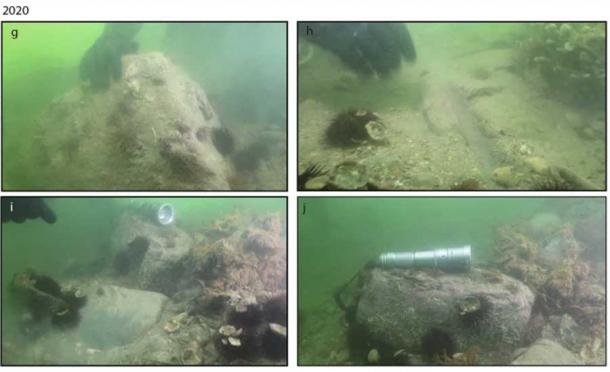
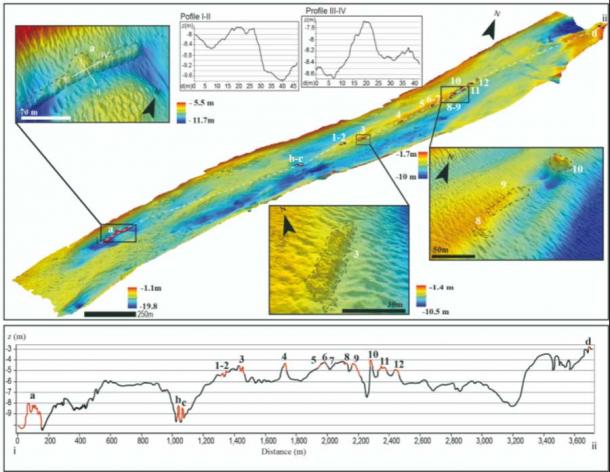
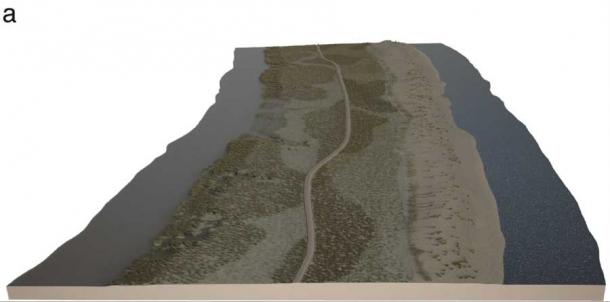









 The common cold could predate humans by 500,000 YEARS and...
 Mysterious illness blinding and killing songbirds is...
 Could COVID be spread by TREES? Pollen can carry hundreds of...
 England is on track to completely ELIMINATE the transmission...