Naar de inhoud

UFO'S of UAP'S, ASTRONOMIE, RUIMTEVAART, ARCHEOLOGIE, OUDHEIDKUNDE, SF-SNUFJES EN ANDERE ESOTERISCHE WETENSCHAPPEN - DE ALLERLAATSTE NIEUWTJES

UFO's of UAP'S in België en de rest van de wereld
akke.beakke.be
Ontdek de Fascinerende Wereld van UFO's en UAP's: Jouw Bron voor Onthullende Informatie! Ben jij ook gefascineerd door het onbekende? Wil je meer weten over UFO's en UAP's, niet alleen in België, maar over de hele wereld? Dan ben je op de juiste plek! België: Het Kloppend Hart van UFO-onderzoek In België is BUFON (Belgisch UFO-Netwerk) dé autoriteit op het gebied van UFO-onderzoek. Voor betrouwbare en objectieve informatie over deze intrigerende fenomenen, bezoek je zeker onze Facebook-pagina en deze blog. Maar dat is nog niet alles! Ontdek ook het Belgisch UFO-meldpunt en Caelestia, twee organisaties die diepgaand onderzoek verrichten, al zijn ze soms kritisch of sceptisch. Nederland: Een Schat aan Informatie Voor onze Nederlandse buren is er de schitterende website www.ufowijzer.nl, beheerd door Paul Harmans. Deze site biedt een schat aan informatie en artikelen die je niet wilt missen! Internationaal: MUFON - De Wereldwijde Autoriteit Neem ook een kijkje bij MUFON (Mutual UFO Network Inc.), een gerenommeerde Amerikaanse UFO-vereniging met afdelingen in de VS en wereldwijd. MUFON is toegewijd aan de wetenschappelijke en analytische studie van het UFO-fenomeen, en hun maandelijkse tijdschrift, The MUFON UFO-Journal, is een must-read voor elke UFO-enthousiasteling. Bezoek hun website op www.mufon.com voor meer informatie. Samenwerking en Toekomstvisie Sinds 1 februari 2020 is Pieter niet alleen ex-president van BUFON, maar ook de voormalige nationale directeur van MUFON in Vlaanderen en Nederland. Dit creëert een sterke samenwerking met de Franse MUFON Reseau MUFON/EUROP, wat ons in staat stelt om nog meer waardevolle inzichten te delen. Let op: Nepprofielen en Nieuwe Groeperingen Pas op voor een nieuwe groepering die zich ook BUFON noemt, maar geen enkele connectie heeft met onze gevestigde organisatie. Hoewel zij de naam geregistreerd hebben, kunnen ze het rijke verleden en de expertise van onze groep niet evenaren. We wensen hen veel succes, maar we blijven de autoriteit in UFO-onderzoek! Blijf Op De Hoogte! Wil jij de laatste nieuwtjes over UFO's, ruimtevaart, archeologie, en meer? Volg ons dan en duik samen met ons in de fascinerende wereld van het onbekende! Sluit je aan bij de gemeenschap van nieuwsgierige geesten die net als jij verlangen naar antwoorden en avonturen in de sterren! Heb je vragen of wil je meer weten? Aarzel dan niet om contact met ons op te nemen! Samen ontrafelen we het mysterie van de lucht en daarbuiten.

Berichten van 1 juli 2021 tot 31 juli 2021

Interactive US map shows nearly 10,000 drone, UFO encounter incident reports

Interactive US map shows nearly 10,000 drone, UFO encounter incident reports

Hoe vind je dit bericht?
Geschreven door peter om 23:52 Stuur door

Pentagon Has 23-Minute Video Showing Many Eerie Objects Moving in Strange Patterns, Insider Claims

UFO.

Pentagon Has 23-Minute Video Showing Many Eerie Objects Moving in Strange Patterns, Insider Claims

by Max Gorbachev

Until 2017 Luis Elizondo worked in the Pentagon where he headed the Advanced Aerospace Threat Identification Programme, which was meant to study unidentified aerial phenomena. He said he quit because US authorities have been underestimating the threat from UFOs. Since then he joined a UFO research group To The Stars Academy of Arts and Science.

UFO-19.jpg

The Pentagon has a 23-minute video showing multiple mysterious objects moving in strange patterns, says a former official from the Department of Defense Luis Elizondo. Speaking on YouTube channels Witness Citizen UAP and Fade to Black, Elizondo said he personally saw the video, which he described as "extremely compelling".

The former Pentagon employee mentioned the video when he was asked about his work as the director of the Advanced Aerospace Threat Identification Program (AATIP). Speaking on videos of UFOs that may leave viewers rattled, Elizondo described the long video, which shows numerous eerie objects, which move in patterns humans "wouldn’t really understand".

"I sent [the video] to some highly trained experts in the ISR (Intelligence, surveillance, and reconnaissance) community. And when they came back to me, the title of the email was quote-unquote 'that UFO video'. It is definitive and it's perplexing, every time you think you are like 'that’s what I am looking at' - bang, it changes," he said.

The ex-Pentagon official said the UFOS in the video were big enough for "several" human-sized beings to fit inside. He declined to provide further details, saying he might get arrested if he said too much.

The development comes after the Department of Defense released the much-anticipated report on sightings of unidentified aerial phenomena. The dossier revealed that US authorities still have no explanation for more than 140 sightings of mysterious objects, including the Tic Tac UFO, spotted by civilians and servicemen.

However, the Pentagon has been admonished for what critics described was an uncomprehensive report, and UFO enthusiasts claimed that the DoD is unwilling to share truth about US forces’ encounters with extraterrestrial life.
US lawmakers have since called on the Pentagon to hold hearings on the issues, which they consider to be of national security.

{ https://sputniknews.com/ }

Hoe vind je dit bericht?
Geschreven door peter om 23:35 Stuur door

The UFO files: exploring the findings of the Pentagon’s report

The UFO files: exploring the findings of the Pentagon’s report

The report, released last month, examines mysterious phenomena in the skies. What does it tell us?

UFO

In 2017, The New York Times publicly revealed that the US Defence Intelligence Agency had, ten years earlier, established the Advanced Aerospace Threat Identification Programme – a secret $22m government project to examine military encounters with unidentified flying objects, or Unidentified Aerial Phenomena (UAPs), as they are officially known today.

By that time, details and footage of some particularly striking incidents had already been leaked and widely reported. There was growing interest among members of Congress, who called for greater transparency on the issue. The Senate’s intelligence committee demanded that the Pentagon – the Department of Defence – release a public report describing its findings.

What were these widely reported incidents?

In 2014 and 2015, US navy pilots from the aircraft carrier USS Theodore Roosevelt described close encounters in the Atlantic off Virginia with what looked like flying spheres.

Pilots reported that the objects had no visible engine or exhaust plumes, but that they could reach altitudes of 30,000 feet and hypersonic speeds. Some incidents were videotaped, including one in early 2015 that shows an object zooming over the waves as a pilot exclaims: “Wow, what is that, man? Look at it fly!”

In November 2004, two jets from the USS Nimitz were 100 miles southwest of San Diego when they encountered a white oval-shaped craft hovering above the sea. As one of the F-18 jets descended to look, the object ascended towards it, then zipped away. “It accelerated like nothing I’ve ever seen,” said David Fravor, one of the pilots. “It had no plumes, wings or rotors and outran our F-18s.”

What did the report find?

The Pentagon examined 144 reports of UAPs made by US military pilots between 2004 and 2021. Although only nine pages long, it presents some interesting findings. One is that UAPs “probably do represent physical objects”, as opposed to technical anomalies or figments of pilots’ imaginations. Some 80 of the UAPs were observed with “multiple sensors”, for instance by radar, infrared and optical cameras as well as pilots’ visual observations.

Furthermore, in 18 of the incidents, the objects demonstrated “unusual flight characteristics”, such as manoeuvring abruptly or moving at intense speeds – potentially demonstrating advanced, as-yet unknown technologies. The report also identified 11 “near-misses” between UAPs and US pilots, concluding that they “clearly pose a safety of flight issue and may pose a challenge to US national security”.

Plastic artist Peter Coffin's ‘Flying Saucer’

Plastic artist Peter Coffin's ‘Flying Saucer’, a seven-meter, LED-studded, SMS-controlled flying saucer which was lifted by a helicopter over Ipanema beach in Rio de Janeiro, Brazil

ANTONIO SCORZA/AFP via Getty Images

Did it offer explanations?

By and large, no. In one case, the Pentagon felt confident that the reported sighting of a UAP was in fact “a large, deflating balloon”. As for the other 143 sightings, it said it was unable to explain them definitively. But it did put forward five potential categories for sightings of UAPs: first, “airborne clutter”, such as birds, drones, balloons or debris; second, “natural atmospheric phenomena” such as thermal fluctuations, ball lightning or solar flares; third, classified technology operated by “US entities”; fourth, “foreign adversary systems”, i.e. secret technologies deployed by China or Russia; fifth, a catch-all “other”.

The fifth, of course, was taken by many as a code for “aliens”, but the word did not feature in the report. Essentially, the report amounts to a “giant shrug”, said The Economist, finding that the evidence on UAPs is “largely inconclusive” and that conclusions will require more data.

So was it a damp squib?

Not altogether. There was enough there to excite the UFO-watching community: “Some UAPs,” the report confirmed, “appeared to remain stationary in winds aloft, move against the wind, manoeuvre abruptly or move at a considerable speed, without discernible means of propulsion.”

It also signalled that security officials do now take UAPs seriously, and that, as Barack Obama recently put it: “there’s footage and records of objects in the skies that... we don’t know exactly what they are”. Most significantly, the findings are potentially deeply troubling from a national security perspective.

President Biden speaks at the Pentagon in February 2021

President Biden speaks at the Pentagon in February 2021

Alex Brandon/POOL/AFP via Getty Images

Why are they worrying, security-wise?

If a “foreign adversary” is behind the aircraft seen by US pilots and radar, then the likes of Russia or China are developing craft with advanced flying abilities that not only exceed the US, but which are so far ahead that they are actually incomprehensible.

Marik von Rennenkampff, a former Pentagon analyst, said that in that case, foreign powers would have performed a breathtaking technological leap – and that US intelligence would have suffered an immense failure “orders of magnitude worse than 9/11” by failing to note and explain them. Other experts, however, questioned why a foreign adversary would risk their technological advantages being discovered by parading them in front of rivals.

What other possible explanations are there?

The Pentagon has not always been forthcoming where reports of UAPs are concerned. “There is a long history of the US government allowing UFO theories to develop to mask or hide classified programmes,” said Julian E. Barnes, an intelligence reporter at The New York Times.

Many historical UFO sightings in the US have been retrospectively explained as sightings of the Lockheed U-2 and its successors: top-secret high-altitude spy planes that the Pentagon did not wish publicly to discuss. The report is somewhat non-committal in this area, saying only: “We were unable to confirm” that classified US programmes “accounted for any of the UAP reports we collected”.

At any rate, this report is only the beginning: it advised more “consistent consolidation” and analysis of reports. Mystery objects in the skies above are now firmly on the radar of the US armed forces.

RELATED VISDEOS, selected and posted by peter2011

{ https://www.theweek.co.uk/news-opinion }

Hoe vind je dit bericht?
Geschreven door peter om 23:26 Stuur door

Stealth Fighters, Not UFOs—What Really Goes On in Area 51

t0107b23605c46b1c91_3.jpg?itok=XFJRmCIW

Stealth Fighters, Not UFOs—What Really Goes On in Area 51

Area 51's location - Groom Lake - was perfect as an experimental aircraft testing site: it was far from prying eyes and "smooth as a billiard table."

Here's What You Need To Remember: The Groom Lake facility at this time acquired the designation “Area 51” as it expanded and developed specialized facilities for the striking supersonic jets: larger additional hangars, a longer 10,000 foot runway, safer backup landing areas, over 130 housing units for personnel, and enlarged fuel stores for the exotic high-temperature JP-7 fuel used in the A-12.

Area 51, the highly secretive U.S. Air Force test facility in the deserts of southern Nevada, is enjoying a resurgence of popular interest thanks to an internet meme—as if being featured in X-File episodes, arcade shoot’em up games and films weren’t enough.

Despite the countless dubious conspiracy theories attributed to the site also known as “Dreamland” or “Groom Lake,” there’s no doubt that for over six decades the base hosted all sorts of “black project” aircraft whose existence was not formally disclosed by the Pentagon. 

Though the CIA only obliquely admitted to the site’s existence in 2013, we actually know a fair bit about how Area 51 came to be—and even how it first became a subject of juicy UFO stories.

A Private Testing Ground for Eisenhower’s Top-Secret Spy Plane

In the early 1950s, the United States was super keen on monitoring the Soviet Union’s rapidly developing nuclear ballistic missile program. As the first spy satellites remained a few years away from being launched, the only way to reliably spy on these sights was to fly above them and snap pictures with giant cameras. But by the early 1950s, the Soviet Union’s new air defense system and high-flying jet interceptors made spy flights excessively risky.

To overcome these defenses, Lockheed engineer Kelly Johnson proposed a glide-liker spy plane that would simply fly too high to be intercepted at over 70,000 feet. This still involved illegally violating Soviet airspace—but as long as the spy planes couldn’t be shot down, Moscow couldn’t prove the spy flights were happening at all.

In November 1954, Eisenhower approved development of this U-2 spy plane in a program known as “Project Aquatone” to be operated by the CIA. While the plane would be built at Lockheed’s famous Skunkworks facility, an aircraft designed for illegal spy overflights needed to be tested somewhere more discrete.

Johnson asked Lockheed test pilot Tony LeVier to find a suitably clandestine airfield. As described in the book Dark Eagles by Curtis Peebles, test pilot Tony LeVier departed from the Skunkworks facility in Palmdale, California flying a Beechcraft Bonanza light plane, ostensibly on a “hunting trip.” In reality, they proceeded to survey 50 decertified sites in Arizona, California and Nevada over two weeks—but none seemed sufficiently remote.

However, Air Force liaison Col. Osmond Ritland recalled an abandoned X-shaped landing strip that had served as a gunnery field during World War II.

CIA officer Richard Bissell, LeVier and Johnson flew down to inspect the strip, which lay next to a dry Nevada salt flat called Groom Lake. Bissell described the site as “…a perfect natural landing field… as smooth as a billiard table without anything being done to it.”

Johnson indicated “We’ll put it right there. That’s the hangar.”

A fake company called CLJ, created to obscure Lockheed’s involvement, recruited contractors to build up the facilities in the sweltering summer of 1955 at a cost of $800,000.

The desolate site, deceptively nicknamed “Paradise Ranch,” started out with a nearly mile-long runway, two hangars, a control tower, fuel and water storage tanks, an access road, and trailers for onsite personnel. LeVier personally road about the lakebed to clear it of debris and spent shell casings to make it safe for landing.

Finally, on July 24, 1955, the prototype U-2, dubbed Article 341, was disassembled and stowed into a hulking C-124 Globemaster transport plane, which transported it to the “Ranch”—landing with deflated tires so as not to break through the thin runway.

LeVier took the gawky aircraft around on taxi tests, hitting 80 miles per hour on the runway—only for the aircraft’s lengthy wings to lift his plane twenty feet into the air during his second run. The U-2 flew over a quarter-mile, before LeVier was able to get the lift-prone aircraft back down on the lakebed on his second attempt—though the hard landing caused one of the jet’s tires to burst and catch fire.

The U-2 went on to see several successful flight tests and in a matter of months was deployed on spy flights over the Soviet Union with CIA pilots.

Civilian airline pilots and air traffic controllers began spotting the silvery U-2s flying at supposedly impossible heights. Given that the Air Force couldn’t explain the sightings by telling the truth, it devised weather-related incidents to explain them away. These often unconvincing explanations only fed the fervor of conspiracy theorists.

The Blackbirds: A-12, D-21 and SR-71

When a Soviet S-75 surface-to-air missile blasted Gary Powers’s U-2 in 1960, and he subsequently confessed to performing espionage flights) it became clear that altitude alone would not provide an adequate defense. Kelly Johnson had already anticipated this vulnerability in 1958, when he began exploring a new spy plane concept: combining high altitude with sustained speeds exceeding three times the speed of sound, and radar-stealth—hopefully making the jet too high and fast to ever intercept.

This CIA-Lockheed “black project”—codenamed “Project Oxcart”—spawned the futuristic-looking A-12 single-seat spy plane, the progenitor of the famous (and unclassified) two-seat SR-71 Blackbird flown by the U.S. Air Force. 

The Groom Lake facility at this time acquired the designation “Area 51” as it expanded and developed specialized facilities for the striking supersonic jets: larger additional hangars, a longer 10,000 foot runway, safer backup landing areas, over 130 housing units for personnel, and enlarged fuel stores for the exotic high-temperature JP-7 fuel used in the A-12.

The first A-12s arrived in 1962 along with elite military pilots temporarily discharged and placed in the employ of the CIA, a protocol known as “sheep-dipping.” Though the White House never dispatched A-12s on overflights of the Soviet Union, they did fly thirty-two missions over Vietnam and North Korea in Project Blackshield before being retired in favor of the Air Force’s SR-71s, which had side-looking cameras that didn’t require overflight of hostile airspace.

Lockheed also devised a D-21 spy drone that resembled a miniature, single-engined Blackbird, carried on top of a Blackbird-derived carrier aircraft called the M-21.   

Tragically, one of the piggybacked D-21 drones collided with its M-21 carrier during a test launch. Though both of the M-21’s crew ejected, one drowned before he could be rescued, and Johnson canceled M-21 program.

However, the CIA did later try to make use of the D-21s by launching them from B-52 bombers to snap footage of Chinese nuclear test sites. However, a series of mishaps meant the Air Force was unable to recover footage from any of the five drone missions it dispatched.

Birthplace of the Stealth Jet

While the A-12 and Blackbird had limited stealth characteristics, by the 1970s, the Air Force was interested in taking another crack at a low-radar-observable jet, this time with combat application.

In 1977, the Skunk Works used new computer modeling technology to design and build two pale aircraft with diamond-like faceted surfaces coated with radar-absorbent iron ball paint. These “Have Blue” aircraft were disassembled and flown to Area 51 in a giant C-5 cargo jet November 16, then rebuilt and test flown.

Lo and behold, the Have Blues did exhibit drastically reduced radar cross-sections—but they were also highly aerodynamically unstable, and both crashed in 1979.

Lockheed evolved Have Blue into the F-117 Nighthawk attack jet, which used computer fly-by-wire systems to correct the aircraft’s inherent instability. A YF-117 prototype too made its first flight at Groom Lake on June 17, 1981. Production F-117s were then stationed at Area 51 before being redeployed to the nearby Tonopah Test Range.

Though the Pentagon admitted to the existence of a stealth jet in 1983, the secrecy surrounding the F-117 was so effective that the public never had any inkling of the Nighthawk’s true appearance, nor even its designation (widely believed to be the “F-19”) until was finally unveiled in 1988.

Meanwhile, Northrop, too, began refining its stealth technology with the Tacit Blue demonstrator, dubbed the “whale” or “alien school bus” for its decidedly unglamorous appearance. This made its first flight at Groom Lake in February 1982—the first of 135 in all before the demonstrator was retired in 1985.

Conceived as stealthy surveillance plane with a discrete Low Probability of Intercept Radar, Tacit Blue instead pioneered the use of computer-engineered curved-surfaces in stealth aircraft which heavily informed Northrop’s forthcoming B-2 stealth bomber.

Sébastien Roblin holds a master’s degree in conflict resolution from Georgetown University and served as a university instructor for the Peace Corps in China. He has also worked in education, editing, and refugee resettlement in France and the United States. He currently writes on security and military history for War Is Boring.

  • This article first appeared in 2019 and is being reprinted due to reader interest.

{ https://nationalinterest.org/ }

Hoe vind je dit bericht?
Geschreven door peter om 21:51 Stuur door

LATEST UFO SIGHTINGS AND VIDEOS - 24 - 07 - 2021

LATEST UFO SIGHTINGS AND VIDEOS - 24 - 07 - 2021

Strange Alien Creature Found ( July 23, 2021 )

Strange Alien Creature Found : What is this??? : The video shows a strange creature. Is this a Alien or something else?

UFO Sighted Over Roswell, New Mexico ( July 21, 2021 )

Strange UFO was sighted over the skies of Roswell, Chaves County, New Mexico on July 21, 2021

STATEMENT : Roswell, New Mexico

  • credit : Unanswered Universe

UFO Sighted Over Unión de Tula, Mexico ( July 22, 2021 )

Massive UFO Sighted Over the skies of Unión de Tula, in the Sierra de Amula region of the state of Jalisco in central-western Mexico on July 22, 2021.

  • credit : Oscar Rincon

{ https://www.youtube.com/ }

Hoe vind je dit bericht?
Geschreven door peter om 21:30 Stuur door

China’s space station is preparing to host 1,000 scientific experiments

China’s space station is preparing to host 1,000 scientific experiments

Hoe vind je dit bericht?
Geschreven door peter om 01:41 Stuur door

The Bizarre Northern California-Oregon F-15 UFO Incident

De bronafbeelding bekijken

The Bizarre Northern California-Oregon F-15 UFO Incident

There have been many UFO incidents over the years, involving a wide range of phenomena that cover the spectrum from the explainable to the full-on bizarre. Some of the more intriguing UFO incidents are those that involve reliable witnesses and radar and military confirmation, and these are the cases that really make the imagination go wild. One such case played out in 2017 over Northern California and Oregon, involving an airborne intruder that baffled pilots and radar crews, and which would actually be engaged by F-15 fighter jets.

On October 25, 2017, a very strange, almost surreal series of events would play out in the skies near the California-Oregon border, in the United States. At approximately 4:30 p.m. an object was picked up by radar operators flying at an altitude of 37,000 feet and travelling “very fast.” At the time it was broad daylight and whatever the aircraft was, it was dangerously zipping through an area with heavy air traffic, yet it was not emitting any transponder signals, did not respond to attempts to establish radio contact, was completely silent, and according to all records was not supposed to be there. It would later turn out that the Air Force had also been tracking the object as it sped southward, and eyewitnesses who saw it said it was a “large white object.” The object flew directly into heavy air traffic going the opposite direction, being sighted by numerous airline pilots who made panicked calls to ground control, before abruptly changing course to head northbound and disappear from radar altogether.

Although the thing had vanished from radar, for the next 30 minutes there were panicked calls from various airliners reporting the mysterious, fast-moving object, over a range of hundreds of miles, while both the FAA and North American Aerospace Defense Command (NORAD) were trying to figure out what to do. No one seems to have been able to get a good look at the thing, merely describing it as large, white, and very fast, but details such as what sort of aircraft it might be were elusive, and it moved too fast and never stayed in one place long enough for anyone to get a clear visual. However, it was obvious from the harried recordings that would later be released that these pilots did not think it was any normal aircraft, with one exclaiming “That looks crazy!” It would also be described as making maneuvers that were beyond what a normal airliner would have been capable of, making turns of which one witness would say were “Way harder/faster than what a commercial aircraft could handle at that speed/altitude without ripping the wings off.” One Southwest Airlines pilot remark that would be gleaned from audio recordings of the pilot accounts procured through Freedom of Information Act requests made by the site The War Zone, who first broke the story, would say of his own sighting:

If it was like a Lear (private jet) type airframe I probably would not have seen it this clear. This was a white airplane and it was big. And it was moving at a clip too, because we were keeping pace with it, it was probably moving faster than we were… It was a larger aircraft yeah.

Throughout all of this, although visual sightings were pouring in, radar operators could not get a lock on it. The object was also maintaining complete radio silence, ignoring all attempts to hail it, and also did not show up on crews’ digital traffic collision avoidance systems (TCAS). It was all very odd and unsettling, to the point that F-15s from the 142nd Fighter Wing based at Portland International Airport were scrambled to go investigate. From here it gets even stranger, because the fighters would first head south, despite the fact that the mystery object was reported as heading north, for reasons unknown. Also strange is that the F-15s would report not being able to find the object at all. The War Zone would say of the F-15 incident:

The F-15s first appear on radar as they climb out of Portland to the south at time index 33:33 as “Rock” flight—a common callsign used for the alert F-15s stationed at PDX. Alaska 439 asks for an update on the unidentified aircraft and the controller notes they still have nothing on him, saying colloquially that it must be in a kind of “stealth mode or something.” It’s also interesting that the F-15s first went south when it seems as if the object would have been north of PDX by the time they finally launched.

NORAD also said that the incident did result in F-15s from Portland being scrambled to investigate, but by the time they got up and “looked around” the mystery aircraft couldn’t be found. A quick note on the fighter jet aspect of this story—the 142nd Fighter Wing operates F-15Cs upgraded with the most capable air-to-air radar set in the world (AN/APG-63V3) and Sniper advanced targeting pods for long-rang visual identification. Their pilots are some of the best in the world and are highly trained in the homeland air defense mission. Once in the air the F-15s are capable of traversing the entire state of Oregon in just a matter of minutes if need be, so if they were launched promptly it seems unlikely they wouldn’t have been able to intercept the aircraft being pointed out by commercial pilots over Southern Oregon. The fact that they “didn’t find anything” is surprising to say the least. Maybe this was due to the nature of the aircraft being searched for, or the possibility that they launched long after it was first sighted, or that we simply aren’t being told the whole story.

The War Zone confirmed that all of this did indeed happen, with much recorded evidence of the conversations between the airliners, ground control, the FAA, and NORAD, as well as radio exchanges and pilot interviews, although there are parts of the audio that have been redacted, going mute in several places regarding responses to requests for information about the military’s activities, showing that indeed we may not be being told the whole story. Indeed, the FAA and NORAD have stated that they have nothing left to add, merely confirming that the incident happened and refusing to say much else on the matter, while the 142nd Fighter Wing has said nothing on the matter at all, neither confirming or denying anything. Clearly there had to have ben some follow up investigation, as this was an unidentified aircraft that does not show up on radar, acting very strangely in U.S. airspace in an area with heavy commercial air traffic for an extended period of time and able to evade F-15 fighter planes. It is a breach on national security at the very least, so it must have stirred the hornet’s nest among the military, but as to what this follow-up investigation turned up, it is currently unknown. It is all very intriguing, with tons of very reliable witnesses, with The War Zone saying:

Collectively these materials give us incredible insight not only into this incident, but also into how such an event is actually handled in real-time by those who are responsible for the safety of those in the air and those on ground below. What they don’t offer is any sort of an explanation for what happened on that fall evening. But really, the fact that all those involved, from air traffic controllers, to Air Force radar operators, to airline pilots, and even special FAA officials tasked with responding to all types of out of the ordinary incidents that occur in the sky on a daily basis seem just as puzzled with this event as we are makes the story all that much more intriguing.

Considering that there is not much more information to go on, we are forced to speculate on what could have been going on here, with all sorts of theories flying since the report broke. One idea is that the military was testing some sort of top-secret experimental aircraft, perhaps a next generation stealth bomber, but if that is true, then it seems like a strange choice to do it among heavy civilian airline traffic in broad daylight. If this was some sort of classified test, then why do that? Also, why allow it to show up on radar at all? Another idea is that this might have been illegal drug runners trying to move contraband across the Canadian border. This would explain the radio silence, but does not explain how they could perform the maneuvers they did, or how they could just disappear from radar. Drug runners would also be more likely to fly at lower altitudes, and it has been pointed out that it would probably be easier to conduct a drug run over land across the border rather than using an aircraft. Of course there is also the idea that this was aliens, and the case has been popular among UFO nuts. In the end, we just don’t know. All we know is that the incident did happen, something went speeding across the sky to baffle pilots, radar operators, and military officials, but what that might have been is anyone’s guess.

{ https://mysteriousuniverse.org/ }

Hoe vind je dit bericht?
Geschreven door peter om 01:26 Stuur door

Recently Fixed Hubble Captures New and Unusual Galaxy Photos

Afbeeldingsresultaten voor Recently Fixed Hubble Captures New and Unusual Galaxy. Grootte: 207 x 160. Bron: mysteriousworldwide.blogspot.com

Recently Fixed Hubble Captures New and Unusual Galaxy Photos

After a computer glitch caused the Hubble Space Telescope to turn off on June 13th, NASA engineers were finally able to repair it on July 17th and the new images that it captured of two very bizarre galaxies are spectacular.

The two galaxies that the Hubble was photographing are part of a program led by Julianne Dalcanton from the University of Washington in Seattle that surveys bizarre galaxies in the universe.

NASA released two photos with the one of the left showing a rare event called ARP-MADORE2115-273 of two interacting galaxies which are located in the southern hemisphere about 297 million light-years away from us. The fact that Hubble was able to capture high-resolution images of it is incredibly valuable as astronomers first thought that it was a “collisional ring” system that was formed by two galaxies merging in a head-on collision. However, Hubble’s recent observation revealed that the interaction between the two galaxies is a lot more complicated with dusty gas and countless stars.

The picture on the right is of a giant spiral galaxy named ARP-MADORE0002-503 that has very bizarre extended spiral arms that stretch out to a radius measuring 163,000 light-years. To put this into better perspective, it extends three times further than our own Milky Way Galaxy. Furthermore, the majority of disk galaxies contain an even number of spiral arms but ARP-MADORE0002-503 has three. This galaxy is located 490 million light-years away from Earth.

Both of the images can be seen here.

In a statement, NASA Administrator Bill Nelson said, “I’m thrilled to see that Hubble has its eye back on the universe, once again capturing the kind of images that have intrigued and inspired us for decades,” adding, “This is a moment to celebrate the success of a team truly dedicated to the mission.” The Hubble Space Telescope was launched in April of 1990 in a joint project between NASA and the European Space Agency.

Hubble Space Telescope

Now that the Hubble is back working again, we will hopefully see even more stunning photos as those galaxy pictures were only two of numerous test pictures that it took after being rebooted. “Everyone is incredibly grateful, and we’re excited to get back to science!” Dalcanton said. I know that I’m personally excited to see what more breathtaking photos the space telescope will send back to Earth.

{ https://mysteriousuniverse.org/ }

Hoe vind je dit bericht?
Geschreven door peter om 01:13 Stuur door

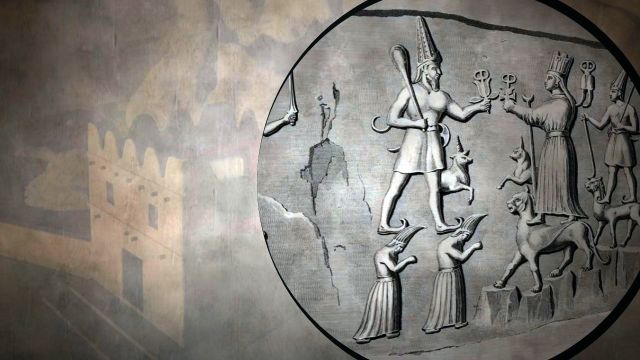
Mural in the pyramids of Nubia depicts a ‘Giant’ carrying two elephants

Mural in the pyramids of Nubia depicts a ‘Giant’ carrying two elephants

The pyramids of Nubia are located in the city of Meroë, former capital of the Kingdom of Kush. In these structures there is an old mural where a giant is seen lifting two elephants.

Nubian pyramids.

In the royal cemetery of the ancient Kingdom of Kush , there is a group of 50 pyramids made of sandstone and red brick.

Many of these are dilapidated, the fault of time and looters. The decorations on these monuments speak volumes about how global the kingdom was. However, there is one that is especially striking.

The giant of the ancient mural

The different pyramids found in the city of Meroë make it coveted by tourists. Among these are the famous Nubian pyramids .

This deposit was discovered by Europeans in 1821, thanks to the French mineralogist Frédéric Cailliaud. The most interesting of these pyramids is in reliefs and paintings of the burial chambers.

The one that caused the most concern in the experts was the ancient mural that represents a giant of enormous proportions lifting two elephants .

The features of this character are not characteristic of the area, but Caucasian . Many theorists have hinted that this is proof that red and white giants inhabited Earth.

This theory has been around since 79 AD. C., when the Roman historian Josefo Flavio , wrote that the last race of Egyptian giants lived in century XIII a. C. , during the government of Josué.

Flavio wrote that these were huge, their faces evoked fear, as did their thunderous voice, which they compared to the roar of a lion.

This is assumed by the different paintings found in ancient Egypt , where the pyramid builders are depicted as giants.

Experts believe that these people were over 5 meters tall and could lift up to 4 tons of blocks.

Some of those paintings also showed giant kings ruling Egypt. Others show ordinary people, very small in comparison to such characters.

This theory could be confirmed with a discovery in 1988. Gregor Spoerri , a Swiss businessman and passionate about ancient Egyptian history, found a giant finger after meeting with grave robbers.

Mural found in the burial chamber of one of the pyramids.

White giants in other cultures

The appearance of “Caucasian giants”, such as that of the ancient mural of the pyramids of Nibua, is also mentioned in other cultures.

The Paiutes , an ancient North American tribe native to Nevada, have an oral tradition that they related to settlers.

These include a race of giant, white and red-haired individuals known to their ancestors as “Si-Te-Cah”, which inhabited an ancient cave.

The Choctaw Amerindian people also tell legends where their ancestors fought against a race of Caucasian giants that inhabited the territory that is now Tennessee.

Even the first settlers who arrived in South America, said that in the Patagonia region , they saw a town of tall, white and red-haired people.

All these legends, including that of the ancient Nubian pyramid mural, could have a common origin; the Atlantis .

Historians, theorists, and alternative researchers have suggested a hypothesis about the survivors of the cataclysm . These would have fled to different regions of the world, where they settled and created different civilizations, based on the ancient Atlantean knowledge.

The Pyramids of Mero in Bazarwia, Sudan

Nubian-giant-3.jpg

Is this ancient mural a representation of an Atlantean giant? It’s possible. Historians assure that all these stories are simple mythology, however, it is hardly credible that so many cultures around the world have such similar legends.


{ https://mysteriousthing.com/ }

Hoe vind je dit bericht?
Geschreven door peter om 01:04 Stuur door

NASA Perseverance Mars Rover to Acquire First Sample

NASA Perseverance Mars Rover to Acquire First Sample

View from the Perseverance rover as it scouts its first sampling location.

A light-colored “paver stone,” like the ones seen in this mosaic image, will be the likely target for first sampling by the Perseverance rover. This image was taken July 8, 2021, in the “Cratered Floor Fractured Rough” geologic unit at Jezero Crater.
Credits: NASA/JPL-Caltech/ASU/MSSS

NASA is making final preparations for its Perseverance Mars rover to collect its first-ever sample of Martian rock, which future planned missions will transport to Earth. The six-wheeled geologist is searching for a scientifically interesting target in a part of Jezero Crater called the “Cratered Floor Fractured Rough.”

This important mission milestone is expected to begin within the next two weeks. Perseverance landed in Jezero Crater Feb. 18, and NASA kicked off the rover mission’s science phase June 1, exploring a 1.5-square-mile (4-square-kilometer) patch of crater floor that may contain Jezero’s deepest and most ancient layers of exposed bedrock.

“When Neil Armstrong took the first sample from the Sea of Tranquility 52 years ago, he began a process that would rewrite what humanity knew about the Moon,” said Thomas Zurbuchen, associate administrator for science at NASA Headquarters. “I have every expectation that Perseverance’s first sample from Jezero Crater, and those that come after, will do the same for Mars. We are on the threshold of a new era of planetary science and discovery.”

It took Armstrong 3 minutes and 35 seconds to collect that first Moon sample. Perseverance will require about 11 days to complete its first sampling, as it must receive its instructions from hundreds of millions of miles away while relying on the most complex and capable, as well as the cleanest, mechanism ever to be sent into space – the Sampling and Caching System.

Precision Instruments Working Together

The sampling sequence begins with the rover placing everything necessary for sampling within reach of its 7-foot (2-meter) long robotic arm. It will then perform an imagery survey, so NASA’s science team can determine the exact location for taking the first sample, and a separate target site in the same area for “proximity science.”

“The idea is to get valuable data on the rock we are about to sample by finding its geologic twin and performing detailed in-situ analysis,” said science campaign co-lead Vivian Sun, from NASA's Jet Propulsion Laboratory in Southern California. “On the geologic double, first we use an abrading bit to scrape off the top layers of rock and dust to expose fresh, unweathered surfaces, blow it clean with our Gas Dust Removal Tool, and then get up close and personal with our turret-mounted proximity science instruments SHERLOC, PIXL, and WATSON.”

SHERLOC (Scanning Habitable Environments with Raman & Luminescence for Organics & Chemicals), PIXL (Planetary Instrument for X-ray Lithochemistry), and the WATSON (Wide Angle Topographic Sensor for Operations and eNgineering) camera will provide mineral and chemical analysis of the abraded target. Perseverance’s SuperCam and Mastcam-Z instruments, both located on the rover’s mast, will also participate. While SuperCam fires its laser at the abraded surface, spectroscopically measuring the resulting plume and collecting other data, Mastcam-Z will capture high-resolution imagery.

Working together, these five instruments will enable unprecedented analysis of geological materials at the worksite.

“After our pre-coring science is complete, we will limit rover tasks for a sol, or a Martian day,” said Sun. “This will allow the rover to fully charge its battery for the events of the following day.”

Sampling day kicks off with the sample-handling arm within the Adaptive Caching Assembly retrieving a sample tube, heating it, and then inserting it into a coring bit. A device called the bit carousel transports the tube and bit to a rotary-percussive drill on Perseverance’s robotic arm, which will then drill the untouched geologic “twin” of the rock studied the previous sol, filling the tube with a core sample roughly the size of a piece of chalk.

Perseverance’s arm will then move the bit-and-tube combination back into bit carousel, which will transfer it back into the Adaptive Caching Assembly, where the sample will be measured for volume, photographed, hermetically sealed, and stored. The next time the sample tube contents are seen, they will be in a clean room facility on Earth, for analysis using scientific instruments much too large to send to Mars.

“Not every sample Perseverance is collecting will be done in the quest for ancient life, and we don’t expect this first sample to provide definitive proof one way or the other,” said Perseverance project scientist Ken Farley, of Caltech. “While the rocks located in this geologic unit are not great time capsules for organics, we believe they have been around since the formation of Jezero Crater and incredibly valuable to fill gaps in our geologic understanding of this region – things we’ll desperately need to know if we find life once existed on Mars.”

More About the Mission

A key objective for Perseverance’s mission on Mars is astrobiology, including the search for signs of ancient microbial life. The rover will characterize the planet’s geology and past climate, pave the way for human exploration of the Red Planet, and be the first mission to collect and cache Martian rock and regolith.

The Mars 2020 Perseverance mission is the first step in NASA’s Mars Sample Return Campaign. Subsequent NASA missions, now in development in cooperation with the European Space Agency, would send spacecraft to Mars to collect these sealed samples from the surface and return them to Earth for in-depth analysis.

The Mars 2020 Perseverance mission is part of NASA’s Moon to Mars exploration approach, which includes Artemis missions to the Moon that will help prepare for human exploration of the Red Planet.

JPL is managed for NASA by Caltech in Pasadena, California.

To learn more about Perseverance, visit:

and

-end-

Karen Fox / Alana Johnson
NASA Headquarters, Washington
301-286-6284 / 202-358-1501
karen.c.fox@nasa.gov / alana.r.johnson@nasa.gov  

DC Agle 
Jet Propulsion Laboratory, Pasadena, Calif.
818-393-9011
agle@jpl.nasa.gov

{  https://www.nasa.gov/ }

Hoe vind je dit bericht?
Geschreven door peter om 00:31 Stuur door

Rather than letting the recent revelations about UFOs spell hope and intrigue, the US government is spreading ‘fear porn’

Rather than letting the recent revelations about UFOs spell hope and intrigue, the US government is spreading ‘fear porn’

Rather than letting the recent revelations about UFOs spell hope and intrigue, the US government is spreading ‘fear porn’
Filmmaker Reuben Langdon spoke to RT about how the government is controlling the messaging around the new information around UFOs to keep justifying its bloated military budget and terrify Americans.

For my ninth birthday, my brother got me a telescope. In rural Northern Wisconsin, on my family’s farm, I would look at the stars across the night sky with no light pollution to block the waves of patterns webbing across the dark. Michael, my older brother, patiently set up my telescope and showed me the constellations and told me their ancient names; we would also wonder about possible other worlds and UFOs. 

The first time I could find the constellations on my own, I was lit up and forever transfixed by stars. My brother explained the history, “This is the Ursa major and Ursa minor, the bears, the protectors.” I looked up at him, strong and tall, Michael, like the bear constellation, was my constant protector until his death took him somewhere beyond the stars.

Recently, international media began reporting more and more stories about Unidentified Flying Object (UFO) sightings, following the release of American government information relating to secret projects on the subject. For a long while, UFOs weren’t taken seriously by mainstream media, they featured them only as clickbait for ‘cranks’ on the internet. But now, as more and more credible people have come forward with their experiences, a shift has occurred in public perception. 

There was a movement for the American government to release under the Freedom of Information Act documentation relating to projects involving UFOs. Former Navy pilots and civilians have since come forward for interviews about what they witnessed in the skies and the way the military chose to conceal sightings of the advanced technology demonstrated by UFOs. Yet, for all the supposed transparency there was a message of fear creeping into the narrative. 

As the American empire always seeks to justify its bloated weapons spending to the tune of trillions of dollars, the sudden release of these CIA documents seems at best suspect and at worst diabolical with a view to blaming the presence of this unrecognized technology on Russia or China. Unfortunately, instead of seeing the opportunity to expand awareness for humanity the framing of the new information became one with a thread of distrust and war. 

In the words of filmmaker and actor Reuben Langdon, the corporate media gives us “fear porn.” 

He added: “The people doing the work (researching UFOs) seem to have the best of intentions. It comes down to the media and forcing their hand. We have a media that is so focused on the negative news with very few positives. A lot of the researchers in the field have trouble to even bring forth the information. Like, Chris Mellon who said, first we have to have the conversation and unfortunately many will not listen unless it has that negative spin.”

Reuben began his career as a stuntman and has featured in Hollywood blockbusters including Avatar and Pirates of the Caribbean, as well as numerous video games, and became interested in UFOs following an experience he had while filming the James Cameron sci-fi epic. For over a decade he has been researching extraterrestrial phenomena amongst other things and entered a successful documentary making career. 

Is the CIA controlling the messaging around this using the media to justify some other agenda? As we hear more stories about the phenomenon, the American government defaults their messaging to fear.

Several years ago, Reuben was involved in a citizen congressional hearing including former members of Congress discussing the history of UFOs and the coverup by the American government. Several high-ranking military intelligence figures shared information at this mock hearing to show what a real investigative Congressional hearing could be like if it were ever allowed. The hope was that it would raise enough awareness to force a public inquiry. 

One of the highlights was watching the late Senator Mike Gravel demand that information that was hidden from the public by the US intelligence about UFOs and the history be released for everyone. As I discussed this project with Reuben Langdon, he described what it was like to coordinate the emulated hearing, quite unique in its approach.


He added: “I disagree with projecting fear with the UFO stories. It is an approach to get it in the media but not my approach to this phenomena. The national (American) media seems to be about selling fear and scaring as many people as possible because… fear sells.…” 

One of the biggest challenges regarding the UFO coverage is getting it to be taken in a serious way at all. Reuben described the challenge of bringing forth information. 

“I think that the Government may see this as an opportunity to put forth their agenda which is one of control of power…taking a bird’s eye, how it is approached by media… be prepared for false flags in the media, like an alien invasion.… We can choose to support people with a fear based narrative or support people with a non-fear based narrative. There is no reason to be in fear, if you are aware of it.” 

Reuben had also made a documentary exploring alternative energy sources and the inventors who created them. The documentary was ultimately rejected by top executives for distribution. Undaunted, Reuben outlined how with his own equipment he embarked on the journey of two seasons of his show, Interviews with Extra Dimensionals, which ended up being a top show on the network GAIA. Reuben’s tenacity is driven by a curiosity based on his own personal experiences. 

He said:“To some it may seem like the end of the world when in actuality it is humanity waking up to our true potential. The realization we are sovereign, independent beings that can create our own reality and not rely on others to do it for us.” 

Reuben’s new project is a film about the adventurer F.A. Mitchell Hedges (the man Indiana Jones character was based on) and the crystal skull. It was discovered in the 1920’s at a Mayan temple, by his daughter. Reuben explores the mystique surrounding the object and its larger meaning to those who believe it has spiritual powers.

He added: “There seems to be an interaction between sacred spots and different places on the Earth, that indigenous hold in sacredness. The feature is setting up Hedges’ research and work. The film will also uncover the legend about the possibilities that there are 13 skulls around the Earth and if all found the legend says, humanity will enter a new era.” 

The Crystal Skull is thought by some to be similar to an ancient computer that holds some sort of sacred knowledge like the Akashic records and other information available from ancient civilizations. People show up from all over the world to simply sit in the presence of the Crystal Skull to experience its power and report mystical attunement with multi-dimensional realms. 

I imagine my brother Michael’s delight at watching the unfolding of all this new information. Near the end of my brother’s life, Michael gestured vaguely one night at the sky, took my hand in his and looked at me intently. Too weak to form all the words, I looked into his eyes and he turned his head upward to the night sky. I nodded and understood. “Look for me in the stars, I am with you.” I imagined him saying, “I will always be here to protect you. I love you.” Tears rolled down his face slowly as I kissed his hand. 

Michael instilled in me the gift of wonder for discovering more about the Universe. I remain open and curious. Even now, I look up at night as I still search the same familiar constellations, I look for my protector, my brother, his smile now hidden somewhere behind the stars. 

I am encircled with the thought of all the possibilities. 

As Reuben Langdon suggests, “Instead of fear, why not be curious?”

If you like this story, share it with a friend!

The statements, views and opinions expressed in this column are solely those of the author and do not necessarily represent those of RT.

{ https://www.rt.com/ }

Hoe vind je dit bericht?
Geschreven door peter om 23:39 Stuur door

Why the military should work with scientists to study the UFO phenomenon

Why the military should work with scientists to study the UFO phenomenon

UFOs have been in the news a lot lately. I am a research astronomer who has written and edited books and created a free online course about the search for life in the universe. While I think we are making progress on detecting life beyond Earth, I view UFOs from a skeptical standpoint, since the evidence that they represent aliens visiting the Earth is unconvincing.

Last month, a report from the Office of the Director on National Intelligence dropped on Congress. It described 144 sightings by military personnel over a 17-year period, preferring to use the term UAP, for unidentified aerial phenomenon, in part to avoid the stigma attached to UFOs.

For those like me waiting for definitive statements, the report was a big disappointment. It declined to draw any conclusions, saying the available data is “largely inconclusive” and noting it is limited and inconsistently reported. The report worried about increased air “clutter,” and left open the possibility that some UAP sightings represent advanced technologies of foreign adversaries, with significant national security implications.

As for UFOs as alien spacecraft, the report was agnostic. It scrupulously avoided using the words alien or extraterrestrial. That will do little to discourage “true believers.” Nearly half of all Americans think aliens are visiting the Earth, and the UFO phenomenon has become enmeshed in a web of conspiracy theories that include accounts of abduction by aliens and crop circles. These conspiracy theories have undoubtedly been fueled in part by the fact that the military has been secretly investigating UFOs for decades. Any rational debate over UFOs must contend with the fact that they have taken deep root in the public consciousness.

Will the report, and increased transparency by the military, change anything? Will it help draw scientists like me into a serious study of the phenomenon?

Scientists will have to get over their reticence to engage with the sightings. We are in an awkward position. Rapid progress in finding planets orbiting other stars has led to a projection of 300 million habitable planets in our galaxy. There has been plenty of time for life on some of those planets to evolve intelligence and technology. We don’t deny the possibility of aliens traveling from their star system to ours. We are just unconvinced by the data presented so far. Most sightings can be attributed to weather balloons or astronomical phenomena such as meteors, fireballs, and Venus. There are many resources giving mundane explanations for UFO sightings.

There have been academic studies of UFOs before. In 1968, the Condon Report said that that no scientific knowledge had been gained from two decades of study of the phenomenon. But 20 years later, a review led by Stanford professor Peter Sturrock concluded that some sightings are accompanied by physical evidence that warrants investigation. It is telling that after decades of studies and hundreds of thousands of sightings, UFOs have not reached the gold standard in science for confirming any hypothesis: reproducible evidence.

For their part, the military and intelligence communities will have to more actively engage with scientists, and ask for their help and expertise in understanding the sightings in the report, and many others that have not been made public. There are signs that this might happen. Under Avril Haynes, the Office of the DNI has been drawing on its expert group of 500 scientists who consult with the intelligence agencies on scientific problems. A model for this type of collaboration is the two panels of scientists and medical experts that were recently set up to understand the “Havana syndrome” that has afflicted American diplomats since 2016.

What would a collaboration with scientists look like, and what kind of data would it take to “move the needle” on understanding the UAP phenomenon?

The recent report shows how difficult it is to interpret the sightings, even with expert observers and data from multiple sensors. In all but one of 144 cases, there was too little information to even broadly characterize the event. Deputy Defense Secretary Kathleen Hicks acknowledged this deficiency when she called for more timely and consistent data collection on UAPs. The Defense Department has just over two months to develop a new strategy and report back to Congress.

Sensors malfunction and even expert observers can be fooled when seeing something outside their realm of experience. With optical and infrared imaging, it is extremely difficult to gauge the distance, size, and speed of an object. For example, the three Navy videos that have been in heavy circulation on the Internet seem impressive and inexplicable, but they could easily be artifacts of camera optics and tracking systems.

The military should invite a select group of experts to examine all the evidence (with suitable clearance given when the sensor technology involved is classified). It should be an interdisciplinary team, comprised to address all the observational characteristics of the phenomena. Ideally, data should be shared among our allies, since UAP appear globally. Scientists can bring their assets to bear on the problem as well. For example, civilian satellites are being used to detect and monitor UAPs and machine learning can be used to sift the data for anomalous events.

Scientists are curious and they love a challenging problem. I would lend my hand to the effort if asked. Let’s hope the government will harness scientific expertise to shine light on this decades-long mystery.

{ https://www.airforcetimes.com/ }

Hoe vind je dit bericht?
Geschreven door peter om 23:20 Stuur door

Classified ‘brief’: Secret UFO report only 17 pages long

Classified ‘brief’: Secret UFO report only 17 pages long

The real truth on UFOs is out there — and it’s only 17 pages long.

The nine-page preliminary US government report released last month did little to satisfy those seeking answers on whether alien life exists — and the classified version isn’t likely to provide much more depth with just eight additional pages, according to a report by The Black Vault, a website operated by author and podcaster John Greenewald.

Days after the June 25 report was released by the Office of the Director of National Intelligence, US officials declined to comment on the length of the classified version, but told Greenewald it was “substantively consistent” and had the same conclusions as the public document.

Greenewald tweeted Thursday that he had confirmed the length of the classified report, which led to much speculation online, with estimates ranging anywhere from 70 to 400 additional pages.

An email from ODNI confirms the full US government report on UFOs is “17 pages in length.”John Greenewald / The Black Vault

“The classified version of the report is 17 pages in length,” Sally Nicholson, from ODNI’s office that handles Freedom of Information Act requests, wrote to Greenewald in an email Thursday.

Greenewald, who specializes in obtaining declassified documents through FOIA requests, bills his site as the largest private online collection of declassified government reports.

Filmmaker Jeremy Corbell released footage of UFOs off the coast of San Diego in 2019.Mystery Wire

Greenewald’s inquiry into the classified report, filed the morning after ODNI delivered it to Congress, initiated a “mandatory declassification review (MDR),” according to The Black Vault.

That’s a process in which an individual or entity can request any federal agency to review classified information for declassification, regardless of age or origin, with “certain limitations,” according to the Information Security Oversight Office.

The Black Vault also requested attachments to the classified report, “wherein members of Congress received additional videos or photographs outside of the seventeen pages and whether those are confirmed to exist,” Greenewald wrote.

The Office of the Director of National Intelligence has only reported 144 UFO sightings by government sources since 2004.Mystery Wire

“It must be stated that this answer may only come after the case is processed, closed, and a final determination is issued, since the current state of the report and/or attachments should they exist, are classified,” the report continued.

Greenewald said many MDR cases are ultimately denied, but have led to the unearthing of a CIA document that “supposedly justified the Iraq invasion” and a National Security Agency record revealing the list of classified documents aboard the USS Pueblo before its capture by North Korea in 1968.

Luis “Lue” Elizondo, the former head of the Pentagon’s Advanced Aerospace Threat Identification Program, told The Post last month that the ODNI report was merely the “first” of many to come.

UFO investigator John Greenewald has filed numerous FOIA requests in his pursuit for classified documents on UFO sightings.Mystery Wire

Elizondo, who claims the Department of Defense has tried to discredit him, told The Post on Friday that the classified report — funded as part of a $2.3 trillion coronavirus relief and spending package enacted by President Donald Trump in December — is considerably longer.

“Understandably, there is some confusion, but rest assured the complete report, including end notes, is over 70 pages,” Elizondo said in a statement to The Post. “I do not care to speculate about why there is confusion, nor involve myself in the debate, but the fact remains that the full and complete report is significantly longer than what is currently being stated for the record.”

Elizondo did not clarify how he knew the length of the classified report. He said last month’s public release — which didn’t find “firm conclusions” on the 144 UFO sightings reported by government sources since 2004 — left more questions than answers. Just one reported UFO was identified as a large, deflating balloon.

“This conversation is only beginning,” Elizondo told The Post late last month.

{ https://nypost.com/ }

Hoe vind je dit bericht?
Geschreven door peter om 23:03 Stuur door

LATEST UFO SIGHTINGS AND VIDEOS - 23 - 07 - 2021

LATEST UFO SIGHTINGS AND VIDEOS - 23 - 07 - 2021

UFOs Sighted During A Plane Takeoff Over Korea ( July 20, 2021 )

This amazing video comes not only to reaffirm that ′′ they are already among us ", but that they act at such speed and reality very much beyond our senses and perceptions...
Rus Choi made this extraordinary UFO activity record during a plane takeoff in Korea on July 20, 2021
Here I present the original and following with approximation and speed reduction so that you can understand the reality of a world we are not seeing.
They're already here!!!

UFO Sighted Over Chile ( June 19, 2021 )

This impressive UFO was sighted over the skies of Chilie on the evening of June 19, 2021 : More evident every day

  • credit : Hitalo Roland Mottin

RELATED VIDEOS

{ https://www.youtube.com/ }

Hoe vind je dit bericht?
Geschreven door peter om 22:34 Stuur door

Russell Brand Believes Aliens May Be Gods

De bronafbeelding bekijken

Russell Brand Believes Aliens May Be Gods

Some people consider Russell Brand to be a comedy god. Others consider the man who claims to have bedded 1,000 women to be a sexual god. Russell Brand would probably disagree (reluctantly) with both because he considers aliens to be gods and he’s not an alien. Or is he? After all, his popular 2013 comedy show was called “Messiah Complex.” Does Brand know something we don’t … or is this just another celebrity ploy for publicity?

“He says it ain’t advanced human tech, there is s**t in there that defies the laws of physics. The [US] government have known about it for ages and they are slowly making these releases.”

In an interview with The Mirror, Brand reveals that his enlightenment on the subject of aliens came after becoming friends with Jeremy Corbell – the now famous documentary filmmaker who has been slowly releasing U.S. government videos of military encounters with UFOs – encounters that the government admits it cannot explain. In the U.S., when in doubt about a subject of this magnitude, we turn to comedians and talk show hosts, so it’s no surprise that the British are doing the same with Brand, who is not only a comedy performer and media star but also a controversial and outspoken political activist.

Tic-tac UFO

“It is not a distraction from Covid, it is happening because there is no choice because there has been a whistleblower situation where a bunch of data is being released.”

Brand credits Corbell for pressuring the Pentagon to reveal more videos and forcing them to comment on them. At that point, he naturally turns the story back to himself.

“So it seems to me that life is out there somewhere with crazy creatures and new cultures that will come to you shortly.”

“New cultures” implies higher forms of intelligent life and, while he says they’re coming shortly, he believes they’ve “been communicating with us for years.” However, the big shocker is that Brand follows the ancient aliens theory that these communications  influenced earlier humans enough to make them believe they were coming from “gods.” Is that a good thing or a bad thing, Russell?

“If you don’t choose heroes, heroes will be chosen for you, and they will not represent values that empower you, they will represent powers that will enslave you.”

Brand may have given us the answer in “Messiah Complex.” Perhaps early humans chose to make heroes or gods out of the mysterious beings communicating and possibly even inspiring them rather than the human leaders who were out to enslave them.

Far-fetched? Have you watched the news lately?

Russell Brand is certainly not someone many would consider to be a hero, a god or even just a wise sage. Then again, a sizeable portion of Americans admit they’d rather get their news and guidance from late night talk show hosts who are usually comedians. Is it time to start getting our UFO and extraterrestrial guidance from them as well?

We could do worse … and have.

{ https://mysteriousuniverse.org/ }

Hoe vind je dit bericht?
Geschreven door peter om 01:42 Stuur door

Strange Submarine Encounters with Underwater UFOs

1600px-virginia-class-submarine-1570547377-999x540.jpg

Strange Submarine Encounters with Underwater UFOs

In recent years there has been increasing coverage of military encounters with UFOs, with the U.S. government surprisingly acknowledging such incidents, and while avoiding saying these things are otherworldly, not denying it either.  Yet while most people have their eyes trained to the skies, a lesser known aspect of this ongoing phenomenon is what seems to be going on underwater. One area of the UFO phenomenon that doesn’t seem to get as much coverage is that of what are called USOs, or Unidentified Submersible Objects, basically underwater UFOs, which are every bit as strange as their sky-going brethren and with which military submarines have had very bizarre encounters.

Some interesting cases of USOs have been reported by personnel within the US Navy, from which there has been footage released showing UFOs entering the water. Chief among the proposed evidence for this is a video taken off the coast of San Diego in July of 2019 by crew aboard the USS Omaha. The video, which was released by UFO researcher and investigative filmmaker Jeremy Corbell, shows a spherical object fly over the vessel before coming down to make a controlled descent into the water, with a crewmember heard to exclaim “Wow, it splashed!” The video caused quite a stir online, but it would become even more interesting when information would come out that at around the same time, US submarines were also picking up mysterious objects underwater that seemed to defy physics. The Navy confirmed that the footage was authentic and unexplained, and the Washington Examiner’s Tom Rogan has said of this in connection with the USS Omaha footage:

Relevant to this video, an area we will learn more about is the interaction between US Navy submarines – nuclear ballistic submarines and attack submarines – picking up sonar contact of things moving at hundreds of knots under the water. There is an undersea dimension to this, on top of what the pilots are seeing above water. Hundreds of knots under water? I don’t think people can even digest that. That is what I have heard from very good sources and that the US Navy has the data.

Another report concerning submarines came in the wake of the well-known USS Nimitz UFO incident, during which a fleet of US Navy vessels was constantly buzzed by unidentified flying objects. According to former United States Air Force intelligence expert Mike Turber, in one incident a US Navy submarine encountered a mysterious craft hurtling at 550mph through the water in 2008, which looked exactly like the tic-tac-shaped craft sighted by the crew of the USS Nimitz. Turber would say of the incident:

There was a submarine situation – that report will probably come out further down the line. It (the tic-tac object) was travelling at 550mph. As far as I know, it was a Los Angeles-class submarine. It was kind of in passing when someone mentioned it – I thought it was just a torpedo. But, apparently not.

Another incident came to light in 2017, when the former Blink-182 front man, avid UFO researcher, and founder of the UFO research group the To The Stars Academy, Tom DeLonge, released a previously unknown report that is allegedly a first-hand account of astronomer and UFO researcher Marc D’Antonio, who often works with the Navy and was granted a ride aboard a nuclear fast attack submarine in the North Atlantic and had a rather mysterious experience. He would say of this:

As a thank you for doing some work for them Navy asked me if I wanted to go for a ride in a submarine so I said yes. Once we got under I was sitting in the sonar station and the sonar operator was sitting right next to me. Submarines are loud – people think they are very quiet and it’s true they are on the outside because the sound doesn’t get out. But inside you hear fans, noise – it’s a constant din on a sub. I was sitting there zoning out a little because I was sea sick and all of a sudden the sonar kid shouts ‘fast mover, fast mover’ and I’m jolted awake – thinking ‘What’s happening? Is it a torpedo?’ The executive officer comes out and the operator shows him the path of the object and the officer says ‘How fast is that going?’ And the kid said ‘several hundred knots’. I start to lean forward to listen in – and the officer said ‘Can you confirm it?’ So he goes to another sonar machine and confirmed it wasn’t a machine anomaly – it was real. I thought ‘Wow that is incredible’. When the sonar guy said ‘What do I do with this?’ the officer said ‘log it and dog it’ – in other words log it and bury it.

According to DeLonge, multiple nuclear attack submarines would track the strange object through the North Atlantic for about a week. Not only this, he claims that there is a government organization devoted to tracking these underwater objects. When a few years later Marc spoke to a senior Naval officer about the incident, he was given the cold shoulder but he was able to confirm that what he calls the “Fast Mover Programme,” a military investigation of USOs, exists. He has said of this:

I asked him ‘Can you tell me about the Fast Mover Programme?’ He looked at me and said ‘Sorry Marc I can’t talk about that programme’. So he basically confirmed to me that the programme exists – he said everything without saying anything. What that told me was that USOs are common – we even have a programme in place to classify and log and determine the speed of them and it goes into a vault.

According to the site The Drive, they interviewed a veteran sonar operator and instructor turned pro gamer called ‘Jive Turkey’ and asked him about any strange experiences he had ever had with USOs, and he had this to say:

I don’t know what they are…  We usually logged it as seismic or biologic. We were instructed that nothing is ever ‘unknown.’ That’s the thing, it’s so quick you can’t measure the speed. In the examples I am thinking of, it is a detection that lasts a few seconds on the towed array. There is no way to measure the speed accurately because there isn’t enough data…

The Drive is rather skeptical of the 2017 DeLonge report, though, citing that the Navy does not give out free rides aboard submarines to civilians and the release of the story was done in an amateurish way. While they come to the conclusion that Navy submarines do indeed have some unusual encounters and hear some strange things down in the deep, the 2017 DeLonge/ D’Antonio incident:

We talked with a number of sources during our investigation. What we learned is that yes, unexplained noises and even tracked contacts do pop-up on submarines’ sonars, some of which seem to move at incredible speeds, but it is rare and the data is often inconclusive as to what was actually detected. But maybe most interesting, and peculiarly so, is that the Navy doesn’t actually have a way to classify these strange sounds as unknown and tag them for further review.  The biggest takeaway here is that mysterious sounds do emanate from the deep and are heard by the most talented sonar operators in the world working the most advanced underwater listening equipment ever created. But the Navy seems to have made it all but impossible to classify these events for further review as sonar operators aren’t allowed to ‘not know’ what something is. As for a quartet of American submarines pinning an impossible to identify craft down in the depths of the Atlantic, we are still waiting to see any evidence of anything like that occurring. It doesn’t do the To The Stars Academy or DeLong any favors teasing such information in such an amateurish way either. This is unfortunate considering the high aims of To The Stars Academy and the impressive brain trust they have amassed.

Americans are not the only ones who have had military submarine encounters with these mysterious USOs. British UFO investigator Philip Mantle has mentioned several such cases involving Soviet submarines in his book Russia’s USO Secrets, which is based on information coming from declassified documents and testimony from Russian military veterans. One such account comes from former nuclear submarine commander Yury Beketov, who says his submarine was doing maneuvers somewhere near the Bermuda Triangle when they had a strange encounter, of which he says:

We repeatedly observed that the instruments detected the movements of material objects at unimaginable speed, around 230 knots (400 km per hour). It’s hard to reach that speed on the surface – only in the air is it possible. The beings that created those material objects significantly exceed us in development.

A particular harrowing report mentioned in the book allegedly happened in 1951, when a Soviet submarine encountered a massive underwater object, which measured 200-250 meters long and was supposedly rising from the depths as it headed towards shore. According to the account, the captain actually ordered depth charges to be dropped on the object, which seemed to have no effect, but which nevertheless caused it to stop its ascent, change course, and head out to deeper water at great speed. What was going on here? Indeed, what is going on in any of these cases? It would seem that these craft, whatever they are, are just as active below the surface as they are above, and it leads us to wonder just what is going on. Are these some sort of misidentification, a top-secret new type of underwater vessel, or what? There is no way to tell, but it seems that whatever they are, they have baffled military officials and serve to show that the USO phenomenon is no joke, and is probably worth looking into further.

RELATED VIDEOS, selected and posted by peter2011

{ https://mysteriousuniverse.org/ }

Hoe vind je dit bericht?
Geschreven door peter om 01:31 Stuur door

Ancient meteorite dating back 4.6 BILLION years is discovered in the imprint of a horseshoe and is likely a remnant of cosmic debris left over from the birth of the solar system

Ancient meteorite dating back 4.6 BILLION years is discovered in the imprint of a horseshoe and is likely a remnant of cosmic debris left over from the birth of the solar system

  • The astonishing charcoal-black meteorite was found earlier this year near Woodmancote in Gloucestershire
  • Scientists think it travelled more than 110 million miles from the main asteroid belt between Mars and Jupiter
  • It's likely a fragment of the same meteorite that left another chunk on the driveway of a home in Winchcombe 

An ancient meteorite dating back 4.6 billion years that landed in England earlier this year is likely a remnant of cosmic debris left over from the birth of the solar system, experts say.

A fragment of the priceless charcoal-black object, no more than two inches wide, was found by chemist Derek Robson on the second day of a ground search back in March, near the village of Woodmancote in Gloucestershire.

The 'incredibly delicate' sample, which resembles loosely held-together concreted dust and particles, was found lying in the imprint of a horseshoe in a field. 

Experts received special permission from Tewkesbury Council to organise the search in March this year during the Covid lockdown after the meteorite was seen shooting through the skies just before 10pm on February 28. 

The fragment found in Woodmancote is thought to be part of the same meteorite that deposited another 300g chunk on the driveway of a family home in nearby Winchcombe, also in Gloucestershire, which has just been assessed and valued at £100,000 and donated to the Natural History Museum in London.

Scientists think the meteorite travelled more than 110 million miles from its 'primordial home' in the main asteroid belt between the orbits of Mars and Jupiter – and that it may answer questions about how life began on Earth.

Image from Loughborough University shows the meteorite found in Woodmancote, Gloucestershire in March by chemist Derek Robson

Image from Loughborough University shows the meteorite found in Woodmancote, Gloucestershire in March by chemist Derek Robson

The ancient rock is a rare example of a carbonaceous chondrite, a type of meteorite that often contains biological material. Fewer than 5 per cent of meteorites that fall to Earth belong to this classification. 

'Carbonaceous chondrites contain organic compounds including amino acids, which are found in all living things,' said Robson, who found the meteorite on the morning of March 28 in muddy fields outside Woodmancote.

Robson is director of astrochemistry at the East Anglian Astrophysical Research Organisation (EAARO).  

'Being able to identify and confirm the presence of such compounds from a material that existed before the Earth was born would be an important step towards understanding how life began,' he said.  

The priceless charcoal-black fragment was found near the village of Woodmancote in Gloucestershire, England, which is close to Cheltenham

The priceless charcoal-black fragment was found near the village of Woodmancote in Gloucestershire, England, which is close to Cheltenham

Scientists based at Loughborough University are analysing the small fragment from Woodmancote to determine its structure and composition, and will likely publish their results in an upcoming study. 

They're using techniques including electron microscopy to survey the surface morphology at up the nanometre scale – equal to one billionth of a metre – and have released stunning new images showing its detail in high precision.  

Vibrational spectroscopy and X-ray diffraction, which reveal information about chemical structure, crystallinity and molecular interactions, are helping to determine its structure and composition. 

Secondary electron image of mineral chondrule embedded in the rare carbonaceous chondrite meteorite (image taken using an electron micrograph)

Secondary electron image of mineral chondrule embedded in the rare carbonaceous chondrite meteorite

(image taken using an electron micrograph)

So far, they have found that the meteorite never underwent the violent cosmic collisions that most ancient space debris experienced as it smashed together to create the planets and moons of our solar system. 

But it possibly contains 'previously unknown chemistry' or a physical structure that's never before seen in other recorded samples. 

'The internal structure is fragile and loosely bound, porous with fissures and cracks,' said Shaun Fowler, a specialist in optical and electron microscopy at the Loughborough Materials Characterisation Centre (LMCC).

Pictured is an optical micrograph of the carbonaceous chondrite meteorite, showing embedded mineral chondrules, according to Loughborough University

Pictured is an optical micrograph of the carbonaceous chondrite meteorite, showing embedded mineral chondrules, according to Loughborough University

'It doesn't appear to have undergone thermal metamorphosis, which means it's been sitting out there past Mars, untouched, since before any of the planets were created meaning we have the rare opportunity to examine a piece of our primordial past. 

'The bulk of the meteorite is comprised of minerals such as olivine and phyllosilicates, with other mineral inclusions called chondrules, which, for example, can be minerals such as magnetite or calcite. 

'But the composition is different to anything you would find here on Earth and potentially unlike any other meteorites we've found.' 

Secondary electron image of mineral chondrule in the meteorite revealing spherical mineral inclusions (electron micrograph image)

Secondary electron image of mineral chondrule in the meteorite revealing spherical mineral inclusions

(electron micrograph image)

Secondary electron image of the meteorite showing delicate layered leaf-like structures at 10,000x magnification. (electron micrograph image)

Secondary electron image of the meteorite showing delicate layered leaf-like structures at 10,000x magnification.

(electron micrograph image)

Professor Sandie Dann at Loughborough University, who is involved with the analysis and has previously worked with Robson, called the meteorite 'a scientific fairy-tale'. 

'First your friend tracks a meteorite, then finds it and then gifts a bit of this extra-terrestrial material to you to analyse,' she said. 

'At this stage, we have learned a good deal about it, but we've barely scratched the surface. 

'There is huge potential to learn about ourselves and our solar system – it's an amazing project to be part of.' 

Explained: The difference between an asteroid, meteorite and other space rocks

An asteroid is a large chunk of rock left over from collisions or the early solar system. Most are located between Mars and Jupiter in the Main Belt.

A comet is a rock covered in ice, methane and other compounds. Their orbits take them much further out of the solar system.

A meteor is what astronomers call a flash of light in the atmosphere when debris burns up.

This debris itself is known as a meteoroid. Most are so small they are vapourised in the atmosphere.

If any of this meteoroid makes it to Earth, it is called a meteorite.

Meteors, meteoroids and meteorites normally originate from asteroids and comets.

For example, if Earth passes through the tail of a comet, much of the debris burns up in the atmosphere, forming a meteor shower.

Hoe vind je dit bericht?
Geschreven door peter om 01:12 Stuur door

Remnants of a 4.6-Billion-Year-Old Meteorite Found in a Horseshoe Imprint

De bronafbeelding bekijken

Remnants of a 4.6-Billion-Year-Old Meteorite Found in a Horseshoe Imprint

Resting neatly inside of a horseshoe imprint in Gloucestershire, England, were the remnants of a 4.6-billion-year-old meteorite from the birth of our Solar System. In fact, the meteorite was around before the planets even began forming. The remnants of a charcoal-black object (approximately two inches in width) were discovered in a field close to the village of Woodmancote by a chemist named Derek Robson.


It is believed that the meteorite came from over 110 million miles away in its “primordial home” in the main asteroid belt that’s located between the orbits of Mars and Jupiter. This is a very significant discovery as it is a type of meteorite called carbonaceous chondrite and belongs to an incredibly rare group of meteorites that have fallen to Earth (less than 5% of meteorites). “Carbonaceous chondrites contain organic compounds including amino acids, which are found in all living things,” explained Robson, adding, “Being able to identify and confirm the presence of such compounds from a material that existed before the Earth was born would be an important step towards understanding how life began.

Asteroid belt

Scientists at Loughborough University are analyzing the meteorite fragments with X-ray diffraction and vibrational spectroscopy in order to figure out its composition and structure. Additionally, they are using electron microscopy to analyze the surface morphology and they took some pretty interesting pictures in incredible detail and precision (the photos can be seen here).

Image from Loughborough University shows the meteorite found in Woodmancote, Gloucestershire in March by chemist Derek Robson

Image from Loughborough University shows the meteorite found in Woodmancote, Gloucestershire in March by chemist Derek Robson

What they have discovered so far is that the meteorite wasn’t involved in powerful collisions when the Solar System was first born which is incredible as there were countless collisions that ultimately created the planets and moons. Furthermore, it could have “previously unknown chemistry” (or a physical structure) that is unique compared to previous meteorite samples.

Shaun Fowler, who is a specialist in optical and electron microscopy at the Loughborough Materials Characterisation Centre (LMCC), explained this in further detail, “The internal structure is fragile and loosely bound, porous with fissures and cracks.” “It doesn’t appear to have undergone thermal metamorphosis, which means it’s been sitting out there past Mars, untouched, since before any of the planets were created meaning we have the rare opportunity to examine a piece of our primordial past.”

He went on to explain the composition of the meteorite, “The bulk of the meteorite is comprised of minerals such as olivine and phyllosilicates, with other mineral inclusions called chondrules, which, for example, can be minerals such as magnetite or calcite,” adding, “But the composition is different to anything you would find here on Earth and potentially unlike any other meteorites we’ve found.”

{ https://mysteriousuniverse.org/ }

Hoe vind je dit bericht?
Geschreven door peter om 00:45 Stuur door

The Plight of the “Hummers”: This Mysterious Low-Frequency Hum Has Rattled Eardrums for Decades

De bronafbeelding bekijken

The Plight of the “Hummers”: This Mysterious Low-Frequency Hum Has Rattled Eardrums for Decades

For decades, there have been people in various locations around the world who claim to be able to perceive a strange, low-frequency throbbing noise of undetermined origin.

The debate over the cause of the sound—as well as whether it exists at all—had at one time been an item of frequent debate in the scientific community. One of the earliest instances involving the curious phenomenon had been reported in the English Sunday Mirror in 1977, which began with a single account of a UK resident who claimed to be annoyed almost constantly by such a low humming sound. After the account was published, hundreds of letters in response began to flood the offices of the Mirror, with additional accounts from people who said that they also could hear this maddening humming sound at all hours of the day.

The widespread public response resulted in doctors examining some of the individuals, which did lend to the possibility that some of the sounds people claimed to hear might have internal origins, which might involve afflictions like tinnitus. While tinnitus sufferers often hear an almost whining, high-pitched sound, several of the people that doctors spoke to described hearing something much different: this was described as a low-pitched droning hum, which many believed to have an external source. The doctors agreed, attributing the roughly 40 Hz hum, modulated at 1.6 kHz, to be the result of industrial noise; yet despite this, there was never any actual industrial source determined.

A variety of other possible sources that had been suggested ranged from jet stream noises to sounds emanating from the ocean. Another novel idea involved that small percentages of the population suffered from an unusually acute ability to perceive sounds at around 40 Hz! Soon, similar accounts from other places around the world that included the United States would also begin to surface, with descriptions of the anomalous low-frequency sound being popularly associated with areas like Taos, New Mexico, among other locations.

Taos

Welcome sign at Taos New Mexico, location of an unusual hum reported by residents for decades

(Billy Hawthorn / Wikimedia Commons 3.0)

The ongoing complaints about these unusual sounds resulted in an investigation into their possible causes in the 1990s, funded by the UK Department of Energy. “The move is seen as an acknowledgment that some sufferers at least are not imagining the noise which causes them so much misery,” New Scientist reported following the DoE’s announcement that it would fund the research.

Even prior to the DoE-funded studies in the 1990s, a physicist at Chelsea College in London had been investigating the similar phenomenon afflicting UK residents and found data on the phenomenon that dated all the way back to 1973, in which a university study had identified at least 50 individuals who had experienced similar problems with hearing ongoing humming noises.

As early as 1988, the DoE had already commissioned the University of Salford to begin collecting information about the hum that so many residents claimed to be troubled by. With an estimated 500 individuals complaining about the noise on an annual basis, in 1989 the Low-Frequency Noise Sufferers Association was formed, an organization of both the afflicted and those lobbying on their behalf, which began to place additional pressure on the DoE to take action and get to the bottom of whatever had been causing the unusual sounds.

Throughout the 1990s, a range of purported causes was explored, which ranged from the existing theories about industrial noise to vehicular noise emanating from highways, and even underground pipes used to pump gas from high power turbines, which it was suggested might be capable of causing pipe organ-like sounds (interestingly, unidentified sounds reported in a variety of locales over the years have been likened to almost “ethereal” organ music, which appears to arise from someplace underground).

Taos

Aerial view of Taos, New Mexico

( Billy Hawthorn / Wikimedia Commons 3.0)

Around the same time that UK studies were underway, similar investigations into the hum reported by residents near Taos, New Mexico were undertaken, which produced very similar results. Among the takeaways had been that around two percent of the population in either location claimed to be “hummers”, the name given to those in the UK who could hear the noise. Equal percentages of male and female sufferers were reported, and the phenomenon appeared to be most prevalent among middle-aged people. The noises appeared to occur at frequencies anywhere from 32 Hz to around 80 Hz, modulated from 0.5 to 2 Hz. In the case of the Taos hum, some residents claimed that they were able to move away from the source of the hum, stating that they could no longer hear it at a distance of more than 30 miles from Taos.

Since the studies that were undertaken in the 1990s, a few additional possible explanations for the strange humming sounds have been offered. One suggests that the movement of deep ocean currents may actually be the source of the noises, which are naturally “amplified” in certain regions, making these otherwise unnoticeable sounds evident at locations like Taos and in the UK.

However, to date, there is no single proposed solution that seems to fully account for the ongoing mystery of “hummers” around the world, or the unusual—and very annoying—audible plight they suffer from.

{ https://mysteriousuniverse.org/ }

Hoe vind je dit bericht?
Geschreven door peter om 00:21 Stuur door

Astronomers make first clear detection of a moon-forming disc around an exoplanet

Astronomers make first clear detection of a moon-forming disc around an exoplanet

This image, taken with the Atacama Large Millimeter/submillimeter Array (ALMA), in which ESO is a partner, shows wide (left) and close-up (right) views of the moon-forming disc surrounding PDS 70c, a young Jupiter-like planet nearly 400 light-years away. The close-up view shows PDS 70c and its circumplanetary disc centre-front, with the larger circumstellar ring-like disc taking up most of the right-hand side of the image. The star PDS 70 is at the centre of the wide-view image on the left.Two planets have been found in the system, PDS 70c and PDS 70b, the latter not being visible in this image. They have carved a cavity in the circumstellar disc as they gobbled up material from the disc itself, growing in size. In this process, PDS 70c acquired its own circumplanetary disc, which contributes to the growth of the planet and where moons can form. This circumplanetary disc is as large as the Sun-Earth distance and has enough mass to form up to three satellites the size of the Moon. Credit: ALMA (ESO/NAOJ/NRAO)/Benisty et al.

Using the Atacama Large Millimetre/submillimeter Array (ALMA), in which the European Southern Observatory (ESO) is a partner, astronomers have unambiguously detected the presence of a disk around a planet outside our Solar System for the first time. The observations will shed new light on how moons and planets form in young stellar systems.

"Our work presents a clear detection of a disk in which satellites could be forming," says Myriam Benisty, a researcher at the University of Grenoble, France, and at the University of Chile, who led the new research published today in The Astrophysical Journal Letters. "Our ALMA observations were obtained at such exquisite resolution that we could clearly identify that the disk is associated with the planet and we are able to constrain its size for the first time," she adds.

The disk in question, called a circumplanetary disk, surrounds the exoplanet PDS 70c, one of two giant, Jupiter-like planets orbiting a star nearly 400 light-years away. Astronomers had found hints of a "moon-forming" disk around this exoplanet before but, since they could not clearly tell the disk apart from its surrounding environment, they could not confirm its detection—until now.

In addition, with the help of ALMA, Benisty and her team found that the disk has about the same diameter as the distance from our Sun to the Earth and enough mass to form up to three satellites the size of the Moon.

But the results are not only key to finding out how moons arise. "These new observations are also extremely important to prove theories of planet formation that could not be tested until now," says Jaehan Bae, a researcher from the Earth and Planets Laboratory of the Carnegie Institution for Science, U.S., and author on the study.

Planets form in dusty disks around young stars, carving out cavities as they gobble up material from this circumstellar disk to grow. In this process, a planet can acquire its own circumplanetary disk, which contributes to the growth of the planet by regulating the amount of material falling onto it. At the same time, the gas and dust in the circumplanetary disk can come together into progressively larger bodies through multiple collisions, ultimately leading to the birth of moons.

But astronomers do not yet fully understand the details of these processes. "In short, it is still unclear when, where, and how planets and moons form," explains ESO Research Fellow Stefano Facchini, also involved in the research.

"More than 4000 exoplanets have been found until now, but all of them were detected in mature systems. PDS 70b and PDS 70c, which form a system reminiscent of the Jupiter-Saturn pair, are the only two exoplanets detected so far that are still in the process of being formed," explains Miriam Keppler, researcher at the Max Planck Institute for Astronomy in Germany and one of the co-authors of the study.

"This system therefore offers us a unique opportunity to observe and study the processes of planet and satellite formation," Facchini adds.

PDS 70b and PDS 70c, the two planets making up the system, were first discovered using ESO's Very Large Telescope (VLT) in 2018 and 2019 respectively, and their unique nature means they have been observed with other telescopes and instruments many times since.

The latest high resolution ALMA observations have now allowed astronomers to gain further insights into the system. In addition to confirming the detection of the circumplanetary disk around PDS 70c and studying its size and mass, they found that PDS 70b does not show clear evidence of such a disk, indicating that it was starved of dust material from its birth environment by PDS 70c.

An even deeper understanding of the planetary system will be achieved with ESO's Extremely Large Telescope (ELT), currently under construction on Cerro Armazones in the Chilean Atacama desert. "The ELT will be key for this research since, with its much higher resolution, we will be able to map the system in great detail," says co-author Richard Teague, a researcher at the Center for Astrophysics | Harvard & Smithsonian, U.S.. In particular, by using the ELT's Mid-infrared ELT Imager and Spectrograph (METIS), the team will be able to look at the gas motions surrounding PDS 70c to get a full 3D picture of the system.

This research was presented in the paper "A Circumplanetary Disk Around PDS 70c" to appear in The Astrophysical Journal Letters.

Explore further

{ https://phys.org/ }

Hoe vind je dit bericht?
Geschreven door peter om 00:00 Stuur door

LATEST UFO SIGHTINGS AND VIDEOS - 22 - 07 - 2021

LATEST UFO SIGHTINGS AND VIDEOS - 22 - 07 - 2021

LATEST UFO SIGHTINGS AND VIDEOS - 22 - 07 - 2021

UFOs sighted over Buckinghamshire, England on July 21, 2021 

STATEMENT : Spotted just now over Buckinghamshire.. 4 ufos spotted.. All flying different speeds

  • credit : Sam Pearcey

UFO / TR3B Sighted Over New York ( July 20, 2021 )

STATEMENT : Is this the UFO video we all were looking for ???

Oh! This is not a Chinese lantern. In fact this is no lantern at all!
This is not a weather balloon. Nor the Loon. This is not swamp Gas. This is not the ISS. And this is not a passenger aircraft landing at Heathrow. It's not a military flare and it's not a reflection.
Oh ! You can hear the sound of an aircraft ? Wow ! Good for you.
This is an Unidentified Flying Object. Okay that we can use the abbreviation now ?
U.... F....O....!
Okay... So this is an actual UFO captured on video by a New Yorker.
Should this not be on major news headlines around the world ?
Anybody want details ???
What are we waiting for ?
Oh... the new Project Deep Blue hard cover book ? Oh! That's obsolete ? Gosh ! I didn't know!
What's that ??? It's now the Pentagorphological report on the UAPs is it ??? Eh!?? Really ?
WTF!!!
A government agency investigation report on ... What ? UAP ? What's that now ??? No more UFO ? But this is a video of a UFO !!!
Okay... I will calm down!
I promise!!!
But... wasn't the last investigative purpose by a government led million dollar project actually a state planned initiative to debunk genuine sightings and encounters according to the ... Mmmm ... Australian government?
Oh! So what exactly do we do with this video now ?

  • credit : P.R.E.T

UFOs Sighted Over Spain ( July 20, 2021 )

Impressive display of UFOs were sighted over the skies of Spain from a field on July 20, 2021, Similar to the UFOs over England on July 8, 2021

  • credit : U.S.F

Intraterrestrial Being Sighted In Waterfall in Brazil ( July 19, 2021 )

Strange Creature Sighted In Waterfall in Brazil on July 19, 2021 is this a Alien

STATEMENT : Será um ser intraterreno?

Will it be an Intraterrestrial being?
(ufology) Any of a race of sapient beings who live inside the Earth and operate UFOs. microbiology) Which lives deep underground.

{  https://www.youtube.com/ }

Hoe vind je dit bericht?
Geschreven door peter om 23:23 Stuur door

LATEST UFO SIGHTINGS AND VIDEOS - MUFON CASES - 22 - 07- 2021

LATEST UFO SIGHTINGS AND VIDEOS - MUFON CASES - 22 - 07- 2021

MUFON CASE : 117004 Holiday, Florida ( July 21, 2021 )

Mutual UFO Network : MUFON SUBMISSIONS : I think we saw an unidentified aircraft.

Long Description of Sighting Report

I think we saw an UFO in the evening sky. It was dusk, so there were no stars visible, the moon was not visible yet. I have photos and videos. I'm not sure what I saw

Date Submitted : 2021-07-21

Date of Event : 2021-05-20 8:53PM

MUFON SUBMITTER FILES :

  • 20210520205432.mp4 
  • 20210520205136.mp4

{  https://www.youtube.com/ }

Hoe vind je dit bericht?
Geschreven door peter om 22:57 Stuur door

Giant Black Triangle On Suns Surface 1/5 The Size Of Earth! July 21, 2021, UFO Sighting News.

Giant Black Triangle On Suns Surface 1/5 The Size Of Earth! July 21, 2021, UFO Sighting News.

UFO%252C%2BUFO%2Bsighting%252C%2Bnews%252C%2Bancient%2Baliens%252C%2Bsun%252C%2Btriangle%252C%2B%2Btechnology.png
Date of sighting: July 21, 2021
Location of sighting: Earths Sun
Source: Helioviewer.org
 
I first reported this black triangle UFO about 2 years ago. It's still there today, but moves from one place to another. Its location about 5 years ago was in the upper left corner of the sun. Then suddenly it disappeared and reappeared in the lower right corner of the sun just 2 years ago. Since then...I have been watching it, asking about it in emails to astronomical organizations worldwide, yet have never once received a response. 
 
This huge object appears to be a large black triangle craft. It stays black which means its has resistance against the heat of the sun. Normally if it was burning material from the sun, it would also be burning, but not this. It remains black 24/7.
 
Look at the Helioviewer earth sample next to it to measure the size of the triangle. Its 1/5 the size of Earth...and yet no astronomers have ever mentioned it. No scientific organization has ever acknowledged its existence. There is clearly someone of power trying to keep this knowledge out of the hands of the public. Perhaps someone so powerful, so rich that they themselves own the ship and left it there for a quick getaway one day. Got anyone in mind? Any billionaires getting your attention impressing you lately? I got a few on my mind...Elon Musk, Richard Branson, Mark Zuckerberg, Bill Gates and of course...Jeff Bezos. At least one of them is an alien, but maybe more. In time we will find out the truth.
Scott C. Waring - Taiwan 
 
aliens%252C%2BET%252C%2BUFO%2Bsighting%252C%2BUFO%252C%2Breport%252C%2Bparanormal%252C%2B.png

UFO%2Bsighting%252C%2BMUFON%252C%2BUFO%2Breport%252C%2Bnews%252C%2Bbreaking%2Bnews%252C%2Baliens%252C%2B.png

UFO%2Bsighting%252C%2Bnews.png

{ https://www.ufosightingsdaily.com/ }

Hoe vind je dit bericht?
Geschreven door peter om 21:35 Stuur door

Cosmic, Earth and Underworld symbolism at ancient rock chambers in Hittite Yazilikaya, Turkey

Cosmic, Earth and Underworld symbolism at ancient rock chambers in Hittite Yazilikaya, Turkey

For almost two hundred years, archaeologists have been looking for a plausible explanation for the ancient rock sanctuary of Yazılıkaya in Central Turkey. 
cosmic%2Bearth%2Bunderwold%2Bsymbolism%2Brock%2Bchambers%2Bturkey.jpg

Over 3,200 years ago, stonemasons artfully cut more than 90 reliefs of deities, animals, and chimaeras into the limestone bedrock.  
An international team of researchers now presents an interpretation that for the first time suggests a coherent context for all of the figures. 
Accordingly, the stone-carved reliefs in two rock chambers symbolize the cosmos: the underworld, the earth, and the sky, as well as the recurring cycles of the seasons, the phases of the moon, and day and night.
  

{ https://ufosightingshotspot.blogspot.com/ }

Hoe vind je dit bericht?
Geschreven door peter om 21:05 Stuur door

Richard Dolan’s UFO Chronicles YouTube TV Series Announcement

Richard Dolan’s UFO Chronicles YouTube TV Series Announcement

chile-ufos

Richard Dolan, presents the most concise and up to date examination of the UFO subject, in a brand new 32 part mini television series ‘Richard Dolan’s UFO Chronicles Ahead of premiere screening, Richard interviewed Steve Mera, the executive producer of the series.

{  https://www.latest-ufo-sightings.net/ }

Hoe vind je dit bericht?
Geschreven door peter om 20:44 Stuur door

Astronomy Art: Voices Of Apollo 11

Astronomy Art: Voices Of Apollo 11

Hoe vind je dit bericht?
Geschreven door peter om 01:37 Stuur door

Astronomy Art: Voices Of Apollo 11

Astronomy Art: Voices Of Apollo 11

Hoe vind je dit bericht?
Geschreven door peter om 01:10 Stuur door

A century of astronomy revealed Earth’s place in the universe - PART I

image of stars in the constellation Carina

A century of astronomy revealed Earth’s place in the universe - PART I

A series of revolutions in astronomy have bumped us from the center of things

“The stellar universe, as we know it … is a flattened, watch-shaped organization of stars and nebulae,” astronomer Harlow Shapley wrote in Science News Bulletin, the earliest version of Science News, in August 1921 (SN: 8/8/1921, p. 3). That sparkling pocket watch was the Milky Way, and at the time Shapley wrote this, astronomers were just beginning to conceive that anything at all might lie beyond it.

Today, spacecraft have flown by every one of the solar system’s planets, taking close-ups of their wildly alien faces. The solar system, it turns out, contains a cornucopia of small rocky and icy bodies that have challenged the very definition of a planet. Thousands of planets have been spotted orbiting other stars, some of which may have the right conditions for life to thrive. And the Milky Way, we now know, is just one of billions of galaxies.

The last 100 years have brought a series of revolutions in astronomy, each one kicking Earth a bit farther from the center of things. Along the way, people have not exactly been receptive to these blows to our home planet’s centrality. In 1920, the question of whether there could be other “island universes” — galaxies — was the subject of the Great Debate between two astronomers. In the 1970s, when Mars was shown to have a pink sky, not blue, reporters booed. Their reaction “reflects our wish for Mars to be just like the Earth,” said astronomer Carl Sagan afterward. And in the 1990s, astronomers almost missed extrasolar planets hiding in their data because they had tailored their search techniques to find planets more like those in our own solar system.

But turning our focus from Earth has opened our minds to new possibilities, new universes, new places where life might exist. The next century of astronomy could bring better views of our cosmic origins and new strategies for finding worlds that other creatures call home.

The misperceptions of decades past suggest scientists should be careful when predicting just what we’ll find in the future.

“You learn a lot of humility in this business,” says planetary scientist Candice Hansen of the Planetary Science Institute, based in Tucson. “You always learn a lot more when you’re wrong than when you’re right.”

More than the Milky Way

At the turn of the 20th century, conventional wisdom held that the Milky Way stood alone. It contained stars, sometimes organized in clusters, and fuzzy patches of light known as nebulae. That was about it.

Some nebulae had spiral structures, “appearing in the telescope like vast Fourth-of-July pinwheels,” as Science News Letter, the predecessor of Science News, described them in 1924. In the 18th century, German philosopher Immanuel Kant had described nebulae as “higher universes,” or, “so to speak, Milky Ways.” But by the early 1900s, most astronomers thought that drawing that parallel was ridiculous.

“No competent thinker,” wrote historian of astronomy Agnes Clerke in 1890, can “maintain any single nebula to be a star system of coordinate rank with the Milky Way.”

By the 1920s, though, that view was already being challenged. As early as 1914, astronomer Heber Curtis of Lick Observatory in California argued that spiral nebulae are not part of the Milky Way, but rather “inconceivably distant galaxies of stars or separate stellar universes so remote that an entire galaxy becomes but an unresolved haze of light.”

Around the same time, Shapley, of Mount Wilson Observatory in California, began to prove that the Milky Way itself was inconceivably vast.

Shapley built on work by Henrietta Leavitt, one of a group of women “computers” at Harvard University who pored over photographic plates capturing the night sky. In studying photographs of the Magellanic Clouds, which we now know are two small galaxies that orbit the Milky Way, Leavitt noticed that certain stars varied in brightness over time, some of them in a peculiar way. “It is worthy of notice,” she wrote in 1908, that “the brighter variables have the longer periods.” In other words, brighter stars twinkled more slowly.

black and white image of Henrietta Leavitt sitting at a desk

In the early 1900s, astronomer Henrietta Leavitt discovered a feature of certain stars, called Cepheid variables, that helped other astronomers measure cosmic distances. Those stars ultimately helped prove that the Milky Way is just one of many galaxies. PHOTO BY MARGARET HARWOOD, COURTESY OF AIP EMILIO SEGRÈ VISUAL ARCHIVES, PHYSICS TODAY COLLECTION, SHAPLEY COLLECTION

That meant that these variable stars, called Cepheids, could be used to estimate cosmic distances. It’s hard to tell how far away a cosmic object truly is — bright-looking stars could be intrinsically dim but close, while faint-looking stars could be intrinsically bright but distant. But all the Cepheids within the same cloud should be roughly the same distance from Earth. That meant “their periods are apparently associated with their actual emission of light,” Leavitt wrote in 1912. To figure out any Cepheid’s true brightness, all an astronomer had to do was measure its twinkling speed. It was a short step from there to figuring out its distance.

Shapley put this fact to use just a few years later, measuring distances to Cepheids within globular clusters of stars to figure out the sun’s position in the Milky Way. To his surprise, the sun was not in the center of the galaxy but off to one side. The Milky Way’s starry disk was also about 10 times wider than previous astronomers had assumed: about 300,000 light-years across, according to his calculations. (He overshot a bit; modern astronomers think it’s somewhere between 120,000 and 200,000 light-years.)

He and Curtis took their opposing views to the public at a meeting of the National Academy of Sciences in Washington, D.C., in April 1920, in an event that became known as the Great Debate. Each had 40 minutes to present their views on whether there is only one or several universes — what we now think of as galaxies.

Shapley, who was in his 30s and considered a rising star in the field, went first. A former journalist who reportedly was uncomfortable speaking to crowds, he read his argument from a typewritten script. He barely touched on the question of other universes, focusing instead on his new measurements of the Milky Way’s size. The implication was that the Milky Way was too large for other galaxies to make sense.

Curtis was an older, well-respected authority on spiral nebulae, as well as a gifted speaker. He argued for the then-standard view that the Milky Way was much smaller than Shapley supposed. But even a large Milky Way shouldn’t negate the possibility of other, equally large galaxies, he argued. The spectra of light coming from spiral nebulae was similar enough to that of the Milky Way that they could be similar objects, he maintained.

Both astronomers were partly right, and partly wrong.

Galaxies come into view

The Great Debate was resolved by a young astronomer named Edwin Hubble working at Mount Wilson. Hubble also used Leavitt’s Cepheid variable technique to measure cosmic distances, this time by finding the variable stars in the spiral nebulae themselves.

Hubble started observing the Andromeda nebula, one of the brightest nebulae on the sky, in the fall of 1923. He used Mount Wilson’s 60-inch telescope and its 100-inch telescope, then the world’s largest. Over the next year or so, he studied 35 Cepheids in Andromeda and a different nebula called Triangulum. Their periods were long enough that the nebulae had to be on the order of a million light-years away for the stars to appear so faint. (We now know it’s more like 2.5 million light-years to Andromeda and 2.7 million to Triangulum.)

black and white image of Edwin Hubble sitting at a desk

Astronomer Edwin Hubble, shown here holding a drawing of a galaxy, proved that there are other galaxies outside of the Milky Way. HALE OBSERVATORIES, COURTESY OF AIP EMILIO SEGRÈ VISUAL ARCHIVES

“Measuring the distance to Andromeda was a big deal because it was the first evidence that there are galaxies beyond our own,” says astronomer Emily Levesque of the University of Washington in Seattle. “It changed what we thought of as the shape of our universe.”

A few hints that the Milky Way was not alone had cropped up before that, but Hubble’s finding clinched it. Even if the Milky Way was as big as Shapley claimed, Andromeda lay outside its borders. When Shapley received Hubble’s paper, he reportedly said, “Here is the letter that destroyed my universe.”

Science News Letter reported Hubble’s finding under the headline “Sky Pinwheels Are Stellar Universes 6,000,000,000,000,000,000 Miles Away” in December 1924 (SN: 12/6/24, p. 2).

“It seems probable that many of the smaller spiral nebulae are still more remote and appear smaller on this account,” the story quotes Hubble as saying. “The portion of the universe within the range of our investigation consists of vast numbers of stellar galaxies comparable to our own, scattered about through nearly empty space and separated from one another by distances of inconceivable magnitude.” Here at last was the modern view of the universe.

By the end of the decade, Hubble had not only shown that the spiral nebulae were “island universes,” he also had begun to classify different galaxy types and think about how they evolved over time. What’s more, he showed that galaxies were flying away from each other at speeds proportional to their distance. In other words, the universe was expanding.

By the end of the century, astronomers knew that the universe was dotted with billions of galaxies of all shapes and sizes. In April 1990, NASA launched the first optical space telescope into Earth’s orbit, giving the world a new perspective on space.

“Instead of these blurry blobs from even the best mountaintop observatories on our planet,” says planetary scientist Jim Bell of Arizona State University in Tempe, “all of a sudden the entire realm of solar system, galaxy, extragalactic … was opened up by getting above the atmosphere.”

NASA named the telescope after the scientist who opened astronomers’ minds to the existence of such a universe: the Hubble Space Telescope.

The images it has captured over 30 years of operations — star clusters, galaxies and nebulae — are so iconic they are printed on everything from socks and coffee mugs to high fashion runway designs. The telescope itself was recently immortalized in Lego form.

“It’s the one that literally everyone has heard of,” says Levesque. Most people today think Hubble was “the guy who built the telescope.”

One image from early on in the space telescope’s tenure stands out. In December 1995, the telescope’s director, Robert Williams, decided to train the observatory on a tiny, dark patch of sky near the handle of the Big Dipper for 10 consecutive days. The resulting portrait of this featureless bit of sky revealed thousands of previously unknown galaxies sending their light from farther away than astronomers had ever seen before (SN: 1/20/96, p. 36). The universe as Edwin Hubble had imagined it, chock-full of island universes, was captured in one hard look.

As for Henrietta Leavitt, she missed out on the recognition she deserved for helping knock the Milky Way from its central perch. A Swedish mathematician wrote to her in 1925 saying that her work “has impressed me so deeply that I feel seriously inclined to nominate you to the Nobel Prize in physics for 1926.” He received a reply from Shapley, by then director of the Harvard College Observatory: Leavitt had died four years earlier.

Steps to Mars

The first liquid-fueled rockets, precursors to the ones that later carried robots and people into space, launched in the 1920s. A century later, robots have flown past, orbited or landed on every planetary body that was known in 1920, and a few that weren’t. People have walked on the moon and have lived in space for more than a year at a time. And serious talks about sending people to Mars are in the works.

NASA used to explore other worlds in a clear order, first observing with telescopes and then carrying out increasingly complex missions: flybys, orbiters, landers, rovers, then people and sample returns. “We’ve taken that entire progression on the moon, in [the last] century,” Bell says. “Sometime in this new century, we’ll add Mars to that list. All the rest of the solar system, we’ve got large chunks of that matrix checked off.”

After the Soviet Union launched the first artificial satellite, Sputnik 1, in 1957, space launches came fast and furious. Many were demonstrations of political and military might. But a lot of them had scientific merit, too. The Soviet Luna 3 spacecraft photographed the farside of the moon in 1959 — shortly after NASA’s founding. Spacecraft flew past Venus and Mars in the 1960s, sending back the first closeup data on their alien atmospheres and surfaces.

That same decade, humans landed on the moon and brought back rocks, opening a wide and detailed window into the history of the solar system. The lunar samples from the Apollo missions gave scientists a way to figure out how old planetary surfaces are around the solar system, taught us that the entire inner solar system was bombarded with impacts in its youth and gave us an origin story for the moon (SN: 7/6/19 & 7/20/19, p. 18).

“Until we started the space program, we really had no idea what the geology was on other places,” says Hansen of the Planetary Science Institute. “Early in the century, they were still debating whether the craters on the moon were impact craters or volcanic calderas. Even right there in our own backyard, we didn’t know what was going on.”

And extraterrestrial geology was surprising. Without meaning to, planetary scientists had based a lot of their expectations for other worlds on the Earth. The cover of Science News from June 1976, the month before NASA’s Viking 1 lander became the first long-lived spacecraft to land softly on Mars, showed Mars with a Cheez Whiz–colored desert under a clear blue sky. In the sleep-deprived rush to release the first color images sent back by Viking 1, scientists processed the image to produce a blue sky there, too.

cover of Science News magazine with an illustration of Viking 1 on Mars

Before NASA’s Viking 1 spacecraft landed on Mars in July 1976, Science News and others envisioned the Red Planet with a blue sky. Mars’ sky is actually a dusty yellowish-pink.

But the day after the landing, James Pollack of the imaging team told reporters that the Martian sky was actually pink, probably thanks to scattered light from dust particles suspended in the air.

“When we found the sky of Mars to be a kind of pinkish-yellow rather than the blue which had erroneously first been reported, the announcement was greeted by a chorus of good-natured boos from the assembled reporters,” Sagan later wrote in the introduction to his popular book Cosmos. “They wanted Mars to be, even in this respect, like the Earth.”

Still, the Viking 1 and 2 landings brought Mars down to Earth, so to speak. “Mars had become a place,” Viking project scientist Gerald Soffen said in an interview for a NASA historical project published in 1984. “It went from a word, an abstract thought, to a real place.”

In some ways, the Viking landers’ views of Mars were disappointing. The mission’s central goal was explicitly to search for microbial life. It was “a long shot,” journalist Janet L. Hopson wrote in Science News in June 1976 (SN: 6/5/76, p. 374). But “even if no signs of life appear, [biologists] stand to gain their first real perspective on terrestrial biochemistry, life origins and evolution.”

The results of the Viking mission’s life-detection experiments were inconclusive, a finding almost worse than a true negative.

NASA subsequently pulled back from seeking life directly. The next 45 years of Mars missions searched for signs of past water, potentially habitable environments and organic molecules, instead of living organisms. All of those features turned up in data from the Spirit, Opportunity and Curiosity rovers in the 2000s and 2010s.

Now, NASA’s Perseverance rover, which landed in February 2021, is hunting for signs of ancient microbial life. The rover will cache rock samples that a future mission will bring back to Earth. And the joint Russian and European space agencies’ ExoMars rover — named Rosalind Franklin, after the chemist whose work was central to discovering DNA’s structure — aims to seek molecular signatures of life on Mars and just below the surface after it launches in 2022.

Sagan predicted in 1973 that if he had been born 50 years in the future, the search for life on Mars would have already been completed. Today, 48 years later, we’re still looking.

black and white image of the surface of Mars

The first image taken on the surface of Mars, in July 1976, shows the footpad of NASA’s Viking 1 lander and the rocks of a basin called Chryse Planitia. NASA

image of the Perseverance rover on Mars

Almost 45 years later, the small helicopter Ingenuity landed with the Perseverance rover and became the first robot to fly in the thin Martian atmosphere. Its blades span 1.2 meters. JPL-CALTECH/NASA, ARIZONA STATE UNIV.

Exotic moons

The year after the Vikings landed on Mars, another pair of spacecraft launched to check almost the entire rest of the solar system off scientists’ must-see list. Astronomers realized that in 1977, the planets would line up in such a way that a spacecraft launched that year could reach Jupiter, Saturn, Uranus and Neptune one by one, stealing a little angular momentum from each world as it went along. The mission was dubbed Voyager (SN: 8/27/77, p. 132).

“There’s never been anything like it, and there never will be again,” says Bell, of Arizona State. “It was comparable to the voyages of Magellan or Darwin or Lewis and Clark. Just an absolutely profound mission of discovery that completely changed the landscape of planetary science in this century.”

Voyager’s views of the outer solar system forced scientists to think outside of the “Earth box,” says Hansen, who worked on the mission. “The Voyager imaging team, bless their hearts, they would make predictions and then they’d be wrong,” she says. “And we would learn something.”

Hansen recalls chatting with a member of the imaging team when the spacecraft was approaching Jupiter and its dozens of moons. “He said, ‘Candy, we will see craters on [moons] Io and Europa, because we know from the density that those are rocky worlds. But not on Ganymede and Callisto, because those are ice,’ ” she recalls. Instead, the images showed Ganymede and Callisto were covered in craters. “That was an aha moment — ice is going to act like rock at those temperatures.” Meanwhile, ocean-swathed Europa and molten Io had almost no craters.

The moons of Jupiter presented “a whole, previously unimagined family of exotic worlds, each radically different not only from its companions, but also from everything else in the planet-watcher’s experience,” journalist Jonathan Eberhart wrote in Science News in April 1980 (SN: 4/19/80, p. 251).

Before 1979, Earth was the only geologically active, rocky world scientists knew about. But Voyager changed that view, too. A member of Voyager’s optical navigation team, Linda Morabito, spotted an odd, mushroom-shaped feature extending off the edge of Io while she was trying to plot the spacecraft’s position on March 9, 1979. She consulted with the science team, and they soon realized they were looking at a gigantic volcanic plume. Io was erupting in real time.

Three planetary scientists had predicted Io’s fire before the plumes were discovered. The three suggested the moon was heated by a gravitational tug-of-war between Jupiter and one or two of its other moons, Europa and Ganymede.

But most of the planetary science community was stunned. “We take gravity for granted here. It keeps our feet on the ground,” Hansen says. “But gravity molds and shapes so many things in so many unexpected ways.”

Voyager and subsequent missions to the outer planets, like Galileo at Jupiter in the 1990s and Cassini at Saturn in the 2000s, transformed our view of the solar system in another profound way. They revealed several surprising parts of the solar system where life might exist today.

Voyager hinted that Europa might have a liquid water ocean beneath an icy shell. Galileo strengthened that idea, and suggested the ocean might be salty and have contact with the moon’s rocky core, which could provide chemical nutrients for microbial life. NASA is now developing a mission to fly past Europa. “I will not be surprised if life is somehow discovered on Europa in my lifetime, or in this century,” Bell says.

images of Io, Europa and Enceladus

Spacecraft have revealed that some moons let their insides out. Jupiter’s moon Io (left) spurts plumes of magma as high as 390 kilometers into the air. Jupiter’s moon Europa (center) and Saturn’s moon Enceladus (right) both host subsurface seas and may vent water into space. FROM LEFT: JPL-CALTECH/NASA, UNIV. OF ARIZONA; JPL-CALTECH/NASA, SETI INSTITUTE; JPL-CALTECH/NASA, SPACE SCIENCE INSTITUTE

Shortly after the Cassini spacecraft arrived at Saturn in 2004, scientists realized that the tiny moon Enceladus vents dramatic plumes of water vapor, dust and ice crystals into space from a hidden subsurface sea. That moon also looks like a good place for life.

If the last century of exploring the solar system was about coming to grips with alien geology, Hansen says, this coming century is going to be about oceanography — getting a grip on the strange seas in our own solar system.

“I think that’s going to shape a lot of the research going forward,” Hansen says. Now that it’s clear these moons have oceans, researchers will ask if they are habitable, and eventually, if they are inhabited.

Exoplanets detected

The first planet spotted outside our solar system — an exoplanet — was so different from anything in our solar system that astronomers weren’t hunting for anything like it.

“Knowing that there are actually planets around other stars now seems so trivial to say,” says exoplanet observer Debra Fischer of Yale University. “But we had arguments in 1995 about whether other stars have planets.”

So when astronomer Michel Mayor of the Geneva Observatory turned his spectrograph on the sky in April 1994, he kept quiet about his hopes of finding true exoplanets. He was more likely to find brown dwarfs, failed stars that never grew massive enough to burn hydrogen.

His instrument used a clever new way to hunt for other worlds, called the radial velocity technique. Previous exoplanet hunters had looked directly for a star’s motion in response to the gravity of an orbiting planet, watching to see if the star would move back and forth in the sky. That technique had led to several planetary claims, even dating back to 1855, but none of them had held up. Those motions are tiny; Jupiter’s influence moves the sun by just 12 meters per second.


Hoe vind je dit bericht?
Geschreven door peter om 00:44 Stuur door

A century of astronomy revealed Earth’s place in the universe -PART II

image of stars in the constellation Carina

A century of astronomy revealed Earth’s place in the universe -PART II

A series of revolutions in astronomy have bumped us from the center of things

Instead, Mayor and others studied a shift in the wavelength of starlight as a star moved to and fro. As a star approaches us, the light shifts to shorter, or bluer, wavelengths; as it moves away, the light grows redder. Calculating the velocity of a star’s back-and-forth motion, astronomers could figure out the minimum mass and length of the year of whatever was tugging that star.

The shifts Mayor was looking for were still minuscule. The search was considered futile, and fringe — like looking for little green men. So astronomers who explicitly claimed to be searching for planets had a hard time scheduling observations at telescopes. Brown dwarfs, on the other hand, were considered legitimate science, and would be easier to detect.

So the world was astounded when, in October 1995, Mayor and his student Didier Queloz reported strong evidence not of a brown dwarf, but of a true planet orbiting the sunlike star 51 Pegasi, about 50 light-years from our solar system.

The new planet was weird. It seemed to be about half the mass of Jupiter, too puny to be a brown dwarf. But it orbited the star once every 4.23 Earth days, putting it incredibly close to its star. There’s nothing like that in our solar system, and astronomers had no idea how it could exist.

“The news flashed through the astronomical community like a lightning bolt,” wrote journalist Ron Cowen in Science News, in the first of three stories on the new planet he would write within a month (SN: 10/21/95, p. 260).

51 Peg b, as it came to be known, launched a new era. “It means planets exist around other sunlike stars, we can find them, and they might be the exciting ones,” says Yale anthropologist Lisa Messeri, who has studied how astronomers create worlds out of pixels and spectra. “Firsts are exciting because they promise there will be seconds and thirds and fourths.”

The search was on. A group from San Francisco quickly found two more planets hiding in data the researchers hadn’t finished analyzing yet. Those next two planets, 70 Vir b and 47 UMa b, were also more massive and closer to their stars than expected.

The existence of these three worlds, which were named hot Jupiters because their close-in orbits should make them sizzle, upended the paradigm for what a planet could be like. Clearly, our solar system was not the template for the universe.

Yet for a few years after 51 Peg b was announced, astronomers debated whether the planet was really there. Maybe the star’s apparent back-and-forth was just its outer atmosphere breathing in and out. Those debates waned as more planets were discovered, but it took a new technique to really convince everyone.

Astronomers had predicted at least back to the 1850s that some planets would pass in front of their stars from the perspective of Earth. As it crossed, or transited, the face of its star, a planet could reveal its presence by blocking a little bit of the star’s light.

But if other solar systems are like ours, transits would be incredibly difficult to detect. Our planets are too small and too far from the sun to cast a large shadow. Hot Jupiters, on the other hand, should block way more of a star’s light than any planets in our solar system. With the discovery of 51 Peg b, transits seemed not only possible to detect, but almost easy.

The first transiting extrasolar planet revealed itself in 1999, when then-Harvard graduate student David Charbonneau drove to Colorado to do his thesis work with astronomer Tim Brown. Brown had built a tiny telescope on a friend’s farm north of Boulder, setting up the computers in a repurposed turkey coop, to search for transiting planets. By the time Charbonneau arrived, however, the farm had been sold and the telescope relocated to a lab site.

To practice the technique, Charbonneau aimed Brown’s telescope at a star, called HD 209458, that already had a suspected planet. The star’s light dimmed by about 1 percent, and then it shone bright again. That was a clear sign of a planet about 32 percent wider than Jupiter.

That discovery ended all doubts about the existence of exoplanets, says Fischer, who had worked with the exoplanet-hunting group in San Francisco. “It happened like that,” Fischer says, with a finger snap. The combined size and mass of the planet unambiguously ruled out brown dwarfs or other exotic explanations. “It walks like a Jupiter, talks like a Jupiter, it’s a Jupiter.”

There was another advantage to the transit method: It can show the composition of a planet’s atmosphere. Planets detected by the wobble technique were “little more than phantoms,” Cowen wrote in Science News in 2007. They were too small to be seen, and too close to the star to be photographed directly.

“Everyone had assumed that if you wanted to [detect] the atmosphere of an extrasolar planet, you’d have to image it,” Charbonneau told Science News. But starlight filtering through a transiting planet’s sky could reveal what gases surround the alien world without the need for a snapshot.

Hunt for habitable planets

Transits soon overtook wobbles as the most fruitful planet-finding strategy. That was mostly thanks to the launch of NASA’s Kepler space telescope in March 2009.

Kepler’s mission was explicitly about finding other Earths. For nearly four years, the telescope stared at 170,000 stars in a single patch of sky to catch as many transiting planets as it could. In particular, its operators were hoping for Earth-sized planets in Earthlike orbits around sunlike stars — places where life could conceivably exist.

The years that followed were a boom time for planet finders. By the end of its nearly 10-year run, Kepler had confirmed almost 2,700 planets and thousands more potential planets. Findings went beyond the hot Jupiters to worlds the size of Earth and planets in the “habitable zone,” where temperatures could be right for liquid water.

Discoveries came so quickly that a single new world stopped being a news story. Kepler’s data shifted from revealing new worlds one by one to taking an exoplanet census. It showed that hot Jupiters are not actually the most common type of planet; they were just the easiest ones to spot. The most common type makes no appearance in our solar system: worlds between the size of Earth and Neptune, which may be rocky super-Earths or gaseous mini-Neptunes.

And Kepler revealed that there are more planets in the galaxy than stars. Every one of the billions and billions of stars in the Milky Way should have at least one world in its orbit.

But the telescope never really achieved the goal of finding another Earth. Kepler required three transits to confirm a world’s existence. That means the telescope had to stare for at least three years to find a planet orbiting at Earth’s exact distance.

By 2013, after four years of observing, half of Kepler’s stabilizing reaction wheels had failed. The telescope couldn’t maintain its unblinking view of the same part of the sky. Mission scientists cleverly reprogrammed the telescope to look at other stars for shorter spans of time. But most of the planets found there orbited closer to their stars than Earth does, meaning they couldn’t be Earth twins.

Finally, Kepler ran out of fuel in 2018, with no true Earth analog in sight.

Messeri recalls an exoplanet conference at MIT in 2011 where a lot of the conversation was about finding a twin of Earth.

“It was a peak of excitement — maybe we’re going to find this planet in the next three years, or five years. It felt close,” she says. “What’s interesting is, in the 10 years since then, it still feels that close.”

But astronomers had already realized they might not need a true Earth analog to find a planet where life could exist. Rocky worlds orbiting smaller, dimmer stars than the sun are easier to find, and might be just as friendly to life.

Charbonneau again was ahead of the curve, having started a program called MEarth in 2008 to hunt for habitable planets around puny M dwarf stars using eight small telescopes in Arizona (plus another eight in Chile that were added in 2014). Within six months, Charbonneau and colleagues had found a super-Earth dubbed GJ 1214b that is probably a water world — maybe a bit too wet for life.

The European Southern Observatory started the TRAPPIST, for TRAnsiting Planets and PlanetesImals Small Telescope, survey from La Silla, Chile, in 2010. Another telescope, at Oukaïmeden Observatory in Morocco, came online to search for planets orbiting Northern Hemisphere stars in 2016. Among that survey’s discoveries is the TRAPPIST-1 system of seven Earth-sized planets orbiting a single M dwarf star, three of which might be in the habitable zone (SN: 3/18/17, p. 6).

illustration of the TRAPPIST-1 planet system

The star TRAPPIST-1 hosts seven planets (shown in an artist’s illustration) that all probably have a rocky composition. At least three of the planets could have temperatures that are good for life. JPL-CALTECH/NASA

NASA’s successor to Kepler, TESS, or Transiting Exoplanet Survey Satellite, has been scanning the entire sky since April 2018 for small planets orbiting bright nearby stars, including M dwarfs. It spotted more than 2,200 potential planets in its first full-sky scan, scientists announced in March 2021.

These days, astronomers are joining up with scientists across disciplines, from planetary scientists who study hypothetical exoplanet geology to microbiologists and chemists who think about what kinds of aliens could live on those planets and how to detect those life-forms. That’s a big shift from even 10 years ago, Messeri says. In the early 2010s, no one was talking about life.

“You weren’t allowed to say that,” she says. “Astronomers would whisper it to me during fieldwork, but this was not a search for aliens.”

Exoplanet astronomy is on firmer ground now. Its leading figures have won MacArthur “genius” grants. Pioneer planet finders Mayor and Queloz won the 2019 Nobel Prize in physics. The work is no longer hidden away in conferences that are actually about stars. “It doesn’t have to legitimize itself anymore,” Messeri says. “It’s a real science.”

The promise that transiting planets can reveal the contents of their alien atmospheres may soon be fulfilled. NASA’s James Webb Space Telescope may launch this year, after many years of delays. One of its first tasks will be to probe the atmospheres of transiting planets, including those of TRAPPIST-1.

If anything is alive on those absolutely alien, unearthly worlds, maybe the next century will bring it to light.

{ https://www.sciencenews.org/ }

Hoe vind je dit bericht?
Geschreven door peter om 00:42 Stuur door

Chinese Company Claims to be Working on a Starship-Like Rocket

CALT-video-0-27-screenshot.jpg

Chinese Company Claims to be Working on a Starship-Like Rocket

Last weekend (April 24th), China celebrated its sixth “National Space Day” (aka. Aerospace Industry Achievement Exhibition) in Nanjing, an event that highlights advances China has made in space. Similar to Space Day that is held each year on the first Thursday in May (this year, it will be held on May 7th), the goal is to foster interest in space exploration and the STEMS so as to inspire the next generation of astronauts and aerospace engineers.

This year, the festivities focused on the Chang’e-5 mission (which showcased some of the lunar samples it brought back), and the name of China’s first Mars rover (Zhurong) – which will be landing on the Red Planet later this month. But another interesting snippet was a video presented by one of China’s main rocket manufacturers that showed demonstrated that they are working on a rocket similar to the Starship.

The video, titled “One Hour Global Arrival in the Space Transportation System,” was presented by the China Academy of Launch Vehicle Technology (CALT) – one of the country’s main state-owned rocket manufacturers. Similar to what Musk and SpaceX have proposed for the Starship, the video explores the potential for rocket systems that could deliver suborbital point-to-point transportation services.

The animation was recorded and uploaded to the Chinese social network Weibo (video above), which was accompanied by the following description (translated directly from Mandarin):

“The promotional animation of “One-Hour Global Arrival in Space Transportation System” of the First Academy of Aerospace Engineering, compare? This afternoon was recorded from [2021 Chinese Astronomy Day] Booth of China Academy of Launch Vehicle Technology at the Aerospace Industry Achievement Exhibition. If you want to make an appointment to visit Lunar Land, please go to the bottom of this blog.”

In the video, we can see two different concepts for achieving suborbital passenger flights that could be operational by the 2040s. The video came to the attention of Eric Berger at Ars Technica, which mirrored it on Youtube so that it could reach a wider audience. The animation begins by showing a spaceport with several launch pads nearby. On each, we see two-stage vertical takeoff and landing (VTOL) rockets that look strikingly similar to the Starship and Super Heavy

Also similar to the Starship is the way the first stage booster returns to Earth after separation, indicating that it is a totally reusable system. We then see passengers scening views of Earth and experiencing temporary weightlessness before the spacecraft begins making a powered descent. The flight ends with the spacecraft landing in a major city clearly several time zones away (since it’s nighttime where they land).

In addition to its appearance and configuration, the animation is also similar to the “Earth to Earth” concept video released by SpaceX in September of 2017 (shown below). In that animation, a Starship ferries passengers from a platform at sea off the coast of New York and land on a similar platform off the coast of Shanghai in just 34 minutes.

The second point-to-point concept in the Chinese animation shows a horizontal takeoff and landing (HTOL) vehicle being launched via an electromagnetic rail. Once this “spaceplane” is catapulted into the air, it engages what appears to be a hybrid-propellant rocket engine to accelerate from Mach 2 to Mach 15 (supersonic to hypersonic) and achieve suborbital flight.

Both of these concepts incorporate technology and ideas that are widely popular right now with both space agencies and commercial space. Between NASA, the ESA, SpaceX, Blue Origin, Sierra Nevada, Reaction Engines, and other federal and private programs, multiple reusable rocket and spaceplane concepts are currently under development.

What’s more, both are consistent with China’s long-term aim to become the world’s leading space power by 2045. According to the roadmap released by the China Aerospace Science and Technology Corporation in 2017, China hopes to develop a “suborbital carrier vehicle” by 2025 that will eventually grow into a fleet, one which is capable of delivering cargo anywhere in the world by 2035 and passengers by 2045.

China’s HTOL spaceplane concept, presented at the . Credit: CALT/Eric Berger

However, the clear resemblance between CALT’s rocket concept and the Starship is also in keeping with the way China has monitored SpaceX’s progress practically from inception. As Eric Berger noted in his recently-published book Liftoff – which recounts the early struggles of SpaceX – a Chinese spy boat was stationed off the coast of Omelek Island (part of the Marshall Islands, South Pacific) in 2006 to watch the inaugural flight of the Falcon 1.

More recent examples include the incorporation of “grid fins” to the Long March 2C rocket (similar to the Falcon 9) for the sake of future reusability, as well as developing the Long March 8 to land on sea platforms. China’s long-term plan for the Long March 9 – which will be the country’s most powerful heavy-lift system once it is in service (slated for the 2030s) – includes making it partly reusable.

In the meantime, it is not clear if China plans to develop a Starship-like rocket would include equipping it for missions to the Moon and Mars (in addition to point-to-point suborbital flights). But since regular missions to the Moon and Mars were also part of the roadmap, it’s entirely possible China intends to adopt the Starship design and mission profile in its entirety.

One thing is for certain: China intends to be the superpower in space by the mid-21st century, and not merely one of several. While they have some catch-up to do before that can happen, their rate of growth is unparalleled.

RELATED VIDEOS, selected and posted by peter2011

{ https://www.universetoday.com/ }

Hoe vind je dit bericht?
Geschreven door peter om 23:39 Stuur door

Former worker reveals secrets about Area 51, aliens and “StarGate”

Former worker reveals secrets about Area 51, aliens and “StarGate”

safe_image-6-1-810x423.jpeg

A former Area 51 worker has released a wealth of revealing information about aliens, time machines, the plans of the elite, and a possible extinction of humanity.

Dan Burisch revealed all the secrets of Area 51.

Dan Burisch, is a Former Worker in the United States Military Forces . He has a doctorate in microbiology and was in the secret facilities of Area 51, where he was able to observe amazing things.

In 1986, Burisch received an unexpected visitor while at the University of Las Vegas. His visitor was the well-known “secret” government. They offered him to work on a classified project where he should put all his knowledge into practice.

The secret projects of the American government and Area 51

The following year, Burisch began working in a Nevada State Government office . It was related to the probation of inmates.

In 1989, tissue samples began to arrive , which he examined in a separate location and reported where they came from.

In 1994, Burisch was moved to an underground base known as ” Fourth Century ,” which was part of Area 51. The “Aquarium Project” began there .

It was there that he discovered that the government had spacecraft and extraterrestrial beings. In one of the departments there was information on a race known as ” Orions, ” from the Z Reticuli star system .

He was also able to read a copy of the treatise made by Eisenhower with beings known as P-50 and the Orions.

He learned that in a place called ” Galileo’s Bay “, there were different spaceships. One of them was the one described by Bob Lazar and the one that crashed in Roswell .

According to Burisch’s information, the concept of aliens is totally wrong . Aliens and aliens are not the same . The aliens are beings coming from other worlds, while the aliens are humans who come in the future.

The latter are the evolution of the human race over thousands of years.

Aliens: Humans of the Future

These aliens are divided into four groups and are classified with the letter P, which means ” present “, plus the years that take us into the future .

As an example, the Roswells are known as P-24 , which means ” present plus 24,000 years .” The others are known as J ROD P-45, J ROD P-52 and P-54.

The “J RODs” suffer from a very painful disease and he was a participant in the project trying to find a cure. He assured that he took blood samples from a female of this breed and that he worked on it for 2 years.

According to Burisch, the aliens are actually time travel masters.

He says that, during that time, he managed to establish a friendly relationship with her and that, in an act that violated all security protocols, that being hugged him.

At that time he telepathically transmitted much information about the future of humanity and a nuclear catastrophe .

In this event many people died, another part of humanity hid underground in order to survive. 24,000 years later, the most advanced beings on the planet had mastered time travel . It was for that reason that they traveled to Roswell.


Civilizations in our Galaxy

From this event, it was also learned that a part of the survivors settled on the Moon, Mars and Orion . From there come the P-52 or Orions that, despite having been terrestrial, came to colonize other worlds.

P-45s are hostile beings. They are responsible for the nuclear disaster and they are also the ones who do most of the abductions .

Eisenhower’s meeting was with these beings in an attempt to prevent the nuclear disaster from repeating itself. They were diplomatic pacts and the famous Abductions agreement in exchange for technology.

The Orions presented the president with a cube three inches long and wide that was able to predict the future . This instrument continues on Earth and is used by the most powerful.

Majestic 12 and the StarGates

Burish also made a statement that he worked under the Majestic 12. In this context, he also spoke of the ” StarGate “; devices built on Earth, but based on alien technology .

According to their statements, the instructions for its manufacture are found in the Sumerian tables. They were used to communicate with other civilizations outside of our Solar System. Through them a wormhole could also be made.

In this way, people or objects were teleported to other points in our universe instantly.

However, Burisch assures that these experiments are not very reliable, since he saw a person die . This device was also called “Looking Glass” since it was used to observe the probabilities of future events.

In this way they were able to verify that there was a high probability that the nuclear catastrophe occurred due to the StarGates. Currently, he assures that there are around 50 of these devices, although they have been disassembled.

It all looks like something out of a science fiction movie, but Dan Burisch has offered such detailed evidence and arguments that, at least, they cast doubt on what governments are hiding from us.

{ https://mysteriousthing.com/ }

Hoe vind je dit bericht?
Geschreven door peter om 23:04 Stuur door

Jongste astronaut Oliver (18) in de wolken na ruimtetrip van 10 minuten: “Elke seconde van deze vlucht was onbeschrijfelijk intens”

Jongste astronaut Oliver (18) in de wolken na ruimtetrip van 10 minuten: “Elke seconde van deze vlucht was onbeschrijfelijk intens”

Oliver Daemen (18) mag zich sinds gisteren de jongste astronaut ooit noemen. De Nederlandse student bemachtigde een plek aan boord bij de ruimtevlucht van Amazonoprichter Jeff Bezos. De lancering in Texas vond plaats om 15.14 uur Belgische tijd, tien minuten later landde de capsule weer veilig terug op aarde. “Het was geweldig”, reageerde Daemen euforisch na de trip.

Hoe vind je dit bericht?
Geschreven door peter om 22:15 Stuur door

'Alien abduction' stories may come from lucid dreaming, study hints

'Alien abduction' stories may come from lucid dreaming, study hints

Hoe vind je dit bericht?
Geschreven door peter om 18:38 Stuur door

LATEST UFO SIGHTINGS AND VIDEOS - 21 - 07 - 2021

LATEST UFO SIGHTINGS AND VIDEOS - 21 - 07 - 2021

UFO Sighted Trying To Abduct Calf Over Chos Malal, Argentina ( July 20, 2021 )

UFO was sighted trying to abduct a calf on a dusty dirt road in Chos Malal, Neuquén Province, Argentina. on July 20, 2021

  • credit : Weber Evangelista Rodrigues

UFO Sighted Over San Diego, California ( July 20, 2021 )

UFO sighted over the skies of San Diego, California on July 20, 2021 : Third time this year .

First in Mesa, Arizona, May 9, 2021 : https://youtu.be/ZNND1q-9G2Y 

Second : New York, May 9, 2021 : https://youtu.be/HFRV-j6sCJc 

They Are Already Here

  • credit : U.S.F

UFO Sighted Over Makati, Philippines ( July 15, 2021 )

UFO Sighted Over Makati, Philippines on July 15, 2021 

STATEMENT : UAP real footage Makati : All of my video is UAP even image I captured here in the Philippines...

ORIGINAL VIDEO OWNER : Jonev D Lubiyo

ORIGINAL VIDEO URL : https://youtu.be/JYf2uI0lVe4

note : welcome new Secureteam subs. Please send my kind regards to Tyler : I do not watch but is this his music ? : make you feel at home lol

UFO Sighted Over Hästveda, Sweden ( July 18, 2021 )

STATEMENT : UFO over "Hästveda" Northeastern Scania (18/07/2021) (06:42) Cylindrical UFO over the village of "Hästveda" in Northeastern Scania (18/07/2021) (06:42) This was the second of five cylindrical UFOs we saw that night between circa 05:30 to 09:30 We will try to get better footage if it returns tonight with multiple camera angles.

ORIGINAL VIDEO OWNER : Matter in Motion

ORIGINAL VIDEO URL : https://youtu.be/HoPIAV2NdSQ

RELATED VIDEOS

Golden UFO Passing Over China Recorded By The ISS

Gold colored UFO accompanied by a strange flash of light spotted by the ISS on July 21 2021.

UFO discovered by Tom Brown

Video Source NASA Live Stream

RELATED VIDEO

{ https://www.youtube.com/ }

Hoe vind je dit bericht?
Geschreven door peter om 18:10 Stuur door

Doorway to underground base on Mars

Doorway to underground base on Mars

The image of Wrinkle ridge in Elysium Planitia on Mars was taken by the HiRISE camera on board NASA's Mars Reconnaissance Orbiter (MRO) spacecraft on April 2, 2008.
mars%2Banomalies%2Bdoorway%2Bunderground%2Bbase.jpg

The image shows what looks like two hatches fixed to the surface of Mars. 
The sun reflects off the first rectangular hatch, which may be metallic, while the opposite side shows a dark rectangular shadow where the sun's light is blocked by the second hatch. 
The hatches of about 7 x 12 meters are slightly open. This is a doorway that gives access to an underground basement? 
Suppose it's not about something natural but artificially, we may wonder, other than who built it, what was it used for? 
Google Mars coordinates: 8°50'17.09"N 150°36'32.13"E
  

{ https://ufosightingshotspot.blogspot.com/ }

Hoe vind je dit bericht?
Geschreven door peter om 17:28 Stuur door

Researcher affirms that “UFOs come from the Moon” (Video)

Researcher affirms that “UFOs come from the Moon” (Video)

safe_image-5-810x423.jpeg

A “sky watcher” captured on video a surprising formation of UFOs on the Moon. Are they coming from our satellite?

We have learned that the Earth, from our perspective of smallness, seems flat, but, everything seems to indicate that it is round or at least that is what we were taught.

From there it is the starting point to come to understand that the universe is so big and vast that we cannot assure that we are alone in it.

Everything matches, when unknown objects appear in the sky.

The UFO phenomenon continues to speak, thus a construction of rational thought is being created, to elucidate and found spaces to try to know what we are watching happen in the sky.

The images in the video (below) show three flying objects in an apparently triangular formation, and gliding at a high speed so that later 2 more appear following the same trajectory.

“A trajectory that points to the earth if you can fix the exact moment well.”

Given the speed of the objects, it is unlikely that they are satellites, especially because of the movements they make and the loss of formation before disappearing into the darkness of space.

An organism adapted for this situation, since sudden movements would be impossible for our race, due to the gravitational forces that we can force.

As is known, the human body cannot support flights beyond a certain speed limit, which, in space, can be 32 thousand kilometers.

This is a very small limit for the evolutions made by these flying objects, which practically disappear very quickly.

Once the formation of the three objects or UFOs is located and recorded , after about 10 seconds later a fourth object appears on the screen, at 35 seconds a fifth UFO enters the scene in the same direction after the previous formation.

An impressive recording to which we would ask ourselves a question about it. Are they ships of another civilization from the moon? Or .. are they from the terrestrial space fleet?


{ https://mysteriousthing.com/ }

Hoe vind je dit bericht?
Geschreven door peter om 01:39 Stuur door

New DNA Study Reveals We Are No More Than 7% Modern Humans

80652_05_dna-study-finds-less-than-2-of-the-human-genome-is-human.jpg

New DNA Study Reveals We Are No More Than 7% Modern Humans

A new study on DNA has revealed that people living today are only between 1.5% and 7% modern humans. No, this doesn’t mean that we’re over 90% alien (or are we…?), but it does indicate that we have very old DNA belonging to our ancient ancestors.

According to the study, only a very small percentage of our genome is uniquely human. Researchers extracted DNA belonging to skeletal remains of Neanderthals and Denisovans as well as from 279 people living in different parts of the world today. Then the experts took that information regarding sequenced genomes and developed a family tree for Homo sapiens, Neanderthals and Denisovans.

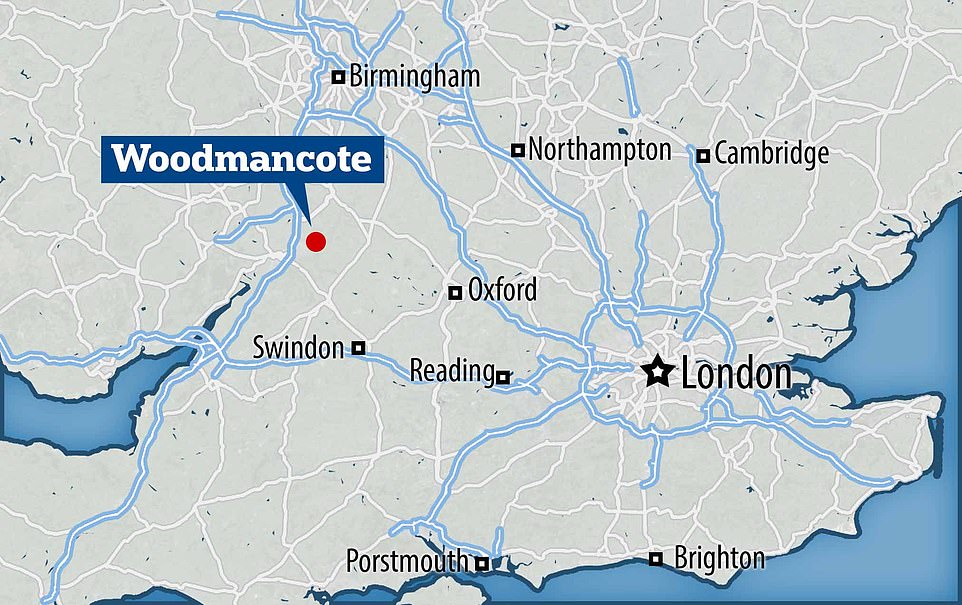
They found two important factors that really stood out: the first bombshell was that between 1.5 and 7% of our genome is unique to our species which means that at least 93% of our genome is a result of a mixture between Homo sapiens, Neanderthals, and Denisovans. The second discovery was that in the past 600,000 years, there were numerous bursts of genetic adaptations regarding brain development and function of humans.

By creating the evolutionary trees, the team of researchers were able to find very important times in history when Homo sapiens adapted and separated from our ancient ancestors. In order to find out how closely related we actually are to Neanderthals and Denisovans, experts had to study both the genes as well as when the genes were turned into proteins.

In an interview with Inverse, Nathan Schaefer, who is a bioinformatician at the University of California, San Francisco, explained this in further detail, “When you ask that question, we are very similar to Neanderthals.” “We have, you know, around 20,000 genes, and somewhere around 40 of them have these actual coding differences that all humans have one version, and the Neanderthals have the other version.” “That’s already like, ‘Wow, we’re really, really close to them.”

Fernando Villanea, who is a population geneticist at the University of Colorado, Boulder, but wasn’t involved with the study, told Inverse, “Their results support the most exciting new views on the interactions between humans, Neanderthals, and Denisovans.” He went on to talk about the human brain development over the past several hundred thousand years, “These adaptation events which define our species possibly happened around [600,000] and [200,000] years ago in Africa.”

In other words, this new study seems to indicate that the most genetically unique difference between modern humans and Neanderthals and Denisovans is our cognitive development over the past several hundred thousand years as explained by University of California, Santa Cruz computational biologist Richard Green, “We can tell those regions of the genome are highly enriched for genes that have to do with neural development and brain function.”

As for the researchers’ next steps regarding their studies, Schaefer stated, “What I’m interested in doing now is trying to learn more about how genes work and what these genes do.” The study was published in the journal Science Advances.

RELATED VIDEOS, selected and posted by peter2011

{ https://mysteriousuniverse.org/ }

Hoe vind je dit bericht?
Geschreven door peter om 01:16 Stuur door

Source of Possible Alien Methane Burps on Mars Located

Afbeeldingsresultaten voor Source of Possible Alien Methane Burps on Mars Located. Grootte: 291 x 152. Bron: mysteriousuniverse.org

Source of Possible Alien Methane Burps on Mars Located

One of the signs that a planet may have once supported life is the presence of methane gas. While it can have inorganic causes, it’s most often due to decaying organic matter as it is on Earth. That’s why scientists have been searching for it in Mars – the one planet where we have both landers and orbiters constantly scanning the surface. While methane has been detected on the Red Planet, its source has never been pinpointed … until now.

“During its five years of operation, the Sample Analysis at Mars (SAM) Tunable Laser Spectrometer (TLS) on board the Curiosity rover has detected six methane spikes above a low background abundance in Gale crater.”

Curiosity

While new rover on the block Perseverance and its ground-breaking (air-breaking?) Ingenuity helicopter have been getting all of the recent publicity, Curiosity has been trudging along and reliably doing its job since 2012. In that time, it has picked up six blips or ‘burps’ of methane in and around the Gale crater, a 96-mile impression in diameter impression dating back 3.8 billion years. However, it didn’t know the exact locations where the gas was emitted from the ground so it could rover over for a look. According to a new not-yet-peer-reviewed study published in Research Square, researchers at the California Institute of Technology decided to take a new approach – they modeled the methane gas particles where they were detected and split them into small groups. Using the wind speed and direction at the time of detection, along with geographic and topographical maps of the crater and its surrounding area, they were able to trace the methane ‘burps’ back to their belching points.

“Inside Gale crater, the northwestern crater floor casts the strongest influence on the detections. Outside Gale crater, the emission region with the strongest influence extends towards the north. The contrasting results from two consecutive methane measurements point to an active emission region to the west and the southwest of the Curiosity rover on the northwestern crater floor.”

Reviewing the data, Live Science points out that one of those locations is just a few dozen miles from Curiosity’s current location. While that may not seem very far, Curiosity has only traveled about 15.7 miles in total since it landed in 2012. The European Space Agency’s Trace Gas Orbiter (TGO) is constantly looking for methane, but it has been unable to detect those recorded by Curiosity. This could change with these new coordinates. However, it would be ideal if Curiosity could get an up-close look or sniff. Methane has a 330-year lifespan, so this could be life existed just a few centuries ago … and perhaps is still there producing it today.

Curiosity roving

Before you ask, Perseverance is about 2,300 miles from Curiosity – to far to travel or send the Ingenuity helicopter. Perseverance has different instruments and missions, but Curiosity’s data can still help it find methane, if it’s being emitted nearby and hasn’t been blown away by Ingenuity. The first manned Mars mission can’t come soon enough.

And yes … the Alien Methane Burps would be a good band name.

{ https://mysteriousuniverse.org/ }

Hoe vind je dit bericht?
Geschreven door peter om 23:58 Stuur door

The Shiva Hypothesis: Is there a “Rhythm” to Cataclysmic Mass Extinction Events?

asteroid impact

The Shiva Hypothesis: Is there a “Rhythm” to Cataclysmic Mass Extinction Events?

Throughout the long history of planet Earth, our world has undergone several cataclysmic events of varying magnitude. Arguably the most widely recognized of these, the Cretaceous–Paleogene extinction event, involved an impact between Earth and a massive asteroid or comet estimated to have been as much as nine miles wide. The result of this impact had been the mass extinction of most life forms on the planet, with as much as three-fourths of all species on Earth at the time—both animals and plants—being wiped from existence.

Although the mass extinctions that occurred at the end of the Cretaceous period had long been recognized by scientists, confirmation of a large-scale impact event as its underlying cause did not begin to surface until the 1980s with the work of experimental physicist Luis Alvarez and his son Walter. The following decade, the discovery of the Chicxulub crater which forms much of the Gulf of Mexico, provided additional evidence that an asteroid impact had been responsible.

Smaller-scale impact events have also been proposed for other mass extinctions recognized throughout time, including the die-offs of megafauna that began to occur at the end of the last ice age. While some of these impact events remain disputed, the reality of cataclysms throughout time is something that many scientists have sought to understand, resulting in a variety of theories about what their various causes might be, and how often they occur.

Among the more unique theories in this regard had been first proposed by William Napier and Victor Clube in 1979, as detailed in their Nature paper titled “A Theory of Terrestrial Catastrophism.” The study took a novel approach, in that it looked at whether subtle gravitational disturbances in our Solar System might cause comets to occasionally become jostled from their positions in the Oort cloud, sending them hurtling toward the inner Solar System and thereby on a potential collision course with any number of our planetary neighbors, or even Earth itself.

In the 1979 paper, Napier and Clube theorized that galactic spiral arms containing small planets which our solar system passes through could account for the current locations of comets, as well as various transient objects in our solar system. They also noted that many apparent extinction events recognized in the fossil record appear to convey impacts with comets that collided with our planet. Napier and Clube concluded that such impacts likely occurred every 30 million years or so, sometimes resulting in large-scale impacts on par with the Cretaceous-Paleogene extinction event.

The authors found additional support for their theory in locations other than Earth, too. One example had been evidence of the long-term frequency in appearances of craters on the moon, as well as inner planets within our solar system. The authors identified what they believed to be “brief periods of enhanced bombardment,” as well as a nearly constant rate of craters appearing on the moon and inner planets within the last three billion years. This, they attributed “the decay of primordial bodies and the capture of [small planets] into the Oort cloud upon the sun’s passage through Gould’s belt of the Orion arm.”

The authors considered a wide range of theories about the effects such impact events might have had throughout time, citing evidence in stratigraphic records that seemed to convey “patterns indicating transitions between geological periods, catastrophic extinctions and ice ages.”

Things might have ended there in 1979 as far as Napier and Clube’s idea goes, had it not been for the continuing interest it generated among a few scientists. In the middle 1980s, their original idea began getting a makeover when researcher Michael R. Rampino began to expand on it, who during the following decade teamed up with Bruce Haggerty and gave Napier and Clube’s concept an all-new name: the Shiva hypothesis.

Named for the Hindu god of destruction, the Shiva hypothesis as it is known today essentially entails intervals at which cataclysms occur and, in theory, might even be predictable on account of changes in the position of the Sun in relation to the Milky Way. As recently as 2020, Rampino has continued publishing evidence that may support this idea, which analyzed the ages of ten recognized extinction events involving tetrapods throughout time. According to his research, Rampino found “a statistically significant (99% confidence) underlying periodicity” of such events occurring roughly every 27.5 million years.

As Rampino and his colleagues noted in 2020, “These findings suggest that global cataclysmal events with an underlying periodicity of ~27.5 [million years] were the cause of the coordinated periodic extinction episodes of non-marine tetrapods and marine organisms.”

The Shiva hypothesis also appears to share certain elements with (or may have even inspired) other emerging theories about the causes behind extinction events that occur over time. One notable example involves the so-called “Nemesis hypothesis,” which entails the hypothetical existence of a red or brown dwarf which is responsible for extinction events that occur every 26 million years. The idea was first presented in 1984 by paleontologists David Raup and Jack Sepkoski in a paper titled “Periodicity of Extinctions in the Geologic Past” that appeared in the Proceedings of the National Academy of Sciences.

Today, there is still much work to be done as far as determining whether a periodicity or “cycle” of cataclysms that led to extinction events on Earth truly exists. Nonetheless, if ever proven, it could possibly do more than just explain what led to widespread die-offs throughout time; it might even help prevent future deadly impact events that may eventually return to threaten life on our planet.

{ https://mysteriousuniverse.org/ }

Hoe vind je dit bericht?
Geschreven door peter om 23:43 Stuur door

82-jarige pilote en 18-jarige Nederlander samen met Jeff Bezos opnieuw veilig geland op aarde

AFP © AFP

82-jarige pilote en 18-jarige Nederlander samen met Jeff Bezos opnieuw veilig geland op aarde

De eerste bemande ruimtevlucht van Blue Origin, het ruimtevaartbedrijf van Jeff Bezos, is vanmiddag een succes geworden. Bezos ging zelf de ruimte in samen met zijn broer, een 82-jarige pilote en een 18-jarige Nederlander. Iets na 15 uur Belgische tijd vertrok van op een afgelegen site in het westen van Texas de New Shepard-draagraket van Blue Origin, het ruimtevaartbedrijf van Bezos (57), de rijkste man ter wereld. Na 10 minuten en 10 seconden landde de capsule opnieuw veilig op aarde. 

Hoe vind je dit bericht?
Geschreven door peter om 22:11 Stuur door

Jeff Bezos Launches into Space on Blue Origin’s First Astronaut Flight

Jeff Bezos Launches into Space on Blue Origin’s First Astronaut Flight

1626763372_jeff-bezos-space-flight.jpg

Jeff Bezos Launches into Space on Blue Origin’s First Astronaut Flight

Amazon founder and executive chairman Jeff Bezos launched into space on Tuesday, carried aboard Blue Origin’s New Shepard spacecraft in its first human flight. Bezos, the richest person in the world, was joined by his brother, Mark Bezos, female aviation pioneer Wally Funk, and a Dutch student, Oliver Daemen.

RELATED VIDEOS, selected and posted by peter2011

{ https://beforeitsnews.com/ }

Hoe vind je dit bericht?
Geschreven door peter om 21:22 Stuur door

UFO Found On Moon In 1967 NASA Lunar Photo, Video, UFO Sighting News.

UFO Found On Moon In 1967 NASA Lunar Photo, Video, UFO Sighting News.

UFO%252C%2BUFO%2Bsighting%252C%2Bnews.png
paranormal%252C%2BUFO%252C%2Bmoon%252C%2Bufo%2Bsighting.png
disk%2Bfluturues%252C%2B%25D0%259D%25D0%259B%25D0%2590%252C%2BNLO%252C%2BOVNI%252C%2BUFO%252C%2BDeagla%25CC%2581n%252C%2BNSO%252C%2BOZN%252C%2BEmo%2B%25D4%25B1%25D5%25B5%25D5%25AC%2B%25D5%25B4%25D5%25B8%25D5%25AC%25D5%25B8%25D6%2580%25D5%25A1%25D5%25AF%25D5%25A1%252C%2B%25E0%25A6%25AF%25E0%25A7%2581-%25E0%25A6%258F%25E0%25A6%25AB-%25E0%25A6%25A4%25E0%25A7%258D%25E0%25A6%25A4%25E0%25A6%2589%252C%2B%25E9%25A3%259E%25E7%25A2%259F%252C%2B%25E9%25A3%259B%25E7%25A2%259F%252C%2B%25E0%25AA%25A7%25E0%25AA%25BF%2BUFO%252C%2B%25E0%25A4%2589%25E0%25A4%25AB%25E0%25A5%258C%252C%2B%25E0%25B4%25AF%25E0%25B5%2581%25E0%25B4%258E%25E0%25B4%25AB%25E0%25B5%258D%25E0%25B4%2592%252C%2BUFO%2B%25E0%25A4%25B9%25E0%25A5%2587%252C%2B%25D0%259D%25D0%25B8%25D1%2581%25D0%25B4%25D1%258D%25D0%25B3%252C%2B%25E1%2580%2595%25E1%2580%2594%25E1%2580%25BA%25E1%2580%25B8%25E1%2580%2580%25E1%2580%2594%25E1%2580%25BA%25E1%2580%2595%25E1%2580%25BC%25E1%2580%25AC%25E1%2580%25B8%25E1%2580%2595%25E1%2580%25BB%25E1%2580%25B6%252C%2B%25E0%25A4%2589%25E0%25A4%25AB%25E0%25A5%258C%252C%2B%25E0%25AE%25AF%25E0%25AF%2581%25E0%25AE%258E%25E0%25AE%2583%25E0%25AE%25AA%25E0%25AF%258D%25E0%25AE%2592%252C%2B%25E0%25B8%25A2%25E0%25B8%25B9%25E0%25B9%2580%25E0%25B8%25AD%25E0%25B8%259F%25E0%25B9%2582%25E0%25B8%25AD%252C%2B%25D8%25A7%25D9%2593%25D9%2588%25D8%25A7%25D8%25B2%2B%25DA%25A9%25DB%258C%252C%2BNUJ%252C%2B%25C4%2591i%25CC%2583a%2Bbay%252C%2B%25D8%25AC%25D8%25B3%25D9%2585%2B%25D8%25BA%25D8%25A7%25D9%2585%25D8%25B6%252C%2B%25D7%25A2%25D7%25A6%25D7%259D%2B%25D7%2591%25D7%259C%25D7%25AA%25D7%2599%2B%25D7%259E%25D7%2596%25D7%2595%25D7%2594%25D7%2594%252C%2B%25D8%25A8%25D8%25B4%25D9%2582%25D8%25A7%25D8%25A8%2B%25D9%25BE%25D8%25B1%25D9%2586%25D8%25AF%25D9%2587%2B%25D9%2587%25D8%25A7%252C%2B%2Bcopy.png
Date of discovery: June 29, 2021
Location of discovery: Earths moon
Source photo: 
This UFO was found by Youtuber Terry's Theories and he found it in an old NASA archive from a 1967 Lunar orbiter mission. When he zooms in I see a detailed metallic ship over horizon. Its 100% clear to me that this is an alien craft that was sent to this location to both observe and to warn the astronauts that...this moon is taken. Humanity intrigues aliens, but only to a point. We also disgust aliens with our illogical and self destructive decisions and behaviors. Therefore they have not make worldwide contact yet. But the time is coming close, and I predict alien species will unite and agree upon a formal disclosure to humanity this decade. 
Scott C. Waring - Taiwan 

{ https://www.ufosightingsdaily.com/ }

Hoe vind je dit bericht?
Geschreven door peter om 20:45 Stuur door

Ring UFO Over Ogden, Utah, USA On July 15, 2021, Video, UFO Sighting News.

Ring UFO Over Ogden, Utah, USA On July 15, 2021, Video, UFO Sighting News.

UFO%252C%2BUFO%2Bsighting%252C%2Bnews%252C%2Bogden%252C%2BUtah%252C%2Bancient%2Baliens%252C%2Bnobel%2Bpeace%2Bprize.png

disk%2Bfluturues%252C%2B%25D0%259D%25D0%259B%25D0%2590%252C%2BNLO%252C%2BOVNI%252C%2BUFO%252C%2BDeagla%25CC%2581n%252C%2BNSO%252C%2BOZN%252C%25E9%25A3%259E%25E7%25A2%259F%252C%2B%25E9%25A3%259B%25E7%25A2%259F%252C%2B%25E0%25AA%25A7%25E0%25AA%25BF%2BUFO%252C%2B%25E0%25A4%2589%25E0%25A4%25AB%25E0%25A5%258C%252C%2B%25E0%25B4%25AF%25E0%25B5%2581%25E0%25B4%258E%25E0%25B4%25AB%25E0%25B5%258D%25E0%25B4%2592%252C%2BUFO%2B%25E0%25A4%25B9%25E0%25A5%2587%252C%2B%25D0%259D%25D0%25B8%25D1%2581%25D0%25B4%25D1%258D%25D0%25B3%252C%2B%25E1%2580%2595%25E1%2580%2594%25E1%2580%25BA%25E1%2580%25B8%25E1%2580%2580%25E1%2580%2594%25E1%2580%25BA%25E1%2580%2595%25E1%2580%25BC%25E1%2580%25AC%25E1%2580%25B8%25E1%2580%2595%25E1%2580%25BB%25E1%2580%25B6%252C%2B%25E0%25A4%2589%25E0%25A4%25AB%25E0%25A5%258C%252C%2B%25E0%25AE%25AF%25E0%25AF%2581%25E0%25AE%258E%25E0%25AE%2583%25E0%25AE%25AA%25E0%25AF%258D%25E0%25AE%2592%252C%2B%25E0%25B8%25A2%25E0%25B8%25B9%25E0%25B9%2580%25E0%25B8%25AD%25E0%25B8%259F%25E0%25B9%2582%25E0%25B8%25AD%252C%2B%25D8%25A7%25D9%2593%25D9%2588%25D8%25A7%25D8%25B2%2B%25DA%25A9%25DB%258C%252C%2BNUJ%252C%2B%25C4%2591i%25CC%2583a%2Bbay%252C%2B%25D8%25AC%25D8%25B3%25D9%2585%2B%25D8%25BA%25D8%25A7%25D9%2585%25D8%25B6%252C%2B%25D7%25A2%25D7%25A6%25D7%259D%2B%25D7%2591%25D7%259C%25D7%25AA%25D7%2599%2B%25D7%259E%25D7%2596%25D7%2595%25D7%2594%25D7%2594%252C%2B%25D8%25A8%25D8%25B4%25D9%2582%25D8%25A7%25D8%25A8%2B%25D9%25BE%25D8%25B1%25D9%2586%25D8%25AF%25D9%2587%2B%25D9%2587%25D8%25A7%252C%2B%2Bcopy.png
Date of sighting: July 15, 2021
Location of sighting: Ogden, Utah, USA
Source: MUFON 
 
Donut UFOs or ring UFOs as I call them are not new. They have been documented throughout time. For instance in the Bible the famous Ezekiels Wheel comes down before him, rotating like a wheel and out steps a human like being. Also back in 1957 a US Army sergeant took many photos of a ring UFO as it made a white cloud slowly around itself at the US military base Fort Belvoir. 
 
This my friends is a real UFO. It's flying like a disk, but can fly sideways like a wheel. It is unmanned and often controlled by an alien AI and sometimes controlled by an alien far away. This video below is undeniable proof that UFOs exist. 
Scott C. Waring - Taiwan 
 
Eyewitness states: 
Nearly flat, donut looking object traveled across the sky, looked almost like a balloon, but it was way faster and there was no wind; not even a breeze. 

{ https://www.ufosightingsdaily.com/ }

Hoe vind je dit bericht?
Geschreven door peter om 20:39 Stuur door

Donut-shaped UFO flying over South Ogden, UT 15-Jul-2021

Donut-shaped UFO flying over South Ogden, UT 15-Jul-2021

utah-ufo-1024x576.jpg

This daytime footage of a donut-shaped unidentified flying object was filmed over South Ogden, a city in Weber County, Utah. This happened on 15th July 2021.

Witness report: 

Nearly flat, donut looking object traveled across the sky, looked almost like a balloon, but it was way faster and there was no wind; not even a breeze.

RELATED VIDEO, selected and posted by peter2011

{ https://www.latest-ufo-sightings.net/ }

Hoe vind je dit bericht?
Geschreven door peter om 20:11 Stuur door

Hubble Space Telescope Is Back in Action After NASA Fixes Odd Glitch – The Wall Street Journal

Hubble Space Telescope Is Back in Action After NASA Fixes Odd Glitch – The Wall Street Journal

After a month of frantic tinkering, NASA said Friday that its aging Hubble Space Telescope was on the mend, recovering from a computer problem that crippled what many astronomers call the most productive scientific instrument ever built.

As the bus-size observatory circled Earth, space agency engineers worked by remote control to switch Hubble from its vintage electronics to backup hardware. In the final step, they powered up a payload computer that restored control of its six cameras and sensors, which peer through visible, infrared and ultraviolet wavelengths of light to the edge of space and the dawn of time.

“We are absolutely delighted that the observatory is up and running again,” said Kenneth Sembach, director of the Baltimore-based Space Telescope Science Institute, which handles the Hubble science operations. “All indications are that it’s doing well and we will get back to doing science again this weekend.”

In more than a million mind-expanding images of the universe snapped over the past 31 years, the solar-powered telescope has presented to astronomers and amateur stargazers alike a psychedelic tapestry of infant stars, dying supernovae, colliding galaxies, towering billows of stellar dust, dark matter and black holes feasting on spiral nebulae.

Hubble data has been used in more than 18,000 scientific papers that have documented the accelerating expansion of the universe, the evolution of galaxies and studies of planets beyond our solar system, NASA officials said.

“I think there’s a very credible case that the Hubble Space Telescope is the most scientifically productive instrument ever made,” said Paul Hertz, director of NASA’s astrophysics division. “The output of peer-reviewed published papers from Hubble certainly exceeds any of its competitors in any field of science.”

But then on June 13, Hubble was hobbled—and not for the first time. Technical problems that threatened to end the mission have plagued the telescope since the moment it reached its orbital perch some 340 miles above our planet’s surface on April 25, 1990.

Since its launch in 1990, five space shuttle missions have repaired, upgraded and replaced systems on the telescope.

Photo: /Associated Press

Since its launch—with flawed optics causing its photos to be so blurry that the $4.7 billion observatory was initially deemed an embarrassing failure—five space shuttle missions repaired, upgraded and replaced systems on the telescope. All five of its main instruments were fixed, and a $50 million set of corrective lenses was installed to address its manufacturing flaws.

Last repaired by space shuttle astronauts in 2009, Hubble has lasted twice as long as originally expected, space agency officials said.

The latest trouble began when a voltage overload in an onboard payload computer built in the 1980s tripped a circuit breaker and shut down the telescope. It was the most serious technical failure that NASA project engineers had encountered in the 11 years since the last shuttle repair.

“We did a lot of debugging,” said James Jeletic, deputy project manager for the Hubble Space Telescope Project at NASA’s Goddard Space Flight Center in Greenbelt, Md. After three weeks of painstaking analysis, they decided to switch the telescope to its remaining backup systems.

“Every single thing worked as planned,” Mr. Jeletic said. “The computer came back up. All the backup hardware works fine. I don’t think we’re biting our fingernails anymore.”

{ https://newsfeeds.media/category/news/ }

Hoe vind je dit bericht?
Geschreven door peter om 01:24 Stuur door

NASA's Kepler Space Telescope spots four mysterious 'free-floating' planets that appear to be alone in deep space, unbound to any host star

NASA's Kepler Space Telescope spots four mysterious 'free-floating' planets that appear to be alone in deep space, unbound to any host star

  • Four 'rogue' planets discovered with similar masses to that of our home planet 
  • They were found by NASA's Kepler telescope using gravitational microlensing 
  • The planets may have been ejected by heavier planets within their solar system 

NASA's Kepler Space Telescope has found a mysterious population of 'free-floating' or 'rogue' planets that aren't bound to any host star. 

Based on a technique called gravitational microlensing, researchers reveal there are four new rogue planets in total, which likely have similar masses to that of Earth. 

Gravitational microlensing relies on chance events where from a certain viewpoint, one star passes in front of another star. 

The planets may have originally formed around a host star before being ejected by the gravitational tug of other, heavier planets in the system, the experts say. 

The host star is likely still burning brightly in space, but just with fewer planets in its orbit. 

Scroll down for video 

The four newly discovered planets that are consistent with planets of similar masses to Earth (stock image)

The four newly discovered planets that are consistent with planets of similar masses to Earth

(stock image)

'We don't know exactly how far away they are,' study author Professor Iain McDonald at the University of Manchester told MailOnline.

'They are not among the nearest stars, but closer than the centre of our Galaxy. So it's probably most accurate to say they are several thousand light years away. 

Professor McDonald said they're not sure exactly what these planets are like, but are 'probably rocky' with frozen oceans. 

'If a planet like the Earth was flung out into deep space, far from the heat of a star, we'd expect the oceans to freeze over and the atmosphere to condense out onto the surface,' he said. 

'Life could still continue, but only in places like hydrothermal vents, where there is another energy source.' 

This is an artist impression of the Kepler Space Telescope that was decommissioned by NASA in 2018 after nearly a decade of service

This is an artist impression of the Kepler Space Telescope that was decommissioned by NASA in 2018 after nearly a decade of service

The now retired Kepler telescope spent nearly a decade in space looking for Earth-size planets orbiting other stars, but scientists are still analysing its data. 

Kepler launched in 2009 and was decommissioned by NASA in 2018 when it ran out of fuel needed for further science operations. 

It was launched specifically by NASA with the aim of identifying planets outside of our own Solar System, known as exoplanets. 

For this project, researchers used data obtained in 2016 during the K2 mission phase of NASA’s Kepler Space Telescope – an extension of its original mission.  

During its two-month K2 campaign, Kepler monitored a crowded field of millions of stars near the centre of our Galaxy every 30 minutes in order to find rare gravitational microlensing events. 

WHAT IS MICROLENSING? 

Predicted by Albert Einstein 85 years ago as a consequence of his General Theory of Relativity, microlensing describes how the light from a background star can be temporarily magnified by the presence of other stars in the foreground. 

This produces a short burst in brightness that can last from hours to a few days. 

Roughly one out of every million stars in our Galaxy is visibly affected by microlensing at any given time, but only a few per cent of these are expected to be caused by planets.  

During gravitational microlensing, a viewpoint, a close star and a brighter and more distant star come into close alignment for a few weeks or months. 

Gravity from the closer star acts as a lens and magnifies the distant star over the course of the transit. 

The study team found 27 short-duration candidate microlensing signals that varied over timescales of between an hour and 10 days. 

Many of these had been previously seen in data obtained simultaneously from the ground. 

However, the four shortest events are new discoveries that are consistent with planets of similar masses to Earth. 

These new events do not show an accompanying longer signal that might be expected from a host star, suggesting that these new events may be free-floating planets.   

'These signals are extremely difficult to find,' said Professor McDonald. 

'Our observations pointed an elderly, ailing telescope with blurred vision at one the most densely crowded parts of the sky, where there are already thousands of bright stars that vary in brightness, and thousands of asteroids that skim across our field. 

Artist's impression of a free-floating planet. Such planets may perhaps have originally formed around a host star before being ejected by the gravitational tug of other, heavier planets in the system

Artist's impression of a free-floating planet. Such planets may perhaps have originally formed around a host star before being ejected by the gravitational tug of other, heavier planets in the system

'From that cacophony, we try to extract tiny, characteristic brightenings caused by planets, and we only have one chance to see a signal before it’s gone. 

'It’s about as easy as looking for the single blink of a firefly in the middle of a motorway, using only a handheld phone.'    

Since its launch in 2009, Kepler spotted thousands of exoplanets outside our solar system, despite experiencing mechanical failures and being blasted by cosmic rays. 

In 2013, Kepler's primary mission was concluded when a second reaction wheel broke, which meant that the space craft couldn't hold a steady gaze at its original field of view.

But Kepler was given a 'new lease on life' by NASA on its K2 mission, which required it to shift its field of view to new portions of the sky about every three months. 

NASA initially assumed that K2 would only be able to conduct 10 campaigns with the remaining fuel, but it went on to complete an astonishing 16 campaigns. 

Confirming the existence and nature of free-floating planets will be a major focus for NASA's upcoming Nancy Grace Roman Space Telescope and possibly the ESA's Euclid mission – both expected to detect microlensing events.  

'Kepler has achieved what it was never designed to do, in providing further tentative evidence for the existence of a population of Earth-mass, free-floating planets,' said study author Eamonn Kerins at the University of Manchester.

'Now it passes the baton on to Roman that will be designed to find such signals, signals so elusive that Einstein himself thought that they were unlikely ever to be observed.'     

The results have been published today in Monthly Notices of the Royal Astronomical Society.    

WHAT IS THE KEPLER TELESCOPE?

The Kepler mission has spotted thousands of exoplanets since 2014, with 30 planets less than twice the size of Earth now known to orbit within the habitable zones of their stars.

Launched from Cape Canaveral on March 7th 2009, the Kepler telescope has helped in the search for planets outside of the solar system. 

It captured its last ever image on September 25 2018 and ran out of fuel five days later.

When it was launched it weighed 2,320 lbs (1,052 kg) and is 15.4 feet long by 8.9 feet wide (4.7 m × 2.7 m).

The satellite typically looks for 'Earth-like' planets, meaning they are rocky and orbit within the that orbit within the habitable or 'Goldilocks' zone of a star.

In total, Kepler has found around 5,000 unconfirmed 'candidate' exoplanets, with a further 2,500 'confirmed' exoplanets that scientists have since shown to be real. 

Kepler is currently on the 'K2' mission to discover more exoplanets. 

K2 is the second mission for the spacecraft and was implemented by necessity over desire as two reaction wheels on the spacecraft failed. 

These wheels control direction and altitude of the spacecraft and help point it in the right direction.

The modified mission looks at exoplanets around dim red dwarf stars.  

While the planet has found thousands of exoplanets during its eight-year mission, five in particular have stuck out.

Kepler-452b, dubbed 'Earth 2.0', shares many characteristics with our planet despite sitting 1,400 light years away. It was found by Nasa's Kepler telescope in 2014

Kepler-452b, dubbed 'Earth 2.0', shares many characteristics with our planet despite sitting 1,400 light years away. It was found by Nasa's Kepler telescope in 2014

1) 'Earth 2.0'

In 2014 the telescope made one of its biggest discoveries when it spotted exoplanet Kepler-452b, dubbed 'Earth 2.0'.

The object shares many characteristics with our planet despite sitting 1,400 light years away.

It has a similar size orbit to Earth, receives roughly the same amount of sun light and has same length of year.

Experts still aren't sure whether the planet hosts life, but say if plants were transferred there, they would likely survive.

2) The first planet found to orbit two stars

Kepler found a planet that orbits two stars, known as a binary star system, in 2011.

The system, known as Kepler-16b, is roughly 200 light years from Earth. 

Experts compared the system to the famous 'double-sunset' pictured on Luke Skywalker's home planet Tatooine in 'Star Wars: A New Hope'.

3) Finding the first habitable planet outside of the solar system

Scientists found Kepler-22b in 2011, the first habitable planet found by astronomers outside of the solar system.

The habitable super-Earth appears to be a large, rocky planet with a surface temperature of about 72°F (22°C), similar to a spring day on Earth.

4) Discovering a 'super-Earth'

The telescope found its first 'super-Earth' in April 2017, a huge planet called LHS 1140b.

It orbits a red dwarf star around 40 million light years away, and scientists think it holds giant oceans of magma.

5) Finding the 'Trappist-1' star system

The Trappist-1 star system, which hosts a record seven Earth-like planets, was one of the biggest discoveries of 2017. 

Each of the planets, which orbit a dwarf star just 39 million light years, likely holds water at its surface.

Three of the planets have such good conditions that scientists say life may have already evolved on them.

Kepler spotted the system in 2016, but scientists revealed the discovery in a series of papers released in February this year. 

Kepler is a telescope that has an incredibly sensitive instrument known as a photometer that detects the slightest changes in light emitted from stars

Kepler is a telescope that has an incredibly sensitive instrument known as a photometer that detects the slightest changes in light emitted from stars

How does Kepler discover planets?

The telescope has an incredibly sensitive instrument known as a photometer that detects the slightest changes in light emitted from stars.

It tracks 100,000 stars simultaneously, looking for telltale drops in light intensity that indicate an orbiting planet passing between the satellite and its distant target.

When a planet passes in front of a star as viewed from Earth, the event is called a 'transit'.

Tiny dips in the brightness of a star during a transit can help scientists determine the orbit and size of the planet, as well as the size of the star.

Based on these calculations, scientists can determine whether the planet sits in the star's 'habitable zone', and therefore whether it might host the conditions for alien life to grow. 

Kepler was the first spacecraft to survey the planets in our own galaxy, and over the years its observations confirmed the existence of more than 2,600 exoplanets - many of which could be key targets in the search for alien life

Kepler was the first spacecraft to survey the planets in our own galaxy, and over the years its observations confirmed the existence of more than 2,600 exoplanets - many of which could be key targets in the search for alien life

Hoe vind je dit bericht?
Geschreven door peter om 01:08 Stuur door

Kepler Data Reveal Four Earth-Mass Free-Floating Exoplanets

Kepler Data Reveal Four Earth-Mass Free-Floating Exoplanets

Using data from NASA’s Kepler/K2 mission, astronomers have detected four new microlensing events that are consistent with free-floating planets of similar masses to Earth.

th?id=OVFT.m4L6jI0qaKNmVjdjvfnIui&pid=News&w=256&h=158&c=14&rs=2&qlt=90&dpr=1.53

An artist’s impression of a free-floating exoplanet.

Image credit: Sci-News.com.

Gravitational microlensing is an observational effect that was predicted in 1936 by Albert Einstein using his general theory of relativity.

When one star in the sky appears to pass nearly in front of another, the light rays of the background source star become bent due to the gravitational attraction of the foreground star.

This star is then a virtual magnifying glass, amplifying the brightness of the background source star, so astronomers refer to the foreground star as the lens star.

If the lens star harbors a planetary system, then those planets can also act as lenses, each one producing a short deviation in the brightness of the source.

Roughly one out of every million stars in our Milky Way Galaxy is visibly affected by microlensing at any given time, but only a few percent of these are expected to be caused by extrasolar planets.

“These signals are extremely difficult to find,” said Dr. Iain McDonald, an astronomer in the Jodrell Bank Centre for Astrophysics at the University of Manchester and Open University.

“Our observations pointed an elderly, ailing telescope with blurred vision at one the most densely crowded parts of the sky, where there are already thousands of bright stars that vary in brightness, and thousands of asteroids that skim across our field.”

“From that cacophony, we try to extract tiny, characteristic brightenings caused by planets, and we only have one chance to see a signal before it’s gone.”

“It’s about as easy as looking for the single blink of a firefly in the middle of a motorway, using only a handheld phone.”

Dr. McDonald and colleagues analyzed archival data obtained in 2016 during the K2 mission phase of NASA’s Kepler Space Telescope.

They found 27 short-duration candidate microlensing signals that varied over timescales of between an hour and 10 days.

Many of these had been previously seen in data obtained simultaneously from the ground.

However, the four shortest events are new discoveries that are consistent with planets of similar masses to Earth.

These new events do not show an accompanying longer signal that might be expected from a host star, suggesting that these new events may be free-floating planets.

“Kepler has achieved what it was never designed to do, in providing further tentative evidence for the existence of a population of Earth-mass, free-floating planets,” said Dr. Eamonn Kerins, an astronomer in the Jodrell Bank Centre for Astrophysics at the University of Manchester.

“Now it passes the baton on to other missions that will be designed to find such signals, signals so elusive that Einstein himself thought that they were unlikely ever to be observed.”

The results appear in the Monthly Notices of the Royal Astronomical Society.

_____

  • I. McDonald et al. 2021. Kepler K2 Campaign 9 – I. Candidate short-duration events from the first space-based survey for planetary microlensing. MNRAS 505 (4): 5584-5602; doi: 10.1093/mnras/stab1377

{ http://www.sci-news.com/ }

Hoe vind je dit bericht?
Geschreven door peter om 00:46 Stuur door

Meer van UFO'S of UAP'S, ASTRONOMIE, RUIMTEVAART, ARCHEOLOGIE, OUDHEIDKUNDE, SF-SNUFJES EN ANDERE ESOTERISCHE WETENSCHAPPEN - DE ALLERLAATSTE NIEUWTJES

↑ Terug naar de berichten