Ontdek de Fascinerende Wereld van UFO's en UAP's: Jouw Bron voor Onthullende Informatie!
Ben jij ook gefascineerd door het onbekende? Wil je meer weten over UFO's en UAP's, niet alleen in België, maar over de hele wereld? Dan ben je op de juiste plek!
België: Het Kloppend Hart van UFO-onderzoek
In België is BUFON (Belgisch UFO-Netwerk) dé autoriteit op het gebied van UFO-onderzoek. Voor betrouwbare en objectieve informatie over deze intrigerende fenomenen, bezoek je zeker onze Facebook-pagina en deze blog. Maar dat is nog niet alles! Ontdek ook het Belgisch UFO-meldpunt en Caelestia, twee organisaties die diepgaand onderzoek verrichten, al zijn ze soms kritisch of sceptisch.
Nederland: Een Schat aan Informatie
Voor onze Nederlandse buren is er de schitterende website www.ufowijzer.nl, beheerd door Paul Harmans. Deze site biedt een schat aan informatie en artikelen die je niet wilt missen!
Internationaal: MUFON - De Wereldwijde Autoriteit
Neem ook een kijkje bij MUFON (Mutual UFO Network Inc.), een gerenommeerde Amerikaanse UFO-vereniging met afdelingen in de VS en wereldwijd. MUFON is toegewijd aan de wetenschappelijke en analytische studie van het UFO-fenomeen, en hun maandelijkse tijdschrift, The MUFON UFO-Journal, is een must-read voor elke UFO-enthousiasteling. Bezoek hun website op www.mufon.com voor meer informatie.
Samenwerking en Toekomstvisie
Sinds 1 februari 2020 is Pieter niet alleen ex-president van BUFON, maar ook de voormalige nationale directeur van MUFON in Vlaanderen en Nederland. Dit creëert een sterke samenwerking met de Franse MUFON Reseau MUFON/EUROP, wat ons in staat stelt om nog meer waardevolle inzichten te delen.
Let op: Nepprofielen en Nieuwe Groeperingen
Pas op voor een nieuwe groepering die zich ook BUFON noemt, maar geen enkele connectie heeft met onze gevestigde organisatie. Hoewel zij de naam geregistreerd hebben, kunnen ze het rijke verleden en de expertise van onze groep niet evenaren. We wensen hen veel succes, maar we blijven de autoriteit in UFO-onderzoek!
Blijf Op De Hoogte!
Wil jij de laatste nieuwtjes over UFO's, ruimtevaart, archeologie, en meer? Volg ons dan en duik samen met ons in de fascinerende wereld van het onbekende! Sluit je aan bij de gemeenschap van nieuwsgierige geesten die net als jij verlangen naar antwoorden en avonturen in de sterren!
Heb je vragen of wil je meer weten? Aarzel dan niet om contact met ons op te nemen! Samen ontrafelen we het mysterie van de lucht en daarbuiten.
Berichten van 1 november 2022 tot 30 november 2022
Waanzinnige ontdekking in de diepte: is dit het langste dier ter wereld?
In een onderwaterkloof voor de kust van Australië vond een waanzinnige ontdekking plaats op ongeveer 600 meter diepte. Het gaat om een lang gelatineachtig wezen dat in een reusachtige spiraal hangt. “Het was als een touw aan de horizon. Je kon het niet missen”, zegt Nerida Wilson van het West-Australisch Museum aan de Britse krant 'The Guardian’.
De lengte van het dier bedraagt maar liefst 45 meter. Dat is dubbel zo lang als een blauwe vinvis. Het gaat hier om een buiskwal, waarschijnlijk een nieuwe soort uit het geslacht Apolemia, een groep die er meestal uitziet als een in de knoop geraakte sjaal. De spiraalvorm zorgt ervoor dat ze veel eten binnen krijgen. Talrijke stekende tentakels creëren een muur des doods in het water, waarin kleine prooien, waaronder schaaldieren en vissen, gevangen zitten.
Duikboot
Het dier werd toevallig ontdekt, dat gebeurt wel vaker bij diepzee-onderzoek. De wetenschappers wilden het leven op de zeebodem bestuderen, en kwamen deze drijvende kwal toevallig tegen toen hun onderzeeër onderweg was terug naar het schip.
Het schip, Falkor, zond live beelden uit van de duikboot. Wilson beschrijft hoe iedereen aan boord gefascineerd en verbaasd was toen de enorme spiraal in beeld kwam. Iedereen zwermde naar de controlekamer om het beter te kunnen zien. “Het was zo’n prachtige energie”, zegt Wilson. “Iedereen had zoiets van: ‘Wat is dit?’”
KIJK.
Het gaat om een lang gelatineachtig wezen dat in een reusachtige spiraal hangt
Buiskwallen behoren tot dezelfde groep als gewone kwallen, maar ze bouwen hun lichaam op een unieke manier op. Het zijn eigenlijk honderden aan elkaar geplakte kleine kwallen. Toch is een buiskwal één organisme. “Het had twee ouders”, zegt Wilson aan ‘The Guardian’. In plaats van te groeien tot een lichaam met organen die verschillende functies vervullen, bestaan buiskwallen uit afzonderlijke delen. Sommige delen zijn verantwoordelijk voor de voeding, andere voor de voortplanting, en weer andere bewegen en sturen het dier door het water.
Nog geen wereldrecord opgeëist
Gebaseerd op een ruwe berekening van het spoor van de duikboot is de spiraalvormige buiskwal een kandidaat voor het langste exemplaar dat ooit is aangetroffen. Met ongeveer 45 meter zou het zelfs het langste dier kunnen zijn dat ooit is gemeten.
De piloot van de duikboot die hem vanaf de oppervlakte bestuurde kon maar heel even het dier in beeld brengen omdat de batterij van de duikboot bijna leeg was. “We cirkelden rond, namen wat beelden en een klein weefselmonster”, zegt Wilson. “Daarna moesten we gewoon verder gaan.” Wilson wil nog geen wereldrecords opeisen en werkt samen met een specialist in fotogrammetrie om een nauwkeuriger schatting van de grootte van de buiskwal te krijgen.
When these worms begin consuming everything in their path, gigantic piers, ships, and fairy bridges are all endangered. And if this worm is starving and there is only a tiny snail around, all that will be left of it will be the shell. Why are grotesque beings so vital to our world? Where did the iron snail originate? Why did Darwin chop up worms? How did snails acquire long-range weaponry like harpoons? Let’s find out.
At least once, you’ve looked up at the night sky and asked the same longstanding question we’ve all asked at least once, “Are we alone?” With all those points of light out there, we can’t be the only intelligent beings in the universe, right? There must be at least one technological civilization aside from us in the great vastness that we call the cosmos.
The astronomer Carl Sagan was famous for his quote in his book and film, Contact, “The universe is a pretty big place. If it’s just us, seems like an awful waste of space.” Yet, for some of us, it’s incredibly hard to fathom that it’s just us in the vast unknown full of so many stars and a growing list of exoplanets being discovered on a near daily basis. However, despite all our endless searching, we’ve so far found no one.
So, what if you found out one day that it is just us? What if in the great cosmos, out of all the planets, stars, and galaxies, we are truly alone? How would you look at the universe? At humanity? At yourself? Would you believe it? Would you stop looking up at the stars entirely? Would you feel disappointed that we’re alone, that we’re truly it, or would you feel a sense of optimism knowing that the longstanding question has finally been answered once and for all?
The film, Ad Astra, showed Roy McBride played by Brad Pitt searching for his father, H. Clifford McBride, played by Tommy Lee Jones, the latter of whom was on a mission at Neptune searching for intelligent life outside of the solar system and in the rest of the universe. In the end, Brad finds his dad alone on the space station orbiting Neptune, only to discover that his father didn’t find anything. No intelligent life anywhere in the universe. He discovered that we’re it.
Throughout the film, Roy was struggling to reconnect with his father and his father was struggling to connect with the universe, and this only serves as an appropriate analogy for our own pursuit of answering the longstanding question. At one point when he’s on Mars, Roy asks himself regarding his father, “I don’t know if I hope to find him or be free of him.” In our own pursuit of trying to answer the longstanding question, what if it’s not that we’re hoping to find intelligent life, but that we’re trying to be free of knowing if there’s intelligent life?
In the end, when Clifford disappointingly tells his son that there’s no one else in the universe and that he’s failed in his mission, Roy doesn’t respond with anger or disappointment, but with optimism, telling his estranged father with a smile, “Dad, you haven’t. Now we know. We’re all we’ve got.” In that moment, it was as if the literal weight of the universe was lifted from Roy’s shoulders knowing that we’re it. After Roy unfortunately leaves his father to die in the void, Roy notes that he can’t wait for the day that his solitude ends, and the film ends with him reconnecting with his wife.
While Roy felt almost relieved to finally know the answer to the longstanding question, it’s important to ask if you’d feel the same way? Because, despite all the hopes of us finding intelligent life elsewhere in the universe, we must face the real possibility that we’re it. That’s it just us, and where do we go from here?
Pismis 26, a globular star cluster located about 23,000 light-years away, as seen by the Hubble Space Telescope.
Credit: NASA, ESA and R. Cohen (Rutgers the State University of New Jersey); Processing: Gladys Kober (NASA/Catholic University of America).
Two Great Globular Clusters Seen by Hubble: Pismis 26 and Ruprecht 106
If you like shiny things, some of the most gorgeous objects in space are globular clusters, with their bright, densely packed collections of gleaming stars. And if you like globular clusters, you’re in luck: two different Hubble images of globular clusters were featured this week by NASA and ESA.
The Hubble telescope basically revolutionized the study of globular clusters, as with ground-based telescopes, it is almost impossible to distinguish the individual stars in globular clusters because they are so densely packed. Hubble been used to study what kind of stars globular clusters are made up of, how they evolve and the role of gravity in these dense systems.
The first image from Hubble, featured by NASA, is this beautiful glittering gathering of stars (above) called Pismis 26, a globular star cluster located about 23,000 light-years away. The cluster is named for Armenian astronomer Paris Pismis who first discovered the cluster in 1959 at the Tonantzintla Observatory in Mexico; and this cluster has the dual name Tonantzintla 2.
Usually, globular clusters consist of stars that are quite old (red and dead), with some of the oldest stars in the Universe. In fact, our resident astrophysicist, Paul Sutter has called globular clusters the “retirement homes for the galaxy.”
Astronomers estimate the age of this particular cluster to be 12 billion years old.
The stars in globular clusters are held together by mutual gravitational attraction. Globular clusters cover a relatively small region in space, with most no more than a couple dozen parsecs across. But each one contains hundreds of thousands, and sometimes millions, of stars. Sutter says that puts the average distance between stars at about 1 light-year, but in their cores the stars pack together over a thousand times more tightly than in our own neighborhood.
Hubble captured this star-studded image of Ruprecht 106.
Credit: ESA/Hubble & NASA, A. Dotter
The second globular cluster image, this one featured by ESA, shows Ruprecht 106. Hubble captured this star-studded image with the Advanced Camera for Surveys (ACS), which was installed on the space telescope by astronauts during a servicing mission in 2002.
Ruprecht 106 contains a bit of a mystery. Even though most of the constituent stars in globular clusters stars likely formed at approximately the same time and location, research with Hubble has shown that is not always true. It turns out that almost all globular clusters contain groups of stars with distinct chemical compositions, which means those groups of stars within the clusters have very slightly different ages or compositions from the rest of the cluster.
However, a handful of globular clusters do not possess these multiple populations of stars, and Ruprecht 106 is a member of that group. Astronomers will likely use the James Webb Space Telescope to study enigmatic clusters like Ruprecht 106 to learn more about the stars and their life cycles.
The Bermuda Triangle: Into Cursed Waters: CHALLENGER SPACECRAFT UNCOVERED ON OCEAN FLOOR (Season 1)
Mike and his dive team search for clues regarding a }case of 27 missing people but come across something bigger. See more in this clip from Season 1, "A Big Find."
Watch new episodes of The Bermuda Triangle: Into Cursed Waters, Tuesdays at 10/9c, and stay up to date on all of your favorite The HISTORY Channel shows at history.com/schedule.
NASA's Artemis 1 spacecraft "strange" moon images taken less than 4,500 miles away
See footage below of the Orion spacecraft a little over an hour before its "outbound powered flyby burn" on Nov. 21, 2022. The spacecraft was less than 4,500 miles away (~7,242 km) and was traveling at 757 miles per hour (1218 kph). NASA's Artemis 1 Orion spacecraft aces close moon flyby in crucial engine burn.
During Orion's moon flyby it shows an oval shaped/egg shaped moon rather then the round-shaped moon as we know which is very strange, isn't it?
If you compare an image of the moon, photographed in 2010 from Madison, Alabama, USA, photographed with a Celestron 9.25 Schmidt-Cassegrain telescope. Acquired with a Canon EOS Rebel T1i (EOS 500D), with the moon image, taken less than 4,500 miles away from the moon, with the cameras on board of the Artemis 1 spacercaft then you come to the conclusion that these images are overexposed on purpose.
With overexposed moon images and an unusual oval-shaped/egg-shaped moon, we may wonder what they like to keep hidden from the public.
Alien Invasion: Is The Government Secretly Fighting Dangerous ETs?
In this video, entitled “The Fight Against Alien,” the creators of Unveiled discuss the possibility that Earth is fighting a secret battle against extraterrestrials. There are various reasons why this might be true, but do we really need to start looking for the bunkers yet?
Linda Moulton Howe: An Interview with an Annunaki Hybrid
Marina, a Starseed human hybrid, talks about her experiences with extraterrestrial creatures, including beings that she encountered when she was six years old. In this interview, Linda Howe asks a lot of important questions about the presence of hybrid humans on Earth.
Shenzhou 15 crew enters Chinese space station after docking
Shenzhou 15 astronauts Fei Junlong (commander), Deng Qingming and Zhang Lu completed ingress into the Tiangong space station on Nov. 29, 2022 (Nov. 30 - Beijing time) shortly after docking.
NASA Artemis 1 mission update - Breaking spaceflight records and upcoming events
Orion has now flown "farther than any spacecraft built to fly Human, more than 268,000 miles," according to NASA. Learn about the Artemis 1 record-breaking feat and more in this mission update.
Credit: NASA
An Interstellar Visitor is Lying Dormant in the Depths of the Pacific Ocean
A guest from beyond our solar-system is earth-bound, and we have absolutely no idea. The object wasn’t all that big, just a meter or so across, but its significance is massive. What is amazing here, is that the information about the asteroid was not immediately made public by the Government. It took two men Avi Loeb and Amir Siraj three years to have the government accept the origin of the interstellar object and make it public. Let's check out what it could really be?
ASTONISHING UFO SIGHTING IN TEXAS | The Proof is Out There (Season 3)
A mysterious UFO sighting in Texas shocks the whole community. See more in this clip from Season 3, "Bigfoot Photobombs Eagle's Nest, Mexican Blackbirds Dive To Their Death, and Human Faced Fish."
Do Habitable Planets Exist Other Than Our Earth? | Exoplanets: Thousands Of New Worlds | Spark
Are we alone in the universe? This question has been one of the greatest mysteries of all time. 20 years ago, individual scientists began to challenge traditional planetary science as they set off to seek, observe and reveal the existence of unknown worlds: EXOPLANETS. The film recounts the epic journey of these astrophysicists, who turned our knowledge of the universe upside down, in their quest for extraterrestrial life.
An ancient virus that has lain frozen in the Siberian permafrost for 48,500 years has become the oldest ever revived so far, scientists say.
It is among seven types of viruses in the permafrost that have been resuscitated after thousands of years.
The youngest had been frozen for 27,000 years and the oldest, called Pandoravirus yedoma, has been frozen for 48,500 years.
Although the viruses are not considered a risk to humans, scientists warn that other viruses exposed by melted ice could be 'disastrous' and lead to new pandemics.
The 48,500-year-old virus is a pandoravirus, which infects single-cell organisms known as amoebas. Image A shows the isolated egg-shaped particle of pandoraviruses with a small hole or opening called an ostiole (white arrowhead). B shows a mixture of pandoravirus particles and 'megavirus' particles with a 'stargate' - a white starfish-like structure (white arrowhead)
Pandoravirus yedoma was found in permafrost 52ft (16m) below the bottom of a lake in Yukechi Alas in Yakutia, Russia
REVIVED VIRUS TYPES
- Pandoravirus
- Cedratvirus
- Megavirus
- Pacmanvirus
- Pithovirus
'48,500 years is a world record,' Jean-Michel Claverie, a virologist at Aix-Marseille University in France, told the New Scientist.
Named after pandora's box, pandoravirus is a genus of giant virus first discovered in 2013, and the second largest in physical size of any known viral genus after pithovirus.
Pandoravirus is one micrometre long and 0.5 of a micrometre wide, meaning that it is visible with a light microscope.
This particular 48,500 year-old specimen was found in permafrost 52ft (16m) below the bottom of a lake in Yukechi Alas in Yakutia, Russia.
Professor Claverie and his colleagues previously revived two 30,000-year-old viruses from permafrost, the first of which was announced in 2014.
All nine viruses are capable of infecting single-cell organisms known as amoebas — but not plants or animals. However, other frozen viruses could be very dangerous to plant and animal life, including humans.
Some 65 per cent of Russian territory is classed as permafrost — ground that remains permanently frozen even during summer months.
But, as temperatures rise due to global warming, the ground is now starting to thaw out, coughing up animals and objects that have been frozen for thousands of years.
It has even spawned an industry reliant on the wooly mammoth — which went extinct some 10,000 years ago — as hunters go in search of unearthed skeletons so they can extract their tusks and sell them to ivory dealers.
But the discovery of such well-preserved specimens has also given rise to the fear that diseases which the animals may have carried could be unfrozen with them, and, unlike their hosts, may survive being thawed out.
Professor Claverie warned last year of 'extremely good' evidence that 'you can revive bacteria from deep permafrost'.
He even discovered one such virus himself — pithovirus — which, when defrosted from permafrost began attacking and killing amoebas.
While the pithovirus, which had been frozen for some 30,000 years before the experiment, is harmless to humans, Professor Claverie said it demonstrates that long-frozen viruses can 'wake up' and begin re-infecting hosts.
Scientists disagree about the exact age of the Arctic ice cap, the permafrost which surrounds it, and therefore the age of the objects it contains.
Pictured, elongated particle of a pithovirus (1.9 micrometres in length) exhibits a single apex cork-like structure (white arrowhead)
But most defrosted discoveries that have been uncovered so far date from the last ice age, around 115,000 to 11,700 years ago.
In their research paper, Professor Claverie and colleagues say the release of live bacteria or archaea that have remained in cryptobiosis in permafrost for millions of years a potential 'public health concern'.
'The situation would be much more disastrous in the case of plant, animal, or human diseases caused by the revival of an ancient unknown virus,' they say.
'As unfortunately well documented by recent (and ongoing) pandemics, each new virus, even related to known families, almost always requires the development of highly specific medical responses, such as new antivirals or vaccines.'
The Arctic is of course more sparely populated than other parts of the world, but Professor Claverie said more people are now going there to mine resources such as gold and diamonds.
Unfortunately, the first step in mining these resources is to strip away the upper layers of permafrost, thus exposing people to viruses.
'How long these viruses could remain infectious once exposed to outdoor conditions (UV light, oxygen, heat), and how likely they will be to encounter and infect a suitable host in the interval, is yet impossible to estimate,' the team say.
'But the risk is bound to increase in the context of global warming when permafrost thawing will keep accelerating, and more people will be populating the Arctic in the wake of industrial ventures.'
This nine viruses are detailed further in the new preprint paper, yet to be peer-reviewed, on the bioRxiv server.
Last month, scientists warned that the chance of a virus 'spilling over' to another species increases with the melting of glaciers — slowly moving rivers of ice.
Meltwater from the glaciers can transport pathogens to new hosts, making parts of the Arctic potential 'fertile ground for emerging pandemics'.
KILLER VIRUSES COULD BE RELEASED FROM MELTING ICE IN THE ARCTIC, STUDY WARNS
Glaciers that are melting amid rising global temperatures could be the cause of the next deathly pandemic, a study said.
Scientists investigated how climate change may affect the risk of 'spillover' – a virus jumping to another species – by examining samples from Lake Hazen in the Arctic.
Lake Hazen, seen from above in this NASA image, is the largest High Arctic freshwater lake in the world
They found that the chance of a spillover event increases with the melting of glaciers, as the meltwater can transport pathogens to new hosts.
A warming climate could bring viruses in the Arctic into contact with new environments and hosts, increasing the risk of this 'viral spillover', the experts warn.
'Spillover risk increases with runoff from glacier melt, a proxy for climate change,' say the researchers in their paper, published in Proceedings of the Royal Society B.
'Should climate change also shift species range of potential viral vectors and reservoirs northwards, the High Arctic could become fertile ground for emerging pandemics.'
What Could Go Wrong?! 48,500-Year-Old Siberian Virus is Revived
The world’s oldest known frozen and dormant virus has been revived in a French laboratory leading many to express concerns about the dangers of bringing to life ancient microbes. The virus was removed from the Siberian permafrost in Russia’s far east and is 48,500 years old, offering proof that viruses are incredibly hardy and capable of surviving indefinitely when they’re preserved in a frozen state.
Melting Siberian Permafrost in a Virus-Filled Pandora’s Box
This particular virus is actually one of nine different types of viruses that have been resuscitated from Siberian permafrost samples in recent years. That includes seven viruses resuscitated for this new study, and two other approximately 30,000-year-old viruses brought back to life by the same team of researchers from other samples taken in 2013. The youngest of these viruses was frozen 27,000 years ago.
As reported in the non-peer-reviewed journal bioRxiv, the 48,500-year-old virus has been named Pandoravirus yedoma , in reference to Pandora’s box. The virus was found in a sample of permafrost taken from 52 feet (16 m) below the bottom of a lake in Yukechi Alas in the Russian Republic of Yakutia.
The first-ever pandoravirus was one of the two viruses found in 2013, although that one was of a different type altogether. “48,500 years is a world record,” Jean-Michel Claverie, a virologist at Aix-Marseille University in France and the lead author of the permafrost viral study, told the New Scientist .
In addition to its age, the other remarkable feature of this pandoravirus is its size. Classified as a type of giant virus, Pandoravirus yedoma is approximately one micrometer long and .5 micrometers wide. This means they can be examined directly under a microscope. It contains approximately 2,500 genes, in contrast to the miniscule modern viruses that infect humans that possess no more than 10 to 20 genes.
Climate change and the resulting thawing of the permafrost could release a mass of new Siberian viruses into the atmosphere.
Climate Change and the Threat of Permafrost Viral Release
Given the disturbing coronavirus pandemic the world has just experienced, it might seem alarming that these scientists are intentionally reviving long-lost viruses previously hidden in the frozen wastelands of Siberia. But they say this research is necessary to evaluate the dangers associated with climate change.
One quarter of the Northern Hemisphere is underlain by permanently frozen ground, referred to as permafrost,” they wrote in their newly published paper. With the thawing of the permafrost, organic matter which has been frozen for as many as a million years is thawing out. One of the effects of this is the release of carbon dioxide and methane into the atmosphere, amplifying the greenhouse effect.
"The other is that “part of this organic matter also consists of revived cellular microbes (prokaryotes, unicellular eukaryotes) as well as viruses that remained dormant since prehistorical times,” explained the authors in bioRxiv. Only by extracting viruses from permafrost samples and reviving them in controlled conditions, the scientists claim, will it be possible to evaluate the nature of the threat they might pose to human health and safety in a warmer, permafrost-free future.
Since permafrost covers more one-fourth of all land territory in the Northern Hemisphere, this is not an idle concern. The viral load currently locked up in permanently frozen ground is undoubtedly massive, and if it were all released over the course of a couple of decades it could conceivably set off an avalanche of new viral infections in a variety of host species.
None of these victims would be immune to the impact of viral agents that had been out of circulation for tens of thousands of years. Immune systems would eventually adjust, but that might happen too late to prevent a catastrophic loss of life that cuts across the microbial-, plant- and animal-life spectrums.
The 48,500-year-old Siberian virus is a pandoravirus, which infects single-cell organisms known as amoebas.
Immortal Viruses May Be Returning Soon, in Quantities too Astounding to Imagine
Concerns about permafrost melting are not only theoretical. The once-frozen ground has already started to thaw in some areas, and that has allowed scientists to recover frozen and well-preserved specimens of animals that lived during the Paleolithic period.
In recent years the remains of wooly rhinos that went extinct 14,000 years ago have been found, and in one instance scientists recovered a 40,000-year-old wolf’s head that was in almost pristine condition. Wooly mammoth remains have proven especially easy to find in the freshly-thawed soil, so much so that a black-market industry has arisen in which mammoth tusks removed from illicitly unearthed mammoth skeletons are being sold to ivory traders.
What concerns scientists about this development is that potent infectious agents may be hiding dormant inside these well-preserved ancient animal remains. It is notable that the 27,000-year-old virus found in this new study was not removed from the lake bottom sample, but was instead extracted from frozen mammoth excrement taken from a different permafrost core.
Needless to say, ancient viruses released from thawed animal hosts would be more likely to evolve into something threatening to humans than a virus that specifically attacks microbes like amoeba.
Winter landscape and frozen lake in Yakutia, Siberia.
The Hidden Danger of Ancient Bacteria and Viruses in the Thawing Permafrost
In their research paper, Professor Claverie and his colleagues emphasized how dangerous ancient bacteria and viruses could be to present-day life forms of all types. Even if frozen in deeper levels of permafrost for millions of years, they could become active again should the permafrost disappear.
In comparison to outbreaks from modern viruses, “the situation would be much more disastrous in the case of plant, animal, or human diseases caused by the revival of an ancient unknown virus,” the French scientists wrote. “As unfortunately well documented by recent (and ongoing) pandemics, each new virus, even related to known families, almost always requires the development of highly specific medical responses, such as new antivirals or vaccines.”
The Arctic regions of the planet are largely free of permanent human settlers. But the researchers point out that more people are visiting the planet’s coldest regions than ever before, mainly to harvest valuable resources like oil, gold and diamonds that are present in abundance in these previously under-explored areas. In strip-mining operations the upper layers of the permafrost are actually torn out intentionally, meaning that viral exposures during such operations may be unavoidable.
“How long these viruses could remain infectious once exposed to outdoor conditions (UV light, oxygen, heat), and how likely they will be to encounter and infect a suitable host in the interval, is yet impossible to estimate,” the scientists concluded. “But the risk is bound to increase in the context of global warming when permafrost thawing will keep accelerating, and more people will be populating the Arctic in the wake of industrial ventures.”
Other scientists have warned of the dangers of viruses being released in the Arctic through the melting of glaciers, which is yet another possible side effect of global warming. This could expose animals and humans to flowing rivers of glacial meltwater that could carry pathogens to new areas further south.
Whether any of these worst-case scenarios come to fruition remains to be seen. But even a small amount of melting, regardless of the cause, could be enough to release some potentially hazardous viral agents into the global environment, where billions of vulnerable people live.
Top image: Colony of microbes, representational image.
Record voor Orion: nooit eerder was ruimteschip voor mensen zo ver van de aarde
De nieuwe Amerikaanse raket Orion heeft sinds de lancering de verste afstand bereikt die ooit is afgelegd door een ruimtevaartuig dat is bedoeld voor het vervoeren van mensen. Dat meldde de Amerikaanse ruimtevaartorganisatie NASA maandagavond laat. Het ruimtevaartuig was maandag 432.000 kilometer van de aarde verwijderd
In this image provided by NASA, the Earth and its moon are seen from NASA's Orion spacecraft on Monday.
NASA
KIJK.:
“We hebben de maximale afstand tot de aarde gehaald!”, zei de ruimtevaartorganisatie op Twitter. Het oude record werd in 1970 gevestigd met de ruimtemissie Apollo 13. De bemanningsleden vlogen toen op 401.056 kilometer afstand van de aarde.
Orion begon op 16 november aan zijn eerste vlucht naar de maan en terug. Het vaartuig bereikte zaterdag de baan om de maan. Begin december moet het vaartuig de maan verlaten en beginnen aan de terugvlucht naar de aarde. Die eindigt, als alles goed gaat, op 11 december.
Over een paar jaar willen de Verenigde Staten weer mensen op de maan laten rondlopen, voor het eerst sinds 1972. De onbemande missie Artemis I is een generale repetitie om de veiligheid van de Orion te toetsen. De volgende Artemis-vlucht staat gepland voor 2024. Dan moet het ruimteschip met vier mensen aan boord rond de maan vliegen. Rond 2025 moeten mensen weer voet op de maan zetten.
Astronomers with the SHINE collabortion observed a debris disk containing a Super-Jupiter around a young star.
Credit: ALMA (ESO/NAOJ/NRAO); M. Weiss (NRAO/AUI/NSF)
Astronomers Directly Image a Jupiter-Sized Planet Orbiting a Sunlike Star
According to the most widely-accepted theory, planetary systems form from large clouds of dust and gas that form disks around young stars. Over time, these disks accrete to create planets of varying size, composition, and distance from their parent star. In the past few decades, observations in the mid- and far-infrared wavelengths have led to the discovery of debris disks around young stars (less than 100 million years old). This has allowed astronomers to study planetary systems in their early history, providing new insight into how systems form and evolve.
This includes the SpHere INfrared survey for Exoplanets (SHINE) consortium, an international team of astronomers dedicated to studying star systems in formation. Using the ESO’s Very Large Telescope (VLT), the SHINE collaboration recently observed and characterized the debris disk of a nearby star (HD 114082) in visible and infrared wavelengths. Combined with data from NASA’s Transiting Exoplanet Space Satellite (TESS), they were able to directly image a gas giant many times the size of Jupiter (a “Super-Jupiter”) embedded within the disk.
The SPHERE instrument shortly after it was installed on ESO’s VLT Unit Telescope 3. Credit: ESO/J. Girard
As they state in their paper, the team relied on the Spectro-Polarimetric High-contrast Exoplanet REsearch (SPHERE) instrument on the VLT to take optical and near-IR images of HD 114082, an F-type star (a yellow-white dwarf) located in the Scorpius–Centaurus association – a stellar cluster located about 310 light-years from Earth. Like the 500 stars surveyed by the SHINE team, HD 114082 is a young star surrounded by a protoplanetary debris disk (from which planets form). Observations of these disks in recent decades have shown that they are an integral part of planetary systems:
As Dr. Engler told Universe Today via email, these surveys date back to 1983 and the discovery of the first disk around Vega. Since then, dozens of surveys have been performed in infrared wavelengths and scattered light using space-based telescopes like the Herschel Space Observatory and the venerable Hubble and ground-based telescopes like the Atacama Large Millimeter-submillimeter Array (ALMA), the Gemini Planet Imager (GMI), and SPHERE/VLT. As she explained:
“These studies provided valuable information about the formation and evolution of planetary systems since planets are formed from, reside in, and interact with the dust material. Young debris disks (in the first hundred million years) trace the processes of terrestrial planet formation, and thus studying them helps us to understand the dynamical interaction and evolution of terrestrial planets, in particular the Earth, in the young Solar system.”
Using Sphere, Engler and her team observed HD 114082 in the optical and near-infrared using the angular differential imaging (ADI) and polarimetric differential imaging (PDI) techniques. The former consists of acquiring high-contrast images from an altitude-azimuth telescope while the instrument rotator is off, allowing the instrument and telescope optics to remain aligned and the field of view to rotate relative to the instrument. The latter involves combining different incident polarizations of light and measuring the specific polarization components transmitted or scattered by the object.
Artist’s impression of circumstellar disk of debris around a distant star. Credit: NASA/JPL
Both techniques have been used extensively in the study of circumstellar debris disks and (according to Engler) revealed some interesting things about HD 114082:
“Our images revealed a bright planetesimal belt at a distance of 35 AU from the host star, very similar to the Kuiper belt in the Solar system. The debris belt is inclined at 83° and has a wide inner cavity. The dust particles, which we trace in this observation, have sizes around 5 microns and a relatively high scattering albedo of 0.65; this means they scatter nearly two-thirds of incoming stellar radiation and absorb only one third of it. The scattered light has a relatively low degree of linear polarization with a maximum of 17% which, however, is comparable with the polarization values for cometary dust in the Solar system.”
The team also consulted data from TESS to confirm the presence of a super-Jupiter companion, which was first detected by the observatory in 2021 using transit photometry (aka. the Transit Method). Consistent with this data, Engler and her colleagues confirmed that the planet orbits its parent star at approximately 0.7 AU – about the same distance between Venus and the Sun. Recent observations based on radial velocity measurements confirmed this planet and produced mass estimates about eight times that of Jupiter.
“HD 114082 provides an example for young planetary systems, where the presence of planetary companions to the host star has been inferred from the discovery of a debris disk,” Engler added. “This confirms the theoretical considerations of debris systems as signposts for young planets. Studying this and other similar planetary systems will allow [astronomers] to establish a link between the properties of extrasolar Kuiper belts and planets residing within them.”
Artist’s impression of the super-hot Super-Jupiter WASP-79b located 780 light-years away in the constellation Eridanus. Credit: NASA
The implications of this study go beyond the study of young stars and planetary systems that are still in formation. They are also significant for studying our Solar System, which has some interesting parallels to these protoplanetary environments. Said Engler:
“The direct imaging studies of the last decade show that the circumstellar material in many debris disks is confined to ring-like structures, similar to two debris belts in the Solar system: the Edgeworth-Kuiper belt and the main asteroid belt. The cavities inside the extrasolar Kuiper belts are curved by unseen planets, which leave their imprints in the debris dust distribution, such as warps, clumps and belt eccentricities.”
Lastly, this study demonstrates the growing use and effectiveness of direct imaging studies, which are possible thanks to improved instruments, imaging capability, and data-sharing methods. In the near future, next-generation instruments will allow for even more accurate and detailed direct imagining studies. These include space-based observatories like the JWST and the Nancy Grace Roman Space Telescope and ground-based telescopes like the Extremely Large Telescope (ELT), the Giant Magellan Telescope, and the Thirty Meter Telescope (TMT).
By studying the geometry and asymmetric features in debris disks, astronomers can predict the location and masses of planets that are not yet detectable with current instruments. “Direct imaging makes it possible to study the scattering properties of dust particles around distant stars,” Engler added. “These properties contain information about particle composition, shape, and size, and thus we can gain insights into the composition of the building blocks of exoplanets.”
The Second-Closest Supermassive Black Hole Might be in a Nearby Dwarf Galaxy
There’s a little galaxy in the Milky Way’s cosmic neighborhood called Leo 1. It’s a dwarf spheroidal that lies less than a million light-years away from us. Surprisingly, it has a supermassive black hole about the same mass as Sagittarius A* in our galaxy. That’s unusual in several ways, and astronomers want to know more about it.
The name of the central supermassive black hole is Leo 1*. The galaxy itself is hard to observe, due to its proximity to the bright star Regulus. Leo 1* is challenging to spot, too. It’s just not bright, even though it is gobbling up material to stay alive. So, astronomers at the Center for Astrophysics | Harvard & Smithsonian, are developing a method to study it and figure out how this monster supermassive black hole could exist in such a small galaxy.
“Black holes are very elusive objects, and sometimes they enjoy playing hide-and-seek with us,” said Fabio Pacucci, lead author of a study published this week. “Rays of light cannot escape their event horizons, but the environment around them can be extremely bright — if enough material falls into their gravitational well. But if a black hole is not accreting mass, instead, it emits no light and becomes impossible to find with our telescopes.”
Leo 1 and its Black Hole
This galaxy’s supermassive black hole’s existence was suggested in 2021 by astronomers who noticed that stars at the heart of Leo 1 were speeding up as they approached. That’s pretty good evidence for a black hole. However, imaging the emissions from any material spiraling into the black hole was impossible. And thus, Leo 1’s black hole remained tantalizingly out of reach.
What makes this supermassive black hole in a dwarf spheroidal such a challenge to understand? Let’s look at its home. Leo 1 is a very “low metal” galaxy, like many other dwarf spheroidals. It has stars, to be sure, but not a lot of gas. Until recently astronomers didn’t think these types of galaxies had central supermassive black holes. That’s because these monsters accrete and grow by feeding on gas and other material that wanders too close. A metal-poor, gas-poor galaxy just doesn’t seem like the right environment for a behemoth like Leo 1 seems to have.
Leo 1 is also a fairly young galaxy. It last went through a star-forming epoch that began some 6 billion years ago and ended about a billion years ago. Star formation gobbles up a lot of gas. In addition, since this galaxy orbits the Milky Way, a close passage may have stripped more gas away. That would have also slowed the star formation rate and robbed the black hole of the fuel it needs. So, that leaves a lot of questions, first among them, if there is a 3-million-solar-mass black hole in Leo 1, how did it get so big? Clearly, it grew from something, and it’s still growing, albeit slowly. Also, since it’s not hugely bright with emissions, how can it be observed?
Observing the Leo 1* Supermassive Black Hole
Pacucci and his research partner, Avi Loeb, suggest using red giant stars as tracers to track the supermassive black hole’s activity. “In our study, we suggested that a small amount of mass lost from stars wandering around the black hole could provide the accretion rate needed to observe it,” Pacucci explained. “Old stars become very big and red — we call them red giant stars. Red giants typically have strong winds that carry a fraction of their mass to the environment. The space around Leo I* seems to contain enough of these ancient stars to make it observable.”
U Camelopardalis, or U Cam for short, is a red giant star nearing the end of its life. It’s losing mass as it dies, and that material is ejected into space. Red giant stars similar to this one, but in Leo 1 are losing mass, too. If they wander too close to Leo 1*, that mass gets caught up in the gravitational pull of the Leo 1* black hole. Emissions from that gas as it gets superheated can be traced, and used to help understand more about this black hole. Credit: ESA/Hubble, NASA and H. Olofsson (Onsala Space Observatory).
It’s an interesting methodology that should allow them to gain more information about the black hole and its environment. It also raises more questions about this supermassive black hole’s very existence. “Observing Leo I* could be groundbreaking,” said Loeb, the co-author of the study. “It would be the second-closest supermassive black hole after the one at the center of our galaxy, with a very similar mass but hosted by a galaxy that is a thousand times less massive than the Milky Way. This fact challenges everything we know about how galaxies and their central supermassive black holes co-evolve. How did such an oversized baby end up being born from a slim parent?”
Most galaxies host central supermassive black holes that are a small percent of their total mass. That’s true of the Milky Way. But, Leo 1* breaks the mold. “In the case of Leo I,” Loeb said, “we would expect a much smaller black hole. Instead, Leo I appears to contain a black hole a few million times the mass of the Sun, similar to that hosted by the Milky Way. This is exciting because science usually advances the most when the unexpected happens.”
Using Radio Telescopes to Probe Leo 1*
While there’s no way to image Leo 1* in visible light, it turns out radio observatories can focus on it. The team has already observed it using the Chandra X-ray Observatory, the Karl Jansky Very Large Array, and the Atacama Large Millimeter Array. Those observations should confirm the existence of the black hole and give some idea of its accretion rate.
5 oval like bright lights flying and hovering – Rivery, California – YESTERDAY
These bright unidentified flying objects were seen and recorded in the daytime sky above Rivery in California. This happened yesterday (on 28th November 2022).
Witness report:
The lights were moving in formation. Not ever straying too far from one another. Visible to invisible in seconds
Blastoff! Shenzhou 15 crew launches to China's space station
A Long March 2F rocket launched the Shenzhou 15 spacecraft carrying astronauts Fei Junlong (commander), Deng Qingming and Zhang Lu to the Tiangong space station on Nov. 29, 2022 at 10:08am ET (23:08 BJT - 15:08 GMT).
Broadcast feed from the Jiuquan Satellite Launch Center in the Gobi Desert courtesy China Central Television (CCTV)
The Ultimate Problem for Deep Space Missions - Galactic Cosmic Radiation and SpaceX Starship
What is The Ultimate Problem for Deep Space Missions? This pursuit of affordable mass to orbit has taken decades but may be finally upon us. The amount of other problems that need solutions before we can commence sustainable crewed missions into deep space is not to be understated though. Over the past few months I’ve been taking a look at as many of these problems as possible to peer into the future a little to see how some solutions may evolve.
In this video I’m focussing on the big daddy of ultimate harm, and that’s Galactic Cosmic Radiation! Galactic Cosmic Radiation and SpaceX Starship (or any other vehicle) must protect against this in the long term. This is not your usual electromagnetic radiation. These teeny tiny bits of atomic nuclei traveling through space up to relativistic speeds. Being hit by one of these particles can be problematic. Being bombarded by them is lethal. So get ready to reroute all the power you have through those Dilithium crystals. This one is going to get dicey.
Amazing Artemis 1 views of Earth and moon continue to beam down - Time-lapse!
See a time-lapsed view of the NASA Artemis 1 Orion spacecraft, Earth and moon that was captured on Nov. 29, 2022.
China’s Long March 2D rocket launches Yaogan-36 satellite
A Chinese Long March-2D rocket launched the Yaogan-36 satellite from the Xichang Satellite Launch Center on Nov. 27, 2022.
Credit: Space.com | footage courtesy: China Central Television (CCTV) | edited by [Steve Spaleta](https://twitter.com/stevespaleta)
How We Will Live In An Underground Mars Colony!
How We Will Live In An Underground Mars Colony!
How Humanity Will Actually Colonize Mars (Year by Year)
Colonizing Mars may be a near impossible task, but that doesn't mean humans won't try anyway. Check out what a successful colonization of the red planet would actually look like in today's epic new video.
Why Don't We Explore Venus If It's Much Closer To Earth Than Mars?
What is the closest planet to earth? No, it's not Mars. Although Mars is a famous planet, the title of the closest planet does not belong to it. If we talk about distances, Venus is the closest planet to the earth, although on average, Mercury spends more time near the earth than Venus. How is this possible? And if Venus is the closest planet to Earth, why aren't there so many missions to explore it? Let’s go! " We live in a time when space exploration is seriously thinking about reaching Mars in the coming years. Even the wealthiest man in the world, Elon Musk, has repeated ad nauseam his goal of wearing the first generation of humans to the red planet as soon as possible. Currently, this goal is increasingly realistic, and some space agencies such as NASA already have programs that seek to take the first steps to colonize Mars; even so, faced with this panorama, it is valid to ask ourselves, why is this obsession with visiting the red planet and not another, like Venus, which is much closer to earth? First, why did we say Mercury is the closest planet to Earth? Aren't Mer
Scientists Discover 300,000 Year Old Alien Technology in Ancient Underground Ruins
Scientists Announce Discovery of 300000 Year Old Alien Technology in Ancient Ruins. OOPARTs, Out of Place Artifacts, sometimes appear unexpectedly among ancient ruins when there is no evidence of their development in older layers. It has led some researchers to suggest that aliens once visited ancient civilizations and left evidence of advanced technologies in times where human technology had not yet evolved to the point of inventing the devices itself.
James Webb SHOCKS The Space Industry With Pictures Of City Lights
The James Webb space telescope, an engineering marvel and an exhibition work of craftsmanship, is about to change everything. The riddle of the unidentified artificial lights on another planet may finally be solved by the James Webb space telescope. Is there life out there? The James Webb Telescope may finally have all the answers!
An Object of Astronomical Proportions Just Started Punching Holes in Our Galaxy And Scientist Don’t Know What It Is
There is a “dark object” in our galaxy that is creating gigantic holes.
It is invisible, and it may not be composed of conventional matter. It may be something that astronomers have never before identified. And despite the fact that we cannot see the enormous thing, astronomers have recently discovered its effects, while not having seen the object itself.
Astronomer at Harvard-Smithsonian Center for Astrophysics researcher Ana Bonaca described the mysterious object as “a dense bullet of something.” Bonaca presented proof of the existence of the object at a convention of the American Physical Society in Denver.
In our galaxy’s longest star stream, GD-1, evidence of the object that is creating holes was identified.
A stellar stream is a collection of stars that orbits a galaxy that was originally a globular cluster or dwarf galaxy but has been ripped apart and stretched along its orbit by tidal forces.
The top image shows us what the G-1 looks like. The bottom image shows what it should look like. Image Credit: New Astrophysical Probes of Dark Matter, Ana Bonaca/GAIA.
Bonaca noted to Live Science that star streams are often consistent and should resemble a single line that has been elongated by the galaxy’s immense gravity.
Now, this stellar stream may have up to one gap, which corresponds to the initial globular cluster before its stars began migrating in two directions.
What is odd, though, is that GD-1 has a second gap with a very jagged edge.
This area has been dubbed the “spur” of GD-1. It seems that something quite enormous exploded into the star stream not too long ago.
An image from Bonaca’s presentations shows a detailed map of GD-1, revealing a second gap and spur. Image Credit: New Astrophysical Probes of Dark Matter, Ana Bonaca/GAIA.
Whatever hit the stellar stream with such force tugged the stars with its gravity.
In other words, the star stream seems to have been “hit” by an “unseen” bullet, as Bonaca described it.
What this bullet is, we are unclear.
But it is large. It is powerful. We cannot perceive it. Did I mention it is massive?
“We can’t map [the impactor] to any luminous object that we have observed,” Bonaca explained to Live Science.
“It’s much more massive than a star… Something like a million times the mass of the sun. So there are just no stars of that mass. So we can rule that out. And if it were a black hole, it would be a supermassive black hole of the kind we find at the centre of our galaxy.”
Several hypotheses exist as to what the strange item may be. One theory suggests that we should blame a secondary supermassive black hole in our galaxy.
Obviously, we have no proof that another black hole exists in our galaxy, so we cannot be certain.
In addition to the hypothesis that GD-1 was affected by a Black Hole, Bonaca thinks that a large mass of dark matter may have collided with the star stream. Bonaca clarified that this does not imply that the object is composed completely of dark matter.
“It could be that it’s a luminous object that went away somewhere, and it’s hiding somewhere in the galaxy,” she added.
We are aware that whatever the thing is, its scale is enormous.
“We know that it’s 10 to 20 parsecs [30 to 65 light-years] across,” Bonaca revealed. “About the size of a globular cluster.”
Supernova Is 570 Billion Times Brighter Than the Sun, Pushes Limits of Known Physics
Astronomers have discovered the brightest star explosion ever, a super supernova that easily outshines our entire Milky Way.
An international team revealed “the most powerful supernova observed in human history” Thursday in the latest Science journal. The astronomers used a network of telescopes around the world to spot the record-breaking supernova last year.
Super luminous supernovas — extra bright stellar explosions — are believed to be rare. The newly discovered supernova is especially rare: It is more than twice as luminous as any supernova observed to date, including the previous record-holders.
At its peak intensity, it is believed to be 20 times more luminous than the entire Milky Way. Some estimates put it at 50 times brighter.
It is 570 billion times brighter at its peak than our sun.
Lead author Subo Dong of China’s Peking University said when he learned the magnitude of the discovery last summer, he was “too excited to sleep the rest of the night.” Fellow researcher Benjamin Shappee of the Carnegie Institution for Science in Pasadena, California, didn’t believe the results at first, which seemed “surreal.”
“Discoveries like this are the reason I am an astronomer,” Shappee said in an email. “Nature is extremely clever and it is often more imaginative than we can be.”
Labeled ASASSN-15lh for the All-Sky Automated Survey for SuperNovae and pronounced “assassin,” the mega blast is located in a galaxy perhaps 3.8 billion light-years away. The precise galaxy is unknown. There are other puzzles as well.
“The explosion’s mechanism and power source remain shrouded in mystery because all known theories meet serious challenges in explaining the immense amount of energy ASASSN-15lh has radiated,” Dong said in a statement.
The next step for scientists is to figure out its incredible power source. Other super supernovas, like this one, could be out there. More observatories are on the case, including some NASA spacecraft. The Hubble Space Telescope will be pressed into service to solve this mystery, allowing astronomers to examine this object in detail.
Dong said ASASSN-15lh “may lead to new thinking and new observations of the whole class of super luminous supernova.”
OK, Artemis. Now You’re Just Showing Off. A Stunning View of the Moon Eclipsing Earth From the Orion Spacecraft
Have you ever seen a lunar eclipse of the Earth from the far side of the Moon? Now we have.
On Monday (November 28, 2022) NASA’s Orion spacecraft streamed back live video showing the Earth and Moon right next to each other, followed by a stunning view of the Moon eclipsing the Earth.
What a time to be alive! Image editor Kevin Gill might have said it best:
The video came from one of the cameras mounted on the tip of the one of the solar arrays on Orion’s European Service Module, as it traveled about 64,000 km (39,767 miles) beyond the Moon, or roughly 431,300 km (268,000 miles) away from Earth. The spacecraft is cruising at 1,750 miles per hour.
At the time when the Moon slipped completely in front of Earth, the signal from Orion was lost on the video feed.
The Earth and Moon as see from the Orion spacecraft, close to 44,000 km (270,000) miles from Earth. Credit: NASA livestream.
Our David Dickinson put together a video of the event:
The cameras are basically souped-up Go-Pro cameras, made hardy enough for space travel.
“Each of Orion’s four solar array wings has a commercial off-the-shelf camera mounted at the tip that has been highly modified for use in space, providing a view of the spacecraft exterior,” said David Melendrez, imagery integration lead for the Orion Program at NASA’s Johnson Space Center in Houston.
Melendrez said the arrays can adjust their position relative to the rest of the spacecraft, which will optimize the collection of sunlight converted into electricity to power Orion. This also allows flight controllers in the Mission Control Center at NASA Johnson to point the cameras at different parts of the spacecraft for inspections and to document its surroundings in space, including the Earth and Moon.
On Saturday Nov. 26, NASA said the Orion spacecraft broke the record for the farthest distance traveled from Earth of a human-rated spacecraft. The record was previously held by Apollo 13 at 248,655 statute miles from Earth.
Earth and Moon close together prior to the eclipse, as seen from the Orion capsule. Credit: NASA livestream.
However, that doesn’t take into account the Apollo 10 lunar module, nicknamed Snoopy (the Command Module was Charlie Brown), which might be still traveling in space. After carrying out a successful lunar orbit and docking procedure, Snoopy was jettisoned and sent into an orbit around the Sun. After 53 years, it’s believed to still be in a heliocentric orbit. A team of UK and international astronomers have been working to try and find it, but so far they haven’t had any luck.
The Apollo 10 lunar module about to dock with the command module in 1969. Image Credit: NASA
Meanwhile, Orion continues on its uncrewed mission, a shakeout flight to test the spacecraft and ground systems. It launched on the Space Launch System rocket on November 16, and is the first mission in 50 years where a human capable spacecraft is at the Moon. Orion is slated to return to Earth about 25 days after launch, with splashdown currently set for December 11. Using the same exterior cameras as the ones giving us these stunning views today, engineers have been able to assess the exterior or Orion and have deemed it to be in great shape. Therefore, Orion has already been cleared for re-entry.
UFO Caught By Doorcam, Kansas City, Missouri 11-26-2022, UFO Sighting News.
Date of sighting: Nov 26, 2022
Location of sighting: Kansas City, Missouri, USA
Look at this huge pulsing UFO as its caught on doorcam this week. The object is moving slowly over the neighborhood. This object is big, about the size of one or two mini vans at least. Just some amazing raw footage, which tells us the color, the pulsing rhythm, the speed, the hight from the ground and so much more info.
Scott C. Waring - Taiwan
Eyewitness states:
I had just gottten off from work about an hour before this happened I was changing out of my work clothes when I heard an odd noise and my cell phone beeped because it detected “movement” in the cameras view when I reached for my phone I saw the bright light and it was coming between my neighbors houses across the street from me- by the time I realized I wasn’t looking at any kind of “airplane” we have in the World - I raced outside to get a look at it with my own eyes but unfortunately by then it was gone. But in the video it appeared to move slowish blink a few times then stop blinking and then it kept its flight path and it was gone. Aside from the odd noise I heard - like a higher pitched blowing sound. I lived in this neighborhood for many years and I have NEVER seen any kind of airplane or helicopters go as low as this thing did. Thank you - I wasn’t sure if I was going to “send” this or not. I just decided to go ahead and share my video with you.
The Suppressed History of Giants and their reemergence into the public arena
Brad Olsen has researched the topic of giants in his books and extensive travels around the world, searching for out of place artifacts (OOPARTS). He has learned that while the discovery of giant skeletons in burial sites was extensively discussed in newspapers in the late 1800s, the topic was completely covered up soon after the turn of the century.
For over a hundred years, organizations such as the Smithsonian Institute quickly took control of burial sites, silenced archeologists, and imposed a shroud of secrecy over the whereabouts of retrieved giant skeletons.
In this Exopolitics Today interview with Dr. Michael Salla, Olsen discusses accounts of giants in the texts of ancient civilizations such as Sumer, the cover-up of modern-day excavations of giant human skeletons, and why the Smithsonian Institute has suppressed the topic. He explains the variation in the size of giants and responds to the idea that extraterrestrial visitors such as the Anunnaki created different-sized giants as avatars for their starseeds.
Finally, Olsen addresses recent claims of living giants being found in stasis chambers around the world, and the possibility of them soon awakening.
Importantly, he and Dr. Salla discuss problems raised by human history of hunting and exterminating giants, and the likelihood of giants either trying to reassert control over humanity or helping us enter a new golden age.
Triangle UFO filmed over Flint, Michigan 22-Nov- 2022
This interestinglatest UFO sighting was seen and filmed from a car driving just outside Flint in Michigan on 22nd November.
Witness report:
I saw this while driving home late at night. This video was taken just outside Flint, Michigan on November 22nd. It was saved as one of my snapchat stories. After I ended the video (because the flying object was above my car) I was not able to find the object in the sky again. The object appeared to be very large, and the lights were very bright. I was surprised I couldn’t find it so I assumed it darted off somewhere. Not sure what I saw but maybe someone out there knows.
This day in UFO history: Policeman Alan Godfrey Alien Abduction
On November 28, 1980, Alan Godfrey was in his patrol car in Todmorden, West Yorkshire, when he saw a bright light. He initially thought it was a bus, but he soon realized it wasn’t. He then saw a strange rotating object flying above the road.
Godfrey was driving along the road when he saw a burst of light. He then realized that he lost a significant amount of time while he was driving. Upon reaching the police station, he saw that one of his boots had split. He also felt an itch on his foot.
During a hypnosis session, Godfrey was taken from his car and placed in a strange craft. He claimed to have seen a man wearing a skull cap and robot-like creatures inside the alien ship. Many UFO enthusiasts have studied the tapes of Alan’s hypnosis session and concluded that his experience has had a negative impact on his life, and indeed, he had nothing to gain if he just made up his story.
Artemis 1 moon approach and crescent moon views in newly released time-lapses
See views of the moon captured by the NASA Artemis 1 Orion spacecraft on Nov. 21, 2022 (flight day 6). The views are before and after the outbound powered flyby of the moon.
Credit:NASA
NASA Just Found Declassified Photos of Venus by the Soviet Union. Real Images!
NASA Just Found Declassified Photos of Venus by the Soviet Union. Real Images! Venus's surface has hellish acoustics. Nearly 465°C and dotted with mountains and volcanoes that rise toward sulfuric acid clouds characterizes this intolerably hot place. The atmosphere is under intense barometric pressure, almost similar to being 1,500 meters underwater, and clouds are being driven across a murky yellow sky by fast-moving winds.
Little was known about this planet before the Soviets turned their attention to Venus and began their exploration. What was found on Venus? Is there life form living on Venus? What secrets did the Soviet Union hide about the planet when they visited?
Scientists Panic! It Might Happen For the First Time in 100 000 000 Years
Huge tsunamis tear down coastal cities and flood entire countries. Millions of refugees rush to the land that remains untouched. There’s not enough food and fresh water for everyone. Mass starvation and wars begin.
Some scientists say this is what will happen to our pla
net in the near future. But what will be the cause? A huge asteroid impact? A supervolcano eruption?
No… just this microscopic green plant, snow algae. Scientists have created the first large-scale map of their distribution across Antarctica. Researchers found that from 2009 to 2019, vegetation cover in Antarctica increased more than in the last 50 years altogether. Soon the white continent will turn green and then disaster will break out around the world.
Although... Antarctica has already been covered in dense forests at least twice in Earth's history. What was happening on the planet back then? Why do scientists think that ancient Antarctica was covered with trees? And why would the transformation of an icy continent mean the total collapse of our world?
RELATED
Scientists Terrifying New Discovery in Egypt That Changes Everything!
Near the Great Pyramid at Giza, Egypt, stands the enormous 4,500-year-old limestone figure known as the Great Sphinx of Giza. One of the greatest structures on earth, the Great Sphinx, is 66 feet tall and 240 feet long. Although the history and origins of the enormous edifice are still up for question, it is one of the most well-known remains of the ancient Egyptians. But there is a lot about this giant structure that remains a mystery. Join us today as we reveal to you the 12 strangest mysteries of the ancient Egyptian Sphinx that are going to baffle you
RELATED VIDEOS
China just HUMILIATED NASA & won the race to against America..
China just HUMILIATED NASA & won the race to against America... The U.S. might be celebrating the launch of the Space Launch System moon rocket and the serial successes of the James Webb Space Telescope, but there’s a potential skunk at the cosmic picnic: China. It even humiliated NASA.
In fact, China has completed the final module of its space station, and as the New York Times reported this is the latest step in Beijing's effort to eventually surpass the United States in space. Let's expose everything about this in today's episode of Alpha Tech:
On October 31, China launched the final piece of its new Tiangong space station, completing its construction.
The 18-meter lab module, named Mengtian (meaning “dreaming of the heavens”), enables a range of scientific experiments and now allows the station to accommodate up to six people at a time.
It’s a significant accomplishment for China’s rapidly growing space program, which plans to build a base on the moon, deploy a lunar rover, and send new landers and orbiters to Mars. It’s also the first long-term neighbor the International Space Station has had since Russia’s Mir station was deorbited in 2001.
Most importantly, this can even be an exclusive space station in the entire universe in the near future. “This is important for the Chinese space program. The International Space Station won’t run for much longer. You may well end up with only one orbiting space station—the Chinese one,” says Fabio Tronchetti, a space law professor at Beihang University in Beijing and the University of Mississippi.
At that point, the US government will look back to its 2011 decision of banning Chinese astronauts from the International Space Station.
As its name suggests, the International Space Station is a global project, even though the vast majority of its inhabitants have come from the U.S. and Russia. Other countries that have sent astronauts to the ISS include Canada, Brazil, the U.K., the Netherlands, Germany, Belgium, South Korea, Malaysia, Japan, and others.
China is conspicuous by its absence from this list, and the reason lies simply in the fact that the U.S. does not want it to be there.
"We don't want to give them the opportunity to take advantage of our technology, and we have nothing to gain from dealing with them," Wolf said in the Forbes article. "China is spying against us, and every U.S. government agency has been hit by cyber-attacks. They are stealing technology from every major U.S. company. They have taken technology from NASA, and they have hit the [National Science Foundation] computers… You name the company, and the Chinese are trying to get its secrets."
China just HUMILIATED NASA & won the race to against America...
NASA is in BIG TROUBLE with spacesuit...
NASA is in BIG TROUBLE with spacesuit... When it comes to NASA Artemis will land humans on the moon again after more than 5 decades, we certainly can't help but feel excited and thrilled. However, you must know that the closest we get to an "all-in-all" within the audit is "when considering the $40 billion already spent on the Artemis mission from [fiscal years] 2012 to 2020, the total projected cost through FY 2025 becomes $93 billion." In other words, it's probably going to take at least around $93 billion to bring humanity back to the moon via Artemis.
It’s impossibly expensive. But how?
First, the SLS rocket is such a monumental, epochal failure that spent 23 billion dollars but hasn't ever lifted off.
Next, billion-dollar launch tower but leans and will only be used for, at most, one flight.$
And now, even with a spacesuit.
Since 2007 the space agency has spent an estimated $420 million on new suit designs without actually fielding any.
A flight-ready suit remains years away from completion, and the cost will be over $1 billion. We haven't discussed this before but this is a big trouble for NASA. So, find out everything about this in today’s episode of Alpha Tech:
NASA is running out of spacesuits. The development of new spacesuits is a critical component of achieving NASA’s goals of returning humans to the Moon, continuing safe operations on the International Space Station (ISS), and exploring Mars and other deep space locations. For extravehicular activities such as spacewalks or exploring the lunar surface, astronauts require Extravehicular Mobility Units (EMU), which include the spacesuit itself and the hardware that physically connects the EMU to the ISS and other space systems.
At this point, astronauts still use EMUs designed 45 years ago for the Space Shuttle Program and rely on these refurbished and partially redesigned spacesuits for extravehicular activities on the ISS. Having not built any new mission-ready extravehicular suits since then. Seriously, NASA is now down to just four flight-ready EVA suits.
So, for the past 15 years, NASA has been developing next-generation spacesuit technology, which 5 years ago led to the creation of the project known as the Exploration Extravehicular Mobility Units (xEMU) that will be used to support astronaut involvement in multiple programs. NASA is in BIG TROUBLE with spacesuit...
The High Possibility of Potential Alien Life on Jupiter's Moon Europa Explained!
One of Jupiter’s Galilean moons; Europa, is the smallest of them all, and the second closest, thus it is still the sixth largest moon, in the solar system.
Europa is well known for being one of the first worlds a subsurface water ocean was hypothesized for.
China Just Landed On The Moon Space Station | Shocking US Scientist | 让美国人震惊的中国探月计划
China’s Moon Missions Shadow NASA Artemis’s Pace These past months , NASA scrubbed the Artemis I uncrewed mission to the moon and back. Reportedly, the space agency will try again to launch the inaugural moon mission featuring the gargantuan Space Launch System (SLS) at the end of this month or sometime in October. Meanwhile, half a world away, China is progressing on its own step-by-step program to put both robotic and, eventually, crewed spacecraft on the lunar surface and keep pace with NASA-led achievements.
The next step, expected around 2024, is Chang’e-6: an unprecedented attempt to collect rock samples from the far side of the moon.
The mission will build on two recent major space achievements. In 2019, China became the first country to safely land a spacecraft on the far side of the moon, a hemisphere which cannot be seen from Earth—as the moon is tidally locked. The mission was made possible by a relay satellite out beyond the moon at Earth-moon Lagrange point 2, where it can bounce signals between Chang’e-4 and ground stations in China.
Chang’e-5 in 2020 performed the first sampling of lunar material in over four decades. The complex, four-spacecraft mission used an orbiter, lander, ascent vehicle, and return capsule to successfully deliver 1.731 grams of lunar rocks to Earth. The automated rendezvous and docking in lunar orbit of the orbiter and ascent spacecraft was also seen as a test of the technology for getting astronauts off the moon and back to Earth.
Tiangong Chinese: 天宮 Tiāngōng; lit. 'Palace in the Sky'officially the Tiangong space station (Chinese: 天宫空间站; pinyin: Tiāngōng kōngjiānzhàn), is a space station constructed by China and operated by China Manned Space Agency (CMSA) in low Earth orbit between 340 and 450 km (210 and 280 mi) above the surface. Being China's first long-term space station and the core of the "Third Step" of the China Manned Space Program, it has a mass between 90 and 100 t (200,000 and 220,000 lb), roughly one-fifth the mass of the International Space Station and about the size of the decommissioned Russian Mir space station.
The construction of the station is based on the experience gained from its precursors, Tiangong-1 and Tiangong-2 The first module, the Tianhe ("Harmony of the Heavens") core module, was launched on 29 April 2021,[ followed by multiple crewed and uncrewed missions and two more laboratory cabin modules Wentian ("Quest for the Heavens") launched on 24 July 2022 and Mengtian ("Dreaming of the Heavens") launched on 31 October 2022.The research conducted on the station aims to improve researchers' ability to conduct science experiments in space.
What did the Soviets discover in the Kola Superdeep well at a depth of 12,262 meters?
We know so little about the structure of the Earth. For example, our planet is not fully spherical, as it slightly flattens when rotating. Therefore, its equatorial diameter (12.754 km) is 43 km larger than the polar one (12.711 km). Our planet is the densest celestial body in the solar system, followed by Mercury among other planets. Different layers of our planet's core, crust, and mantle rotate at different speeds relative to each other. Oxygen makes up about 50% of the entire mass of the earth's crust, which is found in bound form in almost all minerals. About 25% of the crust is silicon, and the remaining 25% is everything else. The continental crust is on average 35-45 km thick but it can reach 75 km under mountain ranges. The matter density in the center of the Earth's core reaches 12.5 tons per 1 m³, and the pressure there is about 3.7 million atmospheres. Humanity has dived deep into oceans, flown to the moon, and even sent its robotic explorers to Mars. We have studied the surface of the Earth quite well, but as always the most interesting thing lies deep inside. And although these depths are literally under our feet, we know little more about them, if not less, than about the deepest space. A whole "expedition" is needed to look even a little into the earth's crust, just like flying to the moon. And there have been such projects that brought some amazing data. Well, it's time to find out what lies deep down in the ground. Is there life out there? And what interesting things have already been found there? Today we'll look at three of the most interesting ultra-deep wells that became one of the first projects exploring extreme depths of the earth's crust. What was found in the deepest wells?
The B 21 Raider Stealthy, Fast, and Deadly: what we know so far
Let’s take a look at what we know so far about the B-21 Raider - and why it is crucial to America’s future.
After years of anticipation, Northrop finally announced they will be revealing the world’s newest stealth Heavy bomber - the B-21 Raider. The B-21 is named in honor of Jimmy Dolittle’s B-25 Raiders, which famously attacked Imperial Japan shortly after the events of Pearl Harbor during World War II. The B-21 Raider builds on the success of its legendary predecessor, the B-2 Spirit which was also developed by Northrop. Today we will take a look at what we know about the B21 so far, the missions it could fly, why a flying wing is important for stealth, and what the B-21 Raider means for America’s future.
All about the F-35's adaptive engine which may get used by the B-21 Raider as well:
“Dunkleosteus” One of the largest and fiercest sharks 380 million years ago
The name Dunkleosteus is a composition of two words, the word ‘osteon’ is a Greek word meaning bone, and Dunkle is kept in the honor of David Dunkle.
a famous American paleontologist whose works were focused mainly on fish fossils and is most famous for works in vertebrate paleontology of the Cleveland Museum of Natural History.
This placoderm is known to eat anything or at least most of the things and is also known to be speedy and powerful.
The Dunkleosteus is one of the largest placoderms to have ever lived and is considered to be one of the fiercest in the Late Devonian period which is also known as the ‘Age of Fishes’.
It has been recorded that the Dunkleosteus could weigh up to 8000 lb (3600 kg) and its length was up to 346 in (8.8 m).
The Dunkleosteus consists of ten species which are named D. terrelli, D. Belgicus, D. denisoni, D. marsaisi, D. magnificus, D. missouriensis, D. newberryi, D. amblyodoratus, and D.raveri.
The Dunkleosteus placoderms are known to be powerful and possess the ability to move their jaws quickly which helps them prey on animals easily.
Various Dunkleosteus fossils have been found in North America, Morocco, Poland, and Belgium.
The Dunkleosteus comes across as a gripping species but unfortunately, there is limited information available about the species due to its extinction and age as it existed 360-370 million years ago.
While not much is known about a lot of parts of the Dunkleosteus body, a lot of information has been extracted from the fossils of Dunkleosteus and its reconstruction
It was discovered that the Dunkleosteus had a two-part bony and armored exterior. The Dunkleosteus is also known to have two pairs of sharp bony plates that formed a beak-like structure.
Reconstructions have also revealed that some species of the Dunkleosteus had pectoral fins and thus, the fin pattern in the placoderms is highly influenced by the movement requirements.
The species Dunkleosteus terrelli is known to have a more shark-like appearance with a strong anterior lobe on its tail.
The Dunkleosteus is known to be the fiercest fish alive during the Late Devonian period. It is known to be 346 in (8.8 m) long and could weigh up to 8000 lb (3600 kg), which makes it one of the largest placoderms ever lived.
The Dunkleosteus is known for its big and powerful build and is known to have an immense bite force that could chop prehistoric sharks easily.
A Dunkleosteus is known to be one of the largest species of fish ever lived. They could weigh up to 8000 lb (3600 kg) which makes them bulky animals.
It is believed that Dunkleosteus was not a particularly good swimmer. As it mostly was found in the shallow seas and oceans,
their bony structure was sufficient to defend themselves against other creatures in the fish and their availability did not lead Dunkleosteus to go deep into the sea to search for food.
The heavy and bony body with its armor-like bone structure made the Dunkleosteus slow swimmer.
The Dunkleosteus is known to have used a mechanism called four-bar linkage, which allowed it to open its jaw very fast and produce high bite force when closing the jaw.
The pressure generated helped the Dunkleosteus to cut through any cuticle or dental built or armor.
Thus, it is believed that apart from ammonites and other placoderm fish and sharks, and other free-swimming species, they are also known to eat fish from their own species when short of food.
This is supported with evidence of fish bones and other semi or indigested materials found in the fossils.
The habitat of a Dunkleosteus is rather unknown but it has been stated that Dunkleosteus was found in shallow seas of the world.
-
It is believed that there is a high possibility that Dunkleosteus was one of the first animals to reproduce by the method of egg fertilization and thus, reproduce sexually.
The lifespan of a Dunkleosteus is unknown but it lived 360-370 million years ago during the Devonian period.
Are they dangerous?
The Dunkleosteus is considered to be one of the most dangerous sea predators.
A lot of factors have been associated with this armored predator which tends to make the Dunkleosteus one of the dangerous placoderms.
Its cannibalistic nature and ability to bend metal are the main reasons. Others include the strong jaw, bite force, pairs of sharp bony plates that make it capable of chopping or cutting hard materials or skins, and the large and strong build.
Mind Blowing Documentary The Amazing Planet Earth - Nov 2022
In the past 200,000 years, humans have upset the balance of planet Earth, a balance established by nearly four billion years of evolution. We must act now. It is too late to be a pessimist. The price is too high. Humanity has little time to reverse the trend and change its patterns of consumption.
Through visually stunning footage from over fifty countries, all shot from an aerial perspective, Yann Arthus–Bertrand shows us a view most of us have never seen. He shares with us his sense of awe about our planet and his concern for its health. With this film, Arthus-Bertrand hopes to provide a stepping-stone to further the call to action to take care of our HOME.
One of the benefits of having a cluster of satellites orbiting another planet is that scientists can then analyze that planet’s weather. Sometimes in that process, they find patterns that are strikingly similar to those found on our home planet. That was the case recently when a group of scientists from ESA used data from Mars Express to analyze cloud formation on Mars. To no one’s surprise, dust seemed to be at the core of that formation. But the resultant clouds looked very much like those found here on Earth – in the tropics.
The paper, recently published in Icarus, utilized data from two of Mar Express’ cameras: the Visual Monitoring Camera (VMC) and the High-Resolution Stereo Camera (HRSC), and another camera on the Mars Reconnaissance Orbiter. All of those cameras were focused on one particular event – the formation of clouds surrounding the Martian North Pole during its springtime.
Cloud formation is common in that location at that time of year, but this is the first time so much data-collecting power has been turned toward it. In particular, two notable dust storms formed during the springtime of 2019, when the data for the paper was collected. That data included actual photographs that showed something familiar to storm watchers on Earth – spiral patterns.
A hurricane-like spiral storm on Mars. Credit – ESA / DLR / FU Berlin
One of the most distinct pictures from the HRSC images shows a spiral pattern that seemed very similar to a hurricane (or cyclones as they are called in some parts of the world) on Earth. They reach between 1000 and 2000 km in size and are thought to be caused by similar patterns to those that form hurricanes here.
Similarities between Earth and Martian clouds don’t stop there. Some of Earth’s more picturesque cloud formations involve a “texturing” pattern that makes them look like sand. A similar pattern happens on Mars, and “textured” clouds can be seen in some of the images Mars Express sent back.
These textures are formed by a convection pattern where, on Earth, air containing water is heated by the Sun, causing it to rise, and eventually, the water condenses to form clouds. On Mars, however, water is not so readily available, so the Sun heats the dust-laden air, causing it to rise similarly and then fall into gaps between the pockets of hot air containing the dust. This overall “closed-cell convection” causes the textured pattern seen in the image.
Mars’ atmosphere has been gone for some time – could we bring it back?
Mars and Earth aren’t the only places this phenomenon occurs, though. Venus also has closed-cell convection, as evidenced by data collected by Mars Express’ sister craft – Venus Express. Since Venus also lacks significant water and has a much thicker atmosphere than either Earth or Mars, it seems the fundamental processes that cause these cloud formations don’t care much about that part of the environment, at least.
Finding similar patterns elsewhere in the solar system is both comforting and enlightening. Using those similarities to help predict Martian weather, especially for future crewed missions, is one way that long-standing missions such as Mars Express can continue to help contribute to humanity’s long-term exploration of space.
Spotted a Tiny Asteroid A Few Hours Before it Impacted the Earth, and Predicted Exactly Where and When it Would Crash
Humanity is getting better a planetary defense. At least from external threats from outer space. As long as they’re just dumb rocks that follow the laws of physics. And a group of extraordinary humans proved it last week when the planetary defense community jumped into action to accurately track and predict exactly where a relatively small meteor would fall on November 19th.
That meteor, now known as 2022 WJ1, was first noticed by the Catalina Sky Survey at around midnight EST on the 19th (the time zone in which it ended up landing). Catalina is one of the most prolific discoverers of asteroids and is a crucial link in the planetary defense chain. A NASA press release details the steps that come afterward that result in a successful landing prediction.
2022 WJ1 was pretty small – only about 1 m wide, and posed no actual threat to anyone or anything on the ground. But the planetary defense network is designed to catch much bigger potential threats. The fact that it reacted with such speed shows that it is becoming more and more capable and will be much more likely to find any potentially devastating events, such as the Chelyabinsk meteor in 2013, which caused 1400 injuries and around $33 million in property damage.
Door cam of 2022 WJ1 streaking across the sky at 3:27 AM on November 19th. Credit – Jim Geary YouTube Channel
The Chelyabinsk meteor was 20 times the size of 2022 WJ1 and, therefore, would have been much easier to see if astronomers had the same resources in place as they do now. Walking through how 2022 WJ1 was tracked helps illuminate how much planetary detection has improved.
After Catalina first detected the meteor, it immediately sent a notice to the Minor Planet Center, a central data hub for small bodies surrounding the Earth. From there, the entry was picked up by automatically Scout, a program from the Center for Near Earth Object Studies, which attempted to assess the likelihood that 2022 WJ1 would impact the Earth.
Its original assessment, posted 7 minutes after the asteroid was initially discovered, showed a 25% chance of hitting the Earth. That’s where the rest of the planetary defense community came in
UT video on how we track asteroids
Catalina continued tracking the asteroid throughout the night, but several other astronomers, including a group of amateurs from the Farpoint Observatory in Eskridge, Kansas, a little southwest of Topeka. Over 600 asteroids have been discovered there, so this is another feather in their cap.
As the data continued streaming in, there were a total of 46 observations made of the 2022 WJ1 in the three hours following its initial discovery. The University of Hawai’i made the last observation about a half hour before its predicted impact.
At the predicted time – 3:27 AM, and at the predicted place – southern Ontario, Canada, a fireball lit up the sky and was captured on myriad door cams and other recording devices, resulting in some pretty impressive videos. After the fact, plenty of other astronomers spent time analyzing the asteroid’s trajectory, even going so far as to come up with models that showed how the Earth’s actual gravitational pull caused 2022 WJ1 to fall to its firey doom – or join the larger Earth’s biosphere, depending on how you look at it.
Fraser discusses tracking of 2022 WJ1.
As it didn’t cause any harm, and there were no safety implications, this was an excellent exercise in the search for potentially dangerous asteroids, and we do seem to be getting better at it. This sixth detection comes fourteen years after the first detection of 2008 TC3 but less than a year after the last detection of 2022 EB5 over the Nubian desert earlier this year. That last event dropped plenty of meteorites across the desert, and there are likely some from 2022 WJ1 scattered around southern Ontario. Now it’s up to the meteorite hunters to find them, as the planetary defense community gave them an excellent head start.
NASA Apollo 1 Mission Took Better Photos Than 2022 Artemis Mission. UFO Sighting News.
Hey all, I recently tweeted to four areas of NASA today, not to get an answer from them, but to let them know the public knows the photos are bad quality and that its done on purpose to hide alien evidence from the public. I really went over them, yes there are some structures and evidence in them, however the quality was so poor it makes the Apollo 1 unscrewed mission photos in 1967 look superior to todays Artemis photos.
The new image, titled "Earthset," was taken by NASA's Orion spacecraft as it flew closely past the moon on Nov. 21. (Image credit: NASA/Artemis I)
The famous "Earthrise" image taken by William Anders onboard the Apollo 8 spacecraft on Dec. 24, 1968. (Image credit: NASA/Apollo 8/William Anders
The photos they presented to the public are over exposed (added light), so much so that 98% of the real detail no longer exists. They don't want you to know the truth, that there are alien structures, ships and even entire cities on the moon. Look at the photos above, compare and contrast for yourself and ask yourself, is this a photo from 2022? The total cost of this Artemis mission was $98,000,000,000. US dollars. Don't you think they could afford a decent camera or at least spring for an iPhone 1 to do the job better? Because these photos they gave us this month are junk, 100% crap and totally not worthy of todays 2022 technological innovations in cameras.
If you want to help, please retweet my message to nasa below. Thank you, Scott C. Waring - Taiwan
More new photographs from Varginha Alien – Including autopsy
On January 20, 1996, the NORAD air defense agency in the US notified their Brazilian counterparts about a UFO flying over southern Brazil. The agency then coordinated with the country’s air defense division, CINDACTA.
The details about the incident were leaked to the media by a Brazilian Air Force soldier and a staff member at a radar facility in Comar. The farmers, Eurico and Augusta Rodrigues, were woken up by the noises from their farm. They tried to find out what was causing the disturbance, but the animals kept running away from them.
Upon looking into the night sky, they saw a silent UFO. Emergency services usually laugh when they hear about a strange creature. Upon reaching the Varginha Fire Department, which was alerted to the incident on January 20, 1996, the members of the team immediately started laughing.
The incident started early that morning after a panicked call was made to the emergency services stating that a strange creature was spotted in Jardim Andere. Initially, the dispatcher thought that the reporter was drunk or was simply having a hard time remembering what happened.
In Brazil, the Fire Department personnel are part of the military. They must respond to all calls. If this was a prank, the group would grow, and more people would report seeing the strange creature. The firefighters followed the instructions of the civilians and went to the site where the first call was made.
Upon reaching the site, the firefighters were surprised to find that the creature was the source of the reports. It was in a dazed condition when it was captured. Three protrusions appeared on its head, which glowed red.
The creature had long legs, big feet, and long arms. It was captured around 2 and a half hours after the first call was made. The strange creature’s appearance has led to speculations about a type of alien being visiting our planet.
It was not the only alien being spotted that day. Three women, namely Valquira, Lilliane, and Andrade Xavier, were on their way home after work when they came across another UFO. Similar to the one spotted earlier, their description of the alien was similar.
Girls showing where they saw a “Varginha alien”
As they accelerated towards their destination, one of the women’s mothers went back to the area where the sighting took place. There, she saw the creature’s foot prints and the smell of ammonia coming from the air.
There were various reports of multiple alien sightings that day. One of the creatures was reportedly taken to a local hospital before being sent to the Humanitas facility.
Military personnel were reportedly involved in transporting the creature. It was later reported that one of the creatures died, and it was taken to an area hospital for an autopsy.
Many videos and photos of the creature were taken during the autopsy process. However, none of these have been released to the public. A few weeks after the incident on January 20, Marco Eli Cherese, a military policeman who was part of the investigation, died.
According to reports, he died due to the effects of being in contact with the alien. Following the incident, the press went on a search for more details about the case, and two of the women involved started asking for monetary compensation. Luiza Helena, the mother of one of the women, said that she was offered a large sum of money to testify.
She said that the money was used to silence her testimony. The other woman’s mother also said that they would come back. However, she added that they could not hide the truth.
Members of the military and fire departments also maintained that they did not know about the presence of an alien. This explanation was not surprising, as there were multiple reports of strange troop movements that day.
All of the hospitals where the alleged alien was taken were emphatic that they did not know about the incident involving the creature. It’s natural for people who are involved in such an incident to maintain a dignified silence.
Badan Palhares, the pathologist who performed the autopsy on one of the creatures, denied any involvement in the incident. However, he did say that he could still give more details later on. This could be a sign that an announcement regarding an investigation is imminent.
During that period, there were also reports of other strange objects flying in the sky. It’s believed that the creatures were the occupants of a flying saucer. There’s also a possibility that the incident was connected to the Chupacabra monster, which has been reported numerous times in South America.
This episode of UFO Hard Evidence looks at some of the most mind-blowing sightings and disturbing encounters on record, as well as interviews with various people from UFO circles.
The episode begins with an in-depth interview with UFO researcher Jaime Maussan, who speaks about some of the many UFO images he has captured, as well as the rising number of UFO sightings that have been experienced in the UK.
An exclusive interview with the person responsible for taking the famous photographs of the Roswell wreckage at Fort Worth, Texas, James Bond. Johnson, who speaks about the pictures as well as the rumors that he uncovered regarding a second downed UFO in July 1947 that was not reported to the public.
Russel Callaghan then analyzes some of the best UFO pictures and pieces of video footage, explaining some of the methods he uses to do so. UFO researcher and author, Nick Redfern then speaks to UFO Hard Evidence and talks about his book Cosmic Crashes and the alleged UFO crash in the Berwyn Mountains in January 1974, including the claims that alien bodies were recovered from the crash site.
Two pieces of UFO footage from NASA transmissions are then examined, both of which clearly show an unidentified object during shuttle missions to the International Space Station. Following this is an in-depth interview with former astronaut Dr. Edgar Mitchell (who walked on the moon as part of the Apollo 14 mission), who speaks with Jaime Maussan about the reality of UFOs and extraterrestrials and their real presence here on Earth.
Several pieces of UFO footage that have been captured from around the world are then examined before a rare interview with the Vatican’s Monsignor Carrodo Balducci and his belief that UFOs and aliens are very real. Finally, the UFO Hard Evidence team visit RAF Fairford.
A series of episodes from the UFOs: Hard Evidence series by Graham W Birdsall of the now defunct UK publication, UFO Magazine originally produced for Quest Publications and edited by Russel Callaghan. Originally released in 1998.
11 Planes That "Don't Exist" - Darkstar, Aroura, TR-3b And More!
According to the united states government like Top Gun Maverick, these planes you see on screen, dont exist.
Today we will be looking at all the air forces most secret or hushed away black projects that they don't want you to know about.
Everything from supersonic fighter jets, to experiemental powerful new engines, to state-of-the-art drones, and even some pretty wacky concepts like nazi ufos.
I'll let you be the judge of whats real and whats not, but watch this video quick Before the fed boys come and pick me up for a one on one talk
The first black project was the U-2 spy plane, its still in service and provides day and night, high-altitude (70,000 feet, 21,300 meters) spy missions - for those times when satellites are not fast enough!
Next we have the very first stealth fighter, the F-117 nighthawk. Famously used in the first gulf war, this aircraft didn’t exist for nearly 10 years thanks radar deflecting design, and impossible flight surfaces. Now its been retired, with another aircraft later in this video taking its place.
This tech was then used on the B-2 stealth bomber, which today is mostly famous for flying over football games, with its top secret replacement in just a moment.
Next, have the very famous SR-71. But you probably know all about it, but back when it was in operation, it was science fiction. Built from titanium, it could fly faster than any other aircraft, impossible to shoot down, and performed missions that the u-2 couldnt do..
But thats not all, the project was so successful that a drone version and a fighter jet version were proposed. Called the YF-12, it would have been capable of the same speeds, and able to intercept any soviet bombers long before they reached the United states, or strike deep within russia without being shot down. I'll have a full video on this concept very soon, so subscribe if you haven't already!
But now its time to look at those aircraft that have never been publically revealed, and potentially, might not be real.
While many viewers might know of the SR-71 Blackbird - few know about its rival secret project, the Convair Kingfish - a spy plane that could fly Mach 3.2 at over 90,000 feet. Convair was working on designs that could fly faster and higher than the Blackbird, beat anything the Russians threw at it, and could even be used to deploy then undeveloped supersonic nuclear weapons.
Convair was passed over because unlike Lockheeds excellent proven ability with the U-2, a secret, under budget project, Convair had blown out its budget with the B-58 and lacked a secure Research and development facility like the Lockheed Skunk Works.
Next have the SR-72, also known as the son of the blackbird or sometimes, like in the latest top gun mavrick film, the darkstar.
Travelling over our heads at hypersonic speeds beyond mach 7, lies the future of spy plane technology. It can cross the hemisphere in one hour, enter any country unnoticed, and be out before their jets can even get into the sky.
This future plane doesn't need a pilot, flies twice as fast as the SR-71 blackbird, and futher develoment have rumored that it will be equiped with hypersonic missiles. And the most crazy thing is... it might even be flying right now!
In 2017 Lockheed Executive Vice President Rob Weiss commented that "We've been saying hypersonics [are] two years away for the last 20 years, but all I can say is the technology is mature" - Meaning they have the engine tech for the last 5-6 years - and if the history of the sr-71 is anything to go by, its successor the sr-72 is already flying and will only be declassifed in 20 years. Let me know in the comments if you believe this too.
But if you though the SR-72 was wild, wait till you hear about the Aroura - or the Darkstar! from Top Gun!
Subaru Telescope can now Analyze 2,400 Galaxies Simultaneously
First light is an exciting time for astronomers and engineers who help bring new telescopes up to speed. One of the most recent and significant first light milestones recently occurred at the Subaru Telescope in Hawai’i. Though it has been in operation since 2005, the National Astronomical Observatory of Japan’s (NAOJ) main telescope recently received an upgrade that will allow it to simultaneously observe 2400 astronomical objects at once over a patch of sky the size of several moons.
Those 2400 objects will be observed by the Prime Focus Spectrograph (PFS), which itself has multiple subcomponents and was developed by around a dozen universities and companies on four continents. Its major components consist of a “Prime Focus Instrument,” which contains 2400 individual fibers and lets it concentrate on various parts of the sky. Data from those fibers is then fed to a Spectrograph System (SpS), which analyzes it to produce the data used in scientific papers.
The SpS consists of four separate spectrographs, covering spectra from the ultraviolet to the near-infrared, much more than a human eye can take in alone. Or, as a press release from NAOJ puts it more poetically, it covers “one and a half rainbows.”
Presentation on how to use the PFS in cosmology. Credit – ESO (ASIAA) YouTube Channel / Ryu Makiya
Unfortunately, these sensitive instruments won’t usually be used to capture rainbows, but theoretically, the Wide Field Corrector could. It is a seven-lens optical system developed specifically for this upgrade that allows Subaru’s operators to correct for errors in image collection before they become a problem.
There are also some supporting systems to enable the actual data collection to take place. n addition to the SpS, the PFS utilizes a giant 8960 x 5778 pixel CMOS camera known as the Metrology Camera System to track where precisely the fibers collecting the data are located. If any are out of place, it could throw off the data the system collects.
All of these upgrades come with high hopes – the goal of the PFS upgrade is literally to understand where the universe came from and where it’s going. It will coordinate with the Hyper Suprime-Cam already installed in an effort to “reveal the nature of dark matter and dark energy, structure formation in the universe, and the physical processes of galaxy formation and evolution.
Take a virtual tour of the Subaru telescope. Credit – SCExAO YouTube Channel
That’s a lot for one telescope upgrade, but it will surely have lots of data to analyze. Maybe the team could implement an eyepiece to attach to the PFS before it starts collecting data like it did when the telescope was first commissioned back in 2005. Potentially, the team that worked so hard on it could even actually see some rainbows then.
Asteroid Explodes Over Canada, Artemis I Updates, Very Large Telescope Improvements
Updates on Artemis I. NASA predicted an asteroid striking Canada. James Webb’s view of Titan. New adaptive optics for the Very Large Telescope.
Artemis I Updates
NASA’s Artemis I mission continues. On Nov. 21st, the Orion Capsule made its first close flyby of the Moon, coming within 130 km of the lunar surface. The capsule fired its thrusters for several minutes, putting it into a distant retrograde orbit around the Moon. This orbit will eventually bring it 64,000 km past the Moon and then bring it back for another orbit before it returns to Earth on Dec. 11th. So far, the mission has gone surprisingly well, with the only problem being a brief drop in communications with the capsule, which was restored quickly.
In addition to the Orion Capsule, Artemis I carried ten Cubesat missions on its journey to the Moon. Shortly after launch, NASA confirmed that all ten cubesats were released successfully. Unfortunately, only four of them are currently operational. Some high-profile missions that haven’t called home include NASA’s NEA Scout, which would send a solar sail to explore an asteroid, and Japan’s OMOTENASHI, the smallest lunar lander ever built.
This week an asteroid exploded over Canada. But don’t worry, it was a really small one and it didn’t do any damage. The cool thing about this event was that NASA was able to predict it despite a pretty late detection. The automated system triggered all the alerts and was able to pinpoint the location of the strike. So, it’s a good demonstration of automated detection. If it works for small asteroids, it will work for bigger ones even better and give us time to react. So, one existential threat less, I guess.
James Webb Sees Titan
I thought we wouldn’t see Titan again until NASA’s Dragonfly mission arrives in 2034. Thanks to JWST, we get another view of Saturn’s largest moon. JWST initially captured this image using its Mid-Infrared Instrument (MIRI) on Nov. 4-5; Ph.D. student Michael Radke processed it at Johns Hopkins University. He mapped three wavelengths of infrared light to red, green, and blue giving us this excellent final image. We’re not exactly sure what it’s showing us, but the different colors probably map to different gasses in Titan’s atmosphere.
In July, we saw the first JWST exoplanet data, revealing the presence of carbon dioxide in the atmosphere of exoplanet WASP-39b. This week we learned that many more gasses were detected in the clouds of the hot-jupiter. JWST also measured water vapor, carbon monoxide, sodium, and potassium signals. One of the most exciting discoveries was the presence of sulfur dioxide, formed through a chemical process that depends on ultraviolet light from the star. It’s mindblowing to think that we’ve gone from discovering the first exoplanet around a sunlike star in 1995 to being able to analyze an exoplanet atmosphere with this level of detail.
The European Southern Observatory’s Very Large Telescope is one of the world’s most powerful ground-based observatories. And a new instrument installed on the telescope has made it even better. The new instrument is the Enhanced Resolution Imager and Spectrograph (ERIS), and the first observations were made earlier this year. How good is it? I’ll just let the side-by-side comparison images of galaxy NGC 1097 show how much better it is.
Finally, there’s a cool interactive map of the Universe. It shows which galaxies are visible in the sky and how far away in time they appear. It gives a good perspective of galaxy distribution and how we can see different objects in different slices of time.
If you want to get a curated selection of the most important space and astronomy news every week, subscribe to our Weekly Email Newsletter and get magazine-size ad-free news directly from Fraser Cain.
If you prefer the news to be videoed at you, check out our Space Bites playlist onour YouTube channel.
2.5 miles East by Southeast of Hill City Idaho. This (what Durchsince thinks is an) obvious ancient Native American site is located in what is now called the "Camas Prairie Centennial Marsh Wildlife Management Area". Geo-coordinates: 43 16 2.35 N , 115 0 37.82 W
Dutchsinse found this location accidentally due to earthquakes striking next to it.
Dutchsinse viewers and himself inquired on the origins of the site, answers received are NOT satisfactory, saying "might be, or must be" "farmers paying tribute to Indians".. and other foolish excuses made for what is an obvious heritage site for Indians from North America.
The + shape is well known as used by Native Americans in the past, and the animal shapes speak for themselves.
The designation of this location as a "MARSH" wildlife preserve is a disgrace to all Native Americans, and the canal system which connects each spot is also ancient (not to be confused with truck ruts which I show in the video the difference between the canals and the truck ruts). Notice the farmers plowing the fields across the street have likely destroyed at least one of the structures (hopefully unintentionally).
You can also see wagon paths from the old west Wagon trail going through these structures, meaning they are older than the earliest Western settlers!
There are no pictures of this site which can be find, no Native American sites dedicated nearby, and certainly not at the site in question.
Dutchsinse suggest people of Native American heritage immediately request this land to be handed over (since its just a marsh land owned by the gov shouldn't be a big deal for them to get ownership). They deserve full access for study, and he urges tribal people to go to this preserve immediately to stand watch so no one tears these apart any more than they already have.
Just like we would protect the Cahokia Mounds, these shapes and lakes/ canals need to be studied, preserved, and celebrated.
Dutchsinse hopes what he found helps, and if what he found has already been discovered, or if it turns out to NOT be Native American, Dutchsince said: "I am sorry .. I don't believe the government for many reasons... the response of "farmers dedicating it to Indians" just didn't sit right with me."
Update from Dutchsince:
It is confirmed! these animal shapes MATCH THE ANIMAL SHAPES IN WISCONSIN proved to be Native American mounds!!!! Especially the buffalo, rabbit, and bird (corn) shapes!
BOTH the Wisconsin Mounds (with the rabbit, buffalo and bird / corn shapes) as well as the Idaho mounds (with the rabbit, buffalo and bird / corn shapes).... BOTH ARE ON THE SAME EXACT LATITUDE down to a 10th of a point!
Wisconsin: Latitude 43 13 13.56 N , Longitude 90 27 38.31 W
Idaho site: Latitude 43 15 24.16 N , Longitude 115 0 49.31 W
They connect in a perfect straight line from West to East from Idaho to Wisconsin along 43.1N latitude!!!
The changes of having the same shapes in MOUNDS .. rabbits, buffalo, birds/corn.. on the SAME EXACT LATITUDE down to a 10th of a point (both at 43.1 N).. is next to impossible to NOT be related.
According to experts, there’s been a lot of non-human activity in Antarctica that’s not being reported. This clip explores the topic of alien invasions and lost civilizations.
Triangle UFO filmed over Gelligaer, UK – November 2022
This interesting footage of a triangle-shaped UFO formation was recently filmed over Gelligaer in South Wales, UK. Unfortunately there’s not a lot more info known about this UAP sighting at the moment.
SpaceX Starship and SLS Ground System Damage, Artemis 1 Amazing Updates, Eutelsat 10B, CRS-26
You know what is just as good as colossal explosive launches and static fires? Checking out the damage left behind. Yep. The SpaceX Starship and SLS Ground System Damage is real and I'm diving right into it all. NASA has provided some incredible insight into the seconds that unfolded during the launch of Artemis 1. Not to mention all of. these mind blowing scenes released only days ago. We have a lot to cover as Orion continues this groundbreaking journey. We have sadly lost another Falcon 9 booster, commercial resupply on the way, and a bunch more. Another dense one as we rummage around, select the best of the best, squeeze it into a tight ball of space awesomeness, and launch it right at you.
SpaceX launches Cargo Dragon to space station - See deployment & landing too!
SpaceX's Falcon 9 rocket launched the CRS-26 mission to the International Space Station from Launch Complex 39A (LC-39A) at NASA’s Kennedy Space Center in Florida on Nov. 26, 2022.
The rocket's first stage landed on the "Just Read the Instructions" droneship in the Atlantic Ocean just under eight minutes after launch and the Dragon spacecraft was deployed shortly thereafter.
Credit:SpaceX
Dream Chaser HUGE Update "First launch incoming" that makes NASA crazily
Dream Chaser HUGE Update "First launch incoming" that makes NASA crazily Riding on the shoulders of the Apollo generation, the Artemis missions or even SpaceX will pave the way for humans to return to the moon, begin the human exploration of Mars, and someday for humanity to reach the edges of our solar system and beyond.
While the exploration of deep space is critical to advancing our understanding of so many unanswered questions about the universe and our place in it, it is equally as critical that the United States government and private industry work together to lead the commercialization of Low Earth Orbit (LEO) and capture the resulting massive new space economy.
Sadly, the most popular broomstick in the United States, SpaceX Dragon, will not be produced anymore. That's when people are looking for another spacecraft, the highlight of which is the Dream Chaser. In fact, the Dream Chaser team is making huge progress for the first launch. Find out everything about this in today's episode of Alpha Tech:
In April, the First Dream Chaser vehicle took shape. The first Dream Chaser, named Tenacity, was assembled at its Colorado headquarters. At that point, the vehicle’s structure was largely complete, but there is still more work to install its thermal protection system and other components.
“We have the wings on now. It really looks like a spaceplane,” said Janet Kavandi, president of Sierra Space, during a panel at the AIAA ASCENDx Texas conference in Houston on April 28, where she played a video showing work building the vehicle.
And last month, in a tweet, Sierra Space revealed that: “Right now, our Dream Chaser team is hard at work affixing more than two thousand hand-cut thermal tiles. We’ll have more photos and close-ups of Tenacity coming soon.”
The engineers use similar technology as that used to protect the space shuttles when they flew.
A TPS is designed to protect the spacecraft from the aerothermal heating when reentering the Earth’s atmosphere – temperatures that can reach 1,650°C (3,000°F). In the case of Dream Chaser, the TPS ensures a safe entry, descent, and runway landing.
The TPS includes a coating made of various heat-resisting materials – in the cases of both the Space Shuttle Orbiter and Dream Chaser this coating is made up of tiles.
Dream Chaser HUGE Update "First launch incoming" that makes NASA crazily
SpaceX Lands All 3 Falcon Heavy Boosters absolutely thrilled Scientist's mind
SpaceX Lands All 3 Falcon Heavy Boosters absolutely thrilled Scientist's mind As rocket science develops day by day, more new rockets are being launched into space. However, even NASA SLS successfully ascended to become the most operation powerful rocket in the world today after many years of delay, SpaceX Falcon Heavy is still a masterpiece of science and technology. Especially, we won't ever forget the moment SpaceX lands ALL 3 Falcon Heavy Boosters for the first time that absolutely thrilled Scientist's minds. Remind everything about this in today's Episode of Alpha Tech:
It was truly a historic moment for the rocket industry. On 11 April 2019, the minute the launch window opened, the rocket-boosted its payload, a Saudi Arabian telecommunications satellite, toward geostationary orbit. Even from across several miles of water, the power of 5 million pounds of thrust was enough to rattle your ribcage. One nearly had to shout to be heard over the roar of the 27 Merlin engines as the rocket departed the launchpad, but few felt the need to say anything. Instead, most of the viewers were with on the causeway cast their eyes to the sky, tracking the rocket between breaks in the low-hanging clouds as it boosted a 13,000-pound satellite thousands of miles above the Earth.
Less than eight minutes after launch, the rocket’s two side boosters appeared overhead, looking like two building-sized candlesticks in the twilight sky. As the rockets executed their final burn to perform a nearly simultaneous landing, two sonic booms ripped through the otherwise peaceful Florida night. Everyone on the causeway erupted in cheers after it was clear that both boosters had successfully landed, the tops of which could just be seen over the trees. More incredibly, only a few minutes later, the center core attempted a landing on Of Course I Still Love You, a drone ship parked in the Atlantic Ocean 600 miles from the launchpad - but the booster eventually toppled into the sea because the droneship lacked adequate clamps for the Heavy core.
A handful of spectators were listening to a radio broadcast from the launch command center, waiting to hear the fate of the center core. The two minutes between the side boosters landing and the center core’s attempt was tense. During Falcon Heavy’s demo flight in 2018, the center core landed in the water, and the resulting explosion damaged the drone ship. The botched landing was due to insufficient fuel to light some of the engines, CEO Elon Musk later revealed, but he said “the fix is pretty obvious.”
Whatever obvious fix Musk and the SpaceX crew employed that time around clearly worked. The center core nailed its landing on the drone ship, and once word made its way from the SpaceX command center, the journalists and photographers assembled on the NASA causeway went absolutely wild. Only a few years ago, the idea of landing a rocket booster was unthinkable. At that point, SpaceX had aced a landing with three boosters from the same rocket. SpaceX Lands All 3 Falcon Heavy Boosters absolutely thrilled Scientist's mind
What NASA Discovered on Jupiter’s Icy Moon Europa Is Stunning!
Crisscrossing Europa, one of Jupiter's mysterious icy moons, are vast cracks and discoloured streaks that combine to create a complex, yet beautiful world. And when looked at even closer, many more strange features can be seen, such as Europa's mysterious "freckles". So what are these "freckles?
And what is causing the chaotic fractures that weave across Europa's frozen landscape? Join me as we take a look at real images of the solar system's most promising place for life beyond Earth. We will take a look at what NASA's Galileo spacecraft saw as it passed by. We will look at future missions that may make new and exciting discoveries about Europa, and we will peer below the ice as we take a look at the evidence that might reveal a massive secret ocean.
Moon Size UFO On Earths Sun, 1 Years Of Proof! Video, UFO Sighting News.
Software source: ESA Helioviewer
Date of video: Nov 24, 2022
Guys this is huge. A black triangle is not only on our sun skimming the suns surface, but its been there for over a year! The object is about the size of Earths moon according to the Helioviewer chart of the earth side by side for comparison. I have tried dozens of times to get a response from one of the Twitter accounts NASA has to get some kind of answer from them, but they never respond. Whatever this is, its triangle is shape, its been there for years, its recorded on four different NASA cameras, its black which means its not hot, it stays cool even when skimming the sun and most of all, it keeps returning to its original position which keeps it in constant view of Earth.
Undeniable proof that moon size alien ships exist in our solar system and are observing Earth from our own sun!
Scott C. Waring - Taiwan
Follow me on Youtube ✅ so you don't miss out on my latest news.
UFO During Storm, Aug 20, 2022, Festus, Missouri, Video, UFO Sighting News.
Date of sighting: Aug 20, 2022
Location of sighting: Festus, Missouri, USA
This report just sent into us today. A storm spotter caught something odd on video. During a lightening storm, a huge sphere with six spikes on its outer shell was seen. The object was huge and seemed to stop for a few seconds and then zoom about and off back into the clouds. Something most people seem to not understand about the aliens out in our universe is that each species is at a different level of technological evolution. Some may have grey metal ships, some gold, and so on. This particular alien has a very fast light speed craft which is also semi transparent...at least from the outside. I have long believed that UFOs can cause storms, tornadoes, earthquakes and here we are...with a UFO in a storm. More proof that UFOs can cause whether to change.
Scott C. Waring - Taiwan
Eyewitness states:
I am a storm spotter with the National Weather service and accustomed to seeing things in the sky. During the "off-season" I like to shoot slow motion video of lightening whenever storms pass through. That's what I was doing at the time. Since lightening is unpredictable I hit record, let it run for about a minute, then stop. Ill do this the length of the storm then review the recordings when I am finished. Upon review I realized that I had captured something on video that I can not explain. This particular video I had hit record and realized I was in standard video mode and not slow motion so I stopped it within a few seconds, switched to slow motion and went on. As such the video is very short. Ive asked my peers in meteorology what they think it is and no one has an answer. That is what brought me here. Im at a loss for an explanation. The first video is the original and the second is brightened up to see the object more clearly. Any feedback would be greatly appreciated.
UFO Over Volcano And Shoots Away On Live Cam, Nov 18, 2022, UFO Sighting News.
Date of sighting: Nov 18, 2022 Location of sighting: Volcano Popocatepetl, Mexico
The mouth of the volcano is about 600 meters across and this UFO is about 1/6th that. Which means the alien craft is 100 meters across!
Like I said 15 years ago before anyone ever took it seriously, live cams are a UFO researchers toolbox. Here is proof of that. Check this out. A thick disk is seen stopping on the right side of the screen, coming into focus briefly, before it moves down to the mouth of the volcano and hovers briefly to pick up and drop off its passengers and cargo, then it shots away to the left. Now I have often stated that there is an alien base 5km below the floor of this volcano where 5-10 thousand aliens live and thrive. Its such a large area that the city underground has its own weather system that changes. This UFO today on live cam in Mexico, is 100% proof that I am correct.
Hey I found something when I was looking over some Mars photos today. Its a face, like none I have ever found before. This face looks like it could be reptilian, but it has even more characteristics of a aquatic (water) species. Water on Mars doesn't exist anymore, but even NASA has made computer simulations of how they thought Mars died, and one of the ways was a solar explosion from our sun that stripped Mars of both its atmosphere and its oceans planet wide. That makes a lot of sense too me, and this carved head on the hillside is no longer a possibility but a reality. This is 100% proof of an alien species existing on Mars.
City Visible Below Suns Surface On NASA Photo, Nov 15, 2022, UFO Sighting News.
Date of sighting: Nov 15, 2022
Location of sighting: Earths Sun
Source: NASA/SOHO
Guys, check this out. A dark area of the sun began to form as the surface material moved away, revealing something below the surface of the sun. I believe this is an alien mega structure. What I mean is we see only about 3% of the structure, because the rest is deeper within the sun. We only see the 3% because these structures are taller like mountains on Earth poking through the clouds. I have done UFO research for over 20 years and during this time I have only seen this phenomenon twice. That last time was back in 2013 as I show you in the video below. This is undeniable proof that there is a Dyson sphere within our sun!
Jupiter's Moon IO has started to send NASA's Juno Probe Messages
Jupiter is almost 600 million miles away from the Earth! However, one of its moons is giving scientists sleepless nights here on Earth! This moon has been sending strange and mysterious messages to NASA's Juno probe!
Is it aliens trying to communicate with us? What is the message saying?
Jupiter, as a planet, stands out for many reasons in the solar system. For example, the planet is the largest, so huge that it is twice as massive as all the other planets combined! With a radius of 43,440.7 miles or 69,911 kilometers, Jupiter is 11 times bigger than Earth!
In this video, we dig into NASA's recent announcement that one of Jupiter's moons has started to send the Juno probe messages and other mysteries of deep space!
Officials who have knowledge about UFOs in the US could soon come forward without fear of retaliation
Due to a new bill, officials who have knowledge of or experience with sightings of UFOs in the US could soon come forward and share information about the phenomenon without fear of retaliation.
According to a report by WTOP, the annual defense authorization bill that the US Congress passes could include language that will allow former and current government employees to discuss their experiences with unidentified aerial phenomena, or UAPs. The provision was approved in July 2022.
Although the House passed the bill, the Senate has not yet taken up the issue. As the leader of the House’s minority party, Kevin McCarthy said that he would like to see the legislation delayed until the following year.
Author and UFO investigator Richard Lang said that he has been in touch with several individuals who have information about UAPs that they would like to share if the legislation passes. He noted that if the bill passes, many of these individuals will start talking about their experiences.
According to Swiatek, the passage of the bill will hopefully bring some fresh air to the subject of UAPs. In addition, it will allow authorities to thoroughly investigate these phenomena.
It has been a long journey for Bill Cooper, a former Navyman who became known as a conspiracy theorist. Despite the cost, he decided to speak out about his experiences with UAPs.
According to Pale Horse Rider, Cooper and other crew members of the USS Tiru spotted an unidentified aerial object that was about the size of a football field that repeatedly entered and exited the water. However, despite the reports, authorities did not find anything suspicious.
For the first time since his encounter with UAPs, Cooper started talking about his experiences with the phenomenon in 1988 through the Paranet platform, a paranormal bulletin board. He then became acquainted with John Lear, the author of the book “The UFO Coverup.” Lear’s father was Bill, the founder of Learjet, which was one of the planes that the CIA used during the time of the incident.
Cooper and Olson later worked together to create an indictment against the US government for allegedly negotiating with extraterrestrials. Their goal was to make the reported sightings less of a story about a campfire and more of a political action.
This month, Joerg Arnu, the owner of a website that is related to Area 51, had his home raided by the FBI. He said that around 15 to 20 agents from the FBI and the Air Force were involved in the search. The two homes that Arnu and his girlfriend lived in were located in Nevada, which is the state that is known for its UFO-rumored area.
During the raid, the officers reportedly forced their way into one of the homes and took the elderly residents outside. According to Fox News, they then handled them in a disrespectful manner. Arnu then spoke with an attorney about the incident. He noted that the attorney was a specialist in federal cases.
After going through the ordeal, he believes that the incident has a bigger story. He and his girlfriend were only cooperating with the authorities and were not charged with a crime. He also noted that the FBI failed to provide him with the necessary documents and passwords.
The government officials reportedly had no mercy on the couple. According to Arnu, his girlfriend was led out barefoot and only partially dressed in her underwear as the neighbors looked on. He was also handcuffed and put in a T-shirt and sweatpants.
A spokesperson for the Nellis Air Force Base confirmed that the agency is investigating Arnu. He would not provide further details about the nature of the investigation. In 1999, the Dreamland Resort was established based on his work. The site features aerial photos of Area 51, as well as articles about the alleged existence of a secret US aircraft.
Despite the incident, he decided to maintain the website and continue posting articles about Area 51. He also started a fundraising campaign to replace the items that were taken from his home.
UFO caught on video over power station in UK, 2022
Huge and bright UFO was filmed just hovering above power station complex somewhere in south east United Kingdom back in July this year.
Witness report:
Caught this light/sphere thing on my work cctv back in July. The whole video is about 5 minutes long. It goes from nothing and to there then stays there for a few minutes then disappeared. For reference it’s about a mile away. Directly below the ufo is a power station complex. It’s not a plane or drone as I checked flight radar. It’s not a flare as there was nothing visible in the sky to the naked eye. My coworker saw the same thing above the field behind my office last week.
A light just hovered then disappeared. It’s a huge electrical substation thing. Basically you have the little bay, then a golf course, then the substation where the lights are. It’s about 1-2 miles as the crow flies. Just caught my eye that there was something in the sky there on the cctv that was live as I was watching it. I went outside to look and there wasn’t anything visible. I didn’t really think much of it until the other day when my colleague said he saw a light in the sky that just disappeared, kind of above and to the right of where the camera is looking.
Alien space rock! Meteor that hit Earth in 2014 WAS from another star system, US Space Command confirms – pushing back the date of the first known interstellar visitor by 3 YEARS
US Space Command officials say the meteor 'was indeed an interstellar object'
A study reporting the meteor over Papua New Guinea was summitted years ago
But acknowledging the meteor's existence faced 'roadblocks from government'
Experts have confirmed a meteor that hit Earth in January 2014 did come from another solar system and is therefore the first known interstellar object.
In a newly-released memo, US Space Command officials have said that rocky body, measuring just 1.5 feet (0.45 of a metre) across, 'was indeed an interstellar object'.
Their confirmation means the famous interstellar object known as Oumuamua, discovered in 2017, is actually the second interstellar object to visit our solar system.
According to NASA, the meteor lit up skies near Manus Island, Papua New Guinea on January 8, 2014 whilst travelling at more than 100,000 miles per hour.
Scientists believe it may have left interstellar debris in the South Pacific Ocean, which if recovered could reveal more about the rocky object's origin.
According to NASA, the meteor lit up skies near Manus Island, Papua New Guinea on January 8, 2014 whilst travelling at more than 100,000 miles per hour. It may have showered the ocean with interstellar debris, according to scientists
A lot of the information surrounding the object has until now been classified by the US government.
The memo, dated March 1 and shared on Twitter this month, signs off findings from US Space Command chief scientist Dr Joel Mozer.
DIFFERENCE BETWEEN METEOR, METEOROID AND METEORITE
Meteoroids are objects in space that range in size from dust grains to small asteroids.
When meteoroids enter Earth’s atmosphere (or that of another planet, like Mars) at high speed and burn up, the fireballs or 'shooting starss are called meteors.
When a meteoroid survives a trip through the atmosphere and hits the ground, it’s called a meteorite.
Dr Mozer 'reviewed analysis of additional data available to the Department of Defense related to this finding,' reads the memo, which is signed by Lt. Gen. John E. Shaw, deputy commander of the US Space Command.
'Dr Mozer confirmed that the velocity estimate reported to NASA is sufficiently accurate to indicate an interstellar trajectory.'
It was back in 2019 that Harvard University researchers posted a study on the preprint server arXiv, acknowledging the meteor's existence and saying it had come from outside our solar system.
The study, which still hasn't been peer reviewed, reported the meteor as originating from interstellar space with '99.999 per cent confidence'.
According to the authors, the study has been awaiting peer review for years so the claim could be confirmed, but it's faced roadblocks from the US government, which was withholding key information from a publicly-available NASA database.
Amir Siraj, one of the study authors, told Vice that he wants to track down fragments from the object that may be at the bottom of the ocean.
'I get a kick out of just thinking about the fact that we have interstellar material that was delivered to Earth, and we know where it is,' he said.
'One thing that I'm going to be checking – and I'm already talking to people about – is whether it is possible to search the ocean floor off the coast of Papua New Guinea and see if we can get any fragments.'
According to NASA, the meteor soared through skies near Papua New Guinea at more than 100,000 miles per hour and impacted near Manus Island on January 8, 2014 (concept image)
The memo, dated March 1 and shared on Twitter this month, signs off findings from US Space Command chief scientist Dr Joel Mozer
'It would be a big undertaking, but we're going to look at it in extreme depth because the possibility of getting the first piece of interstellar material is exciting enough to check this very thoroughly and talk to all the world experts on ocean expeditions to recover meteorites.'
Information about the meteor is scarce, although its details – including its coordinates above Manus Island – are logged in NASA's Center for Near Earth Object Studies (CNEOS) fireball database.
Siraj said he was inspired to investigate the meteor and its impact after noticing its usually high speed – over 100,000 miles per hour – compared to the other entries in the database.
'It was really fast, and so I was like "Oh my God, this could be an interstellar meteor",' Siraj told Vice. 'It was hiding in plain sight.
'It wasn't that we had to dig to find this database – it was more that there hadn't been an interstellar object until 2017.
'As a result, no one had a reason to think that there could be meteors that were from outside of the solar system.'
Its high speed implies 'a possible origin from the deep interior of a planetary system or a star in the thick disk of the Milky Way galaxy', Siraj wrote in his 2019 paper.
This artist's impression shows Oumuamua, discovered in 2017. Until now, it was known as the first-known interstellar object to visit our solar system
A high speed is an indicator of an object that originates from outside our solar system because, if it were bound by an orbit around our sun it would be much slower.
For comparison, Earth orbits the sun at around 66,000 miles per hour.
Siraj's hopes his study, which was submitted The Astrophysical Journal Letters, will now soon be peer-reviewed and published.
It will then assist hopefully the astronomical community and allow research into the implications of the 2014 meteor impact.
The finding does of course mean that Oumuamua has been relegated to be the second interstellar object to be detected, in October 2017.
Originally classified as a comet, Oumuamua was later reclassified as an asteroid as it lacked a coma – a cloud of gases that surrounds the nucleus of a comet.
The third-known interstellar object to be discovered, a comet called 2I/Borisov, was discovered by Crimean amateur astronomer Gennady Borisov with a telescope in August 2019 when it passed by the sun.
2I/Borisov is one of the most 'pristine comets' ever observed, scientists announced last year, meaning it has not been altered or degraded by heat and radiation from stars like our sun.
OUMUAMUA: AN INTERSTELLAR VISITOR THAT SAILED PAST EARTH AT 97,200MPH IN 2017
A cigar-shaped object named 'Oumuamua sailed past Earth at 97,200mph (156,428km/h) in October 2017.
It was first spotted by a telescope in Hawaii on October 19, and was observed 34 separate times in the following week.
It is named after the Hawaiian term for 'scout' or 'messenger' and passed the Earth at about 85 times the distance to the moon.
It was hailed as the first interstellar object seen in the solar system, but it baffled astronomers.
Initially, it was thought the object could be a comet.
However, it displays none of the classic behavior expected of comets, such as a dusty, water-ice particle tail.
The asteroid is up to one-quarter mile (400 meters) long and highly-elongated - perhaps 10 times as long as it is wide.
That aspect ratio is greater than that of any asteroid or asteroid observed in our solar system to date.
But the asteroid's slightly red hue — specifically pale pink — and varying brightness are remarkably similar to objects in our own solar system.
Around the size of the Gherkin skyscraper in London, some astronomers were convinced it was piloted by aliens due to the vast distance the object traveled without being destroyed – and the closeness of its journey past the Earth.
Alien hunters at SETI – the Search for Extra-terrestrial Intelligence based at Berkeley University, California said there was a possibility the rock was ‘an alien artefact’.
But scientists from Queen’s University Belfast took a good look at the object and said it appears to be an asteroid, or ‘planetesimal’ as originally thought.
Researchers believe the cigar-shaped asteroid had a 'violent past', after looking at the light bouncing off its surface.
They aren't exactly sure when the violent collision took place, but they believe the lonely asteroid's tumbling will continue for at least a billion years.
A controversial Harvard scientist says he is launching an expedition to retrieve a meteor that he believes is actually alien technology lying at the bottom of Pacific Ocean.
In April, the US Space Command confirmed that a meteor that hit Earth in January 2014 did come from another solar system and is therefore the first known interstellar object.
US Space Command officials have said that the meteor, measuring just 1.5 feet across, 'was indeed an interstellar object'.
Their confirmation means the famous interstellar object known as Oumuamua, discovered in 2017, is actually the second interstellar object to visit our solar system.
Harvard physicist Avi Loeb (pictured) claims that a meteor that hit Earth in January 2014 is instead a piece of alien technology
According to NASA, the meteor soared through skies near Papua New Guinea at more than 100,000 miles per hour and impacted near Manus Island on January 8, 2014 (concept image)
The memo, dated March 1 and shared on Twitter this month, signs off findings from US Space Command chief scientist Dr Joel Mozer
But Harvard physicist Avi Loeb claims that the object is instead a piece of alien technology.
'Our discovery of an interstellar meteor heralds a new research frontier,' Loeb wrote in The Debrief.
'The fundamental question is whether any interstellar meteor might indicate a composition that is unambiguously artificial in origin.
'Better still, perhaps some technological components would survive the impact.'
He suggested scooping up the object from the bottom of the Pacific with a magnet in order to examine the 'artificial' object and added that retrieving the object could be an opportunity to fulfill a lifelong dream of getting his hands on alien technology.
He is now on a $2.2 million expedition to retrieve the mysterious object.
'The material of it is tougher than iron, based on the data, so the question is whether it’s just an unusual rock or perhaps a spacecraft from another civilisation,' he said.
'I was able to receive full funding for this expedition to Papua New Guinea and we will scoop the ocean floor and figure out the composition of the object.
'My dream is to press some buttons on a functional piece of equipment that was manufactured outside of Earth,' Loeb wrote.
Loeb has made a name for himself for openly believing that aliens have made contact with Earth.
According to NASA, the meteor lit up skies near Manus Island, Papua New Guinea on January 8, 2014 whilst travelling at more than 100,000 miles per hour. It may have showered the ocean with interstellar debris, according to scientists
Oumuamua was discovered in October 2017 by a telescope in Hawaii millions of miles away. Now, a physicists is revealing details to why he believes it is an artificial object
In 2021, the physicist released a book titled 'Extraterrestrial: The First Sign of Intelligent Life Beyond Earth,' that argued that Oumuamu is not a comet or asteroid, but a light sail – a method of spacecraft propulsion.
Oumuamua was discovered in October 2017 by a telescope in Hawaii millions of miles away.
At the time of the discovery, Loeb received backlash from scientists after claiming the object was actually a discarded piece of technology from aliens.
'We know that it's artificially made. It had no cometary tail,' Loeb claimed.
'We know that we made it. So that provides evidence that we can tell the difference between a rock and an object that is pushed by sunlight.
'The trouble is the only way to know for certain Oumuamua's origins is by taking an image of it, but the object is already too far away.
'So we missed the opportunity,' he said. 'It's like having a guest for dinner, by the time you realize it's weird, it's already out of the front door into the dark street. That was the first guest, and we should look for more.'
Loeb is now saying the 2014 object is also alien technology.
While Leob believes aliens exist or have existed, he does not think human contact with other 'biological creatures' will happen.
'It takes 100,000 years to reach the nearest star and many hundreds of millions of years to reach the edge of the Milky Way galaxy, so it makes much more sense to send systems with artificial intelligence that are not so sensitive to the hazardous conditions of space,' he told News LTD.
'I call these AI astronauts and most likely we will see gadgets that are very intelligent; they might be well ahead of what we have.
'It might take us a while to figure out what they really are doing here and what they’re seeking, but at the same time we can distinguish them from rocks, natural objects like meteors falling on Earth … [and] we can distinguish them from human-made objects.'
A lot of the information surrounding the 2014 object has until now been classified by the US government.
According to NASA, the meteor lit up skies near Manus Island, Papua New Guinea on January 8, 2014 whilst travelling at more than 100,000 miles per hour.
Scientists believe it may have left interstellar debris in the South Pacific Ocean, which if recovered could reveal more about the rocky object's origin.
The memo, dated March 1 and shared on Twitter this month, signs off findings from US Space Command chief scientist Dr Joel Mozer.
Dr Mozer 'reviewed analysis of additional data available to the Department of Defense related to this finding,' reads the memo, which is signed by Lt. Gen. John E. Shaw, deputy commander of the US Space Command.
'Dr Mozer confirmed that the velocity estimate reported to NASA is sufficiently accurate to indicate an interstellar trajectory.'
It was back in 2019 that Harvard University researchers posted a study on the preprint server arXiv, acknowledging the meteor's existence and saying it had come from outside our solar system.
The study, which still hasn't been peer reviewed, reported the meteor as originating from interstellar space with '99.999 per cent confidence'.
According to the authors, the study has been awaiting peer review for years so the claim could be confirmed, but it's faced roadblocks from the US government, which was withholding key information from a publicly-available NASA database.
Information about the meteor is scarce, although its details – including its coordinates above Manus Island – are logged in NASA's Center for Near Earth Object Studies (CNEOS).
OUMUAMUA: AN INTERSTELLAR VISITOR THAT SAILED PAST EARTH AT 97,200MPH IN 2017
A cigar-shaped object named 'Oumuamua sailed past Earth at 97,200mph (156,428km/h) in October 2017.
It was first spotted by a telescope in Hawaii on October 19, and was observed 34 separate times in the following week.
It is named after the Hawaiian term for 'scout' or 'messenger' and passed the Earth at about 85 times the distance to the moon.
It was hailed as the first interstellar object seen in the solar system, but it baffled astronomers.
Initially, it was thought the object could be a comet.
However, it displays none of the classic behavior expected of comets, such as a dusty, water-ice particle tail.
The asteroid is up to one-quarter mile (400 meters) long and highly-elongated - perhaps 10 times as long as it is wide.
That aspect ratio is greater than that of any asteroid or asteroid observed in our solar system to date.
But the asteroid's slightly red hue — specifically pale pink — and varying brightness are remarkably similar to objects in our own solar system.
Around the size of the Gherkin skyscraper in London, some astronomers were convinced it was piloted by aliens due to the vast distance the object traveled without being destroyed – and the closeness of its journey past the Earth.
Alien hunters at SETI – the Search for Extra-terrestrial Intelligence based at Berkeley University, California said there was a possibility the rock was ‘an alien artefact’.
But scientists from Queen’s University Belfast took a good look at the object and said it appears to be an asteroid, or ‘planetesimal’ as originally thought.
Researchers believe the cigar-shaped asteroid had a 'violent past', after looking at the light bouncing off its surface.
They aren't exactly sure when the violent collision took place, but they believe the lonely asteroid's tumbling will continue for at least a billion years.
Amazing Discovery: Ancient Elongated Skull Fetus Found In A Small Museum In Bolivia
See Artemis 1 Earthsets and the crescent moon in epic Orion time-lapses
NASA's Artemis 1 mission's Orion spacecraft captured amazing views of the Earthset as the moon passed in front of it on flight day 6. On flight day 8, the spacecraft captured a view of itself with the crescent moon.
Artemis 1's Orion spacecraft sees Earth setting behind moon:
The Pentagon is asked about the overdue UFO/UAP report, USA, Nov 2022
At a Pentagon press briefing on November 23, Sabrina Singh is asked by a reporter about the overdue UFO/UAP report.
There’s more to say, more to explore together and we invite you now to join this new journey with us on Section 51 ! Subscribe now !
Antarctica's Secret Alien Cover-Up | Ancient Aliens
Experts believe there's more nonhuman activity happening in Antarctica that's being kept a secret. See more in this clip from, "Aliens and Lost Civilizations."
NASA Just Shut Down Live Feed As Something Massive Shows Up Near the Sun
In today’s video, we are going to show you some strange craft spotted near the sun, UFO footage that made NASA stop its live stream and a sudden hijacking of a solar observatory by the FBI. March 13, 2020, the twin telescopes captured a strange unnatural sun craft that set the internet on fire.
NASA Just Shut Down Live Feed As Something Massive Shows Up Near the Sun
Jupiter Swallowed Something that Might Soon Destroy It From the Inside
In this video, I’ll tell you: what can change the color of Jupiter and even blow it up? What could the Great Red Spot actually be? And how will life on Jupiter destroy the planet?
Top 10 Events That Will End the World
In the center of our Solar System, there is a ticking bomb. And when it explodes, it will end all life on Earth. That ticking bomb is our Sun. Like all the stars in the Universe, it has an expiration date. And some five billion years from now, it will swell into a red giant, obliterating everything in its vicinity. Including you. If you think that's bad, you ain't seen nothing yet. Here are 10 doomsday events that will end the world. What's a solar storm? Will an alien invasion happen?
01:37 The Moon Falls to Earth 02:15 Solar Flare Hits Earth 02:47 Earth Loses its Atmosphere 03:11 Jupiter Turns into a Star 03:43 Magnetar Enters the Solar System 04:25 Alien Invasion 04:58 Sucked into a Black Hole 05:33 A Massive Gamma Ray Burst
Explore the Orion Nebula via multiple space-based observatories
See the Orion Nebula through the eyes of the ESA's Herschel Space Telescope, NASA’s Spitzer Space Telescope and Wide-Field Infrared Survey Explorer (WISE).
Orion Nebula: Facts about Earth’s nearest stellar nursery:
Supernovae are the most powerful explosions in the universe, unleashing enough energy to outshine galaxies. We have no real metaphor for their power – if the sun were to magically go supernova it would feel like you were being hit by the energy of a nuclear explosion, every second. For weeks.
While supernovae are the engines of creation, forging the elements that enable life, they also burn sterile whole regions of galaxies. So what would happen if one hit earth?
Scientists: We are not ready for the arrival of aliens
Researchers from Scotland’s University of St. Andrews and the British SETI research network will jointly develop procedures in the event that a signal from an alien civilization hits Earth.
According to the coordinator of the newly formed team, “aliens” can contact us “at any time”, and Earthlings are not prepared for this event. “It’s high time,” says Dr. John Elliott.
Scientists at a British university have warned that an extraterrestrial civilization could contact the inhabitants of Earth “at any moment”. Researchers are of the opinion that when beings from other parts of the Universe appear, you will need to know what to say to them.
The Scottish University of St. Andrews has teamed up with the UK’s SETI (Search for Extraterrestrial Intelligence) research network to establish procedures that could be used should an epochal moment arrive, reports The Telegraph.
The newly established SETI Post-Detection Hub will bring together experts from around the world to determine methods for deciphering possible signals, develop space law and predict the social impact of terrestrial contact.
‘We don’t know if we’ll ever get a message from extraterrestrial intelligence,’ said Dr John Elliott of the St Andrews School of Computer Science and coordinator of the new team. However, he believes that Earthlings cannot afford to be poorly prepared.
So far, the only procedures in the case of human contact with “aliens” date back to 1989 and were prepared by participants of the SETI program. These procedures have not been updated since 2010.
The 2010 symposium “The Discovery of Extraterrestrial Life and Its Consequences for Science and Society”, organized by the British Royal Society, did not help to reach an agreement on how to deal with contact.
The main problem will be the language
In the recent BBC documentary ‘First Contact: Encountering an Alien’, scientists admitted that it may never be possible to understand what the aliens will want to tell our civilization.
The issue of deciphering the extraterrestrial language may be one of the main hurdles that experts will need to consider.
Dr. Aleksander Rehding, a professor of music at Harvard University, believes that it will be even more difficult because people still have trouble understanding animals.
“Whales are a very good research object, and in some ways the closest thing to the ‘aliens’ on Earth,” says Rehding.
He emphasizes that the form of vocalization used by marine mammals has still not been explained.
“We don’t know what it’s for. Whether it’s music or language” – explains the professor, suggesting that it may give an idea of the difficulty that the world of science will face when “aliens” talk to us.
“We cannot intelligently talk to most creatures on Earth. How will we communicate with intelligent civilizations? I’m not sure we’ll ever understand them”, says William Borucki, a former NASA expert.
He added that reality will certainly not resemble Hollywood movies, where talking to aliens is easy, and people and aliens have “similar ambitions and similar reactions”.
“The Telegraph” reminds that for many scientists intelligent life in other regions of the universe is already quite a real possibility.
In turn, NASA recently launched an investigation to investigate hundreds of unexplained UFO sighting reports. The investigation is expected to last eight months, with a report scheduled for next summer.
Meer van UFO'S of UAP'S, ASTRONOMIE, RUIMTEVAART, ARCHEOLOGIE, OUDHEIDKUNDE, SF-SNUFJES EN ANDERE ESOTERISCHE WETENSCHAPPEN - DE ALLERLAATSTE NIEUWTJES


 Waanzinnige ontdekking in de diepte: is dit het langste dier ter wereld?

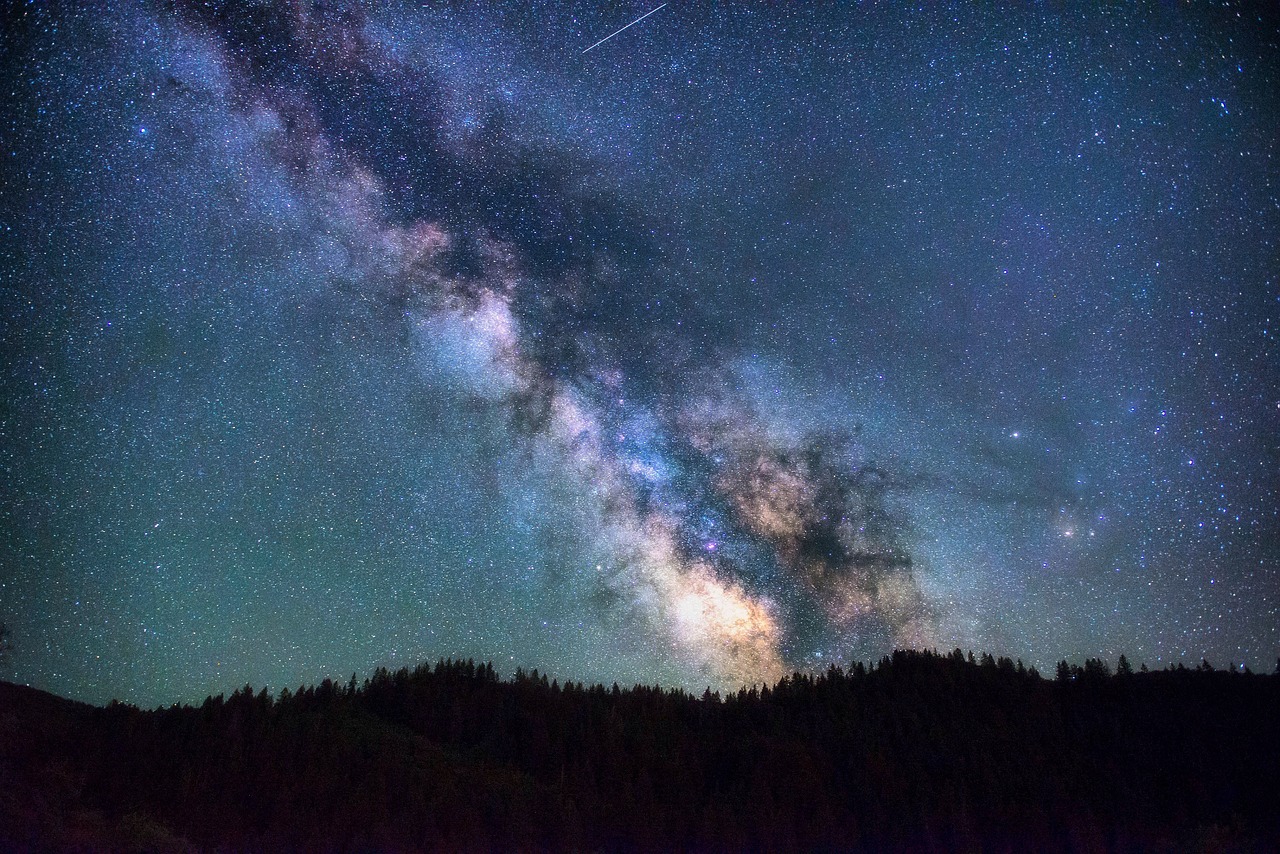



 Climate change could drive the emergence of the next...
 Will the next pandemic come from a GLACIER? Killer viruses...
 Melting ice in the Arctic could unleash 100,000 TONNES of...
 Northeast Greenland ice sheet is melting so rapidly it could...












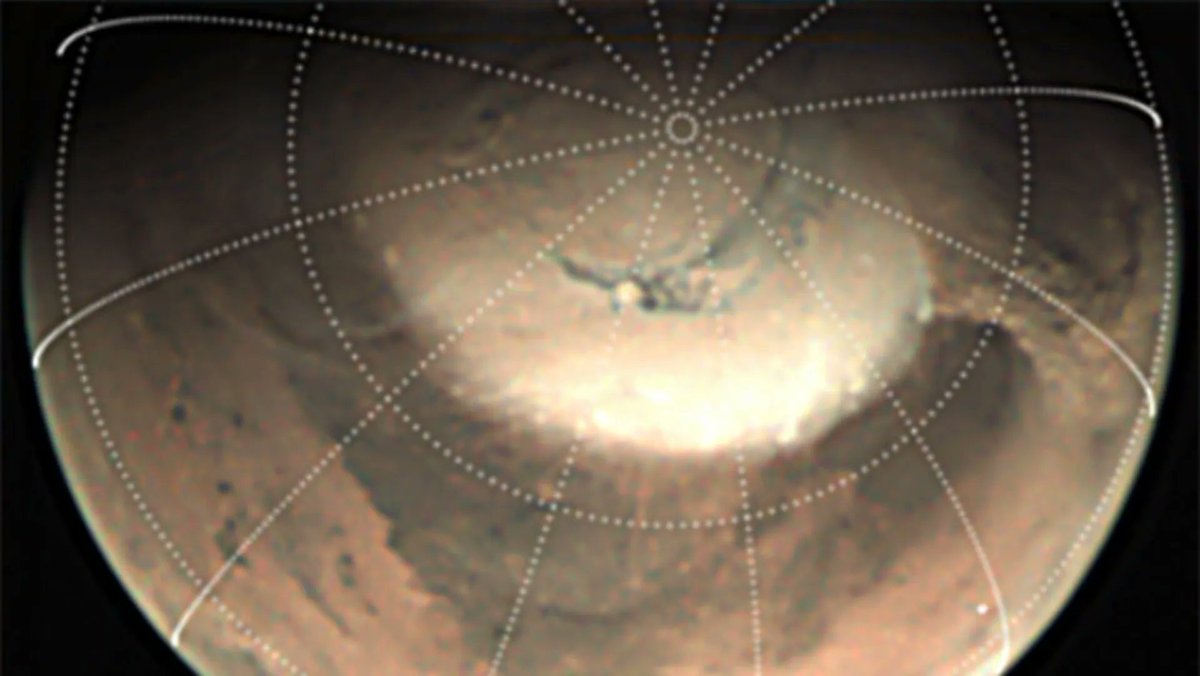

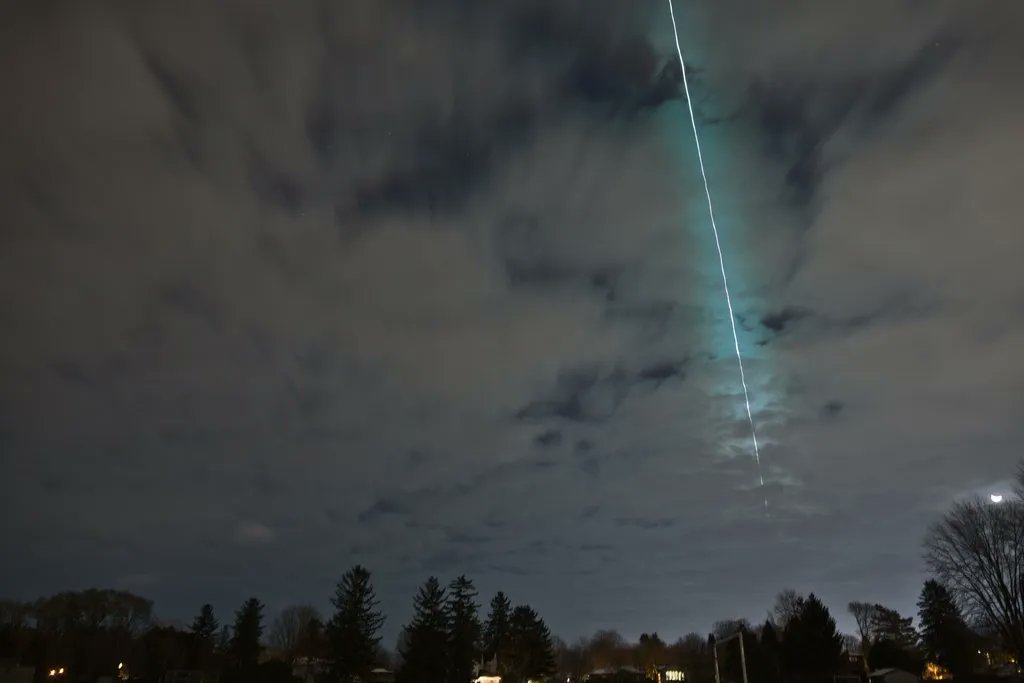


 Asteroid Ryugu could be a remnant of an extinct COMET, data...
 Asteroid half the size of a giraffe strikes Earth off the...
 Chelyabinsk meteor that exploded over Russia in 2013 may...
 Tiny BEAN-sized fragment of the Winchcombe meteorite that...


 Alien space rock! Meteor that hit Earth in 2014 WAS from...
 Not for the faint of heart! Elon Musk warns that life on...


