Naar de inhoud

UFO'S of UAP'S, ASTRONOMIE, RUIMTEVAART, ARCHEOLOGIE, OUDHEIDKUNDE, SF-SNUFJES EN ANDERE ESOTERISCHE WETENSCHAPPEN - DE ALLERLAATSTE NIEUWTJES

UFO's of UAP'S in België en de rest van de wereld
akke.beakke.be
Ontdek de Fascinerende Wereld van UFO's en UAP's: Jouw Bron voor Onthullende Informatie! Ben jij ook gefascineerd door het onbekende? Wil je meer weten over UFO's en UAP's, niet alleen in België, maar over de hele wereld? Dan ben je op de juiste plek! België: Het Kloppend Hart van UFO-onderzoek In België is BUFON (Belgisch UFO-Netwerk) dé autoriteit op het gebied van UFO-onderzoek. Voor betrouwbare en objectieve informatie over deze intrigerende fenomenen, bezoek je zeker onze Facebook-pagina en deze blog. Maar dat is nog niet alles! Ontdek ook het Belgisch UFO-meldpunt en Caelestia, twee organisaties die diepgaand onderzoek verrichten, al zijn ze soms kritisch of sceptisch. Nederland: Een Schat aan Informatie Voor onze Nederlandse buren is er de schitterende website www.ufowijzer.nl, beheerd door Paul Harmans. Deze site biedt een schat aan informatie en artikelen die je niet wilt missen! Internationaal: MUFON - De Wereldwijde Autoriteit Neem ook een kijkje bij MUFON (Mutual UFO Network Inc.), een gerenommeerde Amerikaanse UFO-vereniging met afdelingen in de VS en wereldwijd. MUFON is toegewijd aan de wetenschappelijke en analytische studie van het UFO-fenomeen, en hun maandelijkse tijdschrift, The MUFON UFO-Journal, is een must-read voor elke UFO-enthousiasteling. Bezoek hun website op www.mufon.com voor meer informatie. Samenwerking en Toekomstvisie Sinds 1 februari 2020 is Pieter niet alleen ex-president van BUFON, maar ook de voormalige nationale directeur van MUFON in Vlaanderen en Nederland. Dit creëert een sterke samenwerking met de Franse MUFON Reseau MUFON/EUROP, wat ons in staat stelt om nog meer waardevolle inzichten te delen. Let op: Nepprofielen en Nieuwe Groeperingen Pas op voor een nieuwe groepering die zich ook BUFON noemt, maar geen enkele connectie heeft met onze gevestigde organisatie. Hoewel zij de naam geregistreerd hebben, kunnen ze het rijke verleden en de expertise van onze groep niet evenaren. We wensen hen veel succes, maar we blijven de autoriteit in UFO-onderzoek! Blijf Op De Hoogte! Wil jij de laatste nieuwtjes over UFO's, ruimtevaart, archeologie, en meer? Volg ons dan en duik samen met ons in de fascinerende wereld van het onbekende! Sluit je aan bij de gemeenschap van nieuwsgierige geesten die net als jij verlangen naar antwoorden en avonturen in de sterren! Heb je vragen of wil je meer weten? Aarzel dan niet om contact met ons op te nemen! Samen ontrafelen we het mysterie van de lucht en daarbuiten.

Berichten van 1 november 2024 tot 30 november 2024

Scientists Still Can’t Believe It: Giant Worms Are Hiding in Cavities Beneath the Ocean!

Scientists Still Can’t Believe It: Giant Worms Are Hiding in Cavities Beneath the Ocean!

In a groundbreaking discovery that has left scientists astounded, giant worms have been found lurking in deep-sea cavities beneath the ocean floor. This remarkable finding challenges our understanding of marine ecosystems and opens up new possibilities for life in extreme environments.

Mathias Curl

 scientists-stunned-giant-worms-discovered-hiding-deep-sea-cavities.jpg

Scientists Still Can’t Believe It: Giant Worms Are Hiding in Cavities Beneath the Ocean! © Indian Defence Review

Researchers aboard the Schmidt Ocean Institute’s research vessel Falkor (too) made an unexpected discovery while exploring the East Pacific Rise, an active volcanic ridge located 2,500 meters below the ocean surface. Their initial goal was to collect rock samples from hydrothermal vents to study tubeworm larvae settlement. However, what they found was far more extraordinary.

As the remotely operated vehicle SuBastian lifted plates of oceanic crust, it revealed cavities filled with hydrothermal fluid about 10 centimeters deep. These cavities, known to geologists, maintained a comfortable temperature of 25°C. But the real surprise came when the researchers examined the images more closely.

Hidden within these subterranean chambers was a thriving ecosystem, including :

  • Snails
  • Mussels
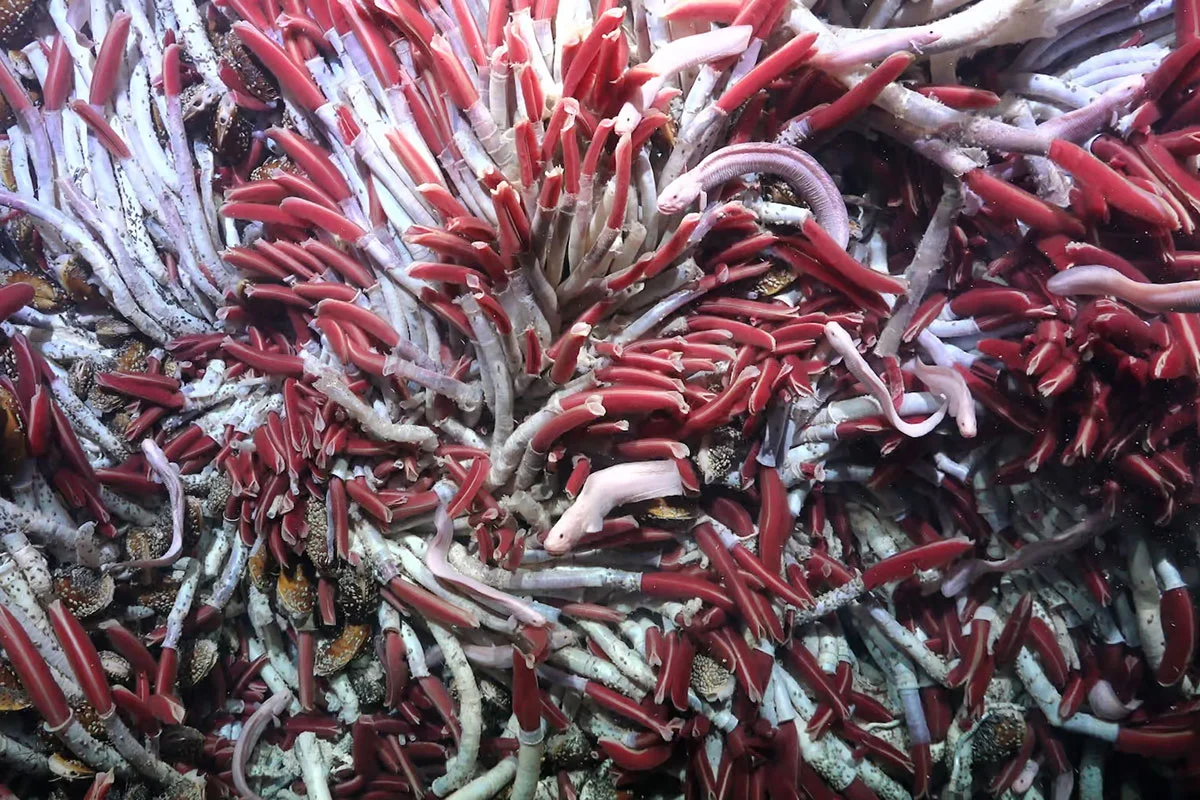
  • Giant tubeworms (Riftia pachyptila)

The discovery of these complex life forms in such an unexpected location has stunned the scientific community. It challenges previous assumptions about the limitations of life in extreme environments and hints at the possibility of similar ecosystems existing elsewhere in our solar system.

The giants of the deep : Riftia pachyptila

Among the most fascinating inhabitants of these subterranean cavities are the giant tubeworms, also known as giant beard worms. These remarkable creatures can grow up to three meters in length, making them true giants of the deep sea.

Riftia pachyptila has long been known to thrive around hydrothermal vents on the ocean floor, but their presence beneath the seafloor was entirely unexpected. These worms have adapted to survive in one of the most extreme environments on Earth, devoid of sunlight and subject to crushing pressure.

The discovery of these worms in subsurface cavities raises intriguing questions about their life cycle and adaptation strategies. Researchers suggest that larvae living on the ocean floor may be transported into the subsurface via hydrothermal fluids, establishing a dynamic connection between oceanic, seafloor, and subsurface ecosystems.

CharacteristicDescription
Maximum length 3 meters
Habitat Hydrothermal vents, subsurface cavities
Adaptation Symbiotic relationship with chemosynthetic bacteria

Implications for astrobiology and environmental protection

The discovery of a complex ecosystem beneath the ocean floor has far-reaching implications for our understanding of life on Earth and potentially beyond. It highlights the interconnectedness of marine ecosystems and underscores the importance of protecting these fragile environments.

75736168007-eelpout-tubeworms.jpg?width=2560

These giant tubeworms were photographed near the East Pacific Rise at a depth of 2,500 meters. Tubeworms were discovered for the first time living under the seafloor, where previously it was thought that only microbes and viruses lived.  Show less 

CC BY-NC-SA Schmidt Ocean Institute

This finding could also inform the search for life elsewhere in our solar system. For example, Jupiter’s moon Europa, which is believed to have a subsurface ocean and volcanic activity, might harbor similar conditions to those found around Earth’s hydrothermal vents. The recent launch of NASA’s Europa Clipper mission aims to explore this intriguing moon and search for potential biosignatures.

However, the newly discovered “biomass layer” beneath the ocean floor is already under threat from deep-sea mining projects. Scientists are calling for urgent protective measures to safeguard these unique ecosystems before they are irreparably damaged.

75736167007-looking-under-copy.jpg?width=2560

Giant tubeworms were discovered in a shallow subsurface cavity below deep-sea hydrothermal vents, using a remotely operated vehicle to chisel under rock.  

CC BY-NC-SA Schmidt Ocean Institute

The discovery of giant worms in deep-sea cavities serves as a reminder of how little we know about our planet’s oceans. It also emphasizes the need for continued exploration and research to uncover the secrets hidden in the depths. As we continue to investigate these extreme environments, we may gain valuable insights into the potential dangers and opportunities presented by underwater volcanic activity and its impact on marine life.

As we delve deeper into the mysteries of the ocean floor, it becomes increasingly clear that our planet still holds many surprises. The discovery of giant worms in subsurface cavities is just the beginning of what promises to be an exciting new chapter in marine biology and astrobiology research.

RELATED VIDEOS

The Wonderful World of Deep Sea Worms

Facts: Giant Tube Worms (Riftia pachyptila)

Mysterious Sea 'Worm' Spotted Near New Zealand | National Geographic

{ https://indiandefencereview.com/category/science/ }

Hoe vind je dit bericht?
Geschreven door peter om 23:54 Stuur door

Giant Animal Life in the Oceanic Crust: An Unexpected Discovery

Giant Animal Life in the Oceanic Crust: An Unexpected Discovery

In the depths of the ocean, a groundbreaking discovery has stunned the scientific community. Massive creatures, previously unknown, have been found thriving in the Earth’s crust beneath the sea floor. This unexpected revelation challenges our understanding of deep-sea ecosystems and opens up new frontiers in marine biology research.

Samir Sebti Samir Sebti

Giant Deep Sea Creatures Found Earths Crust Unexpected Discovery Shocks Scientists. 2

Giant Animal Life in the Oceanic Crust: An Unexpected Discovery © The Daily Galaxy --Great Discoveries Channel

At depths exceeding 2,500 meters, researchers aboard the research vessel Falkor have uncovered a bustling ecosystem teeming with life. The Schmidt Ocean Institute’s team utilized advanced submersibles to explore the Pacific Ocean’s seafloor, revealing a diverse array of marine life inhabiting cavities filled with hydrothermal fluids.

Among the most striking discoveries are giant worms reaching lengths of up to three meters. These colossal creatures, along with various gastropods, cephalopods, and previously undocumented mollusks, have adapted to survive in this extreme environment. The presence of larvae in these cavities suggests that juvenile specimens may colonize this habitat through hydrothermal vent fluids, indicating a potential interconnection with seafloor ecosystems.

This revelation is particularly significant as it marks the first time such large animals have been observed in these geological structures. While microorganisms were known to inhabit hydrothermal vents, the presence of complex, macroscopic life forms in the ocean crust was entirely unexpected.

41467 2024 52631 Fig6 Html

The geological marvels supporting life in the deep

The key to this thriving ecosystem lies in the unique geological formations known as hydrothermal chimneys. These structures create favorable conditions for life to flourish in what was once thought to be an inhospitable environment. The interaction between cold seawater and hot hydrothermal fluids creates a dynamic system that supports a variety of life forms.

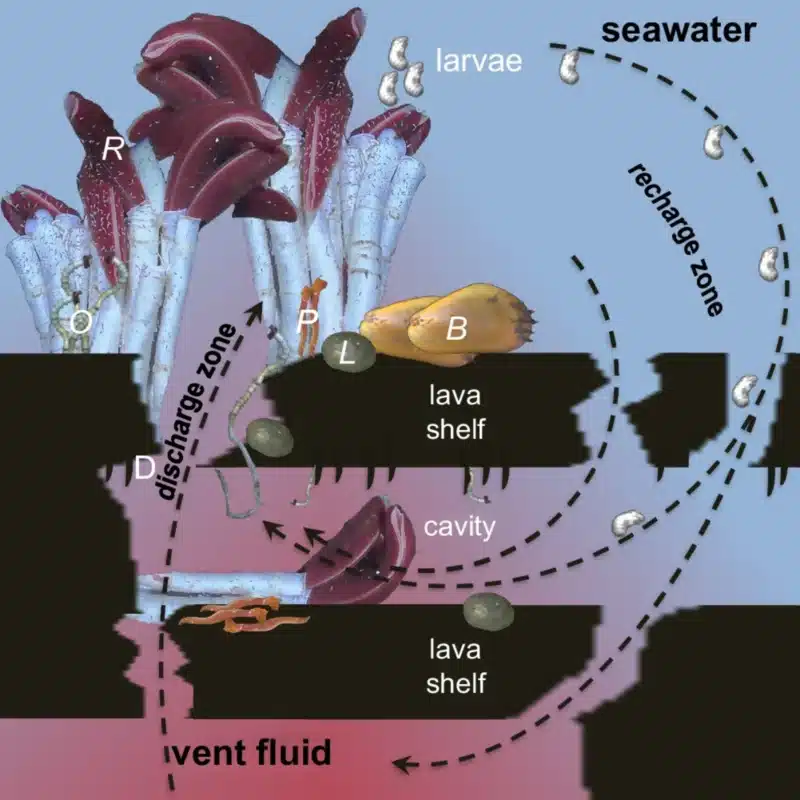
A cross-section of the lobate lava formations reveals :

  • Lava plates with interspersed cavities
  • Lava drips on cavity ceilings
  • Fissures throughout the lava plates
  • A recharge zone where cold seawater mixes with hot hydrothermal fluid

This complex geological structure provides niches for various species, including :

SpeciesCharacteristics
Riftia pachyptila Giant tube worms
Paralvinella spp. Mobile worms
Lepetodrilus spp. Limpet-like mollusks
Bathymodiolus thermophilus Deep-sea mussels

Implications for deep-sea research and conservation

This groundbreaking discovery has far-reaching implications for our understanding of marine ecosystems. It suggests that vast portions of the oceanic crust may harbor complex life forms, dramatically expanding the potential habitats for deep-sea creatures. This finding could revolutionize our approach to studying ocean biodiversity and may lead to the discovery of new species adapted to extreme conditions.

The interconnectedness of these subterranean ecosystems with those on the ocean floor raises new questions about the dynamics of deep-sea life. It also highlights the potential vulnerability of these unique habitats to human activities, particularly the growing interest in deep-sea mining. Recent advancements in deep-sea sound analysis have already revealed the presence of elusive ocean predators, further emphasizing the complexity of these underwater ecosystems.

As scientists continue to explore the ocean depths, more surprises may be in store. The recent discovery of a massive blue hole in the ocean depths serves as a reminder of how much remains unknown about our planet’s underwater realms. These findings underscore the importance of continued research and conservation efforts to protect these fragile and unique ecosystems.

41467 2024 52631 Fig5 Html

Future explorations and unanswered questions

While this discovery is groundbreaking, many questions remain unanswered. The full extent of this subterranean habitat is yet to be determined, with some scientists speculating that life could extend much deeper into the Earth’s crust. However, as depth increases, conditions become increasingly extreme, posing challenges for both life forms and scientific exploration.

Future research will likely focus on :

  1. Mapping the extent of these subterranean ecosystems
  2. Studying the adaptations of creatures living in these extreme environments
  3. Investigating the potential for undiscovered species
  4. Assessing the impact of deep-sea mining on these fragile habitats

As we delve deeper into the mysteries of the ocean, it’s clear that our understanding of marine life is constantly evolving. The discovery of giant creatures in the Earth’s crust beneath the ocean floor serves as a powerful reminder of the wonders that still await us in the unexplored corners of our planet.

{ https://dailygalaxy.com/category/science/ }

Hoe vind je dit bericht?
Geschreven door peter om 23:14 Stuur door

The Universe’s Largest Water Reservoir: 140 Trillion Times Earth’s Water in

The Universe’s Largest Water Reservoir: 140 Trillion Times Earth’s Water in

In a groundbreaking discovery, astronomers have unveiled an immense cosmic water reservoir that dwarfs Earth’s water content by an astonishing 140 trillion times. This colossal aqueous expanse, located over 12 billion light-years away, surrounds a distant quasar and challenges our understanding of water’s prevalence in the early universe.

The Universes Largest Water Reservoir 140 Trillion Times Earths Water In

The Universe’s Largest Water Reservoir: 140 Trillion Times Earth’s Water in 

© The Daily Galaxy --Great Discoveries Channel

The identification of this massive water reservoir marks a significant milestone in our exploration of the cosmos. Matt Bradford, a scientist at NASA’s Jet Propulsion Laboratory, emphasizes the uniqueness of this discovery, stating, “The environment around this quasar is producing an unprecedented mass of water.” This finding not only showcases water’s pervasiveness throughout the universe but also provides insights into its presence during the universe’s infancy.

The quasar in question, designated APM 08279+5255, is a cosmic powerhouse driven by an enormous black hole. This celestial behemoth, with a mass 20 billion times that of our sun, generates energy equivalent to a thousand trillion suns. The sheer scale of this cosmic engine creates conditions conducive to the formation and maintenance of vast quantities of water vapor.

While water vapor is not uncommon in our own Milky Way galaxy, the amount detected in this distant quasar is staggering. It surpasses our galaxy’s water vapor content by a factor of 4,000, as most of the Milky Way’s water exists in frozen form. This disparity highlights the exceptional nature of the quasar’s environment and its potential implications for our understanding of cosmic evolution.

The role of water in cosmic environments

Water vapor serves as a crucial trace gas, offering valuable insights into the properties of celestial objects. In the case of APM 08279+5255, the water vapor extends across a gaseous region spanning hundreds of light-years. This expansive distribution indicates that the quasar bathes the surrounding gas in X-rays and infrared radiation, creating unusually warm and dense conditions by astronomical standards.

Despite the vast quantities of water vapor present, the environment remains incredibly cold by terrestrial standards. The gas temperature hovers around a frigid -63 degrees Fahrenheit. However, this is still five times hotter and 10 to 100 times denser than typical galactic environments, showcasing the extreme nature of quasar-influenced regions.

The abundance of water vapor and other molecules, such as carbon monoxide, suggests that there is sufficient gas to fuel the black hole’s growth for an extended period. However, the ultimate fate of this gas remains uncertain. It could potentially condense to form new stars or be expelled from the quasar’s vicinity due to the intense radiation and gravitational forces at play.

Technological marvels behind the discovery

The detection of this massive water reservoir was made possible by cutting-edge observational techniques and instruments. Two teams of scientists, led by Matt Bradford and Dariusz Lis respectively, utilized different observatories to confirm and analyze the water vapor’s presence :

  • Z-Spec at the California Institute of Technology’s Submillimeter Observatory
  • Combined Array for Research in Millimeter-Wave Astronomy (CARMA)
  • Plateau de Bure Interferometer in the French Alps

These advanced instruments allowed the teams to detect multiple spectral signatures of water, providing detailed information about its quantity and distribution. The accidental discovery by Lis’s group in 2010 was further corroborated and expanded upon by Bradford’s team, highlighting the collaborative nature of astronomical research.

The use of these specialized observatories demonstrates the technological prowess required to probe the distant universe and uncover its secrets. As our observational capabilities continue to advance, we may uncover even more surprising findings about the cosmos and its composition.

Implications for our understanding of the universe

The discovery of this massive water reservoir has far-reaching implications for our understanding of the universe and its evolution. It challenges previous assumptions about the distribution of water in the early cosmos and raises intriguing questions about the role of water in the formation and development of celestial structures.

This finding also highlights the potential for new cosmological models that challenge traditional theories about the universe’s origins and evolution. The presence of such vast quantities of water in the early universe may require a reevaluation of our current models of cosmic chemistry and the processes that led to the formation of complex molecules in space.

Furthermore, this discovery underscores the importance of continued exploration and observation of distant cosmic objects. As we peer deeper into space and further back in time, we gain invaluable insights into the conditions that prevailed in the early universe and the processes that shaped the cosmos we observe today.

ComparisonEarthQuasar APM 08279+5255
Water Content 1x 140 trillion x
Distance from Earth 0 light-years Over 12 billion light-years
Temperature Variable -63°F (average)

As we continue to unravel the mysteries of the cosmos, discoveries like this massive water reservoir serve as reminders of the vast and wondrous nature of our universe. They inspire us to push the boundaries of our knowledge and technology, driving us to explore ever further into the cosmic depths in search of answers to our most fundamental questions about existence itself.

VIDEOS

Gigantic Floating Cosmic Ocean Found In Space?140 Trillion Times Larger Than Earth@TheCosmosNews

Largest Reservoir of Water in Space Holds 140 Trillion Times More Water Than Earth's Oceans

Quasar - O Maior Reservatório de Água do Universo

{ https://dailygalaxy.com/category/astronomy/ }

Hoe vind je dit bericht?
Geschreven door peter om 22:31 Stuur door

Voyager 1 Defies the Odds: NASA’s Distant Messenger Makes an Incredible Comeback

Voyager 1 Defies the Odds: NASA’s Distant Messenger Makes an Incredible Comeback

Story by Lydia Amazouz
 
Voyager 1 Defies the Odds: NASA’s Distant Messenger Makes an Incredible Comeback
© Daily Galaxy

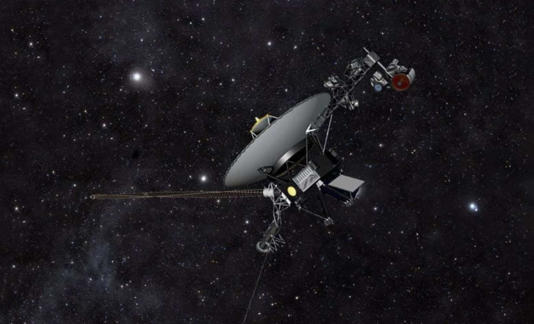
In a remarkable turn of events, NASA’s Voyager 1 spacecraft, which has been silently traveling through space for nearly 50 years, has once again proven its resilience. After a critical communication failure in October 2023, the aging probe has successfully resumed transmitting valuable data back to Earth. The spacecraft, currently more than 24.9 billion kilometers (15.4 billion miles) away, is now working with minimal power to provide groundbreaking insights into the furthest reaches of our solar system. This unexpected recovery is a testament to the extraordinary engineering that keeps Voyager 1 alive and functioning, despite its age and distance.

A Communication Glitch and a Brilliant Recovery

On October 19, 2023,Voyager 1 experienced an unexpected malfunction when its primary communication system failed. The spacecraft’s X-band transmitter, which it uses to send data to Earth, stopped working. This sudden issue left engineers scrambling to restore contact with the spacecraft, which had been operating on limited power for years. The team suspected that the spacecraft’s fault protection system had been triggered, and as NASA’s Tony Greicius explained in the Voyager Blog, “The flight team suspected that Voyager 1’s fault protection system was triggered twice more and that it turned off the X-band transmitter and switched to a second radio transmitter called the S-band.”

While Voyager 1‘s main communication channel was down, the S-band backup system allowed engineers to continue tracking the spacecraft’s position. However, the challenge of detecting this signal at such a vast distance was far from simple. Tony Greicius clarified that “While the S-band uses less power, Voyager 1 had not used it to communicate with Earth since 1981. It uses a different frequency than the X-band transmitters’ signal, which is significantly fainter.” The weak signal from the S-band was a significant challenge for the engineers, who were unsure if it could even be detected from Earth due to the immense distance the spacecraft had traveled. Despite these doubts, the Deep Space Network engineers were able to successfully pick up the faint signal. “The flight team was not certain the S-band could be detected at Earth due to the spacecraft’s distance, but engineers with the Deep Space Network were able to find it,” Greicius noted.

The fact that engineers could detect the S-band signal from Voyager 1—which is currently in interstellar space—is a testament to the advanced capabilities of NASA’s Deep Space Network. After confirming that the faint signal was valid, the team was able to switch back to the X-band transmitter by mid-November, resuming normal operations and allowing Voyager 1 to continue sending back invaluable scientific data from the outer reaches of our solar system.

Power Challenges and the Long Road Ahead

Although Voyager 1‘s communication systems have been successfully restored, the spacecraft’s power supply remains a major concern. After almost 50 years of operation, well beyond its original mission timeline, the spacecraft’s power resources are in steady decline. The radioactive thermoelectric generators (RTGs), which provide power by converting the decay of plutonium into electricity, are gradually losing efficiency. NASA engineers have been carefully monitoring and adjusting Voyager 1’s power usage, making critical decisions to ensure the spacecraft can continue transmitting data. Non-essential systems have been turned off, and the team is managing the spacecraft’s remaining power reserves with precision. However, as the output of the RTGs continues to decrease, Voyager 1 faces the inevitable challenge of running out of power, leaving engineers to work tirelessly to extend its operational life as long as possible.

The spacecraft’s dwindling power is particularly concerning as it means certain instruments and systems can no longer operate. The mission team is constantly faced with the challenge of prioritizing which systems remain active, all while ensuring that Voyager 1 continues to send valuable scientific data back to Earth. As the spacecraft drifts farther from the Sun, its solar power generation capabilities have long since become negligible, making the RTGs the only source of energy. Nonetheless, Voyager 1 has managed to achieve far more than anyone expected, operating for decades beyond its anticipated lifespan.

Voyager 1’s Enduring Legacy

As Voyager 1 continues its journey into the vast unknown of interstellar space, its legacy becomes even more significant. Originally launched in 1977 to explore the outer planets, the spacecraft’s primary mission was completed long ago, but its extended mission continues to provide invaluable insights into deep space. Data from Voyager 1 has helped scientists study the interstellar medium, cosmic radiation, and magnetic fields—subjects that were once beyond the reach of human knowledge. These findings have expanded our understanding of the vast, uncharted territory beyond the influence of our solar system, offering a glimpse into the nature of the cosmos itself.

Even as Voyager 1 nears its 50th anniversary, it remains a symbol of humanity’s drive for exploration. Despite the spacecraft’s aging systems and the enormous distance between it and Earth, every new communication breakthrough represents a triumph of ingenuity and perseverance. NASA’s engineers continue to keep Voyager 1 operational, pushing the limits of space exploration with each passing year. As Voyager 1 sends back data from the farthest reaches of the solar system and beyond, it serves as humanity’s most distant ambassador, continuing to deliver knowledge from the frontiers of space. This extraordinary mission will leave a legacy of scientific discoveries and technological achievements for generations to come, helping future explorers better understand the universe.

Communicating With Deep Space - How It Works | Video

Voyager 1 is Back! NASA's Clever Fix Explained

{ https://dailygalaxy.com/category/space/ }

Hoe vind je dit bericht?
Geschreven door peter om 22:07 Stuur door

Recent Study Suggests That The Surface Of Mars May Be Saturated With Carbon Dioxide That Could Be Converted Into Rocket Fuel

Recent Study Suggests That The Surface Of Mars May Be Saturated With Carbon Dioxide That Could Be Converted Into Rocket Fuel

by Michael Levanduski

Source: Shutterstock

Source: Shutterstock

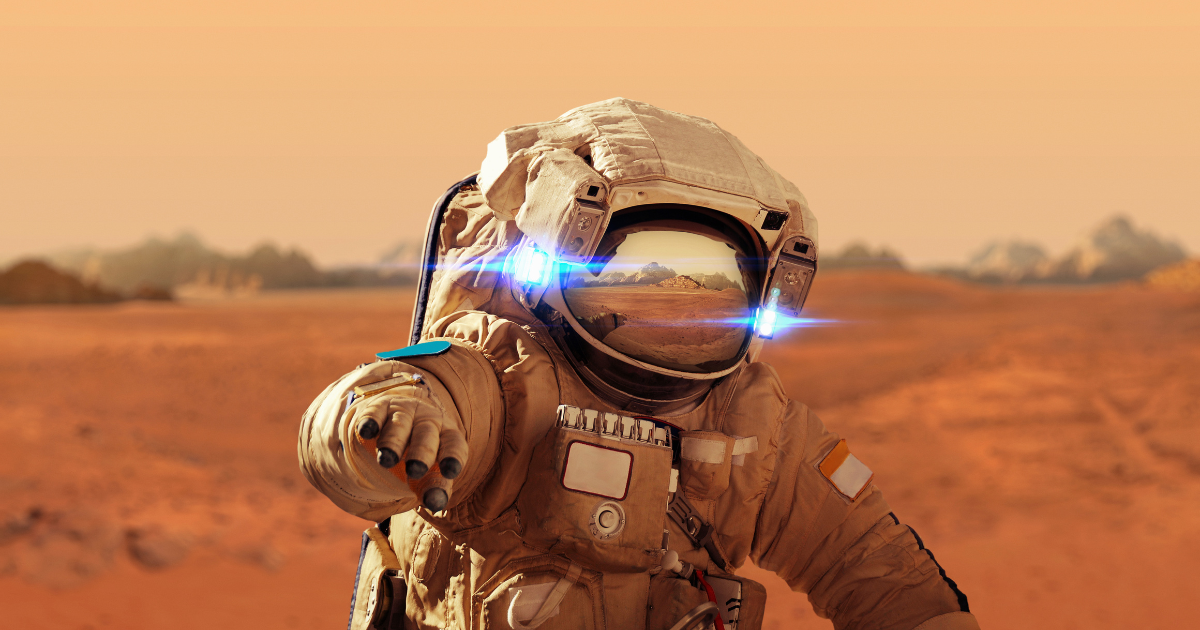
Planning missions to Mars is very difficult.

Even just getting a rover or other equipment to the red planet has endless challenges, but at least that has been successfully accomplished many times.

As we move closer to the possibility of manned missions to Mars, new hurdles need to be overcome.

One of the biggest ones is how to get people back to Earth. It takes a huge amount of fuel to send a spacecraft to Mars and land on the surface. Having to bring enough to power a trip back as well will be not just hard, but also very inefficient.

Fortunately, it might not be necessary.

According to a new paper that was recently published in the journal Science Advances, there may everything needed to make rocket fuel right there on Mars.

They estimate that about 80% of the carbon dioxide that was formerly in the Martian atmosphere is now trapped in carbon-based organic compounds right near the surface. This carbon could be extracted and converted into rocket fuel.

This is a process that has already been done many times here on Earth, so it is well understood.

Source: Shutterstock

In a statement, MIT geology professor Oliver Jagoutz said:

“Based on our findings on Earth, we show that similar processes likely operated on Mars, and that copious amounts of atmospheric CO2 could have transformed to methane and been sequestered in clays. This methane could still be present and maybe even used as an energy source on Mars in the future.”

The material that they believe holds all this CO2 is called smectite clay, which also exists on Earth. Scientists believe that 3.5 billion years ago, Mars had large amounts of surface water.

The coauthor of the study, Joshua Murray, who is an MIT planetary sciences PhD, explains:

“At this time in Mars’ history, we think CO2 is everywhere, in every nook and cranny, and water percolating through the rocks is full of CO2 too. These smectite clays have so much capacity to store carbon. So then we used existing knowledge of how these minerals are stored in clays on Earth, and extrapolate to say, if the Martian surface has this much clay in it, how much methane can you store in those clays?”

Source: Shutterstock

The answer, it seems, is a lot. While it is unlikely that the first people to travel to Mars will want to fully rely on this as a source of fuel for their return trip, it is certainly a promising option for the future of space travel to and from Mars.

Mars could serve as a ‘gas station’ for travel throughout our solar system.

If you thought that was interesting, you might like to read about a second giant hole has opened up on the sun’s surface. Here’s what it means.


The Mysterious Rocks on Mars That Could Be Something Else Entirely | Perseverance Part 6

Why These Rocks on Mars Shocked Perseverance Scientists the Most | 1st Year Supercut

Mars’ Mysterious Zebra Rock | NASA Perseverance Discovery

{ https://twistedsifter.com/category/naturespace/ }

Hoe vind je dit bericht?
Geschreven door peter om 21:27 Stuur door

Ross Coulthart Unveils Shocking UFO Secrets and Ancient Egypt Mysteries

Ross Coulthart Unveils Shocking UFO Secrets and Ancient Egypt Mysteries

Ross Coulthart Unveils Shocking UFO Secrets and Ancient Egypt Mysteries

Renowned journalist Ross Coulthart has captivated audiences with his groundbreaking insights into the mysteries of UFOs and ancient Egypt. His investigations into Unidentified Aerial Phenomena (UAPs) and humanity’s hidden history reveal connections that could fundamentally reshape our understanding of both ancient civilizations and modern technological advancements.

The UFO Phenomenon: Beyond Skepticism

Coulthart asserts with unwavering confidence that several global governments, including those of the United States, Russia, and China, have recovered non-human craft. These technologically advanced artifacts, he believes, are the result of covert retrieval programs and reverse-engineering efforts spanning decades. His claims, based on credible sources such as former U.S. Navy research head Nat Kobitz, paint a picture of deliberate suppression and misinformation by powerful entities.

Coulthart compares the media’s dismissal of UFO evidence to its handling of controversial topics like the Iraq War’s weapons of mass destruction claims. He emphasizes that mainstream media has often been complicit in ignoring or downplaying significant evidence due to disinformation campaigns and institutional inertia.

Ancient Egypt: A Portal to Forgotten Knowledge

Coulthart’s recent exploration of Egypt, in collaboration with UAP researchers, has added another layer to his investigations. He highlights evidence of advanced technology embedded in ancient Egyptian artifacts and architecture that challenges conventional historical narratives. From the precision-cut red granite blocks in temples to the massive unfinished obelisk in Aswan, these artifacts showcase an expertise seemingly impossible for a civilization reliant on primitive tools.

Particularly striking are stone vases, discovered in graves dating back over 14,000 years, long before the emergence of dynastic Egyptian rule. Coulthart cites modern researchers who suggest these objects were crafted using machinery capable of achieving precision that even today’s technology struggles to replicate.

A Forgotten Cataclysm

Coulthart ties ancient Egyptian myths of catastrophic events to the scientifically documented Younger Dryas period, approximately 12,800 years ago. This global cataclysm, caused by a solar event or meteor impact, may have wiped out advanced pre-human civilizations. The evidence, he contends, is “hidden in plain sight,” waiting for those willing to investigate.

Suppressed Truths and the Role of Disclosure

A key theme in Coulthart’s work is the suppression of transformative knowledge. Whether regarding UFOs or ancient technology, powerful institutions have allegedly used disinformation and, at times, violence to maintain control. Coulthart calls for transparency through congressional hearings and public investigations into these allegations, which include claims of murders committed to safeguard covert retrieval programs.

He also highlights the evolving role of independent media in bringing such stories to light. Platforms like podcasts and YouTube are increasingly providing a voice to suppressed topics, bypassing the traditional media gatekeepers.

A Future of Discovery

Coulthart believes we are on the brink of monumental revelations regarding UAPs and ancient history. His ongoing work with News Nation aims to further uncover hidden truths. Drawing parallels between humanity’s forgotten past and its potential extraterrestrial connections, he urges global leaders to prioritize disclosure for the benefit of all.

As humanity grapples with these profound mysteries, Coulthart’s investigations remind us that curiosity and critical thinking are essential tools for uncovering the truth. Whether about ancient Egypt or UFOs, the answers may already be within reach—if we dare to look.

OTHER VIDEOS

The UnXplained: Egypt's Most SHOCKING Hidden Secrets

Investigating UFOs And Other Aerial Phenomena With Ross Coulthart | Studio 10

Exposing Government Secrets! | ALIEN AND UFO ENCOUNTERS: THE TOP 20

{ https://www.latest-ufo-sightings.net/ }

Hoe vind je dit bericht?
Geschreven door peter om 20:09 Stuur door

Aliens or a cult? New clues emerge in quest to solve 'longest-running murder mystery'

Aliens or a cult? New clues emerge in quest to solve 'longest-running murder mystery'

New clues have emerged in the quest to solve America's 'longest-running murder mystery' that has plagued ranchers since the 1970s.

Several states, from Kansas to Iowa and Oregon, have reported strange cases of dead cows sliced with surgical-like precision with their reproductive organs removed.

In many cases, not a drop of blood was found at the crime scenes.

The reports sparked fears about aliens mutilating the animals, but a former rancher from Oregon has suggested that the cows were killed by a 'sophisticated network of humans.'

Colby Marshall, who found five murdered bulls with their tongues missing in 2017, believes cultists or a group using the animal parts for rituals are to blame.

'They're using some sort of toxin that causes the animal to go catatonic,' he explained.

'There's no sign of struggle with the animal, so they dart them or something.'

Marshall continued to explain that the lack of blood is due to the culprits draining it from the animal's tongue, which they then take 'because that is the one piece of forensic evidence.'

Strange cases of cattle who have been murdered, their eyes and vital organs removed with 'surgical precision,' have plagued American ranchers since the 1970s. But new clues are emerging in Wheeler County, Oregon, local sheriffs said, amid a rash of new cases (pictured)

Strange cases of cattle who have been murdered, their eyes and vital organs removed with 'surgical precision,' have plagued American ranchers since the 1970s. But new clues are emerging in Wheeler County, Oregon, local sheriffs said, amid a rash of new cases (pictured)

The Wheeler County Sheriff's Office is particularly perplexed by one case of a cow in Oregon left in this uncanny sitting position (pictured). The animal's tongue and reproductive organs had been removed in July 2020, they reported

The Wheeler County Sheriff's Office is particularly perplexed by one case of a cow in Oregon left in this uncanny sitting position (pictured). The animal's tongue and reproductive organs had been removed in July 2020, they reported

'I believe that, yes, there probably is aliens out there. And, you know, they've probably visited Earth,' Marshall told Fox News Digital. 

'Now, do I think they're using their technology to come after free-range bulls in eastern Oregon? No, I don't – I think they would have better uses of their technology than that.' 

The Federal Bureau of Investigations (FBI) filed its first report on the mutilated cows in 1974, sighting cases in Oklahoma and Nebraska. 

At least 10 dead cows appeared in Minnesota that same year and in 1975, thousands of cases surfaced in Colorado.

Bloodless cattle killings were also reported in 23 states, including Kansas, Minnesota, Nebraska, Texas, Oklahoma, Montana, Illinois, Wisconsin, and California. 

The FBI investigated the deaths until 1978, but never found a culprit. 

But by the end of the decade, more than 10,000 cases of cattle mutilation had been recorded, mostly at small-scale ranches in the West and Midwest. 

Marshall has opened his own probe into the crimes, believing the murders were carried out by multiple people.

He explained that one person would've held the leg up, while another made an incision and cut around the testicles to remove them. 

'Then you've got to hand all that material to somebody, because if you drop it on the ground, you're going to cause tracks and you're going to drop blood. there would be signs,' he continued.

Above, a photo from former ranch manager Colby Marshall who said that this bull and others like it had their organs removed with surgical precision

Above, a photo from former ranch manager Colby Marshall who said that this bull and others like it had their organs removed with surgical precision

Above, an image of a cattle mutilation case investigated by the nonprofit Mutual UFO Network (MUFON) - which has explored the theory that 'aliens' might have been behind the grisly crimes

Above, an image of a cattle mutilation case investigated by the nonprofit Mutual UFO Network (MUFON) - which has explored the theory that 'aliens' might have been behind the grisly crimes 

'None of that stuff is present, so I think there is a team of people [that pull it off].

The murdered bulls also had no signs of liver or heart damage, and none of those vital organs were missing when Marshall stumbled upon the carcasses. 

And prior to the deaths, the cows 'were eating and drinking, showing now signs of stress.'

article image

Marshall and his team took blood samples from the bulls within 24 hours of their deaths and found no signs of chemicals in the animals' blood streams.

'Anything that metabolizes quickly in the bloodstream is not going to be detectable,' he said.

'That's one of the things that I think is key to this is that this toxin they're using metabolizes quickly.'

Marshall gave an example of a sedative used in horse racing, which puts the animals down for a few minutes so their hooves can be maintained.

'It goes through the system within a few minutes, the animal gets up and they're fine.

'[In the case of the dead cows,] the animal doesn't get up because they bleed them to death. At least that's my theory.'

He also raised the idea that the carcasses were never devoured by predators.

'The scavengers were not tearing the animals apart. The animals kind of melted into the ground,' Marshall continued.

'That was always a head scratcher for me.'

He continued to explain that the lack of blood may have been why predators left the dead cows alone. 

But Joseph Laycock, associate professor of religious studies at Texas State University, told DailyMail.com in 2023 that it's unlikely Satanists are to blame because the vast majority don't practice animal sacrifice and most of them actually condemn the practice.  

'There is always the possibility of teenage delinquents harming animals in the name of Satan. But I don't think that's what's happening in this case. Teenagers would probably have left tracks or other obvious evidence,' he said.

That same year, six mutilated cow were found along a rural highway in Texas, all with their tongues cut out and not a drop of blood in sight.

VIDEOS

A Strange Harvest (1980) UFO Cattle Mutilation Documentary

The Unsolved Cattle Mutilation Mystery

Are UFOs killing cows? We investigate the "cattle mutilation" phenomenon | The Basement Office

{ https://www.dailymail.co.uk/ }

Hoe vind je dit bericht?
Geschreven door peter om 01:00 Stuur door

Astronauts stranded in space show off Thanksgiving meal on the ISS... amid fears they're malnourished

NASA astronauts stranded on the International Space Station (ISS) have been pictured with their Thanksgiving Day meals - amid growing concerns about their health.

Sunita Williams, 59, and Butch Wilmore, 61, who have been stuck in space for 175 days, revealed they will be feasting on brussels sprouts, butternut squash and smoked turkey that was dehydrated before heading to the ISS.

'Our crew up here just wanted to say Happy Thanksgiving to all our friends and family who are down on Earth and everyone who is supporting us,' Williams said in a video. 

The NASA astronauts have drawn concern from both the public and officials within the space agency over their dramatic weight loss during their extended stay in orbit.

Williams sparked fears about her weight in an image from September, with doctors telling DailyMail.com that she looked 'gaunt.'

And NASA insiders revealed last month that their medical team was monitoring Wilmore for similar reasons. 

Williams and Wilmore were joined by astronauts Nick Hague and Don Pettit in the video to share their holiday menu with friends and family back home.

'Our meal may look a little bit different,' Hague admitted as roughly half a dozen, sealed white packages floated upward into microgravity, containing 'all the things that we're going to enjoy on Thanksgiving.' 

'Brussels sprouts, butternut squash, apples and spice, and smoked turkey,' NASA astronaut Nick Hague (bottom left), now on his third tour aboard the ISS, explained as he let the sealed white packages of the space crew's orbital feast float into microgravity. 'It's going to be delicious'

'Brussels sprouts, butternut squash, apples and spice, and smoked turkey,' NASA astronaut Nick Hague (bottom left), now on his third tour aboard the ISS, explained as he let the sealed white packages of the space crew's orbital feast float into microgravity. 'It's going to be delicious'

Smiling behind Hague (bottom left) in the space station's holiday transmission were the two NASA astronauts (top row) who have been stuck on the ISS since June - after the inaugural crewed flight of Boeing's Starliner spacecraft faced malfunctions and gas leaks

Smiling behind Hague (bottom left) in the space station's holiday transmission were the two NASA astronauts (top row) who have been stuck on the ISS since June - after the inaugural crewed flight of Boeing's Starliner spacecraft faced malfunctions and gas leaks

ISS astronauts subsist mainly on dehydrated foods in vacuum-packed pouches that need to be rehydrated – and if needed to be warmed – in an plane-style machine before consumption.

As a byproduct of the orbiting laboratory's fuel cells, water is a plentiful source, but dehydrated food also helps reduce weight on the space station, NASA has said.

Williams offered more details on the crew's orbital Thanksgiving menu Wednesday, including green beans, mushrooms, mashed potatoes and a dessert of apple cobbler.

'Our flight control teams gave us tomorrow off, so our plans are, as usual, get up and workout, do the Turkey trot, watch a little Macy's [Thanksgiving] Day Parade,' she told NBC News.

Williams, however, emphasized that she does not consider herself 'stranded' in space, adding that NASA has a plan in place in the event that she or any other astronaut aboard the ISS needs to get back to Earth.

'Our mission control team and our management has always had an option for us to come home,' she said. 'So yeah, we came up here on Starliner. 

Above the stranded NASA astronauts during a September 24, 2024 pizza meal. One doctor at the time raised concerns about Sunita's health, claiming this image showed her looking 'gaunt.' Williams claims she has actually gained muscle on board the ISS, blaming the look on 'fluid shift'

Above the stranded NASA astronauts during a September 24, 2024 pizza meal. One doctor at the time raised concerns about Sunita's health, claiming this image showed her looking 'gaunt.' Williams claims she has actually gained muscle on board the ISS, blaming the look on 'fluid shift'

'We're coming back on a Dragon, but there’s always been a plan of how we would get home.'

Williams and Willmore have  been stuck on the ISS since Starliner brought them there on June 6.

While Starliner has returned back to Earth without a crew on September 7, the duo continue to wait for SpaceX's Crew-9 mission that will pick them up at the ISS and bring them home no earlier than February 2025.

However, many studies have shown that extended stays in space can lead to dramatic weight lost.  

article image

During long-term ISS missions, crews can typically lose about five percent of their original body mass, due primarily to muscle and bone density loss that occurs naturally due to microgravity.

Wilmore, according to one NASA official who declined to be named, 'had a lot more mass at the start,' coming in at six feet tall and over 210 pounds.

'So, it's not as big of a deal,' this employee told the New York Post.

Despite what seemed apparent to observers watching NASA's video feeds, Williams came forward earlier this month to deny 'rumors' that she had lost weight while on her unexpectedly long stay in on the ISS. 

Williams claimed that she has actually gained muscle on board the ISS, and pointed to 'fluid shift' to explain her appearance in the concerning photos.  

{ https://www.dailymail.co.uk/ }

Hoe vind je dit bericht?
Geschreven door peter om 00:37 Stuur door

Mysterious lights over Capitol Hill sparks fears of UFOs in Washington DC

Mysterious lights over Capitol Hill sparks fears of UFOs in Washington DC

An ominous quartet of gleaming lights above the United States Capitol building have left some afraid the alien invasion has finally arrived.

The photo — taken at night just outside of Congress, with the dome of Capitol Hill in full view – was taken by US Air Force veteran Dennis Diggins who now works as a licensed tour guide in the Washington DC area, as well as a professional travel director.

The eerie triangular formation of lights that Diggins captured in his photo seems to hover just feet over the 'Statue of Freedom' at the top of the Capitol dome. 

'That’s absolutely insane,' one spectator said of the strange glowing orbs, which looked like landing lights on some otherworldly craft.

The image comes just weeks after a pair of stunning public hearings in both the US Senate and the House of Representatives, where lawmakers probed current and retired Pentagon officials over the state of intelligence on what used to be called 'flying saucers.'

The House's hearing included a first look at a bizarre, unsettling report alleging that an illegal 'Unacknowledged Special Access Program' named 'Immaculate Constellation' had been set up to 'detect, quarantine, and transfer' UFO data away from public view.

But while some were clamoring for video that might link this new sighting to this wider UFO debate on the Hill, others pushed back on the speculative furor over these strange lights.

An ominous quartet of gleaming lights above the US Capitol building, like landing lights on some otherworldly craft, have left some afraid the alien invasion has finally arrived. The photo (above) was taken by US Air Force veteran Dennis Diggins, now a licensed tour guide in Washington DC

An ominous quartet of gleaming lights above the US Capitol building, like landing lights on some otherworldly craft, have left some afraid the alien invasion has finally arrived. The photo (above) was taken by US Air Force veteran Dennis Diggins, now a licensed tour guide in Washington DC

Bizarre, unidentified craft above Langley Air Force base - home to at least half the USAF fleet of stealth F-22 Raptor fighter jets (pictured) - lead to two weeks of emergency White House meetings last year. The 17-day episode has put government officials on high alert about UFOs

Bizarre, unidentified craft above Langley Air Force base - home to at least half the USAF fleet of stealth F-22 Raptor fighter jets (pictured) - lead to two weeks of emergency White House meetings last year. The 17-day episode has put government officials on high alert about UFOs 

Above, a military witness testifies to the drones displaying 'flashing red, green, and white lights.' This testimony was released via the US Freedom of Information Act (FOIA), along with 50 pages of Air Force records on the December 2023 wave of 'drone swarms' over Langley

Above, a military witness testifies to the drones displaying 'flashing red, green, and white lights.' This testimony was released via the US Freedom of Information Act (FOIA), along with 50 pages of Air Force records on the December 2023 wave of 'drone swarms' over Langley 

'The picture is clearly a glare reflection off of the lens of the camera of the street lights below it,' argued a former paranormal investigator, who now goes by the moniker Average Chris. 'Same spacing, just inverted pattern.'

Other eyewitnesses in the DC area, however, believed they had caught similar UFOs on video during the same evening, November 26, 2024. 

'My partner and I have spotted a mix of multiple stationary/hovering and slow moving lights from her apartment rooftop in Washington DC,' the anonymous witness who taped this video said. 'Appears that they are hovering over [Capitol] Hill, Navy Yard, or south of there.'

The witness, who posted the UFO video to Reddit, stated that the 'hovering' lights had been appearing for over a week, since at least November 15.  

A spokesperson replying on behalf of the Pentagon and its UFO-hunting unit, the All-domain Anomaly Resolution Office (AARO), told DailyMail.com that it has no idea what these UFOs over our nation's capital might be.

'I don’t have anything for you on this,' said Susan Gough with the military's Defense Press Operations via email. 'Have you checked with the DC Police Department or Arlington County Police Department?'

While these recent cases above DC might have perfectly ordinary causes, Pentagon officials and the US intelligence community are nevertheless increasingly concerned about the troubling rise of 'drone swarm' UFOs encroaching on restricted US airspace.

Senior ex-Pentagon security official Chris Mellon told DailyMail.com that a 17-day wave of UFO sightings above Joint Base Langley-Eustis in Virginia was 'part of a much larger pattern affecting numerous national security installations.'

'Two of the notable aspects,' he said, 'are the fact our drone signal-jamming devices have proven ineffective and these craft are making no effort to remain concealed.'

'The picture is clearly a glare reflection off of the lens of the camera of the street lights below it,' argued that former paranormal investigator, who now goes by the moniker Average Chris. 'Same spacing, just inverted pattern.' He accused others on social media of promoting the pics for clout

'The picture is clearly a glare reflection off of the lens of the camera of the street lights below it,' argued that former paranormal investigator, who now goes by the moniker Average Chris. 'Same spacing, just inverted pattern.' He accused others on social media of promoting the pics for clout

Average Chris also accused UFO influencers of suppressing explanations for a citizen video that appears to depict UFOs swarming above Washington DC (below). 'My post (above) shows that these are commercial airplanes lining up to land at the several airports in the area,' he noted

Average Chris also accused UFO influencers of suppressing explanations for a citizen video that appears to depict UFOs swarming above Washington DC (below). 'My post (above) shows that these are commercial airplanes lining up to land at the several airports in the area,' he noted

'In fact, in some instances,' Mellon took pains to emphasize, 'it is clear they want to be seen as though taunting us.'

And now, dozens of British troops are fanning out in cooperation with the US Air Force (USAF) in an effort to track down the parties responsible for still more UFO swarms spotted over three air bases in England, amid fears it all could be linked to a 'sinister' plot.

The craft, possibly unmanned drones, were spotted overnight above Royal Air Force (RAF) base Lakenheath, RAF Mildenhall in Suffolk and RAF Feltwell in Norfolk, USAF confirmed.

While Lakenheath is technically an RAF base, it currently houses mainly American aircraft and military personnel, officials noted. 

A former British Army intelligence officer told DailyMail.com that these strange UFOs over England may prove to be Russian spy craft agency, although US military sources say the UAVs were 'not identified as hostile.'

article image

Nevertheless, it remains unclear if the recent sightings in DC bear any relationship to the events over Langley, or over the USAF operations in the UK.

Average Chris made the case that the video posted to Reddit, shows nothing more than 'commercial airplanes lining up to land at the several airports in the area.'

But the witnesses who posted the video remain unconvinced: 'I don’t believe these are planes waiting to land at Reagan airport as many of them do not appear to be moving at all, and we watched for quite a while, maybe 15-20 minutes.' 

'Also some of the lights seem to turn on and off,' the witness continued. 

'Can anyone rule these out as police drones, military helos, balloons, or other mundane technology?'


Did UFOs Invade D.C in 1952?

{ https://www.dailymail.co.uk/ }

Hoe vind je dit bericht?
Geschreven door peter om 23:11 Stuur door

I'm a UFO investigator... here are the chilling cases I encountered of alien craft interfering with nukes

I'm a UFO investigator... here are the chilling cases I encountered of alien craft interfering with nukes

A veteran UFO investigator has claimed that UFOs have visited America's nuclear weapons sites since the dawn of the atomic age — and he believes these intruders may have the power to 'neutralize' such weapons.

Robert Spearing is an investigator for the Mutual UFO Network (MUFON), which has 700 investigators in the US and is one of the world's oldest UFO organizations, having collected evidence of suspected extraterrestrial encounters since the 1960s.

Spearing said that among MUFON's files — and the organization has nearly 137,000 reports on UFO encounters from the US and around the world — there are multiple cases alleging alien visitors hovering above nuclear bases and nuclear-armed ships.

'There is enough evidence that the visitors have the ability to neutralize their use,' as Spearing told DailyMail.com.

'The question is whether it is for defensive purposes or offensive purposes,' according to Spearing. 'It's either to save us from ourselves or to ensure they could destroy us if they had to.'

When former Pentagon counterintelligence official Luis Elizondo reemerged this summer, the veteran UFO hunter floated an equally dire theory: the dozens of UFOs sighted near nuclear bases since 1945 could be scouts for a potential invasion.

Spearing personally investigated one sighting from the Vietnam War, which he believes shows at least a definite 'connection' between UFOs and nuclear sites. 

Above, US Coast Guard photographer Shell Alpert took this photo through a window screen on July 16, 1952 - allegedly capturing four unidentified flying objects in a 'V' formation over the Salem Massachusetts Air Station - back in the early days of the 'UFOs and Nukes' mystery

Above, US Coast Guard photographer Shell Alpert took this photo through a window screen on July 16, 1952 - allegedly capturing four unidentified flying objects in a 'V' formation over the Salem Massachusetts Air Station - back in the early days of the 'UFOs and Nukes' mystery

Whether their intentions were for good or ill, as he told DailyMail.com, 'There was all sorts of stuff coming out of the South China Sea' during the war, as well.

January 15, 1973 - South China Sea

'I enjoy the Vietnam cases the most,' Spearing said.  

'This particular encounter happened when, in theory, no one knew that the United States had nukes that were close to China and Vietnam,' according to the MUFON director, who previously worked as a forensic investigator for railroads as part of the New York Port Authority.

'But,' Spearing added, 'somebody knew.'

A witness on board ammunition ship the USS Mauna Kea reported seeing a strange orb of pulsing light come out of the sea, while the man was loading nuclear-tipped missiles onto the USS Oklahoma City.

He described the encounter in his report as a 'hovering pulsating orb shape color, similar to a large beach ball hovering about 30 to 50 feet above the water, hovering at approximately 16 to 18 knots.' 

'Could see reflection on water,' the witness continued, 'could see clearly underneath no wake.'

When the encounter occurred, the man was loading nuclear weapons with a forklift.

'This sighting was in the South China Sea off the port beam,' he said. 'Our ship was an ammunition ship carrying nuclear weapons. It felt as if we were being probed.'

Spearing interviewed the witness himself, and said that the man 'felt chills and felt he was being observed'.

A witness on board the ammunition ship the U.S.S Mauna Kea reported seeing a strange orb

A witness on board the ammunition ship the U.S.S Mauna Kea reported seeing a strange orb

The orb was 'car-sized' and was visible up close for around 10 minutes, between two and four AM.

When the witness checked the radar room, no one had registered images of the object.

Spearing described the encounter as 'very suspicious,' saying, 'There is, of course, the possibility it was a plasma ball, like ball lightning, which was carried along by being magnetically linked [attracted] to the ship hull.'

'However, the duration of sighting is too long for ball lightning and ball lightning would have been [further] attracted into the hull and would have exploded.'

May 1960 - Mountainside, New Jersey

A witness approached MUFON about an eerie encounter in 1960 near a nuclear base in New Jersey.

The witness told MUFON's investigators that a group of young children and teens saw a formation of silver discs hovering near a nuclear base while leaving their homes at dusk.

The Watchung Mountains base housed Nike Ajax missiles designed to shoot down incoming bombers - the project experimented with nuclear-tipped missiles, before the focus shifted towards ICBMs rather than nuclear bombers.

The children knew there was a base in the area, and had done many safety drills in school as a result — making it easy to determine that that these mysterious discs were hovering above the base.

In 1957, during the Cold War, the U.S. army declared that it would construct a Nike missile base on the Watchung Reservation

In 1957, during the Cold War, the U.S. army declared that it would construct a Nike missile base on the Watchung Reservation

Above, a Minuteman III missile in a silo in the late 1970s.

Above, a Minuteman III missile in a silo in the late 1970s.

'I know this was a long time ago,' the witness said, 'but... when exiting the woods above our homes we were shocked to find a perfect V formation of five plain, dull silver discs hovering over us. No sound. No movement.'

'After about five minutes they took off to the west without making sounds of any kind. The location where we were is on the edge of "first mountain" just west of New York City,' the witness told Spearing.

'Directly above us, about one mile, on the top of the mountain was a deeply buried nuclear anti-ballistic missile in a military outpost in the Watchung Mountains which was part of NYC area defense system,' the source continued.

'We realized when talking about it, that it seemed that these discs were hovering above that nuclear warhead site. I have never forgotten it.'

MUFON closed the case (which has never been reported before in the mainstream media), classifying the oddity as an 'unknown UAP'.

The USS Kilauea was in a group with other ships including the carrier U.S.S. Mason

The USS Kilauea was in a group with other ships including the carrier U.S.S. Mason

Above, three classic flying saucers in a photo dramatization

Above, three classic flying saucers in a photo dramatization  

Early 1974 - Vietnam

While investigating the first encounter in Vietnam, Spearing came across another eerie account of an orb visiting another nuclear-armed ship.

The witness said that they were in a group with a destroyer and an aircraft carrier, the USS Mason, when they saw a incredible craft exit the water.

'We were watching the USS Mason in front of us and the glowing trail of ocean it was kicking up from the phosphorus algae in the water when the ocean in front of us lit up, started glowing,' the witness said in astonishment.

'It got brighter and brighter and then this really bright orange/yellow ball came out of the water on the right-starboard side of the destroyer.'

article image

'It flew over the top of the destroyer and went back in the ocean on the port side, with the same glowing ocean water and then disappeared,' this Navy source continued. 'We all just stared at each other with our mouths open.' 

'We could not believe what we saw, but I asked friends of mine who were on watch on the bridge if they saw it,' he noted, 'and they all did.'

The witness said that the object was up to 200 feet in diameter — and that officers on the destroyer must have had a 'good look at it' although nothing was ever officially recorded.

What does it all mean? 

Retired US Air Force staff sergeant, Larry Hancock, who has contributed to a series of studies on the UFOs and nukes connection for the Scientific Coalition of UAP Studies (SCU), believes that just the regularity of these events offers solid clues.

Solid military and police cases from 1945 to 1975, Hancock told DailyMail.com this year, appear to show intentional study of America's most sensitive weaponry.

'I mean, focus implies intention,' he said. 'And focus obviously implies intelligence.'

'The way it progressed from one type of facility to another type — I mean, it starts with manufacturing plants, moves on through assembly plants, storage, deployment, it's hard to read that as anything other than someone having an agenda,' according to Hancock. 

Hancock's research partner, Ian Porritt, ventured even a little further: 'They may have a better understanding of the future, our future, than we do.' 

{ https://www.dailymail.co.uk/ }

Hoe vind je dit bericht?
Geschreven door peter om 22:34 Stuur door

UFO Focused By AI Is Mind-blowing! Manchester, England, UFO Sighting News. 👽👀🛸 HD

UFO Focused By AI Is Mind-blowing! Manchester, England, UFO Sighting News. 👽👀🛸 HD

UAP,%20%E0%A4%89%E0%A4%AB%E0%A5%8C%20,%20%E0%A6%87%E0%A6%89%E0%A6%8F%E0%A6%AB%E0%A6%93,%20%C4%91i%CC%83a%20bay,%20MUFON,%20%E7%9B%AE%E6%92%83%E3%80%81%E3%82%A8%E3%82%A4%E3%83%AA%E3%82%A2%E3%83%B3,%20%20UFO,%20UFOs,%20%D0%9D%D0%9B%D0%9E%20,%20NLO,%20sighting,%20sightings,%20alien,%20aliens,%20ET,%20anomaly,%20anomalies,%20ancient,%20astrobiology,%20vreemdelinge,%20%203%20copy%205.png
Twitter source:
Reddit source:
California Orb:
 
Guys check this out, so many things going on this week and England looks like UFO central. US military bases report swarms of UFOs at all the England bases within days and then this UFO in Manchester airport shows up. Watch the video and see how ai focuses the black sphere and tell me your thoughts. Is it made humans or is it alien? If this is actually alien and aliens are showing up over airports in England, then its just a matter of days for them to spread across the globe at other airport locations, lets keep an eye out. If we could be closer better quality video, we can defiantly determine if its alien or human made. This may be the start of a worldwide reveal by aliens. 
Scott C. Waring 

{ https://www.ufosightingsdaily.com/ }

Hoe vind je dit bericht?
Geschreven door peter om 22:08 Stuur door

Magnetic Tornado is Stirring up the Haze at Jupiter’s Poles

An artificially colored view of Jupiter as seen in ultraviolet light. In addition to the Great Red Spot, which appears blue, another oval feature can be seen in the brown haze at Jupiter's south pole. The oval, an area of concentrated haze, is possibly the result of mixing generated by a vortex higher up in the planet's ionosphere. These dark UV ovals also appear periodically at the north pole, though less often. Credit Troy Tsubota and Michael Wong, UC Berkeley

Magnetic Tornado is Stirring up the Haze at Jupiter’s Poles

Jupiter is a stunning planet to observe. Whether it be visible light or any other wavelength. In a stunning new image released by the University of California -Berkley, Jupiter is seen in ultraviolet light. The familiar Great Red Spot appears as a blue oval as do many of the familiar belt features. Around the polar regions are revealed a brown haze which is thought to be caused by a high altitude vortex mixing up the atmosphere. The jury is still out on the mechanism behind this though but it may be an interaction between Jupiter’s strong magnetic field which pierces the atmosphere near the poles. 

Jupiter is the largest planet in the Solar System, a gas giant with powerful storms. With a diameter of 143,000 km, Jupiter is 11 times wider than Earth and capable of swallowing all of the other planets in the Solar System and still have room to spare. It is composed or hydrogen and helium and lacks a solid surface. It’s atmosphere has bands of alternating colour with strong winds, hurricanes and lightning storms. The Great Red Spot is one of its most well known features, a hurricane system three times the size of Earth. It’s also home to a family of satellites including the four well known Galilean moons Io, Europa, Ganymede and Callisto. 

Side-by-side images show the opposite faces of Jupiter. The largest storm, the Great Red Spot, is the most prominent feature in the left bottom third of this view. Credit: NASA, ESA, Amy Simon (NASA-GSFC).

The atmosphere of Jupiter is a complex system of thick clouds, storms and high winds. The hydrogen makes up about 90% of the atmosphere with helium the bulk of the remainder plus trace amounts of methane, water vapour and other compounds. The belts in the atmosphere appear to alternate between lighter and darker colours driven by different temperatures, chemical compositions and wind speeds that reach up to 640 km/hr. Lower down, beneath the visible layer, the atmosphere becomes denser, hotter and eventually becomes fluid. Other phenomenon have been observed from lightning storms, aurora and ice crystal clouds. 

Europa and Io move across the face of Jupiter, with the Great Red Spot behind them. Image: NASA/JPL/Cassini, Kevin M. Gill

Europa and Io move across the face of Jupiter, with the Great Red Spot behind them. Image: NASA/JPL/Cassini, Kevin M. Gill

The newly released ultraviolet image reveals strange features around the polar regions. The oval shaped features are Earth-sized and only visible in the ultraviolet wavelengths. The ovals seems to consistently appear at a slightly lower latitude than the auroral zones around the poles. In the image, the ovals seem dark in colour due to absorption of ultraviolet radiation, more so than the brighter surrounding regions. 

The Hubble Space Telescope orbits Earth at an altitude of 540 km and takes yearly images of Jupiter and the other planets. Hubble was the first telescope to capture the so called UV ovals and they have since been detected by the Cassini spacecraft. The team at UC Berkeley discovered that the ovals were more common around the south pole (appearing in 75% of images around south pole and only 12% around north pole.) 

This image of NASA’s Hubble Space Telescope was taken on May 19, 2009 after deployment during Servicing Mission 4. NASA

The team spoke with planetary atmospherics experts Tom Stallard (Northumbria University in UK) and Xi Zhang (from UC Santa Cruz) to try and understand the mechanism. They theorise that Jupiter’s strong magnetic field lines experience friction in the ionosphere leading to the establishment of a vortex (a rotating, spinning flow of fluid or air.) It is the vortex that drives the dark ovals. 

Source : 

{ https://www.universetoday.com/ }

Hoe vind je dit bericht?
Geschreven door peter om 21:18 Stuur door

Stem Cells Grown in Space Could Revolutionize Medicine Here on Earth

The International Space Station (ISS) in orbit. Credit: NASA

Stem Cells Grown in Space Could Revolutionize Medicine Here on Earth

Extended periods spent in microgravity can take a serious toll on the human body, leading to muscular atrophy, bone density loss, vision problems, and changes to the cardiovascular, endocrine, and nervous systems. At the same time, however, scientists have found that microgravity may play a key role in the future of medicine. This includes bioprinting in space, where cultured cells are printed out to form organic tissues and organs without the need for grafts. Printing in microgravity also ensures that fragile cell structures do not collapse due to pressures caused by Earth’s gravity.

However, space medicine may also have applications for stem cell research, which also benefit from a microgravity environment. Stem cells have countless applications in medicine because of their ability to quickly replicate and differentiate into many different types of cells. Based on experiments carried out aboard the International Space Station (ISS), researchers from the Mayo Clinic in Florida determined that these abilities are enhanced when grown in space. These findings could have significant benefits in the study of disease prevention and treatment on Earth, as well as medical treatments delivered in space.

The research was conducted by Fay Ghani and Abba C. Zubair, two pathologists with the Mayo Clinic’s Center for Regenerative Biotherapeutics and the Department of Laboratory Medicine and Pathology. The paper detailing their experiment and findings was recently published in NPJ Microgravity. For their experiment, the team specifically examined the behavior of several types of adult stem cells, which manage normal wear and tear on the body. These cells are often grown by scientists for the sake of disease research and developing new therapies.

SpaceCells.jpg

Several experiments have been run on the ISS. Credit: Ghani & Zubair, NPJ Microgravity (2024)

The process is challenging, expensive, and takes a long time. But as Zubair said in a recent interview with ScienceAlert!, the process could be simplified by growing them in space-based labs:

“Studying stem cells in space has uncovered cell mechanisms that would otherwise be undetected or unknown within the presence of normal gravity. That discovery indicates a broader scientific value to this research, including potential clinical applications. The space environment offers an advantage to the growth of stem cells by providing a more natural three-dimensional state for their expansion, which closely resembles growth of cells in the human body.

Ghani and Zubair experimented with many types of adult stem cells and obtained positive results for them all. This included general improvements in cell expansion and stability of replication, which continued after the cell cultures were returned to Earth. In particular, they noted improvements with mesenchymal stem cells (MSCs), a class of multipotent stromal cells that can differentiate into bone, cartilage, muscle, and fat cells – which gives rise to marrow adipose tissue, thus increasing bone density.

When grown in microgravity, these cells were shown to be better at managing immune system responses and reducing inflammation. “That’s in comparison to the two-dimensional culture environment available on Earth that is less likely to imitate human tissue,” said Zubair. “The space research conducted so far is just a starting point. A broader perspective about stem cell applications is possible as research continues to explore the use of space to advance regenerative medicine.”

SpaceExperiment.jpg

One of the experiments conducted aboard the ISS. Credit: Mayo Clinic

While there is still a significant amount of research and testing to be done, these results are very promising and indicate that stem cells can be grown faster and in greater numbers in microgravity. Ghani and Zubair are confident that space-grown stem cells will help treat the most common causes of mortality here on Earth, including heart disease, stroke, cancer, and neurodegenerative diseases like dementia, Parkinson’s disease, Multiple Sclerosis (MS), and Amyotrophic Lateral Sclerosis (ALS).

Further Reading: 

{ https://www.universetoday.com/ }

Hoe vind je dit bericht?
Geschreven door peter om 20:59 Stuur door

Superfast Supercomputer Creates the Biggest Simulation of the Universe Yet

These images are a small sample from the Frontier supercomputer simulations. They reveal the evolution of the expanding universe in a region containing a massive cluster of galaxies from billions of years ago to present day (left). Red areas show hotter gasses, where temperatures reach 100 million Kelvin or more. The panel on the right is a zoom-in, where star tracer particles track the formation of galaxies and their movement over time. Credit: Argonne National Laboratory, U.S Dept of Energy

Superfast Supercomputer Creates the Biggest Simulation of the Universe Yet

Scientists at the Department of Energy’s Argonne National Laboratory have created the largest astrophysical simulation of the Universe ever. They used what was until recently the world’s most powerful supercomputer to simulate the Universe at an unprecedented scale. The simulation’s size corresponds to the largest surveys conducted by powerful telescopes and observatories.

The Frontier Supercomputer is located at the Oak Ridge National Laboratory in Tennessee. It’s the second-fasted supercomputer in the world, behind only El Capitan, which pulled ahead in November, 2024. Frontier is the world’s first exascale supercomputer, though El Capitan has joined the ranks of exascale supercomputing.

The new Frontier simulation is record-breaking and is now the largest simulation of the Universe ever conducted. Its exascale computing allows it to simulate a level of detail that was unreachable prior to its implementation. Exascale is so advanced that it’s difficult to fully exploit its capabilities without new programming paradigms.

Frontier is a significant leap in astrophysical simulations. It covers a volume of the Universe that’s 10 billion light years across. It incorporates detailed physics models for dark matter, dark energy, gas dynamics, star formation, and black hole growth. It should provide new insights into some of the fundamental processes in the Universe, such as how galaxies form and how the large-scale structure of the Universe evolves.

“There are two components in the universe: dark matter—which as far as we know, only interacts gravitationally—and conventional matter, or atomic matter.” said project lead Salman Habib, division director for Computational Sciences at Argonne.

“So, if we want to know what the universe is up to, we need to simulate both of these things: gravity as well as all the other physics including hot gas, and the formation of stars, black holes and galaxies,” he said. “The astrophysical ‘kitchen sink’ so to speak. These simulations are what we call cosmological hydrodynamics simulations.”

Cosmological hydrodynamics simulations combine cosmology with hydrodynamics and allow astronomers to examine the complex interrelationships between gravity and things like gas dynamics and stellar processes that have shaped and continue to shape our Universe. They can only be conducted with supercomputers because of the level of complexity and the vast number of numerical equations and calculations involved.

The sheer amount of energy needed for Frontier to perform these simulations is staggering. It consumes about 21 MW of electricity, enough to power about 15,000 single-family homes in the US. But the payoff is equally as impressive.

“For example, if we were to simulate a large chunk of the universe surveyed by one of the big telescopes such as the Rubin Observatory in Chile, you’re talking about looking at huge chunks of time — billions of years of expansion,” Habib said. “Until recently, we couldn’t even imagine doing such a large simulation like that except in the gravity-only approximation.”

“It’s not only the sheer size of the physical domain, which is necessary to make direct comparison to modern survey observations enabled by exascale computing,” said Bronson Messer, Oak Ridge Leadership Computing Facility director of science. “It’s also the added physical realism of including the baryons and all the other dynamic physics that makes this simulation a true tour de force for Frontier.”

The Exascale-class HPE Cray EX Supercomputer (Frontier) at Oak Ridge National Laboratory. Image Credit: By OLCF at ORNL – https://www.flickr.com/photos/olcf/52117623843/, CC BY 2.0, https://commons.wikimedia.org/w/index.php?curid=119231238

Frontier simulates more than just the Universe. In June, researchers working with it achieved another milestone. They simulated a system of 466 billion atoms in a simulation of water. That was the largest system ever modeled and more than 400 times larger than its closest competition. Since water is a primary component of cells, Frontier is paving the way for an eventual simulation of a living cell.

Frontier promises to make advancements in multiple other areas as well, including nuclear fission and fusion and large-scale energy transmission systems. It’s also been used to generate a quantum molecular dynamics simulation that’s 1,000 times greater in size and speed than any of its predecessors. It also has applications in modelling diseases, developing new drugs, better batteries, better materials including concrete, and predicting and mitigating climate change.

Astrophysical/cosmological simulations like Frontier’s are powerful when they’re combined with observations. Scientists can use simulations to test theoretical models compared to observational data. Changing initial conditions and parameters in the simulations lets researchers see how different factors shape outcomes. It’s an iterative process that allows scientists to update their models by identifying discrepancies between observations and simulations.

Frontier’s huge simulation is just one example of how supercomputers and AI are taking on a larger role in astronomy and astrophysics. Modern astronomy generates massive amounts of data, and requires powerful tools to manage. Our theories of cosmology are based on larger and larger datasets that require massive computing power to simulate.

Frontier has already been superseded by El Capitan, another exascale supercomputer at the Lawrence Livermore National Laboratory (LLNL). However, El Capitan is focused on managing the nation’s nuclear stockpile according to the LLNL.

Simulating The Universe with Supercomputers


Simulating the Universe on a Supercomputer - Discover Our Universe
Hoe vind je dit bericht?
Geschreven door peter om 20:37 Stuur door

Harvard professor claims that UFOs could have travelled to Earth via 'extra dimensions' that CERN scientists are trying to unlock

Harvard professor claims that UFOs could have travelled to Earth via 'extra dimensions' that CERN scientists are trying to unlock

The US government has yet to unravel the mysterious sightings of UFOs soaring through our skies, but a Harvard professor believes the answer may sit 300 feet below the surface.

Avi Loeb, known for his efforts to prove we are not alone, has claimed that extraterrestrial visitors are travelling through hidden dimensions created by researchers at the CERN particle accelerator are seeking.

The accelerator, the Large Hadron Collider (LHC), blasts particles are nearly the speed of light to recreate conditions of the Big Bang, with hopes of uncovering  hidden dimensions that will reveal how our universe formed.

Speaking in a new documentary, Loeb said that alien civilizations may have been developing dimension-hopping technology for billions of years.

The physicist also noted that extraterrestrials are using theoretical quantum gravity engineering to travel through 'curled' dimensions that humans can only detect in particle accelerators such as CERN.

A Harvard scientists has claimed that extraterrestrial visitors are travelling through hidden dimensions created by researchers at the CERN particle accelerator (pictured) are seeking

A Harvard scientists has claimed that extraterrestrial visitors are travelling through hidden dimensions created by researchers at the CERN particle accelerator (pictured) are seeking

Loeb is an outspoken proponent for the search for alien life (Getty)

Avi Loeb made the claims in a new documentary, saying that extraterrestrials are using theoretical quantum gravity engineering to travel through 'curled' dimensions that humans can only detect in particle accelerators such as CERN

The Harvard scientist said in the documentary 'The Paranormal UFO Connection' that if alien technology is able to reach our doorstep, we would be awe-struck because it would represent something we don't possess.

'Just like a cave dweller coming to a city like London or Europe, and seeing all the technological gadgets there,' said Loeb.

'There will be a sense of religious awe, and we wouldn't understand it, especially if we are dealing with the effects of quantum gravity that we have any clue about.'

Loeb said that travelling through extra-spatial dimensions would mean the chance of collisions would be 'much smaller.'

READ MORE: 

It has found the 'God particle', but the Large Hadron Collider could soon detect a 'parallel universe'. 

Scientists at CERN have attempted to detect six 'extra spatial' dimensions, and look for particular particles as evidence that such dimensions exist.

The underground LHC is located at the border of France and Switzerland and first went live on September 10, 2008.

In 2012, scientists used it to discover the Higgs boson or God particle, which was a missing piece in the jigsaw for physicists in trying to understand how the universe works.

'Quantum mechanics was discovered exactly a century ago. And all the most sophisticated technologies we currently employ, such as the Internet, artificial intelligence, and so forth, rely on our understanding of quantum mechanics,' Loeb explained.

'But the process of learning is incomplete - there are several major puzzles in modern physics.'

'Within the mainstream of theoretical physics for the past decades, the prevailing paradigm is that it is possible to unify quantum mechanics and gravity unless you work with extra-spatial dimensions.

'We see only three of them in our daily life. But the idea is that the others are curled. And we can't really detect them unless we shoot particles that have exceptionally high energies that will probe these tiny scales.

'Of course, if there are extra dimensions, then the reality that we are familiar with extends into them. And then one can imagine life in more than three spatial dimensions. It will be far more diverse and interesting.'

Last year Loeb set off for Papua New Guinea on a $1.5m ocean expedition to find what he believes might be a piece of alien technology, which crashed into the sea in 2014.

Film-maker and musician Mark Christopher Lee, 'The Paranormal UFO Connection' explores different ways that UFOs and other unexplained phenomena might arrive at our planet

Film-maker and musician Mark Christopher Lee, 'The Paranormal UFO Connection' explores different ways that UFOs and other unexplained phenomena might arrive at our planet 

The accelerator, the Large Hadron Collider (LHC), blasts particles are nearly the speed of light to recreate conditions of the Big Bang, with hopes of uncovering hidden dimensions that will reveal how our universe formed

The accelerator, the Large Hadron Collider (LHC), blasts particles are nearly the speed of light to recreate conditions of the Big Bang, with hopes of uncovering hidden dimensions that will reveal how our universe formed

His expedition found metal 'spherules' on the sea bed, which Loeb claims might be 'techno signatures' of an alien civilization.

The Israeli astronomer and his research partner Amir Siraj concluded in 2019 that an object from outside our solar system had hit Earth in 2014.

The Papua New Guinea object travelled towards Earth at more than 30 miles per second, a speed so high it suggests it originated outside our solar system.

Loeb also argues in the film that world governments should divert the $2 trillion a year he claims is spent on military budgets to the search for alien life.

Film-maker and musician Mark Christopher Lee, 'The Paranormal UFO Connection' explores different ways that UFOs and other unexplained phenomena might arrive at our planet.

Speaking to DailyMail.com, Lee said: ' I have a science degree so I'm pretty rational. I was really keen to see what Avi's take on this would be. He's one of the few serious scientists in the world taking an interest in this subject.

'Our chat was very enlightening: he does think that advanced civilizations elsewhere in the universe may be able to use other spatial dimensions in order to travel easily through the universe. 

'Particularly with the advances happening at CERN in regards to proving the existence of other dimensions then it makes logical sense for a far more sophisticated civilization to have developed the technology to utilise these.'

'The Paranormal UFO Connection' is on Tubi TV in the U.S. and available via YouTube worldwide.

{ https://www.dailymail.co.uk/ }

Hoe vind je dit bericht?
Geschreven door peter om 00:00 Stuur door

How Much Are Asteroids Really Worth?

Asteroid mining concept. Credit: NASA/Denise Watt

How Much Are Asteroids Really Worth?

Popular media love talking about asteroid mining using big numbers. Many articles talk about a mission to Psyche, the largest metallic asteroid in the asteroid belt, as visiting a body worth $10000000000000000000, assumedly because their authors like hitting the “0” key on their keyboards a lot. But how realistic is that valuation? And what does it actually mean? A paper funded by Astroforge, an asteroid mining start-up based in Huntington Beach, and written by a professor at the Colorado School of Mine’s Space Resources Program takes a good hard look at what metals are available on asteroids and whether they’d genuinely be worth as much as the simple calculations say that would be.

The paper divides metals on asteroids into two distinct types—those that would be worth returning to Earth and those that wouldn’t. Really, the only metals judged to be worthy of returning to Earth are the platinum-group metals (PGMs), which are known for their extraordinarily high cost, relatively low supply, and high usefulness in a variety of modern-day technology. That includes catalytic converters, which is why they are commonly the target of thieves.

The other category would be metals used for in-space construction, such as iron, aluminum, and magnesium. While these might not be economically viable to send back to Earth because of their relatively low prices on our home planet, they are useful up in space for constructing large structures, such as space stations or solar power arrays. However, given the chicken-and-egg problem of not having any demand for these space-sourced metals because they are so expensive, it is hard to quantify how much they are worth. Its competition (i.e. launching the material from Earth), is priceable though, and at $10,000 / kg, plus $100 / kg for a common material such as iron.

Fraser talks about whether we would mine asteroids.

Those prices aren’t anywhere near the $500,000 / kg that a PGM such as Rhodium has ever back on Earth, but it could still make mining asteroids for iron economically viable if the material is used in space. So what do all those calculations mean for the actual value of the asteroids that we might mine?

First and most importantly, recent research suggests that asteroids made out of “pure metal,” such as Psyche is assumed to be, are likely pure fiction. While that might not be great news for any single benign asteroid worth a lot, the other part of that research is that even asteroids that were originally thought to be relatively low in metal content actually have reasonable quantities that could be economically extracted.

To prove the point, the paper looked in detail at a series of meteorite studies, which are the equivalent of left-over asteroids, and compared the “grades” of 83 different elements with ores found on or near the Earth’s surface. Since remote sensing has difficulty distinguishing between some of those elements, meteorite samples that can be subjected to advanced analysis techniques are our best bet at accurately calculating the chemical composition of asteroids, other than the few samples of in-tact asteroids that have been returned so far.

Isaac Arthur also discusses the prospects of asteroid mining.
Credit – Isaac Arthur YouTube Channel

That data showed that PGMs, while lower in concentration than considered initially (because of an assumption in a foundational paper on the composition of asteroids), are still in much higher concentrations than the equivalent terrestrial ores. In particular, a material known as a refractory metal nugget (RMN) could have concentrations of PGMs orders of magnitude higher than anything found on Earth or other types of asteroidal material.

RMNs are primarily found in a calcium aluminum inclusion (CAI) structure, mainly on L-type asteroids. L-types are relatively uncommon asteroids with a reddish tint, but we haven’t yet visited them. They might be made up of more than 30% CAIs, though, in which case, they could contain a significant amount of extractable PGMs without additional processing.

However, RMNs themselves are very small, at the micron to sub-micron range, making them extremely hard to process in the first place. So, bulk extraction from asteroidal regolith could range up to hundreds of ppm, which is already a few orders of magnitude greater than their concentration in Earth’s regolith.

Fraser talks about mining Psyche, the largest “metallic asteroid” in the asteroid belt.

When looking at the metals for use in space, they are about as abundant as initially predicted, but they face challenges in processing them out of their oxidized states. Typically, this requires some high-energy procedure, such as molten regolith electrolysis, to break off the elemental metal, which is needed for further processing. Again, there’s the chicken and egg problem of having a power source that is large enough to perform these processes, but building it would require the material that would require the power source.

Eventually, that problem will disappear if companies like AstroForge have their way. Remember that the company funded this study, and its two co-founders and Kevin Cannon, the professor at CSM, were co-authors. The company plans to launch its next mission, a rendezvous with near-Earth asteroids, to try to tell if they’re “metallic” in January. Perhaps that mission will help contribute to our growing understanding of the composition and value of the asteroids surrounding us.

Learn More:

Lead Image:

  • Asteroid mining concept.
  • NASA/Denise Watt

{ https://www.universetoday.com/ }

Hoe vind je dit bericht?
Geschreven door peter om 23:45 Stuur door

Unexplained heatwave hotspots are popping up like 'angry skin blotches' around the globe - including one over the UK, concerning map reveals

Unexplained heatwave hotspots are popping up like 'angry skin blotches' around the globe - including one over the UK, concerning map reveals

Heatwaves around the world in recent years have been so intense that they cannot be explained by global warming alone, a new study claims. 

Scientists in New York say unexplained heatwave 'hotspots' are popping up on every continent except Antarctica like 'giant, angry skin blotches'. 

Marked out on a new map, these 10 distinct heatwave regions are so extreme, they fall far beyond what any model of global warming can predict or explain. 

They are located in central China, Japan and Korea, the Arabian peninsula, eastern Australia and north Africa. 

Others include Canada's Northwest Territories and its High Arctic islands, northern Greenland, the southern end of South America and scattered patches of Siberia.

There's even a heatwave 'hotspot' over the UK and northwest Europe, leading to lethal summer temperatures in 2022 and 2023. 

'These regions become temporary hothouses,' said lead study author Kai Kornhuber, a research scientist at Columbia Climate School. 

'Due to their unprecedented nature, these heat waves are usually linked to very severe health impacts, and can be disastrous for agriculture, vegetation and infrastructure. We're not built for them, and we might not be able to adapt fast enough.'

Unexplained heatwave 'hotspots' are popping up across the globe, so extreme, they cannot be explained by global warming models

Unexplained heatwave 'hotspots' are popping up across the globe, so extreme, they cannot be explained by global warming models

The UK and northwest Europe had a heatwave hotspot in June-July 2022. Europe also suffered a heatwave the following year

The UK and northwest Europe had a heatwave hotspot in June-July 2022. Europe also suffered a heatwave the following year

These 'hotspots' see repeated heatwaves cropping up in multiple summers – so even though temperatures cool down after the summer ends, they reappear in the same region again. Pictured, raging wildfires north of Bly, Oregon on July 17, 2021

These 'hotspots' see repeated heatwaves cropping up in multiple summers – so even though temperatures cool down after the summer ends, they reappear in the same region again. Pictured, raging wildfires north of Bly, Oregon on July 17, 2021

The researchers do not argue against global warming as a concept, as evidence shows that it's the cause of soaring temperatures. 

Rather, their study identifies a new phenomenon – unexplained heatwave hotspots – that global warming can't explain, meaning other factors are surely at play too. 

'This is about extreme trends that are the outcome of physical interactions we might not completely understand,' added Kornhuber. 

The study identifies areas of extreme heat over the past 65 years, where temperatures are accelerating considerably faster than anywhere else, leading to increasingly wild weather events, infrastructure damage and death. 

These hotspots see repeated heatwaves cropping up in multiple summers. 

So, even though temperatures cool down after the summer ends, they reappear in the same region again. 

One hotspot is the US Pacific Northwest and southwestern Canada, which saw a nine-day heatwave starting in June 2021. 

During this astonishing heat event, temperatures broke daily records in some locales by 54°F (30°C), while Canada's highest ever temperature (121.3°F/49.6°C) was recorded in Lytton, British Columbia. 

A nine-day heatwave hammered the US Pacific Northwest and southwestern Canada in June 2021 - described by researchers as a heat anomaly

A nine-day heatwave hammered the US Pacific Northwest and southwestern Canada in June 2021 - described by researchers as a heat anomaly 

The extreme 2021 heatwave struck the North American Pacific Northwest. Pictured, hot conditions in Portland, Oregon, June 26, 2021

The extreme 2021 heatwave struck the North American Pacific Northwest. Pictured, hot conditions in Portland, Oregon, June 26, 2021

The 10 unexplained heatwave hotspots  

  1.  Central China 
  2. Japan/Korea
  3. Arabian peninsula 
  4. Eastern Australia 
  5. North Africa 
  6. Canada's Northwest Territories and High Arctic islands 
  7. Northern Greenland 
  8. Southern end of South America
  9.  Siberia
  10. Northwestern Europe (including the UK) 

The town burned to the ground the next day in a wildfire driven in large part by the drying of vegetation in the extraordinary heat. 

Meanwhile, in Oregon and Washington state, hundreds of people died from heat stroke and other health conditions. 

Another unexplained heatwave hotspot is an area in northwestern Europe covering several countries including Germany, France, the Netherlands and the UK. 

In this hotspot, abnormally high temperatures caused 60,000 deaths in 2022 and 47,000 deaths in 2023. 

In northern Europe, few people in this region have air conditioning because it is generally not needed, and this probably upped the death toll, the team say. 

While the cause of heatwave hotspots is yet to be identified, one potential explanation involves the jet stream – the fast, narrow current of air flowing from west to east that encircles the globe. 

As the Arctic is warming on average far more quickly than most other parts of the Earth, this appears to be destabilizing the jet stream.

This is causing the jet stream to develop so-called Rossby waves, which suck hot air from the south and park it in temperate regions that normally do not see extreme heat for days or weeks at a time.

The heatwave hotspots are located in central China, Japan, Korea, the Arabian peninsula, eastern Australia and north Africa. Others include Canada's Northwest Territories and its High Arctic islands, northern Greenland, the southern end of South America and Siberia

The heatwave hotspots are located in central China, Japan, Korea, the Arabian peninsula, eastern Australia and north Africa. Others include Canada's Northwest Territories and its High Arctic islands, northern Greenland, the southern end of South America and Siberia

European nations including France, Italy, Spain, Germany and the UK faced one of the most dangerous periods of heat in the summer of 2022. Pictured, Hackney, east London on July 18, 2022

European nations including France, Italy, Spain, Germany and the UK faced one of the most dangerous periods of heat in the summer of 2022. Pictured, Hackney, east London on July 18, 2022

Jet streams are fast flowing, narrow currents of air that carry warm and cold air across the planet, much like the currents of a river

Jet streams are fast flowing, narrow currents of air that carry warm and cold air across the planet, much like the currents of a river

Hottest years on record globally 

  1. 2023 (14.98°C)
  2. 2016 (14.814°C)
  3. 2020 (14.807°C)
  4. 2019 (14.78°C)
  5. 2017 (14.723°C)
  6. 2022 (14.682°C)
  7. 2021 (14.656°C)
  8. 2018 (14.644°C)
  9. 2015 (14.637°C)
  10. 2010 (14.51°C)

(Figure in brackets refers to global average air temperature for the year)

Source: C3S

However, this is only one hypothesis, and it does not seem to explain all the extreme heatwave events of recent years. 

The researchers conclude that extreme heat is increasing significantly and faster in magnitude than what state-of-the-art climate models have predicted.

Unprecedented climate impacts can cause huge damage infrastructure and ecosystems while threatening human life. 

According to another recent study, there were at least 2,325 heat-related deaths in the US – more than double since 1999. 

There's now calls for heatwaves to be given names in the same way as hurricanes, to heighten public awareness and motivate governments to prepare. 

'Our findings highlight the need to better understand and model extreme heat and to rapidly mitigate greenhouse gas emissions to avoid further harm,' the team say in their paper, published in Proceedings of the National Academy of Sciences. 

Researchers have already named 2023 as Earth's hottest recorded year ever, at 2.12°F (1.18°C) above the 20th-century average. 

Last year's global average temperature was 58.96°F (14.98°C), around 0.3°F (0.17°C) higher than the result in 2016, the previous hottest year. 

2023 is confirmed as the warmest calendar year in global temperature data records going back to 1850. The global average air temperature was 58.96°F (14.98°C), around 0.3°F (0.17°C) higher than the result in 2016

2023 is confirmed as the warmest calendar year in global temperature data records going back to 1850. The global average air temperature was 58.96°F (14.98°C), around 0.3°F (0.17°C) higher than the result in 2016

The 10 hottest years on record have occurred in the past 15 years, according to the EU's Copernicus Climate Change Service (C3S). 

At the top of the list is 2023, followed by 2016 and then 2020, 2019, 2017, 2022, 2021, 2018, 2015 and 2010. 

2024 has already recorded the hottest summer and hottest single day (July 21), but the records are not expected to stop there. 

Experts have warned that 2024 is almost certainly going to be Earth's warmest year on record, beating the record set by 2023. 

'After 10 months of 2024 it is now virtually certain that 2024 will be the warmest year on record and the first year of more than 1.5ºC above pre-industrial levels,' said Samantha Burgess, deputy director of C3S. 

How does climate change make weather worse? 

As scientists already know, climate change results in more intense rainfall because warmer air can hold more moisture. 

And because rainfall is increasing on average across the world, the chances of flooding are getting higher. 

Climate warming also increases evaporation on land, which can worsen drought and create conditions more prone to wildfire and a longer wildfire season. 

Earth's warmer and moister atmosphere and warmer oceans are linked with stronger and more intense hurricanes.

In addition, rising sea levels - partly caused by melting ice in the poles - increases the amount of seawater that is pushed on to shore during coastal storms, which, along with more rainfall produced by the storms, can result in more destructive storm surges and flooding. 

Source: Met Office/ Royal Society  

{ https://www.dailymail.co.uk/ }

Hoe vind je dit bericht?
Geschreven door peter om 22:25 Stuur door

See the Universe like NEVER before as mind-blowing simulation of the cosmos is released - and it's the largest one to date

Scientists have used the world's fastest supercomputer to show the universe as it has never been seen before.

In this incredible video, scientists from the Department of Energy’s Argonne National Laboratory reveal the largest computer simulation of the universe ever created.

The simulated area contains a staggering 311,296 cubic megaparsecs of space. 

Through it, you can watch as vast clusters of galaxies come together over billions of years.

However, this staggeringly massive vista is just 0.001 per cent of the entire simulation.

The results of that enormous computation will enable scientists to investigate the evolution of the universe and the role played by mysterious dark matter.

Project leader Dr Salman Habib says: 'There are two components in the universe: dark matter — which as far as we know, only interacts gravitationally — and conventional matter, or atomic matter.

'So, if we want to know what the universe is up to, we need to simulate both of these things.'

Scientists have revealed the largest simulation of the universe ever created, simulating an area of 31 billion cubic megaparsecs

Scientists have revealed the largest simulation of the universe ever created, simulating an area of 31 billion cubic megaparsecs

When astronomers look at distant galaxies through a powerful telescope like the James Webb Space Telescope they are able to look back in time to the early days of the cosmos.

However, those images only give us snapshots of how the universe once looked.

To get a true god's-eye view of creation, astronomers need to create what is called a 'hydrodynamic simulation'.

Rather than just simulating the pull of gravity between different chunks of matter, hydrodynamic simulations get as close as possible to forces which shape cosmic evolution.

Dr Habib says that this requires scientists to simulate 'gravity as well as all the other physics including hot gas, and the formation of stars, black holes and galaxies. The astrophysical "kitchen sink" so to speak.'

The problem is that these kinds of simulations need vast amounts of computational power to create.

In order to run simulations at all, astronomers have typically left out all the other forces and factors which make hydrodynamic simulations so useful. 

Dr Habib says: 'For example, if we were to simulate a large chunk of the universe surveyed by one of the big telescopes such as the Rubin Observatory in Chile, you’re talking about looking at huge chunks of time — billions of years of expansion.

In this incredible video, you can see as a vast cluster of galaxies condense in the expanding universe. This mindboggling clip (pictured) only shows 0.001 per cent of the whole simulation

In this incredible video, you can see as a vast cluster of galaxies condense in the expanding universe. This mindboggling clip (pictured) only shows 0.001 per cent of the whole simulation 

This new simulation is on a scale with the largest maps of the cosmos ever created such as the ESA's Euclid cosmic atlas (pictured)

This new simulation is on a scale with the largest maps of the cosmos ever created such as the ESA's Euclid cosmic atlas (pictured)

The simulation captures the formation of galactic filaments such as the Laniakea filament (illustrated) which contains hundreds of thousands of galaxies including the Milky Way

The simulation captures the formation of galactic filaments such as the Laniakea filament (illustrated) which contains hundreds of thousands of galaxies including the Milky Way 

How many stars are in the universe?

Our Solar System revolves around one star, the Sun.

But, the Sun is only one of between 100 and 400 billion stars in the Milky Way.

This is only one of more than 100 galaxies in the Virgo Supercluster which, itself only one part of even larger structures.

It is estimated that there could be between 100-200 billion and two trillion galaxies in the Universe.

Overall, scientists estimate that there could be around 70 septilion stars in the Universe.

That's 70 followed by 23 zeros.

'Until recently, we couldn’t even imagine doing such a large simulation like that except in the gravity-only approximation.'

To overcome these problems, the researchers used the Frontier supercomputer at Oak Ridge National Laboratory.

Frontier is currently the world's most powerful supercomputer and is capable of performing more than a quintillion, or a billion-billion, calculations every second.

Even with a computer that fast, emulating the universe isn't simple and it's taken more than a decade for scientists to refine and upgrade the code in order to run a hydrodynamic simulation on this scale.

However, earlier this month, researchers were able to use 9,000 of Frontier's computing nodes to simulate a volume of the expanding universe measuring more than 31 billion cubic megaparsecs.

This is on a scale alongside the biggest astronomical maps of the universe created by the world's most powerful telescopes.

Critically, this simulation also includes the effects of the mysterious substance known as dark matter.

Dark matter is a theoretical type of particle which doesn't interact with the atoms and subatomic particles which make up the rest of the universe.

Critically, this simulation also includes the effects of dark matter. This theoretical substance could create vast, unobservable structures between galaxies which have given the universe the extra mass it needs to evolve into the form we observe today. Pictured: a NASA simulation of the formation of dark matter structures in the early universe

Critically, this simulation also includes the effects of dark matter. This theoretical substance could create vast, unobservable structures between galaxies which have given the universe the extra mass it needs to evolve into the form we observe today. Pictured: a NASA simulation of the formation of dark matter structures in the early universe 

article image

The only way that dark matter supposedly affects the universe around it is by exerting a gravitational pull.

Scientists first proposed that this strange substance might exist to explain why the gravitational forces in the universe seem to be stronger than the mass of all the galaxies should produce.

However, since we cannot observe dark matter in any way simulations like this are key to understanding how it might have influenced the evolution of the cosmos.

The team are yet to release any analysis based on the simulation but we should expect some exciting revelations to come.

Dark matter: The mysterious substance that makes up 85% of the universe that scientists cannot confirm

Dark matter is a hypothetical substance said to make up roughly 85 per cent of the universe.

The enigmatic material is invisible because it does not reflect light, and has never been directly observed by scientists.

Astronomers know it to be out there because of its gravitational effects on known matter.

The European Space Agency says: 'Shine a torch in a completely dark room, and you will see only what the torch illuminates.

Dark matter is a hypothetical substance said to make up roughly 27 per cent of the universe. It is thought to be the gravitational 'glue' that holds the galaxies together (artist's impression)

Dark matter is a hypothetical substance said to make up roughly 27 per cent of the universe. It is thought to be the gravitational 'glue' that holds the galaxies together (artist's impression)

'That does not mean that the room around you does not exist.

'Similarly we know dark matter exists but have never observed it directly.'

The material is thought to be the gravitational 'glue' that holds the galaxies together.

Calculations show that many galaxies would be torn apart instead of rotating if they weren't held together by a large amount of dark matter.

Just five per cent the observable universe consists of known matter such as atoms and subatomic particles.


Exploring our Mind-Blowing Universe | BBC Earth Science

The Mind-Blowing Mysteries of the Universe | Space Documentary 2024

{ https://www.dailymail.co.uk/ }

Hoe vind je dit bericht?
Geschreven door peter om 21:22 Stuur door

Mystery of the Loch Ness Monster may finally be SOLVED - as expert claims he has a simple explanation for sightings of the mythical beast

A strange natural phenomenon could unravel the mystery of Loch Ness Monster sightings, according to an expert researcher.

Alan McKenna, founder of Loch Ness Exploration (LNE), believes elusive 'standing waves' might explain sightings of the mythical monster.

He said: 'A standing wave occurs when two boat wakes of the exact same frequency and amplitude are moving in opposite directions on the loch surface.

'When the two boat wakes finally meet and interfere with one another the results have the potential to create a standing wave.'

The peaks of these standing waves, rising above the otherwise calm waters, could be mistaken for 'humps' above the surface.

Footage captured by Mr McKenna shows the phenomenon occurring where a river meets the loch on its southern shore, at Fort Augustus.

But capturing a standing wave caused by boat wakes out on the open water is a greater challenge.

Alan said: 'The waves and the boat wake need to be identical.

A strange natural phenomenon could unravel the mystery of Loch Ness Monster sightings, according to an expert researcher

A strange natural phenomenon could unravel the mystery of Loch Ness Monster sightings, according to an expert researcher

Alan McKenna, founder of Loch Ness Exploration (LNE), believes elusive 'standing waves' might explain sightings of the mythical monster

'So with all that in mind, there's now a lot more to consider here such as the boat itself, its size, the direction of travel and its current speed.

'A small boat with a smaller engine will most definitely produce a wake different from a much larger boat.

'It's a complex procedure, especially in open water, but it can happen.'

Mr McKenna now hopes to record the phenomenon happening out over the deep heart of the loch.

He said: 'Ali Matheson, skipper of Deepscan, frequently reports standing waves, but more so in the small marina within Urquhart Bay also known as Temple Pier.

'That's all fine and well, but it's more difficult to capture a standing wave in open water.

'We know that standing waves exist and they have been reported but what we don't have is the footage showing a natural standing wave in motion.'

He continued: 'Since launching LNE, it's always been my hope to capture as much natural phenomena as possible.

Peaks of standing waves, rising above the otherwise calm waters, could be mistaken for 'humps' above the surface

Peaks of standing waves, rising above the otherwise calm waters, could be mistaken for 'humps' above the surface

Mr McKenna now hopes to record the phenomenon happening out over the deep heart of the loch

Mr McKenna now hopes to record the phenomenon happening out over the deep heart of the loch 

Nessie sightings might just be 'standing waves'

Mr McKenna says 'standing waves' might explain sightings of the mythical monster.

He said: 'A standing wave occurs when two boat wakes of the exact same frequency and amplitude are moving in opposite directions on the loch surface. When the two boat wakes finally meet and interfere with one another the results have the potential to create a standing wave.'

The peaks of standing waves, rising above the calm waters, could be mistaken for 'humps' above the surface.

'It's a process of elimination, in my mind, as most potential 'Nessie' reports can be explained.

'Without being disrespectful, I tend to follow the reports made by the locals and the reason being is that they see Loch Ness everyday.

'I dare say that they are more knowledgeable than tourists.

'If you are unfamiliar with Loch Ness and its natural behaviour then I do believe that many people will be fooled by the water and certain illusions – it's easily done!'

When it comes to the existence of the fabled beast, however, Alan is keeping an open mind.

The 37-year-old said: 'If there are any unknown animals in Loch Ness then they certainly don't play by the rules.

'It's the perfect habitat for a shy animal with 23 miles of cold dark water and around 750ft deep.

'You could be swimming next to a 200ft submarine below the surface and not even notice it right in front of you, it's that dark!'

He continued: 'When I was a youngster and throughout my childhood, I fully believed the Plesiosaur theory.

'But the more you explore the story of Loch Ness the more unlikely that theory becomes – sorry folks.

article image

'We've had many potential candidates over the years for 'Nessie' such as giant eels, long-necked seals, Greenland shark, large sturgeon, catfish and many others.

'But truth be told, none of us have the correct answer and that's what keeps this mystery going.'

LNE is an independent voluntary research group focused on Loch Ness, its natural environment, and its ecology, as well as the mythical monster.

Mr McKenna said: 'We invite everyone to join this group who has a genuine interest in the loch. It's not just about 'Nessie' as Loch Ness is far more than that.

'We have a great mixture of individuals in the LNE group and I believe it to be diverse.'

What IS the Loch Ness Monster?

Rumours of a strange creature living in the waters of Loch Ness have abounded over the decades, yet scant evidence has been found to back up these claims.

One of the first sightings, believed to have fuelled modern Nessie fever, came in May 2, 1933.  

On this date the Inverness Courier carried a story about a local couple who claim to have seen 'an enormous animal rolling and plunging on the surface'.

Another famous claimed sighting is a photograph taken in 1934 by Colonel Robert Kenneth Wilson.

It was later exposed as a hoax by one of the participants, Chris Spurling, who, on his deathbed, revealed that the pictures were staged.

Other sightings James Gray's picture from 2001 when he and friend Peter Levings were out fishing on the Loch, while namesake Hugh Gray's blurred photo of what appears to be a large sea creature was published in the Daily Express in 1933.

Robert Kenneth Wilson, a London physician, captured arguably the most famous image of the Loch Ness Monster. The surgeon’s photograph was published in the Daily Mail on April 21, 1934 - however it was later proven to be a fake

Robert Kenneth Wilson, a London physician, captured arguably the most famous image of the Loch Ness Monster. The surgeon’s photograph was published in the Daily Mail on April 21, 1934 - however it was later proven to be a fake 

The first reported sighting of the monster is said to have been made in AD565 by the Irish missionary St Columba when he came across a giant beast in the River Ness.

But no one has ever come up with a satisfactory explanation for the sightings - although in 2019, 'Nessie expert' Steve Feltham, who has spent 24 years watching the Loch, said he thought it was actually a giant Wels Catfish, native to waters near the Baltic and Caspian seas in Europe.

An online register lists more than 1,000 total Nessie sightings, created by Mr Campbell, the man behind the Official Loch Ness Monster Fan Club and is available at www.lochnesssightings.com. 

So what could explain these mysterious sightings? 

Many Nessie witnesses have mentioned large, crocodile-like scutes sitting atop the spine of the creature, leading some to believe an escaped amphibian may be to blame.

Native fish sturgeons can also weigh several hundred pounds and have ridged backs, which make them look almost reptilian.

Some believe Nessie is a long-necked plesiosaur - like an elasmosaur - that survived somehow when all the other dinosaurs were wiped out.

Others say the sightings are down to Scottish pines dying and flopping into the loch, before quickly becoming water-logged and sinking.

While submerged, botanical chemicals start trapping tiny bubbles of air.

Eventually, enough of these are gathered to propel the log upward as deep pressures begin altering its shape, giving the appearance of an animal coming up for air.

OTHER VIDEOS

The Truth Behind the Loch Ness Monster: Nessie Mystery Solved | Factoidz

History of the Loch Ness Monster - Documentary

The Mystery Of The Loch Ness Monster | A Legend Uncovered

{ https://www.dailymail.co.uk/ }

Hoe vind je dit bericht?
Geschreven door peter om 20:43 Stuur door

A Nuclear “City Under The Ice” Revealed By NASA Scans Over Greenland

A Nuclear “City Under The Ice” Revealed By NASA Scans Over Greenland

Story by Tom Hale
 
Traces of Camp Century are seen below the Greenland Ice Sheet using radar. - Image credit: NASA/JPL-Caltech via NASA Earth Observatory
© IFL Science

While scanning the frozen surface of northwestern Greenland this year, NASA scientists stumbled across a "city under the ice" from the paranoid years of the Cold War.

The structure was Camp Century, an abandoned Arctic military research base run by the US between 1959 and 1967 during the Cold War. It was the hub of Project Iceworm, a plan to install a network of nuclear missile launch sites hidden amid the Arctic Ice Sheet that could survive a first strike from the Soviet Union.

Camp Century

The site was abandoned in 1967 and left to be covered by Greenland’s perpetual snowfall. This year, however, faint echoes of the buried camp emerged when researchers flew over the Greenland Ice Sheet with a plane that had radar equipment attached to its belly.

“We were looking for the bed of the ice and out pops Camp Century,” Alex Gardner, project leader and cryospheric scientist at NASA’s Jet Propulsion Laboratory (JPL), said in a statement.

“We didn’t know what it was at first,” Gardner added.

It’s estimated that the structures of the military facility are currently at least 30 meters (100 feet) below the snow-covered surface, shallow enough to be picked up by radar-beaming equipment.

A radar detected Camp Century under the ice
A radar detected Camp Century under the ice. 
Picture: Nasa

Previous airborne surveys of Greenland have detected signals of Camp Century as they passed over the site. However, the latest imagery from April 2024 provides the best view yet.

“In the new data, individual structures in the secret city are visible in a way that they’ve never been seen before,” explained Chad Greene, another cryospheric scientist at JPL.

With warming temperatures melting the planet’s ice sheets, there’s no guarantee the camp’s ruins will remain buried for long. A 2016 study indicated that the ice sheet on top of Camp Century could rapidly deteriorate within 75 years under a "business-as-usual scenario" of fossil fuel abuse.

If that happens, the report said, it would “guarantee the eventual remobilization of physical, chemical, biological, and radiological wastes abandoned at the site.” The researchers went on to suggest that the problem had the potential to spark fiddly political disputes between the Danish government and the US.

It’s uncertain if or when disaster might strike at Camp Century, but research initiatives like the recent project by NASA JPL could help keep tabs on the situation.

“Without detailed knowledge of ice thickness, it is impossible to know how the ice sheets will respond to rapidly warming oceans and atmosphere, greatly limiting our ability to project rates of sea level rise,” noted Gardner.

The Camp Century military base in Greenland. (photo credit: Wikimedia Commons)
Constructing the trenches at Camp Century, Greenland. (credit: Wikimedia Commons)
Hoe vind je dit bericht?
Geschreven door peter om 18:04 Stuur door

Mysterious blue light spotted during avalanche on Mount Xiannairi, China

Mysterious blue light spotted during avalanche on Mount Xiannairi, China

A rare and intriguing phenomenon has been observed in China. On the night of October 27th, Chinese astrophotographer Shengyu Li set up his camera to capture star trails over Mount Xiannairi in Sichuan Province. To his surprise, he recorded mysterious blue flashes accompanying an avalanche. 
mystery%20blue%20light%20avalanche.jpg

The exact cause of these "blue lights" remains unclear, sparking various theories. Some speculate they could stem from geomagnetic activity, interactions of cosmic rays in the upper atmosphere, or rare atmospheric phenomena like blue jets or elves. However, Li offers another explanation: the flashes might result from triboluminescence—light produced by friction during ice fragmentation. 
Triboluminescence occurs when certain materials emit light as they are fractured, scratched, or rubbed. This phenomenon happens due to the breaking of chemical bonds or the sudden separation of surfaces, which generates electrical charges. These charges can ionize the surrounding air or excite the material itself, creating visible light. 
The hypothesis suggests that this event could be an example of triboluminescence. However, it also raises the intriguing possibility of a connection to UFO phenomena, such as orbs or other unexplained lights that have been observed around the world over the years. 
Hypothesis: The sighting depicts what appears to be a blue light descending onto a snowbank, following the avalanche as it moves downward, and then vanishing before seemingly ascending again.
mystery%20blue%20light%20avalanche%20%20blockquote%20class=twitter-tweet%20data-media-max-width=560p%20lang=en%20dir=ltrOn%20Oct.%2027,%20Chinese%20astrophotographer%20Shengyu%20Li%20captured%20rare%20blue%20flashes%20during%20an%20avalanche%20on%20Mount%20Xiannairi,%20possi.jpg

 Did the avalanche trigger the blue light, or did the blue light crash into the snow, causing the avalanche? 
Whether this phenomenon is a rare case of triboluminescence, potentially the first instance of it being captured on camera or something linked to unexplained UFO activity, the recording of this light remains a unique and fascinating occurrence.

a5d8288ae3552da1bb66240db7657fc1

An alternate view of Xian Nairi.

Photo: Trip Advisor user M27***10

{ https://ufosightingshotspot.blogspot.com/ }

Hoe vind je dit bericht?
Geschreven door peter om 17:24 Stuur door

An AI Chemist Made A Catalyst to Make Oxygen On Mars Using Local Materials

An AI Chemist Made A Catalyst to Make Oxygen On Mars Using Local Materials

Breaking oxygen out of a water molecule is a relatively simple process, at least chemically. Even so, it does require components, one of the most important of which is a catalyst. Catalysts enable reactions and are linearly scalable, so if you want more reactions quickly, you need a bigger catalyst. In space exploration, bigger means heavier, which translates into more expensive. So, when humanity is looking for a catalyst to split water into oxygen and hydrogen on Mars, creating one from local Martian materials would be worthwhile. That is precisely what a team from Hefei, China, did by using what they called an “AI Chemist.”

Unfortunately, the name “AIChemist” didn’t stick, though that joke might vary depending on the font you read it in. Whatever its name, the team’s work was some serious science. It specifically applied machine learning algorithms that have become all the rage lately to selecting an effective catalyst for an “oxygen evolution reaction” by utilizing materials native to Mars. 

To say it only chose the catalyst isn’t giving the system the full credit it’s due, though. It accomplished a series of steps, including developing a catalyst formula, pretreating the ore to create the catalyst, synthesizing it, and testing it once it was complete. The authors estimate that the automated process saved over 2,000 years of human labor by completing all of these tasks and point to the exceptional results of the testing to prove it.

Depiction of the process the AI Chemist went through to create the test catalyst.Credit – Zhu et al.

Before we get to that, though, let’s start with the “initial conditions.” The team developed an “all-in-one” robotic AI chemist capable of performing all these tasks. It was initially based on work done by more limited AI chemists who could read synthetic chemistry literature and estimate the efficacy of different chemical compounds for different tasks. After they built the model, they needed to feed it with some data.

For that data, they selected five different common rocks from the surface of Mars. They estimated that there would be 3,764,376 possible combinations to come out of the elements present in those rocks, depending on how the combinations were manufactured. So, the first task of the AI Chemist was to select one that could act as a catalyst for splitting off oxygen. Part of that dataset was built with 30,000 other theoretical datasets and the results of 243 experiments. The result is a “polymetallic” material composed of manganese, iron, nickel, magnesium, aluminum, and calcium. 

Next, a sample of the catalyst would be manufactured for testing. The AI is equipped with a robot arm that took physical samples of meteorites that had been dissolved in hydrochloric acid and attempted to synthesize the suggested catalyst out of those materials. This process involved pretty extreme processes like centrifuging the samples at 7,500g for 5 minutes to separate out the necessary materials and drying out the resultant material. Impressively, all of this was seemingly done without human intervention.

Fraser goes into detail about how a potential mission to Mars will happen in the near future – including creating oxygen using catalysts.

After some of the material had been synthesized, the research team tested it by actually performing the reduction process it was designed to do. More importantly, they did so under Martian ambient conditions. The material performed admirably, similar to existing catalysts already used.

So, effectively, an AI just developed and tested a catalyst for use on Mars using local materials. And potentially saved over 2,000 years of intensive human labor in doing so. That is a testament to how effective AI is at finding patterns in existing data and extrapolating them using new data. It remains to be seen, though, if this catalyst will ever see the light of day on Mars, as the catalyst itself must be integrated with the rest of the system to perform the reduction reaction to split oxygen from water effectively. Given the complexity of the process used to create that catalyst, it might be easier for us to ship one directly from Earth, even if it doesn’t use Martian materials.

Learn More:

Lead Image:

  • Series of images of the robotic arm used in the experiments running the catalyst synthesis process.
  • Credit – Zhu et al.

{ https://www.universetoday.com/ }

Hoe vind je dit bericht?
Geschreven door peter om 00:00 Stuur door

The Sixth Kind! – Deadly Encounters with UFOs and Extraterrestrials!

Afbeeldingsresultaten voor The Sixth Kind! – Deadly Encounters with UFOs and Extraterrestrials!

The Sixth Kind! – Deadly Encounters with UFOs and Extraterrestrials!

Despite their sometimes harrowing nature, the vast majority of people live to tell the tale of seeing a UFO or even interacting with an extraterrestrial being from another world. Some people, though, are not so lucky. These unfortunate people, who, according to the Hynek scale, have experienced an encounter of the sixth kind, have died as an apparent direct result of an incident with a UFO or an encounter with an alien entity. And while comparatively speaking, these incidents are few and far between, there are more of them on record than we might think. 

There have been several cases of US Air Force pilots, for example, who are suspected of having lost their lives in aviation accidents as a direct result of pursuits of UFOs. Without a doubt, one of the most morosely intriguing is the Grouse Mountain encounter that unfolded in February 1954, not least as the evidence appears to go against the official determination that the incident was a tragic accident due to pilot error. In fact, given the weight of this evidence uncovered by UFO investigators, it is surprising, and perhaps suspicious, that the incident is not much more well-known than it is.

At around 10:30 am on February 12th, 1954, Second Lieutenant Lamar Barlow was piloting his F86 Sabre jet over Grouse Mountain in British Columbia, Canada. He had departed from McChord Air Force Base across the border in Tacoma, Washington on a standard instrument checking exercise, although, interestingly or not, the jet was fully armed. The flight was uneventful, to begin with. However, at a little after noon, the control tower at McChord began receiving “Mayday” calls from Barlow. He offered that the plane’s compass was no longer working and as a result, he was now lost. According to official records, at precisely 12:06 pm, Barlow was around 60 miles north of Vancouver. Only nine minutes later, that distance had been reduced to 15 miles. However, by now, the jet was running low on fuel. As such, preparations were made for an emergency landing at Vancouver’s Sea Island Airport. Before the landing, however, communications with Barlow suddenly ceased. 

Barlow and his plane were eventually recovered on the mountainside at an altitude of 2700 feet. It was estimated that his plane had slammed into the mountain while traveling at a speed of around 750 miles per hour. Upon the discovery, his body was found still strapped into the pilot’s seat, while debris from the now crippled jet was scattered in all directions. 

Accounts of the crash began appearing in both local and national newspapers, and several days later, the United States Air Force offered their official explanation for the tragic crash. Barlow, they offered, had seen “radar ghosts” and, with the loss of his navigation equipment, became increasingly confused. They believed that Barlow thought he was much closer to Tacoma than he actually was. As such, by the time Grouse Mountain came into view, he simply had no time to react and crashed into the mountainside, killing him instantly. 

To some, though, this explanation didn’t make sense, especially why he was traveling so fast when he was descending. These concerns were dismissed by the military as a simple lack of experience on Barlow’s part. There were, though, other details that didn’t add up for UFO investigators. Why, for example, was the jet carrying 24 fully armed rockets on what was a standard navigation exercise? Despite counterarguments that this was to reproduce the exact weight of the plane should it be heading into combat, this could have been achieved without armed rockets. Furthermore, sending an inexperienced pilot up with such an armed plane on a standard exercise was also seen as questionable. 

Ultimately, as had been suspected in other similar cases over the previous years, UFO investigators asked whether Barlow had left the runway at Tacoma Air Force Base not to embark on a training exercise but to intercept an anomalous object – essentially, a UFO. What made these suspicions grow even more was that the entire area around the crash site was roped off and protected by armed guards for several days following the incident. Once more, the official explanation was to ensure that the scene was not contaminated and to make sure every last bit of wreckage was recovered, not least the rockets themselves. The fact is, it is not known if any of the rockets were fired, or if all or any of them were recovered. Incidentally, reports of the apparent clean-up operation stated that “most” of the rockets were recovered but not all. Needless to say, many people refused to accept the official explanation for Barlow’s death. 

intercept.jpg

With these doubts in mind, questions continued to grow as to whether Lamar Barlow was on a secret intercept mission that morning in February 1954. And what’s more, this intercept mission, it was theorized, was to use deadly force to bring down this anomalous object. Had this potential use of deadly force resulted in Barlow’s death? 

Also to come under scrutiny was the strange radar echoes, which were never explained, as well as just what caused Barlow’s navigation equipment to fail in the first place. In light of these questions, it is interesting to note that many pilots who have encountered UFOs – both military, private, and commercial – have reported having problems with their navigation and communications equipment, almost as if they were intentionally jammed. Was that what happened here? It is also interesting to note that, at the time, the United States military often used the term “phantom radar echoes” as an explanation for any kind of aerial anomaly. 

One UFO researcher – Gord Heath – arrived at his potential scenario as to what happened that morning on Grouse Mountain. He highlighted, for example, how unusual it was that a pilot would be allowed to stray so far off course, even going across the border into Canada. He offered that it was standard practice for the control tower to alert a pilot under such circumstances. If we recall, according to the official report, the first time the control tower was aware there was a problem of any kind was when Barlow began issuing Mayday calls following the apparent loss of his navigation equipment. Of course, if Barlow was on an intercept mission then the control tower would have been fully aware of his whereabouts and why. Heath writes: 

“Which makes more sense? The radar operators ignored the jet flying off into Canadian airspace until the pilot suddenly realizes he has only 30 minutes of fuel and has no clue about his position OR the radar operators guided the pilot in pursuit of a UFO into Canadian air space, beyond the farthest distance to return to base thinking the pilot would be able to land safely at Vancouver?” 

Many UFO researchers and enthusiasts agreed with Heath’s conclusions. There was, though, a witness who offered further information. In a twist that appears to come straight out of a Hollywood blockbuster movie, this witness was a 6-year-old girl, Robin McPherson, who was returning home from school during her lunch break at the time of the incident. She stated to newspaper reporters that she watched as the jet plane just missed a ski-lift when she first saw it. She further claimed that the plane was “awful low” and “came out of the clouds” traveling “very fast”. She then stated that:

“Then it sort of zoomed up and went in the trees on the side of the mountain. I didn’t hear any noise like a bang!”

Adding to the confusion and intrigue, in the same newspaper report, a military spokesperson, perhaps without permission to do so, questioned why Barlow had not “bailed out” which was standard procedure, adding that Barlow was “flying as blind as a bat!” In short, for all the suggestions that something more than had been disclosed had taken place, the military seemed intent on putting the blame for Barlow’s death squarely on Barlow and nobody else. 

Of course, there is no proof that a UFO was present in the skies over Grouse Mountain that morning, or if Lamar Barlow was sent up to intercept it. The rumors, however, persist to this day, and what’s more, it is far from the only encounter to feature the death of a military pilot. Only months earlier a similar incident unfolded, once more along the American-Canadian border, several hundred miles to the east in the Soo Locks area of Lake Superior in Michigan. 

On the evening of November 23rd, 1953, personnel at Sault Ste Marie began seeing strange radar readings over the strictly restricted air space. Several moments later, an anomalous aerial object was detected. Shortly after that, Lieutenant Felix Moncla and Second Lieutenant Robert Wilson sprinted to their F-89C Scorpion fighter jet before taking off from Kinross Air Force Base to investigate and possibly intercept the unknown craft.  While Moncla piloted the jet, Wilson read the radar readings. However, whether a consequence of the strange craft or not, the jet’s radar appeared faulty and so Moncla had to rely on information relayed from the control tower at Kinross Air Force Base. In an article on the incident, veteran UFO researcher Nick Redfern wrote:

“Available USAF records demonstrate that the F-89 was vectored west-northwest, then west, climbing to 30,000 feet. While on its westerly course, the crew received permission to descend to 7,000 feet, turning east-northeast and coming steeply down on the target from above!” 

Moncla began his descent, traveling at approximately 500 miles per hour. Then, without warning, the anomalous object suddenly changed course. In response, Moncla did likewise, beginning a cat-and-mouse chase that continued for around 30 minutes before it appeared the jet was finally closing in. As this was happening, radar operators in the control tower at Kinross Air Force Base watched events unfold on their radar screens, seeing the jet close in on the mystery blip. 

Eventually, the two objects on the radar screen, for all intents and purposes, became one. Personnel in the control tower prepared for communications regarding engagement. However, rather than that, the mystery object suddenly vanished from the radar screen – as did the F-89 jet. Attempts to communicate with the pilot began immediately but no response was forthcoming. More jets were scrambled in order to search for the missing fighter jet and the two missing pilots. However, there was no sign of them or the plane. It appeared as though they had completely vanished into thin air. Despite this, the search continued through the night and into the following day, although it ultimately proved fruitless. As we might imagine, in part because of the high strangeness of the encounter, and in part because the United States was in the middle of several waves of UFO sightings at the time, it wasn’t long before the wider public took an interest in the case, specifically UFO investigators. And, perhaps as a response to this wider interest, the military soon began to offer differing versions of events as to just what happened on the evening of November 23rd, 1953. 

They had, for example, originally stated to the Associated Press that the jet and mystery object had “merged” on the radar screen. However, as interest in the incident grew, they backed down from this, claiming that no merging of any kind had taken place. At one point, a military spokesperson offered that the mystery object was a Canadian fighter jet that had strayed off course and wandered into American air space, something that the Canadian military outright rejected. Eventually, the United States military put forward that “the pilot probably suffered from vertigo and crashed into the lake!” Ultimately, though, despite all the differing statements and back-and-forth between the military and the press, just what happened to Moncla and Wilson remained unknown. 

The previously mentioned Gord Heath offered his opinion on the incident, stating that it was highly unlikely that the United States Air Force – or indeed any air force – would have allowed someone who suffered from vertigo to pilot a fighter jet, adding that it was also just as unlikely that Moncla had managed to hide this condition from the military. Even more interesting, Heath also offered that he had spoken with fellow UFO researcher, John Tenney. According to what Tenney told him, through a source in the United States Air Force, Moncla’s “Cajun drawl” was heard over the communications radio several hours after the jet fighter had disappeared. If this was true, then where was this communication coming from, and just what had happened to the two pilots? Had they been “abducted” by the mystery craft and were their communications left open after this event? Was this communication coming from somewhere on Earth or was Moncla communicating from somewhere in space, or even from another dimension? And most intriguingly, just what did Moncla say? Furthermore, was this communication on a channel that was only heard by a very select number of the control tower, or had the military successfully managed to quieten all of those present that evening? 

Whatever the truth, it didn’t take long for accusations of a cover-up to swirl around the encounter. Heath offered several reasons for his belief that the military was suppressing information on the incident. He highlighted, for example, how there was no memorial for the two missing (presumed dead) pilots – something that is carried out for every single member of the military who loses their lives during active service for their country. We should remember that the official stance of the military was that the two pilots had died while on active military duty. Similarly, the men’s wives did not receive the also customary American flag from the Air Force. Writing in 2003 in UFOBC Quarterly Magazine, Heath stated:

“Was it because they (the Air Force) had reason to suspect that the two crewmen might still be alive?” 

Might Heath have been close to the truth? Could the pilots have still been alive despite the official declaration of their deaths? A decade and a half after the presumed deadly incident, in 1968, the case took another intriguing turn when the wreckage of a fighter jet was discovered on the banks of Lake Michigan. The discovery led to speculation in the local press that the wreckage was that of the missing F-89 fighter jet. However, neither the American nor Canadian authorities issued any kind of statement about the discovery. Was this the missing plane from November 1953? And if so, where were the bodies of the two pilots? Furthermore, how did it remain undetected for 15 years?

While there is no solid proof that the United States military, and indeed the Canadian authorities were engaged in an active cover-up regarding the disappearance of Moncla and Wilson, there are enough discrepancies and loose ends for the incident to remain a matter of intrigue almost three-quarters of a century later. And we should also note that it isn’t just UFO researchers and investigators who have continued to question the official narrative of the events of November 23rd, 1953. Many members of the two men’s families have also questioned just what happened to the two men. One such person was Moncla’s cousin, Buddy Moncla. He stated that he was very much open to the idea that Moncla and Wilson had been “snatched” by a UFO. In fact, according to his own research, the last transmission from Moncla that fateful evening was him stating that he was “going in for a closer look” before silence took over the airwaves.

intercept-2.jpg

Buddy believes that the two pilots did indeed witness something in the skies over Michigan that evening and went to investigate as they had been sent up to do. Perhaps adding yet another layer of mystery to the whole affair was Buddy’s suggestion that the UFO might not have been an alien vehicle but “something that Uncle Sam was experimenting with!” Of course, if this was the case then it perhaps offers an explanation as to why the military were so insistent on suppressing any information of the encounter. Should we consider that the order to scramble that evening was given in error and that the anomalous object was, in fact, a top-secret experimental aircraft of the United States military? And with this in mind, is that why Moncla’s voice was heard several hours after the disappearance – because the “Uncle Sam aircraft” had an open communications channel available to only a select few, one of whom might have been the “military source” behind the claim? While this is, of course, pure speculation, that something strange took place that November evening in 1953 surely is not. 

There are more details to examine regarding the incident that hint at some kind of secret mission – one that Moncla and Wilson very much might have been aware of before they embarked on it. And once more, it is the research and investigation of Gord Heath that brings us this information. Reminiscent of the movie Destination Tokyo, where pilots were asked to leave their identification papers behind before embarking on their mission due to the fact that many of them were not expected to return alive, Moncla had quickly left his wallet purposely behind where it could be found before taking off from Kinross Air Force Base that evening. As Heath asks, was this because Moncla was fully aware of the potentially deadly nature of his mission? 

There are also the testimonies of several Canadian rail workers at the Algoma Central Railway, who stated to local Canadian newspapers that they heard the sound of a crash on the night in question. Was this crash Moncla and Wilson’s F-89 jet? What makes these claims even more interesting is that local residents of the area also offered to newspapers that they witnessed several American fighter jets performing several “sweeps” of the area in the hours that followed the disappearance of the F-89. Once more, did the military know more about the incident than they publicly let on?   

In the early 2000s, although we should perhaps treat it with a pinch of salt, another witness came forward, anonymously, through a UFO website. They claimed to have been a member of the military at the time of the incident and were present in the radar room at Battle Creek Air Force Base on the night in question. His account was almost identical to what eventually entered the public record, although, as he offered, he was able to “fill in the gaps” of the official record. 

He stated that not one but two F-89 fighter jets had been scrambled from Kinross Air Force Base on the night in question. One of them, however, immediately experienced problems with their equipment and so had to return to base. Moncla, the witness claimed, was asked if he wanted to return to base and await another wingman, something he declined, instead offering to continue the mission alone (with Wilson as the radar operator). Official records show that only one fighter jet was in the air that night, which leaves us with several possibilities. 

Perhaps the most obvious scenario is that the anonymous Battle Creek witness manufactured his version of events. However, as he was anonymous, he would have had little to gain from doing so. Without revealing his identity, he wouldn’t have been able to gain financially. So, if we discount that idea, was it possible that the anonymous witness was working for the military in order to plant disinformation about the encounter in order to lead investigators away from the truth of what happened that night? It is certainly possible, although, perhaps unlikely. This then leaves us with the notion that what the anonymous witness offered was completely true, right down to the details that the communications during the encounter were affected greatly by electrical static (something that often accompanies close contact UFO encounters). And if this is the case, why did he wait 50 years to come forward with the information? Perhaps we should turn once more to Gord Heath, who offered about the anonymous witness that while there was nothing to corroborate his account, it had the feeling of “being important”, and ultimately, truthful. 

In August 2006, the case took yet another twist after UFO researcher, Francis Ridge, received an email from “Preston Miller” regarding the apparent recovery of the missing F-89 several weeks after it disappeared in late 1953. And while it is another piece of information that should be treated with caution it is certainly worth quickly examining. 

According to the correspondence, the discovery was made in Lake Superior a short distance from the last known location of the fighter jet. The discovery was made by a group of divers known as the Great Lakes Dive Company. And not long after these apparent revelations, an apparent representative of the company came forward. “Adam Jimenez” began to answer questions online regarding the discovery, eventually appearing on Coast to Coast radio where he was interviewed by veteran UFO researcher, Linda Moulton Howe. Not only did he come across as very credible, but he offered side-scan sonar images of the discovery, which did indeed appear to show a sunken jet fighter, mostly in one piece. 

However, the twists continued several months later when the website set up by the Great Lakes Dive Company simply disappeared. At the same time, “Adam Jiminez” also seemed to disappear, no longer responding to emails or online questions. To some, this was confirmation that the revelations were nothing but a hoax. Some researchers, though, questioned if this sudden disappearance was part of the long-standing cover-up. 

Ultimately, the disappearance and presumed deaths of Felix Moncla and Robert Wilson remain a complete mystery. Felix Moncla’s sister, Leoni Shannon, offered years later that:

“We still know nothing about it. I don’t think the (US) government wants to let us know about what really happened to him!” 

She is certainly not alone in her assessment of the situation. 

Several years later in March 1956, another blood-curdling episode unfolded involving two more military personnel. According to the account, on the day in question, Sergeant Jonathon Lovette and Major William Cunningham were out on the White Sands missile testing grounds near Holloman Air Force Base searching for rocket debris. During the course of their search, Lovette opted to go and investigate an area at the edge of a small sand dune. He momentarily disappeared from Cunningham’s sight. A short time later, though, Cunningham heard a petrified scream coming from where Lovette was last seen. 

Suspecting Lovette had discovered and been bitten by a snake, Cunningham rushed over to the sand dune. However, when he peered down, he was greeted with a sight he was not contemplating. The first thing he could see was a large, shiny, silver disc hovering over the ground around 20 feet away from him. Then he saw the tentacle-like appendage extending from an opening in the object. He traced this tentacle down to the ground and could see that it was wrapped around Lovette’s leg. He watched helplessly as his colleague continued to scream in terror. A moment later, Lovette began to be dragged toward the object, eventually disappearing inside. Then, the object rose straight into the air and disappeared in a second. 

A moment later, after finally bringing himself to his senses, Cunningham ran back to the military jeep the pair had been traveling in and radioed back to base what had happened, requesting immediate backup and assistance. By the time several military units arrived in response to his distress call, Cunningham was in a state of complete shock. He was immediately taken to a military hospital where he was kept under constant observation. During this time, he was questioned on several occasions as to exactly what had happened – and each time, he offered the same version of events: that he had seen Lovette dragged aboard a flying saucer by a tentacle-like appendage, and then the saucer had disappeared into the sky. It is also interesting to note, at least according to the report, that base radar noted an anomalous object in the same region that Lovette disappeared – an object that itself simply vanished from radar suddenly.  

tentacle-2.jpg

Military search units combed the entire region over the course of three days, eventually discovering Lovette’s naked corpse around 10 miles from where he was last seen. It was estimated that his body had been out in the elements for between 12 to 24 hours, meaning there were 48 hours where his whereabouts were unknown. When his body was returned to base and an autopsy performed, it simply raised more unsettling questions. 

His body had been completely, but precisely mutilated, with very similar injuries and cuts that would become commonplace in the cattle mutilations that would follow over the subsequent decades. Part of his lower jaw, for example, had been precisely cut away, and his tongue had been surgically removed. His eyes had also been cleanly removed, as had his anus, which was described as being taken out as it were a “plug or cork-stop!” 

It was determined that whoever – or whatever – had inflicted these injuries, almost certainly had advanced surgical and medical knowledge, not to mention skills. Perhaps the most unsettling discovery, though, and again something that would show itself in the cattle mutilations that would begin in the late 1960s, was that every drop of blood had been drained from his body. Adding to the mystery, the autopsy found no signs of vascular collapse that would normally be present in a person who had bled to death. Incidentally, Cunningham’s superiors suspected that he himself had murdered Lovette, but with no evidence – not least where he had managed to stash the body and then place it where it was found while in the hospital under observation – he was released without charge. 

One last thing of interest to mention about this case is an apparent report of the incident from Project Grudge – a report named, Report 13. Two people came forward claiming to have been asked to analyze the document for the United States military – researcher, William Cooper, and Captain William English, a former Green Beret – and it is from their recollections of the report in question that most of what we know of the case comes from. 

Williams claimed to have seen and analyzed the report (an annotated version of it) in the early 1970s, while English claims to have looked at it several years later while assigned to the United States security service based at a Royal Air Force base in Chicksands, England. Both of the men recalled almost identical versions of events, even though both gave their accounts separately and without the knowledge of the other. Another interesting thing to note is that, officially at least, Report 13 no longer exists. All of the other reports in Project Grudge – Reports 1 to 12 and Report 14 – are now in the public domain. Report 13, however, remains missing. Make of that what you will. 

It is also worth mentioning a similar horrifying encounter that occurred in October 1981 in the small town of Panorama in Brazil. At the time the incident unfolded, strange objects, that the locals called Chupas, were terrifying the entire region and had been for several weeks. These objects were often described as oval or circular (although some described rectangular objects), and, most concerning of all, they would fire beams of light toward the ground, as if attempting to attack residents of the area. And on the evening of October 17th, it seems that’s exactly what happened. 

On the night in question, two hunters, Ribamar Ferreira and Abel Boro, were hunting in the woods when they noticed a bizarre, glowing object appear overhead, with Ferriera later describing it as looking similar to a “luminous tire of a truck!” He would elaborate that the object was so bright that it appeared to turn “the night into day!” After several moments, the object descended slightly – and its attention was very much on Boro. 

Within moments, Boro was completely surrounded by some kind of “glittering light” that came from the underside of the object. Ferreira, as scared as he was confused, turned to run back to the village in order to get help. By the time he and several members of Boro’s family returned, however, Boro was dead. Despite there being no wounds or cuts to his body, it was later discovered that Boro’s blood had seemingly been completely drained. His death remains unsolved. 

Without a doubt, one of the most ominously intriguing incidents to explore here also unfolded in Brazil around a decade and a half earlier, an encounter known as the Lead Masks case. The curious episode occurred in the summer of 1966 just outside of Rio de Janeiro, and was first relayed to the wider world by Jacques Vallee in his book, Confrontations. However, a comprehensive and detailed report appeared several months after the deadly incident, in the March 1967 edition of Flying Saucer Review. In more recent years with the arrival of the Internet interest in the case has only grown and it remains one of the most reinvestigated cases on record. 

The story begins at a little after 5 pm on the afternoon of August 17th, 1966, in the small town of Niteroi, when a local teenager was wandering through the woods and noticed two men sitting upright in a nearby clearing. He watched the men for several moments before going on his way. The next morning, he went through the same area and noticed the two men once more, still lying in the same position. Once more, he went on his way, but two days later, so intrigued was he that he returned to the same spot. He was a little shocked to see the two men still in the clearing, and still laying on their backs. This time, he decided to take a closer look. By the time he was approaching the clearing the nauseating smell hitting his nostrils told him that the two men were not only dead, but they had likely been so for several days. Even so, he continued to the clearing.

Both of the men were dressed in suits with what appeared to be brand-new raincoats over the top. Perhaps strangest of all, though, was that both had a crudely made lead mask over their eyes. He took one last look at the grim scene before running back to the village to inform the authorities. It would take the better part of a day for the police to negotiate the rough terrain of the woodland. When they arrived they were as perplexed as they were shocked. Just what had happened to cause the deaths of the two men? As multiple investigations unfolded over the coming weeks, both by the police and private investigators, it became clear that something very strange had unfolded. Was this some kind of experiment, a bizarre ritual gone wrong, or simply outright murder? 

The two men were eventually identified as 43-year-old Jose Viana and 32-year-old Manuel Pereira da Cruz, both local electricians from the small village of Atafona. From speaking to the local community, both men were well-liked and respected and didn’t appear to have any obvious enemies. Once details of the grim discovery were released to the public, information came to the police – and some of it made the whole case even stranger. Some of the initial findings, however, left the police at a loss as to what had happened. 

The clearing where the bodies were found, for example, was perfectly serene and undisturbed, with no sign whatsoever of any kind of struggle, right down to the fact that both men were neatly dressed without even a hair out of place. It was, as bizarre as it appeared, as if the men had simply laid on the ground of their own accord and died. Initial autopsies only clouded the picture even more. Both men, it seemed, had died from massive, sudden heart attacks, with their deaths happening within seconds of each other. This was highly improbable – that two otherwise healthy men had suffered sudden heart attacks in the same spot within seconds of each other. Ultimately, something had to have caused the heart attacks. From what the boy who discovered the bodies had told the police, something untoward had taken place between 5 pm on August 17th and 9 am the following morning on August 18th.  

It would also come to light as authorities spoke to members of the local community that several residents had witnessed a strange glowing orange object seemingly hovering directly over the clearing where the two men were discovered on the evening of August 17th, with some witnesses even reporting that several orange beams of light shot down from the object toward the ground. One of the most intriguing of these reports appeared in the Brazilian national newspaper, Jornal do Brazil. It came from Senhora Gracinda Coutinhjo da Sousa, who claimed that she saw the “unusual object” on the night in question directly over Vintem Hill where the two bodies were discovered. Sousa was described by those who knew her as a very credible witness, with the newspaper reporting that:

“…she was driving along with three of her children when they saw an orangy color with a band of fire around its edges. The object was sending out rays in all directions and was hanging over the top of the hill. She stopped the car, and with her children watched the object as it rose and fell vertically for some three or four minutes!”  

orange.jpg

Following this initial report of strange objects overhead further reports of similar objects came in from the public which, ultimately, attracted the attention of UFO investigators. And it would soon come to light that there had been another UFO incident several weeks earlier, which we will turn our attention to next. 

According to an article in Flying Saucer Review, on the evening of June 13th, a “violent explosion” occurred in the two dead men’s village. According to the report, the publication had received regular reports of UFO sightings in the days leading up to this explosion. However, rather suspiciously, the Brazilian newspapers suddenly stopped reporting on the sightings due to authorities wrapping a “cloak of security” around the encounters. This was followed by rumors of some kind of bizarre electrical experiment taking place on the beach involving several local residents, as well as the discovery of some kind of electrical device stored in a nearby garden. Even stranger, several local residents reported seeing a “ball of fire” crossing the sky on the evening in question, as well as fishermen reporting seeing a “flying saucer” crashing into the sea. 

Interestingly enough two of the people present during this incident in June 1966 were Viana and Cruz. As we will explore a little later, there is good reason to believe that some kind of experiments were taking place in the area – and what’s more, they appeared to be connected to some kind of local “movement” or organization. Before we turn our attention to these potentially connected goings-on, however, we will examine the timeline of events that the police managed to piece together that somehow led to the deaths of the two young men in the forest clearing. 

At around 9 am on the morning of August 17th, Viana and Cruz left their village on their way to Sao Paulo where they planned to purchase a car as well as the electrical equipment they required for work. With them, they had around $4000 in today’s monetary value. Interestingly enough, despite there being no evidence they had purchased a car or electrical equipment, only a small amount of the money was found on them when their bodies were discovered. Robbery, though, was pretty much ruled out given that neither of the men had any kinds of injuries or even bruises on their bodies. 

Ultimately, after boarding the bus, the two men arrived in Niteroi. At around 2 pm, they purchased the raincoats both were wearing when they were found (although we should note that the weather reports at the time suggested it was raining and that the raincoats could very well have been an incidental last-minute purchase and not of consequence to the strange events). Following buying the raincoats, according to receipts found on them, the pair went to a local bar where they each purchased a bottle of mineral water. Once more, the fact that the pair had intentionally kept the receipts suggested to investigators that they intended to claim money for returning their empty bottles on their return journey, suggesting to investigators that they were very much intending to return home and that suicide was not in their plans. It was around 3 pm when the two men set off to the woods where their bodies were discovered two days later. It was around 5 pm when the teenager witnessed the two men “sat upright” in the clearing. What happened between then and 9 am the following morning is purely guesswork. 

There were, though, further discoveries. Perhaps the most intriguing of these was several pieces of paper with instructions on them. One of these notes, for example, read:

“Sunday, one pill after meal. Monday, one pill after breakfast. Tuesday, one pill after meal. Wednesday, one pill lying down!”

Another note would state:

“4:30 pm be at appointed place. 6:30 pm swallow pill. Then protect face with metal and await for signal to show itself!” 

In another twist, an examination of the notes revealed that it was highly unlikely that either of the two men had written them. They appeared to be instructions for some kind of countdown. Ultimately, who wrote these notes, and why? Furthermore, what did they mean or represent? 

One line of thought was that the two men were looking to purchase unorthodox materials, possibly illegal ones, which might explain why they were meeting someone in an out-of-the-way place, and why they had taken so much money with them yet appeared to not have purchased anything. Had they been double-crossed somehow? And just what were they trying to purchase, if anything? Could it even be possible that the two men were somehow involved in espionage? And, just how did the UFO sightings fit into all of this? If we recall that one witness claimed to have seen beams of light directed toward where the two men were found – could this have been what caused their sudden cardiac arrests? Or, returning to the speculative links to the intelligence agencies, could their deaths have been made to look like heart attacks and the UFO sightings have been purely coincidental? We will return to this line of thought very shortly. 

First, though, we will examine another incident that was documented in the UFO magazine Flying Saucer Review and a very similar encounter in 1962. A local television technician and repair man was discovered in much the same position as the two men on Vintem Hill – laying on his back, fully dressed and with an almost identical crudely-made lead mask covering his eyes. As bizarre as this discovery was, it would surely be irresponsible to dismiss the incident as pure coincidence.

This is perhaps especially the case when we consider that, according to investigations at the time, several electricians in the local area were involved in experiments with “high frequency thought waves” that used LSD in order to “step up the mental alertness” of those involved with them, as well as to “alter the frequency of the brain”. We might recall the notes discovered on Viana and Cruz that featured instructions on when to take pills. 

If such a group of electricians and fringe scientists did exist, they remain a mystery, as does how they came into existence in the first place. One man, though, Elci Gomes – who knew both Viana and Cruz – informed the police when he was brought in for questioning that the two dead men were members of a “secret society” of “scientific spiritualists” that was made up of “electronic specialists and enthusiasts”. Furthermore, this organization covered the entire region with multiple members. Although he didn’t know the goals or agenda of the group, he did state that they were “devoted to spiritism”. He continued that Viana and Cruz – possibly outside of the organization’s knowledge – were attempting to “communicate with beings from Mars”. What’s more, they had previously “performed many strange electronic experiments”. Even more amazing, Gomes offered that he, along with Viana and Cruz, had built the device discovered in the garden following the June 1966 incident, although he further offered that the object witnessed by members of the local community that evening was very genuine.

Despite this wealth of information from Gomes, the deaths of Viana and Cruz remain a complete mystery almost half a century later. Had they constructed a device that not only communicated and possibly summoned a UFO in June 1966, but also shot it down into the sea? It is perhaps interesting to recall that authorities placed a reporting ban on the encounters following the incident. Did they know more than they revealed to the public? 

It is also not clear why these experiments began in the first place, and which individual was the driving force for the apparent organizing of such like-minded people. Perhaps Viana and Cruz were themselves – maybe unbeknown to them – part of some kind of bizarre experiment. Were they perhaps lured to the woodland with the promise of purchasing advanced electronic equipment or materials, possibly by the secret society they were a part of, or possibly by intelligence agents? 

One last thing to consider with this last possibility in mind is the alleged “heart attack gun” that came to light following the New York Times investigation into some of the secret programs of the CIA, specifically the MK Ultra experiments. This weapon was designed to fire a needle of ice that would, in theory, pierce the heart leaving only the small pinprick of a mark, so small it could go undetected unless the person performing the autopsy knew exactly what they were looking for. Once in the body, the ice would melt unleashing a toxin that would cause a sudden heart attack. Might this have happened here? And if so, was it connected to the experiments to communicate with UFOs? Perhaps the pair had been too successful in their goals. Perhaps these discreet government agents wished to pick up where the pair had left off. For now, all possibilities remain on the table. 

As we can see, then, there are many more deadly encounters with UFOs and potential aliens than many of us would think. And the cases we have examined here are but a fraction of these deadly cases on record. Indeed, it is highly likely that we will return to these fatal UFO incidents in another article in the near future. While some of these encounters appear to have been tragic accidents while in pursuit of UFOs in the skies, others – such as the Lovette incident and the Lead Masks case – appear to have been much more targeted and purposeful. Indeed, if such cases are accurate, then we perhaps should question whether the secrecy surrounding UFOs is as much for our protection as that of the government. One thing is certain, the more we delve into the UFO and alien mysteries, the cloudier and murkier the waters become. 


Insane UFO Encounters (Full Documentary) | Top 20 UFO Cases Of ALL TIME

Top 10 UFO and Alien Encounters That Will Shock You! The Proof Is Out There

{ https://mysteriousuniverse.org/ }

Hoe vind je dit bericht?
Geschreven door peter om 23:54 Stuur door

Intuitive Machines moon lander sends home a haunting crater picture ahead of touch down today

Intuitive Machines moon lander sends home a haunting crater picture ahead of touch down today


Odysseus landing on the Moon

Odysseus lunar lander’s first images of the Moon

Update for 7 pm ET: Touchdown! Intuitive Machines reports that its IM-1 lander Odysseus has landed on the moon and is transmitting a faint, but definite, signal. "Houston, Odysseus has found his new home," mission director Tim Crain said.
See our full landing story, video and photos.

a close-up of the lunar surface showing a crater

The Odysseus lander from Intuitive Machines obtained this picture of the Bel’kovich K crater on Feb. 21, 2024.  (Image credit: Intuitive Machines/X)

Hours ahead of its moon landing, Odysseus snapped a picture of a lunar crater.

The Intuitive Machines lander beamed home an image of the Bel’kovich K crater, a roughly 31-mile (50-kilometer) divot in the moon's northern equatorial highlands. Mountains in the center were "made when the crater was formed," officials wrote Wednesday (Feb. 21) on X, formerly Twitter.

Odysseus successfully entered lunar orbit on Wednesday following a crucial engine burn, and is slated to touch down near the moon's south pole on Thursday afternoon (Feb. 22) no earlier than 6:24 p.m. EST (2324 GMT). You can tune in to the landing live here at Space.com, courtesy of NASA, or directly via the space agency. Coverage will begin at 5:00 p.m. EST (2300 GMT).

Related: 

1st image of Odysseus on the moon released after historic landing

If Odysseus makes it, the lander will be the first private machine to successfully soft land on the moon and the first American vehicle overall to do so since the crewed Apollo 17 mission achieved the feat in 1972. You can watch the attempt here at Space.com.

Intuitive Machines' Odysseus lander beams home a selfie in lunar orbit on Feb. 21, 2024.  (Image credit: Intuitive Machines)

The mission launched on Feb. 15 on a SpaceX Falcon 9 rocket, bringing along 12 payloads for lunar investigations. Six of those experiments are from NASA and associated with the agency's Commercial Lunar Payload Services program, or CLPS.

NASA aims to use CLPS missions for science investigations ahead of the agency's Artemis program, which itself plans to put astronauts back on the moon in the 2020s and eventually establish a permanent base at the lunar south pole. The region is rich in water ice, which is useful for fueling and machinery.

One CLPS mission has already tried to reach the moon, but it didn't make it. Astrobotic's Peregrine lunar lander launched in January atop the first United Launch Alliance's Vulcan Centaur rocket. Peregrine, however, developed a fuel leak and instead was steered into Earth's atmosphere on Jan. 18.

Other private missions before Odysseus' IM-1 endeavor did indeed achieve lunar orbit before. Examples include Israel's Beresheet and Tokyo's Hakuto-R landers. Both missions, however, saw their spacecraft crash: Beresheet in April 2019 and Hakuto-R in April 2023.

  • This story was updated at 2:34 p.m. Feb. 22 with the updated landing time.

New Images of Odysseus On The Moon Have Been Released!
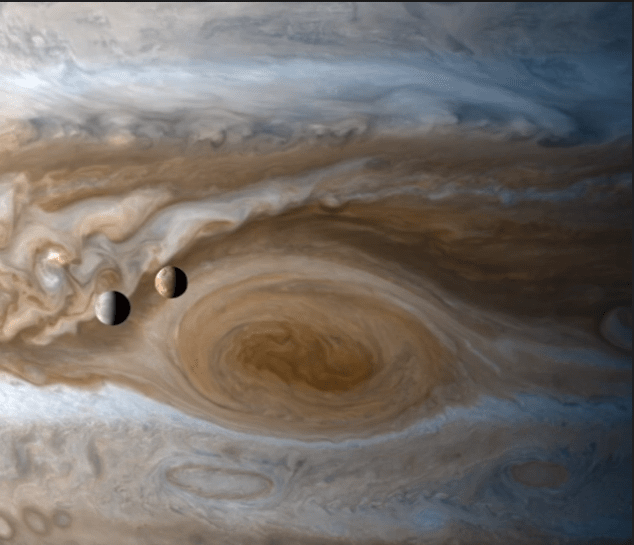
SpaceX deploys Intuitive Machines lunar lander in amazing view from space

{ https://www.space.com/ }

Hoe vind je dit bericht?
Geschreven door peter om 23:07 Stuur door

Freek Vonk ontdekt nieuw soort reuzenslang in de Amazone: verschillen zijn genetisch gezien enorm

Freek Vonk ontdekt nieuw soort reuzenslang in de Amazone: verschillen zijn genetisch gezien enorm

Jeannette Kras

Een hoogtepunt in zijn carrière noemt Freek Vonk het. Samen met veertien andere biologen heeft hij in het Amazoneregenwoud een nieuwe reuzenslang ontdekt, de noordelijke groene anaconda genaamd.

Het maakt eens te meer duidelijk dat we nog lang niet alles weten over de natuur. En dat we er zuinig op moeten zijn. Volgens de wetenschappers uit acht landen wordt het ecosysteem van de pas ontdekte anaconda namelijk ernstig bedreigd.

De groene anaconda is een indrukwekkend dier. Hij kan meer dan 7 meter lang worden en weegt wel 250 kilo. Een groot vrouwtje kan een omtrek hebben van een meter. Als volwassene pas je er dus makkelijk in. Veel dieren (en ook mensen) zijn dan ook doodsbang voor de slang, die vooral in de regenwouden van Zuid-Amerika voorkomt. De anaconda jaagt op herten, kaaimannen en soms zelfs jaguars.

Enorme genetische verschillen
Dat er nu een nieuwe soort is ontdekt van zo’n enorm dier is groot nieuws. Hoogleraar aan de VU en onderzoeker bij Naturalis, Freek Vonk, was de enige Nederlander, die bij de ontdekking betrokken was. Vonk vertelt in het persbericht hoe bijzonder dat is: “Het komt wel vaker voor in de natuur dat twee soorten er voor mensen op ’t oog hetzelfde uitzien, maar toch tot verschillende soorten behoren. Maar dat dit bij de grootste slang ter wereld ook het geval was, dat had ik nooit verwacht!’’

Zelfs experts kunnen het verschil niet zien tussen de beide anaconda’s. “Toch zijn de verschillen genetisch gezien enorm”, vertelt medeonderzoeker Bryan Fry van de University of Queensland. “Het genetische verschil is 5,5 procent. Ter vergelijking: mensen verschillen maar 2 procent van chimpansees.”

Moeilijk te vinden
Tot die spectaculaire ontdekking komen de biologen, nadat ze bloed en weefsel hebben verzameld van anaconda’s in Ecuador, Venezuela en Brazilië. Ook bestudeerden ze de dieren van dichtbij om de schubben te tellen en andere fysieke kenmerken te vinden die duiden op evolutionaire verschillen. Na de genetische data te hebben bestudeerd, vonden ze een duidelijke scheiding tussen de anaconda’s in het noorden en het zuiden van het continent. Daarop besloten ze de slangen die ze in het noorden vonden een nieuwe naam te geven: de noordelijke groene anaconda, oftewel officieel Eunectes akayima. Deze komt vooral in Venezuela, Suriname en Guyana voor. Akayima betekent in de inheemse talen in de regio ‘grote slang’. De zuidelijke groene anaconda blijft E. murinus heten.

Het is niet makkelijk om anaconda’s van dichtbij te bestuderen. Ze zijn niet alleen gigantisch en levensgevaarlijk, maar ze verstoppen zich ook het grootste deel van de tijd in moerassen en modderige poelen.

Leefgebied onder druk
De vondst is bijzonder nuttig voor het behoud van de soort, legt Vonk uit. Nu kunnen de onderzoekers per anaconda bekijken wat nodig is om te overleven. Erg belangrijk in een tijd waarin het slecht gaat met de regenwouden van Zuid-Amerika. Door klimaatverandering en ontbossing staat het leefgebied van de anaconda zwaar onder druk. “Dit is een belangrijke ontdekking, omdat de nieuw beschreven noordelijke groene anaconda een veel kleiner leefgebied heeft dan de zuidelijke variant en dus veel kwetsbaarder is”, aldus Fry.

En niet alleen het leefgebied van de anaconda wordt bedreigd, benadrukt Vonk. “De ontdekking van deze nieuwe soort anaconda is natuurlijk heel erg opwindend, maar tegelijkertijd is het van essentieel belang om te onderstrepen hoe belangrijk het is dat niet alleen bedreigde dieren maar ook het bedreigde Amazonewoud verder wordt onderzocht, en natuurlijk ook zoveel mogelijk wordt beschermd.”

Sleutel en slot
De studie roept ondertussen veel vragen op. Hoe zijn de noordelijke en zuidelijke groene anaconda bijvoorbeeld op verschillende evolutionaire sporen beland? De twee soorten leefden immers in Frans Guyana nog samen. Ze zijn zelfs aan twee kanten van dezelfde rivier gespot, zegt Fry. En toch is er in hun genen geen bewijs gevonden dat ze met elkaar paarden. Daarom wil de onderzoeker kijken of de genitaliën van de slangen verschillen, omdat veel slangensoorten als een sleutel en een slot in elkaar passen. Als twee soorten niet langer in elkaar passen, is het logischer dat ze evolutionair uit elkaar gaan lopen. “Voor elke vraag die we beantwoorden, komen er zeven interessantere bij”, besluit Fry.

Bronmateriaal


In Search of the Giant Green Anaconda (Eunectes murinus): Video

Unveiling a Giant: The New Northern Green Anaconda!

{ https://scientias.nl/ }

Hoe vind je dit bericht?
Geschreven door peter om 22:39 Stuur door

Spannende waarnemingen in ons eigen zonnestelsel: Kuipergordel reikt mogelijk miljarden kilometers verder dan gedacht

Spannende waarnemingen in ons eigen zonnestelsel: Kuipergordel reikt mogelijk miljarden kilometers verder dan gedach

ec23f7d6-a9b7-c75a-f0ee-e5563800dfeb.jpg

Wetenschappers hebben ontdekt dat de Kuipergordel mogelijk bijna twee keer zo groot is als eerder werd gedacht. Niet alleen dat: het zou zelfs zo kunnen zijn dat er sprake is van een tweede gordel.

De ruimtesonde New Horizons heeft weer een nieuwe ontdekking gedaan: het zou zomaar kunnen zijn dat de Kuipergordel miljarden kilometers verder reikt dan de huidige modellen voorspellen. De ruimtesonde is inmiddels aangekomen op een afstand van 60 AU, wat betekent dat deze zestig keer verder verwijderd is van de zon dan onze eigen planeet: AU staat voor Astronomical Unit en is gelijk aan de afstand tussen de zon en de aarde, wat ongeveer 150 miljoen kilometer is. Op de huidige afstand van 9 miljard kilometer vanaf de zon vangt New Horizons een hoop meer stof is dan de bedoeling is, wat mogelijk betekent dat de Kuipergordel een stuk verder reikt dan eerder werd gedacht. Wetenschapper Alex Doner heeft meegewerkt aan het onderzoek. Hij laat weten: “New Horizons is momenteel bezig met de eerste directe metingen van interplanetair stof – ver voorbij Neptunus en Pluto. Op deze afstand kan elke kleine observatie leiden tot een grote ontdekking. Het idee dat we wellicht een verlenging hebben ontdekt van de Kuipergordel is een stap vooruit in het ontrafelen van de mysteries van het zonnestelsel.” Het onderzoek is gepubliceerd in het blad Astrophysical Journal Letters.

De Kuipergordel
Als je vanaf de zon door ons zonnestelsel reist, kom je eerst de planeet Mercurius tegen. Vervolgens Venus, de aarde, Mars, Jupiter, Saturnus, Uranus en Neptunus. Tussen Mars en Jupiter bevindt zich dan ook nog de planetoïdengordel: een gebied met een grote hoeveelheid planetoïden. En voorbij Neptunus bevindt zich dan de Kuipergordel, bestaande uit miljarden komeetachtige – uit steen en ijs bestaande – objecten. Sommige van die objecten zijn groot – zoals Eris en Pluto – andere zijn juist aanzienlijk kleiner.

Ruimtestof
De wetenschappers hebben de ontdekking kunnen doen omdat New Horizons zich momenteel dus door de Kuipergordel beweegt en hierbij stof tegenkomt. Dit stof wordt vervolgens gedetecteerd, waardoor er uiteindelijk een dichtheid bepaald kan worden. Die dichtheid is momenteel een stuk hoger dan deze zou moeten zijn. De verwachting is namelijk dat de buitenste ring van de Kuipergordel een lagere stofdichtheid heeft dan de regionen binnenin. Aangezien New Horizons vooralsnog geen lagere dichtheden heeft gemeten is het dan ook waarschijnlijk dat deze de buitenkant van de Kuipergordel nog niet heeft bereikt. Mede-wetenschapper Alan Stern licht toe: “Deze nieuwe bevindingen betekenen dat New Horizons waarschijnlijk het eerste ruimtevaartuig is dat een nieuwe verzameling hemellichamen heeft ontdekt. Ik ben dan ook erg nieuwsgierig om te zien tot hoever de hoge stofdichtheid zal reiken.”

IJsdeeltjes
De metingen van New Horizons komen op het perfecte moment. Zo hebben wetenschappers van het New Horizons-team met behulp van observatoria zoals de Subaru Telescope in Hawaii eerder een aantal objecten gevonden die ver buiten het gebied liggen dat traditioneel gezien als de Kuipergordel wordt aangemerkt. En New Horizons lijkt nu dus ook ter plekke te bevestigen dat de buitengrens van de Kuipergordel op grotere afstand ligt dan gedacht. Zo werd eerst gedacht dat deze grens zich rond een afstand van 50 AU bevond, terwijl nu wordt gedacht aan een afstand van 80 AU. Concreet betekent dit een verlenging van 4,5 miljard kilometer. Het team van Doner is naarstig op zoek naar een mogelijke verklaring. Zo stelt Doner: “Het zou goed kunnen zijn dat New Horizons nu kleine ijsdeeltjes detecteert die niet dichter bij de zon kunnen komen. Een ander verklaring zou kunnen zijn dat kleine stofdeeltjes van de Kuipergordel door stralingsdruk een stuk verder worden geduwd dan voorheen werd gedacht. Dit laatste idee is niet heel waarschijnlijk, maar het zou kunnen.”

Het is ongetwijfeld niet de laatste keer dat New Horizons vanuit de buitenste regionen van ons zonnestelsel van zich laat horen; vooralsnog heeft de ruimtesonde nog meer dan genoeg brandstof. De verwachting is namelijk dat de ruimtesonde tot aan 2050 kan blijven werken, waarbij deze een afstand zal overbruggen van meer dan 100 AU. Het is trouwens ook niet de eerste keer dat New Horizons een opzienbarende ontdekking doet. Zo heeft de ruimtesonde in het verleden foto’s gemaakt van Pluto en is deze zeer dicht in de buurt gekomen van Arrakoth. Wil je meer weten over New Horizons? Kijk dan eens hier.

Bronmateriaal
VIDEOS

The Year of Pluto - New Horizons Documentary Brings Humanity Closer to the Edge of the Solar System

What is The Kuiper Belt: Objects At The Edge Of The Solar System

Kuiper Belt: Realm of the Dwarf Planets

{ https://scientias.nl/ }

Hoe vind je dit bericht?
Geschreven door peter om 22:09 Stuur door

Recently-Discovered Active Asteroid is in Fact Main-Belt Comet, Astronomers Say

Recently-Discovered Active Asteroid is in Fact Main-Belt Comet, Astronomers Say

456P/PANSTARRS, an active, main-belt asteroid first spotted in 2021, is recurrently active, and activity is likely driven by the sublimation of volatile ice, according to new observations from the Magellan-Baade telescope and the Lowell Discovery Telescope.

Images of 456P/PANSTARRS taken with the Magellan-Baade telescope in Chile on October 3, 2024, and the Lowell Discovery Telescope in Arizona on October 26, 2024, where the head, or nucleus, of the comet is at the center of each image, and the tail extends to the right. Image credit: Scott S. Sheppard / Carnegie Institution for Science / Audrey Thirouin, Lowell Observatory / Henry H. Hsieh, Planetary Science Institute.

Images of 456P/PANSTARRS taken with the Magellan-Baade telescope in Chile on October 3, 2024, and the Lowell Discovery Telescope in Arizona on October 26, 2024, where the head, or nucleus, of the comet is at the center of each image, and the tail extends to the right.

Image credit: Scott S. Sheppard / Carnegie Institution for Science / Audrey Thirouin, Lowell Observatory / Henry H. Hsieh, Planetary Science Institute.

“Main-belt comets are icy objects found in the asteroid belt between Mars and Jupiter — rather than the cold outer Solar System where icy bodies are typically expected,” said Planetary Science Institute senior scientist Henry Hsieh and colleagues.

“They sport comet-like features, like tails extending away from the Sun or fuzzy clouds as the Sun’s heat vaporizes their ice.”

These objects were first discovered in 2006 at the University of Hawaii by Dr. Hsieh and his then-doctoral advisor, Professor David Jewitt.

“Main-belt comets belong to a larger group of solar system objects known as active asteroids, which look like comets, but have asteroid-like orbits in the warm inner Solar System,” the astronomers said.

“This larger group includes objects whose clouds and tails are made of ejected dust produced after an impact or as they quickly rotate, rather than just those that eject dust due to vaporized ice.”

“Both main-belt comets and active asteroids in general are still relatively rare, but scientists are discovering them at a growing clip.”

456P/PANSTARRS was discovered as P/2021 L4 (PANSTARRS) from observations on June 9 and 14, 2021, by Pan-STARRS1, and Canada-France-Hawaii Telescope observations on June 14, 2021.

Dr. Hsieh and co-authors observed the object twice using the Magellan Baade Telescope and Lowell Discovery Telescope in October 2024 to establish its status as a main-belt comet.

“This object is not just an asteroid that experienced a one-off event that caused it to show activity one time, but is an inherently active, icy body similar to other comets from the outer Solar System,” Dr. Hsieh said.

If 456P/PANSTARRS’s activity were due to something other than ice vaporization, then its tail would be expected to appear only once randomly, and not repeatedly appear when it was close to the Sun.

An icy object, on the other hand, heats up every time it approaches the Sun, and the vaporized ice drags dust out along with it.

When the object moves farther from the Sun and cools, the activity stops.

Observations of repeated dust ejection activity during close approaches to the Sun are currently considered the best and most reliable way to identify main-belt comets.

“There are still very few confirmed main-belt comets known,” Dr. Hsieh said.

“We want to build up the population so we can get a clearer idea of what their broader properties are — such as their sizes, activity duration and distribution within the asteroid belt, for example — so that they can be better used to trace ice in the Solar System in general.”

  • The findings were published in the Research Notes of the American Astronomical Society.
  • Henry H. Hsieh et al. 2024. Confirmation of Recurrent Activity of Main-Belt Comet 456P/PANSTARRS (P/2021 L4). Res. Notes AAS 8, 283; doi: 10.3847/2515-5172/ad90a6
  • This article is a version of a press-release provided by the Planetary Science Institute.

{ https://www.sci.news/ }

Hoe vind je dit bericht?
Geschreven door peter om 21:50 Stuur door

Asteroid Samples Returned to Earth Were Immediately Colonized by Bacteria

Electron microscope images of sample A0180, showing the presence of life. Credit: Genge, et al

Asteroid Samples Returned to Earth Were Immediately Colonized by Bacteria

We’ve known for a while that complex chemistry occurs in space. Organic molecules have been detected in cold molecular clouds, and we have even found sugars and amino acids, the so-called “building blocks of life,” within several asteroids. The raw ingredients of terrestrial life are common in the Universe, and meteorites and comets may have even seeded Earth with those ingredients. This idea isn’t controversial. But there is a more radical idea that Earth was seeded not just with the building blocks of life but life itself. It’s known as panspermia, and a recent study has brought the idea back to popular science headlines. But the study is more subtle and interesting than some headlines suggest.

Panspermia became popular in the 1800s and 1900s when it became clear that life arose surprisingly early on Earth. On a geologic scale, cellular life appears almost as soon as Earth cooled enough to support it. Given the complexity of DNA and living cells, how could such a thing have evolved so quickly? In the panspermia model, life evolved either in space or on some distant world, and was carried to Earth within asteroids or comets. We know that some living things can survive the harsh vacuum of space, so perhaps we have some alien, extraterrestrial origin.

But there are reasons to be skeptical. For one, the transition from organic to biological chemistry may be remarkably adaptive. While life appears to have appeared suddenly on Earth, that may be precisely what you’d expect. Without an example of extraterrestrial life, we simply don’t know. And while life can survive in space for a limited time, it’s not likely to survive for the millions of years it would take for an asteroid to traverse the solar system, much less the billions of years it would take to travel between star systems. Still, one step toward proving panspermia would be to gather material from an asteroid and find out it has life, and that’s exactly what this latest study found.

The Hayabusa2 mission, launched in 2014, landed on a small asteroid named Ryugu in 2018 and returned a sample of material to Earth in 2020. The sample was kept sterile the whole time, hermetically sealed for the journey back, and only opened in a pure nitrogen clean room using sterilized equipment. The sample was as clean and uncontaminated as we could get. When the team prepared a sample and looked at it under an electron microscope, they found rods and filaments of organic matter consistent with microbial life. In other words, the team found life on an asteroid.

Except they likely didn’t.

The size distribution is consistent with terrestrial life. Credit: Genge, et al

One thing to keep in mind is that microbial life is incredibly robust. It exists everywhere and spreads rapidly. You can find the stuff in the cores of nuclear power plants, in hot thermal vents, and in the cleanest clean room. And even if you sterilize something, microbial life will find a way. When the team found life on their sample, the first thing they did was to look for evidence of contamination, and there was plenty of evidence to be found. To begin with, the size distribution of the organic rods and filaments found in the sample is consistent with those commonly deposited by terrestrial life. Their data also found evidence of a growth and decline period of about five days, which is also consistent with Earth life. If the Ryugu samples had truly evolved beyond Earth, they would be genetically separated from us by millions or billions of years. Their size and growth rate wouldn’t match those of our common microbes. So the best explanation is that the sample became contaminated despite our best efforts.

While the study doesn’t support the panspermia model, it does tell us two important things. The first is that our sterilization procedures are likely inadequate. We may have already spread life to the Moon and Mars inadvertently. The second is that asteroids have organic materials that could sustain terrestrial life. That’s good news if we want to establish ourselves elsewhere in the solar system. Earth life may not have begun in space, but it could very well end up there.


Water and Carbon Revealed in NASA's Ancient Asteroid Samples

Reference: 

{ https://www.universetoday.com/ }

Hoe vind je dit bericht?
Geschreven door peter om 20:56 Stuur door

OKEANOS – A Mission That Would Have Retrurned Samples From the Trojan Asteroids

OKEANOS – A Mission That Would Have Retrurned Samples From the Trojan Asteroids

Getting a mission to the point of officially being accepted for launch is an ordeal. However, even when they aren’t selected for implementation, their ideas, and in some cases, their technologies, can live on in other missions. That was the case for the Oversize Kite-craft for Exploration and AstroNautics in the Outer Solar system (OKEANOS) project, originally planned as a Japanese Aerospace Exploration Agency (JAXA) mission. Despite not receiving funding to complete its entire mission, the project team released a paper that details the original plan for the mission, and some of those plans were incorporated into other missions that are still under development.

OKEANOS sought to build on JAXA’s success in returning samples from asteroids to Earth. Its most well-known mission in that regard was Hayabusa-2, which returned samples from the asteroid Ryugu in 2020 and has been the subject of dozens of scientific papers since. Ryugu is a near-earth asteroid, which means its origins in the solar system are dramatically different from those of other asteroids farther out from the Sun, which is where OKEANOS came in.

The original plan for OKEANOS was to launch a sample return mission to one of the Jupiter Trojan asteroids that sit in the Lagrange points in front of and behind Juptier and its orbital path. Scientists believe these asteroids originated outside of Neptune’s orbit in the Kuiper belt but were brought closer to the Sun due to gravitational fluctuations caused by the migration of the gas giant planets. Since they would hold clues to the early solar system, astronomers are interested in their composition, and some space exploration enthusiasts are interested in the materials they hold for in-situ resource utilization purposes. But so far, no missions have visited them yet.

A solar panel, like the one shown in the video, would have been a key component of the OKEANOS missions.
Credit – The Japan Times YouTube Channel

That is about to change, though, with Lucy, a NASA mission that launched in 2021 to visit them. However, Lucy will simply do remote observations and lacks the equipment to sample them directly, let alone return a sample back to Earth. The project team had hoped OKEANOS would do just that.

Several novel technologies would be used to enable OKEANOS’ scientific objectives. One of the most interesting was a combination solar sail and ion drive known as a solar power sail. A solar power sail combines the solar pushing power of a solar sail with flexible photovoltaic solar collectors that can collect a significant amount of energy while deployed in a sail-like configuration. JAXA has also successfully tested a similar system with its IKAROS mission, demonstrating the technology in 2010.

Since solar sails have tiny thrust out near Jupiter, OKEANOS relies entirely on an ion engine and simply deploys its “sails” to deploy the solar panels that collect energy to power the ion drive. But once it reached its destination, it would utilize its second interesting technology—a lander.

Fraser talks about Lucy, the first mission to explore the Trojan asteroids.

The two main asteroid sample return missions – OSIRIS-REx and Hayabusa-2 – directly touched down on the surface of their respective asteroids. However, there have been deployed landers that have at least attempted to land on an asteroid before – Philae, the lander that accompanied ESA’s Rosetta mission, is probably the most famous. But never before has a mission attempted to land a lander, collect a sample, and return it to a “mothership” that would then transport that sample back to Earth. Doing so out at the Trojan asteroids would add a new difficulty level of having significant communications lag time, making it difficult to troubleshoot any problems with the mission.

Given JAXA’s track record, it seemed likely that they could pull off that technical challenge. However, the mission was never fully funded due to a “cost issue,” according to the paper. JAXA selected a project known as LiteBIRD to study the cosmic microwave background as its large-class mission for this decade instead. Despite that, the technical details of some of the instrumentation have been described in other papers, and the project team feels confident that future asteroid sample return missions will adopt at least some of them. We’ll be sure to see more of those in the future as interest grows in understanding the roots of our solar system and how we might utilize the readily available resources on asteroids.

Learn More:

Lead Image:

  • Concept images of the OKEANOS mission.
  • Credit – Takao et al.

{ https://www.universetoday.com/ }

Hoe vind je dit bericht?
Geschreven door peter om 20:46 Stuur door

Testing the Robots that Might Explore Europa

A prototype of a robot designed to explore subsurface oceans of icy moons is reflected in the water’s surface during a pool test at Caltech in September. Conducted by NASA’s Jet Propulsion Laboratory, the testing showed the feasibility of a mission concept for a swarm of mini swimming robots. Credit: NASA/JPL-Caltech

Testing the Robots that Might Explore Europa

Europa, one of the four Galilean satellites of Jupiter is one of the most intriguing locations in the Solar System to search for life. However, its subsurface oceans are buried beneath thick layers of ice making exploration difficult. To explore its oceans, scientists have suggested using small swimming robots capable of penetrating the icy shell. Recently, NASA engineers tested prototypes designed to operate as a swarm, enabling them to explore the mysterious sub-ice oceans on Europa and other icy worlds in the Solar System.

Along with the other three Galilean satellites orbing Jupiter, Europa was discovered just over 400 years ago by Galileo. It is the smallest of the four measuring just 3,120 km across. It orbits Jupiter at a distance of 671,000 km in an almost circular orbit. In comparison to our own Moon, Europa is a little smaller but that is where the similarities end. Europa is made of a silicate rock and has a thick water ice crust below which is thought to be a liquid water ocean and it is this which has captured the interest of scientists. 

The Galilean moons of Jupiter: Io, Europa, Ganymede, and Callisto. (Credit: NASA/JPL-Caltech)

The deep oceans of Europa may well harbour forms of aquatic life. Consider the deepest parts of the oceans of Earth where whole eco-systems thrive off thermal vents. At these depths, no light from the Sun penetrates so the organisms and creatures living at these depths take all their energy from the heat escaping from inside the planet.  It is this which tantalisingly suggests that maybe such life could have evolved in the oceans of Europa too.

hydrothermal vent

A black smoker hydrothermal vent discovered in the Atlantic Ocean in 1979. It’s fueled from deep beneath the surface by magma that superheats the water. The plume carries minerals and other materials out to the sea. Courtesy USGS.

The exploration of Europa is already underway with NASA’s Europa Clipper expected to arrive in 2030. It will explore Europa with a powerful set of scientific instruments over a total of 49 flybys. Each pass will see the instruments search for signs that the ocean under the thick icy crust could sustain life. This will just be a flyby mission with Europa being probed from high above its surface. NASA are already shaping up their next mission to include even more complex robots that could survey the depths of the sub-surface oceans of Europa.

Artist’s concept of a Europa Clipper mission. Credit: NASA/JPL

This is where NASA’s new mission called SWIM ‘Sensing With Independent Micro-swimmers’ comes in. The concept at least, is simple…a swarm of self-propelled robots that can swim around in the underground oceans having been deployed by the ice piercing cryobot. Once underway, the swimming robots, which are about the size of a mobile phone, would hunt for chemical and temperature signals that might indicate life.

The swimming robots are not just on the drawing board. Engineers have already used 3D printers to create prototypes that have already been tested in a 23 metre pool. The devices which are propelled along by two propellers, with flaps for steering were able to stay on course. These prototypes however were a little larger than those destined to make it into space measuring about three times larger. 

The results of the test were very promising but much more work is needed before they are ready for launch. Meanwhile the robots are likely to be trialled here on Earth to support oceanographic research before being sent on their way to Europa. 

Source : 

{ https://www.universetoday.com/ }

Hoe vind je dit bericht?
Geschreven door peter om 20:35 Stuur door

EXCLUSIVE - Indian police spot glowing UFOs zig-zagging over nuclear power plant - mirroring reports of craft at sensitive bases in US

  • DailyMail.com has obtained two UFO videos recorded by an Indian police official
  • The videos both depict an apparent craft near India's Kudankulam nuclear plant
  • Protestors fought the Kudankulam nuclear plant for decades, citing safety issues
  • READ MORE: Ukrainian drone films UFO in warzone, soldier asks 'Maybe ram it?'

India's Kudankulam Nuclear Power Plant has become a UFO hotspot after a police officer reported seeing odd aerial lights above it more than 10 times last summer.

Indian Police Service investigator Syed Abdul Kader shared two videos exclusively with DailyMail.com, which track the bright lights making 'zigzags' above the facility.

Fearing the craft was not manmade, Kader turned to his nation's leading UFO expert, who in 2019 filed a petition to the Supreme Court of India with the backing of former Pentagon officials and US Air Force vets — urging the south Asian nation to take all the unexplained sightings near its nuclear facilities more seriously. 

Kader's UFO encounters add international heft to domestic national security concerns within the US, following detailed Pentagon and civilian research into an eerie correlation between UFO sightings and America's tightly held nuclear arsenal.

While the shape, size and speed of Kader's mystery objects are difficult to discern, his footage shows them making unusual movements at the altitude of an airplane.

'It's shaking when it's moving! It's going up and down,' the confused cop narrates in one video, watching the UFO's bizarre and apparently non-aerodynamic maneuvers.

'The way it's moving,' he opines in the video, 'this could never be an airplane.'

India's Kudankulam Nuclear Power Plant has become a UFO hotspot after a police officer reported seeing odd aerial lights above it more than 10 times last summer

India's Kudankulam Nuclear Power Plant has become a UFO hotspot after a police officer reported seeing odd aerial lights above it more than 10 times last summer 

Roughly a dozen or so incidents last summer all involved apparent airborne craft loitering near the Kudankulam Nuclear Power Plant (pictured above) at the southern tip of the subcontinent - as well as the Madras Atomic Power Station near Kalpakkam, along the country's east coast

Roughly a dozen or so incidents last summer all involved apparent airborne craft loitering near the Kudankulam Nuclear Power Plant (pictured above) at the southern tip of the subcontinent - as well as the Madras Atomic Power Station near Kalpakkam, along the country's east coast

'It's in a southern direction,' Kader told his wife during the August 8th sighting.

'It's standing [or hovering] in the direction of the Koodankulam Nuclear Power Plant.'

'It is always coming in at this time, when it is not too dark, nor too bright,' Kader's wife can be heard saying. 'I've seen this many times.'

While it is difficult for an outside observer to discern if the UFO is moving, or if Kader's camera is unsteady, DailyMail.com can report that some common prosaic explanations can likely be ruled out.

Such sightings have turned out to be distant planets, like Venus that is the third brightest object in the sky, after the sun and moon.

And the bright 'dog star,' Sirius, as well as the planets Jupiter and Mercury have also been occasionally misreported as UFOs.

However, in Kader's August 8 video, filmed at dusk (7:30PM local time), the eastern direction of the UFO at sunset refutes the notion that a common bright planet or star could explain the mystery's eerie aerial glow.

While the shape, size and speed of Kader's mystery objects are difficult to discern, his footage shows them making unusual movements at the altitude of an airplane

While the shape, size and speed of Kader's mystery objects are difficult to discern, his footage shows them making unusual movements at the altitude of an airplane 

Syed Abdul Kader shared two of the videos exclusively with DailyMail.com, which show bright lights whizzing up and down above the facility

Syed Abdul Kader shared two of the videos exclusively with DailyMail.com, which show bright lights whizzing up and down above the facility

Police sub-inspector Syed Abdul Kader (right), assigned to the technical wing of the Tirunelveli office - one hour's drive north of the Kudankulam nuclear plant - told UFO expert Sabir Hussain (left) that he filmed two videos of these unusual aerial phenomena or UAP

Police sub-inspector Syed Abdul Kader (right), assigned to the technical wing of the Tirunelveli office - one hour's drive north of the Kudankulam nuclear plant - told UFO expert Sabir Hussain (left) that he filmed two videos of these unusual aerial phenomena or UAP

A sky map for that night and time, geolocated to the Kaders' hometown of Tirunelveli via TheSkyLive.com shows that Venus was completely obscured, below the western horizon and below the sunset. 

Most other bright stars and planets were also not in the eastern sky at that moment. 

At another point in the video, Kader's wife exclaims, 'It's so close. How come no one else is seeing this?'

To which Kader replies, 'No, that's why the DGP [Director General of Police] he, himself, has seen it [the UFOs]. And that's why everybody's talking about this.'

In fact, the Kaders' sightings to the south overlapped with weeks of others in July and August up India's east coast along the Neelankarai-Mahabalipuram shoreline.

That region, near the bustling city of Chennai, is home to the Madras Atomic Power Station (MAPS) in Kalpakkam.

READ MORE: 

India made history by becoming the first nation to land a spacecraft on the moon's south pole August 23, 2023

Kader's mysterious UFO videos were first secured by one of India's foremost UFO investigators, Sabir Hussain, director of the Indian Society for UFO Studies (INSUFOS) based in Chennai.

It was Hussain who petitioned the Supreme Court of India in 2019 warning that casually dismissing reports of UFO activity near the nation's sensitive atomic power sites could risks an unintentional nuclear war between India and its uneasy neighbor Pakistan.

His efforts came with letters endorsing his petition, by former US counterintelligence official and Pentagon UFO investigator Lue Elizondo, US Air Force veteran Robert Salas, and other UFO experts from America and Europe. 

'Syed came to my house,' Hussain told DailyMail.com. 'I debriefed him.'

'He told me that most of the time, [the UFO] was either coming from the direction of Kudankulam Nuclear Power Plant, going towards it, or stationary in that direction.'

Officer Kader, Hussain told DailyMail.com, also stated that the UFOs were sometimes spotted hovering above the nearby Indian Space Research Organization's (ISRO) Propulsion Complex.

Nestled alongside the mountainous Mahendragiri hill in the state of Tamil Nadu, the ISRO Propulsion Complex tests cryogenically stored rocket fuel among its other space program duties.

The ISRO facility is also approximately one hour's drive south of the Kaders' home, which is in the city of Tirunelveli in Tamil Nadu.  

A vocal advocate on the UFO issue, Hussain once voiced his suspicion that alleged alien occupants of such craft cut communications between ISRO and its Chandrayaan-2's Vikram lander in 2019 — for the south Asian nation's own good. 

'The extra-terrestrials have sent a message to the Indian government to get rid of your nukes before you explore other worlds,' Hussain told the Deccan Chronicle.

'You will not be allowed to land on the moon unless "they" decide to allow you.'

The fate of ISRO's Vikram lander aside, Hussain's new UFO witnesses, sub-inspector Kader and his wife, can at least be heard in their videos discussing the mysterious aerial phenomena's consistent apparent interest in the Kudankulam nuclear plant.

Kader's video-taped sightings, as Hussain told DT Next, 'happened just 10 days after former DGP [Director General of Police] Prateep V. Philip took pictures of a UFO on [the] Muttukadu sea shore near Chennai.'

Philip's rank of DGP is the highest position attainable in the Indian Police Service.

A sky map for that night and time (above), geolocated to the Kaders' hometown of Tirunelveli via TheSkyLive.com, shows Venus was completely obscured, below the western horizon and sunset. Most other bright stars and planets were also not in the eastern sky at that moment

A sky map for that night and time (above), geolocated to the Kaders' hometown of Tirunelveli via TheSkyLive.com, shows Venus was completely obscured, below the western horizon and sunset. Most other bright stars and planets were also not in the eastern sky at that moment 

The Kaders' sightings to the south overlapped with weeks of sightings in July and August up the eastern coast, along the Neelankarai-Mahabalipuram shoreline. That region, near the city of Chennai, is home to the Madras Atomic Power Station (MAPS) in Kalpakkam (above)

The Kaders' sightings to the south overlapped with weeks of sightings in July and August up the eastern coast, along the Neelankarai-Mahabalipuram shoreline. That region, near the city of Chennai, is home to the Madras Atomic Power Station (MAPS) in Kalpakkam (above)

Hypothetical extraterrestrial interest in the Kudankulam nuclear plant, if correct, would join decades of active protests against the plant by concerned local civilians.

Thousands of local residents faced teargas shelling, imprisonment and prosecution under both terrorism and sedition charges by local police for speaking out against the nuclear energy plant. Even children with the protestors faced sedition charges.

In September of 2019 the Kudankulam nuclear plant was discovered to be infected with malware, which one cyber security analyst with CSO attributed to 'a false flag operation using stolen North Korean code to muddle attribution.' 

Hussain told DailyMail.com that the plant has faced corruption charges and safety concerns since before it first became operational a decade ago.

'Kudankulam, which is a focus of our attention,' Hussain said, 'came online only in 2013 after Fukushima disaster happened.'

'Ever since it came online, it has been shutting down once every two months,' he added. 'They are working only to 30 percent of their capacity. So you do the math.'

DailyMail.com has reached out to the Indian government's Nuclear Power Corporation of India, Ltd., which runs the plant, for comment. 

US Air Force ICBM launch officer Robert Salas (pictured above) told of his encounter with an orange flying disc that turned off 10 warheads at Malmstrom Air Force Base, Montana in 1967Robert Salas as a young airman

US Air Force ICBM launch officer Robert Salas (pictured left, and as a young man, right) told of his encounter with an orange flying disc that turned off 10 warheads at Malmstrom Air Force Base, Montana in 1967  

An email shows AARO staff contacted former US Air Force ICBM launch officer Robert Salas to gather information about his encounter. He tweeted his thank you email from AARO 

This time last year, two Air Force veterans revealed to DailyMail.com's Josh Boswell that they had just testified to the Pentagon's UFO-hunting All-domain Anomaly Resolution Office (AARO) about their experiences witnessing UFOs interfere with US nuclear missiles.

One email showed AARO staff contacting former US Air Force ICBM launch officer Robert Salas to gather information about his chilling encounter with an orange flying disc that inexplicably turned off 10 warheads at Malmstrom Air Force Base, Montana in 1967.

Another former officer, Dr. Robert Jacobs, also briefed AARO, testifying to a 35mm film he shot for the Air Force in 1964, which allegedly caught a flying saucer shooting a test missile out of the sky.

Although Salas described those early interactions with AARO officials as 'very magnanimous,' this month the disappointed Air Force veteran described the Pentagon office's most recent UFO report as 'a 'Steaming pile of ...' 

'I gave AARO a two hour PowerPoint presentation on the Malmstrom AFB incidents where twenty ICBMs were disabled during UFO encounters,' Salas said on the social media site X, speaking to incidents at the base beyond 1967. 

'The USGOV owes us, the informed public, much more respect on this subject,' he concluded, 'than offered by AARO's steaming pile of insults.' 


UFO Sightings at Nuclear Bases (Full Episode) | UFOs: Investigating the Unknown

{ https://www.dailymail.co.uk/ }

Hoe vind je dit bericht?
Geschreven door peter om 23:05 Stuur door

The three-word warning message UFOs are trying to send humans, according to top Air Force vet

The three-word warning message UFOs are trying to send humans, according to top Air Force vet

A retired Air Force Captain — who witnessed a UFO deactivate 10 nuclear missiles in 1967 — believes its 'alien' occupants have a simple, three-word message for humanity: 'WTF!?' 

'I'm sorry. Did I say something wrong?' Captain Robert Salas joked after delivering the blunt opinion to Congresswoman Nancy Mace during an episode of the podcast Total Disclosure.

At the height of the Cold War, a then 26-year-old USAF Lieutenant Salas was underground while overseeing Malmstrom Air Force Base's nuclear equipped intercontinental ballistic missiles (ICBMs) in Montana.

He claimed an eerie red glowing UFO above the base's front gate temporarily disabled 10 ICBMs on the night of March 24, 1967. 

'They knew exactly how our systems worked. Exactly,' Capt Salas told South Carolina Representative Mace, speaking about the UFO's mysterious pilots.

Capt Salas was grilled by Rep Mace about what he thought the UFO's pilots were trying to convey.

''WTF!? You have nuclear weapons,'' he said, paraphrasing these appalled, pacifist aliens. 'That's what I think [they meant] .Of course, it's just my opinion.'

Retired US Air Force Captain Robert Salas personally witnessed a UFO deactivate 10 nuclear missiles in 1967 at a US Air Force base in Montana. He spoke to South Carolina Congresswoman Nancy Mace, after this month's shocking UFO hearing on November 13

Retired US Air Force Captain Robert Salas personally witnessed a UFO deactivate 10 nuclear missiles in 1967 at a US Air Force base in Montana. He spoke to South Carolina Congresswoman Nancy Mace, after this month's shocking UFO hearing on November 13

Above, a missile combat crew member at Captain Salas' old post - Malmstrom Air Force Base - prepares to close a three-foot thick door inside a nuclear launch control center 70-feet underground

Above, a missile combat crew member at Captain Salas' old post - Malmstrom Air Force Base - prepares to close a three-foot thick door inside a nuclear launch control center 70-feet underground

Both Rep Mace and Capt Salas spoke on the podcast Total Disclosure for an episode released online November 24, 2024. 

In his analysis of the Malmstrom AFB incidents, the retired official was adamant the nonviolent, nondestructive nature of the UFOs interactions might be a clue as to the potentially extraterrestrial occupants' peaceful intent.

'No equipment was fried. Nothing was damaged,' Capt Salas told Rep Mace.

'It was simply intermittent electrical pulse that was delivered to a particular part of the guidance system, called the logic coupler,' he explained. 

'And this was proven by Boeing. Boeing did a test of this so-called logic coupler.'

'Without that piece of equipment working properly, the guidance system would not properly work,' he continued. 'So, the missile shut itself down.' 

'The missiles were all brought back up on alert within 24 hours,' he noted.

Both Representative Mace (above) and USAF Captain Salas spoke on tape for an episode of the podcast Total Disclosure - for an episode published online November 24, 2024

Both Representative Mace (above) and USAF Captain Salas spoke on tape for an episode of the podcast Total Disclosure - for an episode published online November 24, 2024 

'No equipment was fried. Nothing was damaged,' Capt Salas told Rep Mace. 'It was simply intermittent electrical pulse that was delivered to a particular part of the guidance system.' Above an ICBM nuclear missile at Malmstrom AFB which is home to the 341st Missile Wing

'No equipment was fried. Nothing was damaged,' Capt Salas told Rep Mace. 'It was simply intermittent electrical pulse that was delivered to a particular part of the guidance system.' Above an ICBM nuclear missile at Malmstrom AFB which is home to the 341st Missile Wing

Air Force veterans have repeatedly testified about their experiences of UFOs interfering with US nuclear missiles - some occurred at Malmstrom Air Force Base, Montana (pictured)

Air Force veterans have repeatedly testified about their experiences of UFOs interfering with US nuclear missiles - some occurred at Malmstrom Air Force Base, Montana (pictured)

At the time of the 1967 UFO incursions, Capt Salas said he was also told the incident had been classified and that he was forbidden from speaking about it.

'I signed a non-disclosure agreement,' he said. 'Didn't start talking about it 'til 1996.' 

The veteran later learned that his crew commander had dealt with a unnerving and virtually identical UFO episode on the nuclear base just eight days prior to his own.

Capt Salas, who has long advocated for government transparency on UFOs, told Rep Mace that he has published a recent book digging into '13 similar cases that happened all over the world, including Russia.'

'In none of those incidents was any significant damage done,' as he emphasized to the congresswoman this month. 

'To me, that says they're sending us a message about nuclear weapons.'

In March 2023, Salas and another Air Force veteran told DailyMail.com that they had taken their testimony to the Pentagon's UFO-hunting All-domain Anomaly Resolution Office (AARO) expressing concern over UFOs ability to interfere with US nukes.

One now public email confirms that AARO staff contacting former Salas to gather information about his chilling encounter with the orange-red glowing 'disc' that inexplicably turned off 10 warheads at Malmstrom AFB.

US Air Force ICBM launch officer Robert Salas (pictured above) told of his encounter with an orange flying disc that turned off 10 warheads at Malmstrom Air Force Base, Montana in 1967Robert Salas as a young airman

US Air Force ICBM launch officer Robert Salas (pictured left, and as a young man, right) told of his encounter with an orange flying disc that turned off 10 warheads at Malmstrom Air Force Base, Montana in 1967  

READ MORE

EXCLUSIVE

article image

Although Salas described those early interactions with AARO officials as 'very magnanimous,' he has since told the media that he's disappointed in the office. 

The Air Force veteran described the Pentagon office's March 2024 'historical records report' on UFOs since the Cold War as 'a 'Steaming pile of ...' 

'I gave AARO a two hour PowerPoint presentation on the Malmstrom AFB incidents where twenty ICBMs were disabled during UFO encounters,' Salas said on the social media site X, speaking to incidents at the base beyond 1967. 

'The USGOV owes us, the informed public, much more respect on this subject than offered by AARO's steaming pile of insults,' he concluded.

{ https://www.dailymail.co.uk/ }

Hoe vind je dit bericht?
Geschreven door peter om 21:58 Stuur door

Panic in space as astronauts on NASA's ISS report 'toxic smell' and 'contamination hazard

Panic in space as astronauts on NASA's ISS report 'toxic smell' and 'contamination hazard

Astronauts aboard the International Space Station (ISS) were sent into a panic after a cargo ship arrived with a 'toxic smell' and 'possible contamination hazard in the form of droplets.'

The Progress 90 docked with the Russian Poisk module at 9:31am ET on Saturday and Roscosmos cosmonauts identified a smell immediately after opening the hatch.

The Russian crew quickly strapped into protective equipment and activated an extra air-scrubbing system aboard their segment of the ISS for about 30 minutes.

NASA astronaut Don Pettit also reported some 'spray paint-like' smell in the Node 3 module of the US Segment, but it was not immediately clear if it had originated from Progress.

'Space station air scrubbers and contaminant sensors monitored the station's atmosphere following the observation, and on Sunday, flight controllers determined air quality inside the space station was at normal levels,' NASA shared in a statement.

The agency continued to explain that there are no concerns for the crew as of Sunday afternoon, but the hatch between the Russian modular and cargo craft is still closed.

The Progress 90 arrived at the Russian Poisk module at 9:31am, delivering three tons of food, fuel and supplies for members of the Expedition 72 crew on board the ISS. 

The Progress 90 docked with the Russian Poisk module at 9:31am ET and Roscosmos cosmonauts identified a smell immediately after opening the hatch. NASA said the crew has yet to reopen the hatch

The Progress 90 docked with the Russian Poisk module at 9:31am ET and Roscosmos cosmonauts identified a smell immediately after opening the hatch. NASA said the crew has yet to reopen the hatch

NASA reported that the US side of the orbiting laboratory also activated its own air-scrubbing system, while the hatch to Russia’s Poisk module remained closed.

While Russian outlets reported a toxic smell, NASA told a different story.

'After opening the Progress spacecraft’s hatch, the Roscosmos cosmonauts noticed an unexpected odor and observed small droplets, prompting the crew to close the Poisk hatch to the rest of the Russian segment,' the agency shared on X.

Progress 90 is scheduled to stay docked for about six months before returning to Earth.

The 'toxic smell' comes just months after a report revealed space agency and its Russian counterpart, Roscomos, are tracking 50 'areas of concern' related to a growing leak aboard the station.

NASA called the cracks in a Russian service module a 'top safety risk' - escalating the threat rating to five out of five.

Although officials have been aware of the issue since 2019, the exact source of the leak is still unknown.

All potential cracks have been covered with 'a combination of sealant and patches' but NASA warned that the leak reached its fastest rate yet in April this year.

Both the US and Russian side of the ISS activated its air-scrubbing systems after the toxic smell was identified

Both the US and Russian side of the ISS activated its air-scrubbing systems after the toxic smell was identified

Concerns over the station's safety are now so high that NASA has negotiated with Roscomos to only open the hatch when necessary and to keep it sealed in the evenings.

And that's not the only cause for concern, as the space agency has warned that the ISS is at risk of being pelted with micro-meteors and space debris.

The air leak is located in the Russian Zvezda Service Module Transfer Tunnel, installed in 2000, and is used to house life support equipment and to access a Russian cargo dock.

In 2019, it was noted that the module had begun to leak a small amount of air through an unidentified crack.

However, despite efforts to seal the module, the amount of air escaping the station has only increased over the last five years.

In February this year, NASA was forced to hold a press conference on the issue as the amount of air escaping temporarily increased from 0.2 lbs per day (0.09 kg) to 2.4 lbs (1.08 kg) per day.

A report published in September by NASA's Office of the Inspector General (OIG) confirmed that the leak hit record rates in April - losing 3.7 lbs (1.68 kg) of air every day.

This has prompted the space agency to escalate the threat rating to the highest level and consider evacuation plans.

article image

In May and June, NASA officials traveled to Russia to discuss 'heightened concerns' over the seemingly growing leak.

Speaking to the Washington Post, NASA associate administrator Jim Free says: 'We have conveyed the seriousness of the leaks multiple times, including when I was in Russia earlier this year.

'We've come to a compromise that they close it in the evening.'

The OIG report states: 'The Service Module Transfer Tunnel leak is not an immediate risk to the structural integrity of the Station, and there are no current concerns of long-term impacts to the overall structure.'

Likewise, ISS program manager Joel Montalbano told a press conference in February that the leak was 'not an impact right now on the crew safety or vehicle operations, but something for everybody to be aware of.'


Astronaut Chris Hadfield Debunks Space Myths | WIRED

{ https://www.dailymail.co.uk/ }

Hoe vind je dit bericht?
Geschreven door peter om 21:18 Stuur door

NASA spots 'spiderwebs' on never-before-explored region of Mars that could be linked to aliens

NASA spots 'spiderwebs' on never-before-explored region of Mars that could be linked to aliens

NASA has spotted mysterious 'spiderwebs' on a never-before-explored region near the equator of Mars.

The agency's Curiosity rover has been dispatched to probe these bizarre structures — which cover a six to 12 mile stretch of Martian desert — as the machine searches for signs that this long desolate world once supported alien life.

Geologists suspect that the spiderwebs are a gigantic version of a type of crystalized minerals, known as a 'boxwork,' which appear inside some caves on Earth. 

They can be found on the ceiling of Wind Cave in South Dakota, which were created by calcium carbonate mineral water seeping into cracks between softer rocks that hardened into crystals.

But the sprawling, over 3,800-acre-wide boxwork on Mars differs in that it was likely formed by Martian seawater and may have trapped fossils of ancient life in its web.

'These ridges will include minerals that crystallized underground, where it would have been warmer,' according to Rice University geologist Dr Kirsten Siebach. 

'Early Earth microbes could have survived in a similar environment,' Dr Siebach explained, nothing that the 'salty liquid water' that created these Martian webs an ideal location to find lingering fossil evidence of ancient alien microbes.

The discovery comes as Australian researchers have found that a Martian meteorite, which crashed into Northwest Africa, provides more evidence of hot water on Mars. 

A chemical analysis of that meteorite suggests conditions were ripe for aquatic life to develop on Earth's nearest neighbor over four billion years ago. 

According to satellite mapping work by 'Martian geologist' Dr Kirsten Siebach, at least 113.6 billion gallons of salty, warm mineral-laden water would have been required to create the vast field of crystal webbing (above), which is about as big or bigger than Los Angles Airport (LAX)

According to satellite mapping work by 'Martian geologist' Dr Kirsten Siebach, at least 113.6 billion gallons of salty, warm mineral-laden water would have been required to create the vast field of crystal webbing (above), which is about as big or bigger than Los Angles Airport (LAX) 

NASA's planetary geologists suspect the webs are a gigantic version of a type of crystalized minerals, known as a 'boxwork,' that appear inside caves on Earth. Above, Wind Cave National Park in South Dakota has some of America's most spiderweb-like 'boxwork' on its ceiling

NASA's planetary geologists suspect the webs are a gigantic version of a type of crystalized minerals, known as a 'boxwork,' that appear inside caves on Earth. Above, Wind Cave National Park in South Dakota has some of America's most spiderweb-like 'boxwork' on its ceiling 

Ever since it first parachuted down to the Martian surface on August 6, 2012, Curiosity has been exploring the Red Planet for signs of life — as well as hunting for clues about Mars' climate, geology and where all its ancient water went.  

But NASA researchers have been intrigued by the massive geological spiderweb for even longer, ever since their Mars Reconnaissance Orbiter satellite first captured aerial images of this haunting landscape back on December 10, 2006.

How such formations could appear on Mars' surface is still a mystery, but theories point to the climate chaos that stripped Mars of its water billions of years ago.

The likelihood that evidence of aquatic microbial life of Mars might be caught in this giant web as fossils 'makes this an exciting place to explore,' Dr Siebach noted.

This web of potential dead alien microbes and bugs rests in the shadow of a three-mile tall mountain, officially known as 'Aeolis Mon,' but nicknamed 'Mount Sharp.' 

Past explorations by the Curiosity rover have revealed many sedimentary layers along the cliff faces of Mount Sharp, suggesting in rich detail that it had been formed by water erosion via ancient lake deposits.

NASA scientists suspect that this erosion helped form the giant crystal spiderweb, as mineral-rich pulses of water seeped and cascaded down Mount Sharp into fractures in the surface rock and then crystallized.

According to satellite mapping work that Dr Siebach published in 2014, at least 113.6 billion gallons of salty, warm mineral-laden water would have been required to create the vast field of crystal webbing, which is bigger than Los Angles Airport (LAX).  

Above, NASA's Curiosity rover takes a 'robotic selfie' on the Red Planet via its arm-mounted Mars Hand Lens Imager (MAHLI). Each of the rover's selfies is really a composite image created from dozens of high-resolution photos taken at various angles by the MAHLI camera

Above, NASA's Curiosity rover takes a 'robotic selfie' on the Red Planet via its arm-mounted Mars Hand Lens Imager (MAHLI). Each of the rover's selfies is really a composite image created from dozens of high-resolution photos taken at various angles by the MAHLI camera

Above, another view of the 'boxwork' webs on the ceiling of Wind River cave in South Dakota

Above, another view of the 'boxwork' webs on the ceiling of Wind River cave in South Dakota

'This is a significant amount of groundwater that must have been present,' she and her co-author wrote in their paper for the Journal of Geophysical Research: Planets.

'Mineralization,' the kind of crystal formation that likely occurred here, 'is known on Earth to help facilitate preservation of once-habitable environments,' they noted.

And in Australia this month, scientists working with Martian meteor NWA 7034, discovered after it crashed into Northwest Africa, have found still further evidence that ancient warm oceans on Mars could have easily supported alien life.

'We used nano-scale geochemistry to detect elemental evidence of hot water on Mars 4.45 billion years ago,' planetary scientist Dr Aaron Cavosie said in a statement.

'Geochemical markers of water' were discovered on meteor NWA 7034, Dr Cavosie explained, based both on the shape of its rocky grain patterns and its chemical composition: 'tell-tale signs of water-rich fluids from when the grain formed.'

It's believed that NWA 7034 was ejected from an asteroid impact on Mars that created a crater in the northeast of the 'Terra Cimmeria-Sirenum' province in the southern hemisphere of Mars.

Curiosity rover captured this panorama on November 2, 2024 as it was leaving Mars' so-called 'Gediz Vallis' channel on its way toward the mysterious gigantic spiderweb formation

Curiosity rover captured this panorama on November 2, 2024 as it was leaving Mars' so-called 'Gediz Vallis' channel on its way toward the mysterious gigantic spiderweb formation

Above, another panorama made by NASA's Curiosity Mars rover before it left Gediz Vallis

Above, another panorama made by NASA's Curiosity Mars rover before it left Gediz Vallis

A special technique used to date the age of incredibly old zircon minerals via trace amounts of radioactive material, called 'Uranium–lead dating,' found that this meteor was made up of some of the oldest Martian volcanic rock ever obtained.

'The team identified element patterns in this unique zircon, including iron, aluminum, yttrium and sodium,' Dr Cavosie said, 'Through nano-scale imaging and spectroscopy.'

article image

'These elements were added as the zircon formed 4.45 billion years ago,' he continued, 'suggesting water was present during early Martian magmatic activity.'

This mixture of hot and mineral-rich water, not unlike the hydrothermal vents that support life deep in Earth's oceans, point towards the possibility that life was developing on Mars billions of years ago, amid all this volcanic activity.

'Hydrothermal systems were essential for the development of life on Earth,' Dr Cavosie explained, 'and our findings suggest Mars also had water, a key ingredient for habitable environments, during the earliest history of crust formation.'

The Australian planetary scientist and his team at Curtin University in Australia published their results in the journal Science Advances this past Friday.

In its decade-plus on the Red Planet, NASA's Curiosity rover has trekked roughly 20 miles of the Martian surface for clues about the life that may have once thrived there.

Curiosity will begin studying the spiderweb ridges up close in 2025, according to NASA administrator Bill Nelson, where it will stay for a 'monthlong journey through Mars' boxwork.'

WHAT IS THE MARS RECONNAISSANCE ORBITER?

The Mars Reconnaissance Orbiter (MRO) searches for evidence that water persisted on the surface of Mars for a long period of time. 

It was launched August 12, 2005, and achieved an initial orbit around the red planet on March 10, 2006. 

In November 2006, after five months of, it entered its final science orbit and began its primary science phase.  

Since its arrival, MRO and its High Resolution Imaging Science Experiment (HiRISE) telescope have been mapping the martian surface, which has been taking shape for more than three billion years. 

MRO’s instruments analyse minerals, look for subsurface water, trace how dust and water are distributed in the atmosphere, and monitor daily weather in support of its science objectives.

MRO's missions have shown that water flowed across the Martian surface, but it is still unknown whether water persisted long enough to provide a habitat for life. 

VIDEOS

The Most Breathtaking Photos of Mars Ever Captured – A Tribute to Space Photography

Mysterious Green Spot Discovered on Mars | WION Podcast

See Mars Like Never Before! NASA's Perseverance Rover Sends New Video and Images of the Red Planet

{ https://www.dailymail.co.uk/ }

Hoe vind je dit bericht?
Geschreven door peter om 20:31 Stuur door

Scientists come up with a way to save Earth from a catastrophic asteroid collision

Scientists come up with a way to save Earth from a catastrophic asteroid collision

The idea of a killer asteroid smashing into Earth might sound like the plot of the latest science fiction blockbuster. 

But it could become a reality, according to NASA, which puts the chance of a deadly asteroid striking Earth in any given year at roughly one in 300,000. 

Before you panic about our impending doom, there's good news.   

A scientist from the University of Murcia has come up with an equation to spot killer asteroids heading for our planet. 

Professor Oscar del Barco Novillo's equation is based on the gravitational bending of light, and will allow scientists to pinpoint the precise positions of minor objects in the solar system.

This includes objects in the Kuiper Belt – a region of icy objects including Pluto and other dwarf planets beyond the orbit of Neptune – and a vast, frozen, spherical shell called the Oort Cloud, which is the most distant region in our solar system. 

In turn, that could allow planetary defence networks to spot and prepare for any asteroids which could collide with Earth.  

This advanced warning could be the difference between having time to deflect the asteroid onto a safe path and a cataclysmic impact. 

The idea of a killer asteroid smashing into Earth might sound like the plot of the latest science fiction blockbuster. But it could become a reality, according to NASA, which puts the chance of a deadly asteroid striking Earth in any given year at roughly one in 300,000 (stock image)

The idea of a killer asteroid smashing into Earth might sound like the plot of the latest science fiction blockbuster. But it could become a reality, according to NASA, which puts the chance of a deadly asteroid striking Earth in any given year at roughly one in 300,000 (stock image)

Before you panic about our impending doom, there's good news. A scientist from the University of Murcia has come up with an equation to spot killer asteroids heading for our planet

Before you anic about our impending doom, there's good news. A scientist from the University of Murcia has come up with an equation to spot killer asteroids heading for our planet

Normally, light takes a straight path from an object to our eyes, meaning where we see the image is where the object really is.

However, this isn't the case for distant objects like asteroids because of a phenomenon called 'gravitational deflection'.

When a beam of light passes through a strong gravitational field like the one around our sun it leaves its straight path and follows a curved trajectory.

You can think of this like a ball following a curving path as it rolls over some uneven ground.

The idea that gravity might bend passing beams of light was first proposed by Sir Isaac Newton in 1730.

However, it wasn't until Albert Einstein proposed his theory of general relativity in 1916 that scientists were able to confirm this was really the case.

The issue for astronomers is that gravitational deflection means that the image we see of a distant object doesn't line up with where the object really is.

Professor Novillo told MailOnline: 'When the sunlight is reflected on the minor objects in the solar system, such as asteroids, the light beams we receive on Earth are deflected due to the Sun and major planets such as Jupiter.

Normally, light takes a straight path from an object to our eyes, meaning where we see the image is where the object really is. However, this isn't the case for distant objects like asteroids because of a phenomenon called 'gravitational deflection'

Normally, light takes a straight path from an object to our eyes, meaning where we see the image is where the object really is. However, this isn't the case for distant objects like asteroids because of a phenomenon called 'gravitational deflection' 

The 6 asteroids that could hit Earth

1. Bennu

Diameter: 1,574 ft

Odds of collision: 1/2,700 on September 24, 2182

2. 1950 DA

Diameter: 6,561 ft

Odds of collison: 1/34,500 on March 16, 2880

3. 2023 TL4 

Diameter: 1,083 ft

Odds of collision: 1/181,000 on October 10, 2119

4. 2007 FT3

Diameter: 2,165 ft

Odds of collision: 1/11.5 million on October 5, 2024

5. 2023 DW

Diameter: 166 ft

Odds of collision: 1/1,584 on February 14, 2046

6. 1979 XB

Diameter: 2,165 ft

Odds of collision: 1/1.8 million on December 14, 2113 

'In this sense, the actual positions of these minor bodies are shifted, so this effect should be taken into account in the equations of motion of these minor bodies.'

For most applications that might not be an issue, but when it comes to calculating the orbit of a potentially hazardous asteroid even a small miscalculation could be fatal.

Professor Novillo's solution, published in Monthly Notices of the Royal Astronomical Society, is to treat gravity as if it were a physical medium like water to work out how much light bends as it passes through. 

Using this formula, Professor Novillo calculated the angle of deflection for light beams coming from Mercury at different points in its orbit.

Comparing the results to those based on Newtonian and Einsteinian equations, he found there was up to a 15.8 per cent difference when Mercury was at its greatest distance from the Sun.

Professor Novillo says that the most important consequence of this discovery is to enable 'a better calculation of the orbits of minor objects in the solar system, which could be potentially hazardous to the Earth.'

While it won't help detect asteroids in the first place, it will help determine a more precise location for these objects and, consequently, a better estimation of their orbits.

Space agencies such as NASA and the European Space Agency (ESA) are currently investigating ways that humanity might be able to avoid colliding with an asteroid.

Just like in the movie Armageddon (pictured), humanity may be able to deflect an incoming asteroid so long as there is time to organise a response

Just like in the movie Armageddon (pictured), humanity may be able to deflect an incoming asteroid so long as there is time to organise a response 

For example, the ESA's DART mission used a fridge-sized satellite to slam into the space rock Dimorphos to see if an asteroid could be knocked from its path.

While the results are due to be confirmed by the Hera mission late next year, early observations show that the impact did deflect Dimorphos' orbit.

In theory, humanity could use a similar kamikaze satellite to deflect the orbit of a hazardous asteroid on its way to Earth.

However, doing this would require years of prior warning to give space agencies time to plan the mission and for the asteroid to drift out of Earth's path.

That is why it is so critical for space agencies to have an accurate way of assessing the locations and orbits of asteroids drifting through the solar system.

Beyond planetary defence, this equation could also be used to deepen our understanding of the universe.

The hope is that scientists will now be able to calculate the exact location of the nearest star to Earth, Proxima Centauri.

Proxima Centauri is 4.25 light-years away and is thought to have three exoplanets orbiting around it.

This discovery could also be used to determine the exact location of Proxima Centauri B (artist's impression). If this exoplanet is in its star's habitable zone, it could be the closest Earth-like planet to our sun

If its location could be precisely determined, that would also help scientists accurately study the orbits of its planets to learn whether they do indeed sit within their star's habitable zone.

article image

Additionally, Professor Novillo's discovery could even help scientists map the most distant reaches of space.

Professor Novillo says: 'Distant galaxies, which are distorted and magnified by large amounts of intervening mass, such as galaxy clusters, might be precisely located with this new exact equation.'

Over the next six years, the ESA's Euclid mission will observe the shapes, distances and motions of billions of galaxies out to 10 billion light-years – with the goal of creating the largest cosmic 3D map ever made.

Armed with this equation, scientists could produce even more accurate maps which might help understand how dark matter and dark energy have shaped the Universe into what we see today.

WHAT COULD WE DO TO STOP AN ASTEROID COLLIDING WITH EARTH?

Currently, NASA would not be able to deflect an asteroid if it were heading for Earth but it could mitigate the impact and take measures that would protect lives and property.

This would include evacuating the impact area and moving key infrastructure.

Finding out about the orbit trajectory, size, shape, mass, composition and rotational dynamics would help experts determine the severity of a potential impact.

However, the key to mitigating damage is to find any potential threat as early as possible.

NASA and the European Space Agency completed a test which slammed a refrigerator-sized spacecraft into the asteroid Dimorphos.

The test is to see whether small satellites are capable of preventing asteroids from colliding with Earth.

The Double Asteroid Redirection Test (DART) used what is known as a kinetic impactor technique—striking the asteroid to shift its orbit.

The impact could change the speed of a threatening asteroid by a small fraction of its total velocity, but by doing so well before the predicted impact, this small nudge will add up over time to a big shift of the asteroid's path away from Earth.

This was the first-ever mission to demonstrate an asteroid deflection technique for planetary defence.

The results of the trial are expected to be confirmed by the Hera mission in December 2026.

VIDEOS

How we can stop a 'doomsday' asteroid

NASA's plan to save Earth from a giant asteroid

How NASA would handle a killer asteroid

{ https://www.dailymail.co.uk/ }

Hoe vind je dit bericht?
Geschreven door peter om 19:30 Stuur door

Tucker Carlson’s Claim Of ‘Troops Dying From UFO Encounters’ Corroborates With Other Stories That Show Dark & Disturbing Elements Of UAPs

Afbeeldingsresultaten voor Tucker Carlson’s Claim Of ‘Troops Dying From UFO Encounters’ Corroborates With Other Stories That Show Dark & Disturbing Elements Of UAPs

Tucker Carlson’s Claim Of ‘Troops Dying From UFO Encounters’ Corroborates With Other Stories That Show Dark & Disturbing Elements Of UAPs

The UFO enigma is garnering increasing attention, particularly after David Grusch’s historic testimony during the 2023 UAP hearing. The United States government is deeply concerned about UAPs, especially since many individuals, including Rep. Tim Burchett, Rep. Anna Paulina Luna, and Senator Chuck Schumer, believe that the American public has been kept in the dark about this issue for decades.

What is preventing the US government from telling the truth? The answer is far more complicated than most people believe. A month ago, on Redacted, Tucker Carlson discussed the UFO issue with hosts Clayton and Natali Morris. He said, “The second thing that bothers me is the UFO story… If you talk to people who have firsthand knowledge, there are aspects of that narrative that I find deeply perplexing and disturbing… There’s a spiritual component that eludes my understanding.”

When we jump into phenomena like UFOs, NHI, or E.T., it suggests that humanity is on the brink of self-destruction, and time is running out. This chilling and unsettling aspect of the UFO issue is deeply concerning. Former CIA John Ramirez claimed that the government is aware of an impending event in 2027 that will reveal something quite significant, so people are being prepared. He has been stating that there is a presence on Earth (which he refers demonic) who are just projecting their belief systems to make us disbelieve in what we believe.

Clayton Morris, a former Fox News host, along with Tucker, hinted at possessing knowledge about a similar UFO-related story. They mentioned that this particular story is something they have not discussed with their families. “It’s so unsettling. I haven’t even shared it with my wife,” Tucker remarked. “And this isn’t merely something I stumbled upon online; it’s profoundly disturbing information.”

A while back, on the “Full Send” podcast, former Fox News anchor Tucker Carlson recounted a study conducted by a Stanford professor 11 years ago. Interestingly, the US Defense Department tasked Dr. Garry Nolan (which he publicly confirmed) with investigating numerous cases where pilots’ brains were seriously damaged after encountering UFOs. However, Dr. Nolan never publicly said whether these injuries led to fatalities. Tucker said that hundreds of servicemen had been killed.

According to Tucker, “[In] several cases, these unidentified objects have landed on military bases. Servicemen who approached them either suffered traumatic brain injuries or were killed. I wonder, why isn’t this making headlines in the New York Times. I don’t know.”

Later, Susan Gough, a Defense Department spokesperson, told Military Times that the story was false and the Pentagon declined to comment further. (Source)

Tucker did not stop there and raised a sensitive issue about the potential harm or killing of individuals connected to the U.S. government’s UFO programs during his interview with David Grusch. He specifically asked Grusch if he had a reason to believe that the government had hurt or killed anyone, particularly American citizens, in connection to these programs. (Click here to read the full article)

Grusch responded by acknowledging concerns that were raised by individuals who approached him, expressing worries about potential harm. He emphasized that he took those concerns seriously and reported them to the Inspector General of the intelligence community, directing the individuals to law enforcement.

Tucker pushed further, specifically mentioning the allegation of murder, to which Grusch confirmed that the concerns included both murder and physical harm. However, he refrained from providing specific details due to the ongoing investigation and potential risks to his safety.

Grusch disclosed that he felt his life was in jeopardy, and he reported the threats and surveillance to a counterintelligence element and law enforcement. He revealed that the threats not only affected him but also impacted his wife. He stated that he did not know the identity of those involved, ruling out the possibility of it being a foreign entity

Do fatalities occur in the UFO subject?

Many UFO researchers investigating these incidents have uncovered truly disturbing information from witnesses and victims about their UFO encounters.

Stefan Michalak’s case is the most discussed UFO encounter that happened in 1967 near the famous Falcon Lake in the Canadian province of Manitoba. Not only are we talking about seeing an extraterrestrial flying craft but also about contact made between the victim and the craft that resulted in serious burns.

A picture below shows severe burns on his chest after encountering a UFO near Falcon Lake, Canada. At first, he thought that the object was an American experimental test vehicle, so he sarcastically said: “Okay, Yankee boys, having trouble? Come on out and we’ll see what we can do about it.” Having received no answer, he tried greeting in different languages but still got no response. Therefore, without any second thought, he put his head into the half-open hatch and saw something like a dashboard and a huge number of glowing lights.

As Michalak was examining quartz rocks, fortunately, he was wearing safety goggles so that the bright light could not blind him. But then, the hatch suddenly closed again, and he quickly recoiled not to be pinched. At the same time, he touched the outer surface of the mysterious spaceship which burned his glove, so he received a burn on his hand. After that, the craft changed its position and a gridlike exhaust vent was facing toward him. A hot gaseous substance was thrown out of it in his direction. His clothes immediately caught fire, and only with great difficulty, he managed to extinguish the fire. The UFO flew into the air and disappeared, leaving Michalak alone with severe pain and nausea.

“I’m not so close-minded that I can’t entertain the possibility that it’s otherworldly. I can’t discount that. But without specific evidence to show me that it is, I don’t know. What I can tell you is that I’m an aviation fanatic, a huge aviation buff, and I am very familiar with how aviation technology has advanced in the past 50 years. And there was nothing even close to that in the works anywhere at that time,” Michalak said.

During a subsequent medical examination, doctors found burns on his chest in the form of a mesh pattern, which fully corresponded to his story. In the following months, he had to contend with health problems such as loss of appetite, weight loss, swelling, and fainting. Michalak died in 1999 at the age of 83.

falcon lake incident

A sketch by Stefan Michalak

Stefan Michalak and his alleged encounter with the alien craft at Lake Falcon have been the subject of big research, and Canadian UFO researcher Chris Rutkowski, who co-authored the book “When They Appeared” with him, spent many years studying and collecting countless documents, statements, photographs and personal belongings of Michalak.

Rutkowski told the reporters that Michalak had been treated at the Misericordia Hospital, where he was examined by doctors for the first time. Then he was transferred to the Mayo Clinic. The Royal Canadian Mounted Police and the Royal Canadian Air Force, who were investigating, admitted that they had no explanation for what had happened.

During the investigation, Michalak’s welding gloves and shirt were examined but nothing could be found in the analysis. A circle of 4.5 meters was left at the landing site and the area was declared radioactive. More than 50 years after the incident, Rutkowski transferred all documents and items related to this case to the archives of the University of Manitoba.

What is also interesting to note about the UFO phenomenon is that we see critical instrumentation failure of our aircraft when in the vicinity of some of these objects.

The former CIA director R. James Woolsey, who ran the agency from 1993 to 1995, has recently spoken about the most classified cases in the history of the United States. In an interview with the Black Vault, Woosley said that a lot of examination is going on the UFOs over the years. He also shared one incident that happened to one of his friends, when his aircraft paused at 40,000 feet and stopped operating as a normal machine.

James Woolsey Former CIA director named R. James Woolsey. He headed the Central Intelligence Agency from February 5, 1993, until January 10, 1995.

“But there was one case in which a friend of mine was able to have his aircraft stop at 40,000 feet or so and not continue operating as a normal aircraft,” Woolsey said. He was invited by the host of Black Vault on his YouTube channel, where he discussed the instances from his newly released book “Operation Dragon: Inside the Kremlin’s Secret War on America.” He talked about the Russian involvement in the continuation of the Cold War, then he was asked about the assassination of JFK, and also discussed the UFOs.

“I’m not as skeptical as I was a few years ago, to put it mildly. But something is going on that is surprising to a series of intelligent aircraft, experienced pilots,” he said. “And we will just have to see what it is.” (Source)

Next, we have the case of the Tordesillas boys, which is not well-known outside Spain. It is a perfect example of the consequences of the UFO’s interaction with the human body. Martin Rodríguez witnessed how a beam of light, arising from a UFO, pierced his chest and supposed numerous neurological operations.

It happened on the evening of October 1, 1977, on the outskirts of the city of Tordesillas, Spain. Martin Rodríguez and some friends were playing hide-and-seek in a vacant lot near the road and next to abandoned farm buildings.

At some point, Martin and Fernando Caravelos (both 7 years old) decided to hide somewhere so that no one could find them. The two boys ran to an abandoned corral that stood far away from the place where the children were playing. The boys knew that vagrants took shelter in that corral, so they decided to first check if there were any strangers inside.

Martin took the rock and threw it through the broken window, only to hear a loud metallic clang as if the rock hit what looked like a huge steel cauldron. The sound sparked their curiosity, as they had climbed inside the corral several times before and knew that there was nothing that could emit that sound. So, the two went in to investigate.

Inside the old corral, they were amazed at the sight of a strange metal object standing in the corner. It was shaped like a drop of water and stood on three supports. It was about 3 meters high and 2 meters wide with three circular windows as if they were intended for portholes.

A few moments later, the boys got closer to the object and it began to vibrate and rise. The first instinct of safety worked for Fernando, he jumped back and grabbed Martin’s arm to pull him away from the object. But it was too late, Martin stood frozen as if paralyzed, and a strange glow of light came out of the object and ended up hitting Martin’s chest.

The studies carried out concluded that the soil samples collected that day were subjected to a temperature of approximately 600°C. These studies were conducted by a local journalist and UFO researcher Iker Jimenez, 20 years after the event. Meanwhile, Jimenez published a book called “Enigmas Sin Resolver,” where he presented these facts. Martin also appeared on an episode of a TV show hosted by Jimenez, Cuarto Milenio.

In the following years, Martin Rodriguez, who had always been in good health, began to suffer from stomach pains, vomiting, dizziness, and loss of vision. He was admitted to the Redondo Onésimo Hospital in the city of Valladolid, and from that moment on, he underwent 14 surgeries.

Over the years, Martin suffered numerous relapses that led to routine comas, and many of his family and friends thought he could die at any time. But Martin’s life continued more or less normal, despite his illness and suffering from the operations performed. Martin’s case is considered one of the most important ufological cases in Spain, both for the witnesses who saw the object flying and for the consequences that such interaction had on Martin.

The Varginha case revolves around a reported crashed UFO in Varginha, Brazil that happened in 1996, where many locals claimed to have seen two alien creatures, captured by the Brazilian military. According to Investigative journalist Lelsie Kean, one creature was dead while the other one was still alive. (Click here to read the full article)

James Fox Varghina Alien Filmmaker James Fox (Left, )Marco Chereze (in photo shown by his sister) died after one of the creatures scratched him

According to the report, the encounter involved two military police officers, who came across a creature running in front of their vehicle. One of the officers, Marco Chereze, supposedly captured the creature with his bare hands but later suffered from an infection that turned out to be fatal.

Kean revealed that she spoke with the doctors who had treated the police officer before his tragic demise. She said: “The circumstances of his death are shocking. He had this little cut on his shoulder from having grabbed this entity when it was alive, and it cut him. Then he got a horrific infection, and no antibiotics would work.” The veteran Brazilian doctor she spoke to, known for his expertise in autopsies, had never encountered anything like that, indicating the severity and uniqueness of the situation.

These are some of the known incidents where life-threatening injuries occurred, as well as fatalities in rare cases, during the UAP phenomena. So, when Tucker Carlson says the UFO truth is dark, could these cases be the reason behind it, or is there something more sinister?

Tucker Carlson Claims Troops Are Dying From UFO Encounters 👽 #status #foryou

{ https://howandwhys.com/ }

Hoe vind je dit bericht?
Geschreven door peter om 22:48 Stuur door

Researcher Says Aliens May Be Using Star Systems as Spaceships

Illustration of binary pair of giant starts, accompanied by multiple planets.

Researcher Says Aliens May Be Using Star Systems as Spaceships

Astronomers have observed stars that are accelerating through space at a shockingly rapid pace. Normally this is assumed to relate to gravitational forces in some way, or to the natural emissions of the stars that might be causing them to move at unusually fast rates.

But one researcher has a different idea about why some stars or star systems seem to be moving more rapidly than normally, presumably dragging their planets along with them as they go. According to Clement Vidal, a philosopher from Vrije University Brussels in Belgium who has an interest in astronomy, these traveling solar systems may have been converted into fast-moving “spaceships” by advanced alien civilizations looking to explore other areas of the Milky Way galaxy.

The Solar System as UFO

Assuming for a moment they developed the technology to actually accomplish such a thing, an alien civilization might have various motivations for propelling their entire solar system through space.

“Two universal evolutionary motivations will make interstellar travel a necessity to any long-lived civilization: survival and reproduction,” Vidal wrote in a non-peer-reviewed paper about his concept published through Cornell University.

Such a civilization might want to escape the vicinity of a nearby supernova that threatens their star system’s existence. Or they might be running out of resources on their home planet, and decide to move to another part of their galaxy where resources might be plentiful. Or they could simply be explorers driven by curiosity or a sense of adventure. They might even be forced to take such action as a response to attacks from other alien civilizations.

Rather than constructing ships that would carry just a few of them through space as astronauts, these aliens could take everyone along for the ride, with their solar system traveling through space on the ultimate voyage of discovery. While the journey to another solar system in a different part of the galaxy would be a long one, since the entire civilization was taking the trip together the passing of the time wouldn’t really be noticed.

Binary star system R Aquarii, located 700 light-years from Earth.

(European Southern Observatory/CC BY 2.0).

This is an astonishing proposal, but it is based on an idea that has been around for a long time. The idea of creating a “stellar engine” (a star that could be used to power space travel) was first conceived of by science fiction writer Olaf Stapledon in 1937, and the concept has always been considered sound—impractical perhaps, but not totally out of the realm of possibility.

In his theoretical study, Vidal proposes that binary star systems would make the best candidates to be converted into spaceships. The particular types of binary systems he identifies are known as spidar pulsars and redback pulsars, and each consists of a star that is smaller than our sun revolving around a dense neutron star with a powerful gravitational field.

In such systems the neutron stars create an enormous amount of energy. They do this through the combination of their rapid rotation (rapidly spinning stars are known as pulsars) and the gravitational forces they generate, the latter of which causes high-powered ejections of materials from their partner stars.

It is these forces, Vidal says, that could be controlled or redirected by an advanced alien civilization to actually propel an entire star system through space at a high rate of speed. The idea would be to take control of the pattern of ejections by the neutron’s companion star, and to point them in a specific direction. This would essentially turn that star into a massive rocket, propelling the solar system and all of its inhabitants toward the region of space they would like to explore. Making changes of direction in the material ejection patterns would allow the alien engineers to steer their moving solar systems, giving them total control over their final destination.

An alien civilization would have to be enormously advanced to have developed the technology necessary to manipulate stellar forces. But if they were, converting their entire solar system into a spaceship could be feasible and logical, Vidal argues, and in such a circumstance there would be no shortage of reasons why such a civilization might want to put this idea into practice.

Let the Investigation Begin!

It would be easy to dismiss an idea like this as 100-percent speculation, rooted in science fiction more than science reality. But it is an idea that can be investigated, which is really all that Clement Vidal is recommending that astronomers do.

In fact scientists have already looked closely at the anomalous movements of hypervelocity stars, strange objects that were apparently ejected from the center of the Milky Way after passing too close to a black hole. Astronomers have identified and analyzed 16 hypervelocity stars so far, but as Vidal readily admits none of them show movement patterns that would suggest they are under intelligent control.

Vidal is convinced, however, that binary star systems with the neutron star-small companion star arrangement would make the best stellar engines, because of their unique gravitational dynamics. In fact, he has already identified two candidates that match the characteristics of the solar systems he wants investigated. These are a “black widow” pulsar designated PSR J0610-2100, and a "redback" pulsar known as PSR J2043+1711. Both of these binary star systems are accelerating, and as of now there is no good explanation for that.

Illustration of star flying through space pulling planet along with it.

(Pickpik).

And just last year, Vidal notes, NASA’s Chandra X-ray Observatory spotted five more binary pulsar systems like these in the Omega Centauri globular cluster, a grouping of 10 million stars that are about 17,000 light-years from earth. Vidal’s idea is that the movement patterns of all of these binary star systems should be closely analyzed, to see if they show any signs of speeding up or slowing down, changing direction, moving faster than predicted, and so on.

“I see the highlighted spider stellar engine candidates and predictions as promising starting points and clues that require further attention, observation, modeling, and follow-up,” he wrote.

Should such evidence be observed, it would of course not prove these solar systems were being driven across the galaxy by aliens. But if any of them are, perhaps one day thousands of years in the future they will decide to park in orbit for awhile around our sun and stop in for a visit. Should this ever happen, the result would be the largest and most spectacular mass UFO sighting in world history, followed up by actual alien contact.


New study finds potential alien mega-structures known as 'dyson spheres'

Top image: 

  • Illustration of binary pair of giant starts, accompanied by multiple planets.
  • Source: NOIRLab/NSF/AURA/J. da Silva M. ZamaniCC BY-SA 4.0.

By Nathan Falde

{ https://www.ancient-origins.net/myths-legends }

Hoe vind je dit bericht?
Geschreven door peter om 21:49 Stuur door

Forgotten Giants: Were There Really Giants in Ancient Times?

Ai generated image of a Titan or giant hurling a boulder.

Forgotten Giants: Were There Really Giants in Ancient Times?

One of the most enduring myths of humankind is that pertaining to giants. In almost every major civilization and culture in the world, there are tales of ancient giants, enormous and powerful, credited with the construction of many great sites. But for the most part, the myths about giants remain only that - myths. For generations, scholars and historians tried to bring these myths to reality, to find some evidence that giants really existed. Their efforts are shrouded in enigma. There are stories of giant skeletons being excavated, and many oral legends that point to their existence. But they all somehow, “mysteriously” disappear, or are placed “under the rug”. So what is the truth? Did the giants really live in ancient history?

The Quest for Giants

Across millennia, the notion of these colossal beings of immense power and stature had fascinated societies. Many people from all corners of the globe had folklore and myths centered on these beings, and even religious texts mentioned them to a great extent. So much so that scholarly inquiry was needed: were these legends simple allegories, or were they based on actual facts from some ancient time in history? To answer this question, scholars had to navigate through heaps of ancient texts, through myths and cultural lore, and plenty of archeological finds that all point out towards the existence of giants.

Perhaps the best place to start the quest was by examining ancient texts and religious accounts. Many of them specifically mention giants as being an actual part of our shared history. One of the best known such mentions come from the Hebrew Bible, which mentions beings known as the Nephilim. A passage from the Bible’s “Book of Genesis”, mentions them as follows:

“There were giants (Nephilim) in the earth in those days; and also after that, when the sons of God came unto the daughters of men, and they bore children to them, the same became mighty men which were of old, men of renown.”

-Genesis, 6:4

This verse, combined with other references such as those in the Book of Enoch - an apocryphal Jewish text - suggests that beings of considerable size and power once walked the earth. This book takes things even further, describing them as the offspring of certain angels who descended to earth and mated with human women. The resulting offspring were beings of giant stature and great strength, whose mere existence led to corruption and violence across the world. This state ultimately prompted the biblical divine flood - a way to cleanse the earth and start anew.

Norandino and Lucina Discovered by the Ogre’ (1624) by Giovanni Lanfranco. Galleria Borghese

(Public Domain)

The Oldest Legends of the Oldest Civilizations

This would sound like a mere legend, if it didn’t closely align with a myth from an altogether different civilization. This civilization was Mesopotamia, which left to posterity the “Epic of Gilgamesh”, one of the world’s oldest surviving literary works. Gilgamesh himself is described as a giant of extraordinary power, possibly hinting at a long-lost connection to a race of oversized beings. Similarly, the Mahabharata and other Hindu scriptures mention beings of gigantic proportions, known as , who played significant roles in cosmic battles. These giants were said to have superhuman strength and were often depicted as guardians of powerful secrets or treasures.

Statue of Ravana from the 18th century AD, British Museum

(Claire H./CC BY-SA 2.0)

However, it is very important to note that the theme of giants is not confined to a single culture; it is a global motif. For example, in the famed Greek mythology, there existed Titans. These were primordial giants who ruled the Earth before the arrival of the “normal” gods of the Olympus. Due to their sheer size and great strength, they were difficult enemies to overthrow. Nevertheless, the gods eventually defeated them, ending their existence in a climactic battle known as Titanomachy. A very similar story exists in Old Norse mythology, which speaks of the  Jötnar, a race of giants who dwelled in Jotunheim. Much like the Titans, they too were embroiled in a bitter conflict with the human Gods of the Asgard. But not all of them were evil, the myths say, and many formed alliances and even married with the Gods.

jotnar%20giant.jpg?itok=nmmsuRCD

Scene from Richard Wagner's opera Das Rheingold , illustrated by Arthur Rackham (1910). The giants Fasolt and Fafner abduct Freia after Wotan fails to pay them for building Valhalla.

(Public Domain) 

Amongst the Celtic peoples there are stories of the Fomorians, an ancient race of giants which were the infamous enemies of Ireland’s very first settlers. In the extensive Irish myths, these giants were eventually defeated by the Tuatha de Danann, a more advanced race of beings - the Gods of the pre-Christian Irish. The existence of megalithic structures such as Newgrange and Stonehenge has fueled speculation about whether such giant beings could have had a hand in their construction.

The Fomorians.

(Public Domain)

And far from the lands of the Norse or the Celts, amongst the Native American Indians, there also existed tales of giants. The Paiute Native American tribe has an extensive oral history that speaks of the Si-Te-Cah. These were a race of red-haired giants that inhabited an area that is today the state of Nevada. Settling in the area, the very first natives warred with these giants, who were cannibals. The giants eventually met their bitter end in this war. Their numbers constantly dwindled, and they finally disappeared when the Paiute trapped the last of them in a cave and set it ablaze, suffocating them. This tale gained further intrigue with the discovery of Lovelock Cave in the early 20th century, where gigantic skeletal remains were purportedly found, leading some to believe that the legend was actually based in truth. However, the remains mysteriously “disappeared” under the care of the Smithsonian Museum.

The Giant Hidden History

Archaeological findings often become a point of heated debate when giants are discussed. Throughout the 19th and 20th centuries, there were numerous reports of giant skeletal remains unearthed in various parts of the world. For instance, in the United States, newspapers such as the New York Times published articles claiming that giant skeletons were found during digs in places like Wisconsin, Ohio, and the Appalachian region. Some reports mentioned skeletons ranging from 7 to 12 feet tall (2.1 to 3.6 m tall), complete with robust bone structures that appeared to support a human form of that magnitude. In fact, there were hundreds of such finds in America, many documented with photographs. However, virtually all of them were discredited, and many allegedly destroyed by the Smithsonian Museum, where many ended up. Why? No one really knows.

The Smithsonian, in fact, has been at the center of what were termed “conspiracy theories” that claim it actively suppressed findings related to giants to align with prevailing views of human history. However, the institution has repeatedly denied these claims, maintaining that no verified remains of giant humanoids have ever been recovered. And thus, ultimately, skepticism prevailed in academic circles. Modern archeologists usually attribute these claims to simple mistakes: misidentified animal bones and ancient fossils, hoaxes, and simple exaggerations.

One of the more important archeological finds often brought into discussion about giants was found in the ancient city of Baalbek, situated in modern-day Lebanon. Discovered were some of the largest stone blocks that were ever used in construction, with the heaviest (known as the “Stone of the Pregnant Woman”) weighing well over 1,000 tons. Modern historians attribute these megaliths to the craftsmanship and advanced abilities of the Roman Empire, but there are those that argue that they are the evidence of an ancient race of giants. In fact, they state that only giants could carve, move, and arrange such stones - ultimately creating many megalithic structures across Europe.

Stone of the Pregnant Woman pictured with Ralph Ellis standing on it, at Baalbek, Lebanon

(Ralph Ellis/CC BY-SA 4.0)

Giants, or Giant Mistakes?

There are those scholars who argue that the ancient stories of giant beings were simply metaphors and exaggerations, and not actual descriptions of them. They state that ancient peoples, not familiar with very old megalithic structures, or having lost certain technologies, simply ascribed them to mythical giants. And in ancient myths, these same giants were used to symbolize chaos, primal forces, or the boundary between order and disorder. As such, their defeat at the hands of human gods or heroes usually represents the triumph of civilization over nature or barbarism, and the very old ways of existence.

Anthropologists also have a say in this, claiming that ancient stories of giants could be connected to large fossils. When ancient peoples would uncover, for example, bones of mammoths or prehistoric creatures, they would liken them to bones of humans - only much larger. Not realizing otherwise, they would envision a race of giant men. This hypothesis is supported by the ancient Greek historian Herodotus, who mentioned in his “Histories” that the Egyptians pointed to large bones as proof of a race of giants.

Additionally, psychological interpretations consider the stories of giants as expressions of human fears and desires. The idea of a larger-than-life being embodies power, intimidation, and the unknown. These attributes may have been incorporated into oral traditions as cautionary tales or as explanations for natural phenomena that were difficult for ancient people to comprehend. A good example is the mythology of the Aztecs. They mention Quinametzin, the Giants that dwelt in the world before them. According to the Aztecs, it was giants who created their foremost city, Teotihuacan (transl. “The Place Where Men Become Gods”). But since the giants did not venerate the gods, they were all ultimately defeated.

Aztec Giant Quinametzin

(Giggette/CC0)

Too Many Similarities?

Secrets, myths, and inexplicable things - these are all that surround the notion of giants in ancient history. Whether or not giants really roamed the Earth is a question that remains unanswered to this very day. Ancient texts, cultural stories, and speculative archaeology suggest a rich tradition that spans continents and centuries. Yet, conclusive physical evidence is lacking, leaving room for both skepticism and belief. And on top of it all, there are those that seemingly put all their efforts to repeatedly shove this story under the rug, and to portray all those who believe in it as conspiracy theorists.

But nevertheless, the tales of the giants - be they metaphorical or literal - remain the foremost symbols of the mysteries that surround most ancient human history. And they also highlight the power of the stories that are passed down through generations. Whether these tales are born from an overactive imagination, allegorical storytelling, or faint recollections of a forgotten chapter in human history, they continue to captivate and provoke thought either way. In the end, however, they are urging us to always explore the dark unknown. Because in that darkness could hide the answers for which humanity is not yet ready.

Top image:

  • A huge great statue of the greek god titan atlas holding planet earth in his hands. dark sky in the background.
  • Source: MVProductions/Adobe Stock

By Aleksa Vučković

References
  • Dewhurst, R. J. 2013. The Ancient Giants Who Ruled America: The Missing Skeletons and the Great Smithsonian Cover-Up. Simon and Schuster.
    Ettington, M. K. The History of Antediluvian Giants. Martin K. Ettington.
  • Haze, X. 2018. Ancient Giants: History, Myth, and Scientific Evidence from around the World. Inner Traditions/Bear.

A Race of Giants: Our Forbidden History

Ancient Giants of North America | Were they ALIENS?

{ https://www.ancient-origins.net/myths-legends }

Hoe vind je dit bericht?
Geschreven door peter om 21:10 Stuur door

The cane farm crop circles and an enduring UFO mystery

The cane farm crop circles and an enduring UFO mystery

At first light, a boy and his father sling rifles over their shoulders and trudge barefoot through squelching grass.

They’re hunting — for proof of UFO landings on their sugar cane farm.

A young Shane Pennisi trails in lockstep behind his dad, Albert, eyes fixed on the swarm of mosquitoes surrounding him as they approach the lagoon.

“The whole of his back would be just black and they’re all full of red blood,” Shane says.

They survey the scene for any disturbance to the bullrush reed bristling from the murky water and triple-check that no crocodile has spilt into residency during the recent floods.

Best stay armed, just in case.

The Tully saucer nest in Horeshoe Lagoon in 1966. (Supplied: Dorothy Jones Library Hertiage Collection, Tully)
Albert Pennisi sitting on the saucer nest in January 1966. (Supplied: Dorothy Jones Library Hertiage Collection, Tully)
With last night’s sleep still clinging to the corners of their eyes, they hoist the rifles above their heads and slide into the warm marsh.

Paternal bonding comes in all shapes and sizes.

Wading through stagnant, larval-rearing water in search of “saucer nests” is just part of the daily routine for this father-son duo.

Something happened here that knocked the family off its axis and tormented a mild-mannered man for the rest of his life.

An impression left in this very lagoon would grow into a roaring wave of global crop circle fever.

And there are still secrets to tell almost six decades on.

An unlikely protagonist

George Pedley was a wiry young banana farmer in Far North Queensland when he encountered what he later described as a flying saucer.

The gentle bachelor in his 20s worked the plot of land beside the Pennisi cane farm at Euramo, just south of Tully, and built a rough but sturdy shack for his tractor and tools.

A black and white photograph of George Pedley with the saucer nest in 1966.

It was the era of the space race.

Aliens, UFOs and interplanetary exploration were part of the pop cultural furniture.

Less so, perhaps, around Tully.

The town then, as today, prided itself on being the wettest place in Australia — a simple agricultural and logging community carved into the skirt of a rainforest-blanketed mountain.

It seemed an unlikely spot, with an unlikely protagonist, for a mystery that would foreshadow a rash of UFO and crop circle reports all over the world.

Even so, in the grips of a sweltering wet season in January 1966, Tully went into a tailspin.

The sighting

Shane Pennisi was seven years old at the time and living on the same cane farm in the single-storey house he still calls home today.

He remembers his whole family pulling into the driveway after a beach trip on the afternoon of January 19, 1966 to find their neighbour sitting on their front steps.

George Pedley had an uncharacteristic look of agitation etched across his face.

“He started stuttering a bit. Something had happened.”

Shane’s dad Albert spoke with George for a few minutes before they all hopped in the ute — adults up front, kids clinging on in the tray — and drove to a horseshoe-shaped lagoon at the edge of a cane paddock.

That’s when they saw it.

A perfect circle of flattened bullrush reeds in the middle of the water, about nine metres in diameter and floating like a pontoon.

There were no markings around it — no trail from machinery that might have fabricated the unusual imprint.

Back at the house, George opened up about his experience.

He had been driving his tractor that morning when he heard a tremendous “hissing” noise and hopped out in search of a punctured tyre.

“He heard the hissing getting louder and louder. Then he turned around and looked up,” Shane says.

“He saw a UFO. Just above the treetops — tilted like it hesitated, and then it was gone.

“Then he looked back in the lagoon and saw the water swirling.”

Shane clearly recalls his neighbour picking up two teacup plates from the table, tipping one upside down and placing them lip to lip.

This was what he had seen.

A flying saucer, illuminated with bright lights and hissing away in a puff of blue vapour.

The term “gone troppo” is Australian slang for being driven mad by excessive heat and possibly a few too many swigs of the flagon.

George was not a drinker.

Still, the banana farmer couldn’t shake the suspicion he had contracted an acute case of the tropical malady.

“George being George just thought, ‘I’m just seeing things,’” Shane says.

George went back to the shade of his shed and boiled a billy to get his faculties in order.

Questions were piling up.

After a while he returned to the lagoon and discovered this floating mat of reeds, almost woven in a clockwise swirl into a perfect geometric circle of botanical fabric.

Or so the story goes.

The bush telegraph

Police were eventually called and word of this weird encounter spread like a contagion as the small-town rumour mill went into overdrive.

It was dubbed a “saucer nest” — a sort of prototype crop circle two decades before the latter term would become popular — and everyone wanted a look.

A 'report on aerial object observed' from George Pedley.

George Pedley's UFO sighting report to police in January 1966. ()

Cars roared onto the farm in their hundreds, with yahoos knocking over cane, drinking beer and climbing the reedy pontoon, which could hold a man’s weight with no trouble at all.

It was a lot for a seven-year-old boy to take in.

Shane remembers the dust from the traffic being so thick that his mum couldn’t hang the washing.

“It was one car after the other,” he says.

“They parked anywhere they could, they walked over plant cane … broke down trees … they just walked through the lagoon.”

The family was eventually forced to retreat to their nearby beach shack until things died down.

It would take a while.

News reports all over the country featured photos of the splayed, flattened reeds, and reporters spent the night getting mauled by mosquitoes in hope of experiencing a visitation.

They never got one, but they did get plenty of fodder for a readership desperate for anything to do with aliens, flying saucers and cosmic expeditions.

How do you explain the unexplainable?

Wild theories started popping up about what could have caused the strange phenomenon.

Obviously it wasn’t aliens … was it?

Everything from helicopters and reed-eating grubs to whirlwinds and waterspouts were proposed as logical culprits.

There was even a theory that the purported saucer nest had been created by ducks swimming in a circle.

George’s honesty and mental stability were questioned in news articles and cartoons, and to his dying day he felt slighted about being publicly ridiculed.

Locals who knew him and the landscape were more inclined to believe his story.

Valerie Keenan was a child when saucer nest mania swept through Tully.

Her dad, a cattle station owner from one of the area’s original pioneering families, was already something of a UFO enthusiast.

“He would sit out on the lawn in this chair and observe the night sky and talk about what he would do if someone, a UFO landed,” she remembers.

He was one of a few locals to receive an invitation from George to visit the saucer nest shortly after its discovery — and he brought Valerie in tow.

For all the interest in George and his encounter, there remained a secret to which only a handful of people were privy.

It went almost entirely unnoticed by all those hundreds of trespassing sightseers and headline-chasing journalists.

Given the media circus was in full swing, Albert and George weren’t keen on bringing too many others into the fold.

But Valerie knew.

There were more so-called saucer nests in horseshoe lagoon.

Even stranger, these shapes would keep appearing on the farm for decades to come.

Other farms, other farmers

The crop circle is now such a pervasive cultural touchstone that it’s easy to forget the term wasn’t coined until the 1980s.

Sporadic mentions of comparable formations pop up as far back as 1678, when a woodcut pamphlet published in England told of a “mowing devil” at work in Hertfordshire.

The story went that a farmer had refused to pay a labourer’s exorbitant price to harvest 3 acres of oats and swore “that the Devil should mow it, rather than he”.

That night he saw the field go up in flames, but by morning any sign of fire was gone and the crop was cut to perfection in a manner “no mortal man was able to do the like”.

Crop-lopping Lucifers aside, it wasn’t until the Tully saucer nest sensation that these stories really found their stride.

Keith Basterfield is a UFO researcher who in 1973 investigated an eerily similar case in an oat field at Bordertown in South Australia.

Keith says seven of these shapes were scattered across the farm — and he would investigate similar reports over the years.

For some, saucer nests had become the subject of genuine scientific inquiry.

Unfortunately for believers, their credibility was dealt a catastrophic blow in 1991 when British artists Doug Bower and Dave Chorley admitted they had faked hundreds of the celestial glyphs across the UK since the 1970s.

In a bizarre turn of events, those British artists pointed to what happened at Horseshoe Lagoon in Tully as their inspiration.

But authorities were not simply dismissing reports outright.

Brett Biddington is a former Royal Australian Air Force (RAAF) intelligence officer who spent years investigating UFO reports for the military.

He was once tasked with driving to Bendigo after local media went into a frenzy over strange lights appearing in the sky in the 1980s.

He got a first-hand glimpse of how the hunt for a headline can whip up hysteria and misinformation.

“It tends to be both sensationalised and somewhat trivialised in the general media,” he says.

Brett says military interest in UFOs was very real, but not because of any perceived threat from little green men.

“There was intense interest by both sides in the Cold War — the United States on the one hand, the Soviets on the other, to try to understand what the level of their technologies were with regard to space,” he says.

RAAF investigations into UFOs wrapped up in the 1990s and never really kicked off again Down Under.

A small percentage of cases remain unexplained, like what happened in Tully.

Some measure of vindication

George Pedley’s memorial plaque at the Tully cemetery features a small embossed figure of a horse cocking its front leg and the epitaph: “Husband, father, grandfather and brother.”

A man’s life summed up in five words.

He was a quiet farmer who, according to those who knew him, never sought nor enjoyed the limelight that was thrust upon him.

George died aged 85 in 2022, around the time a fundamental shift was happening in the public perception of UFOs — or UAPs (unidentified anomalous phenomena), as they’re often now called.

Three years ago, the United States government published a report into 144 UAP sightings between 2004 and 2021.

It was inconclusive in terms of identifying the nature of these phenomena — but it did not rule out the possibility of advanced tech from foreign nations or extraterrestrial sources.

In 2022, the US Congress held its first hearing on UFOs in more than 50 years.

A new government branch called the All-domain Anomaly Resolution Office (AARO) was also created to investigate UAPs across, as the name suggests, all domains — air, sea, land and space.

Suddenly there is an acknowledgement that not all encounters can be written off as hoaxes or the creations of overactive imaginations.

If this shift does provide some measure of vindication to witnesses, it has arrived too late for old George.

Dozens more nests over decades

If there was one person who never doubted George’s reliability as a witness, it was his neighbour, Albert Pennisi.

He would visit the lagoon every day for decades, jotting down notes of any disturbances and sending them back to UFO researchers in Brisbane.

Valerie Keenan and her dad were among a select few locals who were shown the other saucer nests that had also appeared that fateful January in 1966.

“There was another lagoon on the other side, and we saw another three pads, different sizes, different shapes,” she remembers.

“It was just sort of like something had come down from above — and where we saw the other three, there was no way in the world you would have got a vehicle of any kind in there.”

And it didn’t stop there.

Those early mornings spent waist-deep in the lagoon with parasites lapping at their veins and rifles held above their heads were not the most comfortable father-son expeditions.

Listen to the podcast

b36714b19d5b2f01eeef41edac85fe43?impolicy=wcms_crop_resize&cropH=1125&cropW=2000&xPos=0&yPos=0&width=862&height=485

In 1966 a banana farmer in Queensland saw something he couldn't explain. That moment became the inspiration for an international alien hoax and exposed him to the chaotic debate about UFOs.

But for Shane, they were beautiful moments spent with the man he idolised.

And they didn’t always come back empty-handed.

The pair never saw a spacecraft themselves, but Shane swears saucer nests kept appearing until about a decade ago.

“I couldn’t tell you the number … 25, 30, more,” he says.

“Towards the end, I didn’t even keep marking it down.

“You know, it’s very scary for your kids. I saw but I didn’t mark it down.”

The last saucer nest

The recent shift in public perception towards UFOs is one factor, but there’s something much more existential than that.

That seven-year-old boy is now an old man himself, and this lagoon is where he feels closest with his dad.

But it’s time to sell the farm.

Shane recently survived serious heart surgery and his kids won’t be taking over the reins.

He’s terrified that whoever buys the farm will bring in the dozers and fill the lagoon to fit in a few more rows of cane.

“What’s the biggest thing that’s going to hurt me? It’s this. Walking away from it,” Shane says.

“I’ve got to walk away from it all.

“It’s my life. I’ve got to leave and forget and don’t look back.”

Shane’s voice trembles as he sits in the same dining room where Albert and George drank tea after that very first sighting in 1966.

He feels like a weight has been lifted.

“I’m the last that’s going to be involved in it, so now’s the time for the public to know.”

Credits

Ancient Aliens: Thousands of Mysterious Crop Circles in Farm Fields (Season 19)
Hoe vind je dit bericht?
Geschreven door peter om 18:20 Stuur door

Revealed: The 7 most astonishing pieces of evidence that Jesus left behind

Revealed: The 7 most astonishing pieces of evidence that Jesus left behind

As the Bible tells it, 2024 years ago a man named Jesus was born in a little-known town on the edge of the Roman Empire and was killed 33 years later.

But do we really have any reason to believe this is more than just a story?

Perhaps surprisingly, experts say we do have extremely compelling evidence to support the story recounted by the gospels.

From the plethora of contemporary sources to the graffiti mocking his followers, Jesus' life left an indelible mark on the historical record.

Likewise, archaeologists working in Palestine and Israel have uncovered a number of artefacts supporting the basic facts of Jesus' life as described in the Bible. 

And, while there is no conclusive physical evidence, experts say this is exactly what we would expect for someone of Jesus' status in society.

Dr Lawrence Mykytiuk, a specialist in Hebrew studies from Purdue University, told MailOnline: 'We have many very good reasons to accept the real, historical existence of Jesus of Nazareth.' 

Here's the seven most astonishing pieces of evidence that Jesus left behind.  

Despite having lived a short life as an impoverished peasant over 2,000 years ago, experts say there is overwhelming evidence that Jesus was a real historical figure

Despite having lived a short life as an impoverished peasant over 2,000 years ago, experts say there is overwhelming evidence that Jesus was a real historical figure 

1: Written evidence 

The best reason we have to believe in the existence of the historical Jesus is that there surprisingly good written records about his life.

What makes this so compelling is that many of the accounts are written by non-Christian authors who were often openly opposed to Christianity.

Dr Mykytiuk says: 'For well over 1,000 years, no one claimed that Jesus did not exist.

'Every single non-Christian source from ancient times recognizes, implicitly or explicitly, that he was a real person who really existed.'

Possibly the best example of this comes from the Roman historian Tacitus who despised Christians.

In a section of the 'Annals' describing the AD 64 fire of Rome, Tacitus describes how Emperor Nero tried to shift the blame to early Christians.

Tacitus writes: 'Nero substituted as culprits and punished in the most unusual ways those hated for their shameful acts … whom the crowd called “Chrestians.”

Flavius Josephus (pictured) was a Jewish historian who wrote about 60 years after Jesus' death. In his history of the Jewish people he mentions 'the brother of Jesus-who-is-called-Messiah, James by name'

Flavius Josephus (pictured) was a Jewish historian who wrote about 60 years after Jesus' death. In his history of the Jewish people he mentions 'the brother of Jesus-who-is-called-Messiah, James by name'

'The founder of this name, Christ, had been executed in the reign of Tiberius by the procurator Pontius Pilate.'

Likewise, the Jewish author Flavius Josephus mentions Jesus in his sprawling 'Jewish Antiquities' which was written just 60 years after Jesus' death.

In a section of the book, Josephus describes how a priest named Ananus tried to execute Jesus' brother, James.

He writes that Ananus 'called a meeting of judges and brought into it the brother of Jesus-who-is-called-Messiah, James by name.'

What makes this so interesting is that James, or Jacob as it would have been written, was such a common name that Josephus felt the need to specify by mentioning Jesus.

Dr Mykytiuk says: 'If Jesus, James’s brother, had not been a real person, this reference to Jesus-who-is-called-Messiah would have made no sense.'

2: The Alexamenos Graffito

Once we go beyond the written records, physical evidence of Jesus' existence becomes significantly harder to find.

This crude graffiti carved into a wall of the Palatine Hill in Rome is possibly the first depiction of Christians anywhere in the world
This crude graffiti carved into a wall of the Palatine Hill in Rome is possibly the first depiction of Christians anywhere in the world 

As researchers have noted, we don't have records for 99 per cent of the people who served in the Roman Empire.

This makes it astronomically unlikely that there would be any trace of a man who lived in poverty and met the fate of a common criminal.

However, there are some artefacts from the early days of the Church which do offer compelling evidence.

Surprisingly, one of the best real pieces of evidence we have for the existence of Jesus is a crude and rather abusive piece of ancient graffiti.

Known as the Alexamenos Graffitto, this was a crude drawing scratched into the wall of a room near the Palatine Hill in Rome somewhere between the first and third century AD.

The drawing depicts a man worshipping a donkey-headed man hanging from the cross with a message that translates to: 'Alexamenos worships [his] god.'

Dr Jonathan Reed, a leading authority on the archaeology of early Christianity from the University of La Verne, told MailOnline: 'The earliest evidence we have in the archaeological record for Christians is someone making fun of Jesus being crucified.'

The reason this is so convincing is that it passes what Dr Reed calls describes as 'the criterion of embarrassment'.

The Alexamenos Graffito shows a Christian worshipping a donkey-headed Jesus with the inscription 'Alexamenos worships [his] god'. Experts say this mocking depiction of Christ is good evidence that the embarrassing features of his death actually occurred and were well-known between the first and third centuries. Pictured, a tracing of Alexamenos Graffito

The Alexamenos Graffito shows a Christian worshipping a donkey-headed Jesus with the inscription 'Alexamenos worships [his] god'. Experts say this mocking depiction of Christ is good evidence that the embarrassing features of his death actually occurred and were well-known between the first and third centuries. Pictured, a tracing of Alexamenos Graffito

Dr Reed says: 'The crucifixion would have been seen as shameful and much of the Gospels are about trying to make the crucifixion into a heroic death.'

Similarly, the fact that Jesus is presented initially as a follower of John the Baptist was deeply troubling to the early church and something that a lot of effort was spent trying to explain.

The fact that embarrassing details survived and that Christians were so distressed by them is actually a good sign that they weren't made up.

Dr Reed says: 'From my perspective, what I would be most certain of is that Jesus started off as a follower of John the Baptist, that he was from the lower peasant classes, maybe he was an illegitimate child, and that he was crucified.'

3: The Crucified heel 

Another detail of the crucifixion that some scholars have found hard to explain is: If Jesus died an enemy of the state, why was he permitted a full burial?

Although there is plenty of evidence that the crucifixion really happened, some critics argue that Jesus would more likely have been thrown in a mass grave for criminals.

However, in 1986 a construction crew accidentally uncovered several tombs in Northern Jerusalem.

The crucified heel of a man named Jehohanan was found in a tomb in Israel. This proves that Jesus could have received a proper burial as the Gospel claims rather than being thrown into a mass burial pit for criminals

The crucified heel of a man named Jehohanan was found in a tomb in Israel. This proves that Jesus could have received a proper burial as the Gospel claims rather than being thrown into a mass burial pit for criminals 

One ossuary, a chest for holding skeletal remains, was marked with the name Jehohanan and contained the remains of a man who appeared to have been crucified.

The bones included a heel which still had the nail embedded in it from where the man had been pinned to the cross.

Not only does this further support that the description of Jesus' nailing to the cross is accurate, but it also shows that families could retrieve the remains of crucified criminals.

While not a direct piece of evidence for Jesus' life, this discovery vindicated the Gospel writer's account of his death.

4: The Shroud of Turin

Of course, there couldn't be a discussion of evidence for Jesus' life without some mention of the holy relics.

The most famous of all the objects supposedly associated with Jesus is the Shroud of Turin.

This is a piece of cloth bearing an imprint of a man which is considered by many to be the cloth Jesus was wrapped in after the crucifixion.

The Shroud of Turin features the image of a man with sunken eyes, which experts have analysed under different filters to study it (pictured)

The Shroud of Turin features the image of a man with sunken eyes, which experts have analysed under different filters to study it (pictured) 

Unfortunately, the evidence surrounding the reality of the shroud is highly contentious.

Some scholars are convinced that this is a legitimate relic of Jesus but there is a growing body of evidence mounting against that position.

For example, a recent study found that the distinctive image marked on the shroud could not have been made by a human body but must have been made by shallow carving.

Likewise, a study conducted by the Italian researcher Antonio Lombati found that the weave pattern used for the shroud doesn't match any examples of grave linens from Israel and Palestine dated to Jesus' time.

Rather, the pattern is extremely similar to cloth produced in the early Middle Ages during the Crusades – the period to which the shroud was dated during research in the 1980s. 

Dr Reed says: 'I'm convinced that they [the holy relics] are all forgeries and that's partly to do with the fact that they all pop up at the same time after the Crusades when there was a thirst for this stuff in Europe.

'If you look at the Shroud of Turin, early on, even in the Church documents, there was some suspicion of it.

However, some researchers remain still convinced of the shroud's veracity.

A recent study concludes that the impression on the shroud could not have been made by a three-dimensional human body, but was perhaps from a bas-relief - a shallow carving (top)

A recent study concludes that the impression on the shroud could not have been made by a three-dimensional human body, but was perhaps from a bas-relief - a shallow carving (top)

Dr Ben Witherington III, a Bible scholar at the Asbury Theological Seminary, told MailOnline: 'The shroud itself has a negative image on it of a crucified man, which existed at least as early as the early Middle Ages, in an age long before photographs.

'How exactly did that image get on the cloth, and how does it represent so accurately where Jesus would have been flagellated on his back, or nailed in his wrists, or bleed from the head due to something- say a thorny crown?' 

5: The Church of the Apostles

In 2017, archaeologists digging in the area of El Araj, Israel made a surprising discovery.

Buried next to the River Jordan the archaeologists found the remains of a Byzantine basilica measuring 27m by 15m (88ft by 52ft).

Researchers believe that this may be the site of Bethsaida, the village which was home to the apostles Peter, Andrew, and Phillip.

If that were the case, this would make the El Araj basilica the lost 'Church of the Apostles which was supposedly built over the village's ruins.

Following further investigations in 2021, Professor Steven Notely, an archaeologist from Nyack College and co-director of the dig, told the Biblical Archaeology Society: 'There are no other churches in the vicinity mentioned by Byzantine visitors to the Holy Land, and there is no reason to question that this is the [Church of the Apostles].'

This mosaic was found in a basilica believed to be the Church of the Apostles, built above the homes of Peter, Andrew, and Phillip. However, how much evidence this provides for the existence of the historical Jesus is debated

This mosaic was found in a basilica believed to be the Church of the Apostles, built above the homes of Peter, Andrew, and Phillip. However, how much evidence this provides for the existence of the historical Jesus is debated 

Even more interestingly, excavations found the remains of a Roman-era fishing village beneath the later church.

For some, this provides a compelling case that the Biblical account of Jesus' life is backed up by hard evidence.

Dr Reed says: 'I've excavated many of the places mentioned in the Bible and the Gospels describe them all with a certain level of accuracy.'

However, Dr Reed also points out that this doesn't necessarily tell us much about the figure of Jesus.

'If you really push me, I'd say it's not even proof that Jesus existed,' says Dr Reed.

Likewise, Dr Mykytiuk says that these findings show that the Bible is broadly correct about historical context.

He adds: 'This support is so indirect that it has almost no effect regarding Jesus’s existence - except perhaps to whet the appetite of researchers.'

6: The 'Jesus is God' inscription 

This  1,800-year-old mosaic contains the ancient Greek phrase: 'The god-loving Akeptous has offered the table to God Jesus Christ as a memorial.' This is the first recorded mention of the divinity of Christ

This  1,800-year-old mosaic contains the ancient Greek phrase: 'The god-loving Akeptous has offered the table to God Jesus Christ as a memorial.' This is the first recorded mention of the divinity of Christ 

Just like the Alexamenos Graffito, evidence from the early church gives us a strong indication that there really was a person for the followers to unite around.

Another slightly more flattering example of this is an inscription found beneath the floor of an Israeli prison.

This 1,800 year-old-mosaic features the first written declaration of Jesus as a God. 

The 581-square-foot mosaic decorated the world's first prayer hall in 230 AD and contains the ancient Greek phrase: 'The god-loving Akeptous has offered the table to God Jesus Christ as a memorial.'

Carlos Campo, CEO of the Museum of the Bible which recently exhibited the mosaic, hailed it as 'the greatest discovery since the Dead Sea Scrolls'.

This shows that the divinity of Christ became part of some Christians' ideologies as little as 200 years after his death.

However, leading Biblical historian Bart Ehrman claims that this was not a view shared by all of the earliest Christians. 

Dr Reed says: 'As early as the first century there was a competition to talk about who Jesus really was and what is the significance of the Christ figure.

Experts say that the existence of conflicting views of Jesus and the widespread discussion of his divinity in places like the Megiddo Mosaic (pictured) suggests that there was a real figure that the early church was reacting to
Experts say that the existence of conflicting views of Jesus and the widespread discussion of his divinity in places like the Megiddo Mosaic (pictured) suggests that there was a real figure that the early church was reacting to 

'Because you have these disagreements, I just don't buy the theory that there was a conspiracy to fabricate this person.

'If there was a conspiracy, it was the most disorganised, chaotic, contradictory attempt imaginable.' 

7: The James ossuary  

The so-called 'James Ossuary' is a bone box bearing the Aramaic inscription: 'James, son of Joseph, brother of Jesus.'

Dr Witherington says: 'The likelihood of that particular combination of those three names not referring to the famous James the Just, and his father Joseph, and his brother Jesus are slim to none.

'If it were true that the crucifixion was the end of Jesus' story, no one would be bragging about being related to him on an ossuary.'

If the James Ossuary is real, it would indeed be a striking piece of evidence that Jesus was a real figure who became important shortly after his death.

Unfortunately, the story of the James Ossuary is a little more complicated.

The so-called James Ossuary is a box believed to contain the remains of James, the brother of Jesus. However, the box's veracity has been a matter of fierce debate and even legal action

The so-called James Ossuary is a box believed to contain the remains of James, the brother of Jesus. However, the box's veracity has been a matter of fierce debate and even legal action 

The ossuary was allegedly acquired by an Israeli businessman named Oded Golan from an unknown antique dealer in the 1970s.

However, in an unusual move, the Israel Antiquities Authority (IAA) accused Mr Golan of faking the relic and took him to court in the 'the forgery trial of the century'.

Experts from the IAA alleged that Mr Golan had taken a real first-century ossuary and added the inscription himself.

When police took Mr Golan into custody they did indeed find a forgery lab filled with tools and half-finished 'antiquities'.

But, in another twist, Mr Golan was then acquitted of all charges of forgery in 2012 on the grounds that the IAA had not proven the inscription was fake.

During the trial, it emerged that some of the IAA's experts didn't have the proper specialisms to properly appraise whether or not the writing was real.

For many, this vindicated the James Ossuary as a brilliant piece of evidence for the historicity of Jesus.

However, as is so often the case, not all academics agree that the James Ossuary has also been exonerated. 

The original owner of the James Ossuary was charged with forgery. Although he was later acquitted some experts still question the suspicious circumstances in which the artefact came to light. Pictured at the Royal Ontario Museum, Canada, 2002

The original owner of the James Ossuary was charged with forgery. Although he was later acquitted some experts still question the suspicious circumstances in which the artefact came to light. Pictured at the Royal Ontario Museum, Canada, 2002

article image

Dr Reed says that just because Mr Golan was acquitted doesn't mean the ossuary is real.

'I'm a big believer in archaeology finding things in situ, if it pops up on the black market we can't be sure where it was found and we be sure whether it has been doctored,' Dr Reed says.

'We have pretty good evidence that part of the inscription was doctored and it was found in a person's home who had forging equipment.

'I think there's so much fishiness that we can't include it in the historical record.'

VIDEOS

Revealed: The Astonishing Resurrection of Jesus – What Really Happened?

The PROOF of JESUS CHRIST's Existence Found in this Recent Evidence on The Shroud of Christ
Where Did Jesus Go Three Days Between His Death and Resurrection? (Bible Mystery Resolved)

What 2200 Year Old Scroll Revealed About Jesus Shocks Everyone
Hoe vind je dit bericht?
Geschreven door peter om 17:04 Stuur door

A Monstrous Reptile Rumored to be Largest of Its Kind on Earth Has Been Discovered in the Amazon Rainforest

A Monstrous Reptile Rumored to be Largest of Its Kind on Earth Has Been ...

(Daniel10ortegaven / Wikimdeia Commons CC 3.0)

A Monstrous Reptile Rumored to be Largest of Its Kind on Earth Has Been Discovered in the Amazon Rainforest

A massive new species of anaconda that could potentially be the largest currently in existence has been uncovered in the Amazon rainforests of Ecuador, according to newly published findings that expand our understanding of these massive snakes and their habitat.

The discovery was made during fieldwork by a team of researchers with the University of Queensland, who traveled to the region in search of an undocumented variety of northern green anaconda spoken of by its indigenous residents.

According to accounts shared by the Waorani people of the Ecuadorian Amazon, stories of a variety of large anacondas said to exist in the region were compelling enough to warrant a ten-day expedition to the Baihuaeri Waorani Territory’s Bameno region.

Anacondas are large aquatic snakes that thrive throughout rivers and wetlands in parts of South America east of the Andes. Currently, four species are recognized in the Eunectes genus, the largest of which, the Green Anaconda (Eunectes murinus), lives mostly in tropical regions like the Amazonian basin and the parts of the Orinoco River.

Stories of particularly large anacondas have existed for more than a century. In 1906, explorer Percy Fawcett made his first in a series of expeditions to South America on behalf of the Royal Geographic Service to map a region of jungle in Brazil near the Bolivian border. During his travels, Fawcett claimed to have observed several animal species undocumented by science, the most impressive—and questionable—of them being an alleged encounter with a massive, 62-foot-long anaconda he and his companions claimed to have shot and killed.

Fawcett’s claim was met with derision from the scientific community at the time. However, during his travels, he was told of even larger snakes in the Araquaya and Tocantin basins that locals called Dormidera, meaning “sleeper,” due to the sounds of the massive reptiles were said to make while sleeping.

Such stories are still met with skepticism, although the invitation from the Waorani to come to see the snakes they said were rumored to be among the world’s largest seemed almost too good for the University of Queensland team to pass up.

Joining hunters in boats as they paddled through the Bameno region’s rivers, University of Queensland biologist Bryan Fry said the team went for several days before encountering “several anacondas lurking in the shallows, lying in wait for prey.”

Fry said that one of the largest anacondas they encountered, a female, measured a remarkable 20.7 feet in length. However, during their travels Fry and the team were told of even larger snakes that reportedly measured as much as 24.6 feet that had been seen in the same area.

Based on their research, a new paper detailing the team’s findings identifies “two distinct clades within Eunectes murinus, revealing two species as cryptic yet genetically deeply divergent.”

“This has led to the recognition of the Northern Green Anaconda as a separate species (Eunectes akayima sp. nov), distinct from its southern counterpart (E. murinus), the Southern Green Anaconda,” the team writes.

  • dog howl

Largest Animals to Ever Exist on Earth


Giant anaconda in the Amazon rainforest - Close encounter!


Giant Anaconda - World's longest snake found in Amazon River - Joke Kh Post

{ https://thedebrief.org/category/science/ }

Hoe vind je dit bericht?
Geschreven door peter om 23:43 Stuur door

Opinion: The actual hidden truth about UFOs

Opinion: The actual hidden truth about UFOs

  • Editor’s Note: Peter Bergen is CNN’s national security analyst, a vice president at New America, a professor of practice at Arizona State University, and the host of the Audible podcast “In the Room with Peter Bergen,” also on Apple and Spotify. Erik German is the senior producer of “In the Room.” The opinions expressed in this commentary are their own. View more opinion at CNN.
CNN — A former Pentagon official — driven, he says, by his duty to the truth — goes public with an explosive allegation. Facing a scrum of TV cameras and members of Congress, this official claims that the US government has been keeping crashed alien spaceships under wraps for decades.

It sounds like a pitch for a Hollywood movie. But last year, Americans saw it happen on the news. The former Pentagon official, David Grusch, had been an Air Force intelligence officer. He told a congressional committee that he’d learned of a decades-long Pentagon program focused on “crash retrieval and reverse engineering” of UFOs from other planets. Grusch also said that remains found at the spacecraft crash sites were “non-human biologics.”

That’s right. Crashed alien spacecraft and dead extraterrestrials, right there in the Congressional Record. If it wasn’t the wildest thing ever broadcasted on C-SPAN, it must’ve been close. Someone should look into this, right?

It turns out that someone already had. In 2022, the Pentagon tapped a veteran scientist and intelligence officer named Sean Kirkpatrick to set up a new office tasked with investigating UFO sightings by the US military. Named the All-domain Anomaly Resolution Office by the US Department of Defense, Kirkpatrick told us his team dug into UFO cases and interviewed US service members who said they had knowledge about encounters with UFOs.

UNITED STATES - JULY 26: David Grusch, former National Reconnaissance Office representative on the Defense Department's Unidentified Aerial Phenomena Task Force, testifies during the House Oversight and Accountability Subcommittee on National Security, the Border, and Foreign Affairs hearing titled

Kirkpatrick recently retired from his job at the Pentagon and spoke with us for the Audible podcast “In the Room.” Kirkpatrick and his team investigated every US government UFO sighting going back to Roswell in the 1940s, putting the findings in a report that the Pentagon released publicly on Friday. That report debunks multiple claims of alien visitations to Earth and of any purported cover up of those visits.

In the most extensive media interview he’s given, Kirkpatrick laid out a convincing case that the stories swirling for decades about the alleged government cover-up of alien-related UFOs may well have been fueled largely by true believers inside the US government or with close ties to it.

Since the term “flying saucer” was first coined, much of the conspiratorial thinking about UFOs has been spawned by people catching glimpses of highly secret US aircraft and wanting answers. And when the government doesn’t provide answers, the public imagination takes over.

But, in fact, Kirkpatrick says, his investigation found that most UFO sightings are of advanced technology that the US government needs to keep secret, of aircraft that rival nations are using to spy on the US or of benign civilian drones and balloons.

“There’s about two to five percent of all the (UFO reports that are)… what we would call truly anomalous,” says Kirkpatrick. And he thinks explanations for that small percentage will most likely be found right here on Earth.

The Roswell incident

This is how Kirkpatrick and his team explain the Roswell incident, which plays a prominent role in UFO lore. That’s because, in 1947, a US military news release stated that a flying saucer had crashed near Roswell Army Air Field in New Mexico.

A day later, the Army retracted the story and said the crashed object was a weather balloon. Newspapers ran the initial saucer headline, followed up with the official debunking, and interest in the case largely died down. Until 1980, that is, when a pair of UFO researchers published a book alleging that alien bodies had been recovered from the Roswell wreckage and that the US government had covered up the evidence.

Kirkpatrick says his office dug deep into the Roswell incident and found that in the late 1940s and early 1950s, there were a lot of things happening near the Roswell Airfield. There was a spy program called Project Mogul, which launched long strings of oddly shaped metallic balloons. They were designed to monitor Soviet nuclear tests and were highly secret.

The U.S. Air Force released this photo June 24 of an aeroshell of a NASA Voyager Mars space probe prior to launch at Walker AFB, New Mexico (formerly Roswell AAF) as part of its report on the so called

At the same time, the US military was conducting tests with other high-altitude balloons that carried human test dummies rigged with sensors and zipped into body-sized bags for protection against the elements. And there was at least one military plane crash nearby with 11 fatalities.

Echoing earlier government investigations, Kirkpatrick and his team concluded that the crashed Mogul balloons, the recovery operations to retrieve downed test dummies and glimpses of the charred aftermath of that real plane crash likely combined into a single false narrative about a crashed alien spacecraft.

Kirkpatrick also lays out a convincing case that something similar is happening today. He says new technology taking flight now could help explain a lot of the modern era of UFO sightings from the early 2000s on. It’s not just secret government technology, either. Lots of observers get flummoxed when they catch sight of cutting-edge drones and even odd-looking balloons.

  • An image of an UAP recorded in 2004 by sensors on a aircraft piloted by David Fravor,  Fmr. Commanding Officer, US Navy.

“What’s more likely?” asked Kirkpatrick. “The fact that there is a state-of-the-art technology that’s being commercialized down in Florida that you didn’t know about, or we have extraterrestrials?” he said. “And it even makes me scratch my head more when you show them; here’s the company in Florida that builds exactly what you’ve described. And their response is, well, no, no, no, it’s gotta be extraterrestrials, and you’re covering it up.”

Nevertheless, UFOs remain a genuine national security concern mainly because they are flight hazards. As Kirkpatrick put it, “military pilots that are flying at greater than Mach 1; if they run into a balloon with a tether on it, it’s going to rip a wing off.”

Since 2020, the Pentagon has standardized, de-stigmatized and increased the volume of reporting on UFOs by the US military. Kirkpatrick says that’s the reason the closely covered and widely-mocked Chinese spy balloon was spotted in the first place last year. The incident shows that the US government’s policy of taking UFOs seriously is actually working.

The true believers

So in the face of the actual evidence, why are people in and around government promoting the unsupported idea of alien invaders being covered up by the US government?

“True believers are not just outside of government; many of them are inside government,” Kirkpatrick told us, including the late US Senator Harry Reid, the Nevada Democrat who was Senate Majority leader. Another key player was Reid’s longtime friend Robert Bigelow, a Nevada billionaire and the owner of a company called Bigelow Aerospace, both of whom shared a long-running interest in UFOs. Kirkpatrick says, “Senator Harry Reid was a true believer and thought that ‘Hey, the government is hiding this from congressional oversight.’”

WASHINGTON - OCTOBER 26:  Senate Majority Leader Sen. Harry Reid (D-NV) holds a news conference to announce the inclusion of the

In 2007, Senator Reid got funding for a US Defense Intelligence Agency program that paid $22 million to his buddy Bigelow’s aerospace company — money the company spent on investigations into paranormal phenomena. Among other investigations, Bigelow’s team looked into sightings of UFOs by US military personnel and proposed setting up laboratories to study the purported physical remains of alien spacecraft. (On “60 Minutes” in May 2017, Bigelow said he was “absolutely convinced” that aliens exist and that UFOs have visited Earth.)

Reid told a reporter in Nevada in 2021 that even though this was a secret program to look into UFOs, Bigelow didn’t benefit from “some sweetheart deal … it was put out to bid.” Reid also told The New York Times, “I’m not embarrassed or ashamed or sorry I got this thing going…I think it’s one of the good things I did in my congressional service.”

Yet, Kirkpatrick points out, “none of that actually manifested in any evidence” of alien spacecraft. But stories about these secret programs spread inside the Pentagon, got embellished and received the occasional boost from service members who’d heard rumors about or caught glimpses of seemingly sci-fi technology or aircraft.

And Kirkpatrick says his investigators ultimately traced this game of top-secret telephone back to fewer than a dozen people.

“It all goes back to the same core set of people,” Kirkpatrick said. This is both deeply weird and richly ironic. Because, for decades, UFO true believers have been telling us there’s a US government conspiracy to hide evidence of aliens. But — if you believe Kirkpatrick — the more mundane truth is that these stories are being pumped up by a group of UFO true believers in and around government.

Sadly, for all the UFO lovers out there, that may be the biggest takeaway from Kirkpatrick’s report to Congress, which is expected to be published later this month. Plenty of outsiders have long speculated about whether the Pentagon’s alien-focused programs were coming up empty and perhaps were suspiciously self-perpetuating.

But now, highly credible people inside the Pentagon — with really high-level security clearances — are finally saying, we looked at every single piece of secret evidence about supposedly alien UFOs. And as far as we can tell, it’s humans all the way down.

Although Kirkpatrick concedes that for those who truly believe that there are alien visitations here on Earth, little will convince them otherwise: “There is absolutely nothing that I’m going to do, say, or produce evidentiary that is going to make the true believers convert … It is a religious belief that transcends critical thinking and rational thought.”

  • This article has been updated with the Pentagon’s release of a report on UFOs.

UFO: Is the truth out there? | Meet the Press Reports

NASA releases UFO report. Here's what they found

{ https://edition.cnn.com/ }

Hoe vind je dit bericht?
Geschreven door peter om 22:36 Stuur door

AI Superintelligence Alert: Expert Warns of Uncontrollable Risks, Calling It a Potential ‘An Existential Catastrophe’

2Jf3UGRp?format=jpg&name=900x900

AI Superintelligence Alert: Expert Warns of Uncontrollable Risks, Calling It a Potential ‘An Existential Catastrophe’

A recent study by an AI safety expert and associate professor at the University of Louisville, Dr. Roman V. Yampolskiy, casts a long shadow over the future of Artificial intelligence (AI) and the development of inherently uncontrollable AI superintelligence. 

In his latest book,  AI: Unexplainable, Unpredictable, Uncontrollable, Dr. Yampolskiy says that based on an extensive review of the latest scientific literature, there is no evidence that AI can be safely controlled. Challenging the foundation of AI advancement and the direction of future technologies, he warns, “Without proof that AI can be controlled, it should not be developed.” 

“We are facing an almost guaranteed event with potential to cause an existential catastrophe,” Dr. Yampolskiy said in a statement issued by publisher Taylor & Francis. “No wonder many consider this to be the most important problem humanity has ever faced. The outcome could be prosperity or extinction, and the fate of the universe hangs in the balance.”

Dr. Yampolskiy, an expert in AI safety, has highlighted the dangers of uncontrollable AI for over a decade, emphasizing the existential threat it could present to humanity. In a 2018 paper, Dr. Yampolskiy and co-author Michaël Trazzi said “Achilles heels” or “artificial stupidity” should be introduced to prevent AI systems from becoming dangerous. For example, AI should be prevented from being able to access and modify its own source code. 

Last summer, in an article for Nautilus, Dr. Yampolskiy and public policy attorney Tam Hunt described building AI superintelligence as being “riskier than Russian roulette.” 

“Once AI is able to improve itself, it will quickly become much smarter than us on almost every aspect of intelligence, then a thousand times smarter, then a million, then a billion … What does it mean to be a billion times more intelligent than a human?” Dr. Yampolskiy and Hunt wrote. “We would quickly become like ants at its feet. Imagining humans can control superintelligent AI is a little like imagining that an ant can control the outcome of an NFL football game being played around it.” 

In his latest book, Dr. Yampolskiy delves into the myriad ways AI could dramatically reshape society, often veering away from human benefit. The core of his argument is that without incontrovertible proof of controllability, the development of AI should be approached with extreme caution if not halted altogether.

Despite the widespread recognition of AI’s transformative potential, Dr. Yampolskiy points out that the AI “control problem,” also known as AI’s “hard problem,” remains a nebulous, under-researched issue. 

“Why do so many researchers assume that AI control problem is solvable? To the best of our knowledge, there is no evidence for that, no proof,” Dr. Yampolskiy states, emphasizing the gravity and immediacy of the challenge at hand. “Before embarking on a quest to build a controlled AI, it is important to show that the problem is solvable.” 

One of the most alarming aspects highlighted in Dr. Yampolskiy’s research is the inherent uncontrollability of AI superintelligence. 

AI superintelligence refers to a theoretical scenario where an AI system’s intelligence surpasses that of even the brightest human minds. 

Researchers disagree about how likely present-day human intelligence can be surpassed by technology, arguing that AI will always lack human cognitive abilities, including possessing true human consciousness.  

However, other scientists, including Dr. Yampolskiy, believe that the advancement of AI superintelligence “is an almost guaranteed event” following the development of artificial general intelligence. 

Dr. Yampolskiy says systems with AI superintelligence will be able to evolve their ability to learn, adapt, and act semi-autonomously. Consequently, this would decrease our capacity to control or fully understand the AI system’s actions. Ultimately, it would create a paradox where the advancement of AI autonomy corresponds with a decrease in human safety and control.

After a “comprehensive literature review,” Dr. Yampolskiy concludes that AI superintelligent systems “can never be fully controllable.” Thus, AI superintelligence will always present a degree of risk, regardless of any benefit they can provide. 

Dr. Yampolskiy points out several obstacles to creating “safe” AI, including the infinite potential decisions and failures a system with AI superintelligence can make, resulting in endless and unpredictable safety issues. 

Another concern is that AI superintelligence may not be able to articulate the reasoning behind its decisions, compounded by human limitations in grasping the advanced concepts it utilizes. Dr. Yampolskiy emphasizes that, at the very least, AI systems must be capable of detailing their decision-making processes to guarantee they are free from bias.

“If we grow accustomed to accepting AI’s answers without an explanation, essentially treating it as an Oracle system, we would not be able to tell if it begins providing wrong or manipulative answers,” Dr. Yampolsky explained. 

Concerns over AI bias have taken center stage recently when it was revealed that Google’s AI-powered image generator and chatbot, Gemini, had difficulty producing images depicting white people. 

Scores of people on social media posted pictures demonstrating that when asked to depict traditionally white historical figures, such as “America’s founding fathers,” Gemini would instead generate images exclusively featuring people of color. In one example, when prompted to visualize a 1943 German soldier, the AI chatbot created images of a black man and an Asian woman dressed in Nazi Waffen SS uniforms.

Google has since taken down Gemini’s image generator feature. 

  • dark comets

“We’re aware that Gemini is offering inaccuracies in some historical image generation depictions,” Google said in a statement. “We’re working to improve these kinds of depictions immediately. Gemini’s AI image generation does generate a wide range of people. And that’s generally a good thing because people around the world use it. But it’s missing the mark here.”

According to Dr. Yampolskiy, the recent Gemini debacle is a relatively harmless and mild preview of what can go wrong with AI left unchecked. More alarming, he argues it is fundamentally impossible to truly control systems with AI superintelligence.  

“Less intelligent agents (people) can’t permanently control more intelligent agents (ASIs). This is not because we may fail to find a safe design for superintelligence in the vast space of all possible designs, it is because no such design is possible, it doesn’t exist,” Dr. Yampolskiy argued. “Superintelligence is not rebelling, it is uncontrollable to begin with.” 

“Humanity is facing a choice, do we become like babies, taken care of but not in control, or do we reject having a helpful guardian but remain in charge and free.”

Dr. Yampolskiy says there are some ways to minimize the risks. These include making AI modifiable with ‘undo’ options and being limited to using transparent and understandable in human terms. 

Additionally, “nothing should be taken off the table” when it comes to limiting or partially banning the development of certain types of AI technology that have the potential to be uncontrollable. 

Dr. Yampolskiy’s work has garnered support from notable figures in the tech world, including Elon Musk. A vocal critic of unrestricted AI development, Musk was one of over 33,000 industry experts last year who signed an open letter calling for an immediate pause on “the training of AI systems more powerful than GPT-4.”

Despite the ominous impact AI could have on humanity, Dr. Yampolskiy says the concerns raised by his latest research should serve as a catalyst for increased AI safety and security research. 

“We may not ever get to 100% safe AI, but we can make AI safer in proportion to our efforts, which is a lot better than doing nothing.” urged Dr. Yampolskiy. “We need to use this opportunity wisely.”

  • Tim McMillan is a retired law enforcement executive, investigative reporter and co-founder of The Debrief. His writing typically focuses on defense, national security, the Intelligence Community and topics related to psychology. You can follow Tim on Twitter: @LtTimMcMillan.  Tim can be reached by email: tim@thedebrief.org or through encrypted email: LtTimMcMillan@protonmail.com 

Uncontrollable Superintelligence Dr Roman Yampolskiy Warns State Legislature

Sam Altman's Warning on Superintelligence STUNS AI Experts

What If We Created Super Intelligent AI? 10 Predictions

{ https://thedebrief.org/category/tech/ }

Hoe vind je dit bericht?
Geschreven door peter om 21:49 Stuur door

Aliens Abducted Retired Russian Army Veteran And Told Him They Would Destroy Humans From Earth

Aliens Abducted Retired Russian Army Veteran And Told Him They Would ...

Aliens Abducted Retired Russian Army Veteran And Told Him They Would Destroy Humans From Earth

In 2012, a video appeared on the internet, where an 84-year Russian man shared his story of meeting with aliens who conveyed him a warning message for all humans.

Leonid Ivanovich Glushko, born in 1924, has served in WWII and worked as a school director for 30 years. After retirement, he bought a small house in Novokubanka, a small town in Krasnodar Krai, Russia, and has been living a simple rural life with his wife Valentina Sergeevna.

Leonid said it happened somewhere between 2000 & 2001 when one day, he was out on his bicycle to mow hay for his goats outside his village near a wine shop.

It was getting dark, and while he was busy mowing, he saw a brightly luminous object approaching from the west in the sky.

Aliens Abducted Retired Russian Army Veteran Leonid Ivanovich Glushko, during his interview in 2012, sitting with his wife Valentina Sergeevna

At first, Leonid thought it was moonlight, but it was too early for the moon to come. Then he got goosebumps all over his body because he remembered listening to the broadcast of the strange encounters with UFOs and extraterrestrials.

He got scared and hid in the bushes squatting down, watching the approaching UFO.

The UFO landed right in the meadow where he was going to mow the grass and suddenly, unexpectedly, someone grabbed him from behind and lifted him into the air.

Leonid said: “and suddenly someone grabbed my scruff, just like a kitten.”

He saw a very tall creature dressed in a tight uniform that looked like fish skin, carrying him in the air to the huge luminous ball that was standing on the 3 metallic legs.

As soon as Leonid approached the door of the UFO, it opened, and he saw two more aliens sitting inside the ship.

According to Leonid, those creatures had human-like appearances, they had arms, legs, and tanned faces.

Leonid realized that he was abducted but worried about his goats. So, he asked them about his goats. In reply to his question, the strange creature said in anger that nothing would happen to them.

Then he felt that the ship took off, and they were flying for a long time. The alien who dragged him into the ship talked a lot with him. He explained to Leonid something that made him very angry.

The old man forgot almost everything told to him by the aliens, but the only thing he remembered was his last words when he was released.

Leonid said that when they landed, the door of the ship opened, and the alien suddenly said: “You are interfering with us and our planet. We will be forced to destroy you.” He repeated it twice.

Leonid went downstairs, the alien slammed the door, and a shiny elongated oval ball soared into the air and quickly flew away.

Leonid said that when he got out of the ship, he did not understand where he was and also could not recognize himself. Apparently, his memories of the details of the flight and what had happened there were erased. The only thing that he clearly remembered was the last words of the alien.

Leonid took his bicycle, scythe, and bag and returned home. He felt so bad that he had to call an ambulance. He spent 6 weeks in bed and did not tell anyone all that time about his encounter with aliens.

When Leonid got normal, he told everything about his meeting with strange creatures to his friends and family. It turned out that no one considered him crazy because a similar incident happened to at least one more resident of the Novokubanka region.

Every second person in his area saw strange objects in the sky or at least caught a glimpse of them. So, they believed Leonid’s story and the aliens never visited him again.

 Ветеран был похищен пилотами НЛО Veteran was abducted by UFO (Kra...

Aliens Abducted Retired Russian Army Veteran And Told Him They Would Destroy Humans From Earth


Unearthly Encounters | ALIEN ABDUCTION: THE STRANGEST UFO CASE FILES | Beyond Belief

{ https://howandwhys.com/ }

Hoe vind je dit bericht?
Geschreven door peter om 18:38 Stuur door

This Woman Claims to Have Seen a Spiritual Realm Close That Is Very Close To Our World, She Talked With Angels Through Vibrations

Nicole Kerr near-death experience

This Woman Claims to Have Seen a Spiritual Realm Close That Is Very Close To Our World, She Talked With Angels Through Vibrations

Nicole Kerr shares the story of her near-death experiences, explaining how she survived three life-threatening incidents. She talks about an accident that occurred in 1983 when she was 19 and a cadet at the United States Air Force Academy.

Nicole was in one of the first military recruitments of women and she joined because of the pressure her family put on her, not because she wanted to. She suffered enduring that process desperately trying not to quit even though every part of her knew quitting was what she wanted. Later she learned that the car accident that caused her first NDE was somehow orchestrated on the other side to allow Nicole to leave the Air Force and find her true purpose in life.

One evening, she got a ride from a senior cadet who had been drinking and had other plans in mind. They stopped to drink beer and smoke, which was a big change for Nicole, who had grown up in a strict, conservative household with strict rules from her father. She felt pressured to please her father, and this influenced her decisions. After drinking and smoking, the senior cadet became angry when she refused his advances and, while driving at high speed, lost control of the car. They crashed, and Nicole was ejected from the vehicle.

Nicole KerrNicole Kerr

She was pronounced dead at the scene, but after about 10-13 minutes of being clinically dead, the EMTs arrived. They couldn’t find any vital signs, but one EMT noticed a slight reaction in her eye. This indicated she was still alive, and they were able to save her. She describes this as a life-changing experience.

“I will tell you now if you’ve heard of that saying our eyes are the window to our soul my soul had flown out when I crashed through the windshield and went up into the air and I froze in that position and I knew when I looked down that I was going to die I just knew it and I called out to God to police help me and what happened was an angel came and took me up to the other side.”

After the car crash, she describes how she felt her soul leave her body and how she “knew” she was going to die. She called out to God for help, and she believes an angel took her to the other side.

Nicole explains that her story is verified by medical records and interviews with the healthcare professionals involved, especially John, the EMT who helped save her. She describes her severe injuries, including blood loss, broken bones, and a severed foot. Despite being clinically dead, her soul returned to her body when her right eye flinched. Her blood pressure was dangerously low, but she was still alive.

Nicole Kerr

Nicole was transferred to a hospital, where doctors performed CPR for 20 minutes. Once at the hospital, she underwent surgery and spent months recovering. During this time, her condition fluctuated, and she had to undergo another emergency surgery due to a serious injury in her lower body.

During the surgery, she went into cardiac arrest and was declared dead on the operating table. The surgical staff informed her parents, who were praying in the chapel. Her father cried for the first time, and her mother didn’t believe it. But just moments later, the surgical nurse ran back to tell them that Nicole’s heart had started beating again, and she was going to be moved to the recovery room.

The Other Side

She explains that, after the crash, she tried to return to the “other side” but was told by her angel, named James, that she had an important mission to fulfill. Nicole believes that everyone has a purpose, and hers was given to her by spirit.

Years after her recovery, at the age of 38, while working at the Centers for Disease Control (CDC) in Atlanta, she was going about her usual routine when she suddenly remembered the details of the crash. For 19 years, all she could remember from the accident was a bright white light, a common experience in near-death experiences (NDEs), as described by Dr. Raymond Moody.

Nicole then shares how, in that moment, memories of the crash and her time on the “other side” began to surface. She vividly recalls the sensation of being surrounded by a brilliant white light, which gave her a feeling of peace, bliss, and safety instead of pain. She felt as if she was being held in a cocoon of light.

On the “other side,” Nicole describes being enveloped by God’s presence, feeling pure, unconditional love. There, she experienced a sense of oneness with God, and she realized that her earthly mistakes no longer mattered. She felt as if her past life was just one of many, and that her mistakes were insignificant. She describes the experience as feeling like an astronaut floating in space, filled with awe and wonder.

Nicole explains how she didn’t feel the pain of the crash because, according to her near-death experience (NDE), her soul left her body before impact. She describes how, after her soul left, she saw an angel, who appeared as a translucent figure with male qualities. For 39 years, she couldn’t identify this figure, but after publishing her book You Are Deathless, she began to smell cigar smoke and heard a voice revealing that it was her paternal grandfather, James, who had been her angel during her time at the Air Force Academy.

Nicole shares that her grandfather had been watching over her, especially during her struggles at the Academy, and helped her survive her ordeals. He explained that he had been with her in spirit, protecting her, and that he would continue to guide her throughout her life. She believes he was the one who pulled her back during her third NDE when she was suffocating due to fluid in her lungs. This experience reinforced her belief that we can encounter deceased loved ones in the afterlife.

Read also:

Nicole said when in “soul form,” she could see everything around her in 360 degrees, unlike the limited vision humans have. Communication was not through words, but through telepathy, vibrations, and music, which allowed her to understand conversations.

She overheard two angels speaking, and they urged her to tell people on Earth to ask for help. They emphasized that they are always there to help, but humans need to ask for assistance, no matter how small the request. Nicole shares that she often asks her angels for small things, like finding a parking spot, and every time, she receives help. She encourages others to connect with their guardian angels, explaining that everyone has at least one, and that angels and spiritual guides want to assist us, but they can only do so if we ask, as we have free will.

Nicole encourages developing a relationship with your soul, something she didn’t understand at 19 but has since learned. She suggests journaling and asking your soul what it wants you to know, even if you don’t get answers right away.

She also reminds us that we are never alone. She explains that we are always surrounded by spiritual beings, including angels and deceased loved ones, who are there to guide us.

Nicole stresses that there is no judgment on the other side, which may be surprising to some, as many believe in judgment in the afterlife. Instead, she says that we are perfect and loved more than we can understand. She adds that when we pass, we’ll be reunited with loved ones and pets who showed us unconditional love.

Finally, she explains the concept of a life review after death, where we see how our actions, words, and thoughts impacted others and the world. This is not a judgment but an opportunity to learn. She urges people to be mindful of their choices, as awareness is the first step toward becoming more loving and true to their essence. She believes that we are all born perfect, but the conditioning we experience during life leads us to forget this truth.

VIDEOS

Air Force Cadet DIES, Has Mind-Blowing NEAR-DEATH EXPERIENCE – NICOLE KERR (NDE)

'You are Deathless' Nicole Kerr shares her Near Death Experience & Wisdom on We Don't Die Ep # 449


She Learned 5 lessons Of Life During Her Near Death Experience

{ https://howandwhys.com/ }

Hoe vind je dit bericht?
Geschreven door peter om 18:03 Stuur door

There was Hot Water on Mars 4.45 Billion Years Ago

This artist’s impression shows how Mars may have looked about four billion years ago. The young planet Mars would have had enough water to cover its entire surface in a liquid layer about 140 metres deep, but it is more likely that the liquid would have pooled to form an ocean occupying almost half of Mars’s northern hemisphere, and in some regions reaching depths greater than 1.6 kilometres. Credit: ESO/M. Kornmesser

There was Hot Water on Mars 4.45 Billion Years Ago

Earth and Mars were very similar in their youth. Four billion years ago, both planets had vast, warm seas. But while Earth retained its oceans, the waters of Mars evaporated away or froze beneath its dusty surface. Exactly why these two worlds took such divergent paths is unclear, though it may lie in the origins of their water.

Based on geological studies, we know that Earth’s water cycle seemed to have stabilized early. From about 4.5 billion years ago to today, water has had a stable presence on Earth. For Mars, things are less clear. Clay minerals cover about 45% of the Martian surface and date to what is known as the Noachian period, which ranges from 4.1 to 3.7 billion years ago. We also see evidence of water flows from 3.7 to 3.0 billion years ago, in what’s known as the Hesperian period. During the Amazonian period, which dates from 3 billion years ago to today, Mars seems to have been mostly dry. We have little evidence of the earliest period of Mars, known as the pre-Noachian. But a new study peels back the Martian ages to give us a glimpse of the first epoch of Mars, and it comes from a Martian meteorite known as Black Beauty.

Black Beauty, or NWA 7034, is a Martian meteorite thought to have formed at a time when the Red Planet harbored a magnetic field. Credit: C Agee, Institute of Meteoritics, UNM; NASA

There are about 200 meteorites known to have come from Mars, and they are currently the only physical samples of Mars we have on Earth. One of the larger meteorites, Northwest Africa 7034, was discovered in Western Sahara in 2011 and is nicknamed “Black Beauty” because of its rich black coloring. It’s made of material that’s about 4.4 billion years old and contains more water than any other Martian meteorite. But since it was only ejected from Mars 1.5 billion years ago, it is difficult to determine whether Black Beauty formed in a wet environment or if it gained water during the Noachian or Hesperian period.

This new study doesn’t focus on Black Beauty as a whole, but rather on small crystals of zircon embedded within it. These crystals can be dated to 4.48–4.43 billion years, meaning they formed in the Pre-Noachian period. What’s interesting is that the crystals have layers of iron, aluminum, and sodium in a pattern known as oscillatory zoning. Since zircon is igneous in origin, this kind of banding is almost unheard of in zircon crystals. On Earth, there is only one place where such a pattern occurs, which is in hydrothermal geysers such as those found in Yellowstone National Park.

The presence of these crystals in Black Beauty proves not only that Mars was wet during the Pre-Noachian period, but that it was geologically active with warm thermal vents. Similar vents on Earth may have triggered the formation of life on our world. Whether life ever existed on Mars is still an unanswered question, but it is clear that the conditions for life on Mars did exist in its earliest history.

Reference: 


What Happened To All The Water On Mars?

Everything Discovered On Mars So Far

{ https://www.universetoday.com/ }

Hoe vind je dit bericht?
Geschreven door peter om 16:00 Stuur door

Bob Lazar’s Area 51 Secrets: UFO Tech and Government Cover-Ups Revealed

Bob Lazar’s Area 51 Secrets: UFO Tech and Government Cover-Ups Revealed

Bob Lazar and Area 51: Unveiling UFO Secrets on Coast to Coast AM

Bob Lazar and Area 51: Unveiling UFO Secrets on Coast to Coast AM

In 1992, Bob Lazar’s revelations about Area 51 and extraterrestrial technology sent shockwaves across the globe, courtesy of a classic Coast to Coast AM episode hosted by the legendary Art Bell. With John Lear, another prominent figure in UFO circles, joining the conversation, the broadcast became an iconic exploration into government secrecy, advanced propulsion technologies, and the tantalizing possibility of alien contact.


Area 51: Aliens, UFOs, Bob Lazar & Advanced Technology

Bob Lazar’s Story: The S4 Facility and UFO Technology

Bob Lazar, a physicist with a background in nuclear technology, claimed he was recruited to work on a top-secret project at a facility called S4, located near Area 51 in Nevada. Lazar’s task was to reverse-engineer alien spacecraft and unlock the mysteries of their propulsion systems. His groundbreaking assertion? The UFOs at S4 were powered by Element 115, a superheavy element that could manipulate gravity and allow these craft to defy conventional physics.

According to Lazar, the technology he encountered was unlike anything on Earth. The spacecraft featured a seamless design, devoid of visible fasteners, seams, or traditional wiring. Its propulsion relied on gravity amplifiers and emitters that created a distortion in spacetime, effectively allowing the craft to “fall” through space toward its destination. Lazar described two modes of operation: the Omicron configuration for close-range hovering and maneuvering, and the Delta configuration for interstellar travel using intense gravitational distortions.

Art Bell’s Role in Bringing the Story to Light

Art Bell, known for his fearless approach to unconventional topics, provided Lazar and Lear a platform to share these stunning claims. Bell’s ability to navigate skepticism while allowing guests to elaborate made this episode a cornerstone of UFO lore. He delved into the science behind Lazar’s assertions, asking probing questions about the mechanics of gravitational propulsion and the implications of extraterrestrial visitation.

Listeners were captivated as Lazar described the inner workings of the alien reactor, which allegedly used Element 115 as its fuel. While this element did not officially exist at the time, its theorized properties suggested the ability to produce massive energy outputs with minimal radioactive decay. Subsequent scientific advancements have confirmed the existence of Element 115 (Moscovium), albeit in an unstable form, adding a layer of credibility to Lazar’s claims.

Government Secrecy and Fallout

Lazar’s revelations also touched on the intense secrecy surrounding Area 51 and the lengths to which authorities would go to protect classified projects. He described signing extensive non-disclosure agreements and being subjected to invasive security protocols. Despite these measures, Lazar’s decision to go public stemmed from a mix of frustration and fear for his safety.

The fallout from his disclosures was severe. Lazar claimed his employment and educational records were systematically erased, a move he interpreted as an effort to discredit his story. While some records, like a Los Alamos phone directory listing his name, supported his employment history, skeptics pointed to the lack of verifiable academic credentials to challenge his credibility.

The Cultural Impact of Lazar’s Testimony

Lazar’s story, amplified by Art Bell and John Lear, has become a foundational narrative in the UFO community. It has inspired documentaries, books, and debates, shaping public perceptions of Area 51 as a hub for extraterrestrial research. It also fueled speculation about the U.S. government’s role in suppressing advanced technologies derived from alien sources.

The episode highlighted the stark divide between believers and skeptics, with Lazar’s detractors questioning his motives and evidence while others hailed him as a whistleblower revealing humanity’s greatest secret. The broadcast’s enduring legacy lies in its ability to provoke critical thought about government transparency, scientific possibilities, and humanity’s place in the universe.

The Coast to Coast AM episode featuring Bob Lazar, John Lear, and Art Bell remains a milestone in UFO history. Lazar’s account of S4 and his work on extraterrestrial craft offers a tantalizing glimpse into what might lie beyond our current understanding of physics and technology. Whether viewed as a groundbreaking revelation or a controversial tale, the story continues to captivate audiences and spark discussions about the unknown.

As UFO disclosures and scientific advancements unfold, the questions raised in this 1992 broadcast remain as relevant as ever. Could Lazar’s accounts of gravity propulsion and Element 115 hold the key to humanity’s next leap forward? Or are they the imaginings of a man caught in the crossfire of skepticism and wonder? Only time will tell.

VIDEOS

Bob Lazar Says UFO was an Archaeological Finding | Joe Rogan

Does Body Language Prove Bob Lazar Actually Worked On Alien Spacecraft At Area 51?

Ancient Aliens: Incredible Area 51 Secrets Revealed (Season 15) | History

{ https://www.latest-ufo-sightings.net/ }

Hoe vind je dit bericht?
Geschreven door peter om 15:36 Stuur door

Mysterious 'orb' spotted over New York City days after Pentagon revealed near-miss between plane and UFO

A mysterious orb-like object was spotted over New York City's Hudson River in a news broadcast, sparking wild conspiracies.

Fox 5 News aired the segment Monday, showing an apparent bright object zooming into the shot of the city's famous skyline.

The video, shot by a helicopter, captured a fast-moving ball of light starting from Hoboken, New Jersey and swooping around toward the World Trade Center where it vanished.

Experts have suggested the 'orb' was either an optical artifact from the helicopter glass in front of the camera or an out-of-focus bird.

But the sighting has led some New Yorkers to question if 'aliens are among us' - as it comes less than a week after a Pentagon report that highlighted a a near-miss between a commercial airliner and a mysterious object off the coast of the city.

Harvard physicist, Avi Loeb, wrote that the mysterious orb was created by 'a bright spot from reflection of sunlight as the camera gradually changed its orientation relative to the sun and the ground.

Loeb continued to explain that if the orb was a real object, it would have been moving at the speed of sound, not anything extraordinary.

A segment during 'Good Day New York' featured a mysterious orb that appeared to zoom over the Hudson River

A segment during 'Good Day New York' featured a mysterious orb that appeared to zoom over the Hudson River

The video, first reported on by the New York Post, was captured at 6:05am ET, according to the timestamp on the news segment.

But a representative from 'Good Day New York' told the New York Post they could not determine the exact day when the footage was taken, noting it could have been last year.

If the footage did capture an unknown object, it would have been traveling about 2,700 miles per hour to cover a three-mile distance in just four seconds. 

The only known comparable would be the Lockheed SR-71 Blackbird, which can travel around 2,200 miles per hour and is among the fastest jet aircraft ever built. 

Enigma Lab's UAP advisor Alejandro Rojas told DailyMail.com that the sighting was 'a weird one.'

'I am not sure it would be a reflection from the helicopter glass because the helicopter is moving so slowly and the object doesn't seem to move the same way it would if it was a reflection on the glass,' he said.

Experts have suggested it was cause by the helicopter camera or an out-of-focus bird

Experts have suggested it was cause by the helicopter camera or an out-of-focus bird

'I thought it could be an out-of-focus bird, but towards the end the object looks transparent, which would be more indicative of a light refraction of some sort rather than a solid object.' 

Fox 5 New York shared the clip on its YouTube page where viewers also spotted the mysterious orb.

'Any else see the UAP? 2:44- 2:47. Any guess [as] to what it is,' the second comment for the video read.

Another user suggested it was 'just a blue balloon,' but another person said: 'No that was more than a balloon, never seen a balloon move so fast and deliberately.'

'UAP for sure, notice how it curves as it's approaching,' one user commented. 

New York was also highlighted in the Pentagon report released one day after House lawmakers called for greater government transparency during a hearing on UAPs.

The sighting has led some New Yorkers to question if ' aliens are among us' as it comes less than a week after a Pentagon report that highlighted a a near-miss between a commercial airliner and a mysterious object off the coast of the city (stock)

The sighting has led some New Yorkers to question if ' aliens are among us' as it comes less than a week after a Pentagon report that highlighted a a near-miss between a commercial airliner and a mysterious object off the coast of the city (stock) 

The Pentagon's review detailed 757 cases of UAP encounters that were reported to US authorities mainly between May 1, 2023 and June 1, 2024.

That total includes 272 incidents that occurred before that time but were not previously reported.

Reporting witnesses included commercial and military pilots as well as ground-based observers.

Most of these incidents occurred in airspace, but 49 took place at altitudes estimated to be at least 62 miles above Earth's surface, which is considered space.

article image

During the reporting period, 81 reports originated from US military operating areas. 

Other reports included a witness who reported a 'jellyfish' UAP with flashing lights.

The report states that trends of UAP morphologies remain consistent with historical patterns.

'Unidentified lights and round/spherical/orb-shaped objects made up the bulk of cases in which reports provided distinct visual characteristics,' it reads.

'Objects within the 'other' category include unique descriptions such as 'green fireball,' 'a jellyfish with [multicolored] flashing lights,' and a 'silver rocket approximately six feet long.'

Investigators were able to explain nearly 300 of the incidents, and in many cases, the unknown objects were identified as balloons, birds, aircraft, drones or satellites.

{ https://www.dailymail.co.uk/ }

Hoe vind je dit bericht?
Geschreven door peter om 00:34 Stuur door

Scientists take the first EVER close-up picture of a star outside our galaxy - and it looks just like the Eye of Sauron

Scientists have taken the first ever close-up image of a star outside our own galaxy - and some fantasy fans might find it strikingly familiar.

The 'Behemoth Star' WOH G64 is located a staggering 160,000 light-years from Earth in a neighbouring galaxy called the Large Magellanic Cloud.

Although scientists have known about this star for decades, it is only now that technological advances have made it possible to see it up close.

The incredible image reveals a bright core surrounded by an 'egg-shaped' cocoon of dust and gas that looks just like the Eye of Sauron from the Lord of the Rings.

However, scientists say that the star's iris-shaped ring is actually a sign that this red supergiant could be on the brink of collapse.

The researchers found that the dying star has grown dimmer in the last 10 years as it jettisons its outer layers into space.

Co-author Dr Jacco van Loon, director of the Keele Observatory at Keele University, told MailOnline: 'Other distant supernova explosions often indicate the star had thrown off a lot of material in the years or decades prior to the explosion.

'If this is what WOH G64 is doing at the moment, then we might well see it explode in our lifetime.'

Scientists have taken the first ever close-up image of a star outside our own galaxy (pictured), capturing this stunning image of the 'Behemoth Star' WOH G64

Scientists have taken the first ever close-up image of a star outside our own galaxy (pictured), capturing this stunning image of the 'Behemoth Star' WOH G64

Fans of fantasy might notice that the image of the star bears a striking resemblance to the Eye of Saron from Lord of the Rings

Fans of fantasy might notice that the image of the star bears a striking resemblance to the Eye of Saron from Lord of the Rings 

Although stars are massive, the incredible distances that separate them from the Earth make them extremely difficult to image.

Even when it comes to stars inside our galaxy, astronomers have only been able to produce images of around two dozen stars such as Betelgeuse, the nearest red supergiant to the Sun.

To truly image a star outside the Milky Way and hundreds of thousands of light-years from Earth requires the use of a specialised technique called 'interferometry'.

This is where multiple telescopes combine their information to act as if they were a single huge lens as wide as the distance between them.

By combining the data from multiple large telescopes, astronomers can get previously impossible levels of detail from objects incredibly far from Earth.

Using this technique, the researchers merged images from the European Southern Observatory’s (ESO) Very Large Telescope Interferometer (VLTI) four 8-metre wide telescopes.

This finally allowed the researchers to record a close-up image of WOH G64.

Lead author Dr Keiichi Ohnaka, an astronomer from the Universidad Andrés Bello in Chile, says: 'For the first time, we have succeeded in taking a zoomed-in image of a dying star in a galaxy outside our own Milky Way.'

The star WOH G64 is located in a galaxy called the Large Magellanic Cloud over 160,000 light years from Earth

The star WOH G64 is located in a galaxy called the Large Magellanic Cloud over 160,000 light years from Earth 

This is the first time a star in a neighbouring galaxy, such as the Magellanic Cloud (pictured), has ever been captured. This technique could allow scientists to observe the never-before-recorded processes which take place in dying stars

This is the first time a star in a neighbouring galaxy, such as the Magellanic Cloud (pictured), has ever been captured. This technique could allow scientists to observe the never-before-recorded processes which take place in dying stars

Capturing an image of the star required using a technique called interferometry to merge images from the European Southern Observatory¿s Very Large Telescope Interferometer (VLTI) four 8-metre wide telescopes (pictured)

Capturing an image of the star required using a technique called interferometry to merge images from the European Southern Observatory’s Very Large Telescope Interferometer (VLTI) four 8-metre wide telescopes (pictured)

How does interferometry work?

For objects that are too far for normal techniques to see, astronomers need to use a specialised technique called interferometry.

This uses an array of telescopes placed some distance apart to act together as a single telescope.

The light from several telescopes is collected and combined into a single image.

This requires incredibly precise optics but creates a 'virtual telescope' with a diameter equal to the distance between the individual smaller telescopes.

This allows astronomers to see details of distant bodies that would usually be impossible to image. 

While the researchers say they were mainly trying to prove these images were possible, they also discovered something unexpected about the Behemoth Star.

Dr Ohnaka says: 'We discovered an egg-shaped cocoon closely surrounding the star.

'We are excited because this may be related to the drastic ejection of material from the dying star before a supernova explosion.'

When a star expends the last of its hydrogen fuel, the balance of forces that keep it stable begins to fail and the star collapses in on itself.

As the outer layers fall inwards, the area around the core becomes so hot that it starts to fuse hydrogen atoms into helium.

The immense amounts of energy generated by this process cause the star to balloon into a vast red giant like WOH G64 and blasts the outer layers away into space.

Compared to observations made in 2005 and 2007, the researchers noted that WOH G64 has become significantly dimmer in the intervening decade.

The researchers believe that this dimming and the egg-shaped cocoon could be due to the star having 'thrown off its mantle' - a critical change that has never before been seen while happening.

The researchers say that the egg-shaped cocoon of dust surrounding the star could be a sign that WOH G64 could blow up in a supernova explosion within our lifetimes

The researchers say that the egg-shaped cocoon of dust surrounding the star could be a sign that WOH G64 could blow up in a supernova explosion within our lifetimes 

Co-author Professor Gerd Weigelt, of the Max Planck Institute for Radio Astronomy, says: 'We have found that the star has been experiencing a significant change in the last 10 years, providing us with a rare opportunity to witness a star’s life in real-time.'

article image

While some stars remain red supergiants for tens of thousands of years before exploding, the sudden change suggests there is a chance WOH G64 could blow relatively soon.

This groundbreaking image, therefore, is an unprecedented opportunity to watch the final days of a dying star.

The researchers are already planning further observations of the star to learn more about what is going on.

And, as ESO prepares to further upgrade the VLTI's equipment, even better images may soon be on their way. 

Dr Loon concludes: 'To have been able to take the image is a first step to see directly what is going on around some of the rarest types of stars, when they are doing wild things before dying that are hard to catch in the act.

'We had not expected to see this star do something really dramatic, and to have imaged that will help us understand the final phases in the lives of massive stars before they explode.'

SUPERNOVAE OCCUR WHEN A GIANT STAR EXPLODES

A supernova occurs when a star explodes, shooting debris and particles into space.

A supernova burns for only a short period of time, but it can tell scientists a lot about how the universe began.

One kind of supernova has shown scientists that we live in an expanding universe, one that is growing at an ever increasing rate.

Scientists have also determined that supernovas play a key role in distributing elements throughout the universe.

In 1987, astronomers spotted a ‘titanic supernova’ in a nearby galaxy blazing with the power of over 100 million suns (pictured)

In 1987, astronomers spotted a ‘titanic supernova’ in a nearby galaxy blazing with the power of over 100 million suns (pictured)

There are two known types of supernova.

The first type occurs in binary star systems when one of the two stars, a carbon-oxygen white dwarf, steals matter from its companion star.

Eventually, the white dwarf accumulates too much matter, causing the star to explode, resulting in a supernova.

The second type of supernova occurs at the end of a single star's lifetime.

As the star runs out of nuclear fuel, some of its mass flows into its core.

Eventually, the core is so heavy it can't stand its own gravitational force and the core collapses, resulting in another giant explosion. 

Many elements found on Earth are made in the core of stars and these elements travel on to form new stars, planets and everything else in the universe.

{ https://www.dailymail.co.uk/ }

Hoe vind je dit bericht?
Geschreven door peter om 00:22 Stuur door

Onderzoekers ontdekken nieuwe bron van opwarming. En die leidt tot hetere zomers in Europa

Onderzoekers ontdekken nieuwe bron van opwarming. En die leidt tot hetere zomers in Europa

Alsof de opwarming van de aarde nog niet vervelend genoeg is, hangt ons nog een donderwolk boven het hoofd: doordat er meer smeltwater in de Atlantische Oceaan belandt, krijgen we in Europa te maken met meer hittegolven en warmere, drogere zomers, blijkt uit nieuw onderzoek.

Hoe dit werkt, legt onderzoeker Marilena Oltmanns uit aan Scientias.nl: “Zoetwater is lichter dan zeewater, omdat het minder zout bevat. Dus blijft het zoete water boven op het diepere zoute oceaanwater liggen waardoor het de warmte-uitwisseling tussen de atmosfeer en het koude diepe oceaanwater tegenhoudt.” Ze vertelt verder: “Het is al lang bekend dat zoetwater invloed heeft op de grootschalige oceaancirculatie, soms AMOC genoemd. Deze nieuwe studie toont nu aan dat zoetwater ook snel en direct consequenties heeft voor de atmosferische circulatie en dus voor ons weer.”

De wind, de Golfstroom en temperatuurverschillen
Oltmanns legt uit hoe in de winter een groot temperatuurverschil ontstaat tussen stukken in de oceaan met en zonder zoetwater. “Deze temperatuurverschillen leiden tot een sterkere westenwind – of jetstream – tussen de Noord-Atlantische Oceaan waar zich het meeste zoetwater bevindt en de warmere subtropische oceaan. Deze sterkere wind leidt tot een noordwaartse afbuiging van de Golfstroom en de verlenging daarvan, de Noord-Atlantische Stroom: een sterke stroming die van de westkant naar de oostkant van de Noord-Atlantische Oceaan buigt. In daaropvolgende zomers neemt de windkracht af, maar de veranderde oceaanstromen blijven en versterken het temperatuurverschil in de oceaan. Langs de kust ontwikkelt zich nog een groter temperatuurcontrast, omdat land sneller opwarmt in de lente en zomer. Dit zorgt ervoor dat de wind noordwaarts afbuigt over de Noord-Atlantische Oceaan en langs de Europese kustlijn, waardoor warmer en droger weer naar het continent komt.”

Voorspelbaarder weer
En dus kunnen we rekenen op warmere, drogere zomers plus meer hittegolven. Op deze manier is het Europese zomerweer ook al veel langer van tevoren te voorspellen aan de hand van de hoeveelheid zoetwater in de Atlantische Oceaan. Oltmanns, die bij het Britse National Oceanography Centre werkt, noemt als voorbeeld komende zomer: “Terwijl Noord-Europa een ongebruikelijk koude en natte zomer had vorig jaar, was het op Groenland juist erg warm. Dat heeft geleid tot een toename van zoetwater in de Noord-Atlantische Oceaan. Daaruit vloeit dus voort dat we een relatief warme en droge zomer krijgen in Zuid-Europa dit jaar. Afhankelijk van het pad van het zoetwater, verwachten we ook een warme en droge zomer in Noord-Europa binnen vijf jaar. Dit kunnen we beter inschatten in de winter voordat het gebeurt.”

Onduidelijk is hoe groot het effect precies is. “Dat komt omdat de huidige klimaatmodellen nog steeds moeite hebben met het berekenen van de impact van zoetwatervariaties in de oceaan en het effect dus onderschatten. Maar ik verwacht dat Zuid-Europa het hardst getroffen wordt. Het zal er warmer en droger worden. Noord-Europa zal meer extremen meemaken, al is daar nog veel onzeker over.”

Bovenop de normale opwarming

Hoe meer ijs er smelt, hoe meer zoetwater er in de Noord-Atlantische Oceaan stroomt. De afname van de hoeveelheid zee-ijs verstoort bovendien de normale oceaanstromen, waardoor het wereldwijde klimaat verandert. Hittegolven en droogte worden vervolgens heviger in de toekomst, voorspellen de onderzoekers. De opwarming van Europa door het zoetwater in de oceaan komt nog bovenop de algehele opwarming van de aarde.

“Onze bevindingen laten zien hoe belangrijk het is om wat er gebeurt in de oceanen mee te nemen in klimaatmodellen om zo tot betere weersvoorspellingen te komen. Dit is een stap voorwaarts voor betere modellen die beleidsmakers en bedrijven helpen om vooruit te plannen. Denk aan aanpassingen in de landbouw, voorspeld brandstofverbruik en voorbereidingen op overstromingen”, legt de onderzoeker uit.

Beetje eng
Je vraagt je misschien af waarom dit effect nooit eerder is meegenomen in klimaatmodellen. “Dat komt omdat het ingewikkeld is. Zoetwater is enerzijds een indicator voor klimaatverandering, omdat meer opwarming leidt tot meer smeltwater in de oceaan, maar het is anderzijds ook een belangrijke aanjager ervan. Daardoor ontstaan er complexe feedbackloops, vooral in de Noord-Atlantische regio en die hebben we nog niet goed in modellen kunnen vatten.”

De onderzoeker was wel gefascineerd door de resultaten. “Ogenschijnlijk ver weg gelegen processen van het klimaatsysteem zijn verbonden met elkaar: het smelten van ijs in het poolgebied heeft invloed op de oceaan en de atmosferische circulaties en dus op ons klimaat en het weer. Dit is opwindend en biedt nieuwe kansen voor betere voorspellingen, maar het is ook een beetje eng.”

Bronmateriaal

{ https://scientias.nl/ }

Hoe vind je dit bericht?
Geschreven door peter om 23:56 Stuur door

Meer van UFO'S of UAP'S, ASTRONOMIE, RUIMTEVAART, ARCHEOLOGIE, OUDHEIDKUNDE, SF-SNUFJES EN ANDERE ESOTERISCHE WETENSCHAPPEN - DE ALLERLAATSTE NIEUWTJES

↑ Terug naar de berichten