Naar de inhoud

UFO'S of UAP'S, ASTRONOMIE, RUIMTEVAART, ARCHEOLOGIE, OUDHEIDKUNDE, SF-SNUFJES EN ANDERE ESOTERISCHE WETENSCHAPPEN - DE ALLERLAATSTE NIEUWTJES

UFO's of UAP'S in België en de rest van de wereld
akke.beakke.be
Ontdek de Fascinerende Wereld van UFO's en UAP's: Jouw Bron voor Onthullende Informatie! Ben jij ook gefascineerd door het onbekende? Wil je meer weten over UFO's en UAP's, niet alleen in België, maar over de hele wereld? Dan ben je op de juiste plek! België: Het Kloppend Hart van UFO-onderzoek In België is BUFON (Belgisch UFO-Netwerk) dé autoriteit op het gebied van UFO-onderzoek. Voor betrouwbare en objectieve informatie over deze intrigerende fenomenen, bezoek je zeker onze Facebook-pagina en deze blog. Maar dat is nog niet alles! Ontdek ook het Belgisch UFO-meldpunt en Caelestia, twee organisaties die diepgaand onderzoek verrichten, al zijn ze soms kritisch of sceptisch. Nederland: Een Schat aan Informatie Voor onze Nederlandse buren is er de schitterende website www.ufowijzer.nl, beheerd door Paul Harmans. Deze site biedt een schat aan informatie en artikelen die je niet wilt missen! Internationaal: MUFON - De Wereldwijde Autoriteit Neem ook een kijkje bij MUFON (Mutual UFO Network Inc.), een gerenommeerde Amerikaanse UFO-vereniging met afdelingen in de VS en wereldwijd. MUFON is toegewijd aan de wetenschappelijke en analytische studie van het UFO-fenomeen, en hun maandelijkse tijdschrift, The MUFON UFO-Journal, is een must-read voor elke UFO-enthousiasteling. Bezoek hun website op www.mufon.com voor meer informatie. Samenwerking en Toekomstvisie Sinds 1 februari 2020 is Pieter niet alleen ex-president van BUFON, maar ook de voormalige nationale directeur van MUFON in Vlaanderen en Nederland. Dit creëert een sterke samenwerking met de Franse MUFON Reseau MUFON/EUROP, wat ons in staat stelt om nog meer waardevolle inzichten te delen. Let op: Nepprofielen en Nieuwe Groeperingen Pas op voor een nieuwe groepering die zich ook BUFON noemt, maar geen enkele connectie heeft met onze gevestigde organisatie. Hoewel zij de naam geregistreerd hebben, kunnen ze het rijke verleden en de expertise van onze groep niet evenaren. We wensen hen veel succes, maar we blijven de autoriteit in UFO-onderzoek! Blijf Op De Hoogte! Wil jij de laatste nieuwtjes over UFO's, ruimtevaart, archeologie, en meer? Volg ons dan en duik samen met ons in de fascinerende wereld van het onbekende! Sluit je aan bij de gemeenschap van nieuwsgierige geesten die net als jij verlangen naar antwoorden en avonturen in de sterren! Heb je vragen of wil je meer weten? Aarzel dan niet om contact met ons op te nemen! Samen ontrafelen we het mysterie van de lucht en daarbuiten.

Berichten van 1 augustus 2016 tot 31 augustus 2016

Exoplanètes: «Une preuve de vie extraterrestre d'ici dix ans»

Exoplanètes: «Une preuve de vie extraterrestre d'ici dix ans»

ESPACE L'astrophysicien Michaël Gillon nous en dit plus sur la découverte de la planète Proxima B...

Vue d'artiste de la planète Proxima B, avec son étoile, la naine rouge Proxima du Centaure, au loin

Vue d'artiste de la planète Proxima B, avec son étoile, la naine rouge Proxima du Centaure, au loin - M. Kornmesser / EUROPEAN SOUTHERN OBSERVATORY / AFP

Jamais on n’avait découvert d’exoplanète aussi proche de nous. La confirmation, mardi dans Nature, de la découverte de Proxima B, dans l’orbite de l’étoile Proxima du Centaure, se double d’une jolie surprise : La planète tourne autour de son étoile à une distance qui rend possible la présence d’eau liquide et de vie à sa surface.

>> A lire aussi : Une «seconde Terre» découverte, l'exoplanète la plus proche connue à ce jour

Proxima du Centaure est bien connue des chercheurs qui traquent les planètes situées en dehors du système solaire, car c’est la plus proche de notre soleil. L’astrophysicien belge Michael Gillon, de l’Université de Liège, co-découvreur de plusieurs exoplanètes « potentiellement habitables », analyse l’importance de cette découverte.

On a découvert plus de 3.000 planètes en dehors du système solaire, depuis la première en 1995. Pourquoi ne découvre-t-on que maintenant celle qui tourne autour de Proxima du Centaure ?

Parce que le système de Proxima du Centaure n’est pas facile à examiner. L’étoile est proche, mais beaucoup moins brillante que le soleil (670 fois moins), elle pèse 10 % de son poids et émet essentiellement de la lumière infrarouge. D’ailleurs, de la Terre on ne la voit pas à l’œil nu, il faut une lunette pour l’observer…

Dans mon équipe nous avons déjà essayé de scruter ce système par la méthode du « transit » (on guette la baisse de luminosité qui résulte du passage d’une planète devant l’étoile), sans rien détecter. Là, ils ont pu utiliser une autre méthode, gravitationnelle (on détecte indirectement les mouvements de la planète), avec une quantité de données très importante.

Cette planète, Proxima B, est située à une distance de 4,2 années-lumière, soit quarante mille milliards de kilomètres. Que change cette découverte ?

C’est très enthousiasmant qu’une étoile si proche de nous dispose d’une planète potentiellement habitable. Et il est possible qu’avec certains instruments on soit assez rapidement capables d’observer directement l’image de cette planète, et de détecter une atmosphère, si elle en a une.

La prochaine étape, c’est la découverte de vie extraterrestre. Comment procède-t-on ?

On cherche des signes de cette vie en guettant, par exemple dans la lumière émise par la planète, des traces de molécules caractéristiques de la vie. Ce sont des « biomarqueurs ». Cela peut-être de l’oxygène en grande quantité, si on prouve qu’aucun autre phénomène n’a pu le produire. Avec les nouveaux instruments qui sont en train d’être mis en place, je pense que l’on peut espérer une telle découverte d’ici une dizaine d’années.

MOTS-CLÉS :

{ http://www.20minutes.fr/ }

Hoe vind je dit bericht?
Geschreven door peter om 23:27 Stuur door

VIDEO. Faites chauffer la fusée, une potentielle «seconde Terre» découverte à deux pas de chez nous

VIDEO. Faites chauffer la fusée, une potentielle «seconde Terre» découverte à deux pas de chez nous

ASTRONOMIE Proxima du Centaure est l'étoile la plus proche du Soleil, et le système abrite une planète sans doute rocheuse...

Vue d'artiste de Proxima b, la planète la plus proche de la Terre.

Vue d'artiste de Proxima b, la planète la plus proche de la Terre. - ESO, M. KORNMESSER

C’est le Graal de l’astronomie. Des chercheurs ont bien découvert une exoplanèteautour de l’étoile la plus proche du Soleil, Proxima du Centaure, dans une zone où l’eau liquide peut exister à la surface. La rumeur, qui courrait depuis deux semaines, a été confirmée mercredi par la publication officielle dans le magazine Nature. « La chasse à la vie peut commencer », écrit son auteur principal, l’astronome Guillem Anglada-Escudé, de l’université Queen Mary de Londres.

Cette fois, il ne s’agit pas d’une erreur

Avant de réserver son billet pour un aller simple, plusieurs précisions importantes s’imposent. Proxima b, située à 4,2 années-lumière du Soleil, a une masse minimum de 1,3 fois celle de la Terre. Les chercheurs supposent qu’elle est rocheuse mais ils n’en ont pas la preuve. Ils ne savent pas non plus si elle possède une atmosphère, de l’eau liquide et tous les composés nécessaires à l’éclosion de la vie telle que nous la connaissons.

Les sceptiques se rappelleront encore que la dernière découverte d’une planète « candidate » autour de Proxima du Centaure avait finalement été rétractée. Mais cette fois, les mesures réalisées avec deux télescopes différents laissent peu de place au doute. « Les instruments ont fait d’immenses progrès. Après avoir lu l’étude, je suis convaincu que cette planète est réelle », juge l’astronome Phil Plaitsur son blog Bad Astronomy.

Le tour de son étoile en 11 jours

Proxima b se trouve à seulement 7,5 millions de kilomètres de son étoile. C’est 20 fois plus près que la Terre du Soleil. Elle en fait le tour en seulement 11,2 jours. Mais parce que Proxima du Centaure est une naine rouge de faible intensité, de l’eau liquide peut, sur le papier, exister à la surface.

La donne est cependant compliquée par la configuration de la planète, en verrouillage gravitationnel avec son étoile, comma la Terre avec la Lune. Traduction : c’est toujours la même face qui est au « soleil », et il n’y a pas de saison. On ne parle même pas des violentes éruptions solaires, face auxquelles une protection (atmosphère dense, champ magnétique) est indispensable. Bref, il va falloir observer la planète directement, et le télescope spatial James Webb, qui doit prendre la relève d’Hubble en 2018, arrivera à point nommé.

Si près et pourtant si loin

A 4,2 années-lumière, Proxima b est la planète la plus proche de la Terre. Mais avec les systèmes actuels de propulsion, il faudrait entre 20.000 et 80.000 ans à une sonde pour s’y rendre. Le projet Starshot, qui mise sur une voile solaire accélérée par des rayons laser pour atteindre 20 % de la vitesse de la lumière, permettrait toutefois de réduire la durée du voyage d’une micro-sonde à une vingtaine d’années. Allez, on espère être encore vivant pour assister à ce grand moment…

MOTS-CLÉS :

{  http://www.20minutes.fr/ }

Hoe vind je dit bericht?
Geschreven door peter om 23:21 Stuur door

Planet Earth 100 Million Years In The Future- BBC documentary- Life on Mars-New Science documentary

Planet Earth 100 Million Years In The Future- BBC documentary- Life on Mars-New Science documentary

Published on Apr 26, 2015

WELCOME to documentary channel !
SUBSCRIBE NOW
With great new content coming out regularly subscribing will help you keep up to date!

If you love documentaries about wildlife, space, cars, knowledge, history and much more, this is the channel for you!

Like and Comment to share your experience with all our viewers!

and most of all ENJOY! https://goo.gl/9Ufxwh

Hoe vind je dit bericht?
Geschreven door peter om 23:00 Stuur door

Closest potentially habitable planet to our solar system found

Closest potentially habitable planet to our solar system found

Hoe vind je dit bericht?
Geschreven door peter om 22:53 Stuur door

Mediterraans mysterie: Woonde de mythische beschaving van Atlantis op Sardinië?

Mediterraans mysterie: Woonde de beschaving van Atlantis op Sardinië?

Mediterraans mysterie: Woonde de mythische beschaving van Atlantis op Sardinië?

Luchtbeelden die onlangs zijn gemaakt lijken de theorie te bevestigen dat de mythische beschaving van Atlantis mogelijk op het Italiaanse eiland Sardinië woonde. Dat meldt de krant La Stampa.

De Italiaanse journalist Sergio Frau stelt dat Sardinië exact overeenkomt met de beschrijving die Plato gaf: een land dat rijk is aan water en bossen, met een zacht klimaat, waardoor men het hele jaar door kan oogsten.

Tsunami

Plato noemde de inwoners van Atlantis daarnaast ‘torenbouwers’. Op Sardinië staan veel oude stenen forten. Eén van deze monumenten werd gevonden in de gemeente Barumini. Het kostte archeologen 14 jaar om het bouwwerk onder een 12 meter dikke laag modder vandaan te halen.

Uit luchtbeelden blijkt dat vrijwel alle oude bouwwerken die zich vlak boven de zeespiegel bevinden, bedekt werden door modder, terwijl de overige gebouwen buiten schot bleven. Mogelijk was de modderstroom het gevolg van een tsunami, die volgens de legende de inwoners van Atlantis wegvaagde.

Zuilen van Hercules

Plato schreef dat Atlantis 9000 jaar geleden werd vernietigd, maar in die tijd waren er nog geen beschavingen in het Middellandse Zeegebied. Plato bedoelde mogelijk 9000 maanden in plaats van jaren, omdat in zijn tijd vaak in maanden werd gerekend.

In dat geval verwijst Plato naar 1200 voor Christus. In die periode deden zich op het Italiaanse eiland krachtige aardbevingen voor. Het is bekend dat Atlantis zich ten westen van de Zuilen van Hercules bevond. Volgens de legende waren die tot de derde eeuw voor Christus niet in de Straat van Gibraltar, maar in de Golf van Tunis gelegen, tussen Sicilië en Tunesië.

[La Stampa]

Hoe vind je dit bericht?
Geschreven door peter om 22:28 Stuur door

Hoe kunnen we ooit naar de 'nieuwe Aarde' vliegen? En hoelang zou dat duren? - HLN.be

Hoe kunnen we ooit naar de 'nieuwe Aarde' vliegen? En hoelang zou dat duren? - HLN.be

Bron: space.com

media_xll_8999939.jpg

Een impressie van Proxima b © space.com.

Ligt buitenaards leven dan toch niet zo ver van ons af als we dachten? Gisteren had de Europese Zuidelijke Sterrenwacht ESO groot nieuws voor de wereld: er is bewijs gevonden dat rond de meest nabije ster een planeet draait die levensvatbaar kan zijn. Mogelijk is er dus een nabije woonplaats voor leven buiten ons zonnestelsel. Nu ja, zo nabij is Proxima b nu ook weer niet: 4,22 lichtjaar, ofwel 40 biljoen kilometer. Hoe kunnen we ooit zo ver reizen?

media_l_8999944.jpg Ruimtesonde New Horizons © NASA.

Vorig jaar kwam de New Horizons-sonde van NASA aan op Pluto na een trip van 4,8 miljard kilometer. De sonde was negen jaar onderweg geweest en haalde snelheden tot 84.000 kilometer per uur. Mochten we de New Horizons naar Proxima b sturen, dan zou die 54.400 jaar onderweg zijn. Niet echt een optie dus. 

Vorige maand haalde de Juno-sonde van NASA, die in een baan rond Jupiter draait, een snelheid van 265.000 kilometer per uur. Met die snelheid komen we weliswaar vroeger aan op Proxima b, maar dan nog zou het 17.157 jaar duren.

In de jaren 90 pakten het Amerikaanse leger en NASA uit met Project Longshot, waarbij een sonde dankzij waterstofbommen snelheden zou halen tot 13.400 kilometer per seconde. Mocht dat ooit lukken, dan zijn we er binnen 100 jaar.

Lees ook

media_xll_8999942.jpg © space.com.

Project Starshot

media_l_8999945.jpg Dankzij een laserstraal zou een flinterdunne sonde to 20 procent van de lichtsnelheid kunnen halen. © epa.

Proxima b bereiken, is dus een werk van heel lange adem, laat staan dat we er ooit voet aan land kunnen zetten. Maar dankzij een nieuwe technologie wordt het misschien mogelijk om Proxima b over 50 jaar te bereiken. Met project 'Starshot' wil miljardair Joeri Milner een sonde de ruimte insturen die wordt voortgedreven door een laserstraal en in 'amper' 20 jaar Proxima b bereikt. Ook Stephen Hawking steunt het project.

Een laserstraal zou, in theorie althans, een flinterdunne sonde met 215 miljoen kilometer per uur kunnen laten reizen. Dat is ongeveer 20 procent van de lichtsnelheid. Het zou nog 20 à 25 jaar duren voor die 'lasersonde' klaar is, dus we moeten toch nog zeker een kleine 50 jaar wachten voor we Proxima b ooit te zien krijgen. Bovendien zou het project zo'n 10 miljard dollar kosten.

Is het wel de moeite waard?

media_l_8999968.jpg New Horizons schoot unieke beelden van Pluto. © NASA.

10 miljard dollar uitgeven aan een reis naar een verre planeet, is dat wel de moeite waard? Wat als we op een gigantische ontgoocheling botsen? 

Een trip naar Proxima b is zeker de moeite waard, dat bewees New Horizons al toen hij aankwam op Pluto. De sonde schoot unieke beelden van de dwergplaneet die we vanop de aarde nooit zouden kunnen genomen hebben. De sonde bezorgde ons een schat aan informatie over Pluto, dus een bezoekje aan de nieuwe Aarde is sowieso de moeite waard.

Ontdekken we over 50 jaar leven buiten ons zonnestelsel? Lees het antwoord hier in 2066.

{ http://www.hln.be/ }

Hoe vind je dit bericht?
Geschreven door peter om 15:07 Stuur door

China wil in 2020 een robotjeep naar Mars sturen - HLN

China wil in 2020 een robotjeep naar Mars sturen - HLN

Bron: Belga

media_xll_8996771.jpg

© afp.

China hoopt in juli of augustus 2020 een robotjeep naar Mars te lanceren. Het heeft via de staatsmedia een tip van de sluier over de verkenner gelicht.

Het is de bedoeling dat een Lange Mars-5 draagraket van op de nieuwe lanceerbasis Wenchang het tuig meeneemt en op een traject naar de Rode Planeet brengt. Na een reis van ongeveer zeven maanden moet de lander zich van een "orbiter" losmaken en uiteindelijk neerstrijken nabij de evenaar. Dan zal het gedurende een negentigtal dagen het Marsoppervlak en de omgeving bestuderen.

Tweehonderd kilo
De jeep zal tweehonderd kilo wegen. Hij zal zes wielen en vier zonnepanelen hebben. Dertien instrumenten doen onderzoek naar sporen van water en ijs.

In het kader van zijn ambitieus ruimtevaartprogramma heeft Peking al een robotjeep op de Maan neergezet, om daar onderzoek te doen. India was het eerste Aziatisch land dat in september een sonde rond de Rode Planeet bracht.

Mislukken
De opdracht zou niet gemakkelijk zijn. Zelfs de grote ruimtevaartmogendheden zagen zowat minstens de helft van missies naar Mars, in het bijzonder landingen, mislukken. 

België is momenteel met apparatuur op de Europees-Russische sonde en lander ExoMars op weg naar de Rode Planeet.

Lees ook

{ http://www.hln.be/ }

Hoe vind je dit bericht?
Geschreven door peter om 15:01 Stuur door

‘Aarde Twee': Levensvatbare planeet ontdekt bij buurster van de zon

'Aarde Twee': Levensvatbare planeet ontdekt bij buurster van de zon

‘Aarde Twee': Levensvatbare planeet ontdekt bij buurster van de zon

Astronomen hebben bewijs gevonden dat rond de meest dichtstbijzijnde ster een bewoonbare planeet draait. Dat laat de Europese Zuidelijke Sterrenwacht (ESO) weten.

De sterrenkundigen ontdekten met behulp van een reuzentelescoop in Chili een aardachtige planeet rond de ster Proxima Centauri. Dat is onze meest nabije buur. De planeet, Proxima b gedoopt, is 1,3 keer zo zwaar als de aarde en bevindt zich in de leefbare zone rond de ster.

Binnen bereik

Er is hoogstwaarschijnlijk vloeibaar water mogelijk op de planeet. Volgens het onderzoeksteam kan er leven aanwezig kan zijn op Proxima b. Er zijn intussen zo’n 200 aardachtige planeten bij verre sterren ontdekt, maar die staan stuk voor stuk op vele honderden lichtjaren.

Proxima Centauri staat op slechts 4,2 lichtjaar en komt langzaam maar zeker binnen het bereik van onze ruimtevaartuigen. Miljardair Joeri Milner wil binnen nu en 15 jaar een zogeheten ruimtezeil naar de ster sturen. Het ruimteschip zal ongeveer 20 jaar over de reis doen.

Een jaar op Proxima b duurt maar 11 dagen omdat de planeet veel dichter bij zijn ster staat dan de aarde bij de zon. Toch is het er niet heel warm, omdat Proxima Centauri een rode dwerg is, die veel koeler is dan onze zon.

Grootste ervaring

“De eerste waarnemingen waren er al in 2013, maar toen waren de waarnemingen niet overtuigend genoeg,” aldus onderzoeksleider Guillem Anglada-Escudé. “Sindsdien hebben we hard gewerkt om meer waarnemingen te doen.”

Hij voegde toe dat de vondst van de dichtstbijzijnde aardachtige exoplaneet de grootste ervaring van zijn leven is. De astronomen hebben hun bevindingen gepubliceerd in het wetenschappelijke vakblad Nature.

[Standaard]

Hoe vind je dit bericht?
Geschreven door peter om 14:51 Stuur door

UFOs Hover Over Vegas While Helicopters buzz past to investigate, Aug 2016, Video, UFO Sighting News.

UFOs Hover Over Vegas While Helicopters buzz past to investigate, Aug 2016, Video, UFO Sighting News

open%2Bminds%252C%2Bsphinx%252C%2BMoon%252C%2Bsun%252C%2BAztec%252C%2BMayan%252C%2BWarrier%252C%2Bfight%252C%2Btime%252C%2Btravel%252C%2Btraveler%252C%2BLas%2BVegas%252C%2BUFO%252C%2BUFOs%252C%2Bsighting%252C%2Bsightings%252C%2Balien%252C%2Baliens%252C%2BVegas%252C%2Bspace%252C%2Btech%252C%2BDARPA%252Cgod%252C%2B1.png

open%2Bminds%252C%2Bsphinx%252C%2BMoon%252C%2Bsun%252C%2BAztec%252C%2BMayan%252C%2BWarrier%252C%2Bfight%252C%2Btime%252C%2Btravel%252C%2Btraveler%252C%2BLas%2BVegas%252C%2BUFO%252C%2BUFOs%252C%2Bsighting%252C%2Bsightings%252C%2Balien%252C%2Baliens%252C%2BVegas%252C%2Bspace%252C%2Btech%252C%2BDARPA%252Cgod%252C%2B2.png
Date of sighting: August 23, 2016
Location of sighting:  Las Vegas, Nevada, USA
 
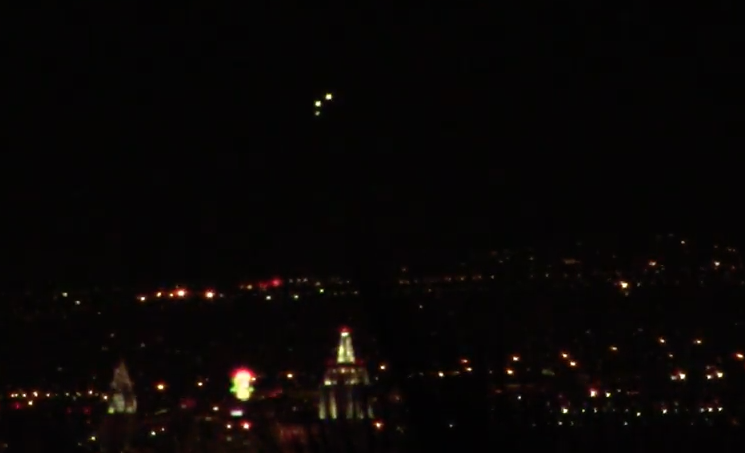
Here is an awesome video of some helicopters and planes buzzing past the three UFOs over Vegas. I'm sure radar must have seen these three UFOs...because if it didn't then we need to rethink better radar for protection of air accidents. This is in an area close to a Tall White base at Nellis AFB. Possibly aliens wanting to get as close as possible to the night life in Vegas...and who could blame them, but know, and adult Tall White is over 3 meters tall and would stand out in Vegas...also, if you accidentally touched them, they would take pleasure in your immediate death, so its best to avoid them.
Scott C. Waring
 
Steven Barone of Vegas states: 
I shot this video from my backyard in the Summerlin area of Las Vegas, Nevada on the night of August 23, 2016. The weather has improved greatly even though a wicked storm passed through later in the night. I could hear the wind and hail hitting the windows. Earlier it was actually really nice other than a tad bit of wind and haze. The night started off slowly and then all of a sudden things started happening. I got a short clip of a UFO in the southern valley and then I noticed the amazing UFOs over in the Henderson area. They were in a location where it's very rare to see anything. Once they began to move they ended up in a spot where I see them more routinely. This was just the beginning as I have more footage from the Blue Diamond Hills that I still need to publish.

{ http://www.ufosightingsdaily.com/ }

Hoe vind je dit bericht?
Geschreven door peter om 14:41 Stuur door

Glowing UFO Tries To Escape Detection At Space Station, Aug 2016, UFO Sighting News.

Glowing UFO Tries To Escape Detection At Space Station, Aug 2016, UFO Sighting News.

open%2Bminds%252C%2BStar%2BTrek%252C%2BMoon%252C%2Bsun%252C%2BAztec%252C%2BMayan%252C%2BVoyager%252C%2Bfight%252C%2Btime%252C%2BPhil%2BPlait%252C%2Borbit%252C%2BUFO%252C%2BUFOs%252C%2Bsighting%252C%2Bsightings%252C%2Balien%252C%2Baliens%252C%2BVegas%252C%2BBigelow%2BAerospace%252C%2B1.png

open%2Bminds%252C%2BStar%2BTrek%252C%2BMoon%252C%2Bsun%252C%2BAztec%252C%2BMayan%252C%2BVoyager%252C%2Bfight%252C%2Btime%252C%2BPhil%2BPlait%252C%2Borbit%252C%2BUFO%252C%2BUFOs%252C%2Bsighting%252C%2Bsightings%252C%2Balien%252C%2Baliens%252C%2BVegas%252C%2BBigelow%2BAerospace%252C%2B2%2Bcopy.png
Date if sighting: August 2016
Location of sighting: Earths orbit at ISS

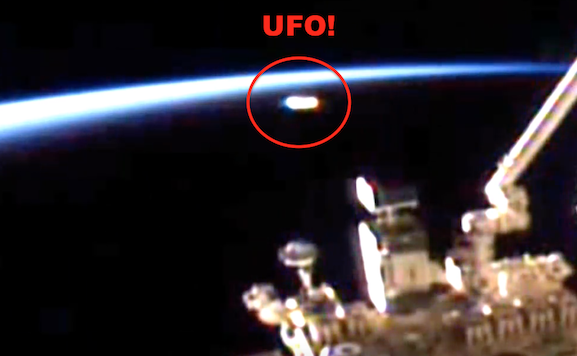
Once again, a UFO has been caught at the space station using the live cam. Streetcap1 had a watchful eye on the cams and was fortunate enough to record it for us. It looks like this UFO didn't want to be recorded, because it was seen moving away and high speed. But this just goes to show, that aliens are not gods or angels, but flawed beings just like us. They are not perfect, they make mistakes, just like this alien pilot made in this video...which will forever be on Youtube to show the world that the alien F#$%ed up. How does that feel aliens...having your flubs on Youtube for all the human race to see, laugh at and comment about? 

Scott C. Waring
www.ufosightingsdaily.com 

Streetcap1 states: 

Not a clue what this is. Other people must have seen this too. It disappears into the Earth Light and does not reappear. Short sequence repeated several times over. Streetcap1.

{ http://www.ufosightingsdaily.com/ }

Hoe vind je dit bericht?
Geschreven door peter om 14:37 Stuur door

Found! Potentially Earth-Like Planet at Proxima Centauri Is Closest Ever

Found! Potentially Earth-Like Planet at Proxima Centauri Is Closest Ever

Breaking News: Closest Ever Earth-like Planet Discovered Orbiting Proxima Centauri

https://youtu.be/ol8coHbZrso

The star closest to the sun hosts a planet that may be very much like Earth, a new study reports.

Astronomers have discovered a roughly Earth-size alien world around Proxima Centauri, which lies just 4.2 light-years from our own solar system. What's even more exciting, study team members said, is that the planet, known as Proxima b, circles in the star's "habitable zone" — the range of distances at which liquid water could be stable on a world's surface.

"We hope these findings inspire future generations to keep looking beyond the stars," lead author Guillem Anglada-Escude, a physics and astronomy lecturer at Queen Mary University of London, said in a statement."The search for life on Proxima b comes next." [In Pictures: The Discovery of Planet Proxima b]

The discovery of Proxima b was a long time in the making.

Astronomers have been hunting intensively for planets around Proxima Centauri for more 15 years, using instruments such as the Ultraviolet and Visual Echelle Spectrograph (UVES) and the High Accuracy Radial velocity Planet Searcher (HARPS), both of which are installed on telescopes run by the European Southern Observatory in Chile.

This artist’s impression shows the exoplanet Proxima b, which orbits the red dwarf star Proxima Centauri. The double star Alpha Centauri AB appears in the image between the exoplanet and its star.
Credit: ESO/M. Kornmesser

UVES, HARPS and other instruments like them allow researchers to detect the slight wobbles in a star's movement caused by the gravitational tugs of orbiting planets.

Astronomers found hints of such a wobble back in 2013, but the signal was not convincing, Anglada-Escude said. So he and a number of other researchers launched a campaign to ferret out the planet. They called this effort the Pale Red Dot — a nod to Carl Sagan's famous description of Earth as a "pale blue dot," and the fact that Proxima Centauri is a small, dim star known as a red dwarf.

The Pale Red Dot team focused HARPS on Proxima Centauri every night from Jan. 19, 2016, through March 31 of this year. After they combined this new data with UVES observations from 2000 through 2008 and HARPS observations from 2005 through early 2014, the signal of a possible planet came through loud and clear.

Then, after analyzing observations of the star's brightness made by several other telescopes, Anglada-Escude and his colleagues ruled out the possibility that this signal could be caused by the variable activity of Proxima Centauri.

"The conclusion: We have found a planet around Proxima Centauri," Anglada-Escude said Tuesday (Aug. 23) during a news conference. [The Search for Another Earth (Video)]

How did Proxima b remain undetected for so long, in an era when astronomers are finding exoplanets thousands of light-years from Earth?

"The uneven and sparse sampling, combined with the longer term variability of the star, seem to be the reasons why the signal could not be unambiguously confirmed with pre-2016 data, rather than the total amount of data accumulated," the researchers wrote in the new study, which was published online today (Aug. 24) in the journal Nature.

The news confirms rumors first reported earlier this month by German magazine Der Spiegel.

Incidentally, the team also spotted possible signs of an additional Proxima Centauri planet, which would have an orbital period of between 60 and 500 days. But that second signal is much weaker and might be caused by stellar activity, the researchers said.

proxima-centauri-b-landscape.jpg?1471992715?interpolation=lanczos-none&downsize=*:1400
Artist's illustration of the surface of Proxima b, a potentially Earth-like world that circles the nearest star to the sun.
Credit: ESO/M. Kornmesser

The HARPS and UVES data indicate that Proxima b is about 1.3 times more massive than Earth, which suggests that the exoplanet is a rocky world, the researchers said. [6 Strange Facts About Planet Proxima b]

Proxima b lies just 4.7 million miles (7.5 million kilometers) from its host star and completes one orbit every 11.2 Earth days. As a result, it's likely that the exoplanet is tidally locked, meaning it always shows the same face to its host star, just as the moon shows only one face (the near side) to Earth.

For comparison, Earth orbits about 93 million miles (150 million km) from the sun. But Proxima b's relatively tight orbit puts it right in the middle of the habitable zone, because red dwarfs are so much cooler and dimmer than sun-like stars, team members said. Not much else is known about Proxima b, so it's unclear just how hospitable the planet may be to life. In fact, there are reasons to be pessimistic on this front, noted Artie Hatzes, an astronomer at the Thuringian State Observatory in Germany.

Proxima Centauri fires off powerful flares, and the planet therefore experiences a much higher dose of high-energy X-ray radiation than Earth does, Hatzes, who is not part of the discovery team, wrote in an accompanying "News and Views" article in the same issue of Nature.

"Energetic particles associated with the flares may erode the atmosphere or hinder the development of primitive forms of life," Hatzes wrote. "We also don't know whether the exoplanet has a magnetic field, like Earth, which could shield it from the dangerous stellar radiation." 

But the higher X-ray flux is not a "showstopper" for life, Anglada-Escude and his colleagues said.

"None of this does exclude the existence of an atmosphere, or of [surface] water," co-author Ansgar Reiners, a professor at the University of Göttingen's Institute of Astrophysics in Germany, said during Tuesday's news conference.

How Proxima Centauri behaved in the distant past is more relevant to the newfound planet's potential habitability than current radiation levels are, Reiners added.

A 'Habitable' Planet Found Around Nearest Star Proxima Centauri

https://youtu.be/L1OSwevDclY

"What is more interesting is the history of the planet — whether in the early ages, the young ages, of this planet the star was so active, and the star emitted so much high-energy radiation, that it blew away the atmosphere and may have blown away the water also," he said.  

Other aspects of the planet's history also have a bearing on just how wet Proxima b may be. For example, if the alien world formed far from the star but then migrated inward, it is likely water-rich; if it formed near its present position, it likely started out much drier, study team members said. (But even this latter scenario doesn't preclude the existence of large amounts of water on Proxima b, Anglada-Escude stressed; comet and/or asteroid strikes could deliver the substance, as apparently happened here on Earth, he said.)

Tidally locked planets were once regarded as inhospitable to life — baked too hot on the star-facing side, and freezing cold on the dark side. But recent research suggests that such worlds may indeed be habitable; winds in theiratmospheres could distribute heat, smoothing out temperature extremes.

And if Proxima b is potentially habitable, life-forms have a long time to gain a foothold there: Red dwarfs keep burning for trillions of years, in contrast to stars like the sun, which die after 10 billion years or so.

"Proxima Centauri will exist for several hundreds or thousands of times longer than the sun," Hatzes wrote in his "News and Views" piece. "Any life on the planet could still be evolving long after our sun has died."

The sun is 4.6 billion years old. Proxima Centauri is thought to be slightly older — perhaps 4.9 billion years or so, study team members said.

New Earth Found - Gliese 581c Planet (NASA Documentary)

https://youtu.be/9kskSD0fuDI

Proxima b likely does not "transit," or cross the face of, its host star from Earth's perspective, Anglada-Escude and his colleagues said.

That characteristic will make it tougher to study Proxima b further; astronomers can learn a lot about the atmospheres of transiting exoplanets by studying the starlight that passes through them. (NASA's $8.8 billion James Webb Space Telescope, which is scheduled to launch in late 2018, will use this method to look for possible signs of life in the atmospheres of nearby alien worlds.)

But Proxima b is close enough to Earth that scientists may soon be able to image it directly. Indeed, it should be possible to resolve the planet (separately from its host star) using a telescope with an aperture of 11.5 feet (3.5 meters), provided that the scope is outfitted with some advanced technology, such as a starlight-blocking coronagraph, Reiners said. (For perspective, NASA's famous Hubble Space Telescope has an aperture of 7.9 feet, or 2.4 m.)

"We are quite far from it right now, but physics allows us to do it," he said. "And then, you can study the light coming from the planet itself, and that gives you the opportunity to learn about the atmosphere spectroscopically or photometrically, or whatever you want."

Proxima b is also a prime target for a potential up-close visit by a future space probe.

This past April, scientists and engineers announced the $100 millionBreakthrough Starshot project, which aims to develop the technology required to accelerate tiny, sail-equipped "nanocraft" to 20 percent the speed of light using powerful lasers.

Breakthrough Starshot team members said they hope to eventually launch flotillas of such postage-stamp-size probes to Alpha Centauri — a binary star system about 4.37 light-years from the sun. (In 2012, incidentally, astronomers analyzing HARPS data announced the discovery of a roughly Earth-size world around the star Alpha Centauri B, but later work suggested that the putative planet does not actually exist.)

Spacecraft traveling at 20 percent the speed of light could make the trip to Alpha Centauri in about two decades, as opposed to thousands of years for conventionally powered probes.

Proxima Centauri lies just 0.24 light-years from Alpha Centauri, and is regarded by some scientists as part of the latter system — so Breakthrough Starshot team members are recalibrating possible mission profiles a bit now.

"With today's announcement, we now know that there's at least one planet, the one orbiting Proxima Centauri, that has some characteristics similar to the Earth," Pete Worden, chairman of the Breakthrough Prize Foundation, said during a news conference today.

"Over the next decade, we will work with experts here at ESO and elsewhere to get as much information as possible about the Proxima Centauri planet, perhaps as noted, even including whether it might bear life, prior to launching mankind's first probe towards the star," Worden added. "We also hope to obtain similar data about the other nearby stars, Alpha Centauri A and B."

Follow Mike Wall on Twitter @michaeldwall and Google+. Follow us@Spacedotcom, Facebook or Google+. Originally published on Space.com.

{ http://www.space.com/ }

Hoe vind je dit bericht?
Geschreven door peter om 01:47 Stuur door

Project Icarus: Laying the Plans for Interstellar Travel

Project Icarus: Laying the Plans for Interstellar Travel

Project Icarus: Laying the Plans for Interstellar Travel

Andreas Tziolas is drafting a blueprint for a mission to a nearby star. Here, he discusses how we’ll get there — and why we try.

We humans have known for a very long time that going to the stars will be difficult, if not impossible. The motto of NASA, Per Aspera Ad Astra, a latin phrase meaning “through hardship to the stars,” comes down to us all the way from Seneca the Younger, a contemporary of Nero. Even today, when our metaphors of exertion and ambition are many –“swing for the fences,” “go for gold” — when we strain to capture the difficulty of a task, or the enormity of an achievement, “reach for the stars” is the first and most natural phrase that comes to mind. Our hierarchy of the ultimate human accomplishments is in this sense remarkably stable at the top.

And with good reason, because interstellar travel is in fact very difficult. With today’s best propulsion technology, chemical rockets, it would take between 50 and a 100 millennia to reach Proxima Centauri, the nearest star to the Sun. The ideas we have about how to expedite such a journey are just that: ideas. They belong to the realm of speculation. Nonetheless, they are beginning to take on an empirical glow. To be sure, the bundle of technologies that could conceivably send a spacecraft to another star won’t be here within the decade, or even within several, but neither are those technologies mere magical realism — indeed, planning for their development has begun in earnest.

In September of last year DARPA, the Defense Advanced Research Projects Agency, convened a conference in Orlando, Florida, to discuss and promote one of its newest and most intriguing research projects: The 100 Year Starship Study. According to DARPA, the study is intended to “develop and mature a technology portfolio that will enable long-distance manned space flight a century from now.” To that end, DARPA is now negotiating a grant of $500,000 to ex-astronaut Dr. Mae Jemison, whose personal foundation will team up with Project Icarus, a division of Icarus Interstellar, to seed the plans for an interstellar mission that could span several centuries.

Project Icarus, which will focus on the mission’s technological challenges, is a theoretical engineering study that was launched in 2009 by the British Interplanetary Society with the purpose of designing an interstellar spacecraft. It brings together an international group of volunteer aerospace engineers from government space agencies, universities and the private sector with the purpose of generating technical reports on the engineering layout, functionality, physics, operation, and mission profile of an interstellar probe. You can think of it as a kind of repository for bleeding-edge thinking about interstellar travel.

Project Icarus takes its inspiration from Project Daedalus, a five-year study launched by the British Interplanetary Society in 1973 to determine whether interstellar travel was feasible at all. Project Daedalus ultimately concluded that interstellar was possible, but acknowledged that the technical challenges were significant. Icarus aims to pick up where Daedalus left off, by trying to chip away at some of those technical challenges. Andreas Tziolas, a former research fellow at NASA who holds a Ph.D. in Gravitation and Cosmology, is the Project Leader for Project Icarus. Yesterday I spoke to Tziolas about how and, more interestingly, why we might someday send a mission to the stars.

How did you first get interested in interstellar travel?

Tziolas: I’ve been interested in interstellar travel ever since I was a young boy. I’m not ashamed to say that I was a child of Star Trek. When I was growing up in Greece, I remember Star Trek would come on very early on Sunday mornings, but that didn’t stop me from watching — I never missed an episode. My mother used to joke, “if only you would get up for school with the same excitement that you get up on Sundays.”

When it came time to choose a career, I knew it had to be this, because for something like this to get done someone has to say “I’m going to dedicate my life to this, to this thing that is difficult, this thing that is on the fringe of science, so that we can put down a kind of stepping stone, and the next generation can step on it in order to enter into this interstellar culture.”

And that’s what I’ve been doing these past 25 years. My first degree was in spacecraft engineering, after which I worked on several space missions for NASA. I worked on the Hubble Space Telescope, the Galileo Mission to Jupiter; I worked on the Mars Pathfinder, and on the Mars Polar Lander. And after a pretty intense period of involvement, I realized that from an employment perspective, these projects were kind of tenuous. When you work on a space mission, especially a planetary explorer, you’re generally out of a job once you make it to launch. Maybe two or three people out of the twenty working on the mission will stay on as support staff, with the rest looking for work elsewhere. So it’s not the best way to pursue a career. At the time I was interested in more analytical and computational physics, so I went back and did a Ph.D. in Cosmology at Baylor University. In doing this, I was trying to balance my capabilities, both the theoretical and technical capabilities, and I think it worked, I think it gave me an advantage.

When Project Icarus was first started, one of the main reasons we thought it was important was that people the original Daedalus team, and several of the very important researchers in the field of interstellar engineering had been slowly passing away, or else retiring. Suddenly you had this situation where there wasn’t a new generation of interstellar engineers on the market. There was no one working on this.

When we started up, one of our first objectives was to raise up this new generation of interstellar engineers — we wanted volunteers, anyone, whether they are Ph.D.’s or garage inventors, or just people who are passionate, people who spend every evening reading about interstellar exploration. There are several people around the world who have extraordinary technical expertise, but don’t necessarily look good on paper, and so they don’t have an opportunity to contribute to NASA or ESA or any of the other major space agencies. And so where do those people go? They end up working in I.T. or they end up working as clerks, but in their hearts they have this burning fire to do research. So what we do is corral all of those people with that fire and we organize them, and we organize the research in a detailed way, so that we can harness the power of inclusiveness in doing this kind of research.  In Greek, Daedalus means “cunning worker,” and in Greek mythology of course Daedalus is this master craftsman, the mythical embodiment of man as a maker of technology. But his son Icarus was another story. He’s famous for ignoring his father’s warnings about flying too close to the sun, and for drowning as a result of that. So why Icarus?

Tziolas: Well there are two reasons. First of all Dr. Allen Bond, who was the project leader for Daedalus, left a note to future generations in the final program report for the Daedalus spacecraft. In it he said “we’ve laid down some stepping stones, the first pebbles, and we set a direction, but it will be the sons of Daedalus, perhaps an Icarus, that will have to come through and make this a much more feasible design.” Because remember what Daedalus was trying to achieve was just a feasibility study, a study to see if this was even possible. And the Daedalus reports are very underappreciated. This was the first time in human history that some team proved that interstellar exploration is feasible using the physics of today. That had never been done before by NASA or anyone else. It was a significant milestone.

So that’s why we chose “Icarus,” but besides that we have a clever way of seeing the Icarus myth, which brushes away some of the inhibitions people have. Because we hear it a lot, that we picked the wrong name, that “hey isn’t this the guy who tried to fly with his father’s wax wings and fell into the ocean.” But that was a myth, a myth from 2,500 years ago, and like many myths it’s flexible, especially in a time like ours when we have Hollywood and CGI, which are tools that allow you to reshape a myth. In our version, Icarus falling into the ocean wasn’t the final chapter. We believe that he washed up on a beautiful deserted island, and he looked for his father in the sky and didn’t see him. So he started a fire on the beach, and tried to think about how he might get back to the sky. And at that moment he looked toward the sky and he saw his destiny, and his destiny was to forge new wings of steel and fire so that he could try again. And he wouldn’t repeat the mistakes of his father, who after all had fashioned the original wax wings. He would improve on his father’s design. 

A lot of reasons have been offered for why this project, this general project of going to the stars, is important for humanity. Some have said that in the long term the project is necessary as a means of “backing up the biosphere,” that we need to find another planet in order to ensure that humans survive future extinction events on earth. Others point to the potential for scientific knowledge, especially in the areas of cosmology or astrobiology. And then there’s the idea that deep space is a kind of proving ground for humanity, that it provides the ultimate test of our intellectual and creative capacities. In your eyes, what is the most compelling reason we ought to pursue this?

Tziolas: This could be a very long conversation. At Project Icarus we keep adding new reasons and new motivations for going interstellar, as we call it. First is obviously the survival of humankind. If humanity is capable of achieving interstellar flight but does not pursue it, does not pursue a program of seeding other planets and other solar systems, then really we risk receiving a Darwin Award as a civilization. If you can save yourself, but you don’t, for whatever reason — how can you justify that?

“Why do we pay this obsessive attention to backing up a document, which we can reproduce, when we pay no attention to backing up our civilization?”

When you’re working on a sensitive document on your computer, the first thing you do is back it up. You make a copy of it, you email it to yourself, you put it in your dropbox, and your flash drive — sometimes all these things at once. Why do we pay this obsessive attention to backing up a document, which we can reproduce, when we pay no attention to backing up our civilization? There is no greater endeavor than ensuring the survival of humankind.

You also want to push technological boundaries. If you don’t have one of these huge problems to solve, that’s hard, really hard, then you won’t motivate yourself to solve it. If the human population had never risen past one billion people, everyone would live very comfortably, spread out, there might not be high rises, transportation would be different — the whole civilization would be different. The unique problems that come with high populations have given rise to these technologies, to these ways of living. Similarly, had we never decided to go into space, our civilization would be very different. We wouldn’t have cell phones, we wouldn’t have satellite systems, and we wouldn’t have this type of computational power. We would have been fine, but we would be stuck at a certain level of technological advancement.

In order to achieve interstellar flight, you would have to develop very clean and renewable energy technologies, because for the crew, the ecosystem that you launch with is the ecosystem you’re going to have for at least a hundred years. With our current projections, we can’t get this kind of journey under a hundred years. So in developing the technologies that enable interstellar flight, you could serendipitously develop the technologies that could help clean up the earth, and power it with cheap energy. If you look toward the year 2100, and assume that the 100 Year Starship Study has been prolific, and that Project Icarus has been prolific, at a minimum we’d have break-even fusion, which would give us abundant clean energy for millennia. No more fossil fuels. We’d also have developed nanotechnology to the point where any type of technology that you have right now, anything technology-based, will be able to function the same way it does now, but it won’t have any kind of footprint, it will only be a square centimeter in size. Some people have characterized that as “nano-magic,” because everything around you will appear magical. You wouldn’t be able to see the structures doing it, but there would be light coming out of the walls, screens that are suspended that you can move around any surface, sensors everywhere — everything would be extremely efficient. 

An artist's rendering of a blueprint from Project Daedalus (Image courtesy of Nathan Fowkes) An artist’s rendering of a blueprint from Project Daedalus (Image courtesy of Nathan Fowkes)

Project Daedalus favored a nuclear fusion pulse engine, in which small pellets of fusion fuel would be injected at high velocity into a reaction chamber and ignited by high-energy electron beams. Is that still the favored propulsion technology?

Tziolas: Project Icarus is focused on a fusion-based propulsion system, but the flavor of fusion is still up for debate. One of the problems with the Daedalus fusion propulsion system is that it runs on Helium3 and Helium3 is very scarce on the surface of the earth. In fact, in order to collect enough Helium3 to visit another star, you’d need to mine the atmospheres of the gas giants like Neptune and Jupiter. So our current thinking is that this is probably not the best way to go to another star if it requires that we mine half of the solar system just to get enough fuel. So, we’re trying to present a new fuel source or a new type of fusion, of which there are several.

There are also other alternatives, such as beam propulsion, which uses a ground station or an orbital station that focuses energy from the sun into a beam, a stream of particles or radiation, in order to push a spacecraft to the other star. The physics and engineering of this are both well understood. We know how light reflects off of surfaces and we have experience with solar panels, so we don’t have the same disconnect that we have with fusion. Because remember we haven’t actually achieved fusion, sustained fusion, in the laboratory. But the major problem is that the beam that you transmit is going to diverge to a certain degree, and as a result you are going to lose some thrust. The other obstacle is the sail you’d need to capture the beam; to complete a mission like the one we’re talking about you’d need a sail that was roughly a hundred square kilometers in area, and that isn’t feasible right now.

The third option is nuclear fission, which Project Orion intends to use, and there you have small-scale nuclear warheads — although we don’t call them that, we use something more diplomatic like “fission pulse units” — and you detonate them behind the spacecraft to push it through space. Freeman Dyson has been an advocate of this approach. 

Obviously there would be enormous challenges involved in communicating with a starship at such great distances. What is the latest thinking on how that might be accomplished?

Tziolas: Yes that’s a major concern. If you can’t communicate with the ship then you don’t know what the results are of your mission. It’s an active area of research, and we’re considering several alternatives. One idea is to moderate the fusion pulses in the main engine, and using it to encode signals — but that’s a worst case scenario. We’re also considering point-to-point laser communications, but the challenge there is the power drain would be enormous. It would probably require a second fusion reactor, and that’s fine but you have to design that in.

Another, more interesting option is the use of relays, and this was explored in the previous phase of our research at Project Daedalus. The idea is that when you drop the empty fuel tanks along the way, you design them so that they can double as relay stations. You could power them with small reactors, and use them to relay signals back to earth. We have two studies on this, and one says this could work and the other says it can’t, so we’re working on it. 

What are the main considerations involved in choosing a destination star?

Tziolas: Well we’re somewhat limited by the timescale we’ve chosen. We want this to be a hundred year mission, and that puts our maximum range at fifteen light years, using the best estimates about fusion technology. Right now we’re designing around Alpha Centauri because it’s the easiest, and because it’s a double star we expect it to be very interesting scientifically. However, if a terrestrial planet is discovered and it has a few oceans and it’s within 22 light years instead of our maximum of 15, we would button down and make that our mission. Habitability is the prime consideration.

“To us, proliferating the human race must always come first.”

Interesting. I’m surprised it’s that and not extraterrestrial life, but then I suppose they overlap.

Tziolas: If there were two planets: one of them is teeming with life, but it’s not habitable because it’s methane or sulfur based life, and the other is an Eden with an oxygen-nitrogen atmosphere and only eighty percent our gravity, so everyone would be a superman, and they’re in opposite directions, where would we go if you had to pick one? To us, proliferating the human race must always come first. We would go to the Eden and not think twice about it.

Do you expect that the current exoplanet fever — sparked by, among other things, the recent data from the Kepler Space Telescope — will lead to more attention and investment in interstellar travel? Are there any other developments, be they cultural or technological, that could give momentum to a serious public desire for a mission to the stars?

Tziolas: The investment in exoplanet research is not going to end any time soon. It’s something you can keep on doing for a very long time, and it’s a nest that astrophysicists will be able to build and nurture, with advances in capabilities on the scale of the great particle colliders on the Earth. You can always go to higher power, you can always go to higher magnification, you can try interferometric methods, better angular resolution, more spacecraft, the James Webb Space Telescope, the list goes on. So once we find this Eden, this beautiful place that is in our solar neighborhood, people are going to want to go there. There will be a push for an interstellar mission and it’s our hope that Project Icarus is in a position to deliver when that happens.

In the meantime we are trying to raise the profile of interstellar travel. It’s something I often think about because I’m in charge of education and outreach for the project. One thing we’re doing is adding courses in interstellar engineering to aerospace programs in the United States and in Europe. We expect the first of those to begin this Fall. But more interestingly, we’re also opening a new gaming division. For a while we’d pictured these as educational games, but when we got to the 100 Year Starship conference, the feedback we got was: “It doesn’t have to be that educational — just make some spaceships that reflect your designs and let people fly around and explore Alpha Centauri.” And so we came back the next week and we started looking into that, and now we’re designing these games that we can use to attract people to the concept of exploring another star.

This is something that is a constant focus for us, because while it’s certainly true that a mission of this kind needs a dedicated engineering program, it also needs mindshare. We need people to believe that interstellar travel is a reality, and we need them to adopt it as the next great space exploration effort that humankind is going to undertake. And to do that we’re going to need a cultural shift in the way that we think about space, and the way we think about the universe. 

Have you and your colleagues given any thought to including something like the Golden Record that was stowed away on the two Voyager probes, the disc of sounds and images from Earth compiled by Carl Sagan?

icarus4

Tziolas: We have, actually. It only took a week after the project began for people to start putting together a new record, and to start thinking about what the content of the record would be, but we haven’t really agreed on what the message would be. After the core design team had the initial discussion, we decided that the message should not be designed by physicists and engineers but rather by a sociologist or an anthropologist, but that was the limit to what we agreed on. We all agreed that what Carl Sagan sent was great; we just need to adapt it to our own time. Since then we’ve been actively trying to recruit anthropologists and sociologists to the team.

One of my concerns is that if we send another golden disc, it might not be well suited to reaching its audience. The chances of an extraterrestrial finding it and reading it are worse than a needle in a haystack; it’s like a particle in a universe. So my preference is to design some kind of module that was more technological than the analog disc, that way you could send it in to orbit around your target star, equip it with solar panels, have it charge up and once every twelve hours or so it gives out a pulse. And that would be just to give this other civilization something to look at, and when they design the capabilities to go check it out, they would, and then inside there would be something static, something like the golden record.  

Source www.theatlantic.com

{ http://alien-ufo-sightings.com/ }

Hoe vind je dit bericht?
Geschreven door peter om 01:22 Stuur door

Lillium promises an electric vertical take-off personal jet by 2018

Lillium promises an electric vertical take-off personal jet by 2018

Lillium promises an electric vertical take-off personal jet by 2018

f you live in suburbia and have a long commute to work, wouldn’t it be nice to have your own plane? But, oh yeah, you need a runway and your kids and the neighbor’s kids are always leaving things in the yards and in the streets. What you really need is maybe a helicopter, but they’re harder to fly and so noisy the neighbors won’t be happy (not to mention the FAA and your town zoning board).

Well, get ready to toss your aviator scarf around your neck because startup company Lilium Aviation expects to start selling the Lilium all-electric VTOL (vertical take-off and landing) personal jet aircraft in 2018, according to International Business Times. So start saving. No price has been announced yet, but it will be a lot, so just start saving.

Previously, VTOL aircraft were only for the military. In an effort to bring the technology to the masses, or at least the affluent, engineers and students from the Technical University of Munich founded Lilium Aviation, which is backed by the European Space Agency (ESA). The goal is to design and produce planes that are quiet, environmentally clean, and relatively easy to fly. Oh, and they can go straight up and down as well as forward.

The two-seat Lilium will have a top speed just under 250 mph and a range at cruising speed of about 310 miles. The all-electric plan will have a 320kW battery to power the fan engines, retractable landing gear, fly-by-wire joystick controls, wings doors, and windows all around. You won’t have to worry too much about landing and taking off, the two most troublesome parts of flying, because an onboard computer will handle both. You’ll also have help staying on course with GPS-assisted navigation.The ESA’s plans are for the Lilium to fly only on good days, meaning daytime with good weather, and only up to 3km, about 1.8 miles, where the airspace isn’t very crowded. But not just anyone can fly one. You’ll need a valid pilot’s license and a minimum 20 hours training.

There will be ample storage, Lilium Aviation promises, so if you’re taking your daughter or son to soccer practice (though only one at a time, please), you’ll have plenty of room to store their gear.

{ http://alien-ufo-sightings.com/ }

Hoe vind je dit bericht?
Geschreven door peter om 01:05 Stuur door

What do aliens look like? The clue is in evolution

What do aliens look like? The clue is in evolution

What do aliens look like? The clue is in evolution

Speculating about what aliens look like has kept children, film producers and scientists amused for decades. If they exist, will extra terrestrials turn out to look similar to us, or might they take a form beyond our wildest imaginings? The answer to this question really depends on how we think evolution works at the deepest level.

Hollywood has given us its fair share of humanoid aliens over the years. Initially this was through necessity, as special effects required someone to clamber into a rubber suit. Ironically, now that CGI makes anything possible, aliens sometimes look even more human in order to help the cinema goer make an emotional connection with them – such as in James Cameron’s Avatar.

At present, the only life forms we can study are here on Earth. These had a single origin around 3.5 billion years ago, but this common ancestor gave rise to perhaps 20m living species of animals alone. These have bodies organised according to about 30 different body plans in major groups called phyla.

But when animals first diversified some 542m or more years ago in the Cambrian “explosion”, there may have been an even greater diversity of fundamental body plans. Consider the five-eyed and trunked Opabina in the image above, or the stalked and almost flower-like Dinomischus alongside our own distant relative, the chordate Pikaia.

What do aliens look like? The clue is in evolution
Pikaia – an early chordate,the group to which humans belong. Credit: Nobu Tamura/wikimedia, CC BY-SA

Rerunning the tape of life

In a famous thought experiment, biologist Stephen Jay Gouldasked what might happen if we were to rewind the “tape of life” and rerun it. Gould argued for the importance of chance in evolution: change one small thing early on, and the consequences magnify through time. In the version of history we know, Pikaia(imaged below) or something very like it survived and ultimately gave rise to fishes, amphibians, reptiles, mammals and ultimately ourselves. But what if it had perished? Might some other group have given rise to intelligent beings, and might you now be reading this with five eyes rather than the customary two? If our own origins on Earth really turned on such fine hinges, why should aliens – evolving on different planets – even remotely resemble us?

The answer, according to evolutionary biologist Simon Conway Morris, lies in the phenomenon of evolutionary convergence: the process by which distantly related animals come to closely resemble each other. For example, the similar streamlined shape of dolphins, tuna fish and the extinct ichthyosaurs all evolved independently in response to the same selective pressures for moving efficiently through water at speed.

But what aspects of alien biology might we expect? Carbon-based biochemistry is likely given that carbon forms stable backbone chains, and makes stable but readily breakable bonds with other elements. Other elements, notably silicon and sulphur, make less stable bonds at Earth-like temperatures. Water or some other solvent also seems necessary. For evolution to occur there needs to be some mechanism for storing and replicating information with moderate fidelity, such as DNA, RNA or some analogue. Although the first cells appeared on Earth quite early, multicellular animals took nearly 3 billion more years to evolve. So it may well be that life on other planets could get stuck at the single-celled stage.

On an Earth-like planet it is also likely that radiation from the alien sun or suns would be used in biochemical pathways as a source of energy. For moderately large multicellular primary producers, harnessing light efficiently probably necessitates a light gathering system of leaves and branches. Similar shapes and habits have evolved convergently on Earth, so we might expect “plants” with broadly familiar forms on Earth-like planets.

With few exceptions, animals either eat the primary producers or each other, and there are only so many ways of doing this. Pursuing food often necessitates moving with the mouth first, so the animal has a head and tail end. Teeth and probably jaws evolve to hold and tackle food items. Moving against a hard surface requires specialised structures (such as cilia, a muscular foot or legs) at the interface, so that there is a back and front side. Typically, this also imparts bilateral (left/right) symmetry: indeed, most animals belong to a “super-group” called the Bilateria.

What do aliens look like? The clue is in evolution
The giant weta: one of the largest insects. Credit: New Zealand Department of Conservation, CC BY-SA

Why not giant intelligent “insects”?

But what about the large brained and intelligent creatures that might be capable of crossing interstellar distances? Insects are by far the most species rich group on Earth: why shouldn’t aliens look more like them? Unfortunately, having your skeleton on the outside makes growth difficult, and entails periodic shedding and regrowth. On Earth-like planets, all but relatively small terrestrial animals with external skeletons would collapse under their own weight during moulting, and some critical size may be necessary for suitably complex brains.

Relatively large brains, some degree of tool use and problem-solving abilities appear to be correlated on Earth, and have evolved multiple times: in apes, whales, dolphins, dogs, parrots, crows and octopuses. However, the apes have developed tool use to a vastly greater degree. This is at least partly the result of walking on two legs, which frees up the front limbs, and because of the dexterity of our fingers (which may also be a key to the origins of written language).

Ultimately, the jury is out on the extent to which intelligent aliens – if they exist – would resemble us. It may or may not be significant that humans have just two eyes and ears (just enough for stereo vision and hearing), and just two legs (reduced from the initially more stable four). Many other organs also come in pairs as a consequence of our evolutionarily deep-seated – and perhaps inevitable – bilateral symmetry. Still other elements of our body plan are probably nothing more than chance. The fact that we have hands and feet with five digits is a consequence of the fixation on five in our early tetrapod ancestors – close relatives experimented with seven or eight.

Indeed, most species have been subject to an accidental “locking down” during development – making body plans become stereotyped and inflexible with evolutionary time. Untangling the functional from the accidental is one of the big outstanding challenges in evolutionary biology – and may help us better understand how alien lifeforms could differ from us.

The main way we now search for intelligent life in space is by listening for radio or gamma transmissions. These efforts are increasingly being concentrated on star systems with Earth-like planets, as these are believed to be the most likely to harbour life. After all, it is easier to search for “life as we know it” than life as we don’t.

Source phys.org

{ http://alien-ufo-sightings.com/ }

Hoe vind je dit bericht?
Geschreven door peter om 00:57 Stuur door

How A Simple Formula Can Help You Find Aliens

How A Simple Formula Can Help You Find Aliens

How A Simple Formula Can Help You Find Aliens

Since the beginning of human civilization, we have looked up at the stars and wondered in amazement. The vastness of the universe was unknown to early humans, but in recent decades and centuries, we have begun to realize just how incredibly large the universe truly is. With hundreds of billions of stars in our galaxy alone, and with hundreds of billions of galaxies in the observable universe, a normal question was bound to arise… Is anyone else out there?

This has fascinated everyone from conspiracy theorists and kings to modern astronomers and Hollywood producers, but back in 1961, a man named Frank Drake came up with an equation that would measure the likelihood of making contact with intelligent life in our galaxy. That is the essential goal of the Drake Equation, and while it has been hotly debated for decades, it remains one of the most concise and trusted methods of estimating an answer to that eternal question: Are we alone in the universe?

The Drake Equation

When Frank Drake first came up with the idea for the Drake equation, he was actually trying to generate a conversation among a “meeting of the minds” regarding the search for extraterrestrial life (SETI). However, the simple and inclusive design of his equation has become the stuff of legend. Before we go into the details of the equation, let’s look at it in simple terms.

The Drake Equation (Photo Credit: meletver / Fotolia)

The Drake Equation (Photo Credit: meletver / Fotolia)

So, the Drake Equation is:

N = R_{ast} cdot f_p cdot n_e cdot f_{ell} cdot f_i cdot f_c cdot L

However, it would be a bit more insightful to know what each of those variables meant. So, without further ado…

N = the number of possible civilizations in the galaxy that could communicate with us

R* = average rate of star formation in the Milky Way

fp = the fraction of those stars that possess planets

ne = the number of planets that could support life around each of those stars with planets

fl = the fraction of planets that could support life that actually do develop life

fi  = the fraction of planets with life that develop intelligent life

fc = the fraction of intelligent civilizations that attempt to send communication out into space to be detected

L = the length of time that signal would be sent out into the universe (duration of civilization)

The Drake Equation (Photo Credit: noeticscience.co.uk)

The Drake Equation

( Photo Credit: noeticscience.co.uk)

An Answer to the Drake Equation?

While it seems like a simple enough equation, the problem doesn’t like with generating a final answer (N), but rather in determining what other variables should be included. The first three variables (average star formation rate, planet-possessing stars, and potential to support life on those planet) are relatively easy to determine.

R* – By looking at our own nearby galactic neighborhood and the residual gas clouds from star formation, we can safely calculate that the present rate of star formation is currently about 7 stars per year. This number was far greater in the past, but in the 21st century, that’s a safe bet.

The Orion Nebula, one of our nearest star nurseries (Photo Credit: peresanz / Fotolia)

The Orion Nebula, one of our nearest star nurseries (Photo Credit: peresanz / Fotolia)

fp – The fraction of those stars with planets is often assumed to be 1, given that many modern astronomers believe that every star has the capacity to retain orbiting planets, making stars without planets an exception, rather than a rule. However, some other figures place that number at only .4 (4 out of 10 stars will possess planets). This is where the significant differences in variables begin, but it gets even more intense.

ne – The number of planets that could support life around each of those stars is largely derived from our own solar system, where Earth is definitely habitable, but we have yet to determine the habitability of various other moons and planets. Therefore, the number ranges from .5 to 2 in most calculations of the Drake Equation.

12eg0o

Those are the easy ones… and there is far more debate on the last 4 variables, as much of it is conjecture, based on belief, rather than scientific fact or direct observable experience. 

fl  – The fraction of planets that do develop life is hotly debated and cannot be directly tested, as we haven’t traveled to other exoplanets where the “stuff of life” has been detected. We know that life could develop, but not whether it will. Some say life is inevitable, making this variable equal to 1, while others say it is 1/100, or even smaller!

fi – The fraction of planets with life that develop intelligent life is similarly up for grabs. Many argue that intelligent life is inevitable, using Earth as an example (humans evolved from every other form of life, and eventually became intelligent), while critics say that it was a 1 in a billion chance, as there have been hundreds of millions of non-intelligent species in the history of the planet.


fc – The fraction of those intelligent civilizations that send communication signals suggests a highly technologically evolved culture with the desire to reach out to the stars. This could also be largely conjectural, but a 1/100 estimate was made by Drake, although others say it is a 100% chance, if given enough time.

L – Finally, we come to length of time the signal would be generated. For example, perhaps a civilization rose to prominence 10 million years ago, broadcast the signal, but then destroyed itself before it could connect with us. This is the variable with the most flexibility, from a few hundreds years up to billions (some suggest that eventually, a civilization will discover how to survive in perpetuity, meaning the signal transmission time would be massive.

Maybe they're just getting a busy signal (Photo Credit: Alexander Pokusay / Fotolia)

Maybe they’re just getting a busy signal (Photo Credit: Alexander Pokusay / Fotolia)

NOW….in 1961, Drake estimated with a rather simple range of values, and came up with two values, a minimum and maximum. 

The minimum estimation of possible communicative civilizations in our galaxy is 20, while the maximum is roughly 50,000,000. Frank Drake himself believes that the number lies somewhere between 1,000 and 100,000,000.

The Modern Take on Drake

While the debate over extraterrestrial life will never be resolved until we actually find some, we have improved our ability to calculate the variables in the equation. Unfortunately, this hasn’t done much in terms of shrinking the possible range. In fact, our precision has only expanded the range, and current estimates range from 2 to 280,000,000.

The original purpose of the Drake equation, we must remember, was not to determine an accurate number of communicating, intelligent civilizations in our galaxy; it was to stimulate thought in this area, and hopefully guide people to look into the variables and expand the scope of their research. To that end, Frank Drake has been extremely successful. With every successive venture into the cosmos, we get closer to finding life (or not), but with hundreds of billions of stars out there, we’ll likely never know the exact number. However, in terms of extraterrestrial life, I’ll leave it to Fox Mulder….

12eg7y

Source www.scienceabc.com

{ http://alien-ufo-sightings.com/ }

Hoe vind je dit bericht?
Geschreven door peter om 00:49 Stuur door

(VIDEO)‘Human Sacrifice Ceremony’ at CERN investigated by chiefs at world-famous Science Center

(VIDEO)‘Human Sacrifice Ceremony’ at CERN investigated by chiefs at world-famous Science Center

The organization of the world’s leading nuclear research has opened an internal investigation into a chilling incident that occurred on campus.
 
A video surfaced on the internet shows the moment a woman is allegedly sacrificed near the statue of Shiva at CERN where the Large Hadron Collider is located.  The statue of Lord Shiva was installed at the campus in 2004, symbolizing Shiva’s cosmic dance of creation and destruction, was given to CERN by the Indian government to celebrate the research center’s long association with India.
 
The European Organization for Nuclear Research (CERN) has opened up an internal investigation in response to a video released last week in which a parody is performed allegedly showing a woman bein stabbed as part of a human sacrifice in the ground of the Geneva headquarters reports the Swiss website Swissinfo.
 
The strange video which popped up on the internet a couple of days ag depicts several individuals in black cloth gather at the main square at one of Europe’s top physics labs ni the appears to be a re-enactment of an occult ceremony.
 
The chilling video illustrates human sacrifice as a woman is filmed bein stabbed.
 
‘These scenes were filmed on our premises, but without official permission or knowledge,’ a CERN spokeswoman told AFP in an email. CERN does not condone this type of spoof, which can give rise to misunderstandings about the scientific nature of our work,’ she added.
 
The image shows a woman being sacrificed at the European Organization for Nuclear Research (CERN). CERN Chiefs have already started an investigation into the online video which allegedly shows a woman being sacrificed in a gruesome ritual on their grounds.
 
She added that the investigation taking place is an internal matter.
 
The strange video has raised numerous questions involving the security present on CERN’s campus.
 
 
The image shows several people preparing for the ritual. A joke that has gone too far.
 
When asked to detail the security procedure regarding access to CERN’s campus, the CERN spokeswoman responded saying that: ‘CERN IDs are checked systematically at each entry to the CERN site whether it is night or day.’
 
The spokeswoman further indicated that the individual’s responsible for the occult ‘prank’ had access badges.
 
‘CERN welcomes every year thousands of scientific users from all over the world and sometimes some of them let their humor go too far. This is what happened on this occasion,’ the email said.
 
The video, which has already registered over 240,000 views, has caused stupor in the management of CERN where the famous Large Hadron Collider is located.


Hoe vind je dit bericht?
Geschreven door peter om 23:50 Stuur door

(VIDEO)‘Human Sacrifice Ceremony’ at CERN investigated by chiefs at world-famous Science Center

(VIDEO)‘Human Sacrifice Ceremony’ at CERN investigated by chiefs at world-famous Science Center

The organization of the world’s leading nuclear research has opened an internal investigation into a chilling incident that occurred on campus.
 
A video surfaced on the internet shows the moment a woman is allegedly sacrificed near the statue of Shiva at CERN where the Large Hadron Collider is located.  The statue of Lord Shiva was installed at the campus in 2004, symbolizing Shiva’s cosmic dance of creation and destruction, was given to CERN by the Indian government to celebrate the research center’s long association with India.
 
The European Organization for Nuclear Research (CERN) has opened up an internal investigation in response to a video released last week in which a parody is performed allegedly showing a woman bein stabbed as part of a human sacrifice in the ground of the Geneva headquarters reports the Swiss website Swissinfo.
 
The strange video which popped up on the internet a couple of days ag depicts several individuals in black cloth gather at the main square at one of Europe’s top physics labs ni the appears to be a re-enactment of an occult ceremony.
 
The chilling video illustrates human sacrifice as a woman is filmed bein stabbed.
 
‘These scenes were filmed on our premises, but without official permission or knowledge,’ a CERN spokeswoman told AFP in an email. CERN does not condone this type of spoof, which can give rise to misunderstandings about the scientific nature of our work,’ she added.
 
The image shows a woman being sacrificed at the European Organization for Nuclear Research (CERN). CERN Chiefs have already started an investigation into the online video which allegedly shows a woman being sacrificed in a gruesome ritual on their grounds.
 
She added that the investigation taking place is an internal matter.
 
The strange video has raised numerous questions involving the security present on CERN’s campus.
 
 
The image shows several people preparing for the ritual. A joke that has gone too far.
 
When asked to detail the security procedure regarding access to CERN’s campus, the CERN spokeswoman responded saying that: ‘CERN IDs are checked systematically at each entry to the CERN site whether it is night or day.’
 
The spokeswoman further indicated that the individual’s responsible for the occult ‘prank’ had access badges.
 
‘CERN welcomes every year thousands of scientific users from all over the world and sometimes some of them let their humor go too far. This is what happened on this occasion,’ the email said.
 
The video, which has already registered over 240,000 views, has caused stupor in the management of CERN where the famous Large Hadron Collider is located.


Hoe vind je dit bericht?
Geschreven door peter om 23:50 Stuur door

THE ABOVE TOP SECRET SPACE PROGRAM BUILT WITH REVERSE-ENGINEERED ALIEN TECHNOLOGY

THE ABOVE TOP SECRET SPACE PROGRAM BUILT WITH REVERSE-ENGINEERED ALIEN TECHNOLOGY

In 1993, during a lecture at the UCLA Alumini Center, Ben Rich, former CEO of Lockheed Martin held a very interesting speech about technological advancements in space engineering in a period of forty years. He concluded his speech with the following quote: We now have the technology to take ET home.” – Ben Rich, CEO of Lockheed Skunk Works, 1993 
 
While talking about ET the last image of the slide showed a mysterious black disk-shaped object flying into outer space. 
 
What was Mr Richj telling us with the quote? With the image? 


Lockheed has designed and built a series of incredible aircraft including the SR-71 Blackbird, the F-22 Raptor and the F-117 Nighthawk, all of them with state of the art technology that no one else had in their possession. Their aircrafts were unique, fast, and lethal.
 
Many people believe that Lockheed Martin definitely came into possession of advanced alien technology that they managed to reengineer creating the next generation fighters. Is it possible that Lockheed is responsible for the manned flying saucers? Is it possible that Lockheed combined Tesla’s inventions with re-engineered alien technology which allowed them to create unprecedented aerial vehicles and even spacecraft? Vehicles that have been kept far away from the prying eyes of the public. 
 
 
As of 2000, if not a bit earlier, people started to think differently, interest in alien life and extraterrestrial technology, governments could keep up with the high interest of the public in those subjects which has probably led to the numerous declassified UFO files made available to the public in recent years.
 
 In an interview with BBC British system administrator Gary McKinnon, the person who hacked his way into 97 U.S. military and NASA computers, said that he had been motivated by the Disclosure Project since “there are some very credible, relied-upon people, all saying yes, there is UFO technology, there’s anti-gravity, there’s free energy, and it’s extraterrestrial in origin and they’ve captured spacecraft and reverse engineered them.” 
 
According to McKinnon, he uncovered numerous files, among them a spreadsheet containing names and details about extraterrestrial officers and fleet logs. McKinnon searched for the ‘extraterrestrial officers’ in the database of the U.S Military and Navy and concluded that those officers were nowhere to be found. He concluded that these mysterious ‘officers’ had to be Space Marines. 
 
McKinnon saw countless UFO images stored in NASA’s computers at the Johnson Space Center’s Building 8 among other highly classified documents. McKinnon was caught in 2002 facing over 50 years in prison and millions of dollars in fines. Luckily, McKinnon who fled to the U.K. was never extradited to the US and managed to avoid prison. McKinnon firmly believes that extraterrestrial vehicles have been captured by governments around the world, and he also believes that mankind was able to reverse engineer that technology creating highly advanced spacecraft which are today fully functional.
 
 According to Jack A. Shulman, president of American Computer; the invention of the transistor may have been inspired by the study of the remains of a crashed alien spacecraft, basically reverse engineered technology. 
 
Alien Technology and humans reverse engineering it was first mentioned in 1997 when, American Computer Company (ACC) suggested the possibility that the study of the remains of a crashed alien spaceship in Roswell in 1947, or another crashed Alien spaceship might have been definitive for the development of the transistor, made in 1948 by Shockley, Bardeen and Brattain doctors in the Research Center of Electronic Circuits at Bell Laboratories. 
 
The basis for such claims are a series of documents and testimonies that supposedly were in possession of ACC. This theory matches the stories of many others, among them, former Lieutenant Colonel Phillip Corso, who in his book; The Day After Roswell, claims being part of the team that handed the remains of the crashed object and delivered parts to different departments of Bell Laboratories .
 

{ http://7tales.net/ }

Hoe vind je dit bericht?
Geschreven door peter om 23:42 Stuur door

What Kind of Technology Brought the Ancient Egyptians Into the Grand Canyon?

What Kind of Technology Brought the Ancient Egyptians Into the Grand Canyon?

One of the most intriguing archaeological discoveries in North America comes from the rocky cliffs of the Grand Canyon. What makes it even more interesting is the fact that The Smithsonian covered it up and hid this intriguing discovery of an ancient civilization living below the canyon, a find that has the potential to change bits of our written history.
 
The World Explorers Club decided to conduct an investigation regarding the authenticity of this discovery and phoned the Smithsonian in Washington D.C. for more details. Their thirst to find out more was due to an intricate article on the front page of the Phoenix Gazette from April 5, 1909. The story offered an accurate description of an expedition led by Professor S.A. Jordan of the Smithsonian that surfaced with great archaeological finds from a remote cave located in the Grand Canyon.
 
Maybe the most interesting is the attitude of The Smithsonian Museum, claiming to have zero knowledge of this discovery and those involved in finding it. When asked about the newspaper article regarding the Smithsonian excavation in the Grand Canyon where Egyptian artifacts had been found, and whether they could offer more information on this, a staff archaeologist representing the institution said the following: “The first thing I can tell you before we go any further, is that no Egyptian artifact of any kind have ever been found in North or South America. Therefore, I can tell you that the Smithsonian Institute has never been involved in any such excavations.”
 
 
No one from the Smithsonian could offer any information of either the discovery, or of G.E. Kinkaid and Professor S.A. Jordan, the presumed discoverers. It was like the entire article from the 1909 Phoenix newspaper was a shameless hoax, but considering the fact that it appeared on the front page, and that it mentioned the famous Smithsonian Institution and some of its archaeologists, coupled with the fact that it contained a very detailed story written on numerous pages, many believe the newspaper was a legitimate source.
 
So, why would a reputed, official institution cover this up? After all, we are talking about a monumental discovery that would completely change the current belief that there was no form of communication or travel over the oceans in pre-Colombian times. Also, the belief that all American Indians were the followers of Ice Age adventurers who came across the Bering Strait would become questionable.
 
The idea of ancient Egyptians coming to Arizona in an ancient past is denied even though the Smithsonian Institution seems to have proof of it. Is there a reason for their denial? Is it because this astounding discovery would overwrite current academic teachings? Or maybe because of the interest to preserve their current status as keepers of forbidden knowledge?
 
 
The Tower of Ra
 
Following these events, in the pursuit of finding the truth, historian Carl Hart, editor of World Explorer, acquired a map of the Grand Canyon from a bookstore in Chicago. Looking over the map, he was surprised to find that a considerable portion on the north side of the canyon has Egyptian names. The field around Ninety-four Mile Creek and Trinity Creek had areas named after Egyptian gods like Tower of Ra, Tower of Set, Osiris Temple, Horus Temple or Isis Temple.
 
Also, the Haunted Canyon area had some unfamiliar places on the map, such as the Cheops Pyramid, the Buddha Cloister, Buddha Temple, Shiva Temple and Manu Temple. Were any of these places related to the other Egyptian findings in the Grand Canyon?
 
 
The Isis Temple
 
The World Explorers Club then called a state archaeologist at the Grand Canyon. He affirmed that those names were just a coincidence and that the early adventurers enjoyed Egyptian and Hindu names. But one thing remains certain – the area was restricted to hikers or other foreigners, because of dangerous caves and unsafe environment.
 
Could these hidden caverns contain the actual truth and, if so, for how long will it be concealed? If we take a look at the bigger picture, there is a lot of leaked information which points us into a different direction than what we were taught by the public school system and television. We have a different notion of “truth” and we are also aware of all the odd jobs going on that continue to finance the elites and the lies they feed us as reality.
 
Whatever the case, history has a lot of gaps, and the existing evidence might be a paved road over an otherwise dusty foundation, representing the true history of humankind.
 

{ http://7tales.net/ }

Hoe vind je dit bericht?
Geschreven door peter om 23:31 Stuur door

(VIDEO) THE REASON NASA NEVER RETURNED TO THE MOON

(VIDEO) THE REASON NASA NEVER RETURNED TO THE MOON

Have you ever wondered why we haven’t returned to the moon? It appears that NASA is hiding a dark secret from us. One reason appears to be that there’s an alien base on the moon. It seems more and more people are going public with information suggesting that this could in fact be true. Rumors say that there is an alien moon base on the far side of the moon (the side facing away from Earth). 
WATCH THE DOCUMENTARY 
 
Dr. Edgar Mitchell, the astronaut who participated in the Apollo 14 mission in 1971, and the sixth man to walk on the moon said, Mitchell was not the only one to speak openly on the topic of extraterrestrial crafts. 
 
Edwin Eugene Aldrin, Jr., aka ‘Buzz’ Aldrin, former American astronaut and engineer, has also spoken about the UFO phenomenon. Buzz Aldrin was the Lunar Module Pilot during the Apollo 11 mission as well as one of the first humans to land on the surface of the moon, and the second person to walk on it 


On Apollo 11 in route to the Moon, I observed a light out the window that appeared to be moving alongside us. There were many explanations of what that could be, other than another spacecraft from another country or another world – it was either the rocket we had separated from, or the 4 panels that moved away when we extracted the lander from the rocket and we were nose to nose with the two spacecraft. So in the close vicinity, moving away, were 4 panels. And I feel absolutely convinced that we were looking at the sun reflected off of one of these panels. Which one? I don’t know. So technically, the definition could be “unidentified.” 
 
Hoe vind je dit bericht?
Geschreven door peter om 23:26 Stuur door

UFO / VUURBOL VLIEGT TENT EN DOODT KIND ( VIDEO )

UFO / VUURBOL VLIEGT TENT EN DOODT KIND ( VIDEO )

vs2.jpg

Op 17 augustus 2016 vindt er een drama plaats in een gebied in Jamalië, een afgelegen deel van Siberië. 

Alhoewel volgens de meteorologen het weer op die locatie prachtig was zonder wolken, vliegt er volgens de autoriteiten een vuurbol een tent binnen en explodeert. 


Het volgende is een vreemd verhaal en als het inderdaad zo is gebeurd als dat de autoriteiten en het nieuws ons vertellen, hebben we te maken met een zeer zeldzaam verschijnsel met dodelijke afloop.

De gebeurtenis vindt plaats op 17 augustus 2016 in een gebied dat Jamalië heet, in het Russische Siberië ligt en heel dun bevolkt is. 

De bevolking leeft daar in tenten zoals te zien op de volgende afbeeldingen:

xxx


xxx

In deze tenten woont een volk van herders en de dieren waarmee ze dat doen zijn rendieren. 

Volgens de berichten uit Rusland vloog er een vuurbol één van bovenstaande tenten in en explodeerde eenmaal binnenin de tent, waardoor een jongetje van 7 jaar om het leven kwam. 

In de tent waren ook nog twee meisjes van 12 en 16 jaar oud. Zij kwamen er vanaf met tweede- en derdegraads brandwonden. 

De kinderen behoorden tot hetzelfde herdersgezin. Het jongetje heet Timur en het jongste meisje heet Sabrina en de oudste Sophia. 

Klaarblijkelijk stoof de hond op de vuurbol af toen deze de tent binnen kwam, maar helaas heeft het dier tijdens de daarop volgende explosie letterlijk zijn kop verloren. 

Hierbij een kort fragment uit de Russische nieuwsuitzending. 


Volgens het nationale nieuws hebben we hier te maken met een geval van bolbliksem: 

Een bolbliksem is een helder oplichtend bolvormig object met een diameter van maximaal 40 centimeter, dat soms waargenomen wordt in de buurt van een blikseminslag en dan gedurende meerdere seconden zichtbaar is. Het is een atmosferisch verschijnsel waar lange tijd geen afdoende verklaring voor was. Een bolbliksem doet zich meestal voor bij zwaar onweer maar er zijn ook gevallen bekend waarin een bolbliksem optrad tijdens helder weer. 

Er was tijdens de gebeurtenis absoluut geen sprake van slecht weer of onweer, dus dan zou het één van die zeldzame gevallen zijn waar bolbliksem voorkomt zonder onweer of in ieder geval bewolking. 

Het vreemde toeval wil natuurlijk dat we aan het begin van de maand ook al een vreemd lichtverschijnsel zagen in Siberië, wat ook werd afgedaan als bolbliksem. 

In de video hieronder zie het vreemde licht bewegen door het veld. Ook dit zou bolbliksem kunnen zijn, maar dan wordt altijd gesproken over een zeldzaam verschijnsel en dan zouden we er nu al twee hebben in dezelfde maand. 

{  http://niburu.co/ }

Hoe vind je dit bericht?
Geschreven door peter om 23:18 Stuur door

Witness describes low flying cylinder UFO

Witness-describes-low-flying-cylinder-UFO

Witness describes low flying cylinder UFO

A Utah witness at West Jordan reported watching a cylinder-shaped UFO hovering while it changed colors before slowly moving away, according to testimony in Case 78051 from the Mutual UFO Network (MUFON) witness reporting database.

The witness was a passenger in a vehicle at 7000 South and Redwood when the driver first noticed two lights hovering under 500 feet.

“At first I thought it was a plane,” the witness stated.“But the lights weren’t moving, just standing very still.”

The witness was able to describe the object better once they approached it.

“As we got closer, between the two bright, white lights was a cylinder-shaped figure. It turned into a glowing purple, and then slowly turned red, and then blue. As we passed I looked behind me to watch. Then it slowly started moving towards the northern side of Utah while changing into the three colors. Then I looked away. I felt very excited and shocked. I couldn’t believe my own eyes.”

Field Investigator created this illustration of the object based on witness statements. (Credit: MUFON)

Field Investigator created this illustration of the object based on witness statements.

(Credit: MUFON)

Utah MUFON Assistant State Director Robert Crowe and Field Investigator Cary Crowe investigated and closed this case as an Unknown.

“The witness described the object as being about two car lengths long (two newer Chevrolet Camaros) and the width of a Camaro. A 2014 Chevrolet Camaro is 188 inches in length and 76 inches wide, according to the website, Edmonds.com,” the Crowe’s stated in their report.

The object was first seen hovering above 7000 South and Redwood in West Jordan, Utah. (Credit: MUFON)

The object was first seen hovering above 7000 South and Redwood in West Jordan, Utah.

(Credit: MUFON)

“Witness noticed a door that was centered on the cylinder about 10 feet by 10 feet. She explained the door was the type that rolls up, similar to an airplane. Above the door, there was an orange blinking light that stopped blinking after she saw the object. The cylinder appeared to be rough in texture with black or another dark color as the base color.Witness did not know or did not see a source of propulsion.On the end of the pulsing light domes, which were the size of a large trampoline, were these evenly spaced ‘stringy’ lights. They were spaced about a foot apart where they attached to the sphere. The lights seemed to be solid and appeared to be 6 to 8 feet in length.”

The investigators combed the neighborhood of the sighting area for four hours and were unable to find another witness. The local West Jordan Police Department was also contacted and they had no reports related this this event. Additionally, the South Valley Regional Airport had no reports either.

The object slowly moved away after changing colors several times above 7000 South and Redwood in West Jordan, Utah. (Credit: MUFON)

The object slowly moved away after changing colors several times above 7000 South and Redwood in West Jordan, Utah.

(Credit: MUFON)

Investigator’s Conclusions: “I am unable to conclude the identification of the object reported by the witness. No other sightings of this description could be found in a 1,000-mile radius. Until such time as new information is made available, I must dispose of this case as Unknown.”

Please remember that most UFO sightings can be explained as something natural or man-made. The above quotes were edited for clarity. Please report UFO activity to MUFON.com.

{ http://www.niburu.nl/categorie/ufo/ }

Hoe vind je dit bericht?
Geschreven door peter om 23:10 Stuur door

White UFO Seen Over Abilene, Kansas In Aug 4, 2016, Video, UFO Sighting News.

White UFO Seen Over Abilene, Kansas In Aug 4, 2016, Video, UFO Sighting News.

space%2Bstation%252C%2Bmissle%252C%2Bmilitary%252C%2BUFO%252C%2BUFOs%252C%2Bsighting%252C%2Bsightings%252C%2BClinton%252C%2Bobama%252C%2Blazar%252C%2Bbob%252C%2BCIA%252C%2Bfrance%252C%2Borb%252C%2Busaf%252C%2Bdisclosure%252C%2Bpluto%252C%2BJustin%2BBieber%252C%2Bhunter%252C%2Bproject%2BAurora%252C%2B4.jpg
Date of sighting:  August 4, 2016
Location of sighting:  Abilene, Kansas, USA
Source: MUFON #78235

This UFO was seen over a small town of Abilene a few weeks ago. Abilene is a secluded town with a low population of only 6,600, so aliens probably thought the odds of being seen were much lower in this particular area. Lucky for us they were wrong. Aliens are not perfect, the do make mistakes and are seen from time to time daily around the globe. They may live thousands or even millions of years, but that doesn't make them gods, just immortals, who are more fortunate than us technologically, that they may have such long lifetimes. 

Scott C. Waring
www.ufosightingsdaily.com

Eyewitness states: 

I was on a walk in a local park when I notice an odd light in the sky moving over me. I was able to record the object for about minute. After the first object was out of sight two other objects appeared heading the same direction, but too far out of range for my camera to see them.

{ http://www.ufosightingsdaily.com/ }

Hoe vind je dit bericht?
Geschreven door peter om 23:01 Stuur door

Glowing UFO In Russia Over Farmers Field Same As Colorado And Vegas UFOs, Video, UFO Sighting News.

Glowing UFO In Russia Over Farmers Field Same As Colorado And Vegas UFOs, Video, UFO Sighting News

UFO%252C%2BUFOs%252C%2Bsighting%252C%2Bsightings%252C%2Brussia%252C%2Brussian%252C%2Bfarm%252C%2Bfield%252C%2BJustin%2BBieber%252C%2BSelena%2BGomez%252C%2Borb%252C%2Borbs%252C%2Bsecret%252C%2Bproject%252C%2BBigelow%252C%2BAerospace%252C%2Bspace%252C%2B.png

Date of sighting: July 2016, but reported in Aug
Location of sighting: Novosibirsk, Russia

 This Glowing UFO was seen during the day time in Russia a few months back, but the person uploaded it to Youtube this week. It shows a UFO moving low over the field and then beyond some trees. Not sure why the camera is held sideways, or that he didnt move around the tree, but we do hear him attempting to move through leaves and then he gives up. Perhaps moving to the left was impossible, so he could only move to the right...but was blocked by the trees. 

UFO%252C%2BUFOs%252C%2Bsighting%252C%2Bsightings%252C%2Brussia%252C%2Bsecret%252C%2Bvegas%252C%2Bcolorado%252C%2Bproject%2Baurora%252C%2BTR3B%252C%2BBigelow%2BAerospace%252C%2B.png
This UFO is very similar in appearance to glowing orbs seen over the Colorado mountains and over the Las Vegas Mountains. I see no difference in color or intensity of light. This is the same...but has never been seen so close. It has however been seen by a UFO researcher in Vegas called Steven Barone...who watches them almost nightly and records these unpredictable and intense UFOs over the top secret area of an Air Force Base owned land where Tall Whites live at a separate base behind the old firing range...this does look like one of their ships. 
Scott C. Waring
www.ufosightingsdaily.com 


{  http://www.ufosightingsdaily.com/ }

Hoe vind je dit bericht?
Geschreven door peter om 22:57 Stuur door

Mysterious Disc Captured on Missouri Camera

Mysterious Disc Captured on Missouri Camera

missouri-ufo

The mysterious object appears when a person experiences, encounters or witnesses an object which cannot be identified. One of the best reasons why UFOs are strange is the fact that most witnesses do not have good evidence to believe that such encounter happened. However, this does not mean that the doors will be closed without examining. While some authorities, even governments, choose to dismiss the sightings, there are still a lot of growing numbers of incidents every day.

A Missouri witness at Lees Summit reported seeing and recording a disc-shaped alien that made a quick descent. It took place on July 21, 2016, at 3:28 p.m. According to the witness, the video lasted for about 39 seconds. Throughout the footage, a flat or disc-shaped vessel traveled from 18:35 to 19:05. The alleged rapid descent formed an angle at 14-degrees. Upon analyzing, he discovered that the angle of elevation upon entering the screen was about 12-degrees, even though it apparently came from a higher angle. Initially, the direction was 350-degrees, and it disappeared in 336-degrees from the camera view. To make the encounter exciting, the witness decided to follow the object’s path. Unfortunately, it disappeared in the western part of the Blue Springs Lake. After that, into another smaller lake. Based on the witness’s analysis, in 16 frames, the vessel covered 3 miles in one-half second or 2,160 mph. Therefore, the witness came to a conclusion that it entered the small body of water. Finally, the 14-degree descent, by projection, has ended northwest at about 320-degrees. This small lake is about 1,600 feet west of the Blue Springs Lake. The objects appear to be closer to 15 feet as opposed to the spheroid vessel.

Since the case was recorded in a database, the Missouri Field Investigator Lawrence Tyree investigated the case. Unfortunately, it was closed as Unknown. Even if the evidence shows a vessel flying at an incredible speed of 2,160 mph, no known technology can do that. This makes it unnatural and mysterious. The description of the movements, its speed, and the video are descriptive of a strange UAV.

{ http://www.latest-ufo-sightings.net/ }

Hoe vind je dit bericht?
Geschreven door peter om 22:49 Stuur door

Spaceships Stationing on Saturn’s Rings, NASA Scientist Claims

Spaceships Stationing on Saturn’s Rings, NASA Scientist Claims

saturn

NASA has made incredible discoveries and innovations in aviation and spaceflight industry. One of these surprising findings is life on another planet. Many would have doubts about NASA finding space alien life, but according to one scientist, planet Saturn has been a home for unidentified flying objects (UFOs).

NASA scientist Normal Bergrun says that alien spaceships have proliferated on rings of Saturn. Bergrun was an engineer at NASA’s Ames Research Center. In various interviews about the solar system situation, he claims that the number of extraterrestrial spaceships has reached critical levels.

Bergrun also worked on top-secret aerospace projects at Lockheed Martin. It was Bergrun who apparently found evidence of extraterrestrial life on the Saturn’s rings.

His discoveries were published in 1986 book “Ringmakers of Saturn.” In the book, Bergrum theorized that UFO had already been found on Saturn’s rings.

He stated that these ET spaceships have been inhabiting Saturn and proliferating as they can also be found on the other ringed planets, Uranus and Jupiter. Bergrun added that he referred them as ringmakers because they are present whenever there are some rings.

According to Bergrun, the rings of these three planets were purposely designed for ET’s source of energy. While NASA has yet to recognize Bergrun’ theories, other pioneers of aerospace technology seemed to agree with him.

Aerospace technology pioneer Herman Oberth stated that flying saucers are real in his thesis, and they are space ships from another solar system. He suggested that intelligent observers, who may have been investigating the Earth for centuries, possibly controlled these UFOs.

Hoe vind je dit bericht?
Geschreven door peter om 22:47 Stuur door

Mass UFO activity over Darlington, UK

Mass UFO activity over Darlington, UK

Darlington-ufos

Here’s one older UFO footage that was just submitted to MUFON. This happened in Darlington, UK on 26th March 2014.

Witness report: 

Travelling East along A66 8 miles from Scotch Corner and witnessed stationary lights in the sky
I was travelling East along the A66 approx 8 miles from Scotch Corner when i noticed a cluster of lights on the South West horizon, I think looking towards Skelton. At first i thought the closest resemblance i could think of was a squadron of helicopters with lights on. However after a good few miles they hadn’t moved at all and i managed to take a photograph and video. It wasn’t a great day for visibility and i couldn’t make anything else out other than the lights and their apparent lack of movement. I was mystified at the time and still am, especially after seeing the video again. Lanterns, flares etc have all been suggested but the absolute lack of movement still leaves me skeptical of this explanation. I eventually lost sight as i passed over a hill and couldn’t see the same patch of sky.

{ http://www.latest-ufo-sightings.net/ }

Hoe vind je dit bericht?
Geschreven door peter om 22:38 Stuur door

Blimp-Like UFO Caught On Video Over A Small City In Kansas

Blimp-Like UFO Caught On Video Over A Small City In Kansas

kansas-ufo

A man at Abilene in Kansas was shocked to see a blimp-shaped UFO traveling above a local park. He managed to record his UFO sighting on video and submitted a report with the clip to Mutual UFO Network (MUFON), which then filed as case 78235.

According to the report, the witness was walking in a local park on August 4, 2016, when the odd aerial thing was first noticed.

The object in question appeared to be bright and moving in the sky over the witness, who was able to record it for around a minute and before it went out of sight.

Two other objects then came to the view of the witness. They were reportedly moving in the same direction as the first one, but too far out of range for the camera to catch them.

Becky Landwehr and Larry Jordan of MUFON Kansas are still investigating the case. Abilene is a city in Dickinson County in the State of Kansas with 6,844 population.

{ http://www.latest-ufo-sightings.net/ }

Hoe vind je dit bericht?
Geschreven door peter om 22:35 Stuur door

Mysterious daytime UFO sighting over Portland, Oregon 20-Aug-2016

Mysterious daytime UFO sighting over Portland, Oregon 20-Aug-2016

Portland-ufos

Here’s a new daytime footage of bunch of bright UFOs over Portland in Oregon. This happened on Saturday, 20th August 2016.

Witness report: 

Group witnessed UFO’s / UAP’s over Oaks Amusement Park, Portland, Oregon
A group of people and I witnessed several objects while at Oaks Amusement Park on August 20th, 2016 around 1 PM. At first glance we figured they were balloons, however we noticed they were spiraling in a continuous circle, disappearing and then reappearing, this was during a 100° day with very little wind. I filmed this towards the end of the sighting as I hadn’t thought to pull my phone out until then. We were all very puzzled were trying different explanations for what it was. The clearest view of the objects are in the beginning and the end of the attached video.

Author (source: MUFON)

NOTE: Watch in full screen


{ http://www.latest-ufo-sightings.net/ }

Hoe vind je dit bericht?
Geschreven door peter om 22:30 Stuur door

5 FASCINATING Archaeological discoveries that have been left out of History Books

5 FASCINATING Archaeological discoveries that have been left out of History Books


It’s as if history class is limited to only some of the many archaeological discoveries made around the globe.
 
The truth is that there are so many unprecedented things on planet Earth that we need to reevaluate everything we know about history.
 
While nearly everyone on Earth knows about The Pyramids of Giza, the Sphinx, and the Great Wall of China among other discoveries, the truth is that hundreds of archaeological findings have been omitted by mainstream scholars and consequently by history.
 
1. Underground tunnels
 
 
One of the more recent discoveries that have been made are the underground tunnels spread across the European Continent. Over 12,000 years ago, ancient cultures decided to seek shelter underground and created sophisticated underground tunnels that stretch for thousands of kilometers below the surface of the European continent.
 
Some researchers refer to these intricate tunnels as ancient highways, even though some of the tunnels are merely 70 centimeters in diameter.
 
Nevertheless, not many people know these tunnels exist, and it is very likely that this discovery won’t be included in history books anytime soon.
 
Why? Well, some archaeologists believe these tunnels aren’t of great importance at all. We think otherwise.
 
2. Longyou Grottoes
 
 
One of the most fascinating archaeological discoveries that I never heard of until recently. The Longyou Grotto Caves are massive, man-carved caves that defy logic and explanation.
 
Interestingly, to date, not a single historical record has been found mentioning the monumental construction process that involved the removal of 1,000,000 cubic meters of rock.
 
It’s builders remain unknown to history. The mind-boggling underground complex was unearthed by local farmers in 1992. In addition to their humongous size, there is not a single ancient text that describes the underground ‘city’ nor its creation.
 
Even today, researchers have absolutely no idea who created the impressive underground complex, what its purpose was or when it was made.
 
3. A 200 Million-Year-Old MASSIVE Footprint
 
 
Among the numerous discoveries omitted by mainstream scholars is a massive footprint found in Africa.
 
Today, many geologists have mixed feelings regarding this incredible feature located in the vicinity of the city of Mpaluzi, near the Swaziland border in the Mpumalanga province in north-eastern South Africa.
 
The gigantic footprint imprinted into granite is one of the greatest mysteries no one has been able to explain. It obviously looks like a giant footprint left behind by what some believe were GIANTS.
 
Could it be that this gigantic 200 million-year-old footprint is evidence of these mythological beings?
 
74Derinkuyu: A Massive underground city that defies logic
 
 
One of a fascinating ancient underground cities is without a doubt Derinkuyu.
 
Located in the Derinkuyu district in the Nevşehir Province, Turkey this fascinating, complex and massive city located below the surface has puzzled researchers ever since its discovery.
 
Regrettably, it is yet another ancient site that has been omitted in history.
 
Derinkuyu extends to a depth of about 60 meters underground; it was a highly sophisticated underground shelter. No one knows exactly from what were the people of the underground city hiding; some say war, others climate change, but the exact reason remains a mystery.
 
5. The underwater city of Yonaguni – Japan
 
 
One of my favorite discoveries that mainstream researchers call a natural formation.
 
This incredible underwater complex was discovered by chance by scuba instructor Khachiro Arataki. The incredibly carved rock sank around 10,000 years ago, much before the Ancient Egyptians built the Pyramids. Mainstream archaeology and science state that 10,000 years ago, mankind was not able to construct such a complex city.
 
Its complex patterns and flat surfaces are enough evidence for many people that over 10,000 years ago, a sophisticated ancient culture lived on Earth erecting fascinating structures that defy our own capabilities today.
 

{ http://7tales.net/ }

Hoe vind je dit bericht?
Geschreven door peter om 00:00 Stuur door

WOMAN CLAIMS 18 ABORTIONS FROM REPTILIAN ALIENS WHO ABDUCT HER

WOMAN CLAIMS 18 ABORTIONS FROM REPTILIAN ALIENS WHO ABDUCT HER

This is a very strange, and interesting story of 41-year-old Giovanna Podda from Italy, a woman who claims she has been abducted by aliens since the age of four.
  
IS THIS A TRUE ALIEN-HYBRID BABY? 
 
According to Podda, this is her 18th alien-hybrid pregnancy. The fetus, aborted by doctors, doesn’t look like something that should gestate inside of a woman. 
 
She has strange phosphorescing marks on her body, burn holes and implants in her brain. On top of this, she has video and photo evidence of “alien spaceships.”
 
 Podda claims she was abused by aliens and has been forced to flee from her home and her job after neighbors brandished her a liar.
 
 Podda refutes those claims saying that she has been repeatedly abducted, raped and impregnated by a aliens outside of this world. She has released these photos to prove the legitimacy of her claim. What do you think? Is this a true alien-hybrid baby .
 

http://www.disclose.tv

{ http://7tales.net/ }

Hoe vind je dit bericht?
Geschreven door peter om 00:00 Stuur door

NASA's Asteroid Redirect Mission Emerges from First Planning Stages

NASA's Asteroid Redirect Mission Emerges from First Planning Stages

NASA's Asteroid Redirect Mission Emerges from First Planning Stages
Researchers tested the robotic capture system that could pluck a boulder from an asteroid during NASA's proposed Asteroid Redirect Mission in a full-scale model at the agency's Goddard Space Flight Center in Maryland.
Credit: NASA

NASA's Asteroid Redirect Mission (ARM) has passed a key design milestone, bringing the project one step closer to snagging a boulder off an asteroid and pulling that piece into orbit around the moon.

The complex mission is currently targeted to launch in 2021, pegged at a cost of $1.4 billion, NASA said in a statement. After launch, the rocket will travel to a large near-Earth asteroid, collect a large boulder off of the asteroid's surface and pull that piece to the moon. Later, astronauts will travel to the boulder to extract and analyze samples. While orbiting the asteroid, the spacecraft can also tug the asteroid off-course using the craft's and boulder's combined gravity (as a proof-of-concept for deflecting a threatening body).

Now, the mission has passed a milestone called Key Decision Point-B (KDP-B) — formally approved Aug. 15 — and it will be able to move on to its Phase B planning stage. To pass, NASA officials "established the content, cost and schedule commitments for Phase B activities," NASA said in a statement. By the end of Phase B, ARM will have an approved baseline mission and design that meets all the agreed-upon requirements, in a process that all NASA missions pass through. [NASA to Pick Boulder Off an Asteroid (Animation)]

NASA tested this prototype electric-propulsion technology at Glenn Research Center in Ohio. Similar technology is planned to propel the Asteroid Redirect Mission's spacecraft.
Credit: NASA

"This is an exciting milestone for the Asteroid Redirect Mission," NASA Associate Administrator Robert Lightfoot said in the statement. "Not only is ARM leveraging agency-wide capabilities, [but] it will [also] test a number of new technologies already in development."

The craft would spotlight an advanced electric-propulsion system, operate autonomously on the "low-gravity body" of the asteroid, and touch down on and lift off from the body — all key tests of technology that could be essential for human missions for Mars, NASA said. (Plus, the second part of the mission would feature spacewalking humans gathering samples, another activity relevant to Mars.)

Now that the mission is entering Phase B, NASA will call for proposals from aerospace companies for building mission components, and will work on partnering with other entities that want to fly payloads on the craft, NASA officials said in the statement. (There is cooperation under discussion with the Italian Space Agency in particular, they added.)

The Spacecraft Structures Lab at NASA's Langley Research Center, where researchers are testing a robotic contact-and-restraint system for the Asteroid Redirect Mission's boulder capture.
Credit: NASA

"Since its early formulation, NASA has invited mission-concept feedback and development ideas from the planetary science community, general public, U.S. and global industry, and international partners," Gates said. "With KDP-B under our belt, ARM can now move forward to define partnerships and opportunities for long-term engagement."

During Phase B, NASA will also put together an ARM investigation team that will analyze potential spacecraft and mission designs and conduct research to support the mission's development.

NASA will not have to choose a target asteroid until 2020, but in the meantime the agency has focused on 2008 EV5 as a reference. This 1,300-foot-wide (400 meters) asteroid orbits the sun every 343 days. Observations with radio telescopes suggest that the asteroid has boulders of a variety of sizes that ARM could choose from. The space rock also appears to host volatiles, water and organic compounds for the researchers to investigate once the boulder makes it closer to Earth.

The proposed Asteroid Redirect Mission would use a "gravity tractor" maneuver before leaving the target asteroid, using the spacecraft's own mass and that of a captured boulder to alter the asteroid's orbit before leaving.
Credit: NASA

ARM's original incarnation would have captured an entire smaller asteroid, but in 2015 NASA opted to instead pluck a boulder off of a larger body, avoiding the possibility of reaching a faraway asteroid only to realize it's too large to grapple. The procedure will also make it easier to test a "gravity tractor" procedure, in which the spacecraft and boulder are used to help drag the whole asteroid slightly off course.

Email Sarah Lewin at slewin@space.com or follow her @SarahExplains. Follow us @Spacedotcom, Facebook and Google+. Original article onSpace.com.

{ http://www.space.com/ }

Hoe vind je dit bericht?
Geschreven door peter om 23:44 Stuur door

Dark Energy Survey: Mapping the Expansion of the Universe

Dark Energy Survey: Mapping the Expansion of the Universe

This image was taken with the Dark Energy Camera. It shows the NGC 1398 galaxy, which is packed with more than 100 million stars and lives in the Fornax cluster, some 65 million light years from Earth.
Credit: Dark Energy Survey

The Dark Energy Survey (DES) maps the universe in infrared to figure out the answer to a burning question: why is the universe accelerating in its expansion?

The effort arises from a surprise finding from astronomers looking at far-away supernovae, or star explosions, the DES website says. In 1998, they discovered that the universe is not only expanding, but expanding faster as it grows. It was a surprise given that Albert Einstein's theory of general relativity says gravity should actually slow down the expansion of the universe.

"To explain cosmic acceleration, cosmologists are faced with two possibilities," the DES website says. "Either 70 percent of the universe exists in an exotic form, now called dark energy, that exhibits a gravitational force opposite to the attractive gravity of ordinary matter. Or general relativity must be replaced by a new theory of gravity on cosmic scales." [Amazing Photos From Dark Energy Camera in Chile]

We've known the universe has been expanding since about the 1920s, when astronomers such as Edwin Hubble tracked the motion of distant galaxies. They saw that galaxies move faster when they are farther away from us. This expansion could be associated with the energy of the Big Bang, which birthed space and time about 13.7 billion years ago. Acceleration, however, is harder to explain.

Dark energy and dark matter — which is believed to account for most of the mass of the universe — remain some of cosmology's most enduring mysteries. The theory goes that the matter that we can see makes up less than 5 percent of the universe. Dark energy is roughly 69 percent and dark matter, 27 percent.

The DES survey is taking place between 2013 and 2018 using the Blanco 4-meter telescope at Cerro Tololo Inter-American Observatory. The observatory is located high up in the Chilean Andes, and the project has support from the United States, Spain, the United Kingdom, Brazil, Germany, Switzerland and Australia.

The survey is made possible using the DECam, a 570-megapixel digital camera designed to capture wide swaths from the sky. The project will run for 525 observing nights, looking at 300 million galaxies billions of light-years from Earth (close to the time the universe was formed.)

Over time, the camera is expected to precisely map the movements of galaxies and supernovae to try to figure out "patterns of cosmic structure,” the DES website says. The overall goal is to learn more about the acceleration of our universe's expansion.

If dark energy does exist, the next question is trying to figure out what it is as it can't be sensed by conventional instruments. The DES suggests a couple of possibilities. One is that dark energy is actually the "intrinsic energy" of empty space, sometimes referred to as the cosmological concept. The energy is believed to be a "negative pressure" that makes the universe grow faster.

Another possibility is that it's a so-far unseen type of particle that would be much lighter than the Higgs boson, which was discovered in 2012. This would mean the density of dark energy lessens over time. (If dark energy's density actually gets stronger, this would eventually rip apart galaxies, stars and atoms in a process dubbed "The Big Rip.")

The Dark Energy Camera, mounted on the Blanco telescope in Chile.
Credit: Dark Energy Survey Collaboration.

The biggest result so far came in April 2015, when scientists with the survey released the first dark matter map based on data from the DES. According to a news release from the Fermi National Accelerator Laboratory (Fermilab), the maps will help astronomers understand how dark matter helps create galaxies. Scientists also expect to learn about dark energy by looking at the "clumpiness" of the dark matter. (Fermilab is a DES participant as among other contributions, it built DECam).

Dark matter can't be seen by conventional instruments, but it can be studied through its gravitational effects. A common example is gravitational lenses, “when the gravitational pull of dark matter bends light around distant galaxies,” Fermilab added. The theory goes that galaxies form amid concentrations of dark matter (in other words, in strong gravity). So far — although the first map only includes 3 percent of the sky DES will survey — the observations match the prediction.

In early 2016, DES followed up the map with a huge release of information gathered by the camera between November 2012 and February 2013. The catalog contains information on 25 million objects. As this was very early data,Fermilab said in January 2016, far more information will be released in the future. DES' future work could include findings in gravitational waves, which are believed to occur when huge objects disrupt space-time.

There also have been side benefits to doing the survey. In 2015, both DES scientists and an independent group from the University of Cambridge discovered a rare type of dwarf satellite galaxies using the first year of DES data. Since dwarf galaxies are the smallest known galaxies, Fermilab wrote, "they could hold the key to understanding dark matter and the process by which larger galaxies form." In a separate discovery that year, scientists found eight dwarf galaxies that could be satellites to the Milky Way.

In 2016, NASA quickly denied reports that a theoretical “Planet Nine” — proposed by Konstantin Batygin and Mike Brown, two planetary scientists from the California Institute of Technology – is tugging on the Cassini probe orbiting Saturn. When the news reports were circulating that April, DES wascited as a possible survey that could help find Planet Nine because it is searching in the same region of the constellation Cetus, where astronomers are looking for the planet.

{ http://www.space.com/ }

Hoe vind je dit bericht?
Geschreven door peter om 23:38 Stuur door

If we ever came across aliens, would we be able to understand them?

If we ever came across aliens, would we be able to understand them?

If we ever came across aliens, would we be able to understand them?

If we ever came across aliens, would we be able to understand them?

Many scientists believe that alien civilisations exist. For them, the question is now whether we will encounter them in the near future or a very long time from now, rather than if at all. So let’s imagine that we suddenly stand face-to-face with members of an alien species. What would we do first? Surely communicating that we come in peace would be a priority. But would we ever be able to understand each other?

The one thing we can be confident about exchanging with aliens is scientific information. If the laws of the universe are the same everywhere, then different descriptions of these laws should, in principle, be equivalent. This is the rationale behind initiatives like The Search for Extraterrestrial Intelligence (SETI) and Messaging Extraterrestrial Intelligence (METI).

Matters are more complicated when it comes to language, which is the single most important factor in human cooperation. It is by communicating our intentions that we are able to work together in surprisingly large groups. For this reason, it is plausible that any technologically versatile alien civilisation would have something like language.

Can we expect to learn such an alien language? The first hurdle would be its medium. Humans communicate in a 85-255Hz frequency range of sound and in the 430-770 THz frequency range of light. This is unlikely to be true of aliens, who will have evolved differently. Nevertheless, the problem is largely a technical one. Speeded up whale songs that are otherwise inaudible to humans, for instance, show that it is relatively easy to map “alien” stimuli into forms that humans can perceive.

Grammar versus semantics

The more difficult question is whether we would ever be able to learn the internal structure of an alien language. Existing perspectives in the psychology of language give two very different answers.

The generativist approach, which holds that the structure of language is hardwired into the brain, suggests this wouldn’t be possible. It argues that humans come with an inbuilt universal grammar that has a specific number of settings – each corresponding to the acceptable order in which words and parts of words can be arranged in a given language system. The language we hear in early life activates one of these settings, which then allows us to distinguish between valid and invalid ways of combining words.

The key point is that the number of grammars is very limited. Though the rules of human languages can and do vary, proponents of the generativist model argue they can only do so within strict parameters. For example, the “head directionality” parameter determines whether the verbs in a language precede or follow their complements, with English being head-initial (“Bob gave a cake to Alice”) and Japanese being head-final (“Bob to Alice a cake gave”).

For generativists, it is extremely unlikely that an alien species would happen to have the same parameters as human beings. In the words of Noam Chomsky, the leading proponent of this view:

If a Martian landed from outer space and spoke a language that violated universal grammar, we simply would not be able to learn that language the way that we learn a human language like English or Swahili … We’re designed by nature for English, Chinese, and every other possible human language. But we’re not designed to learn perfectly usable languages that violate universal grammar.

The cognitive view, on the other hand, sees semantics (structures of meaning) as being more important than syntax (structures of grammar). According to this view, sentences like “quadruplicity drinks procrastination” are syntactically well-formed but semantically meaningless. For this reason, proponents of the cognitive view argue that grammar alone is not enough to understand language. Instead, it needs to be partnered with knowledge of the concepts that structure how language users think.

We can also look at our own world to see how organisms can have striking similarities, even if they have developed in very different ways and in contrasting environments. This is known as “convergent evolution”. In physical terms, for example, wings and eyes have independently emerged among animals through evolution at several different times over, and birds in ecologically isolated New Zealand have evolved behaviours typically seen in mammals elsewhere. The cognitive view offers hope that human and alien languages might be mutually intelligible.

Some argue that even the most advanced human concepts are built up from basic building blocks that are shared across species, such as notions of past and future; similarity and difference; and agent and object. If an alien species manipulates objects, interacts with its peers and combines concepts, the cognitive approach therefore predicts there might be enough mental architecture in common to make its language accessible to humans. It is implausible, for instance, that an alien species that reproduced biologically would lack concepts for distinguishing between genetically related and unrelated groups.

But is the cognitive view correct? Research on neural networks shows that languages could be learned without specialised structures in the brain. This is important because it means there may be no need to postulate an innate universal grammar to explain language acquisition. Also, it seems there may be human languages that don’t fit in the universal grammar framework. Though these results are far from conclusive (for instance, they can’t explain why humans alone seem to have language), the evidence leans towards the cognitive account.

So, it might be reasonable to assume that humans could learn alien languages. Clearly, there would probably always be aspects of an alien language (like our poetry) that are inaccessible. Equally, some species may occupy such a different mental universe that it is only broadly equivalent to that of humans. Nevertheless, I think we can be cautiously optimistic that universal structures in the physical, biological and social worlds would be enough to anchor human and alien languages in a common semantic framework.

{ http://www.etupdates.com/ }

Hoe vind je dit bericht?
Geschreven door peter om 23:29 Stuur door

Why are people starting to believe in Extraterrestrials again?

Why are people starting to believe in Extraterrestrials again?

Why are people starting to believe in Extraterrestrials again?

Why are people starting to believe in Extraterrestrials again?

The 1990s were a high-water mark for public interest in UFOs and alien abduction. Shows like “The X-Files” and Fox’s “alien autopsy” hoax were prime-time events, while MIT even hosted an academic conference on the abduction phenomenon.

But in the first decade of the 21st century, interest in UFOs began to wane. Fewer sightings were reported, and established amateur research groups like the British Flying Saucer Bureau disbanded.

In 2006 historian Ben Macintyre suggested in The Times that the internet had “chased off” the UFOs.The web’s free-flowing, easy exchange of ideas and information had allowed UFO skeptics to prevail, and, to Macintyre, people were no longer seeing UFOs because they no longer believed in them.

Data seemed to back up Macintyre’s argument that, when it came to belief in UFOs, reason was winning out. A 1990 Gallup poll found that 27 percent of Americans believed “extraterrestrial beings have visited Earth at some time in the past.” That number rose to 33 percent in 2001, before dropping back to 24 percent in 2005.

But now “The X-Files” is back, and Hillary Clinton has even pledged to disclose what the government knows about aliens if elected president. Meanwhile, a recent Boston Globe article by Linda Rodriguez McRobbie suggests that belief in UFOs may be growing.

She points to a 2015 Ipsos poll, which reported that 45 percent of Americans believe extraterrestrials have visited the Earth.

So much for reason.

Why does Western society continue to be fascinated with the paranormal? If science doesn’t automatically kill belief in UFOs, why do reports of UFOs and alien abductions go in and out of fashion?

 To some extent, this is political. Even though government agents like “Men in Black” may be the stuff of folklore, powerful people and institutions can influence the level of stigma surrounding these topics.

Sociologists of religion have also suggested that skepticism is countered by a different societal trend, something they’ve dubbed “re-enchantment.” They argue that while science can temporarily suppress belief in mysterious forces, these beliefs will always return – that the need to believe is ingrained in the human psyche.

A new mythology

The narrative of triumphant reason dates back, at least, to German sociologist Max Weber’s 1918 speech “Science as a Vocation,” in which he argued that the modern world takes for granted that everything is reducible to scientific explanations.

“The world,” he declared, “is disenchanted.”

As with many inexplicable events, UFOs were initially treated as an important topic of scientific inquiry. The public wondered what was going on; scientists studied the issue and then “demystified” the topic.

Modern UFOlogy – the study of UFOs – is typically dated to a sighting made by a pilot named Kenneth Arnold. While flying over Mount Rainier on June 24, 1947, Arnold described nine disk-like objects that the media dubbed “flying saucers.

” A few weeks later the Roswell Daily Register reported that the military had recovered a crashed flying saucer. By the end of 1947, Americans had reported an additional 850 sightings.

During the 1950s, people started reporting that they’d made contact with the inhabitants of these craft. Frequently, the encounters were erotic.

For example, one of the first “abductees” was a mechanic from California named Truman Bethurum. Bethurum was taken aboard a spaceship from Planet Clarion, which he said was captained by a beautiful woman named Aura Rhanes. (Bethurum’s wife eventually divorced him, citing his obsession with Rhanes.) In 1957, Antonio Villas-Boas of BRAZIL reported a similar encounter in which he was taken aboard a ship and forced to breed with a female alien.

Psychologists and sociologists proposed a few theories about the phenomenon. In 1957, psychoanalyst Carl Jung theorized that UFOs served a mythological function that helped 20th-century people adapt to the stresses of the Cold War. (For Jung, this did not preclude the possibility that UFOs might be real.)

Furthermore, American social mores were rapidly changing in the mid-20th century, especially around issues of race, gender and sexuality. According to historian W. Scott Poole, stories of sex with aliens could have been a way of processing and talking about these changes. For example, when the Supreme Court finally declared laws banning interracial marriage unconstitutional in 1967, the country had already been talking for years about Betty and Barney Hill, an interracial couple who claimed to have been probed by aliens.

Contactee lore also started applying “scientific ideas” as a way to repackage some of the mysterious forces associated with traditional religions. Folklore expert Daniel Wojcik has termed belief in benevolent space aliens as “techno-millennarianism.” Instead of God, some UFO believers think forms of alien technology will be what redeems the world. Heaven’s Gate – whose members famously committed mass suicide in 1995 – was one of several religious groups awaiting the arrival of the aliens.

You’re not supposed to talk about it

Despite some dubious stories from contactees, the Air Force took UFO sightings seriously, organizing a series of studies, including Project Blue Book, which ran from 1952 to 1969.

In 1966, the Air Force tapped a team of University of Colorado scientists headed by physicist Edward Condon to investigate reports of UFOs. Even though the team failed to identify 30 percent of the 91 sightings it examined, its 1968 report concluded that it wouldn’t be useful to continue studying the phenomenon. Condon added that schoolteachers who allowed their students to read UFO-related books for classroom credit were doing a grave disservice to the students’ critical faculties and ability to think scientifically.

Basing its decision off the report, the Air Force terminated Project Blue Book, and Congress ended all funding for UFO research.

As religion scholar Darryl Caterine explained in his book “Haunted Ground,” “With civil rights riots, hippie lovefests and antiwar protests raging throughout the nation, Washington gave its official support to a rational universe.”

While people still believed in UFOs, expressing too much interest in the subject now came with a price. In 2010, sociologists Christopher D. Bader, F. Carson Mencken and Joseph O. Baker found that 69 percent of Americans reported belief in at least one paranormal subject (astrology, ghosts, UFOs, etc.).

But their findings also suggested that the more status and social connections someone has, the less likely he or she is to report paranormal belief. Single people report more paranormal beliefs than married people, and those with low incomes report more paranormal belief than those with high incomes. It may be that people with “something to lose” have reason not to believe in the paranormal (or at least not to talk about it).

In 1973, the American Institute of Aeronautics and Astronautics surveyed its membership about UFOs. Several scientists reported that they had seen unidentified objects and a few even answered that UFOs are extraterrestrial or at least “real.” However, physicist Peter A. Sturrock suggested that scientists felt comfortable answering these questions only because their anonymity was guaranteed.

Harvard psychiatrist John Mack came to symbolize the stigma of UFO research. Mack worked closely with abductees, whom he dubbed “experiencers.” While he remained cagey about whether aliens actually existed, he advocated for the experiencers and argued that their stories should be taken seriously.

His bosses weren’t happy. In 1994, Harvard Medical School opened an investigation into his research – an unprecedented action against a tenured professor. In the end, Harvard dropped the case and affirmed Mack’s academic freedom. But the message was clear: Being open-minded about aliens was bad for one’s career.


Reason and re-enchantment

So if Hillary Clinton is running for president, why is she talking about UFOs?

Part of the answer may be that the Clintons have ties to a network of influential people who have lobbied the government to disclose the truth about UFOs. This includes the late millionaire Laurence Rockefeller (who funded John Mack’s research) and John Podesta, the chairman of Clinton’s campaign and a long-time disclosure advocate.

But there may also be a broader cultural cycle at work. Sociologists such as Christopher Partridge have suggested that disenchantment leads to re-enchantment. While secularization may have weakened the influence of traditional churches, this doesn’t mean that people have become disenchanted skeptics. Instead, many have explored alternate spiritualities that churches had previously stigmatized as “superstitions” (everything from holistic healing to Mayan prophecies). The rise of scientific authority may have paradoxically paved the way for UFO mythology.

A similar change may be happening in the political sphere where the language of critical thinking has been turned against the scientific establishment. In the 1960s, Congress deferred to the Condon Report. Today, conservative politicians regularly challenge ideas like climate change, evolution and the efficacy of vaccines. These dissenters never frame their claims as “anti-science” but rather as courageous examples of free inquiry.

Donald Trump may have been the first candidate to discover that weird ideas are now an asset instead of a liability. In a political climate where the language of reason is used to attack the authority of science, musing over the possibility of UFOs simply doesn’t carry the stigma that it used to.

{ http://www.etupdates.com/ }

Hoe vind je dit bericht?
Geschreven door peter om 23:19 Stuur door

10 things you should know about the ‘Alien-like’ Sealand Skull

10 things you should know about the ‘Alien-like’ Sealand Skull

t’s hard to differ authentic objects from elaborate hoaxes, but some discoveries like that of the Sealand Skull are proof that there are some things out there that simply put, cannot be explained rationally.

The Sealand skull is one of the most controversial skulls ever excavated and has revealed fascinating results that some believe are the ultimate evidence of Alien beings inhabiting Earth ni the distant past.

The Sealand skull is considered as one of the most mysterious skulls ever discovered. While some believe the enigmatic skull belonged to an Alien that visited Earth hundreds of years ago, others speculate it may have belonged to an unknown species that roamed parts of modern-day Denmark hundreds of years ago. Others, however, believe it is just another elaborate hoax.

Tests on the skull apparently revealed fascinating results indicating that the alien-like skull is perhaps one of the few inexplicable skulls ever discovered on Earth.


Cr_neo_de_Sealand_origen_extraterrestr-2


In this article, we bring you the most important things you should know bout the controversial Sealand skull.


  • The enigmatic alien-like skull was found in 2007 in Olstykke, Denmark by workers who were replacing sewer pipes.

  • Interestingly, only the skull has been recovered, the skeletal remains of the body belonging to the skull have never been unearthed. Some say it is because the skeleton of the mystery being was buried somewhere else.

  • The skull was examined for the first time ever in 2010 at the College of Veterinary Medicine in Denmark. Before that, not a single researcher wanted to examine the skull.


  • Tests results from 2010 revealed that the skull is one of the most mysterious craniums ever tested since experts were unable to explain what species it belonged to.


  • Researchers said that: “Although it resembles a mammal, certain characteristics make it impossible to fit into the Linnaean Taxonomy.”

  • Among the most prominent theories, researchers proposed that the skull may have belonged to a horse, but further tests revealed the skull belongs to an unknown species on Earth.

  • Since no one could shed light on the strange skull, the cranium was sent to the Niels Bohr Institute in Copenhagen. Carbon dating revealed that this mysterious being lived between 1200 and 1280 BC.


  • Hoping to find out more about the skull, researchers excavated the area where the skull was discovered. Among other things they discovered animal bones, stone axes, and other artifacts that according to researchers originated in the Neolithic period.


  • Some researchers speculate that due to the large eye sockets and the smooth surface, it is very likely that this being adapted to colder weather. The relative eye size suggests it was a nocturnal creature with giant eyes.


  • Strangely, the eyes sockets of the Sealand skull seem to extend further to the sides whereas in a human skull eyes are more centered. The nostril of the Sealand skull is very small, and the chin is very narrow.

{ http://www.ewao.com/ }

Hoe vind je dit bericht?
Geschreven door peter om 22:57 Stuur door

'Virtual' Particles Are Just 'Wiggles' in the Electromagnetic Field

'Virtual' Particles Are Just 'Wiggles' in the Electromagnetic Field

'Virtual' Particles Are Just 'Wiggles' in the Electromagnetic Field
Credit: agsandrew | Shutterstock

There are a few physics terms floating around in the world that are deceptive little buggers. These jargon phrases seem to succinctly describe a topic, encapsulating a complex process or interaction into a tidy, easily digestible nugget of information. But they're liars. The concepts they're intended to communicate are actually radically different from what the jargon would suggest.

Take, for example, "virtual particles." The term is supposed to answer a very old question: How, exactly, do particles interact? Let's say we have two charged particles, and let's call them Charles and Charlene. Let's continue to say that both Charles and Charlene are negatively charged. Maybe they're electrons; maybe they're muons. Doesn't matter. What matters is that if Charlene comes racing toward Charles, they bounce off each other and end up going their separate ways. [5 Mysterious Particles Lurking Underground]

How did that bounce happen? What made it possible for Charles and Charlene to communicate with each other so that they knew to head in a new direction when the collision was all said and done?

This is a fantastically basic question, so it seems that if we could satisfactorily answer it, we could unlock Deep and Important Mysteries of the Universe.

The modern perspective of quantum field theory recognizes photons — bits of light — as the carriers of the electromagnetic force. Charles and Charlene are charged particles, so they interact with light. But obviously, Charles and Charlene aren't shooting lasers at each other, so the trite explanation for their brief dalliance is that "they exchange virtual photons."

What in the name of Feynman's ghost does that mean?

Let's take a step back. Back in the olden-days (i.e., the 19th century) view of physics, each charged particle generates an electric field, which is basically an instruction sheet for how other particles can interact with it. In the case of a particle, this field is strong nearby the particle and weaker farther out. That field also points out in every direction away from the particle. [The 9 Biggest Unsolved Mysteries in Physics]

So our Charles particle produces a field that permeates all of space. Other particles, like Charlene, can read this field and move accordingly. If Charlene is super-duper far away from Charles, the field she reads has very, very small numbers, so she barely notices any effect from Charles. But when she gets close, her field reader goes off the charts. Charles' electric field is very clearly saying "GO AWAY," and she obliges.

In this view, the field is just as real and important as the particle. The universe is full of stuff, and the fields tell that stuff how to interact with other stuff.

In the early to mid-20th century, physicists realized that the universe is a much, much stranger place than we had imagined. Marrying special relativity with quantum mechanics, they developed quantum field theory, and let's just say the results weren't what anybody expected.

As the name suggests, the field got a promotion. Instead of just being the bookkeeping device that showed how one particle should interact with another, it became — and here come some italics for emphasis — the primary physical object. In this modern, sophisticated view of the universe, the electron isn't just a lonely particle. Oh no. Instead, there's anelectron field, permeating all of space and time like milk in French toast.

This field is it — it's the thing. Particles? They're just pinched-off bits of that field. Or, more accurately, they're excitations (like, wiggles) of the field that can travel freely. That's important, and I'll get back to it soon.

Here's where things start to get fuzzy. A particle traveling from one spot to another doesn't exactly stay a particle, or at least not the same kind of particle.

Let's go back to Charles, the charged particle. Since he's charged, by definition he interacts with light, which is the electromagnetic field. So wiggles in the electron field (a field made up of electrons) can affect wiggles in the electromagnetic field. So, literally, as Charles zips around, he spends some of his time as an electron-field wiggle and some of his time as an electromagnetic-field wiggle. Sometimes he's an electron, and sometimes he's a photon — a bit of the electromagnetic (EM) field!

It gets worse. Way worse. Charles-turned-EM-wiggle can become otherwiggles, like muon wiggles. For every fundamental particle in the universe, there's a corresponding field, and they all talk to one another and wiggle back and forth constantly.

The summation of all the wiggles and sub-wiggles and sub-sub-wiggles add up to what we call "an electron traveling from one spot to another." [Video: "What does it mean for particles to exist?"]

It all becomes really nasty mathematically very quickly, but folks like physicist Richard Feynman came up with handy tricks to get some science work done.

Now, after tons of backstory, we can get to the main question. The fields wiggle to and fro (and sometimes fro and to). If the wiggles persist and travel, we call them "particles." If they die off quickly, we call them "virtual particles." But fundamentally, they're both wiggles of fields.

When Charles encounters Charlene, they're not like two little bullets ready to slam into each other. Instead, they're complicated sets of wiggles in all sorts of fields, phasing in and out from one type of field to another.

When they do get close enough to interact, it's … messy. Very messy. Wiggles and counter-wiggles, a frenzied mishmash of intermingling. The machinery of quantum field theory — after many tedious calculations — does indeed provide the correct answer (Charles and Charlene bounce off each other), but the details are headache-inducing. [I break it down in more detail in this video.]

So, the shorthand — "they exchange virtual particles" — rolls off the tongue quite easily, a little slip of jargon to package up a very complicated process.

But, unfortunately, it's not very accurate.

Learn more by listening to the episode "What are virtual particles?" on the Ask A Spaceman podcast, available on iTunes and on the Web at http://www.askaspaceman.com. Thanks to @TanyaDavis, @AstroMatt99, Tomas A., Rae N., and many others for the questions that led to this piece! Ask your own question on Twitter using #AskASpaceman or by following Paul @PaulMattSutterand facebook.com/PaulMattSutter.

Editor's Recommendations

{ http://www.livescience.com/ }

Hoe vind je dit bericht?
Geschreven door peter om 22:46 Stuur door

Alien Megastructure? 'Tabby's Star' Continues to Baffle Scientists

Alien Megastructure? 'Tabby's Star' Continues to Baffle Scientists

Partner Series
Alien Megastructure? 'Tabby's Star' Continues to Baffle Scientists
Artist's illustration of cometary material crossing the face of a star — one possible explanation for the strange dimming exhibited by "Tabby's star."
Credit: NASA/JPL-Caltech

Nearly a year after first making headlines around the world, "Tabby's star" is still guarding its secrets.

In September 2015, a team led by Yale University astronomer Tabetha Boyajian announced that a star about 1,500 light-years from Earth called KIC 8462852 had dimmed oddly and dramatically several times over the past few years.

These dimming events, which were detected by NASA's planet-huntingKepler space telescope, were far too substantial to be caused by an orbiting planet, scientists said. (In one case, 22 percent of the star's light was blocked; when huge Jupiter crosses the sun's face, the result is a dimming of just 1 percent or so.) [13 Ways to Hunt Intelligent Alien Life]

Boyajian and her colleagues suggested that a cloud of fragmented comets or planetesimals might be responsible, but other researchers noted that the signal was also consistent with a possible "alien megastructure" — perhaps a giant swarm of energy-collecting solar panels known as aDyson sphere.

Astronomers around the world soon began studying Tabby's star with a variety of instruments, and re-analyzing old observations of the object, in an attempt to figure out what exactly is going on. But they have yet to solve the puzzle.

"I'd say we have no good explanation right now for what's going on with Tabby's star," Jason Wright, an astronomer at Pennsylvania State University, said earlier this month during a talk at the Search for Extraterrestrial Intelligence (SETI) Institute in Mountain View, California. "For now, it's still a mystery."

That mystery may even have deepened over the past 12 months.

dyson-sphere-151014a-02.jpg?1471873605
By surrounding their sta with swarms of energy-collecting satellites, advanced civilizations could create Dyson spheres. [Read the Full Dyson Sphere Infographic Here.]
Credit: by Karl Tate, Infographics Artist

For example, in January, Bradley Schaefer of Louisiana State University determined that, in addition to the weird short-term dimming events, the brightness of Tabby's star had dropped by about 20 percent overall between 1890 and 1989 — a pattern very difficult to explain by known natural means, he said.

Schaefer came to this conclusion after poring over old photographic plates of the night sky that captured Tabby's star. Other researchers suggested that the trend Schaefer saw could have been caused by changes in the instruments used to take those photos over the century-long timespan. However, a new study bolsters Schaefer's interpretation.

In the new work, Benjamin Montet (of the California Institute of Technology in Pasadena and the Harvard-Smithsonian Center for Astrophysics in Cambridge, Massachusets) and Joshua Simon (of the Observatories of the Carnegie Institution of Washington) re-analyzed Kepler observations of Tabby's star from 2009 through 2013. They found that the object dimmed by 3 percent over that span, with a rapid 2-percent brightness dip over one 200-day period.

"Of a sample of 193 nearby comparison stars and 355 stars with similar stellar parameters, 0.6 percent change brightness at a rate as fast as 0.341 percent [per year], and none exhibit either the rapid decline by > 2 percent or the cumulative fading by 3 percent of KIC 8462852," Montet and Simon wrote in the new study, which they uploaded to the online preprint site ArXiv on Aug. 5. "No known or proposed stellar phenomena can fully explain all aspects of the observed light curve."

Schaefer's results, combined with those of Montet and Simon, make the comet hypothesis look less and less likely, Wright said in his SETI talk.

"Why would comets, over a century, make the star dimmer?" he said. "What's going on?" [5 Bold Claims of Alien Life]

The sustained dimming of Tabby's star is still consistent with at least some variants of the "alien megastructure" hypothesis, Wright said.

"Some people have sort of facetiously offered that perhaps this is a Dyson sphere under construction: You're seeing lots of material getting built," he said. "In just 100 years, they've blotted out 20 percent of the starlight. That seems kind of fast to me, but, you know, aliens, right?"

It's also possible that the alien megastructure — if it exists — is fully constructed, and some parts are just denser than others, Wright added.

"That would naturally make the star get brighter and dimmer, as dense parts of the swarm came around," he said. "So if I had to invoke megastructures to explain it, that seems consistent. You've got lots of panels of different shapes, different sizes, and the big ones make big dips and the little ones make little dips, and the whole swarm is sort of like a translucent screen that makes the whole thing dimmer."

But Wright and others have always stressed that "E.T. did it" is a very unlikely scenario, and that a more prosaic explanation will probably rise to the top eventually. And indeed, other recent observations throw some cold water on the alien-megastructure idea — and any other hypothesis that invokes some object or phenomenon near Tabby's star.

Any structure surrounding the star, be it alien-made or naturally occurring, would heat up and give off infrared radiation, Wright said. But he and his colleagues saw no signatures of such "waste heat" in data gathered by NASA's Wide-Field Infrared Explorer spacecraft. And another research team — which analyzed observations by the Submillimeter Array telescope and Submillimeter Common-User Bolometer Array-2 instrument, both of which are in Hawaii — also came up empty.

Whatever is blocking the starlight from Tabby's Star is "not surrounding the whole star — it must be along our line of sight," Wright said. "So you can do that if it's in a disk of some kind. And that hopefully will help constrain what the heck is going on."

Wright has a hunch that the answer lies far away from Tabby's star, out in the dark depths of space.

"I think I've all but abandoned circumstellar explanations, and I think now we're going to have to talk about bizarre structure in the interstellar medium, and stuff like that," he said.

Still, Wright hasn't given up on the alien-megastructure hypothesis. While the lack of waste heat is "almost a fatal blow" for the idea, he said, it's still viable if the purported aliens are doing something with the waste heat — turning it into matter, for example, or converting the heat into radio waves for communication purposes.

Astronomers have already searched for such signals coming from Tabby's star using the Allen Telescope Array, a network of radio dishes in northern California operated by the SETI Institute. They found nothing. But Wright and his colleagues plan to conduct another search beginning in October; they've secured time on West Virginia's huge Green Bank Telescope for this purpose.

"This is a 1-in-300,000 object," he said. "People have gone looking for more, and it's the only one. So that also says you're allowed to invoke one really rare thing, because it is a rare phenomenon."

Follow Mike Wall on Twitter @michaeldwall and Google+. Follow us@Spacedotcom, Facebook or Google+. Originally published on Space.com.

{ http://www.livescience.com/ }

Hoe vind je dit bericht?
Geschreven door peter om 22:40 Stuur door

A DESCRIPTION OF ‘HOLLOW EARTH’ ACCORDING TO ANCIENT TIBETAN BUDDHISM

A DESCRIPTION OF ‘HOLLOW EARTH’ ACCORDING TO ANCIENT TIBETAN BUDDHISM

Picture
Many ancient texts refer to ‘magical’ and ‘mythical’ lands, which is fascinating, particularly when you consider how much of the writings in ancient Buddhism, Vedic philosophy, or other Eastern traditions is being confirmed by modern day science. Quantum physics in particular has gained a lot of momentum recently.

One great example is the conundrum of consciousness, which is directly correlated with quantum physics and goes hand in hand with other realms of existence. Perhaps this is why some of Nikola Tesla’s ideas were influenced by ancient Eastern philosophy. Not many people know this, but most of our pioneering scientists were also mystics, including Issac Newton, who studied alchemy, among other subjects.

  “Broadly speaking, although there are some differences, I think Buddhist philosophy and Quantum Mechanics can shake hands on their view of the world. We can see in these great examples the fruits of human thinking. Regardless of the admiration we feel for these great thinkers, we should not lose sight of the fact that they were human beings just as we are.”
– The Dalai Lama.

This is precisely why we shouldn’t be so quick to dismiss other possible knowledge that remains hidden within ancient texts, especially when evidence is increasingly proving the strength of the connection between ancient wisdom and modern day knowledge.

We are surprisingly and inexplicably selective about which parts of ancient writings we hold to be true, and which we dismiss as fantasy. We might take, for example, a description of ancient Greek society written by a philosopher living at the time, such as Plato or Socrates, at face value, yet when confronted with the same philosopher’s description of an advanced ancient civilization, find some excuse to ignore it. We can take Plato’s description of things that are believable to the mind and accept them as fact, but as soon as we are confronted with something outside our known experience, our minds shut down, even in the face of mounting evidence lending credibility to many of these ‘mythical’ stories.

Shambhala
Several ancient texts from various traditions mention beings from ‘another world’ that exist within our own. One such world, referenced in Tibetan Buddhist and Hindu traditions, is Shambhala, which is a hidden kingdom within our own planet, a place which we do not understand and is difficult to find.

It’s a “Spiritual” Place
According to the Dalai Lama at a speech he gave in 1985 during the Kalachakra Initiations:

Although those with special affiliation may actually be able to go there through their karmic connection, nevertheless it is not a physical  place that we can actually find. We can only say that it is a pure land, a pure land in the human realm. And unless one has the merit and  the actual karmic association, one cannot actually arrive there.

This closely resembles descriptions of the spiritual principles that once guided Atlantis given by Plato and other scholars. According to Manly P. Hall, author, historian, and 33rd degree mason:

Before Atlantis sank, its spiritually illuminated Initiates, who realized that their land was doomed because it had departed from the Path of Light, withdrew from the ill fated continent. Carrying with them the sacred and secret doctrine, these Atlanteans established themselves in Egypt, where they became its first divine rulers. Nearly all the great cosmologic myths forming the foundation of the various sacred books of the world are based upon the Atlantean Mystery Rituals.

And according to the modern theosophical tradition:

Sambhala, however, although no erudite Orientalist has yet succeeded in locating it geographically, is an actual land or district, the seat of the greatest brotherhood of spiritual adepts and their chiefs on earth today. From Sambhala at certain times in the history of the world, or more accurately of our own fifth root-race, come forth the messengers or envoys for spiritual and intellectual work among men.


Picture
Edwin Bernbaum, Ph.D., a lecturer, author, mountaineer, and scholar of comparative religion and mythology, writes that Shambhala is round but depicted as an eight-petalled lotus blossom, which is a symbol of the heart Chakra (left). He also makes it clear in his book, The Way To Shambhala, that the way is not clear. Shambhala is a physical place existing within the human realm, but it’s also a spiritual, even supernatural place, which many also believe exists within another dimension.

Michael Wood, a BBC journalist, based on his research describes it as a lost kingdom buried somewhere in the Himalayas, and writes about how  the name Shambhala first appears in a text known as the Kalachakra tantra – or Wheel of Time teaching. This Kalachakra doctrine belongs to the highest level of Buddhist Mahayana teaching.

He writes that in Shambhala, the people live in peace and harmony, and are faithful to the principles of Buddhist. In this land, war, grief and sorrow were completely unknown. According to Michael, one commentator on the Kalachakra tantra puts it like this:

The land of Shambhala lies in a valley. It is only approachable through a ring of snow peaks like the petals of a lotus … At the centre is a nine-storey crystal mountain which stands over a sacred lake, and a palace adorned with lapis, coral, gems and pearls. Shambala is a kingdom where humanity’s wisdom is spared from the destructions and corruptions of time and history, ready to save the world in its hour of need.

 The prophecy of Shambala states that each of its 32 kings will rule for 100 years. As their reigns pass, conditions in the outside world will deteriorate. Men will become obsessed with war and pursue power for its own sake and materialism will triumph over all spiritual life. Eventually an evil tyrant will emerge to oppress the earth in a despotic reign of terror. But just when the world seems on the brink of total downfall and destruction, the mists will lift to reveal the icy mountains of Shambala. Then the 32nd king of Shambala, Rudra Cakrin, will lead a mighty army against the tyrant and his supporters and in a last great battle, they will be destroyed and peace restored.
 Who Is Down There? What Evidence Do We Have?
Who really knows? Legends speak of those who have wandered to the land and never returned, or have died making the journey, while more recently, connections have been made with the UFO/extraterrestrial phenomenon. You might not know this, but UFOs are commonly tracked on air and ground radar, while simultaneously watched by the pilots who are sent out to intercept them.

Thousands of documents are available for public viewing, and hundreds of high ranking whistleblowers have shared their stories. If you would like to learn more about the UFO/ET phenomenon and see some of this evidence yourself, feel free to explore the exopolitcs section of our website. As former NASA astronaut and Princeton physics professor Dr. Brian O’Leary has said, “there is abundant evidence that we are being contacted, that civilizations have been visiting us for a very long time.”

Based on my personal research into UFOs and extraterrestrials, which spans more than 10 years, stories of flying saucers coming in and out of the ocean are quite common. They are referred to as underwater submerged objects, and contactees, which today number in the millions, often speak of beings existing inside of our own planet — spiritual beings, ‘light beings’ of great intelligence.

In addition to these rumours, there are people who claim to have actually experienced this place. Admiral Richard Byrd, a high ranking officer in the United States Navy who received a medal of honour and was the very first man to fly over the South Pole, supposedly journeyed to the hollow Earth. Admiral Byrd also flew directly over the North Pole, writing that he saw an opening in the top. His diary describes his adventure into the opening, where he saw lakes, rivers, green vegetation, and more. He participated in many expeditions to the North Pole, with one being a government-backed program called operation Highjump. Organized by Admiral Byrd, its primary goal was to establish an Antarctic research base. He claims to have been greeted by a flying machine and this is when he first interacted with the beings that existed in a place that is known to many as “Agartha.” The beings told him they were concerned with the development of nuclear weapons and the overall well-being of the planet.

Nicholas Roerich (1874-1947), a well known Russian explorer, also writes of Shambhala being located in the north. He travelled through Mongolia and China to the borders of Tibet, and says that, during a conversation with a Lama, he was told that the great “Shabmhala is far beyond the ocean. It is the mighty heavenly domain. It has nothing to do with our Earth. Only in some places, in the Far North, can you discern the resplendent rays of Shambhala.” He claimed the entrance was deep in the high mountains. The Lama also told Roerich:

Shambhala is ever vigilant in the cause of mankind: he sees all the events of earth in his ‘magic mirror’ and the might of his thought penetrates into far-off lands. Uncountable are the inhabitants of Shamhala. Numerous are the splendid new forces and achievements which are being prepared there for humanity.
(Nicholas Roerich, Shambhala: In search of the new era, Rochester, VE: Inner Traditions, 1990)

Based on my research, if there is an entrance, it’s in Antarctica or deep within several mountain ranges, including the Himalayas. And one common theme about Shambhala is that its secrets are well guarded, and cannot be reached unless one is called there.
Source: 
http://www.collective-evolution.com/

{ http://helenastales.weebly.com/   }

Hoe vind je dit bericht?
Geschreven door peter om 21:38 Stuur door

Arts schrijft over zijn reis naar het hiernamaals waar hij ‘aartsengelen ontmoette’

Arts schrijft over zijn reis naar het hiernamaals waar hij 'aartsengelen ontmoette'

Arts schrijft over zijn reis naar het hiernamaals waar hij ‘aartsengelen ontmoette’

Een arts heeft een boek geschreven over zijn reis naar het hiernamaals. De bijna-doodervaring zorgde voor een ‘spirituele ontwaking’ die zijn carrière volledig transformeerde.

In Dying to Wake Up schrijft dr. Rajiv Parti, oud-hoofd anesthesiologie van het Bakersfield Heart Hospital in Californië, over een ervaring die zijn leven voor altijd heeft veranderd. Na deze ervaring gaf Parti zijn villa en luxe auto’s weg, zegde hij zijn baan op en opende hij een wellnesscentrum.

Parti zegt unieke informatie te geven over de hemel, hel, het leven na de dood en engelen. De arts claimt tijdens zijn bijna-doodervaring ontmoetingen te hebben gehad met ‘aartsengelen’ en zijn overleden vader, die hem door de hel loodste.

Wijsheid
Arts schrijft over zijn reis naar het hiernamaals waar hij 'aartsengelen ontmoette'

Rajiv Parti (Twitter)

Parti zegt dat hij tot op de dag van vandaag met engelen communiceert en ‘hun wijsheid deelt met de levenden’. Hoewel er al vele boeken zijn geschreven zoals dat van Parti, zijn er ook critici. Neuroloog Oliver Sacks gelooft bijvoorbeeld dat bijna-doodervaringen hallucinaties zijn.

In augustus 2008 werd Parti gediagnosticeerd met prostaatkanker. Tijdens een operatie traden er complicaties op waarna hij continu last had van hevige pijn. Hij kreeg pijnstillers voorgeschreven, waar hij al snel aan verslaafd raakte. In korte tijd werd hij ook nog eens gediagnosticeerd met depressie.

Materialistisch

Tijdens een volgende operatie in 2010 had Parti de bijna-doodervaring. Hij zag hoe zijn bewustzijn gescheiden werd van zijn lichaam en bij het plafond zag hij hoe de arts de operatie uitvoerde. Kort daarop besefte dr. Parti dat hij een uiterst materialistisch en liefdeloos leven leidde. Hij wenste dat hij aardiger was geweest en meer compassie had getoond.

Op dat moment keerde hij terug naar zijn lichaam. Zijn ervaring opende de deur naar een nieuwe wereld, één die de materialistische wereld die hij had opgebouwd verving.

Boekentip: Dying to Wake Up

[AOL, TIME]

Hoe vind je dit bericht?
Geschreven door peter om 21:23 Stuur door

Bestaat er een andere versie van jezelf in een ander universum?

Bestaat er een andere versie van jezelf in een ander universum?

Bestaat er een andere versie van jezelf in een ander universum?

Steeds meer wetenschappers zijn van mening dat ons universum één van de vele is; een verzameling parallelle universa die een multiversum wordt genoemd.

Volgens één theorie is ons universum oneindig waardoor materie zichzelf uiteindelijk kan herhalen. Zo kunnen er meerdere universa ontstaan. Een andere theorie stelt dat er meerdere universa zijn met daarin andere aardes en andere versies van jezelf. In elk universum heb je andere beslissingen genomen. Er zijn ook theorieën over andere universa die niet uit materie bestaan, maar uit antimaterie.

Bestaat er een andere versie van jezelf in een ander universum?

Kosmische achtergrondstraling

Ze zijn allemaal gebaseerd op de snaartheorie waarin er tenminste 10 verschillende dimensies zijn. Het is misschien moeilijk om je andere rijken voor te stellen die volstrekt anders zijn dan ons eigen universum. Volgens de wiskunde kunnen ze echter gewoon bestaan.

Achtergrondstraling

Als er meerdere universa bestaan, zouden ze in theorie met elkaar in botsing kunnen komen of zelfs overlappen. Natuurkundigen zoeken op dit moment in de kosmische achtergrondstraling naar bewijs hiervoor.

Eén wetenschapper publiceerde vorig jaar november een paper waarin hij claimde bewijs te hebben gevonden voor interactie tussen ons eigen en een ander universum. Kosmoloog Ranga-Ram Chary bestudeerde gegevens over de kosmische achtergrondstraling die door de Planck-telescoop waren verzameld.

Concreet bewijs

Hij stuitte op een gebied dat 4500 keer helderder is dan je op basis van de huidige gangbare theorieën zou verwachten. Op die plek lekt een ander universum in het onze, aldus Chary.

Hij merkt daarbij wel op dat meer onderzoek nodig is om er zeker van te zijn dat er geen meetfouten zijn gemaakt. Hoewel dit misschien klinkt als sciencefiction, hebben we wellicht binnenkort concreet bewijs dat er meerdere dimensies, universa en versies van jezelf zijn.

[Global News]

Hoe vind je dit bericht?
Geschreven door peter om 21:08 Stuur door

NEDERLANDSE CHINOOK HELIKOPTERS OP UFO JACHT? (VIDEO )

NEDERLANDSE CHINOOK HELIKOPTERS OP UFO JACHT? (VIDEO )

un.jpg

Mijn vrouw en ik waren afgelopen week in de buurt van Apeldoorn een midweekje op vakantie. 


Wij zaten in de omgeving van Elspeet om iets directer te zijn. Donderdagavond om omstreeks 8 uur was er een abnormale drukte in de lucht boven dit deel van de Veluwe. 


Zo begint de reactie van een lezer (dank!) die reageert op een artikel dat wij publiceerden over een waarneming van een lezer uit de buurt van Apeldoorn. Hij gaat verder met zijn verhaal: 

Chinook helicopters vlogen af en aan en cirkelde gedurende enkel minuten op dezelfde plek(ken). Ook een vreemde knal die eigenlijk onverklaarbaar was. De knal had niets met een ontploffing te maken of een autoband die knalt. 

Mensen op het terras buiten keken op dit moment allemaal in de lucht en de Chinook helicopters leken een bepaalde richting op te gaan. Het leek even rustig te worden, maar na een klein kwartier vlogen de Chinooks wéér over. 

Een oudere heer merkte op dat “de Harskamp” in de buurt ligt toen er toch wat verbaasde drukte ontstond op het terras. Verschillende mensen bespraken het gebeuren en de heer die opmerkte dat “de Harskamp” in de buurt ligt kreeg gelijk. 

Echter : - Het dienstdoende personeel van het hotel leek ook verbaast. Zij zouden toch gewend moeten zijn aan zulke dingen in de buurt van. Ze hadden géén verklaring voor deze drukte in de lucht.


xxx

- De Harskamp is volgens mij een oefenterrein voor de infantrie en panservoertuigen en géén vliegveld. Nu heb ik persoonlijk geen verstand van ons leger (gelukkig) dus weet ik dit niet zeker. 

- Er waren die dagen geen voertuigen op de weg van het leger, tenminste niet abnormaal veel. In / op de Veluwe is het normaal dat je af en toe eens een leger voertuig ziet rijden, maar deze dagen niet meer als normaal. Ik heb dus niet de indruk dat het hier een oefening betrof. 

De drukte in de lucht hield de hele avond en begin van de nacht aan. Nu weet ik één ding absoluut zeker, deze Chinooks waren van het leger c.q. de luchtmacht en ze vlogen er niet zomaar. Nergens was een heide/bosbrand waar het leger eventueel meehielp blussen, dus mogen we aan nemen dat er een andere reden is geweest. 

Na nog een heerlijk biertje op het terras zijn wij rustig gaan slapen en verder heb ik er geen acht meer op geslagen tot ik als trouwe lezer van deze geweldige site dit stukje las,............. 

METEEN schiet het voorval op het Veluwse terras door mijn hoofd en de druk heen en weer vliegende Chinooks in de lucht. 

Dit kan natuurlijk géén toeval zijn. 


Het volgende stond in het originele artikel: 

Ik houdt deze mail kort want ik moet eigenlijk zo echt gaan slapen maar niet voordat ik u deze mail heb verstuurd. 

Ik zie de hele nacht al dit verschijnsel in de lucht waarvan u een foto vindt in de bijlage die ik heb gemaakt (omstreeks 03.00 uur) met mijn smartphone. (zelf even inzoomen / uitvergroten) 

De eerste instantie leek deze vuurbol? Steeds te verschijnen en te verdwijnen op een dezelfde plek. Na een drie tal uren te hebben geobserveerd leek dit niet het geval te zijn en verplaatste het steeds. 

Wel gebeurde het verplaatsen niet zichtbaar maar verscheen en verdween op een dezelfde plek om vervolgens na ik schat zo'n tweetal minuten weer elders op te doemen. 

De grote vraag luid : wat is het? Locatie foto : Apeldoorn. 

Mocht u vragen hebben hoor ik het graag. Misschien is het te verklaren wat het is?..


xxx

Een andere lezer (dank!) stuurde het volgende: 

Ook ik reed op de snelweg bij Apeldoorn en heb ook een rood licht waargenomen. Dit begon bij Doetinchem en was bij Ede nog te zien. Ik dacht eerst zelf aan een luchtballon. 

Nog een reactie van een lezer die ook denkt aan een luchtballon. 

Via de website Ufo Meldpunt kwam ik erachter dat er een luchtballon festival is in Barneveld, ook met nachtvluchten. Al vanaf woensdag, en ook vanavond nog. 

Het opvlammende oranje licht kan natuurlijk ontstaan doordat de brander onder de ballon even wordt aangezet, dan weer uit. De ballonnen zijn de hele Veluwe (en Gelderland waarschijnlijk) overgezweefd, vandaar de genoemde plaatsen van waarneming. 

We hebben even gekeken en dat verhaal klopt niet helemaal, want zoals iemand zegt: 

Klopt niet, want de ballonnen van de Nightglow worden alleen verlicht maar stijgen niet op. Dit was absoluut geen ballon! 

Ook wanneer je kijkt op de website van de organisatie en het programma dan komen daar geen nachtvluchten voor, wel het volgende interessante spektakel: 


Wat we ondertussen wel hebben, is een lezer die zegt te weten wat de oranjebollen zijn die nu al jarenlang door mensen worden waargenomen. Hierbij zijn verklaring (dank!): 

Ik ken deze oranje bollen maar al te goed. Het zijn kleine verkenning schepen van een goedaardig buitenaards ras welke van alles in de gaten houden. 

Zij komen uit een ander naburig stelsel. Zij hebben een mensachtig postuur, maar het hoofd is katachtig. Nu is dat niet zo gek want ik heb een grote compassie voor katten en elke grote en kleine in het wilt levende katachtige. 

Ongeveer 5 jaar geleden heb ik ooit contact gehad met een in formatie vliegende schepen. Dit was in de tijd toen het nog Niburu.nl was. Zij hebben mij telepathisch dingen laten verteld die in het belang zijn van mijn toekomst. Ik voelde meteen dat het zielsverwanten waren. 

Ik hecht hier nog steeds waarde aan nu alles aan het veranderen is. Zover ik weet ben ik 1 van de eerste die toen gewaarschuwd is naar hoger gelegen gebied te verhuizen. (Vorige jaar waren er ook zit soort verhalen uit de buurt van Haarlem te vertrekken naar Malaysia) 

Achteraf bleek dat zij nog met 2 mensen contact hebben gehad in diezelfde nacht. Ook die zelfde nacht na hun berichten heb ik toen zij doorvlogen mijn beschermengel mogen aanschouwen en zijn terugkomst op foto gezet, ook de 3 oranje bollen. 

Dit alles heeft mij toen heel erg aangegrepen, omdat ik al van kinds af aan met ontvoeringen te maken heb gehad, wat geen prettige ervaringen zijn geweest. Volgens hen zou ik nu veilig zijn en ik moet zeggen tot nu toe niets meer van deze ontvoeringen. Wat mij een stuk rustiger leven heeft bezorgd. 

Maar ik moet hierbij wel vermelden dat niet alles te vertrouwen is aan wat je ziet in de lucht. Dus dient men wel op te passen als men contact krijgt met andere wezens, want het is een wirwar van goed en kwaad en alle geuren en kleuren.

{ http://niburu.co/ }

Hoe vind je dit bericht?
Geschreven door peter om 20:51 Stuur door

UFO Hovers Over Clevelands Tallest Buildings On Live Cam, Aug 2016 Video, UFO Sighting News.

UFO Hovers Over Clevelands Tallest Buildings On Live Cam, Aug 2016 Video, UFO Sighting News

cleveland%252C%2Bmissle%252C%2Bmilitary%252C%2BUFO%252C%2BUFOs%252C%2Bsighting%252C%2Bsightings%252C%2BClinton%252C%2Bobama%252C%2Blazar%252C%2Bbob%252C%2BCIA%252C%2Bfrance%252C%2Borb%252C%2Busaf%252C%2Bdisclosure%252C%2Bpluto%252C%2Bspace%252C%2Bsky%252C%2Bhunter%252C%2Bproject%2BAurora%252C%2B4.png

space%2Bstation%252C%2Bmissle%252C%2Bmilitary%252C%2BUFO%252C%2BUFOs%252C%2Bsighting%252C%2Bsightings%252C%2BClinton%252C%2Bobama%252C%2Blazar%252C%2Bbob%252C%2BCIA%252C%2Bfrance%252C%2Borb%252C%2Busaf%252C%2Bdisclosure%252C%2Bpluto%252Clake%252C%2Briver%252C%2Bsky%252C%2Bhunter%252C%2Bproject%2BAurora%252C%2B4.png

Date of sighting:  August 19, 2016
Location of sighting: Cleveland, Ohio, USA

A long UFO hovered over the area of Cleveland on Aug 19, going pretty much unnoticed, except for the watchful eye of Orlando  Bosca who watches the live cams for anomalies. This long cigar shaped UFO has two glowing orbs on its upper right and left side as it hovers over Cleveland's tallest buildings. Perhaps it is marvelling at the cities massive buildings. 
Scott C. Waring
www.ufosightingsdaily.com

{ http://www.ufosightingsdaily.com/ }

Hoe vind je dit bericht?
Geschreven door peter om 20:42 Stuur door

John Lennon Has UFO sighting At His Home In New York City On Aug 23, 1974, UFO Sighting News.

John Lennon Has UFO sighting At His Home In New York City On Aug 23, 1974, UFO Sighting News.

New%2BYork%252C%2Bcity%252C%2BJohn%2BLennon%252C%2BUFO%252C%2BUFOs%252C%2Bsighting%252C%2Bsightings%252C%2BClinton%252C%2Bobama%252C%2Blazar%252C%2Bbob%252C%2BCIA%252C%2Bfrance%252C%2Borb%252C%2Busaf%252C%2Bdisclosure%252C%2Bpluto%252C%2Bdisk%252C%2Bfamous%252C%2Bsky%252C%2Bhunter%252C%2Bproject%2BAurora%252C%2B4jpg.jpg
 
On This Day In UFO History Aug 23, 2016
 
John Lennon had a UFO sighting which occurred when he was with his personal secretary, May Pang, in New York. As May Pang recounts in her book, the "large, circular object [was] coming towards us. It was shaped like a flattened cone and on top was a large, brilliant red light... When it came a little closer, we could make out a row or circle of white lights that ran around the entire rim of the craft."

August 23, 1974 - John Lennon reports seeing a UFO in NYC. Lennon's sighting occurred when he was with his personal secretary, May Pang, in New York, at the time when he and Yoko Ono were separated. He refers to the experience on the cover of his album "Walls And Bridges", which was released in 1974, saying that he saw a UFO. May Pang reports in her book, "Loving John".... 


"We had just ordered up some pizzas and since it was such a warm evening, we decided to step out on the terrace," recalled Pang. "There were no windows directly facing us from across the street, so John just stepped outside with nothing on, in order to catch a cool breeze that was coming in right off the East River. I remember I was just inside the bedroom getting dressed when John started shouting for me to come out on the terrace. 


I yelled back that I would be right there but he kept screaming for me to join him in that instant. As I walked out onto the terrace, my eye caught this large, circular object coming towards us. It was shaped like a flattened cone and on top was a large, brilliant red light, not pulsating as on any of the aircraft we'd see heading for a landing at Newark Airport. When it came a little closer, we could make out a row or circle of white lights that ran around the entire rim of the craft - these were also flashing on and off. There were so many of these lights that it was dazzling to the mind. It was, I estimate, about the size of a Lear jet and it was so close that if we had something to throw at it, we probably would have hit it quite easily." 


Eerily the object passed by. 


"We often had helicopters flying above us but this was as silent as the night and about seventeen storeys above street level." The object flew off but returned later, by which time she and Lennon had set up a telescope through which they could view it in more detail. "The light was so brilliant coming from the craft that no additional details could be seen. We did take a couple of pictures but they turned out overexposed." They also rang a local newspaper to report the sighting and were told at least seven other people had seen the UFO too. 


"We even called the police, that's how excited we were, and they told us to keep calm, that others had seen it too." During what was left of the evening, John kept saying, "I can't believe it... I can't believe it...
I've seen a flying saucer!"

New%2BYork%252C%2Bcity%252C%2BJohn%2BLennon%252C%2BUFO%252C%2BUFOs%252C%2Bsighting%252C%2Bsightings%252C%2BClinton%252C%2Bobama%252C%2Blazar%252C%2Bbob%252C%2BCIA%252C%2Bfrance%252C%2Borb%252C%2Busaf%252C%2Bdisclosure%252C%2Bpluto%252C%2Bspace%252C%2Bsky%252C%2Bhunter%252C%2Bproject%2BAurora%252C%2B4jpg.jpg

{ http://www.ufosightingsdaily.com/ }

Hoe vind je dit bericht?
Geschreven door peter om 20:39 Stuur door

President Barack Obama 'could reveal aliens EXIST' before stepping down

President Barack Obama 'could reveal aliens EXIST' before stepping down

A WILD new theory claims president Barack Obama may leave legacy that could change history forever – by announcing the existence of aliens.

By Rory McKeown 

The current leader of the US could reveal the truth of extraterrestrials before he quits the post, conspiracy theorists claim.

Daily Star Online revealed earlier this year how many believe 2016 will be the year the world would see full alien disclosure.

Now UFO disclosure lobbyist Stephen Bassett, executive director of the Paradigm Research Group (PRG), has released a new video suggesting Obama would be talked about for “a thousand years” if he reveals alien secrets.

Barack Obama and an alienGETTY

THIS YEAR: Barack Obama could reveal the truth about aliens this year

UFO in the sky

GETTY

ET: The CIA also revealed thousands of UFO files this year

“You will leave a legacy more profound than the coming of Christ”

UFO disclosure lobbyist Stephen Bassett

He claims the announcement would be “more profound than the coming of Jesus Christ”.

In the video released by Earth Mystery News, Mr Bassett said: “The first head of state that makes the announcement that extraterrestrial presence is real will be one of the greatest political legacies of all time.

“He will go down in history. For a thousand years he’ll be talked about.

“Disclosure is the most profound event in human history and if you are the head of state that lets it out, the one who brought the truth to the world, you will leave a legacy more profound than the coming of Christ.

RELATED VIDEOS

President Barack Obama walking and smiling

GETTY

LEADER: Revealing the truth about aliens could be "bigger than the coming of Jesus Christ"

“If you think being Jesus Christ is a big deal, being the disclosure president is a bigger deal.”

Earlier this year John Pedestal, chairman of Hillary Clinton’s presidential campaign, tweeted how the biggest failure of the past 12 months was “once again not securing the #disclosure of the UFO files”.

In January, the CIA made the intriguing decision to publish thousands of top secret files on UFO sightings across the world. 

And at the 1984 Olympic Games closing ceremony, a chilling show involving a spaceship hovering above the stadium “prepare the world for an impending alien invasion”. 

RELATED ARTICLES

{ http://www.dailystar.co.uk/news }

Hoe vind je dit bericht?
Geschreven door peter om 00:55 Stuur door

Mysterieuze cirkels op oudste meer ter wereld stellen wetenschappers voor raadsel - HLN.be

Mysterieuze cirkels op oudste meer ter wereld stellen wetenschappers voor raadsel - HLN.be

Bron: sciencechannel.com, rbth.com

media_xll_8992585.jpg

© NASA.

Elk jaar in maart verschijnen ze op het ijs van Lake Baikal, het oudste en diepste meer ter wereld: grote cirkels van vijf tot zeven kilometer doorsnee. De wildste theorieën doen de ronde over wat de oorzaak zou zijn: buitenaardse wezens? Activiteiten van sjamaans? De wetenschap staat nog altijd voor een raadsel.

media_l_8992588.jpg © photo news.

De cirkels werden voor het eerst door wetenschappers opgemerkt in 2009. Vanuit het internationaal ruimtestation ISS op 350 kilometer hoogte maakte de Amerikaanse astronaut Mike Barratt beelden van Siberië, en ook van het Baikalmeer. Toen hij de beelden doorstuurde naar de aarde, ontdekten zijn collega's iets bizars: een grote, donkere, bijna perfecte cirkel op het ijs, waarmee het meer was bedekt. 

Vulkaan
Wetenschappers ontdekten vervolgens dat het ijs op de plaats van de ring minder dik was dan elders en vermoedden dat er een soort thermische reactie onder het wateroppervlak plaatsvond. Het enige probleem met die theorie: wat kon zo'n reactie veroorzaken? Een vulkaan onder het wateroppervlak? Die bleek er niet te zijn.

Lees ook

media_xll_8992590.jpg © NASA.

Vervolgens werd de these gelanceerd dat het om methaangas zou gaan van afgestorven planten en dieren op de bodem, maar dat bleek onwaarschijnlijk omdat dat een gigantische hoeveelheid sediment nodig zou zijn om de 1,20 meter dikke ijslaag op het 25 miljoen jaar oude meer te doen smelten. 

Hogedrukgebieden 
Dit jaar kwam de Russische Academie van de Wetenschappen met een nieuwe theorie op de proppen, ondersteund door wiskundigen, fysici en wetenschappers die zich met de studie van binnenwateren bezig houden. Volgens hen zouden de cirkels ontstaan door een soort van cirkelvormige hogedrukgebieden onder water, een beetje zoals de hogedrukgebieden met warme lucht die we kennen van onze weerberichten. "Het is mogelijk dat dit de cirkels veroorzaakt op het ijs", klinkt het. Maar dat moet verder onderzoek nog aantonen.

media_xll_8992595.jpg Deze achtereenvolgende beelden tonen hoe een cirkel op het ijs ontstaat.  © NASA.

{  http://www.hln.be/ }

Hoe vind je dit bericht?
Geschreven door peter om 23:11 Stuur door

The truth IS out there: Hillary Clinton to release ALL mysterious Area 51 Alien files

The truth IS out there: Hillary Clinton to release ALL mysterious Area 51 Alien files

The truth IS out there: Democratic candidate for the presidency Hillary Clinton vows to release ALL documents related to Area 51, Alien life and UFOs.
 
In an effort to help the disclosure movement, Hilary Clinton has pledged to release all top secret files about the enigmatic Area 51 facility, said to have been the ultimate hiding place for otherworldly crafts and technology.
 
May people firmly believe that Area 51 is the most secret government sanctuary for alien technology.
 
Interestingly, several individuals have come forward in the past revealing the secrets of Area 51. However, top secret documents have remained in the shadows.
 
Bob Lazar, who was ridiculed because of his sensationalistic claims, states that he worked in the past at Area 51, where top secrets projects are being developed. Interestingly, on several occasions he was subjected to a polygraph: The testing confirmed his statements regarding the secret researcher facilities and alien technology present inside some of the most infamous bases in the United States.
 
According to Lazar, the so-called “UFO’s” were not built by humans, the cabins inside of the craft were extremely small and only a child could fit into them. Lazar claims that these “Flying saucers” were built and piloted by extraterrestrial beings. Mysteriously, it seems as if the UFO’s were made out of one single piece, they did not have a welding point and were manufactured from a material unknown on Earth.
 
It is noteworthy to mention that Area 51 was officially recognized by the Central Intelligence Agency only a few years ago, in 2013.
 
While many believe the facility –part of the Edwards Air Force Base – is used to hide Alien technology, many believe that it used used for experimental weapons and vehicle tests.
 
The truth behind Area 51 remains obscure, however, if Hillary Clinton wins the Democratic nomination, and becomes president of the United States, the history of Area 51 could drastically change, as she plans on releasing all top secret files related to the facility.
 
Until now, no one has been able to see the documents said to be the ultimate proof of alien life located at Area 41.
 
Joseph G. Buchman, who stood up for the declassification of UFO related material, told the New York Times in an interview: “Hillary has embraced this issue with an entirely unprecedented level of interest in American politics.”
 
In a recent interview, the presidential candidate said she would have to take a look at all of the available information in order to decide whether or not she believes that advanced alien beings are visiting planet Earth.
 
However, she added: “There’re enough stories out there, and I don’t think everybody is just sitting in their kitchen making them up.”
 
Many people believe Hilary Clinton is encouraged to tell the truth about Extraterrestrial life since her campaign manager John Podesta has repeatedly asked the United State’s government to release all documents related to Alien life and UFOs.
 
People are eagerly waiting for Hilary to win the elections and keep her promise to release all documents related to Alien life to the public.
 
Hoe vind je dit bericht?
Geschreven door peter om 23:02 Stuur door

WATCH: Bizarre UFO over Britain - new witnesses come forward with strange images

WATCH: Bizarre UFO over Britain - new witnesses come forward with strange images

TWO more witnesses have come forward with pictures they took of a bizarre UFO seen hovering over a British town.

Last week mum Julie Adams, 27, filmed a series of lights hovering against the night sky above Sunderland.

Two youngsters have now come forward with their own picture of the mystery sight - taken on the same night.

Bethany Campbell, 15, was lying on a garden trampoline gazing at the stars with her little cousin Lexie, six, when they saw white flashing lights.

People believe a strange UFO has been flying over Sunderland.

GETTY

People believe a strange UFO has been flying over Sunderland.

RELATED ARTICLES

Excited Bethany managed to capture them on her mobile phone and ran indoors to tell her mum Nadia in Roker, Tyne and Wear.

Nadia, 26, said: "I just laughed at first and said it would just have been a plane, but when she showed me the footage it did look really strange."

Bethany said: "We were lying on the trampoline looking up into the sky.

RELATED ARTICLES

I just laughed at first and said it would just have been a plane, but when she showed me the footage it did look really strange.

Mum Nadia

"There was one which was really bright and I told Lexie it could be her grandad looking down on her, because he has just died.

"I said shall we take a photo, but when I zoomed in I saw all the strange lights flashing and it looked like it was going around."

Little Lexie added: "We saw an alien."

Nadia said the incident happened around 11pm on Tuesday - around the same time Julie captured her picture nearby in a friend's garden in Sunderland.

Related articles

Hoe vind je dit bericht?
Geschreven door peter om 22:56 Stuur door

'IT'S COMING' The UFO truth legacy more profound than Christ which Obama may trigger

'IT'S COMING' The UFO truth legacy more profound than Christ which Obama may trigger

PRESIDENT Barack Obama could be the world leader who is talked about for thousands of years, if, as many conspiracy theorists believe he is about to do, he reveals the existence of aliens to the globe before stepping down.

By JON AUSTIN

A growing number of so-called alien disclosure campaigners believe 2016 could be the year we are told the truth IS out there following years of alleged secrecy over a supposed contact between alien visitors and world governments.

Stephen Bassett, the only registered UFO disclosure lobbyist in the US and executive director of Paradigm Research Group (PRG), has spent years campaigning to end what he calls a “truth embargo”.

Express.co.uk revealed back in May how he believed President Obama would end up a Nobel prize winner for making the announcement first this year.

In a new video interview on Earth Mystery News, Mr Bassett said the announcement, if it materialises, would be "more profound than the coming of Jesus Christ.

He said: "The first head of state that makes the announcement that extraterrestrial presence is real will be one of the greatest political legacies of all time.

Obama (right) greets and alien (left) while Jesus looks on in this mock-up image.

GETTY

Obama (right) greets and alien (left) while Jesus looks on in this mock-up image.

Steve Bassett talks disclosure at a campaign conference.

YouTube

Steve Bassett talks disclosure at a campaign conference.

RELATED ARTICLES

If you think being Jesus Christ is a big deal, being the Disclosure President is a bigger deal!

Steve Bassett

“He will go down in history. For a thousand years he’ll be talked about.

“Disclosure is the most profound event in human history and if you are the head of state that lets it out, the one who brought the Truth to the world, you will leave a legacy more profound that the coming of Christ.

“If you think being Jesus Christ is a big deal, being the Disclosure President is a bigger deal!”

In the earlier interview with the Express.co.uk, Mr Bassett said: “We are going to get disclosure this year. 

RELATED ARTICLES

“I think Obama will be the disclosure president. I am 85 percent sure Obama will make the announcement before he leaves office.”

“He will be looking at a Nobel Prize for making an announcement like that.”

Alien disclosure campaigners have been buoyed since the start of the year when Democratic presidential candidate Hillary Clinton vowed to get to the bottom of the UFO mystery if ever elected.

She said Earth may have been visited by aliens and that she would establish a task force to investigate Area 51, the top-secret Air Force base in Nevada where, according to UFO enthusiasts, the government is keeping alien UFOs recovered from crash sites, such as Roswell in New Mexico.

Related articles

Hoe vind je dit bericht?
Geschreven door peter om 22:45 Stuur door

Meer van UFO'S of UAP'S, ASTRONOMIE, RUIMTEVAART, ARCHEOLOGIE, OUDHEIDKUNDE, SF-SNUFJES EN ANDERE ESOTERISCHE WETENSCHAPPEN - DE ALLERLAATSTE NIEUWTJES

↑ Terug naar de berichten