Ontdek de Fascinerende Wereld van UFO's en UAP's: Jouw Bron voor Onthullende Informatie!
Ben jij ook gefascineerd door het onbekende? Wil je meer weten over UFO's en UAP's, niet alleen in België, maar over de hele wereld? Dan ben je op de juiste plek!
België: Het Kloppend Hart van UFO-onderzoek
In België is BUFON (Belgisch UFO-Netwerk) dé autoriteit op het gebied van UFO-onderzoek. Voor betrouwbare en objectieve informatie over deze intrigerende fenomenen, bezoek je zeker onze Facebook-pagina en deze blog. Maar dat is nog niet alles! Ontdek ook het Belgisch UFO-meldpunt en Caelestia, twee organisaties die diepgaand onderzoek verrichten, al zijn ze soms kritisch of sceptisch.
Nederland: Een Schat aan Informatie
Voor onze Nederlandse buren is er de schitterende website www.ufowijzer.nl, beheerd door Paul Harmans. Deze site biedt een schat aan informatie en artikelen die je niet wilt missen!
Internationaal: MUFON - De Wereldwijde Autoriteit
Neem ook een kijkje bij MUFON (Mutual UFO Network Inc.), een gerenommeerde Amerikaanse UFO-vereniging met afdelingen in de VS en wereldwijd. MUFON is toegewijd aan de wetenschappelijke en analytische studie van het UFO-fenomeen, en hun maandelijkse tijdschrift, The MUFON UFO-Journal, is een must-read voor elke UFO-enthousiasteling. Bezoek hun website op www.mufon.com voor meer informatie.
Samenwerking en Toekomstvisie
Sinds 1 februari 2020 is Pieter niet alleen ex-president van BUFON, maar ook de voormalige nationale directeur van MUFON in Vlaanderen en Nederland. Dit creëert een sterke samenwerking met de Franse MUFON Reseau MUFON/EUROP, wat ons in staat stelt om nog meer waardevolle inzichten te delen.
Let op: Nepprofielen en Nieuwe Groeperingen
Pas op voor een nieuwe groepering die zich ook BUFON noemt, maar geen enkele connectie heeft met onze gevestigde organisatie. Hoewel zij de naam geregistreerd hebben, kunnen ze het rijke verleden en de expertise van onze groep niet evenaren. We wensen hen veel succes, maar we blijven de autoriteit in UFO-onderzoek!
Blijf Op De Hoogte!
Wil jij de laatste nieuwtjes over UFO's, ruimtevaart, archeologie, en meer? Volg ons dan en duik samen met ons in de fascinerende wereld van het onbekende! Sluit je aan bij de gemeenschap van nieuwsgierige geesten die net als jij verlangen naar antwoorden en avonturen in de sterren!
Heb je vragen of wil je meer weten? Aarzel dan niet om contact met ons op te nemen! Samen ontrafelen we het mysterie van de lucht en daarbuiten.
Berichten van 1 februari 2017 tot 28 februari 2017
Robo-Bees Could Aid Insects with Pollination Duties
By Edd Gent, Live Science Contributor
illustration shows a tiny drone equipped with horsehair and coated with a gel that could be used to pollinate flowers.
Credit: Eijiro Miyako
Mini drones sporting horsehair coated in a sticky gel could one day take the pressure off beleaguered bee populations by transporting pollen from plant to plant, researchers said.
Roughly three-quarters of the world’s flowering plants and about 35 percent of the world's food crops depend on animals to pollinate them, according to the U.S. Department of Agriculture.
Now, researchers from Japan said they've taken the first steps toward creating robots that could help pick up the slack from insect pollinators. The scientists created a sticky gel that lets a $100 matchbox-size drone pick up pollen from one flower and deposit it onto another to help the plants reproduce.
"This is a proof of concept — there's nothing compared to this. It's a totally first-time demonstration," said study leader Eijiro Miyako, a chemist at the National Institute of Advanced Industrial Science in Tsukuba, Japan. "Some robots are expected to be used for experiments in pollination, but no one has tried yet."
A happy accident
The key innovation of the new study, published today (Feb. 9) in the journal Chem, is the so-called ionic liquid gel, but according to Miyako it was more down to luck than design. The gel was actually the result of a failed attempt to create electrically conducting liquids and had sat forgotten in a desk drawer for nearly a decade.
But after eight years, it still hadn't dried out, which most other gels would have done, and was still very sticky, Miyako said. Fortunately, this discovery coincided with Miyako watching a documentary that detailed concerns about insect pollinators.
"I actually dropped the gel on the floor and I noticed it absorbed a lot of dust, and everything linked together in my mind," he told Live Science.
The gel has just the right stickiness, meaning it can pick up pollen but is not so adhesive that it won't let the grains go.
The scientists next tested how effectively the gel could be used to transport pollen among flowers. To do so, the researchers put droplets of the material on the back of ants and left the insects overnight in a box full of tulips. The next day, the scientists found that the ants with the gel had picked up far more pollen grains than those insects that lacked the sticky substance.
In a side experiment, the researchers found that it was possible to integrate photochromic compounds, which change color when exposed to UV or white light, into the gel. Scientists stuck this material onto living flies, giving the bugs color-changing capabilities. This, Miyako said, could ultimately act as some kind of adaptive camouflage to protect pollinators from predators.
Real solutions?
But while improving the ability of other insects to pollinate flowers is a potential solution to falling bee numbers, Miyako said he was not convinced, and so began to look elsewhere. "It's very difficult using living organisms for real practical realizations, so I decided to change my approach and use robots," he said.
The hairs that make insects like bees fuzzy are important for their role as pollinators, because the hairs increase the surface area of the bees' bodies, giving pollen more material to stick to. In order to give the smooth, plastic drone similar capabilities, the scientists added a patch of horsehair to the robot's underside, which was then coated with the gel.
The researchers then flew the drones to collect pollen from the flowers of Japanese lilies and transport this pollen to other flowers. In each experiment, the researchers made 100 attempts at pollinating the flower, achieving an overall success rate of 37 percent. Drones without the patch of hair, or with uncoated hair, failed to pollinate the plants.
Miyako said there are currently limitations to the technology, because it is difficult to manually pilot the drone. However, he added that he thinks GPS and artificial intelligence could one day be used to automatically guide robotic pollinators.
Before these robo-bees become a reality, though, the cost of the drone will have to come down drastically and it's 3-minute battery life will need to improve significantly, Miyako said. But he added that he is confident this will happen eventually.
Dave Goulson, a professor at the University of Sussex in the United Kingdom, said he sees the intellectual interest in trying to create robot bees, but he's skeptical about how practical they are and worries about distracting from more vital pollinator conservation work.Goulson specializes in the conservation of bumblebees but was not involved with the new research.
In a blog post, he wrote that there are roughly 3.2 trillion bees on the planet. Even if the robo-bees cost 1 cent per unit and lasted a year, which he said is a highly optimistic estimate, it would cost $32 billion a year to maintain the population and would litter the countryside with tiny robots.
"Real bees avoid all of these issues; they are self-replicating, self-powering and essentially carbon-neutral," Goulson wrote in the post. "We have wonderfully efficient pollinators already. Let's look after them, not plan for their demise."
A mysterious object will pass near Earth in 2017. Scientists are baffled about its origin!
This mysterious object is known as 1991 VG and it was first spotted in November 1991 by astronomer James Scotti at the University of Arizona. Today, many conspiracy theorists think that this is a genuine “alien probe”, which is deliberately set to fly near Earth in 2017.
The object has confused astronomers ever since it was first spotted, mainly because of its strange rotation and longevity in space. Some people think that this is a section of the Apollo 12 rocket, but according to Scotti it is probably something else:
An artistic depiction of what the “alien probe” may look like. “We looked into all the possibilities for it being man-made. There were a few possible spacecraft and rocket bodies that might be 1991 VG. But, when we looked into each, we were able to eliminate each of them
According to other people, the strange object may also be a secret Soviet rocket from the Space Race era. It is a fact that the Soviets had equally powerful rockets as the American ones and it is quite possible that they launched one to get to the moon and covered it up if things went badly.
This is the orbit of VG 1991. Scotti realised that this object had passed Earth one more time in March 1975.
When 1991 VG was first spotted, it was around 10 metres in diameter, passing 280,000 miles from Earth – around 50,000 miles further than the Earth and the moon. The object showed a rapid rate of rotation and its brightness fluctuated. At that time, this kind of behaviour was not observed at any asteroid of similar size. The object’s orbit was also similar to Earth’s orbit.
After gathering more information about 1991 VG, Scotti realised that this object had passed Earth one more time in March 1975. Again this is something that is not characteristic for an asteroid. They don’t tend to pass twice in the same spot
Duncan Steel, an astronomer at University of Adelaide, suggested it might be an “alien probe observed in the vicinity of our planet.” He only mentioned this theory in order to disprove it. In further interviews, he has stated that he isn’t convinced that VG 1991 is of extraterrestrial origin.
This hasn’t stopped conspiracy theorists from continuing to spread the idea of an extraterrestrial origin of the object. They still keep citing Steele’s work as their main source.
Nostradamus is quoted as saying mankind would discover a machine in space that was sent to us by the WATCHERS! in 2017!
UFO – corpuscular boat: Unique video filmed in Bulgaria.
Corpuscular ship is constructed in detail in accordance with the law of God in the form of light energy. Light corpuscular ship is therefore better as a spiritual power manifested corpuscular ships. The ship can move faster than light. When the object moves faster than light, disappearing from sight. Goes into another dimension.
The human eye sees everything that is inside of the light spectrum. When I mention the light spectrum and hit the light spectrum of the sun. With increased intensity of light would blind man. His senses would not notice a higher form of vibration. It can not therefore see the world resulting on a different frequency, although located around beside him. Corpuscular ship can move at high speed. It is therefore invisible to the human eye. By increasing the energy of the corpuscular vessel there is an increase of its speed. If it goes into the vessel by its frequency, it means that moves slower than the maximum speed. This makes it the human eye sees. It manifests itself in the form of light. Reducing the speed to changing light and the human eye, the ship must appear as a solid object. If the moving ship and if it stays on the molecular level, the maximum rate will remain invisible to the human eye.
That they are explained in words that corpuscular ship may be the front door of your house and you will not see it. The ship can come to a man secretly. People of it may remain hidden from man. The people of the corpuscular vessels reduces its frequency to a protein molecule in the cell become visible to the human eye. They therefore come secretly and suddenly appear before you in the form of light and energy. At that moment comes the light source, the energy in the form of spirit. You will be influenced by your spirit will be affected the most energy, which manifested itself around you and you will be allowed contact with corpuscular ships. In contact with them you should not worry. Believe me, it’s something natural. There is nothing mysterious. Only one who manifests the spirit of mentally able to take this energy will be able to experience the transition from one age to another.
Are we alone in the universe? This is a fundamental question that intrigues us all.
On September 21, 2016, NASA scientists and stakeholders came together at the Smithsonian National Air and Space Museum for a presentation on the agency’s search for life beyond Earth.
“The Search for Life” featured presentations from some of NASA’s leading scientists, including the late former astronaut, Dr. Piers Sellers. Through compelling visualizations, “The Search for Life” takes you on a journey through the solar system and beyond, exploring the possibility of life existing on Mars, the solar system’s outer moons, and exoplanets.
Keynote speakers include: · John P. Holdren, assistant to the president for science and technology, director of the Office of Science and Technology Policy, and co-chair of the President’s Council of Advisors on Science and Technology; · Gavin A. Schmidt, director of NASA’s Goddard Institute for Space Studies and principal investigator for the GISS ModelE Earth System Model; · Jen Eigenbrode, research astrobiologist in the Goddard Planetary Environments Laboratory; · Aki Roberge, research astrophysicist in the Goddard Exoplanets and Stellar Astrophysics Laboratory; and · Piers Sellers, deputy director of the Goddard Sciences and Exploration Directorate.
Credit: NASA's Goddard Space Flight Center/Swarupa Nune
This video is public domain and along with other supporting visualizations can be downloaded from the Scientific Visualization Studio at:
UFOs Seen Over USAF Missile And Nuclear Facilities
George A. Filer
majorstar@aol.com
Director, Mutual UFO Network
Eastern MUFON Skywatch Investigations
Filer's Files #17 SPECIAL REPORT 4-25-2
The Disclosure Project reports that several military and intelligence witnesses who were members of the Strategic Air Command (SAC) and other nuclear specialists have come forward with testimony proving that UFOs are real and appear to be concerned about our nuclear weapons. The Project has obtained the firsthand testimony of several such insiders whose documents and corroborating testimony proves that UFOs have monitored sensitive nuclear facilities since at least the 1950s. While the UFOs were not hostile, it was made clear that they were very concerned about human weapons of mass destruction. On one occasion, UFOs over a SAC Nuclear launch area took more than a dozen intercontinental ballistic missiles (ICBMs) off line.
Lt. Colonel Dwynne Arneson: US Air Force,.ret. states,:
"I was the top-secret control officer at Malmstom AFB for the 20th Air Division. I happened to see a message that came through my communications center. It said...that 'A UFO was seen near missile silos'...and it was hovering. It said that the crew going on duty and the crew coming off duty all saw the UFO just hovering in midair. It was a metallic circular object and from what I understand, the missiles were all shut down. What I mean by 'missiles going down' is that they went dead. And something turned those missiles off, so they couldn't be put back in a mode for launching."
Captain Robert Salas: SAC Missile Launch Officer [1964-1971]:
"The UFO incident happened on the morning of March 16, 1967, at Oscar Flight one of five launch control facilities assigned to the 490th Strategic Missile Squadron. I received a call from my topside security guard...and he said that he and some of the guards had been observing some strange lights flying around the site and the launch control facility. I said, you mean UFO? He said, well, he didn't know what they were but they were lights and were flying around. They were not airplanes; they were not helicopters, they weren't making any noise... [A little later] our missiles started shutting down one by one. By shutting down, I mean they went into a "no-go" condition meaning they could not be launched. These weapons were Minuteman One missiles and were of course nuclear-tipped warhead missiles...this incident was of extreme concern to SAC headquarters because they couldn't explain it."
Colonel Ross Dedrickson:US Air Force/Atomic Energy Commission, ret.): "
After retiring from the Air Force I joined the Boeing company and was responsible for accounting for all of the nuclear fleet of Minuteman missiles. In this incident they actually photographed the UFO following the missile as it climbed into space and, shining a beam on it, neutralized the missile. I also learned of a number of incidents such as a couple of nuclear weapons sent into space were destroyed by the extraterrestrials. Our government sent a nuclear weapon for explosion on the moon's surface...[And] the ETs destroyed the weapon as it went toward the moon. [Apparently] the idea of any explosion in space by any Earth government was not acceptable to the extraterrestrials, and that has been demonstrated over and over."
Professor Robert Jacobs: Lt. USAF 1369th Photo Squadron:
"...we were testing ballistic missiles that were to deliver nuclear weapons on target...my duty [was] to supervise the instrumentation photography of every missile that went down in that western test range...and into the frame came something else. It flew into the frame and shot a beam of light at the warhead. Now, remember, all this stuff was flying at several thousand miles an hour, so this thing fires a beam of light at the warhead, hits it, The warhead tumbles out of space. The object, the points of light that we saw, the warhead and so forth, were traveling through subspace about sixty miles straight up, and they were going somewhere in the neighborhood of eleven to fourteen thousand miles an hour, when this thing caught up to them, flew in, flew around them, and flew back out."
Mr. Harland Bentley:
"I have been in a graduate program for nuclear engineeringand have been working contracts since 1963: NASA, Department of Energy, and several other electronics firms in the DC area. I was at a facility in California.doing classified workwhich I can't say too much about..Our astronauts were doing a loop around the moon in 1967 or 1968I heard them say they had a bogey [term used to denote UFOs]it was another type of ship. There were portals that they could see into. They could see beings of some sort. They did not describe these beings, they just took photographs. They just said it was a saucer shaped craft. Then they said, 'There they go,' and they [the bogey] went out of sight almost immediately."
The Disclosure Project, a nonprofit research and public interest group, has identified hundreds of military, intelligence, government and corporate witnesses. See: http://www.DisclosureProject.org.
Editors Notes: I have met or talked to many of the witnesses who have impressive UFO knowledge that they obtained while working for the government. Very few UFO investigators have the first hand knowledge these witnesses possess.
Is there anybody or anything out there? It's long been a question that has puzzled and perplexed people, and suspected UFO sightings add to the mystery and the debate as to whether aliens exist.
There have been a number of reported sightings of unidentified flying objects in Derbyshire over recent years which have left residents wondering if we really have been visited by extra-terrestrial beings. Here, we take a look back at all of the reported sightings in recent years, including a bright blue phenomenon in Swadlincote.
What was the big blue flash in the skies over Swadlincote?
Some reported issues such as power outages following the dazzling flash on August 25, 2016, and speculation began as to what the cause of the flash was. There were also suggestions that it could be aliens, others predicted it was a UFO, while there was even speculation of a zombie apocalypse – as well as a more simple explanation such as it being a bolt of lightning.
Andrew Dickson of AND Photography has sent in footage of the blue flash captured on his dash cam. The flash can be seen in the distance, clearly lighting up the sky. Mr Dickson said: "I wondered what on earth it was, as it certainly didn't seem like normal lightening."
Flashing lights over Bretby and Newhall
Could this have been visitors from another world? Credit: Sasha Hall
One reader videoed what she thought was a UFO flying over South Derbyshire in June 2015. Sasha Hall spotted these flashing lights in the sky while out and about between Bretby and Newhall.
Ernest Redfern, 85, took this picture from his back garden on The Green in Allestree, while trying to capture a rainbow on the horizon.
His sighting sparked a kerfuffle among paranormal fans last February. He got in touch with out sister paper the Derby Telegraph hoping that readers could explain his strange sighting in the sky, which he captured by accident with his camera.
Was there a big flash in the Derbyshire skies?
Reports of an explosion and a large flash in the skies above Derbyshire sparked debate on social media in April 2015. Social media was abuzz with reports of an "orange flash" followed by a "bang" at around 10pm at night. It later emerged that they were due to a fire at a defence company that makes explosives and pyrotechnics.
NASA Discovers an Organism That Can Survive 16 Months in Outer Space
Seabamirum/Flickr
IN BRIEF
Algae has proven to be quite the formidable organism by being able to survive 16 months in space outside of the International Space Station.
The samples will now be sent back to Earth to test if there were any genetic changes in the specimens.
ALGAE IN SPACE
Scientists aboard the International Space Station (ISS) recently ran an experiment where they let algae loose into the vacuum of space for a full 16 months. And, surprisingly enough, the simple plants survived the harrowing journey. Despite extreme temperature variations, UV radiation, cosmic radiation, and incredible length of time, the algae were brought back aboard still alive.
The researchers aboard the ISS are currently running experiments as part of the Biology and Mars Experiment (BIOMEX) project. Within this experimental algae portion of the project, they tested the durability of algae species that are known to love freezing temperatures. Since the mixture of extreme conditions found in space is impossible to replicate in a laboratory environment exactly, the crew on the ISS used their location to put these cold-loving species to the test. However, despite knowing what these plants will endure on Earth, the scientists were astonished at how much they can really take.
Thomas Leya / Fraunhofer IZI-BB
COLD LOVING ALIENS
Post-experiment, the researchers aboard the ISS will send these algae samples back to Earth. There, they will be rigorously tested to see the actual extent that the temperatures and combined radiation impacted them. This information could be crucial to future human missions to Mars. It could help to ensure the safety of humans and any plant-based food to be consumed.
However, beyond the positive benefits that this research could have on future missions of humans in space, it could also potentially tell us a little bit more about alien life. According to many, including famed astrophysicist Neil Degrasse Tyson, thinking that we are somehow the only living creatures in the universe would be “inexcusably egocentric.” And, while previously, few would have thought that any plants could survive such an extended stay in space, we now know better. And so, while certain environments in space may seem inhospitable, we now know that life could exist in places we never before would have suspected.
I saw a UFO on Sunday, and I wasn’t alone. Trouble is, I’m sure there’s a good explanation. Ask any expert.
“Well, what you’re seeing is actually the planet Venus.” But it landed on my lawn. “That’s called atmospheric lensing; it just looks nearer than it is. “It set down on the jungle gym and crushed it.” That’s called the overweight kid from a few houses down playing without permission.” (Indulgent chuckle.)
It made a high screaming noise and 50 geese dropped dead out of the sky with their feathers melted. “We’ve been seeing a lot of fast-acting avian parasites in migratory species lately.”
It took my wife. “Well, you know what they say, men are from Mars, women are from Venus! Call us if you have any other questions.”
Everything can be explained. A few years ago I saw an incredibly fast light streak low across the sky, east to west, parallel to the ground; if it was the International Space Station, they were picking tree leaves out of their antennas for days.
Which brings me back to the alien spacecraft we saw last Sunday. My wife and I were outside. “What’s that?” she said, pointing up. It was a spherical, silver object, like those hard things they use to decorate cakes and make you chip a tooth.
“A child’s balloon,” I said, because as we all know the streets are full of kids carrying helium balloons who are startled by a backfiring car and let go of the string. But — holy crow! — it was surrounded by a swarm of other small objects, some of which were segmented and moving around it.
Wait, no, those are floaters in my eyeball.
A drone? Too high, and we’re right in the flight path for the airport. If you’re some idiot flying a drone around an airport and you see your toy go into a passenger jet’s engine, you drive home really fast wondering if you can wipe that off your Amazon purchase history.
A few days later a story pops up in reddit.com: Anyone see that big UFO over Midway? Sunday afternoon? Cars were pulled over, people were looking up and pointing. City Pages picked up the story, and now here I am moving it up the Ladder of Credible Media Outlets.
But here’s the one nagging question: Where are the pictures?
Everyone has movie cameras in their pockets now. No video of this thing? Well, I can only speak for myself. My iPhone couldn’t zoom enough. I ran upstairs to get my good video camera, pointed it up at the sky — and I got a dead battery alert.
That’s why there’s no pictures. Scientists will tell you: Venus will drain your battery as fast as anything.
UFOs Over Rio de Janeiro Drops Probes To Ocean, Feb 10, 2017, Video, UFO Sighting News.
Date of sighting: Feb 10, 2017 Location of sighting: Rio de Janeiro, Brazil
Watch as a glowing UFO over Rio de Janeiro begins to produce little glowing orbs dropping down to the waters surface. These probes are probably going to explore the area under the ocean trying to find an old alien base that was likely abandoned long ago, but they came back to claim it. Scott C. Waring
Red Sprite Alien Seen At Space Station On Live Cam, Feb 2017, UFO Sighting News.
Date of sighting: February 10, 2017 Location of sighting: Space station This UFO was caught by Streetcap1 of Youtube this week. Please click his link to give him a thumbs up for his hard work. He calls it a sprite, and I have to agree. These little buggers come in all colors and often the shapes are not round, but squares, rectangles and cigar shapes. They are small and only visible a split second as they shoot across the screen of the live cam. Often turning and doing 90 degree turns on screen, which should be impossible for non living things like micrometeorites, however, for a living organism that was born in space, this is normal life. Scott C. Waring
A UFO was recorded on security cam at Winter Park, however the news seems to be trying to make a parody out of real news turning it into fake news. This seems to be a trend lately and I just don't get it. A UFO sighting in the area should be taken seriously and they should ask the residents living closest to that location about them possibly seeing the UFO, however no such questioning or research into it has taken place.
Date : 24 mars 2014, vers 22h30 Lieu :Nassau, Bahamas Type d’observation : Lumières Nocturnes
Le 24 mars 2014, une femme en voyage en visite chez son amie a pu observer quatre (4) lumières étranges en regardant le ciel. La demeure de l’amie du témoin principal se trouvait près de l’Hôtel « Melia Nassau Beach Hotel ». Les trois (3) premières lumières se trouvaient dans le ciel, immobiles, lorsque les deux femmes ont regardé le ciel. Les anomalies avaient toutes les mêmes dimensions (semblables aux étoiles mais blanches et un peu plus grosses) et étaient alignées à intervalle régulier.
Elles ont commencé à bouger tranquillement et ont accéléré au fil des secondes pour disparaître rapidement hors de vue. Après cette apparition, une quatrième lumière identique est apparue un peu plus loin de l’emplacement original des premières lumières et elle s’est déplacée rapidement dans la même direction que celles qui venaient de s’éloigner. Cette dernière lumière a effectué un cercle complet avant de continuer sa route dans la même direction. L’observation à durer moins de deux minutes.
Représentation des trois premières lumières
Représentation de la quatrième lumière
Carte google près de l’endroit où l’observation s’est déroulée
Témoignage
J’étais avec une copine à Nassau dans les Bahamas, dans sa maison. Il y avait un beau ciel de nuit… et vers 22:30, lundi le 24 mars je dis à ma copine « Tu viens prendre de l’air avec moi et regarder les étoiles ? », drôle de coïncidence ça s’est passé au moment même quand on est arrivé dehors. Je lève la tête et voilà tout de suite on aperçoit 3 boules de lumière ou gros ronds lumineux qui sont très hauts, assez pour dire que ce n’est pas nos appareils à nous c’est sûr.
Donc les 3 lumières sont au-dessus de nous mais très hautes, immobiles… tout cela se passe en l’instant d’une minute et demi et là elles se mettent à bouger tranquillement et à ce moment je dis à ma copine : « As-tu vu!? ». Au même instant, elles se mettent à partir très très vite et une quatrième lumière apparaît et disparaît comme un filament lumineux qui tourne et elle va rejoindre les autres un peu plus loin.
NASA Maps Out Possible Lander Mission to Jupiter Moon Europa
By Mike Wall, Space.com Senior Writer
Artist's illustration of NASA's possible Europa lander on the surface of the icy Jovian moon.
Credit: NASA/JPL-Caltech
A potential NASA life-hunting mission to the surface of Jupiter's ocean-harboring moon Europa is really starting to take shape.
The stationary Europa lander would use three different instrument suites to search for signs of alien life in samples collected from just beneath the moon's icy surface, according to a new report by the 21-member "Science Definition Team" (SDT) for the possible mission.
These primary instruments would include an "organic compositional analyzer," a microscope system and a "vibrational spectrometer," stated the report, which was submitted to NASA on Tuesday (Feb. 7). [Europa May Harbor Simple Life-Forms (Video)]
"The science return possible from the model payload is such that, if life is present in Europa's ice at a level comparable to one of the most extreme and desolate of environments on Earth (Lake Vostok ice), then this mission could detect life in Europa's icy surface," the report's authors wrote. (Lake Vostok lies beneath the surface of the East Antarctic Ice Sheet.)
Hunting for alien life would be the mission's primary goal. But it would also seek to assess the habitability of the huge ocean of liquid water that sloshes beneath Europa's icy shell, and to characterize the moon's surface and near-surface environments to help enable future robotic missions.
Astrobiologists regard the 1,900-mile-wide (3,100 kilometers) Europa as one of the solar system's best bets to host alien life. Not only does the satellite host an ocean, but that ocean is thought to be in contact with Europa's rocky mantle, making possible all sorts of interesting chemical reactions. (Saturn's moon Enceladus appears to be the only other "ocean world" beyond Earth where this is the case, astronomers have said.)
NASA is already developing a flyby mission to Europa, which is scheduled to launch in the 2020s. This solar-powered spacecraft will orbit Jupiter and assess the moon's habitability during the course of 45 close encounters with Europa.
In late 2015, Congress ordered NASA to add a surface component to the Europa mission. The agency is currently studying the best ways to make this happen; the new SDT report is part of that process.
The current vision for the lander calls for it to be launched separately from the Europa flyby probe, according to the SDT report. The lander and a "carrier relay orbiter" (CRO) would lift off atop NASA's in-development Space Launch System (SLS) megarocket as early as 2024.
The mission would reach Jupiter about five years later, then perform a series of Jovian moon flybys over the next 1.5 years to prepare for arrival at Europa, the SDT report's authors wrote.
Once the mission got there, the CRO would stay in Europa orbit. The lander would touch down on the Jovian moon using retrorockets and a "sky crane" like the one that lowered NASA's Curiosity rover onto the Martian surface in August 2012. (Parachutes are not part of the plan, since Europa has no appreciable atmosphere.)
The lander would operate for at least 20 days, until its batteries died. The craft would collect samples from at least 4 inches (10 centimeters) beneath the Europan surface, to get material that hadn't been destroyed or transformed by the harsh radiation bombarding the moon. It would then relay the data back to Earth via the CRO.
The Europan radiation environment would likely limit the CRO's lifetime to about 30 days, according to the SDT team's report, "thus making a longer-lived lander mission difficult to justify."
The lander would be quite busy during its brief operational life, as its proposed instrument payload indicates.
"Along with the analytical suite for detailed analyses of samples, the Europa Lander model payload also includes a pair of color stereo imagers for examining the landing site in 3D (including capabilities for characterizing surface composition), and a seismic package for determining Europa's ice shell and ocean thickness through acoustic monitoring of cracking events in the ice shell," the SDT report states.
The SDT report is far from the last word on the Europa lander mission, which remains just a concept at the moment. For example, NASA will host town hall meetings at two upcoming scientific conferences — one in March and one in April — to get feedback from researchers about the SDT team's findings and recommendations.
Mercury's Water Ice Deposits Have a Mysterious Origin
By Elizabeth Howell, Seeker
A view of Mercury's north pole with regions in shadow (MESSENGER data, in red) and polar deposits imaged by Earth-based radar (yellow).
Credit: NASA/Johns Hopkins University Applied Physics Laboratory/Carnegie Institution of Washington/National Astronomy and Ionosphere Center, Arecibo Observatory. Updated from N. L. Chabot et al., Journal of Geophysical Research, 117, doi: 10.1029/2012JE004172 (2
Although Mercury is the closest planet to the sun, some of its craters hide water ice in their shaded depths — but how much ice is there, and where exactly did it come from?
A new study has part of the answer, suggesting that the ice is around 50 meters thick on average, but there is considerable uncertainty with that measurement. What kind of comets deposited the water there in the first place, however, is a mystery.
The researchers based their information on the Mercury Laser Altimeter instrument on the now-complete NASA MESSENGER mission, which crashed into Mercury as planned in 2015. Previously, a combination of Earth-based radar and neutron data suggested water ice deposits that were at least one to two meters thick. The new data suggests an ice thickness of 50 meters, possibly up to 85 meters.
But what's possibly most intriguing is figuring out the source of this ice. The researchers aren't quite sure if the ice came from long-period Halley-type comets (which originate from the Oort Cloud, a collection of icy objects far out in the solar system) or short-period Jupiter-family comets (which originate from the Kuiper Belt, an icy group of objects beyond Neptune's orbit).
"If we had found a lower limit for the ice depth that was significantly greater than zero, which we didn't quite, then we would have been able to rule out the possibility of Halley-type comets or asteroids being responsible for delivering Mercury's water," said Vincent Eke, a reader in the department of physics at Durham University, U.K., in an email to Seeker. Eke is the lead author of a paper published in the journal Icarus.
"The models for the micrometeorite flux reaching Mercury are quite uncertain," Eke Some of the more modern models could manage to bring 50 meters of ice to the polar craters, as could Jupiter-family comets. Also, if the ice depth is as thick as 50 meters in all the polar craters, then it would rule out the possibility that the ice was all brought by a single recent impact. One other study did consider that the impactor that created Hokusai crater might have been responsible for the polar water ice deposits."
Artist's impression of the BepiColombo mission at Mercury.
Credit: Astrium
When asked what was the significance of the results, Eke added they were "still a little bit too tantalizing" because the ice depth was not defined as precisely as he would like. Eke said he plans to use the final MESSENGER MLA data to provide better sampling of the polar regions, allowing him to see more craters — perhaps including smaller ones — to give a tighter constraint on the ice depth.
Failing that, there's another Mercury mission called BepiColombo that is headed to Mercury in the 2020s. The European mission should be carrying a laser altimeter, and Eke said he is hopeful the methods in his team's paper could improve the constraint on the ice thickness.
"If BepiColombo flies low over the south pole, rather than the north pole like MESSENGER, then this would also be helpful to increase the number of well-measured polar craters. I'm not sure that the orbit has yet been decided," he said.
"The limiting factor is not how accurately an individual altitude is measured, because both the MLA and [BepiColombo laser altimeter] do this to better than 1 meter. However, craters have departures from axisymmetry of up to 100 meters due to subcratering impacts. We need to average over enough craters to ensure that the height difference we're measuring is caused by ice, rather than just being intrinsically rough craters."
Space Weather: Sunspots, Solar Flares & Coronal Mass Ejections
By Nola Taylor Redd, Space.com Contributor
On Feb. 13th at 1738 UT, sunspot 1158 unleashed the strongest solar flare of the year so far, an M6.6-category X-ray irradiance magnitude blast. NASA's Solar Dynamics Observatory recorded an intense flash of extreme ultraviolet radiation. The source of this activity, sunspot 1158 is growing rapidly.
Credit: NASA/SDO
Though the sun lies 93 million miles (149 million km) from Earth, its unceasing activity assures an impact on our planet far beyond the obvious light and heat. From a constant stream of particles in the form of solar wind to the unpredictable bombardment from solar flares and coronal mass ejections, Earth often feels the effects of its stellar companions. Less noticeable are the sunspots crossing the solar surface, though they are related to the more violent interactions. All of these fall under the definition of "space weather."
Sunspots
Studying the surface of the sun can reveal small, dark areas that vary in number and location. These sunspots, which tend to cluster in bands above and below the equator, result from the interaction of the sun's surface plasma with its magnetic field. According to NASA, sunspots are "the most visible advertisement of the solar magnetic field."
Sunspots are cooler regions that cap some of the intense energy below them. Here’s how they form:
The material at the solar equator travels significantly faster than the material at the poles. The magnetic field lines become warped. When the magnetic field is strong enough — and twisted enough — jet streams of flowing currents create ropes of magnetism. Most of the rope, or filament, lies inside the sun, but part of it may break through the visible layer, where it is viewed in the form of two sunspots. The pair are polar opposites, literally; think of them as magnetic north and south, with the rope acting as the magnet in between. [Photos: Sunspots on Earth's Closest Star]
At temperatures of 3,800 kelvins (6,380 degrees Fahrenheit or 3,527 degrees Celsius), sunspot temperatures are nearly 2,000 K (3,140 F / 1,727 C) less than the rest of the sun. But don't let the numbers fool you. If a single sunspot stood alone in the night sky, it would be 10 times brighter than the full moon.
Similarly, sunspots might seem small when compared to the 865,000-mile (1.392 million kilometers) diameter of the sun, because they typically cover less than 4 percent of its visible disk. However, ranging from 1,500 miles to 30,000 miles (2,500-50,000 km) in size, they can reach the width of the planet Neptune, the smallest of the gas planets. But with a lifetime of anywhere from a few days to a few weeks, sunspots are far less permanent.
Sunspots do not appear in random locations. They tend to be concentrated in two mid-latitude bands on either side of the equator. They begin appearing around 25 to 30 degrees north and south of the center. As the solar cycle progresses, new sunspots appear closer to the equator, with the last of them appearing at an average latitude of 5 to 10 degrees. Sunspots are almost never found at latitudes greater than 70 degrees.
According to NASA, it takes approximately 11 years for the sun to move through the solar cycle that is defined by an increasing and then decreasing number of sunspots. As it reaches the close of a cycle, new sunspots appear near the equator, while a new cycle produces sunspots in higher latitudes. The cycles overlap; sunspots from the previous cycle can still develop even after sunspots from the new cycle appear. So solar scientists have a very difficult time saying exactly when one cycle ends and the next begins.
As of early 2015, solar cycle 24 was under way. The 11-year cycle began in January 2008 and peaked in 2013, the weakest solar maximum in 100 years, according to NASA. Despite the low level of activity, one of the largest sunspot regions ever was observed in November 2014, reaching approximately the size of Jupiter.
Scientists measure the activity of the sun by keeping track of the number of sunspots appearing on its surface. Since the invention of the telescope, sunspot counts have been relatively constant. In 1849, astronomers at the Zurich Observatory began observing and counting sunspots on a daily basis. The Solar Influence Data Analysis Center in Belgium and the U.S. National Oceanic and Atmosphere Administration are responsible for monitoring sunspot activity today.
This snapshot from NASA's Solar Dynamics Observatory shows a stunning prominence associated with a Sept. 8, 2010 solar flare.
Credit: NASA/SDO
Solar flares
The high magnetic fields in the sunspot-producing active regions also give rise to explosions known as solar flares. When the twisted field lines cross and reconnect, energy explodes outward with a force exceeding that of millions of hydrogen bombs. [The Sun's Wrath: Worst Solar Storms in History]
Temperatures in the outer layer of the sun, known as the corona, typically fall around a few million kelvins. As solar flares push through the corona, they heat its gas to anywhere from 10 to 20 million K, occasionally reaching as high as a hundred million. According to NASA, the energy released in a solar flare "is the equivalent of millions of 100-megaton hydrogen bombs exploding at the same time."
Because solar flares form in the same active regions as sunspots, they are connected to these smaller, less violent events. Flares tend to follow the same 11-year cycle. At the peak of the cycle, several flares may occur each day, with an average lifetime of only 10 minutes. The enormous sunspot of 2014 fired off several powerful solar flares.
The largest, X-class flares, have the most significant effect on Earth. They can cause long-lasting radiation storms in the upper atmosphere, and trigger radio blackouts. Medium-size M-class flares can cause brief radio blackouts in the polar regions and the occasional minor radiation storms. C-class flares have few noticeable consequences. [Solar Flares: A User's Guide (Infographic)]
When the energized particles exploding from solar flares race toward us, they arrive in only eight minutes. Astronauts in space risk being hit by these hazardous particles, and manned missions to the moon or Mars must take this danger into account. Everyone else is shielded by the Earth's atmosphere and magnetic field. Sensitive electronic equipment in space can also be damaged by these energetic particles.
Absorbing X-rays affects the atmosphere. The increase in heat and energy result in an expansion of the Earth's ionosphere. Man-made radio waves travel through this portion of the upper atmosphere, so radio communications can be disturbed by its sudden unpredictable growth. Similarly, satellites previously circling through vacuum-free space can find themselves caught in the expanded sphere. The resulting friction slows down their orbit, and can bring them back to Earth sooner than intended.
Despite their size and high energy, solar flares are almost never visible optically. The bright emission of the surrounding photosphere, where the sun's light originates, tends to overshadow even these explosive phenomena. Radio and optical emissions can be observed on Earth. However, since X-rays and gamma rays fail to penetrate the atmosphere, only space-based telescopes can detect their signatures.
This still from SDO caught the action in freeze-frame splendor when the Sun popped off two events at once (Jan. 28, 2011). A filament on the left side became unstable and erupted, while an M-1 flare (mid-sized) and a coronal mass ejection on the right blasted into space.
Credit: NASA/SDO/GSFC
Coronal mass ejections
The magnetic field lines that twist up to form solar flares occasionally become so warped that, like rubber bands under tension, they snap and break, then reconnect at other points. The gaps that form no longer hold the sun's plasma on its surface. Freed, the plasma explodes into space as a coronal mass ejection (CME). [Stunning Photos of Solar Flares & Sun Storms]
It takes several hours for the CME to detach itself from the sun, but once it does, it races away at speeds of up to 1,000 km (more than 7 million miles per hour). One of the fastest recorded CMEs, registered in 2012, traveled about 6.48 million to 7.92 million mph (10.43 million and 12.75 million kph).
"Seeing a CME this fast, really is so unusual," Rebekah Evans, a space scientist at Goddard's Space Weather Lab, said in a statement. "And now we have this great chance to study this powerful space weather, to better understand what causes these great explosions, and to improve our models to incorporate what happens during events as rare as these."
The cloud of hot plasma and charged particles may be up to 100 billion kilograms (220 billion pounds) in size.
As with solar flares, if the CME is aimed in our direction, it takes the particles eight minutes to reach Earth. However, the particles take anywhere from one to five days to travel the distance to our planet. The solar wind, a constant stream of charged particles ejected by the sun, acts on the cloud like a current on a boat. Faster CMEs feel the drag of the wind and slow down, while those with low initial velocities speed up.
The northern lights are more formally known as auroras, and are caused by interactions between the solar wind and the Earth's magnetic field.
Credit: Karl Tate, SPACE.com Contributor
Auroras (Northern Lights):
When the energy from a solar storm reaches the vicinity of Earth, charged particles in our planet’s upper atmosphere interact with air molecules to create auroras. These Northern Lights, as they are also called, can be fantastic displays of color. The solar wind also generates a near-constant but less spectacular display.
Many solar storms aren't aimed toward us. At the high point of the solar cycle, the sun may produce as many as five CMEs in a given day; even at the low point, it averages one a day. The spherical shape of the sun means that most of them miss the Earth completely. In fact, we can't even observe all of the ejections; those emerging directly opposite our planet are undetectable.
However, when the sun does eject a cloud of plasma and gas directly toward us, the incoming matter seems to surround the sun. Much like a baseball falling from the direction of the sun can seem to grow larger and dwarf the star, the so-called "halo coronal mass ejection" can appear to overshadow its source. Such ejections cause the most problems for the people on Earth.
Like solar flares, CMEs bring an increase in radiation to astronauts and electronics in space. But unlike flares, they also bring charged particles of matter that interact with the field surrounding our planet. The results vary depending on the size, speed and magnetic strength of the particles.
When the particles reach the Earth's magnetic sphere, they stretch and distort. Much like a tree in a strong wind, the day side — the first side affected — is compressed, while the night side is stretched out like a tail. When it reconnects on the night side, it releases the energy found in a bolt of lightning. While lightning lasts on the order of microseconds, however, the magnetic storm created lasts far longer. It races back toward Earth's upper atmosphere.
The sudden increase in power can damage sensitive electronic equipment. Power transformers can overload, causing long-lasting blackouts. Long metal structures like oil and gas pipelines can carry currents, which can enhance their corrosion over time and lead to devastating effects if proper safety measures are not in place. The resulting variations in the ionosophere can disrupt GPS signals, giving inaccurate readings.
On Feb. 13th at 1738 UT, sunspot 1158 unleashed the strongest solar flare of the year so far, an M6.6-category X-ray irradiance magnitude blast. NASA's Solar Dynamics Observatory recorded an intense flash of extreme ultraviolet radiation. The source of this activity, sunspot 1158 is growing rapidly.
Credit: NASA/SDO
On Sept. 1, 1859, Richard Carrington and Richard Hodgson, both amateur English astronomers, independently made the first observations of a solar flare, one that resulted in the largest geomagnetic storm ever recorded. Auroras, which normally occupy the polar regions, were visible in tropical latitudes. Telegraph operators reported being shocked — literally — by their instruments. Even after unhooking them from the power supply, messages could still be transmitted, powered by the currents in the atmosphere.
The so-called Carrington Event would be far more devastating if it happened today, given the greater reliance on electronics and the expanded power supply. However, thus far, it is the strongest storm yet recorded, though scientists think that a powerful CME from 2012 that missed Earth would have wrecked havoc for several years had it collided with the planet.
"I have come away from our recent studies more convinced than ever that Earth and its inhabitants were incredibly fortunate that the 2012 eruption happened when it did," Daniel Baker at the University of Colorado, who led a study of the storm in Space Weather, said in a statement.
A ULA Atlas 5 rocket carrying NASA’s Solar Dynamics Observatory satellite rolls out to its Space Launch Complex-41 launch pad at Cape Canaveral Air Force Station in Fla., for a planned Feb. 10, 2010 launch.
Credit: Pat Corkery, United Launch Alliance.
Observing the sun
NASA is currently implementing Project Solar Shield to provide warnings to vital systems after an Earth-affecting CME occurs. This allows satellites and power transformers to be shut down if necessary for a short period of time. The result is a short- term, controlled blackout rather than a longer one caused by the destruction of vital equipment. [Amazing New Sun Photos from Space]
Similarly, several satellites keep the entire sun under constant observation. NASA’s Solar & Heliospheric Observatory (SOHO) spacecraft studies the sun, while the Solar Dynamic Observatory(SDO) focuses on solar atmosphere. And the Advanced Composition Explorer (ACE) samples particles from the sun as they stream toward our planet. These programs will help bring a greater understanding of the subject of space weather on Earth.
I’m super-excited to announce that I have a new book out, and I thought you might be interested.
Blue Giant Books, 2017
ISBN: 9781539700029
175 Pages
6 x 9 Inches
$14.95
INSIDE UFOS
TRUE ACCOUNTS OF CONTACT WITH EXTRATERRESTRIALS
By Preston Dennett
While most UFO books are re-hashes of old cases, “Inside UFOs” presents the cutting edge of UFO research with ten all new original cases of extensive contact. A wide variety of ETs are presented, including various types of grays, Praying Mantis-type ETs, humanoids and Nordics. The witnesses are normal everyday people who suddenly find themselves in very unusual situations. The unique and unusual nature of the cases in this book will surprise even those well-versed in the UFO literature.
A Navy Corpsman is invited aboard a UFO by his shipmate, only to meet fifteen-foot-tall, friendly Praying Mantis-type ETs.
A young child experiences an encounter with Nordic ETs that marks a lifelong series of contacts.
A paperboy encounters a UFO and has missing time, leaving him with an undiagnosed illness and a mystery that remained unsolved for years.
An office-worker is confronted by a nine-foot-tall Praying Mantis, only to discover that she’s also having contact with gray-type ETs too.
a teacher stops on the road when a huge metallic sphere drops from the sky, and out steps a handsome-looking spaceman.
A new mother is shocked to see an alien right outside her window, staring intently at her newborn son.
a desperately ill housewife is transported from her home into an unknown base and cured by an eight-foot-tall, orange-haired humanoid.
A young farm-boy encounters UFOs on his family’s farm, beginning a very close and lifelong relationship with ETs.
A Navy Electronics Specialist has a complex UFO encounter aboard a Navy Ship, and is taught by the ETs about alternative energy sources.
A nursing assistant experiences a life-long series of missing time incidents culminating in a fully conscious encounter with gray-type ETs who attempt to answer all his questions.
Why are the aliens here? What is their agenda on our planet? Are they hostile or benevolent? This book answers these questions and more, directly from the witnesses’ themselves. This is not just another book about abductions by grays. This collection of true UFO stories shows how fascinating and bizarre extraterrestrial contact can be.
If you want to read more, the book is now live on Amazon.com at the below link.
Their meaning has been lost in ancient history but the distinctive marks on rocks by our ancestors thousands of years ago provide a unique link to our prehistoric past.
Now a new project has been launched in an attempt to finally unravel some of the mysteries of the prehistoric rock art carved into stones in Scotland.
Experts are to create a new digital database using 3D scanning to record and study more than 2,000 carvings across the country.
Archaeologists are now hoping to unravel some of their secrets with a new project that will use 3D scanners to record the carvings (an extensive cup and ring carting at Achnabreck in Kilmartin Glen pictured)
WHAT ARE CUP AND RINGS
Cup and ring marks are a form of prehistoric art found widely through out the world.
They consist of a round indentation – the cup – surrounded by a series of concentric circles that look like ripples on water.
The symbols date back to the Neolithic and early Bronze Age but some examples have been found to date from the Iron Age.
Some of the carvings have been found on boulders and outcrops overlooking major routes, hunting grounds or water-holes which has led to suggestions they are perhaps used to mark these spots.
Others have suggested they could be a mark of territorial ownership.
Later examples have been found in association with burial or ceremonial sites, suggesting they may have a sacred importance.
Helping them will be amateur archaeologist George Currie, 66, who has tracked down an incredible 670 examples of the ancient carvings, which can be up to 5,000 years old.
Over the past 13 years he has painstakingly searched, photographed and logged the location using GPS of a wide collection of different pieces of rock art.
Most are cup and ring carvings – a deep depression surrounded by concentric rings – and horseshoe shapes.
But the ancient artworks also include shapes that resemble human footprints etched into the solid rock.
Speaking to MailOnline, Mr Currie, a musician from Dundee, said: 'The idea is to cover the whole of Scotland to record all of the rock art in 3D where ever possible.
'It is going to be challenging getting the equipment into some quite awkward places, but once we have done it the next stage will be to analyse it.
'We will be able to locate these motifs in the landscape and compare how they vary from one area to another.
'It will also be possible to look at how motifs were used through time – many have symbolism that date backs thousands of years and we know little about why they were created.
'But in some places they have been reused thousands of years later in Pictish carvings or incorporated into hill forts.'
There are an estimated 6,000 cup and ring carvings known across Britain with at least a third of these located in Scotland.
There are more than 2,000 pieces of rock art carved into stones around Scotland (cup and ring carving at Gallow Hill near Dundee pictured)
George Currie, a musician from Dundee, says he has found and recorded the locations of 670 rock carvings (pictured) dating back to almost 4000BC
Researchers have few ideas about what the significance of the carvings are. Many have been used in burial mounds but others are hidden alone on patches of hillside or moor (cup and ring marks at Beinn Ghlas, Kinlochleven pictured)
The distinctive shapes, however, are found all across Europe, but their significance is still poorly understood.
Historic Environment Scotland has now been awarded £807,000 by the Arts and Humanities Research Council to run the project, called 'Scotland's Rock Art in context'.
The five year project is due to be launched in January 2017.
Mr Currie said while some of the carvings can be found on stones embedded in the ground, others are buried within burrows alongside ancient burials.
Most of the rock art found around Scotland take the form of cup and rings (extensive cup and rings at Achnabreck in Kilmartin Glen pictured), but there are often other shapes such as horseshoes and even carved footprints etched into the rock
One of the oldest carved rocks to be found in association with a burial dating to 3,400BC was already well worn.
'It suggests the carving was already much older than the burial,' he said.
'It may be that these carvings held some significance long after they were created in much the same way we value old and historic items today.'
Dr Tertia Barnett, a researcher at the University of Edinburgh who will lead the project, said it could help to unravel some of the mysteries of the cup and ring symbols.
She said it could help to explain some of the connections between prehistoric communities across Europe.
Rebecca Bailey, from Historic Environment Scotland, said: 'We look forward to the teams getting out into the field, making new discoveries, generating new knowledge, and sharing that on an international stage.'
Mystery messages engraved into Scotland’s rocks up to 5,000 years ago might soon be unveiled using 3D scans
Although their meaning has been lost to history, distinctive marks on Scottish rocks from ancient peoples provide a link to our past.
Recently, a new project has launched an attempt to finally solve the mysteries of prehistoric stone carvings. Using 3D scanning to record and examine more than 2,000 carvings around the country, specialists are creating a new digital database of the mysterious etchings.
Ring and cup marks are a form of ancient art that found widely around the world. The symbols date back to the early Neolithic, through the Bronze Age, and into the Iron Age.
Many of these carvings have been discovered on outcrops and boulders that overlook ancient travel and trade routes. Their association with water holes and hunting grounds suggests the possibility that they were used to mark these places. They may also have been marks of territorial ownership.
Later examples have been discovered in association with ceremonial or burial locations, implying that the markings might have held sacred significance.
The Achnabreck Cup-and-Ring-Marked RockPhoto Credit
Amateur archaeologist George Currie assists with the database project. He has tracked 670 examples of the ancient engravings which they think could be up to 5,000 years old.For the past 13 years, archaeologists have photographed, searched, and logged the locations of cup-and-ring markings. Ancient artworks as well include forms that resemble human footprints that are etched into the solid rock.
There are an estimated 6,000 rings and cup engravings known across Britain, a third of which are located in Scotland. However, their significance is still not well understood.
The Art and Humanities Research Council has awarded £807,000 to the Historic Environment Scotland to run the project that is called Scotland’s Rock Art.
Cup and ring marks survive in large numbers from Scotland and have been suggested to have a variety of meanings Photo Credit
This five-year project is set to be launched in January of 2017. Archaeologists say that some carvings have been discovered on stones embedded in the ground, while others were found buried in ancient grave sites.
One of the oldest of the carved rocks was found in association with a burial ground that dates back to 3,400 BC. It was already well worn, which proposes that the carvings were much older than the actual burial.
It might have been that these carvings held some importance long after they were created, Mail Online reported.
This project that is set to be launched will help unveil some of the mysteries of the ring and cup symbols.
The Strange Medallion Found in a Tombs of the Ancient Egypt.
The Strange Medallion and Coins Found in a Tomb of the Ancient Egypt (Video)
Discovered by archaeologist Professor Winwood. The enigmatic symbols suggest an interaction of presumed Aliens or Extraterrestrials with ancient monarchs of this nation. Includes Egyptian characters like Thoth, Orus, and elongated skulls.
THE Strange medallion and coins found in the tomb of the ancient
In the being that is above we can see in his hands, what seem eyes, or holes, also around his head we could say that the sun rises. The object under the Alien-type Being, resembles a ship or galaxy.
The side cylinders that leave the circle look like glass containers with something inside. Inside the central circle there is a sun making a spiral and the representation of two Pharaohs.
At the bottom, on the right and left are two winged angels, who remember by their form the Ark of the covenant. Alongside the winged angels are Isis and Horus.
The archaeologist Professor Winwood. He allegedly stole several objects from the tomb and years later would publish them in a magazine, this English archeologist was arrested and the recovered objects were placed in custody of the museum, objects were called in the so-called forbidden area of archeology.
This area is where objects that are not attached to the protocol hierarchy and to the beliefs of official science, hiding them from the public. In January 2011 after the Egyptian riots, many treasures were removed from the Cairo museum among them allegedly this medallion, which was put up for sale on the Internet black market in2012.
A group of people who worked on the renovation of a house in southern Egypt found a number of very rare coins.
They are unique in its kind that curiously have no images of a strange human figure. So far no one could explain the origin of these parts. “
VIDEO: Is deze enorme verzonken piramide voor de kust van Yonaguni gebouwd door aliens?
In 1987 deed de Japanse duiker Kihachiro Aratake een schokkende ontdekking in de buurt van het eiland Yonaguni.
Op enkele tientallen meters onder het wateroppervlak stuitte hij op een enorm complex van rotsformaties.
Experts spraken van één van de grootste ontdekkingen in de geschiedenis van onderwaterarcheologie.
Meerdere redenen
“Het intrigerende aan het complex bij Yonaguni is dat er veel verschillende monumenten zijn te vinden die vlak bij elkaar liggen,” zegt schrijver Graham Hancock.
“In mijn ogen is dit het werk van mensen en zijn ze niet ontstaan als gevolg van de invloed van de oceaan op het gesteente,” vervolgt hij.
Er zijn volgens emeritus hoogleraar Masaaki Kimura van de Ryukyus-universiteit in Japan meerdere redenen om aan te nemen dat we hier niet te maken hebben met een natuurlijke formatie.
Twee voetbalvelden
Zo werden er op de plek meerdere stukken gereedschap en gegraveerde stenen aangetroffen.
“Er is geen twijfel over mogelijk dat dit [complex] is gemaakt door mensenhanden,” zegt professor Kimura.
Het complex, dat zich op een diepte van zo’n 30 meter bevindt, bestaat onder meer uit een trappiramide die even groot is als twee voetbalvelden.
Drakendriehoek
Volgens Hancock waren de beschavingen die in de steentijd leefden niet in staat om zo’n enorm complex te realiseren.
“Er wordt gespeculeerd dat het Yonaguni-monument het werk is van buitenaardse wezens,” zegt schrijver en publicist Bill Birnes.
Het monument bevindt zich in een deel van de Grote Oceaan dat al geruime tijd wordt geassocieerd met buitenaardse activiteit, namelijk de Drakendriehoek.
Extraterrestrial Sighting: Woman Claims To Have Seen UFOs Twice In The Last Week
Las Vegas is a UFO hotspot and known for a lot of strange activities. Some conspiracy theorists suggest that the Nellis Air Force Base, located just on the outskirts of Las Vegas, is where the Tall Whites are basing, particularly near the old firing range area. Nellis is said to be taking up to 1,350 square miles, and its size is believed to be enough for aliens to build underground bases.
Tall White aliens allegedly go for the outside walk sometimes, so the USAF apparently provides them space for them not to accidentally encounter a person. Tall Whites are known to be killing hungry and even aggressive to U.S. soldiers. Some UFO researchers believe that the woman saw Tall White UFOs near the Nellis AFB.
A woman claimed that she had seen similar mysterious light two times over her home near Martin Luther King Boulevard and Carey Avenue, North Las Vegas. Gwendolyn Mathews believed it was a UFO. She stated her sighting started on Sunday at around 7:30 pm when she noticed a light not moving while recording a video on Facebook Live for over an hour.
The woman further claimed that she observed it having legs coming out of it when she zoomed in with her binoculars. She said that similar light appeared again on Tuesday night. Mathews is convinced that she witnessed a UFO activity.
Mathews reportedly contacted the North Las Vegas Airport and McCarran Airport to ask about the UFO. However, they referred her to the FAA, who told her that they had no any strange aircraft activity in the area.
Daytime video: UFO fleet over South Gate, California
Location:South Gate, CA Date:1/30/17 Submitted by Jay
Witness report:
Daniel captures the spectacular fleet of UFOs in South Gate, California, on January 30, 2017. This batch of UFOs compliments an actual flying saucer he filmed last week. The fleet was captured in his backyard at 9:59am with his Nikon P900. Daniel just looked up in the sky and saw a 2 inch cluster array of white orbs. He immediately ran into his house, grabbed his camera and tripod and began to fill this incredible sight. This one is for the history books. Notice how the orbs maintained an equidistance from each other except for one, possibly the commander that moved among them. This one is a sight to behold. Don’t deny or dismiss what is obvious tosee.
The University of California system’s Center of Excellence on Unmanned Aircraft System Safety is hard at work looking into the future of unmanned aircraft. The director sees a lot of potential in the technology for agriculture, environmental, and even social opportunities.
The once-small community of drone hobbyists has transformed into a worldwide phenomenon. In 2016 especially, significant technology improvements and regulatory clarity have paved the way for even more dramatic changes in the coming years.
Among the biggest adopters of drones, and experimenters with them, have been universities. As the director of the University of California system’s Center of Excellence on Unmanned Aircraft System Safety – effectively the drone headquarters of our whole 10-campus system – I have an excellent view of the drone industry’s past, present and future.
The truly surprising details are about how wide and diverse a range of purposes drones are serving on our campuses – and what’s coming next. As we begin exploring what drones can do, and identifying what social and commercial uses they might serve, the work provides a glimpse into the future of drone flight across the country, and throughout our economy.
ENGINEERING RESEARCH
Drones have only recently reached the commercial mainstream. However, university engineering departments have been designing and building them for decades. For years, engineering students, for instance, have studied the advanced control algorithms that keep drones flying level and straight. Their work has helped bring us to the point where drones are even available for sale in toy stores.
It is no surprise that our engineers are still working on drones and related technology such as sensors, automation and innovative platforms. Some introductory engineering classes involve students building and flying drones; more advanced students learn about flight dynamics and algorithms that help drones stay aloft.
In recent years, though, our engineering departments are focusing less on building the aircraft and more on improving safety, navigation and ability to carry equipment that allows drones to help with different tasks.
For example, researchers are developing navigation systems that don’t rely on GPS satellites. This could help allow drones to navigate autonomously inside buildings, in deep canyons, underground or other places where GPS signals are unavailable or unreliable. Whether delivering packages to remote locations or handling emergency tasks in hazardous conditions, this type of capability could significantly expand drones’ usefulness.
Another research group is working on ways for drones to help detect gas leaks from oil pipelines. With millions of miles of pipelines across the country, that is a monumental task. Attaching methane-sniffing sensors to drones could make it much easier: Autonomous drones could fly the routes of every pipeline nearly constantly, registering the location and volume of leaks, and alerting repair and cleanup crews.
Image credit: jon11/iStock
GROWTH IN AGRICULTURE AND ENVIRONMENTAL WORK
Our largest use of drones has been out in the fields. Two-thirds of the UC system’s drone flights, which encompass thousands of flights and hundreds of flight hours, have been for agricultural and environmental research. This suggests that those areas could provide breakout opportunities for drone uses.
Some scholars have found many ways drones can replace existing manned aircraft, like with a pesticide-spraying helicopter that could reduce time and costs and provide safer operations. But the biggest factor has been how easy drones make it to collect data that were extremely difficult, or even impossible, to collect before.
For example, drones with special thermal cameras are allowing researchers to investigate water consumption rates of several varieties of crops in the Sacramento-San Joaquin Delta. The drones’ data collection is so detailed that the scholars can count individual melons, allowing much better estimates of crop yield. When farmers know much more precisely how big the harvest will be, they can better estimate how much money they’ll make – and can make better budget decisions with the information.
Drones are also proving themselves useful in high-resolution aerial coastal survey mapping. In the past, researchers walked along the coast and took pictures to survey areas. This was difficult to do without disturbing wildlife. In addition, surveyors would take pictures from small planes to model and predict coastal erosion and flooding. With drones, they’re able to collect data more frequently with greater detail, and do a better job mapping and analyzing environmental data. That helps improve our understanding of coastal ecology, and prepares local residents and communities for possible disasters because the drones are able to get closer to certain environments which scientists will be able extract more information from.
For instance, when monitoring giant sequoias, a team of five to seven people would have to map the area, which would take about a week. A drone flight has been able to replace that work with a two-minute flight. That makes it easier to track how the trees are growing and responding to changes in their environment.
BEYOND THE ACADEMIC REALM
To meet the demand from people with no experience in drone technology, we have developed special workshops for students, staff, faculty and UC research partners to learn about drone technology, regulations and flight instruction.
Campus film and media departments regularly use drones to make sweeping images of our scenic campus locations for promotional videos and reports. Beyond that, though, university facilities workers have been using drones to monitor construction sites, inspect building areas that are hard to get to (like roofs) and keep an eye on the university’s sizable landholdings. All of these uses can significantly improve worker safety, productivity and cost savings.
Students are also using drones recreationally, which has raised safety and privacy concerns on our campuses, just as it has off-campus. With plenty of green spaces, many students want to fly their drones and other model aircraft on campus, even near dorms or other housing. We’ve addressed this need with respectful solutions like helping students form clubs and organizing flying events, either on campus fields reserved for the day, or at off-campus parks. We are also seeing what may be the beginnings of a collegiate Drone Racing League.
This sort of just-for-fun experimentation can make it challenging to regulate drone flights based on what the drone is doing. But universities are often test locations for new technologies. Our work – both formal and recreational – encourages creativity and can foster an entrepreneurial spirit. We can expect that at least some of these early uses for drones will eventually spill into the commercial and consumer markets.
Japan Has Created Black Mirror-Inspired Bee Drones
DRAPER
IN BRIEF
Researchers in Japan have created insect-sized drones capable of artificial pollination, thanks to the help of horse hair and an ionic sticky gel.
As bees enter the endangered species list in the United States, these natural pollinators will need all the help they can get.
ACCIDENTALLY REDISCOVERED
Be careful what you tweet. Credit: Netflix
In the final episode of Netflix’s Black Mirror, the government claims to be using Autonomous Drone Insects to counteract the collapse of the bee population. Spoiler alert: they’re lying.
It’s soon discovered that these bee drones are actually being used for mass public surveillance. Worse, the drones are programmed to kill. The deaths are linked to a website promoting a ‘Game of Consequence’ where Twitter users can vote to kill one hated public figure using the hashtag ‘#DeathTo.’
Now, similar drones are coming to Japan, without all the government secrets and Twitter deaths (we assume). Japan’s insect-sized drones were turned into artificial pollinators with the help of a coating of horse hair and an ionic sticky gel. The drones work like bees and use their hairs to pick up pollen from one flower and deposit it into another.
Researchers from Japan actually discovered this ionic gel accidentally, and then published their work in the journal Chem. Back in 2007, one of the researchers, chemist Eijiro Miyako, was working on possible liquid electrical conductors. One attempt to do so produced a wax-like sticky gel. The gel was shelved after Miyako considered it a failure. It was rediscovered after a decade during a lab cleanup and, to Miyako’s surprise, the gel remained unchanged.
“This project is the result of serendipity,” Miyako said. “We were surprised that after 8 years, the ionic gel didn’t degrade and was still so viscous. Conventional gels are mainly made of water and can’t be used for a long time, so we decided to use this material for research.”
Miyako tested the pollen-grasping abilities of the gel by coating ants with it, which he then left to roam free in a box of tulips. Researchers observed that ants coated with the gel were able to collect more pollen than those that weren’t. In addition, a separate test applying the gel to houseflies revealed that it changes color when exposed to different sources of light — potentially giving it a camouflage effect that can help artificial pollinators avoid predators.
Image credits: Eijiro Miyako
DRONES HELPING NATURE
With the gel tested and proven to be sticky enough, the next thing to do was to look for the artificial pollinator. Miyako found a $100-four propeller drone and gave it a fuzzy, bee-like exterior. It was the team’s AIST colleagues Masayoshi Tange and Yue Yu who decided to use horse hair on the drone’s surface. These bristles gave more surface area for pollen to attach to, and at the same time, provided electric charge that kept the pollens in place.
The drones were tested on Japanese lilies, with the team flying them by remote control. The drones would pick up pollen from one flower, and then flew to another flower to deposit the pollen.
“The findings, which will have applications for agriculture and robotics, among others, could lead to the development of artificial pollinators and help counter the problems caused by declining honeybee populations,” Miyako said. “We believe that robotic pollinators could be trained to learn pollination paths using global positioning systems and artificial intelligence.”
As bees enter the endangered species list in the United States, these natural pollinators will need all the help they can get. Artificial pollinators can lessen the burden of modern agricultural demand, giving the bees breathing space to recover their numbers. Hopefully, these drones won’t turn out to the way their Black Mirror counterparts did, but we can worry about that later. For now, getting these drones out there to see just how much they could help will keep the world pollinated.
If you haven’t heard of a penumbral lunar eclipse, now’s the time to learn. Because on Friday night, February 10, North Americans will have a front-row seat for the penumbral lunar eclipse is different than a total lunar eclipse. Instead of the sun, Earth, and moon aligning perfectly, a penumbral eclipse involves the moon passing through the outer part of Earth’s shadow, so only a small sliver of sunlight bounces off.
The eclipse lasts for about four and a half hours and will occur in the early evening hours if you’re on the East Coast. The best time to watch will be between 7 p.m. and 8:30 p.m. Eastern. The peak of the effect will be around 7:45 p.m., when the moon is almost fully immersed in the penumbra shadow.
The moon will be blocked by Earth's outer shadow, the penumbra.
Earth’s shadow has two dimensions: the umbra and the penumbra. The umbra is the stronger, denser shadow, which blocks the moon entirely during a total eclipse, offering up a few moments of complete darkness. But, the penumbra shadow is very faint, so the moon will simply just look dimmer.
No special equipment is needed to see the show, just look toward the eastern sky and watch as the moon becomes duskier. It should be easy to see as Friday night is also a full moon, known as the “Snow Moon.”
Penumbrals occur two to four times a year, making them fairly common for our celestial calendar. Total lunar eclipses are much more rare and the next one won’t be until January 2018.
Comet 45P/Honda-Mrkos-Pajdusakova will make a close pass traveling at 22.91 km/second, to the Earth-Moon system, at 3:23 a.m. Eastern time.
If you stay up late enough on Friday, you can look to the Western sky for Comet 45P/Honda–Mrkos–Pajdušáková — but you won’t see it, which streaks by by around 3 a.m. Eastern, but if you’re up, know that it will be a pale green color (from its fluorescent carbon gas).
“You will need an extremely dark sky and optical aid (at least binoculars, probably a telescope) to see this comet,” advises Deborah Byrd of EarthSky, about Comet 45P.
So, if you’re looking for a change of pace this Friday night, ditch the TV and watch the night sky. If you can’t make it outside, watch the “Full Snow Moon Eclipse” broadcast.
Alittle thing in outer space known as AG Carinae is one of the brightest objects ever observed. That’s saying a lot for a universe that has about one billion trillion stars and counting. But this particular star is so bright, scientists can’t even visualize it. The extreme glare coming from this Hubble Space Telescope image completely shrouds the star itself — a small pinpoint compared to the monstrous light it gives off. The criss-cross pattern is also just a glare-like effect caused by the telescope.
AG Carinae is one of the brightest objects in the universe.
The star is classified as a luminous blue variable star — the equivalent of being on the varsity team for star brightness competitions. There are about twenty known LBVs in the universe, one of which is also located in the constellation Carina along with AG. Though scientists are still unraveling the mysteries of variable stars, they do know that the powerful light signifies the beginning of the end for this blue supergiant.
In a process of decay, AG Carinae has already shed 15 times the mass of the sun in a massive outburst of stellar material about 10,000 years ago, which has formed a beautiful celestial ring around the star. The cavity between the gaseous ring and the star itself is void. Scientists think this is because strong pressurized winds moving at almost five million miles an hour are keeping the dust at bay.
For AG Carinae, the end is nigh. In a few million years it will reach supernova stage and burst into one of the brightest explosions the Milky Way has ever seen.
The Search for Extra-Terrestrial Intelligence (SETI) League has an abundant list of protocols concerning contact with life on other planets.
We can’t know for sure what to expect if, and when, aliens make contact, but our attempts to prepare give us fascinating insight into our own hopes and fears.
DO ALIENS EXIST?
For most of human history we’ve looked at the stars and wondered if there’s life beyond our galaxy. As technology has rapidly advanced, it feels possible that even our more esoteric questions about aliens could be one day be answered. The real question is: are we ready for the implications of those answers?.
While science fiction narratives often rely on the “government denies knowledge” trope, several groups around the world have invested time, effort, and resources into developing scientific protocols for assessing the probability of alien life. Of course, no nation in the world has formally adopted them…but they do exist.
The Drake Equation, proposed by an astronomer for which it was named in 1961, essentially provides a template that mathematicians could use to determine the likelihood that life exists elsewhere in the universe. Drake chose seven variables to include, such as “the formation rate of stars suitable for developing intelligent life.” The problem is science currently has no firm data for any of those variables. Therefore, attempting to actually calculate a probability from the equation (which is: N = R* • fp • ne • fl • fi • fc • L) provides only a hypothetical estimate.
IF ALIENS DO EXIST, ARE WE READY TO MEET THEM?
Let’s say that technological advances give us the ability to fill in the variables in The Drake Equation. Scientists then not only figure out the probability of extraterrestrial life is high, but that an alien visitation is imminent. What would happen next?
The Search for Extra-Terrestrial Intelligence (SETI) League has an abundant list of protocols concerning contact with life on other planets, including something called The Rio Scale. The scale is concerned with three variables: the phenomenon itself, how it was discovered, and how far away it is, to provide an objective indicator of the events’ credence. In other words, the Rio Scale is a decent metric for sussing out alien hoaxes. This isn’t an insignificant application, either: as the video below points out, if the media reported that aliens had communicated with us before scientists had all the facts, something akin to mass panic would probably ensue.
The Treaty on Principles Governing the Activities of States in the Exploration and Use of Outer Space, including the Moon and Other Celestial Bodies — otherwise known as simply The Outer Space Treaty — actually states that the Secretary-General of the United Nations be the one to formally communicate such a finding, having presumably received the information through proper channels.
Of course, this is all still largely hypothetical. Much of what we think we know about aliens comes not from hard evidence, but our fictional renderings of them and their interactions with us. We can’t know for sure what to expect if, and when, aliens make contact, but our attempts to prepare give us fascinating insight into our own hopes and fears. When we look to the sky we may not get the answers we’ve been looking for about aliens, but we’re likely to find answers about ourselves we didn’t even know we were looking for.
EVIDENCE: Extraterrestrial civilizations visited the Earth in the distant past. Ancient civilization – UFO and Extraterrestrial civilization.
Extraterrestrial civilization visited the Earth in the distant past and there is evidence all around us. It isn’t a question anymore, whether or no ancient man was visited by intelligent extraterrestrial beings in the distant past.
A great amount of evidence has been gathered that proves that in the distant past, human beings were visited by beings from another planet. These visitors were misinterpreted by our ancestor as “Gods,” because our ancestor did not understand technology as we do today.
Almost all ancient civilizations that have been studied by researchers and archaeologists point to “myths” and texts of “divine” beings that came from the stars and got involved, in one way or another, with ancient humans on Earth. Ancient Aztecs, Mayas, Incas, and many other ancient civilization make reference to “otherworldly” beings that descended from the sky, considered as divine, since ancient man, did not have the knowledge to explain in another way, these mysterious visitations.
Ancient texts from the Bible are perhaps the best evidence that point to the existence of “otherworldly” beings in the remote past of human history. The myths of creation, the mysterious light that guided the Israelites on the long journey through the desert, the description of the destruction of Sodom and Gomorrah, the union of children of the Gods with daughters of men, the power of the Ark of the Covenant and the trip to “heaven” of Elijah and Enoch are just some of the many biblical stories that involve divine beings who come from the skies, incredible technology of the past that was considered by ancient man as being “heavenly” or “divine”.
DONALD KEYHOE, THE US MAJOR THAT WARNED US OF INTERPLANETARY WAR - UFO'S ARE REAL!
This video shows us the moment Major Donald Keyhoe exposes the truth on the UFO subject and states that UFO's are real. He is a true patriot and was one of the pioneers in exposing the cover-up by government agencies.
In 1956, Major Donald Keyhoe co-founded NICAP whose goal it was to stop the secrecy surrounding the UFO phenomenon. It became the largest and most prominent UFO research group in the US. Former CIA director Hillen Koetter and other military officers and prominent scientists like James McDonald were in ts board of directors.
Major Keyhoe sought congressional hearings, and in 1958 he made efforts to use Senator John McCiellan's committee to start public congressional hearings regarding the UFO mystery. All his attempts were blocked by high-ranking Air Force officials.
In 1958 Keyhoe was invited to join a live broadcast on CBS-TV. The Air Force officials tried to use this broadcast to manipulate the minds and hearts of the American public, which there was no truth in the UFO phenomenon. But they never anticipated to the fact that Keyhoe would use this opportunity to speak out on the UFO subject and publicly state that UFO's are real. Keyhoe tried his best to take the truth to the American public.
Keyhoe releases some interesting details on the United States military and how they handle reports of UFO sightings. He sums up the different theories explaining UFOs, how the government is covering up certain sightings and how this could lead to interplanetary war.
Major Keyhoe put his job on the line to speak out on the subject. This was the reason he was ousted out of NICAP in 1969.
This article (Donald Keyhoe, The US Major That Warned Us Of Interplanetary War - UFO's Are Real!) is free and open source. You have permission to republish this article under a Creative Commons license with full attribution and a link to the original source on Disclose.tv
Stunned motorist captures mysterious 'flying disc' being transported by police convoy near secretive US air base
UFO was spotted on the back of a lorry near near the top-secret US Airforce base Wright Patterson USAF where conspiracy theorists claim alien bodies have been hidden away
BY RACHEL BISHOP
A shocked witness stared in disbelief as they watched a UFO apparently being transported by a police convoy on the back of truck.
The anonymous witness said the lorry was driving near top-secret US Airforce Wright Patterson USAF (WPUSAF) base, which is believed to be one of several military bases where the authorities store alien UFOs.
The alleged sighting came to light after the man reported it to the National UFO Reporting Center (NUFORC).
Footage shows several police cars driving past before a lorry comes into shot - carrying what looks like a "flying saucer" - in the Fort Leonard Wood area of Missouri on February 1 at 10.15pm local time.
A UFO apparently being transported by a police convoy on the back of truck.(Photo: Andries Riphagen/YouTube)
The location is around 240 miles from WPUSAF which is where conspiracy theorists claim crashed UFOs and even alien bodies, have been hidden away by the military.
Writing to NUFORC, the man said: "I was driving north 15 miles north of Fort Leonard Wood on I-44 north last night at exactly 10.15pm and saw a line of police cars spaced out about a mile with no traffic coming southbound.
"I noticed more police cars with lights keeping traffic held back in the distance about another mile and a semi with flatbed was in the centre.
The anonymous witness said the lorry was driving near top-secret US Airforce Wright Patterson USAF (WPUSAF) base(Photo: Andries Riphagen/YouTube)
"As the semi (articulated truck) approached, I couldn't believe that the semi was carrying what appeared to be a saucer shaped object.
"I passed within a hundred or so feet of the semi going in the opposite direction.
"The semi was moving at a moderate speed and the area was somewhat illuminated and my 16-foot Penske truck was elevated so I had a clear view.
"It was dull metallic grey, with thick short legs coming from the center bottom like fence posts, and a thick central body tapering to very thin edges.
Peter Davenport, NUFORC director, responded to the post, highlighting about other sightings of UFOs on the back of trucks(Photo: Andries Riphagen/YouTube)
”It encompassed the whole trailer and was hanging over the edges with no cockpit or windows or markings."
Peter Davenport, NUFORC director, responded to the post, highlighting about other sightings of UFOs on the back of trucks.
He said: "We have heard about that object before, and we believe that it is some kind of space vehicle, used by the US Air Force."
The previous sighting allegedly happened on January 15, 2015, in the Lordsburg area of New Mexico when a "triangle-shaped UFO" was seen being driven in convoy.
Le plan de la Nasa pour explorer Europe, la lune de Jupiter, à la recherche de vie extraterrestre
L'agence spatiale américaine a demandé à une équipe de scientifiques d'imaginer un atterrisseur dont le but serait d'étudier la surface gelée de la lune de Jupiter.
Gregory RozieresJournaliste sciences et technologies, responsable de la rubrique C'est Demain
ESPACE -Et si la prochaine mission de la Nasa visait à explorer Europe? Non pas le continent terrestre, mais la lune de Jupiter. L'agence spatiale américaine a dévoilé ce mercredi 8 février un rapport rédigé par une équipe de 21 scientifiques qui ont planché sur un possible envoi d'une sonde et d'un atterrisseur sur Europe.
Pourquoi cet astre en particulier? Car la lune jupitérienne intéresse grandement les chercheurs. On la suspecte de cacher, sous une épaisse couche de glace, un gigantesque océan d'eau liquide, en contact avec de la roche. Celui-ci pourrait potentiellement abriter une vie extraterrestre.
En effet, pour que celle-ci se développe, il faut trois éléments: de l'eau liquide, une source d'énergie et de la matière organique, carbonée. Ces trois éléments sont potentiellement présents dans le sous-sol d'Europe.
Le rapport, qui n'engage en rien la Nasa pour le moment, évoque trois objectifs principaux: trouver des preuves de vie (microscopique, évidemment) sur Europe, analyser la surface pour savoir si celle-ci est habitable et enfin mieux comprendre la lune (dont on ne sait pas grand chose) pour de futures missions robotiques.
NASA/JPL-CALTECH
Rechercher la vie avec un robot, une première pour la Nasa depuis 40 ans
La Nasa précise que l'atterrisseur pourrait embarquer un système permettant de tester des échantillons afin de vérifier si une vie extraterrestre existe sur Europe. Ce serait une première pour l'agence depuis le déploiement sur Mars de la sonde Viking, dans les années 70. Celle-ci n'avait pas trouvé de preuve de vie (à moins que nous ne soyons passés à côté?).
Surtout que pour accéder à ces échantillons, la sonde n'aurait même pas besoin de creuser la glace pour atteindre l'océan. Comme le rappelle le rapport, la Nasa a découvert en septembre des gerbes d'eau sur Europe, propulsées par des sortes de geyser. Il suffirait donc d'analyser cette vapeur pour espérer y détecter de la vie.
Pour se poser à la surface, l'atterrisseur devra être innovant, car Europe ne dispose pas d'une atmosphère permettant de freiner la descente, par exemple avec un parachute. Les chercheurs ont donc imaginé un procédé technique complexe, où l'atterrisseur sera notamment déposé via des filins par une sonde volante, qui ira ensuite s'écraser en lieu sûr.
NASA/JPL-CALTECH
Pour l'instant, tout cela reste un simple projet. La Nasa prévoit d'ailleurs en parallèle d'envoyer une sonde uniquement en orbite autour d'Europe d'ici le début des années 2020.
Plusieurs réunions vont avoir lieu pour interroger la communauté scientifique sur la pertinence du rapport. Dans celui-ci, les auteurs précisent qu'en imaginant un lancement en 2024, l'atterrisseur pourrait toucher le sol européen en 2031.
Hoe je vanavond de maansverduistering, sneeuwmaan én nieuwjaarskomeet kunt zien
2017 is het jaar van een totale zonsverduistering, die in augustus ongetwijfeld veel toeristen naar de Verenigde Staten zal trekken.
In Nederland en België kunnen we dit fenomeen niet zien, maar er zijn alternatieven. Zo kun je vanavond de sneeuwmaan, een maansverduistering én een komeet waarnemen.
Komeet
Als de omstandigheden goed zijn kun je vanavond een glimp opvangen van de komeet 45P/Honda.
De komeet nadert de aarde dan het dichtst, tot een afstand van 12 miljoen kilometer, dus kosmisch gesproken zeer dicht bij de aarde.
De komeet is onder meer te zien in de sterrenbeelden Adelaar en Hercules. Het object heeft nu een magnitude van 6,3.
Als er geen wolken zijn zou je de komeet met het blote oog moeten kunnen zien, maar neem voor de zekerheid een verrekijker mee. Pas in 2022 komt komeet 45P weer terug.
Vannacht vindt daarnaast een maansverduistering plaats. De maan beweegt door de bijschaduw van de aarde zonder dat er minder zonlicht op het maanoppervlak valt.
De eclips, die in zijn geheel zichtbaar is vanuit Nederland en België, begint om 23.33 uur en eindigt om 03.56 uur.
De verduistering is bijzonder omdat de maan zich volledig in de bijschaduw bevindt, maar de kernschaduw niet raakt. Dit komt minder dan eens in de 10 jaar voor.
Tijdens het maximum is duidelijk te zien hoe de ene maanrand veel donkerder is dan de tegenoverliggende rand.
Het is bovendien volle maan. De maan staat vrijwel precies tegenover de zon aan de hemel, waardoor zij vrijwel de hele nacht zichtbaar is.
De volle maan in februari wordt ook wel sneeuwmaan genoemd, omdat er in de maand februari historisch gezien de meeste sneeuw valt in de Verenigde Staten.
Inheemse stammen spraken ook wel van de hongermaan omdat jagen in de maand februari vanwege de sneeuw erg lastig was.
De sneeuwmaan komt om 17.44 uur op en gaat op zaterdagochtend om 08.30 uur weer onder.
UFO in Antarctica: The Final Proof that Aliens Have Landed on Earth? | Conspiracy Theories.VIDEO.
Mysterious object discovered in Antarctica, immediately provoked a stir among experts on UFOs.
Russian “expert” Valetin Degterev published on social media what he found in Antarctica while using Google Earth. This is a shot of the black spot, which it claims that it was a UFO, who are stuck in ice after an accident three years ago.
“In the endless ice desert is the most original UFO in the most classic form,” said the Russian.
Seemingly ignoring many other rock formations and shadows in this area, Degterev said that “UFO” measuring 20 to 70 meters and is adamant that the object can not be explained by anything other naturally on Earth
“I think this is a very large disc-shaped flying machine frozen in ice,” he said. According to him, there can be no image of any polar station or aircraft or ships lost in the area. “It seems that this is a man-made object from the distant universe,” he insisted.
Nigel Watson, author of a manual on investigating UFO, told MailOnline that it is difficult to say exactly what the image shows, but this place has a “long tradition” when landing alien spacecraft. Experts in Antarctica, however, argue that the black dot is a common tear.
POLICE received eight reports of UFOs and aliens by people who believe ‘the truth is out there’ in recent years, it has been revealed.
According to data obtained through a Freedom of Information request, officers responded to two of the reports after a sighting of two ‘crafts’ over Pendle Hill in 2015 and another in Lytham St Annes the year before.
The service said on both occasions no evidence of UFOs was found by officers.
In March last year the police were contacted over a suspected alien abduction in Accrington and another report was received the next month over a UFO ‘landing’ in Marsden Park, Nelson.
A report of a ‘beam of light from a UFO was sent to officers from a person in Burnley in 2015 with another sighting submitted the previous year in Buckshaw Village.
Two UFOs were said to be seen in the sky over Fleetwood in 2015 and a reported red craft and another white one was said to have been spotted over Bottle last year.
The latest set of information comes after three close encounters were made public for the first time in 2009 after 4,000 pages of declassified Ministry of Defence documents were released.
A copper gold triangle moving at right angles caught the eye of a Colne resident on October 18, 1994, and the police were also alerted to a stationary bright flashing red light hovering above a garden in the town on February 23, 1996.
In Burnley, authorities were informed of 250 sightings of an object in the sky which was travelling at high speed towards Hebden Bridge on 22 November, 1995. Andy Sierolawski, from Todmorden Observatory, said: “We get asked if we have ever seen anything all the time.
“Around 40 per cent of the people who visit the centre ask us.
“Saturn and Venus as well as aircraft can very easily be mistaken for something else.
A police spokesman said: “With any call received into the police force control room the operator assesses each and identifies any risk/threat/harm and the operator provides the appropriate response to this, which may include deploying an officer.
“Sometimes these calls are not what they may seem so a potential UFO call could be a suspicious light or suspicious movement that could mean any number of things and we would assess and deploy officers if required, or there could be a concern for the caller’s welfare.”
De Hebreeuwse Universiteit van Jeruzalem heeft de ontdekking bekendgemaakt van een nieuwe grot waarin Dode Zeerollen werden gevonden, een "van de belangrijkste vondsten" met betrekking tot deze bekende geschriften sinds hun ontdekking een zestigtal jaar geleden.
De teksten, die dateren van de 3de eeuw voor Christus tot de 1ste eeuw na Christus, zijn een geheel van bijna duizend perkamenten, voornamelijk in het Hebreeuws, maar ook in het Aramees en Grieks, waaronder talrijke boeken van het Oude Testament. Het zijn de oudste bekende manuscripten van de Hebreeuwse Bijbel.
Tot dusver wisten de archeologen dat de geschriften die tussen 1947 en 1956 door een bedoeïenenherder ten noordoosten van de Dode Zee ontdekt werden, bij de archeologische site van Qumran, in elf grotten lagen.
"Deze ontdekking van een twaalfde grot zou de informatie die we over de Dode Zeerollen hebben, kunnen omgooien", zei Oren Gutfeld van het archeologisch instituut van de universiteit, dat verantwoordelijk is voor het archeologisch onderzoek.
De grot ten westen van Qumran, op de bezette Westelijke Jordaanoever, bevatte geen geschriften maar talrijke bewijzen van hun aanwezigheid, waaronder fragmenten van aardewerk waarin ze bewaard werden en leren banden die rondom de geschriften gebonden waren, preciseerde de archeoloog.
Las Vegas Woman Sees Tall White UFOs Leaving Nellis Air Force Base Often, Feb 2017, Video, UFO Sighting News.
Date of sighting: February 8, 2017 Location of sighting: Las Vegas, Nevada, USA News Source:
http://www.ktnv.com/news/woman-claims-ufo-sighting-in-north-las-vegas Las Vegas is near a lot of Extra Terrestrial action. Just on the outskirts of Las Vegas is Nellis Air Force Base, which has a Tall Whites Base near the old firing range area (all off limits fenced/guarded land). Its a huge base taking up 1,350 square miles! Enough for a small country. So why would the Air Force need such a large area of land? Because they gave some of it to aliens to build underground bases, but sometimes the are outside going for a walk, so the USAF gives them their own space so they don't accidentally encounter a person and kill them. Tall Whites like killing, its in their DNA, they are aggressive even with US solders. What this woman saw was Tall White ships coming and going from Nellis AFB. Scott C. Waring
News states: NORTH LAS VEGAS (KTNV) - A woman says she's seen the same strange light two times above her home near Martin Luther King Boulevard and Carey Avenue in North Las Vegas. She believes it's a UFO. Gwendolyn Mathews says it started Sunday around 7:30 p.m. She saw the same light not moving as she filmed it on Facebook Live for more than an hour. She says when she zoomed in with her binoculars, it appears to have legs coming out of it, similar to an octopus. She says the same light appeared again Tuesday night. "Whatever it is, it's beautiful, it's not a plane or a drone," Mathews says. We asked North Las Vegas airport and McCarran Airport about the UFO. They referred us to the FAA, who told us "we haven't had any unusual aircraft activity in the area. I'm not going to speculate about what that might be." Mathews still believes it could have been extraterrestrial visitors. "I know what I saw through those binoculars, I know what I felt," she says. After our initial story aired, a viewer who works at the weather station at the airport says it's the planet Venus. He says it appeared to "disappear" because it went behind a cloud, and says we had a broken layer of Cirrus cloud at 25,000 feet all night.
When looking at the live Colima volcano cam in Mexico, I noticed a UFO seen in two of its still shots archives. Both appear to be the same UFO, but were 26 minutes apart. One shows the UFO near the mouth of the volcano, the other shows it closer to the camera so it is larger. I and many others have been watching this volcano for over 5 years and we have come to the conclusion that UFOs would not come to visit for no reason. Instead they are coming and going because there is a alien base 4-5km below this very volcano. If you go to Youtube and search Colima UFO, You will find hundreds of old videos taken over the years. Scott C. Waring
Seen again below.
Focused photo close up above, untouched original below.
Two new UFO videos from Las Vegas, Nevada – February 2017
Here are two new videos of a UFOs in the sky above Las Vegas, Nevada. Both were filmed by Youtube user Steven Barone.
Video #1
Witness report:
I shot this video from my backyard in the Summerlin area of Las Vegas, Nevada on the night of February 4, 2017. I am a bit late getting this out, but here it is. This appears to be a single UFO searching for something. I know that because if it was on the hills and mountains south of the Blue Diamond Hills there is no way it could travel in a perfectly straight line while moving into the southern end of the Las Vegas Valley. I did my best to synchronize both the camcorder and night vision versions of the event.
Video #2
Witness report:
February 8, 2017. It was an amazing night because something new happened. Red flashing UFOs were moving all over the place at the base of the Las Vegas Mountains. This was a difficult sighting to be operating two cameras. I made one big mistake by not checking that the night vision camera was running thinking it was filming when it wasn’t, so I missed some footage. The distance between my location and where this happened is approximately 15 miles. This is yet another amazing event.
Skeptic Seeks Out Help From UFO Investigators After Filming A Flying Saucer
A man walking his dog had called paranormal investigators after taking a video of a UFO. He has sent the video recording to the Mutual UFO Network (MUFON), a large organization that investigates such sightings.
According to the report, the anonymous dog walker first noticed the object as it flew over the field across his house.
The witness had no idea what he spotted, and his instinct told him to grab his phone and start recording because, for him, it was not something he had ever seen before. He saw the object flying quickly in a straight pattern over and away from his house.
The unnamed witness described the UFO as like a dark dome with a slight point on top, a typical flying saucer. He also noticed an apparent string on top and at the bottom of the mysterious aerial object.
The witness stated that he was skeptical about paranormal happenings, but after seeing the UFO, he was just so intrigued.
Some UFO enthusiasts believe the reporting witness had caught something amazing. They think the video shows a rotating UFO as it moves forward. They also explain that the string in the top and bottom were antennas and usually, a UFO has also two antennas sticking out its front area.
However, others think there was probably simple explanations for the said UFO sighting. They pointed out that the video is low in quality, making it difficult to determine whether the flying saucer is just a glider or a kite.
Betz Sphere Remains A Scientific Mystery Decades After It Was Discovered
The so-called evidence of extraterrestrial has been here for many decades. One of them happened to be the Betz sphere that was found in 1974. Experts conducted several tests of the sphere, and they concluded it as a magnetic object sensitive to magnetic fields, mechanical stimulation, and many sound emissions. They found out that it could stand a pressure of 120,000 pounds per square inch, making them conclude that the thing was composed of stainless steel, particularly magnetic ferrous alloy #431.
While many theories have been proposed, experts have never been fully explained the Betz Sphere or Betz Orb. Some suggested that it may be an extraterrestrial object because of the peculiar characteristic behind the artifact.
Medical student Terry Mathew Betz discovered the sphere after a massive fire had destroyed a large portion of a forest near his Jacksonville home in Florida.
The mysterious object, which measured around 20 centimeters in diameter, was in excellent condition with a triangle depicted on its surface.
The Betz family initially thought it was the remains of military equipment or satellite. However, no impact was found in the surrounding or any signs of damage, just a massive fire.
The family reportedly noticed the metallic sphere appeared to react to some musical notes. Not only that, they apparently also observed their family dog acting strangely. Many attributed the dog’s behavior to the high-frequency wave from the sphere, which was beyond human hearing range. As if those two strange happenings weren’t enough, the family reported that the orb changed direction on its own if placed on the floor and pushed. The weird thing was that it returned to the starting point after pushing it on the floor.
Photographer Lou Egner of the Jacksonville Journal went to the place of Betz family to check the strange thing. According to Lou, when he put the sphere on the floor it rolled away and stopped. Moments later, it turned and went to the right by itself around four feet. It then stopped, turned again, rolled to the left approximately eight feet, formed a big arc and came right to Lou’s feet. Moreover, a strange sound reportedly heard from inside the sphere. A reporter from the Tampa Bay Times confirmed all of these statements.
Interestingly, it appeared that the media was not the only group interested in the mysterious sphere. The NASA and the U.S. Navy had allegedly shown interest in the sphere. The family initially refused to give the sphere to the Navy but changed their mind after experiencing various weird phenomena surrounding the sphere.
A spokesman for the U.S. Navy Chris Berninger said their first x-ray attempts failed to determine metal components and they were planning to use a more powerful machine and run spectrograph on it. Further test revealed that the shell of the sphere was about half an inch thick and it was able to withstand a pressure of 120,000 pounds per square inch. Experts concluded that it was composed of magnetic ferrous alloy #431, a kind of stainless steel. They also found out that the alloy’s corrosion resistance was ideal for marine and aircraft applications.
Civil and Hydraulic Engineering professor Dr. James Albert Harder also showed interest in the strange sphere. He discovered that the two internal spheres were composed of elements far heavier than anything known to science. He asserted that drilling into the sphere would create an explosion like an atomic bomb.
Dr. Carl Williston of Omega Minus One Institution in Louisiana also conducted several tests to the so-called ball from space. He found out that it had three magnetic poles and a possible fourth. Dr. Williston stated that the flux density of the magnetic field seemed to vary in strength base in an unknown pattern.
An x-ray revealed that there were three similar spheroid shapes within the ball. Oddly, these shapes had some kind of a halo surrounding them. The metal was the same to stainless steel but with some unknown content.
Experts concluded that this unknown ball was a magnetic sphere sensitive to mechanical stimulation, various sound emissions, and magnetic fields. It might be in a damaged state if it was an extraterrestrial probe.
Dwarf star 200 light years away contains life's building blocks
UCLA-led team discovers object in the constellation Boötes with carbon, nitrogen, oxygen and hydrogen
UNIVERSITY OF CALIFORNIA - LOS ANGELES
IMAGE: RENDERING OF PART OF A PLANETARY SYSTEM IN ORBIT AROUND A WHITE DWARF STAR (THE WHITE SPOT AT THE CENTER OF THE RED RING). THE FOREGROUND SHOWS ROCKY ASTEROIDS; THE... view more
CREDIT: UNIVERSITY OF WARWICK
Many scientists believe the Earth was dry when it first formed, and that the building blocks for life on our planet -- carbon, nitrogen and water -- appeared only later as a result of collisions with other objects in our solar system that had those elements.
Today, a UCLA-led team of scientists reports that it has discovered the existence of a white dwarf star whose atmosphere is rich in carbon and nitrogen, as well as in oxygen and hydrogen, the components of water. The white dwarf is approximately 200 light years from Earth and is located in the constellation Boötes.
Benjamin Zuckerman, a co-author of the research and a UCLA professor of astronomy, said the study presents evidence that the planetary system associated with the white dwarf contains materials that are the basic building blocks for life. And although the study focused on this particular star -- known as WD 1425+540 -- the fact that its planetary system shares characteristics with our solar system strongly suggests that other planetary systems would also.
"The findings indicate that some of life's important preconditions are common in the universe," Zuckerman said.
The scientists report that a minor planet in the planetary system was orbiting around the white dwarf, and its trajectory was somehow altered, perhaps by the gravitational pull of a planet in the same system. That change caused the minor planet to travel very close to the white dwarf, where the star's strong gravitational field ripped the minor planet apart into gas and dust. Those remnants went into orbit around the white dwarf -- much like the rings around Saturn, Zuckerman said -- before eventually spiraling onto the star itself, bringing with them the building blocks for life.
The researchers think these events occurred relatively recently, perhaps in the past 100,000 years or so, said Edward Young, another co-author of the study and a UCLA professor of geochemistry and cosmochemistry. They estimate that approximately 30 percent of the minor planet's mass was water and other ices, and approximately 70 percent was rocky material.
The research suggests that the minor planet is the first of what are likely many such analogs to objects in our solar system's Kuiper belt. The Kuiper belt is an enormous cluster of small bodies like comets and minor planets located in the outer reaches of our solar system, beyond Neptune. Astronomers have long wondered whether other planetary systems have bodies with properties similar to those in the Kuiper belt, and the new study appears to confirm for the first time that one such body exists.
White dwarf stars are dense, burned-out remnants of normal stars. Their strong gravitational pull causes elements like carbon, oxygen and nitrogen to sink out of their atmospheres and into their interiors, where they cannot be detected by telescopes.
The research, published in the Astrophysical Journal Letters, describes how WD 1425+540 came to obtain carbon, nitrogen, oxygen and hydrogen. This is the first time a white dwarf with nitrogen has been discovered, and one of only a few known examples of white dwarfs that have been impacted by a rocky body that was rich in water ice.
"If there is water in Kuiper belt-like objects around other stars, as there now appears to be, then when rocky planets form they need not contain life's ingredients," said Siyi Xu, the study's lead author, a postdoctoral scholar at the European Southern Observatory in Germany who earned her doctorate at UCLA.
"Now we're seeing in a planetary system outside our solar system that there are minor planets where water, nitrogen and carbon are present in abundance, as in our solar system's Kuiper belt," Xu said. "If Earth obtained its water, nitrogen and carbon from the impact of such objects, then rocky planets in other planetary systems could also obtain their water, nitrogen and carbon this way."
A rocky planet that forms relatively close to its star would likely be dry, Young said.
"We would like to know whether in other planetary systems Kuiper belts exist with large quantities of water that could be added to otherwise dry planets," he said. "Our research suggests this is likely."
According to Zuckerman, the study doesn't settle the question of whether life in the universe is common.
"First you need an Earth-like world in its size, mass and at the proper distance from a star like our sun," he said, adding that astronomers still haven't found a planet that matches those criteria.
The researchers observed WD 1425+540 with the Keck Telescope in 2008 and 2014, and with the Hubble Space Telescope in 2014. They analyzed the chemical composition of its atmosphere using an instrument called a spectrometer, which breaks light into wavelengths. Spectrometers can be tuned to the wavelengths at which scientists know a given element emits and absorbs light; scientists can then determine the element's presence by whether it emits or absorbs light of certain characteristic wavelengths. In the new study, the researchers saw the elements in the white dwarf's atmosphere because they absorbed some of the background light from the white dwarf.
###
In addition to Xu, Young and Zuckerman, co-authors of the research are Michael Jura, a UCLA professor of astronomy who died in 2016; Beth Klein, a former graduate student of Jura's; and Patrick Dufour, an assistant professor of physics at the University of Montreal.
Chris Augustin became obsessed with extra terrestrials and mysterious spaceships after seeing a triangular UFO in 1999.
The American – who was studying to enrol in the USAF academy – then took it upon himself to go on a quest to find out the real truth about aliens.
And his idea was just as out there.
He decided to break into heavily-guarded US Air Force facility Area 51 in Nevada.
YOUTUBE/UAMNTV/GETTY
FREAKY: Chris said he had a 'missing time' experience that must be due to aliens
The base has been used by American aviation authorities since 1955 but conspiracy theorists believe the goverment holds a variety of alien secrets within.
In jaw-dropping video – available above – Chris details his break-in attempt while showing astounding footage that he took at the time.
He says: "I've been into the base itself. I've crossed the border and lived to tell about it.
"There is no fence. There are just little orange spikes."
He then claims he was circled by a helicopter before making it into the base unquestioned.
But Chris does not provide an explanation of how he escaped the military base.
He believes he started to suffer strange occurrences following his visit, claiming the only explanation is that he was abducted by aliens.
He tells a shocked audience: "I had a missing time experience. I was driving home when I noticed a large 70s pick up truck behind me.
YOUTUBE/UAMNTV
SPOOKY: Chris saw a mysterious UFO in the shape of a diamond near Area 51
"I put on my favourite song and the next instant the truck that was behind me was suddenly in front of me and the song had finished.
"Three minutes and forty seconds took place inside my car that I don't know about."
Over the next year Chris claims he suffered several other weird happenings including predicting who would telephone him and what would play on the radio.
He even said he woke to find blood and triangular bruises on his body.
Chris is so passionate about revealing the secrets of aliens that he now tours the US to spread the word at UFO conferences.
380363 02: A sticker declares the existence of flying saucers from the window of a car parked on property near Jamul, CA, October 15, 2000, purchased by the Unarius Academy of Science to serve as a future landing site for 'space brothers' from other planets. According to the academy, a spaceship carrying 1,000 alien scientists from the planet Myton will arrive on Earth in the year 2001, landing on a raised landform that was once part of an Atlantean continent in the Caribbean Sea. If humans are spritually ready, a total of 33 flying saucers from different planets will land in a towering stack near Jamul, CA to create an international university and introduce new technologies to save planet Earth from self-destruction.
(Photo : David McNew/Newsmakers)
Speculations about UFO existence has once again been revived after an alleged eyewitness at Lincoln has reported watching and videotaping what appeared to be an unknown object following a jet. The aircraft is then said to have maneuvered back, which gives the impression it was moved to avoid colliding with the strange object. In the video, the witness has explained that a black unidentified object - which experts say could also be a drone or even a bird - can be seen at the same time as the pilot appears to make a sharp movement.
UFO Drives Passenger Jet Away
In one of his statements reported by UFO News and Investigations, the eyewitness has claimed that he has been told that military pilots were currently training in the mountains around where he lives and that he has always enjoyed seeing them fly through. Additionally, the witness stated that seeing jets was a usual thing for him so the moment that he saw what he believes to be a UFO, he even did a double take, because there was something following it.
Another UFO Sighting
Furthermore, according to reports revealed by Daily Disruption, the witness was found to have immediately taken out his mobile phone just in time to take a video of the entire incident. People who have seen the video said that the clip reportedly lasted for ten seconds, which shows the mysterious flying object while approaching the jet. It was found that the witness had actually felt excited and at the same time anxious about the sighting.
As of the press time, the witness added that he has already reported the incident to the Mutual UFO Network. Ultimately, New Hampshire MUFON Field Investigator Breann Smith was said to be the one responsible for the investigation. Open Minds TV, who was also able to examine the video, said that the object definitely looked eerie.
Palm Springs witness beleives helicopter was observing UFO
A California witness at Palm Springs reported watching a large, red glowing object 400 feet from the top of a local mountain with a helicopter hovering nearby, according to testimony in Case 81924 from the Mutual UFO Network (MUFON) witness reporting database.
The witness was outside in a front yard checking a security camera at 6:50 p.m. on February 4, 2017, when the incident began.
“We have the Palm Springs mountain directly across from our home and often look up at it when the moon is out because of the glow from the moon on the snow I enjoy,” the witness stated.“What I saw first was a helicopter flying around the top of the mountain by the aerial tramway. We get request reports of missing hikers on the mountain and when I saw the helicopter shining a spotlight on the mountain, I thought they were looking for someone.”
The witness noticed a helicopter hovering near the top of the mountain from his home in Palm Springs. Pictured: Palm Springs Tramway area.
(Credit: Google)
The witness then went inside and asked his wife to step outside for a look.
“I was in the Marine Corp with a helosquadron as a medic and got to see quite a few different styles of helicopters, so I knew what I was looking at, especially after I heard the rotors of the helicopter and the searchlight. I then went inside and got my field telescope to see what was going on.”
The witness noticed that the helicopter seemed very focused on one particular area, but did fly around to different spots.
“The area they focused on when I zoomed in on the area, I saw a large, red sphere that remained on. The helicopter never shined the light directly on the object, but behind and to the right side of it. I assumed it was a team of people, maybe rescue crews, looking for others? I made a comment to my wife about how skilled this pilot must have been. I had an outstanding view of the helicopter even at 7 in the evening and because it really isn’t that far from our home.”
The pilot remained absolutely still in midair over the object for very long periods of time without moving at all – completely stationary.
The witness noticed a red glowing object on the ground below the helicopter. Pictured: Palm Springs Tramway area.
(Credit: Google)
“That was on the side of the mountain about 10,100 feet up, 400 feet from the very top of the mountain by the tram itself. My wife had a few looks of it too and we still were wondering what on earth was going on up there. I made a few comments as time was going by like how very strange this all was. Was this a downed plane?”
The witness then brought his tripod and telescope closer to end of the property in the front yard to get a closer look.
“To my absolute astonishment, as I was looking at the helicopter shining the spotlight again, this sphere changed different colors. First white, then light blue, then red again and paused changing colors. With my wife right beside me and as I was looking through the scope, the red sphere changed shape, flattened like a pancake and from the exact spot it was on, flew straight to the right due north with the helicopter observing it. It traveled about a quarter of a mile and then stopped changed direction and traveled due south and disappeared out of view.”
The witness observed that the object was not flying fast at all, but more like a controlled glide.
“I observed it flat from the side, but as I was able to keep it in view with the telescope, I could clearly see three lights, two brilliant red (like rubies) at the front and rear, and a smaller white light on the side. The object appeared to be see-through and triangular in shape and when observing it, it had a dream-like quality to it. It was exceptionally beautiful to look at and it never made a sound. As I’m writing this, seeing how it happened less than two hours ago, I’m absolutely amazed at what I saw. My wife got to view this object and the helicopter also, but didn’t see the object change color or shape as I witnessed.”
The witness says he has mixed feelings about the incident, but “shock” comes to mind.
“I never thought in a million years that the red object that we were observing would actually take flight and fly away. We lost sight of it as it went behind the lower edge of the mountain going south with the helicopter still flying around the top of the mountain by the tram. I wonder now, were they looking for occupants on the side of the mountain?”
The red lit object eventually moved north of the helicopter and then disappeared from view. Pictured: Palm Springs Tramway area.
(Credit: Google)
The witness observed that the tram on the side of the mountain seemed to have stopped during the incident.
“Palm Springs Tramway is a very popular attraction during the winter months here. When we were observing the helicopter flying around and then seeing the red sphere, the tramway that runs every 15 minutes with a trolling going up and coming down the mountain, not one cable car came up or down the mountain. Chances are for the length of time we were looking we would have seen one of the cable cars or both. Also during the entire event through the telescope, we saw different teams of people with high powered flashlights trying to get over to where the helicopter was shining the spotlight by this object. But with the recent snowfall from storms, they weren’t having much luck, or so it seemed.”
Southern California MUFON State Director Jeff Krause is investigating. Please remember that most UFO sightings can be explained as something natural or man-made. The above quotes were edited for clarity. Please report UFO activity to MUFON.com.
A new study published in the Journal of Space Exploration titled “The Mounds of Cydonia: Elegant Geology, or Tetrahedral Geometry and Reactions of Pythagoras and Dirac?” has added to the already robust evidence pointing to “artificial surface interventions” on Mars. The main premise of the article is that these structures, if indeed artificial, “provide an elegant and concise way for an intelligent species to transmit to another intelligence evidence that it understands the basics of tetrahedral geometry, prime numbers, and the quantum mechanics of the electrons spin, thereby giving additional evidence for the possibility of intelligent intervention.”
In 1976, the United States sent a pair of space probes, known as Viking 1 and Viking 2, to Mars. Viking 1 was launched on August 20th, 1975, and Viking 2 was launched in September of the same year. Both probes photographed the surface of Mars from orbit, and one studied the planet from the surface. Since then, more pictures have been taken, and this particular study is based on high resolution images from the ESA Mars express and NASA orbiter HiRise cameras, and deals with the structures that have been found in the Cyndonia region of Mars.
A Mathematical Mystery
An initial analysis, published in the Journal of Scientific Exploration in 1999, was conducted by Dr. Horace Crater, a physics professor at the University of Tennessee Space Institute (UTSI), alongside Professor Stanley V. McDaniel. During this time, only the 1976 Viking photos were available, taken from many kilometres above the surface of the planet, with a resolution of 47 metres per pixel. In 2006, the European Space Agency (ESA) rephotographed the same area at a much better resolution, confirming the existence of the “mounds” as well as the tight, precise mound layout.
The recent paper, published in Space Exploration, and also authored by Horace Crater alongside Professor Stanley V. McDaniel, the Founder of The Society for Planetary SETI Research.
McDaniel and Ananda Sirisena, reinforces the strange configuration by comparing three datasets. The resolution of the ESA 2006 photos is 13.7 metres per pixel and that of NASA’s MRO HiRise 2014 images is 5 metres per pixel. This is compared to the original 47m per pixel Viking shots. Presented below are the mounds from all three spacecraft, showing clearly the parallel lines and right-angled triangles formed by their layout. Is there a message implicit in this ground plan?
Below is a set of slides sent to me by one of the authors that he commonly uses in his presentations to elaborate on the uniqueness of the layout and it implications.
Be sure to check out the details in the actual study for an in-depth analysis and more photos of why this geology and these mathematical measurements are so intriguing.
More Strange Anomalies on Mars In the Cydonia Area
As Viking 1 spacecraft was circling the planet, it spotted the shadowy likeness of a human face. An enormous head nearly two miles from end to end seemed to be staring back at the cameras from a region of the Red Planet called Cydonia. A pyramid structure was also seen. This will be the main topic of this article.
As a quick side note here, for years we’ve been made to believe that Mars is a dry and arid planet, completely devoid of life, but that’s just not the case. Mars actually used to be an Earth-like planet, with giant oceans and extensive greenery. The soil is moist and wet, and there is a very high likelihood that some type of life exists within the interior of Mars today. You can watch that full press conference HERE.
The question to ask here is, did NASA know this information from the Viking data in 1976? According to multiple insiders who have worked for the agency, NASA is not always honest, and we are only being told this now because they believe we are ready to process and accept these facts. For example, Bob Dean, a retired United States Army Command Sergeant Major who also served at the Supreme Headquarters Allied Powers Europe (SHAPE) of NATO as an intelligence analyst, gave a lecture on footage and photos that had been erased and kept hidden for decades:
Ladies and gentlemen, my government, NASA, which many of us in the United States say stands for Never A Straight Answer, proceeded to erase 40 rolls of film of the Apollo Program — the flight to the Moon, the flight around the Moon, the landings on the Moon, the walking guys here and there. They erased, for Christ’s sake, 40 rolls of film of those events. Now we’re talking about several thousand individual frames that were taken that the so-called authorities determined that you did not have a right to see. Oh, they were ‘disruptive,’ ‘socially unacceptable,’ ‘politically unacceptable.’ I’ve become furious. I’m a retired Command Sergeant Major. I was never famous for having a lot of patience.
He is one of multiple people accusing NASA of doing this. The Russian government did the same last year. You can read more about that here.
The Giant Face and Pyramid on Mars
Above, you’ll see the original picture taken by Viking which, as you can imagine, created quite the buzz when the world got to see it. To the left, you can see a closeup of the face, as well as a pyramid in close proximity, taken by Viking. To the right, you will see the original picture taken by NASA, straight from their website in 1976. Above the picture to your left and right you will see three different images which, according to NASA, are clearer versions of the pictures taken with improved instruments. In their original caption of the picture, NASA described it as a “huge rock formation . . . which resembles a human head . . . formed by shadows giving the illusion of eyes, nose and mouth.” The authors reasoned it would be a good way to “engage the public and attract attention to Mars.”
Well, according to multiple insiders with extensive backgrounds, this is not the case, and NASA lied about the images and data they collected, as well as fudged data and images. Based on these testimonies, among others, the photos released in 1998 and 2001 were meant to debunk rumours and put the issue to rest.
The Scientists
Dr. John Brandenburg
The picture above, which includes the pyramid, was taken from a lecture given by Dr. John Brandenburg (at the 26:46 mark). Any scientist who publicly shares information that challenges commonly held belief systems, as well as what’s been put out by mainstream media, will always come under public scrutiny and ridicule. But when you have worked on space plasma technologies, nuclear fusion, and advanced space propulsion, and invented the Microwave Electro-Thermal plasma thruster using water propellant for space propulsion, you deserve to be taken seriously.
This is the case with Dr. John Brandenburg. He has also worked for the government with top-secret security clearances on various projects. He worked on the Rocket Plume Regolith Interactions on the Moon and Mars, Vortex theory of Rocket engine design, and the combined Sakharov-Kaluza-Klein theory of Field Unification for purposes of space propulsion and Mars science.
Brandenburg was also the Deputy Manager of the Clementine Mission to the Moon, which was part of a joint space project between the Ballistic Missile Defence Organization (BMDO) and NASA. The mission discovered water at the Moon’s poles in 1994. (Source: page 16 of 18)(source)(source)
He currently works as a consultant to Morningstar Applied Physics. Here is one of his latest research endeavours. Brandenburg also works as a part time instructor of astronomy, physics, and mathematics at Madison College, and other learning institutions in Madison, Wisconsin.
Here’s what he had to say:
“Someone complained to me, John, why do you have to bring Cydonia into this? And I said, because I can read a map. . . . Here’s what’s at Cydonia Mensa. There’s the face on Mars, there’s the D & M pyramid. . . . Here it is in a second shot, this was taken July 25th, this was taken 30 days later, the government was apparently doing a follow-up investigation. These two pictures (pictures above to your left) tell you everything you need to know about what’s at Cydonia Mensa (region of Mars). If you see on a planet that used to be Earth-like, a carved human face and a pyramid within 5 km of each other . . . it doesn’t take a rocket scientist to figure out what this all means, you can connect the dots. . . . I mean sometimes, and I can tell you as a scientist and I’ve seen other scientists do this, if you’re cornered, you’re just brazing it out, you hold up a picture of a buffalo and insist that it’s a dog.
You can watch his entire lecture, or read THIS article we recently published on it to get his main points.
Dr Brain O’Leary
Dr. Brian O’Leary was a NASA astronaut, and a member of the sixth group of astronauts selected by NASA in 1967. After this, he was recruited by Carl Sagan to teach at Cornell University in the late 1960s, where he researched and lectured in the Department of Astronomy and Physics. After Cornell, he taught physics, astronomy, and science policy assessment at various academic institutions, including the University of California Berkeley, Hampshire College, and finishing off at Princeton University from 1976 to 1981. After that, he went on to Washington, where he would become an advisor to various political leaders, presidential candidates, and the United States Congress. O’Leary was also a member of the American Association for the Advancement of Science, as well as secretary of the American Geophysical Union’s Planetology Section. Furthermore, he was the team leader of the Asteroidal Resources Group for NASA’s Ames Summer Study on Space Settlements. He was a founding board member of the International Association for New Science as well as founding president of the New Energy Movement.
O’Leary was always skeptical about Mars, and there are several others within these circles who were as well. I will be focusing on three.
He had some interesting things to say during a live interview with Kerry Cassidy of Project Camelot (view full live interview here, read transcript of video here). O’Leary and Carl Sagan were close for a number of years, but had a falling out when O’Leary decided to leave Cornell.
In the interview, he remarked:
“It was… One very cold snowy day in May, I landed in Syracuse, and there was a horizontal blizzard — in May — and I said: That’s it for upstate New York. And Carl thought that was very frivolous. Because, of course, he was kind of an empire-builder kind of guy; and he also had a huge ego.”
After he left, O’Leary started to examine some of Carl’s work. He said that the famous “Face” in Cydonia on Mars — photographed by Viking in 1975, this enormous formation (about a mile across) resembled a human face and created a major buzz at the time — was tampered with by Sagan before being released to the public:
“It was very, very disappointing to me, because not only was Carl wrong, he also fudged data. He published a picture of the ‘Face’ in Parade Magazine, a popular article, saying that the ‘Face’ was just a natural formation, but he doctored the picture to make it not look like a face.”
At this time, Sagan and O’Leary were arguably the world’s two leading experts on Mars, and they entered into many disagreements over that face. This rift was made clear in O’Leary’s publication in 1998, “Carl Sagan & I: On Opposite Sides of Mars.” It can be found in The Case for the Face: Scientists Examine the Evidence for Alien Artifacts on Mars, eds. Stanley V. McDaniel and Monica Rix Paxson. Kempton, IL: Adventures Unlimited Press.
I began to realize, just directly from the scientific point of view, not only hearsay, that this man was colluding with NASA, that there might be more to this than before. . . . Carl was on a committee with a number of notable people. There was a report issued by the Brookings Institution in 1961 — and that’s about when I knew Carl, during those years; the ’60s mostly was when I worked closely with him — that he and this other group said: Well, if any ETs ever showed up on the Earth, it has to be covered up. That’s the only way we’re going to be able to manage this, because if we can’t, then it would be too much of a culture shock.
Quite a shocking statement from someone of Brian’s stature, isn’t it? In the interview, he goes on to say that Carl and his colleagues recommended that the governments cover up the UFO phenomenon, and that he believes this provided justification for the ongoing coverup.
When it comes to Mars, as mentioned earlier in the article, Sagan was a big debunker of the face, publishing multiple works stating that it was not a face, there were no pyramids, and that these are all the stuff of conspiracy theories.
What’s interesting here is that not only does O’Leary mention Sagan and his relationship with him, but so does Dr. John Brandenburg. In the lecture he gave, cited earlier in the article, Brandenburg also mentions that he was in contact with Sagan, that he sent Sagan the images of Mars with an analysis of the Face and Pyramids, and that it was clear that that’s what they were. The response from Sagan to Brandenburg? “I never received them.”
Dr. Norman Burgrun
A mechanical engineer, Dr. Bergrun has worked for Ames Research Laboratory, NACA (National Advisory Committee for Aeronautics), and Lockheed Missiles and Space Company, now known as Lockheed Martin. He then went on to found Bergrun Engineering and Research. Obviously, he is another qualified individual with an impressive background. You can view some of his publications for NASA, where he worked for more than a decade, here.
In THIS interview, Bergrun accuses that agency of “garbling” photos and fudging data, as well as the face that was found in Mars in 1976.
What Does This Tell Us and Why Is It Important?
We live in an age where more and more people are waking up to the secrecy that plagues our planet. Ten years ago, if you were to mention that we are being ‘watched’ through various high tech means, it would have been unbelievable, but thanks to people like Edward Snowden, we know this to be true.
It’s unfortunate to realize that so many facts about our world are kept hidden from us, supposedly for the sake of ‘national security,’ but it’s quite evident that there are also special interests at stake, and secrecy is used to preserve and uphold these interests, whatever they may be.
Today we have many whistleblowers with verified credentials from various agencies and branches of government who are spilling the beans on several different topics, as well as other evidence to corroborate and back up what the say. Our website is full of examples; the ones presented in this article represent just a select few.
While witness testimony is not always deemed credible, when you have up to, arguably, more than one thousand qualified people coming forward, it becomes difficult to ignore.
Today, in 2016, it’s important to keep an open mind, because information will keep emerging that threatens the belief systems of many. Too often we completely shut down any chance of even entertaining this type of information, and that’s done out of fear. When we’ve been shielded from the truth for so long it can indeed be scary, and sometimes downright unbelievable, to wake up to the truth.
Secrecy is a great way for the establishment to keep us in line and prevent the human race from growing, expanding, and exploring, but our consciousness is shifting. We are becoming more aware, more curious, and more passionate about creating a better human experience for the entire race. We are constantly distracted with our own lives, trying to put food on the table and make it through another work week, having our minds, thoughts, and wants programmed into our brains through mass marketing, but many people are no longer resonating with this type of human experience.
It’s time to start asking the bigger questions. It’s time for the human race to leave its infancy and grow into adulthood, and transparency is the first step. Proper progress cannot be made if a civilization tries to move forward blindly, unconscious of the true nature of reality.
Sterke aanwijzingen dat ‘heuvels’ op Mars zijn achtergelaten door intelligente beschaving
Is het gezicht op Mars een geologische formatie of achtergelaten door een intelligente beschaving?
Wetenschappers hebben de foto’s van Cydonia nog eens bestudeerd en schrijven over hun bevindingen in het Journal of Space Exploration.
De onderzoekers hebben afbeeldingen bekeken die gemaakt zijn door de Mars Express van de ESA en de HiRISE-camera aan boord van de Mars Reconnaissance Orbiter van de NASA.
Kunstmatige ingrepen
Ze ontdekten een geometrisch patroon in de verspreiding van de ‘heuvels’ op het Marsoppervlak.
De wetenschappers merken op dat de foto’s die de Viking-sondes van de NASA naar de aarde stuurden al sterke aanwijzingen bevatten voor wat zij ‘kunstmatige ingrepen’ aan het oppervlak noemen.
De ‘heuvels’ zijn, indien achtergelaten door een beschaving, een elegante en beknopte manier om als intelligent ras aan een andere intelligentie kenbaar te maken dat je kennis hebt van geometrie, priemgetallen en de kwantummechanische eigenschappen van de elektronenspin, klinkt het.
Bewijs
Vorig jaar claimden onderzoekers dat de Viking-landers daadwerkelijk bewijs voor leven hebben gevonden op de rode planeet.
In het blad Astrobiology schrijven ze dat het bewijs wijst in de richting van micro-organismen die zich hebben aangepast aan de extreme omstandigheden op Mars.
Leven op Mars is een mogelijkheid die overwogen moet worden, zo concludeerden de wetenschappers.
UFO OBSERVEERT CHINESE ACTIVITEITEN OP DE MAAN ( VIDEO )
Een veel voorkomend verschijnsel tijdens de Amerikaanse Apollo missies naar de maan was dat deze ruimtereizigers nooit erg lang alleen waren.
Regelmatig doken er vreemde lichten op, waarbij het leek alsof ze werden geobserveerd. Nu gebeurt hetzelfde met Chinese activiteiten op de maan.
Onze (kunstmatige) maan verbergt nog steeds veel geheimen voor ons. Astronomen houden zich druk bezig met verre planeten en zonnestelsels en van degene die zo goed als bij ons op de stoep staat, weten we eigenlijk heel weinig.
Wanneer we ervan uit gaan dat er werkelijk door NASA missies naar de maan zijn gevlogen, dan is er één aspect dat opvalt in de meeste van die Apollo trips. Het lijkt namelijk alsof bij alles wat mensen dan op de maan of in de buurt ervan doen, er iets is dat hen in de gaten houdt.
Hierna zomaar enkele voorbeelden daarvan.
De volgende opname is van de Apollo11 missie, waarbij duidelijk rechtsboven een UFO zichtbaar is.
De volgende opname is van de Apollo 12 missie en wederom is er duidelijk een UFO waar te nemen die de zaak observeert.
Bij de Apollo 16 missie van hetzelfde laken een pak.
China is op dit moment actief bezig op de maan.
Ze zijn er inmiddels in geslaagd om een onbemande ruimtesonde te laten landen op de maan en er is ook een zogenaamde rover meegekomen, vergelijkbaar met de onbemande karretjes die NASA gebruikt op Mars.
Die Chinese rover heeft nu een foto gemaakt van de sonde die daar staat, maar wanneer je goed kijkt, dan staat er nog iets op die foto.
Aan de rechterkant is, net zoals bij de Apollo missies naar de maan, duidelijk een UFO te ontdekken.
Wanneer iets meer contrast en kleur aan de drie lichten wordt toegevoegd, ontstaat het volgende beeld:
Al met al betekent dit dat wij mensen niet de enigen zijn die zich bezighouden met activiteiten op de maan.
Iemand die zeker weet dat er wel degelijk activiteiten op de maan zijn, is NASA klokkenluider Dr. Ken Johnston, waarover wij eerder het volgende schreven:
Dr. Ken Johnston heeft als consultant bij diverse afdelingen van NASA gewerkt. Zo trainde hij onder andere de astronauten die de Lunar Module moesten bedienen bij de landingen op de maan tijdens de Apollo-missies.
Johnston is getuige geweest van de manipulatie van beeldmateriaal door NASA in Houston tijdens de Apollo-reizen.
Soms komen er beelden boven water uit de privé-verzameling van Ken Johnston, zoals de volgende, waarbij duidelijk te zien is dat er zich op de maan, links van de Lunar Module, een basis bevindt.
Deze foto is gemaakt tijdens één van de Apollo missies, is door Ken onderschept bij NASA en deze foto zul je dan ook niet terugvinden in de NASA archieven. Ken heeft ook een periode gewerkt in het Lunar Receiving Lab, de plek waar de astronauten en datgene wat ze hadden meegenomen van de maan een tijdlang in quarantaine werden gehouden.
Wanneer er iets meer contrast wordt toegevoegd, wordt het beeld een stuk duidelijker en zie je ook duidelijk de structuren van gebouwen.
Enkele dagen geleden heeft Johnston Sr. op zijn website bekendgemaakt dat hij zijn complete archief met fotomateriaal zal doneren aan het UFO Museum & Research Centre in Roswell, New Mexico.
Hij doet dit omdat Ken de stad Roswell ziet als een bijzondere plek, waar heel veel mensen samen komen die belangstelling hebben voor buitenaardse zaken.
Wie belangstelling heeft voor bijzondere dingen raden wij aan te kijken naar het volgende interview dat Project Camelot aan het begin van dit jaar had met Ken Johnston Sr.
De man die zegt dat hij hele duidelijke foto’s heeft gezien van koepels en andere gebouwen op de maan en zeker weet dat er bases zijn zowel op de maan als ook op Mars.
Meer van UFO'S of UAP'S, ASTRONOMIE, RUIMTEVAART, ARCHEOLOGIE, OUDHEIDKUNDE, SF-SNUFJES EN ANDERE ESOTERISCHE WETENSCHAPPEN - DE ALLERLAATSTE NIEUWTJES


 Robo-Bees Could Aid Insects with Pollination Duties


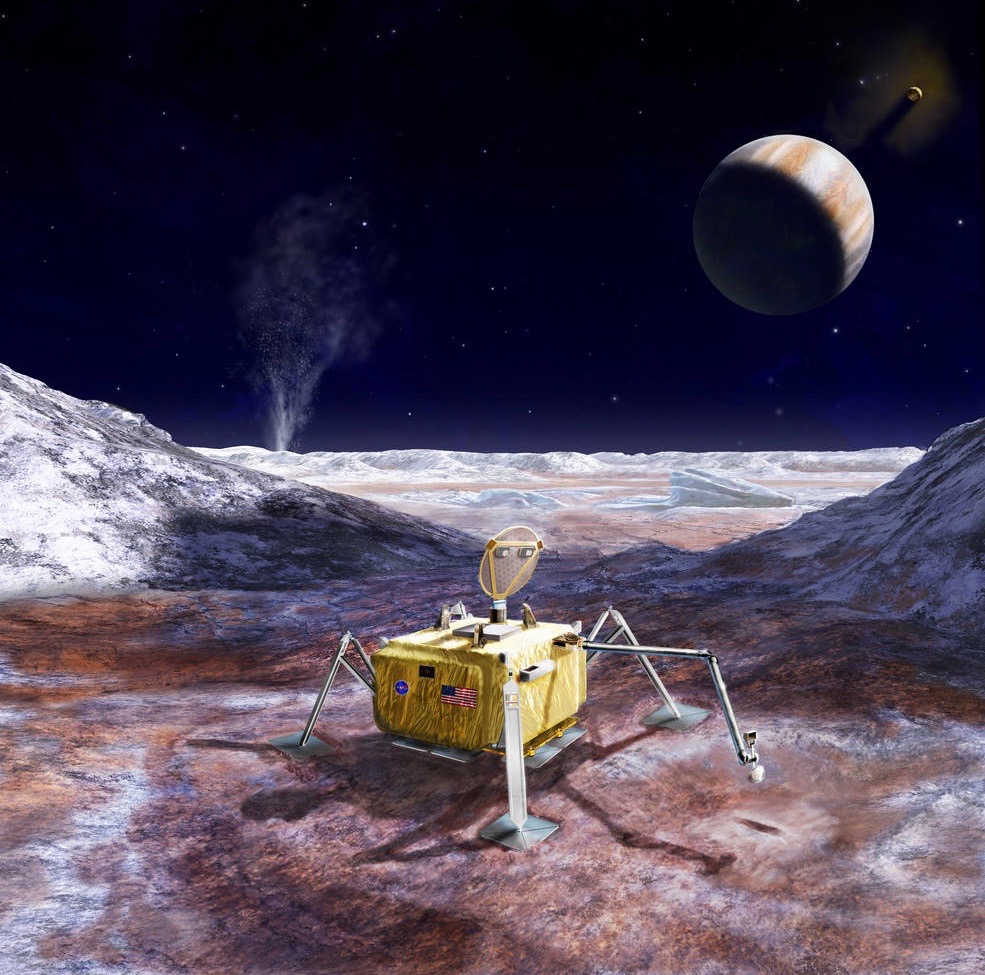

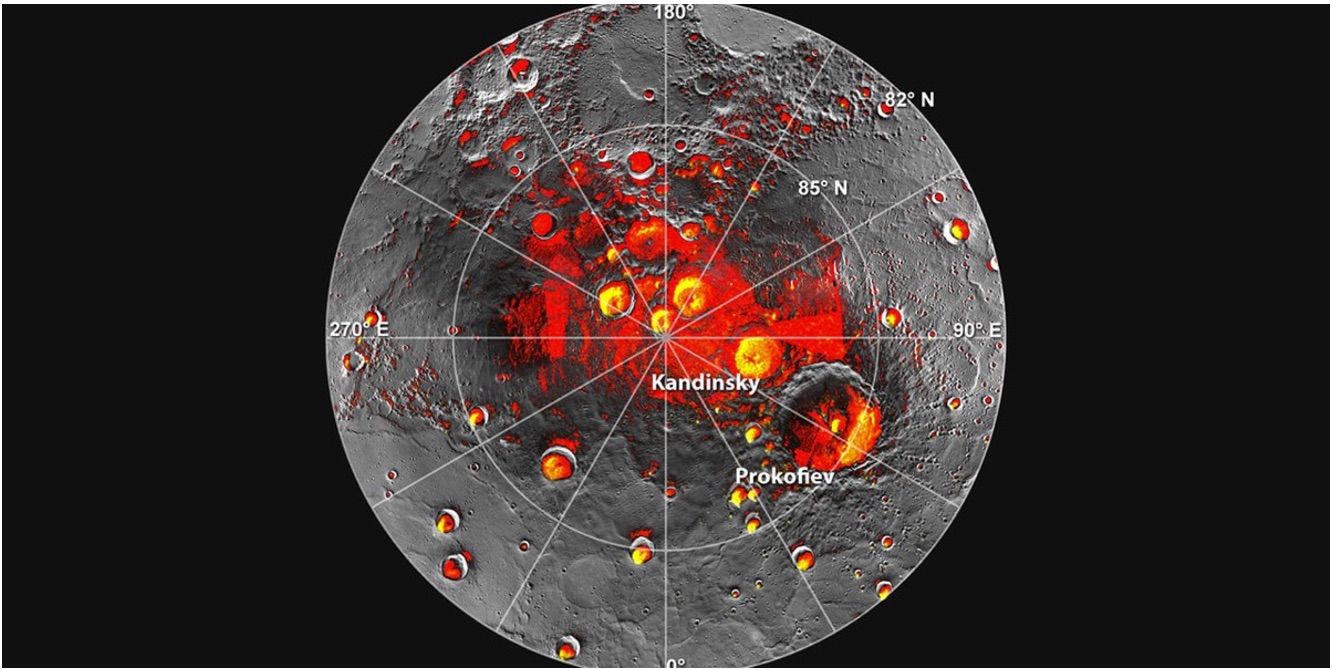


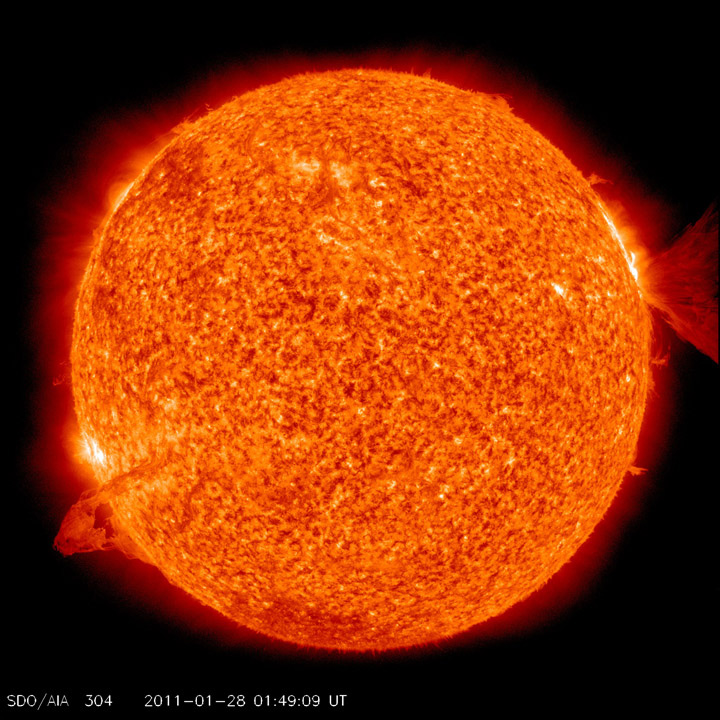


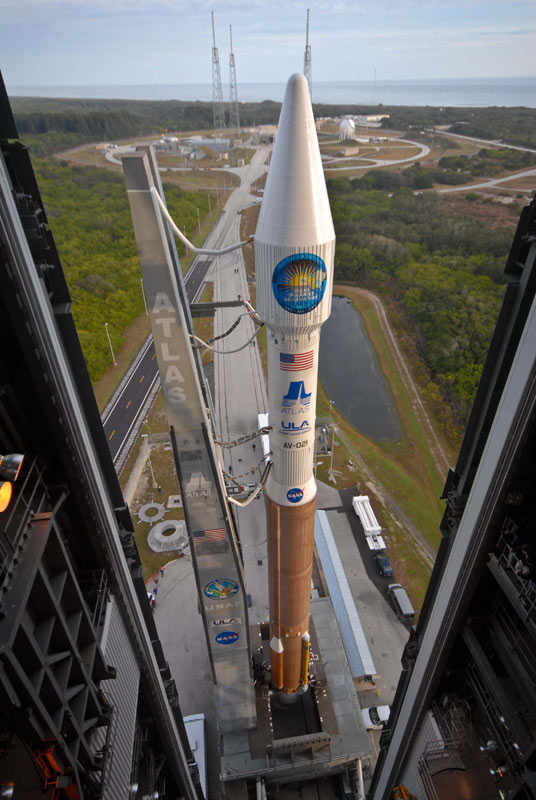

 Is there alien life on Europa? Nasa to reveal a 'surprising'...
 Say Allo to Google's new messaging app: AI chat system that...
 An illuminating find: Ottoman period 'lighthouse' and...
 Male black widows mate with young female spiders to avoid...


 Airplanes and interplanetary SPACE TRAVEL described 7.000 YEARS AGO in India
 Ancient Gnostic texts: Earth is ruled by an interplanetary race known as Archons


