Naar de inhoud

UFO'S of UAP'S, ASTRONOMIE, RUIMTEVAART, ARCHEOLOGIE, OUDHEIDKUNDE, SF-SNUFJES EN ANDERE ESOTERISCHE WETENSCHAPPEN - DE ALLERLAATSTE NIEUWTJES

UFO's of UAP'S in België en de rest van de wereld
akke.beakke.be
Ontdek de Fascinerende Wereld van UFO's en UAP's: Jouw Bron voor Onthullende Informatie! Ben jij ook gefascineerd door het onbekende? Wil je meer weten over UFO's en UAP's, niet alleen in België, maar over de hele wereld? Dan ben je op de juiste plek! België: Het Kloppend Hart van UFO-onderzoek In België is BUFON (Belgisch UFO-Netwerk) dé autoriteit op het gebied van UFO-onderzoek. Voor betrouwbare en objectieve informatie over deze intrigerende fenomenen, bezoek je zeker onze Facebook-pagina en deze blog. Maar dat is nog niet alles! Ontdek ook het Belgisch UFO-meldpunt en Caelestia, twee organisaties die diepgaand onderzoek verrichten, al zijn ze soms kritisch of sceptisch. Nederland: Een Schat aan Informatie Voor onze Nederlandse buren is er de schitterende website www.ufowijzer.nl, beheerd door Paul Harmans. Deze site biedt een schat aan informatie en artikelen die je niet wilt missen! Internationaal: MUFON - De Wereldwijde Autoriteit Neem ook een kijkje bij MUFON (Mutual UFO Network Inc.), een gerenommeerde Amerikaanse UFO-vereniging met afdelingen in de VS en wereldwijd. MUFON is toegewijd aan de wetenschappelijke en analytische studie van het UFO-fenomeen, en hun maandelijkse tijdschrift, The MUFON UFO-Journal, is een must-read voor elke UFO-enthousiasteling. Bezoek hun website op www.mufon.com voor meer informatie. Samenwerking en Toekomstvisie Sinds 1 februari 2020 is Pieter niet alleen ex-president van BUFON, maar ook de voormalige nationale directeur van MUFON in Vlaanderen en Nederland. Dit creëert een sterke samenwerking met de Franse MUFON Reseau MUFON/EUROP, wat ons in staat stelt om nog meer waardevolle inzichten te delen. Let op: Nepprofielen en Nieuwe Groeperingen Pas op voor een nieuwe groepering die zich ook BUFON noemt, maar geen enkele connectie heeft met onze gevestigde organisatie. Hoewel zij de naam geregistreerd hebben, kunnen ze het rijke verleden en de expertise van onze groep niet evenaren. We wensen hen veel succes, maar we blijven de autoriteit in UFO-onderzoek! Blijf Op De Hoogte! Wil jij de laatste nieuwtjes over UFO's, ruimtevaart, archeologie, en meer? Volg ons dan en duik samen met ons in de fascinerende wereld van het onbekende! Sluit je aan bij de gemeenschap van nieuwsgierige geesten die net als jij verlangen naar antwoorden en avonturen in de sterren! Heb je vragen of wil je meer weten? Aarzel dan niet om contact met ons op te nemen! Samen ontrafelen we het mysterie van de lucht en daarbuiten.

Berichten van 1 maart 2017 tot 31 maart 2017

Cops Admit Sending Officers To Investigate UFO Sighting Reports In Lancashire

Cops Admit Sending Officers To Investigate UFO Sighting Reports In Lancashire

ufo incident

Lancashire police have admitted sending officers to UFO sighting scenes after getting calls about alien craft. The cops acknowledged that it had happened eight times in two years after the police force received a series of reports of extraterrestrials from terrified witnesses. However, they did not find any proof of UFO existence.

According to the police spokesman, the operator assesses each call that is received into the control room and identifies any harm, threat, or risk. The operator then carries out the appropriate response, which may include sending police officers.

The police spokesperson added that these calls sometimes not involving an actual UFO and only a suspicious light or movement. Such things could be mean any number of things, said the spokesperson, and they would assess and deploy officers if necessary, or the caller’s welfare is at stake.

Lancashire has shares of alien activities. One of the famous UFO incidents happened in 1995, resulting in 250 calls from alleged witnesses of a UFO moving through the sky at high speeds.

Police have investigated UFO-related cases in the last two years, including a beam of light that was suspected to be from an unknown vehicle, multiple spaceship sightings, and a UFO landing in a park.

Locals appear to be very curious of the UFO existence, according to Andy Sierolawski of Todmorden Observatory in Lancashire. He said that about 40 percent of people who visit the center ask them if they have ever seen anything all the time. He stressed that Venus and Saturn, as well as aircraft, can be mistaken for something else.

{ http://www.latest-ufo-sightings.net/ }

Hoe vind je dit bericht?
Geschreven door peter om 22:07 Stuur door

Fleet Of UFOs Over London Following Jet, March 25, 2017, Photos, UFO Sighting News.

Fleet Of UFOs Over London Following Jet, March 25, 2017, Photos, UFO Sighting News.

jet%252C%2Bjets%252C%2Bplane%252C%2BUFO%252C%2BUFOS%252C%2Bsighting%252C%2Bsightings%252C%2Bspace%252C%2Bnews%252C%2BW56%252C%2Balien%252C%2Baliens%252C%2BArea%2B51%252C%2Bastronomy3.png

Date of sighting:  March 25, 2017
Location of sighting: London, England
Source: MUFON #82822

These UFOs are easily cloaked when hiding within white clouds, however they were seen following a jet, probably out of curiosity of the latest human aviation tech. Once called Foo Fighters in WWI and WWII, these types of UFOs still exist are are actually the most common. At night if they hold still the chances that you will mistake them for a star are very high, until the move and blow your mind. 

Scott C. Waring

Eyewitness states: 

Fulham, London walking to a cafe. Airspace is busy but on this occasion I looked at and saw a star like object about 7 aircraft widths to the left of the passenger aircraft. Then noticed several lights to the right of the aircraft as I looked up: about 7, 12 and 15 aircraft widths to the right. They followed the aircraft and continued to follow it, keeping the same relative distance, as it banked gently toward a more northerly path. At first I thought they were balloons reflecting bright sunlight - I've seen some rarely - but thes lights remained at a constant speed, had a smooth direction and all turned relative to each other, and at same distance from each other. Also, they seems to emit a constant light and not reflect it, whereas balloons change intensity as they tilt relative to me/observer and the sun. The aircraft wasn't landing at a London airport, those are Only a few thousand feet above observer-point and the aircraft had a vapour trail and I should imagine it was over 15-20,000 ft above me. Aircraft and light were obscured by city housing then. 

UFO%252C%2BUFOS%252C%2Bsighting%252C%2Bsightings%252C%2Bspace%252C%2Bnews%252C%2BW56%252C%2Balien%252C%2Baliens%252C%2BArea%2B51%252C%2Bastronomy2.png

UFO%252C%2BUFOS%252C%2Bsighting%252C%2Bsightings%252C%2Bspace%252C%2Bnews%252C%2BW56%252C%2Balien%252C%2Baliens%252C%2BArea%2B51%252C%2Bastronomy4.JPG

UFO%252C%2BUFOS%252C%2Bsighting%252C%2Bsightings%252C%2Bspace%252C%2Bnews%252C%2BW56%252C%2Balien%252C%2Baliens%252C%2BArea%2B51%252C%2Bastronomy1.JPG

UFO%252C%2BUFOS%252C%2Bsighting%252C%2Bsightings%252C%2Bspace%252C%2Bnews%252C%2BW56%252C%2Balien%252C%2Baliens%252C%2BArea%2B51%252C%2Bastronomy5.JPG

{ http://www.ufosightingsdaily.com/ }

Hoe vind je dit bericht?
Geschreven door peter om 11:41 Stuur door

Glowing UFO Baseball Size Caught Exploring Farm In Oklahoma, March 2017, Photos, UFO Sighting News.

Glowing UFO Baseball Size Caught Exploring Farm In Oklahoma, March 2017, Photos, UFO Sighting News.

camera%252C%2Bsky%252C%2BInfrared%252C%2Blight%252C%2Bforest%252Clake%2Btahoe%252C%2BAI%252C%2Bartificial%2BIntelligence%252C%2Btank%252C%2Barcheology%252C%2BGod%252C%2BNellis%2BAFB%252C%2BMoon%252C%2Bunidentified%2Bflying%2Bobject%252C%2Bspace%252C%2BUFO%252C%2BUFOs%252C%2Bsighting%252C%2Bsightings%252C%2Balien%252C%2Baliens%252C%2BFox%252C%2BNews%252C%2Bastronomy%252C%2Btreasure%252C%2B4.png

Date of sighting: March 4, 2017
Location of sighting: Gore, Oklahoma, USA
Source: MUFON #82816

This UFO was caught by a farmer in Oklahoma this month. The infrared camera can see light the human eye cannot. IR (infrared) is outside the human eye spectrum, but this camera can see it. The UFO was caught just below the pine tree and as you can see, the UFO was so bright it lit up the lower branches of the pine tree. As I have said before, UFOs range in size from tiny golf ball size to miles across and great sizes. This one prefers to wait till midnight to 6am when most humans are sleeping so it can explore and learn...but in between...where does it hide? Is there a larger ship hiding in a local pond or lake nearby. Below the surface of water is the most logical and easy hiding place. 


The Arkansas river runs just across the north western side of Gore, so this is the logical hiding place of the UFO.

Scott C. Waring
UFO%252C%2BGore%252C%2Bfarmer%252C%2Bfarm%252C%2Bfarms%252C%2Balien%252C%2Baliens%252C%2Bsighting.png

Eyewitness states: 
Frequently observe these orbs. decided to put out game cams. we were astonished that the cam caught the orb via motion and once we zoomed in on the picture and adjusted the picture with basic contrast adjustments we were amazed. around 6 people have observed this orb phenomena over the last six months. the object typically hovers for approximately 15-20 minutes and disappears. this sighting happens on our sheep farm usually around midnight to 6 am.
The first time this was observed was around Sept 2016. Several farm hands noticed two orbs floating in the pasture. the evening was very quiet. two orbs floated back and forth appx 100 yards away from the observers. My brother yelled "hey!, who's out there and whats your business here?", the orbs stopped moving and sticks could be heard breaking as they exited on the backside of our main pasture; mind you, all our sheep are locked up in a barn at night. my farm hands stood there watching the object(s) daring each other to go down there. there's no way it was an sheep or deer moving about. the two orbs exited the property to the east and disappeared. There have been various other "pop-up" occurances between then and present day. We typically watch it from the top of the pasture and typically it goes away.
One morning in Jan 2017 the orb had 'woke up' all our farm animals; we went outside the house and walked towards the barn; all the animals were nervous and 'vocal'; making noise like a predator was near or someone they didn't know; we walked to the barn and watched the 'single' orb this time just hovering around 4-6' off the ground; appx 80 yards facing south from our perspective. During the last observance this March (2017); we had the game cam setup and captured those images; i tried driving my truck to the opposite side from my brothers viewpoint. after watching and talking to my brother via facetime video; the object took off and hovered over the home location and disappeared. I was reluctant to post this b/c i don't want any attention brought to my farm or family; im a local public official and wish to remain anonymouse but would be interested in talking to a field investigator.

Infrared%252C%2Blight%252C%2Bforest%252Clake%2Btahoe%252C%2BAI%252C%2Bartificial%2BIntelligence%252C%2Btank%252C%2Barcheology%252C%2BGod%252C%2BNellis%2BAFB%252C%2BMoon%252C%2Bunidentified%2Bflying%2Bobject%252C%2Bspace%252C%2BUFO%252C%2BUFOs%252C%2Bsighting%252C%2Bsightings%252C%2Balien%252C%2Baliens%252C%2BFox%252C%2BNews%252C%2Bastronomy%252C%2Btreasure%252C%2B2.png

Infrared%252C%2Blight%252C%2Bforest%252Clake%2Btahoe%252C%2BAI%252C%2Bartificial%2BIntelligence%252C%2Btank%252C%2Barcheology%252C%2BGod%252C%2BNellis%2BAFB%252C%2BMoon%252C%2Bunidentified%2Bflying%2Bobject%252C%2Bspace%252C%2BUFO%252C%2BUFOs%252C%2Bsighting%252C%2Bsightings%252C%2Balien%252C%2Baliens%252C%2BFox%252C%2BNews%252C%2Bastronomy%252C%2Btreasure%252C%2B3.png
Infrared%252C%2Blight%252C%2Bforest%252Clake%2Btahoe%252C%2BAI%252C%2Bartificial%2BIntelligence%252C%2Btank%252C%2Barcheology%252C%2BGod%252C%2BNellis%2BAFB%252C%2BMoon%252C%2Bunidentified%2Bflying%2Bobject%252C%2Bspace%252C%2BUFO%252C%2BUFOs%252C%2Bsighting%252C%2Bsightings%252C%2Balien%252C%2Baliens%252C%2BFox%252C%2BNews%252C%2Bastronomy%252C%2Btreasure%252C%2B1.jpg

{ http://www.ufosightingsdaily.com/ }

Hoe vind je dit bericht?
Geschreven door peter om 11:37 Stuur door

How the perception of ET contact changes humans

How the perception of ET contact changes humans

MV5BMTQ1MzE2Mzc5MF5BMl5BanBnXkFtZTYwODI5ODQ3._V1_.jpg

Thanks everyone for your well wishes. And thank you Darci for you know what. You shouldn’t have ! It is much appreciated !!!

I am still crook today but have dragged myself into my study to write this. I’ve been naughty the last few days. I should have stayed away from all electronics but I haven’t. Some of that time I have been reading the Kindle re-release of John Mack’s “Passport to the Cosmos”. I first read some of John Mack’s books in the mid 90s’ and I have a feeling I read some of this book in a local library, but back then I was still coming to grips with my own experiences and some of the things that were explored in his books were outside of my conscious understanding. So now as I read this book, it’s all so easy to digest. I don’t agree with all of the insights of the so-called abductees but I can respect how they see things. I greatly admire the way that John Mack connected with their entire experience and nurtured many of them to a point of acceptance.  I think it is the best book ever written about the ET contact experience. My only wish is that John was able to connect the contact experiences and their subsequent spiritual transformations to the work of Carl Jung and the Transpersonal psychologists and anthropologists.

So every night when I go to bed for the last 3 nights, I’ve been thinking about the contact experience and what it means to me. As a result of this I’ve had some new insights, that I’ll try share over the next few months.

For now I’d like to say something about how the perception of ET contact changes humans.

I’ve talked before about the contact phenomenon following a DEVELOPMENTAL CONTINUUM, where a person grows through the experience and subsequently shifts in their perception of the experience. What I haven’t said before is that everybody is different. Every body changes in their experience of ET contact but not everybody experiences a change in their perceptions of contact. Some people seem to stay fixed in their perceptions of what has been happening to them. And that to me, seems a real shame for the folks who see only bad aliens.

What seems to happen to me, is that the experience itself changes across the life span, depending on how old we are and where we’re at psychologically and spiritually. Initially, it seems like we have no control and we experience an inability to remain conscious. We may discover that strange medical procedures were carried out on our body and strange interactions done with our mind. Gradually we become aware of our experiences and may even be conscious through part of an experience or an entire experience. During this phase we may be shown things or taught things about all manner of subjects. John Mack’s abductees all seemed to be taught about the preciousness of life on this planet and the need for us to change our ways to save Earth from mass extinctions. Later we may be taught about the true nature of reality and who the ETs are and where they come from. During either of these phases we may be given tours around the craft. Later when we have lost all fear, we are given full opportunity to interact with the sentience of craft – through enjoying a room of our own, learning from the craft, enjoying food from the craft, toileting, bathing or showering and piloting the craft. From this point onwards, contact seems evolve into a combination of opportunities and activities – which include visiting other worlds and meeting many different races (although you may meet other races at any stage). Through out all phases, you will receive regular monitoring and assessments of your physical and emotional health.

But not everyone seems to seems to have these opportunities and if they do, they don’t perceive them as opportunities. The diagram below is a rough effort on my part to show the movement or lack of movement in perception and growth that takes place in people who have contact with beings from other worlds. I’ve attached the name of some people who you may know from this field and I’ve also attached the names of some researchers.

DC4

To make this diagram, I’ve had to make certain judgements and I could be wrong about my perceptions of these individuals. So what this diagram shows is my perception of the general changes in certain individuals. So take Credo Mutwa, who is well known to David Icke followers. Credo sees the ETs as parasitic aliens, who are using humans for their own benefit. He has continued to perceive contact as traumatic and painful. But while angry with the aliens who control Earth, he perceives that he has gained benefit from the knowledge they have given him. Whitley Strieber seems to be somewhere in the middle. And although he was aware of his contacts before many other people and has explored them in great depth, he still seems to see them with a degree of ambiguity, uncertainty and concern. Mike Clelland of Hidden Experience blog  http://mikeclelland.com/ / http://hiddenexperience.blogspot.com.au/, has been grappling with contact in a public way, for quite a while now and my sense is that Mike is still very suspicious of those orchestrating his contacts. Mike is open but equally uncertain. Rachel Bree, my ex -wife is at the other end of the continuum. She met Dude when she was 4 years old and has always known what the ETs are really like. Despite some discomfort with unexpected events, she has always trusted and looked up to the ETs and knows they love and care for her. (She doesn’t feel that way about humanity though !). When I spoke to my son Toa, he put himself now about 3/4 of teh way along teh continuum – suggesting he’s still a bit frightened of letting go. I place my self  now at the far end but initially when I started having conscious encounters, although I was always excited, I was admittedly a little scared. In the same group I also place Bernado Peixoto and Sequoyah Trueblood – (abductees who feature prominently in Passport to the Cosmos). And while Passport to the Cosmos contains a number of so called abductees who I would think of as embodying a very strong New Age Mythos, many of them could also be placed in the same group.

You”ll notice that I have also added some researchers. David Jacobs, seems to have maintained the same view of contact – that humanity is dealing with an alien threat, that seeks to use and abuse us. Bud Hopkins, despite a great deal of pioneering work remains an alarmist of sorts who sees aliens as intruders who are doing terrible things to humans. John Mack, came from a place of great uncertainty and in his time, I think came to recognize the ET contact experience in the same way that many contactees do – as a form of encounter with teh divine. It seems to me, that not only do those who have contact experiences pass through some sort of Developmental Continuum (whether their is a radical shift in their perceptions or not) but those who research the subject also pass through a Developmental Continuum – which seems to reflect the same sort of inner features. This in turn seems to be reflected in the populous. And hence now, we can see a multitude of divisions that fit somewhere along the same kind of continuum.

In a lot of the community work I did I noticed that the “squeaky wheel”, the one that most the made noise, got the most attention and sadly, I think the same is true in this field. Those who have the loudest voices are the ones declaring how insidious and bad the aliens are. If only we had another John Mack !

Image result for photo of alien

What do these difference in initial and changing perceptions reflect ? I’m not sure. But I think it may reflect several things. First how willing we are to accept challenges to our world view and accept the need for change in our world view. Second, different temperaments, seem to be predisposed to being Victims and others to being Empowered by experience. Third, I suspect that Victim type personalities have a long and probably unknown/suppressed history of trauma and that Empowered type personalities have come in contact with their traumas and integrated them into who they consciously are. Fourth – the innate ability to trust, seems to be lacking in Victims. Fifth – everybody is a product of their conditioning via family systems, education, work, society, religion, ethnicity, nationality, interests etc. Those with rigid conditioning that has entrapped them in certain ways of thinking, may end up developing Victim type personalities who see ET contact as a hostile alien abduction, driven by ulterior motives. Those who can see the impact of their conditioning on their thought processes, may end up developing Empowered personalities who see ET contact as connection with the divine. Sixth – those that perceive the universe to be determined by an internal locus of control are OK with whatever happens, while those who perceive the universe to be determined by an external locus of control

There seems to be to me a kind of feedback loop going on in the psyche of all who have encountered ET contact. If you start off as a Victim type personality, you seem to internalize the idea that you are controlled and life isn’t fair. And unless you get past that idea, you will never get to to become the Empowered type personality that seems to internalize the idea that you control how you react to everything and that life is fair. If you latch on too tightly to those dark ideas of absolutely having to have control over this body, you are going to suffer immensely. And the same is true whether you’re sick with disease and need to trust others to help heal you or care for you or whether you need to trust in what the ETs are doing. There is so much attachment to the body and those that are heavily attached, can talk all they want about spirit but unless they let go of that attachment to controlling the body, they will never understand spirit and the boundlessness of spirit. If a human abducted me and did things to me, despite my knowledge of spirit, I wouldn’t like that because I know what cruelty humans are capable of. Still I would try to relinquish the need for absolute control. But an ET can take me anytime because I trust in their intentions and can move past the challenges which come to the body.

I think perhaps the most important thing about the contact phenomenon, is that it cracks open our perception of reality and in the aftermath of dealing with that, we have a choice about how we integrate what has happened to us and our new perceptions of reality. Do we choose to look favorably on what we have learned or do we recoil in horror ? If we look favorably we begin to see all of life as an opportunity for growth and development and feel deep connection to ALL things. If we look unfavorably we begin to see threats everywhere and life as an exhausting process of frustration and self defense. Ultimately it’s all about whether we embrace separateness or wholeness. If we embrace wholeness, we accept that separateness is am aspect of the whole. If we embrace separateness, we never accept or embrace the whole.

Related image

So these are all generalizations. I am not saying they’re strictly true for everyone but I think there are strong correlations between those who see themselves as victims (and if they don’t they act as victims) and those that feel empowered.

In the past and future history of this subject there will always be people like Credo Mutwa and people like me – people who see both ends of the spectrum and who avidly support what they believe to be true. You must decide for yourself what is true for you !

I can’t tell you how you should feel about the experience of contact. All I can do is tell you what I have learned about myself, the ETs and the experience of contact. And if you go out and try to have contact and you’re successful, you may learn for yourself that the ETs mean us no harm and are here to nurture us.

John Mack confirmed this when he in Passport to the Cosmos he said :

“…relate their abduction experiences to a kind of cosmic game in which a lonely Creator learns Itself through a splitting of consciousness – “an explosion into the multiplicity of Self,”…Out of the primordial potential, God spawns beings who separate from Him and then choose to reconnect. But in the case of humankind, the experiment went awry, as many of us have lost connection with the creative principal altogether. The alien beings seem to play a part in reconnecting the experiencers to the Creator or Source.”

In an interview on NBC

(http://www.bibliotecapleyades.net/vida_alien/alien_abductionabductees25.htm) John Mack suggested :

“The purpose of doing this work,” Dr. Mack replied, “is to open us to the idea that the universe may be vastly more interesting, containing entities, energies, beings that we did not know existed. When we open that consciousness, we open to a larger reality. We’re not simply Earth-bound in our consciousness as if we were the top intelligence in the cosmos. We come more modestly to realize we are in connection with energies, beings, whatever it may be that is beyond ourselves. And that would be a very healthy development for this species, it seems to me.”

And that to me is what the ET contact experience is about in a nutshell. Whether we see the ETs as manifestations of the Divine/Source/God is irrelevant. We’re in contact with a larger reality, that is within us and within which we co-exist. When we open up to that, we have no choice but to grow and transform our limited perceptions about reality and the nature of Self.

Some relevant Links :

http://johnemackinstitute.org/books-by-john-e-mack/

http://www.amazon.com/Passport-Cosmos-John-E-Mack-ebook/dp/B004LP3AFM/ref=asap_B000AQ4TWY?ie=UTF8

http://www.ufoevidence.org/documents/doc1887.htm

http://www.bibliotecapleyades.net/vida_alien/alien_abductionabductees25.htm

http://johnemackinstitute.org/2000/03/dr-john-mack-at-the-seven-stars-bookstore/

http://en.wikipedia.org/wiki/Transpersonal

http://en.wikipedia.org/wiki/Transpersonal_psychology

http://en.wikipedia.org/wiki/Transpersonal_anthropology

http://en.wikipedia.org/wiki/Locus_of_control

PS. Did that make any sense. I’m still groggy with this Flu ?

{ https://etandi.wordpress.com/ }

Hoe vind je dit bericht?
Geschreven door peter om 01:05 Stuur door

How Often Do Ice Ages Happen?

How Often Do Ice Ages Happen?

How Often Do Ice Ages Happen?
About 700 million years ago, during the Cryogenian glaciation, runaway glaciers made Earth look like a snowball.
Credit: NASA

The last ice age led to the rise of the woolly mammoth and the vast expansion of glaciers. But it's just one of many that has chilled Earth throughout the planet's 4.5-billion-year history.

So, how often do ice ages happen, and when is the next freeze expected to begin?

The answer to the first question depends on whether you're talking about big ice ages or the little ice ages that happen within those larger periods. Earth has undergone five big ice ages, some of which lasted for hundreds of millions of years. In fact, Earth is in a big ice age now, which explains why the planet has polar ice caps. [Photo Gallery: Antarctica's Pine Island Glacier Cracks]

Big ice ages account for about 25 percent of Earth's past billion years, said Michael Sandstrom, a doctoral student in paleoclimate at Columbia University in New York City.

The five major ice ages in the paleo record include the Huronian glaciation (2.4 billion to 2.1 billion years ago), the Cryogenian glaciation (720 million to 635 million years ago), the Andean-Saharan glaciation (450 million to 420 million years ago), the Late Paleozoic ice age (335 million to 260 million years ago) and the Quaternary glaciation (2.7 million years ago to present).

These large ice ages can have smaller ice ages (called glacials) and warmer periods (called interglacials) within them. During the beginning of the Quaternary glaciation, from about 2.7 million to 1 million years ago, these cold glacial periods occurred every 41,000 years. However, during the last 800,000 years, huge glacial sheets have appeared less frequently — about every 100,000 years, Sandstrom said.

This is how the 100,000-year cycle works: Ice sheets grow for about 90,000 years and then take about 10,000 years to collapse during warmer periods. Then, the process repeats itself.

Given that the last ice age ended about 11,700 years ago, isn't it time for Earth to get icy again?

"We should be heading into another ice age right now," Sandstrom told Live Science. But two factors related to Earth's orbit that influence the formation of glacials and interglacials are off. "That, coupled with the fact that we pump so much carbon dioxide into the atmosphere [means] we're probably not going to enter a glacial for at least 100,000 years," he said.

A hypothesis put forth by the Serbian astronomer Milutin Milankovitch (also spelled Milanković) explains why Earth cycles in and out of glacials and interglacials.

As the planet circles the sun, three factors affect how much sunlight it gets: its tilt (which ranges from 24.5 degrees to 22.1 degrees on a 41,000-year cycle); its eccentricity (the changing shape of its orbit around the sun, which ranges from a near-circle to an oval-like shape); and its wobble (one full wobble, which looks like a slowly spinning top, happens every 19,000 to 23,000 years), according to Milankovitch.

In 1976, a landmark paper in the journal Science provided evidence that these three orbital parameters explained the planet's glacial cycles, Sandstrom said.

"Milankovitch's theory is that the orbital cycles have been predictable and very consistent throughout time," Sandstrom said. "If you are in an ice age, then you'll have more or less ice depending on these orbital cycles. But if the Earth is too warm, they basically won't do anything, at least in terms of growing ice." [Doomsday: 9 Real Ways Earth Could End]

One thing that can warm Earth is a gas such as carbon dioxide. Over the past 800,000 years, carbon dioxide levels have fluctuated between about 170 parts per million and 280 ppm (meaning that out of 1 million air molecules, 280 of them are carbon dioxide molecules). That's a difference of only about 100 ppm between glacials and interglacials, Sandstrom said.

But carbon dioxide levels are much higher today when compared with these past fluctuations. In May 2016, Antarctica carbon dioxide levels hit the high level of 400 ppm, according to Climate Central.

Earth has been warm before. For instance, it was much warmer during the dinosaur age. "[But] the scary thing is how much carbon dioxide we've put in [the atmosphere] in such a short period of time," Sandstrom said.

The warming effects of that carbon dioxide will have big consequences, he said, because even a small increase in Earth's average temperature can lead to drastic changes, he said. For instance, Earth was only about 9 degrees Fahrenheit (5 degrees Celsius) colder, on average, during the last ice age than it is today, Sandstrom said.

If global warming causes both Greenland's and Antarctica's ice sheets to melt, the oceans will rise about 196 feet (60 meters) higher than they are now, Sandstrom said.

The factors that caused the long ice ages, such as the Quaternary glaciation, are less well-understood than those that led to glacials, Sandstrom noted. But one idea is that a massive drop in carbon dioxide levels can lead to lower temperatures, he said.

For instance, according to the uplift-weathering hypothesis, as plate tectonics pushed up mountain ranges, new rock became exposed. This unprotected rock was easily weathered and broken apart, and would fall into the oceans, taking carbon dioxide with it.

These rocks provided critical components that marine organisms used to build their calcium-carbonate shells. Over time, both the rocks and the shells took carbon dioxide out of the atmosphere, which, along with other forces, helped lower carbon dioxide levels in the atmosphere, Sandstrom said.

Original article on Live Science.

{http://www.livescience.com/ }

Hoe vind je dit bericht?
Geschreven door peter om 00:51 Stuur door

The Most Interesting Science News Articles of the Week

The Most Interesting Science News Articles of the Week

Each week we uncover the most interesting and informative articles from around the world, here are 10 of the coolest stories in science this week.

This image shows a shrine called the
This image shows a shrine called the "Edicule," which is built over a cave where, according to legend, Jesus was buried after he was crucified. The Edicule is located inside the Church of the Holy Sepulchre in Jerusalem.
Credit: Lior Mizrahi/Getty Images

A shrine built over a cave that is revered as the tomb of Jesus is in danger of "catastrophic" collapse, according to a report by National Geographic.

Repair and restoration work at the Edicule has been going on for the past year, during which the limestone bed that Jesus' body was supposedly buried on was revealed. Today (March 22), National Geographic reported that the Edicule is in danger of "catastrophic" collapse if further repairs are not undertaken soon. [Read more about the dangers at the shrine.]

A colony of cockroaches maintained by virgin birth, or parthenogenesis. The roaches have been temporarily anesthetized with carbon dioxide.
Credit: Katoh, et al./Zoological Letters (2017)

Female cockroaches don't need a mate to lay eggs, but they do like company. New research finds that virgin female cockroaches housed together are quicker to produce offspring than virgin females living alone.

To test the effect of social milieu, the researchers put female cockroaches in different situations. In the control group, a male and a female were housed together and were allowed to mate. In other cases, females were kept with one, two, three or four other females. Other female roaches were kept with castrated males. The researchers also tested the effects of adding pheromones, chemicals that insects use for communication, to all-female cockroach groups. [Read more about the strange habit.]

A glass expert found the bottles would have held a variety of drinks, including alcoholic beverages such as gin, liqueur and whiskey.
Credit: Assaf Peretz/Israel Antiquities Authority

Hundreds of World War I-era liquor bottles have been uncovered at a buried British barracks in Israel.

The excavators unearthed the foundations of an agricultural building from the Ottoman Empire — which ruled Israel from 1517 until the end of World War I — that had apparently been repurposed as housing for British soldiers during the war. [Read more about the British bottles.]

Cancer is caused by mistakes in DNA, and a new study finds that in most cancer cases, these mistakes are completely random; they're not due to heredity or environmental factors, but rather the result of random errors.

Scientists had thought these mutations resulted mainly from two things: Either the mutation was inherited, or it was caused by outside factors that can damage DNA, such as cigarette smoke or ultraviolet radiation, the researchers wrote. But a third cause — random mistakes — actually accounts for two-thirds of these mutations, said the new study, published today (March 23) in the journal Science. [Read more about the dangerous mistakes.]

aHR0cDovL3d3dy5saXZlc2NpZW5jZS5jb20vaW1hZ2VzL2kvMDAwLzA5MC82MjMvb3JpZ2luYWwvbWVkaWV2YWwtbWFuLWZhY2UtcmVjb25zdHJ1Y3Rpb24uanBlZz8xNDkwMjQzMTY3
Archaeologists at the University of Cambridge reconstructed the face of the so-called "Context 958" skeleton.
Credit: Chris Rynn/University of Dundee

The face of a British man who died about 700 years ago has been brought to life using reconstructive technology.

The medieval man was buried along with hundreds of others in a graveyard underneath what is now the Old Divinity School building of St. John's College at the University of Cambridge, in the United Kingdom. [Read more about the reconstruction.]

aHR0cDovL3d3dy5saXZlc2NpZW5jZS5jb20vaW1hZ2VzL2kvMDAwLzA5MC81OTAvb3JpZ2luYWwvYXRyYWN0dXMtY2VyYmVydXMtMTcwMzIxLmpwZz8xNDkwMTg2OTc3
Two adult male Cerberus groundsnakes (Atractus Cerberus), newly discovered near the gates of the Refinería del Pacífico, a massive petrochemical complex that reminded the snake's discoverers of hell. These snakes are presumed to be critically endangered, as they were found in a small area of forest surrounded by land that had been cleared for industrial activites.
Credit: Arteaga, et al. ZooKeys

The sprawling Refinería del Pacífico is an enormous industrial complex stamped out of the tropical forest in Ecuador. So, when herpetologists discovered a new species of snake outside the petrochemical plant's gates, their minds went immediately to the underworld.

Advertisement NEWS TECH HEALTH PLANET EARTH SPACE STRANGE NEWS ANIMALS HISTORY HUMAN NATURE NEWS TECH HEALTH PLANET EARTH SPACE STRANGE NEWS ANIMALS HISTORY HUMAN NATURE Live ScienceAnimals Rare 'Snakes from Hell' Lurk Near Petrochemical Plant in Ecuador By Stephanie Pappas, Live Science Contributor | March 22, 2017 10:56am ET 154 29 8 2 18 MORE Partner Series Rare 'Snakes from Hell' Lurk Near Petrochemical Plant in Ecuador Two adult male Cerberus groundsnakes (Atractus Cerberus), newly discovered near the gates of the Refinería del Pacífico, a massive petrochemical complex that reminded the snake's discoverers of hell. Credit: Arteaga, et al./ZooKeys The sprawling Refinería del Pacífico is an enormous industrial complex stamped out of the tropical forest in Ecuador. So, when herpetologists discovered a new species of snake outside the petrochemical plant's gates, their minds went immediately to the underworld. And thus, Atractus cerberus was born. The brown-and-yellow ground snake — named after Cerberus, the mythological three-headed hound who guards Hades, the god of the underworld in ancient Greek mythology — is one of three new serpents discovered in Ecuador. All three newfound species are members of the genus Atractus, a secretive bunch that tends to evade scientific scrutiny, said Alejandro Arteaga, the scientific director of the conservation organization Tropical Herping who co-discovered and helped describe the new snakes. [Read more about the unique serpent.]

Dominique, who is 10 months old, was born with a rare
Dominique, who is 10 months old, was born with a rare "parasitic twin" attached to her body.
Credit: Advocate Children’s Hospital/Facebook

A 10-month-old girl who was born with a rare "parasitic twin" attached to her body has undergone a successful surgery to separate her from this underdeveloped twin.

Parasitic twins are very rare, occurring at the rate of about 1 in 1 million live births, according to the 2010 review. [Read more about the procedure.]

Stephen Hawking at a press conference to announce Breakthrough Starshot, a new space exploration initiative, at One World Observatory on April 12, 2016 in New York City.
Credit: Bryan Bedder/Stringer/Getty

Stephen Hawking does not feel welcome in Donald Trump's America. The renowned physicist made this unhappy claim in a recent interview, and he expressed particular concern about how the Trump administration is treating the issue of climate change.

Hawking, who once called Trump a "demagogue," said the new U.S. president was elected by "people who felt disenfranchised by the governing elite in a revolt against globalization." [Read more about the his fears.]

A thorough look at 457 characteristics in 74 species revealed that theropod dinosaurs (such as <i>Tyrannosaurus rex</i> and birds) and ornithischian dinosaurs (such as duck-billed dinosaurs and stegosaurs) are more closely related than previously thought.
A thorough look at 457 characteristics in 74 species revealed that theropod dinosaurs (such as Tyrannosaurus rex and birds) and ornithischian dinosaurs (such as duck-billed dinosaurs and stegosaurs) are more closely related than previously thought.
Credit: Baron MG. et al. Nature (2017)

The dinosaur family tree, used by paleontologists and dinosaur buffs for the past 130 years, has just been transformed.

The new study completely reorganizes this setup. According to new analyses, theropods and ornithischians are more closely related than scientists previously thought, and both fit into a previously unknown group called Ornithoscelida, the researchers said. [Read more about the family tree.]

At the end of the jetty there was a round tower, which would have been part of the fortified harbor during the Battle of Salamis.
Credit: V. Mentoyannis

Greek archaeologists have found the ancient military harbor of the island of Salamis — the very physical space from which the largest and most decisive naval battle ever fought in antiquity was launched.

The survey identified remains of port structures, fortifications and other buildings dating from the Classical period (from the fifth to fourth centuries B.C.) and Hellenistic period, on all three sides — north, west and south — of the bay. (The beginning of the Hel lenistic period is usually marked by the death of Alexander the Great in 323 B.C.) [Read more about the ancient base.]

Follow Live Science @livescience, Facebook & Google+.

{ http://www.livescience.com/ }

Hoe vind je dit bericht?
Geschreven door peter om 00:44 Stuur door

UFO Repairmen From The Stars? No!

UFO Repairmen From The Stars? No!

Last year I wrote an article here at Mysterious Universe titled “UFOs: Extraterrestrial? Probably Not.” One of the reasons I gave for suggesting that the UFO phenomenon is far stranger than anything of an E.T. nature, is the fact that many UFO incidents seem to be staged for the benefit of the witness. As if “they” are trying to convince us they are extraterrestrials. But, they are trying way too hard. I made mention of one particular angle of the UFO phenomenon that, in my opinion, is a perfect example.

I wrote:

QUOTE: “There’s the nature of the entities themselves: they practically overemphasize who, or what, they claim to be. Take, for example, all those ‘soil-sampling’ aliens of the 1950s and 1960s. You know the ones: someone is working in their field, or driving down a stretch of road, when they encounter a couple of diminutive aliens collecting specimens of local plants, flowers, and vegetables. E.T. on a scientific mission, right? No, not in my view.

“We only have to take a careful look at such cases (and there are more than a few on record – here’s a link to a number of classic cases) to see that these ‘incidents’ are clearly stage-managed. It’s a game, a scenario that has nothing to do with real soil-sampling, but everything to do with trying to emphasize the ET meme. Are we to believe that, time and time again, aliens are so stupid that they can’t collect a few of those aforementioned samples without having their cover blown? Of course, they could easily avoid us! But, here’s the deal: they want to be seen. It’s not an accident. It’s carefully planned. And it’s designed to plant an image of ‘E.T. scientists’ in the mind(s) of the witness(es).” END OF QUOTE.

Today, I’m going to highlight another – equally absurd – aspect of Ufology. I’m talking about the many reports of people stumbling on aliens “repairing” their craft. Like the supposed extraterrestrials who endlessly take soil samples, “the repairers from beyond” are also spectacularly useless when it comes to the issue of avoiding being seen. Of course, the truth is (as per my words above) that they want to be seen. Yet again, to add weight to the E.T. meme. Let’s take a look at a few incidents.


Richard Hall

The late UFO researcher Richard Hall recorded a couple of such cases: “November 25, 1964 New Berlin, NY: Twelve humanoids observed at distance after two discs landed on hill; appeared to be engaged in repair operation for hours. September 18, 1978 G. Filiputti, Melaria, Porto Nogaro, Italy 3:30 P.M.: One 1-meter-tall humanoid, silver tight-fitting coveralls, almond eyes, emerged from disc with dome, appeared to be making repairs on rim.”

Then, there is this at UFO Evidence, from March 30, 1995: “When a local farmer from Groot Marico in the western Transvaal plains region first observed the saucer-shaped object on Thursday morning, he noticed that it had a distinctly visible hole in its hull. The farmer, Mr. Jan Pienaar (45), is of the opinion that this ‘vehicle’ landed on a remote country road between Coligny and Brakspruit to have its damaged hull repaired. However, his arrival probably prompted the ‘vehicle’s’ hasty retreat and rapid ascent into the sky.”

In 1976, John Brent Musgrave wrote an article for Flying Saucer Review magazine titled “Saskatchewan, 1933: UFO Stops For Repairs.” Musgrave said in his article: “During the summer of 1933 stories drifted into Nipawin [Canada] that some homesteaders, as well as a forest tower ranger, had been observing strange lights in the sky and near the ground. Whatever it was, they had been seeing it for the better part of a week.” Musgrave added that according to three witnesses to a landed UFO in Nipawin: “The Occupants appeared to be slightly shorter than the average man, and were all dressed in what appeared to be silver colored suits or uniforms. All appeared to be wearing helmets or ski caps, and all were busy running around ‘repairing’ the craft.”

I could go on and on. But, you get the picture. Aliens are so advanced that they can travel the Universe, but when they come here, to Earth, they are endlessly plagued by problems of the “mechanical” kind. And when and where there just happens to be someone around to see them replacing the equivalent of a spark-plug or changing a tire. Nope. Something else is afoot. I don’t know why the UFO phenomenon plays such bizarre mind-games with us. But, it does. If we can figure out why, we may be halfway towards figuring out the real nature of the UFO phenomenon.

 TAGS: 

{ http://mysteriousuniverse.org/ }

Hoe vind je dit bericht?
Geschreven door peter om 00:25 Stuur door

Best Space Stories of the Week — March 25, 2017

Best Space Stories of the Week — March 25, 2017

Best Space Stories of the Week — March 25, 2017
Two of the raised treads on the left middle wheel of NASA's Curiosity rover on Mars suffered breaks in early 2017. One of the breaks is visible as a partially detached section at the top of the wheel, seen here by Curiosity's arm-mounted Mars Hand Lens Imager.
Credit: NASA/JPL-Caltech/MSSS

A Dragon returns, North Korea tests a rocket engine, a wheel breaks on Mars and a spacewalk streak begins — it's Space.com's top news stories of the week.

Transition begins

U.S. President Donald Trump signed a bill authorizing a $19.5 billion budget for NASA in 2017, setting its priorities for the year. Vice President Mike Pence also announced that he would head a re-established National Space Council, which will advise the president on space issues. [Full Story: President Trump Signs NASA Authorization Bill]

Dragon came back

SpaceX's Dragon spacecraft splashed down in the Pacific Ocean, bringing more than 2 tons of science experiments and gear back from the International Space Station. Officials retrieved the spacecraft and had time-sensitive scientific samples in the lab within 48 hours. [Full Story: SpaceX Dragon Capsule Returns to Earth with Ocean Splashdown]

Uncertainty engine

North Korea announced that they had performed a ground test of a powerful rocket engine suited to lifting satellites — or missiles — off the ground. [Full Story: North Korea Tests Rocket Engine: Is It for Satellites or Ballistic Missiles?]

Wear and tear

NASA's Curiosity Mars rover has two small breaks in the treads of one of its six heavy wheels. Curiosity has already lasted well beyond its original two-year mission lifetime, and it should be able to continue unhindered by this latest wear and tear. [Full Story: Breaks Found in Curiosity Mars Rover's Wheel]

(Tiny) thrusters, on!

New, dime-size ion thrusters could keep constellations of small satellites in orbit — or, working together, propel astronauts to Mars. The newly-developed "thruster chips" eject ions drawn from a salt-based propellant solution. [Full Story: Dime-Size Thrusters Could Propel Satellites, Spacecraft]

No laughing matter

The mysterious dark matter seems to make up a large percentage of the matter in the universe, but — perplexingly — early galaxies seem to not have very much of it. [Full Story: Lack of 'Dark Matter' in Early Galaxies Perplexes Astronomers]

Colorful cocoon

Three observant satellites, called Swarm, have mapped the complex magnetic field of Earth's crust and outer mantle, known as its lithosphere. The signal is tiny, but illuminating about the Earth's history. (And one city in Africa has a mysteriously sharp and strong magnetic spike.) [Full Story: Earth's Magnetic Cocoon Mapped in Extreme Detail]

Maybe no flow

Mars' famous dark streaks, thought to be caused by briny flows of water, may come from bone-dry landslides instead, new work suggests. [Full Story: Mars' Dark Streaks May Be Caused by Dry Landslides, Not Water]

But then again: Massive Martian Slopes May Harbor Ice

Going way back

A radio telescope that could probe the dawn of the universe's first stars and galaxies received a new grant, boosting its potential size from 240 huge antenna dishes to 350 — letting it look even further back in time. [Full Story: Telescope Eyeing Universe's First Stars Gets (Another) Big Boost]

Out there

Two astronauts completed a spacewalk Friday (March 24) to help prepare the International Space Station for future commercial spacecraft to dock and bring crew. It is the first of three spacewalks in a row, the third of which will be the station's 200th spacewalk. [Full Story: Space Station Astronauts Poised to Tackle Three-Spacewalk Streak]

Follow us @Spacedotcom, Facebook and Google+. Original article on Space.com. 

Hoe vind je dit bericht?
Geschreven door peter om 23:25 Stuur door

'Life' is an alien horror movie that riffs on some eerily plausible science

'Life' is an alien horror movie that riffs on some eerily plausible science

life science fiction alien horror movie sony pictures jake gyllenhaal 3

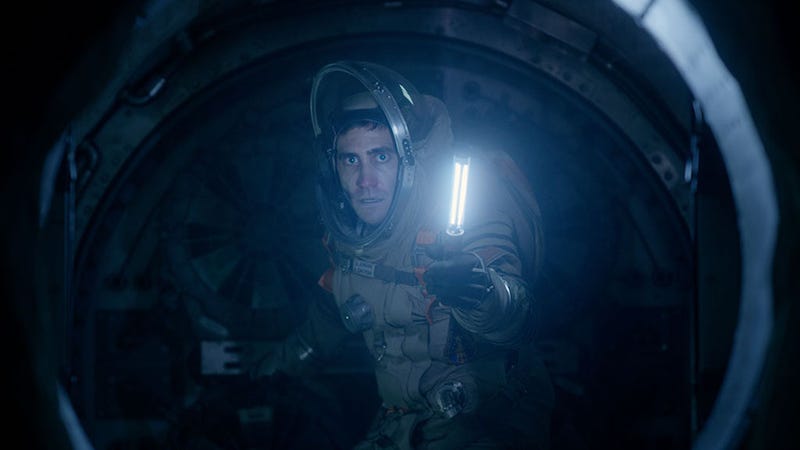
Jake Gyllenhaal in a scene from the alien sci-fi thriller "Life".Sony Pictures Entertainment, Inc.

Warning: Some spoilers for "Life" are ahead if you haven't seen the movie.

  • "Life" is a space horror movie starring Jake Gyllenhaal, Ryan Reynolds, Rebecca Ferguson, and more.
  • The plot is about a Mars sample return mission gone terribly wrong.
  • The film's creators worked with real scientists to make it more believable.
  • NASA is actually working on getting a Mars sample to Earth and is worried about contaminating the planet.

Big-budget science-fiction movies aren't supposed to be documentaries.

They are, however, supposed to take us on journeys to far-flung places, immerse us in vivid alternate realities, and make us wonder "what if?"

But reality itself is a powerful filmmaking spice that, justly applied, helps suspend our disbelief — and sometimes scream our guts out.

Such is the case with the new movie "Life", whose makers consulted a NASA-trained medical doctor, a Mars spacecraft engineer, and a geneticist to help produce their horrifying spectacle.

While the film, directed by Daniel Espinosa, whiffs on quite a lot of science, it does go far enough to be wildly entertaining. In fact, Business Insider's Jason Guerrasio even argues it may be a cult classic in the making.

We join the story just as a Mars sample return spacecraft is being caught by a small crew aboard the International Space Station (ISS). With red dirt in hand, NASA astronauts go about analyzing the grit behind several "firewalls" of protection.

After an extraterrestrial microbe is discovered in the soil, it's revived in a soup of water and nutrients. Then, to the astonishment of the crew, it springs to life. "Calvin," as the life form is soon called, quickly divides and grows into a starfish-size creature with incredible strength and intelligence.

What could possibly go wrong?

To understand what doses of reality went into the movie, we called up Dr. Kevin Fong ― a medical doctor, space medicine expert who's trained with NASA and ESA for about a decade, and a paid science consultant for the new Sony Pictures film.

And to answer some of those "what if?" questions on aliens, we spoke to Catharine A. Conley, a planetary protection officer for NASA who gets paid to help humankind avert extraterrestrial disasters in the real world.

Astronaut doctor on set

life science fiction alien horror movie sony pictures jake gyllenhaal 2

Jake Gyllenhaal plays the role of Dr. David Jordan in "Life". Sony

Pictures Entertainment, Inc.

"Life" features not one but two characters who are doctors, so filmmakers brought Fong on board to answer their pressing questions.

A lot of the early work happened by email, he says, but soon enough Fong was invited to join the set: an elaborate and modular reconstruction of the space station inside a giant green-screen studio.

"They paid more attention to detail than I'd seen in the space agencies," Fong told Business Insider. "Although the modules are different than what they actually are on the space station, it was very close."

The producers occasionally asked Fong to lend his expertise in physiology and emergency care to actor Jake Gyllenhaal (who plays long-duration astronaut David Jordan), actress Rebecca Ferguson (who plays Center for Disease specialist Miranda North), and others in various scenes.

life science fiction alien horror movie sony pictures rebecca ferguson

Rebecca Ferguson in "Life".

Sony Pictures Entertainment, Inc.

"There are a couple of quite dense medical scenes, where I'd say, 'I'd hold this tool like that,' or 'I wouldn't hold that in the way you are,' and 'here's some terminology I'd use in this situation.' On the set, it came across as a very believable," Fong says.

He was especially impressed with a cardiac arrest scene, saying it was "about as faithful as one could be" in a movie.

While he hadn't seen the movie, at least at the time Business Insider interviewed him, Fong didn't walk away thinking it'd be a documentary.

"I think it pays dividends to any movie producer to go as far as you can in suspending disbelief," he says. "But I'm not expecting 'Apollo 13.' You have to make the drama more realistic without getting in the way of the story."

Fong also said that while there are definitely parallels to the "Alien" space horror movie franchise, "Life" is imminently more believable.

"Around the time 'Alien' was made, you needed to imagine some far-flung place," he says. But with the ISS floating just 250 miles above Earth, he added, "this is happening right on your back door."

Fortunately for us, NASA has put decades of thought into protecting planet Earth.

Defending the planet from real-life Martians

life science fiction alien horror movie sony pictures space station

Ryan Reynolds in "Life". 

Sony Pictures Entertainment, Inc.

At first blush, the idea of a Mars sample return mission might seem far-fetched. But NASA researchers hope to do just that in the future.

In fact, both Congress and President Trump essentially codified that mission for the space agency by passing the NASA Transition Authorization Act of 2017 into law in March.

The first line of defense for a Mars sample is Catharine Conley, who is NASA's sole planetary protection officer. She has worked in that role since 2006, and helps ensure Earth's microbes don't reach other worlds — and other worlds' microbes don't reach Earth, at least in an uncontained way. (And that includes keeping dead bodies off of other worlds.)

"The phrase that we use is, 'break the chain of contact with Mars,'" Conley told Business Insider.

catharine a conley planetary protection officer paul alers nasa

Catharine "Cassie" A. Conley, NASA's sole planetary protection officer.

 Paul E. Alers/NASA

Conley also hadn't seen the movie, but said if a Mars sample was flying toward Earth, it would be aimed slightly off-course from the planet. That way if something goes wrong, the capsule full of red dirt (and maybe a harmful microbe) wouldn't enter our atmosphere in an uncontrolled way, break open, and induce panic.

Yet before such a capsule would ever leave Mars, she says,international guidelines require that an multi-governmental, multi-space agency committee convene to review the mission and make a recommendation on what to do.

"You'd want the international community to weigh in because it's a of a high-enough concern," she said. "There's a lot of checks and balances."

A Mars sample return mission — ostensibly to seek fossilized signs of ancient life, not actual microbes — wouldn't be the first to test the mettle of protections for Earth: Apollo 11 astronauts had to stay quarantined for three whole weeks in a trailer before emerging.

apollo 11 astronauts quarantine president richard nixon nasa

Apollo 11 astronauts quarantined in their "Hornet 3" trailer meet then-President Richard Nixon.

 NASA

In fact, she says, planning for a Mars sample return mission started with the nuclear-powered Viking landers of the 1970s and has been going ever since.

Plans "got the most carefully laid out" in the early 2000s, she said, but by then, bringing a sample to the space station had long been ruled out.

Thereason? It seemed far too expensive to ship equipment and experts into space, where they'd be ask to excel in a free-floating (and very foreign) environment). Also, containing a disastrous microbe inside the ISS seemed like a pointless step.

"The space station is going to fall down at some point," she said.

Instead, Conley says scientists would make sure an extra-robust capsule carefully reenters Earth's atmosphere, is quickly retrieved, and hurried away to a Biosafety Level 4 laboratory — the most high-security grade of research facility on the planet. There, scientists could meticulously analyze their invaluable prize to no end.

"I would love to find life elsewhere," Conley said — if for no other reason than to compare it to life here on Earth, where the only organisms we know of exist. "If Earth and Mars life are related, that makes things a lot more complicated."

{ http://uk.businessinsider.com/ }

Hoe vind je dit bericht?
Geschreven door peter om 23:15 Stuur door

Bemanning platformbevoorradingsschip ziet enorme UFO opstijgen uit Golf van Mexico

Bemanning platformbevoorradingsschip ziet enorme UFO opstijgen uit Golf van Mexico

Bemanning platformbevoorradingsschip ziet enorme UFO opstijgen uit Golf van Mexico

Bemanningsleden van een platformbevoorradingsschip hebben in de Golf van Mexico een UFO gezien die ‘vijf keer’ zo groot was als hun schip.

Men is nu op zoek naar andere getuigen die mogelijk meer informatie hebben over de waarneming.

De UFO is dinsdagavond gezien op een kleine 130 kilometer van New Orleans, schrijft nieuwssite gCaptain.

Vijf keer zo groot

Een bemanningslid, de hoofdingenieur van het schip, meldde zich bij het National UFO Reporting Center (NUFORC), dat gegevens over UFO-waarnemingen bijhoudt.

“Op 21 maart zag ik rond 19.00 uur samen met vier andere bemanningsleden een vaartuig dat vijf keer zo groot was als ons 73 meter lange schip,” liet de getuige weten.

“Op ongeveer 800 meter achter ons bevond zich een olieplatform,” zei hij. “Dat gebruikte ik om de omvang van het vaartuig te schatten.”

Oogwenk

“Het tafereel duurde ongeveer 40 seconden,” vervolgde hij. “Het schip steeg op uit het water (Golf van Mexico). Er droop geen water vanaf.”

“In een oogwenk schoot het vaartuig weg,” klonk het. “In luttele seconden was het volledig uit het zicht verdwenen.”

De hoofdingenieur zei verder dat het schip een donkere kleur had, ovaalvormig was en geen enkel geluid maakte.

Zeer betrouwbare getuige

Aangezien er twee booreilanden in de buurt waren, moeten er volgens de man meer getuigen zijn geweest.

Hij schat dat aan boord van andere bevoorradingsschepen in de buurt zo’n 50 mensen waren.

NUFORC besloot contact op te nemen met de man en liet weten dat het hier gaat om een nuchtere, zeer betrouwbare getuige.

[gCaptain]
Hoe vind je dit bericht?
Geschreven door peter om 23:10 Stuur door

Astronaut who walked on the moon makes INCREDIBLE alien revelation

Astronaut who walked on the moon makes INCREDIBLE alien revelation

THE FOURTH man to set foot on the moon has opened up about aliens – and what he saw.

By Rachel O'Donoghue 

ALIEN APPEARING CLEARLY ON OLD NASA APOLLO 11 PHOTO

Alan Bean, 85, was the lunar module pilot on Apollo 12 in November 1969 – just months after Neil Armstrong and Buzz Aldrin.

And the time he spent up in space has led him to a fascinating theory about alien life.

Mr Bean said he is utterly convinced that aliens are out there – despite scientists finding no real evidence of their existence.

Alan bean on aliens

GETTTY

MOON: Alan Bean was on the Apollo 12 mission to the moon in 1969

Astronaut Alan Bean on the moon

GETTY

SPACE: Alan Bean became the fourth man ever to set foot on the moon

“There must be statistically many planets around many stars that have formed life”

Alan Bean

He told news.com.au: “There're so many billions of stars and these stars have planets around them so there must be statistically many planets around many stars that have formed life,” he said.

“Maybe some of them are like our life was 100,000 years ago, and some of them are like we are now, and there are probably some out there that are 10,000 years in the future from where we are now.”

However, he does not believe extraterrestrials have touched ground – just yet.

Alan Bean on aliens

GETTY

REVEALED: Astronaut Alan Bean revealed his theory about aliens

He said: “I do not believe that anyone from outer space has ever visited the Earth.

“One of reasons I don’t believe they have been here is that civilisations that are more advanced are more altruistic and friendly – like Earth, which is better than it used to be – so they would have landed and said ‘we come in peace and we know from our studies you have cancer that kills people, we solved that problem 50 years ago, here’s the gadget we put on a person’s chest that will cure it, we will show you how to make it’.

“Just like some day, say 1000 years from now, when we can go to another star and see a planet, that’s what we would do because we will know how to cure cancer, cure birth defects, so we would teach them.”

RELATED ARTICLES

{ http://www.dailystar.co.uk/ }

Hoe vind je dit bericht?
Geschreven door peter om 12:24 Stuur door

Two UFOs spotted flying by ISS in this recent footage [VIDEO]

Two UFOs spotted flying by ISS in this recent footage [VIDEO]

Initially these alien spacecraft appear to be lens flares, but they can be seen clearly later on.

Nupur Jha
Hoe vind je dit bericht?
Geschreven door peter om 12:12 Stuur door

Eerste commerciële vlucht naar het zuiderlicht levert spectaculaire zichten op - HLN.be

Eerste commerciële vlucht naar het zuiderlicht levert spectaculaire zichten op - HLN.be

Bron: BBC, The Guardian

media_xll_9614062.jpg

Zicht op het zuiderlicht boven de Zuidelijke Oceaan. 

© ap.

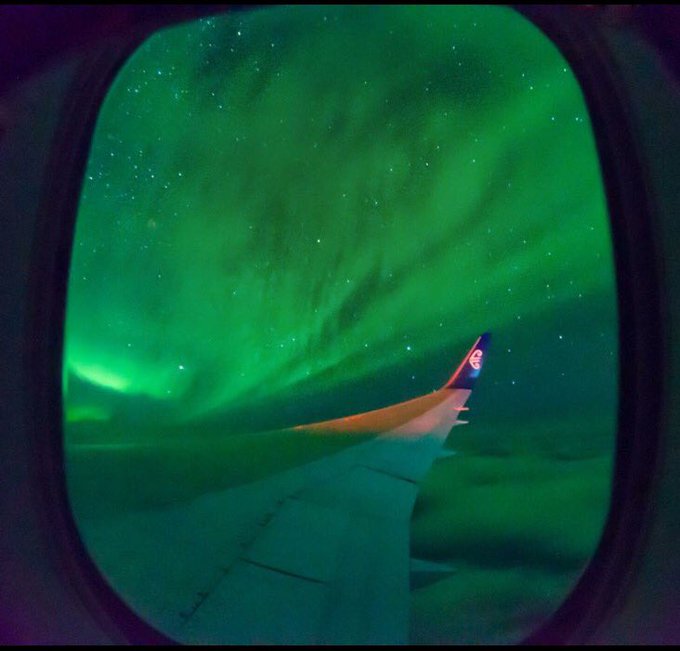
VIDEO Gisteren is de eerste commerciële vlucht naar het zuiderlicht geland in Nieuw-Zeeland. De 134 passagiers waren op zijn zachtst uitgedrukt onder de indruk van het groene licht, vergelijkbaar met het noorderlicht, en deelden hun prachtige ervaring op sociale media.

Lees ook

Afbeelding weergeven op Twitter

Ever wondered what an aurora australis looks like from 60 South from a Boeing 767? Wonder no more… #flighttothelights

Het acht uur durende avontuur begon donderdagavond op het Zuidereiland, een van de twee grote eilanden waaruit Nieuw-Zeeland bestaat. De Boeing 767 vloog zuidwaarts, waar de passagiers volgens expeditieleider Ian Griffin, directeur van het Otago Museum, "een spectaculaire vertoning" kregen.

"Niemand heeft dit ooit eerder gedaan", zegt hij aan de BBC. "Dit was een wereldprimeur in het zuidelijke halfrond." Griffin benadrukt dat de expeditie niet zo eenvoudig te organiseren valt als een normale vlucht. "Het zuiderlicht verschijnt niet zomaar op een specifieke locatie. Het beweegt in het rond, en we probeerden het achterna te jagen boven de Zuidelijke Oceaan."

Het chartervliegtuig ging meerdere keren door het zuiderlichtgebied en vloog tot 66 graden zuiderbreedte.

Afbeelding weergeven op Twitter

Glorious view from #flighttothelights, Antarctic circle, Orion Nebula, beams - just has everything!

Afbeelding weergeven op Twitter

Woah! Nice trip through the southern auroral zone tonight on #flighttothelights Naked eye auroras were spectacular photographically!

Afbeelding weergeven op Twitter

Huge congrats to @iangriffin & crew for making #flighttothelights a reality. @FlyAirNZ is this the most impressive wing shot ever? #Nextyear

Voor de passagiers was het tripje zeer gedenkwaardig. "Onze levens zijn voor altijd veranderd door deze ongelooflijke ervaring. We zijn eeuwig dankbaar dat we deel konden uitmaken van dit opmerkelijke gebeuren", wordt Roz Charlton geciteerd door The Guardian.

Daar moesten de deelnemers uiteraard iets voor over hebben. Een ticket voor de speciale vlucht kostte 4.000 Nieuw-Zeelandse dollar (2.600 euro) in economy en 8.000 dollar (5.200 euro) in business class. 

Geïnteresseerden kunnen alvast beginnen sparen, want gezien het succes plannen de organisatoren volgend jaar een nieuwe expeditie.

{ http://www.hln.be/ }

Hoe vind je dit bericht?
Geschreven door peter om 11:57 Stuur door

Dirk Frimout vertrok 25 jaar geleden als eerste Belg naar de ruimte - HLN.be

Dirk Frimout vertrok 25 jaar geleden als eerste Belg naar de ruimte - HLN.be

 Bron: Belga

media_xll_9611910.jpg

© belga.

VIDEO Op 24 maart 1992, vandaag/vrijdag precies 25 jaar geleden, werd Dirk Frimout aan boord van het Amerikaanse ruimteveer Atlantis de eerste Belg in de ruimte. Hij wentelde 143 keer rond onze planeet, goed voor een missie van 8 dagen 22 uur 9 minuten 28 seconden. Waarnemers hadden het over een "Amerikaans-Belgische vlucht", want nagenoeg de helft van het wetenschappelijk lab Atlas-1 in de vrachtruimte van de shuttle was (co-)Belgisch. Onder de instrumenten was er onder meer een rasterspectrometer die Frimout als wetenschapper van het Belgisch Instituut voor Ruimte-Aëronomie mee had ontwikkeld. Overigens kreeg de West-Vlaamse burggraaf het instrument na een panne tijdens de missie weer aan de praat.

Frimout, geboren te Poperinge op 21 maart 1941, maakte geen deel uit van het astronautenkorps van het Europese Ruimtevaartbureau ESA. Precies door zijn wetenschappelijke bagage bovenop een reeks toevalligheden kon Frimout zijn droom waarmaken. Dat hij alsnog als wetenschappelijk astronaut kon vliegen, was naar zijn zeggen "niet het winnen van een lot in de tombola, maar het resultaat van 25 jaar voorbereiding en hard werken", plus blijven volhouden. 

Tot nu toe is geen enkele Belg via de geijkte procedure in de ruimte geraakt. Zo werd bijvoorbeeld Frank De Winne later "heropgevist" nadat hij niet voor de tweede "astronautenklas" van ESA was geselecteerd. Frimout schrijft deze gang van zaken toe aan het feit dat de selectiecriteria voor astronauten bijzonder streng zijn terwijl er zeer veel - valabele - kandidaten zijn. "Het zijn de besten" die uiteindelijk effectief de aarde van bovenaf gaan bekijken, beklemtoont hij. Tegelijk stipt de astronaut aan dat er wel degelijk "subjectieve" elementen (voor een selectie) kunnen meespelen, zoals "ondersteuning door een land". 

Dat een geselecteerde astronaut soms lang moet wachten op een vlucht, is dan ook weer geen zeldzaamheid, leerde Frimout uit gesprekken met astronauten. "Je moet volhouden, zelfs bezeten zijn".

Zelfmoord

Wat Frimout het meest is bijgebleven van zijn historische missie, is het moment dat de hoofdmotoren van de shuttle uitfloepten, het moment dat hij voelde net in de ruimte te zijn aangekomen en dus de gewichtloosheid te voelen. "Dat is uniek", zegt hij. "Het is de droom die je had en hij begint dan nog maar", aldus Frimout, die aangeeft dat de in 1986 ontplofte shuttle Challenger op dat moment ook wel in zijn hoofd zat. 

Zijn zes collega's heeft hij - ondanks de "speciale band" die zij met elkaar hadden - voor het eerst weer samen ontmoet bij het vieren van de twintigste verjaardag van hun missie. Onder hen zijn gezagvoerder Charles Bolden, die later en tot voor kort hoofd van het Amerikaanse ruimtevaartbureau NASA was. Onder Bolden maakte de NASA een grote transformatie door, door de privésector uitdrukkelijker bij de ruimtevaart te betrekken. 

Frimout zegt dat deze transformatie "zeer positief" is uitgedraaid. De inbreng van bedrijven als SpaceX was een "boost" voor de ruimtevaart. 

Gevraagd of een privé-initiatief als Mars One, waarbij gegadigden een enkele reis naar de Rode Planeet zouden kunnen maken, geldklopperij is, beaamt hij. "Dit is niet ernstig, er zit niets achter, ze hebben zelfs nog geen raket", aldus Frimout die de "zelfmoord" van de kandidaten ook "ethisch niet verantwoord" vindt. "Dit geeft een verkeerd beeld".

Budget

Hij juicht toe dat er wel ernstige programma's zijn om naar analogie van het Apollo-Maanproject een mens veilig naar Mars te brengen en te laten terugkeren. Frimout verwelkomt in dit verband ook de inbreng van de privé-sector, want bijvoorbeeld de NASA "kan dit niet alleen". Dat er in 2040 voor het eerst een mens voet op Mars kan zetten, acht hij haalbaar. Maar daarvoor "zijn er nog de nodige inspanningen vereist".

ESA schrapte in 1992 de plannen voor zijn eigen ruimteveer Hermes waarmee Europa de facto geen autonome bemande toegang tot de ruimte kreeg. Frimout wijst de mening af dat dit een onjuiste beslissing was. Hij wijst erop dat het Europese ruimtevaartbudget bijvoorbeeld maar een zevende van het Amerikaanse bedraagt en dat Europa wellicht niet te middelen heeft voor autonome bemande ruimtevaart. Toch heeft ESA wat bemande ruimtevaart betreft volgens de Belg "zeer goed werk" gedaan, bijvoorbeeld via de onbemande Europese cargo's voor het Internationaal Ruimtestation ISS en de servicemodule die het heeft ontwikkeld voor de toekomstige bemande capsule Orion.

Weinig aandacht

Frimout betreurt dat er in de media weinig of geen aandacht voor wetenschappen en ruimtevaart is. "De mensen hebben de indruk dat er niets meer gebeurt, maar dat is niet zo", beklemtoont hij. 

De eerste Belg in de ruimte hekelt dat er in het middelbaar onderwijs bij wijze van spreken "geen woord valt" over ruimtevaart en dat die geen deel uitmaakt van de eindtermen voor het secundair onderwijs in Vlaanderen. Hoewel er initiatieven zijn van bijvoorbeeld ESA om ruimtevaart tot in de scholen te brengen, is Vlaanderen "een van de enige" onder de lidstaten die daaraan niet meedoen. Wel zijn er veel leraars die enthousiast zijn om initiatieven te (willen) nemen, en merkt Frimout zelf bij bezoek aan scholen hoe leerlingen geboeid zijn. Maar een omkadering is er niet.

De pogingen van zijn eigen Euro Space Society om heuse "space teachers" in de Vlaamse scholen te lanceren, botsen ook op een institutioneel obstakel en een "gebrek aan openheid van geest": ruimtevaart is federaal, onderwijs is een bevoegdheid van de gemeenschappen.

{ http://www.hln.be/ }

Hoe vind je dit bericht?
Geschreven door peter om 11:44 Stuur door

Vierde man ooit die op de maan wandelde: "Zo weet ik dat aliens nog nooit naar de aarde kwamen" - HLN.

Vierde man ooit die op de maan wandelde: "Zo weet ik dat aliens nog nooit naar de aarde kwamen" -HLN.be

Bron: news.com.au

media_xll_9611684.jpg

© NASA.

Alan Bean maakte deel uit van het tweede team astronauten dat naar de maan gestuurd werd. Hij hoort ook bij het selecte clubje van amper twaalf leden die ooit voet hebben gezet op de maan. De nu 85-jarige Bean zegt in een interview met news.com.au dat aliens nog nooit onze planeet aandeden. En waarom hij dat denkt.

De Apollo 12 had maar drie crewleden aan boord toen het ruimtetuig op 14 november 1969 aan zijn missie begon. Tien dagen later landde de toen 37-jarige piloot van de maanlander, Alan Bean, terug op aarde en had hij als vierde man ooit op de maan gewandeld. De twee maanwandelingen die hij samen met zijn collega Charles 'Pete' Conrad had volbracht, duurden in totaal 7 uur 45 minuten 18 seconden.

Vanuit zijn ervaring heeft Alan Bean zo zijn eigen theorieën als het over buitenaards leven gaat. "Ik denk niet dat er ooit iemand vanuit de ruimte de aarde heeft bezocht", zegt hij aan news.com.au. "Een van de redenen waarom ik dat denk, is dat beschavingen die meer geavanceerd zijn ook altruïstischer en vriendelijker zijn - zoals de aarde zelf vandaag beter is dan ze ooit was. Als ze dus hier zouden landen, dan zouden ze zeggen: 'Wij komen in vrede en we weten dat jullie moeten afrekenen met de ziekte kanker die mensen doodt. Wij hebben dat probleem 50 jaar geleden opgelost. Dit is het apparaatje dat wij op iemands borst plakken en dat kanker geneest. We zullen jullie leren hoe je het moet maken'."

Kanker genezen
Bean gaat verder: "Net zoals wij zouden doen als we pakweg over 1.000 jaar naar een andere ster kunnen reizen en een planeet zien, omdat wij zelf dan weten hoe we kanker en aangeboren afwijkingen moeten genezen en we het hen willen aanleren."
Lees hieronder waarom hij zeker is dat aliens bestaan

media_xll_9611674.jpg Alan Bean tijdens zijn Apollo 12-missie.  © NASA.

De voormalige astronaut - sinds 1981 overigens voltijds kunstenaar met de maan als thema - twijfelt er wel geen seconde aan dat aliens bestaan. "Er zijn miljarden sterren met allemaal planeten errond, dus statistisch gezien moeten er vele planeten zijn rond heel wat sterren waar er leven is", meent Bean. "Sommige zitten misschien in het stadium waar wij 100.000 jaar geleden zaten, andere staan dan weer waar wij nu staan en waarschijnlijk bevinden nog andere zich 10.000 jaar verder in de toekomst ten opzichte van ons." 

Schilder
Alan Bean, net 85 geworden, schildert vandaag nog altijd dagelijks. Hij werkt met maangereedschap en gebruikt onder meer "stukjes van Apollo-ruimtetuigen en een snuifje maanstof" voor zijn kunstwerken. Die gaan van de hand voor tienduizenden - soms zelfs honderdduizenden - dollars. "Ik ben dan ook de enige op aarde die dit soort schilderijen met levensechte ervaring kan maken", zegt hij.

media_xll_9611671.jpg Links onderaan houdt Alan Bean een staal maangrond vast.  © reuters.

{  http://www.hln.be/ }

Hoe vind je dit bericht?
Geschreven door peter om 11:38 Stuur door

UFO Reported in Gulf of Mexico: OSV Engineer Says He Saw Large Craft Hovering Near Rig

UFO Reported in Gulf of Mexico: OSV Engineer Says He Saw Large Craft Hovering Near Rig

shutterstock_61875832-1 Dramatization

A crew member of an offshore supply vessel in the Gulf of Mexico claims he saw a UFO ‘fives times’ the size of his vessel and UFO trackers are now looking for more witnesses to come forward with any information possibly related to the sighting.  

The UFO sighting reportedly occurred on Tuesday in the Gulf of Mexico approximately 80 miles southeast of New Orleans.

The sighting was submitted to the National UFO Reporting Center, which apparently tracks UFO sightings and data, by the chief engineer of an OSV working the Gulf of Mexico on Thursday afternoon. According to the eyewitness report:

“Close to 7:00 pm on March 21st, just before dusk, myself and 4 of the crew members aboard our vessel saw a craft that appeared to be five times our 240 ft vessel in length. My line of sight was about 1/4 mile from our vessel. There was a rig behind the craft about a 1/2 mile. i used this to help gauge size of craft. Sighting was approximately 80 miles SE of New Orleans, Louisiana.

The scene lasted about 40 seconds. The craft rose up out of the water (Gulf of Mexico) about 40 feet, no water was dripping from the craft. Within a split second the craft disappeared at a 30 degree angle into the sky. Speed appeared to faster than speed of a light turning on in a room. Within seconds it had disappeared completely.

I can say for sure that the craft was dark colored, oval in shape and made no sound whatsoever.

With as many rigs (2), there has to be more witnesses than just the four on our vessel.

The NUFORC has even highlighted the sighting as being of particular interest among the 246 reports of UFOs received in March alone. And after speaking with the witness by phone, the NUFORC said the report seems legit and has urged more witnesses to come forward. 

“We spoke via telephone with this witness, and he seemed to us to be unusually sober-minded,” NUFORC wrote in a note added to the original report. “We suspect that he is a very capable, and very reliable, witness. He estimates that upwards of perhaps 50 people, who were aboard nearby vessels, may have witnessed the event, as well. We would urge those other witnesses to submit reports of what they had witnessed.”

So, did you see a UFO in the Gulf of Mexico earlier this week? 

Hoe vind je dit bericht?
Geschreven door peter om 11:25 Stuur door

West Country Experiences Sudden Increase In UFO Sightings

West Country Experiences Sudden Increase In UFO Sightings

UK-UFO

It appears that aliens have taken a renewed attention in the paranormal hotspot of the West Country. The increases in sightings and strange events in the part of the country have also gotten the interest of regional media as they reported the latest development in mysterious happenings, crop circles, and legends. Crop circles, in particular, are allegedly created or caused by alien visitors.

Regional media recorded two UFO sightings in just weeks after the news of an alien being spotted in country town Yeovil in Somerset broke off.

In December, there were reports of an alien being observed wearing a Stetson Hat close to Yeovil College vicinity.

Just recently, two more unexplained sightings have been reported over the internet.

A witness said to have seen a UFO in the sky above Lysander Road and the A3088 on March 4 in Yeovil.

The witness, who chose not to be named, said he did not notice anything at the time when he took a photo of the scenery around Lysander Road. He described the environment as so bright that he could not see anything.

He just noticed something strange in the photo when he got home. He saw an object that he thought was flying towards west.

Another witness reported his sighting on February 21 at around 6:30 in the morning over Yeovil. The person managed to get a video recording using a static camera in his garden.  He stated in his report that he caught eight strange lights flying in an east to southeasterly direction.

People in Gloucestershire also reported bizarre incidents.

A video shows a mysterious light reportedly filmed above Gloucester at around 5 am on March 13. It is the second one showing unusual lights in the sky over the city.

A day earlier, a video by Rob Wheatman shows an unknown light above Elmbridge. The witness said that it was sparkling like a star from the garden in Elmbridge.

He also saw an orange light from it and flew at speed. He used his video camera with 40x zoom to get images of the light.

{ http://www.latest-ufo-sightings.net/ }

Hoe vind je dit bericht?
Geschreven door peter om 11:19 Stuur door

Disc UFO over New Jersey was ‘football field’ size, claims witness

image-1-ftr

Disc UFO over New Jersey was ‘football field’ size, claims witness

A New Jersey witness at Lakehurst reported a 2014 incident where a disc-shaped object the size of a “football field” moved overhead and then quickly moved away, according to testimony in Case 82734 from the Mutual UFO Network (MUFON) witness reporting database.

The object was seen hovering over Joint Base McGuire–Dix–Lakehurst. (Credit: Wikimedia Commons)

The object was seen hovering over Joint Base McGuire–Dix–Lakehurst.

(Credit: Wikimedia Commons)

The witness was driving home from work on December 10, 2014, when the incident began.

“At the end of this one long, hilly road, you come to a four way stop,” the witness stated.“Diagonally, there is a large, empty field. And beyond that is the base. Once I got to the stop sign there was another car in front of me and we simultaneously saw something in the sky and hit the brakes immediately in the middle of the road.”

The object was as large as a football field. (Credit: Google)

The object was as large as a football field.

(Credit: Google)

The witness described the object.

“There were 12 or more lights lined up in an oval shape larger than a football field. It could have been much bigger if it was further way. Similar to the Phoenix Lights. I just found that real quick as an example. But the oval shape was more pronounced. The ring or halo of lights were almost tilted on an angle. The lights lit up in a row. The oval sped up quicker and quicker until it vanished completely without a trace. The reason why I decided to write about this now is because I was driving past that field the other day and realized you can see stars everywhere in the sky, except for where those lights were above the base.”

The object moved away very quickly. Pictured: Lakehurst, NJ. (Credit: Google)

The object moved away very quickly.

Pictured: Lakehurst, NJ. (Credit: Google)

Lakehurst is a borough in Ocean County, New Jersey, population 2,654. Lakehurst Maxfield Field, sitting just north of the city, is the naval component of Joint Base McGuire-Dix-Lakehurst, a United States Air Force-managed joint base headquartered approximately 25 miles (40 km) east-southeast of Trenton in Manchester Township in Ocean County, New Jersey, United States. It is primarily the home to Naval Air Warfare Center Aircraft Division Lakerhurst, although the airfield supports several other flying and non-flying units as well.

New Jersey MUFON Chief Investigator Ken Pfeifer is investigating. Please remember that most UFO sightings can be explained as something natural or man-made. The above quotes were edited for clarity. Please report UFO activity to MUFON.com.

{ http://www.openminds.tv/ }

Hoe vind je dit bericht?
Geschreven door peter om 01:24 Stuur door

Euclid: ESA's Search for Dark Matter & Dark Energy

Euclid: ESA's Search for Dark Matter & Dark Energy


aHR0cDovL3d3dy5zcGFjZS5jb20vaW1hZ2VzL2kvMDAwLzAzOS83Mjcvb3JpZ2luYWwvZXNhLWV1Y2xpZC1taXNzaW9uLmpwZw==
An artist's concept of the ESA's Euclid misssion to study dark energy.
Credit: ESA/C. Carreau

Euclid is a mission planned by the European Space Agency (ESA) that aims to learn more about the parts of the universe we can't see — specifically, dark energy and dark matter. These form most of the universe and are thought to be responsible for phenomena such as the acceleration of the universe's expansion.

Euclid is expected to launch in 2020 from French Guiana aboard a Soyuz rocket. It will take roughly 30 days for Euclid to make its way to its planned location in space, which is a gravitationally stable area known as a Lagrange point. Euclid will be at L2, which lies about a million miles from Earth but in the opposite direction of the sun. At this point, with the Earth, moon and sun behind it, a spacecraft can get a clear view of deep space.

As a survey mission, Euclid will last at least six years and cover 15,000 square degrees of sky. Its survey will be performed as a "step and stare," meaning that the telescope will do measurements on about 0.5 square degrees of the sky at a time.

The ESA's current guideline for science missions is called Cosmic Vision 2015-2025. In 2007, a proposal process for Cosmic Vision resulted in two missions that were intended to measure the geometry of the universe: DUNE (Dark Universe Explorer) and SPACE (Spectroscopic All Sky Cosmic Explorer.) 

DUNE was supposed to image the sky across a wide field to study dark energy and dark matter. Its primary measurement method was weak gravitational lensing. SPACE was supposed to create a 3-D evolutionary map of the universe across 10 billion years, by measuring galaxy redshifts and spectra. However, after an assessment study those two missions were combined into one: Euclid. (Euclid is named after an Ancient Greek mathematician who is sometimes called the "father of geometry.")

In 2011, ESA selected Solar Orbiter and Euclid as the first two of its medium-class or M-class missions, among several proposals. Solar Orbiter is expected to launch in 2018, and Euclid in 2019.

In 2013, NASA signed a memorandum of understanding with ESA to provide 20 detectors for Euclid's near-infrared instrument. NASA also nominated 40 U.S. scientists to join the Euclid consortium, which builds the instruments and will later parse the mission's science data. Later that year, Italy's Thales Alenia Space was selected as prime contractor for the mission. Euclid passed its preliminary design review in 2015, and the first parts of the flight hardware — four detectors for the visible imager – were delivered to ESA in early 2017.

We can only see a fraction of the known universe. Ordinary matter makes up about 4 percent, while dark matter makes up 20 percent and dark energy makes up 76 percent. Understanding more about dark matter and dark energy could help scientists, for example, learn why the universe is accelerating in its expansion. There is not enough "ordinary" matter to account for the acceleration.

Euclid will show scientists more about the dark universe. One of its main goals is to accurately map galaxy redshift, which occurs when an object moves away from us. The light shifts to the red end of the spectrum, as its wavelengths get longer. If an object moves closer, the light moves to the blue end of the spectrum, as its wavelengths get shorter. The mission will look back to galaxies that formed as early as 10 billion years ago, or more than double the solar system's age. In its prime mission, Euclid will map about half of the sky.

Specifically, Euclid's detectors are supposed to conduct two cosmological probes. One will study weak gravitational lensing, which happens when a concentration of matter bends light as light travels toward the observer. This is useful for mapping dark matter and for inferring dark energy by measuring how much galaxy images are distorted by the lensing.

The other probe will study baryonic acoustic oscillations (BAO), which measures the spatial distribution of galaxies. Across very large scales, galaxies tend to cluster in pairs separated by a standard distance. This standard distance is linked to sound waves in plasma (supercharged gas) from the early universe; the sound waves propagated from dark matter halos, or concentrations of dark matter associated with galaxies. BAOs are therefore a standard ruler to measure the universe's expansion, and dark energy as well.

Euclid's science will be performed by two instruments, and the spacecraft's 1.2-meter mirror will split light between them for analysis:

  • A visible imager (VIS), which will include dozens of charge-coupled devices specially formulated for the mission. ESA said the devices will include high efficiency, low noise and good radiation tolerance. The field of view of VIS is a little larger than the area covered by two full moons.
  • The Near-Infrared Spectrometer and Photometer (NISP), which will provide near-infrared photometry of galaxies. The aim is to combine NISP's and VIS's observations to show the galaxy redshift observed by Euclid.

The overall goals of Euclid (in ESA's words) are:

  • Investigate the properties of the dark energy by accurately measuring both the acceleration as well as the variation of the acceleration at different ages of the universe;
  • Test the validity of general relativity on cosmic scales;
  • Investigate the nature and properties of dark matter by mapping the 3-dimensional dark matter distribution in the universe;
  • Refine the initial conditions at the beginning of our universe, which seed the formation of the cosmic structures we see today.

Dark matter is still a relatively young science, but there have been some observations by other space missions to assist with Euclid's work.

The Fermi Gamma-ray Space Telescope launched in 2008. One of its science goals is to look at dark matter, specifically by probing phenomena such as excess gamma-rays from the Milky Way's center. In 2014, NASA announced that the excess emission seen in that area "is consistent with some forms of dark matter." In 2017, observations of the nearby Andromeda Galaxy revealed the same phenomena.

Other space missions have glimpsed dark matter, even though it wasn't in their primary missions. One example is a 2015 study of 72 galaxy cluster collisions that used data from both the Hubble Space Telescope and the Chandra X-Ray Observatory. At the time, scientists said the study helped set limits on the nature of dark matter. "Astronomers can map the distribution of dark matter by analyzing how the light from distant sources beyond the cluster is magnified and distorted by gravitational effects," the Harvard University Chandra X-Ray Observatory page said in a press release.

Hubble also performed a survey that helped map out the distribution of dark matter in the universe, NASA said in a 2007 press release.

ESA's Gaia mission launched in 2013 to create the most accurate map of star locations in the sky. It is thought that charting their movements will reveal more information about the nature of dark matter, and how it influenced the universe's history.

Additional resource

{ http://www.space.com/ }

Hoe vind je dit bericht?
Geschreven door peter om 01:17 Stuur door

Gliese 581c: Super-Earth Exoplanet

Gliese 581c: Super-Earth Exoplanet

Gliese 581c: Super-Earth Exoplanet
Possible planets of the Gliese 581 system, superimposed on a picture of our own solar system to compare orbital distances.
Credit: National Science Foundation/Zina Deretsky

Gliese 581c is a super-Earth planet that was discovered in 2007. It resides in the Gliese 581 system, which at 20 light-years from Earth is relatively close to our planet (in celestial terms). While early research suggested that Gliese 581c may have liquid water on its surface because it resides in its star's "habitable zone," more recent research suggests it may have a Venus-like environment.

The existence of Gliese 581c was announced in 2007 in the journal Astronomy and Astrophysics. The paper was led by Stephane Udry, an astronomer at Geneva Observatory. Gliese 581c was one of two super-Earth planets his team found, both at the edge of the star's habitable zone. 

Gliese 581c was found using the radial-velocity method, meaning that it was detected through tugs on its parent star. The instrument that made the discovery was the HARPS spectrograph on a 3.6-meter telescope managed by the European Southern Observatory in Chile. (HARPS is one of the more prolific planet-hunting instruments available to astronomers today.)

At the time, the researchers said Gliese 581c is "the known exoplanet which most resembles our own Earth" because it was only five times the mass of our planet. (Subsequent searches have found many planets much closer to our Earth's mass.)

While Gliese 581c was classified as Earth-like, the researchers cautioned that actual conditions on the planet may be very different than our own. The surface temperature, for example, would depend on the composition and thickness of the atmosphere. The atmosphere also determines how much light is reflected off the planet, and the magnitude of the greenhouse effect.

The parent star of Gliese 581c, called Gliese 581, is an M-class dwarf star. It's cooler than the sun, which means its habitable zone would be closer in than our own solar system. M dwarfs are favored for planetary searches because they are dimmer, meaning that planets passing across the star would be easier to see. There also is a smaller relative size between the planet and the star, making their gravitational effects more obvious.

Researchers examining Gliese 581 have had different opinions over the years about how many planets were there; one example was the discovery of Gliese 581g in 2010. Signatures of the planet did not show up in independent searches, and today most astronomers in that field consider that the planet does not exist. 

Not knowing the number of planets exactly makes it difficult to determine the radius of Gliese 581c. The planet has not been seen directly passing across the face of its star, so astronomers can only learn about its characteristics from Gliese 581c's influence on other planets and the star. The radius would in turn determine such matters as whether the planet is closer to an Earth-like planet (with a smaller atmosphere) or closer to a Neptune-like planet (with a much thicker atmosphere). 

Gliese 581c takes about 13 days to orbit its parent star. (By contrast, Mercury's orbit around our much larger sun takes about 88 days.) Because Gliese 581c is so close to its star, a common belief is that the planet is tidally locked. This means that as it orbits, the planet always keeps the same side toward the sun. This phenomenon is common among moons of Jupiter and Saturn in our own solar system. Earth's moon is also tidally locked to our own planet.

If a planet is tidally locked, this means that one side (the star-facing side) is always warmer than the other side (which always faces away from the star.) Any considerations of habitability would have to take this into account. The only firm example of a habitable planet that we know of – our own Earth – has a regular day-night cycle in most areas of the planet, except the poles. Over billions of years, lifeforms have adapted to this cycle. It's unclear how life would survive in an area of perpetual day or perpetual night, but studies are ongoing.

A 2007 follow-up paper in Astronomy and Astrophysics, led by Werner von Bloh at the Potsdam Institute for Climate Impact Research, suggested that Gliese 581c is too hot to support life because it is so close to its parent star. This means that the planet may have more of a Venus-like environment, with an extremely hot surface and a runaway greenhouse effect under a thick atmosphere. This was confirmed in a 2011 study in Astronomy and Astrophysics led by Y. Hu, who is with Peking University's laboratory for climate and ocean-atmosphere studies.

While Gliese 581c has not been discussed much in scientific literature in recent years, astronomers are working more generally to improve their models of planets that are close in to their parent stars. An example is a 2013 article published in the journal Nature, in which a team led by Jeremy Leconte examines the conditions under which runaway greenhouse effects happen on Earth-like planets. This line of research is receiving increased attention again after the discovery of Proxima Centuari b, a potentially habitable planet just four light-years from Earth, in 2016.

{

Hoe vind je dit bericht?
Geschreven door peter om 01:06 Stuur door

Dwarf Planet Ceres' Water-Ice Deposits Tied to Its Changing Tilt

Dwarf Planet Ceres' Water-Ice Deposits Tied to Its Changing Tilt

Dwarf Planet Ceres' Water-Ice Deposits Tied to Its Changing Tilt
Ceres' northern hemisphere, when the axial tilt is 2 degrees — the minimum experienced by the dwarf planet during its trips around the sun. Regions that remain in shadow are shown in blue. The illumination shown is for the northern solstice, which is when the north pole is most illuminated.
Credit: NASA/JPL-Caltech/UCLA/MPS/DLR/IDA

The location of newfound water-ice deposits on Ceres is linked to wild swings in the dwarf planet's tilt over the eons, a new study suggests.

Ice on Ceres — the largest body in the main asteroid belt between Mars and Jupiter — survives in permanently shadowed regions that don't receive sunlight. But these regions change drastically over a period of just 24,500 years, researchers determined. 

Ceres' tilt relative to the plane of its path around the sun changes tenfold, from 2 degrees to about 20 degrees, in that time. The dwarf planet's current tilt, also known as obliquity, is 4 degrees; by contrast, Earth's tilt (which is responsible for the seasons) is 23.5 degrees. [Amazing Photos of Dwarf Planet Ceres]

"We found a correlation between craters that stay in shadow at maximum obliquity, and bright deposits that are likely water ice," study lead author Anton Ermakov, a postdoctoral researcher at NASA's Jet Propulsion Laboratory (JPL) in Pasadena, California, said in a NASA statement. "Regions that never see sunlight over millions of years are more likely to have these deposits."

The last time Ceres reached its maximum tilt was 14,000 years ago. When the tilt of Ceres is at a minimum, which is close to the conditions happening right now, there are large portions of the dwarf planet — roughly 800 square miles (2,000 square kilometers) — that don't receive direct sunlight, most of which are near the poles, study team members said.

This animation shows how the illumination of Ceres' northern hemisphere varies with the dwarf planet's axial tilt. Shadowed regions are highlighted for tilts of 2 degrees, 12 degrees and 20 degrees.
Credit: NASA/JPL-Caltech/UCLA/MPS/DLR/IDA

But when Ceres' tilt gets closer to 20 degrees, the regions protected from sunlight diminish to just 0.4 to 4 square miles (1 to 10 square km). Those regions that remain in shadow even during maximum obliquity could be the same areas that maintain surface ice, the researchers said.

The new study used data from NASA's Dawn spacecraft, which has been orbiting the 590-mile-wide (950 km) Ceres since March 2015, to take measurements of the dwarf planet's shape and gravity, and to try to reconstruct its history. It focused on polar craters and looked at how the shadowing shifts in these regions as Ceres' axial tilt changes.

The researchers found that, in the northern hemisphere, only two of the persistently shadowed regions that exist today will still be dark when Ceres reaches a 20-degree tilt. Both regions have bright deposits today, which could indicate water ice. Two persistently shadowed regions are also present in the southern hemisphere, and one of those regions has a bright area, the researchers said.

In 2016, a study that analyzed Dawn data indicated that there is bright material in 10 craters on Ceres. Dawn's Visible and Infrared Mapping Spectrometer determined that one of these regions contains water ice.

Ceres isn't the only spot in the solar system known to have permanently shadowed regions on its surface; Mercury and Earth's moon also have these zones. However, Ceres has much more variability in its tilt because it is not stabilized by the sun (as Mercury is) or a planet (as Earth's moon is), the researchers said.

While scientists believe that Mercury and Earth's moon both received most of their surface water from small, impacting asteroids and comets, there is more debate regarding Ceres. The European Space Agency's Herschel Space Observatory detected a tenuous water atmosphere around the dwarf planet in 2012 to 2013. This means that the ice could come from water falling back from Ceres' atmosphere, scientists have said, though the stuff could also come from small impactors.

"The idea that ice could survive on Ceres for long periods of time is important as we continue to reconstruct the dwarf planet's geological history, including whether it has been giving off water vapor," study co-author and Dawn deputy principal investigator Carol Raymond, also of JPL, said in the same statement.

The new study was published in the journal Geophysical Research Letters.

Follow Elizabeth Howell @howellspace, or Space.com @Spacedotcom. We're also on Facebook and Google+. Original article on Space.com.

{ http://www.space.com/ }

Hoe vind je dit bericht?
Geschreven door peter om 01:00 Stuur door

'Life' Brings Alien Terror to the International Space Station

'Life' Brings Alien Terror to the International Space Station

No science-fiction movie that takes place at the International Space Station has been quite as terrifying as "Life," a new space thriller that comes out in theaters today (March 24).

In the film, a Mars sample-return mission delivers the first proof of alien life to a group of astronauts at the International Space Station (ISS). What is at first a harmless, single-celled organism sealed inside a box in the lab grows bigger, stronger, smarter and bloodthirsty. When it breaks out of its container and comes after the astronauts, all hell breaks loose. ['Life' Movie Brings Terrifying Space Thrills (Photo Gallery)]

The all-star cast who play the astronauts in "Life" do not disappoint. Jake Gyllenhaal stars as a doctor who has spent more than 473 days aboard the ISS. Rebecca Ferguson plays a microbiologist whose job it is to protect everyone at the station and on Earth from possible contamination by the alien. Ryan Reynolds plays the role of a spacewalk specialist and provides some necessary comedic relief to this gruesome story.

The plot of "Life" is a bit of a mashup between the movies "Gravity" and "Alien." Just like in the "Alien" saga, the extraterrestrial in "Life" (which is nicknamed Calvin after school children on Earth won a naming contest) is out to kill every living thing aboard the spacecraft — in this case, the ISS. As the astronauts fight for their lives, they demolish the ISS. Though Calvin is the reason for their panic, the astronauts create more problems trying to kill it. 

At times, the astronauts do things that would be considered foolish in real life, such as using fire to try to kill Calvin. (Starting fires is strictly forbidden at the ISS.) However, watching Ryan Reynolds blast flames at an octopus-like monster while chasing it around the ISS was worth the slight technical inaccuracy.

Astronauts find the first proof of life on Mars in a sample brought to the space station. The creature, which they named Calvin, seems harmless at first before growing into a bloodthirsty monster.
Credit: Sony Pictures/CTMG Inc.

While the film is more of a horror flick than a science-driven narrative about extraterrestrial life and the International Space Station, there's plenty of real space science throughout the story to keep even hard-core space geeks entertained. The ISS is accurately and brilliantly rendered, and space-savvy viewers may recognize some of its features, such as the Canadarm robotic arm, the Cupola window and the docked Soyuz crew capsules.

Despite the superb acting and production that went into the making of this film, the story left me feeling a bit unsettled and unsatisfied near the end. For a group of highly intelligent astronauts at the space station, the astronauts made a lot of bad decisions that only make matters worse. I would have expected better from a group of trained professionals with "the right stuff." Then again, it's hard to guess how astronauts in the real world would deal with a situation as crazy as this. After all, they are still humans.

Overall, the film is worth a watch for anyone who's into space, horror, or both. But if you're expecting a heroic story of six brave astronauts who save the day, you might be disappointed with the ending.

"Life" is rated R (for violence, gore, terror and profanity) and opens in theaters nationwide today (March 24).

Email Hanneke Weitering at hweitering@space.com or follow her @hannekescience. Follow us @Spacedotcom, Facebook and Google+. Original article on Space.com.

Hoe vind je dit bericht?
Geschreven door peter om 00:40 Stuur door

Breaking the 'Speed Limit': Simulation Shows Monster Black Holes' Rapid Growth

Breaking the 'Speed Limit': Simulation Shows Monster Black Holes' Rapid Growth

By Sarah Lewin, Staff Writer

galaxy radiates black hole

The massive black hole shown at left in this drawing is able to rapidly grow as intense radiation from a galaxy nearby shuts down star-formation in its host galaxy.
Illustration Courtesy of John Wise, Georgia Tech

They grow up so fast: A new simulation shows how supermassive black holes could have gotten so large, so quickly in the early universe — by taking a shortcut via a star.

Supermassive black holes form the cores of many galaxies, including the Milky Way, and researchers have found evidence of them dating to very early in the universe's history. In fact, seemingly too early — supermassive black holes take a long time to form, and researchers have been searching for explanations of how they were able to grow so massive (several billion times the sun's mass) within the first billion years after the Big Bang, surpassing their apparent "speed limit" on growth.

According to a new simulation, black holes can only grow so fast, but stars can expand to incredible size even faster in certain conditions before collapsing down into a black hole. That way, the energetic galactic centers can form earlier than expected. The researchers also explained their simulation in a new video.

"It turns out that while supermassive black holes have a growth speed limit, certain types of massive stars do not," Joseph Smidt, a researcher at the theoretical design division of Los Alamos National Laboratory and the first author on the new work, said in a statement. "We asked, what if we could find a place where stars could grow much faster, perhaps to the size of many thousand suns; could they form supermassive black holes in less time?"

A massive, extremely energetic black hole system called a quasar grows as it accretes material in a new simulation.
Credit: Los Alamos National Laboratory

The researchers compared their models to the most distant known energetic galactic center, called a quasar, and one of the most massive of those objects, which is also ancient, to see whether that method could have quickly grown them to full size. If ultralarge stars are born in the right environment — one with the ideal combination of rapidly incoming material and local conditions — they could indeed collapse and form quasars of that mass and age, the researchers found.

The simulation also ended up accurately modeling star formation and other phenomena that happen around black holes, the distribution of galaxy densities, gas temperature changes and ionization, the researchers said in the statement.

A new simulation from Los Alamos National Laboratory suggests how supermassive black holes might have formed extra quickly in the early universe.
Credit: Los Alamos National Laboratory

"This was largely unexpected," Smidt said. "I thought this idea of growing a massive star in a special configuration and forming a black hole with the right kind of masses was something we could approximate, but to see the black hole inducing star formation and driving the dynamics in ways that we've observed in nature was really the icing on the cake."

The new work has been submitted to The Astrophysical Journal, and it is currently available online at arXiv.org.

Email Sarah Lewin at slewin@space.com or follow her @SarahExplains. Follow us @Spacedotcom, Facebook and Google+. Original article on Space.com. 

{ http://www.space.com/ }

Hoe vind je dit bericht?
Geschreven door peter om 23:55 Stuur door

Nasa astronaut Alan Bean: Aliens exist, but they haven't visited Earth yet

Nasa astronaut Alan Bean: Aliens exist, but they haven't visited Earth yet

Bean says that if an advanced alien civilisation had been to Earth they would have made contact.

What is needed for life on another planet? IBTimes UK

Former Nasa astronaut Alan Bean has said he does not think an advanced alien civilisation has ever visited Earth – because if they had they would have made contact.

Bean, now 85, was the fourth man to walk on the Moon with the Apollo 12 mission. In an interview with news.com.au, he said there is little doubt in his mind that we are not alone in the universe – with billions of stars and planets orbiting them, statistically speaking, life must have evolved on some of them.

More from IBTimes UK

However, he does not think they have ever been to Earth – and suggests a few reasons why: "I do not believe that anyone from outer space has ever visited the Earth. One of reasons I don't believe they have been here is that civilisations that are more advanced are more altruistic and friendly – like Earth, which is better than it used to be – so they would have landed and said 'we come in peace and we know from our studies you have cancer that kills people, we solved that problem 50 years ago, here's the gadget we put on a person's chest that will cure it, we will show you how to make it'.

"Just like some day, say 1000 years from now, when we can go to another star and see a planet, that's what we would do because we will know how to cure cancer, cure birth defects, so we would teach them."

Discussing what other habitable exoplanets – and the aliens on them – might be like, Bean said it would depend on how long life has had to emerge. "Maybe some of them are like our life was 100,000 years ago, and some of them are like we are now, and there are probably some out there that are a 10,000 years in the future from where we are now," he said.

alien What would alien life be like?IStock

The potential for finding alien life took a step forward recently with the discovery of the Trappist 1 star system 40 light years away. This star was found to have seven planets orbiting it – three of which appear to be in the "habitable zone" – where it is not too hot or cold for liquid water to exist.

Over the coming years, scientists will be able to better identify planets with the potential to host life with the launch of the James Webb Telescope. This is due to launch next year and will be able to study the atmospheres of exoplanets, providing the opportunity to identify the building blocks of life.

TRAPPIST-1f Artist impression of what it would be like to stand on the surface of the exoplanet TRAPPIST-1f. NASA/JPL-Caltech

As well as missions to Mars and Alpha Centauri (our closest neighbouring star), space agencies across the world are planning to return to the Moon. The ESA, for example, hopes to build a lunar base in the coming decades.

Speaking about what it was like to land on the Moon, Bean said: "It was hard to believe (we) were 235,189 miles from home. I never heard any astronaut say that he wanted to go to the Moon so he would be able to look back and see Earth.

"We all wanted to see what the Moon looked like close up. Yet, for most of us, the most memorable sight was not of the Moon, but of our beautiful blue and white home, moving majestically around the sun, all alone in infinite black space."

On the future of space travel, he added: "Humans can do a lot of amazing things. President Kennedy said we were going to go to Moon by the end of the decade [1960s]. It was an impossible dream and human beings got behind the whole idea and planned and worked to achieve it."

Super moon supermoon A pod of the London Eye is silhouetted against the Moon Toby Melville/Reuters

Related topics : NASA

{http://www.ibtimes.co.uk/ }

Hoe vind je dit bericht?
Geschreven door peter om 23:39 Stuur door

Europa: Our best shot at finding alien life?

Europa: Our best shot at finding alien life?

View of Europa taken in the 1990s by the Galileo spacecraft Image copyrightNASA/JPL-CALTECH/SETI INSTITUTEImage captionEuropa holds a vast, salty ocean beneath its fractured ice shell

After two decades of development and "heartbreak", scientists are on the verge of sending missions to explore the ocean world of Europa. Could this be our best shot at finding life elsewhere in the Solar System?

Orbiting the giant planet Jupiter is an icy world, just a little smaller than Earth's moon.

From a distance, Europa appears to be etched with a nexus of dark streaks, like the product of a toddler's chaotic scribbling.

Close up, these are revealed to be long linear cracks in the ice, extending in some cases for thousands of kilometres. Many are filled with an unknown contaminant that scientists dub the "brown gunk". Elsewhere, the surface is tortured and irregular, as if massive slabs of ice have drifted, spun and flipped over in slush.

Jupiter's immense gravity helps generate tidal forces that repeatedly stretch and relax the moon. But the stresses that created Europa's smashed up terrain are best explained by the ice shell floating on an ocean of liquid water.

"The fact that there's liquid water underneath the surface which we know from previous missions, in particular from the magnetometer observations made by the Galileo spacecraft as it flew past [in the 1990s], makes it one of the most exciting potential targets to look for life," says Prof Andrew Coates of UCL's Mullard Space Science Laboratory in Surrey, UK.

Europa's briny deep might extend 80-170km into the moon's interior, meaning it could be holding twice as much liquid water as there is in all of Earth's oceans.

Europa Image copyrightNASA/JPL-CALTECHImage captionEuropa Clipper will make at least 45 flybys of the jovian moon during its primary mission

And while water is one vital prerequisite for life, Europa's ocean might have others - such as a source of chemical energy for microbes. What's more, the ocean may communicate with the surface through a number of means, including warm blobs of ice from below rising up through the ice shell. So studying the surface could provide clues to what's going on in the ocean.

Now, Nasa is priming two missions to explore this intriguing world. Both have been discussed here at the 48th Lunar and Planetary Science Conference (LPSC) in Houston.

The first is a flyby mission called Europa Clipper that would likely launch in 2022. The second is a lander mission that would follow a few years later.

Dr Robert Pappalardo, from Nasa's Jet Propulsion Laboratory, is Clipper's project scientist.

"We're really trying to get at Europa's potential habitability, the ingredients for life: water, and whether there's chemical energy for life," he tells me. "We do that by trying to understand the ocean and the ice shell, the composition and the geology. And mixed into those is the level of current activity at Europa."

Clipper carries a payload of nine instruments, including a camera that will image most of the surface; spectrometers to understand its composition; ice-penetrating radar to map the ice shell in three dimensions and find water beneath the ice shell; and a magnetometer to characterise the ocean.

However, since the Galileo spacecraft provided evidence for an ocean in the 1990s, we've learned that Europa isn't one of a kind.

"One of the most amazing and significant discoveries of the past decade or so in planetary exploration is that you can't swing a dead cat in the outer Solar System without hitting an ocean world," says Clipper's programme scientist Curt Niebur, from Nasa headquarters in Washington DC.

At Saturn's moon Enceladus, for example, ice from a subsurface ocean gushes into space through fissures at the south pole.

The saturnian satellite could also get a dedicated mission in the 2020s, but Dr Niebur believes Europa stands out: "Europa is much larger than Enceladus and has more of everything: more geological activity, more water, more space for that water, more heat, more raw ingredients and more stability in its environment."

But there's something else that marks the moon out: its neighbourhood. Europa's orbital path takes it deep into Jupiter's powerful magnetic field, which traps and speeds up particles.

The resulting belts of intense radiation fry spacecraft electronics, limiting the durations of missions to months or even weeks. That said, this radiation also drives reactions on Europa's surface, yielding chemicals called oxidants. On Earth, biology exploits the chemical reactions between oxidants and compounds known as reductants to supply the energy needed for life.

However, the oxidants made on the surface are only useful to Europan microbes if they can get down into the ocean. Fortunately, the process of convection that pushes warm blobs of ice upwards might also drive surface material down. Once in the ocean, oxidants could react with reductants made by seawater reacting with the rocky ocean floor.

"You need both poles of the battery," explains Robert Pappalardo.

Europa cutaway Image copyrightNASAImage captionArtwork (not to scale): Europa in cross-section, showing processes from the seafloor to the surface (Europa Lander Study 2016 Report)

For scientists like Dr Pappalardo, the impending missions are the realisation of a two-decades-long dream. Since the first Europa mission concepts were drawn up in the late 1990s, one promising proposal after another has been thwarted.

During the noughties, the US and Europe even pooled resources on a mission that would have sent separate spacecraft to Europa and Jupiter's larger ice moon Ganymede. But the plan was cancelled amid budget cuts, with the European part evolving into the Juice mission.

"I don't think there's been a Europa mission over the past 18 years that I have not either had my fingers in or has not passed under my eye," says Curt Niebur.

"It's been a long road. The road to launch is always a rocky one, and it's always full of heartbreak. We've experienced that more than most on Europa."

Exploring Europa is costly - though no more so than other Nasa "flagship" missions such as Cassini or the Curiosity rover.

There are inherent engineering challenges, such as operating within Jupiter's radiation belts. Spacecraft instruments need to be shielded with materials such as titanium metal but, says Dr Pappalardo, "you can only shield them so much because they have to be able to see Europa".

So to keep Clipper safe, Nasa is going to stray from the rulebook somewhat. "The assumption always was: Galileo flew past Europa, so the next mission has to be an orbiter. That's just how we do business," says Dr Niebur. But rather than orbit Europa, Clipper will instead reduce its exposure to mission-shortening radiation by orbiting Jupiter, and make at least 45 close flybys of the icy moon over three-and-a-half years.

"We realised we could avoid those technical challenges of orbiting Europa, make the mission much more achievable and still get the science we want if we fly past it a lot," says Clipper's program scientist.

The strength of sunlight near Europa is about a 30th of what it is at Earth. But Nasa decided it could power Clipper with solar panels rather than the radioactive generators some other outer planet missions have used. "All those years of study forced us to burn away our pre-conceptions and get us to really focus on reality, not on our wish-list... to focus on the best science," says Curt Niebur.

In 2011, following the cancellation of the US-European mission, a National Research Council report restated the importance of exploring the icy moon. Even so, Nasa remained wary because of the cost.

Four views of Europa's surface Image copyrightNASA/JPL/UNIVERSITY OF ARIZONAImage captionFour views of Europa's surface from the Galileo mission, clockwise from top left: (1) disrupted ice crust in the Conamara region; (2) crustal plates, which are thought to have broken apart and "rafted" into new positions; (3) reddish bands; (4) an impact structure about the size of Hawaii

But the support on Capitol Hill has been pivotal. A Europa venture has bipartisan backing, and in Republican Congressman John Culberson - the chair of the House Appropriations Subcommittee, which has jurisdiction over Nasa's budget - the mission has had a unique champion.

The 60-year-old Texan lawmaker has been entranced by Europa ever since observing it through the Celestron 8 telescope he bought himself as a high school graduation present. Over the last four years, the subcommittee he chairs has channelled money to scientists working on Europa, even when the space agency's chief wasn't asking for it.

Generous investment means that much more of the technical work has been completed on Clipper than is normal for a mission at its stage (phase B) in the Nasa project cycle. The lander is at an earlier stage of development, called pre-phase A, but a report on the mission's science value was discussed at a workshop here at the LPSC.

The lander has received no funding in the President's 2018 budget request for Nasa. But Dr Jim Green, director of planetary science at the agency, tells me: "That mission in particular is tremendously exciting, because it tells us the science we have to do from the surface of a moon that's really hard to get to.

"We still have quite the process to go through, do the due diligence, understanding the kind of measurements we need to make. Then we'll work with the administration in the future at the right time to see if, budgetarily, we can move forward with it."

Some innovative Europa lander concepts have been proposed over the last two decades, reflecting the scientific bounty to be had by touching down. Dr Geraint Jones of the Mullard Space Science Laboratory has worked on one concept called a penetrator.

"They haven't been flown in space before, but it's a really promising technology," he explains. A projectile deployed from a satellite hits the surface "really hard, at about 300m/second, about 700 miles an hour", exposing pristine ice for analysis by onboard instruments, which could be designed to withstand the impact.

By contrast, Nasa's forthcoming lander would put down softly with the help of the Sky Crane technology used to drop the Curiosity rover safely on Mars in 2012. During the touchdown, it will use an autonomous landing system to detect and avoid surface hazards in real time.

Clipper will provide the reconnaissance for a landing site. "I like to think of it as finding that right oasis, where there might be water close to the surface. Maybe it's warm and maybe it has organic materials," says Bob Pappalardo.

The craft would be equipped with a sensitive instrument payload and a counter-rotating saw to help get at fresher samples below the radiation-processed surface ice.

"The lander is all about hitting the freshest, most pristine sample possible. One way to do that is to dig deep, another way is going to where there is some kind of eruption on the surface - like a plume - that's dropping very fresh material onto the surface," says Curt Niebur.

In recent years, the Hubble telescope has made tentative observations of plumes of water-ice erupting from beneath Europa, much as they do on Enceladus. But there's no point in the lander going to the site of a decades-old eruption, it would need to visit the location of a much more recent plume.

So scientists need to understand what's controlling these geysers: for example, Clipper will determine whether the plumes are correlated with any hot spots on the surface.

Europa lander concept Image copyrightNASA/JPL-CALTECHImage captionNasa's Europa lander could determine whether there was or is life on the jovian moon

Earth's seas are teeming with life, so it can be hard for us to contemplate the prospect of a sterile, 100km-plus deep ocean on Europa. But the scientific threshold for detecting life is set very high. So will we be able to recognise alien life if it's there?

"The goal of the lander mission is not simply to detect life [to our satisfaction], but to convince everyone else that we have done so," Dr Niebur explains. "It does no good for us to invest in this mission if all we create is scientific controversy."

Thus, the lander's science definition team came up with two ways to address this. First, any detection of life has to be based on multiple, independent lines of evidence from direct measurements.

"There's no silver bullet; you don't do one measurement and say: 'aha, eureka we've found it'. You look at the sum total," says Dr Niebur. Second, the scientists have come up with a framework to interpret those results, some of which might be positive, while others negative: "It creates a decision tree that marches through all the different variables. Following all these different paths, the end result is: yes, we've found life, or no we haven't," he says.

At the lander workshop here at the LPSC, Nasa's Kevin Hand described the process as "biosignature bingo". Now, the team will have to see if the scientific community is persuaded.

Curt Niebur explains: "I want to have that discussion now, today, years before we launch so that we can all be focused on analysing the data once we land."

Follow Paul on Twitter.

{ http://www.bbc.com/ }

Hoe vind je dit bericht?
Geschreven door peter om 23:28 Stuur door

Why the Alien From Life Should Actually Scare You

Why the Alien From Life Should Actually Scare Yo
Image: Sony Pictures

Daniel Espinosa’s highly anticipated sci-fi thriller, Life, isn’t just 2017's answer to Alien—it’s much scarier. Unlike most movies in the genre, Life is terrifying because it taps into legitimate concerns about contaminating Earth that even NASA, ESA, and other space agencies haven’t entirely figured out—the fear that in our longing to discover alien life, we bring something back to our planet that could destroy it.

WARNING: SPOILERS AHEAD

Life follows a team of astronauts aboard the International Space Station (ISS) as they struggle—and mostly die—trying to contain a hostile Martian life form. The baby alien, which is nicknamed “Calvin,” feasts on tasty human flesh to satiate its hunger, though there may be some sort of sadistic thrill involved, too. For what it’s worth, Calvin looks like an angry head of lettuce, which unintentionally provides comic relief during the gruesome death scenes. At some point, you can’t help but root for the guy.

fwdcxvhvbkjlqpxswd7a.jpg
Life Is the Next Great Leap Forward for Science Fiction Horror

Most of the people interested in seeing Life, the astronaut thriller out on March 24, probably have …Read more on io9.​gizmodo.​com

Fans of Michael Crichton’s The Andromeda Strain or H.G. Wells’s War of the Worlds are already familiar with the particular brand of terror known as backward contamination; basically, it’s the idea that we—the humans—act as vessels for dangerous hitchhikers, unintentionally bringing a deadly bug back to Earth. This could lead to contamination and, in the worst case scenario, complete annihilation of the human race.

For this reason and its converse, forward contamination—in which humans bring something dangerous to another planet—NASA has its own office of planetary protection, which is committed to “promot[ing] the responsible exploration of the solar system” and “ensur[ing] that we take prudent precautions to protect Earth’s biosphere in case life does exist elsewhere.” The name is a bit misleading, considering it’s not much of an office: there’s only one person in the entire department, Dr. Catharine Conley. We’ve reached out to Conley and will update this post if and when we hear back.

From a planetary protection standpoint, it’s difficult to gauge how well the crew from Life did in their efforts to contain Calvin, simply because there’s currently no protocol in place on how to handle extraterrestrial life. The crew members pretty much have free reign to handle Calvin as they see fit, even if that means implementing dubious measures like electrocuting the shit out of him. Spoiler alert: this does not end well.

Image: Sony Pictures

But this might not be far from how such an encounter would actually go down, which is even scarier than fiction. According to Seth Shostak, senior astronomer at the SETI Institute—an organization that searches for extraterrestrial life—crew members aboard the ISS probably wouldn’t have stuck to backwards contamination protocol, even if there was one in place.

“In the case of Mars, if you brought a rock back, you’d keep it in a box and you’d make sure it was handled carefully, like potentially dangerous material,” he explained. “But if you were on the ISS...could you single-handedly decide to shock it with 2,000 volts and see what it’d do? I suspect they could do that, since NASA doesn’t try and remote control these guys all together.” That said, seeing as alien life would be the most groundbreaking discovery in human history, it’s fair to surmise there’d be lots of communication with NASA over how to handle it. Whether the astronauts would adhere to the agency’s advice is a different story.

Shostak noted that the real scientific flub in the film is assuming—like so many sci-fi thrillers do—that an alien would want anything to do with us at all, nevermind eat us.

In short, we’d probably make a pretty unappetizing meal for an alien life form. Meanwhile, things that can actually kill us are already all around us.

“There’s this idea that extraterrestrial lifeforms can make us sick, it’s the working Andromeda Strain idea,” Shostak said. “It’s kind of weird, because you think of the kinds of things that do make you sick—bacteria and viruses—they’ve been sharing an evolutionary path with you for four billion years. They know all about what’s in your body that they need—these guys won’t.”

Image: Sony Pictures


Life 
is not just another movie about doom in space—it’s about the quiet, and inexhaustible anxiety we carry with us no matter where we go.

{ http://gizmodo.com/ }

Hoe vind je dit bericht?
Geschreven door peter om 23:08 Stuur door

NASA Says Claims Of UFOs Near Space Station Are A Bunch Of Space Garbage

NASA Says Claims Of UFOs Near Space Station Are A Bunch Of Space Garbage

They insist that alleged ET spacecraft are not out-of-this-world.

58d420a02c00002000ff00de.jpeg
BLAST A / YOUTUBE CHANNEL
This composite image from live transmissions acquired by NASA’s International Space Station cameras shows two objects moving across and above Earth. To watch the full sequences of the objects gliding from left to right, check out the second video in the story below.

For years, UFO hunters have waged an ongoing battle with NASA, the United States’ space agency. Armed with nothing more than an internet connection, anyone can spend hours on end, searching for unexplained objects that might fly through the view finder of one of several HD video cameras mounted on the International Space Station.

There are numerous examples over several years of where ISS watchers claim to have seen, recorded and posted YouTube videos of UFOs, hoping to convince the public that alien ships often visit the ISS.

Media outlets like CBS, International Business Times and Australian news site news.com.au have reported on accounts of NASA’s purported conspiracy to keep the idea of aliens near the space station away from the public. Drudge Report’s archive includes stories related to NASA UFO conspiracies dating back to at least 2002.

In the following clip, European Space Agency astronaut Samantha Cristoforetti demonstrates how to operate ISS window shutters. According to YouTube channel secureteam10, she’s missing some alien ship maneuvers taking place right outside the window. 

Secureteam10 positions itself as an “underground” research team that exposes the truth about extraterrestrial and UFO coverups.

When The Huffington Post reached out to NASA regarding recent video captures of alleged UFOs at the ISS, an agency spokesperson sent us this statement:

No unidentified objects in the popular sense have been seen from the International Space Station. Reflections from station windows, the spacecraft structure itself or lights from Earth commonly appear as artifacts in photos and videos from the orbiting laboratory.

The YouTube UFO chasers get riled up over statements like that, while competing with each other to come up with the ultimate UFO smoking gun visual evidence.

They don’t even like it when individual astronauts express skeptical views about UFOs originating from far away planets or dimensions, as was obvious during the video above. That same YouTuber was critical of statements made in 2016 to HuffPost by veteran American astronaut Tom Jones. 

“Astronauts have not seen any evidence of alien life,” Jones said at the time. “Reports of unidentified flying objects in images returned from the shuttle or [space] station have turned out to be ice crystals, drifting orbital debris, lightning flashes, or meteors streaking through the dark atmosphere below. So far, our search for extraterrestrial life ― and other civilizations in space ― has turned up no proof of alien civilizations.”

These types of UFO stories rarely show up in mainstream or non-tabloid publications, a strong indication of a credibility problem here.

This February video from YouTube channel Blast A shows several instances of supposed UFOs photographed by ISS cameras. 

Depending on your personal beliefs about all of this, if you’ve got some spare time and want to try your luck at seeing a UFO ― or just see some cool footage from space ― check out the ISS HD Earth Viewing Experiment.

There’s no prize involved, except for maybe seeing something that could be the ultimate answer to the ultimate question: Are we alone in the universe?

{ http://www.huffingtonpost.com/ }

Hoe vind je dit bericht?
Geschreven door peter om 22:53 Stuur door

Cloud Atlas Now Online: See All the Bizarre Formations Around the World

Cloud Atlas Now Online: See All the Bizarre Formations Around the World

Cloud Atlas Now Online: See All the Bizarre Formations Around the World
A volutus, or roll cloud, photographed in Szprotawa, Poland. This type of cloud was just added as a new species in the 2017 International Cloud Atlas.
Credit: WMO International Cloud Atlas/ Miroslav Cichanowicz

A dramatically turbulent cloud formation called asperitas and the bizarrely cylindrical roll cloud are among the newest additions to the international handbook for cloud identification.

The World Meteorological Organization has released a new, digitized version of its "International Cloud Atlas," the global reference book for meteorologists and skywatchers alike. It's the first update for the atlas since 1987 and the first version to be fully web-based. The release also marks a red-letter day for amateur enthusiasts in the Cloud Appreciation Society, who get the satisfaction of seeing the asperitas cloud that they discovered become an official scientific category.

"It is a new classification of cloud, with a chaotic, turbulent appearance, that was proposed by the Cloud Appreciation Society back in 2008, based on photographs sent to us from members all around the world," the organization posted on its blog. "It is a classic example of citizen science, in which observations by the general public, enabled by the technology of smartphones and the Internet, have influenced the development of this most official of classification systems." [Gallery: The Craziest Clouds Ever]

The cloud atlas' classification system is not for the faint of heart. There are 10 basic "genera" of clouds, most of the names of which would be familiar to schoolchildren: cirrus, cirrocumulus, cirrostratus, altocumulus, altostratus, nimbostratus, stratocumulus, stratus, cumulus and cumulonimbus.

Within each genera are species, which describe the internal structure of the shape of clouds. A lenticularis cloud, for example, is a flattened pancake shape that looks a bit like a giant UFO. Each type of cloud can only have one species, but the same species types are present in multiple different genera of clouds.

An image of a photometeor halo included in the new International Cloud Atlas. Halos are caused by light reflecting or refracting off tiny ice crystals suspended in the atmosphere, according to the Atlas.
Credit: WMO International Cloud Atlas/Claudia Hinz, DMD

Next, the classification system includes varieties of clouds, which describe the clouds' transparency and arrangement. A single cloud can have multiple varieties, except in the case of opacus (opaque) clouds varieties and translucidus (translucent) varieties, which are mutually exclusive: One doesn't let any sun through, and the other does. [See Photos of a Various Cloud Types]

Thus, a standard cloud identification might look something like "altocumulus stratiformis translucidus perlucidus undulates" — an altocumulus cloud arranged in a thin sheet (stratiformis) that is translucent to sunlight, has small gaps allowing blue sky to show through (perlucidus) and which has wavy features (undulates).     

The cloud atlas update doesn't alter any of the basic classifications for clouds, but it does add several new twists. The roll cloud, known as the volutus, is defined as a new species of cloud. These horizontal, cylindrical clouds form where descending cold air pushes warm, moist air upward. Under the right wind conditions, the atmospheric turbulence condenses into a tubular cloud that seems to roll across the sky. 

An undulating asperitas cloud, photographed at Shorewell Park in Tasmania, Australia, at 7:48 a.m. local time on Feb. 20, 2004.
Credit: WMO International Cloud Atlas/ © Gary McArthur

The atlas also adds five new "supplementary features" to its classification system. Supplementary features are unusual parts of, or attachments to, clouds. The wave-like undulations of the undersides of clouds, dubbed "asperitas," are among these new features. Another is "cavum," known colloquially as a hole-punch cloud because the cloud has a large circular gap through which the sky can be seen. A "cauda" is a horizontal feature that extends like a tail from a cloud. "Fluctus" features are wave formations that look like something a cartoon surfer would ride; they're commonly known as Kelvin-Helmholtz waves and are caused by wind shear. Finally, "murus" features, or wall clouds, are familiar to any storm chaser for their role in the formation of tornadoes.

The other main changes to the atlas are the addition of a new accessory cloud, or a cloud that accompanies another, larger cloud, and the establishment of five new special clouds, which describe unusual cloud formation circumstances. The new accessory cloud type is called "flumen" and describes a low cloud associated with severe supercell storms.

The five new special clouds are: cataractagenitus, describing clouds that develop from the spray of large waterfalls; flammagenitus, describing clouds formed under the influence of wildfires; homogenitus, describing clouds formed by human activities, such as airplane contrails; silvagenitus, describing clouds formed under the influence of moisture from respiring trees; and homomutatus, describing clouds originally made by humans that gradually transform into more natural-looking forms, like a contrail that eventually spreads in the wind.

The cloud atlas is available online and will be official unveiled today (March 23) for World Meteorological Day.

Original article on Live Science. 

{ http://www.livescience.com/ }

Hoe vind je dit bericht?
Geschreven door peter om 22:38 Stuur door

US Military's 'Gremlin' Program Lets Pilots Launch and Snag Drones in Midair

US Military's 'Gremlin' Program Lets Pilots Launch and Snag Drones in Midair

US Military's 'Gremlin' Program Lets Pilots Launch and Snag Drones in Midair
An artist's depiction of what the small surveillance drones might look like.
Credit: DARPA

The U.S. military is developing a fairy-tale-inspired "Gremlin" program that aims to launch and retrieve drones in midair.

"Gremlins" are a swarm of drones that can be deployed from a manned aircraft, according to the Defense Advanced Research Projects Agency (DARPA), the branch of the U.S. military charged with developing new and innovative technologies for the nation's war fighters. The Gremlin program will allow aircraft pilots to launch the drones as needed, and call them back to the transport plane while both are still in flight.

DARPA announced the Gremlin concept in 2015, when the agency called for proof-of-concept designs for the first phase of the project.

Now, DARPA is moving on to the second phase, which will see the continued development of two ideas, according to Scott Wierzbanowski, DARPA program manager. [Humanoid Robots to Flying Cars: 10 Coolest DARPA Projects]

"The Phase 1 program showed the feasibility of airborne [drone] launch and recovery systems that would require minimal modification to the host aircraft," Wierzbanowski said in a statement. "We’re aiming in Phase 2 to mature two system concepts to enable ‘aircraft carriers in the sky’ using air-recoverable [drones] that could carry various payloads — advances that would greatly extend the range, flexibility, and affordability of [drone] operations for the U.S. military."

Phase 2 research will focus on completing designs for full-scale Gremlin drone demonstrations. The program will eventually move to Phase 3, which will result in one full-scale system demonstration that includes the airborne launch and recovery of multiple Gremlins.

DARPA is currently scheduled to conduct flight tests for the program in 2019.

Original article on Live Science.

Hoe vind je dit bericht?
Geschreven door peter om 22:30 Stuur door

US Military's 'Gremlin' Program Lets Pilots Launch and Snag Drones in Midair

US Military's 'Gremlin' Program Lets Pilots Launch and Snag Drones in Midair

US Military's 'Gremlin' Program Lets Pilots Launch and Snag Drones in Midair
An artist's depiction of what the small surveillance drones might look like.
Credit: DARPA

The U.S. military is developing a fairy-tale-inspired "Gremlin" program that aims to launch and retrieve drones in midair.

"Gremlins" are a swarm of drones that can be deployed from a manned aircraft, according to the Defense Advanced Research Projects Agency (DARPA), the branch of the U.S. military charged with developing new and innovative technologies for the nation's war fighters. The Gremlin program will allow aircraft pilots to launch the drones as needed, and call them back to the transport plane while both are still in flight.

DARPA announced the Gremlin concept in 2015, when the agency called for proof-of-concept designs for the first phase of the project.

Now, DARPA is moving on to the second phase, which will see the continued development of two ideas, according to Scott Wierzbanowski, DARPA program manager. [Humanoid Robots to Flying Cars: 10 Coolest DARPA Projects]

"The Phase 1 program showed the feasibility of airborne [drone] launch and recovery systems that would require minimal modification to the host aircraft," Wierzbanowski said in a statement. "We’re aiming in Phase 2 to mature two system concepts to enable ‘aircraft carriers in the sky’ using air-recoverable [drones] that could carry various payloads — advances that would greatly extend the range, flexibility, and affordability of [drone] operations for the U.S. military."

Phase 2 research will focus on completing designs for full-scale Gremlin drone demonstrations. The program will eventually move to Phase 3, which will result in one full-scale system demonstration that includes the airborne launch and recovery of multiple Gremlins.

DARPA is currently scheduled to conduct flight tests for the program in 2019.

Original article on Live Science.

Hoe vind je dit bericht?
Geschreven door peter om 22:30 Stuur door

UFO’s spotted over El Paso

UFO’s spotted over El Paso

Watch- Amature Video Captures UFOs in El Paso

El Paso is no stranger to UFO’s.

Records of unexplained objects in the sky date back to the early 1900’s, when a large aircraft moved over downtown El Paso and then flew away. The same is true today. Reports of several sightings of UFO’s in the Borderland have gone up in recent months. The evidence is shown in hundreds of amateur video uploaded to YouTube. We went through many of them and found the top five. Check them out below.

1. Alien Cube Appears Over El Paso

2. Triangle UFO Appears Over El Paso and New York

3. Fast Moving Orbs Over El Paso

4. Three Orbs Appear Over the El Paso Sky

5. Strange Lights over Horizon City

About the author: Ceasar Torres


Ceasar is a photographer and writer for elpaso411.com. He may be reached at ceasart@elpaso411.com

{ http://elpaso411.com/ }

Hoe vind je dit bericht?
Geschreven door peter om 22:23 Stuur door

TRIANGLE UFO SENSATION: Huge floating craft CANNOT be explained by investigators

TRIANGLE UFO SENSATION: Huge floating craft CANNOT be explained by investigators

ALIEN investigators have been unable to explain what a huge triangular-shaped UFO that slowly drifted over a driver could possibly be.

Triangle-UFOMUFON

An artist impression of how the UFO looked to the witness.

Investigators from the US-based Mutual UFO Network (MUFON) were left baffled by the sighting of the triangular formation said to have drifted over Dauphin, Pennsylvania, in the US. 

The case has intensified the mystery of a baffling rise in so-called triangle UFOs reported across the US.

And, it comes after Express.co.uk reported on two other sightings that had video footage of the alleged UFOs.

In the latest case, the witness was driving at about 8.30pm last month when they saw the bizarre sight overhead incident occurred.

In a report to MUFON, the world's largest organisation dedicated UFO and other paranormal research, the man said: "My attention was drawn to a triangular object in the sky quickly flying toward me.

“It was low and had a couple of alternating, brightly flashing, white lights with a red light. 

"There were several other smaller, flashing white lights that outlined the shape.

“I was drawn to watch it, so I stopped in the middle of the road. 

Mysterious Triangle UFO Filmed at Night by Car Driver in Florida - FindingUFO

RELATED ARTICLES

"It descended and flew directly over my car. 

"When I looked up through my sunroof, I could see it had a metallic-like appearance, but it wasn’t smooth, and an irregular light pattern. 

"It quickly started a slight ascension, made a quick 90-degree direction change and simply disappeared. 

"The entire event was only a couple of minutes in duration. It happened so quickly, it was difficult to take pictures.”

Pennsylvania MUFON state section director Julia Weiss investigated the sighting, but was left stumped, and had to close the case as an Unknown. 

Roger Marsh, MUFON director of communications, said: "Please remember that most UFO sightings can be explained as something natural or man-made."

In December Express.co.uk revealed there had been a rise in reports of the mysterious UFOs to MUFON, which keeps a global database of alleged UFO and alien sightings. 

MUFON-UFO

MUFON

A MUFON CGI image taken from the description in another reported triangle UFO sighting.

Triangular UFO craft with glowing lights hovers over San Diego

RELATED ARTICLES

Witness report to MUFON

MUFON receives hundreds of similar reports each year, with numbers seemingly on the rise.

The reports are often eerily similar, leading to speculation the bizarre UFOs could be REAL.

Many reports tell of a triangle shape, defined by a series of lights, which are said to be in some cases as big as a football field, moving slowly and silently across the sky.

Some believe they are alien craft, while others think they are top secret test craft created by the US Government at mysterious air bases like Area 51 in the Nevada desert.

Scott Brando runs website ufoofinterest.org which exposes hoax UFO sightings.

He is sceptical any unexplainable sightings have been made.

The expert says many triangle UFO sightings can be explained as aircraft and military flares.

RELATED ARTICLES

He told Express.co.uk: “The Phoenix lights were explained with two different events. The first was the flight of five planes in V-shape formation.

"This is what the witness saw in that day.

"The second event was the launch of military flares over Estrella mountains."

He said of the Belgian UFO Wave: "The Belgian UFO wave began as a normal sighting (some lights in the sky) and then spread virally, but it took more time because at that time the media coverage had no internet like now."

Referring to triangle UFOs generally, he added: “About other similar sightings I'd like to see some reports by MUFON, however many formation of sky lanterns or the launch of skydivers Golden Knights were often mistaken for UFOs.”

Related articles

{ http://www.express.co.uk/ }

Hoe vind je dit bericht?
Geschreven door peter om 22:13 Stuur door

DECLASSIFIED: TR-3B UFO staked out nuclear power plant, claims shock government report

DECLASSIFIED: TR-3B UFO staked out nuclear power plant, claims shock government report

A TRIANGLE-shaped UFO hovered above a nuclear power plant for two consecutive nights newly declassified government files have revealed.

UFO-Nuclear

GETTY

The UFO was said to have hovered over the nuclear plant two days running.

Papers released under freedom of information laws describe reports by a former security officer at the power plant describing the strange incident.

The unnamed officer worked at the Cooper Nuclear Station near Brownville, Nebraska, according to the files released by the Nuclear Regulatory Commission (NRC).

The incident was described as an “unidentified flying object violating the protected area at the station”.

According to the documents, the report was only received by the former employee in June 2010.

The report said: "An unidentified flying (UFO) object violated the protected area at Cooper Nuclear Station between 1986 and 1989, but the event was not reported to the NRC as required.

"The CI [confidential informant] described an event that occurred during his employment as a security officer. 

"He was employed there from 1986 through 1989 and did not remember specifically when during that time the event occurred.

"While posted at the intake structure one night, he observed an 'unidentified flying object' fly down the Missouri River about 150 feet in the air and hover in front of the intake. 

New evidence released on Rendlesham Forest UFO incident

RELATED ARTICLES

"He observed it for a few moments and then contacted a fellow security officer who also observed it." 

It said that after they watched it together, the object went back up the river.

Colleagues did not believe the pair, it was reported.

It said the following evening, the officer saw the UFO return.

He did not tell anyone until it came into the protected area and hovered just north of the reactor building. 

The man described it as triangular in shape with a rotating circle of lights on the bottom. 

UFO-NUCLEAR

GETTY

The investigation into the sighting recommended no further action.

RELATED ARTICLES

An unidentified flying object violated the protected area at Cooper Nuclear Station between 1986 and 1989, but the event was not reported to the NRC as required.

Declassified report

This matches the description of the alleged TR-3B triangular UFO, which some conspiracy theorists claim is a secret US spy craft developed using reverse engineered alien technology taken from crashed flying saucers.

It was also reportedly silent and a third of the size of the reactor building.

He the called the security room and most officers on shift reportedly saw it. 

The report addedL "These individuals included (names reacted), all of whom still work at the plant today. 

"After hovering there for a few minutes, the UFO exited the protected area and returned back up the river to the north as it had the previous night. 

"The CI said that he never saw the UFO at the plant again after that evening."

RELATED ARTICLES

The whistleblower said the incident should have been reported as a violation of the protected area space but was not reported.

The documents show that Nick Taylor, the NRC senior resident inspector, searched for corroborating documents from the time, but found nothing. 

However, he said: “I’d be careful about concluding that if an event wasn’t recorded in CAP [Corrective Action Program] that it did not occur.” 

The files were published on UFO website TheBlackVault.com, whose founder John Greenewald requested they be released. 

The website includes millions of declassified documents, many obtained by Mr Greenewald.

Related articles

Hoe vind je dit bericht?
Geschreven door peter om 22:00 Stuur door

Ceres' rotatie-as blijkt aan grote veranderingen onderhevig

{ https://www.scientias.nl/ }

Hoe vind je dit bericht?
Geschreven door peter om 12:28 Stuur door

Hubble ziet supermassief zwart gat dat verbannen is uit het galactische centrum

{ https://www.scientias.nl/ }

Hoe vind je dit bericht?
Geschreven door peter om 12:21 Stuur door

Nieuwe beschadigingen ontdekt op een wiel van Marsrover Curiosity

{ https://www.scientias.nl/ }

Hoe vind je dit bericht?
Geschreven door peter om 12:15 Stuur door

Amerikaanse atoomtesten nu gewoon op YouTube te bekijken

{ https://www.scientias.nl/ }

Hoe vind je dit bericht?
Geschreven door peter om 12:10 Stuur door

Mysterieus zigzag-patroon ontdekt op IJslands meer

{ 

Hoe vind je dit bericht?
Geschreven door peter om 12:03 Stuur door

Italiaanse natuurkundigen gaan experimenteren met tijdreizen via wormgaten

Italiaanse natuurkundigen gaan experimenteren met tijdreizen via wormgaten

Italiaanse natuurkundigen gaan experimenteren met tijdreizen via wormgaten

Tijdreizen is niet langer sciencefiction, schrijft de Italiaanse krant La Repubblica. Tunnels die ons in staat stellen om door de ruimte en tijd te reizen, zogeheten wormgaten, kunnen nu in het laboratorium worden gebouwd.

Een prototype van zo’n wormgat, waarover in het International Journal of Modern Physics D zal worden gepubliceerd, is ontwikkeld door onderzoekers van de Universiteit van Napels Federico II.

Wormgaten werden in de jaren dertig al beschreven door Albert Einstein en Nathan Rosen en worden ook wel Einstein-Rosenbruggen genoemd.

Tijdreizen

Met behulp van wormgaten kun je in theorie van de ene plek in de ruimtetijd naar de andere reizen: tijdreizen dus.

Door een wormgat U-vormig te maken, kom je er eerder uit dan je erin gaat. Zo reis je dus terug in de tijd.

Het prototype is zeer klein en bestaat uit grafeen, het dunste materiaal ter wereld, legt hoofdonderzoeker Salvatore Capozziello uit.

Gemanipuleerd

De universiteit is van plan om met het wormgat te gaan experimenteren. Tijdens de experimenten wordt de beweging van elektronen in het grafeen gemanipuleerd.

Een ruimteschip zal niet door het wormgat kunnen reizen, maar als het experiment slaagt kunnen er in theorie grotere wormgaten gemaakt worden.

Sterrenpoort

De Italiaanse wetenschappers werken samen met natuurkundigen uit Iran, Rusland, Griekenland en Slowakije.

De Italiaanse media spreken ondertussen al van een ‘sterrenpoort gemaakt in Italië’.

[La Repubblica]
Hoe vind je dit bericht?
Geschreven door peter om 11:51 Stuur door

‘Mini Big Bang’ Observed in Space Could Disprove Einstein

‘Mini Big Bang’ Observed in Space Could Disprove Einstein

Astrophysicists have detected a massive cluster of galaxies millions of light-years wide is hurtling through space at velocities so high that modern physics can’t explain their motion. The galaxies are all part of the Local Group, a ring of galaxies which contain the Milky Way and Andromeda galaxies at the center. Andromeda, our closest neighbor, is predicted to collide with our own galaxy in 3.75 billion years; however, new research from the University of St. Andrews suggests that the Milky Way and Andromeda might have once already collided or at least passed dangerously close by one another, an event that sent ripples throughout the galactic neighborhood which are still being observed today.


Galactic collisions are not uncommon but take billions of years.

This theory is based on the distribution and velocity of the galaxies in the Local Group. According to lead researcher Indranil Banik, the outwardly spiraling motion and speed of these galaxies likely could have only been set in motion if some unknown and extremely powerful phenomenon occurred at their center:

The ring-like distribution is very peculiar. These small galaxies are like a string of raindrops flung out from a spinning umbrella. I found there is barely a 1 in 640 chance for randomly distributed galaxies to line up in the observed way. I traced their origin to a dynamical event when the Universe was only half its present age.

The researchers speculate that at some point between 7 and 11 billion years ago, our Milky Way galaxy and the nearby Andromeda galaxy passed closely by one another, creating a “mini Big Bang.” This event could have caused wave-like gravity ripples in space that could have sent smaller galaxies flinging out into space.

Artist rendering of what such a collision would look like on Earth.

Artist rendering of what such a collision would look like on Earth.

However, if Einstein’s theory of relativity is correct, the two galaxies should have instead merged under their collective gravities. The only possible solution? You guessed it: dark matter. Large shells of dark matter surrounding both galaxies could have shielded each galaxy from each other’s gravity. That is, if dark matter exists at all. If it doesn’t, and this research is confirmed, this discovery could force us to rewrite the laws of gravity as we know them. Sorry, Einstein.

Wait...wrong mini Big Bang. Aw, but look at their little mohawks! Ok, you can stay, mini Big Bang. Just dont touch my stuff.

Wait…wrong mini Big Bang. Aw, but look at that little mohawk! Ok fine, you can stay, mini Big Bang. Just don’t touch my stuff.

 TAGS: 

Albert Einstein, Andromeda, Astronomy, Einstein, galaxies, galaxy, General Relativity, general theory of relativity, Milky Way, physics, Science, space, theory of relativity

{ http://mysteriousuniverse.org/ }

Hoe vind je dit bericht?
Geschreven door peter om 11:16 Stuur door

The Mystery of Titan’s ‘Magic’ Islands Solved


The Mystery of Titan’s ‘Magic’ Islands Solved

While Saturn’s largest moon Titan remains a source of constant mystery for astronomers, one its enduring enigmas might have just been solved by NASA. The space agency has been conducting research on the “magic islands” spotted by the Cassini spacecraft in 2013. On one of its 2013 flybys, Cassini’s radar instruments detected in one of Titan’s lakes what appeared to be a set of islands. The “islands” did not appear in previous images and disappeared just a few days later, leaving astronomers scratching their heads in wonder.


The islands seemed to appear and disappear over time.

Luckily, researchers at NASA’s Jet Propulsion Laboratory weren’t content with letting that mystery stand and set to work on an experiment to determine what could have caused such disappearing “islands.” The experiment involved recreating the chemical and physical conditions of Titan’s lakes and then subjecting that solution to the same temperature and chemical changes that occur during rainfall. When ethane-rich solutions similar to Titan’s rainfall were added to the simulated Titan lake fluid, the process of exsolution occurred, causing nitrogen to boil violently out of the solution.

Heavy rainfall on Titan could release large amounts of ethane into Titan’s seas, which could then cause nitrogen to boil out. According to Cassini radar investigator Jason Hofgartner, the resulting nitrogen bubbles could form giant fields of dense nitrogen foam which might explain the “magic” islands:

Thanks to this work on nitrogen’s solubility, we’re now confident that bubbles could indeed form in the seas, and in fact may be more abundant than we’d expected.

“Foam on one of Saturn’s moon’s seas? Who cares,” you might find yourself asking. Well, besides being interesting, this research is important for any future exploration of Titan which is looking more and more like a possibility. Foam in Titan’s seas could really jam up the propellers and sensors on those deep-sea space submarines NASA is working on. We can’t have that happening, can we?


The only kind of nitrogen foam I’m interested in.

Of all the objects in our solar system, Titan is most similar to Earth in terms of atmospheric composition. Titan has a dense gaseous atmosphere complete with rainfall which forms rivers and lakes of methane on Titan’s −290 °F (−179 °C) surface. However cold and inhospitable that might sound, a Cornell University study last year speculated that Titan could be home to primitive life forms due to its abundance of hydrogen cyanide, a compound believed to be one of the chemical building blocks of primordial life. 


Titan is thought to have the prerequisites for life. What are we waiting for?

 TAGS: 

Astronomy, Cassini, cassinimission, chemistry, JPL, moon, Moons, nasa, saturn, space, titan

{ http://mysteriousuniverse.org/ }

Hoe vind je dit bericht?
Geschreven door peter om 11:07 Stuur door

👽 UFO Over Great Britain With High Detail On March 23, 2017, UFO Sighting News. 👽

👽 UFO Over Great Britain With High Detail On March 23, 2017, UFO Sighting News. 👽

UFO%252C%2BUFOs%252C%2Bsighting%252C%2Bsightings%252C%2BEngland%252C%2BUK%252C%2BGreat%2BBritain%252C%2Balien%252C%2Baliens%252C%2BMarch%252C%2B2017%252C%2Bnews%252C%2B5.png

Date of sighting: March 23, 2017
Location of sighting: Great Britain
Source: MUFON #82800

Here are some fantastic UFO photos from Great Britain this week. All I did was enlarge them, not altering of color or light. The one photo above in particular is very highly detailed and is standing up long ways, but in the lower photos we see a disk, a rectangle and a cylinder craft. This may be a morphing craft, that changes shape, but I believe that its turning slowly, rotating, giving the eyewitness a new perspective of the UFO every photo. Remarkable. We have seen reports of this UFO all over England last month, but to see it close up...amazing. 
Scott C. Waring

Eyewitness states:
Got done feeding my little one and I glanced out of the window in our dark dinning room and saw what i thought was a bright star but when looking at it more closely it was pulsating different colours so i went out side and did a few zoomed in pictures went back in and zoomed in on those and well i have never seen or heard of a star changing colour and shape at random. Watched this thing for 2hrs roughly slowly moving across the sky. I had originally thought it was a plane or chopper but i heard nothing and it did not move. We have lots of planes flying over our house as well as the odd chopper so I'm pretty darn sure it was not either of those. Left me puzzled and slightly unnerved as this is not the firs time i have seen something like this in the same area of the sky i saw this thing tonight.

UFO%252C%2BUFOs%252C%2Bsighting%252C%2Bsightings%252C%2BEngland%252C%2BUK%252C%2BGreat%2BBritain%252C%2Balien%252C%2Baliens%252C%2BMarch%252C%2B2017%252C%2Bnews%252C%2B1.png

UFO%252C%2BUFOs%252C%2Bsighting%252C%2Bsightings%252C%2BEngland%252C%2BUK%252C%2BGreat%2BBritain%252C%2Balien%252C%2Baliens%252C%2BMarch%252C%2B2017%252C%2Bnews%252C%2B2.png

UFO%252C%2BUFOs%252C%2Bsighting%252C%2Bsightings%252C%2BEngland%252C%2BUK%252C%2BGreat%2BBritain%252C%2Balien%252C%2Baliens%252C%2BMarch%252C%2B2017%252C%2Bnews%252C%2B4.png

UFO%252C%2BUFOs%252C%2Bsighting%252C%2Bsightings%252C%2BEngland%252C%2BUK%252C%2BGreat%2BBritain%252C%2Balien%252C%2Baliens%252C%2BMarch%252C%2B2017%252C%2Bnews%252C%2B3.png

{ http://www.ufosightingsdaily.com/ }

Hoe vind je dit bericht?
Geschreven door peter om 10:52 Stuur door

Sightings Of Mysterious Triangle UFOs Are On The Rise

Sightings Of Mysterious Triangle UFOs Are On The Rise

triangle-ufo

The sensation of a triangle UFO has intensified in the U.S. after two more strange craft were allegedly caught on video camera.

Two separate videos were released to YouTube showing triangle-shaped objects recorded on video by stunned witnesses.

The incident came after a report on the increased UFO sighting reports to the U.S.- based Mutual UFO Network (MUFON). The stories are usually somewhat similar each year, and the number is on the rise. They were often strangely similar, giving speculations that UFOs could be real.

Most of the reports involve triangle UFOs that usually about the size of a football field, moving slowly in the sky without making any noise.

Some believe these triangle UFOs are alien craft, but others think they are top secret test craft of the U.S. government.

Finding UFO YouTube channel has released the two videos on the video sharing site. It said that the first video of a triangular UFO was taken above National City in California on January 23, 2017.

The unnamed witness, who reported it to MUFON, said that three fire-like lights were just floating inside a big rain cloud. One on the left was then fading away or going into the horizon. The witness noted that his batteries were low on his cell phone, but after taking the video, the fourth UFO came to his sight at the right of the street lamp, and the one that had vanished re-appeared.

The second video, also released by the same YouTube channel, was apparently recorded nearby in San Diego.

It was separately reported to MUFON and involved what was described as a silent triangular UFO. The flying object in question moved in their direction west to east from over La Jolla Shores.

As the witness filmed the object, it started to hover over them. They saw solid lights that were not blinking, except from one red light that was blinking, unlike other aeronautical blinking lights.

They noticed two rectangular light illuminations on the side of the triangle UFO, placed at the tip of a corner that looked like a cockpit. As the UFO traveled, it did not make any sounds or leave any trails. The UFO continued to fly over their apartment building until it became out of sight.

{ http://www.latest-ufo-sightings.net }

Hoe vind je dit bericht?
Geschreven door peter om 10:44 Stuur door

Report of UFO over nuclear plant in Nebraska found in recently declassified document

CNS-Landscape-wide 585 ftr

Report of UFO over nuclear plant in Nebraska found in recently declassified document

A former security officer at the Cooper Nuclear Station near Brownville, Nebraska reported seeing a UFO over the plant sometime in the late 80s. The report was found in documents recently declassified as a result of a Freedom of Information Act (FOIA) request to the Nuclear Regulatory Commission (NRC) for UFO files.

The files were posted today on the website TheBlackVault.com. The website is a repository for millions of pages of declassified documents. It is ran by John Greenewald, who says he requested the NRC files in late February, and was surprised how quickly they responded. He received the UFO files today.

Cooper Nuclear Power Plant on the edge of the 2011 Missouri River Floods on June 15, 2011. (Credit: U.S. Army Corp of Engineers/WikiMedia Commons)

Cooper Nuclear Power Plant on the edge of the 2011 Missouri River Floods on June 15, 2011.

(Credit: U.S. Army Corp of Engineers/WikiMedia Commons)

There are 43 pages of documents, although some of those pages are copies, or have very little information on them. The majority of the pages are correspondence dealing with an incident described as, “unidentified flying object violated the protected area at Cooper Nuclear Station.”

According to the documents, the report was received in June of 2010 by a former security officer. The event actually took place sometime in the late 80s.

The report’s short description reads: “An unidentified flying object violated the protected area at Cooper Nuclear Station between 1986 and 1989, but the event was not reported to the NRC as required.”

The detail section of the report reads (reproduced unedited):

The CI [Confidential Informant] described an event that occurred during his employment as a security officer at Cooper Nuclear Station. He was employed there from 1986 through 1989 and did not remember specifically when during that time the event occurred.

While posted at the intake structure one night, he observed an “unidentified flying object” fly down the Missouri River about 150 feet in the air and hover in front of the intake. He observed it for a few moments and then contacted a fellow security officer who also observed it (he could not recall the individual’s name exactly but his first name was [REDACTED] and his last name was either [REDACTED ]. After they together observed the UFO, it turned and went back up the river and did not come back that shift. He and the other officer shared their observation with their peers who did not believe them.

The next evening he again was posted at the intake and observed the UFO return again. This time he didn’t call anyone until the UFO had traversed into the protected area and hovered above the protected area just north of the Reactor Building. He said it was roughly triangular in shape with a circle of rotating lights on the bottom. He could not hear any propulsion noise from the UFO. He believes that it was roughly 1/3 the size of the Reactor Building. Once the UFO hovered in the protected area. He called the security break room and most of the officers on shift observed the UFO. These individuals included [REDACTED] (both of whom were security officers), all of whom still work at the plant today. After hovering there for a few minutes, the UFO exited the protected are [sic] and returned back up the river to the north as it had the previous night. The CI said that he never saw the UFO at the plant again after that evening.

The CI believes that this incident should have been reported as a violation of the protected area space but was not reported.

In the report, Nick Taylor, the NRC Senior Resident Inspector, searched for corroborating documents from the time, but found nothing. However, he cautioned, “I’d be careful about concluding that if an even wasn’t recorded in CAP [Corrective Action Program] that it did not occur.” Taylor went on to explain the reporting structure in the 80s was not as robust as it currently is. As an example, he noted that there were only 1020 reports between January 1, 1986 and December 31, 1989. Whereas there are nearly 10,000 a year nowadays.

Excerpt of Nuclear Regulatory Commission UFO report. (Credit: Nuclear Regulatory Commission)

Excerpt of Nuclear Regulatory Commission UFO report.

(Credit: Nuclear Regulatory Commission)

Although the report appeared to be taken seriously, in one email regarding the follow-up on the report, Taylor wrote: “This one should be a wild ride.”

If the investigation of this case was a wild ride, there is no indication of it in the report. However, William B. Jones, the chief of Allegations Coordination and Enforcement, did request that the letter regarding the incident “be controlled and distribution limited to personnel with a ‘need to know.'”

The report claims that the other witnesses to the event were interviewed, but the results are not included. Those results were sent to “ARB”, presunably an Allegations Review Board, but not included in the files provided to Greenewald.

Cooper Nuclear Station (Credit: Nebraska Public Power District)

Cooper Nuclear Station

(Credit: Nebraska Public Power District)

That is the extent of the report. A letter to the witness from the Director of Reactor Safety was also included. It essential said that they will forward the information to Cooper Nuclear Station, but that “no further action” will be taken, and they thanked him for his report.

All in all, an interesting report.

As for the rest of the NRC UFO documents, there is correspondence with an individual who believes there are nuclear craft being flown around, some of which may have crashed and caused radiation contamination.

The other report is a bit more difficult to summarize. The NRC writes:

The individual expressed vague concerns about finding low-level radiation within the last year where his daughter, whom he believes is an alien or alien transplant, passed. In addition, the individual believes that travel speed can be increased using the relativity equation with minor modifications. Finally, the individual has observed UFOs.

The NRC responded that this was out of their jurisdiction and perhaps the individual should contact the Department of Defense.

You can see the files here, at www.TheBlackVault.com.

{ http://www.openminds.tv/ }

Hoe vind je dit bericht?
Geschreven door peter om 01:36 Stuur door

Filer’s Files # 12 -2017 Ford Asks Congress to investigate UFOs - PART I

Potchefstroom, South Africa Black Triangle seen on March 10, 2017.

Filer’s Files # 12 -2017 Ford Asks Congress to investigate UFOs - PART I

In special reports, this week’s files cover: President Ford asks Congress to investigate UFOs, Puerto Rico UFOs and Anomalies, Encounters with USOs, Propaganda and Treason Definitions, Mass Media Mass Propaganda, Iran Disc, and Stranger at the Pentagon.

Unidentified Aerial Phenomena sightings were reported over California, Florida, New Jersey, New Mexico, North Carolina, Texas, West Virginia, Washington, Wisconsin and Wyoming

Unidentified Aerial Phenomena sightings were reported over Antarctic, Brazil, Canada, Iran, Malta, Puerto Rico, South Africa, Spain, and England in the United Kingdom.

The Filer Research Institute feels the scientific study of UFOs is for the benefit of humankind and is an important endeavor. The US Air Force investigated UFOs publicly for more than twenty years under Project Blue Book; and I continue this advanced research. I believe the God of the universe has spread life throughout the cosmos and UFO’s are visiting us in ever-increasing numbers.

Forward these files to your friends and neighbors.

 George A. Filer III

New Jersey State Director

MUFON Eastern Region Director

Www.nationalUFOcenter.com. Now receiving 3 million hits a month

Special Projects

President Ford asked Congress to investigate UFOs

 House Minority Leader Gerald Ford on March 25, 1966, proposed to Congress that they investigate the rash of reported sightings of unidentified flying objects in Michigan and other parts of the country. Ford said he believed a congressional inquiry would be worthwhile because the American people are becoming alarmed by the UFO stories. It didn’t hurt his political chances and helped make his name a household word. Then Governor Carter saw a UFO and ran on the ticket that he would find out the truth. Governor Ronald Reagan chased one in his governor’s aircraft and was also elected.

The following sightings were reported in Southeast Michigan in March 17, 1966.  After a few days of sighting reports by civilians, two Washtenaw County Sheriff’s deputies, Sgt. Neil Schneider and Deputy David Fitzpatrick, said they saw three or four red, white and green circular objects oscillating and glowing near Milan about 4 a.m.  They called Willow Run Airport officials but radar could not confirm the report.

Two more Washtenaw deputies, Buford Bushroe and John Foster, chased the same types of objects three days later. Livingston and Monroe County residents also reported seeing the objects.  The Detroit News carried the police chase story and a drawing of a quilted football-like UFO with lights, dome and antennae.   When Dexter Patrolman Robert Huniwell saw the object at 9:30 p.m. at Quigly and Brand, Washtenaw County Sheriff Douglas Harvey ordered all available deputies to the scene. Six patrol cars, two men in each, and three detectives converged on the area. They chased the flying object along Island Lake Road without catching it.  Farm owner Frank Mannor and his family said they came within 500 yards, “It wasn’t like the pictures of a flying saucer and it had a coral-like surface,” Mannor said.  Carloads of students from nearby University of Michigan and Eastern Michigan converged on the area after hearing radio reports.

The Air Force sent in “Project Blue Book” astronomer and UFO expert J. Allen Hynek, who drove around for two hours and 45 minutes. “Swamp gas” he concluded.  “Marsh gas usually has no smell, but sounds like the small popping explosions similar to a gas burner igniting. The gas forms from decomposition of vegetation. It seems likely that as the present spring thaws came, the gases methane, hydrogen sulfide and phosphine, resulting from decomposition of organic materials, were released.”  But William Van Horn, a local civil defense director and pilot who claimed he had seen the UFOs, was outraged by the report. A Hillsdale native, Van Horn said he grew up next to a swamp and knew more about swamp gas than Hynek.  “A lot of good people are being ridiculed,” Van Horn concluded. Later Hynek became a strong UFO supporter.

Puerto Rico UFOs and Anomalies

AJAS – Mayor Marcos Irizarry’s in the past supported the building of a UFO landing strip to welcome extraterrestrials that are frequently seen over the area. A green sign in southwestern Puerto Rico proudly displays a silhouette of a flying saucer and two words: “Extraterrestrial Route,” for Route 303.

Lajas support for the idea has provoked outrage among islanders who complained it would be a waste of money.  Mayor Irizarry quickly clarified that his municipal government would not invest in the project but would help Reynaldo Rios get the proper building permits to attract tourists to his small town.  The majority of the people in the town have seen UFOs and other strange phenomenon.

“It’s a very mysterious place,” said Irizarry, who says he once saw red lights zigzagging above the hills. Francisco Negron, the farmer who put up the sign and allows UFO watchers to gather at his ranch, volunteered his property for the landing strip. They claim they heard a boom and saw the hill go up in flames when a UFO crashed on the hill in 1997… The mayor hopes that UFO enthusiasts will flock to Lamas. Hundreds of visitors have already come to check out the Extraterrestrial Route since the new sign went up, Irizarry said.

Lajas is unique because of its numerous UFO sightings and Laguna Cartagena National Wildlife Refuge and lagoon that are known for bird watching and UFOs..

Besides UFOs, 127 different types of birds have been observed as well as balls of light coming and going into the water. At 10:30 PM, on May 30, 1987, a large red buzzing ball of light was seen descending into the lagoon. At 2:AM on May 31st, people in the area were awakened by a blinding white light and saw a huge disc shaped object with brilliant lights circle slowly over the water, as if looking for something. The following afternoon at 1:55 pm a huge underground explosion followed by a tremor shook the area. Cracks opened in the ground and cobalt blue smoke issued from them.

As if an earthquake followed by blue smoke wasn’t jarring enough, residents whose houses bordered the lagoon were forcibly evacuated by members of the U.S. military in grey humvee’s and tan four-wheel drive vehicles sporting radar-like rotating antennae on their tops. As they were being herded away from their homes, residents saw men in what appeared to be decontamination suits sweeping the ground with long-handled devices reminiscent of metal detectors and taking samples of water, plants, mud and grass. The next day a helicopter lowered an instrument package into the lagoon. For the next several days witnesses saw a strange flying dumbbell come in from over the sea and hover over the lagoon. It was a metallic cylinder with large balls of greenish-white light on the ends and a beacon-like red and blue light on its underside. During the next several days reports of UFO activity in the area increased dramatically, but also a large four engine commercial jet made a low pass over the lagoon.

I was at a local business and mentioned to the hostess about UFOs in Puerto Rico and she stated, “She was from Puerto Rico and left because she was afraid of the UFOs that frequently visited her home near Laguna Cartagena. She saw UFOs enter and leave both day and night.

Ceasar Remus, State Director reports that a unusually slow moving meteor crashed on May 5, 1997, at approximately 3:00 A.M. in the Laguna Cartagena, Lajas, Puerto Rico.  This South western corner of Puerto Rico has frequent UFO sightings entering and leaving the water.   Noti Uno Radio reported fires in the crash site area with badly burned and dead animals.  Charred metal also was reported from the alleged crash site and electrical power was cut in the area for an hour. The area was blocked off to the public, so there is speculation on the exact nature of the crash.

Lajas is also unique in having its main highway designated as an Extraterrestrial Route. To add to the mystery the U.S. military has

Aerostat located at  17°58’39.99″N  67°4’47.47″W

set up an aerostat tethered blimp with a radar system on the edge of town. A similar blimp is at Cudjoe Key near Key West, Florida. The military says the radar is to detect low-flying drug smuggling planes.

Professor Reinaldo Rios and investigators took up watch near the environs of the base of the Aerostato Radar on November 14, 2004. The radar is a gigantic globe that attempts to detect drug traffic and conduct military experimentation.

The aerostat is a large fabric envelope filled with helium. It can rise up to 15,000 feet while tethered by a single cable, which has a maximum breaking strength of 26,000 pounds. For security and safety reasons, the air space around Air Force aerostats is restricted for a radius of at least two statute miles and an altitude up to 15,000 feet. The smallest aerostat is about twice the size of the Goodyear Blimp. The 275,000 cubic foot, aerodynamically shaped balloon measures 175 feet long by 58 feet across the hull, with a tip-to-tip tail span of 81 feet. The aerostat system lifts a 1,highway as an “Extraterrestrial Highway”.

Professor Reinaldo Rios and investigators They made a nocturnal watch just off the Sector Fajardo de Lajas, Puerto Rico.  They were able to capture this image on 35 mm film.  Special thanks to José Martínez E.

Encounters with USOs

Our planet’s surface is nearly two-thirds covered by water and it would seem unusual in the extreme if the appearance of anomalous lights and objects were not associated with it. Indeed they have been and eye-witness records spanning centuries have logged these encounters, in rivers, lakes, seas and oceans around the globe. For example, according to Dutch newspapers in August 1954, whilst en-route from Amsterdam to New York, Captain Jan Boss, of the SS Grout Beer, reported observing a strange moonlike object rising out of the Atlantic Ocean some 90 miles east of Cape Cod light. Its keel shone with what appeared to be illuminated ports round the rim and the object’s speed was later described as having been fantastic.

What was it that two policemen saw emerging from the water off Porthcawl on the evening of September 1 1957, which at first resembled a ship on fire? It was located in the direction of Ilfracombe, in the Bristol Channel and began as a bright red glow which soon grew larger than a harvest moon. A black zigzag streak could be seen across its centre and as it rose up the fiery globe took off at an alarming rate accompanied by two smaller lights, heading for the Atlantic.

  The sounds picked up on the hydrophone of a research vessel operated by Woods Hole Oceanographic Institute were flashed to the ship’s oscilloscopes as it probed the deep waters off Puerto Rico. Scientists on board were puzzled, as the noise continued intermittently from an estimated depth of 30,000 feet. This extreme limit almost certainly ruled out the presence of a submarine or any other kind of known underwater craft. When later translating their recordings onto IBM punch cards, the scientists discovered to their amazement that the sounds registered were of a screw turning at a rate of 100 to 180 rpm. Several days evaluation of the data still left them baffled and the oceanographers eventually began to wonder if in fact they had tracked some unknown type of marine life – subsequently nicknaming it the “180 rpm animal”.

Trevor Tyler was a deep-sea diver of more than 13 years experience when something happened, 270 feet below the surface of the Atlantic, which resulted in his sudden and inexplicable death. The 34 year-old Englishman  was working underwater off the coast of Guinea, West Africa, when  without warning over his radio workmates heard an inexplicable metallic  noise, followed by a scream and then silence. A fellow diver was immediately sent down and found Tyler’s lifeless body floating 180 feet below the surface, his arms outstretched and the diving suit he was wearing blown up like a balloon. At an inquest in 1968, a witness told how Tyler had obviously thrown away his weight belt before he died in a vain attempt to raise himself quickly. From what predicament no one will ever know.

Returning to the Bristol Channel and one February afternoon in 1965, a Mine head couple was driving home when, while heading down a coastal hill from Exford, they both spotted what appeared to be a grey fighter aircraft suddenly pass them at a distance of only 150feet. It was in the same direction but they soon realized its descent could only end in disaster. The driver of the car, a retired radio  officer, quickly stopped and griped his binoculars, watching as the  craft continued on until it landed in the Channel with a puff of black  smoke and disappeared. An RAF Search and Rescue unit based in Plymouth checked for any missing or overdue aircraft but found there were none.  Every plane had been accounted for and what’s more, no wreckage was ever recovered that could be linked to a missing fighter. Thanks to http://www.farshore.force9.co.uk

WikiLeaks Release

WikiLeaks released “the largest ever publication of confidential documents on the Central Intelligence Agency (CIA)” The release is unfortunate and a traitor in the CIA or its contracted companies is responsible and repressible. However, the data is quite valuable and can be quite difficult to search through by yourself. Here is a list of some of the most notable information:

The CIA can masquerade its malware as belonging to the Russian foreign intelligence agencies.

The CIA also stole hacking malware from the Russian Federation for their own use.

The CIA may have obtained information from Russian turncoats as the Russians arrested several people from Russian Malware companies on unknown charges.

It’s possible CIA was using Russian codes to blame the Russians for spreading election stories.
The CIA’s exploits could have been leaked internally and can be used by unauthorized CIA personnel to gain access to virtually anyone or anything.
.

CIA malware can infiltrate iPhones, Androids, computers, Windows, Ipads, smart Phones, and even your smart TV.
The CIA may be hacking selected US citizens as Dennis Kucinich, a former congressman and two-time Democrat presidential candidate, said that he had been subject to wiretapping under the Obama administration. NSA also admitted some jealous operatives have wiretapped their own love ones.
Every microphone and webcam is remote controllable.
The U.S. consulate in Frankfurt is a covert CIA hacker base.
The CIA created malware that specifically evaded certain anti-virus programs.
The CIA can hack cars for “undetectable assassinations”
CIA malware can infiltrate your MacOS and Windows computers, Linux, routers, smart phone to read messages on encrypted apps, before you send them.
The CIA steals saved passwords from Internet Explorer.
CIA can make Android phones bulk-spy on Wi-Fi networks around them. Anything on the internet can be available to various intelligence agencies.

Julian Assange, the WikiLeaks editor, insists the Podesta leaks he obtained about Hillary Clinton did not come from the Russians but from the Democratic National Committee. He stoked speculation that 27 year old Seth Rich who probably favored Bernie Sanders might have been involved in the DNC hack by referencing his July 10, 2016, murder, unprompted on a Dutch news program.

Julian Assange stated, “Our whistleblowers go to significant efforts to get us material and often [face] very significant risks. A 27-year-old that works for the DNC was shot in the back, murdered just a few weeks ago for unknown reasons.

 Propaganda and Treason Definitions

Propaganda is information, especially of a biased or misleading nature, used to promote or publicize a particular political cause or point of view. Information, ideas, or rumors deliberately spread widely to help or harm a person, group, movement, institution, nation, etc.

Treason against the United States shall consist only in levying War against them, or in adhering to their Enemies, giving them Aid and Comfort. No Person shall be convicted of Treason unless on the Testimony of two Witnesses to the same overt Act, or on Confession in open Court. Our news media nightly gives aid and comfort to ISIS by constantly belittling the President

Mass Media Mass Propaganda

News media is controlled by six companies who use brainwashing, conditioned reflexes and myth, making it increasingly difficult to detect the truth. The elite media in the US was put in power by President Clinton who opened the gates for mega corporations to own the media. General Electric now owns NBC and NBC is a highly profitable company who made 3.7 billion dollars in 2011. Disney owns ABC and ESPN, Westinghouse owns CBS. Time Warner, Inc. is the world’s third largest media conglomerate, television networks and filmed TV, and entertainment company in terms of revenue, after Comcast and The Walt Disney Company, Their motivations are universal liberal causes.

Their methods are to make extraordinary profits and to support their Democratic nominees for office. The government brokered trade deals such as NAFTA which benefitted the companies to move facilities to Mexico for low labor and to bring illegal immigrants into the US for low wages. These corporations benefit from government intervention so they seek in turn to control who runs for office, and who is elected. Unfortunately these policies put a lot of Americans out of work and bring in a lot of illegal aliens who cost Americans billions to support with medical care, education, etc.

Neoliberalism essentially ignores human rights because they interfere with profit making by the corporations and control by the government. Obama care was essentially a control system. I watched the “World News Tonight” with David Muir – ABC News  and “Truth and Lies the Family Manson” who convicted of ordering killing of 8 people. Manson was treated much better than the President who is nightly accused of lying and working with the Russians.

I was not a particular fan of Trump, but I strongly resent every major TV news program being critical of everything he does to the detriment of the United States and benefit our enemies. The FBI reports that over 300 people are being investigated in the US for being radical Islamic terrorists. Many highly classified government top secrets are being released that favor neoliberals.  Thanks to NexusMagazine.com

Iran Disc

 Michael Theodoulou for MailOnline reports, it’s not clear how far or how high it can fly or even how big it is and what makes it take off. But an aircraft created by scientists in Iran is, they claim, the world’s first flying saucer. Called the Zohal – or Saturn in English – it said the unmanned spaceship is designed for ‘aerial imaging’ but added it can be used for ‘various missions’.

The hard-line Fars news agency illustrated its story with a photo of a flying saucer, akin to one appearing in a 1950s Hollywood B-movie, hovering over an unidentified wooded landscape.

For President Mahmoud Ahmadinejad, the advances demonstrate Iran’s ability to push on with its science program despite international sanctions over its nuclear program. The hard-line Fars news agency illustrated its story with a photo of a flying saucer, akin to one appearing in a 1950s Hollywood B-movie. The reports gave no indication of the spaceship’s size. It can also fly indoors, can fly silently,

‘The device belonging to the new generation of vertical flyers is designed for aerial photography. ‘It is equipped with autopilot, image stabilizer and GPS and has a separate system for aerial recording with full HD quality!’Iran, which prides itself on its 2,500 year-old civilization, is also keen to show that it is at the cutting edge of modern science. Tehran’s ambitious space program alarms the West because the same technology used to send missiles into space can be used to build intercontinental ballistic missiles. Last year the country announced it had successfully fired a rocket that carried a mouse, a turtle and worms into space.

The flying saucer was said to have been unveiled at an exhibition of ‘strategic technologies’ attended by Iran’s supreme leader, Ayatollah Ali Khamenei. At the same time Iran’s Space Agency launched a test spacecraft designed to sustain life in orbit. The state IRNA news agency said the capsule was carried by a rocket called the Kavoshgar-4 (Explorer-4) 75 miles into orbit before returning to earth. Iran’s often outlandish scientific claims.

Read more: http://www.dailymail.co.uk/news/article-1367204/Iran-builds-worlds-flying-saucer-Looks-like-belongs-1950s-B-movie.html#ixzz4bGy9ANE6

Stranger at the Pentagon

Award Winning Filmmaker and Emmy Nominee

CRAIG CAMPOBASSO is now fielding investors for his feature-length film STRANGER AT THE PENTAGON. Budget $25 Million. Investors recoup their money first, and then share in 50/50 profits. You can E-Mail Craig through his website for more info: www.StrangerAtThePentagon.com

{ http://nationalufocenter.com/ }

Hoe vind je dit bericht?
Geschreven door peter om 01:25 Stuur door

Filer’s Files # 12 -2017 Ford Asks Congress to investigate UFOs - PART II

Filer’s Files # 12 -2017 Ford Asks Congress to investigate UFOs - PART II 

UFO Sightings in the United States

California Object

El Cajon — I was smoking in my back yard when I suddenly heard a humming noise on March 10, 2017, I have heard this noise before it happens sometimes before I go to bed. We’ll the noise came back and I saw what appeared to be the outline of something invisible above the trees. When I noticed the humming got very loud and then took off and the noise stopped and when I turned around I could see the ball of light leaving. I enjoyed its beauty then decided to film it while it left into the clouds. An airplane passed by right after and so did a helicopter. I have video of all 3. Thanks to MUFON CMS

Florida Lights

Hialeah – On February 9, 2017 I saw a large cube shaped UFO, much larger than a 747 aircraft by size comparison. It was hovering at first and fluctuating in various colors. I took footage of it in normal zoom then took more footage of it with zoom.

When I zoomed in it appeared to be structured and cube shaped. Minutes later it started to move and I began recording again. It sped off into the horizon above the clouds and at the end of the footage I showed how it was no longer in its original position.

When I took a screenshot of a frame from the second video which was zoomed in and enlarged it, it appeared to be similar to a building or a skyscraper with several windows. I’m attaching the original video and the enlarged image taken from the second video.  Thanks to MUFON CMS

New Jersey Diving Bell

Ocean Grove — Walking dog at beach and saw a UFO on February 27, 1998, at 1:35 PM. Architect Allen Wahl, was walking his dog along the beach in Ocean Grove, NJ. They were sitting on the beach resting on a crystal clear day. A strange looking ball shaped UFO with fins flew over his position moving from east to west and did not change course.  Allen stated, he never saw a UFO before but this made him a believer.  It looked like a diving bell or bathysphere about ten feet in diameter. It reminded him of a Juleps Van antique ship.  Lines of rust could be seen on the craft indicating it was often under water. About thirty minutes later an Army helicopter with guns sticking out the front passed directly overhead his position.  The next morning at 9:00AM the helicopters were also in the area flying at a very low level. Thanks to Allen Wahl

New Mexico Light

 Chaparral — We were driving back from Ruidoso on March 17, 2017, and the bright white light flashing caught my attention.

It was a distance away but as we approached, it remained in the same spot. I turned back and the one flashing object broke up into three different orbs and disappeared. Thanks to MUFON CMS

North Carolina Light

 High Point — On South Main Street getting pizza my family was sitting in car and noticed a bright light in sky on March 16, 2017. Family was immediately startled, confused, but ultimately excited. Upon closer observation, it was found that there was a silver orb slowly crossing the sky. Family immediately began recording event on phone (have 3 minutes video of encounter); the UFO traveled into what looked like a hole in the sky, dispersing and then reappearing. A smaller white orb soon appeared as if responding to the larger UFO. Shortly thereafter, both orbs disappeared before our eyes. Thanks to MUFON CMS

Texas Triangle

Port Lavaca — I noticed movement to my left, and looked up to the northwest and noticed an object moving toward me on September 30, 2016. The lights from the city cast a dim light upon the underbelly of the craft allowing me to determine it was solid and had Triangle shape. As it started moving overhead I noticed it had an array of lights underside, five total but small in comparison to the overall size of the object that were pinkish in color and appeared to be round in shape. The lights were configured in the shape of a chevron. The craft moved in a straight line from NW to SE totally silent. The craft moved over the waters of Lavaca Bay and I lost sight of it. I became very excited, and was fortunate to be able to witness such an event. I knew what I saw was real. I had a very good and distinct view of this craft. Thanks to William Puckett, Director Http://www.UFOsnw.com

West Virginia Light

My name is Joseph Shipp I would like to report an unusual sighting March 16, 2017.  I think that I do understand what I was seeing. I am a retired Senior Satellite Controller from the INTELSAT Corp. Satellite Control Center in Washington, D.C. I am a licensed pilot and an amateur radio operator, call sign WA8JLS. We live in a clear sky, rural location on top of a hill in West Virginia. The situation was a dark sky with good visibility. My geographical location is 39.07.59 N & 79.54.50 W at app. 1620 foot. elevation.

At 9:10 PM, with complete, clear sky c I stepped onto the south facing deck to a look at the sky. Commercial jet traffic frequently flies over this area as it’s designated “Aerial Flyway Route.” Moments later a bright flash of bluish, white light appeared 3-5 degrees just behind an aircraft. The brightness was as bright as seeing a Space Station pass overhead. Within seconds another weaker flash appeared in the location where the jet had been moments before. The object was not in the same flight path as the jet but was moving in a more northerly direction with weaker flashes and then brighter ones. The object appeared to be going slower than what one would see during a Station pass. I could not be certain, but it appeared that the object “Wavered” left and right, east and west a VERY small amount each time I saw it flash.

Some of the bright flashes were very bright as if coming directly in my direction as from an intense bluish/white LED light or laser. Some flashes were weaker and had a reddish/copper tint in color. Such as with a good eye how the solar panels of the Station can be perceived as it passes overhead. I began to count the times between the flashes. They were as long as ten seconds and as short as three seconds apart. They were random in timing and varied greatly in their brightness. I did not count all of the flashes but would estimate from the time I picked it up, there were twenty five to thirty flashes.

I could see the object approaching the vague shadow of the earth in what remained of the sunlight in the southern sky. I thought, “It will blink out at any moment.” It did blink out. But at that instant, it seems to have had a “Spur” or jet of red light, fire from the bottom of the object at roughly the 7:30-8:00 position. The “Jet” was several widths longer than the size of the object itself 4-5 deg. of arc in length.  It was then in the earth’s shadow at 9:20 PM. The entire sighting lasted 5-6 minutes. When I first picked up the flashes, from my location it was about 80 deg. in elevation and 250 deg. in azimuth. When it blinked out it was about 35-40 degrees. I do think that it might have been a north/south LEO satellite that was tumbling out of control. I am curious if there were any other witnesses to this rare sighting? Sincerely, Joe Shipp

Washington Light

Conway — On Monday, March 13, 2017 at 8:30 pm, my friends and I were at the western most end of Rawlings Road when out of nowhere, a light appeared just above the horizon, over Camano Island. After a minute another bright light appeared next to it. It was the same pattern as our previous sightings in the same area, so we instantly knew what we were seeing. We had brought along a camera, as the UFOs had previously shown up as soon as we arrived at the area. We took multiple long exposure shots of the crafts in flight, and it was revealed that whilst travelling at faster speeds, the UFO would cloak itself, and could only be seen on camera.

We photographed the flight path of both objects departing the area, and it was truly amazing. About 10 minutes after they had left, they returned in the same spot. They did relatively the same things, hovering and pulsating in odd fashions. They would disappear for minutes at a time, then suddenly reappear, then dart away after some time in the area. The 3rd time we saw this, one of us flashed a phone flashlight at it. Upon doing this, to our surprise, the craft abruptly turned towards us. It had three lights in the front that appeared to scan us. After that, it quickly darted southwest. It was during its departure of the area that we noticed a saucer shape to it. The entire craft was lit up with a large number of lights, pulsating in an intelligent manner. During the departure, we flashed lights again, and this time, it began to fly and down, and left to right. We realized we had just communicated with a potential extra terrestrial. Thanks to MUFON CMS

Wisconsin Object

 Black Creek — My wife and I were traveling easterly on our way home from Green Bay on Highway 54. I was looking at the sky ahead of us and thought nothing of the very few clouds that were in the sky.
In an instant, there was an instantaneous flash of light, not a flash like a camera flash, but a sphere-like a ball. Then, a grayish, dark colored object appeared out of the light and traveled very slowly for 7 seconds and then it just vanished.

We had actually pulled over just to be certain that the sky was clear except for a few clouds. There was an instantaneous flash of round light and a UFO appeared from it. Thanks to MUFON CMS

Wyoming Lights

 Laramie — Taking pictures of the moon around 4 pm on March 9, 2017, I noticed black object in my picture with a shutter speed of 1/10. Increased shutter speed quickly, objects no longer visible.

I decreased shutter speed again and the object was visible. Object seemed to hover and then went off to the south. My high powered lens was used. It was very windy that day and was unable to get a clear picture. Thanks to MUFON CMS

Worldwide UFO Sightings

Antarctic Disc

Antarctic research center United States — I was on my phone looking at Google earth images in Antarctica where I found this remarkably out of place disk sitting atop a large mountain near but not in, the Queen Maud mountains in Antarctica.

That particular range is completely blurred out. The object casts a shadow following its perfect contours.

This is obviously a smooth possibly metallic object displaying remarkable symmetry and detail for a satellite image.

Notice the setting sun (as much as it sets in Antarctica) reflecting just off of the dome (located in the exact center of the object), and the paneling sunward. Thanks to MUFON CMS

 Brazil Objects

Itu — I was in the rooftop of my house, staring the sky with a friend on March 12, 2017. We were just observing, since there was no clouds and it was full moon. It was a beautiful evening. We were lying down, and three objects flew over us. At first, I thought it was a meteorite that just have broken in three smaller pieces, but, when at the distance, the left “piece” just made an S turn. The middle piece didn’t change of course and turned right. The right piece didn’t change its course.

Then they vanished in thin air; although there were no clouds. I felt a lot of things, since I’m a scientist who believes the scientific method with my heart and soul. I was terrified. I couldn’t believe what I just saw. My friend, also, was spooked. We could barely speak. I can’t even describe what I’m feeling now 24 hours after. I lost sight of the objects when they vanished. Thanks to MUFON CMS

Canada Lights

Bare — I pulled onto my street heading home and I noticed three bright lights in the sky on February 27, 2017. Two were red and one was white flashing very fast.

I recorded it for a few seconds from my car, until the video went out of focus, then pulled into my driveway and went inside to tell people to come look.

My brother in law came outside and saw it as well. I started to record again and as I did it changed its white light to red and began pulsating slowly with the other two lights now turned off. It then flickered its lights and changed the red pulsating light back to white, continued to pulsate, and then went back to flashing again for the remainder of the time I watched. It eventually vanished. Thanks to MUFON CMS

I00ran light

Andisheh New Town, Tehran — The night before the last Wednesday of each Iranian New Year, the country celebrates with bonfires, fireworks and small lit balloons. On this day in 2016, I saw a constant stream of flying objects travel across the sky -once the fireworks started. Once the fireworks etc. had finished, there were no more flying objects.

Exactly the same night, the same thing happened this year (2017). Last night everything was the same as 2016. Glowing yellow balls all travelled from one direction to another and appeared to follow the same path and destination. Every few minutes one would appear from the far right and travel right across the sky to the left. I watched with binoculars as ii accelerated and slowed, move up and down and hover
you can see the objects were not fireworks or fire balloons which people release in Iran. It was very obvious they were craft Thanks to MUFON CMS

Malta Disc

Marsascala — It was a sunny day and I was taking photos of the view on May 19, 2016.

The object appeared in three photos and I started noticing it for 15 minutes or so, and then disappeared over the sea.

Thanks to MUFON CMS

South Africa Black Triangle

Potchefstroom — Me and one of my friends were sitting outside at about 7:45 PM, just talking and drinking some tea on March 10, 2017. We saw a flickering object near the moon as big as a star and we thought it was just a plane. It was silent and changed direction hovering in weird motions. That’s when we saw a triangular shape with red and white flickering lights on each edge. We turned around and saw the triangular black object hovering right behind us and it was huge. It seemed quite impossible to move so fast from far away and now it was right by our side. We looked at each other shocked and confused as it was right there! The object changed direction again above us moving higher heading north like it wanted to land. We lost sight of it behind a big tree in front of us. It was hovering at a low altitude with flickering lights. We felt scared and confused and felt hypnotized because we just stood there in shock. Thanks to MUFON CMS

Spain Object

Tacoronte –

  1. =Taking sunset photograph.
    – At the moment I did not notice the object, I saw it when I reviewed the photograph.
    3. – A kind of missile.
    4. – What you see in the picture.
    5. – Curiosity.
    6. – I did not see it until I checked the photograph.

Thanks to MUFON CMS

UK/England Lights

Warwick — I was taking my dogs for a walk and entered a large park area. I heard an unusual jet sound, more of a howl as if a jet is reducing speed on March 7, 2017. I spotted a Typhoon Euro fighter which I have never seen before. It turned and started to come north towards me and I started filming.

The fighter was going very slow and was pitched up at a strange angle. After it passed behind some trees I stopped filming. The howling sound continued. I spotted a small passenger jet passing over me with van sized blimp on its right hand wingtip. Thanks to MUFON CMS

East Preston — I was at home last night watching TV and decided to make a coffee, and noticed how pretty the moon looked out of my kitchen window on March 13, 2017. I decided to try to get a couple of nice pictures of it on my Cannon digital camera about 8.30 pm. It was either a full moon or near enough and it had a beautiful halo around it. I went out on the patio and managed to get a few decent shots. When I down loaded them on to my Laptop computer I noticed a couple of rather odd looking ones, I put some on Facebook and my daughter asked me what the odd golden glowing sausage shaped thing was? That’s’ when I really looked at it and realized it was indeed very strange looking. Everything else in the picture was in sharp focus so it seemed unlikely that whatever this thing was would not be in focus. I did not see this thing as I took the picture. There is an apparition of some kind that goes through my garden that it appears to have arms and legs! It appears to be made up of Orbs, .I did not see or hear any airplanes.  Thanks to MUFON CMS

Support Earth Changing Research

Please Help

Sending you these files and keeping up a website is expensive; we are just trying to break even. I have macular degeneration of my eyes so have trouble editing these files and need to hire more help. A donation of only $50 that includes next year’s subscription and our book. Please include your e-mail address and mailing address.

Visit our UFO Themed Store

DONATIONS

PayPal and/or Credit Card Donations Use this link.

Check or Money Order.

Filer’s Files C/O George Filer
222 Jackson Road
Medford, NJ 08055

Products and Books

Filer’s Files: Worldwide Reports of UFO Sightings

Filer’s Files: Worldwide Reports of UFO Sightings on Amazon.com

Advertise in the Filer’s Files Newsletter

Filer’s Files Advertising Rates
1 Time 3 Times
Eight lines $25 $20 eachQuarter Page $50 $40 each
Half Page $75 $50 each
Full Page $100 $75 each

31,000 subscribers and placed in website with 4,000,000 hits average.

Website and Filer’s Files advertising, sign up online here. (Limited space available)

Send email to Email George Filer

Our research is uncovering amazing truths by solving challenging projects deemed too difficult by other firms. We have had some success in finding missing persons. We could use your help in getting more results from our research. I have put together a DVD of the last seventeen years of Filer’s Files for you with hundreds of great photographs and UFO sightings. Additionally, I have decided to include my book within the DVD that includes George Ritter’s exciting abduction story told by Linda Moulton Howe. Broadcaster David E. Twichell joined me to write the book. We are asking for a donation of only $50 that includes next year’s subscription and our book. Please include your e-mail address and mailing address.

Have been digging through the giant DVD you sent recently. As a relatively recent joiner, I was unaware of the years’ worth of consistent reports of the same types of objects all over. This has been very educational. Just wanted to thank you for all you’ve done.
Bruce W. Freeman
Attorney at Law

Sign me up right now for Filer’s Files.

I have put together a DVD of the last seventeen years of Filer’s Files for you with hundreds of great photographs and UFO sightings that will explain the phenomena and the importance to your life and your family. Additionally, I have included my book within the DVD that includes George Ritter’s exciting abduction story told by Linda Moulton Howe. Broadcaster David E. Twichell joined me to write the book. We are asking for a donation of only $50 that includes next year’s subscription and our book. Please include your e-mail address and mailing address.
Please use this link to receive this offer.

JOIN MUFON!

Become a MUFON member today! Benefits of membership include a subscription to the monthly UFO Journal that contains current investigations, sightings reports, articles by world-renowned researchers and more. To join now, click here JOIN NOW

{ http://nationalufocenter.com/ }

Hoe vind je dit bericht?
Geschreven door peter om 01:13 Stuur door

Cool Jobs: Reaching out to E.T. is a numbers game

Cool Jobs: Reaching out to E.T. is a numbers game

Scientists are using math to find aliens — and talk to them
Aliens in a mathscape

The universal language may truly be numbers. That's why scientists are looking at math as the way to send a Hello and more to any extraterrestrials who might be listening.

LENA_GRAPHICS; VALERYBROZHINSKY/ISTOCKPHOTO

This is one in a series on careers in science, technology, engineering and mathematics made possible with generous support from Arconic Foundation.

This is the second in a three-part series on the search for extraterrestrial life.

On November 16, 1974, astronomers at the Arecibo radio telescope in Puerto Rico broadcast a powerful signal into outer space. Aiming their transmitter at a star cluster on the edge of our galaxy, they sent out a series of pings — 1,679 of them, to be exact. Why that number?

Arecibo telescope
Scientists at the Arecibo observatory in Puerto Rico beamed a mathematical message into space in 1974.
dennisdvw/iStockphoto

They knew 1,679 was unusual. It is the result of multiplying 23 by 73. Each is a prime number, a type divisible only by one and itself. The product of this equation would be unlikely to occur in nature. So the scientists hoped that if any aliens intercepted their broadcast, the number would show them that the pings were meant to be an intended signal. It might then help them decode the hidden message that those pings had contained (including pictures of DNA, the solar system and a stick figure).

Searching for aliens may sound like science fiction. Yet for many scientists, it has become serious business. Here we meet three who are using math in their quest to find other living beings in our universe. One is calculating the likelihood of finding life on other planets. Another is trying to figure out where best to beam a “hello” to E.T. The third is looking for a common language with extraterrestrials — and it will likely be numbers.

If we could talk to the aliens

Douglas Vakoch has spent a lot of time thinking about what he’d like to say to E.T. He is president of METI International in San Francisco, Calif. (METI stands for Messaging Extraterrestrial Intelligence.) His group is focused on broadcasting signals to outer space in the hope of contacting a civilization on some other world. Vakoch wants to use bright lights, such as lasers or perhaps a powerful radio telescope like the one at Arecibo (Air-eh-SEE-boh). But the big question: How could he write a message that aliens would understand?

Arecibo message
The 1974 message sent into space made this pattern. It includes the numbers one through 10, a diagram of the solar system and a representation of the Arecibo telescope.
Pengo/Wikimedia Commons (CC-BY-SA 3.0)

“We don’t expect the extraterrestrials to be speaking English or German,” Vakoch explains. “So we look to mathematics as a universal language.”

The idea is simple. You need to understand math to build things. Any world advanced enough to have the technology to pick up our signals should also know how to work with numbers.

It’s not a new idea. Back in the 1820s, when astronomers still thought there might be little green men living on the moon, they suggested using geometry — the math of shapes — to communicate with them.

One scientist suggested planting trees or using mirrors to draw an enormous triangle in Siberia, a part of Russia. Another proposed digging a giant trench in the shape of a circle and filling it with kerosene. Then someone would light it on fire at night so that it would be visible from space. For these scientists, math was a way to show the aliens not only that we were here, but also that we were intelligent.

Vakoch’s plan is a little closer to what the Arecibo scientists tried in 1974. Back then, they used a binary system: two signals at slightly different frequencies. By sending out the signals in a series of bursts that form a pattern, scientists could create a kind of code, or draw pictures. The Arecibo team used its code to send a dense message. It included pictures.

Vakoch would start with something simpler: counting.

His first message would be seven signals at the same frequency: “ping-ping-ping-ping-ping-ping-ping.” Next, he’d send seven signals again but using two frequencies, like this: “ping-pong-pong-pong-pong-pong-ping.” He’d repeat that sequence four more times, then finish with seven “pings” again. If you draw that pattern on a piece of paper, you’ll see what the aliens will see if they decode his message: a box.

Next, Vakoch would add a third frequency to the code. By dropping in the third frequency at different places in the box, he could count numbers up to 25. By using a binary system — a way of representing numbers by combining zeros and ones — he could count into the millions. (The binary system is commonly used here on Earth. It can be found encoding the data in every computer.)

Once he introduced the code, Vakoch could then use it to send information. For instance, he might try to transmit the periodic table of the elements. It would list chemicals by their atomic numbers. This would show the aliens that we understand what the universe is made of. Another message might contain the Fibonacci sequence. This is a series of numbers that increase, with each successive number being the sum of the two before it. It’s a pattern that commonly appears both in nature and human art.

Even though he’s speaking in numbers, Vakoch wants to do more than count at the aliens. For him, math is just a tool to establish more meaningful communication. In the end, he says, “I want to know something about their culture, their society, their value system and what they see as beautiful.”

periodic message
Doug Vakoch of the group METI International proposes creating a code using three frequencies of radio signals to transmit messages including the periodic table of elements.
D. Vakoch

Stay on target

So you want to talk to an alien. Just point your transmitter at the nearest star system and press “send,” right?

Wrong, says Philip Lubin. He’s a physicist at the University of California, Santa Barbara who works on directed-energy systems. These are powerful lasers that could be used to flash signals at other stars. While radio signals spread out as they travel across space, lasers are tightly focused. That means it’s important to aim them precisely. Being off by just a few degrees to either side could cause the signal to miss its target.

Big as a star is, hitting it with a laser is not easy. For one thing,  when you look at a star in the sky, you’re seeing light that has been traveling through space for years — maybe thousands of years. “What you see is where the star was,” Lubin says. But its light was traveling to Earth, the star has moved. So you have to project your message into the direction where you think that star will be when your message is due to arrive.

stars universe
To send a message to another star, you need to use math to figure out not just where that star is now, but where it will be when your message is due to arrive.
m-gucci/iStockphoto

And don’t forget, it will take years for the light from Lubin’s lasers to travel through space in the other direction. And that star is still moving. “It’s like taking a flashlight and trying to shine it at a spacecraft flying by,” he says. “If you want to shine your flashlight at it and have it hit it, you have to know something about the trajectory of the spacecraft.”

Astronomers use math to determine proper motion — a measurement of how objects in outer space change their apparent position in our sky. To do this, the scientists calculate the object’s angle relative to Earth. Next, they figure out how fast it’s moving and in what direction.

Many astronomical objects are so distant that those angles are measured in arcseconds or even smaller milli-arcseconds. Each are tiny amounts describing angles that are less than one degree in size. By calculating proper motion, Lubin can figure out where a star system will be when his signal arrives. “You have to figure out not only where the star is now, but where it will be in the future,” he emphasizes.

Is anybody out there?

For many scientists, trying to communicate with aliens is jumping the gun. They are asking more basic questions: Are we alone in the universe? What are the odds that life exists anywhere else? These scientists use math to figure out whether Earth is likely to be a lonely outpost in space, or one of many inhabited worlds in a universe teeming with life.

More than 50 years ago, astronomer Frank Drake devised an equation to estimate the number of extraterrestrial civilizations whose signals we might pick up from Earth. To get this number, he multiplied many factors. These included the rate at which new stars form, the number of stars with planets that host life and the number of life-bearing planets where that life would be intelligent. Just one problem: Almost all of the variables in this now-famous “Drake Equation” are still unknown.

“It’s not an equation that you can make predictions with,” says Avi Loeb. “It’s an equation that summarizes what we don’t know.” Loeb is a physicist at Harvard University in Cambridge, Mass. He decided to look at the search for extraterrestrial life from a different perspective. Instead of asking how much life exists in the universe, he wanted to know when in the history of the universe life would be most likely to develop?

For this, Loeb developed an equation of his own. It looks at different types of stars, the rate at which they form and how long they live. When he crunched the numbers, Loeb came up with a surprising conclusion: In the scale of cosmic time, the glory days when the universe is full of life might still be far ahead of us.

stars universe
A Harvard physicist used math to figure out that human life may be “premature,” and the days of a life-filled universe may be still to come — if life can exist around stars smaller than our sun.
Cappan/iStockphoto

Many scientists had assumed that life most likely would occur in star systems similar to our own. After all, we know our sun can support life. If life exists elsewhere in the universe, sun-like stars are probably where we would find it, right?

Those sun-like stars usually burn out after some 6 billion years, Loeb knew. Yet there are stars that live longer. Some very small ones can survive for around 10 trillion years! And many of these small stars have planets. Might these planets also support life?

“If the answer is yes, then we know we [on Earth] are premature,” he says. Stars like our sun burn out quickly. So when our sun and its kin are gone, “the life that will remain is life around low-mass stars,” he argues. These are those tiny stars.

Unlike the Drake Equation, Loeb’s math contains only one unknown variable: whether low-mass stars can host life. He hopes other scientists will investigate that question in the decades ahead. “Once we know that, it can be folded into my equation,” he says.

Scientists in the search for extraterrestrial intelligence, or SETI, know they are unlikely to meet a Vulcan or Klingon in their lifetime. Still, they are excited to explore our universe for signs of life. Whether they’re figuring out the odds that we’re alone, or writing messages to aliens and beaming them out to other worlds, they couldn’t carry out this search without turning to numbers.

Power Words

(for more about Power Words, click here)

alien     A non-native organism. (in astronomy) Life on or from a distant world.

angle     The space (usually measured in degrees) between two intersecting lines or surfaces at or close to the point where they meet.

arcsecond      A measure of some angle relative to a circle. A circle is divided into 360 equal-size wedges (or pie slices). Each of these is described as being 1 degree in size (something a school protractor for measuring angles can help you picture). Partial degrees are measured in other units: arcminutes (each equal to 1/60th of a degree) and arcseconds (each equal to 1/3600th of a degree).

astronomy    The area of science that deals with celestial objects, space and the physical universe as a whole. People who work in this field are called astronomers.

atomic     Having to do with atoms, the smallest possible unit that makes up a chemical element.

atomic number     The number of protons in an atomic nucleus, which determines the type of atom and how it behaves.

binary     Something having two integral parts. (in mathematics and computer science) A number system where values are represented using two symbols 1 (on) or 0 (off).

broadcast     To cast — or send out — something over a relatively large distance. A farmer may broadcast seeds by flinging them by hand over a large area. A loudspeaker may send sounds out over a great distance. An electronic transmitter may emit electromagnetic signals over the air to a distant radio, television or other receiving device. And a newscaster can broadcast details of events to listeners across a large area, even the world.

chemical     A substance formed from two or more atoms that unite (become bonded together) in a fixed proportion and structure. For example, water is a chemical made when two hydrogen atoms bond to one oxygen atom. Its chemical formula is H2O. Chemical can also be an adjective to describe properties of materials that are the result of various reactions between different compounds.

code     (in computing) To use special language to write or revise a program that makes a computer do something.

cosmic     An adjective that refers to the cosmos — the universe and everything within it.

culture     (in social science) The sum total of typical behaviors and social practices of a related group of people (such as a tribe or nation). Their culture includes their beliefs, values, and the symbols that they accept and/or use. Culture is passed on from generation to generation through learning. Scientists once thought culture to be exclusive to humans. Now they recognize some other animals show signs of culture as well, including dolphins and primates.

decode     To convert a hidden or secret message into a language that can be understood.

degree     (in geometry) A unit of measurement for angles. Each degree equals one three-hundred-and-sixtieth of the circumference of a circle.

DNA     (short for deoxyribonucleic acid) A long, double-stranded and spiral-shaped molecule inside most living cells that carries genetic instructions. It is built on a backbone of phosphorus, oxygen, and carbon atoms. In all living things, from plants and animals to microbes, these instructions tell cells which molecules to make.

Drake equation     A mathematical statement created in 1961 by radio astronomer Frank Drake. It posits that science can estimate the number of technological civilizations in distant star systems by considering: how many civilizations in our Milky Way galaxy would have electromagnetic emissions that could be picked up on Earth, the rate at which new stars that are suitable for hosting intelligent life form, the share of those stars with planets, the number of planets per solar system having an environment that could support life, the share of those planets on which life actually developed, the share of those planets on which the life was intelligent, the share of civilizations that then developed a technology that could signal its existence into space, and how long such civilizations would issue those detectable signals.

element     (in chemistry) Each of more than one hundred substances for which the smallest unit of each is a single atom. Examples include hydrogen, oxygen, carbon, lithium and uranium.

equation     In mathematics, the statement that two quantities are equal. In geometry, equations are often used to determine the shape of a curve or surface.

E.T.     (n.) An abbreviation made famous by the 1982 Universal Pictures movie, E.T. the Extra-Terrestrial. The main character was a charming space alien called E.T. His most famous line from the movie was “E.T. phone home.” E.T. has since come to be used as a colloquial term for any intelligent and potentially friendly space alien.

extraterrestrial     Anything of or from regions beyond Earth.

factor     Something that plays a role in a particular condition or event; a contributor.

Fibonacci sequence     A pattern of numbers that frequently shows up in nature. Each successive number is equal to the addition of the two numbers before it, starting with 0 and 1. So it starts out: 0, 1, 1, 2, 3, 5, 8, 13, 21 — and then goes on from there.

frequency     The number of times a specified periodic phenomenon occurs within a specified time interval. (In physics) The number of wavelengths that occurs over a particular interval of time.

galaxy     A massive group of stars bound together by gravity. Galaxies, which each typically include between 10 million and 100 trillion stars, also include clouds of gas, dust and the remnants of exploded stars.

geometry     The mathematical study of shapes, especially points, lines, planes, curves and surfaces.

intelligence     The ability to collect and apply knowledge and skills.

laser     A device that generates an intense beam of coherent light of a single color. Lasers are used in drilling and cutting, alignment and guidance, in data storage and in surgery.

mass     A number that shows how much an object resists speeding up and slowing down — basically a measure of how much matter that object is made from.

milli     A prefix for fractional units of measurement, here referring to thousandths in the international metric system.

moon     The natural satellite of any planet.

periodic table of the elements     A chart (and many variants) that chemists have developed to sort elements into groups with similar characteristics. Most of the different versions of this table that have been developed over the years tend to place the elements in ascending order of their mass.

physicist     A scientist who studies the nature and properties of matter and energy.

planet     A celestial object that orbits a star, is big enough for gravity to have squashed it into a roundish ball and has cleared other objects out of the way in its orbital neighborhood. To accomplish the third feat, the object must be big enough to have pulled neighboring objects into the planet itself or to have slung them around the planet and off into outer space. Astronomers of the International Astronomical Union (IAU) created this three-part scientific definition of a planet in August 2006 to determine Pluto’s status. Based on that definition, IAU ruled that Pluto did not qualify. The solar system now includes eight planets: Mercury, Venus, Earth, Mars, Jupiter, Saturn, Uranus and Neptune.

premature     Too early; before something should occur. Premature births, for instance, are when babies are born weeks or months early — potentially before they are ready for life on their own, outside their mom’s protective womb.

prime number     A whole number that is divisible only by itself and 1. For example, 2 and 3 are prime numbers but 4 (which is divisible by 2) is not.

proper motion     A measure of the angular velocity of some object in distant space relative to Earth. This motion has two components: its speed of change and direction of change over time.

radio     To send and receive radio waves; or the device that receives these transmissions.

science fiction     A field of literary or filmed stories that take place against a backdrop of fantasy, usually based on speculations about how science and engineering will direct developments in the distant future. The plots in many of these stories focus on space travel, exaggerated changes attributed to evolution or life in (or on) alien worlds.

SETI     An abbreviation for search for extraterrestrial intelligence, meaning life on other worlds.

Siberia     A region in northern Asia, almost all of which falls within Russia. This land takes its name from the language of the Tatar people, where Siber means sleeping land. This region is vast. It has become famous for its long, harsh winters, where temperatures can fall to −68° Celsius (−90° Fahrenheit).

society     An integrated group of people or animals that generally cooperate and support one another for the greater good of them all.

solar system     The eight major planets and their moons in orbit around the sun, together with smaller bodies in the form of dwarf planets, asteroids, meteoroids and comets.

star     The basic building block from which galaxies are made. Stars develop when gravity compacts clouds of gas. When they become dense enough to sustain nuclear-fusion reactions, stars will emit light and sometimes other forms of electromagnetic radiation. The sun is our closest star.

sun     The star at the center of Earth’s solar system. It’s an average size star about 26,000 light-years from the center of the Milky Way galaxy. Also a term for any sunlike star.

technology     The application of scientific knowledge for practical purposes, especially in industry — or the devices, processes and systems that result from those efforts.

telescope     Usually a light-collecting instrument that makes distant objects appear nearer through the use of lenses or a combination of curved mirrors and lenses. Some, however, collect radio emissions (energy from a different portion of the electromagnetic spectrum) through a network of antennas.

trajectory     The path taken by a projectile moving through space and time, or the direction that a trend is taking over time.

transmit     (n. transmission) To send or pass along.

trillion     A number representing a million million — or 1,000,000,000,000 — of something.

universe     The entire cosmos: All things that exist throughout space and time. It has been expanding since its formation during an event known as the Big Bang, some 13.8 billion years ago (give or take a few hundred million years).

variable     (in mathematics) A letter used in a mathematical expression that may take on different values.

Readability Score:

7.3
Further Reading
Hoe vind je dit bericht?
Geschreven door peter om 23:04 Stuur door

Pareidolia: Cloud gazing at Megalo Print Gallery shows imagination and technique

Pareidolia: Cloud gazing at Megalo Print Gallery shows imagination and technique

  • Sasha Grishin

Pareidolia: Cloud gazing. Various artists. Megalo Print Gallery, 21 Wentworth Avenue, Kingston. Until April 1.

In the famous exchange between Hamlet and Polonius, the Prince of Denmark claims that "yonder cloud" is almost "in shape of a camel" or a weasel or "like a whale", and on all occasions the courtier agrees as the obedient cloud takes on its various disguises.

Waratah Lahy's <i>Clouds I</i>, 2017, monotype features in <i>Pareidolia: Cloud gazing</i> at Megalo. Waratah Lahy's Clouds I, 2017, monotype features in Pareidolia: Cloud gazing at Megalo. 

The technical term for seeing animals, faces or objects within cloud formations is pareidolia – from the Greek – "instead of" plus "image". This equally applies to seeing rabbits in the moon or a face in bunches of grapes in the wallpaper patterns, while the Rorschach inkblot test employs pareidolia as a strategy through which to gain an insight into a person's mental state.

The new exhibition at Megalo is titled Pareidolia: Cloud gazing, where 10 printmakers have been invited to look at clouds, from both sides, and to discover for themselves hidden images. The 10 artists involved are Surya Bajracharya, Georgia Black, Waratah Lahy, Barbara McConchie, Peter McLean, Al Munro, Sandra Pitkin, Erica Seccombe, Ulrike Sturm and Jason Wing. Predictably, the result is as diverse as the participating artists with a few standout performers.

Peter McLean shows a sense of playful inventiveness with <i>The sky</i>, 2017, mezzotint. Peter McLean shows a sense of playful inventiveness with The sky, 2017, mezzotint. 

The flexible Peter McLean has opted for the painstaking technique of mezzotint, where the artist works from dark to light and mysterious faces peer out at us from the clouds. Although the scale is small and the medium intimate, the effect is that of a vast and challenging skyscape from which whimsical images emerge. One must remember that Hamlet was only feigning madness when he claimed to see his camel and there is this sense of playful inventiveness in McLean's prints. It is a perfect combination of medium and the desired impact.

Erica Seccombe's Fission is a clever screenprinted dot grid where our eye is invited to inhabit this sizeable print and discover our own camels and weasels. Its crispness and almost op-art like quality gives it a pulsating intensity. At the opposite end of the emotional scale are the romantic daydreams by Surya Bajracharya. They are his version of the Rorschach inkblots where he declares in his titles that he is In the mood for love and the watery monochromatic monoprint technique permits the veil of free association.

Waratah Lahy exhibits a couple of small colour monotypes, where light mysterious forms emerge like hovering UFOs. It is possibly my imagination, rather than her prints, but I found something slightly menacing and disturbing in her image of a transfigured suburbia. Barbara McConchie exhibits a couple of ghostly images that are arresting in their subtlety. In a technique that she describes as a combination of pencil plus lino frottage, she creates fine melting forms that invite ambiguity in their interpretation. It is the sort of work that you examine and digest with your eyes and then invent your own narrative that may be quite independent of that of the artist.

Pareidolia is a lovely exhibition in which the imagination, plus an excellence of technique, triumphs over any physical reality.

{ http://www.canberratimes.com.au/ }

Hoe vind je dit bericht?
Geschreven door peter om 22:53 Stuur door

Star Wars sceptic snaps supernatural 'light force' above Bath in potential UFO visit

Star Wars sceptic snaps supernatural 'light force' above Bath in potential UFO visit

17474713_289586188138231_1386303068_n

The "intelligent light force" pictured above the Lower Bristol Road

A Bath man believes he might have had his first supernatural experience.

Michael Norbury was outside his home in Oak Street, Bath, when he spotted a "strange light object floating mid air like a giant orb".

The 32-year-old realist said he's "never seen anything like it" in all his life.

He was outside smoking with his friend in the garden when the pair spotted the strange light source.

Michael told the Bath Chronicle: "The bright light was so low you could see stars way past it and planes flying above it.

Michael Norbury

The zoomed in photograph confirms a bright light in the night sky

"It was there for an hour moving slowly within the same area.

"What I caught on camera was an intelligent light force."

More news: Man fined nearly £500 for offensive slur in central Bath pub

Now we all know what you're thinking - this can't possibly be true.

Even Michael was sceptical at first.

Michael Norbury

This snap shows two light sources coming from the mysterious object

He said: "Hey, I'm a sceptic - I don't even like Star Wars.

"But what I saw on camera was an intelligent light force. It shot off like a bullet after an hour of hovering.

"My friend and I just couldn't explain it. We tried to make sense of it as a star or a plane - but like I said, it was too low and you could see planes flying above and stars way beyond that."

In the news: City bus lane to be extended and strictly enforced during Bath Spa railway works

He added: "It moved slowly around same spot then shot off like a shooting star."

The photos were taken back in February this year. Michael was reluctant to share them at first, for fear of being labelled a "space geek".

But with a change of heart, he said: "The unexplainable is good news."

{ http://www.bathchronicle.co.uk/ }

Hoe vind je dit bericht?
Geschreven door peter om 22:41 Stuur door

UFO sighting and this one can't be explained

UFO sighting and this one can't be explained

Hoe vind je dit bericht?
Geschreven door peter om 22:32 Stuur door

Meer van UFO'S of UAP'S, ASTRONOMIE, RUIMTEVAART, ARCHEOLOGIE, OUDHEIDKUNDE, SF-SNUFJES EN ANDERE ESOTERISCHE WETENSCHAPPEN - DE ALLERLAATSTE NIEUWTJES

↑ Terug naar de berichten