Ontdek de Fascinerende Wereld van UFO's en UAP's: Jouw Bron voor Onthullende Informatie!
Ben jij ook gefascineerd door het onbekende? Wil je meer weten over UFO's en UAP's, niet alleen in België, maar over de hele wereld? Dan ben je op de juiste plek!
België: Het Kloppend Hart van UFO-onderzoek
In België is BUFON (Belgisch UFO-Netwerk) dé autoriteit op het gebied van UFO-onderzoek. Voor betrouwbare en objectieve informatie over deze intrigerende fenomenen, bezoek je zeker onze Facebook-pagina en deze blog. Maar dat is nog niet alles! Ontdek ook het Belgisch UFO-meldpunt en Caelestia, twee organisaties die diepgaand onderzoek verrichten, al zijn ze soms kritisch of sceptisch.
Nederland: Een Schat aan Informatie
Voor onze Nederlandse buren is er de schitterende website www.ufowijzer.nl, beheerd door Paul Harmans. Deze site biedt een schat aan informatie en artikelen die je niet wilt missen!
Internationaal: MUFON - De Wereldwijde Autoriteit
Neem ook een kijkje bij MUFON (Mutual UFO Network Inc.), een gerenommeerde Amerikaanse UFO-vereniging met afdelingen in de VS en wereldwijd. MUFON is toegewijd aan de wetenschappelijke en analytische studie van het UFO-fenomeen, en hun maandelijkse tijdschrift, The MUFON UFO-Journal, is een must-read voor elke UFO-enthousiasteling. Bezoek hun website op www.mufon.com voor meer informatie.
Samenwerking en Toekomstvisie
Sinds 1 februari 2020 is Pieter niet alleen ex-president van BUFON, maar ook de voormalige nationale directeur van MUFON in Vlaanderen en Nederland. Dit creëert een sterke samenwerking met de Franse MUFON Reseau MUFON/EUROP, wat ons in staat stelt om nog meer waardevolle inzichten te delen.
Let op: Nepprofielen en Nieuwe Groeperingen
Pas op voor een nieuwe groepering die zich ook BUFON noemt, maar geen enkele connectie heeft met onze gevestigde organisatie. Hoewel zij de naam geregistreerd hebben, kunnen ze het rijke verleden en de expertise van onze groep niet evenaren. We wensen hen veel succes, maar we blijven de autoriteit in UFO-onderzoek!
Blijf Op De Hoogte!
Wil jij de laatste nieuwtjes over UFO's, ruimtevaart, archeologie, en meer? Volg ons dan en duik samen met ons in de fascinerende wereld van het onbekende! Sluit je aan bij de gemeenschap van nieuwsgierige geesten die net als jij verlangen naar antwoorden en avonturen in de sterren!
Heb je vragen of wil je meer weten? Aarzel dan niet om contact met ons op te nemen! Samen ontrafelen we het mysterie van de lucht en daarbuiten.
Berichten van 1 september 2018 tot 30 september 2018
7 Ancient Sites That Are Thought To Have Been Built By Aliens
You might not believe in aliens but chances are you’ve heard a lot about them. Theories about aliens and their influence over our world are something that will never die out.
There are tons of different places and things in this world that could be summed up by ‘blaming aliens’ when you actually break them down. Below I am going to go over some of the most interesting ancient sites that many believe even now were created by something or someone not of this world. Have you heard about any of these before?
7 Ancient Sites That Are Thought To Have Been Built By Aliens:
These are straight white lines etched into the desert. While they might seem random or meaningless they join together in some peculiar ways. They create several different animals and are thought to be messages from aliens here to their ships above. These drawings are at least two millennia old and are without a doubt unexplainable.
While the pyramids are well known many don’t take the time to think about how they were created. At almost five thousand years old rock and things of the sort should not have been movable at least not on the scale that was done to create such amazing things. How the Egyptians managed to pull this one off is something we will wonder about for years to come.
There have been lots of theories about alien involvement and are documentaries about it all over the web. Perhaps there is more to it than you might think.
3. Teotihuacan
This ancient city in Mexico is well known for its temples and was built over two thousand years ago. It is something many find to be otherworldly in general and could have been built by many different cultures, not just one. Considering how old it is and how advanced the entire thing is in itself, many believe it had to have some kind of extraterrestrial influence.
4. The Face on Mars
Yes, there is a strange face on Mars. It made headlines when it was first noticed and is still the topic of a lot of conspiracies even now. This face was first spotted back in 1976 and seems to have been created by someone or something, somehow. Many believe aliens built this face on Mars and we truly know nothing about it.
That being said, using a higher resolution camera, the face doesn’t seem to be present at all. Depending on who you are this either feeds into the conspiracy or breaks it apart. What do you think about the face on Mars? You can click hereto learn more about it.
The Sacsayhuaman is basically a fortress, it is made out of giant stones and took a crew of 20-30,00 men 60 years to complete. It almost looks as if something from a fairytale and is a literal work of art. It is thought that it must have been created through ancient people working with those from outside of our world. While no such link can be proven, the future may reveal more than you think.
6. Stonehenge
Stonehenge is in England and consists of a lot of stones that make up some kind of circle. It is not something we know much about and its meaning is something many ponder over even now. The stones seem to be aligned with solstices as well as eclipses and are quite unique. This one also comes with tons of different origin theories one of which being aliens. You can click here to learn more about all of these different theories.
Easter Island is also a complete mystery. The whole place is full of large stone figures that look like faces. No one knows who made them, how they got where they are, or anything else.
They are said to have been created by the Rapa Nui people but realistically, they should not have been capable of such back in that time period. These figures are over a thousand years old. Many believe something or someone from another planet may have played a big part.
Was Young, Wet Mars Once Close Enough to the Sun to 'Dance' with Venus?
By Nola Taylor Redd, Space.com Contributor
A wet Mars could have started off near the orbit of Venus before gravitational interactions early in its life drove the Red Planet out to its current orbit.
Credit: NASA/GSFC
Billions of years ago, liquid water flowed across the Martian surface. As the Red Planet lost its atmosphere, it also lost its ability to hold on to that water — or so most theories propose. Now, a new model suggests that Mars would have started off warmer and wetter if it had begun closer to the sun and slowly moved outward.
"Mars starts off on top of Venus; then it dances outward towards Earth," Cole Brown, a researcher at Penn State University, told his colleagues. Working with planetary scientist Darren Williams, also of Penn State, Brown modeled an early solar system where Mars started off in a warmer place. He found that the process was unlikely, but possible — just over 10 percent of the worlds starting out this way successfully worked their way out to where Mars orbits today. He presented the results in June at the 232nd meeting of the American Astronomical Society in Denver.
"After Mars would escape Venus, that's where things would get interesting," Brown said. [How Did the Solar System Form?]
"A Mars cannon"
The Martian surface is gouged by river-like features and spreading deltas, all of which seem to suggest liquid water once sat on the surface. At almost 4 billion years old, these features are almost as old as the planet itself, hinting that liquid water was short-lived on the Red Planet.
Four billion years ago, the young sun was dimmer, shining at only about 75 percent of its current brightness. By itself, the newborn star wasn't hot enough to keep Mars warm if the planet were sitting in its current orbit, an average of 142 million miles (229 million kilometers) from the sun, about 1.5 times as far as Earth (1.5 astronomical units, or AU).
For the planet to have been warm enough to hold water, an atmospheric blanket would have been required, Brown said. With a significant greenhouse effect, an atmosphere would allow the Red Planet to keep liquid water on the surface. Over time, researchers assume that the atmosphere was lost; spacecraft such as NASA's Mars Atmosphere and Volatile Evolution (MAVEN) mission are hunting for clues about the disappearing atmosphere.
But Brown wasn't content with this solution. "There may be another way to accomplish this result [of liquid water]," he said.
Brown and Williams noticed that the region near Venus would have been about the right temperature for a planet to hold on to water when the sun was young and dim. Using computer models, they found that the two planets could have evolved together over the course of about 100 million years — a brief enough time for liquid water to form on the surface. The two worlds would have remained tidally locked, keeping an unchanging face pointed toward each other for that brief period of time, until instabilities in their orbit finally drove them apart.
After the escape, Mars would have passed near Venus for multiple orbits. Gravity would have driven Venus inward and sent Mars spiraling outward. In this setting, it wouldn't have taken long for the Red Planet to interact with Earth — and that's where things get difficult.
In the first simulations of this scenario, gravitational interactions with Earth managed to drive the Red Planet out to its current position. But Brown and Williams noticed that the Red Planet occasionally came within 40 Earth radii of our planet — closer than the orbit of the moon. Unfortunately, the original models didn't include a moon, so they didn't chart the potential chaos. So, the pair went back and included a moon in the next iteration.
"It's kind of like if you shot a Mars cannon at the Earth-moon system," Brown said.
The pair ran 10,000 simulations with Mars entering the system at various speeds. They found that the closer Mars came to Earth's surface, the more likely it was to affect the moon — sometimes even driving it out of the system completely. In these simulations, only rarely did Mars come in close enough to affect the system, but "it's a risk we need to be aware of," Brown said.
The close encounters raised some interesting questions. The leading theoryfor the moon's origin involves a Mars-size object colliding with Earth early in the life of the solar system. The collision would have carved out a chunk of the terrestrial surface that, along with the fragments from the impactor, coalesced into the moon. The process is similar to the one simulated by Brown and Williams, though without the catastrophic impact.
"This almost tells that story, but it does not," Brown said.
The odds are slim that Mars started out near Venus. In more than half of the simulations, a traveling Mars collided with either Venus or Earth, which would have obliterated the Red Planet and any signs of water on the surface. Nearly 20 percent of the time, the Red Planet was ejected from the solar system completely, while another 10 percent of the time, it was tossed into the sun. Only 13 percent of the time was it able to successfully dance between Venus and Earth to arrive at its current position.
For now, the researchers are continuing to explore ways that Mars could have successfully moved into the outer solar system and whether Mars and Venus could have been stable while tidally locked.
Life on Mars? 40 Years Later, Viking Lander Scientist Still Says 'Yes'
NASA's twin Viking landers touched down on Mars in 1976 to hunt for signs of life on the Red Planet. Forty years later, scientists are still arguing about what the landers' observations mean.
Credit: NASA
In 1976, NASA's twin Viking landers touched down on Mars in an attempt to answer a weighty question: Is there life on the Red Planet?
Gilbert Levin was the principal investigator of the Vikings' Labeled Release (LR) life-detection experiment. The instrument got positive responses at both landing locales. However, scientists did not reach a consensus on whether his results were proof of life.
Now, more than four decades after the Viking landings — and with a lot more information about Mars in hand — Levin believes that NASA hasn't properly followed up on the Viking landers' results.
Gilbert Levin, Mars maverick
Credit: Gilbert Levin
"I am certain that NASA knows there is life on Mars," he said this past July on David Livingston's popular online program "The Space Show."
Levin called for a re-examination of Viking LR data by an objective panel. But there's more.
Over the past 40 years, a succession of orbiters, landers and rovers has gathered evidence that life exists on Mars today, Levin said.
There is "substantial and circumstantial evidence for extant microbial life on Mars," he said on "The Space Show."
Methane spikes
As an example, Levin noted that NASA's Curiosity rover has found cyclical and seasonal spikes in Mars methane. More than 90 percent of the methane in Earth's atmosphere is generated by microbes and other organisms.
"This is really hard to ignore as evidence for life," Levin said.
However, water-rock chemistry can also produce methane, so it's not persuasive evidence of life, Curiosity mission team members and other scientists have said.
NASA's Curiosity rover used an instrument called SAM (Sample Analysis at Mars ) to detect seasonal changes in atmospheric methane in Gale Crater. The methane signal has been observed for nearly three Martian years (nearly six Earth years), peaking each summer.
Credit: NASA/JPL-Caltech
Curiosity has also discovered organic molecules in 3-billion-year-old sedimentary rocks near the surface. Organics are the carbon-containing building blocks of life as we know it. But again, they're not convincing evidence of life by themselves; naturally occurring organics have also been spotted on asteroids, for example.
Water, water and more water
Then there's the July 2018 news from the European Space Agency's Mars Express mission: The orbiter apparently spotted an underground lake beneath a mile of ice near the Red Planet's south pole.
Various spacecraft have found evidence of water on Mars over the years, Levin said, and now "we are deluged with an underground lake … so water is no longer the problem."
Levin also pointed to Curiosity imagery that can be interpreted as depicting fossilized stromatolites, structures that are built by colonial microbes here on Earth. There are intriguing similarities between ancient sedimentary rocks on Mars and structures shaped by microbes on Earth, he said.
Everything that we have learned about environmental conditions on Mars, Levin said, would permit terrestrial microorganisms to survive — and that includes the harsh radiation, the low pressure and the frigid temperatures.
As for present-day life on the Red Planet, "it's getting to the point where the shoe is on the other foot," Levin said. "It's very hard to image a sterile Mars." [Ancient Mars Could Have Supported Life (Photos)]
More knowledge
Viking veteran Ben Clark, now a senior research scientist at the Space Science Institute in Boulder, Colorado, said "it's about time to start earnestly searching for signs of [Mars] life again."
Clark developed a Viking-carried instrument that measured the composition of Martian soils.
"From what we have learned since Viking about the past history of Mars, it was even more eminently suited for the origin of life than we knew when the search began," Clark said. "A Viking lesson learned is that you had better understand the environment well before designing tests for biological activity."
Astrobiologist Dirk Schulze-Makuch, a professor at the Technical University Berliny, also said the Viking life-detection experiments were conducted before scientists really understood the Red Planet.
"Life is intrinsically linked to its environment," Schulze-Makuch told Space.com. Not having that information in hand, we cannot home in on optimal search and life-detection strategies, and "that, of course, also applies to the icy moons," he added, referring to ocean-harboring worlds such as the Jupiter moon Europa and the Saturn satellite Enceladus.
"If it would have been known at the time of the Viking mission about Mars what is known today, they probably would have come up with the conclusion that microbial life likely exists on Mars," Schulze-Makuch said.
"I think the consensus is shifting more into the direction that the extraordinary claim would be that 'Mars is and was always lifeless,'" he added, referring to astronomer Carl Sagan's famous saying that "extraordinary claims need extraordinary evidence."
Nevertheless, Schulze-Makuch said that any declaration of life on Mars still requires overwhelming evidence before being scientifically saluted. "Just think about how long it took before it was accepted that there was and still is liquid water on Mars!" he said.
The biological package carried by the Viking 1 and Viking 2 landers to search for evidence of life.
Credit: NASA
Better-informed instruments
John Rummel is familiar with Levin's steadfast life-on-Mars position.
"The Mars science community would have benefited greatly if Gil Levin had aspired to a leadership position in science after the Viking lander missions had completed their life-detection experiments," said Rummel, who twice served as NASA's planetary protection officer and is a former chair on planetary protection for the agency's Committee on Space Research.
New missions with better-informed instruments looking for life were possible then, Rummel said, but they needed a strong advocate who had the sort of data that Levin possessed.
"Fundamentally, there is nothing new about Mars that wasn't possible with Viking, but it is a long way from Chryse or Utopia [the two Viking landing spots on Mars in 1976] to the sub-polar-cap lake now claimed by the Italians," Rummel, who's now based at the SETI (Search for Extraterrestrial Intelligence) Institute, told Space.com. "If Levin had stayed fully engaged, we might have already tried to go there."
Beyond the science debate
Astrobiologist Chris McKay, of NASA's Ames Research Center in Silicon Valley, is a longtime Mars investigator.
The science community is in general agreement, McKay said, that the Viking LR experiment did not detect life. The reactions noted by that instrument and the other results from Viking can be explained by reactive chemicals called perchlorates, he said.
Perchlorates were first detected in Martian soil by NASA's Phoenix lander in 2008, nearth the Red Planet's north pole. Further observations by other spacecraft strongly suggest that perchlorates are widespread throughout Mars.
That perchlorate explanation, however, is tentative, McKay said. "We cannot rule out that Gil Levin is correct and that there are dormant life-forms in the Martian soil," he said.
If so, that finding has implications beyond the science debated. "Are we confident enough that the Martian soil is lifeless to send astronauts … and then to bring those astronauts back to Earth? I say no," McKay said. "It seems to me that the standard of proof must be higher for these activities, and we have not reached that standard yet."
But McKay thinks Levin is right in continuing to insist that the possibility of life be considered.
"Life may not be the scientifically preferred explanation, but it cannot yet be disproven," McKay concluded.
Leonard David is author of "Mars: Our Future on the Red Planet," published by National Geographic. The book is a companion to the National Geographic Channel series "Mars." A longtime writer for Space.com, David has been reporting on the space industry for more than five decades.
Crew members found a small hole in this Russian Soyuz capsule, which is currently docked at the International Space Station.Image: NASA
Russia’s state space corporation is currently investigating what caused a small hole to appear in one of the country’s Soyuz spacecraft that’s currently docked at the International Space Station. The opening caused pressurized air to leak out of the vehicle last week. Originally, Russia thought a small meteorite strike might have caused the hole, but now, the country’s space corporation believes it was made from inside the Soyuz, possibly with a drill. And Russia isn’t discounting the idea that the hole could have been made intentionally — either on Earth or in space.
“We are considering all the theories,” said Dmitry Rogozin, the head of Russia’s Roscosmos state space corporation, according to TASS. “The one about a meteorite impact has been rejected because the spaceship’s hull was evidently impacted from inside. However it is too early to say definitely what happened.” Rogozin goes on to say that it looks like the hole was a “technological error” made by a specialist with a “faltering hand.” “There are traces of a drill sliding along the surface,” he said.
“WE ARE CONSIDERING ALL THE THEORIES.”
Roscosmos has since convened a State Commission to investigate the cause of the hole. Rogozin noted that understanding its origin was “a matter of honor” and that the investigators would figure out if the hole was the result of a defect or if it was made on purpose. “Now it is essential to see the reason, to learn the name of the one responsible for that. And we will find out, without fail,” he said, according to TASS. NASA declined to go into detail about the investigation. “NASA will support the commission’s work as appropriate,” the space agency said in a statement to The Verge.
NASA and Roscosmos first noticed that pressurized air was leaking out of the ISS around 7PM ET on Wednesday, August 29th. However, the leak was so small that NASA did not even alert the crew until the following morning, opting to let them sleep instead. On Thursday, the crew on board the ISS found the cause of the leak: a 2-millimeter hole inside one of the two visiting Soyuz spacecraft. This particular vehicle has been docked to the space station since June 8th, when it brought NASA astronaut Serena Auñón-Chancellor, Russian cosmonaut Sergey Prokopyev, and German astronaut Alexander Gerst to the ISS.
On Thursday, Prokopyev plugged up the hole using epoxy on a gauze wipe, according to NASA. The fix did the trick, and the space station’s cabin pressure has since stabilized. NASA has been monitoring the pressure levels ever since, and the six crew members on board the space station were able to return to a normal schedule on Friday.
THIS ISN’T THE FIRST TIME THAT RUSSIA HAS CONSIDERED SABOTAGE WHEN INVESTIGATING A SPACECRAFT FAILURE
This isn’t the first time that Russia has considered sabotage when investigating a spacecraft failure. In 2012, then-head of Roscosmos Vladimir Popovkin hinted that a foreign country may have been to blame for the failure of a Russian spacecraft Phobos-Grunt. The probe was supposed to explore one of the moons of Mars but instead got stuck in Earth’s orbit and eventually fell back to our planet. But it’s not just Russia that’s conspiracy-minded either. When one of SpaceX’s Falcon 9 rockets exploded in 2016, the company said that it seriously considered sabotage by rival rocket company, the United Launch Alliance, according to Washington Post reporter Christian Davenport. (Neither the SpaceX failure nor the Phobos-Grunt incident turned out to be sabotage.)
But the Soyuz hole is curious. If it was created on Earth, how did it just now start leaking after two months in space? It’s possible that a technician on the ground drilled a hole in the wrong place, realized the mistake, and then tried to patch it up with something that just got dislodged last week. “Perhaps they filled it up with putty or did some attempt at repair but didn’t do a great job with that and after a couple months in space, that repair thing popped out or eroded away,” Jonathan McDowell, an astrophysicist at Harvard and spaceflight expert, tells The Verge.
Or it’s possible that the technician didn’t realize a mistake had been made, and the hole got temporarily plugged anyway. The hole was found behind an insulation panel, according to McDowell, which may have provided coverage during launch and the first couple of months in space. Then something knocked it out of the way, exposing the hole to the inside of the ISS.
Ultimately, there are many different possibilities for how this hole was made on the ground, according to McDowell, and sabotage should be the last option considered. “It seems really implausible the hole wasn’t there at launch,” says McDowell.
Update September 4th, 12:30PM ET: This article was updated to include a statement from NASA and information on plausible scenarios from McDowell.
Russia’s top space official casted doubt on Monday on the official reason the International Space Station lost air pressure last week, and by Tuesday, further questions surfaced over the cause of a hole in the Russia-made Soyuz capsule, which had to be patched up by astronauts 250 miles above the Earth.
Dimitry Rogozin, appointed as director of Roscosmos by President Vladimir Putin in May, first publicly considered that hole might be the result of sabotage:
“We are considering all the theories. The one about a meteorite impact has been rejected because the spaceship’s hull was evidently impacted from inside. However it is too early to say definitely what happened. But, it seems to be done by a faltering hand… it is a technological error by a specialist. It was done by a human hand — there are traces of a drill sliding along the surface. We don’t reject any theories,” he said.
Rogozin added, “It is a matter of honor for [Soyuz makers] Energia Rocket and Space Corporation to find the one responsible for that, to find out whether it was an accidental defect or a deliberate spoilage and where it was done - either on Earth or in space. Now it is essential to see the reason, to learn the name of the one responsible for that. And we will find out, without fail,” he pledged.
When asked for comments on the matter, a NASA official said that “Roscosmos has convened a State Commission to conduct further analysis of the possible cause of the leak” and referred Inverse to the Roscosmos press office.
The hole is in part of the capsule that isn’t used to carry astronauts back to Earth. Russia’s state-run media agency, TASS, reported on Tuesday that the capsule might have been damaged during terrestrial tests on the ground at the Baikonur Cosmodrome, Russia’s testing and launch site. The anonymous source speculated to TASS that an accidental drill hole might have been patched up during testing, but when the glue dried up in space, it fell out, and air pressure was lost.
Meanwhile, theories of the hole being caused in space seemed fade by Tuesday in Russia: “Why should any of the crew try to do that? I would not like to use the word nonsense, but all this does not fit in well with logic,” Russian rocket designer Alexander Zheleznyakov told TASS when asked if any of the ISS crew might have made the hole in the spacecraft’s hull. “Judging by what I saw on the photos, it must have been done on Earth. The hole is in a place that is very hard to get to. Drilling it would not be easy.”
In the early hours of Thursday morning, astronauts aboard the ISS awoke to learn that the orbiting lab and occasional badminton court was slowly losing pressure. Flight control in Houston and Moscow identified the issue on Wednesday evening, but they decided the leak was minimal enough that they allowed the crew to sleep through it. It was patched up the next morning.
A live feed from the ISS broadcasted a Houston ground control official commenting, “Right now Alex has got his finger on that hole and I don’t think that’s the best remedy for it,” reported The Telegraph.
Canadian Astronaut and former ISS inhabitant Chris Hadfield said that the space station has a leak repair kit with tape, epoxy, and putty, among other hole-patching supplies. “Grab it and use what works,” he posted on Twitter. “In this case, very small hole. I understand they used a thumb, then a swab with epoxy, then tape.”
The Soyuz spacecraft is produced by Russian firm RKK Energia and is the only spacecraft model that currently carries humans between Earth and the International Space Station. SpaceX, Boeing, and NASA are developing their own capsules. Just a month ago, NASA announced that it would test the Boeing-made CST-100 Starliner capsule in mid 2019 and it would test the SpaceX Crew Dragon capsule in April 2019. The NASA/ESA-operated Orion spacecraft, which is being built by Lockheed Martin and Airbus and would carry four people to and from the ISS, is also in development. These new capsules would reduce US dependence on Russia’s Soyuz capsule.
SpaceX wants to give rise to a human settlement on Mars.
Starting small with a couple of spaceships and expanding out into a sprawling metropolis, a colony on the red planet is partially the vision of Paul Wooster, principal Mars development engineer for SpaceX. Speaking at the 21st Annual International Mars Society Convention in August, Wooster detailed how SpaceX is grappling with some of the big questions that come with taking on one of the biggest projects in human history.
“The idea would be to expand out, start off not just with an outpost, but grow into a larger base, not just like there are in Antarctica, but really a village, a town, growing into a city and then multiple cities on Mars,” Wooster said. The convention notes that Wooster is a long-time supporter that attended early conferences and also served as a founding member of the Mars Society.
SpaceX founder Elon Musk detailed the company’s plans to reach Mars at the International Astronautical Congress in Adelaide, Australia, in September 2017. A newly designed “BFR” rocket that measures 348 feet tall will produce liftoff thrust of 5,400 tons from 31 Raptor engines. SpaceX will launch two rockets and their corresponding spaceships to Mars in 2022, filled with supplies for future missions. The company will send four more in 2024, two of which will ferry the first humans to the planet to set up an outpost.
Musk's BFR slide in its whole.
Wooster explained that each spaceship would carry around 100 tons of supplies, meaning the six ships would ferry around double the mass of the International Space Station to Mars. The ships would probably serve as the home for the first humans initially, as they work to extract resources and become self-sufficient fast. The humans will be tasked with extracting at least one tonne of ice per day, part of which will help make the methane fuel to bring the humans and rockets back to Earth.
The six ships are the first steps to permanent Martian cities. The humans will then need to consider establishing surface power, developing landing pads, habitats, greenhouses, additional life support, and all the other amenities to encourage a functioning settlement.
“All the capabilities you need to have a growing population on the surface,” Wooster said.
The BFR.
The humans will also have to consider tasks like setting up a suitable recycling system — no word on whether they’ll use color-coded bins. Another future issue is surface mobility, with artist concepts detailing pressurized rovers and a space suit for moving around the surface.
There are also questions about what they would be doing in their day-to-day life, once the settlement is stable. Researchers could learn more about the history, geology and climate of Mars. Teams could dive sub-surface, looking at questions about whether there ever was life on Mars — and if there is still life on Mars.
“These types of things are real opportunities for pretty much anyone in the broader Mars-related community to engage in,” Wooster said. “SpaceX is focused on getting the transportation architecture set up as quickly as possible, but it’s really to enable all these other types of activities.”
Mainstream historians will tell you that the Great Pyramid of Giza was a glorified tomb for the Egyptian pharaohs. The only original monument left of the original Seven Wonders of the World, this structure was created with impeccable mathematical precision, and is a unique, mysterious feat of construction and engineering.
There’s only one problem; the Great Pyramid has none of the characteristics of tombs: including extravagant artifacts, ornate wall art, sealed entrances, elaborate coffins, or even mummies themselves. It was, however built with unique – the same materials that are used for electrical conductivity today. These facts are leading more and more historians to believe the pyramids may have had a far more useful purpose. ..that pyramid of Giza was not at all a tomb, but a power plant: generating and transmitting electricity to the civilization surrounding them. Sound impossible?
DEFINITION / FACTS
To start, it’s important to comprehend the tremendous effort that went into creating these monuments. The Great Pyramid of Giza is one of among no less than 118 of these structures in Egypt alone – and that doesn’t even include those pyramids in other parts of the world. Given our current understanding of how early civilizations built their monuments, it would have taken no less than 20 years to build these so-called “tombs”– and that’s if no less than 20,000 workers worked DAILY. To this day, historians STILL can’t prove exactly HOW – or WHEN – they were built, since the blocks weigh an average of 2.5 tons, and we are boggled by how ropes, pulleys, and waterways somehow moved and lifted these enormous blocks. No one can duplicate the effort with the same materials; it remains a mystery.
This leads us to ask what resting place for the dead could possibly be so important that it would warrant such phenomenal effort, time, and precise engineering? Even without knowing that they have nothing in common with regular tombs, you only need to stand before them to realize… that’s a lot of work for a cadaver! Naturally, we make conclusions based on the assumption that ancient civilizations were more primitive than us… but what if intellectual evolution isn’t always linear… can advanced technology be lost, and rediscovered centuries later? Is it possible that an ancient culture had knowledge of – and used – electrical power?
THE BAGHDAD BATTERY
To know for sure, let’s look at another case where the technology of power generation appears to have been used – and then, forgotten. We know Edison and Tesla brought electricity into common use at the turn of the 19th century. Yet, In Iraq in 1934, three artifacts were found together: a ceramic pot, a tube of copper, and a rod of iron which – when combined with a liquid acid – can be used to create chemical reactions that produce an electric charge. Known as the Baghdad -or Parthian- battery, these materials date back 2000 years.
Ten years after their discovery, someone using grape juice with similar materials to successfully generate a few volts of electricity. This process has since been demonstrated on the Discovery Channel’s program Myth Busters, where lemon juice activated the electrochemical reaction between the copper and iron, producing 4 volts of electricity. Nowadays, you can simply search online to find instructions on how to create your own battery using these chemical principles… but historians have long assumed that thousands of years ago.. there was no knowledge of this technology… that this archeological find is mere “coincidence” even though we’ve long marveled over artifacts with intricate gold plating – which requires electricity to be created.) Quite simply, energy generation happens as result of simple chemical principles, and can be done by anyone 4 basic materials.
MATERIALS
So here are some important facts about the structure and materials of the pyramids: For starters, it contains angled tunnels which lead not only into the pyramid, but deep underground, to areas claimed to still be unexplored. What tomb needs a shaft directed into the earth?
We also know that centuries ago, there were enormous swivel doors that weighed no less than 20 tons, but miraculously, was so well engineered, it could be entered with the push of a hand. Since No Egyptian tomb has ever been found to be deliberately accessible, what was their interest in continuing to “visit” the mummies – or could such a door have served the purpose of containing and insulating the space inside
Though you’d almost never know it, The Great Pyramids of Giza were once covered in white, polished limestone, referred to as “casing stones”. The cuts made in this reflective stone were angled perfectly, so it would have had a smooth, flat appearance. This would have made the giant structures brightly reflect the light of the sun like a mirror. It also would have made perfect insulation inside the structure.
A large earthquake in 1303 AD disrupted the casing stones, so they were removed to use on other structures. Today, all that remains is the inner core of the pyramid. The image of the incredible amount of light that would have reflected from the monument raises curiosity… as does the reason for the insulation. Was there a desire to draw attention to their dead? …to keep the mummies warm . or cool? Or something else?
Next, the material, Dolomite was used on the inner surfaces. Dolomite is known to increase electrical conductivity directly relative to the amount of pressure on it: high pressure creates more electrical current.
Next, Lining the passageways and underground tunnels of the pyramids is granite, which is slightly radioactive. Granite contains high amounts of quartz crystal and metal, a well-known conductor of piezo-electricity, piezoelectricity occurs as result of stress or pressure on the quartz.. as demonstrated by the Wristwatches which can be charged simply by rapidly shaking them. This Granite actually ionizes the airinside the pyramid, creating a chemical reaction which – again – increases the conductivity of electricity. When such electrons are given the chance to bypass sections of rock via a metal wire, quite large currents can flow.
Another important material used is to construct them is the mysterious mortar – half a million tons of it – which holds the giant stones in place. Though it’s been analyzed many times, modern technology has yet to exactly recreate the same gypsum – which comes from sediment –used on the pyramids. This gypsum can withstand tremendous pressure, and astoundingly, is even stronger than the stones themselves. Clearly, it has thus contributed to keeping the monument intact for thousands of years – but could there be another reason why they used a material which could withstand such high pressure?
So Limestone, dolomite, granite… supposedly constructed for a tomb, are in fact, analogous to the exact materials we use to make electrical wires. They also share a relationship with pressure, which increases their electro-conductivity. We must ask if there might be other reasons why the ancients constructed the monuments with electrical properties that would withstand the high pressure? …
DESIGN
North west of the Pyramid of Djoser at Saqqara is an area called The Serapeum. Here there are 20 huge granite “boxes” – each weighing 100 tons – classic Egyptologists say to be the coffins of the pharaohs. Yet, The granite here came from 500 miles away, and each box is so large and so heavy, that there is no possible way it could fit through the existing tunnels and entrances. These supposed “sarcophagi” were therefore somehow built into the structure with such precision, they are within a 10,000th of an inch of being perfectly flat. Since these supposed “sarcophagi”- or coffins – are clearly way too large for a human being, the accepted theory is that they were – yes, believe this – bull coffins…, for their “pharaoh’s prized bulls.”
Each and every one of these huge “boxes” also has a giant lid carved from the exact same stone. In the meantime, any electrical engineer will explain that a container serving as an an energy capacitor – or battery – must be made entirely of the same substance so there is no interruption in the magnetic field.
Could These boxes could be just that? If so, the centuries-old granite sarcophagus on display in an Egyptian museum that was thought to be “unfinished. ” Unlike those in the pyramids… This one is actually cracked – suggesting that perhaps, it was not unfinished, but simply abandoned because the crack which occurred would have interrupted the magnetic field, permitting it from successfully serving its purpose. So there is clear evidence to support the possibility of an electrical – unless you want to believe the bull … coffin. Theory.
To add to the mystery, in 1993, a mysterious, and inaccessible room was discovered underneath the pyramid, after remaining hidden for thousands of years. Appearing to have deliberately been concealed by the structure’s engineers, the room came to be called “the Queen’s chamber” – and was finally explored in 2011 with a small, remote camera to reveal…. a long-lost mummy? Hardly… it contained carefully crafted copper wire … and more importantly, there were instructions painted as symbols onto the floor, which appeared to show a clear wiring diagram.
Look at any battery, from those used in large power plants to the smallest pellet batteries used in wristwatches, and you’ll see that they require a metal – such as copper – to create the chemical reaction known as “potential difference”. you can run an electric current through a copper wire, and the coil will produce a short-range magnetic field. Add a second coil, and the power is transferred from one coil to the other – – works in an electric toothbrush, works well over short distances. In the right conditions, A windowless room with Copper pieces could create a higher potential on one wall which transfers energy to the lower potential on the other wall, consequentially releasing electromagnetic energy into the confined space.
Sadly, these wires have since disappeared entirely, and mainstream Egyptologists claim there is no functionality whatsoever to the room – as they also claim there is no functionality of anything in the structure beyond the ways it serves as a tomb. A good place to note, that the foremost Egyptologist Zahi Hawass was indicted for theft of Egyptian antiquities.
WATER
It could still be argued that the electrical materials used to construct the Great pyramid are simply coincidental.. an energy generator still requires a catalyst from another source. Perhaps then, this explains why the pyramids are geographically located over the most natural power generators: underground rivers and aquifers. Physio-electricity could be harnessed from the power of the current as water flows . since it’s been proven that thousands of years ago, the Nile river passed directly by where the structures now stand. Of course, this debates the age of the pyramids themselves… along with weathering on the nearby Sphynx, which indicates that they endured tremendous water erosion, and would indicate that the monuments are actually double the age they are currently assumed to be. Perhaps that would explain why there is no mention of the pyramids or of their creation in any of the Egyptian writings….
So if water was a source of power, it would have traveled up the limestone based on the principle of Capillary Action, which happens when a small area of a substance that gets wet absorbs into the entire area. This is how the water travels over water flowing near or underneath the pyramid could have been absorbed as it passed over the limestone, even traveling upward to the top of the structure. The quartz in the tunnels of the pyramids would subject to the stress, or vibration, creating Piezoelectricity The high force, the speed of the rising water and the pressure would be analogous to filling a syringe… generating electromagnetic energy within the structure by the materials within, and conducting it upward to the capstone… But why?
The pyramid has the Geographical location magnifies the electromagnetic forces on the planet, where Telluric currents are at their strongest. Electromagnetic field at the bottom of the pyramid would rise to the upper layers. We don’t know for sure what capped the pyramid, but there is speculation that the actual cap may have been gold – explaining, why it has long since been missing. Gold could have created a conductive path for energy to be directed upwards – directing it high into the ionosphere
If the reason for the superconductive materials used to create this monument was energy… then the potential for something even more amazing would have be possible: electricity … without any artificially integrated conduction material or means … could have transmitted wirelessly through natural means through the air and to the surrounding area. Sound far-fetched?
One bold and extraordinary man swore this was possible,… and he may have shown us how
TESLA’S EXPERIMENT
We know of Nikola Tesla as the solitary genius responsible for the Electric engine, radio, laser, radar, and for creating a tremendous competitive spirit in Thomas Edison. We know that he Sought above all to serve mankind, not to self indulge for profit. In fact, despite his extraordinary contributions, He is scarcely known or credited for his genius. At the 1893 World’s Fair, Tesla transmitted electricity naturally to light a bulb he held in his hands, and that he created the Tesla coil, which is used more for show than the function it was intended to serve. Most importantly, we know that Tesla Claimed adamantly that he had perfected the method of harnessing and transmitting free, wireless energy from a source using the electromagnetic nature of the earth.
In the patent he filed in September in 1897 he claimed that at 30,000 feet altitude there was a stratum of “rarified air” that would conduct electric currents at high voltages. His proposed system was a transmitter (left) consisting of a high voltage resonant transformer (C,A) which increased the voltage produced by an alternating current generator (G) to millions of volts. A wire (B) suspended by a balloon (D) would transfer the current to the atmosphere. At the receiving point (right), a similar balloon-borne electrode (D’ ) would receive the electricity and a transformer (C’, A’ ) would reduce the voltage to a convenient potential to be used by consumers
In an experiment the last week of July in 1903, nearby residents claimed to have witness Tesla successfully conduct his experiment at the Wardencyffe tower – while Tesla himself later shared how his new method of conductivity had lit up the night sky as if it were a giant fluorescent tube. It’s even been said – though that he successfully wireless transmitted pictures and sounds, though all of his work has been mercilessly destroyed, this cannot be proven.
Sadly, all his technology was confiscated shortly after, apparently, the money he owed was far more important to his financers than the potential of providing free energy to the planet. Tesla died in poverty, and the US government destroyed his tower claiming it was being used by German spies… the implications of the world having free power may have changed our history forever.
PYRAMID WIRELESS
Let’s Compare Tesla’s technology to the pyramids: the location, the height, the electromagnetic materials,
we’ve seen induction between copper wires work for short distances, For long distance transfer.. the same principle can be applied when Acoustic energy is converted to kinetic energy, and the Frequencies match.. In the way a sound wave that matches the unique resonant frequency of a glass will shatter it. So if there is a Magnetically oscillating current -and you create a second possessing the same frequency – wirelessly transmit, including through walls. The frequency which would have been released from the pyramid would have to have to have been matched in the surrounding area…
Perhaps this would explain the obelisks – . These tall monuments Contain a pyramid-shaped quartz stone on the top. The quartz on the obelisks would vibrate as a result of the Vibrations propagated by the great pyramid, generating piezo-electricity,
This would also explain the ancient carvings found in Egypt which so clearly indicate light sources, it’s boggling to think anyone would argue it. In the Hathor temple, the Dendera light is one such image, which perfectly resembles modern electrical technology, showing a wire inside of a bulb like area, and a box which appears to be a receiver. Across from this carving is a similar image, but the system appears to be falling into the hands of a reptilian looking being – as though it is warning of the potential of abuse of the technology. Mainstream historians scoff and make more primitive conclusions but still, the pyramids show No signs of soot from flame torches. Instead, there are multiple carvings which show these “antennae”- like objects that appear to be a transmitter, near another object shaped like the famous symbol, the ankh which appears to be a receiver. Given what we know, it seems so much more believable that the great pyramid functioned Using the same principles and conditions as Tesla sought to demonstrate… that they conducted and direct electromagnetic energy into the Ionosphere, where it generated and transmitted electricity wirelessly to receivers within civilization.
CONCLUSION
We’ve long believed that the pyramids were just tombs – but this theory raises more questions than it answers: why do they have nothing in common with other tombs? Why the unique construction materials make to build it – including the very materials required for conducting power?
Why the oversized granite “boxes”: proven to have never contained mummies? … Or the ones that are clearly too large for humans? Why the alignment with the North Pole, the 20-ton swivel doors, intricate tunnels and chambers, shafts and tunnels that still hold areas yet undiscovered? Why is there no soot from fire torches anywhere inside the structure? Why the strange, intricate tunnel system the tunnels and labyrinths protruding deep into the earth, still eluding understanding by an advanced civilization?
More and more people are accepting the possibility that the great pyramid of Giza had a more important function then we understand.. We know there is a heightened Electromagnetic measurement around the pyramid equivalent to that made in an electrical storm. We also know that They are unique eight-sided- precise cuttings and the strange heat spots are observable only from space Unique electric materials, including copper, and design that suggests high pressure, water power … powerful magnetic structure and placement in the center for the continents, the alignment with the stellar constellations, and the unique art which shows clear depictions of wired light sources… suggest there is a lot more to the history than we’ve been told.
Some theories go so far as to suggest that The Arc of The Covenant was the cherished property king Ramses sought when he pursued Moses from Egypt.. and that it contained these secrets.
All these circumstances make the likelihood high that the pyramid was created to be a compact energy generator and broadcasting system transmits electricity wirelessly. The implications for this understanding of electrical power by an ancient culture are huge: re-writing history as we know it. Do you think that free energy could be transmitted wirelessly around the world? And if you whether or not you do believe, do you think that if it really could, we’ know about it? Written and Narrated by Elisabeth Firestone info@BestNarrator.com
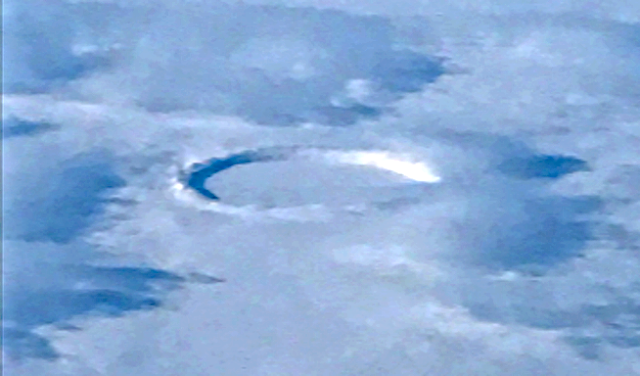
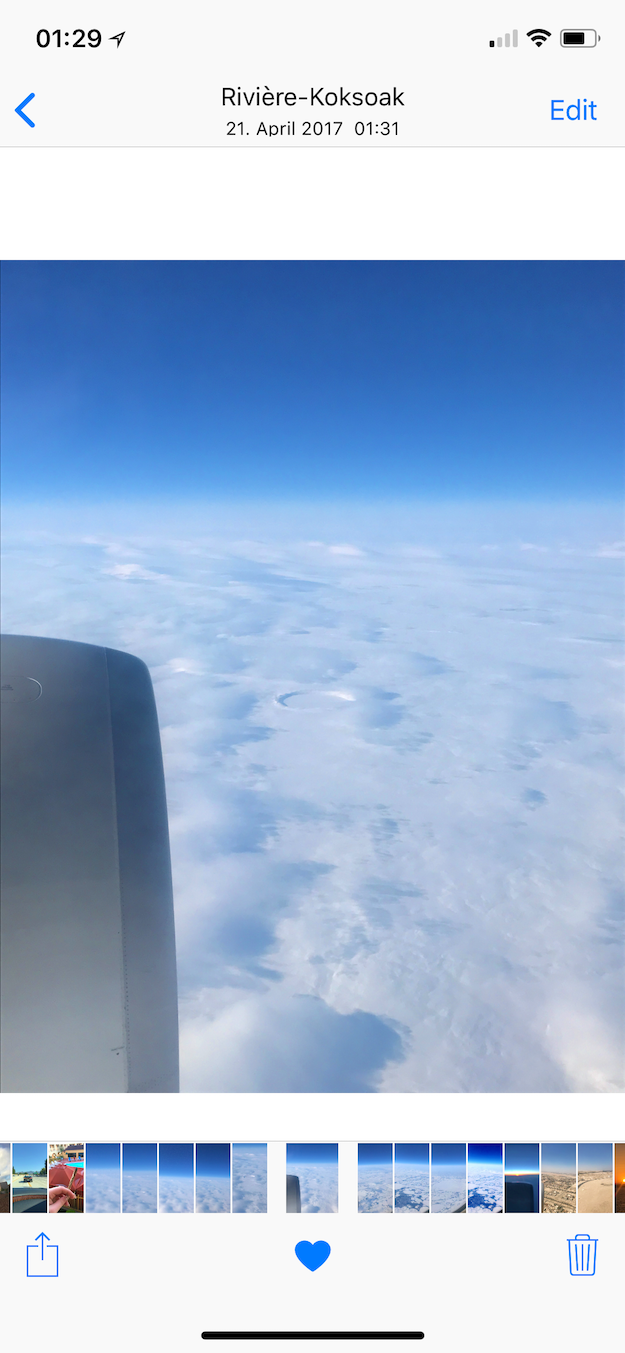
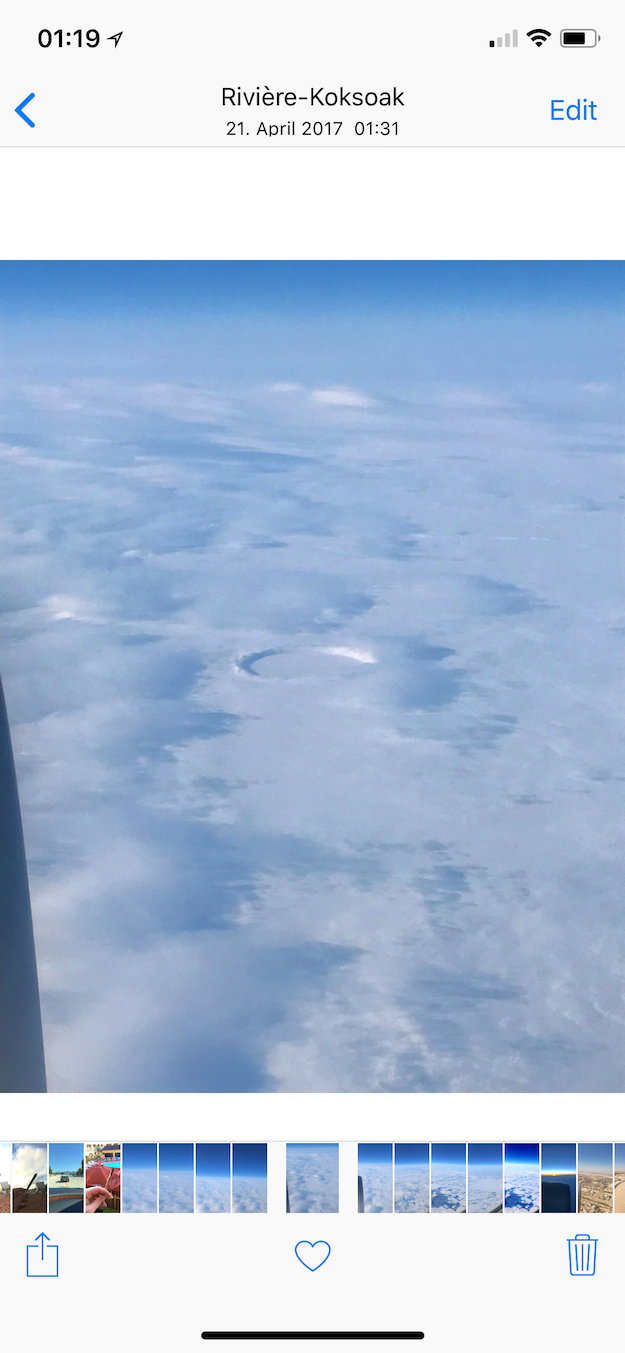
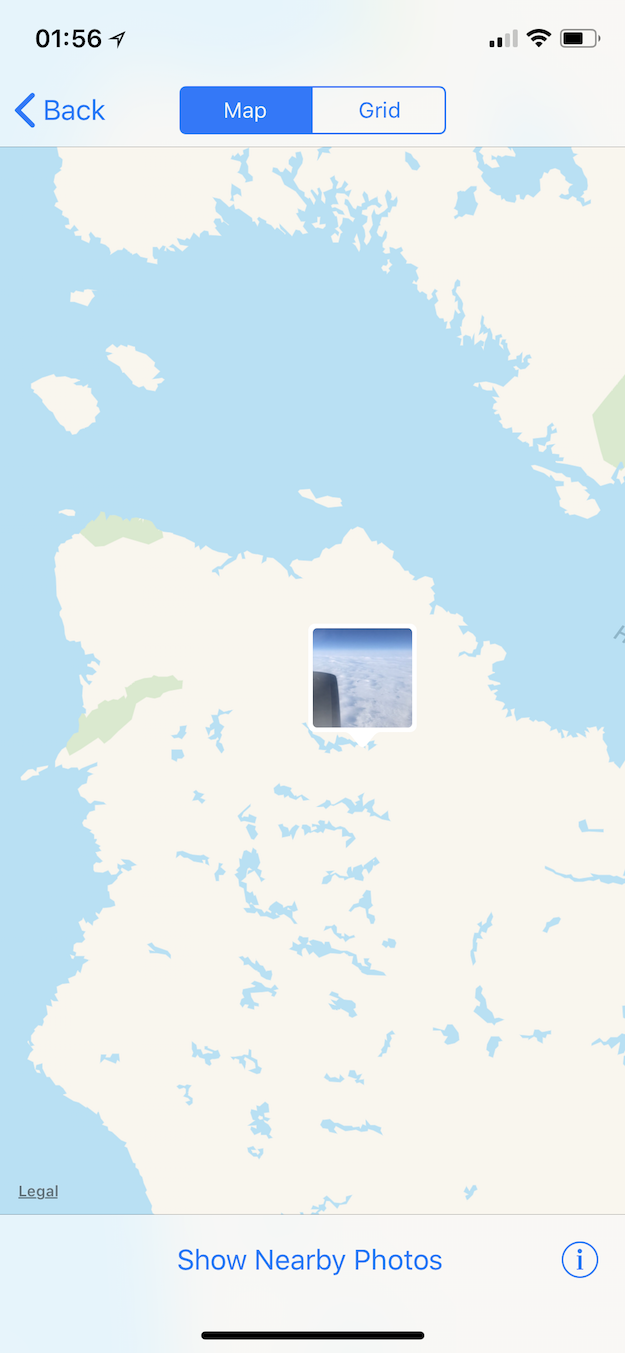
Witness spotted a disk shaped empty space on the top of a clouds while flying over Canada
You see, a UFO will leave a gap in the clouds no matter what! Even when its cloaked like it is here. Yes, the UFO is still there and from its size it looks to be about a half a mile across.
Javion Hill says he took this photo on U.S. 74 southwest of Charlotte on Aug. 18. Javion Hill
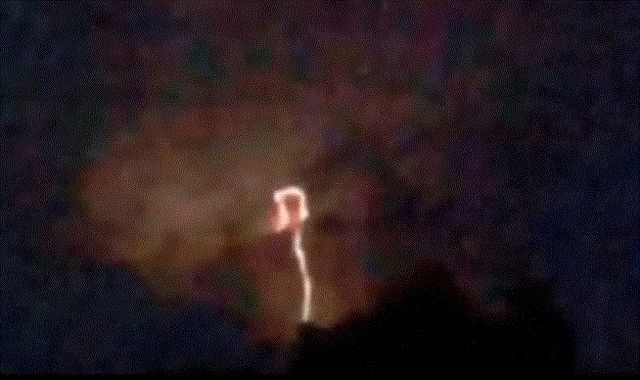
Giant Square-Shaped UFO Photographed
A strange and large square-shaped UFO was photographed on August 18th.
Javion Hill drove southwest of Charlotte, NC when he took the mysterious photo and posted it on his Facebook page later.
Here, the lights have a slightly pink color on the craft.
Javion Hill
He believes he witnessed an experimental military craft. Hill told the Charlotte Observer that there was something frightening about the experience. He also claimed that he didn't sleep that night anymore.
“I was on my way home with my wife on the speaker phone, and it looked like there was a tornado coming, so I was trying to take a picture of the clouds for my wife. But then I saw something that wasn’t normal and I was, like: ‘Oh my god, what is that?’ I started trying to take as many pictures of it as possible while I was driving,” said Hill.
Jupiter is the biggest planet in our solar system, but had delayed growth early on. Scientists weren’t sure why, but now might have an answer.
Spectacular view of Jupiter from the Juno spacecraft, acquired April 1, 2018.
Image via NASA/JPL-Caltech/SwRI/MSSS. Citizen scientists Gerald Eichstädt and Seán Doran created this image using data from the spacecraft’s JunoCam imager.
Jupiter is sometimes called the king of the planets in our solar system, due to its enormous size. It has some 300 times Earth’s mass. Jupiter is thought to have become the largest planet early in our solar system’s history. Still, questions remained about how quickly (or not) Jupiter kept growing, with earlier evidence suggesting Jupiter’s growth was delayed for about two million years. The reason for this delay was unknown. Now, astrophysicists in Switzerland think they have an answer. Their work was published August 27, 2018, in the peer-reviewed journal Nature Astronomy.
Especially interesting is that it is not the same kind of bodies that bring mass and energy [to Jupiter].
In other words, these scientists used computer modeling to show that – billions of years ago, early in our solar system’s history – Jupiter underwent a delayed growth phase as material of varying sizes and typesaccreted onto it.
Artist’s concept of a very young Jupiter. Scientists think that Jupiter, Earth and the other planets in our solar system formed from a disk of gas and dust surrounding the young sun.
Image via Lawrence Livermore National Laboratory.
Planets – like Earth or Jupiter – are thought to grow by accretion from the gas-and-dust clouds, or nebulae, surrounding young stars. That is, they grow as small bits of material in the cloud collide, stick together, and become increasingly bigger. Once the planets themselves get big enough, they begin to sweep up even more material from the solar nebula, via the power of their gravitational pull.
So what happened during these different phases of Jupiter’s growth? It’s thought that, during the first million years or so, Jupiter’s planetary core was built rather quickly from small, centimeter-sized pebbles of rocky material. During the next two million years, there was a slower accretion of larger, kilometer-sized rocks called planetesimals. A lot of heat was released during this period as the planetesimals collided with the young, growing planet. As explained by Alibert:
During the first stage the pebbles brought the mass. In the second phase, the planetesimals also added a bit of mass, but what is more important, they brought energy.
Jupiter continued to grow after this, reaching 50 Earth masses after about 3 million years. This led to the beginning of the third phase, where runaway concretion of gas fueled the continued growth of Jupiter, until the planet reached a staggering 300 Earth masses. This is the Jupiter we know and love today.
But why exactly was there the period of slowed growth? First, the researchers found that the period where Jupiter was between 15-50 Earth masses lasted longer than previously thought. The collisions with the larger planetesimals were intense enough that the atmosphere was heated sufficiently to prevent rapid cooling, contraction and further gas accretion. The growth process was therefore delayed. As noted in the new paper:
Pebbles are important in the first stages to build a core quickly, but the heat provided by planetesimals is crucial to delay gas accretion so that it matches the timescale given by the meteorite data.
Scientists now think they know why Jupiter’s growth went through 3 distinct stages. This diagram depicts the 3 stages of Jupiter’s growth, in millions of years.
Image via Nature Astronomy/Yann Alibert (Universität Bern) et al.
Below are the three stages of Jupiter’s growth, in brief. Note that they relate to the image above:
Stage 1: until 1 million years: Jupiter grows by accretion of pebbles (blue dots). Large primordialplanetesimals (big red dots) show high collision velocities (red arrows) leading to destructive collisions (yellow) and producing small, second generation planetesimals (small red dots).
Stage 2: 1-3 million years: The energy resulting from the accretion of small planetesimals prevents rapid gas accumulation and thus rapid growth (gray arrows).
Stage 3: beyond 3 million years: Jupiter is massive enough to accrete large amounts of gas.
The new formation scenario described by Alibert and team also fits nicely with previous data taken from meteorites. Based on analysis of the meteorites, scientists had concluded that the solar nebula in the primordial early solar system had somehow been divided into two different regions over two million years. When Jupiter had grown to 20-50 Earth masses, it acted as a barrier, disturbing the dust disk (debris disk) surrounding the young sun. This created an overdensity – a greater than normal density – within the dust disk, trapping pebbles outside its orbit.
As a result, material from farther out could not mix with other material closer in to the sun, at least not until Jupiter grew enough to scatter those pebbles inward with its gravity.
Image via NASA/SwRI/MSSS/Gerald Eichstädt/Seán Doran.
Beyond Jupiter, the researchers also say that their new results can also be used to help solve some long-running puzzles about the formation of Uranus and Neptune, as well as some similar exoplanets. This could be especially relevant to the so-called hot Jupiters, which are gas giant planets the size of Jupiter or larger that orbit much closer to their stars – and other gas giants found in other solar systems.
How did those planets grow even larger than Jupiter and why do many of them orbit so much closer to their stars (i.e. the hot Jupiters)? Maybe this new research will help shed some light.
Bottom line: Scientists have found that Jupiter, the largest planet in our solar system, went through “growing pains” as it was forming, with a period of time where its growth had slowed down considerably. Scientists involved in the new study now think they understand why.
“The Tantalizing Connection Between Volcanoes and Extraterrestrial Life in the Outer Solar System” –Today’s Top Space Headline
All in all, Rosaly Lopes, planetary geologist at NASA’s Jet Propulsion Laboratory, has toured 63 active volcanoes and lava lakes — research that helps her better understand such infernos on other planets and moons across the solar system. That dangerous region in Ethiopia, for example, is dotted with yellow and green hot springs that bear striking similarities to Jupiter’s sulfur-studded moon, Io. And Laki, an ancient volcano in Iceland — which last erupted over 200 years ago, spewing a poisonous fog that smothered the globe for nearly a year — looks remarkably similar to a feature on Saturn’s moon Titan.
In 1979, Sicily’s Mount Etna lurched to life, sending a plume of ash and several chunks of molten rock skyrocketing into the air. The outburst was unexpected. And for Rosaly Lopes, continues Shannon Hall in Quanta, a 22-year-old graduate student in planetary science at the time, it was a close call. She and her colleagues had left the summit that morning to work roughly a mile downhill. But others were caught in the terrifying blast, which killed nine people. A man died on his honeymoon. A little boy’s parents were both killed.
“It was a very sobering experience,” Lopes said. But she returned to the summit the next morning, and in the ensuing decades, she has traveled to volcanoes on every single continent. With every trip, she has an evacuation route in mind and knows that if the volcano unexpectedly erupts, she should look skyward to carefully dodge the falling lava bombs. But for many of those volcanoes, lava is not the only danger. She visited a lava lake in Ethiopia a year before several researchers were shot and killed there. She braved the numbing cold of Antarctica to gaze at Mount Erebus, which holds a lava lake that puffs steam and launches lava bombs. And she hoped to visit Nyiragongo, a lava lake in the Congo, earlier this year, but an Ebola outbreak forced her to delay her plans.
Lopes knows these alien features of Jupiter and Saturn’s moons nearly as well as she knows their terrestrial doppelgängers — in part because she discovered most of them. As a planetary geologist at NASA’s Jet Propulsion Laboratory (JPL), she analyzed images from the Galileo mission to Jupiter, identifying 71 active volcanoes on Io — a feat for which she has been recognized with a Guinness World Record. She later found icy volcanoes on Saturn’s moons. And today she focuses her efforts on the tantalizing connection between volcanoes and extraterrestrial life in the outer solar system.
Quanta’s Hall spoke with Lopes about volcanoes across the solar system and the open questions she hopes to soon answer.
Jupiter’s moon Io is the most volcanically active body in the solar system. Left: The dark regions in this image from the Galileo spacecraft show areas of recent volcanic activity. The large dark region toward the center of the image did not exist five months before this picture was taken.
The first mission you worked on at JPL was Galileo. Tell me a little about Jupiter’s moon Io — why is it so exciting?
I was a student when Voyager spotted volcanoes on Io. It was such a sensation because it was beyond what we had seen on Mars, Venus, Mercury and the moon. That this little moon could actually host volcanic activity is pretty phenomenal when you consider that it’s about the size of Earth’s moon. It should have been dead long ago. But it’s not. Instead, Io is a volcanologist’s paradise, with over 150 detected active volcanoes.
But these volcanoes look different that those on Earth. Although Io has mountains, the mountains are not active volcanoes. The volcanoes are calderas on the ground where lava bubbles away. What’s more, when I started working with our highest-resolution data from Galileo, we noticed that several of these calderas showed a pattern with hot edges — a signature of a lava lake. In a lava lake, the crust cools pretty fast, forming this skin of cooler lava on top of the molten lava. That skin then sloshes around and hits the caldera walls where it breaks up and reveals the molten lava underneath. So it’s quite common to actually see hot areas near the margins of the calderas.
But it was a surprising find because lava lakes are very rare on Earth. Although we only have a few, I have now visited nearly all of them, including Mount Erebus in Antarctica.
Photo of Lopes in 2014 above one of the lava lakes at Ambrym, an exceptionally active volcano in the Pacific island nation of Vanuatu.
Have those places helped us understand Io?
Oh yes. We joke that the Danakil Depression — a surreal landscape in Ethiopia that is covered by bright yellow and green hot springs full of sulfur and sulfur dioxide — is like Io on Earth. Not only do the colors resemble Io, but it also has a very active volcano, Erta Ale, with a spectacular lava lake. And that lava lake has helped inform our studies on Io. Like a lot of things, unless you see something up close it can be hard to really understand it. But we saw the lava lake’s hot edges and watched how the crust moved and sunk — all while taking a number of temperature measurements.
Those measurements are key because there is still an open question about the composition of lavas on Io. And while we have no direct measurements on Io, we can use temperature as a proxy because we see on Earth that different lavas melt at different temperatures. Unfortunately, temperatures measured on Io are just on that borderline between basalt — like the lavas you find in Hawaii and elsewhere on Earth — and lavas that are called ultramafic — like the primitive lavas on Earth that erupted mostly billions of years ago.
But if Io’s lavas are truly primitive, then we could study Io in order to better understand what happened on Earth a long time ago. It also makes me wonder if lava lakes were a lot more prevalent in Earth’s past than they are now.
Erta Ale, a volcano in the north of Ethopia, contains a lava lake that has been active for at least five decades.
It sounds like Io is different from Earth in a number of ways — why?
Io, under the surface, is a very different world than Earth. Our planet is the only known body that has plate tectonics, but Io is heated by tidal heating — caused by the gravitational push and pull between Jupiter and the other big moons. So the guts of Io’s volcanoes may be really quite different from those on Earth.
Luckily, volcanoes — the process by which planets and moons lose heat — can help shed light on Io’s interior. There are several different models, for example, of how that gravitational push and pull heats the interior of Io. Of the two extreme models, one of them suggests that tidal heating is mainly dissipated in the deep mantle, forming large convection cells that rise up toward the poles where volcanoes ultimately form. But the other extreme model suggests that tidal heating is mainly dissipated in the shallow asthenosphere [the uppermost region of the mantle], forming convection cells that rise up toward the equator, thus leading to more volcanoes there instead. Then, of course, there are some models in between the two extremes.
In 1999, I wrote a paper that looked at the number and distribution of active volcanoes — only to find that more volcanoes are located in the equatorial regions. That said, not all volcanoes are created equal. What’s more, we used data from the Galileo mission, which did not have a good view of Io’s poles.
So a few colleagues and I decided to take a second look. We’re currently working on a second study — led by Julie Rathbun at the Planetary Science Institute — that doesn’t just look at the distribution of volcanoes but also at their relative heat flow using three different data sets from space missions. That paper has yet to be published, but in it, we argue that the correct model is not one of the extreme models — where heat dissipates in either the mantle or the asthenosphere — but some combination of the two.
Could these studies help us potentially understand rocky exoplanets?
Oh yes. Many exoplanets are thought to be super-Ios, where volcanism is still occurring on a large scale thanks to tidal heating. And many exoplanets are also thought to be ocean worlds. Those two characteristics bring about the possibility that life could have evolved there, since you have two of the necessary ingredients: heat and water.
Another question that I’m quite curious about is whether we will find an exoplanet that hosts plate tectonics. So far, Earth is the only known place in the solar system with plate tectonics, and scientists still argue about why or how plate tectonics got kick-started here. Is it the presence of water, which lubricates the movement of the subducting plates? Is it because the crust has a certain thickness relative to the size of Earth? We think the Martian volcanoes, for example, are so much bigger because the Martian crust is thicker relative to the size of the planet. Because plate tectonics couldn’t start on Mars, volcanoes kept erupting in the same places and growing to enormous proportions.
But if we found another world with plate tectonics, it would shed light on the problem and be a big find.
Video: Rosaly Lopes explains why it’s worth exploring the huge variety of volcanoes on other worlds.
More recently, you’ve switched gears to focus on Saturn’s moon Titan. Is Titan volcanic?
That is still a little controversial. But I think that Titan does host cryovolcanoes, or ice volcanoes, which erupt slushy ices instead of molten rocks. We used the radar instrument on the Cassini spacecraft to find features that look dramatically similar to volcanoes and lava flows. I think the best example is a region that contains one of the tallest peaks of Titan, Doom Mons — named after Tolkien’s Mount Doom — and the deepest pit discovered so far on Titan, Sotra Patera. Those features, which are surrounded by flowlike features, simply look volcanic. In fact, they remind me of the Laki complex in Iceland — although Laki of course is not a cryovolcano.
In addition, there have been several indirect hints that Titan is still alive. A postdoc of mine, Anezina Solomonidou, found a change in brightness on the surface that coincided with the area I just mentioned. That could be attributed to degassing. Additionally, Titan’s atmosphere has methane. But methane is destroyed by sunlight — a strong hint that it could be replenished from the interior thanks to those cryovolcanoes.
There are still so many outstanding questions that we really need a new mission to Titan. It is such a fascinating world. Titan has a liquid ocean under its ice crust. It has lakes of liquid methane and rivers of liquid methane. It could still have active cryovolcanoes. It has organic materials that we think make their way through fractures in the ice crust and down into the ocean. Titan is really wild. I love Io, but I think that Titan is actually the most fascinating place in the solar system — not only geologically, but also because life could have evolved there.
Do scientists think that Titan’s subsurface is habitable?
I recently put together a team that will try to answer that exact question. The project was funded this May, and we will spend the next five years studying whether Titan’s subsurface ocean could be habitable, and then whether the material from the ocean could come to the surface and potentially contain detectable biomarkers.
Some team members, for example, will try to decipher if there are organisms that can survive the pressure and cold temperatures below Titan’s icy surface. To me, one of the most fascinating parts is that my colleagues will conduct experiments that simulate Titan’s ocean in order to find out what kind of bugs — as I call them — could actually survive. These bugs are bacteria like E. coli. And they’re quite hardy in that you can actually train bugs to survive high pressures like this. And it doesn’t mean we’ll have that exact bug on Titan, but maybe we’ll have something like it.
Now, of course you might think that life is sealed off from discovery, but here is where cryovolcanism comes in. Those icy volcanoes will bring that material from that ocean to the surface and the atmosphere — where we could potentially detect it. And it is true that we have not detected any volcanic activity on Titan directly, but that does not mean that the material cannot come back to the surface. Even if there is no cryolava, for example, gases could still be released — and with those gases, biosignatures. So the project will also look at what kind of biosignatures those bugs would produce and where we would go to detect them.
How optimistic are you that life exists beyond Earth?
I can’t be sure one way or another because we have a sample of one. But I treat it mostly as an experimentalist. We have to predict where and how we would find life on another planet, and we have to go look because that is really what’s going to tell us. If we find some kind of life on another world, there is no doubt it will be the most magnificent discovery in science. And several of us can contribute in small ways toward that grand goal.
WETENSCHAP & PLANEETRusland heeft vandaag een onderzoek opgestart naar een lek in capsule die aan het Internationaal Ruimtestation ISS hangt. Door een gaatje in de wand was de druk aan boord vorige week donderdag een beetje weggevallen. Het Russische ruimtevaartbureau Roscosmos sluit ondertussen niet uit dat iemand bewust een gat in de capsule zou hebben gemaakt.
Eind vorige week was er in het ISS een noodsituatie omdat er zuurstof lekte uit een scheurtje van ongeveer twee mm in de Sojoez-MS-09 die aan de spacemeccano hangt, en die voor transport naar en van het ISS zorgt. Aanvankelijk dacht men dat het gat door de inslag van een micrometeoriet was veroorzaakt. Vandaag sloot directeur-generaal Dmitri Rozogin van Roscosmos die verklaring al uit.
Daarna opperde hij menselijk falen, bijvoorbeeld bij raketbouwer Energija of bij tests op de lanceerbasis Bajkonoer. Uiteindelijk sloot Rozogin zelfs het bewust veroorzaken van een lek niet uit.
Er zijn volgens de topman van de Russische ruimtevaart meerdere pogingen geweest om van binnenuit een gat te maken in de Sojoez die aan het Russische segment van het ISS hangt. “Wij onderzoeken de versie van een op de Aarde (veroorzaakt probleem), want er zijn sporen van een boor die door de wand is gegaan. Maar er is ook een ander versie die wij niet uitsluiten: een doelbewuste interventie in de ruimte.”
Het door Russische kosmonauten uiteindelijk gedicht gat lijkt door een “weifelende hand” te zijn veroorzaakt, aldus Rozogin. “Waar gaat het om, een fabricagefout of een doelbewuste daad”, vroeg hij zich volgens het Russische staatspersbureau Ria Novosti af.
Plakband
Op de vraag waarom het scheurtje sinds de aankomst van de Sojoez in juni niet is opgemerkt, antwoordde Rozogin dan weer: “Stel dat een slordige werknemer een fout heeft gemaakt. Dan werd hij bang en dichtte hij het gat met speciale lijm. Het bleef lange tijd onopgemerkt. Dan droogde de lijm op en was ze weg”.
Volgens het Amerikaanse ruimtevaartbureau NASA is het scheurtje, in een deel van de Sojoez dat niet voor de terugkeer naar de Aarde bestemd is, aanvankelijk met thermoresistente plakband afgedicht geweest. Een Russische commissie moet uitklaren wie verantwoordelijk is. “We zullen het vinden”, beloofde Rozogin.
Ondertussen zijn er verificaties bij alle ruimtetuigen van het type Sojoez en Progress (voor onbemand transport naar de ruimtekolos), zei een bron uit de Russische ruimtevaartsector aan Ria Novosti.
In het ISS wonen en werken momenteel twee Russen, drie Amerikanen en één Duitser van het Europese Ruimtevaartbureau ESA. De Amerikaan Drew Feustel is gezagvoerder. Als het gat niet werd gedicht, zou het ISS in achttien dagen tijd zonder zuurstof hebben gezeten en hadden alle bemanningsleden kunnen stikken.
Sabotage in de ruimte? Russen sluiten bewust lek in ISS niet uit
Bron: BELGA
Rusland heeft dinsdag een onderzoek opgestart naar een lek in een aan het Internationaal Ruimtestation ISS hangende Sojoez waarbij eind vorige week - zonder gevaar voor de zeskoppige bemanning - drukverlies is ontstaan. Het Russische ruimtevaartbureau Roscosmos sluit ondertussen niet uit dat iemand bewust een gat in de capsule zou hebben gemaakt.
Eind vorige week was er in het ISS een noodsituatie omdat er zuurstof lekte uit een scheurtje van ongeveer twee mm in de Sojoez-MS-09 die aan de spacemeccano hangt, en die voor transport naar en van het ISS zorgt.
Aanvankelijk dacht men dat het gat door de inslag van een micrometeoriet was veroorzaakt. Maandag sloot directeur-generaal Dmitri Rozogin van Roscosmos die verklaring al uit. Daarna opperde hij menselijk falen, bijvoorbeeld bij raketbouwer Energija of bij tests op de lanceerbasis Bajkonoer. Uiteindelijk sloot Rozogin zelfs het bewust veroorzaken van een lek niet uit.
“Boor door de wand”
Er zijn volgens de topman van de Russische ruimtevaart meerdere pogingen geweest om van binnenuit een gat te maken in de Sojoez die aan het Russische segment van het ISS hangt. “Wij onderzoeken de versie van een op de Aarde (veroorzaakt probleem), want er zijn sporen van een boor die door de wand is gegaan. Maar er is ook een ander versie die wij niet uitsluiten: een doelbewuste interventie in de ruimte.”
Het door Russische kosmonauten uiteindelijk gedicht gat lijkt door een “weifelende hand” te zijn veroorzaakt, aldus Rozogin. “Waar gaat het om, een fabricagefout of een doelbewuste daad”, vroeg hij zich volgens het Russische staatspersbureau Ria Novosti af.
Speciale lijm?
Op de vraag waarom het scheurtje sinds de aankomst van de Sojoez in juni niet is opgemerkt, antwoordde Rozogin dan weer: “Stel dat een slordige werknemer een fout heeft gemaakt. Dan werd hij bang en dichtte hij het gat met speciale lijm. Het bleef lange tijd onopgemerkt. Dan droogde de lijm op en was ze weg”.
Volgens het Amerikaanse ruimtevaartbureau NASA is het scheurtje, in een deel van de Sojoez dat niet voor de terugkeer naar de Aarde bestemd is, aanvankelijk met thermoresistente plakband afgedicht geweest. Een Russische commissie moet uitklaren wie verantwoordelijk is. “We zullen het vinden”, beloofde Rozogin.
Ondertussen zijn er verificaties bij alle ruimtetuigen van het type Sojoez en Progress (voor onbemand transport naar de ruimtekolos), zei een bron uit de Russische ruimtevaartsector aan Ria Novosti. In het ISS wonen en werken momenteel twee Russen, drie Amerikanen en één Duitser van het Europese Ruimtevaartbureau ESA. De Amerikaan Drew Feustel is gezagvoerder.
Long Yellow UFO Docked At Space Station On Live Cam, UFO Sighting News.
Date of discovery: Feb 14, 2014
Location of discovery: International Space Station
This post is dedicated to Streetcap1, may you rest in peace brother.
This is the raw footage of what Streetcap1 caught docked at the space station on live Internet cam back in 2014. This UFO is the best UFO ever recorded at the space station, and there are a thousand videos out there. Streetcap1 was watching the live cam on the Internet when he noticed that a long canoe-like space ship was actually docked at the space station. The door that attaches from the space station to the Soyuz capsule is under it. With two and a half minutes of NASA footage, we can all agree that this is the most amazing catch ever at the ISS. I remember Streetcap1messaged NASA asking what it was, but of course NASA never replied.
Mysterious Square-Shaped UFO Photographed Over Charlotte, North Carolina
A mysterious square-shaped UFO was photographed on the night of Aug 18, 2018 by Javion Hill as he drove southwest of Charlotte, North Carolina.
He posted the image of the square UFO on his Facebook page on Aug 28, 2018 and while he believes what he saw may have been an experimental military craft, Hill told the Charlotte Observer that there was something frightening about the experience and he didn't sleep that night.
Hill said “I was on my way home with my wife on the speaker phone, and it looked like there was a tornado coming, so I was trying to take a picture of the clouds for my wife.”
“But then I saw something that wasn’t normal and started trying to take as many pictures of it as possible while I was driving, then I pulled over at the next exit to try and get video, but the aircraft had vanished; a heavy rain followed instantly.”
George Knapp the Secret UFO Conference That No One Knows About
COAST TO COAST AM.
George Knapp was joined by legendary ufologist Jacques Vallee, who discussed a recent discrete gathering of international UFO experts that was not mentioned to the public. He revealed that the two-day conference was organized by the French version of NASA, known as CNES, and featured 30 presentations to about 100 attendees. According to Vallee, the focus of the conference revolved around determining the best way to gather and research UFO cases as well as how to synthesize that data. He attributed the event to a change in the French scientific community, where a new generation has emerged that is willing to take a fresh look at the UFO phenomenon. Unlike UFO research in the United States, which is beset with ideological disputes, Vallee noted, this examination of the phenomenon centered around “a good long look at the data.”
Thanks in so small part to movies like Close Encounters and Signs, the imagery of UFO encounters and alien abductions is deeply tied to the American mid-west. Aliens rustle amongst fields of corn. Strange sounds emanate from big red barns. People in plaid shirts recount grabbing the shotguns out of their pickups because they saw some strange lights up in the sky and wish to respond the only way they know how. But the American heartland doesn’t have a monopoly on UFO sightings — hell, neither does the entire contiguous United States. People believing that aliens are real transcends all borders; possible UFO sightings crop up all over the world constantly, even in our tiny, huge corner of the world.
Arguably the biggest incident in the Australian UFO mythos is the Westall UFO encounter. According to a combined 200 students and teachers, on April 6, 1966, a UFO was spotted hanging around over two different schools (Westall High School and Westall State School) for about 20 minutes, before landing in a nearby paddock and eventually flying off again.
The object was described as being a silvery disc with a purple hue, roughly the size of about two cars. One of the explanations put forth is that they saw a weather balloon but, 50 years later, we still have no concrete idea what all these people saw.
Studio 10 spoke to a bunch of the witnesses for a special 50th-anniversary show and a bunch of them are still pretty adamant about what they saw:
The man described seeing a blue-grey disc around 25 feet in diameter rise out of a nearby lagoon before flying off. Upon inspection, a section of the lagoon the size and shape of the saucer appeared to have formed a whirlpool ‘devoid of all plant life’. Afterwards, dead reeds started to float to the surface, forming the ‘nest’ from which the incident takes its name. According to Pedley, when he told the owner of the sugarcane farm on which the incident happened, the owner said that, a few hours before Pedley saw the saucer, his dog had been acting strangely, barking in an agitated fashion and running in the direction of the lagoon from which the saucer supposedly emerged.
Pictured: It’s definitely aliens.
Albert Pennisi, the owner of the neighbouring sugarcane farm, reportedly told a journalist from Sydney that he had been dreaming of UFOs all week before the event. Hell yeah, dude.
Next, we cast our beady eyes on South Australia in the year 1988, when a family driving through the Nullarbor claimed to have their entire car lifted off the ground by — you guessed it — fuckin’ aliens.
According to a wonderfully detailed dive into the story by the ABC, the Knowles family was making the long drive from Perth to Melbourne when they were ‘tormented’ by a large glowing sphere of light for 90 minutes. The glowing ball chased them before landing on the roof and lifting them clear off the ground, as described by a police spokesperson at the time:
It apparently picked the car up off the road, shook it quite violently and forced the car back down on the road with such pressure that one of the tyres was blown.
One of the family members in the car reported hearing their voices distort as if time was slowing down, either a symptom of shock or just the coolest UFO shit in the world. If that’s not creepy enough, here’s what the mum told reporters happened after it picked them up:
I wound down the window and I felt this thing on the roof… all of this smoke stuff started coming into the car, the car was covered in black stuff. It was a small light and all of a sudden it became big like this, like a big ball.
I think we can all agree: what the fuck.
Five years later, we had the Cahill Abduction, in which a woman driving back to Melbourne from the Dandenong Rangesclaimed to have been abducted by aliens in Narre Warren North. Kelly Cahill (not her actual name) and her husband Andrew reported seeing what looked like a blimp with a ‘ring of orange headlights’.
Cahill said that, as they got closer, she became blinded by the light coming from the object and then woke up later, noticing that she had lost an hour of time. It doesn’t end there though: she claimed to notice a new, triangular shaped mark on her stomach and, after a few weeks, began to recall more and more details of the abduction.
Cahill described seeing ‘skinny black figures with bulging red eyes’, in addition to seeing people in two other cars who also witnessed the abduction — although none of these people have spoken to the media outside of UFO researchers.
Pictured: Cahill’s depiction of the aliens, which are REAL.
Keen-eyed UFO enthusiasts may have spotted a rather prominent omission from this list, which is, of course, the disappearance of Frederick Valentich in 1978. Valentich and his Cessna 182L disappeared after he reported being followed by a flying object that he described as “not an aircraft“.
I didn’t get into this one because someone else has already done the hard work for me, in the form of our Australian mysteries podcast, the All Aussie Mystery Hour (available on iTunes and Spotify). Mel and Jose get way, way deep on this one and it is well worth your time if you reckon aliens are either a) real or b) fake but super cool.
The fascinating 'UFO landing pad' in the Argentinian desert
The fascinating 'UFO landing pad' that has been built in the middle of the Argentinian desert. Photo / Nora Aliessi
Daily Mail
By: Jennifer Newton
This fascinating 'UFO landing pad' has been built in the middle of the Argentinian desert by a man who claimed aliens told him to construct it.
It's a collection of white and brown rocks in the shape of a star, known as an 'ovniport' - and it appeared in the small town of Cachi in the province of Salta, MailOnline Travel reports.
It is believed to have been built by Swiss man Werner Jaisli, who travelled to the area in search of extraterrestrials.
Visitors flock to the site - and no wonder. Because it's stunning.
It is believed to have been built by Swiss man Werner Jaisli, who travelled to the area in search of extraterrestrials.
Photo / Nora Aliessi
A fact that's highlighted by aerial images.
After travelling to Argentina, Jaisli is reported to have claimed he received a 'telepathic message' from aliens telling him they needed a place to land on earth.
He told Argentine newspaper El Tribuno: 'They landed about 100 metres above our heads and projected on us a beam of light that made us both see their own brightness.
'The funny thing is that it did not affect our vision. Something began to bubble through my brain: it was an order. They asked me telepathically to build the airport.'
He is thought to have immediately got to work, making a large star in 2008 with 36 points that measures 48 metres in diameter.
Jaisli also made a smaller star and it took him until 2012 until his work was complete.
As well as tourists, the site is also popular with UFO enthusiasts, who believe they may be able to contact beings from another world from the site.
Visitors flock to the site - and no wonder. Because it's stunning.
Photo / Nora Aliessi, Flickr
However, soon after the ovniport was built, locals around Cachi stopped seeing Jaisli, who had a large beard and would often wear a Druid outfit.
It is unclear where he travelled to but some locals joked that he may have been abducted by aliens.
However, it is thought he actually went to Bolivia - with another theory that he travelled back to Switzerland.
Orbitz entices UFO enthusiasts with extraterrestrial tourism posters.
According to the travel fare aggregate Orbitz, “we are not alone,” and they have a list of places aliens may have already visited on Earth you can visit too.
“We selected 10 intriguing sightings from across the globe and created vibrant posters illustrating and explaining the events that took place,” according to an Orbitz representative. “Sightings of Unidentified Flying Objects has happened for millennia. Is it life from other planets? Are we alone in the universe? Have a look at these engaging posters and decide for yourself.“
The alleged events of extraterrestrial visitation Orbitz have decided to highlight in their posters span from Ancient Egypt in 1440 B.C., to Norway in 2009. The collection includes the famous Roswell, New Mexico event when alien visitation went awry. In 1947, an alleged alien spacecraft crashed outside of Roswell in 1947. However, the majority of the rest of the events featured in the posters are much more obscure, including the most recent incident.
In 2009, witnesses saw and photographed a beautiful giant glowing swirl in the skies. Many speculated that a massive portal to another dimension had been activated. Astronomers and scientists said it was a rocket mishap and the swirl effect was due to rocket fuel leaking in a swirling pattern as the rocket spun in the air.
The later is the most likely explanation, and examples of similar rocket failures including the swirling phenomenon have been recorded before. Of course, there are those who are skeptical of this more mundane theory, which is understandable. It is more fun to think it is a dimensional portal.
The following is a list of the posters with explanations of the events they are portraying:
DISKS OF FIRE, Ancient Egypt, 1440 BC
The scribes of Pharaoh Thutmose III report unearthly fiery disks floating over the skies.... Do they come in peace to observe, or to do battle? Their origins and intentions? Unknown.
GALACTIC GLOBE FALLS TO EARTH, Italy, 91 BC
Roman writer, Julius Obsequens, reports a potential threat from outer space. Terrifying noises come from the sky as a globe of fire gyrates towards earth, lands, and then rises again, making its way east.
JUDGEMENT DAY, Germany, 776
Saxon invaders besieging the Sigiburg Castle flee in horror when they encounter a spacecraft in the skies. Eyewitnesses report the craft to bear the likeness of two large flaming shields.
THEY CAME FROM THE STARS... TO FIGHT FOR PLANET EARTH, Germany, 1561
Citizens of Nuremberg witness an epic battle. Blood-red circular arcs and globes fly back and forth, fighting each other for more than an hour, until all the crafts fall to the earth and burn with black smoke.
THAT'S NO MOON, England, 1801
Reports emerge of a mysterious moon-like globe appearing in the sky, which bathes Hull in a mysterious blue light. Suddenly and without warning, it splits into seven fireballs. No traces are left behind.
SHE CAME FROM OUTER SPACE, Japan, 1803
Local fishermen spot an unusual vessel adrift and tow it to land. A woman with red and white hair appears. She speaks a language utterly foreign to them. They return her and her vessel to the sea, and she drifts away.
THEY'RE HERE, USA, 1947
In Roswell, New Mexico, the US Armed Air Forces encounter a crashed flying saucer and capture its alien occupants. The millitary engage in a cover-up, and continue to deny the encounter to this day.
YOU CAN RUN, BUT YOU CAN'T HIDE, USA, 1952
In Flatwoods, West Virginia, eyewitnesses see a bright object cross the sky and land. They gather a group to investigate and encounter a 10 foot mutant, who glides towards them hissing. They run for their lives.
ATTACK OF THE TENTACLED TORMENTOR, South Africa, 1996
In Erasmuskloof, Pretoria, a glowing disc emitting bright green tentacles is spotted by police. A helicopter is dispatched and a chase ensues. The mysterious craft makes a vertical ascent and evades capture.
A spiralling light is spotted in the night sky. The light vanishes, as what looks to be a wormhole opens up. Russian authorities claim the anomaly is the result of a failed missile test, but many doubt this explanation.
According to The Washington Post, UFOs are “suddenly a serious news story.” If more people are open to the possibility Earth may be a tourist stop for aliens, then it only makes sense Earth-bound tourist would want to see what the aliens found so great about the places they have allegedly visited.
The civilization of Venus described in a declassified report
The possibility of life on Venus leads to a revolution in thought, because many of us believe that the solar system is an oasis in the desert with only one Earth. So how can we accept the idea that our space brothers are there, near the nearby planet, and reach out and wait patiently and calmly for the green lights to light up in our minds? (Article published at UFO Spain Website)
The Earth Has Been Hit by 144 Major Earthquakes in the Last Week And No One Is Talking About It
solar minimum?? planetary alignments??? pole shift??? this is a week old ...there was some major quakes...are there more to come???
The debate regarding the impact of the human population on the world around us has been an ongoing one, reignited each time we witness a significant shift in the climate or the environment as a whole. In fact, this whole situation has become so commonplace in our society that it no longer phases us the…
this guy in the vid has a good take on it....he also speaks about the upcoming planetary alignment...they gonna line up again on the other side of the sun in october....thats twice in a year....unheard of......
Nieuwe animatie brengt klimaatverandering op huiveringwekkende wijze in beeld
Caroline Kraaijvanger
“Het maakt niet uit hoe je het visualiseert; het ziet er eng uit.”
Aan het woord is Antti Lipponen, onderzoeker aan het Finse Meteorologisch Instituut. Hij zette de zogenoemde GISS Surface Temperature Analysis (kortweg GISTEMP) om in onderstaande animatie.
In de animatie zie je de temperatuurafwijkingen die in individuele landen tussen 1880 en 2017 werden gemeten. Er is sprake van een afwijking als het kouder of warmer is dan normaal in een specifieke periode en op een specifieke plek het geval is. De term ‘normaal’ verwijst hierbij naar de gemiddelde temperatuur die op die plek en in die periode tussen 1951 en 1980 werd gemeten.
Verandering In de animatie is goed te zien dat er in de laatste jaren van de negentiende eeuw en beginjaren van de twintigste eeuw sprake is van een lagere temperatuur dan ‘normaal’. Maar dat verandert als we het einde van de twintigste eeuw naderen. En aan het begin van de 21e eeuw kleuren huiveringwekkend veel landen donkerrood.
Nog een animatie Het is niet voor het eerst dat Lipponen met een pakkende animatie omtrent klimaatverandering op de proppen komt. Een jaar geleden presenteerde hij onderstaande animatie die eveneens duidelijk laat zien dat landen stuk voor stuk warmer worden. En niet zo’n klein beetje ook.
Met de animaties komen de op data gefundeerde waarschuwingen van wetenschappers tot leven. Je kunt met eigen ogen zien hoe de aarde warmer wordt. De animaties zijn bedoeld als wake-upcall. Niet alleen voor de burger, maar met name ook voor politici, die na het alom bejubelde Parijse klimaatakkoord te hebben gesloten er eigenlijk nog weinig aan hebben gedaan om dat klimaatakkoord handen en voeten te geven.
The description on the video reads: “The object was dropping a lot of glowing material while flying. She did know what this object was, but she was sure this was not something man made.
“It did not produce any sound at all. When I analysed the footage I noticed the object ejected a lot of material.”
Many of UFO Today’s followers were convinced the footage was of genuine UFO activity.
YouTuber David Leach wrote: “Excellent viewing. Leaking a lot of material. Near the end it looks like a smaller UFO breaks off and goes upward.”
UFO sighting: ‘Alien spaceship’ shot down over Scotland
(Image: GETTY • YOUTUBE)
Starman 2710 added: “Came through the portal to fast and lost control?”
AKIJPN continued: “Definitely looks like some flying object is flying loosing its control. Amazing.”
However, there does seem to be a more logical explanation for the strange phenomenon.
According to locals who have taken to the social news aggregator site Reddit, the strange sightings are actually caused by people attaching sparklers to kites.
The UFO was actually a kite
(Image: YOUTUBE)
There have apparently been several instances over the last month with residents not too concerned of an alien invasion.
Reddit user Space Pecs said it is “the third time this month” that a kite with sparklers has been launched.
Bory Truro replied: “Didn't have much of a clue at first, but now that you mention it, it does look a lot like someone stuck a sparkler on a kite.”
Another alleged UFO sighting near Charlotte has appeared on Facebook and in this case, it was posted by a husband and father who says he doesn’t necessarily believe in UFOs.
Javion Hill, 35, of Kings Mountain, North Carolina, says he took several photos of the object during a storm on the night of Aug. 18, as he drove on U.S. 74 southwest of Charlotte.
The images feature something square hovering above the treeline, with its edges fringed in lights. Hill told the Charlotte Observer the craft frightened him to the point that he didn’t sleep that night.
“I was on my way home with my wife on the speaker phone, and it looked like there was a tornado coming, so I was trying to take a picture of the clouds for my wife,” says Hill.
“But then I saw something that wasn’t normal and I was, like: ‘Oh my god, what is that?’ I started trying to take as many pictures of it as possible while I was driving.”
Hill says he pulled over at the next exit to try and get video, but the aircraft had vanished. A heavy rain followed instantly, he said.
Hill says it’s possible what he saw was a military craft. Conspiracy theorists maintain many UFO sightings in the region are actually an experimental military spacecraft known as the TR-3B, an anti-gravity craft that hovers. Some believe the craft is from one of the state’s military bases, which include Fort Bragg, Pope Air Force and Camp Lejeune.
Military.com reports the TR-3B “doesn’t exist officially.”
Reaction to Hill’s photo has included mostly questions, but at least one person, Shelby native Eric White, said he also saw something in the same area that “vanished in thin air.”
Hill says what he saw is actually bigger than what is seen in the photo.
“I was worried for my safety,” he said. “I didn’t believe in UFOs until that moment.”
NASA Just Gave the Opportunity Rover a Survival Deadline on Mars—Here's What That Means
By Meghan Bartels, Space.com Senior Writer
An artist's depiction of the Opportunity rover on the surface of Mars.
Credit: NASA
NASA on Thursday (Aug. 30) announced a deadline for its recovery of the Mars rover Opportunity, which has been silent for months while battling a dust storm, and some scientists intimately familiar with the project say that new timeline doesn’t do the grizzled robot justice.
The rover, which launched in 2003 and landed on Mars in January 2004, has been giving its humans the cold shoulder since June 10, when a fierce dust storm enveloped the Red Planet and blocked the sun from the robot's solar panels. The storm has started to die down, so the team hopes that with enough time, the rover should be able to power on again and get back to work after its long hibernation.
But scientists familiar with the mission say that NASA's new schedule doesn't offer the hardworking rover that time. "Opportunity has everything going for her," Tanya Harrison, a planetary scientist at Arizona State University and a science team collaborator on Opportunity, told Space.com. She said that depending on how the timeline aligns with Martian weather, "We're not giving it a fair shot." [Send the Opportunity Mars Rover Your Support (and a Postard)]
Here's NASA's plan: First, the team will wait until the tau — a measurement of how much dust clouds the air — lowers to 1.5. (At the peak of the storm, the tau was likely around 10, a level one rover expert called "terrifying.") Then, the team will begin a 45-day active-listening period, during which they will send commands up to the rover that should force it to respond.
Finally, if the silence continues, the team will transition into passive listening, eavesdropping on Mars-observing antennas for chance signals from Opportunity. Regardless of when that 45-day period ends, the team will continue passively listening through the end of January, John Callas, Opportunity project manager at NASA's Jet Propulsion Laboratory, told Space.com. (NASA's original release about the decision said simply that the team would be given "several months" for passive listening after the period of active listening ends.)
But at the end of January, the rover's time will be up, and with it, the Mars Exploration Rovers mission, which originally consisted of Opportunity and its sister robot, Spirit. "We're not ending the mission after 45 days," Callas told Space.com. "But I'm not going to keep full staffing around for six months or eight months if the chance of success is low."
Dust in the wind
These side-by-side images of Mars show the planet appeared in May 2018 (left) and in July 2018 after the planet's surface was completely covered by a massive dust storm. NASA used images from the Mars Reconnaissance Orbiter to create these views.
Credit: NASA/JPL-Caltech/MSSS
If this year's dust storm is indeed the end of Opportunity, no one will be able to say the rover wasn't a survivor. Opportunity and Spirit, which landed on the planet in 2004, were expected to last only 90 Martian days (each about 40 minutes longer than an Earth day), on the planet's surface — in part because scientists expected that dust would slowly bury the robots, according to Don Banfield, a planetary scientist at Cornell University who works with the Mars Exploration Rover team. But Spirit lasted for seven years, and Opportunity was approaching its 15th year at work when the storm hit. [Mars Dust Storm 2018:What It Means for the Opportunity Rover]
Banfield said that this storm is serious business, one of the biggest observed from the Martian surface to date. Although the storm is clearing, it's difficult for scientists to predict how tau, their crucial measure of light penetrating to the surface, will fare. "Getting that last little bit of dust out of the air takes a good amount of time," Mike Seibert, a former flight director for the Mars Exploration Rovers program, told Space.com.
There's also one big problem with the Martian skies clearing: All that dust has nowhere to go but down. "I think that's the real scary thing right now is that we know that the dust is going to fall out of the sky, but it has to go somewhere," Banfield said. Dust sitting on Opportunity's solar panels will block the rover's power supply just as effectively as dust in the air does, and, according to Seibert, engineers have no way to figure out how dusty the panels are.
One factor could rescue Opportunity's solar panels from that fate, a phenomenon that surprised scientists when they first observed it early in the rovers' careers: a predictable seasonal cycle of winds that are strong enough to blow dust off instruments and rovers. Those wind events should begin, in terrestrial time, in November and last until January, said Harrison, who began her work with the Mars Exploration Rovers team by producing Martian weather forecasts when there were still twin robots.
But it's not yet clear how that will align with the 45-day window opening after the atmosphere hits 1.5 tau — so, from what NASA has stated publicly so far, engineers trying to reach the rover may not be able to send it active commands at the times when those commands are most likely to work.
The overwhelming team consensus Harrison has heard is that active listening should continue through dust-cleaning season, "which, in the grand scheme of things, is not that long from now," she said. "You're not going to suddenly be saving tens of millions of dollars by cutting the mission short."
Twin rovers, different fates
Harrison and Seibert were both struck by the timeline Opportunity is being offered in comparison to how its twin, Spirit, fared nearly a decade ago, when its travels came to an abrupt end. "We did everything we could have done: Spirit was in much worse condition going into that fourth winter than Opportunity was going into the dust storm," Seibert said. "Spirit had much less of a chance of actually returning to contact with Earth than Opportunity does now."
In April 2009, Spirit got stuck in a position that meant the robot lost power when winter came, likely freezing vital electronics on the rover. The team left the robot alone over the Martian winter, but in July 2010, NASA began an intensive, 11-month-long listening campaign that blended active and passive listening, Seibert said.
Anywhere from three times a week to daily, the team would call Spirit, performing what they nicknamed a "sweep and beep" maneuver. That included one procedure to force the rover's radio to a specific frequency and a second to cue a signal. Sessions usually lasted an hour but occasionally stretched as long as 5 hours, and they took place day and night to fit the Martian schedule.
Between those active-listening sessions, engineers with the Deep Space Network, which communicates with Martian missions, automatically scanned their feeds for signals that may have come from the trapped rover. [10 Amazing Mars Discoveries by Rovers Spirit & Opportunity]
After nary a whisper, NASA declared the rover permanently dead in May 2011. That decision came after a meeting with all the senior team members, which Seibert said he remembers well. "It was a very purely democratic discussion," he said, adding that he was the first to hesitantly suggest giving up on Spirit, focusing the mission's resources on Opportunity alone.
"It hurt to say, but in my mind, I was OK saying it, because we had done so much to try to recover Spirit and the odds were so much against that rover," he said. And back then, the team still had a piece of the mission at work. "Mars Exploration Rovers continued on. It was just losing half of the spacecraft, but there was still plenty to do."
"Shock and awe and sadness"
But there's no longer a second active rover, and Opportunity scientists and engineers have been publicly speaking out about how demoralizing the rover's silence is. Earlier this week, they realized that NASA was deciding how to proceed, with one rumor suggesting that the rover would be given 30 days of active listening after tau reached 1.5. On the evening before the meeting deciding the rover's fate, they enlisted mission allies to launch a Twitter campaign showing public support under the hashtag #SaveOppy. And they saw a flood of responses, which Harrison thinks may have influenced the managers' decision.
But even a 45-day period isn't satisfying to her or Seibert, who said that he hasn't seen the same sort of exhaustive efforts for Opportunity as he and his colleagues conducted for Spirit. "It just seems like it's an easier thing to say we're done than putting the extra effort into soldiering on in the face of adversity," Seibert said. "It still seems like it's walking away early."
NASA doesn't seem to be effectively communicating with current team members about their decisions either, said Harrison, who added that the team didn't get a heads-up about the Aug. 30 announcement. "It seems pretty arbitrary, because [a] tau of 1.5 is still relatively high and we're not sure where that number came from. That information has not been released to the team," she added.
(In addition, tau measurements may not be particularly precise right now. Banfield mentioned that tau is more difficult to measure with confidence when the rover itself is out of order, because Curiosity is on the opposite side of the planet, forcing scientists to rely on images taken by orbiters.) [Top 10 Discoveries by Mars Rovers Spirit & Opportunity: A Scientist's View]
But Callas, JPL's project manager for Opportunity, said NASA has to draw the line somewhere, as sympathetic as he is to his grieving colleagues. "It's just like a loved one that's missing in action — the more time that passes, the less likely you are" to hear anything, he said. "I mean, you still hold out hope, and we are. We'll still listen. But we have to be realistic, too, as difficult as that is emotionally."
Other Opportunity team members may not be there yet, still focused on hoping for the best for the robot they've tended to for more than a decade. And the emotional strain is reaching beyond engineers in mission control.
"It's killing me not to be there and not to be in the trenches with that team working on the problem," Seibert said. He's told friends still working with the mission to call when they get a signal, so he can jump on a plane and foot the bill for celebratory drinks. "I really hope I get that phone call soon."
Space.com senior writer Mike Wall contributed reporting to this article. Email Meghan Bartels at mbartels@space.comor follow her @meghanbartels.
Amatrice, the epicenter of the 2016 Italian earthquake.
Credit: Youtube, Wikimedia Commons.
An aftershock is like an echo — a smaller earthquake that occurs soon after a larger one, hitting the same area as the main shock. Large magnitude quakes can generate aftershocks of varying magnitudes over a period of months. For people living and working around the site of an earthquake, the subsequent days and weeks are filled with anxiety — when will there be a new one?
Seismologists have crafted models that fairly accurately predict when an aftershock is going to take place and how violent (i.e. magnitude) it will be. Now, researchers at Google and Harvard have teamed up to produce an artificial intelligence system that can also predict where the aftershock will hit next.
The collaboration devised an AI that was fed a database of 131,000 earthquakes and the location of their subsequent aftershocks. The machine learning algorithm was instructed to spot the patterns in this complex landscape of variables upon variables.
There are a lot of things that shape a seismic event — from the composition of the ground to the interactions between tectonic plates to the ways seismic waves propagate through the Earth. Making sense of all the intricate layers upon layers can be maddening. However, this sort of high-volume pattern matching is what machine learning algorithms excel at. Such AIs are currently being used by tech giants like Facebook, Amazon, and Google to sell you virtual assistants or to show search results.
“After earthquakes of magnitude 5 or larger, people spend a great deal of time mapping which part of the fault slipped and how much it moved,” said Brendan Meade, a Professor of Earth and Planetary Sciences at Harvard University.
“Many studies might use observations from one or two earthquakes, but we used the whole database…and we combined it with a physics-based model of how the Earth will be stressed and strained after the earthquake, with the idea being that the stresses and strains caused by the main shock may be what trigger the aftershocks.”
Meade was first inspired to neural networks to predict aftershocks several years ago during his two sabbaticals at Google in Cambridge. At the time, deep learning algorithms were not as established as they are today but the idea immediately sounded too good to pass.
RELATED8.3 Magnitude Earthquake strikes Chile
After years of work, Meade and colleagues came up with a model which has much better predictive power than anything before it. On a scale of accuracy from 0 to 1 — where 1 is a perfectly accurate model and 0.5 is essentially the accuracy of flipping a coin — the new AI system scored 0.849 while the previously most precise model scored only 0.583.
The neural network was able to work so well thanks a little quirk it managed to uncover all by itself. The complex calculations take into consideration a factor known as the “von Mises yield criterion”, which predicts when a material will break under a stress. It’s been mostly used by engineers in the field of metallurgy. Now, it has also found its place in earthquake science, the authors reported in the journal Nature.
“This is a quantity that occurs in metallurgy and other theories, but has never been popular in earthquake science,” Meade said. “But what that means is the neural network didn’t come up with something crazy, it came up with something that was highly interpretable. It was able to identify what physics we should be looking at, which is pretty cool.”
Another advantage of the new AI is that it works for different types of faults. Because it’s generalizable, the system can just as well predict aftershocks around slip-faults, such as those seen in California, or shallow subduction zones, as seen in Japan.
Before you get overly excited though, be aware that this AI has a number of important limitations. The system only works with aftershocks caused by permanent changes to the ground, so-called static stresses. Aftershocks, however, can also be triggered by dynamic stresses that do not permanently change the applied load and thus can trigger earthquakes only by altering the mechanical state or properties of the fault zone.
RELATEDGiant Panda no longer 'endangered' thanks to conservation efforts in China
The AI is also too slow to work in real-time, which is a must-have considering that most aftershocks occur in the first day following an important earthquake.
Going forward, the researchers hope to overcome these challenges one by one. What’s more, Meade also has his mind set to predicting the magnitude of earthquakes themselves — something which is still considered highly esoteric and, perhaps, impossible to do.
“I think there’s a quiet revolution in thinking about earthquake prediction,” he said. “It’s not an idea that’s totally out there anymore. And while this result is interesting, I think this is part of a revolution in general about rebuilding all of science in the artificial intelligence era.
“Problems that are dauntingly hard are extremely accessible these days,” he continued. “That’s not just due to computing power — the scientific community is going to benefit tremendously from this because…AI sounds extremely daunting, but it’s actually not. It’s an extraordinarily democratizing type of computing, and I think a lot of people are beginning to get that.”
Celebrate Labor Day tonight (Sept. 3) by watching a bright-green cometapproach the sun in a live webcast by the Slooh online observatory.
Comet 21P/Giacobini-Zinner will make its closest approach to Earth on Sept. 10. That same day, it will swing by the sun, appearing bigger and brighter as solar radiation strips particles from its icy surface, creating that characteristic comet "tail."
Astrophotographer Alexander Vasenin captured this photo of Comet 21P/Giacobani-Zinner from Moscow Oblast, Russia, on Aug. 18, 2018, at 12:32 a.m. local time (2132 GMT on Aug. 17).
Comet 21P is a periodic comet that orbits the sun about once every 6.6 years. It is the source of the Draconid meteor shower, which happens every year in October when Earth passes through the trail of debris that Comet 21P leaves behind as it orbits the sun.
When Comet 21P flies by Earth on Sept. 10, it will be 36 million miles (58 million kilometers) away. "On the night of September 3rd, the comet will lie just over 1 degree from bright star Capella in Auriga, making it far easier to spot," Slooh officials said in a statement.
While the comet can be seen with small telescopes and binoculars, it won't be quite bright enough to spot with the naked eye, according to EarthSky.org. "The comet is expected to reach a visual magnitude of 6.5 to 7. That means it will not be visible to the eye … but nearly," EarthSky.org reports.
During the Labor Day webcast, Slooh astronomers Paul Cox and Paige Godfrey will join Slooh's storyteller Helen Avery to talk "all about comets and what they mean to us ground observers," Slooh officials said.
Email Hanneke Weitering at hweitering@space.com or follow her @hannekescience.
Software Engineer Hacks a Knitting Machine to Create Massive Stellar Map
By Chelsea Gohd, Space.com Staff Writer
Australian software engineer Sarah Spencer hacked a 1980's knitting machine to create "Stargazing: a knitted tapestry" to show the universe in a totally unique way.
Credit: Sarah Spencer
By hacking a domestic knitting machine, a software engineer advanced modern knitting and made a massive equatorial star map in tapestry form.
Australian software engineer Sarah Spencer spent years hacking and programming a 1980s domestic knitting machine for fun. This hobby grew into much more, however, as Spencer developed a new computer algorithm that did something never before accomplished with such machines. Her accomplishment — knitting with bird's-eye backing using one knit per pixel in three colors — might not mean much to anyone outside of the knitting community. But this achievement allowed Spencer to make something truly out of this world.
"As a woman in tech, I wanted to create something which would engage young minds in an area of STEM (science, technology, engineering, mathematics)," Spencer said in a statement emailed to Space.com. So, with her souped-up knitting machine, Spencer set her sights on Electromagnetic Field Camp (also known as EMF Camp), a geeky festival in the United Kingdom focused on tech and creativity. She aimed to create an astronomy-based piece to showcase at the event. [Constellations of the Night Sky: Famous Star Patterns Explained (Images)]
After 15kg of wool and over hrs of knitting, I’m finally ready to fly to the UK. Now I just need to pack the entire universe into my suitcase! I’ll see you all soon
At 6 p.m. GMT on Aug. 31 at EMF Camp, Spencer unveiled the fruits of her labors — "Stargazing: a knitted tapestry." The piece features all 88 constellations as seen from Earth, as well as the equatorial line with the zodiac constellations running along it, stars scaled according to their real-life brightness, the Milky Way galaxy, the sun, Earth's moon and all of the planets within our solar system. Spencer made sure to put the planets, sun and moon in specific, strategic positions so that the heavenly bodies indicate a specific date in time.
Spencer, of course, includesthe Southern Cross constellation in this tapestry, as this constellation is depicted in the Australian flag, on "Stargazing."
But wait, there's more!
Australian software engineer Sarah Spencer hacked this 1980's knitting machine to knit an incredible equatorial star map.
Credit: Sarah Spencer
Spencer entered "Stargazing" into REAio, a hackathon at REA Group in Melbourne, Australia. With a team of 18 excited hackers, Spencer electrified the tapestry, lighting up eight of its constellations. While the engineer said she hopes to one day light up all of the constellations on "Stargazing," successfully electrifying some of them snagged the Marvin award for Technical Excellence at the hackathon.
Spencer hopes that "Stargazing" "inspires EMF Camp attendees to go out and look up at the stars," she told Space.com in an email.
"Stargazing: a knitted tapestry" consists of locally sourced Australian wool that matches the blue color of the outfits of the accomplished Australian women depicted in portraits on display as part of the 2018 Archibald Prize at the Art Gallery of New South Wales, Australia. Spencer wanted her universe to be "dressed in a similar ultramarine blue to celebrate the achievements of all women in the fields of science," she said in the statement.
The piece stretches out to about 9 feet (2.8 meters) tall and 15 feet (4.6 m) wide. The astronomical tapestry, which took Spencer a whopping 100-plus hours to complete, weighs in at 33 lbs. (15 kilograms).
An American airman has won a legal bid to force military health chiefs to pay for the treatment of an illness allegedly caused by a UFO encounter in Suffolk.
Airman First Class John Burroughs was involved in an incident in Rendlesham Forest in December 1980 which has become known as "Britain's Roswell".
He was exposed to huge doses of radiation whilst investigating a mysterious craft and claimed this left him in need of "lifesaving" heart surgery.
After decades of being "stonewalled", he has finally persuaded the US Veteran's Association (VA) to pay for his treatment.
His lawyer hailed the dramatic legal about-turn as a "de facto" admission that UFOs exist and can cause "physical injury".
John Burroughs claims a UFO encounter ruined his health(Image: Youtube)
Burroughs told Mirror Online: "I was not looking for anyone to believe me.
"All I have been concerned about was getting care for my illness. That was all that mattered."
The Rendlesham Forest incident is one of the great unsolved UFO encounters of the 20th century.
Several members of the United States Air Force witnessed a strange craft flying overhead on three consecutive nights.
Burroughs and a colleague Jim Penniston ventured from their base to inspect the UFO at close range, with Penniston describing a strange silver craft covered in symbols which resembled heiroglyphics.
Rendlesham Forest has become so famous that it now hosts a UFO trail(Image: Flickr)
Shortly afterwards, Burroughs fell ill with symptoms resembling radiation exposure.
But the real problems started in 2011, when doctors were astonished after the mithral valve of his heart had failed - something which usually happens to men much older than 50-year-old Burroughs.
"I couldn't work and was going downhill fast," he continued.
Neither Burroughs nor his doctor were able to access his medical records, which were classified.
Burroughs even claimed the Air Force denied he was employed with them at the time of the UFO incident.
He asked for the help of presidential candidate Senator John McCain, who was also unable to get his hands on all the medical records.
Finally, Burroughs' legal team found two documents from the British Ministry of Defence which showed high levels of radiation were detected at the site where he encountered the mystery UFO.
The US Veterans Association and Department of Defence then agreed to pay for his treatment.
"I'm still trying to work out what I saw," Burroughs said. "I think this is a phenomenon the government is aware of, but are still trying to work out exactly what it is.
"We had a very weird experience. There is clearly something strange going on."
Nobody has fully explained what happened at Rendlesham Forest(Image: Flickr)
Burroughs' lawyer said the ruling was effectively an admission that UFOs are real.
"In citing the [MoD radiation documents] and in granting John Burroughs full disability for his injuries in Rendlesham Forest, the US Government has by de facto acknowledged the existence of unidentified aerial phenomena which, in John Burroughs' case, resulted in physical injury," Pat Frascogna said in an email.
Nick Pope, a researcher who spent several years investigating UFOs as a employee at the MoD, told us: "I think this development is hugely significant, whatever you believe about UFOs.
"One moment the US government was saying that nothing happened, but the next, John Burroughs and his attorney get hold of a formerly classified report that says John was probably irradiated by something in Rendlesham Forest."
However, Pope is still baffled about what exactly happened that December night in 1980.
Retired police detective Gary Heseltine, who now edits ezine UFO Truth Magazine, has spent many years investigating the incident and is the UK's leading authority on police UFO sightings.
He said: "The legal victory John Burroughs has secured with the Veterans Administration is nothing short of sensational. It's implications for the reality of UFOs as real and almost certainly of ET origin are huge.
"For the VA to acknowledge that John was exposed to radiation from a UFO/UAP during the Rendlesham Forest incident is unprecedented. Not only does it validate what the actual witnesses have been saying for 35 years but should also put paid to the ridiculous sceptical arguments that have been regularly repeated in the mainstream media that have always lacked genuine foundation."
We have asked the Veteran's Association for comment.
So what do you think about the alien encounter? For more extraterrestrial activity check out our UFO news.
Advanced Extraterrestrial Civilizations – Their Technology And Capabilities: What Can They Achieve?
What kind of technology could we expect to find on an alien planet?
Cynthia McKanzie – MessageToEagle.com – “Any sufficiently advanced technology is indistinguishable from magic, “Arthur C. Clarke once wrote a long time ago.
In this article we take a look at who could be out there and what kind of advanced technology they could posses.
“Soon, humanity may face an existential shock as the current list of a dozen Jupiter-sized extra-solar planets swells to hundreds of earth-sized planets, almost identical twins of our celestial homeland.
This may usher in a new era in our relationship with the universe: we will never see the night sky in the same way ever again, realizing that scientists may eventually compile an encyclopedia identifying the precise co-ordinates of perhaps hundreds of earth-like planets,” Dr. Michio Kaku said.
On these Earth-like planets there could be livings similar to us, or maybe totally different and perhaps even light years ahead of us when it comes to technology.
So, naturally we might wonder how advanced the physics of extraterrestrial civilizations could be.
Several scientists, among them Dr. Micho Kaku have debated how to classify extraterrestrial civilizations.
“Although it is impossible to predict the precise features of such advanced civilizations, their broad outlines can be analyzed using the laws of physics. No matter how many millions of years separate us from them, they still must obey the iron laws of physics, which are now advanced enough to explain everything from sub-atomic particles to the large-scale structure of the universe, through a staggering 43 orders of magnitude, “Dr. Kaku said.
How Can We Rank Extraterrestrial Civilizations?
How “alien” are extraterrestrial worlds?
Specifically, we can rank civilizations by their energy consumption, using the following principles:
1) The laws of thermodynamics. Even an advanced civilization is bound by the laws of thermodynamics, especially the Second Law, and can hence be ranked by the energy at their disposal.
2) The laws of stable matter. Baryonic matter (e.g. based on protons and neutrons) tends to clump into three large groupings: planets, stars and galaxies. (This is a well-defined by product of stellar and galactic evolution, thermonuclear fusion, etc.) Thus, their energy will also be based on three distinct types, and this places upper limits on their rate of energy consumption.
3) The laws of planetary evolution. Any advanced civilization must grow in energy consumption faster than the frequency of life-threatening catastrophes (e.g. meteor impacts, ice ages, supernovas, etc.). If they grow any slower, they are doomed to extinction. This places mathematical lower limits on the rate of growth of these civilizations.
Recalculating: NASA Developing GPS For Space Using Artificial Intelligence
Every good space crew needs a great astrogator. Charting a course through stars and debris fields is a lot harder than driving through a city because there is no infrastructure to use as a guide, but NASA is working to solve that problem.
In the history of space travel, astronauts have operated on a Point A to Point B system. Staying on course is important, but it's not like they are up there turning giant steering wheels and checking the direction of the wind like space pirates. To prevent future astronauts and space tourists from getting lost as trips out of our atmosphere become more frequent, a team at NASA's Frontier Development Lab (FDL) is developing a sort of "non-global" GPS system that uses artificial intelligence to give directions.
According to Futurism, a team at FDL found that an AI could identify a location if it were first taught using photographs. By showing the program enough photos of the surface of moon or exoplanet, the team would be training it to build a virtual model, so when a lost traveler took a photo of his/her surroundings, the AI would cross-reference it with the virtual map and be able to give directions to a desired point.
To test the system, the team developed a system to simulation the surface of the moon and provided the AI with 2.4 million images of it. During a presentation to conclude FDL's summer program, the team reported that the test was successful, and revealed that the next step would be to use actual photos of Mars-not merely a simulation of the planet- to see how the artificial intelligence would do. In science fiction, characters sometimes use probes to fly around and create three-dimensional models of a space, which is kind of what the FDL team is doing in a more plausible (by 2018 standards) way. This kind of system would make exploration and colonization of other planets a lot easier, but we suspect that changing landforms and visibility conditions would make it harder for the AI to recognize locations solely based on images.
Normally hidden from prying eyes in the Moscow region’s forests, the mysterious ‘Tesla Tower’ has been captured from above by an RT Ruptly drone. The research site is home to a massive impulse generator, one of the most powerful in the world.
RT’s Ruptly was allowed to take exclusive drone footage of the Marx generator, better known as the 'Tesla Tower,' constructed back in the 1970s by the Russian Electrical Engineering Institute. The aim of the Soviet project was to have a machine to test insulation and the effects of lightning on aircraft. It was also intended to be used in the study of the weaponization of electro-magnetic pulses (EMP), as well as the effects of a nuclear or solar blast on vehicles and electronics.
The structure – which rises above a forest near Moscow – is home to one of the world's most powerful lightning machines, which is capable of creating 150-meter artificial lightning bolts.
The generator is so powerful that it could discharge – although just for 100 microseconds – as much energy as all the facilities in Russia, including nuclear ones.
The alien-like structure has been off limits to the public, but its intriguing design has not stopped bloggers from writing about it and visiting the facility in the town of Istra, 40 kilometers west of Moscow.
The research center has conducted many tests since Soviet times. Despite its reputation as an abandoned site, the ‘Tesla Tower’ has been active all these years. Among the latest tests carried out were lightning protection tests for Russia’s Sukhoi Superjet aircraft.
WETENSCHAP & PLANEET In het Istituto Nazionale di Fisica Nucleare bij Rome zullen wetenschappers deze maand een toestel aanzetten waarmee gezocht zal worden naar een mogelijke vijfde natuurkracht. Die zou de poort kunnen zijn naar een groot deel van het heelal dat tot nu toe verborgen bleef voor ons.
De beste theorie van de werkelijkheid die fysici momenteel hebben, verklaart maar 4 procent van het zichtbare universum. De rest is een mysterie dat bestaat uit donkere materie en donkere energie.
“Momenteel weten we niet waaruit meer dan 90 procent van het universum is opgebouwd”, aldus onderzoeker Mauro Raggi van de Universiteit Sapienza Rome in de Britse krant The Guardian. “Als we die nieuwe natuurkracht vinden, kan dat alles ondersteboven gooien wat we nu weten. Het zou een heel nieuwe wereld openen en ons kunnen helpen om de partikels en krachten te begrijpen waaruit de donkere sector van de kosmos is opgebouwd.”
Momenteel kennen we maar 4 natuurkrachten: de sterke kernkracht (die atomen bij elkaar houdt), de zwakke kernkracht (die een rol speelt bij straling), de elektromagnetische kracht (die ons onder meer toelaat om te telefoneren) en de zwaartekracht (die ons letterlijk met onze voeten op de grond houdt). De vijfde natuurkracht zou niet alleen het gedrag van de onbekende deeltjes in de donkere materie sturen, maar zou ook een subtiel effect kunnen hebben op de krachten die we al kennen.
Tijdens het experiment – dat luistert naar de naam Padme: Positron Annihilation into Dark Matter Experiment – zal geregistreerd worden wat er gebeurt als een diamanten schijf van een tiende van een millimeter dik beschoten wordt met een stroom antimateriepartikels (positronen).
Als de positronen de schijf raken, smelten ze meteen samen met elektronen en verdwijnen ze in een kleine uitbarsting van energie. Die laatste bestaat uit twee lichtpartikels (fotonen). Als de vijfde natuurkracht echt bestaat, zal er echter iets heel anders gebeuren. In plaats van twee zichtbare fotonen zal er maar eentje vrijkomen, samen met een ‘donker foton’. Dat laatste zou dan het equivalent zijn van een lichtpartikel in de donkere sector.
Onzichtbaar
In tegenstelling tot een normaal lichtdeeltje, zal het donkere foton niet te detecteren zijn door Padme. Maar door de energie en de richting van de afgevuurde positronen te vergelijken met wat er uit voortkomt, kunnen de wetenschappers zeggen of er een onzichtbaar deeltje is gevormd en te weten komen wat de massa daarvan is. Normale fotonen hebben geen massa, maar donkere fotonen wél. Als we de massa kennen en de partikels waarin het donkere foton zich kan opsplitsen, zouden we voor het eerst een blik krijgen van dat waaruit het grootste deel van het heelal is opgebouwd.
Het experiment zal nog zeker tot het einde van het jaar lopen en er zijn plannen om Padme in 2021 te verhuizen naar Cornell University. Die heeft een nog sterkere deeltjesversneller dan Italië.
Zoektocht
De Universiteit Sapienza Rome is overigens niet de enige instelling die met de zoektocht bezig is. Ook de Thomas Jefferson National Accelerator Facility in het Amerikaanse Virginia zoekt. “Het donkere foton – als het bestaat – is in feite een poort”, aldus onderzoeker Bryan McKinnon. “Het zal de sluizen niet openzetten, maar het zal ons wel toelaten om een kijkje te nemen in de donkere sector.”
Wat we daar zullen aantreffen is niet duidelijk. Het zou zelfs kunnen dat er helemaal geen vijfde natuurkracht ís. Donkere materie zou ook gewoon vorm kunnen krijgen door de zwaartekracht en kunnen bestaan uit één type deeltje. Maar het zou ook een heel rijk universum kunnen zijn, waar nieuwe soorten onzichtbare deeltjes en krachten wachten om door ons ontdekt te worden.
Het internationale ruimtestation ISS is geraakt door een kleine meteoriet, die de nodige schade heeft veroorzaakt. Volgens NASA werd er door een lek lucht weggezogen en de instantie is druk bezig om dit euvel te herstellen. Er zou geen onmiddellijk gevaar zijn.
Hoe zoiets er in de praktijk uit ziet is te zien op de volgende afbeelding, waarop zichtbaar is dat op een bepaald moment alle vijf -parkeerplaatsen bij het ISS bezet waren.
Het is de aan het ISS gekoppelde Soyuz module waar de problemen door zijn ontstaan. Volgens de Russische techneuten is er een scheurtje in het schip ontstaan van ongeveer 1,5 mm door de inslag van wat men noemt een micro meteoriet.
Hierdoor wordt lucht en zuurstof vanuit de ISS gezogen, iets dat natuurlijk niet te lang moet duren. Op dit moment bevinden zich zes astronauten aan boord van het ISS en is men druk bezig met het uitwerken van plannen om het probleem op te lossen.
Gelukkig hadden de astronauten het betreffende gat snel gevonden en om te zorgen dat er niet teveel zuurstof zou ontsnappen hield één van de astronauten zijn vinger op het gat. Even later werd er de altijd betrouwbare duct tape overheen geplakt en klaar is kees.
Vol trots stuurde astronaut Chris Hadfield een tweet de wereld in, met daarin een afbeelding van het bewuste gat.
Het probleem is alleen dat de foto die Hadfield rondstuurt van het gat volkomen identiek is aan het plaatje op het album van een rockband die Remedy Drive heet. Het album heet Commodity en kwam op 23 september 2014 uit.
Dit alles is ontdekt door een dame die de onderstaande video heeft gemaakt en ze komt daarin nog met een aantal bijzondere dingen zoals de datum waarop dat album is uitgebracht; één van de meest occulte data in een jaar.
Wij op onze beurt ontvingen de video van Don Quijotte (dank!), de website waar men gelooft dat alles in de ruimte nep is, het ISS er dus niet hangt, en de aarde plat. Het onderstaande lijkt in ieder geval wederom een aanwijzing dat dat allemaal niet zo’n gekke gedachte is.
Ongetwijfeld zal NASA straks met een onzinverhaal komen dat ze dat plaatje van dat album hebben gebruikt omdat er geen goede foto van het gat zelf was te maken of iets dergelijks.
Strange horseshoe-shaped anomaly in the sky hit by lightning
During a thunderstorm, a very strange horseshoe-shaped object becomes visible when it is apparently hit by a lightning strike.
I have no explanation for this phenomenon but could it be a horseshoe-shaped UFO, since similar horseshoe-shaped UFOs have been photographed in the past.
Cloaked UFO Spotted Hiding On Top Of Cloud In Canada Under Passenger Jet, Photos, UFO Sighting News.
Date of sighting: April 21, 2017
Location of sighting: Quebec, Canada
Source: MUFON #94608
Wow! This person witnessed a disk shaped empty space on the top of a clouds while flying over Canada last year. I have never seen such a ring on the top of the clouds before, but many reports of them below the clouds have been recorded.
You see, a UFO will leave a gap in the clouds no matter what! Even when its cloaked like it is here. Yes, the UFO is still there and from its size it looks to be about a half a mile across. If the UFO flew through the clouds, it would leave a perfect hole visible, much like the O'hare airport sighting witnessed by many approve workers and pilots as they saw a disk rise up into the clouds leaving a gaping hole that was visible for over 15 minutes.
This is another great sighting that is absolute proof that UFOs do visit our skies and hover slowly observing the inhabitants below.
Scott C. Waring-Taiwan
Eyewitness states:
There is a circle in the clouds? Maybe fuel from a UFO?
Calvin Parker interviewed by Linda Moulton Howe on August 20th, 2018.
Welcome to Phenomenon Radio. The show that covers thought-provoking breakthroughs in the fields of UAP UFOs to discover fascinating truths first-hand accounts and investigative insights into the expanding confluence of physical and mental exposure to this worldwide phenomenon. Hosted by Emmy award-winning investigative journalists Earthfiles reporter and editor Linda Moulton Howe and world-renowned experiencer of the 1980 Rendell's from bit waters incident John Burroughs and now leading off tonight's program here's Linda Moulton Howe
Zonlicht weet Marsrover Opportunity eindelijk weer te bereiken
Vivian Lammerse
En dus zal binnenkort duidelijk worden of Opportunity de stofstorm heeft overleefd.
Het begint eindelijk weer op te klaren op de rode planeet, waar marsrover Opportunity al een tijdje in een slaapconditie verkeert. Door een enorme stofstorm op Mars werden de activiteiten van de op zonne-energie werkende marsrover opgeschort. En sindsdien konden de wetenschappers geen contact meer met de rover leggen. Maar nu de stofstorm alsmaar aan het afnemen is, is alle hoop er op gevestigd dat de rover binnenkort toch weer contact zal opnemen.
MEEVALLER
Opportunity gaat op dit moment al veel langer mee dan voor mogelijk werd gehouden. Zo werd de rover gebouwd voor 90-daagse missies, maar gaat hij al 60 keer langer dan dat mee. Bovendien werd de rover ontworpen om ongeveer 1000 meter af te leggen, maar heeft de rover er op dit moment al 48 kilometer op zitten.
Zonlicht Beelden van de plek waar Opportunity zich op dit moment bevindt, laten zien dat er binnen een straal van 3000 kilometer geen storm meer woedt. “De zon is op dit moment door de waas aan het heenbreken,” zegt onderzoeker John Callas. “Binnenkort zal er genoeg zonlicht aanwezig zijn voor Opportunity om de batterijen weer op te laden. En wanneer het taulevel (een maat voor de hoeveelheid deeltjes in de Mars-hemel, red.) lager wordt dan 1,5 zullen we actief gaan proberen contact te leggen met de rover.” Zo zal het team commando’s gaan proberen te sturen via de antennes van NASA’s Deep Space Network.
Staat Wat de staat van de rover precies is, kunnen de onderzoekers op dit moment alleen nog maar naar gissen. “Als we na 45 dagen nog steeds niets hebben gehoord, moeten we er sterk rekening mee gaan houden dat de kou en het stof een storing hebben veroorzaakt waar de rover waarschijnlijk niet van kan herstellen,” vertelt Callas. Toch is er genoeg hoop dat de marsrover de stofstorm wel heeft overleefd. “We zullen voor de komende maanden aandachtig blijven luisteren,” zegt Callas.
Zelfs als het team wel iets terug hoort van Opportunity, is dit geen garantie dat de rover weer volledig de oude zal worden. Zo zouden de batterijen bijvoorbeeld veel vermogen kunnen hebben verloren, of kan de storm schade hebben veroorzaakt aan de rover zelf. Toch zijn de onderzoekers voorzichtig optimistisch. Dit is namelijk niet de eerste keer dat de rover een hobbel in de weg tegenkomt. En elke keer wist de rover weer op te krabbelen. Zo verloor de rover in 2005 en in 2017 beide voorbesturingen en werkt ook het flash-geheugen niet meer. Maar niets heeft de rover op dit moment nog kunnen tegenhouden om zijn missie te kunnen voorzetten. “In een situatie als deze hoop je op het beste, maar plan je voor het ergste,” besluit Callas.
De ontdekking kan meer inzicht geven in het ontstaan van de grootste planeet in ons zonnestelsel.
Astronomen ontdekten de waterwolken met behulp van het Keck Observatory en NASA’s Infrared Telescope Facility, beiden te vinden in Hawaii. De observaties suggereren dat de waterwolken zich op grote diepte in Jupiters Grote Rode Vlek bevinden. Op die plek is de luchtdruk vijf keer hoger dan aan het aardoppervlak en liggen de temperaturen net boven het vriespunt van water.
Lagen De observaties onthullen voor het eerst dat er in de Grote Rode Vlek sprake is van een duidelijke gelaagdheid. Helemaal bovenin vinden we ammoniakwolken, daaronder – op veel grotere diepte – ammoniumwaterstofsulfide-wolken. En nog dieper de waterwolken.
Een model van de verschillende lagen in Jupiters Grote Rode Vlek.
Afbeelding: Bjoraker et al.
Elementen De diepte waarop de waterwolken zijn aangetroffen wijst er – in combinatie met metingen van een ander zuurstofdragend gas (koolstofmonoxide) – op dat er op Jupiter 2 tot 9 keer meer zuurstof te vinden is dan op de zon. Dat zware elementen – zoals zuurstof, maar ook koolstof, stikstof, zwavel en zuurstof – veel vaker voorkomen op Jupiter bewijst dat de planeet op een andere manier is ontstaan dan de zon (die voornamelijk uit waterstof en helium bestaat. Astronomen denken dat Jupiter – en ook Saturnus – ontstonden door middel van accretie: het gas waaruit de zon gevormd werd, condenseerde tot materiaal dat samenklonterde en op de één of andere manier ongeveer 1 kilometer grote objecten vormde die planetesimalen worden genoemd. Die planetesimalen kwamen in botsing, klonterden samen en vormden de kern van de gasreuzen. Zodra die kernen ongeveer tien keer de massa van de aarde hadden, waren ze in staat om gas uit de zonnenevel aan zich te binden en uit te groeien tot een echte gasreus. In grove lijnen hebben onderzoekers dus een aardig beeld van het ontstaan van de gasreuzen, maar wat ze niet weten, is waar de planetesimalen ontstonden. “En dus waar de gasreuzen gevormd werden,” vertelt onderzoeker Imke de Pater.
De verhouding tussen de verschillende elementen in de gasreuzen kan daar meer inzicht in geven. Zo onthulde de Galileo-missie – waarbij de Galileo-sonde in Jupiters wolken dook – dat zware elementen als koolstof, zwavel, stikstof en edelgassen ongeveer vier keer overvloediger op Jupiter voorkomen dan op de zon. Maar de sonde ontdekte ook dat zuurstof – in de vorm van water – op de plek waar deze in Jupiters atmosfeer dook, juist veel minder overvloedig voorkwam. In de Grote Rode Vlek lijkt zuurstof tussen de 2 en 9 keer overvloediger voor te komen dan op de zon. Dat is nogal een brede marge, té breed om iets over de geboorteplaats van Jupiter te kunnen zeggen. Want, als er 3 tot 4 keer meer zuurstof op Jupiter te vinden is dan op de zon, is de gasreus waarschijnlijk voorbij de baan van Neptunus ontstaan (waar planetesimalen een mengsel van gesteente en amorf waterijs vormen). En als er meer dan negen keer zoveel zuurstof op Jupiter te vinden is als op de zon, zou de gasreus in de omgeving van zijn huidige locatie zijn gevormd (waar planetesimalen een mengsel van kristallijn ijs en gesteente vormen, waarbij zware elementen gevangen zitten in de ijskristallen). Vervolgonderzoek moet onderzoekers in staat stellen om de overvloedigheid van zuurstof op Jupiter nauwkeuriger vast te stellen. En vervolgens kunnen er dan ook conclusies worden getrokken omtrent de geboorteplaats van de gasreus.
Hubble fotografeert spectaculair poollicht op Saturnus
Caroline Kraaijvanger
Het poollicht danst over de noordpool van de gasreus.
Astronomen bestudeerden het poollicht op de noordpool van Saturnus met behulp van ruimtetelescoop Hubble, gedurende een periode van zeven maanden. Het onderzoek geeft meer inzicht in Saturnus’ enorme magnetosfeer – het gebied rond de gasreus waarin geladen deeltjes beïnvloed worden door het magnetisch veld van Saturnus. Op aarde ontstaat het poollicht wanneer door de zon uitgezonden deeltjes de interactie aangaan met het magnetisch veld. Dit magnetisch veld beschermt de aarde tegen zonnedeeltjes, maar kan ze ook gevangen houden en via de magnetische veldlijnen naar de magnetische polen leiden. Daar gaan ze de interactie aan met zuurstof- en stikstofatomen die zich in de bovenste lagen van de aardatmosfeer bevinden. Die interactie veroorzaakt de kleurrijke, flikkerende poollichten zoals wij die kennen.
Hubble in ultraviolet.
Afbeelding: ESA / Hubble, NASA & L. Lamy (Observatoire de Paris).
Maar ook op andere planeten in ons zonnestelsel kan het poollicht dus ontstaan. Eerder is het poollicht aangetroffen op Jupiter, Saturnus, Uranus en Neptunus. Omdat de atmosfeer van deze planeten – in tegenstelling tot die van de aarde – voor een groot deel uit waterstof bestaat, kunnen die poollichten echter enkel op ultraviolette golflengtes worden waargenomen. Voor Hubble geen probleem, zo blijkt wel uit de prachtige foto hieronder.
Deze foto bestaat eigenlijk uit twee afbeeldingen. Het poollicht legde Hubble in 2017 vast. Vervolgens plaatste men dat poollicht op een kiekje van Saturnus – gemaakt in zichtbaar licht – dat in 2018 is geschoten.
Afbeelding: ESA / Hubble, NASA, A. Simon (GSFC) & OPAL Team, J. DePasquale (STScI), L. Lamy (Observatoire de Paris).
De beelden die Hubble van het poollicht op Saturnus heeft gemaakt, onthullen dat er nogal wat variatie zit in het poollicht (zie ook het filmpje hieronder). Het heeft alles te maken met de zonnewind en de rotatie van Saturnus (de gasreus heeft maar elf uur nodig om een rondje rond de as te voltooien).
Het is alweer elf jaar geleden dat astronomen voor het eerst melding maakten van een snelle radioflits (ook wel Fast Radio Burst of kortweg FRB genoemd). De snelle radioflits werd al in 2001 door het Parkes Observatory vastgelegd, maar pas in 2007 – tijdens een analyse van gearchiveerde data – ontdekt.
Buitenaards In de jaren die volgen, worden er nog meer snelle radioflitsen ontdekt. Natuurlijk roepen de ontdekkingen de vraag op hoe deze radioflitsen ontstaan en waar ze precies vandaan komen. Maar er is ook twijfel; alle flitsen worden door het Parkes Observatory gevonden en dus vragen sommige astronomen zich af of ze wel een buitenaardse oorsprong hebben en niet het resultaat zijn van een foutje in het instrument. In 2014 veegt een nieuw onderzoek die twijfels van tafel. Er is een nieuwe snelle radioflits ontdekt en dit keer door het Arecibo Observatory. “Nu, met de ontdekking van een radioflits door Arecibo zijn we er zekerder van dat FRB’s astrofysische fenomenen zijn,” stelde onderzoeker Laura Spitler. Maar de oorsprong van snelle radioflitsen bleef een mysterie. “We krijgen geen grip op wat het is,” erkende Spitler in 2014.
Het Parkes Observatory nam de eerste snelle radioflitsen waar. Afbeelding: Diceman Stephen West
De feiten Maar wat wisten astronomen in 2014 dan wel? Nou, ze zagen dat de radioflitsen maar kort aanhielden: hooguit enkele milliseconden. Verder wisten ze dat er een enorme hoeveelheid energie bij vrijkwam: soms wel meer dan onze zon in duizenden jaren tijd genereert. Verder was er alle reden om aan te nemen dat een snelle radioflits een eenmalig verschijnsel was; vervolgwaarnemingen in dezelfde richting als waarin de radioflits was waargenomen, leverden niets op. Dat laatste deed astronomen dan ook vermoeden dat deze radioflitsen ontstonden tijdens een extreme, catastrofale gebeurtenis, zoals een botsing tussen twee zware objecten.
Aliens? In een poging het ontstaan van snelle radioflitsen te kunnen verklaren, werden natuurlijk ook de aliens van stal gehaald. Want waren de radioflitsen misschien een poging van hun kant om met ons in contact te komen? Inmiddels hebben de meeste astronomen die verklaring wel verworpen. Zo ook Seth Shostak, verbonden aan de Search for Extraterrestrial Intelligence (SETI). In een eerder dit jaar verschenen blog schrijft hij dat het niet aannemelijk is dat aliens zo’n energierijk communicatiesignaal versturen dat zelfs in andere sterrenstelsels te zien is. Want wat is het nut daarvan? “Het is alsof je op de zinkende Titanic gebruik maakt van een vuurpistool dat zo’n helder signaal afgeeft dat het zichtbaar is vanaf Mars,” zo schrijft Shostak. Wat het idee van een buitenaardse beschaving die radiopulsen gebruikt om te communiceren echter nog veel overtuigender tegenspreekt, is het feit dat er dagelijks naar schatting duizenden van zulke snelle radioflitsen ontstaan. Een overtuigende aanwijzing dat dit het werk van moeder natuur is.
Op herhaling Dat de snelle radioflitsen maar één keer, heel kortstondig acte de présence geven, maakt het natuurlijk een stuk lastiger om te achterhalen waar en hoe ze precies ontstaan. De opwinding is dan ook groot als onderzoekers in 2015 voor het eerst getuige zijn van een zichzelf herhalende FRB: FRB 121102. Het idee dat snelle radioflitsen ontstaan tijdens een catastrofale, eenmalige gebeurtenis komt op losse schroeven te staan.
Dwergsterrenstelsel Maar hoe ontstaan de snelle radioflitsen dan? In een poging dat mysterie op te lossen, richten onderzoekers hun pijlen op dat ene exemplaar dat herhaaldelijk van zich laat horen: FRB 121102. En vorig jaar lukte het onderzoekers eindelijk om de bron van deze snelle radioflits te lokaliseren. De radioflits bleek afkomstig te zijn uit een dwergsterrenstelsel dat op maar liefst drie miljard lichtjaar afstand staat. Daarmee was nog lang niet duidelijk hoe deze snelle radioflits precies ontstond. Maar het feit dat deze het levenslicht ziet in een klein sterrenstelsel zette astronomen wel aan het denken. Het dwergsterrenstelsel bevat relatief weinig verrijk gas, waardoor er veel meer zware sterren ontstaan dan in ons sterrenstelsel. “Mogelijk is de snelle radioflits afkomstig van het ineengestorte overblijfsel van zo’n zware ster,” speculeerde onderzoeker Jason Hessels vorig jaar. Maar er bleven nog genoeg andere hypothesen over. Zo kon het ook goed zijn dat de snelle radioflits ontstond nabij een zwart gat dat gas uit de omgeving verorberde. Kortom: de oorsprong van de snelle radioflits bleef in nevelen gehuld.
Een actief zwart gat. Afbeelding: NASA’s Goddard Space Flight Center / CI Lab.
Extreme omgeving Begin dit jaar kwamen onderzoekers echter weer een stapje dichter bij de oplossing van dit inmiddels jaren oude mysterie. Astronomen stelden vast dat de bron van de repeterende snelle radioflits zich in een zeer extreme omgeving bevindt. Ze trokken die conclusie op basis van een analyse van het licht van de radioflitsen. Dat licht blijkt sterk gepolariseerd te zijn – wat betekent dat het een voorkeursoriëntatie heeft. Daarnaast is het licht ook ‘gedraaid’, wat weer te wijten zou zijn aan een sterk magneetveld. Het gaat daarbij om een extreme draaiing: 500 keer groter dan ooit bij een andere bron van radioflitsen is gezien. Een dergelijke extreme draaiing is tot op heden alleen waargenomen in de nabijheid van een superzwaar zwart gat (zoals dat in het hart van onze Melkweg bijvoorbeeld). De astronomen vermoeden dan ook dat de bron van deze radioflitsen – waarschijnlijk een neutronenster – dicht bij een zwaar zwart gat staat. Een andere mogelijkheid is dat de neutronenster zich in een energierijke nevel of een supernovarestant bevindt.
Veel vragen Nog steeds weten we dus niet hoe deze snelle radioflitsen precies ontstaan. Wat we ook niet weten, is hoe FRB 121102 zich verhoudt tot die andere (eenmalige) radioflitsen. Is FRB 121102 echt bijzonder en ontstaat deze op een andere manier dan die eenmalige radioflitsen? Of zijn die andere radioflitsen helemaal geen eenmalige verschijnselen, maar moeten we gewoon wat langer wachten alvorens ook zij nog een keer acte de présence geven?
Er zijn meer waarnemingen nodig om al die prangende vragen te kunnen beantwoorden. En zoals het er nu naar uitziet, zijn die waarnemingen ons wel gegund. Wetenschappers vermoeden dat er elke dag duizenden detecteerbare snelle radioflitsen ontstaan. De vraag is dan ook niet of, maar wanneer we zullen ontdekken hoe deze nu nog mysterieuze radioflitsen precies het levenslicht zien.
The space station sprung a leak, a fireball shot over Western Australia, and a NASA astronaut candidate quit — it's Space.com's best news stories of the week.
Photo Credit: NASA
1. Potential astronaut quits
A little over a year after he was chosen to join spaceflight training, NASA astronaut candidate Robb Kulin resigned for personal reasons.
Legendary mathematician Katherine Johnson, whose calculations led NASA to its first human spaceflight and whose story was told in the feature film "Hidden Figures," turned 100 years old this week.
Physicists at CERN have observed the Higgs boson decaying into two bottom quarks for the first time — these observations are a major support of the Standard Model.
Photo Credit: National Astonomical Observatory of Japan
6. Monster galaxy
Researchers took a close look at an ancient monster galaxy 12.4 billion light-years from Earth. They found that it forms stars 1,000 times faster than the Milky Way.
Causing momentary panic, ground control operators discovered a tiny air leak on the International Space Station. Luckily, the crew seems to have repaired the leak, which did not pose an immediate risk to the astronauts.
Alien life on Milky Way's 'water worlds' could be possible, scientists believe
University of Chicago and Pennsylvania State researchers say alien life could be found on water planets after all
By Neil Murphy
Life can be supported on water planets
(Image: Reuters)
Alien life could be discovered on so-called 'water worlds' that are radically different from our own planet, new research claims.
Scientists from the University of Chicago and Pennsylvania State claim that the unique carbon make-up of ocean planets could support life for a longer period than was initially thought - giving a boost to the search for extraterrestrial life.
A computer model created by physicists showed that water planets have enough carbon to allow life to flourish and do not have too many minerals and elements.
It had been believed that water planets were unable to replicate the cycling of carbon and minerals that makes life on planet Earth habitable.
A newly discovered exoplanet, Kepler-452b, comes the closest of any found so far to matching our system
(Image: NASA/Ames/JPL-Caltech SWNS.com)
Earth photographed from one million miles way
(Image: PA)
The Astrophysical Journal found that ocean planets could stay in the "sweet spot" for habitability much longer than previously assumed.
"This really pushes back against the idea you need an Earth clone—that is, a planet with some land and a shallow ocean,' said Edwin Kite,assistant professor at UChicago and the report's lead author.
Life needs an extended period to evolve so scientists usually look for planets that have both some water and some way to keep their climates stable over time.
But this model doesn't work on a water world, with deep water covering the rock and suppressing volcanoes.
Diagram comparing our own solar system to Kepler-22(Image: Reuters)
"The surprise was that many of them stay stable for more than a billion years, just by luck of the draw,' Kite said.
"Our best guess is that it's on the order of 10 percent of them."
"How much time a planet has is basically dependent on carbon dioxide and how it's partitioned between the ocean, atmosphere and rocks in its early years,' said Kite.
"It does seem there is a way to keep a planet habitable long-term without the geochemical cycling we see on Earth."
The scientists simulations looked at solar systems similar o our own but say similar results may be found for red dwarf planets because they
Scientists say they 'can't rule out' alien life on Jupiter after new discovery
The discovery of water in Jupiter's Great Red Spot suggests the possibility of alien life.
By Tyler MacDonald
A team of researchers just discovered water clouds in Jupiter's Great Red Spot. Following the discovery, scientists say they "can't rule out" alien lifeon the planet.
"Water may play a critical role in Jupiter's dynamic weather patterns, so this will help advance our understanding of what makes the planet's atmosphere so turbulent," said astrophysicist Mt dmkovics.
However, dmkovics cautions that the presence of water on Jupiter doesn't mean it is a precursor to life.
"And, finally, where there's the potential for liquid water, the possibility of life cannot be completely ruled out," he said. "So, though it appears very unlikely, life on Jupiter is not beyond the range of our imaginations."
The team hopes to eventually learn just how much water is on the planet and the role it plays.
"Water may play a critical role in Jupiter's dynamic weather patterns, so this will help advance our understanding of what makes the planet's atmosphere so turbulent," dmkovics said.
The research team made the discovery using specially designed software to analyze data obtained from Jupiter.
"When I initially began, I started by running the data through. The code was already written and I was just plugging in new data sets and generating output files," said researcher Rachel Conway. "But then I began fixing errors and learning more about what was actually going on. I'm interested in everything and anything that's out there, so learning more about what we don't know is always cool."
The findings were published in the Astronomical Journal.
Audio About Australia’s Largest Mass UFO Sighting Resurfaces, Revealing Spooky Details
We live in a vast and endless universe, so the odds of us being completely alone in it are slim. Now that technology is becoming increasingly advanced, we are discovering more and more Earth-like planets in far-off corners of the universe that have the potential to support life. As a result, it’s only a matter of time before we discover aliens too.
While we may be closer than ever before to making contact with E.T., there have been recorded incidents of extraterrestrial events on our planet for millennia. In fact, aliens are even mentioned in the Bible. It’s also been suggested that the Ancient Egyptians were able to build the pyramids with primitive technology because they had extraterrestrial help.
Despite these incidents, there is still no absolute and universally accepted proof that aliens exist. But thanks to science fiction, when most of us think of aliens, we automatically assume that they are a lot more advanced than us humans, and it’s for this reason that many of us believe it’s not outwith the realm of possibility for them to have already made contact.
One of the most famous examples of alleged alien contact happened in 1947 when a UFO appeared to crash over a ranch near Roswell, New Mexico. A picture of the incident was published by the local paper and a national frenzy ensued, with many people believing that undisputable evidence of alien life had finally been found – that was until the military got involved.
They offered a logical explanation for the seemingly out of this world picture of the crash, explaining that it was nothing more than a conventional weather balloon. However, interest in the case was renewed in the 1970s when ufologists began to speculate about whether or not this was a part of an elaborate cover-up and that aliens had indeed crashed in Roswell in 1947.
Another famous UFO sighting, often dubbed “Australia’s Roswell”, happened in 1966 when Westall High School’s pupils and their teachers allegedly saw an object they couldn’t identify flying down onto a nearby wild grass field. The mysterious UFO then ascended back into the sky and flew away in a north-westerly direction over Clayton South, Victoria.
The UFO was first spotted around 11:00 am when pupils at the school were engaging in sports outside when they saw what they later described as a grey saucer-shaped craft, which was slightly purple in color and around twice the size of a car.
However, descriptions of the UFO do vary quite considerably because there were around 350 witnesses. Andrew Greenwood, a science teacher, told The Dandenong Journal that the craft he saw was silvery-green in color.
Needless to say, those present did not all immediately witness the UFO. They simply gathered when news of its existence spread and watched it for around 20 minutes. As the UFO left the grassy field, it was reportedly being circled by two planes – further solidifying witnesses’ belief that what they were witnessing was a bona fide alien craft.
The alleged presence of the planes also caused some confusion over whether there was just one UFO or not, with some witnesses claiming that there were three. The story was further sensationalized by newspaper reports at the time, with some pupils said to have “collapsed and became ill with fright” when they saw the craft or crafts in the field.
Extensive interviews were carried out after the incident took place to get to the bottom of what really happened. Because there were so many people present, a mass hallucination or mix up on that scale simply wasn’t plausible, and the Victorian Flying Saucer Research Society took out a newspaper ad in an appeal for more eyewitness descriptions.
Now, a fascinating interview from the time has resurfaced. Conducted by Dr. James E. McDonald, who was famed for his work investigating extraterrestrial phenomenon, according to Fox News, it was with Westall school science teacher Andrew Greenwood. And because he was an adult at the time, it provides a reliable insight into what actually happened.
To hear the incredible interview for yourself, check out the video below:
Describing the interview, McDonald said, “Greenwood told me the UFO was first brought to his attention by a hysterical child who ran into his classroom and told him there’s a flying saucer outside.”
“He thought this child had become deranged or something so he didn’t take any notice, but when the child insisted that this object was in the sky he decided to go out and have a look for himself.”
When Greenwood arrived outside to investigate what had upset the child, he saw a group of pupils looking towards the northeast area of the school grounds, and as he walked over, he saw a UFO hovering next to a power line.
During the interview, Greenwood said the UFO was around the size of a car, round and silver and had a metal rod sticking out of its side. He said that as he looked up, more people arrived to watch the spectacle as planes began to circle it.
“He called it the most amazing flying he had ever seen in his life,” McDonald added. “The planes were doing everything possible to approach the object and he said how they all avoided [a] collision he will never know.”
“Every time they got too close to the object it would slowly accelerate, then rapidly accelerate and then move away from them and stop. Then they would take off after it again and the same thing would happen.”
The teacher said that this game of “cat and mouse” continued for around 20 minutes in front of around 350 stunned witnesses. He said that the UFO disappeared quite suddenly and when it did, all of the pupils were ushered back inside.
The headmaster then told the pupils and his staff not to discuss the phenomenon that they had seen with anyone.
“He gave the school a lecture and told the children they would be severely punished if they talked about this matter and told the staff they could lose their jobs if they mentioned it at all,” McDonald explained.
While various conspiracy theorists have argued that the government tried to cover up the incident by once again claiming that it was caused by a balloon, namely a research balloon like the one pictured below, Greenwood insisted it was the headmaster.
He was reportedly so “scared” and “disturbed” by what he saw that he hid inside the school until the UFO was gone.
“When the Royal Australian Airforce contacted the headmaster he told them to ‘go and jump in a lake’,” McDonald said.
A number of witnesses also said that after the event they were warned by several men in black suits not to speak about it.
Prior to the incident, Greenwood “was a complete skeptic himself. He had never even considered the possibility of their existence.”
“When he asked the physical education teacher to describe what she had seen herself so that he could compare it with his own observation, she just wouldn’t say anything,” McDonald revealed.
Pictured above are two witnesses recalling the event as adults.
At the time of the incident, a newspaper described the sighting as “important” because circular patches were found in the grass above where the UFO had been hovering. However, just like the Roswell UFO incident, the reality of what happened that morning in 1966 remains impossible to prove, but one thing’s for sure – the 350 pupils and staff present definitely saw something.
Cassini Snaps Best Ever Images of Saturn’s ‘Flying Saucer’ Moon Atlas
Just five weeks after beaming home images of a giant space ravioli, NASA’s Saturn-orbiting Cassini spacecraft has shown us a “UFO.”
Well, sort of. On Tuesday (April 12), Cassini snapped the best-ever photos of Saturn’s bizarre moon Atlas, whose humped middle and broad equatorial ridge make it look like a flying saucer. (The “ravioli” moon, by the way, is the Saturn satellite Pan, although some people think it looks more like an empanada.)
Cassini took the new photos during a flyby that brought the probe within just 7,000 miles (11,000 kilometers) of Atlas at closest approach.
“These images are the closest ever taken of Atlas and will help to characterize its shape and geology,” NASA officials wrote in a description of the images Thursday (April 14). “Atlas (19 miles, or 30 kilometers across) orbits Saturn just outside the A ring — the outermost of the planet’s bright, main rings.”
During its nearly 13 years in the Saturn system, Cassini has revealed just how weird, wonderful and varied the ringed planet’s bevy of 60-plus moons is. For example, the probe has captured amazing images of Iapetus, which looks like a walnut, and Mimas, which is a dead ringer for the Death Star from the “Star Wars” films.
And Cassini discovered geysers of water ice, organic compounds and other materials blasting from the spherical satellite Enceladus’ south polar region. Scientists have since concluded that this stuff is coming from a huge, potentially habitable ocean of liquid water buried beneath the moon’s icy shell. (Just Thursday, researchers announced that this ocean appears to harbor enough chemical energy to support life.)
The $3.2 billion Cassini-Huygens mission — a joint effort of NASA, the European Space Agency and the Italian Space Agency — launched in October 1997 and arrived at Saturn in July 2004. (Huygens was a piggyback lander that touched down on the surface of the huge Saturn moon Titan in January 2005.)
But the Cassini orbiter’s work is nearly done. Later this month, the probe, which is low on fuel, will begin the “grand finale” phase of its mission — a series of 22 orbits that will take it between Saturn’s cloud tops and the edge of the innermost ring.
Then, on Sept. 15, Cassini will plunge into the planet’s thick atmosphere in a death dive designed to ensure that the spacecraft doesn’t contaminate Enceladus or Titan (both of which may be capable of supporting life) with microbes from Earth.
These Stunning Designs Show What Our Future on Mars Might Look Like
By Chelsea Gohd, Space.com Staff Writer
Max Rymsha, from the Ukraine, was one of the winners in the HP Mars Home Planet Rendering Challenge. They won for their piece "Between the Red Mountains" as part of the Rendering challenge.
Credit: Courtesy of HP, Inc.
A recent contest challenged participants to create utopian designs of future human Mars settlements, and their creations are stunning.
In the HP Mars Home Planet Rendering Challenge, over 87,000 people from all over the world flexed their creative muscles to design the perfect colony on the Red Planet. Last summer, when HP launched the challenge, the participants started working on their designs, and the winners were announced on Aug. 14.
The participants' designs were judged on originality, creativity, rendering quality and Mars physics (or how the design would realistically work on the actual Martian surface), HP included in a statement. The designs must take into account atmospheric conditions, gravity, the soil, the surface terrain, radiation, drinking water, and air, the statement added.
Open to the public, this challenge had three competitions: Concept, 3D Modeling and Rendering. The participants could submit their designs to one of five categories in either architecture/civil engineering or vehicles/mechanical engineering: still rendering (GPU rendered), still rendering (CPU rendered), animated rendering (GPU rendered), animated rendering (CPU rendered), and virtual-reality or real-time executable. [How Living on Mars Could Challenge Colonists (Infographic)]
Jorge Moreno Fierro, from Columbia, was one of the winners in the HP Mars Home Planet Rendering Challenge. They won "Innovation in Design" for their BIO SYSTEM as part of the Conceptual Design challenge.
Credit: Courtesy of HP, Inc.
Rustam Shaikhlislamov, from Russia, was one of the winners in the HP Mars Home Planet Rendering Challenge. They won for their Long Range Universal Platform as part of the MARS Multi-utility Vehicle as part of the 3D Modeling Challenge.
Credit: Courtesy of HP, Inc.
Xabier Albizu, from Spain, was one of the winners in the HP Mars Home Planet Rendering Challenge. They won for their MARS Multi-utility Vehicle as part of the Conceptual Design challenge.
Credit: Courtesy of HP, Inc.
Bijay Balia Hembram, from India, was one of the winners in the HP Mars Home Planet Rendering Challenge. They won for their piece "Martian Hybrid Power Plant" as part of the Rendering challenge.
Credit: Courtesy of HP, Inc.
Bijay Balia Hembram, from India, was one of the winners in the HP Mars Home Planet Rendering Challenge. They won for their piece "Martian Power Generating Machines" as part of the Rendering challenge.
Scientists Map Out How to Nudge Small Asteroids into Earth’s Orbit
A University of Glasgow team explores the subtle art of capturing asteroids without killing everybody.
Image: Kevin Gill
The notion of an asteroid headed for Earth is typically seen as a bad omen. On the flip side, some scientists and entrepreneurs increasingly see this scenario as a potential opportunity. Deliberately redirecting asteroids to our planet’s vicinity could enable us to study them up close, or even mine them.
Given that these objects are packed with valuable resources, building a collection of them nearby could spark major advances in spaceflight, to say nothing of the scientific research that might result from easy access to these extraterrestrial bodies.
A recent paper published in Acta Astronautica suggests that asteroids could be captured in Earth’s orbit with aerobraking, a maneuver that uses atmospheric drag to decelerate and position objects in stable trajectories around a planet. Aerobraking has helped place interplanetary spacecraft in orbit around Mars and Venus, and to slow down spacecraft returning to Earth.
Led by Minghu Tan, a PhD student at the University of Glasgow, the paper immediately addresses the most obvious concern with this scenario: What if there’s some mistake in the redirect process and an asteroid accidentally impacts Earth? It’s bad enough that the dinosaurs were oblivious to their doomsday space rock, but it would be especially embarrassing if we humans smack ourselves in the face with one.
Tan and his co-authors suggest mitigating this risk by selecting asteroids under 30 meters in diameter for aerobraking, as they’d burn up in the atmosphere if the maneuver failed. Tan also told me, in an email, that a redirected asteroid might collide with spacecraft in orbit around Earth. That’s why “accurate guidance and control strategies would be required,” he said.
Assuming that such guidance measures would be in place, the paper maps out two possible strategies for capturing small asteroids with low-energy aerobraking techniques. In each case, Tan and his co-authors envision a rendezvous, far from Earth, in which a spacecraft applies enough force to put an asteroid on a path to graze our planet’s atmosphere, initiating the capture.
The spacecraft could stay coupled with the asteroid on its journey, in case mid-flight course corrections were needed. The team identified the asteroid 2005 VL1 as a particularly good potential target for such a mission, because it has the ideal size and speed to be redirected, and it theoretically would not lose as much mass during aerobraking as other candidate asteroids, making it an economical choice.
Other concepts for asteroid redirect missions have tried to assuage the possibility of accidental impacts by choosing targets that are farther from Earth. Directing an asteroid into orbit around the Moon, a strategy NASA has considered, seems less existentially perilous than aerobraking them in Earth’s atmosphere, but both scenarios have advantages and drawbacks.
Ultimately, the rewards of asteroid capture missions will have to outweigh current risks before these futuristic concepts come to fruition—but it never hurts to get all the math worked out in the meantime.
This artist’s concept shows Pioneer venturing out into interstellar space. Both Pioneer 10 and 11 carry a plaque bearing a message from Earth.
(Credit: NASA)
The Pioneer and Voyager spacecraft famously contain messages to anyone who might someday find them. Both Pioneers carry a plaque, while the Voyagers carry a phonograph record. An enormous amount of effort went into creating these objects, but could an alien observer truly understand the messages we have sent to the stars?
While we cannot take anything for granted when it comes to how these messages might or might not be interpreted, let’s assume that the beings who might find the spacecraft can at least see or hear with eyes or ears similar to our own. Each message was designed with not only the information it was to carry in mind, but also the means to establish understanding through common denominators found throughout the universe.
The Pioneer plaque is a gold-anodized aluminum plate with these images engraved onto it.
(Credit: NASA Ames Resarch Center [NASA-ARC])
The Pioneer Plaque
Pioneer 10 and 11 each carry a 6 x 9-inch (15 x 23 centimeters), gold-anodized aluminum plaque. The plaque is affixed to support struts close to the spacecraft’s bus (main body). Carl Sagan and Frank Drake played key roles in designing the plaque and Linda Salzman Sagan, Sagan’s wife at the time, was the artist who actually drew the images engraved on the plaque.
The most striking feature of the plaque are the figures of the man and the woman overlying the silhouette of the Pioneer spacecraft itself. While this does clearly convey our physical size and shape, as well as that sexual dimorphism is present in humans, the facial features of the couple have little detail and the sort of sensory organs are being depicted (the couple’s ears are barely shown at all) might be unclear. The man and woman both have their mouths closed, and viewers might not understand that these are even mouths at all. Given how the image is drawn, an observer could also be forgiven for not understanding that both the male and female have hair on their heads.
The couple both have a bland expression (which may have been an attempt to avoid anything that could be interpreted as hostile) and the man is seen raising his right hand with the palm facing the viewer. While this gesture clearly conveys a greeting when viewed by another human, an extraterrestrial may have no way of interpreting this gesture. (Could you interpret a gesture made by an antelope … or a praying mantis?) It does show, however, that humans have opposable thumbs, as well as the general range of motion of the upper limbs.
With regards to the scientific data presented, the top left of the plaque shows the hyperfine transition of neutral hydrogen as a means of conveying to the reader baseline units of time (0.7 nanoseconds, the frequency of the transition) and distance (21 cm, the wavelength of the light released by the transition). If one is able to deduce that the image is that of hydrogen, the time and distance should be understandable.
The plaque also contains a map of our sun relative to 14 pulsars as well as the center of our galaxy, conveying both the distances to the pulsars and their frequency in binary notation. As this image conveys copious objective data, a spacefaring species might well be able to easily interpret it.
Finally, the plaque contains a map of the solar system. The solar system map is likely among the more easily interpreted parts of the plaque, with Pioneer shown to have originated from the third planet. The plaque was created at a time when Pluto was still considered the ninth planet (before the discovery of other trans-Neptunian dwarf planets such as Eris and Sedna, among others), but it would still direct the reader’s attention to Earth if they were able to figure out that our solar system was the one depicted.
The Voyager golden record (left) is a 12-inch gold-plated copper disc. Its cover aluminum electroplated with an ultra-pure sample of uranium-238.
(Credit: NASA)
Voyager’s Golden Record
The Voyager record asks more of whoever finds it but gives more information in return. These phonographs, attached to the spacecraft bus, feature a cover illustration and over 90 minutes of audio on the reverse side. The cover illustration features the same image of hydrogen and the same pulsar map as found on the Pioneer plaque. Of critical importance, the Voyager records convey instructions on how to play them, such as how to affix the attached stylus, at what rate of rotation the record must be spun, and the proper waveform of signals generated by the record. It also explicitly tells the reader how to know if they are viewing the images properly via an engraving of what the first image (a circle) should look like. While this may seem very daunting, the challenge is primarily technical and might well be easily overcome by an advanced spacefaring species.
An alien species might well find more difficulty in interpreting the audio samples, music, and images contained on the record. There are over 50 greeting messages in different languages. While the specifics of the messages are likely to be uninterpretable, they would at least convey to the listener the diversity of the creatures who created the Voyagers.
Similarly, the musical selections chosen demonstrate a wide range of human musical styles (ranging from works of Beethoven and Stravinsky to those of Chuck Berry, among others). While the lyrics of “Johnny B. Goode” are probably gibberish to an extraterrestrial, the beat and rhythm of the song would convey a tremendous amount to an alien listener.
Of perhaps the greatest importance are the 115 images encoded on the record. The first six images, if decoded properly, provide immense technical data for the reader regarding mathematical definitions, scales and sizes, as well as additional information regarding our location and how to find us. Images of the sun and its spectrum, as well as some of the planets in our solar system, could help the discoverer of the Voyagers to find us should they decide to pay the Earth a visit. There are also approximately 20 medical and scientific diagrams including the structure of DNA and detailed images of human anatomy. These images could likely be interpreted correctly given their concrete nature.
The Voyager record also contains a plethora of images of humans engaged in a variety of activities (including eating, looking through a microscope, and even going on a spacewalk). While many of these images would be hard to interpret (e.g., a picture of a woman licking an ice cream cone or a photo of a string quartet) the images would at least convey that humans have created a complex civilization with some degree of advanced technology.
The Big Picture
As Marshall McLuhan famously said, “The medium is the message.” While the recipients of the Pioneer plaque or the Voyager record might never understand everything we are trying to convey, the fact that these messages were placed on interstellar spacecraft carry (both for them and for us) a deeper message — that humans created these spacecraft and that we want to tell the universe who we are.
Meer van UFO'S of UAP'S, ASTRONOMIE, RUIMTEVAART, ARCHEOLOGIE, OUDHEIDKUNDE, SF-SNUFJES EN ANDERE ESOTERISCHE WETENSCHAPPEN - DE ALLERLAATSTE NIEUWTJES


 7 Ancient Sites That Are Thought To Have Been Built By Aliens


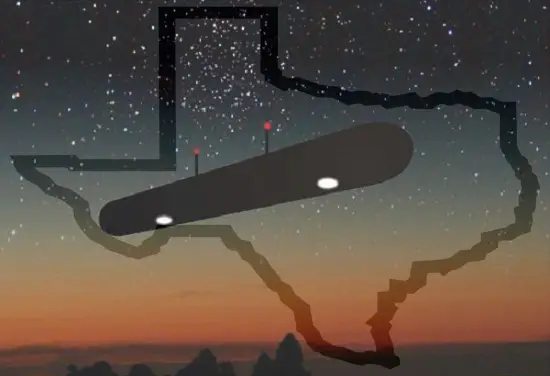


 UFO researchers release video of strange craft hovering in sky over Carolina town


 hrs of knitting, I’m finally ready to fly to the UK. Now I just need to pack the entire universe into my suitcase! I’ll see you all soon


 The tapestry is installed and the planets in the sky have now aligned with those in the knitting