Ontdek de Fascinerende Wereld van UFO's en UAP's: Jouw Bron voor Onthullende Informatie!
Ben jij ook gefascineerd door het onbekende? Wil je meer weten over UFO's en UAP's, niet alleen in België, maar over de hele wereld? Dan ben je op de juiste plek!
België: Het Kloppend Hart van UFO-onderzoek
In België is BUFON (Belgisch UFO-Netwerk) dé autoriteit op het gebied van UFO-onderzoek. Voor betrouwbare en objectieve informatie over deze intrigerende fenomenen, bezoek je zeker onze Facebook-pagina en deze blog. Maar dat is nog niet alles! Ontdek ook het Belgisch UFO-meldpunt en Caelestia, twee organisaties die diepgaand onderzoek verrichten, al zijn ze soms kritisch of sceptisch.
Nederland: Een Schat aan Informatie
Voor onze Nederlandse buren is er de schitterende website www.ufowijzer.nl, beheerd door Paul Harmans. Deze site biedt een schat aan informatie en artikelen die je niet wilt missen!
Internationaal: MUFON - De Wereldwijde Autoriteit
Neem ook een kijkje bij MUFON (Mutual UFO Network Inc.), een gerenommeerde Amerikaanse UFO-vereniging met afdelingen in de VS en wereldwijd. MUFON is toegewijd aan de wetenschappelijke en analytische studie van het UFO-fenomeen, en hun maandelijkse tijdschrift, The MUFON UFO-Journal, is een must-read voor elke UFO-enthousiasteling. Bezoek hun website op www.mufon.com voor meer informatie.
Samenwerking en Toekomstvisie
Sinds 1 februari 2020 is Pieter niet alleen ex-president van BUFON, maar ook de voormalige nationale directeur van MUFON in Vlaanderen en Nederland. Dit creëert een sterke samenwerking met de Franse MUFON Reseau MUFON/EUROP, wat ons in staat stelt om nog meer waardevolle inzichten te delen.
Let op: Nepprofielen en Nieuwe Groeperingen
Pas op voor een nieuwe groepering die zich ook BUFON noemt, maar geen enkele connectie heeft met onze gevestigde organisatie. Hoewel zij de naam geregistreerd hebben, kunnen ze het rijke verleden en de expertise van onze groep niet evenaren. We wensen hen veel succes, maar we blijven de autoriteit in UFO-onderzoek!
Blijf Op De Hoogte!
Wil jij de laatste nieuwtjes over UFO's, ruimtevaart, archeologie, en meer? Volg ons dan en duik samen met ons in de fascinerende wereld van het onbekende! Sluit je aan bij de gemeenschap van nieuwsgierige geesten die net als jij verlangen naar antwoorden en avonturen in de sterren!
Heb je vragen of wil je meer weten? Aarzel dan niet om contact met ons op te nemen! Samen ontrafelen we het mysterie van de lucht en daarbuiten.
Berichten van 1 november 2018 tot 30 november 2018
LAS VEGAS - A global scramble is underway to identify and perhaps replicate unidentified mystery materials that have been collected at multiple sites around the world.
A few of the samples have defied analysis by leading scientists, who say they don't know how the material was engineered, or why, or by whom?
Some of the metamaterial was allegedly collected in connection with UFO incidents, which gives the whole endeavor an otherworldly glow.
For years, the Pentagon secretly studied the seemingly impossible abilities of unknown craft captured in military videos.
Scientists now want to know if the materials used in these mystery aircraft allow them to do what they do. For years, one of the secret studies was carried out by BAASS (Bigelow Aerospace Advanced Space Studies), a Las Vegas operation hidden within Bigelow Aerospace.
Documents first reported by the I-Team show that BAASS landed a contract with the DIA (Defense Intelligence Agency), and one of the objectives was to study so called metamaterials, as well as futuristic technologies.
"It was a multilayered bismuth and magnesium sample. Bismuth layers less than a human hair. Magnesium samples about 10 times the size of a human hair, supposedly picked up in the crash retrieval of an advanced aerospace vehicle. It looks like it's been in a crash," said Dr. Hal Puthoff, with the Institute for Advanced Studies during a presentation in Las Vegas.
In June, physicist Hal Puthoff came pretty close to saying that the weird wedge of metamaterial came from a crashed saucer, but he can't know for sure. Puthoff and his colleague Dr. Eric Davis are on the cutting edge of attempts to identify an assortment of bits and pieces that are seemingly beyond anything we can create.
This one sample is engineered in layers thinner than microns, through a process unknown on earth, and for a purpose we can only guess.
"Nowhere could we find any evidence that anybody ever made one of these when we talked to people in the materials field who should know, they said we don't know why anybody would want to make anything like this," Dr. Puthoff said.
Astrophysicist Dr. Jacques Vallee has been analyzing mystery materials since the 80s, often using the technical expertise of Stanford University and Silicon Valley to unravel unknown samples acquired from all over the world. Vallee pointedly steers clear of any military funding and he's shared his findings at public conferences.
"We have multiple samples from multiple sources, a wide range of variety and integrity," said Lue Elizondo, To The Stars Academy.
These days, former intelligence officer Lue Elizondo helps to collect and protect unknown chunks for To The Stars Academy. Before that, he ran AATIP (Advanced Aviation Threat Identification Program), the Pentagon's secret UFO study. The same one which released the now famous videos of encounters between Navy pilots and the mystery machines dubbed the Tic Tac and Gimbal UFOs.
This summer, To The Stars launched ADAM, its own effort to find and study pieces of material that may have been stashed for decades after being retrieved from the sites of close encounters. Elizondo says there are legitimate reasons why the military, and now private groups, are now in a race to figure out these materials.
"What our international efforts are to potentially -- and I say potentially, I'm not saying we're doing this, maybe to replicate that technology or to reverse engineer that technology. Now you're getting into sensitivities you don't necessarily want everyone to be privy to," Elizondo said in a June 2018 interview with the I-Team.
When the New York Times broke its story last year about the Pentagon's UFO story, it reported that a sample of mystery material was secretly stored at Bigelow aerospace. Managers of that program told the I-Team that while they are familiar with some of the metamaterial samples, none were ever stashed in Las Vegas.
Dr. Jacques Vallee invites the public to send inquires and samples of mystery metal to him at the following address: P.O. Box 641650, San Francisco, CA 94109
Het mysterie van de buitenaardse legeringen. Deze bizarre, onbekende materialen werden uit UFO’s gehaald
Afgelopen jaar werd onthuld dat de Amerikaanse overheid jarenlang in het diepste geheim onderzoek deed naar UFO’s. Zo zouden er onder meer onbekende materialen, zogeheten metamaterialen, zijn verzameld.
Eén van die voorwerpen blijkt hoogstwaarschijnlijk rechtstreeks uit een UFO afkomstig te zijn.
Het voorwerp werd in juni dit jaar onthuld door dr. Hal Puthoff, die zei dat het materiaal uniek was en dat experts geen idee hadden wat het was en door wie het was vervaardigd.
Onbekend
“Het was een meerlagig monster bestaande uit bismut en magnesium,” zei hij. “De lagen bismut waren dunner dan een menselijke haar. De lagen magnesium ongeveer 10 keer zo dik als een menselijke haar.”
“Het monster zou zijn verzameld na de crash van een geavanceerd luchtvaartuig,” voegde hij toe.
Het materiaal is ontstaan tijdens een proces dat op aarde onbekend is.
Meerdere bronnen
Het lijkt erop dat we in de toekomst meer van dit soort voorwerpen gaan zien. Luis Elizondo, die aan het hoofd stond van het geheime UFO-programma van het Pentagon, liet doorschemeren dat hij de beschikking heeft over ‘meerdere monsters afkomstig van meerdere bronnen’.
Wetenschappers willen zien te achterhalen waar de materialen die uit de UFO’s zijn gehaald voor dienden.
You will not believe this, but a few followers may see this and a lot of followers noticed my account disappeared. My UFO account has been silenced, probably by the NSA and their hacking skills, but maybe by the Russians. My account got on world news hundreds of times but is muted, impossible to find on phone under keywords or name but only through mentions I’m not sure why the NSA would think this would silence me, but lucky for me I have another account.
I messaged the CEO of twitter @Jack and we will see if he can fix things up or make them worse...but who knows. By silencing my UFO account, it makes be wonder if a gov is preparing to make a hit on me to get rid of me? Smart of them...mute my accounts so I don't know that no-one can see my tweets other than my followers...cut my communication lines...figures. Well if I am a target and get confronted by an agent face to face with a gun, I'm not begging, I'm not going to negotiate with them, I'm just going to look them in the eyes and tell them to "Go f@#$ themselves!" Live and die like a man. Been in this business too long to have any fear. Now...I have anger which drives me to find answers...and I'm just warming up!
Classic UFO Disk Seen Over Lake Tahoe, Nevada On Oct 2018, Video, UFO Sighting News.
Date of sighting: October 28, 2018
Location of sighting: Lake Tahoe, Nevada, USA
Source: MUFON 95950
Here is the most detailed UFO I have seen all week. This is a classic flying saucer...a beautiful metallic disk with a raised upper dome area. This is 100% proof that aliens are monitoring human up close and personal. Makes you wonder if they are so interested in us...when are they going to make their presence known by landing and having a meet and greet session with people? Right, I get that too, but they have rules and one of the rules was that they cannot disclose too much to too many humans without that countries president given consent. (That info is found in the book Stranger in the Pentagon, by a priest who met an alien from just such a disk, the priest worked side by side with several US presidents when greeting other countries VIPs and presidents.)
Awesome video shared with us by UFO Institute. Please click to to subscribe to their channel and like this video as a thank you for his hard work.
Eyewitness states:
We went to Lake Tahoe for vacation we got a tour on a boat to ride on the lake. I don't see the object in till we got home I was checking the videos this object appeared on the video with tremendous speed at 00.07 seconds of the video I short the video only for that section the video is 10 minutes long. also, it seems that one person sees the object and took off his hat.
UFO Sighted From from Gödöllő to Visonta, Hungary ( October 30, 2018 ) Video, UFO Sighting News.
Date of sighting: October 30, 2018
Location of sighting: Visonta, Hungary
Source: MUFON
These UFOs seem to be able to form a single craft, and yet break apart when they want to fly off on their own. This is really an extraordinary catch and I would love to see the aircraft radar data on this location for that day.
This is a great sighting in Hungary this week. Many UFOs appear as glowing balls together...which has also been noted in thousands of past UFO reports. The video was posted today by UFO Institute of Youtube.
Eyewitness states:
Vajon UFO-t láttak Magyarországon? Mi lehet ez a jelenség az égen? TRANSLATED : Did they see UFOs in Hungary? What can this be like in the sky?
'War of the Worlds': Fake news that spawned ugly fake news — and holds lessons for today
The purported mass panic tied to the 1938 broadcast is a myth that won't die. While some newspapers reported responsibly at the time, others sensationalized and put forth harmful stereotypes.
By Jefferson Pooley and Michael J. Socolow
ASSOCIATED PRESS FILE PHOTO
Orson Welles, center, spoke to reporters on Oct. 31, 1938, the day after his dramatization of “War of the Worlds” aired on radio. Recent scholarship indicates that, contrary to popular belief, few people were panicked by the broadcast.
Eighty years ago this week, CBS broadcast Orson Welles’ adaptation of “War of the Worlds,” and mass panic ensued. Or did it?
We know today that the popular story of the mass panic sparked by “War of the Worlds,” a radio drama staged as a normal news broadcast interrupted by breaking reports of an alien invasion, was far overblown. In a nation of about 130 million people, fewer than 50 Americans were panicked enough to flee outside. That number emerges from recent scholarship by historian A. Brad Schwartz and others who have explored the scope of the panic in the past decade.
But the myth that thousands mobbed the streets remains powerful. Sensationalist journalism at the time was later validated by social scientists and relayed by historians, creating a myth that just won’t die. Efforts to debunk this myth reveal that fake news doesn’t just distort the historical record but also often spreads damaging racial and gendered stereotypes.
Newspapers that reported on the panic did so in ways that advanced ideas of racial inferiority. “Harlem was shaken by the ‘news,’ ” read one subhead in the New York Times. The Brooklyn Daily Eagle offered a similar, if more fanciful, account. “Sugar Hill in Harlem was transformed from a gay neighborhood into one in which sober, frightening thoughts were uppermost. Excited Negroes rushed into the parlor congregations they had ignored for years to join in singing spirituals. They were welcomed by their more pious brothers and sisters with ‘I told you so,’ as they changed their tune from swinging and swigging to hymning and praying,” the newspaper reported.
The racism in these reports was often coupled with gender stereotypes. Frightened mobs of women and children made appearances in newspapers throughout America. One famous example emerged from Providence, R.I., when “women in hysterical tears … besieged the switchboard of the Providence Journal.”
As with the mobs of frightened African-Americans, none of these women were identified or quoted. Even the policemen involved apparently preferred to withhold their identities. Everyone remained nameless. When researchers from Princeton University later analyzed approximately 12,000 news articles about the panic, the review “failed to produce more than a half dozen interviews” for a follow-up study. That’s because, with few exceptions, real names of actual people weren’t published — but racist and misogynistic stereotypes were.
Some newspapers, however, searched for facts, not tropes. And quite a few discovered little actual panic. “Maine Refused to Get Excited,” read the headline of a piece in the Lewiston Daily Sun. “The nationwide wave of hysteria generated by the Sunday night broadcast … apparently failed to affect Dubuque,” noted the Telegraph-Herald in Dubuque, Iowa. In Chicago, Salt Lake City and elsewhere, some newspapers relayed the lack of any detectable local panic.
Perhaps the most professional reporting to occur that evening came out of the Long Island Daily Press newsroom. Once the phone started ringing, the Press’ reporters and editors got an idea. They decided to conduct a telephone poll of 50 people, and found only four were tuned into the broadcast but “none of them were upset.” More than half of the people telephoned weren’t even listening to the radio, thus confirming the findings of the C.E. Hooper nationwide ratings survey. The Hooper survey established that the ratings for “War of the Worlds” were tiny, and it concluded that 98 percent of Americans were listening to something else, or not listening to the radio, when “War of the Worlds” was on the air.
The Daily Press telephone survey was excellent journalism. Once alerted to a rumor, the newspaper’s staff investigated its reality and reported results. Yet nobody has cited their work. It was forgotten until Tom Tryniski digitized the defunct newspaper’s front page and put it on the Web, where we found it.
The discovery of this forgotten reporting, when compared with the cultural memory inspired by the media’s sensationalism, pinpoints the issues arising when historians inadvertently rely on the fake news from the past. In this case, the mass panic as commonly understood didn’t happen — but newspaper journalists believed that readers would pay for stories about huge mobs of panic-stricken citizens. Their unethical and sensational journalism was a response to economic and social incentives. (Today’s fake news is responsive to these same incentives.)
This episode provides a clear example of the process by which fake news can quickly become ingrained deeply in American culture. Political decisions, governmental administrative moves and even social theory in the United States were made based on the idea that masses of panicked listeners fled their homes, terrorized by the radio — even though it didn’t happen that way.
The lesson is clear. Both journalists and scholars need to be more self-aware and skeptical whenever sensational stories about media manipulation arise. Today’s fake news can just as easily inform tomorrow’s social psychology and history textbooks.
Jefferson Pooley is associate professor of media & communication at College in Allentown, Pa. Michael J. Socolow teaches journalism at the University of Maine.
Where there’s water, there’s usually life — at least on Earth — and we just got confirmation that there used to be far more water on the surface of Mars than scientists previously believed.
The news comes courtesy of a team of researchers from the SETI Institute and NASA’s Ames Research Center. They’ve identified dozens of potential “paleolakes” — lakes that existed when the climate of a region was different than it is today — in the southern hemisphere of Mars. And the finding could forever change the hunt for extraterrestrial life.
On The Map
We already knew of one potential paleolake located in the northeastern part of Hellas, a massive basin in the southern hemisphere of Mars. In a study published in the journal Astrobiology on Tuesday, the researchers detail their discovery of 33 more.
The team conducted a detailed hydrogeographic analysis of the region, mapping its channels and depressions to suss out where additional Martian lakes may have once existed. This turned up the 33 new paleolakes.
By looking at each paleolake’s distinct characteristics, the team was even able to identify its most probable source of water: precipitation, groundwater, or rivers and streams.
Life On Mars
The discovery of these paleolakes is about more than just mapping the geology of Mars. It could also inform our search for life on the Red Planet.
As the researchers note in the paper, the former Martian lakes could contain the biological record of what, if any, life once existed on the planet, so as we plan future missions to Mars, we might want to consider devoting significant time to exploring this once-wet region of its surface.
Harvard Researchers Suggest ‘Oumuamua Was Alien ‘Reconnaissance Mission'
‘Oumuamua, the mysterious interstellar object that has caused much head scratching in scientific circles, now has a new possible origin: part of a reconnaissance mission initiated by an alien civilization wanting to check out other galaxies.
The latest theory on ‘Oumuamua comes from a study published on Thursday by Shmuel Bialy and Abraham Loeb, a pair of astronomers with the Harvard Smithsonian Center for Astrophysics.
When scientists reviewed data collected by the Pan-STARRS-1 survey of ‘Oumuamua's closest flyby of the sun on September 9, 2017, they noted that the mysterious rock gained speed, rather than slowing down. Researchers at the time explained that the increase in ‘Oumuamua's velocity was likely explained by outgassing, the release of gas trapped or frozen inside the rock. The object itself was later classified as a cometby officials.
However, this explanation didn't sit right with Bialy and Loeb, who argue that had outgassing been the cause of ‘Oumuamua's increased velocity, it would've sent the interstellar object into a spin, which wasn't observed.
The pair suggested that ‘Oumuamua could actually be a light sail, a spacecraft that relies on radiation pressure for power, that's been sent from an alien civilization looking for signs of life in our solar system.
"We explain the excess acceleration of ‘Oumuamua away from the sun as the result of the force that the sunlight exerts on its surface. For this force to explain measured excess acceleration, the object needs to be extremely thin, of order a fraction of a millimeter in thickness but tens of meters in size," Loeb told Universe Today via email.
"This makes the object lightweight for its surface area and allows it to act as a light sail. Its origin could be either natural (in the interstellar medium or proto-planetary disks) or artificial (as a probe sent for a reconnaissance mission into the inner region of the solar system)."
Bialy and Loeb later explained in their work that should their theory prove true, there is the slight possibility that the light sail could even just be a "defunct sail floating under the influence of gravity and stellar radiation."
"The alternative is to imagine that ‘Oumuamua was on a reconnaissance mission. The reason I contemplate the reconnaissance possibility is that the assumption that ‘Oumumua followed a random orbit requires the production of ~10^{15} such objects per star in our galaxy. This abundance is up to a hundred million times more than expected from the solar system, based on a calculation that we did back in 2009," Loeb wrote.
"A surprisingly high overabundance, unless ‘Oumuamua is a targeted probe on a reconnaissance mission and not a member of a random population of objects."
Questions remain regarding the origin of ‘Oumuamua, and considering the rock is no longer in our solar system and is much too far away for researchers to observe, the lab coats might be in the dark for some time on the matter.
UFO proof? Hovering rock on Mars ‘remnants of an alien aircraft or spacecraft'
A STRANGE ‘levitating’ rock has been found on Mars which is the “remnants of an alien aircraft or spacecraft of long ago”, according to a conspiracy theorist.
UFO proof? Hovering rock on Mars ‘remnants of an alien aircraft or spacecraft'
(Image: GETTY)
The rock was picked up by images from NASA’s rovers on the Red Planet, prompting speculation from alien hunters.
It looks as if the rock is hovering above the ground of Mars, casting a dark shadow over the surface as it does.
Conspiracy theorists quickly picked up on the image, claiming that it is proof that a once highly advanced species either existed or visited Mars in the distant past.
The image was picked up by prominent alien hunter Scott C Waring.
Mr Waring wrote on his website UFO Sightings Daily: “Now here is something you don't see everyday. I found a hovering rock on the surface of Mars in a NASA photo.
“The thick rectangle shaped rock has a rectangle shape shadow below it. The object is about 10-12 inches from the surface, just hovering in place.
“This could indicate that this is some ancient technology, not a mere rock after all.
“Still filled with power, still hovering on its own, even though the rest of its craft no longer exists
“Probably remnants of an alien aircraft or spacecraft of long ago.”
However, sceptics and NASA would say the hovering rock and other similar findings are just the effects of pareidolia – a psychological phenomenon when the brain tricks the eyes into seeing familiar objects or shapes in patterns or textures such as a rock surface.
This is not the first time that evidence of aliens on Mars has allegedly been discovered.
Earlier this year, an "alien face" was found in a NASA satellite image of Mars, according to more bonkers claims.
Mr Waring was convinced it could be a rock carving, done by a Martian race, in the same way ancient Britons carved out the chalk figures in hillsides like the giant of Cerene Abbas in Dorset and the Long Man of Wilmington in East Sussex.
This could indicate that this is some ancient technology, not a mere rock after all"
(Image: NASA)
However, NASA insisted the rock is just a meteorite impact crater that has been left in the unusual form by later erosion.
When NASA released the image under the "alien head" caption, it said: "The image shows an impact crater in Chryse Planitia, not too far from the Viking 1 lander site, that to seems to resemble a bug-eyed head.
"The two odd depressions at the north end of the crater (the ‘eyes’) may have formed by wind or water erosion.
"This region has been modified by both processes, with water action occurring in the distant past via floods that poured across western Chryse Planitia from Maja Valles, and wind action common occurrence in more recent history.”
NASA has enjoyed a nice run of Mars-landing success lately, but that doesn't mean the agency is getting cocky ahead of next month's touchdown of its $850 million InSight mission.
NASA's twin Spirit and Opportunity rovers both aced their landings in January 2004, as did the Phoenix lander in May 2008 and the car-size Curiosity rover in August 2012. Regardless, InSight team members will doubtless be on tenterhooks as their spacecraft barrels into the Martian atmosphere at around 3 p.m. EDT (1900 GMT) on Nov. 26.
"Although we've done it before, landing on Mars is hard, and this mission is no different," Rob Manning, chief engineer at NASA's Jet Propulsion Laboratory in Pasadena, California, said in a newly released video. "It takes thousands of steps to go from the top of the atmosphere to the surface, and each one of them has to work perfectly to be a successful mission." [NASA's InSight Mars Lander: 10 Surprising Facts]
Manning walked viewers through some of the most important steps, starting with the separation of InSight's capsule from the "cruise stage" that has guided the lander through deep space since liftoff on May 5.
An artist's illustration showing NASA's InSight lander about to touch down on Mars. InSight's landing will take place on Nov. 26, 2018
Credit: NASA/JPL-Caltech
This separation will occur 7 minutes before InSight hits the Martian atmosphere, if all goes according to plan. InSight must then realign itself precisely, so that it enters the atmosphere at a 12-degree angle.
"Any steeper, the vehicle will hit the thicker part of the atmosphere, and it will melt and burn up," Manning said. "Any shallower, the vehicle will bounce off the atmosphere of Mars."
As the InSight capsule plows through the air, its heat shield will experience temperatures well over 1,800 degrees Fahrenheit (1,000 degrees Celsius) — hot enough to melt steel, Manning said. After 2 minutes of such Martian air travel, InSight's speed will drop from 13,000 mph (20,900 km/h) to about 1,000 mph (1,600 km/h), he added.
It will then be time for InSight to deploy its big supersonic parachute. This milestone should occur at an altitude of about 10 miles (16 kilometers) above the Martian surface. Shortly thereafter, six pyrotechnic devices will fire simultaneously, jettisoning InSight's heat shield.
Ten seconds later, three more mini-explosions will deploy InSight's landing legs. About 1 minute after that, the lander will begin beaming out radar pulses to gauge its altitude and speed.
When InSight is just 1 mile (1.6 km) above the Martian surface, the lander will fall away from its parachute-toting backshell and light its descent engines, Manning said. InSight will have to rotate out of the way very quickly after it does this, to avoid being beaned by the parachute and backshell.
And then comes the landing itself, on a broad, flat plain just north of the Martian equator known as Elysium Plantitia.
"The last thing that has to happen is that, on the moment of contact, the engines have to shut down immediately," Manning said. "If they don't, the vehicle will tip over."
As this rundown indicates, all of this will happen in rapid succession: InSight's entire journey through the Martian air, from atmospheric entry to touchdown, will take just 6 minutes, NASA officials have said. (Curiosity team members dubbed that rover's entry, descent and landing sequence "7 minutes of terror," but InSight will get down a bit faster. And, unlike the heavier Curiosity, InSight won't need a sky crane.)
Then it will be time for the lander to get to work. InSight (whose name is short for "Interior Exploration using Seismic Investigations, Geodesy and Heat Transport") carries two main science instruments, a burrowing heat probe and a suite of superprecise seismometers.
The measurements made by this gear over about two Earth years will help mission team members better understand Mars' internal composition and structure, as well as how rocky planets form and evolve. InSight will also use its communications gear to perform a radio-science experiment, which should reveal key details about Mars' core, NASA officials have said.
InSight launched with twin, briefcase-size spacecraft, which together comprise a JPL demonstration mission known as Mars Cube One (MarCO). MarCO's main goal is to show that tiny cubesats can indeed explore interplanetary space.
The two spacecraft, known as MarCO-A and MarCO-B, will also attempt to beam home data from InSight during the latter's landing attempt on Nov. 26. But this is not a vital task; other NASA craft, such as the Mars Reconnaissance Orbiter, will do this work as well.
MarCO-A and MarCO-B will not attempt touchdowns of their own. They'll zoom past Mars on Nov. 26, and their mission will come to an end shortly thereafter.
Mike Wall's book about the search for alien life, "Out There," will be published on Nov. 13 by Grand Central Publishing.
The 25 Greatest Spaceships of Science Fiction - PART I
By Elizabeth Howell, Space.com Contributor
Sci-Fi Ships
So many discussions of ships in science fiction fall into the same tired debates. Who goes faster, the Millennium Falcon or the USS Enterprise? How big of a planet would the Death Star blow up — and how much would that ship cost, anyway? This slideshow takes things a step further. We talk about the most creative ships of science fiction. Yes, you'll see some familiar names on here, but we hope there will be at least a couple of surprises. Enjoy! [Best Space Movies in the Universe]
Photo Credit: Microsoft
1. UNSC Infinity ('Halo' franchise)
The beautiful Infinity base in Halo is not only pretty to look at, but also a useful vessel for getting places. It's equipped with sublight and translight power, and able to avoid enemy attacks with the use of energy shields, according to Halopedia. The crew on board has the latest in entertainment, including a biosphere (said to rival natural parks on Earth) and a bar, called the Full Moon. To communicate with allies across long distances, Infinity even has superluminal communications capabilities. Now, if only there wasn't a war to fight, we could really enjoy a nice vacation on this ship.
Photo Credit: BBC
2. TARDIS (Time And Relative Dimension In Space)
Pick your favorite Doctor Who — there's probably going to be a TARDIS story in there sometime. This ship appears like a phone booth, but once you get inside the magic really starts to happen. At first glance, TARDIS appears like a mere time-travel machine, whisking characters back to chat with people like artist Vincent Van Gogh. But it's much more innovative than that. It not only can travel through time, but also space. First-time visitors are always surprised at how big the interior is — "It's bigger on the inside", is the famous line — as well as the ability of TARDIS to blend into its surroundings. It can withstand gunfire, falling from great heights or even entering a planet's atmosphere; indeed, it appears the only thing that will easily kill a TARDIS is to have another TARDIS interfering with it nearby.
In a TV series filled with amazing ships, it's hard to pick just one. But there's something special about the Battlestar Galactica. Sure, it's not a networked ship and yes, it takes some heavy damage against the Cylons when attacked. But it's adaptable and flexible; during one memorable episode when the ship's computers are networked to solve a complicated problem, crew members use the ship's to stave off a Cylon virus. And Battlestar manages to stay one step ahead of the Cylons in many cases, safely using its faster-than-light drive to escape.
Photo Credit: Everett Collection
4. Elysium ship (2013)
While Elysium is fundamentally a sad story, its ship is a marvel of technology. This is a massive space station that actually looks like another world. Sadly, only the ultra-rich get to live and party here, but for what it's worth, Elysium looks a lot like a paradise. Glimpses of the ship reveal a world of verdant green — natural enough to make you feel relaxed, but close enough to civilization to whisk you to a Med-Bay to cure your worst illnesses. The best part is what happens once you are registered as an Elysium citizen. The space station is automatically programmed to deploy rescue ships to pick you up and bring you back home, even if you're stuck on the stinking hell that is Earth in this film.
Photo Credit: Electronic Arts
5. Reapers ('Mass Effect' franchise)
The Mass Effect game franchise features characters valiantly trying to protect our home galaxy from baddie aliens; in a later game, a new fight begins in the Andromeda galaxy. For ship innovativeness, it's hard to beat the villain Reapers. They blend biology and machine, lurking in the space between galaxy for up to 50,000 years, according to the Mass Effect wiki. While they're mainly portrayed as intruder chasers, we can't forget how smart these Reapers are. They created the mass relay network that all ships use to jump locations. They also made the Citadel, a massive space station.
Photo Credit: CBS Photo Archive/Getty
6. USS Enterprise line ('Star Trek' franchise)
This isn't the time to quibble about whether the NCC-1701-A or NCC-1701-D was the better U.S.S. Enterprise, but keep in mind that the entire ship line has an impressive history. If we take the movie and television franchises as a whole, the U.S.S. Enterprise not only performs, but outperforms in most situations. It regularly operates well beyond safe speed limits (to the chagrin of Scotty), some versions have the ability to split in two independent parts, and it can deal with extreme environments (like burning up in Earth's atmosphere or lurking under the ocean.) Some of the more advanced versions can even cloak, taking away the element of surprise that Romulans and Vulcans previously enjoyed.
Photo Credit: Lucasfilm
7. Millennium Falcon ("Star Wars" franchise)
Coming in close behind the U.S.S. Enterprise — sorry, "Star Wars" fans — is the amazing Millennium Falcon. It's a bit of a nice contrast to the sleek Enterprise, because there's no huge crew running this ship; instead, it's a bunch of ragtag heroes who need to use whatever they have on hand to keep this ship going. The Falcon, though, is surprisingly adept and adaptable. Yes, it's got fast travel capabilities, but there's more to it than that. The ship is able to fit into small cracks, to engage in epic fights on- and off-planet, and even survive in weird environments like an alien mouth. Like any jet fighter worth its name, it also has great weaponry on board to help fight the evil Empire. [Building the Fastest Hunk of Bricks in the Galaxy (Video)]
Photo Credit: Zoic Studios
8. Serenity ('Firefly' franchise)
Sure, Serenity doesn't have the trappings of more elegant spaceships. There's no warp drive or fast travel. There are very clearly toilets on board, counteracting the old "Star Trek" myth about their starships. It looks a bit like a warehouse inside, and it always seems to be breaking down. But fans don't gorram care, because Serenity is built to last. The ship's modest appearance means it's easy to miss when the crew members take on their main job of scrapping other starships for supplies. If it takes a bad hit, usually it can be fixed with scavenged parts. And above all, it just works. No high-fuss mechanical work needed here; just put a capable mechanic on the crew, and Serenity will give you all you need.
Photo Credit: Paramount
9. Alien ships in 'Arrival' (2016)
"Arrival" is one of those films where you would love to know much more about the aliens, the beautifully named "Heptapods" who communicate with special symbols representing full sentences or concepts. One of the questions we barely get answered is how their amazing ships work. The ships suddenly arrive on Earth and appear to be synchronized across locations, instantly reacting to events that just one of the ships is privy to. They hover in mid-air with no apparent propulsion system, and they appear to use some sort of warp drive that involves visual dissolution on-site. Inside these ship entrances, gravity is a bit uncertain; the interior is filled with some sort of atmosphere that may alter how humans experience the environment. These ships, in a word, are beautiful — but we wish we knew more about how they worked.
Photo Credit: MGM
10. Spaceball One ('Spaceballs,' 1987)
We love Spaceball One for showing all the plot holes that other spaceships missed. The ship has a number of speeds to choose from: Light Speed, Ridiculous Speed, Ludicrous Speed, Plaid Speed. As the crew quickly shows in the film, if you hit a speed that is too fast, you'll easily overshoot your target. It also has an unusual cloaking mechanism, demonstrating there are other uses to a costume besides hiding; Spaceball One can change into huge robotic maid with a vacuum cleaner, capable of sucking air off of planets.
Photo Credit: Lucasfilm
11. Death Star and its successor, Starkiller Base ('Star Wars' franchise)
The Death Star and successor Starkiller Base are pure cool, but they're a few ranks behind the Millennium Falcon because well, people keep finding ways to destroy them. But let's ignore that and focus on the positives. First of all is the pure power — the Death Star can easily kill a single planet, while the Starkiller Base can wipe out entire planetary systems. They also have a bit of a stealth aspect, despite being so big; one famous line compares the Death Star to a moon, at least because it's so huge and has a crater on it. And let's not forget that Starkiller Base somehow broke the laws of physics and got its power from "quintessence," a sort of dark energy that is everywhere in the universe.
Photo Credit: MGM Studios
12. Ha'tak ('Stargate' franchise)
Ha'tak looks like a lumbering pyramid in space, but even a newbie to the Stargate universe can see it's a powerful force to be reckoned with. The Stargate fan wiki notes that Ha'taks use an advanced form of propulsion that allow the ship to get as fast as 5 percent of lightspeed. Its shields are so powerful that they can hold off the heat of the corona — the atmosphere — of a huge star for many hours. Some Ha'taks even include cloaking devices, although that's not standard issue in the fleet. It sure was enough of a threat to worry the humans in the Stargate program, however.
The 25 Greatest Spaceships of Science Fiction - PART II
Photo Credit: Alamy
13. Event Horizon ship (1997)
In terms of pure terrifying innovation, it's hard to beat the after-effects of the Event Horizon. As recounted in the eponymous 1997 film, a crew of astronauts from the future set out on a rescue mission. They're after the Event Horizon, which had suddenly appeared in orbit around Neptune. The crew boards the ship in search of any of their missing crewmates.
Unfortunately, they find out that Event Horizon's experimental engine caused a few problems — namely, it ripped a hole in space-time and a nasty homicidal alien was on board the ship. While we (unfortunately) don't get to see the ship at full health during this terrifying movie, we do learn it's capable of generating black holes. Talk about power.
Photo Credit: Getty
14. 'Independence Day' mothership (1996)
Hovering ominously over Earth in the original 'Independence Day,' this ship is huge — some 600 kilometers (roughly 370 miles) long. As viewers saw in the film, there are a bunch of tunnels that lead to the inside of the ship; two brave crew members from Earth managed to make their way into the control center, where they saw an eerie blue mist surrounding the zone. The Independence Day wiki also mentions a "beehive-like structure" that serves as the ship's transportation center. Little is known about this ship's capabilities, but it's downright scary.
Photo Credit: 20th Century Fox
15. USCSS Prometheus ('Prometheus,' 2012)
This black beauty is the most advanced and expensive faster-than-light ship ever made, according to the "Alien vs. Predator" wiki. It's got all the comforts you'd expect for a spaceship going long distances — a hypersleep chamber, a series of on-board ATVs for planetary exploration, escape modules and even intergalactic communications antennas. It even — improbably, for its size — can do vertical takeoffs and landings, which makes it ideal for landing on a planet. Well, that's if the planet doesn't have homicidal aliens living there already.
Photo Credit: SyFy
16. The Rocinante ('The Expanse' franchise)
The Rocinante is a comfortable, yet fast warship — the designers even took into account the preference for humans to have g-forces similar to normal gravity (at least, while the ship is under thrust). It's a pretty awesome workhorse ship, in that it can fire torpedoes or help with boarding parties. Besides which, it goes fast through space. Perfect for dodging any incoming missiles. [Jeff Bezos Saves 'The Expanse']
Photo Credit: Disney
17. Heart of Gold ('Hitchhiker's Guide to the Galaxy' franchise)
This is a fun, zippy ship, thanks to its unique use of the Infinite Improbability Drive — an engine that provides for near-instantaneous travel with "tedious mucking about in hyperspace," according to the Hitchhiker's fan wiki. The designers gave a lot of attention to creature comforts, even including doors who say (in the books) how glad they are to help you. While the shape of the ship varies between the book, movie and TV series, a common theme in all three media is how white and clean the ship looks
Photo Credit: Everett Collection
18. Icarus II ('Sunshine,' 2007)
We love this spaceship because it shows just what humans can do if they are desperate enough. Basically, Earth is in crisis because the sun's power is fading a lot earlier than expected (in the year 2057, to be precise.) The point of Icarus II is to carry a huge nuclear bomb towards the sun. The crew faces many problems and saboteurs along the way, but somehow this ship just keeps on running — mostly as it's supposed to. That makes it worthy of a mention.
We're more intrigued by Superman's spaceship than able to say much about it, but that said, there are some cool unanswered questions to consider when thinking about Superman was shipped to Earth. Kal-El, as the infant was called, somehow stayed in a small space and was fed, cleaned, kept warm and kept entertained on his trip to Earth. That's some mean sort of automation. Also, the ship was relatively small — where did all of these systems fit? Goes to show you that planet Krypton residents were really smart.
Photo Credit: Alamy
20. The Valley Forge ('Silent Running,' 1972)
We applaud the constructors of the Valley Forge for somehow figuring out how to build a closed ecosystem. Inside of this (somewhat large) spaceship is a forest filled with animal and plant life, tenderly cared for because Earth's planet life has somehow gone extinct; this ecosystem should give our planet a kick-start, once the time is right. There's a flaw with this forest, though, in that it needs a source of light to survive. This ends up being crucial to the plot. Alas, the forest is shown drifting into deep space at the end of the film, so it's not clear how the lights will be generated once the ship's power source runs out.
Photo Credit: Everett Collection
21. Moonraker space station ('Moonraker,' 1979)
The Moonraker space station is kind of a one-trick pony, but it's still a neat place to visit — as long as you aren't worried about suffocation or anything. According to the Evil fan wiki, the space station was located above Earth and was ready to drop 50 nerve gas globes to kill all the residents. However, our heroes James Bond (Roger Moore) and Dr. Goodhead (Lois Chiles) discover a crucial flaw in the radar-jamming system on board. As a point of interest, it's fun to see all the space shuttles flying around this station; the real NASA space shuttle didn't make its first flight until 1981.
22. The Resolute ('Lost In Space,' 2018)
While the Resolute looks cool, there definitely are some issues with this ship. There's the not-so-small matter that a single alien robot could cause a lot of damage, which makes us wonder how the ship was expected to make the jump from Earth to Alpha Centauri if it was so delicate. Also, the Resolute seems to have a lot of problems picking up small transport ships on the surface, unless the ships are able to communicate directly with a strong enough signal. What about away missions? Otherwise, though, the ship is comfortable and large and even open to families, which is more than can be said for some of the other ships in this group.
Photo Credit: Universal/Amblin
23. E.T. spaceship ('E.T.,' 1982)
If only we knew more about this cute little spaceship. The movie shows that it's capable of bringing alien botanists to Earth, in search of learning more about our planet's organisms. But we only catch glimpses of this extraterrestrial technology as it touches down on Earth and flies away again. Its whimsical shape is supposed to look like a hot air balloon from the pages of a Dr. Seuss book, according to artist Ralph McQuarrie, quoted in Mental Floss.
Photo Credit: Columbia
24. District 9 alien ship ('District 9,' 2009)
The story of "District 9" unfortunately doesn't tell us much about its mothership, but in terms of sheer terror factor, seeing this behemoth hovering over Johannesburg is one of the most memorable parts of the film. Perhaps its most interesting feature is it can be activated remotely. But the ship certainly isn't a perfect design, because its inhabitants were basically starving to death at the beginning of the film. Hopefully there's a Mothership 2.0 being developed for this alien species.
Photo Credit: 20th Century Fox
25. The Hermes ('The Martian,' 2015)
While most of the action in "The Martian" takes place, naturally, on Mars, the Hermes appears like a pretty capable interplanetary starship. First of all, it's surprisingly hackable; the crew is able to get into the mainframe to redirect its path at a crucial point in the film. Second, it's super-reliable. The Hermes was only supposed to take one Mars-Earth trip at a time, but in this film it actually takes on two. And finally, it's resilient; the crew literally uses a bomb aboard the ship to slow down its speed at Mars. There's a wicked explosion, but the ship appears (incredibly) to suffer no permanent devastating damage.
WETENSCHAPOnderzoekers hebben een nieuw soort superijs ontdekt, eentje dat de hoop op buitenaards leven kan vernietigen. Het vermenigvuldigt zich met een snelheid van meer dan 1.600 kilometer per uur en het bevindt zich diep onder onze voeten. En wetenschappers begrijpen nu eindelijk hoe het precies in zijn werk gaat, vermoedelijk ten koste van buitenaards leven.
Afgelopen jaar in maart onthulden onderzoekers dat ze voor het eerst het dodelijke ijs hadden teruggevonden. En dat in diamanten die in Zuid-Afrika en China werden opgediept. De ijsachtige substantie was er diep ingekapseld en bleef vloeibaar omwille van de extreme druk en hitte.
Voor de vondst van zulke diamanten hadden ze het bestaan van zulk ijs voorspeld, maar dat wist niemand met staalhard bewijsmateriaal aan te tonen. De vondst in de diamanten bevestigde het vermoeden dat de aarde een vloeibare mantel -tussen de aardkorst en de kern- bezit. Die mantel bestaat uit een kristalstructuur zoals die van diamanten. Nu pas begrijpen de onderzoekers hoe die mantel precies gevormd wordt.
Bepaalde combinaties van temperatuur en druk zorgen ervoor dat het dodelijke ijs, dat de naam Ice Vll kreeg, ontstaat. Hoe intenser de temperatuur en drukcombinatie wordt, hoe sneller het ijs gevormd wordt. En dat zo’n 600 kilometer onder onze voeten.
Het vormingsproces van dat ijs is wel problematisch voor eender welk buitenaards leven. Bepaalde drukpieken, bijvoorbeeld door een meteoorinslag, zorgen immers voor een explosieve groei van het ijs, dat zich voortbeweegt met een snelheid van 1.600 kilometer per uur. Dat zou elke vorm van leven, op levensvatbare planeten zoals Aarde, al doen uitdoven voordat het echt kan beginnen. De mens heeft het geluk dat het proces zich diep onder onze voeten afspeelt.
SOMS ZIE JE TOCH ECHT MOOIE UFO'S VLIEGEN ( VIDEO )
Alhoewel de laatste tijd misschien wat minder in het nieuws, ze zijn er nog steeds die ufo's, oftewel de niet geïdentificeerde vliegende objecten.
Nu is er bij beelden van UFO's veel kaf onder het koren, maar soms duiken er beelden op die wel degelijk echt lijken te zijn.
We zouden graag zeggen: opnames die echt zijn, maar dat kan eigenlijk niet meer tegenwoordig, omdat er zo ontzettend veel wordt geknoeid met beeldmateriaal.
Wel zijn er bepaalde dingen waaruit je soms kunt afleiden dat beelden waarschijnlijk echt zijn. Youtube is wat dat betreft een hele slechte bron, omdat 99 procent van wat daar wordt geplaatst totale nep is. De filmpjes worden gemaakt in de hoop dat ze viraal gaan, er veel mensen naar kijken en dan op een advertentie klikken, wat dan inkomsten oplevert.
Opnames die gemaakt zijn door privé mensen die bij Mufon worden ingeleverd om onderzocht te worden, zijn een ander verhaal. Men heeft er niets bij te winnen door daar nepbeelden te deponeren en wat je dan bij Mufon tegenkomt is vaak echt.
Lake Tahoe is een groot zoetwatermeer in de Amerikaanse Sierra Nevada, op de grens tussen Californië en Nevada, ten westen van Carson City. Lake Tahoe is het grootste alpiene meer in Noord-Amerika.[1] Met 501 meter diepte is het tevens het op een na diepste meer van de Verenigde Staten, na Crater Lake in Oregon. Bovendien is Tahoe qua volume het zesentwintigste meer in de wereld.
Een UFO die van rechts naar links met hoge snelheid voorbij vliegt aan een groep vakantiegangers.
Het object heeft de klassieke of retro vorm en ziet eruit zoals je zou verwachten dat een vliegende schotel eruit ziet.
Degene die de opname heeft gemaakt en ingediend bij Mufon zegt dat ze in die streek met vakantie waren en helemaal niets hebben gemerkt van de UFO. Pas toen ze thuis waren en de beelden rustig bekeken, verscheen daar de vliegende schotel.
Bij Ufocasebook hebben ze de volgende video gemaakt met vertraagde beelden en ook een aantal foto's zodat de UFO goed zichtbaar is. Deze verschijnt voor het eerst in beeld rond 18 seconden in de video en wel aan de rechterkant.
Dawn is dead. Kepler is dead. Rover is missing and presumed dead. This is not the opening scene of a new murder mystery … it’s the news coming out of NASA as it reports the recent demise of many of its most famous and productive spacecrafts and space equipment. Why do they seem to be dying all at once? Something is killing the great crafts of NASA … and it may not necessarily be old age.
“Following an analysis of the progress of the listening campaign, NASA will continue its current strategy of attempting to contact the Jeep-rig Opportunity during the foreseeable future. The winds may increase over the next few months on Opportunity’s location on Mars, resulting in dust being torn from the vehicle’s solar panels. The agency will reassess the situation in January 2019.”
The Opportunity rover has been on Mars since January 2004 and its original 90-day mission has been constantly and surprisingly extended annually as it broke the record for the longest distance driven by any sort of wheeled vehicle on a space body other than Earth. Then the dust storm hit. While Opportunity has obviously survived plenty of Martian dust storms, this on in June was apparently the Mother of all Martian Dust Storms and the thick layer of particles on its solar panels have prevented it from recharging its batteries. Even though NASA is giving its overachieving rover until January 2019 in hopes that another dust storm will blow off the panels, the first people on Mars may be looking over their dead dog rover.
An even bigger loss is the death of another overachiever – the Kepler space telescope. Launched in March 2009, Kepler outlasted its original 3.5-year mission and solidified its place in the space hall of fame by discovering 2,681 exoplanets. It also survived devastating injuries that would have ended the season of other space players (get ready … more football references coming) – Kepler lost two of its four orientation-maintaining reaction wheels and was put on the disabled list. NASA’s team doctors got it back in the game by using the remaining wheels and gave it a new playbook called K2 where it found more confirmed exoplanets and 2,900 waiting for likely confirmation. Unfortunately, Kepler finally ran out of fuel and NASA forced its retirement this week, shutting everything down but leaving it on the playing field in a safe orbit around Ceres.
Vesta photographed by Dawn
Running out of gas has also put Dawn out of commission. After missing two scheduled check-ins this week, NASA announced that Dawn is now a sunset and its asteroid-visiting days are over. After being launched in September 2007, Dawn traveled 4.3 billion miles (6.9 billion km) on its cosmic road trip, stopping first at Vesta, the second largest rock in the main asteroid belt, and then taking on the belt’s #1 asteroid and dwarf planet Ceres, where it will now orbit in perpetuity. Mission Director and Chief Engineer Marc Rayman pointed out in a press release/obituary that Dawn leaves behind a huge collection of data still to be examined.
This mosaic of a bright spot on the dwarf planet Ceres known as Cerealia Facula combines images captured by NASA’s Dawn spacecraft from altitudes as low as 22 miles (35 kilometers) above Ceres' surface. The mosaic is overlain on a topography model based on images obtained during Dawn's low-altitude mapping orbit (240 miles, or 385 km altitude). No vertical exaggeration was applied.
Credit: NASA
“The demands we put on Dawn were tremendous, but it met the challenge every time. It’s hard to say goodbye to this amazing spaceship, but it’s time.”
So, these three space stalwarts may have been senior citizens but they acted more like the cosmic version of “60 is the new 40,” outperforming their younger counterparts and turning up their nose cones at retirement. That explains why Dawn and Kepler ran out of fuel – no one expected them to be around this long. On the other hand, Opportunity was more like they guy who says “If I had known I was going to live this long, I would have taken better care of myself” when he realizes he should have exercised enough to run behind a rock and out of the dust storm. They’re all proof that NASA can and does build some really good stuff.
Over the course of the last few years, here at Mysterious Universe, I have written far more than a few articles on the Men in Black. And, as I have noted in some of those articles, there’s no doubt that encounters with the MIB can range from puzzling to downright terrifying. With this issue in mind – namely, the way in which the witness/victim can be severely affected by such an encounter – I thought I would share with you the words of a good friend of mine – Kimberly Rackley – who has encountered the Men in Black on a number of occasions. Kim is a gifted psychic and her trauma-filled experiences with the MIB serve to demonstrate just what it really feels like to come face-to-face with these black-suited things. Put it this way: it’s not good. In the summer of 2016 (specifically June 22), Kim shared the following with me:
“Had an experience last night / morning. A little drained this morning. Freaked me out. I was awoken by what seemed like thousands of voices that were excited and upset. I sometimes hear the astral plane at night but this was crazy. I need to make it stop so I lift into astral and all these entities are everywhere in agitated state.
“I ask what’s wrong and they all circle me and then this being very tall and slender all in black suit but with a long coat and gray eyes comes straight for me. The entities circling me close in tighter. They are trying to protect me. But he pushes them away with flick of his hand and I’m suddenly back in my body. There in my room was the man. He had same non-aura energy, like MIB. He pointed at me and the place in my wrist where the previous MIBs always try to place a chip in me started burning. Then I passed out. I feel electric inside, like I’m going to jump out of my skin and I’m nauseated. Kind of frightened. I look like death.”
Kim continued: “If you feel like death warmed-over then you most definitely look like death warmed-over as I discovered this morning when I ungraciously made my way to the bathroom. You would feel and look the same if you experienced the more than unnerving events I had. Yours truly is still trembling, not quite certain if it is from the panic of the frightening encounter or the electrical jolt received. Being a medium I am not fearful of the supernatural or unearthly, but there is one thing that has filled me with terror since I was a child and that is the MIB. I’ve told the story of my repetitive MIB encounters before but it suffers repeating because I believe it is significant to the most recent encounter.
“From the time I was 8 and witnessed a glowing figure slightly similar to a grey walking down the hallway of my home, I have been subject to frequent MIB visits. These visits are always from the same two men, mostly in my dream state until I began realizing my abilities as a medium and then the visits would occur in meditation or altered states of consciousness. Never before this newest encounter has one been a physical encounter. The two men come to me, usually appearing through my bedroom window. My normal MIB’s resemble ninja’s or soldiers, always in black skin-tight clothing or fatigue uniforms, and always with the aura of intense panic. They will point at me and say ‘No, Kya, not yet.’ I have no idea why they call me Kya. Is it too much to hope for that they have me confused with someone else? I also have no inkling of what ‘not yet’ signifies. They then pull up a holographic ball where they show me that I will be taken away and put in this metal room, underground. The room has one single chair and surrounding me is a bluish force field. Sounds like a science fiction movie, right? Then they point at my right wrist, and a chip appears under my skin. They vanish, leaving me always in full panic mode.
“I know you are wondering about the chip. I have yet to discover its purpose but each occasion that they place the chip, I immediately remove it. Alien or dimensional implants are more common than you might imagine and can be detected when you are in the theta state. These implants have an etheric vibration which means they can be removed etherically as well. Lucky for me I am a Theta Facilitator.”
Kim had much more to say: “This newest encounter was much different than the above so let me get on with the story. I was awoken around 4am to a thousand voices in my head. It is quite common for me to hear the astral plane but this was like a war going on. I know I have to stop the voices before I end up on Zany Street with men in white coats chasing me. I lift up to the astral where I find the entities in an agitated and anxious state. Curiously they are all gathered in a very close proximity to each other.
“I ask what is wrong and the entities immediately circle me. I am not afraid as I have been to the astral many times and have friends here. Suddenly, a very tall man comes from the mist. He is in a black suit and wearing a long coat. The man is whitish-gray, bald, and no facial hair, yeah not even an eyelash. I’m filled with immediate panic because I see no aura or residual of life force energy. The same non-energy I see with the MIB. However, there was an electrical charge around him which is something I always see around the MIB of my past encounters. The entities attempt to tighten the circle around me but the being in black swipes them away with a flick of his hand. I fall back into my body, sit up and to my horror the being is standing in my room. He raises his arm, palm out and I am jolted with a shot of intense energy. I pass out.
“When I awaken, it all comes flooding back to me. My body feels as if I am going to jump out of my skin and I am nauseated. I realize that the astral voices may have been attempting to warn me and certainly they were trying to protect me. This indicates that whatever MIB are, even the astral plane is aware and afraid of them. Could it be that my recent talk with friend and author Nick Redfern on this very subject have triggered this encounter? I believe the MIB have every account of who attempts to reveal them. I’m always left with sheer panic and more questions after an encounter with the MIB. The panic I experience however, won’t stop me from seeking the truth nor will it stop me from being who I am or doing what I do.”
The Future of Cryptocurreny and the UFO Crash in Antarctica Time Cross
Interesting information about the future of Cryptocurrency, and the UFO crash in Antarctica. Full disclosure, I have a sizable investment in Ripple for the reasons stated in video.
A CHILLING WARNING! (UFOs) are just a tip of the ICEBERG!
If I haven’t had a direct experience with a highly evolved technology, I would have never believed such claims for any reason. And even after I having had this experience, it took a couple of days for me to digest the fact that this is real, there’s a highly evolved technology out there. Not only that this bizarre experience literally challenged me to rethink my fundamental beliefs about the world in a way that I have never expected. So I started deeply researching into various fields, fields including neuroscience, future physics, ancient stone structures, specifically the Giza Pyramids, ancient advanced knowledge, our religions, ancient high-tech tool marks, mental illnesses, demonic possessions and various other phenomena like channeling of alien beings, channeling of deceased people, dancing mania, witchcraft etc.. to make sense of the world and end of the day, I came to a conclusion that the highly evolved technology belongs to a group of human beings on Earth and your destiny has been planned long ago than you can possibly imagine.
Unless a person carries out a massive research with an open mind and gains the right knowledge and the right worldview, such a conclusion will not make sense to another human being. Your time is limited on Earth. Not being able to understand this complicated truth, we have been ridiculing our fellow human beings for quite a long time, however, I must say that these unidentified flying objects or extremely advanced flying machines and its related phenomena are actually a humongous crime against humanity that is being committed by a group of human beings who are living in Switzerland today. Again, there’s a complicated reasoning behind this claim and I urge you to take this warning seriously and give your utmost attention to research and understand the truth behind UFOs and its related phenomena without a delay. Someone could say that extraordinary claims require extraordinary evidence, however, it is just a bunch of words only, let’s be realistic, if someone uses a technology that is 1000+ years or 10000+ years ahead of ours to commit a crime, is it possible for us to prove it unless we giving an extraordinary effort? Is it possible for us to understand and classify a particular phenomenon as a crime against humanity with our current scientific understanding? That said, let me unfold the complicated story of the planet Earth.
1). Anecdotal Evidence For the Existence Of the Phenomenon. Highly educated and intelligent people are coming forward to expose the truth today.
2). Is it possible to hide an advanced technology on Earth? Yes, it’s entirely possible, we just need to master 3 things only.
3). Is it possible to remove the evidence for the existence of highly advanced global societies from the face of the Earth? Yes, it’s entirely possible, again, we just need to master 3 things only. A reply that a theoretical physicist and a neuroscientist would understand. After all, this is a mind-boggling technology, and the related phenomena cannot be understood by every human being on Earth, experts in neuroscience, theoretical physics, and other experts must dig into the issue without a delay. These people must be open minded and trust pure logic, not beliefs.
4). Which means, this could be a technology that belongs to a group of human beings on Earth? Yes, that’s correct and that’s the truth. Which also means, they are secretly ruling the world for quite a long time using their high-tech toys and that’s why the UFO phenomenon can be traced back to ancient times too. Not only that this is why an extremely high number of yearly UFO activities on Earth.
5). Which means, the perpetrators behind the UFO phenomenon are trying to establish the ET visitation belief among human beings? That’s correct, by using a highly evolved technology, it’s quite easy to establish such a belief in human beings. From a highly evolved technological standpoint, we only need genetically modified beings and 2 high-tech toys to establish this belief on human beings and roam the Earth freely using their extremely advanced machines. And this has raised the unidentified flying object phenomenon in the world.
6). So extraterrestrial beings (ET’s) visitation is a deception? A misunderstanding? A false claim? Yes, that’s correct, we could further analyze the following hypothesis to make sense of this further.
Extraterrestrial Hypothesis
Terrestrial Hypothesis
7). The Extraterrestrial Hypothesis. Its related phenomena are a carefully constructed narrative to deceive the society.
8). The Terrestrial Hypothesis. A staggering amount of evidence is in plain sight but we must think out of the box to understand the evidence that supports the terrestrial hypothesis.
Extremely high number of UFO-related activities per year. Clues for the use of high-tech toys on a daily basis by a group of human beings on Earth.
The UFO phenomenon can be traced back to ancient times. A clue that a group of human beings using the technology for quite a long time on Earth.
From a highly evolved technological standpoint, UFO-related phenomena show the existence of a highly advanced neuro/psychotronic weapon on Earth and this can be traced back to ancient times too.
I). The missing time phenomenon II). Alien beings channeling phenomenon III). Deceased people channeling phenomenon IV). Multiple personality phenomenon. This is a quite new phenomenon and it’s history goes back to 15th century only. A personality reflecting sophisticated human actions cannot be seen prior to the 15th century in MPD/DID cases V). Psychic Phenomenon VI). Automatic writing phenomenon VII). “Targeted Individuals” phenomenon VIII). The voice of God phenomenon IX). Prophets and the Prophetic phenomenon
(This evidence is not yet recognized. When you closely look into the above cases, you would understand that these cases are due to a mind-boggling AI-based applications only. A global satellite grid has been deployed to create these phenomena on Earth and this grid monitors brain activities of human beings 24/7. After all, is there an element of truth behind all-seeing eye? or is it just a myth?)
Highly advanced knowledge can be seen in some unique ancient books clearly supporting the terrestrial hypothesis.
A ton of evidence can be seen in ancient stone structures revealing an advanced knowledge and an advanced technology supporting the terrestrial hypothesis.
9). Other supporting evidence for the terrestrial hypothesis.
10). The Crop circle phenomena, its connections to UFOs and ancient Egypt.
11). Who are the perpetrators and where do they stay?
12). Final thoughts & the future of humanity.
Anecdotal Evidence For the Existence Of the Phenomenon:
There is overwhelming anecdotal evidence from people all over the world, supporting the existence of the phenomenon and they claim that the technology is highly advanced. On top of this, today, there's a staggering number of highly educated, credible and respected people are coming forward to expose the phenomenon and this group including astronauts, pilots, scientists, military personnel, police officers, doctors etc... Here are some of their testimonies related to the UFO phenomenon:
1). Cliff Stone – Army UFO Consultant, US Military – Retired:
“As a result of my involvement, I was able to ascertain that the united states government knew a lot more about UFOs and it wasn’t telling the American public, that there was an intelligence involved, that there was a highly evolved technology. I learned that to a degree, we were carrying on a dialogue with this intelligence”
Further, Cliff Stone says:
“We also had an officially sanctioned deception program. This was in total disregard as to the impact this would have on the individual witnesses and also on their families”
2). Robert Dean – NATO intelligence analyst, US Military – Retired:
“I read first-hand reports, verifiable NATO military material that indicated that the UFOs were not only real that they represented something far beyond anything that I had ever imagined before. When the study was concluded in 64 they concluded that they were four different groups apparently coming and visiting us. Out of those four different groups one group looked exactly like we do. So much so that they could sit beside you in a restaurant, there in an airplane or in a theatre and you would never know and that particular point bothered the military guys a lot”
3). Further testimonies: Citizen Hearing On Disclosure 2013:
“40 researchers and military/agency/political witnesses to the National Press Club in Washington to testify for 30 hours over 5 days before 6 former members of the U. S. Congress regarding events and evidence for extraterrestrial related phenomena since 1947”
Earth is not the only ocean world in the solar system. In fact, there are several. A new paper just published in Astrobiology seeks to plan out the best ways to explore these alien oceans.
Jupiter’s moon Europa is the best known of the ocean worlds in the solar system – apart from Earth of course.
Not all that long ago, it was thought that Earth was the only place in the solar system with liquid water. Other planets and moons were either too hot or too cold. But now, thanks to various spacecraft sent out to explore these worlds, we know that is not the case. Water is actually abundant throughout the solar system, and some moons even have more water than Earth does. We just can’t see it on their surfaces – the water is, instead, below ground.
Hendrix and Hurford co-chair the Roadmaps to Ocean Worlds (ROW) team of NASA’s Outer Planets Assessment Group. The ROW team wants to see emphasis placed on not just studying known water worlds, but also other candidate ones, as explained by Hendrix:
The overarching goal of an ocean worlds program, should be to identify ocean worlds, characterize their oceans, evaluate their habitability, search for life, and ultimately understand any life we find.
The investigation “roadmap” for the exploration of ocean worlds.
The charter of ROW includes the following recommendations:
Identify and prioritize science objectives for ocean worlds over the next several decades.
Design roadmap(s) to explore these worlds to address science objectives (including mission sequences, considering a sustained exploration effort).
Assess where each ocean world fits into the overall roadmap.
Summarize broad mission concepts (considering mission dependencies and international cooperation).
Recommend technology development and detailed mission studies in support of the next Decadal Survey.
Currently, the moons Europa, Enceladus and Titan are considered to be the highest priority for further study. Neptune’s moon Triton is the highest priority of still-unconfirmed ocean worlds.
Saturn’s moon Enceladus is a high-priority target for further study. It not only has an underground ocean, but also huge plumes of water vapor that erupt through cracks at the south pole.
As the paper also notes, the foundation for studying these alien oceans should be our own oceans here on Earth, as outlined by Hendrix:
Progress needs to be made in the area of collaborations between Earth ocean scientists and extraterrestrial ocean scientists. In addition, to map out a coherent ocean worlds program, significant input is required from studies here on Earth; rigorous research and analysis studies are called for to enable some future ocean worlds missions to be thoughtfully planned and undertaken. The overarching goal of an ocean worlds program should be to identify ocean worlds, characterize their oceans, evaluate their habitability, search for life, and ultimately understand any life we find.
So just what are ocean worlds, according to the paper? Basically any moon or other body in the solar system (since Earth is the only planet to have one) that has a current liquid water ocean. The ocean does not need to be global although it does seem to be in most cases, in particular on Europa and Enceladus. The big difference is that Earth’s ocean is on the surface while all the other ones are subsurface.
As well as the methane/ethane seas and lakes on the surface, Saturn’s moon Titan is also thought to have a global subsurface water ocean.
Image via A. D. Fortes/UCL/STFC.
Even Neptune’s moon Triton, in the far outer solar system, may have an underground ocean.
Image via NASA/JPL/USGS.
Exploring these otherworldly oceans is exciting because, of course, our own oceans are teeming with life. Could the same be true for some of these other oceans as well? Scientists certainly see the potential, which is a major reason to study them to begin with. Everywhere on Earth there is water, there is life. There is growing evidence that the oceans on Europa and Enceladus have conditions favorable for some kinds of life, even if only microbial (but perhaps more), such as hydrothermal activity on the ocean floors. On Earth, even in the deepest waters, such environments are oases for a wide range of life, where vents provide heat and nutrients. Titan may also be of particular interest. From the paper:
Although Titan possesses a large subsurface ocean, it also has an abundant supply of a wide range of organic species and surface liquids, which are readily accessible and could harbor more exotic forms of life. Further, Titan may have transient surface liquid water such as impact melt pools and fresh cryovolcanic flows in contact with both solid and liquid surface organics. These environments present unique and important locations for investigating prebiotic chemistry and, potentially, the first steps toward life.
Bottom line:The new paper makes a strong case for why the ocean worlds in our solar system should be explored as thoroughly as possible, using knowledge about our own oceans as a roadmap. And maybe – just maybe – that exploration will result in the discovery that Earth’s oceans are not the only ones to be inhabited.
St. Elmo’s Fire is a colorful discharge of atmospheric electricity that typically occurs during a thunderstorm. When a sharp object (such as a ship’s mast) comes in contact with an extraordinarily high electrical field and a large number of electrons, the electrons can glow in various colors, like a neon sign, resulting in this rare phenomenon. St. Elmo is a derivation of St. Erasmus of Formia, one of the two patron saints of sailors.
At first glance, this jarring sight looks like a giant tsunami rolling in from the ocean, but it’s actually a massive amount of fog. When conditions are just right in late spring or early summer, the condensation from warm air merging with cool ocean water can create this dramatic effect.
Weather system that caused a meteotsunami in New Jersey, June 2013. Image via Buddy Denham.
3. Meteotsunami
Meteotsunamis have characteristics similar to earthquake-generated tsunamis, but they are caused by air-pressure disturbances often associated with fast-moving weather systems, such as squall lines. These disturbances can generate waves in the ocean that travel at the same speed as the overhead weather system. Development of a meteotsunami depends on several factors, such as the intensity, direction, and speed of the air pressure as it travels over a water body. Like an earthquake-generated tsunami, a meteotsunami affects the entire water column and may become dangerous when it hits shallow water, which causes it to slow down and increase in height and intensity. Semi-enclosed water bodies like harbors, inlets, and bays can greatly intensify a meteotsunami.
A waterspout is a spinning column of air and mist that forms on lakes, rivers, and at sea. Waterspouts fall into two categories: fair weather and tornadic. Tornadic waterspouts are tornadoes that form over water, or move from land to water. They are associated with severe thunderstorms and are often accompanied by high winds and seas, large hail, and dangerous lightning. The tornadic variety are more dangerous than fair weather waterspouts, which generally are not associated with thunderstorms, and usually form along the dark flat base of a line of developing cumulus clouds. While tornadic waterspouts develop downward in a thunderstorm, a fair weather waterspout develops on the surface of the water and works its way upward. Fair weather waterspouts form in light wind conditions so they normally move very little.
A maelstrom is a strong whirlpool that forms when opposing currents meet to form swirling water. Its name comes from the Dutch words malen (to whirl or grind) and strom (stream). A maelstrom can be dangerous due to powerful currents that occur below the surface, which can pull surrounding objects into its vortex.
There's one problem, though. It's about something I don't believe exists. Let me explain: I don't believe that aliens exist, but let's say I did and they come in UFOs — and let's assume you believe in them, too. This map is one of the best data visualizations I have seen in my entire life.
If aliens have visited Earth, this is the greatest map of all time
Metrocosm compiled more than 90,000 reports of UFO sightings in the United States since 1905 into an impressively detailed, interactive map:
The map uses data from the National UFO Reporting Center and Mutual UFO Network; the Inquisitr called it "credible." And 1905 was a long time ago — it's the year Albert Einstein presented his theory of relativity. The philosopher Jean-Paul Sartre was born in 1905. There are more than 90,000 stories collected, so let's dig into some of them. Assuming all of the reported sightings are credible is an important part of enjoying this. The dots represent witness reports. They come in three sizes: small (individual report), medium (small group reports), and large (multiple witness reports).
Fire balls in the sky, form triangle, lasted 5 minutes.
Second Sighting 45 minutes later lasted 5 minutes. There were 3 Fire balls at 8:20pm they formed in a straight line in the east sky, then they formed into a triangle, one then moved quickly out of sight traveling North then the other two disappeared. What was strange about 45 minutes later another fireball appeared South east, just one , it also lasted about 5 minutes. I took pictures on my digital camera and have night vision video on both sightings , In the video it appears as a white ball, when you look in the sky it looks as tho they barely move, but when researching the video it is moving all over the place at at times it looked as tho it was right on top of the screen. In the pictures the camera captured the light movement which is very interesting. I blew the photos up on the computer and in some it looks like they wrote something. My daughter and I had the chills. I never experienced anything like this.
Fishers Island, Long Island Sound there was a large lamp shade/flashlight light in the sky for 10 seconds+ it fadded away into the sk
Beach party early in the night. 20+ people saw most of the event. 10+ saw it "turn on" and then called out to the rest. There was a light in the sky like a huge lamp or a flash light. It was turned on over Long Island Sound and very obvious light. We saw it and then it faded slowly UP outward away from us. It did not go right, left or down, it just faded away. the light lingered in the sky for 20-30 seconds and everyone sort of got over it. It still bothered some of us. It was nothing like anyone had ever seen not a plane or satalite or anything people who live on an island and looking at the sky had ever seen.
It is dark and boring here, we all look at the sky all the time.
It was the night of Thursday, March 13, 1997. I was living in an apartment in Phoenix Arizona at the time and had some friends over that night. We all went outside and I noticed several lights in the sky over Phoenix. Soon my friends and I were all staring at these lights in the sky. There was no noise at all coming from these lights. They were yellowish-orange in color. As I focused my eyes on the lights I could make out the shapes of actual solid craft in the sky. It wasn’t one large craft, it was several craft which made a large triangle shape, then a large oval shape! My friends also could see the shape of these craft in the sky. These craft would move up and down, and left to right but didn’t move all that much. They didn’t shoot across the sky or anything like that. But I could see the shape of these craft in the sky. This lasted for about 30 minutes and the lights turned off and the craft disappeared. I have spent 8 years in the Army and I know what flares look like and how they act. These were not flares. I can say this with confidence.
The U.S. Government stone walled the people of Phoenix.
Thousands of people had to have witnessed this event that night.
3 craft sighted by several witnesses in clear daylight conditions. Timepiece anomoly also occured
At the annual UFO Conference put on by the UFO Watchtower in Hooper, CO several people had the opportunity to witness UFOs. About 2:00 PM Stan Romanek (one of the featured speakers at the event) was near the parking area outside the presentation building and was excited as he told me about the UFO he had just witnessed and taken some pictures of. He was really excited that he got pictures of it. He pointed out a spot above a patch of clouds near where the object was about 4 fingers (at arms length) above the distant mountain horizon in the northwest sky.
He mentioned what he saw to a couple other people earlier and walked across the field to the RV he was staying in about 1:30 PM. He was going to put the image on his laptop computer and bring it back so we could all see what the picture looked like. He returned and set the laptop up on a table outside under the shade of a canopy of an RV set up to serve food. As he got the computer set up I continued to scan the skies, especially in the area he had seen the object. We were excited to see that he did get a picture of it. It was white in color and although it was a digital image at a distance you could make out the classic saucer shape with a bubble protrusion on top. A few of us were taking turns looking at the image because the brightness of reflection of the sky in the monitor made it difficult to see well unless you stood directly in front of it.
While about 5 or 6 people were marveling at the picture Stan had just taken (with a Nikon Coolpix 6 mega pixel digital camera) I saw what appeared to be the same object in the same location off in the distant N/W horizon. I would guess the distance to be at least 35 miles away based on the distance of the mountain range it appeared to be over. It was very white and was dramatically accentuated by the darker blue sky background. It was also about 4 fingers (arms length) above the distant mountaintop to the northwest about the width of my pinkie finger above the white cloud bank below.
I described the location as I pointed to the object for the others to identify also. They were as excited as I was to realize for themselves how fascinating it was to watch. You could easily see that the object was not a cloud, balloon or plane. It stood perfectly still and the distinct sharpness of the edges eliminated it being a cloud as you could compare it to other clouds in the area.
We all watched as the stationery object defied cloud movement and all other rational or logical cross references we could use. Someone noticed an identical object about a pinkie width directly above the one we were watching. The one above slowly moved downward toward the original object until it was directly over the other nearly touching it.
After watching the object for a minute or two to eliminate any plausible explanation for what I was witnessing I went to get my camera and took 3 pictures. The 5 mega pixel Kodak photos were not distinct as the ones Stan took and only showed a white spot with no definition. At that time I left to tell others in the nearby building attending the conference about what was happening outside. By the time I returned both objects had left in different directions according to those watching it.
I served in the military in the mid- late 1960s in Naval Air Intelligence and was trained in aircraft identification. I am confident this was a physical object and not any kind of natural phenomenon. I have attached the 2 photos I took even though they are very poor quality compared to what we were visibly seeing.
Another odd note is that 6 individuals’ cell phones or watches were 1 hour off that morning plus another was 2 hours and another was off by 3 hours. The cell phone services were provided by at least 3 different services. No one had any explanation for this oddity.
Stayed and talked with my family and noticed orangish to red lights appear in the sky 3-4 times, no more than two at a time..
Asked my father-in-law who was in the Navy to pay attention to see if they were flares.
Then the lights appeared again but began to make multiple lights (6-8) forming a straight line in the SE to S sky.
He looked at me and said "that was no flare".
Indeed.
2002: Palo Alto, California
This is an interesting one. Metrocosm's map includes 10 stories, all with an AP wire writeup corresponding to the event, which describes a US Air Force missile test. Who do you believe?
white light and gaseous tail resembling a comet tracking through upper atmosphere, which exploded like a firework
I swear I saw this, and I was an Astronomy student, and I have no idea what the hell this was, but here it is. I was looking out my window to watch the sky darken (it was a little before dusk) and I saw what looked like light resembing what you would see when a plane comes in to land in the fog. Judging by the height (it seems as high as a jetliner would fly while cruising) I saw a light with a fog seeming to trail behind it, but I found it strange that if it were an aircraft with a light on in the upper atmosphere the "fog" would be opposite the direction it was moving. Anyway, as it travelled along, I was waiting for what I thought would be where the light would be pointed directly in my direction, when all of the sudden, it exploded into a faint, white fireball, that resembled what looks like a firework burst. All white, with symmetric white arms - just like what you'd see on July 4. Then they fissled out and it was gone. I have never seen anything like this. I'm guessing that it was a meteor, but it was moving so slow, and I have seen those before. There was no "fire trail" or sparks, and it was moving as if it were a jetliner. MAN, I wish I knew.
((NUFORC Note: Missile launch from Vandenberg AFB. Please see article. PD))
((BEGIN ASSOCIATED PRESS ARTICLE ABOUT LAUNCH))
Air Force Test Missile Out West
Fri Sep 20, 1:25 AM ET
VANDENBERG AIR FORCE BASE, Calif. (AP) - An Air Force missile test Thursday provided a spectacular light show seen over California and much of the West, as far away as Utah and New Mexico.
The colorful contrail was seen soon after the unarmed Minuteman III intercontinental ballistic missile blasted off at 7:36 p.m. from an underground silo at the Vandenberg military base north of Santa Barbara.
"The smoke went up in spirals as the sun was setting and turned into an orange, amber color. It was like a flower going into bloom pretty quickly," said Simon Cox, who saw it from a restaurant terrace in Santa Barbara.
The missile traveled about 4,200 miles in about 30 minutes, striking a predetermined target at the Kwajalein Missile Range in the western chain of the Marshall Islands, the Air Force said.
Vandenberg spokeswoman Kelly Gabel said clear conditions were responsible for the spectacular light show.
"We do this two or three times a year, but because the weather was so perfect we decided to launch it early," Gabel said. As a result, people were still awake to see it, and although the sun had set, sunlight below the horizon glinted off unspent fuel particles and water droplets.
"Suddenly we're getting calls from people as far away as New Mexico who saw it and want to know what it is," Gabel said.
The mission was directed by the 576th Flight Test Squadron at Vandenberg and the 341th Space Wing and the 341st Space Wing, from Malmstrom Air Force Base in Montana.
The purpose was to test launch systems and the missile's accuracy and reliability.
If you answered that you believe the AP — we do, too. For now.
Although a modest shower, perhaps offering 5 meteors per hour, the Taurid shower is known for producing some dramatic fireballs.
Taurid fireball through light clouds – November 1, 2018 – by Eliot Herman in Tucson, Arizona. Notice the moon, just rising, on the left.
The South and North Taurid meteor showers aren’t known for their large numbers of meteors, but they do offer a high percentage of fireballs, or exceptionally bright meteors. This shower made a huge splash three years ago, in 2015, when there were many, many reports and photos featuring Taurid fireball sightings. Higher rates of Taurid fireballs appear to happen in seven-year cycles. Grand fireball displays did indeed take place in 2008 and 2015. No elevated levels of fireballs are expected in 2018, but the absence of moonlight will make this a fine year for watching the South Taurid shower on and around its expected peak date of November 5.
So watch out for Taurid meteors – and possible fireballs – starting now and throughout the weekend.
Taurid fireball on the evening of October 21, 2017 – 10:27 p.m. – from Joanne West at Gold Canyon, Arizona. Eliot Herman in Tucson caught this same meteor. Read more about the 2 photos.
The prime time viewing hours are from late night until dawn, with the peak viewing coming just after the midnight hour. In general, the South Taurids offer about five meteors per hour at their peak, but the North Taurid shower may add a few more meteors to the mix. How many you’ll see will depend on how far from city lights you are … and how bright the meteors are. If they’re bright enough, they’ll overcome skies beset by light pollution.
Taurid meteors radiate from the constellation Taurus, but they’ll appear in all parts of the sky.
The Taurid meteor stream consists of an extremely wide roadway of far-flung debris left behind by Comet 2P/Encke. When Earth travels through this belt of comet debris, bits and pieces of Comet 2P/Encke smash into the Earth’s upper atmosphere to vaporize as rather slow-moving Taurid meteors (28 km/17 miles per second).
Apparently, the original Taurid stream has been perturbed by Jupiter into two branches: South and North Taurids.
Bottom line: With no moonlight to ruin the show, we’re hoping to see at least a smattering of Taurid fireballs in 2018! It’s time to start watching for them. What to expect from the South Taurid shower, and when to watch.
The GRAVITY instrument on the European Southern Observatory’s Very Large Telescope has discovered new details about the Milky Way’s central supermassive black hole. This illustration visualizes some of them, chiefly newfound hot clumps of gas that orbit the black hole at 30 percent the speed of light. Credit: ESO/Gravity Consortium/L. Calçada
Just in time for Halloween, astronomers have delivered the best-yet view of a real-life cosmic monster—Sagittarius A*, a supermassive black hole lurking at the center of the Milky Way. Or, rather, a view of hot clumps of gas that orbit it, teetering on the edge of oblivion. The results reveal new, previously unknown properties of our galaxy’s largest black hole and point the way toward a deeper understanding of gravity.
Black holes, like all truly terrifying monsters, can scarcely be comprehended, let alone seen. Even Einstein doubted they existed, despite his theory of general relativity predicting that they must. They are knots of gravitation bound so tightly that within them spacetime dissolves; spectral shadows so voracious they devour light itself. Yet they can be glimpsed indirectly, like apparitions at the corner of your eye. Most spectacularly, when they eat stars or other black holes they can give off gravitational waves, ripples in the fabric of reality that scientists first directly detected in 2016. Scientists can also measure a black hole’s mass through swarms of stars orbiting around it—showing, for example, Sagittarius A* has somehow swallowed the equivalent of four million suns. (Those in other galaxies can be far larger, tipping the scales at billions of solar masses.) And, ironically, although black holes do not shine, the gas and dust that piles up in spinning accretion disks around their maws can be heated to billions of degrees, becoming hundreds of times more luminous than a star and occasionally ejecting even brighter sprays of radiation. When they come from supermassive black holes, those outbursts can shape and perhaps even sterilize a galactic host—and such black holes seem to squat at the center of every large galaxy. For more than 40 years astronomers have warily studied such circumstantial evidence like bones and ashes scattered at the threshold of a dragon’s lair.
Now, an international team of scientists has studied the Milky Way’s monster using an instrument called GRAVITY to combine the infrared light from four eight-meter telescopes at the European Southern Observatory’s Very Large Telescope in Chile. Combining light from multiple telescopes is a technique called interferometry, and can dramatically boost the sensitivity and precision of astronomical observations. The results appeared October 31 in Astronomy & Astrophysics. “This is a major breakthrough,” says Reinhard Genzel, an astrophysicist at Max Planck Institute for Extraterrestrial Physics and leader of the group. “We have observed the galactic center by using four telescopes as a gigantic single telescope with an effective 130-meter diameter to make interferometric images about a thousand times fainter than what has been done before.” This is not the first breakthrough from GRAVITY: In May of this year the team successfully measured the relativistic distortion of light from a star, S2, during the its closest approach to Sagittarius A* in its 16-year-orbit around the monstrous black hole.
This latest discovery unfolded during and shortly after those same observations of S2, when GRAVITY team members Oliver Pfuhl and Jason Dexter, both study co-authors at Max Planck, noticed three flares, or “hot spots,” that emanated from Sagittarius A*’s accretion disk between mid-May and late July. To appreciate the GRAVITY team’s feat, imagine looking up at the moon from the Earth and discerning on the lunar surface a quarter coin (Sagittarius A*—or at least its shadow) sitting on a beach ball decorated with Christmas lights (Sagittarius A*’s accretion disk and accompanying flares).
These hot spots are thought to be “magnetic thunderstorms” that occur when intense magnetic fields form filaments that snap apart and reconnect, releasing copious energy to heat nearby gas within a black hole’s accretion disk. Each hot spot is akin to a short-lived, 10-million-kilometer-wide lightbulb—after perhaps an hour, it cools and shears apart in the whirling, turbulent maelstrom. That would make studying them exceedingly challenging—particularly if their emissions were being warped and occluded by various extreme relativistic effects predicted to arise in the vicinity of a black hole. Those same effects, in turn, could be studied to put Einstein’s theory of gravity to increasingly stringent tests, potentially leading to new physics.
Such outbursts have been detected before, but for the first time GRAVITY allowed the astronomers to precisely measure the flares’ positions and motions before they dissipated, showing each one moved at 30 percent light-speed in a roughly 45-minute orbit around some unseen central object weighing four million suns. GRAVITY’s data also measured each flare’s polarization, which shifted in accordance with each spot’s motion through the disk’s powerful magnetic fields, further reinforcing the orbital interpretation. “When we saw the first one, we had to ask ourselves, ‘Is this real or not?’ but then we found two more,” Pfuhl says. “They all showed the same rotation, the same orientation and the same scale, which reassured us.”
When first presented with the data, Genzel initially reacted with shock. “I couldn’t believe my eyes,” he says. “No one believed we could do this—we didn’t really think we could do it, either—but there it was, this beautiful orbital motion.” Besides being fortunate enough to catch multiple flares in the act, the GRAVITY team also seems to have been blessed with a quirk of geometry—their best estimates of the hot spots’ orbits suggest Sagittarius A*’s accretion disk is coincidentally oriented almost face-on rather than edge-on to Earth, allowing astronomers to study its swirling hot spots much like meteorologists use satellite views to track thunderstorms in a hurricane. “This is like winning the lottery, because the a priori probability that you would see something like this face-on is very low,” Genzel says. “It almost seems that somebody has arranged this for us; I guess the galactic center is a place for lucky people.”
One person relatively unsurprised by the result is Avi Loeb, an astrophysicist at Harvard University who was not directly involved with GRAVITY’s studies. More than a decade ago, while working with then-postdoc Avery Broderick (now at the Perimeter Institute for Theoretical Physics in Canada), Loeb developed models of hot spots around Sagittarius A* and suggested methods for observing their orbital motion. “Seeing is believing,” he says. “This is fully consistent with what we expected…. Most everyone I talked to about this back then regarded our hot spot model as naive, but amazingly enough nature has proved kinder than many of my colleagues.”
The most important overlap between such predictions and GRAVITY’s observations is that Sagittarius A*’s hot spots seem to be perched just above a long-predicted point of no return—an “innermost stable orbit” for material at the accretion disk’s inner cusp. Beyond this boundary any object will precipitously plunge down through the black hole’s event horizon—the proverbial end of the line past which even light cannot escape—effectively passing out of the observable universe and into the unknown. Because the exact location of any black hole’s innermost orbit depends on its most basic properties, GRAVITY’s measurement is telling us something profound and new about Sagittarius A*. “By themselves, black holes are simple objects—mass, spin and [electric] charge is all you get,” says Andrea Ghez, an astronomer at the University of California, Los Angeles, who leads a team that has used the twin Keck telescopes in Hawaii to compete with Genzel’s group for more than a decade. “The innermost stable orbit is tied to the black hole’s mass and spin—and we already know [Sagittarius A*’s] mass—so if you believe the hot spot is emitting from there, you could pin this black hole’s spin and measure this fundamental property. That fundamental property is tied to how these things grow, which tells you how they form and evolve over time. Black holes are basic constituents of our universe, so when you study them, you are asking about the building blocks of the cosmos.”
Unfortunately, for now further empirical validation of GRAVITY’s result may be limited to that instrument alone. In 2012 NASA pulled the plug on an initiative to give the Keck telescopes an interferometric capability similar to that used by GRAVITY on the Very Large Telescope; without it, independent observations—and confirmation—from Ghez’s team will likely have to wait until sometime in the 2020s when two as-yet-unbuilt 30-meter-class U.S. observatories, the Giant Magellan Telescope and the Thirty Meter Telescope, are slated to debut.
In the meantime, GRAVITY will observe the galactic center for more flares beginning next spring, and additional corroboration may come from the realm of radio astronomy. The Event Horizon Telescope, which seeks to image the enigmatic shadow of Sagittarius A* by interferometrically linking radio observatories from around the world, should soon publish early results from its first full-scale observing run performed last year. That work probes much closer to the black hole, where gravity traps light in a revolving ring just outside the event horizon. But according to the project’s director, Sheperd Doeleman, those observations might also reveal radio blips produced by the circulation of hot spots farther out.
“Whether you’re looking at them in infrared or radio or gravitational waves, black holes really are the crux, one of the universe’s deepest and most profound mysteries,” Doeleman says. “How can there be a one-way doorway out of our universe? What does that even mean? Right now we are still just seeing bones outside the dragon’s lair—we haven’t seen the dragon.”
WETENSCHAPVlak na de ruimtetelescoop Kepler verliezen de Verenigde Staten een tweede verkenner. De ruimtesonde Dawn zit zonder brandstof en doet het niet meer.
De Dawn is in 2007 gelanceerd. Hij onderzocht de grote rotsblokken Vesta en Ceres. Die liggen tussen Mars en Jupiter en draaien in een baan rond de zon. Het onderzoek moest wetenschappers meer leren over het ontstaan van ons zonnestelsel. Anders dan de aarde zijn de rotsblokken nooit uitgegroeid tot echte planeten.
Sinds 2015 draait de sonde rond Ceres. Die rots bevat mogelijk ingrediënten voor het ontstaan van leven. Die mogen niet vervuild worden en daarom is ruimtevaartorganisatie NASA heel voorzichtig. De vluchtleiding laat de sonde niet crashen op de rots, maar laat hem nog zeker twintig en mogelijk vijftig jaar lang eromheen draaien. Eerder deze week maakte de NASA het einde van de ruimtetelescoop Kepler bekend. Ook daar is de brandstof op. De Kepler heeft sinds het begin van de missie in maart 2009 ongeveer 2.600 planeten ontdekt buiten ons zonnestelsel.
En er dreigt nog een derde Amerikaanse missie af te lopen. De Opportunity, een karretje dat veertien jaar lang op Mars rondreed, heeft al tijden niets meer van zich laten horen. Sinds een maandenlange stofstorm is het stil. Misschien is de wagen onherstelbaar beschadigd of is de accu leeg.
Could Oumuamua Be an Extra-Terrestrial Solar Sail?
On October 19th, 2017, the Panoramic Survey Telescope and Rapid Response System-1 (Pan-STARRS-1) in Hawaii announced the first-ever detection of an interstellar asteroid, named 1I/2017 U1 (aka. ‘Oumuamua). In the months that followed, multiple follow-up observations were conducted that allowed astronomers to get a better idea of its size and shape, while also revealing that it had the characteristics of both a comet and an asteroid.
Interestingly enough, there has also been some speculation that based on its shape, ‘Oumuamua might actually be an interstellar spacecraft (Breakthrough Listen even monitored it for signs of radio signals!). A new study by a pair of astronomers from the Harvard Smithsonian Center for Astrophysics (CfA) has taken it a step further, suggesting that ‘Oumuamua may actually be a light sail of extra-terrestrial origin.
The study – “Could Solar Radiation Pressure Explain ‘Oumuamua’s Peculiar Acceleration?”, which recently appeared online – was conducted by Shmuel Bialy and Prof. Abraham Loeb. Whereas Bialy is a postdoctoral researcher at the CfA’s Institute for Theory and Computation (ITC), Prof. Loeb is the director of the ITC, the Frank B. Baird Jr. Professor of Science at Harvard University, and the head chair of the Breakthrough Starshot Advisory Committee.
Artist’s impression of the first interstellar asteroid/comet, “Oumuamua”. This unique object was discovered on 19 October 2017 by the Pan-STARRS 1 telescope in Hawaii. Credit: ESO/M. Kornmesser
To recap, ‘Oumuamua was first spotted by the Pan-STARRS-1 survey 40 days after it made its closest pass to the Sun (on September 9th, 2017). At this point, it was about 0.25 AU from the Sun (one-quarter the distance between Earth and the Sun), and already on its way out of the Solar System. In that time, astronomers noted that it appeared to have a high density (indicative of a rocky and metallic composition) and that it was spinning rapidly.
While it did not show any signs of outgassing as it passed close to our Sun (which would have indicated that it was a comet), a research team was able to obtain spectra that indicated that ‘Oumuamua was more icy than previously thought. Then, as it began to leave the Solar System, the Hubble Space Telescope snapped some final images of ‘Oumuamua that revealed some unexpected behavior.
After examining the images, another international research team discovered that ‘Oumuamua had increased in velocity, rather than slowing down as expected. The most likely explanation, they claimed, was that ‘Oumuamua was venting material from its surface due to solar heating (aka. outgassing). The release of this material, which is consistent with how a comet behaves, would give ‘Oumuamua the steady push it needed to achieve this boost in velocity.
To this, Bialy and Loeb offer a counter-explanation. If ‘Oumuamua were in fact a comet, why then did it not experience outgassing when it was closest to our Sun? In addition, they cite other research that showed that if outgassing were responsible for the acceleration, it would have also caused a rapid evolution in ‘Oumuamua’s spin (which was not observed).
Basically, Bialy and Loeb consider the possibility that ‘Oumuamua could in fact be a light sail, a form of spacecraft that relies on radiation pressure to generate propulsion – similar to what Breakthrough Starshot is working on. Similar to what is planned for Starshot, this light sail may been sent from another civilization to study our Solar System and look for signs of life. As Prof. Loeb explained to Universe Today via email:
“We explain the excess acceleration of `Oumuamua away from the Sun as the result of the force that the Sunlight exerts on its surface. For this force to explain measured excess acceleration, the object needs to be extremely thin, of order a fraction of a millimeter in thickness but tens of meters in size. This makes the object lightweight for its surface area and allows it to act as a light-sail. Its origin could be either natural (in the interstellar medium or proto-planetary disks) or artificial (as a probe sent for a reconnaissance mission into the inner region of the Solar System).”
Based on this, Bialy and Loeb went about calculating the likely shape, thickness, and mass-to-area ratio that such an artificial object would have. They also attempted to determine whether this object would be able to survive in interstellar space, and whether or not it would be able to withstand the tensile stresses caused by rotation and tidal forces.
What they found was that a sail that was only a fraction of a millimeter thick (0.3-0.9 mm) would be sufficient for a sheet of solid material to survive the journey through the entire galaxy – though this depends greatly on ‘Oumuamuam’s mass density (which is not well-contrained). Thick or thin, this sail would be able to withstand collisions with dust-grains and gas that permeate the interstellar medium, as well as centrifugal and tidal forces.
Artist concept of lightsail craft approaching the potentially habitable exoplanet Proxima b. Credit: PHL @ UPR Arecibo
As for what an extra-terrestrial light sail would be doing in our Solar System, Bialy and Loeb offer some possible explanations for that. First, they suggest that the probe may actually be a defunct sail floating under the influence of gravity and stellar radiation, similar to debris from ship wrecks floating in the ocean. This would help explain why Breakthrough Listen found no evidence of radio transmissions.
Loeb further illustrated this idea in a recent article he penned forScientific American, where he suggested that ‘Oumuamua could be the first known case of an artificial relic which floated into our Solar System from interstellar space. What’s more, he notes that lightsails with similar dimensions have been designed and constructed by humans, including the Japanese-designed IKAROS project and the Starshot Initiative with which he is involved.
“This opportunity establishes a potential foundation for a new frontier of space archaeology, namely the study of relics from past civilizations in space,” Loeb wrote. “Finding evidence for space junk of artificial origin would provide an affirmative answer to the age-old question ‘Are we alone?’. This would have a dramatic impact on our culture and add a new cosmic perspective to the significance of human activity.”
On the other hand, as Loeb told Universe Today, ‘Oumuamua could be an active piece of alien technology that came to explore our Solar System, the same way we hope to explore Alpha Centauri using Starshot and similar technologies:
“The alternative is to imagine that `Oumuamua was on a reconnaissance mission. The reason I contemplate the reconnaissance possibility is that the assumption that `Oumumua followed a random orbit requires the production of ~10^{15} such objects per star in our galaxy. This abundance is up to a hundred million times more than expected from the Solar System, based on a calculation that we did back in 2009. A surprisingly high overabundance, unless `Oumuamua is a targeted probe on a reconnaissance mission and not a member of a random population of objects.”
IKAROS spaceprobe with solar sail in flight (artist’s depiction) showing a typical square sail configuration. Credit: Wikimedia Commons/Andrzej Mirecki
According to Loeb, that there’s also the fact that ‘Oumuamua’s orbit brought it to within 0.25 AU of the Sun, which is a good orbit for intercepting Earth without experiencing too much solar irradiation. In addition, it came to within 0.15 AU of Earth, which could have been the result of orbital corrections designed to facilitate a flyby.
Alternately, he states that it is possible that hundreds of such probes could be sent so that one of them got close enough to Earth to study it. The fact that the Pan STARRS-1 survey barely detected ‘Oumuamua at its closest approach could be seen as an indication that there are many other such objects that were not detected, bolstering the case for ‘Oumuamua being one of many such probes.
Considering that astronomers recently concluded that our Solar System has likely captured thousands of interstellar objects like ‘Oumuamua, this opens the possibility for future detections which could help prove (or disprove) the case for an interstellar light sail.
Naturally, Bialy and Loeb acknowledge that are still too many unknowns to say with any certainty what ‘Oumuamua really is. And even if it does happen to be a piece of natural rock, all other asteroids and comets that have previously been detected have had mass-to-area ratios orders of magnitude larger than the current estimates for ’Oumuamua.
Oumuamua as it appeared using the William Herschel Telescope on the night of October 29th, 2017. Credit: Queen’s University Belfast/William Herschel Telescope
That, and the fact that radiation pressure appears to be capable of accelerating it, would mean that ‘Oumuamua represents a new class of thin interstellar material that has never before been seen. If true, that opens up a whole new set of mysteries, such as how such material was produced and by what (or whom).
While it has been beyond the reach of our telescopes for almost a year now, ‘Oumuamua is sure to remain the subject of intense study for many years to come. And you can bet astronomers will be on the lookout for more of them! After all, “the Ramans do everything in threes”, right?
Is Oumuamua een buitenaards zonnezeil? Deze astronomen suggereren van wel
Is het langwerpige, roodkleurige object van 400 meter lang en 40 meter breed dat in oktober vorig jaar werd gespot door astronomen een buitenaards zonnezeil? Sommige wetenschappers denken van wel.
Sterrenkundigen van het Harvard Smithsonian Center for Astrophysics (CfA) suggereren in een nieuw onderzoek dat het object, Oumuamua geheten, mogelijk een buitenaards lichtzeil is.
Algemeen wordt aangenomen dat Oumuamua een komeet is, maar daar zijn Shmuel Bialy en professor Abraham Loeb het niet mee eens.
Uitgassing
“Als het een komeet was, waarom werden er dan geen sporen van uitgassing waargenomen toen hij het dichtst bij onze zon stond?” vroegen ze.
En als uitgassing verantwoordelijk wordt gehouden voor de versnelling, dan moet Oumuamua ook sneller rond zijn as zijn gaan draaien (iets wat niet is waargenomen), aldus het tweetal.
Bialy en Loeb houden rekening met de mogelijkheid dat Oumuamua een lichtzeil is, een ruimteschip dat voor zijn aandrijving afhankelijk is van stralingsdruk.
Tekenen van leven
Dit lichtzeil is mogelijk door een andere beschaving gestuurd om ons zonnestelsel te verkennen en te zoeken naar tekenen van leven.
Zo’n zeil is volgens de astronomen theoretisch gezien in staat om de reis door het sterrenstelsel te overleven.
Het is mogelijk dat de sonde niet langer werkzaam is en onder invloed van de zwaartekracht en straling door de ruimte vliegt.
Buitenaardse radiogolven
Dit zou kunnen verklaren waarom onderzoekers niets hoorden toen ze het sigaarvormige object scanden op buitenaardse radiogolven.
Het is ook goed mogelijk dat Oumuamua een buitenaardse sonde is die nog wel werkt en die gebruikt wordt door aliens om het zonnestelsel te verkennen, stelt Loeb.
The twin Voyager 1 and 2 spacecraft are exploring where nothing from Earth has flown before. Continuing on their more-than-41-year journey since their 1977 launches, they each are much farther away from Earth and the sun than Pluto.
In August 2012, Voyager 1 made the historic entry into interstellar space, the region between stars, filled with material ejected by the death of nearby stars millions of years ago.
Scientists hope to learn more about this region when Voyager 2, in the “heliosheath" — the outermost layer of the heliosphere where the solar wind is slowed by the pressure of interstellar medium — also reaches interstellar space.
Both spacecraft are still sending scientific information about their surroundings through the Deep Space Network, or DSN.
In 1977, twin golden records (Phonograph records, 12-inch gold-plated copper disks) were sent into space on the Voyager 1 and 2 spacecraft.
Still sailing through space at nearly 60,000 km per hour, the records contain sound, songs, and images from earth.
But how did NASA include images on an analog record? Here, we decoded the audio, and see the images the way that aliens were intended to see them.
It’s another Great Pyramid “This could explain everything!” moment. Researchers digging at an alabaster quarry where the Egyptians carved out the stones used for the massive construction project have uncovered the remains of what appears to be a ramp, stairs and pole holes that helped workers move the huge stones to the surface where they were then transported to the pyramid site at Giza. While similar systems have been found at limestone quarries, this is the first in an alabaster mine and shows that this primitive yet effective technology dates back to Cheops.
“The mission successfully discovered a unique system to pull and transfer the stone blocks from the bottom of the quarry after removing the debris used to cover it which can be dated to the reign of King Khufu of the 4th Dynasty. The moving system consists of the central ramp surrounded by two set of stairs contain poles holes which help lifting the alabaster stone block through at least 20% coarse ramp.”
Dr. Yannis Gourdon of the Institut Français d’Archéologie orientale is the co-director, with Dr. Roland Enmarch ot the University of Liverpool), of the Hatnub Epigraphic Projectwhose purpose is “recording texts commemorating pharaonic expeditions to the Egyptian alabaster quarries at Hatnub (in the desert c. 18km south-east of Amarna).” He revealed the new discovery there in the Luxor Times (including photos) and explains in LiveScience that the stones were first placed on a sled before being pulled out at a 20-degree angle. In addition to the ramp system, the researchers also found inscriptions and drawings linking the quarry to Cheops/Khufu.
The ramp system may have been used both at the quarry and the construction site
“There are at least 100 inscriptions discovered commemorating pharaonic expeditions to the alabaster quarries at Hatnub from the Old Kingdom to the New Kingdom. Studying the inscriptions on the detected construction devices, we came to the conclusion that this ramp belongs, at a minimum, to the reign of Pharaoh Cheops, who ordered the construction of the Great Pyramid at Giza. This means that even in the times of Cheops, the ancient Egyptians knew how to move huge stone blocks even on very steep slopes.”
While the outside of the Great Pyramid is made of 2.3 metric ton limestone blocks, some alabaster was also used on the exterior but its primary use was for flooring, statues and coffins. Mustafa Waziri, Secretary-General of the Egyptian Ministry of Antiquities, confirms that this is the first evidence that shows how heavy blocks were lifted and moved from quarries.
A ramp is so much more elegant
Unfortunately, the discovery is tempered by bad news. The Institut Français d’Archéologie Orientale web site points out that the quarry is now known to the general public and is in danger of being turned into a working operation again, eventually destroying this and other evidence of how the pyramids were built. It’s hoped that this can at least be delayed until researchers learn how this ramp system was used to build the Great Pyramid … not to mention what happened in between to get the stones from one location to the other.
For all of the civilizations that have shared this lump of rock we call Earth with us, it is often a sobering thought to realize that a great many of them have actually faded into the oblivion of forgotten history, forever lost to the eternal midnight of vanished knowledge that we can no longer see into. Often these civilizations were magnificent, sprawling, and advanced, yet they have nevertheless managed to melt away into the abyssal depths of time. These are the civilizations that have for whatever reasons become lost to us, invisible to our efforts to gaze upon them and learn more about them, as hard as we try. Whether it be due to a lack of written records, their sudden disappearances, or their often baffling monuments that they have left behind, these peoples have managed to defy understanding, leaving only perplexing clues in their passing. One such civilization once lived upon the Mediterranean island of Sardinia, a once proud people who have left behind mysterious structures and monuments that are as enormous as they are inscrutable.
-Going back into the mists of time, from the Bronze Age of around the 18th century BC, the island of Sardinia, in the Mediterranean Sea, was once ruled by the mysterious Nuragic civilization. This lost culture lasted until the time of the Romans, who came to the island in 238 BC, after which the enigmatic Nuragic faded into obscurity and out of existence. The Nuragic civilization left behind no written history of their people, merely romanticized and exaggerated tales told by the Greeks and Romans, and they largely remain a perplexing mystery. One of the only legacies they did leave imprinted upon the land and its history are the many megalithic stone structures they left behind, such as the nuraghe, which are ancient fort-like structures with their purposes mysterious and long lost to time, numbering in the thousands, scattered all around the Sardinian landscape. There are also the mysterious immense stone tombs that dot the landscape here, called the Tomba dei gigantic, or “The Tombs of Giants,” due to their gigantic size.
Nuragic ruins
These massive funerary monuments were constructed of enormous slabs or blocks that rose up to 13 feet high which were arranged around an even bigger central stele or portal stone with a doorway carved into it, to form corridors and rooms or chambers that can measure as much as 50 feet in length. The most famous one of these giant’s tombs is one that can be found at a place called Coddu Vecchiu, in Arzachena, northern Sardinia, and which was built between the years of 1800 to 1600 BC and first uncovered in 1966. The tomb at Coddu Vecchiu has a forecourt made of eleven granite stones standing in a semi-circle, and is composed of a central stele standing 13 feet high, which marks the entrance to the tomb, and a corridor within measuring 33 feet long.
This tomb and others like it have many legends attached to them. Since they were found to hold within them large numbers of human remains, in past ages they were said to be the leftovers from some wicked giant’s meal of human flesh, and other lore said that they served as the graves or giants or even their residences. Yet in fact they were most likely used as massive public communal graves, with the doorways serving as a passage through the barrier to the afterlife, but this doesn’t make them any less mysterious, as the rituals involved with creating them and the significance of their designs are poorly understood, and we know little about the people who made them.
One interesting idea is that the arrangement of the stones was designed to channel the telluric current and magnetic forces of the surrounding granite and energy lines, possibly for the purpose of rejuvenation and regeneration, or to provide a smoother transition to the afterlife. It is speculated that these tombs were perhaps purposefully built over earth energy lines, that the semicircular layout would focus these powers, and that not only would the dead would come here, but also the sick or wounded, hoping that these mysterious forces would heal them. This has been somewhat supported by the many visitors to such tombs who have reported feeling invigorated while there, or of feeling a thrumming energy in the air and the stone. Did this ancient people understand these forces and seek to harness them through the construction of these gigantic toms It is unclear, and for now the exact nature of the Tombs of Giants remains a mystery.
The Tomb of Giants at Coddu Vecchiu
In addition to Tombs of Giants, Sardinia has another mystery of actual giants, or at least statues of them. In 1974, some random, nondescript farmland near Monte Prama yielded quite an amazing find. There in the earth were found the broken remains of a total of over 40 massive statues, crafted into the likenesses of armored warriors, each around 2 meters in height and fashioned from solid stone, which had been abandoned there to the elements for millennia. Oddly, the statues do not appear human, but rather have outlandish and creepy visages with large concentric circles for eyes and very small, sometimes nonexistent mouths, as well as elongated necks, which along with their fierce weaponry and armor lend them a rather unsettling and formidable appearance.
The statues, which were dubbed the Kolossoi, were most certainly made by the Nuragic civilization, and were thought to have possibly been constructed as intimidating warrior guardians of the dead for a nearby necropolis, but this is uncertain, as is the reason why they look the way they do. At the time, it was quite a groundbreaking discovery, as no other such collection of larger than life sized sculptures had ever been found in Europe, and they were enigmatic in their design and purpose. Despite this, the statues were whisked away and stored in a museum vault, where they would sit in the darkness much as they had for centuries, collecting dust until decades later, when in 2006 researchers sort of rediscovered them and began piecing together some of the broken parts, a daunting task, especially since many of the fragments are missing.
One of the Sardinia giants
The reconstruction work took a total of 4 years, and 25 of the ancient warrior statues were restored to some semblance of the way they might have once looked, complete with bows, shields, swords, armor, and horned helmets. In 2014, these amazing statues were put on display at the national archaeological museum, in Cagliari, in southern Sardinia, much to the awe and amazement of visitors. The statues themselves, although finally brought into the light after so long, still keep their mysteries close. No one is really sure why they were made, how they were once arranged, or even exactly where they originally stood, and they remain another mystery of Sardinia’s lost Nuragic people.
These mysteries have managed to remain elusive and murky, the remnants of a culture who left little in the way of information about themselves except these massive stone structures and statues, practically the only evidence that they ever even existed at all. Yet even though we have these relics of the past to use in order to try and peer through the window of history, that window remains rather foggy, what lies beyond indistinct and fleeting. The Tombs of Giants, giant warrior statues, and other such structures scattered about Sardinia have managed to remain as cryptic puzzles that fire the imagination and offer hints, but no real answers, the people who made them just as mysterious as they ever were, their culture and ways lost to time even as their grand, giant constructions live on.
Massive triangle hovering above Selma, North Carolina 31-Oct-2018
Here’s one new video of a massive triangle hovering above Selma in North Carolina. This happened yesterday.
Witness report:
Massive triangle hovered over my house. Was walking my dog and noticed some strange red lights in the sky, they were shaped like a triangle. I had my phone in my hand so I filmed the whole event. It was a massive triangle shaped craft, at first i thought it was a group of planes but i quickly dismissed that. The object was huge and was blocking out the stars as it passed, there was no sound.
Alien discovery: UFO seen WITHDRAWING energy from the sun
A UFO as big as the Earth and shaped like a cube has been spotted near the sun, leading conspiracy theorists to believe it was using the star to refuel.
Alien discovery: UFO seen WITHDRAWING energy from the sun
(Image: NASA)
The strange cube-like object was spotted on NASA cameras, sending alien enthusiasts into a frenzy.
The UFO was spotted on NASA’s SOHO camera Solar and Heliospheric Observatory (SOHO) satellite by Scott C Waring, author of website UFO Sightings Daily.
The cube-UFO looks as if it has a huge plume coming out of the top, which may be being used to withdraw energy from the sun so that it can propel itself into deep space, according to a theory from Mr Waring.
He writes on UFO Sightings Daily: “The UFO has a yellowish plume as if its been using the sun’s material as a propulsion of some sort.
"It is strange that NASA has not made some kind of announcement about this UFO since every sun camera in the world of astronomy probably caught it.”
This is not the first time an alleged alien spaceship has been spotted near the sun.
In early September, Maria Hill from Salem, Indiana, as snapping images of the sun believes she saw a huge UFO followed by a massive fleet of smaller crafts passing behind.
The UFO is relatively large
(Image: NASA)
Ms Hill wrote on Facebook alongside the images: “This is what showed up in my camera after I took a picture of the sun in the eastern sky this morning. iPhone 8 with a camera lens adapter.
“A green circular door-like object is at the centre of the vortex/worm hole and a serpent snake at the top right above it, by a circular disc. I am sure this has a symbolic meaning with the snake and the disc.”
Two unexplained UFO sightings in Canada in the ’60s still draw tourists to the wilds of Manitoba and the Nova Scotia coast to puzzle over the incidents—and yes, enjoy the scenery.
Jennifer Bain
Jennifer Bain
Driving the Extraterrestrial Highway with a detour to Area 51 is a perfectly legit reason to visit Nevada, and we all know why people go to Roswell, New Mexico. But Canada?
Yes, Canada, too, has a couple of top-tier UFO sites worth checking out, and both also happen to be located in picturesque, tourist-friendly settings.
Horseback riding to a UFO encounter site in the Manitoba woods is a mind-expanding outing. And at a modest interpretive center in a Nova Scotia fishing village, talking to a guy who actually saw an unidentified flying object crash into the ocean makes things real.
“Canada’s UFO guy,” Chris Rutkowski, has a diplomatic take on the polite rivalry between the country’s two best-documented sightings.
The Falcon Lake encounter in Manitoba generated hundreds of official documents, from police and doctors to atomic energy experts. There was only one witness, but he endured bizarre injuries.
The Shag Harbour sighting in Nova Scotia, Rutkowski reasons, didn’t produce as many documents, but the police, coast guard, and air force were involved from the start—and there were multiple witnesses.
Both cases happened in 1967 and remain unexplained. Both deserve the same name recognition enjoyed by Roswell. Neither has aggressively courted attention (it’s Canada) but welcome the curious.
If it feels like UFO sightings are waning, they’re not.
Falcon Lake UFO binder.
JENNIFER BAIN
“There still is a desire to think we’re not alone in the universe,” says Rutkowski, a Manitoba science writer who has helmed the annual Canadian UFO survey since 1989. There were 1,101 sightings in Canada last year—an average of three a day. A tantalizing 8 percent were deemed unexplained.
Still, none have the complexity of Falcon Lake, a case that Rutkowski will go out on a limb and “argue that in some ways it was better than Roswell.”
On May 20, 1967, industrial mechanic Stefan Michalak went amateur prospecting for precious metals in Whiteshell Provincial Park about 90 minutes east of Winnipeg.
As he ate lunch alone in the woods, two “cigar-shaped objects with humps” appeared and one landed nearby. He studied and sketched it, heard muffled voices and figured it was an experimental U.S. military craft. When he touched the craft, the heat burned his glove. The craft took off, knocking him to the ground, setting his shirt and undershirt ablaze and leaving him with significant chest burns from a beam of heat. A bizarre, grid-like burn erupted on his stomach. There are photos of it and of the marks left at the site.
Michalak was treated in a Winnipeg hospital and at the Mayo Clinic in Minnesota as strange electrical smells oozed out of his body. Canadian and American police and military authorities conducted extensive investigations.
“No explanation,” they all concluded. Michalak, a Polish immigrant whose story never wavered, died in 1999. It should be remembered that UFO stands for unidentified flying object—the words alien and extraterrestrial aren’t part of the definition.
Flash forward to 2018 and young couple Devin and Kendra Imrie runFalcon Beach Ranch, offering cabin stays and horseback rides, including one that goes to the encounter site.
“Everyone always asks if I’ve seen anything and I always have to say I haven’t, unfortunately,” Devin admits. “It would be better if I had a great UFO story.”
Well, he does. It’s just not his own.
Devin’s dad bought the ranch in 1978 and he grew up on the story. The remote site was long forgotten—or deliberately ignored—until Unsolved Mysteries came calling for a 1992 episode. It’s tough to drive or walk through the dense bush and swampy land to the site, so horses do the best job until you must dismount and walk the final few feet to a flat, rocky area by a quiet pond.
“Even if you’re not into UFOs, it’s a beautiful ride and a beautiful location,” points out Devin on my two-hour ride. “The site itself is totally pristine. Not even a plaque.”
“Well, it would be nice to add a plaque.”
There’s no word on whether the government is game to do that in a provincial park.
For last year’s 50th anniversary weekend, the Imries put on extra rides and attracted “some really keen UFO folks,” including one with a Geiger counter.
Devin brings a tattered black binder full of old clippings, notes andsketches on all UFO rides. He sells some UFO paraphernalia in his western-themed gift shop, but the Laughing Loon in town sells more.
The federal government has taken a recent shine to the Falcon Lake mystery. The Royal Canadian Mint just released a $20 silver collector coin in April. All 4,000 coins quickly sold out—at $129.95 a pop.
“As soon as this one launched, it spread like wildfire,” confirms the coin’s product manager, Erica Maga.
Ontario illustrator Joel Kimmel captures Michalak knocked on his back, one arm pointed skyward, as a saucer-like craft takes off. The ovoid (egg-shaped) coin came with a black light flashlight that makes it glow in the dark with a reddish-purple craft and yellow beam-like blast.
In Canada, collector coins highlight serious things, like anniversaries, natural heritage, history, and achievements, but also interesting unique Canadian experiences. Maga, for one, was “really thrilled” with the UFO coin and the “reception it has received.”
What intrigues me about 1967—Canada’s centennial year—is that it links to two more significant UFO moments.
St. Paul, Alberta built the world’s first UFO landing pad in June that year, correctly betting that it would draw people to the town two hours northeast of Edmonton. Queen Elizabeth and Mother Teresa are among those who have dropped by, though perhaps for other reasons. There is a UFO exhibit and apparently a UFO hotline, although nobody can tell me what the number is.
On Canada’s east coast, two-and-half hours south of Halifax, the fishing village of Shag Harbour makes the most of its Oct. 4, 1967 brush with a UFO.
That evening, a number of people (including a commercial airline pilot) spotted an object with flashing lights hovering over the ocean and feared it was an aircraft in trouble. One police officer even glimpsed the strange object before it crashed, changed shape, and glowed in the water. But rescue boats found only a massive yellow foam slick. Navy divers turned up nothing. No military or civilian aircraft were ever reported missing.
Now one can ponder the case from an ocean-side bench beside an old gazebo and a new lobster sculpture painted as an alien. The volunteer Shag Harbour UFO Incident Society hosts an annual conference that this year drew the diving and filmmaking grandchildren of legendary ocean explorer Jacques Cousteau and boasted hotspot bus tours and crash site boat trips.
Easier to access is the society’s seasonal interpretive center with a $2 entry fee.
“It’s not a museum,” stresses society president and retired fisherman Laurie Wickens. “You’ve got nothing to show people. All you’ve got is a story.”
He called police after spotting something strange in the sky and then in the ocean. The yellow foam was gone by the time his rescue boat pulled up, and “nobody saw any little green men.”
To support the non-profit society, I load up on books about the incident, a retro mug, a hand-painted rock and—best of all—a postcard with an actual postage stamp about the UFO sighting. Wickens promises to pop the card in the mail so the post office can then put the government-sanctioned “Shag Harbour: Home of the ’67 UFO Visit” cancellation stamp on it.
Wickens shows me around the one-room center, with typed witness stories taped to the walls and tables full of newspaper clippings, UFO books, and even a child’s class project on the famous story.
How does Wickens feel about telling the same story for 51 years and counting, I ask.
“Whether you like it or not, you’re part of it,” he replies. “I’ll leave it at that.”
He’s confident that Shag Harbour will soon get its own collector coin like Falcon Lake did. Rutkowski, meanwhile, firmly believes that both UFO encounters “deserve films.”
Mysterious ‘Pterodactyl’ UFO casting shadow over clouds ‘could be cloaked spaceship’
Jeff Parsons
A mysterious craft travelling over a US Air Force base in Ohio has drawn comparisons with an extinct flying dinosaur.
Conspiracy theorists are locked in debate over whether the ‘Pterodactyl’ UFO is an alien craft visiting us from another planet.
‘The UFO is also throwing a shadow onto the cloud below…which is 100% amazing, because this means that UFO was freaking huge,’ wrote paranormal expert Scott C. Waring on his website UFO Sightings Daily ‘
I’m talking several times bigger than a 747.
‘This UFO must have been cloaked because something that big would normally stand out.’
(Picture: Scott Waring/ufosightingsdaily.com)
(Picture: Scott Waring/ufosightingsdaily.com)
‘The object also resembles a Pterodactyl…a flying dinosaur. Because its throwing a huge shadow on the cloud, that means this was giant in size, ruling out remote control planes, drones, kites, balloons…this one is a true mystery.’
A video posted to YouTube that dives in to the sighting has racked up over 5,000 views in less than a week.
Weird ufo. The sightings are increasing worldwide. We are definitely not alone,’ commented YouTube user Xavier Perkins.
The original image of the UFO was snapped just after 4pm on September 3 over Mansfield Lahm Air National Guard Base in Ohio, USA. According to the original photographer, who submitted the photo to a US non-profit organisation called the Mutual UFO Network, the craft made no noise as it travelled overhead.
(Picture: Scott Waring/ufosightingsdaily.com)
In fact, it was only discovered when looking back at the original photo. Magnification shows that the craft created a shadow on a cloud it was flying past.
‘I checked with numerous personnel at the 179th Air Lift Wing, the C-130 facility in Mansfield. No one indicated that there were any unusual arrivals of fly-bys at Mansfield Lahm Regional Airport,’ read a caption on the photo.
Some have speculated that it could be some kind of stealth fighter testing conducted by the US Air Force.
Witches, ghosts and ghouls don't just haunt the Earth on Halloween night — such spooky figures exist throughout the universe, too. Here are some of the most spine-chilling space photos to scare your pants off this Halloween. HERE: This glowing, green zombie-like hand reaches through the depths of space to grab a bright-red cloud of light. Is this a giant space zombie grabbing some dinner? Not quite — NASA calls this nebula the "Hand of God." It is actually a pulsar wind nebula, produced by the dense remnant of a star that exploded in a supernova.
Credit: A. Fabian (IoA Cambridge) et al., NASA
2. Screaming Skull
Yikes! This ghastly face in space appears to be screaming while suffering through a miserable, fiery death. But no real skulls were harmed in the making of this photo. It's actually an X-ray image of cluster of galaxies known as the Perseus Cluster.
Credit: Adam Block, NOAO, AURA, NSF
3. Space Ghosts
Ghastly figures appear to be fighting to escape from this cloud of interstellar gas and dust called SH2-136. The illuminated dark nebula is about 1,200 light-years away, towards the constellation Cepheus.
Credit: NAIC-Arecibo/NSF
4. Halloween Skull in Space
How did this skull wind up in space? A radar image of asteroid 2015 TB145, which NASA says is likely a dead comet, was captured using the Arecibo Observatory in Puerto Rico on Oct. 30, 2015. The skull-shaped asteroid flew by Earth last Halloween (Oct. 31).
Credit: Gemini South GMOS/Travis Rector/U. of Alaska Anchorage
5. Zombie Pac-Man Nebula
An ominous-looking nebula named NGC 246 lurks in the constellation Cetus about 1,600 light-years away from Earth. It is nicknamed the "Skull Nebula," but some astronomers call it the "Pac-Man Nebula." It appears to be taking a bite out of space.
Credit: NASA/JPL-Caltech
6. Witch Head Nebula
A witch appears to be cackling out into space in this eerie image from NASA's Wide-Field Infrared Survey Explorer, or WISE. The infrared portrait shows the Witch Head nebula, named after its resemblance to the profile of a wicked witch.
Credit: NASA, ESA, P. Kalas, J. Graham, E. Chiang, E. Kite (University of California, Berkeley), M. Clampin (NASA Goddard Space Flight Center), M. Fitzgerald (Lawrence Livermore National Laboratory), and K. Stapelfeldt and J. Krist (NASA Jet Propulsion Laboratory
7. Eye of Sauron is Watching You
This evil eye-shaped nebula, formally named Fomalhaut, strikes an eerie resemblance to the fearful Eye of Sauron from the Lord of the Rings series. In the books, Tolkien described the eye as being "rimmed with fire... watchful and intent, and the black slit of its pupil opened up on a pit, a window into nothing."
Credit: NASA
8. The Face on Mars
Though we have yet to find any aliens on Mars, NASA did discover this creepy human face on the Red Planet. The original "Face on Mars" image was taken by NASA's Viking 1 orbiter, in grey scale, on July, 25 1976. NASA assures that the face is simply a peculiar pile of rocks — but that doesn't make it any less spooky!
Credit: Mohammad Heydari-Malayeri (Observatoire de Paris) et al., ESA, NASA
9. Ghost Head Nebula
The Ghost Head Nebula's two flaming-hot eyes peer at us all the way from the Magellanic cloud, located about 170,000 light-years away from Earth. Its glowing eyes are star-forming regions with hot blobs of hydrogen and oxygen.
Credit: NASA/JPL-Caltech/Univ. of Wisc.
10. Black Widow Nebula
This giant, red space spider is the biggest black widow we've ever seen! But don't worry — it won't bite. It's actually just a nebula, or a cloud of interstellar gas and dust.
Credit: NASA/CXC/Chinese Academy of Sciences/F. Lu et al
11. Zombie Star Explodes Back to Life
This zombie star named Tycho was once a white dwarf, or the remnants of an exploding supernova. The dead star gobbled up too much mass from another nearby star and exploded again in what's called a Type Ia supernova.
Credit: NASA's Goddard Space Flight Center
12. Extreme Pumpkin Stars
NASA has discovered 18 strange stars that spin so fast that their spherical shape is squashed into the shape of a pumpkin. These rapidly-spinning stars blast X-rays into space at rates of up to thousands of times as much as our sun.
NASA's Parker Solar Probe has had a big week: on Monday (Oct. 29) it broke two world records and on Wednesday (Oct. 31) it began its first close pass over the sun.
That maneuver is the first of 24 planned science encounters with the sun, which will last until 2025. This time around, the spacecraft will reach its closest point to the sun on Nov. 5 at about 10:28 p.m. EST (0328 GMT on Nov. 6), according to NASA.
At that point in its voyage, the spacecraft will be just 15 million miles (24 million kilometers) from the surface of the sun and will be traveling at 213,200 mph (343,000 km/h).
An orbital diagram of the Parker Solar Probe's progress to date and the spacecraft's planned path.
Credit: NASA/JHUAPL
During the flyby, the Parker Solar Probe will be unable to communicate with Earth because the sun produces such enormous amounts of radio waves that they will drown out the spacecraft's signals. But the probe is designed to take care of itself, autonomously troubleshooting problems and twisting to stay safe from the sun's overwhelming heat.
And all the while, the spacecraft's instruments will be working to crack the mysteries of the sun that powers our every moment here on Earth. Four different sets of instruments will study the structure of the star's outer atmosphere, which scientists call the corona. We may even get our first image from within that corona, thanks to a camera aboard the spacecraft that's already snapped an incredible picture of Earth during its journey.
There's just one catch: Because of the probe's alignment, scientists won't get the data from this week's observations for a few more weeks.
Mars’ organic carbon was formed in batteries. Huge, naturally-occurring batteries — sort-of.
Image credits Aynur Zakirov.
The organic carbon found on Mars has both excited and perplexed researchers. When it was first discovered, this element reignited our hopes of finding life on the red planet. Later, it became apparent that things aren’t so straightforward. However, that still left us with a question: if not life, then what, exactly, created all this organic carbon?
New research from the Carnegie Institution for Science shows that the answer is even more surprising than you’d have assumed. Mars’ organic carbon may originate from a series of electrochemical reactions between briny liquids and volcanic minerals — in essence, natural batteries.
An electrifying find
“Revealing the processes by which organic carbon compounds form on Mars has been a matter of tremendous interest for understanding its potential for habitability,” says lead researcher Andrew Steele.
The research has roots in Steele’s previous work. Back in 2012, he led a team that found organic carbon in 10 Martian meteorites. The team also established that the carbon content wasn’t due to contamination from Earth and that it didn’t have a biological origin. All organic molecules contain carbon and hydrogen, and some include oxygen, nitrogen, sulfur, or other elements. Organic compounds are commonly associated with life, although they can be created by non-biological processes as well, which are referred to as abiotic organic chemistry.
To find out how this organic carbon was generated, the team worked with a trio of Martian meteorites that made their way to Earth — Tissint, Nakhla, and NWA 1950. Chemical analysis revealed that the hunks of rock contain organic carbon. Furthermore, its very similar chemically to the organic carbon found during the Mars Science Laboratory’s rover missions.
After establishing that the rocks did indeed contain organic carbon, and that its very likely originated on Mars, the team looked at their mineral makeup. Using advanced microscopy and spectroscopy, they determined that the organic compounds were likely created through electrochemical corrosion of minerals in Martian rocks by a surrounding salty liquid, brine.
“The discovery that natural systems can essentially form a small corrosion-powered battery that drives electrochemical reactions between minerals and surrounding liquid has major implications for the astrobiology field,” Steele explained.
Such processes aren’t new to science. We’ve seen evidence of them on Earth — particularly early in this planets’ history –, and now, we seem to have found some underway on Mars. That’s actually pretty good news — it means that they should, in theory, be able to take place anywhere igneous (volcanic) rocks are surrounded by brine. This means there’s a chance of seeing such processes unfolding in the subsurface oceans of Jupiter’s moon Europa or Saturn’s moon Enceladus. If this is the case, they could be used as a source of CO2 to jump-start potential colonies.
The paper “Organic synthesis on Mars by electrochemical reduction of CO2” has been published in the journal Science Advances.
Remember the old cautions to keep magnets away from your computer and use a surge protector? What about exposing it to cosmic rays for a year? That’s what NASA finished testing earlier this year, after running a standard Hewlett Packard Enterprise (HPE) business computer aboard the International Space Station. Instead of bulky shielding, the system used software tricks to monitor dangerous conditions and power down or make other adjustments to survive hazards like radiation spikes and unexpected power outages.
With three or four months before the system gets a ride back to Earth for more testing, NASA decided to put the system, an HPE Apollo 4000-series enterprise server, to work doing real science experiments on the ISS.
“We’ve been scheduled to return to Earth on SpaceX 17, which is in late February or early March,” says Mark Fernandez, lead developer for HPE’s Spaceborne Computer program. “Therefore we can open up the supercomputer on the ISS for advancing other types of space exploration.”
HPE’s computer as equipped for its ISS mission. [Photo: courtesy of HPE]The Apollo 4000 is technically a “supercomputer,” because it can perform one trillion floating-point operations per second–a teraflop. That’s now a routine piece of equipment for corporations on Earth, but it’s more processing power than all the other computers on the ISS combined, says Fernandez. “We’ve got 32 [computing] cores onboard,” says Fernandez. “We could run [at least] 32 virtual machines and address the computational needs of 32 experiments.”
NASA has a lot more computing power on the ground, but it has limited bandwidth between the ground and the ISS. The main benefit of having a powerful computer on the station is to do the initial processing of data from cameras or other sensors, then select, compress, and beam down just the relevant information. Fernandez gives image analysis of the Earth as an example.
“If you’re collecting 4K images and looking for something specific, which you already have the image processing software to find…we could do that on board,” he says.
What he doesn’t say is what those “specific” things might be. “I can’t discuss specifics right now,” he says, other than to say they might involve “climate.” Fernandez doesn’t answer whether those tasks might also include jobs for the military.
IT SERVICE FOR ET
Only so much can happen in a few months, though. Fernandez says that it is “still under consideration” whether the ISS might permanently house its own supercomputer in the future.
That depends in part on further tests of the system once it returns to Earth. Some components–such as the Intel “Broadwell” processors, and RAM, solid state hard drives, and other components from various vendors–will get thorough evaluation by the manufacturers, who will know where they’ve been.
The Apollo 4000 system installed on the ISS [Photo: courtesy of NASA]Others will go into a kind of blind study, submitted as if they were defective components from a regular Earth-based computer. “We’re gonna send them some [components] that didn’t fail and say that they failed,” says Fernandez. “And we’ll see if they come back and say, ‘There’s nothing wrong with this product.'”
Powerful computers become ever more valuable the farther astronauts are from Earth, as the bandwidth decreases and the delay increases–such as up to 24 minutes between Earth and Mars.
“If you head out to Mars with humans,” says Fernandez, “you’re going to want a pretty redundant, self-reliant, self-healing system that’s quite capable of doing some calculations. And you may not know what those are [ahead of time].”
The radiation doses get higher the farther a computer (or astronaut) gets from the Earth’s sheltering magnetic field (which Mars lacks). So next steps will include testing computers farther out, says Fernandez. Future tests might include putting smaller versions of the computer on higher-flying satellites or even piggybacking on possible tourist trips around the Moon. “This is all just blue sky discussions at the moment,” he says. Or rather, black sky.
Ancient Sanskrit Writings Suggest UFO’s Visited Us 6,000 Years Ago
Did you know that Ancient India has one of the most extensive histories in the world? Their greatest ancient texts are called the “Vedas” and these writings talk about “flying ships” that visited their continent over 6000 years ago. Composed in Vedic Sanskrit, the texts constitute the oldest layer of Sanskrit literature and the oldest scriptures of Hinduism.
So, why has mainstream history ignored these ancient texts? Better yet, does this mean that we are not the only intelligent species inhabiting the Universe? It seems that the ancient “Vedas” will raise more questions in time.
The canonical division of the Vedas is fourfold (turīya) viz.,
According to experts, the Vedas speak about two categories of flying objects that visited ancient India in the distant past. These mysterious objects are described in Sanskrit writing, where you can find incredible devices and technologies that were not supposed to be present on our planet for thousands of years. In the Mahabharata, the Puranas, and the Ramayana, we find more descriptions of mysterious devices that surpass technological understanding of ancient man.
The descriptions of highly advanced vehicles found in ancient texts are both incredible and confusing. In the ancient book of the Vaimanika Shastraor the Science of Aeronautics, there are texts which speak about crafts that are controlled by our minds, made possible because of extremely advanced technology which has been kept away from society in modern times.
Not only do these ancient texts speak of mind-controlled crafts, but these sacred books talk about levitation and anti-gravity, 6000 years ago. Many experts believe that the Vaimanika Shastra is a sacred book that talks about “ships” that could travel to different places on our planet, but could also travel into space.
A manuscript illustration of the Sky Battle of Kurukshetra fought between the Kauravas and the Pandavas, recorded in the Mahabharata Epic
According to Dr. V. Raghavam, a well known a Sanskrit scholar, and musicologist, who authored over 120 books and 1200 articles, ancient Indian texts speak about humans that lived on other planets and alien beings that visited our ancestor’s thousands of years ago. Dr. V. Raghavam won the Sahitya Akademi Award for Sanskrit in 1966.
We quote Dr. Raghavan:
“Fifty years of researching this ancient work convinces me that there are living beings on other planets, and that they were visiting the earth as far back as 4000 B.C..”
He further explains:
“There is a just a mass of fascinating information about flying machines, even fantastic science fiction weapons, that can be found in translations of the Vedas (scriptures), Indian epics, and other ancient Sanskrit text”.
According to Dr. Raghavan, there are mentions of numerous technologies in the Mahabharata, and the Ramayana: you can find all sort of advanced tech there, some of these ancient technologies were re-developed by the great Nikola Tesla; Ray weapons, Lasers, etc…
But Dr. Raghavan isn’t the only one who believed this theory. Another scientist who firmly agrees with Dr. Raghavan is Dr. A.V. Krishna Murty, professor of aeronautics at the Indian Institute of Science in Bangalore.
“It is true,” Dr. Krishna Murty says, “that the ancient Indian Vedas and other text refer to aeronautics, spaceships, flying machines, ancient astronauts.”
“A study of the Sanskrit texts has convinced me that ancient India did know the secret of building flying machines-and that those machines were patterned after spaceships coming from other planets.”
One of the most interesting passages in the Ramayana reads:
“The Puspaka car that resembles the Sun and belongs to my brother was brought by the powerful Ravan; that aerial and excellent car going everywhere at will…. that car resembling a bright cloud in the sky.”.. and the King [Rama] got in, and the excellent car at the command of the Raghira, rose up into the higher atmosphere.”
Furthermore, in the Mahabharata we find texts that read the following:
“Gurkha flying in his swift and powerful Vimana hurled against the three cities of the Vrishis and Andhakas a single projectile charged with all the power of the Universe. An incandescent column of smoke and fire, as brilliant as ten thousands suns, rose in all its splendor. It was the unknown weapon, the Iron Thunderbolt, a gigantic messenger of death which reduced to ashes the entire race of the Vrishnis and Andhakas.”
In the Sanskrit Samaraanganasutraadhaara it is written:
Strong and durable must the body of the Vimana be made, like a great flying bird of light material. Inside one must put the mercury engine with its iron heating apparatus underneath. By means of the power latent in the mercury which sets the driving whirlwind in motion, a man sitting inside may travel a great distance in the sky. The movements of the Vimana are such that it can vertically ascend, vertically descend, move slanting forwards and backwards. With the help of the machines human beings can fly in the air and heavenly beings can come down to earth.
As you can see, there are numerous texts that speak of technologies that were considered as divine in the distant past. These technologies have not been present only in Ancient India.
Record of similar “phenomena” are recorded in ancient cultures around the globe, from the Ancient American natives to people living in Ancient Egypt and even in Asia.
Everywhere you go and look at ancient texts, you will find pieces of a “forgotten history,” of texts that have been tagged as mythological, and avoided by mainstream archaeologists and researchers.
Astronomers caught a glimpse of Phaethon – the bizarre blue asteroid responsible for the Geminid meteor shower – and found it even more enigmatic than they’d thought.
Artist’s concept of what Phaethon might look like up close.
Blue asteroids are rare, and blue comets are almost unheard of. An international team of astronomers investigated 3200 Phaethon, a bizarre blue asteroid that sometimes behaves like a comet, and found it even more enigmatic than they’d previously thought.
On December 16, 2017, the asteroid made its closest approach to Earth since 1974, passing within 6.4 million miles (10.3 million km). The team analyzed data from the flyby from several telescopes around the world to learn more about the mysterious object which has puzzled astronomers since its discovery in 1983. The researchers presented the results of their study on October 23, 2018, at the annual meeting of the American Astronomical Society’s Division for Planetary Science in Knoxville, Tennessee.
Blue asteroids, which reflect more light in the blue part of the spectrum, make up only a fraction of all known asteroids. A majority of asteroids are dull grey to red, depending on the type of material on their surface.
Phaethon sets itself apart for two reasons: it appears to be one of the bluest of similarly-colored asteroids or comets in the solar system; and its orbit takes it so close to the sun that its surface heats up to about 1,500 degrees Fahrenheit (800 degrees C), hot enough to melt aluminum.
Radar images of 3200 Phaethon generated December 17, 2017, by astronomers at the Arecibo Observatory in Puerto Rico on. At time of closest approach on December 16 the asteroid was about 6.4 million miles (10.3 million km) away, or about 27 times the distance from Earth to the moon. The encounter is the closest the asteroid will come to Earth until 2093.
Astronomers have been intrigued by Phaethon for other reasons, too. It has the qualities of both an asteroid and a comet based on its appearance and behavior.
Phaethon always appears as a dot in the sky, like thousands of other asteroids, and not as a fuzzy blob with a tail, like a comet. But Phaethon is the source of the annual Geminid meteor shower, easily seen in early-to-mid December.
Meteor showers occur when Earth passes through the trail of dust left behind on a comet’s orbit. When they occur and where they appear to originate from depends on how the comet’s orbit is oriented with respect to the Earth. Phaethon is thought to be the “parent body” of the Geminid meteor shower because its orbit is very similar to the orbit of the Geminid meteors.
The elliptical orbit of 3200 Phaethon crosses the orbits of Mars, Earth, Venus and Mercury.
Until Phaethon was discovered in 1983, scientists linked all known meteor showers to active comets and not asteroids.
Teddy Kareta, a doctoral student at the University of Arizona’s Lunar and Planetary Laboratory, led the study. Karate said in a statement:
At the time, the assumption was that Phaethon probably was a dead, burnt-out comet, but comets are typically red in color, and not blue. So, even though Phaethon’s highly eccentric orbit should scream ‘dead comet,’ it’s hard to say whether Phaethon is more like an asteroid or more like a dead comet.
Phaethon also releases a tiny dust tail when it gets closest to the sun in a process that is thought to be similar to a dry riverbed cracking in the afternoon heat. This kind of activity has only been seen on two objects in the entire solar system – Phaethon and one other, similar object that appears to blur the line traditionally thought to set comets and asteroids apart.
The team obtained several new insights about Phaethon after analyzing data obtained from NASA’s Infrared Telescope Facility in Hawaii and the Tillinghast telescope in Arizona. They think Phaethon might be related or have broken off from 2 Pallas, a large blue asteroid farther out in the solar system. Karate said:
Interestingly, we found Phaethon to be even darker than had been previously observed, about half as reflective as Pallas. This makes it more difficult to say how Phaethon and Pallas are related.
The team also observed that Phaethon’s blue color is the same on all parts of its surface, which they say indicates it has been cooked evenly by the sun in the recent past.
Planetary scientists have discovered some very unusual long straight lines on the surface of Saturn’s moon Dione. What created them?
Distribution of linear virgae on Dione (top) and Rhea (bottom). Image via A) Basemap from Roatsch et al, 2008. B) Image No. N1649318802. C) Basemap from Roatsch et al, 2012. D)
Image No. N1673420688.
There are many dozens of moons in the solar system, and all of them are unique, ranging from tiny asteroid-like bodies to worlds with subsurface oceans and methane seas. The more that we explore these moons, the more surprises that are discovered; another such unexpected discovery was just announced by planetary scientists that has them scratching their heads – long, straight lines on Saturn’s moon Dione which look like they were “painted” on the surface. They are similar to ones on another moon of Saturn – Rhea – but much more numerous.
After the arrival of the Cassini spacecraft to the Saturnian system, unusual linear features were observed across Dione. We also noticed similar features on Saturn’s moon Rhea. We name these features linear virgae(virgae meaning a stripe or streak of color) and report on their distribution and characteristics as they are observed on the surfaces of Dione and Rhea. Our understanding of the distribution of linear virgae across Rhea is incomplete, likely because of data coverage; however, on Dione, we find that linear virgae are parallel to the equator and are confined to the region between 45 degrees north and 45 degrees south. We explored different ways of forming linear features on planetary surfaces and favor the draping of exogenic material across a planetary surface by encounters with either Saturn’s rings, co-orbital moons, or close flyby of comets. This debris may introduce materials into the Dione system that could contribute to creating a more habitable Dione.
Saturn’s moon Dione as seen by the Cassini spacecraft. The bright wispy streaks seen here are not the same as the long, straight linear features elsewhere on the moon.
The lines – known as linear virgae – are 10 to 100s of kilometers long, less than 5 kilometers wide, run parallel to each other and the equator, and are brighter than the underlying terrain. Their “painted look” comes from the fact that they overlie surface features and seem to ignore topography. As PSI research scientist Alex Patthoffexplained:
The evidence preserved in the linear virgae has implications for the orbital evolution and impact processes within the Saturnian system. Plus, the interaction of Dione’s surface and exogenic material has implications for its habitability and provides evidence for the delivery of ingredients that may contribute to the habitability of ocean worlds in general.
The lines were discovered by Patthoff and Emily S. Martin of the Center for Earth and Planetary Studies at the National Air and Space Museum while examining images of Dione sent back by the Cassini spacecraft, which ended its long 13-year mission in September of last year. The features have been difficult to explain, as Patthoff noted:
Their orientation, parallel to the equator, and linearity are unlike anything else we’ve seen in the solar system. If they are caused by an exogenic source, that could be another means to bring new material to Dione. That material could have implications for the biological potential of Dione’s subsurface ocean.
A view of some of the long linear features on Dione.
Image via NASA/Emily Martin/Alex Patthoff.
It is tempting to consider that maybe they are not even natural features at all, although Occam’s Razor would suggest that they are most likely natural in origin. As Patthoff also commented in GeoSpace:
I’ve never seen anything this linear anywhere in the solar system. You can take a ruler to these images and you can trace them along this perfectly straight line for tens of kilometers or more sometimes. You just don’t see these kinds of things in nature.
But since the lines seem to be so unique, what could have made them? The researchers first looked at known mechanisms for creating long linear patterns, such as tectonic faults, rolling boulders, pit/crater chains or comet impacts, but none of those explanations were adequate. According to Martin:
None of those mechanisms fit. If they fit the morphology, they didn’t fit the distribution. If they fit the distribution, they didn’t fit the morphology.
A linear groove on Earth’s moon, created by a rolling boulder.
They’re just really bizarre. It’s really exciting when you see something really strange, and you’re just trying to figure out what the heck it could possibly be.
Since the lines overlie other topography, this also suggests that they are younger than the underlying terrain – they are different from any kind of linear crater/pit chains or grooves, since they lie on top of the terrain, not carved into it.
So what is the most likely explanation? The researchers think that they are most probably due to impacts from dust-sized material with low enough mass and velocity to form long, linear streaks while being deposited onto Dione’s surface, rather than forming craters. That debris may have come from Saturn’s rings, from the two other moons also within Dione’s orbit or from somewhere outside the Saturnian system. This is still just a hypothesis, however, at this point.
Dione is thought to have a subsurface ocean, like the ones on Europa, Enceladus, Titan and Ganymede. It is possible that the material could make its way into Dione’s ocean, perhaps affecting its habitability. According to Martin:
If we as geologists can do a better job of saying where material is coming from and how it is being introduced into these different environments then we can be a little bit more confident about whether or not Dione has an environment that is either habitable or whether or not that environment might be suitable for generating its own life.
Linear rows of pits or craters on Jupiter’s moons Ganymede (left) and Callisto (right).
Bottom line: These weird long straight lines on Dione – like those on Rhea – are unusual and seemingly out of place on their moons’ otherwise desolate surfaces. Scientists have some ideas how they may have formed, but a more definitive solution to the mystery will require further study.
Thousands of Octopuses Are Gathering On The Deep-Sea Ground
Actually, the scientists were looking for deep-sea corals and sponges. What they found, however, was the single largest cluster of octopus found by anyone.
Chad King, chiefscientist on the Exploration Vessel Nautilus, said:
"What’s really amazing is we never saw an end to them. And we still don’t know the full extent of how many octopuses are down there. We know there are at least a thousand, there could be a lot more."
It seems they want to take over Earth because humankind has failed.
New UFO documentary "Above Majestic" makes No. #1 on Amazon & Itunes on 1st day
The documentary film "Above Majestic" went to number one on Amazon and iTunes documentary section on its release day.
Side note Facebook has banned ads for "Above Majestic" due to “Issues of National Importance”.
For this film to make number 1 while also being banned is a testament to those that believed that we are not alone.
SphereBeingAlliance@blueavians
HISTORIC EVENT FOR UFOLOGY AND THE TRUTH COMMUNITY ABOVE MAJESTIC DEBUT MAKES #1 ON AMAZON & #1 ON ITUNES ALL THE WHILE BEING BANNED BY FACEBOOK ADS!!! YOU CANT STOP THE INFORMATION!! SHARE EVERYWHERE!!!
Confirmed: The Eye of The Sahara IS the Location of Atlantis
The evidence is simply overwhelming...the Richat Structure needs to be excavated. The birth of Rome, Egypt, Carthage could all have been former colonies of the Atlantis, even the Mesopotamia people’s. Not only that, but many Mesopotamia civilizations (around 30) write of a massive flood that caused massive damage.
Ontvoeringen door buitenaardsen, een zwarte driehoek en een enorme voetafdruk. Dit maken politieagenten zoal mee
Politieagenten maken geregeld vreemde dingen mee, zo blijkt uit een verslag van de website Officer.com.
Verschillende politieagenten hebben hun paranormale ervaringen gedeeld met de site. Die variëren van een UFO-waarneming of geesten tot spookachtige geluiden in een kelder.
Een agent uit Maine vertelt dat hij een vrouw had gevonden die al drie dagen vermist was. Toen hij haar vroeg waar ze was geweest, zei de vrouw dat ‘ruimtewezens haar hadden meegenomen’.
Medisch onderzoek
Ze zei dat ze aan boord van het ruimteschip was onderworpen aan een medisch onderzoek en vroeg de agent om haar naar het ziekenhuis te brengen, omdat ze heel erg pijn in haar buik had.
Dit klinkt misschien nogal vergezocht, maar kennelijk heeft de vrouw bewijs laten zien aan de agent en de artsen in het ziekenhuis.
Ze haalde een gladde, ovaalvormige steen tevoorschijn, die de agent omschreef als regenboogkleurig en die ze meegenomen zou hebben uit het schip.
Nooit meer
“Toen ik de steen heen en weer bewoog, kreeg hij de kleuren van benzine in een modderpoel,” zei de politieagent.
De agent, die later een juwelierszaak begon, zei: “Ik heb stenen van over de hele wereld gezien, maar ik heb sindsdien nooit meer zoiets gezien.”
Een politieagent uit South Carolina zag naar eigen zeggen een UFO. Het ging om een zwarte driehoek.
Enorme voetafdruk
Een agent uit Georgia ging langs bij een bejaard stel dat op een afgelegen boerderij woonde.
De bewoners hoorden geregeld mysterieus getik op de ramen. De agent ging op het erf op onderzoek uit en stuitte tot zijn verbazing op een enorme voetafdruk.
Vanaf begin oktober neemt de bladval toe in ons land om eind oktober op zijn hoogtepunt te zijn. Daarna houden we de eerste weken van november last van veel bladval. Pas na half november is de grootste intensiteit er uit. Met de bladvalindicator kunnen schommelingen in de bladvalintensiteit van dag tot dag worden weergegeven.
Er is op dit moment echter geen sprake van een hoogtepunt in bladval. De laatste jaren lijkt het alsof de seizoenen met ongeveer een maand naar achter zijn opgeschoven. De zomer en de nazomer duren langer dan normaal en in het voorjaar duurt het ook langer voordat de lente begint.
Zoals wij al heel vaak schreven, gaan we naar een periode van zonneminima, wat weinig activiteit op de zon betekent, met als gevolg aanzienlijk koudere temperaturen op aarde.
En zo kan dat het van een mooie nazomer, zomaar ineens winter wordt. In Engeland spreekt men van de koudste Halloween in 100 jaar en in de volgende korte video zie je de eerste sneeuwval in County Durham.
Ook een normaal vrij gematigd land voor wat temperatuur betreft, Ierland, had te maken met sneeuw. De volgende foto is genomen in Lugnaquilla in County Wicklow waar ook sprake was van temperaturen tot 5 graden onder nul.
In Zwitserland hield de natuur zich keurig aan de wintertijd, want in de nacht dat de klokken een uur achteruit gingen, kwam de sneeuw met bakken uit de lucht. Op sommige plekken, zoals in Arosa, viel wel 70 centimeter sneeuw en de koeien wisten even niet wat hen overkwam. Zo loop je nog in een nazomerzonnetje en zo sta je in de sneeuw.
Ook in het Turkse skigebied Uludag was het raak en is de winter begonnen per eind oktober:
Zelfs Marokko ontkwam niet aan de sneeuw. Afgelopen zondag daalde de temperatuur plotseling en viel in Ifrane, het "Zwitserland" van Marokko, 30 centimeter sneeuw. Dit is ongewoon vroeg, want hoewel daar sneeuw voor komt, is dat meestal pas in januari.
Ook in centraal Frankrijk zorgde zware sneeuwval voor heftige toestanden, waarbij talloze automobilisten gedwongen werden om de nacht in de auto door te brengen en waar meer dan 200.000 gezinnen zonder elektriciteit zaten.
En dat alles terwijl volgens klimaatoplichters zoals Al Gore, sneeuw iets zou zijn uit het verleden.
Naast de sneeuw is er natuurlijk ook nog het noodweer en de overstromingen in Italië en terwijl wij steeds meer moeten betalen om de niet bestaande wereldwijde opwarming tegen te gaan, worden de tekenen van de komende mini ijstijd steeds duidelijker.
On October 20, 2018 a family went to Lake Tahoe for vacation. They got a tour on a boat on the lake.
A family member filmed the lake before the tour begins. After they got home he checked the video and noticed that an object flew with tremendous speed over the lake.
He said that he did not see the object while filming the lake. The video has submitted to Mufon for further investigation.
Earth Size Cube UFO Returns To Sun In SOHO @NASA Photos! Oct 31, 2018, UFO Sighting News.
Date of sighting: Oct 31, 2018 Location of sighting: Earths Sun Source: NASA SOHO images I found the same cube UFO near our sun last night. The UFO is very similar in shape and has a yellowish plume as if its been using the suns material as a propulsion of some sort. The UFO is the same cube shape and about the size of Earth itself. It strange that NASA has not made some kind of announcement about this UFO since every sun camera in the world of astronomy probably caught it. However, SOHO may be one of the few countries with cameras recording the sun, since special filters are needed or the camera would be destroyed instantly. Scott C. Waring
The filmmaker has opened up about how the gruesome scene was made possible
(Image: Spyros Melaris)
Mr Melaris was in charge of the team behind the film claiming to show an alien from the 1947 Roswell UFO crash being dissected by doctors.
The film left UFO hunters convinced it was evidence for the Roswell incident, which was a claim aliens crashed a flying saucer in the New Mexico desert near Roswell in 1947.
Op-shop props, friends and family as the cast and a leg of lamb. All came together as a hoax ‘alien autopsy’.
Source:Supplied
The “dead alien” had grey-white skin and was the size of a ten year old boy.
Source:AFP
Footage from the documentary The Roswell Incident: Aliens Revealed purported to show a dead alien| with six toes.
Source:News Corp Australia
The ‘Roswell alien” was supposed to have had six toes.
Source:News Corp Australia
Conspiracy theorists believe the US Government covered up the evidence by storying the flying saucer and dead bodies in a secret military base.
However, the 1995 footage was later exposed as a hoax.
The filmmaker filmed the footage in his former girlfriend’s home in Camden, North London.
The creative artists used a foam alien sculpture filled with animal flesh to mislead viewers.
The famous footage was sold to TV stations in 33 countries.
The 56-year-old said to The Sun: “It was not an easy task and, apart from the look and feel, the film had to be correct in every aspect
The film achieved worldwide acclaim
(Image: Spyros Melaris)
— the props, the costumes, every little detail.
"I was fortunate to have access to professional filming and editing equipment. More importantly, I also had access to a handful of very talented people.
"For me, ‘The alien autopsy’ film was a challenge. Could it be done?
“As a magician, I wanted to create the biggest illusion ever performed on a global stage.
The footage was filmed in Camden, London
(Image: Spyros Melaris)
"It was never meant to be anything else for me. Once it was created, and it achieved worldwide acclaim, experts saying it was real, others said it was not, no one proved it either way.
“The film had a life of its own and Santilli did a very good job of keeping it alive. I am very proud of the film and my team who helped me create it.
"I regret the film created some negativity as well as bewilderment. I am in show business. I only ever wanted to entertain."
The team used animal organs for the alien’s internal organs, which were made using a scalpel and coated with latex.
The film used surgeons’ outfits from the 1940s and medical instruments from prop providers in both the UK and the USA.
Alien life could thrive on Jupiter's moon Europa: Saltwater and volcanic rock under the distant world's surface 'are all that's needed to form life's key building blocks'
Scientists have shed new light on how the ingredients for life formed Mars
Organic carbon appeared when Martian rock was broken down by a salty brine
This same process could have spawned the chemical on Jupiter's moon Europa
Scientists have shed new light on how the ingredients for life formed on Mars, and it could guide our search for aliens on other distant worlds.
A study of Martian meteorites shows that salt water and volcanic rock were all that was needed to form organic carbon on Mars - one of the key buildings blocks of life.
A similar process could have spawned the chemical at any spot in the solar system where igneous rocks are surrounded by salty brines, researchers said.
This includes the mysterious subsurface oceans of Jupiter's moon Europa and Saturn's moon Enceladus - icy worlds that some scientists believe host alien life.
Scroll down for video
Pictured is a high-resolution microscopic image of a grain from a Martian meteorite. Organic carbon - one of the key building blocks for life - was found between the intact 'prongs'
Scientists at the Carnegie Institution for Science in Washington, DC, studied a trio of Martian meteorites that fell to Earth: Nakhla, Tissint and NWA 1950.
Nakhla crashed into Egypt in 1911, while both Tissint and NWA 1950 were found in Morocco in 2011 and 2001 respectively.
Experts showed the rocks contained organic carbon that is consistent with organic carbon compounds detected by the Mars Science Laboratory's rover missions.
This proved the chemicals came from Martian soil, rather than from Earth after they landed.
State-of-the-art microscope imaging revealed the compounds likely formed when Martian rocks were broken down by a surrounding salty liquid brine.
Minerals within the rocks likely corroded when they came into contact with the brine, forming organic carbon.
Researchers say the process that formed organic carbon on Mars could have spawned the chemical anywhere in the solar system where igneous rocks are surrounded by salty brines. This includes the mysterious subsurface oceans of Jupiter's moon Europa (pictured)
Organic carbon is a key building block of life as we know it alongside water and an oxygen and nitrogen-rich atmosphere.
The chemical needs to be present for life to grow, and the new study opens up several spots across the solar system to the possibility of alien life.
These include Jupiter's moon Europa and Saturn's moon Enceladus, which are both believed to house igneous rock surrounded by a salty subsurface ocean.
'Revealing the processes by which organic carbon compounds form on Mars has been a matter of tremendous interest for understanding its potential for habitability,' study coauthor Dr Andrew Steele said.
'The discovery that natural systems can essentially form a small corrosion-powered battery that drives electrochemical reactions between minerals and surrounding liquid has major implications for the astrobiology field.'
State-of-the-art microscope imaging revealed organic carbon likely formed on Mars when minerals in Martian rocks were broken down by a surrounding salty liquid brine
WHAT EVIDENCE DO SCIENTISTS HAVE FOR LIFE ON MARS?
The search for life on other planets has captivated mankind for decades.
But the reality could be a little less like the Hollywood blockbusters, scientists have revealed.
They say if there was life on the red planet, it probably will present itself as fossilized bacteria - and have proposed a new way to look for it.
Here are the most promising signs of life so far -
Water
When looking for life on Mars, experts agree that water is key.
Although the planet is now rocky and barren with water locked up in polar ice caps there could have been water in the past.
In 2000, scientists first spotted evidence for the existence of water on Mars.
The Nasa Mars Global Surveyor found gullies that could have been created by flowing water.
The debate is ongoing as to whether these recurring slope lineae (RSL) could have been formed from water flow.
Meteorites
Earth has been hit by 34 meteorites from Mars, three of which are believed to have the potential to carry evidence of past life on the planet, writes Space.com.
In 1996, experts found a meteorite in Antarctica known as ALH 84001 that contained fossilised bacteria-like formations.
However, in 2012, experts concluded that this organic material had been formed by volcanic activity without the involvement of life.
Signs of Life
The first close-ups of the planet were taken by the 1964 Mariner 4 mission.
These initial images showed that Mars has landforms that could have been formed when the climate was much wetter and therefore home to life.
In 1975, the first Viking orbiter was launched and although inconclusive it paved the way for other landers.
Many rovers, orbiters and landers have now revealed evidence of water beneath the crust and even occasional precipitation.
Earlier this year, Nasa's Curiosity rover found potential building blocks of life in an ancient Martian lakebed.
The organic molecules preserved in 3.5 billion-year-old bedrock in Gale Crater — believed to have once contained a shallow lake the size of Florida's Lake Okeechobee — suggest conditions back then may have been conducive to life.
Future missions to Mars plan on bringing samples back to Earth to test them more thoroughly.
Methane
In 2018, Curiosity also confirmed sharp seasonal increases of methane in the Martian atmosphere.
Experts said the methane observations provide 'one of the most compelling' cases for present-day life.
Curiosity's methane measurements occurred over four-and-a-half Earth years, covering parts of three Martian years.
Seasonal peaks were detected in late summer in the northern hemisphere and late winter in the southern hemisphere.
The magnitude of these seasonal peaks – by a factor of three – was far more than scientists expected.
Share or comment on this article:
Aliens may lurk on Europa! Saltwater and volcanic rock 'are all that's needed to form life'
Meer van UFO'S of UAP'S, ASTRONOMIE, RUIMTEVAART, ARCHEOLOGIE, OUDHEIDKUNDE, SF-SNUFJES EN ANDERE ESOTERISCHE WETENSCHAPPEN - DE ALLERLAATSTE NIEUWTJES


 I-Team: Race is on to solve the mystery of unknown materials




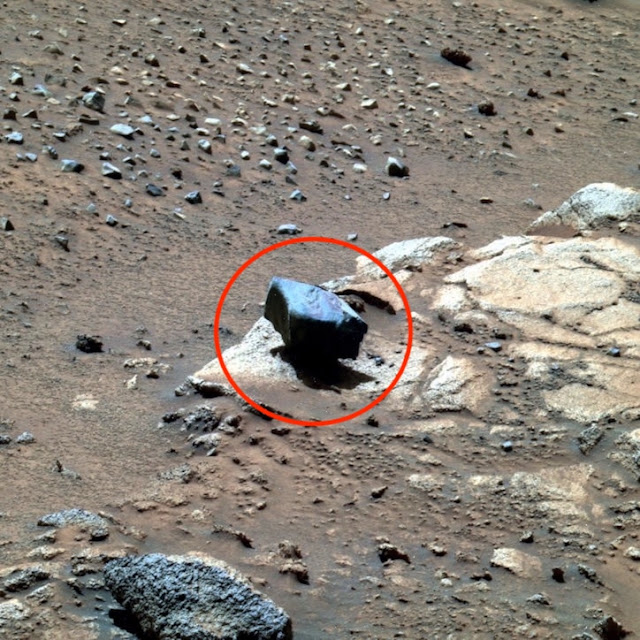



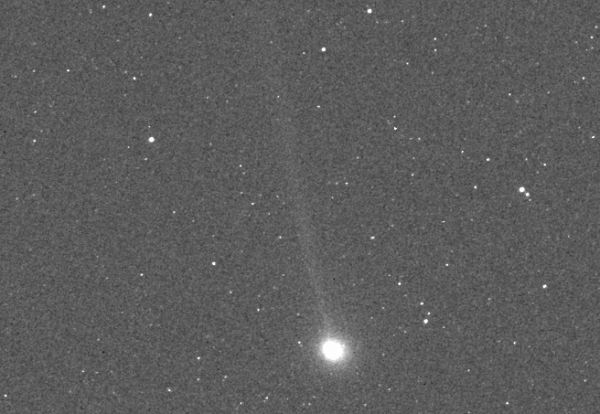


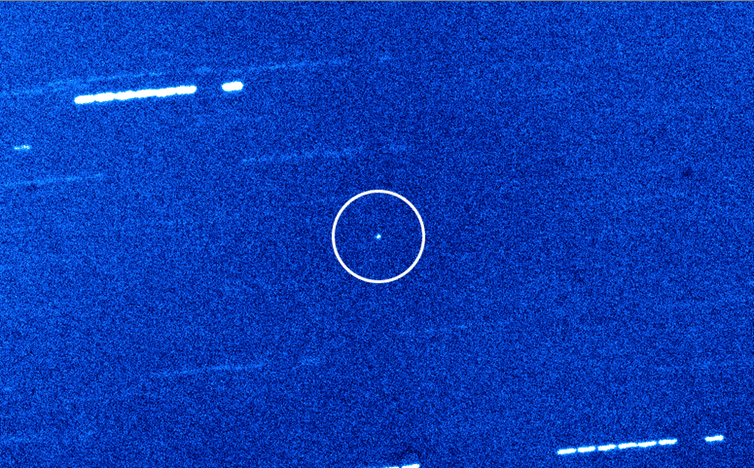


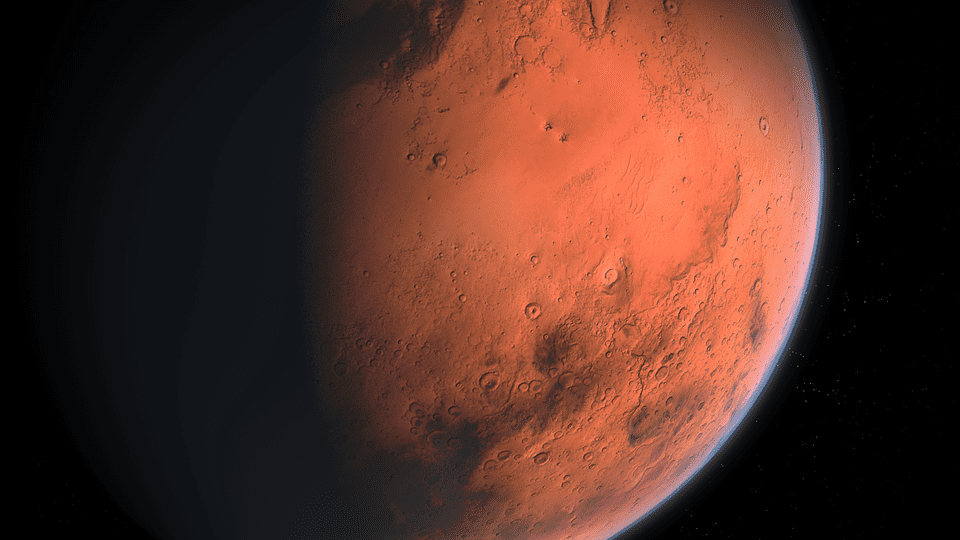



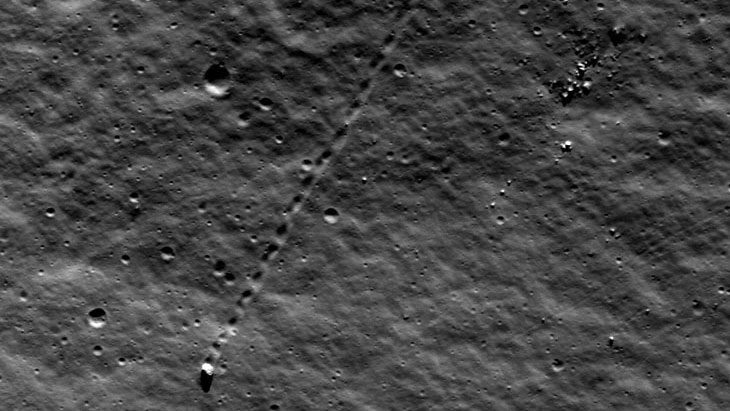
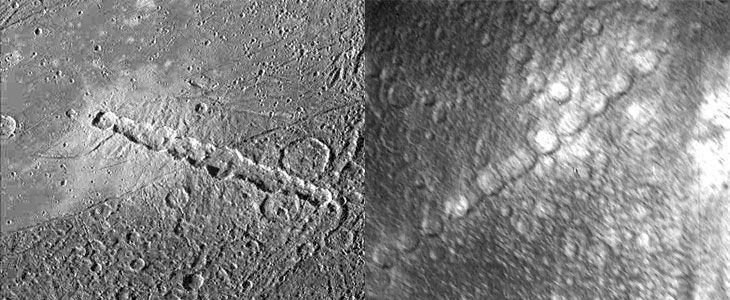


 Tiny beetle half the size of a grain of rice trapped in...
 Helium can kill your iPhone: Warning as hospital finds gas...
 Astronomers train Facebook's facial recognition AI to spot...
 Scientists extract DNA from Seabiscuit's HOOF after finding...

