Ontdek de Fascinerende Wereld van UFO's en UAP's: Jouw Bron voor Onthullende Informatie!
Ben jij ook gefascineerd door het onbekende? Wil je meer weten over UFO's en UAP's, niet alleen in België, maar over de hele wereld? Dan ben je op de juiste plek!
België: Het Kloppend Hart van UFO-onderzoek
In België is BUFON (Belgisch UFO-Netwerk) dé autoriteit op het gebied van UFO-onderzoek. Voor betrouwbare en objectieve informatie over deze intrigerende fenomenen, bezoek je zeker onze Facebook-pagina en deze blog. Maar dat is nog niet alles! Ontdek ook het Belgisch UFO-meldpunt en Caelestia, twee organisaties die diepgaand onderzoek verrichten, al zijn ze soms kritisch of sceptisch.
Nederland: Een Schat aan Informatie
Voor onze Nederlandse buren is er de schitterende website www.ufowijzer.nl, beheerd door Paul Harmans. Deze site biedt een schat aan informatie en artikelen die je niet wilt missen!
Internationaal: MUFON - De Wereldwijde Autoriteit
Neem ook een kijkje bij MUFON (Mutual UFO Network Inc.), een gerenommeerde Amerikaanse UFO-vereniging met afdelingen in de VS en wereldwijd. MUFON is toegewijd aan de wetenschappelijke en analytische studie van het UFO-fenomeen, en hun maandelijkse tijdschrift, The MUFON UFO-Journal, is een must-read voor elke UFO-enthousiasteling. Bezoek hun website op www.mufon.com voor meer informatie.
Samenwerking en Toekomstvisie
Sinds 1 februari 2020 is Pieter niet alleen ex-president van BUFON, maar ook de voormalige nationale directeur van MUFON in Vlaanderen en Nederland. Dit creëert een sterke samenwerking met de Franse MUFON Reseau MUFON/EUROP, wat ons in staat stelt om nog meer waardevolle inzichten te delen.
Let op: Nepprofielen en Nieuwe Groeperingen
Pas op voor een nieuwe groepering die zich ook BUFON noemt, maar geen enkele connectie heeft met onze gevestigde organisatie. Hoewel zij de naam geregistreerd hebben, kunnen ze het rijke verleden en de expertise van onze groep niet evenaren. We wensen hen veel succes, maar we blijven de autoriteit in UFO-onderzoek!
Blijf Op De Hoogte!
Wil jij de laatste nieuwtjes over UFO's, ruimtevaart, archeologie, en meer? Volg ons dan en duik samen met ons in de fascinerende wereld van het onbekende! Sluit je aan bij de gemeenschap van nieuwsgierige geesten die net als jij verlangen naar antwoorden en avonturen in de sterren!
Heb je vragen of wil je meer weten? Aarzel dan niet om contact met ons op te nemen! Samen ontrafelen we het mysterie van de lucht en daarbuiten.
Berichten van 1 december 2018 tot 31 december 2018
UFOJane shares her favorite Texas UFO sightings from 2018, which include spooky triangles and plane-following orbs. What are your favorite UFO and alien stories and sightings from the year? Do you think we are getting closer or farther to UFO and Alien Disclosure?
Stephen Hawking's Final Theory About Our Universe Will Melt Your Brain
MICHELLE STARR
Groundbreaking physicist Stephen Hawking left us one last shimmering piece of brilliance before he died: his final paper, detailing hislast theory on the origin of the Universe, co-authored with Thomas Hertog from KU Leuven.
The paper, published in the Journal of High Energy Physics in May, puts forward that the Universe is far less complex than current multiverse theories suggest.
It's based around a concept called eternal inflation, first introduced in 1979 and published in 1981.
After the Big Bang, the Universe experienced a period of exponential inflation. Then it slowed down, and the energy converted into matter and radiation.
However, according to the theory of eternal inflation, some bubbles of space stopped inflating or slowed on a stopping trajectory, creating a small fractal dead-end of static space.
Meanwhile, in other bubbles of space, because of quantum effects, inflation never stops - leading to an infinite number of multiverses.
Everything we see in our observable Universe, according to this theory, is contained in just one of these bubbles - in which inflation has stopped, allowing for the formation of stars and galaxies.
Visualisation of the inflating multiverse.
(A. Linde/Stanford University)
"The usual theory of eternal inflation predicts that globally our universe is like an infinite fractal, with a mosaic of different pocket universes, separated by an inflating ocean," Hawking explained.
"The local laws of physics and chemistry can differ from one pocket universe to another, which together would form a multiverse. But I have never been a fan of the multiverse. If the scale of different universes in the multiverse is large or infinite the theory can't be tested."
Even one of the original architects of the eternal inflation model has disavowed it in recent years.
Paul Steinhardt, physicist at Princeton University, has gone on record saying that the theory took the problem it was meant to solve - to make the Universe, well, universally consistent with our observations - and just shifted it onto a new model.
Hawking and Hertog are now saying that the eternal inflation model is wrong. This is because Einstein's theory of general relativity breaks down on quantum scales.
"The problem with the usual account of eternal inflation is that it assumes an existing background universe that evolves according to Einstein's theory of general relativity and treats the quantum effects as small fluctuations around this," Hertog explained.
"However, the dynamics of eternal inflation wipes out the separation between classical and quantum physics. As a consequence, Einstein's theory breaks down in eternal inflation."
Hawking's last theory is based on string theory, one of the frameworks that attempts to reconcile general relativity with quantum theory by replacing the point-like particles in particle physics with tiny, vibrating one-dimensional strings.
This illustration shows the evolution of the Universe, from the Big Bang on the left, to modern times on the right.
Image: NASA
In string theory, the holographic principle proposes that a volume of space can be described on a lower-dimensional boundary; so the universe is like a hologram, in which physical reality in 3D spaces can be mathematically reduced to 2D projections on their surfaces.
The researchers developed a variation of the holographic principle that projects the time dimension in eternal inflation, which allowed them to describe the concept without having to rely on general relativity.
This then allowed them to mathematically reduce eternal inflation to a timeless state on a spatial surface at the beginning of the Universe - a hologram of eternal inflation.
"When we trace the evolution of our universe backwards in time, at some point we arrive at the threshold of eternal inflation, where our familiar notion of time ceases to have any meaning," said Hertog.
In 1983, Hawking and another researcher, physicist James Hartle, proposed what is known as the 'no boundary theory' or the 'Hartle-Hawking state'. They proposed that, prior to the Big Bang, there was space, but no time. So the Universe, when it began, expanded from a single point, but doesn't have a boundary.
According to the new theory, the early Universe did have a boundary, and that's allowed Hawking and Hertog to derive more reliable predictions about the structure of the Universe.
"We predict that our universe, on the largest scales, is reasonably smooth and globally finite. So it is not a fractal structure," Hawking said.
It's a result that doesn't disprove multiverses, but reduces them to a much smaller range - which means that multiverse theory may be easier to test in the future, if the work can be replicated and confirmed by other physicists.
Hertog plans to test it by looking for gravitational waves that could have been generated by eternal inflation.
These waves are too large to be detected by LIGO, but future gravitational wave interferometers such as space-based LISA, and future studies of the cosmic microwave background, may reveal them.
How the Oumuamua mystery shook up the search for space aliens
The interstellar visitor made it respectable to talk about alien spaceships.
Oumuamua likely traveled through space for millions of years before its chance encounter with our star system.
M. Kornmesser/European Southern Observatory / NASA
By Corey S. Powell
Last year, an enigmatic object named Oumuamuastartled astronomers when it came streaking past the sun, giving humanity its first close-up look at an object from beyond our solar system. This year, the interstellar visitor did something even more remarkable: It made it respectable to talk about alien spaceships.
The turning point came in November, when Avi Loeb, the head of the astronomy department at Harvard University, co-wrote a paper saying that Oumuamua is so unusualthat scientists should consider the possibility that it’s not a far-out comet or asteroid, as his colleagues assumed, but rather an artificial structure.
Some of Loeb’s colleagues were intrigued. Others were disconcerted. But suddenly mainstream scientists were talking about how to tell if Oumuamua is a natural object or — as Loeb raised as a possibility in his paper — an alien spacecraft designed to capture the force of sunlight (a so-called lightsail).
Theoretical physicist Avi Loeb co-authored a controversial paper that raised the possibility that Oumuamua is an alien spacecraft.Jemal Countess / Getty Images file
Loeb is well aware that most scientists recoil from anything that sounds like UFO craziness, but he believes an overabundance of skepticism has cut them off from out-of-the box ideas. “The point of doing science is not to have a prejudice,” he says. “A prejudice is based on the experience of the past, but if you want to allow yourself to make discoveries, then the future will not be the same as the past.”
Jason Wright, a Penn State astronomer who recently launched a graduate program in SETI (the search for extraterrestrial intelligence), shares Loeb’s desire for open discussion — and offers an upbeat assessment of the field’s growing respectability. “There’s a real culture change. SETI is becoming a serious scientific discipline,” he says.
STRANGE VISITOR FROM THE STARS
It was clear from the start that Oumuamua (pronounced oh-MOO-uh-MOO-uh) would shake up astronomy’s status quo. Shortly after its discovery, scientists realized that the object’s unusual trajectory meant it had to have come from outside the solar system — and that it could have been traveling for millions of years. They quickly dubbed the mysterious object Oumuamua, a Hawaiian word meaning “messenger from the past.”
There were more surprises. Oumuamua was too far away for astronomers to observe its shape directly, but they could tell by the extreme way its brightness shifted as it tumbled through space that it wasn’t like any space rock they had ever seen.
“It’s very elongated, with an axis ratio of at least 7 to 1,” astronomer Karen Meech of the University of Hawaii said in an email. In other words, it’s at least seven times as long as it is wide — shaped like a cigar, perhaps. Or, as Loeb proposes in his paper, maybe a flattened disk.
The relative size of 'Oumuamua, the first extra-solar asteroid discovered. #ScaleOfThings Original images: M. Kornmesser/ESO, Daniel Schwen http://ift.tt/2zekLOR
Astronomers’ models predict that most of the small bodies wandering in interstellar space are comets. But when Meech and others examined it,Oumuamua showed no sign of the expected comet-like tail. It’s also quite small, on the order of 1,000 feet long, and it seems to be much more reflective than the comets we know.
Scientists said Oumuamua must be a highly elongated object because it varied dramatically in brightness over every seven- to eight-hour periods.NASA/JPL-Caltech
Intrigued by its oddities, several groups of SETI researchers listened for possible radio transmissions from Oumuamua — and heard nothing.
AN INVISIBLE PUSH
The biggest puzzle about Oumuamua was the way it moved. As it zoomed away from the sun, it sped up slightly, as if given an invisible push. “It doesn’t take much to provide the little acceleration we see,” says Michele Bannister, a comet expert at Queens University Belfast, “but the effect is definitely there.”
This artist's illustration shows Oumuamua racing toward the outskirts of our solar system, with annotations showing the locations of the planetary orbits.JPL / NASA
Comets often accelerate that way when gases boil off their surface under heat from the sun. But observations by the Spitzer Space Telescope showed no such material coming off of Oumuamua.
At this point, Loeb thought it was time to consider a more radical interpretation and, with a post-doctoral student, Shmuel Bialy, wrote the provocative paper. In it, the scientists consider the possibility that Oumuamua lacks a tail because it isn’t a comet at all, and that the acceleration was caused not by boiling gases but by the pressure of sunlight against a very wide, thin lightweight structure.
“The Spitzer data are consistent with a sail about 20 meters [60 feet] across,” Loeb says. He and Bialy suggest that such an object could be technological debris or even “a fully operational probe.”
STIRRING THE SETI POT
Loeb anticipated a harsh reaction to his paper, and his expectation was soon fulfilled. Twitter buzzed with snide comments. “A new paper, which claims Oumuamua is an alien probe, is full of poop,” one skeptic tweeted. “The Loeb paper says WHAT IF ALIEN LIGHT SAILS? Occam says no,” tweeted another in a reference to Occam’s Razor (a philosophical principle that when there are two competing explanations for an occurrence, the simpler one is usually better).
One researcher, who asked to remain anonymous, disparaged the Bialy and Loeb paper as “irresponsible,” and said it was “just out to grab attention.”
Loeb shrugs off the reflexive dismissals, but partly embraces that last critique, saying his lofty academic position actually obligates him to be a pot-stirrer: “I can say these things other people can’t because I have tenure at Harvard. The whole idea of getting tenure is to allow you to be free in your mind. I used the opportunity of Oumuamua to make a statement.”
In his view, searching for evidence of alien artifacts is no more outrageous than physicists exploring higher dimensions or astronomers invoking dark matter to explain the motions of galaxies. Or, more to the point, no more outrageous than searching for microbes on Mars.
“All I’m doing is following the standard scientific process, looking for explanations,” Loeb says.
What’s different is that the stakes are so high. Finding evidence of an extraterrestrial civilization would be far more profound than finding extraterrestrial microbes. It would tell us that humans aren’t the only intelligent species around.
A UNIVERSE OF QUESTIONS
Wright believes the excitement over Oumuamua, combined with the other recent developments in the field, is breathing new life into SETI research.
“There’s a popular misperception that it’s just people listening for radio signals and coming up with one null result after another,” he says of SETI. He counters that there are actually a tremendous number of ways to search for alien life once scientists broaden their horizons.
Wright raises the possibility that a now-defunct alien civilization left behind artifacts on the moon, where they could have survived even if deposited there billions of years ago. His colleague Paul Davies at Arizona State University has enlisted students to comb through archival images of the lunar surface to see if they can find evidence of any alien “technosignatures.”
Wright has participated in studies of Tabby’s Star, whose intermittent dimming had some scientists wondering if it was encased within a vast artificial structure built by aliens. While the latest results show that’s not the case, Wright is undeterred. Almost all such searches are destined for failure, he says, and all it takes is one success to change the world.
This is exactly the sort of unfettered curiosity that Loeb says he wanted to spark with his Oumuamua hypothesis. “Why have a prejudice? Why argue that it must be natural? What do we gain, other than putting blinders on our eyes?” he asks. “We should examine each and every interstellar object entering the solar system to check if it’s natural or not. Even if most of the time it’s natural, every now and then we might be surprised.”
David Wilcock: The Man Who Worked at Area 51 Underground Facilities (Video)
David Wilcock introduces us to David Adair, an insider from the original Disclosure Project lineup who has worked for most of his life developing secret rocket technology.
He was an exceptional child who developed a strong interest in the future of space travel after devouring countless books in his local library.
As he started launching rockets in a cornfield in Ohio, the military took an interest in his unusual hobby.
Once they realized that his technology was far in advance of theirs, he was brought in to Wright-Patterson Air Force Base, and eventually to descend into the depths of Area 51.
Het is een traditie: de jaarlijkse militaire parade in Moskou, waarmee Rusland de zege van het Sovjetleger over nazi-Duitsland viert. Een uitgelezen kans voor Vladimir Poetin om met zijn militaire macht te pronken. Zoals gewoonlijk was het Rode Plein gisteren het decor voor marcherende troepen, ronkende pantserwagens en grote raketten. Een overzicht van de Russische legersnufjes die de revue passeerden.
De Russische president pakte voor het eerst uit met zijn beruchte hypersonische raket, de Kinzhal (“de dolk”), gedragen door een intercepteerjet van het geavanceerde type MiG-31K. Een primeur. De raket die volgens Rusland “geen gelijke in de wereld kent”, behoort tot de nieuwe soort wapens waar Poetin al uitgebreid mee pronkte tijdens zijn gespierde militaristische beleidsverklaring in maart. De Kinzhal zou een reikwijdte van 2.000 kilometer hebben en vuurt vanuit de lucht nucleaire of conventionele kernkoppen af. Volgens Moskou vliegt het projectiel tot tien keer sneller dan het geluid en is het daarmee nauwelijks te intercepteren. “Onoverwinnelijk”, besluit Poetin.
In totaal scheerden voor de Victory Day Parade liefst 75 vliegtuigen, jets en helikopters door de blauwe lucht. Zo ook het ultieme Russische paradepaardje, de geavanceerde vijfde generatie Su-57 straaljager. Opnieuw een primeur. Het gevechtsvliegtuig raasde over het Kremlin, vers uit de oorlogsgebieden van Syrië - waar de Su-57 uitgebreid werd getest.
EPAEen Su-57.
“Robottank”
Verder rommelden 159 militaire voertuigen over het Rode Plein, met de nieuwe onbemande Uran-9 “robottank” als ster van de show. Gewapend met onder meer een 30 mm automatisch kanon, een machinegeweer en anti-tankraketten, lijkt de kwieke Uran-9 recht uit een sciencefictionfilm te komen. De vanop afstand bestuurde snelle tank - een multifunctioneel robotsysteem - kan bestuurd worden vanop een afstand tot zo’n 3 kilometer. Het onbemande tuig onderging eveneens testen in Syrië. Ook de ontmijningstank Uran-6 maakte zijn opwachting. Het onbemande vehikel wordt in de Syrische steden Palmyra, Aleppo en Deir Ezzor ingezet om vanop veilige afstand mijnen te laten ontploffen.
APEen Uran-9.
The Terminator
Daarnaast maakte ook het door de makers ‘The Terminator’ gedoopte gevaarte zijn debuut. Het gaat om een gepantserd voertuig ontworpen om tanks op het slagveld te ondersteunen. Het gevechtsvoertuig is (nucleair) explosiebestendig en bewapend met raketwerpers, kanonnen, granaatwerpers en een machinegeweer.
APDe 'Terminator'.
Ook enkele exemplaren van de nieuwste generatie YARS intercontinentale ballistische raketten denderden voorbij. Dit type raket zou 10 nucleaire kernkoppen kunnen dragen over een afstand tot wel 12.000 kilometer. Rusland heeft naar verluidt 73 van de projectielen in voorraad; 63 op mobiele platformen en 10 in silo’s. “De raket kan tijdens de vlucht manoeuvreren en zowel actieve als passieve afleidingen inzetten, waardoor de Yars in het voordeel moeten zijn tegen moderne raketdefensiesystemen”, klinkt het.
EPADe nieuwe generatie Yars.
De Buk-M2, een middellang afstandsraketsysteem ontworpen voor luchtverdediging, kon niet ontbreken op de parade. Het systeem zou tot 24 luchtlandingsdoelen tegelijk kunnen volgen en vier daarvan neerhalen met een bereik tot 25 kilometer hoogte en 45 kilometer grondafstand. Het is ook inzetbaar tegen doelen op de grond en op zee.
AFPBuk-M2 luchtverdedigingsraketsystemen.
Drones
En dan waren er onder meer ook de allernieuwste militaire drones, zoals de Korsar en de helikopterachtige variant Katran. De Korsar kan aan luchtverkenning doen, maar ook raketaanvallen uitvoeren en middelen aanleveren. De drone kan tot 10 uur lang in de lucht blijven, op een maximale hoogte van 6.096 meter en heeft een range van meer dan 160 kilometer.
AFP
Een Korsar-drone.
AFP
Een Katran-drone.
Ook de Berkut, een militaire sneeuwscooter uitgerust met een machinegeweer en gebouwd om de Arctische ambities van Moskou te ondersteunen, was erbij. De sneeuwmobiel heeft een metalen frame en een speciaal hittesysteem waardoor de temperatuur binnenin te allen tijden een aangename 18 graden Celsius blijft, zelfs bij buitentemperaturen tot -50°C. In hetzelfde thema rolden ook verschillende wit gecamoufleerde luchtafweersystemen voorbij.
Photo News
Tot slot marcheerden een slordige 13.000 troepen over het plein. ”Het is belangrijk dat alle landen en mensen erkennen dat de wereld breekbaar is en dat de stabiliteit alleen sterker wordt als we bereid zijn naar elkaar te luisteren, elkaar te vertrouwen en te respecteren”, sprak het Russische staatshoofd tussen al het oorlogsgeweld verzoenend tot de manschappen en de rest van de wereld.
REUTERS
Photo News
Photo News
Photo News
AP
Su-25 jets zorgden voor een Russisch kleurenspektakel.
De Russische president Vladimir Poetin heeft vandaag een succesvolle test van een nieuw Russisch hypersonisch raketsysteem gevolgd. Het raketsysteem, ‘Avangard’ genaamd, kan volgens het Kremlin nucleaire en conventionele wapens afschieten.
Poetin kondigde in maart een aantal nieuwe wapens aan, waaronder de Avangard, tijdens een van zijn meest oorlogszuchtige toespraken in jaren. Poetin zei dat het “onoverwinnelijke” raketsysteem bijna elk punt in de wereld kan raken en een in de VS gebouwd raketschild kan ontwijken.
De raket werd vanop een basis ten zuiden van het Oeralgebergte gelanceerd en trof haar doel op een zowat 6.000 kilometer verder gelegen testsite in Kamtsjatka. De Russische president bekeek de test op afstand vanaf het Russische ministerie van Defensie in Moskou.
Poetin noemde het Avangard-systeem een “groot succes” voor het leger en liet weten dat de raket “twintig keer sneller dan de geluidssnelheid kan vliegen”. Nog volgens de Kremlinleider zal het raketsysteem volgend jaar in dienst wordt genomen. Hij benadrukte dat dit “nieuw type van strategisch wapen” de komende decennia de veiligheid van Rusland zal garanderen.
Drone captures Flying Humanoid above Browns Bay, Auckland, New Zealand Dec 2018, Video UFO Sighting News.
Date of sighting: Dec 6, 2018
Location of sighting: Auckland, New Zealand
This UFO looks a lot like a giant flying whale. UFOs are not always in disk shape, but come in many other strange shaped that you may have never imagined could exist before. The object is flooding long ways, and rotates a little bit. So I am wondering if this UFO was searching for something or someone? I only wish the drone had flown closer to the UFO rather than just recording it from a distance.
Scott C. Waring
Eyewitness states:
I saw this over Browns Bay, Auckland, New Zealand on 6 December 2018. It was traveling about 5 to 10,000 feet up, moving across the sky from the east, in a northerly direction. I lowered the camera for about 3 seconds while keeping my eye on the object. Before I could raise the camera again, the object disappeared. I have included slow motion, close-up views of the object in the video at 200 percent and 400 percent magnification.
Today I found a blue tiles on a broken pillar in a Mars gigapan photo. The tiles are very similar to small blue tiles that are seen on bathroom floors, ancient roman walls and such. The pillar itself seems to be made of a cement type of material, with corners and edges broken off, but the rectangle design of the pillar still intact. Near it is a hollow object that looks like an airplane wing, but its probably part of a structure that was once in this location. I also found a few other interesting objects and placed the photos below for you to check out.
This day in UFO history: The 1980 UFO Landings In Rendlesham Forest (25-12-1980)
England holds one of the most compelling UFO landing accounts. In late December 1980, invasion of unidentified flying objects over a period of several nights took place in the joint air bases of Bentwaters and Woodbridge, situated within the vast Rendlesham Forest in late December.
Description of alien beings added to the controversial stories of the twin air bases. The hype took into another level with anomalous radar readings, electromagnetic effects, and surrealistic atmospheric conditions. Professionals, deemed to be credible, have been coming forward revealing their knowledge of the real alien event on the Bentwaters and Woodbridge Air Force Bases.
Uncorrelated object showed on the radar screens at RAF in Norfolk shortly after midnight on December 27, 1980. The thing then suddenly vanished in the area of the Rendlesham Forest in Suffolk. Bentwaters RAF radar also picked up the object.
The bases were allegedly housed a large stockpile of nuclear weapons, and the Woodbridge was the base of the 67th Aerospace Rescue and Recovery Squadron.
The radar operator that night, Mal Scurrah, said that they did not have any idea of what they captured on their radar. They checked the air traffic agencies and found out that there should have been nothing in the vicinity at the time. They sent a jet aircraft to investigate, and the pilot reported seeing a dazzling light in the sky in front of them after getting within about a quarter of a mile.
They saw on radar the object was stationary and it moved off in seconds. In just five minutes the UFO reached 90,000 feet and higher, and they had lost it in the radar scope.
The Woodbridge/Bentwaters started their extraordinary events with the sighting of a massive glowing object by three security guards of the twin bases. They followed the lights into the forest with initial thought that it was a commercial or military aircraft that crash landed.
The patrol was stunned to see a saucer-like craft with small beings with large heads suspended by a type of beam from the bottom of the craft. The beings reportedly performing a repair to their craft unaware of the three men watching their activities.
The guards radioed the base headquarters and requested emergency help. Assistance reportedly arrived headed by senior officers of the base. Later, there would be off record reports that they encountered strange anomalies, such as reality-bending, time displacement, and surreal atmospheric conditions.
Some of the senior officers allegedly communicated with the alien beings.
Called out on the second night of the sightings was then the now famous Colonel Halt. The group of Colonel Halt was reportedly one of the groups to chase the glowing UFO in the forest. He made an audio recording of the details of his trek into the woods.
Patrolmen Jim Penniston, John Burroughs, and Larry Warren later co-wrote a book about the incident, titled Left at East Gate.
Other men who were present during the encounter later revealed that there was an underground theater where soldiers were interrogated, sworn to secrecy and threatened. They also revealed that they were shown several films featuring UFO recoveries around the world. It was also reported that an alien being was there in one of the meetings.
Fisherman At Outer Banks Captures Video Of Multiplying Lights Over Atlantic
A minute and a half video credited to a night fisher in Outer Banks is making the rounds on social media with wild speculations, including a possible UFO sighting off the coast in North Carolina.
ViralHog posted the clip to YouTube on November 9 and reported that it was made in mid-November at Cape Lookout, situated in the southernmost point of the Core Banks. It has since gained around 100,000 views.
Cape Lookout National Seashore’s National Park Service officials said that they weren’t certain what the set of mysterious lights might be, but considered them to be peculiar.
One Outer Banks resident said the mysterious lights have been making appearances off the cape for over 20 years and they have come to believe these lights are harmless. Derek Maxey said the strange lights are not a concern, but he offered no guess at the source of the lights.
ViralHog did not name the angler who recorded the video, but someone named C.R. Larkin posted a similar video on November 24. Larkin wrote that the clip was recorded on November 13 off Cape Lookout, between 9 pm and 10 pm.
Larkin said in his post with the YouTube video that he rebaited his hooks around 9 pm and cast them out into the surf before he walked back to his chair. When Larkin turned back to the ocean, he spotted a light in the sky. Larkin described it as a very bright light, silent and stationary. After around an hour, Larkin stated that the light faded in and out and several times became multiple lights.
The strange lights disappeared at one point for almost 20 minutes and then reappeared much closer to Larkin’s position, according to the witness report.
Scientists Found a Mysterious 'Boiling' River Straight Out of Amazonian Legend
FIONA MACDONALD
For centuries, Peruvian locals have talked about a river in the Amazon that burns so hot it can kill.
According to legend, Spanish conquistadors foolishly ventured into the rainforest in search of gold, and the few men that returned told stories of poisoned water, man-eating snakes, and a river that boiled from below.
For Peruvian geoscientist, Andrés Ruzo, the myth had fascinated him since childhood. But it wasn't until he was completing his PhD project on geothermal energy potential in Peru that he began to question whether the river could actually be real.
According to the experts he spoke to, the answer was a unanimous "no" - after all, hot rivers do exist, but they're generally associated with volcanoes, and there are no volcanoes in that part of the country.
But when Ruzo went home over the holidays and asked his family where the myth had come from, his mother told him that the river didn't just exist, she and his aunt had actually swum in it before.
It sounded pretty ridiculous, but in 2011, Ruzo took a chance and hiked into the Amazon rainforest with his aunt, and saw the famed river with his own eyes.
Much to his disbelief, it was steaming hot.
"When I saw this, I immediately grabbed for my thermometer," said Ruzo in a TED talk back in 2014. "The average temperature in the river was 86 degrees Celsius [187 degrees Fahrenheit], not quite boiling but definitely close enough ... It's not a legend."
The most puzzling part was the sheer size of it.
Hot springs aren't uncommon, and thermal pools get to these temperatures in other parts of the world, but nothing even comes close to the scope of the river - it's up to 25 metres (82 feet) wide and 6 metres (19.6 feet) deep, and runs burning hot for an incredible 6.24 km (3.87 miles).
Add that to the fact that the river is around 700 km (435 miles) from the closest volcanic system, and the temperature just didn't make any sense. In fact, it's the only river of its kind anywhere in the world that we know of.
With the permission of the local Shaman, Ruzo has spent recent years studying the river, its surrounding ecosystem, and its water in the lab, in the hopes of figuring out what's going on.
(Devlin Gandy)
To be clear, Ruzo obviously wasn't the first to discover the river, and as suggested by its indigenous name - Shanay-timpishka, which means "boiled with the heat of the Sun" - he also wasn't the first to wonder what made it so hot.
But his research - backed in part by a National Geographic Young Explorers grant - is finally revealing some of its secrets. It turns out, it's not the Sun that boils the water, but fault-fed hot springs.
Imagine Earth is like a human body, with fault lines and cracks running through it like arteries. These 'Earth arteries' are filled with hot water, and when they come to the surface, we see geothermal manifestations - like the boiling river.
Chemical analysis has revealed that the water in the river originally fell as rain.
Ruzo now hypothesises that this happens far upstream - perhaps as far away as in the Andes - and along its journey seeps down into the ground, where it's heated up by Earth's geothermal energy. It eventually emerges in the Amazon, at the bubbling river.
This means the system is part of an enormous hydrothermal system, the likes of which haven't been seen anywhere else on the planet.
Even more exciting, Ruzo has worked with biologists Spencer Wells and Jonathan Eisen to sequence the genomes of the microbes living in and around the river, and discovered brand new species that are able to survive the heat.
Of course, as fascinating as the river is, it can also be deadly. The water gets so hot that Ruzo has regularly seen animals fall in and slowly start boil to death.
Eventually, the animals can no longer swim, and water fills their mouths and lungs, causing them to be cooked from the inside out. Gruesome.
Still, people do actually swim in the river, as his mother claimed, but only after heavy rainfalls when it's diluted with cold water. More often, the water is used to make tea and for cooking.
Ruzo continues to study the river and its source. But his main focus now is how to protect the river and its surrounding land - while his results are ready for publication, he's refusing to release many of them until the Peruvian government will guarantee they'll put appropriate conservation measures in place.
"In the middle of my PhD, I realised, this river is a natural wonder," Ruzo told Maddie Stone over at Gizmodo in 2016. "And it's not going to be around unless we do something about it."
He's released a book called The Boiling River on his adventures, and is hoping that by spreading the news about the unique system, people might take on the cause themselves and decide that the site significant enough to save from loggers and developers.
"I don't like the concept of one person leading this charge - I think it's about building a community on an international scale," said Ruzo. "The planet's gotten small, and natural wonders like this are few and far between."
A version of this article was first published in February 2016.
WE JUST FOUND OUT SOMEONE IS TRYING TO MANIPULATE OUR ATMOSPHERE
While you were sleeping, drinking coffee, binging on Netflix or otherwise unaware of what was happening in the atmosphere, China and Russia were experimenting with it behind your back.
Nobody knows why scientists from the two countries joined forces to perform those tests. There is speculation that the experiments, which involved heating the ionosphere (the layer of the upper atmosphere with a high concentrations of ionized plasma) had something to do with the military, but the real reason remains unknown. Their results were recently published in Earth and Planetary Physics.
Is it really that easy to keep this kind of operation a secret when you’re using a super-transmitter like Russia’s Sura Ionospheric Heating Facility to pump the ionized plasma into the ionosphere full of radio energy in order to manipulate it? Maybe it is when the real action is going on 310 miles above your head.
After Russia had released enough energy to stimulate the ionosphere, the China Seismographic Electromagnetic Satellite (CSES) Zhangheng-1 used its sensors to observe the whole thing from orbit and record what exactly was going on up there. At least most of the tests didn’t set off plasma disturbances — except one.
That problematic test triggered a spike in electricity that was 10 times more loaded with negatively charged ions than the sky surrounding it — never mind that it covered 49,000 square miles.
There was another test that, while not sounding quite as sci-fi-horror as the previous one, still shot the temperature of ionized gas up by 212 degrees Fahrenheit in one area.
What can experiments like this tell us? If you’ve ever seen an aurora, you’ve seen a phenomenon that happens because of charged particles in the ionosphere getting too close to Earth’s magnetic field. More important, the ionosphere bounces radio waves off the surface, and free electrons in this layer of the atmosphere affect many types of communications that are prone to being cut off by space weather like solar storms.
This is where the military speculation comes in. It is highly possible that Russia and China were trying to manipulate the ionosphere to figure out how to prevent their communications getting cut off. Communications can also be blocked by structures that scatter radio waves or an increase in plasma, whether natural or artificial.
Ionospheric research is conducted right here in the US. The High Frequency Active Auroral Research Program (HAARP) has been plagued by so many conspiracy theories that there was an open house in 2016 to clear false rumors of everything from weather manipulation to mind control.
If all this is still freaking you out, scientists have also managed to create an aurora in the ionosphere, which is so much cooler than fireworks.
“Wat een cadeautje op kerstochtend”: Nederlanders getrakteerd op prachtig zeldzaam weerfenomeen- HLN.be
Sytse Schoustra Twitter
WEERNIEUWS Parelmoerwolken. Wie in het noorden van Nederland naar boven keek, kon deze zeldzame wolken met wonderachtige kleurenpracht aanschouwen. Enkele weerfotografen maakten prachtige beelden van het schouwspel.
Parelmoerwolken ontstaan op 20 tot 30 kilometer hoogte. Het kleine beetje vocht dat hier aanwezig is, condenseert pas bij temperaturen beneden -80 graden Celsius. Als het zo extreem koud is, ontstaan dunne wolkenflarden. Doordat die wolken bestaan uit zeer kleine ijskristallen, wordt het zonlicht sterk gebroken en ontstaat bij de juiste omstandigheden, vooral net na zonsondergang of even voor zonsopgang, een kleurenspel. En dan is het genieten geblazen:
Testruimteschip van Elon Musk voor missie naar Mars krijgt vorm. Lancering voor maart of april volgend jaar. In 2024 moeten eerste mensen vertrekken - HLN.be
WETENSCHAP & PLANEET SpaceX – het ruimtevaartbedrijf van Teslabaas Elon Musk – is volop bezig met de bouw van een testruimteschip voor een missie naar Mars. Dat blijkt uit beelden die afgelopen weekend de ronde deden op sociale media en genomen werden in Boca Chica (Texas), waar SpaceX een lanceringsbasis optrekt. Musk zelf deelde vanmorgen intussen ook beelden vanop de site.
Het testruimteschip is een basisversie van de Big Falcon Rocket (BFR), die 100 passagiers en 150 ton cargo naar Mars zou moeten brengen. Volgens Elon Musk zou het prototype – dat hij de ‘test hopper’ noemt – in maart of april van volgend jaar al gelanceerd kunnen worden.
De tweets kwamen zaterdag in de aanloop naar de lancering van een militaire satelliet door SpaceX. De Falcon 9 met een GPS-satelliet van een half miljard aan boord vertrok zondag - succesvol - vanop de lanceringsbasis Cape Canaveral in Florida.
Musk liet eerder al verstaan dat tests met het prototype - ‘hops’, want het gaat om lanceringen, de raket wordt niet in een baan om de aarde gebracht - een grote stap zijn in de richting van de bouw van de Big Falcon Rocket. Die zal bestaan uit een Starship van 55 meter hoog en 9 meter breed, dat gelanceerd zal worden met de Super Heavy-raketbooster van 67 meter hoog.
SpaceX
SpaceX
“Ik zal een volledige technische presentatie geven van Starship als het testruimteschip dat we bouwen in Texas succesvol gelanceerd is, hopelijk in maart/april”, tweette Musk zaterdag. “De ‘test hopper’ heeft dezelfde breedte als het Starship, maar is alleen niet zo hoog.” De Super Heavy zal meteen gebouwd worden zoals die er in de definitieve versie moet uitzien.
In Boca Chica werden foto’s genomen en gedeeld op sociale media van wat eruit ziet als onderdelen van de ‘test hopper’ die aankomen op de site en geassembleerd worden. Een Twitteraar maakte zelfs een simulatie van waar de onderdelen in de raket moeten komen.
Musk gaf daarop uitleg over het materiaal waaruit het ruimteschip is opgebouwd, materiaal dat moet weerstaan aan extreme druk- en temperatuurverschillen en trillingen. Het ruimteschip moet namelijk verder dan ooit een mens geweest is: naar Mars en terug.
Het is de vraag of SpaceX de timing zal halen voor de testraket. In november verklaarde Musk nog dat er radicale wijzigingen aangebracht zouden worden in het design van het ruimteschip en deze maand kwam het nieuws dat SpaceX samenwerkte met de Amerikaanse ruimtevaartorganisatie NASA voor de bouw van een nieuw type hitteschild voor het Starship.
Mensen
Musk blijkt er duidelijk in geloven. Meer nog. Op 31 oktober kondigde hij aan dat de eerste mensen naar Mars zouden moeten kunnen vertrekken over 6 jaar. “We mikken nog altijd op 2024”, vertelde hij tijdens een interview voor de podcast Recode Decode.
MYSTERIOUS TRIANGULAR OBJECT FLOATS PAST SPACEX DRAGON CAPSULE
During a livestreamed rendezvous between SpaceX’s Dragon cargo capsule and the ISS, viewers spotted a glowing, triangular object appearing to float by, before the camera feed switched to display another angle. Many were quick to point out similarities in its appearance to the alleged TR-3B “black triangle” UFO – a type of reverse-engineered alien technologybelieved to be secretly possessed by the government.
Skeptics say the alleged UFO is actually just the lights from a city on Earth as the camera footage comes from the ISS looking down toward the Dragon coming to meet it. Though others say this doesn’t explain the second pass-by of the same triangular shape just three minutes later.
Others said the distinct, linear shape as well as reflection of light on the object as it bounces off the Dragon’s solar panels provide evidence that there was something physically flying past the Dragon capsule (scrub to 00:54 seconds in the below video to see the reflection in question).
No comments have been made to question or dispel speculation on the mysterious object from either Elon Musk or SpaceX, despite the multitude of comments on the official YouTube video and Musk’s propensity for tweeting often.
Of course, conspiracies from every angle have been proposed – some serious and others not so much.
Others claimed the triangular object was proof that the entire mission was being faked and the product of a complex studio production.
But the majority of comments focused on the possibility the lights were in fact the aforementioned TR-3B technology of ufological legend. This mysterious craft has allegedly been observed at clandestine military bases and hovering in the skies across a number of countries.
Once believed to be merely conspiracy, a patent for the TR-3B recently appeared on Google Patents before being virally spread across the internet. The invention was credited to a mysterious John St. Clair, of whom little is known.
About five years ago, a strange, blurry video showed two of these craft airborne, conducting peculiar maneuvers, through what is allegedly anti-gravity technology. According to reports, the TR-3B uses highly pressurized mercury to produce a plasma that creates a field of anti-gravity around the ship.
Mysterieus driehoekig object gezien bij Dragon-capsule. Was het de TR-3B?
Op het moment dat een SpaceX Dragon-bevoorradingscapsule aanmeerde bij het internationale ruimtestation ISS, zagen mensen die naar de livestream keken een vreemd, driehoekig object in beeld verschijnen.
Al snel draaide de camera en was het object niet meer te zien.
Sommigen wezen op overeenkomsten tussen de TR-3B en het mysterieuze object. Sceptici zeiden dat het ging om lichten van een stad op aarde die werden gereflecteerd.
Opnieuw
Anderen zeiden dat dit niet kan verklaren waarom het driehoekige object zo’n drie minuten later opnieuw in beeld verscheen.
Geclaimd wordt dat het object zelf ook licht reflecteerde en dat er dus iets fysieks langs de Dragon-capsule is gevlogen.
Ondanks vele reacties onder de video die op het officiële YouTube-kanaal werd geplaatst, hebben Elon Musk en SpaceX zich nog niet uitgelaten over de speculaties rond het mysterieuze object.
Antizwaartekrachtveld
De TR-3B zou onder meer zijn gezien bij verschillende legerbases en in de lucht boven een aantal landen.
Een patent voor de TR-3B verscheen recentelijk op Google Patents. De uitvinding staat op naam van ene John St. Clair, waar verder weinig over bekend is.
Volgens bronnen maakt de TR-3B gebruik van samengeperst kwik zodat er een plasma ontstaat dat een antizwaartekrachtveld rond het schip genereert.
Located atop Mount Padang in West Java, the structure is topped by an archaeological site that holds rows of ancient stone pillars.
Credit: Danny Hilman Natawidjaja.
WASHINGTON — An enormous pyramid-like structure in Indonesia that may represent the remains of anancient templehid underground for thousands of years.
Scientists presented evidence of the remarkable construction Dec. 12 here at the annual meeting of the American Geophysical Union (AGU).
Located atop Mount Padang in West Java, the structure is topped by an archaeological site that was discovered in the early 19th century and holds rows of ancient stone pillars. But the sloping "hill" underneath isn't part of the natural, rocky landscape; it was crafted by human hands, scientists discovered. [The 25 Most Mysterious Archaeological Finds on Earth]
"What is previously seen as just surface building, it's going down — and it's a huge structure," said Andang Bachtiar, an independent geologist from Indonesia who supervised core drilling and soil analysis for the project.
The pyramid-like structure remained hidden for so long because it has been obscured by foliage and so looks like a hill (red circle), with a megalith exposed at the top (yellow circle).
Credit: Danny Hilman Natawidjaja
Though the buried structure may superficially resemble a pyramid, it differs from similar pyramids built by the Mayans, Danny Hilman Natawidjaja, lead project researcher and a senior scientist with the Indonesian Institute of Sciences, told Live Science. While Mayan pyramidstend to be symmetrical, this structure is elongated, with what appears to be a half-circle in the front.
"It's a unique temple," Natawidjaja said.
He and his colleagues suspected that the exposed megalith might be more than it appeared, because some partly exposed features in the existing archaeological site didn't quite match the standing stones. The "peculiar" shape of the hill also stood out from the landscape, he said.
"It's not like the surrounding topography, which is very much eroded. This looks very young. It looked artificial to us," Natawidjaja explained.
Using an array of techniques to peer underground — including ground-penetrating radar surveys, X-ray tomography, 2D and 3D imaging, core drilling, and excavations — the researchers gradually uncovered several layers of a sizable structure. It spread over an area of around 15 hectares (150,000 square meters) and had been built up over millennia, with layers representing different periods.
Using various techniques to peer underground, the researchers found several layers of the pyramid-like structure, with each layer representing a different period of time.
Credit: Danny Hilman Natawidjaja.
At the very top were pillars of basalt rocks framing step terraces, with other arrangements of rock columns "forming walls, paths and spaces," the scientists reported at AGU. They estimated this layer to be about 3,000 to 3,500 years old.
Underneath the surface, to a depth of about 10 feet (3 m), was a second layer of similar rock columns, thought to be 7,500 to 8,300 years old. And a third layer, extending 49 feet (15 m) below the surface, is more than 9,000 years old; it could even date to 28,000 years ago, according to the researchers. Their surveys also detected multiple chambers underground, Natawidjaja added.
Today, local people still use the exposed site at the top of the structure as a sacred destination for prayer and meditation, and this could also be how it was used thousands of years ago, Natawidjaja said.
Nieuw bewijs voor lang verborgen piramide in Indonesië. Dit troffen wetenschappers diep onder de grond aan
Een enorm piramidevormig bouwwerk op het Indonesische eiland Java blijkt door mensen te zijn gemaakt.
Boormonsters hebben bewijs geleverd voor een verborgen, ondergrondse tempel onder vele lagen van vegetatie en bodemmateriaal.
Het bouwwerk is mogelijk duizenden jaren ouder dan het oudste megalithische monument op aarde, Göbekli Tepe.
Verloren beschaving
Bij de lokale bevolking staat de piramide al enige tijd bekend als Gunung Padang. De archeologische gemeenschap spreekt van een ‘mogelijke oude tempel’.
De piramide bevindt zich bovenop een berg in West-Java en is in de loop der tijd bedekt geraakt onder een dikke laag vegetatie.
Geoloog Danny Natawidjaja van het Indonesische Instituut van Wetenschappen doet al jaren onderzoek naar de piramide en denkt dat het bouwwerk is achtergelaten door een verloren beschaving.
Rotskolommen
Naast boormonsters werd gebruikgemaakt van bodemradar en tomografie om de piramide te dateren, zo liet Natawidjaja aan website Live Science weten.
“Op een diepte van ongeveer drie meter vonden we een tweede laag rotskolommen, die vermoedelijk 7500 tot 8300 jaar oud zijn,” zei hij.
Meerdere kamers
En een derde laag, 15 meter onder het oppervlak, is volgens de onderzoekers mogelijk zelfs 28.000 jaar oud.
Het onderzoek onthulde daarnaast meerdere kamers onder de grond.
De studie is te lezen op de preprint-server ESSOAr.
NASA VERKENNER KRIJGT MYSTERIEUZE ONTMOETING IN DE RUIMTE ( VIDEO )
Op 1 januari vindt er iets bijzonders plaats in de ruimte, want dan zal de NASA ruimteverkenner New Horizons vlak langs een object in de Kuipergordel vliegen.
Een object dat formeel een asteroïde schijnt te zijn, maar zich allesbehalve gedraagt zoals een asteroïde dat zou moeten doen.
Aangezien het soms moeilijk is voor te stellen waar zich de planeten precies bevinden in ons zonnestelsel, hierna een afbeelding waarop je kunt zien waar zich (formeel) wat bevindt.
Zoals je kunt zien bevindt de dwergplaneet Pluto zich aan de rand van ons zonnestelsel en wanneer je nog verder gaat, dan kom je terecht in de zogenaamde Kuipergordel.
De Kuipergordel is een gordel van vele miljarden komeetachtige, uit steen en ijs bestaande objecten, transneptunische objecten genoemd, voorbij de baan van de achtste planeet van ons zonnestelsel, Neptunus. De gordel bevindt zich op 30 tot 50 AE van de zon.
New Horizons is de eerste missie van een ruimtesonde naar de dwergplaneet Pluto. NASA lanceerde deze onbemande missie met een Atlas V-raket. De lancering vond plaats op 19 januari 2006. Doel van New Horizons was het onderzoeken van het uitzicht, de samenstelling en de atmosfeer van de dwergplaneet Pluto met zijn manen en andere Kuipergordelobjecten (waar Pluto en zijn manen deel van uitmaken). Dit laatste gebeurde na een ontmoeting met, en onderzoek van, Pluto.
Na het bezoek aan Pluto is de sonde verder gegaan en staat nu op het punt om kennis te maken met een object uit de Kuipergordel, genaamd Ultima Thule.
Op 1 januari a.s. om precies 18.33 uur Nederlandse tijd – schrijf ‘t in je agenda! – zal de Amerikaanse ruimteverkenner New Horizons met een snelheid van 50.700 km/uur (14 km/s) op een afstand van 3500 km langs het Kuipergordelobject Ultima Thule vliegen. Dat object is pakweg 30 km groot, dus in een paar tellen is ‘ie er langs gevlogen. Maar nu al zijn de verwachtingen erg hoog, zeker nu bekend is dat er iets eigenaardigs aan de hand is met Ultima Thule. Gebleken is namelijk dat Ultima Thule, die we eerder kenden onder de naam KBO 2014 MU69, geen periodieke helderheidsverschillen vertoont. Met New Horizons zijn al vele foto’s van Ultima Thule gemaakt, maar uit geen ervan blijkt een variatie in de helderheid.
En dat is vreemd, heel vreemd, want dat is iets dat een onregelmatig gevormd object zoals een asteroïde wel zou moeten doen door de weerkaatsing van het zonlicht.
In plaats daarvan lijkt het alsof het object zelf een lichtbron is, in plaats van dat het zonlicht weerkaatst, hetgeen dan natuurlijk weer de vraag oproept wat voor object dit eigenlijk is.
Er werden al eerder vreemde objecten bekend die niet waren wat ze leken zoals Oumuamua en komeet P67.
Een asteroïde die zich niet gedraagt als een asteroïde is het meest verre object ooit in ons zonnestelsel dat nu door NASA onderzocht zal worden. Uiteraard zal het formeel op toeval berusten dat ze een object aan de rand van het zonnestelsel hebben uitgekozen om aan een nader onderzoek te onderwerpen dat zich niet gedraagt zoals het zou moeten doen.
“It’s up to the investigative organs to judge when that hole was made.”
That would sound like a standard police statement if made by a department spokesperson when discussing an orifice made by a bullet in a wall or a corpse, but it takes on an eerie and mysterious aura when referring to a mysterious hole in the International Space Station that was found months ago but whose cause has yet to be identified … at least officially. Cosmonaut Sergei Valeriyevich Prokopyev, who returned to Earth this week with fellow crew members Serena Aunon-Chancellor of NASA and Alexander Gerst of the European Space Agency,said in an interviewthat tiny opening he eyeballed himself from both inside and outside the docked Soyuz capsule they returned in – minus the part where the hole was – appeared to have been drilled from the inside. He’s the best eyewitness yet he can’t answer the question … who was behind this inside job?
“You shouldn’t think so badly of our crew.”
That’s what Prokopyev said this week and months ago when the hole was first discovered and Roscosmos chief Dmitry Rogozin speculated that it could have been drilled by a homesick crew member looking to create a reason for an early return. Rogozin backed off on that but kept open the possibility that the hole could have been made during the Soyuz manufacturing process as an accident which was hastily plugged to pass inspection or as an act of deliberate sabotage. Prokopyev’s eyewitness assessment that it was made in space shakes things up considerably.
Unfortunately, the ‘CSI: Space’ team is missing a key component that would help in their investigation … the crime scene itself. NASA, Roscosmos and the crew were not concerned for their safety on the ISS nor on their trip home because the tiny hole was patchable and in a part of the Soyuz capsule that would be jettisoned before they reached the re-entry stage where it could put them in real danger. All that the “investigative organs” have to work with are the statements of the crew, the photos and videos taken by Prokopyev both from inside and on his spacewalk outside, and the mysterious yellow gunk that was scraped off from the outer hull. Sabotage on the ground might be the explanation if the hole were drilled from the outside, but Prokopyev’s statement puts the cause back inside the station.
“Russian cosmonauts Sergey Prokopyev and Oleg Artemyev will be questioned by the investigators as witnesses in the probe into a microfracture which was found on the body of the Soyuz MS-09 spacecraft, while it was docked to the International Space Station (ISS).”
Sputnik News reports that Prokopyev and cosmonaut Oleg Artemyev, who was on the ISS when the hole was discovered and returned to Earth in October, will be questioned by Russian investigators as they attempt to find the cause of the hole and why Prokopyev believes it was an inside job yet defends his crew. This raises more unanswered questions. Is he just referring to his fellow cosmonauts? There is no report of there being any NASA representatives on the investigative team. Can the results be trusted without NASA participation? We haven’t heard anything from the NASA or ESA crew members. Why not?
While ‘CSI: Space’ might be an entertaining TV show, the real thing is sadly still showing signs that this could be the first real crime in space. TV criminal mysteries are resolved in an hour. Will this one ever be?
.Wherever there is ample jungle and large swaths of uncharted wilderness we tend to get the occasional accounts of what can only be described as living dinosaurs, still existing beyond civilization as they have for millions of years. Of course the most famous place for such accounts are the jungles of Africa, as I have written of here recently, but such creatures also pop up in South America, the United States, and others. Joining the ranks of supposed real life Jurassic Parks are the wildernesses of Indonesia and Papua New Guinea, which have long had their own reports of dinosaurs lurking in the wilds
From within the uncharted interior jungles of the Indonesian island of Nusakambangan come reports of some sort of bipedal dinosaurian monstrosity known locally as the Kawuk. The habitat itself is incredibly isolated, sparsely populated and choked with tangles of impenetrable jungle, and among the thrumming myriad wildlife to be found here is something quite strange indeed. The Kawuk is said to be a giant lizard, around 5 feet in height when standing and similar in appearance to a massive monitor lizard or Komodo dragon, with the difference being that this creature travels about on two legs. The mostly nocturnal creatures are said by locals to favor raiding fresh graves, feasting upon the corpses before scurrying back into the wilderness, and they are renowned as being very aggressive, quick to attack even unprovoked.
Although sightings of these mysterious denizens of the jungles have been going on for ages, they were pushed into prominence in 2014 with a sighting made by a fisherman guide on the island. The guide, known only as Heri, ws out with a group of friends when they purportedly saw a pack of the creatures circling the corpse of a recently deceased friend. There were allegedly around ten of the creatures moving in, which prompted Heri and company to have the corpse moved so that it wouldn’t be devoured. Some of the theories as to what the Kawuk could be include that it is some very large undiscovered monitor lizard or even a remnant population of some sort of theropod dinosaur such as the velociraptor. The problem with this explanation is that it has been surmised that these types of dinosaurs were probably feathered, whereas the Kawuk are never mentioned as having feathers. Is this just legend and lore or something else? Who knows?
Another possible living dinosaur of Indonesia is what is called the Orang Bati, a flying creature said to inhabit the wilds of the island of Seram. Frightened locals here have long told of winged beasts often described as looking sort of like apes with wings. The creatures are said to spew forth from their volcanic cliff lairs at night to descend upon the land and carry off infants, small children and livestock. The creatures reportedly have black, leathery wings and glowing eyes, and have been seen cruising the skies by outsiders as well, with missionaries to these jungles reporting them since the 15th century.
One famous modern eyewitness account was made in 1987 by English missionary Tyson Hughes, who at the time was living amongst the local Moluccan tribe and claimed to have seen one of the fierce creatures himself. It has been speculated that these are nothing more than large flying foxes, which the island teems with, but the tribes-people say the bats are different than the Orang Bati, and that they are not the same. One theory is that they could be some sort of remnant population of flying dinosaurs such as Pterosaurs, but the area is so remote and so secluded from civilization that it is difficult to really get access to new sightings and expeditions into the region are rare.
Another island area with its share of supposed living dinosaur reports is Papua New Guinea, also a primordial land of unexplored forests and thick wilderness. Apparently the region called West New Britain has long had some sort of mysterious semi-aquatic dinosaur creature prowling its jungles and waterways, called the Kaiaimunu. There have supposedly been some rather recent sightings of the beast, such as the 2005 account from a witness called Robert, who said it had a long neck and tail, a turtle-like head, and as being around 40 to 50 feet in total length, with smooth brown skin and walking on two legs. The creature was observed to be eating vegetation and when it was finished it entered the water and swam away. The witness would later be shown a book of dinosaurs and point out the picture of a “Therizinosaurus” as most resembling what he saw, although he said the head looked different.
Also in 2005 was a sighting made by a couple named Margaret and Simon Patolkit as they were visiting on the beach at the uninhabited Dililo Island when they spotted a reptilian creature estimated as being around 65 feet long and having a long neck and a head “like a dinosaur with an oval face.” The creature’s skin was described as being reminiscent of that of a crocodile, and it possessed some sort of dermal frill down its length, as well as something “protruding from the back of the creature’s head.” The monster was seen briefly before retreating into the water and sinking down into the depths. The Kaiaimunu has been by other witnesses as well, including on one occasion swimming between Ambungi Island and Alage Island with its head above the water, and on another lounging about on some rocks near the water. Is this some sort of surviving sauropod dinosaur?
Therizinosaurus
Also from British New Guinea is a curious account from explorer C. A. W. Monckton, who in 1910 saw something rather bizarre as he was ascending the remote Mount Albert Edward. As he travelled his perilous route he purportedly came across humongous tracks from what appeared to be an enormous reptilian creature of some kind, which he would call the Gazeka. He would later allegedly come across a village of pygmies under attack by some sort of monstrous beast, which spurred him into action, firing upon it. One newspaper account of the encounter reads:
The huge Gazeka at once turned upon him. As it reared upon its hind legs and pawed the air it looked to the hunter as big as a house, standing fully 25 feet high. Two of Monckton’s bullets seemed to take effect, as a stream of blood flowed freely from the animal’s shoulder, but before Monckton was able to reload the animal turned and fled. By that time it was too dark to follow him, and Monckton never had another opportunity to renew his pursuit.
Interestingly this spectacular account does not appear to be mentioned in any of Monckton’s own journal entries, leading one to suspect that the newspaper report was perhaps being a bit creative on a slow news day. In all of these cases we are left with really no evidence to go on, and it merely further propels cases of living dinosaurs into the realm f speculation. Can any of these be real? Is it at all possible that dinosaurs could still exist in the most remote realms of our planet? Whatever one may think, the reports come in, and leave us scratching our heads.
Drone captures Flying Humanoid above Browns Bay, Auckland, New Zealand
Jeff Lyons wonders whether the object captured by his drone could be a UFO, Jet Suit, Balloon or another drone.
But could it be that it is something extraordinary, a flying humanoid attached to a device suitable for flying through the skies?
Although there is much controversy about the existence of these mysterious flying human-like beings, they are often described as being black humanoid figures that are capable of flight without visible wings or riding in strange vehicles like the being in the video below.
These flying humanoids are extraterrestrial or interdimensional travelers? We don’t know but it is a fact that they are sighted worldwide and often by multiple people at a time.
Jeff: I saw this over Browns Bay, Auckland, New Zealand on 6 December 2018. It was traveling about 5 to 10,000 feet up, moving across the sky from the east, in a northerly direction.
I lowered the camera for about 3 seconds while keeping my eye on the object. Before I could raise the camera again, the object disappeared.
I have included slow motion, close-up views of the object in the video at 200 percent and 400 percent magnification.
Here is a cool sighting just in. The eyewitness was taking some photos and when looking them over at home realised there was a flying saucer in one of them. This happens more than you might think. The digital eye is perfect and will not miss any detail, where the human eye is flawed and can only focus on a small area in front of us. This is a lucky catch. The UFO probably came from an underwater base nearby. It must have been traveling pretty fast for it to have not been seen by the eyewitness.
Scott C. Waring
News states:
Former Sydney resident Andrew Isaacson was visiting his mother on Australia’s Kangaroo Island when he inadvertently captured an unidentified flying object on camera while taking a scenic photograph near Cape Willoughby Lighthouse at 4:25 p.m. on Wednesday, December 5th. Isaacson told The Islander that he noticed something out of the corner of his eye just after taking the picture.
“Just when I stopped taking photos and moved the camera down, I saw something out of the corner of my eye,” he said. “Whatever it was moved silently and exceptionally quickly.” However, it wasn't until Isaacson viewed his photos from that day that he realized he had captured something unusual. Isaacson suspected the object might be some sort of unmanned drone based on its movements, which did not match that of a plane or helicopter. Furthermore, he estimated the object was approximately a "football field" in distance from the shoreline below the lighthouse. “I’d be interested to know if anyone else reported a sighting that day,” he said.
‘Not of this earth’ Did ALIENS make daggers found in Tutankhamun’s tomb?
IRON daggers found in the tomb of ancient Egyptian Pharoah Tutankhaman which have baffled scientists for generations are made from metal “not from this earth” – sparking suggestions they could have been made using alien technology.
A documentary aired on Quest TV focuses on a pair of knives found by Howard Carter when he discovered the tomb of the famous “boy king” in 1922. The documentary, featuring interviews with a range of experts, examines the possibility that the daggers were gifts by the Mittani, a people allied with the ancient Egyptians who were based at a site now know as Tell el Hameh, and who were renowned metalworkers. It refers to satellite photography which appears to show an ancient smelting works dating back to a time when most of mankind could not work the metal.
However, the documentary concludes the timeline does not match, with them only becoming proficient in the smelting techniques required to produce iron in 1000BC, too late to have supplied the knives to Tutankhamun.
Archaeologist Dr Mark Altaweel asked: “How did King Tutankhamun obtain iron when iron basically did not exist?
“The quality of this dagger is fantastic.
“It’s pure, almost, made using the kind of technology that would happen only centuries later, when people became experts in creating iron.”
Were Tutankhamun's daggers made by aliens
(Image: GETTY)
In all likelihood this metal is not from earth
Dr Hendrik van Gijseghem
Dr Jassel Majevadia, a material scientist, adds: “This particular dagger does not rust and that’s what makes it special.
Archaeologist Dr Hendrik van Gijseghem says: “No-one in the world is capable of producing that kind of metal in pre-modern times.
“This iron was not mined by man.
“There’s a high content of nickel and traces of cobalt which indicates in all likelihood that this metal is not from earth."
Dr Henrik van Gijseghem said the metal is "not from this Earth"
(Image: Quest TV)
The ancient Egyptians were fascinated by the stars, and the film postulates that an iron-rich meteor may have crashed to Earth which could be the source of the unusually pure metal.
However, even though one such site is uncovered in the region, investigations have ruled it out as the source, further deepening the mystery of where the metal came from.
Dr Aidan Dodson pointed to ancient hieroglyphs suggesting iron was the “bones of the gods”, suggesting any metal which fell from the stars was likely to have been regarded as a “gift”.
And some following the documentary went one step further, suggesting the artefacts really could be the product of alien contact.
Dr Mark Altaweel described the quality of the dagger as "fantastic"
(Image: GETTY)
Several commenting on the documentary made references to “alien technology”, while another said: “This is from the Nephilim”.
The Nephilim were the supposed offspring of the “sons of God” and the “daughters of men” referred to in the book of Genesis.
Some have postulated the Nephilim were actually spacefaring aliens who made contact with ancient civilisations thousands of years ago.
There has also been speculation that ancient Egyptian hieroglyphs show contact with aliens.
EN IMAGES. Cratère et spirales de glace, canyon long de 4 000 km... Sept photos à couper le souffle de la planète rouge capturées par la sonde Mars Express
L'Agence spatiale européenne a fait sensation en publiant, le 21 décembre, des clichés d'un lac de glace à la surface d'un cratère de la planète Mars. Mais d'autres clichés de la sonde Mars Express valent le coup d'œil.
Le canyon d’Hebes Chasma sur Mars.
(ESA / DLE / FU BERLIN)
Il y a surMarsdes robots de la Nasa. Mais la planète rouge est aussi étudiée de près par l'Agence spatiale européenne (ESA). Cette dernière a publié, le 21 décembre,l'étonnant clichéd'un cratère recouvert de glace. Cette photo a été prise par la sonde Mars Express. L'occasion de revenir sur sept paysages immortalisés par cette mission en service depuis 2003.
1. Korolev : un cratère de glace
Ce cratère se nomme Korolev, du nom de Sergueï Korolev, le père de la technologie spatiale soviétique. Il mesure 82 kilomètres de diamètre, soit environ la distance entre Paris et Dreux. Il s'agit d'un exemple particulièrement bien préservé de cratère martien. Son centre abrite une couche de glace de 1,8 km d'épaisseur toute l'année.
Photo du cratère martien Korolev prise par la sonde Mars Express de l'Agence spatiale européenne. (ESA)
Photo du cratère martien Korolev prise par la sonde Mars Express de l'Agence spatiale européenne. (ESA / DLE / FU BERLIN)
2. Nili Fossae : des failles gigantesques
Nili Fossae est un "vaste système de failles à la surface de la planète Mars dans le quadrangle de Syrtis Major, s'étendant sur 667 km", décrit Sciences et avenir. Ces failles sont profondes de 500 mètres par endroit, précise le Centre national des études spatiales (CNES). Il s'agit d'"amorce de failles tectoniques", rappelle sur son blog Pierre Brisson, président de la Mars Society Switzerland.
Le système de failles de Nili Fossae, à la surface de la planète Mars. (ESA / DLE / FU BERLIN).
3. Pô. e Nord : des spirales de glace
Cette image a été composée à partir des nombreux survols réalisés par la sonde Mars Express et des données altimétriques laser de la mission Mars Global Surveyor de la Nasa. Les dépôts de neige du pôle Nord martien "sont les plus grands réservoirs d'eau présents à la surface de Mars. Leur volume total représente 2 à 3 millions de km3", remarquait le CNRS en 2009. La forme en spirale de la calotte glaciaire est causée par le vent, indique Futura Sciences.
De la neige au pôle Nord de Mars. (ESA / DLE / FU BERLIN)
4. Mawrth Vallis : une vallée fluviale
Cette vallée fait plus de 600 km de long et 2 km de profondeur. Elle est composée de nombreux cratères. Agé de quatre milliards d'années, le ravin pourrait avoir abrité un cours d'eau. Cette vallée est particulièrement étudiée par les agences spatiales occidentales.
5. Aurorae Chaos : un canyon haut comme le mont Blanc
Ce canyon mesure environ 710 km de large et fait environ 4,8 km de haut, l'altitude du mont Blanc. L'Agence spatiale européenne explique(en anglais) qu'en des temps très anciens de l'eau y coulait.
Le canyon Aurorae Chaos, sur Mars. (ESA / DLE / FU BERLIN)
Le canyon Aurorae Chaos vue par la sonde Mars Express. (ESA / DLE / FU BERLIN)
6. Hebes Chasma : un canyon presque aussi haut que l'Everest
Il fait quelque 8 000 mètres de haut (l'Everest culmine à 8 840 m), 315 km de long et 125 km de large. Il se situe près de l'équateur martien. Le site spécialisé Futura-Sciences attire l'attention sur "la longue coulée de matériaux sombres terminée, en contre-bas, par une étrange flaque d'encre noire". Et de relever : "Il n'est pas exclu qu'une fonte brutale de glace ou l'épanchement de réservoirs souterrains en soient à l'origine."
Le canyon d’Hebes Chasma sur Mars. (ESA / DLE / FU BERLIN)
Le canyon d’Hebes Chasma sur Mars. (ESA / DLE / FU BERLIN)
7. Valles Marineris : un canyon long de 4 000 km
Il est quatre fois plus long et profond que le Grand Canyon américain : 4 000 km de long, c'est la distance entre Paris et Ouagadougou, la capitale du Burkina Faso, ou deux fois celle entre Paris et Kiev, la capitale de l'Ukraine. Valles Marineris est un centre d'intérêt majeur. En 2015, lorsque Space X a dévoilé trois posters touristiques de la planète Mars, Valles Marineris était mis à l'honneur.
Valles Marineris, sur Mars. (ESA / DLE / FU BERLIN)A LIRE AUSSI
Technosignatures and the Search for Extraterrestrial Intelligence
A rendering of a potential Dyson sphere, named after Freeman A. Dyson. As proposed by the physicist and astromomer decades ago, they would collect solar energy on a solar system wide scale for highly advanced civilizations. IMAGE CREDIT: SENTIENTDEVELOPMENTS.COM.
The word “SETI” pretty much brings to mind the search for radio signals come from distant planets, the movie “Contact,” Jill Tarter, Frank Drake and perhaps the SETI Institute, where the effort lives and breathes.
But there was a time when SETI — the Search for Extraterrestrial Intelligence — was a significantly broader concept, that brought in other ways to look for intelligent life beyond Earth.
In the late 1950s and early 1960s — a time of great interest in UFOs, flying saucers and the like — scientists not only came up with the idea of searching for distant intelligent life via unnatural radio signals, but also by looking for signs of unexpectedly elevated heat signatures and for optical anomalies in the night sky.
The history of this search has seen many sharp turns, with radio SETI at one time embraced by NASA, subsequently de-funded because of congressional opposition, and then developed into a privately and philanthropically funded project of rigor and breadth at the SETI Institute. The other modes of SETI went pretty much underground and SETI became synonymous with radio searches for ET life.
But this history may be about to take another sharp turn as some in Congress and NASA have become increasingly interested in what are now called “technosignatures,” potentially detectable signatures and signals of the presence of distant advanced civilizations. Technosignatures are a subset of the larger and far more mature search for biosignatures — evidence of microbial or other primitive life that might exist on some of the billions of exoplanets we now know exist.
And as a sign of this renewed interest, a technosignatures conference was scheduled by NASA at the request of Congress (and especially retiring Republican Rep. Lamar Smith of Texas.) The conference took place in Houston late last month, and it was most interesting in terms of the new and increasingly sophisticated ideas being explored by scientists involved with broad-based SETI.
“There has been no SETI conference this big and this good in a very long time,” said Jason Wright, an astrophysicist and professor at Pennsylvania State University and chair of the conference’s science organizing committee. “We’re trying to rebuild the larger SETI community, and this was a good start.”
At this point, the search for technosignatures is often likened to that looking for a needle in a haystack. But what scientists are trying to do is define their haystack, determine its essential characteristics, and learn how to best explore it. IMAGE CREDIT: WIKI COMMONS.
During the three day meeting in Houston, scientists and interested private and philanthropic reps. heard talks that ranged from the trials and possibilities of traditional radio SETI to quasi philosophical discussions about what potentially detectable planetary transformations and by-products might be signs of an advanced civilization. (An agenda and videos of the talks are here.)
The subjects ranged from surveying the sky for potential millisecond infrared emissions from distant planets that could be purposeful signals, to how the presence of certain unnatural, pollutant chemicals in an exoplanet atmosphere that could be a sign of civilization. From the search for thermal signatures coming from megacities or other by-products of technological activity, to the possible presence of “megastructures” built to collect a star’s energy by highly evolved beings.
All but the near infrared SETI are for the distant future — or perhaps are on the science fiction side — but astronomy and the search for distant life do tend to move forward slowly. Theory and inference most often coming well before observation and detection.
So thinking about the basic questions about what scientists might be looking for, Wright said, is an essential part of the process.
Indeed, it is precisely what Michael New, Deputy Associate Administrator for Research within NASA’s Science Mission Directorate, told the conference.
He said that he, NASA and Congress wanted the broad sweep of ideas and research out there regarding technosignatures, from the current state of the field to potential near-term findings, and known limitations and possibilities.
“The time is really ripe scientifically for revisiting the ideas of technosignatures and how to search for them,” he said.
He offered the promise of NASA help (admittedly depending to some extent on what Congress and the administration decide) for research into new surveys, new technologies, data-mining algorithms, theories and modelling to advance the hunt for technosignatures.
Crew members aboard the International Space Station took this nighttime photograph of much of the Atlantic coast of the United States. IMAGE CREDIT: NASA.
Among the several dozen scientists who discussed potential signals to search for were the astronomer Jill Tarter, former director of the Center for SETI Research, Planetary Science Institute astrobiologist David Grinspoon and University of Rochester astrophysicist Adam Frank. They all looked at the big picture, what artifacts in atmospheres, on surfaces and perhaps in space that advanced civilizations would likely produce by dint of their being “advanced.”
All spoke of the harvesting of energy to perform work as a defining feature of a technological planet, with that “work” describing transportation, construction, manufacturing and more.
Beings that have reached the high level of, in Frank’s words, exo-civilization produce heat, pollutants, changes to their planets and surroundings in the process of doing that work. And so a detection of highly unusual atmospheric, thermal, surface and orbital conditions could be a signal.
One example mentioned by several speakers is the family of chemical chloroflourohydrocarbons (CFCs,) which are used as commercial refrigerants, propellants and solvents.
MeerKAT, originally the Karoo Array Telescope, is a radio telescope consisting of 64 antennas now being tested and verified in the Northern Cape of South Africa. IMAGE CREDIT: SOUTH AFRICAN RADIO ASTRONOMY OBSERVATORY.
These CFCs are a hazardous and unnatural pollutant on Earth because they destroy the ozone layer, and they could be doing something similar on an exoplanet. And as described in the conference, the James Webb Space Telescope — once it’s launch and working — could most likely detect such an atmospheric compound if it’s in high concentration and the project was given sufficient telescope time.
A similar single finding described by Tarter that could be revolutionary is the radioactive isotope tritium, which is a by-product of the nuclear fusion process. It has a short half-life and so any distant discovery would point to a recent use of nuclear energy (as long as it’s not associated with a recent supernova event, which can also produce tritium.)
But there many other less precise ideas put forward.
Glints on the surface of planets could be the product of technology, as might be weather on an exoplanet that has been extremely well stabilized, modified planetary orbits and chemical disequilibriums in the atmosphere based on the by-products of life and work. (These disequilibriums are a well-established feature of biosignature research, but Frank presented the idea of a technosphere which would process energy and create by-products at a greater level than its supporting biosphere.)
Another unlikely but most interesting example of a possible technosignature put forward by Tarter and Grinspoon involved the seven planets of the Trappist-1 solar system, all tidally locked and so lit on only one side. She said that they could potentially be found to be remarkably similar in their basic structure, alignment and dynamics. As Tarter suggested, this could be a sign of highly advanced solar engineering.
This is exciting – the next phase Square kilometer Array (SKA2) will be able to detect Earth-level radio leakage from nearby stars. IMAGE CREDIT: SOUTH AFRICAN RADIO ASTRONOMY OBSERVATORY. Grinspoon seconded that notion about Trappist-1, but in a somewhat different context.
He has worked a great deal on the question of today’s anthroprocene era — when humans actively change the planet — and he expanded on his thinking about Earth into the galaxies.
Grinspoon said that he had just come back from Japan, where he had visited Hiroshima and its atomic bomb sites, and came away with doubts that we were the “intelligent” civilization we often describe ourselves in SETI terms. A civilization that may well self destruct — a fate he sees as potentially common throughout the cosmos — might be considered “proto-intelligent,” but not smart enough to keep the civilization going over a long time.
Projecting that into the cosmos, Grinspoon argued that there may well be many such doomed civilizations, and then perhaps a far smaller number of those civilizations that make it through the biological-technological bottleneck that we seem to be facing in the centuries ahead.
These civilizations, which he calls semi-immortal, would develop inherently sustainable methods of continuing, including modifying major climate cycles, developing highly sophisticated radars and other tools for mitigating risks, terraforming nearby planets, and even finding ways to evolve the planet as its place in the habitable zone of its host star becomes threatened by the brightening or dulling of that star.
The trick to trying to find such truly evolved civilizations, he said, would be to look for technosignatures that reflect anomalous stability and not rampant growth. In the larger sense, these civilizations would have integrated themselves into the functioning of the planet, just as oxygen, first primitive and then complex life integrated themselves into the essential systems of Earth.
And returning to the technological civilizations that don’t survive, they could produce physical artifacts that now permeate the galaxy.
The NIROSETI team with their new infrared detector inside the dome at Lick Observatory. Left to right: Remington Stone, Dan Wertheimer, Jérome Maire, Shelley Wright, Patrick Dorval and Richard Treffers. IMAGE CREDIT: LAURIE HATCH.
While the conference focused on technosignature theory, models, and distant possibilities, news was also shared about two concrete developments involving research today.
The first involved the radio telescope array in South Africa now called MeerKAT, a prototype of sorts that will eventually become the gigantic Square Kilometer Array.
Breakthrough Listen, the global initiative to seek signs of intelligent life in the universe, would soon announce the commencement of a major new program with the MeerKAT telescope, in partnership with the South African Radio Astronomy Observatory (SARAO).
Breakthrough Listen’s MeerKAT survey will examine a million individual stars – 1,000 times the number of targets in any previous search – in the quietest part of the radio spectrum, monitoring for signs of extraterrestrial technology. With the addition of MeerKAT’s observations to its existing surveys, Listen will operate 24 hours a day, seven days a week, in parallel with other surveys.
This clearly has the possibility of greatly expanded the amount of SETI listening being done. The SETI Institute, with its radio astronomy array in northern California and various partners, have been listening for almost 60 years, without detecting a signal from our galaxy.
That might seem like a disappointing intimation that nothing or nobody else is out there, but not if you listen to Tarter explain how much listening has actually been done. Almost ten years ago, she calculated that if the Milky Way galaxy and everything in it was an ocean, then SETI would have listened to a cup full of water from that ocean. Jason Wright and his students did an updated calculation recently, and now the radio listening amounts to a small swimming pool within that enormous ocean.
Participants in the technosignatures conference in Houston last month, the largest SETI gathering in years. And this one was sponsored by NASA and put together by the NExSS for Exoplanet Systems Science (NExSS,) an interdisciplinary agency initiative. IMAGE CREDIT: DELIA ENRIQUEZ.
The other news came from Shelley Wright of the University of California, San Diego, who has been working on an optical SETI instrument for the Lick Observatory.
The Near-Infrared Optical SETI (NIROSETI) instrument she and her colleagues have developed is the first instrument of its kind designed to search for signals from extraterrestrials at near-Infrared wavelengths. The near-infrared regime is an excellenr spectral region to search for signals from extraterrestrials, since it offers a unique window for interstellar communication.
The NIROSETI instrument utilizes two near-infrared photodiodes to be able to detect artificial, very fast (nanosecond) pulses of infrared radiation.
The NIROSETI instrument, which is mounted on the Nickel telescope at Lick Observatory, splits the incoming near-infrared light onto two channels, and then checks for coincident events, which indicate signals that are identified by both detectors simultaneously.
Wright of Penn State was especially impressed by the project, which he said can look at much of the sky at once and was put together with on very limited budget.
Wright, who teaches a course on SETI at Penn State and is a co-author of a recent paper trying to formalize SETI terminology, said his own take-away from the conference is that it may well represent an important and positive moment in the history of technosignatures.
“Without NASA support, the whole field has lacked the normal structure by which astronomy advances,” he said. “No teaching of the subject, no standard terms, no textbook to formalize findings and understandings.
“The Seti Institiute carried us through the dark times, and they did that outside of normal, formal structures. The Institute remains essential, but hopefully that reflex identification will start to change.”
Un tunnelier nucléaire pour chercher la vie sur Europe, lune de Jupiter
Céline Deluzarche
Journaliste
Avec son océan souterrain, Europe serait la candidate idéale pour accueillir la vie extraterrestre. Des chercheurs américains ont imaginé un tunnelier géant pour percer sa croûte de glace et explorer ses profondeurs à la recherche de traces de vie.
Selon les différentes mission d'observations menées autour d'Europe, la quatrième plus grosse lune de Jupiter, celle-ci possèderait un océan liquide sous sa croûte de glace. Europe est donc la candidate idéale, susceptible d'accueillir une vie microbienne, espèrent les scientifiques. « Malheureusement, la banquise, d'une épaisseur comprise entre 2 et 30 kilomètres, constitue une barrière majeure pour toute sonde voulant accéder aux zones dont nous pensons qu'elles pourraient contenir des biosignatures», explique Andrew Dombard, professeur associé des sciences de la Terre et de l'environnement à l'université de l'Illinois de Chicago. Certains ont bien envisagé de se contenter d'analyser l'eau des geysers dont on suppose l'existence. Mais il lui faudrait plusieurs centaines, voire millions d'années pour remonter à la surface, ce qui nous donnerait peu d'indications sur la vie actuelle de l'océan (lire article ci-dessous).
Une représentation du tunnelier pour percer la banquise d’Europe.
Chercher des bactéries dans les biofilms sous la calotte glaciaire
Andrew Dombard et ses collègues du Nasa Glenn Research Center ont donc imaginé un tunnelier nucléaire pour percer la glace et explorer la surface de l'océan souterrain. L'objectif n'est pas d'y effectuer une plongée, ce qui serait trop compliqué, mais d'essayer de trouver des traces de biofilms microbiens à l'interface eau-glace sous la banquise. «Il ne sera d'ailleurs peut-être même pas nécessaire de descendre jusqu'à l'océan si l'on découvre des lacs intermédiaires à l'intérieur de la glace », avance Andrew Dombard, qui a présenté son concept de tunnelier lors de l'assemblée annuelle de l'American Geophysical Union.
L'engin récolterait d'abord des échantillons à la base de la lithosphère, où de la glace ancienne aurait pu se mélanger à la glace plus récente par convection. Plusieurs autres échantillons seraient prélevés à différentes profondeurs, jusqu'à l'interface glace-eau où l'on espère trouver les micro-organismes.
Deux systèmes de propulsion envisagés
Pour faire fondre la glace et propulser le tunnelier, les scientifiques misent sur des « sources de chaleur universelle » (GPHS en anglais), des sortes de « piles radioactives » alimentées au dioxyde de plutonium-238, déjà utilisées par les sondes Cassini ou Galileo. Une autre option envisagée est d'alimenter le tunnelier avec « un mini réacteur nucléaire perfectionné », mais Andrew Dombard reconnaît qu'il faudrait dans ce cas un blindage assez épais pour ne pas risquer d'irradier les échantillons et les instruments scientifiques. La communication avec la surface serait assurée grâce à trois répéteurs, à 5, 10 et 15 kilomètres reliés au tunnelier par fibre optique. Autre souci : éviter à l'appareil de tomber à travers la glace à l'approche de l'océan. Un câble flottant serait donc déployé pour le suspendre au-dessus de l'eau lorsque celui-ci aurait atteint sa profondeur finale.
Tout cela reste, bien entendu, très théorique. Les chercheurs avouent «ne pas du tout s'être préoccupés de savoir comment acheminer le tunnelier sur Europe». Une mission nommée Europa Clipper est bien programmée pour 2023 afin notamment d'y repérer les endroits où la glace est la plus fine. Mais la sonde se contentera de survoler le satellite. La lune glacée de Jupiter risque de garder ses mystères pendant encore un bout de temps.
CE QU'IL FAUT RETENIR
Europe, l'une des lunes de Jupiter, renfermerait un océan liquide sous sa surface glacée.
Des scientifiques ont imaginé un tunnelier propulsé au nucléaire pour y rechercher des traces de vie.
Exobiologie : une carte pour chercher la vie sur Europe
Les glaces d'Europe, la lune de Jupiter, pourraient contenir des biosignatures des formes de vie qui existent peut-être dans son océan. Une carte de l'exposition aux radiations de ces glaces a été dressée, indiquant là où ces biosignatures seraient le moins dégradées et donc où les chercher.
Tous ceux qui ont vu le film 2010 : L'Année du premier contact, tiré du roman d'Arthur Clarke faisant suite à 2001, l'Odyssée de l'espace, rêvent probablement du jour où une mission consacrée à Europe, la lune glacée de Jupiter, permettrait à la réalité de rattraper la fiction. En l'occurrence, il s'agirait au moins de la détection à la surface de la banquise d'Europe - dont il n'est pas douteux qu'elle recouvre un océan - de molécules organiques qui seraient des biosignatures incontestables de l'existence de forme de vie dans cet océan. Dans l'idéal, il faudrait même que ce soit des formes de vie.
Malheureusement, il y a plusieurs obstacles pour le succès de cette mission et il se pourrait bien, comme Futura l'expliquait dans l'article précédent ci-dessous, que les glaces que l'on trouve en surface ne puissent être que des échantillons vieux de quelques centaines de milliers d'années, voire de quelques millions d'années, de ce qui se trouve dans cet océan. Nous n'aurions donc accès qu'à des fossiles, dans le meilleur des cas.
Une vue d'artiste de la banquise d'Europe. Des geysers pourraient provenir directement de l'océan d'Europe, éjectant en surface des molécules biologiques et pas simplement organiques. Ces molécules seraient malheureusement détruites en surface à cause des radiations.
Des électrons tueurs de satellites et destructeurs d'acides aminés
Le gros problème avec une mission sur Europe, c'est le niveau de radiation qui est très élevé avec notamment la présence de ce que l'on appelle des électrons tueurs. Nous le savons depuis 1973, quand la sonde spatiale Pioneer 10 passa près de Jupiter et y détecta un énorme champ magnétique ainsi qu'une intense ceinture de radiation. On s'en doutait depuis que deux jeunes radioastronomes, Ken Franklin et Bernie Burke, découvrirent par hasard que Jupiter était une intense source de rayonnement radio, en 1955. Peu de temps après, en 1959, suite à la découverte de la ceinture de radiation terrestre par Van Allen, Frank Drake - que l'on connaît pour sa célèbre équation et qui est à l'origine du programme Seti - étudia les émissions radio de Jupiter. À partir de leur spectre, il en conclut que ces ondes étaient probablement émises par des électrons capturés dans un puissant champ magnétique.
Or, ces électrons ne sont pas tendres avec l'électronique embarquée à bord des sondes, et même en durcissant cette électronique, comme on dit, ces engins ne peuvent pas travailler longtemps dans les régions où ils se trouvent. Même la sonde Europa Clipper, qui devrait spécifiquement étudier Europe au cours des années 2020, sera obligée de décrire des orbites très elliptiques de sorte que les survolsrapprochés d'Europe alterneront avec des moments ou la sonde sera loin de la lune.
En mauve, les régions d'Europe les plus exposées aux radiations.
Mais imaginons que l'on décide d'envoyer en mission suicide un atterrisseur sur Europe. On aura tout intérêt à ce qu'il se trouve dans une région la moins exposée possible aux radiations et pas simplement là où l'on peut penser que la banquise est la plus à même de laisser passer des échantillons le plus directement liés à l'eau liquide de l'océan d'Europe.
Une équipe de chercheurs états-uniens vient justement de publier un article dans Nature Astronomy qui apporte des éléments à la résolution de ce problème. Les astronomes se sont pour cela servis de données collectées par les missions Galileo et Voyager 1 pour dresser une carte des régions les plus intensément bombardées par les radiations. Ils en ont déduit aussi la profondeur de la glace à laquelle des acides aminés, des molécules à la base de la vie telle que nous la connaissons et qui forment les protéines, pourraient rester intactes.
Il s'avère que les régions les plus propices à la recherche de biosignatures sont aux pôles d'Europe et qu'un centimètre de glace serait une protection suffisante alors qu'il faudrait chercher de 10 à 20 centimètres de profondeur dans la glace au niveau de l'équateur par exemple.
Exobiologie : trouver des traces de vie récentes sur Europe, une mission impossible ?
Article de Laurent Sacco publié le 15/07/2018
Les surfaces d'Europe et Ganymède pourraient ne se renouveler qu'à l'échelle du million d'années, de sorte que la glace à la surface de leurs banquises ne serait qu'un échantillon fossile de l'eau contenue dans les océans de ces lunes glacées de Jupiter. Fouiller dans cette glace pourrait donc ne nous donner accès qu'à des fossiles de la vie éventuellement présente dans leurs océans.
Voilà 10 ans cette année, le 19 mars 2008 pour être précis, décédait Arthur Clarke. Au début des années 1980, dans son fameux roman 2010 : Odyssée deux, l'inventeur du concept de satellite géostationnaireprenait déjà au sérieux l'idée que des formes de vie pouvaient peut-être exister dans l'océan sous la banquise d'Europe, la lune glacée, de plus en plus célèbre, de Jupiter. Il ne faisait que reprendre en partie, pour son roman de hard SF, les résultats que l'on venait juste d'obtenir après le succès des missions Voyager 1 et 2 lors de leurs visites des lunes de Jupiter. La découverte du volcanisme de Io avait alors été faite et les premières images rapprochées de la banquise d'Europe avaient été obtenues. Inspirés par celle des formes de vie au voisinage des sources hydrothermales dans les abysses au cours des années 1970, certains avaient spéculé qu'il pourrait en exister de similaires dans l'océan d'Europe, avec un volcanisme provenant, comme dans le cas d'Io, des forces de marée du système jupitérien. C'est peut-être ainsi que la vie sur Terre est née, dans les parois des cheminées de sources hydrothermales similaires pendant l'Hadéen ou au début de l'Archéen.
Les exobiologistes du XXIe siècle sont de plus en plus convaincus que l'idée est raisonnable et qu'il serait du plus haut intérêt d'envoyer des missions pour regarder Europe d'un peu plus près, voire même d'essayer de faire pénétrer un engin dans cet océan. Cela n'est malheureusement pas sans poser un certain nombre de problèmes.
Déjà, le niveau de radiations au voisinage d'Europe est considérable de sorte qu'une sonde devrait posséder une électronique particulièrement durcie, comme on dit dans le jargon, pour supporter ce niveau de rayonnement suffisamment longtemps pour espérer faire des découvertes en orbite autour d'Europe voire en se posant carrément sur la surface de la lune. C'est d'ailleurs en partie pour cette raison que la mission Juice de l'ESA va plutôt étudier Ganymède et Callisto, qui possèdent elles aussi un océan souterrain, bien que moins spectaculaire, mais qui sont surtout exposées à bien moins de radiations. On ne connaît pas vraiment non plus l'épaisseur de la banquise d'Europe, qui pourrait peut-être être trop importante pour assurer le succès d'une mission.
Des traces de vie dans des échantillons de glaces d'Europe ?
Heureusement, il existe des moyens de contourner ces problèmes. Déjà, nous disposons d'observations de plus en plus solides démontrant l'existence de geysers, s'élevant parfois de la surface d'Europe. Il suffirait peut-être d'un passage avec des détecteurs adéquats à l'intérieur de ces geysers pour mettre en évidence la présence de molécules organiques complexes, incontestablement liées à la vie telle que nous la connaissons. Dans le cas contraire, on ne pourrait tirer aucune conclusion. Enfin, comme Futura l'expliquait dans un précédent article (voir ci-dessous), il nous suffirait peut-être d'aller chercher, pas trop loin d'Europe, des blocs de glace provenant de sa surface et qui auraient été éjectés dans l'espace par la chute d'un petit astéroïde sur cette lune.
Une simulation en 2D de la convection dans la banquise de l'océan d'Europe. La région de couleur rouge-orange est moins convective et est composée d'une glace cassante.
Il y a toutefois un petit bémol à ces deux techniques comme l'illustre bien les travaux du planétologue états-unien Robert Pappalardo (que l'on peut voir dans la première vidéo ci-dessus) et qu'il a publiés avec son collègue Samuel M. Howell, du
Er is nog steeds geen sluitend bewijs dat er vorige week drones actief waren in de buurt van de luchthaven Londen Gatwick. Maar daaruit concluderen dat er geen drones waren, is volgens de politie voorbarig.
Jason Tingley van de politie van Sussex wees er gisteren nog op dat er nog steeds geen beeldmateriaal is van drones nabij de luchthaven. ‘Het is altijd een mogelijkheid’ dat de waarnemingen een vergissing zijn, voegde hij er aan toe.
Er kwamen wel 67 meldingen binnen van mensen die beweren een drone te hebben gezien. Maar beeld van een vliegende drone in het luchtruim rond Gatwick is ontbreekt. De speurders gaan dus volledig af op getuigenissen.
Maar meedelen dat er dus mogelijk geen drones waren, noemt de politie nu een communicatiefout. Dat zouden politiebronnen aan de regering hebben toegegeven, aldus The Guardian maandag. De Britse ministers zijn maandag ingelicht over de situatie.
Maar ten gronde is er niets veranderd: er is nog steeds geen opheldering over de aanwezigheid van drones nabij de start- en landingsbanen van de luchthaven.
Kapotte drone
Speuracties van de politie leverden ook niets op. Britse media melden wel dat er in de omgeving van de luchthaven een vernielde drone is aangetroffen. Maar of die iets te maken heeft met de problemen van vorige week is vooralsnog niet duidelijk. Het is niet duidelijk aan wie de drone toebehoort, en wie met het toestel vloog.
Arrestatie
Dit weekend werd een koppel opgepakt in verband met de zaak. Na ondervraging bleek echter dat zij zeker niets met drones op Gatwick te maken hadden. Ze werden zondag al vrijgelaten. Andere verdachten zouden er voorlopig niet zijn.
Sabotage
Na de meldingen van de aanwezigheid van een drone werd uitgegaan van een gerichte storingsactie. Omdat een botsing met een vliegtuig ernstige gevolgen zou hebben, werden van woensdag tot vrijdag een groot deel van de vluchten afgelast. Zo’n 140.000 passagiers moesten daardoor hun vakantieplannen aanpassen.
Beloning
Het bestuur van de luchthaven blijft verveeld zitten met de zaak. Voor wie een gouden tip heeft in de zaak, heeft Londen Gatwick een beloning van 50.000 pond veil.
As many as 60 soldiers and civillians were killed as extra-terrestrial GREYS, armed with PLASMA GUNS went toe-to-toe with US Delta Forces in the so-called Dulce Battle.
The jaw-dropping revelations were made by a civil engineer called Phil Schneider who worked on secret military projects deep underground in Dulce, New Mexico.
Mr Schneider, whose dad Philip was involved with the development of the early atomic bomb, said he was made to sign official secrets documents but later went on to reveal the American military was working with an alien race of Greys building joint subterranean bases.
Grey aliens, also referred to as Zeta Reticulans, Roswell Greys, Greys, or Grays, have become the accepted face of aliens on Earth - almost half of all alien sighting claims in the USA refer to this type of grey alien.
Artist's impression: What Phil Schneider came face to face with under new Mexico
(Image : NA)
Alien invaders: Claims extra-terrestrials have lived in underground bunkers in New Mexico
Shades of grey: Did Alien Greys live in subterranean bunkers specially built by US military?
(Image: YT)
The Alien Grey is also linked directly to the Roswell Incident in which a UFO containing live aliens was allegedly seized by the military at Roswell, which is also in New Mexico.
But Mr Schneider’s story took a jaw-dropping turn when he described one occasion when things turned nasty and resulted in what has become known in UFO circles as The Dulce Battle.
Dulce Battle expert Anthony Sanchez, author of the UFO Highway, and the founder of Umbra Research, a group dedicated to understanding the hidden aspects and mystery behind the UFO/ET phenomenon, said: “In 1979 he says when they sunk a shaft during some mining exploration to see if they could build a similar subterranean base they discovered a very old cavern system where Greys extra-terrestrials had a base.”
Schneider says he was confronted by Alien Greys and was forced to draw his sidearm and fire.
He said he killed two before being hit with some kind of plasma weapon. He escaped and the military immediately called in special forces.
Keep watching the skies: Four unexplained balls of light recorded over New Mexico
(Image: YT)
Mr Samchez added: “Military units - Seals and Delta Forces – went down there and engaged in a fire-fight with these tall Greys.
“In all 60 military personnel and scientists were killed.
“During the altercation Mr Schneider was hit with some sort of plasma weapon which sheared off a portion of his hand.”
But he added the engineer escaped with data and information which would subsequently form the basis of stealth cloaking technology.
Alien whistleblower: Phil Schneider claims US forces battled aliens in Dulce Battle
(Image: YT)
The story however has a grisly end which has fuelled conspiracy theories for decades.
In 1996 Mr Schneider was found strangled to death in his apartment.
Bizarrely the cause of death was officially said to be suicide.
Amerikaanse speciale troepen vochten met aliens in ondergronds grottencomplex, aldus deze getuige
Amerikaanse speciale troepen zijn betrokken geraakt bij een vuurgevecht met aliens die een ondergrondse basis hadden gebouwd in de woestijn van New Mexico, zo heeft een ooggetuige geclaimd.
Tot wel 60 soldaten en burgers zouden bij Dulce zijn gedood door buitenaardse Greys, die bewapend waren met plasmawapens.
Phil Schneider werkte aan geheime legerprojecten onder de grond bij Dulce en was naar eigen zeggen getuige van het incident.
Roswellincident
Schneider, wiens vader Philip was betrokken bij de ontwikkeling van de atoombom, zei dat hij een geheimhoudingsverklaring moest ondertekenen, maar onthulde later toch dat het Amerikaanse leger met de Greys werkte aan de bouw van ondergrondse bases, zo meldt de Daily Express.
Foto: Potrosays Wikimedia Commons
De Grays worden ook in verband gebracht met het Roswellincident.
Anthony Sanchez, die zich uitgebreid heeft verdiept in de zogeheten Dulce Battle, zei: “In 1979 stuitten Schneider en zijn collega’s tijdens bouwwerkzaamheden op een oud grottenstelsel waar de Greys een basis hadden.”
Hand
Schneider zei dat hij oog in oog kwam te staan met de Greys en besloot zijn wapen te trekken en te vuren.
Hij zei dat hij er twee had doodgeschoten toen hij geraakt werd door een soort plasmawapen.
Daarbij raakte hij een deel van zijn hand kwijt.
Ontsnappen
Hij wist te ontsnappen en het leger riep gelijk de hulp in van de speciale troepen, klonk het.
“De Navy Seals en Deltra Force waren betrokken bij het vuurgevecht met deze Greys,” zei Sanchez. “Zestig soldaten en wetenschappers kwamen om het leven.”
In 1996 werd Schneider dood aangetroffen in zijn appartement. Hoewel hij was gewurgd, werd verklaard dat hij zelfmoord had gepleegd.
Er is opnieuw grote belangstelling voor de maan, want niet alleen ziet hij er in sommige delen van de wereld vreemd uit, ook buitenaardsen zijn er druk in de weer.
Zo is er nu een opname die laat zien dat er een enorm ruimteschip voor de maan langs schuift.
Enkele dagen geleden publiceerden wij een artikel waarin door verschillende mensen werd opgemerkt dat de maan heel erg vreemd uit zag.
Naar aanleiding daarvan kregen wij diverse reacties, waaronder de volgende van Evert Jan Poorterman die schrijft:
met een naderende ster in aantocht is het denkbaar dat de planeten daar op reageren... en dat is ook zo! De kleintjes zoals Mars, Maan, Gaia, Venus en Mercurius zullen gaan zwalken en daarvoor al ietwat uit hun bestaande positie geraken. Aangezien de Maan een dood object is kan het ook zo zijn dat moeder Gaia (met haar ijzerkern/spoel) van positie is veranderd! En niet persee de Maan. Dat is een kleiknikker...
Een andere lezer zegt dat het heel normaal is dat de maan op zijn rug ligt en dat dit betekent dat het koud gaat worden:
Aangaande Uw artikel over de maan, dd. 21-12, kan ik U meedelen dat de maan wel vaker "op de rug ligt". Dit heeft niets te maken met verschuiving van de aard/maan, maar is altijd een voorbode voor een koudere periode. (oude boerenwijsheid)
Bert denkt er weer heel anders over en schrijft:
Vorige week moest ik mijn dochter s'avonds ophalen en zag de maan ook hier plat liggen, geweldig gezicht maar niet beseffende dat er eigenlijk niks van klopte.
De voor mij wel bekende youtube site heeft helemaal gelijk, de enige logische conclusie is dat de hoogte positie van de maan fors is veranderd.
Een logisch gevolg zou zijn dat er zwaardere aardbevingen zouden moeten komen en ook dat is gebeurd. Sinds deze unieke stand van de maan zijn er maar liefst 4 zeven plus bevingen geweest. Bereid je voor op nog meer ongein, ook dit gebeuren past allemaal precies in het eind plaatje. Ook in Yellowstone zijn er nu andere magma stromingen gesignaleerd, stromen die suggereren dat het magma een weg heeft gevonden naar het oppervlak.
Een reden voor de terug trekking van de Amerikaanse soldaten zou ook kunnen zijn dat men een binnenlandse ramp verwachten, Yellowstone?!
Dit is wat een andere lezer denkt:
Even naar aanleiding van jullie artikel over de maan; wat als niet de maan maar de aarde van positie aan het veranderen is? En kan dat (ALS het aan de hand is) niet ook een verklaring zijn voor het veranderende weer/klimaat en het toenemen van natuurrampen?
Tis zo maar een "losse" gedachte........ hoewel ik een paar jaar terug al eens iemand sprak die altijd 's morgens op dezelfde tijd zijn straat uit reed en opmerkte dat de opkomende zon volgens hem iets opgeschoven was. Nou denk ik dat de zon waarschijnlijk niet zo makkelijk van plek wijzigd maar wij misschien wel (toen al)?
Ik ben benieuwd of er nog meer soortgelijke reacties zijn.
En die zijn er, getuige de volgende reactie:
Als reactie op jullie artikel van Vrijdag, 21 december 2018 ‘Wat is er aan de hand met de maan’ en jullie oproep aan lezers om te reageren:
‘De enige conclusie volgens Mr. MBB333 mogelijk is, is dat de maan ten opzichte van de aarde van positie is veranderd. En als hij gelijk heeft, dan is natuurlijk de grote vraag wat ervoor zou kunnen zorgen dat een hemellichaam zoals de maan van positie verandert? Als er lezers zijn met ideeën dan horen we dat natuurlijk graag’,
heb ik hier een aantal links die verhelderend kunnen werken. Uit deze webpagina’s blijkt dat niet de maan ten opzichte van de aarde van positie is veranderd, maar de positie van de aarde en dus ook van de waarnemer, verandert voortdurend van positie, als gevolg van de gekantelde aardas. Door de gekantelde aardas onstaan niet alleen de verschillende jaargetijden, maar zal vanuit b.v. Nederland gezien, de aarde meer of minder naar de maan toe ‘buigen’. Dit ‘buigen’naar de maan toe of van de maan af zal het sterkst zijn op de kortste nacht/dag of langste nacht/dag, wanneer de kanteling van de aarde maximaal is. Dat is rond (indien de maan rond deze data überhaupt zichtbaar is) 21 juni, wanneer de zomer begint, of rond 21 december, wanneer de winter begint. Dit verklaart waarom de maan op haar rug lijkt te zijn gevallen.
Op deze link wordt uigelegd hoe de verschijningsvormen van de maan op het noordelijk en zuidelijk halfrond van elkaar verschillen.
Op deze link is een gif te zien die duidelijk maakt hoe het uiterlijk van de wassende/afnemende maan op het noordelijk halfrond precies het tegenoverstelde is van die op het zuidelijk halfrond.
Op deze link zie je een plaatje die verduidelijkt hoe een waarnemer op het noordelijk halfrond en een waarnemer op het zuidelijk halfrond de maan zien. Tevens is dit een sterke aanwijzing/bewijs dat de aarde niet plat is maar bolvormig is.
Op deze link zie je een foto van de maan vanuit de evenaar genomen. De maansikkel ligt volledig op haar rug of m.a.w. de maan is hier horizontaal i.p.v. verticaal afgesneden.
En dan komt er weer iets bijzonders met betrekking tot de maan en dit keer is het een opname die is gemaakt door ene Charlotte uit de Amerikaanse staat Ohio.
Een enorm object dat langzaam van rechts naar links voor de maan langs schuift.
In de volgende video wordt door Mr. MBB333 uitgelegd dat deze waarneming wel degelijk echt schijnt te zijn, ook omdat er een getuige bij aanwezig was.
De opname wordt bekeken langs diverse filters en het lijkt op een enorm ruimteschip dat even wordt “gevangen”, terwijl het voor de maan langs schuift.
Get your jokes ready, all of you “your-anus” mispronouncers. Your favorite planet to pun is back in the news with the announcement that its odd shape, lopsided position, lack of core heat and out-of-whack magnetic field may have all been caused by a (here comes one) major impact. Not only that, the impactor may have been the mysterious rumored Planet X that could be on a path to eventually come back and pound Uranus again (that’s the last one for now – it’s your turn).
“We have performed a suite of smoothed particle hydrodynamics (SPH) simulations to investigate in detail the results of a giant impact on the young Uranus. This cataclysmic event could explain Uranus’ remarkable 98° obliquity and we also study the internal structure, atmospheric retention, and orbiting debris of the post-impact planet.”
A 2004 infrared composite image of the two hemispheres of Uranus obtained with Keck Telescope adaptive optics.
Credit: Lawrence Sromovsky, University of Wisconsin-Madison/W.W. Keck Observatory.
“Most of the material from the impactor’s rocky core falls in to the core of the target. However, for higher angular momentum impacts, significant amounts become embedded anisotropically as lumps in the ice layer. Furthermore, most of the impactor’s ice and energy is deposited in a hot, high-entropy shell at a radius of 3 R. This could explain Uranus’ observed lack of heat flow from the interior and be relevant for understanding its asymmetric magnetic field.”
“Core into core” means it was a catastrophic direct hit, resulting a disruption in Uranus’ center that allowed the surface to be covered with enough ice that little or no heat escapes, making it the solar system’s most frigid planet. The simulations show that somehow the impactor managed to survive and, if it’s the rumored Planet X, may someday return, possibly on the same disastrous path. (Side comment from Beavis and Butthead: “He said anisotropically — hee-hee!”)
NASA wants a better look at Uranus
This latest update on the history and status of Uranus points out one more thing as space scientists lobby for budgets to send another robotic probe to get a better Horizon-to-Pluto-style look at the icy planet. To do that requires putting an end to the jokes, says NASA chief scientist Jim Green in his comments on the study – pointing out that it’s pronounced “YUR-uh-nus” like the Greek god of the sky.
“No one laughs when I say Uranus. They have to mispronounce it to get the chuckles.”
Sorry … not!
Uranus is a lopsided oddity, the only planet to spin on its side. Scientists now think they know how it got that way: It was pushed over by a rock at least twice as big as Earth.
Tales of so-calledhybrid children and hybrid babiesare well known in the field of Ufology. They are overwhelmingly controversial and, for many, disturbing. Most definitely, there is a greater percentage of female abductees who are said to have had interactions with the hybrids than there are male abductees. Under hypnotic regression, numerous women have reportedly been taken on board a UFO, or, on more than a few occasions, to an underground installation, where they are introduced to the hybrids. In such situations the woman will either be laying on something akin to an operating-room table, or sitting in a chair that resembles a dentist’s chair. It’s then that something remarkable happens – although, admittedly, many might call it utterly terrifying. As the abductee looks on, a group of theblack-eyed Grayswill approach, with one of them holding in their hands a tiny baby that is clear not entirely human, even though it exhibits certain, physical, human traits. The abductee is then encouraged to take the baby from the Gray and to cradle it. Researchers of the phenomenon have suggested that this procedure is undertaken to try and instill an emotional bond between the abductee and the hybrid. If this all sounds very calm and tranquil, it very often is the precise opposite. All too often, it’s said to be a downright trauma-filled situation.
Those same abductees, when presented with a hybrid baby, sometimes develop sudden and unexplained suspicions that what they are being shown is the baby they were once carrying, but which they assumed had tragically miscarried. In this scenario (which is – very understandably – extremely controversial, offensive and insensitive to many), abduction researchers suggest that the abductees are impregnated during an earlier abduction, they then carry the fetus for a number of months, and then it is removed from the mother during a later abduction, and essentially “grown” in what we might call an artificial womb. An outrageous scenario, to be sure, but could there be some reality attached to it? I ask that question for a specific reason: we, the Human race, are now working – and working hard and fast – to develop artificial wombs.
The process of growing a fetus, and bringing it to full term in an artificial womb, is called ectogenesis. Much of the research is still at a theoretical stage, predominantly because of restrictions and regulations that govern the ethical, or non-ethical use, of human embryos in experimentation. But, not all of the work is theoretical. As one perfect example, we have to turn our attentions to Japan, and experimentation undertaken in 1997, at the Bunkyo, Tokyo-based Juntendo University. The program was led by Yoshinori Kuwabara – the Chairman of the Department of Obstetrics at the university – who was successful in growing goat embryos that were contained in a machine filled with amniotic fluid, a yellow-colored liquid contained in the amniotic sac, and which surrounds the growing fetus. Such research is still continuing, right now.
Some might say that the process of effectively leaving the mother out of the equation, and having the nine-month-long process of development handled in an artificial womb, may offer notable advantages. There is, however, one potential disadvantage, and it may prove to be a big one, should we ever decide to go down this cold and emotionless pathway. It is the matter of the deep and important bonding between the mother and the unborn fetus that quickly develops when pregnancy begins. Or, in the future, what might very well be a distinct lackof that bonding.
Might we see a 23rd Century, or a 28th Century, in which, as a result of a factory-like environment in which babies are created to order, specification, and design, that the bond is completely lost? Might we see the Human race, hundreds of years from now, reduced to nothing but cold, emotionless entities – in fact, just like the Grays, rather ironically – that will have no understanding of, or even any care for, the emotional angle of what it means to be pregnant? Such a thing, given that research in this field is pressing ahead, is not at all out of the question. It may be sadly inevitable. This same situation may also explain why the Grays are allegedly forced to present hybrid children to human mothers, in an effort to induce bonding: the Grays are utterly incapable of comprehending how to make that bond themselves.
Orange UFO Over Povoa de Varzim, Portugal Burning In Night Sky,Dec 2018, Video, UFO Sighting News.
Date of sighting: December 20, 2018
Location of sighting: Povoa de Varzim, Portugal
Source: MUFON
I first wanted to see what was in the dark background of the video, so I took some screenshots and added some light. I found that it was just the roof of the buildings and a glowing UFO far above. Also the video is over 8 minutes long, which means to make a fake that long would literally take 2-4 weeks of solid work without breaks. Because of that, most fakes fall into the 15-45 second mark. So now I do believe that this sighting is real, that something was seen glowing over buildings and its burning so bright orange that no LED or light could produce that sort of light.
I have however seen this light in a few others sightings. One of which was recorded by Carlos Diaz back in 1981 over Mexico. I will place the video at the bottom of this post for you to compare.
Scott C. Waring-Taiwan
Eyewitness states:
I was smoking on the porch of my house, as usual when I see a strange light of orange color and pulsating and with an apparent diamond shape, in that same location is usually the landing route of planes from the international airport of sa Porto – Portugal, what caught my attention was the time parked and its slow movements, I searched for my camera that was stored and I captured some images and made some videos for your analysis, the visualization of the object occurred on the last day 20 from December 2018 from 11:00 p.m. to 4:00 p.m.
HERE IS A SIGHTING FROM 1981 THAT WAS PROVEN TO BE REAL. TEPOZTLAN, MEXICO.
Fisherman At Outer Banks Captures Video Of Multiplying Lights Over Atlantic
A minute and a half video credited to a night fisher in Outer Banks is making the rounds on social media with wild speculations, including a possible UFO sighting off the coast in North Carolina.
ViralHog posted the clip to YouTube on November 9 and reported that it was made in mid-November at Cape Lookout, situated in the southernmost point of the Core Banks. It has since gained around 100,000 views.
Cape Lookout National Seashore’s National Park Service officials said that they weren’t certain what the set of mysterious lights might be, but considered them to be peculiar.
One Outer Banks resident said the mysterious lights have been making appearances off the cape for over 20 years and they have come to believe these lights are harmless. Derek Maxey said the strange lights are not a concern, but he offered no guess at the source of the lights.
ViralHog did not name the angler who recorded the video, but someone named C.R. Larkin posted a similar video on November 24. Larkin wrote that the clip was recorded on November 13 off Cape Lookout, between 9 pm and 10 pm.
Larkin said in his post with the YouTube video that he rebaited his hooks around 9 pm and cast them out into the surf before he walked back to his chair. When Larkin turned back to the ocean, he spotted a light in the sky. Larkin described it as a very bright light, silent and stationary. After around an hour, Larkin stated that the light faded in and out and several times became multiple lights
The strange lights disappeared at one point for almost 20 minutes and then reappeared much closer to Larkin’s position, according to the witness report.
UFO caught on tape over Povoa de Varzim, Portugal 20-Dec-2018
This bright unidentified flying object was filmed in the sky above Povoa de Varzim in Portugal on 20th December 2018.
Witness report:
I was smoking on the porch of my house, as usual when I see a strange light of orange color and pulsating and with an apparent diamond shape, in that same location is usually the landing route of planes from the international airport of sa Porto – Portugal, what caught my attention was the time parked and its slow movements, I searched for my camera that was stored and I captured some images and made some videos for your analysis, the visualization of the object occurred on the last day 20 from December 2018 from 11:00 p.m. to 4:00 p.m.
Treasure hunter claims he’s found an ALIEN spaceship while exploring ancient shipwrecks under the Bermuda Triangle
Intrepid shipwreck explorer Darrell Miklos stumbled across the huge structure in the Bahamas using maps designed by an ex-NASA astronaut
By Neal Baker
A TREASURE hunter has made an "astonishing" discovery in the depths of the Bermuda Triangle that he believes is evidence of aliens landing on Earth.
Darrell Miklos uses secret maps created by his ex-NASA astronaut pal Gordon Cooper to unearth shipwrecksin the briny deep.
DISCOVERY CHANNEL
The mystery structure was found 300ft below the Caribbean Sea in the Bermuda Triangle
But during one of these trawls, intrepid explorer Darrell stumbled across huge mysterious structures that he thinks could change how we view our place in the universe forever.
The huge unidentified submerged "spaceship" is covered in 15 unusual "protrusions" — which Darrell describes as "unlike anything I have ever seen".
Darrell, who will show off his other-worldly find on his Discovery Channel show Cooper's Treasure, told MailOnline: "It was also something that was completely different from anything that I've seen that was made by nature."
The mystery objects were found lying on the seabed near the Bahamas — within the notorious 1.3million km watery grave known as the Bermuda Triangle.
GETTY - CONTRIBUTOR
Darrell Miklos stumbled across the astonishing structure during a hunt for shipwrecks related to Sir Francis Drake
DISCOVERY CHANNEL The team used submersible craft and special breathing gear to reach the unidentified submerged object
DISCOVERY CHANNEL
The mystery objects lie on the seabed near the Bahamas
It is the scene of countless strange disappearances of planes and ships — attached to which are curious tales that some discredit as myth but others say point to extra-terrestrial or even paranormal happenings.
Veteran diver Darrell made his mammoth discovery during a hunt for the wreck of English ships related to the 16th century Brit sea captain Sir Francis Drake.
INSTAGRAM / DARRELL MIKLOS Miklos insists the structure appeared other-worldly
DISCOVERY CHANNEL At the time of the mysterious discovery Miklos was looking for a shipwreck
He claims Cooper gave him the detailed maps after he was diagnosed with Parkinson's, before his death in 2004 at the age of 77.
In the first season of the show Miklos and his team used them to track down a centuries-old anchor thought to come from one of Christopher Columbus’ ships.
Cooper's maps also led Miklos to dozens of other significant ship wrecks across the Caribbean worth millions.
Describing his approach to his latest find, Darrell said: "I was trying to identify shipwreck material based on one of the anomaly readings on Gordon's charts when I noticed something that stuck out, that shocked me."
DISCOVERY CHANNEL The experienced adventurer says he has been shocked by his find
This map shows where the bizarre discovery was made
GETTY - CONTRIBUTOR Miklos used maps designed by ex-NASA astronaut Gordon Cooper, pictured
He said the object has the appearance of a "battleship" with a steep wall from which five protruding arms stick out like cannons.
Using special breathing apparatus to reach the 300ft-deep "spaceship", Darrell said he and his fellow divers noticed that it did not appear to be man-made.
And the fact it was covered in thick coral suggested the object — if it landed there from beyond our planet — did so hundreds if not thousands of years ago.
GETTY - CONTRIBUTOR Cooper was also a keen treasure hunter who believed aliens may have visited our planet
GETTY - CONTRIBUTOR Miklos will unveil his epic discovery on his Discovery Channel show Cooper's Treasure
Darrell added: "Certainly nothing I've ever seen based on my experience - and I have years of experience at doing this, we've identified multiple different types of shipwreck material - this doesn't match or look anything like that."
Looking back at the Cooper charts, Darrell came across a puzzling note left by the former spaceman at the site of the structure — "unidentified object".
Now, Californian Darrell wants to investigate the mysterious site further — despite the risk he faces of being dubbed an alien conspiracy theorist.
What is the Bermuda Triangle and why is it so infamous?
The Bermuda Triangle lies in a section of the North Atlantic Ocean which covers a vast area of 440,000 miles of sea.
It's one of the busiest shipping lanes in the world, with vessels crossing through to get to ports in America, Europe and the Caribbean.
Nicknamed the Devil's Triangle it has been blamed for the disappearance of dozens of planes and ships over the past 100 years.
When Columbus sailed on his first voyage to the New World, he reported a great flame of fire crashed into the sea one night and that a strange light appeared in the distance a few weeks later.
However, reports of unexplained disappearances did not really capture the public’s attention until the 20th century when the USS Cyclops, a 542-foot-long Navy cargo ship with over 300 men on-board, sank somewhere between Barbados and the Chesapeake Bay.
One of the most famous mysteries was the disappearance of Flight 19 when five Avenger Torpedo Bombers vanished over the Triangle on December 5, 1945.
All 14 men on the flight disappeared without a trace and a Martin Mariner Flying Boat also vanished during the search with 13 men on board.
At least 1,000 lives have been lost in the last 100 years. On average, four aircraft and 20 yachts go missing in the area every year.
Theories about the Trinagle's strange occurences include UFO abductions, a shield to guard the lost city of Atlantis and sinister secret government testing.
He wants to remain "neutral" until he can dig up more evidence on what the structure could be and is hoping to have a third series of his Discovery show commissioned to help tell the story.
Hopeful Darrell added: "I want to see what it is, because it may be nature-made, just a freak of nature.
"But given its placement in this particular part of the Caribbean and given what Gordon has told me about visitors from another planet and the things that I've seen, I think it's definitely worthwhile investigating".
Two peculiar 'crop circles' have recently been spotted in Japan's Miyazaki Prefecture. Viewable only from above, they were formed by sugi (Japanese cedar) trees.
Conspiracy theorists will be disappointed to learn that there is a very practical explanation for how these shapes emerged: science. Specifically, it was the result of a scientific experiment that spanned close to 50 years.
According to documentation (PDF) we obtained from Japan's Ministry of Agriculture, Forestry and Fisheries, in 1973 an area of land near Nichinan City was designated as "experimental forestry" and one of the experiments was to try and measure the effect of tree spacing on growth. The experiment was carried out by planting trees in 10 degree radial increments forming 10 concentric circles of varying diameters.
Part of what makes the crop circles so alluring are their concave shape, which was an unexpected result of the experiment that would suggest tree density does indeed affect growth. The trees are due to be harvested in about 5 years but officials are now considering preserving the crop circles.
Below is an image from Google Earth, which is unfortunately a bit dark. For those who are interested, here are the exact coordinates.
Gatwick CONSPIRACY:Drone expert CONVINCED object is UFO or 'plastic bag with lights on'
A DRONE expert has claimed that the closure of Gatwick Airport has nothing to do with an errant drone but is in fact either a UFO or a conspiracy hatched in order to ban drone use once and for all.
The editor of Drone User magazine, Steve Timewell, made the astonishing claims on TalkRadio this afternoon. The drone efficianado said: “The sensationalist media love this type of story. And who knows - it could be a conspiracy to force the total banning of all drones.
Radio host Jamie East paused for a moment, as if struggling to know how to respond.
He began slowly: “Gatwick airport would shut down for a day just to get rid of drones?”
Mr Timewell continued: “The first thing we need to clarify in this situation is if this test incident is an alleged drone incident.
“As with all drone reports, we’ve yet to see any photographic evidence of a drone involved.”
Gatwick Airport: A drone expert suggested the 'drone' could be a 'plastic bag with lights'
(Image: Sky)
Mr East questioned: “What else could it be?”
His guest explained: “So basically, at the moment, this is a UFO sighting which is an unidentified flying object and it should be described as that until we know otherwise.
“It could be a carrier bag with lights on, who knows?”
Mr East didn’t look entirely convinced by this suggestion.
But his guest used his own logic to unravel the situation: “There are two types of drone user - the first is the type that sees the benefit of drones and uses them responsibly.
“The second one is the person who buys a cheap diesel drone off eBay and just flies it wherever he likes.
“However, no matter how stupid this person is, I don’t believe that they would fly it over Gatwick Airport.
“So basically, this is either a deliberate attempt to cause disruption to the airport or a deliberate attempt to discredit drones.”
Gatwick Airport: The Sussex airport has been closed for over 24 hours after a drone was spotted over
(Image: getty)
Gatwick Airport has been closed after drones flew over the runway forcing all flights in and out to be suspended, leaving hundreds and thousands of travellers hoping to get away for Christmas stranded.
Prime Minister Theresa May’s spokesman stated that those flying the drones were “irresponsible and completely unacceptable” and voiced sympathy for people having their travel plans upset just days before Christmas.
Theresa May herself later made a statement saying: “I feel for all those passengers whose travel plans have been disrupted by this drone activity and the action that has had to be taken in response to it. At this particular time of year this is particularly difficult for people.
“We have already passed legislation in relation to the use of drones. As it has been made clear, the activity we have seen is illegal and those who are caught endangering aircraft can face up to five years in prison. And we’re consulting on further aspects of this including further police powers.
“We will continue to work with the Gatwick authorities in order to bring this to a close such that people will be able to get on to the travel that they were expecting over the Christmas.”
Police say they are considering trying to shoot down the drone that has shut Gatwick Airport for more than 24 hours.
Sussex Police has received about 50 reports of a drone being flown around the airport since Wednesday evening.
Det Ch Supt Jason Tingley said shooting the drone was discounted earlier but is a "tactical option" and something which is being "continually reviewed".
"We have got some estimations around the size of the drone, what it looks like.
"We haven't yet identified the specific make and model of the drone. That will influence our tactical options."
"We have a number of persons of interest that we are following up.
“We are following all lines of inquiry and that would include particular groups.
“The military are here completely as a supportive role, it’s a police lead investigation and operation, and they are here to provide that additional support.
“We have to work on the assumption that this is a professionally prepared drone with the intent of causing the disruption that it has.”
An Easyjet spokesperson said: "We are making every effort to get people to their destination at this important time of the year, but following reports of drones flying over Gatwick Airport, the runway remains closed and all flights are currently suspended."
Mars Volcano, Earth’s Dinosaurs Went Extinct About the Same Time
New NASA research reveals that the giant Martian shield volcano Arsia Mons produced one new lava flow at its summit every 1 to 3 million years during the final peak of activity. The last volcanic activity there ceased about 50 million years ago—around the time of Earth’s Cretaceous–Paleogene extinction, when large numbers of our planet’s plant and animal species (including dinosaurs) went extinct.
Located just south of Mars’ equator, Arsia Mons is the southernmost member of a trio of broad, gently sloping shield volcanoes collectively known as Tharsis Montes. Arsia Mons was built up over billions of years, though the details of its lifecycle are still being worked out. The most recent volcanic activity is thought to have taken place in the caldera—the bowl-shaped depression at the top—where 29 volcanic vents have been identified. Until now, it’s been difficult to make a precise estimate of when this volcanic field was active.
This digital-image mosaic of Mars' Tharsis plateau shows the extinct volcano Arsia Mons. It was assembled from images that the Viking 1 Orbiter took during its 1976-1980 working life at Mars. Credits: NASA/JPL/USGS
“We estimate that the peak activity for the volcanic field at the summit of Arsia Mons probably occurred approximately 150 million years ago—the late Jurassic period on Earth—and then died out around the same time as Earth’s dinosaurs,” said Jacob Richardson, a postdoctoral researcher at NASA’s Goddard Space Flight Center in Greenbelt, Maryland. “It’s possible, though, that the last volcanic vent or two might have been active in the past 50 million years, which is very recent in geological terms.”
Richardson is presenting the findings on March 20, 2017, at the Lunar and Planetary Science Conference in The Woodlands, Texas. The study also is published in Earth and Planetary Science Letters.
Measuring about 68 miles (110 kilometers) across, the caldera is deep enough to hold the entire volume of water in Lake Huron, and then some. Examining the volcanic features within the caldera required high-resolution imaging, which the researchers obtained from the Context Camera on NASA’s Mars Reconnaissance Orbiter.
The team mapped the boundaries of the lava flows from each of the 29 volcanic vents and determined the stratigraphy, or layering, of the flows. The researchers also performed a technique called crater counting—tallying up the number of craters at least 330 feet (100 meters) in diameter—to estimate the ages of the flows.
Using a new computer model developed by Richardson and his colleagues at the University of South Florida, the two types of information were combined to determine the volcanic equivalent of a batting lineup for Arsia Mons’ 29 vents. The oldest flows date back about 200 million years. The youngest flows probably occurred 10 to 90 million years ago—most likely around 50 million years ago.
The modeling also yielded estimates of the volume flux for each lava flow. At their peak about 150 million years ago, the vents in the Arsia Mons’ caldera probably collectively produced about 1 to 8 cubic kilometers of magma every million years, slowly adding to the volcano’s size.
“Think of it like a slow, leaky faucet of magma,” said Richardson. “Arsia Mons was creating about one volcanic vent every 1 to 3 million years at the peak, compared to one every 10,000 years or so in similar regions on Earth.”
A better understanding of when volcanic activity on Mars took place is important because it helps researchers understand the Red Planet’s history and interior structure.
“A major goal of the Mars volcanology community is to understand the anatomy and lifecycle of the planet’s volcanoes. Mars’ volcanoes show evidence for activity over a larger time span than those on Earth, but their histories of magma production might be quite different,” said Jacob Bleacher, a planetary geologist at Goddard and a co-author on the study. “This study gives us another clue about how activity at Arsia Mons tailed off and the huge volcano became quiet.”
Malin Space Science Systems, San Diego, built and operates the Context Camera. NASA’s Jet Propulsion Laboratory, Pasadena, manages the Mars Reconnaissance Orbiter for NASA’s Science Mission Directorate, Washington.
But now recent atmospheric surveys call into question the presence of the gas, according to research presented last week by American and European astronomers at the 2018 Fall meeting of the American Geophysical Union.
Just The Facts
Here’s what we know: The ESA’s ExoMars Trace Gas Orbiter(TGO) reached its orbit around Mars in 2016, when it began its mission to monitor and analyze the Red Planet’s atmosphere. Though scientists expected the TGO’s extremely sensitive sensors to pick up on atmospheric methane, it has yet to detect any at all.
The orbiter is capable of detecting trace amounts of methane — concentrations as low as 50 parts per trillion — at any elevation in Mars’ atmosphere. And yet it came back with bupkis.
However, the scientists working on the project concede that these are preliminary results. There’s still plenty of noise to clean out of the data and more analysis to be done.
Developing Case
These preliminary findings demonstrate a classic example of how the absence of evidence is not the same as the evidence of absence. It is far too soon to throw out all of the evidence for Martian methane. The scientists behind this TGO research are confident that the orbiter’s sensors are working correctly and that NASA and the ESA’s previous methane findings couldn’t all be incorrect, according to Universe Today.
It’s possible, according to the scientists, that methane seeps out of Martian soil rather than originating in the atmosphere, which would make it easier to detect with a rover than an orbiter like the TGO.
Needless to say, this is far from an open-and-shut case, and we’re likely to learn more about Mars’ atmosphere as the TGO team finalizes its results.
This is the first time multiple gas giant planets have been observed orbiting a "toddler" star. Our Milky Way galaxy is filled with stars that have been around for billions of years; our sun is about 4.5 billion years old.
It's also the first time such extreme variation has been observed in the orbits of planets within a star system. The astronomers found that the outermost of CI Tau's known planets orbits at a distance 1,000 times greater than the orbit of its innermost planet, which is designated a "hot Jupiter" because of its size and its tight orbit around its host star.
CI Tau's hot Jupiter, known as CI Tau b, was first observed in 2016with help from the ALMA radio telescope in Chile. But when the international team of astronomers used ALMA to take a fresh look at CI Tau in the fall of 2017, they detected three gaps in the star's protoplanetary disk — the vast swirling cloud of ice and dust that surrounds it. The gaps are considered strong evidence of the presence of three additional gas giant planets around CI Tau.
Antennas of the Atacama Large Millimeter/submillimeter Array (ALMA), on the Chajnantor Plateau in the Chilean Andes.ESO/C. Malin
The discovery led the astronomers to question existing ideas about how long it takes large planets to form.
"This is telling us that giant planets must form rapidly in the protoplanetary disk — which is in contrast to the most common model for planet formation, which involves a slow growth of a solid core followed by gas accreting onto it to form a gas giant planet," Farzana Meru, an astrophysicist at the University of Warwick in England and a co-author of a paper about the research, told NBC News MACH in an email.
Cathie Clarke, a University of Cambridge astronomer and the paper's lead author, said in an email that it was unclear just how common systems like CI Tau are. But she said the research shows that "planetary systems are even more diverse than we thought," adding that the past two decades of exoplanetary discoveries "have shown us time and time again that we need to adjust our theories in light of new data."
New ideas about planetary formation could lead ultimately to new ideas about the origins of life.
"You want to know how planets form because that's the source of life in the universe," said Jackie Faherty, an astrophysicist at the American Museum of Natural History in New York City, who wasn't involved in the new research. In light of the new discovery, she said, "the pathway to getting life in the universe" may be more varied than we have realized.
Bob Lazars Fatal Scientific Flaw. Why His Science Does NOT Work.
I have mixed feelings as I write this article. I liked Bob Lazar when I was younger. When I heard of Bob Lazar for the first time in early 1990 I was initially fascinated by his story. I was fresh out of high school and had a wide-eyed fascination for the story of Area 51 and the alien enigma. Bob Lazar appeared like the average science nerd. You could just picture him in a lab coat with a pocket protector full of Bic’s. I knew many of those pocket protector types through the years and all were good people. Couldn’t talk to the ladies or match their socks but decent folk nonetheless.
It pains me but I have to be truthful in what I know about physics and the Bob Lazar story. His science does not work! His whole explanation of how the alien crafts propulsion functions make NO scientific sense at all. Especially since in the last few years we have been able to synthesize element 115 and have been able to detect gravitational waves thanks to the Laser Interferometer Gravitational-Wave Observatory (LIGO)
Background
On November 11 and 13, 1989, viewers of KLAS-TV in Las Vegas, Nevada, heard an incredible story from news reporter George Knapp: A scientist had come forth to reveal that the U.S. government possesses the remains of extraterrestrial vehicles. From these vehicles have come extraordinary technological breakthroughs.
The scientist, Robert Scott Lazar, said he had worked in the S-4 section of Area 51, a corner of the Nevada Test Site. There, he had read documents indicating the existence of ongoing research on an “anti-gravity reactor” for use in propulsion systems. He was astonished, he said, but he was even more shocked to be shown nine flying discs “of extraterrestrial origin” stored in a hangar. As part of the gravity-harnessing propulsion, the craft used an element, 115, unknown on Earth, because it is “impossible to synthesize an element that heavy here on Earth. The substance has to come from a place where super-heavy elements could have been produced naturally.” From the recovered craft the U.S. government had allegedly collected some 500 pounds of element 115.
He supposedly came forward with his story despite death threats because he thought the public has a right to know.
Here is the video where he lays out his knowledge on how alien spacecraft propulsion allegedly works. If you have not seen it before watch it now:
Reality
Ununpentium (element 115 | symbol: Uup) is the temporary name of a super-heavy element that was first synthesized in 2003 by a joint team of Russian and American scientists at the Joint Institute for Nuclear Research (JINR) in Dubna, Russia. With the atomic number 115 in the periodic table, the synthetic element is also known as element 115, or eka-bismuth. In December 2015, it was recognized as one of four new elements by the Joint Working Party of international scientific bodies IUPAC and IUPAP. In June 2016, the IUPAC suggested the element be named moscovium /mɒsˈkoʊviəm/ (element symbol: Mc), a name to be formally accepted by the end of 2016.
It has a very short half-life so there is no way to accumulate pounds of it. It has a verifiable half-life of only 220 milliseconds. They now known half-life of the element destroys any childish idea of the “Island of Stability” hypothesis. That was one of Bob’s conjectures during his video.
Element 115 is an extremely unlikely candidate for interstellar fuel, having a half-life of milliseconds; furthermore, it is even less likely that proton bombardment would transmute it into element 116, as the cross-section of that reaction would be ridiculously small.
I can even give you a physical analogy. When a pebble hits a car it bounces off; when a car hits another car they can frequently merge into a combined wreck. That is why the synthesis of superheavy elements usually involve smashing one heavy atom into another – element 115 was produced by firing calcium at americium – rather than starting with an already heavy and unstable atom and “working your way up”.
Furthermore, element 115 or any other active element doesn’t decay by emitting antiprotons. Superheavy nuclei dribble out nucleons like a spitting baby, and that takes the form of alpha particles. Not only is that what we would theoretically predict, that is what we actually observe.
Even if there were an element that decayed by emitting antiprotons, those antiprotons couldn’t possibly produce gravitational waves. The gravitational waves detected by LIGO emitted more power than the entire universe, for a brief moment. On Earth, they rung the LIGO instrument with vibrations smaller than a fraction of the width of a proton. Now imagine how big a gravitational wave you could get from a proton annihilating an antiproton.
Wait, you can’t imagine anything? Exactly.
In General Relativity, gravity is described as a distortion of space-time, not as a particle or a wave. There are phenomena known as “gravitational waves” which exist in General Relativity, but this does not seem to be what Lazar is talking about. Lazar says that gravity IS a wave. It isn’t a wave. The “gravitons” which he speaks of are a feature of quantum gravitational theories.
All physicists realize that the theories of Quantum Mechanics and General Relativity are incomplete because they are mutually incompatible. In order to have a complete theory, theoretical physicists are looking to combine the two into a unified theory which will involve a quantum theory of gravity. There are currently no quantum theories of gravity that work. But even though a satisfactory theory does not yet exist, there is nothing at all nonsensical about gravitons. When an adequate quantum theory of gravity IS formulated, the energy of the gravitational field will be quantized. This quantum of the gravitational field is what physicists call the graviton. It is no more nonsensical than the photon – which is the quantum of the electromagnetic field.
If the alien spacecraft somehow had a functioning gravitational wave emitter which could power flight, it would affect the gravitational behaviour of the Solar System. Yes, even if the alien spacecraft can somehow shield itself from gravity and such, but the planets can’t. The gravitational wave detected by LIGO issued across billions of light-years with barely any absorption. Do you want to run an alien spacecraft with gravitational wave power high enough to counteract the gravity of an entire planet? Those same gravitational waves would propagate throughout the Solar System, rendering any precision space travel trajectories unusable each time the spacecraft was fired up.
Soooooooooo, nope.
Bob invented two different types of gravity to suit his hypothesis. He stated in his video that there are two types of gravity. He coined them gravity (A) and gravity (B). He stated that the gravity (A) wave in element 115 extended past the nucleus into the intra-atomic structure. Thus it could be amplified (like any other signal? Completely meaningless statement) to produce a gravity field in which you could control and manipulate. The whole concept of amplifying a gravity wave breaks ALL laws of thermodynamics and common sense. It is just as ridiculous as the idea of amplifying matter would be.
Gravity (A) is what is currently being labelled as the “strong nuclear force” in mainstream physics. This is the place where Lazar begins to get himself in real trouble.
As it is understood now, the strong nuclear force has NOTHING TO DO WITH GRAVITY. Such a statement shows either a complete lack of understanding of the physics of the Standard Model of particle interactions, or a BLATANT attempt at deception. The equations and coupling strengths which describe the two forces are totally different and unrelated. The strong force couples only to quarks and gluons. The gravitational force couples to all particles with mass. The strong force is an extremely short range. The range of gravity is infinite. The gravitational coupling constant is orders of magnitude smaller than that of the strong interaction. There is NO BASIS for using the word “gravity” to describe the strong interaction IN ANYWAY AT ALL.
Nonsensical in the extreme.
Conclusion
It is clear to me that Bob Lazar is a fraud. The question is was he a knowing fraud or not. The video presentation of the science by Lazar is troubling from a scientific standpoint. Mr Lazar on many occasions demonstrates an obvious lack of understanding of current physical theories. I feel that there is a good reason why his credentials cannot be identified and corroborated. Because they are made up and do not exist. I know a paycheck stub has been presented as proof of his employment. That in itself may prove something but it does not prove the legitimacy of his claim in totality. I have never heard Lazar talk like a scientist would. He never uses scientific lingo…Ever! As far as I could find online he has never had a debate or a panel with real physicists. To me, the reason is glaringly obvious.
I am going to be kind and go with the hypothesis that he was an unwitting dupe. Some young schmuck that was brought into the bowls of disinformation who subsequently ate it all up. If he was a dupe he played the role very well. One thing I can say about Lazar is that over the past 25 years he did not act like other fraudsters in UFOlogy. He never made the rounds of all the conferences. Or published book after book of scientific gibberish. He just kind of disappeared for a few decades. Sure he got busted in a brothel scandal but that is a completely different issue.
He has been acting in my opinion like someone that after a time realized that he was duped. His 20-year disappearance could support that. Or, he is a gigantic UFO fraudster who’s lie got totally out of hand. Hard to say. I’m going with an unknowing dupe. Either way, there is absolutely no reason to believe any of his story at all.
The spacecraft has been given a “go” to take the optimal path past Ultima Thule, which is a Kuiper Belt object, a billion miles beyond Pluto. The encounter will be January 1, 2019.
Ultima Thule is the bright yellow spot in the middle. The 2 possible flyby distances for New Horizons are indicated by the 2 concentric circles. The mission has decided to fly along the closer path, toward the target point marked by an X.
NASA said last week it has given a “go” to its New Horizons spacecraft, the same craft that made humanity’s first-ever visit to Pluto in 2015. The craft is still speeding outward in our solar system. It’s now approaching its next target, aKuiper Belt objecta billion miles beyond Pluto, nicknamed Ultima Thule. NASA said that – after a three-week search – it has found no apparent obstacles in the spacecraft’s optimal path, no rings, no small moons, no potential hazards. Thus New Horizons is now aimed on that optimal path for its January 1, 2019, encounter with Ultima Thule.
It will be another first for New Horizons, the farthest planetary flyby in human history.
And now we know the spacecraft’s path will take it about 2,200 miles (3,500 km) from Ultima Thule, instead of a hazard-avoiding detour that would have pushed it three times farther out. The last opportunity to maneuver the spacecraft onto another trajectory was December 18.
New Horizons was launched in 2006 and had its historic encounter with Pluto in 2015. Now the craft is in the Kuiper Belt, preparing to encounter its 1st object in this region, Ultima Thule, on January 1, 2019.
In the meantime, as New Horizons gets closer to Ultima Thule (which is officially designated 2014 MU69) the mission’s science team is puzzling over the light reflected from this object.
The spacecraft has been taking hundreds of images to measure Ultima’s brightness, but these recent measurements appear to be at odds with a 2017 observation, made when Ultima Thule covered (occulted) a star as seen from Earth. That 2017 observation suggested that Ultima Thule might be not one, but two bodies orbiting around each other. If there aren’t two objects there, the science team said in 2017, then this little Kuiper Belt object might have a pronounced elongated shape.
Now scientists aren’t sure what to think, since repeated observations over the past three months haven’t revealed the variations in brightness they’d expect from two bodies, or from a spinning elongated body. Those variations in brightness are what scientists call a light curve. New Horizons principal investigator Alan Stern of the Southwest Research Institute (SwRI) in Boulder, Colorado, commented in a statement:
I call this Ultima’s first puzzle – why does it have such a tiny light curve that we can’t even detect it? I expect the detailed flyby images coming soon to give us many more mysteries, but I did not expect this, and so soon.
There are various possible explanations, including that Ultima Thule’s rotation pole may be aimed right at or close to the incoming spacecraft. Or Ultima Thule may be surrounded by a cloud of dust that obscures its light and makes the observations difficult to read. University of Virginia’s Anne Verbiscer, a New Horizons assistant project scientist, suggested an even stranger possibility:
Ultima [may be] surrounded by many tiny tumbling moons. If each moon has its own light curve, then together they could create a jumbled superposition of light curves that make it look to New Horizons like Ultima has a small light curve.
While that explanation is also plausible, she added, it has no parallel in all the other bodies of our solar system.
New Horizons will make its historic close approach to Ultima Thule at 05:33 UTC (12:33 a.m. EST; translate UTC to your time) on January 1, 2019. Stern commented:
The spacecraft is now targeted for the optimal flyby, over three times closer than we flew to Pluto. Ultima, here we come!
Ultima’s shape was measured in July 2017 as its silhouette passed in front of a star – what’s known as a stellar occultation. View an animated version of this occultation.
Scientists Struggle To Explain Green Glow Thunderstorm Over Sidney
A recent hailstorm in Sydney, Australia resulted in the skies turning green.
Pictures were posted online of the storm, which featured a sky with acreepytint of green. The pictures have sparked some debate as to the reason for the green glow.
There are many theories as to why the clouds turned green. Doctor Joshua Soderholm, a scientist at Monash University, has tried to clear up much of the debate surrounding the mystery.
Thursday's storm looked like something out of a horror story
Many people at first thought that it was light coming off green grass that was reflected through the storm and back into the eyes of humans. Soderholm explained that this was not accurate.
Soderholm dismisses another popular theory that claims the green clouds developed because of the difference between warmer afternoon light colors and the cloud.
Soderholm claims that the clouds may have appeared green due to the thunderstorms acting as a filter. The light going through the thunderstorm is filtering out specific wavelengths. One of the wavelengths that made it through the storm was green in color, according to Soderholm.
Soderholm also claims that many meteorologists, as well as himself, believe that green clouds symbolize a future hailstorm. The more severe the storm, the more pronounced the color of green in the clouds.
Also observed was colored lightning in relation to the recent storm in Sydney. Soderholm explains that this relates to the moisture content of the air. Dry air will produce different colored lightning than humid air for example. Also affecting the color of lightning in the presence of dust in the air, which typically turns the lightning a color in between red and orange.
Kuiper Belt Object "Ultima Thule" Does Not Behave Like An Asteroid, Scientists Are Confused
The NASA aircraft New Horizons is bearing down on Ultima Thule. Ultima Thule is the New Year’s target in the distant Kuiper Belt. New Horizons has taken hundreds of pictures over the past few months in order to measure the brightness of Ultima Thule and to study how it rotates.
New Horizons Rendezvous with Ultima Thule On Jan. 1, 2019
These pictures have revealed a mystery surrounding Ultima Thule. This mystery is related to the assumption that the Kuiper Belt is not shaped like a sphere but rather shaped as elongated or as two objects. Observations through New Horizons have not seen repeated pulsations in brightness they would expect if the object were shaped as elongated or as two objects. This is called a light curve.
Ultima Thule isn’t changing its brightness at all
The light curve of Ultima Thule is classified as undetected which is not what the New Horizons team would expect.
New Horizons Principal Investigator Alan Stern said:
"I call this Ultima's first puzzle – why does it have such a tiny light curve that we can't even detect it? I expect the detailed flyby images coming soon to give us many more mysteries, but I did not expect this, and so soon."
There are a few explanations regarding these findings. One explanation is that Ultima Thule is surrounding by a cloud of dust that obscures its light curve. Another explanation is that Ultima Thule is highly populated with tiny tumbling moons. The assumption is that each moon may contain a light curve of its own. Together, the light curve and its moon would create a chaotic superposition of light curves that make it appear to New Horizons as a small light curve. This explanation is also plausible but would be the first of its kind in our solar system.
There are other explanations as well to add to the uncertainty. Scientists are studying each possible theory, as well as trying to come up with new theories in order to solve this mystery. New Horizons will fly by Ultima Thule on January 1, and should give us high-resolution photos of the entire system. With any luck, those photos will solve the mystery.
This is one for the books as a UFO Mothership is filmed releasing what looks like a metallic sphere or drone over the sea. There are many amazing things going on with this and it looks like it could be the real deal? As far as information goes, there is hardly any other than the video itself. But let's face it the most important part of this story is there. It's like having a book without the cover. I will continue to update this story as and when the information becomes available. I really expect that we'll come across some more information about this as it's just so good. The metallic sphere or drone released by the Mothership is definitely spinning as it drops so why is that? It seems like it is not under any control at the point of it been dropped so that would suggest it is remotely controlled?
It's videoed actually releasing a metallic drone or in my opinion a capsule to maybe gather some sort of information which ties in with common beliefs that these UFOs are here to spy on us or to just observe and send information back to the Aliens planet. For what reason, well that's just pure speculation (also this video is speculation). Is this real or is this just another Hollywood style CGI video released to make people think this is a real Mothership. Overall it might be part of a bigger picture of getting the public ready for disclosure so by releasing fakes "still" could be part of the disclosure?
There could be people out there tasked with getting people ready or used to the idea that Aliens are here and UFOs are real? So these could be so real looking and it's part of the disclosure project.
Again we have to evaluate every scenario, we have to look at every possible answer and no matter how silly it sounds. This is because sometimes the more crazy it is, well that demands a crazy answer.
Believing in Aliens is considered crazy! Believing you saw a UFO is considered crazy!
So to get an answer, we need to go there - otherwise we wont get an answer and it's as simple as that. So there is no such thing as a crazy answer unless one is intentionally made up. Sourceufolovers Instagram.
Tsunami & Volcanic Blast in Sumatra Indonesia - Mt. Krakatau 55,000 ft Explosion (Video)
December 22-23, 2018 – An extremely large seismic event has taken place in Sumatra Indonesia, including a large blast + region wide tsunami originating from Mount Krakatau.
This week , a 7 day warning was issued on December 17, 2018 for Sumatra and Mt. Krakatau -
Indonesia’s disaster management agency says the death toll from a tsunami believed to be triggered by a volcanic eruption has climbed to 222, with 843 others injured and 28 missing.
That was an amazing feed from you. So much information you were showing us. I really enjoyed it, well sort of because it’s bad news so it’s not enjoyable but important that you identify it first!!!! Bravo to you. Yes, you get an appreciation from me to say well done!! Everyone should be following you. Alpha Omega
CARITA BEACH, Indonesia (AP) — A tsunami believed to be triggered by a volcanic eruption killed at least 222 people in Indonesia during a busy holiday weekend, sweeping away hotels, hundreds of houses and a group of people attending a beach concert.
More than 800 were reported injured and 28 missing after the tsunami hit around the Sunda Strait on Saturday night, the Disaster Management Agency said. The toll could continue to rise because some areas had not yet been reached. USNews
Meer van UFO'S of UAP'S, ASTRONOMIE, RUIMTEVAART, ARCHEOLOGIE, OUDHEIDKUNDE, SF-SNUFJES EN ANDERE ESOTERISCHE WETENSCHAPPEN - DE ALLERLAATSTE NIEUWTJES


 Top 5 Texas UFO Sightings of 2018


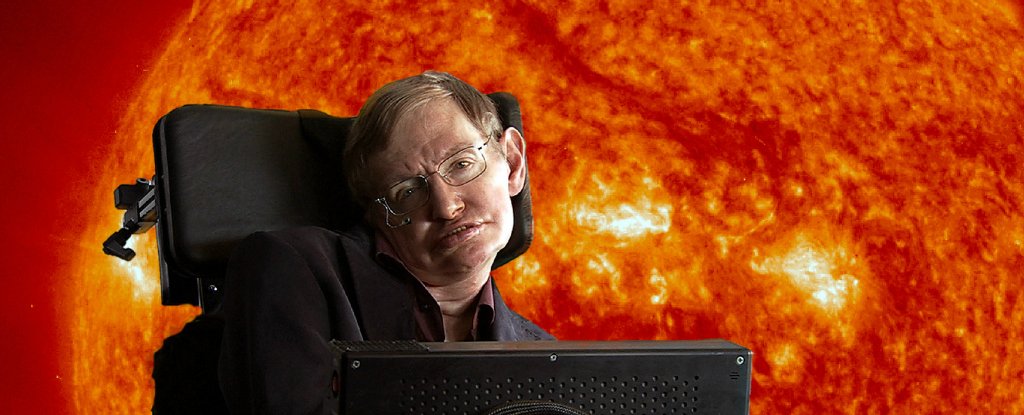


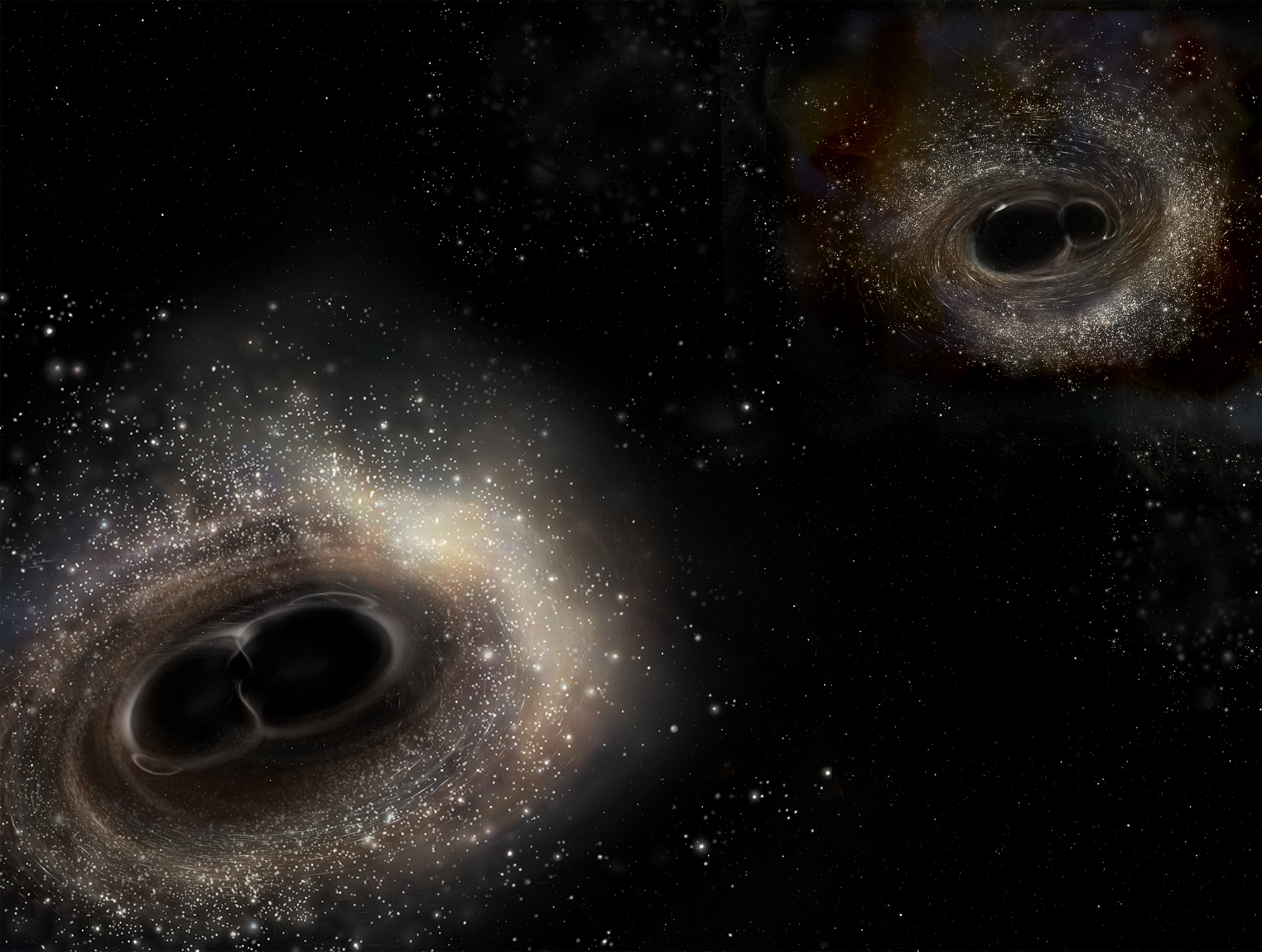





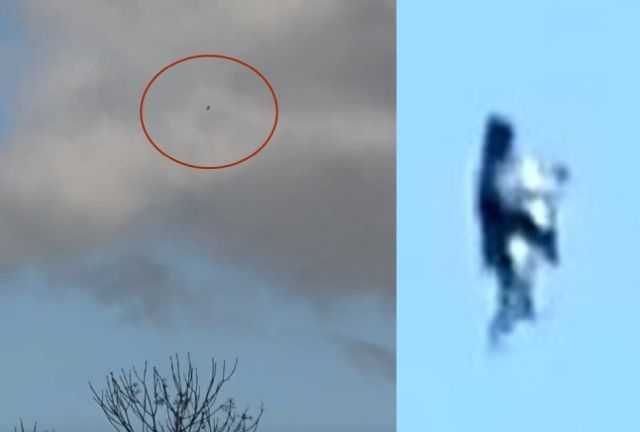




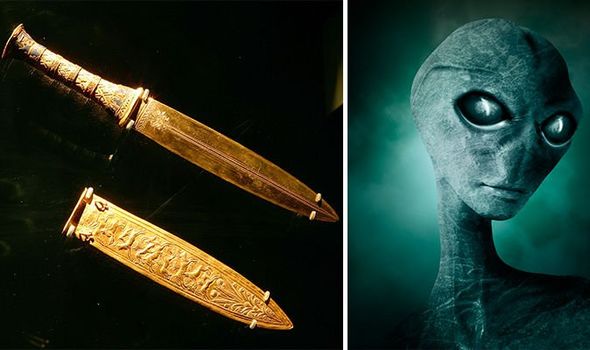
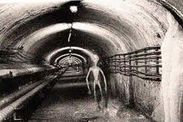
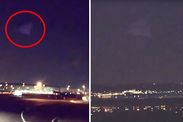




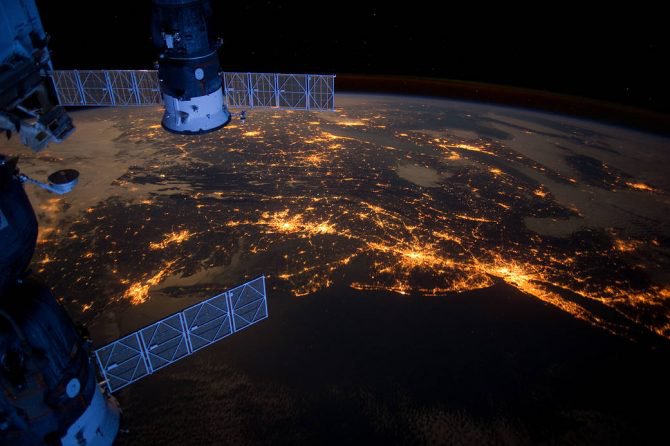
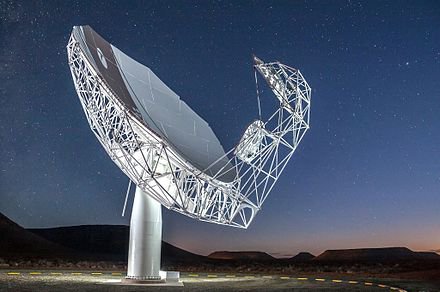

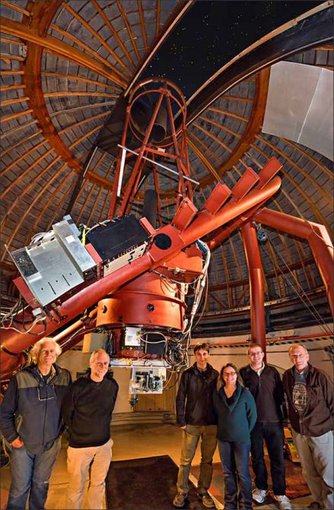
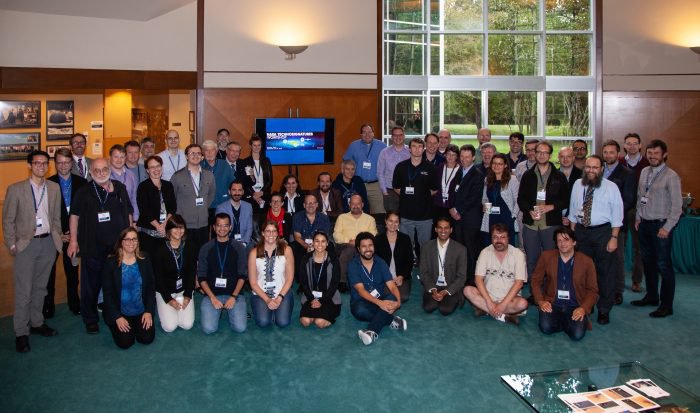


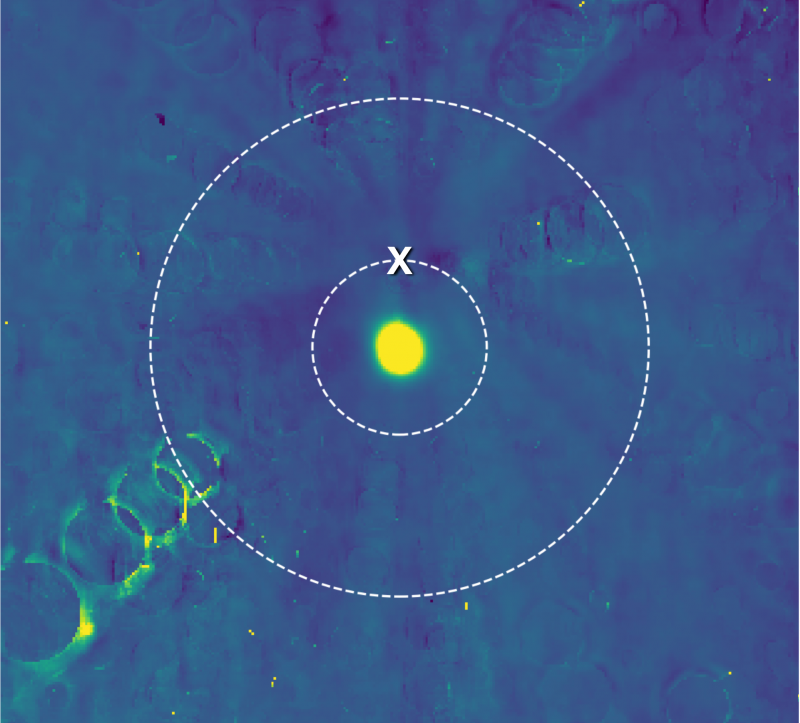


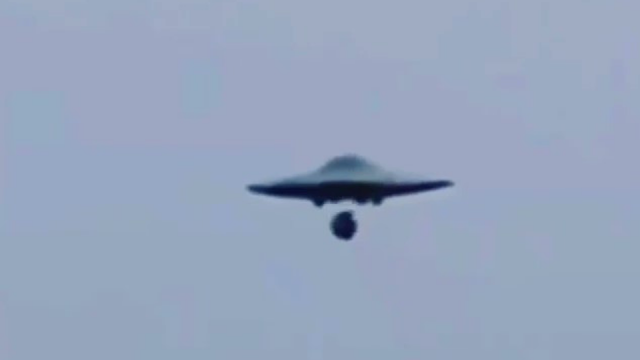

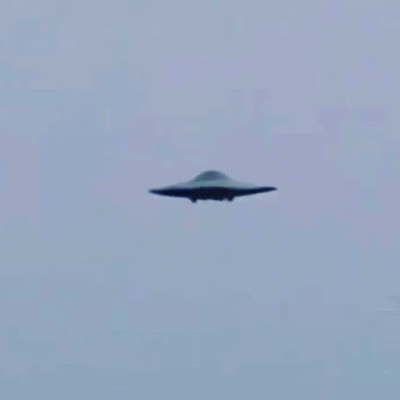


Comment: See also: