Ontdek de Fascinerende Wereld van UFO's en UAP's: Jouw Bron voor Onthullende Informatie!
Ben jij ook gefascineerd door het onbekende? Wil je meer weten over UFO's en UAP's, niet alleen in België, maar over de hele wereld? Dan ben je op de juiste plek!
België: Het Kloppend Hart van UFO-onderzoek
In België is BUFON (Belgisch UFO-Netwerk) dé autoriteit op het gebied van UFO-onderzoek. Voor betrouwbare en objectieve informatie over deze intrigerende fenomenen, bezoek je zeker onze Facebook-pagina en deze blog. Maar dat is nog niet alles! Ontdek ook het Belgisch UFO-meldpunt en Caelestia, twee organisaties die diepgaand onderzoek verrichten, al zijn ze soms kritisch of sceptisch.
Nederland: Een Schat aan Informatie
Voor onze Nederlandse buren is er de schitterende website www.ufowijzer.nl, beheerd door Paul Harmans. Deze site biedt een schat aan informatie en artikelen die je niet wilt missen!
Internationaal: MUFON - De Wereldwijde Autoriteit
Neem ook een kijkje bij MUFON (Mutual UFO Network Inc.), een gerenommeerde Amerikaanse UFO-vereniging met afdelingen in de VS en wereldwijd. MUFON is toegewijd aan de wetenschappelijke en analytische studie van het UFO-fenomeen, en hun maandelijkse tijdschrift, The MUFON UFO-Journal, is een must-read voor elke UFO-enthousiasteling. Bezoek hun website op www.mufon.com voor meer informatie.
Samenwerking en Toekomstvisie
Sinds 1 februari 2020 is Pieter niet alleen ex-president van BUFON, maar ook de voormalige nationale directeur van MUFON in Vlaanderen en Nederland. Dit creëert een sterke samenwerking met de Franse MUFON Reseau MUFON/EUROP, wat ons in staat stelt om nog meer waardevolle inzichten te delen.
Let op: Nepprofielen en Nieuwe Groeperingen
Pas op voor een nieuwe groepering die zich ook BUFON noemt, maar geen enkele connectie heeft met onze gevestigde organisatie. Hoewel zij de naam geregistreerd hebben, kunnen ze het rijke verleden en de expertise van onze groep niet evenaren. We wensen hen veel succes, maar we blijven de autoriteit in UFO-onderzoek!
Blijf Op De Hoogte!
Wil jij de laatste nieuwtjes over UFO's, ruimtevaart, archeologie, en meer? Volg ons dan en duik samen met ons in de fascinerende wereld van het onbekende! Sluit je aan bij de gemeenschap van nieuwsgierige geesten die net als jij verlangen naar antwoorden en avonturen in de sterren!
Heb je vragen of wil je meer weten? Aarzel dan niet om contact met ons op te nemen! Samen ontrafelen we het mysterie van de lucht en daarbuiten.
Berichten van 1 december 2018 tot 31 december 2018
Michael Tellinger Exposes the Hidden Controllers of Mankind (Video)
Wars and conflicts continue to rage across the planet to the determent of anyone caught in the crossfire. No one would willingly live in a war-torn section of the world, yet so many people do.
Despite the greater detriment, there are those who do benefit from the world being in a constant state of conflict.
With a live audience, Michael Tellinger reveals the trinity of global control by explaining the origin of money and how it is used by the banking syndicates to control governments and populations.
Iets meer dan negen jaar geleden werd de wereld vlak voor Kerst opgeschrikt door een niet te verklaren piramidevormige ufo boven het Kremlin in Moskou.
Nu, bij deze gebeurtens, is het weer vlak voor Kerst en dit keer wordt er door talloze getuigen een piramidevormige ufo waargenomen boven het Pentagon.
Ondanks dat de waarneming boven Moskou negen jaar geleden plaatsvond, is niemand er nog is geslaagd om hier een verklaring voor te vinden.
Om te zien hoe het er in Moskou destijds uitzag, hierna nog eens de opname:
Nu zijn we negen jaar verder en wordt er boven het Pentagon in Amerika een vergelijkbaar object waargenomen.
Een lezer schrijft daarover het volgende:
Het is op 19 december al gebeurd, en ik dacht: jullie rapporteren er ook wel over, maar dat hebben jullie nog niet gedaan. Het gaat om een piramidevormige UFU boven het Pentagon. Eerder, in 2009 en opnieuw in 2013, is eenzelfde object ook al uitgebreid gefilmd boven het Kremlin in Moskou.
Omdat er meerdere opnames zijn, ook van de UFO boven het Kremlin, lijken filmbewerkingen in deze gevallen uitgesloten. Ook een Russische politicus ( https://en.wikipedia.org/wiki/Aleksey_Pushkov ) heeft de UFO boven het Kremlin dus besproken in zijn politieke praatprogramma op de Russische televisie, en hij heeft het zeer serieus genomen.
De opname vanuit een auto, op 19 december, is naar mijn mening echt spectaculair. Ze rijden vlak langs het Pentagon en ze zeggen op een gegeven moment dat de UFO verdwenen is, terwijl op hetzelfde moment op hun opname, boven in beeld, je de gigantische UFO nog gewoon kan zien, maar ze kijken er onder door of ze herkennen de vorm even niet.
Volgens mij zijn deze beelden net zo spectaculair als indertijd de UFO boven de Rotskoepel op de Tempelberg in Jerusalem, alleen gaat het nu om een veel groter object dat ook veel langer is blijven hangen, met name indertijd in Moskou boven het Kremlin, en dit object is kennelijk geïnteresseerd in de beleidsmakers/machtscentra van de twee grootste kernmachten.
Tot zover de lezer.
Hier volgt een derde opname gemaakt van de vreemde ufo boven het Pentagon:
Zijn er lezers de gedachten hebben aangaande een verklaring van al het bovenstaande? We horen dat graag!
Videos of the UFO over Gatwick London Airport that caused closure discovered, Dec 2018, UFO Sighting News.
Date of sighting: Dec 2018 Location of sighting: Gatwick Airport, London, UK Photos of a UFO over Gatwick have been circulating the web, but no videos seemed to exist...until now. I found two video that show video fo Gatwick Airport on the day of the closure due to drones. The footage has a classic disk UFO about the size of two 727s in the sky on the far right of the screen. The UFO is big, but also seems to blend into the overcast clouds well. There is no doubt in my mind that this UFO was seen on Gatwick radar and that they panicked and made up the excuse of drones being seen. The size and shape of the UFO is very similar to the one that was seen over the Chinese airport back in 2010 that closed that airport too. Clearly the control tower didn't want to cause panic and instead decided to make up an excuse for the closure that the public would more easily accept. Scott C. Waring
I don't recognise the shape of these UFOs. I searched for the videos they spoke of and managed to find one. The UFOs travel in triangle formation and hang over an area. Its possible that aliens are trying to make themselves known to people slowly without causing fear. Helping people get use to the fact that aliens exist.
Scott C. Waring
News states:
On the evening of December 9th, Christian Jaramillo, traveling along Tijuana, baja California's Bulevar 2000, came across three highly luminous flying objects, of considerable dimensions, flying at low altitude. He was surprised by the scene, and did not hear the objects issue any noise whatsoever. "The witness pulled over to the side of the road, turned on his blinking lights, got out of the vehicle and started taking photos of the mysterious objects. There are two videos and three photographs altogether," said researcher Dino de Labra, who shared these image. The objects are above the public street lighting and were in the same place for nearly 15 minutes, according to the witness, prior to disappearing.
Rise in mysterious 'TR-3B UFO sightings' sparks PANIC over 'top-secret US military plans'
THERE has been a shocking rise in alleged TR-3B triangular UFO sightings across the world - with the most recent footage showing the bizarre aircraft close to a US airbase in Ohio.
A recent jump in the number of sightings of alleged TR-3B aircrafts has sparked a panic amongonline conspiracy communities. Experts fear that there “is something going on” amid concern over top-secret US military experiments or the involvement ofextraterrestrials. Michael, of the YouTube channel MrMBB333, posted the latest sighting of the alleged TR-3B in Toledo, Ohio.
Twitter: @jdillahuntVan veraf zag het licht er zo uit en deed het veel mensen aan ufo's en aliens denken.
New Yorkers keken even vreemd op toen ze ineens een felblauw licht zagen verschijnen boven de stad. Het vreemde licht bleek afkomstig te zijn van een explosie in een energiecentrale in het noorden van Queens en níet de aankondiging van een buitenaardse invasie, zoals sommige bezorgde burgers dachten.
De politie van New York bevestigt dat het licht afkomstig is van de explosie van een transformator bij energiecentrale Con Ed in Queens. Volgens een woordvoerder van het bedrijf Con Edison waar de explosie plaatsvond, waren er verschillende branden, maar heeft de brandweer die intussen onder controle. Er zouden volgens de politie geen gewonden gevallen zijn.
En voor de bezorgde burgers voegt ze er op Twitter nog even aan toe dat er “geen aliens geland zijn in de Bronx.”
ADVISORY: The lights you have seen throughout the city appear to have been from a transformer explosion at a Con Ed facility in Queens. The fire is under control, will update as more info becomes available. Follow @fdny, @NYPD114pct and @conedison.
Op de internationale luchthaven van LaGuardia, die in Queens ligt, was er volgens NBC kort stroomuitval als gevolg van het incident. Ook het treinverkeer ondervond hinder.
The Unexplained Min Min Lights Of The Outback (VIDEO)
Although the Min Min Lights are witnessed throughout the Australian outback, they take their name from a small settlement near the town of Boulia where they were witnessed by a stockman traveling through the area in 1918. These glowing orbs, of a variety of colors of red, blue, green, yellow, and white have been witnessed since the early years of the twentieth century. And they very much continue today.
These strange lights can also be found in the myths and folklore of indigenous Aboriginal tribes of the area. This suggests they have been present long before the early-1900s. Interestingly, many other tribes around the world have traditions and legends, untampered with for thousands of years, that speak of similar lights. What’s more, they, like the tribes of the outback, believe these strange lights are spirits of their descendants. Is this simply an ancient belief used to make sense of strange sightings going back thousands of years? Or might these legends contain more truth than most would think? Might they, if only in part, help explain this strange phenomenon?
“Approached But Never Identified!”
Sightings of these strange lights are quite literally in their hundreds. Indeed, as you approach, a sign declares “For the next 120 km you are in land of the Min Min Light”. These lights, according to this large orange sign at the roadside, “at times follows travelers for long distances”. And just to add more mystery to these very real sightings it states the lights have “been approached but never identified”.
While many in the UFO community have an interest in these strange aerial shows for obvious reasons, indigenous tribes state they are the “spirits of their ancestors” who roam the outback. As European “settlers” encroached on these areas more and more in the early decades of the twentieth century, it would appear sightings of these strange glowing orbs began to increase. This is an interesting point. Did they actually increase? Or were there simply more reports because of the increase of European settlers who were not at all familiar with these strange glows? Or, if we accept the beliefs of the Aboriginal tribes of the area, that these lights are the spirits of long-deceased tribes’ people, is the increase in sightings a sign of a disturbance of their realm by the modern world?
Perhaps a side-note point of interest here would be the similar case of Clifford Muchena, who in La Rochelle near Mutare, Zimbabwe, appeared to have an extremely close-up experience with a glowing orb. One that the witness would describe as a “ball of fire” that went on to climb the side of the buildings as if inspecting them. Interestingly, local legends – themselves passed down from long-established tribes of the area – state these orbs are “shavi”, a spirit who is lost.
The Encounter Of Henry Lamond
There are several specific accounts worth looking at. The case of Henry Lamond, for example, who in 1937 claimed to have been riding his horse through the region when what he believed to be a car approached him out of the distance. It was a little after 2 am, which caused him to wonder what someone would be doing this far out at this time of night. He continued on regardless. Although cars “were not rare” you still didn’t see too many out in the harsh environment of the outback. Then, however, things changed.
“Suddenly, I realized it was not a car light” he would state years later. The object was one obvious ball of light which “didn’t divide into two headlights” as he had expected it to do as it came closer and into focus. Furthermore, the light was much too high from the ground to be a car light. There was, he would state, “something eerie about it”.
It was moving around ten miles per hour and hovered at around ten feet. From his perspective, the light was approximately the size “of a new-risen moon”. He continued in the direction he was heading, and the mystery light did likewise. Then, at a distance of around 200 yards, “it just faded and died away”. He would describe its disappearance akin to “the gradual fading of the wires in an electric bulb”.
Does this suggest a physical object, for sake of argument, a large bulb-type object that simply “switched off” leaving the previously glowing “elements” still in sight for several seconds? Or might the strange light have a more otherworldly explanation?
Remnants Of Alien Abduction Cases? A similar incident, although more in the modern age is that of James Birch. Birch, from the nearby town of Kimberley, would experience the incident while driving back home one evening. He would claim that local legends, like that of the tribes of the area, stated the strange lights were “old people’s spirit’s looking after the country”.
This particular evening following a hunting trip, a strange light appeared in the distance. He, along with his fellow hunters were all in instant awe of the enchanting light. What happened next, though, has echoes of alien abduction cases.
Without realizing it, having been heading into town only moments earlier, they were now following the strange light “going back into the bush”. It isn’t clear if there was any missing time, although there must have been at least some minimal unaccounted-for moments as they couldn’t recall turning their vehicle around. What might have happened to cause their memories to blank out? And why were they suddenly heading in the opposite direction? Was their change of direction a conscious decision? Or was it a result of some kind of close contact?
Our next account is altogether more spine-tingling with definite hints of the paranormal. And adds yet another layer of mystery and dark intrigue to these most bizarre glowing orbs.
The “Near Miss” Of Bill Bowyang
If we go back to 1937 for a moment, there is another strange incident from Bill Bowyang, a newspaper columnist of his day. He and several others were on a camping expedition in the area when they had a most bizarre encounter. One evening, a strange light was visible ahead of them. It moved around slightly, as though “someone were waving a lantern” in the distance. However, the higher this strange light would rise into the air, the more obvious it was that whatever was behind the glow, it was unlikely a person.
Bowyang, now extremely intrigued got up and urged his group that they should follow the light. However, several of them suddenly grew frightened, refusing to go with him. They would claim it to be a “ghost light” that would “lead them to their doom”, possibly to the depths of a rocky chasm. However, despite this, and despite being the only person wishing to do so, he went ahead to investigate what was behind these mysterious glows.
He continued on into the darkness, eager to see what the cause of the light was. When he got to around twenty yards of the “huge ball of glowing embers” it suddenly moved to one side.
That’s when a voice called to him from behind warning that a huge fall was only yards away. He did indeed stop himself. However, in front of him he could see “the strange light had drifted out over the great chasm”. If he had taken just several more steps, he would have fallen to his death. The light would float back to him several times, as if enticing him to follow. When he began to move away, the light suddenly “dropped from sight”.
A Dark Intelligence From Elsewhere Or A Natural Phenomenon? Such encounters as those experienced by Bill Bowyang and James Birch would suggest a definite intelligence surrounding the lights. Particularly in Birch’s case, who would completely turn his vehicle around. And followed the lights with no memory of having done so. If we accept there is an intelligence of sorts behind these lights, then, what kind of intelligence are talking of? Is it an entity that we would describe as an extraterrestrial? And are these lights some kind of strange vehicle unknown to us? Or are they a “spiritual intelligence”, perhaps an entity from another realm or even dimension?
There are several explanations for the strange lights, although none of them addresses the apparent “mental control” they can assert over those who see them. Perhaps unbelievably to some, the “swamp gas” theory makes an appearance as an alternative explanation. As do “bioluminescent insects” or “a flock of fireflies”. Perhaps one of the most interesting theories comes from neuroscientist, Jack Pettigrew. He believes the Min Min Lights could be a “nocturnal form of the rare Fata Morgana”. This is a natural phenomenon. In specific conditions, it sends light traveling over huge distances, essentially, making objects appear closer than they actually are. It can also make things appear to float.
Pettigrew’s theories make a lot of sense. Other than the strange mental control mentioned earlier. Is this simply the pure fright in people, meaning their mind’s shut out such memories? Or is there really more to the Min Min Lights than just simple illusion?
Check out the short video below. It looks at this most fascinating phenomena a little further.
Earlier this month, scientists announced that dwarf planet Ceres has more carbon-rich organics than previously thought, both on and below its surface. Here’s why that’s exciting.
False-color image of dwarf planet Ceres – largest body in the asteroid belt – from the Dawn spacecraft. The image shows Ceres’ famous bright spots, and the false color highlights differences in surface materials.
Carbonis one of the most common elements in the universe and is the basis of organic biology on Earth. It can be found throughout the solar system, even in meteorites that bounce to Earth’s surface from other parts of space. Now scientists have found that another body in the solar system – the dwarf planet Ceres– is much richer in carbon that previously thought. Those results werepublishedin apeer-reviewedarticle in Nature Astronomy on December 10, 2018.
Astronomer Simone Marchi at Southwest Research Institute (SwRI) was the lead author of the new paper. He said:
Ceres is like a chemical factory. Among inner solar system bodies, Ceres has a unique mineralogy, which appears to contain up to 20 percent carbon by mass in its near surface. Our analysis shows that carbon-rich compounds are intimately mixed with products of rock-water interactions, such as clays.
Why is the presence of carbon so intriguing? Carbon isn’t by itself necessarily the product of or connected to life, although it does serve as the basis for organic chemistry and biology on Earth. When combined with oxygen and hydrogen, carbon can form many groups of important biological compounds including sugars, alcohols and fats. Its presence on Ceres is evidence that the basic ingredients for life – including carbon – can be found in many different places, not only in our solar system but throughout the universe.
More specifically, the new findings show that Ceres was, and still is, rich in amorphous carbon – a carbon-rich organic material – which is significant in terms of how carbon is distributed throughout the solar system. (Organic materials are any molecules that contain carbon – they can be formed on their own without life but are also building blocks of life). The new data suggests that Ceres contains several times more amorphous carbon on its surface and in its subsurface than even the most carbon-rich meteorites.
While Ceres contains more carbon than meteorites, the study also shows that 50 to 60 percent of Ceres’ upper crust may have a composition similar to primitive carbonaceous chondrite meteorites – some of the most complex of all meteorites.
Close-up view inside Urvara crater on Ceres. The 6,500-foot (1981-meter) central ridge is made from materials uplifted from deep below the surface, which experienced rock-water chemical interactions.
Image via NASA/JPL-Caltech/UCLA/MPS/DLR/IDA.
As Marchi explained:
Our results imply that either Ceres accreted ultra-carbon-rich materials or that carbon was concentrated in its crust. Both potential scenarios are important, because Ceres’ mineralogical composition indicates a global-scale event of rock-water alteration, which could provide conditions favorable to organic chemistry.
In other words, the carbon on Ceres may originate from when Ceres first formed or from incoming impacts of other asteroids. Scientists don’t know yet which scenario is correct. But regardless, the evidence for chemical reactions with water is intriguing, since that can eventually lead to the formation of the building blocks of life, even if not life itself.
Ceres is classified as a dwarf planet but is also the largest asteroid in the main asteroid belt between Mars and Jupiter. NASA’s Dawn spacecraft recently finished its mission at Ceres on November 1, 2018, studying its geology and sending back incredible high-resolution images of its surface from orbit. One big surprise was the “bright spots” – light-colored deposits, now determined to be sodium carbonate salts – on the darker rocky surface. Scientists think they were formed when when water came up to the surface from deeper below and then evaporated in Ceres’ extremely tenuous and sporadic water vapor “atmosphere.”
The best-known bright spots are those in Occator Crater, which stand out starkly against the darker rocky surface.
High-resolution view of Cerealia Facula – a sodium carbonate (salt) deposit – in Occator Crater.
Image via NASA/JPL-Caltech/UCLA/MPS/DLR/IDA/Roman Tkachenko.
Whether Ceres ever had conditions suitable for life to evolve is still unknown, although there is also evidence that it has, or at least once had, water below the surface – maybe even a subsurface ocean. This water produced chemical reactions when it came in contact with minerals in rocks. There is also evidence for past cryovolcanic activity – cryovolcanoes, which erupt water, ammonia or methane rather than molten rock. It’s even possible that the subsurface environment was once warm and wet enough for basic biological chemistry to actually begin, although no direct signs of that have been discovered yet.
Bottom line: As the largest object in the asteroid belt, Ceres is a fascinating world, and has been more geologically active than previously thought. The fact that Ceres is rich in organic carbon is a big part of its geological history and now scientists are beginning to understand what that means not only for the widespread presence of carbon in the solar system but also how organic chemistry can – at least sometimes – lead to the development of life itself.
A Massive City And Several Pyramid-Shaped Structures Found Beneath Lake Fuxian In China
Archeologists have recently discovered the remains of a group of large ancient buildings at the bottom of Fuxian Lake in Yunnan Province, China.
Also found were placed stones with carvings that can be classified as mysterious. These findings question previous assumptions by experts. According to Chinese newspaper outlets, recorded in historical documents was a city named Yuyuan. Yuyuan was founded in the Fuxian Lake demographic during the Western Han Dynasty from 206 BC to 24 AD. Yuyuan disappeared from the historical record during the Sui and Tang Dynasty from 589 AD to 907 AD. Urban legend claims the city sank to the bottom of Fuxian Lake.
An Ancient Undocumented City
These recent findings suggest otherwise since the remains of the buildings were made of stone. Yuyuan buildings were found to be mostly built with wood.
Through Sonar surveys, it was revealed that the architecture found at the bottom of Fuxian Lake covered around 2.4 square kilometers. This constitutes a large city that was never documented in history.
A Pyramid and Enigmatic Carvings
Also found at the bottom were the remains of a pyramid thought to be more complex than the famous Egyptian pyramids.
One of the many stones found has gathered some special attention. On the top right section of the stone is a small circle that was carved with seven radial lines surrounding it. This carving resembles the sun. A smaller circle is carved on the left side of the same stone, but with only four radial lines. These types of carvings are considered rare by experts and are estimated to be over 1,800 years old. No such similar carvings are known in that time frame.
Carvings found on one of the stones in the underwater ruins in Fuxian Lake
Also found on the stones were carvings resembling masks. These masks do not resemble masks that were made for humans based on the teeth marks.
Experts are stumped as to what these findings mean, as more research is needed.
Hubble spots a strange new type of celestial object
Astronomers have discovered a brand new type of celestial object: an active binary asteroid, meaning it's made of two rocks orbiting each other while leaving a trail of gas like a comet
(Credit: ESA/Hubble, L. Calçada)
Astronomers have discovered a brand new type of object in our solar system: an active binary asteroid. That means the object, named Body 288P, is the first known hybrid of two rare types of asteroid: a binary that's made up of two rocks orbiting each other, and an active asteroid that acts more like a comet, leaving a trail of gas and dust in its wake. Traditionally, the line between asteroids and comets was fairly clear: asteroids are chunks of rock and metal, while comets are icier, causing them to leave a vapor tail when the Sun heats them up. But the more we study these objects, the more that line blurs. Active asteroids kick up clouds of dust and gas, giving them the appearance of comets, but these are rare, with currently only about 20 known examples. When they orbit within the asteroid belt that lies between Mars and Jupiter, these objects are called main-belt comets. Body 288P was discovered in 2011, and images captured by the Hubble Telescope back then indicated that it was active. But at that time, the asteroid was too far from Earth to get a good look. In September 2016 the asteroid was on its closest approach to the Sun, and as it passed within 200 million km of Earth, astronomers from the Max Planck Institute used Hubble to peer closer. And that's when it became clear that it was made up of not one, but two separate pieces. That makes 288P the first binary main-belt comet.
These observations revealed some of 288P's many quirks. Most binary asteroids are made up of one larger body with a smaller "moon" orbiting it, but 288P's pieces are roughly the same size, each measuring about 1 km (0.62 mi) wide. And they're much further apart than usual, orbiting each other at a distance of about 100 km (62 mi). According to the Max Planck astronomers, rapid rotation may have caused 288P to break up in the first place, but the fact that the object is still active suggests that this would be a relatively recent development, occurring around 5,000 years ago. Then, the gases it spews likely drove the two pieces apart to their current distant orbit. "288P's activity probably played a decisive role in its further evolution," says Jessica Agarwal, main author of the study. "The most probable formation scenario of 288P is a breakup due to fast rotation. After that, the two fragments may have been moved further apart by sublimation torques." Among the many thousands of pieces of debris floating around out there, Body 288P is a completely unique object. Further study is required to figure out how common binary main-belt comets might be, and what clues they can reveal about the origins of the Solar System. The research was published in the journal Nature. Check out 288P in action in the video below.
If we can compare a rock to a virus - which appears to come alive when infecting a cell, and appears to be dead when doing nothing - then we must begin to suspect that there is something life-like in non-biological things like clouds and hills.
According to two papers published in Cell on January 11, 2018, the making of memories and the processes of learning resemble, of all things, a viral infection Viruses are tiny infectious agents that invade cells, bringing foreign genetic material with them.
One question raised - Are viruses really the border between life and non-life?
( See link for more information.)
Filler "Lorem ipsum dolor sit amet, consectetur adipiscing elit, sed do eiusmod tempor incididunt ut labore et dolore magna aliqua. Ut enim ad minim veniam, quis nostrud exercitation ullamco laboris nisi ut aliquip ex ea commodo consequat. Duis aute irure dolor in reprehenderit in voluptate velit esse cillum dolore eu fugiat nulla pariatur. Excepteur sint occaecat cupidatat non proident, sunt in culpa qui officia deserunt mollit anim id est laborum."
A transformer explosion in Queens sent an eerie blue light flooding the night sky over New York City on Thursday evening as the power in the houses flickered and LaGuardia Airport was plunged into darkness.
Con Edison says a brief electrical fire with transformers broke out at the substation on 20th Avenue and 32nd Street in Astoria, leading to a drop in transmission in the area.
The explosion lit the sky so brightly that it seemed for a short time that it was daytime in neighborhoods like Astoria and Woodside, the residents reported. Smoke originated from the source of blue light, visible all the way to Manhattan.
don@GRAVE5_
yo wtf is happening #Astoria Queens rn explosion?? who you fooling
The skies over New York City turned bright blue Thursday night after a transformer explosion in Queens.
"The lights you have seen throughout the city appear to have been from a transformer explosion at a Con Ed facility in Queens," NYPD posted on Twitter. https://abcn.ws/2ERthJq
The Mars Express orbiter has taken some stunning photos of Korolev Crater, an ice-filled crater near the Martian north pole. It looks from a distance like a snowy winter landscape on Earth.
A stunning perspective view of the ice-filled Korolev Crater, as seen by Mars Express.
Image via ESA/DLR/FU Berlin/BY-SA 3.0 IGO.
Mars is famous for its polar ice caps – composed of both water ice and carbon dioxide ice – which stand out starkly against the surrounding rust-colored terrain. But plentiful ice can be found outside of Mars’ main ice caps as well, including underground. One image in particular shows a beautiful example of such a Martian icy landscape – an “ice pond” in a crater near the north pole – very fitting for this time of year in the northern hemispheres of both Earth and Mars. That’s right … it’s winter in Mars’ northern hemisphere now, too. The Martian northern winter solstice came on October 16, 2018 (Mars seasonal calendar here).
The European Space Agency (ESA) acquired the image at top, and several other images on this page, via its Mars Express orbiter. The one above shows what at first looks like a scenic view of an untouched patch of Martian snow, but the brilliantly white feature is actually water ice, filling Mars’ Korolev Crater. The roundish mound of ice is captured in exquisite detail; notice the smaller patches of ice filling in crevices on the rugged edge of the crater rim. ESA posted the image on December 20, 2018.
Korolev Crater is about 51 miles (82 km) across and is located in the northern lowlands of Mars, just south of Olympia Undae – an expanse of dune-filled terrain that partially surrounds the north pole. The image shows a stunning oblique view of the crater, composed of five different “strips” combined to form a larger single image. Each strip was obtained during a different orbit by Mars Express. There are also context and topographic views of the crater.
The ice that fills the crater largely persists year-round – the central mound of ice maintains a thickness of 1.1 miles (1.8 km). The crater acts as a cold trap, where the air cools down and sinks as it moves over the ice deposit, creating a layer of cold air that sits directly above the ice itself. That cold layer keeps the ice stable and prevents it from evaporating or sublimating. The crater itself is quite deep, with the crater floor lying some 1.2 miles (2 km) beneath the crater rim.
Korolev Crater was also recently imaged – partially – by ESA’s Trace Gas Orbiter (TGO), part of the ExoMars mission. TGO arrived at Mars last spring, and is designed to search the Martian atmosphere for trace gases – tiny amounts of certain gases such as methane.
Ice is common on Mars – both on the surface and in the subsurface – including both water ice and carbon dioxide ice. NASA’s Phoenix lander dug into the frozen surface near the north pole back in 2008 and sampled some of the water ice directly, just a few inches below the surface. Phoenix also observed snow falling high up in the atmosphere, although it didn’t reach the ground. So there is snow on Mars as well, but it never accumulates enough to go skiing or sledding, unfortunately. On the other hand, ice-filled craters like Korolev might make somewhat-ideal skating rinks for some future Martian settlers!
An overhead view of Korolev Crater. Image via ESA/DLR/FU Berlin/CC BY-SA 3.0 IGO.
Color-coded image showing the topography of Korolev Crater. Lower parts of the surface are shown in blues and purples, while higher-altitude regions are shown in whites, browns and reds, as indicated on the scale to the top right.
Image via ESA/DLR/FU Berlin/CC BY-SA 3.0 IGO.
Part of the rim of Korolev Crater, as seen by the Colour and Stereo Surface Imaging System (CaSSIS) on Mars Express.
Image via ESA/Roscosmos/CaSSIS.
Korolev Crater was named after Sergei Korolev, a chief rocket engineer and spacecraft designer who was dubbed the father of Soviet space technology.
Mars Express was launched way back in 2003 and entered Mars orbit on December 25 of the same year – 15 years ago this week!
More information about Mars Express is available on the mission website.
Bottom line: The “frozen pond” in Korolev Crater is a beautiful example of how the cold, icy terrain on Mars can be reminiscent of similar places on Earth – a Martian winter wonderland.
An artist's illustration of the surface of the "super-Earth" planet candidate detected around Barnard's star, which lies just 6 light-years from the sun.
Credit: M. Kornmesser/ESO
In 2018, exoplanet scientists feasted on data from a nearby ice ball, the first exoplanet baby picture, a majority-metal blob the size of Earth and the home planet of a "Star Trek" fan favorite — not to mention the possible first-ever exomoon spotted. And a major exoplanet hunter sent back its first newfound planets. Read on for the strangest and most intriguing exoplanets found in the past year.
1. Frigid neighbor
An artist's impression of the newfound "super-Earth" world and its host star, the red dwarf Barnard’s star.
Credit: M. Kornmesser/ESO
Researchers spotted a likely super-Earth-size planet orbiting one of our nearest stellar neighbors — the dim, red Barnard's Star. The icy world, named Barnard's Star b, appears to be 3.2 times Earth's mass and orbits its star every 233 Earth days — because of this long orbit and the dimness of the star, it took a massive amount of data from seven different instruments to notice the tiny stellar wobble that indicates an orbiting planet. The planet's surface temperature is probably about minus 275 degrees Fahrenheit (minus 170 degrees Celsius).
This isn't the closest exoplanet to Earth, but it's nearly there — the only known closer planet is Proxima b, orbiting the star Proxima Centauri just 4.2 light-years from Earth. Besides Proxima Centauri and the binary stars of Alpha Centauri, Barnard's Star is the closest star to Earth — and it's coming closer to us every day. In about 10,000 years, Barnard's Star will have moved closer to the solar system than the Alpha Centauri system. [Icy 'Super-Earth' Exoplanet Spotted Around Nearby Barnard's Star]
2. Baby picture
This photo from the SPHERE instrument on the European Southern Observatory's Very Large Telescope is the first clear image of a planet caught in the act of formation, around the dwarf star PDS 70. The planet is clearly visible as a bright point to the right of center, which is blacked out by the coronagraph mask used to block the blinding light of the star.
Credit: A. Müller et al./ESO
Using the European Southern Observatory's Very Large Telescope in Chile, researchers snagged a glimpse of a huge alien world forming from the disk of dust and debris surrounding a dwarf star — the first-ever confirmed direct observation of an exoplanet this young.
The baby planet is growing up around a dwarf star called PDS 70, which is 370 light-years from Earth and is just 5.4 million years old. The planet is shaping up to be a big one — it's a gas giant, and it's already two or three times the size of Jupiter, researchers said. It orbits its star about the distance Uranus orbits from the sun. The planet's a toasty 1,800 degrees F (1,000 degrees C), still hot with the energy of its formation. [It's a Beautiful Baby Exoplanet! Historic Photo Is 1st View of Alien World Being Born]
3. Evaporating target
Artist's illustration of NASA's Transiting Exoplanet Survey Satellite (TESS).
Credit: NASA's Goddard Space Flight Center
NASA's newest planet-hunting mission, Transiting Exoplanet Survey Satellite (TESS), returned its first exoplanet find: A super-Earth that's probably evaporating from the heat of its star. TESS works by analyzing tiny changes in stars' brightness that indicate a planet is passing by. It's first planet discovery is circling the star Pi Mensae, also known as HD 39391, which is about 59.5 light-years from Earth.
Researchers had already found a gas giant with about 10 times Jupiter's mass, called Pi Mensae b, in the star's system, circling in an eccentric orbit that brings it up to three times as far from its star as Earth is from the sun. Now, it has a sibling: Pi Mensae c, which orbits 0.07 times the distance from Earth to the sun, or 1/50th the distance between Mercury and the sun. This newfound super-Earth is 2.14 times Earth's diameter and 4.82 times Earth's mass, and it likely has a rocky core and extended hydrogen and helium atmosphere, evaporating under its star's harsh radiation. (The researchers noted its density could also allow for a world made of water.) [NASA's New Planet Hunter Just Found Its 1st Alien World — an Evaporating 'Super-Earth']
4. Epic cannonball
A Mercury-like planet the size of Earth orbits 100 times closer to its star, K2-229, than Earth does the sun.
Credit: L. Calçada/ESO
This planet, called K2-229 b, is a metal-heavy, Mercury-like world a hair bigger than Earth. While planets like Earth, Venus and Mars have metallic cores that make up about a third of their masses, Mercury — and K2-229 b — have oversize metal cores taking up two-thirds of their masses. Researchers found the planet orbiting a star slightly cooler and smaller than the sun, 339 light-years from Earth.
K2-229 b orbits its star at 1/100th the distance between Earth and the sun, and its dayside temperature can reach 3,737 degrees F (2,058 degrees C). (Mercury, which orbits much farther out, reaches only 801 degrees F, or 427 degrees C.) K2-229 b was first spotted by the telltale wobble of its star, and then observed passing in front of the star, making it possible for researchers to glean its size. By studying the planet, researchers can learn more about where such worlds can form in star systems, or how rocky planets might evolve into cannonballs. [Newfound Alien Planet is a Metal-Heavy Cannonball]
5. (Very) distant kin
A central "lens" galaxy and four projections of the background quasar RX J1131-1231.
Credit: Xinyu Dai/Eduardo Guerras/University of Oklahoma
The relativistic bending of light around massive objects revealed the potential signature of trillions of free-floating planets between the size of the moon and Jupiter in a distant galaxy, marking the first evidence of planets outside the Milky Way. If that data holds true, it would suggest there might be 2,000 free-floating planets for every star in a galaxy.
When they spotted that signature, the researchers were relying on a phenomenon called gravitational lensing, where light from a background galaxy with a bright quasar at its core, 3.8 billion light-years from Earth, was bent around a foreground galaxy on its way past. By the way the light was bent — and the slight differences in four copies of the background galaxy seen ringing the foreground galaxy due to that bending — researchers were able to detect signs of the possible planets. [Einstein's Theory Helps ID First Exoplanets Outside Milky Way]
6. Spock's home
An artist's depiction of what the newly discovered planet orbiting 40 Eridani A, a star made famous by the series "Star Trek," might look like.
Credit: Don Davis
The beloved "Star Trek" character Spock canonically hails from the planet Vulcan, which series writers once placed at the real star 40 Eridani A (also called HD 26965), 16 light-years from Earth. This year, researchers found at least one planet around the star, about twice the size of Earth — a real-life Vulcan orbiting the star. The planet takes 42 days to whip around its star, and it's probably too close in to retain liquid water on its surface.
The star HD 26965 can be seen by skywatchers in the night sky, and it's an orange-ish star a bit smaller and cooler than the sun, but with a similar age and sunspot pattern. The star shares its system with two other stars, which would be visible from this newfound planet's surface. [Hey, Spock! Real-Life 'Planet Vulcan' Orbits Sun Featured in 'Star Trek']
7. Big brothers
An artist's illustration of the very young CI Tau system, which appears to harbor four gas-giant planets.
Credit: Amanda Smith, Institute of Astronomy
Researchers have spotted four gas giants circling the young star Cl Tau, which is about 500 light-years from Earth. The star is just 2 million years old, and one planet, called Cl Tau b — 10 times the mass of Jupiter — was already known to circle it once every nine days. But as it turns out, bulk runs in the family: New views from the ALMA telescope array in Chile have spotted evidence for three more planets circling the young star, with one at Jupiter's mass and the other two at Saturn's. Those three additional planets have created gaps in the star-forming disk of dust revealing their presence.
This is the first time astronomers have seen evidence of four gas giants around such a young star, and the planets are unexpectedly widely spread in their orbits — the farthest is 1,000 times farther from its star than the closest. It raises questions of how planets so far away could accumulate material quickly enough to get that big, and whether the innermost planet, Cl Tau b, was pushed inward by jostling relatives. [Record Breaker: 4 Huge Alien Planets Spotted Around Baby Star]
Honorary mention: First exomoon?
An artist’s illustration of the exoplanet Kepler-1625b with its large hypothesized moon. The pair have a similar mass and radius ratio to the Earth-moon system, but scaled up by a factor of 11.
Credit: Dan Durda
It isn't a planet, but we had to include this likely Neptune-size object — what seems to be the first-ever exomoon! The object, orbiting a Jupiter-size planet called Kepler-1625b, first showed itself in a strange signature in how its star dimmed when the planet passed by, as recorded by the Kepler Space Telescope. A follow-up view with the Hubble Space Telescope followed another transit, noticing something tugging gravitationally on the planet and dimming the star a little bit extra.
Could they just be a binary pair of planets? It depends on how you define it, the researchers said. The object has about 1.5 percent the mass of the planet it orbits, which is similar to the ratio of masses between our moon and Earth (1.2 percent). This object, though, orbits 1.9 million miles (3 million kilometers) from its planet, which is about eight times the Earth-moon distance. The moon is probably gaseous, and looms about twice as big as Earth's moon in Kepler-1625b's sky. [First Exomoon Found? Neptune-Sized World Possibly Spotted Orbiting Alien Planet]
Email Sarah Lewin at slewin@space.com or follow her @SarahExplains.
For the precocious hunter of off-Earth life, theDrake equationis the ever-ready, go-to toolkit for estimating just how (not) lonely humans are in the Milky Way galaxy. The equation was developed by astronomer Frank Drake in 1961 in a slight hurry so that attendees of an upcoming conference would have something to confer about, and it breaks down the daunting question "Are we alone?" into more manageable, bite-size chunks.
The equation starts with some straightforward concepts, such as the rate of star formation and the fraction of stars hosting planets. But it quickly moves into tricky terrain, asking for numbers like what fraction of those planets that could host life actually end up evolving intelligent species and what fraction of those planets blast out friendly signals into the cosmos, inviting us Earthlings to a nice little chat. [10 Exoplanets That Could Host Alien Life]
The end result is supposed to be a single value (or, at worst, a range of values) that predicts the total number of intelligent and conversation-ready species in the galaxy. And if that seems a little unsettlingly bold, then at the very least, the Drake Equation serves as a philosophical device for instigating conversation. It also frames a proper scientific discussion about the ultimate question of finding and talking to alien species in the galaxy.
Except that it fails on both counts.
Know thine errors
The Drake equation is simple, but deceptively so. Frank's original recipe had only seven ingredients, and further enhancements from other researchers haven't drastically changed that number. So, you might naively think you need only measure or guess a heavy handful of parameters and you're good to go.
But reality isn't that simple. Estimates and measurements always have uncertainties. This concept is absolutely critical for scientific inquiry: What you know is far less important than how well you know it. The real meat of any scientific discussion is digging into the uncertainties and how they're estimated. To justify a bold claim, you need a very tight knowledge of the uncertainty. And to overthrow the claim, you don't have to attack it directly; you can simply call into question a statement's precision.
For the Drake equation, we simply have no idea about the uncertainties attached to any of the parameters. What fraction of planets where life could get started eventually develop life? Zero percent? 100 percent? Somewhere in between? Is it 50 percent plus or minus 5 percent? Or plus or minus 25 percent? Or plus 5 percent and minus 25 percent?
And it takes only one unknown uncertainty to sink the whole enterprise. You may chip away at the Drake equation over the course of decades, taking careful observation after careful observation, measuring star-formation rates, hunting for liquid water on planetary surfaces, the works. You may think you're making good progress on nailing down this prediction, but as long as a single parameter still has unknown uncertainty, you haven't made any progress.
That single unknown can undo the hard work poured into the entirety of the rest of the equation. Until you know all of it, you know none of it.
To produce a proper estimate using the Drake equation, you can't just plug in guesses; you have to provide ranges for each guess, essentially doubling your work. And because most of the parameters aren't even based on measurable quantities, the best you can do is throw your hands up in the air. [The Drake Equation Revisited: Interview with Planet Hunter Sara Seager]
Missing the point
Every few months, a new paper involving some variant of the Drake equation claims to put some "reasonable" estimates on the parameters and produce an answer. Sometimes, the papers claim that the galaxy is teeming with thousands of intelligent civilizations. Sometimes, the research says we're completely alone. When Drake and colleagues first turned the crank, they tossed out estimates of anywhere between 1,000 and 100,000,000 such civilizations. That's … not very helpful.
The Drake equation is simply a way of chopping up our ignorance, stuffing it into a mathematical meat grinder and making a sausage-guess. It doesn't have any predictive power greater than randomly pulling a number out of a hat. What if you didn't accurately estimate one of your uncertainties? The answer isn't reliable. What if you missed a parameter, some crucial element in the steps from stars to sentience? The answer isn't reliable. What if you had too many parameters, introducing an element that turned out not to matter? The answer isn't reliable.
The Drake equation makes a significant number of assumptions, and until those assumptions are verified, we can't trust the calculation's results.
Let's talk
OK, we can't treat the Drake equation as a physics equation; that is, we can't use it the same way we can handily use something like Newton's second lawor the equations from general relativity or Maxwell's equations for electromagnetism. That's fine. Perhaps the Drake equation's power is more as a philosophical treatment, to help guide our thinking and help us navigate the murky waters of a deep and fundamental existential question.
But what is the utility of introducing the Drake equation into such philosophical discussions? Do we really advance or sharpen our thinking? What is the advantage to replacing one big unknowable (the number of intelligent species Out There) with many smaller unknowables that aren’t easier to solve? Yes, breaking down a big problem into smaller ones is a common tactic in science. But that only works if the smaller problems are all individually easier to tackle.
There's a risk we will spend more time unhelpfully discussing the parameters of the model and less time gainfully trying to go out there and actually search for life. Debating over the particular value of, say, the number of life-bearing planets that will give rise to intelligence (a number which must be 100 percent made up) will not give us a clearer picture of the chances of chatting with another intelligent species — instead, we just end up clouding our perspective through an intrinsically warped formulation.
There are, today, ongoing searches to hunt for life outside the Earth. Planned missions to sample the icy moons of the outer worlds, moons which harbor vast liquid water oceans. Exoplanet hunters developing the technology to tease out the hints of biosignatures in alien worlds. Did the Drake equation, in any of its formulations, help frame or advance or assist those missions?
While the Drake equation may have spurred the early scientific discussion of the search for extraterrestrial intelligence, it doesn't have much value beyond that. We can't use to it further our understanding, and we can't use it to properly guide our thinking. The huge uncertainties in the parameters, the unknown ways those uncertainties mix, and the absolute lack of any guidance in even choosing those parameters robs it of any predictive power. Prediction is at the heart of science. Prediction is what makes an idea useful. And if an idea isn’t useful, why keep it around?
Eerie Blue Light Explosion In New York Sky from Power Plant Explosion (Video)
An explosion at a Con Edison facility in Queens turned the sky blue above New York.
A transformer explosion at a power plant in the New York City neighborhood of Astoria, Queens, led to a blue light filling up the night sky.
CBSN managing editor Robert Gifford discusses what he saw in Manhattan, and CBS Newspath senior producer Heather Scott joins CBSN from Astoria, Queens.
I heard it, it sounded like a long buzz and the sky was shining bright neon colors. Ghost1142
Not a conspiracy theorist or anything but how would a ‘fire’ create that much light I understand like just 10-15 miles but 20 that just seems fishy. Ohame A.
WAT GEBEURDE ER WERKELIJK BOVEN HET VLIEGVELD VAN GATWICK ( VIDEO )
Het drukke Engelse vliegveld lag enkele dagen volledig plat doordat een drone boven het vliegveld vloog, waardoor er niet meer kon worden geland of opgestegen.
Er werden een man en een vrouw gearresteerd die onschuldig bleken en dat is niet zo vreemd, want zo te zien was het helemaal geen drone...
Dagenlang was het vliegverkeer van en naar het Engelse vliegveld Gatwick volkomen in de war en waren duizenden passagiers gestrand in de vertrekhal.
Woensdagavond en donderdag was het vliegveld doelwit van een nog niet eerder geziene soort actie, waardoor de luchthaven compleet stilgelegd werd. Rond de start- en landingsbanen vlogen voortdurend onbemande drones, die een gevaar vormden voor de vliegtuigen.
Speciale legereenheid ingezet Wie er achter die actie zat, is niet duidelijk. Het bleek voorlopig onmogelijk om de bestuurders te lokaliseren. Inmiddels is ook een speciale eenheid van het Britse leger ingezet om de bestuurders op te sporen.
Vanmorgen leek het eindelijk rustig en kwam het vliegverkeer weer op gang, maar rond zes uur vanavond was het opnieuw raak. Alle inkomende vluchten moesten uitwijken en vertrekkende vliegtuigen werden tot nader order aan de grond gehouden. Rond half acht werd het verkeer weer vrijgegeven.
Het bovenstaande verhaal klinkt een beetje onwerkelijk. Je kunt je voorstellen dat een drone in de buurt van een vliegveld komt, maar meestal zijn ze dan weer heel snel verdwenen, want de eigenaar weet dat hem een forse straf staat te wachten als hij of zij wordt gepakt.
Maar, dat is niet het geval boven Gatwick. Daar is sprake van een voortdurend rondvliegen van drones, hetgeen vreemd is. Dat wijst dan niet in de richting van een particulier die wat te dicht in de buurt is gekomen met zijn of haar hobby, maar eerder op een soort gecoördineerde actie.
Vervolgens wordt er na ongeveer het meest uitgebreide speurwerk ooit in de Britse geschiedenis niemand gevonden die verantwoordelijk zou zijn voor die drone aanvallen. Men komt niet verder dan dat een man en een vrouw worden gearresteerd en vervolgens weer vrijgelaten omdat ze onschuldig zijn en een beschadigde drone die ergens gevonden zou zijn.
Dan duikt er het volgende beeld op:
Dat lijkt toch echt op iets heel anders dan een drone.
De volgende clip is opgenomen door Chris Waite vanuit één van de passagiersterminals op Gatwick:
Daarnaast werd de volgende opname gemaakt net buiten het vliegveld. Niemand weet wat het object is dat daar vliegt. Het is geen helikopter en volgens kenners is het object veel te lang in de lucht gebleven om een drone te kunnen zijn.
De maximale vliegduur verschilt per drone. Sommige mini-drones houden het enkele minuten vol, andere toch zeker 10 minuten en bij de grotere exemplaren tot 25 kg mag je rekening houden met een vliegtijd van 20 – 25 minuten.
Wat in dit kader ook niet moet worden vergeten is dat er ongeveer een jaar geleden eenzelfde soort ufo werd waargenomen boven vertrekkende vliegtuigen op Schiphol. Aan dit incident werd toen verder door niemand uit mainstreamland aandacht besteed, maar misschien doen ze dat alsnog naar aanleiding van het voorval in Gatwick.
Maar, wat klaarblijkelijk niemand is opgevallen, behalve een oplettende lezer van deze website (dank!), is dat er net voor vertrek van vlucht KL743 een onbekend "iets" over de baan vloog. Wij ontvingen het volgende bericht:
Op VKmag zag ik een interessant filmpje, namelijk dat er een vliegtuig getroffen wordt door de bliksem. Op zich niet heel spannend maar in het filmpje zie je een object vliegen wat niet echt op een vliegtuig lijkt als je het filmpje pauzeert. Misschien verklaarbaar misschien niet.
En dat klopt helemaal.
In de volgende vier opnames die zijn gemaakt vanuit de video zie je linksboven een object verschijnen dat over de gereedstaande vliegtuigen vliegt en rechts weer uit beeld verdwijnt.
Wanneer je het object wat vergroot, dan lijkt het veel op een klassieke vliegende schotel.
Hieronder zijn de beelden te bekijken en de UFO verschijnt rond de 45 seconden links in beeld.
Mocht iemand meer weten over wat dit is, laat het ons weten. En dan liefst een beetje fatsoenlijk en niet zoals we vaak krijgen in de trant van: "Hé stelletje door de AIVD gecontroleerde koekenbakkers, hadden jullie dat zelf niet kunnen zien?".
When experts and persons of authority say, “We’re just looking around – nothing to worry about,” it’s probably time to worry … at least a little. When what they’re looking for is linked to one of the most destructive meteor impacts in recorded history, it’s probably time to worry a little more. June 30, 2019, is the 111th anniversary of the Tunguska event when what was believed to be a meteor exploded over a remote part of Siberia and destroyed 2,000 square km (770 square miles) of forest, making it the most destructive event of its kind in recorded history. June 2019 is also the month when the Taurids annual meteor shower returns. In a recent presentation, two well-respected physicists said that the Earth will be passing through a dense patch of space rocks during the June 2019 Taurids and their model shows it matches the Taurids shower of June 1908. As a result, they plan to look through it for Tunguska-sized objects. NOW are you worried?
Tunguska event aftermath
“If the Tunguska object was a member of a Beta Taurid stream … then the last week of June 2019 will be the next occasion with a high probability for Tunguska-like collisions or near misses. While we are not predicting another Tunguska airburst, an enhanced population of small NEOs [near-Earth objects] in the Beta Taurids would increase the probability of another such event on or near next year’s Tunguska anniversary”
In a presentation at the American Geophysical Union 2018 fall meeting, physicists Mark Boslough from Los Alamos National Laboratory and Peter Brown of Western University in London, Ontario, showed their evidence that the 2019 summer or Beta Taurids (they also occur every October) look strongly similar to their 1908 version and called for a special observation campaign to search for Tunguska-class or larger objects embedded in the Beta Taurids. That swarm will be the densest since 1975 when seismometers placed on the moon by Apollo astronauts recorded a spike in impacts on the lunar surface.
“This is not something that should be keeping you up at night.”
Mark Brown’s comment would be more comforting if it weren’t for the fact the Beta Taurids only occur during the daylight hours. Boslough sounds more like someone who has a reason to watch the skies in June 2019.
“It’s one of those very low-probability but potentially high-consequence-type risks, which is hard to quantify and hard to talk about. The probability of a lot of people dying from an asteroid impact is super, super low, but it’s not zero. There are so many other hazards that are greater risk.”
If we really paid attention to probabilities, there would be no Powerball lottery. The space object that caused the Tunguska event was estimated to be about 40 meters 130 feet) in diameter – which makes it a small-to-medium-sized rock that could exist in the Taurids. To spot one, Boslough and Brown say the best time to watch is when the Beta Taurids are heading away from the Earth into the night sky when they’re more visible. That’s right – they won’t be able to identify the killer space objects before they hit … only after they miss.
Worried yet? Go buy a lottery ticket and, if you win, spend it all by May 2019 … just in case.
On November 21, 2008, UFO researcher-authorGreg Bishop wrotethe following words: “The Reverend Frank Stranges, author of such contactee classics as Stranger at the Pentagonand Flying Saucerama, has returned to his permanent home with the space brothers, according to an email today from Tim ‘Mr. UFO’ Beckley. Stranges founded the National Investigations Committee on Unidentified Flying Objects (NICUFO) in 1967.” Stranges’ organization was very much inspired by the much bigger, and far more visible, NICAP, the National Investigations Committee on Aerial Phenomena, which was created in 1956. NICAP focused, for the most part, on studying reports involving sightings of UFOs in the skies above, analyzing photographs, and collecting flying saucer-themed data from military personnel and the public. Stranges, however, had a far more controversial claim to fame.
Stranges maintained that, from 1959 onward, he had extensive – and secret – contact with an extremely human-looking extraterrestrial. The “man” in question claimed his name was Valiant Thor. He was a strange and mysterious figure who, reportedly, had an untold number of clandestine meetings with several U.S. presidents, and numerous, high-ranking military personnel. The result of all this? Thor had the ability to effortlessly move throughout the inner circle of nothing less than the Pentagon itself. Thor’s message was – like so many of the messages of the 1950s-era Space Brothers – one of a warning nature. Namely, a warning that our warlike ways just might lead to the end of our civilization. That, in Stranges’ story, Valiant Thor both sounds and looks like actor Michael Rennie’s alien character, Klaatu, in the 1951 sci-fi movie, The Day the Earth Stood Still, has quite naturally led many to believe that Stranges made up the whole, controversial saga. A case, maybe, of Hollywood inspiration. As I noted in an earlier article, Stranges was indeed a controversial character, and that’s putting it mildly. Very mildly, in fact.
In relation to that alleged meeting with Thor in the Pentagon in 1959, Stranges, himself, offered the following: “Being a minister of the Gospel of Jesus Christ, as well as a student of the Bible for many years, coupled with my experience as an special investigator, I felt as though my senses were functioning properly and that I knew exactly what I was about to do. I was on my guard for fakes and frauds. In walked a man, about six feet tall, perhaps 185 pounds, brown wavy hair, brown eyes. His complexion appeared normal and slightly tanned. As I approached him and he looked at me it was as though he looked straight through me. With a warm smile and extending his hand, he greeted me by name. His genuineness astonished me, but quickly I understood. As I gripped his hand, I was somewhat surprised to feel the soft texture of his skin, like that of a baby but with the strength of a man that silently testified to his power and intensity.”
Strange World state: “Thor had been working with the government since 1937. His physical traits included six fingers, an oversized heart, one huge lung, copper oxide blood like that of an octopus, and possessed an incredibly high IQ measuring around 1200, and a lifespan of approximately 490 years.” There’s no doubt that the story of Valiant Thor and Frank Stranges peaked – in terms of both popularity and visibility – in the 1960s. Undeniably, for the vast majority of figures within the field of Ufology, the issues of Contactees, Space Brothers, and human-looking aliens are perceived as being very much historical in nature, rather than contemporary, which, to a high degree, is true. Like so many cases such as that of Valiant Thor and Frank Stranges, there really are just two possibilities: that the story was true or it was complete bullshit. A part of me would like to go with the former, but I’m totally, 100 percent fine going with the latter.
Within the world of the paranormal there are often very strange things that people claim to see. Ghosts, angels, aliens, and others, these things have long served to elude understanding and leave us to wonder just what is going on. Among these anomalous reports there are often true oddities, which stand out as the bizarre of the bizarre, and which don’t seem to fit into any sort of known category, their pure oddness propelling them right out past the fringe and into some new territory of the weird. These reports seem to be of things beyond aliens, ghosts, or anything else that populates the paranormal world, and indeed perhaps come from whole other universe entirely.
A really quite bizarre encounter that is hard to classify allegedly occurred in 1973, at the coastal town of Sandown, on the Isle of Wight, in the south east region of England. In May of that year, a 7-year-old girl and another child were exploring the wild areas around a place called the Shanklin & Sandown Golf Club, when they began to hear a shrill piercing, wailing sound off in the distance, reminiscent of an ambulance siren — only off kilter and eerier. Curiosity would get the better of them, and the two kids excitedly ventured off to find the source of the odd noise, a trek that would bring them through brush and trees to a clearing abutting the nearby Sandown Airport, where the sound just suddenly stopped to send silence crashing down upon them.
The two bewildered youngsters took a look around, still trying to figure out where that haunting sound had come from, and as they crossed a footbridge over a creek they soon found it. From the shadows beneath the rickety old wooden bridge under their feet there emerged an outlandish being the likes of neither of them had ever seen before, which crawled out from the dark to stand before them. In an article on the encounter published in a 1978 edition of the British UFO Research Association’s Journal author Norman Oliver described what they saw as follows:
He was nearly 7 feet tall and had no neck, for his head appeared to be wedged straight onto his shoulders. He wore a yellow pointed hat, which interlocked with the red collar of a tattered green tunic. A round, black knob was affixed to the top of his hat, and wooden antennae were attached to either side. The face had triangular markings for eyes, a brown square of a nose, and motionless yellow lips. Other round markings were on his paper-white face, and a fringe of red hair fell down onto his forehead. Wooden slats protruded from his sleeves and from below his white trousers.
Also rather oddly, this clown-like entity was reportedly holding what appeared to holding what looked like just a regular paper book, which he proceeded to thumb through clumsily before losing his grip on it and dropping it into the creek below. The being then jumped into the water, found his book, and crawled up sopping wet back out of the water to go bounding off in a series of leaps that seemed to defy gravity. The bewildered children watched as it bounded towards what appeared to be a small metallic hut and disappear within, after which it emerged once again with what looked like some sort of microphone in its hand that was attached to a black box with a button or knob on it. It was from this odd device that the wailing siren they had heard began to pour out once again, and at this distance it was so incredibly loud that the terrified children began to run away as the monotonous drone reverberated through the forest and their very bones.
As they started their retreat into the woods, the blaring roar of noise abruptly stopped again, followed a few moments later by a voice that tentatively asked “Are you still there?” The kids were scared, but still very much curious, and they warily made their way back to the clearing to see what the surreal entity was up to. When they did he seemed to be almost happy to see them, and excitedly produced his wet book to write within it a message, which it held up for them to read and which said in childishly scrawled letters, “Hello and I am all colors Sam.” He then began speaking with them, although eerily without ever moving his mouth, and since his voice seemed calm and nonthreatening the children drew closer to talk with him.
A sketch of the strange entity
During the conversation the being calling itself Sam claimed that he was not human, and when asked whether he was a ghost he merely replied “Not really, but I am in an odd sort of way.” When pressed on what he was he simply and cryptically said “You know.” He went on to explain how there were others of his kind, and that they were mostly shy and scared of humans, usually staying away from them, and this all culminated with the entity inviting the children into his metal hut, which was completely windowless and seemed to have some sort of flapped opening. Inside there were seemingly two floors, and the place had a metal floor, some sort of dials and knobs on the wall, and simple ratty wooden furniture scattered about. It was more or less a dump. Perhaps seeing the look on the children’s faces he was apparently quick to point out that this was just a temporary dwelling, and that he had a much bigger, more luxurious permanent place in mainland England.
It was here in this strange little hovel where Sam would finally remove his odd hat and produced a berry, which he stuck into a rounded white ear, only to have it suddenly appear in his eye socket and then appear within his mouth with a couple of flicks of his head, like some kind of magic trick. This delighted the children, and now they were fully calmed down, eventually staying in the hut for around an hour before saying goodbye and heading back home. When the girl told her father, rather than outright dismiss it he would actually go to the area to investigate, partly out of concern that there was perhaps some weirdo dressed as a clown lurking out there. Unfortunately, there was no trace of Sam or his weird hut, and no one else in the area had seen anything like what was described, although the children were adamant that the metal dwelling had been right there and that their story was completely true. The so-called “Sandown Clown” has not been seen since. Was Sam an alien, a ghost, a sicko in a freaky clown outfit, or what? We will probably never know.
It is interesting to note that this was a one-off sighting, with the creature not seen by anyone else, and this can also be said about some other equally bizarre accounts, such as one from the site The Crypto Crew. In 1983, a woman known only as Patty was driving along in broad daylight on a rural part of Highway 94, about 11 miles from the town of Murray, Kentucky, in the United States, when she too saw something that defies classification. It made its appearance by leaping out into the road from an adjacent field and then loping across, its movements described as being “like a gorilla,” but this was no gorilla.
Perhaps foolishly, Patty stopped her car and got out to yell after it, which caused the thing to stop and turn around to give her a better look at it and make her sorry she had ever left the car. It was described as standing at least 7 feet tall, and totally devoid of any hair, instead covered with rough pink skin and possessing a long neck, a smallish head, pointy ears, and a snout like that of a pig, with the witness saying, “I would describe it as a cross between a primate, a pig, and a human.” The face of the thing was what made the most impact on her, as she said it stared at her with intelligent, remarkably human eyes. Patty was so unsettled by this sight and its piercing gaze that she backed back into her vehicle and locked the doors as it loomed out on the road in front of her, just staring with inscrutable intent. She got out of there and soon told her husband about it but he wouldn’t believe her.
Another intriguing account was related to Lon Stickler of the site Phantoms and Monsters, and was told by a witness calling herself “Jeni.” The encounter apparently happened at in Hampton Bays, New York in 2006, where one evening she had driven out with her fiancée to show him the majestic spectacle of phosphorescent shrimp glittering in the dark water and upon the beach like stars in the sky. The area was described as rather remote, and they had been alone at the beach at the time, the moon full and bright in the sky. It would have normally been a romantic place to be, but the couple were about to have the shock of their lives, and Jeni would say of what happened next:
As soon as we stepped onto the beach I had a feeling of general unease; that instinctive fear that one would experience in the presence of a predator. I chose to ignore it; occasionally peeking over my shoulder at the long, empty stretch of beach behind me but mostly focusing on the tiny glowing shrimp beneath our feet. At one point I felt a presence and again, chose to ignore it as I’ve dealt with that quite a bit in my 30 years. I had not voiced my unease to my fiancee, so he was completely unaware. About 5 – 10 minutes into our short walk we were both hunched over, his back facing the jetty, mine facing the stretch of empty beach when he started peering over my shoulder, up into the sky. Perplexed, he’d look for a second, then look away – at this point I was still trying to retain my composure and not look. Finally, after a few minutes, he looked over my head and yelled “oh my god! What *is* that?!” – I turned to look and ‘flying’ directly over my head was this huge creature I’d never seen!
It appeared translucent/transparent; no color whatsoever – no visible structure outside of the motion which indicated what it looked like; now, I myself am a visual artist, so this left a very distinct impression on me. This ‘creature’ was shaped and moving in the way a Manta Ray would; yet completely transparent! No color at all; I could see the stars through this thing; the only thing to allow the structure any appearance was the moonlight shining somehow on its’ exterior!
It was larger than a standard sedan. It’s wingspan was at least, from what I could estimate, 10′ in width; while it was ‘flying’, its wings moving up and down. The movement seemed familiar, like that of a gull swooping down and hovering over the shoreline. It was approximately 10 – 15′ over my head; it had no visible ‘head’ or ‘tail’; no discernible limbs or appendages of any kind. It appeared and moved exactly as a Manta Ray without the ‘Cephalic Lobes’ or tail. I was completely awe-struck, but that fear took over and after about 30 seconds of staring at this thing we both turned and bolted toward the car. While running, we both simultaneously jerked our heads to the right in response to a glowing green light which seemed to flash twice (it was not the light from the tower on the jetty, nor was it from any boat; that water was clear).
I never looked behind me. We started heading back on Dune Road when we saw what I could only describe as two, smaller ‘rays’ which moved more like a bat would, flying together from right to left overhead past the car. These two were translucent and had a grayish color to them… strange. They were flying in the direction of the beach, where the larger, more transparent creature was. It was so beautiful and strange! It reminded me of a sea creature more than anything else, maybe our air is like water to them.
What in the world was this thing? Who is to say? If weird clown phantoms, pig-men, and glowing sky mantas aren’t strange enough for you yet, then how about a humanoid apparently made of jelly? That is what was purportedly seen at the mountainous region of Cáceres, Spain in the summer of 1965. In August of that year, a Juan Dominguez and his sister Isabel were out one afternoon walking along in the countryside near the farming village of Fragosa on an errand to bring some bundles of peaches back to their home. As they approached a low wall to a garden they allegedly noticed a dark humanoid figure pacing about in front of it.
Curious, the two siblings approached, and as they drew nearer could hear that there was some sort of humming sound coming from it, which was odd, but not nearly as weird as what they saw as they got closer still. It soon became apparent that the pacing figure was exceptionally tall, nearly 7 feet in height, and that the arms were inhumanly long and thin, but even more bizarre it seemed to be somewhat opaque, and made up of what appeared to be some sort of gelatinous material that pulsated and glistened. Unsettlingly, the thing did not have any discernable face on what should have been its head, yet they still sensed that it was intently watching them. As the two startled witnesses looked on, the strange jelly-man stopped to stand for a moment, before striding right towards them, its intent unknown but not something they wished to find out. The two dropped their peaches and ran away as fast as they could, and the otherworldly gelatinous entity was never seen again.
Joining the ranks of all of this bizarreness is an encounter originally published in the October 8, 2017 edition of Strange Magazine, that supposedly occurred back in 1948 at the shipbuilding port city of Bremerton, in the U.S. state of Washington. One day, a young woman named Virginia Staples was just going about her usual daily household chores, carrying a load of laundry down to the washing machines in the basement of her run-down apartment building. It was a mindless chore she had done countless times before, and there would have been no reason for this time to be any different, but it was to prove to lead to a shocking experience, indeed.
The dim basement was described as enormous, its volumous floor constantly covered with a sheen of water that leaked from the walls and was rumored to come from passageways leading to the nearby sea, but although it all had a rather creepy foreboding atmosphere, Virginia was used to working in this dark and dank place. Yet on this day something was not quite right, as she felt an undefinable sense of unease and dread, as if she were being watched from the ample shadows clinging to everything in there. She tried to cast the odd feeling out of her head, chalking it up to nerves, but it would not abate, indeed becoming stronger the longer she lingered there, graduating to sheer terror for no discernable reason. She would say of what happened next:
It was such a creepy feeling I finally turned around and looked toward the back of the basement and froze. I was so scared I can still feel it. I couldn’t move. In one of the huge holes in the basement there stood this thing. It was horrible! I stand five feet tall and this creature was as tall as I was. It had a bright orange colored body and little spidery thin legs and antennae on its head that kept moving back and in and out. That thing started towards me. I backed out of the basement and got up to my apartment and packed up all my things and moved. I was so scared. I moved over to Seattle to my cousin’s. Really no one would really believe this, but as God is my witness it really happened.
She would say that it looked to her almost like a humanoid shrimp, and that for years afterwards she says she had potent, chronic nightmares. The interesting part of this tale, other than the sheer outlandishness of the entity described, is that this was in the basement of an apartment complex, and not even a remote one out in the boondocks. At the time Bremerton was a bustling Naval port city home to around 80,000 people, so it makes no sense at all that there should be this thing, even if there were passageways to the sea. Where did it come from and why didn’t anyone else see it? The strange abomination was only seen this one time and we are left to wonder just what it could have possibly been or whether it ever really happened at all.
It is difficult to know just how to categorize accounts such as we have looked at here. Are we looking at aliens, ghosts, demons, spirits or something else entirely? They dwell in such a fringe realm of surreal oddness that no clear explanation seems to really stick, and since they were witnessed by so few people one is left scratching their head in bafflement. Obviously these could have been tall tales spun by the witnesses, but what if they aren’t? If they by any chance did indeed see what they claim, then what could these things be? Could they perhaps be visitors from beyond reality as we know it?
One possible answer could be that these fleeting, isolated encounters with the truly bizarre could be the result of some form of interdimensional interlopers from another reality or parallel dimension, who have for whatever reasons managed to phase through the veil that typically separates us to materialize in our world, be it intentionally or otherwise. Such theoretical entities are often referred to as “ultraterrestrials,” and are theorized as being behind sightings of all manner of paranormal phenomena, but they especially seem pertinent to these particular absurdly odd encounters. If they were from some parallel reality then they would possibly be freakishly strange in appearance and beyond what normally exists in our world, and their tenuous hold on existence on our plane of existence could explain why they are only encountered briefly and go on to never be seen again, blinking away. It is easy to imagine an entity from another reality falling through the cracks into ours, only to fall back out again to leave nothing behind but puzzlement, wonder, and fear.
Is that what has happened here? Are these perhaps glimpses of something beyond the curtain between realities somehow bleeding through into our own? It is uncertain to be sure, of course firmly in the realm of pure speculation, but if there is any chance at all that these witnesses really did observe and even interact with these creatures we are left with no other solid clues or connection to anything we know of, and this is certainly an interesting avenue of thought within which might lie the key. In the end there is no way to really know, and when reading these truly weird accounts we are each left to make up our own minds on just how this all fits into our reality, or whether it is even from our reality at all.
Travelers in the UK encountered one of the worst holiday occurrences imaginable last week: a completely closed airport just days before Christmas. All flights in and out of Gatwick Airport in southeast England were halted on December 20 and again on December 22 due to what was initially described as “mysterious drones”flying dangerously nearby.
Multiple unidentified small aircraft were seen in the skies above the airport, and they seemed to reappear each time the airport attempted to open. While dangerous drone activity near airports is nothing new, the investigation following these incidents has only led to more questions which make me suspect something stranger may be in the skies over England.
While drone sightings at airports are increasing dramatically, there are too many loose ends in this case to write it off as another errant civilian-level drone.
The UK Ministry of Defence immediately began searching for the aircraft after the airport closures, bringing in specialized equipment to help defend the airport and identify what the drones may be. Soon after, Sussex Police issued a statementclaiming the drones witnesses described seemed to be “of an industrial specification.” In other words, these aren’t some kid accidentally losing control of a $30 quadcopter – these drones appeared to be large, sophisticated aircraft.
On December 23, Sussex Police arrested a couple they believed were related to the drone sightings, but those individuals were shortly after released and exonerated, leaving no other suspects to be found. Perhaps most curiously of all, the lead investigator on the case then publicly questionedwhether there has been any drone incursions into the airport’s airspace at all. If they weren’t drones, then what exactly was seen in the skies near Gatwick Airport?
Or, what type of unknown drone might these objects have been?
While it might be easy to write this off as a case of amateur drone operators flying unintentionally near an airport – and it very well may be – there have been several other curious cases of unidentified flying objects in the skies over the UK lately. The Royal Air Force scrambled fighters just a few weeks ago to intercept an unidentified aircraft above eastern England, and multiple pilots reported strange objects in the skies over Ireland just a few months back. Could they be related to this airport closure?
Whether they are or not, this incident highlights the growing security threat drones pose. Gatwick Airport’s chief executive Chris Woodroofe called the incident an “unprecedented issue,” adding that “this isn’t a Gatwick Airport issue. It’s not even a UK issue. It’s an international issue.” Anti-drone systems have become a chief priority for both civilian and military airports, and even government installations and buildings aren’t safefrom the inexpensive, tiny aircraft. How can we keep the skies safe from these minuscule nuisances?
Maybe it’s best we all just start shooting indiscriminately at anything flying overhead.
More importantly, what exactly happened in England this week? With no answers to go on, it makes me think something fishier than just a few wayward quadcopters was responsible for this airport closure.
In the bizarre clip, what appears to be a giant black triangle can be seen hovering over the US Department of Defence.
Although the footage is dark, changes to the exposure of the video show the mysterious shape as it looms eerily above the Pentagon.
The footage recorded on December 19, 2018 has sparked much debate. While some say it is just a reflection in the camera others are convinced that it is the infamous black triangle TR-3B craft.
There have been multiple witnesses to a Triangle Shaped UFO floating above the Pentagon for a bit on Dec 19th. This would ahve been around the same time the launches were cancelled at Vandenburg base the other day. Is there something bigger happening in the UFO WORLD?
Dozens of eyewitnesses to this event uploaded videos and photos onto twitter today. It appears to be a giant UFO over New York City was so powerful that it overloaded transformers below it on the ground. UFOs are known for causing lightning, storms, tornados and even earthquakes as seen from past UFO video reports raw footage. Here is another example of such an occurrence. You can clearly see the glowing UFO in the sky above New York City. How is it possible to deny this? You surly have heard of UFOs that caused cars to stop, watches to stop, radios, lights and cameras to stop working? Well this is similar, but instead of shutting it down...it overpowered it. I believe that the UFO was attempting to monitor communications moving through the power lines and inadvertently overloaded the whole area causing the transformers to explode. Scott C. Waring News states:
Users posted video and photos of a bright light flashing and changing colors in the sky. Smoke arose from the source of the blue light, visible from as far as Manhattan. NYPD is investigating a possible transformer explosion at the ConEd plant in Astoria. CBS New York reports NYPD said a transformer exploded at the utility company’s facility in Astoria shortly after 9 p.m.
This UFO seems to have a square shape in its center. I believe that the circular shape is not the true shape of the UFO, but actually is smaller, but due to the bright pulsing light of the craft, the camera makes it an orb. The UFO itself seems to be square shape at the center of the glowing orb. This object seems way to big to be a drone and is probably very huge. I wish we has a shot of the area during the day so we can get a layout of the setting its in. Scott C. Waring
News states:
Debra Thomson, who lives on the water near the golf course, stepped outside to disconnect her outdoor Christmas tree when she looked up and saw the bright object in the sky. “It’s not unusual to see strange things in the skies out here,” she said. But this felt different. “For a second I thought it was Venus, but it was way too large and in the wrong place in the sky.” She said it was located in the northwest sky, moving at a rather fast clip, sometimes stopping as if it was observing. “It was moving toward my direction and seemed intelligently in control,” she said. “I felt as if it knew I was filming it.” “I don’t think it’s some kid’s toy, and I know it’s not an airplane,” she said in the video.
In fact, Thompson even called the airport to see if they knew of anything in the area. They told her they didn’t see anything on the radar. She described the object as very bright, red in color with a bit of orange. “It seems to be getting smaller,” she said, perhaps because it was moving further into the night sky. “It moved around a bit and disappeared into a pinhole, then it reappeared back to its same size in a few minutes,” she said. “With the naked eye, it was much more brilliant to see.” She discovered the object at about 9:30 p.m. The sky was clear – no wind, no clouds – and the night was extraordinarily quiet. In the video, the only thing you can hear is the curious commentary from Thomson as she watched the object move across the sky. “I just wanted to know if anyone had any experiences in the last few days or the following days,” she said.
“They’re Parked on The Side of the Crater – They’re Watching Us!” – When Neil Armstrong Landed On The Moon
“There are great ideas undiscovered, breakthroughs available to those who can remove one of truth’s protective layers. There are places to go beyond belief”
It wasn’t long ago that the Russian government called for an international investigation into the U.S. moon landings regarding missing samples and photos not released to the public. This created a new wave of interest into what really happened when the U.S. went up there, and led some to question if they even went there at all. The topic is filled with a number of interesting facts and statements from credible people that make one thing abundantly clear: Something fishy is happening on the moon, and we’re not being told about it.
This uncertainty has been made apparent by various sources, which include multiple Apollo astronauts, academicians, and high ranking military whistleblowers, not to mention official photos taken by NASA. According to Bob Dean, an United States Army Command Sergeant Major who also served at the Supreme Headquarters Allied Powers Europe (SHAPE) of NATO as an intelligence analyst, more footage exists, erased and hidden all these years, which we have never been told about:
Ladies and gentlemen, my government, NASA, which many of us in the United States say stands for Never A Straight Answer, proceeded to erase 40 rolls of film of the Apollo Program — the flight to the Moon, the flight around the Moon, the landings on the Moon, the walking guys here and there. They erased, for Christ’s sake, 40 rolls of film of those events. Now we’re talking about several thousand individual frames that were taken that the so-called authorities determined that you did not have a right to see. Oh, they were ‘disruptive,’ ‘socially unacceptable,’ ‘politically unacceptable.’ I’ve become furious. I’m a retired Command Sergeant Major. I was never famous for having a lot of patience.(source)
We will get into more intriguing facts from sources that would be considered credible later in the article. More points will be made as to why so many people are starting to wonder if there is actually, or was, an alien presence on the moon. These points make it easier to consider the lore that surrounds the moon landing. Perhaps one of the most interesting is what Neil Armstrong communicated to Houston when we landed on the moon.
According to multiple sources, after landing, the Apollo astronauts transmitted that they were being watched by very large extraterrestrial vehicles.
Where Does This Claim Come From?
One source is Dr. Steven Greer, founder of The Disclosure Project and The Center for the Study of Extraterrestrial Intelligence (CSETI). Greer was responsible for bringing forth high level military whistleblowers from all ranks to testify about the UFO/extraterrestrial phenomenon. He’s also had high level meetings within the Pentagon about this issue, which was verified by Apollo 14 astronaut and 6th man to walk on the moon, Dr. Edgar Mitchell, in Greer’s filmSirius Disclosure.
Edgar is one of multiple NASA astronauts who have made some eye-opening comments about the extraterrestrial presence.
According to Greer, from a blog post a couple years ago: If this link doesn’t work, you can check out a video of him speaking about the experience here.
Close friends and very close family members of both Neil Armstrong and Buzz Aldrin have separately told me that indeed there were numerous, large UFOs around the crater where the Lunar Module landed and that these were seen by both Armstrong and Aldrin. I have also spoken to military officers that have seen the footage of this event- but it has never been made public. One close family member of Buzz Aldrin told me “It is not my place to out Buzz on this- someday if he can speak about it, he will…
Neil Armstrong became somewhat of a recluse after the moon landing, and rarely spoke of the historic event. His friends and family have told me that this is because he was a man of such integrity that he simply did not want to be put in a position to lie to the public about such a momentous encounter. How tragic that our heroes have been placed in this untenable situation!
When we were organizing The Disclosure Project a few years ago, I asked one of Neil Armstrong’s friends if Armstrong would come to Washington to brief members of Congress at the 1997 Congressional briefing we organized in April of that year. I was told that Armstrong wished he could –but that if he spoke about what really happened during the moon landing, that Neil Armstrong, his wife, and children would all be killed. It was put to me this bluntly. (additional source)
Another source is a former NASA employee, Ken Johnston. Johnston was a Boeing engineer and a former fighter-jock and test pilot for Grumman Aerospace. He was also a marine and an F-4 pilot, as well as a NASA employee, working as the chief Lunar Module test pilot at the Manned Spacecraft Center in Houston. According to James Oberg, a U.S. space journalist, UFO skeptic, and space historian, “Johnston seems to be a sweet human being who did honorable service to his country in the military and in the Apollo program.”
Above is a picture of him wearing his gear, taken from a documentary in which he appeared that also featured Buzz Aldrin and other notable NASA colleagues. In the documentary, he reveals:
“While Neil and Buzz were on the Lunar surface, Neil switched to the medical channel, and spoke directly with the chief medical officer saying, they’re here, they’re parked on the side of the crater, they’re watching us.”
“There are great ideas undiscovered, breakthroughs available to those who can remove one of truth’s protective layers. There are places to go beyond belief”
It wasn’t long ago that the Russian government called for an international investigation into the U.S. moon landings regarding missing samples and photos not released to the public. This created a new wave of interest into what really happened when the U.S. went up there, and led some to question if they even went there at all. The topic is filled with a number of interesting facts and statements from credible people that make one thing abundantly clear: Something fishy is happening on the moon, and we’re not being told about it.
This uncertainty has been made apparent by various sources, which include multiple Apollo astronauts, academicians, and high ranking military whistleblowers, not to mention official photos taken by NASA. According to Bob Dean, an United States Army Command Sergeant Major who also served at the Supreme Headquarters Allied Powers Europe (SHAPE) of NATO as an intelligence analyst, more footage exists, erased and hidden all these years, which we have never been told about:
Ladies and gentlemen, my government, NASA, which many of us in the United States say stands for Never A Straight Answer, proceeded to erase 40 rolls of film of the Apollo Program — the flight to the Moon, the flight around the Moon, the landings on the Moon, the walking guys here and there. They erased, for Christ’s sake, 40 rolls of film of those events. Now we’re talking about several thousand individual frames that were taken that the so-called authorities determined that you did not have a right to see. Oh, they were ‘disruptive,’ ‘socially unacceptable,’ ‘politically unacceptable.’ I’ve become furious. I’m a retired Command Sergeant Major. I was never famous for having a lot of patience.(source)
We will get into more intriguing facts from sources that would be considered credible later in the article. More points will be made as to why so many people are starting to wonder if there is actually, or was, an alien presence on the moon. These points make it easier to consider the lore that surrounds the moon landing. Perhaps one of the most interesting is what Neil Armstrong communicated to Houston when we landed on the moon.
According to multiple sources, after landing, the Apollo astronauts transmitted that they were being watched by very large extraterrestrial vehicles.
Where Does This Claim Come From?
One source is Dr. Steven Greer, founder of The Disclosure Project and The Center for the Study of Extraterrestrial Intelligence (CSETI). Greer was responsible for bringing forth high level military whistleblowers from all ranks to testify about the UFO/extraterrestrial phenomenon. He’s also had high level meetings within the Pentagon about this issue, which was verified by Apollo 14 astronaut and 6th man to walk on the moon, Dr. Edgar Mitchell, in Greer’s filmSirius Disclosure.
Edgar is one of multiple NASA astronauts who have made some eye-opening comments about the extraterrestrial presence.
According to Greer, from a blog post a couple years ago: If this link doesn’t work, you can check out a video of him speaking about the experience here.
Close friends and very close family members of both Neil Armstrong and Buzz Aldrin have separately told me that indeed there were numerous, large UFOs around the crater where the Lunar Module landed and that these were seen by both Armstrong and Aldrin. I have also spoken to military officers that have seen the footage of this event- but it has never been made public. One close family member of Buzz Aldrin told me “It is not my place to out Buzz on this- someday if he can speak about it, he will…
Neil Armstrong became somewhat of a recluse after the moon landing, and rarely spoke of the historic event. His friends and family have told me that this is because he was a man of such integrity that he simply did not want to be put in a position to lie to the public about such a momentous encounter. How tragic that our heroes have been placed in this untenable situation!
When we were organizing The Disclosure Project a few years ago, I asked one of Neil Armstrong’s friends if Armstrong would come to Washington to brief members of Congress at the 1997 Congressional briefing we organized in April of that year. I was told that Armstrong wished he could –but that if he spoke about what really happened during the moon landing, that Neil Armstrong, his wife, and children would all be killed. It was put to me this bluntly. (additional source)
Another source is a former NASA employee, Ken Johnston. Johnston was a Boeing engineer and a former fighter-jock and test pilot for Grumman Aerospace. He was also a marine and an F-4 pilot, as well as a NASA employee, working as the chief Lunar Module test pilot at the Manned Spacecraft Center in Houston. According to James Oberg, a U.S. space journalist, UFO skeptic, and space historian, “Johnston seems to be a sweet human being who did honorable service to his country in the military and in the Apollo program.”
Above is a picture of him wearing his gear, taken from a documentary in which he appeared that also featured Buzz Aldrin and other notable NASA colleagues. In the documentary, he reveals: “While Neil and Buzz were on the Lunar surface, Neil switched to the medical channel, and spoke directly with the chief medical officer saying, they’re here, they’re parked on the side of the crater, they’re watching us.” (Source: 34 second mark)
Johnston is referring to a story put out by former NASA employee Otto Bender. According to Dr. Michael Salla, PhD., on a post written on his website, Bender confirmed that HAM radio operators had intercepted these VHF signals that were transmitted from Apollo 11, the ones that were kept from the public.
Apparently, this is how it went:
Mission Control: What’s there ? Mission Control calling Apollo 11.
Apollo 11: These babies are huge, sir … enormous….Oh, God, you wouldn’t believe it! I’m telling you there are other space craft out there… lined up on the far side of the crater edge… they’re on the moon watching us. (source)
To the right you will see a picture of William Tompkins and Admiral Larry Marsh. As a teenager Tompkins had an eye for detail and loved to create Navy ship and submarine models. The Navy took interest in his capabilities and recruited him to do work on advanced technology projects. Recently, he has come forward with claims, as many others have, about clandestine Black Budget operation programs.
According to Tompkins:
The Landing Module (LEM) actually impacted the Moon surface in the Sea of Tranquility Crater, which had tremendous size vehicles parked around part of its rim. When astronaut Neil Armstrong made that First Step for Man on the Moon he looked up to the edge of the crater and said to mission control: “There are other ships here, they are enormous. The public did not hear that statement or see the massive alien starships. Armstrong panned his camera in a 360 degree motional all around the crater and the CIA then classified the information as way above top secret.
Another source for this story comes from Timothy Good, one of the world’s leading UFO researchers, who has lectured at universities, schools, and many organizations, including the Institute of Medical Laboratory Sciences, the Royal Canadian Military Institute, the Royal Geographical Society, the Royal Naval Air Reserve Branch, the House of Lords All-Party UFO Study Group, and the Oxford and Cambridge Union societies.
He says that a former member of MI6 revealed her conversation with Neil Armstrong at a NASA conference, when he confirmed that there were “other” spacecraft on the Moon when Apollo 11 landed in 1969. Armstrong also confirmed that the CIA was behind the coverup. He also goes into more detail about it in thisinteresting lecture from 2013.
So you see, this story has many different sides to it, and given all of the information that’s now available in the public domain regarding UFOs and extraterrestrial life, it’s really not hard to believe, especially when we already have some compelling information about the moon.
Why The Above Story Could Very Well Be True
Maurice Chatelain, whose expertise allowed him to invent radio equipment used to go to the moon (here is an example of one of his twelve patents), has revealed that, “at no time when the astronauts were in space were they alone. They were under constant surveillance by UFOs.”
This statement has been packed up by several astronauts, one of them being Dr. Edgar Mitchell, the 6th man to walk on the moon:
“Yes there have been crashed craft, and bodies recovered. . . . We are not alone in the universe, they have been coming here for a long time. I happen to be privileged enough to be in on the fact that we have been visited on this planet, and the UFO phenomenon is real.”
It’s not only agency astronauts, but agency insiders as well. For example, Dr. John Brandenburg, the Deputy Manager of the Clementine Mission to the Moon, which was part of a joint space project between the Ballistic Missile Defence Organization (BMDO) and NASA, has also made some fascinating revelations. The mission discovered water at the Moon’s poles in 1994. (Source: page 16 of 18)(source)(source) But, according to Brandenburg, the Clementine Mission had an ulterior agenda:
[The Clementine Mission was] a photo reconnaissance mission basically to check out if someone was building bases on the moon that we didn’t know about. Were they expanding they expanding them? . . . Of all the pictures I’ve seen from the moon that show possible structures, the most impressive is a picture of a miles wide recto-linear structure. This looked unmistakably artificial, and it shouldn’t be there. As somebody in the space defence community, I look on any such structure on the moon with great concern because it isn’t ours, there’s no way we could have built such a thing. It means someone else is up there.
George Leonard, a NASA scientist and photo analyst, has obtained a number of official NASA photographs of the Moon which he published in his book Somebody Else Is On The Moon. Although the photos are small in size and their resolution is not up to today’s standards, they show details of original, massive prints. Far more compelling than these photos, then, are his verified NASA credentials and his statements about what was found on the Moon. And he’s not the only one with a credible background trying to tell the world the truth about the Moon and the photos that were taken from the Apollo missions.
Dr. Norman Bergrun, a mechanical engineer who worked for Ames Research Laboratory, NACA (National Advisory Committee for Aeronautics), and Lockheed Missiles and Space Company, now known as Lockheed Martin, has accused the agency of “garbling” photos that the agency does not want the public to see. He has also stated that there are a number of large UFOs out there. You can view some of his publications for NASA, where he worked for more than a decade, here, and watch that interview here.
There are also studies to consider. Members of the Society For Planetary SETI Research (SPSR) have recently published a paper in the Journal of Space Exploration about certain features on the far side of the moon that appear in the crater Paracelsus C. Titled “Image Analysis of Unusual Structures on the Far Side of the Moon in the Crater Paracelsus C,” it argues that these features might be artificial in origin, meaning someone other than a human being built them and put them there. You can read more about that here.
“Shortly after I retired from the Air-Force, and I still was maintaining contacts with friends and associates at the various bases and one Col Parker in the Air Defence Command, the Space Command . . . mentioned an incident which I later confirmed. A spacecraft went to the rescue of Apollo 13, and they accompanied Apollo 13 on their voyage around the moon and back to Earth, and on two occasions they thought they might have to transfer the crew to their spacecraft. But they saw them safely back to the Earth.”
The quote above comes from Colonel Ross Dedrickson, who, in the 1950s, was responsible for maintaining the inventory of the nuclear weapon stockpile for the AEC and accompanying security teams checking out the security of the weapons, among many other duties throughout his career. It was taken from the interview below.
He is one of the hundreds of military whistleblowers to give some very interesting testimony
An artist's impression of Ultima Thule, which is already turning out to be quite mysterious before New Horizons even arrives
(Credit: NASA/JHUAPL/SwRI/Steve Gribben)
NASA's New Horizons probe is just days away from its historic flyby ofUltima Thule, a mysterious object on the fringe of the solar system. Since it awoke fromhibernationback in June, the craft has been making observations of the object, and that has raised the first puzzle – Ultima seems to be an unexpectedly "dark" world, and while there are a number of possible explanations, none of them have any precedent in the solar system.
One of the main techniques astronomers use to figure out the shape of small objects, like asteroids and minor planets, is to observe their light curve. Basically, that means watching how the sunlight reflecting off the object's surface changes over time, which can reveal how fast it's spinning and what shape it may be. A perfectly round object, for example, would have a relatively flat light curve, since the same amount of light bounces off it from every side, while the cigar-shaped asteroid 'Oumuamua has a much more variable light curve.
But Ultima Thule has completely defied expectations. Previous observations have indicated that the object should be a fairly irregular shape, and may even be two separate objects orbiting each other very closely. That means it should have a pretty erratic light curve, but so far that hasn't been the case. And it's not that Ultima has turned out to be surprisingly round either – the New Horizons team so far has not detected any light curve at all.
"It's really a puzzle," says Alan Stern, New Horizons Principal Investigator. "I call this Ultima's first puzzle – why does it have such a tiny light curve that we can't even detect it? I expect the detailed flyby images coming soon to give us many more mysteries, but I did not expect this, and so soon."
The researchers have a few possible explanations in mind, but none of them are particularly likely. For one, New Horizons might be approaching Ultima from exactly in-line with its rotation pole, which is possible but requires quite a coincidence. A second theory suggests that Ultima is shrouded in a thick cloud of dust, similar to the coma of a comet. The problem there is that this only forms when comets pass close to the Sun and the heat begins to vaporize material. Ultima is much too far from the Sun for that, so unless another heat source is at work, that doesn't seem likely.
"An even more bizarre scenario is one in which Ultima is surrounded by many tiny tumbling moons," says Anne Verbiscer, an assistant project scientist on New Horizons. "If each moon has its own light curve, then together they could create a jumbled superposition of light curves that make it look to New Horizons like Ultima has a small light curve."
Again, while that's technically possible it would make Ultima Thule unlike any other body in the solar system. Plus, these moons would have to be very tiny and very close to the surface – last week NASA gave the probe the green light to approach the object on its optimal path after months of observations found no sign of any potentially hazardous moons or debris.
Whatever the answer is, we don't have long to wait. New Horizons is due to buzz Ultima Thule on New Year's Day 2019 – next Tuesday. High-resolution images will be streamed back to Earth over the few days following that, giving us an up-close look at the most distant object ever visited by a spacecraft.
WETENSCHAPOp deze laatste ‘Throwback Thursday’ van het jaar 2018 delen we een van de mooiste foto’s van de ruimte. Dankzij organisaties zoals de Europese Zuidelijke Sterrenwacht (ESO) en ruimtevaartcentrum NASA kunnen we af en toe een glimp opvangen van de oneindige schoonheid van de ruimte. Van deze vijf foto’s viel onze mond alvast open.
1. NGC 2467
ESO
In oktober deelde ESO een merkwaardige foto. Op die foto zijn twee sterrenhopen te zien die verdacht veel lijken op een schedel, alsof een piraat de sterrenhemel teistert. Het stervormingsgebied kreeg dan ook de toepasselijke bijnaam ‘Doodshoofd-met-gekruiste-beenderen-nevel’. Het kiekje werd gemaakt met het FORS-instrument van de Very Large Telescope van de Europese Zuidelijke Sterrenwacht.
Een van de meest adembenemende foto’s toont de mooie Lagunenevel. Die is in werkelijkheid 4.000 lichtjaren van de aarde verwijderd. In het midden van de afbeelding straalt een jonge ster die ongeveer 200.000 keer helderder is dan onze zon.
Met het blote oog is de nevel helaas niet zichtbaar, maar met een krachtige ruimtetelescoop kunnen zulke plaatjes gelukkig wel vastgelegd worden.
3. Dode ster
Scientas
Zelfs de dood is prachtig in de ruimte. Zo maakte de Very Large Telescope van ESO nogmaals een wondermooie foto van gloeiende gaswolken in de Kleine Magelhaense Wolk. Daar ontstond nevel nadat er zo’n 2.000 jaar geleden –gezien van de aarde- een supernova-explosie plaatsvond. In werkelijkheid vond de explosie veel eerder plaats want het restant van de explosie is al zo’n 200.000 lichtjaar verwijderd van de aarde. In het midden van de nevel troffen astronomen een dode verborgen neutronenster aan: minstens één foto waard.
4. RCW 38
ESO/NASA
Het stervormingsgebied RCW 38 dat zo’n 5.500 lichtjaar verwijderd is van de aarde werd eveneens door de handige telescoop van het ESO in beeld gebracht. Niet alleen maakten ze foto’s, ze filmden de beweging van het stervormingsgebied zelfs. Intussen komt het sterrenbeeld Vela (Zeilen) in beeld. Dat is een sterrenbeeld in de Melkweg, rijk aan heldere sterren, zoals duidelijk te zien op de foto.
5. Kosmische botsing
ESO/NASA
Bovenstaand beeld is afkomstig van de Hubble telescoop. Het toont een botsing tussen verschillende sterrenstelsels wat voor heel wat spektakel zorgt. Als twee sterrenstelsels botsen, ontstaat er een soort kosmische knoop. Dat is nog niet duidelijk te zien op deze foto omdat het nog maar de aanloop van de botsing is.
Een planeet die rood en blauw glanst: nieuwe superaarde met mogelijk robijnen en saffieren ontdekt - HLN.be
Thibaut RogerOok 55 Cnc e komt in aanmerking voor de nieuwe exotische klasse van superaardes
WETENSCHAPPlaneten die opgebouwd zijn uit fonkelende edelstenen? Ze bestaan mogelijk. Onderzoekers van de universiteiten van Zürich en Cambridge hebben een nieuwe, exotische klasse van planeten buiten ons zonnestelsel ontdekt. Die superaardes, met een massa minstens vijf keer zo groot als onze planeet, werden gevormd bij hoge temperaturen dicht bij hun moederster en bevatten een grote hoeveelheid calcium en aluminium. Daardoor zou alvast één planeet voor een groot deel bestaan uit robijnen en saffieren.
“Wellicht glinstert de planeet rood en blauw”, stelt astrofysicus en hoofdonderzoeker Caroline Dorn. Ze heeft het over HD219134 b, een planeet die zo dicht bij zijn moederster staat, dat op het hemellichaam een jaar slechts drie dagen duurt. De planeet heeft een massa die bijna vijf keer zo groot is als onze planeet en wordt daarom een superaarde genoemd.
Dorn leidde een team van wetenschappersen die een blik wierpen op de mysterieuze superaardes. Die beschrijven nu een nieuwe soort die compleet anders is dan de meeste planeten, die op onze aarde lijken. Daarom spreken ze van een “nieuwe, exotische klasse” planeten die gevormd zijn bij zeer hoge temperaturen en dicht bij hun moederster staan.
21 lichtjaren
In tegenstelling tot onze aarde heeft HD219134 b zeker geen massieve kern van ijzer, maar bestaat deze waarschijnlijk uit calcium en aluminium. Die samenstelling zorgt ervoor dat de planeet mogelijk voor een groot deel bestaat uit robijnen en saffieren. Deze edelstenen zijn namelijk aluminiumoxiden. Om het object te kunnen bewonderen zal u wel wat tijd moeten nemen: de planeet die in het sterrenbeeld Cassiopeia staat, is 21 lichtjaren van ons verwijderd.
‘Diamantplaneet’ ook saffierplaneet?
Ook twee andere planeten, 55 Cancri e en WASP-47 e, zouden tot de nieuwe klasse horen. Ook deze superaardes cirkelen dicht bij hun ster, waardoor het aan de oppervlakte zelfs ongeveer 3.000 graden Celsius is. Exoplaneet 55 Cancri e kwam in 2012 al in het nieuws, omdat die voor een groot deel uit diamant zou bestaan. Deze theorie werd al in 2013 ontkracht, omdat de planeet hiervoor te weinig koolstof herbergt. Maar wie weet herbergt ook deze superaarde prachtige edelstenen en is het een glinsterende saffierplaneet.
WETENSCHAP & PLANEET Het is december en in het noorden van Europa is de zon bijna niet te meer te zien is. Gekmakend, zou je kunnen denken, maar in het noorden van Finland denken ze daar anders over. Daar wordt de ‘poolnacht’ als de mooiste tijd van het jaar gezien. Wij kunnen thuis nu ook meegenieten.
Er zijn namelijk heel veel webcams die 24 uur per dag, zeven dagen per week uitzenden. Toegegeven, soms ligt er een dik pak sneeuw op de lens of is het zo mistig dat er maar tien meter ver te zien is, maar de rest van de tijd worden geduldige kijkers beloond met een prachtig schouwspel. Denk aan een hemel met tinten en lichten van paars, groen en geel. En wie echt geluk heeft, kan zelfs een glimp opvangen van Aurora Borealis, oftewel het noorderlicht.
Vanaf begin december tot begin januari gaat de zon ‘permanent’ onder in Noord-Europa. Door de ligging van de aarde tegenover de zon is er weinig tot geen zonlicht mogelijk. “De mensen hier zijn er dol op. De hemel heeft de prachtigste kleuren. In de zomer zijn die nooit zo intens. Nee, winterblues en doktersadvies, dat is meer voor zuiderlingen”, zegt een inwoner van Enontekiö tegen De Standaard.
Ook de Borealis zien? Dat kan je nog proberen tot ongeveer maart, maar december en januari zijn de beste maanden, aldus de expert.
Hieronder een overzicht van de mooiste webcambeelden.
Egypt’s Great Pyramid of Giza—one of the wonders of the ancient world, and a dazzling feat of architectural genius—contains a hidden void at least a hundred feet long, scientists announced on Thursday.
The space’s dimensions resemble those of the pyramid’s Grand Gallery, the 153-foot-long, 26-foot-tall corridor that leads to the burial chamber of Khufu, the pharaoh for whom the pyramid was built.
However, it remains unclear what lies within the space, what purpose it served, or if it’s one or multiple spaces.
The void is the first large inner structure discovered within the 4,500-year-old pyramid since the 1800s—a find made possible by recent advances in high-energy particle physics. The results were published in the journal Nature.
“This is definitely the discovery of the century,” says archaeologist and Egyptologist Yukinori Kawae, a National Geographic Emerging Explorer. “There have been many hypotheses about the pyramid, but no one even imagined that such a big void is located above the Grand Gallery.”
NG STAFF. SOURCE: MORISHIMA, K. ET AL. DISCOVERY OF A BIG VOID IN KHUFU’S PYRAMID BY OBSERVATION OF COSMIC-RAY MUONS. NATURE
BUILT TO LAST
The findings mark the latest in a millennia-long quest to understand the Great Pyramid of Giza, long an object of mystery and intrigue.
The pyramid was built some 4,500 years ago during the Fourth Dynasty of ancient Egypt’s Old Kingdom. At that time, Egypt was a powerful, highly centralized monarchy, wealthy from trade and Nile-nourished agriculture.
The Great Pyramid is arguably the ultimate expression of that power. The pharaoh Khufu, who reigned from 2509 to 2483 B.C., built for himself a pyramid whose base spreads across more than 13 acres and originally towered 479 feet tall. The monument consists of about 2.3 million limestone blocks, which had to be quarried, transported, cut to size, and moved into place. (Read more about the extraordinary Pyramids of Giza.)
“These sorts of pyramids are the major product, so to speak, of the kings who built them,” says Kate Spence, a University of Cambridge archaeologist who studies ancient Egypt. “An awful lot of Egyptian society is probably geared toward building pyramids at this particular time.”
Ever since, the Great Pyramid has drawn in the curious; today, tourists enter the pyramid through a tunnel created in the ninth century A.D. The National Geographic Society has helped conduct two explorations of the pyramid, including a 2002 exploration of the “air shafts” extending out one of the pyramid’s three chambers.
3-D TECHNOLOGY OFFERS CLUES TO HOW EGYPT’S PYRAMIDS WERE BUILTArcheologist Yukinori Kawae is leading an interdisciplinary approach to studying the Egyptian pyramids by combining computer science, 3-D data, and the latest technology to help decode how and why the pyramids were built.
SEEING THE INVISIBLE
The new discovery comes out of the ScanPyramids project, an international mission under the authority of Egypt’s Ministry of Antiquities. Launched in October 2015, the project aims to non-invasively peer into Egypt’s largest pyramids using a battery of technologies.
Previously, ScanPyramids had announced the detection of some intriguing voids and anomalies, which didn’t come necessarily as a surprise. Spence says that the pyramids’ interiors are far more pockmarked and rubbly than people usually imagine.
But the new void definitely came as a surprise—and arguably marks the biggest-ever discovery yielded by muon radiography, an imaging technique first demonstrated in Giza’s pyramids.
“It’s a striking discovery,” says Chris Morris, a physicist at Los Alamos National Laboratory and expert on muon imaging techniques. “This makes another muon radiographer jealous, I’m jealous. These guys have discovered a remarkable thing.”
The technique, which has been used to peer through cathedral walls, Mayan pyramids, and even volcanoes, relies on the natural drizzle of subatomic particles called muons.
These particles shower Earth all the time, flung off when cosmic rays—high-energy particles racing through our galaxy—collide with Earth’s upper atmosphere. (If you’re reading this story on your smartphone, six muons will have harmlessly passed through this screen by the time you finish this sentence.)
While we can’t see muons with the naked eye, scientists can spot them with special films and detectors that trace their 3-D paths. Since muons pass more easily through empty space than through solid materials, arranging multiple muon detectors in and around a structure lets scientists map the structure’s solid and empty parts.
“What’s so delightful is that [muons] are like Goldilocks: They lose enough [energy] to detect them but not so much that they just get absorbed in the target,” says University of Texas at Austin particle physicist Roy Schwitters, who uses muons to study Belize’s Mayan pyramids. “They’re really a fabulous treat from nature.
In the Great Pyramid’s case, a team led by Nagoya University physicist Kunihiro Morishima placed muon detectors inside the pyramid starting in December 2015, letting them collect data for months.
Morishima’s first results came in March 2016—and to researchers’ surprise, they suggested that a region deep in the pyramid’s interior let many more muons through than they had been expecting. These “excess” muons seemed to trace a 100-foot-long cavity with a cross-section resembling the Grand Gallery.
Two additional teams from KEK, a Japanese particle-physics research group, and CEA, France’s Atomic Energy Commission, worked from August 2016 to July 2017 to confirm Morishima’s work. Each team used a different method for spotting muons.
In each experiment, the researchers saw a signal for the void that achieved at least a five-sigma level of statistical significance, which means that there’s less than a one-in-a-million chance that any one experiment was a fluke. This same level of evidence is required when discovering new subatomic particles like the Higgs boson.
BIG VOID, BIGGER QUESTIONS
The seemingly empty region, which the researchers neutrally call “the void,” is at least a hundred feet long. Its purpose remains unclear; researchers are cautiously avoiding the word “chamber” for the time being.
“We don’t know for the moment if it’s horizontal or inclined, [or] if it is made from one structure or several successive structures,” said study coauthor Mehdi Tayoubi, president and cofounder of the Heritage Innovation Presentation (HIP) Institute, in a press briefing. “What we do know is that this void is there, that it is impressive, [and] that it was not expected by any kind of theory.”
Tayoubi and his colleagues stress that they don’t know what the void is—but already, Egyptologists have some initial ideas for what it might be.
Spence, the Cambridge archaeologist, says that the void may be a leftover from the Great Pyramid’s construction. She points out that massive blocks weighing tens of tons form the roof of the chambers above the King’s Chamber, the central room where Khufu was laid to rest.
Since the void aligns with the Great Pyramid’s upper chambers, which were put there to relieve pressure on the King’s Chamber below, Spence suggests that the void may have been an internal ramp used to move the massive roof blocks into place. As construction continued, she says, this ramp could have been left empty or loosely backfilled.
“It’s the position of [the void] that to me makes this interpretation the most likely,” says Spence. “It’s too well placed for getting blocks into place up there.”
Salima Ikram, an Egyptologist at the American University in Cairo, says that the void’s location directly above the Grand Gallery might imply its involvement in that corridor’s construction. That said, she wryly suggests taking current interpretations with a grain of salt.
“I don’t think it’s ever too early to speculate, but you might be widely wrong,” she says.
Time will tell whether these or other ideas about the void’s purpose pan out. Tayoubi and other ScanPyramids collaborators say that work is only beginning.
And to those fantasizing about personally exploring the void, a word of caution. No known corridors connect to the space, and researchers and outside experts alike stress that there are no future plans to drill into the void. Instead, they say that in the near-term, they will do whatever they can to peer into the space non-invasively.
“There’s lots of heavy, thick rock, and by drilling something, you don’t know how you will affect the entire thing,” says Ikram. “If there’s something behind the Mona Lisa, would you want to wipe her clean and see what’s behind her? You really have to preserve the integrity of the monument.”
Raadselachtige ruimte ontdekt in Grote Piramide. Wat was het doel ervan?
Met de hulp van kosmische straling hebben wetenschappers een minstens 30 meter lange ruimte in de grootste van de drie piramides in Gizeh ontdekt.
Het resultaat betekent een doorbraak om de interne structuur van de piramide van Cheops beter te begrijpen, schrijven de onderzoekers in een verslag dat door het vakblad Nature werd gepubliceerd.
“We weten niet wat de bedoeling van deze holle ruimte is,” zei Mehdi Tayoubi van het internationaal wetenschappelijk team. “Daarom willen we ook niet van een kamer spreken.” Maar de omvang van de ontdekte ruimte is groot.
Honderden meters
Drie teams van verschillende instituten en universiteiten uit Frankrijk en Japan onderzochten gedurende twee jaar de 4500 jaar oude piramide in Gizeh.
Daarbij gebruikten de wetenschappers een scan met muonen, een bijproduct van kosmische straling.
Net zoals röntgenstraling bij het menselijk lichaam kunnen die elementaire deeltjes honderden meter steen doordringen, aldus de wetenschappers.
Geheimen
De piramide van Cheops is de oudste en de grootste van de drie piramides van Gizeh en is één van de zeven wereldwonderen uit de Oudheid.
De piramide is 139 meter hoog en 230 meter lang. Het bouwwerk werd tijdens de regeerperiode van Cheops (2509 tot 2483 v. Chr.) opgericht en heeft nog steeds niet al zijn geheimen prijsgegeven.
Using detailed computer models of asteroidal-type objects between the Sun and Jupiter, two Harvard University researchers find that at least four known objects are likely to have origins from outside our solar system.
This artist’s impression shows the first interstellar object discovered in the Solar System, `Oumuamua.
CREDIT: ESA/HUBBLE, NASA, ESO, M. KORNMESSER
After becoming gravitationally-trapped, the four potentially interstellar objects --- 2011 SP25, 2017 RR2, 2017 SV13, and 2018 TL6 --- are thought to spend most of their time between the orbits of Jupiter and Neptune. However, during their closest approaches to the Sun, they do pass through Earth’s neighborhood.
In a paper submitted to the Monthly Notices of the Royal Astronomical Society, Harvard co-authors Amir Siraj and Abraham Loeb, compare the orbital characteristics of theoretical high-inclination objects to those of the centaurs, the most similar population of known asteroids.
“We find that there should be hundreds of Oumuamua-size interstellar objects identifiable by Centaur-like orbits,” write the authors. 1I/2017 U1 Oumuamua, the first bona fide interstellar object, was discovered Oct. 19, 2017 by the University of Hawaii’s Pan-Starrs telescope. But the authors note that there should be at least 66 possible other interstellar objects in their calculations, ranging in diameter from roughly 100 meters to 10 kilometers in size.
And all of these potential interstellar interlopers should be detectable by the LSST (Large Synoptic Survey Telescope), currently under construction in Chile.
Our paper, says Loeb, shows that by focusing on objects at high inclinations to the plane of the solar system and on counter-rotating orbits to the planets, we can isolate interstellar objects.
As for the four that the authors have thus far identified as potential interstellar objects?
“We do not know if they are comets, asteroids, or artifacts ,” Amir Siraj, a Harvard University undergraduate in astrophysics, told me. Until these objects pass close to earth again, he says we won't be able to know. Siraj notes that of the four, object 2018 TL6 will make a close Earth approach in another twenty years.
Could they be artificial in origin?
“We do not have any evidence that these [four] objects are unnatural at this point,” said Siraj.
They pass near Earth on timescales of some 20 to 120 years so it will be another 20 years until we can photograph one of them, he says. That is, unless someone designs a flyby mission that will visit one or more of them. The most likely source of interstellar objects is planetary systems that eject them during formation and development processes.
And as for Oumuamua which NASA classifies as a highly-elongated, rocky, cigar-shaped object with a somewhat reddish hue?
NASA’s Spitzer infrared telescope data rules out typical cometary activity, says Loeb. And he says it also sets an upper limit on Oumuamua's size, which in turn implies a shiny surface, which is at least ten times more reflective than a typical asteroid.
"These results are at odds with the properties of comets and asteroids in the solar system are fully consistent with an artificial origin,” said Loeb.
I'm a science journalist and author of "Distant Wanderers: the Search for Planets Beyond the Solar System" who writes about over-the-horizon technology, primarily astronomy and space science. I’m a former Hong Kong bureau chief for Aviation Week & Space Technology magazine and former Paris-based technology correspondent for the Financial Times newspaper who has reported from six continents. A 1998 winner in the Royal Aeronautical Society's Aerospace Journalist of the Year Awards (AJOYA), I’ve interviewed Nobel Prize winners and written about everything from potato blight to dark energy. Previously, I was a film and arts correspondent in New York and Europe, primarily for newspaper outlets like the International Herald Tribune, the Boston Globe and Canada's Globe & Mail. Recently, I've contributed to Scientific American.com, Nature News, Physics World, and Yale Environment 360.com. I'm a current contributor to Astronomy and Sky & Telescope and a correspondent for Renewable Energy World. Twitter @bdorminey
Astronomen volgen vier mysterieuze ruimtesigaren in ons zonnestelsel. Nog meer interstellaire bezoekers?
In ons zonnestelsel bevinden zich tenminste vier objecten die waarschijnlijk uit de interstellaire ruimte komen. Dat zeggen twee onderzoekers van de Harvard-universiteit op basis van computermodellen.
De objecten – 2011 SP25, 2017 RR2, 2017 SV13 en 2018 TL6 – staan meestal ergens tussen Jupiter en Neptunus.
Als ze de zon het dichtst naderen, komen ze ook bij de aarde in de buurt.
Honderden
Harvard-wetenschappers Amir Siraj en Abraham Loeb hebben hun onderzoek gepubliceerd in het tijdschrift Monthly Notices of the Royal Astronomical Society.
“Er zouden honderden interstellaire objecten ter grootte van Oumuamua [in het zonnestelsel] moeten zijn,” schrijven ze.
1I/2017 U1 Oumuamua, het eerste interstellaire object, werd op 19 oktober 2017 ontdekt met behulp van de Pan-Starrs-telescoop van de Universiteit van Hawaï.
Visnet
Er zouden volgens de onderzoekers tenminste 66 andere interstellaire objecten moeten zijn met een doorsnee die varieert van 100 meter tot 10 kilometer.
De LSST (Large Synoptic Survey Telescope), die momenteel wordt gebouwd in Chili, moet al deze objecten kunnen spotten.
“De zon en Jupiter fungeren als een visnet dat interstellaire objecten vangt,” zei Loeb. “Op ieder moment bevinden zich enkele duizenden gevangen objecten in het zonnestelsel.”
20 jaar
Over de vier objecten die de onderzoekers tot dusver hebben geïdentificeerd als mogelijke interstellaire objecten zei Siraj: “We weten nog niet of het kometen, asteroïden of artefacten zijn.”
Hij merkte op dat één van de vier, 2018 TL6, over 20 jaar opnieuw dicht in de buurt van de aarde komt.
“We hebben geen bewijs dat deze vier objecten onnatuurlijk zijn,” zei Siraj.
Kunstmatig iets
Ondertussen heeft NASA’s infraroodtelescoop Spitzer uitgesloten dat Oumuamua normale kometaire activiteit vertoont, aldus Loeb.
Daarnaast is het oppervlak van de mysterieuze ruimtesigaar 10 keer zo reflecterend als een doorsnee asteroïde.
Volgens Loeb gaat het dan ook niet om een komeet of asteroïde, maar om een kunstmatig iets.
For advice about living on Mars, who would you turn to? Elon Musk? Jeff Bezos? Matt Damon? How about someone who has actually lived beyond the orbit of the Earth? That small and sadly diminishing list includes Bill Anders and Frank Borman, two of the first three astronauts to leave Earth’s orbit and circle the Moon on the Apollo 8 mission – an event whose 50th anniversary we’re now celebrating. While Anders and Borman never set foot on the lunar surface, they certainly have more experience with living far from Earth than an electric car driver or a cardboard box mailer, right? So, what does former astronaut Bill Anders think about living on Mars?
“What’s the imperative? What’s pushing us to go to Mars? I don’t think the public is that interested.”
That was one of the nicer things Anders said about sending humans to Mars in a recent interview with the BBC celebrating the Apollo 8 anniversary. He was referring more to the exorbitant costs of human space exploration versus less expensive and safer missions using robots, rovers and other remote exploring machines. He’s probably right about the public’s predicted reaction to the costs, but he saves his stronger words for his assessment of sending humans to work and live on Mars in general, calling it “stupid” and “almost ridiculous.”
“NASA couldn’t get to the Moon today. They’re so ossified… NASA has turned into a jobs program … many of the centers are mainly interested in keeping busy and you don’t see the public support other than they get the workers their pay and their congressmen get re-elected.”
Apollo 8 crew: James Lovell, William Anders and Frank Borman
(NASA)
Anders obviously isn’t happy with the organization he worked for as an astronaut and later worked with as the Executive Secretary for the National Aeronautics and Space Council. He knows firsthand the scientific progress that has been made since then and the challenge of dealing with the politics of space, having worked for the Atomic Energy Commission, the joint U.S./USSR technology exchange program for fission and fusion power, General Electric’s Aircraft Equipment Division and as Textron’s Executive Vice President for aerospace. It’s no wonder he says that “I’m not a very popular guy at NASA for saying that.”
“I’m not as critical of NASA as Bill is. I firmly believe that we need robust exploration of our Solar System and I think man is part of that. I do think there’s a lot of hype about Mars that is nonsense. Musk and Bezos, they’re talking about putting colonies on Mars, that’s nonsense.”
Fellow Apollo 8 crew member Frank Borman – experienced in the politics of space as the only astronaut on the Apollo 1 fire review board and experienced in both the costs and benefits of air travel as the CEO of Eastern Airlines – is less critical of NASA than Anders but agrees that the costs of human habitation on Mars far exceeds the benefits to the point of “nonsense.”
Earthrise from the Moon
(NASA)
While he didn’t comment on the Martian colony controversy, third Apollo 8 crew member Jim Lovell – one of only three humans to visit the Moon twice – waxed philosophical about the real purpose of space exploration:
“When I looked at the Earth itself… I started to wonder why I was here, what’s my purpose here … it sort of dawned me. And my perspective is that God has given mankind a stage on which to perform. How the play turns out, is up to us.”
It’s up to us. Who are you going to listen to for advice on living on Mars – the battery and cardboard box guys or three experienced space travelers?
No humans will live on Mars These astronauts guarantee Even if Jeff and Elon Build a fancy B-and-B
The 387-mile (623 km) Bureya River flows southward in the Khabarovsk region of far-eastern Siberia – well, ‘used to flow’ might be a more appropriate description today. At some point in early December, an unexplained force from space slammed into a one-kilometer hill, pushing 800 tons of dirt, debris and vegetation into a mound that now dams the Brureya River. Its remoteness has made the cause a mystery – there are no witnesses to the explosion that some investigators now at the site say could not have been caused by a meteorite. With the usual government denial that it was a wayward rocket or a bomb test, some people are beginning to believe far-fetched claims that it was the result of a UFO crash. Is it possible?
“It cannot be man-made.”
Locals who have nothing to hide have already decided that any explanations other than a meteorite or UFO are impossible, based on what they’ve found at the site that hunters Anton Ivanov and Alexander Makan stumbled onto on December 14th. They have good reason to be suspicious, since the massive and violent event took place in early December, was not found (at least officially) until December 14th and was not revealed to the public until December 24th. Who or what wants this event kept under such tight wraps?
“The height is from 80 to 160 metres above the ice level. There is no radiation. An object entered at a sharp angle, pulled down a mound and spread it along the river bed. It is not clear what it is: maybe an explosion, a bomb, or a falling airliner.”
Local government official Alexey Maslov described the mound of dirt created by something to the Siberian Times. (Photos and video here and here.) There were no official reports of airline crashes, bombs or other manmade events that could have caused such carnage. However, Evgeny Zubko, a cosmic dust expert (nice work if you can get it) from the School of Natural Sciences of the Federal University of the Far East, talked to local residents who had noticed “the arrival of a blast wave” and to the two hunters, who said they arrived to find that:
“It smells like hydrogen sulphide and vapour comes out in some places. We even found a spot on the very top where there are warm stones, we used them to keep our hands warm. It looks like it was very hot there. The ice edges are slim as if they were in boiling water.”
All of that says “meteorite” to cosmic dust expert Zubko, but not to Aleksei Makhinov, regional chairman of the Russian Geographic Society, who believes this was a “seismic landslide” caused by an earthquake.
‘It happens very often in the (Russian) Far East. The entire coast of the Sea of Okhotsk is covered with these landslides when half a mountain falls down.”
However, there’s no record of an earthquake in the matching time-span. Nor is there a record of a meteorite either, says Boris Shustov, the head of the Institute of Astronomy of the Russian Academy of Sciences, who says nothing was picked by Russia’s extensive network of ground-based tracking systems and thinks it was “just a landslide.”
The mysterious river-blocking mound of dirt is keeping water from this power plant
As of right now, there’s no crater and no debris –just an 800-ton mountain of dirt that wasn’t there a few weeks ago and is now blocking a river that drives the downstream Bureyskaya hydro power station. That means it’s costing someone money – which means it won’t be blocking the river much longer. Will it be cleared before the mystery of its cause is solved? A cause that experts and witnesses say can’t be manmade, can’t be a meteorite, but could be a UFO?
It’s a lightly-populated area in Siberia and the secretive government and big money are involved … what do you think?
Is NASA getting ready for some kind of disclosure of what it and the U.S. government know about aliens, UFOs and the other stuff conspiracy theorists believe is hidden in real X-files? Here’s a sign the answer may finally be yes – the agency announced last week the hiring of a communications department executive whose mother claims to be an alien abductee and recently ran for Congress. Couple that with her connection to another announcement last week that the Pentagon is putting plans in place for the president’s Space Force and the Christmas wishes of conspiracy theorists may be coming true … whether they believe in Santa or are just marginal about it.
On December 17th, Bettina Inclán was named by Administrator Jim Bridenstine to be NASA’s Associate Administrator for Communications. Inclán definitely has the right background for the job with over 15 years of experience as a communications specialist and strategist working with major technology firms and non-profit organizations, and has held senior roles with government leaders at the federal, state and local levels, including one who said this:
“I went in. There were some round seats that were there, and some quartz rocks that controlled the ship — not like airplanes.”
That’s Bettina Rodriguez Aguilera, who Bettina Inclán calls ‘Mama’, describing the alien spaceship she was taken to at age 7 by “three blond, big-bodied beings — two females, one male” who continued to communicate with her telepathically at various times later in her life. While she readily admitted to her extraterrestrial encounters earlier in life, she denied them at first when they came out during her recent campaign for a Congressional seat in Florida. Although she finally admitted to the abduction and later encounters, they didn’t prevent her from being endorsed by the Miami Herald but didn’t help her get elected.
Did her mom’s revelations help Inclán get her job with NASA? It didn’t hurt … nor did the fact that her brother-in-law is Jarrod Agen, Deputy chief of staff and communications director for Vice President Mike Pence …
… who last week announced at the Pentagon that President Trump will sign a new space policy directive in the coming days that will lay out plans and a timeline to create a U.S. Space Force as a sixth branch of the armed forces. Pence then received a briefing on space operations and cyber defense and on the proposal the Pentagon is drafting to establish the Space Force.
Is Bettina Inclán, with her family ties to aliens and the Space Force and her new job in NASA’s communications department, the long-awaited focal point for full disclosure of government secrets about aliens and UFOs? Will she introduce her mother’s alien friends to the Space Force or will she warn them to leave town before they start shooting?
To conspiratorially paraphrase a famous Star Wars quote — the dots are close together with this one.
Over the next several weeks, I’ll be conducting interviews with leading UFO researchers from countries around the world in an effort to paint a picture of global UFOlogy today.
Piotr Cielebiaś was born in 1986 in Czestochowa, Poland. he holds an MA in history and a BA in political sciences. He is a well known Polish writer and journalist specializing in fringe science and paranormal phenomena. He is co-founder of the infra.org.pl website, which collects UFO reports. He is a ufological publisher and contributor to English-language UFO magazines and websites. He writes regularly for Onet.pl–the most popular Polish web portal–and for “Nieznany Świat,”the oldest Polish monthly publication devoted to fringe science and paranormal phenomena. He is the author of “The True UFOs,” a book in Polish summarizing the UFO phenomenon as a whole, and UFOs Over Poland (2016, Flying Disk Press)
RG:Who have been the defining figures in Polish UFOlogy over the past 70 years (for better or for worse), and why?
PC: UFO studies in Poland emerged in the 1950s, but the most influential researchers began their work in 1970-80s in a time of heightened UFO activity. Krzysztof Piechota and Bronisław Rzepecki are worthy of mention. The former was one of the most prolific UFO writers in Poland; the latter partnered him and co-authored one of best Polish books in the field: “UFOs over Poland” (1996). Originally, Piechota and Rzepecki leaned toward the ET hypothesis, as did Kazimierz Bzowski, another well-known ufologist from Warsaw who assumed that UFOs are “energetical” and informational in nature and that they use “channels” or portals which could be detected by means of radiesthesia (in other words, aliens would be sending their crafts as galactic e-mails). The late Zbigniew Blania-Bolnar, another prominent ufologist, criticised Bzowski’s views and applied more scientific methods.
Among present day researchers I would include Arek Miazga, Damian Trela and Robert Leśniakiewicz. They differ considerably in their opinions about UFOs but they remains the most experienced and prolific ufologists.
Warsaw, Poland.
RG: What do you consider to be the most compelling Polish UFO incident on record, and why?
PC: It’s hard to choose one particular case. Many UFO enthusiasts in Poland would surely say that the most compelling close encounter is the famous Emilcin case of 1978 when a farmer from Eastern Poland met olive-skinned aliens who took him onboard their strange craft. Others think that the most compelling cases are those witnessed by military pilots. Bronisław Rzepecki wrote a book about such encounters in Poland that were quite frequent, and former pilots often speak about their experiences publicly. The openness ended after Poland joined NATO in 1999. Another case that is worthy of special attention is a close encounter from Bedzienica-Nockowa (described by Arek Miazga) when a family from a small village in South-Eastern Poland observed a strange “screen” with huge, greenish aliens peering from inside. Also quite unique is the 1979 case from the Tropy Sztumskie area when an ambulance was stopped by spherical UFO blocking the road.
An artist’s impression of the alien from the Emilcin UFO case of 1978.
RG:What is the Polish government’s official stance on UFOs? When was the last time it issued a statement on the subject?
PC: To be honest, I have no idea what Polish special services or military agencies know about UFOs. Politicians have never touched the problem, though I’m sure they’re interested. It’s hard to believe that they don’t bother about cases involving unauthorised intrusions in Polish aerospace. The government remains silent about UFOs and that’s a continuation of Eastern, post-Soviet mentality assuming that society shouldn’t be interested what’s going on behind the official curtain. I think that something really unusual must happen for the Polish government to issue a statement about UFOs. But years of research has shown that even the most concerning cases were swept under the carpet. For example, in 2013 flying saucers appeared several times in vicinity of civilian and military airport in Cracow. In 2013-2015 many sightings of flying triangles/boomerangs took place in Poland and there was a suggestion that they were connected with US Army or USAF activity. No one from the government or from the mainstream media seemed interested.
RG:Does the Polish Ministry of National Defence have an official UFO investigations unit?
PC: No, but reports about encounters with UFOs circulated amongst Air Force officials. Under the socialist regime, any information about unexplained activity in airspace above Poland was shared with Moscow. One man called Ryszard Grundman—who was once a chief of staff in Air Force—gathered reports about unexplained events on his own. It wasn’t an official unit but rather a “private X files.” He collected reports from pilots and military counterintelligence. For example, in the 80s, two counterintelligence agents received reports from concerned locals of Kobyłka (Warsaw region) of strange lights coming out of the forest. Two agents entered the trees encountering a huge flying saucer over a clearing that soon shot up and disappeared.
The Presidential Palace, Warsaw, Poland.
RG:Has the Polish government shown more or less transparency on the UFO subject than the US government?
PC: The Polish political system and culture is closely related with political parties and their members are mostly interested with holding power and sponging from the state budget. They don’t bother with such things as UFOs, or even the future of the country. Crucial for them is to look after their own private interests. Sad but true.
RG:Does Poland have a national UFO investigations organisation today, and how many smaller Polish UFO groups are you aware of?
PC: We have currently a few organizations, but I don’t think they are comparable to professional groups from the past (or to those from abroad, like MUFON, for example). Most Polish ufologists work independently and they get on. Also, our magazine “Nieznany Swiat,” has been gathering reports about anomalous phenomena (involving UFOs) for nearly 30 years.
Rural Poland.
RG: What are the most active regions of Poland for UFO sighting reports (hotspots)?
We tend to call them “anomalous zones.” They can be both local and regional. For example, regions of two big cities in southern Poland—Wrocław and Rzeszów—abound with reports about UFOs, while there are also areas with virtually no sightings. The Rzeszów area is especially interesting because lot of high strangeness events have occurred there which were researched by Arek Miazga—author of very interesting book, “UFOs over Subcarpathia.” Inside the Rzeszow anomalous zone there is a smaller zone in Glinik village where very unusual sightings have taken place (people reported small, atypical UFOs and strange flying beings). I’m also living in some kind of “UFO hotspot” because Częstochowa and the Jura region are known from various incidents, including high strangeness events. A long history of encounters with balls of light and other strange phenomena is connected with Osson’s Hill (Częstochowa). For many years also Warsaw was a prominent UFO hot spot with very interesting cases involving the landing of a saucer in Czerniaków district (1982) witnessed by police officer.
RG: Have you personally had any UFO sightings?
PC: Of course, and so therefore I’m sure that the phenomenon exists. I was 6 years old. I woke up (probably to get something to drink) and soon noticed a funny flying saucer amongst the clouds. It wasn’t big and was probably quite close. I still remember its colourful lights and distinct shape. It just hovered in mid-air and then flew away. I saw it very clearly but at that time I wasn’t a UFO expert and I just took it for a funny aircraft. As an adult I also saw several interesting things as well as some phenomena that can be easily mistaken for UFOs. But the earliest sighting was the trigger for my interest in paranormal.
Piotr’s latest book, UFOs Over Poland (2016, Flying Disk Press), is available at Amazon.
RG:How long have you been involved in the UFO subject; roughly how many cases have you personally investigated; and what conclusions, if any, have you drawn about the underlying nature of UFO phenomena?
PC: I entered the UFO field in 2005, but it must be said that I’m more a journalist than ufologist, focussing on other “fringe phenomena” too. Since then I’ve interviewed many UFO witnesses. Some were interesting but the best part of it involved just lights/things in the sky. For me, the most interesting aspect of the phenomenon is the high strangeness. I think that cold analysis of those bizarre, grotesque and sometimes funny cases could tell us much more about the nature of real, paranormal UFOs than any military-funded projects. The biggest mystery of the phenomenon is the connection between those objects and human consciousness. But in my opinion there’s no simple answer to the question about nature of the phenomenon which is also probably evolving with us. UFO is just like a huge river consisting of various tributaries.
RG:How can Polish UFOlogy better itself?
PC: Very hard to say. UFOs are elusive and, in fact, all we can do is to describe and analyse their appearances the best we can. Polish ufology would be better if refrained from disinformation and bullshit, but the fact is that for decades we’ve dealt with the same theories and approaches. Ufology is in stagnation and it’s hard to say anything about the future.
While going through some old photos the photographer found an interesting photograph taken 35 years ago.
The photo taken on November 14, 1983 outside Anchorage Alaska near Portage Glacier shows a huge flying saucer and near the disc-shaped UFO another unknown flying object.
Since it is unclear of these objects are man-made or real UFOs, the photographer has submitted the unaltered image to Mufon registered under file 97092 for further investigation.
I found another face on Mars again. The face is similar to the one I reported yesterday, similar species but the younger version. The forehead shape appears to be the same, as well as the nose, mouth, chin, and eye. Very strange I know, but there it is. Its not like I have only reported one face found on Mars, but in reality its more like I have reported hundreds of faces...which makes this no longer a coincidence but instead makes it evidence.
British Government Goes Into Emergency Session After Failure To Keep Gatwick UFO Attack Secret, UFO Sighting News.
Date of sighting: Dec 2018 Location of sighting: London, UK Here is an important question...were UFOs seen over the Gatwick Airport and down played as drones to control the situation? It happened at a China airport back in China back in 2010 when a huge glowing UFO shut down their airport and with many eyewitnesses getting great photos of this glowing UFO, it was hard to deny. However I cannot find any photos of a drone or UFO over the Gatwick Airport, which is strange. I believe that people at the airport did not see the UFO. That it was only seen on radar zooming around the airport. That would cause them to panic, especially if it was cloaked causing them to panic from not being able to see it. Scott C. Waring Video states:
A gripping new Ministry of Foreign Affairs (MoFA) report circulating in the Kremlin today chiding London for “never missing an opportunity” to hinder Russian media in the United Kingdom, states that the British clampdown on press reporting is because they have become so unnerved over the UFO attack on Gatwick Airport this past week—and that has now sees Prime Minister Theresa May having gone into emergency session with her government after the “drone story” first put out by the propaganda mainstream media was shot down by police, thus causing the innocent couple arrested to be set up as patsies having to be released without charge.
Computerchips kunnen een pak sneller worden gemaakt als de signaaltransmissie gedeeltelijk zou gebeuren met licht.
De binaire informatie die wordt gegenereerd in de transistors op een computerchip, wordt via elektronen getransporteerd naar andere chips, en eventueel ook processors. Deze transmissie gaat al heel snel, maar volgens computerwetenschappers nog niet snel genoeg. Zij zoeken niet alleen naar methoden om chips nog kleiner te maken (en processors dus nog sneller en geheugens krachtiger) maar ook om de snelheid van deze signaaloverdracht te verhogen.
Een team van Amerikaanse, Britse en Franse ingenieurs1 heeft nu een begin gemaakt met een doorbraak, en wel door een manier te ontwikkelen waarop de elektronische informatie wordt overgezet op lichtstralen. Fotonen hebben immers het voordeel dat ze (nog) veel sneller reizen dan elektronen. Helaas zorgde de signaaloverdracht tussen elektronen en fotonen (en vice versa) tot nu voor problemen.
De onderzoekers lijken dat probleem te hebben opgelost, en wel door gebruik te maken van een nieuwe soort metamaterialen. Dat zijn materialen die eigenschappen van licht ingrijpend kunnen veranderen. Tot voor kort werden ze enkel gebruikt om lichtstralen om te buigen en af te leiden, maar de vorsers hebben ze nu ingezet om licht snel in een andere kleur (frequentie) om te zetten. Dat zorgt voor een vlottere transmissie tussen elektronen en lichtdeeltjes.
Als de signaaloverdacht via fotonen kan verlopen, hoeven chips ook niet meer voorzien te worden van minuscule koperen draadjes, waardoor ze ook nog eens een pak kleiner kunnen worden gemaakt.
Back in August, the crew on the International Space Station (ISS) repaired a small leakthat was allowing air to escape the orbiting outpost — damage that Russia speculated could have been the result of intentional sabotage.
Now, the Associated Pressreports that a Russian cosmonaut who helped investigate the damage during a spacewalk earlier this month has said that whoever drilled the hole appeared to do so from the interior of the station — though he’s far from convinced the drilling was an act of sabotage.
The controversy surrounding this hole has revealed that international tensions on Earth can reach outer space, which has long been a haven for international scientific cooperation — but the cosmonaut’s comments are a heartening example of how public figures in the research community can push back against the use of space as a proxy battleground for terrestrial conflicts.
Space Talk
On Monday, the AP reported, cosmonaut Sergei Prokopyev — who took part in the spacewalk to investigate the damage — said at a press conference after returning to Earth that the hole appeared to originate from inside the capsule.
But Prokopyev also “scoffed” at the idea that an ISS crew member drilled the hole, according to the AP.
“You shouldn’t think so badly of our crew,” he said. He also cautioned that “it’s up to the investigative organs to judge when that hole was made” — an apparent suggestion that the hole could have originated in a manufacturing facility on Earth.
Fresh Air
When the leak was first discovered, Russia’s space agency said the damage was probably caused by a micrometeorite. But in a startling about-face, the director of the agency suggested days later that the leak was the result of intentional sabotage — even specifically mentioning evidence of “several attempts at drilling” with a “wavering hand.”
Prokopyev, though, is behaving like a scientist: reporting the facts, but withholding judgment until after the collection of all data — a comforting approach during an era characterized by knee-jerk reactions.
This year’s report shows that the Arctic region experienced the 2nd-warmest air temperatures ever recorded, the 2nd-lowest overall sea-ice coverage, and lowest recorded winter ice in the Bering Sea.
NOAA released its2018 Arctic Report Cardon December 11. This year’s report shows – once again – how the climate of Earth’s north polar region is changing. Measurements include warmer air and ocean temperatures and declines in sea-ice that are driving shifts in animal habitats.
The annual Arctic Report Card – now in its 13th year – is a peer-reviewed report that provides an update on the region and compares these observations to the long-term record. The 2018 report was compiled from the research of 81 scientists working for governments and academia in 12 nations.
This year’s report shows that the Arctic region experienced the second-warmest air temperatures ever recorded; the second-lowest overall sea-ice coverage; lowest recorded winter ice in the Bering Sea; and earlier plankton blooms due to early melting of sea ice in the Bering Sea.
NASA’s Operation Icebridge captured this image of the town of Narsaq in Greenland in April 2018.
– Surface air temperatures in the Arctic continued to warm at twice the rate relative to the rest of the globe. Arctic air temperatures for the past five years (2014-18) have exceeded all previous records since 1900.
– Atmospheric warming continued to drive broad, long-term trends in declining terrestrial snow cover on land, melting of the Greenland Ice Sheet and lake ice, increasing summertime Arctic river discharge, and the expansion and greening of Arctic tundra vegetation.
– Despite increase of vegetation available for grazing, herd populations of caribou and wild reindeer across the Arctic tundra have declined by nearly 50 percent over the last two decades.
– In 2018, Arctic sea ice remained younger and thinner, and covered less area than in the past. The 12 lowest extents in the satellite record have occurred in the last 12 years.
– Warming Arctic Ocean conditions are also coinciding with an expansion of harmful toxic algal blooms in the Arctic Ocean, threatening food sources.
– Microplastic contamination is on the rise in the Arctic, posing a threat to seabirds and marine life that can ingest debris.
Declining Arctic sea ice: The 2018 Arctic Report Card found the Arctic region had the second-lowest overall sea-ice coverage on record. The map shows the age of sea ice in the Arctic ice pack in March 1985 (left) and March 2018 (right). Ice that is less than a year old is darkest blue. Ice that has survived at least 4 full years is white.
The Report Card is intended for a wide audience, including scientists, teachers, students, decision-makers and the general public interested in the Arctic environment and science. You can read the 2018 Arctic Report Card here.
In addition to annual updates on ocean temperature, snow cover, tundra greenness and melting on the Greenland Ice Sheet, the report card also includes reports on multi-year environmental changes, including a long-term population decline of the region’s iconic wildlife species, the caribou. Other multi-year essays focused on the expansion northward of toxic harmful algae and significant concentrations of microplastic pollution that are transported by ocean currents into the Arctic Ocean from other parts of the global ocean.
Caribou and wild reindeer numbers drop 56 percent in 20 years: Arctic caribou and wild reindeer populations dropped sharply from 4.7 million to 2.1 million grazing animals in two decades, with the largest declines in Alaska and Canada. Scientists attribute the declines to Arctic warming, which is increasing the frequency of drought, affecting the quality of forage. Longer, warmer summers also increase flies, parasites and disease outbreaks in the herds. These caribou were spotted in Alaska’s Denali National Park and Preserve.
They Came from the Sky is how Ancient Aliens links asteroids, meteroids, and meteorites to terraforming, exploration, and colonization.
How are meteorites sent to Earth? Are they examples of alien technology? Why were they sent here by aliens? What’s up with Giorgio’s hair? All these questions (except the last one) are answered on this episode of Ancient Aliens.
As far as episodes of Ancient Aliens goes, this one provides more examples than most. Ultimately it leads to how humans have started to consider using asteroids and meteoroids for our own space exploration efforts.
What’s the purpose of meteroites?
During the intro of this episode, David Hatcher Childress frantically asks, “Was this black stone supposed to interact with humans on Earth?” Interesting he considers this question, because the answer on Ancient Aliens is always a resounding yes. Or as is often said, “Ancient astronaut theorists say yes.”
There is, however, a secondary possibility. They could just be meteorites that floated through space, yanked and pushed at the whim of celestial gravity, mathematically destined to hit Earth. A third possibility exists.
Theme #1: Creating life
First, Ancient Aliens suggests aliens used asteroids and meteoroids to send life throughout space. They created life. A NASA biologist named Richard Hoover posited in 2011 that nine meteorites he examined had micro-fossils of bacteria capable of creating life. A different Australian meteorite possesses the building blocks for DNA & RNA, everything required to start life. The Aztecs – as well as some other ancient civilizations – even have a mythology about mother god and father god giving birth to flint stone, a knife of some kind, cast down to Earth, where many gods came forth to create human life.
There’s a real-life NASA concept called RAMA directly related to the concept of repurposing asteroids, because of their composition and cost-savings, for space exploration. Furthermore, the question as to whether an alien race would actually use asteroids to spawn new life throughout the universe is answered by not only The Genesis Project but also those bastards from Klendathu. Rico’s Roughnecks!
Theme #2: Communication
Were the meteorites sent to Earth by gods? Were they meant as a means of communication? In 1902, an Oregonian farmer named Ellis Hughes found a huge boulder which rang like a bell when hit with a pickaxe.
It was later unearthed as the Willamette meteorite, the largest on the planet. Composed of elements like iridium, germanium, gallium, and nickel, it became a shrine to locals, and was known by the Clackamas Indians long before Hughes’s version of Manifest Destiny grabbed headlines. Indeed, the Clackamas believed the meteorite had special powers and came from their gods.
One aspect of this communication is how some stones signify communication a deeper meaning than others. The Black Stone of Islam, situated in the Kaaba at Mecca, has profound meaning and supposedly allows a connection to the Prophet Muhammad. A 135lb meteorite comprised of nickel and iron was found in Camp Verde, Arizona in 1915, and it was buried like a human. Ancient Greece, of course, has the Temple of Apollo, where a meteorite named Omphalos was sent to Earth by Zeus as an indication of where life began.
The source of these meteorites is part of the mystery. The Hypatia stone in South Africa is non-chondritic, which means it came from outside the solar system. The Mundrabilla meteorite is a superconductor of uncharacteristic nature. There are also quasicrystals, which are only remotely discussed.
All of the above primarily comes from an asteroid belt between Mars and Jupiter, which, according to Ancient Aliens, could be debris of a planet destroyed during a cosmic battle in Sumerian and Babylonian lore. Or it could be those bastards from Klendathu.
Whether or not meteorites are actually sent here by aliens is left completely wide open in one of the least convincing Ancient Aliens episodes ever. If hundreds (thousands?) can enter our atmosphere every year, then surely a few of those will be bizarre or unique. Whether they could be used is a different issue.
Ancient Aliens Season 13 returns to the History Channel on January 4th.
Viruses, ET and the octopus from space: the return of panspermia
A major paper revives the oft-mocked theory that life on Earth began in a rain of cosmic microbes. Stephen Fleischfresser reports.
The search for ET, say researchers, could start and end with the octopus. VIZERSKAYA/GETTY IMAGES
The peer-reviewed journal Progress in Biophysics and Molecular Biology recently publisheda most remarkable scientific paper. With 33 authors from a wide range of reputable universities and research institutes, the paper makes a seemingly incredible claim. A claim that if true, would have the most profound consequences for our understanding of the universe. Life, the paper argues, did not originate on the planet Earth.
The response?
Near silence.
The reasons for this are as fascinating as the evidence and claims advanced by the paper itself. Entitled Cause of the Cambrian Explosion – Terrestrial or Cosmic?, the publication revives a controversial idea concerning the origin of life, an idea stretching back to Ancient Greece, known as panspermia.
The scientific orthodoxy concerning the origin of life is called abiogenesis. This suggests that at some point in the earth’s early history, conditions were favourable for the creation of complex organic chemistry that, in turn, led to the self-organisation of the first primitive life forms.
Much is understood about the process, but exactly how information came to be coded in nucleic acids (DNA and RNA) to form the system of genetic inheritance and expression, and how this transformed into life itself, remains unknown. The other slightly uncomfortable aspect of the abiogenic account is that it seems to take place in a surprisingly short amount of time. The theory requires that the "primordial soup" from which self-replicating RNA emerged formed within an 800 million year period following the stabilisation of the Earth's crust, a timeframe some researchers think is too narrow.
Despite its drawbacks and lack of detail, abiogenesis is the consensus, the only plausible hypothesis for the origin of life.
The panspermia hypothesis, however, disputes nearly every aspect of this story.
Of the 33 authors, Edward Steele and Chandra Wickramasinghe are the most well-known.
Steele, an Australian immunologist, has a history as something of a maverick. He has long championed the idea of inheritance of acquired characteristics, a theory first aired by Jean-Baptiste Lamarck, the French evolutionist prior to Darwin.
Although the latter much admired Lamarck’s work, most scientists have since discarded it. In 1979, Steele took a contrary position, advocating a neo-Lamarckian idea known as “somatic selection hypothesis", published in 1979. The later advent of epigenetics, and the discovery of horizontal gene transfer (HGT) in numerous microbial organisms have somewhat restored Lamarck’s tarnished reputation, with some biologists suggesting HGT represents "a form of (quasi)Lamarkian inheritance".
Wickramasinghe is a famed astronomer and astrobiologist with an illustrious career. He has held a string of professorships at Universities in both England and Sri Lanka, and has more than 70 publications in Nature.
One of his more notable contributions, along with his long-time collaborator, the late Sir Fred Hoyle, was the hypothesis that interstellar dust was partly made up of organic molecules, which Wickramasinghe went on to confirm experimentally. This finding prompted him to become a lifelong advocate of the panspermia hypothesis, publishing numerous papers on the topic.
Hoyle thus exerts a posthumous influence over the new paper. Originally Wickramasinghe’s PhD supervisor, he was an odd mix of genius and far-out ideas: he formulated the notion of stellar nucleosynthesis, the now well-established theory that says all elements heavier than helium are created through fusion in the hearts of stars. He also thought that the famous Archaeopteryx fossil, transitional between dinosaurs and birds, was a manufactured fake.
Astronauts working on the exterior of the International Space Station, which research has found to be covered in bacteria.
NASA/SCIENCE SOURCE
Hoyle and Wickramasinghe developed the model of panspermia at the centre of the recent study. The new paper is a review of “the key experimental and observational data gathered over the past 60 years”, write the authors, “consistent with or predicted by the Hoyle-Wickramasinghe (H-W) thesis of Cometary (Cosmic) Biology”.
The H-W model holds, the authors state, “that life was seeded here on Earth by life-bearing comets as soon as conditions on Earth allowed it to flourish (at or just before 4.1 billion years ago); and living organisms such as space-resistant and space-hardy bacteria, viruses, more complex eukaryotic cells and organisms, … perhaps even fertilised ova and plant seeds, may have been continuously delivered ever since to Earth helping to drive further the progress of terrestrial biological evolution.”
In other words, the researchers suggest that abiogenesis did not happen on Earth and the main source of genetic novelty is not caused by the selection of naturally occurring advantageous mutations, but rather comes from a rain of extra-terrestrial living matter that integrates itself, via neo-Lamarckian mechanisms such as horizontal gene transfer, into the genomes of terrestrial life.
Beyond this, the model also postulates that various epidemics are caused by the arrival of viruses from space and that extra-terrestrial retroviruses drove the Cambrian explosion.
Not to mention that the octopus might well be an alien.
One might be tempted to laugh, if it weren’t for the volume of titillating evidence they present, and the nagging worry that the naysayers have been wrong before. For decades everyone knew, for example, that continents didn’t just go drifting about the place. Until they did.
But just because theories seen as crackpot by the scientific establishment have later been vindicated does not necessarily mean that is the case here.
The proof advanced “would support an extra-terrestrial origin of life,” writes commentator and evolutionary scientist Keith Baverstock from the University of Eastern Finland, puts it in the same issue of the journal, but is “not evidence that could not be explained in any other terms." In other words, the argument advanced by Steel and colleagues in plausible, but not convincing.
Nonetheless, the paper has withstood a year of intense peer review. As Steele points out to Cosmos, “It has thus passed some severe and tortuous tests already.” The tension between the evidence and the claims based on it make for uneasy reading.
Just as the field of Alzheimer’s research ponders if its main theory of many decades is wrong, perhaps it is worth entertaining a quaint notion: what if panspermia is right?
The paper is remarkable in tone. Far from the cautious claims of normal scientific literature, it is almost triumphant. “The consistency with panspermia of a vast swathe of new data,” Wickramasinghe tells Cosmos, “often entailing new and unexpected developments of technology, over the past four decades have given us the confidence to adopt this tone.”
The evidence is enough to back their confidence, fascinating and detailed. Central to their paper, and indeed their model of panspermia, is the action of viruses, retroviruses, in particular, and much of the evidence presented revolves around them.
Retroviruses are fiendishly clever. They are the foremost practitioners of horizontal gene transfer, integrating their own genetic material into the genome of the infected host to produce more viruses.
Intriguingly, if they infect germline cells, sperm or ova, for example, then the organism will transmit the integrated retrovirus, known as a provirus, to their descendants. In other words, the acquired genetic material becomes part of the offspring’s inheritance. It’s a solidly Lamarckian mechanism and Steele’s own somatic selection hypothesis is based on such viral capacities.
This ability to affect the genetic makeup of their hosts makes viruses a force to be reckoned with. As a group of researchers, led by microbiologist Matthew B Sullivan, wrote in 2016, “viruses modulate the function and evolution of all living things, but to what extent remains a mystery.”
And the truth is there are a lot of viruses around.
Virologist Curtis Suttle from the University of British Columbia in Canada and his colleagues last year published the first research into the number of viruses being deposited from the atmosphere. The amount is staggering, possibly billions a day for every square metre of the earth. Viruses are puissant and ubiquitous.
Steele and colleagues seem to have been finally spurred to action by new virological data connecting viruses and evolution.
In 2017 Pakorn Aiewsakun and Aris Katzourakis from the University of Oxford in the UK published a paper in Nature Communications that concluded that “retroviruses emerged together with their vertebrate hosts in the ocean” at least 460 million years ago. They also established that the two entities demonstrate patterns of co-speciation: as the host organisms transform into new species, their viral counterparts similarly transform. This, claim Steele and colleagues, is a key prediction of the H-W panspermia hypothesis.
Steele and colleagues derive two points from Aiewsakun and Katzourakis’ findings.
The first is that viruses are successful only because they have evolved to make use of the host’s cellular machinery and genetic regulatory make-up – that is, they are “in touch with the whole of the cell’s very ability to grow and divide to produce progeny cells and to evolve”. Given this, evidence that retroviruses emerged at the same time as, and co-speciated with, their hosts, simply doesn’t add up. Retroviruses are carefully adapted to the stable make-up of their target hosts and such co-variance just shouldn’t happen.
The second point is that the emergence of these retroviruses barely predates the Cambrian Explosion, a period in which sudden and unparalleled biological diversity and complexity appeared on Earth. They also emerge not long after a mass extinction event at the end of the Ediacaran period, 542 million years ago.
Panspermia accounts for all this, the authors explain, thus: the Ediacaran extinction was most likely brought about by comets that brought with them complex retroviruses. The retroviruses were the main driver of the Cambrian explosion. They integrated themselves into the genomes of countless terrestrial species, introducing novel genetic material which resulted in an explosion of diversification of living forms.
They integrated so quickly and easily, without the need or time to evolve to the target host’s genetic make-up, because they arrived already primed to do so. This is because the H-W panspermia hypothesis posits a cosmic biology, in which, write the researchers, “the entire galaxy (and perhaps a local group of galaxies) constitutes a single connected biosphere”. All life, both terrestrial and extra-terrestrial, is related, according to this view, as all life comes from the greater biosphere in which genetic material in the “cosmic gene pool” is readily shared. There is an underlying biochemical unity of all life, differing only in which isotopes of essential elements life from different parts of the universe might use.
One of the loudest champions of panspermia theory, the late astronomer, Fred Hoyle.
DAVID LEVENSON/GETTY IMAGES
As Wickramasinghe puts it, “Our point of view is that in the context of an interconnected cosmic biosphere involving at least 100 billion habitable exoplanets in our galaxy alone, and with continuing exchanges of biomaterial, large scale HGT including exchanges of complex genetic packages in the form of viruses, seeds, bacteria is unavoidable.”
One of the reasons for adopting panspermia, he explains, is the “superastronomically improbable transition from non-life to life”.
The idea that abiogenesis occurred on the cosmically insignificant earth in an awkwardly short amount of time strikes him as improbable, at best.
“The choice between life originating on Earth against manifestly insuperable odds,” he says, “and an origin in the connected volume of a large part of the almost infinite universe is a simple binary choice. We chose the most probable.”
Steele and colleagues argue that abiogenesis is deeply unlikely here on earth and that “it is many orders of magnitude more likely that it emerged in one of the trillions of comet-like incubators or water-bearing planets (cosmic-wide versions of Darwin's 'warm little ponds') at a very early time in the growth of this universe”.
Despite this, Wickramasinghe, Hoyle and Steele have all entertained the notion that there is no need for such a creation story. When asked if there must be abiogenesis at some point, somewhere in the universe, Steele replies, “Actually no. If the universe is steady state infinite there is no formal abiogenesis! I am not saying I agree with that. But Big Bang or steady state are so mind-boggling I find both incredible!”
The reason for this, and a common factor amongst the three scientists, is a commitment to, or interest in, the steady state theory of cosmology.
The idea, first put forward by Hoyle and two colleagues in 1948, holds that the universe has no beginning or end and remains the same size. As matter at the outer reaches of the universe loses energy and goes dark, new matter is created.
In this view, biology is as timeless and without origin as the universe itself. Hoyle famously lost the fight over cosmological models to George Gamow and the advocates for the Big Bang. Despite the discovery of cosmic microwave background radiation in 1964, something predicted by Big Bang theory, Hoyle never recanted his beliefs, and the steady state universe seems an underlying presence in the H-W model of panspermia.
The background theories and characters may be unsettling, but they don’t detract from the evidence upon which the paper rests, which must be taken on its own terms. Much of it is peer reviewed, but it is not always as persuasive as billed. Nonetheless, there is a good deal that gives one pause for thought.
For example, when asked why we haven’t found obvious signs of microbial life elsewhere in the solar system, both Steele and Wickramasinghe seem adamant that such evidence has, in fact, been found. Both point to the work of Gilbert Levin, the principal investigator of the 1976 Viking mission to Mars and his colleague Patricia Straat. Viking’s results pointed to something with a metabolism in the Martian soils, but then couldn’t detect any organic material. The result is interesting, but inconclusive.
The authors also insist fossil microbes have already been found in various meteorites, including the famous Murchison meteorite that fell in Victoria, Australia, in 1969. While they point to refereed journal articles for support, it seems the jury is still out. Once again, the evidence is tantalising but not conclusive.
More recently, traces of seemingly biological carbon deposits have been found in rocks predating the emergence of life, during a period of heavy comet and asteroid bombardment. The authors see this as evidence of life carried to earth, but, as Baverstock suggests, there are other reasons such carbon might be there.
More intriguing is the discovery of bacteria and microbes in unlikely places, such as the stratosphere, 30 to 40 kilometres above the surface of the planet, and more excitingly on the outside of the International Space Station. In the case of the ISS, contamination has been ruled out and the physics suggests that it is not possible for the microbes to have been lofted up from the earth’s surface.
Just as fascinating are suggestive astronomical findings, such as the Rosetta mission’s discovery of organic compounds on and around the comet 67P/Churyumov-Gerasimenko. This finding coincides nicely with Hoyle and Wickramasinghe’s demonstration that interstellar dust is partly made of organic molecules.
Perhaps the most intriguing astronomical evidence of all is that which converted Steele to the panspermia hypothesis.
A development from the research into organic interstellar dust, the spectrum of light produced as infra-red radiation passes through cosmic dust turns out to have the exact same spectral signature as freeze-dried E. coli bacteria. Steele’s frustration with the scientific community’s indifference to this staggering result is palpable.
“All our knowledge of the universe,” he says, “has been built this way – get the spectrum (emission, absorption) in the laboratory on Earth, then focus the telescope on a cosmic source/object and ask, What is the spectrum or signature? Does it match that found in the Earth-based laboratory?”
The answer? “It is an exact match – you cannot get better than that in science.”
So why has the result largely been passed over as a curiosity? Steele muses, “The situation is reminiscent to the problem Galileo had with the Catholic priests of his time – most refused to look through his telescope to observe the moons of Jupiter.”
Perhaps the most controversial aspect of the new paper concerns the origins of the octopus. The discussion begins, as it so often does in the paper, with some intriguing evidence.
Cephalopods (the group comprising squid, cuttlefish, nautilus and octopus) have a somewhat confusing evolutionary tree, first appearing in the late Cambrian period and seemingly descending from an ancestral primitive nautiloid.
Of these, the octopus is the most striking, with features, such as a complex nervous system, sophisticated eyes and a capacity for camouflage, that appear quite suddenly in its evolution. The genes necessary for this transformation, the authors suggest, are not present in its ancestry. Thus, they hold that “it is plausible then to suggest they seem to be borrowed from a far distant ‘future’ in terms of terrestrial evolution, or more realistically from the cosmos at large.”
Interestingly, the octopus has some real and pervasive biochemical differences from the nautilus, presumably the closest living relative of the former’s ancestor. In particular, there is evidence of extensive changes in the RNA, and thus proteins, found in the neural structures of cephalopods.
These changes have been evolutionarily preserved and are not found to this extent elsewhere in nature, not even in the nautilus. This indicates that a qualitative evolutionary transformation occurred relatively recently and abruptly in behaviourally complex cephalopods. The sheer scale of these changes leads the authors to conclude that it cannot be explained by normal neo-Darwinian processes. Or even Lamarckian processes. And they may have a point.
But here things get weird. “One plausible explanation, in our view, is that the new genes are likely new extraterrestrial imports to Earth – most plausibly as an already coherent group of functioning genes within (say) cryopreserved and matrix protected fertilised octopus eggs,” write the authors. This would “be a parsimonious cosmic explanation for the octopus' sudden emergence on Earth [about] 270 million years ago.”
It’s moments like this that point to the source of the paper’s unease. It lies not with the evidence it presents, but rather the larger conclusions drawn.
The evidence is nonetheless provocative. Taken together it indicates, if nothing else, that there is much we don’t know and that our prevailing scientific orthodoxies will undergo transformations, as all scientific theories do.
The orthodox scientific response is encapsulated in the commentary from the decorated virologist Karin Moelling of the Max Planck Institute Molecular Genetics, in Berlin, and Institute of Medical Microbiology, Zürich, published in the same journal issue.
“So this article is useful, calling for attention, and it is worth thinking about,” she says, “yet the main statement about viruses, microbes and even animals coming to us from space, cannot be taken seriously.”
These kinds of pronouncements have led to the near-radio silence from the media, except for the occasional piece riffing on the theme of space octopuses. Scientific commentary is muted, confused by the tension between the outlandish claims and the peer-reviewed status of the paper.
Maybe we should side with sage advice of the journal’s editor, the renowned British biologist Denis Noble. “The usual mantra ‘further research is needed’ applies even more than usual,” he writes. “In the future, the ideas will surely become testable.”
The authors, too, think this the best course of action. “The whole issue is on the verge of being decided by decisive evidence of extra-terrestrial life being found elsewhere in our solar system,” they conclude.
Instead of dismissing panspermia out of hand, perhaps then, we should just wait for the discoveries that future space probes might bring. Evidence, as always, will be the ultimate decider.
The Terrafugia Transition could end the long wait for flying cars
The car-plane hybrid goes on sale in 2019, but experts say air taxis might steal its thunder.
Terrafugia's Transition vehicle looks like a cross between a car and a miniature airplane — and can fit right in your garage.
Courtesy Terrafugia
By Tom Metcalfe
It might not the most elegant-looking thing on the road or in the sky, but an automobile-airplane hybrid that’s being called the world's first practical flying car is almost ready to spread its wings.
The two-passengerTransitionwill go on sale in the U.S. next year atan estimated price of $400,000, according to Terrafugia, the Woburn, Massachusetts-based firm that makes it.
The Transition has four wheels, folding wings and a rear-mounted “pusher” propeller. Powered by a four-cylinder hybrid-electric engine, it can fly 100 miles an hour at altitudes of up to 9,000 feet, with a flying range of 400 miles. There are controls for both flying and driving: for the roads, conventional brake and accelerator pedals and a steering wheel; for flying, the usual yoke and rudder pedals.
The vehicle converts from driving to flying mode in less than a minute, according to Terrafugia. But don’t expect it to get you out of a traffic jam. Though it’s the first vehicle certified to drive on U.S. roads and fly in U.S. skies, it can take off and land only at airfields — and you’ll need a pilot's license.
Many flying car prototypes have been built in recent decades, but none has proven practical enough to become a full-fledged production vehicle. The Transition is designed mainly for light aircraft owners who don’t want to get stuck when bad weather makes flying impossible, or who want to avoid airfield parking fees and fuel costs, according to Terrafugia. The vehicle runs on ordinary premium gasoline and can be kept in a garage at home.
But the company, now owned by Chinese car maker Geely, also hopes the Transition will attract people who are new to private aviation. “We would like people who never thought of becoming a pilot before to consider it because, hey, it’s a flying car,” Carl Dietrich, Terrafugia’s founder, told Smithsonian Air and Space magazine.
Terrafugia was founded in 2006 with a plan for a “flying SUV” that earned Dietrich a prestigious technology prize. But with recent advances in autonomous passenger drones — electrically powered “air taxis” that take off and land vertically without a runway — experts say vehicles like the Transition are likely to be a niche product.
“The world changed while they were working on that vehicle,” says Richard Anderson, an aerospace engineering professor at Embry-Riddle Aeronautical University in Daytona Beach, Florida.
Investors worldwide are pouring billions of dollars into the development of air taxis, with manufacturers like Airbus and Germany’s Volocopter claiming to be well on the way to bringing the vehicles to market. “The business case is absolutely crystal clear, and the technology is here,” Anderson said.
Terrafugia said it is developing its own vertical-takeoff-and-landing passenger vehicle, dubbed the TF-2, that could take to the skies as a piloted aircraft in 2023. That’s likely to be several years before the first self-piloted air taxis get approval from the Federal Aviation Administration, Anderson said.
“These vehicles are things that were never seen before, so there's a learning process,” Anderson said of the FAA. “Even if they are willing to embrace the technology, they have to understand it before they're going to let it fly over our heads in a city.”
(Credit: Sergio Larripa, Asier Marzo and Bruce Drinkwater)
These tiny particles are being lifted with sound — no magic tricks required! Scientists have harnessed the physical force of sound waves before, but for the first time acoustic levitation has been successfully used on multiple objects independently.
The breakthrough was achieved by Asier Marzo Pérez of the University of Navarra in Spain and Bruce Drinkwater of the University of Bristol in the United Kingdom. Their results were published in the journal Proceedings of the National Academy of Sciences.
The researchers developed a new algorithm that uses an array of sound emitters to create an acoustic field complex strong enough to trap multiple objects, like these one millimeter plastic beads.
They imagine the system being used to create mid-air displays using physical pixels, and “acoustic tweezers” that can be used for noninvasive surgery, noting “acoustic devices are 100,000 times more efficient than optical systems.”
The current experimental setup can simultaneously handle 25 tiny particles in 3-D space. It’s precise enough that the scientists were able to attach a thread to two of the spheres and “sew” it onto a piece of cloth using nothing but sound. They hope to be able to adapt the technique to use in water over the next year.
Meer van UFO'S of UAP'S, ASTRONOMIE, RUIMTEVAART, ARCHEOLOGIE, OUDHEIDKUNDE, SF-SNUFJES EN ANDERE ESOTERISCHE WETENSCHAPPEN - DE ALLERLAATSTE NIEUWTJES


 Michael Tellinger Exposes the Hidden Controllers of Mankind (Video)


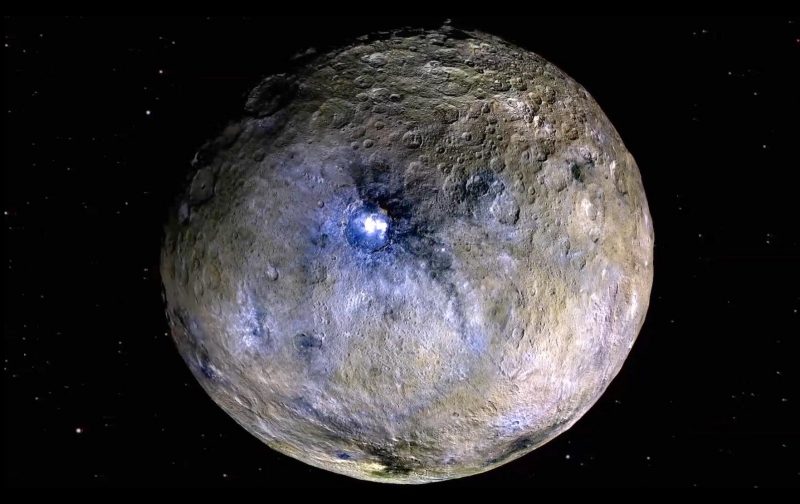
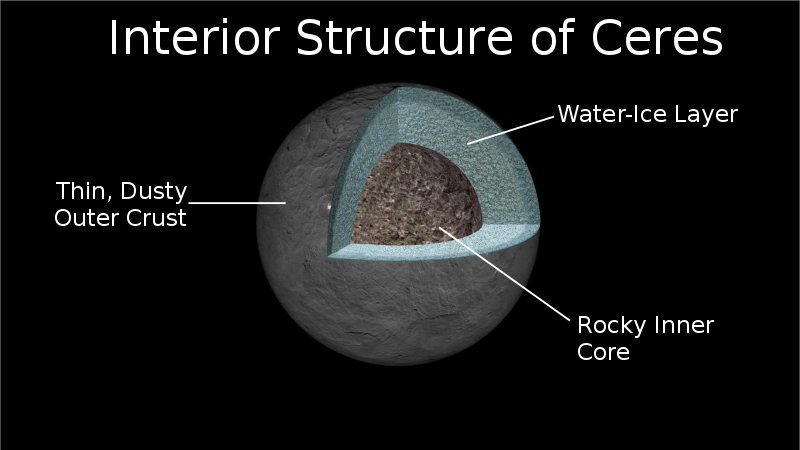
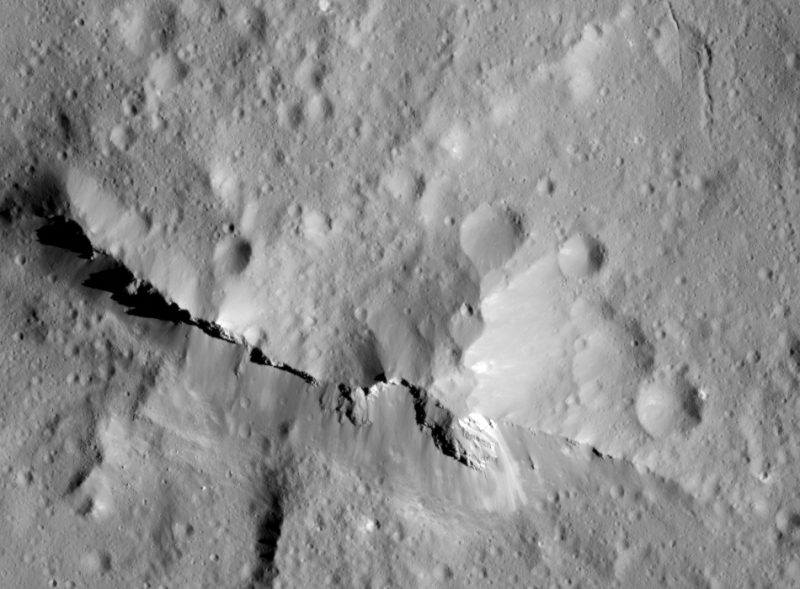
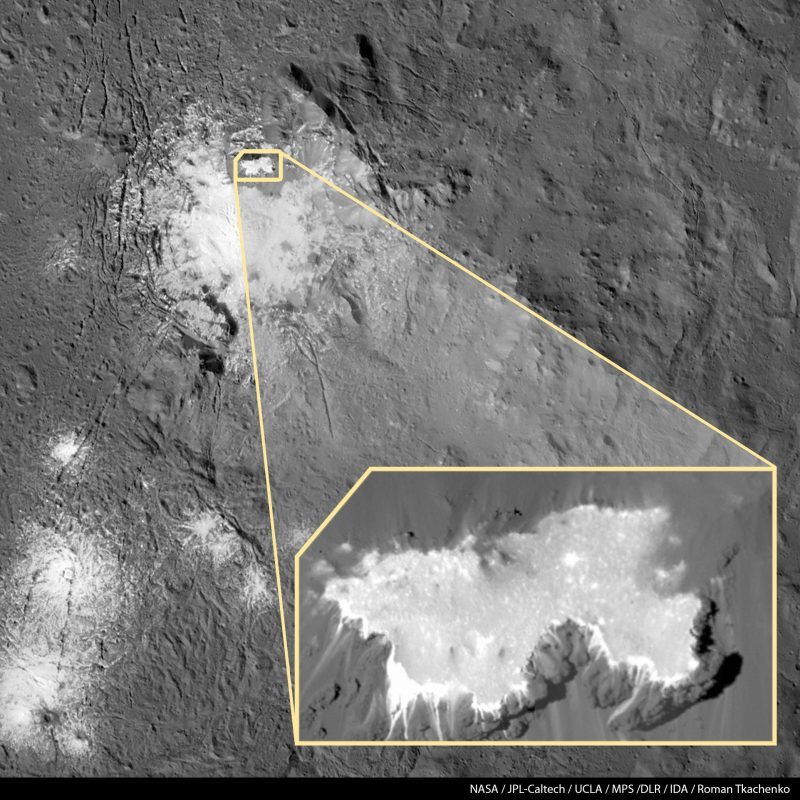



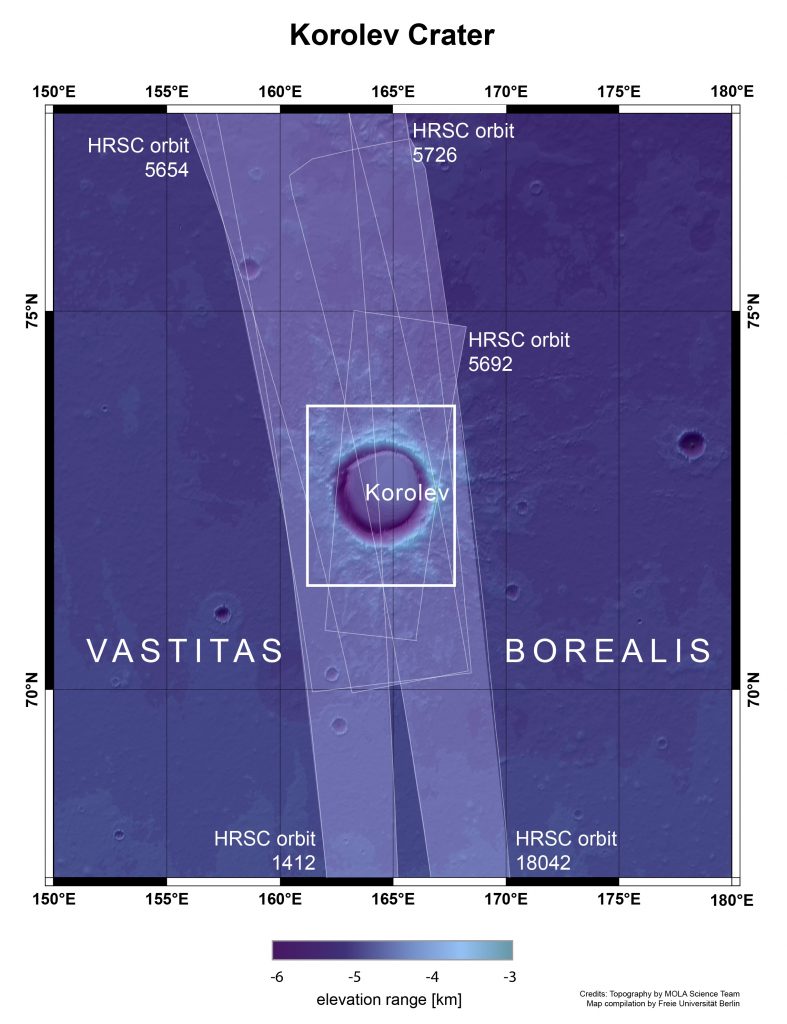
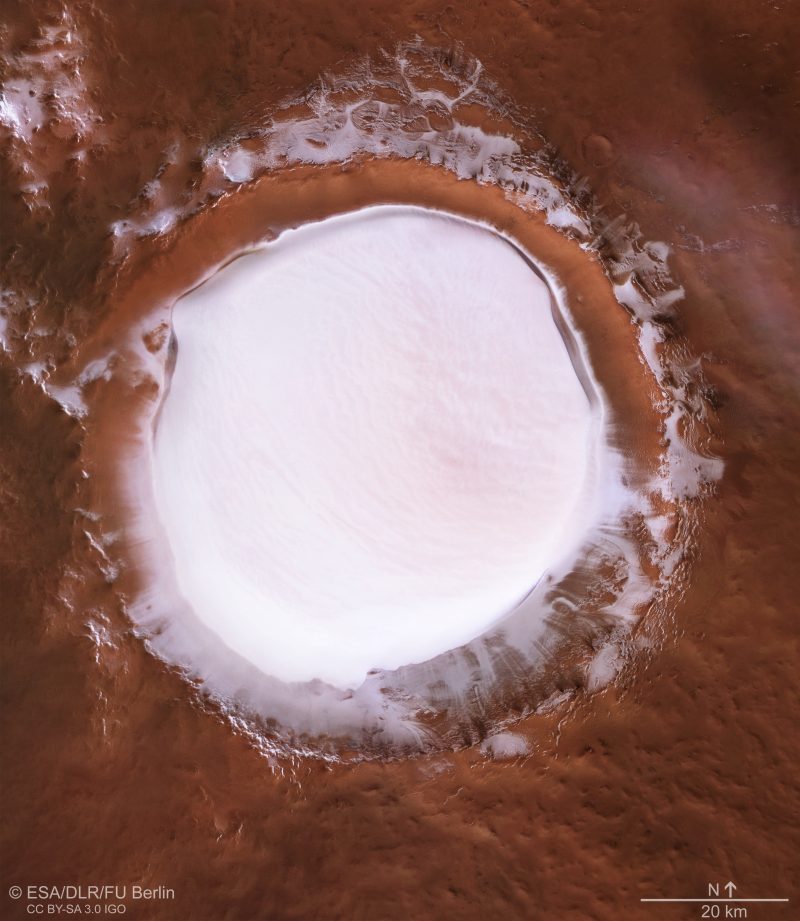
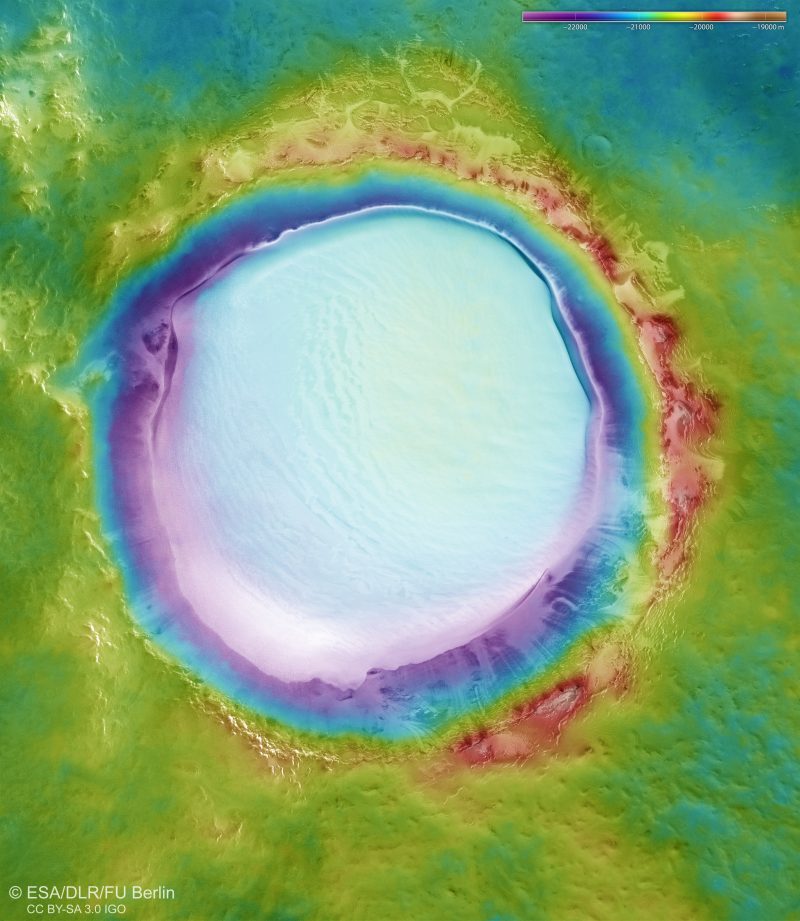
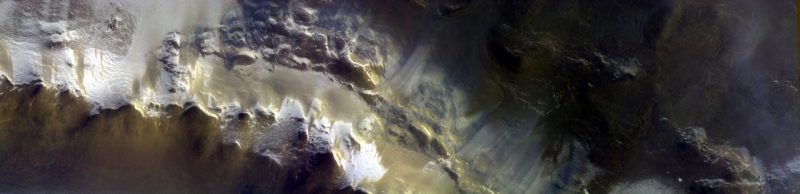


 in the skies of NYC?