Ontdek de Fascinerende Wereld van UFO's en UAP's: Jouw Bron voor Onthullende Informatie!
Ben jij ook gefascineerd door het onbekende? Wil je meer weten over UFO's en UAP's, niet alleen in België, maar over de hele wereld? Dan ben je op de juiste plek!
België: Het Kloppend Hart van UFO-onderzoek
In België is BUFON (Belgisch UFO-Netwerk) dé autoriteit op het gebied van UFO-onderzoek. Voor betrouwbare en objectieve informatie over deze intrigerende fenomenen, bezoek je zeker onze Facebook-pagina en deze blog. Maar dat is nog niet alles! Ontdek ook het Belgisch UFO-meldpunt en Caelestia, twee organisaties die diepgaand onderzoek verrichten, al zijn ze soms kritisch of sceptisch.
Nederland: Een Schat aan Informatie
Voor onze Nederlandse buren is er de schitterende website www.ufowijzer.nl, beheerd door Paul Harmans. Deze site biedt een schat aan informatie en artikelen die je niet wilt missen!
Internationaal: MUFON - De Wereldwijde Autoriteit
Neem ook een kijkje bij MUFON (Mutual UFO Network Inc.), een gerenommeerde Amerikaanse UFO-vereniging met afdelingen in de VS en wereldwijd. MUFON is toegewijd aan de wetenschappelijke en analytische studie van het UFO-fenomeen, en hun maandelijkse tijdschrift, The MUFON UFO-Journal, is een must-read voor elke UFO-enthousiasteling. Bezoek hun website op www.mufon.com voor meer informatie.
Samenwerking en Toekomstvisie
Sinds 1 februari 2020 is Pieter niet alleen ex-president van BUFON, maar ook de voormalige nationale directeur van MUFON in Vlaanderen en Nederland. Dit creëert een sterke samenwerking met de Franse MUFON Reseau MUFON/EUROP, wat ons in staat stelt om nog meer waardevolle inzichten te delen.
Let op: Nepprofielen en Nieuwe Groeperingen
Pas op voor een nieuwe groepering die zich ook BUFON noemt, maar geen enkele connectie heeft met onze gevestigde organisatie. Hoewel zij de naam geregistreerd hebben, kunnen ze het rijke verleden en de expertise van onze groep niet evenaren. We wensen hen veel succes, maar we blijven de autoriteit in UFO-onderzoek!
Blijf Op De Hoogte!
Wil jij de laatste nieuwtjes over UFO's, ruimtevaart, archeologie, en meer? Volg ons dan en duik samen met ons in de fascinerende wereld van het onbekende! Sluit je aan bij de gemeenschap van nieuwsgierige geesten die net als jij verlangen naar antwoorden en avonturen in de sterren!
Heb je vragen of wil je meer weten? Aarzel dan niet om contact met ons op te nemen! Samen ontrafelen we het mysterie van de lucht en daarbuiten.
Berichten van 1 december 2018 tot 31 december 2018
DNA sugars may form in the interstellar medium, which is seeded with vital molecules from nebulae
(Credit: X-ray: NASA/CXC/PSU/Getman et al, Optical: DSS, Infrared: NASA/JPL-Caltech)
So far, Earth is the only place in the universe that we know for sure is home to life, but there's evidence that its chemical building blocks may start stacking up in space. Now, NASA astrophysicists have managed to create DNA sugars in a vacuum chamber that simulates interstellar space, and in follow-up studies found other sugar derivatives in meteorite samples.
Exactly how life got started on Earth remains a mystery, particularly the leap from non-living matter to living cells. The current leading theory is that surface hot springs or deep-sea hydrothermal vents provided the right conditions and ingredients to give birth to simple life, but there are still some plot holes to be patched up.
An emerging alternative is that Earth was merely the "oven" for the cake of life – the batter may have been mixed in space. It may sound far-fetched, but the evidence for this is growing. Light signatures of sugars and molecules with the right structure and geometry for life have been detected out in space, while water and compounds essential for life have been found in meteorites.
The new study adds to that evidence. Scientists from NASA's Ames Research Center set out to see whether DNA sugars could be created in interstellar space. To do so, they cooled an aluminum substance almost to absolute zero, and placed it in a vacuum chamber that recreated the conditions of deep space. Then, the team added a gas mixture of water vapor and methanol – components of the interstellar medium – and finally they beamed UV light into the chamber to mimic radiation from stars.
Thanks to the extremely cold temperature, an icy layer was found to form on the aluminum, which was then warmed up by the UV radiation. The team then analyzed the substance and found that the sugar molecule 2-deoxyribose – which puts the D in DNA – had been created, along with several other sugar derivatives.
NASA Ames Research Center scientists Michel Nuevo, Christopher Materese and Scott Sandford
(Credit: NASA/Ames Research Center/Dominic Hart)
But just because these vital molecules can be created in the lab while simulating a deep space environment, doesn't necessarily mean that the process does happen in nature. To investigate, the team examined several carbonaceous meteorite samples and found traces of more simple deoxysugar acids and alcohols. Nothing as complex as 2-deoxyribose was found, but the team says this could be because they haven't checked many samples yet.
"For more than two decades we've asked ourselves if the chemistry we find in space can make the kinds of compounds essential to life," says Scott Sandford, an author of the study. "So far, we haven't picked a single broad set of molecules that can't be produced. The universe is an organic chemist. It has big beakers and lots of time — and the result is a lot of organic material, some of which is useful to life."
Finding these vital molecules in meteorites could help explain the origin of life on Earth, as well as ramping up the likelihood of it being widespread throughout the universe. Asteroids and comets could be exposed to this cosmic dust, going on to seed planets and moons with life as they crash to the surface.
"We don't yet know whether life is common in the universe, but we're pretty sure the presence of life's building blocks is not a limiting factor," says Michel Nuevo, lead author of the study.
So I thought, totally unrelated to disclosure .....I was looking at camera zoom lense options out there and I came across this guys video on YouTube.
The video goes through different magnification strengths using this particular Leica lens.
Being that this video is purely about this guys lense I don't think he maybe even knows this but if you jump to the 2:55 mark in the video and watch the moon at the right side of the screen you'll see a shadow fly from bottom to top. Very clear and easy to spot.
Is there something easy to explain away this shadow? Some common phenomenon that I may not know about?
Google Earth: Are these the secret S4 UFO hangars of Area 51?
Pictures on Google Earth show something that could be a hangar for aircraft.
The video shows an area that Lazar called S4 or Site 4 at the time - and which he said was a hangar hidden in a mountain where the UFOs were located. The place looks like a huge construction site, and you see at least three big hangar gates.
Yes, I know Tyler has a questionable reputation, but the Google Earth discoveries are still interesting:
Robbert Van Den Broeke – Real Alien Proof, Harassment From the Dutch media, Psychic Ability Demonic? Natalee Holloway’s Location, the Incredible Story of Robbert
Robbert van den Broeke was born in Breda, Holland, and grew up in a small West-Brabant village, with an older and a younger sister. At a very young age, he found he had psychic ability and ‘saw’ things which his parents were unable to comprehend.
Because of this lack of understanding about what he could see and feel his growing up was difficult and he developed traumas, phobias, and insecurities plus anxiety syndromes. It was not until he was 13 years old that his gifts and talents were recognized and under the excellent professional guidance of psychologist Rens Hendriks he was able to develop consciously in paranormal and spiritual areas.
It was in February 1996 that Robbert first found he was able to predict exactly where crop circles would appear. Once with his naked eye (and later also in company with others) he saw a crop circle as it was actually forming.
These experiences brought him a unique understanding and inspirations but sometimes the events were so extreme that, to avoid misunderstandings, his parents kept it all to themselves.
During this time Robbert’s perceptions and senses were becoming more acute and heightened and he found he was able to give information and statements to others about things he could not normally have known about.
He also began seeing energetic phenomena such as glowing spheres and streaks of light in and above crop circles.
The conversation turned to photographs and Video, of an encounter with octopus-like Aliens. They have left tentacles in a field and he would like them to be studied scientifically. He is not asking for money, he simply wants them to be studied.
Robbert is a controversial figure in his homeland, the media has not taken too kindly to him. The conversation takes a turn when the topic of Natalee Holloway, was mentioned. Robbert van de Broeke says he knows where the body of the missing Natalee Holloway lies. Van den Broeke indicates that Van der Sloot admitted in a skype conversation that Holloway is indeed in a grave of the Sint Anna cemetery. “I am particularly glad that he has told us on video that he did not want to say anything about Sint Anna and that I believe that it is correct, and of course we also pass this on to the police, but they do not take us seriously.”
“someone sent us to the police station in Aruba, we called and we have mailed, but they say that there are so many psychics who say they know where they are, that they do not even investigate it anymore, which is embarrassing and enormously frustrating. you know that another medium, without me knowing it, has appointed the same place. This cemetery, also grave 15 “, says Van den Broeke. The Hoevens medium now exclusively informs the editors of the Halderbergse Bode that he very recently also received a precise location; cemetery Saint Anna, grave 15. He is convinced that the police will meet the remains of Natalee Holloway there.
EPADe Russische Sojoez-gezagvoerder Sergej Prokopjev wordt uit de capsule geholpen.
WETENSCHAPEen Russische Sojoez-capsule is vandaag veilig geland in een dorpje in Kazachstan. Met de capsule keerden drie ruimtevaarders terug op aarde na een verblijf van bijna 200 dagen in het Internationaal Ruimtestation ISS.
De Sojoez-capsule was om 2.40 uur Belgische tijd afgemeerd van het ISS en landde net na 6 uur in Kazachstan, een minuut eerder dan gepland. De terugkeer werd van zeer nabij gevolgd, want in augustus was er drukverlies ontstaan in het ISS door een gaatje in de wand van de leefmodule van de bewuste Sojoez. Het euvel werd snel verholpen, maar de oorzaak is nog niet bekend. Mogelijk gaat het om sabotage.
Aan boord van de capsule zaten de Duitser Alexander Gerst namens het Europese ruimtevaartbureau ESA, de Russische Sojoez-gezagvoerder Sergej Prokopjev en de Amerikaanse astronaute Serena Aunon-Chancellor. De Duitser was na Frank De Winne de tweede Europeaan om gezagvoerder van het ISS te zijn. Hij heeft tijdens zijn twee missies 363 dagen in het complex doorgebracht, aldus ESA.
In het ISS blijven de Rus Oleg Kononenko, de Amerikaanse Anne McClain en de Canadees David Saint-Jacques achter.
Mislukte Sojoez-lancering in oktober
Sergej Prokopjev en Alexander Gerst moesten normaal op 13 december al terugkeren. Maar in oktober mislukte de lancering van de Sojoez MS-10, waardoor de Rus Aleksej Ovtsjinin en de Amerikaan Nick Hague niet in het ISS, maar weer in Kazachstan belandden. Pas toen de Russische ruimtevaartautoriteiten er zeker van waren dat de Sojoez-draagraket alsnog betrouwbaar was, kon de huidige bemanning van het ISS vertrekken.
EPA
Riskante ruimtewandeling
Twee kosmonauten hebben vorige week tijdens een riskante ruimtewandeling ook in de buitenwand van de Sojoez gekerfd om stalen te vergaren. Die stalen vlogen met de Sojoez mee voor analyse bij de geheime dienst FSB. De Sojoez ondergaat tijdens de terugkeer in de atmosfeer temperaturen tot 2.500 graden Celsius.
Columbia
Op 1 februari 2003 verging het Amerikaanse ruimteveer Columbia, doordat tijdens de lancering een brokje piepschuim een gaatje in een vleugel had geslagen en waardoor tijdens de duik in de dampkring hete gassen het ruimteveer konden binnendringen. De zeven inzittende astronauten kwamen toen om het leven.
REUTERS
De Duitse ISS-astronaut Alexander Gerst vanmorgen na de landing.
REUTERS
Het ISS gefotografeerd vanuit de ruimte.
Photo News
De Russische kosmonaut Oleg Kononenko doet een ruimtewandeling bij het Internationale Ruimtestation ISS.
REUTERS
De Russische kosmonaut Oleg Kononenko doet een ruimtewandeling bij het Internationale Ruimtestation ISS.
Drie astronauten zijn vandaag na een missie van bijna 200 dagen terug op aarde aangekomen. De drie verbleven op het ISS om er onderzoek en oplapwerken te doen.
The Origin Of Humankind – The Big Historical Cover-Up [2018]
Is everything we learned in school, including science and scientists along with everything else just a big lie?
Many unsolved mysteries around ancient structures like the Egyptian pyramids or the Sphinx suggest alternative timelines of history.
Is there a cover-up of the true origin of humankind?
Timeliness are drastically skewed to align with the life of Jesus ,which no matter which story you believe humans have been here far longer than the writers of the biblical story would have you believe ,and even though a lot of it is to keep the believers in line and giving to the church ,there is a god a master creator that even other life forms would tell you , but we as a race are far older than than any of the established experts will admit !
The problem with modern science is that government pays for the vast majority of it. When you are funded by the government you say what the government tells you to say. Otherwise you lose your career. No true science can be had under those circumstances.
As one would come to realise, while traversing such fields of research as we do, you will inevitably come face to face with a worthy adversary.
That foe, of course, is modern paradigm. Often scoffed at when discussing the possible existence of a highly trained, highly secret group of worldwide individuals, who are tasked with the protection of a profitable lie.
Often labelled a conspiracy theorist due to the vast array of missing evidence and stolen relics. Yet alas, regardless of this, we feel it is our duty to vindicate all those who have suffere, for doing nothing more than tell the truth.
Many thanks to will hart over at nexus magazine in Spain for his exhaustive research. Let’s start with a familiar friend, The great sphinx.
In 1993, NBC aired a show titled, The Mysteries of the Sphinx, during the show, geological evidence was shown which indicated that the Sphinx was vastly older than Egyptologists currently claim. This evidence, has subsequently become popularly known as the “water erosion controversy”. The Self-taught Egyptologist John Anthony West, first brought the evidence to the attention of geologist Dr Robert Schoch.
Now, after thoroughly studying the Sphinx first hand, numerous geologists share West’s conclusions, and many have announced their findings to the world… Dr Zahi Hawass, along with the Egyptian antiquities, have launched a barrage of public criticism at this new evidence.
Renowned Egyptologist Dr Mark Lehner, who is regarded as the world’s foremost expert on the Sphinx, also joined this attack. Publicly declaring West and Schoch as “ignorant and insensitive”.
The smear campaign was ultimately a success, and squashed any further exploration of the theory. This, regardless of the overwhelming evidence supporting their claims. And this intellectual “mudslinging” is unfortunately, quite common.
The case of author Michael Cremo, could be seen as a well-documented example of this, and it also exposes just how the scientific establishment, openly uses pressure tactics on the media and government to stifle historical truths. In Michaels book, Forbidden Archaeology, he examines many artefacts that prove modern man’s antiquity, far exceeds the age currently accepted by academia. In 1996, when NBC broadcasted a special programme called The Mysterious Origins of Man, they covered material from Cremo’s book.
The reaction from the scientific community could be seen as verging on ridiculous. NBC was deluged with letters from furious scientists and others within certain fields, who all called the producer “a fraud” and the whole program “a hoax”.
Even attempting to force NBC to not rebroadcast the popular program ever again. They went to the tremendous effort of presenting a case to the federal government, requesting that the Federal Communications Commission step in and bar NBC from airing the program again.
This was not only an apparent infringement of free speech and a blatant attempt to thwart commerce, but up until that point, it was an unprecedented effort to censor intellectual discourse.
During the 1970’s, Dr Virginia Steen-McIntyre would also feel the cold hands of the conspiracy, a geologist working for the US Geological Survey, she was dispatched to an archaeological site in Mexico, with the task of dating a group of artefacts .
This particular case, again, perfectly illustrates just how far this illusive establishment, is willing to go to guard orthodox tenets. McIntyre used state-of-the-art equipment to date the relics, but her results were off the charts. The lead archaeologist expected a date of 25,000 years or less, yet she found dates of 250,000 years or more on multiple occasions.
A dating of 25,000 years, is conveniently critical to the Bering Strait crossing theory. Once her results were realised, the head archaeologists decided to dispose of Steen-McIntyre’s results, subsequently asking for a new series of dating tests. Steen-McIntyre was given a chance to retract her conclusions, but she graciously refused.
She has since found it hard to get her papers published, and she also lost a teaching job at an American university. These sorts of scenarios from these particular types of people, is what drives us to expose the truth. No one should lose their career because they do are doing it correctly.
Unfortunately however, unless there is a dramatic shift within our own society, stories such as these are likely to continue.
Scientist: “The Soul Enters The Fetus 49 Days After The Formation Of The Pineal Gland”
Dr. Rick Strassman finds fascinating coincidences between the development of the human fetus and the descriptions of the Book of Death Beta: Does the soul enter the human body through the pineal gland?
Dr. Rick Strassman suggests in his book DMT: The Spirit Molecule, a fascinating hypothesis: that the human soul is incarnated in the body in the seventh week after conception, using the pineal gland as a spiritual channel and the molecule dimethyltriptamine ( DMT) as a Catalyst.
Strassman is an American doctor specializing in psychiatry with a research fellowship in clinical psychopharmacology.
The DMT
It is a powerful psychedelic substance that occurs naturally in the pineal gland, something that has recently been shown, and that could also be linked to near-death experiences (NDE).
In fact, the research published in the journal Biomedical Chromatography documents the presence of DMT in the glands of living rats.
According to the researchers, the discovery of the pineal gland as a source of DMT “reinforces the idea of the enigmatic stellar role in unusual states of consciousness”.
Dimethyltryptamine
It has been related to the generation of images in dreams, with the states of consciousness that generate near-death experiences and all kinds of mystical experiences.
The curious thing is that the pineal gland becomes visible in the human fetus at 49 days, which is the number of days that a soul takes to reincarnate according to the Bardo Thodol (Tibetan Book of the Dead). These coincidences have led Strassman to affirm that the soul is incarnated in the body in the seventh week of pregnancy.
Following the reports of near-death experiences in which moments of awareness outside the body are described, Strasslarizes that it is the DMT that makes these states of consciousness accessible.
In his opinion, the pineal gland could act as an antenna or lightning rod for the soul.
Although many people do not believe in the existence of the soul, others consider it to be immaterial: Plato and the Neoplatonists believe, for example, that the soul creates the body. And there are those who have managed to photograph him.Rene Descartes, located the seat of the soul, in the pineal gland, something that could now be tested. Anyway, the coincidence found by Strassmannos surprises.
Russia knows about extraterrestrial civilizations over several decades, so for many it is not surprising that such rumors are circulating for many years.
Russia’s first contact with the gray aliens allegedly occurred in 1942. At that time, were planned series of diplomatic visits to discuss issues of mutual interest – by alleged Russian documents and agreements that have been created.
[TRANSLATED FROM RUSSIAN]
According to the document, the 1961 incident that occurred involved three entities for breach of contract officers army base, when they discovered that their arrival was filmed with hidden devices without their consent. Based on the agreement were 23/04 confidential meetings and filming or taking pictures that were not allowed.
In 1969, in the State of Sverdlovsk was reported the crashed UFO and it was acquired by the Russian army. Video film shows rescue and shots from close range UFO itself. The boat was found and dead alien. The remains of an alien UFO wreckage and were taken to some safe place in Russia, where it was analyzed and the plate on an alien autopsy. In the photos appeared little alien.
Alleged event was broadcast on TNT special “The Secret UFO Files of the KGB.” The agenda featured the former actor depicting James Bond, Roger Moore. In support of the event was shown compelling video and photographic evidence.
According to the Truth KGB allegedly special unit designed to collect and monitor all kinds of information regarding the mysterious and unexplained phenomena that report back inside the Soviet Union.
In compliance with the order, General A. G. Ponomarenko, chief military command Ural area, had to take care to ensure that the KGB agents involved in work related to the UFO at all stages. Reporting agents were immediately undertaken with Colonel A. I. Grigoriev, chief of the KGB.
There are substantiated reports that a UFO crashed or was shot down near the city Prohlandnyi in Russia, on 10th of August 1989, the Soviet military radar watched an unidentified flying object and Russia attempted unsuccessfully to establish a vessel contact. UFO was evaluated as “hostile”. We were alerted to the Soviet defense and that UFO found and identified, were sent MIG-25.
On the outside of the ship were noticeable damage. Rehabilitation team, having dressed in protective suits, arrived at the site. Was measured smaller amounts of radiation and some members of the team were contaminated. At the scene came the helicopter and UFO were transported to the air base of Mozdok (North Ossetia-Alania). The Russians entered the UFO and found two dead alien bodies, one still alive. A team of doctors and other employees tried at all costs to keep the alien alive but failed.
All three creatures were about 90 to 120 centimeters tall, with gray-tight suit. Beneath it were the skin blue-green color with a reptilian texture. They had hair, big black eyes were covered with a protective cap and finger-like flotation membrane were finished long, slender arms.
Alien bodies were stored in glass containers and the UFO was transported to the spaceport Kapustin Yar (Volgograd). This information was first announced three Russian investigators – it howled: Anton Anfalov, Lenur Azizov and Alexander Mosolov, but who did not have to support these claims, no documents.
Should we be worried about the creation of artificial intelligence? For me, this is a simple question with an even simpler, three letter answer: yes. Many people, including the late physicist Stephen Hawking, have raised concerns that the rise of powerful AI systems could spell the end for humanity.
In the video below, I delve into a few reason technology should concern us all. Especially when scientists entertain the idea of giving machines their own ‘reasonings skills’ and the ability to deny a direct order from humans.
The polar vortex could sweep across the east coast this winter, bringing with it harsh conditions, climate scientists have warned.
Climate researchers are sounding the alarm on a polar vortex that’s predicted to sweep through the U.S.’ east coast later this month and inflict one of the harshest winters in years, The Washington Post reported.
Judah Cohen, a researcher from Atmospheric and Environmental Research, told the outlet his climate models indicate a vortex is likely to hit in late December or early January. A polar vortex disruption occurs when the stratosphere – which is above the troposphere where weather occurs – suddenly warms, causing winds to decrease or change direction. The vortex will then be displaced and split apart, spilling cold air into the mid-latitudes.
“Confidence is growing in a significant PolarVortex disruption in the coming weeks. This could be the single most important determinant of the weather this winter across the Northern Hemisphere,” Cohen wrote on his blog and Twitter feed last week.
Last year a vortex that originated in Eurasia swept eastern North America, causing windstorms that lasted weeks.
“We were still feeling the impacts into the end of April,” Cohen said.
This Jan. 6, 2014 photo shows a satellite image of a polar vortex pushing southward over the U.S.
(nasa.gov)
Still, models are notoriously unreliable. American models and European models, for instance, yield different conclusions on when exactly a disruption will occur.
Amy Butler, a scientist at the National Oceanic and Atmospheric Administration, tweeted: “[N]ot all other models on board yet so still reason to be cautious.”
Confidence is growing in a significant #PolarVortex disruption in the coming weeks. This could be the single most important determinant of the weather this #winter across the Northern Hemisphere. Likely impacts discussed in today's blog: https://bit.ly/2DVbhhg
Bittere kou in aantocht? Wetenschappers waarschuwen voor aanstaande poolwervel
Het kan wel eens bar koud worden. Wetenschappers waarschuwen dat een zogenoemde poolwervel later deze maand de oostkust van de Verenigde Staten zal bereiken en daar gaat zorgen voor één van de strengste winters in jaren, schrijft de Washington Post.
Judah Cohen, een onderzoeker van Atmospheric and Environmental Research, zei tegen de krant dat uit zijn klimaatmodellen blijkt dat de poolwervel eind december of begin januari aankomt.
Een poolwervel is een verschijnsel hoog in de atmosfeer dat invloed heeft op het weer aan het oppervlak.
Belangrijkste bepalende factor
Een poolwervel was ook de oorzaak van de koudegolf van 2013-2014 in Noord-Amerika.
Door een plotse opwarming van de stratosfeer verzwakte de poolwervel snel en zakte deze uit over het continent.
Steeds meer aanwijzingen voor een aanzienlijke verstoring van de poolwervel in de komende weken. Dit zou wel eens de belangrijkste bepalende factor kunnen zijn voor het weer deze winter op het noordelijk halfrond, schreef Cohen afgelopen week op zijn blog en op Twitter.
Judah Cohen@judah47
Confidence is growing in a significant #PolarVortex disruption in the coming weeks. This could be the single most important determinant of the weather this #winter across the Northern Hemisphere. Likely impacts discussed in today's blog: https://bit.ly/2DVbhhg
A new body discovered in the Solar System has beengiven the nickname “Farout” by the international team of astronomers who discovered it. The name seems to be fitting – as it is currently the most-distant body known in the Solar System at this time. It is around 100 times farther from the Sun than the Earth is. In fact, it is around 120 astronomical units (AU) away from the Sun. For reference, each AU is a measurement of the Earth’s distance from the Sun. Fallen-from-grace former planet Pluto – once considered the farthest planet from the Sun (when its orbit did not go inside Neptune’s) – is a mere 34 AU from the sun.
The previous holder of the farthest-known object in the Solar System was Eris at 96 AU. Farout was discovered as part of the International Astronomical Union’s Minor Planet Center’s search for the mysterious Planet X, or as it is more appropriately known with the (historically) recent demotion of Pluto from ninth planet to dwarf planet, Planet Nine.
Previous discoveries made by the team include a distant Solar System object discovered around Halloween in 2015, nicknamed The Goblin to keep with the holiday spirit. The Goblin is around 80 AU and has a strange orbit, which gives some credence to a theory many astronomers hold that there is a yet-to-be-discovered ninth planet whose gravity is affecting it.
This team first proposed the theory of a ninth planet (formerly theorized to be Planet X) in 2014 when they discovered another distant object (nicknamed Biden) around 84 AU. While these objects are far enough not to be directly influenced by the gravity of gas giants Jupiter, Saturn, Uranus and Neptune, they are still having their orbits influenced by what seems to be an object of immense gravity. It is too soon to state whether or not Farout, or 2018 VG18 as it is scientifically known, is influenced by the same mysterious pull.
Farout may be a dwarf object with a pinkish hue and icy consistency, similar to the former planet Pluto seen here
A scientist working on the discovery stated Farout is not only more distant, but also slower than other similar objects found in that area of space. However, it was found in a similar location and, while calculating its orbit may take a few years, scientists are expecting it to have similar orbital anomalies to its (somewhat close-by) neighbors. It is around 500km in diameter and is theorized to be spherical like other dwarf planets. It is assumed to have a pinkish hue like other ice-rich objects.
This discovery, coupled with the other discoveries leading back to Biden, or 2012 VP113, have given astronomers a more detailed look at the once vague and mysterious Oort Cloud thought to surround the Solar System. These discoveries are illustrating the cloud as full of rocky and icy orbs. If the gravitational influence on the orbits are proven to be from a yet-unknown ninth planet, however, that planet is most likely 10 times the size of the Earth – and potentially just as rocky. But, it is most likely not Nbiru.
It seems like there is no end to the videos of strange lights and objects reported in clips of live feeds from the International Space Station. All the usual sensational YouTube channels (you know the ones) are full of videos trying to make much ado about lens flares, small pieces of orbital debris, or video artifacts and glitches all in the name of The Truth is Out There. I usually barely even watch a few seconds of them before I move on. This one, though, feels somehow different. This week, a live stream from the ISS caught a mysterious, seemingly triangular object float by a SpaceX Dragon capsule as it arrived at the space station. Was this the elusive TR-3B caught on camera, or did something stranger make a Christmas cameo?
The Dragon capsule was there to deliver candied yams, green bean casserole and Christmas cookies to the astronauts. Plus the usual nerd stuff, of course.
As always, it’s difficult to tell. The object in the video is blurry as all unidentified objects in videos are, so it’s ultimately unclear what was captured on the live stream. However, it’s undeniable that the video is eerie. In the footage, the SpaceX Dragon capsule floats serenely against a total black backdrop before something dark floats quickly in and out of the frame behind the craft. The object is barely discernible in the darkness, but something is clearly there. Since the object is behind the capsule, it’s impossible to judge its size, but it sure seems to be as big as if not much bigger than the Dragon capsule.
Several UFO-themed YouTube channels have published videos in which filters have been added to the raw footage, enabling the object’s unmistakably triangular shape to emerge. While several news reports and press releases claim the live stream could have captured the long-rumored TR-3B aircraft or another one of the world’s innumerable triangular UFOs, the footage isn’t anywhere near high-quality enough to make out any details on the object. Space rock? Hunk of space garbage? Telepathic manta ray creature? Black knight satellite? Could be any of the above.
The triangular UFO is one of the most commonly reported types, perhaps second only to the saucer and the ambiguous light-in-the-sky.
Of course, while those theories are great fodder for the imagination, an explanation requiring less speculation is probably far more likely. With tens of thousands of known pieces of orbital debris floating around in orbit, there’s no telling what might float by the ISS cameras from time to time. In all likelihood, this footage shows nothing more than a piece of dumb space junk which happened to drift listlessly by the ISS at an opportune time. Given all of the unusual activity around the space station lately, there’s no telling what debris could be floating around up there.
Of course, when we do finally catch an alien spacecraft or other space-borne strangeness on camera, will we be able to tell it apart from a piece of dumb space junk? How do we know alien spacecraft don’t look exactly like our space junk (if they exist at all)? Don’t even get me started on camouflage. If the Millennium Falcon can cling to the side of a Star Destroyer undetected, an alien craft advanced enough to make it to Earth in the first place could definitely cloak or disguise itself.
With so many unknowns, there’s no telling what the object in the video could be – which is why we all can’t call this video proof of anything extraterrestrial or otherwise. While we’d all love it to be aliens, other explanations are far more probable.
What Navajo Rangers Saw on Patrol is Way To Strange for Words
These rangers are assigned the most inexplicable cases that come through their station, meticulously investigating each one with an scrutiny that is unheard of with these types of topics.
From Bigfoot and UFO’s, to haunting and Navajo witchcraft, they are exposed to some of the most unbelievable phenomenon known to man.
This is a land of legend and mystery, and often it seems that the police here are firsthand witnesses to some very bizarre things indeed.
'Stay Back From The Ocean Or Risk CERTAIN DEATH', NWS Warns People In San Francisco
The NWS is not exactly known for a sensational and exaggerated choice of words. The more striking is the urgent warning that is spread through social media. Residents of Sonoma and Monterey counties are warned to stay away from the Ocean, otherwise, they would risk their "certain death".
HIGH SURF WARNING continues in effect along the coast from Sonoma County through Monterey County 9 AM Sun to 9 PM Mon. STAY WELL BACK FROM THE OCEAN OR RISK CERTAIN DEATH.
The storms forecast to pummel the Bay Area this weekend—one Friday night and a second, much larger one anticipated Sunday—will bring a particularly dangerous element to San Francisco’s coastline, as the National Weather Service [NWS] warns of huge and potentially deadly waves.
A UFO The Size Of Planet Earth Seen Hovering Near Saturn
IN BRIEF
The Facts:
The picture here comes from a long time NASA scientist, one of many photos covered-up and hid from the public from the Voyager mission in 1980. That mission was tasked with photographing Saturn, its rings and its moons.
Reflect On:
What does this mean for humanity? Why the cover-up? Are we ready to accept that this may be a reality? What kinds of implications are there from the realization that we are not alone, and that highly advanced, intelligent beings are out there?
The pictures NASA got back from the Voyager mission to Saturn in 1980 were apparently so mind-altering that they locked them up–at least that’s what retired U.S. Army Command Sergeant Major Bob Dean said in this lecture. He also showed numerous photographs from the Apollo missions that were never released to the public. You can view some of those photographs here. Multiple governments, like Russia, have been calling for an international investigation as to where photographs, footage and Moon rocks disappeared to.
The picture above does not come from Dean, it comes from one of his good friends Norman Bergrun, a scientist and engineer who was part of NASA’s voyager program. He worked at NASA for decades at the Ames Research Centre. He also worked at Lockheed Martin where he managed the Polaris missile tests. Unfortunately, he recently passed. You can view his obituary here.
He is a legend for going public.
Luminous Source
What is the picture of? It’s a “luminous source,” that comes from Bergrun’s Book, “The Ringmakers of Saturn.” He had to go through a lot of trouble to publish it, and had to leave the country in order to do so, as Dean explained in the lecture linked above.
According to Bergrun, there are several large craft “proliferating” out around Saturn and its moons. His book goes into much greater detail, and although it’s hard to find and costs thousands of dollars, it is linked online, here.
Frustrated By Non-Disclosure
According to Dean, Bergrun got frustrated later in life that the decision was made not to tell the public what they had photographed at Saturn. My previous article Long-Time Nasa Scientist Blows The Whistle On Tall Black Extraterrestrial Beings describes Bergrun exposing the existence of what he calls extraterrestrial ‘vehicles’ that were responsible for making the rings around Saturn.
In a rare interview he gave with Kerry Cassidy of Project Camelot (below), he expressed his great concern of the UFO cover-up and stated with enthusiasm that “people have got to be made aware that those things are real.” I’ve presented this video in multiple articles, but you cannot present this interview if you’re writing an article about Norman Bergrun!
The Takeaway
In his book, Norman makes it a clear point to emphasize that these objects have probably been around much longer than we have. He also states that if there was any ill intent towards our planet, something probably would have happened by now and there is a reason that these objects (which he stated are intelligently controlled, not by us) have not come in close proximity to our planet. By coming closer than they already are they may, and already probably do have some effects on our own weather. This is something Norman also mentions in his book.
A lot of ridicule and fear exists behind this topic, and today it’s no longer taboo as mainstream disclosure has begun. We are becoming more aware, and despite mainstream media and the global elite having a lot to lose from the disclosure of this type of information (propulsion systems, oil, etc..), the truth is leaking out. It’s a field filled with information and disinformation, so one has to be cautious and remain skeptical. At the end of the day, we know that we are not alone, and it has huge implications for all areas of humanity–not the least of which is that it will ultimately force humanity to look within.
More awareness of this presence is coinciding with a massive ‘spiritual’ awakening that’s happening on the planet, and this is not by coincidence. It seems that a growing awareness of what’s out there will serve to help humanity better understand itself.
Long-Time NASA Scientist Blows The Whistle On Tall Black Extraterrestrial Beings
IN BRIEF
The Facts:
Dr. Bergrun has had a long career with Ames Research Laboratory, NACA (National Advisory Committee for Aeronautics), and Lockheed Missiles and Space Company & NASA. In one interview, he mentioned tall black extraterrestrials.
Reflect On:
With all of the information coming out, how many species/beings do you think those who control this subject have catalogued? Could there be trillions of races doing star travel?
“There are great ideas undiscovered, breakthroughs available to those who can remove one of truth’s protective layers. There are places to go beyond belief” – Neil Armstrong (source)
Princeton physics professor and NASA astronaut, Dr. Brian O’Leary, once said that “there is abundant evidence that we are being contacted, that civilizations have been visiting us for a very long time.” Apollo 14 Astronaut, Dr. Edgar Mitchell, told the world that “yes, there have been crashed craft, and bodies recovered” and that “there is no doubt that we are being visited.” One of the original seven astronauts for Project Mercury, Gordon Cooper, has also been quite outspoken regarding extraterrestrial vehicles that are spotted and tracked, not only in space – but in our own atmosphere. Clark C. McClelland, a former technician of the Space Shuttle fleet claimed he personally observed an 8-to-9-foot tall extraterrestrial. Dr. Jacque Valle co-developed the first computerized map of Mars for NASA in 1963, and he continues to create awareness today. Buzz Aldrin has spoken multiple times regarding a UFO that followed them for the majority of their mission, as well as a monolith on the moon of Mars. Maurice Chatelain, a former NASA communications expert has also been quite outspoken.
I recently wrote an article about a high ranking Ex-USAF Colonel (ret), Ross Dedrickson, who claimed that the technical failure experienced during Apollo 13 forced extraterrestrials to assist them with their trip home. Story Musgrave, an American physician and retired NASA member, has been making his rounds at UFO conferences for years, and Eugene Cernan, commander of Apollo 17 has stated publicly that he thought “UFOs were somebody else, some other civilization.” John Brandenburg, the Deputy Director for the Clementine Mission to the Moon as spoken about the known extraterrestrial presence, publicly, many times. He did so in a documentary called Aliens on the Moon.
These are just American astronauts and NASA personnel, and it’s not even the full list of employees who have made such comments and remarks, not to mention that there are just as many, if not more, from the space programs of other countries. This doesn’t even represent the tip of the iceberg. Retired Soviet Air Force colonel and cosmonaut trainee named Marina Popovic, for example, expressed that one of the last photographs received by the Russians from Phobos II showed “the silhouette of an odd-shaped object approaching the spacecraft.” Popovich said the picture was taken on March 25th, 1989, in deep space near Phobos (moon of Mars) shortly before contact with the craft was lost. She said the object very well may have been an alien spacecraft.” Her belief that this happened was also poorly expressed by the New York Times. You can read more about this story here.
The point is, there are uncountable amounts of people from within these space agencies, not to mention high ranking political, military and intelligence personnel who have all provided their testimony and experiences. Now that the UFO phenomenon is no longer taboo, and ‘officially’ declassified in the mainstream world, it’s time to bring attention to the extraterrestrial hypothesis.
Perhaps the biggest point I want to get across by mentioning all of the above is that the majority of astronauts and employees within multiple space programs have openly spoken up and out about this issue, yet none of them ever get or have received any mainstream air-time and attention. It seems those segments are reserved for astronauts like Chris Hadfield, who are placed on the most popular platforms only to debunk what all of the above are saying. If there are 50 astronauts saying yes, we are not alone and this is known, but one of them saying no, that’s the one that is the one who receives all of the attention.
Perhaps they are part of the “official campaign of secrecy and ridicule” that the very first CIA director, Roscoe Hiellenkoetter referred to regarding this subject.
Tall Dark Black Extraterrestrials
The video below is a clip of Project Camelot’s Kerry Cassidy interviewing Dr. Norman Bergrun about what’s really going on in space. A mechanical engineer, Dr. Bergrun has worked for Ames Research Laboratory, NACA (National Advisory Committee for Aeronautics), and Lockheed Missiles and Space Company, now known as Lockheed Martin. He then went on to found Bergrun Engineering and Research.
You can view some of his publications for NASA, where he worked for more than a decade, here.
Bergrun revealed a lot in this interview, which centered around what appear to be giant extraterrestrial spacecraft that are situated around the rings of Saturn. He called them, “The Ringmakers,” and also spoke of evidence regarding this entire subject. He spoke of (not the first to do so), extraterrestrial vehicles that appear to be even bigger than our own planet.
People have asked me about…I call them vehicles. I do not call them objects…They have all of the qualities of a vehicle, so that much we can say about them, for sure, so I’m calling them vehicles.
Norman is a scientist and doesn’t like to speculate at all. What he is saying comes from the evidence he has been privy to.
He is then asked by the interviewer, “Are you not posting the idea that they, those vehicles contain beings who are, you know, maybe like us?”
In his response, he refers to images that he’s seen:
If you want to know about people kind of thing, um, there is the ship that picked up the Voyager Capsule at Alameda Naval Shipyard. And they have a picture there of, uh, I think it’s the Apollo flight that Buz and Niel were on, uh but anyway, there’s one image there that shows Black People getting off…
He described them as very tall, stating that “7 feet would be a conservative estimate.”
You can watch the full interview below.
It’s interesting that he mentions the Buzz and Neil. According to Ken Johnston, a Boeing engineer and a former fighter-jock and test pilot for Grumman Aerospace who was also a marine and an F-4 pilot, as well as a NASA employee, working as the chief Lunar Module test pilot at the Manned Spacecraft Center in Houston.
He has publicly stated, “While Neil and Buzz were on the Lunar surface, Neil switched to the medical channel, and spoke directly with the chief medical officer saying, they’re here, they’re parked on the side of the crater, they’re watching us.” You can read more about those comments in the article linked below.
Apparently, this is how it went:
Mission Control: What’s there? Mission Control calling Apollo 11.
Apollo 11: These babies are huge, sir … enormous….Oh, God, you wouldn’t believe it! I’m telling you there are other space craft out there… lined up on the far side of the crater edge… they’re on the moon watching us. (source)
Below is a picture that comes from Corey Goode, a supposed ‘whistleblower’ from the Secret Space Program. It’s the only other source I’ve come across to mention black extraterrestrials. Bergrun is the only source with a verified, incredible, background that mentioned these beings.
The Takeaway
The takeaway here is to ask ourselves, with all of the evidence, documentation and credible witness testimony, it’s easy to see how much power and ability those who are in control of this topic have with regards to keeping it hidden from humanity. This subject is now at the forefront of many peoples minds, and that’s clear if you browse through the most popular Google searches. Interest in this subject is going to keep growing, and more people are going to continue to ask questions. As we engage, and as we continue our interest, more information will continue to leak out. The truth is, it’s all out there for any independent researcher or critical thinker to see.
The implications of this are huge, and the cover-up might not have been for humanities best interest, but to serve those who profit off of this type of secrecy, like oil companies.
The main thing to think about is the implications of this, it would leave no aspect of humanity untouched. If all of this is true, it’s quite clear that they’ve been around quite a long time, I think we can rule a real “alien invasion” out, but perhaps a fake alien invasion isn’t out of the question.
Volgens de Britse miljardair Richard Branson is het nog maar een kwestie van maanden voor de eerste toerist de ruimte in vliegt. We blikken terug op de allereerste privé-vlucht, vijftien jaar geleden.
Welke wetenschappelijk nieuwsgierige tiener heeft er nooit van gedroomd? Zelf een raket in elkaar knutselen met de spreekwoordelijke spuug en plakband, en die vervolgens het ruime ruimtesop zien kiezen richting sterren, wow! En het kan nog volmaakter: daarna zelf het artikel mogen schrijven bij het lemma van je project in het meest prestigieuze naslagwerk ter wereld, de Encyclopedia Brittannica. En het kan niet op: er ook nog eens een wedstrijd mee winnen die je 10 miljoen dollar oplevert, de felbegeerde Ansari X Prize.
Heel binnenkort zal het voor iedereen mogelijk zijn een ruimtereis te maken voor een betaalbare prijs
Te mooi om waar te zijn? Toch niet, want bijna 15 jaar geleden, op 21 juni 2004, krijgt de Amerikaanse vliegtuigbouwer Elbert Leander ‘Burt’ Rutan het voor elkaar met zijn SpaceShipOne (SS1). Een experimenteel ruimtevaartuig voor sub-orbitale vluchten dat – een primeur – uitsluitend gefinancierd is met privékapitaal. Rutan krijgt namelijk geen financiële steun van een overheid maar van Microsoft-medeoprichter Paul Allen.
De eerste privé-ruimtevlucht, met andere woorden. Of nog anders gesteld: het begin van de commerciële ruimtevaart. Met betaalbare prijzen voor iedereen, zelfs. Zo lijkt het toch, op dat moment.
Rubber en lachgas
Vlaams ruimtevaart-blogger Kris Christiaens (Spacepage): ‘Rutan had als vliegtuigbouwer in 1996 al eens een opmerkelijk record gevestigd met zijn Rutan Voyager: het eerste vliegtuig dat non-stop en zonder bijtanken rond de wereld vloog. SS1 was trouwens niet alleen het eerste privé-ruimtetuig dat een bemande ruimtevlucht uitvoerde, het was ook het eerste privévliegtuig dat Mach 2 en Mach 3 haalde. Deze hoge snelheden kon men bereiken dankzij een hybride raketmotor, achteraan het ruimtetuig.’
SpaceShip One
Waarbij, en dat brengt ons bij de spuug en plakband uit de doe-het-zelversdroom, onder meer gebruik gemaakt werd van rubber en vloeibaar… lachgas. In de cabine konden naast de piloot twee passagiers plaatsnemen, en verder kon de stand van de vleugels aangepast worden. Christiaens: ‘Op deze manier gleed de SS1 als het ware terug naar de aarde, waarna hij landde op dezelfde landingsbaan als vanwaar hij enkele uren eerder was vertrokken.’
Puur vormelijk heeft de SS1 wel iets van een kleine Space Shuttle, maar er is een essentieel verschil. Hij wordt namelijk door een vliegtuig tot op een hoogte van 15 km gebracht. Zelfstandig landen kan wel, zoals gezegd, maar het lukt niet om voldoende snelheid te halen om een baan rond de aarde te maken. Wat nochtans wel de bedoeling was. Hoe dan ook, waar de SS1 wel in slaagt is de ambitie waarmaken die vereeuwigd is in zijn registratienummer bij de Amerikaanse Federal Aviation Administration (FAA): N328KF.
‘KF’ is een afkorting van de Angelsaksische maateenheid kilofoot (1000 voet). In combinatie met het getal legt het de link naar de zogenoemde Kármánlijn, die door wetenschappelijke consensus op een hoogte van 328 kilofeet is getrokken. Op 100 kilometer hoogte in onze vertrouwde lengtematen, als een grens tussen enerzijds het luchtruim van de aarde en anderzijds de ruimte. Het punt bijgevolg waarop de luchtvaart eindigt en de ruimtevaart begint, en de SS1 overschrijdt die grens.
Christiaens: ‘Piloten Mike Melville en Brian Binnie voerden (elk apart en solo, dus zonder passagiers; red.) met succes drie bemande sub-orbitale ruimtevluchten uit en mochten zichzelf dus officieel “astronaut” noemen. Alle vluchten van SS1, inclusief de eerste testvluchten, vonden plaats vanop het Mojave Airport Civilian Flight Test Center, in Californië. Dit vliegveld werd na de SS1-ruimtevluchten omgedoopt tot Mojave Air & Space Port en werd de eerste plaats in de Verenigde Staten die een vergunning kreeg voor het uitvoeren van commerciële ruimtevluchten.’
En daarvoor ligt de weg in 2004 op het eerste gezicht breder open dan ooit. Burt Rutan is zelfs nog vóór de eerste vlucht van de SS1 al bijzonder zeker van zijn stuk. Op de laatste persconferentie voor het vertrek voorspelt hij een schitterende toekomst voor de commerciële burgerruimtevaart. ‘Ons project zal bewijzen dat zelfs kleine bedrijven, zoals het onze, mensen in de ruimte kunnen sturen. Dat besef doen doordringen is het belangrijkste doel van deze missie. Haar succes zal investeerders aantrekken, en heel binnenkort zal het voor iedereen mogelijk zijn een ruimtereis te maken voor een betaalbare prijs.’
‘Money, money, money…’
Vandaag, 15 jaar later, kun je niet meteen zeggen dat die voorspelling uitgekomen is. Waar is het fout gelopen met de grote droom? Over die vraag buigt de Amerikaanse ruimtevaartspecialist Jeff Foust zich in juni 2017. ‘Op het moment dat Rutan die uitspraak deed, was zijn bedrijf een van de meer dan twee dozijn kandidaten die de Ansari X Prize wilden binnenhalen. De prijs die was uitgeschreven voor het eerste privé ontwikkelde, herbruikbare ruimtevaartuig. De verwachting was dat tenminste een paar van die bedrijven zouden doorgaan met hun inspanningen. Een logische kwestie van inspelen op een marktvraag die alleen maar leek te zullen groeien. Maar de meeste deemsterden stilletjes weg. Vaak net bij gebrek aan belangstelling bij investeerders.’
Foust gaat het rijtje af. Rocketplane? Genekt door de financiële crisis van 2008 en intussen failliet. Armadillo Aerospace, gefinancierd door gamemiljonair John Carmack (Doom, Quake…)? In permanente winterslaap bij gebrek aan fondsen. XCOR Aerospace? On hold gezet in afwachting van nieuwe investeerders. Enzovoort.
‘Misschien had Rutan het gewoon aan de basis fout’, stelt Foust. ‘Het is niet omdat hem één keer gelukt is, dat anderen dat zomaar én meermaals over zouden kunnen doen. Ik kan verder ook alleen maar vaststellen dat SS1 – of welk ander bemand privé-ruimtetuig ook, overigens – tot nog toe nog een vlucht heeft gemaakt nadat de Ansari X Prize binnen was. Volgens mij was het hem alleen dààrom te doen.’
’23.000 euro per minuut’
Jazeker, er kwam een vervolgtraject. ‘SS1 werd opgevolgd door SpaceShipTwo (SS2)’, schreef Burt Rutan zelf bij zijn lemma in de Encyclopedia Brittannica, ‘dat ontworpen is voor twee piloten en zes passagiers. SS2 werd voorgesteld in 2009 en de planning voorzag het begin van sub-orbitale toeristische ruimtevluchten in 2015.’ Onder de vlag van Richard Bransons Virgin Galactic, prijskaartje 200.000 dollar voor drie uur in de ruimte en zegge en schrijve zeven (7!) minuten gewichtloosheid. Omgerekend zo’n 23.000 euro per minuutje zweven. Veel werd er al bij al niet meer van vernomen. Of in elk geval toch weinig concreets over waar u een reis kunt boeken.
Toch nog even advocaat van de duivel spelen. Vorig jaar in september was er toch dat in enorme schijnwerpers badende nieuws over de eerste maanreiziger-tegen-betaling? Ja, en dat was inderdaad ook met een privébedrijf, SpaceX van Elon Musk. Over het prijskaartje werd behoorlijk mysterieus gedaan. Maar zou het louter toeval zijn dat de uitverkorene, Yusaku Maezawa, een miljardair is die eerder met de glimlach een kleine 90 miljoen euro aftikte voor een schilderij van Jean-Michel Basquiat? En in het kielzog van SS1 ging het zeer nadrukkelijk om ruimtetoerisme voor ieders beurs, nietwaar?
According to Sue Ann Penn, an astronaut who is a candidate to be part of the first human settlement on Mars, has detailed some of the ways humans are expected to evolve in the not-too-distant future.
Speaking to the History Channel for its Ancient Aliens series, she said: “One of the most amazing things about the human body is its ability to adapt.”
Sue explained humans grow two or three inches when they travel to space due to a drastic change in gravitational pull.
She continued: “When you have a human that’s born on Mars, the environment will change the structure of the human body.
“In a few generations, what you are going to see is humans that are taller and skinnier, because the gravity on Mars is less than that of Earth.”
As a result, author Mike Bara believes humans will start to resemble the big-eyed aliens which have been starring in sci-fi films for decades.
He said: “If humans evolve long enough on the planet Mars, they could grow to be taller, they’d have the bigger heads, they’d have the spindly limbs.”
Mike also claims as we move further from the Sun, humans may have larger eyes in order to see better in the dark.
Academic Jonathan Young explained these changes would be similar to the angels depicted in the Bible – backing up the theory fallen angels were actually from Mars.
THE RED PLANET: Experts claim humans will evolve to life on Mars (Pic: YOUTUBE/HISTORY)
Jonathan noted: “The fallen angels were giants – they were at least 10 feet tall, very striking to look at, [with] enormous eyes and no wings.”
He continued: “They could also end up looking like representations of angels and various other God-like beings that we’ve read about in the Bible and other ancient documents.”
Academic Jonathan Young explained these changes would be similar to the angels depicted in the Bible – backing up the theory fallen angels were actually from Mars.
Jonathan noted: “The fallen angels were giants – they were at least 10 feet tall, very striking to look at, [with] enormous eyes and no wings.”
This comes just weeks after claims humans “must escape to Mars” in order to avoid extinction.
New episodes of Ancient Aliens are on free to air channel BLAZE™ every Wednesday at 9pm, Freeview Channel 63.
Is NASA hiding something? Live ISS space feed CUT moments after mysterious orb appears
THE live ISS space feed cut out just seconds after a mysterious unidentified object appeared in its camera field sparking wide-ranging conspiracy theories over what NASA "is hiding".
Online users have accused NASA of "lying" after the US space agency appeared "to cut" its live space feed on the International Space Station (ISS) cameras. Moments before the live feed was interrupted, a mysterious bright blue orb came into view on the screen. In a video posted to YouTube, one of the cameras on the side of the ISS record a huge bright blue object emerging behind one of the space station's solar panels.
Footage of the UFO was captured: "UFO? NASA Live shuts down right after this object appears next to the ISS."
The video feed follows the object for a few seconds, even zooming in on the orb, which is hovering above the planet.
The live space feed then cuts off promptly, asking viewers to "Please stand by".
A message appeared on the screen reads: "The High Definition Earth Viewing experiment is either switching cameras, or we are experiencing a temporary loss of signal with the International Space Station."
The US space agency appeared "to cut" its live feed on the International Space Station (ISS)
(Image: GETTY)
We are experiencing a temporary loss of signal with the International Space Station
NASA
Viewers have speculated that the incredible blue UFO could be an alien spacecraft.
One user wrote: "NASA is lying."
A viewer added: "That was a weird looking blob next to the space station?”
Another noted the peculiarly blurred object, explaining: "If the European Space Agency can manage to film beautiful, ultra-high-def footage of things outside the space station, why can't NASA?"
One person claimed the footage proved that NASA was "hiding" something extraterrestrial from the public.
People desperately tried to explain the strange orb, saying the object could be a “space ice ball".
Other users claimed the object looked like “a drop of water in zero gravity".
UFO Appears On Live TV Newscast In Buenos Aires, Argentina
Two reporters were surprised during a live news broadcast when a box-shaped UFO started to cross the top of the giant TV screen. As the two are talking, a UFO on the far right appears at 16 seconds into the video, but they fail to notice the UFO until 36 seconds into the video.
The size and shape of the UFO can be likened to the one that was spotted over New York a few days ago. The box shape UFO is somewhat more common than most of us think. The boxy UFO has no wings and propellers but moving across the sky at a very high speed, much faster than a balloon.
Several UFO enthusiasts believe the video is a remarkable proof that space aliens are slowly trying to get in the minds and hearts of the public.
Unknown lights filmed over Kite, Georgia 17-Dec-2018
These strange flashing objects were seen and filmed over Kite, Georgia on 17th December 2018.
Witness report:
Orange spheres moved across sky in line. They disappeared and reappeared in various spots, lighting up and replicating themselves. We were driving home on Pinetucky Rd when we saw orange spheres move across the sky together in a line that seemed to swish. We stopped the car to watch them. They disbanded and disappeared.
Then they began to reappear one by one in different parts of the sky and started replicating themselves. When they lit up another light would appear then another. 3 times every time this process started.
Then the objects would disappear and others would light up in other places. Sometimes the replicated objects were in a straight line, sometimes in an arc. This continued for a few minutes, but then just seemed to move farther away until they just appeared as glitter in the sky.
This daytime UFO video was filmed over San Antonio, Texas on 16th December 2018.
Witness report:
Dec 2018 a UFO was captured on video following an Aircraft over San Antonio Texas..While scanning the Sky a bright light was seen..No FAA strobe was observed as i zoom in,another object in front of it came into view..I continue to follow them until loosing sight of them….
APIn de tunnel zouden auto’s en voetgangers met snelheden tot 240 kilometer per uur vervoerd kunnen worden op elektrisch aangedreven sledes.
AUTODe eerste tunnel van Elon Musks bedrijf The Boring Company is vannacht feestelijk geopend in Los Angeles. De techniek moet een revolutie brengen in het stadsverkeer. “Mooi dat er mensen als Musk zijn die hierin geloven.”
De beelden hebben iets futuristisch: een auto die op een slede op straatniveau gaat staan, verdwijnt en in een ondergrondse tunnel op hoge snelheid binnen vier minuten van de ene kant van de stad naar de andere kant vervoerd wordt. Bij de bestemming aangekomen, wordt de auto weer met een lift op straatniveau gebracht. Met de Dugout Loop van The Boring Company lijkt het realiteit te worden.
Afgelopen nacht gaf initiatiefnemer Elon Musk een demonstratie in een proeftunnel van bijna 2 kilometer voor journalisten. De tunnel in Los Angeles loopt onder deelgemeente Hawthorne, waar SpaceX en The Boring Company hun hoofdkantoor hebben. Eens in de tunnel zouden de voertuigen veilig kunnen rijden aan een snelheid van meer dan 240 kilometer per uur, met een tussentijd van een seconde.
“Aan die snelheid voelt het alsof je binnen een stad teleporteert”, schreef Musk voor de lancering op Twitter. “Ik vond het episch”, zei Musk achteraf. “Het werkt.” Twee jaar geleden tweette hij nog dat het verkeer in Los Angeles “hem gek maakte”. “Ik ga een boormachine voor tunnels bouwen en gewoon beginnen graven”, schreef hij op 18 december 2016.
De Dugout Loop van Musk is een alternatief voor autovervoer in de stad. Innovatief en ambitieus, vindt de Nederlandse verkeersdeskundige Sjoerd Nota. “Het is mooi dat er mensen als Musk bestaan die het geloof en de financiën hebben om dit gewoon te gaan doen. Hij is een echte durfinvesteerder. Als je het niet een keer doet, weet je ook nooit of het wel of niet werkt.” Ook heeft The Boring Company sledes ontwikkeld waar voetgangers gebruik van kunnen maken.
Het is echter nog maar de vraag of mensen het dúrven te gebruiken. Denk aan de Kanaaltunnel, waarmee je met de auto vanuit Frankrijk naar Engeland kunt komen. “Veel mensen gaan alsnog met de boot, omdat ze onder het water rijden eng vinden. Dat is een heel dure oplossing, als er niet meer mensen gebruik gaan maken van die tunnel. En dat kan met de Dugout Loop ook zo zijn. Durven mensen zichzelf en hun auto’s toe te vertrouwen aan zo’n elektrische lift en tunnel?”
AP
Het succes van de Loop hangt af van veel factoren: werkt het goed? Is het veilig? Durven mensen het aan? “Gaat het vlekkeloos en is het comfortabel en snel, dan kan het zeker toekomst hebben”, aldus de expert.
Rendabel?
Voor een ritje betaalt de reiziger straks in ieder geval amper één dollar (0,88 euro). “Ik ben heel benieuwd hoe het businessmodel hierachter eruit ziet”, voegt Nota toe. “Want die tunnel moet wel heel veel mensen van A naar B vervoeren om rendabel te zijn en om voor minder verkeer op de weg te zorgen.”
The Boring Company sloot eerder dit jaar een contract met de gemeente Chicago om een tunnel te bouwen van vliegveld O’Hare naar het stadscentrum.
What’s the first thing that comes to mind when someone says Neptune? Mercury? Pluto? Nothing exciting. Saturn? RINGS! Everyone knows about the rings. It’s the first planet anyone who gets a telescope for Christmas looks for. It’s the planet that’s hardest to make for a school project, but no one complains because those rings are so darned cool! Bad news, ring fans. NASA just announced that the planet is suffering from something called “ring rain” which is causing the rings to disappear and Saturn will soon be just another Uranus without the funny name jokes.
“We estimate that this ‘ring rain’ drains an amount of water products that could fill an Olympic-sized swimming pool from Saturn’s rings in half an hour.”
James O’Donoghue, NASA researcher and lead author of a new study published in Icarus, puts the ring rain in terms anyone who has been in a swimming pool or collected rainwater in a can can understand. The ring rain was first detected by the Voyager I and II fly-bys. The Cassini probe, which crashed through Saturn’s rings in a blaze of mission-ending glory last year, found that Saturn’s rings, which surprisingly are made of water ice chunks ranging from microscopic to yards in diameter, are actually dropping onto to the planet’s surface in massive hail-like downpours.
“From this alone, the entire ring system will be gone in 300 million years, but add to this the Cassini-spacecraft measured ring-material detected falling into Saturn’s equator, and the rings have less than 100 million years to live.”
While 100 million years seems like a long time, NASA says it’s a blink of an eye in planetary terms. Saturn is estimated to be 4 billion years old and the current condition of the rings suggests they’re in the second half of their lifespan. That means there was most likely a time when Saturn had no rings at all. What’s more, it implies that other planets may have also had rings at one point.
“However, if rings are temporary, perhaps we just missed out on seeing giant ring systems of Jupiter, Uranus and Neptune, which have only thin ringlets today!”
Rings around Uranus! (We’ll pause while you insert your favorite joke here.) Thomas Cravens, University of Kansas professor of physics and astronomy and co-author of a second study on rain rings, waxes sentimental on the fact that we should be grateful we’re alive at a time we can enjoy Saturn’s rings … while they last.
“If it’s not being replenished, the rings aren’t going to last — you’ve got a hole in your bucket. Jupiter probably had a ring that evolved into the current wispy ring, and it could be for similar reasons. Rings do come and go. At some point they gradually drain away unless somehow they’re getting new material.”
Is anything replenishing Saturn’s rings? It doesn’t appear that way, and the wispy rings around Jupiter, Neptune and (here it comes again) Uranus show what future astronomers and explorers can expect to see. However, there’s one ray of hope … if Saturn acquired those rings later in life, perhaps Earth can too.
If there’s life on Uranus, they should start writing their revenge jokes now.
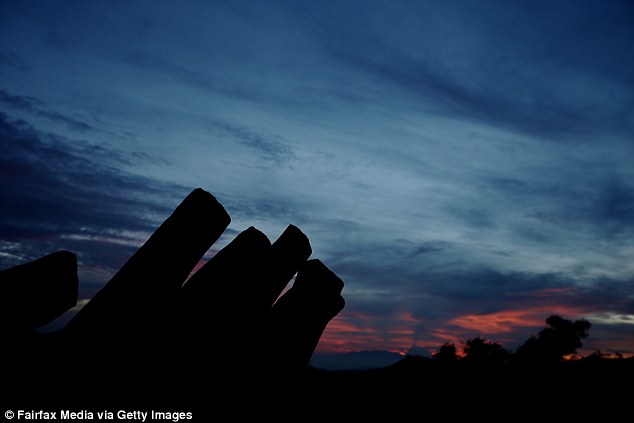
We keep finding things that remind us our view of history has a lot of holes in it. We seem to be findinglost cities, hidden temples, and the remains of civilizations that completely re-frame how we think of them at an ever increasing rate. Recently, the megalithic site Gunung Panang in West Java, Indonesia was confirmed to be an enormous “pyramid” structure possibly as old as 28,000 years.
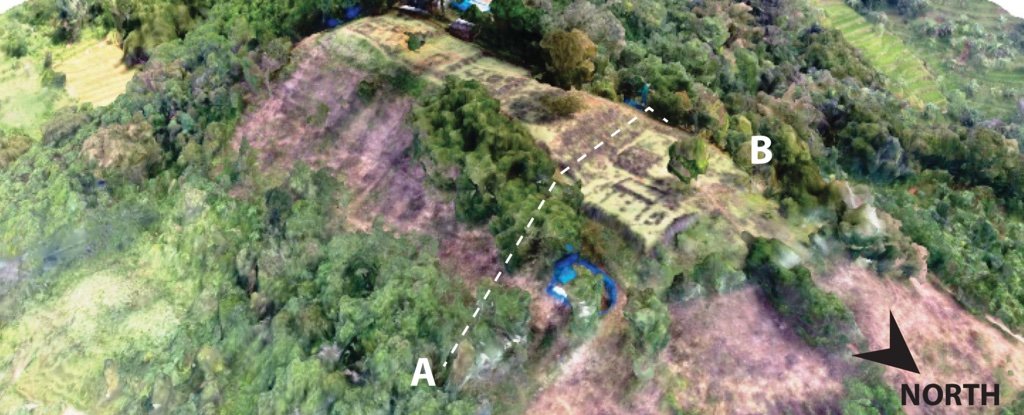
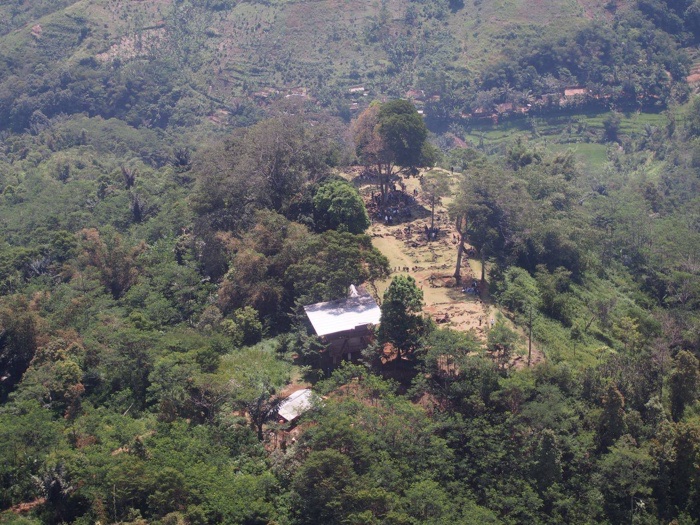
According to Live Science, The finding was presented at the annual meeting of the American Geophysical Union on December 12. Gunung Padang has been on archaeologists radar for a long time, and embroiled in controversy. A hilltop archaeological site first discovered by archaeologists in the 19th century in West Java, Indonesia, Gunung Padang was long thought to hold more secrets than the assortment of stone columns visible at the top of the site. A imaging and excavation effort that begun in 2014 has now proved that it’s not a hilltop site at all, but in fact the entire hill is an artificial structure, which scientists believe to be a ancient temple. The structure is over 150,000 square meters big, and the the layers of construction date from 3,000 to over 9,000 years ago, with the deepest layer of construction possibly as old as 28,000 years.
According to Andang Bachtiar, an independent geologists who supervised core drilling and soil analysis:
“What is previously seen as just surface building, it’s going down — and it’s a huge structure”
Gunung Padang
Scientists began to suspect something was off about the site when they saw that the standing stones on the hill didn’t match some of the exposed features of the previous archaeological site. They also noticed that the hill stood out from the rest of the topography on Mount Padang. Lead researcher Danny Hilman Natawidjaja explained:
“It’s not like the surrounding topography, which is very much eroded. This looks very young. It looked artificial to us.”
Site at the top of Gunung Padang. Credit : Mohammad Fadli CC BY-SA 3.0
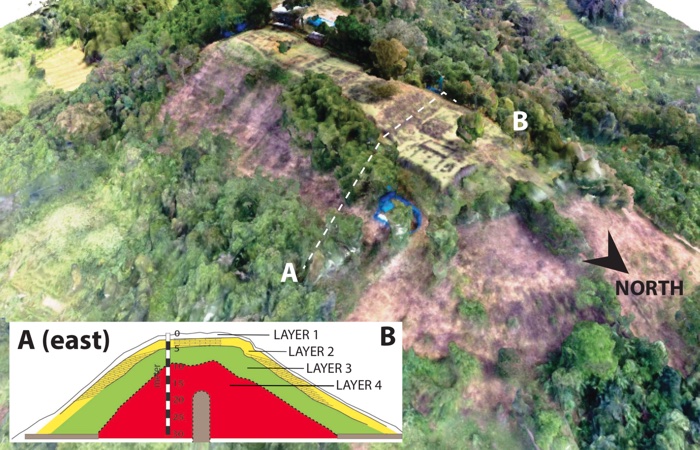
Using ground-penetrating radar, X-ray tomography, core samples, and excavation, researchers began to put together what this huge pyramid looks like. Unlike the symmetrical Mayan pyramids, this is an elongated structure rounded in a half-circle in on the front. Different layers make up the pyramid, representing different periods of construction across the millennia. The first layer consists of basalt terraces, walls and paths. Ten feet below the surface is a second layer of stone columns thought to be 7,500 to 8,300 years old. Below that, a third layer stretches 49 feet below the surface and could be anywhere from 9,000 to 28,000 years old. Researchers also detected multiple underground chambers but those have yet to be excavated or imaged.
The site is still in use as a place of prayer and meditation serving the local people, and researchers think that this may have been its function since it was first built thousands of years ago. Yet, it will be some time before the temple, or whatever it is, will be fully unearthed and researchers know its true purpose or scope.
For centuries, Scottish folklore and legend have both been filled with tales of a wild and deadly beastknown as the Kelpie. The terrible beast, which has the ability to transform itself into numerous forms – even that of people – was greatly feared throughout the 1600s and 1700s, when reports of the Kelpie were at their height. As for its curious name,“Kelpie” is an ancient Scottish term meaning “water-horse.” There is a very good reason as to why that particular name was applied to the beast, as will soon become very clear. As its name strongly suggests, the water-horse spent much of its time lurking in the waters of Scottish lochs – specifically in the shallower, marshy areas of such locales. It would coldly and callously wait for an unwary passer-by to appear on the scene and then strike, mercilessly and without any hint of a warning. The beast’s mode of attack was, admittedly, ingenious, even if the end result for the victim was not a good one. In fact, it was almost always downright fatal.
Very much creatures of the night, Kelpies were said to dwell in the waters of literally dozens of Scottish lochs. As creature-seeker Roland Watson demonstrated in his book The Water Horses of Loch Ness, however, the vast majority of reports of such beasts emanate from none other than Loch Ness. We may never know, for sure, the real form of the Kelpie; only the guise that led to the creation of its name. But, what we can say for certain is that the small number of witnesses who encountered the beast, and who lived to tell the tale, described it as a large black or white horse. In most cases, the victim was a late-night traveler, walking along an old, well-known pathway near the water’s edge of the relevant loch. Suddenly, the huge horse would rise out of the water, dripping wet, and make its way to the shore, with its coat shining under the light of the Moon.
Under such strange circumstances, many might be inclined to make a run for it immediately. There is, however, a very strange aspect to many of the Kelpie stories. Namely, that the people who crossed its path felt as if their free will had been taken from them and that they were deliberately prevented from fleeing the scene. Today, we might justifiably suggest that the beast had the power to control the minds of those in its deadly sights. Perhaps, even by a form of supernatural hypnosis. Those fortunate enough to escape the icy clutches of the Kelpie described how they felt driven to climb on the back of the horse and grab its reins. Despite having a sense of dread and a fear of doing so, that’s exactly what so many did – and, in the process, failed to survive and tell their tale. It was at that point that the Kelpie made its move – an incredibly fast move.
With the entranced person now atop the monster, it would suddenly launch itself into the deep and cold waters of the loch, with the poor soul unable to let go of the reins. Death by drowning was all but inevitable, aside from that very lucky, aforementioned body of people who were fortunate enough to have survived and who related their stories – hence why we know of the creature and its terrible modus operandi. As for the reason behind these deadly attacks, it was said that the creatures sought one thing more than any other: the human soul.
Although the Kelpie was very much a monster of centuries long gone, there is a thought-provoking case which suggests a Kelpie may have been on the loose in England in the mid-1970s. In the summer of 1976, an encounter with the much-feared and legendary “Man-Monkey”of Bridge 39 on the Shropshire Union Canal occurred; a supernatural creature first reported in January 1879. It was a strange, spectral, ape-like beast. The 1976 witness was a man named Paul Bell, a keen fisherman and someone who, in July and August 1976, spent several Saturdays out at the canal with his rods, reels, bait, his cans of beer and his favorite beef and onion sandwiches,. Bell told me that, on one particular Saturday afternoon, he was sat near the water’s edge on a small wooden stool that he always carried with him, when he was “literally frozen solid” by the sight of “what at first I thought was a big log floating down the cut, about sixty or seventy feet away.” According to Bell, however, it was no log; it was something else entirely. As it got closer, Bell was both astonished and horrified to see a large “dark brown and black-colored’ eel or snake-like creature – possibly ten feet in length or a little bit more – moving slowly in the water, with its head – that “looked like a black sheep” – flicking rapidly from side to side.
Although he had an old Polaroid camera with him, said Bell, he never even thought to take a photograph. Instead, he merely stared in both awe and shock as the animal cruised leisurely and blissfully past him, before finally vanishing out of sight. Bell stressed that the creature apparently did not see him (“or, if it did, it never attacked me”), and did not appear to exhibit any outright hostile tendencies. What elevated Bell’s story to a far stranger level was the fact that he claimed, in quite matter of fact fashion, that the following Saturday he was fishing in practically the same spot when he had a sudden, out of the blue feeling of being watched. He was not wrong. Peering across the width of the canal, Bell was both horrified and petrified to see a dark, hairy face staring intently at him out of the thick, green bushes. It was the Man-Monkey. The head of the animal was unmistakably human-like, said Bell, who added that “as soon as it saw me looking at it, up it went and ran right into the trees and I lost it.” He further explained: “That was it; a second or two was all at the most. But as it got up and ran I knew it was a big monkey. There’s nothing else it could have been.”
The chances of two strange and unidentified creatures being seen in the same location, and only a week apart, are slim to absolute zero. In fact, we can forget the “slim” angle. The chances are 100 percent zero. My conclusion? That what Paul Bell saw was nothing less than a 1970s incarnation of an ancient Kelpie. Bell was lucky to leave the site alive.
I found a giant three sided pyramid on Mars in a gigapan photo today. They pyramid has one smooth side, which is probably the original outer coating that was made for it, but the other two sides have severely eroded. I also found a lot of unique and ancient structures and placed the screenshots below.
Pyramids have been found all over the world on many continents and most of them were created at about the same time. They mystery of pyramids have lead to speculation that they were created by extra terrestrials that were trying to settle in an area and follow their cultural beliefs. Much like the religious group Quakers that prefer not to include technology or todays modern advancements into their lives.
Two UFOs Caught Over Snowy Mountains In Anchorage, Alaska, Photos, UFO Sighting News.
Date of sighting: 11-14-1984 but reported today
Location of sighting: Anchorage, Alaska, USA
Source: MUFON #97092
Mountain base are actually more common than other locations for alien bases due to the difficulty to reach those areas and the lack of people in the area. Low populated areas were important to creating bases thousands of years ago due to the local populations of humans often mistaking UFOs and aliens as gods and angels or even demons.
So imagine this...the base exists below anchorage, after a few years they have children born...lets say 50-150 at least. Since these beings were born on Earth, that makes them earthlings. So now we have an ethical dilemma about what these begins...this new race born on Earth should be called. Not to mention, many bases have upwards of 56 or more species sharing the base. Perhaps calling earth born beings aliens would be scientifically wrong. But without contacting them directly, it would be impossible to find out their species preferred name to be called. So...now we have earth born aliens to consider living in underground, underwater bases around the globe, some so similar to us that they can walk, work, live, shop among us without anyone thinking anything of it.
Have I ever met one before? Yes, once here in Taiwan about ten years ago when I was practicing my telepathy more frequently...everyone has it, but it takes practice and focus and calm to effectively use it. His telepathy was very strong. I asked an impossible question in my head while sitting at a museum table in a cafeteria with my family. I felt the presence of the person...and the person walked over to my table and answered the question precisely. Then we got into a conversation about where he was from...he said he lived and worked in the tech area of Silicon Valley, California. He worked for a large company we have all heard of but I will not name. Changing the world by helping humanity advance it technology. Sounds like a worthy person to know, don't you think?
Scott C. Waring
Eyewitness states:
While going through some old photos I found one I had forgot I even had. The pic was taken outside Anchorage AK near Portage Glacier about 35 years ago.
A still from NASA's Experience InSight app shows the instrument deck with the seismometer's cover still over the pressure sensor inlet; eventually that metal shield will be placed over the seismometer on the Martian surface.
Credit: NASA/JPL-Caltech
NASA's new Mars lander isn't quite ready to probe the Red Planet's interior yet, but it's starting to get the lay of the land on the surface — and in the atmosphere. The InSight lander is already deploying its powerful meteorology package to monitor the Red Planet's weather.
InSight touched down on the Martian surface Nov. 26, and since then it has been carefully analyzing its environment and setting up its sensitive suite of instruments. The mission's seismometer still sits on the lander's deck, measuring InSight's vibrations rather than the planet's, and the heat-sensing mole remains undeployed as well. But the lander's meteorology suite is already gearing up to measure the pressure, temperature and three-dimensional wind patterns on the Red Planet.
Part of that suite — the pressure sensor — played a starring role in new "sounds from Mars" recently released by the InSight team. That sensor and the seismometer both caught the vibrations of wind rushing across the instrument deck and the seismometer's protective cover. [NASA's InSight Mars Lander: The Mission in Photos]
"We're still getting our feet underneath us on this mission, but it's fun to put out some of this early stuff that keeps us excited," said Don Banfield, a co-investigator on InSight's science team and researcher at Cornell University.
"It's actually a bit surprising how much science you can extract from these instruments, even when they're in a configuration they aren't finally intended to be," he told Space.com.
When the sensors are out in their final configurations, the pressure sensor and other weather measurements will play a critical role measuring atmospheric "noise" that needs be removed from the seismometer readings. And as they do, they will provide top-notch measurements of weather patterns at the Martian surface.
"This is a pretty extreme pressure sensor compared to anything we've sent to Mars before," Banfield said.
On Earth, changing pressure heralds changing weather systems, and even though the overall pressure is much lower on Mars — about 0.75 percent Earth's pressure at sea level — the effect is similar. "Mars has seasons, just like Earth, and it has high-pressure and low-pressure systems that roll around the planet, just like Earth," he said.
Even though the pressure systems are less intense near the equator, where InSight is situated, the lander's gear is sensitive enough to eventually pick up faraway changes, Banfield said. And it's already picking up evidence of something closer to home: The dust devils and vortices that spin up as sunlight heats the ground, which also occur on Earth. Eventually, the pressure sensor should also be able to pick up something called infrasound — the low-frequency sound waves that propagate through the air due to different atmospheric phenomena, which is also how the pressure sensor captured the sounds of the planet's wind in those early-released results.
But there are more intriguing things to be measured that way, as well: "If we get lucky and a meteor enters Mars' atmosphere close to above the lander, it will probably explode and make a shockwave, and we may be able to detect that shockwave with the pressure sensor," Banfield said.
Another instrument that is already returning data is the Temperature and Wind for InSight (TWINS) tool, which extends two long booms facing in opposite directions to sense wind and temperature. Each has a little heated die surrounded by sensors, which measure the heat loss and the direction the wind pulls the heat, as well as attachments that measure the air temperature.
"They're kind of like, you lick your finger and the cold side is the windy side — it's the same sort of physics," Banfield said. "Except on Mars, it has to be a very sensitive measurement, because the air density is down by this factor of 100 or more, and so the air doesn't actually drag away that much heat from your wet finger or the probe. It has to be very carefully calibrated." [NASA's New Mars Lander Takes 1st Selfie, Scopes Out Workspace]
As those calibrations take place, TWINS is slowly gaining the capability to measure winds at all hours of the Martian day and night. At the moment, the data is only usable for part of the day. But eventually, it will be able to return readings constantly.
Continuous reporting is standard for weather stations on Earth, but this is a rare chance for such consistent data from the Martian surface.
"This may not be obvious to everybody, but because of data-volume limitations, in the past, to understand the climatology of Mars and meteorology of Mars well enough, we have usually measured 10 to 15 minutes every hour or two, and we have just turned the instruments off for the time between that," Banfield said. "That's great, if what you want to do is get an overview picture of what the meteorology's doing, but if you want to, say, understand exactly what wind speed it took to move some sand grains on the surface, or kick up some dust, you need to be measuring the winds all the time."
While Earth's weather and climate are dominated by the effects of water through humidity and clouds, Mars' are tied to the planet's dust storms reflecting sunlight and trapping radiation, Banfield said — and this precise measurement can help researchers understand the wind power needed to kick up dust, or why small dust storms grow bigger or even go global.
InSight's weather measurements can also be compared to those of the Mars Science Laboratory on the Curiosity rover, just about 350 miles (560 kilometers) away on the Martian surface, to get a more accurate picture of how high- and low-pressure systems move across the planet. They can also add depth to measurements from the Mars Climate Sounder instrument aboard NASA's Mars Reconnaissance Orbiter, which directly measures weather systems but can only see down to about 5 or 10 km above the surface, missing "where most of the action is," Banfield said. InSight can provide a view of what's happening right on the ground.
When Space.com spoke to Banfield Dec. 11, the team had just gotten the first data back when the short-period seismometer and pressure sensor were on at the same time. "We were able to see the pressure signature of a dust devil and the ground-tilt signature of that same dust devil," he said. "It's working as the theory would predict, but I guess I didn't expect it to be quite so clear or dramatic — it's pretty cool."
"Nature usually surprises you one way or another — the first time we hear one of these weird infrasound sources, I'm going to be very excited," he added.
Email Sarah Lewin at slewin@space.com or follow her @SarahExplains.
There was a cluster of orb UFOs spotted nearMilwaukee, Wisconsin today 12/16/2018. These UFOs were spotted at around 6:15pm. A freak thunderstorm occurred during the same time as the UFOs were seen flying through the skies in the Milwaukee Suburbs.
What is an Orb UFO?
UFOlogists use different terms to describe UFOs. One of the more common terms is “orb” shaped UFOs. People often ask what an orb UFO is. How are they different from sphere shaped UFOs?
Orb UFOs Seem to Have No Mass
Both Orb UFOs and sphere shaped UFOs can be round or ball shaped. They can both look like balls of light at times. The main thing that separates the two types of UFOs is that orb UFOs don’t seem to have any mass. Instead of looking like a physical object that light appears to be coming from, these UFOs seem to be made out of light.
It is really hard for us humans to understand how an object can seem to exist but not exist at the same time. Don’t feel bad if you have a hard time understanding this concept. Even the smartest physicists can’t understand how advanced some alien technology is. The best explanation of how these UFOs exist is that they are probably from another dimension that we humans can’t fully see. It is possible that these aliens can move between different dimensions as easily as we can drive down the road in our cars.
The “Orb” Could be a Cloaking Device
Another possibility about what makes orb UFOs appear the way that they do is that the aliens are using some kind of cloaking device. Mind manipulation is a common way that aliens use to keep humans from seeing them. It is impossible to know if they do this with a mechanical deviceor if they just use some form of advanced alien telepathy. Either way, what looks like an orb UFO to us may in fact be something completely different. You can’t trust your eyes when dealing with aliens.
The group of orb UFOs that appeared near Milwaukee today were accompanied by a freak lightning storm. Lightning often accompanies UFO sightings. These UFOs appeared to come out of nowhere. The witness said that the UFOs didn’t seem to fly in from any direction but came out of nothing. He was sitting on his back porch relaxing when lightning started flashing and then the UFOs appeared. The UFOs flew around the sky for what he estimates was three minutes. They seemed like they changed in size. The UFOs ranged in size from small cars to multiple football fields. The UFOs would also vanish and return across the sky. They didn’t make any sound that the man could hear. After a few minutes of flying around the sky the UFOs and the sudden lighting storm disappeared instantly.
UFOs are No Joke!
People visit our website an other websites like ours often thinking that they are some kind of a joke. Aliens visiting Earth is no joke! People in power want you to believe that UFOlogy is a joke. They want you to stay in the dark. We have devoted our lives to getting to the truth of these matters. UFOlogist don’t live in big houses and drive nice cars. We spend our lives being the butt of jokes and not taken seriously. Most of us have had our own authentic alien experiences which drove us to study this field. Having an alien experience will change anyone’s life forever.
BIG BLOW South Africa’s Vredefort crater, which formed an estimated 2 billion years ago, is the largest known crater on Earth.
NASA
When it comes to impact craters, Earth is the pauper of the solar system.
Even with a recent, still-to-be-confirmed crater discovery under Greenland’s ice, there are fewer than 200 known impact craters on the planet. Mars, for comparison, has hundreds of thousands.
Produced by falling space rocks, most impact craters on Earth have been wiped away over time by wind, rain, shifting ice and the crawl of tectonic plates. Here are the 190 confirmed survivors, as recorded in the Earth Impact Database, maintained by the University of New Brunswick in Canada — plus the newcomer in Greenland.
Identifying and studying such features could give scientists clues about the history of Earth, including the evolution of life itself. Researchers have tried to link various craters to the five known mass extinctions, for example. But only the space rock that created Chicxulub, hidden under Mexico’s Yucatán Peninsula and the Gulf of Mexico, is widely accepted as causing a major die-off. That space rock left a crater 150 kilometers wide and may have done in the dinosaurs and many other creatures about 66 million years ago (SN: 2/4/17, p. 16).
Popigai, in Siberia, which measures about 90 kilometers from rim to rim, might be connected to a smaller die-off of mostly marine creatures about 34 million years ago. But that’s far from settled.
Chicxulub and Popigai are the largest craters dating to the last 100 million years. But the roughly 160-kilometer-wide Vredefort crater in South Africa edges out Chicxulub as the largest known ever. Estimates put Vredefort’s origin around 2 billion years ago, making it the oldest known impact crater too.
Time tested
The circles below show the rough sizes,and ages of Earth’s 190 confirmed impact craters, as recorded in the Earth Impact Database, plus a newly discovered crater in Greenland. All crater diameters are estimates from rim to rim.
SCIENCE NEWS STAFF
It’s too early to put a precise date on the 31-kilometer-wide crater recently found in Greenland. Scientists think it probably formed from 11,700 to 2.6 million years ago, but narrowing down that estimate could be tricky. Like many of Earth’s impact craters, the Greenland crater is not exposed at the surface; it’s buried under nearly a kilometer of ice. Try drilling through that to get a good sample.
More impact craters may yet be found. A study in 2015 estimated that as many as 350 craters between 0.25 and 6 kilometers in diameter remain undiscovered on Earth (SN: 7/25/15, p. 5).
Atlas of impact
This map shows the locations of Earth’s known impact craters along with a newly discovered, but yet to be confirmed crater, in Greenland.
Hangar 18, The Story behind Extraterrestrial connection with the Mormons
Throughout the mission of launching the satellite, 3 astronauts get in touch with a UFO. The dish collides with him but it disappears right after an explosion. It lands south west of the United States. This is where he is grabbed and moved by the federal government to a concealed air base, the Hangar 18.”
We found that, after the crash, the UFO made the controlled landing in the Illinois desert. There the US Army grabbed it. They soon moved the actual ship to Hangar 18, Onboard, researchers make a number of surprising breakthroughs:
The actual alien fliers, although lifeless, are not bodily damaged and also have a nearly human physical appearance.
A human female is additionally on board within stasis. Once the doctors take her away, the lady wakes up terrified.
In the ship’s files, researchers find glyphs much like all those used by historic civilizations on our planet. Scientists also find extensive oxygenous surveillance pictures of Earth’s vegetation, military bases as well as cities.
Before all of this information gets the chance to submerge, federal government officials transport the remote-controlled aircraft to Hangar 18. Nevertheless, with no knowledge of the actual government’s attack squad, a number of NASA’s researchers, along with Bancroft, are in the alien craft while the suspension explodes. The actual ship happens to be invincible.
Deciphering ancient jet pilots and a brand new religion
The actual detailed description of Hangar 18 along with the aliens is fascinating. These identical facts would show up 3 years later within a “secret” statement from the Military pilot shown to the actual UFO author and reporter Linda Moulton Howe. On April 9th, 1983, during a conference at Kirtland Air Force Base in Mexico, Doty, Unique Investigations Police officer introduced Howe with a record whose cover stated:
“INFORMATIVE FILE FOR THE PRESIDENT WITHIN THE ISSUE ASSOCIATED WITH UNIDENTIFIED AIR VEHICLES”
Doty informed Howe he would see the document in the request associated with his managers. However, this individual emphasized he was unacceptable to take the actual document along with him and also to take information of any sort.
Most impressive to Howe was a passage that said the actual aliens had altered DNA into a type of developing primates to generate Homo sapiens. Howe was astonished: “We’re referring to Jesus Christ, ” he explained to Doty, who mentioned absolutely nothing in response. However who, he says, appeared deeply unpleasant.
The actual Mormon Reference to the Hangar 18
Sun Classic Photos has recognized as a company operate by Mormons. Many of the authors, producers as well as studio owners were likewise Mormons, such as Robert Starling, as well as Charles Sellier. The greatest credits for the studio were ‘The Bermuda Triangle’ as well as ‘Hangar 18’. It seems sensible that a movie studio managed by Mormons shows a desire for UFOs. Mormon cosmology retains that the Planet is not distinctive. However just one of the many lived on planets, every created by our God for the purpose of generating immortality as well as everlasting life. Mormon frontrunners have trained that the residents of these planets are nearly identical in character to people, just as the actual alien creatures in Hangar 18 are incredibly human.
Bizarre 'Dark Fluid' with Negative Mass Could Dominate the Universe
By Jamie Farnes, University of Oxford
Dark fluid bubbles
Credit: Mike Lewinski/Flickr, CC BY-ND
It's embarrassing, but astrophysicists are the first to admit it. Our besttheoretical modelcan only explain 5 percent of the universe. The remaining 95 percent is famously made up almost entirely of invisible, unknown material dubbeddark energy and dark matter. So even though there are a billion trillion stars in the observable universe, they are actually extremely rare.
The two mysterious dark substances can only be inferred from gravitational effects. Dark matter may be an invisible material, but it exerts a gravitational force on surrounding matter that we can measure. Dark energy is a repulsive force that makes the universe expand at an accelerating rate. The two have always been treated as separate phenomena. But my new study, published in Astronomy and Astrophysics, suggests they may both be part of the same strange concept — a single, unified "dark fluid" of negative masses.
Negative masses are a hypothetical form of matter that would have a type of negative gravity — repelling all other material around them. Unlike familiar positive mass matter, if a negative mass was pushed, it would accelerate towards you rather than away from you.
Negative masses are not a new idea in cosmology. Just like normal matter, negative mass particles would become more spread out as the universe expands — meaning that their repulsive force would become weaker over time. However, studies have shown that the force driving the accelerating expansion of the universe is relentlessly constant. This inconsistency has previously led researchers to abandon this idea. If a dark fluid exists, it should not thin out over time.
In the new study, I propose a modification to Einstein's theory of general relativity to allow negative masses to not only exist, but to be created continuously. "Matter creation" was already included in an early alternative theory to the Big Bang, known as the Steady State model. The main assumption was that (positive mass) matter was continuously created to replenish material as the universe expands. We now know from observational evidence that this is incorrect. However, that doesn't mean that negative mass matter can't be continuously created. I show that this assumed dark fluid is never spread too thinly. Instead it behaves exactly like dark energy.
I also developed a 3D computer model of this hypothetical universe to see if it could also explain the physical nature of dark matter. Dark matter was introduced to explain the fact that galaxies are spinning much faster than our models predict. This implies that some additional invisible matter must be present to prevent them from spinning themselves apart.
My model shows that the surrounding repulsive force from dark fluid can also hold a galaxy together. The gravity from the positive mass galaxy attracts negative masses from all directions, and as the negative mass fluid comes nearer to the galaxy it in turn exerts a stronger repulsive force onto the galaxy that allows it to spin at higher speeds without flying apart. It therefore appears that a simple minus sign may solve one of the longest standing problems in physics.
Is the universe really this weird?
One may argue that this sounds a little far fetched. But while negative masses are bizarre, they are considerably less strange than you may immediately think. For starters, these effects may only seem peculiar and unfamiliar to us, as we reside in a region dominated by positive mass.
Whether physically real or not, negative masses already have a theoretical role in a vast number of areas. Air bubbles in water can be modelled as having a negative mass. Recent laboratory research has also generated particles that behave exactly as they would if they had negative mass.
And physicists are already comfortable with the concept of negative energy density. According to quantum mechanics, empty space is made up of a field of fluctuating background energy that can be negative in places — giving rise to waves and virtual particles that pop into and out of existence. This can even create a tiny force that can be measured in the lab.
The new study could help solve many problems in modern physics. String theory, which is our best hope for unifying the physics of the quantum world with Einstein's theory of the cosmos, is currently seen as being incompatible with observational evidence. However, string theory does suggest that the energy in empty space must be negative, which corroborates the theoretical expectations for a negative mass dark fluid.
Moreover, the team behind the groundbreaking discovery of an accelerating universe surprisingly detected evidence for a negative mass cosmology, but took the reasonable precaution of interpreting these controversial findings as "unphysical."
The theory could also solve the problem of measuring the universe's expansion. This is explained by the Hubble-Lemaître Law, the observation that more distant galaxies are moving away at a faster rate. The relationship between the speed and the distance of a galaxy is set by the "Hubble constant," but measurements of it have continued to vary. This has led to a crisis in cosmology. Fortunately, a negative mass cosmology mathematically predicts that the Hubble "constant" should vary over time. Clearly, there is evidence that this weird and unconventional new theory deserves our scientific attention.
Where to go from here
The creator of the field of cosmology, Albert Einstein, did — along with other scientists including Stephen Hawking — consider negative masses. In fact, in 1918 Einstein even wrote that his theory of general relativity may have to be modified to include them.
Despite these efforts, a negative mass cosmology could be wrong. The theory seems to provide answers to so many currently open questions that scientists will — quite rightly — be rather suspicious. However, it is often the out-of-the-box ideas that provide answers to longstanding problems. The strong accumulating evidence has now grown to the point that we must consider this unusual possibility.
The largest telescope to ever be built — the Square Kilometre Array (SKA) — will measure the distribution of galaxies throughout the history of the universe. I'm planning to use the SKA to compare its observations to theoretical predictions for both a negative mass cosmology and the standard one — helping to ultimately prove whether negative masses exist in our reality.
The Square Kilometre Array may provide answers.
Credit: SKA Project Development Office and Swinburne Astronomy Productions, CC BY-SA
What is clear is that this new theory generates a wealth of new questions. So as with all scientific discoveries, the adventure does not end here. In fact, the quest to understand the true nature of this beautiful, unified, and — perhaps polarised — universe has only just begun.
A new video gives a bird's-eye view of the ancient lake bed that NASA's next Mars rover will scour for signs of long-dead life.
Last month, NASA officials announced that the 2020 Mars rover will touch down inside the 28-mile-wide (45 kilometers) Jezero Crater, which lies about 19 degrees north of the Red Planet's equator.
NASA is sending a helicopter to Mars.
Jezero hosted a deep lake the size of Lake Tahoe long ago, when the Red Planet was a warmer and wetter place — which explains why the six-wheeled robot is going there. [NASA's Mars Rover 2020 Mission in Pictures (Gallery)]
"An ancient lake is a fantastic place to pursue our goal of looking for possible Martian life," Mars 2020 project scientist Ken Farley, of NASA's Jet Propulsion Laboratory, said in the flyover video, which was constructed using imagery collected by Mars orbiters and released Thursday (Dec. 13).
An overhead view of Jezero Crater, the landing site for NASA's 2020 Mars rover. This image is a screengrab from a new animation created using imagery from NASA Mars orbiters.
Credit: NASA/JPL-Caltech
"On Earth, lakes are filled with living creatures. Evidence of that life is often preserved in the mud and sand deposited on the bottom of the lake," he added. "So, we'll use the rover's instruments to explore the rocks of the ancient lake bed."
The current plan calls for the car-size Mars 2020 to land near the rim of Jezero, which was blasted out by an ancient impact, Farley said. The six-wheeled robot will work its way over to a nearby delta, which preserves sediments that were delivered to the ancient lake by a river. The rover will likely then trundle over to explore the ancient lake's shoreline, navigating its way around present-day sand dunes to get there.
After that, the mission team plans to explore the rocks of Jezero's rim.
"These rocks would have been hot shortly after the impact and may have hosted hot springs," Farley said. "Deposits from these springs would be another target in our search for possible ancient life on Mars."
Mars 2020 is currently scheduled to launch in July of 2020 and touch down in February of 2021. The robot's body is based heavily on that of NASA's Curiosity rover, which has been exploring the 96-mile-wide (154 km) Gale Crater since August 2012.
Like Curiosity, Mars 2020 — which will get a more original and inspiring namebefore launch — will land with the aid of a rocket-powered sky crane. This device will lower the heavy rover onto Jezero's floor on cables, then fly off and crash-land intentionally a safe distance away.
(NASA's considerably lighter InSight Mars lander didn't need a sky crane to ace its touchdown last month; that craft's final landing sequence instead employed onboard descent engines.)
Mars 2020 will carry seven scientific instruments, including ground-penetrating radar, high-resolution cameras and several spectrometers. The rover will also tote both a mini-helicopter, which will serve as a scout, and a technology demonstration that will generate oxygen from the carbon-dioxide-dominated Martian air. This latter gear could help pave the way for human exploration of the Red Planet, NASA officials have said.
Mars 2020 will also cache samples for eventual return to Earth, though there is no mission currently on NASA's books to go grab this material.
Another life-hunting rover is also slated to launch toward the Red Planet in 2020: the ExoMars rover, which is a joint effort of Europe and Russia.
Mike Wall's book about the search for alien life, "Out There" (Grand Central Publishing, 2018; illustrated by Karl Tate), is out now.
NASA Research Reveals Saturn is Losing Its Rings at “Worst-Case-Scenario” Rate
New NASA research confirms that Saturn is losing its iconic rings at the maximum rate estimated from Voyager 1 & 2 observations made decades ago. The rings are being pulled into Saturn by gravity as a dusty rain of ice particles under the influence of Saturn’s magnetic field.
This video explores how Saturn is losing its rings at a rapid rate in geologic timescales and what that reveals about the planet’s history.
Credits: NASA’s Goddard Space Flight Center/David Ladd
“We estimate that this ‘ring rain’ drains an amount of water products that could fill an Olympic-sized swimming pool from Saturn’s rings in half an hour,” said James O’Donoghue of NASA’s Goddard Space Flight Center in Greenbelt, Maryland. “From this alone, the entire ring system will be gone in 300 million years, but add to this the Cassini-spacecraft measured ring-material detected falling into Saturn’s equator, and the rings have less than 100 million years to live. This is relatively short, compared to Saturn’s age of over 4 billion years.” O’Donoghue is lead author of a study on Saturn’s ring rain appearing in Icarus December 17.
This image was made as the Cassini spacecraft scanned across Saturn and its rings on April 25, 2016, capturing three sets of red, green and blue images to cover this entire scene showing the planet and the main rings. The images were obtained using Cassini's wide-angle camera at a distance of approximately 1.9 million miles (3 million kilometers) from Saturn and at an elevation of about 30 degrees above the ring plane.
Scientists have long wondered if Saturn was formed with the rings or if the planet acquired them later in life. The new research favors the latter scenario, indicating that they are unlikely to be older than 100 million years, as it would take that long for the C-ring to become what it is today assuming it was once as dense as the B-ring. “We are lucky to be around to see Saturn’s ring system, which appears to be in the middle of its lifetime. However, if rings are temporary, perhaps we just missed out on seeing giant ring systems of Jupiter, Uranus and Neptune, which have only thin ringlets today!” O’Donoghue added.
Various theories have been proposed for the ring’s origin. If the planet got them later in life, the rings could have formed when small, icy moons in orbit around Saturn collided, perhaps because their orbits were perturbed by a gravitational tug from a passing asteroid or comet.
An artist's impression of how Saturn may look in the next hundred million years. The innermost rings disappear as they rain onto the planet first, very slowly followed by the outer rings.
Credits: NASA/Cassini/James O'Donoghue
The first hints that ring rain existed came from Voyager observations of seemingly unrelated phenomena: peculiar variations in Saturn’s electrically charged upper atmosphere (ionosphere), density variations in Saturn’s rings, and a trio of narrow dark bands encircling the planet at northern mid-latitudes. These dark bands appeared in images of Saturn’s hazy upper atmosphere (stratosphere) made by NASA’s Voyager 2 mission in 1981.
In 1986, Jack Connerney of NASA Goddard published a paper in Geophysical Research Letters that linked those narrow dark bands to the shape of Saturn’s enormous magnetic field, proposing that electrically charged ice particles from Saturn’s rings were flowing down invisible magnetic field lines, dumping water in Saturn’s upper atmosphere where these lines emerged from the planet. The influx of water from the rings, appearing at specific latitudes, washed away the stratospheric haze, making it appear dark in reflected light, producing the narrow dark bands captured in the Voyager images.
Saturn’s rings are mostly chunks of water ice ranging in size from microscopic dust grains to boulders several yards (meters) across. Ring particles are caught in a balancing act between the pull of Saturn’s gravity, which wants to draw them back into the planet, and their orbital velocity, which wants to fling them outward into space. Tiny particles can get electrically charged by ultraviolet light from the Sun or by plasma clouds emanating from micrometeoroid bombardment of the rings. When this happens, the particles can feel the pull of Saturn’s magnetic field, which curves inward toward the planet at Saturn’s rings. In some parts of the rings, once charged, the balance of forces on these tiny particles changes dramatically, and Saturn’s gravity pulls them in along the magnetic field lines into the upper atmosphere.
Once there, the icy ring particles vaporize and the water can react chemically with Saturn’s ionosphere. One outcome from these reactions is an increase in the lifespan of electrically charged particles called H3+ ions, which are made up of three protons and two electrons. When energized by sunlight, the H3+ ions glow in infrared light, which was observed by O’Donoghue’s team using special instruments attached to the Keck telescope in Mauna Kea, Hawaii.
Their observations revealed glowing bands in Saturn’s northern and southern hemispheres where the magnetic field lines that intersect the ring plane enter the planet. They analyzed the light to determine the amount of rain from the ring and its effects on Saturn’s ionosphere. They found that the amount of rain matches remarkably well with the astonishingly high values derived more than three decades earlier by Connerney and colleagues, with one region in the south receiving most of it.
The team also discovered a glowing band at a higher latitude in the southern hemisphere. This is where Saturn’s magnetic field intersects the orbit of Enceladus, a geologically active moon that is shooting geysers of water ice into space, indicating that some of those particles are raining onto Saturn as well. “That wasn’t a complete surprise,” said Connerney. “We identified Enceladus and the E-ring as a copious source of water as well, based on another narrow dark band in that old Voyager image.” The geysers, first observed by Cassini instruments in 2005, are thought to be coming from an ocean of liquid water beneath the frozen surface of the tiny moon. Its geologic activity and water ocean make Enceladus one of the most promising places to search for extraterrestrial life.
Saturn’s moon Enceladus drifts before the rings and the tiny moon Pandora in this view that NASA’s Cassini spacecraft captured on Nov. 1, 2009. The entire scene is backlit by the Sun, providing striking illumination for the icy particles that make up both the rings and the jets emanating from the south pole of Enceladus, which is about 314 miles (505 km) across. Pandora, which is about (52 miles, 84 kilometers) wide, was on the opposite side of the rings from Cassini and Enceladus when the image was taken. This view looks toward the night side on Pandora as well, which is lit by dim golden light reflected from Saturn.
The team would like to see how the ring rain changes with the seasons on Saturn. As the planet progresses in its 29.4-year orbit, the rings are exposed to the Sun to varying degrees. Since ultraviolet light from the Sun charges the ice grains and makes them respond to Saturn’s magnetic field, varying exposure to sunlight should change the quantity of ring rain.
The research was funded by NASA and the NASA Postdoctoral Program at NASA Goddard, administered by the Universities Space Research Association. The W.M. Keck Observatory is operated as a scientific partnership among the California Institute of Technology, the University of California, and NASA, and the data in the form of its files are available from the Keck archive. The authors wish to recognize the significant cultural role and reverence that the summit of Mauna Kea has within the indigenous Hawaiian community; they are fortunate to have the opportunity to conduct observations from this mountain.
Bill Steigerwald / Nancy Jones
NASA Goddard Space Flight Center, Greenbelt, Maryland
WETENSCHAP & PLANEET De planeet Saturnus staat al eeuwen bekend om zijn ringen. Maar die zijn beetje bij beetje aan het verdwijnen. Over 300 miljoen jaar zijn ze weg, en misschien al over 100 miljoen jaar. “Dat is vrij kort als je kijkt naar de leeftijd van Saturnus van ruim 4 miljard jaar”, aldus onderzoekers van de Amerikaanse ruimtevaartorganisatie NASA.
New NASA research indicates that Saturn’s iconic rings are not only younger than previously thought, but are disappearing at an extremely fast pace, compared to Saturn’s age. https://go.nasa.gov/2Ex7J5z via @NASASolarSystem
De ringen van Saturnus bestaan uit waterijs, stof en stenen. De zwaartekracht van de planeet trekt aan ze, maar tegelijk draaien ze met zo’n hoge snelheid rond dat ze er aan weten te ontkomen. Dat evenwicht wordt echter soms verstoord.
Dan valt een deel naar Saturnus, een fenomeen dat ‘ringenregen’ wordt genoemd. “We schatten dat er elk half uur een olympisch zwembad aan water uit de ringen wordt gehaald”, zeggen de onderzoekers.
De Voyager-sondes hadden rond 1980 al ontdekt dat het ijs regent bij Saturnus. De sonde Cassini heeft vorig jaar ook onderzoek gedaan tijdens zijn laatste duikvluchten, voordat hij zelf werd verzwolgen door Saturnus.
EPAConceptbeeld van de sonde Cassini bij Saturnus.
De ringen zijn volgens de onderzoekers ongeveer 100 miljoen jaar oud. Dat zou betekenen dat ze nu ongeveer halverwege hun bestaan zijn. Mogelijk zijn het de resten van uiteengevallen manen.
Saturnus is niet de enige planeet met ringen. Ook Jupiter, Uranus en Neptunus hebben een dunne band van stenen en stof om zich heen draaien.
De cijfers over 2018 laten nu al zien dat dit een recordjaar gaat worden voor zowel aardbevingen als grote vuurbollen in de lucht.
En in een dergelijk jaar, met een bepaalde uitlijning van planeten in het vooruitzicht, is het geel goed mogelijk dat de aarde rond kerst zal worden getroffen door een grote aardbeving.
In een opvallend groot artikel besteedt de Telegraaf aandacht aan Frank Hoogerbeets en zijn capaciteiten om (grote) aardbevingen correct te kunnen voorspellen.
En dat doet hij, zeker de laatste tijd, met succes. De bevingen in Lombok (augustus) en Palu (september) bijvoorbeeld pasten precies in zijn verwachtingen. In het geval van zware bevingen zit hij sinds vorig jaar zelfs in ruim 80 procent van de gevallen goed. Zijn gemiddelde succespercentage ligt ruim boven de 60 procent. Iets wat internationale media opviel, maar in Nederland gebeurde er niets. „Mijn website Ditrianum en mijn video’s zijn in het Engels. En in Nederland leeft het onderwerp niet zo. We hebben hier geen zware aardbevingen”, concludeert Hoogerbeets nuchter.
De theorie achter de voorspellingen van Frank is dat planeten in een bepaalde uitlijning grote krachten op elkaar uitoefenen, waardoor wij als resultaat (zware) aardbevingen kunnen verwachten.
„In 2015 durfde ik het voor het eerst aan een waarschuwing te geven. Volgens mij zou zich tussen 22 en 27 april een kritieke periode aandienen, met kans op een zware beving. Op 25 april vond de beving in Nepal plaats. Wauw, dacht ik toen”, vertelt hij. Toch ging het in datzelfde jaar ook mis, toen hij ietwat overmoedig aan de westkust van de Verenigde Staten een zware beving voorspelde. Die video werd een hit en toen het rustig bleef, maakten de internationale media gehakt van Hoogerbeets.
Frank denkt dat de elektromagnetische krachten tussen planeten enorm worden versterkt als er een aantal op een rij staan en als daar dan ook de aarde bij zit, dan lopen wij een veel groter risico op een zware aardbeving dan normaal. Het is in feite een variant van "the electric universe" theorie, waarover wij al eerder schreven.
En nu, in de aanloop naar kerst, hebben we weer een bijzondere situatie aan de hemel:
De ogen van de internationale media die Hoogerbeets volgen, zijn echter op de dagen voor kerst gericht. Hoogerbeets vreest dan voor een grote aardschok en dat zou wel eens een lakmoesproef kunnen zijn, klinkt het. „Dan staan Mars, Mercurius en Uranus op één lijn. En Mercurius staat ook nog eens op één lijn met Maan, Jupiter en Aarde. Dat is een heel kritieke stand. Maar let wel, het is een verwachting, geen voorspelling.
Echter, de ontwikkelingen van de aardveranderingen laten zien dat er waarschijnlijk ook nog andere krachten aan het werk zijn dan alleen de uitlijning van planeten.
Toen de mainstream wereld zich kostelijk vermaakte op 21 december 2012 omdat er niets zou zijn gebeurde, was er wel degelijk sprake van iets heel bijzonders. Vanaf dat moment zijn het totaal aantal aardbevingen in een gegeven periode op aarde als een raket omhoog geschoten en blijven ze stijgen, tot op de dag van vandaag.
Zoals je in het volgend staatje kunt zien dat is bijgewerkt tot en met vorige maand november, is het jaar 2018 voor wat betreft aardbevingen opnieuw een record. Klik op het plaatje voor een grotere weergave,
Je ziet in 2013 dan ook ongeveer een verviervoudiging van het aantal bevingen en 2018 is al weer op weg naar een verdubbeling van het aantal in 2013.
Voor wat betreft vuurballen in de lucht doet zich eenzelfde verschijnsel voor; ook daar na 2012 een heel sterke groei, hoewel minder prominent dan in het geval van aardbevingen.
Naast de "normale krachten" die hun invloed op aarde uitoefenen zoals dat gebeurt tijdens bepaalde uitlijningen van hemellichamen, is er nog een andere, veel grotere kracht werkzaam.
Forget horsepower, Stonehenge was built with COW-power: Cattle that lived 8,000 years ago were used as 'animal engines' to lug around heavy objects for Neolithic people
Stonehenge's bluestones originate from Wales and ended up in Wiltshire
It has long been a mystery as to how they completed this 160 mile journey
Archaeologists have found wear patterns on the feet of bovines from 6,000 BC
This is 2,000 years before cattle was previously thought to be used as 'engines'
Stonehenge may have been built with the assistance of cows who helped carry the enormous rocks across the British Isles.
It could help explain how the fabled bluestones managed to complete the journey from Wales to Wiltshire, where Stonehenge still sits today.
Previous research has claimed the movement of glaciers deposited the huge slabs of rock 160 miles away from their original location.
New research has found evidence of cattle being used by humans to pull and carry heavy loads for 8,000 years.
Scroll down fro video
Archaeologists at University College London discovered that the bones in the feet of Neolithic cattle demonstrated distinctive wear patterns, indicative of exploitation as 'animal engines' (pictured)
Archaeologists at University College London discovered that the bones in the feet of Neolithic cattle demonstrated distinctive wear patterns, indicative of exploitation as 'animal engines'.
Neolithic cattle in the Balkans were therefore being used for our purposes two millennia earlier than previously thought.
It is believed that the use of bovines stemmed from a need to create settlements from felled wood and move it to different locations.
The use of the animals during this period of neolithic history opens up the possibility they were used to transport Stonehenge's rocks, which was erected at around 5,000 BC.
Research has revealed that cattle were being used for traction – to pull loads – from the earliest Neolithic habitation sites in the Balkans.
Stonehenge may have been built with the assistance of cows who carried the enormous rocks. It could help explain how the fabled bluestones managed to complete the journey from Wales to Wiltshire, where Stonehenge still sits today (Stock)
WHO BUILT STONEHENGE?
Stonehenge was built thousands of years before machinery was invented.
The heavy rocks weigh upwards of several tonnes each.
Some of the stones are believed to have originated from a quarry in Wales, some 140 miles (225km) away from the Wiltshire monument.
To do this would have required a high degree of ingenuity, and experts believe the ancient engineers used a pulley system over a shifting conveyor-belt of logs.
Historians now think that the ring of stones was built in several different stages, with the first completed around 5,000 years ago by Neolithic Britons who used primitive tools, possibly made from deer antlers.
Modern scientists now widely believe that Stonehenge was created by several different tribes over time.
After the Neolithic Britons - likely natives of the British Isles - started the construction, it was continued centuries later by their descendants.
Over time, the descendants developed a more communal way of life and better tools which helped in the erection of the stones.
Bones, tools and other artefacts found on the site seem to support this hypothesis.
'Traction was not an 'all-or-nothing' situation; we need instead to reconsider it as a more complex process, with animals used as engines in multiple ways,' Lead author Dr Jane Gaastra writes in the study.
'Our repeated identification of the exploitation of cattle for pulling heavy loads calls into question the current scope of the analysis and interpretation of the use of animals in prehistoric Europe.'
Experts say that if these practices can be found to have been used elsewhere it will have major ramifications on our understanding of animal use in the Neolithic.
Dr Gaastra writes: 'A firm understanding of the nature of early traction evidence in prehistoric Europe has significant implications for our knowledge of both management practices and the nature of labour and movement in prehistoric societies'
HOW WAS STONEHENGE BUILT?
Stonehenge is one of the most prominent prehistoric monuments in Britain. The Stonehenge that can be seen today is the final stage that was completed about 3,500 years ago.
According to the monument's website, Stonehenge was built in four stages:
First stage: The first version of Stonehenge was a large earthwork or Henge, comprising a ditch, bank and the Aubrey holes, all probably built around 3100 BC.
The Aubrey holes are round pits in the chalk, about one metre (3.3 feet) wide and deep, with steep sides and flat bottoms.
They form a circle about 86.6 metres (284 feet) in diameter.
Excavations revealed cremated human bones in some of the chalk filling, but the holes themselves were likely not made to be used as graves, but as part of a religious ceremony.
After this first stage, Stonehenge was abandoned and left untouched for more than 1,000 years.
Second stage: The second and most dramatic stage of Stonehenge started around 2150 years BC, when about 82 bluestones from the Preseli mountains in south-west Wales were transported to the site. It's thought that the stones, some of which weigh four tonnes each, were dragged on rollers and sledges to the waters at Milford Haven, where they were loaded onto rafts.
They were carried on water along the south coast of Wales and up the rivers Avon and Frome, before being dragged overland again near Warminster and Wiltshire.
The final stage of the journey was mainly by water, down the river Wylye to Salisbury, then the Salisbury Avon to west Amesbury.
The journey spanned nearly 240 miles, and once at the site, the stones were set up in the centre to form an incomplete double circle.
During the same period, the original entrance was widened and a pair of Heel Stones were erected. The nearer part of the Avenue, connecting Stonehenge with the River Avon, was built aligned with the midsummer sunrise.
Third stage: The third stage of Stonehenge, which took place about 2000 years BC, saw the arrival of the sarsen stones (a type of sandstone), which were larger than the bluestones.
They were likely brought from the Marlborough Downs (40 kilometres, or 25 miles, north of Stonehenge).
The largest of the sarsen stones transported to Stonehenge weighs 50 tonnes, and transportation by water would not have been possible, so it's suspected that they were transported using sledges and ropes.
Calculations have shown that it would have taken 500 men using leather ropes to pull one stone, with an extra 100 men needed to lay the rollers in front of the sledge.
These stones were arranged in an outer circle with a continuous run of lintels - horizontal supports.
Inside the circle, five trilithons - structures consisting of two upright stones and a third across the top as a lintel - were placed in a horseshoe arrangement, which can still be seen today.
Final stage: The fourth and final stage took place just after 1500 years BC, when the smaller bluestones were rearranged in the horseshoe and circle that can be seen today.
The original number of stones in the bluestone circle was probably around 60, but these have since been removed or broken up. Some remain as stumps below ground level.
The mystery of how the ancients travelled 160 miles across the British Isles from Wales to Wiltshire with the extremely heavy stones that we now know as Stonehenge may have finally been solved. Cattle were used as “animal engines” to help the Neolithic people carry around large objects. And while it is known that cattle were used as “engines”, this new information brings the dates back 2,000 years earlier than previously thought.
Earlier research indicated that the movement of glaciers brought the huge rocks to their current location, but now it seems as though it was actually cows that helped the ancients make the long journey. For approximately 8,000 years, cattle were used to carry heavy loads and this was proven by the discovery of foot bones in ancient cattle.
Archaeologists from the University College London found that the foot bones from Neolithic cattle from the Balkans showed specific wear patterns that could only come from being used as “animal engines”. The cattle were used to haul wood to help create settlements; therefore, it’s very possible that they were also used to carry Stonehenge’s large rocks – which weighed several tons each – to the location where the monument resides to this very day.
Dr. Jane Gaastra, who is the lead author in a study published in Antiquity about this discovery, said, “We have been able to provide the first conclusive evidence that farmers were using cattle for ‘traction’ almost 2,000 years earlier than the previous consensus date. There has only been one other foot sample from the Neolithic period found in Syria but this was inconclusive. The part of the Balkans where we found the bones was heavy forested in the Neolithic period, so chopping trees to create settlements would have required a lot of man power. Cattle would therefore have been a vital asset helping to transport items such as timber for housing.”
The study, which was conducted in the central and western Balkans, indicated that the earliest farmers from Europe used cattle for dairy and meat, but also as a type of power engine. And this happened two thousand years earlier than what they had initially thought.
Dr. Marc Vander Linden, who is the co-author of the study, said, “Until now it has generally been considered that traction only emerged by the 5th and 4th millennium BC, parallel to the introduction of the plough and the wheel, but our study demonstrates that this is not the case. We reveal that when the wheel and the plough became available farmers were already experienced in using cattle for traction, and this could have facilitated the spread of these innovations.”
Researchers studied twelve cattle foot bone samples that came from males and females from eleven Neolithic sites in the central and western Balkans between the years 6,000 and 4,500 BC. They also plan to conduct more studies across Europe in order to determine whether this form of traction happened only in a few Neolithic groups or if it was a popular practice across the continent.
Stonehenge is an incredible and mysterious site, and now that new information has been discovered suggesting that cows helped in the process of constructing the monument, that makes it even more fascinating.
Seriously: what is causing all of the mysterious booms heard and felt throughout the nation lately? Residents of Chicago and surrounding suburbs are wondering that this week as a series of unexplained and otherwise mysterious noises have been perplexing and worrying residents. On Tuesday, December 11, the northwest Chicago suburb of Elgin was awakened by a series of mysterious booms in the early morning hours. The noises were so loud thatwindows and walls shook, according to some homeowners. The city of Elgin is investigating the noise, but has yet to produce an explanation.
A few nights later on December 13, residents of Chicago’s Lakeview neighborhood began hearing a “mysterious hum in the air.” The sound is described by some residents as a subtle hum, while others say it sounds more high-pitched like an alarm sound or siren. The sound is made even more curious by the fact that only some residents hear it, while others are oblivious to the anomalous noise.
Another mysterious boom was reported just south of Chicago in Paxton, Illinois this week, so loud it could be heard 30 miles away. Paxton Mayor Bill Ingold says he thinks the sound was a sonic boom, while other residents think it might have been a meteorite impact. “Others think it was some kind of creaking noise,” Paxton adds.
Meanwhile, Ford County Board member Tom McQuinn described the sound as “the loudest-hitting thunderbolt I ever heard” despite there being not a single cloud in the sky. A few residents reported hearing several smaller explosion-like sounds before a much larger one. No anomalous fires or craters have been reported as in the case of other mystery booms which turned out to be the work or burgeoning bomb makers. Curiously, some residents reported seeing a green streak in the sky at the same time.
Could any or all of these sounds be connected? Are meteorite impacts getting more frequent, or could these booms be man-made? That is, as more nations test hypersonic aircraft and weapons, might there be activity overhead we don’t know about? Could some unknown phenomenon or event be behind these unexplained booms? Any guess is as good as any at this point.
Egypt’s oldest pyramid was built almost 5,000 years ago but a similar structure hidden beneath rubble could be up to four times older.
If true, the claim could rewrite prehistory and shed light on an obscure yet powerful and advanced ancient civilisation.
Geologist Dr Danny Hilman believes that a site in West Java is revered because it hides an ancient temple built between 9,000 and 20,000 years ago.
Scroll down for video
A geologist claims that the world's oldest pyramid is hidden under rubble (pictured) in West Java, which if true, could re-write pre-history in the region and shed light on a powerful and advanced ancient civilisation
The Megalithic site of Gunung Padang was discovered in 1914 and is the largest site of its kind in Indonesia.
It is nestled among volcanoes, banana palms and tea plantations, at 2,903 ft (885 metres) above sea level some 75 miles (120km) south of Jakarta.
Chunks of volcanic rubble jut out up from the stepped hillside, which is considered sacred by the Sundanese people who live locally.
Geologist Dr Danny Hilman believes the site is culturally important is because it is an ancient pyramid which was built between 9,000 and 20,000 years ago.
He suggests that it may have been built for worship or astronomy.
The megalithic site of Gunung Padang (pictured) was discovered in 1914 and is the largest site of its kind in Indonesia. It's nestled among volcanoes banana and tea plantations, at 2,903 ft (885 metres) above sea level
Chunks of volcanic rubble stick up from the stepped hillside (pictured), which is considered sacred by the Sundanese people who live locally. Geologist Dr Danny Hilman thinks the reason the site is so revered is that it is an ancient pyramid which was built between 9,000 and 20,000 years ago
THE WORLD’S OLDEST PYRAMIDS
If the structure in West Java is revealed to be a 20,000-year-old pyramid, it will be the oldest on Earth.
In 1996, archaeologists discovered pyramids on the Atlantic coast of southern Brazil that sate to around 3,000 BC, making them a few hundred years older than Egypt's oldest pyramid.
But both civilisations built them for religious reasons.
The Brazilian pyramids are made from shells and were probably built in phases over decades or even centuries, The Independent reported.
For years, experts thought the pyramids were simply piles of domestic rubbish.
Egypt’s oldest known pyramid is the step pyramid of Djoser, which was built in around 2,700 BC.
It was built by a master builder called Imhotep for the burial of Pharaoh Djoser and is composed of six steps.
the ancient structure was rocked by a pyramid in 1992, leaving it unstable with a large hole in its domed roof, but restoration is underway.
If this is true, prehistoric people would have had to manoeuvre chunks of volcanic rock onto terraces built on the mountainside and stack them on top of each other to create a pyramid – a considerable feat of ancient engineering.
Dr Hilman, a senior geologist at Indonesia’s Centre for Geotechnical Research, says that proof of the structure’s organisation lies underground.
His excavations have been backed by the Indonesian government, which recently decreed that the upper part of Gunung Padang is 'the largest megalithic structure in south-east Asia,' The Sydney Morning Herald reported.
President Yudhoyono dubbed the dig a ‘task of history…of important value to humanity.' and it has yielded some ancient artefacts.
Dr Hilman said: ‘People think the prehistoric age was primitive, but this monument proves that wrong.’
He believes such a pyramid would be proof of an advanced ancient civilisation in Java and said that the majority of the stepped site is man-made, perhaps built by generations over a matter of centuries.
The geologist is now working to establish the authenticity of the site.
Some rocks were originally stuck together with a form of ancient glue and have been carbon dated to be around 7,000 BC.
Dr Hilman said that the ruins hide walls and rooms with steps and terraces below, which are evidence of a complex building.
Dr Hilman said: ‘People think the prehistoric age was primitive, but this monument proves that wrong.’ Some rocks were originally stuck together with a form of ancient glue and have been carbon dated to be around 7,000 BC. The site is thought to have been built for worship or astronomy
The site (marked on the map) is nestled among volcanoes, banana palms and tea plantations, at 2,903 ft (885 metres) above sea level some 75 miles (120km) south of Jakarta, and south east of Sukabumi City (marked)
The terraces are bordered by retaining walls of stone that can be accessed by 400 steps rising around 311 ft (95 metres).
The structure is covered with massive rectangular stones of volcanic origin.
It has been subjected to multiple geoelectric surveys, where ground penetrating radar and samples have been used.
From this, he believes the terraced hill is 328 ft (100 metres) thick and is made up of a number of layers.
He said that so far man-made structures have been detected 49 ft (15 metres) underground.
Experts dated rock between nine and 13 ft (three and four metres) below the surface as 6,500 years old and 12,500 years old below the surface.
However, Dr Hilman’s controversial findings are disputed and 34 Indonesian archaeologists and geologists have submitted a petition criticising the projects’ methods and motives.
They say that the excavation threatens the preservation of the site as it is and are annoyed at the prospect of involving civilian archaeologists in the excavation.
Volcanologist Sutikno Bronto believes that the structure isn’t a pyramid at all, but the neck of an old volcano and that the stones surveyed have been weathered by nature instead of being cut by humans.
Another anonymous expert is sceptical that such an ancient civilisation could have been advanced enough to build a pyramid so many thousands of years ago, when tools recovered from a nearby cave, dating to 7,000 BC were very primitive.
The terraces are bordered by retaining walls of stone (pictured) that can be accessed by 400 steps rising around 311 ft (95 metres). They date to at least 5,000 BC
A Scientist Claims The World's Oldest Pyramid Is Hidden in an Indonesian Mountain
PETER DOCKRILL
When Dutch colonists became the first Europeans to discover Gunung (Mount) Padang in the early 20th century, they must have been awestruck by the sheer scale of their ancient stone surroundings.
Here, scattered across a vast hilltop in the West Java province of Indonesia, lay the remnants of a massive complex of rocky structures and monuments – an archaeological wonder since described as the largest megalithic site in all of Southeastern Asia.
But those early settlers couldn't have guessed the greatest wonder of all might lay hidden, buried deep in the ground below their feet.
(Danny Hilman Natawidjaja)
In controversial new research presented at the AGU 2018 Fall Meeting in Washington, DC last week, a team of Indonesian scientists presented data to make their case that Gunung Padang is in fact the site of the world's oldest known pyramid-like structure.
Their research, which has been conducted over the course of several years, suggests that Gunung Padang is not the hill we think it is – but is actually a layered series of ancient structures with foundations dating back some 10,000 years (or even older).
"Our studies proves that the structure does not cover just the top but also wrap around the slopes covering about 15 hectares area at least," the authors write in the abstract for their new poster.
"The structures are not only superficial but rooted into greater depth."
Using a combination of surveying methods – including ground penetration radar (GPR), seismic tomography, and archaeological excavations – the team says Gunung Padang is not just an artificial structure, but a series of several layers built over consecutive prehistoric periods.
The topmost, megalithic layer made up of rock columns, walls, paths, and spaces, sits above a second layer some 1-3 metres below the surface.
(Danny Hilman Natawidjaja)
The researchers suggest this second layer has previously been misinterpreted as natural rock formation, but is actually another arrangement of columnar rocks organised in a matrix structure.
Below this, a third layer of arranged rocks - containing large underground cavities or chambers - extends as far as 15 metres deep, and this sits upon the lowest (fourth) layer, made of 'lava tongue' basalt rock, somehow modified or carved by human hands.
According to the researchers, preliminary radiocarbon dating suggests the first layer could be up to approximately 3,500 old years old, the second layer somewhere around 8,000 years old, and the third layer in the vicinity of 9,500 to 28,000 years old.
As for the purpose of these ancient, vast structures, the researchers – led by geophysicist Danny Hilman Natawidjaja from the Indonesian Institute of Sciences – suggest the ancient pyramid could have had a religious basis.
"It's a unique temple," Natawidjaja told Live Science.
For now, that's speculation, but if the researchers' other claims about the structures turn out to be right, it's a major finding that could challenge notions of what prehistoric societies were capable of.
'It's huge,'' Natawidjaja told The Sydney Morning Herald in 2013. ''People think the prehistoric age was primitive, but this monument proves that wrong.''
(Danny Hilman Natawidjaja)
Still, not everybody is convinced. Natawidjaja's research has been the subject of much controversy in Indonesia and elsewhere, with a large number of archaeologists and skeptics criticising the team's methods and findings.
The latest research presentations – which, for now, remain non-peer-reviewed – will probably add fuel to the fire, but they also give the world a closer glimpse at what could be one of the world's most ancient and mysterious structures.
As for what that structure really is, only time will tell.
APEen artistieke impressie van de rozige dwergplaneet ‘Farout’
WETENSCHAP Sterrenkundigen hebben met de Japanse Subaru-telescoop op Hawaï een nieuw hemellichaam ontdekt. Het gaat om het verste object dat tot nu toe in ons zonnestelsel is waargenomen en kreeg daarom de bijnaam ‘Farout’ (‘Ver weg’). De rozige dwergplaneet is ongeveer 18 miljard kilometer van de Aarde verwijderd - dat is ongeveer 3,5 keer de afstand naar Pluto.
De Amerikanen Scott Sheppard en Chad Trujillo hebben de ontdekking gisteren bekendgemaakt. Veel is er over het nieuwe hemellichaam met officiële benaming ‘2018 VG18’ nog niet geweten behalve dan dat de dwergplaneet eerder roze lijkt (wat op een oppervlakte van ijs zou kunnen wijzen) en een doorsnede van ongeveer 500 km heeft.
Duizend jaar
Farout doet er ongeveer duizend jaar over om een keer rond de zon te draaien. De afstand van de zon naar de dwergplaneet komt overeen met 120 keer de afstand van de zon naar de Aarde. Het zal nog jaren duren vooraleer sterrenkundigen de precieze vorm van zijn omloopbaan zullen kunnen vaststellen omdat hij zich erg traag verplaatst.
Al jaren zijn wetenschappers op zoek naar een negende planeet die zich aan de rand van ons zonnestelsel zou bevinden. Het is in dat kader dat uiteindelijk ‘Farout’ werd ontdekt. Astronomen vermoeden namelijk dat de objecten aan de rand van ons zonnestelsel - die trouwens allemaal in een grillige baan cirkelen - onder invloed staan van een groter hemellichaam. Maar die zogenoemde ‘Planeet X’ is nog steeds niet gevonden.
Archaeologists have uncovered an ancient Egyptian tomb near Cairo which lay untouched for 4,400 years. Footage from the site reveals stunning colorful hieroglyphics and intricately carved figures throughout the complex.
The tomb at the Saqqara necropolis is in good condition and its walls are lined with images depicting the tomb owner, a high priest, and his family, according to Egypt’s Minister of Antiquities, Dr. Khalid Al Anani.
Numerous colorful statues have also been found at the site, which dates back to the reign of King Neferirkare of the Fifth Dynasty, and archaeologists hope to find the sarcophagus of the high priest himself. Neferirkare was in power around the 25th century BC.
Excavations continue at the site, with archaeologists cleaning and restoring their finds as they continue deeper into the cemetery.
The discovery is “one of a kind in the last decades,” according to Mostafa Waziri, secretary-general of Egypt’s Supreme Council of Antiquities.
4400 jaar oud graf van Egyptische hogepriester onthuld. Archeologen doen spectaculaire, unieke vondst
Egyptische archeologen hebben nabij de hoofdstad Caïro een meer dan 4400 jaar oud graf van een hogepriester blootgelegd.
Het werd ontdekt in de dodenstad van Saqqara, zo maakte het ministerie van Oudheid bekend.
Het graf van de priester, ‘Wahtye’, dateert van de Vijfde Dynastie van de farao’s (tussen 2500 en 2300 voor Christus).
Unieke vondst
Het is volgens minister Khaled el-Enany ‘uiterst goed bewaard’. Op de muren zijn scènes afgebeeld van de priester en zijn familie, en er staan in 18 nissen 24 gekleurde standbeelden.
Mostafa Waziri, secretaris-generaal van de Egyptische Hoge Raad voor Oudheden, sprak van een ‘unieke vondst’.
Reeks
Egypte heeft de voorbije maanden een reeks van antieke ontdekkingen aangekondigd, in de hoop het toerisme weer te kunnen aanwakkeren.
De toerisme-industrie, van levensbelang voor de Egyptische economie, heeft klappen gekregen sinds de opstand in 2011 tegen dictator Hosni Moebarak.
Mysterieuze krater gespot bij topgeheime Amerikaanse legerbasis. Wat kan dit zijn?
Twee YouTube-bloggers zijn op Google Earth op iets vreemds gestuit in de buurt van Area 51. Blake en Brett Cousins hebben een mysterieus object gevonden middenin een krater nabij de geheime basis.
Het lijkt te gaan om een hoog en smal object, meldt persbureau Sputnik.
“Het zou een soort ventilatieschacht of een toren kunnen zijn,” zei Blake.
Ondergrondse installatie
Een video van het tweetal over de vondst is op 13 december op YouTube geplaatst en inmiddels al bijna 70.000 keer bekeken.
“Het zou me niet verbazen als er een ondergrondse installatie is bij Area 51,” schreef iemand. Een ander wees op de afwezigheid van sporen.
Area 51, een onderdeel van Edwards Air Force Base, wordt al decennialang omgeven door complottheorieën.
Maanlanding
Sommigen geloven dat de NASA de maanlanding in 1969 heeft gefilmd in één van de hangars van de basis.
In de jaren vijftig werd het spionagevliegtuig U-2 getest in het gebied, waarna de UFO-waarnemingen binnenstroomden.
OPNIEUW AANVARING TUSSEN VLIEGTUIG EN UFO ( VIDEO )
Steeds vaker zien we vliegtuigen die uiteindelijk wel landen, maar met een forse beschadiging aan de neus van het toestel.
Zo ook een Boeing 737 van Aeromexico die met een enorme deuk in de neus landde op het vliegveld van Tijuana.
Meestal gebeuren onverklaarbare aanvaringen van vliegtuigen met vreemde objecten op grote hoogte, maar dit keer gebeurde het tijdens de nadering van het vliegveld.
Op 13 december was een Boeing 737-800 van Aeromexico bezig met de nadering van het vliegveld van Tijuana toen de bemanning een forse dreun hoorden. Zij hadden geen flauw benul wat dat geweest zou kunnen zijn, maar aangezien alles nog normaal functioneerde hebben ze de landing doorgezet en het vliegtuig veilig aan de grond gekregen.
Na de landing bleek sprake van een fikse deuk in de neus van het toestel.
Alhoewel niemand weet wat er tegen het vliegtuig botste en de schade veroorzaakte, wordt er eigenlijk automatisch vanuit gegaan dat het een drone geweest is.
Met de fenomenale stijging van het aantal drones neemt natuurlijk ook de kans toe dat er ééntje een keer een vliegtuig raakt en zeker als het vliegtuig zich op een lagere hoogte bevindt:
Echter, het is helemaal niet zeker dat het Aeromexico toestel is geraakt door een drone. Het zou, voor zover ons bekend, de eerste keer in de geschiedenis zijn dat een drone dergelijke significante schade veroorzaakt.
Er zijn maar heel weinig voorvallen waarbij echt een passagierstoestel en een drone betrokkenzijn en de keren dat dit gebeurt is de schade heel erg beperkt gebleven en zeker niet zo ernstig als bij het toestel hierboven.
Het zou uiteraard ook een ufo geweest kunnen zijn die tegen het toestel is gebotst, zeker als dat gebeurt in een land als Mexico, waar ongeveer net zoveel ufo's rondvliegen als dat er auto's rond rijden. En binnen Mexico is Tijunana ook nog eens een plaats die regelmatig in het nieuws komt vanwege de vele vreemde lichten die daar in de lucht worden waargenomen.
Een ander argument waarom hier sprake geweest zou kunnen zijn van een ufo is dat er meerdere van dit soort schades zijn voorgevallen, maar alleen op grote hoogte. Op een hoogte waar geen drones vliegen, maar waar de betreffende vliegtuigen er na de landing net zo uit zien als hierboven.
Daarom hierna een deel uit een eerder artikel waarin wordt ingegaan op de risico's voor het vliegverkeer van ufo's en een aantal praktijkvoorbeelden van aanvaringen tussen vliegtuigen en ufo's.
Er doen zich een aantal vreemde verschijnselen voor en één daarvan is dat er in het mainstream nieuws steeds vaker op wordt gehamerd dat we UFO’s nu toch echt een keer serieus moeten gaan nemen.
Zoals bijvoorbeeld in de volgende uitzending van Fox News, waar de Engelsman en ufoloog bij uitstek, Nick Pope, te gast is om te praten over het steeds groter wordende gevaar dat UFO’s opleveren voor de burgerluchtvaart.
In de uitzending wordt uiteraard ingespeeld op de eerdere vrijgave van ufobeelden en wordt enkele keren herhaald dat we, al was het alleen maar voor de veiligheid van het vliegverkeer, nu toch echt UFO’s serieus moeten gaan nemen.
Dit alles lijkt weer een beetje op het verdere hersenspoelen van de bevolking richting het in de nabije toekomst bekend maken van de geheime ruimtevloot.
En toch, er gebeuren regelmatig vreemde dingen met vliegtuigen.
Zoals afgelopen week toen een An-24 van Polar Airlines tijdens een vlucht boven het Russische Siberië volgens de officiële berichten letterlijk in zwaar weer terechtkwam.
Wat dat dan precies geweest zou zijn is niet duidelijk, maar wel dat dit vliegtuig met iets in aanraking is geweest tijdens de vlucht.
Het zag er als volgt uit na de landing.
Volgens Polar Airlines was het geen blikseminslag en zij suggereren dat het misschien hagel geweest zou kunnen zijn. Echter, er wordt nogal geheimzinnig gedaan en men zegt niet dat het toestel in een zware hagelbui terecht is gekomen, dus wie weet hebben we hier wel een aanvaring met een UFO.
Dit is niet de eerste keer dat vliegtuigen aan de grond komen met dit soort schade. Wij hebben hier al vaker over geschreven en hier volgt een deel uit een eerder artikel waar wellicht ook sprake is van een botsing tussen een UFO en een vliegtuig:
Volgens de onderstaande video uit Zuid Amerika gaat het wel degelijk af en toe mis.
Zo vertellen ze het verhaal van wat er gebeurde op 15 mei 2015 met een Boeing 777 van Aeromexico.
Dit toestel vertrok die dag om half acht ’s avonds voor een vlucht naar Madrid in Spanje. Ongeveer anderhalf uur na vertrek besloot de bemanning onverwacht een noodlanding te maken in Cancun omdat ze zeiden dat er storingen optraden in het elektrische systeem.
Na de landing in Cancun nam een passagier een foto van het toestel dat er toen zo uit zag:
Volgens de onderstaande video heeft dit vliegtuig een botsing gehad met een onbekend vliegend object; een UFO dus.
De officiële versie van het verhaal is dat ze al direct na vertrek een blikseminslag hadden waardoor de schade ontstond en er eveneens problemen waren met het elektrische systeem.
De botsing van de 777 met een onbekend object lijkt veel op die die een vliegtuig van Air China twee jaar geleden had en waar wij toen het volgende over schreven:
De vlucht was in de vroege ochtend van 4 juni vertrokken van Chengdu naar Guangzhou. Het vertrek van de Boeing 757 verliep zonder problemen. Twintig minuten na take-off, terwijl ze zich op een hoogte bevinden van 26.000 voet, krijgt de verkeersleiding een noodoproep van het toestel en wordt besloten een noodlanding te maken in Shunagliu.
Deze verliep zonder problemen en er werd de passagiers meegedeeld dat een en ander het gevolg was van een technisch mankement. Echter, direct na het incident had één van de passagiers de tegenwoordigheid van geest om enkele foto’s te maken.
De officiële verklaring kwam al vrij snel daarna: het was een vogel geweest. Als we dan kijken naar de grootte van de toegebrachte schade, dan moet het wel een enorme vogel zijn geweest. Een die bovendien iets van een soort verfstrepen heeft achtergelaten.
Een vogelaanvaring bij deze vlucht is uitgesloten omdat én het vliegtuig daarvoor te hoog vloog én omdat er geen sporen zijn gevonden op het vliegtuig zoals bloedspetters of veren.
Er zijn nog talloze verhalen over bijna botsingen tussen vliegtuigen en UFO’s. Hebben we hier daarom toch te maken met buitenaardsen die niet goed uitkijken met hun snelle UFO’s of is er een andere verklaring?
Weird sky creature caught on camera in Mairipora, São Paulo, Brazil
On December 16, 2018 during a walk in a park located in Mairipora, São Paulo Brazil at 10 o’clock in the morning the photographer saw a very strange white object in the sky. Although the object was very far away or very small, yet it stood out greatly.
At the time he thought it was strange, but he continued his walk and did not give much importance to it.
But when he got back to his house at about 13 o'clock, he looked up at the sky again and the object was apparently still in the same place.
His house is about 3-4 kilometers from the park where he first saw it. As he could not identify the object, he has photographed it with his camera that has a zoom of 50x, in addition also he made a video.
Did the photographer caught something “Unnatural” or there is a logical explanation for this bat-like shaped phenomenon in the Brazilian sky?
Meer van UFO'S of UAP'S, ASTRONOMIE, RUIMTEVAART, ARCHEOLOGIE, OUDHEIDKUNDE, SF-SNUFJES EN ANDERE ESOTERISCHE WETENSCHAPPEN - DE ALLERLAATSTE NIEUWTJES




 NASA experiment shows DNA sugars could be floating around in space

 Michael Irving




 Plague was NOT brought to Europe by foreign invaders but...
 The haunting remains of a medieval woman who had a hole...
 Rare 9,000-year-old stone mask used in ancient rituals aimed...
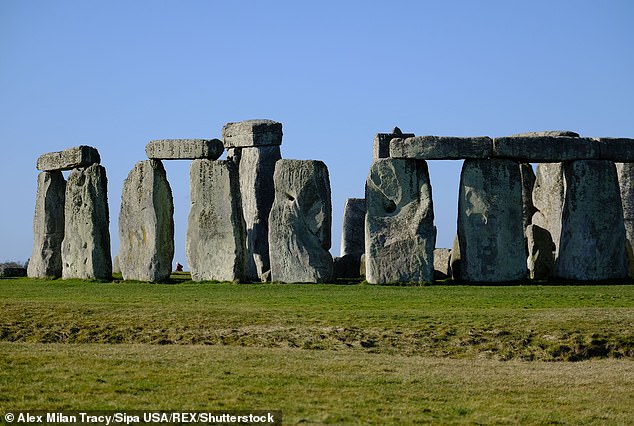


 China building a 'great wall of SAND': Coral reefs are being...
 Are these mystery radio bursts messages from ALIENS? Study...