Ontdek de Fascinerende Wereld van UFO's en UAP's: Jouw Bron voor Onthullende Informatie!
Ben jij ook gefascineerd door het onbekende? Wil je meer weten over UFO's en UAP's, niet alleen in België, maar over de hele wereld? Dan ben je op de juiste plek!
België: Het Kloppend Hart van UFO-onderzoek
In België is BUFON (Belgisch UFO-Netwerk) dé autoriteit op het gebied van UFO-onderzoek. Voor betrouwbare en objectieve informatie over deze intrigerende fenomenen, bezoek je zeker onze Facebook-pagina en deze blog. Maar dat is nog niet alles! Ontdek ook het Belgisch UFO-meldpunt en Caelestia, twee organisaties die diepgaand onderzoek verrichten, al zijn ze soms kritisch of sceptisch.
Nederland: Een Schat aan Informatie
Voor onze Nederlandse buren is er de schitterende website www.ufowijzer.nl, beheerd door Paul Harmans. Deze site biedt een schat aan informatie en artikelen die je niet wilt missen!
Internationaal: MUFON - De Wereldwijde Autoriteit
Neem ook een kijkje bij MUFON (Mutual UFO Network Inc.), een gerenommeerde Amerikaanse UFO-vereniging met afdelingen in de VS en wereldwijd. MUFON is toegewijd aan de wetenschappelijke en analytische studie van het UFO-fenomeen, en hun maandelijkse tijdschrift, The MUFON UFO-Journal, is een must-read voor elke UFO-enthousiasteling. Bezoek hun website op www.mufon.com voor meer informatie.
Samenwerking en Toekomstvisie
Sinds 1 februari 2020 is Pieter niet alleen ex-president van BUFON, maar ook de voormalige nationale directeur van MUFON in Vlaanderen en Nederland. Dit creëert een sterke samenwerking met de Franse MUFON Reseau MUFON/EUROP, wat ons in staat stelt om nog meer waardevolle inzichten te delen.
Let op: Nepprofielen en Nieuwe Groeperingen
Pas op voor een nieuwe groepering die zich ook BUFON noemt, maar geen enkele connectie heeft met onze gevestigde organisatie. Hoewel zij de naam geregistreerd hebben, kunnen ze het rijke verleden en de expertise van onze groep niet evenaren. We wensen hen veel succes, maar we blijven de autoriteit in UFO-onderzoek!
Blijf Op De Hoogte!
Wil jij de laatste nieuwtjes over UFO's, ruimtevaart, archeologie, en meer? Volg ons dan en duik samen met ons in de fascinerende wereld van het onbekende! Sluit je aan bij de gemeenschap van nieuwsgierige geesten die net als jij verlangen naar antwoorden en avonturen in de sterren!
Heb je vragen of wil je meer weten? Aarzel dan niet om contact met ons op te nemen! Samen ontrafelen we het mysterie van de lucht en daarbuiten.
Berichten van 1 december 2018 tot 31 december 2018
UFO Sighting In Taiwan of 6 UFO Crafts near Mountain. Oct 25, 2010 UFO Sighting News.
I had to make this post again since it was deleted for unknown reasons. so here it goes. SCW Sighting location: Alishan Forest Recreation Area, Taiwan Date of sighting: Oct 25, 2010 Mr. Nien was in the Alishan Forest Recreation Area when he decided to snap a few pictures. The pictures he took were only 7 seconds apart. This means that the crafts speed was faster than the human eye could see it. This fits with what we believe alien tech is capable of. Mr. Nien took the photos at 9:41 AM and did not notice anything unusual when he had taken it. It was when he uploaded the photos to his computer that he noticed the UFO. Another UFO sighting in Taiwan back in Jan of 2004. It was all over every TW news station and newspaper. I (Scott C. Waring) even talked to an F-16 Teacher in the Taiwan Air Force and he said it looks like they are in flight formation and getting ready for something. Then he noted that they seem to shoot off one by one, then are replaced by another glowing UFO from below. I have seen had a similar sighting personally when I was in South Dakata, Rapid city. Very similar in appearance, except we saw the glowing balls fly away quickly one by one.
One of the most promising spots to find life in the solar system beyond Earth is Europa, Jupiter’s fourth-smallest moon. But even though scientists suspect the moon’s liquid ocean might harbor living organisms, it’s protected by a solid layer of ice that could be as much as 30 kilometers (18 miles) deep.
Now, researchers at with NASA’s Glenn Research COMPASS team have devised an idea for a probe that could access that ocean: a nuclear-powered tunneling bot that could burrow through the moon’s icy shell to probe its composition and, potentially, access the watery darkness under it.
Ice Limit
The researchers dreamed up two versions of the “tunnelbot,” one of which would use a small nuclear reactor and the other of which would use a “radioactive heat source module.” In both cases, the tunnelbot would use excess heat from its reactors to melt the ice as it traveled down.
As it went, the tunnelbot would analyze the ice and search it for signs of current or extinct life, reporting back to Earth with a fiber optic cable connected to communication equipment at Europa’s surface. It would even be equipped to explore lakes buried in the ice before it reached Europa’s oceanic depths.
Tunnel Vision
The NASA-sponsored research is just a concept study. Deploying it would require years of work and extensive precautions against damaging any potential ecosystem on Jupiter’s moon — not to mention figuring out a way to transport the heavy bot to Europa.
“We didn’t worry about how our tunnelbot would make it to Europa or get deployed into the ice,” said Andrew Dombard, a professor of earth and environmental sciences at the University of Illinois at Chicago who worked on the concept. “We just assumed it could get there and we focused on how it would work during descent to the ocean.”
It’s official: astronomersfound a new dwarf planetin our solar system — and it’s the most distant object ever observed in our solar system.
“I said ‘far out!’ when I discovered it, and it’s a very far out object,” said astronomer Scott Shepard from the Carnegie Institution for Science, asquotedby New Scientist.
The tiny planet is called 2018 VG18 — later nicknamed “Farout” by the team that discovered it — and it’s about 3.5 as far away as Pluto, some 18 billion kilometers (11.2 billion miles) away. That’s more than 100 times the distance between the Earth and the Sun — and about the same distance as Voyager 2, the NASA probe that launched in 1977 and reached interstellar space this month.
Farout was spotted by the Japanese Subaru telescope in Hawaii on November 10 by Shepard and several colleagues, according to a statement on Carnegie Institution for Science’s website.
(Illustration by Roberto Molar Candanosa and Scott Sheppard, courtesy of Carnegie Institution for Science.)
Unusual Orbits
So far, Farout is still deeply mysterious. But one aspect already attracting scientific interest is its unusual orbit. Farout orbits at an unusual angle, along with other so-called “trans-Neptunian objects.” There’s been a lot of speculation in recent years about what might be causing those astronomical bodies’ unusual trajectory.
One of the most popular explanations is the possible existence of a ninth planet, or Planet X. In fact, the astronomers discovered Farout while searching for the existence of a ninth planet, according to the statement. Most recent data suggests it could also be a group of objects within the same gravitational field.
Slow And Pinkish
But we can glean at least some details about Farout. Farout is estimated to be 500 km in diameter, and to take more than 1,000 years to orbit the Sun. It also has a pinkish hue, according to the researchers.
“With new wide-field digital cameras on some of the world’s largest telescopes, we are finally exploring our Solar System’s fringes, far beyond Pluto,” said Chad Trujillo, astronomer from Northern Arizona University.
The discovery shows that even though researchers are now routinely finding planets orbiting other stars, there are still planet-sized undiscovered objects in our own solar system. It really goes to show how much there still is to learn about our relatively small corner of the galaxy.
Does anyone worry about Egyptian curses guarding ancient tombs anymore? Apparently not since the country’s tourism ministry figured out how much money can be made by holding big ‘tomb opening‘ media extravaganzas as soon as they’re found. The curses don’t even seem to be scaring away tourists who are actuallyclimbing up the Great Pyramid to take nude selfies— unless you count getting arrested as a curse). Whatever the case, any and all curses were ignored over the weekend as a 4,000-year-old “exceptionally well-preserved” tomb belonging to a royal purification priest under the reign of King Nefer Ir-Ka-Re was opened and exposed to the harsh lights of the world media.
Shouldn’t there be a “No climbing or nude selfies” sign?
“It is the most beautiful tomb discovered this year.”
If anyone should know, it’s Antiquities Minister Khaled Anany, who announced the opening of yet another tomb at the Sacred Animal Necropolis in Saqqara to Egypt Today and other media sources. “Royal purification,” a description found in the tomb’s hieroglyphics, means high priest “Wahtye” was a supervisor for the king whose duties included inspecting the holy boat, which is most likely the funerary vessel used for taking the king to the afterlife. Wahtye had no boat in his own tomb, but the fact that it has apparently never been looted or even opened since its sealing meant that the writings and paintings on the walls were in great shape (see the beautiful photos here) and told the stories of his life, his wife ’Weret Ptah’, his mother ‘Merit Meen’ and the rest of his family participating in activities such as making wine and pottery, religious ceremonies, sailing and hunting. Royal purification priest was obviously a pretty good gig during the reign of King Nefer-Ir-Ka-Re, who ruled during the fifth dynasty of the Old Kingdom, a period from the early 25th century BCE until the mid 24th century BCE.
Sailing on the Nile
“The color is almost intact even though the tomb is almost 4,400 years old.”
Secretary-general of the Supreme Council of Antiquities Mostafa Waziri really didn’t need to put any more spin on the announcement. The tomb is a rectangular shape measuring 10 meters (33 feet) long, 3 meters (10 feet) wide and 3 meters high, with a basement with a basement, five burial shafts and two false doors. The colors are brilliant for being 4,000 years old and the statues carved into wall niches are in great shape. It’s no wonder the Antiquities Ministry opened the tomb just days after its discovery and is already preparing to open another one nearby that was just found.
Are the curses gone? Did they ever exist to begin with? Perhaps the only people being cursed by these ancient Egyptian tombs are the ones who were planning new mummy horror movies.
A Garden In The Afterlife - Woman struck by lightning tells her Near Death Experience
When Elizabeth Krohn headed to her Houston synagogue to attend a memorial service for her beloved grandfather, she couldn’t have known that her life would be changed forever.
As she drove the pleasant weather gave way to a downpour and fierce thunder and lightning soon followed.
She arrived at the synagogue and, with her young son in tow, started to make her way from the car to the building.
It was then that she was struck by lightning.
Elizabeth saw herself lying on the asphalt as she floated up to what she describes as a garden electrified with vivid, unearthly colors and infused with a sense of unconditional kindness and love.
She felt herself communing with a spiritual being, while her sense of time was upended.
She was given the choice of returning to her earthly life or remaining in the otherworldly paradise.
When she was told that if she went back she would have a third child—a girl who had already selected her and her husband as parents—she rejoined her body and the temporal world.
Then it got even stranger.
After the lightning strike her life was changed forever. She began to have dreams about future events, developed synesthesia, started seeing auras, and sometimes had a sense of inanimate objects radiating a life force.
A bizarre video apparently shot in Ireland and released online by conspiracy theory YouTube channel 'UFOmania' is now the hottest debating point among conspiracy theorists and extraterrestrial enthusiasts. The video shows a luminescentUFO, in the shape of a doughnut hovering across the night skies, and at the first glance, it literally looks otherworldly.
A doughnut in the skies?
The strange object in the skies seems static, and at no point in time, it makes any manoeuvres in the atmosphere. In the initial moments of the footage, the unidentified flying object spotted in the skies looked spherical in shape, but when the camera gets zoomed in, the real shape of the UFO becomes evident.
The video has been now submitted to MUFON (Mutual UFO Network), and their team is now apparently checking the authenticity of the video.
Alien spaceship or manipulated hoax?
The video uploaded by 'UFOmania' soon became viral on online space, and most people who watched the video argued that alien life is a reality, and extraterrestrials from deep space have been visiting the earth for many years.
Some of these people believe that aliens from deep space are very advanced, and they have all kinds of multifarious vehicles in different shapes; triangular flying saucers, cigar-shaped flying objects, and now these doughnut flying crafts.
"I guess the aliens have as many vehicle options as we humans do on earth. If we repeatedly saw one or two different types of craft I might buy into some of the sightings but with thousands of different shapes and lighting configurations, I find it hard to believe. Don't get me wrong...I know intelligent life far more advanced than we exist.....I just don't have proof," commented pushrod49, a YouTube user.
However, sceptics have already classified this video as a manipulated hoax. As per these people, the object spotted in the video could be either the trick of the lens or a computer power button shot in darkness. Some other sceptics argued that the doughnut shape of the UFO indicates this object is actually a night vision security camera.
"I can tell you exactly what it is. It is a security camera with night vision. I know because I have taken photos of one in 2014 while incredibly stoned, thinking it was a UFO," commented Rowan The First, another YouTuber.
In the Bible, Ezekiel marvelled as four angels (with wings and several faces) appeared to him, travelling in “something like a wheel within a wheel”.
But while historians claim Ezekiel was speaking symbolically, a NASA scientist believes the early Christians were visited by a UFO.
Daily Star Online has exclusively obtained footage from Blaze's Ancient Aliens episode to air tonight, which explores the theory.
In 1974 NASA scientist Josef Blumrich – who worked on the first manned lunar landing programme in the US – set out to disprove theories of a biblical-era UFO.
However, in book “The Spaceships of Ezekiel” Blumrich came to the conclusion Ezekiel was describing some sort of alien craft.
The scientist even went as far as to create a model of the ship, based on measurements and descriptions from the book of Ezekiel.
Similarly, a German engineer called Hans Herbert Bayer decided to create blueprints based on Ezekiel’s open-top building – which was made as a landing spot for the Bible's mythical chariot.
And astonishingly, Blumrich’s ship managed to fit “perfectly” into Herbert Bayer’s to-scale temple.
VISITORS: Ezekiel claimed to be visited by angels with wings (Pic: GETTY)
On the topic, Ancient Aliens host Giorgio A. Tsoukalos notes: “What we have here is a proof by indication.
“Here we have a NASA engineer and a structural engineer who didn’t know of each other’s work and both pieces fit together like a puzzle.
“In any court of law, that’s evidence that would hold up.”
ALIENS: Ezekiel recalled the moment "angels" visited earth (Pic: GETTY)
This belief is also held by Jonathan Young, curator of the Joseph Campbell Archives, who argues the “flames” of the craft could have been misinterpreted by Ezekiel as “angels”.
Speaking of the groundbreaking theory, he said: “If we thought of the word “angel” as representing something like celestial energy, it sounds much more like a spacecraft.”
New episodes of Ancient Aliens are on free to air channel BLAZE every Wednesday at 9pm on Freeview Channel 63.
Some Apollo conspiracy theorists believe Stanley Kubrick filmed the Apollo moon landings for NASA.
It happens every year. One or more students ask me if I think the Apollo moon landings were a hoax. I teach critical media studies at Temple University in downtown Philadelphia, where the diverse collection of urban students are street smart, open-minded, and hard-working. This is not an indictment of students in my classes. I’m sure it happens at other colleges and universities. Frankly, it’s not surprising that some American college students wonder about the Apollo 11 moon landings, given that polls and surveys show 24% of Americans and 25% of British citizens believe NASA faked the moon landings. Some people believe that NASA paid director Stanley Kubrick to film the fake footage.
The internet and YouTube are littered with zillion of claims that NASA masterminded an Apollo hoax. Christopher Nolan’s Interstellar (2014) depicts this issue in the scene where Matthew McConaughey confronts the future educators who deny NASA landed humans on the moon. Why are there so many attacks on the great achievements of Apollo? One reason is because of the rise of pseudoscience in popular culture.
In the masterpiece Interstellar, McConaughey (playing a former NASA pilot) confronts an educator who believes the moon landing was a NASA hoax perpetrated to bankrupt the Soviet Union.
Pseudoscience in the Guise of Skepticism
The students skeptical of the Apollo moon landings are often those who fashion themselves as rebels, anti-authoritarians, and challengers to the American cultural orthodoxy. Of course, being skeptical of the US government is understandable in general. Like all other political systems throughout history, the US government has lied, currently lies, and will lie again in the future. Governments are always lying about something. It’s obvious the US government is still lying about the Kennedy assassination, but there is zero doubt NASA sent humans to the moon.
It saddens me that youthful rebellion and much-needed government skepticism are channeled into pseudoscientific nonsense—not unlike the “ancient astronaut theorists” celebrated in the long-running Ancient Aliens (2010-) series, which is repeatedly aired on the History Channel in the United States.
Hijacking the space narrative from Stanley Kubrick’s 2001: A Space Odyssey, the Ancient Aliens series perfectly illustrates the rising tide of pseudoscience and conspiracy theory in American culture.
Like those who deny the Apollo moon landings, the ancient astronaut theorists present themselves as rebels against the mainstream orthodoxy of modern science and archaeology. They offer nothing other than an endless stream of bogus “evidence” for the scientifically illiterate and well-intentioned skeptics, like the students who ask me about Apollo. My debunking of the “ancient astronaut theorists” is (by far) my most read essay in Medium. It has thousands of readers, who I assume agree with the ancient astronaut theory because the essay also has very few likes and little applause. Yet not one reader has even remotely challenged any of my arguments. There are reasons why this particular version of pseudoscience exists, but I’ll save that for the end of this essay.
In 1969, the video and television technologies weren’t advanced enough to stage and fake the moon landing in any plausible way. NASA didn’t have anything like CGI or Photoshop back then. The TV cameras were primitive compared to the cameras of 2017, with HD and 360-degree perspectives. Though the fake moon-landing claims have been debunked on the internet, here are some of the most obvious reasons the Apollo moon landings could not have been faked.
1. 842 pounds of Moon Rocks
The astronauts on the six Apollo missions retrieved 842 pounds of moon rocks that were brought to Earth and shared with scientists around the world. If the rocks were from our planet and not from the moon, the scientists would surely have realized that and called NASA on its trickery. NASA still loans out sample moon rocks to educators and scientists from around the world. Could they all be in on the hoax across 50 years?
NASA still loans lunar samples to scientists and educators. Image from NASA website, October 20, 2017.
2. The Soviet Union Knew Apollo 11 Happened
The United States and former Soviet Union were in a “space race” to get to the moon first, supposedly to show the superiority of their socioeconomic systems. The Soviet Union easily tracked the Apollo spacecraft to the moon with its telecommunications satellites and picked up both the Apollo radio transmissions to Mission Control and all of the television broadcasts. The Soviets possessed such technologies because they too sent spacecraft to the moon in the 1960s (sans cosmonauts). If NASA didn’t really send astronauts to the moon, the Soviet Union would have certainly known and taken the opportunity to embarrass the United States on the “world stage” at the height of the Cold War. The possibility of the Soviets going along with such a hoax is far below zero (lower than the winter temperatures in Siberia!). Moscow’s Pravda newspaper even acknowledged the Apollo 11 moon landing with a front-page story.
News story of Apollo 11 moon landing. Pravda, July 22, 1969.
3.Reflectors Left on the Moon
The Apollo 11 and 14 astronauts left behind mirror-like prisms on the moon (the lunar laser-ranging retroreflector array) that are targeted with lasers by scientists at the McDonald Observatory in Texas and other observatories around the world. The lasers accurately determine the distance from Earth to the moon, which is moving away from the Earth by about 3.8 cm per year. Could all the astronomers and scientists at the McDonald Observatory be in on the NASA hoax? What about astronomers from other observatories in other nations?
4. Tracks on the Moon
The Lunar Reconnaissance Orbiter has provided images of the Apollo landing sites, including astronaut tracks, moon buggies and their tracks, and the descent part of the lunar modules. In the 21st century, could the world’s scientists and astronomers be fooled by trick photos from NASA?
From the NASA website, October 20, 2017.
5. Could 400,000 Scientists Be Tricked?
Approximately 400,000 scientists, engineers, and technicians worked on the Apollo project for over a decade. They came from many countries and all over the US. It is patently absurd to think they all were all somehow tricked or part of a NASA hoax.
NASA’s Mission Control during the Apollo program. For Apollo 11 conspiracy theorists, these scientists and technicians were creating the hoax or were all tricked.
6. Why Land on the Moon 5 More Times?
The United States made six visits to the moon. Let’s consider for a moment that they were all staged. If the first “hoax” were successful, the United States would have defeated the Soviets in the race to the moon. Why risk faking five more visits and thus increase the chances of slipping up and getting caught by 500%? NASA would have had to fake the famed Apollo 13 mission, which was aborted on the way to the moon because of an on-board explosion; it was freaking scientific genius that enabled the Apollo 13 astronauts to orbit the moon and return safely to Earth. If NASA faked the moon landings, one time would have been enough. Along with the other reasons listed above, that’s why we can be certain Apollo landed on the moon and returned to Earth six times.
Patches for the Apollo flights 12–17. Why fake five more moon landings and fake the near-disaster of Apollo 13?
Apollo and the Attacks on Human Achievement
To me, it’s mind-blowing that pseudoscience and antirationalism are widespread in the global culture of the 21st century.Let’s be very clear what is stake here: truth, sanity, human achievement, and our place in the universe.The Apollo missions were incredible achievements, perhaps the greatest in the history of the human species. The Apollo program dramatically illustrated the incredible things humans can do when reason, science, creativity, cooperation, ambition, and bravado are applied to the pursuit of genuine achievement and enlightenment. Claiming Apollo was a conspiracy is not merely an attack on NASA, it’s an attack on human reason, achievement, and aspiration. What’s the underlying reason for the Apollo conspiracy theorists? Here’s my take.
The original perspective of Earthrise, the famed image captured by Apollo 8. Earth amid the cosmic void, the concept most people can’t handle without relying on a Creator or some other story to make us feel special and secure. The reason we can’t see the stars in the image is because of the camera settings to capture both the Earth and the bright lunar landscape in a clear image.
NASA’s grandest achievements (Apollo and the Hubble Space Telescope) have collectively destroyed the pre-Copernican narratives humans use to explain their origins and destinies. In the wake of Apollo and the views of Earth from space, the tribalism (racism, sexism, homophobia, nationalism, etc.) and narcissistic delusions of cosmic centrality and our super-specialness are bogus beliefs and can no longer be taken seriously. Yet these views are running amok on Earth. NASA and Apollo have rocked our worldviews and much of society has yet to accept what it means, still clinging to sacred texts and YouTube videos claiming the moon landings were filmed by Kubrick. Even the Apollo 8 astronauts contributed to the rise of anti-science culture by reading from Genesis while orbiting the moon in 1968—an intellectual collapse of epic proportions, a crash on global TV. We are not special, not significant, not the center of the universe, and there’s no evidence that super-beings are looking after us and controlling our destiny, be they deities or ancient aliens.
To keep the dominant narratives alive back on Earth, the achievements and discoveries of NASA, Apollo, and the Hubble telescope must be neutralized, marginalized, or flat-out discredited. It’s like Galileo and Edwin Hubble never existed. In the end, those who deny the moon landings are waging an assault on sanity—an assault on logic, science, and basic rationality. More importantly, the deniers are attacking and undermining the great human achievement of Apollo, precisely because the real meaning of Apollo challenges the dominant narratives to which they are desperately clinging to out of sheer existential dread. The hoax was not perpetrated by NASA or Kubrick, but in the minds of the deniers and their pre-Copernican narratives. It’s not even remotely sane.
In the wake of Apollo and the Hubble telescope, we face the paradox of our greatest achievement. We humans have ventured to the moon and peered into a vast and ancient cosmos, a universe of two trillion galaxies stretching across 100 billion light years, a universe in which our species is not central or significant and perhaps even meaningless. As seen in the Apollo 8 photo above, the blackness of space shows there is no self-evident meaning or purpose to human existence. This poses the greatest intellectual challenge for humanity: to ground human purpose and meaning in something external to our existence, in a vast universe of which we are insignificant and inconsequential. Pseudoscience and Apollo conspiracy theorists have no answer for this challenge.
NASA’s great achievements suggest we practice a bit of cosmic humility along with developing a new philosophy for human existence. It’s like we need an Apollo program for secular philosophy. It’s time to abandon the superstitions and pseudoscience. It’s time to grow up.
Water plumes on Europa: Tasting an extraterrestrial ocean
Credit: Swedish Institute of Space Physics
Computer simulations of the plumes of liquid water that stream out of Jupiter's moon Europa show that the forthcoming space mission JUICE may offer an answer to the question as to whether the Jovian moon's subsurface ocean could harbour life. Hans Huybrighs comes to this conclusion in the doctoral thesis he has recently completed at the Max-Planck Institute of Solar System Physics and the Technical University Braunschweig, Germany, in collaboration with the Swedish Institute of Space Physics in Kiruna.
A deep ocean of liquid water is hidden under the icy surface of Jupiter's moon Europa. Life might have developed here, shielded from sunlight and curious observers from planet Earth. Peeping through the ice to find traces of this hypothetical life is easier said than done, especially when you realize that the ice could be several kilometres thick. In 2022 the European Space Agency (ESA) will launch its space mission JUpiter ICy moon Explorer (JUICE). The JUICE spacecraft will arrive at Jupiter and its icy moons in 2030 and on board will be the Particle Environment Package (PEP) developed at the Swedish Institute of Space Physics (IRF). New research shows that PEP, an instrument consisting of several particle detectors, will be able to "taste" the plume in different ways and shed some light on the contents of Europa's ocean.
Observations from the Hubble Space Telescope of Jupiter's moon Europa, made in recent years, have shown that water is erupting from Europa's surface.
"Europa's plumes are the most straight-forward way to taste its subsurface ocean," says Hans Huybrighs. "Flying through one of the plumes of water and taking samples of the material could be the easiest way to study Europa's ocean. JUICE will be the first mission that might be able to do this."
After its arrival at the Jupiter system in 2030, JUICE will make two flybys of Europa. To figure out if JUICE will indeed be able to sample the plumes, Hans Huybrighs and his colleagues made computer simulations of the plume eruptions. By calculating the trajectories of millions of particles launched by the eruption, it is possible to determine if the particles can reach the spacecraft and, if enough of them do, to detect them. The simulations show that though most of the particles fall back to the surface after the eruption, enough of them can reach the JUICE spacecraft as long as a plume is active near the spacecraft's orbital footprint. Interestingly, some of particles won't fall back. They become electrically charged after being bombarded by radiation particles moving in Jupiter's strong magnetic field. These newly-charged particles are no longer bound by gravity and will move away from Europa, guided by electromagnetic fields. Even though only a fraction of the plume particles become electrically charged, enough of these particles can still be detected by the PEP instrument.
"Our simulations show that JUICE will be able to detect the plume eruptions in at least two different ways," says Hans Huybrighs. "It might even be possible to detect not only the water of the plume, but other substances that tell us more about the contents of the sub-surface ocean and its habitability as well."
Hans Huybrighs defended his doctoral thesis, "A search for signatures of Europa's atmosphere and plumes in Galileo charged particle data", at the Technical University Braunschweig, Germany, on 5 December 2018.
SCIENCE BEHIND THE FICTION: CAN WE BELIEVE THE AREA 51 WITNESS OR WAS HE A LIAR?
Anyone familiar with the UFO community has probably heard the name Bob Lazar. He’s something of an infamous character among skeptics and UFO enthusiasts, alike. He’s largely responsible for bringing Area 51 to the attention of the public in 1989.
Lazar emerged, first shrouded in anonymity and a fake name, later in the light of day as himself. He claimed to have been hired as a physicist working at S-4, a site near the now famous Area 51, to reverse-engineer captured alien technology.
Interviews conducted at the time, with TV reporter George Knapp, detail Lazar’s alleged experiences at S-4 involving several disk-like craft, antigravity engines, and little gray aliens.
Soon after, however, Lazar mostly faded into obscurity, working at his own company, United Nuclear, selling scientific materials. Now he’s back as the star of a recent documentary about his life and experiences with extraterrestrial technology entitled Bob Lazar: Area 51 & Flying Saucers.
Directed by Jeremy Kenyon Lockyer Corbell, the documentary has been criticized for offering no new information on the decades-old story. Supporters of Lazar say that’s because there’s no new information to tell. Lazar has remained largely steadfast in his claims and willing to admit his ignorance when questioning strays into territory outside of his experience or expertise. These are qualities that lend credibility to believers. It is, after all, how a person would react were they telling the truth.
It’s also clear that Lazar has some level of scientific literacy, speaking in a way that sounds to many as though he knows what he’s talking about. It’s easy to see why his story captured the imaginations of so many. It’s a good story. But is it any more than that?
Whether or not Lazar believes his own story, whether it’s true to him, is something that will likely never be known. But we can scrutinize his individual claims and see if they stand up to examination, in this world or any other.
Education and Training
Prior to beginning work at the mysterious S-4 facility, Lazar claims to have earned degrees in physics from MIT and electronic technology from Caltech. A subsequent investigation revealed that neither institution has any record of him as a student, let alone a graduate.
This level of education would likely be required of anyone hired by the government for a secret project dissecting alien crafts for duplication. Yet, Lazar himself admits to not understanding why he was chosen, stating he was not the most qualified person. Lazar seems to be at least as bewildered by his own story as anyone listening to it.
The question of Lazar’s education threatens to erode the very foundation of his claims. Without these degrees, it’s hardly believable he’d attain such a position on a secret project of any kind.
But he passed Polygraph Tests…
Another piece evidence Lazar has in his favor is the couple of polygraph tests he’s taken and passed. Supporters are quick to point at this as iron-clad proof that Lazar is telling the truth, despite the common knowledge that polygraphs are inconsistent and unreliable.
Polygraphs, or lie-detectors as they are commonly known, rely on physiological responses to detect deception. The common polygraph measures subjects for changes in heart rate or blood pressure, respiration, and skin conductivity. It all seems very scientific. You know the difference between when you’re lying and telling the truth. Surely there is some measurable physiological difference taking place when a person lies.
But there’s no good evidence to suggest that current polygraphs, as they are designed and implemented, effectively measure deception. Moreover, there is no standardized method of questioning.
What these machines seem to really be measuring is fear or anxiety. And there are any number of reasons an innocent person might feel fear or anxiety and a guilty person might not.
In short, Lazar may very well be telling the truth to the best of his ability, but a polygraph doesn’t prove that one way or another. Even if we give him the benefit of the doubt, that only indicates that Lazar is not intentionally being deceitful. It wouldn’t be the first time an individual believed something patently untrue.
What’s more, there are even those within the UFO community itself who believe that Lazar is being truthful despite being wrong.
No conspiracy theory is complete without a second layer of additional conspiracy. Some believe that Lazar was, in fact, hired by the government and intentionally placed in situations that would foster a belief in extraterrestrials and their technology for the express purpose of exposing that narrative to the public. All of this was done, according to some, in order to cover up the real truth about aliens on Earth.
Mysterious Element 115
During the course of Lazar’s interviews he’s discussed the various alien crafts he witnessed while working at S-4, supposedly originating from Zeta Reticuli, some 39 light years away. According to Lazar, the crafts move by use of engines capable of manipulating gravity using an, at the time, unknown element.
Element 115 was used in reactors to create a field of gravity waves which allowed the crafts to counteract the Earth’s gravity or create an artificial downhill in any direction they chose.
It’s Lazar’s explanation for the seemingly erratic behavior of alien crafts. It’s a neat explanation which is, on its face, internally consistent.
Lazar also suggested that Element 115 could not be synthesized on Earth, as it is simply too heavy. Lazar claimed instead that the substance could only be made in very large stars. Though the powers that be at S-4 had pounds and pounds of the stuff.
Despite his claims, scientists in Russia did succeed in synthesizing a material which fits in the appropriate slot on the periodic table.
Moscovium, as element 115 was named after its confirmation, is incredibly radioactive, with a half-life of less than a second. To date, approximately 100 atoms of the stuff have been observed.
Lazar, however, was wrong in more ways than one. Moscovium can’t be manufactured in a star, no matter the size. Sun-like stars fuse hydrogen into helium and, depending on the size of the star, that process can continue up the periodic table to iron. That’s where fusion ends. Heavier elements can be made during supernova events but it’s unclear if that’s what Lazar meant. In any event, so far as we know, Moscovium only exists artificially in a laboratory setting.
Even if Moscovium does occur naturally, Zeta Reticuli, the binary star system from which Lazar’s aliens supposedly originate, is similar in character to our sun. There’s no good reason Moscovium should occur naturally there.
The Motion of Flying Saucers
At one point in Lazar’s interviews, he explains the cause for the erratic motion of flying saucers, saying it is a result of interference between Earth’s gravity and the gravity-engines of the crafts.
Lazar explains that gravity is variable near the surface of the Earth and implies that these variations in gravitational force makes flying near the surface unwieldy in a way that isn’t so when maneuvering through empty space.
It’s true that gravity is not wholly constant throughout the whole of the planet. Because of the world’s spheroid shape, the effects of gravity differ depending on latitude. There is also altitude to consider as well as the density of nearby material.
Moving from the equator to one of the poles will result in roughly half a percent of change in the impact of gravity on an individual or object. Local changes based on material density (the factor which would influence a flying craft) account for less than a tenth of a percent. It’s difficult to imagine beings capable of traversing interstellar distances and being tripped up by something so trivial. And not just once or twice but all the time. Erratic movements are a hallmark of UFO sightings.
Conclusions
We can’t prove a negative. Maybe Bob Lazar really did work at a secret government facility in Nevada, reverse engineering secret extraterrestrial technology.
Maybe the government has undertaken a vast conspiracy to discredit him by erasing his educational records. Maybe he is an unfortunate genius caught up in the greatest scandal in all of human history.
Maybe the government has messed with his mind, accounting for his inability to remember clearly when he started working at S-4 or when he first encountered a craft from another world, things the average person would likely never forget.
Maybe there’s a good explanation for why beings from another star system should look so similar to human beings in body structure.
These are questions that will likely be the focus of controversy for a long while yet. There are far more down-to-Earth explanations for UFO sightings and tales of alien visitation.
What we can say for certain is the available evidence doesn’t support Lazar’s claim. Whether that means he’s lying, confused, or the victim of an elaborate interplanetary conspiracy -- we’ll leave that up to you.
Bob Lazar: Area 51 & Flying Saucers is available on demand now.
very short clip of a ufo ....in the last 10 seconds
little bit dubious of the title ....nasa motion detector footage?? I didn’t know of motion detecting cameras pointed at the moon? But it may be a thing, don’t know
Nasa shows first image from inside the solar atmosphere
The Nasa spacecraft "Parker Solar Probe" has transmitted the first image from the inside of the solar atmosphere - the corona. This was reported by the US space agency on its website, on which the spectacular image was also published.
The image was taken on November 8. During the photograph, the probe was 27 million kilometers away from the solar surface. The picture shows two strong particle streams of the sun at close range. They shine brightly into the image from the left.
The bright object to the left of the center of the image is the planet Mercury, the dark points are the result of image corrections.
The solar wind, the Sun’s outflow of material, along with one-off eruptions of solar material called coronal mass ejections carry the Sun’s magnetic field out through the heliosphere, producing space weather effects on Earth and other worlds.
Credits: NASA’s Goddard Space Flight Center/Scientific Visualization Studio/Greg Shirah via NASA Newsroom
This video clip shows actual data from NASA’s Solar and Terrestrial Relations Observatory Ahead (STEREO-A) spacecraft, along with the location of Parker Solar Probe as it flies through the Sun’s outer atmosphere during its first solar encounter phase in November 2018. Such images will allow us to provide key context for understanding Parker Solar Probe’s observations.
Deep biosphere beneath the seafloor explored at American Geophysical Union fall meeting
Scientists present recent findings on 'dark energy' in the subsurface biosphere
Scientists have found that rocks beneath the seafloor are teeming with microbial life.
This material is available primarily for archival purposes. Telephone numbers or other contact information may be out of date; please see current contact information at media contacts.
"Who in his wildest dreams could have imagined that, beneath the crust of our Earth, there could exist a real ocean...a sea that has given shelter to species unknown?"
So wrote Jules Verne almost 150 years ago in A Journey to the Center of the Earth. Verne probably couldn't have imagined the diversity of life that researchers observe today under the ocean floor.
Scientists affiliated with the National Science Foundation (NSF) Center for Dark Energy Biosphere Investigations (C-DEBI) will discuss recent progress in understanding life beneath the seafloor at the American Geophysical Union (AGU) fall meeting, held in San Francisco from Dec. 3-7, 2012.
Once considered a barren plain dotted with hydrothermal vents, the seafloor and the crust beneath it are humming with microbial life--with "dark energy," says Katrina Edwards of the University of Southern California, director of C-DEBI.
Seafloor and subseafloor bacteria not only exist, they're more abundant and diverse than previously thought. The bacteria "feed" on the planet's oceanic crust, posing questions about ocean chemistry and the co-evolution of Earth and life.
"We now know that this remote region is teeming with microbes, more so than anyone guessed," says David Garrison, program director in NSF's Division of Ocean Sciences, which funds C-DEBI.
While scientists have estimated that microbes living in deep ocean sediments may represent as much as one-third of Earth's total biomass, the habitable part of the ocean crust may be ten times as great.
Dark environments appeared to offer little energy for sustaining life. But the abundance of microbes in the subseafloor causes scientists to wonder how long life may have thrived there.
Researchers are working to answer such questions as:
What is the nature of subseafloor microbial communities, and what is their role in the alteration of young ocean crust?
Are these communities unique, especially in comparison with seafloor and sedimentary communities?
Where do microbes in the ocean crust come from--sediment, rock, seawater or another source?
"Dark energy" is found in ocean depths: life abounds above and below the seafloor.
Credit: WHOI
C-DEBI-related sessions at AGU include:
InterRidge Session: The Deep Subseafloor Biosphere
Understanding the subseafloor biosphere and its relationship to energy and material fluxes transported by fluid flow has the potential to answer questions about the evolution of life on Earth. This session provides an opportunity to hear results and ideas from various scientific disciplines.
OS13A. InterRidge Session on: Deep Subseafloor Biosphere I Posters Monday 12/3/12 1:40 p.m. - 6:00 p.m.; Hall A-C (Moscone South)
OS22A. InterRidge Session on: Deep Subseafloor Biosphere II Tuesday 12/4/12 10:20 a.m. - 12:20 p.m.; 3024 (Moscone West)
OS23B. InterRidge Session on: Deep Subseafloor Biosphere III Tuesday 12/4/12 1:40 p.m. - 3:40 p.m.; 3024 (Moscone West)
OS24B. InterRidge Session on: Deep Subseafloor Biosphere IV Tuesday 12/4/12 4:00 p.m. - 6:00 p.m.; 3024 (Moscone West)
The Deep Biosphere: Recent Progress in Understanding Life in the Deep Subsurface
This interdisciplinary session brings together researchers studying the size, distribution, activity and consequence of a microbial deep biosphere in the Earth's subsurface. Scientists involved in recent ocean drilling program expeditions and other deep biosphere programs will take part.
B42C. The Deep Biosphere: Recent Progress in Understanding Life in the Deep Subsurface I Thursday 12/6/12 10:20 a.m. - 12:20 p.m.; 2004 (Moscone West)
B43G. The Deep Biosphere: Recent Progress in Understanding Life in the Deep Subsurface II Posters Thursday 12/6/12 1:40 p.m. - 6:00 p.m.; Hall A-C (Moscone South)
InterRidge Session: Fast Moving Research at Slow Spreading Ridges
The range of processes that occurs at slow and ultra-slow spreading ridges has stimulated several multi-national research programs. The findings are relevant for understanding tectonic plate accretion, marine minerals, and chemosynthetic life. With an emphasis on previously overlooked ridge systems in the Northern Hemisphere (Arctic Ridges, Red Sea, Mid-Cayman Rise), and on new findings in the Southern Hemisphere, this session highlights recent results in the geophysical, geological, ocean and life sciences.
OS11E. InterRidge Session on: Fast Moving Research at Slow Spreading Ridges I Monday 12/3/12 8:00 a.m. - 10:00 a.m; 3011 (Moscone West)
OS12A. InterRidge Session on: Fast Moving Research at Slow Spreading Ridges II Monday 12/3/12 10:20 a.m - 12:20 p.m.; 3011 (Moscone West)
OS13B. InterRidge Session on: Fast Moving Research at Slow Spreading Ridges III Posters Monday 12/3/12 1:40 p.m - 6:00 p.m.; Hall A-C (Moscone South)
OS22B. InterRidge Session on: Fast Moving Research at Slow Spreading Ridges IV Tuesday 12/4/12 10:20 a.m - 12:20 p.m.; 3022 (Moscone West)
Rocks made of basalt on and under the ocean bottom harbor abundant deep-sea bacteria.
Credit: NOAA/WHOI
The drillship JOIDES Resolution, used to take samples of life far beneath the sea-floor.
Credit: IODP/USIO, Jennifer Magnusson
A recovery tool for sea-floor equipment rises through the ship's moonpool. Credit: IODP/USIO
JOIDES Resolution crew members prep an instrument that will remain under the sea-floor.
The National Science Foundation (NSF) is an independent federal agency that supports fundamental research and education across all fields of science and engineering. In fiscal year (FY) 2018, its budget is $7.8 billion. NSF funds reach all 50 states through grants to nearly 2,000 colleges, universities and other institutions. Each year, NSF receives more than 50,000 competitive proposals for funding and makes about 12,000 new funding awards.
In a monumental archaeological discovery, whose magnitude hasn’t been seen in decades, an aerial survey over northern Guatemala revealed tens of thousands of Maya structures, including pyramids, palaces, temples, fortifications, highways, houses, and farms, which had been hidden for centuries amidst the thick vegetation of the Guatemalan jungle. This incredible discovery indicates that the Mayas had an enormous, interconnected network of ancient cities, which revised estimates now say may have been home to as many as 7 to 11 million people some 1,200 years ago.
Archaeologists are Hitting the Ground Running
In February, National Geographic exclusively revealed that the previously unknown ancient structures were spotted using LiDAR (“Light Detection and Ranging”) technology, which can ‘see through’ the jungle canopy to identify monuments below . The aerial scanning technique is revolutionizing the field of archaeology as it quickly reveals man-made sites, which would be near impossible to discover through ground searches due to the dense vegetation and harsh conditions of the jungles of Central and South America.
Now the full study from Tulane University has been published in Science magazine and confirms the extent of the Maya civilization in the region.
Francisco Estrada-Belli, a researcher from Tulane commented:
“Seen as a whole, terraces and irrigation channels, reservoirs, fortifications and causeways reveal an astonishing amount of land modification done by the Maya over their entire landscape on a scale previously unimaginable.”
In a statement , Marcello Canuto, director of the Middle American Research Institute at Tulane listed some of the highlights, including 61,480 ancient structures in the survey region; an estimated population of 7-11 million; 362 square kilometers of terraces or otherwise modified agricultural terrain and another 952 square kilometers of viable farmland; 106 square kilometers of causeways within and between urban centers.
An earlier LIDAR scan that revealed a network of roads, canals, corrals, pyramids, and terraces at El Mirador.
Credit: Archaeological Project Cuenca Mirador.
“LiDAR is revolutionizing archaeology the way the Hubble Space Telescope revolutionized astronomy,” said Francisco Estrada-Belli , a Tulane University archaeologist and National Geographic Explorer [via National Geographic]. “We’ll need 100 years to go through all [the data] and really understand what we’re seeing.”
Now that the location of tens of thousands of monuments have been identified, archaeologists are hitting the ground running to begin excavations and explorations of some of the sites.
The project mapped a 2,100 square kilometre (800 square mile) area around the popular tourist site of Tikal in the Petén region of Guatemala. The results of the aerial survey, which produced a series of 3D images of the landscape below the jungle canopy, revealed an enormous network of cities, which is being hailed as a ‘megalopolis’.
The images showed over 60,000 previously unknown structures, including complex agricultural systems with canals, dikes, and reservoirs for irrigation, and terracing for supporting food production for the masses. Also discovered was a huge highway network – raised to prevent flooding issues in the rainy season – which connected the cities and quarries, and had been constructed by hand, without the use of the wheel or ‘beasts of burden’.
National Geographic✔@NatGeo
The interconnected network of ancient Maya cities was home to millions more people than previously thought http://on.natgeo.com/2BNpYgW
Another surprising finding was the sheer scale of the defensive structures, including walls, ramparts, terraces and fortresses, which indicate that warfare was happening on a much larger-scale than previously realized.
“Warfare wasn’t only happening toward the end of the civilization,” said Thomas Garrison, an Ithaca College archaeologist and National Geographic Explorer. “It was large-scale and systematic, and it endured over many years.” [via National Geographic].
Population Estimates Dramatically Revised
One of the implications of the discovery is that archaeologists must now revise their estimates of the size and extent of the Maya civilization.
“The results suggest that Central America supported an advanced civilization that was, at its peak some 1,200 years ago, more comparable to sophisticated cultures such as ancient Greece or China than to the scattered and sparsely populated city states that ground-based research had long suggested,” reports National Geographic.
More generous population estimates had been around the 5 million mark, but the recent finding suggests that 7-11 million people had been living in the jungle cities at the peak of the Maya civilization Late Classic Period (approximately 250 – 900 AD).
Artist’s representation of what the Maya world may have once looked like (artist unknown)
This is Only the Beginning
The survey is just the first stage of a project spearheaded by the PACUNAM Foundation , a Guatemalan non-profit that fosters scientific research, sustainable development, and cultural heritage preservation. Only 16% of the total area that the project will eventually map has been completed. Over the next three years, more than 14,000 square kilometres (5,000 square miles) of Guatemala’s lowlands will be scanned with the LiDAR technology, leaving open the question of just how many more thousands of monuments will be discovered.
It is an exciting time in archaeology as so much of the ancient world, which has been buried beneath sands, hidden below vegetation, or submerged by the sea, now has the potential to re-emerge from the pages of history.
Top image: LiDAR image revealing Maya structures beneath the jungle canopy in Guatemala
How Would You Describe Life On Earth To An Extraterrestrial?
You are out one afternoon minding your own business. Not really thinking about anything in particular. As you walk through the underbrush near the edge of the forest you look up. Did you just hear a theremin? Weird!
After a while, you are in a dense forest. You can just smell the pine needles and wood ticks. There is that sound again. A totally unnatural sound. Metallic? Nooooope? You walk a little further and through the canopy, you can see that the sun has almost set, the forest lights up with oranges and red tones. You keep walking…
With no slip or break in time, your forest views change to gray metal walls. It was as if time stopped and you were transferred to a weird office room. No windows, no sounds, no explanation. Just a table platform with one chair on one side and what looks like a concave mirror the size of a large chair on the other side. You wonder if you have fallen and hit your head and now are strapped into a hospital bed with brain damage experiencing a hallucinatory nightmare. Panic kicks in and you can taste copper in your mouth.
With no warning, a panel in the wall opens up and a twelve-legged, nine-eyed, semi-transparent creature undulates in. You hope you are strapped into a hospital bed drooling on yourself. Your not!
A hammer-like blow hits you straight between the ears. It impacts again. There is a sound with no obvious direction. It’s coming from somewhere but you can’t detect from which direction. After a while of introspection and thought you realize the hammer is not a hammer but words. English?
It seems to be coming from the multi-eyed, multi-limbed polyp looking creature. It repeats the message:
“As a being of Earth please tell us what Earth is like. All living creatures consciousness is important to us. Tell us how you see your planet.”
You sit in stunned silence as you believe you can feel the vague straps on your wrists and a blunt feeding tube, but no luck you are here in a dank little room with an alien life form. What can be said, what should not be said? Are there wrong answers? Is this creature some kind of interstellar scientist, or does it just like to play with his food before devouring it?
You think for a long while then stammer out…
In some ways, life here, humanity I mean…is morbid and repugnant. In some ways, you would be better skipping town and arrive at the next planet. Our planet lays claim to bloody warfare and inhuman methodologies. Through our history, we have attacked and dehumanized others based on their appearance, and even now we judge them for their outwards beauty or lack thereof. We pretend that others don’t exist due to their way of life, and we commit horrific atrocities because we are blinded by the false truth of our gods.
But, if we wanted it, we can do anything. We can make language, cities, and culture. We can make stories that last centuries and can make discoveries that last the test of time. We can advance our sciences and knowledge of them to an infinite degree.
More important than that, though, is our bonds with each other. When we stand tall and brave, no tyranny can topple us. Our wills are steel and our morals iron, and our ideals are stronger than any metal. We can overcome any tragedy when we set our strength to it, and each one makes us stronger. Our arms wrapped around one another can mend any tear in our heart, and our tears for another will heal our damage.
You don’t know exactly why but you infer that the creature looks bored at your answer. You change gears on a dime. You put on your imaginary lab coat.
I believe that the single most astonishing attribute of life on Earth is that it is ALL related.
This is entirely counter-intuitive because on a macroscopic level, a bird is clearly not the same as a dolphin, or a spider the same as an octopus or a cabbage, and yet ALL of life uses the same basic cellular molecular processes, divided into three domains. Roughly 50% of our DNA is shared with cabbage and bananas.
Most of what we think of as “life” is just in that tiny three-pronged branch on the far right, including all animals and plants. Charts and images from bygone days of school materialize in the centre of the table.
If you look at the evidence at a molecular level, analyzing the structure of the DNA that life shares on Earth, you will find that EVERY living thing on Earth is related by descent. Our tree of life looks like this…
If you look at it over time, you can see how all of life branched out from a solitary surviving branch 3.8 billion years ago.
There is a long silence in the room. Is the thing thinking? Does it sleep?
A single wave of the creatures lower right tentacle and you are back in the forest. It is past midnight now and you are cold and shaken up. You go home eat a cold dinner and consider if what just happened really happened or not.
You hope you gave useful answers.
Who are we? We find that we live on an insignificant planet of a humdrum lost in a galaxy tucked away in some forgotten corner of a universe in which there are far more galaxies than people and I am just one of them.
What Lies Beneath Area 51 + Man Who Spoke Out About Area 51 Has An Invention (Video)
MYSTERIOUS crater-shaped hole in the ground near to Area 51 is “unlike anything ever seen” and has prompted theories that the bizarre crater could be an entrance to an underground military base.
A bizarre crater appeared on Google Earth earlier this week close to Area 51 and appears man-made with a strange tower emerging out of the huge ditch. The incredible discovery was revealed by Blake and Brett Cousins – of YouTube channel thirdphaseofmoon – who captioned the footage: “We Found Something Underneath Area 51.” In the footage, a large, thin object can be seen poking out of the middle of a large circular hole in the ground.
The shock revelaton has sparked a frenzy of theories, including that the huge tower inside the vent is the tower of a new top-secret underground military base.
Speaking about his discovery, Blake Cousins says: “Conspiracy theorists are going wild right now.
“This could be some sort of vent or a tower embedded within a crater close to Area 51. This not a natural phenomenon, it is quite a mystery.
He said: “It doesn’t relate to any of the other craters in the area – this one looks like a tower or a vent.
“It is a massive crater – the tower looks like it is dozens of feet tall.
“This crater doesn’t relate to any of the other craters. There is no measuring device coming out of it.
“There might be a base or something underneath. It has been dug out, carved out by humans. You hear about Area 51 as a massive city underneath the ground. This could be linked.
“It shouldn’t be there, it shouldn’t exist.
The crater is just miles from the top-secret military base Area 51, which has previously been linked to various alien experiments.
The Man Who Spoke About Area 51 And Was Ridiculed, Now He Invented A Car That Runs With Water,
Did a UFO Buzz Over the Paradise Camp Fire On The Day in Question? (November 8th)
The UFO that flashed before my eyes while watching this YouTube video only took 24/100th of a second to cross the parking lot sky. He was filming the Paradise Camp Fire that were burning behind the KMart/DollarTree Stores parking lot. so i decided to slow it down and have a screen by screen look. It definitely looks like a cigar shape and it definitely is an unidentified object and it was moving. Once again use your own discernment when looking for your own answers to these interesting events.
Over the next several weeks, I’ll be conducting interviews with leading UFO researchers from countries around the world in an effort to paint a picture of global UFOlogy today.
Paul Stonehill was born in Kiev, USSR, in 1959 and emigrated to the U.S. in 1972. In his youth, Paul helped smuggle people out from behind the iron curtain, aided dissidents, and smuggled banned literature into the USSR. He graduated from California State University with a BA in Political Science and wrote a thesis on the Soviet invasion of Afghanistan. Paul has worked as journalist covering warfare as well as freelancing on stories about anomalous phenomena. He created the Russian Ufology Research Center in 1991.
Paul Stonehill.
After the fall of Communism, his articles were published throughout Russia and the Ukraine. Since 1989, Paul has consulted for American television and motion picture production companies, as well as corporate entities.
RG: Who have been the defining figures in Russian UFOlogy over the past 70 years (for better or for worse), and why?
PS: Alexander Kazantsev, the former military engineer, administrator, and later sci-fi writer in the USSR. He was never persecuted or purged, even though he participated in the New York Expo in 1939. He came up with the hypothesis that the Tunguska Event was actually an E.T. spaceship, and he helped the early efforts of Soviet civilian UFOlogists propel their ideas to the Soviet public in a totalitarian state.
Alexander Kazantsev.
Also, Felix Zigel, Soviet scientist and active UFO researcher and a target of attention of the KGB and CIA. Zigel and his colleagues studied UFOs in the 1960s-1980s in the face of great adversity—in spite of informants, lack of funds and belittlement from the official media and the Communist Party ideologues; in spite of the books of American debunkers eagerly published in the USSR; in spite of inability to respond to arrogant and sly opponents who published articles against their efforts in the Soviet newspapers; in spite of the inability to spread their ideas through public lectures when available facilities would be shut and access denied.
Also worthy of mention are: Mikhail Gershtein, the tireless author and researcher in Russia—a scientist, journalist, and collector of UFO lore of his country; Vadim Chernobrov of the KOSMOPOISK—scientist, author, philosopher who passed away in 2017; and Vladimir Ajaja, who has contributed greatly to his nation’s UFO-and USO-research, despite some problems with the ideologues. Also, Kolchin, Villinbakhov, Petukhov, Smirnov, Dvuzhilni, Arkhipov, Popovich, as well as a number of others, most of whom have passed away but who helped shape Soviet/Russian/Ukrainian Ufology.
RG: What do you consider to be the most compelling Russian UFO incident on record, and why?
PS: There are two: the 1908 Tunguska Event, and 1986 Dalnegorsk Crash. The 1908 event was possibly an intercept of an alien/ET spaceship by an Earth-based projectile or missile. Despite the research that has been going on for 110 years—some of it quite secretive and mysterious—we know little about the actual event. But its impact at the time was quite tremendous.
Aftermath of the Tunguska event. Photograph from Kulik’s 1929 expedition taken near the Hushmo River.
The 1986 event was the destruction of a UFO—most likely self-destruction—in a remote (and off-limits to foreigners) mining town in the Soviet Far East. The debris left behind is considered by a number of scientists to be something that our current technology is unable to manufacture. Others disagree and consider the object to have been a foreign spy apparatus, but the Soviet government remained uncharacteristically quiet about the “intruder.” The event took place one day after the Challenger Disaster. What is the connection? Why were the Chinese ufologists (and some Korean) so very interested in the debris? Why did a whole school or group of UFOs visit the area in 1987, one year after the crash? Why are there more interesting UFO sightings in the Russian Far East? All this is covered in the books co-authored by Philip Mantle and myself. There are some other cases I consider to be important, despite the lack of more information and continuous secrecy: the Monchegorsk Object of 1987; the Dodin observation and sinister UFO of 1953; and the SETKA (top secret Soviet academic-military UFO research program) cases.
RG: What is the Russian government’s official stance on UFOs? When was the last time it issued a statement on the subject?
PS: The current government does not discuss them. But of course they are engaged in their own research—more sophisticated, more enhanced, quiet, and comprehensive. And it is done in cooperation with the United States and the People’s Republic of China. As to official statements on the subject, Russia’s leaders like to make wry jokes about “aliens.” They are a very sarcastic bunch, full of humor.
The Russian Presidential building.
RG: Does the Russian Ministry of National Defence have an official UFO investigations unit?
PS: Of course they do—more than one, and under inconspicuous names, too. They also have very sophisticated space forces. I discuss their current developments and some old but persistent secrets in my videos.
RG: Has the Russian government shown more or less transparency on the UFO subject than the US government?
PS: About the same. The government just does not discuss UFOs. It’s different than under the Soviets when UFOs were often explained as bourgeois inventions. The current government is rebuilding Russia’s military might. As such, they encounter UFOs and USOs in their exploratory quests, and, of course, in the testing of advanced weaponry, missiles, and submarines; in the development of the Arctic; and in the oceanic expeditions. But the Russian military are silent too. Some news leak out. We check our sources daily. There are a lot of interesting developments—sightings, encounters in the Russian Federation, in Central Asia and China.
RG: Does Russia have a national UFO investigations organization, today, and how many smaller Russian UFO groups are you aware of?
PS: KOSMOPOISK was very active under Vadim Chernobrov. Alas, he passed away in 2017. They are still active all over Russia and beyond. Mikhail Gerstein is very active and knowledgeable. Konstantin Khazanov is a skeptical and insightful Russian researcher. Igor Kalityuk Artyom Bilik in Ukraine. Sergey Yefimov in Central Asia. Some old UFO researchers, from the Soviet times, like Vladimir Ajaja, are still alive.
RG: What are the most active regions of Russia for UFO sighting reports (hotspots)?
PS: Wherever the secret, new, powerful missiles are tested. They are often mistaken for UFOs. But, in my research, I would say the Russian Arctic, the Russian Far East, including the Kurils; Siberia; North-West Russia; and the magnificent, ever mysterious, Urals.
Siberia, Russia.
RG: Have you personally had any UFO sightings?
PS: Yes. 1990, Northridge, Southern California—a fiery sphere in the sky.
RG: How long have you been involved in the UFO subject; roughly how many cases have you personally investigated; and what conclusions, if any, have you drawn about the underlying nature of UFO phenomena?
PS: I have been involved since my early youth, in Kiev (Kyiv) USSR. Since then, I have investigated a number of Russian/Soviet cases, and you can find them in our books. I have particular interest in USOs; “Russian” and Chinese “ancient aliens” or paleocontact; as well as international research, based on the hypotheses of Russian/Soviet scientists and thinkers. I visited Southern Africa in the 1980s and Mexico’s Yucatan several times. I explored ideas and hints found in books of Yefremov, Gorbovsky, others. But, also, as an American, and one who grew up in the tumultuous and fascinating Los Angeles, I have researched the mysterious tunnels and ancient civilizations in the area; local paranormal lore; and also some areas in the Pacific Northwest (i.e. Mount Shasta, 40 years ago, based on findings and publications of the Russian Australian writer and researcher, Andrew Tomas).
My conclusions are that we are dealing with an international phenomenon when it comes to USOs and UFOs, and that governments (major world and regional powers) know the issues and work together, albeit in almost complete secrecy, to deal with the phenomenon. As such, the areas of key international research and cooperation are: the Marianas Trench; Antarctica; the Arctic; and some other sites in our oceans. But China, Russia, and United States also have their own peculiar paranormal phenomena, strategic interests, and goals.
Depiction of a USO.
RG: How can Russian UFOlogy better itself?
PS: Russian UFOlogy would better itself through an influx of enthusiastic, energetic people. Much like those in the Soviet period, who had to overcome the ideological obstacles from the Soviet government and Communist ideologues—lack of funds and equipment, extreme secrecy and betrayals—and yet persisted in trying to find out what UFOs really are. But life is different now, and our perceptions and ability to record information is much different than 50 years ago. But the secrecy remains, albeit more sophisticated. And now there are tabloids, the Internet, and many other developments that would have been considered science-fiction. The debunkers, though, have remained, and are as unpleasant as before.
I believe there should be more international cooperation among ufologists. I have done as much as possible to generate such cooperation. OMNI Magazine had an article about my efforts in its October 1993 issue, and I continue to enhance such cooperation. I discussed Russian/Eurasian UFO and USO cases in Brazil and Hong Kong, and in a number of U.S. conferences. We all see the same mysterious unidentified flying and submersible objects. We (civilian researchers) need to start comparing data and information, and make necessary conclusions. And that is what I have been doing. It’s not easy; I have no sponsors, and have to fund my own work, but I persist.
For more information on the topics discussed in this interview, see Paul Stonehill’s many books, as well as his YouTube channel.
UFO orb scares fox on animal cam footage, Dec 2018, Video, UFO Sighting News.
Date of sighting: Dec 2018 Location of sighting: Unknown Animals are very sensitive to alien orbs. Also a lesser known fact is that these orbs are telepathic and fast movements frighten them. The orb was probably interested in the fox but some how the fox sensed the UFO and darted away. If you doubt that orbs are telepathic, the search on Youtube for "meditation, UFO." Loads of UFO videos will appear, some of them are made my local TV news agencies who recorded the event. Needless to say, I tried the meditation and it only worked the first time but never again. Saw an soft ball size orb 2 meters in front of me. I only regret that I didn't approach it and touch it before it shot off. Scott C. Waring Video states:
This security camera catches a strange scene. From out of the darkness comes an orb which scares a fox to run for cover. These balls of light have also been seen near crop circles. In World War 2 they were seen in the sky. Pilots called them "Foo Fighters".
Jellyfish UFO seen in blue sky over Brazil Dec 2018, Video, UFO Sighting News.
Date of sighting: Dec 2018 Location of sighting: Mairipora, Brazil Source: MUFON This is a jellyfish type UFO seen over Brazil this week. The UFO appears to be like a cloud, but has a definite shape of a jellyfish to it. The UFO trees to move slowly in order to confuse people into having doubt...causing people to ask themselves if its their imagination or is it real? Self doubt is a tool of alien...humans fall into it a lot. So..the UFO just drifts across the sky, no hurry to leave, because doubt often wins. Scott C. Waring
'Area 51 worker’ reveals CODENAME ‘used to describe ALIENS by US government'
A MAN who claims to have worked on alien technology at the notorious Area 51 base has revealed a secret codename used by workers to describe extraterrestrial life.
Bob Lazar gained international infamy back in 1989 when he claimed he was working on reverse engineeringalienspacecrafts insideArea 51. In 1989, with the help of journalist George Knapp, Lazar detailed a story claiming he was stationed at a base known as S-4, south of the USAF’s Homey Airport. He speculated the auxiliary facility in the Nevada desert was home to a number ofUFOs that were being tested by the US government to be reverse engineered.
'Third Phase of Moon', a popular conspiracy theory channel run by the Blake and Brett cousins has recently uploaded a strange video that shows a mysteriousUFO near Elon Musk led SpaceX Dragon spacecraft which was en route the International Space Station (ISS).
In the recently released video, a large triangular object was seen flying past the SpaceX spacecraft at a mind-blowing speed. The conspiracy theorists also argued that the live feed was interrupted soon after the object was spotted.
After uploading the video, the Blake and Brett cousins speculated that the object could be TR-3B, an alleged secretive military vessel developed by the US Air Force using anti-gravity technology.
"Could this be the infamous TR-3B up in space visiting up close? This is really a stunning footage. This thing is huge. Please notice the portals of the UFO underneath. It really matches the characteristics of TR-3B," said the conspiracy theorists in the video.
Conspiracy theorists also ruled out the possibility of this object being a reflection from the ISS, as the object even moved behind SpaceX Dragon's solar panel.
As the video went viral, viewers of the Third Phase of Moon alleged that Elon Musk and NASA are intentionally covering up some sinister activities which are happening in space for unknown motives.
Some other viewers argued that these UFO sightings are an irrefutable proof of alien existence. As per these people, friendly aliens used to visit astronauts at the International Space Station, and they even believe that extraterrestrials are now gearing up for a disclosure.
This is not the first time that UFOs similar to the alleged TR-3B in appearance are getting caught in the hawk eyes of conspiracy theorists. A few days ago, Tyler Glockner, a popular UFO researcher who runs the YouTube channel 'Secureteam10' released a footage that shows a black triangle hovering in the skies of Pennsylvania.
This Huge Pyramid emerges in Bermuda Triangle with Glowing UFO
Bahamas, Bermuda Triangle. Huge Pyramid has emerged in the ocean with glowing UFO seen over the beach / Great Abaco Island.
Recently American and French scientists as well as other countries that are conducting surveys in areas of the seabed of the Bermuda Triangle, claim to have found a pyramid standing upright on the seabed that has never been discovered. The length of the base of this pyramid reached 300 meters, 200 meters height, and distance from base to the tip of the pyramid is about 100 meters above the sea floor.
When talking about size, this newly re-discovered pyramid is larger in scale than the pyramids of ancient Egypt. On top of the pyramid there are two very large holes, sea water at high speed move through the second hole, and therefore the raging waves roll by forming a giant vortex that makes the waters around this cause a massive surge waves and mist on the sea surface. This new discovery makes scientists wonder if this is having an affect on passing boats and planes and could be the reason for all the mystery surrounding the area.
There are several Western scholars who argue that the pyramid on the seabed may have been initially made on the mainland, after which a devastating earthquake struck and changed the landscape completely. Other scientists argue that a few hundred years ago the waters of the Bermuda Triangle area may have as one of the cornerstone activities of the people of Atlantis, and Pyramids on the sea floor may be a supply warehouse for them. Perhaps it is related to the underwater race of humanoids discovered in Washington State in 2004 – the so called “aquatic ape” beings? (See last article titled “Animal Planet: Navy Cover-Up Of Intelligent Beings Found in Ocean”)
A more detailed study over time will give results that are difficult to imagine. Scientists have processed all of the data and concluded that the surface is perfectly smooth for it to look like glass or ice. The size of the pyramids are nearly three times the size of the pyramids of Cheops. This news was sensational, and was discussed at a conference in Florida and even reported to local Florida newspapers.. The journalists present in it, have a lot of pictures and high resolution computerized data, which show three-dimensional pyramids perfectly smooth, without being covered with a surface free of debris or algae or cracks.
There is also a suspicion that the Bermuda triangle and the area where this pyramid was supposedly located may be some sort of “holy grounds” that is being protected by the fabled Atlanteans – that whatever crosses over the location is considered an offering… Others hypothesize that the pyramid can attract and collect cosmic rays, from the so called “energy field” or “quantum vacuum” and that this may have been used as an Atlantean power plant (or whoever was around at the time). With the mystery still surrounding the Egyptian pyramids and the fact that the pyramidal structures seems to be found in almost all ancient cultures – its going to be hard to tell for certain the origin of this structure or if it truly exists.
Calvin Jones of the Florida state Division of Historical Resources said if it is a genuine archaeological find, the pyramid would have to have been built between 10,000 B.C. and 6,000 B.C., when the continental shelf was not covered by water, said Chisholm.
Florida archaeologists agree with him on the time span, but disagree with many other of his group`s claims.
Florida State University anthropologist Glen Doran professor said the earliest Near East pyramids are dated to about 4,000 B.C. and all New World pyramids are dated after 1 A.D. So any such structure off the coast of Florida would be at least 2,000 years older than all other known pyramids.
Other Underwater Pyramids are Found
In 1977, a mysterious discovery was made on the floor of the Atlantic concerning an unknown technology. A 650-foot pyramid was mysteriously lit up, with sparkling white water surrounding it that turned deep green, a shocking contrast to the dark black waters at that depth. The discovery was photographed by Arl Marshall’s expedition off Cay Sal.
Another huge pyramid, in 10,000 feet of Atlantic water, was reported to have been found with a pulsating crystal on top of it, by Tony Benik’s expedition. The group also found an opaque crystal tablet there, and reported that when a light was beamed through it, mysterious inscriptions became visible.
More underwater pyramids were found off Central America, Yucatan, and Louisiana, where domes were found in the Straits of Florida. A marble Greek style building was found between Florida and Cuba. And what about the column that radiated energy Dr. Zink found in the Bahamas and Zink also brought up other artifacts from his dives over Atlantis, and he was interviewed by Mind International agent Steve Forsberg.
Other pyramids have been explored by a Dr. Ray Brown on the sea floor off the Bahamas in 1970. Brown was accompanied by 4 divers who also found roads, domes, rectangular buildings, unidentified metallic instruments, and a statue holding a “mysterious” crystal containing miniature pyramids. The metal devices and crystals were taken to Florida for analysis at a university there. What was discovered was that the crystal amplified energy that passed through it. Perhaps this is the reason for the glass-like pyramid !
THE EARTH SOUNDED LIKE A BELL FOR 20 MINUTES AND SCIENTISTS CAN NOT EXPLAIN IT
On November 11, something really strange happened that he learned from scientists.
The scientific instruments detected unexplained earthquakes that originated about 15 miles off the coasts of a French island between Africa and Madagascar.
The strange thing is that it was not an earthquake.
In fact, scientists have no idea what happened.
Was it a meteorite impact? A submarine volcano? Did a secret nuclear test happen? Was it extraterrestrial?
Nobody seems to have an answer.
Waves collected by seismic instruments rippled far from the banks of Mayotte, the French island where everything began. Soon after, seismic sensors located in Zambia, Kenya and Ethiopia detected the same.
The fact that the seismic sensor detected seismic activity in Zambia, Kenya and Ethiopia may not seem strange at first.
However, shortly thereafter, the seismic wave continued to travel until it was finally picked up by researchers as far away as Chile, New Zealand, Canada and even Hawaii, approximately 11,000 miles away.
It becomes even stranger.
The mysterious phenomenon made our planet sound like a massive bell for a period of about twenty minutes, and while all this was going on, not a single human felt anything out of the ordinary.
It is one of the strangest things that happens, so the experts are not fully prepared.
Göran Ekström, a seismologist at the University of Colombia, explained that while our planet sounded like a bell, the waves maintained a monotonous tone of low frequency as it propagated.
Accelerated course on earthquakes
When earthquakes occur, scientists usually detect a short, sharp crack.
Due to the tensions that exist in the terrestrial cortex as it is released, scientists can pick up pulses of identifiable seismic waves that radiate outward from where earthquakes occur.
If you find this article interesting,please share it, your friends might be interested. Read more related articles!
Atlantis Discovered in the Bermuda Triangle – The Sunken City Features Giant Pyramids and Sphinxes [Complete]
Two scientists, Paul Weinzweig and Pauline Zalitzki, working off the coast of Cuba and using a robot submersible, have confirmed that a gigantic city exists at the bottom of the ocean.
The site of the ancient city — that includes several sphinxes and at least four giant pyramids plus other structures — amazingly sits within the boundries of the fabled Bermuda Triangle.
According to a report by Arclein of Terra Forming Terra, Cuban Subsea Pyramid Complex, the evidence points to the city being simultaneously inundated with rising waters and the land sinking into the sea. This correlates exactly with the Atlantis legend.
Huge UFO Crashed into a remote area of the Zambezi River
Africans were shocked when they noticed a wrecked flying saucer in the waters of the Zambezi river.
The UFO hunters from Africa was informed that recently, near the banks of the Zambezi river struck the giant flying object, fragments of which all went under water. Ufologists suggest that UFOs crashed in the air and unable to land successfully. It is reported that nothing living around a strange metal object was found.
According to socialists, the length of the alien flying machine is about 69 meters, while the width is 23 meters. We will remind that earlier the experts in Antarctica also noticed a broken UFO, which could belong to the aliens.
On May 30, 2018, at 21:00, an automobilist was driving on highway 24 in the evening. Suddenly, he noticed a bright disk-shaped UFO…
Witness report:
“I was driving home one evening heading west on hw 24 near lake george, colorado. the time was approximately 9:00 pm. i noticed a bright, disk-shaped object hovering in the sky above some clouds in the distance. i observed the object for about 10 minutes while driving. the object remained stationary above the clouds and was approximately 1 mile west of my vehicle. i then pulled to the side of the road and got out of my car to observe the craft. as soon as i was outside of my car and observing the craft, it began to flash its lights erratically and seemingly change shape. i observed the craft for about 5 minutes standing on the side of the road by my car. i snapped a few pictures and took a short video. the object continued to hover stationary while flashing its lights rapidly. for some reason, i felt uneasy in the presence of the craft and decided to get back in my car and continue heading west to hartsel (where i lived at the time). as i continued west the object remained stationary (however the lights were constant and not erratically flashing as they were when i was on the side of the road outside of my car)and eventually i lost sight of the craft once i was on the other side of the clouds. the experience was quite remarkable and yet disturbing as well. i am not exactly sure what i saw that evening, but i am convinced that it was something very strange and likely not of this world. earlier that day i had a discussion with my co-worker daniel. he told of some ufo experiences that he had earlier in his life. i told dan that i had never seen a ufo before or experienced a sighting of any kind. interestingly enough, that very evening i encountered a ufo.”
The most mind-blowing, life-altering scientific discoveries of 2018 -PART III
25. This was a banner year for scientists in US politics: Americans elected at least 10 new science pros to Congress.
Foto: Congressional candidate Kim Schrier addresses the crowd at an election night party for Democrats on November 6, 2018, in Bellevue, Washington.sourceElaine Thompson/AP
Researchers hope it’ll give men and their families more male birth control options than the standard condoms and vasectomies.
The year-long trial just got underway, but no pharmaceutical companies have stepped forward yet to fund the drug.
28. A Paris-sized impact crater was discovered under Greenland’s ice. The meteorite responsible may have have weighed 5 billion tons.
Foto: An illustration of asteroids careening toward northern Greenland.sourceNatural History Museum of Denmark/NASA Goddard Space Flight Center
A study published in November described thecrater, which was made by a half-mile-wide iron asteroid that slammed into Greenland between 12,000 and 3 million years ago.
A giant meteor could still slam into us today, which is why one retired astronaut is urging NASA to send a telescope up into space to spot the threats.
“For God’s sake, fund it,” retired NASA astronaut Russell “Rusty” Schweickart told Business Insider.
29. There’s a lot more fascinating science to look forward to in 2019. For one, there’s a new lander on Mars.
Foto: Scientists and engineers inside mission control at NASA’s Jet Propulsion Laboratory celebrate the landing of the InSight Mars probe on November 26, 2018.sourceAL Seib/AP
The NASA InSight lander spent more than six months careening through space before it landed safely on Martian soil in November.
The quake-hunting robot could reveal new secrets about why Earth became such a nice place for us to live, while Mars wound up a cold desert planet.
30. People will continue striving to push human limits on Earth, too. At the bottom of the world, two men are attempting to become to travel across Antarctica unaided — which would be a first for humanity.
Foto: sourceCourtesy of Colin O’Brady
“Everyone has reservoirs of untapped potential inside of themselves and can achieve really incredible things,” 33-year-old adventurer Colin O’Brady said in November, before starting his 70-day trek.
The most mind-blowing, life-altering scientific discoveries of 2018 - PART II
12. The FDA also approved a new drug that targets cancers based on DNA instead of tumor location.
Foto: sourcektsdesign/Shutterstock
The drug, called Vitrakvi (larotrectinib), was developed by pharmaceutical company Loxo Oncology and approved by the FDA in November. Vitrakvi has already been tested on patients with lung, colon, breast and thyroid cancers.
Rather than going after certain types of cancer, the drug targets cancers based on genetically similar features (biomarkers).
“This new site-agnostic oncology therapy isn’t specific to a cancer arising in a particular body organ, such as breast or colon cancer,” FDA Commissioner Scott Gottlieb said in a release. “Its approval reflects advances in the use of biomarkers to guide drug development and the more targeted delivery of medicine.”
According to data released in October, Loxo said that 81% of patients who tried the drug saw their tumors shrink, while 17% of patients had their tumors disappear entirely.
The drug comes with a steep price tag, though: $393,000 a year.
13. Researchers have also been developing medical robots that are 1,000 times smaller than a human hair and can suffocate tumors.
Foto: sourceJason Drees/Arizona State University
This IV-injectable robot has been successfully deployed inside mice and pigs with breast, skin, ovary and lung cancers. After five years of research, the team of scientists behind the nanorobot published their work in February.
The killer robot attacks the tumor by blocking off its supply of fresh blood. Scientists haven’t tested it out in humans yet, though.
14. Cancer researchers also found new evidence that high-fat, low-sugar diets might help kill cancer cells when used in tandem with a certain type of drug.
Foto: sourceAfrica Studio/Shutterstock
Researchers are zeroing in on potential ways to make cancer drugs more effective by changing patients’ diets.
In July, a team of doctors published the results of a study in which they put mice with cancer on low-carb, high-fat ketogenic diets while administering a treatment called a PI3K inhibitor that’s designed to kill tumors. The results showed that the diet-treatment combination improved the medication’s effects.
Scientists are now moving forward with a human trial.
“We hope very much that we would see, in the future, a much more careful assessment of what diet means and how diet can affect chemotherapy,” Siddartha Mukherjee, the study’s lead co-author and an oncologist at Columbia University’s Irving Medical Center, told Business Insider.
15. Scientists figured out a way to grow meat in a lab without relying on any products from slaughtered animals.
Foto: sourceShutterstock
A handful of startups are racing to create real pieces of meat out of animal cells in a lab.
But for the most part, the food that’s used to coax those cells to proliferate is an animal product called fetal bovine serum, which comes from slaughtered cows. That means the lab-grown meat isn’t yet cruelty-free.
However, the Dutch startup Meatable claims to have solved that problem by using only stem cells from animals’ umbilical cords.
“This way, we don’t harm the animals at all, and it’s material that would otherwise get thrown away,” Krijn De Nood, Meatable’s CEO, told Business Insider in September.
The company aims to begin serving its slaughter-free burgers and sausages to restaurants in roughly four years.
16. In Egypt, archaeologists opened a 30-ton black sarcophagus and found three skeletons.
Foto: Archaeologists unearth coffin containing three mummies in Alexandria, Egypt on July 19, 2018.sourceREUTERS/Mohamed Abd El Ghany
The 2,000-year-old sarcophagus was discovered in July by a construction crew working in the Mediterranean port city of Alexandria.
“I was the first to put my whole head inside the sarcophagus,” Waziri said. “Here I stand before you … I am fine.”
The three skeletons found in the sarcophagus were most likely soldiers, according to Egypt’s antiquities ministry, and one skull showed signs of fractures caused by a sharp instrument.
17. Egyptian excavators also found a 3,200-year-old dairy product: the world’s oldest cheese.
Foto: sourceUniversity of Catania and Cairo University
The cheese was found in the tomb of a 13th-century BCE mayor of Memphis, Egypt, excavators announced in August.
Investigators think it’s either cow- or goat-milk cheese.
Cheese-lovers on social media quickly exclaimed that they wanted to eat the ancient curd, even though it might contain deadly bacteria.
18.Chinese scientists announced in January that they’d cloned monkeys, thereby breaking the “technical barrier” for cloning humans.
Foto: Zhong Zhong and Hua Hua, two cloned macaque monkeys at the Chinese Academy of Sciences in Shanghai.sourceThomson Reuters
The scientists at the Chinese Academy of Sciences Institute of Neuroscience cloned the monkeys using the same technique that produced Dolly the sheep two decades ago. But it’s still very difficult to clone primates: it took 127 eggs to produce two live macaques. (Scientists named the baby monkeys Zhong Zhong and Hua Hua.)
The researchers said they do not intend to clone people any time soon. Instead, they want to use the scientific breakthrough to better study diseases and potential new drugs.
19. Researchers also figured out other advanced new ways to make babies. But a recent announcement about genetically edited babies drew questions and criticism from scientists around the world.
But a more controversial announcement came from Chinese scientist He Jiankui, who claims to have successfully edited the genes in a pair of twins born in China in November. By using a cut-and-paste DNA-editing technique called CRISPR, he said, the babies were born immune to HIV.
Jiankui hasn’t produced any evidence to back up his claims, though, and it’s not clear why anyone would need to genetically edit babies to ward off HIV, since life-saving drugs already exist for the auto-immune disease.
Scientists also worry that if Jiankui’s claims are true, the changes he made could have far-reaching consequences, since any genetic mutations the babies may have would get passed on to their offspring.
20. Scientists also learned more about our human ancestors this year. It turns out that early humans didn’t hesitate to get freaky with other species, and interbred with hominins like Denisovans and Neanderthals.
Foto: Neanderthal paintings can be seen in a cave in Pasiega.sourceThomson Reuters
A genetic study published in March revealed that as early Homo Sapiens made their way out of Africa, they had sex and interbred with Denisovans on numerous occasions.
21. A female scientist won the Nobel Prize in physics this year for only the third time ever.
Foto: sourceCole Burston/Getty Images
Donna Strickland, an associate professor of physics at the University of Waterloo in Canada, shared the 2018 Nobel Prize in physics with a French scientist for her work on lasers.
“All this tremendous beauty and complexity of the biological world all comes about through this one simple, beautiful design algorithm,” Arnold said after she won half of the 2018 prize. “What I do is use that algorithm to build new biological things.”
The Nobel Prize in physics has been awarded to 210 people. Strickland, whose Wikipedia entry had previously been rejected because she wasn’t famous enough, was surprised to learn that out of all those winners, she was only the third woman.
“Is that all, really? I thought there might have been more,” she said.“We need to celebrate women physicists, because we’re out there.”
This year, a female chemist won the Nobel Prize, too. Frances Arnold became the fifth womansince 1901 to get it. The award recognized her work in using directed evolution to produce enzymes for new chemicals and pharmaceuticals. The Nobel Prize in chemistry prize has been awarded to 181 people since 1901.
22. Scientists discovered two new kinds of giant dinosaurs.
Foto: Here’s how the Ingentia Prima dinosaur may have looked.sourceJorge A. Gonzales
A study about one new species, which was discovered in Argentina, was published in July. The creature is called Ingentia Prima, a name derived from the Latin words for “huge” and “first.” The dinosaur weighed as much as three African elephants when it roamed 210 million years ago (that’s 30 million years earlier than scientists previously thought giant dinosaurs existed).
Another dinosaur, called Ledumahadi mafube, was discovered in South Africa, according to research published in September. It’s believed to have lived roughly 200 million years ago. That means both creatures would’ve been around at the time of Pangea, when the world’s land was still one supercontinent.
23. Climate scientists learned more about how our warming planet is hurting us.
Foto: Augustin Dieudomme looks out at the flooded entrance to his apartment complex near the Cape Fear River as it continues to rise in the aftermath of Hurricane Florence in Fayetteville, North Carolina on September 18, 2018.sourceAP Photo/David Goldman
The heat-trapping gas that’s been added to Earth’s atmosphere through the burning of fossil fuels also means that a trillion dollars in coastal real estate could be threatened by the end of this century. That’s according to a recent report released by the Trump administration, which also found that thousands more people will die each year from heat-related conditions if we keep up business-as-usual.
24. Investigators cracked the Golden State Killer case using DNA matching. The implications of that strategy are huge.
Foto: Joseph James DeAngelo, 72, who authorities said was identified by DNA evidence as the serial predator dubbed the Golden State Killer, appears at his arraignment in Sacramento, California on April 27, 2018.sourceFred Greaves/Reuters
A study released in October estimates that 60% of white Americans- who are the biggest consumers of DNA testing services- could now be identified up to a “third cousin or closer” using available DNA data.
Foto: REUTERS/Gregg Newton Spectators at Cocoa Beach watch SpaceX's first Falcon Heavy rocket launch from the Kennedy Space Center on February 6, 2018.
These and other accomplishments were an encouraging reminder that every day, scientists across the globe are learning more about how life and the universe work.
As the new year approaches, take a look back at some of the most marvelous, life-altering, and astonishing scientific discoveries and feats from 2018.
1. In February, SpaceX nailed an impressive feat: the company launched its re-usable, 27-engine Falcon Heavy rocket for the first time. It’s the company’s most powerful yet.
Foto: sourceThom Baur/Reuters
After Falcon Heavy launched on February 6, 2018, two of the rocket’s three reusable boosterslanded safely on the ground in Florida.
The core booster, however, missed its landing pad on a drone ship in the Atlantic Ocean.
“Apparently it hit the water at 300 miles an hour and took out two of the engines on the drone ship,” SpaceX CEO Elon Musk said. That loss was relatively minor in the context of the launch’s overall success, though.
2. The payload on that Falcon Heavy rocket was Musk’s red Tesla Roadster, complete with a dummy driver and a note on the dash: “DON’T PANIC!”
Foto: sourceYouTube / SpaceX
The car is still cruising the solar system today. In November, SpaceX announced it had sailed past Mars.
3. In March, scientists at NASA revealed new findings about how living in space can mess with your eyes and immune system.
Foto: NASA Astronaut Scott Kelly, left, and his identical twin brother Mark Kelly.sourceGetty Images/Bill Ingalls/NASA
When NASA astronaut Scott Kelly left his identical twin brother Mark on Earth and spent a year in space, scientists seized on the opportunity to learn more about out how life away from our home planet can change a person.
Researchers found that up to 7% of Scott’s gene expression hasn’t returned to its Earthly “normal” state since he came back. Those changes may be part of the body’s response to the stress of living in space, and they could lead to lasting consequences for Kelly’s immune system and retinas.
4. Star-gazers spotted a new kind of aurora that travels farther south than most. Its name is STEVE.
Foto: STEVE (Strong Thermal Emission Velocity Enhancement) and the Milky Way at Childs Lake, Manitoba, Canada.sourceKrista Trinder/ NASA Goddard Space Flight Center
The strange lights were first reported by citizen scientists in Canada in 2015. The amateurs formed a group and started working with researchers at NASA’s Goddard Space Flight Center. The result of that collaboration – the discovery of a new kind of aurora – was published in the journal Science Advances on March 14.
STEVE (which stands for Strong Thermal Emission Velocity Enhancementcan be tough to see, though, because the display typically lasts for less than an hour.
5. After three years of studying Mars, Italian scientists determined in July that it’s possible the red planet has a 20-kilometer-wide lake of liquid water at its polar ice cap.
Foto: This artist’s impression shows how Mars may have looked about four billion years ago, when it had an ocean of water.sourceESO/M. Kornmesser
“If these researchers are right, this is the first time we’ve found evidence of a large water body on Mars,” Cassie Stuurman, a geophysicist at the University of Texas told the Associated Press.
Other parts of Mars are too cold for water to stay liquid.
6. Astronomers found a ghost particle in Antarctica, revealing a source of some of the most high-energy radiation in the universe.
Foto: An illustration of a blazar, or spinning black hole that gobbles up matter and shoots out jets of high-energy radiation and particles.sourceDESY/Science Communication Lab
Researchers found the particle, a neutrino, in September using IceCube, an array of sensors embedded in Antarctic ice.
“When scientists tracked the particle back to its source they found a galactic monster called a blazar: a rapidly spinning black hole, millions of times the mass of the sun, that’s gobbling up gas and dust,” Business Insider’s Dave Mosher reported.
7. Humans came closer to touching the sun than ever before, after the Parker Solar Probe launched in November.
Foto: The Parker Solar Probe will come closer to the sun than any other probe before it.sourceNASA Goddard / Youtube
Solar experts hope that by traveling through scorching-hot areas of the sun, which can be 3.6 million degrees Fahrenheit, the robot will help unlock mysteries about how our star works.
8. Back on Earth, a bountiful pirate’s booty worth as much as $17 billion was discovered off the coast of Columbia.
Foto: This photo reveals a key distinguishing feature of the San José—its cannons.sourceREMUS image, Woods Hole Oceanographic Institution
The wreck was first found in 2015, and engineers from the Woods Hole Oceanographic Institution in Massachusetts sent a submarine drone down to explore it in more detail. In May 2018, they finally revealed the details of their discovery.
The sunken bounty may include gold, silver, and emeralds.
9. A 24-year-old Dutch man invented and launched a plastic-trapping pipe that he hopes will help heal our oceans. (But it’s running into some technical issues.)
Foto: sourceThe Ocean Cleanup
Boyan Slat hopes that his Ocean Cleanup device, which launched in September, will help make a dent in the growing plastic pollution problem. Plastics in the ocean are killing sea turtles and other life in the water at alarming rates.
But as the device combs through plastic stuck in the Great Pacific Garbage Patch, it’s letting some of that plastic waste escape back out into the ocean, Slat wrote in November.
“We are positive we are close to making it work,” he said.
10. Drugmakers scored some wins this year, too. There’s a new pill for peanut allergies, but it can come with nasty side effects.
Foto: Two new therapies use peanuts to desensitize those with the allergy, in hopes of protecting people from accidental exposure. These products could be the first peanut allergy therapies approved in the US.sourceShayanne Gal/BI Graphics
New allergy drugs like the one from Aimmune aim to re-train people’s immune systems to tolerate allergens like peanuts. Promising data from a trial, which was published in November, showed that after a year on the treatment, 67% of kids with peanut allergies were able to tolerate about two peanuts, compared to only 4% of those who got the placebo.
But the results aren’t always finger-licking good – because the drug includes peanuts, people can have severe reactions. More than 50 people in that trial had to get a shot of epinephrine after they had an allergic reaction.
11. Drugmaker Eli Lilly created a new kind of migraine drug, but it costs $575 a month.
Foto: sourceSamantha Lee/Business Insider
The treatment, which got the green light from the US Food and Drug Administration (FDA) in September, is the first drug that’s been approved to treat migraines. Previously, migraine treatment involved tools or medications originally created to serve a different purpose, like Botox and anti-seizure medicines.
How many galaxies are now known to lie within our Local Group of galaxies? How does our Milky Way rank, size-wise? And what about the vast superclusters beyond?
Artist’s concept showing our Milky Way galaxy, its satellite galaxies, and other galaxies in our Local Group. The Milky Way isn’t really the center of anything; that’s just the way the image is drawn. The 3 largest galaxies in the Local Group are, in descending order, the Andromeda galaxy, the Milky Way, and M33 also known as the Triangulum Galaxy.
We know where our galaxy is located, but only locally speaking. The Milky Way galaxy is one of more than 54 galaxies known as the Local Group. The three largest members of the group are our Milky Way (second-biggest), the Andromeda galaxy (biggest) and the Triangulum Galaxy. The other galaxies in the Local Group are dwarf galaxies, and they’re mostly clustered around the three larger galaxies.
The illustration above is a bit misleading because it suggests our Milky Way galaxy lies at the center of the Local Group. It doesn’t, of course, but the image is organized that way, presumably to honor our human perspective.
On the other hand, the Local Group does have a gravitational center. It’s somewhere between the Milky Way and the Andromeda Galaxy.
The Local Group has a diameter of about 10 million light-years.
Astronomers have also discovered that our Local Group is on the outskirts of a giant supercluster of galaxies, known as the Virgo Supercluster.
Distances from the Local Group for selected groups and clusters within our local supercluster, called the Virgo Supercluster.
Another artist’s concept of the Virgo Supercluster, via Wikimedia Commons.
At least 100 galaxy groups and clusters are located within the Virgo Supercluster. Its diameter is thought to be about 110 million light-years.
The Virgo Supercluster may be part of an even-larger structure that astronomers call the Laniakea Supercluster. It consists of perhaps 100,000 galaxies stretched out over some 520 million light-years.
The Laniakea Supercluster is one of many such vast structures in space known to astronomers at this time.
Map of superclusters within the nearby universe, with Laniakea shown in yellow.
Er zijn twee verschillende soorten ruimteprogramma's; de ene is de aan het publiek verkochte programma van NASA en de andere is de geheime ruimtevloot. Normaal gesproken zie je weinig van die geheime ruimtevloot, maar soms maken ze een foutje, zoals enkele dagen geleden gebeurde bij het ISS.
Voor de bevoorrading van het Internationaal Ruimte Station (ISS) wordt gebruikt gebruik gemaakt van de Dragon:
Dragon, ook bekend als Dragon 1 of Cargo Dragon is een herbruikbaar onbemand ruimtevaartuig ontwikkeld door het Amerikaanse ruimtevaartbedrijf SpaceX als bevoorradingscapsule. Met zijn eerste onbemande vlucht in december 2010 werd Dragon het eerste commerciële ruimtevaartuig dat succesvol op aarde terugkeerde. Op 25 mei 2012 voltooide een Dragon als eerste commerciële ruimtevaartuig een rendez-vous met het ISS.
Op 8 december 2018 vond er weer een dergelijk rendez-vous plaats. Echter tijdens het streamen van de beelden van deze koppeling, kwam er nog iets in beeld dat eigenlijk verborgen had moeten blijven.
Want achter de Dragon zie je op een gegeven moment een driehoekig ander ruimtevoertuig langs vliegen.
De beelden zijn echt en te zien in de complete live stream die hier staat. De volgende korte video laat zien hoe het driehoekig ruimteschip achter de Dragon langs vliegt.
Het ruimteschip dat achter de Dragon passeert zou natuurlijk heel goed buitenaards kunnen zijn, maar er zijn een aantal argumenten waaruit je zou kunnen afleiden dat je hier te maken hebt met een schip van aardse makelij.
Ten eerste is het belangrijk om te weten dat er naast het ruimtevaartprogramma van NASA een ander programma is. Een programma dat tot op de dag van vandaag geheim is. Voor wat meer achtergrond, hierna een deel uit een eerder artikel:
Aan het eind van de Tweede Wereldoorlog verzamelden zowel de Russen als de Amerikanen niet alleen de wetenschappers die werkten aan conventionele raketten, maar ook de vliegende schotel wetenschappers samen met veel van hun uitrusting, om tegelijkertijd zowel een conventioneel als een niet conventioneel ruimteprogramma te kunnen beginnen.
Het duurde niet zolang voordat de conventionele aandrijving begin jaren '60 overbodig werd. De aanwezige raketprogramma’s waren niets meer dan een dure propaganda-operatie voor publieke consumptie, om een fantasieverhaal levend te houden, een die al heel snel sterk afweek van het werkelijke verhaal.
Het geheime ruimteprogramma kwam onder de toenemende invloed van de wereldelite die georganiseerd was in de Bilderbergconferentie, een groep van machtige industriëlen, bankiers en Europese koninklijke families.
Het legerproject uit 1959, Project Horizon, werd in het geheim ingevoerd om zowel bases op de Maan als op Mars te bouwen. Volgens een aantal betrouwbare klokkenluiders worden deze bases gebruikt en onderhouden door de Bilderbergvloot.
Uit een vrijgegeven document van Wright Patterson kunnen we zien dat men in 1956 al bezig was met het plaatsen van nucleaire aandrijving in schotels. De senior wetenschapper van Lockheed, Boyd Bushman, liet in een interview in 1959 technische tekeningen zien van een operationele vliegende schotel, aangedreven door een nucleaire centrale.
Een technicus uit Area 51, Bill Uhouse, claimde dat hij al vroeg in de jaren '60 samengewerkt heeft met een Grey Alien in vliegende schotel simulators waarin piloten leerden vliegen met deze objecten.
In dezelfde tijdsperiode werkte een luchtmacht technicus, Charles Hall, bij Nellis en had contact met de Tall White Extraterrestrials (Grote Witte Buitenaardsen). Zij lieten hem een TW shuttle schotel van binnen zien waarmee je naar de Maan en naar Mars kon reizen, maar niet dieper de ruimte in. Deze schotel had logo’s van alle grote lucht- en ruimtevaartbedrijven in het interieur van de schotel.
Er was een ongeluk met een door kernenergie aangedreven schotel in 1980 waarbij een lekkage ontstond in een reactorvat. Terwijl de schotel was omringd door drie militaire helikopters kregen drie personen de volle laag straling over zich heen. Deze zaak is uiteindelijk tot in het Congres gekomen, zonder enige vorm van compensatie voor de slachtoffers.
Ongeveer 10 jaar geleden slaagde de Engelsman Gary McKinnon erin om de computers van NASA te hacken en ontdekte de code naam “Solar Warden” en roosters voor alle buitenaardse officieren en lijsten met rompnummers van de grote ruimteschepen, groter dan twee voetbalvelden, en hun kleinere beschermers. Maar, vier jaar voordat McKinnon zijn ontdekking deed werd er op het Open Mind Forum al gesproken over Solar Warden en ook dat de Bilderbergers eigenaar zouden zijn van die bewuste ruimtevloot.
Alle bestaande ruimteprogramma’s dienen om de bevolking zand in de ogen te strooien. De Solar Warden vloot bestond in 2005 uit acht grote ruimteschepen, vergelijkbaar met vliegkampschepen, en 43 “beschermers”, wat natuurlijk ook ruimteschepen zijn.
De driehoekige vorm van een ufo wordt vaak in verband gebracht met het geheime TR-3B project, waarover we in een eerder artikel het volgende schreven:
Officiëel is er uiteraard weinig te weten te komen over dit toestel, maar op de website WijWordenWakker vonden wij de volgende uitleg:
Veel mensen verwarren dit vliegend object met een UFO, terwijl het dat niet is, wel zit er UFO technologie in verwerkt. Van de TR-3B wordt algemeen aangenomen dat het een product is van het "Aurora" zwart-project. Volgens verschillende bronnen is dit de top van de geheime projecten. Dit geheime project van de V.S. kost $ 3 miljard per object en onlangs zijn er 3 TR-3B Astra’s aan Israel verkocht.
De TR-3B is een nucleair aangedreven vliegende driehoek, in staat tot fenomenale snelheden. Het toestel kan door reactieve elektrische stimulatie van kleur en van uiterlijk veranderen en een andere vorm aannemen of onzichtbaar worden voor het menselijk oog. De TR-3B Astra bevat een plasmaveld versneller annex magnetisch veld verstoorder ('disruptor') , waardoor de massa van het toestel incl. inzittenden met 90% verkleind zou kunnen worden, zodat de zwaartekracht nauwelijks invloed heeft op de prestaties van het toestel.
Mede hierdoor zou de snelheid boven Mach 50 uit komen, ter vergelijking: de meeste gevechtsvliegtuigen hebben Mach 2. (Mach 1 is gelijk aan de snelheid van het geluid). Daarnaast zou de Astra uitgerust zijn met een deeltjesversneller/pulselasers, 'scalaire' wapens (waardoor de vijand zo verward wordt, dat men vrijwillig de wapens neerlegt) en tevens 40 neutronenbommen.
Het object bij het ISS vertoont veel overeenkomsten met de TR-3B. Is het dat ook? Of is hier sprake van een totaal ander al dan niet buitenaards ruimteschip?
Het gebeurt niet vaak dat Tyler van Secureteam met zijn mond vol tanden staat, maar dit keer wel. Hij heeft ook geen flauw idee wat het zou kunnen zijn. Hij noemt ook de TR-3B, maar denkt door het vreemde oppervlak en de roodachtige kleur dat we hier misschien toch te maken hebben met een buitenaards schip.
Our relationship with methane is complicated. As natural gas, it’s an efficient fuel that that produces less carbon dioxide than other hydrocarbons. As cow farts, it’s a greenhouse gas often blamed for contributing to climate change. As an abundant substance trapped in permafrost, it gets explosively released when said climate change melts the permafrost in Siberia, creating massive holes. And, as a product of microbial methanogenesis, it’s an important sign that a planet may contain life, or at least have the ingredients to support it. The discovery of methane on Mars in 2004 got the scientific and let’s-move-to-Mars worlds excited. Unfortunately, the party may have been premature – new data shows that all of the Martian methane has disappeared. Who lit a match?
The Trace Gas Orbiter arrived at Mars in 2016. Martian methane—spotted in 2004—has mysteriously vanished
TG MEDIALAB/ESA
“The presence of methane has been confirmed thanks to the observations of the Planetary Fourier Spectrometer (PFS) on board Mars Express during the past few weeks.”
That was the news in 2004 when the European Space Agency’s ESA Mars Express orbiter detected methane in the Martian atmosphere. The next question was, “Where does this methane come from?” One possibility is from above when organic carbon from solar system dust falls to the surface and reacts with solar radiation to form methane. Another is from below, produced by chemical reactions or live or decayed microorganisms. In 2014, NASA’s Curiosity rover detected a seasonal spike in methane – unexplained but still confirming the presence of the gas.
Sniff, sniff.
Then came the spoiler. In 2016, the ESA launched the Trace Gas Orbiter (TGO) which began scanning the Martian atmosphere this year arrived at Mars in 2016, this year began to scan the atmosphere for methane with Belgium’s Nadir and Occultation for Mars Discovery (NOMAD) spectrometer and the Atmospheric Chemistry Suite spectrometer developed by Russia. Designed to detect very low levels of atmospheric methane (about 50 particles per trillion), scientists were confident they would finally get solid gas data.
“But we already know we can’t see any methane.”
There’s no methane showing up on Mars. Ann Carine Vandaele, NOMAD’s principal investigator and a planetary scientist at the Royal Belgian Institute for Space Aeronomy in Brussels, delivered the disappointing news this week at the semiannual meeting of the American Geophysical Union in Washington, D.C. Yes, they gave the TGO a software whack upside its head to make sure it was functioning normally and it was. How bad is this news? It could mean that there isn’t and never was any life on Mars, and there’s no methane that could possibly be used as a fuel by settlers from Earth.
No hot coffee on Mars? Why go?
The researchers aren’t giving up, especially since the Trace Gas Orbiter will be operational until at least 2022. They’re hoping there might be a mistake or they may find a sign this is just a temporary aberration and the methane is hiding somewhere. However, they probably already feel the same way Looney Tunes’ star Marvin the Martian often felt:
One of the more compelling reasons to accept the modern theory of the big bang and what came after it is because of how ridiculous it sounds and, as we all can empirically observe, the universe is ridiculous. Diving into the fundamental processes and epic, majestic, and impossibly old and huge events that started the chain reaction we find ourselves currently embroiled in, we start having to describe our reality with words like “gluon,” “quark,” and “hot soup.” Those are silly words for a silly universe. Yet, with the help of 21st century super-technology, researchers are beginning to see that these aren’t abstractions that only live inside equations, they’re tangible things (with the right measuring devices), and researchers with the PHENIX experiment at the Relativistic Heavy Ion Collider (RHIC) at Brookhaven National Laboratory seem to have cooked up a pot of the hot soup that emerged from the big bang and condensed into all the atoms we know and love.
Relativistic Heavy Ion Collider
It was a small pot. Subatomic in size, actually, but only slightly less impressive than a fine lobster bisque. The soup in question is called quark-gluon plasma, a “perfect fluid”—meaning that it flows with with essentially zero viscosity, or as opposite from molasses as you can get—that condensates into the protons and neutrons which make up the nuclei of atoms. To do this, researchers smashed different small particles into nuclei of gold atoms at close to the speed of light and a detector recorded what was expelled from the tiny, violent explosions. According to their predictions, a quark-gluon plasma perfect fluid (see? it’s ridiculous) would flow in the exact geometry of the exploded particle, which is precisely what happened. According to PHENIX spokesperson Yasuyuki Akiba:
“If such low viscosity conditions and pressure gradients are created in collisions between small projectiles and gold nuclei, the pattern of particles picked up by the detector should retain some ‘memory’ of each projectile’s initial shape—spherical in the case of protons, elliptical for deuterons, and triangular for helium-3 nuclei.”
This shows the different geometric flows produced by the quark-gluon plasma upon impact.
Credit: Javier Orjuela Koop, University of Colorado, Boulder
Julia Velkovska, deputy spokesperson at PHENIX elaborated on the results:
“The latest data—the triangular flow measurements for proton-gold and deuteron-gold collisions newly presented in this paper—complete the picture. This is a unique combination of observables that allows for decisive model discrimination.”
“In all six cases, the measurements match the predictions based on the initial geometric shape. We are seeing very strong correlations between initial geometry and final flow patterns, and the best way to explain that is that quark-gluon plasma was created in these small collision systems. This is very compelling evidence.”
So what’s the takeaway from all this? Well, it’s another in an increasingly frequent series of steps to the big, previously unassailable questions about the nature of our reality and how it all got here. Also, a step closer to science literally playing God in a way never thought possible when that phrase was coined. Whether you think that’s pretty cool, or pretty scary is another matter entirely. But hey, there have been billions of humans who have lived and died in a time when nobody could even dream of blowing up subatomic particles at the speed of light with huge weird machines, and you’re not one of them. That’s pretty cool.
Mufon submitter 96854 has uploaded a video of a black oval UFO moving through the sky over Utica, New York.
The video was taken in Utica, New York on December 6, 2018. It is a short clip, but worth a look.
We see what appears to be a black object in an oval form moving from right to left. At normal speed it is easy to miss, but the submitter added a slow motion clip which gives us a much better view.
The object moves behind the clouds, but is clearly seen in the cloud breaks. We took the still frame and moved in closer.
Two satellites of the European Galileo network (one illustrated) were launched in incorrect orbits, a mistake that allowed scientists to test Einstein’s theory of gravity.
An orbital oopsie has led to new proof of Albert Einstein’s physics prowess.
In 2014, two satellites intended for Europe’s Galileo network, the equivalent of the United States’ GPS network, were placed into orbit incorrectly, causing them to travel around Earth in ellipses rather than circles. That wasn’t ideal for the satellites’ originally intended navigational use, but scientists realized the wayward satellites were perfect for another purpose: testing Einstein’s theory of gravity, the general theory of relativity.
According to general relativity, gravity affects not just space, but also time. The deeper within a gravitational field you are, the slower time passes (SN: 10/17/15, p. 16). So a clock at a higher altitude will tick faster than one closer to Earth’s surface, where Earth’s gravity is stronger. The satellites’ orbital mishap allowed the most precise test yet of this effect, known as gravitational redshift, two teams of scientists report in a pair of papers in the Dec. 7 Physical Review Letters.
As the two misplaced satellites move in their elliptical orbits, their distance from Earth periodically increases and decreases by about 8,500 kilometers. Using the precise atomic clocks on the satellites, the scientists studied how that altitude change affected the flow of time. The clocks sped up and slowed down by tiny fractions of a second as expected, agreeing with the predictions of general relativity within a few thousandths of a percent, the teams report.
Watch Russian Tu-160s drill with Venezuelan jets from INSIDE strategic bomber’s cockpit(VIDEOS)
After Russian Tu-160 strategic bombers performed a rare 10-hour-long practice flight with the Venezuelan Air Force over the Caribbean, the Defense Ministry has released footage showing the drill from a unique perspective.
During the flight mission, which lasted roughly ten hours, two White Swans practiced “interaction” with Venezuela’s Su-30 and F-16 fighter jets which shadowed the nuclear-capable supersonic strategic bombers for part of the exercise, in “full accordance” with international laws, the Russian Defense Ministry said in a statement accompanying the spectacular footage.
One video shot inside the cockpit shows Tu-160 pilots in orange flight suits and combat helmets taking off from Maiquetia Airport and conducting their drills over the cloudy skies and clear blue waters of the Caribbean.
Other footage released by the MoD features the strategic bombers take-off under the cover of darkness and returning to base hours later in rays of sunlight, accompanied by Venezuelan fighters.
The arrival of two strategic bombers, nicknamed the ‘White Swan’ in Russia and designated as ‘Blackjack’ by NATO, to Venezuela after a 10,000-kilometer flight over the Atlantic, has angered Washington as an apparent ‘projection of power’ in its backyard, even though the Russian military never mentioned anything related to the US.
Caracas in the meantime slammed the US for meddling in its “sovereign right to defense and security cooperation,”especially hypocritical amid Washington’s insinuations about a possible military intervention in Venezuela.
RAKETVLIEGTUIG VOOR TOERISTEN BEREIKT VOOR HET EERST ÉCHT DE RUIMTE
Brecht Herman
EPAHet uitzicht uit SpaceShipTwo, een raketvliegtuig voor ruimtetoerisme.
DE KRANTTwee piloten zijn er gisteren voor het eerst in geslaagd om de ruimte te bereiken met een raketvliegtuig dat bedoeld is voor toeristische ruimtetripjes. Volgens de Britse miljardair Richard Branson is het nog maar een kwestie van maanden voor de eerste toerist de ruimte in vliegt.
Brad Pitt, Justin Bieber, Katy Perry, Leonardo DiCaprio, Angelina Jolie en zo’n zeshonderd andere doodgewone - weliswaar behoorlijk rijke - stervelingen staan sinds gisteren een stevige stap dichter bij een reis naar de ruimte. Ze boekten jaren geleden voor 175.000 à 220.000 euro een retourtje bij Virgin Galactic, het commerciële ruimtevaartbedrijf dat deel uitmaakt van de Virgin Group van de flamboyante miljardair Richard Branson. Weinigen die geloofden dat het er ooit echt van zou komen, maar intussen zou het vooral verbazen mocht het niét gebeuren.
REUTERSHet uitzicht uit SpaceShipTwo, een raketvliegtuig voor ruimtetoerisme.
Drie keer zo snel als het geluid
Gisteren voerde Virgin Galactic een succesvolle vierde test uit met SpaceShipTwo. Het vliegtuig bereikte een hoogte van 82,7 kilometer. Volgens CEO George Whitesides is dat de ruimte, hij valt daarvoor terug op de 80-kilometergrens die de Amerikaanse luchtvaart hanteert. Nochtans is 100 kilometer een breder aanvaarde grens. Hoe dan ook: gisteren was een belangrijke dag voor het ruimtetoerisme - “een dag waar we al lang op wachtten”, zei Whitesides. Aan boord van SpaceShipTwo bevonden zich, behalve twee ervaren piloten, nog een dummy en ladingen om het gewicht van zes ruimtetoeristen te simuleren. Bij een vorige test had de raket 41 seconden gebrand, goed voor een maximumhoogte van 50 kilometer. Nu lieten de piloten zich 60 seconden lang omhoogstuwen, tot ze bijna drie keer zo snel als het geluid gingen. Even waren ze gewichtloos, voor ze veilig terugkeerden richting begane grond. De data die op hogere hoogte en aan hogere snelheid verzameld werden, moeten Virgin Galactic in staat stellen om hun commercieel ruimtetuig verder op punt te stellen. “Dit is een onwaarschijnlijk gevoel: vreugde, opluchting en goede hoop voor wat er zit aan te komen”, zegt Branson. “We werken nu het resterende deel van ons testprogramma verder af. We gaan de raketmotor nog langer laten branden om nog sneller en hoger te vliegen, zodat we duizenden private astronauten een nieuw zicht kunnen geven op onze planeet en de kosmos.”
APHet raketvliegtuig bij het opstijgen.
Achttien toeristen per week
Veiligheid heeft de hoogste prioriteit in die plannen. Geen overbodige luxe: in 2007 stierven bij een explosie drie technici van een andere firma toen ze een systeem voor het ruimtetuig aan het testen waren. Bij een testvlucht gelijkaardig aan die van gisteren kwam in 2014 een piloot om het leven toen SpaceShipTwo ontplofte. Whitesides: “We denken veel na over mogelijke risico’s en we beseffen dat alles veilig moet zijn. Maar als we geen enkel risico nemen, kunnen we ook geen vooruitgang boeken.” Wanneer precies de eerste toerist richting ruimte gaat, ligt nog niet vast. Maar recent zei Branson dat hij verwacht dat hijzelf binnen enkele maanden, “niet binnen enkele jaren”, een ruimtetoerist wordt. Het plan is om zijn kinderen Holly en Sam, dertigers, mee te nemen. “Snel daarna zullen de eerste ruimtepassagiers volgen.” Het plan is om één vlucht per week te organiseren. Op termijn moeten extra vliegtuigen het mogelijk maken om drie vluchten per week - goed voor 18 toeristen - te organiseren.
AP
De landing van het raketvliegtuig in de woestijn.
VirginHet uitzicht uit SpaceShipTwo, een raketvliegtuig voor ruimtetoerisme.
A new shape-shifting drone promises to offer rescue teams robotic help even in those hard-to-reach areas.
The drone in it’s T-shape configuration (more on that later). Image credits UZH.
Teams digging through collapsed or damaged buildings are often the only chance of salvation for those trapped after fires, earthquakes, or similar events. It’s obviously dangerous and laborious work. Not only are such structures very unstable, but they’re usually also very hard to navigate (on account of all the fallen rubble).
Needless to say, having drones scour collapsed buildings ahead of human teams would be the safest course of action. However, drones would often have to enter such sites through narrow points — a crack in a wall, a partially open window, through bars — something the typical size of a drone does not allow. A team of researchers from the Robotics and Perception Group at the University of Zurich and the Laboratory of Intelligent Systems at the Lausanne Federal Polytechnic School (EPFL) plans to address this issue.
The little drone that folded
“Our solution is quite simple from a mechanical point of view, but it is very versatile and very autonomous, with onboard perception and control systems,” explains Davide Falanga, researcher at the University of Zurich and the paper’s first author.
The drone’s most obvious advantage over counterparts is its ability to morph in shape to tackle cramped environments. and guarantee a stable flight at all times. The team says they’ve drawn inspiration from birds that fold their wings mid-air to navigate narrow passages. In a very similar fashion, the drone can squeeze itself to pass through gaps and then go back to its previous shape while flying. The drone can also transport objects, including during this morphing process.
Both teams collaborated closely to design the drone — a quadrotor with four propellers that rotate independently, each mounted on mobile arms outfitted with servo-motors that can fold around the frame. It also sports a video camera. What really keeps the drone aloft during these foldings is a control system designed and programmed by the team. It keeps tabs on each propeller’s position in real time, adjusting their thrust as the drone weaves and bobs through the air.
The drone’s standard configuration is the traditional quadcopter X-shape (like these drones here), with the four arms stretched out and the propellers at the widest possible distance from each other. When faced with a narrow passage, the drone can morph into an H-shape, with all arms lined up along one axis. It can also take on an O-shape (with all arms folded as close as possible to the body) or a T-shape, which can be used to bring the onboard camera as close as possible to objects that the drone needs to inspect.
“The morphing drone can adopt different configurations according to what is needed in the field,” adds Stefano Mintchev, co-author and researcher at EPFL.
The researchers plan to further improve the structure of their drone so that it can fold in all three dimensions. They also want to develop software that will make the drone truly autonomous, so it can find its own way through rubble and collapsed buildings in real-life scenarios. “The final goal is to give the drone a high-level instruction such as ‘enter that building, inspect every room and come back’ and let it figure out by itself how to do it,” says Falanga.
The paper “The Foldable Drone: A Morphing Quadrotor that can Squeeze and Fly” has been published in the journal IEEE Robotics and Automation Letters.
Is Elon Musk HIDING something? Mystery 'object' seen near SpaceX craft before 'feed CUT'
A MYSTERIOUS object has been spotted on the SpaceX Dragon’s live feed bearing similarities to an infamous "spy plane", before the live feed was reportedly "cut".
The cargo spacecraft was on its way to the International Space Station when eagle-eyed viewers noticed something strange on the SpaceX live feed.
Conspiracy duo Blake and Brett Cousins shared the discovery on their YouTube channel thirdphaseofmoon, with Blake claiming the footage “could change history”.
In the video, a large dark triangular object moves past the SpaceX Dragon, floating upwards into the atmosphere at a startling speed.
The Cousins’ report the live feed "was cut" before the camera angles changed just seconds after the object was spotted.
Speaking of the figure, Blake asks: “Could this be the infamous TR-3B up in space visiting up close?
“This is stunning footage,” he continues as he slows down the startling clip.
The TR-3 Black Mamta is the name for a highly-speculated secret surveillance plane used by the US Air Force.
Blake recalls he initially thought the object could be a reflection from the ISS, but this trail of thought was quashed as the object moved behind the Dragon’s solar panel.
CIRCLING BACK? Thee object can be seen again just moments later(Pic: YOUTUBE/ATHIRDPHASEOFMOON)
“This thing’s huge,” he remarks as the object makes its way across the screen.
He continues: “Notice the portals underneath – it definitely matches the characteristics of a TR-3B.”
A similar object is spotted just moments later floating near the SpaceX Dragon, before the feed is cut yet again.
“It’s going be hard to suppress this,” concludes Brett as he marvels at the huge object.
WHAT IS THAT? Viewers spot a strange object on SpaceX live feed (Pic: YOUTUBE/ATHIRDPHASEOFMOON)
The video has already been viewed more than 13,000 times since its upload yesterday (December 12).
And viewers are convinced the object in the video is a top-secret TR-3B craft.
One person wrote: “Can you imagine how Elon Musk must have felt when he saw that?”
Another added: “If you look closely, it looks like you can see it has delta wings.”
For the first time ever, Virgin Galactichas reached space — by one definition, anyway.
Virgin'sVSS Unity suborbital spacelinerreached a maximum altitude of 51.4 miles (82.7 kilometers) during a rocket-powered test flight over California's Mojave Desert today (Dec. 13) after firing its hybrid rocket motor for 60 seconds, company representatives said.
That's above the 50-mile (80 km) boundary that the United States Air Force uses when handing out astronaut wings, but below the more famous "Karman Line" at 62 miles (100 km) up. The Karman Line is perhaps more commonly accepted; for example, it was the target altitude for the Ansari X Prize, which offered $10 million to the first private team to launch a reusable crewed craft to space twice within a two-week span. [In Photos: Virgin Galactic's 1st Trip to Space with SpaceShipTwo Unity]
That prize was collected in October 2004 by the group behind SpaceShipOne, whose design Virgin Galactic adapted for VSS Unity and its other piloted, six-passenger spaceliners (which are collectively termed SpaceShipTwo vehicles).
"SpaceShipTwo, welcome to space," Virgin Galactic representatives said via Twitter during today's flight.
Today's flight began at just past 10 a.m. EST (1500 GMT) when VSS Unity took to the skies beneath its WhiteKnightTwo carrier plane, VMS Eve, from the Mojave Air and Space Port. Eve dropped Unity at an altitude of about 50,000 feet (15,000 meters), at which point pilot Mark Stucky and co-pilot Frederick C.J. Sturckow fired up the spaceliner's onboard rocket motor.
The engine burned for 60 seconds, accelerating Unity to a maximum velocity of Mach 2.9, or 2.9 times the speed of sound, Virgin Galactic representatives said. Today's mission ended at 11:15 a.m. EST (1615 GMT), after the spaceliner touched down at Mojave in a runway landing.
The flight was the fourth rocket-powered test mission of VSS Unity, which Virgin Galactic officially unveiled in February 2016. The other three powered tests occurred in April, May and July of this year, and took Unity to maximum altitudes of 16.0 miles, 21.7 miles and 32.3 miles (25.7, 34.9 and 52 km), respectively.
Virgin Galactic's WhiteKnightTwo carrier plane takes off with the SpaceShipTwo VSS Unity from Mojave Air and Space Port ahead of the fourth powered test flight of the passenger space plane on Dec. 13, 2018.
Credit: Virgin Galactic
When it's fully up and running, VSS Unity will carry passengers on brief trips to suborbital space, for $250,000 per ticket. These missions will allow customers to experience a few minutes of weightlessness and also see the curvature of Earth against the blackness of space, company representatives have said.
Virgin Galactic envisions SpaceShipTwo as a prolific research vehicle as well, and the spaceliner has already toted scientific experiments on its test flights. Today's mission, in fact, featured four NASA-sponsored research payloads — the first ones to make it aboard SpaceShipTwo via the agency's Flight Opportunities Program.
These experiments are investigating how dust behaves on planetary surfaces; how liquids and gases interact in microgravity; how microgravity affects plant growth; and how to reduce the vibrational loads on scientific payloads during launch, re-entry and landing.
"The anticipated addition of SpaceShipTwo to a growing list of commercial vehicles supporting suborbital research is exciting," Ryan Dibley, Flight Opportunities campaign manager at NASA's Armstrong Flight Research Center in Edwards, California, said in a statement. "Inexpensive access to suborbital space greatly benefits the technology research and broader spaceflight communities."
VSS Unity is Virgin Galactic's second SpaceShipTwo vehicle. The first, VSS Enterprise, broke apart during a rocket-powered test flight on Oct. 31, 2014. The tragic accident claimed the life of co-pilot Michael Alsbury and seriously injured pilot Peter Siebold.
Virgin Galactic traced the cause of the accident to Enterprise's "feathering" re-entry system, which was deployed too early in the flight. The company instituted measures to make sure such a problem could not recur on VSS Unity and other vehicles, Virgin Galactic representatives have said.
Mike Wall's book about the search for alien life, "Out There" (Grand Central Publishing, 2018; illustrated by Karl Tate) is out now.
This artist's illustration shows a giant cloud of hydrogen streaming off the warm, Neptune-size planet GJ 3470b. Intense radiation from the planet's host star is heating the hydrogen in GJ 3470b's upper atmosphere to a point where it escapes into space.
Credit: D. Player (STScl)/NASA/ESA
A gaseous alien world is evaporating at a record rate, shedding considerable light on an exoplanet mystery, a new study reports.
The Neptune-size planet, known as GJ 3470b, orbits close to a young, activered dwarf starthat lies 97 light-years from Earth. The radiation streaming from this star is stripping away GJ 3470b's upper atmosphere so dramatically that the planet likely won't remain a Neptune-size body for much longer, study team members said.
"This is the smoking gun that planets can lose a significant fraction of their entire mass," co-author David Sing, a professor of physics and Earth and planetary sciences at Johns Hopkins University in Baltimore, said in a statement. [Gallery: The Strangest Alien Planets]
"GJ 3470b is losing more of its mass than any other planet we've seen so far; in only a few billion years from now, half of the planet may be gone," Sing added.
The researchers, led by Vincent Bourrier of the University of Geneva in Switzerland, used NASA's Hubble Space Telescope to study GJ 3470b, which lies 3.7 million miles (6 million kilometers) from its parent star. That's just one-tenth the average distance between Mercury — our solar system's innermost planet — and the sun.
This graphic plots exoplanets based on their size and distance from their star. Planets about the size of Jupiter, planets roughly the size of Earth and so-called super-Earths are found both close to and far from their stars. But planets the size of Neptune (in the middle of the plot) that are close to their star are scarce. This so-called desert of hot Neptunes shows that such alien worlds are rare, or, they were plentiful at one time but have since disappeared.
Credit: A. Feild (STScl)/NASA/ESA
The Hubble data show that the red dwarf's proximity and activity are taking a serious toll on GJ 3470b. The telescope's Imaging Spectrograph instrument detected a vast cloud of hydrogen gas surrounding the planet — hydrogen that was once part of GJ 3470b's atmosphere. Indeed, the planet, which is just 2 billion years old, may already have lost about 35 percent of its mass in this way, the researchers said.
Which brings us to the exoplanet mystery. Over the past decade or so, astronomers have found lots of "hot Jupiters," "hot Earths" and "hot super-Earths" in extrasolar systems — tightly orbiting gas giants, Earth-size worlds and planets just a big bigger than our own, respectively. But there's a surprising dearth of "hot Neptunes."
The new study, along with previous Hubble-based research documenting the (less extreme) evaporation of another roughly Neptune-size world known as GJ 436b, provides a possible answer: Hot Neptunes just don't last very long. They likely lose so much of their mass that they erode into super-Earths, or perhaps even Earth-size worlds. (Note: Both GJ 3470b and GJ 436b don't orbit tightly enough to be considered "hot Neptunes" themselves; technically, they're "warm Neptunes.")
New Steven Greer Huge Alien Disclosure of Close Encounters of the 5th Kind
Steven Greer shows how advanced trans-dimensional ET technologies interface with the coherent meditative and thought states during Close Encounters of the 5th Kind (CE-5) events. Understand how ET craft and beings can appear around us in ways that are astonishing and very close and very usually overlooked. For many years people have been seeing UFO’s in the skies and in space and it is an undeniable fact that our earth has been visited by extraterrestrial life forms in the past and present. Close Encounters of The Fifth Kind was first coined by Dr. Steven Greer and is the fifth type of contact on the Hynek’s scale.
For NASA astronomers, this was not a good year. In June, a review board found that the agency's prized observatory—the already overdue and vastly overbudget $8.8 billion James Webb Space Telescope (JWST)—was still years away from taking flight and capturing the faint light of the universe's first stars. The holdup: torn sunshields and loose bolts. Also in trouble was the next big astrophysics mission in line, the Wide Field Infrared Survey Telescope (WFIRST), intended to pin down the nature of mysterious dark energy by surveying wide swaths of the sky. Not even off the drawing board, WFIRST was predicted to burst its $3.2 billion budget by $400 million, another review panel found—not a plus for a mission that the administration of President Donald Trump was already thinking of canceling.
Yet astronomers are about to look skyward and dream even bigger dreams. The decadal survey in astrophysics, which sets priorities for future missions by NASA, the Department of Energy, and the National Science Foundation, began last month. Dozens of astronomers, broken into committees, will identify science goals and develop a wish list of telescopes, both on the ground and in space, that could best address them. One of the toughest tasks will be to decide which—if any—of four proposed successors to the JWST and WFIRST most deserves to fly as a NASA flagship observatory. It would be launched in the 2030s to L2, a gravitationally balanced spot between the sun and Earth.
In a special online presentation, Science examines those dream telescopes. The Large UV Optical Infrared Surveyor (LUVOIR), a 15-meter-wide giant with 40 times the light-collecting power of the Hubble Space Telescope, is a bid to look back at the universe's first galaxies, and to answer the question: Is there life elsewhere in the universe? The Habitable Exoplanet Observatory (HabEx) would also focus on that question, but with a smaller mirror. HabEx would fly in tandem with a separate spacecraft carrying a starshade the size of a soccer field. By blocking the glare of a star, the starshade would reveal Earth-like exoplanets, enabling HabEx to scrutinize their faint light for signatures of life. The Lynx Xray Observatory would gather x-rays from the universe's first black holes to learn how they help galaxies form and evolve. And the Origins Space Telescope, with machinery to chill its telescope to just 4° above absolute zero, would study a little-explored kind of infrared radiation emanating from the cold gases and dust that fuel star and planet formation.
Whichever concept rises to the top, researchers hope it has a smoother path to space than the missions chosen in previous surveys. The 2001 survey picked the JWST as its top priority, but that telescope will be lucky to meet its scheduled launch in 2021, 2 decades later. WFIRST was the top pick of the 2010 survey, but it won't fly before 2025. There's a general sense that the initial proposals were immature and unrealistic, says Roger Blandford of Stanford University in Palo Alto, California, who chaired the 2010 survey. "There's frustration all around."
This time, NASA wants the concepts on a firmer footing. Not only did the agency identify the four flagship concepts early, back in 2015, but it has since funded teams to work up rough designs for each one. In June 2019, the teams will deliver to NASA a report that includes two concepts—one expensive and big, the other constrained and relatively affordable at less than $5 billion in most cases. (Here, Science examines the larger concepts.)
"This prepreparation will put the survey in a better situation to evaluate the possibilities," says Fiona Harrison, a high-energy astrophysicist at the California Institute of Technology in Pasadena who was named last month as co-chair of the survey along with Robert Kennicutt of Texas A&M University in College Station. The product of the decadal survey—a prioritized list of missions delivered in 2020—is supposed to be consensual, in part so that agencies and scientists can lobby Congress for funding with a unified voice. But competition among the four flagships will be fierce.
LUVOIR's backers tout its wide appeal as a general-purpose observatory in the mold of Hubble. LUVOIR's instruments cover the parts of the spectrum where the universe is brightest, and the huge size of its mirror means it can peer the farthest, at the faintest objects, with the sharpest vision. "It transcends astrophysics," says Jason Kalirai of the Space Telescope Science Institute (STScI) in Baltimore, Maryland. Critics argue that LUVOIR's huge mirror will lead to a huge price tag and inevitable delays, as the JWST's 6.5-meter mirror already has.
Proponents of the cheaper HabEx hope it will ride high on surging enthusiasm for exoplanets—and a concern for simplicity and thrift. But flying in formation with a distant starshade is an untested technique. And though HabEx can study a few nearby planets in detail, its smaller mirror—4 meters compared with LUVOIR's 15 meters—means more distant worlds will be out of reach. LUVOIR and HabEx will compete head-to-head for the committee's attention, and HabEx and LUVOIR team member Chris Stark of STScI says there won't be a need to launch both. "There are only so many nearby stars."
A race to the stars
Four NASA space telescope concepts targeting different wavelengths and goals are competing to fly in the 2030s. Astronomers are now picking a favorite.
Origins would look back in time to see how dust and molecules coalesced to create the first galaxies and black holes and how the disks around young stars clump into exoplanets. But the JWST and the Atacama Large Millimeter/submillimeter Array in Chile can capture some of the same wavelengths, squeezing Origins's discovery space.
Lynx would take up the mantle of NASA's aging Chandra X-ray Observatory, zooming in on hot gas swirling into a black hole or jetting from the center of a galaxy. That would placate x-ray astronomers still smarting from the low rating their International X-ray Observatory proposal received in the 2010 decadal survey. "We got robbed at the last decadal," says STScI x-ray astronomer Rachel Osten. "Is it time for x-rays?"
Whichever mission wins the decadal's favor, funders will ask: How do we know it won't be another JWST, swallowing up budgets and delaying other projects? Study director Dwayne Day of the National Academies of Sciences, Engineering, and Medicine (NASEM) in Washington, D.C., which organizes the decadals, says the survey is taking a sophisticated approach to estimating costs, hoping "to avoid sticker shock, committing to something that is too expensive to afford."
Day says project teams usually estimate costs by tallying labor, materials, and testing. "It's good, but it leaves out unforeseen circumstances, threats." So, for the past decade NASEM has been paying The Aerospace Corporation of El Segundo, California, to apply a cost model called CATE (for Cost And Technical Evaluation) to any proposals a decadal wishes to consider.
CATE draws on a database that goes back decades and contains details of cost and performance for more than 150 NASA missions and 700 instruments. When presented with a new mission, CATE can say how similar missions have fared in the past. The model is particularly powerful in assessing the things that can go wrong. "The best forecasters can't have hands on all the unknown unknowns," says Debra Emmons, a senior manager with Aerospace in Chantilly, Virginia. For example, if a sensor takes longer than expected to develop, or if an international partner delivers an instrument late, the project can be delayed and costs can rise. "[CATE] assesses technical threats, monetizes them, and makes a forward projection," she says. Paul Hertz, NASA's astrophysics chief in Washington, D.C., calls it "a great addition to the tool set."
The project teams are wary of the exercise, fearing that if they produce a scientifically bold and technically challenging proposal, CATE might judge it to be risky and expensive, Emmons says. And NASA wants the four project teams to be ambitious. "The missions had better be hard to do because the questions are hard," Hertz says.
But with the still-grounded JWST on everybody's mind, astronomers are eager to ensure that the winner of the great space telescope bake-off is at once dreamy and real. Blandford says: "It gives a rationale for making these terrible decisions."
Factory Robot Went Havoc, Impales Worker With Steel Spikes
A factory in China had a robot malfunction, which caused a worker to be impaled. The work in question managed to survive being impaled by 10 metal spikes.
49-year-old Mr. Zhou was working a night shift at a porcelain factory in the Hunan province when he was struck by a falling robotic arm. The accident had him impaled with foot long, half-inch thick metal rods. At first, he was taken to a local hospital before he was transferred to the Xiangya Hospital of Central South University to be handled by specialists due to the nature and severity of his injuries. There were six steel rods fixed on a plate that pierces his right shoulder and chest. Four rods pierced other parts of his body. During the operation, doctors found that one of the rods missed an artery by just 0.1mm.
The reds were troublesome during the operation as they prevented doctors from carrying out X-Rays. This meant the surgery was essentially done blind. Surgeons worked throughout the night to remove all the rods. Mr. Zhou's condition is now stabilized and he will be undergoing treatment and physiotherapy to assist his recovery. He is already doing great however and has regained control of his right arm.
Mr. Zhou was lucky not to suffer the same fate as an American factor worker named Wanda Holbrook. The maintenance technician was killed by a rogue robot who had entered the area she was working in and then crushed her head. At the time, she was inspecting an area where components were assembled. This was when the robot entered the section she was working in, much to her surprise.
These are not the only cases of deaths due to malfunctions and robots going rogue. In 2015, another car industry worker in Germany was also killed by a robot. The 22-year-old male, who is unnamed, was part of a team that was set up the stationary robot at a Volkswagen plant when it grabbed and crushed him against a metal plate. Another case last year, was when a construction worker somehow survived after he was electrocuted, the shock throwing him from his workstation, which caused him to be impaled through the anus by a four-feet steel bar.
There was also the case of Tang Ming, 37 years old, who had accidentally touched live wires on a building site and the shock sent him flying backward onto the protruding metal rod. Rescuers wisely left the pole inside of him and rushed him to the hospital where surgeons managed to extract it. Ming had to undergo seven exhausting hours of surgery at the Sichuan University West China Hospital in Chengdu, capital of China's southwestern Sichuan Province.
Real life 'shrink ray' can reduce 3D structures to one thousandth of their original size - and could be used to make the next generation of miniature robots
The 'shrink ray' can reduce 3D structures to one thousandth of their original size
Scientists can put all kinds of materials in the polymer before they shrink it
This could include a variety of materials such as metals, quantum dots or DNA
These tiny structures could be be used in many fields, including in robotics
MIT researchers have created a real life 'shrink ray' that can reduce 3D structures to one thousandth of their original size.
Scientists can put all kinds of useful materials in the polymer before they shrink it, including metals, quantum dots, and DNA.
The process - called implosion fabrication - is essentially the opposite of expansion microscopy, which is widely used by scientists to create 3D visualisations of microscopic cells.
Instead of making things bigger, scientists attach special molecules which block negative charges between molecules so they no longer repel which makes them contract.
Experts say that making such tiny structures could be useful in many fields, including in medicine and for creating nanoscale robotics.
MIT researchers have created a real life 'shrink ray' that can reduce 3D structures (pictured) to one thousandth of their original size
'It's a way of putting nearly any kind of material into a 3-D pattern with nanoscale precision,' said Edward Boyden, an associate professor of biological engineering and of brain and cognitive sciences at MIT.
Using the new technique, researchers can create any shape and structure they want, according to the paper published in Science.
The method can create lots of different shapes, including tiny hollow spheres to microscopic chains.
After attaching useful materials to the polymer 'scaffold', they shrink it, generating structures one thousandth the volume of the original.
The researchers shrank hollow linked cubes and an Alice in Wonderland etching using the method.
Scientists say the technique uses equipment that many biology and materials science labs already have, making it widely accessible for researchers who want to try it.
Currently scientists are able to directly print 3D nanonscale objects.
However, this is only possible with specialised materials like polymers and plastics which have limited applications.
After attaching useful materials to the polymer 'scaffold', they shrink it, generating structures one thousandth the volume of the original. The researchers shrank hollow linked cubes (pictured) using this method
Researchers shrank an Alice in Wonderland etching using the method. Scientists say the technique uses equipment that many biology and materials science labs already have, making it widely accessible for researchers who want to try it
To overcome this, researchers decided to adapt a technique that was developed a few years ago for high-resolution imaging of brain tissue.
This technique, known as expansion microscopy, involves embedding tissue into a hydrogel and then expanding it.
Hundreds of research groups in biology and medicine are now using expansion microscopy as it enables 3D visualisation of cells and tissues with ordinary hardware.
The new technique involves reversing the process.
By doing this, scientists could create large-scale objects embedded in expanded hydrogels and then shrink them to the nanoscale.
They call this approach 'implosion fabrication.'
Just like they did in expansion microscopy, the researchers used a very absorbent material made of polyacrylate. This is a plastic commonly found in nappies.
Scientists can put all kinds of useful materials in the polymer before they shrink it such as metals, quantum dots and DNA. Pictured is the machine used to shrink objects
The polyacrylate forms the scaffold over which other materials can be attached.
It is then bathed in a solution that contains molecules of fluorescein, which attach to the scaffold when they are activated by laser light.
Then, they use two-photon microscopy to target points deep within the structure.
They attach fluorescein molecules to these specific locations within the gel.
These acts as anchors that bind to other types of molecules that are in the structure.
'You attach the anchors where you want with light, and later you can attach whatever you want to the anchors,' Dr Boyden said.
'It could be a quantum dot, it could be a piece of DNA, it could be a gold nanoparticle.'
Researchers think these nanobjects could be used to create better lenses for cell phone cameras, microscopes (stock image), or endoscopes
Once the desired molecules are attached in the right locations, the researchers shrink the entire structure by adding an acid.
The acid blocks the negative charges in the polyacrylate gel so that they no longer repel each other, causing the gel to contract.
Using this technique, researchers can shrink the objects 10-fold in each dimension (for an overall 1,000-fold reduction in volume).
This ability to shrink not only allows for increased resolution, but also makes it possible to assemble materials in a low-density scaffold.
This means it can be easily modified and later the material becomes a dense solid when it is shrunk.
Researchers think these nanobjects could be used to create better lenses for cell phone cameras, microscopes, or endoscopes.
Farther in the future, researchers say that this approach could be used to build nanoscale electronics or robots.
WILL GLOBAL WARMING CAUSE SPECIES TO SHRINK?
A study conducted by the University of British Columbia (UBC) in Canada found that over the last century, the beetles in the region have shrunk.
By looking at eight species of beetle and measuring the animals from past and present they found that some beetles were adapting to a reduced body size.
The data also showed that the larger beetles were shrinking, but the smaller ones were not.
Around 50 million years ago the Earth warmed by three degrees Celsius (5.4°F) and as a result, animal species at the time shrunk by 14 per cent.
Another warming event around 55 million years ago - called the Paleocene-Eocene Thermal Maximum (PETM) - warmed the earth by up to eight degrees Celsius (14.4°F).
In this instance, animal species of the time shrunk by up to a third.
Woolly mammoths were a victim of warming climate, shrinking habitat and increased hunting from a growing early-human population which drove them to extinction - along with many large animals
Shrinking in body size is seen from several global warming events.
With the global temperatures set to continue to rise, it is expected the average size of most animals will decrease.
As well as global warming, the world has seen a dramatic decrease in the amount of large animals.
So called 'megafauna' are large animals that go extinct. With long life-spans and relatively small population numbers, they are less able to adapt to rapid change as smaller animals that reproduce more often.
Often hunted for trophies or for food, large animals like the mastadon, mammoths and the western black rhino, which was declared extinct in 2011, have been hunted to extinction.
For the first time, researchers have produced nano-objects by shrinking. First, they assembled 3D objects in a special hydrogel, then an acid caused the gel and its contents to shrink. The 3D design thus became an object ten to a thousand times smaller - without distortions or defects. The big advantage: this "implosion fabrication" method is feasible with conventional technology and enables completely new nanoconstructs, as the researchers report in the specialist journal "Science".
Many research labs are already stocked with the equipment required for this kind of fabrication. Credit: The researchers
Team invents method to shrink objects to the nanoscale
Researchers at the Massachusetts Institute of Technology (MIT) have developed a method that, for the first time, produces detailed 3D objects on a nanoscale - by shrinking. To do this, they first position the components of the object in a larger pre-variant. Then they shrink the whole thing and create the desired object in nano format.
This so-called "implosion fabrication" is made possible by a special hydrogel made of polyacrylate/polyacrylamide. If, for example, this gel is exposed to an acid, the water content and the chemical bonds change so that the entire gel contracts evenly.
Complex 3D structures on the nanoscale - produced by shrinking. A 3D pattern created using implosion fabricationCredit: MIT/ Daniel Oran
The new method considerably expands the existing possibilities of nano-fabrication, as the researchers emphasize:
"With implosion fabrication, we can produce all kinds of structures, gradients, unconnected shapes or objects from several materials"
The big advantage is that these 3D structures can be assembled and designed before shrinking with a precision that is hardly possible in nano size.
Basic lab equipment can produce minuscule 3D-printed objects
Ed Boyden and colleagues
Alice in Wonderland created using implosion fabrication before and after shrinking - But Boyden thinks it can go much smaller. In a handful of tests, they were able to expand and shrink the structure by 8000 times.
When David Letterman hosted “The Late Show,” he liked to play a couple of games called “Is This Anything?” and “Will It Float?”. If Dave were back on TV today (and don’t we wish he was), he’d have a field day with the ongoing hole-in-the-space-station controversy which is in the news again this week after two Russian cosmonauts spent eight hours outside the station looking at the hole, scraping off a mysterious yellow substance and trying to come up with an explanation. Was it anything and will the explanation float?
The Soyuz spacecraft hole had to be repaired from outside by two astronauts
(Image: RT question more)
“Yes, we also observe it [the hole].”
Sputnik News covered Russian Mission Control’s conversations with the two cosmonauts on the space walk earlier this week, the latest step in the mystery that began in August when a small leak was found in the Soyuz capsule attached to the Russian side of the ISS – a leak that was initially blamed on a meteorite (and initially plugged with the finger of an astronaut) but later suspected to have been made while the capsule was still on the ground and somehow managed to be patched well enough to pass inspections. While the hole was plugged from the inside with epoxy, its existence and the conspiracy theories surrounding its yet-unexplained cause forced Roscosmos to schedule the spacewalk to observe the hole from the outside.
Spacewalking is a lot harder than it looks
“There’s nothing, that’s the problem.”
The task was easier planned than done, as cosmonaut Oleg Kononenko pointed out that he and Sergei Prokopyev had no handles, handrails or any other things to hold on to as they made their way 30 meters (100 feet) to the capsule and the spot when they thought the hole might be hidden behind insulation … a trip that took nearly four hours. Once there, they used a knife (this isn’t the Starship Enterprise) to cut a 25-by-25 cm (10-by-10 inch) piece from the insulation to expose the 2 millimeter hole and send videos back to Mission Control.
At this point, the plot thickens.
“The photos taken by cosmonauts have been studied, and no drill traces have been detected on the micrometeorite protection plates.”
While the surface inside showed drill marks suggesting that the hole was manmade, there were no such marks on the other side. The cosmonauts were also seen scraping a mysterious yellow substance from the hole to be taken back to Earth for analysis.
“Some kind of double-flowering yellow. And black ones.”
Was this description lost in Google translation or were the cosmonauts puzzled as they tried to figure out for themselves if this was something used to plug the hole on the ground or when it was found in space after the leak? Or is it something else?
“Return home.”
At that point in the live broadcast, Russian Mission Control quickly ordered the cosmonauts to patch the insulation and get back inside – an order that took over three more hours to follow. Roscosmos head Dimitri Rogozin immediately commended them on a spacewalk that was “unprecedented in its complexity” and will “enter the history of space exploration.”
After eight hours, that yellow stuff was probably starting to look good enough to eat
What about the mysterious yellow-black substance? Neither Rogozin nor Roscosmos had any further comments. The substance will be brought to Roscosmos on December 20th, but the part of the capsule with the hole will be discarded before hitting Earth’s atmosphere, which means the only clues to the cause of the hole are the videos and the strange substance.
What will Roscosmos reveal about it? Is it anything? Will it float?
It has already been discussed by experts thathumans may eventually colonize to Mars, but the idea of starting a family there may not be so easy. There is obviously a specific string of events that need to take place in order to conceive a baby – from fertilization to giving birth – but there may be several challenges involving the environments in space that could affect that process.
While rats, mice, frogs, salamanders, fish, and plants have been experimented on to determine the effects of reproduction in space, the results remain inconclusive. Kris Lehnhardt, who is a physician at the Baylor College of Medicine, explains, “All of our big tech gurus out there who want us to be a multi-planet civilization – this is a key question that no one has answered yet.”
Two of the biggest obstacles for reproducing in space are the lack of gravity and the large amounts of radiation, specifically on Mars. The Red Planet only has around 38 percent strength of Earth’s downward gravitational pull. And the radiation in space is much stronger than here on our planet, as Earth’s magnetic field protects us from a lot of the damaging cosmic particles. Those two things alone could severely damage a fetus.
In the 1970’s, the Soviets sent several rats into space on the Cosmos 1129 satellite and when they returned, it was revealed that although they did mate in space, the females never delivered any babies.
Then a NASA scientist named April Ronca sent several pregnant rats into space and studied how the late stages of their pregnancies affected them by not being on Earth. When they returned, the birth process was pretty much normal, although some rat pups that were exposed to microgravity did have some abnormalities such as inner-ear problems that affected their senses of detecting movement orientation and direction. In addition, rats’ sperm count decreased in spaceflight, while abnormalities increased. However, Ronca wrote, “The available data suggest that numerous aspects of pregnancy, birth and early mammalian development can proceed under altered gravity conditions.”
Another experiment showed that two-cell mouse embryos that were sent into space didn’t develop any further. On the other hand, a Japanese-led study revealed that freeze-dried mouse sperm was able to create embryos after being in space for nine months.
While mice and rats have different and inconclusive results, it’s still unclear whether humans will be able to reproduce in a partial gravity environment that’s much different than our planet’s. According to scientists at NASA’s Langley Research Center, “Humans may encounter reproductive challenges in gravity environments different than Earth’s, as gravitational forces may disrupt mammalian life cycle processes and actively shape genomes in ways that are inheritable.”
Experts believe that sending a mouse colony into lunar orbit to be observed by 600 cameras along with telerobotic animal care could give them a better idea on how humans could eventually reproduce on another planet. The experiment would be called MICEHAB (Multigenerational Independent Colony for Extraterrestrial Habitation, Autonomy and Behavior health) and it would study how spaceflight and partial gravity on at least three generations of mice would affect them, including their health as well as birth rates.
These experiments would be conducted around the late 2020s and would hopefully give scientists a better understanding for when humans to eventually make it to Mars, although human reproduction is much different than that of other mammals.
While all of these experiments are being done on mice and rats, the end question is if and how humans will be able to reproduce on Mars. James Nodler, who is a reproductive endocrinologist, asked, “Is our end point to see if we send up a man and a woman, and they have sex, can they have a baby? Or do we want to say, can we take a whole bunch of embryos, freeze them on Earth, send them to Mars and thaw them?”
Needless to say, it would be extremely difficult to study human reproduction in space without actually sending humans to another planet to do so. While experiments are being done, I think it’s safe to say that it will be many years before we see any baby Martians running around the Red Planet.
Meer van UFO'S of UAP'S, ASTRONOMIE, RUIMTEVAART, ARCHEOLOGIE, OUDHEIDKUNDE, SF-SNUFJES EN ANDERE ESOTERISCHE WETENSCHAPPEN - DE ALLERLAATSTE NIEUWTJES


 UFO Sighting In Taiwan of 6 UFO Crafts near Mountain. Oct 25, 2010 UFO Sighting News.


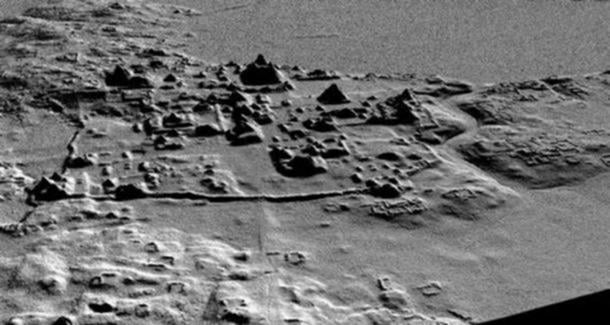





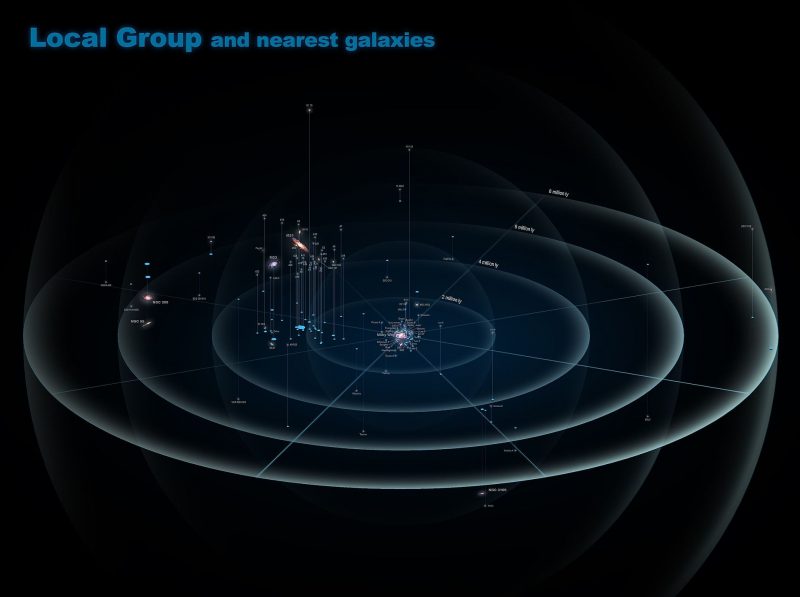
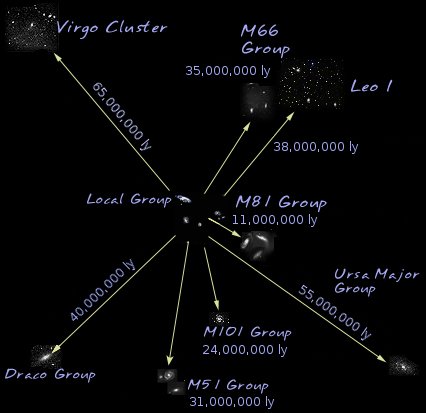
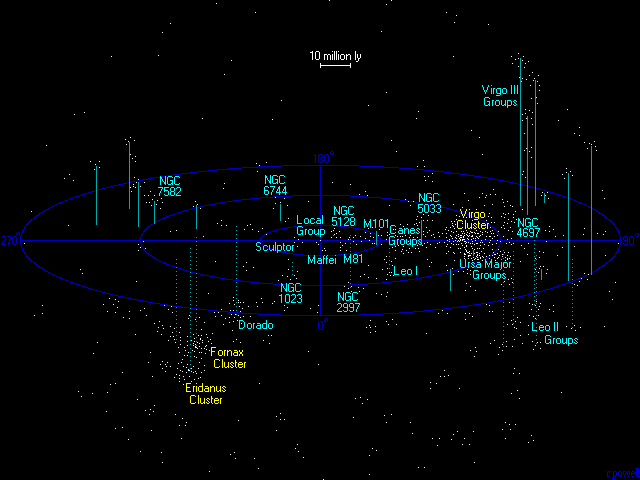


 We have lost 2.6MILLION reindeer in less than 30 years. And...
 Sacred Incan city in Bolivia is being rebuilt using 3D...
 Lyft patents technology that shows safety warnings on...
 Iron Age warrior who was bludgeoned in the face and pierced...