Ontdek de Fascinerende Wereld van UFO's en UAP's: Jouw Bron voor Onthullende Informatie!
Ben jij ook gefascineerd door het onbekende? Wil je meer weten over UFO's en UAP's, niet alleen in België, maar over de hele wereld? Dan ben je op de juiste plek!
België: Het Kloppend Hart van UFO-onderzoek
In België is BUFON (Belgisch UFO-Netwerk) dé autoriteit op het gebied van UFO-onderzoek. Voor betrouwbare en objectieve informatie over deze intrigerende fenomenen, bezoek je zeker onze Facebook-pagina en deze blog. Maar dat is nog niet alles! Ontdek ook het Belgisch UFO-meldpunt en Caelestia, twee organisaties die diepgaand onderzoek verrichten, al zijn ze soms kritisch of sceptisch.
Nederland: Een Schat aan Informatie
Voor onze Nederlandse buren is er de schitterende website www.ufowijzer.nl, beheerd door Paul Harmans. Deze site biedt een schat aan informatie en artikelen die je niet wilt missen!
Internationaal: MUFON - De Wereldwijde Autoriteit
Neem ook een kijkje bij MUFON (Mutual UFO Network Inc.), een gerenommeerde Amerikaanse UFO-vereniging met afdelingen in de VS en wereldwijd. MUFON is toegewijd aan de wetenschappelijke en analytische studie van het UFO-fenomeen, en hun maandelijkse tijdschrift, The MUFON UFO-Journal, is een must-read voor elke UFO-enthousiasteling. Bezoek hun website op www.mufon.com voor meer informatie.
Samenwerking en Toekomstvisie
Sinds 1 februari 2020 is Pieter niet alleen ex-president van BUFON, maar ook de voormalige nationale directeur van MUFON in Vlaanderen en Nederland. Dit creëert een sterke samenwerking met de Franse MUFON Reseau MUFON/EUROP, wat ons in staat stelt om nog meer waardevolle inzichten te delen.
Let op: Nepprofielen en Nieuwe Groeperingen
Pas op voor een nieuwe groepering die zich ook BUFON noemt, maar geen enkele connectie heeft met onze gevestigde organisatie. Hoewel zij de naam geregistreerd hebben, kunnen ze het rijke verleden en de expertise van onze groep niet evenaren. We wensen hen veel succes, maar we blijven de autoriteit in UFO-onderzoek!
Blijf Op De Hoogte!
Wil jij de laatste nieuwtjes over UFO's, ruimtevaart, archeologie, en meer? Volg ons dan en duik samen met ons in de fascinerende wereld van het onbekende! Sluit je aan bij de gemeenschap van nieuwsgierige geesten die net als jij verlangen naar antwoorden en avonturen in de sterren!
Heb je vragen of wil je meer weten? Aarzel dan niet om contact met ons op te nemen! Samen ontrafelen we het mysterie van de lucht en daarbuiten.
Belgen zagen vorig jaar veel meer UFO’s. Voor deze meldingen is nog altijd geen verklaring gevonden
In 2018 registreerde het Belgische UFO-meldpunt 179 waarnemingen van vreemde luchtverschijnselen.
Dat is een stijging van 33 procent in vergelijking met het aantal meldingen uit 2017 (134 waarnemingen). Dat blijkt uit het jaarverslag van het Belgische UFO-meldpunt.
In de provincie Oost-Vlaanderen werden de meeste UFO’s gespot.
Eveneens een stijging
Het Franstalige COBEPS (Comité Belge pour l’Etude des Phénomènes Spatiaux) ontving het afgelopen jaar 76 UFO-meldingen, eveneens een stijging vergeleken met het jaar ervoor.
De stijging van het aantal meldingen liet zich – naar jaarlijkse gewoonte – vooral voelen tijdens de zomermaanden juli en augustus. Beide maanden samen waren goed voor 44 meldingen.
Dit grote aantal waarnemingen kan grotendeels verklaard worden door het warme weer in die periode.
Geen verklaring
Ook in oktober waren er beduidend meer meldingen dan het maandgemiddelde. Dit kan mede verklaard worden door de uitzonderlijk lage bewolkingsgraad in die maand.
Veel UFO’s worden vrij snel ontmaskerd als vliegtuigen, sterren of het ruimtestation ISS, maar voor een aantal meldingen heeft het meldpunt geen verklaring kunnen vinden.
Zo werd in Nederland een felgroen lintvormig object gespot dat nog altijd onverklaard is.
Vreemde bewegingen
En op 1 augustus zag iemand in het Luxemburgse Sommerain een ‘stervormig object dat vreemde bewegingen maakte’.
“Het begon als een fel object: wit-blauw, zo groot als de ster Wega, die eerst niet bewoog,” beschrijft de melder.
“De ‘ster’ bewoog naar het westen met een ongewone snelheid. Niet zeer snel, maar ook niet traag,” klonk het. “Op sommige momenten stopte de ‘ster’ en leek het alsof hij aarzelde.”
UFOs have captured the popular imagination for the past seven decades. For most of this time, the subject has been treated with casual derision by mainstream media—as the butt of a lighthearted story at the end of the nightly news, underscored by X-Files music and obligatory references to “little green men.”
The media’s dismissive attitude towards UFOs stands in stark contrast to the views of numerous, highly-respected individuals in the spheres of politics and science who have, over the years, stated either publicly or confidentially their firm belief that the UFO enigma is not only worthy of serious study, but that it may even be representative of non-human intelligences.
Here are 10 of the most shocking statements about UFOs by scientists and government officials…
General Nathan Twining.
10. General Nathan Twining
General Nathan Twining served as Chief of Staff of the United States Air Force between 1953 and 1957, and as Chairman of the Joint Chiefs of Staff between 1957 and 1960. A highly distinguished officer, Twining rose through the ranks from a lowly private to a four-star general answering directly to the Secretary of Defense and the President himself.
In a once secret letter to Air Force Headquarters dated 23 September 1947, General Twining, then head of Air Materiel Command, stated that flying saucers were “real and not visionary or fictitious,” that they had “metallic or light reflecting surface[s],” that they were “circular or elliptical in shape, flat on bottom and domed on top,” and were sometimes sighted in “well-kept formation flights varying from three to nine objects.”
Twining’s unambiguous comments in this then-secret letter about the physical reality of flying saucers were in direct contradiction to the USAF’s public position at the time that UFO reports were the product of mass hysteria or misidentifications of mundane phenomena.
Wilbert. B. Smith.
9. Wilbert B. Smith
Between 1947 and 1969, the US Air Force operated UFO investigation projects under three different codenames: Sign, Grudge, and Blue Book. Less well known is that America’s Northern neighbour was also taking a keen interest in flying saucers during the Cold War. Between 1950 and 1954, the Canadian government officially operated its own UFO study project—Project Magnet—with the objective of collecting data about the phenomenon and applying it in the spheres of military engineering and technology. The project was headed by Wilbert Brockhouse Smith, a senior radio engineer for Transport Canada’s Broadcast and Measurements Section.
In a previously top secret Canadian government documentdated 21 November, 1950, drawing from information he had obtained via the Canadian embassy in Washington D.C., Smith noted of UFOs that: “The matter is the most highly classified subject in the United States government, rating higher even than the H-bomb.”
Professor Hermann Oberth.
8. Hermann Oberth
One of the boldest perspectives on UFOs during the 1950s came from Professor Hermann Oberth. A pioneer of rocketry and astronautics, and mentor to Werhner von Braun, Oberth was arguably one of the most influential engineers of the 20th Century. In an article for the American Weekly on 24 October, 1954, Oberth wrote:
“It is my thesis that flying saucers are real and that they are space ships from another solar system. I think that they possibly are manned by intelligent observers who are members of a race that may have been investigating our earth for centuries. I think that they have been sent out to conduct systematic, long-range investigations, first of men, animals and vegetation, and more recently of atomic centers, armaments and centers of armament production. They obviously have not come as invaders, but I believe their present mission may be one of scientific investigation.”
Roscoe Hillenkoetter.
7. Roscoe Hillenkoetter
Roscoe H. Hillenkoetter became America’s first CIA Director in 1947 and, before that, was head of the Central Intelligence Group (CIG). He had previously been wounded during the attack on Pearl Harbor and commanded the USS Missouri in 1946. He retired from military service with the rank of Vice Admiral. In 1960, in a letter to Congress, Hillenkoetter famously wrote:
“Behind the scenes, high-ranking Air Force officers are soberly concerned about the UFOs. But through official secrecy and ridicule, many citizens are led to believe the unknown flying objects are nonsense. To hide the facts, the Air Force has silenced its personnel.”
Curiously, during his retirement years, Hillenkoetter joined the board of directors for the National Investigations Committee on Aerial Phenomena (NICAP)—America’s leading civilian UFO investigations group. In their ground-breaking book,Clear Intent, authors Lawrence Fawcett and Barry Greenwood describe Hillenkoetter’s high-level involvement with NICAP as being a key move in the CIA’s successful infiltration and dismantling of NICAP. More men with CIA ties would join NICAP in the years to follow, and these individuals came to control the organization from within during the 1960s and 1970s as its founder, Donald Keyhoe, was pushing ever harder for government disclosure of UFO reality. Eventually, Keyhoe was ousted as NICAP Director by Joseph Bryan, former chief of the CIA’s psychological warfare staff. By 1980, NICAP was defunct.
Senator Barry Goldwater.
6. Barry Goldwater
Barry Goldwater was best known as the five-term Senator from Arizona and as the Republican Party nominee for President of the United States in 1964. Goldwater was a significant force in American politics across four decades. In an official United States Senate letter dated 28 March, 1975, in response to an enquiry regarding his publicly stated interest in UFOs, Goldwater wrote:
“About ten or twelve years ago I made an effort to find out what was in the building at Wright Patterson Air Force Base where the [UFO] information is stored that has been collected by the Air Force, and I was understandably denied this request. It is still classified above Top Secret.”
In another Senate letter, dated 19 Oct. 1981, Goldwater further stated: “I have had one long string of denials from chief after chief, so I have given up… this thing [the UFO issue] has gotten so highly classified… it is just impossible to get anything on it.”
Victor Marchetti.
5. Victor Marchetti
Victor Marchetti served in the CIA from 1955 to 1969. Towards the end of his CIA career, Marchetti worked for several months as special assistant to CIA Deputy Director Rufus Taylor. Marchetti was also involved in establishing the Top Secret Pine Gap satellite ground station near Alice Springs in Central Australia—long rumoured by UFO conspiracy theorists to be Australia’s Area 51.
“I do know that the CIA and the US government have been concerned over the UFO phenomenon for many years and that their attempts, both past and recent, to discount the significance of the phenomenon and to explain away the apparent lack of official interest in it have all the earmarks of a classic intelligence cover-up… My theory is that we have, indeed, been contacted – perhaps even visited – by extraterrestrial beings, and that the US government, in collusion with other national powers of the Earth, is determined to keep this information from the general public.”
Col. Gordon Cooper.
4. Gordon Cooper
The late, great astronaut Colonel Gordon Cooper was legendary for his role in the first human space flight program, Project Mercury, and his exploits were chronicled in the classic 1983 movie The Right Stuff (which co-starred Dennis Quaid as Cooper). Cooper had a number of UFO sightings during his military career and maintained until his death in 2004 that the US government had long been engaged in a large-scale UFO cover-up.
In a letter to Ambassador Griffith, Mission of Grenada to the United Nations in New York, dated 9 September, 1978, Cooper wrote:
“For many years I have lived with a secret, in a secrecy imposed on all specialists and astronauts. I can now reveal that every day, in the USA, our radar instruments capture objects of form and composition unknown to us… I feel that we need to have a top-level, coordinated program to scientifically collect and analyze data from all over the Earth concerning any type of encounter, and to determine how best to interface with these visitors in a friendly fashion.”
Lord Hill Norton.
3. Lord Hill Norton
One of the most high-ranking military officials (retired) ever to speak out on the UFO issue was the late five-star Admiral of the Fleet the Lord Hill Norton, who served as Britain’s Chief of Defence Staff and as Chairman of the NATO Military Committee. Lord Hill Norton maintained a longstanding interest in UFOs during his later years. In his foreword for Timothy Good’s bestselling expose of government UFO secrecy,Beyond Top Secret(1996), Lord Hill Norton wrote:
“The [UFO] evidence is now so consistent and so overwhelming that no reasonably intelligent person can deny that something unexplained is going on in our atmosphere… there is a cover-up: in the United States on a massive scale, in Great Britain, and in several other countries.”
Fife Symington.
2. Fife Symington
One of the most famous mass UFO sightings of the past 30 years has to be the Phoenix Lights incident, in which thousands of individuals reported seeing a series of stationary lights over the Arizonian capital on the night of March 13, 1997. A delta or triangular-shaped craft of immense proportions was also widely reported as travelling low and slow over Arizona more broadly on the same night. The US air force was quick to attribute the sightings to misidentifications of military flares, and the then-governor of Arizona, Fife Symington, joined the debunking bandwagon when he staged a comedic press conference in response to the concerns of his constituents, going so far as to parade a man in front of the cameras dressed a ridiculous rubber alien costume.
Unknown at that time, however, was that the Governor himself had been among the witnesses to the Phoenix Lights. 10 years later, speaking at the National Press Club in Washington D.C. in November of 2007, Fife Symington stated in front of the world’s media:
“In 1997, during my second term as governor of Arizona, I saw something that defied logic and challenged my reality… I witnessed a massive delta-shaped craft silently navigate over Squaw Peak, a mountain range in Phoenix, Arizona. It was truly breathtaking. I was absolutely stunned… As a pilot and a former Air Force Officer, I can definitively say that this craft did not resemble any man-made object I’d ever seen. The incident was witnessed by hundreds—if not thousands—of people in Arizona, and my office was besieged with phone calls from very concerned Arizonians. There are many high-ranking military, aviation and government officials who share my concerns… We want the government to stop putting out stories that perpetuate the myth that all UFOs can be explained away in down-to-earth conventional terms. Investigations need to be re-opened, documents need to be unsealed and the idea of an open dialogue can no longer be shunned. Incidents like these are not going away. When it comes to events of this nature that are still completely unsolved, we deserve more openness in government, especially our own.”
1. Luis Elizondo
In December 2017, the New York Times broke a dramatic story: the American government had been operating a secret UFO study program between 2008 and 2012 called the Advanced Aviation Threat Identification Program (AATIP). The conclusions of the $22 million Pentagon project, which, according to the Times, continues quietly to this day, were that “aircraft” of apparently unearthly origin are routinely penetrating America’s airspace.
The man who headed the Pentagon UFO project, Luis Elizondo, told journalists that these “aircraft” or “UAPs (Unidentified Aerial Phenomena),” were performing manoeuvres that fly in the face of our known laws of physics. Even more shockingly, Elizondo revealed that the Pentagon has been recovering bizarre metal alloys from alleged UFO crashes which currently are being studied and stored by billionaire defense contractor Robert Bigelow.
Discussing the Pentagon UFO project live on air in December 2017, Elizondo told CNN:
“We have identified some very, very interesting anomalous types of aircraft… let’s call them ‘aircraft.’ Things that don’t have any obvious flight surfaces, any obvious forms of propulsion, and [that have] extreme manoeuvrability beyond the healthy G-forces of a human or anything biological; hypersonic velocities; low observability; [and] positive lift, seemingly defying the laws of aerodynamics.”
When encouraged by the news anchor to speculate as to the nature and origin of these mystery aircraft, Elizondo replied: “We’ve deliberately stayed away from going down the rabbit hole of ‘who’s behind the wheel and what are their intentions’… what we wanted to do was to let the data speak for itself.”
The anchor responded by nudging Elizondo again: “Let me ask you point blank the question: do you believe that life from somewhere else, while you ran this program, came here, visited, observed?” Elizondo stunningly replied: “There is very compelling evidence that we may not be alone.”
Steven Greer answers social media questions about UFOs, USOs and Aliens
Jesse Ventura and Doctor Steven Greer answer social media questions from the viewers and they discuss the Pentagon’s UFO program and submarines that allegedly track underwater UFOs.
The ‘Fast Mover Program’ a secret project from the US Navy.
The Mutual UFO Network’s chief photo expert, Marc D’Antonio, says he was on a US Navy submarine when they tracked a very fast moving object in the ocean.
Subsequent responses from Navy personnel lead D’Antonio to believe the Navy has a secret UFO program regarding Unidentified Submerged Objects (USOs).
D’Antonio told Openmindstv he was once invited to take a ride in a nuclear submarine when the sonar operator shouted ‘fast mover, fast mover’.
The executive officer came out and the operator showed him the path of the fast object and the officer said ‘How fast is that going’ upon the operator said ‘several hundred knots’.
When D’Antonio asked about the unknown object called ‘fast mover’ they didn't wanted to talk about that ‘program’ so they basically confirmed to D’Antonio that not only the ‘Fast Mover Program’ exists but 'USOs' too.
The above images have been taken by the USS Trepang (SSN-674), a Sturgeon-class attack submarine in 1971 showing several USOs which are the underwater equivalent to UFOs.
I was looking in a Gigipan photo of Mars and found some interesting things. One object was a cactus-like plant with a round flower on it. The other two objects were the skulls and necks of two different alien species. One skull looks to be intelligent and semi-human like. The other appears to be very similar to a tiger. Now please keep in mind, that these are fossils. Many people make the mistake and say how could a fossil survive for so long? Because fossils are made of minerals from nature. The minerals replace 100% of the body with themselves and leave a remaining fossil made 100% out of stone. Thus, stone can last forever. I also made a video at the bottom of this post for more details, sorry for the audio problem, made the video at work on the fly. Scott C. Waring
daughter in law, son, and I went out to the balcony that faces NE in Reno Nevada on 12/12/2018 and saw lights flashing over the city of Reno nevada, so I recorded it and it appears to be a UFO.
A UFO In Purple and White Recorded on Video Above Waterford, Ireland
Submitter 96894 uploaded a UFO video sighting to MUFON. According to the report, his wife Anita recorded two videos on the evening of December 9, 2018.
The mysterious colored object was reportedly seen above Waterford, Ireland. The video shows a glowing object in a strange shape.
It is a purple-colored donut object with several breaks in the circular shape. On top of the UFO are around 18 brightly lit white lights.
It appears that the strange flying donut fades in and out of focus several times, but clearly seen frequently in the video.
Most viewers of the video are left clueless of the identity of the bizarre object. Others are suggesting the UFO could be anything from an inflated object to a remote drone of some kind, or something more ominous.
Take a look at the clip and see if you have something in mind as to what the object is.
NASA's Juno spacecraft has captured an intriguing image of a volcanic plume straddling the line between day and night on Jupiter'snotoriously eruptive moon Io.
The image is part of a larger data set gathered on the spacecraft's Dec. 21 close skim over the planet's surface, whenfour of Juno's cameras spent more than an hour watching the volcanic moon's pole. All told, the observations are a nice scientific bonus for the Juno team, because the spacecraft's primary job is to study Jupiter itself.
"We knew we were breaking new ground with a multispectral campaign to view Io's polar region, but no one expected we would get so lucky as to see an active volcanic plume shooting material off the moon's surface," Scott Bolton, principal investigator of the Juno mission, said in a statement released by the Southwest Research Institute, which contributed two instruments to the mission. "This is quite a New Year's present, showing us that Juno has the ability to clearly see plumes." [Volcanic Io: Amazing Photos of Jupiter's Active Moon]
Juno's visible light camera, JunoCam, spotted a volcanic plume right along Io's terminator, the line between the daylight side and the night side. The spacecraft was 186,000 miles (300,000 kilometers) away from the moon.
Credit: NASA/SwRI/MSSS
The spacecraft's observing period was split into two phases, because Jupiter came between the sun and Io. Before that eclipse, the visible-light camera JunoCam could study Io in stronger light, watching the pole as day turned to night. The camera snagged three images during this period, all of which caught sight of a plume right along the moon's terminator, where day and night meet.
"The ground is already in shadow, but the height of the plume allows it to reflect sunlight, much like the way mountaintops or clouds on the Earth continue to be lit after the sun has set," Candice Hansen-Koharcheck, the JunoCam lead from the Planetary Science Institute, said in the same statement.
Juno's Stellar Reference Unit camera, which helps the spacecraft navigate by the stars, captured this image of a faintly lit Io. The plume is highlighted by the small circle.
Credit: NASA/JPL-Caltech/SwRI
After Jupiter blocked out the sun, Juno's Stellar Reference Unit camera took over. That instrument is designed to help the spacecraft track its location in the cosmos, but the camera requires fainter lighting — like the sunlight reflected off nearby moon Europa during the observing period. However, this camera also spotted evidence of the plume.
The Galileo spacecraft spotted volcanic plumes streaming off Jupiter's moon Io.
Credit: NASA/JPL/DLR
A third instrument, the Jovian Infrared Auroral Mapper (JIRAM), was also active during the observing period, capturing information about hotspots on the moon's surface. In July, that same instrument spotted a previously undetected hotspot on the volcanic moon.
The Jovian Infrared Auroral Mapper (JIRAM) image was acquired at 12:30 (UTC) on Dec. 21, 2018. The instrument reveals very high temperatures at the location of a volcanic eruption on Io. This observation was taken during the same fully eclipsed period of images from the JunoCam and Stellar Reference Unit.
Scientists have known Io is volcanically active since 1979. The activity is spurred by Jupiter's massive gravity tugging at the moon.
NASA's $1.1 Juno spaceraft launched to Jupiter in August 2011 and arrived in orbit around the gas giant on July 4, 2016. The mission is expected to run through 2020.
WHAT IS NASA'S JUNO MISSION TO JUPITER?
The Juno probe reached Jupiter in 2016 after a five-year, 1.8 billion-mile journey from Earth
The Juno probe reached Jupiter on July 4, 2016, after a five-year, 1.8 billion-mile (2.8bn km) journey from Earth.
Following a successful braking manoeuvre, it entered into a long polar orbit flying to within 3,100 miles (5,000 km) of the planet's swirling cloud tops.
The probe skimmed to within just 2,600 miles (4,200 km) of the planet's clouds once a fortnight - too close to provide global coverage in a single image.
No previous spacecraft has orbited so close to Jupiter, although two others have been sent plunging to their destruction through its atmosphere.
To complete its risky mission Juno survived a circuit-frying radiation storm generated by Jupiter's powerful magnetic field.
The maelstrom of high energy particles travelling at nearly the speed of light is the harshest radiation environment in the Solar System.
To cope with the conditions, the spacecraft was protected with special radiation-hardened wiring and sensor shielding.
Its all-important 'brain' - the spacecraft's flight computer - was housed in an armoured vault made of titanium and weighing almost 400 pounds (172kg).
The craft is expected to study the composition of the planet's atmosphere until 2021.
We now know what Ultima Thule looks like, and it's not a bowling pin.
The first resolved photos of Ultima Thule have come in from NASA's New Horizons spacecraft, whichzoomed past the frigid faraway objectjust after midnight yesterday (Jan. 1). The historic imagery reveals that the 21-mile-long (33 kilometers) Ultima is a "contact binary" composed of two roughly spherical lobes.
Photos taken by New Horizons over the previous week or so had suggested that these two lobes are connected by a relatively narrow neck. But the new imagery shows they're glommed tightly together, dashing earlier analogies. [New Horizons at Ultima Thule: Full Coverage]
"That bowling pin is gone," New Horizons principal investigator Alan Stern, of the Southwest Research Institute (SwRI) in Boulder, Colorado, said during a news conference today (Jan. 2). "It's a snowman, if it's anything at all."
This first color photo of the Kuiper Belt object Ultima Thule reveals the object's red color as seen by NASA's New Horizons spacecraft from a distance of 85,000 miles (137,000 kilometers) during a Jan. 1, 2019 flyby. From left to right: an enhanced color image, a higher-resolution black and white image, and an overlay that combines both into a more detailed view.
Credit: NASA/Johns Hopkins University Applied Physics Laboratory/Southwest Research Institute
The two lobes — dubbed, appropriately enough, "Ultima" (the larger lobe) and "Thule" — are red, their icy surface material likely discolored by deep-space radiation, mission team members said. Similar processes are responsible for the reddish hue of much of Pluto's surface, as well as the northern reaches of that dwarf planet's largest moon, Charon (which apparently got this reddish material from Pluto).
Ultima and Thule were once separate, free-flying objects; they coalesced long ago, just after the solar system's birth, mission team members said. This union was not violent; the two bodies came together at about walking speed, in a meetup more akin to a spacecraft docking than to a collision, said Jeff Moore of NASA's Ames Research Center, the leader of New Horizons' geology and geophysics team.
Countless objects like Ultima Thule — which is officially known as 2014 MU69 — eventually built up our solar system's planets. But that didn't happen with Ultima Thule, which has remained pristine for eons in a cosmic deep-freeze, more than 4 billion miles (6.4 billion km) from the sun.
The surface features of Kuiper Belt object Ultima Thule (2014 MU69) are coming into focus in these images taken by NASA's New Horizons spacecraft during its historic flyby on Jan. 1, 2019. These images, released Jan. 2, were taken a day earlier from a distance of 18,000 miles (28,000 kilometers) with a scale of 730 feet (140 meters) per pixels.
Credit: NASA/Johns Hopkins University Applied Physics Laboratory/Southwest Research Institute
That's why New Horizons team members were so keen to fly by the object, and why they're so excited by the early science returns from the epic New Year's Day encounter.
"We think what we're looking at it is perhaps the most primitive object that has yet been seen by any spacecraft, and may represent a class of objects which are the oldest and most primitive objects that can be seen anywhere in the present solar system," Moore said during today's news conference.
The new imagery, dramatic though it may be, is just the tip of the Ultima Thule iceberg. The photos unveiled by the New Horizons team today were taken before closest approach, from distances of about 85,000 miles (137,000 km) and 18,000 miles (28,000 km).
At the peak of the encounter, New Horizons got within a mere 2,200 miles (3,500 km) of Ultima Thule. So, prepared to be wowed by higher-resolution photos in the coming days and weeks.
"It's just going to get better and better," Stern said.
The $700 million New Horizons mission launched in January 2006, tasked with performing the first-ever flyby of Pluto. The probe aced this objective in July 2015, showing the dwarf planet to be a world of surprisingly complex and varied landscapes.
The Ultima Thule encounter — the most-distant planetary flyby in history — is the centerpiece of New Horizons' extended mission, which runs through 2021. The spacecraft has enough power and fuel left to potentially perform a flyby of yet another distant object, if NASA ends up approving another mission extension, Stern said.
Mike Wall's book about the search for alien life, "Out There" (Grand Central Publishing, 2018; illustrated by Karl Tate) is out now.
Paul Hynek has worked in tech and entertainment and is currently a business consultant. Paul is also a former adjunct professor at Pepperdine University, and is presently a consultant for HISTORY’s new series Project Blue Book, based on a real project to investigate UFOs from 1952 to 1969. Paul is the son of Dr. J. Allen Hynek, an astronomer who worked with the U.S. Air Force investigating UFO cases from 1948 to the end of Blue Book in 1969. A character based on J. Allen Hynek is the lead character in the series.
Paul’s father began his investigation with USAF as a skeptic, but by the time Blue Book ended, he was convinced some UFO cases posed a real mystery. The HISTORY series is not sticking strictly to the facts, but it is attempting to portray the people and events as accurately as possible. In this interview, we talk to Paul about the production of the new series, his father’s UFO work, and how he hopes the show will affect viewers and perceptions of the UFO phenomenon.
In reflecting on the past year, we often think of those individuals we have lost. In the field of UFOlogy, it is no different. Indeed, in recent years, we have lost many pioneers in this field of inquiry. One such pioneer was a man named Larry Hatch who passed away on August 3rd, 2018. Unfortunately, many were not familiar with his passing or the legacy he has left this field of study.
Larry was a computer programmer by trade. His high level of intelligence was rivaled only by his creative talent for developing innovative ideas using the latest technologies. This went way back to Larry’s childhood. At the age of fourteen, he created his own private telephone system for his neighborhood friends to communicate with. We are not talking about the old cup and string concept. Rather, he developed his own actual stand-alone telephone system as this old news clipping from the San Mateo Times reported in the 1960s.
Later in life, Larry’s intellectual prowess persisted. It was no surprise that he eventually became part of the burgeoning computer industry in California where he was born and raised. Larry held many positions starting as a Senior Electronics Technician followed by a long career working for National Semiconductor as an Engineer.
Later, in 1993, Larry branched out on his own as an independent computer contractor. It was during this time that he focused his computer skills on a subject that was always near and dear to his heart – UFOs. Since early childhood, Larry was fascinated with the subject and had some personal experiences that he preferred to keep private.
Larry created from the ground level one of the most robust UFO databases up until that time – the *U* UFO Database. This was a database that the public could use on their home PCs. The *U* Database itself could do queries based on word search, geography, or UFO characteristics. There was also an impressive UFO mapping tool that visually displayed any relevant UFO cases based on your search criteria. This was amazing considering the database was written in a DOS-based environment.
UFO Map from the *U* UFO Database by Larry Hatch
Despite various computer UFO catalogs that had existed, there were only a few computer UFO databases before the *U* Database’s creation. There were the IBM punch data cards employed by the Battelle Memorial Institute in the 1950s used to examine Project Blue Book cases. Then, based on this concept, there was another computer database, compiled at Northwestern University in the 1960s. This included all unidentified cases from Project Blue Book through the efforts of Dr. J. Allen Hynek, Jacques Vallee, et al. This work was eventually turned over to the Condon study at the University of Colorado in 1968 and eventually formed the basis for David Saunders’ UFOCAT database. Other UFOCAT versions were to follow in subsequent years.
The *U* Database also had several updates in later years after its release in 1994 when I first heard of Larry’s creation. Obviously, I had to have a copy for my own UFO research and purchased one of the first versions. After my initial contact with Larry, I had a number of emails interspersed with a few phone calls in the early to mid-nineties. In maintaining ties with him, I was always on the list for any later software updates but also was in a position to eventually provide case material for his latest 2002 update.
Larry had spent thousands of hours combing every possible UFO book and periodical he could get his hands on. In doing so, he took each case documented therein and then converted it into code for database entry. The last tally I saw was over 17,000 UFO cases that Larry personally entered into the database! Most of us cannot imagine the time, dedication, and personal sacrifice he made doing all of this work.
Although he was the sole individual that did all the data entry, he was not alone in gathering the relevant UFO case files and information. Despite avoiding the social scene, Larry was well connected with leading UFO researchers and historians worldwide. Some of these included: Jan Aldrich, Barry Greenwood, Jacques Vallee, Dominique Weinstein, etc.
Jan Aldrich recently informed me that his role was two-fold in collaborating with Larry. First, to properly vet the UFO data for removal of IFO reports or spurious cases. Second, to add interesting cases not formerly in the system. Jan emphasized Larry’s continual work in this area to ensure not only the quantity of information but quality information.
Additional reflections on Larry’s work were conveyed to me by Vallee in the writing of this article. Vallee stated,
“From my point of view, the most memorable lesson from his life is the observation of how much good research can be done by a single person with talent and the willingness to pursue a well-focused goal. Larry single-handedly accomplished what the leading UFO organizations of the time were unable to do with their resources, membership fees and access to media: an effective, well-functioning, cleverly interfaced graphic database of important UFO events! He also managed to build it in a way that made it economically accessible and legible to hundreds of people, on personal computers.”
He further added,
“I was part of Larry’s extensive correspondence network and brought him items that might be of interest in his work. I enjoyed visiting his house “down the Peninsula” and discussing the sightings, as well as gossiping about technology trends: He was indeed a very gifted software designer and implementer, and a kind man with no interest in the quarrels that plagued ufology. He remains an inspiration to me.”
The saddest part regarding the life of the *U* Database was that it was written in a DOS environment. As technology began to improve with numerous versions of Microsoft Windows and Macintosh or Mac computers, the DOS platform went the way of the dinosaur. Consumers then, like today, wanted the latest and greatest. As a result, DOS-based software programs and their followers diminished. So too did the *U* Database audience – for the most part.
Larry Hatch
Over time, I eventually lost touch with Larry in the early 2000s. I always meant to re-connect at some point. But I had heard rumors years later through the UFO grapevine that he was in ill-health. I had also heard that he retired to a nursing home. However, in speaking with older researchers who knew Larry more than myself, they too weren’t 100% sure what his status was at the time. It was a mystery.
Recently in November of 2018, after many years of losing touch with Larry, I saw items for sale on eBay that stated they were from the Larry Hatch collection. Eager to have these for my UFO research library, I purchased the items. I noticed the return address had the name of the seller, Yvonne Hatch. I thought to myself this must be a relative of Larry’s. My suspicions were proven correct.
I was able to email and then eventually call Yvonne Hatch who turned out to be Larry’s niece. She regrettably informed me that her late-uncle had passed away due to medical complications on August 3rd, 2018. She and other family members were dealing with the aftermath of his passing. This is what resulted in some of his UFO items surfacing on eBay.
Yvonne was gracious with her time, and she told me things about Larry I did not know from his personal life. She provided the photos included with this article. Yvonne stated her late-uncle was a man of high-intellect who had a passion for the subject of UFOs as evidenced by his tenacious data gathering and data entry that ultimately created the *U* Database. From the conversations we had, I could also feel the bond she had with her uncle and the subsequent loss with his passing.
I am not ashamed to admit that I have in my UFO research room to this day a fully-functioning DOS-based computer that is still running my version of the *U* Database. It was and continues to be extremely instrumental in my UFO studies. When fellow-researchers come to visit, I always try to make it a point to introduce them to the database as it proves useful in many research endeavors.
But more importantly, I tell them about the creator of the *U* Database, Larry Hatch. He was a man who was never to be seen at a UFO conference or UFO meeting. He never wanted to be the focus of attention. Instead, he wanted to be a facilitator in providing UFO data in a manageable form for serious researchers. To that end, he succeeded – admirably.
I wanted to pay tribute to Larry and let the UFO community know about his demise. But, as in these types of situations, not to just mourn his passing. It is a time to also celebrate the man’s contributions to the UFO research field. I hope memories of him and his *U* Database will live on. As Vallee stated, “He remains an inspiration.”
For the first time a probe lands on the far side of the Moon
For the first time, a space probe has landed on the back of the moon. The Chinese "Chang'e 4" successfully lands on the Earth satellite, as China's state broadcaster CCTV reports.
Spacecraft have taken pictures of the moon’s far side before, butno lander has ever touched down there. The move marks a step towards China’s ambition to become a leading power in space exploration alongside the US and Russia.
#BREAKING: China’s Chang’e-4 probe successfully made the first-ever soft landing on the far side of the Moon on the South Pole-Aitken basin Thursday morning, a major milestone in space exploration. #ChangE4
There have been many excursions from spaceships and astronauts to the moon. But China is now the first nation to land on the side of the moon facing away from the earth. On board the "Chang'e 4" there is a robot vehicle, which is supposed to explore the terrain around the landing site in a next step.
Chinese experts had described the mission as very demanding in advance. A hurdle was the smooth communication with the earth because no direct radio connection can be established on the back of the moon. For this reason, the Chinese already positioned the "Queqiao" transmission satellite (Bridge of the Elsters) in May in order to be able to transmit signals from the radio shadow.
The first image of the moon's far side taken by China's Chang'e 4 probe, which touched down on Jan. 2, 2019 (Jan. 3 Beijing time).Credit: CNSA
A smooth lunar mission should prove that China's ambitious space programme is making great progress.
In 2019, China is planning another unmanned landing to return rock samples to Earth. By 2030, the first Chinese is to set foot on the earth's satellite. The lunar missions are only one part of China's ambitious space programme, which also envisages the construction of a space station around 2022.
"Chang'e 4" was launched from Earth on 8 December and, according to state television, reached moon orbit on 12 December. With "Chang'e 3", the Chinese first landed a probe on the front of the Earth's satellite in 2013 - far later than Russians and Americans. After unmanned probes between 1969 and 1972, the USA had also brought twelve astronauts to the front of the Earth satellite.
The Chang’e 4 lunar exploration mission has achieved touchdown on the moon’s far side, Chinese authorities announced. The mission, which features a lander and a rover, became the first of its kind to ever to land on the far side of the moon.
This is what the dark side of the moon looks like, from ground level.
Image credits: China Global Television Network.
There have been manymissions to the moon, but the vast majority of them are either in orbit, a flyby, or an impact. The days of astronauts landing on the satellite are long gone, with the last crewed landing being Apollo 17 in 1972. Landing missions are also few and far between — and as for the dark side, there have been none to speak of until now.
Not only is it more difficult to land on the far side of the moon, but relaying information from there is also very challenging. You can’t do it directly, so all communications must be passed through a separate satellite before being relayed back to Earth. All this makes China’s achievement even more impressive, showcasing that the world’s most populous country has also become a major player in space exploration.
There are a lot of geopolitical (or rather, astropolitical) implications to China’s new space ambitions. However, in terms of science and engineering, it’s a remarkable achievement which should be praised, as NASA administrator Jim Brindestine acknowledged.
“Congratulations to China’s Chang’e-4 team for what appears to be a successful landing on the far side of the Moon. This is a first for humanity and an impressive accomplishment,” he Tweeted.
The near (left) and far (right) side of the moon.
Credits: NASA.
There are several key differences between the two sides of the moon. The near side is splattered with dark regions, called maria — basaltic plains created by ancient eruptions. The far side has a thicker crust, which is why it doesn’t have any maria: it was harder for volcanoes to break through. This also explains why there are so much more craters on the far side — they haven’t been covered by basaltic eruptions. Why the two sides have different crust thickness, however, is a different question.
Chang’e 4 will focus on a very large crater called the Aitken Basin that is now about 13 km (8.1 mi) deep, from which it hopes to retrieve and analyze material that came from the moon’s mantle, offering an unprecedented view of the moon’s geology. Chang’e 4 will also measure the lunar temperature during its entire mission, analyze the chemical compositions of lunar rocks and soils and carry out low-frequency radio astronomical observation and research.
In another global premiere, the Chinese space agency has also announced that the rover carries seeds and cocoons from which it will grow flowers, potatoes, and silkworm.
China also announced plans to send astronauts to the moon in a few years.
Linda Moulton Howe: Extraterrestrials Are Likely Someone Else's Machines via Artificial Intelligence (Video)
Linda Moulton Howe starts off with Elon Musk’s comments to American governors at a meeting in Rhode Island: “Artificial Intelligence is a fundamental risk to the existence of human civilization and I don’t think people really appreciate that.” With video and images, Linda will lay out the emerging problems of applying A. I. to robots, especially those under development for military applications with weapons, and those problems include the potential for robots to lethally turn on their human makers.
As humanity is rapidly moving to depend on A. I. robot support, people in the UFO/E.T. abduction syndrome have been saying for decades that some of the beings they have dealt with were clearly Someone else’s programmed androids and robots.
You Won't Believe That These Places Actually Exist on Earth Until You Watch Them (Video)
The Seven Wonders of the Natural World may have been named too quickly. Wonders like The Grand Canyon and Victoria Falls are certainly big, and anyone who sees them will surely be impressed—but sheer size isn’t enough to truly leave a person in awe.
There are other places in this world, though, that are far stranger. Places that seem almost alien, as if they could only exist on a planet that evolved separately from our own.
These are places that scientists have had to struggle just to understand how they ever could have been formed. Places that will truly make you wonder—not just because they’re beautiful, but because they seem to follow scientific laws that don’t exist anywhere else on earth.
Ten Scientifically Impossible Places That Actually Exist
According to Preston Nichols and Peter Moon, authors of “The Montauk Project: Experiments In Time”, the Montauk Project “was a development and culmination of the phenomena encountered aboard the USS Eldridge in 1943.”
Kitty Stevens: Must state these awful events are not carried out by Saurian reptilians (evolutionary decendents of dinosaurs and are as empathic and loving as humans..). The culprits are Alpha Draconian reptilians (they are not aliens as people mistakenly think, they’re parasitic interdimensional demons, they aren’t the original inhabitants of the Draco star system – they invaded it, just as they’re in the process of attempting take over of Earth.. though far more insidiously this time.. but the Pleiadians are well aware of what they’re upto).
Alpha Draconians abduct men, women and CHILDREN for use in breeding, experimental vivisection, forced labour, cloning/enhancements/alterations, as a food source (both physical and energy based) and most distressingly for use as sex slaves.
Particularly CHILDREN because their bodies contain less pollutants and their brain chemistry reacts to fear In a more primal way which is more stimulating (addictive) to Alpha D’s receptors.
Even more heart breaking is that Alpha Draconians have full permission and predominantly assistance in acquiring new victims from the US military/government (this does happen in myriad other countries, the smaller the country/population the less humans abducted).
Demons are the opposite of love, but humans are supposed to feel, how so many humans can make a living by offering up innocents to endure such torture I’ll never know and makes ALL involved with these “missing persons” and hypno regression cases more evil than demons.
All those who were not killed should count themselves lucky, interbreeding (even if they’re not aware they’ll have half-breeds, some were left alive because of psychological surveillance and biological/chemical testing but most released were used for the purpose of creating young) with humans is going to be one of the things that helps good win the upcoming war.. they didn’t have the sence (well actually it’s nit ignorance just hubris) to realise that humanity is present in half-breeds).
On a positive note – 144,000 of the population are naturally fully immune to Alpha Draconian mind control (star people, incarnated angels etc) and can even protect others from psychic attack. Some people can achieve a semblance of protection by embracing spirituality.
Although i don’t doubt for a second the honestly of the stories, some of the physical descriptions were slightly.. only slightly off, everything else described is spot on. It was fascinating to hear of others experiences. Interesting video.
Iedereen wil weer naar de maan: Chinees experiment met planten en rupsen zou eerste stap naar bemand maanstation kunnen zijn -HLN.be
AP
WETENSCHAPChina is er als eerste ooit in geslaagd om een ruimtetuig neer te zetten op de achterkant van de maan. Dat gaat onder meer proberen om daar leven te laten gedijen, zodat een langdurig menselijk verblijf er mogelijk wordt. Een ambitie die het deelt met alle andere ruimtevaartnaties — want de maan is plots weer populair.
De Chinese ruimtesonde Chang’e 4 die landde in een krater op de zuidpool van de maan, heeft een soort van serre aan boord. Het gaat om een hermetisch afgesloten vat uit aluminium dat een voedingsbodem, water, plantenzaden en poppen van zijderupsen bevat. Bedoeling is dat de zaden ontkiemen en zuurstof verspreiden, waarna de rupsen kunnen ontpoppen, koolstofdioxide voortbrengen en zorgen voor bemesting van de plantengroei. Dat beperkte ecosysteem zou een eerste stap moeten zijn in het creëren van levensomstandigheden die een langdurig menselijk verblijf op de maan mogelijk maken.
Het is geen toeval dat die eerste stap door de Chinezen wordt gezet, want dat land was vijf jaar geleden al de eerste in bijna vier decennia tijd om te landen op de maan. Terwijl die satelliet van onze aarde in de jaren zestig nog het voorwerp van een heuse wedloop was — waarbij de Russen er als eerste landden en de Amerikanen er de eerste mens voet lieten zetten — wou er sinds de jaren tachtig niemand nog naartoe. Alsof we er alles wel hadden gezien. Het was vooral de opkomst van de nieuwe ruimtevaartnaties — behalve China ook Europa, India en Japan — die voor een nieuwe belangstelling zorgde. Dat had deels te maken met hun mindere ervaring: terwijl de Amerikanen al droomden van Mars, keken de nieuwkomers uit naar een haalbaarder doel.
Op de maan valt nog altijd veel te ontdekken, want tot gisteren had de mensheid daar dus letterlijk nog maar één kant van gezien. En de vrij recente bevindingen dat er bergtoppen zijn waarop de zon altijd schijnt (waardoor het energieprobleem van een langdurig maanverblijf met zonnepanelen verholpen kan worden) en dalen met enorme voorraden ijs (dat niet alleen gebruikt kan worden om te drinken, maar ook om waterstofmotoren aan te drijven) brachten een heuse kolonisering van het hemellichaam stukken dichterbij. Plannen om binnen dit en tien jaar weer mensen naar de maan te sturen en daar ergens in de jaren dertig een heus maanstation te bouwen, bekoren nu weer iedereen.
Zo’n maanstation zou dienstig kunnen zijn om er grondstoffen te winnen — een mogelijkheid die heel nadrukkelijk onderzocht zal worden wanneer Russen en Europeanen in 2023 het Chinese voorbeeld volgen met een landing op de achterkant van de maan. De Amerikanen hopen in datzelfde jaar voor het eerst in een halve eeuw tijd weer een bemande vlucht rondom de maan te maken. Al die ijver zou laten vermoeden dat er een nieuwe wedloop ontstaat, maar specialisten denken eerder dat er nog verdergaande samenwerking noodzakelijk zal zijn. Als voorbeeld kan het ISS dienen, het ruimtestation waarin Amerikanen, Russen, Europeanen en Japanners mekaar letterlijk vonden.
Met China samenwerken ligt nog moeilijk voor de Amerikanen, omdat zij een wet hebben die dat verbiedt, maar landen zoals Duitsland, Nederland en Zweden hebben nu al apparatuur aan boord van de Chinese sonde Chang’e 4. In de VS zal het sowieso vooral een politieke vraag zijn hoever de maanexploratie kan gaan. Daar krijgt de NASA dezer dagen nog maar een schijntje van het budget waarover het in zijn glorietijd in de jaren zestig beschikte. Toen liep dat op tot meer dan 4 procent van de totale overheidsuitgaven, terwijl dat de voorbije jaren nog hooguit een halve procent bedroeg. Maar waar president Obama de ambitie van zijn voorganger Bush om terug mensen naar de maan te brengen teruggeschroefd heeft, lijkt Trump daar wel weer veel voor te voelen.
A mysteriousunidentified flying objectwas spotted over South Carolina's Kiawah Island during the Christmas holiday, prompting speculation about what the object is.
The video was posted to YouTube by Debra Thomson, who wrote in the caption that she had an unobstructed view and was unsure what the object was.
"It was about 9:33pm EST of the coast of Charleston SC," Thomson, who also referred to herself as Kiawah Island Girl, wrote in the description. "I have an unobstructed view in all directions. Earlier in the evening I put a light up Christmas tree on outside light up. I went outside to unplug it when I noticed this beautiful red sphere in the sky. I knew it was not Venus, it was in the North West Sky. It was moving toward my direction and also seemed intelligently in control."
She added that the object "moved around a bit and disappeared into a pin hole, then it reappeared back to its same size in a few minutes."
Thomson also wrote that she called the local airport who told her that there was nothing on the radar and that it was not a weather balloon.
The data was collected since the UFO sighting craze erupted in the 1940s
CASINO.ORG
UFO sightings: The least likely state to have UFOs reported is Florida – the most likely is Wyoming
News of the UFO was first reported by The Post and Courier, a South Carolina-based newspaper.
Several YouTubers commented on the video, with some believing the lights may be from an advanced civilization, while others believe it has a more Earthly explanation. "I wonder...maybe a drone? Deff odd.," one user wrote.
"It's the afterburner of a military jet," another person wrote.
Kiawah Island is no stranger to unidentified objects in the air, especially around the holidays. On New Year's Day night in 2015, a bright orange disc was spotted over Rivers Avenue, The Post and Courier reported.
The person who submitted the August video to MUFON said they were taking pictures and a time-lapse video of a thunderstorm and did not notice the strange lights until they got home.
"Taking pictures and time lapse of the incoming storm," the person wrote on the website. "[I] was taking the pictures off the edge of a long pier after dark, so there were no reflective surfaces around. [I] did not notice the objects until i returned home and checked the photograph and video."
That same month, a purported UFO was captured on film flying over a North Carolina lake. While some believe the shaky footage depicted an extraterrestrial craft, the GoodYear Blimp account took credit for the incident, noting it was in the Charlotte area on May 29 for a NASCAR race.
"We don’t want to get in the way of a good story, but that’s definitely us," the GoodYear Blimp account wrote, according to the Daily Mail. "We left the Charlotte area 5/29 after covering the Coke 600."
The National UFO Reporting Center has a State Report Index that breaks down UFO sightings by state, duration of sighting, shape and description.
Here are the 10 states with the most UFO sightings, according to the center:
1. California: 11,092
2. Florida: 5,017
3. Washington: 4,951
4. Texas: 4,313
5. New York: 3,799
6. Illinois: 3,031
7. Arizona: 3,143
8. Ohio: 2,883
9. Michigan: 2,424
10. North Carolina: 2,247
Sightings in the database range from the 1950s to 2015.
In 2018 registreerde het Belgische UFO-meldpunt 179 waarnemingen van vreemde luchtverschijnselen in ons land. Dat is een stijging van 33 procent in vergelijking met het aantal meldingen uit 2017 (134 waarnemingen).
In de provincie Oost-Vlaanderen werden de meeste UFO’s gespot. Het Franstalige COBEPS (Comité Belge pour l’Etude des Phénomènes Spatiaux) ontving het afgelopen jaar 76 UFO-meldingen, eveneens een stijging vergeleken met het jaar ervoor.
De stijging van het aantal meldingen liet zich - naar jaarlijkse gewoonte - vooral voelen tijdens de zomermaanden juli en augustus. Beide maanden samen waren goed voor 44 meldingen. Dit grote aantal waarnemingen kan grotendeels verklaard worden door het warme weer in die periode. Ook in oktober waren er beduidend meer meldingen dan het maandgemiddelde. Dit kan mee verklaard worden door de uitzonderlijk lage bewolkingsgraad in die maand.
Ufomeldpunt.beNog niet zo lang geleden, op 12 december 2018 rond 16.00u, zag iemand vanaf de E17 ter hoogte van Gent een zwarte bol in de lucht. Evaluatie van het meldpunt: toch een doodgewone luchtballon.
When someone mentions “different dimensions,” we tend to think of things like parallel universes – alternate realities that exist parallel to our own, but where things work or happened differently. However, the reality of dimensions and how they play a role in the ordering of our Universe is really quite different from this popular characterization.
To break it down, dimensions are simply the different facets of what we perceive to be reality. We are immediately aware of the three dimensions that surround us on a daily basis – those that define the length, width, and depth of all objects in our universes (the x, y, and z axes, respectively).
Beyond these three visible dimensions, scientists believe that there may be many more. In fact, the theoretical framework of Superstring Theory posits that the universe exists in ten different dimensions. These different aspects are what govern the universe, the fundamental forces of nature, and all the elementary particles contained within.
The first dimension, as already noted, is that which gives it length (aka. the x-axis). A good description of a one-dimensional object is a straight line, which exists only in terms of length and has no other discernible qualities. Add to it a second dimension, the y-axis (or height), and you get an object that becomes a 2-dimensional shape (like a square).
The third dimension involves depth (the z-axis), and gives all objects a sense of area and a cross-section. The perfect example of this is a cube, which exists in three dimensions and has a length, width, depth, and hence volume. Beyond these three lie the seven dimensions which are not immediately apparent to us, but which can be still be perceived as having a direct effect on the universe and reality as we know it.
The timeline of the universe, beginning with the Big Bang. According to String Theory, this is just one of many possible worlds. Credit: NASA
Scientists believe that the fourth dimension is time, which governs the properties of all known matter at any given point. Along with the three other dimensions, knowing an objects position in time is essential to plotting its position in the universe. The other dimensions are where the deeper possibilities come into play, and explaining their interaction with the others is where things get particularly tricky for physicists.
According to Superstring Theory, the fifth and sixth dimensions are where the notion of possible worlds arises. If we could see on through to the fifth dimension, we would see a world slightly different from our own that would give us a means of measuring the similarity and differences between our world and other possible ones.
In the sixth, we would see a plane of possible worlds, where we could compare and position all the possible universes that start with the same initial conditions as this one (i.e. the Big Bang). In theory, if you could master the fifth and sixth dimension, you could travel back in time or go to different futures.
In the seventh dimension, you have access to the possible worlds that start with different initial conditions. Whereas in the fifth and sixth, the initial conditions were the same and subsequent actions were different, here, everything is different from the very beginning of time. The eighth dimension again gives us a plane of such possible universe histories, each of which begins with different initial conditions and branches out infinitely (hence why they are called infinities).
In the ninth dimension, we can compare all the possible universe histories, starting with all the different possible laws of physics and initial conditions. In the tenth and final dimension, we arrive at the point in which everything possible and imaginable is covered. Beyond this, nothing can be imagined by us lowly mortals, which makes it the natural limitation of what we can conceive in terms of dimensions.
The existence of extra dimensions is explained using the Calabi-Yau manifold, in which all the intrinsic properties of elementary particles are hidden. Credit: A Hanson.
The existence of these additional six dimensions which we cannot perceive is necessary for String Theory in order for their to be consistency in nature. The fact that we can perceive only four dimensions of space can be explained by one of two mechanisms: either the extra dimensions are compactified on a very small scale, or else our world may live on a 3-dimensional submanifold corresponding to a brane, on which all known particles besides gravity would be restricted (aka. brane theory).
If the extra dimensions are compactified, then the extra six dimensions must be in the form of a Calabi–Yau manifold (shown above). While imperceptible as far as our senses are concerned, they would have governed the formation of the universe from the very beginning. Hence why scientists believe that peering back through time, using telescopes to spot light from the early universe (i.e. billions of years ago), they might be able to see how the existence of these additional dimensions could have influenced the evolution of the cosmos.
Much like other candidates for a grand unifying theory – aka the Theory of Everything (TOE) – the belief that the universe is made up of ten dimensions (or more, depending on which model of string theory you use) is an attempt to reconcile the standard model of particle physics with the existence of gravity. In short, it is an attempt to explain how all known forces within our universe interact, and how other possible universes themselves might work.
There are also some other great resources online. There is a great video that explains the ten dimensions in detail. You can also look at the PBS web site for the TV show Elegant universe. It has a great page on the ten dimensions.
Image credit: Berkeley Center for Cosmological Physics
Our Universe: An expanding bubble in an extra dimension
In their article, the scientists propose a new model with dark energy and our Universe riding on an expanding bubble in an extra dimension.
Photograph: Suvendu Giri
Uppsala University researchers have devised a new model for the Universe – one that may solve the enigma of dark energy. Their new article, published in Physical Review Letters, proposes a new structural concept, including dark energy, for a universe that rides on an expanding bubble in an additional dimension.
Composite adapted from Pixabay images
We have known for the past 20 years that the Universe is expanding at an ever accelerating rate. The explanation is the “dark energy” that permeates it throughout, pushing it to expand. Understanding the nature of this dark energy is one of the paramount enigmas of fundamental physics.
It has long been hoped that string theory will provide the answer. According to string theory, all matter consists of tiny, vibrating “stringlike” entities. The theory also requires there to be more spatial dimensions than the three that are already part of everyday knowledge. For 15 years, there have been models in string theory that have been thought to give rise to dark energy. However, these have come in for increasingly harsh criticism, and several researchers are now asserting that none of the models proposed to date are workable.
In their article, the scientists propose a new model with dark energy and our Universe riding on an expanding bubble in an extra dimension. The whole Universe is accommodated on the edge of this expanding bubble. All existing matter in the Universe corresponds to the ends of strings that extend out into the extra dimension. The researchers also show that expanding bubbles of this kind can come into existence within the framework of string theory. It is conceivable that there are more bubbles than ours, corresponding to other universes.
The Uppsala scientists’ model provides a new, different picture of the creation and future fate of the Universe, while it may also pave the way for methods of testing string theory.
Ons universum is een uitdijende bubbel in een extra dimensie. Wetenschappers komen met radicaal nieuw model
Ons universum is onderdeel van een bubbel die zich in een extra dimensie bevindt. Dat stellen wetenschappers van de Universiteit van Uppsala.
Volgens hun radicale nieuwe model is ons heelal gelegen aan de rand van deze uitdijende bubbel.
In een paper dat gepubliceerd is in het tijdschriftPhysical Review Lettersstelt het team dat alle materie in het universum gerelateerd is aan snaren die worden beschreven door de snaartheorie.
Mini-elastiekjes
Deze theorie is de extreemste vorm van theoretische fysica en de belangrijkste kandidaat voor een kwantummechanische beschrijving van de zwaartekracht.
Hij is nodig omdat de huidige theorieën, in het bijzonder de relativiteitstheorie van Einstein, onvolledig zijn.
De snaren zijn een soort mini-elastiekjes die op allerlei wijzen kunnen trillen.
Hogerdimensionale ruimte
Alle deeltjes om ons heen zouden ontstaan als de trillingen van één enkele snaar, zoals de boventonen van een vioolsnaar.
De onderzoekers zeggen dat de bubbel zich bevindt in een ‘extra’ vierde dimensie.
“In deze context is de kosmologie zoals we die zien als 4D-waarnemers niet het gevolg van nulpuntsenergie, maar een dynamisch object in een hogerdimensionale ruimte,” schrijven ze.
Andere universa
Het nieuwe model houdt ook rekening met het bestaan van andere universa, elk in hun eigen bubbel.
Volgens de wetenschappers zijn deze bubbels opvallend stabiel. In een vervolgonderzoek gaan ze hier dieper op in.
IS HET EEN GEEST, ORB, OF TOCH IETS ANDERS? ( UPDATE + VIDEO )
Met onze menselijke zintuigen kunnen we maar een beperkt aantal zaken waarnemen, maar dat er veel meer is dan dat wij zien, is een (wetenschappelijk) feit.
Alleen is het niet altijd even duidelijk wat er zich dan in die voor ons onzichtbare dimensies bevindt, zoals bij de onverklaarbare verschijnselen die zich voor doen in een werkplaats in Texas.
Onlangs schreven wij het onderstaande artikel over het vreemde fenomeen orbs genaamd.
In dart artikel komt ook de mainstream uitleg over orbs aan bod en die is in het kort als volgt: De eerste denkwijze bekijkt het als een heel duidelijk gevolg van een flits reactie op stofdeeltjes, insecten of vochtdruppels in de lucht die voor de camera komen.
In dat kader is de volgende net gemaakte opname heel interessant. Deze is gemaakt met een zogenaamde wildlife webcam in de Amerikaanse staat New York.
Je ziet op de beelden een wilde vos wat rondscharrelen en opeens komt er een orb aanvliegen. De vos schrikt en holt weg, iets dat natuurlijk nooit zou gebeuren als het een stofje voor de lens zou zijn geweest.
Is hiermee dan onomstotelijk bewezen dat orbs bestaan en dat het geen stofdeeltjes of vuiltjes zijn?
Origineel artikel: 22 november 2018
We lezen en zien de laatste jaren steeds meer over orbs. Een soort vreemde rondjes die vaak op foto's verschijnen en waarvan niemand eigenlijk precies weet wat ze zijn.
De mainstream media verklaring voor een orb is als volgt:
Een lichtbol, in het Engels een light orb, is een optisch verschijnsel dat zich voordoet bij het maken van foto's, bestaande uit typische cirkelvormige witte, of doorzichtige vlekjes.
De eerste denkwijze bekijkt het als een heel duidelijk gevolg van een flits reactie op stofdeeltjes, insecten of vochtdruppels in de lucht die voor de camera komen. Het zijn dus natuurlijke oorzaken die voor de vertekening van de foto zorgen. Dit verschijnsel komt vooral voor bij camera’s met ingebouwde flitser, doordat de flitser dicht bij de lens zit.
De tweede denkwijze is totaal tegenovergesteld; de ‘orbs’ zijn een paranormaal verschijnsel en niet van natuurlijke oorzaak. Sommigen beweren dat orbs enkel op een bepaalde plek verschijnen, of aangetrokken worden door menselijke activiteiten (zeker als deze activiteiten rond kinderen draaien).
Maar, hoe zit het dan als je die orbs duidelijk ziet bewegen op video?
Er is een werkplaats in de Amerikaanse staat Texas waar al jarenlang paranormale activiteiten plaatsvinden. De eigenaar van die werkplaats heeft camera's laten installeren en op de beelden daarvan zijn interessante zaken te zien.
Het lijkt enigszins op een aantal orbs die heen en weer door het beeld bewegen. Het kunnen geen dingen zijn zoals stofdeeltjes want je ziet ze regelmatig van richting veranderen. Het kunnen ook geen insecten zijn, want de orbs zijn min of meer doorzichtig
Aan het eind van de clip is er nog een opname te zien van "iets" waarvoor geen verklaring is.
Zijn het nu een soort geesten, orbs of een andere vorm van energie? Is het iets dat wetenschappelijk te verklaren is of hoort het thuis in de onverklaarbare wereld van het paranormale?
Mocht iemand een theorie hebben of iets dat wij over het hoofd hebben gezien, laat het ons weten. En ter verdere ondersteuning bij het denken, hierna nog even een deel uit een eerder artikel dat wij enkele jaren geleden schreven:
Een lezer heeft een ervaring met deze orbs en stuurt ons het volgende (dank!):
Ik ben sinds kort verhuisd en op één of andere manier voel ik aanwezigheid in huis.
Omdat er al vele dierbaren van mij niet meer in aardse bestaan zijn, dacht ik laat mij eens kijken of ik de entiteiten (orbs) kan vastleggen op foto.
Ik stuur jullie twee filmpjes, ik dacht dat deze bijlage van de plant is, hierop zie je op de hoogte van de witte bloempot vanuit het groene gordijn ook nog iets meer aparts tevoorschijn komen dan alleen orbs, wat richting de dekenkist gaat maar ook daar verdwijnt.
Op het tweede filmpje wat ik met een andere email verstuur, zie je werkelijk een invasie aan orbs, niet meer te tellen. Deze zie ik niet met het blote oog.
Ook ik ben paranormaal met de gaves; Heldervoelend,-wetend,-horend,-ruikend maar ook maak ik astrale reizen mee zoals Nostradamus ze had.
Wanneer dit gebeurd, weet ik voortaan dat het kort daarop het wereld nieuws is en dat zijn niet de mooiste nieuwsberichten. Ik krijg er helaas geen tijdstip en of werelddeel bij waar het gaat gebeuren maar mocht ik dat wel erbij krijgen, Wie zou mij dan geloven... Soms weet ik al iets van tevoren waar ik zelf nog niet eens weet van heb of kan hebben. Ik heb jullie ook ooit aangeschreven dat ik 21 oranjebollen tegenover mijn oude woning over de daken zag glijden met een gelijkwaardige snelheid. Helaas heb ik daar geen filmpje van omdat ik toen nog niet in bezit was van een smartphone, een ouwe muts of laatbloeier daarin ;) Dit was in Eindhoven, er waren wel twee getuigen. Eén bij in de woning aanwezig die ik lijkbleek zag wegtrekken maar ook een onbekende man voor mij die tegenover een winkel had die hij om 18.00 uur ging sluiten. Ik heb deze man nog gesproken en die is zelfs nog naar het vliegveld gereden omdat hij dacht dat er vliegtuigen niet mochten landen, Zijn verhaal horende, was het voor hem of hij van onder af in iets heel groots ronds keek met allemaal lichten. Ik had jullie eerder deze maand foto's gestuurd met het verhaal dat ik entiteiten wilde vastleggen maar iets anders tegen kwam, daar was iets uitvergroots(een soort ET) op te zien wat niet met het blote oog in huis te zien was. Helaas namen jullie mij denk ik niet serieus maar ik was het wel. Kijk maar of jullie de twee filmpjes willen delen met Niburu lezers, ik vond het interessant genoeg om ze naar jullie op te sturen.
It’s big – an estimated five times the footprint of New York City. Its location is super-secret – even the people working on it don’t know for sure where it’s at. Its purpose is even more secret – it could be an earthquake detector; it could be a way to communicate with submarines with them needing to surface; it could be something else. It’s scary – even China’s own media is worried about the safety of the people living near it. And now it’s allegedly up and running. It’s the Wireless Electromagnetic Method (WEM) Project and the Chinese media has made the risky move of notifying the world about it and its potential dangers.
“Though I am involved in the project, I have no idea where it is. It should be up and running by now.”
When a scientist working on a 13-year project doesn’t know where it’s located, it can’t be a good sign. Yet that‘s what Chen Xiaobin, a researcher with the Institute of Geology, China Earthquake Administration, told the South China Morning Postabout the WEM Project as it investigated reports that it’s finally up and running. Here’s what it knows so far. The WEM’s main above-ground part, possibly located in the central China Huazhong region, is a pair of high voltage power supply lines which form a cross that is 60km (37 miles) wide and about 100km (62 miles) long. At the ends, the copper wires go deep underground to power stations generating extremely low frequency (ELF) radio waves whose official stated use is to provide early earthquake warnings and support the country’s resource extraction industry in detecting fossil fuels and precious metals and minerals.
The ELF waves can travel up to 3,500km (2,200 miles) through the Earth’s crust, but that’s not what worries military watchdog sites like The Drive. It reports that the ELF wave generators are difficult for spy satellites to detect and the possible location is in a heavily populated area. It also points out that ELF waves can travel through water, which makes them perfect for communicating with submerged nuclear subs and doesn’t require the transmitters to be close to the coast.
Believe it or not, according to the South China Morning Post, what worries the Chinese the most is that ELF waves are suspected to cause cancer. The World Health Organization-affiliated International Agency for Research on Cancer warns that ELF waves are “possibly carcinogenic to humans” and has been linked to an increased risk of childhood leukemia as well as a cause of delusions, sleep deprivation, stress, depression, breast and brain tumors, miscarriages and suicide. ELF fields can also affect human nerve fibers, stimulate synaptic transmissions in neural networks and cause retina cells to generate sporadic flashes of light in eyes. Other than that, they’re perfectly harmless. China’s Ministry of Ecology and Environment submitted a request for a comprehensive review on the WEM Project’s environmental impact. An anonymous source (for obvious reasons) said:
“The money came from civilian budgets, but the military has intervened and muted the ministry’s complaint.”
So, a secret wave generator that’s five times the size of New York City yet impossible to find is probably being used to expand China’s nuclear submarine capabilities despite the fact that its cancer-causing ELF waves are endangering upwards of 230 million of its own people. The Chinese government is learning American-style “everybody else is doing it” public relations. Xi Jilou, a researcher with the Institute of Earthquake Forecasting, said this:
“China is not the first country doing this. Other countries conducted similar projects long ago.”
And Huang Zhiwei, a professor with the department of electrical engineering at Nanhua University in Hengyang, says:
“The matter must be handled with extreme caution, or it can easily lead to public panic.”
Kudos to the South China Morning Post for breaking this story. Will it help stop Project WEM … or is it too late?
I’m not a nut. I just wanted to know if anyone has had any experiences in the last few days…It really is quite amazing when you see one that seems to ‘splat’ out of another dimension and change into a round shape.
That’s how Charleston, South Carolina resident Debra Thompson described her encounter with a strange object off the coast on Christmas Eve, 2018. Around 9:30 pm local time on the evening of December 24, Thompson stepped outside to unplug some Christmas lights when she saw the odd light in the sky and instinctively pulled out her camera to film it, eventually posting the footage to YouTube.
Glowing orbs in the sky are among the most commonly reported UFOs, but due to their ambiguous appearance, it’s difficult to determine what they may be.
According to the description of the incident she included with her footage on YouTube, Thompson says the object appeared to move “intelligently” through the night sky:
I noticed this beautiful red sphere in the sky. I knew it was not Venus, it was in the North West Sky. It was moving toward my direction and also seemed intelligently in control. I felt as if it knew I was [filming] it. It moved around a bit and disappeared into a pinhole, then it reappeared back to its same size in a few minutes. With the naked eye it was much more brilliant to see. I called the local airport and they saw nothing on radar.
Local news stations broadcast Thompson’s footage of the object and were soon after inundated with emails from other eastern South Carolina residents who witnessed similar phenomena. Facebook users throughout the coastal area of the state posted comments on local news stations’ coverage of the incident claiming they also saw unidentified, curious lights that night. While many feel that they witnessed something otherworldly, many others think they merely saw a drone lit up with LEDs, a Chinese lantern, or perhaps – you guessed it – a weather balloon.
Chinese lanterns are often cited as possible explanations for strange lights in the sky. Are they really that common?
According to Charleston’s Post and Courier newspaper, the glowing orange orb is “a phenomenon that turns up in the sky here every so often.” The newspaper reports a similar orb was seen on New Year’s Day 2015 and again three weeks later. With so many witnesses and repeat incidents, this one seems like a credible UFO sighting – but it’s important to keep in mind that “unidentified” doesn’t necessarily mean “aliens.”
It’d be a lot cooler if it did, though.
Given the area’s proximity to Charleston Air Force Base, Marine Corps Air Station Beaufort, and Naval Weapons Station Charleston, it’s likely these strange lights are related to military exercises or aircraft tests. Of course, there’s always the possibility, however small, that the lights could be something else entirely. What exactly is going on in the skies above South Carolina?
John Lear Reveals Secret Advanced Technology That You Wont See For Decades
John Lear has long been a legendary figure in the field of UFO research, who exerts his influence with government organizations to push the limits of disclosure.
As the son of the inventor of the Lear Jet, he can gain access to what transpires within clandestine operations concerning secret technology and extraterrestrial activities.
Corey Goode and David Wilcock discuss his testimony which include the development of advanced technology, the presence of beings from other planets and the degree of testing in secret military facilities with exotic materials.
On December 31 – while we celebrated – NASA’s OSIRIS-REx spacecraft went into orbit around Bennu, a near-Earth asteroid. The maneuver makes Bennu the smallest object yet to be orbited by a spacecraft.
Yesterday – while many on Earth were ringing in the New Year – a NASA spacecraft 70 million miles (110 million km) away was breaking a space exploration record. NASA’s OSIRIS-REx spacecraft carried out a single, eight-second burn of its thrusters and entered into orbit around near-Earth asteroid Bennu, making Bennu the smallest object yet to be orbited by a spacecraft. And Bennu is, indeed, very small. It has a mean diameter of approximately 1,614 feet (0.306 miles; 492 meters). The burn took place on December 31, 2018, at 18:43UTC(2:43 p.m. EST).
Dante Lauretta, OSIRIS-REx principal investigator at the University of Arizona Tucson, said:
The team [performed] the orbit-insertion maneuver perfectly. With the navigation campaign coming to an end, we are looking forward to the scientific mapping and sample site selection phase of the mission.
He added:
Entering orbit around Bennu is an amazing accomplishment that our team has been planning for years.
A statement from the team pointed out that Bennu – named for an ancient Egyptian mythological bird associated with the sun, creation, and rebirth – has barely enough gravity to keep a vehicle in a stable orbit.
The previous record-holder for closest orbit of a planetary body was the Rosetta spacecraft, which orbited about four miles (6.4 km) from the center of comet 67P/Churyumov-Gerasimenko in May 2016. OSIRIS-REx is much closer to Bennu, about a mile (1.6 km) from its center. This distance is necessary to keep the spacecraft locked to Bennu, these space scientists said, because Bennu’s gravity is only five-millionths as strong as Earth’s.
The spacecraft is scheduled to orbit Bennu through mid-February at a leisurely 62 hours per orbit.
This mosaic image of asteroid Bennu is composed of 12 PolyCam images collected on December 2, 2018, by the OSIRIS-REx spacecraft from a range of 15 miles (24 km).
Image via NASA/Goddard/University of Arizona.
OSIRIS-REx’s flight dynamics system manager Mike Moreau, who is based at NASA’s Goddard Space Flight Center in Greenbelt, Maryland, commented:
Our orbit design is highly dependent on Bennu’s physical properties, such as its mass and gravity field, which we didn’t know before we arrived.
Up until now, we had to account for a wide variety of possible scenarios in our computer simulations to make sure we could safely navigate the spacecraft so close to Bennu. As the team learned more about the asteroid, we incorporated new information to hone in on the final orbit design.
This series of images were taken over the course of about four hours and 19 minutes on Dec. 4, 2018, as OSIRIS-REx made its first pass over Bennu’s north pole.
Credit: NASA/Goddard/University of Arizona
Even though OSIRIS-REx is in the most stable orbit possible, the team said, Bennu’s gravitational pull is so tenuous that keeping the spacecraft safe will require occasional adjustments. Dan Wibben, OSIRIS-REx maneuver and trajectory design lead at KinetX Aerospace in Simi Valley, California, said:
The gravity of Bennu is so small, forces like solar radiation and thermal pressure from Bennu’s surface become much more relevant and can push the spacecraft around in its orbit much more than if it were orbiting around Earth or Mars, where gravity is by far the most dominant force.
One critical objective of this orbital phase, the team said, is to get a better handle on Bennu’s mass and gravity, features that will influence the planning of the rest of the mission, notably the short touchdown on the surface for sample collection in 2020. In the case of Bennu, scientists can only measure these features by getting OSIRIS-REx very close to the surface to see how its trajectory bends from Bennu’s gravitational pull.
The OSIRIS-REx mission is scheduled to deliver the sample to Earth in September 2023.
Asteroid Bennu is considered a potentially hazardous object because its orbit carries it near Earth and it is large enough to cause significant damage in the event of an impact. It has a cumulative 1-in-2,700 chance of impacting Earth between 2175 and 2199.
Artist’s concept of OSIRIS-REx spacecraft at asteroid Bennu. The craft is scheduled for a sample collection in 2020 and sample return to Earth in 2023.
Bottom line: NASA’s OSIRIS-REx spacecraft successfully carried out a burn on on December 31, 2018, at 18:43 UTC (2:43 p.m. EST) and thereby went into orbit around near-Earth asteroid Bennu. The maneuver makes Bennu the smallest object yet to be orbited by a spacecraft.
NASA's technosignatures report: every way to find evidence of an intelligent civilization
Photo of the central region of the Milky Way. Credit: UCLA SETI Group/Yuri Beletsky, Carnegie Las Campanas Observatory
In 1961, famed astronomer Frank Drake created a formula for estimating the number of extraterrestrial intelligences (ETIs) that could exist within our galaxy. Known as the "Drake Equation," this formula demonstrated that even by the most conservative estimates, our galaxy was likely to host at least a few advanced civilizations at any given time. About a decade later, NASA officially kicked of its search for extraterrestrial intelligence (SETI) program.
These efforts have experienced a major infusion of interest in recent decades thanks to the discovery of thousands of extrasolar planets. To address the possibility that life may exist out there, scientists are also relying on sophisticated tools to search for telltale indicators of biological processes (aka. biosignatures) and technological activity (technosignatures), which could indicate not only life but advanced intelligence.
To address the growing interest in this field, NASA hosted the NASA Technosignatures Workshop back in September. The purpose of this workshop was to assess the current state of technosignature research, where the most promising avenues lay, and where advances can be made. Recently, the workshop's report was released, which contained all their findings and recommendations for the future of this field.
This workshop emerged as a result of the Congress House Appropriations Bill that was passed in April 2018, wherein NASA was directed to begin supporting the scientific search for technosignatures as part of their larger search for extraterrestrial life. The event brought scientists and principle investigators together from various fields at the Lunar and Planetary Institute (LPI) in Houston, while many more participated via Adobe Connect.
During the three-and-a-half-day workshop, numerous presentations were made that addressed many relevant topics. These included different types of technosignatures, the radio search for extraterrestial intelligence (SETI), solar system SETI, megastructures, data mining, and optical and near-infrared light (NIL) searches. As per the House Appropriations Bill, the outcomes of the workshop were compiled into a report that was submitted on Nov. 28th, 2018.
Ultimately, the purpose of the workshop was four-fold:
Define the current state of the technosignature field. What experiments have occurred? What is the state-of-the-art for technosignature detection? What limits do we currently have on technosignatures?
Understand the advances coming near-term in the technosignature field. What assets are in place that can be applied to the search for technosignatures? What planned and funded projects will advance the state-of-the-art in future years, and what is the nature of that advancement?
Understand the future potential of the technosignature field. What new surveys, new instruments, technology development, new data-mining algorithms, new theory and modeling, etc., would be important for future advances in the field?
What role can NASA partnerships with the private sector and philanthropic organizations play in advancing our understanding of the technosignatures field?
Artist’s impression of a sunset seen from the surface of an Earth-like exoplanet.
Credit: ESO/L. Calçada
The report begins by providing background info on the hunt for technosignatures and offering a definition of the term. For this, the authors cite Jill Tarter, one of the foremost leaders in the field of SETI research and the person who coined the term itself. In addition to being the director of the Center for SETI Research (part of the SETI Institute) for 35 years, she was also the project scientist for NASA's SETI program before it was cancelled in 1993.
"If we can find technosignatures— evidence of some technology that modifies its environment in ways that are detectable– then we will be permitted to infer the existence, at least at some time, of intelligent technologists. As with biosignatures, it is not possible to enumerate all the potential technosignatures of technology- as-we-don't-yet-know-it, but we can define systematic search strategies for equivalents of some 21st century terrestrial technologies."
In other words, technosignatures are what we humans would recognize as signs of technologically-advanced activity. The best-known example is radio signals, which SETI researchers have spent the past few decades searching for. But there are many others signatures that have not been explored fully, and more are being conceived of all the time.
These include laser emissions, which could be used for optical communications or as a means of propulsion; signs of megastructures, which some believed were the reason behind the mysterious dimming of Tabby's Star; or an atmosphere full of carbon dioxide, methane, CFCs, and other known pollutants (to take a page from our own book).
When it comes to looking for biosignatures, scientists are limited by the fact that there is only one planet that we know of that supports life: Earth. But the challenges extend far beyond to include issues of funding and . As Jason Wright – an associate professor at PSU and the Center for Exoplanets and Habitable Worlds (CEHW) and one of the authors on the report – told Universe Today via email:
"The technical challenges are many. What sorts of technosignatures would an extraterrestrial technological species generate? Which of those are detectable? How will we know if we have found one? If we find it, how can we be sure it's a sign of technology and not something unexpected but natural?"
In this respect, planets are considered to be "potentially habitable" based on whether or not they are "Earth-like." In much the same way, the hunt for technosignatures is limited to technologies that we know are feasible. However, there are also some key differences between technosignatures and biosignatures.
As they explain, many proposed advanced technologies are either "self-luminous" (i.e. lasers or radiowaves) or involve the manipulation of energy from bright natural sources (i.e. Dyson Spheres and other megastructures around stars). There is also the possibility that technosignatures will be widely distributed because the species in question may have spread their civilization to neighboring star systems and even galaxies.
As Wright explained, there are many types of technosignatures, the most commonly sought-out of which is a radio signal:
"These have many advantages: they are obviously artificial, they are one of the cheapest and easiest ways to transmit information over long distances, they don't require any extrapolation in technology from ours to generate, and we can detect even quite weak signals at interstellar distances. Other common technosignatures are lasers—either pulses or continuous beams—which have many of the same advantages. Both technosignatures were proposed almost 50 years ago, and most of the work done on technosignatures so far has been looking for them."
For each of these signatures, it is therefore necessary to establish upper limits, so that scientists know exactly what not to look for. "When you search for something and don't find it, you have to carefully document exactly what signals you have proven don't exist," said Wright. "Something like: no signals stronger than some level, at some time, within some range of certain stars, narrower than some bandwidth, within some range of frequencies."
The report then addresses what the upper limits of detection are for each technosignature and what current method and technology exists to search for them. To put this in perspective, they quote from a 2005 study by Chyba and Hand:
"Astrophysicists… spent decades studying and searching for black holes before accumulating today's compelling evidence that they exist. The same can be said for the search for room-temperature superconductors, proton decay, violations of special relativity, or for that matter the Higgs boson. Indeed, much of the most important and exciting research in astronomy and physics is concerned exactly with the study of objects or phenomena whose existence has not been demonstrated—and that may, in fact, turn out not to exist. In this sense astrobiology merely confronts what is a familiar, even commonplace situation in many of its sister sciences."
In other words, future progress in this field will consist of developing ways to hunt for possible technosignatures and determining in what form these signatures cannot be ruled out as natural phenomena. They begin by considering the extensive work that has been done in the field of radio astronomy.
When it comes right down to it, only a extremely narrowband astronomical radio source could be said to have an artificial origin, since broadband radio transmissions are a common occurrence in our galaxy. As a result, SETI researchers have conducted surveys that looked for both continuous wave and pulse radio sources that could not be explained by natural phenomena.
A good example of this is the famous "WOW." signal that was detected on August 15th, 1977, by astronomer Jerry R. Ehman using the Big Ear radio telescope at Ohio State University. In the course of surveying the Sagittarius constellation, near the M55 globular cluster, the telescope noted a sudden jump in radio transmissions.
Unfortunately, multiple follow-up surveys were unable to find any further indications of radio signals from this source. This and other examples characterize the painstaking and difficult work that comes with searching for radio wave technosignatures, which has been characterized as looking for a needle in the "cosmic haystack".
Examples of existing survey instruments and methods include the SETI Institute's Allen Telescope Array, the Arecibo Observatory, the Robert C. Byrd Green Bank Telescope, the Parkes Telescope, and the Very Large Array (VLA), the SETI@home project and Breakthrough Listen. But given that the volume of space that has been searched for both continuous and pulsed radio searches, the current upper limits on radio wave signatures are quite weak.
Similarly, optical and near-infrared light (NIL) signals also need to be compressed in terms of frequency and time in order to be considered artificial in origin. Here, examples include the Near-Infrared Optical SETI (NIROSETI) instrument, the Very Energetic Radiation Imaging Telescope Array System (VERITAS), the Near-Earth Object Wide-field Survey Explorer (NEOWISE), and the Keck/High Resolution Echelle Spectrometer (HIRES).
When it comes to looking for megastructures (such as Dyson spheres), astronomers focus on both waste heat from stars and dips in their luminosity (obscurations). In the case of the former, surveys have been conducted that looked for excess infrared energy coming from nearby stars. This could be seen as an indication that starlight is being captured by technology (such as solar panels).
A team of astronomers from UCLA searched for “technosignatures” in the Kepler field data. Credit: Danielle Futselaar
Consistent with the laws of thermodynamics, some of this energy would be radiated away as "waste" heat. In the case of the latter, obscurations have been studied using data from the Kepler and K2 missions to see if they could indicate the presence of massive orbiting structures – in the same way that they were used to confirm planetary transits and the existence of exoplanets.
Similarly, surveys have been conducted of other galaxies using the Wide-field Infrared Survey Explorer (WISE) and Two Micron All-Sky Survey (2MASS) to look for signs of obscurations. Other ongoing searches are being conducted with the Infrared Astronomical Satellite (IRAS) and the Vanishing & Appearing Sources during a Century of Observations (VASCO).
The report also addresses technosignatures that may exist in our very own solar system. Here, the case of 'Oumuamua is raised. According to recent studies, it is possible that this object is actually alien probe, and that thousands of such objects could exist in the solar system (some of which could be studied in the near future).
There have even been attempts to find evidence of past civilizations here on Earth though chemical and industrial technosignatures, similar to how such indicators on an extra-solar planet could be considered evidence of an advanced civilization.
Another possibility is the existence of space -based alien artifacts or "bottled messages." These could take the form of spacecraft that contain messages similar to the "Pioneer Plaque" of the Pioneer 10 and 11 missions, or the golden record of the Voyager 1 and 2 missions.
Ultimately, the upper limits on these technosignatures vary, and no attempts to find any have succeeded so far. However, as they go on to note, there are considerable opportunities for future technosignature detection thanks to the development of next-generation instruments, refined search methods and lucrative partnerships.
These will allow for greater sensitivity when looking for examples of communications technology, as well as signs of chemical and industrial signatures thanks to the ability to directly image exoplanets.
Examples include ground-based instruments like the Extremely Large Telescope (ELT), the Large Synoptic Survey Telescope (LSST), and the Giant Magellan Telescope (GMT). There are also existing space-based instruments, including the recently-retired Kepler mission (whose data is still leading to valuable discoveries), the Gaia mission, and the Transiting Exoplanet Survey Satellite (TESS).
Space-based projects that are currently under development include the James Webb Space Telescope (JWST), the Wide Field Infrared Survey Telescope (WFIRST), and PLAnetary Transits and Oscillations of stars (PLATO) missions. These instrument, combined with improved software and data-sharing methods are expected to yield new and exciting results in the not-too-distant future.
But as Wright summarized, the thing that will make the biggest difference is a lot of time and patience:
"Despite being 50 years old, SETI (or, if you like, searches for technosignatures) is in many ways still in its infancy. There has not been very much searching compared to searches for other things (dark matter, black holes, microbial life, etc.) because of the historical lack of funding; there hasn't even been that much quantitative, foundational work about what technosignatures to search for. Most of the work so far has been people thinking about what work they would do if they had funding. Hopefully, we'll soon be able to start putting those ideas into practice."
After a half-century, the search for extraterrestrial intelligence has still found no evidence of intelligent life beyond our solar system – i.e. Fermi's famous question, "Where is everybody?", still holds. But that's the good thing about the Fermi Paradox, you only have to resolve it once. All humanity needs is to find a single example, and the equally time-honored question, "Are we alone?," will finally be answered.
The final report, "NASA and the Search for Technosignatures", was compiled by Jason Wright and Dawn Gelino – an associate professor at PSU and the Center for Exoplanets and Habitable Worlds (CEHW) and a researcher with the NASA Exoplanet Science Institute (NExScI), respectively.
Au large de l’île au Sud de la Nouvelle-Zélande, l’équipage se souvient du jour où un OVNI a été aperçu au-dessus de Kaikōura 40 ans plus tôt -- part I
Guido Valentich tient une photo de son fils Frederick, un pilote disparu lors d’un vol à destination de King Island dans un Cessna en octobre 1978. Photo / Getty
Dossier UFO de Nouvelle Zélande. « Les OVNIS de Kaikōura«
Ici pour commencer l’année 2019 nous vous proposons ce dossier complet sur une affaire compliquée ,une de plus qui démontre le cover up entourant les phénomènes inexpliqués qui ne reçoivent jamais de réponses pour les témoins.
Nous profitons ERA ( Emma ) et moi pour vous présenter nos meilleurs vœux pour cet an 2019 en vous remerciant de votre fidélité.
Pour toute reprise partielle ou totale
Merci de respecter notre travail de partage de l’information et de traduction et de mentionner toutes les sources et les références dans cette page afin de respecter les droits d’auteur.
Nous faisons l’effort( et le mot n’est pas usurpé) de collecter et partager des données, en retour nous citer nous ferait plaisir lorsque vous voyez ceci sur notre site web et nos écrits.
L’équipage se souvient 40 ans plus tard du jour où un OVNI a été aperçu au-dessus de Kaikōura
Article source : nzherald.co.nz/
-publié le : 15 décembre 2018 18h34
Traduction
C’était le jour du Nouvel An, 1979, lorsque le monde a pris conscience que six personnes avaient aperçues d’étranges lumières dans un avion au large de l’île du Sud de la Nouvelle-Zélande.
Était-ce un ovni? Non, ont dit les sceptiques. C’était Vénus, des calmars, des retours radar d’un champ de choux. (ironie)
Quarante ans plus tard, les deux pilotes et les quatre passagers sont catégoriques: rien de tout cela, ils sont frustrés d’être incapables de trouver des réponses.
The Herald on Sunday a retrouvé chaque membre du groupe dans le monde entier. L’une est agricultrice de mangues à Hawaii, tandis que l’autre est une dame mariée âgée de 80 ans .
L’affaire a acquis une renommée instantanée – mais aucune fortune – pour certains, avant que la honte et la colère ne leur soient reprochées lorsqu’ils ont été accusés de falsification de l’observation. Cela a eu pour conséquence de casser un mariage.
À la fin de l’année 1978, le continent était en proie à la fièvre ovni. En octobre, Frederick Valentich, âgé de 20 ans, a disparu alors qu’il pilotait un petit avion Cessna 182 au-dessus du détroit de Bass, tandis qu’il se dirigeait vers King Island, en Tasmanie. Décrit comme un « passionné de soucoupes volantes », Valentich a informé le contrôle de la circulation aérienne de Melbourne qu’il était accompagné d’un avion inconnu.
Deux mois plus tard, le 21 décembre, à bord du Tasman, Vern Powell et Ian Pirie, deux pilotes de Safe Air, ont repéré d’étranges lumières alors qu’ils volaient de Blenheim à Christchurch.
Producteur pour la chaîne 0 de Melbourne (aujourd’hui la chaîne 10), Leonard Lee a entendu la nouvelle et a retrouvé le journaliste Quentin Fogarty, qui travaillait pour la chaîne mais qui était en vacances avec sa femme et ses enfants à Christchurch, séjournant au domicile de Dennis Grant, journaliste de TV One.
Quentin Fogarty présentant l’actualité en 1979 après l’observation. Photo / Fichier archives . Crédit : nzherald.co.n
Le cameraman freelance de Wellington, David Crockett, a également été embauché avec son épouse Ngaire, qui exploitait le magnétophone.
Le groupe a été invité à monter à bord de l’avion Argosy de Safe Air basé à Blenheim, baptisé Merchant Enterprise, le 30 décembre, que les pilotes Bill Startup et Bob Guard prenaient pour un journal entre Wellington et Christchurch.
Bob Guard, à gauche, et Bill Startup en 1979. Photo / Paul Davidson crédit :nzherald.co.nz
Vidéo Dumbbell Dumbbase
via YouTube
Les observations de Kaikoura en 1978 constituent l’un des plus grands mystères de la Nouvelle-Zélande et l’un des cas d’OVNI les mieux documentés au monde. Près de 40 ans plus tard, les événements étonnants restent inexpliqués. Les observations ont été confirmées par des observations visuelles au radar – et ont également été filmées en couleur à bord d’un cargo Argosy volant de Wellington à Christchurch au sud dans la nuit du 31 décembre 1978.
Peu de temps après le décollage, les pilotes ont remarqué d’étranges lumières apparaître et disparaître sur la côte de Kaikōura à environ 20 miles à l’ouest.
« Tandis que nous filmions une scène devant la caméra, le capitaine Bill Startup nous a crié que nous devions nous rendre immédiatement au poste de pilotage, car quelque chose se reproduisait », a déclaré David Crockett.
Il a réussi à filmer une lumière blanche brillante se déplaçant rapidement.
« Avec la conversation venant des pilotes et du radar de Wellington, tout a commencé à devenir très effrayant », a déclaré Ngaire Crockett.
« J’ai été capable de me lever plusieurs fois et j’ai pu voir cette lumière brillante qui allait et venait. Quentin était dans un état de stress, il m’a saisi par les mains et a commencé à trembler. Je n’ai pas eu le temps de m’inquiéter moi-même, je devais l’aider. «
L’avion a atterri à Christchurch pour décharger les journaux et les pilotes ont demandé aux journalistes s’ils souhaitaient revenir dans la région qu’ils avaient traversée. Ngaire était trop effrayé alors resta à Christchurch. Les autres ont repris l’avion avec Dennis Grant à la place de Ngaire.
« David avait utilisé tout le film dans son appareil photo 16 mm », explique Grant.
« Quentin m’a appelé peu après minuit de l’aéroport de Christchurch pour voir si je pouvais fournir un nouveau film. Je le pouvais – mais il y avait un problème: je voulais monter dans l’avion pour le vol à destination de Blenheim. »
L’avion a décollé à 02h16. Environ trois minutes après le décollage, le groupe a vu une lumière brillante et ronde à droite. Le radar de l’avion indiquait une cible dans la même direction à environ 18 milles marins.
On entendra plus tard Fogarty dire à la caméra: « Espérons qu’ils sont amicaux ».
Crockett a filmé la lumière pendant plusieurs minutes alors qu’elle semblait voyager avec l’avion.
Les images ont provoqué une frénésie dans le monde entier.
Photo / Fichier crédit : nzherald.co.nz
Lorsqu’ils se tournèrent vers elle, la lumière sembla réagir en s’éloignant de l’avion.
« L’expérience en elle-même était extraordinaire », déclare Fogarty.
« Le fait de se trouver sur le pont d’envol bruyant et encombré de l’Argosy qui dévalait la côte en pleine nuit était passionnant. Pensez à une rangée de lumières palpitantes et hypnotiques planant à l’extérieur de la fenêtre, et cela passe à un autre niveau. »
Après avoir atterri à l’aéroport de Woodbourne vers 3 heures du matin, le groupe est resté dans les deux maisons des pilotes à Blenheim.
La fille de la start-up, Tracy Moore, se souvient du retour de son père à la maison au milieu de la nuit.
« Tout le monde était à la maison pour en parler au milieu de la nuit. Ils parlaient de lumières, de radars inexpliqués.
« À un moment donné, je me souviens que papa avait dit que ce serait une bonne idée de le signaler à la police. C’était pendant la guerre froide, il y avait un peu de paranoïa autour. Maman a dit: » Vous ne pouvez pas rester sur cette information » .
«C’était effrayant à ce moment-là. C’était une chose inconnue qui s’était produite et nous étions tous des adultes autour pour en discuter. Il n’y avait aucune blague.»
Fogarty a interviewé les pilotes avant de s’envoler pour Melbourne pour confier les enregistrements à Channel 0. Les images ont été diffusées aux heures de grande écoute cette nuit-là et un documentaire plus long a été projeté plus tard.
Les nouvelles ont fait le tour du monde et ont été présentées par les principaux médias, notamment le Herald et le présentateur de CBS, Walter Cronkite.
Une copie du Herald du 3 janvier 1979-
Crédit : nzherald.co.n
Une copie du journal Herald du 4 janvier 1979-
Crédit :nzherald.co.nz
La réaction sceptique fut immédiate. Les explications incluaient qu’il s’agissait de Vénus, de la drogue, de la lumière réfléchie par les choux ou les calmars.
Le gouvernement Robert Muldoon a ordonné à l’armée de l’air de mener une enquête, qui concluait que les observations pouvaient être expliquées par des phénomènes naturels mais inhabituels.
Leonard Lee s’est rendu aux États-Unis pour donner le film à Bruce Maccabee, un physicien optique spécialisé en technologie laser et ayant travaillé pour la US Navy dans le Maryland, en Virginie. Il a également été envoyé en Nouvelle-Zélande et à Melbourne pour interroger des témoins.
Leonard Lee, ancien producteur de Channel 0.
Photo / Paul Davidson Crédit : nzherald.co.nz/
Il a conclu que l’événement impliquait des objets inconnus ou des phénomènes correspondant à la définition des OVNIS.
« On pourrait penser que la conclusion selon laquelle plusieurs des observations auraient impliqué des objets non identifiés volant impunément dans l’espace aérien néo-zélandais aurait été suffisante pour entamer une étude encore plus approfondie des OVNIS », a déclaré Maccabee.
« Mais ce n’était pas le cas. Les observations ont été reléguées à la poubelle de l’histoire, oubliées de tous, à l’exception des témoins et de quelques ufologues qui ont discuté des divers événements d’observation pendant des années. »
Bruce Maccabee, photographié en 1979, a examiné des images du supposé OVNI.
Photo / fourni-Crédit :nzherald.co.n
Il dit que 39 ans après la diffusion de la séquence de Kaikōura, en décembre 2017, les principaux médias ont rapporté des observations d’OVNI par des membres de la marine américaine lors d’exercices d’entraînement.
Il a ajouté qu’ils impliquaient plusieurs témoins et de multiples sources d’informations, telles que le radar d’un navire de guerre au niveau de la mer, un radar dans les avions à réaction de la Marine, des caméras vidéo visibles et infrarouges dans les avions.
Mais l’incident semble avoir été oublié.
« L’histoire semble se répéter. »
Après sa victoire dans le monde, Quentin Fogarty, originaire de Dunedin, a souffert d ’« épuisement nerveux »et a été hospitalisé pendant quelques semaines.
« Le niveau de scepticisme initial à la fois m’a surpris et parfois bouleversé. Je ne m’attendais certainement pas à être accusé d’avoir mis la main à la pâte. Cette blessure profonde est encore là.
« Le tabloïd du quotidien local de Melbourne m’a qualifié de » journaliste d’OVNI « et cela a duré peu de temps, mais il n’a pas fallu longtemps pour que je reprenne mon rôle de journaliste à la télévision, traitant de sujets plus banals. »
Fogarty, un père de quatre enfants qui vit toujours à Melbourne, a déclaré qu’il s’était efforcé de raconter l’histoire de la manière la plus précise et la plus impartiale possible.
« Nous avions un film, nos propres comptes rendus de témoins oculaires et la confirmation de l’équipage de conduite et des contrôleurs aériens que nous étions tombés sur quelque chose d’étonnant.
Quentin Fogarty.
Photo / Paul Davidson via nzherald.co.nz
Fogarty, qui a commencé sa carrière chez Evening Star de Dunedin, a écrit un livre sur l’expérience de 1982, espérons qu’ils sont amicaux , et reste convaincu qu’une analyse informatique améliorée du film pourrait permettre de trouver des réponses.
« Quarante ans plus tard, il s’agit toujours d’un travail inachevé. »
Projet de loi pilote, 85
Bill Startup in 1978. Photo / Fourni via nzherald.co.nz
Startup vit maintenant dans une maison de repos à Blenheim. Il a eu un accident vasculaire cérébral trois ans après l’incident et a dû prendre sa retraite.
L’année suivante, il écrivit un livre, Les OVNIS de Kaikōura , raconte sa fille, pour éclaircir la désinformation lors des tournées. La même année, Startup a ensuite emmené sa femme Shirley et ses enfants visiter Bruce Maccabee aux États-Unis.
Shirley, décédée en 2012, a été interviewée en 2008 et a déclaré qu’un psychiatre avait pensé que les hommes avaient perdu leur foi en Dieu et voyaient des anges.
La start-up, qui n’était pas assez bien pour être interviewée par le Herald dimanche , a confié à un documentaire en 2009: « C’était quoi toutes ces années … j’aimerais savoir. Les gens peuvent penser ce qu’ils veulent mais ils n’étaient pas dans l’avion. »
La start-up ne s’est pas attardée sur l’expérience, déclare Moore.
« Au fil des ans, il y a eu un intérêt périodique, il a donc été visité tous les ans par des journalistes du monde entier. Mais il n’en a pas parlé. »
Elle n’a pas eu l’impression qu’il croyait vraiment que c’était un OVNI.
« Il avait vu quelque chose ,lui et ses collègues ne pouvaient pas donner d’explication. Il n’avaient aucune idée de ce que c’était. »
Guard n’a jamais trop parlé des étranges lumières.
«L’un des problèmes pour moi est que nous ne faisions que notre travail. Nous avons dû soudainement nous justifier. Nous ne savions pas de quoi il s’agissait.
« Nous ne nous attendions pas à voir quoi que ce soit. C’était un peu tendu à l’approche des avions. »
« Je m’en suis remis. Est-ce que j’ai déjà vu quelque chose comme ça? Non, non. Est-ce que je crois aux OVNIS? Non, je ne le fais pas. Les pilotes voient beaucoup de choses volantes non identifiées.
«Est-ce que je le dirais à quelqu’un si je revoyais quelque chose comme ça? Non, je ne le ferais pas. Ça ne vaut pas la peine.
Des recherches ont suivi les observations, mais il a déclaré: « Certains étaient un simulacre – ils ont utilisé des articles de journaux pour leurs recherches ».
Bob Guard raconte son expérience dans le documentaire The Paul Kaikoura UFOs de Paul Davidson.
Photo / Paul Davidson via nzherald.co.n
Guard a cessé de travailler pour Safe Air en 1990 et a ensuite travaillé chez Air Nelson. Il était directeur des opérations aériennes lorsqu’il a pris sa retraite, à l’âge de 65 ans, en 2010.
Ses enfants et petits-enfants étaient au courant de l’histoire, mais ce n’est pas « quelque chose qui a pris leur vie en main« .
D’après un Enregistrement sonore Ngaire Crockett, 80 ans.
Les Crocketts, qui avaient cinq enfants, se sont séparés peu de temps après l’incident.
Ngaire est maintenant Ngaire Gilmore après son nouveau mariage avec son mari Ray Gilmore.
Ngaire Gilmore chez elle à Palmerston North.
Photo / Alexander Robertson via nzherald.co.nz
« Ce film a-t-il changé ma vie? » demande Gilmore.
« J’imagine que c’était le cas. Nous avons eu des coups de fil après coup et des gens ont frappé à notre porte. David et le journaliste sont devenus si obsédés que le documentaire était tout ce dont ils parlaient. J’ai coupé, nous avions cinq enfants et cela affectait tous nos vies. »
David Crockett a eu des soucis de santé, quelques effets après avoir filmé des objets étranges.
«À ce jour, l’incident n’a jamais quitté mon esprit. Je me souviens également de l’événement de personnes qui se sont approchées de moi et m’ont dit:« Je t’ai vu l’autre soir sur Discovery ou Science Channel ».
« L’effet de cette observation historique sur nous tous a certainement inclus beaucoup de stress. De mon côté, j’ai été insomniaque pendant plusieurs nuits et, après avoir donné plusieurs conférences à l’étranger sur cette observation, j’ai été très déprimé. »
Crockett, qui vit maintenant à Hawaii, où il travaillait comme producteur de mangues, a réalisé un documentaire sur l’incident et a donné des conférences qui l’ont fait voyager à travers le monde. Il espère réaliser un nouveau documentaire pour marquer les 40 ans.
« Cela a considérablement changé ma vie. À cette époque de l’histoire des phénomènes OVNIS, les sceptiques pensaient que nous étions fous et nous critiquaient de nombreuses manières. En 1978, la plupart des gens ne considéraient pas sérieusement qu’il s’agissait d’un objet réel et qui pouvait même provenir de d’autres planètes.«
Au large de l’île au Sud de la Nouvelle-Zélande, l’équipage se souvient du jour où un OVNI a été aperçu au-dessus de Kaikōura 40 ans plus tôt -- part II
Journaliste de télévision Dennis Grant, 66 ans
Dennis Grant.
Photo / fourni via nzherald.co.nz
Au fil des ans, Grant a amassé une collection massive de journaux et de magazines. Il a parcouru des archives officielles en Australie et en Nouvelle-Zélande et a déposé des demandes officielles d’information pour des fichiers oubliés depuis longtemps.
« Les résultats sont extrêmement inutiles pour expliquer les lumières et ce qu’ils faisaient dans le ciel d’été solitaire de la Nouvelle-Zélande. Quarante ans plus tard, je suis toujours très curieux. »
« Mes petits-enfants adorent entendre l’histoire de mes contacts avec des OVNIS, je souhaite juste pouvoir fournir une conclusion. »
Grant travaillait chez TV One (maintenant TVNZ 1) à Christchurch en 1978 et vit maintenant en Australie.
« J’étais un jeune journaliste à l’époque, enflammé du zèle de raconter des histoires inédites, et j’ai aidé à raconter cette histoire. Mais le reste du monde, les scientifiques, les responsables, les militaires et – le plus triste pour moi – les médias , ont tous été consommés avec indifférence. Incurieux. «
Alors, croit-il aux OVNIS?
« Je suis tout à fait sceptique quant à la notion de petits hommes verts, de sondes anales martiennes et de tout le reste. Je note que le nombre d’observations d’OVNI a considérablement diminué depuis que les caméras vidéo et numériques ainsi que les caméras de téléphone sont devenues facilement disponibles. nous avons vu que la nuit au-dessus de Kaikōura n’était pas identifiée et l’est toujours. «
L’argosy
Paul Davidson, de Blenheim, avec son avion Argosy.
Photo / Tim Cuff via nzherald.co.nz
Désactivé, Argosy se trouve maintenant sur un terrain près de l’aéroport de Marlborough, propriété du cinéaste de Blenheim, Paul Davidson.
Il a acheté l’avion en 1991 après avoir appris qu’il devait être mis au rebut. Il a dit au directeur général de Safe Air qu’il paierait ce qu’il aurait obtenu du revendeur de ferraille.
L’avion avait une signification particulière pour lui. En 2009, Davidson a réalisé un documentaire présentant des interviews avec les pilotes et l’équipage de 1978.
Davidson, dont le domicile se trouve à proximité de l’avion, a restauré l’avion et effectue des expériences de simulation de vol, avec des films en vol racontant l’histoire de Safe Air – et des repas.
Les passagers peuvent dîner au café Argosy, à côté de l’avion, qui sert de terminal où ils peuvent récupérer leurs cartes d’embarquement et se rendre à leur porte pour faire l’expérience. Il y a aussi des souvenirs exposés.
L’avion est situés en face de la maison de Davidson.
Photo / Tim Cuff via nzherald.co.nz
« Nous l’avons remonté et rangé. C’est unique à Marlborough. »
À partir de jeudi, pour coïncider avec la première observation étrange, Davidson organisera une expérience sur le thème des OVNIS.
Son documentaire sera projeté, les lumières seront tamisées et une « atmosphère fantasmagorique » sera créée.
« Les gens peuvent s’asseoir à leur place, là où le capitaine Startup s’est assis. »
« C’est le seul endroit au monde où vous pouvez faire cela. »
Alors, Davidson croit-il aux OVNIS?
« Je crois en leur possibilité. »
« J’ai appris à connaître les deux pilotes avec mon documentaire. Ils en ont eu marre de dire: » Ce sont probablement les phares de voitures ou de calmars « .Ce sont des pilotes professionnels. » Nous savons à quoi Vénus ressemble, ce n’était pas Vénus « .
« Tout le monde à bord a déclaré que l’événement avait eu un effet traumatisant sur leur vie. »
• Les faits ont été approchés avec l’aide de Bruce Maccabee.
How the 40-year-old mystery of a UFO in New Zealand lives on
Pilots and passengers saw something unusual on their flight from New Zealand, which sparked a national frenzy. Years later, they’re still stumped.
It was New Year’s Day, 1979, when the world woke to the news that strange lights had been spotted by six people on a plane off the New Zealand’s South Island.
Was it a UFO? No, said the sceptics. It was Venus, it was squid boats, it was radar returns from a field of cabbages.
But 40 years later, the two pilots and four passengers are adamant it was none of the above and are frustrated at being unable to find answers.
New Zealand’s The Herald on Sunday tracked down each member of the group around the world. One is a mango farmer in Hawaii, while another is an 80-year-old newlywed after her royal wedding-themed ceremony at her retirement village the night before Meghan and Harry’s big day.
The case bought instant fame — but no fortune — for some, before bringing shame and anger when they were accused of hoaxing the sighting. It broke up a marriage.
Guido Valentich holds a photograph of his son Frederick, a pilot who went missing while on a flight to King Island in a Cessna in October 1978.
Picture: Popperfoto/GettySource:Getty Images
At the end of 1978, Australasia was in the grip of UFO fever. In October, 20-year-old Frederick Valentich disappeared while piloting a small Cessna 182 aircraft over Bass Strait while heading to King Island in Tasmania. Described as a “flying saucer enthusiast”, Valentich informed Melbourne air traffic control he was being accompanied by an unknown aircraft.
Two months later across the Tasman, on December 21, Safe Air pilots Vern Powell and Ian Pirie spotted strange lights while flying from Blenheim to Christchurch.
A producer for Melbourne’s Channel 0 (now Channel 10), Leonard Lee heard the news and tracked down reporter Quentin Fogarty, who worked for the channel but was on holiday with his wife and children in Christchurch, staying at TV Onejournalist Dennis Grant’s home.
Quentin Fogarty presenting the news in 1979 after the sighting.
Picture: FileSource:NZ Herald
Freelance Wellington cameraman David Crockett was also hired, along with his wife Ngaire, who operated the audiotape recorder.
The group were invited to jump aboard Safe Air’s Blenheim-based Argosy plane, named Merchant Enterprise, late on December 30, which pilots Bill Startup and Bob Guard were taking on a newspaper run between Wellington and Christchurch.
Shortly after takeoff, the pilots noticed strange lights appearing and disappearing over the Kaikōura coastline about 30 kilometres west.
“While we were filming a stand-up to camera, Captain Bill Startup shouted to us that we should go to the flight deck immediately as something was happening again,” says David Crockett.
He managed to film a rapidly moving, bright white light.
Bob Guard, left, and Bill Startup in 1979.
Picture: Paul DavidsonSource:NZ Herald
“With the conversation coming through my headphones from the pilots and radar from Wellington, it all started to get very scary,” says Ngaire Crockett.
“I was able to stand up a couple of times and was able to see these bright light coming and going. [Quentin] was a real mess and grabbed hold of both my hands and started shaking. I didn’t have time to worry about myself, I had to help him.”
The plane landed at Christchurch to unload newspapers and the pilots asked the news team if they wanted to go back through the area they had traversed. Ngaire was too frightened so stayed in Christchurch. The others reboarded the plane with Dennis Grant in Ngaire’s place.
“David had used up all the film in his 16mm camera,” Grant says.
“Quentin called me sometime after midnight from Christchurch Airport to see if I could provide a fresh roll of film. I could — but there was a catch — I wanted to get on the plane for the flight to Blenheim.”
The “UFO”, captured by cameraman David Crockett in New Zealand.
Source:News Corp Australia
The plane took off at 2.16am. About three minutes after takeoff, the group saw a bright, round light to the right. The aeroplane radar showed a target in the same direction about 18 nautical miles.
Fogarty would later be heard saying on camera: “Let’s hope they’re friendly.”
Crockett filmed the light for several minutes as it appeared to travel along with the plane.
When they turned toward it, the light seemed to react by moving away from the aeroplane.
“The experience itself was extraordinary,” Fogarty says.
“Just being on the cramped, noisy flight deck of the Argosy barrelling down the coast in the dead of the night was exciting. Factor in a row of pulsating, hypnotic lights hovering outside the window, and it goes to another level.”
After landing at Woodbourne Airport at about 3am, the group stayed at the two pilots homes in Blenheim.
Startup’s daughter Tracy Moore remembers her father coming home in the middle of the night.
A copy of the New Zealand Herald from January 3, 1979.
Source:NZ Herald
This was the copy of the Herald on January 4, 1979.
Source:NZ Herald
“Everyone was at our house talking about it in the middle of the night. They were talking about lights, unexplained radar.
“At one point, I remember dad saying it might be a good idea to report it to the police. It was during the Cold War, there was a bit of paranoia around. Mum said: ‘You can’t sit on this information’.
“It was scary at the time. It was a big unknown thing that had happened and we had all the adults around discussing it. There were certainly no jokes being made.”
Fogarty interviewed the pilots before flying to Melbourne to give the recordings to Channel 0. The footage featured on prime time news that night and a longer documentary piece screened later.
The news went around the world and was featured by major news media, including by the Herald and by CBS anchorman Walter Cronkite.
Bruce Maccabee, pictured in 1979, examined footage of the supposed UFO.
Source:NZ Herald
The sceptical reaction was immediate. Explanations included that it was Venus, drug runners, light reflected from cabbages or squid boats.
The Robert Muldoon Government ordered an inquiry by the Air Force, which concluded that the sightings could be explained by natural but unusual phenomena.
Leonard Lee travelled to the US to give the film to Bruce Maccabee, an optical physicist who specialised in laser technology and worked for the US Navy in Maryland, Virginia. He was also flown to New Zealand and Melbourne to interview witnesses.
He concluded the event involved unknown objects or phenomena fitting the definition of UFOs.
“One would think that the conclusion that several of the sightings involved unidentified objects flying with impunity in the New Zealand air space would have been sufficient to start an even deeper study of the UFOs,” Maccabee says.
Maccabee pictured recently.
Source:NZ Herald
“But it wasn’t. The sightings were relegated to the dustbin of history, forgotten by all except the witnesses and a few ufologists who discussed the various sighting events for years afterward.”
He says that 39 years after the Kaikōura footage emerged, in December 2017, major media carried reports of UFO sightings by US Navy personnel during training exercises.
He says they involved multiple witnesses and multiple sources of information such as battleship radar at sea level, radar in the Navy jet aeroplanes, visible and infra-red video cameras in the aeroplanes.
But the incident appears to have been forgotten.
“History appears to be repeating itself.”
WHERE ARE THEY NOW?
The Herald on Sunday caught up with the pilots and passengers.
Journalist Quentin Fogarty, 72
After his world scoop, Dunedin-born Quentin Fogarty suffered from “nervous exhaustion” and ended up in hospital for a couple of weeks.
Quentin Fogarty.
Picture: Paul DavidsonSource:NZ Herald
“The level of initial scepticism both surprised and, at times, overwhelmed me. I certainly did not expect to be accused of hoaxing the whole thing. That cut deep, it still does.
“The local daily tabloid in Melbourne branded me as the ‘UFO Reporter’, and that stuck for a short time, but it did not take long for me to be back in my role as a TV journalist reporting on more mundane matters.”
Fogarty, a father of four who still lives in Melbourne, says he endeavoured to report the story as accurately and as impartially as he could.
“We had film, our own eyewitness accounts and confirmation from the flight crew and air traffic controllers that we had stumbled into something astonishing.
Fogarty, who started his career at Dunedin’s Evening Star wrote a book about the experience in 1982, Let’s Hope They’re Friendly, and remains convinced that enhanced computer analysis of the film might get closer to finding answers.
“Forty years down the track, this is still unfinished business.”
Pilot Bill Startup, 85
Startup now lives in a rest home in Blenheim. He had a stroke a three years after the incident and had to retire from flying.
He wrote a book the following year, The Kaikōura UFOs, his daughter says, to clear up the misinformation doing the rounds. The same year, Startup then took his wife Shirley and children to visit Bruce Maccabee in the US.
Bill Startup in 1978.
Source:NZ Herald
Shirley, who died in 2012, was interviewed in 2008 and said a psychiatrist had thought the men had lost their faith in God and were seeing angels.
Startup, who was not well enough to be interviewed by the Herald on Sunday, told a documentary in 2009: “What it was all those years ago … I wish I knew. People can think what they want but they were not in the aircraft.”
Startup did not dwell on the experience, Moore says.
“Over the years there has been periodic interest, so he was being visited every one to two years from reporters all over. But he didn’t bring it up.”
She didn’t get the impression he truly believed it was UFO.
“He’d seen something that he did not know what it was, and his colleagues couldn’t come up with an explanation. He had no thoughts that he ever communicated to us.”
Co-pilot Bob Guard, 73
Guard has never said too much about the strange lights.
“One of the issues for me is we were just doing our job. We suddenly had to justify ourselves. We didn’t know what the hell it was.
Bob Guard in 1978.
Source:NZ Herald
Bob Guard recounting his experience in Paul Davidson's documentary The Kaikoura UFOs.
Picture: Paul DavidsonSource:NZ Herald
“We didn’t expect to see anything. It was a bit tense as it got closer to the aircraft.”
“I got over it. Have I ever seen anything like that again? No I haven’t. Do I believe in UFOs? No I don’t. Pilots see a lot of unidentified flying things.
“Would I tell anyone if I saw anything like that again? No I wouldn’t. It’s not worth the hassle.”
Research followed the sightings but he says “some were a sham — they used newspaper articles for their research”.
Guard stopped working for Safe Air in 1990 and went on to work at Air Nelson. He was the flight operations manager when he retired, aged 65, in 2010.
His children and grandchildren were aware of the story but it is not “something that has taken over their lives”.
Sound recorder Ngaire Crockett, 80
The Crocketts, who had five children, separated soon after the incident.
Ngaire is now Ngaire Gilmore after her new marriage to husband Ray Gilmore.
Ngaire Crocket in the 1970s.
Source:NZ Herald
Ngaire Gilmore at her home in Palmerston North.
Picture: Alexander RobertsonSource:NZ Herald
The pair, who met during a blind date eight years ago, married in a surprise ceremony at the Julia Wallace Retirement Village in Palmerston North the day before Meghan and Harry’s nuptials this year.
Residents dressed up in royal wedding theme for happy hour but didn’t know they were attending a real wedding.
“Has this film changed my life?” asks Gilmore.
“I guess it did. We had phone call after phone call and people knocking on our door. David and the reporter became so obsessed that the doco was all they talked about. I switched off as we had five children and it was effecting all our lives.”
Cameraman David Crockett, 85
David Crockett dealt with health a handful of effects after filming the strange objects.
“To this very day, the incident has never left my mind. I am also reminded of the event by people who come up to me and say, ‘I saw you the other night on the Discovery or Science Channel’.
David Crockett in 1978.
Source:NZ Herald
David Crockett.
Picture: SuppliedSource:NZ Herald
“The effect this historic sighting has had on all of us has certainly included a fair amount of stress. As for me, I was sleepless for several nights, and after having performed several overseas lectures on this sighting, became quite depressed.
Crockett, who now lives in Hawaii where he worked as a mango farmer, made a documentary about the incident, and gave lectures, which took him around the world. He is hoping to make a new documentary to mark the 40-year anniversary.
“It substantially changed my life. At that time in the history of the UFO phenomena, sceptics thought we were crazy, and criticised us in many ways. In 1978, most persons would not seriously consider that these were real object and may even originate from other planets.”
TV journalist Dennis Grant, 66
Over the years Grant has amassed a massive collection of a newspaper and magazine stories. He’s scoured official records in Australia and New Zealand and lodged official information applications for long-forgotten files.
Dennis Grant.
Source:NZ Herald
“The results are overwhelmingly unhelpful in explaining the lights and what they were doing in the lonely summer skies of New Zealand. Forty years on I’m still very curious.
“My grandkids love to hear the story of my brush with UFOs, I just wish I could provide an ending.”
Grant was working at TV One (now TVNZ 1) in Christchurch in 1978 and now lives in Australia.
“I was a young journalist back then, fired with the zeal of telling stories untold, and I helped tell this story. But the rest of the world, the scientists, the officials, the military and — saddest of all for me — the media, were all consumed with indifference. Incurious.”
So does he believe in UFOs?
“I am entirely sceptical of the notion of little green men, Martian anal probes and all the rest of it. I note that the number of UFO sightings has greatly diminished since video and digital cameras and phone cameras have became readily available. However, what we saw that night over Kaikōura was unidentified and still is.”
The Argosy
The decommissioned Argosy now sits on land near the Marlborough Airport owned by Blenheim filmmaker Paul Davidson.
He purchased the aircraft in 1991 after hearing it was to be scrapped, telling the Safe Air general manager he would pay what he would have got from the scrap dealer.
Paul Davidson, of Blenheim, with his Argosy aircraft.
Picture: Tim CuffSource:NZ Herald
The aircraft had special meaning to him — in 2009, Davidson made a documentary, featuring interviews with the pilots and crew from 1978.
Davidson, whose home is on land adjacent to the aircraft, has restored and refurbished the aircraft and runs flight simulation experiences, complete with in-flight movies telling the story of Safe Air — and meals.
Passengers can dine at the Argosy Cafe, next to the plane, which acts as a terminal where they can collect their boarding passes and go to their gate for the experience. There is also memorabilia on display.
“We put it back together and tidied it up. It’s unique to Marlborough.”
Paul Davidson, of Blenheim, with his Argosy aircraft.
Picture: Tim CuffSource:NZ Herald
From Thursday, to coincide with the first strange sighting, Davidson will be running a UFO-themed experience.
His documentary will be screened, lights will be dimmed on-board and a “spooky atmosphere” created.
“People can sit in actual seat Captain Startup sat in.
“It’s the only place in the world where you can do that.”
So, does Davidson believe in UFOs?
“I believe in the possibility of them.
“I got to know both pilots with my documentary. They got sick of people saying ‘It was probably the lights of cars, or lights of squid boats’. These were professional pilots. ‘We know what Venus looks like, this was not Venus’.
“Everyone on board has said the event had a traumatic effect on their lives.”
• The accounts were pulled together with the help of Bruce Maccabee.
This article originally appeared on the New Zealand Herald and was reproduced with permission
An artist's illustration of the alien planet Kepler-186f, which orbits in the habitable zone of a red dwarf star.
Credit: NASA Ames/SETI Institute/JPL-CalTech
Oxygen may not be quite as compelling a sign ofalien lifeas astrobiologists had thought, a new study suggests.
Researchers running laboratory experiments with various types of simulatedexoplanet atmospheresmanaged to generate oxygen, as well as carbon-containing organic molecules, the chemical building blocks of life as we know it.
"People used to suggest that oxygen and organics being present together indicates life, but we produced them abiotically in multiple simulations," study lead author Chao He, of the Department of Earth and Planetary Sciences at Johns Hopkins University in Baltimore, said in a statement. "This suggests that even the co-presence of commonly accepted biosignatures could be a false positive for life." [10 Exoplanets That Could Host Alien Life]
The vast majority of the molecular oxygen (O2) in Earth's atmosphere — and the stuff makes up about 20 percent of our air — is pumped out by plants and photosynthetic microbes. So, astrobiologists and planetary scientists have long regarded oxygen as a key target in the search for alien life.
For example, many researchers argue that finding both oxygen and methane in an exoplanet's atmosphere would be a strong indicator of biological activity. The two gases cannot coexist for long, so their combined presence would suggest continuous renewal. And methane, like oxygen, is a common metabolic byproduct here on Earth, so renewal by life would seem like a reasonable inference.
This isn't to say that such a find would be hailed as proof of life, however. There would likely be too much uncertainty to make, or buy into, an unambiguous claim.
Part of that uncertainty would stem from an incomplete understanding of the exoplanet on which the oxygen and methane (or other potential biosignatures) were found. Perhaps there's some weird abiotic chemistry going on there that mimics the atmospheric signals that life produces here on Earth.
The new study suggests that such concerns are indeed justified. He and his colleagues worked with nine different gas mixtures, which were consistent with what may be found in the atmospheres of super-Earth or mini-Neptune alien planets. (As their names suggest, these two classes of alien worlds are more massive than Earth but less bulky than ice giants such as Neptune and Uranus.)
The researchers exposed the various mixtures — which contained gases such as carbon dioxide, water, methane and ammonia — to temperatures ranging from 80 degrees Fahrenheit to 700 degrees F (27 to 370 degrees Celsius). And they zapped the gaseous brews with one of two types of reaction-stimulating energy — ultraviolet light and plasma.
The team checked each concoction after three days, identifying the compounds that had been produced using a mass spectrometer. Multiple setups generated oxygen and organics such as formaldehyde and hydrogen cyanide, the researchers said.
Credit: NASA/U. S. Geological Survey/Norman Kuring/Kathryn Hansen
Billions of years ago, molecules on a lifeless and tumultuous Earth mixed, forming the first life-forms. Eons later, a larger, smarter form of life is huddling over lab experiments trying to understand its own beginnings.
While some say life emerged from simple chains of molecules, others say early chemical reactions formed self-replicating RNA. A relative of DNA, RNA acts as a decoder or messenger of genetic information. [7 Theories on the Origin of Life]
A new study provides evidence for the RNA idea, which is known as the "RNA world hypothesis." But at least one ingredient in early RNA may differ from what's found in the modern form, a group of scientists reported on Dec. 3 in the journal Proceedings of the National Academy of Sciences.
Modern RNA, alongside its sugar and phosphate backbone, is made of four main building blocks: nucleobases called adenine (A), cytosine (C), guanine (G), and uracil (U).
But it turns out that early RNA may have had one nucleobase that isn't part of the modern form.
In tiny plastic tubes, the researchers put water, a little bit of salt, buffer to keep the pH basic and magnesium ions to speed up reactions. These conditions are similar to those found in a freshwater lake or pond, a crater lake, or the kind of lake or pool found in volcanic regions such as Yellowstone National Park — all places that life could have started.
The researchers then added a small piece of RNA called a primer attached to a longer piece of RNA called a template. New RNA is made when a primer copies template RNA, through base pairing . The nucleobases uniquely match up with one another; C binds only with G, and A binds only with U.
The researchers added the nucleobases (A, C, G and U) so they could bind to the template and thereby extend the shorter piece, the primer. Results showed that, with ingredients from modern RNA, the reaction didn't work fast enough for the RNA to form and replicate without errors.
But then, the researchers added another chemical, called inosine, into the mix, instead of the guanine-based molecule. After that, the researchers were surprised to find that RNA could form and replicate slightly more accurately than it does in a mix with guanine.
This mix didn't cause what's called an "error catastrophe," meaning that mutations or random mistakes in replications stayed below a threshold, ensuring they could be eliminated before accumulating.
"The fact that [the addition of inosine] surmounts the problem of error catastrophe is an important test of [the molecule’s] significance," said David Deamer, a biologist at the University of California, Santa Cruz, who was not part of the study. His only quibble is the claim that inosine is more plausible in the making of primitive RNA than other alternative bases, Deamer said. He doesn't yet think the other bases should be excluded, since "this is a fairly broad claim … based on a highly specific chemical reaction," Deamer told Live Science
But because inosine can be easily derived from another base pair, adenine, it makes the process of originating life "easier" than if you had to make guanine from scratch, said John Sutherland, a researcher into the chemical origins of molecular biology at the MRC Laboratory of Molecular Biology in the U.K., who was not part of the study either.
The findings break "the conventional wisdom that inosine couldn't have been useful," Sutherland told Live Science. Inosine had earned this reputation because it works a very specific job in a form of RNA called transfer RNA, which decodes genetic information.
Inosine was thought to "wobble," or bind to various base pairs rather than a single one. That would have made it a poor molecule for giving unique instructions to form new RNA, because there wouldn't have been clear direction for what inosine could bind with. And so, "a lot of us had wrongly thought that [wobble] was an inherent property of inosine," Sutherland said. But this study showed that inosine, in the early world context where RNA first emerged, doesn't wobble, but instead pairs reliably with cytosine, he added.
"It all makes sense now, but based on the older results, we didn't expect inosine to work as well as it did," said study senior author Jack Szostak, a professor of chemistry and chemical biology at Harvard University, who is also a Nobel laureate.
Szostak and his team are now trying to figure out how else that primitive RNA might have been different from modern RNA — and how it eventually turned into modern RNA. Also, much of their lab is focused on how RNA molecules replicated before enzymes evolved. (Enzymes are proteins that speed up chemical reactions.)
"This is a big challenge," Szostak told Live Science. "We've made a lot of progress, but there are still unsolved puzzles."
Sutherland also noted that the field is generally moving on from a pure "RNA world hypothesis" into one that sees more components mixed into the cauldron that created life. Those include lipids, peptides, proteins and energy sources. He added that in researchers' minds, "It's a less purist RNA world than it used to be."
LAUREL, Md. — NASA's New Horizons spacecraft has completed its epic flyby of the most distant object ever explored, the recently-unveiled fossil from the beginning of the solar system, Ultima Thule. So what's next?
Although the Jan. 1 encounter is over, the mission is far from finished. New Horizons still has images of Ultima Thuleto send back, more of the Kuiper Belt to study, and the hope of one day leaving the solar system completely.
With the spacecraft safely past its target, a primary concern is its condition. After all, it can't send home data if it isn't functioning. Fortunately, health doesn't currently appear to be an issue. [New Horizons at Ultima Thule: Full Coverage]
"Everything looks great," Mission Operation Manager Alice Bowman told the press after the flyby.
"We're definitely looking forward to getting down the science data so all of our scientists—and the world — can see what the origins of our solar system has to hold for us."
An extensive process
Ultima Thule, a Kuiper Belt object 4 billion miles from Earth, is seen by NASA's New Horizons spacecraft on Dec. 31, 2018, just hours before the probe's flyby closest approach on Jan. 1, 2019. It is the most distant object ever visited by a spacecraft.
Credit: NASA/Johns Hopkins University Applied Physics Laboratory/Southwest Research Institute
But before New Horizons can dig into the process, the spacecraft will be temporarily silenced by the sun. For a few brief days, from Jan. 4 to 9, the sun's atmosphere will block transmissions from New Horizons back to Earth. During that time, the science team will disperse, returning to their homes for a few days of downtime.
As soon as spacecraft clears the sun, the researchers will return to consuming each day's new data, working remotely in several small teams and meeting back together again at the Johns Hopkins Applied Physics Laboratory (JHUAPL) in Maryland on Jan. 15.
They won't be hanging around Maryland the whole time, however. At about 1,000 bits per second, it will take roughly 20 months to send home all of the newly-collected data about Ultima Thule. Eventually, they'll head home again, meeting remotely and occasionally in person to discuss their discoveries.
The arrival of the images and information is highly prioritized, according to principle investigator Alan Stern, a planetary scientist at the Southwest Research Institute (SwRI) in Colorado.
"Even though the spacecraft has performed perfectly now for almost 13 years, there's always the chance that something could go amiss," Stern told the press after the flyby.
Information about the highest priority objectives, such as the geology and composition, as well as the potential for rings or moons, will be beamed home first. Secondary goals pertaining to dust escape, craters, and physical surface properties will take second string.
Only once that information has been sent back will the lowest-priority and bonus objectives related to more detailed properties of any rings and moons, information about the mass and density, and extra compositional studies return to Earth.
The first few downlinks will contain a little bit of everything.
"We want to get data sets from each of the instruments on the ground," Bowman said.
According to Bowman, although Ultima Thule is much smaller, New Horizons is collecting roughly the same amount of data as it retrieved at Pluto. But Ultima Thule is more than a billion miles farther from Earth than Pluto, so it takes even longer for the information to travel home.
All of it is relayed by a 15-watt radio transmitter whose weak signal is directed at Earth.
"I am in awe that we can even do this," Stern said about the communication process.
Extending the mission
New Horizons and Ultima Thule will be 4.1 billion miles away when it visits the Kuiper Belt object. This chart shows the path of New Horizons compared to other probes that have left the solar system.
Credit: NASA/Johns Hopkins University Applied Physics Laboratory
After buzzing Pluto in 2015, New Horizons began an extended mission, the highlight being the Ultima Thule flyby. But that's not the only goal of the spacecraft's next phase. It will continue to study the Kuiper Belt, the band of ice and rocks that makes up the third zone of the solar system, until at least April 2021 when its current mission funding ends.
"We expect to have plenty of fuel left when we finish Ultima Thule," Project Scientist Hal Weaver said before the flyby. "We'd like to try to find another KBO along the way."
The Kuiper Belt stretches from about 30 to about 55 astronomical units (AU), and Ultima Thule is smack in the middle of it. [An AU is the distance between Earth and the sun]. According to Stern, New Horizons will be in the Kuiper Belt until 2027 or 2028.
"It would be silly not to look for another target," Stern said.
The hunt might prove to be more difficult than originally anticipated. While New Horizons was on its way to Pluto, the researchers spent years combing the sky with NASA's Hubble Space Telescope before finally finding three potential targets, finally selecting Ultima Thule because it was the closest. The lonely object lies in the most heavily populated region of the Kuiper Belt.
According to Weaver, Ultima Thule is the faintest KBO ever observed, in part because it lies so far away. The next target will orbit even farther out, making it potentially even fainter and harder to see from Earth.
The best telescope for discovering the next target might be New Horizons itself. Weaver said that it might be possible to modify the flight software so that the Long Range Reconnaissance Imager (LORRI), the spacecraft's camera, could be used as a discovery device for finding KBOs along New Horizons' path.
LORRI could take hundreds or even thousands of photographs of the stars around the spacecraft. Rather than send those images back to Earth, it might be possible to program the computer to search for the best targets and only send home those images. Weaver said that such plans are still on the drawing board.
But the team won't immediately begin stressing about their next mission. According to Stern, they won't submit a proposal for the next extended mission until the summer of 2020. In the meantime, they will hunt for New Horizons next target.
"I'm relatively optimistic," Stern said.
Say goodbye
When New Horizons flew past Ultima Thule, it zoomed by at 32,000 mph (14 km/s). With these speeds, the spacecraft will be able to break free from the sun's gravitational pull and travel beyond the solar system, like NASA's Voyager and Pioneer spacecraft.
When that will happen remains a mystery. The boundary between the heliosphere, the region that surrounds the sun, and the interstellar medium (ISM), the region between the stars, changes with the 11-year solar cycle. That makes it difficult to predict where it will be in 20 years, Stern told Space.com in the weeks before the flyby.
New Horizons should hold onto power until around the late 2030s, Stern said, when it will be just past 100 AUs from the sun. The boundary could be anywhere from 70 to 130 AUs in the most extreme cases.
"No model can predict whether we can see interstellar space before we run out of power," Stern said. But he thinks there's a good chance that the spacecraft will still have power when it crosses the ever-changing boundary.
That would be an excellent thing for science. Although both Voyager 1 andVoyager 2 have instruments that have been measuring ISM particles, Stern said that New Horizon carries not one but two more powerful instruments. With these instruments, the spacecraft could make more accurate measurements than its predecessors.
In addition, New Horizons has the Student Dust Counter, which currently holds the record for the most distant working dust detector in space.
"Putting a dust detector in the ISM would be a very valuable experience," Stern said.
New Horizons will leave the solar system whether it targets another KBO or remains on its present course, he said.
Whether New Horizons extends its mission or continues straight on from Ultima Thule, its scientists are excited to see the new images the spacecraft will be delivering down the road.
"It just keeps getting better and better," Weaver said.
I know all of us have seen the movies: Terminator, the Matrix, the films of man’s cataclysmic failure to recognize that A.I. technology could lead to a world war of man versus machine. Is this concern valid.
Before we can even get into this talk we have to lay down an answer to a more basic question to quench our initial concerns, that being, is A.I. even possible.
Alexa, Google and The Superbots
Data mining has led to a theory that by creating a large enough tracking and intelligence database A.I. can come to life.
In all truth we know that simply because people are being tracked in live time by machines does not technically constitute artificial intelligence.
A recent video I watched breaks this event down handily and is well worth the watch:
So, if we are witnessing the spontaneous display of intelligence by bots and learning systems designed by people are we on the brink of discovering how A.I. can be brought to life.
To me the answer is in the scriptures. We are told a few things about life, that we were created, that our body is subject to a spirit, that the mechanics of life are written in us.
We see that DNA is our programming, the binary of biology, the body is nothing more than a super advanced machine that is powered by a force that is non-physical, a spirit.
If we take these principals and apply them to what we are creating it becomes obvious that A.I. technology is possible. What defines A.I. and what will allow it to come to life is to create a computer system that is programmed to be like us, independent, sovereign and with choices.
The most important thing to remember about the Bible is that it tells us that God is through all things, thus and therefore the spirit of God being through any machine can potentially spring life into it and I believe that is what we are seeing with these initial instances of bot independence and independent thought.
How Can It Hurt?
Above all we should fear not. Just like in our lives, a life of choices, we seek to protect what is dear and near to our hearts; we do not desire to do evil, crime for fear of the law. I do not believe that A.I. would be any different.
Having sovereignty and freedom dictates the preservation of those ideal and therefore the instances of an A.I. enslavement of man would be contingent upon choices.
This is a serious discussion because it has already happened time and time again among people. The Nazi’s, the Roman Catholic Church, Islam and various other groups have a “take over the world” creed that drives them to labour.
If machines are identifiably different then men, why then would this divide cause conflict and war?
A.I. Love
I do not think that in any circumstance that we should fear A.I. or, in the case that it soon becomes a reality, hate it because of the differences. If a being has choice then it also has hurt by way of the restrictions of that choice.
The real concern that we should have is the Transhumanism of man, the desire to back date the technology of our created bodies to a lower form of technology that is man made, rather than God made.
You body can heal of cancer, strokes, spinal injuries; I have even heard of the regrowth of limbs, the raising of the dead. These are the incredible capabilities of our bodies, yet technology has less of such a means.
An old junk car can’t be welded back together, a worn pair of jeans cannot be patched; technology typically does not outlast men; it is nothing to worship.
Antarctica Stargate: Is Bizarre Tech Melting the Ice? via Dr. Michael Salla (Video)
Is there a secret Stargate under #Antarctica sending off mysterious cosmic rays which is causing the ice to melt? In our series with Dr. Michael Salla he talks about what he believes is really going on in Antarctica and how this is tied to a full #Disclosure.
We also discuss if China has secret underground bases that they are used for (s l a v e) labor and human trafficking?
And how public space missions are being used as a front for the real space missions from the Secret Space Program.
Michael Salla also talks about why becoming more spiritual or religious is a good thing for humanity and why the #DeepState fear this so much.
NASA/JHUAPL/SwRI; sketch courtesy of James Tuttle KeaneLinks de eerste foto van Ultima Thule, rechts een artistieke impressie ervan.
WETENSCHAPDe gisteren door de Amerikaanse sonde New Horizons voorbijgescheerde ijsdwerg Ultima Thule lijkt op een bowlingkegel, zo heeft het Amerikaanse ruimtevaartbureau NASA meegedeeld. Ultima Thule bevindt zich op zowat 6,4 miljard kilometer van ons, de sonde New Horizons is met de passage op 3.500 kilometer afstand het verst verwijderde door mensenhanden gebouwd explorerend ruimtetuig. Dat heeft de scheervlucht overleefd.
Uit beelden blijkt het object in de Kuipergordel te lijken op een bowlingkegel van 32 op 16 kilometer, aldus NASA. Anderen zien in de vorm een pindanootje of een halter.
Mogelijk gaat het om twee objecten die rond elkaar wentelen. Een al ontrafeld mysterie is dat Ultima Thule ronddraait als een propeller met zijn rotatie-as grosso modo naar New Horizons gericht. Dat verklaart waarom in vroegere foto’s de helderheid niet bleek te variëren met de rotatie. Hoe lang die duurt is nog niet uitgemaakt.
New Horizons is gisteren voorbij een asteroïde gevlogen, zoals de bedoeling was. Dat gebeurde op 6,6 miljard kilometer afstand van de aarde. Nog nooit is een object zo ver weg van dichtbij bestudeerd. De sonde heeft de rots Ultima Thule van dichtbij op allerlei manieren opgemeten. Daarna stuurde hij een levensteken naar de aarde. De harde schijf zit vol gegevens, die in de komende jaren beetje bij beetje worden verstuurd, aldus de missieleiding.
De sonde blijft in de komende dagen en maanden data en foto’s naar de Aarde sturen. Binnen de twintig maanden moeten alle wetenschappelijke data binnen zijn over het object dat meer kan leren over het ontstaan van ons zonnestelsel. Vandaag worden overigens nog meer beelden verwacht.
First image of #UltimaThule! At left is a composite of two images taken by @NASANewHorizons, which provides the best indication of Ultima Thule's size and shape so far (artist’s impression on right). More photos to come on Jan 2nd! http://bit.ly/flyby-photo
De eigenlijke missie van New Horizons was de eerste gedetailleerde verkenning van de dwergplaneet Pluto en haar manen. Dat gebeurde in 2015, negen jaar na de lancering in 2006. Volgens de NASA blijft de sonde de ijzige Kuipergordel exploreren tot minstens 2021. Als de sonde blijft werken, wil de vluchtleiding over een paar jaar weer langs een ruimterots scheren, nog verder weg. Die bestemming is nog niet geselecteerd. Rond 2047 bereikt de New Horizons de rand van ons zonnestelsel, maar dan werkt hij waarschijnlijk niet meer. Aan boord van de sonde is ook de as van de man die in 1930 Pluto heeft ontdekt, sterrenkundige Clyde Tombaugh (1906-1997).
De naam van de asteroïde, Ultima Thule, komt van de oude Grieken en Romeinen. Voor hen was Thule een mythisch eiland in het hoge noorden. Ultima Thule, wat ‘voorbij Thule’ betekent, geeft aan dat de sonde “voorbij de grenzen van de bekende wereld” gaat, aldus de Amerikaanse ruimtevaartorganisatie NASA.
THIS CONSPIRACY CLAIMS THE SMITHSONIAN DESTROYS GIANT SKELETONS
Around the turn of the 20th century, The New York Times, London Globe, and Scientific Americanpublished articles purporting the discovery of gigantic human skeletons, concluding that the remains were sent to the Smithsonian for further study. But the fact that this evidence was never again seen or reported, continues to elicit questions of whether the Smithsonian destroys giant skeletons in order to cover up an inconvenient anomaly in the archeological narrative we’ve been told.
The question has been heatedly debated over the past century or more, with researchers finding what appears to be corroborating evidence, while skeptics say the bones were simply those of massive prehistoric animals, reclassified by the Smithsonian and displayed in museums to this day.
And while physical evidence remains tenuous, there is a seemingly endless trail of written and anecdotal suggestion that a larger race of humans once walked the Earth.
A BRIEF HISTORY OF THE SMITHSONIAN
Though it may not be immediately obvious, the Smithsonian Institution is an extension of the U.S. government with congressional members sitting on its Board of Regents. It was initially founded as “an establishment for the increase and diffusion of knowledge among men,” at the endowment of philanthropist, chemist, and mineralogist James Smithson.
And while it’s not a regulatory agency, it is so intrinsically tied to government that it claims immunity from state and local regulations, as well as immunity from lawsuits unless authorized by Congress.
The Smithsonian was established in 1846 and was tasked with the mission of organizing the anthropological history of the United States. It is sometimes referred to as “the nation’s attic,” as it has amassed somewhere in the range of 154 million items between its myriad museums, research centers, and various facilities.
But with phrases like “diffusing knowledge,” coming from a government agency that’s been influencing the course of history since the Eurocentric days of manifest destiny, one might be skeptical about what kind of knowledge was spread and which powers it served.
Richard Dewhurst, author of The Ancient Giants Who Ruled America, points to a man named John Wesley Powell, the U.S. Director of Ethnology in 1879 who ran the Smithsonian in its nascent years. In his research, Dewhurst uncovered what he refers to as the Powell Doctrine – a paper issued on behalf of the Smithsonian, which issued a decree that no anthropological research should consider any talk of lost tribes henceforth, while also describing natives as uncultured, savage, and lacking signs of higher intellect.
“Hence it will be seen that it is illegitimate to use any pictographic matter of a date anterior to the discovery of the continent by Columbus for historic purposes,” Powell wrote.
It’s unclear whether this was Powell’s decision or if it came from instructions on high, however Dewhurst believes its clear manifest destiny tone led to the subsequent Smithsonian cover up of an ancient race of giants who preceded Native Americans
THE SMITHSONIAN DESTROYS GIANT SKULLS
Looking back at newspaper clippings dating from the late 1800s into the early 1900s, Dewhurst found a multitude of instances in which citizens from disparate areas of the country uncovered massive bones, of seemingly human origin. Upon reporting these discoveries to media outlets or authorities, Dewhurst said unsuspecting citizens would shortly receive a visit from members of the Smithsonian who wasted no time sequestering the bones – allegedly bringing them to a museum or research facility, but which were never seen again.
One could also find instances of giant skulls and skeletons in local papers with pictures to boot. Take for instance this photo from the San Antonio Press showing a giant skull next to two normal skulls for size comparison.
It’s worth mentioning that the time period when these skeletal remains were found was drastically different from today — yellow journalism was rampant even for some of the publications we might consider more esteemed.
Religion was also a dominating factor in many people’s lives and attempts to find literal instances of biblical stories was highly sought after. This has become one of the primary arguments against these accounts, as naysayers believe people created counterfeit skeletons or confused the bones of prehistoric megafauna and large animals for humans, hoping they had found proof in the existence of the Nephilim of the Old Testament.
GIANTS DISCOVERED THROUGHOUT THE WORLD?
The U.S. is not the only country in which these alleged giants of antiquity are said to have been found. In fact, there are accounts dating back several millennia, which speak of encounters with living giants or the relics hinting at their existence.
In the world’s largest prehistoric copper mine in Wales there are accounts of the discovery of thousands of massive sledgehammers alleged to weigh somewhere in the range of 60 lbs.
Whether there’s any validity to this assertion is debatable, though if true would require a larger-than-life human with incredible strength to have worked the mine and wielded such a tool – the average sledgehammer today rarely weighs more than 20 lbs. This repository, known as the Great Orme mine or the “Stonehenge of copper mining,” dates back some 3,500 years ago.
Another more well-known instance of alleged giants comes from the writings of Ferdinand Magellan’s chronicler Antonio Pigafetta, who wrote of a giant race upon discovering Patagonia.
“One day we suddenly saw a naked man of giant stature on the shore of the port, dancing, singing, and throwing dust on his head.” Pigafetta wrote.
“The captain-general sent one of our men to the giant so that he might perform the same actions as a sign of peace. Having done that, the man led the giant to an islet where the captain-general was waiting; When the giant was in the captain-general’s and our presence he marveled greatly and made signs with one finger raised upward, believing we had come from the sky. He was so tall that we reached only to his waist, and he was well proportioned.”
According to the writings of Pigafetta, Magellan and crew attempted to return to Italy with two of the giants they had encountered, though they were unable to survive the long trip back across the Atlantic.
Skeptics say the people referred to in these accounts were likely members of the Tehuelche – a native tribe that may have stood slightly larger in stature due to the strength required to survive in Patagonia’s harsh climate, though it’s questionable whether they were much larger in height than the average human.
But there are in fact a number of photographs from the late 1800s showing members of the Ona tribe that inhabited the Tierra del Fuego region of Patagonia who clearly stood significantly taller than most humans – six-and-a-half-foot-tall women and men well over seven feet.
Ona natives next to a man of average height
This account has also been called into question as some say it may have simply been an instance of giantism, with subsequent reports embellished as to make Magellan’s travels sound more exciting.
However, this account was later confirmed by English explorer James Byron, whose story of encountering a race of 9-foot giants in Patagonia was published by the London Chronicle. Other writings from the expeditions of Sir Francis Drake, Francis Fletcher and Sir Thomas Cavendish also reported towering Patagonians and their deceased bodies.
Could these native tribes corroborate the questionable stories of ancient European explorers?
Still skeptical about the alleged existence of giant humans on Earth? Check out this documentary A Race of Giants:
Volgens deze complottheorie vernietigt het Smithsonian-instituut reuzenskeletten
Rond het begin van de 20e eeuw publiceerden de New York Times, London Chronicle en Scientific American allerlei artikelen over de ontdekking van reuzenskeletten van mensen.
De resten werden overgebracht naar het Smithsonian-instituut voor verder onderzoek.
Sindsdien is er niets meer vernomen over de reuzenskeletten. Wat is er gebeurd?
Zolder
Het Smithsonian-instituut wordt bestuurd door de Amerikaanse overheid. In haar Board of Regents zitten Amerikaanse congresleden.
Als je het instituut wilt aanklagen, moet je dat via het Amerikaanse Congres doen.
Het in 1846 opgerichte Smithsonian-instituut wordt ook wel ‘de zolder van de Verenigde Staten’ genoemd.
In haar musea en onderzoekscentra liggen zo’n 154 miljoen archeologische voorwerpen.
Powell-doctrine
De invloed die de overheid op het agentschap uitoefent blijkt onder meer uit het werk van Richard Dewhurst.
Hij deed onderzoek naar John Wesley Powell, één van de voormalige directeuren van het instituut.
Dewhurst verwijst naar wat hij noemt de Powell-doctrine, een paper dat gepubliceerd is namens het Smithsonian en waarin staat dat medewerkers niet meer mogen praten over verloren stammen en dat inheemse bevolkingen moeten worden afgeschilderd als wilden zonder verstand.
Hij stelt dat deze doctrine ervoor heeft gezorgd dat het Smithsonian het bestaan van een oud reuzenras, dat vóór de inheemse Amerikanen leefde, in de doofpot heeft gestopt.
Foto’s
Dewhurst kwam allerlei krantenartikelen tegen uit de 20e en 19e eeuw over de vondst van enorme botten van mensen.
In alle gevallen kwamen er mensen van het Smithsonian op bezoek, die de botten meenamen naar een museum of onderzoekscentrum.
In lokale kranten verschenen foto’s van reuzenschedels en -skeletten.
Patagonië
De London Chronicle publiceerde een artikel over de Engelse ontdekkingsreiziger James Byron, die in Patagonië bijna drie meter lange mensen tegenkwam.
Zij werden ook gezien door Sir Francis Drake, Francis Fletcher en Sir Thomas Cavendish.
The Akkadian Empire ruled over ancient Mesopotamia between the 24th and 22nd centuries BCE … until it mysteriously fell and disappeared. The answer to what happened may have finally been found in a stalagmite in a cave in Iran. Dragons? Giant bats? Small enemy soldiers who can see in the dark?
Researchers attempting to recreate events which occurred thousands of years ago often study soil samples, rock formations, glacier ice and other remnants of the era for evidence of what was going on both locally and globally at the time. A lesser-known but still reliable historic recording device is a speleothem – those cave structures formed in caves by the deposition of minerals from water that we like to call stalactites and stalagmites. As you may remember from elementary school, stalactites hang tightly from the cave ceiling while stalagmites might make it there someday as they grow on the cave floor. Not surprisingly, they might also last longer since they have less distance to fall. That’s the case in Gol-e-Zard Cave, located in the Alborz mountain range in northern Iran about 30 miles (50 km) from Tehran. The cave is popular with both explorers and tourists for its stunning stalactites and stalagmites and it’s there, hidden in an old stalagmite, that researchers might have found the secret to the mysterious fall of the Akkadian Empire.
Examples of stalagmites
The Akkadian Empire, with Ancient Egypt and the Indus Valley Civilization of India, is considered to be one of the three Bronze Age cradles of early civilization — three civilizations which all ended at about the same time – suggesting to many researchers that a global catastrophic event may have been the cause. However, the historical records of the Akkadian Empire are scant, so speculative reasons considered for its fall include wrath of the gods, overpopulation, revolts, invasions nomadic incursions and mismanagement by leaders. Furthermore, there’s no evidence of a major atmosphere-changing volcano or catastrophic solar winds or even man-made apocalyptic events at the time. That led Dr. Stacy Carolin of Oxford University and a team of scientists into Gol-e-Zard Cave to study a stalagmite which was there well before the empire rose and fell.
“A speleothem geochemical record from northern Iran captures significant climate fluctuations during the mid-to-late Holocene at high resolution. Two abrupt shifts in Mg/Ca last for more than a century and are interpreted as enhanced dust activity, indicating a threshold behavior in response to aridity.”
The results of Carolin’s study were published last week in the Proceedings of the National Academy of Sciences and the title says it all: “Precise timing of abrupt increase in dust activity in the Middle East coincident with 4.2 ka social change.” Sharp spikes in the magnesium to calcium ratio in the stalagmite point were caused by increased dust in the Alborz mountains above the cave 4200 years ago (4.2 ka or kiloannum) — dust caused by climate severe enough to result in the abandonment of the area and the demise of the Akkadian Empire.
“The extent to which climate change causes significant societal disruption remains controversial. An important example is the decline of the Akkadian Empire in northern Mesopotamia ∼4.2 ka, for which the existence of a coincident climate event is still uncertain. Here we present an Iranian stalagmite record spanning 5.2 ka to 3.7 ka, dated with 25 U/Th ages that provide an average age uncertainty of 31 y (1σ).”
Examples of stalactites
Dr. Carolin knows the non-scientific sensitivity to looking at climate change as a cause for social change leading to the end of civilizations, so she points out that stalagmite measurements are far more precise than others – with an accuracy to within 31 years. Ba-zinga! End of story! Right?
“Collapse of Earliest Known Empire Is Linked to Long, Harsh Drought”
That’s the headline from a 1993 New York Times story about a the discovery of soil evidence which suggested that the Akkadian empire was ended by a 300-year drought and called it “the first time an abrupt climate change has been directly linked to the collapse of a thriving civilization.” And yet, here scientists are 25 years later still trying to prove it to a non-scientific climate-change-skeptical public and leaders who pander rather than accept facts.
Where will we be 25 years from now? Where will OUR civilization be?
One of the weirdest alien abduction accounts there is began in the early morning hours of April 6, 1974, in the remote farming town of Kitami, in Hokkaido, Japan. On this dark morning, a farmer by the name of Yoshihiro Fujiwara was sound asleep in his bed when he was pulled from his dreams by the sudden pounding of someone at his door and his dog barking and howling outside. Considering his was a fairly isolated farmstead in the middle of nowhere, it was odd indeed to get visitors at 3 in the morning, and the rather annoyed Fujiwara at first thought it was merely some kids messing around. There would have been no reason in this safe little hamlet to think it was anything else, and he trudged to the door to fling it upon to a sight that would change him forevermore. And so would begin one of the most flat-out bizarre and controversial alien encounter reports that Japan has ever seen.
There standing in the chilly early morning darkness was a diminutive, 3-foot-tall high being dressed in a clear one-piece suit that seemed to be made of transparent vinyl, and the thing itself was only passingly humanoid, resembling what the witness would later call a combination of “starfish and human,” with four tentacle-like appendages, a bulbous head reminiscent of an octopus clad in a blue helmet, slanted eyes, and a strange V-shaped set of nostrils, the whole of it covered with mottled brown and slimy, bumpy toad-like skin and rested on two of its stalk-like limbs and rounded nubs for feet. It was completely silent and motionless, except for its weird conical helmet had antenna jutting from it, which generated a visible electrical humming charge that ominously rippled through the air.
The startled farmer and this anomalous being stood there for several moments merely staring at each other, perhaps each as surprised as the other, before that strange frozen moment in time was shattered by a sudden movement from the creature as it flicked one of its tendrils to point up towards the sky. This was followed by a ray of blinding light that washed over everything, generating a profound heat that sent the frightened farmer reeling back into his house to slam the door shut. A quick look outside showed that the brilliant orange colored light was emanating from an illuminated disc-like craft that measured around 26 feet across and was apparently shooting off beams of orange light.
If Fujiwara thought he was safe merely gawking from his window at this outlandish sight he was wrong, as he suddenly felt his feet being pulled forward by some inexplicable force. At first he was merely dragged across the floor, much to his amazement, but then he allegedly began to hover, before finally being levitated fully off the ground to go flying out of the window and towards the inscrutable floating disc with its scintillating beams of light. He was drawn faster and faster towards the object, seemingly on a collision course, but rather than smack against its metallic side he found himself being drawn through its walls to be dumped upon the floor of the craft.
The interior of the craft was described as being bright blue, with some sort of writing on the walls that the farmer could not fathom and the whole of it all overlaid with a repulsive stink that made him feel lightheaded. It was then that two creatures identical to the one who had freaked him out at his doorstep approached him to tell him telepathically, “No danger. We promise to release you at your home.” As peaceful as this sounded, the two entities nevertheless made to grab him and forcefully hold him down, upon which Fujiwara felt the fear left him and his survival instinct take over, tearing away and dashing through an open hatchway to go careening through air to the ground below, which luckily for him was only around 10 feet down.
Fujiwara vaguely recognized that he was around 2 miles from where he had left, and went running wildly towards the house of a person he knew in the area, who let him in. It was at their house that he would realize that a full hour had passed, even though to him it seemed that it had been mere moments since he had been taken aboard the strange craft by its odd octopoid inhabitants. Although the experience had been baffling and not a little terrifying, Fujiwara was at least relieved that it was over, and he quietly went back to his home to try and find some way to get over what had just occurred. Little did he know at the time that it was not quite over just yet.
The very next evening, Fujiwara was sitting alone in his house, his thoughts no doubt wandering back to those strange tentacled dwarves and their otherworldly craft, when he was suddenly overcome with a sharp pain worming its way through his ears and fingertips. He felt himself slipping into a daze, and for some reason his hands took on a life of their own and began to scrawl strange letters onto a piece of paper of their own volition. This was all followed by a voice that reverberated through his skull, which commanded him, “When the disc lands on the mountain you will come and board by yourself,” which was accompanied by a potent vision of the area they wished him to come to, left blazing into his mind. After that the pain abruptly left, leaving Fujiwara there shaken and with bizarre hieroglyphics etched onto paper by his hand but the meanings of which he did not know.
The farmer took the voice’s command as being the nearby Nikoro Mountain, and although he was still frightened by his ordeal he felt a compulsion to go there to see what would happen. To this end, he gathered up some supplies and two companions to join him and they set out, unsure of what awaited them up on that lonely peak. Fujiwara apparently then made his way alone to the area he had seen in his vision, where there awaited that same luminous disc-shaped craft and he boarded it without a fight. Once aboard, the aliens then supposedly took him on a flight into space, flying around the moon and around the earth twice, all within about the space of an hour. When they returned from their dizzying journey the farmer then lost consciousness, after which he was apparently just left lying there on the mountainside for his friends to find.
This wasn’t even the end of it all, as Fujiwara would claim that the last trip had left him with strange telekinetic powers that allowed him to move objects and bend spoons, and he was telepathically invited on yet another excursion on April 13, 1974. This time the bizarre beings took him on a journey that went around the planet Jupiter, as well as the moon of Saturn, Titan, where one of the creatures would allegedly go out to retrieve a rock from the surface as a souvenir for him to keep.
This mysterious rock would go on to prove to be rather controversial, indeed. It was sent to scientists for analysis, but came back as just one of the many common rocks from a Kitami cave, which brought a fair amount of ridicule down on Fujiwara and his astounding tale. In the meantime, the farmer would begin to address himself as the earthly representative of the “Summon Call Space Union,” and he claimed that his telepathic powers increased exponentially, allowing him to levitate objects, predict catastrophes, and even teleport across vast distances, of which he would say:
I can teleport to a star 250 million light years away in 6 minutes. My role is delaying natural disasters such as earthquakes and eruptions.
He would also claim that he could actually travel within the earth to stop volcanic eruptions, and pull together tectonic plates to prevent earthquakes. It is all totally bizarre to say the least, but one Japanese UFO researcher named Ninichi Arai has offered evidence that there was something to this when he found that several other locals who did not know Fujiwara also reported seeing strange lights in the skies during the same time frame, and there were others who claimed to have been first hand witnesses to the farmer’s mental powers, somewhat corroborating his weird tales. Was this all the doing of entities from another world or merely the tripping of balls? Is there anything to this account or is Fujiwara a a disturbed individual and unreliable witness? It is hard to know for sure, but it is a wild ride all the same, and goes to show that alien abduction accounts can be truly surreal affairs to be sure.
Phil Schneider Killed Two Aliens At Underground Base Below Los Alamos Labs, New Mexico, UFO Sighting News.
Philip Schneider was a former US Government Geologist and Engineer, who was involved in producing the underground explosions which were required to facilitate the building of various underground military bases, as well as submarine bases for the United States Government. He survived the infamous Alien/Human War at Dulce and Los Alamos, where 66 Government Agents and Workers lost their lives in August of 1979. For the last two years of his life he gave lectures about classified information, including UFO's to the media and general public. Philip Schneider was found dead in his apartment on January 17, 1996. He was murdered, and all documents, photos and videos he had in his possession which he was about to use for a massive disclosure to the public...were gone from his apartment.
Alien Space Station Found Using Google Sky Map, 100% Proof We Are Not Alone, Video, UFO Sighting News.
Method of discovery: Google sky map
Coordinates of discovery: 03 57 08.63,-07 11 26.2
Google Earth map is famous for many UFO and alien base discoveries over the years. However a lesser known feature of the free map program is that it allows you to see the stars in the sky. When you search using the star map, some strange objects will be found.
This Giant Blue alien base is visible on Google sky map and its dimensions and size indicate that its bigger than Earth and its geometric pattern is not possible for that size in nature. This is an artificially created object of immense size.
This is 100% proof that aliens not only exist in the universe, but are so advanced that the size of their ships are more enormous than anyone ever thought possible.
In the journey to emerge as the world's space superpower, China will land its lunar probe 'Chang'e-4' on the dark side of the moon soon. Chinese news agency Xinhua confirmed this news, and they revealed that the space probe is moving into a perfect position to land on the far side of the moon for the first time ever in human history.
It should be noted that the moon is tidally locked to the earth and as a result, it is rotating at the same rate that it orbits our planet. Due to this, the dark side of the moon will be never visible from the earth, and the mystery behind this unknown face of the moon is still unknown. Several previous lunar probes have seen the dark side of the moon, but none of them had landed on this surface.
So, what makes this lunar mission so special? Let us check out...
First extraterrestrials to be grown
Experts believe that the Chang'e-4 probe to the dark side of the moon will result in the birth of the first extraterrestrials. This lunar probe is carrying seeds and insect eggs to the moon, and experts hope to develop these seeds to living creatures in another celestial body outside earth.
The Chang'e-4 mission will also analyze the chemical composition of rocks on the dark side of the moon. Scientists also plan to investigate the solar corona and analyze its radiation characteristics and mechanism from the moon's far side.
Extraterrestrial aliens awaiting humans?
Even though NASA has suggested the presence of deep craters on the dark side of the moon, several conspiracy theorists believe that extraterrestrial aliens are secretly living in this area. These conspiracy theorists argue that aliens have also created a secret military base on this side, and Chang'e-4's landing in this area could bring about dire consequences.
As per conspiracy theorists, the landing of Chang'e-4 in the alien territory may result in an invasion, which may impact the entire fate of humankind. Earlier, Karl Wolfe, a top technician at the Air Force Tactical Air Command headquarters in Langley, Virginia had claimed that he had spotted artificial structures on the moon's far side. The technician revealed that he made this discovery after analyzing the date from the Lunar Reconnaissance Orbiter.
The planned landing site of Chang'e-4 mission is the Von Kármán crater, located in the South Pole-Aitken Basin on the far side of the Moon. Experts believe that this will be a milestone landing in human history, and it will surely reshape the current human knowledge about earth's one and only natural satellite.
Conspiracy Theorists See Trump’s Space Force as Strong Evidence of UFO Visitors
The Air Force X-37B Orbital Test Vehicle, a space drone that has flown clandestine missions since 2010, has captured the attention of the UFO community.
Space program realists believe that President Trump’s creation of a Space Force branch of the US military is a step toward ‘full disclosure’ of the government’s acknowledgment of extraterrestrials and the technology gleaned from their crashed spacecraft.
• The Space Force plan pits Trump against his natural enemy: the “Deep State”. The Deep State faction within the federal government is the keeper of alien secrets, according to UFO researchers.
• “This is HUGE and [Space Force is] something the Deep State does NOT want,” conspiracy theory filmmaker Jordan Sather posted on Twitter. “Understand that with the Space Force, the advanced technologies (free energy, antigravity) kept in secret think-tanks within Lockheed, Boeing, & other corporate contractors will now have an avenue to be released publicly,” Mr. Sather tweeted.
• Dr. Michael Salla, an author who promotes the longtime extraterrestrial presence on Earth, noted that Pentagon top brass oppose the establishment of a sixth branch of the military. “…by ordering the creation of a Space Force, Trump is shaking the bureaucratic and corporate tree that hides the (existing) Secret Space Program that the Air Force runs along with the National Reconnaissance Office, the Defense Intelligence Agency and the National Security Agency,” writes Dr Salla on his ExoPolitics.org website.
• Dr Salla continued: “Large aerospace companies such as Lockheed Martin, Northrop Grumman, Raytheon, General Dynamics, etc., supply the technologies and components for the Air Force’s Secret Space Program. Consequently, the Military Industrial Complex/Deep State has played a major role in setting space policy due to its ability to manipulate Air Force officials through the supply and acquisition process.”
• In a series of books, Dr Salla has detailed what he describes as “whistleblower/insider claims” about secret space programs at the Pentagon, including a Navy operation in deep space with miles-long space carriers that use Space Marines as a fighting force.
• Some in the UFO community also believe that President Dwight D. Eisenhower signed a secret treaty in 1954 with an alien race known as the Greys wherein the two sides agreed not to interfere with each other’s affairs. The Greys would share technology with the U.S., and the aliens would be allowed to abduct humans for various experiments, provided they submit the names of abductees to a secret government committee known as the “Majestic 12.”
• The Defense Department has promoted the Space Force as a military branch charged with defending U.S. assets in space, such as satellites, and fending off cyberattacks in a confrontation with Russia and/or China, which have been building capabilities to knock out satellites that are vital to communications, navigation and intelligence. There is abundant evidence that the Pentagon has top-secret operations in space, such as spy satellites. A 2017New York Times report that revealed a secret Defense Department program that investigated UFOs for at least five years.
• The Pentagon prefers to keep Space Force operations within the Air Force, similar to the way the Marines are organized under the Navy. Mr. Trump has initiated the process, but it takes an act of Congress to create a new military branch.
• Jan C. Harzan, executive director of the Mutual UFO Network (MUFON) said, “I don’t really think [the Space Force] has anything to do with extraterrestrials or aliens.” Mr. Harzan doubts that the government is getting closer to “full disclosure” of the alien presence. “My personal opinion is that…there is probably some benefit of putting it all under one head.”
• “I do believe that we have technology which has been reverse-engineered from aircraft that are not from here and that we are probably using that technology someplace,” said Harzan. “I would be shocked if the president was not briefed. How much they tell him, I have no clue.”
President Trump’s order to create a military Space Force gave conspiracy theorists another tantalizing piece of evidence — some say the best yet — that the government is hiding the truth about extraterrestrial visitors.
The idea is that launching the Space Force will be a big step toward the government’s acknowledgment of extraterrestrials and technology gleaned from crashed alien spacecraft — what the UFO community calls “full disclosure.”
Making it all the more real, the Space Force plan pits Mr. Trump against his natural enemy: the “deep state” within the federal government. The deep state is also the keeper of alien secrets, according to UFO researchers.
Jordan Sather
“This is HUGE and something the Deep State does NOT want,” conspiracy theory filmmaker Jordan Sather posted on Twitter after Mr. Trump issued the surprise June 18 order for the Pentagon to start planning a Space Force.
“Understand that with the #SpaceForce, the advanced technologies (free energy, antigravity) kept in secret think-tanks within Lockheed, Boeing, & other corporate contractors will now have an avenue to be released publicly,” Mr. Sather tweeted.
Michael Salla, an author who promotes theories about secret U.S. space programs and longtime extraterrestrial presence on Earth, noted that Pentagon top brass oppose the establishment of a sixth branch of the military to patrol above the atmosphere.
“It is important to understand that by ordering the creation of a Space Force, Trump is shaking the bureaucratic and corporate tree that hides the Secret Space Program that the Air Force runs along with the National Reconnaissance Office, the Defense Intelligence Agency and the National Security Agency,” he posted on his ExoPolitics website.
Dr. Michael Salla
He continued: “Large aerospace companies such as Lockheed Martin, Northrop Grumman, Raytheon, General Dynamics, etc., supply the technologies and components for the Air Force’s Secret Space Program. Consequently, the Military Industrial Complex/Deep State has played a major role in setting space policy due to its ability to manipulate Air Force officials through the supply and acquisition process.”
In a series of books, Dr. Salla has detailed what he describes as “whistleblower/insider claims” about secret space programs at the Pentagon, including a Navy operation in deep space with miles-long space carriers that use Space Marine as a fighting force.
The outer reaches of the UFO community also believe that President Dwight D. Eisenhower signed a secret treaty in 1954 with an alien race known as the Greys. The two sides agreed in the “Greada Treaty” not to interfere with each other’s affairs. Also under the treaty, the Greys would share technology with the U.S., and the aliens would be allowed to abduct humans for various experiments, provided they submit the names of abductees to a secret government committee known as the “Majestic 12.”
The Trump administration described Space Force as a military branch charged with defending U.S. assets in space, such as satellites, and fending off cyberattacks.
The Defense Department for years warned that the U.S. is unprepared for confrontation in space with Russia and China, which have been building capabilities to knock out satellites that are vital to communications, navigation and intelligence.
The Pentagon prefers to keep space operations within the Air Force.
A draft of the Pentagon-backed legislation to establish the Space Force would organize it under the Air Force, similar to the way the Marines are organized under the Navy, according to a report by Defense News.
The president alone cannot create a military branch. It takes an act of Congress, though Mr. Trump has initiated the process.
Mr. Trump last week signed an order that established a Space Command to oversee the military’s vast operations beyond the Earth’s atmosphere.
The timing of Mr. Trump’s original Space Force announcement added to the conspiracy fervor. It came on the heels of a New York Times report that revealed a secret Defense Department program that for at least five years investigated UFOs. The program allegedly shut down in 2012, but officials said they continue to investigate UFO episodes.
There is also abundant evidence that the Pentagon has top-secret operations in space, such as spy satellites.
Jan C. Harzan, executive director of the Mutual UFO Network, or MUFON, which has been investigating UFO sightings since 1969, noted the Air Force’s unmanned X-37B space plane.
“It’s been up there two years at a time doing classified missions,” he said in an interview with The Washington Times.
The X-37B, basically a space drone that resembles a small version of NASA’s retired space shuttles, has flown clandestine missions in Earth orbit since 2010.
“I don’t really think [the Space Force] has anything to do with extraterrestrials or aliens. I know people are thinking it does,” said Mr. Harzan. “My personal opinion is that it is just that all the pieces of our military are doing the same thing and there is probably some benefit of putting it all under one head.”
Mr. Harzan doubted the government was getting closer to “full disclosure” of what he believes the government hides about aliens.
“I do believe that we have technology which has been reverse-engineered from aircraft that are not from here and that we are probably using that technology someplace. But are we trolling out amongst the stars like ‘Star Trek’ or something else? I don’t know that it has gotten that far,” he said.
Does Mr. Trump know the truth about extraterrestrial visitors?
“I would be shocked if the president was not briefed,” Mr. Harzan said. “How much they tell him, I have no clue.”
A massive landfall in eastern Russia was caused by a meteorite, a falling UFO or a massive bomb, it was claimed today.
First pictures from a remote location in Khabarovsk region show how the 390 mile long Bureya River was partially dammed by a monumental rock fall.
The top was severed from a large hill with rocks crashing down and forming a new 525 ft-high mound in the river bed.
Hunter Anton Ivanov found the dramatically changed landscape in the remote spot on 14 December - but the footage has only been revealed now
There are reports of patches of 'hot rocks' and sightings of 'extraterrestrial meteorite fragments'.
Alexey Maslov, the head of Verkhnebureinsky district, said after witnessing the newly formed hill: 'We are trying to find the explanation for this incident. I insist that it was a meteorite.'
He was backed by Dr Evgeny Zubko, a cosmic dust expert from the School of Natural Sciences at the Far Eastern Federal University, who said local residents had noted 'a blast wave'.
First pictures from a remote location in Khabarovsk region show how the 390 mile long Bureya River was partially dammed by a monumental rock fall
'Whether it will be possible to find the fragments of a meteorite depends on the parameters of the fall - and good luck.'
However Maslov also claimed it could be 'an explosion, a bomb, or a falling plane.'
Yet there were no reports of military missiles that went astray here, let alone plane crashes, or Russian bomb tests.
'The riverbed is blocked by a bulk' up to 2,624 ft wide, said Maslov.
The height looms from 262 to 525 ft above the river level.
'There is no radiation,' he said.
But he believed 'an object entered at a sharp angle, pulled down the mound - and spread it along the river bed.'
The Bureya River in the remote Khabarovsk region of eastern Russia is 390 miles long. It formed a new 525 ft-high mound in the river bed
Those who have seen the carnage insisted 'it cannot be man-made', he said.
One eyewitness said: 'They either started some major building site or a UFO collapsed here.'
First images from the scene of the rockfall show a man standing and waving on the newly-formed dam showing the scale of the debris.
Hunter Anton Ivanov found the dramatically changed landscape in the remote spot 14 December - but the footage has only been revealed now.
It is believed the carnage was caused in early December, reported The Siberian Times.
Dr Evgeny Zubko, a cosmic dust expert from the School of Natural Sciences at the Far Eastern Federal University, said local residents had noted 'a blast wave'
Alexey Maslov, left, the head of Verkhnebureinsky district, said he insists it was a meteorite. Boris Shustov, right, head of the Institute of Astronomy of the Russian Academy of Sciences, said no sizeable meteorite had been registered penetrating the earth's atmosphere
'You don't come across this every day,' he said.
'Such scale, such force.
'There is lots of earth, thousands of tons.
'It can be seen that something flew here, touched the top of the hill and landed in the water.…
There are reports of patches of 'hot rocks' and sightings of 'extraterrestrial meteorite fragments'. There are warnings of flooding for villages upstream because of the partial blockage of the river
'It smells like hydrogen sulphide and vapour comes out in some places.
'We even found a spot on the very top where there are warm stones, we used them to keep our hands warm.
'It looks like it was very hot there.
'The ice edges are slim as if they were in boiling water.'
Other theories include a landslide caused by an earthquake.
Aleksei Makhinov, regional chairman of the Russian Geographic Society, said: 'The cause of the landslide could have been an earthquake,' he said.
'A meteorite could have been the reason too but it is unlikely.'
Boris Shustov, head of the Institute of Astronomy of the Russian Academy of Sciences, said no sizeable meteorite capable of wreaking such havoc had been registered penetrating the earth's atmosphere.
The Bureyskaya hydro power station reservoir downstream is receiving less water.
And there are warnings of flooding for villages upstream because of the partial blockage of the river.
Mystery event that saw mountain crash into river 'may have been UFO attack'
A MYSTERIOUS “blitzkrieg” which led to the side of a mountain crashing into a Siberian river was either a UFO attack or a giant meteorite strike, according to a majority of Russians.
The claims about the incident – known as the Bureya Bliztkrieg – come amid a new report which said a “reliable” witness saw a “huge green-coloured body with a very long tail” streaking vertically downwards in the night sky on December 15.
The bizarre event, which took place last month, is under Russian scientific scrutiny after the water flow into a hydro-electric power reservoir was cut due to a massive landfall, creating a 525ft mound which was visible from space rising from the bed of Bureya River in the far east of Russia.
Describing the event one witness said: “It was if as if the mountain had moved.”
BIZARRE: Some people think the incident was a UFO attack (Pic: The Siberian Times)
STRANGE: Other people thought it was a meteorite (Pic: The Siberian Times)
Now a poll of the strange event in the Khabarovsk region revealed that a many people thought it was an attack from space.
A total of 27% or people polled said it was a meteorite and 33% thought it was a UFO attack.
The remaining 40% claimed the Bureya Blitzkrieg was caused by a giant landslide.
People who first reached the site of the incident reported hot rocks which they could warm their hands on and a smell “like hydrogen sulphide” and thought the rock fall was caused by a meteorite similar to one which devastated Russia’s Chelyabinsk region 2013.
“I insist it was a meteorite,” said the district government chief of the remote part of the Khabarovsk region where the accident took place, Alex Maslov.
LANDSLIDE: One witness said he saw a 'huge green-coloured body with a very long tail' (Pic: The Siberian Times)
New footage and pictures of the bizarre phenomenon show trees being uprooted or yanked apart with trunks thrown as far as 100ft and large blocks of ice thrown from the river onto the land.
Reports also say an “invisible force” made it seem as if the chunks of ice had flown onto the land.
Alexey Dyundin, 46, a local businessman, was driving through the neighbouring Yakutia region when he witnessed the event which he took to be a meteor strike.
He said: “We saw a huge green-coloured body with a spectacularly bright and very long tail, falling almost vertically at about an 80 degrees angle.
“We saw it right in front of us, falling east to south. It all happened within three or four seconds.”
MYSTERIOUS: One witness said 'it was if the mountain had moved' (Pic: The Siberian Times)
The businessman said he thought the fall was too fast to be a rocket from a space launch coming back to earth- something he had previously seen.
He added: “It was definitely not a rocket stage. They fall much more slowly and they do have a glow when they fall.
“But nothing like the bright green glow we saw. The green glow comes when meteorites contain a lot of iron.
“Our first reaction was, well, hard to publish.
‘“We were so stunned we just exclaimed 'What the **** was that?’ at each other.”
Dyundin said he only realised how significant the sighting was a week later when he saw reports of the Bureya River rockfall.
But data from the European satellite Sentinel suggests the changing face of the river happened between December 9 and December 12- The Siberian Times revealed.
The report said this does not discount the meteorite attack as responsible for the incidents but means that a “space object” as witnessed by Dyundin.
Tourists are now starting to visit the scene of the carnage according to local reports.
Listen to the Sound of Mars: NASA Reveals Audio Recorded by Insight from Martian Surface
Humans have never before heard the sound of wind on Mars until now!
We’ve seen countless images of Mars taken throughout the years. And while I must admit that personally, I find Mars a beautiful planet, I have always wondered what the sound of Mars is.
Imagine yourself standing on the Martian surface, being able to breathe, survie, and hear the wind. The noise. Mars is alive.
And now, NASA’s InSight lander, which recently touched down on the Martian surface has given us another opportunity to fall in love with the red planet.
The lander has managed to record the sound of a Martian ‘dust devil’ during its first working days on the red planet’s surface.
According to the space agency, this is the first time ever we actually heard what Martian winds sound like.
The sensors onboard the InSight lander detected winds blowing between 10 to 15 mph, coming from northwest to southeast. The best part? The recording is in the range of human hearing, which means that for the first time ever, we can hear what Mars sounds like.
InSight recorded the audio on December 1. NASA explains that the vibrations were picked up at a very low pitch, although the sound can still be heard.
But to make it clearer, NASA decided to boost the pitch by two octaves, which allows you to hear the Martian wind on your mobile phone, tablet or computer.
NASA’s InSight Mars lander captured this view of its surroundings shortly after touching down on the Red Planet on Nov. 26, 2018.
Image Credit: NASA/JPL-Caltech via Twitter
NASA’s newest Martian lander detected wind vibrations using two of its sensors: one designed to specifically measure air pressure, and with a seismometer on the deck.
Bruce Banerdt, InSight principal investigator at NASA’s Jet Propulsion Lab said that while InSight didn’t set out to record Martian wind, its a nice addition to the mission.
“Capturing this audio was an unplanned treat,” he said. “But one of the things our mission is dedicated to is measuring motion on Mars, and naturally, that includes motion caused by sound waves.”
“Hearing the first sounds ever recorded on the surface of another planet is a privilege. We have a great team, and we’re doing incredible things every day at NASA,” NASA administrator Jim Bridenstine said.
Jim Bridenstine✔@JimBridenstine
BREAKING: Humans have never before heard the sound of wind on Mars until now! Listen to #SoundsOfMars as recorded by @NASAInSight as Martian winds swept over our lander. Best with headphones or a subwoofer. https://go.nasa.gov/2BWeong
As explained by NASA, the audio was recorded by two different instruments in two entirely different ways.
The landers Auxiliary Payload Sensor Subsystem’s air pressure sensor picked up the vibrations produced by the wind direction.
Insight’s seismometer recorded the vibrations that were produced as the wind passed over the landers solar panels.
“The InSight lander acts like a giant ear,” explained Tom Pike, InSight science team member.
“The solar panels on the lander’s sides respond to pressure fluctuations of the wind. It’s like InSight is cupping its ears and hearing the Mars wind beating on it. When we looked at the direction of the lander vibrations coming from the solar panels, it matches the expected wind direction at our landing site.”
Meer van UFO'S of UAP'S, ASTRONOMIE, RUIMTEVAART, ARCHEOLOGIE, OUDHEIDKUNDE, SF-SNUFJES EN ANDERE ESOTERISCHE WETENSCHAPPEN - DE ALLERLAATSTE NIEUWTJES


 Belgen zagen vorig jaar veel meer UFO’s. Voor deze meldingen is nog altijd geen verklaring gevonden


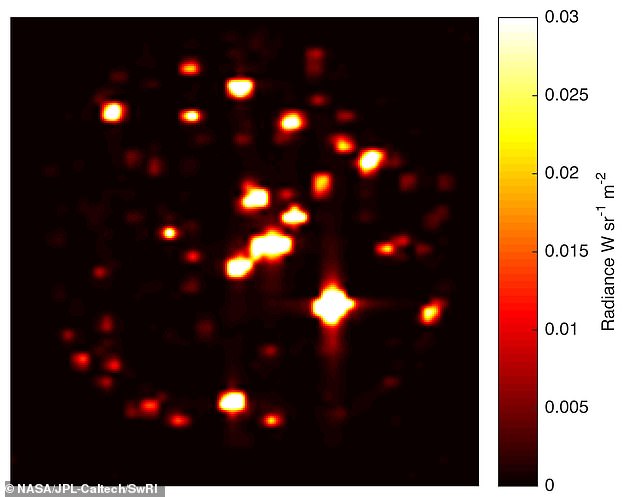
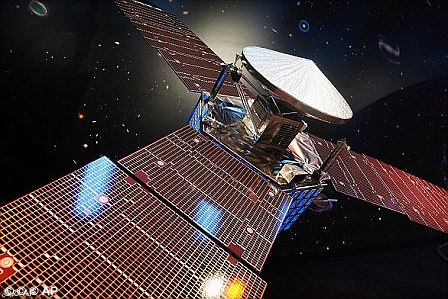


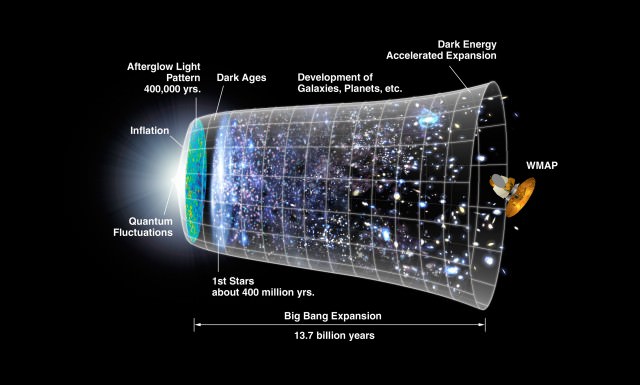


 First image of





 Spanish cyclist is rescued after trying to ride across...
 What a joke! His dissident grandfather fled Russia for the...


