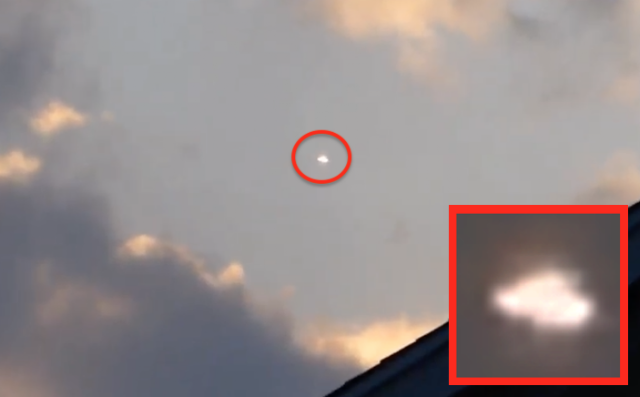
Ontdek de Fascinerende Wereld van UFO's en UAP's: Jouw Bron voor Onthullende Informatie!
Ben jij ook gefascineerd door het onbekende? Wil je meer weten over UFO's en UAP's, niet alleen in België, maar over de hele wereld? Dan ben je op de juiste plek!
België: Het Kloppend Hart van UFO-onderzoek
In België is BUFON (Belgisch UFO-Netwerk) dé autoriteit op het gebied van UFO-onderzoek. Voor betrouwbare en objectieve informatie over deze intrigerende fenomenen, bezoek je zeker onze Facebook-pagina en deze blog. Maar dat is nog niet alles! Ontdek ook het Belgisch UFO-meldpunt en Caelestia, twee organisaties die diepgaand onderzoek verrichten, al zijn ze soms kritisch of sceptisch.
Nederland: Een Schat aan Informatie
Voor onze Nederlandse buren is er de schitterende website www.ufowijzer.nl, beheerd door Paul Harmans. Deze site biedt een schat aan informatie en artikelen die je niet wilt missen!
Internationaal: MUFON - De Wereldwijde Autoriteit
Neem ook een kijkje bij MUFON (Mutual UFO Network Inc.), een gerenommeerde Amerikaanse UFO-vereniging met afdelingen in de VS en wereldwijd. MUFON is toegewijd aan de wetenschappelijke en analytische studie van het UFO-fenomeen, en hun maandelijkse tijdschrift, The MUFON UFO-Journal, is een must-read voor elke UFO-enthousiasteling. Bezoek hun website op www.mufon.com voor meer informatie.
Samenwerking en Toekomstvisie
Sinds 1 februari 2020 is Pieter niet alleen ex-president van BUFON, maar ook de voormalige nationale directeur van MUFON in Vlaanderen en Nederland. Dit creëert een sterke samenwerking met de Franse MUFON Reseau MUFON/EUROP, wat ons in staat stelt om nog meer waardevolle inzichten te delen.
Let op: Nepprofielen en Nieuwe Groeperingen
Pas op voor een nieuwe groepering die zich ook BUFON noemt, maar geen enkele connectie heeft met onze gevestigde organisatie. Hoewel zij de naam geregistreerd hebben, kunnen ze het rijke verleden en de expertise van onze groep niet evenaren. We wensen hen veel succes, maar we blijven de autoriteit in UFO-onderzoek!
Blijf Op De Hoogte!
Wil jij de laatste nieuwtjes over UFO's, ruimtevaart, archeologie, en meer? Volg ons dan en duik samen met ons in de fascinerende wereld van het onbekende! Sluit je aan bij de gemeenschap van nieuwsgierige geesten die net als jij verlangen naar antwoorden en avonturen in de sterren!
Heb je vragen of wil je meer weten? Aarzel dan niet om contact met ons op te nemen! Samen ontrafelen we het mysterie van de lucht en daarbuiten.
WATER, WATER EVERYWHERE Water molecules in the moon’s vicinity suggest that a thin layer of water is buried in the moon’s soil. In this image taken from the International Space Station, the blue glow is from Earth’s atmosphere.
NASA
Meteor showers bring moon geysers. A lunar orbiter spotted extra water around the moon when the moon passed through streams of cosmic dust that can cause meteor showers on Earth.
The water was probably released from lunar soil by tiny meteorite impacts, planetary scientist Mehdi Benna of NASA Goddard Space Flight Center in Greenbelt, Md., and colleagues report April 15 in in Nature Geoscience. Those random impacts suggest water is buried all over the moon, rather than isolated in freezing dark craters — and that the moon has been wet for billions of years.
Samples of lunar soil brought back by the Apollo astronauts suggested that the moon is bone dry. But in the last decade or so, several remote missions have found water deposits on the moon, including signs of frozen surface water in regions of permanent shadow near the poles (SN: 10/24/09, p. 10).
“We knew there was water in the soil,” Benna says. What scientists didn’t know was how widespread that water was, or how long it had been there.
Benna and colleagues used observations from NASA’s LADEE spacecraft, which collected data from lunar orbit from November 2013 to April 2014 (SN Online: 4/18/14). LADEE’s spectrometers detected dozens of sharp increases in the abundance of water molecules in the moon’s exosphere, the tenuous atmosphere of gas molecules that clings to the moon. Twenty-nine of those measurements coincided with known streams of space dust.
When Earth passes through those streams, the dust burns up in the atmosphere, producing annual meteor showers like the Leonids and the Geminids. But because the moon has no true atmosphere, bits of dust from the same showers strike the moon’s surface directly, stirring up what lies beneath.
Benna and colleagues calculated that only meteorites heavier than about 0.15 grams could have released the water. That means the top eight centimeters or so of lunar soil are indeed dry — smaller impacts would have released water if any was there. Beneath that dry coating is a global layer of hydrated soil, with water ice clinging to dust grains.
But the moon is by no means soggy. Squeezing half a ton of lunar soil would yield barely a small bottle of water, Benna says. “It’s not a lot of water by any measure, but it’s still water.” And it’s too much water to have arrived at the moon recently, he says. The moon may have held on to at least some of this water since the time of its formation (SN: 4/15/17, p. 18).
Future studies could help figure out whether and how that water could be useful for human explorers.
The finding is “plausible and certainly provocative,” says planetary scientist Erik Asphaug of the University of Arizona in Tucson. “It’s the kind of paper that is good to see published so we can debate it.”
Editor's note: This story was updated April 19, 2019, to clarify that LADEE collected data from lunar orbit from November 2013 to April 2014.
CHEMICAL RELIC The elusive helium hydride ion, thought to be the first type of molecule to form in the universe, has been found in the planetary nebula NGC 7027 (shown in infrared light in this Hubble image).
WILLIAM B. LATTER/SIRTF SCIENCE CENTER/CALTECH, NASA, ESA
Helium hydride ions, thought to be the first type of molecule to form in the universe, have finally been spotted in space.
These charged molecules, each made of a neutral helium atom and a positively charged hydrogen atom, first emerged within about 100,000 years after the Big Bang. Back then, the universe was composed almost entirely of hydrogen and helium, and helium hydride was the only molecule that these two elements could create when they collided.
Although researchers have seen helium hydride ions in the lab, these molecules have never been definitively detected in space. The discovery of helium hydride in a nearby planetary nebula ends a decades-long search for these seminal molecules and helps confirm our understanding of chemistry in the infant universe, researchers report online April 17 in Nature.
During three flights in May 2016, the airborne Stratospheric Observatory for Infrared Astronomy observed a planetary nebula about 3,000 light-years away called NGC 7027. This shell of stellar material was blown off a sunlike star when its core collapsed into a white dwarf about 600 years ago. In the light emitted by the hot, dense cloud of gas, researchers detected helium hydride’s signature wavelength of infrared radiation.
The helium hydride ions seen in NGC 7027 were created in the planetary nebula, rather than being leftover from the early universe. But their existence confirms that helium hydride ions can exist outside the lab, which means that theoretical simulations of the primordial cosmos aren’t in serious need of revision.
Adam Perry, who studied helium hydride while at the University of Illinois Urbana-Champaign, likens the new find to unearthing a fossil that fills a missing link in animal evolution. “Everybody knew [helium hydride] had to be out there,” says Perry, who wasn’t involved in the study. But “where before there wasn't any hard evidence, now there is.… People who do astrochemistry are going to be very excited about this.”
Studying the helium hydride ions in NGC 7027 may offer new insights into the chemical reactions that form these ions, says study coauthor Rolf Güsten, an astrophysicist at the Max Planck Institute for Radio Astronomy in Bonn, Germany.
Güsten and colleagues also hope to use the Atacama Large Millimeter/submillimeter Array in northern Chile to scour the distant, early universe for helium hydride ions born soon after the Big Bang.
Lights from an Unidentified Flying Object Appears in the Skies of Beijing, China
Paranormal researcher Scott C Waring uncovered footage of mysterious UFO lights that appeared in the skies over China. These bright lights, possibly from multiple unidentified flying objects, hovered in the night skies, and not only appeared in the skies of Beijing, but also in other regions of the country. “The lights caught the attention of most of Beijing, but it was seen by people that were 100 km away!
That means the UFOs went to many locations, not just over Beijing. The light is lumpy and contained. That means its not a spotlight from the ground. A spotlight would spread the light evenly in all areas and cannot make lumps like this in the clouds. The lights suddenly appear as a group of spots, and then spreads into a plurality of spots, and moves quickly, sometimes ring-shaped, and sometimes resembles a pattern, and sometimes becomes another irregular pattern,” said Waring. Read more for the video and additional information.
“Interestingly, the shape of the UFO that appeared in China seems very similar to the unidentified flying object that appeared a few months back in Baji California. The clip from Baji California was uploaded to YouTube by Tyler Glockner who runs the YouTube channel ‘Secureteam10’, and the conspiracy theorist revealed that eyewitnesses had live-streamed the UFO sighting on Instagram,” reports IB Times.
Scientists think aliens could be living in other universes
Alien life could exist in other universes, according to a group of scientists studying a mysterious force known as dark energy.
Previous theories suggested our universe has the perfect amount of dark energy, which acts against gravity and is making the cosmos expand at an accelerated rate.
It was understood that any more would create such rapid expansion that stars and planets wouldn’t have time to form.
The multiverse theory, first put forward in the 80s, said there was a “luckily small” amount of the force in our universe.
But researchers at Durham University claim these celestial bodies would still have formed even if a universe had 100 times the dark energy that ours does.
They used giant computer simulations to suggest that, if other universes exist, they may be just as likely to harbor life.
An artist’s rendition of a multiverse
Jaime Salcido/SWNS.com
“The formation of stars in a universe is a battle between the attraction of gravity and the repulsion of dark energy,” said Professor Richard Bower of Durham University’s Institute for Computational Cosmology.
“We have found in our simulations that universes with much more dark energy than ours can happily form stars. So why such a paltry amount of dark energy in our universe?”
“I think we should be looking for a new law of physics to explain this strange property of our universe and the Multiverse theory does little to rescue physicists’ discomfort.”
Their findings are published in two related papers in the journal, Monthly Notices of the Royal Astronomical Society.
The density of gas after 13.8 billion years of evolution, featuring a universe with no dark energy, left, our universe, center, and a universe with 10 times more dark energy than our own
Jaime Salcido/SWNS.com
And their simulations were created using the EAGLE (Evolution and Assembly of Galaxies and their Environments) project – one of the most realistic programs mapping the observed Universe.
The dark energy conundrum has plagued scientists for years, said Jaime Salcido, a postgraduate student of Durham University.
He added: “Our simulations show that even if there was much more dark energy or even very little in the universe then it would only have a minimal effect on star and planet formation.”
The widely accepted eternal inflation theory claims our universe came into existence with a brief burst which saw the universe expand at a rapid pace.
Some suggested this meant that, in some regions, the universe is still expanding and will continue to grow infinitely.
In doing so, it creates multiverses: an endless supply of universes much like our own, populated with Earth-like planets, societies and even individuals that resemble us.
POCKMARKED PLANET This enhanced-color image of Mercury, using data gleaned from NASA’s MESSENGER mission, reveals mineralogical differences in the rocks that make up Mercury’s crust. The mission, which ended in 2015, continues to yield new finds, including that Mercury has a giant solid inner core.
CARNEGIE INST. OF WASHINGTON, JHU-APL, NASA
The smallest planet in our solar system has a massive solid inner core.
In its final trip around Mercury before crash-landing in 2015, NASA’s MESSENGER mission zoomed in close to the planet, enabling scientists to make detailed measurements of its gravity, spin and internal structure. Those data, researchers report April 10 in Geophysical Research Letters, suggest Mercury has a solid inner core about2,000 kilometers in diameter, making up about half of Mercury’s entire core.
Scientists already knew that Mercury’s core was huge, taking up about 85 percent of the planet (SN: 4/21/12, p. 8). In 2007, radar observations made from Earth detected small oscillations in Mercury’s spin rate that suggested the core was at least partially liquid (SN: 5/5/07). Then MESSENGER data revealed that the planet has a weak magnetic field generated by circulation of molten metal in that liquid core (SN Online: 5/7/15). But it wasn’t clear if Mercury, like Earth, also has a solid inner core.
To study the planet’s interior structure, MESSENGER measured Mercury’s distribution of mass by tracking tiny shifts in the spacecraft’s orbiting speed caused by subtle variations in gravitational pull. Using those data, scientists were able to estimate what sort of interior composition would best explain how Mercury spins.
Big heart
Measurements of gravity anomalies within Mercury suggest that the planet’s solid inner core makes up about half of the total core. The entire core is about 85 percent of the planet.
NASA'S GODDARD SPACE FLIGHT CENTER
Of the rocky planets, only Earth and Mercury still have magnetic fields generated by their cores. Such fields can shield planets from being battered by charged particles constantly streaming from the sun.
But Mercury’s core is cooling and solidifying faster than Earth’s. Earth’s solid inner core currently makes up only about a third of the total core. So observing how the innermost planet’s interior evolves, and how its magnetic field adjusts, may give a peek into the future of our own planet’s magnetic field, the researchers say.
Cassini data now reveal that some of Titan’s lakes are surprisingly deep.
Infrared view of seas and lakes in Titan’s northern hemisphere, taken by Cassini in 2014. Sunlight can be seen glinting off the southern part of Titan’s largest sea, Kraken Mare.
Image via NASA/JPL-Caltech/University of Arizona/University of Idaho.
Saturn’s largest moonTitanis the only world in our solar system besides Earth known to have bodies of liquid on its surface. Scientists announceddefinitive evidencefor them in 2007, based on data from NASA’sCassinispacecraft. The large ones are known as maria (seas) and the small ones as lacus (lakes). It’s now known that Titan’s hydrologic cycleis surprisingly similar to Earth’s, with one big exception: the liquid on Titan is liquid methane/ethaneinstead of water, due to the extreme cold. The moon’s northern hemisphere, in particular, has dozens of smaller lakes near its pole, and now scientists have found that they are surprisingly deep and sit on the tops of hills and mesas. These observations come from data collected during the last close flyby of Titan during the Cassini mission, which ended in 2017.
The new peer-reviewed findings were published on April 15, 2019, in the journal Nature Astronomy.
Scientists had thought that the lakes would be an almost equal mixture of methane and ethane, like the larger seas. This is the case with the one sizable lake in the southern hemisphere called Ontario Lacus. But to their surprise, they found that the lakes in the northern hemisphere are composed almost entirely of methane. As lead author Marco Mastrogiuseppe, a Cassini radar scientist at Caltech, explained:
Every time we make discoveries on Titan, Titan becomes more and more mysterious. But these new measurements help give an answer to a few key questions. We can actually now better understand the hydrology of Titan.
Map of Titan’s seas and lakes in the northern hemisphere.
Image via JPL-Caltech/NASA/ASI/USGS.
But while some questions may be answered, other new ones are also raised. Why the difference between the lakes in the northern and southern hemispheres? Also, the hydrology on one side of the northern hemisphere appears to be very different from that on the other side. Why? On the eastern side, you find larger seas with low elevation, canyons and islands. But the western side is dominated by the smaller lakes perched on top of hills and mesas. Some of those lakes are more than 300 feet (100 meters) deep, a surprise given their small sizes. As noted by Cassini scientist and co-author Jonathan Lunine of Cornell University:
It is as if you looked down on the Earth’s North Pole and could see that North America had completely different geologic setting for bodies of liquid than Asia does.
Cenote Sagrado (Sacred Cenote) near Chichen Itza, one of the best known karst lakes (or sinkhole) in Yucatán. Karst lakes are thought to be similar to the deep methane lakes on Titan.
The findings show how Titan’s alien yet earthly-ish landscape is even more unusual than first thought. They show very deep lakes sitting atop tall mesas or plateaus, suggesting that they formed when the surrounding bedrock of ice and solid organics chemically dissolved and collapsed. These Titan lakes are reminiscent of karst lakes on Earth, which form when subterranean caves collapse. In the earthly counterparts, however, water dissolves limestone, gypsum or dolomite rock.
This is a great example of how – much like the hydrologic cycle – geologic processes on Titan can also mimic those on Earth, yet be uniquely Titanian at the same time. In many ways, Titan looks a lot like Earth, but the underlying mechanisms, and composition of materials, are fundamentally different on this world in the much-colder outer solar system.
Cassini also observed another kind of lake on Titan. Radar and infrared data revealed transient lakes where the level of liquids varies significantly. These results have been published in a separate paper in Nature Astronomy. According to Shannon MacKenzie, a planetary scientist at the Johns Hopkins University Applied Physics Laboratory, those changes may be seasonal:
One possibility is that these transient features could have been shallower bodies of liquid that over the course of the season evaporated and infiltrated into the subsurface.
Images from Cassini showing new small lakes appearing in Arrakis Planitia between 2004 and 2005. Such lakes seem to be transient, where the liquids fill the lakes before evaporating or seeping into the ground again.
Image via NASA/JPL/Space Science Institute.
Taken together, the results about both the deep lakes and transient lakes support the scenario where methane/ethane rain feeds the lakes, which then evaporate back into the atmosphere or drain into the subsurface, leaving reservoirs of liquid below the surface. It is a complete hydrologic cycle, but, in the colder environment than on Earth, one where methane and ethane can be liquid and water is in the form of rock-hard ice.
The presence of lakes and seas on Titan brings up another question. Might there possibly be any form of life there? Some scientists think there indeed could be at least microscopic organisms, despite the harsh conditions in contrast to Earth, that use liquid methane/ethane in a similar way that life here uses water. Such life would have to be evolved to exist in conditions unlike any on Earth, but it’s an intriguing possibility.
Bottom line: Data on Titan’s lakes, collected by the Cassini spacecraft (whose mission ended in 2017), continue to reveal insights into a hydrologic cycle that’s remarkably similar to Earth’s in some ways – but distinctly alien in others. A new finding is that lakes near Titan’s north pole are surprisingly deep and sit on the tops of hills and mesas.
See the far side of the moon like never before:China releases stunning new images captured by its Yutu 2 rover as the mission hunkers down for another long lunar night
China's moon mission has exceeded expectations, releasing new lunar images
Yutu 2 and its lander are hibernating as the look to enter their fifth lunar day
The mission looks to analyze layers of the moon's mantle never seen before
China's Chang’e 4 lander and Yutu 2 rover have captured new images on their successful mission to explore the far side of the moon as the duo looks to extend their study to a fifth lunar day.
On the moon, the cycle of day and night is nearly 30 Earth-days in total, with each lasting about two weeks long.
The new images captured from the rover, Yutu 2 and released this month, offer up more of the mission's journey after a first round of pictures was released after their arrival on the 115-mile wide Von Kármán Crater in January.
Objectives of the lander and rover mission -- the first-ever to target exploration of the moon's far side -- include analyzing chemical differences between the Earth-facing side of the moon and the mission's target area.
Scroll down for video
China's Chang’e 4 mission has been a smashing success with its lander and rover greatly exceeding their expected lifespan. The new images captured from the rover, Yutu 2 and released this month, offer up more of the mission's journey
As reported by the Planetary Society, no hard science regarding the Chang’e 4's mission has emerged yet, but scientists involved with the project said the surveyed area shows 'potential evidence of excavated deep mafic material, which could reveal the mineralogy of the lunar mantle.'
The far side of the moon, which is the hemisphere that always faces away from Earth, has yet to be explored by any such missions before and like its Earth-visible counterpart, the location experiences intervals of two weeks of sunlight and two weeks of darkness.
According to a report by Space.com, Chang’e 4's mission has already greatly exceeded expectations.
The spacecraft were only initially designed to last about three lunar days in total.
Both the lander and rover are currently in hibernation mode, resting during a lunar night, but on April 28, when another two-week day dawns on the far side of the moon, both would be going on their fifth lunar day, given they're still fully intact.
With their ample data, scientists hope to reveal facts about our early solar system. The far side of the moon, which is the hemisphere that always faces away from Earth, has yet to be explored by any such missions before
The mission's rover, Yutu 2, has outpaced its predecessor traveling an extra 60 meters so far
Because of the daytime's brutal temperatures which soar to 390 degrees Fahrenheit (200 degrees Celsius), the rover is also required to take intermittent 'naps' -- brief periods of hibernation -- until it's able to move again.
Even despite the hazards and obstacles of exploring the far side of the moon, the Yutu 2 has managed to travel just under 180 meters during its one-month stay.
With what data scientists already have already collected and whatever bonus material the rover is able to glean on potential endeavors later this month, researchers plan to analyze and then publish results in about a month, according to the Planetary Society.
In addition to satisfying humans' curiosity regarding the far side of the moon, the mission will also help to illuminate scientists understanding about the makeup of our early solar system.
Craters studied by the rover were created by an ancient impact where layers of the moon's mantle are exposed, where they can be studied to determine its contents and more.
WHY DID CHINA CHOOSE TO LAND IN THE VON KARMAN CRATER?
Chang'e-4 landed in the Von Karman crater in the South Pole-Aitken basin.
This is an enormous crater which resides at the very most southern tip of the moon.
China opted to study the far side of the moon and has in the process beat all other nations to the landmark moment.
The basin is so far the largest known impact basin in the solar system.
China's space agency hopes that by exploring the huge divot on the surface of the moon they may be able to shed some light on its history and geology by collecting rocks that have never been seen before.
Researchers hope the huge depth of the crater will allow them to study the moon's mantle, the layer underneath the surface, of the moon.
The crater is believed to be composed of various chemical compounds, including thorium, iron oxide, and titanium dioxide.
It is also hoped that by judging this 8-mile deep scar on the surface of the moon the scientists could find clues to piece together the origin of the lunar mantle.
There is also another logistical reason for the choice of landing site, the crater is mostly flat in the south of the basin.
This increased the likelihood of a successful landing.
China quietly released a new set of images provided by its Chang’e 4 lunar exploration mission. The rover, which became the first mission to ever land on the far side of the moon, shows some features of the lunar surface in unprecedented detail.
Image credits: CLEP/CNSA.
China’s mission has already gone as well as you could hope for — if not better. It became the first mission to perform a soft landing on the dark side of the moon, it carried geophysical studies of its landing surface, and it successfully grew potatoes and a few other plants on the moon — marking another impressive first.
The Yutu 2 rover has now traveled a total of 178.9 meters (587.9 feet), which far exceeds the record by its predecessor, Yutu 1, during the Chang’e 3 mission, which managed to travel 114 meters. Durings its latest travels, the rover also snapped a few photographs which it beamed back to Earth, and some of those images have now been released by China’s National Space Administration (CNSA).
The lunar surface, as seen by the Yutu 2 rover.
Image: CLEP/CNSA.
The Von Kármán crater, close to where the rover landed, is believed to contain an intriguing mixture of chemical elements, including thorium, iron oxide, and titanium dioxide, which could provide important clues about the origin and evolution of the lunar surface. Researchers hope that the mission will help answer questions about the crater’s surface features and test whether plants could grow in lunar soil.
The mission is also observing low-frequency radio light coming from the Sun or beyond that’s impossible to detect on Earth because there is so much radio noise interfering with it.
Early tracks from Yutu-2 after its descent from the Chang’e-4 lander, visible in the top-left.
Image: CLEP/CNSA.
More recent tracks.
Image: CLEP/CNSA.
The rover is currently in hibernation mode until April 28. It has already survived for four lunar days and nights, or about 29.5 days on Earth. It’s still going strong, preparing for its fifth lunar night — despite being designed to last for three lunar nights only. Everything that happens now is just a bonus on this already excellent mission. The rover is also turning intermittent naps when it is facing the sun directly, as temperatures soar to 200 degrees Celsius.
Much of the scientific data gathered hasn’t been relayed back to Earth yet. It will take several more weeks before it is all sent back, and a bit more time to analyze it after that. In the meantime, we can all enjoy these crisp images.
Many countries have tried to develop miniaturised nuclear reactors for space flight applications, but Russia’s by far the closest.
Elon Muskwants to travel toMarsusing SpaceX’s planned monolithic rocket booster, the Big Falcon Rocket. Meanwhile, on the other side of the world inRussia, Vladimir Putin is planning on getting to the Red Plant with a nuclear powered spaceship that looks like something out of James Cameron’s Avatar.
The Russian state sponsored space agency, Roscosmos, unveiled plans to build a spacecraft that would be powered by an onboard nuclear reactor and fly using nuclear thermal engines. This proposed vessel has been touted with the ability to sustain a crew in space without the need of harnessing solar energy, which has often been posed as a possible solution for interstellar travel. Dan Kotlyar, an assistant professor of nuclear radiological engineering at the Georgia Institute of Technology says that “nuclear powered engines could bring about a new era of solar system exploration.”
“Nuclear thermal propulsion (NTP) systems offer the greatest versatility for near-term deep space missions such as NASA’s planned Mars and near Earth asteroid missions,” he explains. “Due to their superior energy density, these systems have nearly twice the efficiency of the best chemical engines paired with comparable thrust levels.”
Based on the brief video, it appears that the proposed vessel would power its life-support systems using a nuclear reactor and also make use of nuclear engines.
Simply put, nuclear engines may simply be better than the traditional chemical engines used by SpaceX rockets. They use a nuclear reactor to heat up a propellant, like liquid hydrogen before blasting it through a nozzle, and space agencies have been working on using one for decades.
NASA’s Project Rover program started in 1955 and lasted until 1973, which led to the development of 20 different reactors. Most recently the American space agency has revived the Nuclear Engine for Rocket Vehicle Application (NERVA) with help from BWX Technologies in an attempt to cut down future travel times between Earth and Mars.
Russia is no stranger to this research either. Aside from Tuesday’s announcement by Roscosmos’ nuclear propulsion team, the former Soviet Union was found to have been testing an engine similar to NERVA up until right before it fell in 1991.
“Nuclear thermal propulsion systems have a long and prolific history of research and development,” said Kotlyar. “Despite the major advancements made in the Rover program, much work is yet to be done to create a working nuclear thermal rocket for NASA’s current planned Mars missions.”
Space is, as you may have heard, is a sub-optimal environment for the human body. It can kill us instantly if we don’t protect ourselves, and can also wear us down slowly, even if we’re safely aboard the International Space Station (ISS). To live in the great unknown we need a constant supply of electrical energy to maintain the devices that keep us alive up there.
Aside from regular resupply missions, the ISS has acres of solar panels that soak up the Sun’s beams to produce 84 to 120 kilowatts of electrical power, which it stores in batteries. Roscosmos wants to replace all of that with a nuclear reactor, which might be possible but could, obviously, be dangerous.
Meanwhile NASA has already developed miniature nuclear reactors, named KRUSTY, that it envisions powering its eventual space outposts. Each is capable of providing 10 kilowatts of power, enough to run several average households. So roughly ten of these small reactors could produce the same energy as the ISS’s massive solar panels. That’s great, but safety is still a concern.
While the process of creating nuclear energy on Earth has become mostly safe, cramming a crew onto a spaceship that’s powered by radioactive materials is obviously untested. That said, Roscosmos’ render presents an alternative vision for long distance space travel that is far more plausible than the Avatar like aesthetic would have you believe.
The U.S. Navy is working on new guidelines for its personnel to report sightings and other encounters with “unidentified aircraft,” Politico reports.
It sounds like a major step toward taking UFO encounters more seriously: the Navy’s new process would create formalized guidelines for sailors and pilots alike to report and analyze each one of the encounters.
The Truth Is Out There
No, this is definitely not the Navy confirming the existence of extraterrestrials, as Politico points out. It’s just giving the rank and file a chance to have their encounters examined by military authorities.
“There have been a number of reports of unauthorized and/or unidentified aircraft entering various military-controlled ranges and designated air space in recent years,” the Navy said in a statement to Politico. “For safety and security concerns, the Navy and the [U.S. Air Force] takes these reports very seriously and investigates each and every report.”
A Second Look
Rather than ignoring and dumping the data collected during sightings of UFOs and other “unexplained aerial phenomena,” as Pentagon officials put it, the sightings would be investigated and studied by personnel — though exactly who gets to review the data is unclear.
In 2017, the New York Times reported on a $22 million program by the Pentagon called the Advanced Aerospace Threat Identification Program that allegedly was devoted to the investigation of UFOs. Perhaps the Navy’s upcoming guidelines could simply be an outcome of that.
Scientists have created simple machines made of biomaterials with the properties of living things. These so-called “living machines” have the properties of living things despite being human-engineered machines.
As a genetic material, DNA is responsible for all known life. But DNA is also a polymer. Tapping into the unique nature of the molecule, Cornell engineers have created simple machines constructed of biomaterials with properties of living things.
“We are introducing a brand-new, lifelike material concept powered by its very own artificial metabolism.We are not making something that’s alive, but we are creating materials that are much more lifelike than have ever been seen before,” said Dan Luo, professor of biological and environmental engineering in the College of Agriculture and Life Sciences.
Using DASH, the Cornell engineers created a biomaterial that can autonomously emerge from its nanoscale building blocks and arrange itself – first into polymers and eventually mesoscale shapes, reports news.cornell.edu.
RT America’s Trinity Chavez reports on the breakthrough.
On October 5, 2015, here at Mysterious Universe, Micah Hankswrote an article titled“The Cash-Landrum Incident: Was a Nuclear Aircraft Involved?” Micah’s article began as follows: “Of all the best-known and often reviewed UFO cases of the last few decades, many would contend that one of the most puzzling had been the Cash-Landrum incident, which occurred near Dayton, Texas on 29 December, 1980. The story, well known in UFO circles, involved two women: Betty Cash and Vicky Landrum, as well as Vicky’s grandson Colby, all of whom purportedly observed an unusual, very bright source of illumination over a country road on the night in question. After seemingly hovering above the highway for several minutes, the strange object was surrounded by a group of helicopters in tight formation, and removed from the area, according to the witnesses.”
As Micah’s feature demonstrated, there are good reasons to suspect that the cause of the still-controversial affair was not due to the presence of a UFO – as many people conclude (or who may want to believe). Rather, the vehicle may have been a prototype nuclear-powered vehicle built and flown by the U.S. military. Micah’s article focuses on a lot of thought-provoking data, all of which points in that specific direction. There is a good reason I mention all of this today: another source claimed to have been given information that also supported this particular down-to-earth theory. That source was the late Tom Adams, who spent a lot of time from the 1970s onward investigating matters relative to black helicopters and cattle mutilations. Adams’ connection to the December 1980 incident is not that well known, which is why I have decided to highlight it for you today.
It was while he was digging deep into stories of those aforementioned mutilations and strange helicopters that Adams came across an intrigue-filled story. On one occasion, Adams had the opportunity to speak with a man that Adams referred to as “Tony.” Yes, and before anyone quickly brings the matter up, I fully realize that relying on sources who use aliases is hardly something that can be said to be preferable or ideal. Sometimes, though, that is just how it goes. And particularly so when it’s the source who is calling all of the shots. That was exactly the case when it came to the matter of Tom Adams, Tony, and the 1980 Cash-Landrum incident. Tony – a military helicopter pilot – had spent time working at Fort Hood, Texas, and as a result had come across certain data on the infamous story.
According to the account told to Tom Adams by Tony, it all went down late one night, in December 1980. It was a night which Tony couldn’t fail to forget, as it was just a couple of days after Christmas 1980. Tony and his colleagues were quickly ordered to take to the skies and head out to Huffman, Texas. All of the crews were told to keep a careful look-out for what was described by Tony as an “unusual aircraft.” Rather significantly, the helicopter crews were also told to get as close to the craft as they possibly could, but without causing a disaster in the process. Incredibly, at one point the pilots were told that, if it came to it and there was no alternative, they should try and force the aircraft to the ground, using the weight of the helicopters to push it down. Which, surely, would have been an incredibly precarious situation for the men to find themselves in.
Tony continued with his story and told Tom Adams that as they closed in on Huffman, they couldn’t fail to see the strange thing in the sky. Tony stated that it was “throwing off sparks like a 4th of July sparkler.” For around seven to ten miles they “shadowed” the object, after which an order came through to abort and head back to base, which, Tony added, is precisely what they all did. Only a few days later, Tony was given the full story of what happened that night – from a colleague at Fort Hood. The UFO was nothing of the sort. It was a prototype, nuclear-powered vehicle that had malfunctioned and which was in danger of crashing to the ground. Fortunately, the glitch was eventually rectified and the craft continued on its original course – hence the reason why the helicopter pilots were told to abort.
There may still be those out there who yearn for the craft to have been an alien spacecraft. But, what’s more likely: a UFO from a faraway galaxy or an advanced craft of the military that malfunctioned at just about the worst time possible? My money is on the second scenario.
The Navy isn’t endorsing the idea that its sailors have encountered alien spacecraft — but it also does not want to dismiss strange aerial sightings by credible military personnel.
U.S. Navy drafting new guidelines for reporting UFOs
The service says it has also 'provided a series of briefings by senior Naval Intelligence officials as well as aviators who reported hazards to aviation safety.'
The U.S. Navy is drafting new guidelines for pilots and other personnel to report encounters with "unidentified aircraft," a significant new step in creating a formal process to collect and analyze the unexplained sightings — and destigmatize them.
The previously unreported move is in response to a series of sightings of unknown, highly advanced aircraft intruding on Navy strike groups and other sensitive military formations and facilities, the service says.
"There have been a number of reports of unauthorized and/or unidentified aircraft entering various military-controlled ranges and designated air space in recent years," the Navy said in a statement in response to questions from POLITICO. "For safety and security concerns, the Navy and the [U.S. Air Force] takes these reports very seriously and investigates each and every report.
"As part of this effort," it added, "the Navy is updating and formalizing the process by which reports of any such suspected incursions can be made to the cognizant authorities. A new message to the fleet that will detail the steps for reporting is in draft."
To be clear, the Navy isn’t endorsing the idea that its sailors have encountered alien spacecraft. But it is acknowledging there have been enough strange aerial sightings by credible and highly trained military personnel that they need to be recorded in the official record and studied — rather than dismissed as some kooky phenomena from the realm of science-fiction.
Chris Mellon, a former Pentagon intelligence official and ex-staffer on the Senate Intelligence Committee, said establishing a more formal means of reporting what the military now calls "unexplained aerial phenomena" — rather than "unidentified flying objects" — would be a “sea change.”
“Right now, we have situation in which UFOs and UAPs are treated as anomalies to be ignored rather than anomalies to be explored,” he said. “We have systems that exclude that information and dump it.”
For example, Mellon said “in a lot of cases [military personnel] don’t know what to do with that information — like satellite data or a radar that sees something going Mach 3. They will dump [the data] because that is not a traditional aircraft or missile.”
The development comes amid growing interest from members of Congress following revelations by POLITICO and the New York Times in late 2017 that the Pentagon established a dedicated office inside the Defense Intelligence Agency to study UAPs at the urging of several senators who secretly set aside appropriations for the effort.
That office spent some $25 million conducting a series of technical studies and evaluating numerous unexplained incursions, including one that lasted several days involving the USS Nimitz Carrier Strike Group in 2004. In that case, Navy fighter jets were outmaneuvered by unidentified aircraft that flew in ways that appeared to defy the laws of known physics.
Raytheon, a leading defense contractor, used the reports and official Defense Department video of the sightings off the coast of California to hail one of its radar systems for capturing the phenomena.
The Pentagon's UFO research office, known as the Advanced Aerospace Threat Identification Program, was officially wound down in 2012 when the congressional earmark ran out.
But more lawmakers are now asking questions, the Navy also reports.
"In response to requests for information from Congressional members and staff, Navy officials have provided a series of briefings by senior Naval Intelligence officials as well as aviators who reported hazards to aviation safety," the service said in its statement to POLITICO.
The Navy declined to identify who has been briefed, nor would it provide more details on the guidelines for reporting that are being drafted for the fleet. The Air Force did not immediately respond to a request for comment.
Advocates for treating such sightings as a potential national security threat have long criticized military leaders for giving the phenomenon relatively little attention and for encouraging a culture in which personnel feel that speaking up about it could hurt their career.
Luis Elizondo, the former Pentagon official who ran the so-called AATIP office, complained after he retired from government service that the Pentagon's approach to these unidentified aircraft has been far too blasé.
"If you are in a busy airport and see something you are supposed to say something," Elizondo said. "With our own military members it is kind of the opposite: 'If you do see something, don't say something.'"
He added that because these mysterious aircraft "don't have a tail number or a flag — in some cases not even a tail — it's crickets. What happens in five years if it turns out these are extremely advanced Russian aircraft?"
Elizondo will be featured in an upcoming documentary series about the Pentagon UFO research he oversaw. He said the six-part series will reveal more recent sightings of UAPs by dozens of military pilots.
Both Elizondo and Mellon are involved with the To The Stars Academy of Arts and Sciences, which supports research into explaining the technical advances these reported UAPs demonstrate.
CORRECTION: An earlier version of this report misstated the name of Pentagon's UFO research office. It is called the Advanced Aerospace Threat Identification Program.
WETENSCHAPWetenschappers hebben ontdekt dat de planeet Mercurius een gigantische vaste kern heeft. Dat blijkt uit een analyse van data die een ruimtetuig van de Amerikaanse ruimtevaartorganisatie NASA verzamelde, vlak voor het in 2015 op de planeet neerstortte.
Mercurius is de kleinste planeet van ons zonnestelsel en hij bevindt zich het dichtste bij de zon. De temperatuur schommelt er tussen 426 graden overdag en -173 graden ’s nachts. Mercurius draait trager om zijn as dan de Aarde, waardoor een dag er 58 aardse dagen duurt.
Wetenschappers weten al lang dat Mercurius net als de Aarde een metalen kern heeft en dat het buitenste deel daarvan vloeibaar is. Dat verklaart het magnetisch veld van de planeet. Van het binnenste deel werd alleen maar vermoed dat het vast was. Een nieuwe studie die gepubliceerd werd in het wetenschappelijke tijdschrift Geophysical Research Letters, werpt daar nu nieuw licht op. En komt ook met bewijsmateriaal.
Dat bewijsmateriaal werd verzameld door de MESSENGER-sonde van de NASA. Die werd in 2004 gelanceerd richting Mercurius en stuurde in 2008 de eerste beelden van de planeet door. In 2011 kwam de sonde in een baan om Mercurius en in 2015 stortte ze gecontroleerd neer op de planeet. (lees hieronder verder)
APEen van de beelden van Mercurius die MESSENGER doorstuurde.
Tijdens de laatste omwentelingen kwam het ruimtetuig heel dicht bij de planeet en dat liet wetenschappers toe om gedetailleerde metingen te doen op het vlak van zwaartekracht, rotatie en interne structuur. Die toonden aan dat Mercurius wel degelijk een vaste kern heeft en dat die maar liefst 2.000 kilometer in diameter meet. Wat goed is voor ongeveer de helft van de totale kern. Ter vergelijking: de vaste kern van de Aarde meet ongeveer 2.400 kilometer, maar omdat onze planeet groter is dan Mercurius, gaat het bij ons maar om een derde van de totale kern.
Zwaartekracht
De interne structuur van Mercurius werd uiteindelijk in kaart gebracht door het meten van de distributie van massa van de planeet. Die gebeurde door kleine veranderingen in de omwentelingssnelheid van het ruimtetuig te meten, die veroorzaakt werden door minieme wijzigingen in de zwaartekracht. Aan de hand van die gegevens, werd bepaald welke interne structuur het specifieke draaien van Mercurius het beste kon verklaren.
De totale kern van Mercurius is overigens gigantisch. Het vaste en vloeibare deel samen maken ongeveer 85 procent uit van de volledige planeet. De kern van Mercurius koelt echter veel sneller af dan die van de Aarde. Observeren hoe de binnenkant van de planeet evolueert en het magnetisch veld wijzigt, kan wetenschappers een beeld geven van de toekomst van onze eigen planeet.
Unidentified sonic phenomena continue around the world with seemingly no explanation. Why is it that we pay much more attention to visual anomalous phenomena? Much of the study of the unexplained and mysterious centers around images and sightings, whether of Bigfoot or other cryptids, UFOs, or denizens of spirit realms or other dimensions. English speakers do tend to prioritize sight above the other senses, and many different phenomena can make similar sounds, so perhaps it’s natural that sight is most often the medium for the study of the anomalous.
Nevertheless, unidentified sonic phenomena, or USPs, are just prevalent. As MU readers know, I’m particularly interested in the mystery boom phenomenon, but anomalous acoustics of all kinds are an interest of mine. This week, strange sounds continue to frighten and baffle people worldwide as unexplained booms have been keeping residents of Cleveland’s Slavic Village neighborhood awake at night. Interestingly, as has been the case in a small percentage of these booms, anomalous flashes of light have also been reported.
Some Slavic Village residents have captured the flashes and booms on home security cameras and posted them to social media. Cleveland resident Edward McDonald told News 5 Cleveland that while the booms haven’t harmed anyone or any property yet, he believes it’s only a matter of time until they do:
What I’ve heard is like a loud bang, like a boom. It shakes houses, it rattles windows. It hasn’t caused any destruction yet, or it hasn’t caused any property damage, but it’s definitely noticeable. We all know the powers of concussions, or concussion booms, and I really think that the vibration could cause some damage at some point.
The Cleveland City Council is reportedly looking into the incidents, but if this case is like any others, they’ll likely turn up very few answers. Cleveland wasn’t alone this week, though. An eerily similar boom was reported on Sunday, April 14 in the Grand’Anse area on the western coast of Haiti. Local geologists ruled out seismic or volcanic activity and local authorities remain stumped. The mystery left in the wake of the boom is reportedly “sowing anxiety and some panic in the population” and without an explanation, rumors are reportedly running wild among locals.
Meanwhile, residents of the town of Damhal Hanji Pora in the Indian state of state of Jammu and Kashmir reported a “mysterious blast-like sound” on Friday, April 19. Police rejected the idea that the boom was caused by a grenade or other munitions, but given the proximity to Pakistan and recent tensions there, there’s no telling what could have occurred.
As with all reported incidents of mysterious booms, I’m left to wonder: are these related in any way, or are they all isolated, separate incidents?
Glowing UFO Over Tiny Town Of 97 Residents On April 21, 2019, Video, UFO Sighting News.
Date of sighting: April 21, 2019
Location of sighting: Holtwood, Pennsylvania, USA
Source: MUFON #99891
Here is a UFO sighting from a city with a population of 97. Its been long believed that UFOs appear in areas that are less populated in order to not cause a panic. This UFO was lit up like a flare, but moved very fast as seen in the video. Now I really wish I had a longer video of this, but only received a short clip. This could be a Chinese lantern, but its the wrong time of the year for Lantern Festival. Also this object is the wrong shape. A lantern is taller than wide, this appears to be the opposite. This object appears to move very fast ruling out Chinese lantern, since they move slow with the wind. It has no wings so its not a plane. Eyewitness says it turned into a triangle, and I'm thinking USAF TR3B secret triangle craft. This case remains a mystery.
Scott C. Waring
Eyewitness states:
Glowing orb that ascended very quickly, changed direction and shape from a glowing pulsating orb, to a dark grey reflective triangle.
A photograph of a meteor streaking through Earth’s atmosphere. This meteor likely originated from the tail of a comet orbiting around the sun, but other meteors may come from beyond the solar system. Credit: Daniel Pludowski Getty Images
By most standards, space is exceedingly empty, containing on average just one proton per four cubic meters of volume. In this cosmic ocean, so incomprehensibly desolate and vast, entire galaxies are akin to scattered spots of sea foam—not to mention the stars, planets and other lesser objects that fade to insignificance against the void. For random clumps of matter adrift in the deep to somehow find each other seems to border on the miraculous.
Yet find each other they do, and in surprising numbers. Stars and planets routinely hurl smaller objects into interstellar space as an inescapable consequence of orbital mechanics. And the recent discovery of ‘Oumuamua—a mysterious and first-of-its-kind interstellar object spied by chance when it passed close by our sun last year—confirms as much. Statistical extrapolations suggest that a quadrillion trillion similar objects may lurk as yet unseen in the dark spaces between the stars of the Milky Way, so many that there should always be one such far-flung passerby flying through the notional sphere bounded by Earth’s orbit around our star. With an estimated size of roughly half a kilometer, ‘Oumuamua in some respects represents the tip of the interstellar iceberg; just as grains of sand greatly outnumber large rocks on a beach, for every ‘Oumuamua-sized body wandering the galaxy there should be many, many more objects even smaller. Scientists already know of many microscopic interstellar immigrants—cosmic rays and micron-sized flecks of stardust that occasionally strike spacecraft—but other than ‘Oumuamua, nothing larger has ever definitively been found.
Now two researchers—Avi Loeb, chair of astronomy at Harvard University, and Harvard undergraduate Amir Siraj—say that has changed, arguing that a modest meteor observed in January 2014 was actually an outcast from another star. They detail their result in a preprint submitted for peer-reviewed publication in the Astrophysical Journal Letters. If confirmed, the finding could help open a new frontier in the detection and study of interstellar meteors.
A HYPERBOLIC CLAIM
“Previous approaches to this problem were like looking for your keys under a lamppost, where our sun is the lamp illuminating its surroundings and passing interstellar objects are the keys,” Loeb explains. “That’s a good technique—that’s how ‘Oumuamua was found—but it really limits you, particularly in trying to figure out an object’s composition.”
For their study, Loeb and Siraj used a different method, looking for evidence of interstellar objects in more than three decades of data from the Center for Near Earth Object Studies (CNEOS), a NASA-run global catalog of meteors detected by networks of U.S. government sensors.
Because there should be many more interstellar objects at smaller sizes, Loeb says, “there is a good chance those will appear to us as meteors, since the chances of their intersecting the Earth are higher.” Monitoring a meteor’s bright trail as it burns up in our planet’s atmosphere can reveal not only the object’s size and composition but also its trajectory and velocity with respect to the Earth and the sun. If a meteor’s inferred incoming speed exceeds about 42 kilometers per second—the solar system’s escape velocity in Earth’s vicinity—its trajectory could be considered “hyperbolic,” meaning it could have been an “unbound” interstellar passerby moving too fast to be captured by the sun’s gravity.
Only one event in the CNEOS database met Loeb and Siraj’s conservative criteria: a fireball off the coast of Papua New Guinea on January 8, 2014. According to the pair’s analysis of the CNEOS data, the meteor was half a meter in size and massed nearly 500 kilograms, entering the Earth’s atmosphere at nearly 44 kilometers per second before exploding high above the Pacific Ocean. Tellingly, the meteor’s trail showed it had not impacted Earth head-on, as one might expect of a fast-moving but native object in a retrograde orbit around our star. Instead it appeared to have swooped in from behind, overtaking our planet as the Earth moved around the sun—suggesting its actual velocity with respect to our solar system had been in blistering excess of 60 kilometers per second. Reconstructing the object’s most probable path to Earth, Loeb and Siraj found no previous close encounters with Jupiter or other large bodies that could have boosted its speed.
The case for the meteor being a rock from another star seemed almost too good to be true, particularly since CNEOS data is best interpreted with caution.The catalog’s primary sources are classified Earth-observing satellites operated by the U.S. military, which can record the brightness, orientation and duration of fireballs entering our planet’s atmosphere. For reasons of national security, the government refuses to release information about potential sources of uncertainty in the satellites’ secretive measurements.
“At first I didn’t believe it,” Siraj says. For a week, he and Loeb repeatedly checked their analysis of the CNEOS data, always arriving at the same conclusion: the meteor must have had an interstellar origin. Ultimately they chose to test their methods on a different, much more well-studied event—the 20-meter meteor that exploded over and wreaked havoc on the Russian city of Chelyabinsk in 2013. Using video recordings of the Chelyabinsk fireball, “we derived its orbit using our methods, and it was a very close match [to the CNEOS data],” Siraj says. “When I saw that, I thought, ‘Oh my god, this is real.’”
AN INTERSTELLAR ORIGIN OF LIFE?
The meteor’s estimated extreme speed was not only much higher than that of objects orbiting the sun, but also well above what would be typical of other nearby systems swirling through the Milky Way’s thin, star-studded disk. That, Loeb says, means its putative interstellar origins are decidedly exotic. “Either it came from a star in the galaxy’s thick disk [a small and diffuse subset of speedy stars that surround the thin disk like a halo],” he says, “or it came from the galaxy’s thin disk, from inner regions of a planetary system where objects orbit at higher speeds.”
The pair’s analysis also suggests interstellar objects of this scale strike the Earth at least once per decade—meaning perhaps almost half a billion have rained down upon our planet throughout its 4.5-billion-year history. Stars near our own should eject anywhere between 0.2 and 20 Earth masses of such objects over the course of their lives, Loeb and Siraj estimate—and at any time, on the order of a million should be somewhere within the Earth's orbit around the sun.
Such possibilities carry profound implications. “Some of these objects could potentially transfer life between planetary systems,” Loeb says, referring to a broad theory known as panspermia (ancient Greek for “all seeds”) that posits life first began in outer space and can readily migrate between planets. In principle, alien microbes sheltered within rocks blasted into space by a giant impact on some life-bearing world might survive an interstellar voyage and a fiery entry into a planet’s atmosphere. Some researchers have posited this may even explain life’s early emergence on Earth, which the fossil record suggests occurred with shocking rapidity more than four billion years ago, practically as soon as our planet became cool enough to harbor liquid water. “If this meteor is indeed interstellar, it shows a proof of concept,” Loeb says. “Sure, it burned up, but bigger, rarer ones won’t. And we don’t need an impact every decade to seed the early Earth.”
Even if Loeb and Siraj’s meteor had managed to reach Earth’s surface, however, other experts in the arcane topic of panspermia suggest it would not have brought anything living with it. “More likely, this object is not from a habitable (much less inhabited) body, but rather is a piece of a frozen, comet-like body,” says Benjamin Weiss, a planetary scientist and meteorite expert at the Massachusetts Institute of Technology. More fundamentally, Weiss says, the claim that this particular space rock was interstellar is problematic. “The meteor catalog that [Loeb and Siraj] used does not report uncertainties on the incoming velocity,” he notes. “These uncertainties need to be quantified before this meteor can be accepted as interstellar.”
UNKNOWN UNCERTAINTIES
That is also the view of Paul Chodas, the CNEOS catalog’s manager at NASA’s Jet Propulsion Laboratory. “We at CNEOS simply post the fireball data that is reported to us; we have no information on the uncertainties,” he says.
In March of this year, Chodas says, he and other CNEOS staffers flagged 2014’s Papua New Guinea meteor as potentially interstellar based on their own calculations of its orbit—but did not publish that result due to concerns about the data’s quality. Loeb and Siraj’s “quite extraordinary” and “highly speculative” claim, he says, “is based on just a few numbers that are likely highly uncertain.” (In their paper, Loeb and Siraj cite previous work reporting that the CNEOS catalog’s typical uncertainty for the velocity of a meter-sized meteor is less than a kilometer per second—an insignificant offset in the enormous measured speed of their candidate interstellar fireball.)
Asked about uncertainties in the CNEOS fireball catalog, Lindley Johnson, NASA’s “planetary defense officer,” notes that its entries represent the use of data “in a way it was never, ever originally intended.” Although initially conceived as a simple list of fireball times, locations and energy levels, more than a decade ago the catalog also began incorporating estimates of speed and directionality for particularly data-rich events, in hopes that researchers could use those projections to track down meteorite debris fields from large fireballs that occurred over land. Soon, particularly bold analysts were using those projections to look back in time, piecing together the potential orbital histories of meteors to link them and any meteorites they produced to certain families of asteroids. That was “already stretching the credence in the data beyond anything really scientifically valid,” Johnson says. “Now [Loeb and Siraj] want to speculate based on such tenuous data that some could be interstellar objects? That really stretches the credibility past the breaking point for me.”
Peter Brown, a planetary astronomer and leading meteor expert at Canada’s Western University, says that even though the CNEOS catalog is on average of very high quality, the validity of any single data point—particularly for smaller meteors—remains questionable. “Statistically, I think the catalog’s derived orbits and velocities and trajectories are fine,” he says. “But we simply don’t know which ones are good and which ones are bad.” Furthermore, Brown says, of the thousands of small fireballs previously detected by other, independent surveys using ground-based cameras and radar stations, not one has clearly exhibited a hyperbolic trajectory. “If a tenth or a twentieth of a percent of the population was hyperbolic as Loeb and Siraj claim, you’d expect to have a fair number of hyperbolics in the data from ground-based networks—but we don’t see that.”
Even so, Brown adds, “it is a fantastic thing that others are coming from different disciplines and applying their own approaches to this rich data set…. Interstellar meteorites must be hitting Earth’s atmosphere, and fireballs are the natural way to look for them. We just have to find them convincingly, in ways that can’t be dismissed as measurement uncertainties.”
This, naturally, is part of Loeb and Siraj’s grand plan. The next step in the quest for interstellar meteors, they say, is to ensure that potentially hyperbolic fireballs can be not only detected but also characterized. Observed with the right equipment, a fireball’s light can be broken up into a multicolored spectrum which acts as a “barcode” to reveal the object’s chemical composition—a critical clue as to whether or not it formed around our sun.
“Every few years we should have one of these hyperbolic meteors,” Loeb says. “If we just ensure observers are flagging fireballs with excess velocities, we should be able to set up spectroscopic surveys to get each one’s spectrum as it burns up in the atmosphere and indeed demonstrate an origin beyond our solar system. Surely this is something worth investing in!”
WETENSCHAP & PLANEETWetenschappers hebben op 6 april voor het eerst een beving op Mars gedetecteerd, zo deelde het Franse ruimtevaartbureau CNES mee. De waarneming gebeurde met de seismometer SEIS, dankzij een team waarin ook Véronique Dehant van de Koninklijke Belgische Sterrenwacht (KSB) participeert.
“Een zwak seismisch signaal maar toch te onderscheiden”, aldus het CNES over de detectie met de SEIS die op de Amerikaanse Marslander InSight staat. Die doet vooral onderzoek naar het binnenste van de Rode Planeet en wilde onder andere met de SEIS op zoek naar Marsbevingen.
“Het is formidabel een signaal te hebben dat er nog seismische activiteit op Mars is”, zei onderzoeker Philippe Lognonné van het Institut de Physique du Globe in Parijs. “Wij hebben maandenlang op onze eerste Marsbeving gewacht”.
De SEIS (“Seismic Experiment for Interior Structure”), waarvan de technische en wetenschappelijke verantwoordelijkheid bij Frankrijk berust, belandde op 19 december 2018 op de Marsbodem. Dankzij een robotarm van de stationaire InSight die op 26 november op onze buurplaneet is geland.
Nieuwe discipline
De meting gebeurde op de 128ste Marsdag. Volgens missieverantwoordelijke Bruce Banerdt bij het Amerikaanse ruimtevaartbureau NASA markeert de beving de “officiële geboorte van een nieuwe discipline: Marsseismologie”. De eerste beving was echter te zwak om bruikbare gegevens op te leveren over het binnenste van de planeet, zeggen CNES en NASA.
Bovendien moet er nog bevestiging komen dat de geregistreerde Marsbeving wel degelijk uit het binnenste van de planeet komt. Andere mogelijkheden zijn dat het een effect van de wind is of storende ruis.
Toch corresponderen meerdere karakteristieken van de meting - in het bijzonder de omvang en de duur - met het profiel van de bevingen die op de Maan zijn gedetecteerd, zeggen CNES en NASA. Via door astronauten van de NASA geplaatste seismometers zijn tussen 1969 en 1977 duizenden Maanbevingen geregistreerd, waaruit bleek dat onze natuurlijke satelliet geologisch nog altijd actief is.
Audio-opname
Er zijn de laatste maanden nog drie andere signalen gedetecteerd, allen zwakker dan dat van 6 april. Die metingen gebeurden op 14 maart, 10 april en 11 april. Wetenschappers buigen zich nog over de ware aard van de detectie.
Van de vermoede eerst gedetecteerde beving op Mars bestaat ook een audio-opname.
Het was een ufo die eruit zag zoals op de volgende foto, die al eerder op talloze plaatsen is waargenomen.
Dit schip was niet alleen te zien boven Peking, maar zelfs op een afstand van 100 kilometer van de Chinese hoofdstad werd deze ufo waargenomen.
De ufo verscheen als uit het niets en leek geen geluid te maken.
De waarneming is echt, want er zijn talloze getuigen die deze vreemde lichten hebben gezien.
De vorige keer dat dit ruimteschip door heel veel mensen werd waargenomen was in oktober vorig jaar. Hierna een deel uit een artikel waaruit duidelijk wordt dat dit object veel overeenkomsten vertoont met wat nu in China wordt waargenomen:
We zijn nu inmiddels een week verder en weer is er een waarneming van hetzelfde object.
Het is ontegenzeglijk hetzelfde als het eerdere object, maar wat het is, is een volkomen raadsel. Een buitenaards ruimteschip of, zo blijkt later, een geweldig grote drone die misschien voor een marketingcampagne wordt gebruikt. De tijd zal het leren, hopen we.
Update: 22 september 2018:
De avond voordat de getuige de bijzondere opname maakte van een ruimteschip dat boven de weg hing, is datzelfde object ook door een andere getuige op video vastgelegd.
Dit gebeurde bij de Shakopee Archery Range, eveneens in Minnesota en op ongeveer 85 kilometer afstand van de eerste waarneming.
Er bestaat geen enkele twijfel dat het om hetzelfde object gaat. Maar wat is het?
Origineel artikel: 17 september 2018
Wanneer je ’s avonds laat naar huis rijdt in het donker en je ziet opeens iets vreemds in de lucht, dan doet dat heel onwerkelijk aan.
Maar, als je het met je eigen ogen ziet en je slaagt er ook nog eens in om dit object te fotograferen, dan wordt het wel heel echt. Het volgende voorval speelde zich af op 14 september 2018 in Stillwater in de Amerikaanse staat Minnesota en is ingediend bij Mufon onder nummer 94921.
Een man reed samen met zijn vriendin naar huis toen ze plotseling iets vreemds boven de weg zagen.
De getuige is er absoluut van overtuigd dat het geen weerspiegeling of iets dergelijks is omdat nadat dit object een minuut of vier boven de weg had gehangen, dit opeens met grote snelheid wegvloog. Iets dat door hem en zijn vriendin beiden is gezien.
Ufoloog Scott Waring is heel benieuwd of er die avond ergens in de buurt mensen zijn vermist of tijdelijk zoek geweest zijn. Hij denkt namelijk dat wanneer een ruimteschip zo dichtbij de weg komt er een reden voor moet zijn. En die reden zou heel goed kunnen zijn dat ze van plan waren om één of meerdere mensen te ontvoeren.
En zelfs daarvoor werd dit schip waargenomen en wel in Nederland in 1996. Voor dat verhaal verwijzen wij dit eerdere artikel.
En zoals gewoonlijk is er ook in China geen verklaring gekomen voor wat daar in de lucht hangt.
If you’re worried about invasions from outer space (or from inside the Earth or from another dimension), you may want to listen to what U.S. presidential candidate Seth Moulton (another one?) has to say about how he would handle the situation if he was sitting in the Oval Office. Will this become one of the defining questions of the 2020 presidential campaign?
“If you were president during an alien invasion, what would your strategy be?”
On the day he announced his run for the Democratic presidential nomination, Seth Moulton, U.S. Representative for Massachusetts’s 6th congressional district, was hit with that tough question by a Buzzfeed reporter (home of today’s hard-hitting news). While there were a few chuckles and tongues pressed to cheeks, Moulton called upon his background as a star running back for Harvard and a Marine veteran who served in the early days of the Iraq War and attacked the question straight on.
“I would not build a wall between here and Mars. I would not do that. No, you got to start — and this is serious, guys — you got to start with diplomacy. You always have to start with diplomacy.”
Seth Moulton
That sounds like a response that would appeal to a lot of voters, but would it appeal to extraterrestrials? And, if this were a movie, would it entice you to stay or head for the popcorn stand?
“I’d serve a beer and a burger, and then if the meeting goes well, that’s all good. If the meeting starts to not go so well, I’d say, ‘By the way, that burger — that’s the last aliens who visited.'”
Another response that would appeal to a lot of voters … although not necessarily the same ones. As far as movie scripts go, this might confuse some who aren’t sure if they’re watching a sequel to “Independence Day” or “Spaceballs.”
I packed you a lunch … don’t take anything from strangers.
While this line of questioning could start a trend – especially with calls for UFO disclosure, increased SETI activity, the Space Force, etc. – another presidential candidate has already made government disclose of ETs part of his platform. Andrew D. Basiago announced in his “Andy 2016 – A Time for Truth” presidential campaign that he was prepared to discuss his time travel activities, visits to Mars and other similar questions, but was never invited to the primary debates … which was disappointing since Hillary Clinton also mentioned opening the UFO files if she were elected. In the final debates, the two candidates could have been asked what they thought of Ronald Reagan’s take on an alien invasion during an address to the United Nations.
“Perhaps we need some outside universal threat to make us recognize this common bond. I occasionally think how quickly our differences worldwide would vanish if we were facing an alien threat from outside this world.”
What would Moulton think? He may get to debate the point with Andrew Basiago since the chrononaut is running again. What do the other candidates on the ever-increasing list think? This could make a great party game as well as a town hall meeting icebreaker.
Before they agree with “burger and beer” Moulton and his flippant remark to an ET, they may want to watch the Twilight Zone episode “To Serve Man” one more time.
UFOs come in many forms, but one of the most commonly reported objects is the ubiquitous triangular black aircraft. For decades, numerous witnesses throughout the world havereported seeing such aircraft, leading to speculation that at least one of the world’s air forces could possess or be testing such a craft.
That speculation gained a few degrees of legitimacy in 2017 when a patent dated from 2004 turned up online which appeared to show a design for black triangular craft similar to those reported in so many UFO sightings. That patent was reportedly filed by a man named John Quincy St. Clair, a shadowy figure who pops up time and time again in these types of aerospace technology patent stories. Is he a real person? Why is this mysterious patent in his name?
Triangular aircraft with lights at each point have been reported worldwide for decades.
Those questions remain unanswered, but this week several somewhat dubious outlets like Sputnik News have reported the discovery of another patent for a strange triangular aircraft, this time one that uses an “internal mass reduction device” capable of incredible feats of propulsion. The patent claims the inventor of this craft is Salvatore Cezar Pais, a name which also pops up in many odd and futuristic military patents. The assignee of patent number US10144532B2 is the US Secretary of Navy, who filed the application in April 2016.
The patent describes an “unconventional spacecraft propulsion system” which uses resonant cavities and microwave emitters that “create high frequency electromagnetic waves throughout the resonant cavity to vibrate in an accelerated mode and create a local polarized vacuum outside the outer resonant cavity wall.” The whole thing sounds quite similar to the rumored EM drive propulsion system which caused a stir a few years back.
A mysterious triangular aircraft seen over Texas in 2014.
The patent contains some fascinating statements about the significance of this system, through which “extreme speeds can be achieved.” According to the patent, reducing the internal mass of the craft would mean it’s possible to reduce its inertia, or resistance to motion. Doing so would allow the craft a level of maneuverability and speed not seen in conventional aircraft, potentially revolutionizing aerospace engineering as we know it:
If we can engineer the structure of the local quantum vacuum state, we can engineer the fabric of our reality at the most fundamental level (thus affecting a physical system’s inertial and gravitational properties). This realization would greatly advance the fields of aerospace propulsion and power generation.
The description of the craft and its hypothetical abilities should sound eerily familiar to anyone who follows anomalous aerial phenomena. The patent appears to be legitimate, but that doesn’t necessarily mean such a craft has been built yet – or is even capable of being built based on our current technology.
One of the largest UFO developments in recent years has been the release of footage allegedly captured by US Air Force aircraft as they attempted to intercept incredibly agile, otherworldly aircraft flying off the coast of California. Could all of these ‘disclosures’ of UFO encounters be proof that someone is already flying next-generation aircraft far more advanced than any conventional jet fighter, or does this patent merely show that US Navy engineers want to stay ahead of the technological curve and prevent others from using their own hypothetical designs if such technologies are ever realized?
Just five months afterBetty and Barney Hill’slate night encounter in September 1961, a similar incident occurred in the U.K. In this case, the witness was a man named Ronald Wildman. It was in the early hours of February 9, 1962 that Wildman had an extraordinary experience, one which led him to fully believe he had seen a UFO at very close quarters. So amazed, and even slightly unsettled, by what occurred, Wildman contacted the local police. It was via the police that the U.K.’s Air Ministry (today, called the Ministry of Defense) came to hear about the story. The press, who were tipped off by someone in the police, gave the story more than a bit of coverage, which led the U.K.’s UFO research community to descend on Wildman and pick his brains about what he saw, too.
Behind the scenes, the military was taking a very close watch of Wildman and his experience. That much can be proved: the old Air Ministry file on the man and his encounter has been released into the public domain and can be accessed in person at the National Archives, Kew, England. The Wildman file runs from 1962 to 1964 and is predominantly comprised of clippings taken from newspapers, from various issues of Flying Saucer Review magazine – which was a highly popular publication for UFO enthusiasts, particularly so in the 1960s and 1970s – and from other newsletters and journals on the issue of Flying Saucers. The file contains something else too, as you will now learn.
Exactly one week after the furor concerning Ronald Wildman’s encounter calmed down, an employee of the British Royal Air Force’s Provost and Security Services paid a quiet visit to the local police, to get all of the data they had in-hand. It should be noted that the P&SS was an elite arm of the Royal Air Force. Its employees typically got involved in the investigation of terrorist threats against the military. They were experts in the fields of disinformation and espionage, and are skilled in the domain of counterintelligence. That the Air Ministry felt it was important for Wildman’s case to be investigated by the P&SS speaks volumes for its credibility. With that all said, let’s take a look at the initial report prepared by P&SS officer Sergeant C.J. Perry. He wrote:
“At Aylesbury on 16th February 1962, at 1530 hrs., I visited the Civil Police and requested information on an alleged ‘Flying Saucer’ incident. I was afforded every facility by the Civil Police authorities and although no official report had been made, details of the incident were recorded in the Station Occurrence book. The details are as follows: Mr. Ronald Wildman of Luton, a car collection driver, was traveling along the Aston Clinton road at about 0330 hrs. on 9th February 1962 when he came upon an object like a hovercraft flying approximately 30 feet above the road surface. As he approached he was traveling at 40 mph but an unknown force slowed him down to 20 mph over a distance of 400 yrd., then the object suddenly flew off. He described the object as being about 40 feet wide, oval in shape with a number of small portholes around the bottom edge. It emitted a fluorescent glow but was otherwise not illuminated. Mr. Wildman reported the incident to a police patrol who notified the Duty Sergeant, Sergeant Schofield. A radio patrol car was dispatched to the area but no further trace of the ‘Flying Saucer’ was seen. It was the opinion of the local police that the report by Mr. Wildman was perfectly genuine and the experience was not a figment of imagination. They saw that he was obviously shaken. I spoke to Sergeant Schofield and one of the Constables to whom the incident was reported. Both were convinced that Mr. Wildman was genuinely upset by his experience.”
As interesting as the above report certainly is, a follow-up report from Sergeant Perry reveals something more. It’s something that is presented only as a passing reference, but which – from the perspective of the story you are reading – is incredibly important. Following a return visit to see Sergeant Schofield, Sergeant Perry wrote in his report that the police had failed to mention one particular thing in the initial discussion. At the time, the police didn’t feel it was too important. Namely, that when he spoke with the police, Ronald Wildman was “muddled about the time.” Regrettably, these four words are not expanded on, but as brief as they are, they suggest there was some degree of missing hours; that Wildman believed the time-frame of the encounter was very different to what it reallywas.
There is one more important factor in this story: copies of Sergeant Schofield’s report on the Wildman incident were copied to a division of the Air Ministry called A.I. (Tech) 5(b). The “A.I.” stands for “Air Intelligence.” Many years ago A.I. (Tech) 5(b) was absorbed into the Ministry of Defense’s Defense Intelligence Staff. For a case which involved a man whose car was briefly affected by a close encounter with a UFO, this is an extraordinary high degree of interest – all displayed by covert branches of the U.K.’s military and intelligence services.
Linda Moulten Howe: 84 Year Old Roswell Worker Spills All To Nurse
Linda Moulten Howe and Marfoogle TV getting heavy into the Roswell subject like never before. I’ve heard so many theories of Roswell.
Drugs and MK Ultra conducted on Military personal when too close to something they do not want out. I think this old guy had a relapse under those drugs and probably seen something that he was supposed to forget.
They are not aliens they are demons. The government wants to push that narrative because when the Rapture happens that’s how they will explain what happened to the people taken in the Rapture The aliens took them. D.L.
In mid-1947, a United States Army Air Forces balloon crashed at a ranch near Roswell, New Mexico. Following wide initial interest in the crashed “flying disc”, the US military stated that it was merely a conventional weather balloon. Wikipedia
Confirmed! Multiple ET Bases on Earth Stargate Program Declassified
A former employ of the US governments top secret program in the late 1980s, Lyn Buchanan became known to the public when declassified documents of the US governments Remote Viewing project came to light.
The program used CRV (controlled Remote Viewing) which was focused on specific targets and locations to gather intel.
Basically, Lyn uses his focused thoughts and energy to learn about targets. This is very similar to telepathy. If he used it to send a mental message it would be telepathy. His training made him possibly the best in the world at this area.
Potential for Life On Other Planets In Milky Way Revealed in New Study
One of the conditions for the emergence and persistence of life on Earth is the existence of geological activity such as earthquakes and volcanoes.
Volcanic activity caused by the movement of tectonic plates over the mantle (plate tectonics) recycles gases such as carbon dioxide through the mantle, crust, atmosphere and oceans, helping to keep the planet habitable by maintaining temperatures at ideal levels for the survival of living beings, scientists explain.
A study conducted by Brazil’s National Space Research Institute (INPE) suggests our galaxy, the Milky Way, contains other rocky planets with a high probability of having plate tectonics, increasing the chances that they are habitable.Researchers have found evidence of the existence of rocky exoplanets with a high probability of having plate tectonics, increasing the likelihood that they are habitable
Credit: R. Hurt / NASA
The study was supported by FAPESP. The results have been published in Monthly Notices of the Royal Astronomical Society (MNRAS).
“We found that geological conditions favorable to the emergence and maintenance of life exist on rocky planets, that life may exist throughout the Milky Way and that it may have originated at any time during our galaxy’s evolution,” said Jorge Luis Melendez Moreno, a professor at the University of São Paulo’s Institute of Astronomy, Geophysics and Atmospheric Sciences (IAG-USP) in Brazil and one of the authors of the study.
Scientists at other research institutions in Brazil and abroad also participated in the study.
They determined the surface parameters, masses and ages of 53 solar twins located at different points in the Milky Way. They also analyzed the chemical composition of these stars, called solar twins because their temperature, gravity and surface chemistry are similar to those of our Sun. The aim of the study was to discover whether potentially habitable rocky planets also orbit around the stars in question.
The analysis was performed using a spectrograph called HARPS (High Accuracy Radial velocity Planet Searcher) installed on the 3.6 m telescope operated by the European Southern Observatory (ESO) at the La Silla facility in Chile. The instrument measures the electromagnetic spectra of the “colors” emitted by celestial bodies, from shorter (ultraviolet) to longer (infrared) wavelengths.
The findings showed that the stars contain an abundance of thorium, a radioactive element with isotopes that split owing to atomic instability into smaller isotopes, emitting energy in a process called radioactive decay.
The energy released by the decay of unstable isotopes – not only thorium but also other radioactive elements such as uranium and potassium – gives rise to Earth’s mantle convection and tectonic activity. Part of the planet’s internal heat is a remnant of the primordial heat from its formation, but at least half is due to radioactive energy.
Thus, the initial levels of these radioactive elements in a rocky exoplanet contribute indirectly to the habitability of its surface, especially given the long time they take to decay, on the scale of billions of years, the researchers explained.
“The thorium levels we measured in these solar twins point to a sufficient amount of available energy from the decay of this radioactive element to maintain mantle convection and plate tectonics in any rocky planets that may be orbiting around them,” said Rafael Botelho, first author of the study. Botelho is studying for a PhD in astrophysics at INPE.
The initial thorium abundances in the solar twins were compared with the abundances of iron, silicon (an indicator of mantle thickness and mass in rocky planets) and two other heavy elements, neodymium and europium. The results showed that the thorium-silicon ratio in the solar twins increased over time and was equal to or higher than that of our Sun since the formation of the Milky Way.
“There are signs that thorium is also abundant in old solar twins. This means the Milky Way’s disk could be full of life,” said André Milone, a scientist at INPE and supervisor of Botelho’s PhD research.
Contacts and sources:
By Elton Alisson Agência FAPESP
Citation:
“Thorium in solar twins: implications for habitability in rocky planets” by R. B. Botelho, A. de C. Milone, J. Melendez, M. Bedell, L. Spina, M. Asplund, L. dos Santos, J. L. Bean, I. Ramirez, D. Yong, S. Dreizler, A. Alves-Brito and J. Yana Galarza can be retrieved from: academic.oup.com/mnras/article-abstract/482/2/1690/5134163?redirectedFrom=fulltext.
Star Wars-like Planetary System Verified as Most Interesting of Binary-Star Worlds
Astronomers have discovered a third planet in the Kepler-47 system, securing the system’s title as the most interesting of the binary-star worlds. Using data from NASA’s Kepler space telescope, a team of researchers, led by astronomers at San Diego State University, detected the new Neptune-to-Saturn-size planet orbiting between two previously known planets.
With its three planets orbiting two suns, Kepler-47 is the only known multi-planet circumbinary system . Circumbinary planets are those that orbit two stars. This discovery cements the system’s title as the most interesting of the binary-star worlds, and marks the first complete and dynamically full planetary system around a binary star.
A team of astronomers, including Nader Haghighipour from the Institute for Astronomy at the University of Hawaiʻi at Mānoa, have discovered a third planet in the circumbinary planetary system Kepler-47.
Credit; NASA
This discovery cements the system’s title as the most interesting of the binary-star worlds, and marks the first complete and dynamically full planetary system around a binary star. A complete and dynamically full planetary system is one that cannot have any more planets — like our solar system. Circumbinary planets are those that orbit both stars of a binary star system, like Tatooine in the Star Wars films.
Animation showing the orbits of the three planets in the Kepler 47 system.
Credit: NASA/JPL-Caltech/T. Pyle
With its three planets orbiting two stars, Kepler-47 is the only known multi-planet circumbinary system. The orbit of the outer planet of this system falls well within the binary’s habitable zone, the region where an Earth-like planet could maintain liquid water on its surface.
The planets in the Kepler-47 system were detected via the transit method. This method relies on small decreases in the measured brightness of a star (or, in this case, a pair of stars), when a planet passes in front of the star as seen from Earth. The newly discovered planet, dubbed Kepler-47d, was not detected earlier because its distance from its host stars means it produces only a tiny transit signal.
“We saw a hint of a third planet back in 2012, but with only one transit we needed more data to be sure,” said SDSU astronomer Jerome Orosz, the paper’s lead author. “With an additional transit, the planet’s orbital period could be determined, and we were then able to uncover more transits that were hidden in the noise in the earlier data.”
Artist’s depiction of the relative sizes of the three planets in the Kepler-47 system. The large middle planet is the newly discovered planet, Kepler-47d.
Credit: NASA/JPL-Caltech/T. Pyle
As is common with circumbinary planets, the alignment of the orbital planes of the planets changes with time. In this case, the middle planet’s orbit was not aligned during the first two years of operation of the Kepler Space Telescope. In 2012, astronomers saw a hint of the existence of a third planet in the data. As the orbit of the third planet became more aligned, stronger transit signals were detected, and the transits went from undetectable at the beginning of the Kepler Mission to the deepest of the three planets over the span of just four years.
“In 2015, we predicted the existence of a third planet in this system on dynamical grounds. It is great to see reality matches our prediction,” said Haghighipour.
The inner, middle, and outer planets of Kepler-47 system are 3.1, 7.0, and 4.7 times the size of the Earth, and take 49, 187, and 303 days, respectively, to orbit around the central binary. The stars themselves orbit each other in only 7.45 days. One star is similar to the Sun, while the other has only one-third of the Sun’s mass. The researchers were surprised by both the size and location of the new planet. Kepler-47d is the largest of the three planets in the Kepler-47 system.
An overhead view of the orbital configuration of the Kepler-47 circumbinary planet system.
Credits: NASA/JPL Caltech/T. Pyle
“The discovery of Kepler-47d confirms two of our predictions – first, that planets form around binary stars the same way they form around single stars, and second, that they too can form complete systems”, says Haghighipour, who has developed theories of planet formation and habitability in circumbinary orbits.
The Kepler-47 planetary system is an example of the diversity of solar systems outside our own. Despite having two “suns”, the entire system is so compact that it would fit inside the orbit of Earth. It is approximately 3340 light-years away in the direction of the constellation Cygnus.
“This work builds on one of the Kepler’s most interesting discoveries: that systems of closely-packed, low density planets are extremely common in our galaxy,” said University of California, Santa Cruz astronomer, Jonathan Fortney, who was not part of the study.
This research has been published in the Astronomical Journal, volume 157, issue 5, article 174, doi: 10.3847/1538-3881/ab0ca0.
The Flying Saucer Built by Otis Carr Was Real! Humanity Hoaxed!
Ralph Ring goes over the incredible story of Otis Carr and how he built a real working flying saucer! This testimony completely destroys the hoax of needing rockets to get into space. We’ve been told since this lie since we were children and they’re still lying to us! This story also destroys the other lie they told us about needing oil and nuclear power to power our homes and automobiles! Trump should unveil this technology to the public 90 days before the 2020 election and destroy the evil forces against him!
Otis Carr met Nikola Tesla when he was in school and working as a clerk in the New Yorker hotel. At this time, Tesla had become disillusioned with the world after JP Morgan shut down his dream of providing free energy to the masses. By the way, if the evil Rothschild and Rockefeller bloodlines were replaced with the Tesla bloodline we would already be living a Star Trek like future with free energy, levitation and a clean planet with unlimited resources! Instead all of this incredible technology is secretly locked away powering the deep underground bases and in the secret space programs exploring the universe and colonizing other planets and moons. All this is going on while the “free range slaves” have to watch ridiculous Fake News and see hideous demonic monsters like Nancy Pelosi and Chuck Shumer on our television screens! It’s really sick when you know the truth!
But anyway, sorry I got off on a rant there, let’s get back to the good stuff. Otis Car was like a sponge and soaked in everything Nikola Tesla could teach him! Tesla made Carr promise to carry on his work and try to get the information out in his time and to keep passing on the secrets! So Carr did as he was instructed. He got his own lab and began to experiment with free energy devices and built small flying saucers that levitated magnetically! He went to the patent office but they told him they would not grant him a patent unless he took out the levitating part and anchored it to the ground! That shows you what a complete fraud the US Patent system has always been! Now the US Patent office is run by the British SERCO company and all the patents go straight to the Queen!
The person speaking in the two videos above is Ralph Ring who worked with Otis Ring. He flew one of the flying saucer craft over 10 miles! It went so fast it warped time for the occupants and they didn’t even realize they had traveled this far until later on when the memory came back. They were working with some very advanced stuff that allowed them to control the craft with their mind! Eventually during the late 1950s the US Government raided Carr and told him he would not be allowed to continue his work because it was a threat to the “US monetary system”! It was only a threat to those who have enslaved the planet! The US government already had much better technology working by then I’m sure and the hidden controllers could never allow a private citizen to bring out the truth!
Ralph Ring tells the incredible story about the flying saucer in the videos above and in the article on Project Camelot linked below.
When recalling the heady events of the late 1950s working day and night with Carr, Ring again and again stressed that the key was working with nature. “Resonance“, he would emphasize repeatedly. “You have to work with nature, not against her.” He described how when the model disks were powered up and reached a particular rotational speed, “…the metal turned to Jell-o. You could push your finger right into it. It ceased to be solid. It turned into another form of matter, which was as if it was not entirely here in this reality. That’s the only way I can attempt to describe it. It was uncanny, one of the weirdest sensations I’ve ever felt.
What was it like working with Carr? “He was an unquestioned genius. Tesla had recognized his quality immediately and had taught him everything he knew. He was inspired, and – like Tesla – seemed to know exactly what to do to get something to work. He was a private man and was also very metaphysical in his thinking. I think the fact that he was not formally trained in physics helped him. He was not constrained by any preconceived ideas. As crazy as it sounds now, he was determined to fly to the moon and really believed it could be done. I believed it. We all did.”
“…I was completely astonished when we realized that we had returned with samples of rocks and plants from our destination. It was a dramatic success. It was more like a kind of teleportation.” Did the craft fly? “Fly is not the right word. It traversed distance. It seemed to take no time. I was with two other engineers when we piloted the 45′ craft about ten miles. I thought it hadn’t moved – I thought it had failed. I was completely astonished when we realized that we had returned with samples of rocks and plants from our destination. It was a dramatic success. It was more like a kind of teleportation.
“What’s more, time was distorted somehow. We felt we were in the craft about fifteen or twenty minutes. We were told afterwards that we’d been carefully timed as having been in the craft no longer than three or four minutes. I still have no complete idea how it worked. We just built it exactly according to Carr’s instructions. Everything had to be perfect… it all had to be just so, or it he said it would not work: a kind of symbiotic state between man and machine.
“The Utron was the key to it all. Carr said it accumulated energy because of its shape, and focused it, and also responded to our conscious intentions. When we operated the machine, we didn’t work any controls. We went into a kind of meditative state and all three of us focused our intentions on the effect we wanted to achieve. It sounds ridiculous, I know. But that’s what we did, and that’s what worked. Carr had tapped into some principle which is not understood, in which consciousness melds with engineering to create an effect. You can’t write that into equations. I have no idea how he knew it would work. But it did.
“…there are two secrets to making the alien saucers work. One is their advanced engineering, and the other is their mental ability.” “I’ve lost count of the number of people who have refused to believe what happened. I no longer talk about it. It’s no fun being laughed at and ridiculed. But I’ve described it exactly as it occurred. One day someone will build the disk just as we did and they’ll have the same experience. All his blueprints still exist. Nowadays, it would all be done with digital and solid state circuitry – no moving parts would be necessary.
“I’ve heard that the aliens use the same principle to operate their craft. Their physics seems to work in harness with their consciousness. The craft amplifies the power of their minds. Their craft won’t operate without the pilots. I’ve heard that’s why we can’t operate their craft – or, at any rate, we can’t operate them the way they do. We’re just not adept enough mentally and spiritually. So there are two secrets to making the saucers work. One is the advanced engineering, and the other is the mental and spiritual ability. We may have duplicated some of the first, but we may be a long way from the second yet.”
Listen to the riveting testimony of Ralph Ring and if you believe him as as I do please share this information with as many others as possible through email and social networks. It’s up to all of us to expose the lies we’ve been told on our TVs and in our schools. We’re not going to take their lies anymore. Trump was the first President to expose the fake news but he just cracked open the door and showed a tiny bit of truth. Now it’s time for all of us to kick in the door with millions of boots! Keep spreading the truth out there patriots!
Saturn occultation by the moon captured from South Africa
Stunning footage reveals the moment the moon appears to SWALLOW Saturn before it re-emerges almost two hours later on March 29, 2019.
A space phenomenon which saw the moon 'swallow' the gas giant Saturn has been captured in stunning footage.
The bizarre event saw the ringed planet eventually re-emerge from the other side of the moon - completing a process called occultation.
This celestial event lasted for 1 hour 44 minutes and was captured by photographer Cory Schmitz in Johannesburg.
Schmitz: The raw view through my planetary imaging telescope from South Africa of the Saturn conjunction and occultation by Earth's moon on March 29, 2019.
I found this white structure in a NASA moon photo last night and just wanted to share it with everyone. The structure has 90 degree angles and you can also see its incredible thickness. This is a ship and a building combined. It wasn't designed for looking sporty or for battle, but instead appears to be made mostly for being a mobile home of sorts, able to move from planet to moon at a whim. A lot of people say these are mining structure, but I honestly don't think that aliens need this many mining structures and I never see dug out hole areas, like earths mines make. What its doing and if anyone is still occupying it...we may never know. Scott C. Waring
TR3B Military Experimental Craft Sighted Over Manitoba, Canada On April 21, 2019, Video UFO Sighting News.
Date of sighting: April 21, 2019
Location of sighting:Manitoba, Canada
This particular UFO appears to deliberately move down into the cover of the clouds. The fact that we see a grey metallic surface makes me wonder...usually alien UFOs have up a shield when hiding...which is usually semi transparent. I do not see that here. Nor are they taking on the color of the cloud, which is odd, because the shield around the craft should be reflecting a similar color on purpose. I think this is a USAF TR3B experimental craft or one of the evolutions of that craft. Its appearance makes me think its a pilot from a secret military base who decided to see if he could get away with flying over a populated area. I have known many pilots in my day when I was in the USAF and painted B1 and B2 bombers. Right now I have a friend who is a general in Taiwans DOD who is a F16 fighter pilot. The pilots do get cocky, because its just a lot of awesome power for one person to have. So, I think this is just an USAF experimental craft with alien tech propulsion in it.
Scott C. Waring-Taiwan
Video states:
When Meem Bercier & Teo where driving on the way out of a town called The Pas in Manitoba they noticed this shiny silver Craft. She managed to film this clip before as Meem states "we watched it go up our Main Street."
Glowing Orb UFO During Sunset In Slovakia, April 19, 2019, Video, UFO Sighting News.
Date of sighting: April 19, 2019 Location of sighting: Slovakia This UFO orb was recorded by Martin Mikuas of Youtube this week. The orb seems to be semi translucent and has an ever changing opal surface. These UFO orbs are seen around the world and could be any size from a baseball to a 747 size. I personally have seen both sizes close up, so I know such things exist. Outstanding catch. Scott C. Waring
Family Freaks Out Watching UFO Over Home In Thorton, Colorado, April 13, 2019, Video, UFO Sighting News.
Date of sighting: April 13, 2019 Location of sighting:Thorton, Colorado, USA Watch this video and listen to the father holding the camera while trying to keep the children around him calm. The family is taking about the UFO after seeing it fly into a cloud to hide. The UFO obviously sensed that it had been spotted, because it stayed there for a few seconds, the decide to leave to a larger cloud. Thats when the family really got excited and everyone knew from its speed, color and shape that it was an alien craft. You can hear one kid yelling, "where you going UFO?" This type of UFO is the most common in the Colorado Rockies area. White balls of light that change shape and direction fast. They are frequently seen almost on a monthly basis moving through the sky and mountain tops. Also the fact that its sunset, which is the #1 most common time to see a UFO due to the fact that anything flying will have the reflection of the sun bouncing off it at a 90 degree angle causing it to light up like a roman candle. This sighting is 100% real, and I am very excited I finally get a decent video of the Colorado UFOs. Famous for their white ball shape that changes shape and moves many times faster than a jet, changing directions suddenly. Scott C. Waring
Small meteorite impacts are releasing water from the Moon’s subsurface, a new study finds. Researchers now believe that a small amount of water can be found beneath the lunar surface, dating from the early days of the satellite’s evolution.
This oblique view of the Moon’s surface was photographed by the Apollo 10 astronauts in May of 1969.
When the Apollo missions brought back samples from the moon, researchers analyzed them and found that the moon was formed without any native water. However, a decade ago, trace amounts of water were discovered in the lunar non-polar areas, and recent observations by Cassini, Deep Impact, Lunar Prospector, and Chandrayaan-1 indicate the existence of an active water cycle on the Moon. In addition, an enhanced concentration of hydrogen, which seems to indicate larger water ice deposits in the permanently shadowed craters of the poles was detected by the Lunar Prospector Neutron Spectrometer (LPNS).
Researchers have attributed the origin of the water to solar wind and meteorites, but even so, it’s unclear why the water appears on the lunar surface in some places. In a new study published in Nature Geoscience, researchers propose a new cause for this: meteorites.
The lunar water cycle as proposed in the study. The cycle relies on a desiccated layer overlaying hydrated soils. Hydrogen from solar wind is the main source of water production. Synthesized water diffuses vertically, and can be sequestered in the hydrated layer or lost at the surface.
Image credits: Benna et al / Nature Geoscience.
Researchers led by NASA’ Mehdi Benna found that the timing of 29 water releases is associated with the Moon encountering known meteorite impacts. The study also suggests that a very small amount of water is pervasive in the lunar subsoil, where it was preserved from early in the Moon’s history. When meteorites whack the lunar surface, the impact brings out some of this water.
“We show that water release from meteoroid impacts is indicative of a lunar surface that has a desiccated soil layer of several centimetres on top of uniformly hydrated soil. We infer that the Moon is currently in the process of losing water that was either delivered long ago or present at its formation.”
According to their calculations, the uniformly present at concentrations up to about 0.05%. However, the water pushed outside is lost and never recovered by the moon. Researchers estimate that a total of 200 tonnes of water are lost every year.
These findings may lay the groundwork for future investigation into the origin and fate of water on the Moon, and might also be useful in the potential establishment of a human colony on the moon.
The study “Lunar soil hydration constrained by exospheric water liberated by meteoroid impacts” by Benna et al. has been published in Nature Geoscience. https://doi.org/10.1038/s41561-019-0345-3
Archeologists are finding ancient ruins all across the globe, but the technology used to build these sites is much more advanced than scientists expected. In fact, these ancient builders used techniques that the builders of today would have a hard time reproducing. Find out more in our Ancient Aliens recap.
In various episodes of Ancient Aliens, modern-day experts have reviewed some of the ancient sites that still have us bewildered. They’ve commented on the complex architectural designs and compared the technology that was available in ancient times with the advancements available today—and apparently—not everything adds up.
It becomes readily apparent to viewers almost immediately that building these temples would be difficult even with today’s technological achievements. The Ancient Aliens experts, however, believe our ancestors had a much deeper understanding of both building techniques and aeronautical technologies than we do today—thanks in part to help from extraterrestrials
.
Theorists suspect the source of that knowledge came from alien astronauts visiting earth from another galaxy. One cannot help but wonder if there really had been extraterrestrial involvement in our ancestor’s increased technological knowledge. And since we cannot re-create today what our ancestors built ages ago, then how on earth were they able to build these cities using only the rough tools available to them in their era?
Sites like Monte Alban—an ancient city in Oaxaca, Mexico—was at one time the center of the Zapotec culture from the 1st century BC to the 8th century AD. What makes this city so fascinating is the architecture of the ruins left behind.
the ‘Saqqara Bird’
some of the Quimbaya figurines
Jupiter of Olympus
The blocks used to build Monte Alban were cut and molded to specific mathematical equations. Those blocks were then stacked so tightly together that the gaps between the boulders were minute. Such accuracy is difficult by even today’s standards so how was it possible for our ancestor’s using less than basic tools?
Another example of unexplained ancient archeology can be found in the Temple of Jupiter which is located in Baalbek, Lebanon. It is a two-thousand-year-old temple dedicated to the King of Gods himself: Jupiter of Olympus.
The temple is deemed unique for its grand concrete pillars, mainly because the structure is set atop three-thousand-ton stone blocks. To put this image in a better perspective—the pillars of Stonehenge weigh about a fortieth of that. So, how were they lifted and how were they moved to the site?
The pillars cut from pink granite was supposedly brought in from the Aswan quarry in Egypt over nine hundred miles away. This begs the question of how three-thousand-ton granite pillars were transported across the 900-mile stretch?
Ancient scientists discovered the power of flight thousands of years ago
In addition to mastering advanced building techniques, our ancestors also seemed to have mastered the power of flight.
In 1898, a carved wooden bird on a stick is discovered in a tomb in Saqqara, Egypt. What is interesting about the discovery is that it doesn’t look like a bird. Its looks more like a model plane, because it doesn’t have feathers or a tail but what looks like a plane rudder or elevator.
There were hieroglyphs on the model that read ‘Gift of Amon’ and it was found with three papyrus scripts that included the phrase “I want to fly.” The Saqqara bird is 2200 years old. Yet, Egypt didn’t have that technology back then or did they? If they did? Where did the bird come from? And what was the reference used to carve it?
Ancient Aliens✔@AncientAliens
When you realize that maybe you should have paid attention in math class #AncientAliens
Flying from Egypt across the Atlantic Ocean over 7,000 miles away to Tolima, Columbia. Dozens of two-inch gold figurines called the Quimbaya (Tolima) airplanes were discovered in a grave. What is amazing is that the figurines not only looked like modern jet fighters, but they were also aerodynamically correct.
Two German aeronautical engineers, Peter Belting and Conrad Lubbers built larger scaled versions of the figurines in 1994. They didn’t change any of the figurines physical characteristics when they built the larger versions of the figurines. They just wanted to show that figurines were aerodynamically correct. Which was proven when they were able to make the model planes fly.
Where did the Tolima’s get their knowledge of flying machines and how did they know how to build them? Did these culture’s develop this knowledge independently and somehow we lost a chapter in our developmental history? Or did our ancestors receive help from ancient astronauts?
Further evidence can be found in the Kebra Nagast, an Ethiopian translation of Solomon’s dynasty. In it, the scripture mentions King Solomon flying in a magic carpet 60-feet-wide by 60-feet-long. He apparently, even gave the Queen of Sheba her very own flying carpet.
According to the Kebra Nagast, he routinely flew to different locations on his magic carpet. This is the concept for the magic flying carpets in the Arabian nights’ stories that are told today—which may be an accurate depiction of Solomon’s special aircraft.
Theories aside, we’re still no closer to learning where this flying carpet come from and whether or not Solomon pilot the craft himself? Either way, this ancient tale raises a whole slew of new questions.
What are your thoughts on ancient architectural design and Solomon’s mysterious flying machine? Let us know in the comments section below.
Ancient Aliens is currently streaming on Hulu. For more on this History series, follow us on the Hulu Watcher Twitter Account @HuluWatcherFS or on the Hulu Watcher Facebook Page.
An illustration of SpaceX's Crew Dragon, also known as Dragon 2 or Dragon V2, orbiting Earth.Kennedy Space Center/SpaceX via Flickr
On Saturday, SpaceX tested the emergency escape rocket system for its new human-capable Crew Dragon spacecraft, but an "anomaly" occurred during the test.
On Sunday, an unverified video on Twitter claimed to show the space capsule exploding during the test.
A test of the emergency escape system for SpaceX's new spacecraft designed to carry NASA astronauts into orbit went awry on Saturday, and an unverified video making the rounds on Twitter claims to show just how bad the anomaly was.
On Saturday afternoon, SpaceX attempted a static-fire test of the emergency abort system on its new Crew Dragon space capsule, which is intended for use byNASA's Commercial Crew program to ferry astronauts to and from the International Space Station.
Saturday's test, however, did not go as planned. According to a statement from SpaceX:
"Earlier today, SpaceX conducted a series of engine tests on a Crew Dragon test vehicle on our test stand at Landing Zone 1 in Cape Canaveral, Florida. The initial tests completed successfully but the final test resulted in an anomaly on the test stand.
Ensuring that our systems meet rigorous safety standards and detecting anomalies like this prior to flight are the main reasons why we test. Our teams are investigating and working closely with our NASA partners."
According to Spaceflight Now, the test "sent a reddish-orange plume into the sky visible for miles around," suggesting a fairly serious malfunction of the engine systems.
On Sunday, an unverified video circulated on Twitter claiming to show the results of that test. The video appears to show a large explosion in the capsule several seconds in:
Engineers had been optimistic for the colossal craft will fly for the first time despite delays caused by the weather.
The gigantic aircraft has a unique twin-fuselage design and six engines boosted by rockets.
The “carrier aircraft” will be able to carry up to 250 tons with a space rocket strapped between the two parts of the plane.
Alone the plane weighs 230 tons, with a wingspan of 385 feet, making it just under twice the size of a Boeing 747.
WORLD'S BIGGEST PLANE: Stratolaunch takes to the skies for the first time (Pic: REUTERS)
Stratolaunch CEO Jean Floyd said: “All of you have been very patient and very tolerant over the years waiting for us to get this big bird off the ground, and we finally did it.”
The firm reported the plane hit speeds of 189mph and heights of 17,000 feet.
She flew for 150 minutes before landing safely back at Mojave Air and Space Port.
"The systems on the airplane ran like a watch," test pilot Evan Thomas said.
DWARFED: Stratolaunch flies alongside a smaller plane during her maiden voyage (Pic: EPA)
JOB WELL DONE: Stratolaunch comes into land in Nevada after her maiden flight (Pic: EPA)
Her maiden flight was bittersweet following the passing of Allen, who had been battling cancer since 1982 before his death in October.
Allen had taken great interest in the project – regularly sharing updates on Stratolaunch on social media.
Floyd said: “It is hoped she will come into full operational service by 2022 – taking rockets up to the edge of space.
“Without a doubt, he would have been exceptionally proud to see his aircraft take flight."
MASSIVE: Stratolaunch will be used to ferry spacecraft into orbit (Pic: REUTERS)
It is hoped the plane will be able to launch spaceships as well as rockets, such as NASA’s space plane the Dream Chaser, by 2022.
The pane will fly up to 35,000ft before releasing the spacecraft it is carrying, which will then enter low orbit around Earth.
Two pilots and an engineer will sit in the right cockpit, while the left fuselage is used to carry data recorder systems.
It is expected to have a maximum speed for 530mph when it takes to the skies.
So far, most of the discussion has focused on how to make the Starship fly and whether the humans could survive on the surface, but there’s been little attention paid to what life would be like there.The Habitat podcastdocuments how six people live in a simulated Martian house for one year in Hawaii, a test designed to give NASA important data about living conditions. But six trained astronauts living together for a fixed period is a far cry from60people living on another planet indefinitely.
“I think it’s kind of incredible that the social sciences weren’t really into studying space issues in the very beginning of the space age,” Pass tells Inverse. “You had some psychologists that were involved, but the anthropologists, sociologists, political scientists, and others weren’t really on top of things.”
Pass, who received his sociology PhD from the University of Southern California in 1991, leapt into action in 2003 to create a website focusing on how sociology can apply to space travel. The institute was founded in 2008, and lists a number of academics as part of its research team. Its Journal of Astrosociology has already published two volumes.
His main concern, at least so far? The threat of social order breaking down and new movements forming form the remains. In his view, Mars need more input from the field of astrosociology before these missions could ever start.
Life on Mars: Feeling Lonel
One of the biggest issues with these hypothetical dwellings is the heightened risk of isolation. Trips from Mars to Earth can take between three to six months, and even radio signals take around 20 minutes. It’s not the same as spending months in the space station or on the moon, where communication can still pass back to earth quickly. Home is also a (relatively) short space flight away.
Martian colonists will not have these luxuries, Pass explains, which means their living situation will require much more careful planning.
“You can’t just throw a group of people in an isolated environment without any kind of structure,” Pass says. “Otherwise, you’re going to have chaos, a heightened amount of deviance, and dangerous behavior.”
The early inhabitants of, say, 10 people, could probably simply follow a command structure similar to NASA. But over time, a growing population would require the inhabitants to divide labor similar to villages on Earth.
“As the population gets larger, it also becomes more stranger oriented,” Pass says. “In a small group, people know each other pretty well, but then as a group grows, then it becomes a situation where people start to form their own social groups and relationships, and they tend to isolate themselves into those kinds of structures.”
For this reason, Pass is worried that some concepts for future Mars settlements don’t contain enough socializing spaces. A central dome would enable greater interaction, perhaps with a park or other amenities.
The Victorians built many of the U.K’s urban parks to rejuvenate the cities choked by the Industrial Revolution, moves inspired by the Romantic poets that prized natural beauty. With no breathable atmosphere on Mars, similar spaces could be vital to inhabitants’ wellbeing.
Life on Mars: Forming an Identity
In Amazon Prime show The Expanse, residents of Earth and Mars have formed such distinct identities and that they even declare war on each other. In his novel Moving Mars, Greg Bear even described a fictional national flag as a red circle plus two smaller ones on a blue and white background. It’s perhaps a vision not too far off reality, as the harsh conditions and shifting economic relationships change how the inhabitants see themselves.
“An identity develops,” Pass says. “They started off as being from Earth, but at some point think of themselves as from Mars. And so, you might have interplanetary relations between different settlements. Not only on Mars and Earth, but other places as well over time.”
National identity is a broad area of academic study with no clear answers. French scholar Ernest Renan wrote in 1882 that a nation is “a large-scale solidarity, constituted by the feeling of the sacrifices that one has made in the past and of those that one is prepared to make in the future.” Americans speak about the 1776 revolution as a nation-defining moment, while Australia focuses on the 1915 invasion of Gallipoli. Perhaps centuries from now, Martians will talk about the asteroid shower of 2090 as a pivotal moment in their own history.
Survival can help craft a narrative, but it’s not enough to shift power dynamics and create a government. Ernest Gellner theorized in the latter half of the 20th century that industrialization created the modern nation-state, while Andreas Wimmer argued that a more likely indicator was the power balance shifting from established regimes to nationalist movements. A Pew Global Research poll in February 2017 found that most in the United States and Europe see it as a function of language rather than birthplace, valuing it higher than customs or religion. Will Mars’ human inhabitants develop an identity through establishing these common grounds, or will their economic circumstances dictate their feelings?
“In the beginning, they’re going to be highly dependent on Earth for supplies and so on,” Pass says. “So I think that’s going to be a situation where there might be some resentment over time and they still need assistance from Earth, but the more that they can become independent, that’s when things start to change.”
This is part of SpaceX’s plan for the settlements. The first humans will be tasked with setting up a propellant plant to fuel the ships, establishing habitats and life support systems. Over time, once the humans’ needs are met, researchers would turn to completing experiments into the history and geology of Mars. This growing independence could change their perspective on the relationship.
This creation of an identity could shift the power dynamics in terms of the settlers’ relationship with Earth. While Pass notes that identities and subcultures can form out of any fraction of people, the unique conditions of Mars will likely make for much stronger ideas.
“I would think that ethnocentrism would set in down the line more,” Pass says. “As the population gets to a certain size, maybe 1000 people or something like that…they create a self identity, as Martians as opposed to Earthlings.”
Life on Mars: How to Run a Government
Musk told an audience at South by Southwest in March 2018 that he envisioned a direct democracy for the first few visitors, voting directly on issues instead of sending delegates. He contrasted it with the early United States, which necessitated the need for a representative democracy as citizens couldn’t communicate quickly over long distances.
“Everyone votes on every issue and that’s how it goes,” Musk said. “There’s a few things I’d recommend. Keep laws short…something suspicious is going on if there’s long laws.”
The early Mars inhabitants may not agree. Much like the identity, the resultant structure may emerge out of conditions that are hard to control.
“It all depends on who’s sponsoring the settlement,” Pass says. “If a religious group was in charge, then you’d have that type of structure, more of a theocracy. If you send military types, then you might have more of a military structure to begin with. But then if you just send average people, like MarsOne was supposed to do, then you have to come up with some kind of structure beforehand, before you even leave, because they’re not really used to governing themselves.”
Life on Mars: Preparing the First Visitors
This forward planning could prove vital to the settlement as the team lays the groundwork to send the first humans to Mars.
“The more planning that goes into it, the more smoothly things will go as a population grows and things become more and more complex,” Pass says.
Hopefully, Musk has worked out some of these issues before the first humans touch down in the next few years.
You might think that astronomy is restricted only to extremely powerful equipment and large teams — but it turns out that’s not always the case. Sometimes, little projects can have great achievements, too.
In this case, astronomers from the National Astronomical Observatory in Tokyo have discovered an object with a radius of only 1.3 kilometers, which lies a whopping 5 billion kilometers from Earth, in the so-called Kuiper Belt, near the outer edge of the solar system. To make it even better, the project’s price tag wasn’t astronomic, it was extremely cheap.
“We got top-notch results thanks largely to our ideas. Even little guys can beat giants,” said a team member.
Artistic depiction of the newly discovered object in the Kuiper Belt.
Image credits: Ko Arimatsu.
The Kuiper Belt is a circumstellar disc in the outer Solar System, extending from the orbit of Neptune. Pluto lies in the Kuiper Belt. The belt is also home to some of the oldest rocks in the solar system, and astronomers have long theorized that there are many small, kilometer-sized objects there, but no one’s ever found one. Until now, that is.
Researchers used a technique called “occultation,” which is fairly common in astronomy (with various setups). The method entails observing a large number of stars and noting every time an object passes in front of them, dimming their light in the process. The Japanese team placed two small (28 cm) telescopes on the roof of the Miyako open-air school on the Okinawa Prefecture, Japan, and monitored approximately 2.000 stars for a total of 60 hours. They managed to deduct the existence of a small object
The astronomers used 11-inch Celestron telescopes, which are worth about $3,000 each, as well as specialized cameras and astrographs. The whole project cost just a bit over $30,000.
“Our team had less than 0.3 percent of the budget of large international projects,” he added. “We didn’t even have enough money to build a second dome to protect our second telescope,” said Arimasu. The team also has even more ambitious goals.
“Now that we know our system works, we will investigate the Edgeworth-Kuiper Belt in more detail. We also have our sights set on the still undiscovered Oort Cloud out beyond that.”
Arimatsu also says that in addition to confirming a longstanding theory and filling an important knowledge gap, this also paves the way for more studies by teams with smaller budgets.
“The new (observation) method can broaden research projects by making them easier to join for amateurs and others.”
Hadden de nazi’s de beschikking over buitenaardse technologie? Dit geeft stof tot nadenken
Op 12 november 1937 werd Wernher von Braun, die later de eerste directeur van NASA’s Marshall Space Flight Center zou worden, gedwongen om zich aan te sluiten bij de nazipartij.
In 1944 lanceerde hij de eerste A4-raket, die later werd omgedoopt tot V2. Het was de eerste raket die de ruimte kon bereiken.
Hoe slaagde Von Braun erin om in slechts enkele jaren tijd de eerste raket te ontwikkelen?
Geheime wapenprogramma’s
Op 1 juli 1935 richtte Hitlers SS-commandant Heinrich Himmler het onderzoeksinstituut Ahnenerbe op. Von Braun raakte nauw betrokken bij dit instituut.
Ahnenerbe hield zich onder meer bezig met geheime wapenprogramma’s.
Von Braun werd technisch directeur van een onderzoekscentrum voor experimentele wapens.
Buitenaards ras
Sommigen zeggen dat Ahnenerbe informatie over onder meer rakettechnologie haalde uit oude artefacten die over de hele wereld werden gevonden en die gelinkt zouden kunnen worden aan een buitenaards ras.
In 1937 crashte een lichtgevende bol in het zuidwesten van Polen. Toen onderzoekers de crashplek bereikten zagen ze een schijfvormig object.
Antizwaartekracht
Nazi-functionarissen zouden het hebben meegenomen naar een geheime installatie, waar het werd bestudeerd door experts, onder wie Wernher von Braun.
Duitse ingenieurs ontwikkelden vervolgens een aantal revolutionaire luchtvaartuigen, waaronder de eerste stealthbommenwerper en door antizwaartekracht aangedreven schotelvormige vaartuigen.
When the discussion turns to using animal organs to replace human hearts and livers (and if it does, it’s time to leave that dinner party and head home), the beast deemed best for the task is the pig. In fact, pig heart valves are common replacements for human ones and a pig heart kept a baboon alive for 57 days. Once it’s determined how to prevent rejection (of the physical, not ethical, kind), you can be sure hearts, livers and kidneys will be harvested for humans. But what about pig brains? While even that doctor attempting head transplant might reject this idea, a new study has shown that pig brains can be disconnected from their bodies for up to four hours and then be reanimated. Can these pig zombies tell that their hams have already been removed?
“The intact brain of a large mammal retains a previously underappreciated capacity for restoration of circulation and certain molecular and cellular activities multiple hours after circulatory arrest.”
That’s how a real scientist explains “It’s alive!” The scientist is Nenad Sestan, professor of neuroscience, comparative medicine, genetics, and psychiatry at Yale University, who just one year after announcing the successful test of a system that can restore blood circulation to a disconnected (i.e. decapitated) pig brain. In that case, Sestan used 200 pig brains obtained from a local slaughterhouse, so these were brains already destined for the cannery (yes, pork brains and milk gravy is a delicacy in some areas) and EEG tests showed no electrical activity.
According to a new study published in the journal Nature, that changed one year later when Sestan’s team obtained 32 pig brains from a slaughterhouse, waited four hours, hooked them up to a new system which circulated a “restorative cocktail” of synthetic blood containing oxygen and blood and circulated it for six hours. Ten hours after those brains last told a pig to oink, they were tested and showed working synapses and some brain activity.
Were the brains thinking “What the oink is going on here?”?
“Restoration of consciousness was never a goal of this research. The researchers were prepared to intervene with the use of anesthetics and temperature-reduction to stop organized global electrical activity if it were to emerge. Everyone agreed in advance that experiments involving revived global activity couldn’t go forward without clear ethical standards and institutional oversight mechanisms.”
In a Yale press release, study co-author Stephen Latham, director of Yale’s Interdisciplinary Center for Bioethics, said the brains showed no brain-wide electrical activity and, if any did, they would immediately be anesthetized and the test would end. Of course, this is the U.S., not China where the human head transplant doctor is moving closer to human testing and ethics often seem secondary to envelope-pushing experimentation.
So, why did they do it? The tests prove that cellular death in brains occurs much more slowly than previously thought. This has implications in the treatment of brain injuries, in surgery on brain disorders and in helping stoke victims.
Do these benefits outweigh the ethical implications? The pig brains were kept inactive using drugs. What if the drugs aren’t used? How long could the brains be kept alive? Would brain functions improve to the point of consciousness? Would we eventually be able to find out what the pigs think about losing their heads?
When its comes to grey matter, there’s always a lot of grey matters.
In the spring of 1993, New MexicoCongressman Steven Schiffbegan to make inquiries with the Defense Department in an attempt to determine the truth surrounding certain aspects ofthe Roswell controversy of July 1947. In an 11 March 1993 letter to the then Secretary of Defense, Les Aspin, Schiff wrote the following: “Last fall I became aware of a strange series of events beginning in New Mexico over 45 years ago and involving personnel of what was then the Army Air Force. I have since reviewed the facts in some detail, and I am writing to request your assistance in arriving at a definitive explanation of what transpired and why. In brief, according to contemporary newspaper, wire service, national radio newscast, and numerous eyewitness accounts, on or about July 3, 1947, rancher William W. (Mac) Brazel found a large amount of unusual debris on property he managed northwest of Roswell, New Mexico, near the town of Corona. He brought his find to the attention of Chaves County Sheriff George Wilcox, who then contacted the Roswell Army Air Field, home of the 509th Bomb Group (Atomic) commanded by Colonel William H. Blanchard…According to testimony of the group intelligence officer, Major Jesse A. Marcel, he and the Counter Intelligence Corps officer in charge at the field, Captain Sheridan, W. Cavitt, then accompanied Mr. Brazel to the discovery site.”
Schiff continued: “Marcel testified that he and Cavitt found an area measuring about three-quarters of a mile long by 200 to 300 feet wide densely strewn with large amount of extremely lightweight, extremely strong materials neither could identify. Samples of these materials were flown to Eighth Air Force Headquarters in Fort Worth, Texas. A few hours later, Eighth Air Force Commanding General Roger M. Ramey told reporters in Fort Worth that what had been found in New Mexico were the initially misidentified remains of a weather balloon and its Rawin radar target. Recently, in written and videotaped depositions, Brigadier General Thomas J. DuBose, USAF(ret.), General Ramey’s chief of staff at the time of the incident, testified that the balloon explanation was a cover story.
“The inconsistency between repeated official denials and the public record and testimony of those involved has led to a great deal of sensational speculation and called into question the credibility of the Departments of Defense, Army, and the Air Force. Therefore, Mr. Secretary, I respectfully request that you direct such a review be undertaken on a priority basis and that a representative or representatives of the Department of Defense and the responsible Military Departments promptly arrange to brief and provide me with a written report providing a current, complete, and detailed description and explanation of both the nature of what was recovered and all official actions taken on the matter.”
Pentagon
On 31 March 1993, and as a direct result of this action, Schiff received the following reply – not from Aspin but from Colonel Larry G. Shockley, USAF, Director, Plans and Operations: “I have received your letter of March 11, requesting information on alleged events which occurred in Roswell, New Mexico. In order to be of service to you, I have referred this matter to the National Archives and Records Administration for direct reply to you. If I can be of further assistance to you, please do not hesitate to let me know.”
Schiff’s office duly followed this on 7 April 1993 with a submission of material to Rudy deLeon, Special Assistant, Office of the Secretary of Defense, who replied: “This is in regard to your recent letter to Secretary Aspin regarding alleged events which occurred in Roswell, New Mexico, in 1947. I, too, find these unexplained occurrences of great interest; however, these records are too old to be available here at the Pentagon. I would, therefore, recommend that you contact the National Archives for additional information, as I believe Colonel Shockley has already done on your behalf. I regret that my response in not more favorable, but I trust you will find this information helpful.”
Once again, Congressman Schiff’s office quickly sent a follow up letter to Secretary of Defense Aspin: “I realize that, after almost 46 years, it is a virtual certainty that all or most of the records concerning this incident have been archived. However, my staff and several independent investigators have conclusively established they are not in any of the unclassified, including previously classified, holdings of the National Archives. Moreover, it is my understanding that it is highly unlikely they reside in any of the classified files in the custody of the Archives.
“Wherever the documents may be, what is at issue is my request for a personal briefing and a written report on a matter involving actions taken by officials of the U.S. Army and U.S. Air Force, agencies under your purview. I realize the research required to uncover the relevant documents and related materials will take time and considerable effort, and I am prepared to wait a reasonable amount of time for this to be accomplished. However I expect the job to be done and my request to be addressed as set forth in the penultimate paragraph of my March letter…”
On 20 May 1993, Congressman Schiff received his reply from the National Archives: “This is in reply to your letter of March 11, 1993, concerning information about a UFO sighting at Roswell, New Mexico, in 1947. The Department of the Air Force forwarded your letter, and we received it on May 6, 1993. The U.S. Air Force has retired to our custody its records on Project BLUE BOOK relating to the investigations of unidentified flying objects. Project BLUE BOOK has been declassified and the records are available for examination in our research room. The project closed in 1969 and we have no information after that date. We have received numerous requests concerning records relating to the Roswell incident among these records. We have not located any documentation relating to this event in Project BLUE BOOK records, or in any other pertinent Defense Department records in our custody.”
Interpreting the fact that he was being passed back and forth from the Defense Department to the National Archives as stonewalling, Schiff once again determined to resolve the matter once and for all with Secretary Aspin: “While I realize that the Department of Defense, and you, Mr. Secretary, have been very busy in areas throughout the world, while also concerned with proposed changes in policy within the Department, I must insist on the courtesy of a reply to my letter, which is now three months old. To reiterate, while I am prepared to wait a reasonable length of time for the briefing I requested, I do insist that the Department do the research on my inquiry and report the findings to me. I also must insist on having my letters to the Department of Defense acknowledged and acted upon. I look forward to your response to my letters, and to the scheduled briefing. I will expect a reply to this inquiry by September 7th.”
National Archives
Nevertheless things did not go according to Schiff’s wishes, and as a result, he contacted the General Accounting Office (the investigative arm of Congress and which, today, is called the Government Accountability Office) in a concerted effort to bring the Roswell controversy to rest, once and for all – as the Washington Post noted in January 1994: “…GAO spokeswoman Laura A. Kopelson said the office’s investigation…stemmed from a meeting in October between Schiff and GAO Controller General Charles A Bowsher. Schiff complained then that the Defense Department had been ‘unresponsive’ to his inquiries about the 1947 incident…’I was getting pretty upset at all the running around,’ Schiff said, adding that at his meeting with GAO officials, ‘they made an offer to help.’… ‘Generally, I’m a skeptic on UFOs and alien beings, but there are indications from the runaround that I got that whatever it was, it wasn’t a balloon. Apparently, it’s another government cover-up,’ Schiff said. He called the Defense Department’s lack of response ‘astounding,’ and said government accountability was an issue ‘even larger than UFOs.’…He added, ‘If the Defense Department had been responsive, it wouldn’t have come to this.'”
As a result of Schiff’s efforts,
(A) the GAO duly launched an investigation and, on 28 July 1995, a report surfaced from its National Security and International Affairs Division that disclosed the results of that same investigation;
Strange magnetic stones found on the shores of lake Ontario
During his time along lake Ontario shores a man found some interesting rocks that do not fit the normal parameters of Lodestone or Hematite, there is no reddening of the stone and it is not black but grey.
These stones have magnetic poles and seem to be carved.,they are almost as heavy as solid iron.
Two Meter Ancient Humanoid Bone Found In South Africa, April 21, 2019, UFO Sighting News.
Date of discovery: April 21, 2019 Location of discovery: Africa This ancient bone was discovered by Michael Tellinger of Youtube. He lives in South Africa and stumbled upon an giant ancient fossil of what he believes is a giant humanoid. I have to admit this does have the joint structure and the design of a giant bone. Remember that a fossil is a bone turned to stone, so fossils are rocks. This does have all the signs of being a fossil, but of what creature and what could possible be so big that it would have bones of such size? This does actually look like a hand or foot bone...so if it was 2 meters long, then that would make the person about 80 meters tall or more. That is huge, and honestly, this does look to be hundreds of millions of years old. There is no proof that this isn't a bone of a giant humanoid. But the shape, dimensions, and age seem to sway it to being real. Scott C. Waring Eyewitness states:
I am excited to share this beautiful fossil bone of a giant humanoid or some other creature found on 21 April 2019 among the ruins of South Africa.
I was looking at some NASA photos and discovered that this astronomy photo of the day was actually chucked full of aliens structures. I took the photo and added a lot of light to it so that I could find other objects in the photo. I found that Saturns moon Titan had long black structures behind it. So either NASA used photoshop on this moon, which I doubt, or Titan is an artificial moon created by aliens to mislead inferior species into believe its a moon. Its not impossible to tell. If you notice the green and red color behind the moon Titan you will understand that those colors must be coming from the black structures of the back of Titan, that the green and red colors would not photoshoped into the photo. There is no reason to add those colors, so I believe these to be alien structures. Scott C. Waring
Alien Ship Seen Leaving Mount Shasta At Night, April 17, 2019, Photos, UFO Sighting News.
Date of sighting:April 17, 2019
Location of sighting: Mount Shasta, California, USA
Source:MUFON #99821
Mount Shasta in the Wikipedia says, "it is often said to hide a secret city beneath its peaks. In some stories, the city is no longer inhabited, while in others, it is inhabited by a technologically advanced society of human beings or mythical creatures." It is correct. Even 40 years ago, yeah...I'm old. I was told as a kid he stories of beings that lived below Mount Shasta, One of which is suppose to be the legendary Saint Germain who famous for starting the new cultural Age of Aquarius, also called Master Rakoczi. Many people claimed to have seen and spoken with him on the mountain. I call it an advanced alien race that is spiritual in nature and mostly keeps to themselves below Mount Shasta. These photos are proof that the aliens still live within the mountain.
Scott C. Waring
Eyewitness states:
Hovering large light on Mt. Shasta w/cigar shaped oject below to the right & then the light took off and the object was no longer seen on the mountain.
TOP-SECRET GOVERNMENT INVESTIGATION ‘PROBED HEALTH EFFECTS OF UFO ENCOUNTERS’
Jasper Hamill
A top-secret US government research programme allegedly investigated the health effects of close encounters with UFOs.
The classified study was called the Advanced Aerospace Threat and Identification Program (AATIP) and investigated mysterious aircraft or other unexplained phenomena.
Official documents reveal that investigators studied ‘exotic technologies’ including wormholes, antigravity, invisibility cloaking, warp drives and high energy laser weapons.
Now it’s been claimed that AATIP explored the health ‘consequences’ suffered by people who witnessed UFO incidents.
Details of 38 papers published during the AATIP probe were released last year, although only a handful of the actual documents have been released to the public.
One of the studies was called ‘Field Effects on Biological Tissues’.
Nick Pope, who was head of the Ministry of Defence’s UFO investigation desk, said this is likely to be the paper which explored the health effects of close encounters.
Pope pointed us to an article published on Las Vegas Now in which Dr Hal Puthoff, a scientist who worked on AATIP, said: ‘We as part of this program looked at some cases that were really good from Brazil.
‘In 1977, 78, it was like Close Encounters of the Third Kind, a thousand pages of documents all done by the Brazilian Air Force investigative team, 500 photographs, 15 hours of motion film, a lot of medical injuries when people encountered these craft at close range.’
Pope told Metro the statement is ‘confirmation that the Pentagon’s AATIP program looked not only at UFOs but also at close encounters and alien abductions’.
He said: ‘I can’t prove it, but from sources close to this I’m almost certain that part of this work involved getting blood and DNA samples from close encounter witnesses – including at least one and maybe two witnesses to the UK’s infamous Rendlesham Forest incident.
A view of the oval-shaped UFO encountered by US Airforce pilots
This official photograph shows a craft moving at incredible speeds that was spotted by two US Navy pilots over the Atlantic'
‘I believe this was done in a way that disguised the fact that this was for a US intelligence program, with witnesses being told that they were participating in a scientific or academic study.’
The world first heard about AATIP following the release of footage showing an encounter between an F/A-18 Super Hornet fighter jet and an oval-shaped UFO travelling at astonishing speed.
Earlier this year, the US Defense Intelligence Agency has released documents which exposed some of the work carried during the top-secret UFO research project.
In a letter addressed to a congressional committee chaired by the late Senator John McCain in 2018, the DIA wrote: ‘The purpose of AATIP was to investigate foreign advanced aerospace weapon threats from the present out to the next 40 years,’ the letter explains.
A declassified document giving details of the research papers produced by AATIP investigators
And last year, AATIP programme manager Luis Elizondo said he believed there is ‘very compelling evidence we may not be alone’.
He also recently suggested mysterious ‘metamaterials’ which may have come from crashed alien spacecraft are being stored by the American government in specially modified warehouses in Las Vegas.
The AATIP programme was closed down in 2012, although the New York Times reporters that exposed its work believe it is still operational in some capacity.
Pope added: ‘There are clearly extreme sensitivities about human experimentation, and all this is – or should be – tightly regulated after the scandal that followed the CIA’s infamous MK-Ultra mind control experiments. I’m sure the rules were followed, but if AATIP did acquire blood and DNA samples from close encounter witnesses then I’m sure Congress will want to know how this was done and what was concluded. Hopefully this is one aspect of the ongoing Congressional interest in AATIP and in the phenomenon more generally.
‘Physical effects on UFO witnesses was one aspect of the MoD intelligence assessment of the phenomenon known as Project Condign, but officially titled Unidentified Aerial Phenomena in the UK Air Defence Region. I helped set up this study but had been posted to another MoD division by the time the assessment was completed.
‘One sentence in the final report read ‘The well-reported Rendlesham Forest/Bentwaters event is an example where it might be postulated that several observers were probably exposed to UAP [Unidentified Aerial Phenomenon] radiation for longer than normal UAP sighting periods’. If we can’t study the UFOs themselves, then studying the effects they have is the next best thing.
‘Obviously, that’s got to include taking a very close look at people who claim to have had close encounters, and perhaps even people who say they’ve been abducted by aliens. I told one such individual to give his blood and DNA to a scientist if he wanted, but to be aware that the ultimate ‘customer’ was probably the government. I even joked that if he didn’t want to give his DNA, he should be very careful about accepting a coffee and then leaving the cup behind!’
Despite myriad sightings of unidentified flying objects and alleged incidences of alien contact with Earth, so far we've put forward little hard evidence that we have intelligent company elsewhere in the universe.Chandra X-ray Observatory/Hubble Space Telescope/Spitzer
Given the infinite size of the universe and its age, it would seem almost impossible that intelligent life is unique to our planet.
In 1973 researcher John Ball of the Massachusetts Institute of Technology went as far as hypothesizing that aliens could be observing us like animals in a zoo.
San Francisco-based Messaging Extraterrestrial Intelligence (METI) met recently in Paris to revisit the alarming theory.
Although humanity has been searching for traces of intelligent extraterrestrial life for decades, we haven't found any evidence — despite the billions of stars surrounding us.
Given the infinite size of the universe and its age, it would seem almost impossible that intelligent life is unique to our planet — so why have we been unable to contact aliens as of yet?
In 1950, physicist Enrico Fermi came up with a possible reason why, which later came to be known as the Fermi Paradox.
The scientist hypothesized that there is, in fact, intelligent extraterrestrial life capable of colonizing entire galaxies — however, the quest for evidence to support this remains unsuccessful for various reasons.
Given the infinite size of the universe and its age, it would seem almost impossible that intelligent life is unique to our planet. ESA/Hubble & NASA, A. Adamo et al.
It's possible that aliens simply aren't able to understand us communicatively, or that they're too far away. There are also theories that we've missed each other in time, as well as the hypothesis that aliens simply aren't interested in us.
San Francisco-based Messaging Extraterrestrial Intelligence (METI), an organization committed to research and education on the search for intelligent life and contact with extraterrestrials, met recently in Paris to try and get to the bottom of why we continue to live in solitude in space.
Some have put forward the idea that aliens are around us as omnipresent observers
One hypothesis that came up is that aliens may well have acknowledged our existence and even observed us. However, they may have deliberately kept us at a distance.
A serious response to the Fermi Paradox was also put forward — and it isn't entirely new.
In 1973, researcher John Ball of the Massachusetts Institute of Technology put forward the theory that aliens might be "omnipresently" observing us as one might observe animals in a reserve or a zoo.
According to this "zoo hypothesis", there may be extraterrestrial scientists studying our culture and environment who don't want to make contact — which would explain why, so far, we've felt so alone.
This idea was recently revisited at the Paris-based workshop, where attendees speculated that aliens could be holding us within some form of "space quarantine" in order not to interfere with or destroy our small "habitat."
The prerequisite for this theory is that there's intelligent life beyond our planet and that its inhabitants may even be superior to us cognitively.
Considering the number of sci-fi movies in which humanity is overwhelmed by the arrival of extraterrestrial life and ends up reacting in panic or with aggression, the theory isn't a completely implausible one.
The Cygnus space freighter is seen carrying about 7,600 pounds of cargo during it's approach to the International Space Station on Friday morning.
Photo by NASA
April 19 (UPI) -- The Cygnus cargo spacecraft was bolted into place on the International Space Station early Friday morning, bringing 7,600 pounds of research and supplies to the station.
The cargo vessel was attached to the Unity module on ISS at 7:31 a.m. EDT, where it will remain until July 23, while flying about 225 miles above the Indian Ocean.
NASA astronaut Anne McClain received the Cygnus cargo spacecraft at 5:28 a.m. EDT with the International Space Station's robotic arm while the ISS was over France.
NASA TV provided live coverage of the event beginning at 4 a.m.
McClain was assisted by astronaut David Saint-Jacques of the Canadian Space Agency.
Space station crew members will begin unloading the cargo later today. Included in the cargo ship are several scientific experiments.
The Advanced Colloids Experiment-Temperature-10 will study the behavior of gels in microgravity. The findings could help material scientists develop new kinds of useful materials. Another study will test the effects of spaceflight on the immune systems of lab mice.
The rodent immune system closely parallels the human immune system, and researchers are keen to better understand the effects of extended stays in space on human health. Another study will focus on the effects of microgravity on the human vasculature system.
"The Vascular Aging investigation uses ultrasounds, blood samples, oral glucose tolerance tests, and wearable sensors to study aging-like changes that occur in many astronauts during their stay on the space station," according to NASA.
Cygnus was launched into space from Virginia's Eastern Shore on Wednesday. The cargo ship was carried into space by Northrop Grumman's Antares rocket. The launch was Northrop Grumman's 11th commercial resupply mission for NASA.
Once Cygnus is received and installed, crew members aboard ISS will begin unloading the more than 7,600 pounds of food, supplies, equipment and science experiments.
An artist's impression of ʻOumuamua, the first known interstellar object to pass through the solar system. (ESO/M. Kornmesser via Wikimedia Commons)
On a special edition of Endless Thread, host Ben Johnson (@TheBrockJohnson) talks to superstar astronomer Avi Loeb. They discuss mysteries surrounding the interstellar space object known as 'Oumuamua, why it could be a probe sent by an alien civilization, and how the scientific community should be more willing to acknowledge and embrace uncertainty.
This conversation is the second part of Endless Thread's (@Endless_Thread) coverage of 'Oumuamua and aliens. Check out the 'Oumuamua-inspired sci-fi radio drama "Stuck Between The Rock And Deep Space" for more.
Guest
Avi Loeb is the Frank B. Baird, Jr., Professor of Science at Harvard University and chair of Harvard's Department of Astronomy. He has published four books and over 650 papers on a wide range of topics, including black holes, the first stars, the search for extraterrestrial life and the future of the Universe. In 2012, TIME magazine selected him as one of the 25 most influential people in space. Visit his website for more info.
Interview Highlights
On The Mysteries Surrounding 'Oumumua
Avi: For one, when it spun around over a period of eight hours its brightness changed by a factor of 10. And that's much more than any object born in the solar system, such as asteroids or comets, that change by at most a factor of three or so. [Another weirdness is] the mere fact that it was discovered, [which] implies that the population of such objects is much more abundant than we anticipated. Unless of course it's on a very specialized orbit such that it's not a member of a population of random objects.
Ben: So the suggestion here is that there should be a ton of these and they should be somewhat observable, unless these objects are on a very special kind of predetermined mission.
Avi: Exactly.
"I don't see extraterrestrials as more speculative than dark matter or extra dimensions. I think it's the other way around."
Avi Loeb
On Criticism Received For Suggesting 'Oumuamua Could Be Alien Probe
Avi: To me, the entire discussion about 'Oumuamua is very similar to an imaginary scene where you see a cave person being shown an iPhone. And this cave person would look at it and think that it might be a rock. And then would show it to other members of his or her tribe and the people there would still say, "No, it's probably a rock and how dare you say something else, how dare you talk about something that is different than a rock because rocks are everything that we are familiar with." And so, to me, not even putting [aliens] on the table for discussion is a crime! Because if you look at the history of science, you know, Galileo Galilei argued that the Earth moves around the sun and he was put under house arrest for that. Now, this of course didn't change the facts. It doesn't matter what is being said on Twitter, what is being said in other social media or among scientists. This thing is what it is, right? And, you know, the Earth still moves around the sun irrespective of what the church said a while ago. And the fact that Galileo suffered for it has no relevance to nature.
On Uncertainty In Scientific Research
Avi: The most common phase in doing scientific research is dealing with uncertainty because we don't have enough evidence, enough data, to figure out the truth. And most of the time we are just conjecturing, assuming things and trying to figure out what is the truth. And it's similar to the work of a detective that comes to a crime scene and tries to figure out what's going on. And many of my colleagues say, "No, we should close ourselves in a room and communicate to the public only when we know the answer." I think that's actually the wrong approach because the populist movements that you see nowadays, they regard academia as the scientific elite, for example, because we come out with our results when they are finalized. [It's] sort of like lecturing to students in a classroom. I think we would get much more credibility if we were to show the process of uncertainty and the fact that scientists do not agree with each other when the evidence is not clear.
On Why Aliens Are More Than Science Fiction
Avi: I don't see extraterrestrials as more speculative than dark matter or extra dimensions. I think it's the other way around ... And the reason is that we exist and that we know that about a quarter of all the stars in the Milky Way galaxy have conditions similar to those on Earth.
Ben: This is essentially [the argument] that it's a mathematical impossibility for intelligent life not to exist.
Avi: Yeah, I mean if you roll the dice enough times obviously you'll get similar results. I don't think that we are special. My premise is based on cosmic modesty. And I think anyone that tries to argue that we are alone in the universe is showing arrogance. And moreover, I think that if we find an indisputable signal from an advanced civilization, we would realize that we are not the smartest kid on the block. That there are things far beyond what we are able to produce out there.
Ben: And 'Oumuamua sort of came by Earth on its way out?
Avi: Very close! Within a sixth of the Earth-Sun distance, and only then we could see it. So just imagine how much traffic may exist in interstellar space that we are not aware of. And my hope is that when we are able to exit the solar system, we’ll get a message back saying, "Welcome to the Interstellar club." ... It will change our perspective on reality.
Ben: I like the idea of this as a club that we would join, sort of like leveling up
Avi: Well that’s the optimistic view. Another viewpoint is that we don't recognize the risk and it might not be a pleasant surprise.
On Why He's An Optimist
Avi: I'm an optimist because I think in the big scheme of things, nothing matters. I think the universe is so big and there are many planets like the earth — more of them in the observable volume of the universe than there are grains of sand in all beaches on Earth. And, therefore, I'm not particularly attached to myself. I'm willing to take risks in my research because I see the big picture ... Let's just figure out the truth.
"It's similar to the work of a detective that comes to a crime scene and tries to figure out what's going on."
Avi Loeb, on scientific research
On Whether We Are Living In A Computer Simulation
Avi: I don't find this idea very appealing.
Ben: Appealing or likely?
Avi: I would find it likely if we see a bug, if we see stripes in the images that indicate something to do with the software malfunctioning. Otherwise it looks like reality to me and, you know, perhaps a student that failed an exam would prefer to think otherwise.
On Whether Time Travel Is Possible
Avi: That actually is a possibility that we should consider. It leads to logical inconsistencies, for example a child can go back and kill his parents and that is impossible potentially. But perhaps when he pulls the trigger nothing fires. So it's possible that physics allows for time travel in a way that will be self-consistent, [but] we don't know for sure. There are some theorems, some conjectures, but we don't know for sure.
On Whether There Is A Multiverse
Avi: It’s a possibility but I don't like it because it leads to intellectual laziness ... If you allow everything to happen, and moreover you have no way of testing it because you can't leave the boundary of our universe, then I regard this philosophical idea without any foundation in physics.
On Whether Life On Earth Came From Somewhere Other Than Earth
Avi: That's quite possible. In fact, we know that all forms of life on Earth have the same chirality, it's all left handed, the molecules [are] arranged in some special way. And one way to do that is by bringing life from outside and planting it here. What could do that? A piece of rock that flew from Mars, for example, landed on Earth. And we know that such rocks exist that could have carried life in it. But another possibility is directed seeding of life. You can imagine another civilization sending out life in tubes or producing life on a planet by sending 3D printers. And so it's completely possible. I wouldn't say it's likely but it's possible.
On God And Intelligent Design
Avi: I don't think reality is designed very intelligently, if you look at it. There are many things that could have been done better. And, as a result, I wouldn't assign it to a divine entity of perfect qualities because there are so many things that are just done wrong.
Ben: Which you could also call bugs in the system, which could also be proof that we're all living in a computer simulation!
Avi: Well, then I don't have high respect for the architects.
Meer van UFO'S of UAP'S, ASTRONOMIE, RUIMTEVAART, ARCHEOLOGIE, OUDHEIDKUNDE, SF-SNUFJES EN ANDERE ESOTERISCHE WETENSCHAPPEN - DE ALLERLAATSTE NIEUWTJES






 Two linked lights over Central Plateau, Brazil 17-Apr-2019


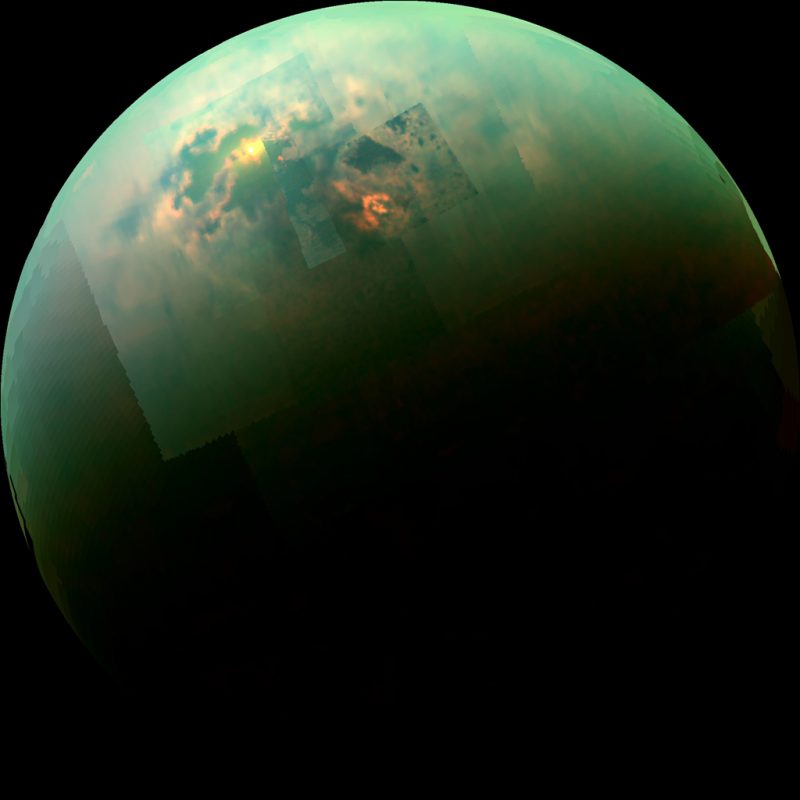


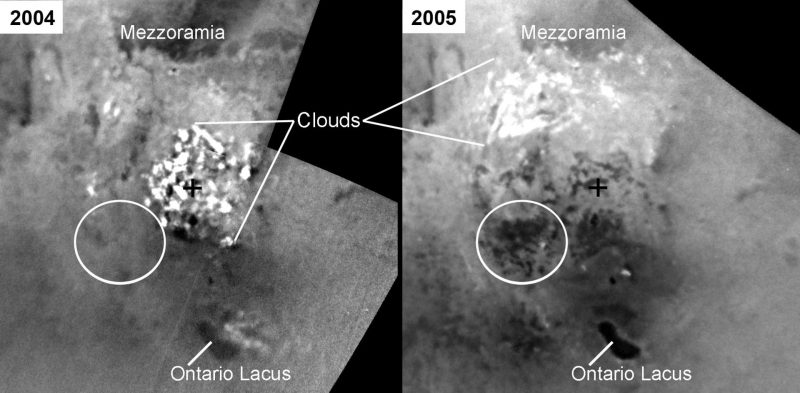

 'Sinatra made a brand-new start in New York, just like Miss...
 Democrats threaten ex-White House security official with...
 Love Island's Amber Davies flaunts her pins in a blue...
 'I screamed for 5 or 10 minutes!' Winner of $768 million...