Ontdek de Fascinerende Wereld van UFO's en UAP's: Jouw Bron voor Onthullende Informatie!
Ben jij ook gefascineerd door het onbekende? Wil je meer weten over UFO's en UAP's, niet alleen in België, maar over de hele wereld? Dan ben je op de juiste plek!
België: Het Kloppend Hart van UFO-onderzoek
In België is BUFON (Belgisch UFO-Netwerk) dé autoriteit op het gebied van UFO-onderzoek. Voor betrouwbare en objectieve informatie over deze intrigerende fenomenen, bezoek je zeker onze Facebook-pagina en deze blog. Maar dat is nog niet alles! Ontdek ook het Belgisch UFO-meldpunt en Caelestia, twee organisaties die diepgaand onderzoek verrichten, al zijn ze soms kritisch of sceptisch.
Nederland: Een Schat aan Informatie
Voor onze Nederlandse buren is er de schitterende website www.ufowijzer.nl, beheerd door Paul Harmans. Deze site biedt een schat aan informatie en artikelen die je niet wilt missen!
Internationaal: MUFON - De Wereldwijde Autoriteit
Neem ook een kijkje bij MUFON (Mutual UFO Network Inc.), een gerenommeerde Amerikaanse UFO-vereniging met afdelingen in de VS en wereldwijd. MUFON is toegewijd aan de wetenschappelijke en analytische studie van het UFO-fenomeen, en hun maandelijkse tijdschrift, The MUFON UFO-Journal, is een must-read voor elke UFO-enthousiasteling. Bezoek hun website op www.mufon.com voor meer informatie.
Samenwerking en Toekomstvisie
Sinds 1 februari 2020 is Pieter niet alleen ex-president van BUFON, maar ook de voormalige nationale directeur van MUFON in Vlaanderen en Nederland. Dit creëert een sterke samenwerking met de Franse MUFON Reseau MUFON/EUROP, wat ons in staat stelt om nog meer waardevolle inzichten te delen.
Let op: Nepprofielen en Nieuwe Groeperingen
Pas op voor een nieuwe groepering die zich ook BUFON noemt, maar geen enkele connectie heeft met onze gevestigde organisatie. Hoewel zij de naam geregistreerd hebben, kunnen ze het rijke verleden en de expertise van onze groep niet evenaren. We wensen hen veel succes, maar we blijven de autoriteit in UFO-onderzoek!
Blijf Op De Hoogte!
Wil jij de laatste nieuwtjes over UFO's, ruimtevaart, archeologie, en meer? Volg ons dan en duik samen met ons in de fascinerende wereld van het onbekende! Sluit je aan bij de gemeenschap van nieuwsgierige geesten die net als jij verlangen naar antwoorden en avonturen in de sterren!
Heb je vragen of wil je meer weten? Aarzel dan niet om contact met ons op te nemen! Samen ontrafelen we het mysterie van de lucht en daarbuiten.
Graham Hancock ontmaskert cover-up rond geavanceerde beschavingen in Amerika. Dit heeft men al die tijd verborgen proberen te houden
Archeologie is erg dogmatisch. Zo werd bijvoorbeeld meer dan 50 jaar vastgehouden aan het dogmatische denkbeeld dat de eerste mensen zo’n 13.400 jaar geleden in Amerika verschenen, zegt schrijver Graham Hancock in het programma Going Underground.
“Dit was een doctrine,” merkt hij op.
Iedere archeoloog die op resten stuitte die ouder waren dan 13.400 jaar, werd helemaal afgefakkeld, aldus Hancock.
Verbannen
De archeologische gemeenschap stortte zich als een groep hyena’s op zo’n archeoloog en maakte zijn of haar carrière helemaal kapot, licht hij toe.
De afgelopen 50 jaar werd bewijs waaruit bleek dat mensen al veel eerder in Amerika leefden, gewoonweg genegeerd.
Onderzoekers die het toch probeerden aan te tonen, kregen geen geld voor onderzoek en werden verbannen uit de wetenschappelijke gemeenschap, legt Hancock uit.
Bakermat
“We weten nu dat mensen Amerika al vele tienduizenden jaren bewonen,” zegt hij. “Waarschijnlijk al meer dan 100.000 jaar.”
Naar deze periode wordt pas sinds kort onderzoek gedaan, merkt de schrijver op.
Archeologen zien Mesopotamië als de bakermat van onze beschaving, maar daar begint volgens Hancock verandering in te komen.
Nog oudere beschaving
Er komt steeds meer bewijs dat er al veel eerder geavanceerde beschavingen waren op aarde, bijvoorbeeld in Göbekli Tepe in Turkije.
En die beschavingen werden weer voorafgegaan door een nog oudere hoogontwikkelde beschaving, benadrukt Hancock.
Dit heeft men al die tijd verborgen proberen te houden.
The late Arizona Senator John McCain had an interest in UFOs, according to a former colleague, continuing a tradition among former politicians from the state who shared an interest in the UFO subject.
According to former Senate Democratic leader Harry Reid, the late firebrand politician and political “Maverick”, as he was often called, also had an interest in the study of unusual things in our skies.
“Sure, John knew what I was doing… He didn’t hide the fact that he was interested also,” Reid said in a recent interview with KLAS-TV.
This isn’t news to many who have followed the ongoing inquiries into the Pentagon’s Advanced Aerospace Threat (and) Identification Program (AATIP). In one of the most recent FOIA releases about the program, John McCain was mentioned in relation to a Senate inquiry about AATIP at that time, which included a synopsis of articles and research materials pertaining to advanced physics projects.
The Pentagon program was formerly headed by Luis Elizondo, now an employee with Tom DeLonge’s To The Stars Academy. Elizondo announced at a conference in Alabama last month, in association with the Scientific Coalition for Ufology, that he would be appearing in a forthcoming television series on History Channel.
As far as Reid’s statement that McCain didn’t hide his interest in the UFO subject, there were indeed other instances from over the years where the late Arizona Senator discussed the possibility of “unknowns.” As far back as February 2000, McCain was apparently asked during a press conference about a then-pending lawsuit by attorney Peter Gersten, aimed at obtaining information from the U.S. Military pertaining to UFOs.
McCain giving a speech at the Pentagon in 1997, just months after the Phoenix Lights Incident.
“It’s always of great interest to me,” McCain said when asked specifically about whether UFOs and possible denial of information about them by the military were of interest to him. Although there was some laughter in the press room at the time, McCain continued:
“I think it’s of great interest. I would point out to you that there was a case a couple of years ago in Arizona, of some lights that were seen over Arizona, and that has never been fully explained.”
McCain was referencing the famous Phoenix Lights case, an incident involving lights which have been variously interpreted as flares from military aircraft during training operations, to a series of unidentified lights oriented in a large, triangle formation. Among the witnesses to this event had been then Arizona Governor Fife Symington, who infamously poked fun at the incident in a press conference shortly after the objects were seen. Many years later, he came forward and discussed his own sighting of the lights, which he believed were attached to a larger, triangular object “with a distinct leading edge.”
One explanation for the incident, as suggested above, had been the presence of a group of A-10 Warthogs conducting a training exercise over the Barry Goldwater Range on March 13, 1997. This Air Force bombing range, as the name would suggest, commemorates John McCain’s predecessor, Senator Barry Goldwater who, like McCain, had also been a one-time contender for the U.S. Presidency, as well as a public proponent of there being a reality behind UFOs.
On another occasion, McCain was asked by Chris Wallace of Fox News whether he had ever seen a UFO as a pilot during the Vietnam War.
“I can’t say that I did,” McCain told Wallace, “but I kept looking all the time.”
As Grant Cameron points out, McCain’s office had also assisted with obtaining medical records for John Burroughs, one of the witnesses to the 1980 Rendlesham incident in Suffolk, United Kingdom.
In conclusion, John McCain’s interest in UFOs is certainly noteworthy, especially in light of his work as an elected official, and remaining political influence since his passing in August of 2018. However, it’s not particularly surprising that he would have such interests, considering the history of similar interest among politicians from his state, and more importantly, the fact that one of the most notable purported UFO incidents in modern history occurred over Arizona.
It Weighed 1000's Of Tonnes and Yet, It Was Lifted By A 7 Stone Man! Secret Doors in Egypt...
It Weighed 1000′s Of Tonnes and Yet, It Was Lifted By A 7 Stone Man! Secret Doors in Egypt.. Watch the videos.
The tonne, commonly referred to as the metric ton in the United States and Canada, is a non-SI metric unit of mass equal to 1,000 kilograms or one megagram. It is equivalent to approximately 2,204.6 pounds, 1.102 short tons or 0.984 long tons.
Egypt, a country linking northeast Africa with the Middle East, dates to the time of the pharaohs. Millennia-old monuments sit along the fertile Nile River Valley, including Giza’s colossal Pyramids and Great Sphinx as well as Luxor’s hieroglyph-lined Karnak Temple and Valley of the Kings tombs. The capital, Cairo, is home to Ottoman landmarks like Muhammad Ali Mosque and the Egyptian Museum, a trove of antiquities.
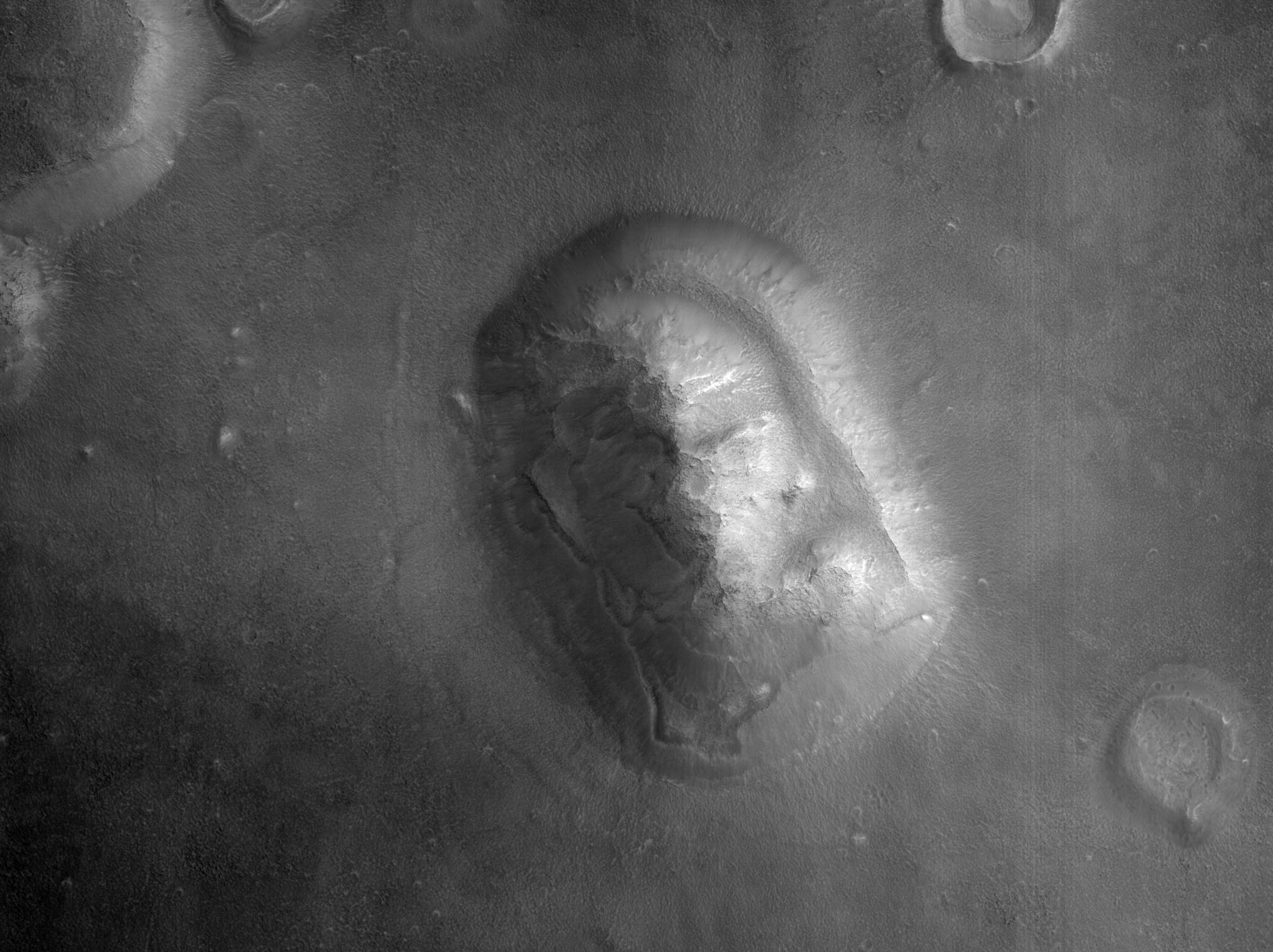
I found this face on Mars way back in 1975 when I was in the 1st grade library in Silicon Valley, California. I thought it would be fun to take a closer look at it with todays photo software to add focus and contrast to it. It was obvious that NASA over exposed this photo on purpose to keep a lot of details secret.
I was amazed when I found that the face at Cydonia has a third eye. Yeah, thats right. I'm 100% serious about this. There is a half dome that is dark tinted in a third eye position on the forehead of the face.
I also discovered that there is a dark tower on the lower right area of the chin of the face. The dark tower is made from the non reflective black color substance that I have said was one of three of the most common colors of structures that I find.
Another interesting fact about the face at Cydonia is that the left side of the face has caved in. Its obvious that the face once had a huge hollow space within it and the left side shows some serous broken cliffs that probably crashed down during Mars earthquakes over the last few million years. Yeah...this face is old. You can see the video I made below to see the cliffs better.
This volcano is famous for its UFO and alien sightings. Volcano Popocatepetl has had hundreds of UFOs recorded around it over the last seven years. I started this site eleven years ago, but started reporting UFOs at that volcano back in nine years ago. I will put my first live cam recording of it at the bottom of this post.
The mouth of the volcano is about 600 meters across. It would take about 15 of these UFOs to make the full 600 meters. So this UFO is about 40 meters in diameter. And the eyewitness saw many of these craft near the volcano, but only reported photos of one. I think thats because the other UFOs were too far away or semi cloaked (transparent) so they were difficult to record. Volcano Popocatepetl is one of the most active alien bases in the world, with UFO sightings recorded there on a weekly basis. The base exists about 4-6km below the ground where they made a large cavern area that is so huge that it has its own weather climate.
Scott C. Waring - UFO researcher
About me:I was born in East Los Angeles, California. Had my first NASA photo discovery in the 1st grade (1975) in Silicon Valley where I discovered the face at Cydonia, Mars in the school library. Stopped till high school, where I began searching for buildings in NASA moon photos and succeeded. Started UFO Sightings Daily site in March 2009 to share things I learned about UFOs. I wrote four books. I graduated with a BA in elementary education from ISU and a Masters in Counseling education from MSU. I met my Taiwanese wife in university and opened an English school in Taiwan where I have lived ever since.
News states:
SAN NICOLÁS DE LOS RANCHOS, Puebla.- An "unidentified flying object" was captured by the journalist Carlos Clemente, during the period of activity of the Popocatépetl volcano, on March 27. The images show the object flying near the fumaroles over 3 kilometers high. To make the shot, the journalist of the team of conductor Jaime Maussan, occupied a camera of 3000 mm. The journalist toured the area impacted by the volcanic activity of "Don Goyo", on March 27; material that would serve for the broadcasts of the "Third Millennium News" programs. "When we were doing a photographic survey in the area near this colossus of fire, in one of our images, the presence of an unidentified flying object was captured in an incidental way, when we were observing, we realized that they were passing by, at high speed, at a distance, objects that we could not identify, however, in this photograph we can clearly grasp how one of these objects moved near the volcano, "explained the journalist during the broadcast of the past 28 and 31 of March. The journalist also stressed: "Without doubt, this is one of the clearest pictures of this type of unidentified flying objects that have been taken in the volcano." The image shows a classic dish with a dome, which even reflects sunlight, flying very close to the height of the crater of this volcano, considered one of the most active in the country.
Below is the video of the same volcano back in 2010 with UFO orbs around it on live cam.
Open Minds UFO Radio: Danny Silva runs the website SilvaRecord.com where he covers UFO news and information. He focuses on developments and information related to UFOs. He focuses on the work of the DoD’s Advanced Aerospace Threat Identification Program (AATIP), and the To the Stars Academy (TTSA). With all of the information coming out about UFO investigations related to both of these groups, Danny has done a great job keeping people appraised of news on these projects others have missed.
The AZURE mission successfully launched back-to-back aboard two sounding rockets in Norway tonight. These colorful clouds created a light show in the sky, helping researchers track the flow of neutral and charged particles in Earth's ionosphere. Details: https://go.nasa.gov/2oJGOtz.
NASA has quelled fears of an alien invasion after strange pulsating lights were spotted over the Arctic.
Frightening videos show glowing clouds shimmering over northern Sweden that some online commenters claimed was a UFO light show.
TWITTER/ADPHOTOGRAPHY24
This bizarre light show was triggered by a pair of experimental Nasa rockets
But the space conundrum has a far simpler explanation.
A pair of specially-designed rockets launched by Nasa last week released colourful chemicals into the sky.
Fired from a base in Finland, the rockets were the first of eight planned launches from the Auroral Zone Upwelling Rocket Experiment, or AZURE.
It aims to help Nasa understand the Northern Lights and the role they play in Earth's energy systems.
Travelling 200 miles to their target, the rockets released their payload in the sky during a real aurora to track how particles flow through Earth's atmosphere.
It is thought that the movement of energetic particles through a layer of the atmosphere called the ionosphere is what causes the Northern Lights.
Once released from the rockets, the gas fell and ionised to produce clouds of colour that gave scientists an idea of the movement of particles.
It also gave onlookers on the ground a great view, and many of them posted clips tosocial media.
Some were left a little confused by the experiment, which made it look like an advanced race had made its way to our planet.
"Residents for hundreds of miles were taken by surprise by these strange lights," according to Chris Nation, who runs the Aurora Addicts guiding service.
"The lights prompted calls to the police and ‘The aliens are coming!’ hysteria!"
Alien hunter Scott C Waring, who runs the crackpot site UFO Sightings Daily, said: "A person walked out onto their patio and expected to see the aurora borealis, but instead caught sight of a UFO fleet coming in for a landing as they entered an underground base."
TWITTER/ADPHOTOGRAPHY24
The colourful streaks gradually fade away over time
Nasa scientists hope the experiments will help them better understand how the Northern Lights appear in the sky.
"By tracking the movement of these colorful clouds via ground-based photography and triangulating their moment-by-moment position in three dimensions, AZURE will provide valuable data on the vertical and horizontal flow of particles," explained Miles Hatfield from Nasa’s Goddard Space Center in the US.
"Such measurements are critical if we are to truly understand the effects of the mysterious yet beautiful aurora."
"The results will be key to a better understanding of the effects of auroral forcing on the atmosphere, including how and where the auroral energy is deposited."
If you enjoyed this story, you might also like these:
The cave where the fossils which may belong to a new hominin species were found.
Credit: CALLAO CAVE ARCHAEOLOGY PROJECT.
In a cave on a small island in the Philippines, scientists have found evidence of a new species of humans that lived at least 50,000 years ago. They called it Homo luzonensis, after the island of Luzon where the remains were found. These hominins were very short in stature, comparable to Homo floresiensis, nicknamed “hobbits”, which lived on the nearby Indonesian island called Flores. If the species is confirmed by DNA analysis, the findings will not only enrich the human family tree but also complicate the story of human migration and evolution in Asia.
Another one?
The fossils from the island of Luzon were excavated during three expeditions in 2007, 2011, and 2015. Inside the island’s Callao cave, researchers found seven teeth (five from the same individual), two finger bones, two toe bones, and an upper leg bone. All were dated as being at least 50,000 years old by radiocarbon decay analysis. These fossils were found alongside those of butchered animals, suggesting that the cave’s inhabitants were at least sophisticated enough to devise cutting tools and rafts to reach the island from the mainland.
Individually, the bones are very similar to other Homo species in terms of shape and size. However, taken together, they reveal a combination of features that no other hominin shared. Homo luzonensis‘ molars were very small, even smaller than the hobbits. The premolars were relatively large, however, and had up to three roots rather than one — a feature shared by Homo erectus. The finger and toe bones were curved, suggesting tree-climbing ability that is more reminiscent of hominids living two million years ago in Africa.
Five fossil teeth from the same individual have unusual features that helped researchers determine that they might be dealing with a new species of human.
Credit: CALLAO CAVE ARCHAEOLOGY PROJECT.
These findings suggest that the landscape occupied by our species was once quite crowded. We now know that Homo sapiens were contemporaries not only with their famous cousins, the Neanderthals, but also with Homo floresiensis, the Denisovans (a species that lived around a cave in the Altai Mountains of western Siberia), and now this fifth species, Homo luzonensis. This dramatically complicates the story of human migration into Asia suggesting that several human lineages had already occupied East Asia by the time the first modern humans reached China as early as 80,000 years ago.
A Homo luzonensis toe bone, showing the longitudinal curve.
Credit: CALLAO CAVE ARCHAEOLOGY PROJECT.
Homo luzonensis was typically around 30 to 50 kilograms, stood 1 to 1.5 meters tall, and had brains around one-third the size of our own. Just like the hobbits on Flores, Homo luzonensis may be descendants of Homo erectus populations that crossed the sea from mainland Asia to Luzon. The small body and unusual skeletal traits may have been adaptations pressured by island dwarfing — a process whereby some creatures confined to isolated habitats such as islands are known to have become smaller over time due to limited resources and ecology.
Digital reconstruction of homo floresiensis, nicknamed ‘the hobbit’.
Credit: Wikimedia Commons.
It’s not clear yet if we’re dealing with a new species at all. The team of researchers, led by Florent Détroit of the Musée de l’Homme in Paris, was unable to extract DNA from the fossils. Until a proper DNA analysis confirms the distinct lineage, Homo luzonensis’ inclusion in the human family tree remains questionable. For instance, the fossils might belong to hybrids — the products of interbreeding between two or more earlier Homo species. Or perhaps Homo erectus populations that arrived at Luzon simply acquired some traits that made them more adapted to their environment, rather than speciating.
The findings are still incredibly exciting, nevertheless. It’s amazing to hear that our species lived at the same time as four other human lineages and perhaps interacted with them. What a sight that must have been to behold.
Three items that cast doubt on the study used to close Project Blue Book
Why it’s legit to doubt the University of Colorado UFO study that shuttered Project Blue Book
Alejandro Rojas
In 1947, a U.S. Air Force (USAF)inquiry into “flying saucers” determined the phenomenon to be “something real and not visionary or fictitious.” This inquiry was the impetus for official UFO studies conducted by the USAF from 1947 to 1969. Although the USAF begrudgingly took on this task, public interest helped keep their UFO projects alive.
In December 1969, the USAF finally got out of the UFO business. A document titled The U.S. Air Force Fact Sheet Concerning UFO's and Project BLUE BOOK that can be found on the National Archive’s website states:
“The decision to discontinue UFO investigations was based on an evaluation of a report prepared by the University of Colorado entitled, "Scientific Study of Unidentified Flying Objects;" a review of the University of Colorado's report by the National Academy of Sciences; past UFO studies and Air Force experience investigating UFO reports during the 40s, '50s, and ‘60s.
As a result of these investigations and studies and experience gained from investigating UFO reports since 1948, the conclusions of Project BLUE BOOK are:(1) no UFO reported, investigated, and evaluated by the Air Force has ever given any indication of threat to our national security;(2) there has been no evidence submitted to or discovered by the Air Force that sightings categorized as "unidentified" represent technological developments or principles beyond the range of present-day scientific knowledge; and(3) there has been no evidence indicating that sightings categorized as "unidentified" are extraterrestrial vehicles.”
Edward Condon, a well-regarded physicist, headed the University of Colorado’s UFO study. Many refer to the study as the Condon Report.
For the media and the scientific community, the study has been enough to write off the entire subject and move on. Recently it has been revealed by the New York Times that the Pentagon has a secret UFO study that allegedly continues to this day. However, it has been questioned whether or not this is a waste of time, because we already looked into UFOs for decades and found there was nothing to it.
The problem with this thinking is it assumes the University of Colorado’s study was universally accepted. However, it was not.
Critics
One of the leading critics of the study was Dr. J. Allen Hynek (seen above). Hynek was a professor of astronomy who served as a consultant for the USAF UFO studies from 1948 to 1969. When he began working with the USAF, he had said he felt the whole UFO phenomenon was “utterly ridiculous.” However, he later changed his mind and spent the rest of his life researching the subject.
As for the University of Colorado’s study, in his book The Hynek UFO Report, Hynek states, “if one goes past Dr. Condon’s summary…one will probably find the Condon Report to be a powerful document in favor of the reality of the UFO phenomenon.” In his book, The UFO Experience, A Scientific Inquiry, he wrote that the report "avoided mentioning that there was embedded within the bowels of the report a remaining mystery; that the committee had been unable to furnish adequate explanations for more than a quarter of the cases examined.”
Hynek also notes in The Hynek UFO Report, that the American Institute of Aeronautics and Astronautics (AIAA) reviewed the document as well and came up with a similar conclusion. The AIAA stressed that it is essential to read the entire study, not just the many summaries available because opposing views were shard, and Condon’s often sighted summary contained more of his “personal opinion.” They wrote, “the [AIAA] UFO Sub-Committee did not find a basis in the report for his prediction that ‘nothing of scientific value will come of further studies.’”
France’s GEIPAN
Another person of importance who agreed with these critics was an engineer for France’s National Centre for Space Studies (CNES), Claude Poher - the CNES is the equivalent of NASA in the U.S. Poher read a copy of the Condon Report, but he had a much different reaction to the case studies than Condon. To Poher, the Condon report demonstrated there was something to the UFO phenomenon.
Poher was so inspired by what he read that he went to his superiors and was able to convince them to create a UFO study group within CNES. In 1977, the study group was made permanent under the name Groupement d’Etude des Phénomènes Aérospatiaux Non-identifiés (GEPAN). Although the group has changed in size and scope over the years, it still exists to this day as the Groupe d ’Études et d ’Information sur les Phénomènes Aérospatiaux Non identifiés (GEIPAN). It is one of the few public official government UFO organizations in existence.
While the Condon Report was used to close Project Blue Book in the U.S., it inspired the creation of GEIPAN in France.
The Low Memo
As can be seen by the response of critics, upon reading the Condon Report, many feel the summary provided at the beginning by Condon does not reflect the body of the report. Some had questioned whether Condon had read the report at all, or if he had made his conclusion before the report was started. In 1967, while the study was underway, evidence was leaked that supported this point of view.
Dr. James McDonald, a senior physicist at the Institute for Atmospheric Physics and a professor at the University of Arizona, was leaked a memo from individuals within the Condon Committee. McDonald was an advocate for the scientific investigation of UFOs, so the leakers knew they would find with him a sympathetic ear. The committee members leaked the memo because they felt there was a preconceived bias to the study.
University of Colorado administrator Robert Low wrote the memo in the summer of 1966 while the University was negotiating with the USAF and considering whether they would take on the project. The memo was sent to a couple of his fellow University of Colorado administrators reassuring them that the study would be sure not to discover anything controversial.
It read:
“Our study would be conducted almost entirely by non-believers who, though they couldn't possibly prove a negative result, could and probably would add an impressive body of thick evidence that there is no reality to the observations. The trick would be, I think, to describe the project so that, to the public, it would appear a totally objective study but, to the scientific community, would present the image of a group of non-believers trying their best to be objective but having an almost zero expectation of finding a saucer.”
Many of the UFO organizations cooperating with the study ended their participation when the memo was leaked. However, skeptics had claimed that Condon had not seen the memo before it was leaked, and thus it had no impact on the study. The leakers had sent the memo to McDonald because they felt differently.
After the memo’s release, the leakers were discovered and removed from their participation in the Codon Committee.
Much has been written about the Condon Report, and often when researchers - including myself - inquire about USAF or other government involvement in UFO studies, they are sent the USAF Fact Sheet referenced above. This has been the case for decades. Little did we know the Pentagon has had a secretive UFO research group since 2007. Senator Reid, who secured the funding for the Pentagon UFO project, claims he believes other UFO projects exist that remain secret.
Pointing to the Condon Report as evidence that there is no reason to investigate the UFO phenomenon may not be as strong an argument as it appears at first glance. Apparently, the Pentagon, and potentially other government entities, also seem to have found reasons to take the matter seriously and allegedly continue to investigate the phenomenon behind closed doors.
"We were on the beach, my boyfriend and I, and saw two bright orange/red lights far on the other end of the beach," ufomystery123 posted to Reddit.
"In a matter of seconds, one of the lights started moving at full speed, in a straight line, no more that 200m above the water until directly in front of us.
"The UFO had changed from having a red light to a bright white light, somewhat like a torch, shining directly at us."
After two minutes the strange object moved away, flying "incredibly fast and with perfect precision" until it disappeared. But this wasn't the end to the strange occurrences.
"We were lying down looking at the stars for a while and then stood up to leave, before realizing there were five surrounding us in different areas of the beach," they posted.
"One of them was flying up and down and another from side to side. The others were just still switching between red and white spotlights.
"This was when we decided to leave, scared shitless."
They fled the beach but couldn't escape the lights. Looking at the sky from Titirangi they saw the lights flying away "like a plane".
They've posted to social media asking if anyone has heard of any UFOs similar to this, or seen any around New Zealand.
One reply suggest a more prosaic answer - "inflatable sports equipment and coloured lights".
"What you saw was a couple of beach ball with LED inside," one user commented.
"There's been a number of sightings recently that have been confirmed to be beach ball with LED."
Other answers included Chinese lanterns or meteorological equipment.
"The flash of light you saw in the sky was not a UFO. Swamp gas from a weather balloon was trapped in a thermal pocket and reflected the light from Venus," one person said.
But others believe it is evidence of something unexplainable - and possibly something not human.
"I've seen the same UFOs at Whatipu about a month ago which is next beach down basically. Strait up [sic]," said one person.
"They didn't come up close to me but they were flying around over the water quite low and at a decent but not super-fast speed.
"I didn't actually think much of it but they were a red/orange colour which I thought was strange. Three or four of them."
TV producer sues ‘CIA scientist’ in bid to expose ‘government UFO cover up’ and blows whistle on mysterious anti-gravity research project
Robert Kiviat, who worked at a company which is developing an anti-gravity machine, says he wasn't paid for over a year - and believes the CIA may have deliberately tried to sabotage the project
EXCLUSIVE
By Emma Parry, Digital US Correspondent
A TV producer has launched a lawsuit in a bid to end what he calls a "UFO cover up" within the US government and blow the whistle on a project to develop anti-gravity technology.
Robert Kiviat, who has produced hit TV shows on UFOs and the unexplained, has filed a lawsuit in California against CIA scientist Ron Pandolfi, who ran the CIA’s “Weird Desk” and his former employer InterNASA.
ROBERT KIVIAT
Robert Kiviat is hoping to expose the government's UFO secrets with his lawsuit
Kiviat is seeking $300,000 (around £229,530) in unpaid salary he says InterNASA - the advanced physics research firm backed by Pandolfi and the CIA - owed him, according to his lawsuit filed in Orange County, California.
He also hopes his legal action will allow him to expose the inner workings of the CIA's alleged "disinformation" schemes he says are designed to influence and confuse the public about UFOs by manipulating researchers.
He told Sun Online: “Not only am I seeking to be paid for what I am owed legally for my dedicated efforts, but the suit has the added value of exposing the way the US intelligence agencies have manipulated the UFO community and overall, the general public for years.
"And to put it mildly, it stinks, many good people have been damaged and it has to stop.”
Kiviat, who lives in Los Angeles, first joined InterNASA in January 2018 - after their chief executive Joe Firmage told him that they had secured funding and CIA backing for his research into an anti-gravity machine.
The research could revolutionise space travel - but many believe the US government has already developed similar technologies by reverse engineering alien spacecraft it has intercepted or recovered.
INTERNASA
InterNASA believes its technology could "power the new space age"
Some believe the US government has developed anti-gravity technology by reverse engineering alien craft
Kiviat was tasked with overseeing the firm's news and entertainment arm InterNASA Studios, which aimed to prove to the public that gravity-control exists.
He says he performed multiple tasks for InterNASA and was told he was working for both Firmage and CIA operative Pandolfi
So far he has only been paid $5,000 - a fraction of the $300,000 he is owed - and he believes that there may never have been any intention to pay him or make the research company a success.
Hitting back, Firmage claimed that Kiviat was not paid because he had not delivered his side of the contract. He said he planned to fight the lawsuit and dismissed his other claims as "ludicrous".
Kiviat also believes that Pandolfi may have been "spying" on the technology they had developed - or was even trying to sabotage the company - in a bid to protect the government's own top secret anti-gravity technology.
Kiviat, who has produced shows for Fox and NBC Universal's Syfy channel, says that he began to suspect that Pandolfi was trying to sabotage the company's work around six months into the project - when meetings which had been set would be cancelled at the last minute and there would be issues with potential investors.
He recalls being told that a major meeting – or “gravity control” demonstration – was being planned with Pandolfi’s assistance in Colorado. But the meeting abruptly was cancelled with little explanation.
Kiviat was then informed the company was going “dark” to work on the machine without distraction but that he would get paid last - after the technicians and others working on the device.
GETTY
The CIA's "Weird Desk" is believed to investigate UFOs and other unexplained phenomena
InterNASA claim their research may allow us to travel to the moon in five minutes, on promotional video on their website
Finally he had enough and launched his lawsuit last month.
"The government loves to play with UFO-interested people mostly because they want to keep a close handle on how much we know about UFOs," he said.
"They don't want us to know too much so they'll give a little bit of information and then pull it back.
"I believe there is a UFO cover up and there is a UFO de-sensitisation issue.
"When InterNASA decided in their infinite stupidity not to get me paid, they opened up the door for me as a journalist to sue them for my salary arrears - and when this goes to trial, which it probably will, I'll be able to put some of these official figures like Pandolfi on the stand, under oath and finally get to the bottom of the UFO cover up - if there is one.
"I had to give up my Hollywood career to go and work for these people, I worked sometimes 15 hour days on the phone back and forth - and it took time away from my career and it hurt me and my family.
"Once I realised they were going to treat me like that I thought about all the other people they have treated this way and I discovered throughout history, a litany of people that have been hurt, abused and affected with these kind of schemes.
"The government even has a name for it - it's called a 'fly trap', where they pull people in and take advantage of people's work and their research.
"I want this lawsuit to blow the lid open on whether or not extra-terrestrial beings have visited Earth and if the US government has tried to keep this secret hidden from the US public."
Kiviat is seeking donations for his lawsuit through via his Gofundme page.
Sun Online reached out to Ron Pandolfi for comment and received no response.
Une étrange anomalie magnétique détectée sur la Lune
Laurent Sacco - Journaliste
La sonde LRO, dans le cadre d'un programme lancé par le physicien Paul Davies, aurait mis en évidence des structures atypiques dans le cratère Tycho sur la Lune. Ces structures sont liées à une anomalie magnétique tout aussi étrange, ainsi qu'à un mascon.
Premier avril : cet article appartient bien sûr à la noble tradition du poisson d'avril et il est un clin d'œil au mythique 2001, l'Odyssée de l'espace de Stanley Kubrick et Arthur C. Clarke à l'occasion des 50 ans d'Apollo 11. La Nasa n'a bien sûr pas fait la découverte de TMA-1 (AMT-1 en français), c'est-à-dire la Tycho Magnetic Anomaly 1 du roman de Clarke qui signalait la présence du fameux monolithe noir déposé par une civilisation E.T il y a des millions d'années après avoir donné un coup de pouce à l'évolution humaine. Pas d'anomalie magnétique ni de mascon associé en rapport avec des images d'un tel monolithe qui auraient été découverts via les images de LRO par des chercheurs de l'université de l'Antarctique qui n'existe que sur le WWW. Le module israélien n'est pas non plus prévu pour se poser dans le cratère Tycho.
CE QU'IL FAUT RETENIR
La sonde Lunar Reconnaissance Orbiter (LRO) de la Nasa a permis d’obtenir des images spectaculaires de la surface de la Lune qui doivent servir à préparer le retour de l'Homme sur la Lune au cours des années 2020.
Paul Davies a proposé d'utiliser ces images à haute résolution pour chercher d'éventuels artefacts du passage d'une civilisation E.T. il y a des millions d'années.
POUR EN SAVOIR PLUS
Lancée le 18 juin 2009 par un lanceur Atlas V depuis la base Cap Canaveral, la sonde Lunar Reconnaissance Orbiter (LRO) de la Nasa a permis d'obtenir des images spectaculaires de la surface de la Lune, parfois bien plus étonnantes que les vidéos de la sonde japonaise Kaguya de la Jaxa. Équipée de plusieurs instruments dont la Lunar Reconnaissance Orbiter Camera (LROC), la sonde avait notamment pour but de dresser une carte à haute résolution de la Lune avec une topographie à la précision inégalée. Cette carte devait aider à préparer le retour de l'Homme sur la Lune à l'horizon 2020.
Une collection des images prises par la sonde LRO.
Les résultats obtenus étaient si étonnants qu'ils ont inspiré le physicien Paul Davies, bien connu pour ses travaux sur la théorie quantique des champs appliquée aux trous noirs et à la cosmologieainsi que pour ses réflexions sur la biologie quantique et son implication dans le domaine de l'exobiologie. Comme Futura l'avait expliqué dans le précédent article ci-dessous il y a quelques années, Paul Davies avait publié un article dans lequel il suggérait que le grand public pouvait être mis à contribution, dans l'esprit du programme SETI@home. Il s'agissait de dépouiller les massesd'images fournies par LROC à la recherche de caractéristiques anormales de la surface de notre satellite pouvant laisser penser à la présence d'artefacts d'une civilisation E.T., qui aurait visité notre Système solaire il y a des millions d'années, probablement sous forme de super-IA, attirée par les biosignatures de notre Planète bleue.
Un mascon, un lunar swirl... ou ?
La tâche s'est rapidement révélée trop difficile mais depuis quelques années, grâce aux stupéfiants progrès de l'IA rendus possibles par les tout récents lauréats du Prix Turing, l'équivalent du Prix Nobel en informatique, l'examen des images de LRO a été grandement facilité et c'est la célèbre University of Antarctica qui s'est engagée dans cette aventure avec l'aide de financements d'Elon Musk, Yuri Milner et Monsanto.
On ne connaît pas encore les résultats mais ce que l'on sait par contre, c'est que des membres de l'UANT ont contacté des membres des missions Gravity Recovery and Interior Laboratory (Grail) et Artemis : Acceleration, Reconnection, Turbulence and Electrodynamics of the Moon's Interaction with the Sun. Rappelons que ces deux missions ont permis des études fines du champ de gravitéde la Lune ainsi que de son champ magnétique, bien que ce dernier soit très faible.
Quelques sources parmi ces membres, mais voulant garder l'anonymat, ont laissé fuiter quelques informations. Un mascon (pour mass concentration, en anglais) très peu étendu mais avec un champ de gravitation particulièrement élevé aurait été trouvé dans les données de Grail à l'intérieur du cratère Tycho, dans la région où les membres de l'UANT ont suggéré une étude approfondie. Cette anomalie gravitationnelle est d'autant plus étrange que les instruments d'Artemis font également état d'une anomalie magnétique très nettement plus importante que celles déjà étudiées par cette sonde dans le cas des fameux lunar swirls.
Il est difficile et prématuré d'en tirer des conclusions hâtives mais on sait que le module Bereshit(Genèse, en hébreu), lancé le 21 février de la base américaine de Cap Canaveral en Floride par une fusée Falcon 9 de SpaceX, devrait se poser quelque part dans le cratère Tycho ce 11 avril 2019. Une coïncidence ?
Des images à haute résolution de l'intérieur du cratère Tycho.
Le physicien théoricien et exobiologiste Paul Davies, usant de son poids médiatique,veut donner une nouvelle impulsion à une vieille idée : rechercher d'anciennes traces de civilisations E.T. sur la Lune. Et ce, propose-t-il, grâce à la science citoyenne, les internautes scrutant les données de la sonde lunaire LRO.
Paul Davies est très connu dans le monde anglo-saxon, et pas seulement parce qu'il a été, comme Bernard d’Espagnat, le récipiendaire du prix Templeton. Spécialiste de l'effet Hawking, il a écrit de nombreux livres de vulgarisation, allant des fondements de la mécanique quantique à la théorie des supercordes en passant par la cosmologie et l'exobiologie. Il fait partie de ceux qui s'interrogent sur une possible biologie quantique et il a été un des coauteurs de l'article controversé sur les bactéries à l’arsenic.
Depuis longtemps, Davies s'occupe d'exobiologie, ou encore d'astrobiologie comme on le dit dans les pays anglo-saxons. Avec un étudiant, il vient de publier un article qui va certainement faire beaucoup parler de lui sur le Net : Searching for alien artifacts on the moon.
En clair, en complément du programme Seti, des tentatives pour détecter des traces de civilisations extraterrestres en train de construire des stations spatiales ou qui se signaleraient par l'éclairage de leurs villes, Davies et Robert Wagner renouvèlent un concept déjà exploré par un radioastronome ukrainien membre de Seti, Alexey Arkhipov.
Il s'agit de chercher sur la Lune des restes de civilisations extraterrestres, comme des édifices et des mines, laissés il y a peut-être des millions d'années par une mission d'exploration de notre planète.
Une bande annonce de 2001, l'odyssée de l'espace de Clarke et Kubrick mettant en scène le célèbre monolithe noir extraterrestre.
En effet, il est assez improbable que le développement de l'humanité coïncide à seulement quelques milliers d'années près avec celui d'une civilisation E.T. avancée. On peut tenter de se convaincre que le voyage interstellaire est beaucoup plus facile que ce que l'on imagine, par exemple en empruntant des trous de ver ou en dépassant sans vergogne la limite d'Einstein, comme le montrent peut-être les neutrinos transluminiques. Cependant, si une mission d'exploration extraterrestre a effectivement visité notre Système solaire, il est probable que l'événement ait eu lieu il y a des millions voire des centaines de millions d'années.
Pour une telle mission exploratoire, qui serait venue étudier de plus près la biosphère terrestre, le plus logique et le plus commode serait l'installation d'une base lunaire. Or, l'environnement tectoniquement stable et sans érosion de la Lune est bien plus propice que celui de la Terre à la conservation d'artefacts.
Davies propose donc, par exemple, d'utiliser les images à haute résolution de LRO, qui montrent notamment des grottes, pour détecter ces anciennes constructions.
Gare aux interprétations hasardeuses
La résolution des images de la sonde LRO est en effet inférieure au mètre et la base de donnéesdes photos prises donnera à terme une cartographie précise de la Lune. Nul doute que sa mise à disposition sur la toile, avec pour objectif de permettre aux internautes de partir à la chasse à des artefacts E.T., aurait un grand succès. En témoigne la réussite de l'opération lancée lors du projet Stardust. Il s'agissait de permettre aux internautes de travailler comme de vrais chercheurs de la Nasa en repérant des poussières cométaires ou interstellaires capturées par l'aérogel de la sonde.
Malheureusement, il n'y a guère de doute qu'on verrait aussi proliférer des fausses interprétations d'images. Les discussions à propos des images des missions Apollo, la fameuse affaire du visage martien ou celle du vaisseau géant en orbite autour de Mercure illustrent toute l'ampleur des dérives possibles. Peut-être vaudrait-il mieux que ce travail soit effectué par des méthodes informatiques automatisées.
Plus généralement, d'autres techniques d'exploration de la Lune, avec bien sûr une présence humaine permanente, pourraient révéler des surprises.
En tout état de cause, le concept est électrisant et pourrait contribuer à faire comprendre à l'humanité sa vraie place dans le cosmos, indépendamment de son succès. Et, qui sait, peut-être finira-t-on par effectivement découvrir une anomalie magnétique pointant du doigt l'existence d'un monolithe noir enterré dans le sol lunaire, comme dans le roman d'Arthur Clarke, 2001, l'Odyssée de l'espace...
Sur la gauche, le cratère Shorty, vu par LRO, a été visité par les astronautes d'Apollo 17. La photo de droite a été prise du point marqué Color Pan sur l'image de gauche, dans laquelle le rover lunaire (LRV) est représenté par une flèche blanche unique. Les doubles flèches blanches de cette image et, sur celle de droite, le mot trench désignent l'endroit où le fameux sol orange a été découvert. Ce cratère d'impact a environ 19 millions d'années.
Ancient nuclear weapons described in the Mahabharata – an ancient Hindu text that speaks of great destructive power 12,000 years ago. Butdoes it hold up?
Where nuclear weapons detonated in India 12,000 years ago? According to ancient texts, the answer is a resounding ‘yes’. The descriptions of their effects uncannily remind us of modern nuclear weapons. Were ancient nuclear weapons unleashed on humanity 12,000 years ago?
The most famous text, the Sanskrit epic of Ancient India called the Mahabharata says:
A single projectile charged with all the power in the Universe… An incandescent column of smoke and flame as bright as 10,000 suns, rose in all its splendor… It was an unknown weapon, an iron thunderbolt, a gigantic messenger of death which reduced to ashes an entire race. The corpses were so burned as to be unrecognizable. Their hair and nails fell out, pottery broke without any apparent cause, and the birds turned white. After a few hours, all foodstuffs were infected. To escape from this fire, the soldiers threw themselves into the river.
It certainly seems like an ancient description of a nuclear explosion. One must understand, however, there is some question as to whether the text really translates to this (or that these portions are even part of it).
While the folks over at Skeptoid have actually done a pretty thorough job of researching this, we do know that you can find anything you want on the Internet. Is it possible that the translations of the ancient text have been embellished? Or is it likely that debunkers have cherry-picked the evidence to the contrary?
Conspiracy Perhaps?
There are organizations in this world who may actually be striving to cover up the existence of ancient nuclear weapons. The fact that it’s very unlikely humans would have had this technology millennia ago indicates that Ancient Aliens may have brought the technology – and there are plenty out there who want that idea squashed immediately.
So it’s not out of the realm of possibility that the entire thing is made up… but it’s also not out of the realm of possibility that there’s some amount of truth to these writings.
The Mahabharata isn’t the only ancient text that allegedly mentions weapons of incredible scale. In fact, there are some passages in the Bible which speak of weapons of mass destruction according to some.
The destructions of the cities of Sodom and Gomorrah are described in the Bible as having fire raining down on them. The cities were totally destroyed in a short time.
Some Ancient Alien theorists believe the Bible itself is evidence of ancient nuclear weapons, likely unleashed on humanity by aliens.
Mystery or Not?
While all of the different pieces of evidence for India’s ancient nuclear weapons may be weak individually, one cannot ignore their sum as a whole. Consequently, it’s difficult to rule this one as a fake totally.
That being said, however, it’s not possible to know for sure that the ancient texts are talking about ancient nuclear weapons either. This one might be a mystery forever.
What do you think? Did aliens provide nuclear weapons or use them against the human population in ancient times?
Expedition 45/46 commander and retired astronaut Scott Kelly (right), along with his twin brother, retired astronaut Mark Kelly (left), speak to media about the Twins Study and one-year mission. Credit: NASA
In a landmark study, NASA scientists conducted exhaustive tests on Scott Kelly during his grueling 342-day tour aboard the International Space Station in 2015–2016. And they simultaneously monitored his identical twin brother Mark (a retired astronaut who was on Earth at the time), hoping the comparison would reveal new information about the effects of long-term spaceflight on the human body.
The results of the NASA Twins Study, reported Thursday in Science, show Scott Kelly underwent a number of physiological changes—most of which returned to pre-flight status after he returned to Earth. The findings could help inform preparations for future long-term missions, such as travel to Mars or stints on a moon-orbiting space station.
The study was the first to integrate both behavioral analysis and physiology to investigate how space influences a person, and the first to collect two years of such comprehensive health data on a middle-aged Earthbound man, says co-author Brinda Rana, a molecular geneticist at University of California, San Diego.
“[This is] science at its best, in many ways, because it is leveraging something that is naturally occurring to try and understand causality,” says behavioral geneticist S. Alexandra Burt, who co-directs the Michigan State University Twin Registry and was not involved in the study. “I think this was a unique event and they capitalized on it beautifully.”
Kelly says he initially proposed the study while preparing for the ISS mission. “I said, ‘Hey, if anyone asks about any studies planned with my brother Mark and I, because we’re identical twins, is there any interest in that?’” he says. He was initially rebuffed, but he says NASA scientists eventually spoke to several universities “and they found out there was actually a lot of interest.” The Twins Study was a go.
For nearly two years both brothers provided urine, stool and blood samples, which researchers used for 10 separate investigations involving the molecular, physiological and cognitive effects of long-term spaceflight. Close coordination among the many investigators was essential. “NASA got 10 investigators from around the country—most of whom didn’t know each other—and put us in a room and got us to all cooperate and become a cohesive team to carry out this mission,” Rana says. The inherent difficulties of collecting such specimens from an astronaut aboard the ISS meant the investigators had to work with relatively scant material. “We had to come up with protocols where we could all do our studies effectively with one sample,” Rana says. The study also spurred researchers to innovate new methods for studying physiology and genetics in space. “It’s helped us drive technology to do these sorts of experiments not just for low-Earth orbit, but for future activities [such as] exploration missions,” says co-author Stuart Lee, a cardiovascular scientist at KBRwyle.
Kelly had to draw his own blood and collect his own urine and stool. “Certainly it’s more complicated to pee in a bag in space, because everything floats,” he notes. “But most importantly, it takes time. Astronauts sometimes find themselves almost subconsciously trying not to be as hydrated on urine collection days because of the time it takes to pee.” This was reflected in the results: researchers found Kelly was consistently mildly dehydrated, a common phenomenon among astronauts on long-term missions—and scientists do in fact attribute this to astronauts’ annoyance with the complicated onboard lavatory.
The study found Kelly was under near-constant physiological stress while in flight. His immune system was on high alert; he had changes in DNA expression; his carotid artery became distended. He also developed “spaceflight-associated neuro-ocular syndrome,” or SANS—a condition that involves changes to his eyes, and for which the cause is poorly understood. And his blood, no longer drawn to his legs by gravity, collected in his head. “In the beginning, it’s the worst,” Kelly says. “Your body adjusts to it over time, but in my experience, it never adjusts completely. I always felt pressure in my head.”
While in flight, Kelly’s telomeres—the protective sequences of repeating nucleotides that “cap” the ends of each chromosome like aglets on a shoelace—grew longer. “That certainly was a surprise, because going into the study we had proposed exactly the opposite,” says Susan Bailey, a biologist at Colorado State University who directed the study’s telomere investigation. Telomeres shorten as we age, and an enzyme called telomerase repairs and lengthens them. Astronauts are exposed to extreme stresses of microgravity, isolation and radiation that should contribute to telomere shortening, Bailey says. She suspects Kelly’s highly regimented diet and exercise program aboard the ISS may have contributed to the lengthening—or that the phenomenon may indicate his cell population was changing during spaceflight. “Going forward, I think we will try to incorporate these telomere endpoints into some of the standard measurements that they’re doing on the astronauts, so that we could actually address that question directly,” she says.
After Kelly returned to Earth, most of the physiological, gene expression and other changes returned to normal within about six months. But there was still a period of adjustment. “When you get back to Earth all the blood just wants to pool in your legs,” he says. “That lasted for me for weeks.” He also developed rashes and hives whenever his skin, which had grown unaccustomed to gravity, had any pressure on it. Even leaning on a table caused a reaction. But he did eventually readjust, a hopeful sign there may be little lasting danger to astronauts’ health after long periods in space. That said, it is important to note that traveling to Mars or other long-distance explorations presents an additional concern: radiation. Astronauts aboard the ISS are still somewhat protected from cosmic rays by the Earth’s magnetic shield; a Mars mission would expose them to galactic radiation at much higher levels, Lee says.
The study authors caution that given the extremely small sample size, it is “impossible to attribute causality.” They write that the study should be “hypothesis-generating and framework-defining,” with future research on astronauts complementing the work. “That’s all true,” Burt says. But she adds that having a genetically identical subject back on Earth allows for assuming causality much more strongly than the study otherwise could have. Kelly agrees: “Granted, this is an experiment with an n of one,” he says. “But they didn’t see anything that would prevent us from going to Mars. However, he adds, “if we’re going to go beyond Mars”—requiring astronauts to stay in microgravity for years on end—“we’re going to have to start thinking about artificial gravity.”
APHet formaat van de gevonden tanden wijst erop dat de Homo luzonensis klein van stuk was.
WETENSCHAPFossiele botten en tanden hebben wetenschappers op het Filipijnse eiland Luzon op het spoor van een nieuwe mensensoort gezet. De resten van de niet eerder ontdekte ‘achterneef’ van de moderne mens zijn naar schatting 50.000 jaar oud. Antropologen hebben de soort Homo luzonensis genoemd, verwijzend naar de plek van de vondst. De ontdekking verschijnt vandaag in het wetenschappelijk tijdschrift Nature.
De wetenschappers denken dat de nieuw ontdekte mens gemiddeld 1,20 meter groot was en dat het een van de eerste menselijke soorten is die rechtop heeft gelopen. Onderzoekers uit Frankrijk, de Filipijnen en Australië vonden de resten, die bijdragen aan een groeiend besef dat de menselijke evolutie niet zo rechtlijnig verliep als werd aangenomen, in de Callao-grot op het eiland. In 2007 werd op hetzelfde eiland een bot van 67.000 jaar oud ontdekt, vermoedelijk van dezelfde soort.
De gangbare gedachte was dat de mens uit één soort is voortgekomen, maar deze vondst lijkt nieuw bewijs voor het tegendeel te leveren, menen de onderzoekers. Ook vragen ze zich af hoe luzonensis op het eiland terecht is gekomen en wie de voorouders van deze mensensoort waren. “Het doet je beseffen dat, hoewel Homo sapiens het nu enige overlevende lid van onze tak van de evolutionaire boom is, we het grootste gedeelte van ons bestaan gezelschap hebben gehad”, zegt Matthew Tocheri. (Lees verder onder de foto)
AFPDe nieuwe soort zou op Luzon hebben gewoond, toen onze soort zich vanuit Afrika over de rest van de wereld verspreidde.
‘Veel interessanter’
De antropoloog van de Lakehead universiteit uit het Canadese Thunder Bay zegt dat de ontdekking het begrip over de menselijke evolutie in Azië er ook veel “rommeliger en ingewikkelder” op maakt. En “veel interessanter”, voegt hij eraan toe. De nieuwe mensensoort zou namelijk op het eiland hebben gewoond toen onze soort zich, zo’n 60.000 jaar geleden, vanuit Afrika over de rest van de wereld verspreidde. Niets wijst erop dat Homo luzonensis ooit een andere soort is tegengekomen.
Luzonensis zou in Azië hebben vertoefd ten tijde van de Neanderthalers, hun Siberische tijdgenoten de Denisovamens en de op het Indonesische eiland Flores levende Floresmens, ook wel “hobbits” genoemd. De grootte en vorm van de gevonden tanden wijken echter af van wat bekend is uit de Homo-familie. Het kleine gebit suggereert dat de soort klein van lijf en leden was, zegt Florent Detroit, een van de betrokken wetenschappers en werkzaam voor het natuurhistorisch museum in Parijs.
AFPAntropologen hebben de soort Homo luzonensis genoemd, verwijzend naar de plek van de vondst: het eiland Luzon.
‘Rook van groter vuur’
Luzonensis gebruikte stenen werktuigen, blijkt ook uit de vondsten. Er zijn overblijfselen van afgeslachte neushoorns gevonden, die dateren van 700.000 jaar terug. Mogelijk bestond de soort toen al, of gaat het om een voorouder ervan. De wetenschapper is niet zeker, maar speculeert dat luzonensis mogelijk afstamt van Homo erectus, een eerder menselijk familielid, en op een of andere manier de zee naar Luzon is overgestoken. Homo sapiens bereikte de Filipijnen pas duizenden jaren na de oorsprong van de botten, weet Detroit.
Van Homo erectus wordt algemeen aangenomen dat het de eerste mensachtige was die zich uitbreidde buiten Afrika. De soort speelt een belangrijke rol in wat we weten over de evolutie buiten het continent. Hoewel het aannemelijk is dat luzonensis afstamt van erectus zou het, volgens Detroit, ook kunnen dat een niet bekende soort vanuit Afrika naar Europa en Azië is getrokken en de voorvader van de eilandbewoners is. De ontdekking op Luzon zou wel eens “de rook van een veel groter vuur” kunnen zijn, betoogt hij.
AFP
Luzonensis gebruikte stenen werktuigen en maakte jacht op neushoorns, zo blijkt uit vondsten.
AP
In de Callao-grot werden eerder al overblijfselen van een onbekende mensensoort gevonden.
FacebookHet moment waarop Katie Bouman de foto van het zwart gat voor het eerst ziet.
WETENSCHAPAmper 29 jaar oud en haar naam staat al onder een van de meest legendarisch foto’s ooit gemaakt: de eerste foto van een zwart gat. Meer zelfs, zonder Katie Bouman, een computerwetenschapper aan het Instituut voor Technologie in de Amerikaanse staat Massachusetts (MIT), had het beeld wellicht niet bestaan.
Eerst dit: gisteren werd voor het eerst een foto van een zwart gat aan de wereld getoond. Dat is bijzonder omdat een zwart gat – of een gebied in de astronomische ruimte waar de zwaartekracht zo sterk is dat niets eruit ontsnapt, zelfs geen licht – vrij abstract is. En hoe maak je in godsnaam een foto van iets dat geen licht uitzendt of terugkaatst?
Algoritme Met acht telescopen verspreid over vier continenten, luidde het antwoord. Én het algoritme dat Bouman drie jaar geleden ontwikkelde, dat ook. Nadat de acht telescopen op exact hetzelfde moment, op exact dezelfde manier beelden maakten van hetzelfde zwart gat in het sterrenstelsel M87, zette het algoritme van Bouman de gegevens om in de historische foto.
De ruwe data die verzameld werd door de telescopen, vulde honderden harde schijven. Pas nadat het algoritme van Bouman daarop werd losgelaten, transformeerde die data tot de foto die (bijna) de hele wereld heeft gezien. Daarover vertelde de computerwetenschapper trouwens al twee jaar geleden tijdens een zogenaamde TED talk waar inspirerende lezingen gegeven worden. Bouman was slechts een doctoraatsstudente, maar vertelde vol passie hoe haar algoritme een foto van een zwart gat zou maken.
Historische vergelijking
Niet veel later dan de feitelijke foto van het zwart gat, ging de naam van Katie Bouman ook viraal. Ze werd door MIT al vergeleken met Margaret Hamilton, eveneens een informaticus aan MIT. Hamilton ontwikkelde de navigatiesoftware aan boord van de maanlander van het Apollo-project in 1961.
MIT CSAIL✔@MIT_CSAIL
Left: MIT computer scientist Katie Bouman w/stacks of hard drives of black hole image data.
Right: MIT computer scientist Margaret Hamilton w/the code she wrote that helped put a man on the moon.
Bouman zelf blijft bescheiden. “Het kwam door met veel verschillende mensen met verschillende achtergronden samen te werken”, zegt ze tegen het Amerikaanse CNN. “Niemand van ons had het alleen kunnen doen.” Ze benadrukt dat de rest van haar team ook niet vergeten mag worden. Tenslotte werkten maar liefst 200 wetenschappers aan de allereerste foto van het zwart gat van M87.
WETENSCHAPIsraël wil als vierde land ooit voet op de maan zetten. De eerste poging om verkenner ‘Beresheet’ op het oppervlak van de maan te laten landen, is echter mislukt. De 585 kilo wegende sonde moet naar verwachting een Israëlische vlag op de maan plaatsen en het magnetische veld onderzoeken. De Israëlische premier Benjamin Netanyahu kwam vanavond in het vluchtleidingscentrum aangekomen om de historische maanlanding op de voet te volgen.
Als het lukt om de sonde op de maan te zetten, is Israël het vierde land dat op de maan weet te landen, na de Sovjet-Unie (1959), de Verenigde Staten (1964) en China (2013). Europa heeft één satelliet in een baan rond de maan gebracht. Die sloeg na bijna drie jaar - volgens plan - te pletter. Maar Europa heeft nog geen sondes op de maan laten landen.
Beresheet is Hebreeuws voor ‘genesis’ of ‘in den beginne’. De sonde is ongeveer zo groot als een wasmachine en weegt 585 kilo. De sonde moest vandaag om 21.25 uur Belgische tijd neerstrijken in de Mare Serinitatis, een uitgestrekte lavavlakte aan “onze” kant van de Maan. Het ruimtevaartuig heeft een tijdcapsule mee, met onder andere de Israëlische vlag en het volkslied, de Thora en het verhaal van een overlever van de holocaust. De maansonde is ontwikkeld door de Israëlische ruimtevaartorganisatie SpaceIL. Het team van SpaceIL zorgt regelmatig voor een update via Twitter. Ook de landing zenden ze live uit.
De landing zelf is de belangrijkste doelstelling van de Beresheet, al voert de onbemande verkenner ook een instrument mee om het magnetisch veld te meten en een Amerikaans experiment om lasers voor ruimtenavigatie te gebruiken. Na enkele dagen op het oppervlak van de Maan zal de sonde de geest geven.
AFPAls het goed is zet deze verkenner vandaag ‘voet‘ op de maan
Israel To The Moon@TeamSpaceIL
For anyone that is still unsure about when the Moon landing process takes place in their country, this site shows at what time it will happen in most of the world's major cities and capitals.
Het totale prijsplaatje van de sonde bedroeg zo’n 84 miljoen euro. En de totale kosten van de expeditie bedragen een slordige honderd miljoen euro. Dat alles werd vooral betaald door de miljardair Morris Kahn (goed voor 27 miljoen dollar) en het bedrijfsleven. Een van de ingenieurs van SpaceIL, Eran Shmidt, stelt dat de belangrijkste missie van de maanlander is om “Israëlische kinderen enthousiast te maken voor de wetenschap”.
Ondanks het grote bedrag zal het toch de goedkoopste maanlanding ooit worden. Ter vergelijking: de kosten van het bemande Apollo-project, waarmee de Amerikaanse ruimtevaartorganisatie NASA in 1968 als eerste een maanlanding met mensen realiseerde, liep op tot meer dan 22 miljard euro. Gecorrigeerd voor inflatie zou dat vandaag 105 miljard euro zijn. Het grootste verschil is het gewicht. Voor het Apollo-project werd een maanlander van 5.560 kilogram de ruimte in geslingerd.
AFP
SpaceX
De lancering van de verkenner eind februari vond plaats vanaf de bekende lanceerbasis Cape Canaveral in de Verenigde Staten. De Beresheet werd vervoerd in een raket van SpaceX, het ruimtevaartbedrijf van zakenman Elon Musk.
AFPEen Falcon 9 raket tijdens de lancering vanaf Cape Canaveral. Aan boord is de Israelische maanlander.
Fossils of new human species discovered in Philippines cave
Fossilized bones and teeth suggest a long-lost cousin that scientists dubbed Homo luzonensis.
The excavation crew at the Callao Cave in the north of Luzon Island, in the Philippines, where an international multidisciplinary team discovered a new hominin species, Homo Luzonensis, on Aug. 9, 2011.
Fossil bones and teeth found in the Philippines have revealed a long-lost cousin of modern people, which evidently lived around the time our own species was spreading from Africa to occupy the rest of the world.
It’s yet another reminder that, although Homo sapiens are now the only surviving members of our branch of the evolutionary tree, we’ve had company for most of our existence.
And it makes our understanding of human evolution in Asia “messier, more complicated and whole lot more interesting,” says one expert, Matthew Tocheri of Lakehead University in Thunder Bay, Ontario.
In a study released Wednesday by the journal Nature, scientists describe the cache of seven teeth and six bones from the feet, hands and thigh of at least three members of the species. They were recovered from Callao Cave on the island of Luzon in the northern Philippines in 2007, 2011 and 2015. Tests on two samples show minimum ages of 50,000 years and 67,000 years.
Right upper teeth of an individual of the newly identified species Homo luzonensis, found in Callao Cave in the Philippines.Callao Cave Archaeology Project / Reuters
The main exodus of our own species from Africa that all of today’s non-African people are descended from took place around 60,000 years ago.
An analysis of the bones from Luzon led the study authors to conclude they belonged to a previously unknown member of our “Homo” branch of the family tree. One of the toe bones and the overall pattern of tooth shapes and sizes differ from what’s been seen before in the Homo family, the researchers said.
It apparently used stone tools and its small teeth suggest it might have been rather small-bodied, said one of the study authors, Florent Detroit of the National Museum of Natural History in Paris.
H. luzonensis lived in eastern Asia at around the same time as not only our species but also other members of the Homo branch, including Neanderthals, their little-understood Siberian cousins the Denisovans, and the diminutive “hobbits” of the island of Flores in Indonesia.
There’s no sign that H. luzonensis encountered any other member of the Homo group, Detroit said in an email. Our species isn’t known to have reached the Philippines until thousands of years after the age of the bones, he said.
But some human relative was on Luzon more than 700,000 years ago, as indicated by the presence of stone tools and a butchered rhinoceros dating to that time, he said. It might have been the newfound species or an ancestor of it, he said in an email.
Detroit said it’s not clear how H. luzonensis is related to other Homo species. He speculated that it might have descended from an earlier human relative, Homo erectus, that somehow crossed the sea to Luzon.
H. erectus is generally considered the first Homo species to have expanded beyond Africa, and it plays a prominent role in the conventional wisdom about evolution outside that continent. Some scientists have suggested that the hobbits on the Indonesian island descended from H. erectus.
The first chamber of Callao Cave where fossils of newly identified hominin species Homo luzonensis were discovered on Luzon Island, in the Philippines, on April 10, 2019.Callao Cave Archaeology Project / Reuters
Tocheri, who did not participate in the new report, agreed that both H. luzonensis and the hobbits may have descended from H. erectus. But he said the Philippines discovery gives new credence to an alternate view: Maybe some unknown creature other than H. erectus also slipped out of Africa and into Europe and Asia, and later gave rise to both island species.
After all, he said in an interview, remains of the hobbits and H. luzonensis show a mix of primitive and more modern traits that differ from what’s seen in H. erectus. They look more like what one what might find in Africa 1.5 million to 2.5 million years ago, and which might have been carried out of that continent by the mystery species, he said.
The discovery of the new human relative on Luzon might be “smoke from a much, much bigger fire,” he said.
Michael Petraglia of the Max Planck Institute for the Science of Human History in Jena, Germany, said the Luzon find “shows we still know very little about human evolution, particularly in Asia.”
More such discoveries will probably emerge with further work in the region, which is understudied, he said in an email.
De mens ontstond niet op één plek. Hier hebben wetenschappers een mysterieuze nieuwe mensensoort ontdekt
Op het Filipijnse eiland Luzon hebben archeologenresten gevondenvan een niet eerder ontdekte mensensoort, die Homo luzonensis is gedoopt.
Geschat wordt dat de tanden en botten, die in een grot zijn gevonden, zo’n 50.000 jaar oud zijn.
De nieuw ontdekte mens zou gemiddeld 1,2 meter groot zijn geweest en gebruikte stenen werktuigen. De ontdekking is gedaan door wetenschappers uit Frankrijk, Australië en de Filipijnen.
Tegendeel
Er komt steeds meer bewijs dat de menselijke evolutie anders is verlopen dan gedacht. Men heeft altijd aangenomen dat de mens uit één soort is voortgekomen.
Deze vondst is volgens wetenschappers bewijs van het tegendeel. Ze vragen zich onder meer af hoe de mensensoort op het eiland terecht is gekomen en wie zijn voorouders waren.
Dezelfde soort
In 2007 werd op het eiland een 67.000 jaar oud menselijk bot gevonden. Waarschijnlijk was het van dezelfde soort.
Dit is ‘m dan: de allereerste foto van een zwart gat. Astronomen laten het onmogelijke zien
Voor het eerst is een foto van een zwart gat in de ruimte gemaakt. Zwarte gaten, waarvan het bestaan door Albert Einstein is voorspeld, zijn objecten van extremen. Het zijn overblijfselen van ontplofte sterren.
Als de kern van zo’n ster meer dan ongeveer vijf keer zo zwaar is als de zon, implodeert de kern van de ster uiteindelijk tot een zwart gat.
De massa van een zwart gat is zo sterk samengeperst dat er niets aan zijn enorm hoge aantrekkingskracht ontsnapt, ook licht niet.
En daar is-ie dan: de eerste foto van een zwart gat. Zojuist gepresenteerd in Brussel door onze eigen @hfalcke We zijn enorm trots, ook op alle collega's van @RUastro
Vandaar de naam ‘zwart gat’, want het is optisch niet zichtbaar.
Het ding slokt verder alle materie in de omgeving op waardoor de massa en dus ook zwaartekracht toeneemt.
Zwarte gaten bevinden zich waarschijnlijk in bijna alle sterrenstelsels. Sommige hebben zich verraden doordat zij materie in hun omgeving opslokken.
Supertelescoop
Om een eerste foto te kunnen maken is de internationale Event Horizon Telescope (EHT) opgezet, met inzet van een netwerk van acht radiotelescopen op vier continenten, om een supertelescoop te maken waarvan de diameter zo groot is als die van onze planeet.
De eerste onderzoeksobjecten van de EHT waren het zwarte gat Sagittarius A* in het centrum van de Melkweg op 26.000 lichtjaar, en een nog veel groter exemplaar in het centrum van sterrenstelsel M87 op 50 miljoen lichtjaar.
For those accustomed to short, blurry videos of alleged UFOs with little or no explanation of the location, circumstances, names of witnesses, amounts of adult beverages consumed, etc, a video posted this week of a UFO over Lake Michigan is a breath of fresh air … or at least as fresh as the air might be near a nuclear power plant. That’s just the first piece of data about a mysterious sighting in an area that has a history of UFO sightings, not to mention a legendary place of unexplained disappearances known as the Lake Michigan Triangle. Welcome to Manitowoc, Wisconsin.
“This short film explores witness testimony and video evidence for possibly the biggest UFO story of 2019. Stunning enhanced HD UFO footage, 8-bit granular audio analysis, dramatic recreation and the voices of witnesses take viewers deep into the night of March 24, 2019, when a massive UFO was recorded in the vicinity of a Wisconsin nuclear power plant by a trained observer with some help from his friends. Includes public testimony of U.S. Marine Corps veteran Myles Panosh.”
Newinsideout.com appears to be the exclusive source of this “exclusive short film” (watch it here) about a UFO sighting near the Point Beach Nuclear Plant made by Myles Panosh, who is also described as a UFO researcher, and Jeff Lavicka, who actually recorded the video of the multi-colored lights that they claimed were visible for from about 8:45 pm to about 11:30 pm.
Point Beach Nuclear Plant
“What the videos show include multi-colored lights appearing at the apexes of a seemingly opaque wedge-shaped “Star Destroyer”-like spacecraft attended periodically by additional luminous bodies in flight blinking on and off in the nearby field of view.”
Newinsideout.com names this the “Manitowoc Incident” and compares the lights to a “wedge-shaped “Star Destroyer-like spacecraft”” but does point out that UFO sightings over nuclear plants are common and generally unexplained. What’s more interesting is that it refers to another Lake Michigan UFO incident 25 years ago that the Detroit Free Press brought back recently because it’s still unsolved.
“On March 8, 1994, calls flooded 911 to report strange sightings in the night sky. The reports came in from all walks of life — from police and a meteorologist to residents of Michigan’s many beach resorts. Hundreds of people witnessed what many insisted were UFOs — unidentified flying objects.”
The report details the many sightings over several days that included radar operators who picked up the objects, yet the 25th anniversary came and went without resolution. However, any search of Lake Michigan UFOs will pick up stories about the “Lake Michigan Triangle,” an area whose three points are Manitowoc, Wisconsin, Ludington, Michigan, and Benton Harbor, Michigan, and whose legendary reputation comes from many mysterious events, including the 1891 disappearance of a schooner named the Thomas Hume; the 1921 sinking of the Rosa Belle ship due to a collision, yet there were no other ships in the area; the bizarre 1937 disappearance of a ship’s captain from his cabin that was locked from the inside; and the 1950 disappearance of Northwest Airlines flight 2501, which was carrying 58 people and whose wreckage has never been found — an incident some blame on a UFO.
And now, more UFOs over a nuclear plant.
Newinsideout.com writer Jon Kelly points out that there have been groundwater leaks at the facility and ufologists believe UFOs over plants are manned by benevolent aliens watching to make sure humans don’t do anything stupid. (What are they waiting for? Asking for a friend.) Is the lack of any other coverage of the “Manitowoc Incident” a sign of a government cover-up? Is it another piece of the Lake Michigan Triangle puzzle?
Kudos to Newinsideout.com and the Detroit Free Press for keeping these mysterious sightings and incidents in the news. Will they nudge the powers-that-be to any sort of disclosure?
One of the easiest ways that governments can exert control over us is by withholding information from each and every one of us. A nation of people that is oblivious of facts, data and information – material that we should know about – is a nation which is definitively asleep. A nation wallowing in ignorance. A nation that is controlled. To see how very easy it is to keep us in the dark, take careful note of all the following. We should all be very concerned when it comes to the matter of how easy it is to withhold information that we should know about. It is very important to note that when it comes to the nature of classified information that may be denied to us, there are varying levels of secrecy and classification within numerous agencies and offices of government.
Behind closed doors, a significant amount of thought goes into what specific information should be classified at one particular level vs. another level. The primary issue is to what extent, or whether, such data has a bearing on the national security of the nation. Of course, this inevitably provokes worries that material that we, the public, should have access to may be deliberately placed at higher level of classification than is actually warranted – thus preventing us from seeing certain data that specific agencies and powerful figures have no desire for us to see. And, possibly, for multiple reasons. Then, there are those operations and information that are deemed so sensitive that the fall under a category called Special Access Programs, or SAPs. It is within the domain of SAPs that much of the control of data exists. You will learn more about them, shortly.
Within the United States, issues relative to the nation security of the nation are, essentially, identified by what are known as Executive Orders of the President. As EOs show, in the worlds of government, the military, and the intelligence community there is a trio of particular tiers of secrecy. They are, specifically, Top Secret, Secret, and Confidential. We’ll focus our attention on the most important level of classification – which is, of course, Top Secret. The U.S. Government defines Top Secret in the following fashion: “Top Secret shall be applied to information, the unauthorized disclosure of which reasonably could be expected to cause exceptionally grave damage to the national security that the original classification authority is able to identify or describe.”
As for the Secret level, it is described as any and all data that, if improperly placed into the public domain, or illegally and clandestinely shared with representatives of potentially hostile nations, could cause what is termed “serious damage” to the security of the United States and its people. Confidential is the lowest category of all, but, even so, that does not mean that the material which falls into that category is of little or no consequence. It is still of great significance. Executive Order 13526 – which was passed on December 29, 2009 by President Barack Obama – makes that abundantly apparent. “Significant damage” could be the result of the leaking of Confidential information and files to the likes of North Korea, Russia, Iran, and China.
When it comes to the matter of the specific issues that Executive Order 13526 overseas, it covers, as the U.S. Government carefully notes: “(a) Army, Navy, and Air Force strategies and programs; (b) the current state of U.S. military capabilities; (c) information on overseas – and potentially – enemy nations; (d) the means by which the U.S. Government secures intelligence-based data; € the names and locations of both domestic and foreign covert sources of material; (f) the ways American can defend its nuclear arsenals; and (g) matters relative to one of the biggest, potential problems facing the free world today: weapons of mass destruction.”
Despite what many might assume, it is most certainly not the case that all documentation is eventually placed into the public domain. Yes, massive amounts of once-classified material is routinely released every year – whether by the Government itself, or as a result of Freedom of Information requests from journalists and the public. But, huge numbers of highly classified material never sees the light of day. And, in all likelihood, never will. Executive Order 13526 makes it clear that when it comes to revealing highly classified material via legal means, “the original classification authority shall establish a specific date or event for declassification based on the duration of the national security sensitivity of the information.”
When, on December 29, 2009, President Obama passed EO 13526, he said that, “No information may remain classified indefinitely.” That is true. On certain occasions, however, problems may occur when agency staff cannot fully agree upon which material should be released and when. Under such circumstances, EO 13526 provides the following words: “Information shall be marked for declassification 10 years from the date of the original decision, unless the original classification authority otherwise determines that the sensitivity of the information requires that it be marked for declassification for up to 25 years from the date of the original decision.”
A careful study of Section 3.3 of EO 13526 is critical to understanding the means and ways by which files can be held back from public and media scrutiny. It notes the following: “all classified records that (1) are more than 25 years old and (2) have been determined to have permanent historical value shall be automatically declassified whether or not the records have been reviewed.”
Nevertheless, that twenty-five-years-long period is not the final word on this issue. In fact, quite the opposite is the case. If certain documentation is deemed to be so highly classified, and so important that its release might cause major damage to the security of the United States and its people, then there is a piece of legislation that allows for files, material and data to be withheld, in theory, for many, many years. But, there are ways and means behind this particular legislation.
Within the pages of Executive Order 13526, there is a certain clause which makes it very clear that the final word is not actually the final word, after all. It makes it clear when circumstances dictate it necessary, there are provisions that allow for the continued denial to declassify records – almost forever, even. According to the government’s laws, this continued denial covers a wide variety of areas. They include: “U.S. military technology,” “sources and methods of gathering intelligence data;” “safety issues surrounding the president and his staff;” “plans for war;” and “relations with overseas nations,” whether they are our allies or our potential foes. If such highly-classified information does get leaked into the public domain, then action can be taken via the use of the Espionage Act of 1917 – which I will address in pt. 2 of this article.
On December 7, 1915, then - U.S. President Woodrow Wilson, in his State of Union address, said: “There are citizens of the United States, I blush to admit, born under other flags but welcomed under our generous naturalization laws to the full freedom and opportunity of America, who have poured the poison of disloyalty into the very arteries of our national life; who have sought to bring the authority and good name of our Government into contempt, to destroy our industries wherever they thought it effective for their vindictive purposes to strike at them, and to debase our politics to the uses of foreign intrigue.”
President Wilson added: “I urge you to enact such laws at the earliest possible moment and feel that in doing so I am urging you to do nothing less than save the honor and self-respect of the nation. Such creatures of passion, disloyalty, and anarchy must be crushed out. They are not many, but they are infinitely malignant, and the hand of our power should close over them at once. They have formed plots to destroy property, they have entered into conspiracies against the neutrality of the Government, they have sought to pry into every confidential transaction of the Government in order to serve interests alien to our own. It is possible to deal with these things very effectually. I need not suggest the terms in which they may be dealt with.” And, thus was born the groundwork for the creation of the Espionage Act. Although the Act itself dates back to 1917, it is still utilized to this very day – the Edward Snowden affair being a perfect, relatively recent example. In addition, it was used in the affair of Bradley Manning, who, in 2010, was serving with the U.S. military and who secretly provided Julian Assange’s Wikileaks with documentation that was still classified.
Now, it’s time to take a careful look at the Freedom of Information Act. While, in theory, it is designed to allow American citizens access to government, military, and intelligence files, that doesn’t always prove to be the case. The U.S. Government says of the FOIA: “Since 1967, the Freedom of Information Act (FOIA) has provided the public the right to request access to records from any federal agency. It is often described as the law that keeps citizens in the know about their government. Federal agencies are required to disclose any information requested under the FOIA unless it falls under one of nine exemptions which protect interests such as personal privacy, national security, and law enforcement. The FOIA also requires agencies to proactively post online certain categories of information, including frequently requested records. As Congress, the President, and the Supreme Court have all recognized, the FOIA is a vital part of our democracy.
“The FOIA provides that when processing requests, agencies should withhold information only if they reasonably foresee that disclosure would harm an interest protected by an exemption, or if disclosure is prohibited by law. Agencies should also consider whether partial disclosure of information is possible whenever they determine that full disclosure is not possible and they should take reasonable steps to segregate and release nonexempt information. The Office of Information Policy at the Department of Justice is responsible for issuing government-wide guidance on the FOIA as part of its responsibilities to encourage all agencies to fully comply with both the letter and the spirit of the FOIA.”
Signed into existence on July 4, 1966 by then-President Lyndon B. Johnson, the Freedom of Information Act is an important piece of legislation when it comes to the matter of the public’s right to know – on all matters of relevance to issues that impact on our lives, and particularly so in relation to widespread control of the public. There are, however, various clauses within the FOIA that permit the widespread withholding of files, if such a thing is seen as warranted and justified. Indeed, there are no less than nine exemptions that allow for the denial of files under the terms of the Freedom of Information Act. They are as follows: classified information for national defense or foreign policy, internal personnel rules and practices, information that is exempt under other laws, trade secrets and confidential business information, inter-agency or intra-agency memoranda or letters that are protected by legal privileges,personnel and medical files, law enforcement records or information, information concerning bank supervision, and geological and geophysical information What all of this tells us is that the flow of information that might surface under the FOIA can, at times, be reined in – and significantly so, too.
Richard Dolan: Controlled Disclosure and Rebranding UFOs 'The Big Picture'
We are in an era of tightening censorship and deplatforming of ideas that are unwelcome to the corporations and power elite at the top of our social and political hierarchy.
At the same time, the UFO subject continues to slip out, more and more, into our public discourse.
What is the result?
Richard Dolan argues that “disclosure” of UFOs is happening, albeit within a controlled setting, and of course lots of spin.
Croww777 as well as his friend both have used their telescopes for several days to detect and to proof that there is a second sun that is invisible to the naked eye.
They have hesitated for a long time to publish this recording, but according to Croww777 it proves that there is indeed a second sun in our solar system.
There is no doubt that NASA and all other space organizations are aware of this second sun, also called planetX, Nibiru or Nemesis.
Antarctica Ruins of an Ancient Civilization Studied By Researcher
COAST TO COAST AM. According to Corey Goode, high-level academics have been studying the ruins of an ancient civilization in Antarctica for the last 12 years.
“I’m not being put in a position to where I can come back with photos or video of some of this stuff, especially like what’s going on in Antarctica,” he disclosed.
This information will be announced at a certain point, he explained, noting two clandestine groups, the Illuminati and the Earth Alliance, have been debating about how to unfold this disclosure to the general public.
The Strange Thing That Happens Right Before Lightning Strikes Seen for the First Time “
In a first-of-its-kind observation, researchers from the University of New Hampshire Space Science Center have documented a unique event that occurs in clouds before a lightning flash happens. Their observation, called “fast negative breakdown,” documents a new possible way for lightning to form and is the opposite of the current scientific view of how air carries electricity in thunderstorms.
“This is the first time fast negative breakdown has ever been observed, so it’s very exciting,” said Ningyu Liu, professor of physics. “Despite over 250 years of research, how lightning begins is still a mystery. The process was totally unexpected and gives us more insight into how lightning starts and spreads.”
The lightning seen here starts out deep inside the cloud where scientists continue to study its first moments. In their study, UNH researchers observed a possible new way that lightning forms called “fast negative breakdown.”
Photo Credit: UNH
Their finding, published in the journal Nature Communications, is another step toward answering the question of how lightning begins. Recently, the problem of lightning initiation seemed to be solved with the discovery of “fast positive breakdown” of air, which matched the theory long held by lightning researchers. Fast positive breakdown involves the downward development of a pathway in the cloud, moving from the positive charge at the top of the cloud to the negative charge in the middle of the cloud. The pathway forms at one-fifth the speed of light and can trigger lightning. However, the newly reported observation of fast negative breakdown shows that an upward pathway – going in the opposite direction and just as fast – can be created in a thundercloud, indicating there’s another way to start electricity in the air. Ultimately, this provides scientists with a new view of what’s possible inside a storm cloud.
“These findings indicate that lightning creation within a cloud might be more bidirectional than we originally thought,” said Julia Tilles, a doctoral candidate in the UNH Space Science Center.
The lightning seen here starts out deep inside the cloud where scientists continue to study its first moments. In their study, UNH researchers observed a possible new way that lightning forms called “fast negative breakdown.”
Photo Credit: UNH
In collaboration with a lightning research team from New Mexico Institute of Mining and Technology, the researchers documented fast negative breakdown in a Florida lightning storm at Kennedy Space Center using radio waves originating deep inside the storm clouds. An array of ground-based antennas picked up the radio waves, which then allowed researchers to create a highly detailed image of the radio sources and identify this unusual phenomenon.
Researchers continue to develop images from the data and hope to learn more about how often fast negative breakdown events occur and what fraction of them can initiate an actual lightning flash.
Funding for this research was provided by the National Science Foundation and the Air Force Office of Scientific Research.
The University of New Hampshire inspires innovation and transforms lives in our state, nation and world. More than 16,000 students from all 50 states and 71 countries engage with an award-winning faculty in top-ranked programs in business, engineering, law, health and human services, liberal arts and the sciences across more than 200 programs of study. As one of the nation’s highest-performing research universities, UNH partners with NASA, NOAA, NSF and NIH, and receives more than $110 million in competitive external funding every year to further explore and define the frontiers of land, sea and space.
Contacts and sources:
Robbin Ray University of New Hampshire
Citation:
Fast negative breakdown in thunderstorms Julia N. Tilles, Ningyu Liu, Mark A. Stanley, Paul R. Krehbiel, William Rison, Michael G. Stock, Joseph R. Dwyer, Robert Brown & Jennifer Wilson Nature Communicationsvolume 10, Article number: 1648 (2019) https://www.nature.com/articles/s41467-019-09621-z http://dx.doi.org/10.1038/s41467-019-09621-z
A recently leaked alleged military report details an incredible encounter between the USS Nimitz Carrier Strike Group (CSG) and an unidentified aircraft. U.S. Navy F-18 jet fighter pilots described the object as looking like a giant, white Tic Tac, and say it moved to evade them by shooting off at “supersonic” speeds. The USS Nimitz CSG encountered the objects over several days in 2004 off the coast of California. The most shocking parts of the report speculate that the UFO could have had the ability to “‘cloak’ or become invisible to the human eye” and “possibly… operate undersea completely undetectable by our most advanced sensors.”
Den of Geek contacted several individuals close to the case to confirm the document’s legitimacy.
Last December, The New York Times posted an article revealing a Pentagon project called the Advanced Aerospace Threat Identification Program (AATIP) that was secretly investigating credible UFO cases. The world was tipped off to the existence of the project by the man who was recently in charge of the project, Luis Elizondo. Elizondo retired in Oct. 2017 because the government did not take the UFO situation seriously enough. He says there are “many accounts from the Navy and other services of unusual aerial systems interfering with military weapon platforms and displaying beyond-next-generation capabilities,” and that “there remains a vital need to ascertain capability and intent of these phenomena for the benefit of the armed forces and the nation.”
The New York Times article included two videos allegedly representing cases of UFOs caught on video by military aircraft. Little information about the videos is available. However, the other was said to be from an encounter between an unknown object and the USS Nimitz CSG off of the coast of San Diego in 2004.
Soon after the New York Times article was released, there was a worldwide storm of press on the secretive UFO program. Elizondo and Commander David Fravor, one of the U.S. Navy jet fighter pilots who encountered the unidentified object, participated in several interviews. However, no official documents were released.
On May 18, 2018, Las Vegas KLAS Channel 8’s I-Team posted an articleabout a leaked report they had obtained. The I-Team claims the report was “prepared by and for the military.” They obtained the report during “a whirlwind trip to Washington for a debriefing arranged by former Senator Harry Reid.” Reid had been instrumental in securing funding for the creation of AATIP.
According to the I-Team, the leaked report was put together in 2009 “with input from multiple agencies.” The report begins with an executive summary, makes several key assessments, describes the technology involved in the incident, and then describes the accounts of the personnel involved.
The executive summary reveals encounters with what they call Anomalous Aerial Vehicles (AAVs) occurred over several days, from Nov. 10 to 16, 2004 off the west coast, just before the USS Nimitz CSG left for the Arabian Sea. According to the report, “The USS Princeton on several occasions detected multiple Anomalous Aerial Vehicles (AAVs) operating in and around the vicinity of the CSG.”
“The AAVs would descend ‘very rapidly’ from approximately 60,000 feet down to approximately 50 feet in a matter of seconds,” the report continues. “They would hover or stay stationary on the radar for a short time and depart at high velocities and turn rates.”
According to the report, on Nov. 14, 2004, they got a closer look at one of these AAVs. It was a bright day with “blue skies, no clouds, and unlimited visibility.” After completing their training mission, two F-18s, call signs FASTEAGLE 01 and 02, were directed by the USS Princeton, a guided missile cruiser in the USS Nimitz CSG, to an unknown target. The USS Princeton also asked what weapons they had onboard, which was unusual.
One of the pilots, U.S. Navy Commander David ‘Sex’ Fravor in FASTEAGLE01, says the first thing he noticed at the location of the AAV was a “disturbance of water” in the sea. He scanned the area and noticed the AAV was just above the disturbance, which he said: “looked like frothy waves and foam almost as if the water was boiling.”
A U.S. Marine Lieutenant Colonel piloting an F-18 was also sent in to take a look. He was asked to stay above 10,000 feet as other planes were coming in lower. He also spotted the disturbance in the water.
“The disturbance appeared to be 50 to 100 meters in diameter and close to round,” according to the report. “It was the only area and type of whitewater activity that could be seen and reminded him of images of something rapidly submerging from the surface like a submarine or ship sinking. It also looked like a possible area of shoal water where the swell was breaking over a barely submerged reef or island.”
At around the same time, FASTEAGLE01 descended to about 12,000 to 16,000 feet to get a closer look. FASTEAGLE02 stayed back and maintained an altitude of approximately 20,000 feet. Fravor said the object hovered in place. He described the object as looking “like an elongated egg or a ‘Tic Tac’ and had a discernible midline horizontal axis. However, the object was uniformly white across the entire body. It was approximately 46 feet in length.”
The name of the pilot in FASTEAGLE02 was redacted from the report, but he had a similar description. He said the AAV was “solid white, smooth, with no edges. It was uniformly colored with no nacelles, pylons, or wings.” He said it did not glow or reflect sunlight, and “it looked like it had a white candy-coated shell, almost like a whiteboard.” His report did differ slightly from Fravor in that he says the object did appear to be moving.
Fravor decided to make a close pass of the object to try and identify it. He says as he approached, the AAV seemed to “recognize us.” He said the object realigned itself and “pointed” in his direction. The disturbance on the water also stopped. As Fravor continued his approach, the object suddenly shot up at “a supersonic speed.”
Fravor asked if the USS Princeton still had the AAV on the radar, and at first was told “no.” Soon after, the USS Princeton told Fravor, “you’re not going to believe this, it's at your CAP.” The CAP was the area Fravor had been training in earlier in the day. The USS Princeton added, the AAV “had climbed to approximately 24,000 feet.” They tried to locate the object, but it and the disturbance in the ocean were gone.
Although the AAV was not seen by Fravor again, this was not the last of the anomalous activity for the day. During training exercises, the USS Nimitz CSG acquired a weak radar target. The pilot of the F-18 attempting to track the object said, it “just appeared the radar couldn’t hack it.” However, he was able to spot the object using his Forward Looking Infrared (FLIR) camera. The pilot was at 20,000 feet traveling at 300 knots, and estimated the object was at about the same altitude or a “few thousand feet below.”
The object appeared to be stationary on the FLIR camera, then moved out of the camera’s field of view and contact with the object was lost. A portion of this video was released in the New York Times article, although the pilot said he was not sure if it was the same object Fravor saw earlier in the day. He also said he only caught it on camera and never saw it with his own eyes. After he lost contact with the object, the pilot returned to his training mission.
The USS Nimitz CSG included the USS Louisville Los Angeles-class fast attack submarine. Researchers asked a USS Louisville officer if their sonar caught any of the disturbance reported. The officer replied they had received “no unidentified sonar contacts in the vicinity of the aerial sightings or at any time during operations off the coast of California.”
Thus the report concluded, “Based on the lack of detection of any unidentified sonar contacts it is highly unlikely that an AAV operated below the surface of the ocean.
Then the report continued with some shocking speculation.
“It is possible the AAV demonstrated the ability to be cloaked or invisible to the human eye based on pilot reporting of the water disturbance with no visible craft,” the report explains. “Based on the assessment of Mr. [withheld] if the AAV did operate underwater undetected it would represent a highly advanced capability given the advanced capability of our sensors.”
The report also made note of a significant amount of ridicule the pilots involved with the AAV incident received once back on the carrier. Fravor said when he was back onboard he reported to the Carrier Intelligence Center (CVIC). Once he got there, he says, “CVIC had donned tin-foil caps and wanted to know about the ‘UFO flight.’”
CVIC completed a mission report (MISREP) on the incident, but the Carrier Air Wing Intelligence Officer was not taking the situation seriously. Out of respect for Fravor, who is described as “a very experienced and highly respected squadron commanding officer,” the report was sent up to the Commander of the Air Wing, who also did not take the incident seriously.
According to the report, “When asked what [the Commander of the Air Wing] thought the AAV was he replied that he believed it was part of a counter drug operation based on the area of operations.”
The author of the leaked report disagreed and wrote these “key assessments.”
The Anomalous Aerial Vehicle (AAV) was no known aircraft or air vehicle currently in the inventory of the United States or any foreign nation.
The AAV exhibited advanced aerodynamic performance with no visible control surfaces and no visible means to generate lift.
The AAV exhibited advanced propulsion capability by demonstrating the ability to remain stationary with little to no variation in altitude transitioning to horizontal and/or vertical velocities far greater than any know aerial vehicle with little to no visible signature.
The AAV possibly demonstrated the ability to ‘cloak’ or become invisible to the human eye or human observations.
The AAV possibly demonstrated a highly advanced capability to operate undersea completely undetectable by our most advanced sensors.
Since KLAS leaked this report, there have been some doubts as to whether the military wrote it. Doubters have claimed the report does not follow the correct format, is speculative, and lists Wikipedia as sources in a couple of instances.
I-Team member George Knapp, who wrote the article releasing the report, said he was not able to share more information about his sources at the time we contacted him. However, Leslie Kean, one of the authors of the December New York Times article, tweeted the report and wrote, “This was provided to us at the NY Times by a source in 2017. It was not classified; I can confirm that it's legit.”
When we contacted Kean, she said she doesn't know for sure, but she thinks the group contracted by AATIP, Bigelow Aerospace Advanced Space Studies (BAASS), put it together. She is probably right.
The New York Times article reported Bigelow Aerospace was contracted to perform UFO investigations for AATIP. Robert Bigelow, a Las Vegas businessman and owner of the hotel chain Budget Suites of America, founded Bigelow Aerospace. Bigelow has had a lifelong interest in UFOs and the paranormal.
He is also interested in space. He founded Bigelow Aerospace in 1995 and it has become a significant player in the commercial space industry. BAASS is the division in Bigelow Aerospace dedicated to exploring the unknown.
Dr. Eric Davis is an astrophysicist who has worked with BAASS and he recently responded to comments on social media that were criticising the format of the leaked Nimitz report.
“The 2009 Nimitz Tic-Tac UFO report is a typical sensitive-but-unclassified Navy component agency field investigation report, and I know the investigators/authors,” Davis wrote on Facebook. “The report followed the investigators’ own document/report format as there was no requirement for them to use any specific [Department of Defense] or [U.S. Navy] component agency document format.”
Further confirmation came from documentary filmmaker Jeremy Corbell. Corbell is currently working on a project with Knapp regarding BAASS investigations and has been researching the Nimitz UFO event for several years. Corbell has been in contact with Fravor and he told Den of Geekthat, according to Fravor, the report leaked by Knapp and KLAS is the most accurate account of the events he has seen.
Corbell also says he has spoken with military sources who say the Tic Tac object actively jammed the F-18s radars. There was a large round object spotted under the water at the disturbance that some believe the Tic Tac object docked with, and that the large round object was seen leaving the water.
Corbell says he will be releasing more information on his investigation sometime in the future, but even without Corbell’s claims, the Nimitz report is mind-boggling, and according to Elizondo, there are more UFO cases in the Pentagon files just as juicy.
"There are many, many Nimitz incidences that are equally compelling, that are told from the eyes of people like Commander Dave Fravor," Elizondo told KLAS.
According to KLAS, “Another highly classified version [of the Nimitz report] was also written but is unlikely to ever be released.” When contacted by Den of Geek, Elizondo said he had seen a military report on the Nimitz incident but had not yet seen the report released by KLAS, so he is not sure if it was the same report. However, Elizondo said Knapp is a professional journalist, and he is sure Knapp would use credible sources.
When we commented to Elizondo on the shocking nature of the Nimitz report, he replied, “You ain't seen nothing yet, baby!”
Former high-level officials will investigate UFOs in new limited History channel non-fiction series launching in May.
The History channel has announced a series based on the work of To the Stars Academy (TTSA). According to one of the members, Luis Elizondo, who formerly ran the Advanced Aerospace Threat Identification Program (AATIP), the show will also include some of the cases investigated by AATIP. He says this includes cases better than the amazing 2004 Nimitz encounter.
Open Minds UFO Radio: Danny Silva runs the website SilvaRecord.com where he covers UFO news and information. He focuses on developments and information related to UFOs. He focuses on the work of the DoD’s Advanced Aerospace Threat Identification Program (AATIP), and the To the Stars Academy (TTSA). With all of the information coming out about UFO investigations related to both of these groups, Danny has done a great job keeping people appraised of news on these projects others have missed.
In this episode, we get to know Danny, why he was inspired to start his blog and his perspectives on the state of UFO research. We also discuss some of his recent stories.
Open Minds UFO Radio: Mike Damante is a journalist, author, and teacher. He is the author of the books “Punk rock and UFOs: True Believers” and “Punk Rock and UFOs: Cryptozoology Meets Anarchy.” Mike worked for the Houston Chronicle as a copy editor, writer, reporter, and web producer. He currently produces their “MIKED” music blog and has interviewed bands and musicians like Bad Religion, blink-182, Taking Back Sunday, Tom DeLonge, Tegan and Sara, Aerosmith, B.o.B, and countless others. He currently teaches Journalism and English in Houston, TX.
In this episode, we talk to Mike about the crossroads of Punk Rock and UFOs, and his perspective on the UFO phenomenon as a mainstream journalist. Like everyone interested in UFOs, Mike has also been following the developments related to Tom DeLonge’s To The Stars Academy (TTSA). Mike lends the unique view of also having followed Tom DeLonge’s music career as a music journalist and blogger.
Dr. Kevin Knuth is an Associate Professor in the Department of Physics at the University at Albany (SUNY), and is the Editor-in-Chief of the journal Entropy (MDPI). He is a former NASA research scientist having worked for four years at NASA Ames Research Center in the Intelligent Systems Division designing artificial intelligence algorithms for astrophysical data analysis. His current research interests include the foundations of physics, quantum information, inference and inquiry, autonomous robotics, and the search for and characterization of extrasolar planets. He has published over 90 peer-reviewed publications and has been invited to give over 80 presentations in 14 countries.
Kevin was also a recent presenter at the Anomalous Aerospace Phenomena Conference (AAPC) hosted by the Scientific Coalition for Ufology (SCU) held near the Redstone Arsenal in Huntsville, Alabama. Kevin’s talk was titled, “Constraints on Societies Engaged in Relativistic Interstellar Travel,” and covered the odd spacetime effects this sort of travel would entail. In this episode, Kevin discusses the effects individuals traveling in this manner would experience, and the odd effects and problems that would occur with a group traveling in this manner interacting with others. We also discuss Kevin’s experience and thoughts on how the scientific community views the UFO topic.
George Knapp: Australia's Classified and Unseen Alien Files
COAST TO COAST AM. An Australian researcher who focuses on government involvement in response to the UFO phenomena, Paul Dean, began tackling the problem directly and became instrumental in having the Australian government release hitherto classified and unseen files.
He joined George Knapp to discuss his latest UFO case analyses, and the preservation of UFO-related records. “I’ve got absolutely no doubt that there has to be hundreds and hundreds of thousands of pages of UFO reports, evaluations, investigations, memos, commander’s briefs, point papers, discussion pieces, etc.” existing in the bellows of the US government, he remarked, likely kept in a variety of places and agencies including NORAD (North American Aerospace Defense Command).
The next episode in our series is Australia’s UFO Files. The National Archives of Australia holds a number of records relating to UFOs, flying saucers and other unidentified aerial phenomena. The documents became available in August 2012 under Australia’s 30-year rule. This rule orders the release of government documents 30 years after they were created. Most of these records date from the 1950’s to the 70’s, when public interest in UFOs was high and many sightings were reported to Commonwealth authorities.
Controlled Disclosure and Rebranding UFOs 'The Big Picture'
We are in an era of tightening censorship and deplatforming of ideas that are unwelcome to the corporations and power elite at the top of our social and political hierarchy.
At the same time, the UFO subject continues to slip out, more and more, into our public discourse.
What is the result?
Richard Dolan argues that "disclosure" of UFOs is happening, albeit within a controlled setting, and of course lots of spin.
A father and son were driving near Toledo, Ohio, along the shore of Lake Erie, last Christmas, when they saw a huge object floating above the surface. They stopped and the father decided to record it on video. At first it looks like a cloud, but if you look more closely you can see how the object is symmetrical, showing a shape similar to a classic "flying saucer" or a cigar type UFO. The UFO probably just came up from out of the water. I believe that the ocean has many underwater bases below its ocean floor and this is 100% proof that such base do exist. The UFO is just waiting to get most of the water off of it before it cloaks. If the water is still on the craft, it cannot cloak properly. Scott C. Waring
Aliens love South America. Why? So many ancient Aztec, Mayan and Inca pyramid sites. All of which worshiped the aliens as gods in one way or another. Numerous eyewitnesses have seen UFOs flying in and out of volcanos and mountain areas in South America. They also get a lot of cover from having an underground base in a difficult to reach location...like the Amazon jungle. Have UFO sightings declined in the last few years? No, not by any means. Its just that most people have their heads buried in their computers and phones, so they just look up less and less frequently. Scott C. Waring
News states:
A trip to the Tatacoa Desert, became for all the members of the Colorado Acuña family a unique experience for apparently having sighted what in their opinion is a UFO. According to Marcela Acuña López, the event that has shocked the family occurred after five in the afternoon when, after a long tourist day with her brother who resides in Bogotá, they get ready to return to Neiva. According to Marcela, at the time of her sister-in-law to make a photographic record of the sunset in the desert and from the vehicle in motion, the camera captures what according to her and her sister-in-law is a UFO (Unidentified Flying Object). In the image that was provided by Marcela Acuña, it is clearly seen how a strange element quickly crosses the horizon driven apparently by two turbines. The family has indicated that they expect to contact experts in this field to provide the photographs and that they may or may not determine if it was a UFO.
When NASA announced that they took the first ever photograph of a black hole, I knew I had to look into it more deeply. I noticed that the black hold had an inner and outer walls. The inner was is round with a dark abis bottom, while the closer part of the inner wall is full of torn up glowing material its pulling it. The outer wall is dark so we can't see it. So I added light to the photograph and quickly noticed that the outer wall was visible and was not a circle after all. The outer area was irregular shaped with parts of it stretching out like arms. If I had to describe its shape, I would have say it looks closest to a stingray without its tail. I also notice that its left and right side almost match, meaning there is some kind of balance system at play here. If a ship were to enter the black hole, it would have to pass through the red outer odd shaped wall. Once a ship enters the yellow area of the photo, it has passed what astrophysics calls the Schwarschild radius. That means the ship has passed the point of no return. No amount of force could escape after this point. Also another exciting thing is that The Schwarzschild radius also called the gravitational radius, is a physical parameter that shows up in the Schwarzschild solution to Einstein's field equations, corresponding to the radius defining the event horizon of a Schwarzschild black hole. This photo reinforces Einsteins theory. Scott C. Waring-Taiwan
CHINESE SCIENTISTS GENE-HACKED SUPER SMART HUMAN-MONKEY HYBRIDS
ALEXA’S PHOTOS VIA PIXABAY/TAG HARTMAN-SIMKINS
DAN ROBITZSKI
Big Brain
For the first time, scientists have used gene-editing techniques to make monkey brains more humanlike.
The monkeys, rhesus macaques, got smarter — they had superior memories to unaltered monkeys, according torecently-published research that’s kicked off a fiery debate among ethicists about how far scientists should be able to take genetic experimentation.
Cognitive Gap
The team of Chinese scientists edited the human version of a gene called MCPH1 into the macaques. The new gene made the monkeys’ brains develop along a more human-like timeline. The gene-hacked monkeys had better reaction times and enhanced short-term memories compared to their unaltered peers, according to China Daily.
But not everyone is on board.
“The use of transgenic monkeys to study human genes linked to brain evolution is a very risky road to take,” University of Colorado geneticist James Sikela told the MIT Technology Review. “It is a classic slippery slope issue and one that we can expect to recur as this type of research is pursued.”
Evolutionary Roadmap
Pinpointing the gene’s role in intelligence could help scientists understand how humans evolved to be so smart, MIT Tech reports.
While altering one gene to enhance memory in some macaques won’t throw Darwinism off-kilter — there’s no risk of a “Planet of the Apes”-style uprising, yet — it could teach us how humanity became so intelligent and gives us hints as to why.
“Black holes are the most mysterious objects in the universe. We have seen what we thought was unseeable. We have taken a picture of a black hole.”
Sheperd Doeleman, director Event Horizon telescope (EHT) — a network of eight radio telescopes spanning the globe that captured the image –revealed the photograph on April 10 at a press conference loaded with top scientists and astronomers waiting to view the definitive proof of what they have all believed on faith, indicators and scientific models – that black holes exist.
Or do they?
Wait, you say … didn’t you see the photograph? Sure, but there are tens of thousands of photographs of the Earth from outer space showing that it’s a globe. Do any of them convince the Flat Earthers?
“This work investigates the backreaction of Hawking radiation on the interior of a gravitationally collapsing star, in a Hartle–Hawking initial vacuum. It shows that due to the negative energy Hawking radiation in the interior, the collapse of the star stops at a finite radius, before the singularity and the event horizon of a black hole have a chance to form. That is, the star bounces instead of collapsing to a black hole.”
What do we do with all of these ‘artist depictions’ now?
Meet Laura Mersini-Houghton, author of “Backreaction of Hawking radiation on a gravitationally collapsing star I: Black holes?”, a paper she wrote in 2014 in which she used two seemingly conflicting theories to seemingly prove that black holes don’t exist because they can’t possibly come into being in the first place. Mersini-Houghton is a physics professor at the University of North Carolina at Chapel Hill. A press release by the college titled “Carolina’s Laura Mersini-Houghton shows that black holes do not exist” gives a simple explanation, referencing Stephen Hawking in an attempt to validate it.
“She and Hawking both agree that as a star collapses under its own gravity, it produces Hawking radiation. However, in her new work, Mersini-Houghton shows that by giving off this radiation, the star also sheds mass. So much so that as it shrinks it no longer has the density to become a black hole. Before a black hole can form, the dying star swells one last time and then explodes. A singularity never forms and neither does an event horizon. The take home message of her work is clear: there is no such thing as a black hole.”
There you have it. Needless to say, black hole believers reacted stronglyagainst the paper. In 1974, Stephen Hawking proposed that a black hole temporarily entraps matter and energy that can eventually reemerge as outgoing radiation — Hawking Radiation. Most responses to Mersini-Houghton’s paper centered on the idea that a black hole doesn’t emit enough Hawking Radiation to shrink its mass down to Mersini-Houghton’s level which would prevent a black hole from forming.
Close but no cigar.
Mersini-Houghton was not the only black hole denier (No Black Holer?), just the latest and most famous. All had one last fall-back position – if black holes exist, why isn’t there a photograph of one. Well, now there is and there are sure to be more. As of this writing, there’s been no comment on the photo by Mersini-Houghton.
What do you think? Did the photo of Earth from the moon 50 years ago convince Flat Earthers?
UFO sighting: 'Black triangle UFO' over London used cloaking device - ‘We were SHOCKED'
A BRITISH UFO eyewitness was “shocked” to see a triangular alien spaceship use a cloaking device over London, according to an unexplained UFO sighting report.
The allegedUFOspaceship passed over the British capital in the late night hours of May 1, 2018. The eyewitness who claims to have seen the UFO with his wife said the spaceship appeared overhead around 11.30pm in the evening. According to the witness’ testimony, the UFO was black and triangular, with round lights on each of its corners and moved through the sky silently. The UFO also “shimmered” and “glitched” as if engaging or disengaging some form of cloaking technology.
The astonishing UFO sighting was reported by the Mutual UFO Network (MUFON), which investigates extraterrestrial aircraft claims from around the globe.
MUFON report 92298, dated April 5, 2019, was examined by field investigator Karl Webb, who concluded the supposed UFO was an “Unknown Aerial Vehicle”.
In the report, the witness said he was having a cigarette in his backyard with his wife on the night of the sighting.
The witness’ testimony reads: “Jupiter was very low in the sky and we were wondering what it was? We got out my phone and used the Skyview app to work it out.
UFO sighting: A witness claims to have seen a black triangle over UFO
(Image: GETTY)
“We both commented on the fact that we hadn't ever remembered seeing Jupiter or if we had, we didn't know that’s what it was.
“London skies are always full of passenger aircraft coming into land at Heathrow and we are on one of the flight paths they use.
“The planes come in from the east over our house and then head out west before they turn north towards Heathrow airport. You can always hear them.
“This black triangle object with round lights on each of its three corners and one central light that was reddish orange in colour appeared in the west.”
UFO sighting: The alien claim was investigated by the Mutual UFO Network
(Image: GETTY)
According to the witness, the spacecraft was “clearly a solid structure” but shimmered in the sky like a “digital glitch”.
The UFO group, which investigated the supposed spaceship sighting, claims to employ the scientific method when it sifted through thousands of user-submitted reports.
According to MUFON, only about two to three percent of all UFO reports remain “truly unexplained”.
The scientific conclusion, MUFON said, is there are unexplained mysteries in the skies worthy of further scientific investigation.
UFO sighting: The supposed UFO was dubbed an Unknown Aerial Vehicle
(Image: GETTY)
MUFON said: “In the reporting and investigation of UFO sightings, MUFON strives to use the scientific method.
“Data is collected through online reports that identify specific information that can be used to make reports as accurate as possible.
“Among the parameters collected on UFO reports include: date, time, latitude, longitude, witness report, witness background and age, UFO colour/shape/brightness, and directional information.
“A MUFON Field Investigator then interviews the witnesses who made the report and collects additional information such as angular size, elevation, azimuth, brightness, if possible the distance to the object, and other measurable information.
“The Field Investigator looks for the possibility that the witness misinterpreted what was seen.”
WETENSCHAP & PLANEETVoor de Turkse kust hebben duikers een scheepswrak teruggevonden dat 3.600 jaar oud zou zijn. Het schip, dat veertien meter lang is, ligt vol met schelpen en planten. Archeologen spreken van een grote doorbraak.
Het schip zou in 1600 voor Christus onderweg geweest zijn naar het Griekse eiland Kreta, maar gezonken zijn in een storm. Het werd teruggevonden door een gespecialiseerd onderzoeksteam van de Universiteit van Antalya, in het zuiden van Turkije.
“Georgians were the first winemakers on Earth and now we hope to pioneer viticulture on the planet next door.”
It’s often said that real progress in a new technology isn’t made until someone starts using it for sex or getting high. That seems to be the case in the quest to be ready to grow plants on Mars as soon as humans first step onto the red soil. Yes, I know, some of you believe humans are already there – but do they have booze? A group of researchers in the country of Georgia, which prides itself on being the birthplace of wine-making, is planting the seeds to become the first to grow grapes and make wine on another planet. And yes, they’re planning for more than just reds.
“In the distant future, Martian colonists will be able to grow plants directly in Martian soil.”
The IX Millennium project (named for the 8,000 years Georgia has been making wine) was founded in January 2019 by Nikoloz Doborjginidze to lead the way to wine on Mars. The Independent reports this week that in just three short months, astrobiologist Marika Tarasashvili, has developed a composting bacteria that will turn Martian dirt into fertile Earth-like soil. Working in a lab in Tbilisi, she’s using bacteria collected from “extreme ecosystems” (no, not gas station restrooms, but that’s a good backup plan) like hot sulphurous springs and breeding it to ingest Mars and excrete earth.
“But first we need to create a model of completely controlled sustainable Martian greenhouses.”
Tusia Garibashvili is the founder of Space Farms company, which is now building a vertical farming laboratory with tightly controlled temperature, atmosphere and radiation conditions that will simulate the Martian environment … on the inside. On the outside will be a luxury hotel in Tbilisi that will house the laboratory — who says scientists have to live like lab rats?
Meanwhile, a second part of IX Millennium is working at the Business and Technology University testing various Georgian grape varieties in a simulated Martian environment. So far they’ve determined that pale-skinned Rkatsiteli grapes — an ancient and versatile white wine variety that dates back to 3000 BCE – grows best under harsh Mars-like ultra-violet rays.
Rkatsiteli grapes
Is the faux Rkatsiteli wine any good? The researchers at IX Millennium aren’t ready to answer that and are planning to test many more barrels of Martian whites and reds until the first Mars mission is ready … so they have plenty of time. Of course, they also have a noble cause to use as a front for all of that wine-tasting, according to Business and Technology University Dean Nino Enukidze.
“Martian dreams aside, our experiments are providing information that is vital as humanity confronts a multitude of environmental challenges. We will be able to identify and breed food crops resistant to the problems caused by global climate change.”
That’s right … the solution to climate change could come from drinking Martian wine made from Georgian grapes.
As Matt Damon might say, it beats growing potatoes
Oh boy, there’s something strange afoot in middle America. Recently, reports of bizarre flying humanoid creatures have ramped up in the states surrounding the Great Lakes, both current sightings and, as a consequence of the increased attention, reports of past sightings as well. As I’ve written in the past few months, there’s only one paranormal creature that fits the bill. It’s fair to say that Mothman is back in a big way, and he’s as spooky as ever.
Perhaps I’m getting over-excited, maybe Mothman is just hanging out in a tree somewhere eating donuts, not scaring anybody. Maybe this is Butterflyman. I don’t know. Maybe this is just what you see when you’ve been up for three days reading about Mothman on the internet. Who can say, really?
Regardless, we can say that a man from Woodstock, Illinois did call 911 to report a freakishly tall winged humanoid with glowing green eyes, that apparently charged at him, screaming, while he was trying to leave a convenience store.
He sure is a persistent fellow.
The investigators at Singular Forteanwere alerted to the case by the man himself. He sent them an account of his ordeal, which allegedly occurred on February 28, and asked for their investigative help. He compared it to a sighting that was previously reported in Woodstock, Illinois. Here’s the account of the incident sent to Singular Fortean:
I was outside Jewel Osco in Woodstock, Illinois and believe to [have seen] the same visual of an unusual being in the McHenry County fairground. It screeched at me then charged the fence, about thirty feet from the fence, it had very bright green eyes, [and] had wings and was all black leathery colored. It ran back towards the woods in the McHenry County fairgrounds. I called [the Woodstock police department] and [they] had county sheriffs respond to the location.
According to Singular Fortean, investigator Tobias Wayland called the witness at a predetermined time agreed upon by the witness, but was forced to leave a voicemail. The witness has not responded.
So it’s all nonsense, right? Well that’s where the 911 call comes in. Singular Fortean filed a Freedom of Information Act (FOIA) request with the Woodstock police department for all pertinent information and they received a transcript of the 911 call that the unnamed man made to the police department.
The transcript states that on February 28, 2019, an officer did respond to the Jewel Osco parking lot after the call was made:
“[The witness] had a sighting of a mysterious creature described as being 7-8 ft tall and wearing all black. [The witness] said the creature charged at him from the fair grounds screeching at him while he was in the Jewel lot and then it retreated. [The witness] named the creature the ‘Dufield Pond Swamp Monster,’ since he had the first sighting with police involvement. Investigation to continue.”
The 911 transcript via Singular Fortean
According to Singular Fortean, the McHenry County Fairgrounds are directly opposite the Dufield Pond Conservation Area, a thickly wooded area comprised of forest and parks. Another witness had reported seeing a large winged humanoid with dark fur emerge from the Dufield Pond Conservation Area on February 22.
This is the latest in a series of bizarre sightings that have occurred in the states surrounding the Great Lakes. According to Singular Fortean, every state surrounding Lake Michigan has had reports of winged humanoid creatures. They write:
Witnesses consistently describe a large, gray-or-black bat or bird-like creature—although in a small number of cases the creature was described as insect-like—sometimes with glowing or reflective red, yellow, or orange eyes; and humanoid features such as arms and legs are often reported. Many of the sightings are also of something seen only briefly or are described only as a flying creature with few details, which leaves open the possibility that a large bird or bird-like being could explain some encounters.
They ask that any witnesses report their experience to them via their contact page. And if you have seen Mothman, please do report it. Because real or imagined, this is an absolutely fascinating modern paranormal legend.
A team of Turkish underwater researchers have discovered what they believe is theworld’s oldest shipwreck from 1600 B.C. According to the Provincial Governor’s Office, the 3,600-year-old Bronze Age shipwreck was found off the shores of the Antalya province in southern Turkey.
Members of the Antalya University’s Underwater Research Department discovered the 14-meter-long (or 46 feet) merchant ship with 1.5 tons of copper bullion inside.
Governor Münir Karaloğlu told reporters that the discovery of the shipwreck, called “Western Antalya Shipwreck” was groundbreaking for underwater archaeology and described it as the “Göbeklitepe” of the underwater world. The archaeological site of Göbeklitepe located in Şanlıurfa has the world’s oldest temple and is quite often referenced to as the ground zero of human history.
He also mentioned that the items that will be taken from the shipwreck will be put on display at a museum in Kemer district which will be known as “the epicenter of underwater archaeology.”
The researchers took three-dimensional scans of the bullion on the ship by using sonar surveys, photo-scans, and photographic mosaic. They were able to determine that the bullion were taken from mines in Cyprus, and then molded in the 15th or 16thcenturies B.C. before being put on the ship to transport them either to the Aegean region or the island of Crete. The ship didn’t make its destination as it sank from what they believe was a storm.
Hakan Öniz, who is one of the researchers from Antalya University, stated, “It was probably caught in the middle of a storm while traveling to the Aegean [northwest of Antalya] region from Cyprus [island south of Antalya]. It was carrying a cargo of copper bullion and type of the bullion helped us date the ship. This may well be the world’s earliest vessel carrying industrial goods.” He then said that a new team with local and international researchers will come together for a five-year project in order to conduct more research on the shipwreck.
Prior to this recent discovery, the “Uluburun Shipwreck” that dates back to 1400 B.C. was located off the shores of Antalya and was the oldest shipwreck of its kind until now. The items found on the ship are currently being displayed at the Museum of Underwater Archaeology located in the Muğla’s Bodrum district.
A recent underwater excavation at Turkey's Urla Port has uncovered a ship estimated to date back 4,000 years, which experts say would make it the oldest sunken ship to have ever been discovered in the Mediterranean — and possibly anywhere.
And just last year, the remains of a Greek merchant ship was discovered off of Bulgaria’s Black Sea coast. The shipwreck was from over 2,400 years ago and was said to be the world’s oldest known intact shipwreck…until now.
On Friday night, NASA launched two rockets from a spaceport in Norway as part of an experiment to interact with the Northern Lights. The rockets, from the AZURE mission, released visible gases that illuminated the aurora borealis, and created a surreal display as seen in the time-lapse videos above and below.
Astronomers have discovered a massive alien world circling a star located 22,000 light years away, at the centre of the Milky Way's bulge.
The object, dubbed OGLE-2016-BLG-1190Lb, is 13 times the size of Jupiter and is so vast that experts are unsure whether it is even a planet.
Experts used Nasa's Spitzer Space Telescope and the light-warping effects of gravity to uncover the mysterious celestial body.
Although it is orbiting its own star, researchers say 'Planet X' may in fact be a failed star, known as a brown dwarf.
Scroll down for video
Astronomers have discovered a massive alien world circling a star located 22,000 light years away, at the centre of the Milky Way. The object is 13 times the size of Jupiter and is so vast, experts believe it may be a failed brown dwarf star
(artist's impression)
BROWN DWARFS
Brown dwarfs are thought to be the missing link between planets and stars, with masses up to 80 times that of Jupiter.
But their centres are not hot or dense enough to generate energy through nuclear fusion the way stars do.
OGLE-2016-BLG-1190Lb's mass puts it right at the deuterium burning limit, the conventional boundary between planets and brown dwarfs.
Scientists have found that, for stars roughly the mass of our sun, less than one per cent have a brown dwarf orbiting within three AU.
One AU is the distance between Earth and the sun. This phenomenon is called the 'brown dwarf desert.'
OGLE-2016-BLG-1190Lb orbits its parent star approximately every three years at a distance of about two AU.
The host is a yellow dwarf star, similar to our own Sun, that has 89 per cent of its mass.
An international team of researchers, led by Yoon-Hyun Ryu of the Korea Astronomy and Space Science Institute in Daejon, South Korea, reported the find in a paper published on the online print repository Arxiv.org.
It was made using a technique known as microlensing, that facilitates the discovery of distant objects by using background stars as flashlights.
OGLE-2016-BLG-1190Lb was discovered in June 2016 by the Optical Gravitational Lensing Experiment (OGLE) collaboration.
OGLE is a Polish astronomical project based at the University of Warsaw, which is searching the universe for dark matter and extrasolar planets.
It uses the five foot (1.3 metre) Warsaw telescope mounted at the Las Campanas observatory in Chile.
The team used readings taken from Nasa's Spitzer space telescope which has uncovered a number of microlensing events, to narrow their search.
Writing in the paper, its authors said: ‘We report the discovery of OGLE-2016-BLG-1190Lb, which is likely to be the first Spitzer microlensing planet in the galactic bulge/bar.
'It is precisely measured to be right at the edge of the brown dwarf desert.
‘This is somewhere between 13 and 14 Jupiter masses. OGLE-2016-BLG-1190Lb has about 13.4 Jupiter masses.
'Since the existence of the brown dwarf desert is the signature of different formation mechanisms for stars and planets, the extremely close proximity of OGLE-2016-BLG-1190Lb to this desert raises the question of whether it is truly a "planet".'
Brown dwarfs are thought to be the missing link between planets and stars, with masses up to 80 times that of Jupiter.
OGLE-2016-BLG-1190 was discovered in June 2016 by the Optical Gravitational Lensing Experiment (OGLE) collaboration. This image shows the light curve readings as indicated by the observatory in the top panel, which shows the full light curve
The team used readings taken from Nasa's Spitzer space telescope (artist's impression), which has uncovered a number of microlensing events, to narrow their search
But their centres are not hot or dense enough to generate energy through nuclear fusion the way stars do.
OGLE-2016-BLG-1190Lb's mass puts it right at the deuterium burning limit, the conventional boundary between planets and brown dwarfs.
Scientists have found that, for stars roughly the mass of our sun, less than one per cent have a brown dwarf orbiting within three AU.
One AU is the distance between Earth and the sun. This phenomenon is called the 'brown dwarf desert.'
OGLE-2016-BLG-1190Lb orbits its parent star approximately every three years at a distance of about two AU.
WHAT IS MICROLENSING?
Microlensing is a technique that facilitates the discovery of distant objects by using background stars as flashlights.
When a star crosses precisely in front of a bright star in the background, the gravity of the foreground star focuses the light of the background star, making it appear brighter.
A planet orbiting the foreground object may cause an additional blip in the star's brightness.
This technique has found the most distant known exoplanets from Earth, and can detect low-mass planets that are substantially farther from their stars than Earth is from our sun.
The host is a yellow dwarf star, similar to our own Sun, that has 89 per cent of its mass.
The newly discovered planet aids scientists in their quest to figure out the distribution of planets in our galaxy.
Astronomers still don't know whether there is a difference in the frequency of planets in the Milky Way's central bulge compared to its disk, the pancake-like region surrounding the bulge.
OGLE-2016-BLG-1190Lb is located in the disk, as are three planets previously detected through microlensing by Nasa's Spitzer Space Telescope.
Massive Planet Estimated to be 13x Bigger than Jupiter
A gargantuan exoplanet believed to be almost 13 times the mass of Jupiter has been discovered in the Cygnus constellation. Brazilian astronomers concluded the massive object orbits a pair of binary stars, one of which is a white dwarf (a dead low-mass star). “The system is unique,” declared the author of the study Leonardo Andrade de Almeida (who also created the above depiction). More atSciTech Daily.
The history of UFOs and encounters with other-worldly beings includes events from all over the world. Russia — formerly the Soviet Union — has a major part of that history. Its story is dramatic, at times chilling, and always provocative.
Richard Dolan is one of the world’s leading researchers and writers on the subject of UFOs and believes that they constitute the greatest mystery of our time. He is the author of two volumes of history, UFOs and the National Security State, both ground-breaking works which together provide the most factually complete and accessible narrative of the UFO subject available anywhere.
He also co-authored a speculative book about the future, A.D. After Disclosure, the first-ever analysis not only of how UFO secrecy might end, but of the all-important question: what happens next?
The Event Horizon Telescope (EHT) — a planet-scale array of eight ground-based radio telescopes forged through international collaboration — was designed to capture images of a black hole. In coordinated press conferences across the globe, EHT researchers revealed that they succeeded, unveiling the first direct visual evidence of the supermassive black hole in the centre of Messier 87 and its shadow.
Credit: EHT Collaboration
An international team of over 200 astronomers, including scientists from MIT’s Haystack Observatory, has captured the first direct images of a black hole. They accomplished this remarkable feat by coordinating the power of eight major radio observatories on four continents, to work together as a virtual, Earth-sized telescope.
In a series of papers published today in a special issue of Astrophysical Journal Letters, the team has revealed four images of the supermassive black hole at the heart of Messier 87, or M87, a galaxy within the Virgo galaxy cluster, 55 million light years from Earth.
All four images show a central dark region surrounded by a ring of light that appears lopsided — brighter on one side than the other.
Albert Einstein, in his theory of general relativity, predicted the existence of black holes, in the form of infinitely dense, compact regions in space, where gravity is so extreme that nothing, not even light, can escape from within. By definition, black holes are invisible. But if a black hole is surrounded by light-emitting material such as plasma, Einstein’s equations predict that some of this material should create a “shadow,” or an outline of the black hole and its boundary, also known as its event horizon.
Based on the new images of M87, the scientists believe they are seeing a black hole’s shadow for the first time, in the form of the dark region at the center of each image.
Relativity predicts that the immense gravitational field will cause light to bend around the black hole, forming a bright ring around its silhouette, and will also cause the surrounding material to orbit around the object at close to light speed. The bright, lopsided ring in the new images offers visual confirmation of these effects: The material headed toward our vantage point as it rotates around appears brighter than the other side.
The anatomy of a black hole.
Credit: European Southern Observatory
From these images, theorists and modelers on the team have determined that the black hole is about 6.5 billion times as massive as our sun. Slight differences between each of the four images suggest that material is zipping around the black hole at lightning speed.
“This black hole is much bigger than the orbit of Neptune, and Neptune takes 200 years to go around the sun,” says Geoffrey Crew, a research scientist at Haystack Observatory. “With the M87 black hole being so massive, an orbiting planet would go around it within a week and be traveling at close to the speed of light.”
“People tend to view the sky as something static, that things don’t change in the heavens, or if they do, it’s on timescales that are longer than a human lifetime,” says Vincent Fish, a research scientist at Haystack Observatory. “But what we find for M87 is, at the very fine detail we have, objects change on the timescale of days. In the future, we can perhaps produce movies of these sources. Today we’re seeing the starting frames.”
“These remarkable new images of the M87 black hole prove that Einstein was right yet again,” says Maria Zuber, MIT’s vice president for research and the E.A. Griswold Professor of Geophysics in the Department of Earth, Atmospheric and Planetary Sciences. “The discovery was enabled by advances in digital systems at which Haystack engineers have long excelled.”
“Nature was kind”
The images were taken by the Event Horizon Telescope, or EHT, a planet-scale array comprising eight radio telescopes, each in a remote, high-altitude environment, including the mountaintops of Hawaii, Spain’s Sierra Nevada, the Chilean desert, and the Antarctic ice sheet.
The Event Horizon Telescope (EHT) is a global network of radio telescopes that work together as one virtual, Earth-sized telescope, with a resolution sharp enough to “see” a black hole’s shadow.
Credit: ESO/ L. Calçada
On any given day, each telescope operates independently, observing astrophysical objects that emit faint radio waves. However, a black hole is infinitely smaller and darker than any other radio source in the sky. To see it clearly, astronomers need to use very short wavelengths — in this case, 1.3 millimeters — that can cut through the clouds of material between a black hole and the Earth.
Making a picture of a black hole also requires a magnification, or “angular resolution,” equivalent to reading a text on a phone in New York from a sidewalk café in Paris. A telescope’s angular resolution increases with the size of its receiving dish. However, even the largest radio telescopes on Earth are nowhere near big enough to see a black hole.
But when multiple radio telescopes, separated by very large distances, are synchronized and focused on a single source in the sky, they can operate as one very large radio dish, through a technique known as very long baseline interferometry, or VLBI. Their combined angular resolution as a result can be vastly improved.
For EHT, the eight participating telescopes summed up to a virtual radio dish as big as the Earth, with the ability to resolve an object down to 20 micro-arcseconds — about 3 million times sharper than 20/20 vision. By a happy coincidence, that’s about the precision required to view a black hole, according to Einstein’s equations.
“Nature was kind to us, and gave us something just big enough to see by using state-of-the-art equipment and techniques,” says Crew, co-leader of the EHT correlation working group and the ALMA Observatory VLBI team.
“Gobs of data”
On April 5, 2017, the EHT began observing M87. After consulting numerous weather forecasts, astronomers identified four nights that would produce clear conditions for all eight observatories — a rare opportunity, during which they could work as one collective dish to observe the black hole.
In radio astronomy, telescopes detect radio waves, at frequencies that register incoming photons as a wave, with an amplitude and phase that’s measured as a voltage. As they observed M87, every telescope took in streams of data in the form of voltages, represented as digital numbers.
The MIT Haystack Observatory houses a specialized supercomputer called a correlator, which crunched data generated by the EHT project.
Credit: courtesy of MIT Haystack Observatory
“We’re recording gobs of data — petabytes of data for each station,” Crew says.
In total, each telescope took in about one petabyte of data, equal to 1 million gigabytes. Each station recorded this enormous influx that onto several Mark6 units — ultrafast data recorders that were originally developed at Haystack Observatory.
After the observing run ended, researchers at each station packed up the stack of hard drives and flew them via FedEx to Haystack Observatory, in Massachusetts, and Max Planck Institute for Radio Astronomy, in Germany. (Air transport was much faster than transmitting the data electronically.) At both locations, the data were played back into a highly specialized supercomputer called a correlator, which processed the data two streams at a time.
As each telescope occupies a different location on the EHT’s virtual radio dish, it has a slightly different view of the object of interest — in this case, M87. The data received by two separate telescopes may encode a similar signal of the black hole but also contain noise that’s specific to the respective telescopes.
The correlator lines up data from every possible pair of the EHT’s eight telescopes. From these comparisons, it mathematically weeds out the noise and picks out the black hole’s signal. High-precision atomic clocks installed at every telescope time-stamp incoming data, enabling analysts to match up data streams after the fact.
“Precisely lining up the data streams and accounting for all kinds of subtle perturbations to the timing is one of the things that Haystack specializes in,” says Colin Lonsdale, Haystack director and vice chair of the EHT directing board.
Teams at both Haystack and Max Planck then began the painstaking process of “correlating” the data, identifying a range of problems at the different telescopes, fixing them, and rerunning the correlation, until the data could be rigorously verified. Only then were the data released to four separate teams around the world, each tasked with generating an image from the data using independent techniques.
“It was the second week of June, and I remember I didn’t sleep the night before the data was released, to be sure I was prepared,” says Kazunori Akiyama, co-leader of the EHT imaging group and a postdoc working at Haystack.
All four imaging teams previously tested their algorithms on other astrophysical objects, making sure that their techniques would produce an accurate visual representation of the radio data. When the files were released, Akiyama and his colleagues immediately ran the data through their respective algorithms. Importantly, each team did so independently of the others, to avoid any group bias in the results.
“The first image our group produced was slightly messy, but we saw this ring-like emission, and I was so excited at that moment,” Akiyama remembers. “But simultaneously I was worried that maybe I was the only person getting that black hole image.”
His concern was short-lived. Soon afterward all four teams met at the Black Hole Initiative at Harvard University to compare images, and found, with some relief, and much cheering and applause, that they all produced the same, lopsided, ring-like structure — the first direct images of a black hole.
“There have been ways to find signatures of black holes in astronomy, but this is the first time anyone’s ever taken a picture of one,” Crew says. “This is a watershed moment.”
“A new era”
The idea for the EHT was conceived in the early 2000s by Sheperd Doeleman, who was leading a pioneering VLBI program at Haystack Observatory and now directs the EHT project as an astronomer at the Harvard-Smithsonian Center for Astrophysics. At the time, Haystack engineers were developing the digital back-ends, recorders, and correlator that could process the enormous datastreams that an array of disparate telescopes would receive.
“The concept of imaging a black hole has been around for decades,” Lonsdale says. “But it was really the development of modern digital systems that got people thinking about radio astronomy as a way of actually doing it. More telescopes on mountaintops were being built, and the realization gradually came along that, hey, [imaging a black hole] isn’t absolutely crazy.”
In 2007, Doeleman’s team put the EHT concept to the test, installing Haystack’s recorders on three widely scattered radio telescopes and aiming them together at Sagittarius A*, the black hole at the center of our own galaxy.
“We didn’t have enough dishes to make an image,” recalls Fish, co-leader of the EHT science operations working group. “But we could see there was something there that’s about the right size.”
Today, the EHT has grown to an array of 11 observatories: ALMA, APEX, the Greenland Telescope, the IRAM 30-meter Telescope, the IRAM NOEMA Observatory, the Kitt Peak Telescope, the James Clerk Maxwell Telescope, the Large Millimeter Telescope Alfonso Serrano, the Submillimeter Array, the Submillimeter Telescope, and the South Pole Telescope.
Coordinating observations and analysis has involved over 200 scientists from around the world who make up the EHT collaboration, with 13 main institutions, including Haystack Observatory. Key funding was provided by the National Science Foundation, the European Research Council, and funding agencies in East Asia, including the Japan Society for the Promotion of Science. The telescopes contributing to this result were ALMA, APEX, the IRAM 30-meter telescope, the James Clerk Maxwell Telescope, the Large Millimeter Telescope Alfonso Serrano, the Submillimeter Array, the Submillimeter Telescope, and the South Pole Telescope.
More observatories are scheduled to join the EHT array, to sharpen the image of M87 as well as attempt to see through the dense material that lies between Earth and the center of our own galaxy, to the heart of Sagittarius A*.
“We’ve demonstrated that the EHT is the observatory to see a black hole on an event horizon scale,” Akiyama says. “This is the dawn of a new era of black hole astrophysics.”
The Haystack EHT team includes John Barrett, Roger Cappallo, Joseph Crowley, Mark Derome, Kevin Dudevoir, Michael Hecht, Lynn Matthews, Kotaro Moriyama, Michael Poirier, Alan Rogers, Chester Ruszczyk, Jason SooHoo, Don Sousa, Michael Titus, and Alan Whitney. Additional contributors were MIT alumni Daniel Palumbo, Katie Bouman, Lindy Blackburn, and Bill Freeman, a professor in MIT’s Department of Electrical Engineering and Computer Science.
Contacts and sources: Jennifer Chu Massachusetts Institute of Technology
Giant Triangle In The Clouds... And It's Visible From Satellite!!
Giant Triangle In The Clouds… And It’s Visible From Satellite!!
Thanks to MrBB333 for his incredible videos which are such a great service to humanity…
MrBB333 has a rather large research crew… namely, his subscribers and supporters who constantly send him videos of unusual happenings and weather…Folks… c’mon… there is evidence that things are not as they usually appear, and our star family is visiting us… there is a war in the heavens and if you are aware of chemtrails you know this.
For those who are ready and willing, and are holding the energy of soul love, you will be visited by our star family in one way or another… for others who think earth is all alone in the universe, and are not ready and are unwilling, they shall see nothing that will change their mind.
Meer van UFO'S of UAP'S, ASTRONOMIE, RUIMTEVAART, ARCHEOLOGIE, OUDHEIDKUNDE, SF-SNUFJES EN ANDERE ESOTERISCHE WETENSCHAPPEN - DE ALLERLAATSTE NIEUWTJES


 Graham Hancock ontmaskert cover-up rond geavanceerde beschavingen in Amerika. Dit heeft men al die tijd verborgen proberen te houden





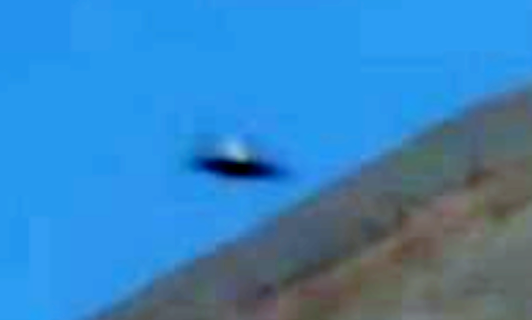


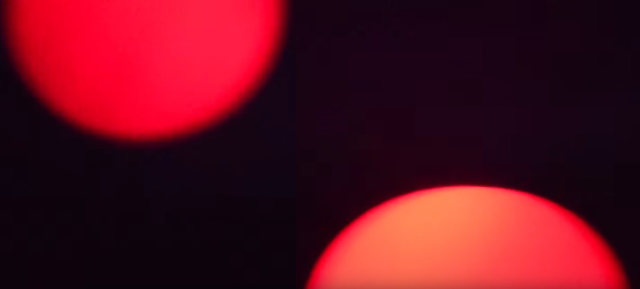


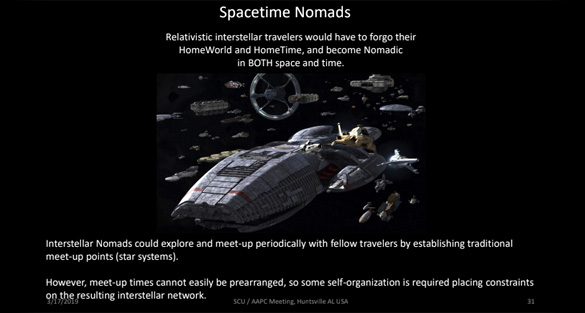



 How to bug-proof your house: Scientist reveals the 5 ways to...
 Boys perform better at school when they are surrounded by...
 Britain 'WILL get a Hyperloop that will go from London to...
 YouTube FINALLY says it will crack down on sick pranksters...