Ontdek de Fascinerende Wereld van UFO's en UAP's: Jouw Bron voor Onthullende Informatie!
Ben jij ook gefascineerd door het onbekende? Wil je meer weten over UFO's en UAP's, niet alleen in België, maar over de hele wereld? Dan ben je op de juiste plek!
België: Het Kloppend Hart van UFO-onderzoek
In België is BUFON (Belgisch UFO-Netwerk) dé autoriteit op het gebied van UFO-onderzoek. Voor betrouwbare en objectieve informatie over deze intrigerende fenomenen, bezoek je zeker onze Facebook-pagina en deze blog. Maar dat is nog niet alles! Ontdek ook het Belgisch UFO-meldpunt en Caelestia, twee organisaties die diepgaand onderzoek verrichten, al zijn ze soms kritisch of sceptisch.
Nederland: Een Schat aan Informatie
Voor onze Nederlandse buren is er de schitterende website www.ufowijzer.nl, beheerd door Paul Harmans. Deze site biedt een schat aan informatie en artikelen die je niet wilt missen!
Internationaal: MUFON - De Wereldwijde Autoriteit
Neem ook een kijkje bij MUFON (Mutual UFO Network Inc.), een gerenommeerde Amerikaanse UFO-vereniging met afdelingen in de VS en wereldwijd. MUFON is toegewijd aan de wetenschappelijke en analytische studie van het UFO-fenomeen, en hun maandelijkse tijdschrift, The MUFON UFO-Journal, is een must-read voor elke UFO-enthousiasteling. Bezoek hun website op www.mufon.com voor meer informatie.
Samenwerking en Toekomstvisie
Sinds 1 februari 2020 is Pieter niet alleen ex-president van BUFON, maar ook de voormalige nationale directeur van MUFON in Vlaanderen en Nederland. Dit creëert een sterke samenwerking met de Franse MUFON Reseau MUFON/EUROP, wat ons in staat stelt om nog meer waardevolle inzichten te delen.
Let op: Nepprofielen en Nieuwe Groeperingen
Pas op voor een nieuwe groepering die zich ook BUFON noemt, maar geen enkele connectie heeft met onze gevestigde organisatie. Hoewel zij de naam geregistreerd hebben, kunnen ze het rijke verleden en de expertise van onze groep niet evenaren. We wensen hen veel succes, maar we blijven de autoriteit in UFO-onderzoek!
Blijf Op De Hoogte!
Wil jij de laatste nieuwtjes over UFO's, ruimtevaart, archeologie, en meer? Volg ons dan en duik samen met ons in de fascinerende wereld van het onbekende! Sluit je aan bij de gemeenschap van nieuwsgierige geesten die net als jij verlangen naar antwoorden en avonturen in de sterren!
Heb je vragen of wil je meer weten? Aarzel dan niet om contact met ons op te nemen! Samen ontrafelen we het mysterie van de lucht en daarbuiten.
Astronomers Find Evidence of a Planet with a Mass Almost 13 Times that of Jupiter
In the past three decades, almost 4,000 planet-like objects have been discovered orbiting isolated stars outside the solar system (exoplanets).
Beginning in 2011, it was possible to use NASA's Kepler Space Telescope to observe the first exoplanets in orbit around young binary systems of two live stars with hydrogen still burning in their core.
According to physorg. brazilian astronomers have now found the first evidence of the existence of an exoplanet orbiting an older or more evolved binary in which one of the two stars is dead.
The findings have just been published in the Astronomical Journal, published by the American Astronomical Society (AAS).
They Found Something In Outer Space and It's On It's Way Here!
WETENSCHAPEen hoogdag voor de astronomie: voor het eerst stelden sterrenkundigen een foto van een zwart gat voor. Het resultaat is een foto van een zwart gat dat drie miljoen keer zo groot is als onze aarde, bijna zo groot is als ons volledige zonnestelsel, en 6,5 miljard keer zo zwaar is als de zon. “De zwaargewicht kampioen van alle zwarte gaten in het heelal.” De primeur is weggelegd voor de astronomen van de Event Horizon Telescope (EHT), een internationale samenwerking. “We hebben hetgeen gezien waarvan we dachten dat het onmogelijk was om te zien”, aldus de directeur van EHT.
Voor de eerste keer zijn astronomen erin geslaagd om een foto van een zwart gat te maken. Bijzonder, want tot zover had men geen enkel idee hoe zoiets er in werkelijkheid uitziet. Een zwart gat – of een gebied in de astronomische ruimte waar de zwaartekracht zo sterk is dat niets eruit ontsnapt, zelfs geen licht - is vrij abstract. Onderzoekers staarden zich een halve eeuw blind op het fotograferen van een superzwaar zwart gat.
Nu dat eindelijk lukte, werd het resultaat wereldwijd met veel trots voorgesteld tijdens zes simultaan georganiseerde persconferenties. De ontdekking zou vergelijkbaar zijn met de maanlanding, en voortaan zal men spreken van “de tijd voor de foto en de tijd na de foto”.
Op de foto is een lege ruimte te zien waarrond een heldere ring - bestaande uit fotonen die door de sterke zwaartekracht in een baan rondom het gat gedwongen worden - brandt. In het midden is er een donkere vlek. Dat is de schaduw van de waarnemingshorizon. Daarin verdwijnt het licht. Eigenlijk is het zwart gat dus niet te zien op de foto, maar wel de schaduw daarrond waar al het licht in verdwijnt.
Oorspronkelijk zouden er twee foto’s getoond worden. Eentje van Sagittarius A, dat zich in het midden van de Melkweg bevindt. En eentje van een nog groter zwart gat in het midden van Messier 87 (M87), een elliptisch sterrenstelsel in het sterrenbeeld Maagd. De astronomen toonden enkel de foto van Messier 87, met de belofte dat de foto van het zwart gat van ons sterrenstelsel nog zal volgen.
Een foto van het zwart gat maken, komt neer op het fotograferen van een mosterdzaadje in Washington DC vanuit Brussel.
Astronomen van Event Horizon Telescope (EHT)
Gebrek aan licht
Aangezien een zwart gat geen licht uitzendt of terugkaatst, was het een heuse uitdaging om er een kiekje van te maken. Geen enkele telescoop is geavanceerd genoeg om een foto te maken. Daarom werd het internationale Event Horizon Telescope opgezet. Dat is een netwerk van acht radiotelescopen op vier continenten en meer dan tweehonderd mensen afkomstig uit minstens achttien landen. Het netwerk van telescopen maakte op exact hetzelfde moment foto’s. Via atoomklokken waren de telescopen op elkaar afgestemd zodat het hele proces synchroon verliep. Uiteindelijk werden de verschillende beelden verzameld en laag per laag samengevoegd.
Het zwart gat is zo’n 50 tot 55 miljoen lichtjaar van ons verwijderd. Daar een foto van nemen komt neer op het fotograferen van een mosterdzaadje in Washington DC vanuit Brussel, zo zeiden de sterrenkundigen op de persconferentie in Brussel. Een tweede vergelijking die tot de verbeelding spreekt: vanuit een café in Parijs een krant in New York lezen.
EPAHet team van de Event Horizon Telescope (EHT) tijdens de persconferentie in Brussel. In totaal werden er zes persconferenties wereldwijd én simultaan georganiseerd.
Zwart gat, wat is dat?
In 1964 bedacht John Wheeler de term ‘zwart gat’. Maar het zou nog tot 1984 duren voordat het bestaan ervan niet langer in twijfel werd getrokken. Geen wonder, want je kan ze niet zien omdat ze geen licht uitstralen. In een vroeger leven straalde zo’n zwart gat overigens wél licht uit. Een zwart gat is eigenlijk wat overblijft na de explosie van een ster, een ster die veel zwaarder was dan de zon. Tijdens zo’n explosie produceert de ster eventjes zoveel licht als het hele sterrenstelsel waartoe het behoort. Om daarna voor eeuwig zwart te worden. Daarom werden zwarte gaten voor 1964 ‘bevroren sterren’ genoemd. Verder nog wordt de kern van de explosie zo compact dat een zwart gat ontstaat. Omdat er niets aan de zwarte gaten kan ontsnappen - er kan alleen maar wat invallen – groeien ze doorheen de tijd in massa.
Het waarnemen van zwarte gaten gebeurt indirect, door het gedrag van nabijgelegen sterren of gas te bestuderen. Opnieuw is het gebrek aan licht daar een oorzaak van. De zoektocht naar een goede manier om het bestaan van zwarte gaten aan te tonen, nam dan ook een tijdje in beslag. John Tonry, een sterrenkundige aan het California Institute of Technology, bracht het eerste zwarte gat – op overtuigende wijze - in 1984 in kaart door stersnelheden te meten. Daaruit bleek dat er in de kern van een sterrenstelsel sterren honderd miljoen keer dichter op elkaar gepakt zitten: maak kennis met het zwart gat.
WETENSCHAPVast, vloeibaar of gasvormig: dat zijn de vormen waaronder materie doorgaans voorkomt. Maar wetenschappers hebben ontdekt dat er onder extreme druk en temperaturen ook andere vormen kunnen ontstaan en de recentste is een toestand die tegelijk vast en vloeibaar is.
“Het zou zijn alsof je een spons vol water vasthoudt, die langzaam begint uit te lopen”, aldus fysicus Andreas Hermann van de universiteit van Edinburgh, die meewerkte aan het onderzoek. “Met dien verstande dat de spons ook van water zou zijn.”
Het team gebruikte een vorm van artificiële intelligentie om de ontdekking te doen: een toestel dat voorspellingen kan doen op basis van eerdere waarnemingen.
Het kwam te weten dat de atomen van het element kalium vast en vloeibaar tegelijk kunnen zijn onder een druk van 20.000 tot 40.000 keer de atmosferische druk en een temperatuur tussen 127 en 527 graden Celsius. De atoomketens waaruit kalium bestaat worden dan vloeibaar, terwijl de rest van de kaliumkristallen in een vaste staat blijven. Die omstandigheden komen op aarde voor in de aardmantel, vlak onder de aardkorst.
Het is de allereerste keer dat wetenschappers erin slagen om te bewijzen dat een dergelijke staat thermodynamisch stabiel is voor om het even welk element. Het onderzoek werd gepubliceerd in het wetenschappelijk tijdschrift Proceedings of the National Academy of Science.
Supervloeistoffen
De nieuwe vorm van materie wordt toegevoegd aan een opmerkelijk lijstje van ongewone vormen van materie. Daarin vind je ook plasma (een extreem hete vorm van gas waarin de kernen van de atomen gescheiden worden van de elektronen, zodat ze beïnvloed kunnen worden door elektrische en magnetische velden), superconductoren (metalen die afgekoeld worden tot erg lage temperaturen zodat elektriciteit erdoor kan vloeien zonder weerstand) en supervloeistoffen (een vloeistof die wordt afgekoeld tot het absolute nulpunt zodat ze kan stromen zonder weerstand en zelfs langs de wand van een recipiënt omhoog kan klimmen en langs de buitenkant omlaag kan druppelen) terug.
Wat weet u nog over het zwarte gat? 5 vragen over het fenomeen beantwoord - HLN.be
NASA / Dana Berry / SkyWorks Digital.
WETENSCHAPEen primeur voor de sterrenkunde: vandaag werd de eerste foto ooit van een zwart gat in het heelal getoond, met dank aan astronomen van het Event Horizon Telescope project. Voor wie zelf met een zwart gat zit ten tijde van die les aardrijkskunde: dr. Alex Lobel (Belgische Sterrenwacht) legt uit wat het precies is en wat deze sterrenkundige primeur betekent voor de wetenschap.
1. Wat is een zwart gat ?
Een zwart gat is een gebied in het heelal met zo’n grote zwaartekracht waardoor niets er kan aan ontsnappen. Alles wat dicht bij een zwart gat in de buurt komt, verdwijnt in dat gat en komt er niet meer uit. Ook licht kan niet aan zo’n gat ontsnappen, waardoor de gaten niet zichtbaar zijn. “Het is een zeer grote massa die samengedrukt is,” verduidelijkt Dr. Alex Lobel van de Koninklijke Belgische Sterrenwacht. “Je hebt ze in enorme variaties qua grootte. Het zwarte gat uit ons Melkwegstelsel dat voor dit EHT-project in beeld werd gebracht, is een enorm, massief gat. Zo’n gat kan tot 4,1 miljoen keer de massa van de zon beslaan. Maar je hebt er ook meerdere kleintjes in elk sterrenstelsel.”
Lobel: “Een zwart gat kan ontstaan wanneer een zware ster zijn levenseinde nadert en verzwakt. Een ster die zwaarder is dan de zon, komt aan zijn einde door een krachtige ‘supernova-explosie’. Daarbij produceert ze een korte tijd heel veel licht, waarbij de kern van de ster kan imploderen en heel compact wordt. Zo blijft een lege ruimte achter, het “zwarte gat”. De term werd eind jaren ’60 bedacht door de Amerikaanse fysicus John Wheeler. Het eerste zwarte gat werd door de Amerikaanse sterrenkundige John Tonry in 1984 in kaart gebracht, door stersnelheden te meten.
3. Waarom konden we het nog nooit op foto vastleggen?
Zwarte gaten zijn - no shit, Sherlock - zwart. Ze zenden zelf geen licht uit en kaatsen het ook niet terug, waardoor je ze niet kan zien. “Wel kan je zwarte gaten indirect waarnemen, door de gedragingen van hemellichamen of gassen in de nabije omgeving van het gat te observeren,” legt Lobel uit. “Zo wordt het gas van een ster in de buurt naar het zwarte gat toe gezogen en zal ze een baan er omheen gaan beschrijven.” Zo’n beweging is bijvoorbeeld zichtbaar door de röntgenstraling die het veroorzaakt en kan je observeren met een röntgentelescoop.
4. Hoe kunnen wetenschappers een zwart gat nu toch vastleggen op foto?
Lobel: “Om dit te kunnen doen, heb je in principe een telescoop nodig die even groot is als de Aarde. Maar dat is niet haalbaar. In plaats daarvan zette Het Event Horizon Telescope project een netwerk van 8 telescopen wereldwijd uit van 14 verschillende wetenschappelijke instellingen. Via atoomklokken zijn de telescopen op elkaar afgestemd om het hele proces synchroon te laten verlopen. Zo kan je haarscherpe beelden krijgen binnen het millimetergebied van zo’n zwart gat.” Een technisch ingewikkeld en uniek project, benadrukt Lobel. “Het is heel bijzonder dat dit nu gebeurt, maar daarom ook arbeidsintensief en prijzig. Het is niet onlogisch dat het zo lang geduurd heeft voor het geprobeerd werd.”
5. Wat betekent deze sterrenkundige primeur voor de wetenschap?
Zwarte gaten vormen al langer de geheimzinnige exotische vrucht van de wetenschap. Ze nu ook in beeld kunnen brengen, kan nuttig zijn om de relativiteitstheorie van Einstein verder te testen. Lobel: “Zwarte gaten zijn omgevingen met de meest extreme zwaartekrachtomstandigheden van het universum. Daarom zijn ze erg dankbaar om theorieën over die kracht te testen. Zo voorspelt Einsteins relativiteitstheorie dat op de rand van het zwarte gat de tijd daar stil staat. Maar de theorie is 100 jaar oud. Klopt ze nog, of zijn er aanpassingen nodig? Dat we de zwarte gaten nu ook van dichtbij kunnen bekijken, is een heel dankbare stap om dat verder te bestuderen.”
Wetenschappers ontdekken onbekend 430 miljoen jaar oud zeewezen - HLN.be
Getty Images/iStockphoto/Elissa Martin, Yale Peabody Museum of Natural HistoryDe nieuwe diersoort Sollasina cthulhu (rechts). Links een afbeelding van Cthulhu zoals we het wezen kennen uit de verhalen van H.P. Lovecraft.
WETENSCHAPBritse en Amerikaanse onderzoekers hebben een nieuwe diersoort ontdekt in een fossiel van 430 miljoen jaar oud. De soort zou verwant zijn aan de zeekomkommer die we vandaag nog kennen en werd Sollasina cthulhu gedoopt, naar het monster uit de verhalen van H.P. Lovecraft.
De uiterlijke gelijkenis is er dan ook wel. H.P. Lovecraft omschreef Cthulhu als een (fictieve) kolossale monsterlijke godheid met tentakels, die miljoenen jaren geleden op aarde terechtkwam. De pas ontdekte diersoort heeft dan wel maar de grootte van een stevige spin, ze heeft ook tentakelachtige uitsteeksels, waarmee ze zich over de bodem van de oceaan bewoog en voedsel ving.
De ontdekking werd gedaan door wetenschappers van de universiteiten van Yale, Oxford en Leicester, het Imperial College London en University College London. Ze publiceerden er een paper over die vandaag verscheen in het wetenschappelijk tijdschrift Proceedings of the Royal Society B.
Het fossiel werd gevonden in het Engelse Herefordshire, aan de grens met Wales. Daar komt Lagerstätte voor, een gesteente dat bijzonder goed bewaarde fossielen bevat en in het verleden al een schatkamer bleek te zijn van gefossiliseerde oude zeewezens. (lees hieronder verder)
Elissa Martin, Yale Peabody Museum of Natural History
“In onze paper hebben we het over een nieuw soort van stekelhuidigen, waartoe ook de huidige zee-egels, zeekomkommers en zeesterren behoren”, aldus paleontoloog Derek Briggs van de universiteit van Yale. “Ook de weke delen van het dier zijn bewaard gebleven. De nieuwe soort behoort tot een grotere groep die intussen uitgestorven is, de Ophiocistioidea.”
3D-simulatie
De wetenschappers slaagden erin om een 3D-simulatie te maken van de nieuwe diersoort, door honderden dwarsdoorsneden te maken van het fossiel – zonder het te beschadigen – en het op die manier laagje per laagje te ontleden. Zo werden interne structuren blootgelegd van het watervatensysteem die voorheen nog onbekend waren. En ontdekten de wetenschappers dat de soort nauwer verwant is met de zeekomkommer dan met de zee-egel.
“Met het watervatensysteem bewogen ze de tentakelachtige uitsteeksels die ze gebruikten om zich voort te bewegen en voedsel te vangen”, aldus nog Briggs. “In tegenstelling tot bij de huidige stekelhuidigen waren de uiteinden van de tentakels bij de Ophiocistioidea bedekt met plaatjes. Daaruit maken we op dat het om een compleet andere soort ging dan de huidige zeekomkommers.”
William Maillis is literally a “genius.” By the time he was only 7 months old, he was already speaking in full sentences. Just before his second birthday, he was adding numbers, and by age 2, he was multiplying them. Now, Maillis is 11 years old, and he enrolled in Carnegie Mellon University last fall with his sights set on becoming an astrophysicist.
Yet, Maillis is more than just a child prodigy; as the son of a Greek preacher, Peter Maillis, he’s also a person of great faith. The young scholar is on a self-determined mission rooted deeply in his belief: to use science to prove that God exists. No less.
With all of his remarkable achievements, young Maillis’s “genius” title was made official when Joanne Ruthsatz, a psychologist at Ohio State University, declared it. He graduated from high school at age 9 and more recently became the youngest graduate of St. Petersburg College in July of 2018.
Nor is the young man from Pennsylvania afraid of challenging established ideas. Maillis claims that he can prove both Einstein and Stephen Hawking wrong when it comes to the topic of the universe’s origin, saying that he disagrees with some of their discoveries. In particular, he disagrees with the idea that there is no God—scientists such as Hawking have declared themselves atheists.
To drive home the point, Hawking once wrote the following:
Before we understood science, it was natural to believe that God created the universe, but now science offers a more convincing explanation. What I meant by ‘we would know the mind of God’ is we would know everything that God would know if there was a God, but there isn’t. I’m an atheist.
Yet, according to Maillis, it is more logical to say that there is a god than not. He hopes to prove that only an “outside force” could have created the universe, and thus that “God does exist.” Using simple logic, he outlines his general idea:
Well, because there’s these atheists that try to say that there is no God, when in reality it takes more faith to believe that there’s no God than it does to believe that there is a God … Because it makes more sense that something created the universe than that the universe created itself. It takes more faith to say the universe created itself than to say something other created the universe because that is more logical.
In an interview with the Hellenic College Holy Cross, he spelled out his (more logical) conclusion in greater detail:
We know the universe has an age, riht? 13.8 billion years. So, 13.8 billion years ago, the entire universe was reduced to a singularity, a particle smaller than a quark. However, if gravity is always working, i.e.: if you jumped off this building, you’re not going to fall 15 seconds later, you’re going to fall immediately, so, if gravity was always working, and the singularity was always there […] then the universe should have no age, it should be infinitely old. But it’s not, it’s 13.8 billion years old. And something can’t come from nothing, because it would have to exist in order to cause itself to exist, which is illogical. So, therefore, something other must have created the singularity, and that something other me observe as God.
While surely many of his peers are spending their school days shooting paper wads in class or waiting for the home-time bell to ring, Maillis ponders the larger questions of life and the universe. He explains during a question-and-answer period that after he “proves the existence of God” he wants to continue exploring further. “There’s so much we don’t know,” he says, adding with a smile that “there’s even more things that we don’t know we don’t know!”
11-jarig wonderkind wil op deze manier bewijzen dat Einstein en Hawking het bij het verkeerde eind hadden
William Maillis haalde op 9-jarige leeftijd zijn middelbareschooldiploma en studeerde afgelopen zomer op 11-jarige leeftijd af aan het St. Petersburg College in Florida.
Hij was de enige student in zijn klas die geen aantekeningen maakte. Hij luistert, leest en neemt alle kennis in zich op.
Toen hij twee jaar oud was kon William al lezen, schrijven en rekenen. Op zijn vierde leerde hij Grieks en drie jaar later had hij de trigonometrie onder de knie.
Onjuist
Het wonderkind wil astrofysicus worden en bewijzen dat God bestaat. Hij wil laten zien dat slechts één externe kracht in staat is het universum te vormen.
Hij is van plan te laten zien dat de theorieën van wetenschappers als Albert Einstein en Stephen Hawking over het universum, onjuist zijn.
In een interview met het Hellenic College Holy Cross zei hij:
We weten hoe oud het universum is, toch? 13,8 miljard jaar. Dus 13,8 miljard jaar geleden was het hele universum niets meer dan een singulariteit, een deeltje kleiner dan een quark. Maar als de zwaartekracht altijd werkt – dus als je van een gebouw springt, val je niet 15 seconden later, maar gelijk – en als de singulariteit er altijd is geweest, dan zou het universum geen leeftijd moeten hebben. Het zou oneindig oud moeten zijn. Maar dat is het niet, het is 13,8 miljard jaar oud. Je kunt niet iets uit het niets maken, omdat het eerst moet bestaan. Iets anders moet dus die singulariteit hebben gecreëerd en dat is God.
“Er is zoveel dat we niet weten,” zei William. “Maar er zijn nog veel meer dingen waarvan we niet weten dat we ze niet weten!”
Vrijgegeven CIA-documenten geven uniek inkijkje in topgeheim illegaal project MK-ULTRA. Is dit slechts het topje van de ijsberg?
Er zijn verontrustende details naar buiten gekomen over geheime experimenten rond hersenspoeling die werden uitgevoerd door de CIA. Decennialang heeft de Amerikaanse overheid geprobeerd documenten hierover te verbergen.
De nieuwe documenten onthullen hoe de spionagedienst met drugs, hypnose en elektrische apparaten experimenteerde op mensen en dieren.
De experimenten waren onderdeel van het topgeheime, illegale project MK-ULTRA. Volgens experts is het goed mogelijk dat het project nooit is beëindigd.
Geheugenverlies
Eén van de stukken onthult hoe de CIA met drugs experimenteerde op gevangenen die in afwachting waren van hun proces.
Uit een ander document blijkt dat de spionagedienst methodes uitwerkte om geheugenverlies te veroorzaken bij mensen.
De CIA werkte verder aan spraaktechnieken die konden worden gebruikt om een grote mensenmassa te hersenspoelen en mensen ontvankelijker te maken voor bepaalde boodschappen.
Volledig herschrijven
De dienst was vooral geïnteresseerd in experimenten die normaal gesproken ‘te gevaarlijk, te schokkend of te ongewoon’ werden geacht, aldus een memo uit 1956.
De stukken zijn boven water gehaald door John Greenewald en op zijn website The Black Vault gepubliceerd.
Greenewald, die al sinds 1999 probeerde om inzage te krijgen in de documenten, zei dat ze ‘de geschiedenis van het controversiële project volledig herschrijven’.
Topje van de ijsberg
“Probeert de CIA nog altijd projecten in de doofpot te stoppen die in de jaren vijftig en zestig hebben plaatsgevonden? Ja,” zei hij.
Volgens Greenewald is MK-ULTRA slechts het topje van de ijsberg en zijn er nog veel meer van dit soort geheime projecten rond hersenspoeling en manipulatie.
Large meteor explodes in sky over Siberia in third major space fireball incursion in four months
By The Siberian Times reporter
Bright and noisy with a long, sparkling green and yellow tail, it was filmed by multiple observers in Krasnoyarsk region.
Busy receiving space wanderes, this time a bolide is seen in sky over Krasnoyarsk. Picture: The Siberian Times
The phenomenon caused fear on the ground.
‘I panicked as it sounded and looked like a plane on fire, I got really scared of the noise and shine it created’, said a local woman from Krasnoyarsk, the large industrial city.
‘I pulled a phone out of a pocket, but it flew across the sky so fast that I only caught a long white trace it left.’
Some residents said the meteor was blindingly bright, akin to the light and sparks created during intense welding work.
It split into several parts before disappearing in the sky somewhere over Irkutsk region, east of Krasnoyarsk.
Large meteor explodes in sky over Siberia in third major space fireball incursion in four months.
Pictures: The Siberian Times
The local ministry of emergencies confirmed it registered a meteor, and said that it didn’t pose a threat to people or infrastructure.
It is the third major meteor or meteorite event in four months.
On 18 December a meteor exploded close to Russia’s Kamchatka peninsula with a force ten times more powerful than the Hiroshima atomic bomb, according to NASA.
On 15 March a meteorite slammed into Krasnoyarsk region with local reports saying it ‘warmed the air’ and ‘shook the ground’ after streaking across the sky in a green, yellow and orange fireball.
This came down close to the site of the Tunguska Event in 1911 when a meteor exploded in the atmosphere wiping out 80 million trees, and with the estimated force of 185 Hiroshima bombs.
THE THIRD MAJOR SPACE FIREBALL INCURSION IN FOUR MONTHS
Expert Viktor Grokhovsky from Ural Federal University, studied the videos of the 6 April event and concluded that the recent space guest was a bolide.
‘It exploded quite high in the sky somewhere over Irkutsk region,’ he concluded.
'It was a bolide that moved with a speed higher than the New Tunguska meteorite (LINK) from Evenkia.
‘Its structure must have been quite loose given that it split into fragments.’
The latest meteor incursion was spotted by dash cams and eye witnesses around 7 pm on 6 April.
Why does anyone live in Siberia anymore? True, there haven’t been any massive sinkholes appearing after deafening booms lately, but global warming hasn’t abated and it’s only a matter of time before more permafrost thaws and releases more methane, opening more ground-swallowing lake-forming orifices. Then there’s the meteors … there have been three major meteor events since December 2018 in the Tunguska area. True, none of them compare to the famous Tunguska Event in 1908 which obliterated 2,000 square km (770 square miles) of forest, so some Siberians may be thinking that – like with never-the-same-spot-twice lightning strikes or 100-year-floods – it’s safe to live there again. That feeling was obliterated too last week when two huge fireballs flew over the same area and one crashed to Earth, causing experts to call it the “New Tunguska” meteorite. Has the mass exodus to Moscow started yet?
“I panicked as it sounded and looked like a plane on fire, I got really scared of the noise and shine it created. I pulled a phone out of a pocket, but it flew across the sky so fast that I only caught a long white trace it left.”
A woman from Krasnoyarsk described the daytime April 6 fireball to The Siberian Times, which reports there were many witnesses and many photographs and videos of the event. (View photos here, video here.)The local ministry of emergencies a usual said there was nothing to worry about since it didn’t pose a threat to people or infrastructure. That’s probably what the government officials living upstream of Tunguska said of the meteor passing overhead in 1908.
“It was a bolide that moved with a speed higher than the New Tunguska meteorite (LINK) from Evenkia. Its structure must have been quite loose given that it split into fragments.”
Viktor Grokhovsky from Ural Federal University joined the “too late to worry about it now” crowd in pointing out that the April 6 bolide broke apart in the atmosphere. That’s not what happened on March 15 however.
“I was home when I heard loud thunder which sounded like an explosion. There was a huge glow, floor trembled and dry branches fell of a birch tree in the yard. I panicked and called my brother who lives some 300 metres away. He said he wondered if this was a plane crash.”
Natalia Moskvitina, head of the Uchami, Evenk, village in Northern Siberia described the meteor to the Siberian Times.That nighttime green, yellow and orange fireball was also seen and recorded by many witnesses. (View photos here.) Of course, who listens to witnesses and local officials? NGS24.RU news quoted Viktor Grokhovsky:
“I think it was a meteoroid no larger than a meter in size. Unlike the Chelyabinsk meteorite, it moved at a slower speed.”
Grokhovsky compared it to the 2013 Chelyabinsk meteorite which injured over 1,000 people. The New Tunguska couldn’t possibly injure that many because there’s only 97 native Evenks living in Uchami. However, it did punch a big hole in the one-meter thick ice on the Podkamennaya Tunguska river and officials verified that at least one fragment is in it and will be searched for when the weather warms (one weekend in July).
Summer is here!
And don’t forget the December 18 meteor which exploded near the Kamchatka peninsula with a force ten times more powerful than the Hiroshima atomic bomb yet wasn’t reported until months later, even though it probably measured up to 100 meters in diameter. Apparently there were no officials in the area to say “Nothing to worry about.”
Is there something to worry about? Is Siberia becoming some kind of meteor magnet?
Lake Cheko in the Siberian region of Tunguska has recently emerged as a candidate for an “impact site” linked to the famous Tunguska explosion of 1908.
Credit: www-th.bo.infn.it/tunguska / University of Bologna
Everyone knows the three basic states of matter: solid, liquid, and gas. Most are probably aware that plasma is a word that means something. Yet there are other, more exotic states of matter that exist in extreme circumstances. Scientists at the University of Edinburgh have recently confirmed the existence of a bizarre new state of matter that is both a liquid and a solid. This discovery couldn’t have been more perfectly timed than early April, lovingly referred to up here in New England as “mud season.”
This new state of matter is far stranger than mud. Which isn’t that high a bar, admittedly, but it’s pretty strange. The liquid/solid hybrid state of matter was observed in potassium atoms under extreme pressure. When compressed to extremes, the potassium crystallized into a strange and surprising state—a “chain-melted” state— that managed to act as both a liquid and a solid. What does that mean? Described as a “leaky crystal,” holding a chunk of this chain-melted potassium—although at the extreme pressures needed, your hand would be completely pulverized— would look like a solid block that slowly dripped molten potassium until it completely vanished.
One of the co-authors of the study, Andreas Herrman, a compressed matter physicist at the University of Edinburgh, illustrates it another way:
“It would be like holding a sponge filled with water that starts dripping out, except the sponge is also made of water.”
It’s sponges all the way down.
It is believed that potassium and other similar metals could exist in this state deep under the earth’s mantle, where the pressure and temperature is extreme enough to do weird things to them.
This isn’t the first time this state of matter had been observed, but until now scientists were divided on what they had observed. The first observation of this strange new state of matter happened 15 years ago, when scientists observed the phenomenon occurring in sodium atoms. Sodium crystals are normally extremely conductive to electricity and heat, but scientists discovered that when pushed to extreme conditions—20,000 times the pressure of the earth’s surface—sodium transformed from a silver block to a transparent crystal that became resistant to electricity. Scientists didn’t know what to make of it and weren’t sure if this constituted a new state of matter or not.
Squeeze this bad boy hard enough and it’ll start being weird.
The recent experiments with potassium confirmed it. After observing the chain-melted state in small groups of atoms, the team used artificial intelligence to simulate how groups of potassium atoms in the tens of thousands would behave. The simulations confirmed that what they were observing was the first example of a chain-melted element being thermodynamically stable.
Besides just being pretty cool, this discovery will help scientists model how elements behave at these high temperatures and pressures. Which, of course, doesn’t have much of a bearing on me or you, but our comfy little oasis on planet earth is an anomaly in the universe. Most of the matter in the universe is contained in stars and planets and subject to the conditions that we don’t have to deal with. So this discovery will allow scientists a much more detailed understanding of how those stars and planets—including our own—operate. And the rest of us? We get to deal with mud season.
Archaeologists have discovered a well-preserved “fast food” counter in the ancient Roman city of Pompeii. Around 150 thermopolia (or snack bars) have already been discovered around the city and they were primarily used by poor locals who didn’t have cooking facilities in their homes. Coarse bread with salty fish, lentils, baked cheese, and spicy wine were the typical items found on the menus. Unfortunately for the less fortunate citizens who had no choice but to eat at the “fast food” counters, they were mocked and scorned by the more elite residents.
The 2,000-year-old relic with a beautifully frescoed counter was found in Regio V, which is a 54-acre site located north of the archaeological park. There were other relics found in that area which includes a very well-preserved fresco with the image of the mythological hunter Narcissus looking at his own reflection in a pool of water. Remains of two women and three children were also discovered, as well as the remains of a harnessed horse and saddle. These recent findings in Pompeii are the most comprehensive excavations in that area since the 1960s.
Pompeii
Pompeii is one of the world’s most visited archaeological sites. The city was destroyed in 79 A.D. by a devastating volcanic eruption that killed over 2,000 residents. But later in the 16thcentury, the ruins were found with the first excavations taking place in 1748.
You can see pictures of the ancient “fast food” counter by clicking here.
Dozens of thermopolia, or snack bars, have been found across Pompeii.
Photograph: Massimo Ossana/Instagram
In other news, people from all around the world saw history being made on Sunday, April 7, 2019 when Egyptian archaeologists and other researchers discovered a 2,500-year-old mummy of a high priest on the live television event, “Expedition Unknown: Egypt Live”. They not only found the mummy of the high priest, but also two other mummies as well as several antiquities including a wax head. They believe that the wax head is that of one of the high priests called “Irt Hrw”. In fact, the head is the exact cast of a high priest mummy from 2,500 years ago.
The episode was filmed in a labyrinth of underground tombs and inner chambers of a remote burial site called Al-Ghorifa which is around 165 miles south of Cairo, Egypt. The live broadcast was viewed by millions of people worldwide who watched as host Josh Gates, Egyptologist Dr. Zahi Hawass, and several other researchers made the historic discoveries.
Egyptian Sarcophagus (not the one mentioned in this article)
In addition to the mummy of a powerful high priest, two other mummies that are believed to be connected to each other were found. One of the mummies, based on the artifacts that were discovered near the body, was that of a female. The second mummy was found inside of the “Family Tomb” which was the resting place of a whole family dating back 2,500 years. Other items found in the Family Tomb were the remains of a family dog, an ancient Egyptian board game, and four canopic jars that were used to hold the organs of the mummy. The inscriptions found on his sarcophagus indicate that the second mummy was a male singer in the temple of Thoth who is an Egyptian god.
Since time unremembered human beings have dreamed of immortality, and it has featured in many of our most profound legends and myths. For millennia we have tried magic, various herbs and potions, and in more modern times the power of medicine and DNA to prolong our lives, to stop the inexorable approach of death and indeed to live forever. Yet this must surely be an unobtainable goal, right? After all, nothing lives forever, and death is an immutable natural companion of life, unavoidable and inevitable, is it not? Well, not exactly, it seems, for there is one known organism on this planet of ours that truly has the capacity to live on indefinitely, effectively immortal and cheating the cycle of life and death. Welcome to the world of Earth’s only immortal animal.
The creature in question is one that you would probably not even typically notice, let alone realize how truly unique it is. Measuring only 4.5 millimeters (0.18 in) across and equally as long, about the same size as the nail of your pinky, and almost entirely transparent, it is a type of tiny jellyfish native to the Mediterranean Sea, although they have spread worldwide through the ballast of ships, called Turritopsis dohrnii, or more commonly called by its popular name the “immortal jellyfish.” Within its genus Turritopsis it is very similar in physical appearance with its cousins but special in that, of the three known species it shares the genus with, it is the only one that has proven to be technically immortal, able to quite possibly live forever.
The Immortal Jellyfish
In order to understand how this could possibly be, it is important to understand a little about the typical life cycle of jellyfish. Male jellyfish release free-floating sperm that drift with the current until they meet up with an egg from a female, after which tiny swimming larvae are formed, which are called planula. These planula meander about swimming through the sea until they are ready for the next stage of their development, sinking down to attach to something on the bottom, usually a rock. They then undergo a shocking transformation, completely reconfiguring into specialized colonies of tubular polyps that wave about in the current until tiny larva emerge to detach from the polyp tips and swim off to form fully-formed jellyfish, called the medusa, going on to mature into sexually mature adults to start the cycle all over again.
While there are variations in this basic cycle among different jellyfish species, typically most jellyfish will carry out their lives and die just like any other animal. However, the Turritopsis dohrnii is different in that it just won’t conform to that standard way of nature. When faced with starvation, environmental stress, or mortal injury that would kill most normal jellyfish, they instead undergo a bizarre metamorphosis. They pull their tentacles into themselves and their bodies shrink, and to a casual observer it might seem as if they are indeed withering away and dying, but this could not be further from the truth. Instead, they are reversing time in a sense, turning back the biological clock and reprogramming their cells to revert back into their polyp state. After changing into a shapeless blob of tissue, they change back into a polyp colony, and a new jellyfish is born, completely genetically identical to the original, in essence skipping back in time to start over again. It is called “transdifferentiation,” and they can then repeat this very unique and amazing process again and again as needed, quite possibly forever, making them effectively immortal. One Dr Karl Kruszelnicki has explained it:
It’s kind of like a butterfly that instead of dying changes back to a caterpillar, or an aged chicken turning back into an egg. It’s not a blueprint for humans to use so that we could potentially cycle indefinitely between a baby and an aged adult, and then back to baby, and so on—forever.
Turritopsis dohrnii only needs to do this when faced by damage or threats, because they also have the unique ability to revert their cells to a younger state at any time, meaning that they essentially don’t age and they can also reassign and reprogram cells to perform different functions as needed. This ability to halt aging or even reverse it does not mean that they cannot die, as being eaten by a predator or suffering a severe disease or a decisive catastrophic injury will kill them, but for all intents and purposes they are basically immortal, and no one is quite sure yet how they do it or what mechanisms are involved. We also don’t know yet if other species can pull off this incredible feat of eternal rejuvenation or if Turritopsis dohrnii is the only one, making it all a profound mystery of the natural world.
Whether it is completely unique or not, it is not difficult to see the potential this could all have on the field of medicine, and scientists have been intensely studying Turritopsis dohrnii for clues in deciphering how its eternal youth and ability to travel back to earlier life stages works. This is seen as being a potential key to the fountain of youth, perhaps extending life in human beings, offering possible ways to battle diseases such as cancer or Parkinson’s disease, or a means to revitalize or repair damaged tissue. The mystery might one day be solved, but in the meantime the world’s only known immortal organism floats on through the water, keeping its secrets close and hovering on potentially forever, living the fantasy humans have had since we first even became conscious of our own mortality.
Fossilised remains of ‘Cthulhu’ creature that stalked the seas 430MILLION years ago found in Herefordshire
The ancient species had a tangle of tentacles just like HP Lovecraft's ferocious fictional monster
By Harry Pettit, Senior Digital Technology and Science Reporter
THE REMAINS of an ancient sea creature that lurked at the bottom of the ocean millions of years ago have been found in Britain.
It has been named Cthulhu by boffins because its many flailing tentacles resemble the deadly arms of the infamous fictional sea beast.
ELISSA MARTIN, YALE PEABODY MUSEUM OF NATURAL HISTORY
Artist's impression of the newly discovered sea creature
However, the animal – known as Sollasina cthulhu – was far less destructive than its namesake.
It was a tiny type of sea cucumber, the group that includes the placid modern sea pig and its relatives.
Scientists say the discovery could shed new light on the early evolution of the sea cucumber, which have lived in our oceans for hundreds of millions of years.
They dug up the fossilised remains in Herefordshire and were baffled as to what they'd found.
IMRAN RAHMAN/OXFORD UNIVERSITY MUSEUM OF NATURAL HISTORY
A 3D reconstruction of Sollasina cthulhu. Tube feet are shown in different colours
Dating back 430million years, it lived during a time when what is now Britain was covered in water.
The fossilised creature had 45 tentacles, branching out from a central body covered in armour plates.
Its many arms helped it crawl around the seafloor, where it spent the vast majority of its time.
It also used them to move food into its mouth, with its diet likely consisting of algae and other tiny microorganisms – just like modern sea cucumbers.
GETTY - CONTRIBUTOR
Cthulhu is a fictional sea beast dreamed up by H P Lovecraft
At just 3cm wide, Sollasina was hardly an intimidating beast, but it's helping scientists work out the evolutionary tree of Earth's ancient oceans.
"We carried out a number of analyses to work out whether Sollasina was more closely related to sea cucumbers or sea urchins," said University College London scientist Dr Jeffrey Thompson.
"To our surprise, the results suggest it was an ancient sea cucumber. This helps us understand the changes that occurred during the early evolution of the group, which ultimately gave rise to the slug-like forms we see today."
A new species of extinct sea cucumber named Sollasina cthulhu, for its resemblance to H.P. Lovecraft’s famous monster
This is a life reconstruction of Sollasina cthulhu.
Credit: Elissa Martin, Yale Peabody Museum of Natural History
An exceptionally-preserved fossil from Herefordshire in the UK has given new insights into the early evolution of sea cucumbers, the group that includes the sea pig and its relatives, according to a new article published today in the journal Proceedings of the Royal Society B.
Palaeontologists from the UK and USA created an accurate 3D computer reconstruction of the 430 million-year-old fossil which allowed them to identify it as a species new to science. They named the animal Sollasina cthulhu due to its resemblance to monsters from the fictional Cthulhu universe created by author H.P. Lovecraft.
Although the fossil is just 3 cm wide, its many long tentacles would have made it appear quite monstrous to other small sea creatures alive at the time. It is thought that these tentacles, or ‘tube feet’, were used to capture food and crawl over the seafloor.
Like other fossils from Herefordshire, Sollasina cthulhu was studied using a method that involved grinding it away, layer-by-layer, with a photograph taken at each stage. This produced hundreds of slice images, which were digitally reconstructed as a ‘virtual fossil’.
This 3D reconstruction allowed palaeontologists to visualise an internal ring, which they interpreted as part of the water vascular system – the system of fluid-filled canals used for feeding and movement in living sea cucumbers and their relatives.
Lead author, Dr Imran Rahman, Deputy Head of Research at Oxford University Museum of Natural History said: “Sollasina belongs to an extinct group called the ophiocistioids, and this new material provides the first information on the group’s internal structures. This includes an inner ring-like form that has never been described in the group before. We interpret this as the first evidence of the soft parts of the water vascular system in ophiocistioids.”
3D reconstruction of Sollasina cthulhu. Tube feet shown in different colors.
Credit: Imran Rahman, Oxford University Museum of Natural History
The new fossil was incorporated into a computerized analysis of the evolutionary relationships of fossil sea cucumbers and sea urchins. The results showed that Sollasina and its relatives are most closely related to sea cucumbers, rather than sea urchins, shedding new light on the evolutionary history of the group.
Co-author Dr Jeffrey Thompson, Royal Society Newton International Fellow at University College London, said:
“We carried out a number of analyses to work out whether Sollasina was more closely related to sea cucumbers or sea urchins. To our surprise, the results suggest it was an ancient sea cucumber. This helps us understand the changes that occurred during the early evolution of the group, which ultimately gave rise to the slug-like forms we see today.”
The fossil was described by an international team of researchers from Oxford University Museum of Natural History, University of Southern California, Yale University, University of Leicester, and Imperial College London. It represents one of many important finds recovered from the Herefordshire fossil site in the UK, which is famous for preserving both the soft as well as the hard parts of fossils.
The fossil slices and 3D reconstruction are housed at Oxford University Museum of Natural History.
Contacts and sources: Dr Imran Rahman Deputy Head of Research Oxford University Museum of Natural History
Citation: ‘A new ophiocistioid with soft-tissue preservation from the Silurian Herefordshire Lagerstätte, and the evolution of the holothurian body plan’ by Imran Rahman, Jeffrey Thompson, Derek Briggs, David Siveter, Derek Siveter and Mark Sutton in Proceedings of the Royal Society B http://rspb.royalsocietypublishing.org/lookup/doi/10.1098/rspb.2018.2792
Elon Musk’s private space company has scheduled the second Falcon Heavy Rocket launch and this time, they’re getting paid to do it.
A SpaceX Falcon Heavy rocket will launch the Arabsat 6A communications satellite for Arabsat of Saudi Arabia. Arabsat 6A will provide Ku-band and Ka-band communications coverage over the Middle East and North Africa regions, as well as a footprint in South Africa.
SpaceX is targeting Wednesday, April 10 for the Falcon Heavy launch of the Arabsat-6A satellite from Launch Complex 39A (LC-39A) at NASA’s Kennedy Space Center in Florida.
The primary launch window opens at 6:35 p.m. EDT, or 22:35 UTC, and closes at 8:32 p.m. EDT, or 00:32 p.m. UTC on Thursday, April 11. A backup launch window opens on Thursday, April 11 at 6:35 p.m. EDT, or 22:35 UTC, and closes at 8:31 p.m. EDT, or 00:31 UTC on Friday, April 12.
The satellite will be deployed approximately 34 minutes after liftoff. Following booster separation, Falcon Heavy’s two side boosters will attempt to land at SpaceX’s Landing Zones 1 and 2 (LZ-1 and LZ-2) at Cape Canaveral Air Force Station in Florida. Falcon Heavy’s center core will attempt to land on the “Of Course I Still Love You” droneship, which will be stationed in the Atlantic Ocean.
The launch has been delayed from its original planned launch in the first half of 2018 and again several times in 2018 and 2019 with the latest delays in March and April.
The Falcon Heavy has only launched once, in a test launch when it sent Elon Musk’s Cherry Red Tesla Roadster carrying “Starman” into a heliocentric orbit.
Watch The Falcon Heavy Test Launch:
Falcon Heavy is the most powerful operational rocket in the world by a factor of two. With the ability to lift into orbit nearly 64 metric tons (141,000 lb)—a mass greater than a 737 jetliner loaded with passengers, crew, luggage and fuel–Falcon Heavy can lift more than twice the payload of the next closest operational vehicle, the Delta IV Heavy, at one-third the cost. Falcon Heavy draws upon the proven heritage and reliability of Falcon 9.
Content created by Conservative Daily News and some content syndicated through CDN is available for re-publication without charge under the Creative Commons license. Visit our syndication page for details and requirements.
On Wednesday morning, astronomers from the Event Horizon Telescope, a collaborative network of telescopes and astronomy research facilities around the world, are expected to release the first ever pictures of the supermassive black hole at the center of our galaxy. Accompanying it will be a picture of an even larger black hole in the Virgo constellation.
In the past, images of black holes have been limited to pictures of the stuff surrounding them, or to computer models. The New York Timesinterviewed a number of astronomers who are excited to really see a black hole for the first time, and have visual evidence that confirms years of scientific speculation.
Ready For The Close-Up
For some researchers, the draw is just the wow factor.
“Yes, I’m definitely excited to see the image!” University of Chicago scientist Daniel Holz told the Times. “It’s not really rational, since I know the math works and the theory has been thoroughly tested. But still, this would be a picture of the real thing, up close and personal. That is super cool.”
Yale astrophysicist Priyamvada Natarajan echoed Holz’s sentiment: “It’s exciting, even just technically, to get this up close and personal to a black hole.”
That excitement is understandable — a giant black hole, scientifically confirmed just a few years ago, holds our galaxy together. And yet we have no idea what it looks like, other than artists’ renderings of black spheres.
Best Guesses
No one, aside from the scientists leading the Event Horizon Telescope project, knows what to expect from Wednesday’s reveal. The Times writes that existing data suggest the black holes will look like a tiny dot illuminated by nearby stars and radiation.
But the shape of the black holes could be circular, ovate, or even twisted depending on the black holes’ rotation. More importantly, the image will likely show whether the equations scientists use to describe black holes are correct.
Until Wednesday, we’ll just have to wait and see.
“For the first time,” the Times wrote, “astronomers will be staring down the pipes of eternity.”
Hydrothermal fluid bubbles upward, gets trapped by a mineral ledge, and spills up and over the edge.
Credit: Schmidt Ocean Institute
Deep in the Gulf of California, scientists have discovered a fantastical expanse of hydrothermal vents, full of crystallized gases, glimmering pools of piping-hot fluids and rainbow-hued life-forms.
Hydrothermal vent fluid collects under the ledges and provides the chemical energy driving the entire ecosystem of microbes, scale worms, and riftia (tube worms).
Image credits: Schmidt Ocean Institute.
Punctuating it all are towering structures made of minerals from the vents, looming as tall as 75 feet (23 meters). A decade ago, scientists visiting this spot saw nothing unusual; this psychedelic seascape seems to have built up around an increase in hydrothermal venting — spots in the seafloor where mineral-laden and superhot water jets out — in the last 10 years.
Joye and her colleagues were studying microbial mats in the Guaymas Basin in the central Gulf of California late last year when they conducted an autonomous vehicle survey nearby, looking for interesting sites to explore on their next research expedition.
"We saw a lot of really interesting topography, which made me scratch my head," Joye said. Chemical traces in the water also suggested there might be hydrothermal vents nearby.
The ROV SuBastian measures temperature near a hydrothermal vent as tube worms wave.
Credit: Schmidt Ocean Institute
In February, the team launched another expedition, sending autonomous vehicles equipped with high-definition cameras into the deep from the decks of the Schmidt Ocean Institute's research vessel, Falkor. Nearly 6,000 feet (1,800 m) below the surface, they saw the vents that were carpeted with microbes, marine worms and species they didn't recognize.
"It was a shock, to put it mildly," Joye told Live Science. "I think my jaw literally hit the floor."
Unreal environment
The team had discovered a hydrothermal vent site that hadn't existed in 2008. Most likely, Joye said, new vents have opened since then, or the rate of hydrothermal fluid flow has increased. The dissolved minerals and metals in the fluid react with seawater to create huge "pagodas," some as thick as 49 feet (15 m) in diameter and many rising 33 feet (10 m) above the seafloor. [Gallery: Creatures of the Deepest Deep-Sea Vents]
In some places, the fluid flow created ledges, or flanges, that trap pools of the sulfide- and methane-rich fluid underneath. The pools refract light, creating a silvery, mirror-like effect, Joye said. In some pools, the team saw delicate mineral precipitates a few inches long that looked like feathers. No one knows what they are, Joye said.
"It was just a constant barrage of, 'You have got to be kidding me — that can't be real,'" she said.
Among the other surprises at the site were bizarre methane hydrates — natural gas bubbles trapped in a crystalline framework of ice. The methane hydrates at these vents, though, looked strangely irregular, with almost a melted appearance, Joye said.
The researchers don't yet know why the features looked like that. It could be the high pressure and extreme temperatures at the site, Joye said. The ocean water is just 35.6 degrees Fahrenheit (2 degrees Celsius), while the hydrothermal fluids are a toasty 690.8 F (366 C). Or there may be impurities in the methane gas that cause the strange shapes.
Mystery life
Among the other mysteries at the vent site is the proliferation of life carpeting the hot towers of mineral-rich water spewing from the vents. Some were recognizable, like the Riftia tube worms that harbor sulfur-eating symbiotic bacteria. Others were totally new to science. The towers are home to rainbow-colored mats of microbes, Joye said, ranging from pink to orange to white to yellow to purple.
Mats of yellow and orange microbes color the seafloor at the vent site, which is in the Guaymas Basin of the Gulf of California.
Credit: Schmidt Ocean Institute
"I've never seen a purple microbial mat, ever, anywhere," Joye said. The researchers are now using genetic sequencing to study the microbes and to learn whether temperature, water chemistry or some other factor determines their color.
The researchers are also delving deeper into the composition of the hydrothermal fluid, which they've already found to be rich in manganese and iron. Finally, Joye said, the team's virologist is studying the viruses that infect the microbes at the site.
"These kinds of things don't happen very often," Joye said. "I'm just counting the days until I can go back."
The International Space Station is teeming with bacteria and fungi that can cause diseases, a new study found.
They also form biofilms that can promote antibiotic resistance and even stop spacecraft parts from working correctly, scientists warn.
The findings are important to protect the health of astronauts and the safety of crafts on future manned long missions to Mars and beyond.
The International Space Station (pictured) is teeming with bacteria and fungi that can cause diseases, a new study found. They also form biofilms that promote antibiotic resistance and can even corrode the spacecraft, scientists warn
The station - built in 1998 and orbiting around 250 miles (400 km) above the Earth - has been visited by over 222 astronauts and up to six resupply missions a year up until August 2017.
The station's components were built in sterile environments before being sent into orbit and routine monitoring has taken place since.
However, a comprehensive catalogue of what is lurking on inside surfaces has until now been absent.
NASA scientists found that the microbes on the ISS mostly came from people and were similar to those found in public buildings and offices here on Earth.
The most prominent bacteria were Staphylococcus - making up over a quarter (26 per cent) of total species isolated from samples taken - followed by Pantoea (23 per cent) and Bacillus (11 per cent).
They included organisms that are considered opportunistic pathogens on Earth.
That includes Staphylococcus aureus, which made up a tenth of total isolates identified. It is commonly found on the skin and in the nasal passage.
Experts also located Enterobacter, which is associated with the human gastrointestinal tract.
'The International Space Station is the largest human space platform in low Earth orbit - around 400 km above Earth's surface - and for the last 17 years it has been continuously inhabited by an international community of astronauts performing space research,' said paper author and microbiologist Kasthuri Venkateswaran of NASA's Jet Propulsion Laboratory in California.
'The ISS is a hermetically sealed closed system, subjected to microgravity, radiation, elevated carbon dioxide, and the recirculation of air through HEPA filters and is considered an "extreme environment."
'Microbes are known to survive and even thrive in extreme environments, and the microbes that are present on the ISS may have existed since the inception of the ISS while others may be introduced each time new astronauts or payloads arrive.'
He added that emerging studies of the 'built microbiome' here on Earth show that the design of offices, classrooms, museums and hospitals influence the assemblages of bacteria, fungi, viruses, and protozoa that end up being unique to each indoor environment.
'Specific microbes in these indoor spaces have been shown to impact human health by influencing our susceptibility to allergies, infectious diseases, or sick building syndrome,' he added.
'The influence of the indoor microbiome on human health becomes more important for astronauts during flights due to altered immunity associated with space flight and the lack of sophisticated medical interventions that are available on Earth.
'In light of an upcoming new era of human expansion in the universe, such as future space travel to Mars, the microbiome of the closed space environment needs to be examined thoroughly to identify the types of microorganisms that can accumulate in this unique environment, how long they persist and survive, and their impact on human health and spacecraft infrastructure.'
Microbes identified on the station included organisms that are considered opportunistic pathogens on Earth, such as Staphylococcus aureus (pictured, stock image), which is commonly found on the skin and nasal passages making up a tenth of total isolates identified
Monitoring bugs in space used traditional culture methods, although it is known that many microbes cannot be cultured with standard techniques.
To fully appreciate the true number and diversity of microbes that survive in the ISS, researchers used traditional culture techniques and gene sequencing methods to analyse surface samples.
The researchers collected surface bacteria and fungi samples from eight locations within the ISS - including from a dining table, exercise platform, sleeping quarters, toilet and a viewing window.
Swabs were taken repeatedly from each site during three different missions across a total period of 14 months, to see how the fungal and microbial populations changed over time as well as between different locations.
The experts found that while fungal communities on the space station remained largely stable, the microbe populations were similar across the ISS but changed as time progressed.
For example, the microbe samples swabbed during the second mission had a higher population diversity than those collected during the other two periods.
The experts believe that these changes may be a result of the different astronauts living on the ISS during each mission.
They found the ISS swabs were similar to other built environments where the microbiome is shaped by human occupation.
'Whether these opportunistic bacteria could cause disease in astronauts on the ISS is unknown,' said paper author and microbiologist Aleksandra Checinska Sielaf, of the Washington State University.
'This would depend on a number of factors, including the health status of each individual and how these organisms function while in the space environment.
'Regardless, the detection of possible disease-causing organisms highlights the importance of further studies to examine how these ISS microbes function in space.'
And many of the organisms detected on the ISS are known to form biofilms that belong to both bacterial (Acinetobacter, Sphingomonas, Bacillus, Burkholderia, Corynebacterium, and Klebsiella) and fungal (Penicillium, Aspergillus, Cryptococcus, and Rhodotorula) genera.
This could pose problems for astronauts if they become infected as biofilms are known to promote resistance to antibiotics while biofilm formation 'could decrease infrastructure stability by causing mechanical blockages, reducing heat transfer efficiency, and inducing microbial influenced corrosion.'
'Some of the microorganisms we identified on the ISS have also been implicated in microbial induced corrosion on Earth,' said paper author Camilla Urbaniak, a microbiologist at the Jet Propulsion Laboratory.
'However, the role they play in corrosion aboard the ISS remains to be determined.'
'In addition to understanding the possible impact of microbial and fungal organisms on astronaut health, understanding their potential impact on spacecraft will be important to maintain structural stability of the crew vehicle during long term space missions when routine indoor maintenance cannot be as easily performed.'
'Our study provides the first comprehensive catalogue of the bacteria and fungi found on surfaces in closed space systems and can be used to help improve safety measures that meet NASA requirements for deep space human habitation,' Dr Venkateswaran concluded.
'The results can also have significant impact on our understanding of other confined built environments on the Earth such as clean rooms used in the pharmaceutical and medical industries.'
The full findings of the study were published in the journal Microbiome.
WHAT IS THE INTERNATIONAL SPACE STATION?
The International Space Station (ISS) is a $100 billion (£80 billion) science and engineering laboratory that orbits 250 miles (400 km) above Earth.
It has been permanently staffed by rotating crews of astronauts and cosmonauts since November 2000.
Research conducted aboard the ISS often requires one or more of the unusual conditions present in low Earth orbit, such as low-gravity or oxygen.
ISS studies have investigated human research, space medicine, life sciences, physical sciences, astronomy and meteorology.
The International Space Station (ISS) is a $100 billion (£80 billion) science and engineering laboratory that orbits 250 miles (400 km) above Earth.
The US space agency, Nasa, spends about $3 billion (£2.4 billion) a year on the space station program, a level of funding that is endorsed by the Trump administration and Congress.
A U.S. House of Representatives committee that oversees Nasa has begun looking at whether to extend the program beyond 2024.
Alternatively the money could be used to speed up planned human space initiatives to the moon and Mars.
Where humanity goes, microorganisms boldly follow.
Self-portrait of Tracy Caldwell Dyson in the Cupola module of the International Space Station observing the Earth below during Expedition 24. Image credits NASA / Tracy Caldwell Dyson via Wikimedia.
New research is pinpointing exactly who makes up the microflora on the International Space Station. The study — the first comprehensive catalogue of the bacteria and fungi on the inside surfaces of the ISS — can be used to develop safety measures for NASA for long-term space travel or living in space.
Space bugs
“Whether these opportunistic bacteria could cause disease in astronauts on the ISS is unknown,” says Dr Checinska Sielaff, first author of the study. “This would depend on a number of factors, including the health status of each individual and how these organisms function while in the space environment. Regardless, the detection of possible disease-causing organisms highlights the importance of further studies to examine how these ISS microbes function in space.”
Microflora can have a range of impacts on human health, so it pays to know exactly what you’re up against — especially in space. Astronauts show an altered immune response during missions, which is compounded by the difficulty of giving them proper medical care. The team hopes that their catalog can give future space mission planners a better idea of which bugs accumulate in the unique environments associated with spaceflight, how long each strain survives, and their possible impact on the crew and the ship itself.
Despite the exotic setting, the team used pretty run-of-the-mill culture techniques to sample the microflora of eight different locations inside the ISS. These included the viewing window, toilet, exercise platform, dining table, and sleeping quarters. The samples were taken during three flights across 14 months’ time, so the team could get an idea of how the tiny organisms fared over time. Genetic sequencing methods were used to identify the strains in these samples.
All in all, the team reports finding mostly human-associated microbes on the ISS. The most prominent included Staphylococcus (26% of total isolates), Pantoea (23%), and Bacillus(11%). The analysis also revealed the presence of bugs considered to be opportunistic pathogens here on Earth — such as Staphylococcus aureus (10% of total isolates identified), which is commonly found on the skin and in the nasal passages, and Enterobacter, which is associated with the human gastrointestinal tract. Opportunistic pathogens are regulars in gyms, offices, and hospitals, the team explains, suggesting that the ISS’s microbiome is also shaped by human occupation, as is similar in microbiome to other built environments.
But it’s not all about the crew.
“Some of the microorganisms we identified on the ISS have also been implicated in microbial induced corrosion on Earth. However, the role they play in corrosion aboard the ISS remains to be determined,” says Dr Urbaniak, joint first author of the study.
“In addition to understanding the possible impact of microbial and fungal organisms on astronaut health, understanding their potential impact on spacecraft will be important to maintain structural stability of the crew vehicle during long term space missions when routine indoor maintenance cannot be as easily performed.”
Fungal communities were quite stable over the study’s period, but microbial communities changed over time (but not across locations). Samples taken during the second flight mission had higher microbial diversity than samples collected during the first and third missions. The authors suggest that these temporal differences may come down to which astronauts are aboard the ISS at any given time. Dr Venkateswaran hopes this data can help NASA improve on-board safety measures, and that they will pave the way to safe, deep space human habitation.
“The results can also have significant impact on our understanding of other confined built environments on the Earth such as clean rooms used in the pharmaceutical and medical industries,” he adds.
The paper “Characterization of the total and viable bacterial and fungal communities associated with the International Space Station surfaces” has been published in the journal Microbiome.
Scientists believe that we could find alien ships driven by black holes
In view of the fact that there may be alien civilizations older and technologically more advanced than humanity, scientists involved in the search for extraterrestrial life have to consider what a more advanced species might be doing now….
A particularly radical idea that has been suggested is that space civilizations could take advantage of the radiation emitted by black holes (Hawking radiation) to generate energy.
On the basis of this, Louis Crane , a mathematician at Kansas State University (KSU), recently wrote a study that suggests how probes made by gamma telescopes could find evidence of spacecraft.
The study, called ” Searching for Extraterrestrial Civilizations Using Gamma Ray Telescopes, ” recently published , is the second article published by Dr. Crane on the subject, the first of which was co-authored by Shawn Westmoreland (a graduate student of physics in KSU) and published in 2009, entitled “Are Black Hole Spacecraft Possible?”….
Spaceships that use black holes
In the first article, Crane and Westmoreland explored the possibility of using Hawking radiation from an artificial black hole. They concluded that it was at the limit of possibility, but that the effects of quantum gravity (which are currently unknown) could be a problem.
In his most recent article, Crane took things a step further by describing how the resulting gamma rays that a system of this type would produce could help in the search for extraterrestrial intelligence. …
The concept of a spacecraft propelled by a black hole was first introduced by the famous science fiction author Arthur C. Clarke in this 1975 novel, ” Imperial Earth .” Charles Sheffield presented a similar idea in his 1978 story, ” Killing Vector ….
In both cases, Clarke and Sheffield describe how advanced civilizations could extract energy from rotating black holes to meet their energy needs….
An advanced civilization would want to take advantage of a microscopic black hole because it could shed matter and release energy. It would be the last source of energy. …
In particular, it could propel a starship large enough to be protected at relativistic speeds. None of the concepts of spacecraft that NASA studied was viable … It could be the only possibility. “…
Really very advanced ship
In addition, the firms associated with this type of technological activity (also known as “techno-signatures”) would indicate a very high level of advancement. Given the great energy requirements to create an artificial black hole, plus the technical challenges associated with its use, the process could be done by a Type II civilization on the Kardashev Scale
Dr. Crane said:…
To produce an artificial black hole we would have to focus a billion-ton gamma-ray laser at the nuclear dimensions….
It’s like making as many high-tech nuclear bombs as cars on Earth. Its scale is beyond the current world economy. A civilization that fully utilizes the Solar System would have the resources. “…
That is not the least of the technical challenges, most of which are beyond what humanity is capable of doing. These include the large amount of energy that would be needed to power the gamma-ray laser, where this energy would be stored, and how these emissions would be concentrated in an atomic-sized space.
As Crane indicated, there are suggestions on how this could be done, but they remain highly speculative….
Apart from the concept itself, the idea of a civilization fueled by a black hole is also interesting because of the possibilities it presents for SETI research….
As with other signs of technological activity (also known as “techno-signatures”), a civilization that exploits small artificial black holes created with gamma-ray lasers could be detectable thanks to a small thing known as “overflow.”…
This concept was described by Professor Philip Lubin in a 2016 study, where he suggested that extraterrestrial intelligence tests could be found by searching for signs of directed energy ….
In the same way, SETI researchers could rely on gamma-ray telescopes to look for signs of gamma-ray lasers overflow, as Dr. Crane put it:…
If any advanced civilization already had such spacecraft, the current VHE gamma-ray telescopes could detect it between 100 and 1,000 light years if we were in its beam.
They could be distinguished from natural sources by their constant change to red over a period of years to decades. To investigate this, astronomers would have to maintain time series of frequency curves of point-like gamma ray sources. This does not seem to be something they currently do.
However, what is perhaps more exciting is the fact that astronomers have already found signs of some Kardashev Type II civilizations that use this type of method for the production of energy….
As Dr. Crane explained, several gamma ray sources similar to points in our Universe have been detected for which no natural explanation has been given….
Future observations using space telescopes such as the Fermi Gamma-ray Space Telescope (FGST), and terrestrial installations such as the High Energy Stereoscopic System (HESS) and the Very Energetic Radiation Imaging Telescope Array System (VERITAS), could help determine if These sources could be artificial in nature….
Along with next-generation instruments that have higher resolution and imaging capabilities, gamma-ray laser diffusion and other possible techno-signatures could be there, waiting to be identified….
Meanwhile, humanity still has a long way to go before it can begin to contemplate the construction of this type of technology….
The University of Texas at Austin Jackson School of Geosciences/John Maisano
WETENSCHAP 10 miljoen jaar. Dat is de minimale tijd die onze Aarde nodig heeft om te herstellen van een massale uitroeiing van plant en dier. Bekendste voorbeeld is het uitsterven van de dinosauriërs 66 miljoen jaar geleden. En het lijkt erop dat we met de klimaatopwarming dezelfde weg op gaan.
Dat staat te lezen in een onderzoek van de Universiteit van Texas, dat gisteren gepubliceerd werd in het wetenschappelijk tijdschrift Nature Ecology & Evolution.
De theorie dat er een snelheidslimiet staat op het herstel van de diversiteit van het leven op Aarde an sich is niet nieuw. Als oorzaak worden omgevingsfactoren aangewezen en sinds enkele jaren ook de evolutie: de tijd die overlevende soorten nodig hebben om eigenschappen te ontwikkelen waardoor ze vrijgekomen plaatsen in het ecologisch systeem kunnen opvullen en er nieuwe soorten ontstaan. Voor dat laatste zouden de onderzoekers nu bewijs gevonden hebben in fossielen.
De wetenschappers focusten op de inslag van de asteroïde die een einde maakte aan de heerschappij van de dinosaurussen, de recentste massale uitroeiing in de geschiedenis van onze Aarde. Het is de enige gebeurtenis in de geschiedenis van onze planeet die een snellere verandering veroorzaakte dan de klimaatverandering die we vandaag de dag kennen.
Om het herstel van het leven na de inslag van de asteroïde in kaart te brengen, bestudeerden de wetenschappers fossielen van foraminiferen, een soort plankton dat veel voorkomt in sediment van oceanen over de hele wereld. Ze vergeleken de diversiteit ervan met hun fysieke complexiteit.
Nieuwe soorten
En wat bleek? Dat de complexiteit van de organismen zich veel sneller herstelde dan het aantal soorten. Wat suggereerde dat er een zekere ecologische complexiteit nodig is voor er nieuwe soorten konden ontstaan. De massale uitroeiing liet met andere woorden een gigantische hoeveelheid evolutionaire kenmerken verdwijnen. En het duurde miljoenen jaren eer er nieuwe sets van eigenschappen ontstonden, waardoor er nieuwe soorten konden ontstaan met hetzelfde tempo als vóór de massale extinctie.
Anders gezegd: hoewel het aantal soorten foraminiferen gedecimeerd werd door de inslag van de asteroïde, kwamen de overlevende soorten er snel weer bovenop en vulden ze gaten in het ecologisch systeem. Maar na dat eerste herstel duurde het tot de evolutie nieuwe eigenschappen ontwikkelde, voor er ook nieuwe soorten foraminiferen ontstonden. Pas na 10 miljoen jaar bleek er weer een diversiteit te zijn die te vergelijken was met die van voor de inslag.
Klimaatopwarming
Volgens de wetenschappers zou de ontdekking ook een licht werpen op wat er ons te wachten staat na de massale verdwijning van plant- en diersoorten die momenteel aan de gang is. Die wordt aangedreven door de klimaatopwarming, het verlies van habitat en andere factoren.
Bright UFO Orbs hovering above New York on April 1st.
Witness report:
2 Sightings UFO Orbs Appear Over City & UFO Breaks Apart Central NY. The second sighting the colors are not showing correctly recorded in different location
This was filmed on 29th December 2018 over Billerica, Massachusetts.
Witness report:
I was on my computer when I suddenly heard my mother yell for me to come outside, thinking she was hurt I ran out to see what was going on. She pointed up into the sky from our porch and I saw a huge set of three lights, with one light occasionally blinking. My brother came out as well and witnessed it. After about a minute or less the blinking light disappeared and shortly after the other two lights disappeared with it. My mother told me that she went out to smoke a cigarette and saw a line of three large lights in the sky so she took out her phone to video them, while she looked down to take her phone the lights formed into a triangle. She began videoing for a few seconds and stopped to call me and my brother out though I’m not quite sure why she stopped recording.
UFO or Ghost Ship? Gigantic Object Captured that Creates a New Mystery (VIDEO)
The lakes are an inexhaustible source of myths and legends, who has not heard at least about the monster of Loch Ness ?
At the border of the United States with Canada there is a place called ‘The Great Lakes’, this site consists of a group of five lakes. They are the largest group of freshwater lakes in the world; They are also considered closed seas.
These lakes are so large that their surface equals the entire United Kingdom, and they contain 21 percent of the world’s fresh water.
The Great Lakes began to form at the end of the last glaciation about 10 thousand years ago, since when the ice sheets melted they carved basins in the land and these were filled with melt water.
Legends About The Great Lakes
This place is considered the ‘Triangle of Bermuda‘ of the North of the United States. In this enigmatic site there have been disappearances of ships, people and planes since 1891, when a schooner named Thomas Hume and his crew vanished.
But the most recent mystery occurred on the night of June 23, 1950, when Flight 2501 of Northwest Orient Airlines disappeared without a trace with the 55 passengers and three crew members over Lake Michigan.
A New Mystery
A father and son were driving near Toledo, Ohio, along the shore of Lake Erie, last Christmas, when they saw a huge object floating above the surface. They stopped and the father decided to record it on video.
At first it looks like a cloud, but if you look more closely you can see how the object is symmetrical, showing a shape similar to a classic ‘flying saucer’.
Incredibly the UFO is floating well above the surface, about 6 meters, and there seems to be a glitter or some kind of alteration in the water or in the lower ice.
The experts in the matter affirm that in fact it is an ‘osni’, unidentified submarine. These objects share common elements with UFOs, although they usually appear in the water or in and out.
The most skeptical claim that it may be a submarine, but it is clear that this object is on the water. This has led some to suggest supernatural theories, such as the possibility that it is some ghost ship of the many that have disappeared in this place.
WAAROM NIETS IN DE MAINSTREAM MEDIA OVER DE TOENEMENDE WEER EXTREMEN ?
Als je alleen op de mainstream media bent aangewezen voor je nieuwsvoorziening, dan zal je de meeste belangrijke gebeurtenissen op aarde missen.
Zoals de bittere kou die nu op sommige plaatsen toeslaat, die bovendien nog zal toenemen.
Het is ronduit misdadig dat mensen via de mainstream nieuwskanalen niet op de hoogte worden gebracht van wat er werkelijk gebeurt op deze wereld.
Via mainstream kanalen krijg je selectief nieuws voorgeschoteld dat binnen de kaders van een bepaalde agenda past. Zoals horrorverhalen over een onschuldige kinderziekte zoals de mazelen en hoe wij ons moeten wapenen tegen de door de mens veroorzaakte opwarming van de aarde.
Waar men de hele dag praat en ruziet over plannen om de opwarming van de aarde te bestrijden, laat diezelfde aarde ons zien dat er iets heel anders gebeurt.
In werkelijkheid hebben we één van de koudste winters ooit op het noordelijk halfrond achter de rug. Een feit dat angstvallig wordt vermeden in de mainstream media omdat het uiteraard niet in het klimaat opwarming plaatje past.
Enorme hoeveelheden sneeuw en record lage temperaturen in gebieden als Amerika, Griekenland, Turkije, Marokko en zelfs Jordanië.
Zoals we al langere tijd schrijven, wordt de activiteit van de zon de komende decennia gestaag minder en krijgen we een periode die te vergelijken is met een mini ijstijd.
De verwachting is dan dat we dit rond 2021 goed zullen gaan merken en dat dit uiteraard ook een desastreus effect zal hebben op de voedselvoorziening op aarde.
In Canada en Noord Amerika had en heeft men te maken met record lage temperaturen, waardoor de kans op bevriezen niet onaannemelijk is als daar weer eens de stroom uitvalt zoals dat met de regelmaat van de klok gebeurt.
Temperaturen die nog eens lager worden door de ijskoude wind en die met recht thuis horen in een mini ijstijd. We praten dan over gevoelstemperaturen van -55 tot -60 graden Celsius.
Dit wordt volgens echte klimaatkenners de nieuwe norm. Record lage temperaturen, mislukte oogsten en pas tegen 2035 zal het misschien weer wat beter gaan worden.
En wij zitten tegen die tijd zonder gas, zonder contant geld en zijn volledig afhankelijk van het elektriciteitsnet en de overheid.
Geen prettig vooruitzicht en misschien daarom tijd om nu alvast wat voorzorgsmaatregelen te nemen.
De sterk verminderde activiteit van de zon kan ook zorgen voor allerlei andere veranderingen in het weer op aarde. Zo worden jetstreams verbogen, waardoor je opeens ijskoude luchtstromen kunt krijgen in delen van de wereld waar het normaal gesproken aangenaam is.
Een andere of tweede mogelijkheid voor de nog steeds heftige aardveranderingen kunnen worden veroorzaakt door de onbekende planeet Nibiru.
Echter, degene die niet zorgt voor klimaatverandering is de mens.
Ook de afgelopen maand, maart, was weer heftig voor wat betreft weerextremen. Overstromingen die alle records breken, hagelstormen, sneeuwval en bosbranden doen zich voor op alle continenten, ongeacht het seizoen.
Enkele van de trieste “hoogtepunten” in de maand maart waren de grote overstromingen die zich voordeden in het midden van de Verenigde Staten, veroorzaakt door enorme regenval en sneeuw door wat men een winterorkaan noemt.
Kijk en huiver bij de volgende video die laat zien hoe heftig deze aardveranderingen en bijbehorende weersextremen de afgelopen maand maart waren.
Many pet owners will tell you that their animal friends exhibit behavior that reminds them of things that only people are supposed to do. Ask any dog owner, and they may tell you their dog can “smile,” while owners of parakeets and other birds will tell you similar things about the ways their avian accomplices interact with them.
Such questions bring to mind questions about our concept of culture and what it is, and more importantly, whether humans are the only animals that engage in such behaviors. In an unrelated post here at Mysterious Universe, I recently touched on the question, in relation to the differences between humans and animals. “Eventually,” I wrote, “one must ask at what point, precisely, the imaginary line between ‘human’ and ‘beast’ can actually be drawn?”
This brings us to a fascinating story that was recently featured in the New York Postwhich raised similar questions in sharing the story of Julie, a 15-year-old chimpanzee and one of 15 in a sanctuary in Zambia who, in 2007, began a unique fashion trend among her primate peers: she took a fancy for plucking long, stiff blades of grass that she would wear behind one ear, much as a person might rest a pencil there between periods of use.
Shortly afterward, Julie’s son picked up on the trend and started wearing a blade of grass behind his ear as well. It wasn’t long before eight more chimpanzees that lived alongside Julie in the sanctuary were doing the same thing.
“When Julie died in 2012,” writes Mary Huhn, “her local gang kept wearing the single-blade accessory, and the style eventually spread to fashion-forward chimps in two nearby populations.”
Julie’s story isn’t the first of its kind. Many are familiar with videos like the one below, in which parrots have been observed shredding strips of paper and tucking them between their tailfeathers, in an apparent effort to augment the appearance of their natural plumage (although this isn’t necessarily a behavior being “shared” between members of this parrot species, it is a commonly observed behavior, and one similar to Julie the Chimp’s use of the blade of grass behind one ear):
Other examples of such behavior have become more prevalent over the last few years. In 2013, a pair of scientific papers argued that similar “trending” behaviors have been observed in other primate species, as well as certain cetaceans.
In humans, once a new fad arises, everyone starts doing it,” wrote Michael Balter for Science. “Two international teams led by researchers at the University of St. Andrews in the United Kingdom report new evidence for the strength of cultural conformity in two very different species suspected to exhibit cultural behavior: vervet monkeys and humpback whales.”
In the case of the vervet monkeys, the experiment involved feeding the creatures corn of two artificially colored varieties, one blue, the other pink. Apart from this superficial distinction, the blue corn was also soaked in aloe to give it a bitter taste, which naturally led to the vervet monkeys avoiding it. However, later when the offspring of this first group of monkeys had been born, researchers stopped flavoring the blue corn; despite both varieties tasting the same, the adult monkeys continued to prefer the pink corn, a preference which their young appeared to adopt as well.
The simultaneous study with whales observed a technique the animals use known as “lobtail” feeding, where the creatures employ their powerful tails to smack the surface of the water. It was believed that this technique not only may be useful in “herding” certain kinds of ocean fish the whales preferred but that its use was actually spreading among humpback whales that “created” it.
“Over the years, lobtail feeding had spread to 37% of the population,” Balter wrote for Science, “and up to 87% of the whales that adopted the technique appeared to have done so by being in close association with another whale that was already clued in to the method.”
Such studies over the years have led to a broader awareness of animals that engage in such behavior, including the foundation of organizations like Culture & Animals Foundation (CAF), a group aimed at promoting and funding art that helps deepen public awareness of connections between humans and animals.
According to the Foundation’s website, the CAF “provides annual grants to scholars and artists using their intellect, creativity, and compassion to build a deeper understanding of human–animal relationships and a greater respect for animal rights.” The group also hosts annual meetings and lectures, held at North Carolina State University in Chapell Hill, North Carolina.
Many of these kinds of behaviors–ranging from animals that “mimic” things that humans do, to wild species that appear to share certain learned behaviors–are constantly expanding our understanding of nature and the animal kingdom. As we learn more about the thinking and behavior of non-human species, we also begin to see how we, as humans, can better relate to them. In the bigger picture, this also causes us to question what it actually means to be human, which is at times offers a frightening critique of our accepted reality; but also helps us to solidify our role in the broader game of life… which, in its own way, is strange, cosmic, and even beautiful.
Over the next several weeks, I’ll be conducting interviews with leading UFO researchers from countries around the world in an effort to paint a picture of global UFOlogy today.
Born in 1975 in Santa Cruz, Rio de Janeiro, Thiago Luiz Ticchetti has investigated more than 30 UFO cases over 25 years. For more than 10 years he was an active part of the Brazilian Entity for Extraterrestrial Studies (EBE-ET), becoming vice president of the organization. He has been part of Revista UFO magazine since 1997, where he started as a volunteer translator, becoming a consultant, international coordinator and eventually co-editor. He is currently responsible for the magazine’s monthly column, “Mundo Ufológico.” Since 2019 he has held the position of president of the Brazilian Commission of Ufologists (CBU). In 2017 Thiago Luiz was appointed as Assistant to the International Director of Mutual UFO Network (MUFON) in Brazil and as a MUFON certified field researcher. Author of dozens of texts for the Revista UFO magazine, he has published nine books, including: UFO Crashes (2002), Guide to Extraterrestrial Typology (2014), and Unusual World: The Log Book – Part 1 and 2 (2015). He is currently a columnist for UFO Truth Magazine.
RG:Who have been the defining figures in Brazilian UFOlogy over the past 70 years?
TLT: Many ufologists have contributed positively to UFO research in Brazil over the last 70 years, but three in particular come to mind: Irene Granchi, Claudeir Covo, and A.J. Gevaerd. Irene and Claudeir, now deceased, practically lived for UFO research. Both were extremely serious researchers and used science to analyze the cases they investigated. They were real field researchers. Gevaerd is today, in my opinion, one of the most active ufologists in the world. Editor of UFO Magazine, an active publication for more than 30 years, he is an example for all ufologists in Brazil. His dedication and the seriousness with which he deals with UFO phenomena make him stand out as one of the greatest of all time.
RG: What do you consider to be the most compelling Brazilian UFO incident on record, and why?
TLT:There are many. It is difficult to choose just one. Brazil is one of the largest UFO hotspots in the world. We had “Official UFO Night” in 1986, when more than 20 UFOs were chased by military aircraft, spotted by ground witnesses and detected on radars in several cities. We had Operation Prato, a secret investigation by the Brazilian Air Force in 1977 that went to several cities in northern Brazil to investigate strange UFOs that fired lightning at people and sucked their blood in an event known as “chupa-chupa.” Hundreds of photos, many already released to the public, were taken, and dozens of hours of videos of these objects were captured by the military. These videos are still under the secrecy of the Brazilian government. But, undoubtedly, the most famous and important case in Brazil was the Varginha Case, when, in 1996, a UFO crashed in the city of Varginha, in the state of Minas Gerais, and its crew were seen by dozens of people before being captured by the military and city firefighters. The case became even more bizarre due to the death of a military man for reasons not yet clear after his physical contact with one of the extraterrestrial beings.
An artist’s impression of an alien entity reportedly witnessed by members of the public and later captured by the Brazilian military and firefighters on Jan. 20, 1996 in the municipality of Varginha. Scroll to the end of this interview for a good documentary about the Varginha incident.
RG: What is the Brazilian government’s official stance on UFOs? When was the last time it issued a statement on the subject?
TLT: Unfortunately, the Brazilian government does not grant due importance to the subject. They have other, more “important” concerns. Brazil had in its hands a crashed UFO and its extraterrestrial crew and it handed them over to the US military.
The Brazilian government has never given any statements about UFOs. This subject is handled by the Brazilian air force, and the last time it was mentioned was in 2010, when the Brazilian Aerospace Defense Command (Comdabra) was issued the 551 / GC3 Report, which makes the command responsible for receiving and cataloging UFO notifications.
The National Congress of Brazil (any resemblance to flying saucers is purely coincidental. Probably.)
RG:Does the Brazilian Ministry of Defence have an official UFO investigations unit?
TLT: No. As I said earlier, the Brazilian government has no explicit interest in the issue. In 2013, the Brazilian Commission of Ufologists (CUB) met with representatives of the Army, Navy and Aeronautics in the Ministry of Defense to request the release of UFO reports still under the secrecy of the military. We left with the promise of a new meeting to define the creation of a civil-military group to investigate the phenomenon. Unfortunately this meeting never occurred, since the government of then-President Dilma Rousseff collapsed, which led to her impeachment.
Members of the Brazilian Committee of UFO researchers (CBU) and representatives of the Armed Forces meeting in 2013 at the Brazilian Ministry of Defence to discuss public access to military UFO documents. The meeting was historic, but ultimately not as fruitful as was initially hoped. Famed ufologist A.J. Gevaerd is pictured at the bottom right of the frame.
RG: Has the Brazilian government shown more or less transparency on the UFO subject than the US government?
TLT: The Brazilian government does not reveal anything, as it is not questioned by the media about this issue. When something ufological happens and gains prominence through the press, the government is silent or disinterested. The only people who the government on the UFO issue are ufologists, and the answer, most of the time, is that there is no record of such a case. We have in our favor the Information Transparency Act, something similar to FOIA in the US, but we still do not believe that the Brazilian government is honest in its responses. We know the Government lies.
RG: Does Brazil have a national UFO investigations organisation today, and how many smaller Brazilian UFO groups are you aware of?
TLT: Yes, we have the Brazilian Ufologists Commission, which at the national level seeks to receive and investigate UFO cases. I am the current president of CBU and we have had many interesting cases.
As for smaller groups, we now have about 20 to 30 groups that we know of and are active. We’ve had a lot more, just like independent ufologists. Today there are few ufologists who are field researchers. The vast majority prefer to make their comments in front of a computer screen.
Countryside in Minas Gerais, a particularly active region for UFO reports in Brazil.
RG: What are the most active regions of Brazil for UFO sighting reports?
TLT: Brazil as a whole is a UFO hotspot. We are a continental country, a mixture of races and cultures. But based on the cases we have received, the states of Minas Gerais, São Paulo and the north, northeast, and central-west regions are the ones that have the most records.
RG: Have you personally had any UFO sightings?
TLT: Yes, in 1982, when I was 8 years old. I lived in Rio de Janeiro and I saw a red light appear in the sky and slowly descend to a mountain. A while later the light began to rise, became brighter, made a pendulum movement and fired into space.
RG: After 25 years in the UFO field, what conclusions, if any, have you drawn about the underlying nature of UFO phenomena?
TLT: I have not yet come to conclusion about the precise nature of the phenomenon. What I’m sure is that we are being visited by intelligent beings aboard aircraft with technology far beyond ours. The main question is not whether we are alone in the universe, because I already know for sure. What we have to answer is who these beings are, where they come from and what they want.
RG: How can Brazilian UFOlogy better itself?
TLT: We need new ufologists, people capable of devoting much of their lives to ufological research, but, most of all, whether they be field researchers, detectives, or journalists, we need people who go after the facts directly; people who spend more time out in the field than in front of their computer screen.
Out in the remote wastelands of the Siberian taiga of western Yakutia is a place virtually untouched by man and infused with deep mysteries. Here one can find the basin of the Vilyuy River, from which some very odd stories have trickled out from explorers going back through the centuries telling of anomalous domes of red metal jutting from the earth for unfathomable reasons. Making it all even more mysterious is that the domes are said to lie within a zone of strange phenomena that seems to willfully drive away life, silent and claiming the lives of anything that stays too long. Welcome to Russia’s Valley of Death and its bizarre otherworldy mysteries.
These enormous structures are said to be like upside down cauldrons buried in the taiga, fashioned of some unknown metal and possessing sharp edges, and indeed the river Olguydach literally means “a place with cauldrons,” with the Yakutians calling the mysterious objects the olguis. Spoken of by the natives for hundreds of years and known by outsiders since at least the 19th century, these domes supposedly have openings on the top, through which one can venture into the murk within via smooth stairways that wind down to metal rooms that remain a pleasantly warm temperature even in the middle of the coldest winters. The metal itself is said to be impervious to harm, resisting all efforts to scratch or chip it, and it is always described as having an odd reddish hue and being completely smooth and without any blemishes.
Siberian taiga
The “cauldrons” have apparently long been feared by the locals, who believe them to be the homes of fierce, one-eyed giants, and numerous legends have gathered around them, such as that to sleep within one or even be near it is to invite all manner of physical ailments and even death. Indeed, local tribes steer well clear of the areas where these cauldrons exist, believing them to be imbued with some sort of malicious force, and it is often said that there are no animals to be found for miles around them, the air bereft of the normal sounds of the wilderness, like some barren alien world. Those who spend too much time meandering about near the cauldrons will drop dead it is said, and so many people were claimed to have died or vanished in the vicinity of these inscrutable domes that the whole region accrued the nickname Uliuiu Cherkechekh, which basically means “The Valley of Death.” Despite the air of legend and folklore this all has, at one time there were also many explorers who told of hearing of or even coming across these otherworldly spheres, such as one explorer by the name of R. Maak, who in 1853 said of them:
In Suntar [a Yakut settlement] I was told that in the upper reaches of the Viliuy there is a stream called Algy timirbit (which translates as “the large cauldron sank”) flowing into the Viliuy. Close to its bank in the forest, there is a gigantic cauldron made of copper. Its size is unknown as only the rim is visible above the ground, but several trees grow within it.
There were enough explorers to the area who claimed to have encountered these cauldrons, that when word of the structures began to trickle out of the inhospitable region there was genuine interest in finding and studying them. A few expeditions were launched into this vast region of forbidding wilderness, and while most of them were unsuccessful in locating any of the spheres, there were nevertheless continued sightings by outsiders. One Mikhail Koretsky claimed to have had quite a bit of success in finding them, saying he had been to the region three times in 1933, 1937, and 1947, and had seen seven of the spheres, of which he explains:
As for mysterious objects, there are probably a lot of them there, as in three seasons I saw seven of those ’cauldrons’. They all struck me as totally perplexing: for one thing, there was their size – between six and nine meters in diameter. Secondly, they were made of some strange metal. Everyone has written that they were made of copper, but I’m sure it isn’t copper. The thing is that even a sharpened cold chisel will not mark the ’cauldrons’ (we tried more than once). The metal doesn’t break off and can’t be hammered. On copper, a hammer would definitely have left noticeable dents. But this ’copper’ is covered over with a layer of some unknown material resembling emery. Yet it’s not an oxidation layer and not scale – it can’t be chipped or scratched, either.
We didn’t come across shafts going down into the ground with chambers. But I did note that the vegetation around the ’cauldrons’ is anomalous – totally different from what’s growing around. It’s more opulent: large-leaved burdock; very long withes; strange grass, one and a half or two times the height of a man. In one of the ’cauldrons’, the whole group of us (six people) spent the night. We didn’t sense anything bad, and we calmly left without any sort of unpleasant occurrences. Nobody fell seriously ill afterwards. Except that three months later, one of my friends lost all his hair. And on the left side of my head (the side I slept on), three small sore spots the size of match-heads appeared. I’ve tried to get rid of them all my life, but they’re still with me today.
None of our efforts to break off even a small piece from the strange ’cauldrons’ was successful. The only thing I did manage to bring away was a stone. Not an ordinary one, though: half of a perfect sphere, six centimeters in diameter. It was black in colour and bore no visible signs of having been worked, yet was very smooth as if polished. I picked it up from the ground inside one of those cauldrons.
I took my souvenir of Yakutia with me to the village of Samarka, Chuguyevka district, Primorsky region (the Soviet Far East), where my parents were living in 1933. I was laid up with nothing to do until my grandmother decided to build a house. We needed to put glass in the windows and there wasn’t a glass-cutter in the entire village. I tried scoring it with the edge of that half of a stone sphere, and it turned out to cut with amazing ease. After that, my find was often used like a diamond by all our relatives and friends. In 1937 I gave the stone to my grandfather, but that autumn he was arrested and taken to Magadan where he lived on without trial until 1968 and then died. Now no-one knows where my stone got to.
Some amount of success was also claimed by a geologist in 1936, who said that he had located one of the odd structures, but he was unable to find it again when he went back. Coming to later years, in 1971 there was a discovery made by a hunter who claimed to have found an immense metal sphere in the ground, within which he saw a trio of very thin, black skinned beings wearing some kind of metal armor. The man allegedly tried to get someone to go back with him to the spot, but unfortunately would die before anyone would, taking the secret of the cauldron’s location to the grave with him. Also in the 70s, in 1979 an archaeological expedition to the area was pointed to where some spheres were said to be by locals, and they found a promising spot, but the trees and vegetation were so incredibly thick that it was impossible to find anything and they went away empty handed. In fact, to this day no one has been able to successfully locate any of the enigmatic cauldrons, perhaps because they have sunken into the earth or been overgrown with vegetation, and they have remained a baffling and evasive oddity.
In the meantime, there have been some theories on what could be behind these stories. One is that these are evidence of extraterrestrial intelligence, built by aliens for reasons we may never understand or possibly as bunkers to protect from meteorite strikes. They could also be the result of some geological process such as collapsed ice-covered underground methane bubbles known as “pingos.” Another idea is they are simply the result of hallucinations caused by volcanic gasses in the area, which could also explain the negative health effects and mysterious deaths of the legends. Indeed, there are areas of the valley that have been found to have such high concentrations of gases such as hydrogen sulfide, carbon dioxide, sulphur dioxide, carbon disulphide, and other elements, that they accumulate large numbers of dead small birds and other animals and can be dangerous for human beings as well, causing headaches, dizziness, fever, and weakness. There are other valleys like this one in Russia as well, so this would not be unheard of, and could explain the legends of people or animals dropping dead, although whether that can explain the enormous spheres that people have long insisted are there is another story.
Speaking of mysterious places said to bring death and physical ailments, another is known simply as “The Devil’s Graveyard,” which is also supposedly located deep in the taiga wilderness in the Krasnoyarsk Region. Here there is said to be an expanse of blackened land littered with the carcasses of birds, small animals, and even cattle that herders foolishly tried to usher over this zone of foreboding. Birds are said to fly within the area only to flutter to the ground and die, and green plants placed over the black soil are said to visibly wither away to dry husks within minutes. People who try to walk through typically experience intense headaches, tooth pain, and nausea, forcing them to scurry back to safety. On occasion severe disorientation is experienced, with people lost for hours only to turn up again with no memory of where they have been. Unfortunately, the exact location of the anomaly is unknown, but it sounds very much like the Valley of Death, and could have its origins in volcanic gases or even radiation cast out by some fallen object in the ground such as a meteorite or even a UFO. Is there some link between this place and the Valley of Death, some answer to be found? Who knows?
For now the location of these places and the nature of the mysterious cauldrons remain impenetrable mysteries. Are they the result of alien artifacts or structures or is there something more to this all? Why are these places so inhospitable to life and deadly? Is there any link at all between the two? It’s very probable we won’t know unless someone finds one of these anomalous spheres, and until then the frigid fields of rough terrain will keep their secrets close.
5 Extraordinary Stories That Could Suggest We Live in a Multiple Dimensional Reality
Deja vu is to me a strong indication of parallel dimensions. I have one experience which was very strong. It was the first time I played basketball, in school.
At one precise moment I recognized everything I saw. The way the ball was flying, a guy jumping after the ball, another kid courtside shouting out, and finally me stumbling in an exact manner. And this was literally the first time I played basketball ever.
I remembered everything from before, all of it was “familiar”. But I remembered it the moment it happened. I froze up for several seconds in the middle of the game because I had no idea what was going on.
It’s something I didn’t think about much as a kid. It just didn’t make sense, right? But as an adult and having heard all these theories, well now there is at least a possible explanation to what happened. via the channel
Russian UFO Military Research: Truly Strange Anomalies That Have No Rational Explanation
This lecture includes Ancient Astronauts of Eurasia, the Russian space program and UFOs, Russian military research of UFOs and USOs (unidentified submersible objects), and strange discoveries and uncanny cases.
UFOs in the oceans and space: from the secret files of the Soviet Union and Russia: heretofore unavailable information regarding USOs; and sightings of UFOs by Russian cosmonauts.
Croww777 as well as his friend both have used their telescopes for several days to detect and to proof that there is a second sun that is invisible to the naked eye.
They have hesitated for a long time to publish this recording, but according to Croww777 it proves that there is indeed a second sun in our solar system.
There is no doubt that NASA and all other space organizations are aware of this second sun, also called planetX, Nibiru or Nemesis.
What would an ancient alien base look like on Mars? Well this photo from the NASA website clears up that question. I found an alien base at the bottom of the photo. The thing that really stands out is the square structure with a tunnel connecting a pyramid area. What this tells me is that the aliens that created it did not just roam around the planet freely but instead used the tunnels to stay safe.
This is just one of hundreds of buildings I have reported in NASA photos. Can you imagine how alien must have interacted and influenced humanities history on Earth? Those creative geniuses that changed the world with their art, religion, math, science and technology...were either influenced by aliens to do the work or were aliens themselves. So...if we knew the truth about aliens it would force humanity to look back in history and see where aliens influenced us the most. Our entire history might change forever.
Today I found a lifeform on Mars near the rover landing site. The creature appears to be shrimp-like. If you think about it, it makes a lot of sense. Here on earth brine shrimp live in a dormant egg state in the dry desert sand until a rain comes to bring them back to life again. They can exist as an egg in the dry desert sun for hundreds and even thousands of year before the next rain comes to awaken their life cycle. Shrimp can exist in the driest of conditions...like Mars.
As they said in the movie Jurrasic Park, Life...finds a way. Scott C. Waring
'Area 51: An Uncensored History': Journalist shares photos connected to the infamous Roswell UFO Incident of 1947 as she claims it was hoax designed by Soviet Union and Joseph Stalin
Area 51: An Uncensored History' provides an inside look at one of the United States' greatest mysteries - the Roswell UFO Incident of 1947 that rocked Area 51
The book - written by journalist Annie Jacobsen - works to disprove long held conspiracy theories that a flying disk crashed near Roswell, New Mexico
Jacobsen posits that the incident was actually linked to Soviet dictator Joseph Stalin in an attempt to cause disarray in the United States
She spoke with more than 70 scientists, pilots and engineers who were able to provide insight into the peculiar test site
Pictures also show the area before it became a government hot spot
The area now known as Area 51 is actually the dry lake remains of Groom Lake, Nevada
It is no secret that Area 51 is perhaps the most secretive place in the world.
But revelations and pictures shared in the 2011 book 'Area 51: An Uncensored History' provides an inside look at one of the United States' greatest mysteries.
The book primarily focuses on the Roswell UFO incident of 1947 and disproving long held conspiracy theories that a flying disk crashed near Roswell, New Mexico.
Author Annie Jacobsen posits that the incident was actually linked to Soviet dictator Joseph Stalin in an attempt to cause disarray in the United States.
Scroll down for videos
Area 51: An Uncensored History' provides an inside look at one of the United States' greatest mysteries - the Roswell UFO Incident of 1947 that rocked Area 51
Photos include an aircraft designed the Horten brothers of Germany in 1945. The United States Army Counter Intelligence Corps went on an extension manhunt for the brothers, following the 1947 crash, in hopes of finding their 'flying disk
Trailers at Area 51 where U-2 pilots like Hervey Stockman and Tony Bevacqua slept while learning how to fly the CIA's first spy plane
Pictures also show the area before it became a government hot spot. The area now known as Area 51 is actually the dry lake remains of Groom Lake, Nevada
She specifically alleges that Sputnik lead inventor Sergei Korlev, Russia's atomic bomb lead developer Igor Kurchatov and mathmatician Mstislav Keldsh were tapped by Stalin to be a part of his secret UFO study team.
Jacobsen also suggests that children, up to the age of 12, were found inside the aircraft that eventually crashed.
Jacobsen spoke with more than 70 scientists, pilots and engineers who were able to provide insight into the peculiar test site.
Photos include an aircraft designed the Horten brothers of Germany in 1945. The United States Army Counter Intelligence Corps went on an extension manhunt for the brothers, following the 1947 crash, in hopes of finding their 'flying disk.'
The U-2 spy plane is photographed as it is tested at Area 51 in 1955. Early missions involving the plane were used throughout the Cold War for surveillance over Cuba, the Soviet Union and China
Author Annie Jacobsen spoke with more than 70 scientists, pilots and engineers who were able to provide insight into the peculiar test site
Part of a U-2 spy plane seen in 1955 coming out of a transport airplane at Area 51 - where the secret craft was designed and perfected
Pictures also show the area before it became a government hot spot. The area now known as Area 51 is actually the dry lake remains of Groom Lake, Nevada.
Area 51 has long been lauded as one of the greatest American mysteries as enthusiast have worked tirelessly to find out more about extraterrestrials.
Bob Lazar, a government scientist and engineer, allegedly worked to reverse-engineer alien technology and claimed that he had seen many 'flying saucers' in the area in 1989.
He claimed the government was hiding Martian vehicles at the 'third dry lake bed from Area 51', which is believed to be close to the Papoose Lake range.
Jacobsen posits that the incident was actually linked to Soviet dictator Joseph Stalin in an attempt to cause disarray in the United States, She specifically alleges that Sputnik lead inventor Sergei Korlev, Russia's atomic bomb lead developer Igor Kurchatov and mathmatician Mstislav Keldsh were tapped by Stalin to be a part of his secret UFO study team
Until 1945, these men worked for Adolf Hitler, but as soon as the war ended they began working for the American military and various intelligence organizations under 'Operation Paperclip'
An overhead look at southern Nevada, where Area 51 is said to be
WHAT DOES BOB LAZAR CLAIM TO HAVE SEEN AT AREA S4?
Bob Lazar stepped forward on a local Las Vegas new program to tell the world about his experience at S4 and Area 51.
He was also highlighted in an article about a jet car he claimed to have worked with Nasa to build, which was made from a jet engine modified and placed on an existing car frame.
The article stated that Lazar was 'a physicist at the Los Alamos Meson Physics Facility'.
In November 1989, Lazar appeared in an interview with investigative reporter George Knapp on Las Vegas TV station KLAS to talk about his experience while employed at 'S4', which he claims atop-secret part of Area 51.
In his interview with Knapp, Lazar said he encountered several flying saucers.
He says he first thought the saucers were secret terrestrial aircraft whose test flights must have been responsible for many UFO reports.
On closer examination and from having been shown multiple briefing documents, Lazar came to the conclusion that the discs were of extraterrestrial origin.
During his filed testimony, Lazar explains how this impression first hit him after he boarded one craft being studied and examined its interior.
Video – Is Our Reality a Simulation Projected by Our Consciousness or by Someone Else?
Perhaps you’ve seen the viral videos which many people claim could be “glitches” in our reality… unexplainable events proving we are living in a simulated world.
The idea might sound like a casual conversation you’d hear after watching “The Matrix,” but actually, as of late, it’s become the subject of serious academic debate. Particularly since 2016, when before a large audience of people, famous Technology Entrepreneur, Elon Musk confidently suggested that the odds are that reality is actually a computer simulation run by a more advanced intelligence.
For the first time, an in-situ measurement of methane on Mars – made by NASA’s Curiosity rover – has been independently confirmed from orbit, by ESA’s Mars Express. Could it be a clue to Mars life?
Artist’s conceptof Mars Express in orbit around Mars. New analysis of data from the spacecraft has independently confirmed the first detection of methane by NASA’s Curiosity rover in 2013.
Where does Mars’ methane come from? That is one of the most intriguing mysteries for Mars scientists in recent years. Could Mars’ methane be evidence of … life?
Now, there is a correlated confirmation of one significant detection of methane. It’s the first time an in-situmeasurement has been independently confirmed from orbit. Since landing in 2012, NASA’s Curiosity rover has at times detected methane in Mars’ atmosphere. The new study – led by Marco Giuranna from the National Institute for Astrophysics and the Institute for Space Astrophysics and Planetology in Rome, Italy – confirms that ESA’s Mars Express orbiter detected a June 2013 methane spike the day after Curiosity. The peer-reviewedfinding was reported in Nature Geoscience on April 1, 2019. According to Dmitri Titov, ESA’s Mars Express project scientist:
Mars Express was the first to report a significant detection of methane from orbit around Mars, and now, 15 years later, we can announce the first simultaneous and co-located detection of methane with a rover on the surface.
Why is methane on Mars so interesting to scientists? Writing in Science last year, Eric Hand called this gas the effluvia of life, mainly because some 16 percent of Earth’s annual methane emissions to the atmosphere come from the belches of cows. ESA explained:
The molecule attracts such attention because on Earth methane is generated by living organisms, as well as geological processes. Because it can be destroyed quickly by atmospheric processes, any detection of the molecule in the Martian atmosphere means it must have been released relatively recently – even if the methane itself was produced millions or billions of years ago and lay trapped in underground reservoirs until now.
While spacecraft and telescopic observations from Earth have in general reported no or very low detections of methane, or measurements right at the limit of the instruments’ capabilities, a handful of spurious spikes, along with Curiosity’s reported seasonal variation at its location in Gale Crater, raise the exciting question of how it is being generated and destroyed in present times.
The June 2013 spike seen by Curiosity was about six ppb (parts per billion), while the Mars Express detection the day after measured about 15 ppb. That is very small in comparison to methane levels in Earth’s atmosphere, but still significant. By comparison, the background levels of methane in Gale Crater [where Curiosity is exploring on Mars] tend to range from 0.24 ppb to 0.65 ppb. From the paper:
Reports of methane detection in the Martian atmosphere have been intensely debated. The presence of methane could enhance habitability and may even be a signature of life. However, no detection has been confirmed with independent measurements. Here, we report a firm detection of 15.5 ± 2.5 ppb by volume of methane in the Martian atmosphere above Gale Crater on 16 June 2013, by the Planetary Fourier Spectrometer onboard Mars Express, one day after the in-situ observation of a methane spike by the Curiosity rover. Methane was not detected in other orbital passages. The detection uses improved observational geometry, as well as more sophisticated data treatment and analysis, and constitutes a contemporaneous, independent detection of methane. We perform ensemble simulations of the Martian atmosphere … to identify a potential source region east of Gale Crater. Our independent geological analysis also points to a source in this region, where faults of Aeolis Mensae may extend into proposed shallow ice of the Medusae Fossae Formation and episodically release gas trapped below or within the ice. Our identification of a probable release location will provide focus for future investigations into the origin of methane on Mars.
Although the results from Curiosity stood on their own, the additional confirmation from Mars Express further solidifies the finding and helps to narrow down the location where the methane spike originated, as Giuranna explained:
In general we did not detect any methane, aside from one definite detection of about 15 parts per billion by volume of methane in the atmosphere, which turned out to be a day after Curiosity reported a spike of about six parts per billion.
Although parts per billion in general means a relatively small amount, it is quite remarkable for Mars – our measurement corresponds to an average of about 46 tonnes of methane [51 U.S. tons] that was present in the area of 49,000 square kilometers [19,000 sq miles] observed from our orbit.
So, both a rover and an orbiter confirmed the methane spike, but where did it come from? The Curiosity team speculated at the time that it came from somewhere just north of the rover, but still inside Gale Crater, where the rover has been since 2012. But the new analysis indicates it more likely came from outside the crater, about 310 miles (500 km) to the east. According to Giuranna:
Our new Mars Express data, taken one day after Curiosity’s recording, change the interpretation of where the methane originated from, especially when considering global atmospheric circulation patterns together with the local geology. Based on geological evidence and the amount of methane that we measured, we think that the source is unlikely to be located within the crater.
Illustration depicting what processes could create and destroy methane on Mars. The methane most likely originates from below the surface and is released into the atmosphere through subsurface cracks.
Image via ESA.
Two independent analyses came to the same conclusion. The region around Gale Crater was divided into grids of 250 square kilometers [96 sq miles] to narrow down the location of the spike.
Researchers from the Royal Belgian Institute for Space Aeronomy (BIRA-IASB) in Brussels, Belgium, conducted the first analysis, using computer simulations to create one million possible emission scenarios for each square, in order to predict the probability of methane emission for each of those locations. The simulations were comprehensive, taking into account the measured data, expected atmospheric circulation patterns and methane release intensity and duration based on the geological phenomenon of “gas seepage.”
Geologists from the National Institute of Geophysics and Volcanology in Rome, Italy, and the Planetary Science Institute in Tucson, Arizona, did the second analysis. This one focused on identifying physical features in the terrain that could be associated with methane seepage from below the surface. Such features are common on Earth, including tectonic faults, mud volcanoes and natural gas fields. According to co-author Giuseppe Etiope:
We identified tectonic faults that might extend below a region proposed to contain shallow ice. Since permafrost is an excellent seal for methane, it is possible that the ice here could trap subsurface methane and release it episodically along the faults that break through this ice.
Remarkably, we saw that the atmospheric simulation and geological assessment, performed independently of each other, suggested the same region of provenance of the methane. This is very exciting and largely unexpected.
Diagram depicting seasonal variation in amount of methane detected by the Curiosity rover, peaking in warmer months.
Image via NASA/JPL-Caltech.
Periodic or intermittent releases of methane from sources like these would fit with observations from various telescopes and spacecraft over the years. Co-author Frank Daerden added:
Our results support the idea that methane release on Mars might be characterized by small, transient geological events rather than a constantly replenishing global presence, but we also need to understand better how methane is removed from the atmosphere, and how to reconcile the Mars Express data with results from other missions.
Scientists have theorized that the most likely source of the methane would be from underground, and these results seem to support that. Pockets of methane could be released periodically by such small geological events. Curiosity had also determined that the methane releases near its location were seasonal, apparently associated with periods of warming temperatures in summer, which small bursts of trapped methane being released by warming ice deposits might explain.
NASA’s Curiosity rover detected spikes in the level of methane in the atmosphere in 2013 and 2014. ESA’s Mars Express orbiter also re-confirmed the first of those findings.
Image via NAS/JPL-Caltech.
Finding the location of at least one methane spike is significant, but it doesn’t tell us how the methane was created in the first place. On Earth, living organisms produce the vast majority of methane, including underground. It can also originate from geological activity, however. Does life also produce Mars’ methane – most likely microbes – or geology? We don’t know yet, and only further observations will help to answer that question. There is also still the question of what causes the methane to disappear again so quickly. Meanwhile, the analysis of the sources of the methane will continue, as noted by Giuranna:
We will re-analyze more of the data collected by our instrument in the past, while continuing our ongoing monitoring efforts, including coordinating some observations with the ExoMars Trace Gas Orbiter.
The Trace Gas Orbiter (TGO) – part of ESA’s ExoMars mission – unexpectedly found no methane during its first studies of the Martian atmosphere, but it is possible that it just wasn’t looking at the right time, since the bursts of methane do seem to be seasonal in nature. Hopefully upcoming observations will be more successful – the spacecraft carries some of the most advanced instruments designed to analyze methane and other trace gases.
Bottom line: The origin of Mars’ methane is one of the most intriguing mysteries of the red planet. We still don’t know if the methane is geological or biological – or perhaps even both – but thanks to new data from Mars Express and Curiosity, we are now starting to close in on just where the methane is coming from – an important step toward determining just what is creating it.
The discovery of fossilized microbes in Martian meteorites has been claimed before. Now scientists in Hungary add a new study of the ALH-77005 meteorite, with some intriguing new evidence.
Thin slice of the martian meteorite ALH-77005. The melt pocket region, inside the rectangle is where scientists found evidence for microbial mediation.
Has there ever been life on Mars? We are still awaiting a definitive answer to that long-standing question, although evidence has continued to build that there may indeed have been little critters – albeit most likely microscopic – in or below those distant red sands. Such a discovery would have profound implications for the search for life elsewhere in the solar system and onexoplanetsorbiting other stars. Now, a research team in Hungary has found another tantalizing clue – mineralized and filament-like organic material embedded in a Martian meteorite –ALH-77005– from the Allan Hills region of Antarctica. The material in the meteorite is similar to that produced byiron-oxidizing microbeson Earth.
The peer-reviewed findings were published online in the journal Open Astronomy on March 28, 2019. According to lead author Ildiko Gyollai from HAS Research Centre for Astronomy and Earth Sciences in Budapest:
Our work is important to a broad audience because it integrates planetary, Earth, biological, chemical and environmental sciences and will be of interest to many researchers in those fields. The research will also be of interest to planetologists, experts of meteorite and astrobiology as well as researchers of the origin of life, and to the general public since it offers an example of a novel aspect of microbial mediation in stone meteorites.
Another view of the same thin slice from the meteorite in polarized light.
The ALH-77005 Martian meteorite, found in Allan Hills, Antarctica in 1977.
Image via NASA/Johnson Space Center/Wikipedia.
The Japanese National Institute of Polar Research mission (1977-1978) discovered the ALH-77005 meteorite in the Allan Hills in Antarctica in 1977. The meteorite is estimated to be 175 million years old. It is a shergottitemeteorite – composed of igneous rock – named after the Shergotty meteorite, which fell at Sherghati, India (formerly spelled Shergotty), in 1865. About three-quarters of all known Martian meteorites are shergottites.
How do we know these meteorites came from Mars? Like other Martian meteorites, ALH-77005 is known to have originated on Mars because it has a composition similar to rocks and atmosphere gases analyzed by Mars spacecraft. The Curiosity rover confirmed the connection between Mars itself and these meteorites found on Earth in October 2013, after the rover analyzed argon in Mars’ atmosphere. The argon was found to be the same as argon traces in the meteorites.
For this new study, the researchers took a very thin section sample of the meteorite and studied it using optical microscopy for microtextures – microscopic texture patterns – and FTIR-ATR microscopy. What they found is intriguing. They found embedded spherical and thread-like structures, material that represent possible biosignatures, that is, the mineralized remains of ancient microbes and their alteration of minerals in the rock. The possible biosignatures are found next to opaque minerals and inside shock melt pockets, which are the result of shock and fracturing during the meteorite’s encounter with Earth. As also noted by the paper:
The other signatures for biogenicity of ALH-77005 are strong negative delta-c-13, enrichment of iron, manganese, phosphorus and zinc in shock melt support scenario.
Our study proposes the presence of microbial mediation on Mars.
Overall, the highlighted findings from ALH-77005 as listed in the paper include:
– Possible filamentous iron-oxidizing bacteria found in shock melt pocket of shergottite. – Possible biosignatures determined by optical microscopy and by FTIR-ATR. – Bioessential elements and carbon isotope data. – Comparison of similar results of Mezö-Madaras, Mócs, Knyahinya, all of which suggest biogenicity on Mars, according to these authors.
The arrows point to suspected mineralized microbially-mediated biosignatures in the ALH-77005 meteorite.
This isn’t the first time that possible evidence for life has been found, or at least claimed, in Martian meteorites. One prime example – in 1996, a team of scientists led by David S. McKay announced the discovery of tentative bacteria-like microbial fossils in another meteorite from Allan Hills – ALH-84001. It was widely reported, and President Clinton gave a speech about it at the time. Further studies by other scientists turned against the life interpretation, however, as possible non-biological explanations had been found for the formation of the microscopic rod-like features.
Similar abiotic (non-life related) features were created in the laboratory, although McKay insisted that those results were obtained using unrealistically pure raw materials as a starting point and do not explain many of the features found in ALH-84001. In 2010, another team of scientists, including McKay, said that they had found three times the original amount of fossil-like data, including more biomorphs (suspected fossils) inside two additional Martian meteorites, and more evidence at other spots in the Allan Hills meteorite itself.
The curious mineral formations in ALH-77005 now join a growing list of tentative evidence for ancient life on Mars. If they can be confirmed, it would be one of the most exciting discoveries in planetary science, and in human history.
Some of the bacteria-like rod-shaped objects found in the ALH-84001 Martian meteorite as seen by a scanning electron microscope, announced in 1996.
Bottom line: Whether these new results from Hungary hold up to additional scrutiny remains to be seen, but they are certainly intriguing, and may help to bolster previously announced findings of microbial fossils in Martian meteorites.
Was it a UFO? Massive explosion from outer space lights up sky and terrifies city
PANIC broke out in a major Russian city after what appeared to be a massive meteor exploded in the sky sparking fears the nation was under attack or even that a UFO had crash-landed.
The fireball exploded over Krasnoyarsk , in Siberia in broad daylight causing cars to stop in the road and pedestrians to run for cover. Some eye witnesses mistook the spectacular meteor for an incoming missile while others believed a plane had exploded in mid-air. The space was described as ‘bright and noisy with a long sparkling green and yellow tail’. It was the third major meteor or meteorite event registered over Siberia in four months. A frightened local woman said: “I panicked as it sounded and looked like a plane on fire. “I got really scared of the noise and shine it created.”
One woman called Svetlana doubted it was a meteor claiming the UFO flew “parallel to the ground” and “vanished” in the air instead of falling.
Another eye-witness added: “It was terrifying. I’d never seen anything like it – I genuinely thought a missile had gone off course or something and we were under attack.”
One man said: “It was incredibly stunning, really beautiful.
“I don’t think I've ever seen anything as beautiful as this.
“After it vanished we heard a noise - boom, boom! - as if something was exploding in the sky.”
Some residents said the meteorite was “blindingly bright, akin to the light and sparks created during intense welding work”.
The space rock split into several parts before vanishing in the sky eastwards over the Irkutsk region of Siberia.
It was visible for only around five seconds but its bright flash and booming noise meant it had many witnesses.
"I pulled a phone out of my pocket, but it flew across the sky so fast that I only caught a long white trace it left,” said one woman.
The local ministry of emergencies confirmed a meteor had been registered but said there was no threat to people or infrastructure, reported The Siberian Times.
Residents described the meteor as being "blindingly bright"
(Image: Will Stewart)
Expert Viktor Grokhovsky from Ural Federal University, said: “It exploded quite high in the sky somewhere over Irkutsk region.
“Its structure must have been quite loose given that it split into fragments.”
This was the third major extraterrestrial incident in four months over Siberia.
Earlier, on December 18 a meteor exploded close to Russia’s Kamchatka peninsula north of Japan with a force ten times more powerful than the Hiroshima atomic bomb, according to NASA.
On March 15 a meteorite slammed into Krasnoyarsk region with local reports saying it ‘warmed the air’ and ‘shook the ground’ after streaking across the sky in a green, yellow and orange fireball.
Part of this space rock is reported to have landed in the Podkamennaya Tunguska River smashing through 4ft of thick ice.
A bid is to be made to lift the meteorite from the river bottom.
The site is close to the world’s ‘largest known meteor explosion’ known as the Tunguska Event in 1911 which had the force of 185 Hiroshima bombs, wiping out 80 million trees.
The March space rock is now known as the Tura or New Tunguska meteorite.
Any intelligent aliens that humans manage to contact probably won't look much like you or me, or the squid-like creatures in the new film "Arrival."
If anextraterrestrial speciesbecomes advanced enough to send signals Earthlings can pick up, it will likely shed its traditional biological trappings and become a form of machine intelligence in rather short order, said veteran alien hunter Seth Shostak.
To make his case, Shostak pointed to the path that humanity appears to be on. The human species invented the radio around 1900 and the computer in 1945, and it's already manufacturing relatively cheap devices with greater computing power than the human brain. [13 Ways to Hunt Intelligent Alien Life]
The development of true, strong artificial intelligence (AI) is therefore not too far off, experts have said. The famous futurist Ray Kurzweil, for example, has pegged 2045 as the year this world-changing "singularity" will hit.
"But maybe it takes to 2100, or 2150, or 2250. It doesn't matter," Shostak said in September during a presentation at the Dent:Space conference in San Francisco. "The point is, any society that invents radio, so we can hear them, within a few centuries, they've invented their successors. And I think that's important, because the successors are machines."
AI will interface with people's bodies for a while, but eventually humans will abandon the wetware and go fully digital, Shostak predicted.
"It'll be like — you build a four-cylinder engine. You put it in a horse to get a faster horse. And pretty soon you say, 'Look, let's get rid of the horse part and just build a Maserati,'" said Shostak, an astronomer at the Search for Extraterrestrial Intelligence (SETI) Institute in Mountain View, California. "So that's probably what's going to happen."
Humans' machine selves will get smarter and more capable incredibly quickly, he added. Humanity's present intelligence is the result of 4 billion years of Darwinian evolution, which uses random variation as its raw material and is not directed toward any particular goal. But the evolution of machine intelligence will be engineered and efficient, Shostak said.
"Once you invent a thinking machine, you say, 'Invent something better than you are,' and you build that. 'Design something better than you are,' and you build that, and so forth," he said.
This idea has serious implications for the search for intelligent alien life. Unlike Earth organisms, super-advanced extraterrestrial machines would not require water or other chemicals to survive, so they would not be tied to their ancestors' home worlds tightly at all, Shostak said. And journeying tremendous distances would not be a big deal to these machines, provided they could access enough energy and raw materials to keep repairing themselves over the millennia, he said.
"We continue to look in the directions of star systems that we think have habitable words, that have planets where biology could cook up and eventually turn into something clever like you guys," he told the Dent:Space audience. "But I don't think it's going to be that way."
Shostak said he isn't counseling his fellow SETI astronomers to stop investigating potentially Earth-like planets such as Proxima b, a recently discovered world that lies just 4.2 light-years away. (And simple life-forms could still inhabit such worlds even if their most intelligent inhabitants went digital and departed long ago, Shostak said.) But it may be a good idea to expand the search to regions of space that would seemingly be attractive to digital life-forms, he said — for example, places with lots of available energy, such as the centers of galaxies.
"That may be where the really clever beings are," Shostak said.
"Maybe what we ought to do is look at places on the sky that connect two places where there is a lot of energy," in an attempt to intercept communications between alien machines, Shostak added.
"This is my message to you: We're looking for analogues of ourselves, but I don't know that that's the majority of the intelligence in the universe," Shostak concluded. "I'm willing to bet it's not."
Mysterious bright lights appeared over Norway on Saturday, leaving locals baffled and sparking speculation of potential UFO activity. The cause of the unusual colored clouds, though, was much closer to home.
Two orange dots appeared in the sky, followed by large expanding glowing clouds of purple and green lights on Saturday night, making Norway’s stunning Northern Lights, or aurora borealis, pale in comparison.
The unusual light show was actually part of a NASA-funded AZURE (Auroral Zone Upwelling Rocket Experiment) experiment to learn about the flow of particles in the ionosphere and to find out more about the contribution that an aurora makes to the amount of energy leaving and entering Earth’s geospace system. The ionosphere is the layer of the Earth’s atmosphere ionized by solar and cosmic radiation, located about 75-1000 km (46-621 miles) above our planet.
NASA Wallops✔@NASA_Wallops
The AZURE mission successfully launched back-to-back aboard two sounding rockets in Norway tonight. These colorful clouds created a light show in the sky, helping researchers track the flow of neutral and charged particles in Earth's ionosphere.
“It looked like an alien attack,” said Michael Theusner, who captured the bizarre sight while filming the Northern Lights.
Two rockets were launched from the the Andøya Space Center in northern Norway. They measured the temperature and atmospheric density and deployed tracers including trimethylaluminum and a barium and strontium mixture, which ionizes when exposed to sunlight.
“These mixtures create colorful clouds that allow researchers to track the flow of neutral and charged particles, respectively,” NASA explained last year, adding that its tracers would “pose no hazard to residents in the region.”
The clouds were then tracked to measure the winds and flow of particles as the glowing spots dispersed. NASA is planning another seven rocket launches in Norway over the next two years, so more alien panic could be expected.
A 'large meteor' exploded over Siberia causing 'panic' to witnesses in a major city who feared they had seen a plane on fire.
The space rock incursion visible from Krasnoyarsk in daylight was described as 'bright and noisy with a long sparkling green and yellow tail'.
It was the third major meteor or meteorite event registered over Siberia in four months - and was followed around six hours later by an another 'exploding meteor' further west in Samara.
In the latest incident southern parts of the Samara were lit up in flashes of 'green, then pink and violent', said householders.
Next there was a 'huge flash' causing 'windows and flower pots to vibrate, said a witness called Anna.
In Krasnoyarsk, a frightened local woman said: 'I panicked as it sounded and looked like a plane on fire.
'I got really scared of the noise and shine it created.'
Dash cam footage captures the bright spark first appearing in the sky above Krasnoyarsk, Siberia, Russia as if out of nowhere
Various videos captured the fascinating sight from all angles as hundreds watched the terrifying flash
Spotted from different angles, the meteor appeared to travel parallel to the ground before disapearing
One woman called Svetlana doubted it was a meteor claiming the UFO flew 'parallel to the ground' and 'vanished' in the air instead of falling.
A man said: 'It was incredibly stunning, really beautiful.
'I don't think I've ever seen anything as beautiful as this.'
After it vanished 'we heard a noise - boom, boom! - as if something was exploding in the sky.'
Some residents said the meteorite was 'blindingly bright, akin to the light and sparks created during intense welding work'.
The space rock split into several parts before vanishing in the sky eastwards over the Irkutsk region of Siberia.
It was visible for only around five seconds but its bright flash and booming noise meant it had many witnesses.
'I pulled a phone out of my pocket, but it flew across the sky so fast that I only caught a long white trace it left,' said one woman.
The local ministry of emergencies confirmed a meteor had been registered but said there was no threat to people or infrastructure, reported The Siberian Times.
Expert Viktor Grokhovsky from Ural Federal University, said: 'It exploded quite high in the sky somewhere over Irkutsk region…
Part of the Krasnoyarsk meteor which hit on March 15 is reported to have landed in the Podkamennaya Tunguska
A local showing the size of the fragment of rock found in Podkamennaya Tunguska, Russia
'Its structure must have been quite loose given that it split into fragments.'
This was thew third major extraterrestrial incident in four months over Siberia.
Earlier, on 18 December a meteor exploded close to Russia's Kamchatka peninsula north of Japan with a force ten times more powerful than the Hiroshima atomic bomb, according to NASA.
On 15 March a meteorite slammed into Krasnoyarsk region with local reports saying it 'warmed the air' and 'shook the ground' after streaking across the sky in a green, yellow and orange fireball.
Part of this space rock is reported to have landed in the Podkamennaya Tunguska River smashing through 4ft of thick ice.
A bid is to be made to lift the meteorite from the river bottom.
The site is close to the world's 'largest known meteor explosion' known as the Tunguska Event in 1911 which had the force of 185 Hiroshima bombs, wiping out 80 million trees.
The March space rock is now known as the Tura or New Tunguska meteorite.
Experts say the Samara incident was 'most likely a meteor' exploding at high altitude in the atmosphere.
Top-secret government investigation ‘probed health effects of UFO encounters’
Jasper Hamill
A top-secret US government research programme allegedly investigated the health effects of close encounters with UFOs.
The classified study was called the Advanced Aerospace Threat and Identification Program (AATIP) and investigated mysterious aircraft or other unexplained phenomena.
Official documents reveal that investigators studied ‘exotic technologies’ including wormholes, antigravity, invisibility cloaking, warp drives and high energy laser weapons.
Now it’s been claimed that AATIP explored the health ‘consequences’ suffered by people who witnessed UFO incidents.
Details of 38 papers published during the AATIP probe were released last year, although only a handful of the actual documents have been released to the public.
One of the studies was called ‘Field Effects on Biological Tissues’.
Nick Pope, who was head of the Ministry of Defence’s UFO investigation desk, said this is likely to be the paper which explored the health effects of close encounters.
Pope pointed us to an article published on Las Vegas Now in which Dr Hal Puthoff, a scientist who worked on AATIP, said: ‘We as part of this program looked at some cases that were really good from Brazil.
‘In 1977, 78, it was like Close Encounters of the Third Kind, a thousand pages of documents all done by the Brazilian Air Force investigative team, 500 photographs, 15 hours of motion film, a lot of medical injuries when people encountered these craft at close range.
’ Pope told Metro the statement is ‘confirmation that the Pentagon’s AATIP program looked not only at UFOs but also at close encounters and alien abductions’.
He said: ‘I can’t prove it, but from sources close to this I’m almost certain that part of this work involved getting blood and DNA samples from close encounter witnesses – including at least one and maybe two witnesses to the UK’s infamous Rendlesham Forest incident.
A view of the oval-shaped UFO encountered by US Airforce pilots
This official photograph shows a craft moving at incredible speeds that was spotted by two US Navy pilots over the Atlantic
‘I believe this was done in a way that disguised the fact that this was for a US intelligence program, with witnesses being told that they were participating in a scientific or academic study.’
The world first heard about AATIP following the release of footage showing an encounter between an F/A-18 Super Hornet fighter jet and an oval-shaped UFO travelling at astonishing speed.
Earlier this year, the US Defense Intelligence Agency has released documents which exposed some of the work carried during the top-secret UFO research project.
In a letter addressed to a congressional committee chaired by the late Senator John McCain in 2018, the DIA wrote: ‘The purpose of AATIP was to investigate foreign advanced aerospace weapon threats from the present out to the next 40 years,’ the letter explains.
A declassified document giving details of the research papers produced by AATIP investigators
And last year, AATIP programme manager Luis Elizondo said he believed there is ‘very compelling evidence we may not be alone’.
He also recently suggested mysterious ‘metamaterials’ which may have come from crashed alien spacecraft are being stored by the American government in specially modified warehouses in Las Vegas.
The AATIP programme was closed down in 2012, although the New York Times reporters that exposed its work believe it is still operational in some capacity.
An unprecedented type of computer simulation found shows that the levels of carbon dioxide have likely never been as high in the past 3 million years. During this time, global mean temperatures never exceeded preindustrial levels by more than 2 degrees Celsius.
Image credits: NOAA (not from this study).
Rising CO2
As climate science has continued to develop, researchers have found more and more pieces of data which can be included in models, finessing the results more and more. This latest computer simulation is the first to look at ocean floor sediment data of climate evolution over this period of time.
Essentially, researchers used a very efficient numerical model to reproduce the causes and features of climate variability over the past few million years. They tested the model results with known climate events, and the model successfully predicted these events — adding substantial confidence regarding its accuracy.
The study also shows that along with the Earth’s orbit, CO2 also plays a vital role in directing ice ages.
“We know from the analysis of sediments on the bottom of our seas about past ocean temperatures and ice volumes, but so far the role of CO2 changes in shaping the glacial cycles has not been fully understood,” says Matteo Willeit of the Potsdam Institute for Climate Impact Research, lead author of the study now published in Science Advances. “It is a breakthrough that we can now show in computer simulations that changes in CO2 levels were a main driver of the ice ages, together with variations of how the Earth’s orbits around the sun, the so-called Milankovitch cycles. These are actually not just simulations: we compared our results with the hard data from the deep sea, and they prove to be in good agreement. Our results imply a strong sensitivity of the Earth system to relatively small variations in atmospheric CO2. As fascinating as this is, it is also worrying.”
Why is it worrying?
Studying Earth’s past is key to understanding its future evolution. Carbon dioxide (CO2) is a well-known greenhouse gas, which, in the atmosphere, contributes to planetary warming. So you can get an idea of how extreme these results are, the last time CO2 levels were this high, there were trees at the South Pole.
So then, why aren’t we seeing more brutal effects?
It takes time for these changes to take effect. Much of the CO2 we are seeing into the atmosphere today was emitted in the past century — which, in geological terms, is the blink of an eye. It will take some time before today’s temperatures rise accordingly, but the chain of events has already been set in motion and, like all planetary processes, the inertia of this warming is gargantuan.
We are clearly seeing the first stages of this process, though. All temperature measurements show a steady increase which correlates with the extra CO2 observed in the atmosphere, and there is overwhelming evidence showing that the planet is warming upincredibly fast.
Is it because of us?
Yes. The scientific evidence is unequivocal: the greenhouse gas emissions (and particularly CO2) emitted by mankind are responsible for the warming trend we are observing.
While there is a great deal of talk about how this process happens and what its quantifiable effects are, the elephant in the room is there: we know CO2 traps heat in our planet’s atmosphere, and we know we are emitting a lot of CO2 — therefore we are responsible for the extra heating. We can argue about how big the elephant’s ears or trunk is, but the elephant is there and sticking our heads in the sand won’t solve anything.
Global warming is happening, whether we care to admit it or not.
Journal Reference: M. Willeit el al., “Mid-Pleistocene transition in glacial cycles explained by declining CO2 and regolith removal,” Science Advances (2019). DOI: 10.1126/sciadv.aav7337 , http://advances.sciencemag.org/content/5/4/eaav7337
Where humanity goes, microorganisms boldly follow.
Self-portrait of Tracy Caldwell Dyson in the Cupola module of the International Space Station observing the Earth below during Expedition 24. Image credits NASA / Tracy Caldwell Dyson via Wikimedia.
New research is pinpointing exactly who makes up the microflora on the International Space Station. The study — the first comprehensive catalogue of the bacteria and fungi on the inside surfaces of the ISS — can be used to develop safety measures for NASA for long-term space travel or living in space.
Space bugs
“Whether these opportunistic bacteria could cause disease in astronauts on the ISS is unknown,” says Dr Checinska Sielaff, first author of the study. “This would depend on a number of factors, including the health status of each individual and how these organisms function while in the space environment. Regardless, the detection of possible disease-causing organisms highlights the importance of further studies to examine how these ISS microbes function in space.”
Microflora can have a range of impacts on human health, so it pays to know exactly what you’re up against — especially in space. Astronauts show an altered immune response during missions, which is compounded by the difficulty of giving them proper medical care. The team hopes that their catalog can give future space mission planners a better idea of which bugs accumulate in the unique environments associated with spaceflight, how long each strain survives, and their possible impact on the crew and the ship itself.
Despite the exotic setting, the team used pretty run-of-the-mill culture techniques to sample the microflora of eight different locations inside the ISS. These included the viewing window, toilet, exercise platform, dining table, and sleeping quarters. The samples were taken during three flights across 14 months’ time, so the team could get an idea of how the tiny organisms fared over time. Genetic sequencing methods were used to identify the strains in these samples.
All in all, the team reports finding mostly human-associated microbes on the ISS. The most prominent included Staphylococcus (26% of total isolates), Pantoea (23%), and Bacillus(11%). The analysis also revealed the presence of bugs considered to be opportunistic pathogens here on Earth — such as Staphylococcus aureus (10% of total isolates identified), which is commonly found on the skin and in the nasal passages, and Enterobacter, which is associated with the human gastrointestinal tract. Opportunistic pathogens are regulars in gyms, offices, and hospitals, the team explains, suggesting that the ISS’s microbiome is also shaped by human occupation, as is similar in microbiome to other built environments.
But it’s not all about the crew.
“Some of the microorganisms we identified on the ISS have also been implicated in microbial induced corrosion on Earth. However, the role they play in corrosion aboard the ISS remains to be determined,” says Dr Urbaniak, joint first author of the study.
“In addition to understanding the possible impact of microbial and fungal organisms on astronaut health, understanding their potential impact on spacecraft will be important to maintain structural stability of the crew vehicle during long term space missions when routine indoor maintenance cannot be as easily performed.”
Fungal communities were quite stable over the study’s period, but microbial communities changed over time (but not across locations). Samples taken during the second flight mission had higher microbial diversity than samples collected during the first and third missions. The authors suggest that these temporal differences may come down to which astronauts are aboard the ISS at any given time. Dr Venkateswaran hopes this data can help NASA improve on-board safety measures, and that they will pave the way to safe, deep space human habitation.
“The results can also have significant impact on our understanding of other confined built environments on the Earth such as clean rooms used in the pharmaceutical and medical industries,” he adds.
The paper “Characterization of the total and viable bacterial and fungal communities associated with the International Space Station surfaces” has been published in the journal Microbiome.
The US Army is planning to equip its soldiers with an AI helper. A mind-reading, behavior-predicting AI helper that should make operational teams run more smoothly
The Army hopes that giving AI the ability to interpret the brain activity of soldiers will help it better respond to and support their activity in battle. Image credits US Army.
We’re all painfully familiar with the autocomplete features in our smartphones or on the Google page — but what if we could autocomplete our soldiers’ thoughts? That’s what the US Army hopes to achieve. Towards that end, researchers at the Army Research Laboratory (ARL), the Army’s corporate research laboratory, have been collaborating with members from the University of Buffalo.
A new study published as part of this collaboration looks at how soldiers’ brain activity can be monitored during specific tasks to allow better AI-integration with the team’s activities.
Army men
“In military operations, Soldiers perform multiple tasks at once. They’re analyzing information from multiple sources, navigating environments while simultaneously assessing threats, sharing situational awareness, and communicating with a distributed team. This requires Soldiers to constantly switch among these tasks, which means that the brain is also rapidly shifting among the different brain regions needed for these different tasks,” said Dr. Jean Vettel, a senior neuroscientist at the Combat Capabilities Development Command at the ARL and co-author of this current paper.
“If we can use brain data in the moment to indicate what task they’re doing, AI could dynamically respond and adapt to assist the Soldier in completing the task.”
The Army envisions the battlefield of the future as a mesh between human soldiers and autonomous systems. One big part of such an approach’s success rests on these systems being able to intuit what each trooper is thinking, feeling, and planning on doing. As part of the ARL-University of Buffalo collaboration, the present study looks at the architecture of the human brain, its functionality, and how to dynamically coordinate or predict behaviors based on these two.
Currently, the researchers have focused on a single person, the purpose is to apply such systems” for a teaming environment, both for teams with Soldiers as well as teams with Autonomy” said Vettel.
The first step was to understand how the brain coordinates its various regions when executing a task. The team mapped how key regions connect to the rest of the brain (via bundles of white matter) in 30 people. Each individual has a specific connectivity pattern between brain regions, the team reports. So, they then used computer models to see whether activity levels can be used to predict behavior.
Each participant’s ‘brain map’ was converted into a computational model whose functioning was simulated by a computer. What the team wanted to see was what would happen when a single region of a person’s brain was stimulated. A mathematical framework, that the team themselves developed, was used to measure how brain activity became synchronized across various cognitive systems in the simulations.
Sounds like Terminator
“The brain is very dynamic,” Dr. Kanika Bansal, lead author on the work, says. “Connections between different regions of the brain can change with learning or deteriorate with age or neurological disease.”
“Connectivity also varies between people. Our research helps us understand this variability and assess how small changes in the organization of the brain can affect large-scale patterns of brain activity related to various cognitive systems.”
Bansal says that this study looks into the foundational, very basic principles of brain coordination. However, with enough work and refinement, we may reach a point where these fundamentals can be extended outside of the brain — to create dynamic soldier-AI teams, for example.
“While the work has been deployed on individual brains of a finite brain structure, it would be very interesting to see if coordination of Soldiers and autonomous systems may also be described with this method, too,” Dr. Javier Garcia, ARL neuroscientist and study co-author points out.
“Much how the brain coordinates regions that carry out specific functions, you can think of how this method may describe coordinated teams of individuals and autonomous systems of varied skills work together to complete a mission.”
Do I think this is a good thing? Both yes and no. I think it’s a cool idea. But, if I’ve learned anything during my years as a massive Sci-fi geek it’s that AI should not be weaponized. Using such systems to glue combat teams closer together and helping them operate more efficiently isn’t weaponizing them per se — but it’s uncomfortably close. Time will tell what such systems will be used for, if we develop them at all.
Hopefully, it will be for something peaceful.
The paper “Cognitive chimera states in human brain networks” has been published in the journal Science Advances.
Leven op de rode planeet? Wetenschappers ontdekken verschillende soorten bacteriën in deze Marsmeteoriet
Wetenschappers uit Hongarije hebben organisch materiaal ontdekt in een meteoriet afkomstig van de planeet Mars. De meteoriet is in de jaren zeventig gevonden.
De wetenschappers ontdekten organisch materiaal in gemineraliseerde vorm, waaronder verschillende soorten bacteriën, in de meteoriet.
Dit wijst erop dat er leven kan zijn geweest (of is) op Mars.
Actieve bacteriën
De meteoriet, ALH-77005 geheten, is ergens tussen 1977 en 1978 tijdens een Japanse expeditie gevonden in de Allan Hills op Antarctica.
De onderzoekers suggereren in hun studie, gepubliceerd in het tijdschrift Open Astronomy, dat er actieve bacteriën aanwezig zijn op Mars.
Hun onderzoek suggereert ook dat er leven is geweest op andere planeten.
Interessant
“Ons werk kan interessant zijn voor veel onderzoekers,” zei hoofdonderzoeker Ildiko Gyollai van het onderzoekscentrum voor astronomie en aardwetenschappen in Boedapest.
Onder meer planetologen, experts op het gebied van meteorieten en astrobiologie, onderzoekers die de oorsprong van leven bestuderen en het grote publiek kunnen het onderzoek interessant vinden omdat het een licht werpt op de aanwezigheid van microben in meteorieten, aldus Gyollai.
Veranderen
Dit nieuwe onderzoek kan de manier waarop meteorieten in de toekomst worden onderzocht drastisch veranderen.
De onderzoekers pleiten voor een onderzoek naar materialen in het zonnestelsel om te achterhalen of er bewijs is voor microbieel leven in ruimterotsen, een aanwijzing dat er ooit leven was op Mars.
Is something brewing? Geologists discover a new hotspot in Yellowstone supervolcano that's killing off trees in a patch of warm land the size of FOUR soccer fields
Scientists spotted growing 'tree kill zone' where the ground appears to be warm
It's been forming over roughly the last 20 years in Yellowstone back country
The experts say it's no cause for concern, and is in line with expected activity
A new thermal area has popped up in Yellowstone National Park, in yet another sign of the ever-changing magma activity beneath the surface.
Satellite images have revealed an expanse of about eight acres – or the equivalent of four soccer fields – where the ground is warmer than its surroundings, causing the trees and vegetation in that patch to die off.
While scientists have only just confirmed its existence, the United State Geological Survey (USGS) estimates it’s been forming over the last 20 or so years.
A look through the imagery going back to the 1990s confirmed what they suspected – a growing bright patch in the middle of the forest. by 2006, the beginnings of a ‘tree kill zone’ become to be apparent in the images. Now, the change is unmistakable
The massive new thermal area is marked by a 'tree kill zone,' seen above, where trees and other vegetation are dying out
In a new post for the USGS weekly Caldera Chronicles, scientists have revealed the existence of a new thermal area near Tern Lake.
These areas are home to one or more thermal features, such as hot springs or geysers, of which there are more than 10,000 scattered across the park.
Thermal features are grouped into about 120 distinct thermal areas, USGS explains.
Deep in the back country between the already established Tern Lake Therma Area and West Tern Lake, scientists have noticed a growing patch where trees seem unable to survive in the last few years.
A look through the imagery going back to the 1990s confirmed what they suspected – a growing bright patch in the middle of the forest, signaling warmth beneath the surface.
On the right, dark pixels represent frozen lakes during wintertime. West Tern Lake may be thawing as a result of thermal waters from nearby hot springs. The bright (warm) pixels between West Tern Lake and the Tern Lake thermal area has emerged over the last 20 years
Satellite images have revealed an expanse of about eight acres – or the equivalent of four soccer fields – where the ground is warmer than its surroundings, causing the trees and vegetation in that patch to die off
‘Analysis of a Landsat-8 nighttime thermal infrared image acquired in April 2017 revealed an unexpected warm area between West Tern Lake and the previously mapped Tern Lake thermal area,’ USGS says.
In 1994, the space between Tern Lake Thermal Area and West Tern Lake was covered in trees and vegetation
‘This mysterious patch of bright pixels in the thermal infrared image did not match any previously mapped thermal areas.’
In 1994, the space between Tern Lake Thermal Area and West Tern Lake was covered in trees and vegetation.
But, by 2006, the beginnings of a ‘tree kill zone’ become to be apparent in the images.
Now, the change is unmistakable.
‘The most recent image of the Tern Lake region, from 2017, reveals a large area of dead trees and bright soil, rather like a thermal area,’ USGS says.
‘From all these satellite and aerial images, we conclude that a new thermal area has emerged in the past 20 years!’ the team added.
Its appearance is no cause for concern. According to the experts, the activity goes in line with what’s expected for the Yellowstone area.
Thermal areas are marked by a 'tree kill zone,' where vegetation is unable to thrive. West Thumb, for example, can be seen above in Yellowstone National Park
COULD AN ERUPTION AT THE YELLOWSTONE SUPERVOLCANO BE PREVENTED?
Recent research found a small magma chamber, known as the upper-crustal magma reservoir, beneath the surface
Nasa believes drilling up to six miles (10km) down into the supervolcano beneath Yellowstone National Park to pump in water at high pressure could cool it.
Despite the fact that the mission would cost $3.46 billion (£2.63 billion), Nasa considers it 'the most viable solution.'
Using the heat as a resource also poses an opportunity to pay for plan - it could be used to create a geothermal plant, which generates electric power at extremely competitive prices of around $0.10 (£0.08) per kWh.
But this method of subduing a supervolcano has the potential to backfire and trigger the supervolcanic eruption Nasa is trying to prevent.
'Drilling into the top of the magma chamber 'would be very risky;' however, carefully drilling from the lower sides could work.
This USGS graphic shows how a 'super eruption' of the molten lava under Yellowstone National Park would spread ash across the United States
Even besides the potential devastating risks, the plan to cool Yellowstone with drilling is not simple.
Doing so would be an excruciatingly slow process that one happen at the rate of one metre a year, meaning it would take tens of thousands of years to cool it completely.
And still, there wouldn't be a guarantee it would be successful for at least hundreds or possibly thousands of years.
Meer van UFO'S of UAP'S, ASTRONOMIE, RUIMTEVAART, ARCHEOLOGIE, OUDHEIDKUNDE, SF-SNUFJES EN ANDERE ESOTERISCHE WETENSCHAPPEN - DE ALLERLAATSTE NIEUWTJES


 Astronomers Find Evidence of a Planet with a Mass Almost 13 Times that of Jupiter


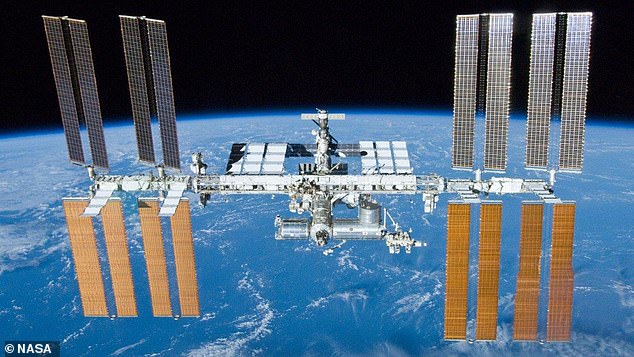
 Butterflies flutter back in huge numbers after years of...
 The mummy of all repair jobs: Egypt’s oldest pyramid is...
 Photographer captures stunning image of rare BLONDE zebra in...
 Israel's first resistance: Ancient Jewish settlement from...



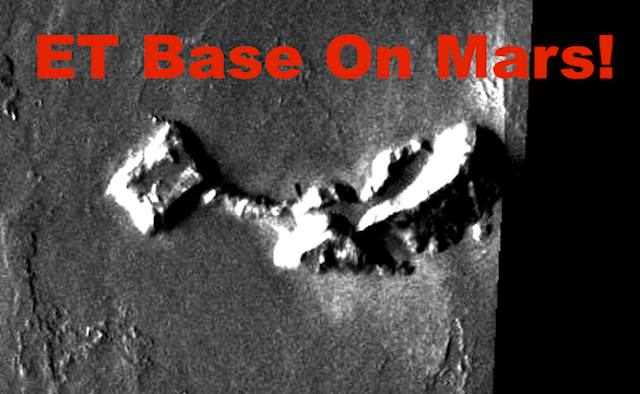


 Teen convict is charged in horrific face slashings of nine...
 Three historically black churches in Louisiana are...
 Nearly FORTY MILLION people from Texas to Mississippi at...


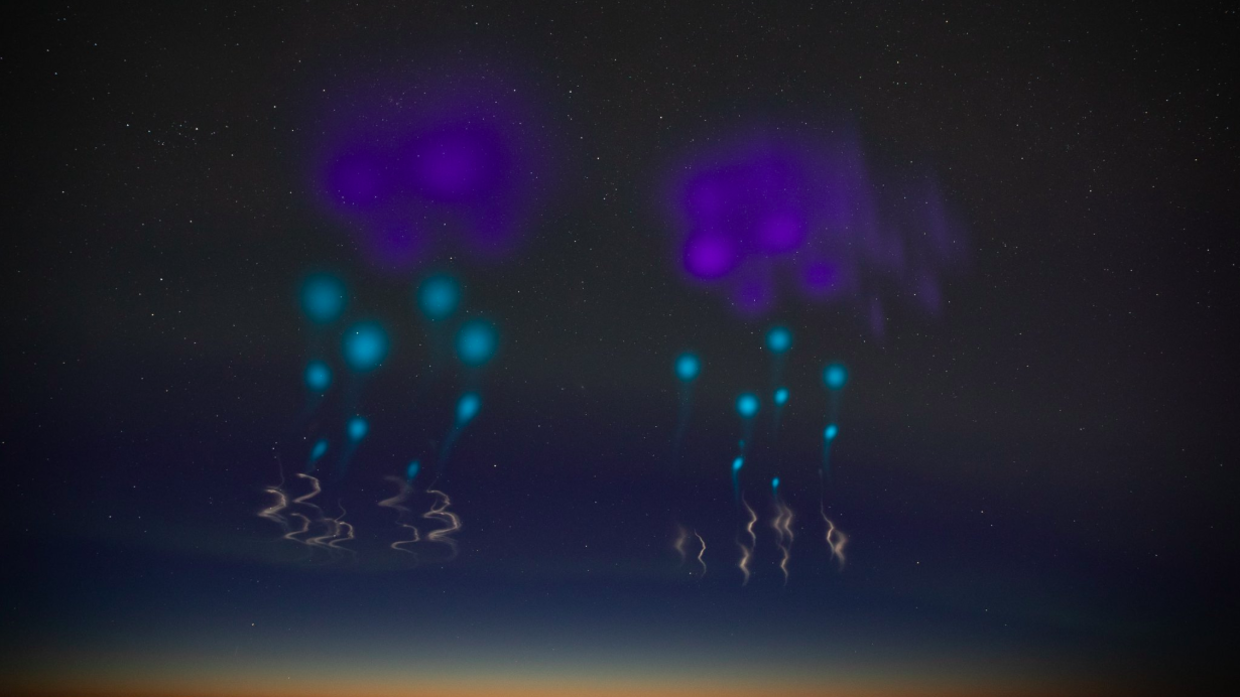

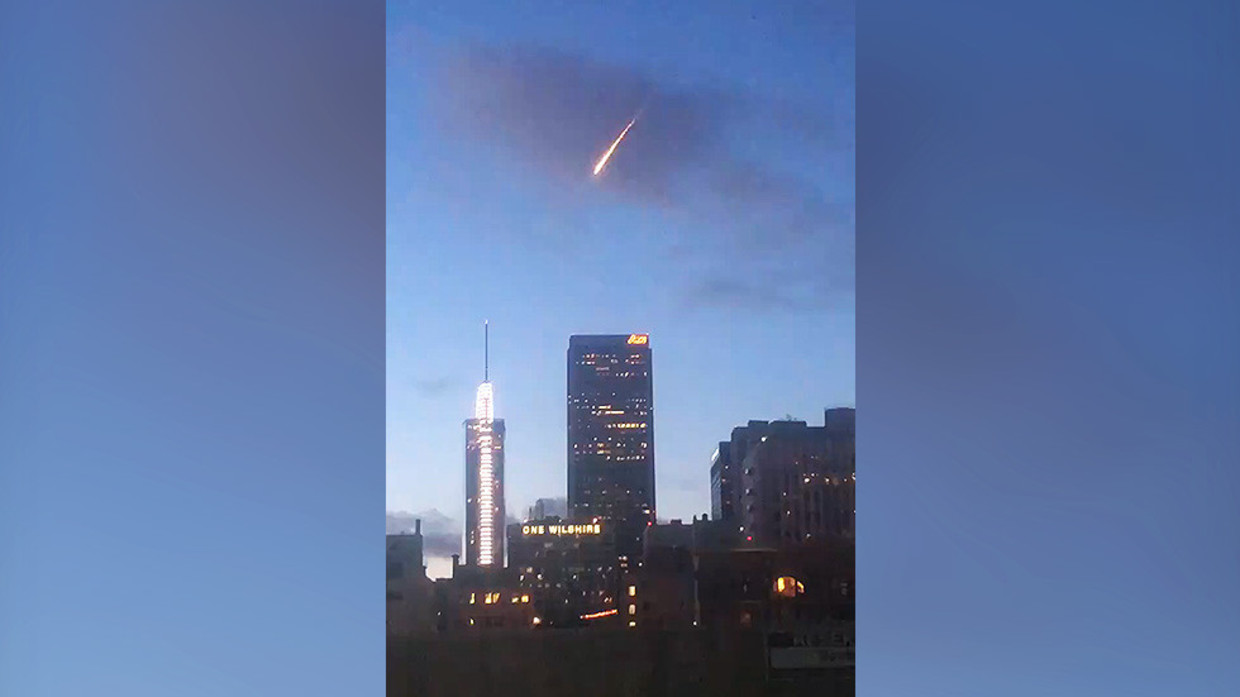


 Bright fireball that flared up in the night sky surprising...