Ontdek de Fascinerende Wereld van UFO's en UAP's: Jouw Bron voor Onthullende Informatie!
Ben jij ook gefascineerd door het onbekende? Wil je meer weten over UFO's en UAP's, niet alleen in België, maar over de hele wereld? Dan ben je op de juiste plek!
België: Het Kloppend Hart van UFO-onderzoek
In België is BUFON (Belgisch UFO-Netwerk) dé autoriteit op het gebied van UFO-onderzoek. Voor betrouwbare en objectieve informatie over deze intrigerende fenomenen, bezoek je zeker onze Facebook-pagina en deze blog. Maar dat is nog niet alles! Ontdek ook het Belgisch UFO-meldpunt en Caelestia, twee organisaties die diepgaand onderzoek verrichten, al zijn ze soms kritisch of sceptisch.
Nederland: Een Schat aan Informatie
Voor onze Nederlandse buren is er de schitterende website www.ufowijzer.nl, beheerd door Paul Harmans. Deze site biedt een schat aan informatie en artikelen die je niet wilt missen!
Internationaal: MUFON - De Wereldwijde Autoriteit
Neem ook een kijkje bij MUFON (Mutual UFO Network Inc.), een gerenommeerde Amerikaanse UFO-vereniging met afdelingen in de VS en wereldwijd. MUFON is toegewijd aan de wetenschappelijke en analytische studie van het UFO-fenomeen, en hun maandelijkse tijdschrift, The MUFON UFO-Journal, is een must-read voor elke UFO-enthousiasteling. Bezoek hun website op www.mufon.com voor meer informatie.
Samenwerking en Toekomstvisie
Sinds 1 februari 2020 is Pieter niet alleen ex-president van BUFON, maar ook de voormalige nationale directeur van MUFON in Vlaanderen en Nederland. Dit creëert een sterke samenwerking met de Franse MUFON Reseau MUFON/EUROP, wat ons in staat stelt om nog meer waardevolle inzichten te delen.
Let op: Nepprofielen en Nieuwe Groeperingen
Pas op voor een nieuwe groepering die zich ook BUFON noemt, maar geen enkele connectie heeft met onze gevestigde organisatie. Hoewel zij de naam geregistreerd hebben, kunnen ze het rijke verleden en de expertise van onze groep niet evenaren. We wensen hen veel succes, maar we blijven de autoriteit in UFO-onderzoek!
Blijf Op De Hoogte!
Wil jij de laatste nieuwtjes over UFO's, ruimtevaart, archeologie, en meer? Volg ons dan en duik samen met ons in de fascinerende wereld van het onbekende! Sluit je aan bij de gemeenschap van nieuwsgierige geesten die net als jij verlangen naar antwoorden en avonturen in de sterren!
Heb je vragen of wil je meer weten? Aarzel dan niet om contact met ons op te nemen! Samen ontrafelen we het mysterie van de lucht en daarbuiten.
Scientists are taking a closer look at a set of ancient teeth, first discovered in the 1970s but thought to have originated more than 200,000 years ago, under the suspicion that they could reveal a previously unknown human relative.
The four teeth were first discovered in the Yanhui Cave, located in Southern China's Tongzi county, between 1972 and 1983.
At the time, they were classified as Homo erectus, a primitive human species that could walk upright and dates back 1.8 million years ago.
Now, a team of researchers from the Centro Nacional de Investigacion sobre la Evolucion Humana (CENIEH) believe the teeth could have originated from either Homo erectus or their more advanced counterpart, Neanderthals, or possibly some other mysterious, hybrid group.
Scientists are taking a closer look at a set of ancient teeth, first discovered in the 1970s, under the suspicion that they could reveal a previously unknown human relative
To come to this conclusion, the researchers used modern methods like geometric morphometrical analysis, which primarily examines the change of shape, and Micro-Computed Tomography, or x-ray imaging in 3D.
Researchers said the teeth can be dated back to approximately 172,000 to 240,000 years ago.
As part of their analysis, they compared the Tongzi teeth to hominims from the same chronological period - the later part of the Middle Pleistocene epoch - and the surrounding areas of East Asia, according to the study.
While they looked at many comparative samples, the researchers are unsure just who exactly the teeth belong to.
Scientists believe the teeth may be linked to Homo erectus (reconstruction, pictured) or the Neanderthals. However, without more fossilized evidence, they can't really be sure
The teeth were first discovered in the Yanhui Cave, located in Southern China's Tongzi county, between 1972 and 1983. Scientists are unsure just who exactly the teeth belong to
In an attempt to pinpoint their origin, researchers looked at the structures and patterns of the Tongzi teeth, according to National Geographic.
They also compared the teeth to modern-day tooth samples from East Asia, as well as other regions including West Asia, Africa and Europe.
It proved to be even more puzzling, when they discovered the dentine, or tissue below the enamel, didn't appear to have the same crinkles found in Homo erectus, National Geographic reported.
Pictured is Jose Maria Bermudez, one of the co-authors of the CENIEH research
Instead, the teeth had more simple features akin to those in Neanderthals, but they still weren't a perfect match.
One possible theory is that the teeth could originate from the Denisovan ancestry, a mysterious hominim population that split off from the Neanderthals about 400,000 years ago.
The teeth had some similarities to tooth fossils from the Denisovans, but they weren't located in the same place in the mouth, making it hard to reach a definite conclusion.
'An abundant amount of genetic information has been collected from the Denisovans but there are very few fossil remains,' CENIEH explained.
'Therefore, both their physical appearance and their identification in the fossil record remain a mystery.'
Another possibility could be that the teeth came from a hybrid of two different hominims.
The teeth are thought to have originated as far back as 172,000 to 240,000 years ago. They were found in the Yanhui Cave, in China's Tongzi country in Guizhou Province (pictured)
For example, if the Denisovans crossed paths with Homo erectus, they could have interbred to create the group that produced this particular teeth sample, National Geographic noted.
Until they can get their hands on more fossilized evidence, the origination of the teeth remains unclear, however.
'More genetic and fossil discoveries would be necessary to evaluate the taxonomy of the non-erectus populations of the Middle Pleistocene, such as the Tongzi hominids, which could be good candidates for the Denisovan ancestry,' said Maria Martinon-Torres, one of the co-authors of the study.
WHEN DID HUMAN ANCESTORS FIRST EMERGE?
The timeline of human evolution can be traced back millions of years. Experts estimate that the family tree goes as such:
55 million years ago - First primitive primates evolve
15 million years ago - Hominidae (great apes) evolve from the ancestors of the gibbon
7 million years ago - First gorillas evolve. Later, chimp and human lineages diverge
A recreation of a Neanderthal man is pictured
5.5 million years ago - Ardipithecus, early 'proto-human' shares traits with chimps and gorillas
4 million years ago - Ape like early humans, the Australopithecines appeared. They had brains no larger than a chimpanzee's but other more human like features
3.9-2.9 million years ago - Australoipithecus afarensis lived in Africa.
2.7 million years ago - Paranthropus, lived in woods and had massive jaws for chewing
2.6 million years ago - Hand axes become the first major technological innovation
2.3 million years ago - Homo habilis first thought to have appeared in Africa
1.85 million years ago - First 'modern' hand emerges
1.8 million years ago - Homo ergaster begins to appear in fossil record
800,000 years ago- Early humans control fire and create hearths. Brain size increases rapidly
400,000 years ago - Neanderthals first begin to appear and spread across Europe and Asia
300,000 to 200,000 years ago - Homo sapiens - modern humans - appear in Africa
50,000 to 40,000 years ago - Modern humans reach Europe
Four teeth that were found in a cave in the Tongzi county of southern Chinadon’t fit into the evolutionary family tree of humans. The teeth that are approximately 200,000-years-old were found on the Yanhui cave floor in 1972 and 1983. While they were originally labelled as belonging to Homo erectus, further testing indicated that the teeth didn’t exactly fit in with the ancient human ancestor. And that’s where the story ended, until now.
A new study published in the Journal of Human Evolutionexplains that modern technology was used to take a closer look at the ancient teeth. While the new research concluded that the teeth did not belong to Homo erectus or Neanderthals, the owner of the teeth remains unknown. “It’s strange. We don’t know where to put it,” said Song Xing from the Institute of Vertebrate Paleontology and Paleoanthropology in Beijing, as well as one of the authors of the study.
The four teeth are just part of a larger number of discoveries found in China that don’t fit into the human evolutionary tree, suggesting that there may be more that’s still unknown about the evolution of humans and the ancient ancestors from that region.
María Martinón-Torres, who is the director of Centro Nacional de Investigación sobre la Evolución Humana in Spain, as well as another author of the study, said, “We always think of Africa as the ‘cradle of humankind.’ I would say it’s a cradle of probably one of the human kinds, which is Homo sapiens.” Since numerous species of humans walked the Earth at different times, the research being done in Asia is probably “crucial to understanding the whole picture.”
The research team compared the four teeth to both ancient and modern tooth samples from Africa, East and West Asia, and Europe. What they found was that the Tongzi teeth had both ancient and modern traits. More specifically, the dentine (tissue underneath the enamel) didn’t have the crinkles that were found in Homo erectus’ teeth, and were more similar to teeth from a Neanderthal. However, the features on the teeth didn’t fit them directly into either category. They could have possibly come from Denisovans, although more research needs to be conducted to know for sure.
It’s possible that the teeth may have come from a new species that was created when different evolutionary groups crossed paths. For example, last year, scientists discovered the remains of a teenager who had a Neanderthal mother and a Denisovan father. The possibility is very real that Denisovan ancestors who were in Asia could have met up with the Homo erectusspecies and created a new offspring that produced the Tongzi teeth.
The Tongzi teeth aren’t the only thing that’s baffling scientists. Numerous Chinese fossils (including advanced features in teeth) that are between 360,000 and 100,000 years old don’t exactly fit into any of our human ancestors either.
There is also a complete skull that was found in Harbin, China. It had a face that’s older than a Neanderthal’s, but it’s still unclear as to where it belongs on the evolutionary tree, so it hasn’t yet been labelled to any human ancestor as of yet.
For now it’s still a guessing game as to what mysterious species produced the Tongzi teeth. Since the story of where we all came from is so complex, perhaps there are many more ancient ancestors that we don’t yet know about and that’s very exciting when learning about the evolution of humans.
Men in Black & Mothman - Coast to Coast AM - March 2019
Coast to Coast AM March 01, 2019. In the first half of the program, guest host Ian Punnett welcomed paranormal researcher and author Susan Sheppard for a discussion on the true story behind the Mothman, and who the Men in Black really are.
On November 2, 1966, a man named Woodrow Derenberger was stopped by a charcoal grey craft and a mysterious being within known as Indrid Cold, she reported. According to Sheppard, Indrid Cold was part of what has come to be called the Men in Black.
Eagle-Eyed Viewers Spot Another UFO Near ISS On NASA’s Live Feed of a Spacewalk
NASA’s International Space Station live feed was suddenly cut after a strange event showed in the background of one of the astronauts working. The alleged anomaly sparks a frenzy online.
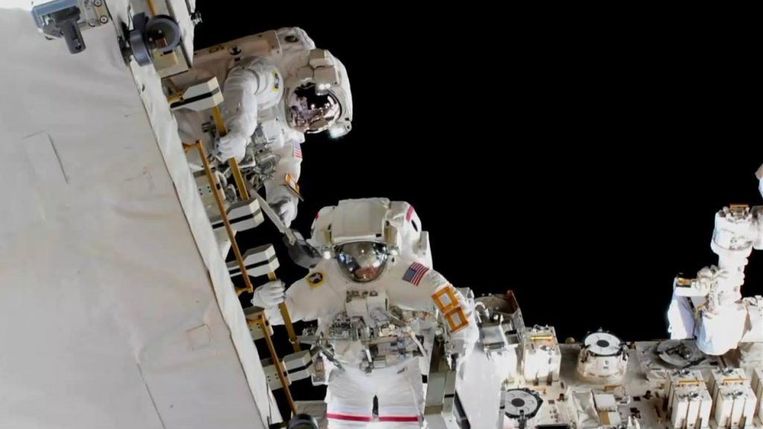
Christina Koch and Anne McClain were supposed to be performing the first all-female spacewalk together on the ISS, but NASA cancelled the plan last minute. The official explanation said that it was due to a lack of spacesuits of the right sizes, replacing Ms McClain with Nick Hague. The move has sparked controversy. After the spacewalk, several conspiracy theories have surfaced.
Keen-sighted viewers of the live stream noticed something strange behind Mr Hague as he worked on the space station.
Some conspiracy theorists wildly claimed it could be a UFO. They insisted that this is yet another example of the space agency cutting the live feed after spotting a UFO.
The video feed is stable before a UFO appears just above the horizon line of the Earth. When the UFO appears, the live feed somewhat gets more interference until NASA apparently decides to cut it, according to conspiracy theorists.
The incident is not the first of its kind.
NASA has been alleged of cutting off live feeds when a UFO is seen flying near the space station.
SCIENTISTS SAY THEY CAN MAKE LIGHT TRAVEL 30X FASTER THAN NORMAL
BRUNO THETHE/OSMAN RANA VIA UNSPLASH/TAG HARTMAN-SIMKINS
JON CHRISTIAN
Light Travel
Scientists at the University of Central Florida say they’ve figured out how to make pulses of light travel 30 times as fast as usual — or even backward.
“We’re able to control the speed of the pulse by going into the pulse itself and reorganizing its energy such that its space and time degrees of freedom are mixed in with each other,” researcher Ayman Abouraddy said in a statement. “We’re very happy with these results, and we’re very hopeful it’s just the starting point of future research.”
Photon Shake
Make no mistake: it’s an extraordinary claim, and one the researchers behind it say could revolutionize optical communication.
But Abouraddy and colleagues got the results published in the prestigious and peer-reviewed journal Nature Communications, where they described using a device called a “spatial light modulator” to trick pulses of light into traveling faster or slower than usual, or backwards.
Live Fiber
Back in 2006, researchers performed a similar feat with light traveling through an optical fiber. Now, according to the researchers, they can pull off the same trick in open space.
“This is the first clear demonstration of controlling the speed of a pulse light in free space,” Abouraddy said in the statement. “And it opens up doors for many applications, an optical buffer being just one of them, but most importantly it’s done in a simple way, that’s repeatable and reliable.”
RVDe lander is ontwikkeld door de non-profitorganisatie SpaceIL en Israel Aerospace Industries (IAI) en draagt de naam Beresheet. Het is een toepasselijke naam. Beresheet is namelijk niet alleen de allereerste Israëlische maanlander, maar ook nog eens de eerste private maanlander die - als alles goed gaat - daadwerkelijk voet op de maan gaat zetten.
WETENSCHAP De Israëlische maanlander ‘Beresheet’ – vrij vertaald naar ‘Genesis’ – die de nacht van 21 op 22 februari gelanceerd werd, zweeft eindelijk in een baan rond de maan. Dat is een belangrijke stap in zijn missie, eentje waarop de maanlander zich al enkele weken op voorbereidde. Nu rest er nog maar één doel: landen op de maan.
Nadat de maanlander in februari door SpaceX gelanceerd werd, moest die heel wat snelheid zien te verkrijgen. Daarom draaide Beresheet eerst enkele rondjes rondom de aarde. Vandaag was het dan eindelijk zover en zou de robot een manoeuvre uitvoeren waarmee het aan de zwaartekracht van de aarde zou ontsnappen.
Dat manoeuvre werd met succes uitgevoerd. Maar goed ook, anders zou het toestel ergens in het zonnestelsel beland zijn.
Primeurs
Dat betekent overigens ook dat Israël zichzelf het zevende land ter wereld mag noemen dat erin slaagde om een ruimtetoestel in een baan rond de maan te lanceren. Als alles verloopt zoals gepland, zal de Israëlische robot volgende week, op 11 april, ook voet zetten op de maan. Daarmee zal Beresheet het allereerste privé-gefinancierde ruimtetuig zijn dat op de maan landt.
Zulke primeurs moeten vastgelegd worden, zo dacht ook de maanlander. Die vereeuwigde zijn ruimtemissie met een selfie waarop hijzelf, de Israëlische vlag en – hoe kan het anders – de maan staan. Op de achtergrond van de selfie pronkt overigens ook onze aarde.
AFPBeresheet, de Israëlische vlag, de maan en de aarde.
University of WarwickZo zou de planetoïde die om de witte dwergster cirkelt en een spoor van gas achterlaat eruit zien.
WETENSCHAP In de ‘puinschijf’ rond een witte dwergster is een klein object ontdekt dat mogelijk het overblijfsel is van een planeet. Het object ter grootte van een planetoïde draait op een afstand van slechts 500.000 kilometer om de compacte ster en heeft een omlooptijd van iets meer dan twee uur. Dit heeft astronomie.nl vandaag op gezag van het wetenschappelijke vakblad Science gemeld.
Witte dwergen zijn de compacte restanten - in feite de ingestorte kernen - van zon-achtige sterren die hun nucleaire brandstofvoorraad hebben verbruikt. Tegen het einde van hun bestaan zwellen zulke sterren op en blazen ze hun buitenste lagen uiteindelijk de ruimte in. Tijdens dat proces kunnen planeten die zich te dicht in de buurt van hun ster bevinden sneuvelen. Zo ontstaat een schijf van fijn en grof puin rond de voormalige ster, die dan niet veel groter meer is dan de Aarde.
Een internationaal team van astronomen bekeek het spectrum van de 410 lichtjaar verre witte dwerg - SDSS J1228+1040 - in het voorjaar van 2017 en 2018 met de Gran Telescopio Canarias op het Canarische eiland La Palma.
In dat spectrum vonden de wetenschappers kleine, regelmatige fluctuaties, veroorzaakt in het spectrum van de dode ster. Het ging daarbij niet om een dopplereffect, veroorzaakt door een schommelbeweging van de ster, maar om een periodiek optredende variatie in de intensiteit van een specifieke spectraallijn.
Spoor van gas
Een analyse laat zien dat deze fluctuaties waarschijnlijk te wijten zijn aan een klein hemellichaam - een “exoplantetoïde” - dat een lang spoor van gas achterlaat. Dat gas kan afkomstig zijn van het object zelf, maar ook van verdampend stof dat vrijkomt bij botsingen met kleiner puin.
De nu ontdekte planetoïde zou binnen die schijf om de witte dwerg draaien. Gezien de geringe afstand tot de ster moet hij een behoorlijk hoge dichtheid hebben, omdat hij anders allang aan de sterke getijdenkrachten ter plaatse zou zijn bezweken. Vermoedelijk bestaat het planeetje grotendeels uit ijzer en nikkel. Het object zou minstens vier en hooguit zeshonderd kilometer groot zijn.
The U.S. Government Funded a Study on Astral Projection in the 80s: The Results They’ve Kept Buried
Government conspiracies are always a fun topic.
From presidents being assassinated to political figures hiding the existence of extraterrestrial beings, it’s hard to ignore that there is potential for secrets to be kept from the public’s eyes and ears.
It would make sense, too, as there are, to the higher-ups throughout the world, pieces of information that aren’t necessary for everyone to see.
It’s a need-to-know sort of thing, and essentially, these are the real-life X-files.
Today, we’re going deep into the minds, literally and figurately, of the case studies that were conducted by the U.S. Government throughout the late 1970s and 80s regarding astral projection.
Just what is this fancy term, and why was the government so interested in what it could do? Read on to see.
What Exactly Is Astral Projection and Why Were They Studying It?
Let’s take a step back here.
Getting to this point in time, the later 1970’s, certain items had become popular (such as various recreational drugs) and the U.S. government was becoming increasingly littered with movements and scandals.
From Watergate to women’s and gay rights, along with environmental issues poking their head, there was much to discuss during this period.
Of course, we also experienced one of the craziest war-times in recent memory with the ending of the Vietnam War in 1975. This bloody battle paved the way for military branches to invest in studies and programs that looked to unlock the human mind.
One of the biggest backers of any psychological study to be done was the U.S. Army, as they had seen firsthand what it was like to experience a psychological breakdown. One of the components of psychology is the idea of consciousness.
For the military, warfare was at a turning point. Technology had been advancing faster than anyone could’ve imagined. Between the different weapons rapidly becoming available and the nuclear missiles race, a lot of military bodies were searching for a trump card for everything.
What better way than astral projection? It could be a new type of psychological warfare that the U.S. government could use to keep the American population safe and sound.
It’s no coincidence, then, that with astral projection it all comes back to the idea of human consciousness. Bear with us here as this may get a little complicated.
Defining Astral Projection in the Simplest Terms
At its core, the definition of this phenomena seems simple. Put in laymen’s terms, it’s the ability to travel out of your own body.
The best way to explain it comes in the form of a simple analogy. If you were to lay down in your bed and concentrate deeply enough to separate from your physical body in the form of an astral body, then you’d be able to complete an out-of-body experience (OBE) which is the foundation of astral travel.
The idea is that you can move around on an “astral plane,” as it’s called, to see, hear, and enter the world of celestial spheres. Overall, here you’d potentially be exposed to mystical religions and philosophies, along with the population of angels and spirits, among other beings.
What happens when you die, and where do you go? If the astral world does exist, that’s where you’d end up.
So, the astral projection would allow you to travel into the realm while you’re still able to breathe safely in this world.
If all of this sounds a bit farfetched and crazy, so if you’re thinking that you wouldn’t be wrong. In fact, as you’ll see below, there are certain items that we have access to that look to displace the theory of entering any astral area.
The Drugs Versus Natural Phenomena Debate
The biggest issue with any form of astral projection comes with proving that an OBE occurred.
How do you go about providing evidence to someone who claims to have moved from their physical self into another dimension? The answer still isn’t known, and the fact remains that anyone could claim to have an out-of-body experience without distinct evidence supporting them.
Did that stop the government from pushing this on certain people? Of course not.
Let’s take a quick step back though.
One interesting piece of information regarding any claims of astral projection comes with the use of any pharmaceutical enhancements. Certain drugs, such as DMT, ketamine, and phencyclidine, are all classified under the hallucinogenic drug tree.
These medicinal pills were often given to those with certain needs, to help them cope with everyday parts of life. Drugs are always going to be a target, of course, which makes a lot of different stories regarding these psychological tests thought-provoking.
While their experiences may suggest a form of astral travel, there’s no way of telling if it was due to the drug aid, or due to them being able to separate their body from their minds.
Why Was the Government Experimenting with This Stuff Anyway?
This is a popular question.
As we mentioned before, the biggest beneficiary of these case studies and programs were entwined with specific branches of the military. The thought was that by using astral travel throughout wars or battles, soldiers and commanders would have an upper-hand on the enemy.
Think about it: if you could stay safely within the confines of your home base, but then travel along the astral plane to an enemy’s hideout and spy on them, you’d be able to learn quite a bit about them and their tactics.
As such, it would make sense regarding the military uses.
Thus, the U.S. Army was the first branch to really push for the studying of this technology.
The Experiments Begin on Army Officers
Everything officially started back in the early 80’s and concluded with this 29-page declassified CIA document in 1983, which was formally released to the public in late 2003.
Commander Wayne McDonnell was tasked with providing evidence and thoughts on an organization’s studies to expand a person’s consciousness. They did this by “Hemi-Sync,” which was a term developed to explain synchronizing your brainwaves together.
Project Center Lane, as the operation was known, was started as the Commander deemed the Monroe Institute’s studies worth the Army’s time and money.
As such, officers were then accepted into the study, which used hypnosis techniques to aid the men in reaching that astral plane. For the U.S. Army, their main goal was to learn foreign languages and use “habit control training,” which is more than likely code for special battle skills that would benefit the soldiers.
So, What Did They Find Out About Astral Projection?
Over the course of the tests, there were 251 Army intelligence officers that were selected to be in the first year of tests. Among them, a small group of 35 were to be given a shot at astral projection, as they exhibited the traits needed for testing.
The testing was supposed to allow the officers a chance to heighten their senses, heal any wounds, and even solve problems around the world, not dictated by a physical being.
But what happened?
Unfortunately, not much.
There were a few interesting testimonies from soldiers. One, apparently, was targeted to go back in time and view Mars a striking 1-million years ago. This remote viewing process, as it was called, allowed him to see far back into our world and the world of an alien race.
At the end of all the testing and people tied up with the studies, it’s unfortunate that nothing truly concrete was found regarding astral projection.
This type of psychic ability, so to speak, could’ve transformed the way the world works.
Just remember that unless the U.S. government decides to stop testing different experiments and avenues, there are bound to be countless failures.
While there was some mild success, according to transcript details and accounts, the lack of concrete evidence makes it hard to truly buy into the whole study. It’s hard to dismiss the efforts done here, of course, but for the time being astral projection and its subsequent testing methods will have to be put on hold.
But, thanks to the government, we know at least one man got to talk to aliens.
In December 1980, on a country road near Houston, Texas, three people had a terrifying close encounter with a large, low-flying, diamond-shaped Unidentified Flying Object that was being pursued or escorted by a large fleet of military helicopters. What would become known as the Cash-Landrum incident stands today as one of the most compelling–and also confusing–UFO cases on record; a case that resulted in significant health problems for one of the witnesses and which eventually lead to a $20 million lawsuit against the US government.
One of the world’s leading experts on the Cash-Landrum case is Curt Collins, the author behind Blue Blurry Lines, a website focused on UFO mysteries, legends, and hoaxes. In 2015, Curt was on the investigative team that exposed the BeWitness “alien” photo fiasco, the Roswell Slides Research Group; his detailed accounting of this exposé was featured in my 2017 book UFOs: Reframing the Debate. More recently, Curt launched The Saucers That Time Forgot with Claude Falkstrom, focused on unearthing “tales that UFO history has overlooked or would rather forget.” Curt has spent many years retrospectively investigating the Cash-Landrum incident. Here, Curt separates the fact from the fiction as he talks to me about this fascinating yet hugely problematic case.
A depiction of the Cash-Landrum incident of December 1980. Inset: writer / investigator Curt Collins.
RG: Summarise the Cash-Landrum incident for us.
According to the story that surfaced, Betty Cash (52) and her friend Vickie Landrum (57) were out for a drive on the evening of December 29, 1980. Along with them was Vickie’s grandson, Colby Landrum, just shy of seven years old. The location was near Houston, Texas, on a two-lane country road in a sparsely populated area on the outskirts of the little town of Huffman. They rounded a bend and found a huge, blindingly bright, unidentified flying object hovering over the road. It intermittently emitted flames downward, and the witnesses were afraid and stopped. Betty stepped out of the car in attempt to get a better look at the object, but the other two quickly returned to the car. Shortly afterwards, the object lifted up and slowly flew away. The witnesses saw helicopters following it, and they had the impression they were military helicopters trying to surround the object, either to pursue it, or perhaps escort it. Once the aircraft had passed, they continued their drive home. Betty dropped Vickie and Colby off, and went home, where she went to bed with a terrible headache, which was the beginning of a lengthy illness that resulted in her hospitalization. Vickie and Colby also had flu-like symptoms and reported similar, but milder problems than Betty’s. None of them initially connected their illness with the UFO sighting, but, due to Betty’s lingering problems, came to suspect it may have been the cause.
Vickie Landrum (left) and Betty Cash.
RG: You’ve spent many years of your life researching the Cash-Landrum incident; what is it about this case in particular that you find so compelling? Why is it so significant?
CC: I was interested in the whole of UFO history, but drawn to focus the C-L story due to its reputation for being one of the best-documented and credible cases. The reported involvement of the military made me think that there must be further evidence to be uncovered, from declassified documents or perhaps from new witnesses such as retired helicopter pilots. However, as I dug in, I learned that the real events have been obscured by misinformation and rumors to the point that the real story has begun to vanish. A great stroke of luck was finding Christian Lambright who had independently interviewed Vickie Landrum twice in 1985, uncovering important differences in the witnesses account from the way ufologists were packaging the UFO story. This fueled my desire to dig beneath the mythology to find exactly what could be documented about the case.
Another artistic visualisation of the Cash-Landrum incident.
RG: Did the US government ever provide an official explanation for the incident?
CC: No. There has never been any tangible proof that there actually was an incident.
RG: Has it ever been satisfactorily determined what caused the witnesses to fall ill immediately following their sighting? What was the nature of their poisoning?
CC: Due to the way the events unfolded, we can’t be sure what happened. The UFO story did not surface until a month after Betty was first hospitalized, and it was about another month before any investigation began. Betty Cash’s illness was documented, but since the Landrums did not receive medical attention, there’s no evidence that they were affected by a UFO encounter. Betty had cardiac problems about two years before the events and underwent heart surgery and was taking medication, but was said to be healthy at the time. The cause of her problems was not determined, her doctors just described her ailments as alopecia areata and cellulitis. Betty’s hair loss and flu-like symptoms caused the physicians to check her for radiation exposure, but the results were negative.
The story as reported in Weekly World News, March 24, 1981.
RG: What was the official response to the sighting, from local authorities and from the military?
CC: It was over a month before the UFO incident was reported, and then it seems to have been informal. Vickie Landrum told her neighbor, Dayton Police Chief Tommy Waring, but the sighting had occurred out of his jurisdiction. He located a card with the phone number for the National UFO Reporting Center, and Vickie called them, which eventually led to news coverage and a civilian investigation. The military did not become involved until August 1981, after Betty Cash wrote to Texas senators, who advised her to file a complaint at Bergstrom Air Force Base near Austin, Texas. The witnesses were interviewed and given damage claims forms, and afterwards there was a brief investigation, but they found it improbable that such an event could occur undetected so close to Houston Intercontinental Airport by tower equipment, personnel or the pilots of the many aircraft in the area. In 1982 Representative Ron Wyden asked for an investigation into whether US aircraft had been involved in the incident. The Department of the Army Inspector General (DAIG) assigned Lt. Col. George Sarran the task of investigating, and, by all accounts, he did a thorough job. Sarran found the witnesses to be credible, yet found no indication to support their claims that any helicopters had been involved.
RG: What agency, if any, do you feel the helicopters belonged to? Indeed, did the helicopters exist at all?
CC: At one time, I was convinced the helicopters were part of the Army’s Task Force 158, training for a mission to rescue the American hostages in Iran. The timing, the equipment and the secrecy of the project are all tantalizing close matches, but ultimately it just doesn’t fit. After learning more about the requirements for equipment and personnel, the fleet of helicopters has become the most unbelievable aspect of the story, instead of its best lead.
Betty Cash experiencing hair loss following her UFO encounter.
RG: Why was the witnesses’ court case against the government dismissed?
CC: The lawsuit is a very unfortunate aspect of the case, and a true instance where the witnesses were victims. In my opinion, they were used as pawns by ufologists. Their absentee attorney Peter Gersten had been involved with several lawsuits to disclose UFO documents, and part of the things he asked for in interrogatories were to probe other UFO rumors. Based on Gersten’s statements, the lawsuit was at best a ploy, hoping the government would settle out of court. He stated that the chances of winning were “slim and none.” Judge Ross Sterling dismissed the case Aug. 21, 1986 without it going to trial due to lack of evidence. The complainants had failed to prove that US aircraft were involved in the incident or that it was responsible for causing the alleged injuries.
RG: How was the incident depicted in the media at the time, and to what extent, if any, did this contribute to any popular misconceptions about the case?
CC: The first coverage of the story was in the tabloid press, followed by local news, then national exposure on ABC’s Good Morning America. Some of the coverage was lurid and sensationalized things, but it stuck generally close to the events the witnesses described. The problem was that it received attention only because it was a UFO story, perhaps diminishing the chance for a proper investigation. Another thorny issue is that the witnesses originally each told a piece of the story from their own point of view, but the press presented a simplified narrative. It caused a feedback loop, and, before long, the witnesses were telling a homogenized version based on what they’d read about their own story. A related problem about the press coverage is that it produced a few additional alleged witnesses to a UFO or helicopters, but none of them had reported anything before the story was in the news. Those kind of witnesses are admissible evidence in ufology, but not something that would hold up in court.
More news coverage of the incident, showing Betty Cash’s dramatic hair loss.
RG: What role did the UFO research community play in investigating the Cash-Landrum incident; who were the key investigators; and to what extent have the efforts of UFOlogists helped to elucidate the complexities of this strange and disturbing case?
CC: Ufology got off to a bad start with the Cash-Landrum case, and it’s possibly a more complicated story than the UFO incident itself. The Aerial Research Phenomena Organization (APRO) had the first crack at things, but a rogue intercepted the report and sold it to the tabloids instead of investigating. Weeks later John F. Schuessler, the deputy director of the Mutual UFO Network (MUFON), was contacted by Betty Cash, and he became the primary investigator for the case and became a “rabbi” for the witnesses, an advisor, confidante, their de facto press agent, and part of the story. Schuessler certainly seems to have had good intentions, but in trying to present the witnesses in the best light, did much to transform the story into a legend. Meanwhile, the dark side of ufology was on the rise, the nutty sinister conspiracy stuff that later made its way into The X-Files, and many of the players such as William Moore and Richard Doty tried to reframe the Cash-Landrum story to promote their own agenda.
RG: Does the Cash-Landrum incident have parallels with any other cases in UFOlogical history, and what, if anything, can we learn from these parallels?
CC: The helicopter involvement is different from most cases, but other incidents do have some strong similarities, and I have dug through UFO history looking for comparable events. A few recognizable ones are the 1957 Levelland Texas case, which had a gigantic bright UFO, and the next year at the Loch Raven Reservoir in Maryland there was a large glowing egg-shaped object reported to have left the witnesses with “sunburn.” Other cases match in ways, but the most worthy of mention are two other UFO injury cases. In 1967 Stefan Michalak encountered a landed flying saucer in at Falcon Lake in Manitoba, Canada, and it left him with mysterious burns and some lingering health problems. There’s also the 1979 close encounter of Deputy Sheriff Val Johnson, who was driving along a lonely Minnesota road at night, when he saw a blindingly brilliant UFO above the road ahead. Unlike the C-L case, he didn’t stop, and his vehicle collided with the (much smaller) UFO. The car was damaged, and he suffered injuries including “welder’s burns” to his eyes. As with all UFO cases, there’s probably some mistakes and hoaxes in the mix, but the witnesses to these type of cases don’t generally follow the pattern of behavior of attention-seeking phonies.
RG: Vicki Landrum interpreted the incident at the time as a divine event, remarking as she observed the UFO something to the effect of: “That’s Jesus. He will not hurt us.” Some scholars have suggested that UFOlogy, or the UFO subculture, has clear religious aspects. Do you see any parallels between the pursuit of UFOs and the pursuit of God?
CC: That quote comes from Vickie attempting to comfort her grandson, Colby, during encounter. In the C-L case, I don’t think religious beliefs play much of a role, beyond the fleeting first impression the witnesses had about what they described. The UFO culture absolutely has religious beliefs, but they predate saucers and reach back into mysticism and Theosophy. When UFOs became a big news story in 1947, these believers were the first promoters of the extraterrestrial origin. The Contactees of the 1950s were an offshoot of this, and, directly or indirectly, a lot of that message of god-like aliens has become a fundamental UFO belief. We should not waste time hoping for parents from space to come down and solve our problems.
RG: Is there any more to be learned about the Cash-Landrum case in 2019 and beyond, or will the mystery remain unsolved?
CC: I have been surprised as more information has surfaced over the years from government documents to researchers’ archived files and correspondence, and there’s probably more to come. New information frequently requires a review of what you thought you knew about something, and, sometimes, it’s a challenge to discard beliefs built on bad information and falsehoods. We may never know exactly what happened on that Texas roadway the night of Dec. 29, 1980, but it’s a fascinating UFO puzzle, and demonstrates the worth of finding the facts beneath the fiction.
For more of Curt Collins’ work, especially on the Cash-Landrum case, visit his website, Blue Blurry Lines.
Those who complain about UFO pictures being blurry and too far away to identify can’t say those things about a set of photos taken by two men in the Macedon ranges of Victoria. The photos and selfies are right up on top of what they claim is UFO wreckage and everything, including their can of beer, is clearly visible. What’s cloudy now is what exactly it might be.
“One of them sent me these pictures of their friends who were out on motor bikes in the Macedon ranges where they came upon a crashed UFO. They took some pictures that I am sending to you.”
‘You’ in this case is MUFON and the case is #99500, which can be viewed on the UFO Stalker website. Obviously, the report is not by the actual witnesses/photographers and it was submitted two years after the alleged discovery.
“They called some friends and told them they would come and pick them up to show them the object. When they returned a few hours later the site had been cleaned and there was no remains of the object. There was some police barrier tape but everything else was gone. They did take some pictures with their phones before and after.”
Mount Macedon
The MUFON post was picked up by intrepid UFO watchers TexasUFOs, who uploaded the pictures to their website and social media pages, where skeptics centered on the idea that the alleged debris looked like it was from a movie set. That’s entirely possible, since Mount Macedon (the name of the town and the mountain it sits at the foot of) has been used by some film crews – most notably for scenes in the 2009 sci-fi film “Knowing,” the 2010 horror film “Don’t Be Afraid of the Dark,” and the 2009 fantasy “Where the Wild Things Are.” However, those scenes were shot four years before the alleged UFO wreckage was discovered – enough time for it to deteriorate (movie sets aren’t made to last) or be vandalized.
The Macedon is also just a few kilometers from the location of Hanging Rock, the famous geological formation that has strong spiritual and cultural significance to the Dja Dja Wurrung, Woi Wurrung and Taungurung tribes. This mamelon rock formation was formed by volcanic magma cooling in place rather than flowing, and the unique configurations this created include the Hanging Rock (a boulder suspended between other boulders, the Colonnade, the Eagle, a number of pareidolic faces on rocks and the … here it comes … UFO! (You can see the formations here.)
Strange things happened when Picnic at Hanging Rock producer Pat Lovell visited the actual rock in Victoria.
Picture: AlamySource:Supplied
One of the ‘faces’ among the formations at Hanging Rock which rises up from the plains northwest of Melbourne.
Picture: tripadvisor.com.au.Source:Supplied
Of course, any reference to Hanging Rock brings up “Picnic at Hanging Rock,” the 1975 Peter Weir movie based on the book of the same name. Both center around the unsolved mysterious disappearance of three young girls on Valentine’s Day in 1900 that some believe could have been due to a UFO abduction or mysterious powers emanating from Hanging Rock. Some people have even reported seeing the ghosts of the girls in the area. What most forget because of the realistic style of both is that the book is a novel and not based on any historical event.
Yes, the movie was filmed at and around Hanging Rock, which brings us back to the UFO wreckage report and photographs. Texas UFOs found a video that leads them to consider it was from a TV series, but there’s no concrete proof that it’s a TV prop either.
Then there’s the “police barrier tape.” That’s the strangest part of this report. Why would the police be called out to remove an old movie set, and why would they cordon off the area with yellow tape? It doesn’t sound like the stuff was from a movie … or a picnic … or a picnic movie. Any ideas?
Whatever it was, this sounds like a great plot for a new movie in a beautiful location that’s cheaper for shooting than Hollywood. Wait a minute … could it be a cheaper location for alien movie crews too?
The next flying saucer you see may not be a UFO – it could be an ADFIO, especially if you’re currently living in Romania. That’s where an inventor has created a real flying disc with all of the capabilities you would expect in a flying saucer … except for the aliens. He’s built a prototype, won an awardand is pitching it to anyone who will listen in the hopes of raising the capital to build a commercial, military or private vehicle soon. Oh … ADFIO stands for All-Directional Flying Object. Is that one hovering above you?
“The Romanian inventor has stated that his device is unique in the world by the fact that it can evolve in any direction with the same aerodynamic characteristics and can fly just as well in subsonic or supersonic regime.”
Romanian engineer Razvan Sabie hasn’t just stated … he’s demonstrated his ADFIO, albeit at subsonic speeds and in a smaller electric platform, to Romanian media. But many of the capabilities are already in the prototype, as can be seen in the new video he’s released. (Watch it here.) The disc is a classic flying saucer shape, looking like two saucers glued top-to-top but tapered to a razor edge for aerodynamics in horizontal flight, which is currently provided by two fans that operate independently and will eventually be replaced with supersonic jet engines. Vertical-takeoff-and-landings and subsonic all-direction maneuvers are provided by surface fans on the top and the bottom. These fans rotate to give the craft a true flying saucer spin and can be retracted, as can the landing gear, to eliminate drag.
How many does it seat?
“It’s the only one bi-directional airfoil known and functional. The possibility to reach much easier supersonic speeds (for a normal airplane the drag coefficient increases 7-8 times during the transonic flight, respect to maximum two times for this aircraft), combined with the hypermaneuvrability can offer you a picture regarding the potential of this aircraft.”
While the ADFIO could be described as a round wing or two dolphin-tail foils glued together, Sabie points out that the ability to change directions puts it far ahead of today’s triangular flying wings. In addition, the minimal drag during acceleration is expected to reduce or eliminate sonic booms.
Buh-bye
But wait … there’s more!
While not demonstrated in the video, the ADFIO will be able to do all of these maneuvers upside down as well, without the need for separate wings, ailerons, rudders or flaps.
How much and when can I get one?
Ah, there’s the catch. The 1.2-meter (3.9 feet) diameter prototype was built to both demonstrate capabilities and find investors. It’s obviously not ready for supersonic flight and not big enough for pilots, although there’s no doubt an autonomous version will be built. As of now, no dates or prices have been released.
Nonetheless … the All-DIrectional Flying Object is WAY cool.
The Egyptian archaeological mission of the Antiquities Ministry found a limestone coffin in the shape of a human body during archaeological excavations in the northwestern part of the excavation site at Quesna quarry in Monufiya governorate.
Ancient Egyptian Coffin With Two Mummies Inside Found In 5,000-Year-Old Cemetery
Egyptian archaeologists uncovered anancient stone coffin located in a cemetery that’s 5,000-year-old. The discovery was made at Quesna Cemetery in the Nile Delta region which is north of Cairo. What’s so peculiar about the finding is that the two poorly conditioned mummies that were inside of the coffin were lying on top of each other and covered with gold chips. The limestone coffin measured 6.5 feet long by 23 inches wide.
Dr. Ayman Ashmawy, who is the head of the Egyptian Antiquities Department at the ministry, stated that the part of the Quesna Cemetery that was uncovered during the archaeological mission dates back to 3100 B.C. up to the Ptolemaic period.
The Ptolemaic period, which began not long after Alexander the Great died in 323 B.C., ended in 30 B.C. because of the Roman conquest as well as the death of Cleopatra.
Satellite image of the Nile Delta
There were other discoveries found in that area, including lanterns, pieces of ceramic, fragments of bronze nails, a bronze coin that dates back to the Ptolemaic period, and three heads of statues that represented Horus who was the Egyptian falcon god.
Mostafa Waziri, who is the Secretary General of the Supreme Council of Antiquities, said that the coffin had been moved to the antiquities warehouse that’s located in Kafr al-Sheikh.
The Quesna Cemetery has been around since the reign of King Narmer who is said to have unified Upper and Lower Egypt, meaning that he was the first ever ruler of the unified country.
Egypt’s Ministry of Antiquities has been attempting to make the archaeological work public in order to try to get more people to visit the country, as Egypt’s tourism has diminished since its 2011 revolution as well as their long period of instability.
Pyramids of Giza
Just last month, the Egyptian government announced that they had discovered an ancient village that dates back 2,500 years before the Pyramids of Giza were even built. In fact, the Neolithic village that was uncovered in the Nile Delta area of Tell el-Samara is one of the oldest settlements that have ever been excavated in Egypt. The archaeological team uncovered the remains of plants and animal bones, as well as stone tools and pottery which indicate that humans lived there.
Secretary General of the Supreme Council of Antiquities Mostafa Waziri said that the discovered coffin is about two meters long and about 60 cm wide. Inside it the mission found two mummies in poor condition covered by gold chips.
He elaborated that the coffin was moved to the antiquities warehouse in Kafr al-Sheikh. The Tourism and Antiquities Police coordinated and secured the transport process so that the restoration team could begin restoration work on the coffin and the mummies, to be completed in a restoration laboratory attached to the warehouse.
Head of the Central Department of Restoration and Maintenance of Antiquities Ghareeb Sonbol said that the restoration team gently prepared the coffin for its new environment.
He added that the team partially uncovered the coffin lid and found two mummies, one on top of the other, inside. The stone coffin was in stable condition. Care was taken to prevent any damage to the important discovery.
Head of the Egyptian Antiquities Department in the Antiquities Ministry Ayman Ashmawy said that the mission also uncovered part of the ancient Quesna cemetery, which dates back to the era of the Old Kingdom.
He added that the ancient Quesna cemetery was used continually throughout several ages from the Late Period of ancient Egypt until the Ptolemaic era.
The head of the Central Department of Lower Egypt Antiquities Nadia Khadr said that the mission also found a gold chip in the form of scarab that was promptly handed to the Egyptian Museum in Tahrir, as well as three symbolic limestone statue heads representing the three sons of Horus.
Reptilian Underground Bases "They Are Living Below Us"
There is a hidden reptilian empire which consists of alien cultures and lost civilizations, their presence explains many of the myths of gods walking among humans.
The reptoids may have sought out refuge underground after Earth underwent climate changes some 12,000 years ago.
The Shanidar Cave is a vast archaeological complex located on Bradost Mountain in the Erbil Governorate of Iraqi Kurdistan.
The remains of 10 Neanderthals, dating from 35,000 to 65,000 years ago have been found within the Shanidar Cave.
The cave also contains two later “proto Neolothie” cemeteries, one of which dates back about 10,600 years and contains 35 ‘humanoids’ one such skill is extremely elongated and considered the Reptilian Elongated Race of Sumerians. Nobody know how vast the complex goes underground.
There are many accounts through history of lizard people and snake like bipedal’s from Sumeria to the Hopi Indians.
We will also explore the many accounts at the Dulce underground facility and how this all ties together.
We hope you will become aware of many facts you may have been previously unaware of in this 37-minute Reptilian Documentary.
What Would We do If We Found An Earthlike Planet With Intelligent Life That Is 500 Years Behind Us In Technology And Advancements?
Readers of this blog know that I’m a big fan of Quora, because it lets non-experts raise the kinds of speculative questions that don’t normally come up in formal scientific discussions. One frequent theme that comes up is the issue of what we would do if we found intelligent life on a planet around another star. A recent posting in particular caught my eye: “What would we do if we found an Earthlike planet with intelligent life that is 500 years behind us in technology and advancements?”
Well, that’s a fun thought experiment! It’s not one question, really, but a whole set of nested questions about how to find alien life, how to determine the presence of alien intelligence, how to determine the nature of that intelligence, and then how we would study it, or even try to make contact with it. There’s a big moral issue at the end, but a lot of juicy scientific ones along the way. And that got me thinking…
First, how will we find a truly Earthlike planet? Despite all the amazing recent discoveries of planets around other stars, astronomers have yet to find a true Earth twin—that is, an Earth-size planet orbiting a sunlike yellow star at an Earthlike distance. The closest they’ve come is a planet called Kepler 452b. It’s roughly five times the mass of Earth and probably belongs to the class of planets called super-Earths. Habitable, maybe; Earthlike, no. The same goes, even more so, for the recently discovered Earth-size planets around the star Trappist-1. These are extremely exciting worlds to study, and it is possible that some of them could support life. But the Trappist-1 planets orbit a dim red-dwarf star, which means that they are blasted with energetic radiation and are probably tidally locked, with one hemisphere always facing toward the star.
Closer analogs are surely out there, but they are hard to find. NASA’s Kepler space telescope spots planets by the way they blot out a tiny bit of their star’s light when they transit: that is, they pass between the star and us. But for a planet in a one-year orbit (like ours!), that means you see a shadow only once a year, and very briefly. To confirm that the planet is real—and not, say, a random flickering of the star—you want to observe at least three events. So you need to watch a lot of stars, and watch them all for several years. Even then, the only planets you’ll find are the ones that happen to be lined up exactly between us and their star.
Planets in the habitable zones around other stars may not be anything like our own. Kepler-186 (top) is a miniature system similar to Trappist-1. Kepler-452 (middle) is a sunlike star but its key planet is bigger and more massive than Earth.
(Credit: NASA/JPL-CalTech/R. Hurt)
Second, how would we know if a superficially Earthlike planet is truly habitable? The leading method right now is to look at light streaming through the planet’s atmosphere when it passes between us and the star. That’s an extremely difficult task even for giant planets. Right now, we don’t have the technology to do it for a true Earth twin—if we even had one to study. Another approach is to search directly for other Earths alongside their stars, and then analyze their light. To do that, you need both a very powerful telescope and a highly effective way to block out the glare of the star, since an Earthlike planet would be right alongside it in the sky, but on the order of a billion times fainter!
Astronomers have some clever ideas about how to do that, using either an external light blocker (called a starshade) flying in front of a space telescope, or an internal device (coronagraph) built into the telescope itself to create a kind of artificial eclipse. The upcoming WFIRST telescope will test the coronagraph concept, but it won’t be sensitive enough to observe other Earths. That will take improved telescopes that are unlikely to be built at least until the 2030s.
Bringing other Earths into view won’t be easy. This is the plan for NASA’s upcoming WFIRST space telescope and its starlight-blocking coronagraph.
(Credit: NASA-JPL/G. Blackwood/Noecker et al)
Third, how would we know if there’s intelligent life on the planet?Proving the presence of any kind of life will be hugely challenging, even after we get past steps one and two above. Astronomers will analyze the atmospheres of the planets looking for “biosignatures”–unusual, out-of-balance chemical compositions such as those associated with life on Earth (eg, free oxygen plus methane). SETI searches focus on possible signals sent by alien civilizations, but aliens with 16th-century technology won’t be beaming us any radio messages. We’d have to find them in more subtle ways. For instance, we might detect heavy-metal signatures associated with smelting and other types of simple industry, although that still would not yield unambiguous proof. Some extreme, speculative types of lensing telescopes might be powerful enough to see evidence of cities or geometric clearing of forests; such observations would certainly be a lot more convincing.
Note, by the way, that it would be extremely unlikely to find an alien civilization that is so close to us in technological development, even if intelligent alien life is fairly common. Stars and planets have most likely been forming in our galaxy for more than 10 billion years. Maybe it’s normal for it to take 4 billion years for intelligent life to emerge; maybe not. Regardless, life on other worlds could have begun billions of years earlier or later than life on Earth. Out of that vast range, the odds that an alien civilization would be within 500 years of our stage of development are millions to one—and that assumes that other planets follow the same path as ours, which is a huge leap of faith. But let’s keep digging into the question.
How to launch an interstellar probe using a laser lightsail. The tech doesn’t exist yet, but it’s all near-term realistic.
(Credit: Breakthrough Starshot)
Fourth, what would we do if we really found rock-solid evidence of a pre-industrial civilization on a planet around another star? We couldn’t communicate with them by any currently known method. Unless physicists make some kind of wildly unanticipated new discovery, there is no practical way that humans could travel there, either. Potentially we could send miniature interstellar probes to examine the planet and learn more about its inhabitants. A project called Breakthrough Starshot is exploring the kind of technology needed to do something like that. Such probes would be so small and speedy that the aliens there would have no idea they were being watched.
Assume a best-case scenario (because, why not?). Sometime next decade we find a potentially Earthlike planet around Alpha Centauri A, the closest sunlike star, or maybe we find encouraging information about the Earth-size planet orbiting its companion star, the red dwarf Proxima Centauri. In the 2030s we find plausible biosignatures on one of these nearby exoplanets. In the 2050s we image the planet and see plausible indications of an intelligent civilization. What a moment of discovery that would be! We launch interstellar probes there, which arrive in the 2090s. By 2100, we’re convinced not only that the planet is inhabited, but that it is home to an advanced, semi-industrial civilization. So now what?
NASA will crash Cassini into Saturn in September, to make sure the probe doesn’t contaminate one of the planet’s potentially habitable moons. This kind of caution should extend to any future contact with sentient alien beings.
(Credit: NASA-JPL)
That brings us to the fifth and final part. Should we try to establish contact? Potentially we could use interstellar probes to drop coded messages all over the planet. Maybe the inhabitants could respond by setting huge geometric fires that we could observe from space. We would have a lotof time to think about whether making contact is a good idea and, if so, how best to do it. Each back-and-forth message would take about 9 years—and remember, this is for the very nearest star. Suppose we found a civilization on Kepler 452b. It is 1,400 light years away. Each round-trip message would take 2,800 years minimum. A Starshot-style probe would take at least 7,000 years to get there.
But let’s take all of the what-ifs all the way. What if we find this quasi-technological alien civilization, and what if humans develop some kind of faster-than-light technology (currently thought to be physically impossible, but we’re speculating here) so that we could jump in a ship and go visit, Star Trek style? How would we behave?
Right now, NASA has a detailed set of planetary-protection rules to make sure that humans do not contaminate Mars or other possibly habitable worlds. That is part of the reason the Cassini probe is being crashed into Saturn: to make sure it doesn’t contaminate the moons Enceladus or Titan. I like to think that by the time we are smart enough to find life in other planetary systems and advanced enough to travel there, we will have advanced versions of those planetary protection rules to make sure we don’t contaminate other civilizations, either.
On Earth, meetings between technological and non-technological cultures have generally not gone very well. If we ever get to the point where we find a non-technological culture on another planet, I expect that we will have enough good sense to observe from afar and not interfere.
Linda Moulton Howe: Planet X Revelations - Telescopes in Hawaii Hunting For Planet Nine's Exact Location
COAST TO COAST AM. Earthfiles investigative reporter Linda Moulton Howe discussed details of a “Planet Nine” in our solar system. The announcement, a year ago, of a 9th Planet, ten to twenty times the mass of Earth, is one of the greatest astronomical mysteries as we enter 2017.
She spoke with the discoverer of the planet, Prof. Michael Brown, an astronomer at Caltech, who ironically was responsible for knocking Pluto out of the 9th planet category, and into dwarf planet status. Brown shared that he’s using telescopes in Hawaii to nail down Planet Nine’s location.
He believes it was once near Uranus and Neptune, but its orbit was jostled and it was thrown out much further in a slingshot effect. Further, he explained, the new planet’s mass is so large that it causes our entire solar system, including the sun, to tilt at 6 degrees.
Mars is a cold, dry desert, but a new study provides tantalizing evidence for liquid water deep below its surface. If it exists, this Mars groundwater might cause the weird dark streaks in Martian craters and canyons.
The long, thin dark streaks on the steep walls of this Martian crater are called “recurring slope lineae” by scientists. New research suggests they originate from deep groundwater. A collection of many additional images is available on the HiRISE website.
Image via Mars Reconnaissance Orbiter/NASA/JPL/University of Arizona/Lujendra Ojha et al./Geophysical Research Letters.
Modern day observations of Mars – from decades of spacecraft exploration – show that its surface is very dry today, although Mars does have ice at its poles and below its surface. However, it’s widely believed Mars once had a lot of water, including rivers, lakes and maybe even oceans. Now, scientists from the USC Arid Climates and Water Research Center have presented tentative evidence for liquid water on Mars – pockets of groundwater deep below the surface in near-equatorial regions of the planet. The peer-reviewed study was published on March 28, 2019, in Nature Geoscience.
The new paper suggests that deep groundwater might be the cause of the unusual and mysterious long, dark streaks – called recurring slope lineae by scientists – seen on steep slopes of some Martian craters and canyons. Some scientists think they are created by small, brief flows of briny water. The recurring slope lineae aren’t permanent features; they tend to occur during warmer summer months in or near equatorial regions and then fade again when it’s colder. They’ve been observed to recur in the same locations in multiple years, hence the name.
Recurring slope lineae (RSL) on the walls of Newton Crater, imaged by Mars Reconnaissance Orbiter on May 30, 2011.
The study suggests that recurring slope lineae in those regions are created by deep groundwater that comes up to the surface through tectonic and impact-related fractures in the ground. Other hypotheses have said these features might be caused by melting snows, shallow subsurface water flows closer to the surface, deliquescenceor dry flows of sand/dust. According to USC research scientist Essam Heggy:
We suggest that this may not be true. We propose an alternative hypothesis that they originate from a deep pressurized groundwater source which comes to the surface moving upward along ground cracks.
The idea is that cracks in the surface in some craters allow water springs or aquifers deep below the surface – perhaps starting at some 2,500 feet (750 meters) – to rise up to the surface as a result of pressure. This water then leaks onto the surface, creating the sharp and distinct linear features found on the walls of some craters and canyons, including Valles Marineris, the Grand Canyon of Mars.
The experience we gained from our research in desert hydrology was the cornerstone in reaching this conclusion. We have seen the same mechanisms in the North African Sahara and in the Arabian Peninsula, and it helped us explore the same mechanism on Mars.
The mysterious recurring slope lineae on Mars tend to cluster in the planet’s equatorial regions, where temperatures are the warmest. They disappear again when the weather cools.
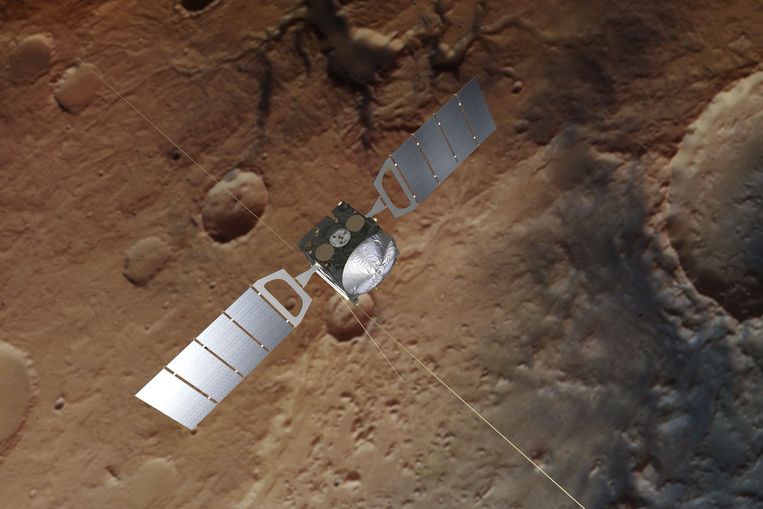
In 2018, researchers at the European Space Agency (ESA) announced that they had other evidence for liquid water: the tentative discovery of a large subsurface lake near Mars’ south polar cap. ESA’s Mars Express orbiter used ground-penetrating radar – the Mars Advanced Radar for Subsurface and Ionosphere Sounding instrument (MARSIS) – to detect the suspected lake below several layers of ice and dust. The ice deposit extends down about a mile (1.5 km). Beneath that deposit, radar images showed a bright spot within one 12-mile-wide (20-km-wide) region – indicative of liquid water, not just ice. From the paper:
The presence of liquid water at the base of the Martian polar caps has long been suspected but not observed. We surveyed the Planum Australe region using the MARSIS instrument, a low-frequency radar on the Mars Express spacecraft. Radar profiles collected between May 2012 and December 2015 contain evidence of liquid water trapped below the ice of the South Polar Layered Deposits. Anomalously bright subsurface reflections are evident within a well-defined, 20-kilometer-wide [12.5-mile-wide] zone centered at 193°E, 81°S, which is surrounded by much less reflective areas. Quantitative analysis of the radar signals shows that this bright feature has [characteristics matching] that of water-bearing materials.
We interpret this feature as a stable body of liquid water on Mars.
Similar lakes have been found below thick ice at the Earth’s poles, such as Lake Vostok in Antarctica.
First-ever liquid water lake discovered on Mars? The bright horizontal feature in this image represents Mars’ icy surface. The south polar layered deposits – layers of ice and dust – are seen to a depth of about a mile (1.5 km). Below is a base layer that in some areas is even brighter than the surface reflections, highlighted in blue. Analysis of the reflected signals suggests liquid water.
Image via ESA/NASA/JPL/ASI/Univ. Rome; R. Orosei et al. 2018.
Finding groundwater on Mars today would help scientists better understand how Mars evolved over billions of years, and how similar that evolution was to Earth, as explained by Heggy:
Understanding how groundwater has formed on Mars, where it is today and how it is moving helps us constrain ambiguities on the evolution of climatic conditions on Mars for the last three billion years and how these conditions formed this groundwater system. It helps us to understand the similarities to our own planet and if we are going through the same climate evolution and the same path that Mars is going. Understanding Mars’ evolution is crucial for understanding our own Earth’s long-term evolution and groundwater is a key element in this process.
Groundwater is strong evidence for the past similarity between Mars and Earth – it suggests they have a similar evolution, to some extent.
Such depth requires us to consider more deep-probing techniques to look for the source of this groundwater versus looking for shallow sources of water.
Location of previous subsurface lake near Mars’ south pole (blue spot in the square), discovered by Mars Express in 2018.
Evidence for a current body of subsurface liquid water near Mars’ south pole is exciting, but additional such lakes closer to the equator even more so, if they can be confirmed. They would increase the chances that some kind of life – even if likely just microbes – might exist deep underground on Mars, usually thought to be the most likely place to search anyway, given the hostile conditions on Mars’ surface. In regards to the south polar lake, Jeffery Plaut at NASA’s Jet Propulsion Laboratory in California noted in New Scientist that:
If the result is confirmed, it would be the largest known occurrence of present-day liquid water on Mars. It clearly has implications for the history of climate and the possibility of habitats suitable for life.
Bottom line: Does the cold desert world Mars have underground lakes? We still don’t know for certain, but this new paper from USC – in addition to the previous south polar discovery – provides more evidence that seems to say, yes.
NASA wil over 14 jaar voet op Mars zetten (en gaat over 5 jaar al terug naar de maan) - HLN.be
Bron: NDTV
Photo NewsZo zouden de gebouwen op Mars eruit kunnen zien.
WETENSCHAP & PLANEETRuimtevaartorganisatie NASA hoopt tegen 2033 astronauten naar Mars te sturen. Om dat te verwezenlijken moeten andere zaken in het ruimteprogramma, zoals een nieuwe maanlanding in 2024, sneller vooruitgang boeken. Dat zei Jim Bridenstine, de hoogste bestuurder van de NASA gisteren.
De Amerikaanse vicepresident Mike Pence had NASA eerder al de opdracht gegeven om in 2024 een bemande missie naar de maan te sturen. Dat is vier jaar eerder dan oorspronkelijk door NASA was meegedeeld. Pence wil de missie vervroegen omdat het oorspronkelijke streven “niet goed genoeg is”.
De nieuwe datum is politiek gezien belangrijk omdat het mogelijk het laatste jaar van president Trumps tweede termijn zou kunnen zijn.
Veel experten vrezen echter dat NASA de deadline voor de nieuwe maanmissie niet zal halen omdat de bouw van de SLS (Space Launch System)-raket vertraging oploopt. Boeing, die instaat voor het bouwen van deze draagraket, slaagt er maar niet in om op schema te blijven.
Het is niet alleen de bedoeling om mensen op Mars te laten landen. We willen ook aantonen dat we op een andere planeet kunnen wonen
Bridenstine
Mars
Een missie naar Mars zou ruim twee jaar duren. Om op de rode planeet te komen, ben je zes maanden onderweg. Naar de maan reizen duurt ‘slechts’ drie dagen. En men kan niet zomaar vertrekken: de astronauten kunnen enkel naar Mars reizen als de planeet aan de dezelfde kant van de zon is gepositioneerd als de aarde. Dit komt slecht om de 26 maanden voor: dus in 2031, 2033, enzovoort.
“Het is niet alleen de bedoeling om mensen op Mars te laten landen”, zegt Bridenstine. “We willen ook aantonen dat we op een andere planeet kunnen wonen.”
SCIENTISTS SAY NEW CYBORG PLANTS COULD SOMEDAY GROW ON MARS
JILL WELLINGTON VIA PIXABAY/TAG HARTMAN-SIMKINS
DAN ROBITZSKI
Superplants
Scientists have figured out how to give plants a high-tech upgrade.
In new research, Australian scientists show howplants can be augmentedwith nanomaterials that make them better at absorbing sunlight — and may help them survive on futuristic Martian farms.
Old System
People have long been able to introduce new compounds into plants via their vascular systems, which shuttle water and nutrients throughout a plant similarly to our blood vessels.
But metal-organic frameworks (MOFs), which are the metallic nanomaterials that the scientists used to augment chrysanthemums and lilyturfs, are too complex to be taken up by a plant. Instead, the plants were given smaller, metallic ions and simple molecules that the plant’s internal machinery automatically synthesized into a complete MOF.
Heart Shaped Herb
As astronauts venture farther into space, they’ll need food and supplies. These cyborg plants could help, as some MOFs can enable plants to convert ultraviolet light — plentiful outside the Earth’s atmosphere — into light that it can absorb via photosynthesis.
“As we contemplate growing crops in space or on Mars where you don’t have an atmosphere and are bombarded by UV rays, something like this could be helpful,” said lead researcher Joseph Richardson. “Especially as you get farther away from the sun, it’s harder to capture all of the light you’d need for photosynthesis.”
Astronomers Found a Black Hole Rotating So Fast, It Could Be Spinning Space Itself
PRABHJOTE GILL, BUSINESS INSIDER
Black holes, while fascinating, are hardly a new discovery - but ablack holespinning at one of the highest speeds ever, according to the Hindustan Times, is a completely different story - especially when there have only ever been four others like it.
A spin rate can be anywhere between 0 and 1 — this black hole was spinning at a rate of 0.9.
Alain Riazuelo of the French National Research Agency, via Wikipedia
India's AstroSat and NASA's Chandra X-Ray Observatory have confirmed the discovery of a black hole spinning very close to the limit set by Albert Einstein's theory of relativity.
According to the theory, a black hole spinning that fast can make space itself rotate.
This black hole is only one of five to have an accurately measured high spin rate.
Researchers hypothesise that this could be the key to understanding how galaxies are formed.
In 2016, India's first dedicated astronomy satellite, the AstroSat, spotted a black hole in the binary star system called 4U 1630-47, which is bursting out X-rays that astronomers found unusual.
NASA's Chandra X-Ray Observatory later confirmed the outburst.
Those X-rays were caused by gas and dust falling into the black hole, which is about 10 times the mass of the Sun, and they revealed to researchers that the object is spinning very, very rapidly.
In fact, according to NASA this particular black hole is spinning very close to the limit set by Albert Einstein's theory of relativity, according to Rodrigo Nemmen, the lead author on the research paper. That means it is spinning close to the speed of light.
Currently, scientists only have two ways of measuring black holes - either by their mass or by their spin rate. A spin rate can be anywhere between 0 and 1: this black hole was spinning at the rate of 0.9.
Einstein's theory further implies that if a black hole is spinning that fast, then it is capable of making space itself rotate.
In fact, if the conditions around black holes are hypothesised to be correct, then the high spin rate coupled with the gaseous elements entering the black hole and high temperatures, could be the key to understanding how galaxies are formed.
Including the black hole discovered by the AstroSat, there are only five black holes that have accurately measured high spin rates. Even if you're not taking spin rates into account, this black hole is one of only 20 others that have been spotted in the Milky Way galaxy.
The Indian Space Research Organisation's (ISRO) AstroSat along with the National Aeronautics and Space Administration's (NASA) Chandra X-Ray Observatory have confirmed the speed of the spinning black hole.
The study was conducted by researchers from multiple institutions led by the Tata Institute of Fundamental Research (TIFR) and has been accepted for publication in The Astrophysical Journal.
How the pyramids in ancient Egypt were built thousands of years ago has always been a question for many scientists. However, an American author revealed a compelling theory that could cast light on why the Egyptians were motivated to embark on one of the most ambitious building projects in human history. In Amazon Prime’s 2007 documentary, “Egypt: Quest for the Lord of the Nile”, presenter Richard Bangs said: “One of the reasons may be the crocodiles."
During the annual floods, the River Nile would tear down the Egyptian valley bringing “fertile soil and lots of crocodiles”.
According to historical reports, the Nile flooded every year between June and September, in a season the Egyptians called Akhet– the inundation.
Melting snow and heavy summer rain in the Ethiopian mountains sent a torrent of water causing the banks of the Nile in Egypt to overflow on the flat desert land
The documentary explains that many of the Egyptians “equated the presence of the crocodiles with the rebirth of the dead soil”.
Is this the REAL reason ancient society built the pyramids?
(Image: Getty)
Mr Bangs suggests the pyramids were built as a place to keep precious objects in the hope that they could "carry them to the afterlife".
He said: “It gave them faith that there may, in fact, be an afterlife.
"They would build these monuments and fill then with precious objects and everyday items in hope that they could carry them alongside them to the afterlife."
The Egyptians both respected and feared the power of the crocodile as they were a real danger to them.
From the Byzantine period, the men and crocodile depict the blessing of the overflowing Nile
(Image: Getty)
The Nile, which was full of crocodiles, was important to the livelihood of the ancient society.
Crocodiles were represented by the god Sobek.
Possessing the strength and nature of a crocodile, he was a symbol of the Pharaoh's power.
Mummified crocodiles were placed in tombs to protect the dead and bring power and fertility to the hereafter.
UFO Sighting: Two spaceships seen entering source of Mount Asama volcano - shock claim
TWO UFOs were seen entering a volcano in Japan and the sighting is proof aliens are visiting Earth – this is at least the shock claim of one conspiracy theorist.
On April 1, meteorologists reported the meteors zooming past Mount Asama, a Japanese volcano. A subsequent video appeared two show the fire balls flying past the source of the volcano, almost appearing as if they had entered. However, one UFO hunter claims that the burning objects were not meteors, but in fact UFOs controlled by aliens who are using Mt Asama as a base.
Prominent alien hunter Scott C Waring made the claims, and even goes as far to say the supposed ETs in control of the ‘meteors’ are millions of years more advanced than we are.
Mr Waring wrote on his blog UFO Sightings Daily: “This was reported on Twitter by a person that believed it to be a meteor strike into the mouth of a volcano.
“However I have found proof that this is 100 percent two alien craft entering an underground base. How you ask? Easy. I focused the smaller UFO to the left.
UFO Sighting: Two spaceships seen entering source of Mount Asama volcano - shock claim
(Image: GETTY)
“The smaller UFO has outlines to it, as I added contrast I saw that the object was a cube UFO (as seen below photos).
“I also added contrast to the round meteor and guess what? I found that within its centre is a cubic UFO craft disgusting as a meteor.
“Why pretend to be something you are not? They have rules, and to come to earth and enter an underground base they must follow those rules.
“When they break those rules, there are always consequences that they must pay. Basically, they fear those consequences more than they fear humans seeing them.”
"I have found proof that this is 100 percent two alien craft entering an underground base"
(Image: UFO SIGHTINGS DAILY)
This is not the first supposed alien base which has been discovered.
Alien hunters also believe Mexico’s Popocatepetl volcano is home to extraterrestrials.
Mr Waring said after an apparent UFO sighting last year: “Even the locals have reported seeing UFOs and even alien creatures on the volcano, so this video is not a surprise, but is excellent evidence that an alien base does exit there.”
A space perspective on India's recent anti-satellite weapon launch.
To piece together what happened during the anti-satellite (ASAT) weapontest-fired by India's military defense organization last week(March 27), a software company combed through information from Indian officials, radar data, existing knowledge on how past satellites have broken up — intentionally or not — and more.
Analytical Graphics Inc. (AGI) created two simulations — one published hours after Wednesday's launch and another the following day (March 28) — that aim to show the event, known as "Mission Shakti," as it might have looked from space. AGI specializes in the aerospace and defense field.
Their recent videos include information Indian officials released, such as the launch site on Abdul Kalam Island and the Notice to Airmen (NOTAM) filed that day indicating an area over the Indian Ocean blocked out for flight-safety reasons.
A still from a video animation showing what the anti-satellite weapon launched by India on March 27 may have looked like from space, just moments before the MICROSAT-R satellite struck the kinetic kill missile placed in its path.
The likely target of the ASAT was the Indian satellite MICROSAT-R, which was at an altitude of about 186 miles (300 kilometers) and passing over the NOTAM region.
"One of the other things we considered was that the target spacecraft was likely to be another Indian object to avoid any kind of international problems," Tom Johnson, vice president of engineering at AGI, said as the narrator of the March 27 "First Look" video. A day later, more information confirmed that was still the case, he said in AGI's March 28 video updated to include debris data.
AGI representatives told Space.com in an email that existing information on the missile, target and debris field so far supports AGI's theoretical models.
AGI used U.S. Air Force data to determine the satellite indeed had a change in velocity of 21 meters per second. "This is a fairly significant change to velocity, which indicates something happened to this particular object," Johnson told Space.com. He added that subsequent orbital information seemed to confirm this change.
For the most recent video, AGI created representative debris fields based on past anti-satellite tests and natural spacecraft breakups.
The red lines in this video screenshot are tracks of debris that Indian satellite MICROSAT-R may have produced when it struck the anti-satellite weapon placed in its path by India's military defense organization on March 27. The full video is a projection of what may have happened based on the available data.
"What we see from those studies is that the debris is primarily constrained to the orbit of the original object MICROSAT-R," Johnson said. "And then because of its relatively low altitude, a lot of that debris, we suspect, is going to re-enter fairly quickly within days and weeks."
India's Defence Research and Development Organisation launched MICROSAT-R in January 2019, and it subsequently entered into a low Earth orbit. This military imaging satellite weighed 1,631 lbs. (740 kilograms).
This India Press Information Bureau India photo shows the March 27 launch of "Mission Shakti," the country's first test launch of an anti-satellite weapon.
To figure out how fast the debris might be re-entering Earth's atmosphere, the team at AGI is working on getting updated orbital information to cross-check their current models. The first step is determining how much debris the radar technology actually detects.
"There are always objects that are too small to see, so what we're trying to do, what everybody is trying to do, is track the larger pieces because that's what the sensors can see," Johnson said.
Then his team has to sort out which tracks go with which pieces of debris.
"In the early stages of the game, it could be quite challenging, and it's a combination of the mathematical algorithms and the people involved," he said. Johnson added that using past ASAT tests as a reference, for instance, can take days, weeks or even months.
Mission Shakti makes India the fourth country, after Russia, China and the United States, to demonstrate ASAT capability.
As two supermassive black holes spiral around one another and merge, they create gravitational waves. With enough energy, they can "kick" themselves out of their starting spot, or even completely out of their home galaxy.
When galaxies collide, the supermassive black holes at their centers are thrown together. Sometimes the pair merge together gracefully. But if the two black holes come together with enough energy, the new black hole can be pushed away from the center of that galaxy, or even kicked out completely. Hunting for these off-center black holes can help scientists better understand how often galaxies merge as well as determine the frequency of the gravitational waves they generate.
Like all black holes, supermassive black holes absorb all light and cannot be directly seen. Instead, scientists identify them by hunting down their gravitational effects on stars, gas and dust around them. But unlike the smaller black holes generated by single stars, supermassive black holes have somewhere around 100 times the mass of the sun. Because of their huge mass, their mergers should produce gravitational waves that the European Space Agency's Laser Interferometer Space Antenna (LISA) spacecraft will be able to detect after its launch.
Intrigued by the connection to gravitational waves, Yashashree Jadhav, a graduate student at Rochester Institute of Technology in New York, began to search for supermassive black holes that were offset from the center of their galaxy. Jadhav is combing through a hundred galaxies imaged by NASA's Hubble Space Telescope to determine how many host off-center black holes. Jadhav presented her work in January at the annual winter meeting of the American Astronomical Society in Seattle, Washington.
Most galaxies show some signs of having consumed another galaxy in their past. Even the Milky Way will one day merge with its neighbor, the Andromeda Galaxy, though not for billions of years. The two galaxies don't always blend smoothly, and infalling gas and dust can collide to spark new star formation.
If both galaxies carry supermassive black holes at their hearts, there is a good chance that the pair will be brought together. But the two objects can put up a fight as they draw closer together. As the pair merge, they create gravitational waves. In order to conserve momentum, they also produce a kick that can knock the newly formed, merged supermassive black hole out of position.
"Imagine the recoil of a gun," Jadhav told Space.com. "It's basically the same, just on a much, much larger scale."
According to Jadhav’s research, the newly merged body can travel anywhere from a few hundred to several thousand kilometers per second away from where it formed, depending on how much mass the original pair started out with. That means that scientists tracing a set of gravitational waves back to their source wouldn't see the newborn supermassive black hole; they would have to look off to the side to find it.
The most powerful kicks can even hurl the young supermassive black hole completely out of the new galaxy, Jadhav said, a result that she calls "quite rare." The ejections only happen when one of the merging black holes is significantly larger than the other.
Milder kicks can push the newly merged object more than 300 light-years away from the heart of the galaxy. Over the course of about a billion years, gravity will slowly tug the merged object back to the galactic center.
Before Jadhav could determine if a black hole is off-center, she first needed to calculate the center of each galaxy. By comparing multiple archived Hubble images of the same galaxy, Jadhav was able to trace how much light was produced by all of the stars, then use that to estimate the collection's center of mass. Then, using near-infrared images, the researcher determined where the supermassive black holes actually lay and compared that location to the galactic centers.
Of the 100 objects that Jadhav and her colleagues examined, they found that roughly 20 percent lie off-center, suggesting that they had been displaced by the merger that formed them.
The next step is to use the results to help understand how often galaxies merge, a factor that Jadhav calls "arguably one of the more uncertain rates." She also hopes to use her results to better calculate how often black hole mergers should produce gravitational waves.
The Laser Interferometer Gravitational-Wave Observatory (LIGO) has detected multiple gravitational-wave signals. Most of them were produced by merging black holes, although at least one came from the collision of a pair of neutron stars, the densest type of star in the universe. According to Jadhav, LIGO isn't able to detect the type of supermassive black holes that are heavy enough to generate a kick. That's because more massive objects, as well as those in wider orbits, release a longer wavelength than those LIGO is hunting.
Enter LISA, a space-based mission set to launch by 2034. LISA will operate in a lower frequency range than LIGO, allowing the spacecraft to probe a wider range of gravitational-wave sources. With her results, Jadhav hopes to estimate how many supermassive black holes LISA will be able to spot once it has been launched.
It has the potential for water and intriguing science.
NASA's Lunar Reconnaissance Orbiter (LRO) spacecraft revealed that as much as 22 percent of the material found in Shackleton crater, at the lunar south pole, may be made up of ice. This split image shows an elevation map (left) and a shaded-relief map (right) of Shackleton.
When Vice President Pence challenged NASA toput humans on the moon by 2024during an announcement last week, he targeted the southern lunar pole, an area rich in water as well as science.
Landing at that site might help astronauts' long-term survival on the moon and could possibly lay the groundwork for boosting future teams farther out into the solar system.
"We have known that the poles of the moon were unique environments for some time," Noah Petro, a NASA lunar astronomer in Greenbelt, Maryland, told Space.com by email. Petro is a project scientist for NASA's Lunar Reconnaissance Orbiter (LRO) mission currently orbiting Earth's nearest neighbor. Observations from LRO and other spacecraft have confirmed that there's water ice hidden in craters at the lunar south pole. Polar water or ice could provide both air and fuel as well as water for astronauts to drink.
Exploring "the south pole, with the possibility of water and/or ice, has the added benefit of finding a resource for future use," Petro said.
Why south pole?
When Apollo astronauts visited the moon 50 years ago, it was considered dry and barren. But the samples they returned eventually told a different story. In recent years, scientists have found "significant amounts" of hydroxyl — a chemical that includes both components of water — in the moon rocks brought home by Apollo 15, 16 and 17 astronauts.
While water may be widespread beneath the lunar surface, the last decade or so has revealed that the permanently shadowed regions of the poles hide hydrogen-rich deposits, in some cases confirmed to be water ice, beneath the upper three feet (one meter) of the lunar regolith.
While water is a requirement for humans to survive, a cool drink of lunar water isn't the only reason ice could be valuable. Once processed, the oxygen could produce vapor that could be used to supply a needed part of astronauts' breathable atmosphere. It could also be separated into hydrogen and oxygen components to be used as rocket fuel.
"These resources mined from the moon could potentially reduce the need for launching resources from Earth, which can significantly reduce the cost of deep space exploration," Debra Needham, a planetary scientist at NASA's Marshall Space Flight Center in Huntsville, Alabama, told Space.com.
There is already an ongoing discussion about using the moon as a jumping-off point for Mars. By processing lunar ice into fuel, mission planners could help reduce the amount of material lifted into space from Earth, helping drive down costs. That, in turn, could help further human exploration beyond our planet.
"The farther humans venture into space, the more important it becomes to manufacture materials and products with local resources," Petro said.
Before you visit
There are still a number of things that need to be done before humans put boots on the moon again. While water-rich material has been identified at the lunar poles, scientists still want to nail down how much of it might be water and how much is ice.
"LRO has done an amazing job of telling us that there is something interesting going on there, but we should know more before sending humans," Petro said.
Needham agrees, adding that a lot of uncertainty remains about the distribution and purity of the water-rich material — information that could affect how it is extracted and used.
The technology to turn water into fuel is still in its infant stages. One of the cubesats selected to join NASA's Space Launch System (SLS) on its first flight will rely on a water-electrolysis propulsion system. Zapping the water with electricity breaks the bonds between hydrogen and water, creating a readily combustible fuel for the satellite. Once in space, the tiny satellite will test the process in microgravity.
Another problem for human explorers is dealing with the lunar day, which is 14 Earth days long. Additionally, the sun will sit extremely low in the sky at the poles, casting deep shadows over the course of the day. Needham said that such shadows would cause wide temperature swings, block communication pathways and complicate the operation of some instruments that astronauts might carry with them.
"These challenges require creative solutions that, while achievable, require additional help from orbiting assets," Needham said, adding that they could drive up the costs and complexities involved in planning a mission to the lunar poles. But that doesn't mean that such missions wouldn't be worth it.
"The knowledge and resources we stand to gain by surmounting these challenges is vast," Needham said.
Before setting up a permanent lunar outpost, engineers must also develop sustainable exploration setups that would safely allow astronauts to escape Earth, travel to the moon, move from orbit down to the surface and return home safely. NASA would also have to establish long-term assets for lodging and mobility as well as sample collection and storage. Needham said that NASA is working its way through many of these challenges, in part through its work with the SLS as well as working with international partners on other components. The results will help astronauts not only explore the moon but also move out farther into the solar system.
"There is certainly still work to be done, but we are on our way to exploring new parts of the moon and proving our capability of exploring other deep-space destinations as we push on to Mars," Needham said.
The Sahara desert has been slowly expanding southwards for decades through a region as the Sahel. Heavy grazing, deforestation, and numerous droughts have degraded the once lush Sahel, making it easy pickings for the Sahara’s expansion. In order to stave off an ecological disaster across the continent, 20 different African countries have embarked on an ambitious tree-planting programme called the ‘Great Green Wall’.The 10-mile(16-km) deep wall of green aims to stretch across 5,000 miles (8,000 kilometers) of terrain at the southern edge of the Sahara desert, arresting the desert’s spread. With so much hate surrounding the walls built to divide us, both physical and psychological, it’s refreshing to finally hear about a wall that we can all stand behind.
The green border
The Great Green Wall was first launched in 2007 at the initiative of 12 African countries — the other 9 joining later The plan is to plant trees that can resist tough droughts — such as acacias — across a narrow region stretching from Senegal in the east of Africa to Djibouti in the west of Africa.
Once complete, the wall will run through 11 countries in total. The wall is currently only about 15% complete, but the results are already showing. In Senegal alone, over 11 million trees have been planted since the project rolled out. Nigeria has seen the restoration of 12 million acres of degraded land and Ethiopia has claimed back 37 million acres of land.
Aerial photos showing the same area around Galma, a town in Niger. Left: 1975, Right: 2003 after reforestation.
Credit: USGS.
Tree planting in the Sahel has improved the area’s resilience against desertification. The green wall slows down the drying and scouring effects of the wind, restores micro-climates, and allows food crops to grow around trees which fertilize the soil. The ultimate goal of $8-billion project is to restore 100 million hectares of degraded land by 2030, which would create 350,000 rural jobs and absorb 250 million tons of CO2 from the atmosphere.
“There are many world wonders, but the Great Green Wall will be unique and everyone can be a part of its history,” said Dr. Dlamini Zuma, chairperson of the African Union Commission. “Together, we can change the future of African communities in the Sahel.”
However, since the project’s inception, some changes to the plan have been made. The idea of the Great Green Wall morphed into a program centered around indigenous land use techniques, not literally planting a forest on the edge of a desert — that would be highly impractical. “It is not necessarily a physical wall, but rather a mosaic of land use practices that ultimately will meet the expectations of a wall. It has been transformed into a metaphorical thing,” saidMohamed Bakarr, the lead environmental specialist for Global Environment Facility.
The Great Green Wall is a symbol of hope in an area where, until not too long ago, everyone was panicking over the prospect of the Sahara expanding. There is still much work ahead, though. Some are arguing that the project is moving too slowly. Seeing how the Sahel’s population is expected to double in 20 years, researchers say that regreening needs to be finished within 10 to 15 years.
A speculative view from Kepler-36b, a potential “toffee planet” that may possess stretchy, almost taffy-like rock at or near its surface. A neighboring world, Kepler-36c, rises in the background. Credit: Center for Astrophysics, Harvard & Smithsonian and David Aguilar
It might not occur to us surface dwellers very often, but rocks can flow—more like the way exceedingly lethargic toothpaste would rather than water. Exposed to the extreme temperatures and pressures that reign in the hellish realms far below our feet, rocks can practically swim—slowly diving down and bobbing up through much of Earth’s subsurface.
For some rocky worlds around other stars, what is true for Earth’s innards may extend right up to the surface. Super Earths—sometimes rocky exoplanets that are bigger than our pale blue dot but smaller than massive ice giants such as Neptune—have comparatively strong gravitational fields. Thanks to this extreme gravity, some scientists suspect, rocks on such worlds would flow far closer to the surface.
This arrangement would mean rocks that snap, fracture and break might only be found in thin veneers on these exoplanets’ crust. If these rocky super Earths have thick, Venus-like atmospheres or are especially close to their parent star, they might exhibit no familiarly brittle geology at their surface at all. Instead, says Paul Byrne, a planetary scientist at North Carolina State University and lead author of a study on the Super Earths, their surface rocks would be strangely malleable over long timescales, flowing a bit like the stretchy, sugary confections on offer in any earthly candy shop.
Understandably, Byrne has dubbed such worlds “toffee planets.”
The research, presented at the 50th Lunar and Planetary Science Conference in the Woodlands, Tex., has yet to be peer-reviewed. That has not stopped Byrne’steam speculating on what its findings might mean for the myriad super Earths already discovered beyond our solar system. The most striking possibility is that super Earths might not be able to sustain plate tectonics—the drifting of continents and cycling of crustal rock that intimately shapes Earth. Without that process, you can say goodbye to the building of mountains, the creation of oceans and plenty of a planet’s volcanoes, and, just maybe, the evolution of complex life itself.
The science is already starting to stick in experts’ mind. “It’s a fascinating concept,” says Sara Seager, a professor of astrophysics and planetary science at the Massachusetts Institute of Technology. In exoplanetary science, “you rarely see anything new like this. The fact that they came up with something new, that, in itself, is impressive.”
EXTRASOLAR EXTRAPOLATIONS
Byrne and his colleagues’ work hinges on defining the point at which rocks deep below a planet’s surface no longer break in a mechanical way and instead begin to move like hot plastic. This point, known as the brittle-ductile transition (BDT), depends on how the pressure and temperature change with depth. For our own world’s crust, the BDT lies about 15.5 miles below the surface, although it varies quite a bit. But what about on super Earths, where greater gravitational forces would correspondingly increase pressures on rock? At what depths would BDTs emerge on such alien planets?
Taking inspiration from their own 2017 precursor paper, the researchers compiled data from 200 preexisting studies examining the lab-based deformation of basalt and other common rock types over a wide range of pressures and temperatures. They first used these data to calculate the BDT depth for Earth, calibrating their equations until sensible numbers emerged. Then they plugged in the estimated gravitational forces prevailing on five sizable, potentially rocky exoplanets found by NASA’s late, great Kepler space telescope, from the hefty Kepler-36b to the smaller Kepler-406c.
The calculations revealed the BDT depths for those super Earths to be shockingly shallow, with some scarcely more than a mile beneath the surface. A nearby star, a suffocating atmosphere or an abundance of internal, radioactivity-generated heat could further bake the top of such a world, perhaps raising the BDT all the way to the surface, creating a full-blown toffee world.
It is always risky to make planet-scale extrapolations from a figurative handful of data points, and the researchers acknowledge their calculations make assumptions aplenty. One of them, notes Kayla Iacovino, a volcanologist and experimental petrologist at NASA’s Johnson Space Center, who was not involved in the work, is that real exoplanets most likely have complicated internal structures—a reality not taken into account in the study’s simplified approach.
Although approving of Byrne’s team’s first-order calculations and the principles behind them, Brad Foley, a geodynamicist at Pennsylvania State University, who was also not involved in the research, is skeptical of another key assumption: that the lithosphere, the uppermost mechanical layer of a planet, would be extremely thin on these rocky super Earths. A planet with ductile rocks right up to its surface could still have a thick lithosphere, he says, because lithospheric thickness is determined by how vigorously a world’s underlying mantle is churning. Because this churning is not something that the BDT significantly influences,one cannot use the BDT to gauge how thick the lithosphere is.
Although the model remains a work in progress, Iacovino says that it already demonstrates a “really cool way to take a very small data set and make inferences about what the lithospheres of extrasolar worlds might look like. It’s extremely simplified,” but because of a huge dearth of exoplanetary data, “it’s what we have to work with.”
PAINT BY NUMBERS
Byrne acknowledges that the only way to test the validity of the model is to obtain direct observational data of candidate rocky super Earths. Although there is some hope that colossal, next-generation exoplanet-spying telescopes will be able to get some vague sense of their topography, for now, such feats remain well beyond our capabilities.
With that in mind, Robert Stern, a geoscientist at the University of Texas at Dallas, who was not involved in the research, says that this ambitious work deserves credit, because these sorts of numerical models will help paint a picture of what exoplanetary geology may be like. “In my lifetime, I’ve seen the solar system turn from something that belonged to astronomers to something that belonged to geologists,” he says. “We’re not there yet with exoplanets, but you can see this is a step in that direction.”
Although incremental and provisional, the toffee worlds hypothesis could represent a sizable step indeed, as it directly addresses a question foremost in many an exoplanet-pondering geologist’s mind: Are worlds with plate tectonics common as dirt or vanishingly rare? Either way, the answer has game-changing implications.
In order for plate tectonics to exist, a planet needs a few ingredients. Water is probably vital, because it weakens the mantle and permits chunks of the planet to slip and slide that otherwise would remain immobile. A world’s plates also must be sufficiently thick and dense to sink into the mantle—a crucial step for initiating and stabilizing the tectonic cycle over eons. Water or no, toffee worlds’ wafer-thin, brittle layers would not be able to dive deep, short-circuiting the “engine” of plate tectonics before it could even start.
This concept reinforces the notion that plate tectonics is a rare feature in the cosmos, Stern says. After all, as far as we can presently see, Earth is the only planet where it operates.
Aside from making toffee planets geologically dull, the absence of plate tectonics could also significantly reduce continental erosion and runoff into any oceans. This, Stern explains, would rob toffee worlds of a nutrient pump than may have given life a huge boost on ancient Earth. Plate tectonics also acts as Earth’s thermostat, keeping the planet’s temperature stable on geological timescales by buffering the levels of atmospheric greenhouse gases. Both of these tectonic side effects may be essential for the development of complex life.
Plate tectonics certainly gives Earth’s long-term biogeochemical cycles a constant refresh, Seager says, but she speculates that having a mantle far closer to the surface could create an entirely different refreshing mechanism. Although currently unknown to science, there is nothing to say that this situation could not prop up toffee worlds’ very own biogeochemical cycles, too.
In any case, “we don’t know that plate tectonics is a requisite for habitable planets,” Byrne says, “so we certainly can’t say that toffee planets are uninhabitable.”
CONTROVERSIAL CONFECTIONARY
The most contentious aspect of this thought-provoking study is not actually about any of the science. It is about the name for these possible exoplanets.
The team is composed of researchers hailing from the U.K. and Ireland. “To us,” Byrne says, “‘toffee’ means something soft and chewy.” Scientists from North America tend not to see the word that way, considering toffee to be a hard, crunchy treat. Byrne suggests “taffy” or “fudge” might be better, and a Twitter poll he ran put “squidgy” on par with “toffee” as participants’ preferred nomenclature.
Things have become even more complicated with the discovery by NASA’s Transiting Exoplanet Survey Satellite (TESS) of a brand-new confirmed rocky super Earth, HD 213885b. Byrne’s calculations suggest that this newfound world might be a toffee planet, with a brittle layer just more than two miles thick. The problem is that the radiation from HD 213885b’s parent star is akin to that of 55 Cancri e, another known rocky super Earth whose dayside is entirely molten.
“If HD 213885b is similarly hot, then any lack of rigidity at the surface won’t be from relatively higher surface gravity so much as the floor being lava,” Byrne says. It’s not quite a toffee planet, then, but something very close.
Maybe, he suggests, “fondue planets” are a thing, too.
The hit Netflix seriesStranger Thingswas clearly influenced by Steven Spielberg and Stephen King, with a heaping helping of The X-Files and Twin Peaks thrown in for good measure. But some of its creepiest source material comes from the real world. Past the plot points about the Upside-Down and the slime monsters among us are references to government mind-control programs and covert experiments in telepathy that actually took place in the U.S. throughout the 20th century – like MKUltra and Stargate Project.
In an interview with Rolling Stone, Matt and Ross Duffer, the brothers behind the show, mentioned some of this inspiration: “We wanted the supernatural element to be grounded in science in some way,” Matt says. “As ridiculous as it is, the monster [in the alternate dimension] doesn’t come from a spiritual domain and it’s not connected to any religion. It made it scarier. I don’t believe in ghosts, but I believe in aliens and alternate dimensions.”
But which elements are more fact than fiction? Here are five examples from the show that had real-life equivalents – some of them freaky enough to make monsters look like an appealing alternative. Obviously spoilers abound, so come back later if you’re not done with the show yet.
Government-Funded Drug Experiments When Chief Hopper tracks down Terry Ives, the woman who attempted to sue the government for abuse after what happened to her at Hawkins, he and Ives’ sister talk about “Project MKUltra.” Though it sounds like what conspiracy theorists’ wet dreams are made of, MKUltra was a real government program funded by the CIA that went on from the 1950s to the early 1970s. It tested countless subjects at over 80 institutions, many of which were fronts funded by the government and filtered to schools, private hospitals and even a couple jails.
Most of the documents relating to the project were destroyed by the CIA in 1973 because of course they were, but what we know comes from witness testimony, a couple congressional investigations and a cache of 20,000 incorrectly-filed budgetary documents found during a Freedom of Information Act request in 1977. It’s enough to paint a terrifying picture of a wide-ranging government project that sought to capitalize on mind-control techniques that could, theoretically, be used against enemies during the Cold War.
Of particular interest to the government were the drugs that could be used to extract sensitive information, especially LSD. Researchers tried to see if hallucinogens had the power to control minds, erase memories and even work as truth serum. It’s hard to know exactly how far-reaching the experiments were or who knew about them (even some of the researchers involved had no idea they were participating in a government-funded project), but the transcript of the 1977 Select Committee on Intelligence is a fascinating read – and not only for the reference to the MKUltra subproject that studied “magicians’ arts as applied to covert operations.”
Were any of these experiments performed on women who didn’t know they were pregnant? Did those pregnancies then yield psychokinetic children that could be used as secret government weapons? For some reason, that doesn’t appear in the transcript, so let’s rule it a solid “maybe.”
Sensory Deprivation When not being used to coerce testimony out of suspected terrorists at government black sites, sensory deprivation can be a relaxing and meditative experience probably happening at a spa near you. In Stranger Things, sensory deprivation tanks are used to trigger Eleven’s powers to help her listen in on far-away conversations and sneak up on the monster from the Upside Down. In real life, they mostly trigger hallucinations.
First invented in the 1950s by neuroscientist and dolphin enthusiast John C. Lilly, the isolation tank (like the saltwater kiddie pool seen on the show) was developed as a means of sensory deprivation. Lilly was nice enough to test it on himself first, but sensory deprivation didn’t stay nice for long. While working on a subproject of MKUltra, psychiatrist Dr. Donald Ewen Cameron used a combination of hallucinatory drugs like LSD, electroshock therapy and sensory deprivation on unwitting patients, many of whom came in for things as innocuous as anxiety treatment. Though it’s not clear whether he was using a tank or some other form of sensory deprivation – like earplugs and blindfolds – some of the patients who underwent his experiments ended up permanently comatose. That hasn’t stopped sensory deprivation’s proliferation or use by the government, nor has the long-standing debate over whether it constitutes torture.
Child Test Subjects There’s no evidence to suggest MKUltra experiments were actually performed on kids, but Cathy O’Brien sure thinks they were. O’Brien has written twobooks about her experiences in a government-funded program called Project Monarch, which involved testing mind-control techniques on children. According to the project’s truthers (of which there are quite a few), the government’s goal in recruiting children for mind-control experiments was to hopefully create the perfect super-soldier – which sounds a lot like Stranger Things, actually. There are also claims that it involved child sexual abuse and experiments based on the work of Heinrich Himmler during the Third Reich. Again, there is absolutely no evidence that Project Monarch existed but the conspiracy-minded among us still want to believe.
Telepathy Experiments Sure, Project MKUltra gets the shout-out in Stranger Things, but the tests on Eleven’s abilities actually seem to hearken back to something called Stargate Project. After all, MKUltra was supposedly over by the 1983 setting of the show, but Stargate was just getting warmed up. Funded by the U.S. Army, the project aimed to research paranormal phenomena that could be of use to the military, including but not limited to psychokinesis, mind-reading, and “remote viewings” of events and conversations – like when Eleven listens in on a Russian man’s conversation. The government even hired a psychic headhunter to recruit candidates. The 2004 book-turned-movie The Men Who Stare at Goats is about the Stargate experiments that tested telekinetic ability by having men do just what the title suggests in an attempt to kill the animals with their mind. Eleven is part of a similar experiment at Hawkins Lab when she’s asked to kill a cat by staring it, though that’s much less funny than goats for some reason.
Death Cover-Ups The government researchers of Hawkins rack up quite a body count in Stranger Things(#JusticeForBarb), but there was a death toll in real-life too. The most famous case of an MKUltra-related death is that of Frank Olson. In 1953, Olson was a biochemist at a lab that was conducting LSD experiments for the government. The government’s account that he knowingly ingested the drug is contest by his family, but either way, a short time after he partook in one experiment, he quit his job in the government, checked into a thirteenth-floor New York City hotel room and fell to his death from the window. The official government report suggests that Olson knew he was taking the LSD and it exacerbated his nascent suicidal tendencies, but his family maintained that he was murdered for knowing too much. They received a $750,000 settlement from the government in 1975. Then, in 1994, his body was exhumed and a coroner noticed head injuries that suggested Olson had been knocked unconscious before his death. The medical examiner thought his injuries were consistent with a homicide and the family sued for wrongful death in 2012, but a judge later dismissed it.
Archaeologists have discovered stunning evidence of an ancient society in Bolivia that worshiped religious deities and made ritual offerings hundreds of years before the Incas arrived.
A dive near the Island of the Sun in Lake Titicaca unearthed a trove of artifacts dating as far back as the year 500 A.D., including puma-shaped incense burners, gold, shell, and stone ornaments, and sacrificed juvenile llamas.
The discovery indicates the Tiwanaku people who lived in the region practiced an organized religion that long-predates the Incas, and may have been the first in the area to do so.
Archaeologists have discovered stunning evidence of an ancient society in Bolivia that worshiped religious deities and made ritual offerings hundreds of years before the Incas arrived
WHO WERE THE TIWANAKU PEOPLE?
The Tiwanaku people lived in western Bolivia near Lake Titicaca between 500 and 1,100 AD.
New research indicates they had an organized religion and made offerings to the deities well before the Incas arrived to the area.
Experts estimate they reached their peak around 800 A.D, with a population that blossomed to as many as 20,000 people.
The puma was an important symbol of their religion, and is often found with Tiwanaku artifacts.
In a new paper published in proceedings of the National Academy of Sciences, researchers conducted underwater excavations in the Khoa Reef using 3D photogrammetry to map the site.
Despite its Inca associations, the researchers say it was the Tiwanaku who first chose this location as a place of worship.
‘People often associate the Island of the Sun with the Incas because it was an important pilgrimage location for them and because they left behind numerous ceremonial buildings and offerings on and around this island,’ said Jose Capriles, assistant professor of anthropology, Penn State.
‘Our research shows that the Tiwanaku people, who developed in Lake Titicaca between 500 and 1,100 AD, were the first people to offer items of value to religious deities in the area.’
Using a water-dredge, they recovered a slew of Tiwanaku offerings, including ceramic incense burners modeled after pumas, sacrificed juvenile llamas, and ornaments.
According to the researchers, the puma was an important religious symbol.
‘The findings, and especially the ceramic puma-shaped incense burners, are significant because they help us gain a broader understanding of the ritual behavior and religion of the Tiwanaku state – a society that preceded the Incas by several hundred years,’ said Christophe Delaere, postdoctoral fellow at the University of Oxford Centre for Maritime Archaeology and research associate at the Universite Libre de Bruxelles.
It’s also likely that the items were sunk on purpose, the team says.
A dive near the Island of the Sun in Lake Titicaca unearthed a trove of artifacts dating as far back as the year 500 A.D., including puma-shaped incense burners, gold, shell, and stone ornaments, and sacrificed juvenile llamas
In a new paper published in proceedings of the National Academy of Sciences, researchers conducted underwater excavations in the Khoa Reef using 3D photogrammetry to map the site. Using a water-dredge, they recovered a slew of Tiwanaku offerings
‘The presence of anchor near the offerings suggests that officiating authorities may have deposited the offerings during rituals held from boats,’ Capriles said.
And, the location at the center of the Andes Mountains would have been key in the ceremonies.
‘It was a strategic and ritually charged place,’ Capriles said.
‘At the Island of the Sun and the Khoa Reef, religious specialists could come together for sacred ceremonies.
‘The ritual offerings they made here demonstrate the transitioning of societies from more local-based religious systems to something that had a more ambitious geopolitical and spiritual appeal.’
Share or comment on this article:
Archaeologists discover ancient religious offerings at Lake Titicaca
Findings, such as this bowl, allowed the researchers to reconstruct the structure and significance of repeated state rituals by the Tiwanaku people. Credit: Teddy Seguin
An ancient group of people made ritual offerings to supernatural deities near the Island of the Sun in Lake Titicaca, Bolivia, about 500 years earlier than the Incas, according to an international team of researchers. The team's findings suggest that organized religion emerged much earlier in the region than previously thought.
"People often associate the Island of the Sun with the Incas because it was an important pilgrimage location for them and because they left behind numerous ceremonial buildings and offerings on and around this island," said Jose Capriles, assistant professor of anthropology, Penn State. "Our research shows that the Tiwanaku people, who developed in Lake Titicaca between 500 and 1,100 AD, were the first people to offer items of value to religious deities in the area."
The Incas, Capriles noted, did not arrive in the Lake Titicaca region until around the 15th century AD.
A team lead by Christophe Delaere, postdoctoral fellow at the University of Oxford Centre for Maritime Archaeology and research associate at the Universite Libre de Bruxelles, conducted underwater archaeological excavations in the Khoa Reef near the Island of the Sun. The archaeologists used sonar and underwater three-dimensional photogrammetry to scan and map the reef. They used a water-dredge to excavate the sediment and measured and weighed all the archaeological materials they uncovered. Their results appear today (April 1) in Proceedings of the National Academy of Sciences.
In particular, the team found ritual offerings consisting of ceramic feline incense burners; sacrificed juvenile llamas; and gold, shell and stone ornaments.
"The findings, and especially the ceramic puma-shaped incense burners, are significant because they help us gain a broader understanding of the ritual behavior and religion of the Tiwanaku state—a society that preceded the Incas by several hundred years," said Delaere.
The team found ritual offerings consisting of ceramic feline incense burners; sacrificed juvenile llamas; and gold, shell and stone ornaments Credit: Teddy Seguin
The puma was an important religious symbol to the Tiwanaku, Delaere added.
Another observation made by the team was that the religious offerings appear to have been made intentionally to be submerged underwater.
"The presence of anchors near the offerings suggests that officiating authorities may have deposited the offerings during rituals held from boats," said Capriles.
According to Capriles, the Island of the Sun was likely important to the Tiwanaku people because of its natural beauty, but also because of its location at the center of the Andes Mountains.
"It was a strategic and ritually charged place," said Capriles. "At the Island of the Sun and the Khoa Reef, religious specialists could come together for sacred ceremonies. The ritual offerings they made here demonstrate the transitioning of societies from more local-based religious systems to something that had a more ambitious geopolitical and spiritual appeal."
In turn, he added, this emergence of organized religion likely led to consolidation of the groups of people living around the lake and the emergence of the Tiwanaku state, characterized by political hierarchy.
A reef in the middle of Lake Titicaca in Bolivia was the location where many people’s valuable items were placed approximately 1,200 years ago. Underwater archaeologists discovered the ancient items in 2013 and now they believe that they finally know what they represented many years ago – a mysterious religion that is believed to have aided the Tiwanaku state grow into a powerful force in that part of the world.
The Tiwanaku state was in existence between 500 A.D. and 1000 A.D. and at its height it was extended all the way to Chile and Peru. The state was also thought to have had a lot of influence because of trade and religion. While a lot of evidence has been recovered in regards to their religious beliefs, archaeologists are still trying to figure out the deeper meaning behind their religion as well as how it may have helped the expansion of the state.
Lake Titicaca
Khoa reef, which is located close to the Island of the Sun, is believed to have been used as a ritualistic site as gold objects, semiprecious stones, metal ornaments, and incense burners have been found there. Other artifacts include two gold medallions that show Tiwanaku’s ray-faced deity, as well as metal plaques that have a mythical puma-llama hybrid on them. The divers even found the remains of several animals, including the bones of at least three young llamas that appear to have been sacrificed.
Five of the items that were discovered were made from Spondylus shells (and one complete shell) which surprised the team, as they’re only found in the Pacific Ocean – more than 1,200 miles away from Lake Titicaca. The discovery indicates that the shells were quite valuable and that the Tiwanaku people had a prominent trading relationship with others.
There’s still the question of why such valuable items were placed into the lake. José M. Capriles, who is an anthropologist and assistant professor of anthropology at Penn State University, believes that the sacrifices are proof of a religious tradition that helped the Tiwanaku state. Since the worshipers sacrificed their valuable objects, it showed how committed they were to the new religion. “These deities that people are creating are becoming institutions that govern behavior,” Capriles stated.
Lake Titicaca
Behaviours and morality were very important with this new religion. “If you behave well, you are immortal,” explained Capriles, “But if you’re bad, you are going to get punished by the chief’s deity.” And with the religious followers moving to different places, they could share their beliefs with others and that’s what helped expand the Tiwanaku state.
The society once had political, economic and cultural power before collapsing in 1000 A.D. Paul Goldstein, who is an archaeologist in the Department of Anthropology at UC San Diego, said, “The Tiwanaku is the greatest Native American empire that many Americans have never heard of.” He continued on by stating, “Every time we find something that reflects the complexity of the society, it adds to our deeper knowledge of the origins of complex societies worldwide.”
Although the Tiwanaku state no longer exists, the discovery of these ancient artifacts allows us to learn more about them and their religious beliefs. Capriles said it best by stating, “They were grateful, they made offerings. They were just people like you and me.”
The Trindade Island’s UFO sighting refers to an occurrence which took place on January 16, 1958. Island itself is a part of the archipelago located in the Atlantic Ocean, 1000 km from the east coast of Brazil. Photographic evidence, along with people witnessing the sighting, makes it one of the most debated accidents involving UFO. So much so that the topic has been garnering attention even in 2010. When it became a subject of a major Brazilian TV show.
It was claimed that the sighting was a hoax and photographer had a history of manipulating photos. However, it should be noted, that investigation which followed the event did not reach the same conclusion. In fact, Brazilian officials and navy were heavily involved in the case and according to the photographer, were afraid of the consequences and panic that would ensue if the general public became aware of them.
The person of interest in Trindade Island’s UFO sighting was a well-known photographer, AlmiroBarauna. He was on a ship belonging to Brazilian navy – Almirante Saldahna. The expedition was part of an international scientific project, known as IGY (International Geophysical Year), whose purpose was to study phenomena associated with earth sciences (e.g. gravity, solar activity, and meteorology). The occurrence took place at 11 a.m. and was witnessed by a ship’s captain and team of scientists. After informing AlmiroBarauna about it, he was able to take several pictures, before the object disappeared.
After ship returned to the mainland, pictures were heavily analyzed by Brazilian Navy’s Aerial Reconnaissance Laboratory, which deemed them genuine. Even though there was an attempt to keep Trindade Island’s UFO sighting a secret, it received worldwide publicity when then President of Brazil, JuscelinoKubitschek decided to go public with it.
Allegations about the inauthenticity of the photos surfaced in 2010. On a TV show Fantastico, friend of AlmiroBarauna accused him of faking the pictures by photographing two spoons combined with his refrigerator on the background. This, however, gave rise to a new questions. Firstly, before the sighting, Barauna published an article in a newspaper, about how UFO sighting could be faked. The method described in the article was the same he allegedly used for this hoax. However, this does not make sense because of two reasons.
First, it seems unlikely that Barauna would himself publish an incriminating article and then proceed to use the same method to lie to the public. He was a well-known photographer and a highly skilled one. It is hard to imagine that, if he indeed planned to commit a hoax, he would not foresee how his article would work against him. Secondly, the statement about him using his refrigerator as a background does not make much sense. Photos were taken on a ship. This was confirmed by the ship’s captain and scientist present on board. Why highly respected people would commit to this hoax, remains an unanswered question.
Finally here is what naval report of this accident had to say about Trindade Island’s UFO sighting: “Finally the existence of personal testimonies and of a photographer, of some value given the circumstances, permit the admission that there are indications of the existence of UFO. Brazilian naval report.”
USS Nimitz UFO incident took place during November of 2004 when U.S. fighter pilots encountered an unidentified flying object, which later become known as “tic-tac”. In 2017 the footage of the occurrence was released to the public and became one of the most hotly discussed topics among ufologists.
The video itself does not offer a clear image, due to the nature of radar systems. However, there are several factors that make this case one of the most fascinating studies in the field. Firstly, the existence of an audio recording of pilots experiencing the visual contact the object. Secondly, Interview given by one of the pilots. Thirdly, a report was done by Washington post about Department of Defense’s operations to analyze the sighting and was later confirmed by the Pentagon itself, giving the sighting more legitimacy.
David Fravor, a Navy Pilot with decades of experience, is the centerpiece of USS Nimitz UFO incident. His skepticism in the subject quickly evaporated, when the training mission encountered something that could not be explained. Skeptics often explain such events by a secretive technology being tested, weather balloons, or unreliability of the witnesses. None of them applies to this eye witness.
Not only would he be aware of something that could be explained by our current technologic capabilities, but also the routine nature of their training operations would make the area unsuitable for any testing by different military branches. This also makes him immune to the claims of him not being able to differentiate something as mundane as a weather balloon, natural occurrence or mechanical dysfunction from UFO.
One of the main reasons that cause the USS Nimitz UFO incident to be a fascinating study is its continuous nature. The encounter with “tic-tac” was not a one-off incident. US Navy was following the unknown object for almost two weeks. At one point over 8 objects were seen on the radar. This was not some sort of the glitch on a radar system of the single ship. This was an organized operation by a fleet of ships to track down an unknown intruder.
The occurrence, in which David Fravor took part in when he and several other pilots directly encountered the UFO was a culmination of the chase. However, even after that event, several anomalies on the ocean surface where seen. Some point looked disturbed as if something has been hovering over them, however, no further visual contact was made. What truly transpired during USS Nimitz UFO incident is debated till this day. Several things are known for certain, the U.S. Navy fleet deemed the occurrence noteworthy enough to initiate the chase, which lasted for two weeks. No one who took the part in it can give an explanation of what happened.
David Fravor, a veteran Navy pilot was shaken by the incident and after 2 years retired from the navy. He said that after his jet returned to the carrier, his description of the events were ridiculed by his colleagues. What showed up on U.S. fleets radars for two weeks and what managed to evade most sophisticated military in the world, remains a mystery till this day.
Today, there are literally dozens of cases on file concerning the Black Eyed Children; however, the most important one of all, is, of course, the first case. Or, at least, the first reported case. It comes from a mannamed Brian Bethel, a respected journalist, whose story first began to circulate in the late 1990s. As fate would have it, and on the night in question, Bethel – of Abilene, Texas – realized he had forgotten to pay a bill, and so he got in his vehicle, with the intent of depositing a check in an after-hours drop-box. It was coming up to 10:00 p.m. when Bethel arrived at the location, which was situated at a shopping mall. As Bethel sat in his vehicle, writing out the check, he was interrupted in terrifying style by a loud tapping on the driver’s window.
As he quickly looked up, Bethel was confronted by a pair of young boys who, at first glance, in the darkness and the shadows, appeared normal. Matters very quickly became deeply strange, however. In no time at all, Bethel developed a disturbing sense that all was not well. It was as if a malignant atmosphere had suddenly descended and blanketed his vehicle, and as if out of nowhere. Bethel was careful to only wind the window down to a small degree, and asked the boys what they wanted. They came up with a story that sounded most unlikely and left Bethel feeling very uneasy; frightened, even. They claimed to need a ride back home, so that they could get some money and then go and see a movie. “C’mon mister, let us in. We can’t get in your car until you do, you know,” said one. It was at this point that Bethel finally saw the eyes of the pair: they were completely black, with no iris or pupil anywhere in sight. Bethel knew exactly what he had to do: he hit the accelerator and was gone. And so were the BECs: as Bethel looked back, they had seemingly vanished, and impossibly quickly, too.
Experiences like that of Brian Bethel abound. In 2011, I investigated the case of a woman named Alison who had a very similar experience in the previous year, 2010, at an Orange County, California motel. It was around 11:00 p.m. when a loud knock at the door made Alison practically jump out of her skin – as, at the time, she was laid out on the bed, engrossed in a movie. Rather weirdly, the movie was Roman Polanski’s 1967 movie, Rosemary’s Baby, which tells the story of a woman who gives birth to a demonic baby. Alison tentatively got up and tiptoed to the door, peering through the spy-hole. She could see two young boys, both in black hoodies, stood right in front of the door.
As if realizing that Alison was silently, and worriedly, watching them, one of the boys leaned into the spyhole and said, “Please let us in, we need to use the telephone.” Not only did the request send shivers throughout Alison’s, but the fact that the boy deliberately kept his face pointed downwards, while looming into view, and his eyes in shadow, only added to the menace.
Then, something very disturbing happened: Alison felt as if an evil force was taking over her own self-will and was trying to make her to open the door to her late night callers of the sinister kind. It took a supreme effort on Alison’s part not to unlock and open the door. Fortunately, she was able to fight off what became, she said, a “need” to let the children in. Having regained her wits and sense of self-preservation, Alison looked again through the spyhole, only to see the boy staring right at her…through a pair of solid black eyes. She screamed, jump back, and called the night-manager, who was on the scene in no time at all. The BECs were nowhere in sight.
It’s worth noting another UFO connection in the uncanny saga of the Black Eyed Children: they have deep parallels to the notorious Men in Black, who have, since 1947, terrorized and intimidated into silence numerous witnesses to UFOs. Just like the BECs, the Men in Black have a propensity for knocking on doors late at night. The two mirror each other in other fashions, too: like their child counterparts, the MIB will not enter a home until they are specifically invited to do so (shades of ancient vampire lore). Both the MIB and the BEC wear black. Both wear head-gear: hoodies for the Black-Eyed Children, and 1950s-era fedoras for the MIB. And there is another intriguing issue: very often the Men in Black wear thick, wraparound, black sunglasses. One has to wonder if this is done not just to provoke a menacing atmosphere, but to mask a pair of emotion-free, solid, black eyes. In that sense, and just perhaps, the Men in Black and the Black Eyed Children are one and the same: one in adult form and the other in child form, but both following the same secret agenda – whatever that may really be. So, where does that all leave us? Well, it admittedly leaves us with a lot of questions. But they are questions that a certain, acclaimed and dedicated researcher of the Black Eyed has done his very best to resolve.
Undoubtedly the leading investigator in this field, and the author of the book, The Black Eyed Children, David Weatherly has collected and studied dozens of such cases, demonstrating the sheer scale of these weird and unsettling events. David’s work has addressed a variety of theories for the presence of the BECs: that they might be demonic in nature, or predatory spirits, or possibly even products of the human mind, given some semblance of physical life in the real world. We will leave the final words on this issue to David: “An even more sinister theory that has followers, postulates that the grays are actually attempting to take over our world by slowly breeding us out and phasing in beings with alien DNA. Over time the human race will fade away to be replaced by the ‘superior’ DNA of the gray aliens, adherents say”
Spiraling Giants: Astronomers Witness the Birth of a Massive Binary Star System
ALMA image of the IRAS-07299 star-forming region and the massive binary system at its center. The background image shows dense, dusty streams of gas (shown in green) that appear to be flowing toward the center of the system. Gas that is moving toward us — as traced by the methanol molecule — is shown in blue; motions away from us in red. The inset image shows a zoom-in view of the massive forming binary, with the brighter, primary protostar moving toward us shown in blue and the fainter, secondary protostar moving away from us shown in red. The blue and red dotted lines show an example of orbits of the primary and secondary spiraling around their center of mass (marked by the cross).
Credit: ALMA (ESO/NAOJ/NRAO); RIKEN, Zhang et al
Scientists from the RIKEN Cluster for Pioneering Research in Japan,the Chalmers University of Technology in Sweden,and the University of Virginia in the USA and collaborators used the Atacama Large Millimeter/submillimeter Array (ALMA) to observe a molecular cloud that is collapsing to form two massive protostars that will eventually become a binary star system.
While it is known that most massive stars possess orbiting stellar companions it has been unclear how this comes about – for example, are the stars born together from a common spiraling gas disk at the center of a collapsing cloud, or do they pair up later by chance encounters in a crowded star cluster.
Understanding the dynamics of forming binaries has been difficult because the protostars in these systems are still enveloped in a thick cloud of gas and dust that prevents most light from escaping. Fortunately, it is possible to see them using radio waves, as long as they can be imaged with sufficiently high spatial resolution.
In the current research, published in Nature Astronomy, the researchers led by Yichen Zhang of the RIKEN Cluster for Pioneering Research and Jonathan C. Tan at the Chalmers University,and the University of Virginia, used ALMAto observe, at high spatial resolution, a star-forming region known as IRAS07299-1651, which is located 1.68 kiloparsecs, or about 5,500 light years, away.
Credit: ALMA (ESO/NAOJ/NRAO); RIKEN, Zhang et al’
The observations showed that already at this early stage, the cloud contains two objects, a massive “primary” central star and another “secondary” forming star, also of high mass. For the first time, the research team was able to use these observations to deduce the dynamics of the system. The observations showed that the two forming stars are separated by a distance of about 180 astronomical units—a unit approximately the distance from the earth to the sun. Hence, they are quite far apart. They are currently orbiting each other with a period of at most 600 years and have a total mass at least 18 times that of our Sun.
According to Zhang, “This is an exciting finding because we have long been perplexed by the question of whether stars form into binaries during the initial collapse of the star-forming cloud or whether they are created during later stages. Our observations clearly show that the division into binary stars takes place early on, while they are still in their infancy.”
Movie composed of images taken by ALMA showing the gas streams, as traced by the methanol molecule, with different line-of-sight color-coded velocities, around the massive binary protostar system. The grey background image shows the overall distribution, from all velocities, of dust emission from the dense gas streams.
Credit: ALMA (ESO/NAOJ/NRAO); RIKEN, Zhang et al’
Another finding of the study was that the binary stars are being nurtured from a common disk fed by the collapsing cloud and favoring a scenario in which the secondary star of the binary formed as a result of fragmentation of the disk originally around the primary. This allows the initially smaller secondary protostar to “steal” infalling matter from its sibling and eventually they should emerge as quite similar “twins”.
Tan adds, “This is an important result for understanding the birth of massive stars. Such stars are important throughout the universe, not least for producing, at the ends of their lives, the heavy elements that make up our Earth and are in our bodies.”
Zhang concludes, “What is important now is to look at other examples to see whether this is a unique situation or something that is common for the birth of all massive stars.”
Contacts and sources:
Charles E. Blue, The National Radio Astronomy Observatory Nicolás Lira ALMA Observatory
Jens Wilkinson, RIKEN
Citation:
Yichen Zhang, Jonathan C. Tan, Kei E. I. Tanaka, James M. De Buizer, Mengyao Liu, Maria T. Beltrán, Kaitlin Kratter, Diego Mardones and Guido Garay, Dynamics of a massive binary at birth, Nature Astronomy (2019), doi: 10.1038/s41550-019-0718-y
.@CarnegieAstro's Tony Piro was part of a @Caltech-led team of astronomers who observed the peculiar death of a massive star that exploded in a surprisingly faint and rapidly fading supernova, possibly creating a compact neutron star binary system.
Scientists may not know what or where dark matter is but they are pretty sure they know one thing it isn’t.
An international team of researchers has put a theory speculated by the late Stephen Hawking to its most rigorous test to date, and their results have ruled out the possibility that primordial black holes smaller than a tenth of a millimeter make up most of dark matter. Details of their study have been published in this week’s Nature Astronomy.
Scientists know that 85 per cent of the matter in the Universe is made up of dark matter. Its gravitational force prevents stars in our Milky Way from flying apart. However, attempts to detect such dark matter particles using underground experiments, or accelerator experiments including the world’s largest accelerator, the Large Hadron Collider, have failed so far.
The Milky Way galaxy (left) and the Andromeda galaxy (right) are separated by 2.6 million light years. Compared with the areas where stars are clustered together, dark matter is believed to be distributed over a much larger volume.
Credit: Kavli IPMU
This has led scientists to consider Hawking’s 1974 theory of the existence of primordial black holes, born shortly after the Big Bang, and his speculation that they could make up a large fraction of the elusive dark matter scientists are trying to discover today.
An international team of researchers, led by Kavli Institute for the Physics and Mathematics of the Universe Principal Investigator Masahiro Takada, PhD candidate student Hiroko Niikura, Professor Naoki Yasuda, and including researchers from Japan, India and the US, have used the gravitational lensing effect to look for primordial black holes between Earth and the Andromeda galaxy. Gravitational lensing, an effect first suggested by Albert Einstein, manifests itself as the bending of light rays coming from a distant object such as a star due to the gravitational effect of an intervening massive object such as a primordial black hole. In extreme cases, such light bending causes the background star to appear much brighter than it originally is.
As the Subaru Telescope on Earth looks at the Andromeda galaxy, a star in Andromeda will become significantly brighter if a primordial black hole passes in front of the star. As the primordial black hole continues to move out of alignment, the star will also turn dimmer (go back to its original brightness).
Credit: Kavli IPMU
However, gravitational lensing effects are very rare events because it requires a star in the Andromeda galaxy, a primordial black hole acting as the gravitational lens, and an observer on Earth to be exactly in line with one another. So to maximize the chances of capturing an event, the researchers used the Hyper Suprime-Cam digital camera on the Subaru telescope in Hawaii, which can capture the whole image of the Andromeda galaxy in one shot. Taking into account how fast primordial black holes are expected to move in interstellar space, the team took multiple images to be able to catch the flicker of a star as it brightens for a period of a few minutes to hours due to gravitational lensing.
From 190 consecutive images of the Andromeda galaxy taken over seven hours during one clear night, the team scoured the data for potential gravitational lensing events. If dark matter consists of primordial black holes of a given mass, in this case masses lighter than the moon, the researchers expected to find about 1000 events. But after careful analyses, they could only identify one case. The team’s results showed primordial black holes can contribute no more than 0.1 per cent of all dark matter mass. Therefore, it is unlikely the theory is true.
Data from the star which showed characteristics of being magnified by a potential gravitational lens, possibly by a primordial black hole. About 4 hours after data taking on the Subaru Telescope began, one star began to shine brighter. Less than an hour later, the star reached peak brightness before becoming dimmer.
Credit: Niikura et al.
The researchers are now planning to further develop their analysis of the Andromeda galaxy. One new theory they will investigate is to find whether binary black holes discovered by gravitational wave detector LIGO are in fact primordial black holes.
Contacts and sources:
Motoko Kakubayashi Kavli Institute For The Physics And Mathematics Of The Universeµ
Citation: Microlensing constraints on primordial black holes with Subaru/HSC Andromeda observations Hiroko Niikura, Masahiro Takada, Naoki Yasuda, Robert H. Lupton, Takahiro Sumi, Surhud More, Toshiki Kurita, Sunao Sugiyama, Anupreeta More, Masamune Oguri & Masashi Chiba Nature Astronomy (2019) https://www.nature.com/articles/s41550-019-0723-1 http://dx.doi.org/10.1038/s41550-019-0723-1
This was reported on Twitter by a person that believed it to be a meteor strike into the mouth of a volcano. However I have found proof that this is 100% two alien craft entering an underground base. How you ask? Easy. I focused the smaller UFO to the left. The smaller UFO has outlines to it...as I added contrast I saw that the object was a cube UFO (as seen below photos). I also added contrast to the round meteor...and guess what? I found that within its center is a cubic UFO craft disgusting as a meteor. Look at the bottom of this post to see the actual craft within the fake meteor.
Why pretend to be something you are not? They have rules, and to come to earth and enter an underground base they must follow those rules. When they break those rules, there are always consequences that they must pay. Basically, they fear those consequences more than they fear humans seeing them. Kinda like the Star Trek Prime Directive, but these species are millions of years more advanced than the Star Trek crew.
Scott C. Waring-Taiwan
The above 3 photos show the smaller UFO close up, entering the UFO. The bottom 3 photos shows the larger UFO close up.
The actual UFO within the large meteor light is clearly a intelligently built craft.
Cube UFO Over Glenrowan, Australia Caught On Video During Day Sighting, April 2, 2019, UFO Sighting News.
Did you notice that the above photo is a cube shape with a wing on each side?
Date of sighting: April 2, 2019
Location of sighting: Glenrowan, Australia
This amazingly beautiful UFO was seen over Australia yesterday. The UFO is not changing shape, but only fading in and out of our visual field. It has an electical field around it which is causing a blur every few moments. The UFO has a cube shape with two wings. We were lucky to have this eyewitness watching the skies for us in Glenrowan, otherwise this amazing evidence never would have come to light.
UFOs are everywhere, over every city, every country, every body of water in the world. So keep an eye out and post any catch to Youtube so I and others can find it.
UFO Fleet Hovering Over LAX Airport Area March 27, 2019, Video, UFO Sighting News.
Date of sighting: March 27, 2019
Location of sighting: Los Angeles, California, USA
These UFOs were seen over Los Angeles near the LAX airport last week. The eyewitness is an experience person who often sees aircraft since they work for a company called Menzies Aviation...as seen on the side of the fuel truck in the video. The objects in the sky are dark black and hovering in place. They do strange fade in and out of focus. I don't believe its the cameras focus problem, but I do think its the UFO which is equipped with a camouflage shield that reflects the nearby colors of the sky and cloud. That shield is working off and on for some odd reason. I would guess that aliens accounted for our atmosphere when adjusting their shields, however probably did not take into account the depth of the air pollution in Los Angeles...which by the way, East Los Angeles is my place of birth, so yeah, I know its history with UFOs. My mom was there during the Battle of Los Angeles UFO sighting in the 1940s.
Scott C. Waring-Taiwan
Eyewitness states:
I constantly look up and try to record what i see out of context subscribe to stay updated cause i only post raw stuff not trying to feed false information.
Mysterious UFO Flying Near A Secret Base Baffles US Military
A UFO that fell near a top-secret military base has left the U.S. Air Force baffled after confirming to reporters that the object in question was not one of their planes. When residents in Anchorage, Alaska saw the UFO, they initially suspected the involvement of the local American base, but the Air Force stepped in to deny their participation.
Joint Base Elmendorf-Richardson spokeswoman Erin Eaton said the UFO sighting wasn’t linked to any experiment or test at the base. The base is the home of advanced stealth fighter jets and command planes.
She said that it did not look like any of their planes.
Federal Aviation Administration also confirmed that the object in the footage wasn’t an aircraft. FAA officials added that it had not received any reports of aviation concerns at the time.
However, director Peter Davidson of the National UFO Reporting Center in Washington said that the video showed a jet with a contrail behind it. He explained the high –altitude jet airliner usually appears to be falling when it is flying away from the camera. He said that the plane is in level flight, but parallax makes it look that it is falling.
As Yellowstone Awakens, Dr. Michio Kaku Warns That It Could “Literally Tear The Guts Out Of The United States Of America”
One day it will happen. Scientists assure us that one day the absolutely massive Yellowstone supervolcano will once again experience a Category 8 eruption, and if it happened today it would “literally tear the guts out of the United States of America”.
That is why what has been happening at Yellowstone in recent months is so alarming. We know that the ground has been rising and that “a 465-mile-long piece of molten rock” is moving upwards directly under Yellowstone. And we also know that the major geysers at Yellowstone were more active last year than in any other year in any of our lifetimes.
Dr Kaku told Fox News: “Forget the image of Yogi Bear representing Yellowstone.
“We’re talking about a sleeping Godzilla underneath Yellowstone, that if it erupts in a maximum eruption called Category 8, it can literally tear the guts out of the United States of America.
“Instead of having 50 states of the Union, we would have 30 states of the Union.“
We live at a time when seismic activity has been increasing all over the world, and Yellowstone has also been exhibiting very unusual behavior.
“Unlike a meteor from outer space, where you get no warning whatsoever, we get warnings.
“If you see movies like Pompeii, you know that there are days, in fact, weeks of eruptions building up, rumbling inside, underneath the pocket of lava. “So there would be enough time, several weeks, to begin evacuation if and when such an unlikely event were to take place.”
But what if we have been ignoring the warnings that we have already been getting?
For example, Steamboat geyser erupted more times in 2018 than in any other year in history. The following comes from National Geographic…
The Yellowstone Volcano Observatory reports that Steamboat has now set a record by erupting a whopping 32 times in 2018, a personal best for the geyser for a single calendar year. Previously, this geyser made it as high as 29 paroxysms back in 1964.
Other nearby geysers have also been behaving fairly interestingly of late. Ear Spring Geyser, for example, has been pretty quiet since 1957, but it erupted spectacularly a few months back—and sprayed human garbage from the 1930s everywhere.
Prior to last year, there had not been an eruption of the Steamboat geyser for three and a half years.
In addition, the ground under Yellowstone has been steadily rising for the last few years, and the area was hit by 121 earthquakes in the month of December alone…
“In the area of Norris Geyser Basin, GPS data indicate a minor amount of uplift over the past few months, with a total uplift of about 2cm during 2018, also continuing the trend that has been ongoing since 2015.”
In the same Yellowstone update, the USGS revealed a total of 121 earthquakes were recorded in the Yellowstone area in December 2018 alone.
It is indeed possible that when Yellowstone finally erupts that we will get more of a warning than this.
But it is also possible that we will not.
When Yellowstone blows, life as you have known it will instantly be over. If you are not in the immediate kill zone, you will have an opportunity to try to survive, but it won’t be easy. One survivalist expert suggests that everyone should “head east as fast as you can”…
He added: “Zone one, which is a radius of 100 miles, could see 70,000 people die instantly.
“Zone two, which starts after 100 miles, would be covered in 10ft of volcanic ash at 450C.
“After the second zone, your chances of surviving increase, but still head east as fast as you can.
“Beyond zone six is where you would be the safest in the US for the short term, but the wind will greatly determine where ash falls.”
Personally, I don’t know if that is the best approach. The roads will be absolutely clogged, and there is no way that you are going to outrun the volcanic ash. If you get completely buried in volcanic ash in your vehicle, it will all be over.
Of course the truth is that if Yellowstone experiences a Category 8 eruption most Americans will eventually die no matter what they do. The following is an extended excerpt from one of my previous articles…
Hundreds of cubic miles of ash, rock and lava would be blasted into the atmosphere, and this would likely plunge much of the northern hemisphere into several days of complete darkness. Virtually everything within 100 miles of Yellowstone would be immediately killed, but a much more cruel fate would befall those that live in major cities outside of the immediate blast zone such as Salt Lake City and Denver.
Hot volcanic ash, rock and dust would rain down on those cities literally for weeks. In the end, it would be extremely difficult for anyone living in those communities to survive. In fact, it has been estimated that 90 percent of all people living within 600 miles of Yellowstone would be killed.
Experts project that such an eruption would dump a layer of volcanic ash that is at least 10 feet deep up to 1,000 miles away, and approximately two-thirds of the United States would suddenly become uninhabitable. The volcanic ash would severely contaminate most of our water supplies, and growing food in the middle of the country would become next to impossible.
In other words, it would be the end of our country as we know it today.
The rest of the planet, and this would especially be true for the northern hemisphere, would experience what is known as a “nuclear winter”. An extreme period of “global cooling” would take place, and temperatures around the world would fall by up to 20 degrees. Crops would fail all over the planet, and severe famine would sweep the globe.
In the end, billions could die.
Let us hope and pray that nothing like this happens any time soon. Those of you that regularly follow my work already know that I am far more concerned about an eruption of Mt. Rainier, and we should also keep a very, very close eye on Mt. Fuji in Japan.
As our planet becomes increasingly unstable, there will be unprecedented natural disasters in the years ahead, and multitudes of people will die in those disasters.
Unfortunately, most of the “experts” continue to assure the public that everything is going to be “just fine”, but meanwhile the shaking of our planet just continues to get even worse with each passing year.
AFPOnderzoekers vonden onder meer fossielen van vissen die op de dag van de meteorieteninslag het lieven lieten.
WETENSCHAP“De ontdekking van de eeuw” binnen zijn vakgebied noemde geofysicus Jay Melosh van Purdue University het. Hij had het over een soort van fossielen-snapshot van de dag waarop bijna 66 miljoen jaar geleden een meteoriet insloeg op onze planeet. De gesteentelaag levert voor het eerst bewijs voor de theorie dat de meteoriet in één klap een einde maakte aan het bestaan van de dinosaurussen.
De aarde beefde zoals de moderne mens dat nooit nog ervaren heeft, vermoedelijk met een kracht van 10 of 11 op de schaal van Richter. Het regende vuur en gesteentes. 66 miljoen jaar geleden, aan het einde van het Krijt, werd bijna alle leven op onze planeet door de enorme inslag van een meteoriet uitgeroeid. De bekendste soort die eraan moest geloven: de dinosaurussen. Bekendste restant van de inslag: de Chicxulubkrater op het Mexicaanse schiereiland Yucatán.
Wetenschappers hebben onder leiding van Robert DePalma bewijzen van die fatale meteorieteninslag in Mexico ontdekt in een gesteentelaag in wat nu Noord-Dakota in de VS is, zo’n 3.000 km ten noorden van de krater. Ze vonden er al in 2014 vissen met gloeiend glas in de kieuwen, afkomstig van het brandende puin dat na de inslag hoog in de lucht werd geslingerd en daarna terug op aarde neerdaalde. Ze vonden ook verkoolde bomen, bewijs van de tsunami die na de inslag het land overspoelde en gesmolten barnsteen.
afp
Op zijn beurt botste de Nederlander Jan Smit van de Vrije Universiteit Amsterdam met zijn team op voetsporen van dinosaurussen, van net voor hun uitroeiing. Een van de voetafdrukken is afkomstig van een plantenetende Hadrosaurus, de andere van een vleesetende dino, mogelijk een kleine Tyrannosaurus Rex. “Definitief bewijs dat de dinosaurussen nog leefden op het moment van de inslag”, aldus Smit. “Ze liepen rond en zaten elkaar na” op het ogenblik dat ze weggevaagd werden door een helse vloedgolf. Maar er was méér dan alleen de dino’s. De tsunami-afzetting bevat ook mierennesten, wespennesten, kwetsbare bewaarde bladeren, en vissen die bewaard bleven zoals ze waren op het moment van hun overlijden.
AFPDoctoraal onderzoeker van de University of Kansas, Robert DePalma, aan het werk op de site.
Jay Melosh maakte geen deel uit van het onderzoeksteam, maar deed wel redactiewerk voor het wetenschappelijke artikel dat vandaag verscheen in Proceedings of the National Academy of Sciences (PNAS). Hij is danig onder de indruk. “Dit is de dodelijke klap bewaard op één bepaalde site, dit is spectaculair”, zei de specialist. Hij noemde het zelfs de “ontdekking van de eeuw” binnen zijn vakgebied.
Andere experts hebben kritiek op het feit dat de bewuste site - die zich uitstrekt over de twee Dakota’s, Wyoming en Montana - afgeschermd wordt voor onderzoekers van buitenaf. Zij krijgen nauwelijks of geen toegang tot de beroemde Hell Creek-formatie, waar al die interessante fossielen als stille getuigen van de meteorieteninslag liggen. Het is een fossielenschat met resten van dinosaurussen, zoogdieren, reptielen en vissen, allemaal dieren die tussen 65 en 70 miljoen jaren geleden vastzaten in klei en gesteentes. Volgens Jan Smit is die beperkte toegang nodig als bescherming tegen plunderaars.
AFPRobert DePalma met assistent Kylie Ruble.
Ook kreeg Robert DePalma kritiek omdat hij in The New Yorker had gesproken over een heus dinokerkhof. DePalma’s collega, Jan Smit, heeft dat al “overdreven” genoemd, maar bevestigde dat de fossielenrijkdom enorm is.
WETENSCHAPArcheologen hebben in Israël voor het eerst bewijs bovengespit van het historische bestaan van de Bijbelse koning Josia. Het gaat om een zeldzame zegel in klei, gevonden onder een parkeerterrein.
Op de zegel staat in het oud-Hebreeuws de naam van Nathan-Melech, een hoge pief in Josia’s koninkrijk in Juda dat zich situeerde van 641 tot 609 voor Christus. Het Oude Testament vermeldt koning Josia uitvoerig. Het letterlijke opschrift van de zegel: “van Nathan-Melech, dienaar van de koning”, een verwijzing naar Josia. De naam van de hoveling komt zelf maar één keer voor in de Bijbel, in 2 Koningen.
Het artefact van amper 1 centimeter werd gevonden op een archeologische site City of David, waar zich vermoedelijk de oude ruïnes bevinden van een plaats die de Babyloniërs tijdens de verwoesting van Jeruzalem in 586 voor Christus platbrandden.
Methaangas gemeten op Mars, maar is het een teken van leven? - HLN.be
Spoiler: het is niet afkomstig van aliens
EPAMarsrover Curiosity op de rode planeet.
WETENSCHAPNadat de Marsrover Curiosity van NASA in 2011 gelanceerd werd richting Mars, registreerde het wagentje er regelmatig vlagen van methaangas in de atmosfeer. Verwarrend, want het organisch materiaal is meestal een teken van (buitenaards) leven. Nu weten onderzoekers eindelijk waar het methaangas op de rode planeet vandaan kan komen: gesmolten ijskristallen.
In 2009 suggereerden enkele metingen vanop de aarde dat er op Mars drie gebieden waren met vrij hoge concentraties van methaangas. Wetenschappers reageerden voorzichtig verrukt, omdat 99 procent van al het methaangas op aarde door levende organismen wordt geproduceerd, door koeien bijvoorbeeld.
Vervolgens landde de Curiosity Rover in 2011 op de rode planeet en ging die zelf metingen ter plaatse uitvoeren. Dat gebeurde aan de hand van bodemmonsters die geanalyseerd werden op teken van leven. De eerste deeltjes methaangas die de Marsrover vond, waren eerder verwaarloosbaar.
Maar in 2013 mat de Marsrover plots een aanzienlijke stijging van methaan in de lucht. Die stijging hield minstens twee maanden aan. Vermoedelijk had het iets te maken met de seizoenen, zo dachten de onderzoekers op aarde. Dat vermoeden werd bevestigd de jaren die daarop volgden, want op het einde van de winter in het zuidelijk halfrond van de planeet, werd keer op keer een piek op Mars gemeten.
Is dat methaangas dan afkomstig van organische verbindingen, biologische bronnen - levende organismen zeg maar - of niet? Methaangas werd regelmatig gemeten, maar niemand kon achterhalen waar het gas vandaan kwam. De metingen van het marswagentje zaaiden vooral verwarring. Daarom snelde het Europees Ruimtevaartagentschap (ESA) te hulp.
(Lees verder onder de foto
AFPDe onbemande ruimtemissie Mars Express van ESA.
Samenwerking
De Mars Express was een onbemande ruimtemissie naar de planeet Mars, een project van het Europese Ruimtevaartagentschap (ESA). Dankzij die missie worden de metingen van de Curiosity nu voor het eerst bevestigd. Ook de Mars Express observeerde de atmosfeer van de rode planeet en de sonde nam eenzelfde stijging van methaangas waar in 2013. Dat zegt Marco Guiranna, hoofdonderzoeker van het Italiaanse Instituto Nazionale di Astrofisica in Rome.
“Terwijl eerdere observaties, waaronder die van Curiosity, bekritiseerd werden, maakt deze eerste onafhankelijke bevestiging de resultaten een pak geloofwaardiger”, aldus Guiaranna. Bovendien verklaart het team van Guiaranna meteen waar de boertjes methaangas van Mars vandaan kwamen.
Permafrost
Zoals verwacht, is het methaangas vermoedelijk afkomstig van permafrost. De koude ondergrond van Mars zou methaangas vasthouden, maar door “een meteorietinslag of temperatuurschommelingen” kan het ijs gedeeltelijk smelten waardoor methaangas ontsnapt.
Bekijk ook:
Deze vader bouwde zelf een Marsrover voor zijn zoontje.
In november 2018 landde de Marslander Insight van NASA ook op de rode planeet.
WETENSCHAP“Vreselijk”, noemt NASA India’s geslaagde test om een satelliet in een baan om de aarde neer te halen. De Amerikanen vrezen dat de 400 brokstukken die nu in de ruimte rondzweven het Internationaal Ruimtestation ISS kunnen bedreigen. Dat zegt directeur-generaal Jim Bridenstine van NASA.
India kondigde vijf dagen geleden erg trots zijn succesvolle poging om een satelliet aan flarden te schieten aan. Intussen zijn er 400 brokstukken na de vernietiging geteld, die volgens Bridenstine niet allemaal te volgen zijn.
“Wij volgen objecten van tien centimeter of groter, en wij hebben er ongeveer 60 geteld”, zei de NASA-topman.
De satelliet is in een relatief lage baan op 300 km hoogte uitgeschakeld, ver onder die van het ISS (400 km) en van het merendeel van de kunstmanen die rondom onze planeet wentelen. Maar 24 stukken zijn boven ISS geraakt, zei Jim Bridenstine.
REUTERSJames Bridenstine, topman van NASA.
“Dat is een vreselijk, vreselijk iets om een evenement op te zetten dat puin naar een hoogtepunt stuurt dat boven het internationale ruimtestation gaat”, zei hij. Bridenstine voegde eraan toe: “Dat soort activiteit is niet verenigbaar met de toekomst van de bemande ruimtevluchten, het is onaanvaardbaar”.
Als gevolg van de Indiase test is het risico op een botsing met het ISS op tien dagen tijd met 44 procent gestegen, zei Bridenstine. Dat risico zal wel snel afnemen, omdat het merendeel van het schroot wellicht zal opbranden in de atmosfeer.
Photo NewsVorige week wisselden NASA-astronauten Nick Hague en Anne McClain batterijen tijdens een ruimtewandeling bij het ISS.
Het Amerikaanse leger houdt objecten in de ruimte in het oog om het risico van botsingen met het ISS en met satellieten in te schatten. Zo volgen ze 23.000 objecten groter dan tien centimeter. Tienduizend daarvan zijn brokstukken waarvan bijna 3.000 het gevolg zijn van een Chinese anti-satelliettest in 2007 met een kunstmaan op 860 km hoogte.
Het ministerie van Buitenlandse Zaken van India zei in een reactie dat de test in de lagere atmosfeer werd uitgevoerd om ervoor te zorgen dat er geen ruimteschroot zou zijn. “Wat er toch zou zijn veroorzaakt aan puin zal binnen enkele weken vergaan en terugvallen op de aarde”, klonk het.
Zelfs botsingen met kleine objecten kunnen catastrofaal zijn in de ruimte. Dat komt grotendeels door de snelheid waarmee ruimtevaartuigen in een baan om de aarde bewegen. Dat is minimum 7,8 km per seconde.
Journalist en schrijver legt in dit filmpje uit waarom Atlantis echt heeft bestaan
De Griekse filosoof Plato gaf ons het verhaal over Atlantis, een hoogontwikkelde beschaving die gigantische bouwwerken heeft neergezet en uiteindelijk werd verzwolgen door de golven.
Historici en wetenschappers zeggen dat het verhaal van Plato verzonnen is om een bepaald filosofisch of politiek punt te maken.
“Waarom zouden zij zeggen dat het verhaal verzonnen is?” vraagt journalist en schrijver Graham Hancock zich af. “Plato heeft herhaaldelijk gezegd dat het een waargebeurd verhaal is.”
Muren
Hij merkt op dat Plato precies vertelt wanneer Atlantis is vernietigd: 9000 jaar voor Solon, de eerste beroemde politicus van Athene.
“Rond 600 voor Christus bracht Solon een bezoek aan Egypte, waar priesters van een tempel in Sais hem het verhaal over Atlantis vertelden,” zegt Hancock.
“Ze zeiden dat het op de muren van de tempel was geschreven,” vervolgt hij.
Catastrofale periode
Solon vroeg de priesters wanneer deze grootse beschaving was vernietigd, waarop ze zeiden: ‘9000 jaar geleden’.
“Dat is 11.600 jaar geleden,” legt Hancock uit. “Dat was een catastrofale periode in de geologische geschiedenis.”
Smelten
Hij wijst erop dat deze periode ook wel meltwater pulse 1b (MWP1b) wordt genoemd omdat de zeespiegel toen drastisch steeg als gevolg van het smelten van de ijsmassa op Noord-Amerika en Noord-Europa.
Als Plato dit allemaal verzonnen heeft, hoe kan het dan dat hij precies goed zat?
Hundreds of attempts have been made to record the sound since then using land based seismometers and now scientists have taken to the bottom of the sea to record the sound, The Mirrorreports.
The researchers first collected data from 57 seismometer stations located at the base of the Indian Ocean, east of Madagascar, between 2012 and 2013.
Now researchers have captured the hum for the first time using seismic instruments at the bottom of the sea.
The researchers first gathered data from 57 seismometer stations located in the Indian Ocean, east of Madagascar, between 2012 and 2013.
They then applied a combination of techniques to remove interference from ocean infragravity waves, currents and electronic glitches, and corrected for the signal generated by any earthquakes.
Eventually, they were able to determine that the Earth's natural vibration peaks at several frequencies between 2.9 and 4.5 millihertz.
These vibrations can't be heard by people, because they are approximately 10,000 times smaller than the lower hearing threshold of the human ear (20 hertz).
However, the fact that they have been detected at the bottom of the ocean, and around 70% of the planet's surface is covered by water, suggests that the hum is present across the entire globe.
The research team, led by Martha Deen at the Paris Institute of Earth Physics, hopes the new data will provide clues as to the source of the hum.
Seismologists have proposed many different theories to explain the continuous vibration - from atmospheric disturbances to ocean waves moving over the sea floor.
However, the study, published in Geophysical Research Letters, concludes that these theories can only explain part of the vibration.
Deen and her co-authors believe the data could also help scientists map the interior of Earth with more detail and accuracy than ever before.
Scientists traditionally study the Earth's interior during earthquakes, but this mean they are severely limited to specific times and areas where quakes commonly occur.
Using the hum signal as a source of seismic waves would avoid this problem, because it is generated continuously, and can be detected across the planet's surface.
Wetenschappers leggen mysterieus gebrom uit het diepste van de aarde vast, maar niemand weet wat het is
Wetenschappers hebben een mysterieus gebrom vastgelegd dat uit het diepste van de aarde komt. Ze hebben alleen geen idee wat het is.
Het is al lange tijd bekend dat de aarde continu een laagfrequent geluid voortbrengt. In 1959 werd voor het eerst geprobeerd dit brommende geluid vast te leggen, maar pas in 1998 lukte dat.
Onderzoekers zijn er nu voor het eerst in geslaagd om het vreemde geluid vast te leggen met behulp van seismische instrumenten op de zeebodem.
Piekt
Ze verzamelden tussen 2012 en 2013 gegevens van 57 seismometers in de Indische Oceaan, ten oosten van Madagaskar.
Vervolgens werden alle achtergrondgeluiden verwijderd door middel van een combinatie van verschillende technieken.
Uiteindelijk stelden ze vast dat de natuurlijke trillingsfrequentie van de aarde piekt tussen 2,9 en 4,5 millihertz.
Overal ter wereld
Deze trillingen kunnen niet door mensen worden gehoord aangezien het menselijk gehoor in staat is om frequenties vanaf 20 hertz waar te nemen.
Gezien het feit dat ze op de bodem van de oceaan zijn gemeten, en ongeveer 70 procent van het planeetoppervlak bedekt is met water, lijkt het erop dat het gebrom overal ter wereld kan worden gehoord.
Het onderzoeksteam, dat geleid wordt door Martha Deen van het Institut de Physique du Globe de Paris, hoopt dat de nieuwe gegevens kunnen worden gebruikt om de bron van het geluid te achterhalen.
Gedeeltelijk
Seismologen hebben verschillende theorieën bedacht om de trilling te kunnen verklaren, variërend van atmosferische storingen tot oceaangolven die over de zeebodem bewegen.
De nieuwe studie, gepubliceerd in Geophysical Research Letters, concludeert echter dat deze theorieën de trilling slechts gedeeltelijk kunnen verklaren.
VREEMDE DINGEN IN DE LUCHT EN OP DE GROND ( VIDEO )
Tot op de dag van vandaag doen autoriteiten er alles aan om vreemde dingen die men in de lucht ziet te verklaren als bijvoorbeeld ballonnen.
Zelfs waarnemingen van getrainde piloten worden afgedaan als gezichtsbedrog en het beste wat NASA kan bedenken is de camera bij het ISS uitzetten als er weer eens een ufo in beeld komt.
Venezuela is de laatste tijd regelmatig in het nieuws, maar niet vanwege het volgende verhaal dat zeker de moeite waard is.
Toen ze weer op de terugweg waren zag Rodriguez een licht waarvan hij eerst dacht dat het de zon was, maar realiseerde zich toen dat die zich op een andere positie bevond en bovendien lager aan de hemel.
Volgens het verhaal landde dit object, maar was Rodriguez te bang om te gaan kijken en was hij allang blij dat hij iets had kunnen vastleggen met zijn telefoon.
Hij zegt dat dit type ufo vrij bekend is in Zuid Amerika en wanneer men er dicht bij komt ziet het eruit als een fel oranje licht. Het is te fel om details te kunnen ontwaren en wanneer het object zich hoger in de lucht bevindt, kan het gemakkelijk worden aangezien voor de zon.
Verder zegt hij dat dit type ruimteschip hoort bij een buitenaards ras dat bijna goddelijk is. Zij kwamen hier in de hoop om de mensheid een vreselijke toekomst te kunnen besparen en zijn in de loop der jaren hier diverse keren geweest om mensen te ontvoeren en hen dan te vertellen dat er verschillende voor de mensheid dramatische scenario’s zich kunnen ontvouwen in de toekomst.
Zij hadden de hoop door enkele mensen in te lichten dat ze dit soort vreselijke scenario’s zouden kunnen voorkomen, maar volgens Scott hadden ze dit mis. De mensen die ze hadden ontvoerd waren te bang en hadden in het dagelijks leven totaal geen invloed of een groot bereik.
Wat dat betreft hadden ze beter ons kunnen ontvoeren, want dan hadden wij in ieder geval verslag uit kunnen brengen.
Op een andere website werd deze week een verhaal gepubliceerd dat zich weliswaar in 2014 afspeelde, maar desalniettemin fascinerend is.
Het speelt zich ook niet af in de lucht, maar op de grond waar een auto wordt achtervolgd door een orb.
Zoals in de volgende video wordt uitgelegd is het beslist geen reflectie of iets dergelijks, maar beweegt het onafhankelijk van de auto en volgt deze.
Wat het ook moge zijn, de orb bevindt zich onder één of andere intelligente besturing. Tips over wat dit zou kunnen zijn, zijn altijd welkom.
Enkele weken geleden vloog een ambulance helikopter, Mercy Air 21, een kilometer of 25 ten westen van Las Vegas toen de piloot een vreemd object waarnam in de lucht.
Hij meldde dit aan de verkeersleiding die aangaf niets te kunnen zien op hun radarscherm, waarop de piloot antwoordde dat hij het object alleen kon zien via zijn nachtkijker. De verkeersleider was nogal onder de indruk klaarblijkelijk want die antwoordde met: “that’s awesome”, dat is indrukwekkend.
In de volgende video van Tyler van Secureteam is te zien en horen hoe dat verhaal is afgelopen. Hoe eigenlijk altijd een soort standaard script wordt gevolgd om het publiek wijs te maken dat er helemaal niets aan de hand is.
In het tweede deel van de video een mooi voorbeeld van hoe NASA omgaat met ufo's die onuitgenodigd plotseling in beeld verschijnen bij het ISS ruimtestation.
De plek waar bovenstaand incident met de helikopter plaatsvond is eveneens vlakbij Nellis Airforce Base, waar Steven Barrone regelmatig opnames maakt van ufo’s.
Ter illustratie hierna een klein deel uit een eerder artikel en als je dat hebt gezien, dan weet je dat die helikopterpiloot wel degelijk een ufo heeft waargenomen:
Iemand die op een bijzondere plek woont waar altijd wat schijnt te gebeuren is de Amerikaan Steven Barone waarover wij al eerder schreven.
De man woont ongeveer naast een beroemde Amerikaanse luchtmachtbasis, Nellis Airforce Base. Het vliegveld waarvan wordt gezegd dat het ook de aardse thuisbasis is van een buitenaards ras, The Tall White Aliens.
Meerdere keren heeft Steven op die locatie al bijzondere opnames kunnen maken en zo ook dit keer.
Hij zegt er zelf het volgende over:
“Wat was dit een prachtig gezicht. Ik zag een licht aan de hemel net boven de berg op slechts een paar kilometer van mijn huis. Ik zag onmiddellijk dat het een UFO was en begon met filmen.
Ik zag de UFO net voordat deze begon met afdalen en uiteindelijk landen. Terwijl het aan de landing begon, gingen de lichten uit, maar er was genoeg maanlicht zodat ik het nog steeds in de lens van de camera kon zien.
Het bleef enige tijd hangen in het duister aan de voet van de berg en uiteindelijk was het weer even te zien.
Minuten later verscheen het weer net boven het dak van een gebouw dat je wel vaker tegenkomt in mijn video’s.
Aan het eind, toen het object vertrok, kon je goed zien dat het niet één, maar twee UFO’s waren. Ik kon het nog een paar seconden waarnemen op dezelfde plek als waar het landde en toen verdween het weer.
Meer van UFO'S of UAP'S, ASTRONOMIE, RUIMTEVAART, ARCHEOLOGIE, OUDHEIDKUNDE, SF-SNUFJES EN ANDERE ESOTERISCHE WETENSCHAPPEN - DE ALLERLAATSTE NIEUWTJES


 Nearly 240,000-year-old ancient teeth could reveal previously unknown human ancestor from Southern China

 Scientists discover destroyed planet orbiting a dwarf star...
 'Alexa, play Spotify': Amazon may launch AirPods-style...
 A battery breakthrough? Swedish startup says it has invented...
 Snapchat unveils its long-awaited gaming platform with live,...







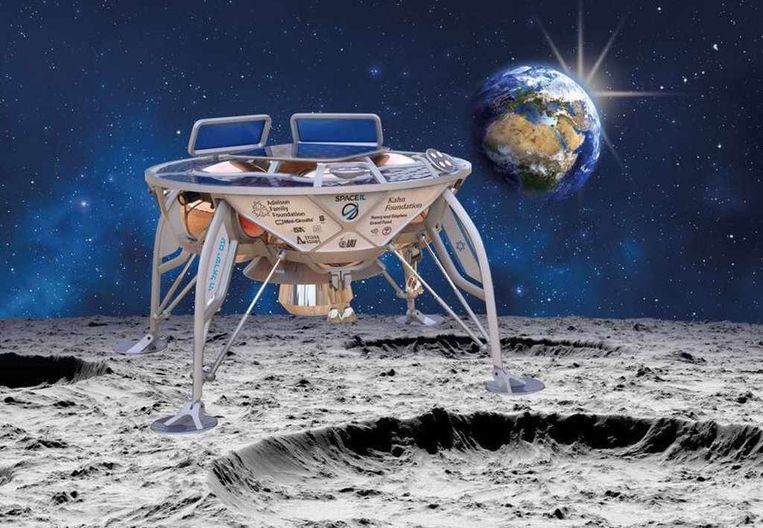
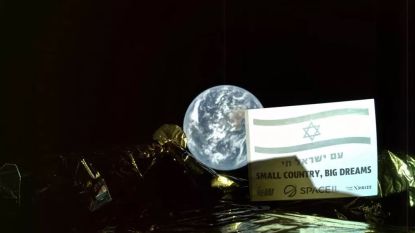
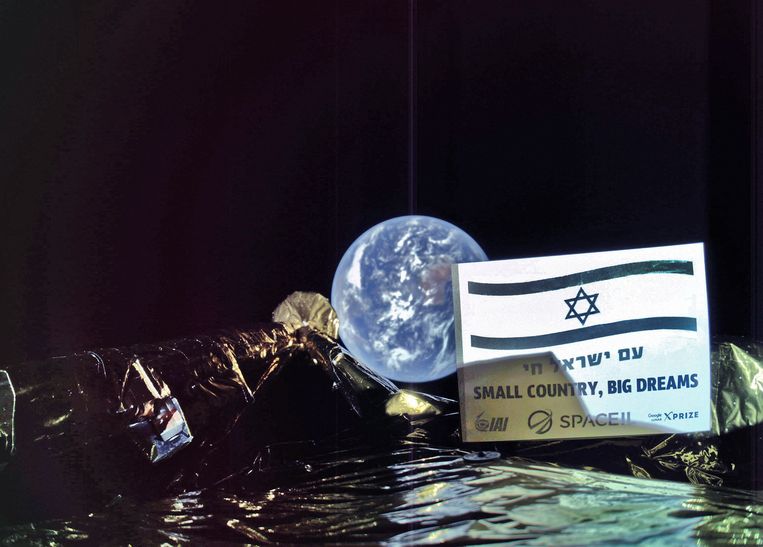




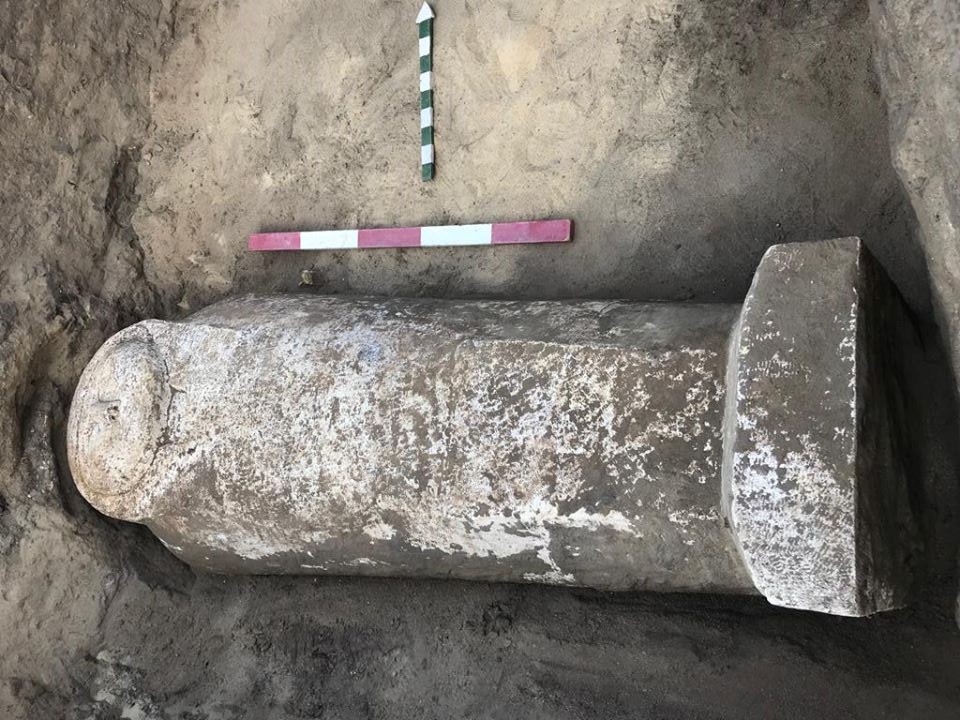




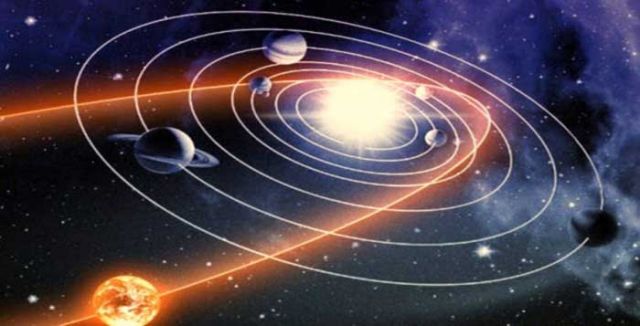
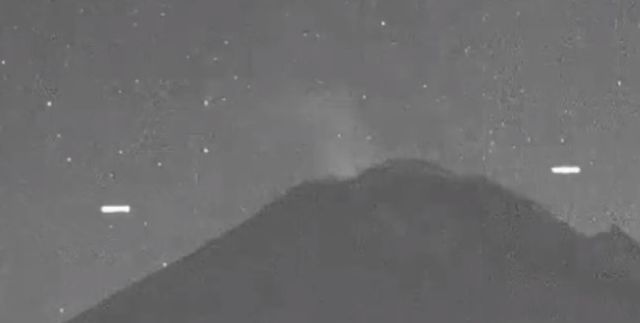



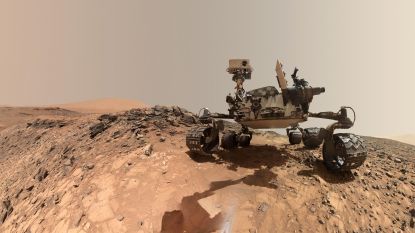

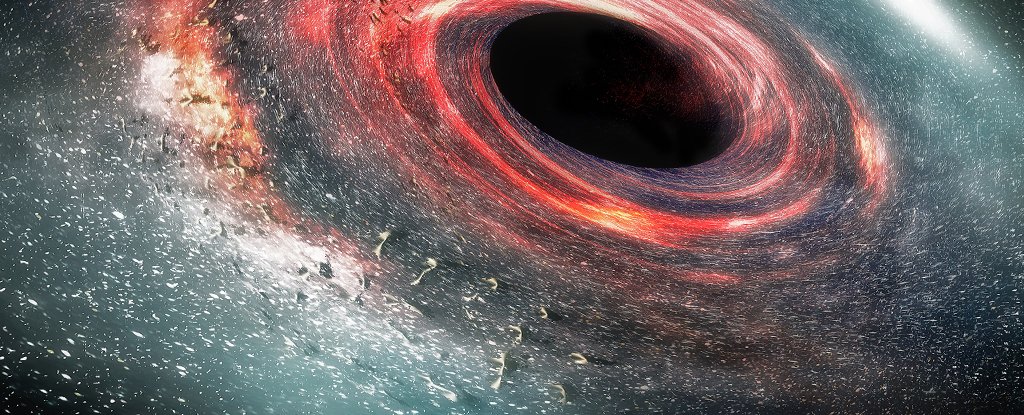










 Google gets creative with April Fool's Day as it adds retro...
 Price of a pint could rise to £10 due to worldwide barley...
 Previously unknown flaw in Intel chips could allow hackers...
 Venus had vast oceans of liquid water billions of years ago...