Ontdek de Fascinerende Wereld van UFO's en UAP's: Jouw Bron voor Onthullende Informatie!
Ben jij ook gefascineerd door het onbekende? Wil je meer weten over UFO's en UAP's, niet alleen in België, maar over de hele wereld? Dan ben je op de juiste plek!
België: Het Kloppend Hart van UFO-onderzoek
In België is BUFON (Belgisch UFO-Netwerk) dé autoriteit op het gebied van UFO-onderzoek. Voor betrouwbare en objectieve informatie over deze intrigerende fenomenen, bezoek je zeker onze Facebook-pagina en deze blog. Maar dat is nog niet alles! Ontdek ook het Belgisch UFO-meldpunt en Caelestia, twee organisaties die diepgaand onderzoek verrichten, al zijn ze soms kritisch of sceptisch.
Nederland: Een Schat aan Informatie
Voor onze Nederlandse buren is er de schitterende website www.ufowijzer.nl, beheerd door Paul Harmans. Deze site biedt een schat aan informatie en artikelen die je niet wilt missen!
Internationaal: MUFON - De Wereldwijde Autoriteit
Neem ook een kijkje bij MUFON (Mutual UFO Network Inc.), een gerenommeerde Amerikaanse UFO-vereniging met afdelingen in de VS en wereldwijd. MUFON is toegewijd aan de wetenschappelijke en analytische studie van het UFO-fenomeen, en hun maandelijkse tijdschrift, The MUFON UFO-Journal, is een must-read voor elke UFO-enthousiasteling. Bezoek hun website op www.mufon.com voor meer informatie.
Samenwerking en Toekomstvisie
Sinds 1 februari 2020 is Pieter niet alleen ex-president van BUFON, maar ook de voormalige nationale directeur van MUFON in Vlaanderen en Nederland. Dit creëert een sterke samenwerking met de Franse MUFON Reseau MUFON/EUROP, wat ons in staat stelt om nog meer waardevolle inzichten te delen.
Let op: Nepprofielen en Nieuwe Groeperingen
Pas op voor een nieuwe groepering die zich ook BUFON noemt, maar geen enkele connectie heeft met onze gevestigde organisatie. Hoewel zij de naam geregistreerd hebben, kunnen ze het rijke verleden en de expertise van onze groep niet evenaren. We wensen hen veel succes, maar we blijven de autoriteit in UFO-onderzoek!
Blijf Op De Hoogte!
Wil jij de laatste nieuwtjes over UFO's, ruimtevaart, archeologie, en meer? Volg ons dan en duik samen met ons in de fascinerende wereld van het onbekende! Sluit je aan bij de gemeenschap van nieuwsgierige geesten die net als jij verlangen naar antwoorden en avonturen in de sterren!
Heb je vragen of wil je meer weten? Aarzel dan niet om contact met ons op te nemen! Samen ontrafelen we het mysterie van de lucht en daarbuiten.
ANCIENT ROMANS landed in America: Staggering discovery will 'change history'
HISTORIANS claim they have found evidence Romans arrived in North America, more than a thousand years before Christopher Columbus set foot on the continent.
Lead historian Jovan Hutton Pulitzer believes the haul is firm evidence the great empire landed there first and is the "single most important discovery" ever for the Americas.
It remains unclear how ancient Romans could have made the epic journey across the Atlantic Ocean but, according to the Ancient Artifact Preservation Society (AAPS), the haul was discovered in a shipwreck off Oak Island on the south shore of Nova Scotia, Canada.
Mr Pulitzer said: "The ceremonial sword is 100 per cent confirmed as Roman.
"I began my forensic work into it using an XRF analyser - which is a leading archaeological tool for analysing metals.
"And we found all these other metals that tell you this was made from ore that came directly from the ground.
"It has the same arsenic and lead signature in it. We've been able to test this sword against another one like it and it matches."
IG
A Roman sword, a legionnaire's whistle, Gold Carthage coins and a Roman shield were found
GETTY
Are these Roman soldiers?
Mr Pulitzer insists that the shipwreck from which the sword was recovered years ago is "beyond a shadow of a doubt Roman."
He said: "We have scanned it, we know exactly where it lays, but it will be a touchy thing for the Canadian Government to allow an archaeological team to survey it.
"I think this is the single most important discovery for the Americas - an event that will re-write history.
"This is a gunshot to be heard around the world. It changes all of our history."
The shipwreck lies near the infamous 'Money Pit' - a 230ft booby-trapped shaft which is thought to contain valuable artefacts.
IG
It remains unclear how ancient Romans could have made the epic journey across the Atlantic Ocean
HALIFAX
Gold Carthage coins were found in Canada
Pulitzer's team also discovered ancient burial mounds in shallow water on the island dating back to less than two centuries after Christ.
Professor James Scherz, from the University of Wisconsin, said: "These mounds are consistent with ancient European and Levant burial mounds, not native American.
"I am in agreement the underwater mounds being of a foreign ancient mariner style and not native to Nova Scotia or traditional North American.
"These mounds, in looking at the known ocean levels for the area, give a possible date of occurring between 1500BC and 180AD."
As well as the graves, the experts also uncovered carved stones on Oak Island that "possess a language from the ancient Levant".
Another clue, in his report, is the presence of an invasive species of plant which was once used by Romans.
GETTY
As well as the graves, the experts also uncovered carved stones on Oak Island
Mr Pulitzer said: "There are also 50 words in the native M'kmaq language.
"These are ancient nautical sailing terms used by ancient mariners from Roman times - but they were not a seafaring culture.
"Another very interesting 'coincidence' is a bush on Oak Island and one on the mainland which is listed in Canada as an invasive species called Berberis Vulgaris.
"This was used by ancient mariners, including Romans, to season their food and fight scurvy.
"It grows in Oak Island and across the way in Halifax. All these things, signs and symbols add up to more than just coincidence."
Other historians dismissed the finding as inaccurate, insisting the artefacts were simply dropped by collectors in modern times.
Mainstream history states Columbus was the first non-indigenous person to arrive in the continent when he landed in the Bahamas in 1492.
However, over the years several radical theories have emerged that the Vikings, the Polynesians and the Chinese, arrived before Columbus.
Mr Pulitzer added: "We have absolutely been lead to believe that nothing happened on this side of the pond before Christopher Columbus.
"I think anything that challenges history is very risky, very dangerous and extremely political.
"I think we should all fight for the truth and people should make up their own minds."
In the southeast region of the country of Brazil lies Guanabara Bay, off the coast of the major metropolis of Rio de Janeiro. It is the second largest bay in Brazil, but other than that there is nothing particularly special about it other than perhaps the large amount of pollution here. However, lying approximately 15 miles offshore, buried down in 100 feet of water across an area around the size of three tennis courts is a rather strange oddity. Here scattered along the bottom are various relics from ancient Rome, far from where they have any business being, and which have remained a baffling historical anomaly and conundrum that remains unsolved.
The unusual spot was originally first discovered in 1976, when some lobster divers reported having come across what appeared to be ancient, barnacle encrusted jars at the bottom of the bay. It wasn’t long before a diver named Jose Roberto Teixeira actually produced two of the strange artifacts, which were found to be a type of tall, tapered ceramic jars with two handles called amphorae, typically used by the ancient Greeks, Romans, and Phoenicians to carry around all manner of things such as wine, oil, water or grain during long sea voyages. This was certainly a rather odd thing to be pulled up from Guanabara Bay, as the first known European presence in Brazil is thought to date back to 1500, when Portuguese navigator Pedro Alvares Cabral reached these shores.
Guanabara Bay
The unusual find caught the attention of author, underwater archeologist, and treasure hunter Robert Marx, who in 1982 decided to try and locate more of the objects, along with the help of Dr. Harold Edgerton of the Massachusetts Institute of Technology. Marx was able to get permission for his expedition from the Brazilian government and then went about combing the bottom of the bay with sophisticated sonar technology, peering down there through the waves to try and catch a glimpse of anomalous history. At first he was actually rather skeptical of the whole thing, thinking that the jars that had been found were hoaxes, but what he found was beyond anything even he could have expected.
After finding a promising spot, Marx dove down to find an accumulation of 200 amphorae found down there in the murky, heavily polluted water, where they had been for thousands of years, some on the surface and others buried deep, covered with muck, barnacles or even ensconced in coral and some of them entirely intact even after so many centuries lying there on the sludge of the bottom. It was a remarkable find to say the least, and it was thought by the team that these jars could not have been planted there in modern times, but were rather from some unknown, hidden past. It was Marx’s speculation that the mysterious jars had come from an ancient Roman ship, and he even claimed that there had been evidence of a possible wooden wreck buried down there, but if this was the case then how did such an ancient voyage manage to make it to Brazil many centuries before the first known European presence here, when the Romans were never known to have made it any farther than India in an era when South America might as well have been another planet across a sea of stars? These were things that Marx wanted to find out, and he went about trying to organize a further expedition to the area to uncover more information and look for any wreck that might be there or any other artifacts such as hull fragments, coins, or weapons, for as he has said, “If authentic, it would be one of the most important discoveries in the field of marine archaeology.”
Amphorae
In the meantime, Marx had the jars studied by experts, claiming that everyone who looked at them confirmed that they were from the 2nd or 3rd century and of Roman origin. One of these experts was a professor of classics and specialist in ancient Roman amphoras at the University of Massachusetts at Amherst a specialist by the name of Elizabeth Will, who has said of them:
The highly publicized amphoras Robert Marx found in the ship are in fact similar in shape to jars produced in kilns at Kouass, on the west coast of Morocco. The Rio jars look to be late versions of those jars, perhaps datable to the third century A.D. I have a large piece of one of the Rio jars, but no labs I have consulted have any clay similar in composition. So the edges of the earth for Rome, beyond India and Scotland and eastern Europe, remain shrouded in mystery.
According to Marx, the jars likely came from a Roman ship that had made it to Brazil, and that it could not have been merely a wandering derelict that had blown away across the ocean unmanned because it had managed to navigate all the way up the bay without crashing on the rocks or reefs along the way. His theory was that it had likely made it to Brazil under human control and then perhaps been blown off course to end up where it had. It was an incredible mystery, and one which Marx had hoped to solve before a series of setbacks kept him from it.
Roman ship
In 1983, the Brazilian government, which had been cooperative up to that point, suddenly and without any real explanation denied Marx’s request for permission to further explore the area. In fact, they even went as far as to ban him from entering the country at all, citing the allegations that he had stolen numerous historical objects from shipwrecks all over the country, and with Guanabara Bay this would extend into a full ban on any underwater exploration by anyone whatsoever. The frustrated Marx then accused the Brazilian government of a cover-up, saying that they were trying to wipe out anything that would clash with the established known history of the country, and this was why no effort had ever been made to investigate the fishermen’s claims in the past. He even went as far as to accuse the Brazilian Navy of burying the jars and possible shipwreck in silt in order to keep them hidden, which they denied.
So what is going on here? How did ancient Roman jars get all the way over in Brazil? Were these from a derelict ship blow out across the sea? Were they from some Roman voyage overseas that actually managed to cross the Atlantic? Is the Brazilian government trying to cover it up and subdue any further research on the matter? Or is it all a hoax perpetrated by Marx? Are the jars really even ancient at all? It is still undetermined, and considering that the area has been closed off to any more expeditions, it seems likely that if there is anything there, then it will remain down there in its watery final resting place for many millennia more, forever eluding answers.
The more we learn about this weird universe of ours, the more we realize just how little we know. Soon after scientists realized that they don’t actually know how the sun works, it seems that another thing we thought was totally settled might be completely wrong as well. A new study seems to show that the universe could bea billion years younger than previously thought. Which is a big deal, as it means that something, somewhere in our model of how the universe works, is broken.
The age of the universe was determined by the European Planck telescope’s measurements of cosmic background radiation in 2013. By measuring the background radiation, astrophysicists could determine the rate that the universe was expanding, and by extension, how long it’s been since the universe was a single point, what we call the “big bang.” The number the Planck telescope came up with was 13.8 billion years. It was a solid answer, and was believed to be almost certainly correct. It only needed to be confirmed by other independent telescopes, pointed at neighboring galaxies. Six years and a whole bunch of data later, it turns out we might not be as smart as we think we are. The data did not confirm the Planck telescope measurements, but instead throws a billion year wrench into the whole thing.
The new data showed that the universe was expanding 9% faster than the Planck telescope showed. That 9% difference in the expansion rate adds up to an age discrepancy of a billion years. According to Nobel prize-winner Adam Riess, who co-authored the new study, they were completely unprepared to deal with such a discrepancy:
“It was getting to the point where we say, ‘Wait a second, we’re not passing this test — we’re failing the test!'”
Alone, Riess’ data would suggest that the universe is only 12.5 to 13 billion years old. So there’s a problem somewhere, but no one knows where it is. Further observation by Riess’ team only confirmed their results, while reanalysis of the Planck data showed there was no problem there either. If the numbers are correct, it means that the problem is in how we’re interpreting them. Riess says:
“This is not just two experiments disagreeing. We are measuring something fundamentally different. One is a measurement of how fast the universe is expanding today, as we see it. The other is a prediction based on the physics of the early universe and on measurements of how fast it ought to be expanding. If these values don’t agree, there becomes a very strong likelihood that we’re missing something in the cosmological model that connects the two eras.”
It’s starting to look like there’s a fundamental problem with our model of the universe. As the competing data is checked and re-checked and neither seem to have any errors, it becomes more and more likely that the problem lies with the underlying theories. According to astrophysicist Jo Dunkley, we don’t have any models of the universe that can account for everything:
“There’s currently no consistent story that works for all our cosmological data. That means there is fascinating work to be done, to see if there is something out there that can explain all of it.”
Maybe there is a “theory of everything,” but it’s safe to say we haven’t found it yet, and it’s a good bet that we’ll be wrong a whole bunch of times before we get it right.
In late 2017, thealleged disclosureof a black budget government research project known as the Advanced Aerospace Threat Identification Program (AATIP) changed the contemporary conversation surrounding UFOs and what the U.S. government may know about them. As it turns out, the Department of Defense is quite aware of many anomalous or otherwise unidentified aerial phenomena whichregularly enter U.S. airspaceand easily outrun the very best aircraft we have. Who knew?
Naturally, there are those within the government who encourage the study of these phenomena and those who want to ignore them. However, there are voices within the intelligence and defense agencies which argue United States government has an obligation to study these phenomena to determine if they pose a threat to American air superiority, the American people, or humanity itself.
That’s according to Chris Mellon, who served for two decades in various intelligence advisory roles within the U.S. government including Deputy Assistant Defense Secretary for Intelligence from 1999 to 2002. Mellon currently serves as “national security affairs adviser” for Tom DeLonge’s To the Stars Academy of Arts and Science and as a consultant on its upcoming History channel series Unidentified. In a new essay published by The Hill, Mellon pulls no punches in declaring prior attempts to study the UFO phenomenon to be failures:
Most Americans would no doubt agree that our inability to identify scores of mysterious aircraft repeatedly violating restricted U.S. military airspace in recent years is a shocking failure.
Mellon argues that given the overwhelming evidence, the United States Congress must act to mandate a report on UAPs, unidentified aerial phenomena. The evidence is clear that these phenomena exist and are much more frequent than we know, Mellon writes, meaning it’s time the government for the government to finally get to the bottom of the UFO phenomenon once and for all:
If UAPs turn out to be toys of Elon Musk’s making, we’ll all breathe a sigh of relief. If they are Russian, we’ll be glad we took action now rather than kicking the can down the road. If we learn that someone else’s more advanced version of our Voyager spacecraft has reached Earth, then this humble measure will forever transform our understanding of the universe and man’s place within it.
Let’s hope they are Elon Musk’s toys. Mellon doesn’t outright call for full disclosure, instead merely arguing that Congress must “require the secretary of Defense and the director of national intelligence to review the UAP issue and deliver a report providing a comprehensive assessment.” It’s unknown if Congressional committees would make such a report public even if it’s ever produced, and Mellon himself argues that the Trump administration “should be free to provide the report at whatever level of classification it deems appropriate,” but come on: why would the government want citizens to know there are freaky outer space gizmos whizzing around overhead that make the F/A-18 look like a failed Wright Brothers model? That’s bad for Boeing sales.
Still, it’s reassuring to see major political publications taking the UAP phenomenon seriously enough to publish such an opinion piece. The timing makes me wonder, though: is all of this merely part of the publicity campaign for the History channel’s upcoming series? History is owned by Hearst and Disney, huge media conglomerates with extensive reach within the media. It’s not too far-fetched to wonder if some strings have been pulled to get this piece published.
Then again, this could be a sign that more voices are joining the chorus calling for disclosure of the government’s UFO research. Are the AATIP revelations a smokescreen or the first taste of public disclosure?
America Before-Exposing the Cover-Up of Ancient Advanced Civilizations
We speak to Graham Hancock about his new book America Before: The Key to Earth’s Lost Civilization.
Graham Hancock discusses how dogmatism in archaeology has covered up 130,000 years of human history in the Americas and evidence of advanced civilizations that lived in the Americas thousands of years ago, which challenges colonial narratives of uncivilized natives incapable of high culture.
SpaceX alien shock: UFO-hunters spot SPACESHIP during International Space Station link-up
ALIEN hunters were sent into a frenzy when they saw what they believe to be a UFO zooming past SpaceX’s Dragon as it latched onto the International Space Station (ISS).
In early December, 2018, SpaceX successfully ferried 2.5 tonnes of supplies to the the orbiting laboratory, including materials to support 250 experiments on its Dragon spaceship. However, while Dragon was latching onto the ISS to deliver the supplies, eagle-eyed viewers believe they spotted something in the distance. As seen on a NASA live feed from the ISS, what looks like three red lights in a triangular formation appear to slowly move by in the background.
Conspiracy theorists had a field day, with some categorically stating it is evidence of an alien spaceship.
According to alien hunters UFO Today, the sighting is evidence that extraterrestrials were observing the mission.
UFO Today said: “At the beginning of the video we suddenly see a large triangular object flying behind the dragon capsule.
“This object was triangular in shape and it was emitting light in several places, probably it's propulsion system. This UFO could investigating the dragon capsule in space.
The alleged UFO
(Image: YOUTUBE)
“Could this be first contact in space?”
However, others have offered a more logical explanation.
One user on Reddit wrote: “That’s just moonlight reflecting off the camera’s internal lenses.”
Wirmish wrote on YouTube: “It's a piece of gold foil used to protect satellite hardware from the heat.
SpaceX alien shock: UFO-hunters spot SPACESHIP during International Space Station link-up
(Image: GETTY)
“Russian astronauts worked outside the space station three days before.”
Scientists who have worked for NASA in the past have a much simpler explanation for all of the bizarre UFO sightings reported.
According to former NASA engineer James Oberg, most UFO sightings are nothing more than “space dandruff” floating in front of cameras.
SpaceX successfully ferried 2.5 tonnes of supplies to the the ISS
(Image: GETTY)
These specks of dandruff can be anything from bits of chipped paint drifting aimlessly in zero gravity, flakes of ice or ISS insulation that has broken off.
He said: “I’ve had enough experience with real spaceflight to realise that what's being seen in many videos is nothing beyond the 'norm' from fully mundane phenomena occurring in unearthly settings.”
Mr Oberg argued the human brain is not wired to make sense of these tiny objects floating above Earth.
At some point, humans might settle Mars. But according to an evolutionary biologist, babies born on the Red Planet will look, function, and behave dramatically different from Earthlings — and all within a few generations.
Credit: Wikimedia Commons.
Tech entrepreneurs and technologists like Elon Musk or Jeff Bezos love to talk about our species’ future as a multi-planetary species. And to be fair, they’re actually making important contributions to turn this vision into a reality. But while there’s a lot of focus on the technology that might take us to places such as Mars, not nearly as much thought seems to be given to what happens once we actually get there.
Mars is the most Earth-like planet in the solar system, so it makes sense to make it the first target for an off-world colony. Similar to Earth, Mars has a pair of polar ice caps. Its north pole is made up of a sheet of ice water that is 1.8 miles thick. The sheet at the opposite pole is even thicker, and made mostly of carbon dioxide ice.
There are also important differences between the two worlds. The planet is smaller than ours, with a diameter of approximately 4,200 miles, and the air is comprised mainly of carbon dioxide — it makes up 95 % of the atmosphere. Temperatures on Mars regularly reach a chilling -195 degrees Fahrenheit (-125 degrees Celsius), making living on its surface virtually impossible.
Mars used to support volcanic activity (Mars is home to the largest volcanoes on any planet in our solar system) during a time when water in its liquid phase is believed to have been quite plentiful. In addition, Mars had a thick atmosphere and a magnetic field which would have been capable of shielding the cold surface from dangerous levels of radiation — but not anymore.
Homo martianus
Any human colonists settling Mars would have to be confined to a relatively small habitat where they’d be subject to significantly higher radiation and more difficult living conditions than on Earth. In time, natural selection would amplify certain traits in the Martian population that would considerably differentiate humans born on the Red Planet from Earthlings. And according to Scott Solomon, a Rice University professor of evolutionary biology, this could happen within just a couple of generations.
“Evolution is faster or slower depending on how much of an advantage there is to having a certain mutation,” Solomon told Inverse. “If a mutation pops up for people living on Mars, and it gives them a 50-percent survival advantage, that’s a huge advantage, right? And that means that those individuals are going to be passing those genes on at a much higher rate than they otherwise would have.”
Among other things, Solomon expects Martians will develop the following traits:
Denser and more brittle bones due to Mars’ weaker gravity, which is just a third that of Earth’s.
Near-sightedness since people won’t have to see as far as they would on Earth. Solomon cites studies of cavefish living in deep trenches that have gone blind in pitch black darkness and of children who spent more time indoors, making them far more likely to become near-sighted.
Altered skin tone in response to high levels of radiation. On Earth, human skin contains a pigment called melanin that protects us from ultraviolet rays. People with more melanin in their skin have a darker skin tone. To fight off radiation, Martians might evolve an entirely new type of pigment so it might not be that far-fetched to imagine Martians with a skin tone that doesn’t exist yet.
Enhanced oxygen intake. Martian settlers will have to learn to use oxygen more efficiently and will perhaps adapt traits similar to humans living on the Tibetan plateau where oxygen is 40% lower than at sea level. To cope, Tibetans have denser capillaries that are better at moving blood and altered metabolism that limits the amount of body fat burned while maximizing glucose consumption.
Poor immune system — or none at all. Solomon thinks that the Martian sterile environment might make an immune system obsolete. With no immune system, Martians would have to be off limits from germ-carrying Earthlings, which means that the two populations would have to stop mingling. This also means that at some point there would be no more traveling between the two worlds — and there would certainly be no more sex between them. Lacking any gene flow, in time the two populations would diverge so much that speciation would become inevitable — Homo martianus?
These changes could happen very quickly, spurred by radiation which enhances genetic mutations, but also by artificial means through gene editing tools like CRISPR/Cas9.
According to Solomon, the ideal human colony should number around 100,000 people from all corners of the globe, especially those from Africa who are the most genetically diverse. This is in order to ensure a healthy genetic diversity.
Some hope that we might one-day terraform Mars to make it a second Earth. But even if such an ambitious undertaking were possible, it would still take centuries to complete — ample breeding time for Martian settlers to comfortably drift away from humanity.
You can learn more about how humans on Mars might change over the generations from Solomon’s 2018 TEDx speech.
Scientists have set their sights on getting humans to Mars — and maybe even terraforming the Red Planet. SpaceX CEO Elon Musk’s goal is tosend humans to Mars by 2024, andNASA plans to launch astronauts there after the Moon.
But despite the resources being funneled into technology to transport us to the Red Planet, we don’t yet understand the evolutionary implications the move will have on the human body. In a new interview with Inverse, evolutionary biologist and Rice University professor Scott Solomon thinks it’s worth asking what will happen to Mars colonists in the long term — as mutations start to cascade through the gene pool.
“What’s interesting to me as an evolutionary biologist is thinking about, what if we’re actually successful?” he asked the site. “I don’t think there has been nearly as much discussion about what would become of the people that are living in these colonies generations later.”
Genetic Jumble
In January 2018, Solomon gave a TEDx talk in Houston that outlined the evolutionary changes the first Martian settlers will likely experience. After about two generations, he thinks their bones will strengthen, they’ll need glasses for nearsightedness, their immune systems will be null, pregnancy and childbirth will be significantly more perilous, and the exposure to radiation—more than 5,000 times the amount we’re exposed to on Earth during a normal lifetime, Solomon says—could lead to an influx of cancer.
Most importantly, though? Solomon argues that Martians should stop reproducing with Earth-humans.
“Evolution is faster or slower depending on how much of an advantage there is to having a certain mutation,” Solomon says in the video. So, if humans on Mars gain a mutation that raises their survival advantage, that’s a good thing — but Solomon says they’ll be “passing those genes on at a much higher rate than they otherwise would have.”
Pop Cap
Contact with Earthlings could even be deadly for Martians — and vice versa. Mars doesn’t have any microorganisms to carry disease, and so if cross contamination between Earth and Mars is controlled, Solomon explains that all infectious disease could be eliminated — meaning there should be no intimate connection between the two groups.
But all mutation isn’t bad. Every new baby on Earth is born with 60 new mutations, a number which Solomon says will jump to the thousands on Mars. By mutating, humans on Mars would gain critical, life-saving benefits to cope with the brutal planet: a different skin tone to protect from radiation, less reliance on oxygen to adapt to the thin atmosphere, denser bones to counteract calcium loss during pregnancy.
CRISPR Drawer
Solomon even suggests that we could use CRISPR to more purposefully design these helpful mutations.
Maybe it’s sadly ironic. If Earth becomes uninhabitable and we look to other planets for a new home, the only way to ensure the long term survival of the human species might be to become a completely different species.
“If we eventually come to inhabit multiple worlds scattered across the gallery, over time, we may see the evolution of a plethora of new human species,” Solomon said. “We should recognize that here could be unintended consequences for who our decedents become many generations from now.”
Did you know that there are forests in the Arctic?
Lush underwater forests of large brown seaweeds (kelps) are particularly striking in the Arctic, especially in contrast to the land where ice scour (scraping of sea ice against the sea floor) and harsh climates leave the ground barren with little vegetation.
Kelp forests have been observed throughout the Arctic by Inuit, researchers and polar explorers. The Canadian Arctic alone represents 10 percent of the world’s coastlines, but we know little of the hidden kelp forests there.
Today, climate change is altering marine habitats such as kelp forests on a global scale. In western Australia, eastern Canada, southern Europe, northern California and eastern United States, kelps are disappearing due to warming temperatures. In other areas, kelps are being heavily over-grazed by sea urchins. Coastal conditions in the Arctic are changing dramatically and the region is warming faster than the rest of the world, but these changes could actually be good for kelp.
Yet we know little about kelp forests in remote Arctic regions. Our latest research, published in Global Change Biology, uncovers the distribution of Arctic kelp forests and explores how these important ecosystems are changing with the climate.
Proliferation of kelps in the Arctic
Kelps currently occur on rocky coasts throughout the Arctic. The longest kelp recorded in the Arctic in Canada was 15 meters, and the deepest was found at 60-meter depth (Disko Bay, Greenland). Many find it surprising that marine plants can grow so well in harsh Arctic environments.
Photographs show examples of Arctic kelp forests: (A) Alaria esculenta in Greenland, (B) Laminaria solidungula in the Beaufort Sea, Alaska (Ken Dunton), (C) Laminaria hyperborea in Malangen fjord, Norway (Karen Filbee-Dexter), (D) Saccharina latissima on sediment in Russia, (E) Agarum clathratum and (F) mixed Saccharina latissima, S. longicruris, Alaria esculenta, Laminaria solidungula in Baffin Island, Canada (Frithjof Küpper), (G) Eularia fistulosa in Aleutian Islands, Alaska (Pike Spector), (H) Laminaria hyperborea in Murmansk, Russia (Dalnie Zelentsy), (I) Laminaria digitata in Svalbard, Norway (Max Schwanitz).
Image via Karen Filbee-Dexter.
Kelps have adapted to the severe conditions. These cool water species have special strategies to survive freezing temperatures and long periods of darkness, and even grow under sea ice. In regions with cold, nutrient-rich water, they can attain some of the highest rates of primary production of any natural ecosystem on Earth.
Kelps function underwater in the same way trees do on land. They create habitat and modify the physical environment by shading light and softening waves. The underwater forests that kelps create are used by many animals for shelter and food. More than 350 different species — up to 100,000 small invertebrates — can live on a single kelp plant, and many fish, birds and mammals depend on the whole forest. Kelp forests also help protect coastlines by decreasing the power of waves during storms and reducing coastal erosion. A lot of kelp break off or are dislodged from the rock they attach to and end up in nearby habitats where they fuel deep food webs.
Changing climates, forests
As waters warm and sea ice retreats, more light will reach the seafloor, which will benefit marine plants. Researchers predict a northern shift of kelp forests as ice retreats.
Genetic evidence reveals that most kelps reinvaded the Arctic from the Atlantic Ocean quite recently (approximately 8,000 years ago, following the last Ice Age). As a result, most kelps in the Arctic are living in waters colder than their optimal temperature. Ocean warming will also move conditions closer to temperatures of maximum growth, and could increase the productivity of these habitats.
However, other changes are happening in the Arctic that complicate this picture. In Canada, Alaska, Greenland, Norway and Siberia, permafrost soils that have been frozen for thousands of years are receding by half a meter per year. Thawing permafrost and crumbling Arctic coasts are dumping sediments into coastal waters at alarming rates, which blocks light and could limit plant growth. The run-off from melting glaciers will also lower salinity and increase turbidity, which impacts young kelp.
Understanding kelp forests
The Canadian Arctic is the longest Arctic coastline in the world. The earliest scientific records of kelp in the Arctic are from Canada during expeditions in search of the Northwest Passage. In Hudson Bay and eastern Canada, kelp forests have been scientifically documented between Ellesmere Island and Labrador, and along coasts in Lancaster Sound, Ungava Bay, Hudson Bay, Baffin Bay and Resolute Bay.
In the northwestern Canadian Arctic, lack of rock substrate and a harsher climate support smaller, fragmented kelp forests. However, baseline measures of the extent of kelp communities are missing in many areas. Unfortunately, lack of information has already made it difficult to tell how kelp forests are changing.
Locations of kelp forests in the Arctic. Based on 1,179 scientific records.
Image via Karen Filbee-Dexter.
Today, a number of researchers in Canada have partnered with northern communities and organizations to study kelp in the Arctic. The five-year ArcticKelp Project, for example, explores future changes and opportunities these ecosystems could provide. At the same time new technology (underwater lasers) is being developed in collaboration with Inuit fishers to map kelp forests in the Arctic. This is important, because knowledge of Arctic kelp forests could help northern communities and societies anticipate and benefit from these valuable changing ecosystems.
Forest potential
Kelp forests throughout the world play an important role in coastal economies, supporting a broad range of tourism, recreational and commercial activities. Kelp is making its way onto the plates of North Americans, and the kelp aquaculture industry is growing at a rate of seven percent per year for the last 20 years globally (kelp is a coveted food source in many countries, full of potassium, iron, calcium, fibre and iodine). In the Arctic, Inuit traditionally use kelp as food and wild harvest numerous species.
Arctic kelp forests provide a key example of the diverse responses to climate change. Predictive models and experiments suggest that Arctic coasts are in line to become one of the most impacted environments in the world under changing climate. Yet the possible expansion of kelp forests should provide new habitats for fish and other marine organisms, and enhance a suite of valuable ecosystem services along Arctic coastlines.
This expanding resource may provide needed income to northern communities whose livelihoods are threatened by climate change and other impacts. Anticipating these changes and understanding these new ecosystems will be a key priority for Arctic nations. Just because you cannot see the forests growing in the Arctic does not mean we should not appreciate them and recognize the crucial role they play in the ocean.
At the end of 2017, The New York Times broke the story of a secretive Pentagon program with a budget of $22 million to investigate UFOs called the Advanced Aerospace Threat Identification Program (AATIP). The man who exposed the existence of the program, Luis Elizondo, was the former head of the project. Elizondo’s ongoing efforts to investigate the UFO mystery with his new employer, the To the Stars Academy (TTSA), will be featured in a History Channel series premiering May 31 called Unidentified: Inside America’s UFO Investigation.
However, what The New York Times apparently did not know when they published their story is that the program went by a different name at its inception, and the scope of the program was much broader than just UFOs. In fact, according to a senior manager on the project, the investigations included “bizarre creatures, poltergeist activity, invisible entities, orbs of light, animal and human injuries and much more.”
It is unknown whether Unidentified will cover the paranormal aspects of the program. Although Elizondo did work with this paranormal project, he only worked in the UFO division. By the time he was the head of the entire program, the UFO division was all that was left. The rest of the program had been shut down, and you will never guess why. It wasn’t because people inside the Department of Defense (DoD) thought the program was too weird, although some did. It was shut down because of demonic forces.
Don’t worry, demons didn't attack the Pentagon, but apparently, some people inside the government were afraid the potentially paranormal incidents being investigated could be demonic, especially scary occurrences taking place at a ranch in Utah, and they wanted no part of it. They didn’t want the government messing with demons either, so they lobbied for the program to be ended and it was.
This may sound extremely odd, but according to those involved, it's true.
The New York Timesstory that broke the Pentagon UFO program began when an official with the Defense Intelligence Agency (DIA) approached Las Vegas billionaire Robert Bigelow “to visit Mr. Bigelow’s ranch in Utah, where he conducted research.”
That sounds innocent enough, but what the article did not cover is what Bigelow researched at this ranch in Utah. Bigelow was known for his interest in the paranormal and UFOs, and by the time the DIA official had approached him, Bigelow had already spent decades and large sums of money researching the paranormal. Bigelow’s first significant foray into the unknown was an organization created in 1995 called the National Institute for Discovery Sciences (NIDS). Its purpose was to conduct scientific investigations of the paranormal.
After hearing rumors about paranormal phenomena occurring in the Uintah Basin in Utah, primarily focused on Skinwalker Ranch, Bigelow bought the ranch in 1996. It was the perfect place to conduct NIDS investigations. The ranchers who owned the property stayed for a while but left because they did not feel comfortable there. If their stories are to be believed, they had good reason to go.
The family, using the pseudonym Gorman, said they had several terrifying experiences. Among them was the sighting of a giant wolf-like creature that attacked cattle, could withstand multiple point-blank gunshots and seemed to disappear into thin air. The incident that caused them to leave for good, however, was when their beloved dogs chased glowing orbs of light into the forest at night never to be seen again.
The NIDS investigators had their share of experiences as well. As detailed in Knapp and Kelleher’s book, the strangest occurred in the middle of the night while two researchers were observing the ranch from the edge of a bluff. As they were packing up to leave at around 2:30 am, one of them noticed a light in the forest below. At first, they thought it might be a reflection. However, as they watched, the light began to grow. Once it became a couple of feet wide, they say it looked like a tunnel opening up, and they saw a creature within. It was large and black with no face. It crawled out of the light and into the dark forest. The light then began to disappear until it was gone.
Kelleher said years ago he felt whatever was going on at the Skinwalker Ranch outsmarted them and anticipated their actions.
John Alexander, a retired Colonel in U.S. Army Intelligence who also spent time working at Los Alamos Laboratories and still does some work as a defense consultant, helped organize NIDS investigations. In a YouTube interview for OpenMinds.tv in 2013, he describes what they encountered at the ranch as a “precognitive sentient phenomena.”
“What we learned was that the events were real and tangible, and definitely occurring,” Alexander explained. “These weren’t figments of someone’s imagination, or folklore or any of these sorts of things.”
“But, as for the etiology, nope,” says Alexander. ”We remained mystified.”
According to a recent interview with Knapp, Investigations into the ranch petered as the paranormal phenomena occurring on the ranch also waned. By the early 2000s, not much was going on. It was during this lull that Bigelow allowed Knapp to begin working on the book. Once the book was published, it brought a lot of attention to the ranch, but paranormal experiences were still rare.
So when the DIA official approached Bigelow in 2007 to visit the ranch, no one thought there would be anything to worry about. However, precognitive sentient forces on the ranch had other plans. Soon after arriving at the ranch, the DIA official had a paranormal encounter that Knapp described as “remarkable, and it made a very big impression on this guy.”
The New York Times says shortly after this visit, DIA officials met with Senator Harry Reid because they wanted to start a research program. It turns out Reid, a friend of Bigelow’s, was kept in the loop regarding Bigelow’s work researching the paranormal because he shared Bigelow’s interest in the topic.
Reid then found bipartisan support from a couple of fellow members of Congress, secured the funding, and got the project launched - all within 2007. Soon after, a requisition for a contractor to conduct research for the program was posted, and Bigelow’s Bigelow Aerospace won it. Bigelow created Bigelow Aerospace Advanced Space Studies (BAASS), lead by Kelleher, to manage the contract.
However, the project was not called AATIP, as The New York Times reported. Per Knapp and documents he obtained, it was called the Advanced Aerospace Weapons System (AAWSAP), and it was set up to investigate not just UFOs, but primarily all of the weird stuff going on at the Skinwalker Ranch, including that list of weirdness at the beginning of this story.
Due to the nature of the project, it was kept as quiet as possible. Few in Congress knew it existed. However, it didn’t take long for religious factions within the government to raise concerns.
“They’re basically high-level people in different intelligence agencies who are fundamentalist Christians; who think that anything involving UFOs and the paranormal is satanic,” says Knapp.
“Certain senior government officials thought our collection of facts on Unidentified Aerial Phenomena (UAP) was dangerous to their philosophical beliefs,” Elizondo wrote in a post on Medium. “They decided the data was a threat to their belief system.”
Elizondo explained to Den of Geek that by 2008, the negative attention their paranormal investigations received caused them to create a sub-group inside of AAWSAP that only focused on military UFO cases. This was AATIP. When Elizondo joined AAWSAP (the paranormal program), it was to work with AATIP (the UFO division). Eventually, the DIA closed AAWSAP, and only AATIP remained. Elizondo took over leadership of AATIP in 2010.
As for The New York Times, one of the authors of the article, Leslie Kean, told me via email "at the time, our focus was AATIP. This was the name on the documents that we had, and this is what Lue Elizondo had talked to us about in interviews with him, as did others associated with the program." Elizondo says that since his involvement was primarily with AATIP and the UFO side of things, he did not feel at liberty to share AAWSAP information with them.
Filmmaker Jeremy Corbell has recently completed a documentary titled Hunt for the Skinwalker. He worked with Knapp, who intended to make a film when the book came out in 2005. The footage Knapp obtained back then is a large part of the new documentary.
“That $22 million that was created to study the phenomenon was really inspired wholly by Skinwalker Ranch and what Bigelow had been doing there privately with NIDS,” Corbell told this reporter in a recent podcast interview. “The public is going to see by watching this film that connection very clearly and yes, our Department of Defense, specifically the intelligence organization within the Department of Defense, the Defense Intelligence Agency (DIA), they took this very seriously...Secrets have been kept, big secrets about this ranch for more than, I would say, two decades, and everybody wondered what has been going on there,” says Corbell. “This has been embargoed, this information. All of that has changed, and this story can now be told.”
These stories, although they sound fictional, are accounts from credible sources, and according to Corbell, Knapp, and Elizondo, there are still more shocking revelations to come. Elizondo recently told Den of Geek, “You ain't seen nothing yet, baby!”
Those of us following this story have been wondering when the time will come for us to find out more. Elizondo says much of what we have been waiting for will be included in the History Channel series Unidentified: Inside America’s UFO Investigation premiering May 31.
Amerikaanse overheid beëindigt paranormaal UFO-project vanwege demonische krachten. Dit lijkt op sciencefiction, maar is het niet
Eind 2017 onthulde de New York Times dat het Pentagon in het geheim onderzoek deed naar UFO’s.
Wat daarbij niet werd vermeld is dat het project ook bizarre wezens, klopgeesten, onzichtbare entiteiten en lichtbollen omvatte.
De man die aan het hoofd stond van het paranormale project, Luis Elizondo, richtte zich alleen op het UFO-fenomeen.
Demonische krachten
Tegen de tijd dat hij werd aangewezen als projectleider, bestond alleen de UFO-afdeling nog. De rest van het programma was beëindigd, vanwege demonische krachten. Dat lees je goed.
Sommige overheidsfunctionarissen waren bang dat de paranormale incidenten die werden onderzocht, demonisch konden zijn en wilden er niets mee te maken hebben.
Ze hadden vooral moeite met vreemde gebeurtenissen op een ranch in Utah.
De functionarissen lobbyden actief om het programma te laten beëindigen en zo geschiedde.
Lichtbollen
De bewuste ranch is van miljardair Robert Bigelow, die zelf nauw betrokken was bij het geheime project.
Bigelow werd benaderd door een functionaris van de Amerikaanse militaire inlichtingendienst DIA, die de ranch – bijgenaamd Skinwalker Ranch – wilde bezoeken.
Op de ranch werd onder meer een gigantisch wolfachtig wezen gezien dat koeien aanviel en in het niets leek te verdwijnen.
Ook werden er ’s nachts lichtbollen gezien in het nabijgelegen bos.
Geen hersenspinsels
Twee wetenschappers zagen zo’n lichtbol in het bos en dachten in eerste instantie dat het een reflectie was.
Het licht werd groter en deed denken aan een tunnel die openging. Middenin de bol zagen ze een groot, zwart wezen zonder gezicht.
De gepensioneerde kolonel John Alexander, die het onderzoek op de ranch overzag, zei: “De gebeurtenissen vonden echt plaats. Het waren geen hersenspinsels of zo.”
Hij voegde toe dat ze nog altijd niet weten wat het is geweest.
Gevaar
Het duurde niet lang voordat de religieuze facties binnen de overheid lucht kregen van het onderzoek.
“Het gaat hierbij om hooggeplaatste mensen in verschillende inlichtingendiensten, fundamentalistische christenen, die denken dat alles wat met UFO’s te maken heeft satanisch is,” zei journalist George Knapp.
“Bepaalde overheidsfunctionarissen vond dat onze verzameling feiten over UFO’s een gevaar vormde voor hun overtuigingen,” zei Elizondo.
“Ze kwamen tot de conclusie dat de informatie een bedreiging vormde voor hun geloofssysteem,” vervolgde hij.
Onderzoekers stuiten op geschokte kwarts in cenote in Mexico. Kan het worden gebruikt bij het vormen van wormgaten?
Eind negentiende eeuw was de algemene opvatting dat er in de diepzee geen leven zou kunnen bestaan. In maart 1875 werd ontdekt dat het diep in de oceanen wemelt van leven.
Er werden bijna 5000 nieuwe diersoorten gevonden. Men sprak van een wetenschappelijke revolutie.
Daarnaast werden op de zeebodem de eerste micrometeorieten van nikkelijzer ontdekt, afkomstig uit de ruimte.
Buitenaards leven
Volgens sommige wetenschappers kunnen deze bolletjes buitenaards leven bevatten.
Zij stellen dat microben duizenden tot wel miljoenen jaren kunnen overleven in zulke meteorieten.
Professor Leonid Moroz van de Universiteit van Florida merkte op dat het aardoppervlak voor 75 procent is bedekt met water in de vorm van zeeën en oceanen en dat we nog maar 10 procent van al het zeeleven in kaart hebben gebracht.
Geschokte kwarts
In een cenote, de naam voor ondergelopen grotten, in het Mexicaanse Tulum is verder geschokte kwarts ontdekt.
Deze vorm van kwarts bevat structuren die zijn ontstaan onder extreem hoge druk maar lage temperatuur, en komt ook voor binnen inslagkraters van meteorieten.
Wormgaten
Sommige onderzoekers zijn van mening dat dergelijk kwarts kan worden gebruikt bij het vormen van wormgaten.
Deze wormgaten zouden vervolgens gebruikt kunnen worden voor interdimensionale reizen.
Bob Lazar: 30-Year Anniversary of Interview on Area 51
A new report from George Knapp and KLAS-TV’s I-Team looks back at the 30th anniversary of their original Bob Lazar interview. Interestingly, what Lazar described back in 1989 bears some resemblance to properties of UFOs in the Pentagon videos released in 2017 and the possible use of mysterious “meta-materials.” Source.
Robert Scott Lazar claims to have worked on reverse engineering extraterrestrial technology at a site called S-4, near the Area 51 test facility, and that the UFOs use gravity wave propulsion. This is powered by the element 115.Wikipedia
“Since 2015, dozens of Navy F-18 fighter jets have encountered Unidentified Aerial Phenomenon (UAPs) – once commonly referred to as UFOs – off the East Coast of the United States, some not far from the nation’s capital. Encounters have been reported by other military aircraft and civilian airliners elsewhere in the U.S. and abroad, too, including videos shot by airline passengers.
What these UAPs were and who was flying them – whether friends, foes or unknown forces – remains a mystery. Yet careful examination of the data inevitably leads to one possible, disturbing conclusion: A potential adversary of the United States has mastered technologies we do not yet understand, to achieve capabilities we cannot yet match. It is long past time for Congress to discover the answers to those questions, and to share at least some of its conclusions with the public.
Unfortunately, it is impossible to gauge the overall level of UAP activity, since military personnel rarely report their encounters for fear of damage to their careers. Even when reports are filed, the information generally is ignored because nobody “owns” the UAP issue, and the various commands and agencies involved have not shared information on UAPs.
It remains to be seen whether the Navy’s new UAP reporting process will be emulated throughout our massive, almost feudal security apparatus in which the barons sometimes spend more time protecting bureaucratic turf from rivals than protecting U.S. territory from adversaries. Thus, any genuine solution to the UAP issue must address the issue of interagency coordination and collaboration.
The good news is that America already possesses vast sensor networks, ranging from the depths of the oceans to the harsh bleakness of space, capable of collecting the requisite information. All that Congress need do at this juncture is to require the Secretary of Defense and the Director of National Intelligence to review the UAP issue and deliver a report providing a comprehensive assessment. This report should include not only an estimate of the situation but a description of the structure and processes required to ensure effective collection and analysis going forward.
The Trump administration should be free to provide the report at whatever level of classification it deems appropriate. One entity with which I am involved – To the Stars Academy (TTSA), an organization of former U.S. intelligence and national security experts analyzing the UAP phenomenon – has placed notional legislative language on its website to facilitate this discussion. While some modest manpower costs might be incurred, the TTSA proposal does not require new Defense Department funding. It also averts the spectacle of public hearings and the attendant risk of injecting partisanship or grandstanding into the process.
Why should Congress act? In the first instance because it is Congress’s job to raise, organize and fund the military. It can hardly do so without being fully aware of the threats we face. Indeed, that is why we have a law requiring written notice to Congress of serious intelligence failures. Most Americans would no doubt agree that our inability to identify scores of mysterious aircraft repeatedly violating restricted U.S. military airspace in recent years is a shocking failure. But there is no need to wrangle over compliance with intelligence oversight laws. The Navy’s recent admissions regarding UAP intrusions provide more than adequate grounds for requiring a written report to Congress.
Perhaps we’ll learn that Russian President Vladimir Putin was not idly boasting when he bragged, more than a decade ago, that Russia’s “newest technical systems will be capable of destroying targets at an intercontinental distance with hypersonic speed and extreme maneuverability.” While it seems unlikely that Russia – or China – has pulled that far ahead of the U.S., there is no reason to leave this to chance. And while the Navy’s announcement seems to eliminate the prospect that these vehicles are secret U.S. military aircraft, perhaps we’ll find that Elon Musk has some amazing new toys.
It is not just that the UAPs which military pilots are encountering are strange – no paint, rivets, wings, antenna, safety lights, transponders or exhaust – they sometimes are so fast and maneuverable that they defy our understanding of physics. For example, some of these vehicles appear to withstand forces of acceleration far greater than maximum design limits of any man-made aircraft. No wonder some military witnesses – often, pilots who are scientists or engineers themselves – actually lean towards the hypothesis that they are not from this world. Like all good scientists, these pilots recognize that our theories must adjust to facts and new information, however daunting, not the other way around.
If our best minds were brought to bear to study the technology confronting us, much as the Japanese did in the 1850s when confronted by Admiral Perry’s fleet, then unprecedented technological breakthroughs could occur in short order. For example, the fact that these craft do not seem to produce exhaust, yet fly vast distances at immense speeds, could provide technical solutions to our energy crisis.
Some of America’s finest aviators and air defense personnel are trying to get our attention. They are not panicked – but they are right to be concerned. It seems clear the facts demand further action. In light of the facts, a mere report requirement seems a very modest response to potentially disturbing new national security information.
If UAPs turn out to be toys of Elon Musk’s making, we’ll all breathe a sigh of relief. If they are Russian, we’ll be glad we took action now rather than kicking the can down the road. If we learn that someone else’s more advanced version of our Voyager spacecraft has reached Earth, then this humble measure will forever transform our understanding of the universe and man’s place within it. By any measure, the effort required to prepare a report for Congress seems to be a bargain.”
Is there evidence of a lost city of ancient giants hidden beneath The Empty Quarter bordering Saudi Arabia and Oman. And could this city be linked to the ‘Works of the Old Men’, mysterious geoglyphs found in Jordan? This is part two of our look at Lovecraftian connections to Middle Eastern folklore.
The tribe of iram was a subset of nation of Aad and it is to this tribe that Hud (AS) was specifically sent to, i believe because they were the cause of all evil in the land at that time. They were the ancestors to the nation of Thamood, which was also a nation of giants, to which Saleh (AS) was sent.Both these nations were given the powers of strength, knowledge and financial acumen and they were a proud people.
Both the nations were destroyed because they were idolators and indulged in self worship, meaning the rich in their society were worshiped by the poor. In Ahadees this entire land was regarded as cursed and was prohibited from being visited in general. The people of iram were the first people to indulge in idol worshiping and all sorts of evils after the destruction of the people of Nuh (AS) and the great flood, which is the main reason Hud (AS) was sent to them. Bilal S.
There are paranormal sightings that make you want to know more in the hopes that they’re truly real. Then there are paranormal sightings that make you go “Really?” These three recent, well-publicized sightings are varying degrees of “Really?” and are presented to show just how hard it’s becoming to prove the existence of cryptids, aliens and otherworldly things while the mass media has discovered the attraction of publicizing highly skeptical events in the name of paranormal reality.
Case One is the alleged Chupacabra sighting in Houston reported by multiple local media outlets. This one was the typical Texas-style Chupacabra – a mangy-looking canine-ish creature staggering through the brush on the west side of this heavily populated and increasingly urbanized city in a manner that suggests a sick animal looking for comfort or a secluded place to suffer in peace – not a blood-sucking, vicious cryptid looking for fresh goats, livestock or pets. (See the picture and coverage here.) This is the same city where a starving pet tigerwas found recently in a home living in a filthy cage.
Possible 'chupacabra' caught on camera in Houston, if it were really real
The photo of this animal was taken on Richmond near Highway 6, behind the Shell facility, according to the viewer who spotted it.
So it’s not inconceivable this “Chupacabra” was a mistreated pet. Houston is also the home of numerous recent chemical spills and explosions, so it’s also possible this was a coyote or loose dog suffering from toxic exposure … a possible cause of the Texas version of what Puerto Ricans see as more of a two-legged reptilian creature. Sorry, Houston … the needle is buried in the Highly Skeptical area on our meter.
Better-fed dogs and no chemical spills = less Chupacabras?
“Is that Jesus Christ? Please, oh, Father God.”
Case Two is the alleged “flying humanoid” reported and recorded over Burbank, California, by Pablo Morales, whose inclusion of religious exclamations in the audio surely attracted even more attention to this typical “flying humanoid” sighting on what appeared to be a stormy day – always good for adding to the mood. (Watch the video here.) As usual, the most common of the logical comments on the video was an escaped string of balloons (aren’t we supposed to be suffering from a helium shortage?). With so many Marvel movies out, it seems various fictional superhero characters came in second, while angels of some sort benefited from Pablo’s religious exclamation and finished third. On this dark and stormy nightmare of a balloonish floating ‘something’, the meter is pointing to Very Skeptical.
Finally, we have Case Three – an animal mutilation report from Cornwall that in the U.S. might be blamed on aliens but in England it’s instead linked to witches and pagans. Cornwall Live interviewed Brian Lemin, an animal control official who was contacted by a farmer in the Middle Taphouse area of Dobwalls and arrived there to find two lambs which had their heads cut cleanly from their bodies – heads which were nowhere to be found. (Gross pictures here.) Lemin ruled out any sort of local predator like a fox or dog because the bodies showed no gnaw marks and still had all of their organs. He could have also ruled out Chupacabras or other cryptids because the bodies were still full of blood. Aliens? Cornwall Live says locals would rather blame witches or people who have different religious beliefs that they do – i.e. “pagans.” Richard Blackett, a media officer for the Pagan Federation (pagans have a media department?), responded quickly and angrily.
“This has no part in any practice by Pagan groups. I would say it smacks of antisocial behaviour, cruelty to animals. What has been done to these lambs is gruesome and unpleasant and it is not something those in the Pagan community would ever condone.”
Amen … or whatever Wicca, witchcraft, Druidism and other “land-based religions” say to agree. This actually sounds more like what Jennifer Hobson told Cornwall Live:
“It’s probably nasty little a***holes. Or older nasty a***holes who want to sell the skulls on eBay.”
Nasty a***holes. (Why three asterisks? It’s ‘arse’ in England.) For some reason, that seems to increasingly be the real cause behind many of these alleged paranormal events. While the clean cuts and missing heads in this case warrant further investigation, the needle on this one is still firmly on the skeptical side of the meter.
Over the years (decades, in fact) rumors have circulated suggesting that the CIA has a deep interest in nothing less than the final resting place of Noah’s Ark. There are tales of clandestine treks up Mount Ararat, Turkey to find ancient remains. There are also stories of pieces of the Ark having secretly beentaken to the Smithsonianfor study and storage. The big question, of course, is this: how much of all this can be vindicated? Can any of it be vindicated? Certainly, the CIA has a “file”on the Ark, but having a dossier does not mean that its staff have found the Ark, or have uncovered something amazing about it. Under the terms of the Freedom of Information Act, the CIA has declassified a number of interesting papers on the Ark, mostly from the 1970s and the 1980s. Let’s take a look at the content. The following words are taken directly from the CIA’s files. The first document of any significance reads as follows: “Noah’s Ark 1974 – 1982. On 13 May 1974, DCI [Director of Central Intelligence] Colby sent a letter to the DS&T, Sayre Stevens, asking if the Agency had any evidence of Noah’s Ark on Mt. Ararat. Mr. Colby said that Lieutenant Colonel Walter Brown of the US Air Force Academy had asked ‘whether it would be appropriate or possible to exploit satellite photography to examine the glacier systems there to see whether any evidence of the Ark could be found.’ On 21 May, the Center responded that no evidence of the Ark could be discerned on U-2 photography acquired on 10 September 1957 or on any satellite imagery available at the Center.”
Moving on to August 6, 1974, the CIA recorded the following: “Congressman Bob Wilson asked the Agency whether any aerial photos of Mt. Ararat could be released to a friend of his, Dr. John Morris, son of Dr. Henry M. Morris, the head of the Institution of Creation Research of San Diego, California. Mr. Hicks stated in a letter to the Agency legislative liaison staff that several U-2.photos dated 1957 were available but were still classified ‘Confidential.’ The younger Dr. Morris wrote to the Agency later requesting the photos. His request was denied by Angus Theurmer, the Agency’s press spokesman who stated ‘We have looked into this matter in some detail and we regret that we are unable to provide any information.’ In September/October 1974, Admiral Showers of the Intelligence Community Staff, in response to a query from Lieutenant Commander Lonnie McClung, asked about the availability of intelligence information concerning the location of Noah’s Ark. He was told that a search had been made of aerial photography with negative results.”
One year later, 1975, there was this from the CIA: “On 30 January 1975, Dr. John Morris again wrote Congressman Bob Wilson noting that aerial photos “were taken in August 1974, as a result of my request. They were not to be classified, but have been classified since and are not available.” Congressman Wilson again contacted the Agency with the request. On 27 February 1975, Mr. Hicks again denied the request. On 11 March 1975, Dr. Morris was notified that the photography of Mt. Ararat was classified and, therefore, could not be provided. An additional request made through Dr. Charles Willis of Fresno, California to Mr. Arthur C. Lundahl, retired Director NPIC on 5 March 1975 was also denied on 31 March 1975.” For those who may not know, “NPIC” means “National Photographic Interpretation Center.”
The CIA continued: “On 3 April 1975, NPIC Section Chief [deleted] sent a memo to the Chief, IEG, detailing the efforts of Messrs. [Deleted] and [deleted] who had searched unsuccessfully all available U-2 and satellite imagery for possible evidence of Noah’s Ark. This search had been prompted by the visit to the Center, on 14 March 1975, of Captain Howard Schue of the IC Staff with a ground photo “showing a long range view of the purported Ark.” The [deleted] Division of NPIC was tasked to determine if the Ark’s features in the photo had been altered; tests failed to identify any manipulation. Attempts to compare the ground photo with satellite imagery for identification and location purposes also proved negative. From 27 March to 5 April 1975, a French archeological explorer, Fernand Navarra was at Iverson Mall in Washington, D.C. publicizing his book Noah’s Ark: I Touched It. As part of the sales pitch for the book, there was a display which included a supposed wood fragment of the Ark. Several NPIC analysts concerned with the Ark problem visited the display but found nothing that would help their search efforts.”
And, there was even more from 1975, as the CIA recorded: “On 10 April 1975, Colonel Paul Tanota and Captain Howard Schue, of the IC Staff visited NPIC to discuss Mt. Ararat and to see the August 1974 aerial photography of the mountain. At the request of Captain Schue, a print of Mt. Ararat showing the 13,000 and 14,000 foot elevations was provided. On 5 July, 1975 a book entitled The Ark of Ararat by Thomas Nelson was released. Mr. Nelson maintained that the CIA had photos of Ararat and that they had been analyzed in the search for the Ark. On 12 October 1975, Tom Crotser from a group known as The Holy Ground Mission of Frankston; Texas showed a ground photo supposedly of the Ark taken during their 1974 expedition to Mt. Ararat. Sometime in 1977, Bill Chaney Speed of Search Foundation, Inc. requested the aerial photos of Mt. Ararat. His request also was denied.”
Senator Barry Goldwater wrote DCI Turner on September 1, 1978, “You may think this is a screwball request and it may be, but I would like to know if you can do anything about it.” The letter went on to ask if satellite photography could be searched “to determine whether or not something in the way of an archeological find might be located near or on top of the Mount.” Goldwater explained that a letter he had received had come “from a man in whom I have great confidence, who certainly is no nut, who knows Turkey rather well but who feels that there is reason to believe the Ark may be resting at or near the top of the mount. I assure that I will keep this at any classification you want it kept and if you desire me to go to the devil, I know the way.” DCI Turner replied “we have been requested on several occasions if we could determine whether there was remains of the Ark on Mt. Ararat. We have, as a result, carefully reviewed the photography of the area but have not found any evidence of the Ark.”
Moving onto the 1980s, the CIA added this to the Noah File: “On 27 May 1981, [deleted] of the Center received a telephone call from Air Force Talent Control Officer, Major Ray Abel, requesting information on Noah’s Ark. Major Abel said he had received a request from General Lew Allen, Air Force Chief of Stall, who, in turn, was answering a, requirement from Congressman Bill Archer of Texas. Congressman Archer had indicated that some of his constituents from Houston, Texas were going on an expedition to Mt. Ararat and would like to have as much information as possible. [Deleted] told Major Abel that NPIC had conducted a study of Mt. Ararat in the 1970s and had found no evidence of the Ark. In February 1982, former Astronaut James B. Irwin of the High Flight Foundation, a Christian group in Colorado Springs, Colorado, called former NPIC official Dino A. Brugioni, at his home and asked about the aerial photos of Mount Ararat. Irwin was informed that no evidence of the Ark had ever been seen on aerial photography.”
A fair amount of material has surfaced from the CIA from the latter part of the 1980s and the early 1990s (the 2000s, too), but it’s almost completely comprised of photocopies of magazine articles and newspaper features on Noah’s Ark. So, what does all of this tell us? Well, that very much depends on how we interpret the data. It’s pretty clear that the CIA was notsitting on some deep and dark secret concerning the Ark. In other words, there’s no evidence that the CIA has portions of the Ark locked away in some kind of “Hangar 18” vault and akin to the final moments of the 1981 Indiana Jones movie, Raiders of the Lost Ark. But, the fact is that the CIA does refer in its own files to “the Ark problem.” And, as the files also show, back in 1975, “… Several NPIC analysts concerned with the Ark problem visited the display but found nothing that would help their search efforts.”
Was the “problem” somehow connected to something amazing? Some might very well say “Yes.” On the other hand, though, maybe the problem was actually something else entirely. Namely, a case of the CIA becoming more and more sick and tired of being asked about the Ark and the conspiracy-tinged issues surrounding it. When you’re trying to chase down Russian spies and Chinese espionage agents, being asked repeated questions about a rotted old boat may not be high on your list of priorities. But, it might very well be a pain in the neck. A problem, in other words. As for those 1975 “search efforts,” that does kind of sound like someone in the NPIC wasactively looking for the Ark. Unless, that is, the “search efforts” the CIA referred to were not to find the Ark, but to help find the alleged photos that astronaut James B. Irwin and Congressman Bob Wilson asked for. The latter scenario is far less exciting than the former, but it may very well be the correct scenario. So, at the end of the day, what can we say about this saga of Noah’s Ark? Let’s see.
It’s clear that, on this ancient issue, most of the CIA’s time was spent explaining that they didn’t have much – if anything – in the form of evidence when it came to the Ark. But, a file wascreated, and not all of it is in the public domain. Maybe, one day, we’ll learn that the CIA does hold some extraordinary data on the Ark. But, right now we are a long, long – very long – way away from that. In fact, there’s no solid evidence of it at all in the slightest. While the CIA’s papers don’t provide us with anykind of smoking guns, I still find the whole thing very interesting. Maybe one day, someone will write a book on the whole “Noah’s Ark Conspiracy Theory.” It definitely won’t be me, but I would certainly look forward to reading it, whatever the conclusions might be.
The Hum Sound Is Now Being Heard Worldwide, What's Going On?
COAST TO COAST AM. Dr. Glen MacPherson has spent many years documenting the strange phenomenon known as “the Hum.”
MacPherson said the sound was first reported in England in 1970, and spread to the U.S. in about 1990. He reports the sound plagues about two to four percent of the population, who can hear it almost all of the time, although it sometimes gets worse at night.
To most people, the sound is like hearing a truck idling outside, but MacPherson added that it “may not be a sound in the traditional sense of the word.” The Hum can cause loss of sleep. He has personally experienced the noise as well.
Reverse UFO Technology Could Destroy Humanity - Why it's Time to Wake-up! - Capt. Dave Bertrand, Ret. +Video
BERTRAND DAILY REPORT The War For Your Mind & Soul Continues
By Capt. Dave Bertrand, Ret.
Since the 1940′s advancement in technology and flight has progressed exponentially. One technology that really came to the forefront is fiber optics discovered in down UFO’s and was reversed engineered for our use today. If you can send data, calls, or video via light through a tube, why not a human?
What we have seen in other technologies only scratches the surface of what is hidden underground in secret Military / Industrial Complex bases scattered throughout the western states of America. For many….it’s hard to relate and/or accept the advancement of how scientists and aero engineers reversed engineered UFO technology and how extremely capable (we) are with that technology.
Who is in-charge of all that technology ??
“Beam me up Scotty” is no longer fiction and the History Channel video below details how sound waves on a particular frequency can dematerialize your body and transport your body a distance away, but what is also unusual, is that your brain waves reach maximum potential, basically causing amnesia of the event…..a common occurrence with ‘alien abductions.’
The same thing happens when we die, we leave our body (in form) and end-up in another dimension. Those that have experienced ‘astral projection,’ leaving the body (in form) and seeing our body in limbo, is often a common (accidental) event that many humans have experienced. Only the most experienced ‘out-of-body’ travelers have perfected the technique, but technology discovered by reverse engineering can “make it happen number one !”
This technology opens the door to ‘time travel’ since time is irrelevant (off-of-earth) and because the theory suggests, if you travel the cosmos at the speed of light or greater and gone only an year, you return to earth and everyone has grown old and are gone, while the astronaut has only aged a year. Which lends to the theory that visiting extraterrestrials are us from the future in some cases, based-on technology WE are now [playing] with.
This technology (also) suggests the ’20 and Back’ Mars program is very real and ties-in with what has been proven to be perfected, which is Quantum Mechanics.
WE are nothing but pure energy in a water based meat covered shield for earth and can be manipulated by technology. It is our mind and soul that is unique….but controlled by a nervous system equivalent to a collar shocker a dog wears. If THEY can destroy your body with cancer, pain or drugs, THEY ultimately control your mind.
Experiments that have been used on humanity continues today by the ‘good, bad and the ugly’ and protecting ourselves from being manipulated…..be it 5G technology, cell phone cancer, or sound waves we cannot hear, to visual brainwashing techniques…..our existence and our extinction is less than a generation away.
WE are on the brink of extraordinary knowledge…….
Sophisticated toys in the hands of the very bad is a secret the Deep State / Illuminati do NOT want us to know about, because THEY profit from reversed engineered technology, THEY experiment on humans, THEY use that technology to control the population into (often) acts of extreme violence, and THEY can use that technology to overthrow governments.
That is why Ufologists and others want FULL DISCLOSURE…..
—Dave Bertrand
History CH: UFO Hunters: FULL EPISODE – Reverse Engineering (Season 1, Episode 7) | History – Video
From the Desk of Capt. Dave Bertrand (Ret.) Your Comments Are Welcomed and Can Be Published Unless You Specify Otherwise.
Retired Int’l Freight Captain (DC-8 & B-727), Former (State) Law Enforcement, U.S. Customs (UC) Sector 5, Vietnam era Veteran (Korea), Embry Riddle Aeronautical University & University of Alaska (Undergraduate), Interests include Border Security, 9/11 Conspiracy, Government Corruption, New World Order, Freedom vs Communism, Secret Space Programs & UFO Encounters, Aviation, and Enjoy Living Off-The-Grid.
Jim Marrs: Texas UFO Crash of 1897, Pilot Not of the World
COAST TO COAST AM. Author and journalist Jim Marrs discussed the Aurora, Texas UFO crash of 1897, which he considers to be the “smoking gun” of the UFO issue.
It’s early date belies the explanation that it could have been a misidentified aircraft, as it was six years before the Wright Brothers first flew their planes, he noted.
The date fits into the context of the ‘Great Airship Mystery’ of 1896-7, in which a large cigar-shaped object was seen in the skies of numerous American states.
The Dallas Morning News reported that the airship hit a windmill on a judge’s property and crashed, and that the pilot who died was “not of this world.”
CROWNING ROOTS An analysis of hominid tooth evolution, including specimens from Spanish Neandertals (top row), pushes back the age of a common Neandertal-human ancestor to more than 800,000 years ago. The bottom row shows Homo sapiens teeth.
A. GÓMEZ-ROBLES, ANA MUELA AND JOSE MARIA BERMUDEZ DE CASTRO
People and Neandertals separated from a common ancestor more than 800,000 years ago — much earlier than many researchers had thought.
That conclusion, published online May 15 in Science Advances, stems from an analysis of early fossilized Neandertal teeth found at a Spanish site called Sima de los Huesos. During hominid evolution, tooth crowns changed in size and shape at a steady rate, says Aida Gómez-Robles, a paleoanthropologist at University College London. The Neandertal teeth, which date to around 430,000 years ago, could have evolved their distinctive shapes at a pace typical of other hominids only if Neandertals originated between 800,000 and 1.2 million years ago, she finds.
Gómez-Robles’ study indicates that, if a common ancestor of present-day humans and Neandertals existed after around 1 million years ago, “there wasn’t enough time for Neandertal teeth to change at the rate [teeth] do in other parts of the human family tree” in order to end up looking like the Spanish finds, says palaeoanthropologist Bernard Wood of George Washington University in Washington, D.C.
Many researchers have presumed that a species dubbed Homo heidelbergensis, thought to have inhabited Africa and Europe, originated around 700,000 years ago and gave rise to an ancestor of both Neandertals and Homo sapiens by roughly 400,000 years ago. Genetic evidence that Sima de los Huesos fossils came from Neandertals raised suspicions that a common ancestor with H. sapiens existed well before that (SN Online: 3/14/16). Recent Neandertal DNA studies place that common ancestor at between 550,000 and 765,000 years old. But those results rest on contested estimates of how fast and how consistently genetic changes accumulated over time.
With that molecular debate in mind, Gómez-Robles calculated the rate at which eight ancient hominid species evolved changes in tooth shape. That enabled her to gauge how long it must have taken for Sima de los Huesos teeth to evolve after Neandertals diverged from a common ancestor with H. sapiens.
Gómez-Robles used two possible evolutionary trees for the eight hominid species to estimate dental evolution rates. Aside from the Spanish Neandertals and Stone Age H. sapiens, teeth in her study came from African hominids dating to as early as 3.2 million years ago.
Moving back the date of an evolutionary split between Neandertals and H. sapiens appears reasonable based on the new data, says paleoanthropologist Aurélien Mounier of Musée de l’Homme in Paris. The timing of that split could still change, though, if further research modifies the Spanish fossils’ age, he says.
Other Spanish hominid teeth dating to nearly 800,000 years ago display some Neandertal features, supporting the new study’s conclusions, says New York University paleoanthropologist Shara Bailey. But it’s unclear if Gómez-Robles’ contention that hominid teeth evolved at a steady rate will hold true, Bailey says.
Professional and amateur astronomers will be observing asteroid 1999 KW4 – oddly shaped, about a mile wide, with a companion moon – around its closest approach on May 25, 2019. Charts here for amateur observers across the globe.
A large double asteroid is now approaching Earth’s vicinity and will pass by Earth safely on May 25, 2019. Closest approach is at 23:05 UTC (7:05 p.m. EDT;translate UTC to your time) on May 25. Asteroid (66391) 1999 KW4 consists of a primary space rock just under a mile wide (about 1.5 km), with a 0.3-mile-wide (0.5-km-wide) companion asteroid – an asteroid moon – orbiting the main asteroid. The asteroid and its moon will provide a good opportunity for both professional and amateur astronomers to observe the huge space rock. Amateur astronomers will be able to observe it for a few days around May 25. See the charts provided at the bottom of this post.
The video above – from a NASA Goldstone Radar planning document – shows the orbital motion of 1999 KW4 from December 2017 until July 2019, in a heliocentric or sun-centered reference frame. The asteroid makes two close flybys of Earth during this period.
1999 KW4 is an Aten type – or Earth-crossing – space rock. Its orbit brings it between the orbits of Venus and Earth. It completes an orbit around the sun once every 6.18 months (188 days).
During the approach of May 25, 2019, the asteroid will pass at the very safe distance of 3,219,955 miles from Earth (5,182,015 km), or about 13.5 times the Earth-moon distance.
Professional astronomers plan to have a look at this asteroid, too. Radar observations of asteroid 1999 KW4 are scheduled from Arecibo Observatory in Puerto Rico from May 29 to June 7. Astronomers will also study asteroid 1999 KW4 using NASA’s Goldstone Solar System Radar, located in the desert near Barstow, California, from May 26 to 31.
An interesting facet of asteroid 1999 KW4 is its shape. It has an oblate shape with an equatorial ridge, similar to asteroids Bennu and Ryugu. Observations suggest the secondary asteroid, or asteroid moon, of 1999 KW4 orbits the main space rock every 16 hours at a distance of about 1.6 miles (2.6 km).
Two radar images of double asteroid 1999 KW4. It’s a large space rock just under a mile wide (about 1.5 km), with a smaller companion moon (the bright speck). The little moon can be seen to move from one side of the asteroid to the other, as it orbits.
Images via Arecibo Observatory in Puerto Rico/NASA/NSF/S. J. Ostro, J. L. Margot, L. A. M. Benner, J. D. Giorgini, D. J. Scheeres, E. G. Fahnestock, S. B. Broschart, J. Bellerose, M. C. Nolan, C. Magri, P. Pravec, P. Scheirich, R. Rose, R. F. Jurgens, E. M. De Jong, S. Suzuki.
1999 KW4 was discovered by the Lincoln Near-Earth Asteroid Research (LINEAR) astronomical survey in Socorro, New Mexico, in 1999. It has been classified as a Near-Earth object and a potentially hazardous object by the Minor Planet Center. However, the orbit of this huge space rock is well understood and known to pose no risk to Earth. During the closest of its approaches to Earth, its orbit brings it no closer than five Earth-moon distances.
The next encounter with Earth, which will be even closer, occurs on May 25, 2036.
An interesting fact: After asteroid 1999 KW4 passes by Earth on May 25, 2019, no known asteroid as big or larger than this space rock will approach our planet this close until year 2027. On June 6, 2027, asteroid 4953 (1990 MU), a 4 km to 9 km (2.5 to 5.5 mi) space rock will safety pass by Earth at 12 lunar distances, and will return on 2058 at nine lunar distances.
Take a look at the curious shape of asteroid 1999 KW4 and its moon in this video:
Observing Asteroid 1999 KW4 with amateur telescopes:
1999 KW4 is travelling at 48,123 miles per hour (77,446 km/h or 21.5 km/second), relative to Earth. Its fast speed, combined with the size of this asteroid, will allow amateur astronomers to observe it as it moves in front of the stars! The space rock will not be visible to the eye alone, but sky enthusiasts equipped with 8″ in diameter and bigger telescopes might be able to see this asteroid, which might reach a visual magnitude of around 12 during closest approach.
One the best techniques for locating an asteroid is to point a computerized telescope to a star known to be in the space rock’s path, and wait for the asteroid to appear. It will look like a very slow moving “star.” At first, it may be a little tricky to detect since its motion appears very slow. If you are pointing at the correct time and location of the sky, take a good look at the visual field of the telescope.
Or better yet, draw a sketch of the positions of the brightest stars and a few other stars you see at the eyepiece. Then compare the positions just 10 minutes later, and yes, you will find the asteroid!
By updating your sketches showing the asteroid’s position with respect to the stars, you can also show the huge space rock to other people, so they can see the object that is making news with their own eyes.
Although the location of asteroid 1999 KW4 during closest approach will be most favorable for observers in Earth’s Southern Hemisphere, the space rock will be drifting to other constellations, and observers in the Northern Hemisphere should be able to locate it from May 27, 2019.
During closest approach (May 25), the asteroid will be located in the direction of Puppis, a constellation in the southern sky. On May 26, 2019, the space rock will be located in the constellation Antlia.
The next two charts are for Southern Hemisphere observers, where the view is better on the day of closest approach:
During the asteroid’s closest approach, the space rock will be located in the constellation Puppis, visible with telescopes for observers in the Southern Hemisphere. The asteroid’s location forms an approximate triangle with bright stars Sirius and Canopus. This illustration shows the view facing west from Santiago, Chile, on May 25, 2019, at around 7:30 p.m. (23:30 UTC).
Illustration by Eddie Irizarry using Stellarium.
Using computerized amateur telescopes, observers in the Southern Hemisphere can locate the asteroid on the night of its closest approach (May 25) by pointing their instruments to HIP 40945, a faint naked-eye star in the constellation Puppis. Note that the space rock changes its position in just a few minutes! As seen from the Southern Hemisphere on May 25, 2019, at around 23:35 UTC.
Illustration by Eddie Irizarry using Stellarium.
Observers in North America and other parts of the Northern Hemisphere will need to wait until a day or two after closest approach, for the asteroid to come over our southern horizons:
Location of asteroid 1999 KW4 on May 27, 2019, at nightfall, as seen from the central U.S., facing southwest.
Illustration by Eddie Irizarry using Stellarium.
On May 27, 2019, at around 9:45 p.m. CDT, observers in the U.S. using computerized or Go To telescopes can point their instruments to stars HIP 51053 or HIP 51283 to find asteroid 1999 KW4 slowly moving in front of the stars.
Illustration by Eddie Irizarry using Stellarium.
Location of asteroid 1999 KW4 on May 28, 2019, at around 11:00 p.m. – 11:30 p.m. CDT as seen from the central U.S., facing west-southwest.
Illustration by Eddie Irizarry using Stellarium.
Have a computerized telescope? Point it to star HIP 53907 (61 Leo) on the night of May 28, 2019, at around 11 – 11:30 p.m. CDT to locate asteroid 1999 KW4.
Bottom line: Professional and amateur astronomers are gearing up to observe asteroid 1999 KW4 – a mile-wide, oddly shaped asteroid with a companion moon – around its closest approach on May 25, 2019. Charts here for both Southern Hemisphere and U.S. amateur observers.
A U.S. venture-capital firm recently led a round of seed investment for Hermeus Corp., a new startup looking to develop a hypersonic aircraft.
Hermeus also announced its advisory board in a statement issued Monday (May 13, the board includes the former president of Blue Origin and former associate administrator of the Federal Aviation Administration.
The mission of this aerospace startup is to increase the speed of air transportation by developing vehicles that can fly ''in excess of Mach 5 — over 3,000 miles per hour [4,800 km/h]. At Mach 5, flight times from New York to London will be reduced from 7 hours to 90 minutes,'' Hermeus officials said in the statement. Mach 1 is approximately the speed of sound traveling through Earth's atmosphere.
The idea is to connect the world's cities ''significantly faster than ever before,'' which Hermeus CEO A.J. Piplica likened to the broadband era of data transmissions.
The round of seed investment led by Khosla Ventures (with additional participation from private investors) will continue the development of Hermeus' hypersonic propulsion system, the statement said.
''Hermeus is developing an aircraft that not only improves the aviation experience with very reduced flight times, but also has the potential to have great societal and economic impact," Vinod Khosla, founder of Khosla Ventures, said in the statement.
Hermeus will join a burgeoning field in aerospace. A year ago, NASA gave the aerospace and defense contractor Lockheed Martin a $241.5 million contract to develop a quiet supersonic plane that could fly by mid-2022. In June 2018, Boeing unveiled its hypersonic plane concept at the Aviation and Aeronautics Forum in Atlanta. Two years ago, the startup Boom Technology partnered with Virgin Galactic founder Richard Branson to create a carrier that could reach Mach 2.2.
In a computer simulation of spiral galaxy formation, a halo structure partially forms from a pileup of many small galaxies. Even after merged galaxies disintegrate, individual stars retain chemical traces from their original galaxies.
A star in the Big Dipper is an intergalactic alien, according to clues in its chemical fingerprints.
The star's unusual chemistry is unlike that of all known stars in the Milky Way and instead has more in common with stars in nearby dwarf galaxies, new research reveals.
Researchers suspected that the stellar oddball, named J1124+4535, originated in a dwarf galaxy that collided with the Milky Way long ago. According to that theory, when the dwarf galaxy fell apart, it stranded this star in our cosmic neighborhood. [11 Fascinating Facts About Our Milky Way Galaxy]
The star was first discovered in the constellation Ursa Major in 2015, by the Large Sky Area Multi-Object Fiber Spectroscopic Telescope (LAMOST) in China. Higher-resolution images were captured in 2017 by the Subaru Telescope in Japan, the scientists reported April 29 in the journal Nature Astronomy.
Spectrum readings from the star revealed that it was low in metals such as magnesium but had unexpectedly high levels of the heavy element europium; an element ratio that was unique in comparison to other Milky Way stars, the researchers wrote.
Elements in stars reflect the composition of the dust and gas clouds where the star formed. Stars that are close neighbors are usually shaped by the same materials and therefore have similar chemical signatures. When a star stands out from a group, scientists look elsewhere to see where it might have been born.
Prior studies have found that the Milky Way formed by colliding with and absorbing smaller galaxies. Metal-poor stars such as J1124+4535 are common in dwarf galaxies orbiting the Milky Way today, the scientists reported.
Their analysis of J1124+4535 provides "the clearest chemical signature" yet of the ancient galaxy mergers that shaped the Milky Way billions of years ago, according to the study.
And that's not the only cosmic evidence that hints at the Milky Way's turbulent past.
A distinctive bulge at the Milky Way's center is thought to be the result of a collision with a sausage-shaped dwarf galaxy about 10 billion years ago. That event inflated the Milky Way's core with an influx of billions of stars, some of which are among the oldest in the universe.
There may be an even bigger smashup in the Milky Way's future: Our galaxy is currently on a collision course with another spiral galaxy, the Large Magellanic Cloud. Luckily, that won't take place for at least another 2 billion years — and that collision is about 2 to 3 billion years before we're predicted to slam into the Andromeda Galaxy.
The famous Star Trek refrain — actually acommon misattribution— aptly describes humanity’s future on Mars. And as more and more tech entrepreneurs outline visions for how to erect settlements on the Red Planet by the 2050s, Rice University professor Scott Solomon is already starting to worry about what’s going to happen to the first Martian settlers and, more interestingly, their babies.
“What’s interesting to me as an evolutionary biologist is thinking about, what if we’re actually successful?” Solomon tells Inverse. “I don’t think there has been nearly as much discussion about what would become of the people that are living in these colonies generations later.”
Solomon’s 2016 book, Future Humans: Inside the Science of Our Continuing Evolution, argues that evolution is still a force at play in modern humans. In an awe-inspiring TEDx talk in January 2018 — which inexplicably still has fewer than 1,000 views — Solomon outlined how humans would change — literally — after spending a generation or two living on Mars.
Far from waiting thousands of years to witness minuscule changes, Solomon instead believes that humans going to Mars could be on the verge of an evolutionary rollercoaster. He expects, among other things, that their bones will be stronger, their sight shorter, and that they’ll, at some point, have to stop having sex with Earth-humans.
“Evolution is faster or slower depending on how much of an advantage there is to having a certain mutation,” Solomon says. “If a mutation pops up for people living on Mars, and it gives them a 50-percent survival advantage, that’s a hugeadvantage, right? And that means that those individuals are going to be passing those genes on at a much higher rate than they otherwise would have.”
Outside of Solomon’s field, discussion of this topic is relatively sparse. Elon Musk’s SpaceX team is holed up in Florida and Texas working on a stainless steel spaceship to send the first humans to Mars in the 2020s, establishing a city by 2050. Dubai has designed dramatic concepts for its own Martian city, and the Matt Damon sci-fi flick The Martian depicted how first trips to the Red Planet would take the form of research missions.
These are all fascinating ideas, but they’re curiously short on how humans may change under the treacherous, radioactive conditions of the solar system’s fourth planet.
Mars City: How Humans Could Change Over Time
Solomon outlined a number of ways — many of them covered in his Ted Talk — about how humans could change.
Humans may develop denser bones to overcome the effects of Mars’ gravity, which is just a third of Earth’s. The reduced force could make bones more brittle, which could lead to complications like fractured pelvises during childbirth.
The inhabitants of smaller spaces may become more near-sighted, as they no longer need to see as far as they would on Earth. Solomon cites cavefish in deep trenches that have gone blind with no need for vision, and studies that show children who spend more time indoors are likely to become more near-sighted.
Mars inhabitants may develop a new skin tone to adjust to the higher levels of radiation. Humans use melanin to fight against ultraviolet rays, while other species use carotenoids. Mars residents may some day have to develop another pigment entirely to fight off radiation.
Residents may perhaps learn to use oxygen more efficiently. A similar change has been observed on the Tibetan plateau, where oxygen is 40 percent lower than it is at sea level. To adjust, Tibetans have denser beds of capillaries to more efficiently move blood, and have the ability to dilate their vessels to get more oxygen to the muscles.
One change that could occur relatively fast? Non-Earth dwelling humans may quickly lose their immune system. In a sterile environment with no microorganisms present, the residents may have no need for a body capable of fighting germs. But this may not be such a bad thing, Solomon suggests it could be an opportunity to eradicate diseases, treating the ship flying to Mars as a sort of quarantine zone and ensuring the new inhabitants can lead healthier lives.
It’s this latter change that may force humans to eventually splinter irreversibly from their Earth-based counterparts. With no immune system, sex between Martian humans and Earthlings would be lethal. That could impose an artificial limit on how the two populations will be able to interact and co-mingle. The inability to form families or send offspring back and forth between the two planets could drive the two groups even further apart, assuming the whole issue of “who pays who taxes” hasn’t created an irreparable rift already.
Mars City: How This Human Takes Form
Solomon argues these changes will happen relatively quickly. Radiation on Mars is extraordinarily high, he notes, without any sort of magnetosphere to protect the humans. Children are normally born with between 20 to 120 genetic mutations, but radiation could cause this figure to spike and accelerate changes in genes.
Humans could also accelerate changes even more through gene editing. CRISPR/Cas9 is a tool that could enable humans to ready our bodies for Martian life more quickly, but with our current limited knowledge of the human genome, random changes could have unexpected consequences. Still, it could represent an avenue for alterations in the near future.
“Why wait around for this mutation to occur if you can just go in and make them yourself?” Solomon says.
Another is the founder effect, which is the theory that gene traits of the first inhabitants of a new area have a huge influence on the future trajectory of the species. That means if we send up the most physically capable humans to Mars, their offspring may be more genetically predisposed to physical strength than humans on Mars.
It also means Musk and others will need to consider genetic diversity, to ensure a good mix throughout the population. Solomon argues for around 100,000 people migrating to Mars over the course of a few years, with the majority from Africa, as that is where humans see the greatest genetic diversity.
“If I were designing a human colony on Mars, I would want a population that would be hundreds of thousands of people, with representatives of every human population here on Earth,” Solomon says.
Hopefully the architects of these new worlds are listening.
afpHet Voynich Manuscript is een bundel van 240 pagina’s, gevuld met een handgeschreven tekst, tekeningen van onbekende planten en ingewikkelde symbolen. De tekst is zo’n 500 jaar oud - dat staat vast - maar wat erin staat, weet niemand.
WETENSCHAP Zo’n twee weken geleden deelde de University of Bristol de veelbelovende boodschap dat het meest mysterieuze manuscript ter wereld eindelijk gekraakt zou zijn. Terwijl anderen er jaren over deden, zou een academicus aan de universiteit er op slechts twee weken tijd in geslaagd zijn de code te kraken. Maar die verklaring trekt de universiteit nu terug in.
Het Voynich Manuscript – vernoemd naar de Poolse boekhandelaar die het in 1912 ontdekte – was jarenlang het onderwerp van discussie bij cryptologen, taalwetenschappers, zelfs bij astronomen. Niemand slaagde erin om het te ontcijferen, al beweerden tal van geleerden dat dat wel lukte. Dat laatste clubje vervoegt Gerard Cheshire nu, de academicus die beweerde dat hij het manuscript op twee weken tijd ontcijferde.
Cheshire beweerde dat het om een proto-Romaanse taal ging, geschreven door de koningin van Aragon, Maria van Castilië. Bovendien zou het de laatst overlevende tekst van die taal zijn. Zijn vondst was “een van de belangrijkste ontwikkelingen binnen de Romaanse taalkunde”. Maar zijn vondst deed vooral wat wenkbrauwen fronsen.
“Sorry maar dit is nonsens”, klonk het bij een andere academicus, gespecialiseerd in de middeleeuwen, via een Twitterbericht. “Zijn conclusie is bullshit”, klonk het bij iemand anders.
Bristol academic cracks Voynich code, solving century-old mystery of medieval text
A University of Bristol academic has succeeded where countless cryptographers, linguistics scholars and computer programs have failed - by cracking the code of the 'world's most mysterious text', the...
eurekalert.org
112 people are talking about this
𝕄𝕒𝕥𝕥 𝔾𝕒𝕓𝕣𝕚𝕖𝕝𝕖✔@prof_gabriele
as a medievalist, I'm gonna say 1 thing about the recent Voynich nonsense and then I'm gonna be quiet.
His conclusion are bullshit and the journal should be ashamed that they published that article.#medievaltwitter#voynich
Na heel wat bedenkingen van experts, trekt de universiteit haar verklaring dan toch in. Hoewel Gerard Cheshire aanvankelijk nog als een “academicus aan de universiteit van Bristol” werd omschreven, distantieert de universiteit zichzelf nu volledig: “Het onderzoek van de auteur gebeurde onafhankelijk en is niet gelieerd aan de universiteit van Bristol, de kunstacademie noch het Centrum voor middeleeuwse Studies.”
Vooral eigenaardig aan de hele zaak is dat het wetenschappelijk artikel in het vaktijdschrift Roman Studies verscheen. Dat betekent evenwel dat het eerst gecontroleerd werd door collega’s. Cheshire blijft er dan ook van overtuigd dat hij het bij het rechte eind heeft: “Na verloop van tijd zal mijn oplossing gebruikt worden door anderen bij hun onderzoek naar het manuscript. En uiteindelijk zal de weerstand afnemen.”
Voynich Manuscript
Het Voynich Manuscript is een bundel van 240 pagina’s, gevuld met een handgeschreven tekst, tekeningen van onbekende planten en ingewikkelde symbolen. De tekst is zo’n 500 jaar oud - dat staat vast - maar wat erin staat, weet niemand. Wilfred Voynich deed zelf een dappere poging nadat hij de tekst vond, maar faalde in zijn opzet.
TwitterVoynich Manuscript
Beinecke Manuscript GalleryEen pagina uit het Voynich Manuscript
When does a disaster go from ‘natural’ to ‘the mother of all’ disasters’? When it’s the next eruption of the Yellowstone supervolcano. That’s according to a leading volcano expert from Poland who wants the United States to start thinking ‘when’ not ‘if’ and developing an evacuation plan for an eruption that he predicts could kill five billion people.
“The only thing you can do is evacuate people to another continent.”
In a recent interview with Poland’s WP Media, Dr. Jerzy Żaba,professor of geological sciences and head of the Department of General Geology at the University of Silesia in Katowice, explains why a Yellowstone “Superwulk” eruption would be far more destructive and deadly to life on Earth than most other experts are willing to consider. He starts by comparing it to a recent supervolcano event — the Toba supereruption about 75,000 years ago in Sumatra, Indonesia, which was one of the largest known eruptions.
“As a result of the Toby eruption in Sumatra, according to various estimates, 70 to 90 percent died. the then human population on our planet. More optimistic researchers believe that the outbreak was survived by tens of thousands of people, moderately optimistic that they survived 15,000, and the least – from three to five thousand. The population of a small village survived all over the world!” (Google translation)
Up to 90 percent of the Earth’s albeit small population at that time may have died. If you’re into odds, Żaba points out that there have been 42 similar supervolcano eruptions — on average once in less than a million years. So, as far as Yellowstone is concerned, we’re good for at least a few hundred-thousand years, right?
“Yellowstone is a powerful superwulkan whose explosions took place, to our knowledge, three times. The first took place over two million years ago, the second million 300,000. years ago, and the third, about which we know the most, took place 640 thousand. years ago.”
Żaba says volcanoes are erupting in different locations than in the past (Poland has one that was active 800,000 years ago) and geologists have learned that nearby volcanoes are often linked and can cascade into multiple eruption events. However, none have the destructive potential – both on the ground and in the air – of Yellowstone.
“It would destroy most of the United States. Discarded materials would cover everything with a meter layer within a radius of 500 km. And due to the emission of a huge amount of dust, gases or sulfur oxide to the atmosphere, there would be a temporary cooling of the climate. Sulfur oxide would create a thin veil of sulfuric acid around the planet reflecting sunlight. He would persist for many years. It is estimated that due to climate change about five billion people would starve to death.”
Żaba doesn’t think programs like NASA’s plan to drill a hole and cool Yellowstone’s magma will work due to the sheer size and volume of the magma tank. Besides, it’s not the lava that will kill us – it’s the dust and debris that will be thrown into the atmosphere. Żaba says the only way to escape falling chunks of rock and debris is to evacuate, but the space for holding the millions of people who need to move in a short period of time will require another continent and a monumental effort. And, once they get to their new home, they’ll have to deal with the death of all flora and fauna that will result in Żaba’s prediction that five billion people would starve to death.
Is there any good news, Dr. Żaba?
“There are forces over which people have no influence and have to observe with incredible humility.”
Fifty years after the first moon landings, a new generation of space travellers, from Xi Jinping’s taikonauts to Jeff Bezos, are racing to colonise our nearest neighbour. Is reality catching up with sci-fi?
Oliver Morto
‘Magnificent desolation’ … the moon.
Photograph: Chinese State Media/ZUMA Wire/REX/Shutterstock
The moon is rising again above the horizon of the imagination, waxing into worldly relevance. Fifty years afterNeil Armstrong and Buzz Aldrin first stepped on to what Aldrin called the “magnificent desolation” of the Sea of Tranquility, the possibility of a human return to their dusty stamping ground is greater than it has been at any time since the Apollo programme reached its end just three years later.
The robot vanguard has already set forth. Later this year India will attempt to become the fourth nation to land a probe on the moon; an Israeli attempt to get there failed in April, but its backers plan to try again. China has landed two robot rovers on the moon’s surface in the past five years. One visited the near side, the familiar pockmarked face seen from Earth; the other went to the overflown-but-never-before-visited far side. The Chinese space agency has talked of sending humans in their wake, perhaps in the early 2030s.
They may be beaten to it. Last year Yusaku Maezawa, a Japanese fashion entrepreneur and art collector, signed a contract with SpaceX, the rocket firm founded by Elon Musk, for a flight around the moon. He intends to take a crew of as-yet-unspecified artists with him. The chances of this happening in 2023, as notionally planned, are small; SpaceX has yet to fly any humans anywhere. The chances of it happening sometime, though, are at least middling; for the most part, SpaceX has eventually delivered on its promises. Meanwhile, Jeff Bezos is spending some of the riches he has accrued as boss of Amazon on Blue Origin, a space company that aims to surpass SpaceX. Earlier this month he unveiled Blue Moon, a lander designed to place scientific equipment on to the lunar surface. After it has been upgraded, he says, it will be capable of landing people there, too.
SpaceX founder Elon Musk believes it is vital for humans to become a multiplanetary species. Photograph: Robyn Beck/AFP/Getty Images
On 26 March vice-president Mike Pence told an audience at the US Space and Rocket Center in Huntsville, Alabama: “The first woman and the next man on the moon will both be American astronauts, launched by American rockets, from American soil.” He challenged Nasa to make the first of these crewed missions by 2024. One of the clearest reasons he gave for this new commitment was that China had “revealed their ambition to seize the lunar strategic high ground”.
Our imagined moon has long inspired fear, excitement, hubris and political ambition – fact and myth, science and science fiction have always intertwined. Some of the engineers who advised Fritz Lang on his 1929 film, Frau im Mond went on to develop the first rocket capable of reaching space, Germany’s V-2. When they later moved to Huntsville, they took with them not just their know‑how but also Lang’s anticipation-quickening innovation of counting down the seconds before the rocket’s launch.
Science fiction is often seen as an anticipation – a fiction peculiarly expected to graduate into fact. But if technologies once found only in SF do sometimes become real they do not, in so doing, always cease to be science fictional. SF is not, after all, simply a literature about the future; it is a literature about the shock of new capacities and new perspectives, about transcendence, estrangement and resistance in the face of the inhuman. Its ideas shape and constrain the ways in which technological possibilities are seen, understood and experienced long after those possibilities are first tentatively realised. It illuminates the dreams of Musk, Bezos and all the other new moon-rushers.
Apollo 11 astronaut Buzz Aldrin on the Moon in 1969. Photograph: Science & Society Picture Library/SSPL via Getty Images
Take the origins of Pence’s reference to the “lunar strategic high ground”. In one of the first moon novels written after the second world war, Robert Heinlein’s Rocket Ship Galileo (1947), an atomic scientist and his teenage crew discover, on what they believe to be the first mission to the moon, a base from which the Third Reich’s rump intends to rain nuclear vengeance on to Earth. Heinlein, an aeronautical engineer who was one of the first American science fiction writers to gain a mainstream audience, had seen the V-2 and the Manhattan Project make real the rocket ships and superweaponry that had been his prewar stock in trade. Such authors were highly exercised by the strategic implications. In the same month that Heinlein’s book was published, John W Campbell, the preeminent American science fiction editor of the age, published an essay by his and Heinlein’s friend L Ron Hubbard on the strategic necessity of America being the first nation to build such a moonbase for its missiles. A year later Colliers, a mass market magazine, was warning of a “Rocket Blitz from the Moon”.
The idea rode high for a decade. “He who controls the moon, controls the Earth,” General Homer A Boushey told the American press in 1958. The US air force investigated the possibility of demonstrating that control, and adding to the moon’s craters, by conducting a nuclear test on its surface, one that would be ominously and spectacularly visible to most of the world below (Carl Sagan, later to be prominent in the fight for nuclear disarmament, was one of those who worked on the project).
It did not happen. Though the Apollo programme was a crucial piece of cold war strategy, its goal was not to occupy the moon or use it as a missile base. Rather, it was to show the world the remarkable resources the US was willing to invest in advancing its technological power; the means, not the end, were the message. But Hubbard’s megalomaniacal dreams of an Earth controlled from the moon still lurks in that idea of the “strategic high ground”.
Rocket Ship Galileo used the moon not only as a way of thinking about the prospect of nuclear war, it also made it a way of understanding the aftermath. (“The moon people ... ruined themselves. They had one atomic war too many.”)
China, or any other country, can put a man or woman on the moon with far less effort than it took the US in the 1960s
These visions of existential dread led Arthur C Clarke to argue in Prelude to Space (1947), a novel about the preparations for a moon mission, that “atomic power makes interplanetary travel not just possible but imperative. As long as it was confined to Earth, humanity had too many eggs in one rather fragile basket.” That feeling informs dreams of space travel today. Musk, in particular, talks of war, pandemics, rebel AIs and asteroid Armageddons all making it vital for humans to become a multiplanetary species. A more junior Silicon Valley space mogul told me he wants to help build a moonbase for the same reason that, before cloud computing, he would back up his files to a second hard disk: something might happen. (Of course, such plutocratic panic feels dangerously close to the idea of a bolthole for the select.)
As active proponents of the new space age, Clarke and Heinlein realised that linking the moon only with nuclear catastrophe would be a poor sales pitch. To get the public on board, a more fertile idea was the dream of building human settlements on the moon, which could somehow be portrayed as both wonderful and mundane. In Heinlein’s short story “Space Jockey”, the problem facing the astronaut protagonist is not Ming the Merciless or a swarm of comets but the amount of time he has to spend away from home; the resolution is his decision to take a desk job in comfortably domestic Luna City, built under the surface of the moon. A teenager whines that “nothing ever happens on the moon”. This dualism of the familiar and the fantastic is epitomised in the motif of Earth playing the same role in the moon’s sky as the moon does in Earth’s, lighting the landscape’s darkness.
Earthrise … captured by Apollo 8 in 1968. Photograph: Bill Anders/NASA/HANDOUT/EPA
It is not a new insight; Galileo realised that nights on the nearside of the moon would be earthlit, just as earthly nights are moonlit. All early lunar fiction draws the reader’s attention to Earth waxing and waning in the alien sky as the clearest possible indication of the revolutionary Copernican insight. Twentieth-century heirs made a similar use of the image of worlds reversed. Earthlight (1955), Clarke’s first moon-set novel, opens with the accountant Bertram Sadler, new to the moon, looking out of his train window at the “cold glory of this ancient, empty land” illuminated by “a light tinged with blues and greens; an arctic radiance that gave no atom of heat. And that, thought Sadler, was surely a paradox, for it came from a world of light and warmth.”
Clarke’s paradox was made plain to see in the famous image Earthrisecaptured by Apollo 8: a world of warmth and light rising above the cold glory of ancient emptiness. The contrast was strong enough – the blasted basalts below unworldly and unappealing enough – that the colonised, normalised moon which Clarke and Heinlein had imagined fell back into the realm of fancy, if not that of the absurd.
So why does returning to the moon now seem plausible again? For one thing, China, or any other country, can put a man or woman on the moon with far less effort than it took the US in the 1960s: as a way to claim parity with a fading superpower, that relatively modest effort has obvious attractions. And as the effort involved has been reduced the resources in the hands of private individuals have increased: Bezos may choose, in the near-term, to yoke his dreams of expansion into space – unlocking untold wealth – to the more parochial ambitions of the US government. But that is convenience, not necessity. Being the richest person on the planet brings with it its own superempowerment.
Science fiction, too, has cast space travel in economic, rather than political, terms. Once again it is hard to avoid Heinlein, this time his novella The Man Who Sold the Moon (1950). Its main character is DD Harriman, a tycoon who, having made his fortune from other technologies, persuades and cons investors of all sorts to provide the further resources he needs to realise his true dream, the founding of a moon colony. After the sheer Soviet Union-surpassing, 2.5%-of-GDP scale of the Apollo effort became manifest in the 1960s, the story seemed quaint. Moon missions were the work of nations, not cigar-puffing wheeler dealers. Now it seems oddly prescient.
Apollo 12 Lunar Module Intrepid descends to land on the Moon in 1969. Photograph: Science & Society Picture Library/SSPL via Getty Images
If strategic rivalry, existential fear and plutocratic caprice were the only narratives science fiction had lent the moon, one might feel justified in taking a dim view of the whole affair. But there is more. A lifeless world may again provide new insights into a living one, as it did with Earthrise. It is in such changed perspectives on worlds and their peoples that the true promise of science fiction surely lives. Heinlein’s most successful lunar novel, The Moon Is a Harsh Mistress (1967), is driven by a thrilling plot. But the reason it continues to be loved by many, especially in Silicon Valley, is the strange, contradictory, savage but cosy, polyamorous, Malthusian, libertarian, utopian and carceral society it conjures as its cyborg setting. Similarly, the most striking recent novel about the moon, John Kessel’s The Moon and the Other (2017) sets itself in the “Society of Cousins”, a matriarchy inspiring and troubling, idealistic, indulgent and somewhat stifling. It is, to borrow the subtitle of Ursula K Le Guin’s The Dispossessed (1974), an ambiguous utopia.
Which is as much as you can hope for. The moon, as it becomes a target for politicians, billionaires and enthusiasts inspired by science fictions past, should remain ambiguous, longed for and desolate, always the same and yet shockingly new, a strangeness sitting in the sky for all to see.
Oliver Morton’s The Moon: A History for the Future is published by Economist.
For years, scientists have been hunting for the stable lava tubes that are believed to exist on the Moon. A remnant from the Moon's past, when it was still volcanically active, these underground channels could very well be an ideal location for lunar colonies someday.
Not only would their thick roofs provide naturally shielding from solar radiation, meteoric impacts, and extremes in temperature. They could also be pressurized to create a breathable environment.
But until now, evidence of their existence has been inferred from surface features such as sinuous rilles – channel-like depressions that run along the surface that indicate the presence of subterranean lava flows – and holes in the surface (aka “skylights”).
However, recent evidence presented at the 47th Lunar and Planetary Science Conference (LPSC) in Texas indicates that one such stable lava tube could exist in the once-active region known as Marius Hills.
The presentation was led by Rohan Sood, a graduate research assistant from the department of Aeronautics and Astronautics at Purdue University in Indiana.
For some time now, Sood and his research colleagues have been examining data obtained from NASA's twin Gravity Recovery and Interior Laboratory (GRAIL) mission in order to get a better sense of what the Moon's interior looks like.
Launched in 2011, the purpose of the GRAIL mission – which consists of two orbiters, Ebb and Flow, working in tandem – was to map the Moon's gravity with extreme precision.
Over time, the information it gathered has provided scientists with the opportunity to gain a better understanding of the Moon's subsurface features, particularly the buried lava tubes that are believed to exist.
In 2009, the Japan Aerospace Exploration Agency's (JAXA) Kaguya spacecraft (aka Selene) confirmed the presence of a skylight in the Marius Hills region, which has since come to be known as the "Marius Hole."
In 2011, it was photographed in more detail by the Lunar Reconnaissance Orbiter, which showed that it was approximately 65 meters wide and 80 meters deep.
The fact that this hole sat between two rilles indicated that it was evidence that lava once flowed beneath the region.
Using the GRAIL gravity data that was collected at different altitudes, the Purdue team went about assessing the presence and extent of ancient lava tubes beneath the surface of Marius Hills.
What they determined was rather interesting. As Sood told Universe Today via email:
"Thanks to NASA's GRAIL mission, we now have derived the lunar gravity field to an unprecedented resolution and accuracy. The data allows us to dig below the lunar surface, with our objective being to recognize signatures that may correspond to those of empty lava tubes."
To assess the possibility of lava tubes, Sood and his team relied on a two-tiered strategy of gradiometry and cross-correlation specific regions.
Whereas gradiometry calculates the gravitational potential from a spherical harmonics data set, cross-correlation utilizes the individual track data based on the relative acceleration between the two spacecraft as they move along their respective orbits.
Much like Earth, the moon's gravitational field is affected by masses below the surface. "Any gravitational field is affected by the density of material," said Sood. "If you are flying the spacecraft over a block of dense material, it will experience an increase in gravitational pull in contrary to flying over a lava tube void, in which case there will be a decrease in gravitational attraction experienced by the spacecraft."
Where the Marius Hole is located, the team spotted a gravitational signature that was indicative of a subsurface cavity.
But that was not all. Distributed across the Moon's near side, Sood and his colleagues also noted that the GRAIL data indicated at least ten signatures that could resemble lava tubes.
All are located near the dark areas left by ancient volcanic seas, with some measuring more than 100 km long and several kilometers wide.
Naturally, there are some doubts as to whether or not the readings are indicative of actual lava tubes.
As the team indicated in their paper — "Detection of Buried Empty Lunar Lava Tubes Using Grail Gravity Data," which contains the findings they presented at the 47th Lunar and Planetary Science Conference — the structures they were looking for were similar or smaller in scale than the resolution of the gravity data.
As a result, it was difficult to determine whether or not the signals they spotted were in fact a sign of an underground recess, or a numerical artifact in the data.
Because of this, proving the existence of stable, subsurface lava tubes will require a next-generation mission, one that has instruments which will be able to penetrate the lunar surface and confirm the presence of recesses.
"[W]e have to remember that gravity is non-unique," Sood added, "which means, in order to support our findings and to add to our ongoing efforts, our team is considering a ground penetrating radar that will probe the lunar subsurface from orbit.
"The goal of the radar would be to confirm the presence of the potential lava tube candidates that we have detected so far, and in addition, look for smaller lava tubes that were beyond the resolution of GRAIL gravity data."
Designed to build upon the success of the GRAIL mission, the concept calls for a spacecraft equipped with ground-penetrating radar to conduct a sounding mission that would potentially confirm both the presence and size of the Moon's buried empty lava tubes.
This is not the first time that researchers from Purdue have presented a case for stable lunar lava tubes at the Lunar and Planetary Science Conference.
These latest findings, which not only produced more evidence of such subsurface spaces, but indicated that they may be even larger than previously expected, is good news for advocates of lunar settlement.
It is also worth noting that since it began surveying the moon, the Lunar Reconnaissance Orbiter has imaged over 200 pits that show signs of being skylights.
Each of these holes could lead to subsurface voids or caverns, which range in diameter from about 16 feet (5 meters) to more than 2,950 feet (900 m).
Assuming that just a fraction of these lead to underground tubes that are large enough to house an entire Earth city, there would be no shortage of possible settlement sites if and when it comes time to colonize the Moon.
After all, one of the biggest challenges in settling on a body where there is no atmosphere to speak of is creating a sturdy and airtight protective shelter.
Another major challenge is shielding the occupants of these and other shelters from incoming cosmic rays and solar radiation since their is no ozone layer to filter them out.
Where better than in an underground tunnel that will not only shield inhabitants from harmful radiation, meteoric impacts, and extremes in temperature, but also has immensely thick walls to keep the air in?
In all likelihood, if and when there is such a thing as "Lunies," they will dwell in elongated caverns beneath the Moon's surface.
Plans are being made for colonization of the moon and it must be ready before 2029.
Countries like the US, Russia, China as well as large private companies like SpaceX and Blue Origin are engaged in a sort of race to the moon. And it is not just a race, but more a total plan, in which human colonies will be built on the moon.
NASA revealed a new name for its moon program:Artemis. She is a Greek goddess of the moon and twin sister of Apollo. NASA astronauts are going to land on the surface of the Moon by 2024, including the first woman and next man.
Last week, Jeff Bezos, the founder of the Blue Origin, unveiled alunar landerat a mysterious invite-only event in Washington D.C. and suggests his firm will hit VP Pence's 2024 deadline for putting humans back on on the moon by 2024.The plan could ultimately serve as a stepping stone for colonization of the moon and deeper space targets, Bezos suggested.
Since 2009, NASA's Lunar Reconnaissance Orbiter (LRO) has spotted hundreds of conspicuous holes on the Moon. These steep-walled "pits" might lead to underground environments sheltered from radiation, meteorite impacts, and extreme temperatures, making them valuable sites for future exploration
As space agencies prepare to return humans to the Moon, top engineers are racing to design a tunnel boring machine capable of digging underground colonies for the first lunar inhabitants. Analysis of images of the lunar surface show lava tubes capable of housing large cities underground.
Rostami, director of the Earth Mechanics Institute at the US Colorado School of Mines said that the idea is to actually start underground, using a mechanism we already use on the earth, a tunnel boring machine, to make a continuous opening to create habitats or connect the colonies together.
Then, on February 22 Israel launched a lunar probe towards the moon. The small lunar probe carries a 30-million-page archive of human knowledge etched into a DVD-size metal disc. (See above image). The Lunar Library, as the archive is known, constitutes a ‘civilization backup’ to help ensure that our distant descendants never lose humanity’s collective wisdom.
We may wonder why all these organizations are in such a rush to go to the moon. Is it only a space race between the US, Russia and China or is it all about the survival of humankind and time is running out?
This pit in the Moon's Marius Hills is big enough to fit the White House completely inside.
Credit: NASA/ LROC/ ASU
These Kaguya images show the Marius Hills pit in the context of a meandering system of volcanic rilles. Because the pit is in the middle of a rille, it likely represents a collapse in the roof of a lava tube.
Credit: JAXA/SELENE [more]
This cavern in Mare Ingenii is almost twice the size of the one in the Marius Hills.
A declassified CIA document called The Adam and Eve Story has generated much controversy over predictions of an upcoming pole shift (aka crustal displacement) and catastrophic events that may sweep the planet in the not distant future. The57-page documentis based on abook authored by Chan Thomas in 1963. In it, Thomas proposed a pole shift scenario that differed in significant ways with what Charles Hapgood had earlier proposed in his pioneering 1958 book, The Earth’s Shifting Crust.
Hapgood’s theory, which was endorsed at the time by Albert Einstein, proposed that the geophysical poles periodically move by as much as up to 40 degrees through crustal displacements. This phenomenon was brought about by the increasing weight of the polar ice caps which accumulate more and more ice over the millennia until they eventually generate sufficient centrifugal force due to the planet’s rotation, to make the crust move over the mantle as Einstein explained in the book’s foreword.
In The Adam and Eve Story, Chan proposed that the pole shift was much greater, as much as 90 degrees with the poles shifting into the equatorial zone in less than a day. Chan has proposed the poles would flip back and forth in this way so that Antarctica would eventually return to the South Pole region, and the Arctic would do likewise.
Each time the geographical poles did one of these 90 degree flips, there would be catastrophic winds and tidal waves all over the planet, especially in the equatorial region where the Earth’s spin was 1000 mph. Water and wind would continue to move in the westerly direction through the law of inertia, sweeping over the landmasses that traveled over the equatorial region during the shift as Thomas explained:
In ¼ to ½ a day the poles move almost to the equator, and all hell lets loose. The atmosphere and oceans don’t shift with the shell – they just keep on rotating West to East – and at the equator that speed is 1000 miles per hour. It has to be, normally, to make one rotation per day. So, while the shell shifts with the poles going toward the equator, the winds and oceans go eastward, blowing across the face of the earth with supersonic speeds, inundating continents with water miles deep….
You can see, then, that ice ages are not a matter of advancing and retreating ice; it’s simply that different areas of the Earth are in polar regions at different times, for different durations of time, with the changes between positions taking place in a fraction of a day. [The Adam and Eve Story, pp.13-14]
The following video illustrates what happens during one of these 90 degree shifts, and what Thomas was proposing for what’s to come. One can easily see how devastating such a 90 degree shift could be and why the CIA may have been motivated to suppress such information.
According to Ben Davidson, author of the popular Earth Catastrophe series, this flipping back and forth would address paleomagnetic studies that show that the magnetic poles have been in their present locations for millions of years. Davidson concluded that this made Thomas’ pole shift theory much more compelling than Hapgood’s. In fact, Davidson believed Hapgood was putting out his theory as a “limited hangout” by the CIA in order to put the truth out in a way that later could be easily discredited.
Unfortunately for Davidson, ice core samples from Antarctica clearly support Hapgood and not Thomas’ theory. Ice core samples from East Antarctica date back as much as 1.5 million years. The following diagram illustrates ice core samples taken from different Antarctic regions and show how far back in time the ice sheets date.
Figure 1. Antarctic ice core drill sites with depth and record duration. From the US ITASE project.
The results from the ice core drill sites show that East Antarctica has been covered by ice for hundreds of thousands years, with Lake Vostok having some of the oldest discovered ice (220,000 years). Older ice core samples than those recorded in the above map have subsequently been found both at Lake Vostok (400,000 years), and the Dome C area (800,000 years) as shown in NOAA records.
A subsequent 2013 study asserted that ice core samples of up to 1.5 million years are most likely to be found in the Dome C area of East Antarctica. Put simply, scientists agree that East Antarctica has been covered by ice sheets for at least 1.5 million years, and likely much longer than that.
In contrast, the ice core samples in West Antarctica are only a few centuries old, with only one so far matching the age of many of the East Antarctic sites. This site is in the drilling area designated Boyd whose ice was found to be 70,000 years old as the above map illustrates.
The ice core records show conclusively that much of the Antarctic continent has been located in the polar zone (latitudes greater than 66 degrees) for at least 1.5 million years, and not in the equatorial zone (O-23 degrees latitude) as proposed by Thomas. Hapgood’s theory offers a better explanation for why only part of Antarctica has been ice-free for significant periods. But how do we explain the 70,000 year old ice sample found in the Byrd region of West Antarctica?
To find a definitive answer to where the geographical poles have been located and then move via crustal displacements to new positions, preserving some but not all the ice accumulated before the displacement, we can turn to the work of Rand and Rose Flem-Ath, authors of When the Sky Fell.
In their well-documented book, they used a range of archeological and fossil records to show where ice sheets have been found over the last 100,000 years, and how these positions had changed due to crustal displacements as first proposed by Hapgood. To date, I have found no other authors laying out such a compelling case for using available scientific data to track the respective positions of the geographic poles during the last 100,000 years.
Their findings provide a clear explanation for the varying ages found in the ice core samples extracted from different regions of Antarctica; and why Hapgood, rather than Thomas, provides a more accurate explanation for how the crustal displacement theory works.
First, I begin with Flem-Aths’ illustration of the positions of the North and South poles prior to 91,600 BC. It shows how the bulk of East Antarctica was inside the Antarctic circle, while West Antarctic lay in the temperate zone – similar to the present day location of New Zealand. Note the South Pole was located just off the coast of East Antarctica at the time, while the North Pole was located in Alaska.
Importantly, the Dome C area containing some of the oldest ice core samples found to date was located within the Antarctic circle, thereby preserving much of the ancient ice sheets acquired over the previous 1.5 million years or more.
Figure 2. p. 83 from Rand and Rose Flem-Ath, When the Sky Fell
The next diagram shows the Antarctic continent in relation to the South Pole after a crustal displacement led to a pole shift around 91,600 BC. Consequently, during the period from 91,600 BC to 50,600 BC, much of lower region of West Antarctica, along with the Transantarctic mountains, lay within the Antarctic circle, while the Palmer peninsula and significant areas of East Antarctica lay within the temperate zone.
Once again the physical South Pole was located over the ocean, rather than the Antarctic continent – this time off the coast of West Antarctica – adjacent to the Ross Sea. The geophysical pole had moved approximately 40 degrees from off the coast of East Antarctica to just off the West Antarctic coast during the 91,600 BC pole shift.
This is very close to what Hapgood had proposed was the crustal displacement that would occur during a pole shift. Significantly, it is far less than the 90 degree pole shift claimed by Thomas.
Importantly the Dome C area remained entirely within the Antarctic circle thereby preserving its ancient ice sheet. Furthermore, the Byrd area where the 70,000 year old ice sample was found, had been moved from its prior location in the temperate zone prior to the 91,600 BC pole shift, to deep inside the Antarctic circle. This allowed the accumulation of ice to begin, thereby accounting for its estimated age.
Figure 3. p. 84 from Rand and Rose Flem-Ath, When the Sky Fell
The next pole shift occurred around 50,600 BC, and an illustration provided by the Flem-Aths shows the approximate locations of the poles from 50,600 BC to 9,600 BC.
Around 50,600 BC, the South Pole has flipped back to the other side of the Antarctic continent, where it again lay just off the coast of East Antarctica. An approximate 30 degree pole shift had occurred, which is again consistent with Hapgood’s estimate for the cyclic crustal displacements that the Earth undergoes. It’s important to emphasize that the 50,600 BC pole shift was far less than the 90 degree shift predicted in Thomas’ theory.
Most of East Antarctica was again located inside the Antarctic circle, both preserving its ancient ice sheets and allowing them to expand. The Byrd region, containing the 70,000 year old ice core sample, was now located just outside the Antarctic Circle. Its marginal position marginally inside the temperate zone, which would allow the Byrd region to preserve the bulk of its ice sheets similar to the glaciers of southern New Zealand.
Figure 4. p. 85 from Rand and Rose Flem-Ath, When the Sky Fell
The period from 50,600 BC to 9600 BC is significant since it corresponds to the last time major portions of the Antarctic continent lay outside the polar circle. The bulk of West Antarctic lay in the temperate zone, and its coastal area would therefore have been ice free. Significantly, West Antarctica’s coastline and interior would have been navigable, just as the 1513 Piri Reis Map showed.
In the following diagram, the Piri Reis map is superimposed over a map of the globe showing how the Antarctic coastline from the tip of the Palmer Peninsula, all the way down its eastern flank to East Antarctica was known to ancient sea captains.
Fig 5. Piri Reis Map superimposed over map of the globe
Also vital to understand is that this period, 50,600 BC to 9600 BC corresponds to the Atlantean civilization that Plato wrote about in his famous dialogues, Critias and Timaeus. Plato explainedAtlantis’ extensive island system and waterways deep into its interior, and how it was the hub for a mighty empire that ruled over much of Africa, Europe, and Asia.
This finally takes us to the 9600 BC pole shift that led to the entire Antarctic continent, being moved to wholly inside the Antarctic circle. The magnitude of the Earth crustal displacement moving the South Pole from its previous location just off the East Antarctic coast to its present location was approximately 20 degrees. Again, significantly less than what Thomas was proposing in his crustal displacement theory.
The Flem-Aths contend that Atlantis was located in Antarctica and that the remnants of this legendary lost civilization today lie under the West Antarctic ice sheets. This is consistent with what several whistleblowers and insiders have been revealing concerning the discovery of a flash-frozen civilization under the ice sheets.
If the Flem-Aths and others are right that Plato’s Atlantis is buried under the Antarctic ice, this gives us a means of estimating the devastation that would be caused by a crustal displacement of approximately 20 degrees. It would be sufficient to wipe out the coastal regions all over the globe such as the low-lying archipelagos such as Atlantis, but allow those living in elevated or mountainous regions to survive the subsequent tsunamis, earthquakes, and hurricanes accompanying a pole shift.
When ice core samples are examined in relation to what we know about Earth crustal displacement theories proposed by Hapgood and Thomas, they lead to a clear conclusion. The examination of ice core samples from different parts of Antarctica support Hapgood’s theory that earth crustal displacements happen periodically, and involve Pole Shifts of up to 40 degrees.
The Flem Aths book, When the Sky Fell, gives us a means of tracking the most significant pole shifts over the last 100,000 thousand years, and illustrates how these have occurred in a manner that is consistent with what ice core samples tell us.
Thomas’ theory that the Earth regularly experiences 90 degree pole shifts that flip the poles back and forth from equatorial regions is not supported by Antarctic ice core records. While it is comforting to know that the Earth is unlikely to experience anything like the cataclysmic 90 degree pole shift predicted by Thomas, it is sobering to know that even a 20 degree pole shift devastated the worldwide Atlantean civilization 11,600 years ago.
The likelihood that we will soon experience a pole shift due to another crustal displacement caused by solar activity, cosmic rays, collapse of the Earth’s magnetic field, activity from the Earth’s core, and/or a rapid melt off of the West Antarctic, appears to be quite high as I have suggested in previous articles examining Davidson’s Earth Catastrophe series.
This calls for an unprecedented level of transparency by governments in sharing data about Antarctica’s history, what is known about prior pole shifts, and the disclosure of suppressed technologies that would enable the bulk to humanity to prepare and escape from impending cataclysmic events.
At the end of 2017, The New York Times broke the story of a secretive Pentagon program with a budget of $22 million to investigate UFOs called the Advanced Aerospace Threat Identification Program (AATIP). The man who exposed the existence of the program, Luis Elizondo, was the former head of the project. Elizondo’s ongoing efforts to investigate the UFO mystery with his new employer, the To the Stars Academy (TTSA), will be featured in a History Channel series premiering May 31 called Unidentified: Inside America’s UFO Investigation.
However, what The New York Times apparently did not know when they published their story is that the program went by a different name at its inception, and the scope of the program was much broader than just UFOs. In fact, according to a senior manager on the project, the investigations included “bizarre creatures, poltergeist activity, invisible entities, orbs of light, animal and human injuries and much more.”
It is unknown whether Unidentified will cover the paranormal aspects of the program. Although Elizondo did work with this paranormal project, he only worked in the UFO division. By the time he was the head of the entire program, the UFO division was all that was left. The rest of the program had been shut down, and you will never guess why. It wasn’t because people inside the Department of Defense (DoD) thought the program was too weird, although some did. It was shut down because of demonic forces.
Don’t worry, demons didn't attack the Pentagon, but apparently, some people inside the government were afraid the potentially paranormal incidents being investigated could be demonic, especially scary occurrences taking place at a ranch in Utah, and they wanted no part of it. They didn’t want the government messing with demons either, so they lobbied for the program to be ended and it was.
This may sound extremely odd, but according to those involved, it's true.
The New York Timesstory that broke the Pentagon UFO program began when an official with the Defense Intelligence Agency (DIA) approached Las Vegas billionaire Robert Bigelow “to visit Mr. Bigelow’s ranch in Utah, where he conducted research.”
That sounds innocent enough, but what the article did not cover is what Bigelow researched at this ranch in Utah. Bigelow was known for his interest in the paranormal and UFOs, and by the time the DIA official had approached him, Bigelow had already spent decades and large sums of money researching the paranormal. Bigelow’s first significant foray into the unknown was an organization created in 1995 called the National Institute for Discovery Sciences (NIDS). Its purpose was to conduct scientific investigations of the paranormal.
After hearing rumors about paranormal phenomena occurring in the Uintah Basin in Utah, primarily focused on Skinwalker Ranch, Bigelow bought the ranch in 1996. It was the perfect place to conduct NIDS investigations. The ranchers who owned the property stayed for a while but left because they did not feel comfortable there. If their stories are to be believed, they had good reason to go.
The family, using the pseudonym Gorman, said they had several terrifying experiences. Among them was the sighting of a giant wolf-like creature that attacked cattle, could withstand multiple point-blank gunshots and seemed to disappear into thin air. The incident that caused them to leave for good, however, was when their beloved dogs chased glowing orbs of light into the forest at night never to be seen again.
The NIDS investigators had their share of experiences as well. As detailed in Knapp and Kelleher’s book, the strangest occurred in the middle of the night while two researchers were observing the ranch from the edge of a bluff. As they were packing up to leave at around 2:30 am, one of them noticed a light in the forest below. At first, they thought it might be a reflection. However, as they watched, the light began to grow. Once it became a couple of feet wide, they say it looked like a tunnel opening up, and they saw a creature within. It was large and black with no face. It crawled out of the light and into the dark forest. The light then began to disappear until it was gone.
Kelleher said years ago he felt whatever was going on at the Skinwalker Ranch outsmarted them and anticipated their actions.
John Alexander, a retired Colonel in U.S. Army Intelligence who also spent time working at Los Alamos Laboratories and still does some work as a defense consultant, helped organize NIDS investigations. In a YouTube interview for OpenMinds.tv in 2013, he describes what they encountered at the ranch as a “precognitive sentient phenomena.”
“What we learned was that the events were real and tangible, and definitely occurring,” Alexander explained. “These weren’t figments of someone’s imagination, or folklore or any of these sorts of things.”
“But, as for the etiology, nope,” says Alexander. ”We remained mystified.”
According to a recent interview with Knapp, Investigations into the ranch petered as the paranormal phenomena occurring on the ranch also waned. By the early 2000s, not much was going on. It was during this lull that Bigelow allowed Knapp to begin working on the book. Once the book was published, it brought a lot of attention to the ranch, but paranormal experiences were still rare.
So when the DIA official approached Bigelow in 2007 to visit the ranch, no one thought there would be anything to worry about. However, precognitive sentient forces on the ranch had other plans. Soon after arriving at the ranch, the DIA official had a paranormal encounter that Knapp described as “remarkable, and it made a very big impression on this guy.”
The New York Times says shortly after this visit, DIA officials met with Senator Harry Reid because they wanted to start a research program. It turns out Reid, a friend of Bigelow’s, was kept in the loop regarding Bigelow’s work researching the paranormal because he shared Bigelow’s interest in the topic.
Reid then found bipartisan support from a couple of fellow members of Congress, secured the funding, and got the project launched - all within 2007. Soon after, a requisition for a contractor to conduct research for the program was posted, and Bigelow’s Bigelow Aerospace won it. Bigelow created Bigelow Aerospace Advanced Space Studies (BAASS), lead by Kelleher, to manage the contract.
However, the project was not called AATIP, as The New York Times reported. Per Knapp and documents he obtained, it was called the Advanced Aerospace Weapons System (AAWSAP), and it was set up to investigate not just UFOs, but primarily all of the weird stuff going on at the Skinwalker Ranch, including that list of weirdness at the beginning of this story.
Due to the nature of the project, it was kept as quiet as possible. Few in Congress knew it existed. However, it didn’t take long for religious factions within the government to raise concerns.
“They’re basically high-level people in different intelligence agencies who are fundamentalist Christians; who think that anything involving UFOs and the paranormal is satanic,” says Knapp.
“Certain senior government officials thought our collection of facts on Unidentified Aerial Phenomena (UAP) was dangerous to their philosophical beliefs,” Elizondo wrote in a post on Medium. “They decided the data was a threat to their belief system.”
Elizondo explained to Den of Geek that by 2008, the negative attention their paranormal investigations received caused them to create a sub-group inside of AAWSAP that only focused on military UFO cases. This was AATIP. When Elizondo joined AAWSAP (the paranormal program), it was to work with AATIP (the UFO division). Eventually, the DIA closed AAWSAP, and only AATIP remained. Elizondo took over leadership of AATIP in 2010.
As for The New York Times, one of the authors of the article, Leslie Kean, told me via email "at the time, our focus was AATIP. This was the name on the documents that we had, and this is what Lue Elizondo had talked to us about in interviews with him, as did others associated with the program." Elizondo says that since his involvement was primarily with AATIP and the UFO side of things, he did not feel at liberty to share AAWSAP information with them.
Filmmaker Jeremy Corbell has recently completed a documentary titled Hunt for the Skinwalker. He worked with Knapp, who intended to make a film when the book came out in 2005. The footage Knapp obtained back then is a large part of the new documentary.
“That $22 million that was created to study the phenomenon was really inspired wholly by Skinwalker Ranch and what Bigelow had been doing there privately with NIDS,” Corbell told this reporter in a recent podcast interview. “The public is going to see by watching this film that connection very clearly and yes, our Department of Defense, specifically the intelligence organization within the Department of Defense, the Defense Intelligence Agency (DIA), they took this very seriously...Secrets have been kept, big secrets about this ranch for more than, I would say, two decades, and everybody wondered what has been going on there,” says Corbell. “This has been embargoed, this information. All of that has changed, and this story can now be told.”
These stories, although they sound fictional, are accounts from credible sources, and according to Corbell, Knapp, and Elizondo, there are still more shocking revelations to come. Elizondo recently told Den of Geek, “You ain't seen nothing yet, baby!”
Those of us following this story have been wondering when the time will come for us to find out more. Elizondo says much of what we have been waiting for will be included in the History Channel series Unidentified: Inside America’s UFO Investigation premiering May 31.
The Pentagon recently passed a new guideline so US Navy pilots and sailors continue to report unidentified flying objects that they see.
The new rules are meant to encourage them to keep track of what they see.
This renewed interest in UFOs, says Iain Boyd, a Professor of Aerospace Engineering at the University of Michigan, is because the Pentagon needs to better understand flying objects that it can't now identify.
U.S. Navy pilots and sailorswon’t be considered crazy for reporting unidentified flying objects, under new rules meant to encourage them to keep track of what they see. Yet just a few years ago, the Pentagon reportedly shut down another official program that investigated UFO sightings.What has changed? Is the U.S. military finally coming around to the idea that alien spacecraft are visiting our planet?
The answer to that question is almost certainly no. Humans’ misinterpretation of observations of natural phenomena are as old as time and include examples such as manatees being seen as mermaidsand driftwood in a Scottish loch being interpreted as a monster. A more recent and relevant example is the strange luminescent structure in the sky caused by a SpaceX rocket launch. In these types of cases, incorrect interpretations occur because people have incomplete information or misunderstand what they’re seeing.
Based on my prior experience as a science advisor to the Air Force, I believe that the Pentagon wants to avoid this type of confusion, so it needs to better understand flying objects that it can’t now identify. During a military mission, whether in peace or in war, if a pilot or soldier can’t identify an object, they have a serious problem: How should they react, without knowing if it is neutral, friendly or threatening? Fortunately, the military can use advanced technologies to try to identify strange things in the sky.
What is this object?
Taking the ‘U’ out of ‘UFO’
“Situational awareness” is the military term for having complete understanding of the environment in which you are operating. A UFO represents a gap in situational awareness. At the moment, when a Navy pilot sees something strange during flight, just about the only thing he or she can do is ask other pilots and air traffic control what they saw in that place at that time. Globally, the number of UFO reportings in a year has peaked at more than 8,000. It’s not known how many the military experiences.
UFOs represent an opportunity for the military to improve its identification processes. At least some of that work could be done in the future by automated systems, and potentially in real time as an incident unfolds. Military vehicles – Humvees, battleships, airplanes and satellites alike – are covered in sensors. It’s not just passive devices like radio receivers, video cameras and infrared imagers, but active systems like radar, sonar and lidar. In addition, a military vehicle is rarely alone – vehicles travel in convoys, sail in fleets and fly in formations. Above them all are satellites watching from overhead.
Military vehicles bristle with antennas, cameras and sensors of all kinds.U.S. Army
Drawing a complete picture
Sensors can provide a wealth of information on UFOs including range, speed, heading, shape, size and temperature. With so many sensors and so much data, though, it is a challenge to merge the information into something useful. However, the military is stepping up its work on autonomy and artificial intelligence. One possible use of these new technologies could be to combine them to analyze all the many signals as they come in from sensors, separating any observations that it can’t identify. In those cases, the system could even assign sensors on nearby vehicles or orbiting satellites to collect additional information in real time. Then it could assemble an even more complete picture.
For the moment, though, people will need to weigh in on what all the data reveal. That’s because a key challenge for any successful use of artificial intelligence is building trust or confidence in the system. For example, in a famous experiment by Google scientists, an advanced image recognition algorithm based on artificial intelligence was fooled into wrongly identifying a photo of a panda as a gibbon simply by distorting a small number of the original pixels.
So, until humans understand UFOs better, we won’t be able to teach computers about them. In my view, the Navy’s new approach to reporting UFO encounters is a good first step. This may eventually lead to a comprehensive, fully integrated approach for object identification involving the fusion of data from many sensors through the application of artificial intelligence and autonomy. Only then will there be fewer and fewer UFOs in the sky – because they won’t be unidentified anymore.
In this photo provided by the US Navy, air traffic controllers aboard the USS Harry S. Truman monitor aircraft departures in the Carrier Control Approach suite in the Mediterranean Sea.
Curiosity will be coming 'round the Martian mountain when it comes — and a colorful new animation highlights where exactly the mission is headed.
Since 2012, scientists at NASA's Jet Propulsion Laboratory (JPL) have been exploring Mars with the car-size rover called Curiosity. A sixth grader named this robotduring a contest run by the space agency 10 years ago. And, oh, the places Curiosity will go!
The rover has been climbing Mount Sharp, which rises about 3 miles (5 kilometers) from the base of Gale Crater, since 2014. Curiosity is currently analyzing rock samples in a place called the ''clay-bearing unit'' and might someday reach rocky cliffs with sulfate minerals, according to a May 15 statement by the space agency.
NASA officials say each region represents a different period in the mountain's history, and the ''sulfate-bearing unit,'' for example, might reveal if the area once had liquid water that dried up billions of years ago.
Curiosity isn't just studying the ground below. Two months ago, the rover's Mast Camera captured each of Mars' tiny moons crossing the face of the sun. The instrument is fitted with a solar filter that lets it look directly at the star.
CIA REMOTE VIEWING PROGRAM DISCOVERS ANCIENT CIVILIZATION ON MARS
By: Gaia Staff
DECLASSIFIED TOP SECRET REMOTE VIEWING CIA DOCUMENTS REVEAL THE DISCOVERY OF AN ANCIENT CIVILIZATION THAT ONCE INHABITED THE RED PLANET.
It’s hard to fathom the number of esoteric programs that the CIA has or is currently funding and researching. The clandestine organization has been known to explore myriad outlets for conducting its operations, ranging from sinister to strange. But often the strange ones, particularly those that become declassified because the general populace finds them too bizarre to actually be true, are the most intriguing. When certain programs come to light, it always begs to ask the question, what else are they doing that they aren’t telling us about and what else haven’t they disclosed?
During the Cold War, the CIA conducted several experimental programs involving the human psyche. MKUltra was one of the more malevolent programs aimed at mind control using drugs and other techniques for torture and interrogation purposes. One element of the program involved administering LSD surreptitiously to subjects with the goal of turning them into robot agents that they could then control. The horrific intent of the program eventually came to light and was exposed, despite an attempted cover-up and destruction of all evidence pertaining to it.
But one of the more intriguing (and humane) programs that produced some interesting results was one known as Stargate, which trained operatives in astral projection and remote viewing. These psychic abilities that allow for perception and, if you’re well-practiced, the ability for your astral body to travel anywhere, including distant planets, has cultivated striking imagery and details that often have been confirmed.
Secrets of Remote Viewing
A PSYCHIC JOURNEY TO MARS
During the Cold War, one of the members of Stargate, Joseph McMoneagle, was able to perceive details, which were later confirmed by satellite imaging, of a new type of Russian nuclear submarine being constructed, based simply on coordinates provided to him. The submarine was one of the largest ever built and when he described its magnitude to military engineers, he was scoffed at. It turned out that McMoneagle’s impression was right.
McMoneagle was one of a key group of remote viewing in CIA’s participants that focused on military targets, missing persons and occasionally attempts to see into different time periods. But those attempts were all mundane compared to an unexpected, otherworldly astral journey he would take in 1984. One day he was awoken from a nap and given a sealed envelope that couldn’t be opened until the end of a subsequent viewing session, during which his colleague dictated coordinates for him to view. Soon McMoneagle found himself astral projecting to an unfamiliar locale.
Somewhat recently, the CIA released the transcript of McMoneagle and an agent conducting the viewing. When McMoneagle went into his viewing state, he described a world inhabited by a civilization in dire shape. He described seeing an infrastructure consisting of intersecting roads, aqueducts, channels and pyramids. The transcript is interesting and describes a baffled McMoneagle who often struggles to report the ‘raw data’ his colleague consistently reminds him to stay focused on. Throughout the viewing his astonishment overtakes him leading to tangential periods, sometimes as long as 30 minutes, trying to maintain his focus.
When McMoneagle eventually reports contact with living entities his colleague tells him to initiate communication with them. He describes their situation as being in a critical state, seemingly on the brink of apocalypse. Having purportedly sent members of their civilization on a mission to find a new place to inhabit, these tall shadowed figures appear to be in a state of hibernation awaiting the return of their search party. When he asks if these entities can perceive him, they describe him as something of a hallucination. At the end of the viewing McMoneagle opened his envelope to see where he supposedly projected to – Mars, approximately 1 million years B.C.
Skeptics have written off Stargate and other programs of its ilk as diversionary tactics to steer the Soviets in the wrong direction during the Cold War. The logic being that if the U.S. could subversively convince the Soviets that they were having success in phony psychic programs, the Soviets might then waste time and resources funding similar programs. And of course, there’s no way to know if McMoneagle’s account has any validity without sending a manned mission to Mars to explore the coordinates he was viewing. This probably isn’t going to happen very soon, but McMoneagle said he’d be willing to go, though he is in his 70s.
Whatever the CIA’s original intent may be, many of the members of the Stargate program still practice remote viewing or are willing to talk about it an all seriousness. With the program now having been disclosed and that era of the Cold War being over, it seems there would be no need to continue to maintain secrecy or continue playing along. We would also be remiss to think that the Russians weren’t researching remote viewing long before the U.S. There’s even evidence that they were researching it before Stalin’s reign.
There are other declassified remote viewing CIA documents that were once deemed ‘top secret’ by the CIA, including some that resulted in accurate descriptions of secret Soviet bases on an esoteric island in the middle of the Indian Ocean and another in the middle of the Ural Mountain range. The viewer described details of the bases and their geographic locations in details that were later confirmed. Though the evidence surrounding these particular sessions is somewhat conflicting, the reports affirming the results show astonishment from agents analyzing the program at the amazing accuracy of some of these viewings. And while astral projection and remote viewing are similar in nature, but much different in their scope, the confirmation of results from the remote viewing CIA sessions increases the likelihood that astral projections could have significant accuracy.
NEMESIS STAR THEORY; DOES THE SUN HAVE AN EVIL TWIN?
By: Gaia Staff
Many people remain anxious about the threat posed from a hidden nemesis planet, known as Nibiru, that has been prophesied to collide with Earth. Though many of the proposed dates for this collision have come and gone, there is another celestial body that may be more likely to lead to an apocalyptic event: The Nemesis Star.
Clues of the Sun's Twin
THE NEMESIS STAR THEORY
Binary star systems occur frequently and are actually more common than single stars. At least that’s what we thought, until a recent hypothesis proposed the possibility that every star starts out as a binary pair or multi-pair system. While the theory hasn’t been confirmed, there is significant evidence that our Sun likely has a twin, an evil twin.
The majority of stars in the galaxy are red dwarfs, which are a fifth of the size of the sun and up to 50 times fainter. These types of stars are pretty commonly paired with another star in a binary system, leading astronomers to believe that Nemesis would be the Sun’s red dwarf star companion. But due to the small size and faintness of these stars, they can be hard to find, making Nemesis all the more elusive.
binary stars courtesy wired.com
This star is thought to be responsible for 12 cyclical extinction events on Earth, including the one that killed the dinosaurs. The Nemesis Star Theory’s roots can be traced to two paleontologists, David Raup and Jack Sepkoski, who noticed that there was a periodicity to major die-outs throughout Earth’s history, occurring in 26 million year intervals. This led to a number of astrophysicists and astronomers, postulating their own Nemesis Star hypotheses.
So how would the sun’s twin be responsible for mass extinctions? The Nemesis Star Theory proposed the idea that the Earth’s binary twin must be in a large 1.5 light-year orbit, retaining just enough gravitational pull between it and the Sun so as not to drift off. But the issue with the orbit of Nemesis is the possibility that it occasionally passes through a cloud of icy debris on the fringe of our solar system, known as the Oort Cloud.
DON’T PERTURB THE OORT
The Oort Cloud is a theoretical sphere that is believed to orbit our solar system, consisting of planetesimals, the small icy building blocks of planets, comets, and asteroids. These planetesimals are sticky and collide with each other until they become large enough to have a significant gravitational pull, eventually becoming as large as a moon or a planet. They also create asteroids and comets which can be knocked out of orbit and sent hurtling toward the center of the solar system, crashing into planets.
There is a binary star system that once passed close enough to nearly perturb the Oort, and it was likely visible from Earth. Scholz’s Star made a flyby some 70,000 years ago, at a distance of 50,000 astronomical units (AU), with one AU being the distance from Earth to the Sun. The Oort is thought to extend from anywhere between 5,000 and 100,000 AUs and is believed to contain up to two trillion celestial objects. Astronomers are 95% certain that Shulz’s star passed within half of a light year of us, possibly perturbing the Oort, though apparently not enough to cause a mass extinction event.
Comets are believed to exist within the Oort and are the product of a thief model, a give-and-take of celestial bodies between stars when they’re formed. In this process comets get pulled back and forth between the gravitational field of stars. It was for this reason that the Oort was theorized, due to the number of comets coming from it, there had to have been a sibling star that pulled them out to the Oort.
The Oort courtesy of space-facts.com
Astronomers also found a dwarf planet in the Kuiper Belt, a region just before the Oort that also contains icy, celestial bodies. This planet, named Sedna, orbits the Sun in a long, drawn-out elliptical path and is one of potentially hundreds. Sedna may help to explain the Nemesis star theory, in that its far-flung orbit was likely caused by our Sun’s twin, pulling it out as it drifted off into the depths of space. Imagine if instead of 9 planets in our solar system, there were a few hundred?
So where is this Nemesis star? Several years ago, the E.U. launched the wonderfully named, Gaia satellite, to map out the stars in the Milky Way and look specifically at stars that have had a close encounter with our solar system or that might come close in the future. But whether or not Nemesis will be found is unknown; it’s possible that it could make a return for the next mass extinction, or it is possible that it drifted off, perturbing the Oort of another star.
It began as a routine naval training exercise. But it would soon become one of the best-documented—and most baffling—UFO sightings of the 21st century.
Witnesses included highly trained military personnel—among them several deeply experienced radar operators and fighter pilots—who at the time of the sightings were at the controls of arguably the most advanced flight technology ever created. And yet none can explain what they saw.
The date was November 14, 2004, and the location was the Pacific Ocean, about 100 miles southwest of San Diego, California. The USS Nimitz Carrier Strike Group, which included the nuclear-powered carrier and the missile cruiser USS Princeton, were conducting a series of drills prior to deployment in the Persian Gulf.
At about 2 p.m., two F/A-18F Super Hornet fighter jets from the Nimitzreceived an unusual order from an operations officer aboard the Princeton. Already airborne, the pilots were told to stop their training maneuvers and proceed to new coordinates for a “real-world” task.
More ominously, the officer asked if they were carrying live weapons. They replied that they were not.
An MH-60R Sea Hawk helicopter above the aircraft carrier USS Nimitz, 2013.
Stocktrek Images/Getty Images
A puzzling presence at 80,000 feet
The Princeton’s highly advanced radar had been picking up mysterious objects for several days by then. The Navy called them “anomalous aerial vehicles,” or AAVs—a term the military preferred to unidentified flying objects, or UFOs, which had been tainted by its association with flying saucers, little green men and countless crackpots.
According to Kevin Day, the Princeton’s senior radar operator at the time, his screen showed well over 100 AAVs over the course of the week. “Watching them on the display was like watching snow fall from the sky,” he says in his first-ever on-camera interview, for HISTORY’s “Unidentified: Inside America's UFO Investigation.”
According to Day, the AAVs appeared at an altitude greater than 80,000 feet, far higher than commercial or military jets typically fly. Initially, the Princeton’s radar team didn’t believe what they were seeing, chalking up the anomalies to an equipment malfunction. But after they determined that everything was operating as it should and they began detecting instances in which the AAVs dropped with astounding speed to lower, busier airspace, Day approached the Princeton’s commander about taking action.
“I was chomping at the bit,” he says. “I just really wanted to intercept these things.”
Two fighters were diverted to intercept one of the strange objects. When they first arrived on the scene, the pilots didn’t see any flying objects. But they did observe what the lead pilot, Commander David Fravor, later referred to as a “disturbance” in the ocean. The water was churning, with white waves breaking over what looked like a large object just under the surface.
Then they noticed one of the objects flying about 50 feet above the water. Fravor, the commander of the elite Black Aces squadron who was a Top Gun program graduate with more than 16 years of flying experience, described it as about 40 feet long, shaped like a Tic Tac candy and with no obvious means of propulsion: "It's white. It has no wings. It has no rotors. I go, 'Holy sh*t, what is that?'"
Even odder were its swift and erratic movements, which Fravor described to HISTORY as something he had never seen in his life: “This thing would go from one way to another, similar to if you threw a ping-pong ball against the wall.”
Another Navy pilot who served as Fravor’s wingman in the air that day—and who spoke to HISTORY on condition of anonymity—gave an account very similar to Fravor’s. Now a high-ranking Navy officer, she was a rookie pilot back in 2004. She remembered being terrified, watching as the more experienced pilot tried to intercept the strange craft: “It was so unpredictable—high G, rapid velocity, rapid acceleration. So you’re wondering: How can I possibly fight this?”
As Fravor flew around it, he says the craft ascended and came right at his plane: “All of a sudden it kind of turns and rapidly accelerates—beyond anything I’ve seen—crosses my nose, and…it’s gone.”
As the Tic Tac accelerated into the distance, according to Day, Navy jets began launching off the carrier to try and intercept the other mysterious objects the Princeton’s radar was tracking.
While Fravor wasn’t able to capture the encounter on video, one of the pilots who took off after he landed was able to track it down. He managed to capture video of a Tic Tac, using a highly sensitive infrared camera.
Renewed attention to the Nimitz incident
While the Nimitz incident seems to have been known in naval circles and to some UFO/AAV buffs, it didn’t come to wide public attention until 2017, when The New York Times ran an article about the sighting, and released the video of the Tic Tac shot by the Nimitz pilot that day.
The Timesalso revealed the existence of a little-known Defense Department initiative called the Advanced Aerospace Threat Identification Program, or AATIP. The “shadowy” enterprise, as the Times referred to it, had a budget of just $22 million, less than 0.00004% of the department’s total budget. It was said to be a pet project of then-Senate Majority Leader Harry Reid, who had a longtime interest in UFOs.
Although the government told the Times that AATIP had officially shut down in 2012, its former director, Luis Elizondo, insisted it was still operating. Elizondo had left the program in October 2017, protesting that its work wasn’t being taken seriously enough within the Defense Department.
More eyes on the skies
Elizondo has since joined To the Stars Academy, an organization co-founded by Tom DeLonge, best known as guitarist with the band Blink-182. The group’s mission includes promoting UAP research.
Apparently they’ll have plenty to work with. According to Christopher Mellon, a former high-ranking U.S. intelligence official who is now national security adviser to the organization, and numerous pilots HISTORY has spoken with, the Nimitz incident was not an isolated event. There have been more than a dozen incidents off the East Coast—some as recent as 2015.
The Navy, which seems to have made little effort to investigate the Nimitzepisode back in 2004, also appears to be taking the subject more seriously now. In late April 2019, the Navy announced it was drafting new guidelines for reporting any sightings of “unidentified aircraft.” The initiative was intended to de-stigmatize such reports and make it easier for service members to come forward with less fear of ridicule.
According to a Navy spokesman: "There have been a number of reports of unauthorized and/or unidentified aircraft entering various military-controlled ranges and designated airspace in recent years.” The Navy, it was announced, was “investigating each and every report.”
As with all things UFO, AAV and UAP, the Nimitz incident has its doubters. Some have suggested the crafts were advanced reconnaissance drones and that the churning water was caused by a submarine. But whatever the now-famous Tic Tac actually was, it’s hard to dispute that the pilots, the radar operators and the infrared camera had seen something. And chances are, it wasn’t just a big breath mint.
Life Beyond Earth? Scientific Community Making Search For UFOs Mainstream
NEW YORK (CBSNewYork) – The search for extraterrestrial activity is getting some credibility.
Notable scientists are getting behind a push to make contact with whatever might be out there.
“It was between a half mile and a mile away… it was big and quiet… moving very slowly,” UFO witness Robert Strong said.
Did the Hudson Valley resident really see a UFO?
(Credit: CBS2)
“Military pilots, army personnel… the U.S. Navy now… all of them have reported different types of sightings,” Christopher Deperno of MUFON said.
Even NASA is conceding it’s possible the universe contains different life forms.
“We do know that the phenomenon is real,” Sam Falvo of MUFON added.
Experts say the race is heating up to find answers as to who they are, where they’re from, and what they may want from us.
Deperno and Falvo investigate unidentified flying objects for the New York chapter of the Mutual UFO Network, a global organization established in 1969.
“Most of them… 95 percent or so can be identified… it’s those five or six percent that really stir your interest,” Falvo said.
What they do has long been considered a fringe field of science, but today, this search for answers has gone mainstream. Prestigious universities including Harvardand Penn State are dedicating some of their brightest minds to this as a new field of study.
“We believe the search for extraterrestrial intelligence needs a permanent academic home,” Penn State’s Jason Wright said.
Then there’s the private sector, funding everything from digital, interstellar communication, to a dish that emits radio waves.
These attempts to communicate with the extraterrestrial worlds are a bit more high tech than the recording of unique sounds scientists played from two space probes in the 1970’s.
Author and researcher Linda Zimmermann has investigated some 500 eyewitness accounts of UFO’s in the Hudson Valley.
“There is the possibility that they are drawn to the water here… the rivers, the lakes, and reservoirs, but also this area has a very unique magnetic field and gravitational field,” Zimmermann said.
Zimmermann and Falvo’s organizations have now formed a joint venture called Project Aries – with the hope of collecting as much human intelligence and data as possible, with your help.
“We need you to come forward and tell us of your experiences,” Zimmermann added.
There will be a town hall meeting in early June for Hudson Valley residents to find out more about the sightings in their region.
Een vrouw kreeg een paniekaanval toen ze plots drie vreemde stippen door de lucht zag flitsen tijdens een ritje ’s nachts. Ze was aan het filmen om haar zangtalent op te nemen toen de ufo overvloog, waardoor haar stem onmiddellijk stokte in haar keel. “Verdomme, verdomme, verdomme!”, klinkt het in toenemende paniek. De vrouw belt huilend naar haar echtgenoot om het relaas te doen, maar hij neemt niet op. Dat leidt tot een interessant - maar eenzijdig - gesprek, waarbij paniek, boosheid en smeken om de beurt de revue passeren.
User @sadeyezriri posted a thread on Twitter, sharing her wild encounter and the lack of support her husband showed as she freaked out
De vrouw postte haar paniekaanval op Twitter samen met de beelden van “het ruimteschip” die ze die avond maakte. “Het was een ruimteschip dat op een pizza leek”, schrijft ze bij de vraag waar ze kan melden dat ze de ufo zag. “Het ding had ongeveer dezelfde afmetingen als drie auto’s samen.” Volgens de vrouw was het ruimteschip “zwart” en had het een “strak ontwerp”.
“De lichten waren niet echt fel want ze weerspiegelden nergens in de auto”, aldus de vrouw die liever anoniem blijft. “Ik begon te huilen en ik was compleet in de war. Ik wist niet waar ik naar keek. Ik besefte plots dat het een onbekend vliegend object was.” Haar broer wees er nog op dat er niet één, maar twee ufo’s in beeld verschijnen.
De vrouw tast in het duister en weet nog steeds niet wat ze die avond zag. Wat ze wel weet, is dat ze zich enorm schaamt over hoe ze op de video en de voicemail van haar man klinkt. “Zo gênant, de buitenaardse wezens hadden me beter gewoon meegenomen.”
BEKIJK OOK
Mysterieuze ufo op plek waar ooit meteoor neerstortte: “Het was plots snikheet, net een gloeilamp”
Militaire piloten ontdekken ufo tijdens trainingsvlucht: “Er is een hele vloot van, kijk maar op de radar”
“I experienced a series of ‘eureka’ moments whilst deciphering the code, followed by a sense of disbelief and excitement when I realised the magnitude of the achievement, both in terms of its linguistic importance and the revelations about the origin and content of the manuscript.”
That was Dr. Gerard Cheshire announcing this week that it took him just two weeks to crack the code of the mysterious Voynich manuscript – a Medieval illustrated codex written in an indecipherable language that has baffled cryptographers (the legendary Alan Turing tried unsuccessfully to decode it) since its discovery, including Wilfrid Voynich, who obtained the codex in 1912 and popularized it enough to have it tagged with his name. in “The Language and Writing System of MS408 (Voynich) Explained,” Cheshire claims it is written in proto-Romance, an extinct ancestor of the Romance languages (Portuguese, Spanish, French, Italian, Romanian, etc.) and he was able to translate enough of the document to determine that it was “compiled by Dominican nuns as a source of reference for Maria of Castile, Queen of Aragon.”
“Sorry, folks, “proto-Romance language” is not a thing. This is just more aspirational, circular, self-fulfilling nonsense.”
“Ooooh, tough crowd” as comedians like to say when the audience boos rather than laughs. In Cheshire’s case, that crowd includes Lisa Fagin Davis, executive director of the Medieval Academy of America (an organization promoting excellence in the field of medieval studies), who immediatelytweeted her analysis of the announcement. Davis comes by her expertship legitimately – she received her PhD in Medieval Studies from Yale University where the Voynich manuscript is held, and has handily debunked previous announcements of Voynich code-breaking.
“As with most would-be Voynich interpreters, the logic of this proposal is circular and aspirational: he starts with a theory about what a particular series of glyphs might mean, usually because of the word’s proximity to an image that he believes he can interpret. He then investigates any number of medieval Romance-language dictionaries until he finds a word that seems to suit his theory. Then he argues that because he has found a Romance-language word that fits his hypothesis, his hypothesis must be right. His “translations” from what is essentially gibberish, an amalgam of multiple languages, are themselves aspirational rather than being actual translations.”
Davis explains her doubts to Ars Technica and pointed out that the idea of a proto-Romance language “is completely unsubstantiated,” as are Cheshire links between certain glyphs and certain Latin letters.
“One of the reasons the Voynich manuscript is so appealing is because of languages like hieroglyphics and linear B, which were deciphered. But they didn’t come out of nowhere, they were decades in the making and drew on lots of different scholarly expertise. You can’t just have one person saying: ‘I’ve cracked it.’ You have got to have the field, on the whole, agreeing.”
Dr. Kate Wiles, a medievalist and linguist and senior editor at History Today, told The Guardian that such a discovery, if it were true, would need verification by a number of experts before being accepted.
“Regarding the decipherment of the individual symbols, a number of people have come up with a mapping to Latin letters, but those mappings rarely agree with each other, or with this proposal.”
Greg Kondrak, a computer science professor at the University of Alberta who as also tried to crack the Voynich code, also points out that the Romance origins of some of the words in the manuscript has been well known for some time.
Finally, J.K. Petersen, keeper of The Voynich Portal, summarizes his problems with the alleged code-cracking:
But I have trouble accepting the translation in its current form because:
there are a lot of nonsensical word combinations,there’s almost no grammar, the letter distribution is quite different from Romance languages (it would take a whole blog to discuss this aspect of the text, but take 4 as an example, which almost exclusively is at the beginnings of tokens—Cheshire relates it to “d”, and “9” which is usually at the end and sometimes at the beginning, but almost never in the middle, which he designates as “a”), the words still match the drawings if the drawings are interpreted differently (which means the relationship isn’t proven yet), some of the transliterated “words” don’t show any relationship to Romance word-structures (and the author neglected to explain how specific non-Romance words were derived), and the same words (e.g., “na”) are sometimes interpreted differently.
A few things are certain at this point: there are a LOT of people interested in breaking the Voynich code, a large number working to verify the code-breakers and the attempts and debunkings are destined to continue.
Starlink, SpaceX’s ambitious plan to bring high-speed internet to practically anywhere in the world, is about to take shape.
On Wednesday, the company plans to launch 60 test satellites to help develop its planned giant constellation. Elon Musk, the CEO behind the plan, could help redefine how people think about internet access — no longer tied to fixed lines, where satellite internet moves from a last-resort curiosity to a viable service for tens of millions. With the FCC abolishingnet neutrality, Starlink also has an opportunity to save it for its customers — or continue to ignore the concept as terrestrial ISPs have done. There’slots of discussion, but we don’t know yet.
Starlink is a planned constellation of 12,000 satellites, eclipsing the size of existing satellite internet systems operating at a relatively low orbit. Musk has claimed that, unlike other systems, latency will be low enough to power the lightning-fast response times necessary for video games. Using a ground terminal, customers could get connected from practically anywhere in the world with a view to the constellation.
The prospect is so enticing it could eclipse SpaceX’s current revenue streams and rapidly transform the company — providing even more funds for flying to Mars and making humans a multi-planetary species.
SpaceX Starlink: When Is the Launch Date?
SpaceX is expected to launch 60 satellites on Wednesday at 10:30 p.m. Eastern from Cape Canaveral Air Force Station in Florida. Weather conditions were at 70 percent favorable the Sunday prior to the launch. The booster will attempt to land on the Of Course I Still Love You drone ship in the Atlantic Ocean.
Musk shared an image of the Falcon 9 packed with the 60 satellites ready to go.
The future of the internet?
When compared with the Tesla Roadster that Musk sent up on the Falcon Heavy’s maiden voyage, the sheer scale becomes clear.
Tesla Roadster, for comparison.
Unfortunately, it appears these satellites won’t be used for the final constellation. SpaceX president Gwynne Shotwell said at the Satellite 2019 conference in Washington, DC on May 7 that the first launch would lack the intersat links present in future crafts, meaning these 60 will only be used for tests.
“They’re capable, but there’s no intersatellite links on it,” Shotwell said at the event. “I call them ‘test class’ satellites. The antennas are pretty hot on these things. They are very capable systems.”
Although they’re test-class crafts, they should provide more information about how the constellation will work than previous trials. Musk confirmed the craftsare “production design, unlike our earlier Tintin demo sats.” The company previously launched two demo satellites in February 2018 to communicate with six ground stations.
If successful, it could pave the way for multiple Starlink launches later this year. Shotwell stated at the same conference that SpaceX could hold between two and six Starlink launches this year depending on the results from the May 15 launch.
Once SpaceX has completed a few launches, its network could soon take shape. Musk said on Sunday via Twitter that around six more launches of 60 satellites could be enough for “minor” coverage, while 12 launches would be enough for “moderate” coverage. That means by the end of this year, SpaceX could have a basic constellation up and running.
The satellites use lasers to communicate with each other. Mark Handley, a professor of networked systems at University College London, previously explained to Inverse that this could make communications between two points on the planet up to 50 percent faster, as the light would move faster through the vacuum than through fiber optic glass cables.
SpaceX plans to launch 4,409 satellites in its initial constellation. Each one weighs around 850 pounds. Around 1,584 of these will orbit 550 kilometers above the surface of the Earth, while the rest will run at 1,150 kilometers. The company was granted permission for this setup from the FCC in May.
As for space junk, the company claimed to the FCC that there is “zero” chance of pieces hitting anyone on Earth, as the satellites are expected to burn up through the atmosphere.
SpaceX Starlink: What Is the Price for Starlink Internet?
As Starlink has already slipped from its initial plans, it’s perhaps understandable that SpaceX has not yet released definitive pricing. FCC chairman Ajit Pai’s support for the plan draws to mind net neutrality horror stories, where firms charge higher prices for faster access to preferred sites.
Starlink could save consumers billions, even if they don’t choose to go with SpaceX for internet. A BroadbandNow report claims such constellations could save American households up to $30 billion per year. The logic is that increased competition will drive prices down. Around 104 million Americans have one wired broadband provider in their area, and prices cost around $68 per month. Around 75 million have two choices, and they pay around $59 per month. The 14 million with five or more choices pay just $47, so adding Starlink into the mix could push people into the next lower bracket as the competition increases.
The mean lowest price over time.
Existing satellite offerings come to around $50 per month for service. If SpaceX wants to compete with other providers, a price around this area may not be unreasonable.
SpaceX Starlink: Who Is Competing With Starlink?
SpaceX has a number of competitors vying to kickstart their giant satellite constellations. OneWeb, which launched its first six satellites back in February, is aiming for up to 900 satellites with a goal of switching on by 2021.
Another plan by Amazon CEO Jeff Bezos would send 3,236 satellites up as part of Project Kuiper. SpaceX and Blue Origin both have similar end goals of using their current projects to fuel space colonization, but Bezos envisions floating structures orbiting the Earth rather than cities on Mars. The success of one internet constellation over another could power these visions and bring them closer to reality.
Another factor working against SpaceX is time. The FCC gave the firm until March 29, 2024 to launch 50 percent of its planned constellation. Around three years later, the firm needs to complete its constellation.
Musk has just eight years to potentially kickstart the future of internet access.
Follow the route of NASA’s Curiosity Mars rover, as it moves to a new part of Mount Sharp, into an area scientists call the “clay-bearing unit”.
This NASA video,releasedWednesday (May 15, 2019), shows what it would be like to soar over Mars’ Mount Sharp, following the route of theCuriosityrover, which has been climbing Mount Sharp since 2014, and has now moved to a new area that the science team calls the “clay-bearing unit”.
In the video, Project Scientist Ashwin Vasavada gives a tour of the rover’s new home in the clay-bearing unit – or “clay unit” for short – where Curiosity has just started analyzing rock samples. The clay-bearing unit has been an important scientific destination since even before Curiosity launched. NASA’s Mars Reconnaissance Orbiter(MRO) spied a strong clay signal in this region, suggesting that water might have played a role in its formation. On its long trek since landing on Mars in 2012, Curiosity has discovered many examples of mudstones containing clay minerals.
Curiosity has been on the road for nearly seven years. Finally drilling at the clay-bearing unit is a major milestone in our journey up Mount Sharp.
This animation shows a proposed route for NASA’s Curiosity rover, which is climbing lower Mount Sharp on Mars. The annotated version of the map labels different regions that scientists working with the rover would like to explore in coming years.
The aerial tour also shows the rover’s proposed path in the years ahead. Targets that are intriguing to scientists include the rocky cliffs of the “sulfate-bearing unit,” where sulfate minerals might indicate the area was drying up or becoming more acidic in ancient times, and an area called Gediz Vallis, where a river may have carved a path through the sulfate unit.
Each region represents a different period in the history of Mount Sharp, which rises about 3 miles (5 km) from the base of Gale Crater. Curiosity’s scientists want to visit these places to learn more about the history of water on the mountain, which slowly dried up as the climate changed.
Bottom line: Video shows current route of NASA’s Curiosity Mars rover.
Alien Life Might Be So Advanced That It’s Indistinguishable From the Laws of Physics
We’ve never seen aliens … or have we? No, Roswell conspirators, not now. Please sit down. We’re talking in multitudes of higher complexity.
Try this on: Maybe aliens are the puppet masters behind the laws of physics. Or maybe aliens literally are physics. Just when we thought we had a grasp on the fundamental constants of the universe, boom, dark matter rips off the mask, and it’s E.T. Too crazy to be true? Prove it.
Magic, Shmagic
British science-fiction writer and futurist Arthur C. Clarke famously formulated three adages known as Clarke’s three laws. Of them, number three steals most of the spotlight: “Any sufficiently advanced technology is indistinguishable from magic.”
Consider cavemen for a moment. If you hand-delivered an iPhone to an ancient cave-dweller, he’d be dumbfounded at the “magical” device. But give it some time, and Fred Flintstone would probably start tweeting and Snapchatting. Now, let’s crank ‘er up a notch. Imagine technology so advanced, it’s not even recognizable as technology, or magic, for that matter. It could be so advanced that calling it magic would be an insult. Sorry, David Blaine.
In 2016, Columbia University director of astrobiology Caleb Scharf posed quite the thought experiment in an article for Nautilus: Just maybe, aliens are so advanced that we can’t tell them apart from the laws of physics. “After all, if the cosmos holds other life, and if some of that life has evolved beyond our own waypoints of complexity and technology, we should be considering some very extreme possibilities,” Scharf writes.
As far as extreme possibilities go, it doesn’t get much more severe than hypothesizing that, hey, maybe the whole of everything ever that exists anywhere is itself alien intelligence. But why not, right?! “Presumably life doesn’t have to be made of atoms and molecules, but could be assembled from any set of building blocks with the requisite complexity,” writes Scharf. “If so, a civilization could then transcribe itself and its entire physical realm into new forms. Indeed, perhaps our universe is one of the new forms into which some other civilization transcribed its world.” Is this the wildest possible solution to the Fermi paradox? Well, it sure ain’t the tamest.
One-Word Explanation for Anything: ALIENS This isn’t all some far-out psychedelic rambling. (Even if it was, we’d still be here for it.) As bonkers as it may sound, Scharf argues that his thought experiment could explain the most mysterious cosmic phenomena. Take our dear ol’ elusive friend, dark matter. This unseen stuff makes up 27 percent of the observable universe, but virtually everything else about it is famously unknown. Based on the assumptions and predictions of cosmologists and astronomers, dark matter could be much more complicated than we’re ready to understand. Inconsistencies between dark matter models and observations only back that up.
With all this apparent complexity, Scharf says it wouldn’t be outlandish to think that technologically advanced life is stored there. “What better way to escape the nasty vagaries of supernova and gamma-ray bursts than to adopt a form that is immune to electromagnetic radiation? Upload your world to the huge amount of real estate on the dark side and be done with it.” The inconsistencies might just be a result of being artificially tampered with.
You can run a similar exercise with the elusive dark energy, which makes up roughly 68 percent of the universe. The universe didn’t start expanding at an accelerated rate until a cool 5 billion years ago, and scientists don’t know why. Well, well, well, how convenient.
According to Scharf, an advanced alien civilization could have bumped the speed up so they wouldn’t have to live in such a crowded, hot mess of a universe. “Any very early life in the universe would have already experienced 8 billion years of evolutionary time by the time expansion began to accelerate,” he writes. “It’s a stretch, but maybe there’s something about life itself that affects the cosmos, or maybe those well-evolved denizens decided to tinker with the expansion.”
Just Sayin’ Note that the ideas Scharf is putting out there are just that: ideas. None of this is peer-reviewed or even testable (YET). This is just one brave astrobiologist on a mission to brainstorm the boundaries of theoretical possibility and make you paranoid beyond all reason that every inescapable, so-called law of “nature” affecting you is extraterrestrial intelligence. We’re just having fun, kids!
Scharf signs off with a mind-bender: “Perhaps hyper-advanced life isn’t just external. Perhaps it’s already all around. It is embedded in what we perceive to be physics itself, from the root behavior of particles and fields to the phenomena of complexity and emergence. In other words, life might not just be in the equations. It might be the equations.”
Since the beginning of time, it seems, people have been spotting unidentified objects flying through the sky. These days, it is easy to laugh off UFO sightings or explain them away as planes, drones, or even delusions. However, you may be surprised to discover that there have been numerous recent UFO sightings that many believe to be highly credible. Here are the stories of 10 recent UFO sightings that could be the real deal.
10. UFO Sightings – Breckenridge, Colorado: October 3, 2014
In October of 2014, many residents of Colorado reported spotting three glowing dots hovering in the afternoon sky. Witnesses stated that the objects were round and appeared to be glowing white or silver, likely because of the sun reflecting off of them. The objects didn’t move; instead, they maintained a triangular formation throughout the time they were visible in the sky. As suddenly as they appeared, they vanished from sight.
What makes this report one of the more credible recent UFO sightings is that two local authorities, the Summit County Sheriff’s Office and the Breckenridge Police Department, confirmed that their employees also spotted the flying objects. Although the offices didn’t claim the objects to be extraterrestrial in origin, they admitted that they were at a loss to explain what they actually were. According to locals who witnessed the event, many believe that aliens were the culprit.
9. Midrand, South Africa: May 21, 2011
In May of 2011, numerous citizens of Midrand, South Africa began reporting seeing things in the sky. The reports were eerily similar, lending credence to this recent UFO sighting.
According to reports, witnesses claimed to have seen anywhere from one to seven orange lights floating high in the sky. The witnesses were alarmed by the lights and reported their sightings to authorities.
The official explanation for the lights was that the witnesses were actually spotting evidence of a small meteor shower. Officials claimed that with all of the end-of-days predictions that were circulating at the time, people were more likely to become aware of the residual light from meteors, though it is actually a fairly common occurrence.
Can these lights in South Africa be easily explained as meteors? The numerous people who saw them certainly don’t believe so.
8. Recent UFO Sightings – Houston, Texas: August 12, 2014
The witnesses to this next recent UFO sighting have extra cause to be startled by what they saw; the place where the UFO appeared is exactly 666 miles away from Roswell, New Mexico, the sight of history’s most famous alien facility.
In August of 2014, people living near Houston, Texas were startled to see what appeared to be rings of light in the night sky. Several pictures of the mysterious lights made their way to social media, and other residents began confirming that they, too, saw the lights. The highly suspect distance from Roswell made the sighting credible to many, who believe that it could have been extraterrestrials in search of their lost brethren.
So far, there has been no official explanation for the unidentified objects that shocked Houston.
7. Alborz, Iran: November 11, 2014
Part of the credibility of many recent UFO sightings comes thanks to modern technology. Most people are carrying phones with cameras everywhere they go, allowing them to capture proof of their extraterrestrial experiences.
This is certainly the case in the 2014 sighting in the air above Iran. A passenger in a commercial airplane captured a 34-second video of a large, saucer-shaped object flying rapidly through the clouds just below the plane.
The official explanation is that the object was most likely a government drone. However, the video shows that the object quickly passes the airliner, suggesting that it was moving at a high speed that a drone is not likely to be capable of. In addition, drones do not typically fly at the same altitude as commercial aircraft, leading many to believe that it was, in fact, an alien craft that was captured in this fascinating video.
6. Recent UFO Sightings – Kensington, Canada: June 4, 2014
A man named John Sheppard also caught an impressive UFO video while camping in Canada in 2014. In the video, viewers can see a diamond-shaped light moving over the water of the lake where John had set up camp. Then a second light appears. The lights continue flying over the lake for around 8 minutes before disappearing.
What makes this one of the more credible recent UFO sightings? After capturing the video, John sent it along to the Mutual UFO Network of Canada. Experts there took the video very seriously and made every effort to determine what could have caused the lights in the video. They considered stars, satellites, and drones, but quickly ruled out all of these explanations. The group eventually stated that it believes this to be one of the few confirmed UFO sightings that it has encountered.
5. Ireland: November 9, 2018
In November of 2018, several pilots flying over Ireland called air traffic control to report crafts flying at high speeds near their planes. One pilot claimed that the craft he saw appeared to be moving at Mach 2, or twice the speed of sound. Another believed that he was witnessing some sort of military exercise due to the high speed and tight formations of the crafts that he saw. Other pilots didn’t actually see aircraft, but reported strange lights in the clouds around them, inquiring if they could possibly be seeing meteors entering the earth’s atmosphere. Air traffic control could find no record or indication of either military exercises or meteors.
Because of the number of reports from pilots, the sightings were taken seriously. The Irish Aviation Authority believed the pilots were likely seeing dust or debris entering the atmosphere but stated that they would look into the sightings. There has been no official ruling, but many have a hard time believing that the objects the pilots described could have been mere debris
A fifth-grade student in Kanpur, India made headlines in 2015 when he captured a surprisingly clear photo of what appeared to be a flying saucer. He was out taking photos of the clouds, and when he zoomed in on one of his photos, he was shocked to see the saucer flying in the sky.
The photo is so clear, and clearly does not depict a cloud, that many have begun to doubt its authenticity. They believe that the photo was in some way doctored to make it look like there was a UFO in the sky. However, the boy and his family are adamant that the photo is real. They have stated that they will willingly subject the photo to testing, but so far, no tests of authenticity have been forthcoming.
3. Arizona, United States: January 13, 2018
Here is another case of professional pilots giving credibility to one of the most interesting recent UFO sightings. These sightings took place in the sky above Arizona. A pilot contacted air traffic control to ask if any other crafts were flying above them. They reported seeing reflective objects above their planes, which were flying at around 37,000 feet. This means that the objects they saw were flying at around 40,000 feet. Another pilot flying nearby shortly saw the same thing.
The Federal Aviation Administration initially believed that they were seeing balloons launched by Google, weather balloons, or military craft. However, they were unable to find indications that any such crafts would be in the area at that time. The FAA admits that they are stumped, but alien enthusiasts believe the answer is clear.
2.Warren Air Force Base, Wyoming: October 23, 2010
Most recent UFO sightings are relatively harmless, but in this case, there were serious consequences. In October of 2010, the Warren Air Force Base in Wyoming experienced a massive power failure. The base houses 50 nuclear missiles, so those weapons were completely offline for almost an hour. The air force claimed that hardware failures were to blame, but others working at the base have another theory.
Several anonymous witnesses claim to have seen a cigar-shaped object in the sky above the base before the power outage. They also claim that the power outage was much longer than the official reports say: around 26 hours. The witnesses state that the object in the sky was unlike anything they have ever seen.
Was a UFO to blame for a major issue with United States missiles? If so, was this an intentional sabotage by alien visitors? The implications of this sighting are indeed disturbing.
1. Hangzhou, China: July 7, 2010
On July 7, 2010, China experienced another of the recent UFO sightings that had real fallout. A plane preparing to land at the Xiaoshan Airport reported an unusual object in the sky near the airport. Within minutes, air traffic controllers had grounded all outgoing flights and diverted incoming flights to other airports. Photos of the object that virtually shut down the airport show it reflecting a golden light and being followed by a comet-like tail.
Others near the airport later reported that they, too, saw a bright object streak across the sky. There were many theories about the object, including hidden US bombers and Russian satellites. The Beijing UFO Research Society and the Shanghai UFO Investigative Research Center have agreed to look into the incident. However, no one has been able to confirm what the object was that sent the entire airport into a panic.
A surprisingly gentle merger between two small primordial bodies formed the distant objectUltima Thule, a new study suggests.
These two progenitors themselves likely coalesced from the same cloud of icy material at thedawn of the solar system, billions of miles from the newborn sun. They initially circled a common center of mass but spiraled closer and closer, eventually meeting up in decidedly leisurely fashion.
"These guys look like they came together at literally spacecraft-docking speed," said study lead author Alan Stern, of the Southwest Research Institute in Boulder, Colorado. "This really is informative about the origin of planetesimalsout there."
Stern is principal investigator of NASA's New Horizons mission, which flew by Ultima Thule on Jan. 1 of this year. The new study, which was published online today (May 16) in the journal Science, describes the initial science returns from that flyby, the most-distant planetary encounter in the history of spaceflight.
New Horizons launched in January 2006 to get the first-ever up-close look at Pluto, which had remained largely mysterious since its 1930 discovery. The spacecraft checked off this main mission goal in July 2015, zooming within 7,800 miles (12,500 kilometers) of the dwarf planet and capturing amazing images of its stunningly complex and diverse surface.
The New Horizons team then turned its attention to Ultima Thule (official name: 2014 MU69), a small object that currently lies about 4 billion miles (6.5 billion km) from Earth — 1 billion miles (1.6 billion km) more distant than Pluto.
The Jan. 1 flyby, the centerpiece of New Horizons' extended mission, was an even more challenging spaceflight feat than the Pluto encounter.
Ultima Thule is much smaller than the dwarf planet, spanning just 22 miles (35 km) in its longest dimension. And New Horizons gave Ultima Thule a much closer shave than it did Pluto, cruising a mere 2,200 miles (3,540 km) above the small object's frigid surface. The probe was barreling along at 32,280 mph (51,950 km/h) relative to its target at the time.
So far, New Horizons has beamed home just 25% of its flyby data, which should all be in hand by mid-2020. The new study is based on just 10% of the expected total haul — the amount available when the researchers submitted the paper in late February, Stern said. But even this limited first look at New Horizons' imagery and measurements has produced some very intriguing results, as the new paper shows.
New Horizons found that 2014 MU69 is a "contact binary" composed of two lobes, which the team dubbed Ultima (the bigger one) and Thule. The object therefore looks like a snowman — a crushed and bloody one, anyway.
Ultima Thule is the reddest object ever explored by a spacecraft, with the exception of Mars, Stern said. The Red Planet owes its hue to iron oxides (rust), but something else is going on with 2014 MU69. The New Horizons team thinks the color comes from complex organic molecules known as tholins, or something like them.
This would not be unheard of; tholins are thought to be responsible for the reddish swaths that New Horizons spotted on Pluto and its biggest moon, Charon.
And then there's the crushed bit: Ultima Thule, especially the Ultima lobe, is notably flattened — "something that really no one expected or predicted with models, sending the theorists back to the drawing board," Stern told Space.com.
The team isn't sure how Ultima Thule got its pancake-esque shape. It's possible that rapid rotation played a role, Stern said. (The object currently completes one spin every 15.9 hours, but the two constituent lobes may have rotated much faster in their youth, before the merger.)
"Or maybe there was a lot of aerodynamic erosion," Stern said, invoking the possibility that gas and grains of material that didn't get incorporated into Ultima or Thule could have scoured them down.
Many other mysteries remain as well. For example, Ultima sports a number of similar-sized abutting mounds, which may be the outlines of the smaller pieces that built up the lobe. No such mounds are visible on Thule, however.
That may be because the two lobes formed in slightly different ways. But Thule has a 4.3-mile-wide (7 km) crater called Maryland. So, it's possible that the lobe had mounds as well, but these features were buried when the Maryland-gouging impact resurfaced Thule, Stern said. (New Horizons did not spy any big craters on the Ultima lobe.)
In addition, both lobes have numerous small pits, whose origin remains undetermined. And multiple formation processes are likely involved, study team members said.
"Our assessment is that the chains of similarly sized pits are more likely to be formed by internal processes than by cratering, but the isolated pits that show approximately circular planform outlines, bowl-shaped interior depressions, and, in some cases, raised rims, are more consistent with impact crater morphology," the researchers wrote in the new study.
The New Horizons team has not yet spotted any satellites or rings orbiting Ultima Thule, and the object has shown no signs of an atmosphere or any comet-like outgassing. But the researchers will keep looking as more and more data comes down to Earth.
A primordial object
Ultima Thule's two-lobed shape strongly suggests that the object is primordial, going all the way back to the solar system's birth.
Impact speeds in 2014 MU69's neighborhood — the cold, dark depths beyond Neptune known as the Kuiper Belt — are currently around 670 mph (1,080 km/h). A modern meetup of two objects out there would thus be too violent to produce the Ultima Thule we see today; its two lobes would have been destroyed or misshapen, Stern and his colleagues found.
Indeed, modeling work the team presented at a conference last month suggests the collision likely occurred at around 5.5 mph (8.9 km/h) — slower than most joggers go. Such a "gentle dynamical environment" was present long ago, shortly after the sun had formed.
Other lines of evidence bolster the notion that Ultima Thule is an ancient and relatively unchanged object. For example, its two lobes are similar in both brightness and color, suggesting that they formed from the same swirling cloud of gas and dust long ago.
"This is the first unquestionably primordial contact binary that we've seen up close with a spacecraft," Stern said.
New Horizons team members may end up cracking more Ultima Thule mysteries one day; most of the flyby data still hasn't come down to Earth, after all.
And even when that information has all been analyzed, there may be yet more work to do. The spacecraft is healthy and has enough fuel left to fly by yet another deep-space object, Stern said.
NASA would have to grant another mission extension for this to happen, and the New Horizons team can't apply for such an extension until next year, Stern said. But the researchers definitely plan to do so.
"We came all the way out here to the Kuiper Belt, and we're going to try to squeeze every last thing we can [out of this mission]," Stern said.
More spacecraft will explore the outer solar system in the future, "but they're not going to be here anytime soon," Stern said. "We're here, and we're going to milk it."
Researchers studying a volcano in Bermuda report that it is unlike anything else we’ve seen on Earth — it formed through a mechanism we knew nothing about until now.
About 30 million years ago, a disturbance in the mantle’s transition zone supplied the magma to form the now-dormant volcanic foundation on which Bermuda sits.
Image credits: Wendy Kenigsberg/Clive Howard.
With its turquoise seas and pink beaches, Bermuda draws almost 1 million tourists every year. But far beneath the crystalline water, something draws a completely different crowd: scientists.
Cornell researchers had a hunch that there was something off about Bermuda’svolcanoes, so they analyzed a 2,600-foot (800-meter) core sample taken back in 1972. They were looking for isotopes, trace elements, evidence of water content, volatile materials — anything that would give some indication as to how the volcanoes were formed.
“I first suspected that Bermuda’s volcanic past was special as I sampled the core and noticed the diverse textures and mineralogy preserved in the different lava flows,” Mazza said. “We quickly confirmed extreme enrichments in trace element compositions. It was exciting going over our first results … the mysteries of Bermuda started to unfold.”
When the team analyzed the materials from the core, they found a clear signature of the “transition zone” — a layer rich in water, crystals and melted rock that lies beneath the outer and inner mantle. Before now, researchers didn’t know that volcanoes can form from the transition zone.
“We found a new way to make volcanoes. This is the first time we found a clear indication from the transition zone deep in the Earth’s mantle that volcanoes can form this way,” said senior author Esteban Gazel, associate professor in the Department of Earth and Atmospheric Sciences at Cornell University.
Cross-polarized microscopic slice of a core sample. Blue-yellow mineral is augite.
Credits: Gazel lab.
Volcanoes were thought to form through one of two mechanisms: either when two tectonic plates subduct (one moves beneath the other), or when there is a deep mantle upwelling, as is the case in Hawaii. Surprisingly this wasn’t the case in Bermuda.
“We were expecting our data to show the volcano was a mantle plume formation — an upwelling from the deeper mantle — just like it is in Hawaii,” Gazel said. However, 30 million years ago, a disturbance in the transition zone caused the magma to flow towards the surface of what is now Bermuda.
Although geochemical studies of this type have been carried out in most volcanic parts of the world, Bermuda had escaped trialing until now. Now that they know what to look for, researchers say that there’s a good chance they might find these chemical signatures in other volcanic areas as well.
This suggests that the transition zone, which is located at a depth of 410-660 km (250 to 400 mi), is an important chemical reservoir for the Earth, bringing material from that depth and onto the surface.
Not only is the 'head' of the figure clear in the image but a cassock which the saviour was thought to wear appears to flow down to the ground below.
Others said the 'head' even appeared to be adorned with a crown of thorns associated with the Crucifixion of Jesus.
The figure has been compared to the iconic Christ the Redeemer statue in Rio de Janeiro, Brazil
Social media user Mariela Romano commented: 'The Lord will soon come for us all and we should be ready.'
Carlos Daniel Nieva remarked: 'Thanks for the image that allows us to keep on our path and have a better hope for tomorrow.'
While Romina Salinas wrote: 'If Jesus came back, he would make us all disappear because we are worth nothing. I personally only see the sun coming through the clouds, but people see what they want to see.'
Share or comment on this article:
Do you see the light? Image of Christ-like figure is spotted in the sky in Argentina
Foto van ‘Christusfiguur’ in de lucht boven Argentinië houdt de gemoederen bezig. Zo wordt er gereageerd op social media
De afbeelding van een ‘Christusfiguur’ die door de wolken breekt in de lucht boven Argentinië houdt de gemoederen bezig.
De foto, die is gemaakt in de stad San Salvador de Jujuy, werd in rap tempo verspreid op social media, schrijft de Daily Mail.
Monica Aramayo gebruikte haar smartphone om het verschijnsel vast te leggen. In de lucht lijkt een soort figuur te verschijnen die zijn armen uitstrekt.
Doornenkroon
Social media-gebruikers van het overwegend katholieke Zuid-Amerikaanse land zeiden dat de figuur erg lijkt op Christus de Verlosser, het beroemde standbeeld van Jezus Christus in Rio de Janeiro.
Ze ontwaarden onder meer een ‘hoofd’ en een ‘gewaad’.
Sommigen zeiden dat het ‘hoofd’ zelfs lijkt te zijn voorzien van een doornenkroon, die wordt geassocieerd met de kruisiging van Jezus.
Pad
“De Heer komt ons spoedig halen en we zouden ons klaar moeten maken,” zei Mariela Romano.
“Bedankt voor de foto die ons helpt op het pad te blijven,” reageerde Carlos Daniel Nieva.
“Als Jezus terug zou komen, zou hij ons allemaal laten verdwijnen omdat we niets waard zijn. Ik zie persoonlijk alleen de zon door de wolken komen, maar mensen zien wat ze willen zien,” aldus Romina Salinas.
Mysterieus object van een miljoen zonnemassa’s slaat gat in de Melkweg. Wat is het precies?
Een ‘kogel’ van een miljoen zonnemassa’s heeft een enorm gat in de halo van de Melkweg geslagen.
Bewijs voor het fenomeen werd ontdekt door Ana Bonaca van het Harvard-Smithsonian Center for Astrophysics.
Iets onbekends doorkruiste de halo van onze Melkweg, officieel de stellaire stroom genoemd.
Gigantisch
Er bewegen meerdere van deze stellaire stromen door ons sterrenstelsel. Het gaat om sterren die zijn weggeblazen uit hun cluster nadat de Melkweg een dwergsterrenstelsel had verorberd.
Bonaca weet niet precies wat het enorme object is geweest. Het moet in ieder geval gigantisch zijn.
“Het is veel groter dan een ster,” zei ze tegen Live Science. “Iets wat een miljoen keer zwaarder is dan de zon. Er zijn geen sterren die zo zwaar zijn. Dat kunnen we dus uitsluiten.”
Geen sporen
“En als het een zwart gat is, zou het zo groot moeten zijn als het supermassieve zwarte gat in het centrum van ons eigen sterrenstelsel,” zei ze.
Volgens één theorie bestaat het object uit donkere materie, aangezien er geen sporen zijn achtergebleven die erop wijzen dat een object een gat in de stroom heeft veroorzaakt.
Onzichtbaar
Geschat wordt dat ongeveer 27 procent van het universum bestaat uit donkere materie.
Deze donkere materie oefent invloed uit op andere materie, maar is totaal onzichtbaar en weerkaatst geen licht.
Meer van UFO'S of UAP'S, ASTRONOMIE, RUIMTEVAART, ARCHEOLOGIE, OUDHEIDKUNDE, SF-SNUFJES EN ANDERE ESOTERISCHE WETENSCHAPPEN - DE ALLERLAATSTE NIEUWTJES


 ANCIENT ROMANS landed in America: Staggering discovery will 'change history'













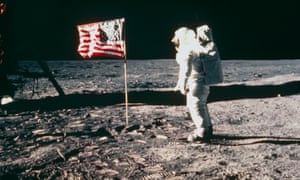








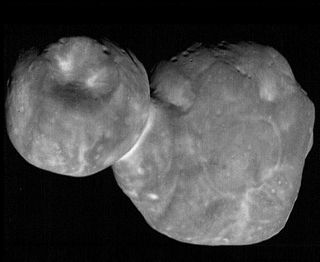

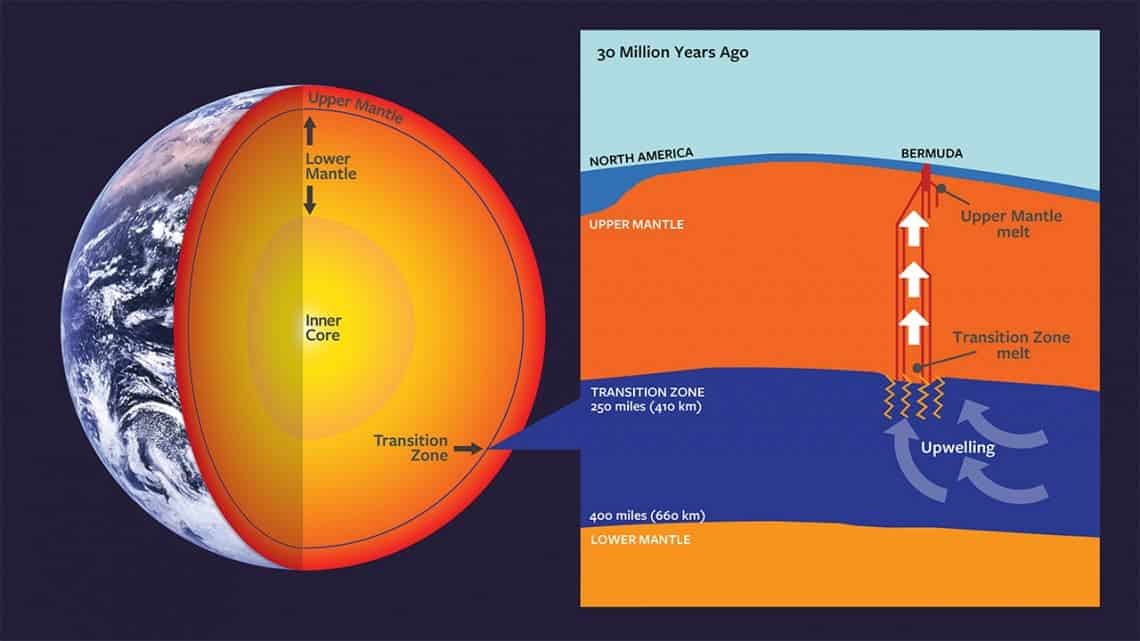


 'Born again Christian', 52, says it's possible he killed...
 Polish woman could face two years in JAIL for posters...


