Ontdek de Fascinerende Wereld van UFO's en UAP's: Jouw Bron voor Onthullende Informatie!
Ben jij ook gefascineerd door het onbekende? Wil je meer weten over UFO's en UAP's, niet alleen in België, maar over de hele wereld? Dan ben je op de juiste plek!
België: Het Kloppend Hart van UFO-onderzoek
In België is BUFON (Belgisch UFO-Netwerk) dé autoriteit op het gebied van UFO-onderzoek. Voor betrouwbare en objectieve informatie over deze intrigerende fenomenen, bezoek je zeker onze Facebook-pagina en deze blog. Maar dat is nog niet alles! Ontdek ook het Belgisch UFO-meldpunt en Caelestia, twee organisaties die diepgaand onderzoek verrichten, al zijn ze soms kritisch of sceptisch.
Nederland: Een Schat aan Informatie
Voor onze Nederlandse buren is er de schitterende website www.ufowijzer.nl, beheerd door Paul Harmans. Deze site biedt een schat aan informatie en artikelen die je niet wilt missen!
Internationaal: MUFON - De Wereldwijde Autoriteit
Neem ook een kijkje bij MUFON (Mutual UFO Network Inc.), een gerenommeerde Amerikaanse UFO-vereniging met afdelingen in de VS en wereldwijd. MUFON is toegewijd aan de wetenschappelijke en analytische studie van het UFO-fenomeen, en hun maandelijkse tijdschrift, The MUFON UFO-Journal, is een must-read voor elke UFO-enthousiasteling. Bezoek hun website op www.mufon.com voor meer informatie.
Samenwerking en Toekomstvisie
Sinds 1 februari 2020 is Pieter niet alleen ex-president van BUFON, maar ook de voormalige nationale directeur van MUFON in Vlaanderen en Nederland. Dit creëert een sterke samenwerking met de Franse MUFON Reseau MUFON/EUROP, wat ons in staat stelt om nog meer waardevolle inzichten te delen.
Let op: Nepprofielen en Nieuwe Groeperingen
Pas op voor een nieuwe groepering die zich ook BUFON noemt, maar geen enkele connectie heeft met onze gevestigde organisatie. Hoewel zij de naam geregistreerd hebben, kunnen ze het rijke verleden en de expertise van onze groep niet evenaren. We wensen hen veel succes, maar we blijven de autoriteit in UFO-onderzoek!
Blijf Op De Hoogte!
Wil jij de laatste nieuwtjes over UFO's, ruimtevaart, archeologie, en meer? Volg ons dan en duik samen met ons in de fascinerende wereld van het onbekende! Sluit je aan bij de gemeenschap van nieuwsgierige geesten die net als jij verlangen naar antwoorden en avonturen in de sterren!
Heb je vragen of wil je meer weten? Aarzel dan niet om contact met ons op te nemen! Samen ontrafelen we het mysterie van de lucht en daarbuiten.
SpaceX just passed a huge first test with its prototype Mars spaceship
Locals at the southern tip of Texas took in an otherworldly sight on Thursday night: A giant mirror-polished machine roared to life near a beach, and through a billowing cloud of orange-coloured smoke, rose six stories into the sky, hovered, and then gently landed.
Though the launch lasted less than a minute, the late-night spectacle was the first true flight of SpaceX’s Starhopper rocket ship. It represents a key step in company founder Elon Musk’s quest to send people to the Moon and Mars.
Starhopper, which resembles a three-legged water tower, was hardly visible through the smoke and darkness, but Musk said on Twitter that the test worked.
“Starhopper flight successful. Water towers *can* fly haha!!” Musk tweeted after the test launch, later sharing the footage of the flight, below.
The launch started brush fires that firefighters worked to contain, but then spread overnight into a nearby wildlife refuge. However, a Facebook video posted on Friday showed emergency workers arriving on the scene and unreeling hoses to fight the flames.
“A brush fire occurred after our first successful Starship prototype hop. The SpaceX team is working with the Brownsville Fire Department to manage the incident, which is well under control,” a spokesperson from SpaceX told Business Insider in an email.
“As always, precautions were taken to ensure public safety, and nearby residents are well outside the pre-established safety zone perimeter.”
Why Starhopper’s flight is a step to get SpaceX to the Moon and Mars
Starhopper isn’t designed to fly into space. Instead, it’s a test bed for technologies that could eventually power a much larger and more powerful launch system known as Starship.
Musk envisions Starship as a nearly 400-foot-tall, fully reusable, and stainless-steel vehicle that can ferry about 100 people and more than 100 tons of cargo at a time to Mars.
Starhopper stands about 60 feet tall, 30 feet wide, and uses one Raptor rocket engine; meanwhile, a full-scale Starship headed for deep space could use more than 41 such engines, according to Musk.
(Elon Musk/SpaceX)
The rocket engines are essential yet expensive, which is why SpaceX is testing limited numbers of them on crude vehicles like Starhopper – to discover any issues early on, save money, and develop the Raptor into safe and reliable spaceflight hardware.
Musk’s eventual goal is for Starship to be capable of launching and landing many times with little to no refurbishment required. This, he says, may reduce launch costs by 100- to 1,000-fold compared to traditional, single-use rockets.
“Full and rapid reusability is the holy grail of access to space and is a fundamental step towards it, without which we cannot become a multi-planet species,” Musk recently told Time’s Jeffrey Kluger in an interview for CBS Sunday Morning.
“We cannot have a base on the Moon, we cannot have a city on Mars without full and rapid reusability.”
But getting to that stage will likely require years of testing, and Wednesday’s launch was a crucial first step.
Those initial tests anchored the rocket ship to the ground via huge chains on its legs, so Starhopper lifted no more than a few feet into the air.
On Wednesday, there was a failed launch attempt around 8:32 p.m. ET (7:32 p.m. CT). Just moments after ignition, the vehicle’s engine abruptly shut down. The launch on Thursday, however, was deemed a success.
“It appears as though we have had an abort on today’s test,” Kate Tice, certification engineer at SpaceX, said during a live broadcast. “As you can see there, the vehicle did not lift off.”
But SpaceX rallied and tried again on Thursday.
Amid a blast of sand and rocket-engine exhaust, Starhopper presumably flew at least 65 feet (20 meters) into the air at around 11:45 p.m. ET (10:45 p.m. CT). It then hovered for a moment, translated sideways a bit, and touched down on a concrete landing pad it left from.
The whole flight lasted roughly 10 seconds, following a plan that Musk described earlier this month. In addition to aerial footage, Musk also posted a video on Twitter that shows Starhopper’s launch from a camera attached to its underside. The clip clearly shows a Raptor engine propelling the vehicle off the ground.
The videos below, captured by locals and SpaceX followers, show the entire launch from multiple perspectives.
The first is by Spadre.com, which recorded the hop from a camera located about 6 miles away on South Padre Island.
The second is a video by a local named Mary, which NASASpaceFlight.com uploaded to YouTube with her permission, and it shows a closer view of the Starhopper.
Although it’s difficult to make out, the top of the vehicle briefly rises above the smoke and flames in the footage.
Thursday’s flight showed that SpaceX has successfully developed a new rocket engine capable of powering, manoeuvring, and landing a large vehicle like Starhopper.
Critically, the engine burned liquid methane, which makes up most natural gas on Earth and is also a fuel Musk hopes to manufacture on Mars.
What’s in store for Starhopper and Starship
With a successful untethered flight under its belt, the company is now aiming to launch Starhopper on a flight to more than 650 feet (200 meters) “in a week or two,” Musk said early Friday morning.
SpaceX’s current government licence permits the company to launch experimental vehicles like Starhopper on flights lasting no more than six minutes and up to a maximum altitude of 3.1 miles (5 kilometers).
But SpaceX isn’t stopping there: It’s now building much bigger 180-foot-tall (55-meter-tall) rocket ships, called Starship Mark 1, which Musk says could fly from Texas or Florida in two to three months and reach orbit by the end of the year.
(Yutong Yuan/Samantha Lee/Business Insider)
Musk tweeted in March that SpaceX is “working on regulatory approval” for orbital flights of those prototypes, which will have three Raptor engines each instead of one.
SpaceX plans to launch a full-scale Starship before the end of 2020. Then sometime in 2021, Musk says, the company may trying landing a full-scale, uncrewed Starship on the Moon (perhaps as a bold demonstration to NASA).
Around 2023, SpaceX plans to launch Starship’s first human passengers, a Japanese billionaire and his hand-picked crew of artists, on a voyage around the Moon.
SpaceX president and COO Gwynne Shotwell has reportedly said the company hopes to send its first uncrewed payloads to Mars by 2024. Following that, perhaps in 2026, SpaceX may try to put boots on the red planet.
During the groundbreaking ceremony for the Boca Chica launch site in September 2014, Musk said, “it could very well be that the first person that departs for another planet could depart from this location.”
This story has been updated with new information. It was originally published at 11.45 pm ET on 25 July 2019.
Shortly after New Year’s Day, a boxy gold-toned spacecraft made a soft landing on a corner of the solar system never before visited from Earth: the moon’s far side, sometimes known as the “dark side.”
The craft began sending images of previously unseen reddish craters, bouncing them off a satellite orbiting above. In the following days, it launched a robotic rover, set up a colony of silkworms and even experimented with growing plants like cotton and potatoes. NASA administrator Jim Bridenstine hailed the mission—intended as part of an ambitious plan to return humans to the lunar surface—as “a first for humanity and a great accomplishment.”
If you haven’t heard of it, and didn’t see much coverage of those historic images, there’s a reason. The most ambitious and successful moon lander in decades wasn’t sent by NASA. It was sent by China.
Fifty years after the Apollo landing, the moon is now the target of the biggest flurry of human activity in history, more intense even than in the heyday of the Apollo program. And it’s largely driven by countries outside the United States. India plans its own mission to the moon’s south pole later this summer, when it expects to send an orbiter, lander and rover as a trial run for sending humans to the surface within three years. Japan’s space agency has teamed up with carmaker Toyota to build a moon rover. Israel sent a privately funded robot to the moon this spring, a mission that failed when it crashed into the surface, but it is already working on a second attempt. Russia, for its part, has said it plans to build a moon colony.
Unlike the first moon race, a largely symbolic Cold War contest in which the United States decisively prevailed over the Soviet Union, this one has hard resources at stake. In this new race, powered partly by private enterprise and highly capable new space vehicles, there’s an increasingly realistic chance for the winners to stake a claim to the moon’s untapped mineral and other resources and commercialize them.
The most focused and ambitious new entrant is China, which plans to follow its Chang’e 4 lander with more robotic craft to explore both the icy poles, offering the game-changing prospect of extracting water from the ice deposits and using it to power space vehicles and sustain life. China is stepping up its human spaceflight program as well, and its plans call for a permanent Chinese colony scheduled for 2030.
China has ambitious plans for extending its scientific and national interests in space, and in January became the first nation to land a robotic explorer on the moon’s far side, which faces away from Earth. Top: A Long March 3B rocket lifts off from the Xichang launch center in China’s southwestern Sichuan province. Bottom left: China’s lunar rover, Yutu-2, explores the far side of the moon. Bottom right: The Chang’e-4 lunar probe after landing on the moon’s far side, in a photo taken by the Yutu-2 moon rover.
STR/AFP/Getty Images; Xinhua/CNSA via Getty Images; AFP/Getty Images
The moon also tops the Trump administration’s space agenda, at least in theory: Vice President Mike Pence declared in March that the U.S. intends to return American astronauts to the lunar surface by 2024, four years earlier than previously planned, as a first step to building a permanent presence by 2028. But as it does, the U.S. faces a challenge that could be more serious than the technical questions that swirled around the program in the 1960s. Its sense of mission is far more fragmented now, and there’s little consensus on how to take the next steps off Earth, or why.
Will humans really be back on the moon by 2024? A Q&A with space experts
We hosted a live chat on Reddit about the U.S.'s efforts to go back to the moon. See highlights from the conversation here.
Pence’s announcement took much of the space community by surprise, and his own boss cast some doubt on the administration's seriousness in a tweet last week. The focus on the moon has exacerbated a debate that has raged inside NASA, Congress and the wider space community for decades about whether to put priority on human space flight or unmanned missions; how much to spend; how much to let private space ventures lead the way; and what NASA’s role should be at all.
The U.S.’s chief rival, meanwhile, has far more clarity. As a rising global power, China is strongly motivated by the kind of national pride that drove the U.S. two generations ago. “If we don’t go there now even though we’re capable of doing so, then we will be blamed by our descendants,” Ye Peijian, the head of the China’s moon program, said last year. And beneath that rhetoric, the Chinese government has a far more pragmatic rationale: economic ambition. Its centrally managed, methodical strategy is designed not just to plant a flag on the moon, but to lead the way in industrializing space.
At NASA, Bridenstine downplays the rivalry: “We’re really two different countries operating on very independent approaches,” he told POLITICO in a recent interview. “From our perspective at NASA, we do science, we do discovery, we do exploration. We’re very interested in what they achieve. When they landed on the far side of the Moon, we took keen interest in that.”
Some insiders see this new space race as the first real risk to U.S. leadership in a half-century. As a focused rival with resources that dwarf most of its competitors, China has real potential to gain on, and even outpace, the preeminence that America takes for granted.
“We don’t have this national program that is able to beat the Chinese,” said former Lt. Col. Pete Garretson, who recently directed the Space Horizons Task Force at the Air Force’s Air University and has extensively studied Chinese space efforts. “They’ve got this really, really clever strategic offensive.”
IN BOTH NUMBERS and achievements, the U.S. is still the dominant space player by far. Its active roster of 39 astronauts is larger than any other nation’s. Its scientific exploration program is light years ahead of the rest of the world. And NASA has an impressive track record of enlisting other nations as partners, even erstwhile adversary Russia. It is the main sponsor and operator of the International Space Station and has already inked a partnership with Canada for its moon plans and is seeking more. (One country it can’t partner with is China, which is legally excluded over concerns that Beijing will steal U.S. technology for military purposes.)
For the first time since becoming the first nation to land astronauts on the moon in 1969, the United States is aiming to return astronauts to the moon in 2024. Top left: The mission control room after the succesful Apollo 11 lunar landing mission. Top right: Astronaut Buzz Aldrin Jr. poses for a photograph beside the United States flag during the Apollo 11 mission. Bottom: American servicemen in Saigon, Vietnam, read a local newspaper account of the lunar landing, which was a major propaganda victory for the United States.
STR/AFP/Getty Images; NASA; Hugh Van Es/AP Photo
Crucially, the United States also now boasts a burgeoning private space industry, driven in part by high-profile billionaires willing to spend their fortunes on sending humanity outward. The best known are Blue Origin, funded by Amazon founder Jeff Bezos, which just unveiled its own lunar lander designed to reach the moon’s south pole, and SpaceX, run by Tesla founder Elon Musk, who wants to send humans to Mars on his SpaceX rockets. The industry extends well beyond those headline names, with a host of companies with big ambitions to help NASA colonize space.
But an initiative on the scale of space exploration also requires massive buy-in and investment at the public level, and on that front the U.S. is now potentially at a disadvantage compared with China. By Washington standards, NASA is a perpetually underfunded policy sideshow, and an easy target for cuts to fund more earthly priorities.
In contrast, Beijing’s leaders see their ambitions on Earth and their goals in space as linked at the highest level. In a U.S. riveted by consumer digital technology, space travel feels almost old-fashioned to discuss as a national ambition, while Chinese leaders refer unapologetically to the “spirit of aerospace” and the “space dream” as part of their efforts to rejuvenate the nation.
“The universe is an ocean, the moon is the Diaoyu Islands, Mars is Huangyan Island,” Ye, the head of China’s moon program, said in his speech last year, comparing it to the country’s expansionist designs on islands in the South China Sea.
It is difficult to determine what China spends annually on its space exploration efforts, in part because its space budget is wrapped up with defense spending. Namrata Goswami, a leading researcher on Chinese space operation at the Institute for Defence Studies and Analyses in India, estimates that China spent $8 billion last year on its space program. That number is less than half the U.S. space budget, but an apples-to-apples comparison is nearly impossible: the U.S. budget is spread across a wide range of goals, and the military portion of China’s budget isn’t separate from “civilian” programs like landers and colonies.
INTERACTIVE: Explore China, Russia, India and Israel's planned lunar missions
Nicolas Rapp for POLITICO
Goswami’sanalysis indicates that China is rapidly pushing toward commercial space development. “Given the vast economic potential that lies in outer space resources,” she says, “China is already shifting a major part of its resources to invest in research on space-based solar power, asteroid mining and developing capacity for permanent presence in space.”
Goswami has observed that China’s leaders clearly connect its space achievements to the legitimacy of the Communist Party itself, an emphasis reflected inthe recent rewarding of plum political posts to leading Chinese space scientists. Ma Xingrui, former general manager of the China Aerospace Science and Technology Corporation, has been appointed governor of Guangdong Province, one of the country’s most economically robust. Yuan Jiajun, former president of the China Academy of Space Technology and chief commander of the Shenzhou Manned Space Program, is now governor of Zheijiang Province. And Xu Dazhe, who was the chief administrator of the space agency, is now governor of Hunan Province—particularly symbolic, in Goswami’s view, because that was the home province of Mao Zedong.
THE UNITED STATES may still be the only nation whose astronauts have placed a plaque on the moon, but its national space program is directed by an agency with a very different approach from China’s, and much further from the heart of political power. Putting humans in space has historically been a secondary mission for NASA and remains so.
The space agency instead is heavily committed, culturally and financially, to science. Its signature achievements are probes and telescopes deployed to buzz far-off planets and gaze deep into the universe. It is an emphasis heavily reflected in the space agency’s latest budget request, which also dedicates a large share to Earth-focused science missions.
NASA plans to spend $7 billionof its $21 billion budget—the largest chunk—on science; it requested $5 billion for human exploration. Even optimists acknowledge it will need far more than that to develop any kind of human return to the moon in the coming years.
“We’re going to need additional means,” Bridenstine told agency employees in a town hall in early April after the administration’s announcement of the 2024 moon goal. “I don’t think anyone can take this level of commitment seriously unless there are additional means.”
It’s not clear where those additional means will be coming from. In May, the White House asked Congress for an additional $1.6 billion for next year that it described as a “down payment” for the ambitious 2024 goal. But it couldn’t say how much the mission would ultimately cost. Some influential members of Congress, which will have the ultimate say on NASA’s spending priorities, say they simply don’t see the rationale for going back to the moon at all.
Rep. Eddie Bernice Johnson, the Texas Democrat who chairs the House Science Committee with oversight of NASA, has downplayed the importance of returning to the moon, and instead stressed her support for NASA’s science portfolio, including research on climate change.
“The simple truth is that we are not in a space race to get to the Moon,” Johnson told Bridenstine at a hearing earlier this year. “We won that race a half-century ago.”
She also criticized those who frame it in terms of a new race for primacy. “Using outdated Cold War rhetoric about an adversary seizing the lunar strategic high ground only begs the question of why, if that is the vice president’s fear, the Department of Defense with its more than $700 billion budget request doesn’t seem to share that fear and isn’t tasked with preventing it from coming to pass,” she said.
At least four countries other than the United States are working on moon missions. Top left: India's Chandryaan-2 spacecraft. Top right: Chinese astronauts in a televised interview after returning to Earth. Bottom left: A model of Russia's next-generation manned spacecraft. Bottom right: Israel’s mission control center shortly before its lunar lander crashed on the moon's surface.
Pallava Bagla/Corbis via Getty Images; Peter Parks/AFP/Getty Images; Anton Novoderezhkin/TASS via Getty Images; Jack Guez/AFP/Getty Images
NASA, sensing Congress’ wariness, has insisted that the moon money won’t come at the expense of the agency’s science portfolio, which maintains strong support in both parties.
TRUMP HAS MADE a series of movesto reinvigorate the American space program, even in the absence of a deeper consensus. Shortly after his inauguration, he revived the White House National Space Council, defunct for 25 years, and designated Pence to lead it. He has issued multiple presidential directives to bring private space companies into the mix for contracts along with traditional aerospace firms and to encourage them to invest in new technology. And last year, Trump formally recommitted the United States to returning to the moon.
“This time, we will do more than plant our flag and leave our footprints,” he said at a meeting of the National Space Council. “We will establish a long-term presence, expand our economy and build the foundation for the eventual mission to Mars, which is actually going to happen very quickly.” On hand were top executives for some of the space entrepreneurs like Musk and Bezos. He said the United States is counting on them to help achieve its ambitious goals. “And, you know,” the president said, “I’ve always said that rich guys seem to like rockets. … If you beat us to Mars, we’ll be very happy, and you’ll be even more famous.”
To get to Mars, or even back to the moon, Trump will also need NASA on board with his vision for private space development, and that seems less certain than the affection of billionaires for rockets. The agency has always been the primary actor in human spaceflight, driven by testing the bounds of possibility; it has not seen its mission as paving the way for other efforts. “There has never been a strong voice in NASA for space industrial development or space settlement,” said Garretson, the recently retired Air Force colonel. “There has never been a strong camp in NASA that really wants to build sustainable infrastructure and technology that enables a broader segment of society to follow.”
Many observers see Trump and Bridenstine’s ambitions as implying a major shift for the agency, toward a gatekeeper role, laying the groundwork and setting rules for private enterprise to follow. Bridenstine has emerged as one of the leading voices for making NASA more commercial-friendly and an incubator of private ventures, including a series of partnerships with the commercial space industry for the moon mission.
Under Bridenstine, NASA has taken some initial steps to harness the abilities of that expanding commercial space sector. One example is its recently unveiled Commercial Lunar Payload Services program, in which the space agency is sharing the cost of with nine private space companies of developing lunar landers that can deliver supplies to the moon’s surface. In previous decades, NASA would have been the sole developer. The effort is expected to cost the space agency about $2.6 billion over 10 years.
PHOTOS: See some of the United States’ competitors in space
Manjunath Kiran/AFP/Getty Images
Another is the Advanced Cislunar and Surface Capabilities program, which aims to provide seed money to private space companies to develop spacecraft that can bring humans to the surface of the moon. In its new budget request for fiscal year 2020, NASA is seeking $363 million for the project, double what it sought last year. And in late May, NASA selected the first contractor for the its so-called Lunar Gateway project to construct a space station orbiting the moon to serve as a way station for astronauts living and working on the surface.
In Bridenstine’s view, this is a new approach for NASA, a collaboration that will change the course of the human spaceflight program. “We’re not purchasing, owning and operating the hardware. We’re buying the service,” he told POLITICO. “We will invest in that hardware, but we expect them to make investments in that hardware as well,” he added.
“The idea is they’re making those investments because they know that there will be customers that are not NASA,” he said. “Those customers could be international customers, could be foreign governments. Those customers could also be tourists.”
In one sense, that’s the kind of long view needed to drive big shifts in a program as entrenched as NASA’s. But Bridenstine is a political appointee working for a president whose policy priorities seem to shift week to week, and there are deep doubts he can redirect the 17,000-person agency and its army of contractors to such a new way of thinking. Even a relatively modest NASA program takes a decade to come to fruition; to affect real change, Trump’s team will need to build political coalitions around its priorities that can outlast his presidency.
IN TODAY'S SPACE race, some see a useful analogy in the early days of settling the American west in the 19th century, when there was a massive land grab that fueled the nation’s growth. “We learned in the Wild West that possession is 9/10 of the law, so getting there first is important,” Commerce Secretary Wilbur Ross, a member of the White House National Space Council, said recently.
But the settling of the American frontier was also undergirded by massive government investment, using the U.S. Army, cash subsidies and high-risk expeditions to help secure territory, clear land and create the infrastructure needed for private prospectors to follow.
On that front, China enjoys a built-in advantage. Beijing directs massive subsidies to its commercial space companies, helping them land international customers for space launch services and other products, while simultaneously propelling its overall space program.
Some of the Trump administration’s biggest allies aren’t sure that the skepticism on Capitol Hill and resistance of NASA’s entrenched bureaucracy can be overcome. Homer Hickam is a career NASA rocket scientist who was tapped by Pence last year as an adviser to the Space Council. Best known for his best-selling memoir “Rocket Boys,” he said he has long been “a strong proponent” for NASA’s unmanned robotic missions.
The United States is prioritizing working with space start-up companies as part of its accelerated mission to return to the moon. Top: NASA astronauts and SpaceX executives stand in front of the company’s Crew Dragon module. Bottom left: NASA Administrator Jim Bridenstine speaks with SpaceX chief Elon Musk after the successful launch of Crew Dragon in March. Bottom right: The Blue Moon lander being built by Blue Origin, a space start-up owned by Amazon founder Jeff Bezos.
| Patrick T. Fallon/Bloomberg via Getty Images; Jim Watson/AFP/Getty Images; Mark Wilson/Getty Images
“But I want human activity in space, too,” he said in an interview. “I believe humans in that dangerous place should be for practical reasons as well as science. If humans are to go out there, I think they should identify and utilize the resources available, especially on the moon, to help the economies of the Earth and also create new industries and businesses.”
“I do not frankly know whether NASA can do it or not,” he said.
Dennis Wingo, an aerospace engineer who oversaw the first attempt by NASA to support a private lunar lander in the 1990s, says he’s worried that NASA “may be institutionally too ossified” to pull off what the Trump administration is proposing.
Though the prospect of a focused new competitor in China has added a strong note of urgency to the question of NASA’s transformation, others think the U.S. still has some time to get it right, in part because China’s ambitions may be outpacing its real achievements. “Chinese progress has been incredibly slow given the access they had to all of this stuff and a half-century of history to analyze on the way,” said Greg Autry, a professor at the Marshall School of Business at the University of Southern California who specializes in space entrepreneurship and has advised NASA. “They’ve done zero new things beyond going to a different location on the moon.”
He says he is particularly unimpressed with China’s human spaceflight program, which has conducted far fewer space flights than NASA did during the Apollo program in the 1960s. “They are still far, far behind,” Autry said. “There is no reason to panic. But it is good to have a competitor. It gives us a sense of mission.”
Nevertheless, Autry also sees scant evidence the United States is ready or ableto mount the kind of full-scale investment of money and energy required to recalibrate the space program to tap into the potential resources.
“The White House has clearly committed to economic development,” Autry said. “But frankly there is nobody in NASA ready to receive that message and run with it. They are talented and good people and many of them label themselves as ‘pro-commercial,’ but they’ve never lived inside the commercial world. A significant cultural change is required.”
Mysterious sculpture of a face found in Sampson County field
A man plowing his field accidentally came upon an archaeological find that his thus far stumped experts.
By Cameron Clinard
µNEWTON GROVE, N.C. (WTVD) -- A man plowing his field accidentally came upon an archaeological find that his thus far stumped experts.
Assistant State Archaeologist Mary Beth Fitts said the Office of State Archaeologyshared a 3-D model of the mysterious sculpture with the hope that someone will recognize seeing a similar object. Finding similar object might be able to shed light on who made the sculpture and when.
The sculpture was found by Tom Giddens while he plowed one of his fields near Newton Grove in Sampson County.
Giddens hit a stone that was approximately 2 ft. long and 1.5 ft. wide. He carried the stone to the edge of his field and continued his work.
Later, he went back to the stone and flipped it over. That's when he realized it had what appeared to be a face carved into it. He immediately contacted the Office of State Archaeology.
"It is definitely a rare find, which is why we presently don't know how old it is or who made it. It is made of sandstone, which is of medium hardness and therefore does not require specialized tools to carve," Fitts said of the sculpture.
Fitts said Giddens did the right thing by contacting her office. Anyone who comes across something they think is a historical artifact is encouraged to email pictures of the artifact to their regional archaeologist, which can be found here.
Het is echt een mysterieuze vondst. Dit vreemde beeld stelt archeologen voor een raadsel
Op een boerderij in de Amerikaanse staat North Carolina is een vreemd beeld met daarop een gezicht ontdekt. Experts staan voor een raadsel.
De mysterieuze vondst werd gedaan toen een knecht aan het ploegen was en op een stuk steen in de grond stuitte.
Hij legde het stuk steen apart en ging verder met zijn werkzaamheden.
Mysterieuze vondst
Toen boer Tom Giddens de steen omdraaide zag hij tot zijn verbazing dat het een beeld van een gezicht was.
De boer nam vervolgens contact op met het North Carolina Office of State Archaeology om melding te maken van de vondst.
“Het is echt een mysterieuze vondst,” zei archeoloog Mary Beth Fitts tegen een lokaal tv-station.
Lang geleden
“We weten niet uit welke periode het komt,” voegde ze toe. “Het kan volkskunst zijn, maar het kan ook lang geleden gemaakt zijn.”
Het beeld is 0,6 meter lang en 0,45 meter breed. Verder is alleen bekend dat het is gemaakt van zandsteen.
In een poging het mysterie te ontrafelen heeft het North Carolina Office of State Archaeology op haar Facebookpagina een link geplaatst naar een 3D-model van het voorwerp.
Traveling by airplane is fast and convenient but it can take a largetoll on the environment. For this reason, the Hempearth Group is developing the world’s first plane made from and powered by hemp. The innovation is made almost entirely from the sustainable crop — from the plane walls and seats to the wings and pillows.
The hemp airplane was developed by Hempearth, a Canadian cannabis company and thought leader in hemp-related inventions. The company was founded in 2012 and sells a variety of organic hemp products. Their inventory includes hemp surfboards, paddle boards, oils, cannabis, and even a hemp fiber body phone.
This innovation is a first in the aviation world. When completed, the hemp plane will be able to transport four lucky passengers and a pilot. It has a 36-foot wingspan and runs on Hempearth Hemp Jet A Bio Fuel.
Why Hemp?
First of all, hemp is one of the healthiest and most versatile plants on the planet. Not only is it, pound for pound, 10 times stronger than steel but it can also bend much farther than metal. As a result, hemp is ideal for aviation technology.
Furthermore, hemp is less toxic than traditional aerospace materials, such as aluminum and fiberglass. The crop is also incredibly eco-friendly. It requires less water to grow than cotton and even puts nutrients back into the soil through a process called phytoremeditation.
Finally, hemp is lighter than traditional aviation materials. As a result, it requires less fuel (in this case, hemp biofuel) to reach a high altitude. Hemp also requires no mining, or carbon fiber. Therefore, it has almost no environmental impact.
In addition to developing the world’s first hemp plane, Hempearth is in the process of developing hemp composites in Montreal. Reportedly, they could replace all fiberglass in aviation and other industries — such as construction.
One of Hempearth’s more notable promises is to never sign or work “with fascist companies that are associated with military, The Rockefellers, The Rothchilds and or the Military Industrial Complex.” This statement alone is applaud-worthy.
Derek Kesek, the founder of Hempearth, is passionate about sustainable hemp production and its seemingly endless applications. “This is the kind of future we all want here on Earth,” he said. When the first hemp plane is completed, its first flight will take place at the Wright Brothers memorial in Kitty Hawk North Carolina. The location is the birthplace of aviation and will soon witness history once again.
What are your thoughts?Please comment below and share this news!
Linda Moulton Howe: E.T. Experiments & Alien Races On Planet Earth
Age Of Truth TV presents a dynamic, eye-opening and intense conversation with investigative reporter, E.T & UFO researcher, author and lecturer, LINDA MOULTON HOWE: “E.T. Experiments & Alien Races On Planet Earth”.
Lucas Alexander is interviewing Linda Moulton Howe for Age Of Truth TV in her home in Albuquerque, New Mexico, about her long and fascinating career, as one of the worlds leading top-experts in the field of UFO and Extra-Terrestrial research, and how she began on that controversial path when doing a documentary film in 1979 called “A Strange Harvest”.
Since going through “Alice In Wonderland’s Mirror”, as she calls it, she has worked relentlessly and with a tireless effort, to inform the world about, what she believes, is an alien presence on Planet Earth. * Who are the alien races on Earth? Where do they come from? * How are governments of the world, especially the American government, involved with these otherworldly entities?
* The government cover-up of alien existence! Why? * Are we Human beings (Homo Sapiens) an alien biological experiment made by the alien race, referred to as the EBE´ns? * What is the truth behind the countless animal mutilations happening all over the world, and the reason why these crimes could not have been done by humans? * The UFO crash in Roswell in 1947. * What happens to us when we die? Is reincarnation a recycling soul trap?
These are just some of the mind-blowing and extraordinary topics discussed in this interview with Linda Moulton Howe. It is a 1 hour 42 minutes in-depth hard-talk table discussion with a true legendary lady in this field. She has given lectures and speeches all over the world, been a researcher for 40 years, and written a list of books.
The news that there are no hotel rooms available for miles around Area 51 hasn’t deterred the millions who have sworn in Facebook commitment blood that they will storm it on September 20th. Those planning a Burning Man-style campout have no doubt heard that Lil Nas X has offered to perform there, and more music is planned. Now all they need is some food and adult beverages for themselves and any aliens they may liberate during the storming – not to mention to share with any soldiers who don’t shoot them first.
“We can’t confirm if there are aliens at Area 51. But, if they do show up, they deserve the best meats on Earth. If not, Arby’s will still be there serving the planet’s best meats to everyone else attending this historic event.”
Jim Taylor, Chief Marketing Officer for Arby’s, announced via Twitter that the “We have the meats” people will be sending their ‘Arby’s Roadside Meathouse’ to Area 51 on September 20th to feed the storming masses (hopefully before they get shot) from a “secret menu” developed especially for the event. While some reports suggest that the sandwiches will be free, that hasn’t been confirmed – although it seems likely that aliens will certainly eat free – providing there’s anything left if two million people show up.
You shouldn’t storm on an empty stomach
For the adult beverages, Anheuser-Busch announced a “Screw it. Free Bud Light to any alien that makes it out” promotion offering free Area 51 Special Edition Bud Light in a specially-designed can for any aliens liberated who have a taste for “a light bodied space lager with a fresh taste, a crisp, clean finish, and a smooth drinkability.” It’s a safe bet that there will be some additional cans/cases/truckloads for sale for the hot stormers who might need to cool down while cooler heads prevail (although getting drunk won’t help that).
For those who aren’t fans of country rapper Lil Nas X, Matty Roberts – the infamous college student who came up with the Storm Area 51 idea – is trying to make amends by repainting the event as an EDM festival and is recruiting artists from the electronic dance music world to perform there. He says he’s also been contacted by indie rock bands and other performers, but hasn’t named names nor announced a schedule yet.
Play Freebird!
Finally, if you have a conflict on that date or fear being shot or not getting an Arby’s sandwich or Bud Light but still want to experience the thrill of the storming, you can stay home and play the ‘official’ Storm Area 51 video game from Keemstar.
“Can you survive the break in, find the helpless alien captives and get them safely to their UFO to pilot them out of Area 51 and show the world what the government has been hiding all these years? Find and explore hidden back routes and enter the legendary Area 51, avoid the guards using classic stealth mechanics, locate the captured aliens and escort them to their mothership! Utilise the other runners as human cover or provide the ultimate sacrifice so that others might succeed!”
Add your own fast food, beer and gunshots and it’s just like being there – although reviews of the early access version are “mostly negative” at Steam. Then again, maybe “mostly negative” WILL be just like being there.
If there’s one thing for certain about the Storm Area 51 event, there’s money to be made and plenty of non-aliens lining up to get their piece.
The PR people at To the Stars Academy sure know how to keep their name in the headlines, even if they’re only good at rehashing worn out, unsubstantiated claims or repackaging previously reported incidents. Now that the buzz of the first season of Unidentified has died down, the company which claims itself to be at “the forefront of socializing the UFO conversation through entertainment media in the public” has now revived a decades-old claim about possessing and studying alleged exotic metamaterials.
While many similar claims have been made in the past about what appear to be the exact same samples, I can’t help but notice that some of the language in their press release and accompanying social media posts sounds oddly familiar to descriptions of other recent strange developments loosely related with TTSA and the Navy’s ongoing UFO “revelations” or whatever you want to call them.
The latest press release claims that TTSA is now in the possession of “multiple pieces of metamaterials and an archive of initial analysis and research” of their properties. Accompanying that announcement are statements by Steve Justice, current director of TTSA’s Aerospace Division and the former director of Advanced Systems at Lockheed Martin’s “Skunk Works.” In the press release, Justice claims that while the claims surrounding these materials still cannot be substantiated, these metamaterials could completely revolutionize science as we know it – if they are ever able to be manufactured:
The structure and composition of these materials are not from any known existing military or commercial application. They’ve been collected from sources with varying levels of chain-of-custody documentation, so we are focusing on verifiable facts and working to develop independent scientific proof of the materials’ properties and attributes. In some cases, the manufacturing technology required to fabricate the material is only now becoming available, but the material has been in documented possession since the mid-1990’s. We currently have multiple material samples being analyzed by contracted laboratories and have plans to extend the scope of this study. TTSA will also seek to engage the potential partners who have expressed interest in helping accelerate ADAM [Acquisition and Data Analysis of Materials] research and development.
If the claims associated with these assets can be validated and substantiated, then we can initiate work to transition them from being a technology to commercial and military capabilities. As noted in our October 2017 TTSA kickoff webcast, technologies that would allow us to engineer the spacetime metric would bring capabilities that would fundamentally alter civilization, with revolutionary changes to transportation, communication, and computation.
While many hopeful ufologists and believers take this press release to be evidence of extraterrestrial technologies, note that Justice never mentions anything about aliens or advanced civilizations. Instead he says merely that “the structure and composition of these materials are not from any known existing military or commercial application” (emphasis added). The fact that Justice states these samples are “not from any known existing military or commercial application” leaves open the possibility that they could be from a highly classified program not yet made public outside of highly compartmentalized special access programs.
Writing for The War Zone, I previously reported on a series of strange patents patented assigned to the Navy which concern new forms of energy production and incredibly advanced hybrid craft which are claimed to travel at incredibly high speeds and maneuver with disregard for their own inertia equally well through air, water, or the vacuum of space thanks to a radical new form of electromagnetic propulsion. Despite the claims made in those patents, I’ve yet to speak with one physicist who believes the underlying mechanism for that type of quantum physics-bending electromagnetic propulsion is possible.
Still, in a 2019 aeronautics conference presentation describing one of those patents, the inventor Salvatore Pais claimed that these new Navy patents represent “a highly disruptive technology, capable of a total paradigm change in Science and Technology,” and adds that their “military and commercial value is considerable.” Notice the curious similarities with the language of Justice’s statements in the press release.
Even more curious is the Harold Puthoff connection. Harold Puthoff has traveled among the hard sciences and the fringe sciences for years, making somewhat out-there claims at times. Puthoff isn’t mentioned anywhere in this latest press release, but is acknowledged in several of Pais’ publications and Navy patents. Puthoff now sits on the TTSA board, is listed as a co-founder, and is the Vice President of TTSA’s Science and Technology division. Puthoff has for years published theoretical research into so-called “Space Time Metric Engineering,” the same type of physics-bending propulsion described in the Navy’s advanced aerospace patents – patents the Chief Technology Officer of the U.S. Naval Aviation Enterprise claims are already operable.
In a presentation given in 2018 at a Conference for the Society for Scientific Exploration (SSE) and the International Remote Viewing Association (IRVA), Puthoff says that while he’d “love to talk about really fancy materials,” he can’t do so because “they’re classified.” However, Puthoff adds that there are plenty of examples of such metamaterials “provided even in the public domain.” A sample of one such material he’s studied, Puthoff claims, is an “excellent microscopic waveguide for very high frequency electromagnetic radiation.”
Images of two of the Navy’s patented aerospace craft.
Again, the language Puthoff used in that speech to describe the properties of these materials echoes the language of the Navy’s strange electromagnetic propulsion patents, and during the same presentation Puthoff claims the objects observed in the alleged Navy sightings behaved “as if the craft didn’t have any inertial mass” – the exact language used to describe the abilities of the “hybrid aerospace-underwater vehicle” patented by the Navy. Is this proof of any connection between TTSA’s research and the Navy’s patents? There are only so many words for describing these types of theoretical propulsion methods and alleged aeronautical abilities after all, so it’s likely a coincidence. Still, the Puthoff connection between the patents and these alleged metamaterials is odd.
What’s odder still is why someone like Steve Justice would now throw his name into the ring with fringe scientists or even pseudoscientists who for decades have made what some would describe as dubious, unfounded claims about alien metamaterials. Justice never goes so far as to say that these materials are in fact legitimate or extraterrestrial in origin, though, only that TTSA has received them and will study them.
I’m also drawn to Justice’s statement that the “manufacturing technology required to fabricate the material is only now becoming available.” Could this be why the Navy suddenly decided to patent such radical-sounding technologies and appeal them so forcefully with the U.S. Patent Office? I’ve been toying with an idea lately and it’s still nothing but a flight of the imagination, so take it for what it is.
Imagine that the U.S. government has indeed been researching electromagnetic propulsion methods, advanced metamaterials, and hybrid craft for years and has encouraged the extraterrestrial hypothesis in order to keep these projects a secret. What if they were finally ready to go public with these new advances, but the new administration elected in 2016 decided to keep it under wraps in order to continue kowtowing to the fossil fuel industries? Could that be why Steve Justice, Chris Mellon, and others decided to form TTSA to take these technologies into the private sector or as a means of leaving a trail of breadcrumbs for the public? Could that be why the Navy made their curious patents available to the public? Just a thought.
Returning to TTSA and this latest press release, be sure to take into account how the “Invest Now” button is now permanently anchored to the TTSA website’s masthead, so as usual, take everything they say with a shaker of salt or two. Until they cough up anything more than a cable TV program and social media buzz, there is no way of knowing if they are any better than any other charlatans who have for years made unfounded claims of exotic technologies for profit.
For the last several years I’ve been tracking and reporting on the mystery boom phenomenon, collecting hundreds of reports in the process. While reports have tapered off somewhat in the last few months, one of our MU readers reached out to me this week to share her personal experience encountering one of these unidentified sonic phenomena.
Melissa Hinegardner of Roodhouse, Illinois contacted me and told me that on Thursday, July 18 at around 12:58 pm local time, multiple people from several counties reported a loud boom. Hinegardner says people in several cities throughout Greene County all experienced the same phenomenon: an ear-splitting boom which shook the earth below their feet. Hinegardner told me that the noise was powerful enough to shake her home:
I thought one of the kids fell into the wall or something hit the front door. The house shook a little. It scared the kids and they jumped up onto the couch. When I saw the kids were fine I went on with my day. Then I got a text from my dad a few blocks away and realized it was something bigger.
Local radio station WLDS reported the incident on Facebook, writing that “a loud boom and shake was felt at 1PM this afternoon across the listening area from as far south as Carrollton and Greenfield to the north near Virginia and as far west as Winchester.” The station contacted local sheriff’s deputies and seismological surveys but found no explanation. However, a few days later the same station reported that it may have found an explanation for the incident:
BOOM! Report: WLDS/WEAI News received a return call a few minutes ago from Scott Air Force Base in St. Louis. They have confirmed that an F-35 Lightning II Fighter Jet was in the area at the approximate time of the boom. Sergeant Chris Ostomo could not confirm or deny if the pilot was attempting to reach Mach 1 speeds or not.
Facebook users have been debating whether or not it would be possible for a single aircraft to generate a sonic boom powerful enough to be heard for over 50 miles. Some anecdotal and scientific evidence supports the theory that certain atmospheric conditions can enable sound waves to propagate over greater distances than usual, but this is still a little understood meteorological phenomenon.
Far away from Greene County, Illinois, residents of Tempe, Arizona have been rattled, both literally and figuratively, by a series of powerful booms that have rocked homes in the middle of the night. Local news station FOX 10 reports that the booms have been accompanied by flashes of light, leading some to suspect that illegal explosives might be at the root of these unexplained sonic phenomena.
Neither the Tempe Police nor the Salt River Project utilities company know what’s behind the booms and/or flashes of light. “It doesn’t sound like it’s just some kids blowing up fireworks. It sounds like it’s meant to scare people. It’s in the middle of the night,” one resident told FOX 10. Other worried Tempe locals have compared the noises to the sound of a bomb.
That comparison is worrisome given that last year a man was arrested for detonating homemade explosives, and in one case dangerously near an elementary school. Could a copycat be at work in Tempe?
My new book, Flying Saucers from the Kremlin, is a study of how and why the Russians – for decades – sought to take control of the UFO scene and create hysteria and paranoia in the West. And we were doing the same to them, too. The Russians certainly deserved it. As they do too now, for their outrageous meddling over the last few years. But, does such manipulation of the UFO scene still go on? Yes, it does. Certainly, the vast majority of the programs designed to use the UFO subject as a tool of manipulation took place during the height of the Cold War; that much is abundantly clear. It should be noted, though, that while the available data is limited, we can say that UFOs – or, rather, the mystique and the legend that surrounds them – are still of interest to the intelligence services of several nations.
In a strange way, the evidence for this has a link to the saga of none other than the ultimate 21st century whistle-blower, Edward Snowden. If, prior to 2013, someone were to ask you for your thoughts on Edward Snowden, you would almost certainly reply: “Who? Huh?” His family, friends, and work colleagues aside, Snowden was unknown. Just about completely. That all changed – and it changed radically – in the summer of 2013. That was when the shocking story of the National Security Agency’s top secret programs of widespread surveillance came tumbling out into the public domain. It created shock-waves that are still reverberating to this day.
As Snowden revealed, and unbeknownst to just about everyone (the National Security Agency aside, of course), the NSA had the potential to not just spy on foreign nations but on U.S. citizens too. Landlines, cell-phones, email, Facebook, Twitter, and Skype: they had all been penetrated, very often with the witting help of some of those same companies. The data collection process was so mind-boggling and huge that it would likely have had even George Orwell himself shaking his head in disbelief; except for just one thing: Orwell’s 1984 was fiction. This was all too real.
The responses to Snowden’s revelations were interesting and thought-provoking. For some people, Snowden is the definitive American hero. For others, however, he is a man who has massively jeopardized U.S. national security, and placed our troops and agents in deep danger. There were even calls not for just his lifelong incarceration, but for his execution too, as the ultimate traitor. For many people, however, Snowden falls somewhere between both camps. And then there’s the matter of UFOs. Or, at least, the lore surrounding it. The story of Edward Snowden would never have soared to the levels that it did had it not been for the research of investigative journalist Glenn Greenwald.
Having secured Snowden’s trust, Greenwald was able to secure an astonishing amount of highly classified material on the NSA’s surveillance programs. One of Snowden’s lesser-known revelations revolved around a PowerPoint presentation produced by the U.K.’s Government Communications Headquarters, which is the nation’s equivalent of its, ahem, big brother, the United States’ NSA. The presentation was titled“How Covert Agents Infiltrate the Internet to Manipulate, Deceive and Destroy Reputations.” Interestingly, the PowerPoint production – which, in part, provides ways and means to shatter the characters of people under surveillance – contained three photographs of alleged UFOs.
Mark Pilkington, a writer on, and an investigator of, the UFO subject has a particular interest in how government agencies have used the UFO controversy to their advantages. His 2010 book, Mirage Men, is subtitled: An Adventure into Paranoia, Espionage, Psychological Warfare, and UFOs. That will give you a very good idea as to where Pilkington is coming from in relation to UFOs. Journalist David Clarke asked Pilkington what he thought of all this. Pilkington said to Clarke: “We don’t know why there are UFOs in this [PowerPoint] presentation. But the fact that the saucer photos appear within the context of influencing and manipulating online communities is highly suggestive.” You can see the full story of this in Clarke’s book, How UFOs Conquered the World.
What does it mean to be a tree? It might seem like a silly question, but a mysterious phenomenon that allows the stumps of some trees to thrive–even in the absence of any new growth–is challenging our ideas about how communities of plants live and interact with each other.
By definition, trees are perennial plant organisms, meaning that they renew their growth over time. Consisting of a tall trunk from which numerous secondary stems, or “branches” protrude, each branch possesses a number of leaves that provide food for the plant by collecting energy from sunlight and carbon dioxide, which, combined with water absorbed through the roots of the tree, produces sugars in the form of glucose.
These processes are well understood, which is why it might seem odd to ask a question like “what it means to be a tree.” However, a recent study by a team of researchers in New Zealand has observed a tree stump that remains alive, despite having none of the ordinary facilities required for sustaining itself: effectively making it a “zombie” tree, in a sense.
This unique plant is able to survive sans leaves in a photosynthetically inactive state with a little help from its friends nearby: that is, it is engaged in exchanges of water, minerals, carbon, and even microorganisms necessary to survive with other plants. In this “community” root system (something known to botanists as conspecifics), even a tree without leaves can thrive.
The arrangement, rather than being likened to a “zombie” tree, might be more closely likened to a natural, botanical form of “life support” for the plant in question.
The tree stump in question “displayed greatly reduced, inverted daily sap flow patterns compared with intact kauri trees,” as stated in the paper’s abstract. Despite being a trunkless tree, the first clue as to its unconventional survival had been sap flow variations in the kauri stump, which seemed to mirror those of its surrounding neighbors.
The researchers found that rainfall and other sources of water introduced to the surrounding trees “were very rapidly and inversely mirrored in the living stump’s water status.”
“Such intimate hydrological coupling suggests a ‘communal physiology’ among (conspecific) trees with far-reaching implications for our understanding of forest functioning, particularly under water shortage,” the authors wrote.
Example of a living stump
(credit: Wikimedia Commons).
These “living stumps,” as they are appropriately called, aren’t a new phenomenon. The earliest record of a living stump dates back to the 1830s, although science articles didn’t begin to regularly appear on the subject until 1959, with the publication of
The new paper, titled “Hydraulic Coupling of a Leafless Kauri Tree Remnant to Conspecific Hosts,” was co-authored by M.K.-F. Bader and S. Leuzinger of the Institute for Applied Ecology New Zealand at Auckland University of Technology. The study can be read online here.
Long Rod Seen Flying Near Contrails Over Brazil, UFO Sighting News.
Date of sighting: 5-25-2011, but reported today.
Location of sighting: Araguari, Brazil
Source:MUFON #102315
The eyewitness states that they were taking photos of the contrails in the sky and accidentally captured this object flying past. The object is a UFO but is most often called a rod. Rods are long objects often with fins or wings in front and back. Here the rod is huge, many time larger than the contrail itself so this object would be several times larger than the jet that made the trails. Awesome capture. Its very possible these are AI living machines that are cloaked and move so fast that only cameras can catch sight of them.
Measurements of a star passing close to the supermassive black hole at the centre of the Milky Way confirms the predictions of Einstein’s theory of general relativity in a high gravity environment.
An artist visualization of the star S0–2 as it passes by the supermassive black hole at the Galactic centre. As the star gets closer to the supermassive black hole, light it emits experiences a gravitational redshift that is predicted by Einstein’s General Relativity. By observing this redshift, we can test Einstein’s theory of gravity (Nicole R. Fuller, National Science Foundation)
A detailed study of a star orbiting the supermassive black hole at the centre of our Galaxy, reveals that Einstein’s theory of general relativity is accurate in its description of the behaviour of light struggling to escape the gravity around this massive space-time event.
The analysis — conducted by Tuan Do, Andrea Ghez and colleagues — involved detecting the gravitational redshift in the light emitted by a star closely orbiting the supermassive black hole known as Sagittarius A*. The redshift was measured as the star reached the closest point in its orbit — which has a duration of 16 years — to the black hole.
Lasers from the two Keck Telescopes propagated in the direction of the Galactic centre. Each laser creates an artificial star that can be used to correct for the blurring due to the Earth’s atmosphere.
(Ethan Tweedie)
The team found that the star experienced gravitational redshift — which occurs when light is stretched to longer wavelengths and towards the red ‘end’ of the electromagnetic spectrum by the effect of gravity — as it gets closer to the black hole, conforming to Einstein’s theory of general relativity and its predictions regarding gravity.
At the same time, the results defy predictions made by the Newtonian theory, which has no explanation for gravitational redshift.
Ghez says: “(The findings are) a transformational change in our understanding about not only the existence of supermassive black holes but the physics and astrophysics of black holes.”
The major difference between general relativity and the Newtonian calculation of gravity is, that whereas Newton envisioned gravity as a force acting between physical objects, Einstein’s theory saw gravity as a geometric phenomenon.
The presence of mass ‘curves’ space it occupies. Physical objects, including light, must then follow this curvature. As John Wheeler infamously put it: “matter tells space how to curve, space tells matter how to move.”
Testing relativity in regions of high gravity
Image of the orbits of stars around the supermassive black hole at the centre of our galaxy. Highlighted is the orbit of the star S0–2. This is the first star that has enough measurements to test Einstein’s General Relativity around a supermassive black hole.
[Credit: Keck/UCLA Galactic Center Group]
The new research resembles an analysis conducted last year by the GRAVITY collaboration, except in this new expanded analysis, the team report novel spectra data.
Although general relativity has been thoroughly tested in relatively weak gravitational fields — such as those on Earth and in the Solar System—before last year, it had not been tested around a black hole as big as the one at the centre of the Milky Way.
Observations of the stars rapidly orbiting Sagittarius A *provide a method for general relativity to be evaluated in an extreme gravitational environment.
Do explains why these kind of tests are important:
“We need to test GR in extreme environments because that’s where we think the theory might break down.”
“If we can see which predictions from general relativity have deviations, that gives us clues as to how to build a better model of gravity.”
A figure showing the challenges the Ghez team had in processing decades of image data and spectroscopy input to follow the star S0–2.
(Zina Deretsky, National Science Foundation)
To obtain their results, the team analyzed new observations of the star S0–2 as it made its closest approach to the enormous black hole in 2018. They then combined this data with measurements Ghez and her team have made over the last 24 years.
The team has many avenues of investigations available to them from here, Tuan tells me.
He continues: “Two of them I’m excited about are testing space-time around the black hole by looking at the orbit of the star S0–2.”
“GR predicts that the orbit should precess, or rotate, meaning that it won’t come back where it started.”
The team should also be able to start using more stars other than S0–2 for these tests as the time baseline of observations increase and technology improves
Do concludes: “ These measurements open a new era of GR tests at the Galactic centre so it’s very exciting.”
This research appears in the 26 July 2019 issue of Science.
FRANCE TO DEVELOP ANTI-SATELLITE LASER WEAPONS FOR SPACE WARFARE
PETE LINFORTH VIA PIXABAY/TAG HARTMAN-SIMKINS
KRISTIN HOUSER
Laser Focus
On Thursday, French Defense Minister Florence Parly announced the nation’s plans to develop anti-satellite laser weapons — though she says the country will only use them in retaliation.
“If our satellites are threatened, we intend to blind those of our adversaries,” Parly said, according to Agence France-Presse. “We reserve the right and the means to be able to respond: that could imply the use of powerful lasers deployed from our satellites or from patrolling nano-satellites.”
Satellite Bite
Approximately 2,000 satellites currently orbit the Earth, and they serve as the foundation for the planet’s global communications systems. Knock out the right satellites, and you could effectively disable an entire nation’s ability to communicate.
No surprise, then, that the United States, Russia, India, and several other countries are already developing anti-satellite technology, which could prove invaluable in future military operations.4
Space Force
This isn’t the first sign that France is starting to prepare for space warfare, either — on July 13, President Emmanuel Macron announced plans to create a French space force command.
That command, which will operate within the French air force, will go live on September 1 — a sign France knows it has no time to waste if it wants to effectively protect its interests in space.
Ruimteblok van 130 meter scheert rakelings langs de aarde, astronomen verrast
Luchtfoto van een krater in de Amerikaanse staat Arizona. Dit gat van 1 kilometer doorsnede werd veroorzaakt door een planetoïde met een doorsnede van zo’n 25 meter. De planetoïde 2019 OK, die vannacht langs de aarde scheerde, is twee tot vijf keer zo groot. Beeld Getty Images
Een stuk ruimtesteen is in de nacht van woensdag op donderdag rakelings langs de aarde gescheerd. Astronomen zagen hem pas een dag van tevoren aankomen. ‘Je krijgt niet altijd vooraf een waarschuwing.’
Hij mag dan geruststellend 2019 OK heten, maar zo oké was het bezoek van de planetoïde niet. Het stuk ruimtesteen, met een afmeting tussen 60 en 130 meter, is groot genoeg om bij inslag een flinke stad in puin te leggen en vloog op een angstaanjagende kleine afstand van 71.000 kilometer langs de aarde.
“Dat is bijzonder”, zegt meteorietexpert Marco Langbroek (Naturalis). “Zo dicht bij de aarde komen ze bepaald niet elke maand langs.” Ter vergelijking: de maan staat ongeveer 384.000 kilometer bij ons vandaan. En onze verste satellieten draaien hun rondjes op zo’n 35.000 kilometer afstand.
De ontmoeting met 2019 OK illustreert het gevaar van dit soort ruimtestenen, die we lang niet altijd op tijd ontdekken. De Braziliaanse SONEAR Survey zag de steen pas woensdag, en dat is niet uitzonderlijk, stelt Langbroek. “Dit soort planetoïden zijn op de schaal van het zonnestelsel relatief klein en daarom moeilijk te zien.”
De baan van planetoïde 2019 OK (wit) vergeleken met die van de aarde (blauw) op 25 juli 2019. Het stuk ruimtepuin kwam – op kosmische schaal – zo dichtbij dat de woorden ‘earth’ en ‘2019 OK’ hier over elkaar heen vallen. Beeld NASA
RANDSTAD IN PUIN
Wanneer ze uit de richting van de zon komen, zien we ze soms zelfs compleet over het hoofd. Het felle licht van de zon maakt in dat geval een waarneming onmogelijk. In 2013 gebeurde dat bijvoorbeeld, toen een ruimtesteen zonder enige vorm van waarschuwing boven de Russische stad Tsjeljabinsk explodeerde.
Op de schaal van mogelijke kosmische rampen vormen voorwerpen zoals 2019 OK ‘slechts een lokaal risico’, zegt Langbroek. “Maar je moet het risico ook niet onderschatten.”
Als de planetoïde was ingeslagen had hij een krater van enkele kilometers veroorzaakt. “De drukgolf die zo’n inslag veroorzaakt, zou alles in een straal van dertig tot vijftig kilometer platleggen”, zegt Langbroek.
Voorlopig hoeven we ons om 2019 OK geen zorgen meer te maken. Die beweegt inmiddels weer van de aarde af. Maar dit soort bijna-botsingen komen regelmatig voor. De afgelopen zestig dagen vlogen in totaal acht van dergelijke ruimterotsen langs de aarde op een afstand dichter dan de maan. 2019 OK naderde ons daarvan het dichtste.
GEEN WAARSCHUWING
“Het is niet uitgesloten dat een soortgelijk object in de toekomst inslaat zonder waarschuwing”, zegt Langbroek. De laatste keer dat de aarde geraakt werd door een dergelijk stuk ruimtesteen was in 1908. Toen ontplofte een ruimtesteen van een meter of zestig boven Siberië. “Op foto’s uit die tijd zie je dat in het bos in een gebied van zo’n dertig kilometer alle bomen zijn platgedrukt”, zegt Langbroek.
De schade viel relatief mee omdat het stuk steen poreus was en al in de lucht uit elkaar knalde. Als de Toengoeska-steen de aarde had bereikt, was de schade een stuk groter geweest. Langbroek: “Je mag er al helemaal niet aan denken dat zoiets in bewoond gebied gebeurt.”
Voor het ontdekken van grote brokken ruimtepuin die in de buurt van de aarde kunnen komen, maken wetenschappers onder meer gebruik van deze zogeheten Pan-STARRS-telescoop op Hawaii. Beeld AP
MILIEUNatuurbranden vinden wel vaker plaats in het noordpoolgebied - tussen mei en oktober - maar dit jaar is de omvang en de intensiteit ervan, volgens wetenschappers, “in minstens 10.000 jaar niet meer gezien”. De meer dan 100 poolbranden woeden al sinds vorige maand en zijn duidelijk te zien op satellietbeelden.
Ook op de Noordpool is het warmer dan normaal. Het noorden van onze planeet warmt sneller op dan andere delen van de wereld. De hogere temperaturen zorgen voor droogte, waardoor de natuurbranden, die onder meer veroorzaakt worden door blikseminslagen, vrij spel krijgen. Niet alleen zijn er al meer dan 100 zware bosbranden in het noordpoolgebied geteld, ze houden ook langer aan. Midden juli sloeg het Copernicus Atmosphere Monitoring Service (Cams) daarom alarm.
In Alaska was woensdag al een gebied van ruim 832.000 hectare in vlammen opgegaan, meldt Rick Thoman op Twitter. Ook delen van Groenland, Siberië en Canada staan in brand, met desastreuze ecologische gevolgen.
Alleen al in juni was de uitstoot van de bosbranden in Alaska goed voor 50 megaton CO2, of evenveel als de jaarlijkse uitstoot van Zweden en meer dan de gezamenlijke uitstoot van de bosbranden in Alaska in de junimaanden van 2010 tot en met 2018. Volgens Mark Parrington, wetenschapper aan het European Centre for Medium-Range Weather Forecast, is er tussen 1 juni en 21 juli ongeveer 100 megaton CO2 uitgestoten, of bijna zoveel als de CO2-uitstoot van heel België in 2017. Zo dragen de branden zelf ook nog eens bij tot de klimaatopwarming. “Doordat rookdeeltjes op de sneeuw en het ijs terechtkomen, absorbeert het ijs zonlicht dat het anders zou reflecteren, en versnellen zo de opwarming in het Noordpoolgebied”, zegt Claudia Volosciuk van het World Meteorological Organization (WMO).
Rick Thoman@AlaskaWx
Smoke from the big northeast Interior Alaska #wildfires has moved across the Brooks Range and onto the North Slope. @BLM_AFS estimates total area burned in Alaska this season as of Wednesday morning at 2.06 million acres (832k ha).#akwx@Climatologist49@vennkoenig@CinderBDT907
Mogelijk branden niet alleen bossen af maar voor het eerst ook veengrondgebieden. Dat is cruciaal, want op veengrond kunnen de branden nog maanden aanhouden.
Over de uitzonderlijk warme temperaturen in Alaska dit jaar - met 32 graden Celsius op 4 juli als nieuw hitterecord - zegt klimaatwetenschapper Brian Brettschneider dat ze “nog niet gelinkt zijn aan de opwarming van de aarde, maar dat alles in die richting wijst”. Het gevolg is hoe dan ook dat gletsjers er alsmaar sneller smelten.
Het coördinatiecentrum in Alaska heeft het alleen daar al over 250 branden, waarvan er goed 200 ongecontroleerd woeden. In de zwaar geteisterde Amerikaanse staat is het risico op nog meer branden bovendien ongezien hoog. “Afgaande op de voorspellingen stevenen we af op een absoluut hoogterecord”, aldus het hoofd van de brandweer in Alaska, Norm McDonald.
Alec Luhn✔@ASLuhn
~2m hectares (7700 sq miles) of forest is burning in Siberia. The authorities aren't putting fires out until they threaten towns: "We need to save money," Krasnoyarsk head says. Air pollution has reached dangerous levels in Novosibirsk, Tomsk & Chelyabinsk
'I froze.' 45 years after reported Pascagoula alien abductions, more UFO witnesses talk
Brian Broom Mississippi Clarion Ledger
Correction:This story has been updated to reflect that Joey Nelson was traveling on US 90 on the night of the event, not I-10 as Clarion Ledger was told earlier.
It's been more than 45 years since Calvin Parker and Charles Hickson contacted law enforcement officers with the claim they had been abducted by aliens. The two said they were fishing on the Pascagoula River on the night of Oct. 11, 1973 when an oblong aircraft appeared and aliens took them aboard.
It’s been 45 years since Charlie Hickson and Calvin Parker reported being abducted by aliens while fishing at the former Shaupeter Shipyard in Pascagoula on the Mississippi Gulf Coast. Since then, Calvin Parker, pictured, has kept a low-profile. That is until now. He has recently published a book about his experience.
Amanda McCoy/Sun Herald
Hickson has since died. Parker, after years of silence, wrote a book in 2018 about the encounter and the story made headlines again. Those headlines rekindled memories of what others say they saw that night and more and more are sharing their experiences.
Joey Nelson of Mobile was 25 at the time and travelled to make money playing pool. He said he and two friends were driving on US 90 on their way to win some money on the night Parker and Hickson claimed to have been abducted.
Joey Nelson of Mobile said a glowing orb floated in front of the car he was in the night of the Pascagoula alien abductions.
Special to Clarion Ledger
"That night we were going to New Orleans," Nelson said. "I would say we were probably in between Pascagoula and Biloxi. We were driving and talking."
Nelson was in the front passenger seat and when he looked ahead he saw something he'd never seen before.
'We were just mesmerized'
"A big orb of light up in the air," Nelson said. "We saw that and nobody could could say anything. Nobody could move."
Nelson said the three were traveling at about 75 miles and hour when something came out of the sky and hovered in front of them.
"After a while a small ball of light came down right next to me," Nelson said. "It was about the size of a beach ball, I'd say.
"I don't know how far away it was, but it seemed like if that windshield wasn't there I could have touched it. It started flashing and clicking and flashing and clicking. We could audibly hear it. I know it sounds crazy, but it seemed like they were taking pictures. It seemed like it was in front of me ten minutes or so, I don't know. We were just mesmerized."
And then it streaked away.
Waking up
"It shot off and I've never seen anything move that fast," Nelson said. "It just shot straight up. I don't know if the small orb joined the big one, but they were both gone."
Nelson said none of the three knew what the larger orb was doing during that time because they were so focused on the smaller orb. When it left, Nelson said the three felt like they came out of a trance.
"It was like we woke up," Nelson said. "We couldn't move or gain our thoughts until it was gone."
The following day Nelson saw the news of Parker and Hickson's encounter and said it was confirmation of what he'd seen, but he let 45 years pass and is only talking about it after reading recent articles about Parker.
"I talked to Ricky and Jimmy (who were with Nelson), but other people would have thought you were an idiot," Nelson said. "I wasn't going to tell anybody. I kept quiet a long time."
Rosey Nail of Moss Point had a similar experience that night, only she was almost 300 miles away.
A falling star that didn't
"I was in Bruce, Mississippi," Nail said. "I lived in Calhoun City, but I worked in a little garment factory in Bruce.
"I was staying with a girlfriend. It was after I bathed the girls and put them in bed. We went to the back porch. We just wanted to talk and have a cigarette."
Rosey Nail of Moss Point said she saw glowing orbs in the sky the night of the Pascagoula alien abductions.
Special to Clarion Ledger
Nail said the home was in a rural area with few lights. She likes to identify constellations, so she was looking at the sky.
"I saw a falling star," Nail said. "Then I realized it wasn't actually falling.
"It was moving across the sky. It was at the 2 o'clock position and when it got to the 10 o'clock position another light shot out of it."
The larger light moved downward and seemed to get closer. It also began to get larger. Nail said it became so large it looked like the sun. Nail said it began changing colors and dropped to the horizon. Nail said dogs began barking from all directions as if they were trying to attack something.
Reliving terror
Nail said she walked into the yard to get a better look, but when she did she was overcome with fear.
"I froze," Nail said. "I was terrified. I don't know what I was terrified about."
Her fear could almost be heard as she told her story.
"As I'm talking I'm reliving it," Nail said. "My heart's beating.
"My chest is tight. My hand is shaking. That thing terrified me."
The scene then played itself out in reverse. The large light rose and became dimmer and smaller. The smaller light joined it and it shot out of sight at a 45-degree angle.
The next day she was at work and heard about Parker and Hickson on a radio.
"Everybody was laughing and making fun of those guys," Nail said. "I didn't think it was funny.
"I was dumbfounded. I believed those guys."
Nail said she felt it was time to tell of her experience because she recently read an article about him and realized they both lived in Moss Point.
"I wanted Calvin to know not everyone thinks he's crazy," Nail said. "I believe him."
A life-changing experience
Parker said he's glad more people are coming forward and said he's received messages from people who saw something that night on a near-daily basis.
"They're all coming out of the woodwork," Parker said. "It makes me feel pretty good I'm not the only one who saw something. Most of these people are credible people."
Parker, who remained largely quiet about the event for most of his life, said the best part of this experience has been writing his book and getting everything out in the open.
"I was able to sit down and talk with my family and friends about it," Parker said. "It was like a weight was lifted off me. It's been a big life-changing experience."
More: 'The story is very true. That's what has bothered me for 45 years.' UFO witnesses speak.
More: Alien abduction: 45 years after alleged UFO encounter, Mississippi man breaks his silence
More: LSU's Matt Branch was shot by a dog. His leg was amputated. Now he plans to hunt again.
More: Camp, fish and paddle on this 'undiscovered' Mississippi gem
Did you see anything unusual on the night of Oct. 11, 1973? Contact Brian Broom at 601-961-7225 or bbroom@gannett.com. Follow Clarion Ledger Outdoors on Facebook and @BrianBroom on Twitter.
45 jaar geleden werden twee mannen meegenomen door aliens. Deze getuigen vertellen voor het eerst wat ze indertijd hebben gezien
Het is inmiddels ruim 45 jaar geleden dat Calvin Parker en Charles Hickson zich meldden bij de politie met de mededeling dat ze waren ontvoerd door buitenaardse wezens.
De twee mannen waren op de avond van 11 oktober 1973 aan het vissen toen er opeens een ruimteschip verscheen. Ze werden meegenomen aan boord van het schip.
Hickson is inmiddels overleden. Parker hield zich jarenlang op de achtergrond. Vorig jaar besloot hij een boek te schrijven over zijn ervaringen.
Grote lichtbol
Sindsdien hebben zich meerdere mensen gemeld die claimen getuige te zijn geweest van het incident.
Joey Nelson is één van hen. Hij zag naar eigen zeggen een grote lichtbol in de lucht op de plek waar het tweetal aan het vissen was.
Uit de lichtbol kwam een kleinere bol die op Nelson en zijn twee vrienden afkwam.
“We zagen het en niemand kon iets zeggen,” zei hij. “Niemand kon zich bewegen.”
Trance
Opeens schoot de bol weer weg. Het voelde volgens Nelson alsof ze in een trance waren.
“Ik praatte erover met mijn vrienden, maar anderen zouden me voor gek hebben verklaard,” zei Nelson. “Ik sprak er verder met niemand over. Ik hield lange tijd mijn mond.”
Rosey Nail maakte die avond iets soortgelijks mee. Ze dacht op een gegeven moment een vallende ster te zien. Al snel kwam ze tot de ontdekking dat het iets anders was, omdat de lichtbol willekeurig door de lucht bewoog.
Verdween
Het object werd op den duur zo groot dat het op de zon leek. Het begon daarna van kleur te veranderen en verdween vervolgens, aldus Nail.
“Iedereen maakte Parker en Hickson belachelijk,” zei ze. “Ik vond het niet grappig. Ik geloofde hen.”
Parker zei blij te zijn dat meer mensen zich nu uitspreken.
The story of David and Goliath from the Old Testament has inspired generations, with an underdog conquering a giant.
But the story was long thought to be a myth, invented to encourage youngsters.
However, an archaeological discovery from Israel may have just proven the existence of the legendary giant in the Bible.
Archaeologists digging in the city of Gath have discovered 3,000 year-old giant fortifications.
(NEWSER) – An archaeological dig now in its 20th year has uncovered the entrance gate to Gath, the ancient Biblical city of the Philistines and onetime home of the giant Goliath. Before the king of Damascus destroyed it in 830 BCE, Gath was the largest city in the land for hundreds of years, reports the Jerusalem Post. The Bible refers to the massive city gate itself, in the story of David's escape from King Saul to the king of Gath. In addition to the city gate, scientists have also unearthed an "impressive fortification wall," several buildings that include a temple and iron production facility, and what the Post calls the earliest "decipherable" Philistine inscription ever found—which contains two names similar to "Goliath."
"After finding a huge fortification, it’s clearly the most important city of the 10th and ninth centuries," says the archaeologist in charge of the dig, per i24. The long-term dig is part of the Ackerman Family Bar-Ilan University Expedition to Gath, a look at the archaeology and history of one of the largest "tells" (aka ancient ruin mounds) in Israel. The area in central Israel, in the Tel Zafit National Park in the Judean Foothills, has been inhabited almost continuously since the 5th millennium BCE, the researchers note in a press release. (Also recently discovered in Israel? A mask unlike any other.)
BIBLICAL BOMBSHELL: Goliath's city at Gath (Pic: GETTY)
GIANT: Goliath was slain by King David (Pic: GETTY)
“Whatever it is, it's massive”
Archaeologist
The ancient city was found buried underneath a Philistine settlement already being studied.
The discovery shows the site of Gath would have been at its peak at a much earlier age.
Scholars have already accepted the site known today as
Gath is mentioned frequently in the bible as housing the Ark of the Covenant and for sheltering King David.
BURIED: The ruins were found underneath another site (Pic: GETTY)
HUGE: Archaeologists found massive fortifications (Pic: GETTY)
And the existence of earlier ruins at the site makes it the prime suspect as the home of Goliath.
Expedition leader Aren Maeir told Haaretz: “Whatever it is [the site], it’s enormous.
“It’s as if the site of Gath in the early Iron Age dwarfed the later city.”
Mr Maeir added: “I’ve been digging here for 23 years and this place still manages to surprise me.
“All long we had this older, giant city that was hiding just a meter under the city we were investigating.”
Wat het ook is, het is enorm. Archeologen stuiten op resten van gigantische stad ‘waar Goliath leefde’
Archeologen die opgravingen verrichten in de oude Filistijnse stad Gat hebben een gigantische 3000 jaar oude vesting ontdekt.
De ontdekking kan helpen verklaren waarom er volgens de Bijbel reuzen in de stad woonden.
De ‘ongekend grote’ ruïnes zijn in de afgelopen maanden blootgelegd en bevinden zich een meter onder ruïnes die al waren ontdekt (foto).
Reusachtige stad
Als Goliath echt heeft bestaan, dan leefde hij waarschijnlijk hier, schrijft de krant Haaretz.
“Ik doe hier al 23 jaar opgravingen en deze plek verrast me nog steeds,” zei professor Aren Maeir van de Bar-Ilan-universiteit.
“Al die tijd lag er een oudere, reusachtige stad verborgen onder de stad die we al hadden opgegraven,” voegde hij toe.
Ark van het Verbond
De vindplaats in het zuiden van Israël, die in de Bijbel vaker wordt genoemd dan de vijf andere grote Filistijnse steden, wordt ook wel Tell es-Safi genoemd.
Naar verluidt werd de Ark van het Verbond enige tijd bewaard in Gat.
Archeologen stuitten onder meer op enorme muren, die op sommige plekken vier meter dik waren.
Enorm
Nergens anders in de Levant zijn zulke kolossale structuren gevonden uit deze periode, aldus Maeir.
“Wat het ook is, het is enorm,” zei hij tegen de krant.
Niet de enige
Overigens is Goliath niet de enige reus die in de Bijbel wordt genoemd. Overal vindt men verwijzingen naar mysterieuze reuzenmensen waaronder ‘Rephaim’ en ‘Anakim’.
Maeir merkte echter op dat hij nog niet op reuzenskeletten is gestuit.
For three years Richard Freeman worked as Head of Reptiles at Twycross Zoo, England and, today, is the Zoological Director of one of the world’s premier cryptozoological investigation groups: namely, the Center for Fortean Zoology. And while Freeman has a passion for all aspects of cryptozoolgy, it is the dragon that fascinates him most of all. “I started my career as a zoologist – so I had a grounded training,” says Freeman. “But cryptozoology was my passion. Now, I have had a particular passion – an obsession, I suppose – for years with dragons. But there was something that always puzzled me: no-one had ever thought, for more than a hundred years, to publish a definitive, non-fiction book on the subject. And as I am a qualified zoologist, I thought: why not me?”
Why not, indeed? In fact, that is precisely what Freeman did in his book, Dragons: More Than A Myth? I asked Freeman about his theories and discoveries with regard to dragons. He replied: “Well, that’s a bit difficult to answer because there are several things going on. It’s important to note that I’ve traveled the world pursuing these creatures – the Gambia, Mongolia, Thailand, and right here in England with some of the old legends from past centuries. And of one thing I can be certain: there isn’t just one answer to the question of what dragons are or what they may be.” Freeman continued: “There are many creatures that have become linked to the lore and legend of what today we perceive and view as dragons, and some of these creatures are distinctly different to each other. But that should not take away from the fact that dragons are a real phenomenon.”
On this latter point, Freeman elaborates: “I am absolutely certain, having reviewed many ancient reports of dragon activity, that many sightings – perhaps two or three hundred years ago and probably further back – were genuine encounters, but where the witnesses were seeing what I believe to have been huge snakes, giant crocodiles, and the Australian ‘monster lizard’ Megalania.” Freeman makes a noteworthy, and thought-provoking, point: “Any mention of dragons always conjures up images of fire-breathing monsters, and there are definitely reports that fall into that group. But, when you look into many of the earliest, ancient legends, you find that the dragon is more often associated with water. So, I have a theory that some of the better lake monster accounts from centuries ago may well have influenced dragon tales.”
On this point, he adds: “Personally, I also believe that some classic tales of dragons in England in Medieval times, and tales of beasts such as the Lambton Worm, probably have their origins in lake monster accounts, giant eels, etc., that have then mutated into tales of dragons on the loose. But the important point is that this shouldn’t detract from the fact that people did see something.”
I asked him: “You mean that the ancients were seeing lake monsters and, having been exposed to dragon legends, believed them to be – or interpreted them as – dragons, too?”
“Exactly,” Freeman replied.
Of course, the biggest question of all was: are there creatures still living today that Freeman believes have helped perpetuate the image of the dragon? He is certain there are: “I would pretty much stake my life on the fact that Megalania still exists – or did until very recently – in the large forests of Australia, and that also roamed New Guinea. This was a huge, killer-beast; a massive monitor lizard that exceeded thirty feet in length. In literal terms, this was a classic dragon-type animal.”
I questioned Freeman about his research into an animal known as the Naga of Thailand that he believes is responsible for some dragon tales. He told me: “There is no excuse for not getting out into the field and doing firsthand investigations; none at all. In fact, it’s vital. I have no time for the armchair theorist. And one of the experiences that I will remember for the rest of my life was traveling to Thailand with the Discovery Channel in 2000, where we chased giant snakes – the Naga – in the caves and tunnels that exist deep below Thailand.
“It’s very easy to see why the inhabitants in times past considered them to be dragons. The Naga is apparently a large snake, a very large one – maybe in the order of literally tens of feet in length, oil-drum-sized bodies, and definitely big enough to take a whole man.” And similar accounts abound elsewhere, too: “There have come reports from the Congo of an animal known as Mokele-mbembe. Again, it has cross-over qualities with dragon legends, but I’m sure that it will be shown in time to be some sort of giant monitor lizard, too.”
But what of the definitive, fire-breathing dragons of legend: does, or did, such a creature exist? Freeman makes a very intriguing observation: “Back in 1979 Peter Dickinson wrote a book that was titled The Flight of Dragons. Dickinson had come up with this idea – an excellent theory, in fact – that real-life dragons did exist and that they were the descendants of dinosaurs such as the Tyrannosaurus Rex. Dickinson suggested that these animals developed large, expanded stomachs that would fill with hydrogen gas, which would come from a combination of hydrochloric acid found in the juices of the digestive system that would then mix with calcium found in the bones of their prey.
“Then, from there, the hydrogen – a lighter-than-air gas – allowed these creatures to take to the skies and then control their flight by burning off the excess gas in the form of flame. Anyone seeing this would be seeing the closest thing to the image of the dragon that we all know and love. Dickinson’s theory is an excellent one, and may well be a perfect explanation for sightings of real dragons – in times past, and perhaps today, I believe.”
I leave the final word to Freeman: “The dragon has its teeth and claws deep into the collective psyche of mankind, and it’s not about to let go. Our most ancient fear still stalks the earth today. Beware: this is no fairy-tale. When your parents told you that there were no such things as dragons, they lied!”
I said in a June 16, 2017 article for Mysterious Universe – titledThe Majestic 12 Documents Are Back – that just like an over-the-hill, bloated rock band that doesn’t know when it’s time to retire and go away forever, the notorious saga of Majestic 12 hit the road and briefly toured again in 2017. Yes, those pesky documents were back once more. Or, rather, an entirely new and controversial set of papers were among us. Thoughts on the documentation were mixed: some researchers suggested the whole thing was someone’s idea of a hoax. Or a satire. Or a psychological experiment. Others concluded that they were the real thing. Me? I went down the path marked “Disinformation.” It’s accurate to say that I still do. That batch of Majestic 12 files, which ran to 47-pages, were provided to Heather Wade. At the time, she was the host of the popular Midnight in the Desertshow. I was on Heather’s show several times and I like her. When she says that she got the documents from what was described as “a trusted source,” I believe her. But, as two years of time have shown, we never learned who Heather’s source was. And we were never told how that same source got the documents to her, or from where they came. There is no doubt, however, that these papers are not the real thing. They’re from right in the heart of Russia. Let’s get it right: Russia is not our friend.
Let’s expand on the theory that – just perhaps – the Russians were behind all of this. It’s important to note that just because Heather Wade publicized the papers in 2017, it doesn’t mean they were intended for use in a psy-op in that same year. After all, the document purports to be more than thirty years old. That being so, its pages may well have been originally planned for an operation back in the 1980s. Or, in the nineties. Are there any good reasons why the Russians may have been behind all of this? Yes. In the document, the highly talkative survivor from the Aztec, New Mexico UFO crash of 1948 tells us a great deal about matters relative to aliens, to extraterrestrial technology, and to all kinds of matters of a UFO nature. But, the interviewee from the stars does something else, too: it proves to be quite critical of American politics and history.
At one point, the military interviewer tells the alien sitting before him that “we [the human race] have changed,” as a society, and that “Western civilization is now the leader in this world; for freedom and humanity.” The extraterrestrial, is far from being impressed by those words. It hits back hard and directly to the point: “…tell that to the millions of Hebrews your western civilization has destroyed in the past decade, or the millions of Negro families whose sons died to stop the madman Hitler, but who do not have plumbing in their homes.”
It is a terrible fact that black men who fought in the Second World War were, in some cases, treated like second-class citizens. The Smithsonian website says: “There is a historical relationship between Nazism and white supremacy in the United States. Yet the recent resurgence of explicit racism, including the attack in Charlottesville, has been greeted by many with surprise. But collective amnesia has consequences. When Americans celebrate the country’s victory in WWII, but forget that the U.S. armed forces were segregated, that the Red Cross segregated blood donors or that many black WWII veterans returned to the country only to be denied jobs or housing, it becomes all the more difficult to talk honestly about racism today.”
Military Times says: “…90 percent of black troops were forced to serve in labor and supply units, rather than the more prestigious combat units. Except for a few short weeks during the Battle of the Bulge in the winter of 1944 when commanders were desperate for manpower, all U.S. soldiers served in strictly segregated units.”
The alien also has something to say about the United States’ approach to Native Americans. It offers these words, from the Majestic 12 documents: “Not surprising, your history shows that the conqueror seldom preserves any history of their victims. I speak of the natives in this land mass; those called Indians; mostly on your eastern and southern borders and in the ribbon of land that connects yours to the southern continent. Navahos? Aztecs? Incas? The Olmec’s and Toltec’s cultures? These were all greater than your own civilization at a time when you were burning witches and killing their cats, which brought a plague that killed millions of your ancestors. Of course, you drove them mad and destroyed them with venereal diseases and smallpox; those you didn’t slaughter for their gold.”
Clearly, whoever put together this particular Majestic 12 document wished to make a point. Moving on, the alien tells the interviewer that “…in a remote part of the nation you call Yugoslavia, we visited and helped the people there to build a very advanced culture over seven thousand years ago.” Just muse upon that: of all the locations on the planet that the aliens could possibly have chosen to land and help humankind, they selected what became a significant communist land: Yugoslavia. The alien also goes on to say that back in 1895 creatures of its kind made contact with none other than the brilliant maverick scientist, Nikola Tesla.
It’s a fact that Tesla – born in Croatia in 1856, and way ahead of his time – did indeed believe he was in contact with extraterrestrials. The Richmond Times, on January 13, 1901, stated: “There are thousands of people living in the world today who do not believe that the planet of Mars is inhabited. There are many others who do, and some of the leaders in science and foremost men in thought and invention are members of this last-named class. Nikola Tesla, the inventor of the wireless telegraphy, is one of these. Astronomers tell us that the planet Mars is several millions of years older than the earth and H. G. Wells, novelist, in one of his fantastic creations, has peopled this planet with a race of strange creatures. One thing, however, stands to reason, and that is this: If Mars is inhabited those inhabitants are far in advance of us as regards sciences, both theoretical and applied. This is what Tesla thinks, and why he is of the opinion has just recently been made known. He is convinced that the Martians are trying to communicate with us.”
The alien in the Majestic 12 document advises the U.S. military that the United States had utterly failed to embrace the incredible technology which Tesla had perfected and that just might have enriched the world for each and every one of us. But, the creature was careful to add that the Russians had, for a number of years, been running a “strong program of research” that was going ahead “inside the Soviet Union.” In other words, the Russians were forging ahead, while we were fucking up.
The words of an alien or the carefully created statements of a Russian operative? I’ll go with the latter. Well into the 21stcentury, the meddling has clearly not gone away.
With the “Storm Area 51” craze, local businesses near the base are profiting from the extra publicity. One business in particular, the Little A’Le’Inn motel is definitely cashing in on the “storm”. According to their booking calendar (which can be seen here), all thirteen rooms at the UFO-themed motel are booked solid on September 19th and 20th when millions of people plan to storm the secretive military base.
The motel is located in the small village of Rachel which is the nearest residential area to Area 51, and it’s a popular spot for tourists interested in aliens and UFOs. The “Storm Area 51” event is scheduled to take place on September 20th with millions of people planning on attending the event – almost 2 million people claim to be going and 1.4 million people are interested in attending according to the event’s Facebook page.
Little A’Le’Inn
The motel’s website reads, “Come and sit back and watch the fun”. And it will certain be something to see with millions of people pledging to storm the highly secured military base in order to hopefully find evidence of aliens and UFOs.
And it’s not just the Little A’Le’Inn that’s seeing a boost in business as other local motels are also getting busier. One of those businesses is the Sunset View Inn, located 45 minutes from Area 51, and it’s completely booked solid on the dates of the “storm”. “It’s really booming some small little towns in this area,” Pamela Broxson, who is the general manager of the inn, told CTV News.
Area 51 has long been associated with extraterrestrials as many people believe that the US military is hiding evidence of alien technology and maybe even extraterrestrials themselves. The military did, however, issue a very stern warning for those planning on storming the base. They indicated that they are authorized to use deadly force against anyone who attempts to get into the highly secured area.
And even though Broxson is welcoming the guests into the inn, she doesn’t believe that they’ll be successful in getting into the base. “I’ve had guests try to go out there and they’ve come back looking like ghosts because they’ve been drawed upon,” she said, adding, “Guns pulled on them for going past the barrier.”
With the “storm” a little less than two months away, we’ll have to wait and see what exactly will happen on September 20thand if anyone will actually get past the gates. For those who still plan to go despite the stern warnings – storm with caution.
The jungles of the Amazon are one of the last great wildernesses of the world, and have served as the siren’s call for explorer’s since time unremembered. Many have come here to never return, and just as many have come back with amazing tales of adventure and discovery, and it is a place steeped in legends, intrigue, and the unknown. It is a realm of lost tribes, strange mysteries, and weird beasts that roam the gloom, a place perpetually in a sort of shadow and existing unto itself. One very odd account that comes from these wilds is that of an intrepid explorer who came here looking for mysteries, and would soon get more than he bargained for, embarking on a quest that would include lost, uncontacted tribes and strange powers of the mind.
Loren McIntyre was a seasoned explorer, photojournalist, and writer for such esteemed publications as National Geographic, Time, Life, Smithsonian, GEO, Audubon, and South American Explorer, and was in many ways a sort of real-life Indiana Jones figure, spending much of his life doggedly exploring the forbidding, uncharted, and most impenetrable reaches of the Amazon rainforest of South America. Indeed, it was he who would be the first one to discover the source of the mighty Amazon River, when he made an expedition in search of it in 1971. He would make history when he found that the largest, longest, and most powerful river in the world began with a runoff of snow at a mountain in the Andes called Mismi, some 6,400 kilometers from the Atlantic Ocean, which trickled down to pond now called Laguna McIntyre, which in turn emptied into a brook named Carhuasanta, in Peru, after which it began its inexorable growth and meandering journey through some of the most remote wilds on earth. Yet, although this is McIntyre’s most famous discovery it certainly wasn’t his only one, and he would have a very mysterious encounter out in those jungles that he would keep to himself for years.
In 1969, McIntyre embarked on an excursion into the unexplored depths of the Amazon jungle of Brazil. His target was the little-known Mayoruna tribe, also called the Matsés, who were so elusive that they had never been successfully contacted by outsiders and were known as “The Cat People,” due to the arrays of imposing spikes that they wore implanted into their faces. Next to nothing was known about this enigmatic tribe, and they were only ever fleetingly glimpsed. They were like ghosts, and McIntyre had little to go on when he was basically dumped off on the shores of the Amazon River in a place called the Javari valley, on the border between Brazil and Peru, and left to continue on his own, penetrating into dense jungle that no outsider had ever set eyes on in an attempt to find these mysterious people. Little did he know that it would be they who found him.
Loren McIntyre
As the brave, seasoned explorer made his way through mosquito infested jungle he got perhaps too focused on finding the lost tribe, and soon realized that he was hopelessly lost. His journey then turned into aimlessly wandering through the perilous wilderness, and it became obvious that he was not going to be in time for his scheduled pick up at the point where he had been dropped off. He began to resign himself to the fact that he just might end up another mysterious lost explorer, like his childhood idol Percy Fawcett before him, a fellow explorer who had mysteriously vanished while looking for a mythical city he called “Z.” Making this trek more ominous was when at some point McIntyre would stumble across a clearing littered with the bodies of what appeared to be four lumberjacks, half devoured by ants and with arrows sticking from their silent corpses.
This grim discovery had the explorer watching the trees carefully as he aimlessly wandered around half expecting death to come for him at any moment through the shadows, and more sure than ever that he would not see civilization again. It was as he was in this fog of panic and fear that some figures crept out of the forest before him, spikes embedded into their faces, necklaces made of bones, possibly human, around their necks, and looking upon him with a mixture of apprehension and surprise, but not aggressiveness. These were the Mayoruna, and this was the closest any outsider had ever gotten to them. At least any who were still alive.
The frightened explorer immediately and very slowly pulled out some gifts that he had brought in the event that he actually made contact. From his bag he produced some cloth and mirrors, which he dropped before the tribesmen as they looked on with inscrutable expressions on their pierced faces. They stepped closer to accept the gifts, and then seemed to beckon for him to follow them as they began to melt back into the forest. The weary McIntyre stumbled after them, barely able to keep up with their nimble navigation of the jungle, and so would begin the next chapter of his strange adventure.
They arrived at what seemed to be a makeshift camp full of other members of the tribe, and they seemed to show a strange mixture of curiosity and aggression towards him. Upon examining his tennis shoes they went about burning them to ashes, and his watch they found fascinating, but they destroyed that too. Indeed, most of his possessions would be either stolen from him or destroyed, and even his camera, which they oddly showed no interest in, was broken when a monkey descended from the trees to take it from him. Although there was no outright aggression against him, there were some grim reminders that he was very much in danger. He would claim that they possessed trinkets made of human bone and that they drank out of hollowed out skulls. They were also very well armed and never far from their bows, and one tribesman with red face paint, who he called “Red Cheeks,” took to menacing him and scowling at him.
McIntyre would end up staying with this lost tribe for two months, and during this time made many observations. He noticed that they were constantly on the move, perpetually moving to a new camp, sometimes suddenly and without warning, and they clearly had a hunter-gatherer lifestyle. They also seemed to have no concept of individual possessions, freely sharing everything with each other and taking or using whatever they liked without repercussions. Even odder still, he noticed that these people often moved quite bizarrely in sync, knowing what the others would do or acting in precise tandem without speaking to each other. For some time, he pondered this anomaly, but he would soon learn that the explanation was far odder than anything that he had ever guessed at.
One day he was approached by the one he took to be the chief of the tribe, an ancient looking, sinewy and grizzled tree trunk of a man, covered in warty growths that would earn him McIntyre’s nickname “Barnacle.” When the chief approached he spoke to McIntyre, and the explorer found that bizarrely, after weeks of being unable to understand anything any of them had said, he clearly comprehended what Barnacle had to say. This utterly perplexed him, but he soon realized that this chief was not moving his mouth when he spoke, and that he was talking directly into his mind, using a sort of telepathy that McIntyre would later call “beaming,” and which Barnacle called “the other language.”
Barnacle explained that the tribe existed as a sort of hive mind consciousness, and that their thoughts were all linked to each other, although only the tribal elders were proficient at focusing this telepathic power and truly using it to its full potential. Here he learned that there was no real “self” as Westerners would think of it, and that to them the concept of an individual “self” made little sense. The chief also telepathically explained that they were under constant threat from loggers and other outsiders, and that the reason the tribe moved so often was that they were on a spiritual journey to what he called “The Beginning,” or the literal beginning of time, where they hoped to be beyond the reach of the intruding outside world. Indeed, the tribe seemed to have a very strange grasp of how time worked that was rather alien to anything the explorer was familiar with. A 1991 article in The Los Angeles Times about McIntyre’s bizarre experience explains the tribe’s philosophy on time as follows:
The main feature of time, by western definition, is its passage. But for the Mayoruna, time is at once mobile and static. It moved with man, stopped with him, advanced and retreated with him. It is not the implacable judge, condemning man to a tragically brief life. Time is a shelter, an escape into safety and regeneration, a repository whose chief function is not piling up the past, intact yet dead, but rather keeping it alive and available. And, in the face of violent encroachment on their land by white settlers, that past assisted them with an alternative to a menacing present.
The chief invited McIntyre to come along with them on their journey to “The Beginning,” and for the next few weeks he followed them on their mystical quest and engaged in their rituals, often taking psychoactive jungle concoctions that warped his perceptions. He found that if he concentrated he could pick up on a sort of static fuzz that contained the interlinked thoughts of all of the tribe members, through processes he could never hope to fathom. However, he knew at some point he would have to part ways with them and try to leave this land of jungle, telepathy, and time travel behind him to get back to the civilization that was no doubt convinced he had vanished. The only problem was that he had no idea where he was, and on top of this, although he had been invited and was not physically threatened by the Mayoruna in any way, he had no illusions that he was anything other than their prisoner, and wondered what they would do if he tried to flee. However, in the end the decision was made for him, a flood swept through during a torrential rain, and McIntyre would be whisked away as he clung to a balsa raft, emptied into the river and incredibly found the next day by a pilot flying over.
Upon getting back to civilization, McIntyre would keep what had happened to him a secret for years, and it is quite likely that the whole fantastical tale would have died with him in 2003 if it hadn’t been for a Romanian-American writer, director and movie producer, by the name of Petru Popescu. In 1987 Popescu met McIntyre by chance while on a river boat trip up the Amazon River. The two men hit it off, and for some reason McIntyre confided to him about what had happened all of those years ago with the mysterious Mayoruna tribe. It was all rather amazing, and when Popescu asked why he had never told anyone about it, McIntyre said that he didn’t think any one would ever believe him, and he had been worried about maintaining his reputation as a respected explorer, writer, and photographer. He would say of this:
I’m pretty reluctant to voice very much about the beaming experience because I didn’t want my friends to think I’d gone around the bend. ‘What is this? The guy’s hallucinating?’
Popescu would finally manage to convince McIntyre to let him write a book on his adventures, and in 1991 released The Encounter: Amazon Beaming. The explorer would claim that in his dealings with dozens of other tribes in the same region he had never before or since experienced anything like he did during his time with the Mayoruna, and he did not know what became of them. We are left to wonder just how much of this account is true, and if it is just what was going on with these elusive people of the jungle. The tribe itself has sort of disappeared, they have never been formally studied, and since McIntyre passed away in 2003, we are left only with Popescu’s book as a window into this strange tribe and their world and ways. One wonders if they are still out there, or if they managed to make that journey to “The Beginning,” finally at peace and forevermore out of our reach.
On July 5, 2019 a saucer-shaped object has been spotted over South Seattle, WA. The object made fast short burst moves across a short distance then faded away as it rose into cloud cover.
Open to any info or input. Not saying Aliens but definitely a UFO. Mufon case 101931.
I found this UFO in the suns orbit last night. The UFO is at least 10X the size of earth. I tried to find the photo again and found that Helioviewer wont allow me to see it. Also on Helioviewer there appears to be a cube over the sun, possible attempt to cover up this UFO. It should not be any surprise that aliens are capable of creating such enormous ships. Earth is only a mere 3.5 billion years old, and our advanced tech has only just begun. The universe is about 13.5 billion years old or older, so imagine an alien species that has had technology for ten billion years! They would be godlike. Here is a such a species orbiting our sun.
An extraterrestrial abductee has issued a warning saying evil space aliens should always be avoided. Darrel Sims, an ex-CIA operative and a private investigator, is among those who claim to have been abducted by ETs. Mr Sims has said he has 40 years of experience in examining proof of human-alien contact. And he believes aliens are likely malevolent than friendly.
Sims said that we should be wary of trying to phone ETs because people who have positive contact experience are being fooled of the truth. He said these aliens would deceive humans of all these beautiful things, such as they are here to help the planet, but none of which they have ever done.
Sims explained that when people have a positive contact experience, it only means that you have accepted the program.
On the other hand, when people feel they have been abducted or taken without their will, that means they are uninformed people who attempt to contact ETs.
He said that some people have died as a result of alien abduction while others have been injured.
He warned that aliens are smarter and can manipulate humans.
Sims said he handled around 2,000 cases in different parts of the world and have spoken to literally tens of thousands of others.
Sims said that he spoke to a lady who had cut marks from her sternum to her naval and this lady told him that she has never had surgery in her life. He explained that this lady actually had surgery but just didn’t remember it.
Sims also revealed that aliens abducted him at the age of four. He recalled that an alien was in his room and he thought it would walk into the wall, but it just went through. During this encounter, no speech or communication of any kind comes from the entity. Sims described it to have long and skinny arms and legs with a thin body and neck. He added that it has a bulbous head that is cocked slightly to the side.
Sims explained that the alien tried to alter his memories into thinking he observed a clown, so he would not remember the encounter or being kidnapped.
Sims believes we are being hoodwinked, but he does not know the reason, and he wants an answer to that.
A fireball as bright as the full moon streaked across the Canadian province of Ontario early Wednesday (July 24), possibly throwing meteorites to Earth along the way.
The flash of light from a beachball-size space rock was recorded by 10 all-sky cameras deployed by Western University in London, Canada, and mounted across southern Ontario and Quebec. While meteorites could have fallen in the Bancroft area (about 3.5 hours northeast of Toronto), footage was captured as far away as Montreal — about 260 miles (420 kilometers) east of Bancroft.
"We suspect meteorites made it to the ground because the fireball ended very low in the atmosphere, just to the west of Bancroft, and slowed down significantly," Peter Brown, a Western professor who specializes in meteorites, said in a statement. "This is a good indicator that material survived."
The Western University All-Sky Camera Network in London, Canada, captured this image of a fireball over southern Ontario and Quebec on July 24, 2019, at 4:44 a.m. EDT (0844 GMT).
(Image credit: Western University)
At first glance, it appears the fireball first showed up at 2:44 a.m. EDT over Lake Ontario (near Oshawa) at an altitude of about 60 miles (93 kilometers). It moved northeast in view of the Ontario towns of Clarington and Peterborough, flashing bright flares before disappearing from view west of Bancroft.
The space rock pummeling through the atmosphere, also known as a meteoroid, was about 12 inches (30 centimeters) in diameter, according to the university. That size suggests that any possible meteorites — fragments that hit the ground — would be tens to hundreds of grams in mass.
"Meteorites can be recognized by their dark, often scalloped exterior," Western added. "Usually they will be denser than a 'normal' rock and will often be attracted to a magnet due to their metal content." But the university warned that those looking to find a meteorite should be aware that fragments belong to the person who owns the land where they're found, and that permission must be granted to search on private land.
Another view of the a fireball over southern Ontario and Quebec on July 24, 2019.
(Image credit: Western University )
Anybody who finds possible meteorites in this area should get in touch with Kim Tait of the Royal Ontario Museum at ktait@rom.on.ca, Western said, urging the public to handle any fragments as little as possible to preserve their scientific worth. Instead, people should place suspected space rocks in a clean plastic bag or wrap them in aluminum foil.
Many thousands of meteoroids fall into Earth's atmosphere every year and appear as "shooting stars" in a clear night sky. The vast majority of meteoroids burn up completely in the atmosphere, or only send a few small fragments to the ground. NASA's Planetary Defense Coordination Office keeps an eye out for larger and more threatening space rocks through a network of partner telescopes, but so far, no imminent threats to Earth are known.
Cryogenic Breakthrough: Worms Frozen in Permafrost for 42,000 Years Have Been Resuscitated!
By The Siberian Times reporter
Two ancient nematodes are moving and eating again for the first time since the Pleistocene age in a major scientific breakthrough, say experts.
The roundworms from two areas of Siberia came back to life in Petri dishes, says a new scientific study.
‘We have obtained the first data demonstrating the capability of multicellular organisms for long-term cryobiosis in permafrost deposits of the Arctic,’ states a report from Russian scientists from four institutions in collaboration with Princeton University.
Duvanny Yar, a rea of permafrost where one of the worms was gathered.
(Image: Nikita Zimov)
Some 300 prehistoric worms were analyzed - and two ‘were shown to contain viable nematodes’.
‘After being defrosted, the nematodes showed signs of life,’ said a report today from Yakutia, the area where the worms were found.
One worm came from an ancient squirrel burrow in a permafrost wall of the Duvanny Yar outcrop in the lower reaches of the Kolyma River - close to the site of Pleistocene Park which is seeking to recreate the Arctic habitat of the extinct woolly mammoth, according to the scientific article published in Doklady Biological Sciences this week.
This is around 32,000 years old.
Another was found in permafrost near Alazeya River in 2015, and is around 41,700 years old.
Currently the nematodes are the oldest living animals on the planet.
The worms came back to life in a laboratory at The Institute of Physico-Chemical and Biological Problems of Soil Science in Moscow region.
The scientists say: “Our data demonstrate the ability of multicellular organisms to survive long-term (tens of thousands of years) cryobiosis under the conditions of natural cryoconservation.
'It is obvious that this ability suggests that the Pleistocene nematodes have some adaptive mechanisms that may be of scientific and practical importance for the related fields of science, such as cryomedicine, cryobiology, and astrobiology.”
Specialists of the Institite of Psycico-Chemical and Biological Problems and Soil Science in Moscow region.
(The Siberian Times)
The Russian institutions involved in the pioneering research were: The Institute of Physico-Chemical and Biological Problems of Soil Science; Moscow State University; Pertsov White Sea Biological Station, part of Moscow State University; and the Higher School of Economics in Moscow.
The Department of Geosciences, Princeton University, was also involved.
Top image: Awake after 42,000 years...nematodes. Source: The Siberian Times
Birds spend a lot of time and energy singing, but they don’t do it the same way in every season of the year. And some can’t sing at all. What’s the purpose of birdsong?
A male olive-backed euphonia (Euphonia gouldi), photographed in Costa Rica.
Birds are some of the most attractive creatures on earth. Who doesn’t like to watch a blue jay, cardinal or Baltimore oriole going about its business?
But the beauty of birds isn’t just their looks – it’s also their noises. Bird songs are among nature’s most distinctive and musically satisfying sounds. Why do birds spend so much time and energy singing?
There are two main purposes, and they are connected. First, male birds sing to mark territories. A singing bird is saying, “This place is mine, and I’m willing to defend it, especially from others of my species.” He may patrol his chosen space and sing often, either from the middle or the edges of what he considers his turf.
The second purpose of singing is to attract a mate for nesting. Female birds often choose their mates based on some blend of visual and vocal cues. Even male birds with beautiful breeding-season plumage can have trouble finding mates if their songs don’t measure up.
Each bird species typically has its own unique song. That allows an individual bird to hear a song and recognize whether the singer is from its own species.
Birds are most vocal during nesting season. For example, in Florida where I live, cardinals live year-round. They usually start singing in January, just a few weeks after the days begin to get longer. After the nesting period is over, birds sing much less and their territories break down.
Birders can learn to recognize different bird species by memorizing the sonic patterns of their songs.
Many species of North American birds migrate with the seasons instead of staying in one place all year. As they fly south in the fall, they make little “chip” notes or “contact calls” that allow them to stay in touch with other birds.
In many species only male birds sing, but in others, both males and females sing. And some birds don’t sing at all. For example, vultures and storks can barely produce any sound – let alone something musical enough that we would call it a song.
Learning to identify birds by their songs is as much fun as spotting them by sight. In fact, good ears are often as important as good eyes in appreciating the birds you encounter. Take off your headphones and listen to your neighborhood birds – especially when they are active in the morning or evening. You’ll be surprised by what you hear.
Fogbows are rainbows’ cousins – made by much the same process – but with the small water droplets inside a fog instead of larger raindrops.
View at EarthSky Community Photos. | Alan Nicolle in New South Wales, Australia, captured this image on July 16, 2019. He wrote: “I was out geocaching in the outskirts of Broken Hill, when I turned back to see this fogbow developing. I took quite a few photos with the iPhone, and rode back to the car on my bike, but by the time I got back to the car to use my SLR, it had faded.” Thank you, Alan!
Fogbows – sometimes called white rainbows, cloudbows or ghost rainbows – are made much as rainbows are, from the same configuration of sunlight and moisture. Rainbows happen when the air is filled with raindrops, and you always see a rainbow in the direction opposite the sun. Fogbows are much the same, always opposite the sun, but fogbows are caused by the small droplets inside a fog or cloud rather than larger raindrops.
Look for fogbows in a thin fog when the sun is bright. You might see one when the sun breaks through a fog. Or watch for fogbows over the ocean.
Because the water droplets in fog are so small, fogbows have only weak colors or are colorless.
Edith Smith in Aberdeenshire, Scotland, captured this fogbow on November 1, 2018. She wrote: “The camera spotted it before I did with eye, as I was too engrossed in foggy conditions.”
Tommy Johnson captured this early morning fogbow near Jonesport, Maine, in August 2016. He wrote: “Early in the morning and blueberry rakers are starting to fill their buckets with the fruit. I called out to them to look at the fogbow, it was the first time any of us had seen one.”
Wonderful fogbow caught by Robyn Smith in New Zealand on the morning of September 19, 2017 … “opposite the foggy sunrise.”
GregDiesel Landscape Photography wrote in October 2015: “Saw my first fogbow / white rainbow. Photo taken with cell phone. Moyock, North Carolina.”
Katherine Keyes Millet captured this fogbow in July 2014 at Winter Island Park in Salem, Massachusetts.
Venus and Jupiter above a fogbow in Blacklough, Dungannon, Ireland. Mars is up there, too, but tough to see. John Fagan captured them all in October 2015.
Eileen Claffey in Brookline, Massachusetts, captured this fogbow over a field in September 2014.
Look away from the sun and at an angle of 35-40 degrees from your shadow which marks the direction of the antisolar point. Some fogbows have very low contrast so look for small brightenings in the misty background. Once caught, they are unmistakable.
The sun must be less than 30-40 degrees high unless you are on a hill or high up on a ship where the mist and fogbow can be viewed from above.
Fogbows are huge, almost as large as a rainbow and much, much broader.
Thomas Kast in Finland captured this fogbow in 2013. He wrote: “In this rather cold August night (+8C [46F]) there was patchy fog, especially in open fields. This lake remained clear for a long time. At one point I saw this white bow with moon in waning gibbous phase behind me.”
Jim Grant caught this fogbow over Sunset Cliffs in San Diego. He wrote: “The skies were sunny and clear, and then the fog rolled in, and with it this beautiful fogbow.”
Lynton Brown of Australia captured this fogbow over a barren field in the autumn of 2012.
Bottom line: Fogbows are made by much the same process as rainbows, but with the small water droplets inside a fog instead of larger raindrops. Because the water droplets in fog are so small, fogbows have only weak colors or are colorless.
Not only is the climate warming faster than at any point in at least 2,000 years, but in contrast to pre-industrial climate fluctuations, climate change is now occurring across the entire planet at the same time.
There is no event like current global warming in the past 2,000 years.
Image credits: Bern University.
When it comes to global warming, the general situation is essentially a settled issue. We know that the planet is heating up, and we know that this is happening as a result of our emissions of greenhouse gases (particularly carbon dioxide). However, some details and particularities of this process are not as well understood.
For instance, climate variability over the past 2,000 years has been subject to great debate. As climate change deniers are quick to point out, our planet’s climate has changed before in the past — although this is missing the true scope of the issue. For instance, some might point out that the Earth has been hotter than it is now in its geological past while ignoring the fact that these events happened tens of millions of years ago, due to natural causes, over long periods of time, and the effects were still devastating for life on Earth. The more you look at today’s context, the more you understand that this situation has no precedent.
In a recent study, researchers analyzed the past two millennia, assessing the factors that caused climate variability in the past and the extent of the climatic changes.
In one paper, Raphael Neukom and colleagues from Bern University compiled data from around 700 proxy records of temperature changes. They specifically looked at unusual warming and cooling events. But wherever they looked, they found the same thing: nothing is even close to the current scale of events.
Take an event commonly called the Little Ice Age, a significant cooling event that started in the 1300s and lasted centuries. The period is well-represented in art, with numerous painters covering it through the centuries. This produced an important misunderstanding, researchers say, because it propagated the idea that the entire planet was cooling at the same time.
“It’s true that during the Little Ice Age it was generally colder across the whole world,” explains Raphael Neukom, “but not everywhere at the same time. The peak periods of pre-industrial warm and cold periods occurred at different times in different places.”
The Frozen Thames, by Abraham Hondius, is a typical Little Ice Age painting depicting colder-than-usual winters in the northern hemisphere. The original painting is in the collection of the Museum of London.
According to the study, the cooling events happened mostly in parts of Europe and North America. Because these areas were so influential culturally and artistically, it propagated the idea that the Earth cooled similarly in all parts of the world, which was not really the case — as shown by climate proxies from other parts of the world. For instance, the coldest temperatures occurred in central and eastern Pacific regions in the 15th century, in northwestern Europe and southeastern North America in the 17th century, and elsewhere during the 19th century. This lack of uniformity suggests that local influences, rather than planet-wide phenomena, were at play.
In contrast to that, all of the Earth’s major regions have seen their warmest temperatures in recent years, and the overall trend indicates a constant, planetary warming.
“We find that the warmest period of the past two millennia occurred during the 20th Century for more than 98% of the globe,” the study reads.
“This provides strong evidence that anthropogenic (human induced) global warming is not only unparalleled in terms of absolute temperatures but also unprecedented in spatial consistency within the context of the past 2,000 years.”
The study debunks another misconception: that volcanoes or solar activity are the main drivers of climate change. In pre-industrial times, random fluctuations within the climate systems themselves drove variations and change. External factors such as volcanic eruptions were not intense enough to cause major climate change for decades — let alone centuries.
So what does this tells us? In general principle, nothing new. We knew that the current global warming event is unprecedented in recent history.
However, the two published papers paint a much more complete picture of climate variability over the past two millennia. They offer important constraints and parallels, showing that no period in recent human history is quite like the one we are living in right now. The current warm period is happening across the world for the first time, and it’s unprecedented. There is extremely strong evidence that we are causing it. What we choose to do with that information is up to us.
The results were published in two studies:
Steiger et al. “No evidence for globally coherent warm and cold periods over the pre-industrial Common Era”. Nature, DOI: 10.1038/s41586-019-1401-2
PAGES 2k Consortium. “Consistent multidecadal variability in global temperature reconstructions and simulations over the Common Era”. Nature Geoscience, DOI: 10.1038/s41561-019-0400-0
A 'time machine' that moves tiny particles a fraction of a second into the past was built in Russia, scientists have claimed.
It may not rival Dr Who's Tardis but researchers have described it as being able to move the smaller-than-atom sized objects in the opposite direction of 'time's arrow'.
The experiments involved electrons - negatively charged particles that make up an atom - found in the realm of quantum mechanics, the study of sub-atomic particles.
They gave the analogy of a break for a game of pool, in which the balls are substitutes for the electrons.
After the break the 'balls' are scattered in what should be a haphazard way, according to the laws of physics.
But researchers managed to make them reform in their original triangle 'break' order - appearing as if they were turning back time - using a special quantum computer.
Scroll down for videos
A 'time machine' that moves tiny particles a fraction of a second into the past has built in Russia, scientists have claimed. The team gave the analogy of a break for a game of pool. The 'balls' scattered and should have appeared to split in a haphazard way. But researchers managed to make them reform in their original order in the snooker triangle (pictured)
WHAT IS THE SECOND LAW OF THERMODYNAMICS?
The Second Law of Thermodynamics deals with transition of energy within a system from usable to unusable.
It is the reason our phones and laptops need to be charged, and that our sun will one day die out.
It states that energy cannot repeat in an infinite loop within a closed system, and so we must replenish what is lost.
The Second Law profoundly sets the limits for what is possible in our universe, defining why everything within it must one day decay.
Researchers, from the Laboratory of the Physics from Moscow Institute of Physics & Technology (MIPT), say that they have effectively defied the second law of thermodynamics with the experiment.
This is a rule within physics that governs the direction of events from the past to the future, stating that everything in our universe tends towards decay.
The 'time machine' is built from a basic quantum computer, which is made up of 'qubits'.
These are units of information described by a 'one', a 'zero', or a mixed 'superposition' of both, that can be stored on an electron.
In the experiment an 'evolution program' was launched which caused the qubits to become an increasingly complex changing pattern of zeros and ones.
During this process, order was lost - just as it is when the pool balls are struck and scattered with a cue. Another program then modified the state of the quantum computer in such a way that it evolved 'backwards', from chaos to order.
The state of the qubits was rewound back to its original starting point.
To an outside observer, it looks as if time is running backwards, said lead researcher Dr Gordey Lesovik, who heads the laboratory of the Physics of Quantum Information.
'We have artificially created a state that evolves in a direction opposite to that of the thermodynamic arrow of time.'
The 'time machine', described in the journal Scientific Reports consists of a rudimentary quantum computer made up of electron 'qubits'.
In the experiment an 'evolution program' was launched which caused the qubits to become an increasingly complex changing pattern of zeros and ones.
During this process, order was lost - just as it is when the pool balls are struck and scattered with a cue.
Another program then modified the state of the quantum computer in such a way that it evolved 'backwards', from chaos to order.
It may not be the Tardis, a fictional time machine that appears in Doctor Who, pictured here, but physicists have loosely described as moving in the direction of 'time's arrow'. The team worked with electrons in the realm of quantum mechanics
The state of the qubits was rewound back to its original starting point.
The scientists found that, working with just two qubits, 'time reversal' was achieved with a success rate of 85 per cent.
When three qubits were involved more errors occurred, resulting in a 50 per cent success rate.
The experiment could have a practical application in the development of quantum computers, the scientists said.
'Our algorithm could be updated and used to test programs written for quantum computers and eliminate noise and errors,' said Dr Lesovik.
WHAT IS A QUANTUM COMPUTER AND HOW DOES IT WORK?
The key to a quantum computer is its ability to operate on the basis of a circuit not only being 'on' or 'off', but occupying a state that is both 'on' and 'off' at the same time.
While this may seem strange, it's down to the laws of quantum mechanics, which govern the behaviour of the particles which make up an atom.
At this micro scale, matter acts in ways that would be impossible at the macro scale of the universe we live in.
Quantum mechanics allows these extremely small particles to exist in multiple states, known as 'superposition', until they are either seen or interfered with.
A scanning tunneling microscope shows a quantum bit from a phosphorus atom precisely positioned in silicon. Scientists have discovered how to make the qubits 'talk to one another
A good analogy is that of a coin spinning in the air. It cannot be said to be either a 'heads' or 'tails' until it lands.
The heart of modern computing is binary code, which has served computers for decades.
While a classical computer has 'bits' made up of zeros and ones, a quantum computer has 'qubits' which can take on the value of zero or one, or even both simultaneously.
One of the major stumbling blocks for the development of quantum computers has been demonstrating they can beat classical computers.
Google, IBM, and Intel are among companies competing to achieve this.
Conducted by the Moscow Institute of Physics & Technology (MIPT), the device used electrons as the time-traveling particle. The negatively charged particles within an atom, electrons play a big role in quantum mechanics, the science that covered particles smaller than an atom.
The researchers chose a pool break as the analogy for their time machine with the balls representing the electrons. When a pool player executes a break, the laws of physics and probability dictates that the balls moved in random directions. The same principle applies to scattered electrons.
Thanks to a customized quantum computer, the MIPT research team got the electrons to return to their starting positions instead of scattering to the winds. The effect resembled a video recording playing in reverse, a popular way of depicting the reversal of time in media.
Based on the results of their experiment, the MIPT researchers made the bold claim of successfully circumventing the second law of thermodynamics, which states that the total entropy of an isolated system will never decrease despite the passage of time.
Russian researchers successfully reverse the “evolution” of a quantum computer
One of the rules of physics dictates that everything in the universe experiences decay in the form of entropy. That rule ensures that events move from the past to the future instead of the other way around.
The MIPT researchers defied this rule with a time machine based on a typical quantum computer. In turn, the computing device incorporated qubits.
A unit of data that represented either “one,” “two,” or a “superposition” that combined both values, a qubit fits on a space the size of a single electron.
In their experiment, the Russian researchers used an evolution program that forced the qubits to form an increasingly complicated and shifting pattern of zeros and ones. The evolutionary process caused the qubits to lose cohesive order in a similar way that a pool break scatters balls across the table.
As the qubits evolved from orderly patterns to chaotic movement, the researchers implemented another program. The new program altered the state of the quantum computer so that it evolved in the opposite direction.
The “superposition” of qubits allows them to travel back in time
MIPT researcher Dr. Gordey Lesovik oversaw the development of the quantum computer. He showed how the qubits appeared to be moving backward in time instead of forward when viewed from the outside.
“We have artificially created a state that evolves in a direction opposite to that of the thermodynamic arrow of time,” explained Lesovik, the head of the university’s Physics of Quantum Information laboratory.
He and his research team tested the number of qubits required to pull off a successful time reversal. They found that using two units of data sufficed to achieve a success rate of 85 percent.
However, adding more qubits also increased the number of errors. Three units dropped the chances of success to 50 percent.
“Our algorithm could be updated and used to test programs written for quantum computers and eliminate noise and errors,” he brought up.
The electronic circuits of conventional computers were either in an off state or an on state. Quantum computers, on the other hand, used circuits that existed in both states at the same time. Among other things, this superposition lets them predict the future.
‘Tijdmachine’ gemaakt in Rusland. Zo laten wetenschappers piepkleine deeltjes naar het verleden ‘reizen’
Wetenschappers hebben de tijd teruggedraaid met behulp van een kwantumcomputer. Hun baanbrekende studie lijkt in strijd te zijn met de natuurkundige wetten.
Met behulp van elektronen en de kwantummechanica konden onderzoekers de tijd terugdraaien.
Het experiment is te vergelijken met biljartballen die na de start van het spel weer hun oorspronkelijke plek innemen.
Tijdmachine
De wetenschappers van het Moscow Institute of Physics & Technology (MIPT) hopen de techniek nu verder te verbeteren.
De ‘tijdmachine’ wordt beschreven in het tijdschrift Scientific Reports en bestaat uit een kwantumcomputer die is opgebouwd uit qubits.
Qubits zijn eenheden informatie die worden aangeduid met een ‘één’ of een ‘nul’, of een ‘superpositie’ van beide staten.
Oorspronkelijke staat
Tijdens het experiment veranderde het patroon van nullen en enen. Op dezelfde manier schieten de biljartballen na de start van het spel alle kanten op.
Met behulp van een programma werd de staat van de kwantumcomputer op een dusdanige manier veranderd dat de tijd als het ware werd teruggedraaid: van chaos naar orde.
De qubits werden op deze manier in hun oorspronkelijke staat teruggebracht.
85,5 procent
Tijdens het experiment rolden de ballen als het ware terug naar hun oorspronkelijke positie.
Met twee qubits was het terugdraaien van de tijd in 85,5 procent van de gevallen succesvol. Op momenten dat er drie qubits gebruikt werden, traden er meer fouten op.
Incredible UFO Contact & Extra-dimensional Footage Revealed by James Gilliland
In this episode of #EdgeofWonder you’re going to see why ECETI stands for enlightened contact with extraterrestrial intelligence. Ben & Rob sat down with owner of ECETI Ranch, James Gilliland and discuss the wide range of documented paranormal evidence taken at the ranch and beyond.
You’ll see everything from #UFO’s to Extra Dimensional beings, Volcanic Entities and even orbs caught on film or camera. This was legitimately the most amazing collection Ben & Rob have every seen and we know you’ll be amazed too.
James also shares with us his amazing life story along with all the paranormal and spiritual experiences he has had since owning the ranch such as seeing #bigfoot, #aliens, divine beings, and so much more. Seeing Mount Adams was truly a majestic sight and we are excited to bring you this truly inspiring interview with James.
James Gilliland is a best-selling author, internationally known lecturer, minister, counselor, multiple Near D_eath Experiencer and contactee. James is recognized world-wide as the founder of the Gilliland Estate, AKA ECETI Ranch (Enlightened Contact with ExtraTerrestrial Intelligence) where he documents and shares amazing multi-dimensional contact phenomenon.
Humorist James Thurber once wrote, "There are two kinds of light — the glow that illuminates and the glare that obscures." He may as well have been talking about the ocean at night. In today's light-polluted world, the beauty of the night can all-too-often be obscured by the glare of businesses that surround the beaches of the world. But if you look closely, beyond that man-made light, you might see something special: the quiet glow of bioluminescence.
Bioluminescent tides, which shine quietly in the darkness, exist in many locations throughout the world. Sometimes these glowing waters seem like little twinkling stars suspended in the water. Other times they glow with almost enough brightness to read.
This phosphorescence is usually caused by algae suspended in the water. Much like fireflies flitting through the air, the algae (of a wide variety of species) emit a glow whenever they are jostled. Sometimes that's caused by the tides rolling in and out. Other times it can be caused by the motion of a boat or a fish moving through the water. Once in a while, the glow is even strong enough to be created by the gentle stroke of a finger.
Here are five places around the world where you can go to see the waters glow:
1. The Blue Grotto, Malta
The Blue Grotto is one of nine caves near the island of Filfa that produces a phosphorescent glow.
Reachable only via specially licensed boat, the Blue Grotto of Malta is said to be one of the most spectacular natural sights in the world. These oceanic caves on the small island of Filfa are surrounded by tall cliffs that are constantly pounded by waves, producing the phosphorescent glow for which they are known. Blue Grotto is actually just one of nine caves, all of which are popular tourist destinations. Filfa itself, located more than three miles out to sea, is completely uninhabited — except for several species of birds and a subspecies of wall lizard that can be found nowhere else.
2. Bioluminescent Bay, Puerto Rico
The waves at these three bioluminescent lagoons aren't really strong enough to photograph, but that doesn't stop them from being a popular tourist spectacle, a place where people can kayak into the glowing waters at night. The three bays glow a gentle green, a situation that is natural but has been enhanced by humans, who mostly cut them off from the surrounding ocean a couple of centuries ago.
San Diego's bay waters don't always glow, but it's always a sight to behold when they do.
(Photo: Kevin Key/Shutterstock)
You have to time things just right if you hope to see the glowing tides in San Diego. They don't happen every year — in fact, scientists don't yet know how to predict when they will happen. But when they do happen, they happen in a big way and people flock to the beaches to photograph the bright blue tides. The San Diego tides may or may not glow again this year, but they have glowed more years than not in the past decade. So who knows, if you're in San Diego, try a walk on the beach at night. You just might be surprised.
4. Navarre Beach, Florida
Bioluminescent plankton in Navarre Beach make the water shine in summer months.
The warm summer months are a great time to go kayaking in Florida, especially around Indian River and Mosquito Lagoon. There, when the plankton is right, the water glows as both boaters and fish move through the water. According to the Florida tourism website, the effect makes "fish look like blue comets." The effect can also be seen from time to time on the ocean beaches, as in the photo above.
5. Toyama Bay, Japan
This one is just a little bit different from the rest. Every other site we have profiled so far glows because of the algae present in the water. The glow at Toyama Bay comes not from phytoplankton but from a phosphorescent creature called the firefly squid. Every year from March to June, the bay becomes inundated with millions of these three-inch squid, which come up from the depths of the ocean to breed. As they fill the waters and beaches, both fishermen and tourist operations spring into action. You can see the several photos of this magnificent natural event in the short video above.
6. Matsu Islands, Taiwan
A four-month study confirmed the presence of Noctiluca scintillans as the cause of the 'blue tears' near the Matsu Islands.
So-called "blue tears" had been causing quite the stir around the Matsu Islands. Researchers from the National Taiwan Ocean University conducted a four-month study of the waters, taking samples and studying organisms in the water. According to the China Post, the researchers pinpointed Noctiluca scintillans as the sea-glowing culprit. They will take another year to continue to study the water, seeing if other organisms are contributing to the blue waters, and they will work with businesses to identify a "blue tears" season, presumably to optimize tourism.
Editor's note: This file was originally published in May 2014 and has since been updated with new information.
A well known, and very unique quality of certain ocean life is its propensity to produce eerie illumination, which can light up the deep in what range from faint glows, to colorful light shows. Such bioluminescence ranges from plankton and other maritime minutiae that flash in quick, propulsive little blasts of light barely visible to the naked eye, to random–and remarkable–kaleidoscopic light shows rippling across the ocean surface.
Such phenomena include, but are not limited to stories like those of colorful “spinning wheels” of light observed in various regions of the ocean, as I’ve detailed previously here at Mysterious Universe.
An account given of one such display described that a colorful show of spinning wheels of light, which was later discussed by N.J. Greig in an issue of the journal Marine Observer in 1996. “They were all about 3 meters in diameter and changed both size and shape while flashing intensely,” the report stated.
However, “by (6 PM local time) the effect had completely stopped on the starboard side, and only the pulsating rings were left on the port side and, with these, the intensity of the light reduced until (6:22) when there was nothing more to observe.”
Such light shows are uncommon, but not particularly unique in maritime literature from over the years. In fact, they are not even unique to the Strait of Hormuz, where the report outlined above occurred in May of 1996. In fact, just months earlier on the date of October 3, 1995, a similar strange “light show” was observed by the crew aboard the M.V. Chilham Castle, which was sailing from Karachi to Kuwait when it observed a series of perplexing illuminations emanating from below the surface.
The crew aboard the vessel gave the following report of the incident, which was subsequently published, as with previous similar oceanic anomalies, in the Marine Observer in 1996:
“At about 2240 UTC, the observers saw a strange effect in the sea stretching for approximately 100 m from the parallel body. It was a soft white light, almost strobe-like in character that pulsed irregularly. The light was bright enough to illuminate the wheelhouse deckhead and seemed to emanate from below the water, almost as if something was shining a spotlight upwards, shimmering and twirling: psychedelic projections of the 1960s were brought to mind. Curiously, the wash from the bow was not illuminated and appeared normal, likewise the wake.”
The phenomenon lasted for 6 or 7 minutes, faded, and then reappeared briefly. The night was clear and the visibility excellent.
On a rather eerie note, the description of the light seeming “to emanate from below the water, almost as if something was shining a spotlight upwards” is worth noting in the description, whether or not the display in question had some kind of technological origin.
It is certainly not impossible that such phenomena may have a natural origin. Around the same time, Discover Magazine reported on the discovery of novel forms of aquatic life that congregate around volcanic vents deep within the ocean. “At midocean ridges,” they reported, “where new ocean floor rises up as molten rock from Earth’s interior, where cold seawater mixes with the rising magma and, heated to 650 degrees, spews back up through chimney-shaped hydrothermal vents, researchers stumbled across bustling ecosystems.”
Odd lights photographed over the North Pacific in 2014 by Dutch pilot JPC van Heijst
(Credit: JPC van Heijst).
However, such molten meetings between lava vents and seawater would be an awkward explanation for the kinds of luminous curiosities that appear below the surface of various regions of our oceans, as seen from the surface by nighttime crews in the right place and right time. Still, lava has been offered as an explanation in the past when unusual illuminations have appeared on the ocean surface, as with an incident in 2014 where a Dutch pilot photographed an unusual light display on the North Pacific ocean.
It may be that we’re a long way off from determining what, precisely, the source of all of the ocean’s many strange and colorful “light shows” could be. Whether some natural phenomenon already well known to science, or something else altogether, such illuminations provide just another example of the many beautiful little oddities planet Earth still has to offer.
In early March 1997, an eyeopening feature appeared in the pages of the U.K.’s Independent newspaper. The title of the feature was “Secret US spyplane crash may be kept under wraps.” The feature included the following words: “A top-secret United States spyplane which flies on the edge of space at five times the speed of sound crashed at the British experimental airbase at Boscombe Down, Hampshire, in September 1994, according to a report in a leading military aviation journal. The SAS [Special Air Service], the report said, was scrambled to throw a cordon round the wreckage, which was flown back to the U.S. two days later. The hypersonic reconnaissance aircraft, called Astraor Aurora, is believed to have been developed in the 1980s as a secret U.S. government ‘black programme.’”
Attempts were made to try and diffuse the controversy that surrounded this curious affair, with claims from the military that nothing but a malfunctioning Tornado airplane was the culprit. The U.K.’s National Archives prepared this statement: “…the only flying that took place that night was the launch of two Royal navy Sea King helicopters in support of an exercise. Claims that members of the public were turned away by police roadblocks may have arisen from some confusion over dates. On August 12, 1994 a Tornado participating in a trial made an emergency landing there after the decoy target under trial failed to jettison. The Tornado landed with a trailing 375 ft steel cable and, for safety reasons, roads close to Boscombe Down were closed while the aircraft passed overhead. We are aware of press reports regarding an aircraft known as ‘Aurora’. The Ministry of Defense has no knowledge of any US aircraft with this designation operating in UK airspace. The existence of such a programme would, in any case, be a matter for the US Government to confirm.”
Note that the incident occurred in September 1994 (its 25th anniversary looms, as per the title of this article…), but the National Archives claimed it had occurred in August 1994. Maybe it really was all down to a Tornado. Perhaps it was something much weirder. Possibly , something that may actually have been flying around the U.K. countryside for a long time. Since the 1980s, sightings of large, triangular-shaped UFOs, usually described as being black in color, making a low humming noise, and very often with rounded rather than angled corners, have been reported throughout the world. The sheer proliferation of such reports has led some ufological commentators to strongly suspect that the Flying Triangles (as they have come to be known) are prime examples of still-classified aircraft, namely, the Aurora. It was one single wave of encounters in the U.K., in early 1993, which ultimately led senior military and defense personnel to liaise with their American counterparts to try and determine, once and for all, if the FTs are the Aurora or if they have extraterrestrial origins. The story comes from one of those at the forefront of the study into the aforementioned sightings: Nick Pope, who, for three years (1991-1994), investigated UFO incidents for the Ministry of Defense.
I’ll share with you the words Pope made to me in a 1997 interview: “I arrived at the office at about 8:30 a.m. or 9:00 a.m. on the morning of March 31, 1993, and my telephone was ringing. I picked it up and there was a police officer on the other end making a UFO report. Now, he was based in Devon [England] and told me an account of an incident that had taken place in the early hours of that particular day when he and a colleague who had been on night patrol saw a triangular-shaped UFO at fairly-high altitude. He said that the motion was fairly steady and that there were lights at the edges with a fainter light in the middle. To me, this was already a description that was becoming quite familiar both from one or two reports that I’d received at the Ministry of Defense over the years and from my own study and research into the UFO literature. In other words, I was aware that this was a commonly reported shape for a UFO.”
“I was also quite pleased to get a report from a police officer. I won’t say that it was rare, but it was slightly unusual to have reports from trained observers like police and military. I would say that, of the reports I received in my time at the UFO desk, less than five per cent came from, collectively, pilots, military officers and the police. I had spoken, socially, to numerous Royal Air Force pilots who’d had personal sightings, but who had never reported them for fear of ridicule. But that police report was very much the first of many that came in that day and over the next week or so. When taken together, the sightings described took place in a range of times – the earliest was about 11-11.30 p.m. on the evening of the 30th and the latest was about 1.45 a.m. in the early hours of the 31st. What was it precisely that made the police officer’s report stand out? He said to me: ‘I’ve been on night patrols for years, but I’ve never seen anything like this in my entire life.’ Well, reports such as this came through thick and fast over the course of the next week or so; more and more reports came in from police stations, the public and local RAF stations. In fact, I would say that the total number of reports easily exceeded one hundred.”
It is clear from what Pope has to say that there were three reports in particular that stood out more than any other – the first of which concerned a family based in Rugeley, Staffordshire, England, who had viewed a remarkable aerial vehicle near the sprawling forest that is Cannock Chase. Pope reveals the facts: “This report was brought to my attention by the Community Relations Office at RAF Cosford [Shropshire]. The report had come direct from the family and sounded particularly interesting because, unlike some of the other sightings, this one was of an object flying at very low level. There had been a family gathering and several members of the family were out on the drive – really just saying goodbye to their relatives who were about to drive off. Suddenly, this large, triangular-shaped craft flew over them very, very slowly. This was a flat triangle, with a light in each corner and a larger light in the direct centre of the underside of the craft.
“But there was something else that I’d come across in my investigations that was also present in the Rugeley case,” says Pope. “This was a low-frequency humming sound coming from the UFO; a humming that they actually described as being quite unpleasant. Imagine standing in front of the speakers at a pop concert and almost feeling the sound as well as hearing it – that was the effect that they reported. Well, they were so excited and overwhelmed that two of them leapt into the car to give chase! As they did so, they came to a point where they thought the UFO was so low that it must have come down in a nearby field. Well, they parked the car, jumped out and looked around. But there was absolutely nothing there; the UFO had gone.
“The two most significant reports began at RAF Cosford shortly after the encounter at Rugeley. This was definitely the highlight and was one of the best sighting reports I received in my entire posting. The report itself came from a guard patrol at Cosford. They were on duty manning entrance points, checking the perimeter fence and such like. All the members of the patrol saw the UFO and, again, the description was pretty much the same as most of the others. In this case, though, the UFO was at medium-to-high altitude. Remember that these witnesses were people who see in a normal course of business all sorts of aircraft activity, meteorites, fireballs and so on, and they considered it absolutely out of the ordinary.
“They didn’t make a standard report: what they did was to submit an actual 2-3 page report which went up their chain of command and then the report was forwarded on to me. In that report, they stated that the UFO passed directly over the base and that this was of particular concern to them. They made immediate checks with various Air Traffic Control radar centres but nothing appeared on the screens. It was this factor that made them particularly keen to make an official report. This was at around 1.00 a.m. They noticed that this Flying Triangle was heading on a direct line for RAF Shawbury, which is some twelve to fifteen miles on. Now, the main concern of the Cosford patrol was to alert Shawbury that the UFO was coming their way; but they also wanted confirmation that they weren’t having a mass hallucination. They took a decision to call Shawbury and this was answered by the Meteorological Officer. You have to realize that at that time there was literally just a skeleton staff operating, so the Met. Officer was, essentially, on his own. So, he took a decision to go outside, look in the direction of RAF Cosford and see what he could see.
“Sure enough, he could see this light coming towards him and it got closer and closer and lower and lower. Next thing, he was looking at this massive, triangular-shaped craft flying at what was a height of no more than two hundred feet, just to the side of the base and only about two hundred feet from the perimeter fence. His quote to me was that the UFO’s size was midway between that of a C-130 Hercules and a Boeing 747 Jumbo Jet. Now, he had eight years’ worth of experience with the Royal Air Force, and a Met. Officer is generally much better qualified than most for looking at things in the night sky. And there were other factors too: like the family in Rugeley, he heard this most unpleasant low-frequency hum; but unlike their experience, he saw the craft fire a beam of light down to the ground. He felt that it was something like a laser beam or a searchlight. The light was tracking very rapidly back and forth and sweeping one of the fields adjacent to the base.
“He also said – and he admitted this was speculation – that it was as if the UFO was looking for something. Now, the speed of the UFO was extremely slow – no more than twenty or thirty miles per hour, which in itself is quite extraordinary. As far as the description is concerned, he said that it was fairly featureless – a sort of flat, triangular-shaped craft, or possibly a bit more diamond-shaped. But if all the descriptions had been identical I would have been surprised. He said that the beam of light retracted into the craft, which then seemed to gain a little bit of height. But then, in an absolute instant, the UFO moved from a speed of about twenty or thirty miles per hour to a speed of several hundreds of miles per hour – if not thousands! It just suddenly moved off to the horizon and then out of sight in no more than a second or so – and there was no sonic boom.”
The mystery of what came down in 1994 lives on. And the anniversary will soon be right around the corner.
A recent spate of black helicopter sightings over Washington D.C. has had people in the nation’s capital talking; however, there’s no cause for alarm according to the Pentagon, who says the increased presence of military aircraft is part of a secret U.S. Army mission.
The classified program was partly revealed after funding requests by the Pentagon appeared in the Defense Department’s annual reprogram request to Congress.
The program, first reported by Bloomberg, is described as a mission involving the use of several Black Hawk helicopters to be used in missions over Washington. Both active-duty servicemen and women, as well as reserve units, are participating.
“The Army needs $1.55 million shifted for maintenance of 10 UH-60 Black Hawks, for aircrews and for travel in a mission that includes active-duty and reserve troops,” The Hill also reported.
According to a summary from the Congressional Research Service, “In the United States Code and annual authorization and appropriations acts, Congress provides the Department of Defense (DOD) limited authority to obligate funds for purposes other than originally approved.”
“These authorities allow the department to transfer or reprogram funds,” the CRS summary states. “A transfer involves shifting funds from one appropriations account to another, while a reprogramming involves shifting funds within the same account.”
Falling under Title 10, Section 2214, of the United States Code, the DOD is allowed “to transfer amounts in working capital funds or to transfer amounts provided in appropriation Acts for military functions of the Department of Defense (other than military construction).”
This is all fairly commonplace in defense spending circles, where changes in circumstances that have relevance to financial or operational conditions can cause a flux in the budgetary plans for the DOD. Frequent issues that can account for these budgetary changes might include costs associated with combat training, weapons systems, medical facilities, or other similar situations. In addition to costs, there are occasionally savings that can result from such things as canceled programs or other unexpected events where budget allocation does not end up being used.
In either case, the Department of Defense has the ability to transfer or “reprogram” funding, under the authority provided by Congress, in order to adjust to these changes in their annual budget, and in response to necessities presented out of concern for national security.
In the case of the current mission being represented by the UH-60 Black Hawk flights over Washington, “the Army will not be able to perform this classified mission” without additional funding the DOD has requested, as reported in the Pentagon’s recent funding requests.
Some commenters online expressed amusement over the new details about the Army’s “secret” program. “My brother lives there and I sent him this article and he was laughing when he called me because he said they do this every summer,” one user noted.
“I’ve actually noticed a ramp-up since late 2016 / early 2017,” another commenter wrote. “I walk along the river in Georgetown frequently with the dog, and it’s become annoyingly common to spot helicopters running up/down the Potomac or their other favorite – veering off and heading up Rock Creek at a low altitude… no idea where they’re headed from there, though I assume either the Naval Observatory or maybe cut over towards the White House?”
Apart from an acknowledgment of the program, the Pentagon has had very little to say. In a statement provided to Bloomberg, the operation began sometime after last October–the beginning of the current fiscal year–and that the ultimate duration of the mission is still undetermined. There was no additional information provided about the scope of the mission, or what in the nation’s capital it might pertain to.
Can’t nobody tell me nothin’ You can’t tell me nothin’ Can’t nobody tell me nothin’ You can’t tell me nothin’
Most people not living in a cave will recognize these lyrics from the hugely popular country rap song ‘Old Town Road’ by rapper Lil Nas X, but they could just as easily be the words of people planning to participate in the ‘Storm Area 51, They Can’t Stop All of Us’ event in defiance of warnings by the US Air Force ,Area 51 guru Bob Lazar and many others who think it’s a bad idea. Lil Nas X seems to be with the stormers as he’s released an animated video set to the music of his hit song that shows him and some other country singers storming to Area 51 on their horses. Not only that, Lil Nas X has offered to perform at the event. Will this give the movement some much-needed legitimacy in the wake of the admission by its ‘organizer’ that it was all a joke?
“i got y’all for free! let’s do this shit.”
That was the rapper’s response on Twitter when he heard about a GoFundMe set up to raise money to bring him to the September 20th event. The fundraiser was inspired by the animated video (watch it here) of Lil Nas X, Billy Ray Cyrus, Young Thug and Mason Ramsey on horseback heading to Area 51. The video shows them dealing with soldiers and encountering green aliens inside. Watch carefully and you’ll see actor Keanu Reeves, also a fan of the event, making his trip to the base in the ‘recommended’ way.
This isn’t the recommended way to storm Area 51
“We will all meet up at the Area 51 Alien Center tourist attraction and coordinate our entry. If we naruto run, we can move faster than their bullets. Lets see them aliens.”
The original ‘Storm Area 51’ Facebook page has its own animation connection – ‘Naruto’ Uzumaki is a fictional character in the Japanese anime and manga series Naruto who apparently can outrun bullets by sprinting in the arms-flailing -backwards style Reeves’ animated character imitates.
I been in the valley You ain’t been up off that porch, now
Is Lil Nas X issuing a call to Storm Area 51? If he inspires you to get off your porch and go, experts advise you to bring along bug spray, snake repellent, proper clothing, water, bail money and the number of a good lawyer. Is he really planning to perform there? Time will tell. If Lil Nas X is just trying to promote the song and keep in on the charts so it can become the longest-running #1 song ever, he’s doing a goodjob of that too.
No matter what you think he’s doing, you already know his response:
Can’t nobody tell me nothin’ You can’t tell me nothin’
“Crop circles” are the popular name for a variety of artful assault on agricultural properties, which take the form of large-scale, complex patterns that appear mostly in wheat fields.
Occasionally cropping up (no pun intended) from time to time, the proponents of a paranormal theory behind their occurrence argue that large, intricate patterns like these couldn’t be made by humans; at least not in the short amount of time between sundown and sunrise during which they appear. It is an argument that has caused the circles to remain one of the more controversial sub-items in the broader UFO debate over the years.
It is often claimed that crop circles have been reported for centuries, owing to a 1678 woodcut illustration depicting a “mowing devil,” which has been borrowed and appropriated into the modern mythos. Historians argue, however, that the mowing devil of the 17th century has nothing to do with modern crop circles, nor ideas about the supernatural forces behind their creation.
The Dreaded “Mowing Devil”: Why would anyone protest a devil appearing and offering to mow their yard for them?
Other accounts say that crop circles didn’t appear until the last few decades, the earliest report involving a witness who claimed to have seen a flying saucer rising over a field where the circle was later found (early reports of similar UFO landing sites were given the rather humorous nickname of “saucer nests”).
The true origins of crop circles might be a perplexing mystery indeed, if not for the fact that it is widely known today just how easily they can be produced by small—but highly coordinated—groups of individuals. Each year, a number of professional “crop circlers” that take to the fields, particularly in various parts of the United Kingdom, producing these dazzling displays under cover of darkness.
I recall mentioning the subject to a friend in South London a number of years ago (and one, I will note, with an appreciation for the more “mystical” aspects of life). When I asked his opinion on the crop circle mystery, he chuckled knowingly, advising me that he had actually met many of the makers of these circles.
“It’s fairly well known,” he told me at the time. “Although nobody really talks about it.” They’re a lot like graffiti, in other words, or any other kind of public art that is made quietly, in the dark, and below the radar.
And many residents—farmers in particular—consider them a menace.
The problem reached critical mass in the summer of 2017, when Wiltshire police issued a warning to future crop circlers, advising that it was destruction of property to depress any portions of crops grown in area fields, which is punishable under the law.
“A spokesman said creating a crop circle was criminal damage and an offence,” the BBC reported in 2017. “Damage caused means a loss in revenue to the farmer and landowner.”
One farmer, Tim Carson, said crop circles had caused £120,000 in damages to wheat, which could not be harvested after being flattened under the circles.
Close up of flattened area in crop-circle
(credit: Wikimedia Commons).
While the mechanism behind these elaborate, and often destructive displays in the United Kingdom is pretty well understood, that isn’t to say there haven’t been circumstanced that involved genuinely strange alterations to vegetation similar to the “crop circle” effect.
An unusual incident was described in 1992 by Y-H. Ohtsuki, a Tokyo-based physicist at Waseda University, Tokyo, who wrote for the British Journal of Meteorology about a large circular depression that appeared in a field on the property of a Radio Nippon transmitting station in Tokyo. However, this wasn’t your everyday kind of crop circle report: in this case, the circle appeared within a doubly-fenced compound, and reportedly occurred coinciding with instrumental anomalies that were logged at the station at the time of its apparent creation.
According to Ohtsuki’s account:
“It was the night of 31 August 1991 when the survey protection equipment (electromagnetic-noise warning detector) of the transmitting system of the Radio Nippon station in Kisarazu, Chiba prefecture, worked seventeen times during 40 minutes from 2.00 a.m. (that is, on 1 September). This is a wholly abnormal occurrence because the survey protection goes off only once a week on average.
“Next morning one of the staff discovered a 10-metre circle in the doubly-fenced ground of the Radio Nippon station. The grass in the ground was pushed down, but without leaving a clear spiral mark. The ground area is approximately 20,000 m2 , and three antenna towers are located in the ground. The fences are formed by 2.5-m-high wire netting and the station was watching for 24 hours. There were only two men in the station, and they were in a watching room for eight hours from 10.00 p.m. to 6.00 a.m.”
“Moreover,” Ohtsuki added, “I can add that neither of the men had ever heard of the circles effect at that time, so that after the discovery of the grass circle the next day they did not report it for 40 days. By the way, there are no roads or railway which a hoaxer could have used to approach by car or train.”
“This shows that the circles effect is not simply a matter of hoaxing,” Ohtsuki concluded.
What Ohtsuki describes seems far less elaborate than the annual displays that appear in Wiltshire fields every year. Is it possible that there are indeed other mechanisms—natural or otherwise—that might account for the appearances of flattened areas in fields in such a way, and further, that such natural formations could have even served as the inspiration behind the modern, and far more intricate crop circles that are made today?
'Secret' rectangular UFO photographed in the sky over Maui, Hawaii
In June 2019 a strange rectangular flat UFO appeared in the sky over Maui, Hawaii.
The object which has no wings, tail, visible engines.or other parts characteristic of an aircraft may be part of a secret project.
Photographer: While driving up mount Haleakala in Maui I took this picture and didn't notice anything until weeks later when I was going over my vacation photos.
The object was not seen live. The object was in only one frame, nothing before or after. Unknown altitude but as you can see it was above the cloud line.
UFO Captured In Sky Has Rainbow Colors As It Fades In And Out Of Visibility, UFO Sighting News.
Date of sighting: unknown Location of sighting: July 15, 2019 Watch as this UFO is captured as it fades in and out of its invisible camouflage. The UFO has the most amazing and brilliant colors I have ever seen. No rocket, shuttle or jet could ever make such breathtaking colors. I am just in awe of how the craft fades in and out of visibility, however each time it does, only a small section of it is visible, each time a different area and a different color. Absolute mind blowing. 100% alien craft. Scott C. Waring
Linda Miller:
On July 15, 2019 I felt compelled to go outside and film the sun again. I was in the middle of watching the sun go down and when I turned my head and saw this... I thought it might be a plane, I was wrong. Linda: The colors are the real thing, just adjusted exposure. It is really pretty and weird all at the same time. I have no freakin' idea.
I found this interesting structure hidden in the shadows of Tycho crater. This is huge and its sitting on a hill slanted to once side. I estimate it to being about 1km long and next to it is another structure that is smaller and more elaborate. The object sits in the shadows to hide it, or to keep the suns rays limited. Many aliens like the greys have a second eyelid that is like sunglasses to protect their eyes from the light. If this species of alien has sensitive eyes, also, the glaring sunlight might bother any species since the moon is much closer than earth at times to the sun.
Scott C. Waring
I colored the ship yellow below to make it easier to see.
Astronomers have a new theory about the formation of supermassive black holes.
Extremely bright objects that first appeared close to the birth of the universe — theoretical objects called “dark stars” — could have seeded supermassive black holes over millions of years, according to a new Astronomy story about University of Michigan physicist Katherine Freese.
Dark stars wouldn’t have been much like the stars we’re used to: rather than balancing out gravitational forces with heat dissipated by nuclear fusion reactions, dark stars would have been far less dense, mostly made up of hydrogen and helium. That means they could have swelled up to outrageous sizes compared to today’s stars.
The energy that stopped them from collapsing in on themselves is thought to have come from dark matter particles — which have still never been observed directly — that annihilate each other, releasing energy in the process.
“They can keep growing as long as there is dark matter fuel,” Freese told Astronomy. “We’ve assumed they can get up to 10 million times the mass of the Sun and 10 billion times as bright as the Sun, but we don’t really know. There is no cutoff in principle.”
In 2016, for instance, the Atacama Large Millimeter Array in northern Chile spotted a supermassive black hole that was 660 million times as massive as the Sun.
Dark stars would have been anything but “dark.” In fact, they are thought to have been much brighter than the Sun.
So why haven’t astronomers spotted a dark star yet? Astrophysicists’ best guess is that they existed in the era after the Big Bang — and we have yet to find a way to glimpse such ancient stellar history.
But luckily, scientists at NASA are building a telescope sensitive enough to one day spot dark stars — the James Webb Space Telescope (JWST).
In a 2012 study, scientists from the Royal Astronomical Society at Oxford University proposed using the telescope to detect supermassive dark stars from the early stages of the universe. Astronomers at NASA also believe that the JWST could allow us to catch glimpses of the early cosmos.
“Looking for the first stars and black holes has long been a goal of astronomy,” said Rogier Windhorst of Arizona State University, Tempe in a 2018 NASA statement.
And Reese is hopeful as well.
“If a dark star of a million solar masses were found [by James Webb] from very early on, it’s pretty clear that such an object would end up as a big black hole,” Freese told Astronomy. “Then these could merge together to make supermassive black holes. A very reasonable scenario!”
While astronomers have been excited to start studying data from the JWST, the project has unfortunately been in development hell for over two decades. In June 2018, the project was rescheduled for March 2021.
But if the JWST does ever make its way into space, it could provide tantalizing new data on dark stars and supermassive black holes — and we’d also be one step closer to understanding the early days of the universe.
The Amazons: Ancient Warrior Women Dismissed as Myth and Legend Were Real Fearsome Fighters
Famous ancient Greek historian Herodotus once wrote of the Amazons - or as he called them Oier Pata (‘Killers of Men’) – a tribe of fierce warrior women. Though in today’s world, the name ‘Amazon’ is strongly associated with Jeff Bezos’s mighty online delivery empire; it still carries a heavy association with these gender-role breaking, fist fighting, sword swinging, arrow shooting, single-breasted warrior woman of antiquity. For centuries, they were dismissed as mere legend, but in the last decades, detailed investigations have revealed that the Amazons were very real, and they were a fearsome force to be reckoned with.
The Amazons are believed to have been the descendants of the nomadic ancient Scythians and Sarmatian people. Their territory ranged from the slopes of the Caucasus mountains between the eastern end of the Black Sea and all the way to the vast Eurasian steppes.
In every myth, whether they be Persian, Greek, or Scythian, the Amazons remained consistent in their descriptions: They rode horses , shot arrows, were uneasy around boats, and even wore pants. However, the question remains: Who were they really?
In the Greek myths , Homer first mentioned their existence in the Iliad. They appeared fighting against Achilles on the side of Troy. In Hercules’s ninth labor, he was tasked by Eurystheus to steal the belt (or girdle) from an Amazon queen . Another story mentioned the ill-fated marriage of Theseus and Hippolyta, resulting in one of the earliest perspectives to the traumas that parent separations may bring on their children.
In ancient Rome, the mythical stories about ‘Amazons’ was re-enacted in the gladiatorial arena. Women gladiators were be given the names of famous Greek Amazon queens and fought in hand-to-hand combat to the first cut.
With such fantastic tales retold throughout the ages, it is understandable why most people assumed the Amazons never existed. Their legends and history challenged the male-dominated establishment and planted seeds of rebellion in the minds of their women.
However, in the twentieth century, Russian archaeologists began to re-examine their existence when excavations of Scythian kurgans (Scythian burial mounds) revealed startling finds.
The Motives to the Myths About the Amazons
In the minds of the ancient Greeks, they never questioned whether the Amazons truly existed. Their tales were used to contrast the natural values 5th century BC Athens allegedly carried. Athenian Greek women were be expected to be good family women, productive of male heirs, and zealous in maintaining the household. To be anything less of those traits would be Amazonian in nature.
Amazon women - according to ancient Athenian men - were loose, brawlers, hot-tempered, and unable to fully mature into adulthood due to their carefree lifestyles.
Of all the accounts mentioned about the Amazons, there is none which speaks more clearly than the works of Herodotus. In his accounts, he remains as objective as possible. Most of his research was based on translating other accounts from Persia as well as the older writings from prior generation Greek scholars. His accounts remain the closest to the possible truth than any other writings about the Amazons.
Herodotus wrote passages about their possible origins. His sentiments were the same: They were man-killers who could kill ten men with little to no effort. In one of his historical accounts, he mentioned that a group of Amazons was captured during the Battle of Thermodon. As the Greeks sailed home, the Amazons broke free and killed every single man on the ship.
However, the Amazons were oblivious to the workings of ships. They were adrift for days until it crashed onto the shores of Palus Maeotis near Cremini (translating to ‘the cliffs’). These lands had been known to be the country of the free Scythians. The women, now freed from the shackles of a would-be fate, mounted wild horses and rode further inland, only to discover they were too far away from home.
The languages which were spoken by the Amazons, though linguistically similar to the Scythians, still differed enough to be a hindrance. Herodotus noted that the Scythians assumed the Amazons were never taught to speak correctly.
Though their dress appeared similar, they were worlds away from being the same people. Rumor had it that with no hope of returning home, the Amazons resorted to a life as raiders, plundering every Scythian village they could find.
Herodotus went on to discuss how after the Amazon raids, the vengeful Scythian men went after them. But, after days of conflict, efforts were made for a peaceful outcome. Both groups were able to learn enough about each other’s dialect in order to communicate. It was then that their desires for blood were soon replaced with the desire for intercourse.
These two groups eventually intermarried and became the Scythian-Sarmatians. They then moved northeast to live a nomadic way of life . It was also mentioned that this group created a tradition of training both men and women in the ways of hunting, shooting bows and arrows, horseback riding, and the basics of warfare. Though it may seem like a technicality, in this, there can be room to further explore what Herodotus was saying.
Herodotus stated that these Amazons seemed like Scythians yet did not speak Scythian fluently. He noted that when actual Scythian men met with the Amazons and fell in love, the men were given an ultimatum to either leave or join them in their quest to return home. If the women were Scythians, why would they ask the Scythian men to leave their customs and families behind?
The clues about the Amazons, as mentioned by Herodotus, discuss a group of people who had little in common except for technological similarities. With these slight clues mentioned, how could the women be considered Scythian at all?
Merging of Myth and Fact of the Amazons
According to the ancient Greeks, the term Scythian acted as a generalization for an entire nomadic cultural group. As far as the ancient Greeks were concerned, anything past Thrace and heading to inner Asia was essentially the land of the Scythians.
If one were to analyze this massive generalization, one would notice that this region accounted for thousands of miles and consisted of hundreds of cultures, languages, and ethnicities which may have been completely different from each other.
However, if one were to continue reading the passages of Herodotus, further clues would actually lean to the favor of the Amazons being Scythians. One passage regarding the origins of the Scythians, by Herodotus, may have unintentionally explained the rise of the Amazon warrior women the world knows today. The passage describing the retribution brought forth from the twenty-eight-year war with the Medes:
“…They (the Scythians) entered Asia in pursuit of the Cimmerians and overthrew the empire of the Medes [...] On their return to their homes after the long absence of twenty-eight years, a task awaited them more troublesome than their struggle with the Medes. They found an army of no small size prepared to oppose their entrance. For the Scythian women, when they saw that time went on, and their husbands did not come back, had intermarried with their slaves….”
Amazon women triumph in battle. (Pharos / Public Domain )
His passages go on to describe how the returning Scythian men dealt with their own people and slaves not recognizing who they were. However, given this description about the possible formation of the Scythians, could this tie together to the reason why the captured Amazons spoke Scythian badly? Rather than being that they were of an entirely different group, could it have been that they were the offspring of slaves and women who ran away from one of the Scythian villages?
In the passage, it clearly states that the women and slaves were able to put up a worthy fight against the war-hardened men who had been absent for twenty-eight years. Could such a long absence have created a cultural shift making women the dominant warrior over men? And could this have led to the traditions of warrior duality between the sexes that was shared by the Scythian-Sarmatians in the years to come?
Archaeological Facts About the Amazons
In 1993, the mummified remains of a Scytho-Siberian woman from the fifth century BC, famously named “the Siberian Ice Maiden ”, was excavated from a burial mound (also known as a kurgan) in the Republic of Altai, Russia. Forensic anthropologists eventually determined her age of death between twenty to thirty years of age due to breast cancer and severe trauma sustained from a fall. The Ice Maiden’s body, along with remains of two horses, were oriented toward the east. In later excavations of other kurgans, this was revealed to be a consistent custom.
The Ice Maiden’s burial mound held a plethora of items revealing further insight to the mysterious Scythian people. But of all the incredible artifacts from her kurgan that fascinated the world, it was the garments she wore and the tattoos she had, still preserved from the arid permafrost of the steppe.
In her larch wood coffin, she dawned a yellow silk tussah blouse, a striped wool skirt of crimson and white, a tassel belt, thigh-high white felt leggings with a marten fur, a polished metal mirror by her side, and a three-foot-tall headdress.
Even though Russian archaeologists had assumed her to be a priestess of some kind, the Ice Maiden’s funerary dress closely resembled the depictions of Greek Amazons from the fifth and sixth century BC Greek vases.
Amazon wearing trousers and carrying a shield with an attached patterned cloth and a quiver. (Jastrow / CC BY-SA 2.5 )
In further expeditions, Russian archaeologists continued excavating over one hundred and fifty additional ancient Scythian kurgans in the Altai Mountain regions, Pokrovka and Kazakhstan. To their surprise, they discovered that almost one third were women of elite warrior status.
The kurgans included bows, daggers, and the women appeared to be of high rank. Some of the remains had women in battle dress no different than the remains of warrior men. There were young women showing characteristics of bow-leggedness. (A trait resulting from a life of constant riding). There was bronze-tipped arrows, iron daggers, and some women were even being buried next to horses. These women further astonished archaeologists by revealing their height to be five feet, six inches; a height that was significantly tall, especially for that time.
The assumptions made to why there were so many Scythian-Sarmatian warrior women can be linked to the nomadic way of life. They were trained in survival from a very young age using the techniques learned from both their mothers and fathers.
When Scythian men were away in battle or engaged in a hunt, their women had to be able to defend themselves against the elements and other nomad raiders. The women needed to be as tough as the men in order to survive the harshness of the steppe.
With the 150 kurgan mounds revealing large amounts of evidence to the existence of warrior women, there was a strong possibility that these women were the inspiration for the concept of Amazons. However, these are still assumptions and one must always question what they have found.
Closing Thoughts about the Amazons
In the eyes of the ancient male Athenian Greeks, they were the epitome of feminine rebellion in dire need of being tamed. However, in the opinions of twentieth-century scholars, the Amazons embodied the association of freedom, sexual equality, and the undoing of the patriarchal status quo. If all were to agree that the Scythian-Sarmatians were indeed the Amazons, regardless of the massive generalizations made by the Greeks, historians, and even archaeologists, then could Herodotus’s description of the Scythian origin potentially be the beginnings of the Amazons?
The Amazon/Scythian hypothesis has convincing evidence to make it a strong possibility. However, they still may not have been the same people as warrior women known as the Amazons. As previously mentioned, the land of the ancient Scythians encompassed thousands of miles. Within those thousands of miles are also thousands of possibilities leading to many more questions.
In the twentieth century, there was further discussion about whether the Amazons were women at all, but Asiatic groups who contained less facial hair then the Greeks. A highly unlikely but not unusual theory to consider. After all, conquistadors once thought that Native Americans of South America were Amazon warrior women simply because they fashioned no facial hair at all. They were so convinced of this that they named an entire region after the Amazon warrior women. (See Amazon river history).
Whatever their true history may be, there is no doubt that these fearsome warrior women were not to be underestimated!
Top image: The Amazons were a tribe of warrior women. ( Atelier Sommerland / Adobe Stock).
L'armée américaine a déclaré que les OVNIS existent bel et bien
« Les OVNIS existent. Notre gouvernement et les militaires l’ont reconnu. Maintenant, nous passons à l’étape d’après et nous posons les questions difficiles. »
Avec les récentes révélations de la Navy selon lesquelles les pilotes ont régulièrement repéré des objets volants non-identifiés, certains individus de la communauté des OVNI, pris autrefois pour des fous, ont maintenant des preuves évidentes. Les nombreuses et régulières nouvelles histoires populaires sur les observations des OVNI ont inspiré une nouvelle génération de chasseur d’OVNI et de chercheurs.
On me demande souvent pourquoi un homme de 32 ans comme moi, avec un bon travail et une jeune famille, a passé six ans à faire des recherches sur la sous-culture des OVNI. Simplement, j’ai trouvé cette culture et ces gens fascinants.
L’ufologie a toujours été un mouvement de contre-culture. Avec cette décennie de ridicule, la communauté des OVNI a toujours été perdante. J’aime les perdants. Mais les objets volants non-identifié font leur grand retour dans la culture depuis deux ans. En effet, il y a eu une énorme augmentation des reportages dans les médias populaires de ce phénomène curieux et des personnes qui l’explorent. Il semble que les OVNIS soient à la mode et que cette renaissance populaire inspire une nouvelle génération de jeunes chercheurs et chasseurs d’OVNIS.
On a vu ces derniers mois une déferlante de reportages sur les OVNIS dans les médias. Cette semaine, le New York Times a rapportél’histoire de deux pilotes de la Navy qui ont fait de multiples rencontres avec des objets étranges qui visiblement faisaient des manoeuvres impossibles. Dans un cas, les pilotes racontent l’histoire d’un objet qui ressemblait à « une sphère entourant un cube » volant entre leurs deux avions de combats en vitesse de croisière, à peine à 30 mètres d’eux.
Ces histoires ont été traité par toutes les chaînes d’informations et ont fait les grands titres dans le monde entier.
Les OVNIS ont toujours été une cible facile pour les médias traditionnels. Il est facile de trouver des reportages sur les soucoupes volantes dans les années 1950 et des supposées personnes enlevées par des extraterrestres sont mêmes apparues dans l’émission d’Oprah Winfrey. La différence entre avant et maintenant est que les OVNIS ont commencé à quitter tout doucement les bas fonds du tabloïd journalistique. La sous-culture des amateurs et des chercheurs d’OVNIS a repoussé très fortement les stéréotypes et les tabous établis par la culture populaire et qui les décrivait comme fou ou friand des théories de complot.
Ryan Sprague, un chercheur d’OVNI basé à Manhattan, auteur, podcaster et co-animateur de Roswell: Mysteries Decoded sur la populaire chaîne The CW est l’incarnation de cette nouvelle génération. D’autres jeunes ufologues et lui, voient et parlent de leur communauté comme une contre-culture, voire une culture subversive.
« La communauté a toujours fait son possible pour être légitime, mais à la fin de la journée, ils se fichent de ce que pensent les gens d’eux ou de leurs théories, ce n’est pas important d’être bizarre ou ridicule, » nous explique Ryan Sprague. « Et maintenant, comme toute révolution, les OVNIS prennent la lumière après avoir été ridiculisé depuis longtemps. Les OVNIS existent. Notre gouvernement et les militaires l’ont reconnu. Maintenant, nous passons à l’étape d’après et nous posons les questions difficiles. »
« À leurs yeux, c’est cool mais ça le sera bien plus lorsque l’on aura les connaissances sur ces OVNIS qui nous affecteront au jour le jour »
Dans mon livre, The UFO People: A Curious Culture, j’émets l’idée que la sous-culture des OVNIS a toujours été, et continuera d’être, un groupe de dissident défiant les systèmes de pouvoirs et d’idéologies établies. Le problème est que la culture populaire a toujours fait passer les gens qui croient aux OVNIS comme ignorants, conspirateurs ou délirants. C’est à dire jusqu’à maintenant : avec les récentes révélations de la Navy, de nombreux membres de la communauté des OVNIS ont été innocenté.
Donc pourquoi personne n’en a rien à faire de ces révélations qui font la une des journaux ? Comme l’a expliqué l’auteur, spécialiste des OVNIS, Chris Rutkowski, peut-être que c’est parce que nous nous sommes habitués à voir la présence des OVNIS envahissant les livres et les écrans. Que vous soyez de la génération Spielberg, ou un millénial qui a grandit en regardant The Avengers repousser les hordes d’aliens intergalactiques, c’est habituel de voir cette autrearchétype dans nos médias. Les OVNIS sont par conséquent devenus beaucoup moins effrayant et peut-être plus intéressant. A-t-on négocié les OVNIS dans notre structure et identité culturelle ?
Les chercheurs comme Ryan Sprague ne sont pas les seuls affectés par la reconsidération des OVNIS. Les ufologues viennent de tous horizons du monde. Deep Prasad, directeur de 23 ans de ReactiveQ, une start-up de plusieurs millions de dollars en informatique quantique basé à Toronto, n’a jamais été intéressé par les OVNIS en grandissant. Mais après avoir lu un article du New York Times en 2017 qui casse l’existence d’un programme secret sur les OVNIS du Pentagone, il est devenu fasciné par ce phénomène. Pendant qu’il admet que le public peut mettre du temps à se sensibiliser à l’importance culturelle des OVNIS, une quantité de personne dans son réseau commencent à s’y intéresser.
« La plupart de mes amis ne pensaient pas que les OVNIS étaient cool. Maintenant beaucoup d’entre eux sont à la fois dubitatifs ou profondément excités, dit-il. À leurs yeux, c’est cool mais ça le sera bien plus lorsque l’on aura les connaissances sur ces OVNIS qui nous affecteront au jour le jour. »
Parler de ces OVNIS reste un commerce risqué à cause de la stigmatisation de ces discours mais ce n’est pas comme ça que de nouveaux mouvement émergent ? Peut-être le renouveau des OVNIS n’est pas différent.
Il semble que nous ne puissions pas remettre en doute l’existence des OVNIS et bien que l’origine de ces objets étranges reste encore à débattre, nous sommes sans aucun doute au début de quelque chose de nouveau, incroyablement cool et à la portée d’une nouvelle génération.
For the last few decades, the search for extraterrestrial intelligence has focused on detecting radio signals. But a new collaboration between Breakthrough Listen and VERITAS will focus on looking for laser-like flashes of light.
VERITAS will be used to help search for laser-like optical light pulses that could be beacons from an advanced alien civilization.
The Search for Extraterrestrial Intelligence (SETI) has traditionally looked for radio signals of artificial origin, i.e. coming from an alien civilization at least as advanced as our own. We humans have been broadcasting radio waves into space for about 100 years now, since Marconi pioneered long-distance radio transmission. The reasoning has been that other civilizations might use radio, too. While that approach continues to be highly debated, there is another kind of search that is starting to be considered more seriously now as well: looking for optical signals – brief flashes of light like pulsing lasers – that could be used as beacons to communicate over interstellar distances.
On July 17, 2019, Breakthrough Initiatives – founded in 2015 by entrepreneur Yuri Milner – announced a new partnership with the VERITAS Collaboration to focus on this strategy. VERITAS (the Very Energetic Radiation Imaging Telescope Array System) will search for such pulsed optical beacons, as well as radio signals, with its array of four 12-meter telescopes at the Whipple Observatory in Amado, Arizona.
Breakthrough Listen, part of Breakthrough Initiatives, has already been conducting searches using its still-ongoing radio frequency survey and spectroscopic optical laser survey. But VERITAS can take the search to a new level. It was built to detect cosmic gamma rays and is the most powerful telescope array in the world for studying high energy astrophysics. As it turns out, it can also be used to look for “pulsed optical beacons” – laser-like pulses of light – that are very short in duration, only a few nanoseconds (one nanosecond is a billionth of a second).
Closer view of one of the 4 telescopes in the VERITAS array.
An advantage of this method is that any artificial pulses could outshine stars that happen to lie in the same direction. The use of all four telescopes would also help to eliminate false positives from any detections made. VERITAS will provide a unique way of expanding the search for alien intelligence beyond previous methods, as noted by Yuri Milner:
When it comes to intelligent life beyond Earth, we don’t know where it exists or how it communicates. So our philosophy is to look in as many places, and in as many ways, as we can. VERITAS expands our range of observation even further.
Breakthrough Listen is already the most powerful, comprehensive, and intensive search yet undertaken for signs of intelligent life beyond Earth. Now, with the addition of VERITAS, we’re sensitive to an important new class of signals: fast optical pulses. Optical communication has already been used by NASA to transmit high definition images to Earth from the moon, so there’s reason to believe that an advanced civilization might use a scaled-up version of this technology for interstellar communication.
VERITAS will be able to detect very faint light signals, if any exist, according to Jamie Holder at the University of Delaware:
Using the huge mirror area of the four VERITAS telescopes will allow us to search for these extremely faint optical flashes in the night sky, which could correspond to signals from an extraterrestrial civilization.
Aerial view of the VERITAS telescope array and the Fred Lawrence Whipple Observatory basecamp in Amado, Arizona.
Just how sensitive is VERITAS? The most powerful lasers on Earth can transmit a pulse of 500 terawatts lasting only a few nanoseconds. If one were placed at the distance of Tabby’s Star – that weird dimming star about 1,470 light-years away – then VERITAS could detect it. However, most of the stars that VERITAS will observe are 10-100 times closer than that, so feasibly a pulse of light 100-10,000 times fainter than that earthly laser could be found.
VERITAS being able to search for alien light signals is a great bonus, since that is not what it was designed for. As David Williams at the University of California, Santa Cruz said:
It is impressive how well-suited the VERITAS telescopes are for this project, since they were built only with the purpose of studying very-high-energy gamma rays in mind.
One great advantage of optical SETI is that there’s no terrestrial interference. It’s an exciting new field.
This Lick experiment is unique as it uses three light detectors (photomultipliers) to search for bright pulses that arrive in a short period of time (less than a billionth of a second). Light from the star itself can also trigger the detectors as well, but seldom will all three photomultipliers be hit by photons within a billionth of a second time frame. This means few false alarms are expected, only about one per year.
Other SETI searches, such as with Lick Observatory’s 40-inch Nickel Telescope, are also looking for laser pulses from advanced civilizations.
New and novel ways of looking for evidence of extraterrestrial intelligence are welcome, since the previous, traditional SETI method of just searching for radio signals is considered by many to be antiquated. Would a civilization thousands or millions of years more advanced then us still be using radio waves to communicate? SETI and other searches should be as broad as possible, and consider alternate possibilities for the best chance of success. With billions of stars in our galaxy alone, the hunt for such signals is like looking for a needle in a haystack. VERITAS is just one such alternate method, but it is a good start.
Breakthrough Listen is a comprehensive initiative to search for evidence of intelligent, technological life from nearby stars to the universe at large. The objective is to examine one million nearby stars, all the stars in the galactic plane and 100 nearby galaxies, for both radio and optical signals. Not a small undertaking, but if there is to be any chance of finding an alien light show, then we must look.
This is how far human radio broadcasts have reached into the galaxy – not the black square – but the little blue dot at the center of that zoomed-in square. The ever-expanding bubble announcing humanity’s presence to anyone listening in the Milky Way is now only about 200 light-years wide, in contrast to our 100,000-light-year galaxy.
Bottom line: Using VERITAS, the search for intelligent alien life will broaden in its scope, looking not only for radio signals but also laser-like optical flashes of light that an advanced civilization might use as communication beacons.
I know it looks like a galaxy is shooting a weird laser at our radio dishes, or vice-versa, but it's all just radio signals so calm down.
SWINBURNE UNIVERSITY OF TECHNOLOGY / OZGRAV ARC CENTRE OF EXCELLENCE.
Fast radio bursts ("FRB's" for short or even "furbies" if you're feeling saucy) are...well, fast bursts of radio emission. They're little pops and whizzles in the sky that you can only pick up if you have a really sensitive radio antenna and are also an expert at sniffing out little signals from deep space. In other words, a totally professional radio astronomer.
First spotted (heard?) in 2007, so far we've caught less than a hundred, usually by pouring over archival data from radio telescopes. They last only a few milliseconds, and seem to scan over a range of radio frequencies before disappearing altogether. A few of them have repeated (over the span of hours) but almost all of them happen once and only once.
They come from all over the sky, so we don't think they originate from within our galaxy (otherwise they would be concentrated in the band of the Milky Way), but only two of them have been isolated to a particular extragalactic source. One came from a small galaxy bursting with star formation, the other from a larger, mostly dead galaxy.
Explanations abound. To have even a faint signal that this great distance means they have to be incredibly powerful at their origination. What could be? A star dying? An exotic remnant collapsing in on itself? The last gasp of material before it meets its doom in a supermassive black hole? Aliens saying hello?
Wait, hold up. Did someone say aliens?
Here's the deal. Astronomy is full of mysteries. That's why it's a science: we're still learning. Half the research papers published every day are essentially "Here's a thing we saw. Any ideas?" That's simply the way it is.
The main problem with "aliens did it!" is that it's useless as a scientific hypothesis. Intelligent creatures can do whatever the heck they want - they're intelligent. Which means they can explain any and every signal you could possible imagine. FRB's are rare? Aliens! No wait, they're pretty common? Still aliens! FRB's generally don't repeat? Aliens for sure! But some do? Special aliens!
No matter what you see, no matter what mystery confronts you in the universe, you can always reach to aliens for an answer. And because that explanation has so much power, it makes it...useless. And it's hard to do science with useless explanations.
Meer van UFO'S of UAP'S, ASTRONOMIE, RUIMTEVAART, ARCHEOLOGIE, OUDHEIDKUNDE, SF-SNUFJES EN ANDERE ESOTERISCHE WETENSCHAPPEN - DE ALLERLAATSTE NIEUWTJES


 SpaceX just passed a huge first test with its prototype Mars spaceship

 e^
✔@elonmusk


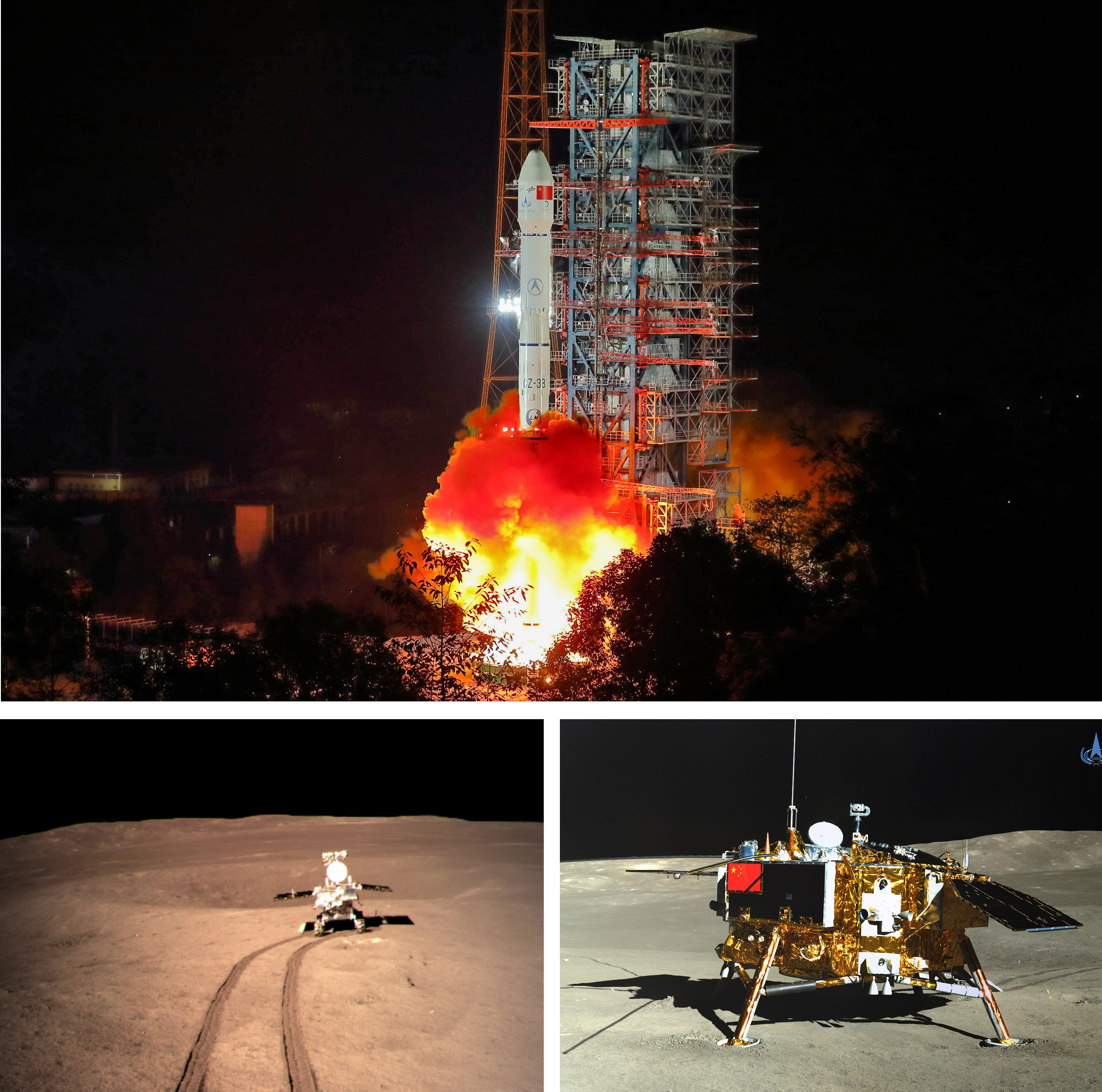

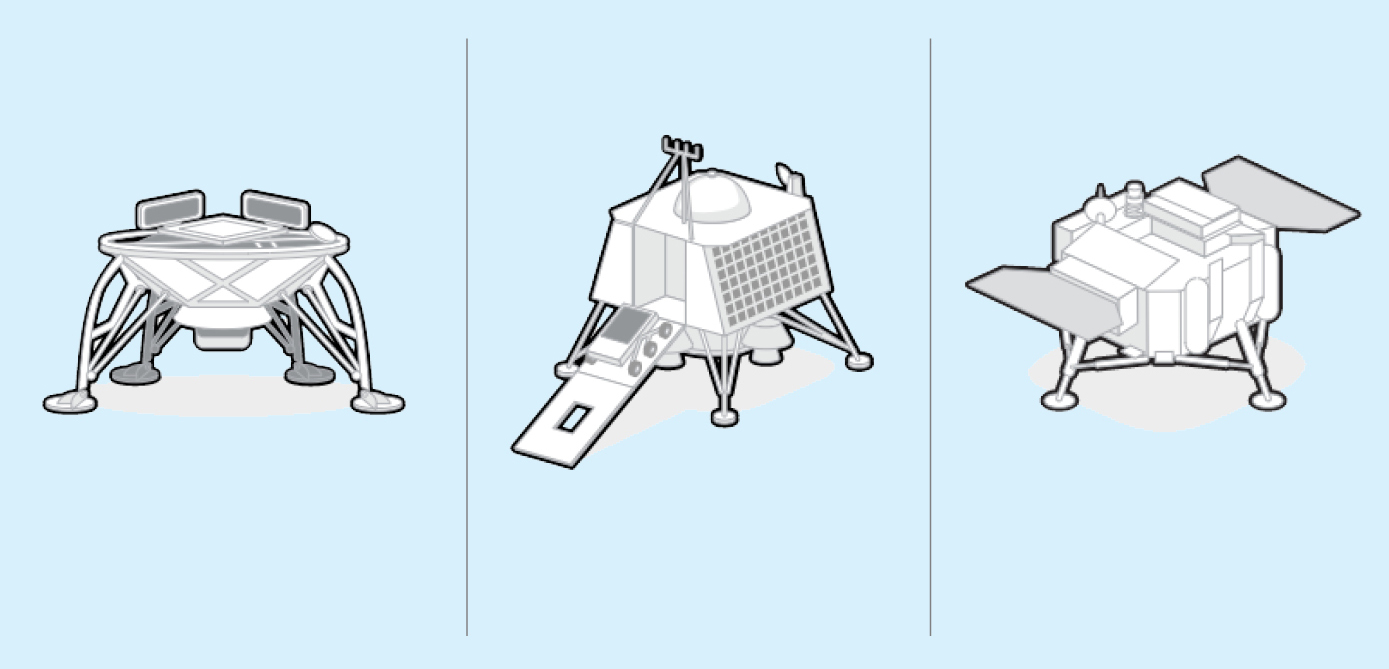

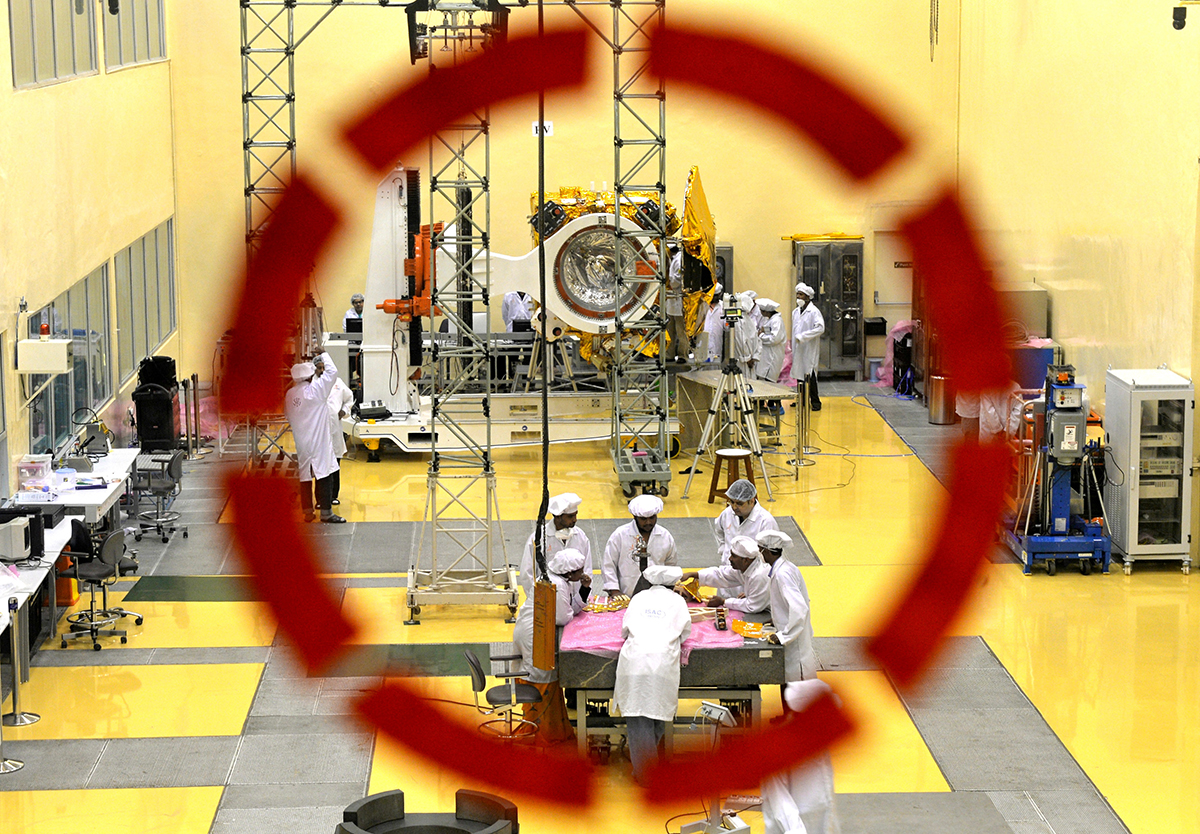



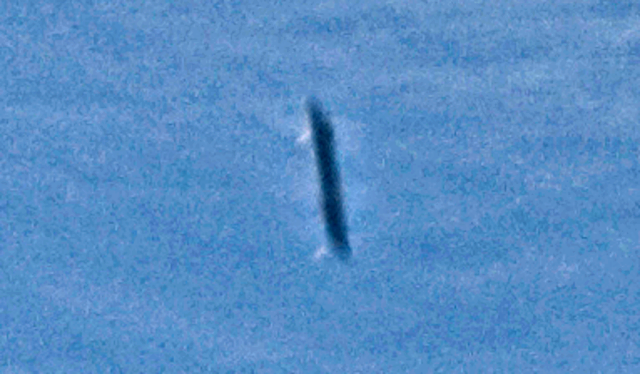


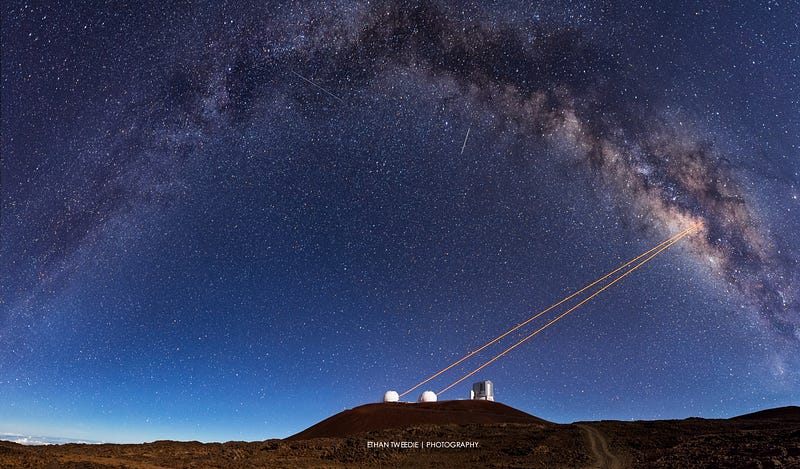

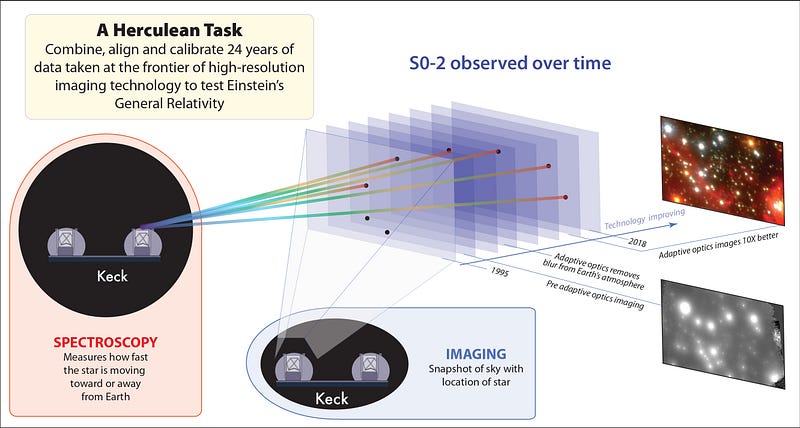


 carried north towards Beaufort and Chukchi Sea,
 25 July 2019 Enhanced natural colors
 Full-size:

 23 July 2019 Different vis













 Where the world’s wildlife is most at risk: Experts create...
 From diver's paradise to plastic nightmare: Colgate, Nestle...
 NASA will finally open moon samples from the Apollo missions...