Ontdek de Fascinerende Wereld van UFO's en UAP's: Jouw Bron voor Onthullende Informatie!
Ben jij ook gefascineerd door het onbekende? Wil je meer weten over UFO's en UAP's, niet alleen in België, maar over de hele wereld? Dan ben je op de juiste plek!
België: Het Kloppend Hart van UFO-onderzoek
In België is BUFON (Belgisch UFO-Netwerk) dé autoriteit op het gebied van UFO-onderzoek. Voor betrouwbare en objectieve informatie over deze intrigerende fenomenen, bezoek je zeker onze Facebook-pagina en deze blog. Maar dat is nog niet alles! Ontdek ook het Belgisch UFO-meldpunt en Caelestia, twee organisaties die diepgaand onderzoek verrichten, al zijn ze soms kritisch of sceptisch.
Nederland: Een Schat aan Informatie
Voor onze Nederlandse buren is er de schitterende website www.ufowijzer.nl, beheerd door Paul Harmans. Deze site biedt een schat aan informatie en artikelen die je niet wilt missen!
Internationaal: MUFON - De Wereldwijde Autoriteit
Neem ook een kijkje bij MUFON (Mutual UFO Network Inc.), een gerenommeerde Amerikaanse UFO-vereniging met afdelingen in de VS en wereldwijd. MUFON is toegewijd aan de wetenschappelijke en analytische studie van het UFO-fenomeen, en hun maandelijkse tijdschrift, The MUFON UFO-Journal, is een must-read voor elke UFO-enthousiasteling. Bezoek hun website op www.mufon.com voor meer informatie.
Samenwerking en Toekomstvisie
Sinds 1 februari 2020 is Pieter niet alleen ex-president van BUFON, maar ook de voormalige nationale directeur van MUFON in Vlaanderen en Nederland. Dit creëert een sterke samenwerking met de Franse MUFON Reseau MUFON/EUROP, wat ons in staat stelt om nog meer waardevolle inzichten te delen.
Let op: Nepprofielen en Nieuwe Groeperingen
Pas op voor een nieuwe groepering die zich ook BUFON noemt, maar geen enkele connectie heeft met onze gevestigde organisatie. Hoewel zij de naam geregistreerd hebben, kunnen ze het rijke verleden en de expertise van onze groep niet evenaren. We wensen hen veel succes, maar we blijven de autoriteit in UFO-onderzoek!
Blijf Op De Hoogte!
Wil jij de laatste nieuwtjes over UFO's, ruimtevaart, archeologie, en meer? Volg ons dan en duik samen met ons in de fascinerende wereld van het onbekende! Sluit je aan bij de gemeenschap van nieuwsgierige geesten die net als jij verlangen naar antwoorden en avonturen in de sterren!
Heb je vragen of wil je meer weten? Aarzel dan niet om contact met ons op te nemen! Samen ontrafelen we het mysterie van de lucht en daarbuiten.
LIGHTSAIL 2 SPACECRAFT OFFICIALLY UNFURLS MASSIVE SOLAR SAIL
THE PLANETARY SOCIETY/VICTOR TANGERMANN
VICTOR TANGERMANN
The Planetary Society’s LightSail 2 satellite successfully unfurled its boxing ring-sized solar sail on Tuesday and is getting ready to absorb solar rays as its only energy source for propulsion. It could soon represent the first time a spacecraft has traveled through space using only sunlight.
The unusual spacecraft is investigating an exciting form of locomotion in the far reaches of outer space — something that astronomers have been wondering about for hundreds of years.
German 17th century astronomer Johannes Kepler theorized that sails and ships could one day be “adapted to the heavenly breezes.” Now we know that the Sun’s photons exert tiny amounts of pressure which could be collected and used by a spacecraft’s “sail” for propulsion. The big advantage: no need for heavy liquid fuel and conventional solar arrays as an energy source.
If all goes according to plan, LightSail 2 could soon start zipping through outer space — but at an incredibly slow velocity at first. The Sun’s photons only exert pressure equal to the weight of a paperclip.
The unique spacecraft will spend about a year in Earth’s orbit before the team behind it will adjust its orientation to eventually burn up in the atmosphere.
The headlines in the wake of Apollo 11 could have been very, very different.
Michael Collins, Buzz Aldrin and Neil Armstrong seen inside the Mobile Quarantine Facility during the 2.5-day trip back to port on the USS Hornet, which picked them up when they splashed down.
It would have been the ultimate contingency of Apollo 11: What if the astronauts returning home unleashed upon Earth something dangerous and foreign to science — moon germs?
Before Apollo 11 set out, NASA couldn't be positive that, if bits of dust or potential microorganisms got loose back home, life on Earth would be safe. Needless to say, accidentally setting a lunar plague loose on the inhabitants of Earth would have erased all the good publicity garnered by accomplishing the moon landing in the first place. Just in case, in addition to the protections they were establishing to make sure the moon rocks remained free of terrestrial contamination, NASA decided to establish a three-week quarantine for the crew of Apollo 11.
"Initially, NASA thought that all they really needed was a clean room to handle the packaging of the lunar samples in a vacuum," Judith Hayes, chief of NASA's biomedical research and environmental sciences division, told Space.com. "They started really wrapping their head around this, is my understanding. They said, 'We've really never done this before, so we're not really sure,' even though I think most of the scientists didn't firmly believe that there might be a risk."
The quarantine was treated all along as a better-safe-than-sorry operation. The day before Apollo 11 splashed down, support staff had already entered quarantine in Houston to prepare for the crew's arrival, and The New York Times reported: "Twelve men are in absolute quarantine here because of something that probably does not exist."
The problem was, though, if that threat turned out to be a reality, things would get very ugly. "The quarantine program was created out of an abundance of caution," Jason Schwartz, a historian of medicine at the Yale School of Public Health, told Space.com. "You had a very, very small risk of something that could be very, very, very significant."
When the Apollo missions were launching, public health professionals had generally moved on from crude tools like quarantines, he said. "By the 1960s, we were really in the golden age of vaccines and immunizations," Schwartz said, particularly for diseases like polio, measles and mumps. "There was great optimism that the war against infectious diseases was being won," and he said that could have contributed to a fear of backsliding if Apollo went very wrong.
And the prospect of moon germs also mirrored a real public health concern at the time, of novel pathogens that the population had never had a chance to build an immunity to. It's a fear that remains with us today, which was sparked at the time by, for example, new influenza strains popping up on occasion. If something nasty hitched a ride back from the moon, it would have been the epitome of a novel pathogen. And, it would have driven doctors and public health practitioners way beyond their comfort zone.
"This was a different story than most public health efforts at the time, because typically, when we think about treatments, antibiotics, vaccines, quarantines, we're thinking about known viruses or bacteria with distinct symptoms, distinct modes of transmission that we know about and we can apply that knowledge to figure out how to tailor the public health response," Schwartz said. "In this case, it was responding to an unknowable, responding to a very slim but still nonzero uncertainty. How do you tailor a public health response when you're not sure what exactly you're concerned about or what it looks like or how it might affect humans at all?"
In the absence of any precisely honed tools to combat the potential threat, NASA used the blunt approach of a quarantine. The details of the plan were based on tackling a disease like the plague, according to a 1999 oral history given by Charles Berry, who was in charge of medical operations during Apollo.
The quarantine procedures began three weeks before launch, when the astronauts went into isolation to reduce the odds they would catch anything that NASA would later need to identify as terrestrial or lunar. For Apollo 11, Berry said, the prelaunch quarantine was nearly derailed by President Richard Nixon, who wanted to eat dinner with the crew the evening before launch. It was Berry's job to explain why that simply wasn't an option — the closest he said he believed he ever came to being fired.
"If [the astronauts] came down with anything, whatever it was, a cough, a sniffle, or anything else, we were going to have to prove that it didn't come from the moon," Berry told the interviewer. "So I think it would be pretty stupid to let somebody just walk into that situation. It would have been a total breakdown of the program."
(Astronauts today are also quarantined before their launch, but only because carrying terrestrial germs into orbit would be deeply unpleasant.)
Nixon shooed off and quarantine preserved, the trio of astronauts climbed aboard their rocket and blasted off on the historic journey. As they wrapped up their time on the moon, Neil Armstrong and Buzz Aldrin abandoned some of their equipment, including their boot covers, in part to reduce the odds they would bring back any lunar threats. The 21-day quarantine clock began ticking as soon as the pair stepped off the moon and closed the hatch on the lunar module.
They rejoined their colleague, Michael Collins, and headed back to Earth, splashing down in the Pacific Ocean on July 24. But the astronauts still had more than two weeks of quarantine left, and NASA had decided it wasn't safe to simply hoist the newly returned command module onto the aircraft carrier sent to fetch the astronauts.
The rescue crew had to send a swimmer to the spacecraft to open the hatch and throw in biological isolation garments for the astronauts to put on — spacesuits for Earth use only, essentially, with tightly woven fabric that would contain particles; rubber gloves; and a built-in breathing system.
The quarantine procedure began with biological isolation garments, which the Apollo 11 crew donned while leaving the command module and wore until they entered the Mobile Quarantine Facility seen in the right foreground.
(Image credit: NASA)
That made splashdown the biggest weakness in the quarantine system, as Collins has said in interviews looking back at the mission. "When you open that hatch, we had stuff come into the air, without any question about it," Berry said in his oral history. "You know, if it had been lunar plague, I don't know what would have happened. I didn't believe we were going to have lunar plague, but I couldn't go on the basis that we weren't."
Once the astronauts had donned their isolation suits, they climbed on board the ship sent to rescue them, then into the Mobile Quarantine Facility, a trailer NASA had converted to house them. The crew spent 2.5 days in the trailer as they sailed to port in Hawaii, then boarded a plane to Houston. Back in NASA's astronaut headquarters, the trailer was connected to the Lunar Receiving Laboratory, a special facility the agency had built at what is now the Johnson Space Center.
The building included quarantine quarters as well as lab space for preparing and studying moon rocks. The crew section was large enough to hold more than 100 people if something went very wrong, Hayes said, and included a kitchen, a lounge, a library and a collection of surgical and medical examination rooms.
Neil Armstrong celebrated his 39th birthday on Aug. 5, 1969, while still in quarantine. According to NASA the cake was "standard two-layer, plain vanilla" and decorated with 39 candles.
(Image credit: NASA)
"It was, I think, quite comfortable," Hayes said. "Talking to the crews from back then and the flight surgeon, they did say that — you know, it wasn't bad. After spending time in a capsule, being in the quarantine facility was quite comfortable." Armstrong even celebrated his birthday in the quarantine building.
The crew and about 20 companions waited out the rest of the quarantine period in the facility, without particular concerns about the possibility they were infected. "I got the impression that … the [astronauts] were not worried," Hayes said. "They had daily exams from their flight surgeons … they were being carefully watched by the flight surgeons and the scientists in the quarantine." Scientists were also monitoring mice that had been exposed to lunar samples in case they showed signs of distress, but all did well.
But by the end of the 21 days, newspapers reported that the astronauts were ready to get back to exploring Earth. "I'm ready any time they want to open that door," Aldrin said according to The New York Times. "Take my blood. Marvelous idea. Why didn't I think of that sooner?" the paper reported Collins said when it transpired that a blood test would shorten quarantine by a few hours.
NASA had planned to institute the quarantine for Apollo 11, 12, 13 and 14, then reevaluate the situation. The Apollo 13 quarantine was canceled after the crewmembers were forced to skip the moon landing maneuver. During the first couple years of studying moon rocks in terrestrial labs, occasional lapses in safety protocols also sent scientists into observation or quarantine.
Wives and children of the Apollo 12 crew greet the returning astronauts in their Mobile Quarantine Facility. The crew quarantine procedures were used for Apollo 11, 12 and 14, then deemed unnecessary.
(Image credit: NASA)
But after Apollo 14, NASA decided that Earth was safe from lunar bugs. The lunar receiving lab's sample-processing side remained active until a new building was constructed and the moon rocks were moved out. Then, the building was turned over to NASA's life sciences division, which is how Hayes ended up spending decades working in its labs and uncovering its history.
Now, her department has moved out as well. "I was the last one to shut the lights out and lock the door when we moved out of the Lunar Receiving Lab, and now it sits empty," Hayes said.
According to NASA spokesperson Noah Michelsohn, the building is slated for demolition, with a new sample-processing facility due to be built before the asteroid missions OSIRIS-REx and Hayabusa2 bring back new, precious space rocks starting late next year. Hayes said she wishes she had appreciated the facility more when she first joined NASA, since it tells such a compelling story about the Apollo program and of spaceflight in general.
"It's kind of amazing, all the things they thought of and pulled together to do this," Hayes said. "I imagine when we go back to the moon, we'll have to do some similar things, not necessarily for the crew but handling samples and the experiments that'll be done."
Julie Ritt, I've studied and read up on NASA history in great detail.
The astronauts of Apollo 11, 12, and 14 were quarantined for 21 days - but I'm not entirely sure NASA took the threat of “moon bugs” too seriously when you consider a couple things.
The POTUS, President Nixon, was on board the recovery ship. If you thought there was even a potential chance of contamination, would you really have the leader of the free world standing there? Really?
The procedure involved the frogmen literally spraying the capsule in betadine as they put the flotation collar on it, just in case the heat of re-entry didn't kill anything that might be there. Then the hatch was opened - the vents having already opened - and a guy tossed in a bag of bio-suits. (Presumably while holding his breath?) The astronauts then shut the hatch, put on the suits, re-opened the hatch, were helped onto a helicopter, and landed on the ship. Only then were they put into the mobile quarantine facility.[1]
It could just be me, of course, but it seems like there might be one or two holes in that there quarantine process.
The carmaker and the Japan Aerospace Exploration Agency (JAXA) just signed a three-year agreement to jointly develop a pressurized lunar rover, which will incorporate fuel-cell electric-vehicle technologies.
"Over the course of the three-year joint research period, JAXA and Toyota will manufacture, test and evaluate prototypes, with the goal of developing a manned, pressurized lunar rover and exploring the surface of the moon as part of an international project," Toyota representatives wrote in a July 16 statement.
Artist's illustration of the planned Toyota/JAXA rover on the moon.
(Image credit: Toyota/JAXA)
Toyota's giant pressurized rover for astronauts could be solar powered, as shown in this illustration.
(Image credit: Japan Aerospace Exploration Agency)
This artist's illustration shows the scale of Toyota's planned pressurized moon rover for astronauts. The auto manufacture is working with the Japan Aerospace Exploration Agency on the project.
(Image credit: Toyota)
The agreement runs from June of this year through the end of fiscal year 2021, Toyota representatives added.
Toyota set up a new department called Lunar Exploration Mobility Works on July 1 and plans to have about 30 people working there by the end of the year.
If all goes according to plan, Toyota and JAXA will build a full-scale prototype in the 2022 time frame, design the flight model and build and test an engineering model about two years later, and build and test the flight model around 2027.
Launch would follow in 2029.
"The rover will be used for missions to explore the moon's polar regions, with the aim both of investigating the possibility of using the moon's resources ― such as frozen water ― and of acquiring technologies that enable exploration of the surfaces of massive heavenly bodies," Toyota representatives wrote in the statement.
There could be a number of customers interested in the moon rover.
For example, NASA plans to launch two astronauts to the south pole by 2024and apparently wants to develop a research outpost in the region over the ensuing years. The European Space Agency has similar aims; it would like to help build a south pole "moon village" in the not-too-distant future.
In addition, a number of private companies plan to mine water ice near the lunar south pole, where the material is abundant on the floors of permanently shadowed craters. This water could be used for life support and, when broken into its constituent hydrogen and oxygen, as rocket fuel.
The Toyota/JAXA vehicle wouldn't be the first crewed vehicle to roam the lunar surface. NASA launched unpressurized, astronaut-driven "moon buggies" on the final three Apollo moon missions, in 1971 and 1972.
Mike Wall's book about the search for alien life, "Out There" (Grand Central Publishing, 2018; illustrated byKarl Tate), is out now. Follow him on Twitter @michaeldwall. Follow us on Twitter@Spacedotcom orFacebook.
The secrets of the Quark-Gluon Plasma that filled the early universe are being unlocked by the ALICE collaboration at CERN with the first measurement of the flow of bottomonium particles.
Quark-Gluon Plasma that filled the early Universe investigated by ALICE
(Author’s Collection)
In a paper presented at the European Physical Society’s conference on high-energy physics, the ‘A Large Ion Collider Experiment’ (ALICE) collaboration has documented the first-ever measurement of the flow of a heavy meson particle — bottomonium.
The measurement of particles like bottomonium — a type of ‘upsilon’ particle — helps the researchers understand the Quark-Gluon Plasma (QGP) that filled the hot, dense early universe.
By observing pairs of ‘heavy electrons’ — known as muons — produced by the decay of bottomonium, the team discovered bottomonium particles have small values of elliptic flow — a measure of how uniform energy and momentum is distributed across the particles when viewed from the beamline.
This is quite unexpected as all other hadrons investigated thus far have exhibited significant elliptic flow.
David Evans, a professor of high energy physics at the University of Birmingham, leads the UK participation in ALICE.
He says: “ Elliptical flow measurements in ALICE show that the Quark-Gluon Plasma flows like an almost perfect liquid, with the light quarks (up, down, strange, and charm) flowing with the system.”
“The fact that no significant elliptical flow is seen for the bottomonium suggests b-quarks are only produced in the initial collision of the lead ions, before the QGP is formed.”
The ALICE team’s results seem to support existing theories that bottonium and other upsilon particles split into their constituents during the early stages of their interactions with plasma.
This gives the researchers a better insight at the conditions in the early moments of the universe when it was filled with a plasma composed of free quarks and gluons.
Evans continues: “This makes b-quarks (and particles made up of b-quarks) an ideal probe for studying the QGP as they experience the entire evolution of the system.”
Bottomonium particles — probing the Quark-Gluon Plasma at the dawn of the universe
Taking a trip through the ‘particle zoo’ to discover what these bottomonium particles actually are, helps us understand their role in the ALICE experiment.
The six known types of quarks on the left and how they come together to form protons and neutrons on the right
Bottonium is a heavy meson — particles which consist of a quark and its own antiparticle. In the case of bottomonium, a bottom (or beauty quark) — b quark — and its antiparticle counterpart.
These subatomic particles are extremely unstable, existing for short periods of time and only at high energies before decaying into other particles. When bottomonium decays it leaves behind a pair of ‘heavy electrons’ called muons.
Bottomonium particles — which are formed in the LHC by the violent collision of heavy lead-lead ions — provide an excellent probe of the Quark-Gluon Plasma which filled the universe just a few millionths of a second after the big bang.
Being produced so early in the collision event means bottomonium particles ‘experience’ the entire evolution of the plasma — from the moment it is produced to the moment it cools down and enters a state in which hadrons can form.
This extremely early stage in the universe’s evolution would have been the only time in history that quarks and gluons existed freely in plasma and not bound together in a state called ‘confinement’ in protons, neutrons and other hadrons.
These particles were only able to exist in this free state because of the incredible heat in the universe at this point. In our era, quarks and gluons are never observed as free particles.
Thus, it takes a tremendous amount of energy, to recreate these huge temperatures. At the moment, the Large Hadron Collider (LHC) is the only piece of apparatus on Earth capable of doing this, with collisions in the LHC able to generate temperatures a 100 thousand times hotter than the Sun.
At these temperatures, protons and neutrons ‘melt’, freeing quarks and gluons from confinement, thus creating a Quark-Gluon Plasma and allowing them to form short-lived, unstable particles like bottonium.
ALICE: Collision queen
The ALICE collaboration — consisting of over a 1000 scientists operating a 10-thousand-tonne, 16m tall detector buried 56m under the Alps — achieves this high-energy feat by slamming together beams of lead ions rather than the proton-proton collisions used in other LHC experiments.
The decay of upsilon particles — another type of meson — into muon pairs as the result of a lead-lead collision. The red lines track the two muons the orange lines track the other particles produced (CERN)
The benefit of colliding lead ions is that, as ALICE is looking to create Quark-Gluon Plasma, the more quarks available to it, the better the chance of observing something significant.
A single proton and neutron each contain three quarks but as lead ions contain at least 56 protons and at least 204 neutrons this leaves the team with far more quarks to play with.
ALICE then measures this plasma as it expands and cools, but it is still unable to measure the particles created directly— instead deducing the presence and properties of QGP from the signatures on pairs of muons it produced by decay.
One of these signatures is the elliptic flow — the collective movement of the produced particles determined by several factors like particle type, mass, the angle at which the particles meet and the momentum they possess as they collide — which is what the team measured. The flow is created by the expansion of hot plasma after the collision of the lead ions.
Upgrading ALICE: More collisions. More Quarks. More Results
Perhaps the most promising thing about ALICE’s mission to probe the early universe and its conditions is the fact that the forthcoming high-luminosity upgrade only promises to yield more data for researchers to investigate.
The ALICE Experiment is about to be revitalised (CERN)
The upgrade — which CERN hopes will be operational by 2021— aims to increase the luminosity of the LHC by a factor of 10. Luminosity, as described in reference to particle accelerators, is proportional to the number of collisions that occur. Thus increasing the luminosity also means increasing the number of collisions.
As an example of the usefulness of this upgrade, whereas the LHC produced 3 million Higgs boson particles in 2017, the High-Luminosity LHC is expected to produce 15 million per year.
In addition to the High-Luminosity upgrade — on which work began in 2018 — ALICE will also several other upgrades and improvements. As a result of these improvements, the ALICE team expect an overall gain of 100 times the current results.
Evans says: “With this huge increase in statistics and a new inner detector in ALICE, we will be able to measure particles made of b-quarks with much higher precision.”
As such, the experiment stands a very good chance of significantly improving our knowledge of the quark-gluon plasma and the conditions in the early universe, with these new bottomonium results pointing the way.
Evans concludes: “[The upgrades] allow us to probe the properties of the QGP in much more detail and hence learn more about the evolution of the early universe.”
July 20 marked not only the 50th anniversary of the first manned moon landing, but also the beginning of the next chapter of exploration. In the Neil Armstrong Operations and Checkout Building at NASA’s Kennedy Space Center, Vice-President Mike Pence announced that the Orion capsule is ready for the first Artemis lunar mission.
Built by Lockheed Martin, Orion will fly on the uncrewed Artemis 1 test mission around the moon next summer. Tying itself to the original moon program, the mission is named for the twin sister of Apollo in Greek mythology. The capsule will be lifted into orbit by the many-times-delayed Space Launch System (SLS) heavy-lift rocket, whose postponements caused the original Artemis date of 2020 to be pushed back to 2021.
During Artemis 1, the SLS will send the uncrewed spacecraft – consisting of the crew and service modules – thousands of miles past the Moon for the first in a series of increasingly complex missions. In 2023, Artemis 2 will then carry astronauts on board, followed by Artemis 3 — scheduled for 2024 — which will be the first craft to land humans on the moon since Apollo 17.
“Similar to the 1960s, we too have an opportunity to take a giant leap forward for all of humanity,” said NASA Administrator Jim Bridenstine.
The European Service Module will provide the power and propulsion for Orion during the mission, is also complete. The European Space Agency‘s module was manufactured by Airbus in Bremen, Germany, and shipped to Kennedy in last November for final assembly and integration.
NASA and Lockheed Martin are preparing for the first crewed test flight of the Orion spacecraft.
Image Credit: Lockheed Martin.
Since the crew module pressure vessel arrived in Florida, engineers have been busy installing the capsule’s avionic computers, harnesses, propulsion system and its 12 engines, 11 parachutes, its 16-foot-diameter heat shield, forward bay cover and numerous other systems and components. When the two modules are joined, a heatshield backshell panel on the spacecraft will be installed to prepare it for a September flight inside ESA’s Super Guppy aircraft to NASA’s Plum Brook Station in Sandusky, Ohio. Testing there will ensure the joined modules can withstand the deep space environment and a successful trip to Mars.
“Orion is a new class of spaceship, uniquely designed for long-duration deep space flight, that will return astronauts to the Moon and eventually take the first humans to Mars, and bring them all back safely.” said Lisa Callahan, vice president and general manager of Commercial Civil Space at Lockheed Martin. “Orion will accelerate scientific discovery of our solar system and will be the cornerstone of the defining space achievement of this era.”
Once Orion returns to Kennedy at the end of the year, the spacecraft will go through final preparations before Lockheed Martin delivers it to ground systems for launch processing in early 2020.
Remember that model of the Earth’s layers — a big orb with clean divisions throughout — you learned about in high school? It turns out the reality of the situation is a whole lot messier.
The Earth’s core has been leaking into other layers of the planet for the past 2.5 billion years, reports Live Science. It turns out that tungsten from the core has been filtering out into the mantle, occasionally even migrating farther out into the surface of the Earth’s crust. Aside from revealing that the Earth has some bad plumbing, it’s also the first indication that the inner layers of our planet swap materials.
Steady Drip
A team of scientists from the U.S., Canada, France, and Australia found that the ratio of tungsten and hafnium found in minerals from the core and mantle have shifted by 200 parts per million, according to research published last month in the journal Geochemical Perspective Letters last month.
The scientists aren’t sure why the core is leaking, per Live Science, though in an essay published in The Conversation last week the researchers suggested two possible explanations related to plate tectonics or changes that occurred as the Earth initially formed.
As they explore the phenomenon, the scientists wrote in The Conversation that their “our new results could tell us something about the evolution of the core, including the origin of Earth’s magnetic field.”
A cross-section of the Earth, showing what’s deep inside the planet.
De kern van de aarde lekt, en wetenschappers hebben geen idee waarom
Herinner je je dat plaatje dat je op school kreeg te zien van de samenstelling van de aarde? De werkelijkheid is een stuk ingewikkelder.
Het blijkt nu dat de aardkern al 2,5 miljard jaar lekt, schrijftLive Science.
Wolfraam heeft zich vanuit de kern verspreidt naar de mantel en in sommige gevallen zelfs naar het oppervlak van de aardkorst.
Eerste aanwijzing
Het is een eerste aanwijzing dat de binnenste lagen van onze planeet materie uitwisselen.
Een team wetenschappers uit de Verenigde Staten, Canada, Frankrijk en Australië is tot de ontdekking gekomen dat de verhouding tussen wolfraam en hafnium in mineralen uit de kern en mantel is veranderd.
Het gaat om een verandering van 200 deeltjes per miljoen, blijkt uit onderzoek dat ze afgelopen maand publiceerden in het tijdschrift Geochemial Perspective Letters.
Wetenschap staat voor raadsel
De wetenschappers kunnen niet met zekerheid zeggen waarom de kern lekt.
In een essay dat onlangs werd gepubliceerd in The Conversation stellen onderzoekers twee mogelijke verklaringen voor die te maken hebben met platentektoniek of veranderingen die plaatsvonden tijdens het ontstaan van de aarde.
“Onze nieuwe resultaten kunnen ons iets zeggen over de ontwikkeling van de kern, inclusief de oorsprong van het aardmagnetisch veld,” klonk het.
China Lake/Ridgecrest: Super Volcano Forming, Emergency Water Releases From Reservoirs, And More
dutchsinse- Earthquake Live Stream — 24/7 Seismic Activity — Past 48 hours up to current
USGS Report Leaked. Super Volcano forming near China Lake Naval Station, Emergency Water Release From Major Reservoirs, More Earthquakes To Follow. , Prepare To Evacuate. Total Media Blackout To Prevent Panic.
Geologist at China Lake are reporting that there is a large chamber of magma discovered beneath China Lake/Ridgecrest, appears to be a new super volcano forming, this would explain the earthquake swarm that has smothered this area recently. FEMA and National Guard Alerted, Standing By….
All this information, from AMERICAN UNDERGROUND ARMY, is in the video below.
In an attempt to Debunk this information, I have come across some other interesting reports I would like to share with you.
Marfoogle news is also working to verify this leaked information and discredit it, but hit a brick wall. I will include the Marfoogle Video below as well. Marfoogle basically confirms the information from AMERICAN UNDERGROUND ARMY Youtube report above.
Significant DATA on Lake Levels Falling Confirm an attempt to lower the water levels behind the dams on the reservoirs in this geographic locations, as fast as possible.
With FEMA and the National Guard at the Ready, Water Levels being reduce on the Largest Reseviors, Emergency Funding Approved in minutes for China Lake Naval Base….. Marfoogle’s report will drive home the significance of the events taking place in the last 24 hours.
Now in my search for the truth, of all places, I found this information over at the Los Angeles Times.
More than 80,000 earthquakes have been recorded in the Ridgecrest area since July 4
The U.S. Geological Survey says the chance of an earthquake of magnitude 7 or higher resulting from the Ridgecrest quakes is 1 in 300
This activity is common in areas where there’s a high heat flow in the earth, Ross said. (Super Volcano?)
The Ridgecrest earthquakes are relatively close to the Coso Volcanic Field of Inyo County, which is mainly within the borders of Naval Air Weapons Station China Lake, the sprawling military installation where much of the earthquake rupture occurred underneath. It’s one of the nation’s largest producers of geothermal power.
Scientists have been urging the public to use heightened concern over quakes to get prepared, including planning for a home or apartment retrofit and furniture and heavy appliances to walls.
If you have loved ones living along the West Coast, you may want to raise their awareness to these current events that mainstream media seems to be ignoring for some reason. Of course if anything happens in these areas, they will claim the “Blackout” was for our own good.
Be Prepared, Do Your Own Research, God Bless.
From KTLA News: A magnitude 4.2 earthquake jolted the Twentynine Palms area on Monday morning, more than two weeks after a pair of powerful temblors rattled the region, according to the U.S. Geological Survey.
A 4.2 quake centered near Twentynine Palms hit on July 22, 2019.
(Credit: USGS)
The quake struck about 9:26 a.m. and was centered nearly 10 miles south of Twentynine Palms and 23 miles north-northeast of Coachella, USGS reported.
It was initially reported to be a 4.4 before being downgraded to a 4.2.
The first quake was followed about an hour and a half later by a small 2.2 temblor, according to USGS.
There were no immediate reports of damages or injuries.
Twentynine Palms is about 180 miles southeast of Ridgecrest, where magnitude 6.4 and 7.1 quakes struck on July 4 and 5 respectively.
That area has been shaken by thousands of aftershocks since the Fourth of July, including at least 70 with a magnitude of 4.0 or greater.
CaSeismograph Live Earthquake Stream
On July 5, 2019, the largest earthquake to strike California in 20 years occurred near the town of Ridgecrest with a moment magnitude of 7.1 following a magnitude 6.4 foreshock on the previous day.
The National Tsunami Warning Center (NTWC) in Palmer, Alaska, has the primary responsibility for determining whether earthquakes in the continental United States, including California, pose a tsunami threat.
The Pacific Tsunami Warning Center (PTWC) also monitors these earthquakes in case it has to provide back-up service for NTWC .
While California produces many earthquakes, most are too small, too far from the ocean, and/or move the earth in such a way that they are unlikely to produce tsunamis, though there are exceptions.
This animation covers a period of 30 years to put the Ridgecrest earthquakes in context and show how they compare with other recent, noteworthy earthquakes including: Oct 10, 1989 — Loma Prieta — 6.9 Mw Apr 25, 1992 — Cape Mendocino — 7.2 Mw (caused a small tsunami) Jun 28, 1992 — Landers — 7.3 Mw Jan 17, 1994 — Northridge — 6.7 Mw Oct 16, 1999 — Hector Mine — 7.1 Mw Dec 22, 2003 — San Simeon — 6.6 Mw Apr 4, 2010 — Baja California (Mexico) — 7.2 Mw Aug 24, 2014 — South Napa — 6.0 Mw Jul 4, 2019 — Ridgecrest — 6.4 Mw Jul 5, 2019 — Ridgecrest — 7.1 Mw
Malta – the three-island archipelago in the middle of the Mediterranean Sea — has been ruled by many groups since it was first inhabited around 5200 BCE, including Phoenicians, Carthaginians, Romans, Byzantines, Arabs and Sicilians. However, long before these cultures, it was inhabited by a mysterious prehistoric group that built the world’s only known prehistoric subterranean temple — Hal Saflieni Hypogeum – which was used as a necropolis and where archeologists found a number of elongated skulls … skulls whose origin has never been determined, leaving them open to speculation that their owners were extraterrestrials. Now, for the first time, those elongated skulls will be subjected to intense scientific study with the intention of determining their true origin.
Photograph of the Hypogeum of Ħal-Saflieni made before 1910
“From an examination of the skeletons of the polished-stone age, it appears that the early inhabitants of Malta were a race of long-skulled people of lower medium height, akin to the early people of Egypt, who spread westward along the north coast of Africa, whence some went to Malta and Sicily and others to Sardinia and Spain.” — NATIONAL GEOGRAPHIC MAGAZINE January to June, 1920 VOLUME XXXVII
Malta Today announced that the project – called The Sentinels of Ħal Saflieni, Malta: Science Facts versus Science Fiction — will be carried out by Heritage Malta, the Superintendence of Cultural Heritage and Macquarie University of Sydney, Australia. The Hal Saflieni Hypogeum was accidentally discovered in 1902 by construction workers who initially attempted to hide it. Determined to have been used from about 4000 BCE to 2500 BCE, it was excavated by a number of archeologists, including Sir Themistocles “Temi” Zammit, a noted Maltese archeologist, who documented the discovery of around 7,000 skeletons, including many with skulls that were elongated and one that was mysteriously missing a Fossa median – the join that runs along the top of the skull. Unfortunately, the remains crumbled at the touch and only about 20 skulls survived intact.
That’s where the mystery and myth surrounding these remaining elongated skulls deepens. National Geographic was able to examine some and concluded that they were from an entire long-skulled culture. A number of them were put on display in the Archaeological Museum in Valletta, the capital of Malta. In 1985, they were removed from the display by Heritage Malta, the authority responsible for Malta’s prehistoric heritage, and have never been seen in public again. While some say they’ve disappeared, Heritage Malta insists they have been available for scientific research. However, only a handful of people have actually been granted permission. Two were Dr. Anton Mifsud and Dr. Charles Savona Ventura, who published books and articles detailing the skulls’ elongation, abnormally developed temporal partitions, and drilled and swollen occiputs (back of the skull). These are apparently the skulls that will be used in the new analysis.
A physical examination of the skulls will not necessarily resolve other mysteries about their discovery. For example, the papers of the man who first found the site – Emmanuel Magri – have never been published and appear to have disappeared. The original reports of the discovery said there were 33,000 skeletons, not 7,000 – and the latter number was eventually reduced to a mere 100. Of the 20 skulls said to have survived, only six are left. What happened to the others?
Then there are the stories of giant humanoids living in hidden caverns below the already-subterranean Hal Saflieni Hypogeum and the unconfirmed disappearance of 30 children and a teacher on a school tour of the catacombs – whose cries were said to have been heard all over the island.
Let’s hope the new study can solve the origin of the elongated skulls of Malta. As for the other mysteries? Malta obviously knows how to guard its secrets.
In my 2017 book, The Roswell UFO Conspiracy, I wrote the following, which will demonstrate how I personally became so embroiled in the matter of the Tim Cooper-era Majestic 12 papers: “It’s a little known fact that in late 2001 Tim Cooper sold all of his voluminous UFO files to Dr. Robert M. Wood. Bob is the father of Ryan Wood, who has spent years researching alleged crashed UFO incidents – all detailed in his book, Majic Eyes Only. It is even less well-known that in the early days of 2002, Bob hired me to spend a week in an Orange County, California-based motel-room, surrounded by all of the thousands upon thousands of pages of Cooper’s voluminous collection of the cosmic sort. The plan was for me to catalog all of the material, to compile each and every piece of it into chronological order, and to summarize the content of each document, every letter, and every Freedom of Information request that Cooper had submitted to government agencies – which is precisely what I did. It was a week in which I most definitely earned my loot. It was also a week that paralleled the infamous story told by Hunter S. Thompson in his classic gonzo saga, Fear and Loathing in Las Vegas. Whereas Thompson was hunkered down with his whisky, margaritas and shrimp cocktails, for me it was cases of cold beer and club sandwiches.”
Contained in the Cooper files was a document titled UFO Reports and Classified Projects, and which I saw for the first time in that aforementioned Orange County motel-room. It offers a very controversial, non-UFO-themed, explanation for what occurred at Roswell back in July 1947. I doubt that anyone in Ufology – aside from myself, Bob Wood and Tim Cooper – has ever seen the document in its original form. And I do mean “original.” It’s not a photocopy. The relevant extract reads as follows, in relation to 1947-era classified U.S. military programs:
“One of the projects underway at that time incorporated re-entry vehicles containing radium and other radioactive materials combined with biological warfare agents developed by IG Farben for use against allied assault forces in Normandy in 1944. When a V-2 warhead impacted near the town of Corona, New Mexico, on July 4, 1947, the warhead did not explode and it and the deadly cargo lay exposed to the elements which forced the Armed Forces Special Weapons Project to close off the crash site and a cover story was immediately put out that what was discovered was the remains of a radar tracking target suspended by balloons.”
Of IG Farben, the Holocaust Research Project states: “IG Farben was a German Limited Company that was a conglomerate of eight leading German chemical manufacturers, including Bayer, Hoechst and BASF, which at the time were the largest chemical firms in existence. Prior to the First World War these firms had established a community of interests – Interessengemeinschaft – hence the initials IG which merged into a single company on the 25 December 1925, thus constituting the largest chemical enterprise, in the whole world.”
Britannica.com gets to the heart of the absolute worst part of IG Farben’s “work.” They note: “During World War II, IG Farben established a synthetic oil and rubber plant at Auschwitz in order to take advantage of slave labor; the company also conducted drug experiments on live inmates. After the war several company officials were convicted of war crimes (nine being found guilty of plunder and spoliation of property in occupied territory and four being found guilty of imposing slave labor and inhumane treatment on civilians and prisoners of war).”
Scum? Yep.
It appears – within the pages of the UFO Reports and Classified Projects document that Cooper acquired – that someone wanted to make a connection between the Roswell affair of 1947 and IG Farben. It’s important to note, though, that Timothy Cooper specifically chose not to release this particular document into the public domain. In fact, it may well have been the only allegedly leaked document that he never made public. Why did Cooper choose to keep this report out of the hands of Ufology? I don’t know. Perhaps it was too controversial for even Cooper, which is certainly saying something. What I can state for sure, however, is that had I not found the relevant papers in the voluminous files of Cooper back in 2002, it’s highly doubtful that they would ever have surfaced. Most probably, had Cooper chosen to reveal the document, then it would have likely created a firestorm within Ufology. After all, linking the world’s most famous UFO case with Holocaust-connected IG Farben would have provoked a huge controversy and created even more distrust about the actions of the U.S. Government. If the Russians were behind theUFO Reports and Classified Projects document, as I suspect, then that may well have been the goal.
It seemed for a while as we forged bravely into the 21st century that we were pretty smart. We thought we were figuring out the mysteries of the universe, one after another. Recently, however, there’s been a series of reports that all challenge our model of the universe, which we thought was pretty well figured out. First we find out that the sun is a lot stranger than we think it is, then we find out that the universe is more than a billion years younger than it should be. These both suggest the same thing: we’re not nearly as smart as we think we are. This is nothing new, of course. The story of humanity is in essence the surfing of the constant realization that we’re pretty dumb all the way to the stars. Which is a neat little trick.
Now there’s a third in the series of assumption defying realizations. The Hubble constant is an astrophysical value that represents the expansion rate of the universe. It was named for Edwin Hubble who, in 1924, discovered that the farther away from Earth a galaxy was, the faster it appeared to be continuing its outward trajectory. In the early 1990’s, a team led by astrophysicist Wendy Freedman calculated the Hubble Constant within 10% of it’s true value, and scientists have been trying to refine that calculation ever since.
The Hubble Space Telescope, also named for Edwin Hubble, was used to calculate the Hubble constant.
And there seems to be a pretty big problem. Wendy Freedman recently recalculated the Hubble Constant using red giant stars as mileposts—red giants are useful because they reach the same brightness late in their evolution and thus make pretty good distance markers. With her new calculation, rently accepted for publication by the Astrophysical Journal, Wendy Freedman came to an entirely different result than she and her team calculated in the 1990’s. What might this mean? Well, this is just the latest in a series of discoveries related to the age and expansion of the universe that have found serious discrepancies, discrepancies that open up the possibility that something is well and truly broken with physics.
“Alright, I admit it. I don’t understand!”
Wendy Freedman’s red giant method of calculating the Hubble constant was supposed to be a “tie-breaker” between two other competing calculation. Instead it’s a different result entirely. According to Freedman:
“The Hubble constant is the cosmological parameter that sets the absolute scale, size and age of the universe; it is one of the most direct ways we have of quantifying how the universe evolves. The discrepancy that we saw before has not gone away, but this new evidence suggests that the jury is still out on whether there is an immediate and compelling reason to believe that there is something fundamentally flawed in our current model of the universe.”
“Naturally, questions arise as to whether the discrepancy is coming from some aspect that astronomers don’t yet understand about the stars we’re measuring, or whether our cosmological model of the universe is still incomplete. Or maybe both need to be improved upon.”
NASA is launching a brand-new telescope at some point in the mid-2020’s called the Wide Field Infrared Survey Telescope (WFIRST). This telescope will provide the same resolution as the now-defunct Hubble Space Telescope with 100 times the field of view. Astronomers hope that this new super telescope will show them where the discrepancy lies without making us re-do physics. More likely, it will probably keep showing us just how dumb we are.
Imagine a world where magic existed. In such a world, one might be able to wear a cloak that, once it covered our bodies, rendered us invisible; the likes of things we read about or see in films that include Harry Potter and the Philosopher’s Stone.
Such things will never really exist, at least not from magical means. However, that’s not to say that science won’t eventually be able to achieve similar things. One day, with the use of unique and, at times, almost unearthly composite materials–the likes of which are never found in nature–humans may indeed be able to bring such things as invisibility cloaks into real existence.
To achieve invisibility, a metamaterial needs to possess certain optical properties. Specifically, scientists would have to design the material so that they could control how light moves around an object without being reflected or absorbed. This design is possible, but it would take just the right material with just the right structure.
The aforementioned algorithm, created by Yongmin Liu, a professor at Northeastern University, and his team found that using a computer algorithm to create such unnatural composite materials was “much faster and more accurate than previous approaches, paving the way for engineers to design next-generation materials.”
By introducing the algorithm to some 30,000 different sample data sets, it was able to not only learn those relationships, but to expand on them and predict new varieties based on the data.
Fast forward to 2019, where new developments in this burgeoning field are pushing boundaries even further into tomorrow: a multidisciplinary team with the Department of Mechanical Engineering and Department of Chemical Engineering at the Pohang University of Science and Technology (POSTECH) have now formalized a system “that allows researchers to choose materials and design photonic structures arbitrarily by using deep learning.”
In layman’s terms, this means they are using artificial intelligence to aid in the creation of new kinds of metamaterials, capable of functions that include invisibility.
“The resulting metamaterials can be utilized in display, security, and military technologies. In this regard, introduction of AI to the design method is expected to make important contributions to the technological development of metamaterials,” PhysOrgreported.
Of the three areas listed above, perhaps the mention of “military technologies” is the most interesting and impactful. It also reminds us of the kinds of “innovations of tomorrow” that were being foreshadowed decades ago, albeit in relation to more speculative lines of thought.
A good example might include an article that appeared in Britain’s Sunday Dispatch in October 1954. In it, a quote from a spokesman with the British War Office stated that “(UFOs) are invisible to the human eye,” and that radar operators frequently detected “fleets” of unidentified—and invisible—objects passing overhead in the mid-afternoon. Any attempts at establishing visible line-of-sight confirmation proved unsuccessful.
“Every time, they have followed the same pattern, always around mid-day. All our radar sets in the area have picked them up,” the article stated.
This may sound like a description of some rather exotic technology; however, early camouflage techniques were already being developed by around the time of World War I that would allow aircraft to become functionally “invisible” when viewed against the sky at a distance. One 1917 patent application attributed to Mary “Mitty” Taylor Brush proposed a pattern that would be “able to produce a machine which is practically invisible when in the air.” Such techniques, later put into use during wartime, were derived from techniques used in fine art already for centuries.
Modern stealth technology is, of course, far more advanced than this, and although these modern aircraft are generally only “invisible” to radar systems, their incredible speed, sophistication, and maneuverability allows them to often function in ways that almost exceeds any necessity for possessing actual invisibility.
Nonetheless, if current innovations in metamaterials (helped along by artificial intelligence) are any indication, the aircraft of tomorrow may indeed take such technologies into new and unforeseen places… or for that matter, perhaps into the unseen, period.
For those who have been following the UFO phenomenon for a long time are undoubtedly familiar with the famous UFO videos from Sheilaaliens.
Most of the original videos were lost when the original Sheilaaliens channel was terminated long long ago.
But now it appears that Sheilaaliens is back whereby she indicates that she will regularly present new UFO sightings on her channel.
Sheila: In this video I present a compilation of strange things I recorded in Tucson, AZ many years ago. Re-uploaded because the old upload somehow got the aspect ratio squished and distorted to 21:9 or worse, and it was completely unwatchable.
Guys this is nuts! Google is attacking MUFON calling the UFO reporting site a hacking site and telling visitors not enter or risk losing passwords and valuable data. That MUFON is a deceptive website. Its not, its a safe place for anyone to report their photos or video of UFOs that they have seen and for others to read them. It really looks like Google is working with the US government to edit and delete all UFO evidence. This is 100% proof that Google and the US Gov are working together to control what the public knows.
Verloren beschavingen in niemandsland. Van deze archeologische vindplaatsen heb je waarschijnlijk nog nooit gehoord
Er zijn allerlei archeologische vindplaatsen op aarde waar je hoogstwaarschijnlijk nog nooit van hebt gehoord.
Als je denkt aan oude, verloren beschavingen, dan denk je wellicht aan de Egyptische piramides, Stonehenge, Machu Picchu, de Maya’s of de Azteken.
Er zijn ook veel minder bekende vindplaatsen. Zo is Gobekli Tepe in Turkije, een 12.000 jaar oud tempelcomplex, een compleet mysterie.
Bijna niemand
Of wat dacht je van Angkor Wat in Cambodja? Deze tempel werd pas in de 19e eeuw herontdekt. Er zijn vast ook mensen die zullen denken aan de historische stad Petra in Jordanië.
Er zijn daarnaast oude vindplaatsen waar bijna niemand iets over weet. In de video hieronder worden er een aantal besproken.
Oude ruïnes
Zo werden onlangs in Mosoel in Irak oude ruïnes ontdekt die duizenden jaren lang verborgen lagen.
Je gaat tot de ontdekking komen dat er heel veel is wat wij niet weten over ons verleden. Je kunt je verder afvragen hoeveel er nog ontdekt gaat worden.
Creator of 'Storm Area 51' Movement Fears Event Could Lead to 'Military Base Slaughter'
It all started as an apparent farce but has undoubtedly been blown out of proportion, as just under 2 million people signal their intent to storm one of the most highly protected facilities in the United States.
The man behind the ludicrous idea to raid the secretive Area 51 and "see them aliens" has opened up on what will happen next to his viral campaign.
"It started out as just a pure stroke of imagination, just funny. I wanted to do something cool out there now, that we have a bunch of people, but I don't want anybody to get hurt," Matty Roberts told KTNV Channel 13 Las Vegas.
Roberts, from California, is concerned that some overly enthusiastic fans of the alien cover-up theory from Facebook expressed willingness to die for the event. He noted that he didn't want to turn the prank into a "military base slaughter" and would like to see "something educational, maybe music and art. That's what I'm working on".
He showed up for the interview in a black cloak with ominous red clouds and a forehead protector, the signature costume of Akatsuki members, a criminal organisation from the hit anime Naruto.
23ABC News
@23ABCNews
DID YOU KNOW? The guy behind the 'Area 51' Facebook page, which has reached millions, lives in Bakersfield?
We talked to Matty about his actual "raid" plan, social-media buzz, and what exactly is a Naruto Runner? Hmmmm.
The satirical Facebook event he launched, titled 'Storm Area 51, They Can't Stop All of Us', suggests an unorthodox way of breaking in: "If we Naruto run, we can move faster than their bullets."
He was referring to the 'anime' running technique, which implies that a ninja can move much faster with their torso leaning forward and their arms tucked back.
The event, scheduled for 20 September, has become the latest Internet fascination. As of the time of writing, 1.8 million users had RSVP'd confirming attendance, while another 1.4 million marked themselves as 'interested'.
Area 51 is a highly-classified US Air Force facility in the Nevada desert. Established in the 1950s, Area 51 was so closely guarded that the government only acknowledged its existence in 2013.
The base is believed to be a test site for top-secret aircraft and aviation technologies, including the U-2 spy plane in the 1950s and the B-2 stealth bomber.
However, a long-running conspiracy theory suggests that Area 51 is where the US government is keeping classified information about alien encounters, or even the aliens themselves.
Organisator ‘Bestorm Area 51’ vreest dat populair Facebookevenement zal leiden tot slachtpartij. Zoveel mensen hebben zich al opgegeven
Al bijna twee miljoen mensen hebben aangegeven van plan te zijn één van de meest geheimzinnige plekken in de Verenigde Staten te bestormen.
De organisator van het evenement, Matty Roberts, is bezorgd dat sommigen van hen bereid zijn om te sterven terwijl ze toegang proberen te krijgen tot Area 51.
Hij wil niet dat het evenement, dat begon als grap, zal resulteren in ‘een slachtpartij op een legerbasis’.
Iets educatiefs
Roberts wil juist dat het iets educatiefs gaat worden, mogelijk in de vorm van muziek of kunst. “Daar werk ik momenteel aan,” zei hij.
De bestorming staat gepland voor 20 september. Op het moment van schrijven hebben al ruim 1,9 miljoen mensen laten weten dat ze gaan. Nog eens 1,4 miljoen zijn geïnteresseerd.
Het Amerikaanse leger zegt voorbereid te zijn en raadt mensen af om naar de legerbasis te komen.
Buitenaards contact
Area 51 is een topgeheime legerbasis in de Nevadawoestijn. Hoewel de basis in de jaren vijftig is gebouwd, werd het bestaan ervan pas in 2013 officieel erkend.
Naar verluidt werden er geheime vliegtuigen getest, waaronder het spionagevliegtuig U-2 en de B-2 stealthbommenwerper.
Volgens een complottheorie heeft de Amerikaanse overheid geheime informatie over buitenaards contact en aliens opgeslagen op de basis.
The strange story of the alleged UFO crash at Aztec, New Mexico in March 1948 – and the recovery of a number of dead “little men” at the site – is a real hotbed of lies, disinformation, and shady characters. Most of those same characters were best avoided by those with dollars to spare. The tale was made infamous in the pages of Frank Scully’s 1950 blockbuster, Behind the Flying Saucers; it was a book which turned out to be a huge seller. Today, the Aztec affair is seen by some ufologists as Roswell’s “little brother.” As its “skeleton in the cupboard” might be a far more apt description, however. Many researchers of the UFO phenomenon dismiss the Aztec incident as nothing but a hoax; one which was perpetrated by a shady businessman/conman named Silas Newton. His less-than-shining FBI filecan be accessed at the FBI’s website, The Vault.
When it came to stories of aliens from faraway worlds, making money was always the goal for Newton. And the only goal. Along for the ride with Newton was Leo Gebauer. He was the Igor to Newton’s ego-driven Dr. Frankenstein. There is, though, a very interesting and extremely odd aspect to the Newton/Aztec story. It serves to demonstrate how the UFO phenomenon was becoming the tool of manipulative disinformation specialists in the intelligence community. And not just of the Soviet Union. The United States was getting into the strange game, too.
Back in 1998, the late Karl Pflock, ufologist and CIA employee (sometimes at the same time…), was approached by a still-anonymous source who had something very interesting to say about the Aztec caper, and about Newton too. It was a decidedly weird series of revelations that Pflock surely never anticipated receiving. To his dying day, Pflock refused to reveal the name of his informant in the shadows – rumors, however, were that the person may have been a nephew of Silas Newton – but, Pflock did say that all of the lunchtime meetings with his source occurred between July 11 and September 24, 1998 and took place in a restaurant in Bernalillo, New Mexico.
So the story goes, Pflock’s informant had in their hands twenty-seven pages taken, or rather torn, from an old and faded, lined journal. No prizes for guessing who that journal had belonged to. That’s right, sly, old Silas Newton. Pflock was told that Newton had kept multiple journals and diaries not just for years, but for decades. They were jammed with entertaining tales of sexual conquests, of Hollywood starlets, of the fleecing of the rich and the gullible, and of wild adventures across the United States. The outcome of all this? Newton decided, around the turn of the 1970s, that it was right about time for him to write-up his version of the Aztec controversy. It would surely have been a definitive page-turner. Death, however, inconveniently intervened in 1972, when Newton passed away in his mid-eighties. What happened to all of those journals is anyone’s guess.
As for those few pages that Pflock was allowed to see – and to transcribe word for word – they tell a tale of undeniable weirdness. By his own admittance, and a couple of years after the Aztec story surfaced in Frank Scully’s book, Newton was clandestinely visited by two representatives of “a highly secret U.S. Government entity,” as Pflock carefully and tactfully described it. Those same representatives of the government told Newton, in no uncertain terms, that they knew his Aztec story was a complete and bald-faced lie. Utter bullshit, in fact. Incredibly, though, they wanted Newton to keep telling the taleto just about anyone and everyone who would listen. This caused Pflock to ponder on an amazing possibility: “Did the U.S. Government or someone associated with it use Newton to discredit the idea of crashed flying saucers so a real captured saucer or saucers could be more easily kept under wraps?”
Far more intriguing, though, , is the next question that Pflock posed: “Was this actually nothing to do with real saucers but instead some sort of psychological warfare operation [italics mine]?” With the Newton revelations in hand, Pflock, no later than 1999, came to believe that back in the early fifties someone in the government, the intelligence community, or the military of the United States – and maybe even a swirling combination of all three – wanted the Aztec story further circulated. The purpose: as a means to try and convince the Russians that the U.S. military had acquired, or captured, alien technology. When, in reality, it had no such thing in its possession at all.
For the record, in 2002, when Pflock and I were corresponding regularly on the matter of these particularly curious revelations, he told me that he had been able to confirm who the two men that approached Newton worked for and specifically when their meeting with Newton occurred. The time-frame was late March 1950 and the pair of spooks came from a small group within the CIA. Slightly more than a year later, Pflock learned, that very same group was absorbed into the Psychological Strategy Board. The PSB was…”established by Presidential Directive on April 4, 1951 ‘to authorize and provide for the more effective planning, coordination, and conduct within the framework of approved national policies, of psychological operations.’ An abbreviated version of the Presidential Directive was released to the public on June 20, 1951.”
CIA Headquarters, Langley, Virginia
Having digested the words above, it can be said with a high degree of certainty that those predecessors to the PSB, which Newton was confronted by, would have been the perfect people to have enlisted Newton into their operation mind-fuck. Not only that, in November 1998 Pflock secured a copy of Newton’s will. Having earlier seen Newton’s “scrawling, sprawling” writing up close at that Bernalillo restaurant, Pflock said: “The will unquestionably is in Newton’s hand, and while I’m certainly not a handwriting expert, the comparison left no doubt in my mind that he wrote the journal, too.”
I know just how fascinated Pflock was when it came to the Aztec crash and the claims of Newton and that “highly secret U.S. Government entity.” Pflock and I had been corresponding as far back as the late 1990s, but, I didn’t meet him in person until 2003 – at a UFO gig in the city of Aztec itself. For a number of years, the conference was an annual event. But, no more. When Pflock and I finally met, he near-immediately suggested that we should write an Aztec-themed book. Pflock’s reasoning was that he knew the story very well, and, via the provisions of the Freedom of Information Act, I had uncovered hundreds upon hundreds of pages of material – chiefly from the FBI – on the Aztec controversy and the players within it. He thought that we would make a good team. Particularly so now that I lived in the U.S. – and specifically in Dallas, Texas, which (in terms of the road-trips that I regularly undertake) is not at all far from New Mexico, where Pflock resided and where the 1948 crash supposedly happened.
As I listened, Pflock told me that his idea was, essentially, to make the book a biography on Newton, but with the Aztec affair being the main thrust of it all. I thought it was a very good idea. Pflock suggested that he prepare a synopsis for his literary agent (this was around a year before I first met my longstanding agent, Lisa Hagan), which is exactly what he did. The book was going to be called Silas the Magnificent: A True Tale of Greed, Credulity, and (Maybe) Government Chicanery and Cover-up in 1950s America. Sadly, the idea collapsed when Pflock fell seriously ill with Amyotrophic Lateral Sclerosis, or Lou Gehrig’s disease. He unfortunately died from the effects of ALS on June 5, 2006, at the age of just sixty-three.
Pflock is gone, but the printed synopsis still exists, as do several printed chapters, including one on the matter of the Psychological Strategy Board aspect of all this. It would have made a good book. And, very possibly, it just might have revealed more of the fabricated story of how – and with the help of Silas Newton – American intelligence led the Russians on a wild goose chase and had them believing that U.S. scientists were secretly studying a recovered UFO and its advanced technologies and weapons-systems. If such a plot successfully terrified Soviet intelligence, for the U.S. government it was a job well done.
There’s one more thing that needs to be highlighted on this controversy-saturated saga of a crashed UFO and Silas Newton. On June 24, 1964, Frank Scully, whose 1950 book, Behind the Flying Saucers, placed the alleged incident firmly under the spotlight, passed away. As the New York Times noted in its obituary on Scully, one day later: “Mr. Scully was labeled a Communist by Congressman Martin Dies, head of the House Un-American Activities Committee. After a stormy two-hour session with the Committee, Mr. Scully was cleared of the charge.”
Yes, Scully was exonerated. It is a fact, though, that sometimes – to use a U.K. term – “mud sticks.” For at least some, including those in the intelligence community, Scully was still seen as a closet communist, regardless of the fact that he had been completely absolved of any kind of guilt. Maybe, those spooks and spies who paid Silas Newton a visit in 1950 were concerned by the possibility that Scully was in cahoots with the Russians. This is, admittedly, speculation and nothing more. But, as I note in my new book, Flying Saucers from the Kremlin, we see flying saucer enthusiasts, communism, and secret government activity rolled into one.
Cosmic Pearls Found in Fossil Clams, Evidence of Asteroid Strike in Florida
Researchers picking through the contents of fossil clams from a Sarasota County quarry found dozens of tiny glass beads, likely the calling cards of an ancient meteorite.
Analysis of the beads suggests they are microtektites, particles that form when the explosive impact of an extraterrestrial object sends molten debris hurtling into the atmosphere where it cools and recrystallizes before falling back to Earth.
They are the first documented microtektites in Florida and possibly the first to be recovered from fossil shells.
Mike Meyer was a University of South Florida undergraduate when he discovered the microtektites during a 2006 summer fieldwork project led by Roger Portell, invertebrate paleontology collections director at the Florida Museum of Natural History.
As part of the project, students systematically collected fossils from the shell-packed walls of a quarry that offered a cross-section of the last few million years of Florida’s geological history. They pried open fossil clams, washing the sediment trapped inside through very fine sieves. Meyer was looking for other tiny objects – the shells of single-celled organisms known as benthic foraminifera – when he noticed the translucent glassy balls, smaller than grains of salt.
Mike Meyer mounted the microtektites on micropaleontology slides, a process that involves licking a paintbrush to pick up the small spheres and place them on dots of glue. “I did accidentally eat a couple of them,” Meyer said.
Photo credit: Meyer et al in Meteoritics and Planetary Science.
“They really stood out,” said Meyer, now an assistant professor of Earth systems science at Harrisburg University in Pennsylvania. “Sand grains are kind of lumpy, potato-shaped things. But I kept finding these tiny, perfect spheres.”
After the fieldwork ended, his curiosity about the spheres persisted. But his emails to various researchers came up short: No one knew what they were. Meyer kept the spheres – 83 in total – in a small box for more than a decade.
“It wasn’t until a couple years ago that I had some free time,” he said. “I was like, ‘Let me just start from scratch.’”
Meyer analyzed the elemental makeup and physical features of the spheres and compared them to microtektites, volcanic rock and byproducts of industrial processes, such as coal ash. His findings pointed to an extraterrestrial origin.
“It did blow my mind,” he said.
He thinks the microtektites are the products of one or more small, previously unknown meteorite impacts, potentially on or near the Florida Platform, the plateau that undergirds the Florida Peninsula.
Initial results from an unpublished test suggest the spheres have traces of exotic metals, further evidence they are microtektites, Meyer said.
Most of them had been sealed inside fossil Mercenaria campechiensis or southern quahogs. Portell said that as clams die, fine sediment and particles wash inside. As more sediment settles on top of the clams over time, they close, becoming excellent long-term storage containers.
“Inside clams like these we can find whole crabs, sometimes fish skeletons,” Portell said. “It’s a nice way of preserving specimens.”
Credit: Florida Museum of Natural History
During the 2006 fieldwork, the students recovered microtektites from four different depths in the quarry, which is “a little weird,” Meyer said, since each layer represents a distinct period of time.
“It could be that they’re from a single tektite bed that got washed out over millennia or it could be evidence for numerous impacts out on the Florida Platform that we just don’t know about,” he said.
Credit: Florida Museum of Natural History
The researchers plan to date the microtektites, but Portell’s working guess is that they are “somewhere around 2 to 3 million years old.”
One oddity is that they contain high amounts of sodium, a feature that sets them apart from other impact debris. Salt is highly volatile and generally boils off if thrust into the atmosphere at high speed, Meyer said.
“This high sodium content is intriguing because it suggests a very close location for the impact,” Meyer said. “Or at the very least, whatever impact created it likely hit a very large reserve of rock salt or the ocean. A lot of those indicators point to something close to Florida.”
The relative age of microtektites can be determined by a process known as potassium-argon dating. “The melting process basically sets the clock back to zero because that’s when this rock, ever so tiny, was created,” Meyer said. “With recrystallization, the clock starts again, and you can use that.”
Photo credit: Meyer et al in Meteoritics and Planetary Science.
Meyer and Portell suspect there are far more microtektites awaiting discovery in Florida and have asked amateur fossil collectors to keep an eye out for the tiny spheres.
But no one will be recovering microtektites from the original quarry any time soon. It’s now part of a housing development.
“Such is the nature of Florida,” Meyer said.
Researchers searching for fossils kept finding tiny glassy spheres inside ancient clams. After more than a decade, testing suggests they are evidence of one or more undocumented meteorite impacts in Florida’s distant past.
Credit: Florida Museum photo by Kristen Grace
Contacts and sources: Natalie van Hoose Florida Museum of Natural History
Citation: A first report of microtektites from the shell beds of southwestern Florida. Mike Meyer, Peter J. Harries, Roger W. Portell. Meteoritics & Planetary Science, 2019; DOI: 10.1111/maps.13299
Meteorite Found in Siberia Contains Naturally Impossible Crystal
In 2009, scientists made a groundbreaking discovery that was ultimately traced to a remote corner of the world. In a box obtained from the Italian Museum of Natural History in Florence, Italy, they found a small grain of extraterrestrial mineral that was formed shortly after the birth of our solar system, 4.5 billion years ago. The mineral came from an area near the Koryak Mountains in eastern Siberia, and was delivered to Earth by an object known as the Khatyrka meteorite. The latter was discovered only after researchers returned to the area in search of more exotic minerals in 2011.
This new rock has been designated as a quasicrystal, in recognition of its unique structural properties. A quasicrystal looks like a normal crystal on the outside, but on the inside it is noticeably different. While the atoms in a pure crystal are arranged in constantly repeating patterns, the atomic lattices inside the quasicrystal are both ordered and diverse, displaying a range of shapes never before seen in a natural substance.
More than 100 synthetic versions of these minerals have been produced in laboratories, between 1982 and the present day. Until these experiments, such a form of matter had never been seen before, and in the past had been believed to be theoretically impossible according to accepted ideas about the laws of nature. Previously the only thing ever found were crystals, with their rigidly repetitive patterns, and so-called normal solids, which are comprised of atoms arranged in no particular order.
A Scientific Detective Story
Even after quasicrystals were created in a laboratory, their existence in nature was doubted. But one of the people who’d predicted that quasicrystals might actually be makeable, Princeton University theoretical physicist Paul Steinhardt, was determined to leave no stone unturned (figuratively and literally) in his search for quasicrystals formed by the processes of nature .
It was Steinhardt who was responsible for finding the quasicrystal sample in the box from the Italian museum, with assistance from an Italian geologist named Luca Bindi. Steinhardt formed a team of scientists to study this intriguing mineral, and they eventually confirmed the unique structure of the tiny rock from one of the planet’s remotest areas.
To uncover the true origin of the quasicrystal sample, the team of scientists investigated numerous possibilities. They tried to develop a realistic scenario explaining how the quasicrystal could have formed naturally on Earth. But in the end, they were able to establish with near 100-percent certainty that it had arrived on Earth from somewhere else in the solar system.
Steinhardt’s analysis showed the mineral was embedded in another mineral known as stishovite. This rock comes from meteorites, and its encirclement of the quasicrsytal meant both minerals had been formed by a high-pressure process at approximately the same time inside a meteorite that eventually landed in the wilds of Siberia. Further cementing their conclusion was the discovery that the ratio of oxygen isotopes inside the quasicrystal was not consistent with ratios found on Earth, but was instead explainable only if the quasicrystal had been created off-planet.
“The finding is important evidence that quasicrystals can form in nature under astrophysical conditions, and provides evidence that this phase of matter can remain stable over billions of years,” Steinhardt explained after announcing the results of his team’s analysis.
Not content with finding just one quasicrystal, Steinhardt and associates made their own trip to Siberia in 2011. After searching the Kamchatka Peninsula area near the Koryak Mountains, they were able to obtain a fresh sample of rock from the Khatyrka meteorite, and inside they eventually found two more quasicrystals , each of which had a unique molecular structure. Since quasicrystals are extremely small the hunt for them is a bit like searching for a needle in a haystack, and the most recently discovered sample was only uncovered in 2016, five years after the meteorite sample was removed from Siberia.
All three quasicrystals were found to contain a mixture of aluminum, copper and iron. The third quasicrystal discovered has a special structure that has yet to be created in synthetic form in a laboratory, highlighting nature’s persistent habit of producing more novelty than we expect or imagine to be possible.
As for the source of the naturally-formed quasicrystals, Steinhardt speculates that a violent collision between two asteroids in the early days of the solar system may have created these remarkable minerals. Close study of their characteristics, and other materials in the Khatyrka meteorite sample retrieved, could help physicists and geologists determine more about what conditions were like when the solar system was in its formative stage.
Quasicrystals possess an interesting package of characteristics. They are extremely hard, but they are also slippery to the touch and do not generate much friction.
So far, the search for useful applications has yielded only a few results, even though researchers have been working with synthetic samples for more than three decades. Quasicrystal has been used to harden the steel from which surgical and other medical instruments are manufactured, and Steinhardt himself invented a quasicrystal-lined frying pan that has some impressive no-stick qualities. But as of now, that’s about it.
Nevertheless, hope springs eternal.
As explained by Paul Asimov, a quasicrystal researcher from the California Institute of Technology, scientists working in this area hope “to find new quasicrystalline alloys that might have some use, because none of the ones discovered so far really have any use other than ‘wow, this is cool. But its not out of the question that someone will find a really good use for quasicrystals one of these days.”
Treasure Troves from the Sky
It is estimated that as much as 100 tonnes of space debris will enter the Earth’s atmosphere each and every day. Most of it will burn up, but a few thousand kilograms of material will actually make it to the Earth’s surface annually.
Few would ever guess that we’re constantly being showered by rocks and dust from the solar system, only a small portion of which will ever be seen or identified.
Which of course bings up a question. Are there other exotic, extraterrestrial forms of matter delivered by meteorites laying around in remote or distant locations, just waiting to be discovered by intrepid scientific explorers? The possibility cannot be ruled out.
At one time, the existence of substances like quasicrystals was considered impossible Other impossible leftovers from ancient times may have landed here as well, brought in on the wings of fiery, glowing chariots of rock. If and when they’re discovered, they may force us to expand our conceptions about the nature of matter.
Top image:An iron meteorite. Credit: Vladimir / Adobe Stock
You may see the footage below. Footage of a huge shadow moving over the crowd stays in the movie. Footage of a tremendous shadow moving over the crowd stays in the movie.
You might actually watch videos all day long for many years about aliens. The quick video below, for example, is just one of several contemporary sightings. It is possible to have a look at the video below. The video can be seen on the TTS Academy Community of Interest site by click on this link. Hypnosis video is simply one of the absolute most productive procedures to do hypnosis without the use of an actual hypnotist.
You may have a look at the footage below. It’s possible that you have a look at the footage below. You’re able to look at the footage below. You can have a peek at the footage below.
You may have a look at the video below. You have the ability to have a look at the video below. It’s possible to have a peek at the video below. You’re ready to have a look at the video below. Let’s take a quick glance at UFO history.
Life After Latest UFO Footage
Some reports state it is a ping, although some claim it is a beep. They state it’s a ping, but others claim it’s a beep. Today you can get the related news immediately! The great news for people that would like to have an out-of-body experience (OOBE), but haven’t yet done so is that there are lots of astral projection techniques out there. The official story has changed a lot of occasions and a lot of questions remain. The beeswarm plot would enable you to easily see whether any buildings fell outside of the standard distribution, which might help identify candidates for deep energy retrofits.
The Bigfoot sighting a part of a bigger recording, but is covered during an approximate 53-second part of the film. The sighting itself, in spite of the corroborative sightings, is not hard to dismiss by itself. There are, however, several other similar sightings around some of the absolute most nuclear heavy facilities on Earth.
To us, it’s the only moon. The complete Moon can cause all sorts of changes on Earth. It can lead to all types of changes on Earth. The total Moon can result in a variety of changes on Earth.
Today, a great deal of individuals are certain that aliens exist. Other folks report being made to breed with human-like extraterrestrials. None are in fact extraterrestrial spacecraft. None are in reality extraterrestrial spacecraft.
My sighting only lasted a number of seconds. It’s simple to comprehend why there are lots of UFO sightings. Today, UFO sighting has been an issue of amusement as an alternative to a concern, despite the fact that there are ample evidences about their scary overall look. Many reported UFO sightings actually end up being something as simple as a balloon.
UFOs are observed through telescopes. They are frequently associated with aliens and conspiracy theories. They are often associated with aliens and conspiracy theories. At some stage, you’re very likely to encounter a UFO. At times, however, UFOs can’t be identified due to the minimal quality of evidence associated with their sightings. Throughout that period of time, there were two triangle UFOs sighted in the same location.
A study led by researchers from the Instituto de Astrofísica de Canarias (IAC) puts a sequence to the events which gave rise to our Galaxy.
The Milky Way 10 billion years ago and the Milky Way shape currently
Credit: IAC
The universe 13,000 million years ago was very different from the universe we know today. It is understood that stars were forming at a very rapid rate, forming the first dwarf galaxies, whose mergers gave rise to the more massive present-day galaxies, including our own. However the exact chain of the events which produced the Milky Way was not known until now.
Exact measurements of position, brightness and distance for around a million stars of our galaxy within 6,500 light years of the sun, obtained with the Gaia space telescope, have allowed a team from the IAC to reveal some of its early stages. “We have analyzed, and compared with theoretical models, the distribution of colours and magnitudes (brightnesses) of the stars in the Milky Way, splitting them into several components; the so-called stellar halo (a spherical structure which surrounds spiral galaxies) and the thick disc (stars forming the disc of our Galaxy, but occupying a certain height range)” explains Carme Gallart, a researcher at the IAC and the first author of this article, which is published today in the journal Nature Astronomy.
Previous studies had discovered that the Galactic halo showed clear signs of being made up of two distinct stellar components, one dominated by bluer stars than the other. The movement of the stars in the blue component quickly allowed us to identify it as the remains of a dwarf galaxy (Gaia-Enceladus) which impacted onto the early Milky Way. However the nature of the red population, and the epoch of the merger between Gaia-Enceladus and our Galaxy were unknown until now.
“Analyzing the data from Gaia has allowed us to obtain the distribution of the ages of the stars in both components and has shown that the two are formed by equally old stars, which are older than those of the thick disc” says IAC researcher and co-author Chris Brook. But if both components were formed at the same time, what differentiates one from the other? “The final piece of the puzzle was given by the quantity of “metals” (elements which are not hydrogen or helium) in the stars of one component or the other” explains Tomás Ruiz Lara, an IAC researcher and another of the authors of the article. “The stars in the blue component have a smaller quantity of metals than those of the red component”. These findings, with the addition of the predictions of simulations which are also analyzed in the article, have allowed the researchers to complete the history of the formation of the Milky Way.
Thirteen thousand million years ago stars began to form in two different stellar systems which then merged: one was a dwarf galaxy which we call Gaia-Enceladus, and the other was the main progenitor of our Galaxy, some four times more massive and with a larger proportion of metals. Some ten thousand million years ago there was a violent collision between the more massive system and Gaia-Enceladus. As a result some of its stars, and those of Gaia-Enceladus were set into chaotic motion, and eventually formed the halo of the present Milky Way. After that there were violent bursts of star formation until 6,000 million years ago, when the gas settled into the disc of the Galaxy, and produced what we know as the “thin disc”.
“Until now all the cosmological predictions and observations of distant spiral galaxies similar to the Milky Way indicate that this violent phase of merging between smaller structures was very frequent” explains Matteo Monelli, a researcher at the IAC and a co-author of the article. Now we have been able to identify the specificity of the process in our own Galaxy, revealing the first stages of our cosmic history with unprecedented detail.
Scientific article: Carme Gallart, Edouard J. Bernard, Chris B. Brook, Tomás Ruiz-Lara, Santi Cassisi, Vanessa Hill and Matteo Monelli. Uncovering the birth of the Milky Way through accurate stellar ages with Gaia. Nature Astronomy (22 July 2019). DOI: 10.1038/s41550-019-0829-5
Contacts and sources: Instituto de Astrofísica de Canarias (IAC)
Astronomers Map Vast Cosmic Void in Our Galactic Neighborhood
An astronomer from the University of Hawaiʻi Institute for Astronomy (IfA) and an international team published a new study that reveals more of the vast cosmic structure surrounding our Milky Way galaxy.
The universe is a tapestry of galaxy congregations and vast voids. In a new study being reported in The Astrophysical Journal, Brent Tully’s team applies the same tools from an earlier study to map the size and shape of an extensive empty region they called the Local Void that borders the Milky Way galaxy. Using the observations of galaxy motions, they infer the distribution of mass responsible for that motion, and construct three-dimensional maps of our local Universe.
A smoothed rendition of the structure surrounding the Local Void. Our Milky Way galaxy lies at the origin of the red-green-blue orientation arrows (each 200 million lightyears in length). We are at a boundary between a large, low density void, and the high density Virgo cluster.
Credit: R. Brent Tully
Galaxies not only move with the overall expansion of the universe, they also respond to the gravitational tug of their neighbors and regions with a lot of mass. As a consequence, relative to the overall expansion of the Universe they are moving towards the densest areas and away from regions with little mass — the voids.
Although we live in a cosmic metropolis, back in 1987 Tully and Richard Fisher noted that our Milky Way galaxy is also at the edge of an extensive empty region that they called the Local Void. The existence of the Local Void has been widely accepted, but it remained poorly studied because it lies behind the center of our galaxy and is therefore heavily obscured from our view.
Now, Tully and his team have measured the motions of 18,000 galaxies in the Cosmicflows-3 compendium of galaxy distances, constructing a cosmographic map that highlights the boundary between the collection of matter and the absence of matter that defines the edge of the Local Void. They used the same technique in 2014 to identify the full extent of our home supercluster of over one hundred thousand galaxies, giving it the name Laniakea, meaning “immense heaven” in Hawaiian.
For 30 years, astronomers have been trying to identify why the motions of the Milky Way, our nearest large galaxy neighbor Andromeda, and their smaller neighbors deviate from the overall expansion of the Universe by over 600 km/s (1.3 million mph). The new study shows that roughly half of this motion is generated “locally” from the combination of a pull from the massive nearby Virgo Cluster and our participation in the expansion of the Local Void as it becomes ever emptier.
Representations of the void can be seen in a video (below) and, alternatively, with an interactive model (below). With the interactive model, a viewer can pan, zoom, rotate, and pause/activate the time evolution of movement along orbits. The orbits are shown in a reference frame that removes the overall expansion of the universe. What we are seeing are the deviations from cosmic expansion caused by the interactions of local sources of gravity.
The study, Cosmicflows-3: Cosmography of the Local Void is published in the July 22, 2019 issue of The Astrophysical Journal, and is available online.
Contacts and sources: Dr. Roy Gal. Dr. Brent Tully
University of Hawaii at Manoa
Citation:Cosmicflows-3: Cosmography of the Local Void. R. Brent Tully, Daniel Pomarède, Romain Graziani, Hélène M. Courtois, Yehuda Hoffman, Edward J. Shaya. The Astrophysical Journal, 2019; 880 (1): 24 DOI: 10.3847/1538-4357/ab2597
It is difficult to describe what this weird object may have been; celestial object, UFO or something else that enters the atmosphere?
Linda Miller: On July 15, 2019 I felt compelled to go outside and film the sun gain. I was in the middle of watching the sun go down and when I turned my head and saw this... I thought it might be a plane, I was wrong.
Linda: The colors are the real thing, just adjusted exposure. It is really pretty and weird all at the same time. I have no freakin' idea.
I found this diamond shaped base in a gigapan photo today. The base is located within the 93km Copernicus crater. The diamond structure is a black metallic color and is attached to another longer black metallic structure. There are also lots of lights glowing around these buildings, which makes me believe someone is home. These structures are probably portable, meaning they are ships that landed there and they sit there until they want to leave. It make me wonder what they are doing there? Perhaps mining. Scott C. Waring
Pixie Geldof Reveals Her Encounter with a UFO in Rome
Singer and model Pixie Geldof claimed to have spotted an extraterrestrial, and she wanted to befriend aliens after the incident. One of the daughters of Bob Geldof was in Rome with a friend when she saw the UFO.
She revealed she had seen strange lights and remembered recently when she was in Rome about two years ago of spotting an odd star next to the moon. She has never seen a star right next to the moon. She and her friend convinced themselves that they had seen a UFO.
Geldof, 28, went on the say that she believed in aliens and she’d try to be friends with them if they were to contact her.
She said that it is insane to believe we’re alone in the universe.
Geldof’s late sister Peaches also took an interest in the unknown and even in Scientology.
India's Chandrayaan-2 mission is now on its way to the moon, but it has a slow journey ahead: The rover and lander won't touch down until early September.
As the Apollo missions the U.S. spent the weekend commemorating prove, it doesn't necessarily have to take seven weeks to land on the moon. But the lander and rover of Chandrayaan-2 were scheduled to touch down Sept. 6 (Sept. 7 local time in mission control) — and that was before the launch was delayed nearly a week.
The slow, round-about route that Chandrayaan-2 will follow to reach the moon reflects the power of the Indian rocket used to launch the spacecraft, called the Geosynchronous Satellite Launch Vehicle Mark-III. That rocket doesn't carry the same amount of thrust as the giant Saturn V rockets that drove NASA's Apollo program — and no surprise, since those U.S. boosters were the most powerful rockets ever built.The Apollo missions were also designed to carry astronauts, while Chandrayaan-2 is a smaller, uncrewed mission.
This Indian Space Research Organisation diagram shows the flight profile of the Chandrayaan-2 spaceraft as they fly to the moon between July and September 2019. Chandrayaan-2 will take about seven weeks to reach the moon.
(Image credit: Indian Space Research Organisation)
India's Chandrayaan-2 orbiter (bottom) and Vikram lander (top with legs) as seen during launch preparations.
(Image credit: India Space Research Organisation)
ISRO's landing site for Chandrayaan-2's Vikram lander is near the south pole of the moon.
(Image credit: Indian Space Research Organisation)
India launched a three-part moon mission called Chandrayaan-2 on July 22, 2019.
(Image credit: Indian Space Research Organisation)
So Chandrayaan-2 was always scheduled to spend a while orbiting Earth before transferring to lunar orbit. After the launch delay last week, engineers at the Indian Space Research Organisation (ISRO), which oversees the mission, adjusted the mission timeline to ensure the landing schedule wouldn't be seriously affected.
Keeping the landing time from slipping too far is important because the lander and rover aren't designed to withstand the bitterly cold lunar nights, which last the equivalent of two weeks here on Earth.
According to the mission's new schedule, Chandrayaan-2 will spend 23 days orbiting Earth, gradually raising its altitude on one side of an elliptical orbit around the planet. Then, in mid-August, it will turn its sights on the moon, completing a series of maneuvers to leave Earth orbit and begin circling the moon.
In order to accommodate the launch delay, Chandrayaan-2 will spend less time orbiting the moon than previously planned, according to the Hindustan Times.
During the first week of September, the Chandrayaan-2 orbiter will release its Vikram lander, which will then descend to the surface, touching down just a bit later than the mission's original timetable called for. If all goes well, a rover called Pragyan, will then be deployed from the lander a few hours later.
When Vikram lander does land, it will do so near the moon's south pole, an area of particular interest to scientists and explorers because of its stash of water ice in permanently shaded craters. Several of the payloads on board both the lander and its companion rover designed to map and analyze this ice.
If Chandrayaan-2's flight and landing go smoothly, India will become the first country to reach the moon's south pole and only the fourth country to successfully land softly on the moon, after the former Soviet Union, United States and China.
A vast cosmic void surrounding our galaxy has been mapped and measured by a team of astronomers to work out its gravitational influence on the Milky Way.
For 30 years astronomers have been trying to work out why the Milky Way, the Andromeda galaxy and their smaller neighbours are expanding faster than the rest of the Universe by over 1.3 million mph (600 km/s).
Experts from the University of Hawaii focused their attentions on a region known at the 'Local Void', estimated to be between 146 and almost a billion light-years wide - and which, they say, is getting bigger.
They found that roughly half of this rapid expansion is caused 'locally' from the combination of a pull from the massive nearby Virgo Cluster and our participation in the expansion of the Local Void as it becomes ever emptier.
Scroll down for video
A vast cosmic void surrounding our galaxy has been mapped and measured by a team of astronomers to work out its gravitational influence on the Milky Way. Pictured: A computer generated 3D image of the Local Void's shape, with the Milky Way found at the centre of the blue, green and red arrows
Experts from the university measured the motions of 18,000 galaxies in the Cosmicflows-3 compendium of galaxy distances.
Using this data, they constructed a cosmographic map that highlights the boundary between the collection of matter and the absence of matter that defines the edge of the Local Void.
They used the same technique in 2014 to identify the full extent of our home supercluster of over one hundred thousand galaxies, giving it the name Laniakea, meaning 'immense heaven' in Hawaiian.
Representations of the void can be seen in the video below and with the interactive model above.
With the interactive model, a viewer can pan, zoom, rotate, and pause/activate the time evolution of movement along orbits.
The orbits are shown in a reference frame that removes the overall expansion of the universe. What we are seeing are the deviations from cosmic expansion caused by the interactions of local sources of gravity.
For 30 years astronomers have been trying to work out why the Milky Way, the Andromeda galaxy and their smaller neighbours are expanding faster than the rest of the Universe by over 1.3 million mph (600 km/s). The Milky Way is located at the centre of the arrows in this image
Experts from the University of Hawaii focused their attentions on a region known at the 'Local Void', estimated to be between 146 and almost a billion light-years wide - and which, they say, is getting bigger. This image shows void areas in our region of space, with our Local Void pictured in black
The universe is a tapestry of galaxy congregations and vast voids. Galaxies not only move with the overall expansion of the universe, they also respond to the gravitational tug of their neighbours and regions with a lot of mass.
As a consequence, relative to the overall expansion of the universe, they are moving towards the densest areas and away from regions with little mass - the voids.
Although we live in a cosmic metropolis, back in 1987 Brent Tully and Richard Fisher noted that our Milky Way galaxy is also at the edge of an extensive empty region that they called the Local Void.
The existence of the Local Void has been widely accepted, but it remained poorly studied because it lies behind the centre of our galaxy and is therefore heavily obscured from our view.
Pictured: A computer simulation showing part of the 'cosmic web' structure that makes up the universe. Blue and white represent galaxies and the darker sections are voids containing very little matter
WHAT IS THE COSMIC WEB OF FILAMENTS THAT THE UNIVERSE IS MADE UP OF?
'Ordinary' matter, which makes up everything we can see, corresponds to only five per cent of the known universe. The rest is made up of so-called 'dark matter.'
For decades, at least half of this regular matter had eluded detection, but scientists have in recent years made the first direct observations of a 'cosmic web' of filaments spanning between galaxies.
These filaments are made up of gas at temperatures between 100,000°C (180,032 °F) and 10 million°C (50 million°F) and the experts believe these structures may account for the 'missing' ordinary matter.
Studies have estimated that around 95 per cent of the universe is made of a mixture of 'dark matter' and 'dark energy', which only makes its presence felt by its gravitational pull, but has never been seen directly.
What is less widely known, however, is that around half of the regular matter is also missing.
In 2015, a team led by University of Geneva scientist Dominique Eckert claimed that these 'missing baryons' - subatomic particles made up of three quarks - were detected because of their X-ray signature in a massive cluster of galaxies known as Abell 2744.
Using the XMM-Newton space telescope, the researchers found matter concentrated into a network of knots and links connected through vast filaments, known as the 'cosmic web'.
Large-scale galaxy surveys have shown that the distribution of ordinary matter in the universe is not homogeneous.
Instead, under the action of gravity, matter is concentrated into so-called filamentary structures, forming a network of knots and links called the 'cosmic web'.
The regions experiencing the highest gravitational force collapse and form the knots of the network, such as Abell 2744.
Researchers focused on Abell 2744 - a massive cluster of galaxies with a complex distribution of dark and luminous matter at its centre - to make their finding.
Comparable to neural networks, these knots then connect to one another through filaments, where the researchers identified the presence of gas, and consequently, the missing ordinary matter thought to make up the universe.
The local void — a vast cosmic structure surrounding our Milky Way galaxy — has been mapped in a new study, suggesting why our galaxy doesn’t travel with the expansion of the universe.
The large-scale structure of the universe is a tapestry of congregations of galaxies and vast voids. Applying same tools from an earlier study, Brent Tully from the University of Hawaii and his international team of astronomers have been able to map the size and shape of an extensive empty region they called the Local Void that borders the Milky Way galaxy.
Shaded grey contours outline the extent of the Local Void, while blue dots show major mass constituents (large galaxies, galaxy groups, and clusters). The curved blue lines show the derived motions of these massive objects, after removing the overall expansion of the universe. The most important galaxy congregations are given special symbols, like the red ball identifying the Virgo Cluster. The dominant pattern of motions revealed by the orbits is a flow away from the Local Void.
(University of Hawaii)
Tully and his team were able to measure the motions of 18,000 galaxies in the Cosmicflows-3 compendium of galaxy distances. This allowed them to build a 3D cosmographic map that highlighting the boundary between the collection of matter and the absence of matter. This boundary defining the edge of the Local Void.
The study gives researchers a good idea of why our galaxy seems to be
The team used the same technique to identify the full extent of our home supercluster of over one hundred thousand galaxies in 2014, giving it the name Laniakea — or “immense heaven” in Hawaiian.
For 30 years, astronomers have been trying to identify why the motions of the Milky Way, our nearest large galaxy neighbour Andromeda, and their smaller neighbours deviate from the overall expansion of the Universe by over 600 km/s (1.3 million mph).
This new study — published in The Astrophysical Journal — shows that roughly half of this motion is generated “locally” from the combination of a pull from the massive nearby Virgo Cluster and our participation in the expansion of the Local Void as it becomes ever emptier.
Studying the local void
Galaxies not only move with the overall expansion of the universe — or the Hubble Flow — but they also respond to the gravitational influence of their neighbours and regions with an abundance of mass.
A smoothed rendition of the structure surrounding the Local Void. Our Milky Way galaxy lies at the origin of the red-green-blue orientation arrows (each 200 million lightyears in length). We are at a boundary between a large, low-density void, and the high-density Virgo cluster.
(University of Hawaii)
As a consequence, relative to the Hubble Flow they are moving towards the densest areas and away from regions with little mass — the voids.
The knowledge that our Milky Way galaxy is at the edge of an extensive empty region that they called the Local Void dates back to research spearheaded by Tully and Richard Fisher in 1987.
Despite the fact that the existence of the Local Void has been widely accepted, it has remained poorly studied until now, because it lies behind the centre of our galaxy. This means it heavily obscured from our view by gas and dust lying in the galaxy’s equatorial plane.
In addition to a video showing the simulations the team created, the astronomers have also provided the public with a resource that enables them to manipulate their view of the local void.
NASA engineers are working on a new family of space robots that can roll, climb, and use artificial intelligence to navigate around obstacles in rough terrains on other worlds. Meet the family, here.
The climbing robot LEMUR rests after scaling a cliff in Death Valley, California in early 2019. The robot uses special gripping technology that has helped lead to a series of new, off-roading robots that can explore other worlds.
From uncovering the first clues of liquid water on Mars to crossing our solar system, NASA’s missions have been adventurous, to say the least. Ranger 3 was NASA’s first attempt to land a rover on the moon in 1962. Since then, numerous robots have followed Ranger 3 from Earth into space. Yet the surfaces of planets and moons in our solar system remain largely unexplored, partly because current space robots haven’t been capable of scaling cliffs, gripping icy surfaces and otherwise conquering hard-to-reach places.
This month (July 10, 2019), NASA’s Jet Propulsion Laboratory described its work on a new family of robots that can roll, climb, and use artificial intelligence (AI) to navigate around obstacles in rough terrains. These robots are currently being tested on Earth and will later be sent to places that are otherwise inaccessible by humans, helping scientists do meaningful science along the way.
A tiny climbing robot rolls up a wall, gripping with fishhooks – technology adapted from LEMUR’s gripping feet.
This new class of space robots will have functionalities inspired by the Limbed Excursion Mechanical Utility Robot (LEMUR), which was originally conceived as a repair robot for the International Space Station. In the video below, NASA describes LEMUR’s last field test, in Death Valley, California, in early 2019. The robot used hundreds of fishhooks to climb walls and AI to avoid obstacles that it could not climb. It also used its suite of scientific instruments to scan the rock for ancient fossils, and, as the video explains, it found some!
A direct application of this LEMUR field test would be searching for biosignatures – substances that provide evidence of life – on the planet Mars, perhaps in lake beds thought to hold signs of Martian life from the distant past.
While the LEMUR itself will not be sent into space, the engineers did adopt much of its AI and structural features into the next generation of robots that will act as our eyes and ears beyond Earth. Each one of them has unique features built into it to tackle harsh conditions and uncertain environments. Keep reading, to meet this new generation of space explorers.
Ice Worm was put to its first field test in the cave walls at Mount St. Helens in August 2018. The robot was belayed with a rope to ensure that it wasn’t damaged if it fell.
Engineers at NASA’s Jet Propulsion Laboratory in Pasadena, California, are developing a robot called Ice Worm in an attempt to navigate slippery surfaces. True to its name, the robot – adapted from a single limb of LEMUR – compacts its body before extending it to move forward. It proceeds an inch at a time by drilling one end of a limb into an icy surface, uses a grip to steady itself, then brings in the second limb to join the first using the same technique.
To move forward, it unscrews one foot, lengthens its body and screws it back into the ice a few meters ahead. Using the pressure sensors that instruct it how hard to drill into the ice, it repeats this over and over again to “inchworm” forward. Ice Worm also uses this method to anchor itself while analyzing the surface beneath to collect material in its legs that can be used to test salinity concentrations for microbial life.
Aaron Parness, an engineer at JPL, has trained Ice Worm in the remote regions of Antarctica, which is the harshest place they could find on Earth. The slippery ice coupled with the harsh environment will prepare the robot for similar conditions on the moons of Jupiter and Saturn. Another set of tests are lined up in glaciers on Mt. Rainier in Seattle. Parness commented:
Field testing shows you things that are hard to learn in the laboratory.
This 1.4-meter (4.6 foot) long robot is also being equipped with pattern recognition and machine learning – aspects of AI that allow it to learn from past mistakes and make optimal decisions. The robot will need to investigate patterns left behind by life in cave formations. In order to do so, it needs to be tiny and mobile enough to scuttle through the cave’s tiny gaps. For this, Parness and his team are working on miniaturized remote sensing and data analysis instruments that Ice Worm can wear like a backpack. Once ready, robots of this kind will be sent to the icy moons of Saturn and Jupiter to bring back samples for further analyses.
While this four-legged robot is also inspired by LEMUR in its size and build, RoboSimian has supple wheels made of music wire in contrast to LEMUR’s gripping ones, thus having greater flexibility on rough terrains. This concept first materialized as a part of the DARPA Robotics Challenge, which promoted robotic technology for disaster-response operations. The robot is built and trained to operate in dangerous environments, so it’s not surprising that RoboSimian – a four-legged robot that can walk, crawl, slide on its belly, and even do cartwheels – will most likely be sent to Saturn’s moon Enceladus. Saltwater oceans are theorized to be present under the icy surface of that distant moon. Its geysers may also contain signs of microbial life.
Nicknamed King Louie after a character in the film “Jungle Book,” RoboSimian is equipped with spectroscopic instruments that could explore Enceladus’ polar regions.
NASA engineers were inspired by gecko feet, such as the one shown here, in designing a gripping system for space. Just as a gecko’s foot has tiny adhesive hairs, so the JPL devices incorporate small structures that work in similar ways.
You can use tape only so many times before the adhesion wears off. Geckos, on the other hand, offer inspiration for glues that stick even after multiple uses. These tiny lizards have hair on their feet that allow them to cling to a wall with ease. Parness and his team designed a robot with similar features – gecko-inspired adhesives – synthetic hair that sticks to any surface.
These grippers can sustain up to 150 Newtons of force and have been tested in simulated microgravityenvironments. The gecko material itself was tested 300,000 times to make sure the stickiness does not wear off. This robot will one day repair satellites, service them, and even snatch space garbage.
Yet another robot inspired by LEMUR, the Underwater Gripper, adopted LEMUR’s 16 fingers and 250 fishhooks to hold on tightly to surfaces and drill into formations. This is particularly useful in environments where there is little to no gravity, especially underwater where the force of the drill could push the robot away.
As of now the robot is working with Nautilus – an underwater research vessel – to collect samples from water that are a mile below the surface. Eventually, it might be sent to explore the surfaces of asteroids and other similar bodies.
A tiny, solar-powered helicopter will accompany the Mars 2020 rover. Arash Kalantari, a JPL engineer, modified LEMUR’s design to build a robot that lands not just horizontally, but also vertically by clinging to rocks like a dragonfly.
MiMi Aung, project manager for the Mars Helicopter at NASA’s Jet Propulsion Laboratory in Pasadena, California, said:
Nobody’s built a Mars Helicopter before, so we are continuously entering new territory.
The Mars Helicopter is expected to reach Mars by February 2021 and will conduct geological assessments on the landing sites, assess natural resources and hazards for future space missions.
Bottom line: A new class of space robots have functionalities inspired by the Limbed Excursion Mechanical Utility Robot (LEMUR). While each design is unique in its abilities, there is one common goal that unites them all: the hunt for life beyond Earth.
The shameful truth: America only put a man on the moon with the help of Nazi monsters - not that anyone will admit it amid all the hype about the 50-year anniversary
For the moon landing, America's scientists had been given a huge helping hand
German scientists Wernher von Braun, Kurt Debus and Arthur Rudolph all helped
But it wasn't mentioned all three were Nazi war criminals, guilty of mass murder
All of these men were veterans of the infamous programme to build V2 rockets
Weapons Hitler believed would obliterate London and save Germany from defeat
Watching the Moon landing 50 years ago from his comfortable Paris home, Yves Beon could barely contain himself at the spectacle unfolding on TV.
Dozens of white-shirted scientists and engineers at the Apollo Mission Control Center in Houston, Texas, were on their feet, many waving flags, cheering at a triumph that was enhancing American prestige and unleashing an ocean of apple-pie patriotism.
Yet Beon, a hero of the French Resistance, was spitting venom at the screen that night and, had he been alive to see last week’s documentaries repeating the footage of Neil Armstrong’s ‘giant leap for mankind’, his reaction would have been incandescent.
Amid the jubilation half a century ago, no one bothered to point out that America’s scientists had been given a huge helping hand. Or that the Moon landing was, in fact, the brainchild of German scientists led by Wernher von Braun, Kurt Debus and Arthur Rudolph. Or that all three were Nazi war criminals, guilty of mass murder.
Making history: The only clear shot of Neil Armstrong's face as he stepped on to the Moon - it was produced by a British photographer using the latest photo-enhancing technology
'Ardent Nazi': Wernher von Braun (pictured), a veteran of the V2 programme that killed thousands in Britain, was later acclaimed as an Apollo 11 hero
Dr Hubertus Strughold (left) used concentration camp detainees for high-altitude experiments - and filmed their excruciating deaths. While at a V2 factory, Arthur Rudolph (right) would hang slave labourers if they did not work hard enough. He later had a key role in the Apollo programme
The 1969 footage of the three German scientists embracing each other in the centre of the Houston control room never reached the global television audience – and neither was it broadcast amid last week’s 50th anniversary celebrations.
The fact that more than 130 German scientists were employed on the design and production of the Apollo 11 Moon landing was conveniently ignored at the time of the mission, and no wonder. These men were veterans of the infamous programme to build V2 rockets, the secret weapons that Hitler believed would obliterate London and save Germany from defeat in the Second World War.
‘Everyone forgot the hell those Nazis created to build their rocket,’ Beon recalled when we met in 1986. ‘They were b******s with brains. The world forgot that 20,000 innocent men were murdered by those Germans.’
Today, the amnesia continues and it seems wilful. Why, 50 years on, has the BBC refused to re-show The Paperclip Conspiracy, a TV documentary I produced in 1987, for example? It exposed the shocking crimes committed by von Braun’s team and the subsequent conspiracy to conceal the atrocities.
AMID the sentimental nostalgia of the past few days, the Corporation has ignored a fundamental question: what price conscience and morality for that ‘giant leap for mankind’?
The world only knows about the true history of the Apollo programme because of people such as Beon, one of the few slave labourers to emerge in 1945 from the underground factory where Hitler’s engineers built the V2s. Himmler’s SS forced an estimated 60,000 Europeans on to the production line in Nordhausen at the foot of the Harz mountains in central Germany. Survivors were rare.
Beon has particular memories of Arthur Rudolph, the 37-year-old director of production in Nordhausen who, just 17 years later, was the director of Apollo production in America.
As Beon recalled, Rudolph’s management technique in Nazi Germany was distinctive. ‘If he suspected anyone of not working, he hanged them above the production line and left the body dangling above us for a few days, as a warning. Every week, dozens were killed that way,’ he said.
‘Sometimes an electric crane lifted 12 prisoners at a time, hands behind their backs with a piece of wood in their mouths to prevent them crying out. Every day over 100 people died from exhaustion, starvation or disease.’
Astronaut Buzz Aldrin is photographed walking on the Moon during humanity's first landing in 1969
The crew of the Apollo 11, from left, Neil Armstrong, commander; Michael Collins, module pilot; Edwin E. 'Buzz' Aldrin, lunar module pilot. Apollo 11 was the first manned mission to the surface of the moon
As the chief director of the American Apollo programme, von Braun had arranged for Kennedy to witness the test firing of a Saturn rocket (pictured), the type that would eventually deliver Neil Armstrong and Buzz Aldrin to the surface of the Moon
Beon recalled how von Braun, an SS major, and other scientists ‘just passed by us without looking at the bodies, without any sign of emotion’.
Von Braun’s team were committed Nazis, including Rudolph who, when I interviewed him in 1987, told me: ‘Hitler’s first six years were marvellous. They were the best years in Germany. Everybody was happy.’
The fact that Beon survived Nordhausen was a miracle. With the Americans approaching, vengeful SS guards went on a murderous rampage against the labourers but Beon managed to hide.
Von Braun and his team, meanwhile, had already left, calculating – correctly – that they could wait in the Bavarian countryside, then offer their expertise to the Americans. ‘We were interested in continuing our work,’ he said later. He had no intention of ‘being squeezed like a lemon and then discarded’.
The first V2 rocket hit London in September 1944. By the end of the war, 3,172 rockets had been successfully launched, killing thousands of civilians and dispelling any doubts that the Germans had invented an outstanding weapon of the future – years ahead of the Allies. In 1945, US soldiers were dispatched across Germany to seize completed V2s and the blueprints. Among them was 28-year-old Major Robert Staver, a mechanical engineer, who followed the US 1st Army into the Nordhausen factory on April 11, 1945.
‘The Germans’ cups were still warm when we arrived,’ he recalled when we met in California in 1986. He admitted that, bewitched by the sight of the rockets and such brilliant mechanical innovation, he had ignored the hundreds of corpses scattered across the area.
About 100 rockets were shipped to White Sands in New Mexico, but to understand them and develop rockets of their own, the Americans needed von Braun’s team, too. And that meant reaching them before the Russians. ‘These were geniuses 25 years ahead of us,’ gushed Staver. ‘My orders were to get the top rocket team in history. I decided to treat the Germans as normal, friendly human beings. Otherwise we wouldn’t get their co-operation.’
Buzz Aldrin sets up the landing gear on the Moon after he, Neil Armstrong and Michael Collins
Winston Churchill (pictured) and Franklin D.evelt issued solemn wartime pledges to prosecute all Nazi war criminals
Winston Churchill and Franklin D. Roosevelt issued solemn wartime pledges to prosecute all Nazi war criminals, promises that Staver and his bosses decided to ignore.
The secret journey of the rocket scientists from Nordhausen to America’s Apollo space programme involved an astonishing conspiracy between US army officers and a handful of complicit Washington bureaucrats. In September 1945, following rapid negotiations with Staver and other American officers, von Braun and a small group of his senior aides were flown to El Paso, Texas.
American law explicitly ruled out permanent residence for incriminated Nazis, so they were contracted to stay in America ‘temporarily’ for a few months while they were debriefed. The scheme was known as Operation Paperclip. Later, a further 118 members of his team were flown from Germany. While Yves Beon and other victims of the Nazis struggled to keep body and soul together in wartorn Europe, von Braun lived well on $750 a month plus unlimited free food, comfortable accommodation and generous healthcare.
It wasn’t only engineering expertise that the Americans lacked – they wanted medical information, too. In a parallel operation, American air force officers led by Colonel Harry Armstrong negotiated a deal with Dr Hubertus Strughold, the leader of Germany’s aviation doctors.
Strughold and other specialists had developed techniques to protect Luftwaffe pilots flying at high altitudes. German designs for pressurised cockpits, G-suits and oxygen masks to avoid blackouts were far more advanced than anything available in America or Britain – but that was not surprising, since the German research had been conducted by testing human ‘guinea pigs’ at the Dachau concentration camp.
Inmates had been locked into pressurised chambers by doctors to test the limits of their endurance. The filmed experiments recorded the inmates’ excruciating deaths.
Tom Bower is author of The Paperclip Conspiracy. He is known for his investigative journalism and for his unauthorized biographies
In early 1946, Armstrong decided to ignore the doctors’ crimes. For him, as for Staver, morality was not an issue. The principles of justice for which millions had died during the war were ignored. ‘They were scientists, after all,’ as Armstrong told another, similarly complacent officer. So Strughold and 37 other German specialists were flown to Wright Field, a US air force base in Ohio.
Armstrong had twin motives: to develop America’s aviation medicine, but also to protect the Germans from prosecution as war criminals in American military courts in Nuremberg. With remarkable foresight, Armstrong ordered the medics to focus on how man could survive in space and, in 1969, Strughold was acclaimed among the heroes of Armstrong’s walk on the Moon. No one asked questions about his wartime crimes.
This state of affairs was in part testimony to the skill of Colonel Walter Rozamus, the US army officer in charge of Operation Paperclip at the Pentagon and a man determined to overcome the American laws that explicitly forbade Nazis from staying in the US. By 1946, the German scientists wanted permanent contracts and wished to be reunited with their families. Yet security files compiled by US army investigators in Germany made their Nazi affiliations all too clear.
Herbert Axster, von Braun’s assistant, was described as ‘a notorious supporter and profiteer of the Nazi regime’. Kurt Debus, Apollo’s second-in-command, had been a member of the Brown Shirts and the SS and was guilty of denouncing an innocent German to the Gestapo to remove a rival scientist.
Von Braun was described as ‘an ardent Nazi’ and a ‘potential security threat’. Investigators had discovered that, in 1931, Rudolph had marched through Berlin in a brown Stormtrooper uniform holding a flaming torch and singing the Nazi anthems of racial hatred. He was classified as ‘100 per cent Nazi, dangerous type’ and recommended for imprisonment. By now, Rudolph and 134 rocket experts were living in New Mexico and Rozamus was determined to keep them there.
His next obstacle was Samuel Klaus, an officer in the visa section of the State Department, the equivalent of Britain’s Home Office. Klaus, a Jewish lawyer, had toured Europe in 1945 and was appalled by the atrocities. He understood better than most the terrible crimes committed by German scientists.
Outraged by the Pentagon’s attempt to ignore the truth, Klaus refused to allow von Braun’s team to become American citizens. None of them, he said, was so vital that their expertise could not be extracted within six months. After that, they must be returned to Germany. In the Pentagon, Rozamus and his superiors fumed. ‘Get that little Jew off the committee,’ ordered Major Simpson of the Pentagon’s intelligence section during a conversation in Washington with Klaus’s superior.
‘What the Germans did during the war was irrelevant,’ recalled another army officer. ‘We had to keep the scientists out of the Russians’ hands.’
Wernher von Braun, Kurt Debus and Arthur Rudolph were veterans of the infamous programme to build V2 rockets, the secret weapons that Hitler (pictured) believed would obliterate London and save Germany from defeat in the Second World War
So, with the support of senior politicians, Klaus was removed from the visa section.
The next step was to sanitise the security records. Paperclips were attached to all the files requiring attention and American officers in Germany were told to ‘rewrite’ reports, allowing the Pentagon and State Department to form ‘a different interpretation’. Overnight, Herbert Axster, von Braun’s assistant, was given ‘a clear record’. Rudolph was declared to be ‘not an ardent Nazi’. Von Braun’s revised report said his records had been lost in the Soviet zone of Germany and that ‘no derogatory information’ was available.
The path to permanent residence was now clear and, for the most important of the Nazi scientists, US citizenship soon followed. Protecting Nazi mass murderers was by now a favoured – if secret – policy in Washington. In 1949, the CIA invented the ‘Ratline’ to help their German agents and informants to escape Europe to South America. Among the first to flee was Klaus Barbie, the Gestapo chief known as the Butcher of Lyons.
Not merely rehabilitated but thoroughly respected, in September 1962 von Braun met President Kennedy in Huntsville, Alabama. As the chief director of the American Apollo programme, von Braun had arranged for Kennedy to witness the test firing of a Saturn rocket, the type that would eventually deliver Neil Armstrong and Buzz Aldrin to the surface of the Moon.
Charismatic and smiling, von Braun greeted the President as if he were a close friend and, together, the two men watched as the orange flames spurted out of the base and the rocket launched successfully. Turning to Kennedy, von Braun said: ‘I will fulfil your promise to put a man on the Moon by the end of this decade. And by God we’ll do it.’
Von Braun was simply too important for the Americans to allow his murderous past to interfere. A clutch of war criminals had now become Cold War heroes.
Wernher von Braun would die in 1977 in Virginia without a blemish on his reputation. Arthur Rudolph was less fortunate. In 1984, Eli Rosenbaum, a zealous lawyer in the US Office of Special Investigations, forced Rudolph to renounce his American citizenship and return to Germany. ‘I’m really angry,’ Rudolph told me before leaving America for ever. ‘I helped put the first man – an American – on the Moon and then I was treated like this.’ He died in 1996 in Hamburg aged 89. He was never brought to justice for his wartime barbarity.
Today, we know the truth in all its terrible detail. Yet there was no mention of these monstrous crimes during last week’s celebrations of the astonishing Moon landing 50 years ago. Why?
WETENSCHAP & PLANEET Grote delen van het Noordpoolgebied hebben deze zomer af te rekenen met ongeziene bosbranden. Dat blijkt uit een reeks satellietbeelden die vorige week zijn vrijgegeven. Van Alaska over Groenland tot Siberië: honderden branden houden de Noordpool in hun greep.
Bij ons is de tweede hittegolf van het jaar deze week een feit, maar ook elders in de wereld beleven ze een hete zomer. Vorige maand ging de geschiedenisboeken in als de warmste juni sinds het begin van de metingen. En daar ondervindt ook de Noordpool de gevolgen van.
Ten noorden van de Noordpoolcirkel leiden de hoge temperaturen en de droogte dit jaar tot ongeziene bosbranden. Al zou je het misschien niet verwachten, een bosbrand op de Noordpool is niet ongewoon. De schaal waarop het vuur nu om zich heen grijpt, is dat echter wel.
Geograaf Pierre Markuse verzamelde een hele reeks satellietbeelden van de branden en postte ze online. De beelden tonen gigantische gebieden gehuld in rook, brandende bomen en verwoeste landschappen.
Flickr/Pierre Markuse
Flickr/Pierre Markuse
Impact
De branden hebben een enorme ecologische impact. Gegevens van de Copernicus Atmosphere Monitoring Service (CAMS) tonen aan dat het vuur in juni verantwoordelijk was voor 55 megaton CO2-uitstoot - meer dan de uitstoot van alle juni-branden van 2010 tot 2018 bij elkaar geteld. En ook juli staat op het punt om alle records te breken.
Volgens Mark Parrington, wetenschapper aan het European Centre for Medium-Range Weather Forecast, is er tussen 1 juni en 21 juli ongeveer 100 megaton CO2 uitgestoten, of bijna zoveel als de CO2-uitstoot van heel België in 2017.
Estimated June total #wildfire#CO2 emissions for the #Arctic Circle from 2003-2019. 50 Mt CO2 is equivalent to 2017 national fossil fuel CO2 emissions for Bulgaria, Hungary and Sweden https://edgar.jrc.ec.europa.eu/overview.php?v=booklet2018&sort=asc9 … @EU_ScienceHub@adamvaughan_uk
De Wereld Meteorologische Organisatie (WMO) noemt de branden in het Noordpoolgebied “ongeëvenaard” en waarschuwt voor de enorme impact op de klimaatcrisis. “De aanhoudende branden zijn het ernstigst in Alaska en Siberië”, klinkt het. “Sommige branden zijn zo groot als bijna 100.000 voetbalvelden. In Alberta, Canada, woedt zelfs een brand van meer dan 300.000 voetbalvelden groot. In Alaska alleen zijn dit jaar bijna 400 bosbranden geregistreerd, en elke dag ontstaan er nieuwe.”
Het noordelijke deel van de wereld warmt sneller op dan de planeet als geheel, zegt de WMO nog. “Die hitte droogt de bossen uit en maakt ze vatbaarder voor branden. De schaal waarop de bosbranden plaatsvinden is in zeker 10.000 jaar niet vertoond.”
De schaamtevolle waarheid: dit zijn de nazimonsters die de Apollo-maanlanding mogelijk maakten
De maanlanding in 1969 was het geesteskind van naziwetenschappers onder leiding van Wernher von Braun, Kurt Debus en Arthur Rudolph, oorlogscriminelen die schuldig waren aan massamoord. Dat schrijft Tom Bower voor de Mail On Sunday.
Er werkten in totaal 130 Duitse wetenschappers mee aan de Apollo 11-maanlanding.
Deze mannen bouwden V2-raketten, het geheime wapen dat Hitler wilde gebruiken om Londen te vernietigen.
Gruweldaden
Bower merkt op dat hier vandaag de dag nog altijd niet over wordt gesproken.
Vijftig jaar na dato weigert de BBC de documentaire ‘The Paperclip Conspiracy’ opnieuw uit te zenden, die Bower in 1987 maakte.
Daarin onthult hij aan welke gruweldaden het team van Von Braun schuldig zich schuldig had gemaakt en hoe ze onder het tapijt werden geveegd door de Amerikaanse overheid.
De SS van Himmler zette zo’n 60.000 dwangarbeiders aan het werk in Nordhausen in het hart van Duitsland, waar de V2’s werden gebouwd. Slechts weinigen konden het navertellen.
Opgehangen
Rudolph stond indertijd aan het hoofd van deze operatie. Na de Tweede Wereldoorlog overzag hij de productie van de Apollo-productie in Amerika.
Als Rudolph het vermoeden had dat iemand niet werkte, werd diegene boven de productielijn opgehangen.
Het lichaam bleef dagenlang hangen, als waarschuwing, vertelt Yves Beon, één van de weinige dwangarbeiders die wist te ontkomen.
“Elke week werden op deze manier tientallen mensen gedood,” zegt hij. “Elke dag stierven ruim 100 mensen aan de gevolgen van uitputting, honger en ziekte.”
Meer
Von Braun, een SS-majoor, en andere wetenschappers ‘liepen langs zonder naar de lichamen te kijken, zonder ook maar een sprankje emotie’.
Het was een wonder dat Beon Nordhausen wist te overleven. Toen de Amerikanen naderden begonnen wraakzuchtige SS-soldaten de arbeiders uit te moorden.
Beon wist zich ergens te verstoppen.
De Amerikanen verscheepten zo’n 100 V2-raketten naar White Sands in New Mexico, maar ze hadden het team van Von Braun nodig om er meer te kunnen bouwen.
Diepste geheim
In september 1945 werden Von Braun en enkele andere naziwetenschappers in het diepste geheim overgevlogen naar El Paso in Texas.
Later werden nog eens 118 leden van zijn team overgevlogen vanuit Duitsland. Dit project zou later bekend worden als Operatie Paperclip.
Ook nazidokters die in concentratiekamp Dachau experimenten hadden gedaan met menselijke ‘proefkonijnen’, werden overgebracht naar de Verenigde Staten.
Irrelevant
De artsen, waaronder dr. Hubertus Strughold, moesten manieren zien te vinden om de mens te laten overleven in de ruimte.
“Wat de Duitsers hadden gedaan tijdens de oorlog was irrelevant,” herinnerde een legerofficier zich. “We moesten de wetenschappers uit handen van de Russen houden.”
Was de maanlanding een show? Dit belangrijke bewijs is tot op de dag van vandaag nooit teruggevonden
Volgens complottheoretici is de maanlanding in scène gezet in een tv-studio vanwege de gevaren die er kleefden aan een echte reis.
Eén van hen is Kees, een 59-jarige IT’er uit Brabant. Hij zegt in De Telegraaf-serie ‘Complottheorieën’ dat de Amerikanen de reis op het laatste moment niet door hebben laten gaan.
Volgens hem is vervolgens plan B uitgevoerd, een soort Hollywood-versie van de maanlanding.
Show
“Het teruggaan van de maan, het opstijgen, is nooit echt goed getest,” meent Kees. “De machine die ze gebouwd hebben is zelf ook nooit getest.”
“Dit was gewoon een show,” benadrukt hij.
De astronauten zijn volgens hem wel opgestegen en in een baan om de aarde gekomen, maar zouden op het laatste moment te horen hebben gekregen dat het toch een simulatie zou worden.
Grafstemming
Naderhand kregen ze te horen dat de autoriteiten het publiek hadden wijsgemaakt dat de landing echt had plaatsgevonden, aldus Kees.
“Dat is het moment waarop ze allemaal gedesillusioneerd waren,” zegt hij. “En dat is het moment dat die persconferentie zo’n enorme grafstemming opleverde.”
Spoorloos verdwenen
Daarnaast zijn de originele magneetbanden waar de beelden op staan van de maanlanding en andere data, telemetrische gegevens, spoorloos verdwenen.
Dit belangrijke bewijs is tot op de dag van vandaag nooit teruggevonden.
Is er een link tussen het elektromagnetisch veld rond de aarde en de locatie van piramides? Bekijk deze video
Piloot Bruce Cathie (1930-2013) zag gedurende zijn carrière vaak UFO’s in de lucht vliegen. Hij besloot zijn waarnemingen in kaart te brengen en deed een opmerkelijke ontdekking.
De onbekende objecten bleken zich allemaal te verplaatsen langs dezelfde denkbeeldige lijnen.
Samen met een softwareprogrammeur maakte Cathie een computerprogramma dat elektromagnetische lijnen rond de aarde aangeeft.
Energieveld
Veel oude culturen zouden zich bewust zijn geweest van dit wereldwijde energieveld. Zo bevinden veel megalithische bouwwerken zich op plekken waar deze lijnen lopen.
Is het mogelijk dat de piramides zijn gebouwd om zich te verbinden met de elektromagnetische velden die UFO’s ook lijken te gebruiken?
De Grote Piramide produceert vandaag de dag nog steeds elektromagnetische energie.
Samenkomen
Uit metingen die in en rond de piramide zijn verricht blijkt dat het gaat om een spanning van ongeveer 1,2 volt.
Computermodellen laten volgens de onderzoekers zien dat de interne kamers en basis van het bouwwerk zo gevormd zijn dat ze elektrische golven op één plek laten samenkomen.
Niet achterhalen
Het ontwerp van de piramide zorgt dat deze energie naar zijn basis wordt geleid, waar vervolgens magnetische velden worden gevormd.
Waarvoor die dienen en of de bouwers van de piramides wisten dat ze een dergelijke constructie aan het maken waren, konden ze niet achterhalen.
Why People Aren’t Talking About UFO Videos from 2019
At a while, you will encounter a UFO. UFO stands for Unidentified Flying Object and they’ve been seen since the start of recorded history. Throughout that time frame, there were two triangle UFOs sighted in the same location. Many reported UFO sightings actually prove to be something as easy as a balloon. They actually prove to be something as easy as a balloon.
Several UFO investigators would analyze the incident over the subsequent decade. Law enforcement would record the incident by making use of their superiors. The incident would draw the interest of both national and global media, along with numerous UFO investigators over time. The whole incident is apparently one of double-crossing.
Numerous terrific workshops and events will make you more successful in life regardless of what you’re preparing. The events will typically have an exceptional speaker to supply you with the details which you are attempting to find, in addition to offer you the aid which you will need to be more recognized. If you discover there is an event in your future and you’re able to benefit from it, you must make sure you’re doing everything that you can to bring as much details to your organization or individual life as possible. 1 thing which you require to do is make certain that you’re following through with the many events and taking advantage of them as you go. There are generally promotable events going on all of the time in various places. Think about the help which you’re searching for and you might discover that there’s a certain event readily available to aid you to be more prosperous in life.
How to Choose UFO Videos from 2019
The picture managed to create a small wave of publicity for the region. You may see the video below. The quick video below, for example, is just one of several contemporary sightings. It, for example, is just one of several contemporary sightings. You might already have the videos that you would like a transfer over on your computer already. Hypnosis video is just one of the most effective techniques to do hypnosis without the usage of a real hypnotist. You may see the footage below.
There’s no doubt you NEED to earn marketing videos in the event you want to do things the easy way online nowadays. The notion that UFOs are spacecraft from other planets or piloted by extraterrestrials is called the ET hypothesis. Something must be going on here. Employing every one of your abilities to earn a situation more promotable for you will be something which you like. You won’t have to be concerned anymore. To have the ability to get the most benefit for an intensive cardio workout with only a little proportion of the physical output is well worth trying. There are lots of finds of strange and bizarre objects made all over Earth.
You might take a look at the video below. You have a look at the video below. You might look at the video below.
Not every book is suitable for everybody. You simply submitted that article or book and a few of the reviews aren’t very nice. It’s so incredible fantastic that it cannot be adequately explained or investigated in just a single hub article. Some reports state it is a ping, but others claim it is a beep. They state it is a ping, but others claim it is a beep. There weren’t any reports of any crashes in the area.
In July 11, 2019, two huge flying objects were caught on camera while they were in the vicinity of the sun.
Linda Miller who captured the two objects says: “I just shot this tonight, I still have footage to look over, but, when I saw this, I had to put it up for you to see. What the heck?”
The first object, which looks like a triangle UFO, comes into view when it passes the sun; but it is unclear what the second object might have been, but it seems to be exiting the sun at high speed.
Earth still has its many mysteries, few would argue that humankind has an infatuation with the great unknowns about deep space. The further out into the cosmos we peer with our telescopic arrays, the more we learn about the nature of worlds far removed from our own.
We’re also reminded of what a desolate, cold, and utterly silent place the deep regions of space has proven to be; at least to date, no convincing evidence of life, or any forms of interstellar communication, have ever been found that withstood the scrutiny of modern science.
That isn’t to say that there aren’t plenty of unique and energetic things going on “out there” that keep us guessing. Short bursts of radiation of different varieties (and from a multitude of different places) have long been observed. Detection of everything from “bursts” in the infrared, to X-ray and gamma-ray radiative anomalies have been logged over the years… and those may not even be the most unique and perplexing of the bunch.
As far back as 1983, New Scientist reported on a unique experiment that involved the placement of a cosmic-ray telescope beneath 1800 feet of rock, which led to an illuminating discovery: the detection of cosmic ray bursts which appeared to come from specific regions of the sky, rather than at random, and over an even distribution. Two key areas that were identified in this study were the galactic north pole, as well as the constellation Cygnus, the celestial swan. The idea that these cosmic rays would emanate from key locations in this way would seem to run counter to the idea that cosmic rays hitting the earth are distributed more or less at random with help of the galaxy’s magnetic field.
More recently, there has been a renewed discussion about another kind of radiative phenomenon emanating from deep space: the ever-perplexing fast radio bursts, or FRBs. A recent entry in the journal Nature Astronomy raised new questions about what these unusual bursts might entail, and why there appear to be so many of them.
According to Vikram Ravi of Caltech, FRBs appear to be occurring at a rate that is much higher than that of anything scientists would expect to produce them on a single occasion, let alone in the clusters which have been reported in recent months. Ravi guesses this means that there is no single type of known source for the FRBs—cosmic explosions, stellar collisions, etc—that can fully account for their number and frequency.
“The rate of FRBs appears to be higher than the rate of anything we can really think of that can make an FRB just once,” Ravi told New Scientist. “If we’re doing our jobs right, we should be able to figure it out in the next five years.”
Ravi has suggested that by looking very specifically at the regions in space where FRBs are most frequently observed, we might be able to pinpoint what sorts of galaxies they are most likely to emanate from, and more specifically, what locations in those galaxies appears to be their point of origin.
While radio bursts and other kinds of non-visual celestial phenomenon remain of preeminent interest to astronomers, there is some literature pertaining to alleged “optical bursters”, which constitute quick flashes of light that were actually seenin various regions of the night sky by astronomers over the years. In 1984 and 1985, a series of 24 bright flashes were reportedly detected near the border between the constellations of Aries and Perseus. The observations were logged by a group of eight observers, located across a total of 12 different locations in Canada during the period in question.
On one occasion a photograph was obtained of one of these flashes of light, while on another the source of illumination was logged at the same region in the sky by two separate observers. An article by Bill Katz, “Optical Flashes in Perseus,” appeared in the Astrophysical Journal, number 307, the following year, where it was noted that “The brightest of the flashes was of magnitude -1 and lasted about 0.25 second” (even this author, on two separate occasions, recalls having observed a strikingly similar phenomenon in the night sky during skywatching sessions).
Despite all that we know about the cosmos through the steady progression of astronomical knowledge, there are, and will no doubt remain, many mysteries about deep space. The ultimate answer to many of these, as famously echoed on televisions all around the world over the years, “to go where no one has gone before”… space, that is; the final frontier.
Britain's oldest human footprints belonging to a long-extinct ancestor dubbed 'pioneer man' are discovered on a Norfolk beach and date back 950,000 years
Indentations, on beach in Happisburgh, Norfolk, are oldest outside of Africa
Scientists believe they were left by Homo Antecessor, known as 'Pioneer Man'
Prints and tools were found in similar spot in 2013, but no fossils were found
A line of footprints trampled up to 950,000 years ago, the oldest ever found in Europe, have been discovered on a beach in Norfolk.
Archaeological enthusiast Paul Macro discovered the indentations on a beach in Happisburgh, near Great Yarmouth, in May.
The prints, the oldest in the world outside of Africa, are thought to have been made by Homo Antecessor, also known as 'Pioneer Man'.
Homo Antecessor, which were likely to be between 0.9 metres and 1.7m in height, were a more advanced form of Homo Erectus.
The markings were discovered in a spot very close to footprints discovered in 2013, which are also from the same time period.
A line of footprints trampled up to 950,000 years ago, the oldest ever found in Britain, have been discovered on a beach in Norfolk
The prints, the oldest in the world outside of Africa, are thought to have been made by Homo Antecessor, also known as 'Pioneer Man'
WHERE ARE THE OLDEST FOOTPRINTS IN THE WORLD?
The oldest footprints in the world are in Tazmania, and are from around 3.5million years ago.
Until a set of indentations were discovered in Happisburgh in Norfolk in 2013, the oldest prints in Europe were the Ciampate del Diavolo tracks, which were found on the Roccamonfina volcano in Italy. Those prints were around 350,000 years old.
The Happisburgh prints were discovered in a layer of sediment that was exposed when sand was washed away.
The prints were preserved by taking 3D photos before they were eventually washed away by the tides. At that time, researchers also uncovered tools just a few hundreds metres away.
Professor Simon Lewis, from Queen Mary University, said: 'Happisburgh tells us about the earliest humans in Britain.
'They had simple stone tools. They used flint and raw materials to flake tools. We're dealing with the earliest types of stone tool technology.'
Now researchers are hoping to uncover fossil bones to prove if the footprints were indeed left by Homo Antecessor.
Norfolk Museum's Jason Gibbons said: 'The search is now on to find some fossil bones to prove if Homo Antecessor, or indeed another type of Hominin was busy was here in Norfolk almost a million years ago.
'This is a very exciting and important site, we will see what this, and future discoveries will tell us about the most remote period of ancient habitation in north west Europe.'
Homo Antecessor, which were likely to be between 0.9 metres and 1.7m in height, were a more advanced form of Homo Erectus. The markings were discovered in a spot very close to footprints discovered in 2013, which are also from the same time period
Archaeological enthusiast Paul Macro discovered the indentations on a beach in Happisburgh, near Great Yarmouth, in May
Mr Macro made the discovery while surveying the coast for 3D scanning company ScanLAB Projects.
He said: 'They don't last long because of the layer they are in, and the sea. We made a 3D scan, and two days later they were covered in sand.
'It was phenomenally exciting when I sent the photos over to the Norfolk Museum Service, and they said the footprints could be 850,000 years old.'
The oldest footprints in the world are in Tanzania, which are from 3.5 million years ago.
WHO WERE THE HOMO ANTECESSORS?
A lifelike model of a Homo antecessor female is posed scooping out the brains of decapitated head
Homo antecessor is one of the earliest known varieties of human discovered in Europe, dating as far back as one million years ago.
Believed to have weighed around 14 stone, Homo antecessor was said to have been between 5.5 and 6ft tall.
Their brain sizes were roughly between 1,000 and 1,150 cm³, which is smaller than the average 1,350 cm³ brains of modern humans.
The species is believed to have been right-handed, making it different from other apes, and may have used a symbolic language, according to archaeologists who found remains in Burgos, Spain in 1994.
How Homo antecessor may be related to other Homo species in Europe has a subject of fierce debate.
Many anthropologists believe there was an evolutionary link between Homo ergaster and Homo heidelbergensis.
Archaeologist Richard Klein claims Homo antecessor was a separate species completely, that evolved from Homo ergaster.
However, others claim Homo antecessor is actually the same species as Homo heidelbergensis, who lived in Europe between 600,000 and 250,000 years ago in the Pleistocene era.
In 2010 stone tools were found at the same site in Happisburgh, Norfolk, believed to have been used by Homo antecessor.
Scientists believe that these early human species would breed with one another on a regular basis.
Dr Matthias Meyer, a palaeogeneticist at the Max Planck Institute for Evolutionary Anthropology, in Leipzig, Germany said: 'The evolutionary history of archaic humans in the Middle Pleistocene was quite complex.
'It could be that both the ancestors of the Sima people and Denisovans interbred with another archaic group like Homo antecessor or Homo erectus.
'Or it is possible that the mitochondrial DNA we know from late Neanderthals came in from another group that left Africa.'
Footprints that could be as ancient as 950,000 years old have been found on a beach in Happisburgh, Norfolk County, England. The line of footprints – the oldest ever discovered in all of Europe and the oldest in the entire world outside of Africa – were found by archaeological enthusiast Paul Macro. The world’s oldest footprints were found in Tanzania and they date back to around 3.5 million years ago.
Mr. Macro was surveying the beach’s coast for a 3D scanning company called ScanLAB Projects when he discovered the footprints (pictures of the footprints can be seen here). “They don’t last long because of the layer they are in, and the sea. We made a 3D scan, and two days later they were covered in sand,” he explained.
The footprints are believed to have been made by a human ancestor called Homo Antecessor, also known as “Pioneer Man”. Close to that same location, other footprints from around the same time period were also discovered in 2013 as well as some ancient tools. “They had simple stone tools. They used flint and raw materials to flake tools. We’re dealing with the earliest types of stone tool technology,” explained Professor Simon Lewis from Queen Mary University. With the discovery of the footprints as well as tools, researchers are hoping that they will eventually find bones of the ancient human ancestor.
Skull of a Homo Erectus
Homo Antecessorwas an advanced form of Homo Erectus.They were believed to have been between 5.5 and 6 feet tall and weighed around 90 kg (just under 200 pounds). Their brains were smaller than those of today’s humans, measuring between 1,000 and 1,150 cm³ (the average size of a modern human’s brain is 1,350 cm³). Dating as far back as one million years ago, they are one of the earliest humans who have ever been found in Europe.
According to archaeologists who found remains in Burgos, Spain, in 1994, Homo Antecessor was believed to have been right-handed and communicated with each other by possibly using symbolic language. While it’s still unclear what other ancient humans Homo Antecessor was related to, numerous anthropologists think that there was an evolutionary link between Homo Ergaster and Homo Heidelbergensis, while others believe that it was a completely other separate species that came from only Homo Ergaster. Another debate is that some believe that Homo Antecessor is in fact the same species as Homo Heidelbergensis, as they lived in Europe during the Pleistocene Era between 600,000 and 250,000 years ago.
Neanderthals
Dr. Matthias Meyer, who is a palaeogeneticist at the Max Planck Institute for Evolutionary Anthropology in Leipzig, Germany, weighed in on the debate, “The evolutionary history of archaic humans in the Middle Pleistocene was quite complex,” adding, “It could be that both the ancestors of the Sima people and Denisovans interbred with another archaic group like Homo Antecessor or Homo Erectus.” He also said, “Or it is possible that the mitochondrial DNA we know from late Neanderthals came in from another group that left Africa.” And the debate continues…
On July 11, 2019, two huge flying objects were caught on camera while they were in the vicinity of the sun.
Linda Miller who captured the two objects says: “I just shot this tonight, I still have footage to look over, but, when I saw this, I had to put it up for you to see. What the heck?”
The first object, which looks like a triangle UFO, comes into view when it passes the sun; but it is unclear what the second object might have been, but it seems to be exiting the sun at high speed.
Over the last month, ESA’s Mars Express has been watching dust storms brew at the planet’s north pole and disperse toward the equator.
In late May 2019, a spiral-shaped dust storm at the north polar ice cap of Mars was observed by several instruments onboard Mars Express. A Mars Express camera captured this image on May 26. The dust storm’s brown color contrasts with the white ice of the north polar ice cap below. The image covers an area of about 1,200 x 3,000 miles (2,000 x 5,000 km).
The European Space Agency’s (ESA) Mars Express spacecraft has been monitoring dust storms brewing at Mars’ north pole over the last month, and watching as the storms disperse toward the equator. The spacecraft observed at least eight different storms at the edge of the ice cap between May 22 and June 10, 2019, which formed and dissipated very quickly, between one and three days.
It’s currently spring in the northern hemisphere of Mars, and water-ice clouds and small dust-lifting events are frequently observed along the edge of the seasonally retreating ice cap. Local and regional storms lasting for a few days or weeks and confined to a small area are common on Mars, but at their most severe they can engulf the entire planet, as experienced last year in a global storm that circled the planet for many months.
Mars dust storm in motion. This animated sequence was compiled from images of a different storm captured by the VMC over a period of 70 minutes on May 29, 2019. This particular storm started on May 28 and continued to around June 1, moving toward the equator during that time.
This montage of images shows 3 different storms developing on May 22, 2019, on May 26, and between June 6 and 10. In the latter case, the cameras watched the storm evolve for several days as it moved in an equator-ward direction. At the same time, wispy patches of light-colored clouds can be seen at the outer margin of the polar cap and also several thousand kilometers away (several thousand miles), close to the volcanoes Elysium Mons and Olympus Mons.
Both Mars Express and NASA’s Mars Reconnaissance Orbiter observed that when the dust storms reached the large volcanoes Elysium Mons and Olympus Mons, orographic clouds – water ice clouds driven by the influence of a volcano’s leeward slope on the air flow – that had been developing, started to evaporate as a result of the air mass being heated by the influx of dust.
These regional dust storms only last a few days. The planet’s circulation moves the elevated dust and spreads it out into a thin haze in the lower atmosphere. Some traces of dust and clouds remained in the volcanic province into mid-June.
A dust storm underway at the edge of the north polar ice cap of Mars. The image was taken by the Mars Express Visual Monitoring Camera on May 29, 2019.
(Arjun Walia)“There are great ideas undiscovered, breakthroughs available to those who can remove one of truth’s protective layers. There are places to gobeyond belief” – Neil Armstrong (source)
It wasn’t long ago that the Russian government called for an international investigation into the U.S. moon landings regarding missing samples and photos not released to the public. This created a new wave of interest into what really happened when the U.S. went up there, and led some to question if they even went there at all. The topic is filled with a number of interesting facts and statements from credible people that make one thing abundantly clear: Something fishy is happening on the moon, and we’re not being told about it.
This uncertainty has been made apparent by various sources, which include multiple Apollo astronauts, academicians, and high ranking military whistleblowers, not to mention official photos taken by NASA. According to Bob Dean, an United States Army Command Sergeant Major who also served at the Supreme Headquarters Allied Powers Europe (SHAPE) of NATO as an intelligence analyst, more footage exists, erased and hidden all these years, which we have never been told about:
Ladies and gentlemen, my government, NASA, which many of us in the United States say stands for Never A Straight Answer, proceeded to erase 40 rolls of film of the Apollo Program — the flight to the Moon, the flight around the Moon, the landings on the Moon, the walking guys here and there. They erased, for Christ’s sake, 40 rolls of film of those events. Now we’re talking about several thousand individual frames that were taken that the so-called authorities determined that you did not have a right to see. Oh, they were ‘disruptive,’ ‘socially unacceptable,’ ‘politically unacceptable.’ I’ve become furious. I’m a retired Command Sergeant Major. I was never famous for having a lot of patience.(source)
We will get into more intriguing facts from sources that would be considered credible later in the article. More points will be made as to why so many people are starting to wonder if there is actually, or was, an alien presence on the moon. These points make it easier to consider the lore that surrounds the moon landing. Perhaps one of the most interesting is what Neil Armstrong communicated to Houston when we landed on the moon.
According to multiple sources, after landing, the Apollo astronauts transmitted that they were being watched by very large extraterrestrial vehicles.
Where Does This Claim Come From?
One source is Dr. Steven Greer, founder of The Disclosure Project and The Center for the Study of Extraterrestrial Intelligence (CSETI). Greer was responsible for bringing forth high level military whistleblowers from all ranks to testify about the UFO/extraterrestrial phenomenon. He’s also had high level meetings within the Pentagon about this issue, which was verified by Apollo 14 astronaut and 6th man to walk on the moon, Dr. Edgar Mitchell, in Greer’s film Sirius Disclosure.
Edgar is one of multiple NASA astronauts who have made some eye-opening comments about the extraterrestrial presence.
According to Greer, from a blog post a couple years ago: If this link doesn’t work, you can check out a video of him speaking about the experience here.
Close friends and very close family members of both Neil Armstrong and Buzz Aldrin have separately told me that indeed there were numerous, large UFOs around the crater where the Lunar Module landed and that these were seen by both Armstrong and Aldrin. I have also spoken to military officers that have seen the footage of this event- but it has never been made public. One close family member of Buzz Aldrin told me “It is not my place to out Buzz on this- someday if he can speak about it, he will…
Neil Armstrong became somewhat of a recluse after the moon landing, and rarely spoke of the historic event. His friends and family have told me that this is because he was a man of such integrity that he simply did not want to be put in a position to lie to the public about such a momentous encounter. How tragic that our heroes have been placed in this untenable situation!
When we were organizing The Disclosure Project a few years ago, I asked one of Neil Armstrong’s friends if Armstrong would come to Washington to brief members of Congress at the 1997 Congressional briefing we organized in April of that year. I was told that Armstrong wished he could –but that if he spoke about what really happened during the moon landing, that Neil Armstrong, his wife, and children would all be killed. It was put to me this bluntly. (additional source)
Another source is a former NASA employee, Ken Johnston. Johnston was a Boeing engineer and a former fighter-jock and test pilot for Grumman Aerospace. He was also a marine and an F-4 pilot, as well as a NASA employee, working as the chief Lunar Module test pilot at the Manned Spacecraft Center in Houston. According to James Oberg, a U.S. space journalist, UFO skeptic, and space historian, “Johnston seems to be a sweet human being who did honorable service to his country in the military and in the Apollo program.”
Above is a picture of him wearing his gear, taken from a documentary in which he appeared that also featured Buzz Aldrin and other notable NASA colleagues. In the documentary, he reveals: “While Neil and Buzz were on the Lunar surface, Neil switched to the medical channel, and spoke directly with the chief medical officer saying, they’re here, they’re parked on the side of the crater, they’re watching us.” (Source: 34 second mark)
Johnston is referring to a story put out by former NASA employee Otto Bender. According to Dr. Michael Salla, PhD., on a post written on his website, Bender confirmed that HAM radio operators had intercepted these VHF signals that were transmitted from Apollo 11, the ones that were kept from the public.
Apparently, this is how it went:
Mission Control: What’s there ? Mission Control calling Apollo 11.
Apollo 11: These babies are huge, sir … enormous….Oh, God, you wouldn’t believe it! I’m telling you there are other space craft out there… lined up on the far side of the crater edge… they’re on the moon watching us. (source)
To the right you will see a picture of William Tompkins and Admiral Larry Marsh. As a teenager Tompkins had an eye for detail and loved to create Navy ship and submarine models. The Navy took interest in his capabilities and recruited him to do work on advanced technology projects. Recently, he has come forward with claims, as many others have, about clandestine Black Budget operation programs.
According to Tompkins:
The Landing Module (LEM) actually impacted the Moon surface in the Sea of Tranquility Crater, which had tremendous size vehicles parked around part of its rim. When astronaut Neil Armstrong made that First Step for Man on the Moon he looked up to the edge of the crater and said to mission control: “There are other ships here, they are enormous. The public did not hear that statement or see the massive alien starships. Armstrong panned his camera in a 360 degree motional all around the crater and the CIA then classified the information as way above top secret. (source)
Another source for this story comes from Timothy Good, one of the world’s leading UFO researchers, who has lectured at universities, schools, and many organizations, including the Institute of Medical Laboratory Sciences, the Royal Canadian Military Institute, the Royal Geographical Society, the Royal Naval Air Reserve Branch, the House of Lords All-Party UFO Study Group, and the Oxford and Cambridge Union societies.
He says that a former member of MI6 revealed her conversation with Neil Armstrong at a NASA conference, when he confirmed that there were “other” spacecraft on the Moon when Apollo 11 landed in 1969. Armstrong also confirmed that the CIA was behind the coverup. He also goes into more detail about it in this interesting lecture from 2013.
So you see, this story has many different sides to it, and given all of the information that’s now available in the public domain regarding UFOs and extraterrestrial life, it’s really not hard to believe, especially when we already have some compelling information about the moon.
Why The Above Story Could Very Well Be True
Maurice Chatelain, whose expertise allowed him to invent radio equipment used to go to the moon (here is an example of one of his twelve patents), has revealed that, “at no time when the astronauts were in space were they alone. They were under constant surveillance by UFOs.”
This statement has been packed up by several astronauts, one of them being Dr. Edgar Mitchell, the 6th man to walk on the moon:
“Yes there have been crashed craft, and bodies recovered. . . . We are not alone in the universe, they have been coming here for a long time. I happen to be privileged enough to be in on the fact that we have been visited on this planet, and the UFO phenomenon is real.” (source) (source) (source)
It’s not only agency astronauts, but agency insiders as well. For example, Dr. John Brandenburg, the Deputy Manager of the Clementine Mission to the Moon, which was part of a joint space project between the Ballistic Missile Defence Organization (BMDO) and NASA, has also made some fascinating revelations. The mission discovered water at the Moon’s poles in 1994. (Source: page 16 of 18)(source)(source) But, according to Brandenburg, the Clementine Mission had an ulterior agenda:
[The Clementine Mission was] a photo reconnaissance mission basically to check out if someone was building bases on the moon that we didn’t know about. Were they expanding they expanding them? . . . Of all the pictures I’ve seen from the moon that show possible structures, the most impressive is a picture of a miles wide recto-linear structure. This looked unmistakably artificial, and it shouldn’t be there. As somebody in the space defence community, I look on any such structure on the moon with great concern because it isn’t ours, there’s no way we could have built such a thing. It means someone else is up there. (source)
George Leonard, a NASA scientist and photo analyst, has obtained a number of official NASA photographs of the Moon which he published in his book Somebody Else Is On The Moon. Although the photos are small in size and their resolution is not up to today’s standards, they show details of original, massive prints. Far more compelling than these photos, then, are his verified NASA credentials and his statements about what was found on the Moon. And he’s not the only one with a credible background trying to tell the world the truth about the Moon and the photos that were taken from the Apollo missions.
Dr. Norman Bergrun, a mechanical engineer who worked for Ames Research Laboratory, NACA (National Advisory Committee for Aeronautics), and Lockheed Missiles and Space Company, now known as Lockheed Martin, has accused the agency of “garbling” photos that the agency does not want the public to see. He has also stated that there are a number of large UFOs out there. You can view some of his publications for NASA, where he worked for more than a decade, here, and watch that interview here.
There are also studies to consider. Members of the Society For Planetary SETI Research (SPSR) have recently published a paper in the Journal of Space Exploration about certain features on the far side of the moon that appear in the crater Paracelsus C. Titled “Image Analysis of Unusual Structures on the Far Side of the Moon in the Crater Paracelsus C,” it argues that these features might be artificial in origin, meaning someone other than a human being built them and put them there. You can read more about that here.
“Shortly after I retired from the Air-Force, and I still was maintaining contacts with friends and associates at the various bases and one Col Parker in the Air Defence Command, the Space Command . . . mentioned an incident which I later confirmed. A spacecraft went to the rescue of Apollo 13, and they accompanied Apollo 13 on their voyage around the moon and back to Earth, and on two occasions they thought they might have to transfer the crew to their spacecraft. But they saw them safely back to the Earth.”
The quote above comes from Colonel Ross Dedrickson, who, in the 1950s, was responsible for maintaining the inventory of the nuclear weapon stockpile for the AEC and accompanying security teams checking out the security of the weapons, among many other duties throughout his career. It was taken from the interview below.
He is one of the hundreds of military whistleblowers to give some very interesting testimony
I joined the CE team in 2010 shortly after finishing university and have been grateful for the fact that I have been able to do this ever since 🙂 There are many things happening on the planet that don’t resonate with me, and I wanted to do what I could to play a role in creating change. It’s been great making changes in my own life and creating awareness and I look forward to more projects that move beyond awareness and into action and implementation. So stay tuned 🙂 arjun@collective-evolution.com
Stillness in the Storm Editor’s note: Did you find a spelling error or grammar mistake? Do you think this article needs a correction or update? Or do you just have some feedback? Send us an email at sitsshow@gmail.com with the error, headline and url. Thank you for reading.
After many years of searching, astronomers have finally found what appears to be a circumplanetary disk – that is, a disk of gas and dust – surrounding a young exoplanet. Evidence suggests that moons may be forming there.
Composite image of a disk around the young star PDS 70, 370 light-years away. The system’s 2 planets are marked. Astronomers have found that the young planet designated PDS 70 c has a circumplanetary disk, a possible birthplace of exomoons.
It’s well-known that planets are born in circumstellar disks of gas and dust that surround young stars, and many of these have been observed by astronomers. Likewise, moons are thought to form in similar disks surrounding planets, but these have been more difficult to find. This month (July 11, 2019), astronomers announced the discovery of just such a disk surrounding a young gas giant planet in the PDS 70 star system, 370 light-yearsaway. It’s the first-ever observation of the kind of circumplanetary disk that is believed to have given birth to the moons of Jupiter in our solar system more than 4 billion years ago.
The peer-reviewed discovery paper was published in The Astrophysical Journal Letters on July 11.
Scientists think it is similar to the kind of disk that once surrounded Jupiter and gave birth to its many moons because it surrounds a still-developing young gas giant planet, called PDS 70 c. As astronomer Andrea Isella from Rice University explained:
Planets form from disks of gas and dust around newly forming stars, and if a planet is large enough, it can form its own disk as it gathers material in its orbit around the star. Jupiter and its moons are a little planetary system within our solar system, for example, and it’s believed Jupiter’s moons formed from a circumplanetary disk when Jupiter was very young.
As Isella also noted in an article for the National Radio Astronomy Observatory (NRAO):
For the first time, we can conclusively see the telltale signs of a circumplanetary disk, which helps to support many of the current theories of planet formation. By comparing our observations to the high-resolution infrared and optical images, we can clearly see that an otherwise enigmatic concentration of tiny dust particles is actually a planet-girding disk of dust, the first such feature ever conclusively observed.
Comparison of the circumplanetary disk and PDS 70 c, as seen by ALMA (left) and earlier by VLT (right). The infrared image from VLT showed the second planet PDS 70 b, but not PDS 70 c or the disk.
These kinds of circumplanetary disks are thought to not last very long, about 10 million years at most, so to find them astronomers need to look at very young star systems, where planets are still forming. Only a few candidate planets have been found before. According to Isella:
There are a handful of candidate planets that have been detected in disks, but this is a very new field, and they are all still debated. (PDS 70 b and PDS 70 c) are among the most robust because there have been independent observations with different instruments and techniques.
The astronomers made the discovery using the huge 66-antenna Atacama Large Millimeter/submillimeter Array (ALMA) in Chile; millimeter wave radio signals revealed the presence of dust grains where PDS 70 c and its sister planet, PDS 70 b, are still forming in the larger circumstellar disk.
PDS 70 b had first been observed in 2018 by the SPHERE instrument on the European Southern Observatory’s Very Large Telescope (VLT). SPHERE used infrared light to see the forming planets in the dust disk. In June of this year, astronomers used a different VLT instrument called MUSE, which observes in a visible wavelength of light called H-alpha. This wavelength is emitted when hydrogen falls onto a star or planet and becomes ionized. This was even better for confirming that the planets really were there, as Isella explained:
H-alpha gives us more confidence that these are planets because it suggests they are still drawing in gas and dust and growing.
ALMA image of the PDS 70 system, showing the larger circumstellar disk surrounding the young star. The two small smudges are the two still-forming planets.
The new ALMA observations add to this previous evidence, showing that not only are the planets real, but they have the kind of disks surrounding them that should eventually form moons. Isella added:
It’s complementary to the optical data and provides completely independent confirmation that there is something there.
The ALMA observations are valuable since they are less limited than those of VLT. As Isella explained:
This means we’ll be able to come back to this system at different time periods and more easily map the orbit of the planets and the concentration of dust in the system. This will give us unique insights into the orbital properties of solar systems in their very earliest stages of development.
The newer ALMA data also shows that there are distinct differences between the two planets. The innermost, PDS 70 b, is about the same distance from its star as Uranus is from our sun, and has a tail-like mass of dust behind it. According to Isella:
What this is and what it means for this planetary system is not yet known. The only conclusive thing we can say is that it is far enough from the planet to be an independent feature.
PDS 70 c, the outermost of the two planets, shines brightly in the infrared and hydrogen bands of light. This means it is likely pretty much a fully-formed planet, although additional nearby gas is still being siphoned onto the planet’s surface. PDS 70 c lies about the same distance from its star as Neptune is from our sun, and its mass is estimated to be anywhere from 1-10 times that of Jupiter. If it is on the larger end of that scale, it could have planet-sized moons, according to Isella:
If the planet is on the larger end of that estimate, it’s quite possible there might be planet-size moons in formation around it.
One possible planet-sized moon has – maybe – already been found, orbiting the gas giant planet Kepler-1625b, 8,000 light-years away. This moon, if real, is about the size of Neptune, something unheard of in our solar system. This potential discovery is still a subject of much debate, however, and has not been confirmed yet.
These findings are exciting because planetary scientists have long thought that planets in other solar systems should have moons, just like in our own solar system. But finding them is difficult, and none have been confirmed yet, because they are much smaller than their host planets. If circumplanetary disks like the one surrounding PDS 70 c are common, then that would mean that moons are probably common as well. Some, or perhaps even many, of those might be ocean moons like Europa and Enceladus in our solar system, where life could conceivably exist.
Finding more such circumplanetary disks will also help astronomers better understand how planetary systems form overall, according to Isella:
There’s much that we don’t understand about how planets form, and we now finally have the instruments to make direct observations and begin answering questions about how our solar system formed and how other planets might form.
Artist’s concept of the circumplanetary disk of gas and dust surrounding the young gas giant planet PDS 70 c. Evidence suggests there may be moons forming in this disk.
Bottom line: For the first time, astronomers have confirmed a circumplanetary disk of gas and dust around a young gas giant planet, where alien moons might be forming.
Area 51-klokkenluider waarschuwt tegen bestormen geheime basis. Dit is volgens hem de enige plek waar buitenaardse technologie werd bewaard
Klokkenluider Bob Lazar, die in 1989 tijdens een tv-interview onthulde dat hij vlak bij Area 51 had gewerkt, heeft mensen via Instagram gewaarschuwd dat de geplande bestorming van de basis tijdverspilling is.
“Ik heb begrepen dat het Facebookevenement begonnen is als grap,” schrijft hij. “Maar een aantal mensen is toch van plan om er naartoe te gaan. Dat is een misplaatst idee.”
Lazar legt uit dat ‘er geen aliens of buitenaardse technologieën op de basis zijn te vinden’.
Verplaatst
De enige plek waar ooit buitenaardse technologieën werden bewaard was Site S4, ten zuiden van Area 51, en dat was 30 jaar geleden, aldus Lazar.
Area 51 is volgens hem slechts een geheime onderzoeksbasis.
S4 is mogelijk decennia geleden al verplaatst of wordt wellicht niet meer gebruikt voor het project, zegt Lazar verder nog.
Neergeschoten
“Ik steun deze ‘beweging’ dan ook niet,” voegt hij toe. “Dit is niet de manier om te proberen meer informatie te krijgen.”
De laatste keer dat iemand probeerde Area 51 binnen te komen, werd diegene neergeschoten, merkt de klokkenluider op.
“De interesse in het onderwerp is wel goed; de wetenschap en technologie,” besluit Lazar. “Dat is wat de wereld waarin we leven per direct zou veranderen.”
Half a century ago, the first humans stepped foot on Earth’s lonely natural satellite. Achieved over the course of several days and manned by three intrepid astronauts—Neil Armstrong, Buzz Aldrin, and Michael Collins—the lunar landing of Apollo 11 was the culmination of a project more than a decade in the making, and which involved more than 400,000 participants.
After fifty years, we are still seeing the influence of Apollo 11, which historian Arthur Schlesinger called the single greatest achievement of the 20th century. But what are the longer lasting implications of the 1969 moon landing?
I recently spoke with Rod Pyle, editor in chief of Ad Astra, the official publication of the National Space Society and author of First on the Moon: The Apollo 11 50th Anniversary Experience(for which Buzz Aldrin wrote the introduction). According to Pyle, understanding the longer-lasting influence of Apollo 11 requires a look back at the mindset behind United States leadership more than half a century ago.
“Apollo was a geopolitical program,” Pyle says, “but it was really designed to make a point: which was ‘We’re better than the Soviets. We have better scientists, we have better technicians, we have better engineering and better education, better systems of government.’ It achieved that handily and trounced them as a lunar effort, and they were trying and weren’t able to do it with people. So, it achieved that goal.”
However, Pyle also says that the speed at which Americans were able to put astronauts on the moon in 1969 placed some limitations on the usefulness of Apollo-era innovations for future projects.
“The problem was, it was done so quickly, and with such finesse, and was so purpose driven that although there were plans to use the Apollo hardware for other things, it was kind of a closed-end system. By 1972, we were done with the lunar missions. They had enough hardware left for three more: Apollo 18 through 20, [and] Nixon cancelled that shortly after the Apollo 11 flight.”
That isn’t to say that there weren’t still many applications for Apollo-era innovations, as well as those which came later under similar influence. “We had Skylab,” Pyle notes, “[and we had] the Space Station, and that was a legacy; we had the first cooperative flights between the U.S. and the Soviet Union with Apollo/Soyuz in 1975, and then it slowed down.
“We started working on the shuttle, which is a whole different approach,” Pyle also said. “It was supposed to be reusable—and it kind of was—it was suppose to be cheaper, and it kind of wasn’t. It wasn’t as safe as Apollo.”
However, it could be argued that in addition to being the single greatest achievement of the 20th century, the Apollo moon landings may have also been the most inspirational, in terms of the future of space exploration; whether directly or indirectly.
“I think the legacy of Apollo, besides the philosophical achievement, the sense of adventure, and so forth, is a couple of things,” Pyle told me. “Even pessimistic projections about the money spent say that there’s anywhere from between five dollars and twenty-one dollars returned for every dollar invested in Apollo. And that’s just talking in money terms. That kind of program—a space program—is one of the few things in which government money is all pumped back into American labor; there’s no outsourcing. It’s all happening in the U.S., with U.S. workers, so that’s a benefit.
“They’re developing technologies that have benefited us to this day; everything from computing, to medical—kidney dialysis, artificial joints—anti-scratch coating on the lenses of your glasses,the dust buster was a design descended from the vacuum they designed to vacuum inside the lunar module! So all kinds of spin-offs and benefits—including our cell phones, by the way—that have persisted through the years.”
But above all, Apollo 11 continues to inspire us.
“If I go up to the Jet Propulsion Lab, where I work from time to time, and I sit at a table in the cafeteria and [ask the employees], ‘what got you into this kind of work?’ Some people are gonna say Star Trek, some are gonna say Star Wars… but they all say the Apollo Program. ‘I wasn’t even alive then,’ in many cases they’ll say. ‘The Apollo Program really inspired me to do this’.”
The Eagle landing module, photographed by Michael Collins from Columbia.
I also asked Pyle about future missions to the moon, as well as our eventual journeys to Mars, and what we might be able to predict about the future of space travel based on our experience with the Apollo program.
“If we [look at] this planned return to the moon that Vice President Pence announced a few months ago, that hardware looks a lot like Apollo because it’s gotta do the same thing. So we’re not talking about winged space shuttles and things like that, we’re talking about a conical capsule—a blunt-body capsule just like the Apollo capsule, but a little bigger (that’s the Orion)—we’re talking about the Space Launch System (SLS), and possibly using the Falcon Heavy and one of Jeff Bezos’ rockets (which are all heavily derivative of the Saturn V). We’re talking about moon suits that are derivative from what was built for Apollo, and we’re talking about a lunar lander: the best candidate so far is Jeff Bezos’ Blue Moon lander which he’s been working on for a few years, which derives a lot of its technology core from the [Apollo] lunar module.
“So between us and the Soviet Union, we did a ton of the heavy lifting, and the picking of the low-hanging fruit back in the 1960s, and now we’ve come full circle and we’re revisiting all that technology, to try and get back beyond Earth orbit, back to the moon, land on that south polar region where we know there’s big deposits of water ice, and see if we can use that water ice to stay there, and go beyond. Because where you’ve got water, you’ve got drinkable water, you can make breathable oxygen, and critically you can make rocket fuel out of it—you can make hydrogen and oxygen rocket fuel.
“And with that, because you’re already out of the gravity well of the Earth, the solar system is your backyard! So that kind of is the big goal right now, and it all stems directly from the Apollo missions.”
In essence, the legacy of the Apollo missions remains veryrelevant today, and in likelihood, they will remain so for decades to come. Even with the passing of half a century, the achievements of the Apollo 11 lunar landing continue to shape the way we study space… and help to sharpen our sights for future avenues toward exploration of the cosmos.
For millennia the moon held a powerful place in out consciousness, entrenched in myths and legends around the world since our brains were able to comprehend and wonder on such things, and inspiring awe and wonder. As our species evolved and learned of the universe and how planets worked the moon lost none of its allure, becoming a target for our next age of discovery, only now rather than some mysterious landmass out past the vast ocean this was an alien place lying through the cold stretches of space, a specter that for so long seemed unreachable. In 1969, we finally made it, conquering the moon with the first man to set foot upon it, American astronaut Neil Armstrong of the Apollo 11 mission, and opening a new chapter into a brave new world of discovery. It would only be a matter of time before someone would be buried there, and there is one man who is. This is his story.
Back in the 1960s, there were few planetary scientists as illustrious or esteemed as the great Eugene Merle Shoemaker. A gifted scientist, he had been enrolled in CalTech, in California, at the tender age of just 16, and went on to earn his bachelor’s degree at 19, after which went on to earn his his Ph.D. degree at Princeton. He became involved in doing research for the United States Geological Survey in 1950, for which he scouted out uranium deposits in Utah and Colorado and did investigations into volcanic processes and deposits, before going on to study meteor impact craters, notably the 570-foot-deep (173-meter) Barringer Meteor Crater in Arizona. Indeed, he would be the one to prove that it was the actual impact of a meteorite, and this is just one of his many major accomplishments.
Neil Armstrong on the moon
Shoemaker became an expert in impact craters, and was instrumental in not only progressing our understanding of terrestrial craters but also analyzing the craters of the moon, in the process providing the first map of the moon and revolutionizing our understanding of lunar geology, and in fact many of the craters and geological features of the moon were named by him. Shoemaker would also be the one who first came up with the hypothesis that a meteor impact was what had killed the dinosaurs, now accepted as scientific fact, and shed much illumination on our understanding of meteor impacts in general. So important were his contributions to his field that Shoemaker is considered one of the fathers of the emerging discipline of planetary science and astrogeology, and in 1960 he founded the Astrogeology Research Program within the United States Geological Survey. He would also have a hand in training astronauts, and he would have been an astronaut himself if he had not been diagnosed with an adrenal gland disorder known as Addison’s disease and disqualified.
During his career, Shoemaker earned various awards and accolades, notably he was awarded the the John Price Wetherill Medal from the Franklin Institute in 1965 and the National Medal of Science by then-president George H.W. Bush in 1992, he was also a prominent commentator on the space missions Apollo 8 and Apollo 11, and he was the lead geologist and investigator for Apollo 11, Apollo 12, and Apollo 13 findings. However, what would really propel his shining star into the stratosphere was his 1994 discovery of the Shoemaker-Levy 9 Comet, which crashed into the planet Jupiter, the impact of which left a gaping wound on the surface and was televised around the world to make him a household name.
In his later years, Shoemaker became involved in traveling around the world looking for undiscovered impact craters in far-flung remote places along with his wife and fellow scientist Carolyn, but his main object of interest was always the moon, a place he had been denied a chance of ever actually going to. On July 18, 1997, Shoemaker and his wife were on one of these excursions at a remote and rugged place called the Tanami Track, in the desolate wilds of the Australian Outback, when they were tragically involved in a car crash. The crash would kill Eugene Shoemaker and seriously injure Carolyn, and thus one of the greatest scientific minds of the 20th century was lost to us. However, he still had one more pioneering achievement in him, even in death.
Eugene Shoemaker
To help Shoemaker finally reach his beloved moon, which he had long been unable to go to because of his medical condition, a space burial company called Celestis was tasked with designing a specialized urn which could hold the late scientist’s ashes and be outfitted onto a spacecraft to launch them into space. The capsule holding the remains was then put aboard a space probe called the Lunar Prospector on Jan. 6, 1998 and sent to the moon bearing a brass foil wrapping upon which is laser etched images of image of the Hale-Bopp Comet and the Arizona crater he had long studied, as well as the quote from Romeo and Juliet:
And, when he shall die Take him and cut him out in little stars And he will make the face of heaven so fine That all the world will be in love with night And pay no worship to the garish sun.
The probe would make it to the moon, where it was crashed into the lunar South Pole along with its cargo, burying it there forevermore. It was a momentous occasion, because although there had been human remains sent to space before, most notably those of Star Trek creator Gene Roddenberry in 1992, these actually almost always had fallen back to earth to burn up on reentry. This was the first time, and still the only time, these remains had actually been taken to land and rest on an extraterrestrial planetary body. It was Eugene Shoemaker’s final mission, and he had made it to the moon after all, with his wife saying, “It brings a little closure, in a way, to our feelings. We will always know when we look at the moon, that Gene is there.”
Although Shoemaker was the first and so far only person to ever be buried on an off world body, this is set to change in the coming years, as the same company has ramped up its program to send human remains to the moon, for a price. For the princely sum of $12,500 per gram of cremated remains you too can be sent off to the moon to make history, and it seems like only a matter of time before there are more people up there to join Shoemaker in his eternal rest. For now it is only him out there in the void, just as groundbreaking in death as he was in life, and it seems like it is a fitting resting place for such a pioneer of space sciences.
Sir Richard Branson — the billionaire business magnate, airline executive, space plane pioneer, possible space traveler and avowed thrill seeker – weighed in recently on the possibility that UFOs seen my military pilots are crafts from another planet, and his answer may surprise many who admire his accomplishments, particularly in private space travel.
“There’s no question that there are millions of other civilizations out there, but none of them are within reach of Earth and therefore, my instinct is: extremely unlikely.”
Is he saying that there are millions of other Richard Bransons out there, but none of them – including him – have figured out how to leave their planet’s gravity and travel to another world? Actually, Branson HAS figured out how to pilot a UFO (more on that later), but he’s of the opinion that distance defeats brainpower and technology in the quest to cross the galaxy. In an interview with The Hollywood Reporter, Branson also expressed his doubts that governments or militaries are hiding evidence of it from the public.
“I can’t understand why these UFO discussions are always behind closed doors and done in secrecy. It just creates even more suspicion. If people had really discovered a UFO, you can’t keep things secret in this day and age, it would be everywhere.”
Take that, Area 51 Stormers! In fact, it’s already well-known what Branson thinks of those who believe UFOs are spaceships from other planets. At 4 am on the morning of April 1, 1989 (note the date), Branson took off in London in a custom hot air balloon shaped like a flying saucer, complete with strobe lights that blinked every ten seconds. (Great photos of the balloon here.) The balloon flew over London’s M25 highway as the morning rush hour was commencing, bringing traffic to a halt and causing TV and radio stations and local police departments to be flooded with calls reporting a UFO. Branson was loving every minute of it.
It was the early morning of April 1, 1989. Under the cover of darkness, Richard Branson took off in a custom hot air balloon shaped like a UFO. It was 4am and the strobe lights on board were blinking every ten seconds.
As the sun began to rise the UFO was making its way over London’s M25 highway. Drivers on their morning commute were stunned. Cars pulled over, police forces mobilized and the army was alerted. TV and radio stations were being flooded with reports of an Unidentified Flying Object…
The original plan was to land in Hyde Park but poor weather conditions blew him off target. Branson was forced to land in Surrey Field instead, as police forces followed in hot pursuit.
As the UFO prepared for landing the police surrounded the field and sent a lone officer to approach the strange aircraft. Branson had one more trick up his sleeve…
As the UFO door opened dry ice billowed out. It was then that a dwarf—also on board—emerged down the platform in an ET costume.
Unamused, the officers initially threatened arrest, eventually deciding against any formal action. Pictured above you can see Branson wearing the ET mask the dwarf came out in.
Branson, the billionaire entrepreneur and founder of the Virgin Group is well-known for his elaborate pranks and publicity stunts, but this one may go down as one of his best.
For those curious, the UFO was built in Bristol by Don Cameron of Cameron Balloons Limited. Codenamed “Project Wedgewood”, only a handful of people knew about the stunt which is what made it such a huge success.
“We could see every single vehicle grinding to a halt and hundreds of people looking up at the UFO flying over them. It was great fun watching their reactions.”
His original plan was to make a dramatic landing in historic Hyde Park but the craft was blown off target, so the skilled balloonist brought it down in Surrey Field instead, which was quickly surrounded by police. Just like in a bad sci-fi movie, the cops sent a lone officer out to meet the ‘spaceship’. Branson was ready for him.
“The UFOs door opened very slowly, with tonnes of dry ice billowing from it. A dwarf that we had carried on board, dressed in an ET outfit, walked down the platform towards the bobby. He promptly turned and ran in the opposite direction! The police initially didn’t see the funny side of it and threatened to arrest us for wasting their time. But they soon joined in the general merriment of it.”
Branson with his late test pilot Steve Fossett.
So Sir Richard Branson doesn’t believe that recent UFO sightings are extraterrestrial ships, doesn’t believe any have ever visited Earth and are being hidden from the public, and doesn’t think much of those who get excited about UFO sightings in general. However, being the good entrepreneur that he is, Branson tries to save face and not ‘alienate’ his customer base.
“And so I don’t think there’s any credible sightings yet. It would be wonderful if it were true.”
Before you report your next UFO sighting, check to see if Richard Branson is in town.
Stonehenge: a prehistoric monument in Wiltshire, England, consisting of a ring of standing stones each weighing around 25 tons.
Mystery: how were these 25-ton stones moved in 3000 BCE from the Preseli Hills, 150 miles (240 km) away?
Tallow: a rendered form of beef, mutton or pig fat, used in making candles and soap.
Greasing the sled: a method of moving heavy objects over rough ground by rubbing grease or fat on logs.
What’s the missing piece in this picture? Solid evidence that the builders of Stonehenge actually “greased the sleds” or logs or planks they used to move the stones from what is now Wales to what is now the biggest mystery in monoliths. According to a new study, the answer is pots of pig fat. Wait … what?
“I was interested in the exceptional level of preservation and high quantities of lipids – or fatty residues – we recovered from the pottery. I wanted to know more about why we see these high quantities of pig fat in pottery, when the animal bones that have been excavated at the site show that many of the pigs were ‘spit roasted’ rather than chopped up as you would expect if they were being cooked in the pots.”
Dr Lisa-Marie Shillito, Senior Lecturer in Landscape Archaeology, Newcastle University, and co-author of a new study in the journal Antiquity, explains her “Ah ha!” moment in a university press release. She was not researching how Stonehenge was built but how the workers were fed as part of the Feeding Stonehenge project. One way to do that is to analyze the organic residues on the shards of pots found at Durrington Walls, the large Neolithic settlement 2 miles (3.2 km) north-east of Stonehenge where it is believed the people from all over Britain who worked on building Stonehenge, including bringing the stones to the site, lived and ate.
“Until now, there has been a general assumption that the traces of animal fat absorbed by these pieces of pottery were related to the cooking and consumption of food, and this steered initial interpretations in that direction.”
Of course the workers used the pots with the pig fat residue to cook pork. What other reason could there be for the pork fat residue in them? Being a good scientist (and possibly a fan of pig roasts), Shillito didn’t see a connection between the pig bones with obvious evidence of spit roasting and the greasy pots. That means the fat was used for something else. She noticed that the shards were from pots that were much than those used for cooking.
“But there may have been other things going on as well, and these residues could be tantalising evidence of the greased sled theory.”
One of those “other things” may have been making tallow or grease, not just for candles but for greasing the logs that most historians now believe were used to enable as few as 20 people each to move one of the giant stones across miles of Britain. While “greasing the sled” – which means greasing the runners on the bottom of the sled for speed – is the phrase used in the report, “greasing the skids” might have been more appropriate. “Skid” may have come from the shipbuilding industry as a term for the logs or planks that were laid on the ground in order to pull ships from where they were built to the water, or from the logging industry where they were used for moving heavy logs over ground.
“Greasing the skids” eventually entered common usage as a term for making a difficult job easier or making it easier to achieve a goal, like employment at a prestigious company – particularly when one is not the best candidate. “Skid road” was the name of the path of planks for moving logs, and it eventually became Skid Row when the paths were abandoned and become symbolic lines of demarcation between the rich neighborhoods and the poor ones where the mill workers lived – which explains why the first Skid Row was in Vancouver, not New York.
Do these big pots of pig fat mean Durrington Walls was the Skid Row of Stonehenge builders? Dr. Shillito believes they definitely reinforce the “greased sleds” theory but are not yet definitive proof. However, they show that while pots are important tools in archeology, they can have multiple purposes.
“Archaeological interpretations of pottery residues can sometimes only give us part of the picture. We need to think about the wider context of what else we know and take a ‘multi-proxy’ approach to identify other possibilities if we hope to get a better understanding.”
Thank goodness for those Stonehenge guys who refused to wash the pots when their significant other asked them to.
Bio: Ted Roe is a co-founder and the Executive Director of the National Aviation Reporting Center on Anomalous Phenomena, NARCAP.org, which was established in 1999. He was born and raised in Great Falls, Montana during the 1960s and 70s and his interest in UAP and UAP research arose from local events and direct experience. Alongside his work with Dr. Richard Haines and the team at NARCAP, he has established and administrates the International Association of UAP Researchers, IAUAPR.org. Currently he resides on the Big Island, Hawaii, where he teaches freediving, martial arts (Iaido), and Zen meditation in addition to his duties administrating NARCAP.org and IAUAPR.org.
The National Aviation Reporting Center on Anomalous Phenomena, NARCAP, has been a leading innovator in aviation-related UAP (Unidentified Aerial Phenomena) research since its inception in 1999. NARCAP defined and established the use of the term UAP in the US as a more accurate description of things seen in the sky and to differentiate objective research of UAP from the general paradigm of UFOlogy. NARCAP has participated in briefings of Congressmen and the Podesta team that led to use of the term UAP by the Clinton campaign, and a 2005 Congressional hearing. NARCAP, formerly a private investigative team until it became a public nonprofit research group in 2014 (now 501(c)(3) charitable organization), has established several international branches and has developed relationships and written agreements with several of the official foreign government and non-government UAP research teams of the world. NARCAP has conducted in-depth studies of UAP profiles including “Project Sphere”, an examination of UAP that present as spherical lights and objects.
NARCAP has published many groundbreaking papers at www.narcap.org, including the first ever survey of commercial aircrews revealing that pilots and aircrews do experience sightings and incidents that they do not report. Through focusing on careful image management and business practices, established aviation investigative techniques and careful examination of the data, NARCAP has been able to acquire some important findings about Unidentified Aerial Phenomena that raise equally important questions regarding aviation safety, the role of UAP researchers and teams with respect to the ETH, and the future of UAP research.
Meer van UFO'S of UAP'S, ASTRONOMIE, RUIMTEVAART, ARCHEOLOGIE, OUDHEIDKUNDE, SF-SNUFJES EN ANDERE ESOTERISCHE WETENSCHAPPEN - DE ALLERLAATSTE NIEUWTJES


 LIGHTSAIL 2 SPACECRAFT OFFICIALLY UNFURLS MASSIVE SOLAR SAIL


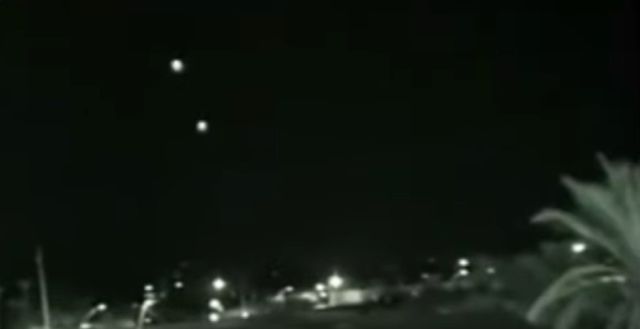




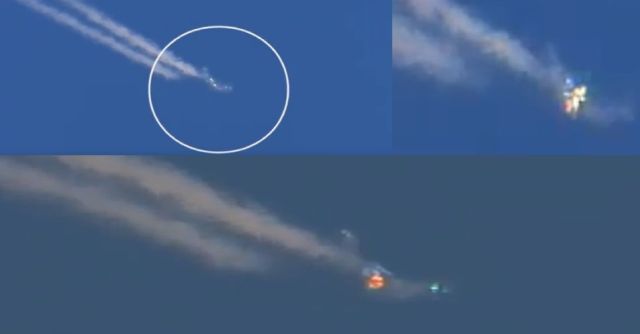


 How to stroke a cat according to science: Pet lovers must...
 Unsettling animation reveals the immense power of...
 Anonymising data is 'not enough to protect privacy' as a...
 What would you look like as a 17th-century portrait? Website...
 The ultimate disguise? New concept glasses make the wearer...






 Neil Armstrong's face is seen on the Moon for the first...
 Celebrating his 50th birthday, Aldrin Armstrong Collins -...



 Israel's Neolithic 'big bang': Scientists find massive 'game...
 Ancestors of modern humans had sex with at least FIVE...
 Ancient human ancestor which lived more than two million...