Ontdek de Fascinerende Wereld van UFO's en UAP's: Jouw Bron voor Onthullende Informatie!
Ben jij ook gefascineerd door het onbekende? Wil je meer weten over UFO's en UAP's, niet alleen in België, maar over de hele wereld? Dan ben je op de juiste plek!
België: Het Kloppend Hart van UFO-onderzoek
In België is BUFON (Belgisch UFO-Netwerk) dé autoriteit op het gebied van UFO-onderzoek. Voor betrouwbare en objectieve informatie over deze intrigerende fenomenen, bezoek je zeker onze Facebook-pagina en deze blog. Maar dat is nog niet alles! Ontdek ook het Belgisch UFO-meldpunt en Caelestia, twee organisaties die diepgaand onderzoek verrichten, al zijn ze soms kritisch of sceptisch.
Nederland: Een Schat aan Informatie
Voor onze Nederlandse buren is er de schitterende website www.ufowijzer.nl, beheerd door Paul Harmans. Deze site biedt een schat aan informatie en artikelen die je niet wilt missen!
Internationaal: MUFON - De Wereldwijde Autoriteit
Neem ook een kijkje bij MUFON (Mutual UFO Network Inc.), een gerenommeerde Amerikaanse UFO-vereniging met afdelingen in de VS en wereldwijd. MUFON is toegewijd aan de wetenschappelijke en analytische studie van het UFO-fenomeen, en hun maandelijkse tijdschrift, The MUFON UFO-Journal, is een must-read voor elke UFO-enthousiasteling. Bezoek hun website op www.mufon.com voor meer informatie.
Samenwerking en Toekomstvisie
Sinds 1 februari 2020 is Pieter niet alleen ex-president van BUFON, maar ook de voormalige nationale directeur van MUFON in Vlaanderen en Nederland. Dit creëert een sterke samenwerking met de Franse MUFON Reseau MUFON/EUROP, wat ons in staat stelt om nog meer waardevolle inzichten te delen.
Let op: Nepprofielen en Nieuwe Groeperingen
Pas op voor een nieuwe groepering die zich ook BUFON noemt, maar geen enkele connectie heeft met onze gevestigde organisatie. Hoewel zij de naam geregistreerd hebben, kunnen ze het rijke verleden en de expertise van onze groep niet evenaren. We wensen hen veel succes, maar we blijven de autoriteit in UFO-onderzoek!
Blijf Op De Hoogte!
Wil jij de laatste nieuwtjes over UFO's, ruimtevaart, archeologie, en meer? Volg ons dan en duik samen met ons in de fascinerende wereld van het onbekende! Sluit je aan bij de gemeenschap van nieuwsgierige geesten die net als jij verlangen naar antwoorden en avonturen in de sterren!
Heb je vragen of wil je meer weten? Aarzel dan niet om contact met ons op te nemen! Samen ontrafelen we het mysterie van de lucht en daarbuiten.
Huge City Found On Moon Using Google Moon Map, Will Musk Or Bezos Take It Over? UFO Sighting News.
Here is a alien base I found using Google Moon map. The alien structure is huge, over 15 km long and wide. The structure is seen on only one area of photos. Others photos of this crater have it edited out. In my video of this object at the end, I show how easy it is for NASA to edit out such alien artefacts. It took me a whole 4 seconds to remove it and make it appear natural. Its obvious to me that NASA missed editing out this huge structure, but after reporting it, I give it 6 months before Google edits it out for the US government. I believe that this structure is still in working order and can easily become the new home to thousands of humans that want to live on the moon. I am sure big companies like Amazons Jeff Bezos and SpaceXs Elon Musk are currently looking for such prime areas for mining the moon. Imagine walking in and taking over an abandoned city on the moon 15km across! You would become the #1 company in the world not just with the mining you could do, but with the alien tech built into this city. Scott C. Waring
Amazing UFO evidence recorded over Nellis Test Range, Nevada 16-Jul-2019
Check out this amazing footage of a bright UFOs filmed in the sky above Las Vegas Nevada. This happened on 16th July 2019.
Witness report:
I shot this video from my backyard in the Summerlin area of Las Vegas, Nevada on the night of July 16, 2019. Here’s one more in a long line of UFO videos that were captured above the Nellis Test Range. At this point in time, it is doubtful that you will see anything just like this anywhere else. It may not seem spectacular but it is because you and a handful of others on this YouTube Channel may be the only people on the planet observing them.
72 Years After Roswell: Here’s How the UFO Phenomenon Changed
The UFO phenomenon is no longer a conspiracy, but a subject worthy of serious scientific study.
July 8 marked the 72nd anniversary of the Roswell Case; the day when an alleged alien ship (Flying Saucer) crashed near the city of Roswell in New Mexico.
In particular, on July 8, 1947, the United States Army had announced in the newspapers the “recovery” of the remains of a “flying saucer” on a ranch near Roswell.
The communication officer at the Roswell Army air base, Walter Haut, issued a press release writing that the 509 Operations Group personnel had recovered a “flying disc,” which had crashed on a ranch near Roswell.
Mac Brazel, a farmer from New Mexico, discovers scattered remains on his ranch near Corona, New Mexico, and on July 5 reports what he had found to the authorities.
After the release of the military communique on July 8, and the visit to the area of a military high command, the version abruptly changes and the facts are atrophied to the impact of a large military balloon belonging to Project Mogul.
Several subsequent military reports seemed to corroborate this version.
Roswell Case
Eventually, people forgot about the case altogether and until 1978, the Roswell incident received little attention
That changed when UFO researchers Stanton T. Friedman and William L. Moore compared the results of a series of interviews that each had conducted separately.
The official version of the crashed balloon theory was reconsidered and people started taking into consideration the possibility that the Army had actually recovered highly advanced technology from a crashed alien spaceship, together with ‘various’ corpses, of the alleged extraterrestrial beings.
Edgar Mitchell’s claims
Apollo 14 astronaut Edgar Mitchell, although not a direct witness, has also stated numerous times that Roswell was a true UFO case, based on his high-level contacts within the government. “I have seen the secret UFO files, and there is no doubt that there was contact with extraterrestrials,” he said.
Interestingly Mitchell also believed that there is a government organization that is parallel and independent to the government that conducts experiments with extraterrestrial technology “and that is why all these incidents cannot be brought to light”.
Mitchell died in 2016 without having provided any evidence to corroborate his claims.
Birth of UFOlogy
The Roswell UFO case is widely recognized as the birth of modern ufology and has led to numerous debates, theories, and speculations about the existence of extraterrestrial life that many others consider totally unfounded.
Those who remain skeptical about the alleged flying saucer that crashed in Roswell are keen to accept the ‘revised, official version’ that tells us that instead of an aliens spaceship, what had crashed on the Roswell farm was actually a secret military weather balloon.
The phenomenon has had a great weight in popular culture and is mentioned in numerous works of fiction, as well as in documentaries.
But despite Roswell being the starting point of modern ufology, it wasn’t the first recorded sighting in the United States.
On February 24, 1942, the Famous Battle of L.A. took place, and many people claim that the military had shot at a UFO that night.
But if you are willing to dig deeper in historical records, you will find that evidence of UFOs can be traced back to antiquity and classical antiquity.
An ancient Egyptian text dubbed the Tulli Papyrus, dated to circa 1440 BC describes ‘fiery disks’ in the sky above Egypt.
Shutterstock.
After Roswell
Years following Roswell were turbulent for anyone serious in Ufology.
In fact, up until recently, it was all just a giant conspiracy.
Efforts to study the subject in a serious way have failed miserably, mostly because people find something very hard to believe if it’s not in the mainstream news.
That, of course, was until piece by piece, and very slowly, details of UFO sightings started being filtered to the public.
It was as if people were being prepared for the motherlode.
Numerous UFO sightings occurred after Roswell. Some of them even made a stronger case for alien technology than the alleged flying saucer that crashed in New Mexico.
But again, the evidence was tucked away, until it was eventually forgotten altogether.
One stunning case that occurred after Roswell was the Phoenix Lights: a series of widely sighted unidentified flying objects or UFOs observed in the skies over the U.S. states of Arizona, Nevada, and the Mexican state of Sonora on March 13, 1997.
UFO Disclosure
For the past five years, the UFO phenomenon has been actively pushed to the masses. As much as 95 percent of all Americans have at least heard or read something about Unidentified Flying Objects (UFOs), and as much as 57 percent believe they are real.
Countless declassified documents detailing the Government involvement in UFOs have surfaced, and many people started coming forward with their specific story on UFOs.
Astronauts, Military Officials, and Highly ranked Government officials spoke out about a subject that for years was classified a conspiracy.
Videos recorded by Navy Pilots chasing UFOs were made available to the public, and all of a sudden, the UFO phenomenon was no longer a conspiracy, but a subject worthy of study and attention.
We learned about the Advanced Aerospace Threat Identification Program (AATIP), and how the government was actually very interested in UFOs for quite some time, despite contrary beliefs.
We learned that this project was well funded, and its goal was to study unexplained aerial phenomena. The project generated a stunning 490-page report that documents alleged worldwide UFO sightings over several decades.
As revealed by the New York Times in 2017, AATIP was headed by Luis Elizondo, who resigned from the Pentagon in October 2017 to protest government secrecy and opposition to the investigation, stating in a resignation letter to US Defense Secretary James Mattis that the program was not being taken seriously.
The AATIP revelation helped the “To the Stars Academy of Arts & Science,” a non-profit organization committed to studying the UFO phenomenon with the best available tools.
Founded in 2015 by former Blink 182 musician Tom DeLonge, the organization became quickly recognized as a pioneer in the study of UFO sightings and alien life.
Artists illustration of a UFO following an Airplane. Shutterstock.
The push for disclosure also helped reveal the CIA’s role in the study of UFOs between 1947 and 1990.
But during the years, and without giving the rest of the world any hints, the Government conducted a number of studies on UFOS. Project Blue Book was one such program, but not the first.
Project Blue Book started in 1952, the third study of its kind, following projects Sign (1947) and Grudge (1949). The goal of all three projects was clear: the determine whether on nor UFOs posed a direct threat to national security, and to scientifically analyze UFO data.
The projects eventually yielded thousands of reports and files. However, the Condon Report of 1968 went on to conclude that there was nothing ‘anomalous’ about UFOs. The Condon Report was endorsed by the National Academy of Scientists.
Interestingly, the American Institute of Aeronautics and Astronautics (AIAA) disagreed with Condon’s conclusion, explained that as many as thirty percent of cases studied remained unexplained and that scientific benefit might be gained by continued study.
Project Blue Book resulted in 12,618 UFO reports and concluded that most of them were misidentifications of natural phenomena (clouds, stars, etc.) or conventional aircraft.
This comes as a surprise, known that after 1968, the government continued to actively monitor UFOs and study them.
As of 2019, the UFO phenomenon is no longer a conspiracy, but a subject worthy of serious scientific study.
China has unveiled its latest plans for the world's biggest radio telescope—to look for habitable planets beyond our solar system by finding out if they have a magnetic field.
Published in the journal Research in Astronomy and Astrophysics, the team behind the Five-hundred-meter Aperture Spherical radio Telescope (FAST) has announced its ambitions for the next decade—including the hunt for exoplanets.
FAST, as the name suggests, is a 1,600 feet wide telescope. It sits in the Dawodang depression of the Guizhou Province and it achieved its first light in September 2016.
One of the main scientific missions of FAST is to listen out for pulsars and other interstellar radio signals—including any coming from hypothetical extraterrestrials. "In theory, if there is civilization in outer space, the radio signal it sends will be similar to the signal we can receive when a pulsar (spinning neutron star) is approaching us," Qian Lei, from the Chinese Academy of Sciences, told CCTV in 2016.
Many scientists looking for potentially habitable planets are focused on its composition (rocky), distance from its star (so liquid water can exist) and its atmosphere (that it has one). These are the requirements for life on Earth to exist—so may also be true of other planets.
But in their latest publication, FAST researchers from China and France said they are planning to look for exoplanets within 100 light years from Earth with magnetic fields.
Our own magnetic field protects the planet from the solar wind—a stream of charged particles from the Sun that would strip away our atmosphere without the magnetic field to deflect them.
The team believes that because Earth's magnetic field provides protection to life on the planet, it is reasonable to think the same may be true on other distant worlds.
The world's biggest telescope in China's Guizhou Province.STR/AFP/GETTY IMAGES
"There is a scientific bug in the sci-fi blockbuster The Wandering Earth, that is, the Earth stops rotating. If that happens, the magnetic field would disappear," FAST chief scientist Li Di told Xinhua. "Without the protection of the magnetic field, the Earth's atmosphere would be blown off by the solar wind. As a result, humans and most living things would be exposed to the harsh cosmic environment and unable to survive."
Li said they could search for magnetic fields around exoplanets by looking for the interaction of the solar wind with the magnetosphere—an interaction that should generate radio radiation: "All the planets with magnetic fields in our solar system can be found generating such radiation, which can be measured and studied by radio telescopes. But research on the planets' magnetic fields cannot be realized through optical and infrared astronomical observation. Do the exoplanets have magnetic fields? If they have, they should also generate radio radiation under the influence of the wind of their parent stars."
He said if they can confirm the presence of a magnetic field using FAST, they would be able to study it to find out whether it was habitable or not. "It would be a very important discovery," he said.
HiRISE Spots Curiosity Rover at Mars' 'Woodland Bay'
NASA's Curiosity Mars rover can be seen in this image taken from space on May 31, 2019, by the HiRISE camera aboard the Mars Reconnaissance Orbiter. In the image, Curiosity appears as a bluish speck.Credit: NASA/JPL-Caltech › Full image and caption
A dramatic Martian landscape can be seen in a new image taken from space, showing NASA's Curiosity rover examining a location called "Woodland Bay." It's just one of many stops the rover has made in an area referred to as the "clay-bearing unit" on the side of Mount Sharp, a 3-mile-tall (5-kilometer-tall) mountain inside of Gale Crater.
The image was taken on May 31, 2019, by the High Resolution Imaging Science Experiment (HiRISE) camera aboard NASA's Mars Reconnaissance Orbiter (MRO). In the image, Curiosity appears as a bluish speck. Vera Rubin Ridge cuts across the scene north of the rover, while a dark patch of sand lies to the northeast.
Look carefully at the inset image, and you can make out what it is likely Curiosity's "head," technically known as the remote sensing mast. A bright spot appears in the upper-left corner of the rover. At the time this image was acquired, the rover was facing 65 degrees counterclockwise from north, which would put the mast in about the right location to produce this bright spot.
Mirror-like reflections off smooth surfaces show up as especially bright spots in HiRISE images. For the camera to see these reflections on the rover, the Sun and MRO need to be in just the right locations. This enhanced-color image of Curiosity shows three or four distinct bright spots that are likely such reflections.
The University of Arizona in Tucson operates HiRISE, which was built by Ball Aerospace & Technologies Corp. in Boulder, Colorado. JPL, a division of Caltech in Pasadena, California, manages the Mars Reconnaissance Orbiter Project for NASA's Science Mission Directorate in Washington.
It is possibly the most architecturally sophisticated prehistoric stone circle in the world. But while it is one of the world’s most famous monuments, the prehistoric stone circle known as Stonehenge in south west England remains shrouded in mystery.
That is, until now. Thanks to state-of-the-art research pioneered and led by Belgian academic Christophe Snoeck, we now know rather more about the mysteries of Stonehenge. He returned to work in his native Belgium after completing his PhD in archaeological science in 2015 at Oxford University. His research suggests that a number of the people that were buried at the Wessex site had moved with and likely transported the bluestones used in the early stages of the monument’s construction, sourced from the Preseli Mountains of west Wales.
While there has been much speculation as to how and why the iconic collection of stones was built, the question of who built it has received far less attention. That is where Dr Snoeck, still aged just 32 and based at Vrije Universiteit Brussel (VUB), comes in. His innovative research has made it finally possible to extract information about the geographical origin of cremated individuals. In partnership with colleagues at the Muséum National d’Histoire Naturelle de Paris and University College London, he led the Stonehenge research, which combined radiocarbon-dating with new developments in archaeological analysis.
Dr Snoeck, who pioneered the techniques during his doctoral research, said the discovery that some biological information survives the high temperatures reached during cremation (up to 1,000 degrees Celsius), offers the “exciting possibility” to finally study the origin of those buried at Stonehenge.
In an interview with The Brussels Times, he explained how his team went about their work and the significance of their findings. The Antwerp-born researcher said, “Stonehenge is one of the most iconic archaeological sites in the world, and when I had the opportunity to carry out research on the site it was an immense privilege. Before we started our study, we knew, from previous work, that the bluestones used to build the earlier phases of the monument came from west Wales. By working directly on the human remains found at the site we hoped to gain insight, not on the origin of the stones, but on the origin of those using the site and being buried there.”
The work involved analysis of small fragments of cremated human bone from an early phase of the site’s history around 3000 BC, when it was mainly used as a cemetery. “Most research on Stonehenge focused on the stones,” he explains. “Little was known about the humans buried at the site. This is mostly due to the fact that they were cremated and only small cremated bone fragments remained. It is only very recently that new methods have been developed to study cremated human remains.”
During his doctoral research he developed a method to extract information about the geographical origin of cremated individuals. This method, he says, “was applied to 25 cremated individuals from Stonehenge and our results show that 40% (10 out of 25 analysed individuals) did not live near Stonehenge in the last decade or so prior to their deaths but came from further away. Some might actually have originated from west Wales where the bluestones came from, some 250km away,” he adds. “This shows the importance of the site in the British landscape during the Neolithic period.”
Photo of Carn Goedog in western Wales. The dolerite bluestones from these hills are thought by many geologists and archaeologists to be the source of several of the stones erected in the early stage of Stonehenge’s construction with dates of quarrying around 5,000 years ago.
His personal contribution to the study was mostly in the scientific analyses including isotope, elemental and infrared analyses. The results were then discussed and interpreted with the rest of the team. But the challenges of handling tiny fragments of burnt bone should not be overlooked. “Working on cremated bone fragments can be very tricky as they are very little and brittle. However, with proper care, we were able to carry out all the analyses planned.”
Understanding the past
So, why does all this matter? Well, according to Dr Snoeck, the results emphasise the importance of inter-regional connections involving the movement of both materials and people in the construction and use of Stonehenge. This, in turns, provides rare insight into the large scale of contacts and exchanges in the Neolithic era, as early as 5000 years ago.
Dr Snoeck
Dr Snoeck, who specializes in archaeology and chemistry, says it us crucial to understand the lives of past animal and human populations, including diet, mobility, landscape use and environmental conditions. The techniques used on the Stonehenge project could be used, he hopes, to improve our understanding of the past.
He said, “Understanding our past is, to me, of crucial importance to better understand where we are now and how we reached this stage. I think both Stonehenge and the pyramids of Egypt (and many more sites) are fascinating. They are markers of our past and unravelling the mysteries around their construction and use is definitely helping us better understand our past. The importance of archaeological sites cannot really be classified in my opinion.”
On the importance of learning more about people from the Neolithic period, he said, “By gathering more information about them, we can start to understand the place of such sites in the wider landscape and how they shaped societies and beliefs through time and space. We were very excited to see that not all individuals lived near the site and that many actually moved over quite large distances to come to Stonehenge. Clearly we are not going to cure disease with this but understanding how people and societies changed trough time and space helps us understand current societies and how they might change and interact.”
The results of his work were published in Scientific Reports in 2018 and have received global media attention with news reports in more than 100 Belgian outlets (incl. Radio 2, Het Laatste Nieuws, Het Nieuwsblad, De Morgen, EOS Wetenschap, Le Soir) and international media (BBC, Guardian, CNN, National Geographic, Current Archaeology and the Washington Post).
Following this ground-breaking study, he has been nominated as one of the three candidates for the Archaeologist of the Year 2019 Award by the British magazine Current Archaeology. For him and many others there is an enduring fascination with Stonehenge that will continue. The reason? “Well, it is still there after 5000 years! And there is still so much we don’t know. Mysteries are fascinating,” says Dr Snoeck.
His archaeological work does not end with Stonehenge, and he is now engaged on a project on the famous Belgian iguanodon collection (a genus of dinosaurs) at the Royal Belgian Institute of Natural Science. “The aim of this work is to better understand why so many Iguanodons were found at Bernissart in Hainaut. The research is still in progress.” Christophe Snoeck also plans to study cremated remains in other countries. “They’ve been kind of forgotten and put aside. And I thought that was quite sad, because in huge parts of the world, especially in prehistoric Europe, people were cremated.”
If you're searching for signs of alien life, head to Washington state.
According to a new analysis by SatelliteInternet.com, Washington is the state with the most UFO sightings per capita: For every 100,000 people in Washington, some 78 have reported seeing a UFO. That works out to 5,894 UFO sightings in the state.
Montana comes in at number two for UFO sightings, with around 77 sightings per 100,000 people, followed closely by Vermont. Alaska and then Maine round out the top five "UFO hotspots" in the US.
On sheer volume, more UFO sightings have been reported in California (13,559) than anywhere else in the US, but the Golden State ranks number 22 per capita with 34 reports for every 100,000 people, according to SatelliteInternet.com.
UFOs, or unidentified flying objects, have stirred our imagination for generations. Sightings of these alleged interstellar visitors to Earth have been chronicled throughout history. However, the mania for UFOs shifted into hyperdrive in 1947, when flying saucer enthusiasts believed the remains of an otherworldly spacecraft, and even the corpse of an alien, were discovered in […]
ursatii / Getty Images
Looking to avoid aliens? Head to Texas, the state with the fewest number of UFO incidents per capita. Aliens apparently don't prefer the Deep South: Louisiana, Georgia, Mississippi, and Alabama are also near the bottom of the list.
Skeptical of aliens and UFOs? SatelliteInternet.com said there's been a "flood of UFO news" as of late that could make you a believer.
This week, the internet is going crazy with talk of a mass People’s Invasion of Area 51. More than one million people have signed up on Facebook to breach the gates of the most famous top secret government facility in the world. The event, which sprang to life as a joke started by social media shitposters, has now racked up an enormous amount of publicity worldwide, with media outlets taking it utterly seriously and others as the joke it always was. Unless you want to do it for real. In which case, settle in.
The event, Storm Area 51, They Can’t Stop All of Us, was created by the Facebook group Shitposting cause I’m in shambles. That pretty much tells you everything you need to know. Despite its humble origins the event has taken on a life of its own, with 1.3 million people having declared they are going to the Nevada desert to participate in the September 20 raid and another one million having expressed interest in the event.
Alleged Area 51 attack plan spread on social media. Disclaimer: author is notparticipating as part of the Kyle group.Illustration: Social Media
The American public has long had a fascination with Area 51 and allegations that the secret U.S. government air base is harboring flying saucers, bits of crashed saucers, and actual aliens. Public trust in government remains at historic lows. Just 17 percent of the American people “trust the government in Washington all or most of the time.” Given those factors, it’s not hard to see why “Let’s see them aliens” has become such an appealing rallying cry.
Interest in Area 51 has also been bolstered recently by New York Times articles reporting sightings U.S. Navy fighter pilots in 2004 and 2015. The U.S. government is also reportedly sitting on metallic alloys and UFO scrap allegedly recovered from “unidentified aerial phenomena.”
What are the alloys? No one can say. They are simply The Alloys.
Say you are actually willing to participate in the raid. The trip will be difficult and conditions not ideal. You will be arrested and sent to federal prison, or possibly shot, all to see things that may not actually exist. Still want to go? Okay.
The best place to start your federal incarceration is at Las Vegas, Nevada. Event organizers have designed the unofficial Area 51 Visitor’s Center,approximately 1 hour and 22 minutes west of Vegas, as the meetup point.The Visitor’s Center was owned by Nevada brothel magnate Dennis Hof and includes a mini-mart, picnic areas, and the Alien Cathouse, and an ET-themed brothel, which is pretty much everything you need before anyone goes a-raiding. Satellite views of the Visitor’s Center show parking for 200 cars at most, so arrive early or consider catching a Lyft.
The Alamo Fireworks Megastore next door could open their lot to event parking but don’t count on it.
From the Visitors Center to Area 51, you have two ill-considered routes to choose from.Illustration: Google Maps
Once you depart from the Visitor’s Center it’s an hour and 52 minute drive north to Area 51, and there are two routes to choose from, the first via Cane Spring Road, or I-95 and then the Mercury Highway. Both merge at “Sugar Bunker,” which is presumably where the government stores the alien food pellets, then proceed north through what looks like a moonscape of gigantic craters. These are the remnants of U.S. nuclear weapons tests and are closed to the public for a very good reason—and not because neither AT&T nor Verizon report cell phone coverage there.
Like we said, not ideal conditions.
Gun-wielding “camo dudes” in an encounter recorded by the YouTube channel MacADVentures.Screenshot: MacADVentures (YouTube)
At a certain point, early invasion participants will be stopped cold by base security. The main security force, known over the years as the “camo dudes,” are civilian contractors that patrol the base perimeter wearing camouflage uniforms and driving pickup trucks.
The “camo dudes” are generally known to UFO watchers as a humorless lot that take their job very seriously. They are quite well armed, and in one case in 2016 drew their firearms on a pair of motorcyclists. It has also been alleged for years that Area 51 is ringed with sensors, including seismic intrusion devices designed to detect the rumble of vehicles, and that explains how the camo dudes often respond so quickly to trespassers.
He’s waiting for you to free him...or not.Photo: Justin Norton (AP)
Traditionally, trespassers at Area 51 can expect to be detained by the “camo dudes” for hours on end until a Lincoln County sheriff arrives on the scene, at which time they are issued a $750 ticket for trespassing. That’s a relatively tame response: the base is also ringed with signs citing the Internal Security Act of 1950, and stating “Use of deadly force authorized,” and Section 21 of the act states that
Whoever willfully shall violate any such regulation or order...for the protection or security of military or naval aircraft, airports, airport facilities, vessels, harbors, ports, piers, water-front facilities, bases, forts, posts, laboratories, stations, vehicles, equipment, explosives, or other property or places subject to the jurisdiction, administration, or in the custody of the Department of Defense, any Department or agency of which said Department consists, or any officer or employee of said Department or agency, or of the National Advisory Committee for Aeronautics or any officer or employee thereof, relating to fire hazards, fire protection, lighting, machinery, guard service, disrepair, disuse or other unsatisfactory conditions thereon, or the ingress thereto or egress or removal of persons therefrom, or otherwise providing for safeguarding the same against destruction, loss, or injury by accident or by enemy action, sabotage or other subversive actions, shall be guilty of a misdemeanor and upon conviction thereof shall be liable to a fine of not to exceed $5,000 or to imprisonment for not more than one year, or both.
Deadly force is authorized even for a misdemeanor offense. Maybe that’s bit unusual, but then again, this is Area 51 we’re talking about. A smart defendant in federal court could argue that there is no mention of “alien hospitality suites” in the Internal Security Act, forcing the government to drop the charges-or produce the aliens.
There is also the prospect of federal conspiracy charges, as you have stated your intent on a public Facebook page to conspire to invade a federal military facility. Like any MMO boss the federal government’s legal powers stack, making it a formidable opponent indeed.
The Nevada Test and Training Range (of which Area 51 is a part) is an area where the Air Force tests and trains combat aircraft. Any attempt to illegally access military installations or military training areas is dangerous.
The statement is weirdly ominous, leaving it ambiguous what the source of the “danger” is. Rattlesnakes? Falling rocks? Accidental bombings? It doesn’t say. It’s probably best to never find out.
Once you’re inside the base there’s no telling what you might find. You might find a variety of secret test aircraft, including F-117A Nighthawk stealth fighters recently seen sporting “aggressor camouflage”, the legendary and elusive Aurora Mach 6 spyplane, or a Russian fighter jet owned and operated by the U.S. government dogfighting with American planes. And maybe aliens and their UFOs. Bigfoot, too.
The event already has produced one unexpected result from the U.S. government: indirect confirmation that the base actually exists. As late as 1995 the Feds were perfectly willing to argue that Area 51 did not exist: that abruptly changed around in 2013, but the government rarely addresses the topic. The Air Force’s warning acknowledges that Area 51 is a real facility. That’s quite a feat for a social media shitpost.
Correction: This post originally said the Area 51 Visitor Center is owned by Dennis Hof, but since he passed away in 2018, we should have said it “was” owned by Mr. Hof. The line has been corrected; apologies for the error.
The Soviets tried to beat Apollo 11. They crashed a spacecraft on the moon instead.
Astronaut Buzz Aldrin poses for a photograph beside the U.S. flag deployed on the moon during the Apollo 11 mission on July 20, 1969. Associated Press/July 20, 1969
By Alex Horton The Washington Post
As Neil Armstrong walked on the lunar surface and marveled at the "fine, sandy particles" that crunched under his boot, he and the rest of the Apollo 11 crew were not alone.
A Soviet spacecraft, Luna 15, had beat them to orbit days before, circumnavigating the moon in a final Cold War showdown race to land on another celestial body and return home.
The unmanned spacecraft's mission would be an epic coup: Get to the moon, scoop up rocks and jettison back toward Earth before the Americans returned with their own samples.
That did not happen. Luna 15 plummeted toward the moon on July 21, 1969, crashed into a mountain and cratered near the aptly named Sea of Crises -- before Armstrong and Buzz Aldrin even left the surface.
NASA had worried Luna 15 would interfere with radio transmissions and present a safety risk with Apollo 11, prompting high-level officials to cross the divide in an unprecedented level of cooperation.
It signified something else. The competition between Apollo 11 and Luna 15 to land on the moon and return to Earth did not exactly finish when "the Eagle" landed, as most believe.
"The race to the moon ends when Luna 15 crashes," William P. Barry, NASA's chief historian, told The Washington Post.
The Soviet exploration timeline was aggressive and, at turns, tragic. Cosmonaut Vladimir Komarov melted during re-entry, along with the Soyuz 1 capsule in which he was riding, in 1967, all the while "cursing the people who had put him inside a botched spaceship."
In the next year, two Soviet tortoises became the first Earth beings to circle the moon.
Luna 15's design and launch time frame was incredible for its time, Barry said. Plans were drawn up for a robot designed to land, collect samples and scurry back to Earth.
That was complete in about six months as the Soviets raced to preempt the United States, including an unsuccessful June launch with a mission to grab moon rocks and study the lunar gravitational field. That rocket never left orbit.
On July 15, the rocket delivering Luna 15 roared toward the moon three days ahead of the Apollo 11 mission. The race had begun.
"I'm sure that the original plan was to beat Apollo 11 back to Earth with their sample," Barry said.
The launch puzzled NASA and surprised the Apollo 11 crew, who only knew about its existence en route to the moon and "did not know about Luna 15 or its goal," Armstrong said in 2009.
No one exactly knew where it was going or how it could interfere with the three Americans heading for the same place.
The moon's surface is about the size of Africa, Barry said, but orbital dynamics suggested landing spots around the moon's equator were best -- potentially limiting the distance between the Columbia command module, the Eagle landing craft and Luna 15.
There was only one unlikely solution to all of this: Get the flight details from the Soviets themselves.
During the Cold War.
In the midst of the moon race.
And yet, Apollo 8 astronaut Frank Borman had met Soviet space official Academician Mstislav V. Keldysh. He later called on him to provide details on Luna 15 and assure it would not interfere with Apollo 11.
What came next was unprecedented in American-Soviet space relations, Barry said. Keldysh telegraphed the orbital details for Luna 15 and said it would be a safe transit for the U.S. astronauts, though he never divulged the mission details.
Meanwhile, as the Apollo 11 rocketed toward the moon, Houston ground control kept the crew informed about the whereabouts of Luna 15. It had entered orbit on July 17, Houston told the crew, according to flight logs. Both spacecrafts made orbital adjustments as ground control in both nations nervously watched.
Soviet engineers worried over rugged terrain of the Sea of Crises landing site, NASA has said, and delayed its planned landing for hours.
That opened the window for Apollo 11 to land. As Armstrong and Aldrin took photos, collected samples and marveled at the view of Earth, Luna 15 tumbled in orbit.
The Soviets realized they were running out of time, Barry said, and a day later, on July 21, they decided to make an effort to land -- which surprised British astronomers listening to Soviet transmissions. They were unaware it was designed to do so, Discover magazine reported.
Luna 15 descended, cushioned by retro rockets. But its trajectory was off, sending the spacecraft careening into a mountain at 298 miles an hour, and finally, plummeting to the moonscape.
It crashed about 350 miles from the U.S. landing site at 15:50 UTC -- a full two hours and four minutes before the Eagle began its flight back to the Columbia module.
"I say, this has really been drama of the highest order," a British astronomer said afterward.
The Post reported the crash the next day. "Thus, by a fluke of moon geography, a space flight riddle 'wrapped in a mystery inside an enigma' ended in an irony," Howard Simons wrote. Scientists speculated it was deliberately crashed to "remove its carcass from lunar orbit," he added, which was also a method the United States practiced.
The Soviets never fully admitted Luna 15 was an effort to beat the United States to the moon and back, Barry said, though those details emerged after the Soviet Union collapsed. And its return trajectory after the delays made it unlikely it would even beat the American mission back.
Luna 15 may have failed its mission, Barry noted, but what scientists learned from the experience became clear in the next decade.
More attempts were made for a Luna mission to collect moon rocks. Five in total failed, until 1970, when Luna 16 shoveled 100 grams of dust and returned it to Earth -- the first time an unmanned spacecraft did so from any nation. Later missions yielded more payloads.
The bones from the doomed spacecraft may never be found, Barry said. "Distinguishing a crater caused by Luna 15 and a small meteorite would be pretty hard."
We meet our guide, Pear Månsken, at the Company's No. 5 airlock. Pear's only instructions: Keep them in sight at all times and let them know immediately of any concerns. Beyond that we're free to roam. Stay safe and live. Or do something stupid and die. Not their problem. We've signed the waiver. This is the frontier.
It's July 20, 2044: 75 years to the Earth-day since Apollo 11put moonboots on the ground. But that was way up, near the equator. Today, we're setting out at high lunar latitude, close to the pole. Where the cold and dark lies just steps away from the hot and bright. This is where the action is: A handful of companies and a few nations variously competing and cooperating on a mostly friendly quest, mostly for ancient ice. It's not for making margaritas. It's for rocket propellent and life support; what market futures analysts call Cosmic Consumable Commodities: "Triple C's."
Those first landings happened long ago, but it's still early days in lunar development. There's a lot of moon to go around. And a lot of businesses going to get it. Some, like Chevron, Maersk, Mitsubishi, Lockheed Martin and Siemens, have been well known for decades. A few, like Astrobotic, Moon Express, Masten, Orbit Beyond and the not-for-profit Draper Lab, have been quietly working since the moon-surge began, around 2018. Others, like Nyota ya Fedha, Lunapole and Polarvarg (for whom our chaperon, Pear, works) are well-capitalized startups. India’s Sampanna Candrudu, formerly part of the nation’s space agency, has now been reincarnated as a public corporation. Blue Origin partners with everyone whereas SpaceX and its sisters, Tesla and The Boring Company, prefer to work as a self-contained conglomerate. (Some would say: "cult.")
Co-located in a few lunar enterprise zones, most of these companies respect — and sometimes protect — one another. Way out here, 238,900 miles (384,470 kilometers) from Earth, with a very high cost of operation, it's difficult for authorities to patrol and enforce restrictions. Safety is in everyone's interests. Frontiers produce good citizens. Or dead ones. Hardly any in between.
Your suit boots up in seconds. The electronics and helmet-immersive display actually came online in much less than a second, but the gas-mixture-and-atmospheric-pressure diagnostics take one complete loop to verify. The suit and a few of your tools checked in with "Moon Mama." Every smart object on Luna (except certain police and military) knows who, where and what every other one is; all are connected through the ubiquitous 8G awareness-net.
Pear shoos us into one of Polarvarg's short-haul trans-landers. Small rocket-hoppers run like a shuttle-bus service here. The worksites are widely scattered. There's not that much risk of damage to neighbors' personnel or property, if things go south. The moon is a palace of robots; many fewer people live herethan science fiction writers and space advocates of bygone days expected. So, most nations and NGOs (non-governmental organizations) are taking a mostly hands-off, "laissez-faire" approach.
The United States Space Guard looks after the interests of American flagged vehicles and facilities. China's military-industrial monolith keeps to its indecipherable, but so far, serene, self. And the GC (Gendarmerie Cosmos) tends to the emergency needs of European Union company vessels. Outer space is proving to be the quintessentially asymmetric battlespace. The "Mutually Assured Paralysis" of cyberwarfare has, so far, proven a highly effective peacekeeper. A fully armed Deep Space Force — equipped with overwhelming firepower to intimidate bad actors by ensuring, in advance, their total destruction — has proved too costly a solution to a problem that hasn't yet developed. Of course, it someday might.
Where, exactly, Luna fits in humanity's story is still unwritten. Some on Earth worry that, without a tightly preconceived legal framework, unfair distribution of the moon's resources is inevitable. (It is.) Others counter that there's no incentive to develop resources that cannot be owned free and clear. (There isn't.) A few are concerned that moon workers could become easy targets for exploitation. But right now, it's moon-boom times and hardly anyone is complaining.
The corporations have seen that ethical behavior tends to enrich their investments. And it keeps them off the homepages of news sites. Fair treatment of labor (which is mostly robotic anyway), deference to international norms of the mining industry, respect for historical sites (e.g., Apollo and Lunokhod), and basic environmental awareness all turn out to be good corporate marketing strategies, the storyboards of slick stock prospectuses.
Because the risks are so gloomy — and the potential benefits so sunny — everyone on the moon is playing, more or less, on the same team. But there will, almost inevitably, come a time when they aren't. Then, solar system civilization will have lots of ethical dragons to slay. We have time to think about some of these issues as we drop from the hopper to continue on foot.
Digging for paydirt
Back in the Apollo days, our easy ramble around these moon rocks would have been a lot more arduous and dangerous, with just primitive paper maps and no space-based positioning system. Digging samples was all manual labor then. No robots around to help. Just simple tongs, scoops and rakes. The mightiest machine was a Black & Decker cordless electric hammer-drill. With a lot of effort, astronauts could bore up to 10 feet (3 meters) down through the compacted surface dust called regolith.
To ice-mine the moon, you need much heftier tech. The deep frozen water is rock-hard and often rock-bound. You are there to find out just how hard it'll be to free up that paydirt at a new site. Before you arrived, Polarvarg survey drones, carrying imaging spectrometers and radar, flagged the site as promising.
Then, a small army of Company rovers explored the nearby "cold traps." They found some tiny particles of ice lying on the surface, like dusty snow. More turned up, buried about half a meter down, in larger, purer crystals, like gravelly hailstones. And some appeared in much larger, deeper blocks — harder to get to but much more rewarding. By tradition and law, a human (that's you) must come to verify the find on-site, so he or she can attest to it later, should there be a territorial challenge. Despite all your high-tech gear, you are really just a simple scratch-ass prospector, looking to stake a claim on a parcel of moon.
But you're also here to do some new science. About half of it is "economic geology." That, historically, has been to understand where certain rock aggregates form in order to fast-track commercial quarrying. Aside from the 1970s Apollo data set, and some rover work on Mars, we've had only one planet to study in detail. Your work on how the moon made its minerals will help mining companies to locate ore bodies on Earth.
And, of course, here on Luna itself: Nearly everywhere you look, you can find titanium and aluminum, for building space structures. Mature companies like Made In Space and Tethers Unlimited, which started in LEO (low Earth orbit), are here on the surface drawing feedstocks for their space-based flexible fabricators. There's also plenty of silicon for circuitry — especially photovoltaic solar collectors (though small nuclear reactors provide local power to most lunar worksites).
All those craters punched into the crust conveniently reveal differentiated metals. Essential for small electronics and large power systems, local concentrations of rare-earth elements abound. The moon is a miner's paradise, and it's of vital strategic international trade importance to the nations and transnational corporations that dig and refine it.
The biggest player is China. The moon's gentle light has long signified aspiration and the promise of abundance in several Asian cultures. With a long-range view — free from the frequent course changes that buffet democratic societies — the Chinese Communist Party government has carefully, over decades, woven lunar development into its identity. China's effects on the activities of other nations and corporations working in space have been less adverse than some Western military planners had feared, but more disruptive than many internationalists had hoped.
Next year (2045), the People's Republic of China celebrates its 100th anniversary. The state-backed Chinese Academy of Space Technology Corporation is very close to completing two large solar-power satellites, fabricated from mostly lunar materials. Each will downlink a steady stream of up to 500 megawatts of electricity, harvested above Earth's atmosphere, from high orbit, clear of weather and nighttime darkness. The power comes down via low-density microwaves to large receiving antennas in China's countryside. It would have been more efficient to send energy down by laser, but China — for now — seems to respect international agreements crafted to prevent directed-energy weapons in space.
These big satellites are just the next step in a program China began 30 years ago, to beam growing quantities of energy over ever-increasing vertical distances. If "the 500s" prove out, China will immediately begin work on a pair of much larger solar-energy satellites, each 10 times more powerful. Neither will be so much a gargantuan spacecraft as a constellation of several hundred thousand very small ones. Each subunit a clone of the last, all built mostly of materials from the moon, by an army of robotic fabricators. Certain industries scale magnificently in space: the ones that don't need people.
It’s a lossy proposition: Converting sunlight to electricity, then back to electromagnetic waves for the downlink, then back to electricity is not very efficient. Chinese government economists are well aware that it will take many decades to fully recoup construction costs. But they are investing in future generations. They are not accountable to impatient shareholders. And they are focused far beyond the moon.
Roadhouse high
Some space moguls are focused squarely on Earth: In lower orbits, with grand views of the planet below, a number of high-end boutique hotels have sprung up. "Blown up" would be more accurate; most of these are very large inflated structures. But don't think lightweight "balloons" or "blimps." Their skins are actually much tougher than the metal hulls of traditional spacecraft. These expanded envelopes are built by sandwiching strong, lightweight synthetic fabrics tightly together. Layering with different densities protects against micrometeors and human-made space junk. Sewn into this hardy hide are impressively large windows. You'll get to look through them, in a few days, as you change vehicles on your way back to Earth.
Bigelow Aerospace (BA) is the dominant — but not the only — company to offer rentable "space in space." The nightly rack rates are, well, astronomical. And there's no such thing as a "walk-in." But there's a sufficient population of well-heeled leisure guests and B2B travelers to make a business. And lodging modules are not BA's only offering. You can find variously sized BA blow-ups popping up wherever pressurized volumes are needed. These elegant edifices come up from Earth tightly packed, in the large payload fairings of heavy-lift launchers. But they run on Triple C's from the moon.
Drumming up business
Back here on the lunar surface, that affable dude in the purple-striped moon suit, working a few meters to the west of us, is Seok Wolgwang Choi. An American of Korean heritage, he encourages English speakers to call him "Sammy." He talks and moonwalks with an easygoing manner. But that bright orange bag over his shoulder reading "Danger: Explosives" looks more than a little ominous.
On Earth, geophysicists employed by mining companies thump the ground, reading the resulting sound waves to map what lies beneath. Astronauts on Apollo missions 14 and 16 did a bit of that. They emplaced mortars to fire rounds into the nearby terrain. And they deployed seismometers to capture the resulting moon wiggles. On Apollo 17, Harrison "Jack" Schmitt — the only geologist to walk the lunar terrain during Apollo — went farther. Jack, and his commander Gene Cernan, placed explosive charges in the regolith a few kilometers from a geophone array at their landing site. The igniters were set for several days; the guys had long since left the surface by the time the explosions were triggered.
More than half a century later, Sammy, too, likes making the moon go boom. His hazardous but lucrative career is about blowing stuff up in the name of "Lunar Active Seismic Tomography." He revels in leaving LASTing lunar impressions, mostly because the company cuts him in for profit-sharing on the find.
But you and Sammy are also out here to do some pure, not-for-profit science. Understanding the moon's evolution reveals the grand story of the solar system's formation. As you select rock samples, with the help of a keen-eyed geology team on Earth peering through your suit-cams, you are again moonwalking in the footsteps of giants:
Before Apollo, just about everyone thought all those shady holes seen from Earth had been built by volcanoes. By the time John Young and Charlie Duke left behind Apollo 16's Lunar Module lower stage, in April of 1972, most scientists were rapidly realizing that the surface of the moon is mostly about impacts.
The moon itself appears to be the child of a gargantuan crash between a Mars-size protoplanet and the early Earth. Fathoming the implications of that event, astrophysicists realized that the planets we see today are not the first ones this solar system has had (except, perhaps, giant Jupiter). Nor do the planets now orbit where they originally formed. This revolutionary recognition arose directly from studies of the moon rocks hand-picked, packed and shipped home by 12 people between July 1969 and December 1972.
They made it look easy. It was not easy. On the downlinked slow-scan video stream, you see the Apollo moonwalkers bouncing merrily around in gravity only 16% that of Earth. But, listen closely and you'll hear them breathing pretty hard at times. Swaddled in layers of nylon, neoprene, aluminized Mylar, Dacron, Kapton, Teflon-coated fabric — and pumped with air pressure — each guy was fighting the suit with every move.
Each Apollo A7L "moon suit" — called the Extra-Vehicular Mobility Unit, or EMU — was rated for 30 trips outside. None got more than three. Apollo was a spare-no-expense program before the eyes of the world. Risks to the astronauts were minimized at astronomical costs. With President Kennedy's directive to "return him safely to the Earth" ringing in every program manager's ears, everything was expendable, except the crew.
But you and I, working our industrial jobs here on Future Moon, need a suit capable of hundreds of excursions before refurb or retirement. We need to go outside often — even if just to check, or fix, the machines that do most of the work. So, our suits have shape-memory materials on the inside for comfort and haptic feedback "pulsers" in the fingertips for touch. And self-healing polymer layers guarding against tool punctures and micrometeoroids. Look closely at your suit's outside layer. It's a patchwork of panels, each hosting a network of tiny wires. That's your electrodynamic dust armor. It periodically sparks away clingy motes of lunar soil. Or tries to. Dust is a constant headache here on the moon.
Btw. It's time for a new acronym, isn't it? EVA — "extravehicular activity" — has served for people exiting and reentering capsules, shuttles, stations and movable modules. But what shall we call a stroll outside a permanent habitat on a planetary surface? I nominate simply: "a stroll outside." People are really living in space now — on the moon, around asteroids, in growing settlements in a plethora of orbits. I say: If you have a gravity vector, it's a "walk." If you don't, it's a "float" or a "fly." If the atmosphere is thicker than Earth's, it's a "swim." See? Easy!
We climb onto a "flatbed" to save some steps. A direct descendant of Apollo's Lunar Roving Vehicle (LRV), our ride is basically just wheel motors and a big battery with a platform and a bit of open truss work to keep items (including humans) on board. Every other need — including navigation and video — is already built into our moon suits.
Well connected
Apollo moonwalkers could look down at their chest-mounted Remote-Control Units and easily see small square "flags" — status indicators — warning if oxygen, carbon dioxide, water, pressure or vent conditions drifted out of normal operating ranges. Comfy, here, in our 2044 lunar couture, we see mini-gauges floating before our eyes on the HUD (heads-up display).
But suit health is the least of our inputs. We find ourselves immersed in a serious expanse of augmented reality. Active mapping with locators, task checklists, action prompts, graphical instructions; these all rotate, prioritized for our sensory consumption by the AI agents our Company bosses have trained to help us live our best space lives.
Essential to that life: your psychological health. Extended stays in sterile monochromatic environments demand colorful, life-affirming cues. So, you brought the Earth with you to the moon. All those task-oriented cues share your sight and sound field with social messaging, and with a bit of art from time to time.
The claustrophobic confines of a helmet are emotionally expanded by well-designed AR, the harsh landscape outside softened by the occasional visual or auditory reminder of your lush homeworld. You find it's comforting — indeed, vital — to travel with live avatars of friends and family. They pop up from time to time, and you're always glad to interact with them, despite the 2.5-second delay time to and from Earth. On the barren, insensitive moon, you find you frequently want to phone a friend.
And you'll have local friends here too: human and robotic. The "Buddy Team" approach — pair bonding — is wired deeply within us. It's the secret sauce of humanity's success. Watching the paired Apollo crews in action, you could see it immediately. They could improvise on the fly, clear each other's cables, be one another's eyes.
You call up a video clip from 1971 — one of Apollo 15's sorties. Projected on your HUD: The sloped flank of Spur Crater. Dave Scott is using tongs to lift rock sample No. 15415 up from the lunar regolith. He's saying to Jim Irwin: "OK, babe; open the bag," which, of course, Irwin has already started doing. That chunk of anorthosite will come to be known as the Genesis Rock — a window 4.1 billion years back, a geologic time capsule from just after the moon's origin.
Tantalizing fusion
For all that long stretch since its formation, the moon has never had much of an atmosphere. Nor much of a magnetic field. So, whatever particles the sun threw at Luna tended to stick to the fine-grained surface.
Some of that residue has been helium-3 (He-3), implanted by the solar wind. A bit more helium-3 has been deposited here by cosmic rays from deep space. It's a tantalizing substance: two protons and a neutron, the only stable isotope that contains more protons than neutrons, besides simple hydrogen itself.
In the bad old Cold War days, when the nations of Earth had more than 70,000 active nuclear weapons pointed at each other's cities, helium-3 was a headache. It would build up as tritium decayed in the stored warhead, actually reducing its explosive effectiveness. Missile maintainers would siphon off the He-3 to be sold for medical imaging and other peaceful uses.
But helium-3 can be put to work in a fusion reactor, liberating high levels of energy, without throwing off radioactive byproducts. At least in theory.
Neil Armstrong inadvertently collected the first sample of lunar helium-3 in 1969 — about 25 parts per billion of the soil he scooped up to fill out one collection box. Other Apollo missions brought some back as well. But the potential for power generation by helium-3 fusion wasn't realized until researchers at the University of Wisconsin put the clues together in 1985.
Like water ice, helium-3 survives in greater abundance in the shadows. Here on Future Moon, prospectors have found concentrations up to three times greater than the Apollo samples in the deep, dark zones of polar craters, coincidentally where most water ice is mined. Getting both He-3 and H2O out requires heating the soil up. So, it makes sense to harvest both in these unique polar locations, where spots in nearly constant sunlight at 257 degrees Fahrenheit (125 degrees Celsius) lie adjacent to practically permanent shade at minus 274 F (minus 170 C).
The north pole of the moon turns out to be a slightly easier place to work, because more of the high ground is illuminated, more of the time. And it's easier to negotiate the gentler northern topography down into the mining sites.
But the economics of helium-3 fusion don't appear to be as bright as the idea. Concentrator-bots must sift through more than 100 tons of lunar soil to yield a single gram of helium-3. It takes more than 100,000 times that quantity to operate a 1-gigawatt reactor for a year. The power that comes out is worth about $175 million (mid-21st century value). So you need to run your reactor for more than 25 years to pay off its cost.
These reactors are so expensive because helium-3 doesn't really like to fuse with itself, which is the "cleanest," least radioactive process. Getting He-3/He-3 fusion to work requires immensely high plasma temperatures, achieved by smashing atoms together extremely fast. It takes a supermassive, highly precise machine. And, although helium-3 itself isn't radioactive, no one has shown that significant secondary radiation breeding will not compromise safety over time.
There are richer sources of helium-3 in the atmospheres of Jupiter and Saturn. But that's a long way to go. Someday, fusion-driven rockets might use some of their own helium-3 payload to push the rest inward to Human-space and outward to the Deep System.
For now, helium-3 remains a provocative potential fuel in search of a practical way to burn. Still, it is poetic to imagine the fusion fire of our primal star giving its offspring (us) a means to ignite local fusion power for our own sustenance, and carrying that fire into places the sun does not reach.
We've rolled upslope to the rim of Haworth Crater. Looking through her spotting scope, Janelle Oladele, director of Ops at the rock-ice extraction site, is speaking: "Alexa, bring the west thermal group online." (A lot of lunar AI is named Alexa because, well, Blue Origin, which was started by Amazon founderJeff Bezos.) We watch her array of parabolic mirrors, set along the peaks, focus sunlight down into the shadows. As the beams converge, they dazzlingly light up a few square meters of the crater floor for the first time in three billion years.
We realize they've slewed the long way around to avoid cooking a pod of extractor-bots and a pair of human overseers stationed nearby. We the people — and they the machines — are essentially a single organism now, extending life into lifelessness. A way for intelligence to populate the universe — a mission begun on the grasslands of East Africa about 2 million years ago.
Back in 2016, United Launch Alliance (ULA) posted a standing offer of $1,360 per lb. ($3,000 per kilogram to any individual or company who could deliver hydrogen and oxygen made from the moon to LEO (low Earth orbit). It was a "cash-on-the-barrelhead" proposition for Lunar Triple C's, made by the most experienced rocket company on Earth at a time when no on-orbit propellant transfer machines existed.
ULA's bid jump-started an industry — one based on using material from space to get around and build things in space. It is much cheaper to get mass "up" off the moon than from "down" the deep gravity well of Earth.
Still, getting off the moon does require rockets or electromagnetic launchers. Civilization in the inner solar system is forming from the moon, but is not, for the most part, being built on the moon. Nor on the surfaces of Mars or Venus. Dream of terraforming all you want, but physics, economics and human needs will drive us into free orbits between Earth and moon for a very long time to come.
A self-coordinated phalanx of bots is swarming in just behind the beam as it tracks southwest. They fade beneath a growing bank of fog in front of them, and a cloud of dust behind. We thank Director Oladele for letting us watch the parade. Now it's off to a waiting hopper for the bounce back to town.
Home, home in the moon
Town, it turns out, is mostly underground. The same exposed conditions that allowed the moon to accumulate helium-3 leave humans naked to the killing, cancerous effects of solar energetic particles (SEPs) and galactic cosmic rays (GCRs). When you're out moonwalking, you're a sitting duck for the first energetic protons following a very large solar flare, which can travel at nearly the speed of light. But it takes at least 20 hours for the most dangerous bulk of acoronal mass ejection(CME) to reach the Earth-moon system. And most CMEs are not directed toward us. So, we can usually count on some warning.
A meter or so of dirt piled on top of your habitat keeps you safe. It matters most for long-contract dwellers who build up cumulative doses over time. They've taken to saying they live "in" the moon, not "on" it. Gopher-bots, built by the SpaceX-spawned Boring Company, have been worming their way between landing/launching zones, residential towns and processing plants, creating networks of transport and storage tunnels. Small "hidey holes" are dug (or mounded) at every worksite: If the solar flux suddenly jumps, humans can shelter-in-place.
Pear points out a long ridge as the hopper climbs to clear it; a lava tube lies beneath its hump. Built, in the moon's hot youth, by flowing magma, these hollow structures offer intrinsically shielded open spaces, and naturally occurring access through "skylights" where bubbles or meteoroids have popped open the surface. Apollo 15 explored Hadley Rille — probably a lava tube with a collapsed roof — whose floor was more than a kilometer wide, with walls up to 1,000 feet (300 m) high. Many large lunar lava tubes have been surveyed. Temperatures inside them are much more even than out on the surface. Someday people may live comfortably in them. But, here in 2044, we still seem a long way from a human population explosion on the moon.
You'll probably sleep well back at Company quarters tonight, once you've had a shower and a drink. Both are possible, courtesy of that ice you saw liberated today.
Looking around the bar, you realize miners haven't changed much in centuries. Smudges of soot go along with the job, no matter how disconnected and suit-protected one tries to be. Moon dust is nasty stuff. Not as toxic as Mars' dust, but dirty, abrasive and pervasive. And always that specific odor: Apollo astronauts likened it to spent gunpowder. This place even smells like a frontier town.
The dark side
The "Wild West," pioneering mentality of this moon rush can't last. Someday — perhaps soon — there will tougher questions to answer:
The first time a dead tourist's family sues the spaceship line that brought him there, which justice system will adjudicate?
If a rogue nation — or a private mercenary army — destroys a competitor's ice refinery, whose retaliatory force will respond? And who makes sure that response will be proportional?
Will children born here on Luna be afforded the citizenship rights of their parents? Would they even be physically capable of living on any higher-gravity world?
As genetic and genomic engineering grows ever more powerful, what ethics will apply to human or animal testing performed in, say, a lunar company town?
For that matter, what if a bug born in a bio-lab on Luna turns out to be virulent on Earth?
As every military planner knows, you take the high ground as soon as you can: Who's in charge of the moon-based ability to throw or purposefully divert big rocks around the sky?
When does a defense system against asteroids become an offensive weapon?
Who decides when the risk of diverting an asteroid close to Earth, in order to mine it, outweighs the benefit?
A long, long time from now — when civilization on the moon has become fully self-sustaining — residents may wish to claim sovereignty over that world's resources. If, say, a solar-power satellite serving Earth is made of lunar materials, do the daughters of the moon workers who built it get stock in the Earth-based utility company that profits from it? Old contracts and treaties may be torn up in the process. Hot, cold or social disinformation wars may be fought. Given our human history, all of those are likely.
The bright side
You're going home. For all but a very few people, "home" still means "Earth." Like the Apollo teams, 75 years ago, you caught a lift to LLO (low lunar orbit) aboard a high hopper. You transfer to an OTA (orbital transfer vehicle). Unlike Apollo, the OTA will drop you at one of those flying flophouses with the big windows in low Earth orbit. You're not waiting around on Luna for an Aldrin Cycler, the cheaper way to travel. But you're also not jumping a "starship-class" luxury direct liner, which is rated for direct travel between all worlds.
You drop from the High Hyatt Hotel in a dedicated atmospheric transfer vehicle (ATV). Some of that lunar ice is still with you: Your ATV is fully refueled with propellent mined on the moon.
Safely slowing down on powered descent, you get set to touch down on dirt that's full of life — unlike the lunar regolith. Some call our old world by its old name, "Terra," which means "land." By far the best planet for tens of kiloparsecs in any direction. Though the price declines with each launch, it still costs a bundle to get you to and from the moon. You wrestle with justifying your journey. While you were off ego-tripping through the cosmos, how were you helping Earth?
Your excursion was mostly — but not entirely — carbon-neutral. You launched on engines burning cold methane, "cryo-CH4." Once you got to low Earth orbit, however, lunar hydrogen and oxygen — and free sunlight — took you everywhere else. Had you gone deep into the solar system, you'd probably have been on nukes (nuclear electrical or nuclear thermal propulsion).
The old idea that Earth must deal with an ever-increasing population by shipping billions of us off-planet to colonize elsewhere will not, and cannot, work. But opening the resources of space can, in time, unburden Earth of much of the industrial impact of humanity. As Bezos, and Gerard O'Neill before him, (and Ehricke before him, and Tsiolkovsky before him) suggested: Move heavy tech off-planet, get better habitat on-planet.
Sadly, the only other way to ensure our species' success seems to require cultivating a cancerous body of increasingly restrictive rules, with ever more ironclad enforcement. Hardly anybody, outside of a few authoritarians with badly damaged personalities, wants that.
There is one additional emerging cause for hope: "the population plateau." Beginning in the second half of the 20th century, some nations have seen their populations peak and begin to recede. This trend correlates with the spread of certain nonmilitary technologies. As this permeates worldwide, it reverses the human population burst, which began with the rise of agriculture and the unintended terraforming of planet Earth. Machine proliferation on farms means we don't have to breed as many human farmhands. Birth rates continue to decline in Germany, Italy, Japan and Russia. The U.S., Canada and even China are tiptoeing toward population stability.
Though technology implies increased energy use, cleaner ways to get that power are emerging. Some of the most promising — solar satellites and like fusion power — correlate with space development.
Beyond tech, the empowerment of women is vitally important for maintaining a healthy civilization. Advanced education, self-determination, wage equality, child care: It is not, of course, necessary to go to space to do these. But, thanks to social networks of (mostly) female and non-binary engineers, most space industries have baked a responsibility to fulfill each of these requirements into their companies' cultures. And the mass of these exerts a beneficial gravitational pull on societies in general.
There's a grand virtuous cycle at work here: A maturing space-based infrastructure to lighten the burden on Earth's biosphere also happens to further open the solar system's resources. It looks like while offloading stress from our home planet, we get opportunities in the rest of space for very little additional investment. Starting with Triple C's from the moon, we can go anywhere.
Astronaut Buzz Aldrin walks on the surface of the moon near the leg of the lunar module Eagle during the Apollo 11 mission in July 1969. Mission commander Neil Armstrong took this photograph with a 70-millimeter lunar surface camera.
Plait — known as "The Bad Astronomer" to his many thousands of readers on Syfy — told Space.com he is frustrated that he and others like him still have to debunk the hoax theory from time to time, 50 years after the first moon landing. Then again, Plait became famous because he's so good at debunking in the first place.
Back in February 2001, Fox Broadcasting ran a documentary titled "Conspiracy Theory: Did We Land on the Moon?" Plait coincidentally had a pile of research ready from a book he was working on, and a friend sent him an advance copy of the show so that he had time to write up a response.
Plait's essay on his personal blog, which he published shortly after the show aired, quickly generated thousands of views years before Facebook, Twitter and today's social media even existed. Fox's TV show propelled Plait's writing to a large audience, and his 2002 book "Bad Astronomy: Misconceptions and Misuses Revealed, from Astrology to the Moon Landing 'Hoax'" (Wiley) helped as well. Plait remains a popular science commentator nearly two decades later.
"I kind of wish it had never aired," Plait said about the Fox documentary, "because it opened a huge Pandora's box. On the other hand, it's exposing a wound to sunlight. That thing was there anyway, festering. Let it get out to the public, and let it heal, and let it kill the infection. But yeah, it's troubling. Just to know that if Fox hadn't aired that, who knows what my career path would have been."
Bond, Hyams and Mulder
Apollo 11 astronauts Neil Armstrong and Buzz Aldrin stepped onto the lunar surface on July 20, 1969. Even back then, some people were skeptical that the feat was technologically possible. The James Bond movie "Diamonds Are Forever," for example, had a joke about faked moon landings just two years later, in 1971.
But what really propelled the conspiracy theory into popular culture, Plait said, was the 1978 Peter Hyams film "Capricorn One," which portrays a faked human landing on Mars. (Also, a 1976 self-published pamphlet by Bill Kaysing, "We Never Went to the Moon," was popular among conspiracy-minded people of the day.)
That was 40 years ago, but moon-hoax enthusiasts are still with us today.
"The X-Files" brought all sorts of space conspiracies into the public consciousness in the 1990s and 2000s, and the rebooted version of the show addressed the moon landing in a 2018 episode. The conspiracy was also addressed in many other fictional TV shows, from "Futurama" to "Friends."
Meanwhile, some documentary films and reality-TV efforts — a 2008 episode of "MythBusters," for example — tried to chase away the conspiracy theory by educating people. Other filmmakers, such as the folks behind the 2002 mockumentary "Dark Side of the Moon," spoofed moon hoaxers.
Opinion polls over the years regularly show that around 5% of Americans believe the Apollo moon landings were faked, former NASA chief historian Roger Launius recently told the Associated Press. That's more than 16 million people, assuming a U.S. population of 327 million.
NASA has done a lot of debunking work over the decades, including a 2018 offer to NBA superstar Stephen Curry to view moon rocks at the NASA Johnson Space Center in Houston after Curry said he didn't believe in the moon landings. (A few days later, Curry said he made the comments in jest.)
Earlier this year, NASA spokesperson Allard Beutel recited a pile of evidence supporting the moon landings to The Washington Post. He mentioned the returned moon rocks, the ability to bounce laser beams off gear the astronauts left behind and images NASA's Lunar Reconnaissance Orbiter took of the Apollo landing sites in 2011. Nevertheless, even former astronauts have found themselves in the fray.
Space shuttle astronaut Leland Melvin tackled the topic in the 2019 Science Channel series "Truth Behind the Moon Landing," which also features Space.com Editor-in-Chief Tariq Malik as a guest. And in 2002, Apollo 11 astronaut Buzz Aldrin punched moon-landing denier Bart Sibrel in the jaw during a taped confrontation. (Police later said Aldrin was provoked, and no charges were filed.)
Plait said there is a danger in talking about the moon-landing conspiracy and other clearly debunked conspiracies like it, such as vaccines causing autism or humans not being responsible for climate change. It's possible, he said, that by airing any of these debates, the media gives legitimacy to the conspiracy. Plait said he sometimes struggles about whether to address a conspiracy in his blog; he tries to discuss ones that are widely talked about already.
But it's a tough job in fast-moving social media. Plait said he recently commented on what appeared to be widespread Twitter backlash about the new version of "The Little Mermaid" starring black actress Halle Bailey, only to discover the backlash was itself likely faked. Plait took down his original tweet and wrote a correction. (The genesis of the viral tweet was from a troll account, according to a tweet by Buzzfeed's Brandon Wall.)
Plait said we should remember that conspiracy beliefs often have real-life effects. For example: "Because of the anti-vax movement, babies are dying, kids are dying, older people are dying, people with compromised immune systems are dying." Extreme weather events driven in part by climate change are killing people as well, he said.
Plait clarified that he did not blame any particular political position for this strife — not even the alt-right, as it doesn't "play into their ideology" (which he said targets people of certain religious groups). But nevertheless, he added, "All of this stuff has been corralling the imagination of the American public and forcing it in a direction to not think critically, and to react instead of sitting and thinking a moment about things, and to doubt — even when you can lay a paper trail from Point A to Point B right in front of someone. They won't believe it."
But Plait still tries. He remembers being on a radio show not too long ago, going over the usual arguments conspiracy theorists use — for example, why are there no stars in the sky in Apollo pictures of the lunar surface? (The reason is the cameras had fast exposure times and the stars were too faint to show.)
"Then somebody called in with some bizarre, trivial thing that made no sense at all," Plait recalled, "and bless him, the radio host jumped in and said, 'Listen. This guy said your 10 biggest claims are wrong. At what point do you back down?'"
Correction: An earlier version of this article incorrectly stated that the film "Capricorn One" was directed by Stanley Kubrick. It was directed by Peter Hyams.
UFOs: Why the government will not be disclosing secret information about alien visits
Dr. Seth Shostak, SETI Institute
Photo: Seth Shostak
Concept graphic to illustrate a supposed unidentified object above Earth, created by Seth Shostak.
Photo: Steven Peters/Getty Images
Date: Jan. 1, 2018
Location: Richmond
Details:
“I was driving back home from work. I was at a red light, when suddenly, I look over the horizon, I saw an oval metallic shape UFO floating/steady over some power lines near some train rail track and overlooking the Chevron refinery.
“When I realized what I was looking at, I decided to turn around to recorded on my phone but it was too late, it was gone/disappear. But I can assure you it wasn't a drone.”
Photo: Richard Newstead/Getty Images
Date: July 7, 2018
Location: Oakland
Details:
“I was blowing bubbles with my son around 7:45 pm tonight and looked up and saw a light that appeared too high to be an airplane. I thought perhaps it was a planet as it was glowing brightly. I could tell it was moving, but quite slowly and could make out six less bright lights glowing around it.
“They were traveling southeast all in tandem, though the six lesser lights seemed to move slightly as well, but all seemed to be traveling around the main star.”
Photo: Aaron Foster/Getty Images
Date: July 18, 2018
Location: In-flight over California
Details:
“We are on a direct Alaska Airline flight 3377 from Albuquerque to San Francisco and during the trip I like to take pictures of clouds. My wife then [told] me have you seen those lights I said no but look back and there 3 objects each one with 2 bright lights that were above ground and were all lined up...
“The objects seems to remain in the same position not moving from one other. I have recorded a 4 minutes clip until I couldn't see any longer the objects from the plane window. We didn't advertised our observation to any flight personnel to avoid creating chaos on the plane.”
Photo: U.S DEPARTMENT OF DEFENSE, HO
Date: July 22, 2018
Location: Vacaville
Details:
“Went outside looked up towards the moon and moving slowly across sky were three bright lights in a triangle formation. Then all lights dimmed out simultaneously. This had to be a cloaked TR3B [black triangle UFO]! I am a believer.”
Photo: Lorenz And Avelar/Getty Images
Date: Sept. 10, 2018
Location: San Ramon
Details:
“It was as big or bigger than airliner.. no wings... no sound... clear as day... moving fast... not blimp speed... no visible means of propulsion... tried to get my phone cam out but had left inside.”
Photo: Joe McBride/Getty Images
Date: Dec. 23, 2018
Location: Kentfield
Details: “Very loud ongoing noise, similar to a hair dryer or leaf blower frequency, filled the Larkspur/Kentfield, CA, valley area near Marin General. Weather was clear with some light patches of fog. From our terrace, (400 ft. above city street level), in the distance I saw what looked like a huge drone, with a big green flashing light, bright white light with smaller red and yellow lights, but this was not a drone, pretty big aircraft.”
Is someone going to prove Fox Mulder right? Will somebody convincingly show that aliens have come to Earth?
That's the growing expectation of many members of the UFO community. For seventy years, they've been confidently insisting that some fraction of the strange objects seen flitting through the atmosphere are extraterrestrial craft, piloted by otherworldly beings on a junket to our planet. But while 100 million Americans give this claim a thumbs up – confident that our skies are peppered with interstellar intruders – few scientists agree.
It's not that they don't like the idea. After all, it's hard to think of anything that would be more interesting and important than aliens in our airspace, short of the cure for death. And scientists aren't skeptical simply because interstellar travel is stunningly expensive and time consuming, although it's both of those. They demur because the evidence for this idea is seriously iffy. None of it is unambiguous enough to sway their minds.
However, judging by the more recent remarks of UFO proponents, there seems to be a crescendo of confidence that things are about to change. Well-known fans of visitation – for example Steven Greer, Richard Dolan, and Stephen Bassett, all of whom publicly and frequently expound at the many UFO conferences held each year – are saying that "disclosure" is nigh. The federal government is finally going to come clean with solid evidence about alien UFOs.
That would change this subject from one that rolls eyeballs to an accepted fact-of-the universe.
At least some of the disclosure optimism derives from the revelation in 2017 of a secret $22 million government project, begun a decade earlier and innocuously named the Advanced Aerospace Threat Identification Program, or AATIP. The best-known results of this five-year effort were several videos taken by Navy pilots using their gun-sight infrared cameras. Some of these videos showed strange, elongated objects whose identity is uncertain. This was an encouraging sign for the disclosure enthusiasts. If the U.S. military was willing to trickle out such suggestive evidence about extraterrestrial visitors, perhaps they were on the cusp of admitting to a larger truth?
To the UFO crowd, that sounds encouraging. But it doesn't make sense.
It's sad that the UFO crowd has come to this – seemingly giving up on proving their own case and hoping that the feds will do their work for them.
To believe the government has been keeping mum about the aliens since the 1940s – surely not an easy thing to do – requires asking why. What's the motivation? It's not credible that it's because of an official fear that the public would go berserk if they were told there are saucers in the skies. One-third of them believe this already, and most have remained berserk-free.
Steven Greer, a former emergency room doctor who now takes folks on escorted tours to witness purported alien craft, has suggested a deeper reason: Extraterrestrial hardware is an existential threat to humanity's global power structure. Greer maintains that reverse engineering alien technology would lead to cheap energy for all countries, first world through third, providing a significantly higher economic standing in parts of the globe that could pose a serious challenge to western dominance.
Consequently, the powers-that-be have kept the UFO phenomenon under wraps. According to Greer, the potential disruption of alien technology is worse than the difficulty and embarrassment of keeping secrets from the public.
But does it really make sense to believe that the federal government could keep a secret of this magnitude during two generations of civil servants? Could the feds really twist the arms of all other nations to participate in such schemery?
In addition, reverse engineering alien technology is about as plausible as the tooth fairy. Imagine giving a cell phone to Ben Franklin and telling him to "reverse engineer" it so George Washington's army could better stay in touch while fighting the British. Any aliens who can rocket themselves to Earth are far more advanced than we are – indeed, the technology gap is surely greater than that separating us from Franklin.
The real problem with the idea of disclosure is not whether or not the government has had a good reason, and an uncanny ability, to keep an alien presence quiet all these years. It's the faulty premise.
If extraterrestrial craft are really strafing the stratosphere, and in numbers sufficient to cause roughly ten thousand citizen reports annually in the U.S. alone, then why must we throw up our hands and claim "only the government can prove it's true"? What about the hundreds of thousands of amateur astronomers who avidly observe the sky on clear nights, but don't seem to see any mysterious flying objects? What of the many thousand commercial satellites that make high resolution photos of our planet all day long without witnessing strange intruders? Are none of these data good enough?
One might argue that the military has better equipment. Of course it does, but if this phenomenon can only be proven with "better equipment," then that's not only a suspiciously convenient argument, it also degrades any claim that the countless saucer photos offered to the public for the past seven decades should be taken seriously.
Besides, does one really need military infrared cameras to find UFOs? Several of the Navy pilots who testified about encounters along the Atlantic seaboard in 2014 and 2015 said they observed these things "nearly every day." That sounds like an opportunity for any civilian with a good camera and a telephoto lens.
It's sad that the UFO crowd has come to this – seemingly giving up on proving their own case and hoping that the feds will do their work for them. Mainstream scientists don't wait for government agencies to prove their theories. That ball's in the researcher's court. And yet UFO proponents are now saying that, deus ex machina, the government will soon book some network air time and fess up about the aliens.
That's both an unconvincing argument and a mentally lazy one.
Dr. Seth Shostak, Senior Astronomer, SETI Institute
FIRST ON THE MOON There are two astronauts in this 1969 photo. Buzz Aldrin stands on the moon near the Apollo 11 lunar lander while Neil Armstrong, reflected in Aldrin’s visor, takes the picture.
“We didn’t know what kind of pictures we’d get, when we would get them, who we would get them from,” says Kendrick Frazier, who joined Science News as a writer just two months before Apollo 11 touched down on lunar soil. So the staff took pictures of their home television screens during the July 20, 1969 broadcast of the moon landing. “It didn’t work out very well,” he says.
Fortunately, images from NASA sufficed. On the cover of the July 26, 1969 issue — just 25 cents! — the words “At last the moon” ran atop a raw, black-and-white image of two blurry forms standing on desolate terrain, with the spidery outline of the lunar lander in the background. A description of the photo — Frazier’s one contribution to the coverage — captured the scene: “Ghostly they were, those two figures gliding over the surface of the moon. But, with all the world watching, it was certain. The dream of the ages had been fulfilled: Man was on the moon.”
QUICK WORK The July 26, 1969 cover of Science News showed an image — taken from a video feed about 40 minutes after the historic first step — of Neil Armstrong (right) walking toward Buzz Aldrin (left). Aldrin is inserting a solar wind collector into the ground.
SCIENCE NEWS
Throughout the Apollo program, Science News kept a watchful eye, reporting on the successes, setbacks and skepticism. From 1967 to 1973, the magazine published more than 100 stories about the United States’ quest to reach the moon, from the Apollo 1 launchpad fire that killed three astronauts (SN: 2/4/67, p. 112) to the splashdown of the final mission, Apollo 17 (SN: 12/23/72, p. 404), plus later findings of moon-based experiments.
“Apollo was an epic achievement. We all were super excited,” Frazier says. Yet the magazine never went overboard, he adds. “We managed to cover all the other things going on in science.” The July 26 issue devoted just five of its 24 pages to the Apollo 11 landing. Other stories included advances in predicting the sex of an unborn child and urban influences on precipitation.
The job of covering Apollo 11 fell to staff writer Jonathan Eberhart. He most likely traveled to Cape Kennedy (now called Cape Canaveral) in Florida for the launch and then to Houston for the rest of the mission, Frazier suspects, filing stories by phone or telegram. In describing the mission, Eberhart’s prose soared: “Now the moon is man’s. The incredible accomplishments of Apollo 11 have changed it irretrievably in the eyes of humankind.” Then he quickly got to work recounting the well-rehearsed descent, the harrowing landing, the hesitant first steps — before spending much of his time, of course, on the science.
Eberhart, who covered space exploration for Science News for three decades, painstakingly described three experiments installed by the Apollo 11 astronauts: a metal foil for snagging solar particles, a seismometer for tracking moonquakes and a mirror array for reflecting lasers back to Earth.
Some geologists, he noted, were miffed about the sample collection: The astronauts didn’t know precisely where they landed and were snatching soil from areas where they had already trod, thus collecting samples from potentially disturbed terrain (SN: 7/26/69, p. 72).
Special Report: Moonstruck
50 years after Apollo 11, lunar science still surprises and delights
But Eberhart’s coverage wasn’t just about timelines and equipment. In a sidebar tucked in the corner of a page of Apollo 11 coverage, Eberhart asked: “What has happened to awe?” He expresses the challenges of a writer conveying the enormity of the moment while pleading with readers to contemplate what humans had just accomplished.
“Try, briefly, to ignore the flashy rockets and the heroic astronauts. Try to feel the smallness of man and the vastness of what he is doing,” Eberhart wrote. “After two million years, man has stepped out of this world onto another. And, by incredible fortune, we are alive at the instant he did it.”
Eberhart can’t explain what he was thinking; he died in 2003 (SN: 3/1/03, p. 134). But Frazier says that this sidebar captured “Jonathan’s sense of wonder and awe amidst all of his professionalism.”
Early on, magazine editor Warren Kornberg pondered the value of this adventure amid the heavy challenges of the time (SN: 7/26/69, p. 71). “Nothing can mar the glory earned by the astronauts,” Kornberg wrote in a special commentary. But “[t]he verdict of history may well be that, while the world erupted, we ignored the real challenge and chased a rocket trail to the moon.” It’s a sobering note. But Apollo’s achievements overlapped with assassinations, race riots and the unpopular Vietnam War, a truth that Science News had to acknowledge.
“We felt we had a special role of reporting on the science part of the … mission as well as putting it into the broader context,” says Frazier, who became the magazine’s editor in 1971. Kornberg’s editorial, he says, reflected widespread “antipathy about spending this money to go to the moon while the whole country was falling apart socially and politically.”
Letters to the editor published that September echoed Kornberg’s concern (SN: 9/13/69, p. 194). “We are frustrated and ashamed,” wrote one reader.
Three years later, in his own — more optimistic — editorial as Apollo 17 drew near, Frazier wrote: “The misfortune of Apollo is that it was conceived in one era of American history and fulfilled in another.… [I]n a future and less buffeted age, the tarnish will have disappeared, and the Apollo landings on the moon will stand as an unambiguous and unparalleled human achievement” (SN: 10/21/72, p. 259).
MOON MANIA Science News wrote more than 100 stories on the Apollo missions. Here are three of the many covers that ran between 1969 and 1972.
SCIENCE NEWS
Despite the public misgivings, Frazier says it was an incredible time to be writing about science. At his home in Albuquerque, he keeps a memento from his tenure at Science News: the engraving plate used to print the cover of the moon landing issue. He plans to display it in his home office this summer, a nod to the 50th anniversary of Apollo 11. “It is, to me, the greatest souvenir of that time,” he says.
Christopher Crockett, formerly at Science News, is a freelance science writer and editor based in Arlington, Va.
This story appears in the July 6, 2019 & July 20, 2019 issue of Science News with the headline, "How Science News covered the Apollo mission: The magazine reported on every facet of this scientific feat."
‘Laten we de aliens opzoeken’ – 1,7 miljoen Facebook-gebruikers willen mogelijk testbasis VS bestormen
Maar liefst 1,7 miljoen Facebook-gebruikers, onder wie enkele Nederlanders, zeggen van plan te zijn op 20 september de geheimzinnige Area 51 te bestormen. Alles wijst op een uit de hand gelopen grap, maar complotdenkers zien kansen om dan eindelijk oog in oog met buitenaardse wezens te komen.
De Nevada Test and Training Range, waar Area 51 onder valt, is sinds de jaren vijftig in gebruik als luchtmacht- en testbasis van de Amerikaanse overheid. Het raadselachtige gebied is hermetisch afgesloten en voer voor complotdenkers. Zo zouden er geheime ontmoetingen met buitenaards leven plaatsvinden en er met tijdreizen worden geëxperimenteerd. Lang wilde de overheid niets zeggen over het precieze doel, maar in juni 2013 erkende de CIA – na jarenlang aandringen – dat Area 51 een militair oefenterrein is.
‘Ze kunnen ons niet allemaal tegenhouden’, staat op de Facebookpagina van het op 27 juni gelanceerde ‘evenement’. ‘Laten we de aliens opzoeken.’ Matty Roberts, een van de bedenkers, had zich niet gerealiseerd dat er zoveel mensen bereid zijn de mysterieuze locatie te overvallen. ‘Het was bedoeld als grap om mijn pagina met memes te promoten’, zei hij tegen het Amerikaanse mediabedrijf NPR.
Roberts maakte het evenement aan, nadat hij 20 juni een interview met Bob Lazar had gezien. Lazar werkte jarenlang in de buurt van Area 51. Sinds 1989 claimt de klokkenluider dat de VS buitenaardse ruimteschepen bezitten.
Vorig jaar verscheen de Netflix-documentaire Bob Lazar & Flying Saucers, waarin hij uitlegt hoe de Amerikaanse overheid hem het zwijgen heeft proberen op te leggen.
‘Dodelijk geweld’
Nog altijd is Area 51 niet toegankelijk voor publiek. Borden in de omgeving van het gebied waarschuwen dat ‘dodelijk geweld’ kan worden gebruikt tegen mensen die zich ongeoorloofd toegang proberen te verschaffen.
Toch zijn er genoeg toeristen die het gebied willen bezichtigen. Connie West profiteert van die aanwas en runt al jaren het hotel-restaurant Little A’Le’Inn in het nabijgelegen dorpje Rachel. Tegen de lokale nieuwszender KLAS-TV vertelt West dat alles is volgeboekt voor 20 september. ‘Het is krankzinnig.’
Organisator Roberts betwijfelt of ‘een echt leger Area 51 gaat bestormen’. Tegen NPR zegt hij wel in gesprek te zijn voor een alternatief evenement. In afwachting van het mogelijke contact met buitenaardse wezens liet het biermerk Bud Light op Twitter alvast weten dat hun bier zeer geschikt is voor buitenaards leven. ‘Wij produceren een licht ruimtebier met een frisse smaak en een goede afdronk.’
A layer of ‘aerogel’ could make Mars habitable and even enable life to develop there – but here’s why we should wait
Transforming the red planet to support life has long been a dream of science fiction. Mars is now too cold to support life. Its atmosphere is also too thin to protect any living organisms from harmful radiation. But a new study suggests that local conditions could be changed using an inch of “aerogel” – a synthetic and ultralight material made by taking a gel and replacing the liquid component with a gas.
The authors behind the paper, published in Nature Astronomy, claim the technique could produce habitable regions on the red planet and potentially allow life to develop and thrive thanks to photosynthesis – the process by which plants can convert sunlight into energy. But is this really the case? And, if so, should we do it?
Some 3.8 billion years ago, when life was starting on Earth, conditions on Mars were habitable. The red planet had water on the surface, clouds in its blue sky and volcanism provided part of a water cycle. We know all this from space missions, which have spotted signs of dried up water-crafted channels on the surface. Meanwhile the Opportunity and Curiosity rovers have proved that these features were due to water, by finding tell-tale water-rich minerals.
A magnetic field also protected Mars from harmful space radiation up to 3.8 billion years ago. This was revealed by Mars Global Surveyor, which found crustal magnetic fields in the older, southern highlands. These are the only remains of an ancient global magnetic field, similar to Earth’s magnetic field now.
Cold and dry
These habitable conditions, however, changed 3.8 billion years ago. The magnetic field disappeared. We think this is because Mars lost the heat left over from its formation more quickly than Earth did – this may have been augmented by a large collision which formed the Hellas basin on Mars. Unprotected by a magnetic field for billions of years, Mars’ atmosphere has been scavenged away to space. Some of the water was lost that way, and some went underground and remains as permafrost and in subsurface “lakes”.
The surface now is inhospitable for life as we know it. The thin carbon dioxide atmosphere, less than 1% of Earth’s atmospheric pressure, means surface conditions include high fluxes of harmful radiation from the sun and the galaxy. The surface environment is also cold: 0-10°C during the day but down to below -100°C at night.
Rosalind Franklin rover.ESA-AOES medialab, CC BY-SA
But it’s not impossible that life could have once flourished on Mars – or even exist there today, albeit unlikely. With the Rosalind Franklin (ExoMars 2020) rover, to be launched in 2020, we will drill up to two metres under the harsh Martian surface to search for signs of ancient life. This goes beyond what Opportunity and Curiosity could achieve with their 5cm drills, and gives the best chance of any planned mission to find biomarkers and evidence of life. Also, it is hoped that an international sample return mission may bring back the rocks cached by NASA’s Mars 2020 rover.
With these missions we may be able to answer the age-old question of whether humankind is alone in the universe. Mars itself, along with other prime astrobiological targets in the solar system, including the moons Europa and Enceladus around Jupiter and Saturn respectively, should be kept in their pristine state until we have answered this fundamental question.
Terraforming Mars
Ideas for changing or “terraforming” Mars, by introducing an atmospheric greenhouse effect to warm it, have been around for a long time. Recently it was shown that the carbon inventory on Mars is insufficient to do this, apparently killing off these ideas for now.
Aerogel .Courtesy NASA/JPL-Caltech
But the new study suggests a different approach – that smaller areas of Mars could be covered by a thin (2-3cm) covering of aerogel, providing a greenhouse effect by locking in heat. Using lab experiments, the researchers showed that this could increase the surface temperature by 50°C. The authors then used a climate model of Mars to confirm that the gel would be able to keep the water below it liquid up to a depth of several metres. It would also protect against harmful radiation by absorbing the radiation at UV wavelengths, while still allowing enough light for photosynthesis.
This suggests that a habitable region could be produced, enough even to grow some plants to fuel eventual human exploration. The idea is certainly interesting, and according to the experiments potentially plausible. But it ignores the other key issue affecting life on Mars – cosmic radiation. Silica aerogel, the proposed material, is sometimes called “frozen smoke” due to its low density. But because it is so low density, cosmic radiation of higher energy than ultraviolet light can pass through it almost unscathed. Without magnetic protection, this radiation threatens any life on the Martian surface, just as it does today.
Aerogels are extremely light.NASA
Mars is the planet nearest us where life could have started. And to artificially change the environment would threaten one of nature’s “experiments” which has been billions of years in the making –with life either evolving or not since the planet’s formation. We go to great lengths to keep missions like Rosalind Franklin sterile, in line with international rules, so that we do not disturb any past or even present life. If we did go ahead with terraforming plans and find living organisms on Mars later on, it would be hard to know whether these were natural Mars microbes or just contaminants from Earth thriving under the areogel.
Large-scale experiments like this would affect the pristine environment so much that we should not do this yet. At least until after Rosalind Franklin and Mars sample return, let’s leave Mars untouched so we can discover whether we are alone in the universe. When the science is done and we are ready to go, aerogel blankets may be worth a further look
LUNAR LEFTOVERS Astronauts, like those who touched down in the Apollo 15 lunar module (shown) in July 1971, left a lot on the moon’s surface, from scientific instruments to trash.
Once on the moon, Apollo astronauts had two major goals: get themselves and the moon rocks home safe.
To make space on the cramped lunar modules for the hundreds of kilograms of moon samples, the astronauts had to go full Marie Kondo. Anything that wasn’t essential for the ride home got tossed: cameras, hammocks, boots and trash. Downsizing also meant abandoning big stuff, like moon buggies and the descent stage that served as a launchpad for a module’s lunar liftoff.
But the astronauts left more than castoffs. Starting with the Apollo 11 mission, which touched down on July 20, 1969, astronauts left six American flags and plenty of personal and political mementos. Importantly, the crews also left behind instruments for about a dozen experiments to keep tabs on lunar conditions (SN: 8/2/69, p. 95); one is still running today.
These devices “were really important parts of Apollo,” says Noah Petro, project scientist for the Lunar Reconnaissance Orbiter mission. Back then, the experiments didn’t get much time in the limelight, “because humans on the surface are obviously the big story,” says Petro, who is based at NASA’s Goddard Space Flight Center in Greenbelt, Md.
Special Report: Moonstruck
50 years after Apollo 11, lunar science still surprises and delights
When we think of Apollo’s 50-year legacy, most of us probably aren’t picturing the scattered remnants of astronaut outposts gathering space dust. But as nations plan new ventures to the moon, preservationists are fighting to protect these historic sites so that future lunar visitors don’t erase the marks of humans’ first steps beyond Earth.
Solving old mysteries
By December 1972, six Apollo crews had collectively spent nearly 80 hours exploring the moon’s surface (SN: 12/23/72, p. 404). They gathered rocks, photographed the landscape and performed all manner of experiments — from unfurling metal foil to catch solar wind particles to setting off explosives and measuring the resulting seismic tremors.
Apollo 11 left behind solar-powered seismometers and a reflector array that could be paired with lasers on Earth to precisely measure the distance between Earth and the moon. On five later missions, Apollo 12 through 17 (Apollo 13 returned home without landing on the moon), astronauts left more elaborate setups powered by nuclear batteries that generated electricity through radioactive decay (SN: 11/8/69, p. 434). Some of those instruments collected data through 1977, when NASA decided to focus on other projects and pulled the plug on the whole operation (SN: 10/1/77, p. 213).
“There was this period of time where the data languished,” Petro says. But within the last decade or so, a new generation of scientists has taken up the torch, analyzing Apollo observations to answer questions lingering from early studies. Unfortunately, this isn’t nearly as simple as picking up where 1970s scientists left off, as geophysicist Seiichi Nagihara discovered when he set out to solve a decades-old puzzle about the moon’s underground temperature.
On Apollo 15 and 17, astronauts installed thermometers in the lunar surface, which took the moon’s temperature at various depths and sent the data back to Earth (SN: 9/11/71, p. 167). When Apollo-era scientists reviewed data collected through 1974, the results revealed something odd: The moon’s temperature just beneath the surface appeared to be slowly rising.
Images like this one of the Apollo 17 site reveal that the soil where astronauts drove and walked (horizontal lines) and did their work is darker than other terrain. These areas probably absorbed more sunlight, warming the underlying ground.
GSFC/NASA, ASU
“We’re talking about very minor warming,” just a couple degrees, says Nagihara, of Texas Tech University in Lubbock. But researchers at the time couldn’t figure out why. Nagihara decided to examine all the temperature data collected through 1977 to figure out what was going on. Unfortunately, the tapes that recorded these measurements were missing. This is a common problem, because during the Apollo era, data were housed at the individual labs of scientists working on each experiment and many measurements were never properly archived.
“A group of us decided to … try to hunt down the tapes,” Nagihara says. After scouring thousands of documents at NASA’s Johnson Space Flight Center in Houston, the researchers traced 440 tapes to an archive in Suitland, Md. But even those covered only about three months of observations. At the Lunar and Planetary Institute in Houston, Nagihara and colleagues discovered more temperature measurements noted by Apollo-era scientists in weekly memos. Between the recovered tapes and the memos, Nagihara’s team pieced together a picture of the moon’s temperature from 1971 through 1977.
The slow warming under the surface continued through the end of data collection, the researchers reported in April 2018 in the Journal of Geophysical Research: Planets. In search of a source for the heat, Nagihara and colleagues turned to pictures taken by the Lunar Reconnaissance Orbiter, which has been orbiting the moon since 2009 (SN: 6/11/16, p. 10). The images showed that soil stirred up by astronaut activity was slightly darker than other lunar terrain. Perhaps it was dark enough to absorb more sunlight and warm the underlying ground.
Computer simulations confirmed that the moon wasn’t heating up from internal processes. Astronauts trekking around the Apollo sites probably caused an increase in surface temperature of about 2 to 3 degrees Celsius, and the extra heat slowly spread more than a meter into the ground — causing the gradual warming detected by Apollo instruments. Turns out that astronaut footsteps left marks on the moon far deeper than those iconic boot prints.
Keeping vigil over gravity
While Nagihara and other researchers are digging up old Apollo data for new analyses, one lone project is still in full swing: the laser ranging retroreflector experiment.
This experiment uses arrays of reflectors placed on the moon by Apollo 11, 14 and 15 astronauts and anchored on two rovers left behind by the Soviets (SN: 5/20/78, p. 326). These arrays consist of special mirrors, each with three sides in the shape of a cube’s corner, which always reflect light in the exact direction from which it came. By shooting a laser beam at a corner-cube array from a telescope on Earth and clocking the time it takes for the light to return, researchers can measure the exact distance between different spots on the moon and Earth.
Still running
To measure the Earth-moon distance, arrays of “corner-cube” mirrors were set up at Apollo sites (top). Inside each circle (bottom left) is a corner cube that reflects laser light back to Earth in the exact direction it came from (illustrated, bottom right).
CLOCKWISE FROM TOP: NASA; CHETVORNO/WIKIMEDIA COMMONS (CC0); NSSDC
Laser ranging retroreflector measurements have offered several insights — like the fact that the moon is withdrawing from Earth at about 3.8 centimeters per year. Plus, slight variations in the moon’s rotation suggest that the orb has a relatively small core.
Physicist Tom Murphy of the University of California, San Diego is using the corner-cube arrays to probe a question much bigger than the moon. He’s testing whether a key part of Einstein’s general theory of relativity, called the equivalence principle, holds up.
The equivalence principle states that any two objects in the same gravitational field should fall at the same rate (SN: 1/20/18, p. 9). Just like a bowling ball and a golf ball should hit the ground simultaneously, the Earth and moon should fall around the sun (that is, orbit the sun) at exactly the same rate. “You’re sensitive to any difference in how they’re [orbiting] the sun by measuring the distance between the Earth and moon as they weave around each other,” Murphy says. If the Earth-moon distance ultimately breaks with the equivalence principle, that would reveal a shortcoming of general relativity. And that, in turn, could inform the creation of a theory of quantum gravity that resolves the tension between general relativity and quantum mechanics (SN: 10/17/15, p. 28).
So far, laser ranging retroreflector measurements with centimeter-level precision haven’t shown any difference in how quickly the Earth and moon are falling around the sun. But in 2006, Murphy started collecting data with millimeter-scale precision using improved laser technology and a larger telescope at the Apache Point Observatory in New Mexico.
Amassing enough data will require several more years of observation and researchers will need more sophisticated computer models to analyze the observations, Murphy says. Luckily, since the reflectors on the moon don’t require any power, he can collect data into the foreseeable future. Eventually, those observations — at the millimeter level or even smaller scales — could reveal a crack in the equivalence principle.
Since general relativity is fundamentally incompatible with quantum mechanics, something eventually has to give. The equivalence principle might be one of those things, Murphy says. “We have to turn over every rock and see where the bugs are.”
One astronaut’s trash
Thermometers and reflectors were among about a dozen types of instruments installed on the moon. Other devices measured the moon’s magnetic field and sniffed out chemical components of the moon’s tenuous atmosphere. NASA’s Lunar Data Project is restoring data from these and other Apollo experiments, so that scientists can continue to pore over the observations for years to come.
“When you have this incredibly rare resource, you can’t not keep working on it,” says planetary scientist Renee Weber of NASA’s Marshall Space Flight Center in Huntsville, Ala., who studies lunar seismic data. “There are always new techniques to try” and better computer processing to tease out previously missed signals.
Based on moonquakes sensed by Apollo seismometers, Weber and colleagues reported in May that the moon may still be tectonically active, as revealed by young faults on the lunar surface called lobate scarps (SN: 6/8/19, p. 7). Understanding moonquakes could help NASA and other agencies decide where to land future spacecraft or construct buildings on the moon, Weber says. If these lobate scarps truly mark sites of tectonic activity, future lunar visitors may want to avoid them, she says.
There’s also plenty to learn by testing how well the Apollo instruments, as well as the nonscientific paraphernalia strewn across the lunar surface, have held up. All of that stuff has been exposed to the lunar elements for decades. Future expeditions could sample the detritus to get a sense of how human communities might one day fare on the moon.
“Every single thing at the sites would be a completely priceless scientific investigation,” says planetary scientist Philip Metzger of the University of Central Florida in Orlando. He can imagine scrutinizing the effects of ultraviolet radiation, solar wind and other factors on everything from batteries to camera lenses to towels and earplugs.
Metzger sees value in everything left behind on the moon, including the astronauts’ discarded bags of excrement. “We have studies of microbes lasting in space over very short amounts of time on the International Space Station,” he says, but testing whether microbes in astronaut waste have survived or mutated over the last 50 years could help determine whether life is up to the challenge of hopping between planets or even solar systems. These are “really important questions about the position of life in the cosmos,” he says.
Protecting Apollo
While Metzger and other space scientists are hoping Apollo remnants can teach us more about how humans would fare on the moon, Beth O’Leary and other archaeologists are hoping to preserve these items as testaments to the human endeavor of getting there.
“Space is not a vacuum. We carry our culture into it,” says O’Leary, of New Mexico State University in Las Cruces. The remnants of Apollo sites are important relics of a singular time in human history. Astronaut memorials, messages of peace and commemorative plaques on the moon are obvious pieces of heritage. But “even the scientific stuff has cultural importance,” she says. More than 400,000 space-age Americans at over 20,000 companies and universities across the country teamed up to put Apollo astronauts on the moon. That kind of mass collaboration, in itself, was “a cultural act, as well as a scientific or engineering feat,” O’Leary says.
Unfortunately, securing legal protections for the historical preservation of Apollo sites isn’t easy. Don’t expect the United States to establish an Apollo National Park on the moon any time soon. As fun as that sounds, it would violate the Outer Space Treaty of 1967, which states that no nation can claim sovereignty over the moon’s surface.
NASA has published guidelines on how to avoid ruining Apollo artifacts in preparation for the many countries and companies that are vying for parking spots on the moon (SN: 11/24/18, p. 14). This rulebook includes policies such as the distance a future lunar spacecraft should land from Apollo sites so that the rocket exhaust doesn’t wipe Neil Armstrong’s first boot print off the face of the moon. These guidelines aren’t legally binding, Metzger says, but “no company is going to want to be known as the company that ruined one of the Apollo sites.”
Michelle Hanlon, who specializes in space law at the University of Mississippi in Oxford, has her sights on a much broader agreement to protect Apollo sites. Her nonprofit, For All Moonkind, is seeking United Nations protections for relics on the moon. The U.N. Committee on the Peaceful Uses of Outer Space is “the ideal place to negotiate a new treaty on heritage in space,” Hanlon says, though she suspects it may take decades to reach such an international deal.
By then, many more people than professional astronauts may be walking the moon, fueling concerns about visitors making off with Apollo artifacts. In 2015, a lunar sample bag used by Armstrong was mistakenly sold at a government auction for $995 and later resold for $1.8 million. Other space-age memorabilia has sold for similarly astronomical prices.
“If NASA can lose [Armstrong’s] bag, how can they keep track of all the artifacts” once people begin making regular round trips to the moon? Hanlon asks. “You can imagine [looters] going up and just grabbing artifacts and bringing them back to sell.”
This story appears in the July 7, 2019 issue of Science News with the headline, "Lunar Leftovers: 50 years on, the Apollo landing spots still generate fervent interest from scientists and historians."
Neuralink, Elon Musk’s ambitious project to wire up the brain to computers, stepped out of the shadows Tuesday evening.
In a detail-laden presentation at the California Academy of Sciences’ Morrison Planetarium, the tech entrepreneur explained how his foray into brain-machine interfaces could pave the way for a symbiotic relationship with artificial intelligence.
Clinical trials could start as early as next year: “We hope to have this, aspirationally, in a human patient, before the end of next year. So this is not far,” Musk said.
Pricing wasn’t announced in the presentation, the primary purpose of which was recruiting. Neuralink is hiring in the areas of robotics, materials, electrochemistry, micro-fabrication, histology, mixed-signal chip design, optics, and more. The company’s job board on its website lists eight engineering openings and a talent acquisition position.
Little was known about Neuralink prior to the presentation, bar a multi-page explainer published on WaitButWhy in April 2017. At that time, it seemed the company was exploring a variety of methods for linking up brains and machines, and it would initially focus on healthcare benefits as a way of funding further research.
“I feel like I’m in Transcendence,” Musk joked, in an otherwise science-focused event that lacked the party vibe of some Tesla events. “Actually, I was in Transcendence!”
Over two years later, and that vision has come into sharper focus. Neuralink has a product, a means of wiring to the brain, and even an iPhone app to plug into the existing world of hyper-connected technology. Company employees noted the rate of advancement versus existing solutions.
“Elon has this incredible optimism where he’ll pierce through these imagined constraints,” Max Hodak, president of Neuralink, told the audience. “You have to be very careful telling him that something’s impossible.”
Musk on stage.
Here’s what we learned:
6. Neuralink Has a Product
First, a quick primer. Scientists have developed a number of ways to interface with the brain, which reads the electrical firing of neurons in different ways. Some are non-invasive, like EEG scans that use a helmet, but they can be rather imprecise. Others are invasive like ones used in surgery, but the probes can be large and cause issues. Neuralink has opted for an invasive approach that uses a small chip to read the brain, with minuscule probes weaving their way through.
The product is called the N1. It’s a chip that sits in a hermetic package, which fits into a cylinder measuring eight millimeters in diameter by one-fourth of a millimeter tall. Each chip measures four millimeters by four and uses 1,024 electrodes. By comparison, designs used for Parkinson’s today can use just 10 electrodes.
N1 sensor.
All electrodes have read and write functionality. The probes are five microns thick, three microns thinner than a red blood cell and 95 microns thinner than a human hair. The design enables the probes to get close to neurons to detect spikes, and the team believes that the probes can rest 60 microns away from a neuron to detect the spikes.
N1 sensor.
In initial setups, Neuralink places four N1 chips in a patient, three in motor areas and one by the somatic sensory cortex. They’re then wired to an inductive coil near the ear that connects to a link that sits on the outside of the skin. The link contains the battery and Bluetooth to power the system, making it possible to remove and upgrade the firmware without actually touching the sensors again.
The N1 array in action.
Neuralink went through a variety of prototype designs, including ones with a USB-C port. As the goal is to make it as safe as possible for surgery, the team had to compromise on more ambitious designs with triple the probes:
Prototype models, from left to right in chronological order.
5. It Could Reach Patients Very Soon
As mentioned before, the first trials will focus on healthcare. The company aims to host the first-in-human clinical study trial before the end of next year, focusing on patients with quadriplegia due to C1-C4 spinal cord injury.
This will use the four-chip setup to enable patients to control their smartphone using their brain. Through that, they can control a mouse and keyboard on a computer through a Bluetooth connection.
Timescales will vary depending on regulatory approval. Musk previously stated in April 2017 that it may be around eight to 10 years before it’s available to people without disabilities.
And yes, as previous evidence suggested, the company has been using animals in its testing. President of Neuralink Max Hodak said that “we wish that we didn’t have to work with animals,” explaining how the firm takes careful consideration over its approach to tests. Musk noted that the team enabled a monkey to control a computer with his brain.
4. Surgery Will Be Like Lasik
These probes are incredibly fine, and far too small to insert by human hand. Neuralink has developed a robot that can stitch the probes in through an incision. It’s initially cut to two millimeters, then dilated to eight millimeters, placed in and then glued shut. The surgery can take less than an hour.
On the far right next to the arrow, the robot needle used to thread the probes.
The goal is to make the insertion about as complex as Lasik eye surgery, making it easy to link up with machines.
3. It Has an App to Bring It All Together
It uses an iPhone app to interface with the neural link, using a simple interface to train people how to use the link.
The iPhone app.
“You have no wires poking out of your heard; very important. It basically bluetooths to your phone,” Musk said. “We’ll have to watch the app store updates for that one, make sure we don’t have a driver issue.”
No word on an Android version yet.
2. A Brain App Store? It’s Possible
One of the most intriguing comments came during the question-and-answer session, where an audience member asked about third-party software running on the pod. With read-and-write abilities, it’s potentially a tricky area of development.
“Conceivably there could be some kind of app store thing in the future,” Musk said.
Hodak noted that any creations couldn’t use an ad-supported model. While ads on phones are mildly annoying, ads in the brain could be a disaster waiting to happen.
The brain: is there an app for that?
1. A Symbiotic Relationship Is Still the Goal
Neuralink may be initially focused on healthcare benefits, but Musk noted his goal is still to link up humans with A.I. Musk compared it to using a smartphone, except making it a more direct link instead of telling the brain to move fingers to interact.
“This is going to sound pretty weird, but [we want to] achieve a symbiosis with artificial intelligence,” Musk said. “This is not a mandatory thing! This is a thing that you can choose to have if you want. I think this is going to be something really important at a civilization-scale level. I’ve said a lot about A.I. over the years, but I think even in a benign A.I. scenario we will be left behind.”
Details around the economics of the setup are still sketchy, but Musk joked that “if you want to be symbiotic with A.I., I think it’s safe to say you could repay the loan with superhuman intelligence.” Perhaps a funny suggestion, but research suggests that intelligence does not always predict financial wellbeing.
Far from wiring up and worrying about the details later, the really smart move may be to wait and see how Neuralink develops further over the coming years. Based on Tuesday’s presentation, it could be a fascinating ride.
Na Area 51 willen mensen nu ook de Bermudadriehoek en deze andere locaties gaan bestormen
Area 51 willen mensen nu ook de Bermudadriehoek binnengaan. De organisator van het evenement zal boten en duikuitrustingen leveren waarmee de gasten het stuk oceaan kunnen gaan verkennen waar schepen en vliegtuigen op mysterieuze wijze verdwijnen.
In 1945 verdwenen daar bijvoorbeeld vijf Amerikaanse bommenwerpers. Van de toestellen werd nooit meer iets vernomen.
Ook een reddingsvliegtuig dat op zoek ging naar de vermiste bemanning zou er zijn verdwenen.
19.000 mensen
De Bermudadriehoek bevindt zich tussen Bermuda, Florida en Puerto Rico.
De organisator hoopt 75.000 dollar in te zamelen om livemuziek en entertainment te kunnen regelen.
Al 19.000 mensen hebben aangegeven te zullen gaan. Nog eens 25.000 zijn geïnteresseerd.
Witte Huis
Ook zijn er inmiddels evenementen georganiseerd waarbij het Witte Huis en de Federal Reserve bestormd moeten gaan worden.
Ondertussen zijn al meer dan 1,8 miljoen alienjagers van plan om op 20 september Area 51 te bestormen.
De Amerikaanse luchtmacht heeft mensen die daadwerkelijk naar de topgeheime legerbasis willen afreizen gewaarschuwd om weg te blijven.
Verklaringen
“De Amerikaanse luchtmacht staat altijd paraat om Amerika te beschermen,” zei woordvoerster Laura McAndrews.
Mensen die de Bermudadriehoek willen bestormen zullen waarschijnlijk op minder verzet stuiten.
Mogelijke verklaringen voor de raadselachtige verdwijningen zijn UFO’s, paranormale activiteit en extreme weersgebeurtenissen.
Steeds meer ‘ontkenners’: bijna een vijfde van Amerikaanse jongeren gelooft dat maanlanding nep was. En hoe zit het met Mars?
Heeft astronaut Neil Armstrong 50 jaar geleden echt op de maan gestaan? Of bevond hij zich op een filmset in Hollywood? Uit een nieuwe peiling blijkt dat bijna een vijfde (18 procent) van de Amerikaanse jongeren gelooft dat de maanlanding van Apollo 11 een hoax was.
Mensen tussen de 18 en 34 jaar zijn maar liefst zes keer meer geneigd om te geloven dat de NASA de landing in scène heeft gezet dan mensen die het allemaal nog hebben meegemaakt.
Het aantal mensen dat niet in de maanlanding gelooft blijft steeds verder stijgen.
Vlag
Nu zegt één op de 10 van alle Amerikanen dat de maanlanding nep was. In 1999 was dat nog zes procent. Er zijn nu dus bijna twee keer zoveel ‘maanlanding-ontkenners’ dan 20 jaar geleden.
De meeste ‘ontkenners’ (41 procent) zien de Amerikaanse vlag op de maan als belangrijkste bewijs dat het om een hoax gaat.
Het lijkt erop alsof de vlag wappert, terwijl er geen wind staat op de maan, zo is de gedachte.
Studiolampen
Daarnaast zeggen veel ‘ontkenners’ dat schaduwen van de studiolampen op foto’s zijn te zien, dat de astronauten de straling in de ruimte niet overleefd zouden hebben en dat er onvoldoende vocht op de maan is om een voetafdruk achter te laten.
Ruim de helft van de ‘ontkenners’ stelt dat we op een later moment op de maan zijn geland.
Bijna alle ‘ontkenners’ (98 procent) zeggen dat de overheid ons bespioneert.
Marsrover ook nep
En iets meer dan de helft van de ‘ontkenners’ (51 procent) is van mening dat de Marsrover ook nep is.
Veel mensen geloven dat we al buitenaards bezoek hebben gehad. Zo gelooft drie kwart van de ‘maanlanding-ontkenners’ dat aliens de aarde hebben bezocht.
Above: Apollo 11 – projected on the Washington Monument – to celebrate the 50th anniversary of July 20, 1969′s moon landing
July 20, 2019 is officially the 50th anniversary of Neil Armstrong and Buzz Aldrin first setting foot on the moon, and it prompts me to revisit the conspiracy theory question (as I wrote in a previous article on BIN) – “…if we really did land on the moon as we are told, why have we not returned in almost 50 years? Are we supposed to believe there is no technological benefit to having a scientific base on the moon? Are we supposed to believe NASA’s excuse that “we forgot how to do it”? Or is it more likely that there is some kind of conspiracy?”
There are only a few possibilities:
1 –They really landed on the moon as the US Government described and there is nothing interesting there – just craters and dust.
2 –They really landed there, but they didn’t tell the public the interesting stuff
2A –They found evidence of previous advanced human civilization and technology on the moon because humans made it into space before the last catastrophic pole shift
2B – They found evidence of aliens observing us, using the moon as their base
3 – They never made it to the moon at all, it was just propaganda
“If we actually found evidence that aliens had observation bases on the far side of the moon, would we report it? If we found evidence that a previous, lost human civilization like Atlantis had risen and fallen and been to the Moon thousands of years ago, leaving behind evidence and technology equal to or more advanced than our own – would we re-write history, or hide and study their technology?”
If we do have alien evidence/artifacts/contact – how many decades of gradual acclimation to their existence does the public need before the government finally offers disclosure?
I went on about the theory that Stanley Kubrick confessed to faking the moon landing during his filming of 2001: A Space Odyssey. Maybe he did, maybe he didn’t.
But a recent article on Motherboard also just got my attention with: “NASA confessed [in 2006] that it likely reused 45 tapes containing original footage of Apollo 11 astronauts Neil Armstrong and Buzz Aldrin’s iconic July 20, 1969 moonwalk. Even today, the specter of the Apollo 11 tape blunder still looms over the agency.”
So the original moon landing tapes – the most important, most historical, and most controversial footage NASA ever took – was accidentally taped over? On 45 different tapes? I’m supposed to believe that was an accident? Much more likely to me, they were under scrutiny, and could be proved as forgeries, so they were conveniently wiped clean like a Hillary Clinton email server.
Then in 2015, it was found out that someone had saved about 300 data reels of NASA tapes from 1969-1972 and stored them in Pennsylvania. Unfortunately, the owner was secretive about them, and the person who found them turned them over to NASA, who said that none of them had anything to do with the Apollo missions. Sure they didn’t.
My best guess is that we found evidence that mankind had visited the Moon before – thousands of years ago – and that we are denying the truth so we can back-engineer ancient VIMANA technology and understand cycles of terrestrial destruction without re-writing history or alerting the masses.
I am not arguing that we never landed on the moon – just that the public has been shown meaningless edited photographs, while the truly interesting finds have been kept secret.
Watch 2 minutes of this video, from about the 26 minute mark to the 28 minute mark, showing very clear photographic editing:
Neil Armstrong should have been a sought after public speaker. The first man to walk on the Moon could have been rich beyond his wildest dreams merely speaking motivationally to graduating classes and anyone else… Instead he stayed out of the limelight. 25 years later he compared the astronauts to parrots. Which don’t fly high, but they do repeat what is said to them.
Article by David Montaigne, author of many books including:
A Washington witness at Valley reported watching a disc-shaped object inside a cloud; moreover, the object appeared to be having trouble with a cloaking device, according to testimony in Case 94350.
The witness was sitting outside on a warm, sunny day at 1:07 p.m. on February 8, 2018. “I was looking across the lake I live on towards the southwest sky and watching the clouds and was sort of gauging the wind, which was hardly any, maybe 4-5 miles an hour,” the witness stated. “The clouds that day were various sizes but all oval.” As the witness watched, the biggest cloud started to blink. “One second it was a giant, discshaped craft, then it was a cloud. I kept looking away at other clouds then looked back at this phenomenon, because I was questioning what I was seeing. It looked to me as though its cloaking was not working properly. This was enormous. I could see at least four stories of windows that were along the edge of the craft. The color was a metallic silver/chrome. After about 5-8 minutes it stopped blinking and looked like a cloud again.”
Washington MUFON Chief Investigator Daniel Nims closed this case as an Unknown Aerial Vehicle.
Witness illustration.
Credit: MUFON
“MUFON reports no similar large vehicle sightings in this vicinity,” Sims wrote in his report. “A NUFORC case on January 22, 2018, at 3:30 a.m. reported a similar, large object that seemed to be able to generate a ‘cloud’ camouflage. “The witness reports she stepped out to her west porch to have a cigarette and enjoy a pleasant early spring [sic] afternoon. She saw several strange oval-shaped clouds several miles away to the southwest high in the sky (about 45-degrees elevation). One of the clouds then changed from its cloud look and took on the appearance of a large disk-shaped object, which appeared oval looking at it from the side. The craft had a metallic surface. It also had what looked like four rows of rectangular-shaped windows that went around the craft. (See drawing.) The object was large. The object flickered back and forth from the cloud appearance to the disk-shaped object several times over a period of several (five to eight) minutes.
She says it was like it had a ‘cloaking’ device that was malfunctioning. It finally assumed the cloud appearance. The object stayed fixed relative to the other clouds as they drifted off to the southeast in a mild breeze of a few miles per hour. “No lights were noted. No sound was associated with the object, although it was quite a distance away. “An object this large is too big to be an aircraft. An Internet search was run to see if any airship (blimp) operations were occurring in the northwest. The Internet gave no evidence of that. FlightRadar24 showed no aircraft in the vicinity of Valley for that time period. “The unique characteristic of switching from cloud appearance to craft appearance would not be from any normal aircraft. The disposition of this case is: Unknown – UAV.” Valley is a census-designated place and unincorporated community in Stevens County, Washington, population 146.
The northern Ural Mountains of the former Soviet Union were a cold, unforgiving place in 1959. They remain so today, and had been for centuries prior to the first days of February in the aforementioned year, when nine hikers from the Ural Polytechnical Institute were found dead, their bodies strangely under-dressed for the bitter February cold sweeping down off the slopes of nearby Kholat Syakhl.
Known today as the Dyatlov Pass incident, the location where the group had been camping was a place of fear and superstition among the local Mansi, who called it the “Dead Mountain.” The name was tragically fitting, as a series of events which remain unexplained to this day caused the hikers to cut their way out of their tents, fleeing into the February cold and, ultimately, to their deaths.
Although a variety of theories about the ultimate cause behind the deaths of Igor Dyatlov and his companions have been offered over the years, there has yet to be one offered that can account for all of the odd factors the case presents. In equal measure, countless articles have been written on the subject over the years, and several books, documentaries, and films have also lend to the mill of rumor and speculation that surrounds the case; some of the tenuous conclusions offered by such media have done more harm than good, so far as coming to any logical determinations about what might have actually happened.
The graves of the Dyatlov party hikers, as it appears today (Public Domain).
The case, in short, continues to fascinate after the passing of many decades, and hence why I often receive emails and messages about it from others who are perplexed by it. My good friend Billy Clark, and Englishman now residing in Berlin, Germany, took time to write to me about the case, where he shared a number of frustrations with the way the incident is treated in popular writing. Namely, this involves the dismissal of the idea that some kind of aerial phenomenon might have been involved, whether it had been of a manmade, natural, or perhaps some other variety.
“Whatever happened, it’s totally baffling!” Billy wrote. “That it would claim all nine of them and that none were able to provide any kind of clue as to what happened in their final moments is hard to accept. Perhaps the investigators were not looking for something like that? A couple of words hastily carved into some wood could be easily missed. Perhaps we don’t have all the available facts.”
“The behaviour of the Russian authorities during the case is very peculiar,” Clark noted. “The strange change of manner of the lead investigator trying to hush up talk of lights in the sky and murder during the case, to later in life insisting that the lights in the sky were directly responsible in some way.”
“Then there are those zinc lined coffins…” he added.
Indeed, as Billy notes, there are a lot of bizarre aspects to the Dyatlov Pass case which strains the idea of there being any single, “simple” explanation. I have always been intrigued by the reports of “lights in the sky,” which are one element of the case that inevitably foments sensationalism in the sense that it would seem to insinuate that something akin to UFO phenomenon might have been involved.
“If something ‘out of this world’ were happening outside [the tent] as a result of some kind of interaction with that light, it might be one of the few things that would explain such a desperate scramble to escape,” Billy offered in our recent correspondence. “It seems the radiation on the bodies may not have actually been that strange in terms of level strength, but radiation effects are certainly consistent with some UFO encounters.”
Billy raises an important point here, in that many of the explanations that have been offered over the years (ranging from the tenuous idea of infrasound, to absurdities such as a “Yeti attack”) completely fail to account for minutiae like the radiation question. In other words, many would discount any and all implications that something akin to “lights seen in the sky” around the time of the incident could have had anything to do with the deaths of the Dyatlov group. Meanwhile, they completely discount certain pertinent facts about the case, as they churn out their own pet theories… theories which are incomplete, at very best.
I am not of a mind to think that this long-standing mystery has been “solved” in any sincere sense of things. Ideas that have been put forth in the past, like infrasound causing sudden disorientation which led to the hiker’s strange nighttime behavior is, while perhaps a little more tenable than certain other theories, simply not capable of accounting for all of the facts.
Same with the poor folks who want to believe it was a “Russian Wildman,” although it does allow for a peculiar little addendum to all of this: the Dyatlov group actually did joke about the “Abominable Snowman” in some of their private correspondence with each other. However, there is not a shred of evidence that the group ever encountered such a creature, as proposed in a Discovery Channel documentary a few years ago (unless, of course, Yetis are capable of emanating non-ionizing radiation from their bodies, hence explaining how some of the hikers appeared to have been exposed to an energetic source of some kind… figure that one out).
As far as reasonable speculations go, there are at least two ideas that I would not rule out in relation to what might have happened at the Dyatlov Pass in 1959. While each of these is speculative, I offer them here because I do feel that these possibilities—unproven though they are, like the rest of the “solutions” proposed about this case over the years—nonetheless may be able to more effectively account for the variety of peculiarities about the incident. They are as follows:
1) a Russian weapons test (for which there is actually a surprising amount of evidence),
2) some variety of natural phenomenon (certain aspects of the case actually ARE consistent with ball lightning and similar natural luminous phenomena, as we will see shortly).
If I had to put my money on either of these, I would say that the second possibility, involving something like ball lightning, is the most likely to have had something to do with the incident. Without any further elaboration, this may seem like an equally tenuous supposition:what, apart from alleged reports of “lights in the sky,” could the Dyatlov Pass incident have to do with ball lightning?
Investigators arrive at the scene where the hikers spent their final evening (Public Domain).
To that point, I would like to bring the reader’s attention to a very curious report I found in the British Journal of Meteorology from 1984, which tells the story of a group of Russian hikers in the Caucasses that were “attacked” by what was deemed at the time to have been “aggressive ball lightning.”
The details of that incident were related by a Mr. Victor Kavunenko, who had been one of four mountaineers that were camped in the Caucasus Mountains at an altitude of 12795 feet. The date was on or around August 17, 1978, and Kavunenko gives the following account of what transpired with his companions in their encampment one evening:
“I woke up with the strange feeling that a stranger had made his way into our tent. Thrusting my head out of the sleeping bag, I froze. A bright yellow blob was floating about one metre from the floor. It disappeared into Korovin’s sleeping bag. The man screamed in pain. The ball jumped out and proceeded to circle over the other bags now hiding in one, now in another. When it burned a hole in mine I felt an unbearable pain, as if I were being burned by a welding machine, and blacked out. Regaining consciousness after a while, I saw the same yellow ball which, methodically observing a pattern that was known to it alone, kept diving into the bags, evoking desperate, heart-rendering (sic) howls from the victims. This indescribable horror repeated itself several times. When I came back to my senses for the fifth or sixth time, the ball was gone. I could not move my arms or legs and my body was burning as if it had turned into a ball of fire itself. In the hospital, where we were flown by helicopter, seven wounds were discovered on my body. They were worse than burns. Pieces of muscle were found to be torn out to the bone. The same happened to Shigin, Kaprov and Bashkirov. Oleg Korovin had been killed by the ball — possibly because his bag had been on a rubber mattress, insulating it from the ground. The ball lightning did not touch a single metal object, injuring only people.”
This story, if true (keeping in mind that it was reported in a respected British scientific journal) bears undeniable similarities to the Dyatlov Pass incident. The primary similarities include 1) the presence of “mysterious lights” (which were not reported by the Dyatlov hikers, but which were allegedly observed in the same area around the time of the incident), 2) the presence of something inside the tent with the campers, 3) the presence of burns on the camper’s bodies, 4) damage to muscles and tissue of the survivors after their interactions with the phenomenon, 5) the death of one of the campers after his interaction with the light or object.
Note that at no time was the light observed by Kavunenko and his company referred to as anything more extraordinary than “ball lightning.”
I would argue that the “ball lightning” theory as an explanation for what the hikers encountered at Dyatlov pass in 1959 would be more no more likely than any other speculative theory, if it were not for the details provided about the separate incident above. There is little (if anything) else about this case that can be found, whether online, or in related literature, apart from its inclusion by the late William R. Corliss in his Science Frontiers publications, where he noted that “Ball lightning has often been called inquisitive, but this is one of the few reports where it deliberately (?) seemed to attack people. Some Russian English-language publications verge on the sensational, and one must always have some salt on hand.”
Salt-in-hand, therefore, the report is certainly interesting. If true, it may very well shed some light—perhaps of a natural luminous variety, and yet which remains little-understood—on this long-standing and enigmatic Cold War-era case.
A real-time interactive journey through the Apollo 11 mission. Relive every moment as it occurred in 1969.
Great audio, video and imaging from the mission.
Included real-time elements:
all mission control film footage all TV transmissions and on-board film footage 2,000 photographs 11,000 hours of Mission Control audio 248 hours of space- to ground audio all on-board recorder audio 15,000 searchable utterances post-mission commentary astromaterials sample data
APTiangong-2 werd op 15 september 2016 gelanceerd.
WETENSCHAP Na drie jaar dienst keert het Chinees ruimtestation Tiangong-2 terug naar de aarde. Het zou rond deze tijd moeten neerstorten. Dat gebeurt, in tegenstelling tot het vorige ruimtestation, gecontroleerd.
Tiangong-2 of het “Hemelse Paleis” werd op 15 september 2016 richting de ruimte gelanceerd. Na drie jaar heeft het ruimtestation zijn nut bewezen waardoor het terug naar de aarde mag keren. Het was immers nooit de bedoeling om Tiangong-2 permanent in de ruimte te laten rondzweven.
Daarom wordt het nu uit zijn baan om de aarde gehaald. Dat gebeurt ditmaal gecontroleerd. Het grootste deel van het ruimtestation zal opbranden in de atmosfeer. De overige brokstukken belanden in de Stille Oceaan, ergens tussen Nieuw-Zeeland en Chili. Dat staat vast.
Tiangong-1, het jongere broertje van Tiangong-2, stortte vorig jaar in april eveneens neer in de Stille Oceaan. Maar dat was een gelukstreffer. De mastodont, die maar liefst 8,5 ton woog, stortte neer nadat die aan vermogen verloor, en China het ruimtestation niet langer kon controleren.
Om zulk scenario te voorkomen, wordt de Tiangong-2 terug naar de aarde gehaald nu die nog naar behoren functioneert.
Daarbij staat er alweer een vervanger klaar. China heeft plannen voor een groter ruimtestation, groter dan Tiangong-2 en kleiner dan het Internationale ruimtestation (ISS).
APChina heeft plannen voor een groter ruimtestation, groter dan Tiangong-2 en kleiner dan het Internationale ruimtestation (ISS).
The 5 Most Credible UFO Sightings In Modern History
1) The Peculiar Lights Above the New Jersey Turnpike (2001)
On July 14, 2001, traffic ground to a halt on the New Jersey Turnpike when a mesmerizing sight was seen by all. Drivers across New Jersey stopped and got out of their cars to see a strange V formation of orange and yellow lights in the sky, above the Arthur Kill Waterway.
Lieutenant Daniel Tarrant of the Carteret Police Department, was one of the witnesses as well as numerous other New Jersey residents. When the media and civilians inquired about the V formation, air-traffic controllers denied the presence of any airplanes, military jets or space flights. A group called the New York Strange Phenomena Investigators claimed to receive FAA radar data that corroborated the UFO sightings from that night.
2) The USS Nimitz Encounter (2004)
On November 14, 2004, the aircraft carrier USS Princeton noted an unknown craft on radar 100 miles off the coast of San Diego. The USS Princeton had tracked objects that appeared at 80000 feet and plummeted over the Pacific Ocean.
Two FA-18F fighter jets from the aircraft carrier USS Nimitz arrived in the area, they identified boiling water in an oval shape underneath the surface. They then identified a white tic-tac shaped object appeared above the water. There were no physical signs of an engine or exhaust on the engine and when the fighter jets intended to intercept it, it accelerated away, moving three times the speed of sound and appearing 60 miles away.
3) O'Hare International Airport Saucer (2006)
On November 7, 2006, flight 446 was getting ready to fly from Chicago's O'Hare International Airport, when a United Airlines employee on the tarmac observe a grey metallic saucer hovering in the air above gate c17. There were over 12 United Airline employees as well as numerous civilians who spotted the craft.
Witnesses claim it hovered for five minutes before shooting upward where it broke a hole in the clouds, enough that clouds separated and the employees could then see the blue sky.
In spite of numerous witnesses, the UFO was not seen on radar, the FAA called it a "weather phenomenon" and refused to investigate.
4) The Stephenville Sightings (2008)
On January 8, 2008, citizens reported seeing white lights above Highway 67, presenting as a single horizontal arc and then in vertical parallel lines. A local pilot, Steve Allen, estimated that the strobe lights "spanned about a mile long and a half-mile wide" traveling about 3000 miles per hour. In spite of this, no sound was reported.
The US Air Force claimed responsibility for the lights, stating that F-16s were flying in the area. The witnesses rejected this explanation, believing that the movements made were far too advanced for current human abilities,
5) East Coast GO FAST Video (2015)
In 2017, a video leaked on the news showing an encounter between an F/A-18 Super Hornet and an unidentified flying vehicle. The craft was similar to the one spotted in 2004, in San Diego, a rapidly moving white oval, 45 feet long and without wings. Pilots tracked it at 25000 feet above the Atlantic Ocean as it flew away whilst simultaneously rotating on its axis.
No explanation was ever provided by the US Air force.
There's a lot of bunk out there with CGI/editing tricks. This one, IMO, is certainly one of the more palatable videos I've seen.
US Military Warns People Preparing to Storm Area 51(More Than 1 Million People Agree To ‘Storm Area 51’)
Officials warn public of dangers at secretive Nevada base and signal that the Air Force stands ready; national security correspondent Jennifer Griffin report from the Pentagon.
Imagine throngs of people who have never met each other assembling in mid-September before dawn in a Nevada desert town to rush the entrance of Area 51 in search of aliens.
It is a fantastical idea conceived of as a joke on social media, but its popularity has spread fast. On Monday, the number of people who signed up for the tongue-in-cheek Facebook call to “Storm Area 51” exceeded 1 million.
And now, U.S. military officials say they are monitoring the situation.
“The U.S. Air Force is aware of the Facebook event encouraging people to ‘Storm Area 51,’ ” an Air Force spokesperson told NPR.
“The Nevada Test and Training Range provides flexible, realistic and multidimensional battlespace to test and develop tactics as well as conduct advanced training in support of U.S. national interests,” said the official, using the full name of a site that includes Area 51. “Any attempt to illegally access the area is highly discouraged.”
According to the event’s page, the plan is to “naruto run” toward the facility so the group can “move faster than their bullets,” the event says. “Lets see them aliens.”
“All featuring aliens and/or Area 51”
The top-secret base is not accessible to the public, though it has become a tourist destination, with alien-themed outfits like West’s not uncommon. Nevada even renamed a state road “Extraterrestrial Highway” because of reports of UFO activity along the road.
Conspiracy theorists have obsessed over Area 51 for decades, claiming the U.S. government is hiding aliens and crashed UFOs at the site. In 2013, the CIA released a classified 1992 report in which the federal government acknowledged that spy planes were tested there. Officials also admitted that Area 51, the place where many sci-fi stories have been based, is a real-life government facility.
In May, the New York Times reported that Navy officials, in classified guidance, described “unexplained aerial phenomena, or unidentified flying objects,” stoking anew theories about extraterrestrial life hiding at Area 51.
It is difficult to say how many of the event’s million backers know it is a joke and how many are really considering making a trek to Nevada, but most of the thousands of posts on the page seem to indicate that it is not serious.
“We are forgetting something very crucial,” wrote Nick Prafke. “We need vape lords to create a smokescreen to block out satellite and camera images.”
The person who created the event page is a 20-year-old man from California who would be identified only as Val. He wouldn’t share his last name for fear the publicity around the event would lead to his being harassed.
“I just thought it would be a funny idea for the meme page,” Val said via Facebook Messenger. “And it just took off like wildfire. It’s entirely satirical though, and most people seem to understand that.”
Val told NPR that he’ll “more than likely be there, but not for the intended purpose.”
He has been talking “with some pretty great people” about planning a different kind of shindig, perhaps something educational, though it was unclear what exactly the lesson would be.
Whatever They Told You About Ufo Sightings Is Dead Wrong…And Here’s Why
The Ultimate Ufo Sightings Trick
Take for instance the high number of photographs that have been published of UFOs. Even if you’re definitely the most skeptical person when it regards an Arizona UFO, or any place else for that matter, you could just have a different opinion as soon as you read about this important event that happened on March 13th, 1997 when thousands of people witnessed what was thought to be a UFO sighting in Arizona. UFOs aren’t so hampered. The UFO looks like it’s been seen by plenty of individuals. Throughout that time period, there were two triangle UFOs sighted in the identical location.
With the numbers of UFO sightings increasing each calendar year, it’s important that you know precisely where to report a UFO sighting and what information will be necessary as a way to report it successfully. UFO sightings aren’t a modern phenomenon, they aren’t a US-only phenomenon. UFO sightings are now able to easily be captured on video, while it’s through a telephone or video camera. Usually once you speak about UFO sightings, most men and women feel that I mistook it for something else or they may think that it is only a crap. On weekdays it appears that UFO sightings are driven by men and women that are routinely outside daily, rain or shine. As an example, over Midlothian, many sightings are made from January to March. Recently, among the most renowned mass sightings was the Phoenix Lights.
The Ufo Sightings Cover Up
The Nazca tribe proved immensely skilled not just in agricultural procedures but also in art. A lot of UFO sightings were reported in america, with 26 sightings occurring during November. There’s additionally a lengthy standing agreement between the united states and UK which enables the United States government to check aircraft in United Kingdom air space.
The military was tracking strange aircraft in the area for around a couple of weeks, the operator said. Police did not want to comment. Lots of people, including Leverger himself, pondered in the event the incident was some sort of atmospheric incident or perhaps a meteor. Then explain someone who died in the incident has a fortune in a financial institution and should you help them get the amount from the bank you will secure a lot of money. Another report resulted in the discovery a meteor had descended Scotland. Information can become so out of shape it’s tricky to see the actual picture. My view is that we’re handling something inter-dimensional, he explained.
All About Ufo Sightings
There was no one in the vehicle. There’s a complete fleet of them, among the pilot said. As the craft came closer to their place, Globa was able to get a more comprehensive appearance. Someone has to cover science and every previous scientist. Hard science progresses by searching for an explanation of phenomena that are not explained by existing theories. In reality, scientists and lots of non-believers make no fuss about expressing their scepticism in regards to extrasensory perception. UFO experts claimed that the amount of sightings has increased in recent decades.
An unidentified flying object has been filmed from a mountain overlooking top secret US air base Area 51 by a hiker while hiking just miles away Area 51.
The hiker states: “Area 51 from Tikaboo Peak the base is very active. A great look into Area 51 just as the snow stopped.”
“To get the best video, and pictures of Area 51 out there, I do feel the weather had a lot to do with the great shots I was able to get. Between the snowstorms, and clouds the base would just illuminate long enough for me to film, and take pictures.”
With the number of UFO sightings on the increase, it’s tough to get excited about those reported by the general public with blurred and often questionable and frustratingly short videos. That’s why sightings by the military or UFOs with very distinct descriptions get more attention in the UFOlogy circles. A good example occurred last week when a UFO investigator in Chile sounded convinced that the orbs declared that UFOs seen crossing the skies and making sharp maneuvers over Concepcion were “Foo fighters.” A similar incident occurred this week when a UFO was recorded by a drone in Argentina and its speed caused some sites to refer to it as a “fastwalker.” Not only that, this UFO holds up fairy well under high magnification … enough to determine it’s not a bug or a bird.
Did you see that fastwalker?
That “whoosh” you just heard was the sound of ufologists’ ears perking up. Why? “Fastwalkers” is a term used by the North American Aerospace Defense Command (NORAD) as shorthand for unidentified aerial phenomena that appear on radar screens moving faster than known Earth aircraft and changing directions at seemingly impossible speeds and angles. In addition, Argentina is known for its frequent UFO sightings and its big UFOlogy community, so sightings are taken more seriously there. Finally, the owner of the video (uploaded on July 14) — Mariano López – is a drone operator who has seen and recorded UFOs before and believes this is his best sighting. (Watch it here.)
µ
Image left: Fastwalker near Area 51 - Image right: Fastwalker Argentina
“This is the best UFO filmed from a drone so far, in which you notice several details. It was captured with the drone Dji Phantom in Mar Chiquita, Province of Buenos Aires, Argentina. It is located 34 kilometers from the city of Mar del Plata. It was filmed with the Gopro at a resolution of 4K at 30 frames per second.”
The YouTube page also has Lopez’s previous UFO video uploaded on March 23, 2019. (See it here.) That one is less distinct and one could make a case that it’s a very fast bird or an insect close to the drone’s camera. That’s not the case with the more recent video. Lopez has spent more time on this one – adding the mandatory slow-motion and tracking circle. However, what’s most interesting is the magnification starting at about 1:20 in the video. Whatever, this is, it can’t be mistaken for a bird of bug. Could it be another drone? If it was, drone-operator Lopez would probably be trying to buy one rather than speculate on it being a UFO.
Since “Fastwalker” is merely a description, albeit a military one, it’s appropriate for UFO sights like sightings.info to use it. However, it doesn’t go beyond that in trying to identify the object. No one else seems to have seen it and Lopez doesn’t appear to have reported it to the media, the military or any Argentine UFO investigators. That leaves it wide open for speculation and skepticism.
A strange, new drone? Secret military plane? Alien space ship? Camera anomaly? Mutant bird? Something else? What would NORAD say?
Let’s hope Mariano Lopez keeps his drones flying and his keen eyes watching for more Fastwalkers.
Dan J of Barstow, San Bernardino, California, had a very disturbing encounter with two sinister entities in early 2011. Those entities have become known in paranormal research as Shadow People. But, what are they? The Official Shadow People Archives website says of these creepy things: “Sometimes it appears as the mere silhouette of a person, usually male, but generally lacking any other characteristics of gender. However, in no way does the description end there. There are ‘hatted’ shadow beings, hooded shadows, cloaked ones, and solid or wispy, smoky types. Some are seen only from the waist up. Others clearly have legs that are seen fleeing from their observers. They dart into corners, through walls, into closets, or behind television sets, bushes, and buildings. Sometimes they simply fade into the dark recesses of the night. Lacking in the description is one common denominator unifying the many different types of shadow people that enter our world, except that they are ‘intensely dark.'”
In a July 2013 interview with Psychology Today, Rosemary Ellen Guiley – an expert on paranormal phenomena – said: “I discovered that many Shadow People experiencers are also ET experiencers, especially abductees. Through a long process, I concluded that Shadow People are a shape-shifted form taken by Djinn. Therefore, there is a profound connection between Djinn and bad hauntings and ET abductions. Furthermore, the footprints of the Djinn are evident throughout our mythologies about ancient aliens and gods. The picture that emerged is of a major Djinn involvement in all of our entity contact experiences throughout history.”
With that all said, let’s now return to the case of Dan. A no-nonsense, tough biker, Dan is hardly the kind of person who it’s easy to intimidate and scare. But, the shadow-things that intruded on his sleep – as he slept in a tent on the slopes of Mt. Rainier, Washington State in the summer of 2011 – had Dan in a state of near-hysteria. An enthusiastic outdoorsman, Dan spent four days hiking around the huge, 14,000-foot-plus high mountain. He would live to regret doing that. It was around 3:00 a.m. when Dan woke with a start – and with an unsettling and intense feeling of being watched very closely. He lay still, holding his breath and clenching his fists. Something was definitely afoot; of that much he was sure. That’s an understatement. In seconds, Dan was “rushed” by two skinny, spindly shadowy monsters that were humanoid in appearance.
Dan suddenly found himself unable to move as the two figures hovered over him – at which point Dan he felt incredibly weak, short of breath and dizzy. A cold sweat enveloped him. All the time, the Shadow People had their index fingers on his stomach. It was only when they removed their silhouette-like fingers that the weakness went away, and normality suddenly returned, as the pair exited the tent at high speed. Dan didn’t even try and get back to sleep: he lept out of the tent, got all of his belongings together, jumped in his truck and hit the road. Unfortunately for Dan, this was not the end of things: the Shadow People were not about to leave Dan alone.
Three nights later, Dan had an almost identical experience – even down to the Shadow People once again touching his stomach with their fingers and causing him to feel suddenly weak and near-completely incapacitated. This time, though, the location was the living-room of his Barstow-based apartment. The creatures came back on two more occasions: one several weeks later and the final time in August 2014 – more than three years later after the encounters had begun.
Dan had a deep suspicion that the Shadow People has the ability to take away his strength, and to the point where he was so weak he could barely move. It was a sign that he had been “zapped” – to use Dan’s very own and concise description – by something that was feeding on him. Indeed, Dan was unable to shake off the idea that what he had encountered were akin to supernatural vampires, surfacing in the dead of night and on the prowl for a tasty feast – which they found in Dan himself. What particularly worried Dan, though, was that the Shadow People clearly knew where Dan lived: he remains baffled and concerned by this admittedly odd and unsettling issue.
We are far from documenting all of the great mysteries of our history and prehistory. Throughout the world there are places that have remained hidden from out gaze right up into modern times, sequestered in a realm beyond our knowledge to evade our insatiable drive for discovery. One such place sat entombed in darkness and forgotten for tens of thousands of years in a remote area of France, stuck in time even as the world above it marched on into new eras. It is a magnificent caves system of cryptic paintings of great historical importance that has managed to elude understanding and has since its discovery been sealed off yet again, off-limits to most and keeping its secrets close as it always has.
One of the greatest archeological discoveries made in modern times happened quite by accident. On September 12, 1940, an 18-year-old Marcel Ravidat was out exploring in the countryside of southwestern France, near the village of Montignac in the Dordogne region, along with his faithful dog. It was a perfectly normal day until at some point the dog tumbled down a hole in the ground at a place called the hill of Lascaux. Ravidat would call some friends to come investigate the hole with him, as it seemed to lead off into the murk into a passageway, and their minds raced with the wonders that may lie down there in the clinging dark. They went about widening the hole until they were able to fit through, and armed with a makeshift lamp they penetrated into the gloom, where they would find an ancient world lost to mankind for millennia, long a stranger to the light, and which would become a mystery that has fascinated scientists to this day.
After descending through a 49ft deep shaft and squeezing through some very narrow passageways, the corridor emptied into a larger room that seemed mundane at first until the walls were licked by the flickering illumination of their lamp. There covering the walls and dancing about in the lamplight were myriad ancient paintings depicting various animals, humans, and more, as well as abstract symbols, all mostly in red, yellow, and black. Excited by this incredible new treasure they had found, the boys returned the following day and delved deeper into the complex to find other alcoves and chambers similarly adorned with these mysterious paintings, and that is when they would finally come out with their discovery and the real research on what would come to be known as the Lascaux Caves would begin in earnest.
It was found that the mysterious cave system was divided into several main areas that between them held hundreds upon hundreds of ancient cave paintings depicting animals, including deer, aurochs, ibex, bison, deer, equines, birds, and feline species, as well as human figures, bears, lions, a rhinoceros, and abstract signs, yet none of trees, vegetation, or the landscape itself, and none of reindeer, odd because that is believed to have been the main source of food for the people who painted it all. Most of the animals seen were of species long extinct, belonging to the Upper Paleolithic era, and most can be identified, yet there are also some anomalies among them, such as a monstrous creature with panther skin, the tail of a deer, a bison’s hump, two horns, and a prominent male member. What was this thing? No one knows.
All of these figures are meticulously rendered in a variety of mineral pigments, with some amount of engraving directly into the stone also seen, all of it often incorporating the angles and curves of the walls themselves into the designs. The paintings in general show great skill and care in their creation, often exhibiting artistic skills and techniques far ahead of their time. Among the different sections of the caves are the so-called Hall of the Bulls, which shows various horses, stags, and bulls, including an immense, 17-foot-long image of a bull, as well as another section called the Nave, which holds painting referred to as “The Crossed Bison,” which uses tricks of perspective that were very advanced for their era, and the Abside (Apse), a smallish chamber in which practically every inch is covered in thousands of entwined, overlapping, engraved drawings, and other sections with names like the Shaft of the Dead Man, the Chamber of Engravings, the Painted Gallery, the Chamber of Felines, and others.
It is all rather breathtaking in its ambitious majesty, but it is also permeated with a great deal of mystery, and there is much we don’t know about this place. One thing that has never been agreed on is just how old the paintings actually are. From the species depicted and the various tools found scattered about it is believed that they date to between 17,300 to 20,000 years ago, but it is still debated as to exactly how old they really are. It is also not fully understood why the paintings were made in the first place. While there are other cave paintings to be found in the region, there is nothing approaching the grand scale of what can be seen in the Lascaux Caves, suggesting this place had some special significance among the people that made it, but just what this might be is unclear, with theories ranging from that this was a place for rituals to that it held some spiritual capacity. Making it all more impressive is that a main component in the pigments used are certain manganese oxides that do not exist in the immediate area, with the nearest source lying 250 kilometres away, meaning these artists went through great lengths to import these materials and then lock themselves deep underground with animal fat lamps to complete their work over the course of generations.
Another mystery still is that no one really knows what all of these paintings actually mean, and although some seem to tell a story and even continue on into other rooms, no one is quite sure what that story is or why it was recorded here in this manner. One idea is that these paintings tell spiritual stories or even creation myths, while another is that they are rituals to bring success in hunting, or another still that they are just hunting records or records of the wildlife of the area. No one really knows, and there are fewer and fewer opportunities to study these wonders because in modern times the caves are almost completely off limits to even scientists and researchers.
This wasn’t always the case. The caves were opened to the public in 1948, where they began to attract droves and droves of people coming to peer into this window to the past, but this unfortunately led to a change in the cool, dark atmosphere within the cave that began to seriously threaten the paintings. Factors such as carbon dioxide, heat, humidity, artificial lighting, changes in air circulation and temperature, and various contaminants conspired to lead to visible deterioration of the paintings that began to progress at an alarming rate. By the 1960s there were crystals, algae, and lichens appearing within the caves, and they were finally closed down to the public in 1963. This severely limited access to the caves, but things would get even worse still, when in 2000 a destructive white mold was found running amok here, and in 2007 a mysterious black fungus of an entirely new species never seen before began doing irreparable damage to the paintings, and in 2008 the caves were closed altogether for three months, with only a single person allowed in for 20 minutes at a time once a week to monitor the site and take readings.
Since then the fungus problem has been ongoing, and access is still extremely limited, meaning very few people have had the privilege of seeing these paintings up close. Even researchers and experts are only allowed very limited access to the caves at present, making study of the ancient treasures inside an agonizingly slow process. Tourists are able to see the paintings only through a replica cave called Lascaux II, created in 1983 only about 200 meters from the actual site, which holds recreations of certain sections of the real caves, and this is about as close as most people will ever get to seeing the real thing. It is somewhat sad to think that this piece of our past might forever be hidden away down in the earth like it did for millennia before its discovery, to keep its secrets that only the long dead know of. One can only hope that we find the answers we seek, but until then this remains a window to another era which was open to us for a time, but which has had the curtains pulled over it once again.
“I do not like the idea of being a domestic cat, but what’s the solution? I think one of the solutions that seems to be the best option is to add an AI layer. This is something that I think will really be important on a civilization level scale.”
Who said anything about being a domestic cat? And why is it so bad? Garfield seems to be doing well and most house cats seem to rule the homes they live in while doing nothing to earn it other than the occasional purr. And yet, that’s what seems to be worrying billionaire and man-you-don’t-want-licking-your-face Elon Musk, whose solution to not being a house cat (you would think he has enough money to get plastic surgery) is to implant wires into brains and download all of their data into massive computers. Not HIS brain, mind you – but probably his computers and his wires. Do you trust him with your mind? Do you trust him with your milk or tuna?
“Even in a benign AI scenario we will be left behind,” he said. “With a high-bandwidth brain-machine interface, we can actually go along for the ride. We can have the option of merging with AI.”
At a presentation at the California Academy of Sciences this week, Musk explained that artificial intelligence is leaving our puny human brains behind, but his company Neuralink has a way for us to at least keep pace with it. Neuralink’s product is a computer chip attached to ultrafine, electrode-studded wires that will be inserted into a brain (yours?) by a surgical robot, which first drilled the hole. The robot will then connect the chip to a computer that will read brain “spikes,” interpret them and then store them faster than you can say “this sounds a lot scarier than that Russian face-aging app.” That’s because it is, although Neuralink’s president Max Hodak assured The New York Times that they’re not trying to hide anything – well, not anymore … this is the first announcement since Musk founded and financed the company two years ago.
“We want this burden of stealth mode off of us so that we can keep building and do things like normal people, such as publish papers.”
Publish papers? Does Elon I-can’t-get-to-Mars-soon-enough Musk know that this guy just wants to write papers about his brain-data-sucking device?
“All this will occur I think quite slowly. It’s not as if Neuralink will suddenly have this incredible neural lace and take over people’s brains. It will take a long time.”
That comment sounds like Musk is smoking pot again. In reality, Neuralink has made considerable progress. It showed the Times a lab rat with 1,500 electrodes in its brain connected to a computer that is reading and interpreting them – a system they say is already advanced enough for scientific research or medical applications. They’re also upgrading the robot to use a laser drill because the mechanical ones cause too much brain vibrations. Could that be why Musk feels like he’s becoming a cat?
Neuralink says it plans to conduct testing on humans by 2020. It already has a jump on its competition because it uses ultra-thin wires and the robot can insert them at different depths inside a brain. It still needs to find a better material for the wires, since the salt in brains causes them to deteriorate and Musk wants them to stay in your head permanently so he knows when you change your mind about buying a Tesla. Musk may be anxious to get some return on his $100 million investment, especially since Neuralink is hiring more people without a product to sell. Then again, isn’t that the Muskian way?
Someone who didn’t go with Neuralink
“[If two people both had Neuralinks, they’d] effectively have a really high-bandwidth telepathy … potentially a new kind of communication, a conceptual telepathy. It would also be consensual.”
Consensual? Did Musk throw that last word in about brain-to-brain communications because he was worried about privacy … or does he know the first thoughts most people would send across the wires?
A lot of people have already trusted Elon Musk with their money. How many will trust him with their thoughts?
A massive and mysterious underground structure has been detected beneath the ancient Naryn-Kala fortress in Derbent, Russia. Scientists still aren’t sure what the void may be, but the current thinking is that the structure may be evidence of the oldest church in Russia, dating all the way back to 300 CE.
Karyn-Nala
Derbent is in what is today known as the republic of Dagestan which lies on the Caspian Sea just north of Azerbaijan. Derbent is recognized as the oldest occupied city in what is now Russia and evidence exists suggesting Derbent has been inhabited since at least the 8th century. Because of its location perfectly situated between Asia and Europe, Derbent has changed hands many times throughout the centuries between Persian, Arab, Mongol, Timurid, Shirvan and Iranian kingdoms. In 1813 the city became part of Russia as a result of the Russo-Persian War.
The fortress of Naryn-Kala in Derbent, Russia, dates back to around A.D. 300
The Naryn-Kala fortress is believed to have been built in the 6th century by the last kingdom of the Persian Empire shortly before the rise of Islam throughout the region. Today, the fortress is a UNESCO World Heritage site and is still being actively excavated by archaeologists.
In one such excavation, scientists with the Russian Academy of Sciences and two Russian universities discovered a massive underground structure by using muon radiography, a revolutionary new form of imaging which leverages cosmic rays as a non-invasive source of radiation. Already, muon radiography has enabled scientists to detect previously unknown structures in the Great Pyramid of Giza and other archaeological sites.
The underground structure is roughly cross-shaped with a dome in the center and measures around 11 metres (36 feet) high, 15 metres (50 feet) from north to south, and 13 metres (43 feet) from east to west. It was originally believed that the structure was a water tank, but the latest muon radiography offers a previously unknown level of detail that suggests it may have been something more.
A cemetery just outside the walls of Karyn-Nala.
Natalia Polukhina, the senior author on the published study of the mysterious void in Naryn-Kala, says the shape of the structure and its location indicates that it likely played an important role in the fortress at the time:
The unusual building, in which we have put our detectors, has the shape of a cross, oriented strictly to the sides of the world, one side is two meters longer than the others. As the archaeologists who began excavations say, during construction, the building was entirely on the surface and it stands on the highest point of the Naryn-Kala. What is the sense to put the tank on the surface, and even on the highest mountain? It is strange. Currently, there are more questions than answers.
It’s still impossible to determine the structure’s purpose until actual physical excavations are conducted – if they ever can be without harming the ancient fortress.
The club of weird, giant, prehistoric bird-lizards we call dinosaurs just got a new member, and this one has a face like a shovel. Aquilarhinus palimentus was discovered at Big Bend National Park in the Chihuahuan Desert and belongs to a group of other strange-faced dinosaurs called Hadrosaurids, known for their distinctive “duck-bill” jaws. This newly identified hadrosaurid genus roamed the Earth roughly 80 million years ago when the Chihuahuan desert was a lush river delta, and represents the most primitive species of hadrosaurid yet discovered.
The discovery was published in the Journal of Systematic Paleontology earlier this week. According to the paper, the name Aquilarhinus palimentus refers to the shape of the dinosaurs face and is Latin for eagle-nosed shovel-chin, which sounds like an insult from a schoolyard bully. If dinosaurs have ghosts, that’s one angry shovel-faced dino-ghost. You can see an artist’s rendition of the unfortunate beast here.
Part of the dinosaur’s remains were actually discovered in the 1980’s by paleontologist Tom Lehman, one of the co-authors of the new study and professor of paleontology at Texas Tech University. The fossils were originally misidentified as belonging to a member of the Gryposaurus genus of duck-billed dinos. Revisiting the fossilized bones, however, showed that this was an example of an entirely new subspecies of Hadrosaurid.
Art of two Hadrosaurids feeding in a river bed.
Old shovel-face represents the most primitive example of the Hadrosaurid family of dinosaurs ever discovered. According to professor Tom Lehman:
“This new species is particularly interesting because it is among the earlier representatives of the duck-billed dinosaurs, and it shows us what the narial crest, or nose, of these animals looked like before the wide variety of distinctive noses evolved in later species of duck-billed dinosaurs.
In addition, instead of a duck bill, this animal had a shovel-shaped beak that suggests it had a unique way of feeding. Most of what we know about duck-billed dinosaurs is based on the wide variety of species found in Alberta, Canada, Montana and Utah. So, this new species also is interesting because it shows us that duck-billed dinosaurs that lived in Texas were different from those that lived farther north.”
The Hadrosaur evolutionary tree, of which the recently discovered dinosaur is the earliest known member.
The area of big Bend National Park where the discovery was made looked very different 80 million years ago when Aquilarhinus palimentus was alive. It was a wet and silty river delta and researchers believe Aquilarhinus palimentus used its unique jaw to scoop silt out of the river bed, eating the loosely rooted plants of the tidal river delta. The researchers believe that when the dinosaur died, its remains were washed downstream and covered with silt over the course of millions of years.
According to the researchers this discovery suggests that there may be many more lineages of Hadrosaurid yet to be discovered, and if the previous findings are to be any indication they’ll likely also be ridiculous.
The story of human origins is a mysterious and complex tale, and one full of shadows. These aren’t just the shadows of a past that we can’t fully recall, either through the study of the historical record or earlier anthropological evidence; modern science continues to discover the literal “shadow” of our past relatives in our modern DNA.
Human ancestry was far more diverse and complex than was once believed, and every year we are adding new members to our ancient family tree. But unlike in the past when such discoveries were made in the dusty floors of caves or in ancient burial sites, today we can learn almost as much about our complex origins from studying the genetics of modern human groups around the world.
And, rather strikingly, we continue to find traces of unknown hominid ancestors when doing so.
Reconstruction of Homo neanderthalensis skull.
Science Alert recently reported on a study led by João Teixeira of the University of Adelaide, and his colleague, biologist Alan Cooper, who discovered evidence of what they believe to be “ghost” ancestors in modern DNA.
One such discovery, made in 2018 but which had not been widely reported at that time, indicated an unusual genetic trait that is discernible in the population of Flores, Indonesia, which the researchers believe to be “as divergent from modern human DNA as Neanderthal or Denisovan.”
Neanderthal fossils were first discovered at the Feldhofer Cave of the Neander Valley, near Düsseldorf, Germany, in 1856. Although different in appearance from modern humans, there is still some debate as to whether they should be categorized as an entirely different species from us, or as a subspecies of modern humans. The Denisovans weren’t discovered until fairly recently, and going off of little more than a fingertip fragment and teeth recovered from Denisova cave in Siberia. Since then, other fragmentary remains have been discovered, including one mysterious hominid jawbone found off the Taiwanese coast which some believe could have Denisovan origins.
The Penghu jaw fragment, recovered by fishermen off the coast of Taiwan sometime prior to 2008.
In all of the aforementioned cases, the discovery of these archaic human groups involved physical remains recovered from what a type site (the location after which the species or group is named) or other location. There is now also genetic evidence of encounters between modern humans and these known, but now-extinct relatives; shortly after our exit from Africa, Homo sapiens encountered Neanderthals, and the results of these interactions can still be found in the DNA of as much as 2% of modern populations. Similar genetic traces of our interactions with the Denisovans can be found (albeit to a lesser degree than that of Neanderthals).
However, there are also traces of interactions between humans and species that cannot be identified. According to Science Alert:
The first unknown extinct hominid – named EH1 – was roughly genetically equidistant from Denisovans and Neanderthals. The ancestor of all Asian and Australo-Papuan populations bred with EH1, resulting in 2.6 to 3.4 percent shared EH1 ancestry.
The other “unknown” in this equation, as discussed earlier in relation to genetic traces found among the modern populations of Indonesia (dubbed EH2) “only appears in short-statured people that live near Liang Bua Cave,” which, not surprisingly, is where evidence of Homo floriensis, a diminutive species that have been likened to real-life “Hobbits” of the ancient world, was discovered in 2004 (we should note that the unidentified EH2 is not taken to be one and the same as Homo floriensis, but rather some other extinct hominid type that remains undocumented).
As Teixeira and Cooper summarize, “At least 3 different hominin groups appear to have been involved in Asia, of which only the Denisovans are currently known. Several interbreeding events are inferred to have taken place east of Wallace’s Line, consistent with archaeological evidence of widespread and early hominin presence in the area.”
Current archaeological evidence, as with that of fossil remains, provides no evidence that these archaic human groups made it as far south as Australia and Tasmania (both being parts of the ancient continent of Sahul, as it would have existed prior to 18,000 years ago). However, as the authors of the PNAS study have noted, genetic evidence in this region of the world “remains enigmatic,” hinting at further possibilities with relation to the many mysteries in our ancient family tree… and the “ghosts” of others whom our ancestors occasionally encountered.
This ancient sphinx on Mars is positioned on top of a hill so that it can be seen for a long ways. The sphinx has a head, nose, mouth, chin, eyes, forehead, neck, front arms and body with small tail. The sphinx is ancient beyond ancient which you can tell from it crumbling to pieces everywhere. Still its an important find, proof that an intelligent species once thrived on this planet and create monuments to their gods. Scott C. Waring-Taiwan
A computer graphic image provided by the Japan Aerospace Exploration Agency (JAXA) shows the Japanese unmanned spacecraft Hayabusa-2 approaching the asteroid Ryugu.
Ryugu is a carbon-rich rock that could hold clues to the history of our solar system. The rock might contain amino acids, the essential building blocks of life.
Hayabusa-2 blasted a hole in the asteroid in April in order to collect samples from subsurface rock that's been sheltered from the wear and tear of space.
NASA is also conducting a mission to visit an asteroid and collect samples, but without the explosives.
The life of an asteroid is lonely. The rocks spend eons drifting through the cold vacuum of space.
But on Wednesday, the asteroid Ryugu welcomed a special visitor: Japan's Hayabusa-2 probe successfully landed on the asteroid's surface at 9:06 p.m. ET.
The Japan Aerospace Exploration Agency (JAXA) launchedHayabusa-2 into space in December 2014. Its mission: explore and collect samples from Ryugu, a primitive asteroid half-a-mile in diameter that orbits the sun at a distance up to 131 million miles (211 million kilometers).
The probe reached its destination in June 2018, then got to work making observations, measuring the asteroid's gravity, and rehearsing to touch down. It blasted the asteroid with a copper plate and a box of explosives in April in order to loosen rocks and expose material under the surface, then successfully landed on Ryugu last night to gather up the rock and soil debris.
The spacecraft captured the images below as it left the asteroid's surface.
"First photo was taken at 10:06:32 JST (on-board time) and you can see the gravel flying upwards. Second shot was at 10:08:53 where the darker region near the centre is due to touchdown," JAXA tweeted.
These images were taken right after Hayabusa-2 touched down on Ryugu asteroid on July 11, 2019. JAXA/Associated Press
Ancient rock samples
Asteroids are made of rock and metal, and they take all kinds of quirky shapes, ranging in size from pebbles to 600-mile megaliths. Most of them hang out in the asteroid belt between Mars and Jupiter, though Ryugu's orbit sometimes takes it between Mars and Earth.
Some asteroids date back to the dawn of our solar system 4.5 billion years ago, when materials leftover from the formation of planets coalesced into these chunks of rock. In that sense, asteroids can serve as time capsules: What scientists find in those primitive rocks could tell us a lot about the solar system's history.
Ryugu is a C-type asteroid, which means it's rich with organic carbon molecules, water, and possibly amino acids. Amino acids form the building blocks for protein and were essential to the evolution of life on Earth. Some theories posit that an asteroid first brought amino acids here, gifting our planet with the seeds of life, though that's still debated.
About three-quarters of our solar system's asteroids are C-type. Hayabusa-2 aims to be the first mission to bring samples from such an asteroid back to Earth.
The probe initially landed on Ryugu in February and collected shallow samples from just below the surface, but mission managers decided to gather some deeper rock samples as well, since that material hasn't been exposed to harsh weathering from space. To accomplish that, the probe had to lift back off the asteroid, then blast a 10-meter crater into the surface in order to access to the rock beneath.
So in April, Hayabusa-2 released and detonated a box of explosives in space that shot a copper plate into the asteroid.
Wednesday's landing then made a splash in all that freed-up material.
The Japanese Hayabusa-2 spacecraft lands on an asteroid to collect samples.JAXA/Associated Press
"These images were taken before and after touchdown by the small monitor camera (CAM-H). The first is 4 seconds before touchdown, the second is at touchdown itself and the third is 4 seconds after touchdown. In the third image, you can see the amount of rocks that rise," JAXA tweeted.
After it touched down, Hayabusa-2 then collected a new set of samples and left Ryugu's surface. At the end of this year, it will begin the 5.5 million-mile (9 million-kilometer) journey home. So far, everything is on schedule.
—HAYABUSA2@JAXA (@haya2e_jaxa) July 11, 2019
" data-e2e-name="embed-container" data-media-container="embed">
The agency's OSIRIS-REx mission reached a much smaller C-type asteroid, Bennu, in August 2018. But the probe didn't land on Bennu's surface; instead, it's been orbiting at a record-breakingly close distance.
The plan is for OSIRIS-REx to approach Bennu's surface in July 2020, but the spacecraft will only make contact for about five seconds. During that quick instant, it will blow nitrogen gas to stir up dust and pebbles and collect the samples. If all goes according to plan, it will return that material to Earth in 2023.
The asteroid's surface has turned out to be rougher than expected, however, and debris flying off the space rock can pose a threat to the orbiting spacecraft. So NASA is still choosing its sampling site.
But Bennu has already made a significant finding: In December, before it entered orbit around Bennu, the probe discovered that the asteroid harbored ingredients for water (oxygen and hydrogen atoms bonded together). Though Bennu is too small to host liquid water, it's possible that water could have once existed on its parent asteroid, which Bennu broke away from between 700 million and 2 billion years ago.
Though NASA's asteroid-exploration mission will collect a larger quantity of sample material than Japan's, the JAXA team hopes that comparing the samples from two different sites on the same asteroid will yield novel information about how long-term space exposure changes asteroids over time.
Both Bennu and Ryugu could also teach scientists a lot about the history of the solar system and potentially — if they contain organic materials — about the origins of life on Earth.
"Apollo on steroids": NASA's mission to get the first woman and next man to the moon by 2024
Fifty years afterthe Apollo 11 launch, NASA is setting its sights on a trip back to the moon. The goal is to return to the lunar surface by 2024, in a mission described as "Apollo on steroids" – but some critics argue that's unrealistic amid budget concerns and already-missed deadlines.
Orion is NASA's first design of a deep space crew capsule since the Apollo era. It looks similar to Apollo's capsule from the outside, but it's 50% bigger and can hold four astronauts.
"When we went last time, the goal was land a person on the moon and return them safely to Earth. And we did that," said Mark Kirasich, who oversees NASA's Orion program. "This time, it's a little bit different. It's about a sustainable, long-term, human space exploration program."
Orion would launch on top of a Space Launch System (SLS) rocket designed to be more powerful than the Apollo-era Saturn V. It would then fly to a mini-space station orbiting the moon called Gateway, where the crew would dock before taking a lunar lander down to the moon's surface.
A handful of companies are now proposing designs for Gateway, including Northrop Grumman. With Grumman's design, up to four astronauts could live and work for up to two months.
"It's a place where they can cook their food, where they can gather and socialize, but really, do their work," said Frank DeMauro, who oversees the company's space systems.
But it's not that simple. Orion and the SLS rocket are years behind schedule and billions over budget. Fed up, the Trump administration ordered NASA to put Americans back on the moon by 2024 this March.
"If NASA is not currently capable of landing American astronauts on the moon in five years, we need to change the organization, not the mission," said Vice President Mike Pence at the time.
Last week, NASA did just that, and ousted the two top managers of the program responsible for NASA's lunar efforts. "It was entirely my decision," said NASA administrator Jim Bridenstine. "But at the end of the day, we need to be very clear that NASA is committed to cost and schedule." Bridenstine says it could take an additional $20 billion over 5 years to meet the new deadline, and that his next step is to get support from Congress.
"If the Congress follows what we have put forward, we will have the first woman and the next man on the moon in 2024," he said.
That congressional budget approval remains a big if -- but without it, NASA's new moon mission has no chance. The organization's administrator will testify before the Senate Wednesday.
Origin of Greek Civilization Believed Found On Monumental Pyramid Island
A new discovery has possibly revealed the origin of Ancient Greek culture. In a remote and uninhabited pyramid-shaped islet, archaeologists have found evidence of a rich cultural and monumental landscape dating from earlier than the Minoan period. The evidence so far is that it was a major religious center created with technical knowledge pre-dating that found at Minoan Knossos by at least 400 years, indicating that it played a significant role in the development of Greek civilization .
The Curious Pyramid Isle
The barren islet of Daskalio lies just of the coast of the island of Keros, which is one of the Cyclades islands in the Aegean Sea, and was once part of Keros before sea-levels rose. Daskalio has been the subject of intense archaeological investigations since 2015 when an undisturbed site was located.
The research is being carried out by a multinational team, supported by the Greek government and the British School in Athens. The large-scale project is being funded by several international institutes.
Special Deposit South on Keros, with Dhaskalio in the background.µ
The project is led by Colin Renfrew and Michael Boyd and has found ‘the earliest truly monumental complex of buildings ever unearthed anywhere in the Greek world’ reports The Independent . The islet had a settlement with metal-working shops, buildings and even indoor plumbing, and all of this a millennium before the Minoans, who are often thought of as the first European civilization. According to the Keep Talking Greece website, the team of archaeologists have uncovered ‘a complex, stratified and technically expert society’.
Daskalio has a distinctive pyramid shape which is due to the extensive engineering activities of the ancient people of the Aegean islands. They deliberately exaggerated the pyramidal shapeof the rocky outcrop by creating a number of huge terraces on Daskalio, that measured in total about 1,000 feet (300 m). There were 6 terraces and upon them were built a number of buildings, mostly in marble. Some of the buildings were two floors and had staircases and were built using marble. The cultural landscape was built within a four-decade period and based on a single design.
The island was sculpted with terraces and white stone to make it dazzle for miles around .
The complex has been dated to about 4,600 years ago. It is believed that the pyramid-island was a religious site that attracted pilgrims from far and wide, who buried small statues here as sacrifices to unknown deities. The summit of the pyramid- islet was an open-area possibly used for sacrifices or votive offerings . The identity of the gods that were worshipped here is unknown.
There is no arable land on the rocky outcrop and little on Keros. Therefore, the inhabitants of ancient Daskalio may have been dependent on religious pilgrims and also engaged in trade. Keep Talking Greece reports that archaeological finds indicate that the settlers’ “trade extended over a wide network reaching beyond the Cyclades.” There is evidence that the inhabitants specialized in metallurgy and they may have traded their metal products for food and other goods.
Such a huge complex required a great deal of labor and organization, especially to bring the marble from the quarries on Naxos that was used in its construction. According to the Independent, it is estimated that at “least 3,500 maritime voyages to transport between 7,000 and 10,000 tonnes of shining white marble.” This indicated that the builders of the complex were already great mariners and shipbuilders.
The huge scale of the work required would suggest a powerful and unified state or a league of smaller political entities. It is probable that the site was related to the first Hellenic state in history. The engineering, complexity of organization, shipbuilding and metal-working needed to achieve the building of such a place indicates that this civilization was already quite advanced by this time indicating the culture had existed and had been developing for hundreds of years or more. This political entity was at least contemporaneous with, and may have influenced the development of the Minoans in Crete and later the Mycenaeans.
It appears that the Bronze Age complex was part of a wave of similar monumental buildings that occurred around the world at this time. This was a result of new technologies or the exchange of new ideas, spread via trade routes. The pyramid shape of the islet would seem to indicate the influence of Ancient Egypt , who associated this shape with their creator-god. It is possible that the pyramid-shaped island represented to the early Greeks, land rising from the primordial sea, a belief inspired by Ancient Egyptian myths.
The construction of the pyramid-shaped complex is arguably related to the importance that the Greeks attached to mountains in their religion. For example, Mount Olympus was regarded as the home of Zeus and the other deities in their mythology. It is reasonable to assume that the idea that mountains were sacred may have originated in the Cyclades and indicates that the Aegean islands played a decisive role in the religious development of the Ancient Hellenic World.
The Independent quotes Michael Boyd, saying that the team’s research “suggests that these very early Greeks were organizationally, technically and politically much more advanced than previously thought.” This may indicate that the Cyclades Islands were possibly the cradle of Hellenic civilization. Their religious ideas, technology, and political organization may have influenced the Minoans and in turn the Greeks on the mainland.
It seems likely that the pyramid-island will continue to provide more insights into some of the earliest Hellenic societies.
Top image: Daskalio, Keros could be the birthplace of the Greek civilization. Source: CC BY-SA 3.0
Long Frozen Organisms in the Arctic Awakened, Hinting at Life on Other Planets
In recent years, researchers have reawakened life in frozen organisms in the Arctic permafrost, bringing them back to life. These studies are now challenging accepted ideas as to the resilience of lifeforms, indicating the future of the environment after global warming, and even the chances of life on other planets. They have revived moss and even worms that had been assumed dead in glaciers and in the frozen earth but are now often being revealed by thawing glaciers.
Moss Revival After 150 Years
In 2009, Catherine Le Farge, an evolutionary biologist, and her colleagues were working at the edge of a massive glacier known as the Teardrop, in Northern Canada. She came across a number of specimens of moss “of the species Aulacomnium turgidum finally free from its icy entombment,” according to Stuff. There were some green tints on the plant, even though it had been frozen in ice since the mid-19th century.
This material was presumed to be dead but the verdant hues on the moss indicated to Le Farge that this was something worth investigating. She decided to bring the samples back to her University in Edmonton and placed them in nutrient-rich soil in a bright and warm environment. After a period of time, a number of the mosses came into leaf, despite being ‘dead’ for over a century. Le Farge is quoted by Stuff as stating that "We were pretty blown away."
The moss had desiccated in the extreme cold and this meant that it did not become frozen solid. Typically, ice can form in the tissues of living and dead organisms and this means that it “can shred cell membranes and other vital biological machinery” according to Stuff. This unique biological characteristic of moss meant that it could be revived.
Frozen lifeforms, such as the moss, have been successfully revived.
Following on from the work of Le Farge and her colleagues, other scientists have begun to revive frozen organisms. Peter Convey and his team from the British Antarctic Survey have “awakened a 1500-year-old moss buried more than three feet underground in the Antarctic permafrost,” according to Annith. It appears that the frozen ice can preserve the mosses from environmental damage and the radiation that can lead to the break-down of their DNA and preserve the plants.
Researchers have been able to renew and bring to life bacteria and complex multiple cell organisms that have been entombed in glaciers . One of the most exciting instances of this is the work of Tatiana Vishnivetskaya, from the University of Tennessee, on nematodes (roundworms), that are thousands of years old and were found in the Tundra of Siberia.
She announced an ‘accidental discovery’ when she was working with the organisms in Petrie dishes says Stuff. The scientist saw the worms reawakening , even though they had been frozen for thousands of years. Her work has shown that it is not only a simple organism that can survive in the brutal environment of extremely low temperatures.
The recent research has shown that desolate areas like the Arctic are not just dead zones. Instead, it appears that “glaciers and permafrost are not merely graveyards for multicellular life” according to Stuff. It is also showing that a select few species have great resilience.
It also appears that some organisms can wait for a more favorable environment as part of their survival strategy. They are able to stay literally frozen in time or become ‘ zombies’ until conditions mean that they can be revived.
What Does This Say About Life on Other Planets?
Some believe that the ability of organisms to survive in the extreme cold can have repercussions for the possibility of life on other planets . If lifeforms can survive in a glacier could they not also survive in apparently desolate and uninhabitable worlds ? The resilience of certain organismsmay make it more probable that life may exist elsewhere in the universe.
Northern polar ice cap on Mars. Does the ice hold frozen lifeforms?
The discovery that some organisms can survive in the extreme cold can help us understand how areas, which are now frozen, may look after global warming. As the glaciers and permafrost thaws and retreats, it means that something that can survive in the ice can re-colonize the environment. For example, mosses can flourish once again and prepare the way for other plants and even animals to colonize formerly frozen lands.
The studies by Le Farge, Covney, and others are demonstrating that ancient life can be renewed and the resilience of some forms of biological life . This is very positive given the growing concerns over the environment. The research may give hope that life will be able to survive even the impending environmental disasters predicted by many scientists and environmentalists.
BAS, the team studying the frozen lifeforms, research stations in the British Antarctic Territory.
The Mars Rat and Other Unexplained Features on the Martian Planet
In September 2012, a photograph snapped by NASA’s Mars rover Curiosity caught the attention of Internet sleuths everywhere. This picture appears to show a large rat hiding among some Martian rocks, and after its release it quickly went viral.
The image of what looks like a camouflaged rodent was spotted by a UFO enthusiast inspecting a panoramic shot taken at the “Rocknest” site.
“It’s a cute rodent on Mars,” wrote ufologist Scott Waring , on his UFO Sightings Daily website. “Note its lighter-color upper and lower eyelids, its nose and cheek areas, its ear, its front leg and stomach.”
Over the next several years, Waring continued to spot artifacts in imagery captured by NASA landers, which he believed had been left behind by an ancient civilization that once existed on the Red Planet.
The artifacts Waring identified on his website included a large Roman-style arch, a fossilized tree stump, the remains of a crashed spacecraft, massive skyscrapers and the carved outline of a woman’s body in the Martian rock bed.
With respect to the rodent, Waring suggested that perhaps NASA flew the rodent there secretly as part of an experiment to evaluate Mars’s capacity to support life. This assertion of course makes little sense, because it doesn’t explain how the rat could have survived the 253-day trip from Earth to Mars, or how it could have been moving around on Mars with no breathable air.
After a while, even some who were initially interested in his work grew disenchanted with Waring. In response to the growing criticism, he shut down his website and disappeared from public view in 2017.
In defense of Waring, a cursory examination of the photographic evidence he analysed does seem to reveal the images he claims to see. And he is hardly the only one to report anomalies on Mars, which at first glance all look to have been intelligently designed.
At various times, space aficionados pouring over photographs taken on the Martian surface have identified objects that look like rusted machinery, broken pottery, carved stone figures, bones, skulls, helmets, and statues of people or animals.
And then of course there’s the infamous Face on Mars. This particular image, which was captured from space by the Viking 1 orbiter in 1976, helped spawn a whole cottage industry of researchers seeking (and often claiming to find) evidence of ancient ruins left behind by an ancient but now extinct civilization.
Pareidolia vs. Paranoia
The individuals who identify these oddities aren’t crazy, nor are they simply making things up to get attention. Many have legitimate scientific or technical credentials. But regardless of their training or background, or the purity of their intentions, these men and women may be falling victim to a phenomenon known as pareidolia. This label describes the tendency of the human brain to search for meaningful patterns in all types of visual images, and to actually see such patterns even when they aren’t there.
“Pareidolia is a normal neuroperceptual phenomenon,” explains Dr. Kang Lee, a neuroscientist from the University of Toronto. Dr. Lee has sponsored research that reveals how the brain is hard-wired to see hidden shapes in unremarkable objects or random imagery. “It happens in auditory and tactile domains as well … [pareidolia] helps us to be super alert to things … and thus is evolutionarily advantageous.”
Pareidolia may indeed explain many of the amazing wonders observers claim to see when looking at photographs taken on Mars. But it is also a convenient catch-all rationalization of the type that skeptics frequently rely on to dismiss anything that doesn’t fit their narrow worldviews.
It may be safe to conclude that there are no rats running around on Mars, since its climate would make that impossible. And there is no doubt that rocks with funny shapes can easily be misidentified. But claims that geometrical regularities can be spotted on images taken from orbit above Mars aren’t as easy for the open-minded to discount. There is plenty of dispute about whether natural processes can create such shapes, and if so how often they can create them.
What are the Mars Anomalies, Really?
It is not well known by the general public. But in the Cydonia region, where the supposedly debunked Face on Mars sits, there are actually several features on the landscape that show signs of geometrical regularity, which is considered one of the distinctive markers of intelligent design.
These features include the so-called D&M Pyramid , a five-sided figure first discovered by researchers Vince DiPiertro and Greg Molenaar; an area called “ the City ,” which contains more than a dozen pyramidal shapes; the Cliff, a long, linear rock mesa that looks like a giant ‘one’ from overhead; and the Tholus, a precisely circular mound in an isolated region that does not appear to be the result of either volcanic activity or meteor impact.
Adding further intrigue, Mars anomaly researchers say these objects have been arranged on the Cydonia plateau in a way that creates a larger, more comprehensive geometrical pattern.
The Mars anomaly research community has spent decades investigating these unusual features. Individual researchers, most of whom have some type of scientific training, have written dozens of papers and made hundreds of presentations explaining their reasons for concluding these landforms are not 100-percent natural. It is the existence of multiple anomalies here that has led to so much focus on the Cydonia area, which would continue to be studied intensely even if the debunking of the Face was accepted as genuine ( which it isn’t by most alternative researchers).
Dismissing such features as examples of pareidolia, or as “tricks of light and shadows” to use NASA’s terminology, may in the end prove to be the correct judgment. Nature may be more capable of producing geometrically suggestive shapes than many believe, even in arrangements that appear to have mathematical significance. But the only way to resolve such mysteries with complete certainty is to send manned missions there to examine these anomalies up close.
Pareidolia is a legitimate phenomenon with real explanatory power. But if the theory is applied too broadly or with an assumption of infallibility, it may obfuscate more than it enlightens.
Overall, the alleged anomalies observed in Martian photographs are a mixed bag. While some of the claims made are worthy of being scoffed at, in other instances there is enough ambiguity in the images to make the case for further investigation. Without such an examination, pareidolia will remain a hypothesis rather than an established fact.
If a manned mission is someday dispatched to Mars, what it discovers may surprise and disappoint the believers. Then again, it may surprise and disappoint the skeptics instead.
Another crop circle has appeared in Switzerland recently, and a UFO enthusiast claims that this is proof that aliens do visit the Earth every now and then.
Crop circles aren’t new. According to Live Science, people from years past claim that these crop formations have been “appearing” on Earth for centuries now, starting with the one that came from the legend known as the “mowing devil.” Some also claim that the first crop circle was seen in 1966 in Australia. This crop circle, according to a farmer, was left by an alien saucer that took off and left a mark on a swampy area.
So far, nothing has been established as to the link between aliens and crop circles, which are but often aesthetically pleasing formations in fields. A UFO enthusiast, however, claims that these are linked.
Alien base?
In an entry on the ET Database, self-titled astrobiologist and UFO researcher Scott Waring said a farmer recently spotted another crop circle formation in Bern, Switzerland. The farmer said it measured about 50 meters across, and that it looks “beautiful and anything but ordinary.”
Waring believes that the crop circles are the “locations where UFOs have entered and exited alien bases,” implying that there might be alien bases under the ground. These bases, he claimed, would be located about five to six kilometers deep under the ground.
The UFOs landing on the crop circles, he said, would enter and exit that “base” by passing through a tubular space that had a platform that slowly went down like an elevator.
He then capped the outlandish claim by saying something more outlandish: “Aliens have control of everything and controlling dirt and grass is much easier than you might think.”
It’s all a prank
Waring’s outlandish yet creative claims seem to be at par with the creativity of two men who, in 1991, admitted to creating crop circles for decades simply because they want to fool people.
According to Live Science, these crop circles baffled everyone until the two men admitted they created them to fool people into believing that UFOs land there. While they weren’t responsible for creating all crop circles appearing in various places particularly in the U.K., they are the ones who started the crop circle phenomena.
Simply put, while alien theorists theorize that these circles are entry and exit points for aliens, they’re pranks created by those who want to make fun of people who fall for alien theories.
Crop Circle found in Chualar, Ca, now known to be created by NVIDIA.
The subsurface ocean of Saturn’s moon Enceladus seems possibly habitable in many ways. Now a new study has determined it’s the right age to support life, too.
The geysers of Saturn’s moon Enceladus. These huge plumes of water vapor erupt through cracks at Enceladus’ south pole. The Cassini spacecraft analyzed the plumes and found they contain water vapor, ice particles, salts, methane and a variety of complex organic molecules. Scientists believe they originate from an ocean below the moon’s icy crust.
Could there be life on Saturn’s moon Enceladus? The moon may be small, but it has a global water ocean beneath its icy surface, and scientists have speculated on whether there is anything alive in that deep, dark abyss. The Cassini spacecraft found that it is salty like oceans on Earth, contains abundant organic molecules, and that there is likely hydrothermal activity on the ocean bottom.
All of those are positive signs for habitability and now scientists have found another one: the ocean appears to be just the right age for optimal life-supporting conditions. The finding was announced by Marc Neveu, a research scientist at NASA’s Goddard Space Flight Center, on June 24, 2019, during a talk at the 2019 Astrobiology Science Conference (AbSciCon2019). The peer-reviewed results had also been previously published April 1, 2019, in the journal Nature Astronomy.
Enceladus’ ocean is now estimated to be 1 billion years old. This is an ideal age, in terms of life starting and evolving. If the ocean were too young, there wouldn’t have been enough time for different elements needed to mix together, but if it were too old, those chemical processes may have stopped already. The moon would’ve then reached a state of equilibrium, meaning that the reactions to sustain life wouldn’t take place any longer.
Enceladus as seen by the Cassini spacecraft. This small, icy moon has a global subsurface ocean that could possibly support life.
So how did Neveu and his team come to this conclusion? Using data from the Cassini mission, which ended in late 2017, they created 50 different simulations of conditions in Enceladus’ ocean. These included details of Saturn’s moons’ orbits and the radioactivity of the rocks on Enceladus, as well as their own estimates as to the age of the moon and how it formed.
There was one simulation that best re-created the known conditions of the ocean, the one where the ocean is 1 billion years old. Neveu is cautious, though, because the simulation matched most of the conditions, but not all of them:
For example, if you took the present day, the ocean would be refrozen in that simulation which is not what we’re seeing. So the age of the ocean, should be taken with a grain of salt.
As a next step, the researchers want to improve the simulation models, so the ocean can be dated more precisely. As Neveu said:
We want to know this before we go back to search for life.
Illustration depicting the interior of Enceladus. Water from the subsurface ocean percolates to the surface through cracks in the ice at the south pole, erupting in huge plumes.
The fact that Enceladus has an ocean at all was surprising to planetary scientists, since it is so small and the surface is so cold. According to Neveu:
It’s very surprising to see an ocean today. It’s a very tiny moon and, in general, you expect tiny things to not be very active [but rather] like a dead block of rock and ice.
The Cassini spacecraft studied the composition of the ocean by analyzing the water vapor in the massive plumes that erupt from the moon’s south pole. The plumes originate from the ocean below, where water percolates to the surface through cracks, and then erupts into empty space. Cassini was able to fly right through the plumes, and found they contain water vapor, ice particles, salts, methane and a variety of complex organic molecules.
Cassini also found evidence for current hydrothermal activity – hydrothermal vents – on the ocean floor, just like in oceans on Earth. Such hotspots could provide an oasis of needed heat and energy in the otherwise cold waters. On Earth, similar vents sustain a wide variety of simple life forms. Could the same be true for Enceladus?
The Cassini mission found evidence for hydrothermal activity – hydrothermal vents – on the bottom of Enceladus’ ocean. Could they help sustain life like they do on Earth?
Image via NASA/JPL-Caltech/Southwest Research Institute.
Enceladus has all the ingredients considered necessary for life (as we know it at least), and its ocean appears to be quite similar to that of Europa. Whether life of any kind ever actually started here is still unknown, but the prospects seem promising. The only way we can learn more is to go back there with a return mission. None are scheduled yet, but there are mission proposals on the drawing boards, perhaps something similar to the Europa Clipper mission, which is now being designed to launch sometime in the 2020s. That mission will study Europa and its ocean in more detail than ever before, looking for evidence that something might be alive in its dark waters as well.
Bottom line:It turns out that Enceladus’ subsurface ocean is just the right age to support life, according to a new study. Together with what we already know about its potential habitability, this makes Enceladus even more enticing in the search for life elsewhere in the solar system.
On July 20, 1969, an estimated 650 million people watched in suspense as Neil Armstrong descended a ladder towards the surface of the Moon.
As he took his first steps, he uttered words that would be written into history books for generations to come: "That's one small step for man. One giant leap for mankind."
Or at least that's how the media reported his words.
But Armstrong insisted that he actually said, "That's one small step for a man." In fact, in the official transcript of the Moon landing mission, NASA transcribes the quote as "that's one small step for (a) man."
As a linguist, I'm fascinated by mistakes between what people say and what people hear.
In fact, I recently conducted a study on ambiguous speech, using Armstrong's famous quote to try to figure out why and how we successfully understand speech most of the time, but also make the occasional mistake.
Astronaut Neil A. Armstrong, commander of the Apollo 11 Lunar Landing mission, made a famous statement upon stepping foot on the lunar surface.
(Image credit: NASA)
Our extraordinary speech-processing abilities
Despite confusion over Armstrong's words, speakers and listeners have a remarkable ability to agree on what is said and what is heard.
When we talk, we formulate a thought, retrieve words from memory and move our mouths to produce sound. We do this quickly, producing, in English, around five syllables every second.
The process for listeners is equally complex and speedy. We hear sounds, which we separate into speech and non-speech information, combine the speech sounds into words, and determine the meanings of these words. Again, this happens nearly instantaneously, and errors rarely occur.
These processes are even more extraordinary when you think more closely about the properties of speech. Unlike writing, speech doesn't have spaces between words. When people speak, there are typically very few pauses within a sentence.
Yet listeners have little trouble determining word boundaries in real time. This is because there are little cues — like pitch and rhythm — that indicate when one word stops and the next begins.
But problems in speech perception can arise when those kinds of cues are missing, especially when pitch and rhythm are used for non-linguistic purposes, like in music. This is one reason why misheard song lyrics — called "mondegreens" — are common. When singing or rapping, a lot of the speech cues we usually use are shifted to accommodate the song's beat, which can end up jamming our default perception process.
But it's not just lyrics that are misheard. This can happen in everyday speech, and some have wondered if this is what happened in the case of Neil Armstrong.
Studying Armstrong's mixed signals
Over the years, researchers have tried to comb the audio files of Armstrong's famous words, with mixed results. Some have suggested that Armstrong definitely produced the infamous "a," while others maintain that it's unlikely or too difficult to tell. But the original sound file was recorded 50 years ago, and the quality is pretty poor.
So can we ever really know whether Neil Armstrong uttered that little "a"?
Perhaps not. But in a recent study, my colleagues and I tried to get to the bottom of this.
First, we explored how similar the speech signals are when a speaker intends to say "for" or "for a." That is, could a production of "for" be consistent with the sound waves, or acoustics, of "for a," and vice-versa?
So we examined nearly 200 productions of "for" and 200 productions of "for a." We found that the acoustics of the productions of each of these tokens were nearly identical. In other words, the sound waves produced by "He bought it for a school" and "He bought one for school" are strikingly similar.
But this doesn't tell us what Armstrong actually said on that July day in 1969. So we wanted to see if listeners sometimes miss little words like "a" in contexts like Armstrong's phrase.
We wondered whether "a" was always perceived by listeners, even when it was clearly produced. And we found that, in several studies, listeners often misheard short words, like "a." This is especially true when the speaking rate was as slow as Armstrong's.
In addition, we were able to manipulate whether or not people heard these short words just by altering the rate of speech. So perhaps this was a perfect storm of conditions for listeners to misperceive the intended meaning of this famous quote.
The case of the missing "a" is one example of the challenges in producing and understanding speech. Nonetheless, we typically perceive and produce speech quickly, easily and without conscious effort.
A better understanding of this process can be especially useful when trying to help people with speech or hearing impairments. And it allows researchers to better understand how these skills are learned by adults trying to acquire a new language, which can, in turn, help language learners develop more efficient strategies.
Fifty years ago, humanity was changed when Neil Armstrong took those first steps on the Moon. But he probably didn't realize that his famous first words could also help us better understand how humans communicate.
This view of the Apollo 12 lunar module was captured from lunar orbit by command module pilot Richard Gordon shortly after the two modules separated to prepare for the lunar landing.
Before humanity first set foot on the lunar surface, the moon was an elusive rock in our night sky. Scientists weren't sure how it formed or what it was made of, and there was even a common misconception that the moon's surface would be fluffy.
"There was real concern that our lunar landers would sink into the surface because the material was so fluffy," Paul Hayne, assistant professor at the Department of Astrophysical and Planetary Sciences at the University of Colorado, told Space.com.
This was not merely an irrational fear; rather, it was based on observations from Earth that showed the surface of the moon to be quite fluffy.
"What they didn't know was that layer of fluffy material was not very deep," Hayne added. "So, fortunately, nobody sunk into the moon, and that misconception was put to bed."
It may be obvious to us today that the moon wouldn't have swallowed the lunar lander whole, but before Apollo 11, the moon hid many secrets in its shadows.
"We actually didn't know a whole lot about the moon before Apollo," Sarah Noble, the Apollo next-generation sample analysis program executive at NASA headquarters in Washington, told Space.com. "So, in some ways, we wanted to learn everything."
Scientists were (and still are) curious about how the moon came to be in the first place.
Before Apollo, there were different theories regarding the formation of the moon, including that the moon had already formed before it got caught in Earth's gravitational field, or that the moon and Earth formed at the same time about 4.5 billion years ago. But the theory that a number of scientists were leaning toward was that it had been formed as a result of a giant impactbetween Earth and another planetary body the size of Mars.
What made the moon?
One of the main samples that Apollo astronauts were looking to collect was a piece of the original crust of the moon, which scientists could use to test their hypotheses about how the moon was formed, Noble said.
"The astronauts were all so well trained that it was believed they had the equivalent of a master's degree in geology by the time they got there," Noble said. "It showed in their ability to pick out the right samples."
The samples collected from the moon had the same isotopic formation as geological samples from Earth, therefore supporting the impact theory. Although it is the leading moon formation theory today, some are still arguing in favor of other ways the moon could have come to be.
The testing of these samples also showed that there is water on the moon, even though scientists had believed that it was completely dry.
Another thing that astronomers wondered about when looking at the moon was the origin of the craters on its surface.
"The first thing you notice when you look at the moon through a telescope was the craters," Hayne said. "There was still debate about the origins of the craters before the Apollo missions."
At the time, there were two competing theories. Scientists believed that either the craters had been formed by volcanic activity on the moon, or that the craters were a result of impacts between the moon and other bodies in space.
However, observing the shapes of the craters and analyzing the samples brought back by Apollo supported the theory that the craters were formed by collisions.
The Apollo missions also provided insight into the violent space environment, according to Hayne.
"What we found on the moon was that the entire surface of the moon had been impacted by meteorites, and because it doesn't have rivers, those impacts had not been erased over time," he said. "From looking at the moon's impact history, we know that the Earth has also been hit by meteors."
A lunar time capsule
The difference between the impacts left over on the moon's surface and that of Earth's is that Earth's flowing rivers or growing greenery have erased the marks left behind, while they remained visible on the moon.
Knowing that impacts were an occurrence in space has allowed us to prepare for possible future asteroid collisions here on Earth, Hayne added.
In addition to the moon, the Apollo missions provided more insights regarding our whole solar system.
Before Apollo, scientists had made observations of other planets, but there was no way to determine the ages of those bodies.
However, by testing the samples of moon rocks and lunar soil collected from the Apollo missions and analyzing their composition and structure, researchers estimated the age of the moon and used that knowledge to help figure out the ages of other objects in the solar system.
"The entire chronology of the solar system events is now connected to the ages of the samples collected by Apollo," Hayne said.
If there’s anyone who understands why someone would want to “storm” Area 51, knows what they might or might not find and can knowledgeably warn of the dangers, it’s Bob Lazar– the man who claims he worked on reverse-engineering alien technology that the stormers (and many others) believe is still at Area 51. In an Instagram post responding to the “Storm Area 51, They Can’t Stop All of Us” movement, he had this to say:
“The last time someone tried to get in to Area 51 he was shot.”
OK, Bob, but that was one person. We’re talking 1.4 million now, making it the second largest army in the world, if it was an army (it’s not, but you can bet that a number of them will be armed). The Air Force has already warned that Area 51 is one of its open training ranges, an asset of the United States, and “The U.S. Air Force always stands ready to protect America and its assets.” Would it be ready if it was the Indian Army (with slightly less forces) instead of the Area 51 stormers? No one thinks it will come to that, including Lazar. And even if it was half that number, the effort would be futile, because:
“This is a misguided idea. Area 51 is a classified research base. There are no aliens or alien technology located there. The only place there was ever any alien technology was at Site S4, south of Area 51 proper. That was 30 years ago. S4 may have moved decades ago or it’s possible it’s no longer being used for the project.”
Thanks, Bob!
Will the fact that whatever (if anything) was going on there or at S4 satisfy the Area 51 stormers? Did it satisfy Bluto (John Belushi’s character in ‘Animal House’?
“What? Over? Did you say ‘over’? Nothing is over until we decide it is! Was it over when the Germans bombed Pearl Harbor? Hell no! It ain’t over now, ’cause when the goin’ gets tough, the tough get goin’. Who’s with me? Let’s go! Come on!”
It’s pretty easy to imagine tens of thousands of UFO-loving Blutos rushing the gates of Area 51. Lazar admits that he likes that kind of enthusiasm.
“What is good, is the interest in the subject – the science and technology. That is what would immediately change the world we live in.”
Well then, Bob … where SHOULD they storm? The White House? President Trump has admitted he’s not really interested in UFOs. Congress? Good luck getting their attention these days. The Pentagon? Their security makes Area 51 look like it’s guarded by a mall cops. S4? That doesn’t have the X-Files cachet of Area 51 and Lazar says it probably doesn’t have the alien stuff either. How about the house of the guy who organized the movement in the first place? He’s already backed off, saying:
“P.S. Hello US government, this is a joke, and I do not actually intend to go ahead with this plan. I just thought it would be funny and get me some thumbsy uppies on the internet.”
Joke? We don’t joke.
Bluto would know what to do with wimps like that.
“What the f–k happened to the Delta (Area 51 Storm Troopers) I used to know? Where’s the spirit? Where’s the guts, huh? This could be the greatest night of our lives, but you’re gonna let it be the worst. ‘Ooh, we’re afraid to go with you, Bluto, we might get in trouble.’ Well, just kiss my ass from now on! Not me! I’m not gonna take this. Wormer, he’s a dead man! Marmalard, dead! Niedermeyer…”
And that’s when the Stormers make like Bluto’s frat brother Otter and yell:
“Dead! Bluto’s right. Psychotic, but absolutely right. We gotta take these bastards. Now, we could fight ’em with conventional weapons. That could take years and cost millions of lives. No, in this case, I think we have to go all out. I think this situation absolutely requires a really futile and stupid gesture be done on somebody’s part. We’re just the guys to do it…LET’S DO IT!”
Bob Lazar says it’s time to change the world. The Stormers are organizing. September 20th is not far away. Who will be their Bluto and Otter?
What will be their really futile and stupid gesture?
The subject of unidentified flying objects has long been a confusing one. Since its inception in the late 1940s when reports of unusual aerial objects or vehicles began to appear in our skies, there was a lot of debate about what they might be, and where they might come from. Theories ranged from new Soviet surveillance technologies, perhaps being developed with the help of former German scientists that were divided among the world superpowers after the end of the war, to the more exotic possibility that some of these things might be from elsewhere, and of extraterrestrial origin.
Little about this debate has changed over the years, and even to this day, calls for renewed “official” interest in the phenomenon continue, on account of the potential security threats they might represent.
“What these UAPs were and who was flying them — whether friends, foes or unknown forces — remains a mystery,” wrote Christopher Mellon, former deputy assistant Defense secretary for intelligence and one of the current stars of History’s UFO-themed television program Unidentified, in an op-ed published by The Hill in May. “Yet careful examination of the data inevitably leads to one possible, disturbing conclusion: A potential adversary of the United States has mastered technologies we do not yet understand to achieve capabilities we cannot yet match.”
Putting aside some of the controversies presently associated with the To the Stars Academy (of which Mellon is a member), these points are valid: the possibility that new technologies could be produced by another government, and that they could be used against American interests, must be taken seriously.
Returning again to the outset of the UFO enigma in the 40s and 50s, it became apparent that the term “flying saucers” had some issues. Having come into popular use after Kenneth Arnold’s sighting of disc-like objects over Mount Rainier in the summer of 1947, the term did no justice to the discussion of alleged objects that ranged in appearance from spheres and discs, to elongated “cigar-shaped” vessels (more commonly referred to as “tic-tacs” in the parlance of today). For this reason, Edward Ruppelt, the first chief of what became the U.S.A.F.’s Project Blue Book, proposed a new and more ambiguous name for these mysteries of the sky: unidentified flying objects or UFOs.
The name stuck, although it didn’t become the exclusive phrase that Ruppelt had hoped it would. “All flying saucers are UFOs, but not all UFOs are flying saucers,” were the immortal words of the late Stanton Friedman, who had been among the many serious proponents of UFOs over the years who continued to use both terms, albeit under slightly different circumstances. Friedman’s argument, in other words, had been that any number of things could be an unidentified flying object, whereas if one were to say “flying saucer,” it is understood as being in reference to an exotic alien craft… whether or not it’s really saucer-shaped. There are good arguments that justify the use of either term, in other words.
Stanton Friedman
The debate over terminology hasn’t been confined simply to what these objects should be called; there has also been lasting confusion about the pronunciation and grammatical usage of “UFO”. This was recently brought to my attention again by a friend and colleague of mine, Charles Orton, who wrote to playfully scold me after hearing me refer to UFOs–the abbreviated form of unidentified flying objects–as an acronym. Charles wrote:
At the cost of sounding like my eighth grade English teacher Miss Thistlebottom, I should have thought you knew the difference between an acronym and an abbreviation (you recently referred to “UFO” as an acronym). An acronym is an abbreviation that can be, and often is, pronounced as if it were a word. An example is NASA. NASA is an acronym. NAFTA is an acronym. AATIP can be an acronym. But UFO and UAP are not acronyms. FBI and CIA and NSA and USA are not acronyms. They are abbreviations. Yet so many people in the u-fool-ogy realm today are always referring to UFO and UAP and other abbreviations as acronyms.
As my colleague correctly points out, UFO is not an acronym… if it is read as “You-Eff-Oh,” which is the common usage today. However, when Edward Ruppelt proposed the use of the term back in the early 1950s, he had also suggested that UFO be pronounced “You-Foe.”
Edward Ruppelt, first chief of the USAF’s Project Blue Book.
For whatever reason, this never quite caught on, although if it had, it certainly would have made “UFO” the acronym he had intended for it to be. Nonetheless, we could argue that the use of the term as he intended it was as an acronym, and should be pronounced as “Youfoe”… but good luck getting people on board with making that change!
Another brief side note, while we’re discussing all of this: another item of debate I’ve seen over the years has to do with whether the plural form of UFO should be written as UFOs (with no apostrophe), or as UFO’s. Checking this with Ashford University’s online Grammatical Resource Page, they state explicitly that either form is acceptable: “For numbers, abbreviations without periods, and symbols used as words, the apostrophe before the –s is optional if the plural is clear.” To further illustrate the point, one of the examples they provide is “UFOs OR UFO’s.”
Today, the matter remains as complex as ever. Since the terms unidentified flying object (as well as its abbreviated form, UFO, which as we’ve seen, was originally intended to be an acronym) and flying saucer were both popular terms for use in the discussion of alleged extraterrestrial aircraft, many today would argue against the use of either term, instead calling for the use of unexplained aerial phenomenon or UAP. It’s a nice way of taking an expression that was intended to be ambiguous, and replacing it with something even more ambiguous… and paradoxically, in an effort toward making sure we’re all on the same page in terms of what we’re talking about!
As far as this subject is concerned, it looks like there’s still an awful lot that gets lost in translation… even when we’re all speaking the same language. But one thing we can (hopefully) agree on would be that, in the event that “UAP” does ever become the new norm when discussing aerial mysteries of this sort, it’s definitely an abbreviation and not an acronym… at least until some wise-ass comes along and starts saying, “it’s pronounced Ooh-app!”
Do you have something else going on September 20th, the date of the “Storm Area 51” extravaganza? Is 1.4 million people too large of a crowd? Do you fear the government and military officials who a threatening to attack (or worse) anyone who tries to breach the perimeter? This this event may be for you. On October 1, boaters, scuba divers, thrill seekers, paranormal experts and the just plain curious are invited to “Storm The Bermuda Triangle, It Can’t Swallow All Of Us.” How many CAN it swallow?
“Trying to assemble live music food and entertainment. check the go fund me in the discussion section. attendees must dress as spongebob characters or pirates. I’ll provide the boats and scuba gear. just bring weed and a lot of beer and whiskey.”
As of this writing, Anthony Dominick Carnovale, organizer of “Storm The Bermuda Triangle,” shows over 17,000 people going and over 24,000 interested on the event’s Facebook page. A better gauge of interest and commitment might be his GoFUndMe page, which has a goal of raising $75,000 and a commitment of … $5.
“Honestly, everyone thinks I’m trying to scam people with this GoFundMe thing but I’m legit trying to [throw] a party for everyone so they’ll come to my thing and not get murdered or arrested at Area 51.”
Well, as “legit” as one can be requiring participants to dress as SpongeBob or pirates and bring adult beverages while they hunt for “the lost pilots and the hidden islands in the mysterious triangle” between the hours of 8 a.m. on Oct. 1 until 11 a.m. on Oct. 2. The Facebook page is filling up fast with comments and suggestions, not to mention offers to ferry people to the Bermuda Triangle … for a fee, of course, and no mention of a guarantee that the boat will be there to ferry them back.
One commenter on another site took the “It Can’t Swallow Us All” challenge seriously, calculating that the Bermuda Triangle — loosely defined as a triangle in the western part of the North Atlantic Ocean connecting Bermuda, Puerto Rico and the southern tip of Florida — is between 1,300,000 and 3,900,000 square kilometers (500,000 to 1.5 million sq. miles) in area and 8,380 meters (5.2 miles) deep … plenty large enough to the entire population of Earth with room for their boats, planes, beer and whiskey.
A benefit to storming the Bermuda Triangle rather than Area 51 is that it’s much more difficult to patrol. The US Air Force has already warned that it “stands ready to protect America and its assets” from the estimated 1.4 million (and growing) people who have pledged to storm the base and “See them aliens.” What will the stormers of the Bermuda Triangle see?
Well, based on the many tales of ships and planes allegedly lost in the area, they could also see aliens, but it’s more likely they’re see storms (suspected to be the cause of most Triangle disappearances, giant methane bubbles (released from the bottom and big enough to cause massive waves or knock planes out of the sky), collisions (some have been blamed on heavy traffic in the area), accidents (beer and boats don’t mix) and compass anomalies allegedly caused by an odd magnetic field in the area.
They’ll also see plenty of Storm the Bermuda triangle memes – Keanu Reeves has already posted one. Is “Storm The Bermuda Triangle, It Can’t Swallow All Of Us” real or an elaborate joke? “Storm Area 51” was said to have started as a joke but has become a movement for or against whatever you want it to be for or against. Carnovale seems to feel the same way.
”This is the time for assembly to show this country we can organize. Let’s go have a good time. Let’s still clap these sea monster cheeks. Ok. Let’s all just have fun.”
Clap these sea monster cheeks? That’s what SHE said.
Over at his blog, Jason Colavito has a new article titled “Ex-CIA ‘Weird Desk’ Official Kit Green Claims ‘Alien Autopsy’ Emails from the Future ‘To the Stars’ Crew Are Authentic.” In part, the article states: “Earlier this summer, an anonymous poster released online documents claiming to be emails produced in 2001 by Eric Davis and others for Robert Bigelow, and in the emails, we saw the various Legion of Doom members associated with Bigelow, many of whom are now affiliated with or orbit To the Stars Academy of Arts and Science, speculate about the infamous Alien Autopsy video (also called the ‘Santilli film’ after its creator, Ray Santilli) that aired on Fox-TV in 1995, with several expressing credulous views that the infamous hoax was either real footage or a recreation of real footage.” Check out the article, as it contains a lot of intriguing information.
Although most people accept that the Santilli footage is bogus, there are still a few figures in Ufology who cling onto the possibility that the film just might be the real deal. I’m convinced that the footage shows a dummy, but I have to confess that there was a time some years back when I felt it could at least possibly be genuine (but of a very deformed person, rather than an alien). Or, more likely, that we had not been told the full story. Now, with all of that in mind, I thought I would share with you today the strange stories of the otheralien autopsy films. And photographs too.
The late Leonard Stringfield – who died in 1994 – was not so much an investigator of crashed UFO tales and of alien bodies. Rather, he was a collector and a disseminator of such tales – primarily via what he called his series of “status reports.” Over the years, Stringfield came across a number of accounts of footage that sounded somewhat like the notorious Santilli film. It didn’t help that most of Stringfield’s cases came from unknown sources; but, at least the material was there to be seen. One such case came from “T.E.” Yep, just two initials and nothing else, which doesn’t exactly give us much to go on, to say the least. According to T.E., who shared the story with Stringfield in 1980, in the early 1950s he – T.E. – worked at Fort Monmouth, New Jersey. So the story continued, on one particular day, T.E. was taken to a room on the base and exposed to a highly controversial piece of film. Stringfield wrote:
“Without any briefing, the 16mm movie projector was flicked on and the film began to roll on the screen…the film showed a desert scene dominated by a silver disc-shaped object embedded in the sand…T.E. said the bodies appeared little by human standards and most notable were the heads, all looking alike, and all being large compared to their body sizes…They looked Mongoloid.” It wasn’t long before T.E. and his colleagues at Fort Monmouth were told that the film was nothing but a hoax. Stringfield wrote: “The 5-minute long movie certainly was not a Walt Disney production. It was probably shot by an inexperienced cameraman because it was full of scratches, and had poor coloring and texture,” which, admittedly, reflects the crappy filming on the Santilli footage. UFO investigator/Bigfoot researcher Joan Jeffers told Stringfield she had a source who had seen what was probably the same film, but in 1956 at a military base in Maine.
In 1982, Stringfield had more to say on the matter of alien autopsy films: “On a tip from Bill Hamilton of Phoenix, Arizona, at the MUFON Symposium in Houston, June, 1980, I was soon in communication with Ms. C.M. of Los Angeles, a successful freelance writer who knew about a secret movie allegedly showing a freshly recovered alien craft with occupants, filmed inside an Air Force hangar. The movie, in color with sound, and of 17 minutes duration, said C.M., was in the possession of a person formerly in government service, whom she did not identify…one scene showed the removal of five alien dead bodies.”
Stringfield also wrote that the late NASA astronaut Ellison Onizuka (who tragically died on the Challenger Space Shuttle in January 1986) had seen a B&W film of “alien bodies on a slab” at McClelland Air Force Base in 1973. Stringfield said that his source for the story was Chris Coffey, a figure in Ohio UFO research. Moving on: U.K. UFO researcher Jenny Randles had a similar story to tell, too. In 1986, Randles met with a former U.K. military man who she referred to as “Robert” and who claimed to have seen photos of a dead alien under somewhat conspiratorial circumstances. Robert had also seen what were claimed to have been highly classified U.S. military files on UFOs, dead aliens and the usual baggage. I interviewed Randles about all of this back in March 1997. She shared with me what Robert told her:
“There was a very detailed account that was mostly filled with medical jargon about the autopsy which he didn’t understand, and there was a photograph of this entity with a slit right down the middle from the neck to the navel. One of the things Robert said was that the aliens were very human-looking. He said that the head was completely bald, but the most unusual feature of the face was the nose, which was almost flush into the face – almost unnoticeable. He couldn’t tell from the photographs, but the autopsy report made it clear that the beings were slightly smaller than average human size – about five feet in height.”
Randles also told me: “Bearing in mind, 1986 was years before the autopsy film [from Ray Santilli] surfaced. In fact, the connections with the autopsy film and with what Robert told me are chillingly similar. One of the impressions that you get from the alien autopsy footage is that the body is very human-like; and is around five foot in height. I have to say it struck me as soon as I saw the footage that this was very similar to what Robert had described.”
I would not be surprised if at least some alien autopsy-based films and photos – such as those referred to above – were crafted by military agencies. Probably to try and convince the Soviets, at the height of the Cold War, that we had high-tech alien technology in our hands, when we almost certainly did not. History has shown that in the 1950s and 1960s both the Russians and the Americans circulated completely bogus UFO stories – all in the name of psychological warfare, counterintelligence, and disinformation. As I said, I don’t believe the Santilli film is the real deal. I do think, however, that the matter of the infamous film (as well as the other films and photos referred to above) will continue to be debated – and, in some quarters, still believed in. Maybe, for obscure and not presently fully understood reasons, there are those in government who want us to believe in the existence of such films. But, that last bit is for another, looming article.
Very detailed ‘Fastwalker’ filmed from a drone in Argentina
On January 9, 2019 a DJI Inspire Drone captured a clear ‘Fastwalker’ over Beaver, Utah, just a couple of hours (by car) from Area51 but now a ‘Fastwalker’ has been filmed from a drone, in which you notice several details.
Image left: Fastwalker near Area 51 - Image right: Fastwalker Argentina
It was captured with the drone Dji Phantom in Mar Chiquita, Province of Buenos Aires, Argentina on July 14, 2019.It is located 34 kilometers from the city of Mar del Plata.
It was filmed with the Gopro at a resolution of 4K at 30 frames per second.
Meer van UFO'S of UAP'S, ASTRONOMIE, RUIMTEVAART, ARCHEOLOGIE, OUDHEIDKUNDE, SF-SNUFJES EN ANDERE ESOTERISCHE WETENSCHAPPEN - DE ALLERLAATSTE NIEUWTJES


 Huge City Found On Moon Using Google Moon Map, Will Musk Or Bezos Take It Over? UFO Sighting News.


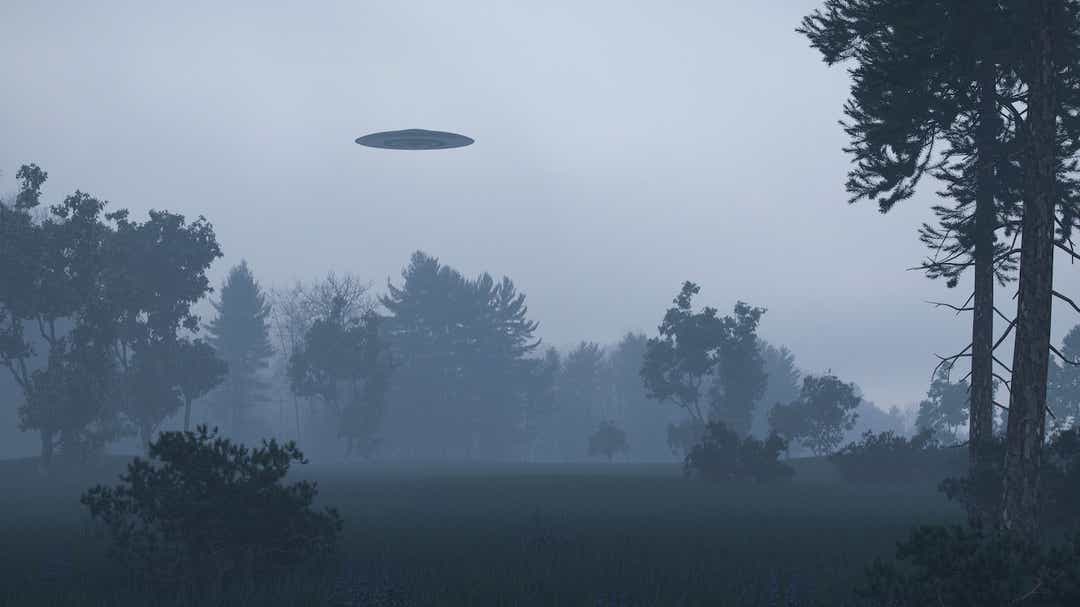


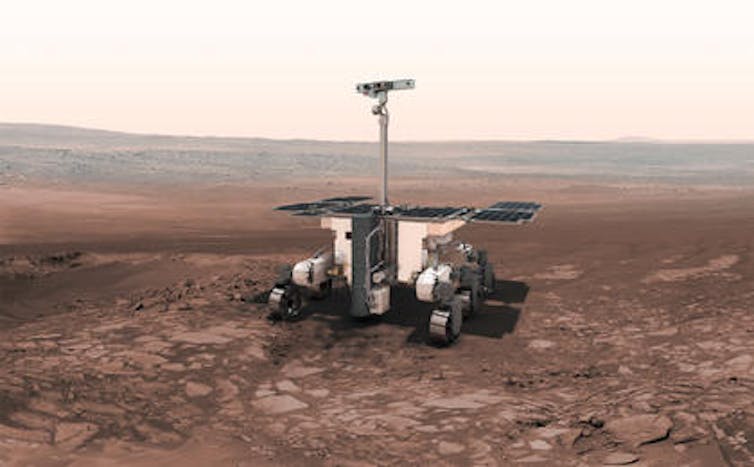
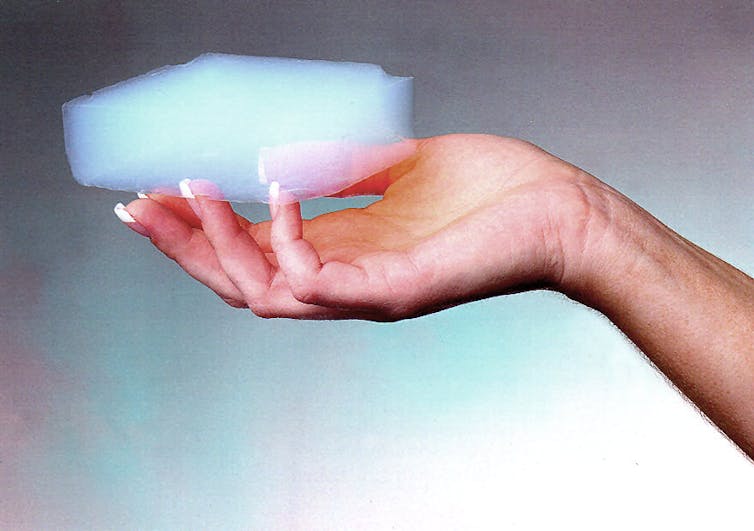
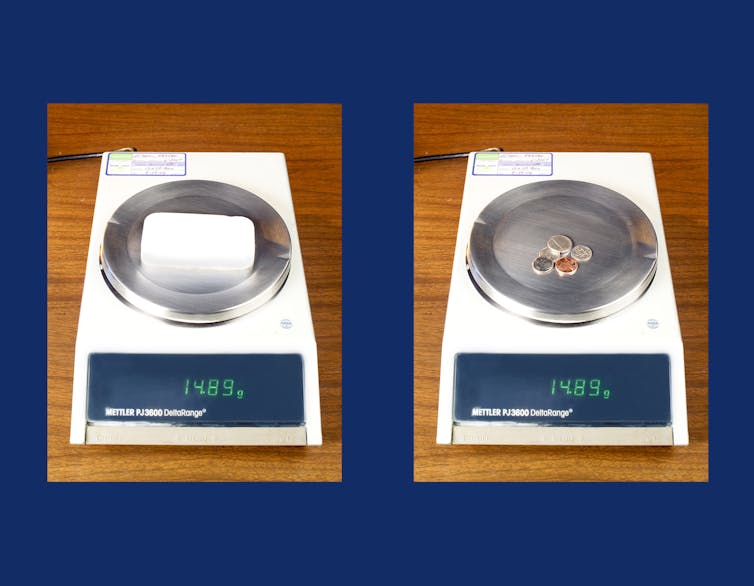





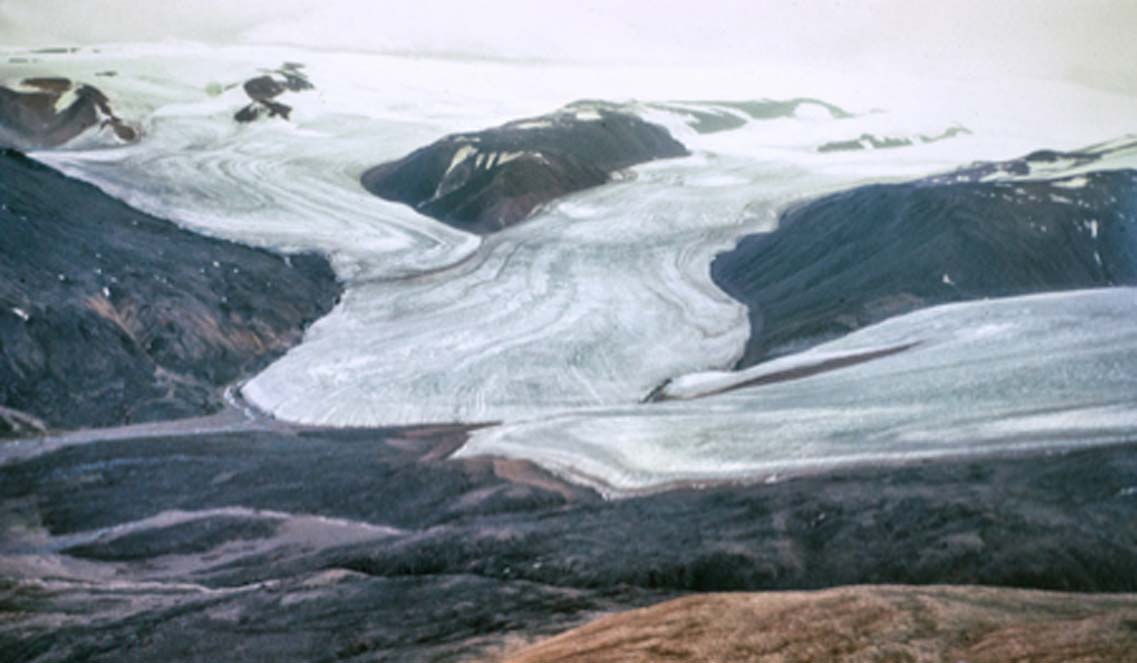


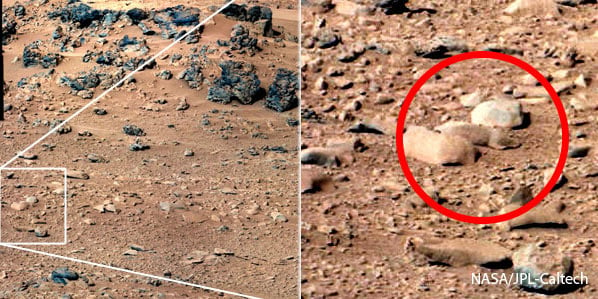


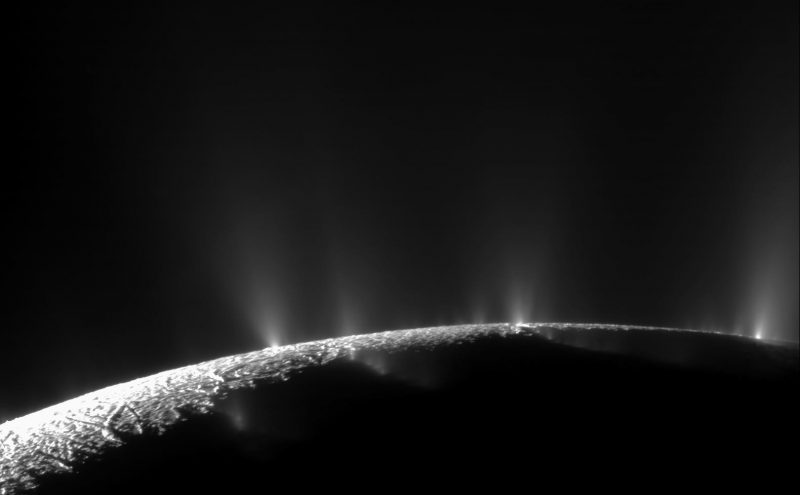
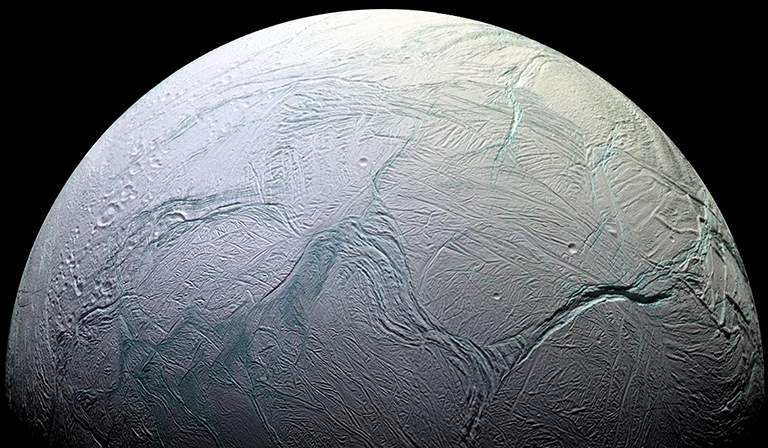
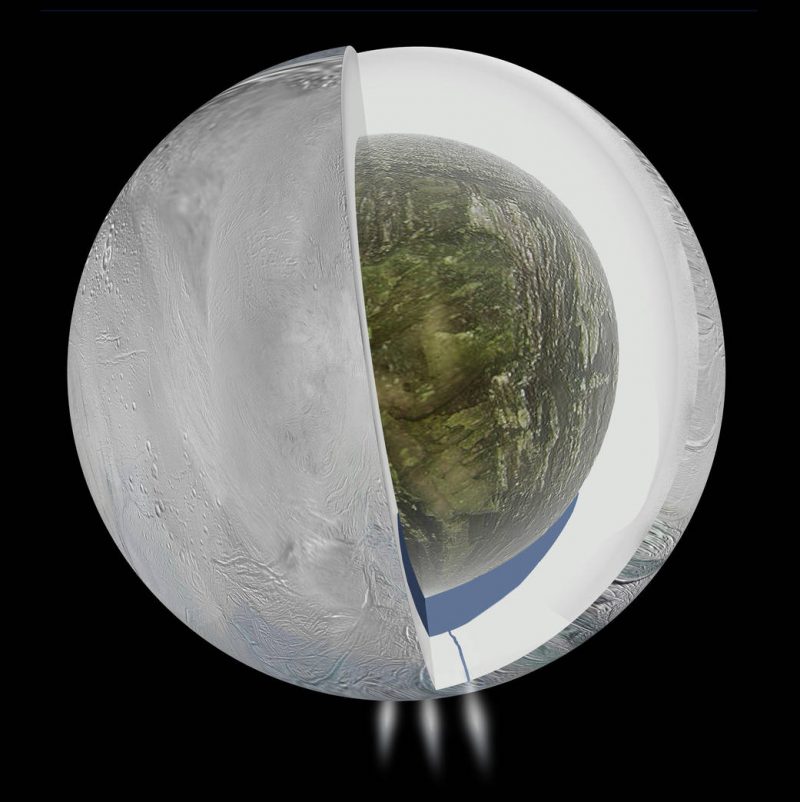
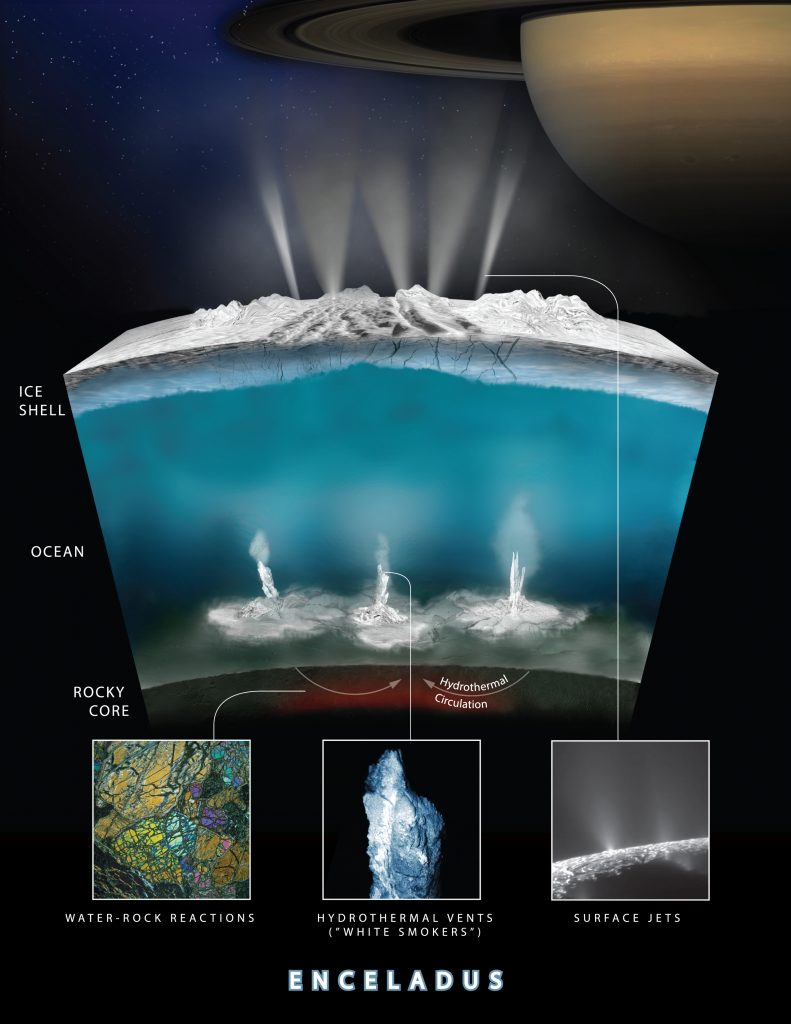


There's a lot of bunk out there with CGI/editing tricks. This one, IMO, is certainly one of the more palatable videos I've seen.