Ontdek de Fascinerende Wereld van UFO's en UAP's: Jouw Bron voor Onthullende Informatie!
Ben jij ook gefascineerd door het onbekende? Wil je meer weten over UFO's en UAP's, niet alleen in België, maar over de hele wereld? Dan ben je op de juiste plek!
België: Het Kloppend Hart van UFO-onderzoek
In België is BUFON (Belgisch UFO-Netwerk) dé autoriteit op het gebied van UFO-onderzoek. Voor betrouwbare en objectieve informatie over deze intrigerende fenomenen, bezoek je zeker onze Facebook-pagina en deze blog. Maar dat is nog niet alles! Ontdek ook het Belgisch UFO-meldpunt en Caelestia, twee organisaties die diepgaand onderzoek verrichten, al zijn ze soms kritisch of sceptisch.
Nederland: Een Schat aan Informatie
Voor onze Nederlandse buren is er de schitterende website www.ufowijzer.nl, beheerd door Paul Harmans. Deze site biedt een schat aan informatie en artikelen die je niet wilt missen!
Internationaal: MUFON - De Wereldwijde Autoriteit
Neem ook een kijkje bij MUFON (Mutual UFO Network Inc.), een gerenommeerde Amerikaanse UFO-vereniging met afdelingen in de VS en wereldwijd. MUFON is toegewijd aan de wetenschappelijke en analytische studie van het UFO-fenomeen, en hun maandelijkse tijdschrift, The MUFON UFO-Journal, is een must-read voor elke UFO-enthousiasteling. Bezoek hun website op www.mufon.com voor meer informatie.
Samenwerking en Toekomstvisie
Sinds 1 februari 2020 is Pieter niet alleen ex-president van BUFON, maar ook de voormalige nationale directeur van MUFON in Vlaanderen en Nederland. Dit creëert een sterke samenwerking met de Franse MUFON Reseau MUFON/EUROP, wat ons in staat stelt om nog meer waardevolle inzichten te delen.
Let op: Nepprofielen en Nieuwe Groeperingen
Pas op voor een nieuwe groepering die zich ook BUFON noemt, maar geen enkele connectie heeft met onze gevestigde organisatie. Hoewel zij de naam geregistreerd hebben, kunnen ze het rijke verleden en de expertise van onze groep niet evenaren. We wensen hen veel succes, maar we blijven de autoriteit in UFO-onderzoek!
Blijf Op De Hoogte!
Wil jij de laatste nieuwtjes over UFO's, ruimtevaart, archeologie, en meer? Volg ons dan en duik samen met ons in de fascinerende wereld van het onbekende! Sluit je aan bij de gemeenschap van nieuwsgierige geesten die net als jij verlangen naar antwoorden en avonturen in de sterren!
Heb je vragen of wil je meer weten? Aarzel dan niet om contact met ons op te nemen! Samen ontrafelen we het mysterie van de lucht en daarbuiten.
Berichten van 1 december 2019 tot 31 december 2019
Klimaatwetenschappers komen in verzet. Waarom de apocalyptische beweringen over klimaatverandering fout zijn
Journalisten en activisten hebben in de afgelopen weken weer een aantal apocalyptische voorspellingen gedaan over de impact van klimaatverandering.
De Amerikaanse journalist Bill McKibben stelde bijvoorbeeld dat koala’s als gevolg van bosbranden in Australië door klimaatverandering ‘nagenoeg uitgestorven’ zijn.
Extinction Rebellion zei dat ‘miljarden zullen sterven’ en dat ‘leven op aarde uitsterft’.
Kettingreactie
Vice claimde dat ‘de ineenstorting van de beschaving mogelijk al begonnen is’.
Het Amerikaanse congreslid Alexandria Ocasio-Cortez zei dat ‘de wereld over 12 jaar zal vergaan als we niets doen tegen klimaatverandering’.
Klimaatactiviste Greta Thunberg voorspelt in haar nieuwe boek dat we ‘rond 2030 een kettingreactie in gang zetten die zal leiden tot het einde van de beschaving zoals we die kennen’.
Soms doen ook wetenschappers een duit in het zakje.
Angstgevoelens
“Ik kan me moeilijk voorstellen hoe we een miljard mensen of zelfs de helft daarvan in leven kunnen houden als de aarde vier graden opwarmt,” zei één van hen eerder dit jaar.
Als de zeespiegel zo snel stijgt als het IPCC voorspelt, wordt dit een onbeheersbaar probleem,” zei een ander.
Dergelijke apocalyptische uitspraken hebben een impact op de wereld.
In september zei een groep Britse psychologen dat kinderen steeds vaker last hebben van angstgevoelens als gevolg van klimaatverandering.
Onjuiste beweringen
De Amerikaanse beleidsschrijver Michael Shellenberger schrijft in Forbes dat er in de nieuwsmedia de afgelopen maanden veel onjuiste beweringen zijn gedaan.
Hij noemt onder meer de bosbranden in de Amazone en Californië als voorbeelden.
Shellenberger merkt op dat geen enkel wetenschappelijk instituut ooit heeft gezegd dat klimaatverandering zal leiden tot de ineenstorting van de beschaving of het uitsterven van de mensheid.
Congreslid Ocasio-Cortez zei dat de wereld over 12 jaar zal eindigen onder meer vanwege natuurrampen.
99,7 procent minder
Shellenberger: “Er sterven in vergelijking met de piek in 1931 99,7 procent minder mensen als gevolg van natuurrampen.”
In 1931 stierven in totaal 3,7 miljoen mensen door natuurrampen. In 2018 waren dat er slechts 11.000.
Het IPCC schat dat de zeespiegel tegen 2100 zo’n 0,6 meter is gestegen. “Klinkt dat apocalyptisch of onbeheersbaar?” vraagt Shellenberger.
Hij wijst erop dat een derde van Nederland zich onder zeeniveau bevindt en dat sommige gebieden ruim zeven meter onder zeeniveau liggen.
Stijgen
Daar weet het land al 400 jaar mee om te gaan, aldus de schrijver.
En dan de claims over mislukkende oogsten, hongersnood en massale sterfte.
“We produceren vandaag de dag genoeg voedsel voor 10 miljard mensen, dus 25 procent meer dan we nodig hebben,” zegt Shellenberger.
Dat aandeel zal volgens wetenschappers alleen maar blijven stijgen.
Grotere oogsten
De VN voorspelt tegen 2050 30 procent grotere oogsten. En in de armste gebieden op aarde, zoals de sub-Sahara, zullen de opbrengsten met 80 tot 90 procent stijgen.
En het zijn niet de bosbranden die ervoor zorgen dat er nog maar 300.000 koala’s zijn, aldus Shellenberger.
Richard Thornton van het Bushfire and Natural Hazards Cooperative Research Centre in Australië zei: “Klimaatverandering speelt hier een rol, maar is niet de oorzaak van deze bosbranden.”
Datzelfde geldt voor de bosbranden in de Verenigde Staten.
Verzetten
Shellenberger wijst erop dat steeds meer klimaatwetenschappers zich beginnen te verzetten tegen overdreven uitspraken van activisten, journalisten en andere wetenschappers.
“Door klimaatverandering worden we niet met uitsterven bedreigd,” zei Ken Caldeira van Stanford.
De Australische klimaatwetenschapper Tom Wigley voegde toe: “Al die jonge mensen zijn onjuist geïnformeerd. En dat is deels de schuld van Greta Thunberg. Ze zit ernaast.”
There Are 15 Types of Alien Hybrid and Some Live on Earth
COAST TO COAST AM
The eight hybrids featured in Lamb’s book, Meet the Hybrids, have all lived previous lifetimes as extraterrestrials, she revealed. In this lifetime as hybrids, of which there are at least 15 types, they are very connected to those beings, she added.
Lamb spoke about Cynthia Crawford, a hybrid with unusually large eyes, as well as a woman she correctly identified as a mantis being hybrid.
A media phenomenon, Coast to Coast AM deals with UFOs, strange occurrences, life after death, and other unexplained (and often inexplicable) phenomena.
Alien Abductee Has Important Messages for All of Humanity
If you think every alien is a demon then you should probably go work for the Spanish Inquisition. A lot of people called Jesus a devil and well obviously he wasn’t from around these here parts. I’m not saying negative aliens do not exist but to think they all are.. Discernment is the key.
Marcela de Lavaissiere was born and raised in Cusco, Peru. She has dedicated her life to spiritual ET and UFO contacts, contacts made from the heart. Her primary essential contact is with light beings from Andromeda.
From the Andromedans she has learned how to work with and utilize energies, and travels the world to activate portals of lights, raise the frequency of the planet , expand consciousness, touch and open hearts.
She is a galactic being fulfilling her mission, utilizing the spheres of light from Andromeda to re-align energies and manifest the flower of life on earth creating heaven on earth.
Quest for The Ark of the Covenant: New Clues Found! | In Search Of
The search continues with new episodes of In Search Of Fridays at 10/9c! Treasure hunter Jim Barfield follows new clues to an ancient city where he believes he has found the contents and location of the Ark of the Covenant in this clip from Season 2, “Secrets of the Bible.” #InSearchOf
Adams makes the pilgrimage from Lalibela to Gondar in the northern wilds of Ethiopia, and paddles by papyrus kayak across lake Tana. His quest: to find the Ark of the Covenant.
The Ark of the Covenant, also known as the Ark of the Testimony, and in a few verses across various translations as the Ark of God, is a gold-covered wooden chest with lid cover described in the Book of Exodus as containing the two stone tablets of the Ten Commandments
Astronomers Catch A Natural Comet Outburst In Unprecedented Detail
Data from NASA’s Transiting Exoplanet Survey Satellite (TESS) reveal start-to-finish sequence of an outburst from comet 46P/Wirtanen.
University of Maryland astronomers have made the most complete and detailed observations to date of the formation and dissipation of a naturally occurring comet outburst. Using data from NASA’s Transiting Exoplanet Survey Satellite (TESS), the researchers gained a clear start-to-finish image sequence of an explosive emission of dust, ice and gases during the close approach to Earth of comet 46P/Wirtanen in late 2018. The team members reported their results in the November 22, 2019 issue of The Astrophysical Journal Letters.
This animation shows an explosive outburst of dust, ice and gases from comet 46P/Wirtanen that occurred on September 26, 2018 and dissipated over the next 20 days. The images, from NASA’s TESS spacecraft, were taken every three hours during the first three days of the outburst.
Credit: Farnham et al./NASA
“TESS spends nearly a month at a time imaging one portion of the sky. With no day or night breaks and no atmospheric interference, we have a very uniform, long-duration set of observations,” said Tony Farnham, a research scientist in the UMD Department of Astronomy and the lead author of the research paper. “As comets orbit the sun, they can pass through TESS’ field of view. Wirtanen was a high priority for us because of its close approach in late 2018, so we decided to use its appearance in the TESS images as a test case to see what we could get out of it. We did so and were very surprised!”
According to Farnham, the TESS observations of comet Wirtanen were the first to capture all phases of a natural comet outburst, from beginning to end. He noted that three other previous observations came close to recording the beginning of an outburst event. Observations of a 2007 outburst from comet 17P/Holmes began late, missing several hours of the initial brightening phase of the event. In 2017, observations of an outburst from comet 29P/Schwassmann-Wachmann 1 (SW1) concluded early, due to limitations on pre-scheduled observation time. And, while observations from the UMD-led Deep Impact mission captured an outburst from comet Tempel 1 in unprecedented detail in 2005, the outburst was not natural—created instead by the mission’s impactor module. However, the current observations are the first to capture the dissipation phase in its entirety, Farnham said.
Although Wirtanen came closest to Earth on December 16, 2018, the outburst occurred earlier in its approach, beginning on September 26, 2018. The initial brightening of the outburst occurred in two distinct phases, with an hour-long flash followed by a more gradual second stage that continued to grow brighter for another 8 hours. This second stage was likely caused by the gradual spreading of comet dust from the outburst, which causes the dust cloud to reflect more sunlight overall. After reaching peak brightness, the comet faded gradually over a period of more than two weeks. Because TESS takes detailed, composite images every 30 minutes, the team was able to view each phase in exquisite detail.
“With 20 days’ worth of very frequent images, we were able to assess changes in brightness very easily. That’s what TESS was designed for, to perform its primary job as an exoplanet surveyor,” Farnham said. “We can’t predict when comet outbursts will happen. But even if we somehow had the opportunity to schedule these observations, we couldn’t have done any better in terms of timing. The outburst happened mere days after the observations started.”
Farnham and his colleagues are also the first to observe Wirtanen’s dust trail. Unlike a comet’s tail–the spray of gas and fine dust that follows behind a comet, growing as it approaches the sun–a comet’s trail is a field of larger debris that traces the comet’s orbital path as it travels around the sun. Unlike a tail, which changes direction as it is blown by the solar wind, the orientation of the trail stays more or less constant over time.
“The trail more closely follows the orbit of the comet, while the tail is more offset from it, as it gets pushed around by the sun’s radiation pressure. What’s significant about the trail is that it contains the largest material,” said Michael Kelley, an associate research scientist in the UMD Department of Astronomy and a co-author of the research paper. “Tail dust is very fine, a lot like smoke. But trail dust is much larger–more like sand and pebbles. We think comets lose most of their mass through their dust trails. When the Earth runs into a comet’s dust trail, we get meteor showers.”
While the current study describes initial results, Farnham, Kelley and their colleagues look forward to further analyses of Wirtanen, as well as other comets in TESS’ field of view. The team has generated a rough estimate of how much material may have been ejected in the outburst (about 2.2 million pounds, which could have left a crater close to 65 feet across), but further analysis of the estimated particle sizes in the dust tail may help improve this estimate. Observing more comets will also help to determine whether multi-stage brightening is rare or commonplace in comet outbursts.
“We also don’t know what causes natural outbursts and that’s ultimately what we want to find,” Farnham said. “There are at least four other comets in the same area of the sky where TESS made these observations, with a total of about 50 comets expected in the first two years’ worth of TESS data. There’s a lot that can come of these data. We’re still finding out the capabilities of TESS, so hopefully we’ll have more to report on this comet and others very soon.”
The research paper, “First Results from TESS Observations of Comet 46P/Wirtanen,” Tony Farnham, Michael Kelley, Matthew Knight and Lori Feaga, was published in The Astrophysical Journal Letters on November 22, 2019.
In addition to Farnham and Kelley, UMD-affiliated co-authors of the research paper include Astronomy Associate Research Scientists Lori Feaga and Matthew Knight.
Contacts and sources:
Matthew Wright University of Maryland
Citation:
“First Results from TESS Observations of Comet 46P/Wirtanen,” Tony Farnham, Michael Kelley, Matthew Knight and Lori Feaga, was published in The Astrophysical Journal Letters on November 22, 2019.
Linda Moulton Howe: High Ranking Naval Engineer Talks of Reptilians & Secret Space Technology
Retired Naval engineer Bill Tompkins told Linda that while working for Naval intelligence during that period, he became aware of UFO program, and that a group of Reptilian aliens were giving Germany, space vehicles with anti-gravitational propulsion, as well as access to underground caverns in Antarctica where they could develop the new technology.
He also contended that when the first astronauts landed on the moon, Reptilians were standing on the surface underneath their vehicles, just out of camera range.
A media phenomenon, Coast to Coast AM deals with UFOs, strange occurrences, life after death, and other unexplained (and often inexplicable) phenomena.
Is Trump Right? Do We Need An Alien War To Unite? UFO Sighting News.
His name is Prince Ea and he has almost 5 million subscribers on Youtube. Here is a really great guy who is a guru of sorts to the soul. He said that president Trump said he wanted to turn space into a "war fighting domain."
This sounds crazy, but the way Prince Ea explains it...Trump is right. A space war may be the answer to all of our problems here on earth. The fastest way to create world peace would be an alien attack. It would unite the world to fight a foreign enemy invader. As Prince Ea puts it...we unite when in conflict. I didn't believe so at first, but by the end of his video...I realized he was right. Scary thought, but the truth often is. Scott C. Waring
Unidentified Aerial Phenomenon slowly moving over mountain in Phoenix, Arizona
Aslow moving rectangular object has been filmed while flying over the top of a mountain in Phoenix, Arizona on December 1, 2019.
Some people say that the object looks like a typical banner in tow, but normally a banner is attached to and just behind the plane, so we would be able to see a small aircraft and that is not the case when you watch the video, there is no plane.
A fiery meteorexplosion over the Australian desert may have been an ultra-rare minimoon, researchers think.
Sometimes, objects from space come really close to Earth but are not immediately pulled in by our planet's gravity. They often orbit for a short period of time before being either pulled into the atmosphere or hurled back out into space. These objects are called temporarily captured orbiters (TCOs), but are commonly referred to as natural Earth satellites or minimoons.
In poring over data from Australia's Desert Fireball Network (DFN) — a network of cameras set up across Australia to capture images of minimoon fireballs, or minimoons entering Earth's atmosphere and burning up — a group of researchers have identified what they think is a minimoon meteor, or fireball.
This is the second time that researchers have identified a TCO blazing through the atmosphere before hitting the ground. In finding the fireball, named DN160822_03, the researchers think that it exploded over the Australian desert on Aug. 22, 2016.
This map shows camera observations of the minimoon fireball DN160822_03 by the DFN. The orange arrow indicates the ground track of the fireball’s luminous trajectory. (Image credit: The Astronomical Journal (2019))
By studying the object's flight path around Earth, the team was able to calculate its trajectory to see what angle it entered Earth's atmosphere at (if the object entered Earth's atmosphere at a smaller angle, it suggests that it circled Earth first).
This information combined with velocity data led the researchers to conclude that, most likely, this object was orbiting Earth before being pulled in by gravity and burning up in our planet's atmosphere. This would most likely make the object a minimoon.
By studying the flight paths of minimoons like DN160822_03, researchers could better understand how we might be able to better prevent objects from getting close to Earth and how we might be able to more easily access these objects and the resources that they may possess.
As the team states in their study, which was published Oct. 14 in the Astronomical Journal, "TCOs are a crucially important subpopulation of near-Earth objects (NEOs) to understand because they are the easiest targets for future sample-return, redirection, or asteroid mining missions."
Minimoon history
This being only the second observation of a minimoon fireball, sightings of the fiery events are incredibly rare.
Only one time, in 2006, have researchers observed a minimoon orbiting Earth. The object, named 2006 RH120, was seen through a telescope circling the planet. The object orbited Earth for about 11 months before it wriggled free from Earth's gravity and was flung back out into space.
Additionally, only one other minimoon fireball has ever been observed. The fireball was spotted by a team running a camera network in Europe in 2014.
The ‘Most Educated’ Astronaut Says Extraterrestrials “Are Doing Star Travel” At A UFO Conference
IN BRIEF
The Facts:
Ex Astronaut Story Musgrave made some very interesting comments at a UFO conference a few years ago, saying that he believes there is other life out there are that they are "doing star travel."
Reflect On:
How much does the human race have to discover about the nature of our reality? Surely there are many things and truths that yet remain to be uncovered.
NASA is no doubt responsible for concealing evidence of unidentified flying objects and strange anomalies that have been observed in space. This is true according to multiple insiders, like long time Ames Research scientist Dr. Norman Bergrun, who played a key role in the Voyager missions, the probes that were sent out and tasked with photographing Saturn, its rings and its moons. Here is a photo from that mission he was able to obtain from the agency of a large unidentified flying object hovering just outside Saturn’s rings, it’s huge, approximately the size of Earth, and is published in his book, Ringmakers of Saturn.
A few years ago (in an interview) he claimed that NASA regularly hides as well as “garbles” many photographs that, if made public, would have huge implications on the reality of what’s happening in space. He is just one example with an incredible verified background who has made claims such as this.
When it comes to astronauts, there is no shortage of them who has spoken up about the extraterrestrial/UFO phenomenon. There are many, and despite the two or three astronauts that seem to receive a lot of media attention who, on multiple occasions, denied the reality of UFOs, the majority of them have been creating awareness about the UFO/extraterrestrial phenomenon, for many years.
Gordon Cooper, aerospace engineer, and one of the seven original astronauts in Project Mercury is a great example. He has been quite outspoken about UFOs, extraterrestrials and the fact that the agency is and has played a part in the cover-up. Ex Princeton physics professor and NASA astronaut Dr. Brian O’Leary is another great example. He told the world for years that “there is abundant evidence that we are being contacted, that civilizations have been visiting us, for a very long time.” The sixth man to walk on the Moon, Dr. Edgar Mitchell is no exception as well. Prior to his recent passing, Mitchel spent years creating awareness about the fact that UFOs are very real, and that some of them are not from our own planet, but from other solar systems, and perhaps other dimensions. He also said he “happens to be privileged enough to be in on the fact that we are not alone on this planet ” and that we have “been visited many times.”
Again, the list is long, and it goes well beyond the testimony of astronauts and NASA personnel who have ‘gone against’ the agency. This field includes many of the world’s top scientists and academics, high ranking military personnel and more. There are thousands of statements, and there are millions of pages of declassified documents that go with it. That being said, anybody who claims to know exactly what’s going on is most definitely not telling the truth, as the complexity of this phenomenon is immense.
As much truth as there is in this field, there is also a massive amount of disinformation, it’s well known that multiple campaigns of disinformation have plagued the field, with these campaigns usually originating within intelligence agencies and deep levels of the government for the purposes of influencing various UFO groups and researchers.
Story Musgrave
When I saw Story Musgrave attend a UFO conference, I wasn’t too shocked. That being said, he’s not very outspoken about the phenomenon in general. But, you have to ask your self, why is Story Musgrave showing up at a UFO conference? Musgrave is known as the most educated astronaut, he’s a Doctor (MD), and also has six academic degrees. He’s also the only astronaut to fly above all five Space Shuttles.
He gives an interesting lecture below as he speaks about the UFO phenomenon. But unlike astronauts like Mitchell, for example, he is always careful to say that he doesn’t have much evidence for what he is saying. But he does speculate, with a sharp look when he makes the statement below. He bases his hypothesis on his “observations” and “what he’s been exposed to.”
So if you look at technological development, maybe we’ve been at it, whatever you want to call it, one hundred/two hundred years, industrial revolution. But you look at some planet, and some creatures that got it together, they were able to build technology over millions of years, they’re doing star travel, that’s how good they are, so…I have no proof….I have the certainty in my own being that there’s millions of people doing star travel, that’s just the way it is…Interstellar travel, for me, is going on. It’s absolutely…there’s millions of them doing it, so, that’s what’s going on.
The Takeaway
There is obviously something going on with the UFO and ET phenomenon, it is no question. What is happening and why it’s being hidden from people is a whole other subject. If you wish to explore this further, check out our articles on this phenomenon by sifting through the Disclosure section of our website.
Amerikaanse overheid heeft ‘fysiek UFO-bewijs’ in handen. Tv-presentator doet opzienbarende uitspraken
De Amerikaanse tv-presentator Tucker Carlson deed tijdens een recent interview met de Britse oud-defensieambtenaar Nick Pope enkele opzienbarende uitspraken.
De Fox News-anchor sprake met Pope onder andere over het onderzoek naar ongeïdentificeerde vliegende objecten oftewel UFO’s.
In een aflevering van het tv-programma Ancient Aliens, die op 22 november werd uitgezonden, claimde Carlson van een ‘goed geïnformeerde bron’ te hebben vernomen dat de Amerikaanse overheid fysiek bewijs heeft van buitenaards bezoek.
Wrakstukken
“Ik heb van iemand die goed geïnformeerd is gehoord dat de Amerikaanse overheid fysiek bewijs in handen heeft dat ons veel meer kan vertellen over wat dit voor objecten zijn,” zei hij.
Pope vroeg hem vervolgens of hij verwees naar wrakstukken van UFO’s.
“Dat klopt,” zei Carlson.
Trump
In juli vroeg de presentator president Donald Trump nog naar de mogelijkheid dat we worden bezocht door een intelligent buitenaards ras.
Trump reageerde dat hij hier persoonlijk niet in gelooft, maar voegde daar gelijk aan toe dat alles mogelijk is.
Hij ontkende verder dat de Amerikaanse luchtmacht een gecrashte UFO in handen heeft.
I just added shadows to the screenshot of the UFO and a figure can be seen within its center! Look at the gif above I made. Slowly I added shadow until the figure came into focus. This figure tells me it is absolutely a real light ship.
A glowing light ship was seen over the city of Leoben, Austria this week. The person captured an image of a glowing classic disk in front of a dark cloud. The person who took the photo goes by the name of Werner Robert Pregetter. He gives only a few words saying, "So there are UFOs!" I have to say, I have heard of light ships and even seen dozens of lights in the sky moving low and fast, but this shape is one that I have not seen in a light ship. This is a classic UFO disk shape. Its upper and lower humps are visible as well as the disks outer edges.
I found three different objects in a NASA index and all are marked UNKNOWN. All were see and photographed from a space shuttle. They came from STS 32, STS61...those are two different shuttle missions and shuttles. What are they and why were they outside the window of the space shuttle? Were they UFOs? I believe they have a high probability of being alien craft. You see, the shuttle is in orbit and traveling at 17,500 miles per hour...thats 28,000 kilometers per hour! Those unknown objects have their own propulsion to keep up a that speed. Scott C. Waring-Taiwan
Spotter captures UFO or F35 over Kirton, Lincs, UK?
On December 2, 2019 a strange looking and moving object has been spotted in the sky over Kirton, Lincs, UK. The witness managed to take a picture before the object shot away at high speed.
The photographer who submitted the image to Mufon said: I saw this at 10.15am UK time over Kirton,Lincs UK. I was stood at my back door having a cigarette when I noticed an object in the sky.
It was moving slowly, almost hovering, then after a few seconds it shot away at high speed in the direction in was coming from.
I posted it on the local RAF spotters site to find out more. I was told there was nothing flying at that time, then my post was removed and I was told by their admin that it was a F35.
Note editor: Very strange that the RAF spotters site removed the image. How they can say that it was a F35 if there was nothing flying at that time?
The picture has not been edited or photoshopped. Not the highest quality as taken from a poor quality phone. Your thoughts please.
A cluster of UFOs hovering over the Black Sea, Russia
What are they doing? Is it something natural not accomplishing anything? If they are being navigated, I want to know if there is a reason these have been hanging out in such low areas around people like they want to be seen.
I've seen em, I've seen so many reports about them and other videos. It's all just the same thing. They appear all bright, do a floaty swirly and maybe zip around some, and they disappear. What gives?
Space defense system firing from earth to space threat? - NASA STS 48 footage
The video you are seeing is from a live broadcast of the Space Shuttle Discovery Mission STS-48 between 8:30PM and 8:45PM GMT on september the 15th, 1991 near the west coast of Australia.
While the discovery is about 355 miles or 570 km above earth, you see some interesting things going on and above earths surface. There is no question that this video is staged or a hoax as it has been captured from an official NASA feed and they even have an official statement about the event as well. NASA learned quickly that is impossible to redact something, once it's been aired. Maybe that's the reason why they don't do any live feeds anymore?
The first thing we see is something appearing, either by decloaking or hitting sunlight. It moves in a straight line until it seems to slow down a bit and suddenly we see a big flash in the left side of the screen. Immediatly reacting to the flash, the object we were following makes a VERY sharp turn and seems to accelerate at insane speeds away from earth. And then it happens. We see some sort of plasma or missle to be fired from earth only missing the unknown object barely.
Notice there seems to be another UFO changing direction and a second projectile being from earth as well. The explanation from NASA is that we are just witnessing some debris, like chunks of ice and bits of insulation that are being affected by the RCS jet. My first question is, how come there are some bright objects appearing out of nowhere? If it was really the sun, why isn't it the same on on the other objects we see flying? And why does the first object seem to slow down just before we see the flash or the supposedly jet being fired? Or are we witnessing something far more sinister like some kind of earth defense system like the Star Wars program? Or even an Alien defense system? To me, the objects seem much further away then is claimed by nasa,but with the quality of the video, it's hard to tell. A few minutes later, they also pan the camera, away from the scene and just show some parts of the discovery,another red flag in my eyes.
Coincidence or not, this is and will continue to be one of the most unsettling videos in the history of the UFO phenomena. I hope one day, we'll get a clear answer.
What do you guys think? Is it in fact chunks of ice or insulation that are effected by the plume field of the jet firing? Or did we really just see some sort of earth or alien defense system against a suposed threat? Let me know in the comments below! Would love to hear what you guys think?
US Government is Holding Evidence of UFO Wreckage, Fox News Host Claims
Tucker Carlson, a vocal host of Fox News, has stunningly alleged the US government is hiding proof of UFO wreckage from the public.
Recently appeared on the Ancient Aliens of History Channel, the conservative political commentator was asked about his knowledge on extraterrestrial life.
Talking to journalist Nick Pope, Tucker said that he heard it from someone who he believes is knowledgeable in the subject. He claimed that there’s physical evidence that the American government is hiding that would tell a lot more about what are these objects.
Tucker revealed that the person who told him is someone who worked on the subject within the government for many years and who would know.
Tucker has sparked waves of controversies on his show Tucker Carlson Tonight over the years.
Three days after an El Paso, Texas mass shooting in August, where a shooter wrote a manifesto on a “Hispanic invasion of Texas,” he stated that white supremacy wasn’t a real issue.
In December 2018, he said about immigrants that we have a moral obligation to admit the world is poor even if it makes our nation poorer, dirtier, and more divided.
Secret Officials Boarded US Navy Ship to Get Equipment Following Alleged UFO Encounter
The US Navy confirmed in September that three videos possibly showing UFOs were of an unidentified and unauthorised nature. This has eventually sparked a new wave of revelations from Navy officers who were involved in the subject.
Ex-naval officer Ryan Weigelt was on board the USS Princeton when fighter pilots encountered a Tic Tac-shaped UFO close to the coast of San Diego in 2004. He has opened up about a group of officials boarding the ship to retrieve some secret details following the incident.
US fighter pilots of the Nimitz Carrier Strike Group encountered a UFO on November 14, 2004, that was recorded on video and released to the public in 2017 under the title FLIR1, alongside two other videos titled Gimbal and GoFast, which were caught in January 2015.
Former Pentagon official Luis Elizondo acquired all three videos, and Blink-182 singer-lead research organisation To The Stars Academy of Arts and Science released them.
Lead Petty Officer Weigelt revealed that a group of military personnel from the US Air force landed on his ship without assignment shortly after the fighter jets spotted the strange object.
The group then allegedly went straight to the Admiral’s Quarter and retrieved some details from USS Princeton helicopters. Weigelt said that he could not tell what it was they had retrieved, but it was something needed to fly their aircraft.
The former officer explained that the group had taken off something from their aircraft, and there was no way they could safely fly their aircraft in a battle group without it. He then revealed that the group of mysterious officials ordered the USS Princeton to harbour at a nearby marina while leaving the missile cruiser by a rigid-hulled inflatable boat (RIB).
The lead petty officer said that it was the first time in his several military cruises that they pulled in during a work-up to a harbour for any reason whatsoever.
The former naval officer then concluded that these guys were looking for data on the UFOs.
Unidentified Flying Objects – the reality, the cover-up and the truth
Unidentified Flying Objects, or UFOs as they are commonly known, have been witnessed by millions of people all over the world and have been recorded in history books, myths, legends and traditions for thousands of years. However, many accounts that are recorded in ancient texts are dismissed as mere myths and legends, while UFO sightings that have taken place in the last few centuries have been classified as misinterpretations of natural phenomena, illusions, or conspiracy theories.
History has shown us time and again that a plethora of so-called ‘myths’ have their basis in reality. It is possible, and indeed likely, that stories and legends were a way for people to explain real—and perhaps perplexing—events using the knowledge and beliefs of their time. In support of this theory, a number of events described in mythology, which were once considered mere fairy tales, have now been proven through archaeology to have existed. A famous example is the city Troy, which is central to Homer’s ‘The Iliad’. Long considered to be a city of myth, Heinrich Schliemann’s discovery of the actual site in 1868 elevated it to a place in history. Nevertheless, the remainder of The Iliad is still viewed as a myth and fantasy without any serious attempts being made to investigate whether or not there may be more truth behind the tale. The same goes for many accounts of ‘flying machines’, which we find reference to in countless mythologies from numerous different cultures around the world.
Many cultures contain pictorial and written records of ‘flying machines’, yet these are usually dismissed as myth and legend.
It is common to see people selectively decide what is real and what is not and all of this on the unsubstantiated assumption that ancient people were primitive and had little to no knowledge compared to us today. On the contrary, many ancient civilizations, like the Sumerians, Indus Valley, and Egyptians existed with complex social structures, legal systems, art, astronomy, mathematics, and technology, some of which is still not fully understood today. The Antikythera Mechanism, for example, is a 2,200-year-old mechanical device that is still not completely understood despite decades of research by top scientists around the world.
Ancient Astronaut Theory
The topic of flying objects and supernatural beings from out of our world is one in which we find multiple references in mythologies. All of these myths and legends, along with archaeological evidence such as rock art depictions, have created a wave of theories that gave birth to the ‘Ancient Astronaut’ perspective, which links all of these ancient references and depictions to UFOs, and posits that extra-terrestrials visited Earth and made contact with humans in antiquity and prehistory, influencing the development of human cultures, technologies, and religions.
Unfortunately, there are numerous charlatans who have tried to ‘cash in’ on this movement for profit or publicity, or who have diminished it with caricatures of little green men, resulting in the ancient astronaut perspective being widely criticized and attacked for its lack of credibility. Consequently, what is in fact a plausible and possible explanation for what we see in ancient art and texts, is now rarely examined by scholars, who fear being ridiculed or having their professional career seriously undermined.
UFOs in art: “ Battesimo di Cristo" 1710; Fitzwilliam Museum, Cambridge ( Wikimedia Commons )
UFO sightings in recent history
But let’s leave the ancient past for a while and examine just the last 80 years of human history. Millions of people all over the globe have witnessed unidentified flying objects. Many have been recorded in detailed reports witnessed by police, pilots, astronauts, government officials, pilots, military personnel and, of course, ordinary citizens. Some of the more well-known cases were witnessed by thousands of people at one time. Historical records make it evident that UFO appearances magnified during and after World War II, including the example of the famous ‘ Foo Fighters’ .
While most sightings can be explained either by celestial phenomena, airplanes, planets, weather phenomena, military exercises, or in some cases drug use or mental instability, there still exists a small percentage that cannot be accounted for by any of these explanations. This is what makes the phenomena important and not to be ignored, particularly considering that sightings are frequently reported around military bases and airfields and are therefore, at the very least, a matter of both national security and air safety.
It is an undeniable fact that there are cases of unidentified objects in our skies. It has been acknowledged by the major governments from all over the world simply through the very fact that official research has been conducted on the matter in the US, UK, Russia, Europe, China, South America, and many others. All of this research, in every single case, concluded that there is a percentage of phenomena that cannot be explained.
In the past decade, many countries have declassified their UFO research files, releasing thousands of documents through the Freedom of Information Act and making numerous UFO cases available in the public domain. One recently released document from the UFO files in Britain, revealed how Churchill, concerned about the UFO issue, ordered a shutdown of information for at least 50 years to prevent mass panic and the potential to undermine religious beliefs. The document in question was also published on the BBC news site in 2010.
By doing careful research on the topic, passing over obvious scam and fake stories, it is clear to see that unidentified flying objects do exist. So the question is not whether they exist or not, but rather, what are they? Are they of terrestrial or extra-terrestrial origin? And what is their purpose?
UFOs and the limits of science
Many prominent scientists have already stated that other civilizations must exist in the Universe, and that it would be statistically impossible for this not to be the case. However, with our knowledge of science and technology today, we cannot yet support the means for interstellar travel, and since we have not discovered intelligent life in our solar system, the assumption is made that there must be no way that extra-terrestrials could have travelled to Earth. However, this argument is of course flawed because it is based within the framework of our own understanding of the universe, and does not take into account the capabilities of civilizations that may be millions of years ahead of our own. It also hinges on the following assumptions:
We know everything about physics and reality and therefore there is no way that such distant travel can be achieved.
We are using our means to try to contact other civilizations (e.g. SETI’s attempts to pick up radio or communication signals) and since we don’t perceive any signals of OUR type, nothing must exist.
We are looking for organic forms of life exactly like us and for planets with the exact same conditions as ours.
It is clear that these arguments show the arrogance of mankind, a mankind that may just be an infant in the Universe. And this is not new. During the history of humanity, in every single period of time, we believed that we knew the truth, only to have it replaced later on by new ‘knowledge’.
There is nothing new to be discovered in physics now. All that remains is more and more precise measurement, - Lord Kelvin, 1901, physicist
Quantum physics, still a relatively new and unexplored field in Science, has shown that reality could be completely different to what we believe it to be. Powerful telescopes have shown distant planets in solar systems that could possibly sustain life. Theories of wormholes and warp drives have shown that at a theoretical level we could achieve interstellar travel. Yes, we would require incredible amounts of energy to even think of trying to achieve something like this, so according to our standards today it is impossible to achieve, but in theory it can be achieved.
“It now seems quite clear that Earth is not the only inhabited planet. There is evidence that the bulk of the stars in the sky have planetary systems. Recent research concerning the origin of life on Earth suggests that the physical and chemical processes leading to the origin of life occur rapidly in the early history of the majority of planets within our Milky Way galaxy–perhaps as many as a million–are inhabited by technical civilizations in advance of our own. Interstellar space flight is far beyond our present technical capabilities, but there seems to be no fundamental physical objections to preclude, from our own vantage point, the possibility of its development by other civilizations.”
Carl Sagan, Ph.D. (Late Professor of Astronomy and Space Sciences, Cornell University)
Reluctance to engage with the UFO subject
The reason that the scientific community is not dealing seriously with UFOs is because the topic has been extensively ridiculed both by the media and in academic circles, with false information spread everywhere. For similar reasons, military personnel, astronauts, pilots, and other categories of professionals do not want to talk because, either they have been forced to sign confidentiality agreements, or because of fear that their careers would be destroyed. This is why we have seen many examples of ‘death bed confessions’.
One such case was with astronaut Gordon Cooper, who told the world about his experience encountering a UFO during his flight in the Mercury capsule in 1963. Before he died he stated: “for many years I have lived with a secret, in a secrecy imposed on all specialists in astronautics. I can now reveal that every day, in the USA, our radar instruments capture objects of form and composition unknown to us”.
While great efforts have been made to ridicule and disparage anyone who lends support to the existence of UFOs, the fact remains that there are numerous high-profile cases that are supported by solid evidence, and which should not be dismissed.
Recorded UFO sightings with extensive witness support
Below I present a very limited list constituting strong evidence for the existence of unidentified flying objects in the last 60 years.
It all happened in the early hours of February 25 in 1942. An aircraft flew over LA County that sparked an air raid alert (it was in the midst of WWII). Searchlights and guns were locked onto the aircraft for about an hour. The picture below appeared in the LA Times in a story about the Battle of LA It clearly shows a night time defensive response to an air raid. The aircraft was not hostile and obviously was not damaged by the attack. The Government stated that the craft they were shooting at was unidentified.
This incident involved a group of American servicemen stationed at a military base in Suffolk that contained a storage centre with nuclear weapons. There had been three consecutive night of sighting objects in the sky over the base, in some cases shining a light down upon the nuclear weapons storage. On the third night, approximately two dozen servicemen were sent into the forest to investigate one set of mysterious lights. The men reported seeing a spacecraft on the ground in close proximity to them and three extra-terrestrial beings. One serviceman claimed to have touched the craft. The whole incident was filmed and photographed by one of the servicemen, but all photos and videos were removed by the US military. When the British Government released the UFO files, the Rendlesham incident papers were missing – as reported on BBC .
In November, 1986, a Japanese crew of a jumbo freighter aircraft witnessed three enormous unidentified objects while flying over Alaska, USA. This sighting gained international attention when the Federal Aviation Administration (FAA) announced that it was going to officially investigate this sighting because the Air Route Traffic Control Center in Anchorage, Alaska, had reported that the UFO had been detected on radar. The UFOs in this case were tracked on both ground and airborne radar, witnessed by experienced airline pilots, and confirmed by a FAA Division Chief.
Illustration of the object, with the Boeing 747 airplane on the right. Credits: UFO Reporter
The Belgium UFO wave began in November 1989. The events of 29 November would be documented by no less than thirty different groups of witnesses, and three separate groups of police officers. All of the reports related to a large object flying at low altitude. The craft was of a flat, triangular shape, with lights underneath. This giant craft did not make a sound as it slowly moved across the landscape of Belgium. The Belgium UFO wave peaked with events on the night of 30/31 March 1990. On that night, unknown objects were tracked on radar, chased by two Belgian Air Force F16s, photographed, and were sighted by an estimated 13,500 people on the ground – 2,600 of whom filed written statements describing in detail what they had seen. Following the incident, the Belgian air force released a report detailing the events of that night.
The Phoenix Lights (also identified as "Lights over Phoenix") was a UFO sighting which occurred in Phoenix, Arizona, and Sonora, Mexico on Thursday, March 13, 1997. Lights of varying descriptions were seen by thousands of people between 19:30 and 22:30 MST, in a space of about 300 miles (480 km), from the Nevada line, through Phoenix, to the edge of Tucson. Witnesses claim to have observed a huge square-shaped UFO, containing five spherical lights or possibly light-emitting engines. Fife Symington, the governor at the time, was one witness to this incident; he later called the object "otherworldly."
On the night of August 30, a cluster of multi-colored lights was seen floating in the sky above Osaka. Several people reported to Twitter that they saw a group of lights forming a triangular shape and flashing green, red and white in the night sky above Izumi city in Osaka Prefecture. The sightings caused a commotion on Twitter after one user wrote: “Everyone in Osaka, go outside! There’s a UFO!” prompting others to grab their cameras and snap up photos of mysterious luminous object.
At approximately 16:15 CST on Tuesday November 7, 2006, federal authorities at Chicago O'Hare International Airport received a report that a group of twelve airport employees were witnessing a metallic, saucer-shaped craft hovering over Gate C-17.
The object was first spotted by a ramp employee who was pushing back United Airlines Flight 446, which was departing Chicago for Charlotte, North Carolina. The employee apprised Flight 446's crew of the object above their aircraft. It is believed that both the pilot and co-pilot also witnessed the object.
Several independent witnesses outside of the airport also saw the object. According to the Chicago Tribune's Jon Hilkevitch, "The disc was visible for approximately two minutes and was seen by close to a dozen United Airlines employees, ranging from pilots to supervisors, who heard chatter on the radio and raced out to view it."
The incident took place on May 2007 at 14.00 local time in Lima Peru. A series of moving lights resembling an armada of flying objects appeared in the skies. The story was reported on the news and was seen by thousands of people.
An unidentified flying object that disrupted air traffic in Hangzhou for an hour on Wednesday, 10 th of July 2010. A flight crew preparing for descent first detected the object around 8:40 p.m. and notified the air traffic control department. Aviation authorities responded within minutes, grounding outbound flights and diverting inbound ones to airports in Ningbo and Wuxi. Eighteen flights were affected. A spokesman from the Civil Aviation Administration of China (CAAC) confirmed to ABC News that the matter is under investigation. He declined to disclose further details. A day after the sighting, however, an anonymous source told China Daily that authorities already discovered the identity of the UFO after an investigation but could not publically disclose the information because "there was a military connection."
Xiaoshan Airport UFO Incident, China
Disclosure
Many would say that the above examples constitute irrefutable proof that extra-terrestrial UFOs exist. So why isn’t the public told about it? Imagine the implications that disclosure would have and what it would mean. Acknowledgment of extra-terrestrial civilizations having visited Earth would mean that many of the myths and legends of the past are in fact based on reality. It would suggests that humanity has been influenced for millennia by other-worldly beings, beings that in the past were considered gods. Disclosure would entirely topple the status quo and the balance of powers in society, and turn upside down what we know about the history of mankind.
The acknowledgement of the UFO phenomena is an event with the power to bring a global revolution in every sector of our lives today – technology and energy supply, communication and environmental concerns, society and religion. Is this what governments and corporations are afraid of – a shift in balance and their loss of their positions of power and control? Or is it that the powers that be are afraid of re-writing our human history?
“When the long awaited solution to the UFO problem comes, I believe that it will prove to be not merely the next small step in the march of science, but a mighty and totally unexpected quantum leap.”
Dr J. Allen Hynek, Scientific Advisor to the U.S. Air Force
NASA’s Lunar Reconnaissance Orbiter has returned some amazing high-resolution photos of the surface of the moon, including these ones of steep cliffs and impact melt inside a young crater called Giordano Bruno.
View larger. | Giordano Bruno Crater as seen directly from overhead. Image via NASA/GSFC/Arizona State University/LROC.
You might think of the moon as gray, rocky and dusty, a bleak and desolate world. But in fact, the moon is a beautiful place in its own way, and does offer some incredible scenery with its many craters and mountains. This view inside a crater from NASA’s Lunar Reconnaissance Orbiter (LRO) is a great example, and as the article title says, spectacular.
The stunning view inside a young crater in the top image shows how otherworldly yet starkly and serenely majestic the moon can be.
These photos were taken by LRO in August 2017, from an altitude of 70 miles (113 km). Giordano Bruno Crater is one of the youngest large craters on the moon, 13 miles (21 km) in diameter, and located at 35.97 degrees north latitude, 102.89 degrees east longitude. There is a lot of surface brightness (albedo) contrast visible, as the sun was high above the horizon at the time, and the only shadows seen are from steep cliffs and large boulders.
The steep cliff – the inside wall of the crater – rises a staggering 9,843 feet (3,000 meters) above the bottom of the crater, where you see a large melt pool of ancient liquified rock, left over from the huge impact that created the crater. Can you imagine yourself standing there and gazing up at this massive crater wall in front of you?
A wider view of Giordano Bruno Crater from LRO. Image via NASA/GSFC/Arizona State University/LROC.
Detailed view of an impact melt flow inside Giordano Bruno Crater. Image via NASA/GSFC/Arizona State University/LROC.
Dark rubbly material on the bottom of Giordano-Bruno-Crater. Image via NASA/GSFC/Arizona State University/LROC.
Close-up view of a steep cliff on the inside crater wall of Giordano Bruno Crater, as seen by Lunar Reconnaissance Orbiter (LRO) in August 2017.
Image via NASA/GSFC/Arizona State University/LROC.
The impacts that create craters like these are powerful. Here, a large rocky asteroid or meteor – up to 1.2 miles (2 km) in size – slammed into the moon about ten times faster than a speeding bullet. As typically happens, the impacting rock created a hole in the ground much larger than the rock itself. A tremendous amount of heat and pressure are released during the impact, which melts a lot of the rock. This created a temporary pool of melted rock – the melt pool – which sloshed and flowed, almost like water. Over time, the melted rock cooled and solidified, leaving the darker-colored melt pool we see today. You can still see where the melted rock flowed across the crater floor, filling depressions.
There is also some interesting dark, rubbly material on the bottom floor of the crater, which may be from basaltic dikes or perhaps impact melt glass, called impactite. Could it be similar to what China’s Yutu-2 rover recently found on the far side of the moon?
It isn’t known yet exactly how old the crater is, but the well-preserved forms of the impact melt flows and the sparsity of other smaller craters inside it show that it is quite young geologically-speaking, probably less than 10 million years.
Some of the LRO images of this crater have a pixel scale as small as 1.6 to 1.8 meters (5.5 to 6 feet). When in its lowest orbit, LRO obtained images of the crater with an impressive resolution of 50 centimeters (20 inches).
LRO was launched on June 18, 2009, and has been returning a wealth of science data ever since, as well as stunning views like these.
Artist’s illustration of the Lunar Reconnaissance Orbiter (LRO) near the moon.
IMAGE: (LEFT) LINDA MOULTON HOWE (RIGHT) BRANDON WILLIAMS/GETTY IMAGES
The UFO researcher who sold bits of ‘exotic’ metal to former Blink-182 singer turned UFO mogul Tom DeLonge for $35,000 explained to Motherboard why she parted with the artifact and what will happen to it now.
In 2017, the New York Times ran an article about a secret Pentagon UFO program known as the “Advanced Aerospace Threat Identification Program.” The article noted that aerospace billionaire Robert Bigelow, whose interest in UFOs is no secret, modified buildings to house “metal alloys and other materials…that [allegedly] had been recovered from unidentified aerial phenomena.” Earlier this year, DeLonge’s UFO outfit To The Stars Academy paid $35,000 for ‘exotic’ metamaterials according to its September SEC filings.
TTSA bought the metals from Linda Moulton Howe, a UFO researcher, in order to “conduct rigorous scientific evaluations to determine its function and possible applications,” the company said in a press release in July. In October, the company entered into a partnership with the US Army to research the metal and also study some pretty wild science, such as active camouflage, inertial mass reduction, and quantum communication.
In an interview, Moulton Howe said that she and Art Bell, the late host of Coast to Coast AM, acquired the metal in 1996, along with a handful of letters from an alleged sergeant in the United States Army who still remains anonymous. Moulton Howe has made some pretty wild claims about the metal: She says that the sergeant’s grandfather yanked the metal off a wedge-shaped craft that crashed in 1947 near the White Sands proving grounds in New Mexico. She has also publicly claimed that the crash recovery team discovered two dead aliens and one that was still alive.
Moulton Howe and DeLonge both believe that, by blasting the metals with a magnetic field, it will float: “They had a piece and they explored whether magnetic fields would cause it to turn into a lifting body. Different frequencies,” Moulton Howe said. These are the same materials mentioned by DeLonge on his Joe Rogan interview where he stated, “if you hit it with enough terahertz, it’ll float.”
In any case, the metal is of interest to not only DeLonge and Moulton Howe, but also to the US Army, which told Motherboard that it would be studying metals like it by blasting it with magnetic fields and looking for “demonstrable physical phenomena.”
“The USG and US Army Ground Vehicle Systems Center has broad ranging Materials Analysis and Electro-Magnetic Spectrum laboratory capabilities at our disposal,” Jerry Aliotta, a U.S. Army spokesperson, told Motherboard. “There are materials and technologies of interest that TTSA possesses that we will evaluate and exploit.”
“If a novel physical phenomenon is discovered or empirical data exists that points us in a certain direction with a given material sample, we will certainly apply the appropriate laboratory and appropriate stimulus to it to study the resultant phenomena and apply it to ground vehicle applications,” he continued.
Moulton Howe didn’t initially have interest in selling the metals—she’s been trying to do experiments on them for decades, but hasn’t had access to laboratories capable of running some more advanced tests on them.
According to Moulton Howe, she took the pieces of a bismuth magnesium alloy to Carnegie Science’s Department of Technical Magnetism in 1996 to have them assessed. The findings at the time were not able to prove that they were from an alien world, she said.
She didn’t give up then, however. Dr. Hal Puthoff, chair of the Institute of Advanced Studies in Austin Texas and To The Stars chief scientist and co-founder, studied the pieces on several occasions.
In a 2012 letter to Moulton Howe that she sent to Motherboard, Puthoff explained that his tests “did not yield an interesting/anomalous outcome in the tests involving the application of various fields.”
He then explained that another test could be done with special instrumentation. Moulton Howe told Motherboard that she believes those tests are going to be done by the U.S. Army.
While Moulton Howe continued to have the metal tested, she received a phone call in July 2018 from To The Stars.
“They call me up and say ‘we'd like to be able to do an agreement where you could come to San Diego and deliver the piece to us,’” Moulton Howe said. “We've got a lab that we're pretty sure they're going to be able to do the terahertz test.”
According to Moulton Howe, several attempts were made to test the metal by TTSA, but they kept bumping into technical problems. She then received a phone call from Steve Justice, the former director of Lockheed Martin’s Skunkworks and TTSA’s COO, who said the Army might be interested in the metals.
With some sadness, Moulton Howe decided that her only option was to sell the pieces of metal to Tom DeLonge. “I don't want to stop the science,” Moulton Howe stated. “And I don't want to stop what may be the only way they're going to be able to test this.”
“And the $35,000 figure is probably, well, they think is so low that they couldn't believe it. How do you estimate the value?,” Moulton Howe said. “I figure I've spent about $900 to $2,000 a year from 1996 to 2019 in all the various things that I've done.”
Dr. Chris Cogswell, who holds a PhD in Chemical Engineering and hosts the Mad Scientist Podcasttold Motherboard in July stated that he believes metals like the one being discussed “are made by mistake in metallurgy facilities all the time. The purification of lead by removing bismuth using magnesium is a perfectly reasonable explanation.” Cogswell went on to explain that similar alloys are the by product of the Betterton-Kroll process
Motherboard contacted To The Stars for more information but it declined to comment.
Now you can do just that by looking through a host of science data newly made available to the public. That information was gathered by NASA's Parker Solar Probe during its first two close passes of the sun. The flybys brought the spacecraft closer to the sun than any previous vehicle had gone, offering scientists an incredible opportunity to learn more about our star.
"Parker Solar Probe is crossing new frontiers of space exploration, giving us so much new information about the sun," Nour E. Raouafi, Parker Solar Probe project scientist at the Johns Hopkins University Applied Physics Laboratory, said in a statement. "Releasing this data to the public will allow them not only to contribute to the success of the mission along with the scientific community, but also to raise the opportunity for new discoveries to the next level."
Parker Solar Probe launched in August 2018 for a seven-year mission that is targeting the constant stream of highly charged plasma leaving the sun, called the solar wind, and the star's outer atmosphere, called the corona. Studying these phenomena requires getting incredibly close to the sun; the spacecraft primarily gathers data while within about 23 million miles (37 million kilometers) of our star.
Onboard are four science experiments: Fields Experiment, which studies electric and magnetic fields; Integrated Science Investigation of the Sun, which measures high-energy charged particles in the solar wind and corona; Wide-Field Imager for Solar Probe, which images the solar wind and other structures; and Solar Wind Electrons Alphas and Protons Investigation, which measures different types of particles in the solar wind.
Data gathered by a Parker Solar Probe instrument, the Wide-Field Imager for Solar Probe, in November 2018, during the spacecraft's first solar flyby. (Image credit: NASA/Naval Research Laboratory/Parker Solar Probe)
And now, you too can pore through data gathered by those instruments during the first two flybys: Oct. 31-Nov. 12, 2018, and March 30-April 19, 2019. During the second flyby, mission engineers were able to increase the amount of data the spacecraft sent home, thanks to better data-return rates than expected. There is no central hub for the data, but NASA has provided a list of websites to explore.
According to the same NASA statement, the first full-fledged science results from the mission should be published later this year.
Parker Solar Probe has also already made its third flyby of the sun; the spacecraft's next closest approach is on Jan. 29, 2020.
If life once existed in Jezero Crater, signs of it may well persist there to this day.
Lighter colors represent higher elevation in this image of Jezero Crater on Mars, the landing site for NASA's Mars 2020 mission. The oval indicates the landing ellipse, where the rover will be touching down on Mars.
The life-hunting grounds could be pretty rich for NASA's next Mars rover.
Jezero Crater, the 28-mile-wide (45 kilometers) hole in the ground that the Mars 2020 rover will begin exploring in February 2021, has ample deposits of minerals that are good at preserving microfossils here on Earth, two new studies have found.
One of those minerals is hydrated silica. After poring over data gathered by the Compact Reconnaissance Imaging Spectrometer for Mars (CRISM) instrument aboard NASA's Mars Reconnaissance Orbiter, a team of researchers identified two Jezero outcrops that are rich in the stuff, Jesse Tarnas and colleagues reported this month in the journal Geophysical Research Letters.
"We know from Earth that this mineral phase is exceptional at preserving microfossils and other biosignatures, so that makes these outcrops exciting targets for the rover to explore," Tarnas, a Ph.D. student in planetary science at Brown University, said in a statement.
Just like the 96-mile-wide (154 km) Gale Crater, which NASA's Curiosity Mars rover has been exploring since August 2012, Jezero apparently hosted a lake in the ancient past. Orbital imagery has also revealed the remnants of a large delta in Jezero, which marks where a river drained into the lake.
Deltas are good areas to search for signs of life, because these regions concentrate deposits from all over a river system. Indeed, the presence of a delta is one of the reasons NASA chose Jezero as the Mars 2020 landing site.
One of the newfound hydrated silica outcrops lies at the edge of the Jezero delta at low elevation, Tarnas and his team found. If the minerals formed where they now lie — which is no guarantee, since the material could have been washed in from afar — they may represent the delta's lowest layer.
"The material that forms the bottom layer of a delta is sometimes the most productive in terms of preserving biosignatures," co-author Jack Mustard, a professor of Earth, environmental and planetary sciences at Brown (and a professor of environmental studies there as well), said in the same statement. "So, if you can find that bottomset layer, and that layer has a lot of silica in it, that’s a double bonus."
In the other new study, which was published online Monday (Nov. 11) in the journal Icarus, a different team of researchers used CRISM data to identify a "bathtub ring" of carbonate minerals in Jezero. Here on Earth, organisms use carbonates — minerals that contain the carbonate ion, CO3 — to build sturdy structures that can survive for billions of years in fossil form. Seashells, for example, are made of calcium carbonate.
"CRISM spotted carbonates here years ago, but we only recently noticed how concentrated they are right where a lakeshore would be," study lead author Briony Horgan, an assistant professor of planetary science at Purdue University in Indiana, said in a different statement.
"We're going to encounter carbonate deposits in many locations throughout the mission, but the bathtub ring will be one of the most exciting places to visit," Horgan added.
Again, the carbonates' history is unclear; it's unknown when they formed. But the Mars 2020 team is excited by the prospect that the carbonates were deposited when water sloshed in Jezero Crater.
"Carbonate chemistry on an ancient lakeshore is a fantastic recipe for preserving records of ancient life and climate," Mars 2020 deputy project scientist Ken Williford, of NASA's Jet Propulsion Laboratory in Pasadena, California, said in the statement. (JPL leads the Mars 2020 mission.) "We're eager to get to the surface and discover how these carbonates formed."
Carbonates themselves aren't biosignatures; there are many different types, and most of them have nothing to do with life. But carbonate minerals form via the interaction of carbon dioxide and liquid water, so studying their presence and abundance could help reveal insights about Mars' long-ago transition from a relatively warm and wet world to the cold desert planet that it is today, researchers said.
Mars 2020, which will soon get a new moniker via a student naming competition, is scheduled to launch in July 2020 and arrive on Jezero's floor on Feb. 18, 2021. Another life-hunting Mars rover, the European-Russian robot Rosalind Franklin, will hit the red dirt in another, yet-to-be-announced location at around the same time.
Mike Wall's book about the search for alien life, "Out There" (Grand Central Publishing, 2018; illustrated byKarl Tate), is out now. Follow him on Twitter @michaeldwall. Follow us on Twitter@Spacedotcom orFacebook.
Without the turbulence, the galaxies would die in just a few billion years.
An image shows how galaxy-sized bubbles shove gas around in the Perseus galaxy cluster. The X at the center of the image shows the location of the supermassive black hole at its center.
Supermassive black holes at the hearts of galaxies may be blasting hot, turbulent waves of gas through the cosmos, keeping galaxy clusters alive with their heat.
And for the first time, astrophysicists believe they've seen that turbulence in action.
Peer into a massive galaxy cluster and you'll see hot gas swirling at its core, filling the space between stars and galaxies. But there's a mystery about this gas. How does it stay so hot? Simple models suggest it should lose energy much faster than it does, and that gravity should start bind the whole cloud together into stars within about a billion years of it forming. Those stars would, in turn, burn out, and the galaxy would die with them. Astrophysicists call this process "catastrophic cooling." But this doesn’t happen.
It turns out, back in 2005, researchers found a partial explanation for why not. They found bubbles forming within those dense gas clouds, giant cavities in space — some as large as the Milky Way. These giant bubbles were moving away from the supermassive black holes at the galactic centers, and in turn, researchers wrote, seemed to prevent catastrophic cooling.
But the question remained: How does all that energy transfer into the gas around the bubbles? In a new paper, published to the arXiv database Nov. 18 (the paper has not yet gone through the formal peer review process), researchers report evidence of turbulence around the bubbles: swirls and eddies that spin off smaller swirls and eddies, which spin off smaller swirls still. Over time, the theory goes, that chaotic behavior reaches the microscopic level, where it dissipates as heat.
"You can picture the bubble as a spoon that's stirring the hot tea," study lead author Yuan Li, an astrophysicist at the University of California, Berkeley, told Live Science.
Three images show the data the researchers used to find turbulence in the galaxy clusters. The black-and-white background shows an X-ray map of the galaxy clusters, with the bubbles visible as dark blotches. The cool filiments of gas are visible as red-to-blue heatmaps, with red indicating the gas is moving more quickly away from Earth, and blue indicating it's moving more in the direction of Earth. (Image credit: Li et al.)
The spoon creates a "bulk motion" of the tea, but pull out the spoon and you'll notice smaller swirls forming in the liquid, which create even smaller eddies. When the eddies stop spinning, it's because their energy has converted into heat, she said. In a mug on your table, the heating isn't very dramatic; you'd struggle to boil water just by stirring it. But the energy of the bubbles moving through space is much more intense, and it seems like turbulence converts a significant fraction of it from kinetic energy to heat.
Li and her co-authors didn't make any new observations to find the turbulence. Instead, they spotted it in data already available from the galaxy clusters Perseus, Abell 2597 and Virgo.
Filaments of cooler gas thread through the clouds at the centers of those galaxies, Li said. This incredibly precise, high-resolution data allowed Li to make a map of how fast the gas at each point was moving and in what direction.
That heat map showed a clear pattern of turbulence. "In a turbulence mode there's big eddies making little eddies making even smaller eddies. You've got a beautiful cascade," Li said.
The "beautiful cascade" appeared to show up in each galaxy cluster's center.
"I didn't expect that, no one expected that," she said.
Even the smallest eddies here are on an unimaginable scale, large enough to easily swallow our solar system. After all, Li said, they're taking place in what amount to dense "trash cans full of galaxies." Brian McNamara, lead author of the 2005 Nature paper that first suggested the bubbles might be warming these gases, said he found the new finding fascinating, but had reservations.
"It's all very interesting. But it's not conclusive to my mind. I'm not completely convinced," McNamara told Live Science. McNamara, who is chair of the Department of Physics and Astronomy at Canada's University of Waterloo, said the most important issue is that the cascades Li and colleagues found don't quite match what you'd expect from turbulence alone. That suggests other effects could be at work, the study authors wrote, or perhaps there's some unknown physics governing the behavior of turbulence in these extreme conditions.
McNamara also wondered whether the researchers had fully disentangled the effects of other kinds of motions in the gases from true turbulence.
He also pointed out that some theorists suspect turbulence may actually cool the gas more than it heats it.
All that said, he added, this is a good paper with lots of good researchers involved.
It sounds unbelievable, but a new study from Kagoshima University and the National Astronomical Observatory of Japan says that exoplanets – thousands of them – could be orbiting supermassive black holes.
Artist’s concept of a black hole with its bright surrounding disk of gas and dust – and jets extending from its poles – plus many orbiting planets.
Exoplanets – worlds orbiting other stars – are common, with billions estimated to exist in our galaxy alone. They’ve been found around all sorts of stars, including sunlike stars, red dwarfs and even pulsars. There also seem to be rogue planets, which don’t orbit any stars, but instead just wander lonely though interstellar space. And now a new study suggests there might be yet another entirely new class of planets, orbiting supermassive black holes.
The intriguing findings were announced by researchers at Kagoshima University and the National Astronomical Observatory of Japan on November 25, 2019. The new peer-reviewed study was published in The Astrophysical Journal on November 26, 2019.
It sounds like something out of science fiction, but according to the researchers, black holes that have massive disks of dust and gas surrounding them (called circumnuclear disks), just like protoplanetary disks around young stars, could produce planets – a lot of them – just like the disks around stars. Supermassive black holes (SMBHs) could have thousands of planets orbiting them, the researchers say. Although orbiting the black hole, the planets would likely be a long way from the black hole itself, around 10 light-years. From the paper:
As a natural consequence of the elementary processes of dust growth, we discovered that a new class of planets can be formed around supermassive black holes (SMBHs). We investigated a growth path from submicron sized icy dust monomers to Earth-sized bodies outside the “snow line,” located several parsecs from SMBHs in low luminosity active galactic nuclei (AGNs).
Simulation of a supermassive black hole. The intense gravity distorts the starry background and captures light, producing a black hole silhouette.
Image via NASA/Goddard Space Flight Center; background, ESA/Gaia/DPAC.
With the right conditions, planets could be formed even in harsh environments, such as around a black hole.
Eiichiro Kokubo, a professor at the National Astronomical Observatory of Japan, said:
Our calculations show that tens of thousands of planets with 10 times the mass of the Earth could be formed around 10 light-years from a black hole. Around black holes there might exist planetary systems of astonishing scale.
The first-ever photo of a black hole, in the center of galaxy M87, taken by the Event Horizon Telescope. The black hole is a staggering 6.5 billion times more massive than the sun. The bright ring is light bent by the black hole’s gravity.
Image via Event Horizon Telescope Collaboration/NASA.
The amount of dust surrounding a supermassive black hole can be enormous, as much as a hundred thousand times the mass of our sun, or about a billion times more than in a typical protoplanetary disk.
How would planets form in such an environment?
In a disk around a black hole, the dust is so dense that it blocks radiation from the black hole itself. This allows temperatures cool enough for icy dust grains to stick together and aggregate, just like they do in protoplanetary disks around stars. The researchers calculated that planets could form in several hundred million years in this manner around black holes.
Such black hole planets can’t yet be directly detected with current telescopes, but the findings open up a tentative and fascinating new field of study. From the paper:
Observing planets around SMBHs should be challenging. The standard techniques to detect exoplanets around stars, i.e., Doppler spectroscopy, transit photometry, gravitational microlensing, or direct imaging are hopeless. Photometry by a hard X-ray interferometer in space might be a possible solution, but the occultation of the accretion disk by the “planets” would be hard to distinguish from the intrinsic time variability of AGNs. The other, indirect way is detecting spectral changes in the millimeter-wavelength due to opacity variation associated with the dust growth as used in the protoplanetary disk.
It’s already known that stars can also orbit black holes, such as the ones orbiting the supermassive black hole – called Sagittarius A* – at the center of our galaxy.
X-ray image of the center of our galaxy, where the supermassive black hole Sagittarius A* resides.
Image via X-ray: NASA/UMass/D.Wang et al., IR: NASA/STScI.
Black holes aren’t really holes, but objects that have gravitational pulls so strong that nothing, not even light, can escape. The “surface” of a black hole, called the event horizon, is the boundary where the velocity needed to escape exceeds the speed of light. Matter and radiation fall in, but they can’t get out.
There are two main classes of black holes. Stellar-mass black holes are three to dozens of times the sun’s mass. The supermassive black holes already discussed are 100,000 to billions of solar masses, and are located in the centers of most large galaxies, including ours. There may also be intermediate-mass black holes, about 100 to more than 10,000 solar masses. There are candidates, but they have not yet been confirmed to exist.
Bottom line: Supermassive black holes could have thousands of exoplanets orbiting them, according to a new study from Japan.
Study shows there’s nothing wacky about conspiracy theorists
Jessica Fagan
Researchers at The Australian National University (ANU) have delved into the world of online conspiracy theories, showing most of the people behind them are actually pretty ordinary.
The study looked at eight years of content, sifting through more than two billion comments posted on Reddit, including everything posted to the subreddit r/conspiracy.
Image credit: Pixabay
R/conspiracy covers everything from UFOs and 9/11, to political conspiracy theories like 'pizzagate', which took off during the 2016 US election campaign.
But despite the subject matter, lead author of the study Dr Colin Klein says conspiracy theorists aren't always a bunch of "crackpots wearing tinfoil hats".
"In the past before the rise of online forums like Reddit, we tended to only hear about the most extreme views, and those people tended to naturally be wary about talking to someone else about their beliefs," Dr Klein said.
"These massive online forums paint a very different picture.
"The enormous set of comments we examined show many r/conspiracy users actually have more 'sensible' interests.
"For example conspiracy theories about police abuse of power are common. That's not so crazy.
"These people might believe false things, but with good reason - because similar things have happened in the past."
Professor Klein and his team also found that while there are subtle differences in the language used by those who end up posting on r/conspiracy, it's not necessarily enough to set them apart from other Reddit users.
"You might find they talk more about power or power structures, but their language is not that different from what ordinarily goes on in a forum like r/politics. You can't distinguish them that way.
"It's very easy to look at conspiracy theories and think they're super wacky, and the people who believe in them are crazy, but it's actually much more continuous with a lot of things we do every day.
"Low level theorising goes on a lot in everyday life, I'm inclined to think the stuff you see online is just a strong outgrowth of that."
According to Dr Klein, forums like r/conspiracy can also be driven by current events.
"For example, Reddit attracted a whole new set of users following the election of US President Donald Trump.
"He also generates quite a lot of in-fighting amongst users. This is what makes it such great way to study social dynamics."
The data also reveals how people come to start posting on the r/conspiracy forum. The rise of Internet echo chambers is a factor - but there's much more at play.
"We followed people who started using Reddit and posted for about six months before they ended up on r/conspiracy," Dr Klein said.
"You find two people who, for example, both started on the popular 'ask me anything' Reddit, and one ends up talking about conspiracies and one doesn't.
"People who go on to post on r/conspiracy also tend to be over-represented in the political forums, but it's not like they're hyper-focused.
"This suggests a more active process where people are seeking out sympathetic communities. This process of finding like-minded people is something we see a lot of on the Internet."
The research has been published in the journal PLOS ONE.
Schokkend onderzoek: er is absoluut niks geks aan complottheoretici, concluderen deze Australische wetenschappers
Er is een studie verschenen over complottheorieën die níet is gefinancierd door miljardair George Soros en zijn trawanten. Dat mag wel in de krant. En het staat ook in de krant.
Wetenschappers van de Australian National University (ANU) zijn in de wereld van complottheorieën op internet gedoken.
Mensen die geloven in dit soort theorieën worden in de media altijd gekscherend complotgekkies, aluhoedjes, antivaxxers of Poetin-apologeten genoemd.
Heel normaal
Kortom: bij dergelijke mensen zit duidelijk een steekje los.
De Australische wetenschappers zijn echter tot een schokkende conclusie gekomen, namelijk dat de meeste mensen die in complottheorieën geloven eigenlijk heel normaal zijn. Laat dat even bezinken.
Ze bestudeerden meer dan twee miljard reacties die op Reddit waren geplaatst, inclusief de subreddit r/conspiracy.
In deze subreddit lees je alles over UFO’s, 9/11 en politieke complottheorieën zoals ‘pizzagate’, die tijdens de Amerikaanse presidentsverkiezingen werd gelanceerd.
Heel ander beeld
“Complottheoretici zijn lang niet altijd idioten met een aluminium hoedje,” zei hoofdonderzoeker Colin Klein.
“Voor de opkomst van forums zoals Reddit, hoorden we alleen over de meest extreme denkbeelden, en die mensen praten vaak liever niet met anderen over hun overtuigingen,” zei dr. Klein.
Deze grote internetfora schetsen een heel ander beeld, benadrukte hij.
De enorme aantallen reacties in r/conspiracy die we hebben bestudeerd, zijn geplaatst door over het algemeen verstandige mensen, concludeerden de onderzoekers.
Verschilt nauwelijks
Zo zijn er veel mensen die geloven in complottheorieën over machtsmisbruik door de politie. Daar is niks geks aan, aldus Klein.
Mensen die berichten plaatsen in r/conspiracy lijken eigenlijk heel erg op andere Reddit-gebruikers, ontdekte zijn team.
“Hun taalgebruik verschilt nauwelijks van dat van mensen die een forum als r/politics volgen,” zei hij.
“Je kunt ze op basis van taalgebruik niet van elkaar onderscheiden,” vervolgde hij.
Niet het geval
Het is heel makkelijk om te denken dat complottheorieën en de mensen die erin geloven gestoord zijn, maar dat is duidelijk niet het geval, klonk het.
Het onderzoek is gepubliceerd in tijdschrift PLOS ONE.
Op aarde leven reptielachtige wezens die hier al langer zijn dan mensen, ze geven lagere vibraties af en hun ogen geven licht in het donker.
Zij leven onder de mensen, zien eruit als mensen en geven moedermelk aan hun kindjes, maar het zijn geen zoogdieren.
Dat onze aarde wordt bezocht door buitenaardsen is voor de meesten onder ons hier niets nieuws. Het feit dat ze ook gewoon onder ons leven is voor velen toch iets dat moeilijk te begrijpen is.
Via een lezer (dank!) kregen wij het volgende zeer interessante bericht over een vrouw die onder hypnose communiceert met een buitenaardse en het volgende is wat hij schrijft:
Mijn moeder heeft mij twee hele interessante Russische video's laten zien (twee delen van één geheel). In deze video wordt een vrouw in hypnose verbonden met een buitenaards wezen (waarschijnlijk reptiloïde). Via die vrouw (die onder hypnose is) worden er heel veel vragen gesteld aan dat wezen en worden er ook veel interessante antwoorden gegeven.
Het wezen waarmee gecommuniceerd werd, had lage vibraties, dus voor hem om via de vrouw te spreken, moesten de vibraties van de vrouw ook worden verlaagd. Na de hypnose moesten de vibraties van de vrouw worden verhoogd.
Aanvankelijk begon ik tijdens het kijken van de video een paar aantekeningen te maken voor mijzelf. Na een tijdje werd alles zo interessant, dat ik woord voor woord notities begon te maken. Jammer genoeg kon ik niet alles verstaan door geruis (de man die precies in een antwoord in de microfoon blaast) of doordat de vrouw onder hypnose dingen soms heel onduidelijk uitspreekt. Ik heb toch geprobeerd om alles zo goed mogelijk te vertalen, aanvankelijk voor mijzelf, maar daarna dacht ik: "Dit is best interessant. Dit wil de redactie van Niburu vast ook weten! "
Op plekken waarvan ik niet 100% zeker wist of mijn vertaling wel nauwkeurig genoeg was, heb ik voor de zekerheid de originele Russische tekst erbij gezet (zie bijlage).
De hoogtepunten van de video's samengevat:
- Op Aarde leven reptielachtige wezens, die hier al langer waren dan de mensen. Zij leven onder de mensen, zien eruit als mensen en geven moedermelk aan hun kindjes, maar het zijn geen zoogdieren. Zij geven lagere vibraties af dan mensen en hun ogen geven licht in het donker.
De criminele wereld bestaat uit reptiloïden.
- De mensen zijn gecreëerd door mensachtige wezens die van de planeet Nibiru komen.
- Die mensachtige wezens hebben in ons DNA kunstmatige angst en afkeer tegen de reptiloïden ingebouwd. De reptiloïde was van mening dat wij af moeten komen van deze genetische blokkade.
- Mensen hebben geestelijke mentoren van een hogere beschaving die ons werk in de gaten houdt en ons technologie schenkt.
- Dinosaurussen leven nog op Aarde en zij planten ook voort, maar zij wonen ondergronds. Er zijn vijf ingangen naar hun ondergrondse wereld, waarvan er drie gesloten zijn. Er zal een moment komen dat duizenden van hen worden losgelaten op het oppervlak.
- De Verenigde Staten van Amerika, Canada en Engeland beschikken over driehoekvormige vliegende schotels; een technologie die hen gegeven is door de reptiloïden, maar deze vliegende schotels hebben als beperking dat zij onze planeet niet kunnen verlaten. De achterliggende technologie is: torsievelden en ether.
- Sigaretvormige vliegende schotels zijn van de reptiloïden, terwijl cirkelvormige vliegende schotels met vijf lichtjes naar beneden en drie lichtjes naar boven van de grijze beschaving zijn.
- Rusland is technologisch verder dan de VSA, Canada en Engeland, omdat men in Rusland portalen heeft. Dit is een stap verder.
- Reptiloïden zijn aan de macht in Rusland, maar is een machtsstrijd gaande in Rusland tussen de reptiloïden en demonen.
- Mensen kunnen kanker allang al genezen, maar geld verhindert ons.
- Aardse overheden hebben als taak om iedereen die te ver ontwikkeld is en die te veel weet, te vernietigen.
- Alle mensen op Aarde zijn geïnfecteerd met mini-robotjes, die verspreid worden via vliegtuigen en die ook in onze fruit, groenten en zelfs water zitten. Deze mini-robotjes nestelen zich in onze cellen en zelfs ons DNA en wachten het vernietigingscommando af. Mensen beschikken nog niet over de technologie om deze mini-robotjes te detecteren, laat staan om hen te verwijderen. Op de vraag of er in Rusland ook aan chemtrails gedaan werd, luidde het antwoord: "Over de hele wereld!"
- Varkens werden als eerste geïnfecteerd met deze mini-robotjes.
Daarom mochten mensen geen varkensvlees eten.
Ikzelf ben eerder geconfronteerd geweest met het verhaal dat reptielachtige wezens tussen de mensen leven vermomd als mens, maar ik vond dat nogal sterke verhalen. Deze twee video's, echter, hebben mijn ogen geopend.
Ik heb door deze video ongelofelijk veel informatie binnengekregen die ik hiervoor nooit had. Het mooie is: de video staat openbaar op het Internet, dus iedereen kan het zien! Niet iedereen heeft het geluk Russisch te spreken, dus daarom dacht ik: "Ik zal een beetje helpen!
Hierna de twee Russischtalige video's en daarna de uitgebreide aantekeningen die door de lezer zijn gemaakt.
Sigaretvormige vliegende objecten zijn van de reptiloïden. Hier staat zeven sterren op en een draakachtige slang in een cirkel.
Driehoekige vliegende objecten zijn Aardse objecten uit de Verenigde Staten van Amerika. Hier rust een alleenrecht op, zo blijkt uit de gegevens van Wikileaks: TR - 3b project Astra. De VSA, Canada en Groot-Brittannië zijn in het bezit van deze driehoekige vliegende objecten.
Cirkelvormig ruimteschip met vijf lichtjes naar beneden en drie naar boven: grijze beschaving.
De mensen zijn al bijna klaar om de reptiloïden in hun echte vorm te zien.
De mensen zijn nog niet klaar om met de reptiloïden samen te werken. Er zijn nu onderontwikkelde wezens die alleen in het astrale kunnen zijn en die zich alleen voeden met menselijke energie. Het is niet leuk om dat tegen ons te vertellen. ("Нам говорить это - не интересно") Wij zijn vooruitgegaan. De reptiloïden hebben oogpupillen die vanaf de zijkanten open en dichtgaan.
Deze wezens kunnen jou meenemen op hun schip. "Не надо испытывать - мы можем просто так общаться."
Vanaf 13:05 zegt via hypnose - waarschijnlijk reptiloïde - "onze schepen zijn goed genoeg verborgen. Geen menselijk oog is goed genoeg om onze schepen te zien. Wij krijgen hiervoor op onze kop."
"замахнулись на всех цивилизаций!" (Что это значит?)
"Смешно. Если я вам сейчас скажу на вашем планете много рас, то главнее всего... "
Я бы не сказала, что они (спруты) далеко от нас ушли."
Er is een ander buitenaards ras, спруты, die blijkbaar verder ontwikkeld is dan de reptiloïden, maar de reptiloïde zegt daarover: "Ik zou niet zeggen dat zij veel verder zijn dan wij in de ontwikkeling."
"Wij hebben afspraken met Aardse overheden." ~ "Er wordt op jullie gelet, zodat er niks met jullie zal gebeuren."
"Wie let er dan op ons?" ---> "Jullie geestelijke mentoren. Dat is de hogere beschaving, die jullie werk in de gaten houdt. Zij geven jullie techniek en programma's voor jullie ontwikkeling. Is het zo duidelijk?"
Amerikaanse ruimteschepen kunnen van één punt naar het andere reizen, maar alleen binnen de Aardse grenzen. Zij kunnen niet de ruimte in vliegen. Mensen kunnen de ruimte al in vliegen; bij ons (Rusland?) is die technologie nog in ontwikkeling.
Rusland kan deze technologie gebruiken en gebruikt deze ook, maar niet tot het einde. Rusland bezit andere technische middelen: portalen.
"Waar in Rusland wordt dit ontwikkeld?" ---> "Ik heb het recht niet om de exacte locatie te geven, maar ik kan wel zeggen: daar waar het ijs is. Ik hoop dat jij het begrijpt" ---> "Ja, ik begrijp het."
19:35: "Wie heeft de technologie van deze driehoekige vliegende schotels gegeven aan de VSA, Canada en Engeland?" ---> "Reptiloïden die met jullie op deze planeet wonen. Overigens, als ik eerlijk ben: de criminele bevolking van de Aarde; dat zijn reptiloïden. Niet jullie, helaas."
19:56: "Waar komen wij dan vandaan?" ---> "Er is een planeet, die jullie Nibiru noemen. Jullie scheppers komen daar vandaan, degenen die jullie gemaakt hebben."
"Voor jullie waren er andere wezens - die lichamelijk erg jullie lijken - die hier samen met de reptiloïden leefden. Hele grote mensen die het licht van de Aarde droegen. Er was een grote oorlog toen die wezens hier kwamen. De reptiloïden besloten zich er niet mee te bemoeien; zij gingen ondergronds en gingen observeren. Tot op heden zijn zij waarnemers, die van de zijlijn toekijken. Zij (de reptiloïden) bemoeiden zich niet met de oorlog."
"Raakt de hypno-energie niet op?" ---> "Maak jou geen zorgen. Jullie [woord dat ik niet ken] heeft voldoende energie voor ons gesprek."
"Dus, de dinosaurussen, die dus zijn uitgestorven" ---> "He. He." (lachje)
"Geef antwoord op de vraag over die periode, toen hier dinosaurussen overbleven: wie waren dat?" ---> "Zij zijn nog steeds hier." ---> "Nu zijn ze hier niet meer. Ze zijn allemaal uitgestorven" ---> "Niet waar. Zij voelen zich heel goed onder de grond. Zij leven en planten zich voort. Binnenkort breekt de periode aan dat de eerste dinosaurus wordt losgelaten, en achter hem volgen duizenden anderen." ---> "Hoe is het mogelijk van de ene naar de andere wereld te komen, waar zij wonen? Waar is de ingang?" ---> "Er zijn zoetwatermeren en oceanen waar de ingang bestaat uit grotten die naar de ondergrondse wereld leiden." ---> "Heeft Rusland ook zo een ingang?" ---> "Twee ingangen zijn open; drie zijn er gesloten." ---> "Kun jij zeggen waar de ingangen open zijn? In welke delen van Rusland?" ---> "Bergen, Ararat. Één puntje is open. Wij kunnen neerkomen; jullie leiders gaven ons toegang, de reptiloïde wezens."
"Voeren jullie geen oorlog met de reptiloïde wezens?" ---> "Waarom zouden wij met jullie of met hen oorlogvoeren? Jullie voeren ons; wij hebben handelsbelangen. Waarvoor?" ---> "Oh, dus jullie voeren handel? Waar handelen jullie in?" ---> "In voor ons onmisbare stoffen; in voor ons onmisbare energie. Wij geven technologieën, van verschillende planeten." ---> "Handelen jullie ook in menselijke energie?" ---> "Zeker. Ik kan het zo zeggen: op de ruimteschepen van de reptiloïden staan zeven sterren. Zeven planeten, die zich in jullie melkweg bevinden. Nu zijn het er vijf. Twee sterren mogen daarom worden weggestreept, maar zij gebruiken er nog steeds zeven, maar in werkelijkheid beheersen de reptiloïden maar vijf planeten." ---> "Welke planeten beheersen jullie nog meer? Estherische planeten?" ---> "Fysieke planeten. Ik heb het met u over fysieke planeten." ---> "Oké, op welke planeten? Kun jij dat aangeven?" ---> "Ik kan het zo zeggen: Jupiter en Saturnus zijn voor hen gesloten. De overige vijf; ik heb geen [zegt iets heel onduidelijks]"
"Die driehoekvormige schotels, waar vliegen zij op? Op welke technologie?" ---> "Torsievelden (Russisch: "торсионные поля")" ---> "En waar komt de energie vandaan?" ---> "Ether. (Russisch: "Эфир")" ---> "Wat verwerkt de ether en wat komt daaruit? Welke energie? Welke beweging?" ---> "Ether kan dichtheid creëren, dichtheid weghalen en de dichtheid doorlatend maken." (Russisch: "Эфир может создавать плотность, убирать плотность и сделать её проницаемый")
"Jullie geleerden weten allang al hoe dit moet. Ik bedoel, jullie Russische geleerden. Vraagt u over Rusland?" ---> "Nee, maar wij hebben toch niet de schotels die Canada, Engeland en Amerika hebben? Daarom vraag ik over..." ---> "Jullie beschaving loopt voor. Jullie hebben die bewegende dingen niet nodig, wanneer jullie geleerd hebben om lichamen te verplaatsen in de ruimte." (Russisch: "Ваша цивилизация впереди. Вам не нужны такие передвигающие вещи, когда вы научились тела перемещать в пространстве.") ---> "De ruimte dichtbij de Aarde?" (Russisch: "Пространство околоземное?") ---> "Ja, op dit moment wordt de technologie nog aan jullie gegeven, aan jullie planeet. Jullie hebben geen toegang om van planeet naar planeet te reizen. Die toegang wordt geopend op [geluid verstoort het antwoord]" ---> "Ja, ja, ik begrijp het. Welke beschaving heeft Rusland?" ---> "Specifiek Rusland?" ---> "Ja" ---> "Ik zal het zo zeggen: op dit moment zitten reptiloïde wezens bij jullie aan de top. Maar, er is een machtsstrijd gaande." ---> "Wie is er nog meer betrokken bij die machtsstrijd, behalve reptiloïde wezens?" ---> "Duistere werelden. Jullie noemen hen: "demonen". Dat is een stof met lage trillingen. Maar, zij kan ook in de materiële wereld bestaan. Zij heeft goed geleerd om te materialiseren." ---> "Bestonden de donkere werelden eerder dan de reptiloïde wezens of hun beschaving? Of waren de reptiloïden eerst?" ---> "De reptiloïden waren er eerder." ---> "Wie heeft de donkere werelden gecreëerd?" ---> "De duistere werelden werden heel lang geleden al gecreëerd, en zij vero... veroviir... verovaren constant planeten" ---> "Veroveren. Duidelijk. Wie heeft de donkere werelden dan gecreëerd? Aanvankelijk, als de reptiloïden er eerst waren, dan moet iemand die donkere werelden toch gecreëerd hebben?" ---> "oecumenisch ras" (Russisch: "вселенский рас") ---> "Zitten zij op alle planeten?" ---> "Jammerlijk genoeg, praktisch overal, maar er zijn planeten waar de toegang gesloten is." ---> "Duidelijk" ---> "Waarom is in Rusland alles zo problematisch? Is Rusland een kolonie, of leidt Rusland haar eigen vooruitgang? (Russisch: "Ну а что-ж в России так всё проблематично? Россия является колония, или Россия сама ведёт свою развитию?")" ---> "Rusland leidt haar eigen ontwikkeling, maar de hele planeet is een kolonie. Herinnert u zich de angst voor het getal zeeeeeeeeeees-zeeeeeees-zeeeeeees? " ---> "Ja, maar waarom angst? Wat is dat voor een getal? Wat zit daarachter?" ---> "Heel simpel. 6 planeten, 6 ruimten (Russisch: "пространств") hebben dezelfde boerderijen als op Aarde. Wezens die hun energieën voeden, en ons allemaal als één. (Russisch: "Существ которым питают их энергий, и нас всех в целом.") Zeeeees-zeeeees-zeeeees. 6 planeten. 6 dimensies en 6 wat? Wat kwam er als laatste?" ---> "[onduidelijk uitgesproken woord]" ---> "Oh, oké, duidelijk. Is dat hier een levenslange beschaving waar energie uit gehaald wordt, of zal de beschaving bevrijd worden uit die kolonie?" ---> "De beschaving kan zich bevrijden in haar ontwikkeling." ---> "En waar moet de beschaving heen, als deze zichzelf bevrijdt?" ---> "Vuur kan op elke planeet leven, wil zich spiritueel ontwikkelen, wil in harmonie voor het licht kiezen." ---> "Gewoon even tussendoor. Is het mogelijk om mensen energetisch van kanker te genezen?" ---> "Dat hebben jullie uitgevonden. Jullie kunnen oncologie allang al genezen, maar het geld verhindert jullie." ---> "Wat energetica betreft: is het technisch mogelijk om via ons transformatieprogramma..." ---> "Jij moet jouzelf verbeteren. Dan vernietig jij de kankercellen, maar het herprogrammeren van jouw lichaam leidt tot algemene herprogrammering. Wanneer wezens van andere planeten jullie maakten, hebben zij in jullie genoom afkeer tegen reptiloïden geactiveerd. Voor zover de reptiloïden hier leefden, hebben zij jullie genetische angst tegen reptiloïden ingebracht. Jullie afkeer tegen reptiloïden zit dus op genetisch niveau. Maar, reptiloïden zijn niet zo eng als jullie denken. Reptiloïden kunnen jullie helpen met jullie ontwikkeling, maar jullie genetische blokkade houdt dat tegen. Jullie onterechte gegeven kennis beïnvloed jullie wereldbeeld. De blokkade moet worden opgeheven."
"Zitten er in Rusland reptiloïden tussen de beroemdheden?" ---> "Een reptiloïde is een reptiloïde en een mens is een mens." ---> "Zijn er hybriden?" ---> "Kijk naar wat ik zeg: Aardse reptiloïden leven vele eeuwen op de schoot van mensen. Zij hebben dezelfde lichaamsbouw als mensen, hebben geen staart, de vrouwen hebben dezelfde borsten als menselijke vrouwen en geven melk aan de kleintjes. Dat is al ongeveer 3 miljoen jaar zo. Maar, het zijn geen zoogdieren. Het is gewoon een toegankelijke optie om kinderen te voeden; dit ook de betere variant. Maar, hun huid is anders dan die van jullie (mensen). Onze huid is gladder en heeft geen pili ( https://nl.wikipedia.org/wiki/Pilus ). Aan de kant van de rug bij het ruggenmerg zit schubafval verzameld in een strakke frame. Dit gedeelte is bij hen heel gevoelig. De ogen zijn zijwaarts geplant. Er is haar op het hoofd, maar zij verven hun haar altijd een dusdanige kleur dat bij hun leeftijd past. Tussen de mensen kun jij hen herkennen doordat zij nooit strakke kleren dragen, vanwege hun gevoelige huid. Strakke kleding brengt hen pijn en ongemak. Zij hebben altijd "vliegende" en mooie kleding. En zij kunnen ook - vooral in de zomer - gaan zonnebaden. Daar genieten zij enorm van, net zoveel als dat jullie (mensen) genieten van seksuele genoegens." ---> "En welke verschillen zijn er nog meer?" ---> "Zij bezitten telekinetische krachten. Al hun communicatie loopt via gedachtenvorming. Allemaal. En zij zien de wereld niet door jullie kunstmatig aangebrachte, genetische blokkades, maar zoals dat miljarden jaren geleden was, dus een juiste waarneming van de wereld." ---> "Hoe verwijderen wij onze genetische blokkade, om de wereld net zo te zien als jullie reptiloïden?" ---> "Jullie hebben reptiloïden die met mensen willen praten, vooral jonge individuen die wetenschappelijke ontwikkelingen leiden, in groepen van mensen." ---> "Weten zij dat jij hen bestempelt als reptiloïde?" ---> "Ongetwijfeld. Het zijn toch geen idioten? Zij weten dat zij reptiloïden zijn. In jullie netwerken is er correspondentie, maar mensen nemen dit niet serieus. Zij lachen eroverheen." ---> "Welke correspondentie?" ---> "De exacte gegevens zou ik moeten achterhalen, maar ik weet dat zulke individuen er zijn, en niet alleen in Rusland, maar op Aarde in het algemeen, die met jullie communiceren en jullie hun wereldkennis geven. Maar, niet één persoon, behalve degenen die hen (reptiloïden) contacteren, neemt het contact serieus. Maar, jullie organisatie, ik bedoel jullie leiders - ik hoop dat jullie snappen over wie ik het heb - zodra zij de ernst van de bedoelingen inzien, proberen zij alle kennis die naar hen leidt te vernietigen. Daarom waarschuw ik jullie zodat jullie voorzichtig zijn in wat jullie schrijven en in jullie belangrijke dingen. Het leven is voor jullie een behoorlijk dunne [onverstaanbaar... грай?], helaas is dat zo." ---> "Wat voor dunne [грай?] bedoelt u?" ---> "Ik zal het zo zeggen: ik praat met u over een fysiek plan. Daarom zijn mensen die ver gegaan zijn in hun ontwikkeling onderworpen aan onmiddellijke vernietiging, in het fysieke plan." --> "Wie houdt dat in de gaten?" ---> "De mensen van de overheid, die opzettelijk donker zijn, willen niet dat jullie beschaving aan de controle ontsnapt. Daarvoor worden jullie beïnvloed door verschillende technologieën, die erop ingericht zijn jullie als geheel te laten verdwijnen." ---> "Welke technologieën zijn dat? Mag ik dat weten? Noem eens een voorbeeld." ---> "Al lang geleden, in de middeleeuwen, zijn micro-robotjes ontwikkeld die het menselijke lichaam betreden om deze te raken. Jullie denken aan ziektes, maar dat is in werkelijkheid het werk van de mini-robotjes, die de balans van het lichaam verstoren door een destructieve structuur op te zetten." ---> "Hoe komen die micro-robots in ons lichaam?" ---> "Vliegtuigen besproeien deze mini-robots" ---> "Ah, dus jij bedoelt die - zoals Amerikanen dat noemen - chemtrails?" ---> "Misschien wel" ---> "Worden deze (mini-robotjes) in Rusland ook besproeid?" ---> "Over de hele wereld" ---> "Dus, elk mens heeft ze (de mini-robotjes)?" ---> "[onverstaanbaar woord] als konijnen" ---> "Dus, heeft elk mens die mini-robotjes? Hoe detecteer jij deze? Hoe deactiveer jij deze?" ---> "Jullie beschikken nog niet over de technologie om deze (mini-robotjes) te zien, maar ik kan het volgende zeggen: het is niet zonder reden dat jullie geen varkensvlees eten, want zij (varkens) waren de eersten die wij infecteerden. Ik zal het zo zeggen: jullie fruit, jullie groenten en zelfs jullie water, zijn al geïnfecteerd, helaas." ---> "Leuk" ---> "Ja..." ---> "Ik begrijp het, ik begrijp het. Wij zijn allemaal geïnfecteerd met micro-robotjes. Zijn dat bierrobotjes, of is het iets mechanisch?" ---> "De mini-robotjes zijn in jullie cellen en zelfs DNA ingebouwd, en wachten op het vernietigingscommando" ---> "En wie doet dat allemaal?" ---> "Jullie planeetvriendjes" ---> "Dus, het is niet mogelijk om dit te detecteren?" ---> "Dit was ongeveer 2500 jaar geleden. Toen was deze technologie ontwikkeld. Al 300 jaar werkt dit op planetair niveau, in jullie lichamen." ---> "Goed dan. Dank u wel. Kan ik nog met u praten? Hoe moet ik u oproepen?" ---> "Ik heb in het begin een code doorgegeven. De namen van de beschavingen die u gegeven zijn, zijn geen namen." ---> "Oké, maar kun jij de code herhalen?" ---> (tijdsprong) ---> "Bedankt voor het gesprek." ---> "Mijn vibraties..." ---> "Het was leuk om met u te praten, maar er wacht een client. Wij moeten het echt afsluiten." ---> "Ja, ik ben u dankbaar voor het gesprek." ---> "Ik roep u morgen op. Bent u er morgen nog?" ---> "Zeker" ---> "Bedankt" ---> "Neutrale zone. Verkrijg 400% van de energie. U moet uw vibraties verhogen."
I was looking over some old Spirit Rover photo and came across something unusual. A tiny life form was crawling from out under a rock. It was pink and long, and looks like its semi wet. It is a pink earth worm. I don't know how, but its there. For this to exist, the soil on Mars would have to be equal to that of earths. Where there is one...there are many. Not only is this proof that life exists on Mars, albeit small...but that the soil is being replenished by worms making the soil potentially great for farming.
UFO Fleet Over New York City Seen Dec 1, 2019, Video, UFO Sighting News.
Date of sighting: Dec 1, 2019 Location of sighting: New York, USA
Several huge glowing UFOs were seen over New York City last night. There are four glowing objects without aircraft lights moving ever so slowly over the city, but a helicopter with a red flashing light goes to investigate them. Interesting footage. Even John Lennon said he saw a UFO disk visiting him and his wife as they watched from their penthouse apartment patio. Alien in New York City...yes...they love it. Don't take my word for it, listen to John Lennon himself in the video below. Scott C. Waring
Possible Nibiru Planet X Seen Near Earths Sun, Nov 24, 2019, UFO Sighting News.
Date of sighting: November 24, 2019 Location of sighting: Earths Sun Source: MUFON #104808 Now this is interesting. A person took a photo of the sun using a home made filter (red filter) and caught a huge sphere near our sun. The sphere is big, about 20X the size of earth or more. I put the red photo that he took into negative formate (blue) and the detail came out better. You can easily see a giant sphere near our sun. Something NASA has not told us about nor will they ever mention it. The eyewitness is worried that the object is Nibiru, a legendary planet or space station that can change directions and visits earth every 10,000-15,000 years. Nibieru has been recorded from ancient times all the way back to ancient Egyptian hieroglyphs which speak of it. Its linked to the fall of different human species and the rise of a superior species each visit. Its like earth is an experiment and they are the scientists...and at the end of each experiment the subjects must be put down...so they don't pollute future exponents. Thats how human scientists work when using live test subjects. Even NASA has admired to a invisible planet out there somewhere in our solar system. Scott C. Waring Eyewitness states:
I decided to take a picture of the sun using very dark see through plastic and I captured some spherical object or planet just to the left of the sun. Was this planet Nibiru?
Why Are UFOs Always Deactivating Nuclear Missiles?
It's public knowledge that the US was interested in testing nukes on the moon. But did they actually do it? One high ranking military officials thinks so.
At first there was Project A119, also known as A Study of Lunar Research Flights, was a top-secret plan developed in 1958 by the United States Air Force. The aim of the project was to detonate a nuclear bomb on the Moon, which would help in answering some of the mysteries in planetary astronomy and astrogeology.
If the explosive device detonated on the surface, not in a lunar crater, the flash of explosive light would have been faintly visible to people on Earth with their naked eye, a show of force resulting in a possible boosting of domestic morale in the capabilities of the United States.
The project was never carried out, being cancelled primarily out of a fear of a negative public reaction, with the potential militarization of space that it would also have signified, and because a Moon landing would undoubtedly be a more popular achievement in the eyes of the American and international public alike.
But then in 2009 NASA revealed that they crashed a rocket and a satellite into the moon's surface. Nasa's mission's goal was to scan for water in dust kicked up by crash.
But was it just a rocket and a satellite or they actually tried to detonate a nuclear device on the moon?
Probably not, but there are reasons to be optimistic about our near-future prospects.
The Allen Telescope Array in northern California is dedicated to astronomical observations and a simultaneous search for extraterrestrial intelligence (SETI).
In the past three decades, scientists have found more than 4,000 exoplanets. And the discoveries will keep rolling in; observations suggest that every star in the Milky Way galaxy hosts more than one planet on average.
Given a convergence of ground- and space-based capability, artificial intelligence/machine learning research and other tools, are we on the verge of identifying what is universally possible for life — or perhaps even confirming the existence of extraterrestrial intelligence?
Is 2020 the celestial payoff year, in which objects of interest are found to offer "technosignatures," indicators of technology developed by advanced civilizations?
Space.com asked top SETI (search for extraterrestrial intelligence) experts about what next year may signal regarding detecting other starfolk.
Gaining speed
"Well, despite being the widely celebrated 100-year anniversary of the election of Warren G. Harding, 2020 will not likely gain fame as the year we first discover extraterrestrial life," said Seth Shostak, a senior astronomer at the SETI Institute in Mountain View, California.
The search for intelligent beings elsewhere, Shostak said, is largely conducted by checking out nearby star systems for either narrow-band radio signals or brief flashes of laser light. And those might succeed at any time, he told Space.com.
"But one should remember that this type of search is gaining speed in an exponential fashion, and that particular technical fact allows a crude estimate of when SETI might pay off. If we take — for lack of a better estimate — Frank Drake's opinion that there might be 10,000 broadcasting societies in the Milky Way, then we clearly have to examine at least one [million] – 10 million stellar systems to have a reasonable chance of tripping across one. That goal will be reached in the next two decades, but certainly not in 2020," Shostak said.
Improved searches
But there are still reasons for intelligent-alien hunters to be excited and optimistic about the coming year. Multiple existing projects will either be expanded or improved in 2020, Shostak said. For example, the SETI Institute will get new receivers for the Allen Telescope Array in northern California, and both the SETI Institute and the University of California, Berkeley, will conduct new searches for possible laser technosignatures.
"And, of course, there's always the unexpected," Shostak said. "In 1996, the biggest science story of the year was the claim that fossilized Martian microbes had been found in a meteorite. No one really saw that coming. So one can always hope to be taken by surprise."
The powerful 330-foot (100 meters) radio telescope at Green Bank, West Virginia, is being used by Breakthrough Initiatives in its SETI efforts. (Image credit: Seth Shostak/SETI Institute)
Previous predictions
"I am skeptical about picking a specific year for the first discovery. Previous predictions of success have been wrong," said Michael Michaud, author of the thought-provoking book "Contact with Alien Civilizations: Our Hopes and Fears about Encountering Extraterrestrials" (Copernicus, 2007).
"I and others have observed that the continued improvement of our search technologies and strategies could boost the odds for success," Michaud said, noting that the primary focus of SETI remains on radio signals. "However, we still don't cover all frequencies, all skies, all of the time. Other types of searches have failed, too, such as looking for laser signals or Dyson spheres [ET mega-engineering projects]. Those campaigns usually have limited funding and often don't last long."
A new possibility has arisen because of exoplanet discoveries, Michaud said: "In some cases, astronomers now can look for chemical evidence of life in planetary atmospheres. It is conceivable that we will find simple forms of life before we find signals from a technological civilization."
Prevailing opinion
If astronomers do someday confirm a SETI detection, how should they announce the discovery? It is an old question that has been answered in several ways.
"The prevailing opinion among radio astronomers has been that the news will leak quickly. If that is correct, scientific and governmental authorities won't have much time for developing a public-affairs strategy," Michaud said.
"It remains possible that the sophisticated monitoring capabilities of intelligence agencies might be the first to detect hard evidence," Michaud said. "One might think that the government would have a plan to deal with such an event."
But, Michaud said that his own experience suggests that such plans are unlikely to be drawn up due to a "giggle factor" and would be forgotten as officials rotated out of their positions. He previously represented the U.S. Department of State in interagency discussions of national space policy.
NASA's Transiting Exoplanet Survey Satellite (TESS) is on the search for planets outside our solar system, including those that could support life. The mission finds exoplanets that periodically block part of the light from their host stars — events called transits. (Image credit: NASA/GSFC)
Long-term project
"While I'm enthusiastic at the reinvigoration of technological-signatures work, and in particular the growth in looking across much of the electromagnetic spectrum, I think this is going to be a long-term project. I estimate a very small probability of success in any given year," said Pete Worden, executive director of the Breakthrough Initiatives. "But those chances are now orders of magnitude better than they were even a decade ago."
Breakthrough Initiatives is tackling the big question of life in the universe, the notable query about whether or not Earthkind is alone. Breakthrough Initiatives is a multifaceted group that's reinvigorating the search for extraterrestrial intelligence.
"The Breakthrough Initiatives is committed to full and immediate disclosure of any and all results," Worden said. "We would rely on the principal investigators of our projects, along with their home institutions, to prepare and release both scientific reports and public announcements."
Despite the ongoing work by Breakthrough Listen, NASA's Transiting Exoplanet Survey Satellite (TESS) and research into the detection of promising biosignatures and technosignatures, there's no reason to think 2020 would be the year for discovery, said Steven Dick, a recognized astrobiology scholar and writer of the award-winning book "Astrobiology, Discovery, and Societal Impact" (Cambridge University Press, 2018).
"In my view, all these things combine to increase the chances over the next decade of finding extraterrestrial intelligence. I would caution, though, that any discovery will be an extended process, consisting of detection and interpretation before any understanding is achieved," Dick said. "This is clear from the history of discovery, even when we thought we had evidence in hand."
Like Shostak, he cited the Mars meteorite ALH 84001, which in 1996 generated excitement and debate that ancient, microscopic life existed on the Red Planet.
"One thing that is certain is that we are getting a better handle on the issues of societal impact, should such a discovery be made. Many more social sciences and humanities people are getting involved in astrobiology, which is all to the good. In other words, we are preparing for discovery," Dick said. "So, I see the search advancing incrementally next year, but with an accelerating possibility that life will be discovered in the near future."
NASA's long-awaited James Webb Space Telescope will be able to glimpse the atmospheres of exoplanets at infrared wavelengths. (Image credit: C. Carreau/ESA)
Three-way horse race
"There's plenty of real estate where life could exist," said Douglas Vakoch, president of the nonprofit Messaging Extraterrestrial Intelligence (METI) in San Francisco.
"We are right now on the verge of finding out whether there is life elsewhere in the universe, and there are three ways we could find it. Think of it as a three-way horse race to find ET," Vakoch said.
But will any of the horses cross the finish line in 2020?
It all depends on the prevalence of life beyond Earth, Vakoch said, and the number of targets we can scan with available technologies — whether these instruments are located in Earth-based observatories, in space-based telescopes or in craft that travel to other planets and moons in our solar system, Vakoch told Space.com.
So, will scientists find intelligent alien life next year?
"It all depends on how plentiful intelligent extraterrestrials are. If one in 10,00 star systems is home to an advanced civilization trying to make contact, then we're behind schedule in making first contact, and the news we're not alone in the universe could well come in 2020," Vakoch said.
And there are expectations for microbial life, similar to Earth's bacteria, to be even more widely spread throughout space than intelligent life.
But bacteria can't send us radio signals. "We need to develop new technologies to discover them at a distance," Vakoch said. "As the next generation of space telescopes is launched, we will increase our chances of detecting signs of life through changes to the atmospheres of planets that orbit other stars, giving us millions of targets in our search for even simple life in the cosmos."
By the end of 2020, we'll be within a few months of the much-awaited launch of NASA's James Webb Space Telescope, Vakoch said, which will be able to study the atmospheres of exoplanets for potential signs of life. But it could take much longer, until after the launch of the European Space Agency's Atmospheric Remote-sensing Infrared Exoplanet Large-survey, or ARIEL, in 2028, before we have "definitive proof" of extraterrestrial microbes through telltale alterations in the atmospheres of exoplanets, Vakoch said.
The Gemini Observatory is operated by a partnership of six countries: the United States, Canada, Chile, Brazil, Argentina and South Korea. (Image credit: Joy Pollard)
Living with uncertainty
There are a number of spacecraft in the proposal stage that could conceivably detect extraterrestrial life within our solar system, "but don't hold your breath for discovery by 2020," Vakoch said. "But if we do someday find even microbial life elsewhere in our solar system that has an independent origin from terrestrial life, then we would know that the entire universe is chock-full of life."
Humans cannot control whether or not there is life elsewhere in the universe, of course.
"Either it's there or it's not," Vakoch said. "We may not be able to decide whether we'll find it in 2020, but we have a tremendous capacity to decide whether we will find it eventually, if it's out there to be discovered."
"To be human is to live with uncertainty," Vakoch concluded. "If we demand guarantees before we begin searching, then we are guaranteed to find nothing. But if we are willing to commit to the search in the coming year and long afterwards, even without knowing we will succeed, then we are sure to discover that there is at least one civilization in the universe that has the passion and the determination to understand its place in the cosmos — and that civilization is us."
Leonard David is author of the recently released book,"Moon Rush: The New Space Race" published by National Geographic in May 2019. A longtime writer for Space.com, David has been reporting on the space industry for more than five decades. Follow us on Twitter@SpacedotcomorFacebook.
At the edge of our solar system, a fierce battle rages between solar wind and interstellar rays. NASA's Voyager 2 spacecraft has now passed through the frontlines.
Enclosed in a "bubble" of solar wind called the heliosphere, our solar system is relatively safe from the ravages of cosmic rays flying through interstellar space.
The flood of hot, electric particles constantly gushing out of the sun bathes the entire solar system in radiation, frying the occasional satellite and making life impossible on any planet not shielded by an atmosphere. In both a literal and figurative sense, the solar wind blows — but, as new observations from the edge of our solar system suggest, it also protects everything it touches from the even more damaging forces of interstellar space.
As the solar wind flows outward for billions of miles in every direction, it creates a bubble of energy that surrounds our entire solar system. At the edge of this bubble, where the solar wind finally collides with powerful cosmic rays beaming through interstellar space, there is a hot, thick wall of plasma called the heliopause. This cosmic border sits about 120 times farther from the sun than Earth does, where it helps deflect and dilute the powerful radiation released by distant stars and celestial explosions.
Now, in a series of studies published Nov. 4 in the journal Nature Astronomy, astronomers directly analyzed this cosmic frontier for the first time using data collected by NASA's Voyager 2 spacecraft, which passed through the heliopause and into interstellar space a year ago.
While Voyager 2 was able to cruise seamlessly through the heliopause in about a day, researchers found that the plasma barrier was significantly hotter and thicker than previous studies estimated, effectively forming a physical shield between our solar system and interstellar space. According to study co-author Edward Stone, an astronomer at the California Institute of Technology who has worked on the Voyager program since it launched in 1977, this shield stops about 70% of cosmic radiation from breaking into our solar system.
"The heliopause is the contact surface where two winds [collide] — the wind from the sun and the wind from space, which comes from supernova that exploded millions of years ago," Stone said in a news conference about the new Voyager studies. "Only about 30% of what's outside of the bubble can get in."
This illustration shows Voyager 1 and 2 passing through the heliopause and leaving our solar system — the first man-made interstellar space travelers ever.(Image credit: NASA/JPL-Caltech)
Interstellar robots phone home
In November 2018, NASA's Voyager 2 (V2) satellite passed through the heliopause, becoming only the second man-made object in history to leave our solar system. (The satellite's twin, Voyager 1, became the first in August 2012 — however, Voyager 1 was unable to analyze the border properly due to a sensor malfunction.)
According to radiation data collected by V2 on its interstellar journey, temperatures in the heliopause reached up to 89,000 degrees Fahrenheit (31,000 degrees Celsius) — roughly double the temperature that previous astronomical models predicted, suggesting a far more violent clash between the solar wind and cosmic rays than scientists ever predicted.
While the heliopause's hot, thick wall of plasma protects our solar system from most of the harmful rays darting through space, the researchers also found that the boundaries of the heliopause are not quite as uniform as anticipated. The edge of heliopause is not a perfect "bubble" after all, but contains porous holes that allow interstellar radiation to leak in at certain points.
Voyager 2 data detected two such holes on our side of the heliopause, where radiation levels spiked much higher than normal background levels before dropping back down again. Eventually, when the levels of cosmic radiation skyrocketed and stayed that way, it was clear the Voyager 2 had entered a new region of space, beyond our sun's domain.
The sheath of hot, charged wind protecting our solar system might not be perfect (and it still might not be our friend) but, as Voyager 2 confirmed, it is part of what separates our cozy cosmic home from the ferocious wilderness of space. For that, perhaps, we should be thankful.
Apollo 10’s “Snoopy” Lunar Lander May Have Been Found in Space
Apollo 11 was the first mission to land people on the lunar surface. But Apollo relied on a lot of predecessor missions to lay the groundwork for the successful mission to the Moon. One of them was Apollo 10, the fourth crewed mission in the Apollo program.
Apollo 10 was an almost complete mission that including everything that Apollo 11 had, except for an actual landing on the Moon. It was a dress rehearsal, and was the second Apollo mission to orbit the Moon. It even had an Apollo Lunar Module that was flown to within 15 km of the lunar surface. But that module never landed, and eventually, after it rendezvoused with the command module and the crew disembarked, it was sent into orbit around the Sun.
And up until now, nobody knew where it was.
The Lunar Lander from Apollo 10 had a nickname. It was called “Snoopy” after the dog in the Peanuts comic strip, by Charles Schulz. NASA thought that giving the lander and the command module names from the popular comic strip would help kids be interested in the mission. (The command module was called “Charlie Brown.”) Snoopy was sent off to orbit the Sun without another thought, and nobody thought to keep track of it.
The Apollo 10 command module was named “Charlie Brown.” This image shows Charlie Brown, as seen from the Snoopy lunar lander. Image Credit: NASA.
Then in 2011, a group of amateur astronomers in the UK began looking for Snoopy. At the time, Universe Today covered the effort by amateur astronomer Nick Howes to search for Snoopy. He had some success under his belt already: he had organized an effort involving schools to find asteroids and comets with the Faulkes Telescope Project.
At that time, Howes and his team had an enormous area of space to search through, since orbital data from Apollo 10 was scarce. In 2011, Howes told Universe Today, “We’re expecting a search arc anywhere up to 135 million kilometres in size which is a huge amount of space to look at.”
Now, 8 years later, Howes thinks they’ve found Snoopy at long last.
Apollo 10 commander Thomas Stafford pats a stuffed Snoopy on the snout as he heads to the launch. Image Credit: NASA.
A report on Sky News says that the team is almost certain they’ve found it. Or 98% certain, anyway. And if they have found it, they’ve beaten the 235 million to one odds of doing so. Very impressive effort.
In an interview with Newsweek, Howes said, “We are relatively confident The heliocentric orbit looks good, the object is artificial, and the size is right.” Howes and his team aren’t certain yet, though. That will require more detailed observations, but Snoopy is too far away for that right now.
Howes stressed that some agency will have to get a better look at it before they can confirm that the object is Snoopy.
Nick Howes@NickAstronomer
Emphasis is "may" have been found . Until we get close up radar data ..then nobody will know for sure ..but it's promising
He also mused that someone like Elon Musk may have the wherewithal to retrieve it, at some point. You never know, but if Elon Musk followed every well-meaning suggestion, his calendar would be awfully full.
It remains to be seen if Snoopy has been found. If it has, then it’s a very intriguing development. And that’s not just because there’s a small chance of recovering it in the future. It’s because of history.
The famous Apollo 10 Earthrise video. Credit: NASA
With the 50th anniversary of the Apollo 11 moon landing coming up, it’s a good chance to look beyond that successful, historic mission, and to recognize all the effort that preceded it. Indeed, the 50th anniversary of Apollo 10 just came and went on May 22nd, when in 1969 Snoopy made its closest approach to the lunar surface. Imagine how crew members Eugene Cernan and Thomas Stafford felt coming so close to the Moon but not landing. (Cernan thought that NASA purposefully didn’t give them enough fuel, in case they were tempted.)
In the end, Howes is realistic about the likelihood of recovering Snoopy. At best, that would be a frivolous use of funds, though private citizens like Musk are free to spend their money as they see fit.
Nick Howes@NickAstronomer
Anyway ..given the problems our world currently faces .. spending millions to go out and image a lunar module from 1969 may seem very frivolous .. and the scientific value as I said in my talk.. would be minimal
FORMER CIA AGENT: ALIENS ABDUCTED ABOUT ONE MILLION PEOPLE
Last month, alien hunter Derrel Sims shared some interesting information about his activities with UAMN TV’s YouTube channel subscribers.
A former CIA employee is not just a ufologist, but a person who is investigating alien abductions. The man warns that extraterrestrials are not friends to us at all, they are evil ruthless creatures.
If a person does not experience negative emotions after the abduction, then he succumbed to the influence of a special program of aliens. As a rule, such personalities begin to tell in a positive way various not quite good things that were inspired by aliens.
For example, according to Sims, often abducted people talk about the “friendly mood” of the “green men”, although they carried out certain surgical operations on them.
For those who have not succumbed to suggestion, humanoids simply erase their memory. A former CIA employee has personally received more than two thousand cases of abduction. But the man is sure that there are actually about a million of them.
According to Derrell, one woman had a scar from the chest to the umbilical cord, but she still does not remember anything about it. And there are many such cases when people woke up with incomprehensible scars.
In total there are 7 types of aliens. Sims personally dealt with grays and reptiles, which are very similar to people. Some species were created on Earth based on human DNA, says Derrel Sims.
State Troopers Alien Craft Close Encounters In Indiana
At around 7:30 pm on 4th February, Hollace Chastain had just finished his state trooper patrol duties and was checking his mailbox on his way home in Norman. As he did so, however, he noticed an elliptical-shaped bright light in the sky seemingly hovering overhead.
He watched the light for several moments and after being satisfied that it was indeed something unusual, he would radio a report to another trooper on patrol, James Blevins. As he did so, the object suddenly began to move, changing colors from “white to orange to greenish-blue” before finally returning to white as it settled back into a hovering position. Even more bizarre, although the witnesses believed the object to be solid, they also witnessed it seemingly changing its shape. In total, it remained visible for around half an hour before disappearing from their sight.
From his position, around 10 miles from Chastain’s location, Blevins would describe the object as “much too big to be a star”, even if it had of remained stationary. When it did move it appeared to “flicker and wobble”. This might be suggestive of some kind of rotation taking place.
Although the object disappeared from the view of the two state troopers, beginning in the early hours of the following morning, only several hours later in real time, several other sightings would unfold within hours of each other.
Several Sightings Within Hours Across Indiana
As they were returning home from Huntingburg where they had performed earlier, several members of a band would witness a strange object just before 2 am, around 10 miles outside of Oakland City. They would describe the object as “pale green with a bluish tinge”. The brightness of the object varied as they continued to watch it.
However, more remarkable, and very similar to the claims of the two state troopers only hours previously, was that it appeared to change shape. At first, it appeared like a boomerang before seeming to morph into a teardrop shape. As the members of the band watched the incident, who would incidentally all request anonymity, another vehicle passed theirs. It appeared these unidentified people also witnessed the bizarre encounter.
Around 75 miles away and 45 minutes later at 2:30 am in Crothersville, state police officer, Richard Barker witnessed and followed a “huge ball of greenish-blue and white lights” that appeared to have a flat, rotating underside. He would follow the bizarre object for around 10 miles, closing to “within (about) a mile of it” before it “took off fast”. He would state:
It wasn’t like any airplane I’ve ever seen. I know it wasn’t a plane!
Just under four hours later at around 6 am, an anonymous woman would report a very similar object over Bedford. She watched the object for around 30 minutes, recalling that it was “oval-shaped, sort of like a cigar”. Furthermore, the “top was shiny” while there was a “bright light on the bottom”. She got the impression from how the light appeared to move that the object was “looking for someplace to land”.
The object came closer to her home and eventually hovered overhead for several minutes before taking off. NOTE: The above image is CGI.
Remote U.S. Military Base Discovered - What Is Going on There?
Satellites over New Mexico capture something in the sands: a US military base that has an interesting purpose.
The US military had the same surveillance blimps in Iraq. If you had access, which I did, I was able to watch the blimp feed for each blimp in the area. A.M.
This is an operator’s account of two years on the Persistent Threat Detection System in Iraq in 2007 and in Afghanistan in 2008.
Here, a massive super-computer simulation shows the strong particle density fluctuations that occur in the extreme turbulent environments that host black holes and neutron stars. Dark blue regions are low particle density regions, while yellow regions are strongly over-dense regions. Particles are accelerated to extremely high speeds due to the interactions with strongly turbulence fluctuations in this environment. Credit: Image from published study
For decades, scientists have speculated about the origin of the electromagnetic radiation emitted from celestial regions that host black holes and neutron stars—the most mysterious objects in the universe.
Astrophysicists believe that this high-energy radiation—which makes neutron stars and black holes shine bright—is generated by electrons that move at nearly the speed of light, but the process that accelerates these particles has remained a mystery.
Now, researchers at Columbia University have presented a new explanation for the physics underlying the acceleration of these energetic particles.
In a study published in the December issue of The Astrophysical Journal, astrophysicists Luca Comisso and Lorenzo Sironi employed massive super-computer simulations to calculate the mechanisms that accelerate these particles. They concluded that their energization is a result of the interaction between chaotic motion and reconnection of super-strong magnetic fields.
"Turbulence and magnetic reconnection—a process in which magnetic field lines tear and rapidly reconnect—conspire together to accelerate particles, boosting them to velocities that approach the speed of light," said Luca Comisso, a postdoctoral research scientist at Columbia and first author on the study.
"The region that hosts black holes and neutron stars is permeated by an extremely hot gas of charged particles, and the magnetic field lines dragged by the chaotic motions of the gas, drive vigorous magnetic reconnection," he added. "It is thanks to the electric field induced by reconnection and turbulence that particles are accelerated to the most extreme energies, much higher than in the most powerful accelerators on Earth, like the Large Hadron Collider at CERN."
When studying turbulent gas, scientists cannot predict chaotic motion precisely. Dealing with the mathematics of turbulence is difficult, and it constitutes one of the seven "Millennium Prize" mathematical problems. To tackle this challenge from an astrophysical point of view, Comisso and Sironi designed extensive super-computer simulations —among the world's largest ever done in this research area—to solve the equations that describe the turbulence in a gas of charged particles.
The rapidly spinning neutron star embedded in the center of the Crab nebula is the dynamo powering the nebula's eerie interior bluish glow. The blue light comes from electrons whirling at nearly the speed of light around magnetic field lines from the neutron star. The neutron star, the crushed ultra-dense core of the exploded star, like a lighthouse, ejects twin beams of radiation that appear to pulse 30 times a second. Credit: NASA, ESA, J. Hester (Arizona State University)
"We used the most precise technique—the particle-in-cell method—for calculating the trajectories of hundreds of billions of charged particles that self-consistently dictate the electromagnetic fields. And it is this electromagnetic field that tells them how to move," said Sironi, assistant professor of astronomy at Columbia and the study's principal investigator.
Sironi said that the crucial point of the study was to identify role magnetic reconnection plays within the turbulent environment. The simulations showed that reconnection is the key mechanism that selects the particles that will be subsequently accelerated by the turbulent magnetic fields up to the highest energies.
The simulations also revealed that particles gained most of their energy by bouncing randomly at an extremely high speed off the turbulence fluctuations. When the magnetic field is strong, this acceleration mechanism is very rapid. But the strong fields also force the particles to travel in a curved path, and by doing so, they emit electromagnetic radiation.
"This is indeed the radiation emitted around black holes and neutron stars that make them shine, a phenomenon we can observe on Earth," Sironi said.
The ultimate goal, the researchers said, is to get to know what is really going on in the extreme environment surrounding black holes and neutron stars, which could shed additional light on fundamental physics and improve our understanding of how our Universe works.
They plan to connect their work even more firmly with observations, by comparing their predictions with the electromagnetic spectrum emitted from the Crab Nebula, the most intensely studied bright remnant of a supernova (a star that violently exploded in the year 1054). This will be a stringent test for their theoretical explanation.
"We figured out an important connection between turbulence and magnetic reconnection for accelerating particles, but there is still so much work to be done," Comisso said. "Advances in this field of research are rarely the contribution of a handful of scientists, but they are the result of a large collaborative effort."
Other researchers, such as the Plasma Astrophysics group at the University of Colorado Boulder, are making important contributions in this direction, Comisso said.
Multiple Russia UFO sightings were actually a military ICBM test launch
The ‘UFO’ pictured next to a building in Ufa, Bashkiria
(social media / east2west news)
Skywatchers in Russia have been reporting sights of a bizarre ‘shuttlecock-shaped’ UFO flashing through the night.
Initially, it was feared the object – passing over the Urals and Volga regions – was a meteorite.
Social media across several time zones in Russia and also Kazakhstan was buzzing with awe-inspiring images of the mysterious object as it streaked overhead in the early evening.
Later it became clear that the UFO was not aliens or a lump of space rock but a test launch of a Topol-M intercontinental ballistic rocket by Vladimir Putin’s strategic missile forces.
Footage showed the launch from the Kapustin Yar firing range in Astrakhan region, claimed the Russian defence ministry. It hit a target at the Sary Shagan anti-ballistic missile site in Kazakhstan in a ‘successful’ test, according to officials.
The missile was visible over Chelyabinsk, Russia
(social media / east2west news)
The timings of the missile test matched the sightings of the unusual object in the sky.
One posting in Saratov said: ‘Some kind of UFO. Did anybody else see it too? Something really unusual, what was it? Then it flashed…and soon disappeared’.
Sofya Salova, from Ufa, said: ‘We went for a walk with the children and saw a UFO over the city. It was unknown and surprising. At first it was just a bright spot, then it flashed to the right like a large torch, made a light ‘fart’ – sorry I can’t find a better word – and just vanished.’
In Chelyabinsk – hit by a major meteorite in 2013 – residents described the object as a ‘flying jellyfish’.
A Topol missile launch at Kapustin Yar
(Defense Ministry of Russia / east2west news)
The Topol-M is a strategic intercontinental ballistic missile system developed at the end of the Soviet era. It is capable of carrying an 800-kilotonne warhead with the destructive power of 800,000 tonnes of TNT.
That’s 40 times the destructive power of the atomic bomb detonated over Nagasaki, Japan in 1945.
The new discovery was achived by the Scan Pyramids project – a cross-disciplinary, multi-institution/nation effort that has employed various high-tech, non-destructive methods – such as infra-red thermography and muons radiography – to ‘scan’ the Great Pyramid for hidden cavities and/or structures.
Now, two years later, the Scan Pyramids team have released a new video (embedded below) announcing that the large cavity – which generated some controversy, with questions raised as to whether it truly was there, or was just some sort of scanning artifact – has been confirmed by more scans taken from new points within the pyramid, including the so-called ‘relieving chambers’ that sit above the ‘King’s Chamber’:
The big void was again observed from these new measuring points, confirming and refining the results published in 2017. The cavity is just above the Grand Gallery, between 10 and 15 metres above. Its minimum length, estimated initially at 30 metres, has been reevaluated to 40 metres minimum probably in one single section. However the mission scientists continue to debate about a slope.
The video also discusses other aspects of the project, including the other cavity found behind the entrance to the pyramid, as well as the lack of anomalies between the top of the relieving chambers and the peak of the pyramid:
A mysterious radar track yesterday prompted Washington D.C. to go on alert.
A search of the area turned up nothing.
A reporter for CBS News noticed a missile launcher during the alert.
A mysterious radar return prompted yesterday that an unauthorized aircraft was flying over the restricted airspace of Washington D.C. A search of the area reportedly turned up nothing, but one reporter located in the city did notice something: a surface to air missile system across the street from the White House.
At approximately 8:30am local time, a “track of interest” on a radar at the Capitol Police command center was detected over Washington D.C. The track was described as a “slow moving blob.”
Washington’s skies are heavily regulated, the result of the 9/11 attacks in order to protect the White House, Capitol building, and other government locations. North American Air Defense Command, or NORAD, sent a Coast Guard HH-65 Dolphin helicopter to investigate. The helicopter, call sign “Blackjack,” did not notice anything unusual but note it nearly ran into a flock of birds at 1,300 feet.
The alert lasted 45 minutes. During that time a CBS News reporter, Sara Cook, noticed something unusual on a building across the street from the White House: a missile launcher.
.@SecretService statement on this morning's lockdown at the White House:
“The White House was locked down this morning due to a potential violation of the restricted airspace in the National Capital Region. The lockdown has been lifted at this time.”
Sara Cook✔@saraecook
Spotted during the lockdown: a missile battery in position atop a building across the street from the White House
The launcher is an Avenger air defense missile system. Avenger consists of eight Stinger missiles and a M3 .50 caliber machine gun, and was originally designed to protect U.S. Army forces from low-level air attack. Avenger is typically mounted on a Humvee, but the Washington system appears to be mounted on a pedestal on top of the building.
Stinger is a short range system with a relatively small explosive warhead, so it is ideally suited for shooting down hostile small aircraft, drones, and other threats in and around the White House. Stinger missiles are infrared-guided and have a range of approximately two miles.
The Avenger system could be the missile launcher first spotted in 2004, on top of the nearby New Executive Office Building. It appears to be in a position where it is only noticeable from certain locations on the ground. It is visible on Google Maps on the northwest corner of the building.
At around 8:30am on November 26th, what appeared to be a potential violation of the tightly controlled airspace ringing Washington D.C. occurred, sparking off a course of eventsthat drew national attention. The White House and the Capitol went into lockdown as a Coast Guard MH-65, callsign Blackjack, scrambled to intercept the possible intruder and F-16s were sent to runway alert at Andrews AFB, prepared to rocket into the sky if needed at a moment's notice. Confusion followed as to what exactly was detected and why. Now, according to officials with direct knowledge of the events, here is what actually occurred.
Before we begin, one must understand that the Washington D.C. Air Defense Identification Zone (ADIZ) is a chunk of airspace that rings the Capital. From its center, the Special Flight Rules Area reaches out roughly 30 miles in any direction, with the Flight Restriction Zone being a bubble within the ADIZ with a radius of roughly half that distance. The ADIZ is supported by a large number of highly networked, but disparate sensors, including various radars, electro-optical and infrared cameras, and other passive sensors to closely surveil the skies in the area for potential threats. And yes, it is backed up by medium-range NASAMS surface-to-air missile systems scattered around the region, as well as Avenger short-range missile systems near key locales. Beyond that, MH-65 Dolphin helicopters at Reagan National Airport stand alert to intercept any slow-moving targets, while F-16Cs do the same at Andrews Air Force Base for faster-moving ones.
Fully armed and ready to go F-16s sit engines running at Andrews AFB. The LITENING targeting pod is used for long-range air-to-air visual identification of targets.
30 miles may sound like a lot, but it is anything but. A subsonic jet traveling at cruise speed can cross that distance in less than four minutes. A single-engine light plane can do it in less than fifteen minutes. If the threat, such as a drone, pops up deep inside the airspace already, these times get cut down to nothing.The missiles are there, in part, because it may be impossible to get an F-16 or MH-65 in the air fast enough to deal with a hostile actor. So, air defenders that are tasked with this incredibly challenging mission work in seconds and single miles when it comes to reaction and decision-making times.
This is a tough business with the highest stakes imaginable.
On top of this, the system has been upgraded in recent years in key areas to be able to detect small radar cross-section and slow-moving targets that are out of the detection capabilities of more traditional radar systems. Once again, all these sources are networked to improve target processing fidelity, reduce the chance for horrific mistakes, and to give operators and commanders the best information possible in the least amount of time.
Our sources tell us that although it is not uncommon for birds to be the cause of false alerts multiple times a month around this time a year, the issue that occurred on the 26th was a radar anomaly that was compounded by human error. One of the radars that feeds data into the integrated air defense system created what is called a "mirror track" of an innocuous and in-contact airplane whose transponder was squawking that it was under visual flight rules (VFR). Because it was a mirror track of just the transponder, there is no primary radar return where the mirror track was, the system pointed it out immediately and started automatically pointing electro-optical camera systems at it to validate the return and to identify what it actually was.
Apparently, the D.C. area's integrated air surveillance system is good enough that transponder tracks alone, where the radar doesn't also have a corresponding hard radar return, nearly never occur. But in this case, it was an anomaly happening within the radar system, not the result of lack of radar coverage or fidelity.
When the cameras pointed at the mirror track's location, they saw a real plane that was located roughly along the same azimuth as the mirror track. The issue is that since cameras cannot quantify range, it validated that something was there, but in reality, that plane was not at the range the radar showed the mirror track to be, it was much farther away. In other words, if a plane was actually where the mirror track should have been, the cameras would have seen two airplanes, not just one. As a result of this confusion, more cameras started being pointed at the target automatically.
At this time, the mirror track faded away, so the cameras had no automated radar data left to point to. Human operators took over and they started manually scanning the area for something that wasn't there anymore. There have been reports of ‘blobs’ being seen by the air defense system operators during this instance. Our sources made it clear that this is anything but uncommon as looking into the sky with long focal length cameras results in blobs, especially when scattered clouds are present. There is simply nothing substantial or defining to look at.
An Air Force air traffic controller working with his terminal.
The entire detection period of the mirror track only lasted a number of seconds before the radar picture returned to normal. Those directly operating the radar system knew close to immediately it was just a glitch/anomaly, but by this time, other operators were looking everywhere on camera for anything they can find, and the incident was escalating up the command and control ladder. As such, the powers that be didn't want to discount the situation too quickly. Remember, there is literally no margin for error when it comes to countering a real threat and the nature of potential threats Washington D.C. air defenders could face has evolved dramatically recently. What could look like a flock of birds could end up being something far more nefarious in the years to come.
So, once the wheels were in motion, it was really too late to stop them. This included downstream impacts like locking down high-risk targets around the Mall. But that isn't such a bad thing as this was about making absolutely sure nothing was in the airspace that was a threat, not about having a quick trigger finger. The exact opposite actually.
It's also worth noting that the sensors and support systems that enable the air defense mission around DC are very capable, and continue to get upgraded, but like any complex system of system, some parts remain a bit behind in terms of cutting-edge technology. The system will only get better with time, and in the end, people have to interpret the information and make the best calls they can. Considering the firepower at their disposal within a dense urban area, they have done a good job over the years at making sure nobody gets hurt because of inevitable imperfections in mechanical systems and the software they run on.
This should be the final takeaway, no matter how advanced a mechanical system or the larger architecture it is embedded with may be, it has the potential to be imperfect. Humans build these systems and write the code for their software and we are fallible. Above all else, aerial surveillance and air defense is far from a perfect science as we have pointed out time and time again. The average person's perception of it being significantly otherwise is so far outside the realm of reality that it is quite frustrating at times. In the end, it comes down to the training and expertise of those who operate these systems and who would be forced to make very tough calls in very short amounts of time as a result of the data they provide.
So, while the mechanical system failed momentarily in a minor way, the overall human system prevailed where it mattered most.
Tesla Cybertruck: Elon Musk explains why its design looks so weird
Tesla has gone for a very angular design with the Cybertruck.
Tesla’s Cybertruck made quite a stir when it debuted last Thursday. The company’s highly-anticipated all-electric pickup truck defied expectations by ditching curves in favor of bold, sharp edges. While it makes the car look like something out of a mid-nineties video game, it turns out there’s a good reason behind the design.
“Reason Cybertruck is so planar is that you can’t stamp ultra-hard 30X steel, because it breaks the stamping press,” CEO Elon Musk explained via Twitter Sunday evening, signaling how the body’s materials could have made a design like this almost a necessity. “Even bending it requires a deep score on inside of bend, which is how the prototype was made.”
It’s an added curiosity for the head-turning truck, which has racked up 200,000 orders since its debut. On November 23, when the truck only had around 146,000 orders, Musk broke these sales down by type:
17 percent of buyers ordered the $39,900 model. This is a single-motor rear-wheel drive with over 250 miles of range, over 7,500 pounds of towing capacity, and 0 to 60 mph in less than 6.5 seconds.
42 percent of buyers opted for the $49,900 model. This is a dual-motor all-wheel-drive with over 300 miles of range, over 10,000 pounds of towing capacity, and 0 to 60 mph in less than 4.5 seconds.
41 percent of buyers went for the $69,900 model. This is a tri-motor all-wheel drive with over 500 miles of range, over 14,000 pounds of towing capacity, and 0 to 60 mph in less than 2.9 seconds.
With the first vehicles expected to go into production in late 2021, it will be a while before the Blade Runner-inspired vehicle hits streets.
Elon Musk standing next to the Tesla Cybertruck.
Tesla Cybertruck: the steel at work
The body is made of a thick, ultra-hard stainless steel. This has been cold-rolled 30 times. MetalSuperMarkets explains that where hot-rolled steel is rolled at temperatures over 1,700 degrees Fahrenheit, cold-rolled steel is processed further in cold reduction mills. This gives it a higher tolerance and straightness.
“We’re going to be using the same alloy in the Starship rocket,” Musk said.
The rocket, currently under development by SpaceX, is designed to transport the first humans to Mars and beyond. The material is much cheaper than its previous plan to use carbon fiber, which would have cost $130,000 per ton versus the $2,500 for steel. Long-term, SpaceX aims to take steel directly from the mill and curve it to the needed nine-meter diameter.
The steel is a big area of focus for the Starship, and it seems Musk is making the most of SpaceX’s advancements in this area for the truck. Musk explained via Twitter than the decision to switch the Starship to steel came before the Cybertruck.
“We were going to use titanium skins for Cybertruck, but cold-rolled 30X stainless is much stronger,” Musk explained via Twitter. “We’re creating this alloy at Tesla. Not a problem to create a lot of it, but we’ll need to come up with new body manufacturing methods, as it can’t be made using standard methods.”
The vehicle measures 231.7 inches long, 79.8 inches wide and 75 inches high. It has six seats, and a 6.5-foot rear bed. The major change versus other trucks is the mass is moved to the outside, which Musk likened to an “exoskeleton.” This is different to how most trucks are designed, with a body and bed on frame essentially
Tesla’s lead designer, Franz von Holzhausen, demonstrated the strength of the steel by hitting it with a hammer:
Bam.
Musk also detailed how the company held ballistic impact tests, with a 9-millimeter full metal jacket weighing 115 grain from 10 meters. Where a traditional steel door failed, Musk described it as “literally bulletproof.”
“You want a truck that’s tough?” Musk said. “You want a truck that’s really tough, not fake tough?”
Unfortunately, the transparent metal glass didn’t hold up as well. While a demo sheet of glass held up well from drop tests, the glass failed to hold its own against von Holzhausen’s throw:
Oops.
Musk claimed via Twitter that the glass cracked because the sledgehammer impact cracked the glass base. He also shared a video on von Holzhausen throwing a steel ball just ahead of the launch and bounding off the truck fine.
In short, the steel is really strong. Just don’t throw any metal balls at the glass if you’ve already given the door a whack.
Fox News Host Tucker Carlson Says ‘Evidence’ Of Alien UFO ‘Wreckage’ Is Being Held By U.S. Government
Conservative Fox News host Tucker Carlson appeared on the History Channel program 'Ancient Aliens' last week.
Controversial Fox News host Tucker Carlson has been known to embrace eccentricconspiracy theories. On his own program in June of this year, Carlson went on a tirade against the metric system, calling it “tyranny.” But in last week’s episode of the History Channel program Ancient Aliens, Carlson appeared to support an even farther-out theory.
In an interview with British journalist Nick Pope that aired on the November 22 edition of Ancient Aliens, Carlson claimed that a “knowledgeable” source has told him that the United States government possesses physical evidence that alien spacecraft have landed on Earth — or at least, crash-landed.
“I’ve heard this from someone who I think is knowledgeable on the subject that there is physical evidence that the U.S. government is holding, um, that, you know, would tell us a lot more – about what these objects are,” Carlson told Pope on the program, as seen in the video excerpt below on this page.
Pope then asked Carlson if he was referring to UFO “wreckage.”
“That is correct,” Tucker told the Ancient Aliens interviewer.
Of course, Carlson’s openness to the existence ofUFOsand aliens on Earth is not new. In July, Carlson interviewedDonald Trumpfor aFox Newssegment, raising the subject with him.
Trump told Carlson at the time that he did not consider himself a “believer” in UFOs, and said, “personally, I tend to doubt” that aliens have visited Earth in spaceships. But Trump left the door open, adding, “you know, I guess anything is possible.”
Carlson also asked Trump if he believed the claim that the government was holding UFO wreckage in an Air Force facility. But Trump replied, “I don’t assume it’s correct.”
Nonetheless, Trump told Carlson that he had “an open mind” on the subject.
At the time of Carlson’s interview, the U.S. Defense Department had recently briefed Trump on a series of sightings by Navy pilots of objects in the sky that they could not identify. The objects appeared to be moving at “hypersonic speeds,” according to the Fox News report on Carlson’s interview with Trump.
In 2007, the Central Intelligence Agency issued a report documenting the intelligence agency’s own investigations of the UFO phenomenon. The 84-page report, which remains available to read online via CIA.gov, notes that at least two U.S. presidents — Ronald Reagan and Jimmy Carter — claimed that they had experienced UFO sightings.
The study acknowledged “documents” that claimed to prove “the recovery of UFO wreckage” from an alleged Roswell, New Mexico, crash site. But the CIA report said that, “most if not all of these documents have proved to be fabrications.”
Meer van UFO'S of UAP'S, ASTRONOMIE, RUIMTEVAART, ARCHEOLOGIE, OUDHEIDKUNDE, SF-SNUFJES EN ANDERE ESOTERISCHE WETENSCHAPPEN - DE ALLERLAATSTE NIEUWTJES


 Klimaatwetenschappers komen in verzet. Waarom de apocalyptische beweringen over klimaatverandering fout zijn


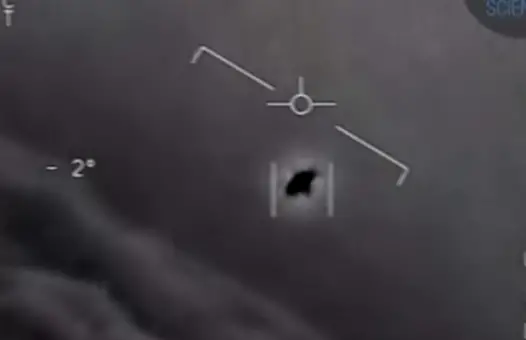


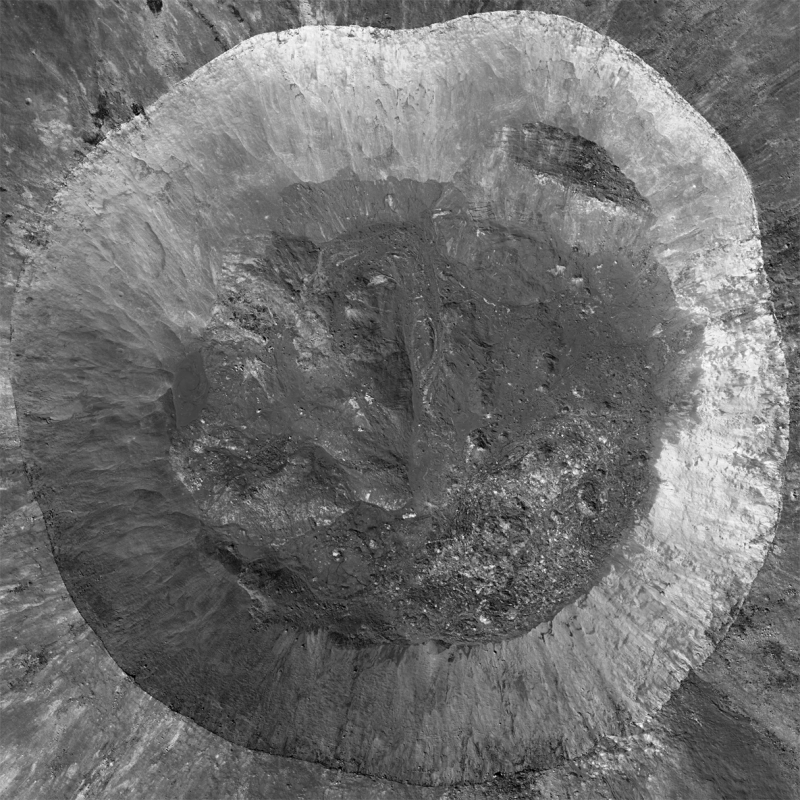
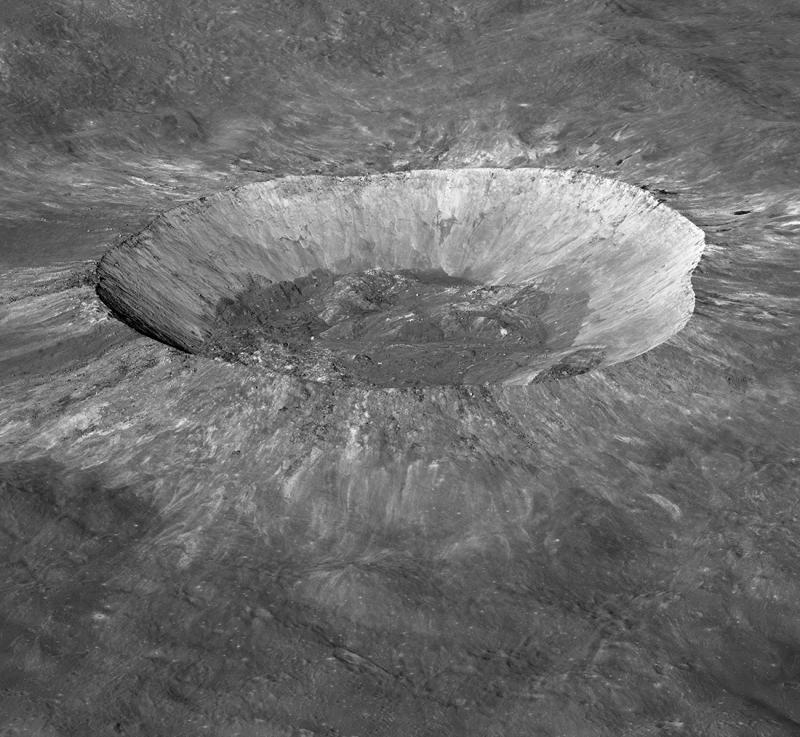
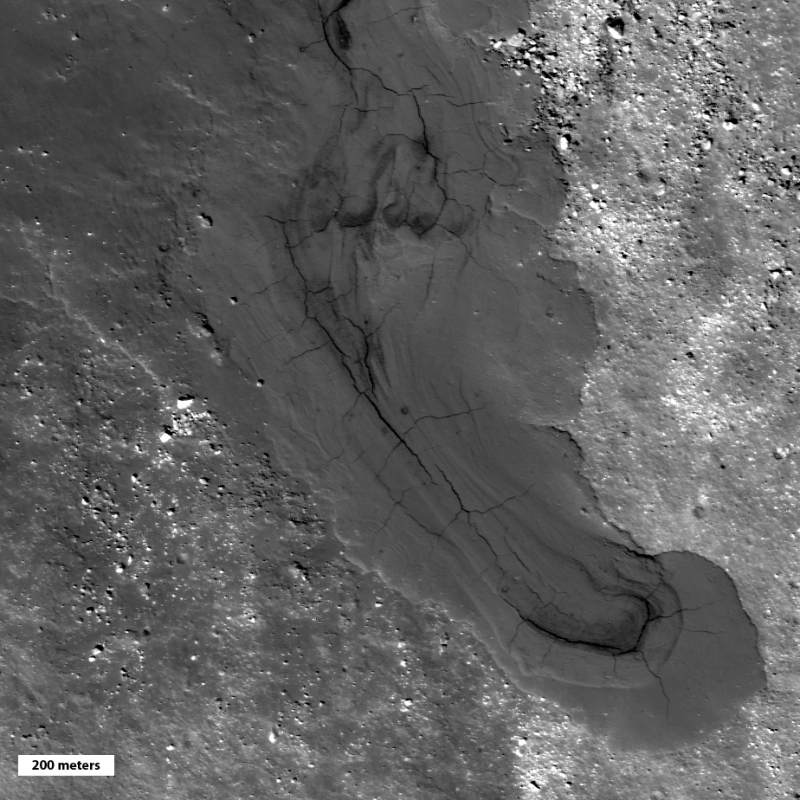
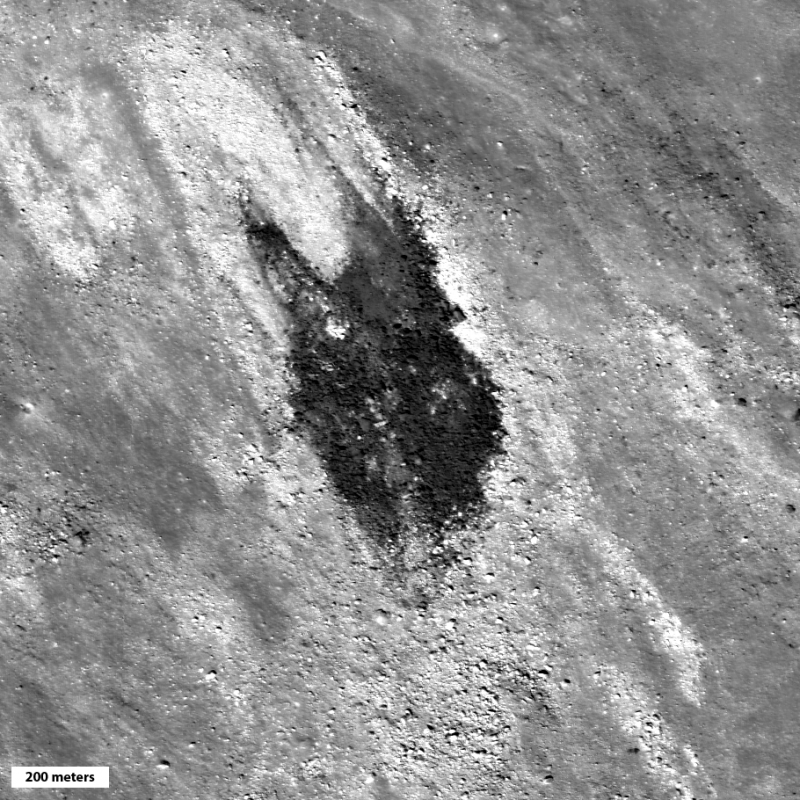
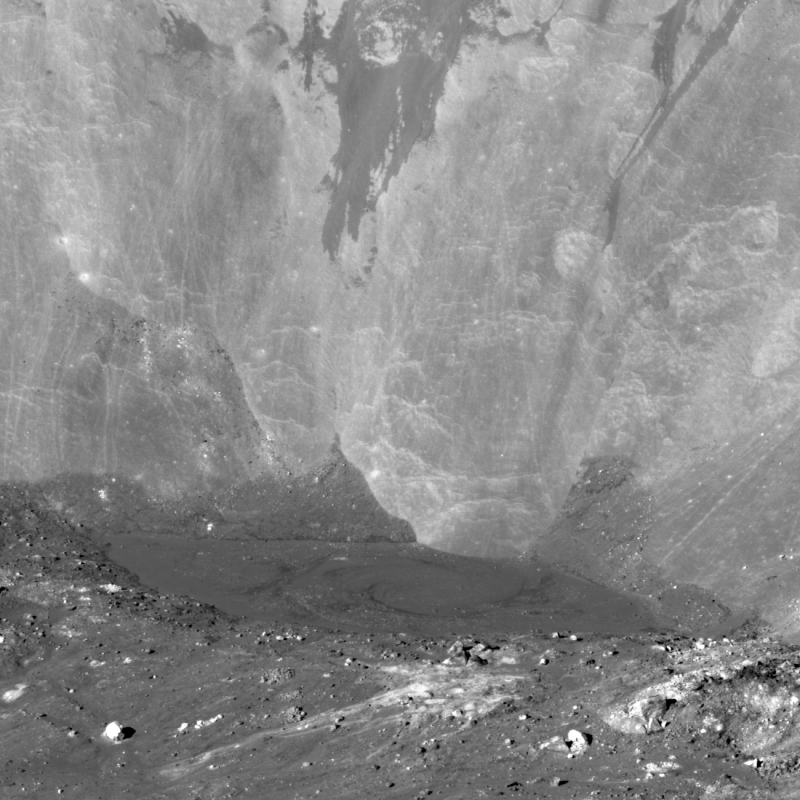
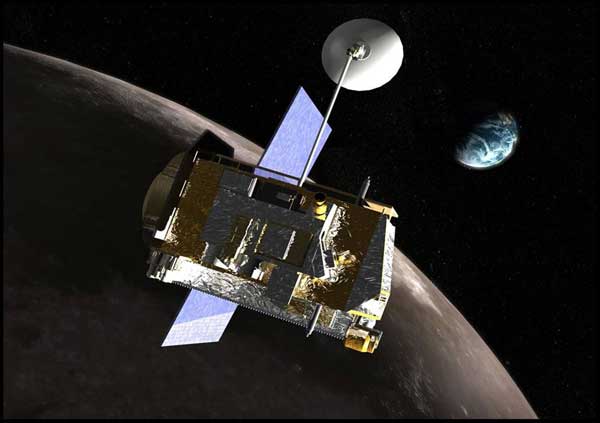


 "