Ontdek de Fascinerende Wereld van UFO's en UAP's: Jouw Bron voor Onthullende Informatie!
Ben jij ook gefascineerd door het onbekende? Wil je meer weten over UFO's en UAP's, niet alleen in België, maar over de hele wereld? Dan ben je op de juiste plek!
België: Het Kloppend Hart van UFO-onderzoek
In België is BUFON (Belgisch UFO-Netwerk) dé autoriteit op het gebied van UFO-onderzoek. Voor betrouwbare en objectieve informatie over deze intrigerende fenomenen, bezoek je zeker onze Facebook-pagina en deze blog. Maar dat is nog niet alles! Ontdek ook het Belgisch UFO-meldpunt en Caelestia, twee organisaties die diepgaand onderzoek verrichten, al zijn ze soms kritisch of sceptisch.
Nederland: Een Schat aan Informatie
Voor onze Nederlandse buren is er de schitterende website www.ufowijzer.nl, beheerd door Paul Harmans. Deze site biedt een schat aan informatie en artikelen die je niet wilt missen!
Internationaal: MUFON - De Wereldwijde Autoriteit
Neem ook een kijkje bij MUFON (Mutual UFO Network Inc.), een gerenommeerde Amerikaanse UFO-vereniging met afdelingen in de VS en wereldwijd. MUFON is toegewijd aan de wetenschappelijke en analytische studie van het UFO-fenomeen, en hun maandelijkse tijdschrift, The MUFON UFO-Journal, is een must-read voor elke UFO-enthousiasteling. Bezoek hun website op www.mufon.com voor meer informatie.
Samenwerking en Toekomstvisie
Sinds 1 februari 2020 is Pieter niet alleen ex-president van BUFON, maar ook de voormalige nationale directeur van MUFON in Vlaanderen en Nederland. Dit creëert een sterke samenwerking met de Franse MUFON Reseau MUFON/EUROP, wat ons in staat stelt om nog meer waardevolle inzichten te delen.
Let op: Nepprofielen en Nieuwe Groeperingen
Pas op voor een nieuwe groepering die zich ook BUFON noemt, maar geen enkele connectie heeft met onze gevestigde organisatie. Hoewel zij de naam geregistreerd hebben, kunnen ze het rijke verleden en de expertise van onze groep niet evenaren. We wensen hen veel succes, maar we blijven de autoriteit in UFO-onderzoek!
Blijf Op De Hoogte!
Wil jij de laatste nieuwtjes over UFO's, ruimtevaart, archeologie, en meer? Volg ons dan en duik samen met ons in de fascinerende wereld van het onbekende! Sluit je aan bij de gemeenschap van nieuwsgierige geesten die net als jij verlangen naar antwoorden en avonturen in de sterren!
Heb je vragen of wil je meer weten? Aarzel dan niet om contact met ons op te nemen! Samen ontrafelen we het mysterie van de lucht en daarbuiten.
Incredibly rare pieces of tiny Neolithic rock art found in a shallow Australian cave were made by creating tiny stencils out of beeswax, researchers have concluded.
Located in the Yilbilinji rockshelter in northern Australia's Limmen National Park, miniature stencils of this type are only known from two other sites across the globe.
Although the site — traditionally owned by the Marra Aboriginal people — has been known for decades, the tiny art was only documented in 2017.
Each of the images is less than 4.7 inches (12 centimetres) in length.
The miniatures appear among around 300 larger scale stencilled images, the latter of which are common among the 28,000-year history of Aboriginal art.
The large images are made by spraying paint across objects held against the rock face — with hands, boomerangs and animal parts often used as stencils.
However, the tiny stencilled images are too small to have been made using ordinary objects — which encouraged researchers to explore how they were made.
Scroll down for video
Incredibly rare pieces of tiny Neolithic rock art found in a shallow Australian cave, pictured, were made by creating tiny stencils out of beeswax, researchers have concluded
Archaeologist Liam Brady and colleagues including Marra Rangers and Park Rangers recorded a total of 17 of the tiny stencils — including such motifs as human figures, animals, boomerangs and geometric shapes.
'We have found the largest concentration of these images anywhere in the world,' said Dr Brady, who hails from Australia's Flinders University.
'We wanted to know how they were made and what they might mean,' he added.
The team concluded that the shape of the stencilled images meant that they were likely made using a material that could be easily moulded and stuck to the surface of the rock — as there was no sign anything else was used to affix the stencils.
With anthropological studies in the region noting that children often shape beeswax into tiny items like cattle and horses the team set out to test if the sticky substance could be used to produce stencilled art similar to that found in the rockshelter.
The researchers heated and shaped beeswax, proving that it could be employed successfully to make miniature stencils.
'Our experiments show how important the role of precision, carefulness, time and effort are in decorating and inscribing the landscape with symbols' said Dr Brady.
The miniatures appear among around 300 larger scale stencilled images, the latter of which are common among the 28,000-year history of Aboriginal art
The large images are made by spraying paint across objects held against the rock face — with hands, boomerangs and animal parts often used as stencils. However, the tiny stencilled images are too small to have been made using ordinary objects — which encouraged researchers to explore how they were made
Located in the Yilbilinji rockshelter, pictured, in northern Australia's Limmen National Park, miniature stencils of this type are only known from two other sites across the globe
According to the researchers, understand how the images were made may help shine light on exactly why they were made, as well.
Among some Aboriginal populations for example, beeswax is conferred a spiritual significance and is associated with the ancestral beings — or 'Dreamings' — that are said to have originally shaped the world, as well as the practice of sorcery.
At the same time, however, the researchers noted that the fact that children are often seen making things with beeswax could suggest that the art was the product of play — or practice for making the similar, but full-sized, art also found in the cave.
This conclusion is supported by the fact that some of the tiny stencils were left on the rock at child height.
'The Marra were making these miniature stencils in their landscape that is filled with the memories of their ancestors who continue to care for it,' said Dr Brady.
The team concluded that the shape of the stencilled images meant that they were likely made using a material that could be moulded and stuck to the surface of the rock — as there was no sign anything else was used to affix the stencils. Pictured, the team made beeswax stencils
With anthropological studies in the region noting that children often shape beeswax into tiny items like cattle and horses the team set out to test if the sticky substance could be used to produce stencilled art similar to that found in the rockshelter, pictured
The researchers heated and shaped beeswax, proving that it could be employed successfully to make miniature stencils, as pictured
Although the site (pictured) — traditionally owned by the Marra Aboriginal people — has been known for decades, the tiny art was only documented in 2017
Regardless of the reason that the rock art was originally stencilled, the researchers said that the study shows the potential of collaboration between archaeologists, rangers and the Marra Traditional Owners.
'Since this work was published we have already discovered three new miniature motifs, a human figure, freshwater turtle, and an echidna,' said Dr Brady.
'For the Marra, studies of this sort are also about re-connecting knowledge, people, and place to sustain an on-going system of care.'
The only other known sites featuring tiny stencilled rock art exist in New South Wales' Nielson’s Creek and on Indonesia's Kisar Island.
Unlike those found at the Yilbilinji rockshelter, however, these images are both of figures, rather than the diverse range of motifs seen in the north Australian site.
The full findings of the study were published in the journal Antiquity.
Located in the Yilbilinji rockshelter in northern Australia's Limmen National Park, miniature stencils of this type are only known from two other sites across the globe
Archaeologists Reveal Rock Art’s Big Little Secret
Australian archaeologists have discovered some of the most detailed examples of rare, small-scale rock art in the form of miniature stencils in a rockshelter traditionally owned by the Marra people.
The research, published in the journal Antiquity, examined the unusual art from the Yilbilinji rockshelter at Limmen National Park in the southwest Gulf of Carpentaria region of northern Australia.
Traditionally owned by the Marra Aboriginal people, the site was documented by the research team in 2017 and instantly stood out as unique.
The Yilbilinji rock art site
Photos Dr Liam Brady, Flinders University.
“It’s the size of the rock art that makes this site unusual and highly distinctive,” says Flinders University archaeologist ARC Future Fellow Dr Liam Brady.
“Typically, stencilled rock art around the globe features full or life-sized dimensions such as human and animal body parts, objects (e.g. boomerangs), and even plant matter.
“However, many of the stencils at Yilbilinji are tiny or miniature-sized, and too small to have been made using real-life body parts and full-size objects.”
Only two other examples of this miniature stencilled form of rock art, both human figures, are known from anywhere in the world: one at Nielson’s Creek in New South Wales, and one at Kisar Island in Indonesia.
Replication experiments were conducted to test the method used to create the art works.
Photos Dr Liam Brady, Flinders University.
The research team – archaeologists, anthropologists, Marra rangers, and Limmen National Park rangers – recorded a total of 17 images of these miniature stencils during a 2017 field trip.
The images depict a wide range of motifs including, human figures, animals (crab, long-necked turtles), kangaroo paws, wavy lines, boomerangs, and geometric shapes.
The researchers set out to find out how these unusual images were made. One clue came from the fact most of the miniature stencils were made with rounded and curved edges meaning they were probably made using something that could be easily moulded and stuck to the rock surface.
Another clue came from anthropological research in the region. Co-author and anthropologist Dr John Bradley, from the Monash Indigenous Centre, has worked with Aboriginal people in the study area for more than 40 years.
He remembers seeing beeswax used by people for a range of purposes such as an adhesive for repairing spears and harpoons. He also saw children shaping beeswax into objects and animals such as cattle, horses and cowboys.
Experimental archaeology: recreating the stencils using beeswax.
Photos Dr Liam Brady, Flinders University.
“Using these clues, the researchers decided to test if beeswax could have been used to make the miniature stencils,” he says.
“Our experiments involving heating and shaping beeswax into human figures, animals, objects, and geometric shapes, and then stencilling onto a rock slab confirmed beeswax was an excellent material for making miniature stencils.”
“Whoever made these miniature stencils – adults or children – is open for debate, as is their meaning,” says Matthew Flinders Fellow Professor Amanda Kearney.
“However, what is important here is that this discovery adds another dimension to the Australian and global rock art record,” she says.
Photos Dr Liam Brady, Flinders University.
In fact, since this discovery was made, three additional stencils have been discovered in the area – a human figure, an echidna and a freshwater turtle – which further highlights the archaeological potential at Limmen National Park.
Glenn Durie, Manager of Aboriginal Partnerships, Northern Territory Parks and Wildlife, says the research with Marra Traditional Owners, archaeologists, and park rangers means this discovery could be among the first of many more in the area.
The article, ‘A rare miniature and small-scale stencil assemblage from the Gulf of Carpentaria: replication and meaning in Australian rock art’ (May 2020) by Liam M Brady, John J Bradley (Monash University), Amanda Kearney and Daryl Wesley has been published in Antiquity (Cambridge) Vol 94, No 375 June 2020 DOI: 10.15184/aqy.2020.48
This research is funded by the Australian Research Council (DP170101083, DE170101447, FT180100038).
Nick Redfern ‘What if the Crash at Roswell Was Not a Flying Saucer with Alien Bodies'
Beyond Belief TV Series Special…
Nick Redfern has extensively researched Roswell and has come away with a new theory that is even more controversial than extraterrestrial visitation. A new investigation was opened in 1993 which disclosed details suggesting that the wreckage was from a classified weaponized-balloon program. At the time, the U.S. and Japan both actively tested high altitude balloons for military applications.
Sometimes they were fitted with explosives, other tests used animal subjects or humans. No matter the outcome, alien or human in origin, Roswell will always be an important case for UFOlogy. Nick Redfern’s main area of research centers around determining what has been learned about the UFO subject at an official level in Britain. At the Public Record Office in London, he has uncovered thousands of pages of previously-classified Royal Air Force, Air Ministry and Ministry of Defense files on UFOs dating from the Second World War.
A media phenomenon, Coast to Coast AM deals with UFOs, strange occurrences, life after death, and other unexplained (and often inexplicable) phenomena.
Steven Greer: Classified Alien Encounters Revealed By Traumatologist
Steven Greer: Classified Alien Encounters Revealed By Traumatologist
Steven Greer, founder the Center for the Study of Extraterrestrial Intelligence has a virtual sitdown with Patrick Bet-David and discussed his new movie Close Encounters of the Fifth Kind.
About the guest:Steven Macon Greer is an American ufologist and retired traumatologist who founded the Center for the Study of Extraterrestrial Intelligence and the Disclosure Project, which seeks the disclosure of allegedly classified secret UFO information.
I found a cross on Mars today in a Curiosity rover photo. The cross is deeply carved into a black of stone. The stone clearly didn't belong here, but was placed here by someone. The stone is about 6 inches high. Right next to it is a statue of a sheep that has fallen on its side which is about 8 inches long. The statue looks more worn and eroded, but its clearly a sheep. I'm not a religious guy and didn't go out looking for this. I just came across the photo and found it. These small statues are further proof that a tiny alien race once exited on Mars, similar in size to the woman figure found years ago on Mars.
Now I believe in the Christian faith that the lamb is sometimes referred to as the lamb of god, or god being kind and caring. But it could also mean the followers of the faith, who often refer to themselves as sheep.
What gets my goat...no pun intended...is that the cross didn't become a christian symbol until Jesus died upon it 2,000 years ago on Earth. But if Jesus did the same on Mars too...then this is further proof that Jesus was an alien trying to instill morals and ethics onto not just humanity but other intelligent species too.
Now the plain cross is suppose to be a symbol of Jesus resurrection. Where a cross with him on it means the sacrifice Jesus made for humanity.
This seems to much of a coincidence that two religious icons would be sitting so close to one another. This has to be actual religious evidence of an alien culture on Mars.
International Space Station Records Thousands Of Alien Spacecrafts Leaving Earth
On May 18, 2020, a camera from the International Space Station (ISS) recorded something really unusual, thousands of strange objects that simultaneously shoot out from the surface of our planet and fly into outer space.
This can be seen in the original video published on the project channel “High Definition Earth Visualization (HDEV)” on the Ustream platform or below we have posted the part of the video showing the alien spacecraft, the objects seem to take off at high speed and the remains are not the remains of liquid fuel rockets.
Skeptics believe that these are ice particles that detach from the ISS and that are reflected in the camera thanks to sunlight.
But for experts in the field there is no doubt about it, it is the massive evacuation of thousands of UFOs leaving our planet.
Skeptics believe that these are ice particles that detach from the ISS and that are reflected in the camera thanks to sunlight. But for experts in the field there is no doubt about it, it is the massive evacuation of thousands of UFOs leaving our planet.
For them the images show that aliens have been very present on our planet since ancient times. This civilization or civilizations of other worlds have their own underground and submarine bases on Earth, but the question some ask is, what has led them to evade Earth massively?
They consider that this strategy can only be carried out if our planet is doomed and it is very dangerous to be on it. But the threat would not be the coronavirus pandemic, as some have suggested, rather it would be from our closest star. NASA scientists have confirmed that the solar minimum they predicted three years ago has been met.
And scientists have warned that the Dalton minimum, one of the most extreme weather periods in history, will repeat itself. It lasted more than three solar cycles, from 1790-1830, and resulted in heavy snowfall, deep frost, and general cooling worldwide, in addition to drastic weather changes, earthquakes, volcanic eruptions, and famine. It was hell on Earth.
And if the worst predictions are unfortunately fulfilled, perhaps we would find ourselves facing a mass extinction, just as happened with dinosaurs. The truth is that we do not know if this will be the case, but all the events that are happening in the last months seem to indicate that something will happen on our planet. And this video may be evidence that there isn’t much time left.
What do you think about the video of theISS? Is it a massive UFO evacuation? Or do you have another explanation?
Clouds in the greater universe are clumpy areas of greater density than their surroundings. Space telescopes have observed these cosmic clouds in the vicinity of supermassive black holes.
This artist’s concept depicts a quasar, a type of active galactic nucleus, surrounded by a dusty donut shape (torus) and clumps called “clouds.” These clouds start small but can expand to be more than 1 parsec (3.3 light-years) wide. In this diagram, the clouds are at least 1 parsec from the torus.
Once you leave the majestic skies of Earth, the word cloud no longer means a white fluffy-looking structure that produces rain. Instead, clouds in the greater universe are clumpy areas of greater density than their surroundings.
Space telescopes have observed these cosmic clouds in the vicinity of supermassive black holes, those mysterious dense objects from which no light can escape, with masses equivalent to more than 100,000 suns. There is a supermassive black hole in the center of nearly every galaxy, and it is called an active galactic nucleus (AGN) if it is gobbling up a lot of gas and dust from its surroundings. The brightest kind of AGN is called a quasar. While the black hole itself cannot be seen, its vicinity shines extremely brightly as matter gets torn apart close to its event horizon, its point of no return.
But black holes aren’t truly like vacuum cleaners; they don’t just suck up everything that gets too close. While some material around a black hole will fall directly in, never to be seen again, some of the nearby gas will be flung outward, creating a shell that expands over thousands of years. That’s because the area near the event horizon – the threshold around a black hole where the escape velocity surpasses the speed of light – is extremely energetic; the high-energy radiation from fast-moving particles around the black hole can eject a significant amount of gas into the vastness of space.
Scientists would expect that this outflow of gas would be smooth. Instead, it is clumpy, extending well beyond 1 parsec (3.3 light-years) from the black hole. Each cloud starts out small, but can expand to be more than 1 parsec wide – and could even cover the distance between Earth and the nearest star beyond the sun, Proxima Centauri.
Astrophysicist Daniel Proga at the University of Nevada, Las Vegas, likens these clumps to groups of cars waiting at a highway onramp with stoplights designed to regulate the influx of new traffic. He said:
Every now and then you have a bunch of cars.
What explains these clumps in deep space? Proga and colleagues have a new computer model that presents a possible solution to this mystery, published April 21, 2020, in the peer-reviewedAstrophysical Journal Letters. Science suggests that extremely intense heat near the supermassive black hole can allow the gas to flow outward really fast, but in a way that can also lead to clump formation. If the gas accelerates too quickly, it will not cool off enough to form clumps. The computer model takes these factors into account and proposes a mechanism to make the gas travel far, but also clump. Proga said:
Near the outer edge of the shell there is a perturbation that makes gas density a little bit lower than it used to be. That makes this gas heat up very efficiently. The cold gas further out is being lifted out by that.
This phenomenon is somewhat like the buoyancy that makes hot air balloons float. The heated air inside the balloon is lighter than the cooler air outside, and this density difference makes the balloon rise.
University of Nevada doctoral student Randall Dannen led the study. Dannen said:
This work is important because astronomers have always needed to place clouds at a given location and velocity to fit the observations we see from AGN. They were not often concerned with the specifics of how the clouds formed in the first place, and our work offers a potential explanation for the formation of these clouds.
This model looks only at the shell of gas, not at the disk of material swirling around the black hole that is feeding it. The researchers’ next step is to examine whether the flow of gas originates from the disk itself. They are also interested in tackling the mystery of why some clouds move extremely fast, on the order of 20 million miles per hour (10,000 kilometers per second).
Bottom line: A new study looks at how cosmic clouds form near black holes.
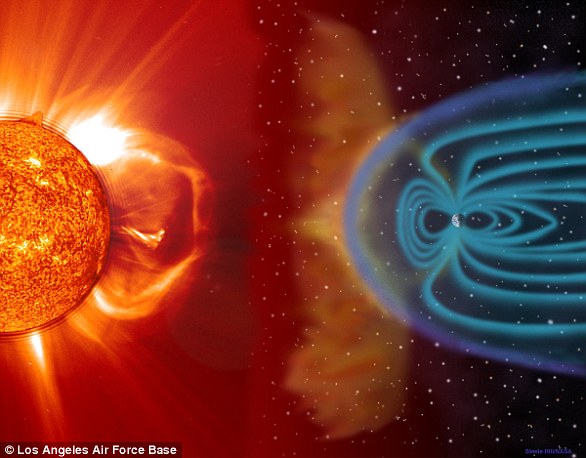
The location of Earth’s north magnetic pole appears to be controlled from deep within Earth by 2 competing blobs in the magnetic field. One is under Canada, and the other is under Siberia. “The Siberian blob is winning,” according to scientists.
You probably know that a compass doesn’t point to true north. Earth’s geographic north pole – and magnetic north pole – were first recognized as two different placesin 1831. Until the early 1990s, the magnetic North Pole was known to lie some 1,000 miles south of true north, in Canada. Yet, as scientists realized, the location of magnetic north was not fixed. Magnetic north was drifting at a rate of up to about 9 miles (15 km) a year. Since the 1990s, however, the drift of Earth’s magnetic north pole has turned into “more of a sprint,” scientists say. Its present speed is about 30 to nearly 40 miles a year (50-60 km a year) toward Siberia. And now – using satellite measurements – scientists in Europe have helped confirm a theory as to why Earth’s magnetic north pole is drifting so rapidly.
The European Space Agency (ESA) released this interesting article on May 14, 2020. It describes a new study in the peer-reviewed journal Nature Geoscience that describes the theory of “tussling magnetic blobs deep below Earth’s surface” at the root of the phenomenon of rapid magnetic pole drift since the 1990s. ESA said:
In late October 2017, [the magnetic north pole] crossed the International Date Line, passing within 390 km [242 miles] of the geographic pole, and is now heading south …
Tussling magnetic blobs deep below Earth’s surface appear to be at the root of the phenomenon of rapid magnetic pole drift since the 1990s.
In our modern world, it’s not just compasses that are affected by the drift of Earth’s magnetic north pole. ESAexplained:
One of the practical consequences of this is that the World Magnetic Model has to be updated periodically with the pole’s current location. The model is vital for many navigation systems used by ships, Google maps and smartphones, for example.
That’s why the subject of magnetic north is such a vital one to our world, and why ESA’s Living Planet Symposium last year featured a talk from scientists at the University of Leeds in the U.K. about their findings on magnetic north, using SWARM satellite data. The Swarm satellites carry sophisticated magnetometers. Their goal, in part, is to provide a survey of Earth’s magnetic field. ESA said:
The data showed that the position of the north magnetic pole is determined largely by a balance, or tug-of-war, between two large lobes of negative flux at the boundary between Earth’s core and mantle under Canada.
By analyzing magnetic field maps and how they change over time, we can now pinpoint that a change in the circulation pattern of flow underneath Canada has caused a patch of magnetic field at the edge of the core, deep within the Earth, to be stretched out. This has weakened the Canadian patch and resulted in the pole shifting towards Siberia.
The big question, these scientists say, is whether the pole will ever return to Canada or continue heading south. Livermore explained:
Models of the magnetic field inside the core suggest that, at least for the next few decades, the pole will continue to drift towards Siberia.
However, given that the pole’s position is governed by this delicate balance between the Canadian and Siberian patch, it would take only a small adjustment of the field within the core to send the pole back to Canada.
Bottom line: Scientists studying the drift of Earth’s magnetic north pole have pinpointed a change in the circulation pattern of magnetic blobs deep below Earth’s surface. They’ve learned a change in the flow underneath Canada has caused a patch of magnetic field at the edge of Earth’s core, deep within the Earth, to be stretched out. This has weakened the Canadian patch and resulted in the pole shifting towards Siberia.
An image from the 1977 film Close Encounters of the Third Kind.
As the US military releases videos of ‘unidentified’ flying objects, renowned Scottish UFO investigator and paranormal researcher Malcolm Robinson tells Michael Alexander why, after years of scepticism, he believes aliens have almost certainly visited Tayside and Fife.
When the US Department of Defense released three declassified videos of “unexplained aerial phenomena” at the end of April, the Pentagon said it wanted to “clear up any misconceptions by the public on whether or not the footage that has been circulating was real”.
The videos, which had already been ‘leaked’ in 2007 and 2017, included a 2004 clip filmed by two US Navy fighter pilots which showed a round object hovering above the water, about 100 miles (160 km) out into the Pacific Ocean.
Two other videos filmed in 2014 showed objects moving through the air, one of which is spinning. In one, a pilot is heard saying: “Look at that thing, dude! It’s rotating!” Inevitably, the videos have rekindled debate about Unidentified Flying Objects (UFOs) and conspiracy theories about government.
But do they really point to the existence of alien life?
Renowned Scottish amateur UFO investigator Malcolm Robinson has extensively researched thousands of cases over the past 40 years – including numerous cases in Tayside and Fife. He says 95% of UFO sightings are explainable by “natural identifiable solutions”.
However, the self-confessed former UFO sceptic puts these American military videos firmly into the 5% unexplained category. He stands by his now long-held view that “non-human intelligence” has probably been visiting Earth for hundreds if not thousands of years.
“What’s surprising when you look at the US military footage is that it involved a rather large military exercise involving the USS Nimitz – the pilots clearly don’t know what they are looking at, and the speed these things are moving at, around 2400 mph, is quite staggering,” said Mr Robinson.
“We have two possibilities when it comes to explaining what might have happened.
UFO investigator Malcolm Robinson
“The first possibility is it’s America’s own ‘black budget’ technology being tested and these film clips were released simply as a way of distraction. The US government and military would be happy for these lights to be masquerading as UFOs, like a smokescreen, knowing full well the video is going to come out. “Let’s not forget that the stealth bomber was flying in America for 10 years before the American military finally put their hands up and said ‘yep it’s ours’. This had already given rise at the time to many false UFO reports. “The other possibility is that these truly are UFOs – because similar things have been seen flying in our skies for millennia, right through recorded history. The speeds at which these craft have been described is superior to any Earth-based technology. It’s like tossing a coin I guess. You weigh up the options and you decide what you feel is right.
UK F-35 Lightning jets flying in formation with two B-2 Spirit stealth bombers of the United States Air Force, as part of a deployment to RAF Fairford in Gloucestershire.
“But if you want to know what I truly think, I don’t think it was black budget technology. The immense speed and manoeuvrability of these objects suggest to me we managed to capture something very mysterious on film and I’m just thankful we have that out in the public domain.” Mr Robinson, a now 63-year-old East Sussex-based former newspaper advertising executive, was always interested in strange phenomena as a small boy growing up in Tullibody, Clackmannanshire.
But as he grew older he felt there was no validity to the claims of ghosts and poltergeists. In 1979 he decided to start his own group – Strange Phenomena Investigations. His main aim was to disprove and show “what a lot of nonsense” they were. Yet as he learned more, he came “off the fence” and started doing lectures and more media work.
In 1992 he became one of the main investigators for the so-called ‘Bonnybridge Triangle’ multiple UFO sightings. Working with local councillor Billy Buchanan, he concluded 95% of the sightings reported over the Stirlingshire town had identifiable solutions.
The others, however, were less clear cut, and they petitioned Downing Street for answers. Their call for a government inquiry was turned down because the “objects did not pose a threat to the security of the UK”. It was against this backdrop that he became involved in other investigations.
Mr Robinson said he remains deeply sceptical about many things. But his investigations over the years have thrown up more questions than answers and on balance he is “not embarrassed” to say he now believes in alien life.
“My studies over 40 years have clearly shown to me that we are dealing with a non-human intelligence that’s always been with us,” he said. “It sounds fanciful. But at the end of the day there’s enough evidence to suggest that things have been seen in our skies – many in Scotland as well – which defy description. They do not conform to classic aircraft design or helicopters.
“They are in the main low level close proximity objects that you could more or less throw a stone at – some of them have been so close. “The bottom line for me is there is a lot of nonsense out there – a lot of UFOs are misconstrued as the planet Venus, as satellites traversing the night sky etc etc. But believe you me, there is a substance to some of these accounts.
Let’s not forget we laughed at Marconi, we laughed at John Logie Baird with the invention of the television, we laughed at the Wright Brothers.
“What I’m trying to say with these analogies is just because something looks and sounds ridiculous, we shouldn’t laugh at it. Yes, we have to be very careful but let’s not throw the baby out with the bathwater or the egg could truly be all over our faces.”
TAYSIDE AND FIFE CASES
Throughout history, human kind has always had the desire to learn and know more about the paranormal. But while investigating reports by “good honest people” over the years, Malcolm Robinson has also had to keep in mind that he’s dealing with human beings and will always look for a rational explanation first. For example, were they drunk or hallucinating? It’s also been suggested film and TV can influence what people think they’ve seen.
Amanda Holden, Shaun Ryder, Malcolm Robinson and Philip Schofield talking paranormal in 2015
Mr Robinson spoke to a former cinema projectionist who, in 1954, was walking in woods near his home in Crieff when he was astonished to observe a “disk shaped object passing overhead at a uniform speed”. It made no noise whatsoever, and it continued on its journey in a northerly direction towards Perth. In prophetic words, the witness stated, “Had I not seen this with my own eyes, I would be an unbeliever about UFOs”.
The book also went into great detail about an incident at Blairgowrie in 1984 when a beam of light “shot out” onto the stomach of a woman doing tapestry work in her garden. Feeling a warm sensation, she looked up into the sky and observed a long translucent object above her house to the east. It was also witnessed by her husband and son who phoned the police. Helicopters later appeared above the house with police, who took soil samples, telling the family they were “conducting tests”….
Malcolm wrote to then PM David Cameron in 2010 calling for an inquiry
Yet another unusual shaped UFO was sighted in Dundee in August 1995 when a former member of the Special Forces walking his dog spotted a “cone shaped light” which was coming out from a silver metallic looking object. It’s possible he saw an unusual plasma effect from the afterburner of an RAF Leuchars Tornado, but like most cases of its kind, this sighting remained unidentified.
Following various sightings around Dundee in 1996 – the same year as the alleged ‘Fife incident’ when a family driving near Newton of Falkland claimed they saw a large black triangular shaped ‘craft’ and numerous small grey ‘beings’ in front of some woods – a senior physicist at Dundee University told The Courier: “I would not rule out the possibility that there are aircraft of extra-terrestrial origin”.
Humans were in America long before we’ve been told, and the Australian Aborigines have a genetic connection to the Amazon which once had great cities. FRANK JOSEPH looks at the fresh discoveries in Graham Hancock’s latest book.
As the former editor-in-chief (1993 to 2007) and ongoing writer for Ancient American – a US magazine examining Old World impact on the New World before 1492 – recently released materials regarding pre-Columbian possibilities often come my way. I was surprised, however, to find that Graham Hancock’s latest tome, America Before, compares remarkably with Before Atlantis (2013), my own book, published six years earlier, in more than title.
Both works go into the Bering land-bridge Theory, megalithic alignments with the Cygnus constellation, Easter Island’s moai, Gobekli Tepe, the discoveries of Albert Goodyear, Brazil’s Stonehenge, the Meadowcroft Rock shelter, Neanderthals, the Clovis First Controversy, Pedra Furada, etc., etc. Other topics tackled in America Before – Ohio’s Great Serpent Mound, North American earthworks, the Piasu Bird, Cahokia, et al. – were likewise described at length in my earlier releases: Discovering the Mysteries of Ancient America (2006), Atlantis and Other Lost Worlds (2008), Unearthing Ancient America (2009), Advanced Civilizations of Prehistoric America (2010), Lost Worlds of Ancient America (2012), Lost Colonies of Ancient America (2014), and Lost History of Ancient America (2016).
Independent research that arrives at common conclusions tends to validate disparate investigators at work in the same field. Of them all, Graham Hancock is certainly the best known, thanks to his early association with such prestigious periodicals as The Times, The Independent, The Economist, and The Guardian, which granted him access to major book publishers with international distribution, such as St. Martin’s Press, publisher of his latest work. His Fingerprints of the Gods was a worldwide bestseller. At the time of its release in 1995, critics – even those sympathetic to the author’s belief in ancient catastrophism – faulted him for merely reworking long-known if not well-publicised information. But they were forced to admit that Hancock acquainted millions of readers with otherwise neglected information about the deep past.
America Before is not unlike Fingerprints of the Gods in that it introduces an international audience to a version of antiquity not otherwise available in schools or mainstream publications. America Before also joins Before Atlantis in highlighting “a global cataclysm that occurred near the end of the Ice Age around twelve thousand eight hundred years ago. A disintegrating comet crossed the orbit of the Earth and bombarded our planet with a ‘swarm’ of fragments.” Familiar language to readers already familiar with The Destruction of Atlantis (2002) and its sequel. Survivors of Atlantis (2004) similarly tells how an abundance of physical proof for worldwide destruction left by comets during the Bronze Age was offered by scientists meeting at Fitzwilliam College in Cambridge, England.
In 1997 they presented undeniable evidence in the form of annual growth rings at Irish bogs and oak forests, ash-fall deposits from Greenland ice-cores, impact lines made by colossal waves along the shores of Morocco, abrupt lake level changes from Western Europe to South America, and small, glassy spherules that result specifically from cometary collisions subjecting rock to intense heat. Earth’s periodic brushes with celestial upheaval belong to a pattern of astronomical interface with our planet that abruptly terminated the Ice Age, as described in America Before and earlier in Before Atlantis.
Buried in the floor of Lake Cuitzeo was a thin, dark layer containing unequivocal evidence for a large, cosmic body that struck central Mexico just when the Younger Dryas period opened with such violence. Virtually identical sediment strata dated to the same period have been previously located at numerous locations throughout North America, Greenland, and Western Europe. According to Science Daily, “The data suggest that a comet or asteroid – likely a large, previously fragmented body, greater than several hundred meters in diameter – entered the atmosphere at a relatively shallow angle. The heat at impact burned biomass, melted surface rocks, and caused major environmental disruption.” The resulting crater became Lake Cuitzeo, measuring twelve and one-half miles across, with an average depth of ninety feet.
Dr James Kennett, professor of earth science at the University of California (Santa Barbara), told the Proceedings of the National Academy of Sciences: “These results are consistent with earlier reported discoveries throughout North America of abrupt ecosystem change, megafaunal extinction, and human cultural change and population reduction. These changes were large, abrupt and unprecedented, and had been recorded and identified by earlier investigators at a ‘time of crisis’. The timing of the impact coincided with the most extraordinary biotic and environmental changes over Mexico and Central America during the last approximately twenty thousand years, as recorded by others in several regional lake deposits.”
Professor of earth science Dr James Kennett and other researchers postulate from the evidence that a fragmented comet slammed into the Earth close to 12,800 years ago, causing rapid climatic changes, megafaunal extinctions, sudden human population decrease and cultural shifts and widespread wildfires (biomass burning). They studied the impact spherules in 18 sites in nine countries on four continents for their study. (Graphic credit: YDB Research Group)
The floor of Lake Cuitzeo is rich in spherules formed when they collided with each other at high velocities during the whirling chaos of an extraterrestrial impact. They are joined by numerous specimens of lonsdaleite – an identifiable configuration nanodiamonds assume when they are pressured by large meteorite collisions – and aciniform soot, the acne-like appearance of dust residue resulting from the same cause. “These materials form only through cosmic impact,” Kennett explained, not through volcanic or other natural terrestrial processes. In the entire geologic record, the only other known continental layer with abundant peaks in lonsdaleite, impact spherules and aciniform soot is in the sixty-five-million-year-old Cretaceous-Paleogene boundary layer that coincided with the extinction of the dinosaurs.
Evidence for Early Human Settlement
“Recent discoveries show that North America was first peopled at least one hundred thirty thousand years ago,” according to Hancock, “many tens of thousands of years before human settlements were established in Europe and Asia.” Homo sapiens-sapiens? Yes, but the European continent was actually settled one hundred seventy thousand years earlier by Neanderthals. In fact, the oldest evidence for proto-humans in Europe goes back 1.3 million years. “At least” is a bit of an understatement for human settlement in the New World, because Before Atlantis describes how prehistorian Juan Armena Camacho discovered lithic implements at Hueyatlaco, seventy miles south-east of Mexico City. According to US geologist Dr Virginia Steen-McIntyre, “radiometric dates using methods identical to those used in Africa to date the early sites there place Hueyatlaco’s stone tools to slightly over a quarter of a million years ago.”
Some thirty years prior to Camacho’s find, a still older site came to light one mile north from the Oklahoma town of Frederick, at a ten-mile-long, half-mile-wide ridge. Ten to twenty-five feet beneath the surface of this gravel deposit occur dozens of well-crafted stone implements cemented in place in common strata with the bones of extinct animals firmly dated to seven hundred fifty thousand years ago. C.N. Gould, Director of the Oklahoma Geological Survey, reported: “There can be no doubt that the artifacts occur in the pit near the basal portion, on the same level as the fossil remains. An examination of the undisturbed face of the pit, immediately above the position of the finds, showed unbroken, nearly horizontal strata above it. As the case stands, it looks very much as though the artifacts are of the same antiquity as the fossil animals. At the same time, it would be well to reserve final judgment until we are certain that the artifacts are not secondary inclusions.”
Since Gould released his report in 1929, subsequent investigations of the Holoman Pit, as it is locally known, repeatedly confirmed that the stone tools are not later inclusions but were indeed laid down at the same time the animal bones were stratified, three quarters of a million years ago. As recently as 2005, archaeologist Silvia Gonzalez of Liverpool’s John Moore’s University in England discovered a line of human footprints dating back forty thousand years ago near Puebla, in Mexico. Conventional scholars, convinced no human set foot in Middle America before twelve thousand years ago, sought to debunk the heretical period she assigned the evidence by dispatching a team of leading geologists led by Paul R. Renne, director of California’s Berkeley Geochronology Center, to the site.
Once there, they took repeated argon testing to investigate the magnetic imprint of the foot-printed, magmatic rock, together with other state-of-the-art procedures. Renne announced their results in the scientific journal Nature, stating that the rock featuring the footprints was not forty thousand years old after all. It was, instead, 1.3 million yearsold.
During the early 20th century, archaeologist Carlos Ameghino (1865 to 1936) led teams of excavators along the Argentine coast south of Buenos Aires after detecting clues to an early habitation site at Miramar. By 1914, he discovered numerous stone tools cemented within Pliocene Era strata. As Silvia Gomez experienced in the following century, Ameghino’s critics commissioned a group of professional geologists to debunk his assertion. Instead, they verified it, stating that the artefacts had been laid down between two million and three million years ago. Although their analysis was released by the prestigious Anales del Museo de Historica Natural de Buenos Aires, it has since been ignored by archaeologists in the outside world.
Australia-Amazon: An Unexpected Discovery
“Certain tribes of the Amazon jungle,” states America Before’s back cover blurb, “are closely related to Australian Aborigines. How did this extraordinary, unexpected, and extremely ancient DNA signal get to the Amazon?” This question elevates Hancock’s new book with fresh discoveries that threaten to shake the scientific establishment to its core by opening an entirely new and revolutionary archaeological theatre of operations.
The vast Amazon region has long been dismissed by mainstream scholars as anciently under-populated and barren of all but the most backward, native cultures, hermetically sealed off by nature from the outside world. Hancock writes, “in September 2015, Pontus Skoglund, his senior colleague Professor David Reich of the Department of Genetics at Harvard Medical School, and other leading experts in the field, announced in the pages of Nature that they had found new evidence in South America, and specifically in the Amazon rainforest, that called for a rethink.”
Researchers mapped similarities in genes, mutations and random pieces of DNA of Central and South American tribes with groups in other parts of the world including Australia. Warmer colours indicate the strongest affinities. Researcher Skoglund said “a statistically clear signal linking Native Americans in the Amazonian region of Brazil to present-day Australo-Melanesians and Andaman Islanders” was confirmed. (Graphic credit: Pontus Skoglund, Harvard Medical School)
He quotes Skoglund’s “genome-wide data to show that some Amazonian Native Americans descend partly from a Native American founding population that carried ancestry more closely related to indigenous Australians, New Guineans and Andaman Islanders than to present-day Eurasians or Native Americans,” and are, in Hancock’s words, “more closely related to Melanesian Papuans and Australian Aborigines than to any other Native American population.” “We spent a really long time trying to make this result go away,” Skoglund explained, “but it just got stronger.” In the end, “a statistically clear signal linking Native Americans in the Amazonian region of Brazil to present-day Australo-Melanesians and Andaman Islanders” was confirmed.
“We also know it has to be pre-Columbian,” added Professor Eske Willerslev of Denmark’s Center for GeoGenetics at the University of Copenhagen. Further studies by Willerslev and his colleagues “found Australian DNA already present in skeletal remains from Lagoa Santa, Brazil, dated to 10,400 years ago, and confirmed the suspicion of the researchers that the anomalous genetic signal must have reached South America in the Late Pleistocene – that is, near the end of the last Ice Age, [when] a group of people carrying Australo-Melanesian genes settled in what is now the Amazon jungle.”
The headline of the Oct/Nov 2010 edition of Cosmos magazine and accompanying by-line, augmented by a photograph of an American skull (Luczia) exhibiting morphology that closely resembles Australian Aboriginal people. The oldest human skull unearthed in the Americas has cranial features similar to those of Australian Aborigines. Another piece of anomalous evidence pointing to an early human story, but largely ignored because it contradicts official scientific theory.
This is undoubtedly one of the most striking revelations ever made in the entire history of archaeology, as inexplicable as it is astounding. It does not mean that a few Australoid castaways accidentally washed ashore on Peruvian shores, then somehow traversed the formidable Andes Mountains and descended into Brazil’s totally different, but no less forbidding jungle, where they cohabited with a few, indigenous individuals.
Rather, DNA evidence signifies a mass-migration of Australo-Melanesians to Amazonia, where they interbred with native peoples on such a broad scale some ten and a half centuries ago, the genetic imprint is still discernible. Their epic, 12,940–kilometre, trans-Pacific voyage to coastal Peru and subsequent 1,890–kilometre trek to Brazilian rain forest were successfully achieved at a time when Western European Man was struggling to survive the challenging Upper Paleolithic, or Late Stone Age. Australia’s contemporaneous material culture was itself far too underdeveloped for undertaking anything even approaching an oceanic crossing of such magnitude, not only in terms of the extreme distances concerned, but especially regarding the large number of persons participating in the expedition, or expeditions.
The maritime technological requirements necessary for conducting an operation of transpacific scope alone rule out all possibilities for Australoid responsibility. Moreover, what conceivable motivation could have possessed them to attempt such a huge enterprise? Hancock wonders if a third party was involved – a different, unrelated, unknown, though far higher culture that, for reasons even more obscure, transported Australo-Melanesians to Amazonia.
Speculation like this begins to conjure ‘legendary’ Lemuria, the pre-Polynesian civilisation that rose to ancient heights of technological greatness and imperialist domination of the Pacific realm, before succumbing to a natural catastrophe sufficiently powerful enough to shake the very foundations of the Earth itself. Hancock, however, shies away from any Lemurian connotations.
Ancient Amazonia Rises Out of the Cleared Forests
Even so, America Before’s most valuable and original contribution to our deepening grasp of antiquity is its investigation of Amazonia, an area of the world hitherto neglected by conventional and alternative researchers alike. They traditionally laboured under the assumption that Brazil’s rain forest was always far too environmentally hostile for civilisation to have taken root there. Hancock cites the academic view “that the Amazon could only have been inhabited for about 1,000 years, and then only by very small groups of hunter-gatherers, since the jungle was ‘resource poor’.”
Among the very few archaeologists who personally challenged this dominant paradigm was Percy Harrison Fawcett. His disappearance in search of the lost city of Z during 1925 seemed to confirm consensus opinion that no such place could possibly exist in the Brazilian jungle, and America Before is remiss in failing to properly credit or even mention in passing the British Colonel, whose self-sacrificial, if percipient effort foreshadowed the very discoveries Hancock describes in Chapters 11 through 17.
Together with the two previous chapters detailing Amazonia’s genetic connection with Ice Age Australia, they combine to represent the book’s highest worth. Nowhere else may readers learn more about the Amazon Basin’s otherwise unknown archaeological wealth.
An artist’s conception shows a Xinguano village of the Brazilian Amazon as it might have appeared before 1492. An example of how the Amazon was once likely inhabited by hundreds of thousands of people in numerous well-managed cities, towns and villages. Archaeologists have found traces of wide, curbed roads and managed parklands.
He tells how the first modern Europeans travelling the Amazon River from Ecuador to its estuary on the Atlantic coast of Brazil saw “great cities” that “glistened in white” (suggesting limestone construction, like that favoured by Maya construction engineers) during their 7,000-kilometre, seventeen-month journey. Some of these urban centres were “more than twenty kilometres from end to end, roughly the length of Manhattan… enormous expanses were given over to productive agriculture, and there were signs everywhere of large and well-organised political and economic systems linked to centralised states that were capable of fielding disciplined armies thousands strong.”
Hancock quotes the mid-16th century expedition’s Spanish chronicler, Dominican friar Gaspar de Carvajal, concerning an abandoned, native “villa, in which were a great deal of porcelain ware of various makes, both jars and pitchers, very large, with a capacity of more than twenty-five arrobas [one hundred gallons] and other small pieces such as plates and bowls and candelabra of this porcelain of the best that has ever been seen in the world, for that of Malaga [Spain’s centre for pottery production] is not its equal, because this porcelain which we found is all glazed and embellished with all colours, and so bright, that these colours astonish, and, more than this, the drawings and paintings which they make on them are so accurately worked out that one wonders how with only natural skill they manufacture and decorate all these things making them look just like Roman articles.” Native porcelain of such high quality does not appear in Brazilian archaeology.
The largest native city Carvajal and his companions saw was greater than twenty kilometres in extent, with a population of twenty thousand or more residents. Their chieftain, Machiparo, also ruled over “many settlements and very large ones, which together contribute for fighting purposes fifty thousand men…”
Two, subsequent expeditions, twenty years later and 1637-38, respectively, supported Carvajal’s report. Hancock quotes UCLA Professor David Wilkinson, “an authority on long-term and large-scale phenomena in world politics [who] has made a special study of the level of civilisation in the Amazon prior to European contact.” Based on a late 17th-century report that one of Brazil’s native cities could field 60,000 warriors, Wilkinson found “comparative-civilisational standards have implied an urban population of 300,000 to 360,000.”
He goes on to describe “more than 30 epidemics – smallpox, measles, and other outbreaks – some on a massive scale – in 16th-18th century South America.” With fatal consequences in the upper ninety percentile, the Amazonian metropolitan areas literally died out though depopulation. “Once left deserted,” Hancock explains, “the great cities and monuments and other public works of any hypothetical Amazonian civilisation would quickly have been encroached upon and soon completely hidden by the jungle…” They only began re-emerging in 1977, “when giant, geometrical earthworks were discovered in the Rio Branco area of the Brazilian state of Acre, in the southwestern Amazon.”
It was the first of many related sites that have since come to light, including a pair of perfect squares – 200 metres and 100 metres wide – connected by a 20-metre-wide, 100-metre-long causeway. Archaeologists estimate “that as many as 1,500 geoglyphs might ultimately be found.” Severino Calazans, the largest Amazonian structure of its kind so far surveyed, “defined by an enclosure ditch twelve metres wide, measures 920 metres.” This particular location and other, outsized designs “have since been revealed by mass clearing of the forest for the cattle industry, thus becoming visible, especially from the sky, over the past 30 years. Indeed, the enormous size of the geoglyphs makes it easier to distinguish their shape and configuration from an aerial perspective, than at ground level…”
Groups are composed chiefly of circles, ellipses and rectangles, suggesting possible celestial orientations. Hancock writes that “because they offer an unobstructed view of the horizon, such locations are also very often what ancient astronomers looked for when they set out monuments on the ground – aligned, say, to the June solstice sunset or to the March equinox sunrise. Without a full-scale archaeo-astronomical survey of the Amazonian geoglyphs,” however, their suspected celestial significance remains unproven.
Their resemblance to Old World Stone Age sites nevertheless inspires provocative comparisons. Hancock tells how “the square enclosure ditch at Severino Calazans shares the ground plan, base diameter and cardinality [orientation to the Four Cardinal Directions] of the Great Pyramid of Egypt. That epoch, moreover, around 2500 BC, coincides and overlaps with the megalithic epoch in Europe, so another curiosity is the way that the circular geoglyphs of Amazonia resemble henges – the circular embankments with deep, internal ditches that surround the great, stone circles of the British Isles. The scale is very similar and the resemblance is so obvious that even the most sober archaeologists, usually wary of cross-cultural comparisons, are willing to remark upon it.”
The Severino Calazans site, formed by a single square-shaped ditch, is cut and partially destroyed by Highway BR-317. A farm has been built inside the area enclosed by the ditch. Indigenous people consider the earthworks sites as sacred and do not use them for housing. (Photograph by Sanna Saunaluoma)
Whatever critics may make of America Before, they cannot deny that its unique discussion of the lost civilisation of the Amazon, plus revelations concerning the mind-boggling heritage of its present-day descendants from 9th millennium BCE Australia, opens new vistas of antiquity, as trailblazing, as they are intriguing.
America Before is available from all good bookstores.
What are these mysterious lights in the sky seen from Daanbantayan, Cebu?
By: Immae Lachica - General Assignments Reporter/CDN Digital
CEBU CITY, Philippines— Netizens are curious about unusual lights in the sky captured and shared by a photo enthusiast from Daanbantayan town, northern Cebu on Saturday evening, May 16, 2020.
Photo enthusiast Jack Ponpon captured the strange but beautiful display of lights fromLibertad, Bagay, Daanbantayan and shared it on his social media account, creating a bit of a buzz online.
Here are some of the photos of the unusual sightings.
This wasn’t actually the first time the lights showed up.
“Ang first jud ani last week kay nag likod2x ko daplin sa dan then nahibung rako naay 5 ka lights (red, blue, green, white, red n green) nag sigeg blink2x nya dili stationary maong nag duda mi nga star haha,” said Ponpon.
(I first noticed these lights last week while I was sitting along the roadside and I noticed that there were five lights blinking in the skies, colors red, blue, green, white, red and green, so I suspected they were just stars.)
Ponpon even said that his neighbors were also fascinated by the lights in the skies and that they thought it was just Ponpon playing with his drones.
Out of his fascination and curiosity about these lights shining from the sky he took out his camera and took some shots, which he then posted on Sunday evening, May 17.
“It’s week 1 and some of our neighbors still think I was flying my drone for consecutive nights. 🌌 Have you seen some of these strange lights in your neighborhood as well? 🤔,” captioned Ponpon.
Whatever these fascinating lights were, they sure did catch the attention of netizens and the residents in the northern town. It also played with their imaginations, too.
Netizen Miko Butaslac commented on Ponpon’s post: “Maski ngari sa Cebu City, Jack makakita ko ana permi bya gabie ako work. Unsa kaha na sa?”
(Even here in Cebu City, I see [these lights] always since my work is at night time. What could those be?)
André Erasmo also commented, “3 days nako nag bantay ana kuya Jack, hangtud ron, wa japon ko kaybaw ug unsa na )
(I’ve noticed that for three days, until now, I still don’t know what those are.)
CDN Digital asked the Philippine Atmospheric, Geophysical and Astronomical Services Administration (Pagasa) in Mactan about these lights but the country’s National Meteorological and Hydrological Services agency hasn’t replied yet as of this posting.
Mysterious sky lights seen from Cebu could be due to ‘planetary conjunction’ — Pagasa
By: Raul Constantine L. Tabanao
MOALBOAL, CEBU — The Philippine Atmospheric, Geophysical and Astronomical Services Administration (Pagasa) in Mactan may have answers to the “mysterious” lights seen in the sky from Daanbantayan town, northern Cebu.
Netizens were curious about unusual lights in the sky captured and shared by photo enthusiast Jack Ponpon from Daanbantayan town, northern Cebu on Saturday evening, May 16, 2020.
Ponpon captured the strange but beautiful display of lights from Libertad, Bagay, Daanbantayan and shared it on his social media account the day after.
Asked about this, the country’s National Meteorological and Hydrological Services agency said this could be due to planetary conjuction, a phenomenon where planets “align” in the night sky.
Nedz Saletrero – Deflin, weather specialist of Pagasa-Mactan, told CDN Digital that according to their PAGASA astronomy page, a conjuction of planets, Jupiter, Saturn, Mars and Neptune, have been seen lining-up with the waning Moon on May 12 until today, May 18, 2020.
The advisory also revealed that the conjunction of the planets will be observed in the southeastern horizon.
“Jupiter will lie among the background stars of the constellations Sagittarius, the Archer, while Saturn, Mars and Neptune will dwell together among the stars of the constellation Capricornus, the Sea Goat,” the advisory reads.
These “mysterious” lights caught the attention of netizens and the residents in the northern town after it was shared by Ponpon.
Netizen Miko Butaslac commented on Ponpon’s post: “Maski ngari sa Cebu City, Jack makakita ko ana permi bya gabie ako work. Unsa kaha na sa?”
(Even here in Cebu City, I see [these lights] always since my work is at night time. What could those be?)
André Erasmo also commented, “3 days nako nag bantay ana kuya Jack, hangtud ron, wa japon ko kaybaw ug unsa na )
(I’ve noticed that for three days, until now, I still don’t know what those are.) /bmjo
Astronomers have discovered an extremely rare doughnut-shaped galaxy that has been described as a “cosmic ring of fire”. Locate d approximately 11 billion light-years away from Earth, R5519 is about the same mass as our own Milky Way galaxy. What’s so incredibly strange about R5519 is that studies have indicated that it could possibly be a collisional ring galaxy and if that’s true, it would be the first one that’s ever been discovered in the early Universe.
A team of researchers from the United States, Canada, Denmark, Belgium, and Australia studied spectroscopic data of the galaxy from the WM Keck Observatory located in Hawaii and NASA’s Hubble Space Telescope. (A couple of pictures of R5519 can be seen here.)
Galaxy named R5519 has been described as a 'cosmic ring of fire' by scientists. It is 11 billion light-years away from Earth
The galaxy was imaged using pictures taken by NASA's Hubble Telescope
Lead researcher Tiantian Yuan who is from Australia’s ARC Centre of Excellence for All Sky Astrophysics in 3 Dimensions (ASTRO 3D) described the galaxy as being a “very curious object” and that it “looks strange and familiar at the same time”.
Milky Way Galaxy
The hole in the middle of the R5519 galaxy is so huge that its diameter measures about two billion times further than Earth is to our sun. And it’s currently quite active as stars are being created at a rate of 50 times faster than our own Milky Way galaxy. “Most of that activity is taking place on its ring, so it truly is a ring of fire,” Yuan said.
In a paper that was published in the journal Nature Astronomy, the researchers wrote in part, “Contrary to previous predictions, this work suggests that massive collisional rings were as rare 11 Gyr ago as they are today,” adding, “Our discovery offers a unique pathway for studying density waves in young galaxies, as well as constraining the cosmic evolution of spiral disks and galaxy groups.”
Astronomers have identified two types of ring galaxies – one where the hole was formed by internal processes which is the most common type; and the very rare occurrence when one galaxy has a violent collision with another one (called collisional galaxies).
R5519 is about 11 billion light-years away from Earth.
Kenneth Freeman, who is from the Australian National University and is one of the co-authors of the study, explained this further, “The collisional formation of ring galaxies requires a thin disc to be present in the victim galaxy before the collision occurs,” adding, “The thin disc is the defining component of spiral galaxies: before it assembled, the galaxies were in a disorderly state, not yet recognizable as spiral galaxies.”
He went on to explain, “In the case of this ring galaxy, we are looking back into the early Universe by 11 billion years, into a time when thin discs were only just assembling. For comparison, the thin disc of our Milky Way began to come together only about nine billion years ago.” “This discovery is an indication that disc assembly in spiral galaxies occurred over a more extended period than previously thought.”
I wonder if this is what Johnny Cash had in mind when he was singing his hit tune, “Ring of Fire”.
It seems that no matter where one travels on Earth (Remember traveling? It will be back soon, just keep wearing masks), you can’t escape mice – the rodent kind, of course. That list now includes on frozen glaciers in Alaska, where researchers looking for microbes – long assumed to be the only things that can survive in the harsh environment – have been finding the ice mysteriously covered with small, green mice moving around in formation on the surface … so many of them that the scientists received funding to study them.
Did he say green mice moving in formation? Is this Earth or Mars? Are they planning an invasion?
“What the heck is this!”
That was the initial scientific assessment of University of Idaho glaciologist Tim Bartholomaus, co-author of the new study published recently in Polar Biology. He was referring to the day in 2006 when he arrived at the Root Glacier near the former mining town of Kennicott-McCarthy, Alaska. What Bartholomaus encountered were hundreds of mouse-sized furry green egg shapes covering the ice. (Photos here.) He bravely touched one and found it was a soft, moss-covered ball of dirt. (Sorry — not like the feature photo.) Upon finding a lack of information on what these might be, Bartholomaus called them “glacier mice” and decided to study them. The first thing he discovered is that the glacier mice are covered with different types of moss. However, the second thing is what prompted the six-year study.
Glacier mice in Iceland.
Ruth Mottram
Glacier mice can be composed of different moss species.
Timothy Bartholomaus
The research team tagged each moss ball with an identifying color sequence of beads to track them over months and years.
Sophie Gilbert
It’s not easy being not green either.
“They really do look like little mammals, little mice or chipmunks or rats or something running around on the glacier, although they run in obviously very slow motion.”
Study co-author and wildlife biologist Sophie Gilbert told NPR that they noticed the balls were in slightly different spots every day. Assuming the cause to be something like the wind that pushes tumbleweeds, they got down and dirty with the fuzzy dirt balls – attaching a thin loop of wire strung with identifying beads around 30 of them. That was in 2009. They measured the movements for 54 days, then left and returned in 2010, 2011 and 2012 and measured them again. The researchers found that the glacier mice were pretty indestructible. And they were surprisingly well-organized.
“We show that glacier moss balls move an average of 2.5 cm per day in herd-like fashion, initially to the south and later towards the southwest, and their movements are positively correlated with glacier ablation. Surprisingly, the dominant moss ball movement direction does not align with the prevailing wind or downslope directions, nor with the dominant direction of solar radiation. After attaining a mature size, glacier moss balls persist for many years, likely in excess of 6 years.”
Bartholomaus told NPR the movement was similar to a school of fish or a flock of birds and defied conventional explanation. They even changed directions and speeds over time. (Video here – not from this study.) The one thing for certain was that the glacier mice needed to move an inch a day so that the moss on their bellies would get sunlight.
Perhaps the movement and moss growth is required to feed their gut microbes. Yes, cutting open a glacier moss exposed water bears (tardigrades) and tiny worms. This fits in with prevailing theories that the microbial ecosystem on the glaciers depends on moss – something that could suffer with climate change.
I’m inside a moss ball? No way!
The team completed the study without going back since 2012 to see the original flock of glacier mice at Root Glacier. Batholomaus is hoping to return soon and see how many of the original group are still ‘alive’ and rolling.
They’re slow and they’re boring, but at least glacier mice don’t leave green mouse droppings everywhere.
In the spring of 1959, a U.S. Air Force C-118, now called a Douglas DC-6, was doing training runs at McChord Air Force Base, also called McChord Field, in Pierce County, Washington. On April 1, the large cargo aircraft was doing take offs and landing training, particularly what are called “touch and go” landings, after which the plane would circle back around and do another run. On this day the plane had a very experienced crew, with seasoned pilot 1st Lieutenant Robert Roy Dimick, his co-pilot 1st Lieutenant Thomas E. Lasater, and flight engineers Technical Sergeant Guy J. Cunningham and Staff Sergeant Arthur T. Foote. Everything was going to plan and it was all considered to be pretty routine stuff, but then something very odd would happen that would launch this plane into an obscure but fascinating oddity of UFO history.
During one of the landing runs, the plane was told to hold off and let some approaching fighter jets land, so Dimick brought the aircraft into a holding pattern over nearby Bonney Lake while they waited. At some point during this holding pattern, which was a mundane maneuver the pilot had done many times before, the pilot allegedly suddenly made a panicked radio call, saying “We’ve hit something or something has hit us.” The plane then quickly lost altitude as the pilots struggled to maintain control, finally clipping some treetops in the surrounding wilderness, which heavily damaged the wing. The plane would then continue limping on, spewing flames the whole way, and finally come down just outside the town of Orting, killing everyone on board.
C-118
For the Air Force, there was nothing mysterious about it. They officially explained the crash as due to pilot error and a misunderstanding between the plane and ground control over who was tracking its altitude, all compounded by the fact that it was very dark and there were no ground lights in the wilderness they were over. For the Air Force is was just a tragic accident, move along, nothing to see here. However, some odd details would begin to emerge that seemed to point to something far stranger. In the days after the crash, some locals claimed that they had heard what sounded like sonic booms at around the time of the accident, and there were also some reports of seeing strange lights in the sky in the weeks before and even on the evening in question. When combined with the claim that the pilot had said they had hit something, this started to spawn rumors that the plane might have actually collided with a UFO. According to some researchers, the plane also did not seem to hit the ground at an angle, as one would expect, but rather it has been claimed that it seemed to have almost come down vertically, as if pushed down from above. Also, according to some witnesses there were sinister efforts by the military to quiet local officials in Orting from talking about it.
Pushing it all further into the realm of conspiracies is the fact that the original report on the incident seems to have had two whole pages redacted from it, and numerous requests for the information have allegedly been denied time and time again. Why should that be if this was a simple training accident involving pilot and ground tower error? Also, the doomed plane was flying in calm conditions on a routine run, and suddenly radioed a collision, before going down to take the lives of all aboard. With all of the reports of the lights and sonic booms and other strangeness surrounding this case, is it all as the Air Force says it was, or is there something else more mysterious going on here?
The case of the Bonney Lake incident is fairly obscure, but has all the makings of an intriguing case. What really caused that plane to go down back in 1959? What did those men potentially witness out there while soaring over that swath of wilderness? What did that call mean that they had hit something? What could that have been and how does that tie into the official explanation? Why the redacted pages? Although the military claims it was all an accident, these oddities and discrepancies have made sure that the case has still generated discussion in some circles, and considering we will probably never really know the full story it seems destined to do so for some time to come.
Every now and again people contact me about the controversial Alien Autopsy Film that surfaced in 1995. When it was first aired I suspected that the film showed the body of someone who had a rare, strange, medical condition. Various syndromes were put forward by people in the medical community. For a while, I even mused on the possibility of the footage showing a genuine alien. The controversy rumbled on for years. Twenty-five years later, just about everyone in the field of Ufology (including me) takes the view that the whole thing was nothing but a hoax – albeit a very well made hoax, it must be said. There are, however, a few people in Ufology who still cling to the theory that the footage is the real deal – whether of an alien or of a human. They really shouldn’t, though. With that all said, I thought today I would share with you an aspect of the controversy that doesn’t get the coverage it should. At one point in the film, one of those in the autopsy room removes a pair of eye-lenses from the creature. It’s then that we learn the aliens do not have black eyes, after all. Those black eyes are actually just dark lenses that can be peeled off. Their eyes are pretty much like ours, but slightly bigger. This brings us to a certain U.K. television show called UFO.
UFO was a popular sci-fi show that aired in the U.K. in 1970. It ran for 26 episodes. It was the brainchild of Gerry and Sylvia Anderson, who also created a bunch of other shows that entertained me when I was a little kid. They included Captain Scarlet, Thunderbirds, Fireball XL5, and Stingray. As for the theme of the show, the people at UFO Series.com state the following: “The series is set in what would have been ten years in the future – the early 1980’s. It had been discovered that Aliens are coming to Earth and kidnapping people for unknown reasons. A secret military defense organization named SHADO (‘Supreme Headquarters Alien Defence Organization’) is set up and is just becoming operational in the first episode. SHADO’s main headquarters is secretly hidden beneath a London film studio, and many SHADO personnel double as film studio employees as a cover. SHADO also has a base on the moon (‘Moonbase’) and a fleet of submarines (‘Skydiver’). Incoming UFO’s are detected by an Earth orbiting satellite (‘Space Intruder Detector’, or ‘SID’).”
Gerry Anderson’s U.F.O Wiki note: “To protect their eyes the aliens wear opaque sclera contact lenses with small pinholes for vision. The show’s opening sequence begins by showing the image of one of these contact lenses being removed from an obviously real eye with a small suction cup, even though the lens is not shown in contact with the eye. The entire lens-removal sequence is shown in the pilot episode.” Of particular relevance is the fact that the SHADO team discovers that the aliens’ eyes are not what they appear to be when they perform an autopsy on the human-looking alien. In fact, in UFO the removal of one of the eye-lenses is the very first thing we see in the opening credits of the show!
As I said, the Alien Autopsy Film-UFO connection doesn’t surface too often. In my mind, though, it’s an integral part of the “AA” controversy that has lasted for twenty-five years. I’m sure those who still valiantly hang onto the claim that the film is genuine will find some way to squirm out of all this. And they will probably say that all of the above is just down to coincidence. But, with everything said, the most likely scenario is also the simplest one: certain aspects of UFO inspired the creators of the Alien Autopsy footage.
SpaceXAstronauten Bob Behnken (links) en Doug Hurley.
WETENSCHAP & PLANEETAlle ogen in de ruimtevaart zijn morgen gericht op het Kennedy Space Center in Cape Canaveral, Florida. Voor het eerst in bijna tien jaar worden daar twee Amerikaanse astronauten vanop eigen bodem de ruimte in geschoten. En voor het eerst in bijna veertig jaar zal dat met een gloednieuw toestel gebeuren: de Crew Dragon van SpaceX, het ruimtevaartbedrijf van Tesla-baas Elon Musk. Boezemvrienden Bob Behnken (49) en Doug Hurley (53) zijn de twee astronauten die de nu al legendarische vlucht zullen maken. Een vlucht die wel niet zonder risico’s is, zo berekende de NASA.
Als het weer het toelaat, zal de Crew Dragon woensdag om 22.33 uur (Belgische tijd, 16.33 uur in Florida) aan zijn eerste bemande ruimtereis beginnen. Dat zal gebeuren vanop lanceerplatform 39A, waar ook Neil Armstrong in 1969 vertrok naar de maan. Het is van 8 juli 2011 geleden dat er nog astronauten vanop Amerikaanse bodem naar de ruimte gestuurd werden. Toen vond de laatste missie plaats van het Spaceshuttleprogramma, dat in 1981 begon met de lancering van de Columbia. De laatste missie werd uitgevoerd door het ruimteveer Atlantis.
De Crew Dragon luidt een heel nieuwe periode in. SpaceX en vliegtuigbouwer Boeing kregen maar liefst 7,8 miljard dollar van de Amerikaanse ruimtevaartorganisatie NASA om een opvolger voor de Spaceshuttle te ontwerpen. SpaceX was als eerste klaar. In maart vorig jaar slaagde al een eerste onbemande vlucht met de Crew Dragon naar het internationaal ruimtestation ISS en nu is het tijd voor een bemande vlucht. Aan boord: Bob Behnken (49) en Doug Hurley (53).
De twee zijn boezemvrienden en hebben er al allebei twee missies met een Spaceshuttle opzitten. Behnken (die afkomstig is uit Missouri) en Hurley (die van New York is) ontmoetten elkaar 20 jaar geleden tijdens hun opleiding bij de NASA. Ze maakten deel uit van NASA Astronaut Group 18, een groep van 17 ruimtevaarders die in 2000 met hun training begonnen. Ze trouwden allebei met een collega-astronaut: Behnken met Megan McArthur en Hurley met Karen Nyberg.
NASADoug Hurley en Bob Behnken aan het lanceringsplatform.
In 2015 werden ze geselecteerd voor de eerste bemande missie van de Crew Dragon en sindsdien zijn ze nog onafscheidelijker. Hurley (een gepensioneerd kolonel bij de marine) zal verantwoordelijk zijn voor de lancering en de terugkeer op aarde van het toestel. Behnken (een ingenieur en kolonel bij de luchtmacht) zal het dokken van de Crew Dragon aan het ISS in goede banen leiden.
Hoe geolied het team is, bleek onder meer op een persconferentie afgelopen vrijdag. Daarop werd niet alleen duidelijk hoe goed de twee technisch op elkaar zijn ingespeeld, maar ook hoe goed ze persoonlijk met elkaar kunnen opschieten. Getuige de grapjes die over en weer vlogen. Zo gaf Behnken toe dat Hurley gevoeliger is voor hygiëne en beter is in Trivial Pursuit.
SpaceXZo zal het er in de ruimtecapsule uitzien.
SpaceX
Een beeld van een controlekamer.
Normaal gezien passen er zeven bemanningsleden in de capsule, maar uit veiligheidsoverwegingen zullen nu maar twee astronauten de eerste bemande vlucht maken. De NASA maakte in de aanloop naar de lancering ook een berekening van hoe riskant de missie exact is.
Aan de nieuwssite Business Insider vertelde de ruimtevaartorganisatie dat er een kans is van 1 op 60 dat de missie mislukt zonder dat de bemanning daarbij omkomt. De kans dat de bemanning van de Crew Dragon het niet overleeft, is 1 op 276. En dat blijken beide astronauten prima te vinden. Behnken en Hurley verklaarden al dat ze zich “erg comfortabel” voelen bij de risico’s die ze lopen.
Zorgen
De vluchtleiding maakt zich overigens het meeste zorgen over ruimteafval en micrometeorieten die het toestel kunnen beschadigen. Daarom kreeg het ruimteschip extra bescherming aan de buitenkant. Het zal ook gefotografeerd worden vooraleer het weer vertrekt aan het ISS.
NASADe Crew Dragon is gemonteerd op de recycleerbare Falcon 9-raket.
Artistieke impressie van de in-flight abort test
Ter vergelijking: het risico op een fatale missie voor de bemanning van de Spaceshuttles van de NASA was 1 op 68. In totaal werden er 135 missies uitgevoerd met de vijf toestellen van het programma: Columbia, Challenger, Discovery, Atlantis en Endeavour. Twee daarvan liepen fataal af: op 28 januari 1986 ontplofte de Challenger iets meer dan een minuut na de lancering en op 1 februari 2003 onderging de Columbia hetzelfde lot door een beschadiging van het hitteschild bij de terugkeer in onze atmosfeer. Bij allebei de ongevallen kwamen zeven astronauten om het leven.
AP
Een beeld van de ontploffing van de Challenger in 1986.
AP
De bemanning van de Challenger: Ellison S. Onizuka, Christa McAuliffe, Francis R. Scobee, Judy Resnik (bovenaan van links naar rechts), Gregory Jarvis, Ronald E. McNair en Mike Smith (onderaan van links naar rechts).
BELGA/AFP
De verongelukte bemanning van de Columbia: Rick D. Husband, Kalpana Chawla, William C. McCool (vooraan van links naar rechts), David M. Brown, Laurel B. Clark, Michael P. Anderson en Ilan Ramon (achteraan van links naar rechts).
NASAEen recente vondst van een sterrenstelsel dat anderhalf miljard jaar na de oerknal ontstond, suggereert dat platte sterrenstelsels - zoals spiraalstelsel Messier 101, hier op de foto - al eerder ontstonden dan astronomen tot nog toe dachten.
WETENSCHAPAstronomen hebben dankzij radiogolven een sterrenstelsel ontdekt dat circa anderhalf miljard jaar na de oerknal ontstaan is. Dat staat te lezen in vakblad Nature. De vondst is des te opmerkelijker, omdat volgens de klassieke theorieën zo’n vroege ‘geboorte’ niet mogelijk was.
Lange tijd werd gedacht dat sterrenstelsels zoals de Melkweg geleidelijk aan ontstonden. Astronomen gingen er immers van uit dat heet kosmisch gas samenklonterde. Het duurde vervolgens zeker een paar miljard jaar vooraleer dat gas voldoende afgekoeld zou zijn om sterren te vormen.
De ontdekking van de ‘Wolfe-schijf’ lijkt die theorie nu echter naar de prullenbak te verwijzen. Het platte sterrenstelsel dook onverwacht op via de meetgegevens van de ALMA-telescoop, ’s werelds grootste ontvanger van kosmische radiosignalen. Opmerkelijk: het natuurfenomeen is ‘slechts’ anderhalf miljard jaar oud. Geen miljarden jaren dus.
Computersimulaties
“Volgens traditionele scenario’s kan dit sterrenstelsel helemaal niet bestaan”, zegt astronoom Marcel Neeleman van het Max Planck-instituut voor astronomie in de Duitse stad Heidelberg. Ter info: het heelal zelf bestaat al 13,8 miljard jaar.
Recente computersimulaties lijken het wel bij het juiste eind te hebben. Zij lieten uitschijnen dat zo’n schijfstelsel geboetseerd kan worden uit koud gas, een proces dat aanzienlijk korter duurt. “Maar niemand wist of die theorie echt klopte. Nu hebben we daar wel zekerheid over gekregen.”
Onder de indruk
Ook astronoom Joop Schaye (Universiteit Leiden) is onder de indruk van de vondst. “We hadden weet van stelsels die 3 miljard jaar na de oerknal ontstaan zijn, maar dit exemplaar is dus twee keer zo jong.”
En de toekomst oogt veelbelovend. “Normaal vinden we sterrenstelsels door te kijken naar het licht van hun sterren. Deze keer hebben onderzoekers net het tegenovergestelde gedaan: ze zochten naar licht dat verdween, door het gas dat zich tussen de sterren bevindt.”
“Met die techniek kunnen we in de toekomst misschien tientallen sterrenstelsels vinden die ook nog eens heel andere kenmerken hebben dan we gewend zijn. En dan kunnen sommige van onze huidige theorieën definitief op de schop.”
WETENSCHAP & PLANEET China wil in juli een missie naar Mars lanceren. Een vanop afstand bestuurbare robot moet het oppervlak van de rode planeet gaan verkennen, laat het bedrijf dat het project uitvoert weten. De Marsmissie is een van de vele projecten van China’s peperdure ruimteprogramma.
De missie naar Mars stond al een tijd op de agenda van de Chinese regering. De China Aerospace Science and Technology Corporation (CASC) heeft nu laten weten dat de missie binnen enkele maanden kan vertrekken. “Het grote project loopt volgens plan en we mikken op een lancering in juli”, liet CASC zondag weten.
De missie kreeg de naam Tianwen, wat letterlijk vertaald “vragen aan de hemel” betekent. Het project houdt in dat er een satelliet in een baan rond Mars gaat vliegen en dat een robot het landoppervlak van de planeet gaat verkennen en de bodem gaat analyseren. Het kost naar verwachting maanden om Mars te bereiken. De afstand van de aarde naar Mars bedraagt dan ook ruwweg 55 miljoen kilometer.
China voerde eerder al een soortgelijke maanmissie uit. In januari 2019 lieten de Chinezen als eersten een klein landvoertuig de duistere zijde van het maanoppervlak verkennen. De Verenigde Staten hebben intussen al vier verkenningsvoertuigen naar Mars gestuurd. De bedoeling is dat deze zomer een vijfde vertrekt, die ongeveer in februari volgend jaar moet aankomen. De Verenigde Arabische Emiraten willen hun eerste Arabische Marsmissie lanceren vanuit Japan op 15 juli.
Ruimtestation
Andere doelen van China zijn onder meer om Chinese astronauten op de maan te zetten en in 2022 een eigen ruimtestation te hebben. Het land wil zo op hetzelfde technologische niveau komen als de Verenigde Staten en haar status als wereldmacht onderstrepen.
Photo NewsLancering van een Chinese raket die gebruikt wordt bij de bouw van een Chinees ruimtestation.
More news from space you can’t use; this time it’s gravity. Apparently Earth is losing its grip:
Earth’s magnetic field, critical to all life, may be in danger from ‘leaking core’
Of course if you read beyond the sensational headline you will discover that not only is it leaking, “but that it has been for about 2.5 billion years.” So our task is monumental: that’s a helluva curve that needs flattening.
And that’s not even the bad news:
Unexplained anomaly weakening Earth’s magnetic field is EVOLVING and SPLITTING in two, warn scientists
The European Space Agency (ESA) has deployed its constellation of satellites to investigate unusual weaknesses in Earth’s magnetic field. It appears that the strange anomaly believed to be responsible is now evolving and splitting in two.
That’s worse than a mutating virus. But once again, as they say, read the whole thing. If you do you’ll discover that this too is a natural phenomenon and has occurred before, most likely many times.
Indeed, the Earth’s magnetic field is known to flip the poles altogether every few hundred thousand years, and we are now long overdue such a flip. This recent unexplained magnetic activity(in) the Atlantic may be a sign of an impending flip…
It’s completely out of our hands, just like Earth’s previous periodic warming and cooling cycles that have occurred repeatedly over many millennia, but the danger is imminent. And you should be afraid, very, very afraid:
For now, the effects of this anomaly are restricted to technical malfunctions aboard spacecraft and orbital satellites. However, because Earth’s magnetic field shields us from solar winds and cosmic radiation, it’s a critical part of our planetary defense system, along with our atmosphere, which protects us from daily asteroid bombardment.
So until such time as scientists can reach consensus on
1) which one of the poles should be designated ‘North’ in perpetuity,
2) how our burning of fossil fuels is causing the shift currently underway and
3) Al Gore can get in on the selling of magnetic core credits, the entire planet will remain vulnerable to asteroids falling out of the sky due to manmade malfunctioning gravitational forces.
Incoming: killer asteroid!
And we only have 20 years left to figure it out. In the meantime scientists recommend that you take all necessary precautions: stay home as much as you can, wash your hands frequently, wear a facemask and get a hard hat.
US Military's Secret UFO Investigations - We Almost Have Too Much Information
COAST TO COAST AM –
Retired U.K. Ministry of Defence official Nick Pope spoke about his new documentary Aliens at the Pentagon, which untangles the numerous threads of the December 2017 revelation about the US military’s secret UFO investigation– the Advanced Aerospace Threat Identification Program (AATIP).
“With the AATIP story,” he remarked, “we almost have too much information,”– the public has been presented with a barrage of details including alleged mystery metals, video footage of anomalous objects, and various players like the wealthy entrepreneur Robert Bigelow, Senator Harry Reid, and rock star Tom DeLonge.
Fear grips locals after Giant Creature appears on a mountain range in Mexico
Locals claim seeing a giant creature on a mountain range near San Luis Potosí's Huasteca Region, Mexico last week and even they photographed the creature with their cellphones.
Witness report:
"I was with my husband, playing with our child, when we heard a boom, like an explosion. Then we looked toward the hillside, from where we thought the sound originated. We thought it was a landslide," said Mrs. Antonia, who could not believe what her eyes were seeing: a tall, thin man. "Like a giant."
"The time was around five thirty in the afternoon; I was very frightened. My husband mocked me, but when he saw that 'thing' he got scared and said we should get into the house, even though we were far away." This is the account of a young native woman who claims having seen something strange - a large being, immense, looking like a giant.
Antonia's story matches the testimony given by other residents of the "Ojo de Agua" ejido and adjacent localities in the municipality of Ciudad Valles in San Luis Potosí's Huasteca Region.
The event caused fear and uncertainty among residents of the Tének indigenous region, frightened by the prospect of the giant in the mountains. The news was disseminated through photographs. Given the amount of interest generated, an investigation into the subject has been requested.
According to the statement issued by Agustín Hernández, a representative of the indigenous area, there has been much talk about the enormous figure appearing in the heights of the mountain range.
Most of the inhabitants of the Tének Mountains, specifically the occupants of the "Ojo de Agua" ejido, have expressed their concern at these events.
The elders are the most given to believe in these subjects, but have remained silent. According to most authorities, there has never been a sighting of this kind before, which has caused a sensation. Other stories suggest an agreement within the tribe to "keep silent."
Thanks to Inexplicata (Translation Scott Corrales, IHU with thanks to Claudio Mora) - Images credit: Inexplicata - el sol de san luis.
Ancient Breakaway Civilizations may have been found on Mars and Venus
Hidden details within the many photos NASA releases to the public may be all the proof we need of extraterrestrial civilizations in our solar system.
Billy Carson, the founder of 4biddenknowledge, heads a team of anomaly hunters who tirelessly pore over every feature in these photos in the pursuit to uncover out of place artifacts strewn about the solar system.
Take a look at this image, a statue of a human figure, a human face wearing a hat, suggesting that this statue may have been carved by an ancient breakaway civilization that once lived on the planet Mars.
The next images show what looks like two big hairy creatures, the images left show the back of the being, the images right show a similar being standing behind a rock.
Could it be that there are still certain (bigfoot) creatures, maybe belonging to an ancient breakaway civilization, walking around on the planet Mars?
Statue and creatures - link: http://www.gigapan.com/gigapans/219291.
As we continue to push the limits of disclosure, a number of credible sources are now willing to come forward to confirm what has been discovered in the data released by NASA.
Flashing lights over Bossier City, Louisiana 5-Jan-2020
Flashing objects were filmed in the sky above Bossier City in Louisiana on 5th January 2020. Some commenters said they could be a part of SpaceX Starlink but those satellites are not flashing!
Similar UFO footage was filmed 1 week ago over UK.
Super-Rare Type Of Galaxy – A “Cosmic Ring Of Fire” – As It Existed 11 Billion Years Ago
Astronomers have captured an image of a super-rare type of galaxy – described as a “cosmic ring of fire” – as it existed 11 billion years ago.
Credit: Dr Tiantian Yuan, ARC Centre of Excellence for All Sky Astrophysics in 3 Dimensions (ASTRO 3D), Hubble Space Telescope
The galaxy, which has roughly the mass of the Milky Way, is circular with a hole in the middle, rather like a titanic doughnut. Its discovery, announced in the journal Nature Astronomy, is set to shake up theories about the earliest formation of galactic structures and how they evolve.
“It is a very curious object that we’ve never seen before,” said lead researcher Dr Tiantian Yuan, from Australia’s ARC Centre of Excellence for All Sky Astrophysics in 3 Dimensions (ASTRO 3D). “It looks strange and familiar at the same time.”
The galaxy, named R5519, is 11 billion light-years from the Solar System. The hole at its centre is truly massive, with a diameter two billion times longer than the distance between the Earth and the Sun. To put it another way, it is three million times bigger than the diameter of the supermassive black hole in the galaxy Messier 87, which in 2019 became the first ever to be directly imaged.
“It is making stars at a rate 50 times greater than the Milky Way,” said Dr Yuan, who is an ASTRO 3D Fellow based at the Centre for Astrophysics and Supercomputing at Swinburne University of Technology, in the state of Victoria.
“Most of that activity is taking place on its ring – so it truly is a ring of fire.”
Working with colleagues from around Australia, US, Canada, Belgium and Denmark, Dr Yuan used spectroscopic data gathered by the WM Keck Observatory in Hawaii and images recorded by NASA’s Hubble Space Telescope to identify the unusual structure.
Credit: Tiantian Yuan/Hubble Space Telescope
A composite image of the ring galaxy R5519 compiled from single-colour images taken by the Hubble Space Telescope.
The evidence suggests it is a type known as a “collisional ring galaxy”, making it the first one ever located in the early Universe.
There are two kinds of ring galaxies. The more common type forms because of internal processes. Collisional ones form – as the name suggests – as a result of immense and violent encounters with other galaxies.
An artist’s impression of how the ring galaxy formed.
Credit: James Josephides, Swinburne Astronomy Productions
In the nearby “local” Universe they are 1000 times rarer than the internally created type. Images of the much more distant R5519 stem from about 10.8 billion years ago, just three billion years after the Big Bang. They indicate that collisional ring galaxies have always been extremely uncommon.
ASTRO 3D co-author, Dr Ahmed Elagali, based at the International Centre for Radio Astronomy Research in Western Australia, said studying R5519 would help determine when spiral galaxies began to develop.
“Further, constraining the number density of ring galaxies through cosmic time can also be used to put constraints on the assembly and evolution of local-like galaxy groups,” he added.
Another co-author, Professor Kenneth Freeman from the Australian National University, said the discovery had implications for understanding how galaxies like the Milky Way formed.
“The collisional formation of ring galaxies requires a thin disk to be present in the ‘victim’ galaxy before the collision occurs,” he explained.
“The thin disk is the defining component of spiral galaxies: before it assembled, the galaxies were in a disorderly state, not yet recognisable as spiral galaxies.”
“In the case of this ring galaxy, we are looking back into the early universe by 11 billion years, into a time when thin disks were only just assembling. For comparison, the thin disk of our Milky Way began to come together only about nine billion years ago. This discovery is an indication that disk assembly in spiral galaxies occurred over a more extended period than previously thought.”
Drs Yuan and Elagali, and Professor Freeman, worked with colleagues from the University of New South Wales, Macquarie University, and University of Queensland, all in Australia, together with others at the Cosmic Dawn Centre (DAWN) in Denmark, Texas A&M University in the US, York University in Canada, and Ghent University in Belgium.
Contacts and sources:
Dr Tiantian Yuan
Dr Ahmed Elagali
Andrew Masterson
Niall Byrne
ARC Centre of Excellence for All Sky Astrophysics in 3 Dimensions (ASTRO 3D).
Publication:
A giant galaxy in the young universe with a massive ring DOI: 10.1038/s41550-020-1102-7 Tiantian Yuan1,2, Ahmed Elagali3,2, Ivo Labbe1, Glenn G. Kacprzak1,2, Claudia del P. Lagos3,2,4, Leo Y. Alcorn5,6, Jonathan H. Cohn5, Kim-Vy H. Tran5,7,2, Karl Glazebrook1,2, Brent A. Groves3,8,2, Kenneth C. Freeman8, Lee R. Spitler9,10,2, Caroline M. S. Straatman11, Deanne B. Fisher1, Sarah M. Sweet1,2,12
1 Centre for Astrophysics and Supercomputing, Swinburne University of Technology, Hawthorn, Victoria 3122, Australia.
2 ARC Centre of Excellence for All Sky Astrophysics in 3 Dimensions (ASTRO 3D), Australia.
3 International Centre for Radio Astronomy Research (ICRAR), M468, The University of Western Australia, 35 Stirling Highway, Crawley, WA 6009, Australia.
4 Cosmic Dawn Center (DAWN), Denmark.
5 George P. and Cynthia Woods Mitchell Institute for Fundamental Physics and Astronomy, Department of Physics & Astronomy, Texas A&M University, College Station, TX, 77843, USA.
6 Department of Physics and Astronomy, York University, 4700 Keele St., Toronto, Ontario, Canada, MJ3 1P3.
7 School of Physics, University of New South Wales, NSW 2052, Australia.
8 Research School of Astronomy and Astrophysics, the Australian National University, Canberra, ACT 2611, Australia.
9 Research Centre for Astronomy, Astrophysics & Astrophotonics, Macquarie University, Sydney, NSW 2109, Australia.
10 Department of Physics & Astronomy, Macquarie University, Sydney, NSW 2109, Australia.
Antarctica's Pre-Adamite Civilization Hidden Beneath the Ice
Could recently melted snowcaps reveal an alternative history of Earth? Explore forgotten ruins and new scientific research that may indicate the presence of a pre-Adamite civilization with advanced architecture, hidden beneath the ice.
Hidden Beneath the Ice…Antarctica’s Pre-Adamite Civilization! 2nd video ..description below detailing content.
Brings forward the story of Atlantis, as found in Edfu, which may be a different telling than what may be familiar to you. Then we explore the anomalous hieroglyphs of Abydos which appear to depict modern day flying machines. This leads us a discussion of Bob Lazar, Area 51 and the vimana from Hindu lore.
Incredible UFO Photographs Taken... Close Up Examination and Analysis!
Incredible UFO Photographs Taken… CLOSE UP EXAMINATION AND ANALYSIS!
Recent statistic surveys show that a UFO is likely seen approximately every ten seconds throughout the world. If just one percent snapped a photograph of it, then there are thousands of photos out there that unfortunately are lost amongst the internet or never get shared with investigators.
However, there are some that do and these particular photos show many strange objects and lights that behave in a way that seemingly defy known physics. Presented by Ken Pfeifer Filmed by MUFON PA All content on this channel is licensed, and or produced by Zohar Entertainment Group/Awakening Expo/Phenomena Magazine.
Fleet Of UFOs Underwater Off Greece Coastline, Google Earth, UFO Sighting World News.
Date of sighting: May 2020
Location of sighting: Greece
Coordinates: 40°27'2.58"N 22°51'46.24"E
There is a fleet of UFOs off the coast of Greece when you look using Google Earth Map. The smallest one is 80 meters across and the largest one is about 200 meters across according to Google ruler. The smallest one has a hump at its center which makes me think this looks like a classic disk.
I have heard of an alien base that was not far away from Greece. The base is 5km below the Rocca Pia, Italy castle. They call themselves the W56. There are many different alien species living there and they have contacted humans on many occasions. For instance the Friendship case spawned over three decades of meetings with the aliens. The base is huge and they said it extends far out under the ocean. These UFOs look like they belong to the W56.
Here is an interesting UFO I found in the NASA photo archives. The UFO is in earths orbit and its far from earth, but closer to the Apollo 11 module. It makes sense that aliens would want to watch such a historical mission as this one. I mean this is Apollo 11 mission which took three men to the moon. Not much in human history can compare to Buzz Aldrin taking that first step on the moon. Reading about it or watching it on video feels much less personal than being there at the moment it happened. Its understandable that aliens would be at this historical human event. Now the image details tells us a lot. The photo was taken with a world famous Hasselblad camera. The newest and highest tech at the time. So this object in the photo is not an anomaly or glitch the photo.
The unidentified flying object (UFO) was photographed over Palm Springs, California, prompting claims of analiencraft in the skies. According to self-described UFO expert Scott C Waring, the UFO may have come from the highly classified US Air Force base known as Area 51. Area 51 has been at the heart of many UFO stories and alien conspiracy theories, including the 1947 Roswell incident.
This is one of the prime areas that UFOs will be seen from Area S4
Scott Waring, ET Data Base
Mr Waring argued on his blog the UFO could be extraterrestrial in origin and is being used by the US military.
The UFO expert said: "Bob Lazar was a nuclear physicist who worked on one of eight alien disks in Area S4 said that pilots would often take the craft out for testing.
"This craft may well be an alien tech craft being tested out from Area 51."
Although Area 51 has been prime fodder for conspiracy theorists, there is no evidence the Air Force base is home to alien technology.
UFO Seen Over Palm Springs, California May Be Area 51 Secret Project, May 24, 2020, UFO Sighting News.
Date of sighting: May 24, 2020
Location of sighting: Palm Springs, California, USA
Source: MUFON #109069
This UFO was seen over Palm Springs, California this week. The object was only seen for a few seconds. Its located on far southern California so its mostly rocky desert. This is one of the prime areas that UFOs will be seen from Area S4, which is inside Area 51. Bob Lazar was a nuclear physicist who worked on one of eight alien disks in Area S4 said that pilots would often take the craft out for testing. This craft may very well be an alien tech craft being tested out from Area 51.
Scott C. Waring
Eyewitness states:
Object appeared and quickly disappeared in a blink of an eye A tic tac object with appendages appeared above our pool and just as soon as it appeared and after we took a photo it disappeared in a blink of an eye.
Unidentified Aerial Phenomenon descends in Medellin, Colombia
On May 10, 2020 when Diego Franco looked out his window, he saw an unidentified aerial phenomenon that moved horizontally and subsequently descended in Itaguí, an area near Medellin, Colombia.
Diego took his cell phone and started recording the phenomenon until it was lost behind some trees, seconds before the recording ends, you can see how the object changed direction, as it was descending and then moved to the left before it was out of sight (video 1).
But when Diego Franco stopped recording, he noticed that another object with similar characteristics was coming, making almost the same route, on which he also recorded the second object. (video 2).
Flashing lights seen and filmed over Cheshire, UK 20-May-2020
In a relatively rare and unconventional sighting, a bizarrely shaped UFO was recorded by a UK family flying over their home. In the clear night sky, an oddly shaped object with lights flashing in an unknown but a predictable pattern was seen. If pattern of flashing lights is looked at and visualised clearly, two things can be predicted about the UFO. First, the size of the UFO can be determined by measuring the area and based on the video it can be surmised that the UFO had a vast expanse. Secondly, the blinking lights formed the patterns that were very similar to the constellations of stars out there in the space. Maybe the spaceship was showing locations in space with the images of different constellations. This kind of lighting pattern is not seen often in the history of UFOs.
Amazing UFO video from Minas Gerais, Brazil 22-May-2020
It seems like the alien invaders have expanded their search area from North America to South America. An unidentified object was seen flying through the sky in a city in Brazil. The person, who shot the video of the UFO was driving his car and suddenly he witnessed an outlandish object gliding past him in the sky and he paused to capture this strange event. As it can be seen in the video recording, an oval shaped object is visible gliding in the sky. There is also visible a streak of lights, four in number, flashing across the UFO body.
Initially the lights were not visible but as the sun started setting and it began getting dark, the UFO turned the lights on perhaps to navigate its way in the dark. This kind of UFO design with streaks of light circumambulating it is seen very rarely on planet earth.
Don’t forget to follow us on Youtube for the latest UFO videos.
Scientists have made a shocking discovery – the Earth's magnetic field is weakening.
The magnetic field is vital for life on our planet, as it shields us from cosmic radiation and charged particles emitted from the sun.
A large region of reduced magnetic intensity has been observed between Africa and South America, called the South Atlantic Anomaly, and it has formed a center of minimum intensity in just five years.
Researchers are speculating that the weakening is a sign that Earth is heading to a pole reversal, which is when the north and south poles switch places - and the last time this occurred was 780,000 years ago.
The anomaly is wreaking havoc on satellites and other spacecraft flying through the area, as many are experiencing technical malfunctions.
Scroll down for videos
A large region of reduced magnetic intensity has been observed between Africa and South America, called the South Atlantic Anomaly (blue), and it has formed a center of minimum intensity in just five years
The discovery was made by a team at the European Space Agency (ESA) who pulled data from the agency's Swarm constellation, which is a cluster of satellites.
The satellites are specifically designed to identify and measure the different magnetic signals that make up Earth's magnetic field, allow experts to spot areas that have weakened.
ESA has been studying the magnetic field since the end of 2013.
The mission is comprised of three identical satellites that provide high quality measurements of field in three different orbital planes.
The weakened field has been on the radar of experts for years - they know that it has lost nine percent of its intensity over the last 200 years. However, an even larger area of weakness has recently developed between Africa and South America
Jürgen Matzka, from the German Research Center for Geosciences, said: 'The new, eastern minimum of the South Atlantic Anomaly has appeared over the last decade and in recent years is developing vigorously.
'We are very lucky to have the Swarm satellites in orbit to investigate the development of the South Atlantic Anomaly.
'The challenge now is to understand the processes in Earth's core driving these changes.'
The weakened field has been on the radar of experts for years - they know that it has lost nine percent of its intensity over the last 200 years.
However, an even larger area of weakness has recently developed between Africa and South America.
ESA says this isn't a cause for alarm, adding that 'the intensity dip in the South Atlantic occurring now is well within what is considered normal levels of fluctuations.'
After analyzing data collected by Swarm, the team found that between 1970 and 2020, the strength in this region has depleted from around 24 000 nanoteslas to 22 000.
However, what is more puzzling is that is that the anomaly has grown and moved westward at a pace of around 12 mph.
In addition, the team found that in just the last five years a center of minimum intensity has formed southwest of Africa, suggesting the South Atlantic Anomaly could split into two separate cells.
The shift doesn't happen just overnight, but slowly occurs over the course of a few hundred or even thousand years.
And when this happens, multiple north and south magnetic poles pop up all around the Earth.
One theory for the weakened field is that the Earth may be heading into a pole reversal, which has happened in the past and the researchers say 'we are long overdue,' as it takes place 'roughly every 250,000 years.'
The last time the poles reversed was some 780,000 years ago and then the event nearly happened 40,000 years back.
If the poles are in the process of reversing it will happen over several thousand years, according to scientists, who say it's unlikely the field will disappear completely.
The biggest impact of a magnetic field reversal will be on birds, turtles and other creatures that use the field to navigate. North on a compass will also point to Antarctica rather than Canada.
According to the researchers, one of the reasons scientists don't know much about the magnetic history of the South Atlantic Anomaly region of Earth is because they don't have enough archeomagnetic data - physical evidence of magnetism in Earth's past, preserved in rocks.
A reversing magnetic field could lead problems for turtles, birds and the compass
The Earth's magnetic field regularly flips poles every few hundred thousand years.
The exact impact of this flip isn't known as it hasn't happened in 780,000 years, however geologists and astronomers do have some idea.
One of the biggest impacts will be on animals that use the magnetic field for navigation - such as turtles and birds.
North on the compass will also point to Antarctica rather than Canada.
In terms of the impact on human life - the biggest risk depends on how weak the field gets during its transition.
According to a NASA study there’s no evidence it will disappear completely as 'it never has before'.
However, there is a risk the field will weaken more than usual - it is variable already - during the change.
If it gets too weak more radiation will get to the Earth's surface and could cause cancers and other issues.
However, as it will happen over a few thousand years humanity will have time to prepare for any weakening magnetic field.
The only other notable impact of a weakening magnetic field would be auroras at lower latitudes.
However, the team is saying the anomaly is not a reason to sound the alarm, but satellites and spacecraft flying in the weakened area can experience technical malfunctions.
The speculation of a pole reversal has recently been spotted by researchers from the UK and Denmark.
The team found that the north pole has been moving closer to Siberia at a frantic pace due to two writhing lobes of magnetic force in the Earth's core, research has suggested.
It went from shifting nine miles at most to as much as 37 miles in a year from 1999 to 2005, suggests the study that was published this month.
The magnetic field is vital for life on our planet, as it shields us from cosmic radiation and charged particles emitted from the sun. The anomaly is wreaking havoc on satellites and other spacecraft flying through the area, as many are experiencing technical malfunctions
Lead researcher Phil Livermore, an associate professor of geophysics at the University of Leeds, said: 'We've never seen anything like this before.
'Our predictions are that the pole will continue to move towards Siberia, but forecasting the future is challenging and we cannot be sure,' he told Live Science.
The authors wrote: 'Over the last two decades the position of the north magnetic pole has been largely determined by two large-scale lobes of negative magnetic flux on the core–mantle boundary under Canada and Siberia.'
'The magnetic North Pole wandered slowly around northern Canada from 1590 to around 1990 and then accelerated over the past 20 years moving from around 10 km (6.2 miles) per year to over 50 km (31 miles) per year,' Ciaran Beggan of the British Geological Survey told MailOnline.
'In contrast, the south magnetic pole has barely moved much in the past 100 years as the flow of the outer core there is much more sedate.'
WHAT IS EARTH'S MAGNETIC FIELD AND HOW DOES IT PROTECT US?
Earth's magnetic field is a layer of electrical charge that surrounds our planet.
The field protects life on our planet because it deflects charged particles fired from the sun known as 'solar wind'.
Without this protective layer, these particles would likely strip away the Ozone layer, our only line of defence against harmful UV radiation.
Earth's magnetic field (blue) is a layer of electrical charge that surrounds our planet. The field protects life on our planet because it deflects charged particles fired from the sun (orange) known as 'solar wind' (artist's impression)
Scientists believe the Earth's core is responsible for creating its magnetic field.
As molten iron in the Earth's outer core escapes it creates convection currents.
These currents generate electric currents which create the magnetic field in a natural process known as a geodynamo.
Earth’s Magnetic Field Weakening For Unexplained Reason, Reveals European Space Agency
The Earth has a moderately strong magnetic field, which is generated by superheated liquid iron that makes up the outer core of our planet. The magnetic field is vital to life as it shields the Earth’s ozone layer from solar winds, cosmic rays, and harmful ultraviolet radiation.
The Earth’s magnetic field is weakening, the European Space Agency (ESA) said in a statement, citing data from its Swarm mission, a constellation of satellites that was launched in 2013. According to the ESA, over the last 200 years, the Earth’s magnetic has field has lost 9 percent of its strength.
In 1958, scientists discovered the South Atlantic Anomaly, an area that sits between Africa and South America where the magnetic field has been weakening considerably. According to the ESA’s latest study, this area has grown and moved westward at a pace of around 12 miles (20 km) per year and scientists cannot explain why.
Moreover, according to data provided by the Swarm mission, which studies our planet’s magnetic field, a second area with less strength has emerged in South Africa, which the ESA says could be a sign that the South Atlantic Anomaly "could split up into two separate cells".
"The new, eastern minimum of the South Atlantic Anomaly has appeared over the last decade and in recent years is developing vigorously", said Jürgen Matzka, from the German Research Centre for Geosciences. "We are very lucky to have the Swarm satellites in orbit to investigate the development of the South Atlantic Anomaly. The challenge now is to understand the processes in Earth’s core driving these changes", Matzka said
The space agency said one hypothesis that may explain the magnetic field’s bizarre behaviour is a reversal of the North and South Poles, a process during which the poles switch places. It has occurred many times throughout the planet’s history and the ESA says "we are long overdue by the average rate of roughly 250,000 years".
The ESA said that at the moment, the weakening of the magnetic field, which protects our planet from cosmic radiation and charged particles emitted by the Sun, poses no risk for humans. However, satellites and spacecraft that fly through an area with reduced field strength are more likely to experience technical malfunctions.
Magnetisch veld van de aarde verzwakt en niemand weet waarom. Wat is er aan de hand?
Het magnetisch veld van de aarde verzwakt, zo heeft de Europese ruimtevaartorganisatie ESA laten weten. Volgens de ESA is het aardmagnetisch veld in de afgelopen 200 jaar 9 procent zwakker geworden.
In 1958 ontdekten wetenschappers de Zuid-Atlantische Anomalie, een gebied tussen Afrika en Zuid-Amerika waar het magnetisch veld aanzienlijk verzwakt is.
Uit onderzoek van de ESA blijkt dat het gebied groter is geworden en met 20 kilometer per jaar naar het westen verschuift. Wetenschappers hebben hier geen verklaring voor.
Uitdaging
Er is daarnaast een tweede gebied gevonden boven Zuid-Afrika, wat er volgens het ruimteagentschap op kan duiden dat de Zuid-Atlantische Anomalie ‘in tweeën splitst’.
Het nieuwe deel is in het afgelopen decennium ontstaan en ontwikkelt zich snel, zei Jürgen Matzka van het Duitse onderzoekscentrum voor geowetenschappen. We staan nu voor de uitdaging om te achterhalen welke processen deze veranderingen veroorzaken, aldus Matzka.
Omkering van het aardmagnetisch veld
Een mogelijke verklaring is een omkering van het aardmagnetisch veld, waarbij de noord- en zuidpool van plek wisselen. Dat gebeurde 780.000 jaar geleden voor het laatst.
De ESA zei dat het verzwakken van het magnetisch veld op dit moment geen gevaar voor mensen vormt. Wel is het mogelijk dat satellieten en vliegtuigen die door een gebied vliegen waar het veld verzwakt is, minder goed functioneren.
Rare Black Triangle TR3B cruising at low altitude over London, UK
It doesn't exist officially, but reports generally describe black triangle TR3B crafts as large, silent, black triangular objects hovering or slowly cruising at low altitudes over cities and highways. Sightings usually take place at night. These objects are often described as having pulsing colored lights that appear at each corner of the triangle.
Now, on the evening of May 23, 2020 Louis-Julian saw a strange large triangle craft which was certainly not a plane, helicopter or drone hovering at low altitude over London, UK, on which Louis-Julian decided to record the craft which has all the features of the black triangle TR3B.
What would have been the reason to fly this anti-gravity craft at such a low altitude over London.
Alien Base Entrance Found On Google Earth Map, UFO Sighting News.
Date of discovery: May 13, 2020 Location of discovery: Indonesia Google Coordinates: 1°13'42.00"S 129°48'49.43"E I found an entrance to an underground base on a secluded island in Indonesia. The doorway can easily be seen with Google Earth map and when you add contrast to a screenshot...the detail really comes out. We can even tell from looking at it that the UFO that flew through this doorway was leaving the underground base. How do we know this? Because the deeper insides of the tunnel are collapsed and closed in, but the outer surfaces area is still open. This is the perfect place for an underground base...on such a secluded island were few people ever wander. Scott C. Waring - Taiwan
Daytime UFO filmed over Eagle Pass, Texas 18-May-2020
In yet another bizarre sighting in Eagle Pass, Texas in the last 4 days, an unidentified object (UFO) was recorded gliding across the cloud filled skies. The spectators have claimed of seeing the same object flying across their town several times before as well. The object seemed to possess an EGG shape, which is quite famous and very common among the UFO sightings reported on planet earth. The UFO did not seem to be in such a hurry as it was gliding at snails place.
There have been rumours that the object was a surveillance machine developed by the US Air force and Eagle pass had been chosen as its testing ground. But the organisation refuted the claim and dispelled the rumours. The shape possessed by the UFO is highly uncommon in all the object known to mankind, so it can be, to some extent, believed that the object had out of this world connections
Witness report:
Egg Shaped Flying Object In Sunset Sky. On Thursday 21, 2020, Laughlin Airforce Jets from Del Rio, Texas, presented a flyby over our town earlier in the day around 4PM. Later in the day, I myself was on SnapChat Social Media where I tried looking for local videos of the jets. I went on Snap Map and tapped on the town’s area, as I searched I found a video by someone unknown. I have no idea who uploaded this or the time uploaded. Just the date posted. I share this because I’ve personally sighted this object in my town before. I’ve also submitted the footage of my sighting a while back. I can only assume the area of the video as on Snapchat, a blue “hot spot bubble” was seen over a small neighborhood. I don’t own the video I just found it. Only public account’s videos can be seen in such hot spot bubbles. I have attached a screen recording of the original sighting below. I also added two screenshots of the Snapchat map where the blue hotspot I mentioned can be seen. I also had circled the area where the “blue hotspot” appeared a few days prior.
Don’t forget to follow us on Instagram for the latest UFO videos & photos.
UFO VIDEO: Fast object over Montreal, Canada 22-May-2020
Really fast UFO filmed over Montreal, QB, Canada on 22nd May 2020. Few hours prior to the sunset, in the Montreal province of Canada, a lightning fast white flash of light was seen gliding across the orangish skies.
The object, whatever it was, seemed to be travelling at highly fast speeds, much faster than a commercial plane. The object seemed so small and was very difficult to locate if enough attention weren’t paid. The unidentified object seemed to be flying at a very high altitude, much higher than most of the airplanes known to earth do. The object could have been a high technology fighter jet, but generally the flying fighter jets emanate a lot of sound and in this case the object seemed to be noiseless. It could also have been a satellite but none of the satellite timings were synchronised with the time at which the object was filmed. This clearly points to the fact that the object did not belong to this planet and so it has been named a UFO.
Witness report:
Light moving very fast in Montreal. Path with directional change. Around 21:00, I was looking outside from my home and I saw a white bright light moving very fast in the sky. It seems it was faster than a commercial airplane. It passed over the tree, like 10 meters above and ascend very fast and high in the sky. Then it changed color to green and red and make a drastic turn to the right (it was at this moment that I capture the video) and turn drastically to the left. During this drastic turn, another light pop-out like it was come down from the sky like. It looks like a mosquito that moved in chaotic direction, but the were no light around me that could enlight a mosquito like this.
So this light appeared in the sky and went near the other light and then moved out to the left as fast as it came. When the second light went near the first, the latter turn drastically to the same direction than the former and went very fast and high to the North-West
Don’t forget to follow us on Twitter for the latest UFO videos & photos.
Man claims to have found entrance to 'underground alien base' on Google Earth
Scott Waring, a UFO hunter who runs the ET Data Base YouTube channel, claims he found the entrance to an 'underground alien base' on an uninhabited island in Indonesia
A UFO hunter has claimed he discovered what he believes could be the 'entrance to an alien base' after spotting an odd formation on Google Earth.
Scott Waring, who runs a YouTube channel and website called ET Data Base, says the peculiar shape is located on a 'small and uninhabited island in Indonesia'.
He says he believes it to be a doorway to an 'underground alien base', as it doesn't fit in with its environment and is in a secluded location where 'aliens would love to have a hidden base'.
Using a tool on Google Earth, he measured the opening to find it was 20 metres across, which he says is big enough to 'get a lot of alien ships in there'.
You can check it out for yourself on Google Earth by searching the coordinates: 1°13'42.00"S 129°48'49.43"E.
Scott said it was the ideal location for an alien hide out(Image: ET Data Base/Youtube)
Writing about the discovery on his website, Scott says: "I found an entrance to an underground base on a secluded island in Indonesia.
"The doorway can easily be seen with Google Earth map and when you add contrast to a screenshot the detail really comes out.
"We can even tell from looking at it that the UFO that flew through this doorway was leaving the underground base. How do we know this? Because the deeper insides of the tunnel are collapsed and closed in, but the outer surfaces area is still open.
He said the shape means the ship was leaving the earth, rather than entering(Image: ET Data Base/Youtube)
"This is the perfect place for an underground base on such a secluded island where few people ever wander."
In a video posted on YouTube, Scott inspects the image further, saying: "That is just amazing to me, that is totally unnatural. That is an alien entrance to an underground base people."
He argues the formation of the opening proves the UFO was leaving the base to go 'to the sky'.
Others praised Scott for the find, with one writing: "I think this is entrance specifically for the interstellar ships. It is well known that Reptiloids (original species of our planet) use cigar-shaped ships or cylindrical shaped ships.
"And now. Look at the shape of the entrance! It's clearly for their ships!"
A second said: "My gut tells me this is 100% legit. Good job man! Now I at least know in what kind of places I can meet Reptiloids."
But not everyone was convince, with another commenting: "You really need to see a doctor my friend!"
Scientists can’t yet rebuild someone with bionic body parts. They don’t have the technology. But a new artificial eye brings cyborgs one step closer to reality.
This device, which mimics the human eye’s structure, is about as sensitive to light and has a faster reaction time than a real eyeball. It may not come with the telescopic or night vision capabilities that Steve Austin had in TheSix Million Dollar Man television show, but this electronic eyepiece does have the potential for sharper vision than human eyes, researchers report in the May 21 Nature.
“In the future, we can use this for better vision prostheses and humanoid robotics,” says engineer and materials scientist Zhiyong Fan of the Hong Kong University of Science and Technology.
The human eye owes its wide field of view and high-resolution eyesight to the dome-shaped retina — an area at the back of the eyeball covered in light-detecting cells. Fan and colleagues used a curved aluminum oxide membrane, studded with nanosize sensors made of a light-sensitive material called a perovskite (SN: 7/26/17), to mimic that architecture in their synthetic eyeball. Wires attached to the artificial retina send readouts from those sensors to external circuitry for processing, just as nerve fibers relay signals from a real eyeball to the brain.
The artificial eyeball registers changes in lighting faster than human eyes can — within about 30 to 40 milliseconds, rather than 40 to 150 milliseconds. The device can also see dim light about as well as the human eye. Although its 100-degree field of view isn’t as broad as the 150 degrees a human eye can take in, it’s better than the 70 degrees visible to ordinary flat imaging sensors.
In theory, this synthetic eye could perceive a much higher resolution than the human eye, because the artificial retina contains about 460 million light sensors per square centimeter. A real retina has about 10 million light-detecting cells per square centimeter. But that would require separate readings from each sensor. In the current setup, each wire plugged into the synthetic retina is about one millimeter thick, so big that it touches many sensors at once. Only 100 such wires fit across the back of the retina, creating images that have 100 pixels.
Eye spy
The design for a new artificial eye (illustrated) is based on the structure of the human eye. At the back of the eyeball, a synthetic retina is embedded with nanoscale light sensors. Those sensors measure light that passes through the lens at the front of the eye. Wires attached to the back of the retina ferry signals from those sensors to external circuitry for processing, similar to the way nerve fibers connect the eyeball to the brain.
How a new artificial eye is structured like a real human eye
H. JIANG/NATURE 2020
To show that thinner wires could be connected to the artificial eyeball for higher resolution, Fan’s team used a magnetic field to attach a small array of metal needles, each 20 to 100 micrometers thick, to nanosensors on the synthetic retina one by one. “It’s like a surgical operation,” Fan says.
The researchers’ current method of creating individual ultrasmall pixels is impractical, says Hongrui Jiang, an electrical engineer at the University of Wisconsin–Madison whose commentary on the study appears in the same issue of Nature. “For a few hundred nanowires, okay, fine, but how about millions?” Engineers will need a much more efficient way to manufacture vast arrays of tiny wires on the back of the artificial eyeball to give it superhuman sight, he says.
Stunning images of swirling gas and dust may show a planet forming
A small, tantalizing twist in a spiral around a young star hints at where an exoplanet grows
This infrared image, taken by the Very Large Telescope in Chile, shows a giant spiral of planet-forming gas and dust around the young star AB Aurigae, about 520 light-years away in the constellation Auriga. The star itself is blocked out in the center of the image.
A. BOCCALETTI ET AL/ASTRONOMY & ASTROPHYSICS 2020, ESO
For the first time, astronomers may have seen direct evidence of a planet forming around a young star.
A spiral disk of gas and dust surrounding the star AB Aurigae contains a small S-shaped twist near the spiral’s center, infrared telescope images show.
That twist “is the precise spot where a new planet must be forming,” says astrophysicist Emmanuel Di Folco of the University of Bordeaux in France.
Previously, astronomers have seen gaps (SN: 11/6/14) and large-scale spirals (SN: 6/14/18) that are thought to be created by unseen planets in disks of gas and dust around young stars. Theories of how planets coalesce and gather material from these disks predict that planets’ motions would further twist the gas around them like swirling skirts, pinpointing a planet’s location (SN: 5/11/18).
Now, Di Folco and colleagues have used infrared observations from the Atacama Large Millimeter/submillimeter Array and the Very Large Telescope, both in Chile, to find a spiral and zero in on one such S-shaped twist around AB Aurigae. The team describes its findings in the May Astronomy & Astrophysics.
A close-up of the disk of gas and dust (seen here in infrared light) around the young star AB Aurigae (left) reveals a bright knot (right, circled in white) where astronomers think a planet is coalescing. For scale, the blue circle represents the size of Neptune’s orbit.A. BOCCALETTI ET AL/ASTRONOMY & ASTROPHYSICS 2020, ESO
“It was amazing,” Di Folco says. “It was exactly as we were expecting from the theoretical predictions of planet formation.”
The star, about 520 light-years away in the constellation Auriga, is just 4 million years old, about one one-thousandths of the age of the sun. “It’s really a baby,” Di Folco says.
The potential planet’s exact mass is not known, but it probably would have to be a gas giant like Jupiter rather than a rocky planet like Earth to make such big waves in the disk. And it might not be alone — there’s a hint of another planet near the disk’s outer edge.
Zooming in on the star AB Aurigae, located about 520 light-years away in the constellation Auriga, reveals a swirl of gas and dust that includes a small S-shaped region where a new planet may be forming.
Future astronauts could make lunar buildings out of moon dust and pee.
That’s the suggestion of chemist Anna-Lena Kjøniksen and her colleagues, who made a cement from urea — a major component of urine — and faux lunar soil.
When humans take up long-term residence on other planets or the moon, they will need to pack light, in part because shipping materials from Earth is expensive. NASA has estimated that every pound of material sent into orbit around the Earth costs around $10,000.
Tapping into local resources could keep costs down. Researchers have suggested using lunar soil to make concrete or cement to 3-D print dwellings for astronauts (SN: 2/21/13). But most cement recipes require a lot of water, which is scarce on the moon and awfully heavy to blast into space (SN: 4/15/19).
On Earth, adding a chemical called a superplasticizer to a cement mix reduces the amount of water needed by keeping a drier mix from getting too crumbly, while leaving it flexible enough to be used in a 3-D printer. But most superplasticizers are organic compounds, also in short supply on the moon, says Kjøniksen, of Østfold University College in Halden, Norway.
Then it hit her. “I was thinking, what’s available on the moon? If you add humans, then what do you have available?” she says. Maybe human waste could turn into something useful.
Kjøniksen had previously used urea to make plastic mixtures less viscous. Urea breaks hydrogen bonds between molecules, reducing friction and letting the molecules slide past each other more easily. She’d never heard of someone using it in cement, “but I thought it was worth a try.”
A silica and aluminum oxide powder — a stand-in for lunar dust — is the main ingredient in Kjøniksen’s cement. Its chemical content is similar to fly ash, the main component of common cement mixtures, but with larger and more crystalline grains. The team mixed that powder with powdered urea bought from a chemical supply company, not distilled from real urine, along with some water to make the cement. Compared with two other superplasticizers used in construction on Earth, “the urea worked very well,” Kjøniksen says.
The mixture held its shape under light weight and withstood temperature changes. Extruding the cement through a tube and stacking several layers on top of each other using a 3-D printer made a tiny, stable wall, the team reported in the Feb. 20 Journal of Cleaner Production.
Kjøniksen plans to test the cement in more extreme temperatures and in a vacuum chamber that mimics the moon’s lack of atmosphere. Then, the next step would be scaling the wall up to a more realistic size. She also wants to investigate whether future astronauts would have to purify urine, or if they could use pee in cement directly.
In real life, making urea cement will probably be more complicated than just peeing in a bucket, says materials scientist Belinda Rich of the European Space Agency in Noordwijk, the Netherlands, who was not involved in this study but is working with Kjøniksen and colleagues on follow-up experiments. But overall, making cement with urea on the moon could be practical, she says.
“It sounds like such a daft idea,” Rich says. “But here we are — it works.”
On Wednesday (May 27), a SpaceX Falcon 9 rocket is scheduled to rise from Pad 39A at NASA's Kennedy Space Center in Florida, sending astronauts Bob Behnken and Doug Hurley toward the International Space Station (ISS) aboard a Crew Dragon capsule. The mission, called Demo-2, will be the first orbital crewed flight to launch from U.S. soil since NASA's space shuttle fleet retired in July 2011.
And Crew Dragon is indeed a successor to the shuttle — one of two successors, in fact, along with Boeing's CST-100 Starliner spacecraft. Both capsules have been developed with funding from NASA's Commercial Crew Program, which got up and running in 2010.
NASA's plan back then was to have at least one private American crewed spaceship flying by 2015. That timeline would limit the nation's total dependence on Russian Soyuz spacecraft — the only astronaut taxi left after the shuttles' grounding — to four years.
It's taken a bit longer than that, of course. But the delay isn't terribly surprising in retrospect, considering that an orbital crewed vehicle had never before been developed via such a public-private partnership.
"There were a lot of skeptics back in the day, and a lot of uncertainty about whether or not this model was a good idea even," former NASA astronaut Garrett Reisman, a professor of astronautics practice at the University of Southern California, told Space.com.
"You had government, industry and NASA administration all, at various different times, looking like they were going to shut this down," said Reisman, who worked for SpaceX from 2011 to 2018. He served as the company's director of crew operations during the latter part of that run and remains a consultant to SpaceX today.
A new paradigm
The groundwork for commercial crew was laid in 2006, with the establishment of NASA's commercial cargo program. This project ended up nurturing two operational robotic ISS resupply craft, SpaceX's cargo Dragon and the Cygnus vehicle, which is built by Northrop Grumman. Dragon made its first trip to the ISS in 2012, and Cygnus followed suit the next year. Both are still flying today.
Commercial cargo served as a model for commercial crew, Reisman said. The latter program awarded its first contracts in 2010, doling out a total of $50 million to five companies: Blue Origin, Boeing, Paragon Space Development Corp., Sierra Nevada and United Launch Alliance (ULA).
These "CCDev-1" deals — the program was then known as Commercial Crew Development — aimed to encourage the maturation of a range of human spaceflight technologies. Paragon got money to work on key aspects of a life-support system, for example, and ULA's funding was intended to help human-rate its workhorse Atlas V rocket.
SpaceX's first Crew Dragon to carry astronauts and its Falcon 9 rocket stand atop Launch Pad 39A at NASA's Kennedy Space Center ahead of a planned May 27, 2020 launch. (Image credit: SpaceX/Elon Musk via Twitter)
The next funding round, CCDev-2, was announced in April 2011. These deals were richer, awarding a total of $270 million to Blue Origin, Boeing, Sierra Nevada and SpaceX. Boeing got $92 million to work on Starliner, and SpaceX received $75 million to aid development of Crew Dragon.
The money got bigger still with the Commercial Crew integrated Capability (CCiCap) contracts, which were announced in August 2012. Sierra Nevada received $212 million to continue work on its Dream Chaser space plane, and Boeing and SpaceX got $460 million and $440 million, respectively.
The final cull came two years later, and NASA didn't end up putting all of its eggs in one basket. In September 2014, the agency announced that Boeing and SpaceX had won Commercial Crew Transportation Capability (CCtCap) deals, which covered final development work on their spaceflight systems as well as six operational crewed flights to and from the ISS. Boeing's deal was worth $4.2 billion, and SpaceX got $2.6 billion.
"I think it was a wise decision to pursue two suppliers for launch services," space policy expert John Logsdon, a professor emeritus of political science and international affairs at George Washington University's Elliott School of International Affairs in Washington, D.C, told Space.com. "That decision will pay off."
Around the time the CCtCap contracts were awarded, NASA officials said they wanted at least one of the new private astronaut taxis to be operational by late 2017.
That didn't happen, of course. Funding shortfalls may have contributed to the delay; over the years, Congress has repeatedly given less money to Commercial Crew than the White House asked for in federal budget requests. Technical challenges have played a role as well. Spaceflight is hard, after all, and human spaceflight is especially so.
For instance, SpaceX looked poised to launch Demo-2 last year. In March 2019, Crew Dragon visited the ISS for the first time, acing an uncrewed, eight-day mission called Demo-1. But a month later, that same capsule exploded during a ground test of its launch-abort system. The schedule moved to the right, obviously, as SpaceX investigated the cause of the mishap (a faulty valve) and made some design changes to ensure it won't happen again.
Boeing has experienced some bumps in the road as well. Starliner launched on its version of Demo-1, called Orbital Flight Test (OFT), in December 2019. But things didn't go as planned. The capsule suffered a glitch with its timing system and got stranded in an orbit too low to allow a rendezvous with the ISS. Starliner will refly OFT before carrying astronauts, and it's not clear when that makeup mission will lift off.
But all that being said, Crew Dragon is now sitting atop its Falcon 9 rocket on the launch pad, waiting for Behnken and Hurley to ride it into history.
And Demo-2 will will be just the beginning, if all goes according to plan. For example, SpaceX sees the mission as a key step toward a bold future in which the company helps humanity colonize Mars, among other ambitious exploration feats.
For its part, NASA wants Demo-2 to kick off a new era of public-private exploration that allows the United States to accomplish great things in the final frontier. For instance, the space agency is also relying heavily on private industry in its Artemis program of lunar exploration, which aims to land two astronauts near the moon's south pole in 2024 and establish a sustainable human presence on and around the moon by 2028. (SpaceX is one of three companies that just received funding to develop a lunar landing system for Artemis.)
Demo-2 "will be a reminder of the US aspiration to lead the development of the space frontier," Logsdon said. "It will remind us of what we could be doing and, in my view, should be doing."
But we can't take NASA's exploration goals for granted, he stressed. After all, history books are full of grand space dreams that withered on the vine, and only time will tell if the momentum generated by Demo-2 will last.
"Is there a national will to continue down the path [laid out by] this mission and the progress on Artemis?" Logsdon said. "Is the country serious about this?"
Mike Wall is the author of "Out There" (Grand Central Publishing, 2018; illustrated byKarl Tate), a book about the search for alien life. Follow him on Twitter @michaeldwall. Follow us on Twitter@Spacedotcom orFacebook.
The satellite is apparently part of Russia's missile-warning network.
Russia launched a military satellite to orbit on Friday (May 22), and the mission generated plenty of action in the downward direction as well.
A four-stage Soyuz-2 rocket lifted off from Plesetsk Cosmodrome in northwestern Russia early Friday morning, carrying a classified payload that's believed to be the fourth satellite for the country's EKS OiBU missile-warning network, according to RussianSpaceWeb.com.
The Soyuz successfully delivered the satellite to its intended orbit, the Russian space agency Roscosmos announced Friday afternoon.
The rocket's third stage was expected to re-enter Earth's atmosphere over southeastern Australia, with any surviving debris from that part of the booster targeted to splash down in the Pacific Ocean south of Tasmania, RussianSpaceWeb.com reported.
Many people in the region, from central Victoria to northern Tasmania, saw a brilliant fireball overhead at the appropriate time, the Australian Broadcasting Corporation (ABC) reported. This was no coincidence; they were witnessing the fiery death of the Soyuz's third stage.
A Soyuz-2 rocket launches a missile-warning satellite from Plesetsk Cosmodrome in northern Russia on May 22, 2020. (Image credit: Roscosmos)
"The slow speed, about 6 kilometres per second, is a very telltale sign that it is space junk," Jonti Horner, an astrophysics professor at the University of Southern Queensland, told the ABC. (Asteroids and other space rocks that slam into our atmosphere are going much faster than that.)
Not every hunk of space junk comes down as quickly as this piece of the Soyuz did. Indeed, Earth orbit is littered with dead satellites, spent rocket bodies and other debris. NASA estimates that there are 500,000 pieces of junk up there at least as big as a marble. And even such small objects can cause serious damage if they hit a spacecraft, considering that bodies in low-Earth orbit zip around our planet at about 17,500 mph (28,160 km/h).
Mike Wall is the author of "Out There" (Grand Central Publishing, 2018; illustrated byKarl Tate), a book about the search for alien life. Follow him on Twitter @michaeldwall. Follow us on Twitter@Spacedotcom orFacebook.
Video of the fireball taken near Portland, Victoria, Australia.
Quote from The Pixatrix text:“Through this ancient manuscript…the reader could attract and channel the energy of the cosmos so that a certain event develops according to the will of the practitioner, zodiacal magic; which is said to help master and dominate with accuracy—through the force of the universe—nature and its surroundings.”
The Picatrix explains not only how to create and ensoul magical statues and talismans, but even speaks of whole cities constructed using the principles of astrological magic.
The Pixatrix—as it’s called today—is an ancient, 400-page magical grimoire of originally written in Arabic under the title غاية الحكيم Ghāyat al-Ḥakīm. Experts believe it was composed in the 11th century although some argue it was created in the first half of the 10th century. The work is divided into four books, which exhibit a marked absence of systematic exposition.
In the thirteenth century, the king of Castile Alfonso X (also known as Alfonso “The Wise”) ordered the translation of the ancient text to Spanish and. The translation into Latin gained notable popularity in Europe between the XV and XVIII centuries.
Although the Castilian version is said to be lost, the Latin translation (Liber Picatrix) spread throughout the West and reached a notable success between the fifteenth and eighteenth centuries.
The Picatrix is believed to have been written by Abū- Maslama Muhammad ibn Ibrahim ibn ‘Abd al-da’im al-Majrīt, an astronomer, mathematician, and alchemist of Al-Andalus who wanted to gather all the knowledge of the Middle East from the 8th and 9th centuries.
Arab historian, Ibn Khaldun, ascribed authorship of Picatrix (referring to the original Arabic version, under the title Ġāyat al-Ḥakīm) to the mathematician, al-Majriti, who died between 1005CE and 1008CE.
Although there are those who disagree with such authorship and attribute this magical grimoire to an unknown apprentice of a mysterious Middle Eastern magic school—mostly due to the style in which the work is presented which looks like a kind of notebook—the enigmatic grimoire was extremely popular and promised to teach its reader, among other things, how to obtain energy from the planets of the cosmos. Many authors summarize the work as being “the most thorough exposition of celestial magic in Arabic”.
The contents fo this ancient magical grimoire are fascinating and in it, we find a reference to talismanic magic and astrological references to animals, plants, metals, stones, etc. Through them, the reader could attract and channel the energy of the planets so that a certain event develops according to the will of the practitioner, zodiacal magic which is said to help master and dominate with accuracy—through the force of the universe— even nature and the surroundings.
The ancient magical grimoire also gives insight into numerology and lunar calendars that supposedly would help plan rituals considering the most propitious moment so that the energy of the universe favored the result.
However, there’s more to this mysterious magical grimoire than numerology and astrology. This ancient text includes different bizarre recipes for countless spells that had to be composed using ingredients as dangerous as hashish, opium, and other psychoactive plants that were used in large quantities to induce altered states of consciousness and astral journeys.
If on the other hand, the intention was to contact the spirits and master the forces of the spirits, then the ingredients that had to be used were different: blood, sperm, urine, earwax, tears, and saliva were all mixed together specifically to obtain the best results and master the world we cannot see on a daily basis. Interestingly, Picatrix explains not only how to create and ensoul magical statues and talismans, but even speaks of whole cities constructed using the principles of astrological magic.
‘Blank’ Dead Sea Scroll Fragments Reveal Hidden Message
A team of experts have made an important discovery about some Dead Sea Scroll fragments in the United Kingdom. They have found letters on four fragments that were believed to be ‘blanks’. This finding could help researchers to revisit other fragments of the texts and help them to better understand the enigmatic Dead Sea Scrolls and to fight against forgeries.
The Dead Sea Scrolls were found in the Qumran Caves, east of Jerusalem on the West Bank, in 1948, when the area was governed by Jordan. A Bedouin found the large body of scroll parchments in the cave, not far from the northern shore of the Dead Sea, after which the collection is named. Many of the texts are over 2000 years old, and include some incomplete books from the Old Testament and some other religious writings.
The Qumran Caves where the Dead Sea Scroll fragments were found in 1948. ( alon / Adobe stock)
It is believed that they were produced by the mysterious Jewish sect known as the Essenes, who possibly hid the scrolls in the cave for safety during the First Jewish Revolt against Rome (66-73 AD) and for an unknown reason never returned. The scrolls have provided many insights into the development of the Bible.
Blank Fragments Deemed Worthless
An international team re-examined a collection of scroll fragments that have been held by the University of Manchester. These were donated to an expert from the University of Leeds by the Jordanian government, who believed that they were blank and therefore worthless. They were deemed perfect for testing, and later they were donated by Leeds to the University of Manchester. They are now held in the John Ryland Library, which is “one of the world’s greatest repositories of Judeo-Christian texts,” according to Professor Christopher Pressler, its director, reports Manchester 1824 .
Ancient Words Come to Light
Denis Mizi, from the University of Malta, who took part in the research told The Smithsonian Magazine that “fragments were submitted for destructive analysis, they cut very thin specimens (not larger than a couple of mm) from the existing fragments.” As a result, the fragments were preserved despite being test samples.
These supposedly blank pieces of manuscripts held in Manchester were re-examined to determine if any or part of the scrolls had previously been overlooked or misinterpreted, which was part of the project by the international team.
After a preliminary examination, Professor Joan Taylor, one of the researchers, believed she saw a Hebrew letter. She said, “looking at one of the fragments with a magnifying glass, I thought I saw a small, faded letter - a lamed, the Hebrew letter ‘L’,” according to Manchester 1824 . The team then submitted 51 ‘blank’ pieces for multispectral imaging. This allowed them to see things that are not visible to the naked eye. The imaging found some letters on four fragments in total. Prof. Taylor stated that “there are only a few on each fragment, but they are like missing pieces of a jigsaw puzzle you find under a sofa,” reports DQCAAS.
Joan Taylor examining the Dead Sea Scroll fragments in the John Rylands Library Reading Room.
One fragment has the remains of a passage of four lines of text. It has about 16 letters and only the word Sabbath is legible. Manchester 1824 reports that this “may be related to the biblical Book of Ezekiel (46:1-3).” The other fragments only contain vestiges of letters, some are Hebrew letters, but others appear to be Aramaic, which was the lingua franca of much of the Levant in the Classical era.
The fragments are authentic and came from the caves where the Dead Sea Scrolls had been deposited. Many purported fragments of the Jewish sect’s texts around the globe are believed to be forgeries. There is a huge industry dedicated to the forgery of antiquities, especially in the Middle East. Recently the Museum of the Bible in Washington D.C. was rocked when it was revealed that 16 fragments of their Dead Sea Scrolls were actually elaborate forgeries.
Professor Robert Cargill, of the University of Iowa, told The Smithsonian Magazine this study “is a reassuring success story about the use of n
ew technological approaches in archaeology.” This study demonstrates that technology can help us to identify what is a historic treasure and what is a forgery. Research is continuing on the Dead Sea fragments held at the John Rylands Library and the findings are expected to be published in an academic journal in the future.
Top image: The Dead Sea Scroll fragments, which originally were believed to be blank, but now new research has revealed ancient writing.
Ancient Origins Of North Americans Settled - And Hard Evidence Of “Russian” Collusion Unearthed
For at least the last century archaeologists and anthropologists have generally agreed that the first humans arrived in North America having struggled across the icy wastes of Beringia, a vast land mass that bridged the seas between Siberia and Alaska. However, this has always been a ‘good theory’ because nobody was quite sure of the exact origins of these first peoples. Did the first arrivers survive as an unbroken lineage for over 15,000 years, leading to today’s Native Americans , or not, is the question?
Beringia formed about 34,000 years ago and the first humans hunted their way across it more than 15,000 years ago with major migrations of Paleo-Eskimos about 5,000 years who populated the American Arctic region and southern Greenland. However, it has been a thing of debate; if today’s Eskimo-Aleut and Na-Dene speaking peoples are ‘direct ancestors’ of these ancient wanderers, or are related to later migrations of what are known as Thule people (Neo-Eskimos), about 800 years ago.
The pair of new DNA studies were built around data correlated from “rare fossils on both sides of the Bering Strait ”, which according to Smithsonian Magazine , “help write new chapters in the stories of these prehistoric peoples.” Published in Nature.com, the international team in the first of the two new studies analyzed the “genetic structures of modern and past Paleo-Eskimos and their descendants, who were among the earliest people in North America .”
The team, led by co-author David Reich of Harvard Medical School, compared the genes of “93 living Alaskan Iñupiat and West Siberian peoples remains of 48 ancient humans from the region”, and according to the paper, this confirms that “Yup’ik , Inuit, Aleuts and Na-Dene language speakers from Alaska and Northern Canada inherited some of their genes from Paleo-Eskimos.”
Two Sides Of The Same Genetic Problem
While the first study concentrated on North American genes the second focused on Asian genetic lineages. Also published in Nature, this project had its research team retrieving “genetic samples from the remains of 34 individuals in Siberia, dated between “600 to 31,600 years old.” In this study, a discovery that stood out was made in the DNA of a Siberian individual who died about 10,000 years ago. It contained what the paper says is a “genetic resemblance to Native Americans, more so than any other remains found outside of the Americas.”
Led by David Meltzer, an anthropologist at Southern Methodist University, who coauthored the new study, the researchers in this second paper suggest that during the about 26,500 to 19,000 years ago, during the ‘Last Glacial Maximum’ changing environmental conditions forced about “500 or so Ancient North Siberians” to travel from southern Beringia with folk migrating from East Asia. This mixed nomadic population would give rise to both the lineages that dispersed through Siberia and the first Peoples of North America.
Meltzer wrote, “It doesn’t change the fact that there’s no direct historical descent in terms of the artifacts, but it does tell us that there was this population floating around in far northern Russia 31,000 years ago whose descendants contributed a bit of DNA to Native Americans.”
The two 31,000-year-old milk teeth found at the Yana Rhinoceros Horn Site in Russia which led to the discovery of a new group of ancient Siberians.
When these two studies are brought together they confirm what has always been suspected, but they also highlight that ancient people migrated both east and west. This became apparent when the scientists tested a relatively modern genome, about 10,000-years-old, that was unearthed near Siberia’s Kolyma River. The DNA was found to be mixture of Ancient North Siberian lineages and East Asian “and similar to that seen in Native American populations - a much closer match than any others found outside of North America.”
Meltzer says, “The Bering land straight… Was open, relatively flat, no glaciers - it wasn’t like you wander through and the door closes behind you and you’re trapped in America” so people flowed in both directions during the Pleistocene.
The studies both published by Nature and are available at the following DOIs:
Top image: Two men found at the Yana Rhinoceros Horn Site in northern Siberia in Russia date to about 32,000 years ago, providing the earliest direct evidence of humans in the region.
Meer van UFO'S of UAP'S, ASTRONOMIE, RUIMTEVAART, ARCHEOLOGIE, OUDHEIDKUNDE, SF-SNUFJES EN ANDERE ESOTERISCHE WETENSCHAPPEN - DE ALLERLAATSTE NIEUWTJES


 Incredibly rare pieces of tiny rock art found in an Australian cave may have been made by CHILDREN using beeswax stencils, scientists claim

 Medieval cemetery discovered under a Berlin car park reveals...
 4,500 year-old skeleton found in German countryside grave...
 Archeologists identify 14,000-year-old Siberian ancestor of...
 Eight-foot-deep sinkhole opens in Rome revealing ancient...


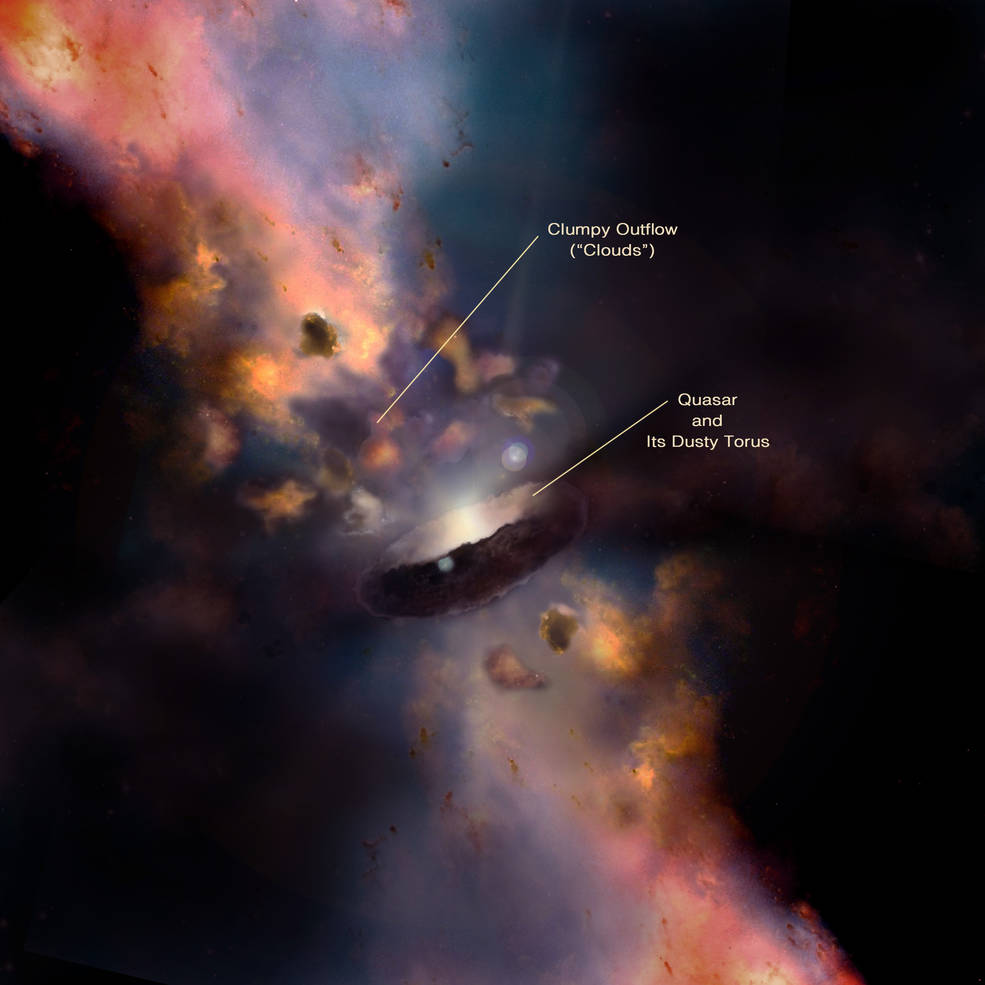
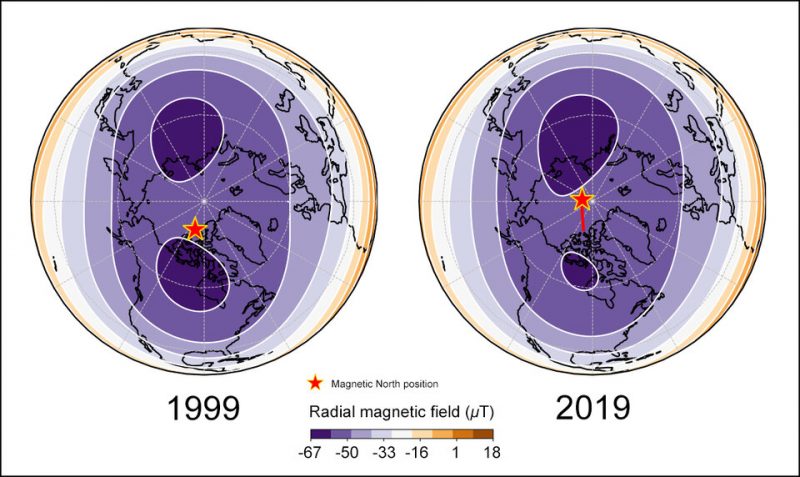
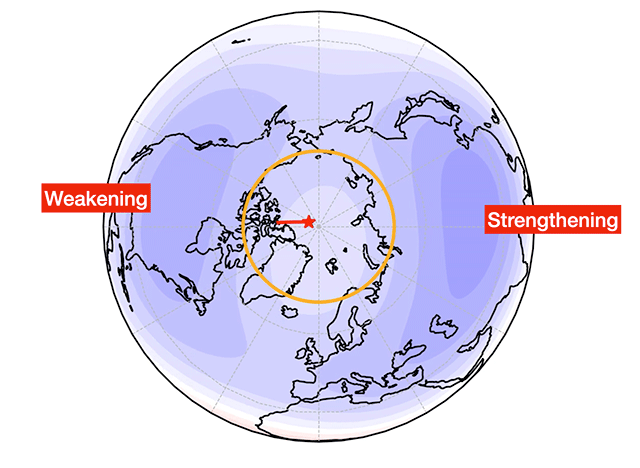


 )


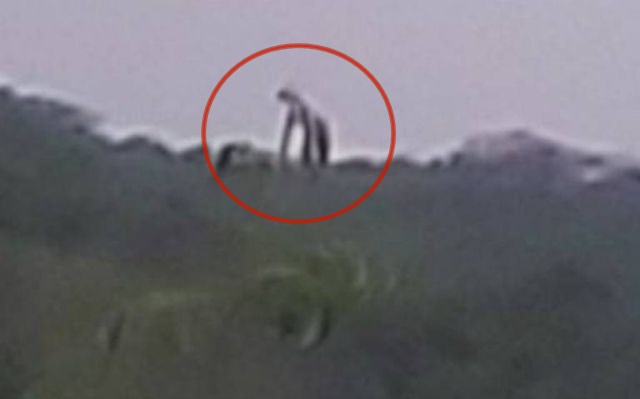





 Elon Musk replies 'no problem' to Russia space agency...
 Scientists create 'reverse solar panel' that can generate...