Ontdek de Fascinerende Wereld van UFO's en UAP's: Jouw Bron voor Onthullende Informatie!
Ben jij ook gefascineerd door het onbekende? Wil je meer weten over UFO's en UAP's, niet alleen in België, maar over de hele wereld? Dan ben je op de juiste plek!
België: Het Kloppend Hart van UFO-onderzoek
In België is BUFON (Belgisch UFO-Netwerk) dé autoriteit op het gebied van UFO-onderzoek. Voor betrouwbare en objectieve informatie over deze intrigerende fenomenen, bezoek je zeker onze Facebook-pagina en deze blog. Maar dat is nog niet alles! Ontdek ook het Belgisch UFO-meldpunt en Caelestia, twee organisaties die diepgaand onderzoek verrichten, al zijn ze soms kritisch of sceptisch.
Nederland: Een Schat aan Informatie
Voor onze Nederlandse buren is er de schitterende website www.ufowijzer.nl, beheerd door Paul Harmans. Deze site biedt een schat aan informatie en artikelen die je niet wilt missen!
Internationaal: MUFON - De Wereldwijde Autoriteit
Neem ook een kijkje bij MUFON (Mutual UFO Network Inc.), een gerenommeerde Amerikaanse UFO-vereniging met afdelingen in de VS en wereldwijd. MUFON is toegewijd aan de wetenschappelijke en analytische studie van het UFO-fenomeen, en hun maandelijkse tijdschrift, The MUFON UFO-Journal, is een must-read voor elke UFO-enthousiasteling. Bezoek hun website op www.mufon.com voor meer informatie.
Samenwerking en Toekomstvisie
Sinds 1 februari 2020 is Pieter niet alleen ex-president van BUFON, maar ook de voormalige nationale directeur van MUFON in Vlaanderen en Nederland. Dit creëert een sterke samenwerking met de Franse MUFON Reseau MUFON/EUROP, wat ons in staat stelt om nog meer waardevolle inzichten te delen.
Let op: Nepprofielen en Nieuwe Groeperingen
Pas op voor een nieuwe groepering die zich ook BUFON noemt, maar geen enkele connectie heeft met onze gevestigde organisatie. Hoewel zij de naam geregistreerd hebben, kunnen ze het rijke verleden en de expertise van onze groep niet evenaren. We wensen hen veel succes, maar we blijven de autoriteit in UFO-onderzoek!
Blijf Op De Hoogte!
Wil jij de laatste nieuwtjes over UFO's, ruimtevaart, archeologie, en meer? Volg ons dan en duik samen met ons in de fascinerende wereld van het onbekende! Sluit je aan bij de gemeenschap van nieuwsgierige geesten die net als jij verlangen naar antwoorden en avonturen in de sterren!
Heb je vragen of wil je meer weten? Aarzel dan niet om contact met ons op te nemen! Samen ontrafelen we het mysterie van de lucht en daarbuiten.
Planetary systems with both super-Earths and Jupiter-type planets may be common, according to a new study. As in our own solar system, the giant planets would act as “bodyguards” protecting the smaller planets from asteroid impacts.
Artist’s concept of a planetary system with 2 super-Earths and 1 giant Jupiter-like planet. New computer simulations suggest that such systems may be common.
The largest planet in our solar system, Jupiter, has often been credited for helping life to exist on Earth, by deflecting dangerous asteroids from entering the inner solar system and colliding with our world. So what about in other solar systems? Do other Earth-type habitable planets also have, or need, larger Jupiter-like worlds protecting them? Is this Earth-Jupiter dynamic just a fluke, or is it a normal part of the development of planetary systems?
An international group of astronomers, led by Martin Schlecker of the Max Planck Institute for Astronomy (MPIA), has just announced a new study showing that this kind of planetary arrangement may be more common that previously known. The results suggest that rocky Earth-type planets – at least super-Earths as in this study – will often be accompanied by larger Jupiters orbiting further out, just like in our own solar system.
The findings are detailed in a new peer-reviewed paper that has been accepted for publication in the journal Astronomy & Astrophysics. The latest version of the paper, submitted on October 13, 2020, is available on arXiv.
The research focuses on super-Earths in particular, rocky planets that are just a bit larger and more massive than Earth but significantly smaller and less massive than Neptune. New computer simulations suggest that these planets will often form in their solar systems along with Jupiter-like planets in outer orbits, reminiscent of the arrangement in our own solar system. As Schlecker said in a statement:
We call such gas giants cold Jupiters. They grow at a distance from the central star, where water exists in the form of ice.
The smaller, rocky worlds are referred to as dry super-Earths, with thinner atmospheres and relatively little water or ice. Even Earth is considered to be a dry planet overall, since the oceans and other water and ice only make up very little of the planet’s volume. Schlecker said:
Also, the Earth is, despite the enormous oceans and the polar regions, with a volume fraction for water of only 0.12%, altogether a dry planet.
Comparison diagram of the scenarios of how, according to the simulations, icy super-Earths (a) or rocky (ice-poor) super-Earths form together with a cold Jupiter (b). The mass of the original protoplanetary disk determines the result.
This cold Jupiter and dry super-Earth dynamic is therefore quite similar to what we see in our own solar system, except that our planet is just a bit smaller than a super-Earth. However, we don’t know yet if this is also true for planets actually about the same size as Earth as well, since the study focused more on super-Earths.
How did the researchers come to these conclusions?
They made a statistical evaluation of new computer simulations involving 1,000 planetary systems in the process of evolving around sun-like stars. According to Christoph Mordasini, a paper co-author from the University of Bern:
During the simulations, the planetary embryos collected material, grew into planets, changed their orbits, collided or were ejected from the system.
Such simulations support the investigation of exoplanetary systems, since planets like cold Jupiters require a lot of time to orbit their mother star in their wide orbits. Simulations, on the other hand, are in principle independent of such limitations.
Super-Earths come in a range of sizes, as shown in this artist’s concept.
Observations of actual planetary systems had found something surprising: ones with a cold Jupiter almost always had a super-Earth as well. Schleckler explained:
We wanted to verify a surprising finding following observations made in recent years that planetary systems with a cold Jupiter almost always contain a super-Earth.
But the simulations seemed to show something different, that only about 1/3 of cold Jupiters should also have a super-Earth in the same system. Synthetic solar system models appeared to have even less, with only 10% of them having both types of planets.
Why the discrepancy? Scientists have several ideas, but a main one has to do with the rate at which giant Jupiter-like planets gradually migrate inward closer to their stars. According to current planetary formation theory, this should result in more gas giant planets in intermediate orbits, between the outer solar system and the inner solar system. These warm Jupiters should interfere with the orbits of inner super-Earths and either collide with them or cause them to be ejected out of their planetary systems. But that is not what has been observed. Therefore, scientists think that the rate is probably slower than first thought, which would allow more super-Earths to remain in close orbits around their stars, just as has been observed many times now.
In that scenario, more planetary systems should end up having both Jupiters and super-Earths.
Jupiter as seen by NASA’s Juno spacecraft in February 2019. The giant planet has long been thought to be a “bodyguard” of Earth, protecting it from asteroid impacts with its immense gravity.
Image via NASA/ JPL-Caltech/ SwRI/ MSSS (Processing: Kevin M. Gill)/ APOD.
The results are fairly general in nature, since current observations have not yet been able to specifically categorize the differences between different super-Earths. Some are thought to be mostly rocky, while others may have global oceans, depending on their size and mass. Nevertheless, the results of the simulations show that many planetary systems should have both a cold Jupiter and a dry super-Earth, as stated by Schleckler:
We found a significant excess of planetary systems containing both a cold Jupiter and at least one dry super-Earth, i.e. with little water or ice, and a thin atmosphere at most.
Which planetary systems do end up having both depends largely on the mass of the protoplanetary disk, the huge rotating cloud of gas and dust that planets form from around a newborn star. Medium mass disks, for example, would have too little material to form either super-Earths in the inner solar system or cold Jupiters farther out. However, super-Earths could form in the outer regions of the system, and contain large amounts of ice. If a protoplanetary disk is massive enough, then it could form both super-Earths closer to the star and cold Jupiters farther out from the star.
The new simulations have made some interesting predictions for how many planetary systems should have both types of planets. But verifying them and reconciling them with current observations will take time. Two upcoming telescopes will be able to help do that, the Extremely Large Telescope (ELT) of the European Southern Observatory and the James Webb Space Telescope (JWST). Schleckler said:
Theoretical predictions must be able to fail in the face of empirical experience. With the next-generation instruments that are about to be deployed, we will be able to test whether our model will hold up or whether we have to go back to the drawing board.
Martin Schlecker at the Max Planck Institute for Astronomy, lead author of the new study.
It will be interesting to see if these computer models hold up, or not. Our own solar system, for example, has a Jupiter, but no super-Earths. Instead we have good ol’ Earth, which is a little smaller than the planets that the study focused on. If the results are verified, does that mean there may also be many planetary systems with both a Jupiter and an Earth-sized world as well? Could well be, but we will just have to wait a bit to find out!
Bottom line: Planetary systems with both super-Earths and Jupiter-type planets may be common, according to a new study.
Take a video tour of asteroid Bennu’s remarkable terrain and read a list of 10 cool things scientists know about this pristine remnant from the early days of our solar system.
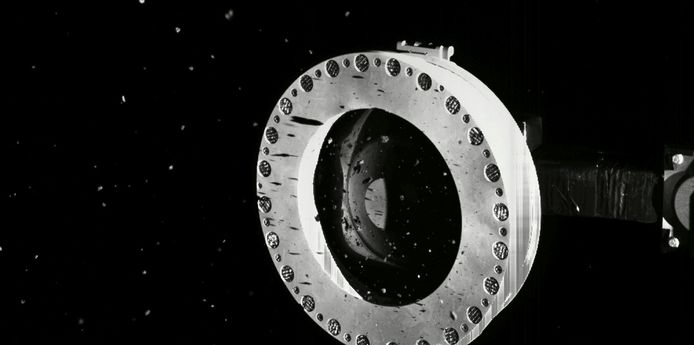
Captured on October 20, 2020, during the OSIRIS-REx mission’s sample collection event on asteroid Bennu, this series of 82 images shows the spacecraft’s field of view as it approaches and touches down on Bennu’s surface. The sampling event brought the spacecraft all the way down to the sample site, and the team on Earth received confirmation of a successful touchdown at 6:08 p.m. Preliminary data show the sampling head touched Bennu’s surface for approximately 6 seconds, after which the spacecraft performed a back-away burn.
On Tuesday (October 20, 2020), NASA’s OSIRIS-REx spacecraft unfurled its robotic arm and touched an asteroid – known as Bennu – to collect dust and pebbles from the surface. The aim of the OSIRIS-REx mission is to bring the sample back to Earth for study in 2023.
The OSIRIS-REx spacecraft, about the size of a 15-passenger van, is currently orbiting the asteroid Bennu 200 million miles (321 million km) from Earth. When the OSIRIS-REx spacecraft arrived at asteroid Bennu in December 2018, its close-up images confirmed what mission planners had suspected: Bennu is made of loose material weakly clumped together by gravity, and shaped like a spinning top.
Scientists had expected Bennu’s surface to consist of fine-grained material, like a sandy beach, but the spaceship’s images showed instead a rugged world littered with boulders the size of cars, the size of houses, even the size of football fields. Using OSIRIS-REx’s high-resolution imagery and data from its laser altimeters – devices that use lasers to map Bennu’s terrain – NASA scientists have created the video tour, below, of Bennu’s remarkable terrain.
Bennu contains material from the early solar system and may contain the molecular precursors to life and Earth’s oceans. OSIRIS-REx engineers and scientists will use several techniques to identify and measure Tuesday’s sample remotely. If the October 20 sample collection event provided enough of a sample, mission teams will command the spacecraft to begin stowing the cargo to begin its journey back to Earth in March 2021. Otherwise, they will prepare for another attempt in January 2021.
On October 15, 2020, NASA released the following list of what we already know (and some of what we hope to find out) about this pristine remnant from the early days of our solar system.
Bennu is classified as a B-type asteroid, which means it contains a lot of carbon in and along with its various minerals. Bennu’s carbon content creates a surface on the asteroid that reflects about 4% of the light that hits it, and that’s not a lot. For contrast, the solar system’s brightest planet, Venus, reflects around 65% of incoming sunlight, and Earth reflects about 30%. Bennu is a carbonaceous asteroid that hasn’t undergone drastic, composition-altering change, meaning that on and below its deeper-than-pitch-black surface are chemicals and rocks from the birth of the solar system.
2. And very, very old.
Bennu has been (mostly) undisturbed for billions of years. Not only is it conveniently close and carbonaceous, it is also so primitive that scientists calculated it formed in the first 10 million years of our solar system’s history, over 4.5 billion years ago. Thanks to the Yarkovsky effect – the slight push created when the asteroid absorbs sunlight and re-emits that energy as heat – and gravitational tugs from other celestial bodies, it has drifted closer and closer to Earth from its likely birthplace: the main asteroid belt between Mars and Jupiter.
This mosaic image of asteroid Bennu is composed of 12 PolyCam images collected on December 2, 2018, by the OSIRIS-REx spacecraft from a rangeof 15 miles (24 km).
3. Bennu is a ‘rubble-pile’ asteroid. But don’t let the name trick you.
Is Bennu space trash or scientific treasure? While “rubble pile” sounds like an insult, it’s actually a real astronomy classification. Rubble-pile asteroids like Bennu are celestial bodies made from lots of pieces of rocky debris that gravity compressed together. This kind of detritus is produced when an impact shatters a much larger body (for Bennu, it was a parent asteroid around 60 miles [about 100 km] wide). Bennu, for contrast, is about as tall as the Empire State Building (1,454 feet or 443 m). It likely took just a few weeks for these shards of space wreckage to coalesce into the rubble-pile that is Bennu. Bennu is full of holes inside, with 20% to 40% of its volume being empty space. The asteroid is actually in danger of flying apart, if it starts to rotate much faster or interacts too closely with a planetary body.
4. Asteroids may harbor hints about the origin of all life on Earth …
Bennu is a primordial artifact preserved in the vacuum of space, orbiting among planets and moons and asteroids and comets. Because it is so old, Bennu could be made of material containing molecules that were present when life first formed on Earth. All Earth life forms are based on chains of carbon atoms bonded with oxygen, hydrogen, nitrogen and other elements. However, organic material like the kind scientists hope to find in a sample from Bennu doesn’t necessarily always come from biology. It would, though, further scientists’ search to uncover the role that asteroids rich in organics played in catalyzing life on Earth.
5. … But also platinum and gold!
Extraterrestrial jewelry sounds great, and Bennu is likely to be rich in platinum and gold compared to the average crust on Earth. Although most asteroids aren’t made almost entirely of solid metal (but Psyche may be!), many do contain elements that could be used industrially in lieu of Earth’s finite resources. Closely studying this asteroid will give answers to questions about whether asteroid mining during deep-space exploration and travel is feasible. Although rare metals attract the most attention, water is likely to be the most important resource in Bennu. Water (two hydrogen atoms bound to an oxygen atom) can be used for drinking or separated into its components to get breathable air and rocket fuel. Given the high cost of transporting material into space, if astronauts can extract water from an asteroid for life support and fuel, the cosmic beyond is closer than ever to being human-accessible.
6. Sunlight can change the asteroid’s entire trajectory
Gravity isn’t the only factor involved with Bennu’s destiny. The side of Bennu facing the sun gets warmed by sunlight, but a day on Bennu lasts just 4 hours and 17.8 minutes, so the part of the surface that faces the sun shifts constantly. As Bennu continues to rotate, it expels this heat, which gives the asteroid a tiny push towards the sun by about 0.18 miles (approximately 0.29 km) per year, changing its orbit.
7. There’s a small change that Bennu will impact Earth late in the next century.
The NASA-funded Lincoln Near-Earth Asteroid Research team discovered Bennu in 1999. NASA’s Planetary Defense Coordination Office continues to track near-Earth objects (NEOs), especially those like Bennu that will come within about 4.6 million miles (7.5 million kilometers) of Earth’s orbit and are classified as potentially hazardous objects. Between the years 2175 and 2199, the chance that Bennu will impact Earth is only 1 in 2,700, but scientists still don’t want to turn their backs on the asteroid. Bennu swoops through the solar system on a path that scientists have confidently predicted, but they will refine their predictions with the measurement of the Yarkovsky effect by OSIRIS-REx and with future observations by astronomers.
Captured on August 11, 2020, during the second rehearsal of the OSIRIS-REx mission’s sample collection event, this series of images shows the SamCam imager’s field of view as the NASA spacecraft approaches asteroid Bennu’s surface. The rehearsal brought the spacecraft through the first three maneuvers of the sampling sequence to a point approximately 131 feet (40 meters) above the surface, after which the spacecraft performed a back-away burn.
Early Earth-based observations of the asteroid suggested it had a smooth surface with a regolith (the top layer of loose, unconsolidated material) composed of particles less than an inch (a couple of centimeters) large at most. As the OSIRIS-REx spacecraft was able to take pictures with higher resolution, it became evident that sampling Bennu would be far more hazardous than what was previously believed: new imagery of Bennu’s surface show that it’s mostly covered in massive boulders, not small rocks. OSIRIS-REx was designed to be navigated within an area on Bennu of nearly 2,000 square yards (meters), roughly the size of a parking lot with 100 spaces. Now, it must maneuver to a safe spot on Bennu’s rocky surface within a constraint of less than 100 square yards, an area of about five parking spaces.
9. Bennu was named after an ancient Egyptian deity
Bennu was named in 2013 by a nine-year-old boy from North Carolina who won the Name that Asteroid! competition, a collaboration between the mission, the Planetary Society, and the LINEAR asteroid survey that discovered Bennu. Michael Puzio won the contest by suggesting that the spacecraft’s Touch-and-Go Sample Mechanism (TAGSAM) arm and solar panels resemble the neck and wings in illustrations of Bennu, whom ancient Egyptians usually depicted as a gray heron. Bennu is the ancient Egyptian deity linked with the sun, creation and rebirth. Puzio also noted that Bennu is the living symbol of Osiris. The myth of Bennu suits the asteroid itself, given that it is a primitive object that dates back to the creation of the solar system. Themes of origins and rebirth are part of this asteroid’s story. Birds and bird-like creatures are also symbolic of rebirth, creation and origins in various ancient myths.
This view of asteroid Bennu ejecting particles from its surface on January 19, 2019, was created by combining two images taken on board NASA’s OSIRIS-REx spacecraft. Other image processing techniques were also applied, such as cropping and adjusting the brightness and contrast of each image.
Image via NASA/ Goddard/ University of Arizona/ Lockheed Martin.
10. Bennu is still surprising us!
The spacecraft’s navigation camera observed that Bennu was spewing out streams of particles a couple of times each week. Bennu apparently is not only a rare active asteroid (only a handful of them have been as yet identified), but, along with Ceres as explored by NASA’s Dawn mission, may be among the first of its kind that humanity has observed from a spacecraft. More recently, the mission team discovered that sunlight can crack rocks on Bennu, and that it has pieces of another asteroid scattered across its surface. More pieces will be added to Bennu’s cosmic puzzle as the mission progresses, and each brings the solar system’s evolutionary history into sharper and sharper focus.
Bottom line: Video of sample collection on asteroid Bennu, and 10 things to know about Bennu and the OSIRIS-REx mission.
Fans of “The Late Show with David Letterman” will remember a recurring segment called “Is this anything?” where the host and the bandleader Paul Schaffer would watch some strange event and then debate about whether it was anything to be impressed with, afraid of, etc. Ever since the millisecond-long fast radio bursts (FRBs) were detected by astronomers in 2007, space scientists and the general public have been trying decide if they’re anything. Are they signals from an alien civilization? Are they hyperflares from equally mysterious magnetars? If they repeat regularly, then what? Well, get ready to play again because the only known source of FRBs in the Milky Way just sent another burst. Is this anything?
It this anything?
“SGR J1935+2154, the host magnetar of the Galactic FRB200428 (ATel #13681, #13684), was reported to be radio-active again on 2020 Oct 8th by CHIME/FRB team (ATel #14074, #14080). There was one marginal detection of the magnetar’s pulsed radio emission at 408 MHz by the Medicina Northern Cross (ATel #13783) despite many attempts (ATel #13713, #13726, #13778, #13838). FAST observed this magnetar for one hour on 2020 Oct 9th at 1.25 GHz with a bandwidth of 460MHz and detected multiple radio pulses with fluence up to 40 mJy ms.”
That post on the pro astronomers bulletin board ‘The Astronomer’s Telegram’ reports than the CHIME/FRB team (Canadian Hydrogen Intensity Mapping Experiment) was watching the Milky Way magnetar SGR 1935+2154 (30,000 light years from Earth) on October 8 when it emitted three millisecond radio bursts in three seconds, followed by a pulsed radio emission that matched the magnetar’s spin period. SGR 1935+2154 has been under close watch since April 2020 when it emitted its first FRBs, making it the first in the Milky Way and one of only two dozen magnetars ever discovered. Magnetars are neutron stars (collapsed super-giants) with unusually powerful magnet fields, and the discovery led astronomers to answer ‘Yes’ to the ‘Is this anything’ question – this is the first confirmed cause of FRBs. It may not be the only one, but it’s definitely the first.
It’s definitely something
“It’s really exciting to see SGR 1935+2154 back again, and I’m optimistic that as we study these bursts more carefully, it will help us better understand the potential relationship between magnetars and fast radio bursts.”
Astronomer Deborah Good of the University of British Columbia in Canada and a member of the CHIME/FRB, confirmed to ScienceAlert that this is something, especially since the three bursts occurred within one rotation period of the magnetar, with two of them close together. Good called this “a bit unusual” and something the CHIME/FRB team would analyze, but the report in ‘The Astronomer’s telegram’ reveals why this set of bursts could be a BIG something.
“Based on these results and the increasing bursting activities, we speculate that the magnetar may be in the process of turning into an active radio pulsar.”
Radio pulsars are rapidly spinning neutron stars that emit radio radiation from their poles in millisecond pulses. This means SGR 1935+2154 may be more than a magnetar – it may be the missing link between magnetars and radio pulsars.
Archaeologists uncover huge new cache of unopened sarcophagi dating back 2,500 years at Saqqara - two weeks after they recovered 59 coffins from the ancient necropolis
Authorities announced the coffins were discovered at the famed necropolis near ancient capital of Memphis
The 80 sarcophagi are believed to be more than 2,500 years old, according to preliminary analysis
Egyptian Prime Minister Mustafa Madbouly toured the area and viewed the finds earlier this week
Egypthas unearthed another trove of ancient coffins in the vast Saqqara necropolis south of Cairo, announcing the discovery of more than 80 sarcophagi.
The Tourism and Antiquities Ministry said in a statement that archaeologists had found the collection of colourful, sealed caskets which were buried more than 2,500 years ago.
Prime Minister Mustafa Madbouly and Tourism and Antiquities Minister Khalid el-Anany toured the area and inspected the new discovery yesterday.
Egypt has unearthed another trove of ancient coffins in the vast Saqqara necropolis south of Cairo, announcing the discovery of more than 80 sarcophagi. Egyptian Prime Minister Mustafa Madbouly toured the area and viewed the finds earlier this week (pictured).
Egypt has sought to publicise its archaeological finds in an effort to revive its key tourism sector, which was badly hit by the turmoil that followed the 2011 uprising. Pictured, the Egyptian Prime Minister looking inside one of the coffins
This photo from the Egyptian Ministry of Tourism and Antiquities shows Egyptian Prime Minister Mustafa Madbouly looking inside at one of the coffins discovered at an ancient burial shaft at a necropolis in Saqqara
Pictured, Egyptian Prime Minister Mustafa Madbouly (L), Egyptian Minister of Antiquities Khaled el-Anany (C) and secretary-general of the Supreme Council of Antiquities Mostafa Waziri (R) looking at a sarcophagus
Archaeologists also found colourful, gilded wooden statues, the ministry said.
Details of the new discovery will be announced soon in a news conference at the famed Step Pyramid of Djoser, it said.
Egypt has sought to publicise its archaeological finds in an effort to revive its key tourism sector, which was badly hit by the turmoil that followed the 2011 uprising.
The sector was also dealt a further blow this year by the coronavirus pandemic.
As well as more than 80 coffins and mummies, there were various artefacts discovered inside the burial chamber presenred here before the Prime Minister
The Tourism and Antiquities Ministry said in a statement that archaeologists had found the collection of colourful, sealed caskets which were buried more than 2,500 years ago
Located 19 miles south of Cairo, the vast burial complex of Saqqara — which features the step pyramid of Djoser and flat-roofed tombs — served the ancient Egyptian capital of Memphis
More details of the new discovery will be announced soon in a news conference at the famed Step Pyramid of Djoser, Egyptian authorities say
The dramatic find was unearthed south of Cairo in the sprawling burial ground of Saqqarah, the necropolis of the ancient Egyptian capital of Memphis, a UNESCO World Heritage site
Ancient Egyptian burial rituals
Over thousands of years, ancient Egyptians developed elaborate and complex funerary practices that they believed were necessary to enter the afterlife.
The processes evolved over time, but many elements remained consistent through different ancient Egyptian dynasties.
The most classic form of mummification dates back to the 18th Dynasty that spanned the the period from 1549/1550 to 1292 BC.
First, the brain was removed. Some say this was by a metal hook inserted through the nose, while others say it was with a rod through the cranium which was used to liquefy the brain.
The brain would have then been drained out through the nose before the skull was filled with a mixture of tree resin and fragrances.
This stopped the decomposition of any residual brain tissue, and also suppressed the smell.
Then, the lumbar area was sliced open and the organs of the abdomen were removed. The heat was usually left. These were then heavily salted and placed in canopic jars.
The now-empty chest cavity was then filled with a mixture of aromatics.
All incisions into the body were then filled with a salt called natron which disinfected wounds.
The body was then put on a bed of natron for a period of between 35 and 70 days.
At the end of this period, the now dehydrated corpse was washed, oiled and covered with resin as adhesive.
The body was then wrapped in linen until it was fully covered.
Depending on the social status of the deceased, the mummy was sometimes then adorned with decorations, such as a mask or a shroud.
The mummy was then buried in a tomb, ready for the afterlife.
Just over two weeks ago Egypt revealed 59 sealed sarcophagi, with mummies inside most of them, in the same area of Saqqara.
The Saqqara site is located south of Cairo and the vast burial complex, which also features the step pyramid of Djoser, served the ancient capital of Memphis.
It also includes the famed Giza Pyramids, as well as smaller pyramids at Abu Sir, Dahshur and Abu Ruwaysh.
The ruins of Memphis were designated a UNESCO World Heritage site in 1970s.
The plateau hosts at least 11 pyramids, including the Step Pyramid, along with hundreds of tombs of ancient officials and other sites that range from the 1st Dynasty (2920-2770 B.C.) to the Coptic period (395-642).
Earlier this month, one of dozens of ornately decorated sarcophagi was opened for the first time before assembled media.
The team slowly revealed mummified remains wrapped in burial cloth that bore hieroglyphic inscriptions in bright colours.
The majority of coffins housed mummified remains which initial research suggests would have been priests, top officials and elites in ancient Egyptian society.
All of whom would have likely been subject to ancient Egypt's complex burial rituals after they died, including having their brains removed with an iron hook.
Egypt's Minister of Antiquities and Tourism, Dr. Khaled El-Enany, said at the time: 'I can say most of the discoveries have been made by Egyptian teams on Egyptian soil. This is something I am immensely proud of.'
He said the mission had started re-excavating the site two months ago, and uncovered a burial shaft 36 feet deep. Inside, they found 13 intact coffins.
The team continued their excavations, discovering two more shafts - 32 and 39 feet deep - also filled with coffins.
All the coffins discovered so far are in good condition and bear their original colours.
'My colleagues in the Supreme Council of Antiquities discovered burial shafts filled with wooden, sealed and intact coffins,' El-Enany said.
'I am really impressed that Covid-19 did not stop them from digging to unveil more mystery and secrets about our great civilisation.'
The minister said that the coffins would be transported to the Grand Egyptian Museum to be displayed to the public.
Just over two weeks ago Egypt revealed 59 sealed sarcophagi , with mummies inside most of them, in the same area of Saqqara. This find adds to the enormous trove of historical finds in the African nation
Archaeologists also found colourful, gilded wooden statues, officials said. Details of the new discovery will be announced soon in a news conference at the famed Step Pyramid of Djoser
Pictured: A man opens one of the sarcophagi during the unveiling event in front of the media earlier this month. 59 anthropoid painted coffins have been discovered so far
The majority of the coffins found at Saqqara so far have contained mummified remains (pictured) of priests, top officials and elites
A sarcophagus that is around 2500 years old is seen inside the newly discovered burial site near Egypt's Saqqara necropolis, in Giza, Egypt, October 3
HOW ANCIENT EGYPTIANS EMBALMED THEIR DEAD
It is thought a range of chemicals were used to embalm and preserve the bodies of the dead in ancient cultures.
Russian scientists believe a different balm was used to preserve hair fashions of the time than the concoctions deployed on the rest of the body.
Hair was treated with a balm made of a combination of beef fat, castor oil, beeswax and pine gum and with a drop of aromatic pistachio oil as an optional extra.
Mummification in ancient Egypt involved removing the corpse’s internal organs, desiccating the body with a mixture of salts, and then wrapping it in cloth soaked in a balm of plant extracts, oils, and resins.
Older mummies are believed to have been naturally preserved by burying them in dry desert sand and were not chemically treated.
Gas chromatography/mass spectrometry (GC/MS) techniques have been deployed in recent years in find out more about the ancient embalming process.
Studies have found bodies were embalmed with: a plant oil, such as sesame oil; phenolic acids, probably from an aromatic plant extract; and polysaccharide sugars from plants.
The recipe also featured dehydroabietic acid and other diterpenoids from conifer resin.
A little more than a month ago, I wrote an article on the 13 ancient Egyptian coffins that were unearthed in the desert necropolis of Saqqara, located south of Cairo, Egypt (the article can be read here). The colorful coffins that date back more than 2,500 years (between 664 and 525 BC) were completely sealed and untouched.
After their initial discovery of the 13 coffins inside of a burial shaft that was 36 feet deep, experts continued digging and found two other shafts (32 feet and 39 feet deep) that contained several more coffins that were in good condition and still held their original colors.
Step Pyramid in Egypt.
The Ministry of Tourism and Antiquities revealed that more than 80 coffins have been discovered. Additionally, they found colorful, gilded wooden statues. The 28 statuettes were of the god Ptah-Soker and a carved bronze one depicting the god Nefertum which measured a foot tall and had precious stones embedded in it along with the name Priest Badi-Amun who owned it. In addition to those, several ushabti figurines and amulets were also found.
Earlier this month, on October 3rd, archaeologists opened one of the coffins as several people watched with excitement. The coffin revealed a mummy that was wrapped in ornate burial linen. Amazingly, the inscriptions and colorful designs were still present on the cloth after approximately 2,600 years.
Another picture of the Step Pyramid in Egypt.
It is believed that those who were buried in the coffins were top officials and other important members in Egypt during that time as well as priests from the 26th Dynasty. According to Egypt’s Minister of Antiquities and Tourism, Dr. Khaled El-Enany, the coffins will be brought to the Grand Egyptian Museum in order for the public to view them. Several pictures of the coffins can be seen here.
The Saqqara site where the coffins were located is part of the necropolis at the ancient Egyptian capital of Memphis that includes the Giza Pyramids and smaller pyramids at Abu Sir, Dahshur, and Abu Ruwaysh. There are at least eleven pyramids located in the plateau that includes the Step Pyramid as well as hundreds of ancient tombs that date back between the 1st Dynasty from 2920 to 2770 BC and the Coptic Period from the years 395 to 642.
De sonde OSIRIS-REx van het Amerikaanse ruimtebedrijf NASA is er eerder deze week in geslaagd om zeer grote hoeveelheden deeltjes van de asteroïde Bennu te verzamelen, maar verliest ook monsters in de ruimte. Dat meldt NASA vandaag. De sonde "verliest een groot deel van de verzamelde massa", verklaarde Dante Lauretta, de chef van de missie, in een telefonische persconferentie.
Volgens de wetenschapper heeft de sonde 400 gram materiaal van Bannu meegenomen. Al 5 tot 10 gram is ontsnapt. Die zweeft rond de arm van de sonde en blijft daar hangen vanwege de microzwaartekrachtomgeving. Daardoor gedragen de deeltjes zich als vloeistoffen.
Zaterdag was er een meetoperatie van de massa gepland, maar die is geannuleerd. Met die operatie zouden de wetenschappers het risico lopen dat nog meer deeltjes ontsnappen.
De prioriteit is nu om de activiteiten van de sonde zo veel mogelijk te beperken en de monsters zo snel mogelijk op te slaan in een container in de sonde. Daarvoor moet het apparaat nog voorbereid worden.
De verzamelde deeltjes bevinden zich momenteel nog in een compartiment aan het einde van de verzamelarm van de sonde. Het sluitingsmechanisme van dat compartiment is geblokkeerd door de relatief grote deeltjes.
"We denken dat we op momenteel een klein deel van het materiaal aan het verliezen zijn, maar dat is meer dan ik zou willen, ik maak me zorgen sinds ik de foto's heb gezien", verklaart Lauretta.
De ruimterots Bennu bevindt zich op bijna 333 miljoen kilometer afstand van de aarde. De sonde die het materiaal van de asteroïde verzamelde, werkt helemaal zelfstandig. De afstand naar de aarde is zo groot dat de vluchtleiding niet kan ingrijpen. De wetenschappers achter de missie hopen dat ze minstens 60 gram kunnen ophalen. In 2023 moet de ruimtesonde op aarde landen. De missie kost zo'n 1 miljard dollar.
GERELATEERDE VIDEO'S, geselecteerd en gepost door peter2011
Edgar Cayce: His Incredible Predictions Were 93% Accurate and Often Shocking
COAST TO COAST AM INSIDER Archived Show – Kevin Todeschi, spokesperson for A.R.E., the organization which Edgar Cayce founded, talked about Cayce’s life and work as well as dream interpretation. Known as the Sleeping Prophet, Cayce gave out thousands of readings while in a trance state, and those concerning medical issues had a 93% accuracy rating, Todeschi reported.
Cayce believed that Atlanteans saved records of their advanced civilization in three locations– in the Yucatan, on the Bimini Islands and in the right paw of the Sphinx. Buried at the Sphinx is a written history of the world from the time of Atlantis to our current era, he predicted. A University recently got the OK to do some underground tunnelling to study parts of the Sphinx, Todeschi announced.
NASA Contractor Whistleblower Says Earth's a Sitting Duck, Aliens From 1,000 Stars Can Easily Detect Us, Greg Allison
Greg shares his knowledge of space and gives his opinions, theories as to what it might actually mean, if an advanced civilization heard a message from Earth that appeared hostile. Also Mr Allison is former Army Special Forces and we talk about a Rumor of a Joint Military/Alien Underground Base in Alaska and a Couple Very Strange Experiences He had, one in Alaska, One around Area 51.
Mr. Allison is currently the Program Manager for the Huntsville Alabama L5 Society (HAL5) High Altitude Lift-Off (HALO) Program, and as President of the High Altitude Research Corporation (HARC). In these capacities Mr. Allison is actively developing cheap access to space technologies. Mr. Allison has worked on the International Space Station Program for Grumman as a systems engineer specializing in robotics, for the Mevatec Corporation as an electrical power systems integration engineer, and for Teledyne Brown Engineering as a payload integration engineer for external space station experiments.
Mr. Allison is currently working for Hernandez Engineering as a safety and product assurance engineer on such projects as Orbital Space Plane, X-37 and HyTEx. Mr. Allison also studies means to defend Earth from asteroids, and the construction of large-scale space stations.
What Happened to This Man Will Amaze You...and Terrify You at the Same Time!
Witness of Another World is an intimate documentary that intends to unveil the mystery of a spectacular close encounter case witnessed by a lonely gaucho. Filmmaker Alan Stivelman, moved by the story of Juan Pérez, decides to investigate more about the event that forced him to take refuge in the countryside for fear of contact with the phenomenon.
Dr. Jacques Vallée, a well-known scientist and researcher, participates in this documentary having met Juan more than thirty years ago. This is the only case in the history of ufology in which a witness has been studied several times during a period of 40 years, with his life and the impact of the experience documented fully.
Stunning HiRISE images of the Mars Forbidden City on Mt Sharp in Gale Crater confirming the city structure photos I have shown from the Curiosity Rover. Amazing ruined city buildings seen from space.
The Forbidden City was first found/named by Joe White – ArtAlienTV – 2015 and these space views were published on YouTube first by ArtAlienTV – Oct 23rd 2020 Real scientists, by definition, are not meant to follow dogma, but to question it relentlessly and push the boundries of current knowledge.
UFOs Seen Entering and Exiting Earths Sun, Oct 22-24, Two Videos, UFO Sighting News.
Date of sighting: Oct 22-24, 2020
Location of sighting: Earths Sun
Source: Helioviewer.org
I got a request from one of my Youtube subscribers a few days ago asking me to find a UFO near the sun. He loved my work and I told him I would get right on it. Today I found two! One entering our sun and one exiting our sun. This does reinforce my Hollow Sun Theory. A theory that says there is a whole mini solar system of mini moon size planets within our sun. One shot in from far away, only to disappear...the other shot out of the side of the sun during a solar explosion. Its huge boomerang wings still have me in awe of the craft. 100% proof that aliens are using a huge hollow space within our sun as a mini solar system.
Mysterious Craft Seen Then Shoots Away Over Frisco, Texas On Oct 23, 2020, UFO Sighting News.
Date of sighting: Oct 23, 2020 Location of sighting: Frisco, Texas, USA Source: MUFON
This UFO report just came in. It included a video and photo of the object. What really surprised me is that the object was seen and followed for a few seconds, the the UFO seemed to realize it was being recorded and shot away at high speed in the opposite direction. Great video of the incredible maneuverability of UFOs. Also the photo itself has a cross like shape to it from the side...very strange. The video is fantastic and terrific evidence, but its the high detailed photo that confirms its 100% an alien craft.
Scott C. Waring - Taiwan
Eyewitness states:
I was at a stop light and looked up to see a metal sphere shape moving right under the clouds in a fast steady direction-the object seemed to have a green light coming from it whether it be an aura or steady lights I can’t say, I just know I noticed it being a metal ball and there was green on it or around it shining. I tried to video it but my video didn’t record it and I almost got in a wreck so I had to move on and pulled over and when I looked back up it was gone! Later in the day I kept looking up obsessively to try and spot it again and saw a white glowing orb just hanging out in the sky above me and I was able to film that however that wasn’t nearly as exciting as seeing what I saw at the stoplight but regardless both sightings by me in one day! So my video is of second sighting with the basic white glowing orb but not the cool sphere unfortunately.
Glowing Objects Over Guildford, Great Britain, Oct 23, 2020, UFO Sighting News.
Date of sighting: Oct 23, 2020 Location of sighting: Guildford, Great Britain
Source: MUFON
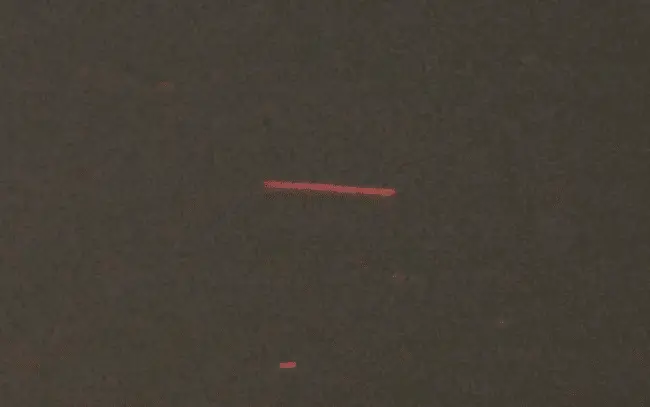
Watch this video below and see these red glowing spheres moving about. The objects are large, round and have no openings visible. If they were Chinese lanterns, they would be oval and a large opening would be visible on the bottom and the candle within would be seen. Lanterns also burn out in 1-3 minutes. None exists in this video. These are UFOs. These are a rare look at alien craft over Britain.
Scott C. Waring - Taiwan
Eyewitness states:
Event lasted for approximately 1 hour. I was just out for a walk around the local playing fields. I witnessed more than 10 large red-orange glowing orbs, like fireballs. The orbs appeared either singly or in pairs, at the same point in the sky each time, and they "popped out". No flashing or taillights and absolutely not helicopters or planes, which are both common appearances where I live and easily distinguishable. From the ground they had an apparent size roughly 1/4 that of a full moon, just bigger than an aspirin. Each pair of orbs moved in a west-to-east direction and disappeared after moving around 20 degrees eastwards. A few minutes later the orb(s) would reappear at the same original point and move in the same direction as the previous ones. There was also some strange pulsating lights in a cloud moving in a geometric pattern which accompanied the sighting. I was able to capture some footage on my phone but the quality is not great due to night-time and lack of tripod - and my total shock at seeing this!. The first video shows a pair of these orbs, the second shows the strange pulsating in the clouds, as well as another orb taken around 10 minutes after the first video.
Just in...Eyewitness Shares Three disk Sighting Near California Road, 1985, Drawings, UFO Sighting News.
Date of sighting: 1985
Location of sighting: Brownsville, California, USA
Source: MUFON report
Now here is a MUFON report just in, but its about a sighting that happened back in 1985...35 years ago. Why is this important? Because we learn from past sightings to compare, contrast and evaluate future sightings. The person really put their heart into this report...it had meaning, purpose and became a part of the persons life that changed them forever. They are opening up to us...and its up to us to give them our trust and attention.
Scott C. Waring - Taiwan
Eyewitness states:
On a clear spring day just before sunset, the three witnesses were driving west along Hwy 20 from Hwy 49, below Camptonville, California. As we rounded a sharp curve just past the old stone quarry near Bullard's bar, we came upon three silver discs landed in a field to the right of the road. I pulled onto the right shoulder just as the large discs suddenly shot upward in powerful ascent. My friend [name removed/cms/rjl] and I felt compelled to jump out of the car and race to the center of the highway, where we stood staring excitedly up at the saucers - I did not feel any fear...I felt elated and awe-struck. I estimate the size of each disc to have been between 50 and 75 feet in diameter. Above us, the discs blocked out most of the sky. They appeared quite solid and metallic, with very definite mechanical features - including a central opening from which a powerful conical beam projected straight down from each disc. The beam color was brilliant bluish-white, and we were washed with the light, yet could still see the features beneath the discs. I don't recall any sound, but there might have been a wind - those details have grown very fuzzy over the 35 years since the encounter. I do recall that the three discs were locked into a tight triangular formation, with one disc forming an apex above the other two. When the discs reached above a hundred feet overhead, they briefly hovered. Then all together, they tilted about 45 degrees and shot off toward the south, which took them straight across the highway and over above the Feather River Canyon, which we overlooked out to our left. As the craft traveled over the canyon, the conical beams appeared to light up a big portion of the valley - the beams would have to have been extremely powerful to do so, especially considering that it wasn't quite dark yet. When the objects reached an angle of what might have been 60 degrees in the sky over to our left, they abruptly vanished, leaving three glowing purple clouds where each disc had disappeared. Those clouds remained visible and softly glowing for the entire half-hour that it took us to complete our drive home to Forbestown, where we were temporarily staying at the time. It should be noted that I am aware of a considerable amount of amnesia both during and after the encounter. I seem to recall a previous encounter which might have occurred about a half-hour before to the remembered encounter - I even have a general sense of approximately where that first encounter might have occurred - along Hwy 49 above Camptonville, California. I always felt that we were abducted - but I can't consciously remember it. Also, the third witness (my mother) remained in the car during the main event. She was paralyzed with fear, and couldn't or wouldn't look above the ground level, so she only saw the preliminary scene when the objects were just beginning to take off. She can't recall seeing the discs themselves, but she did see what she thought might be something like nozzles or cylindrical objects - possibly some details on the bottoms of the discs. I lost contact with [name removed/cms/rjl] after the sighting, and I have no knowledge of his whereabouts after 35 years. Mom is now 85 years old and slipping into dementia, so she is no longer available for a witness testimony. I now have no proof, apart from a rough sketch that I drew, and conversation remembered by family members, to whom I related the experience over the years. I was profoundly affected by the encounter, with a long-term improvement in my health and a complete change in my interests and beliefs. I became quite obsessed with UFOs and ETs after the encounter, and I've been researching ever since. I've made many trips back to the encounter site, as I tried to retrace the whole event - once I even took my whole family there during a reunion. I've had other, possibly related experiences going back to age three or before - I've written many of them down.
Grey Disk Caught Near Drilling Rig Over Saskatchewan, Canada May 22, 2020, Photos, UFO Sighting News.
Date of sighting: May 22, 2020 Location of sighting: Coronach, Saskatchewan, Canada
Source: MUFON report
Aliens have a huge interest in human energy consumption and here we have a disk near an oil platform in Canada. Oil being the old school concept of energy is slowly being fazed out, but still being used. Electricity being cleaner is quickly replacing it. How we are still harming our planet and increasing global warming seems to be high on the interest list of aliens. Why? Because they were here before us and will be here after us...meaning...it always been their world, not ours.
Scott C. Waring
Eyewitness states:
A coworker had stopped to take a picture of the drilling rig he was working on, South of Coronach, Sask. at the Westmoreland Coal mine. After he took the picture, he looked at it to check the quality. He noticed the object in the upper right and a second to the left of the derrick. He had shown me the picture in September, after we had a conversation about the possibility of extra terrestrial life. I asked if anyone else saw the picture or the objects, and he told me "No". I then asked if he had reported it. He told me he didn't say anything for fear of being ridiculed. He told me that he didn't see or hear anything in the sky before or after he had taken the picture. I asked if there were any planes or vapor trails in the sky and he said "No".
Astrange spherical object hovering over Mexico on October 17, 2020. The sphere spins and moves slowly through the sky.
The strange thing is that it looks like the object is surrounded by a cloud, which makes me wonder whether the photographer has captured a partially cloaked UFO disguised as cloud.
120,000-year-old human footprints found in Saudi Arabia offer glimpse into humanity's past
Footprints dating back 120,000 years have been discovered near an ancient lake in Saudi Arabia, which not only offer an insight into humanity's past, but also the previous climates of Earth.
The small, now dried up, lake, found in the Nefud Desert, was also frequented by mammals such as camels, buffalo and other animals.
In total, seven footprints in the area were identified as being from anatomically modern humans. In addition to the footprints, hundreds of fossils were found at the site.
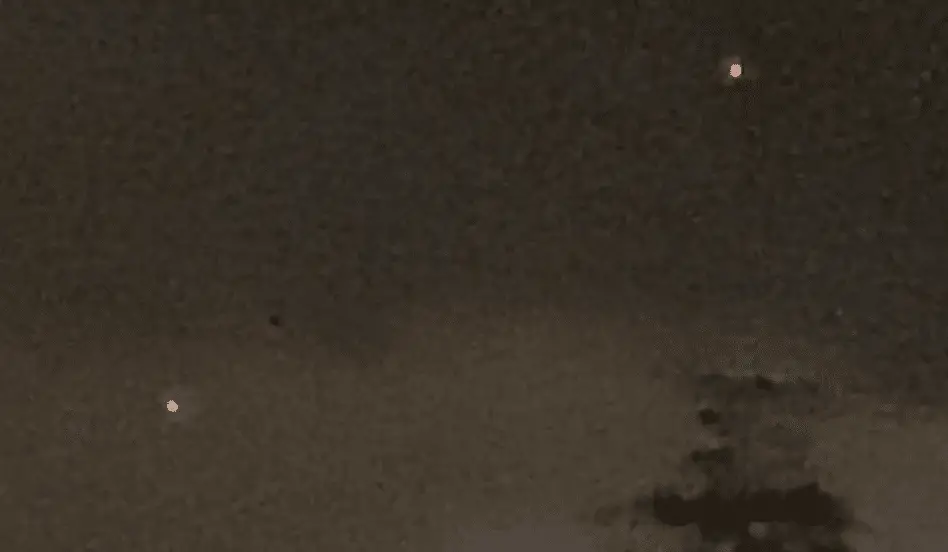
UFOs flying over Guildford, United Kingdom 23-Oct-2020
Here’s one new UFO video filmed yesterday over Guildford in United Kingdom. Two bright unidentified flying objects are slowly moving across the night sky.
Witness report:
Event lasted for approximately 1 hour. I was just out for a walk around the local playing fields. I witnessed more than 10 large red-orange glowing orbs, like fireballs. The orbs appeared either singly or in pairs, at the same point in the sky each time, and they “popped out”. No flashing or taillights and absolutely not helicopters or planes, which are both common appearances where I live and easily distinguishable. From the ground they had an apparent size roughly 1/4 that of a full moon, just bigger than an aspirin. Each pair of orbs moved in a west-to-east direction and disappeared after moving around 20 degrees eastwards. A few minutes later the orb(s) would reappear at the same original point and move in the same direction as the previous ones.
There was also some strange pulsating lights in a cloud moving in a geometric pattern which accompanied the sighting. I was able to capture some footage on my phone but the quality is not great due to night-time and lack of tripod – and my total shock at seeing this!.
The first video shows a pair of these orbs, the second shows the strange pulsating in the clouds, as well as another orb taken around 10 minutes after the first video.
Don’t forget to follow us on Youtube for the latest UFO videos.
White cigar shape UFO over Waverly, Ohio 23-Oct-2020
This cylindrical UFO was seen and recorded in the sky above Waverly, a city in, and the county seat of, Pike County, Ohio. This happened on 23rd October 2020.
Witness report:
It was a white cigar shaped object flying in a straight line with no sound no visible wings.
A ghostly white saucer hovers over the peaks of El Chaltén in southern Argentina. As wind thrashes the nearby clouds, the saucer remains fixed above the craggy summit, anchored in the sky like a mothership surveying the hills below.
This eerie weather phenomenon is relatively common in mountainous regions like El Chaltén, or theRocky Mountains in the U.S., where high-speed winds ricochet over a tall peak, creating a distinct lens- or saucer-shaped cloud formation high in the sky. Still, photographerFrancisco Javier Negroni Rodriguez — whose photo above is a finalist in the Royal Meteorological Society's (RMS) 2020 Weather Photographer of the Year contest — had to wait the better part of a day to capture the cloud in its mysterious glory.
Another contest runner-up shows this 'monster' storm rearing its head over Umag, Croatia. (Image credit: Maja Kraljik)
"An hour before taking this photograph I was walking along the trails that surround the beautiful rock formation … [but] the day was very cloudy. Apparently, luck was not with me on this adventure," Negroni Rodriguez told the RMS. "Only for a moment, the clouds allowed me to see El Chaltén — and to my surprise, there was a spectacular and brilliant lenticular cloud with a beautiful and perfect figure that I had never seen."
This type of cloud forms when strong wind blows into the side of a mountain, skyscraper or other tall obstruction, according to theNational Weather Service. The mountain deflects the wind, forcing it into a wave that crests over the mountaintop, dips down on the other side, then rises up again. In the upward-moving parts of the wave, the air cools until it condenses into clouds. When the air descends again on the downward-moving side of the wave, the cloud evaporates. The result is a spooky, stationary cloud perched atop the crest of the wave, sculpted into a saucer shape by the wind constantly rising and falling within it.
This contest finalist captures a tornado tearing through rural Colorado. Photographer Tori Jane Ostberg calls it "the red terror." (Image credit: Tori Jane Ostberg)
Negroni Rodriguez's photo joins 25 other finalists in the RMS contest, which is co-sponsored by AccuWeather. While the alien cloud was not one of the three grand-prize winners announced on Oct. 17, it nevertheless rose to the top of more than 7,700 entries, according to the RMS. To see some of the other stunning finalists — including the big winners — click through this gallery.
NASA will announce an exciting new discovery about the Moon from the Stratospheric Observatory for Infrared Astronomy (SOFIA) at a media teleconference at 12 p.m. EDT Monday, Oct. 26. Audio of the teleconference will stream live on the agency’swebsite.
This new discovery contributes to NASA’s efforts to learn about the Moon in support of deep space exploration. Under NASA’s Artemis program, the agency will send the first woman and next man to the lunar surface in 2024 to prepare for our next giant leap – human exploration of Mars as early as the 2030s. Understanding the science of the Moon also helps piece together the broader history of the inner solar system.
Briefing participants are:
Paul Hertz, Astrophysics division director at NASA Headquarters, Washington
Jacob Bleacher, chief exploration scientist for the Human Exploration and Operations Mission Directorate at NASA Headquarters
Casey Honniball, postdoctoral fellow at NASA’s Goddard Space Flight Center, Greenbelt, Maryland
Naseem Rangwala, project scientist for the SOFIA mission, NASA’s Ames Research Center, Silicon Valley, California
To participate in the teleconference, members of the news media should contact Felicia Chou at felicia.chou@nasa.gov by 9 a.m. Monday, Oct. 26, to receive the dial-in information.
As the world’s largest airborne observatory, SOFIA is a modified 747 that flies high in the atmosphere to provide its nearly 9-foot telescope with a clear view of the universe and objects in our solar system. Flying above 99% of the atmosphere’s obscuring water vapor, SOFIA observes in infrared wavelengths and can detect phenomena impossible to see with visible light.
For more information about NASA’s Artemis program, visit:
U.S. Alien-Hunters Identify 1000 Potential Watching Stations
A scientific team of Americanalien hunters claims that if advanced lifedoes indeed exist on any one of a 1,000 different star systems, they could be watching Earth right now! American alien hunters are probably the world’s most active and advanced when it comes to this kind of hunting: they have the best equipment and are likely also the best funded. This team’s latest findings suggest new possibilities in the hunt for alien life . . .
American Alien Hunters Say: Someone’s Watching
Looking for exoplanets orbiting remote stars requires American alien hunters and astronomers to fix their telescopes on distant suns and monitor them for dimming, which occurs when a planet passes between the star and the telescope. By analyzing how the light changes as stars dim, scientists are able to determine the chemicals present in the passing planet's atmosphere. But while this method is revealing, it’s also exceptionally restricted as it only works for planets orbiting between Earth and the observed star.
According to a new study published in the journal Monthly Notices of the Royal Astronomical Society “1,004 star systems are in a direct line of sight to our planet,” and all of them are all close enough to Earth that if any were, or are, inhabited by an advanced lifeform, “they could detect us.”
While alien hunters search for alien life, it could well be that alien life has been watching us on Earth for a very long time.
Dr Lisa Kaltenegger, a Cornell University astronomer, published a new paper asking some fascinating questions relating to possible alien life from the perspective of alien hunters. For example, which nearby stars are situated appropriately for any inhabitants to watch Earth cross (transit) the sun; and in those star systems, could those life forms detect signs indicating us inhabiting the Earth's surface? The results of Dr Kaltenegger’s study suggest a great number of nearby stars systems, if inhabited, might have their scientific equipment trained on us right now. And this has also created a lot of excitement among alien hunters.
Humans are bound to a location in spacetime in which we have developed five primary senses tuned for survival on planet Earth. When it comes to monitoring microscopic levels of universal existence, and possible life at vast distances in deep space, we build innovative tools to do these jobs. To assist in this new study the scientists used the Transiting Exoplanet Survey Satellite ( TESS), a scientific weapon on the frontline of space exploration. The scientists said this incredibly advanced satellite would see Earth as “a biosphere in the atmosphere of our Pale Blue Dot.”
Alien hunters use advanced satellites to monitor deep space for alien communication and for potential planets that could be watching us right now!
Where Could Some Of These Alien Astronomers Be Hiding?
The new alien hunters’ journal study looked at star systems within a distance of 326 light-years from Earth and discovered “1,004” are located in a position from which alien astronomers could see our planet. Furthermore, the researchers stated that “508 have viewing angles that would give them at least 10 hours of observational data every time Earth passed between that location and the Sun.” Based on the study these are the ideal conditions for spotting our little blue-green planet and the signs of life in its atmosphere.
An estimated 5% of these 1,004 stars capable of watching Earth orbiting the Sun are too young for intelligent life to have evolved. However, the research team of alien hunters say the other 95% belong to star categories that can “sustain life for billions of years,” which under the correct conditions is long enough for intelligent life to have evolved.
The Next Steps In The Scientific Quest To Find Alien Life
Most of the 1,004 stars are located at the maximum 326 light-year distance, but the closest one orbiting a sun is only 28 light-years distant from Earth. The alien hunters research team have identified several more that are on a trajectory to enter the Earth’s observation zone by 2044. To advance their research the scientific team of American alien hunters are now planning a reanalysis of the 1,004 stars identified in their paper with SETI' s Breakthrough Listening program. This program is capable of detecting communications from advanced alien civilizations. SETI scientists look for both microscopic and macroscopic life in outer space with space rovers, orbiters, field expeditions, and radio telescopes.
According to the SETI website, there are “one hundred billion” potentially habitable planets just in our galaxy, and many of the moons, like those orbiting Mars, Jupiter and Saturn , have environments that could also have supported biological life. If you think this is all highly speculative, you would be wrong. This is because with so many potentially life-supporting planets the SETI website says, “it ’s reasonable to imagine that at least some are populated by intelligent beings.” This is good news indeed for all alien hunters!
Top image: Could aliens on a distant planet in our solar system be watching us now? This is the big question that American alien hunters are asking in the latest published scientific study.
How does one lose a tectonic plate – those massive sheets of the Earth’s crust and upper mantle that form a broken shell for us to stand on when they’re not rubbing together and causing earthquakes and volcanoes? Like the toilet paper aisle at the grocery store, there’s been a lot of pushing and shoving amongst Earth’s plates, with many disappearing and others taking their place. Finding some of these lost plates usually leads to others, but there’s been an ongoing disagreement about a plate that may or may not have existed off the Pacific coast of North America. Given the appropriate name “Resurrection,” this lost plate may have finally been resurrected by geologists who get excited about this sort of thing.
“We believe we have direct evidence that the Resurrection plate existed. We are also trying to solve a debate and advocate for which side our data supports.”
How did geologists at the University of Houston College of Natural Sciences and Mathematics resurrect Resurrection and why has there been a debate about its existence? There are currently seven major tectonic plates, 15 minor ones and dozens of microplates. The study of plate tectonics is just over 100 years old, but it really accelerated with the development of seismic tomography, which uses seismic data to locate ancient plates under the current one which have been subducted or shoved under other moving plates.
The benefit to finding these ancient plates is that they tell the history and location of ancient volcanoes, which caused ancient periods of climate change, which caused major changes in life on Earth. Geologists have long agreed that there are two ancient plates in the northern Pacific called Farallon and Kula, but some models show that they don’t match up to evidence of an ancient volcanic belt in Washington State and Alaska, leading some geologists to believe there’s a third ‘lost’ plate they’ve called Resurrection between them. Others refuse to accept this theory – hence, the debate.
“When ‘raised’ back to the earth’s surface and reconstructed, the boundaries of this ancient Resurrection tectonic plate match well with the ancient volcanic belts in Washington State and Alaska, providing a much sought after link between the ancient Pacific Ocean and the North American geologic record.”
In a paper published in the Geological Society of America Bulletin, Jonny Wu, assistant professor of geology at UH and Spencer Fuston, a third-year geology doctoral student, show how they used a new tomographic technique called slab unfolding to reconstruct what tectonic plates in the Pacific Ocean looked like during the early Cenozoic Era, 40 and 60 million years ago. That model revealed Resurrection hiding under western Canada and Alaska. (Pictures and video here in the press release.)
(l-r) Jonny Wu, assistant professor of geology in the UH Department of Earth and Atmospheric Sciences and Spencer Fuston, a third-year geology doctoral student, applied a technique developed by the UH Center for Tectonics and Tomography called slab unfolding to reconstruct what tectonic plates in the Pacific Ocean looked like during the early Cenozoic Era.
A 3D block diagram across North America showing a mantle tomography image reveals the Slab Unfolding method used to flatten the Farallon tectonic plate. By doing this, Fuston and Wu were able to locate the lost Resurrection plate.
This image shows plate tectonic reconstruction of western North America 60 million years ago showing subduction of three key tectonic plates, Kula, Farallon and Resurrection.
Wu and Fuston are too professional to say it to Resurrection disbelievers, so we will for them.
“We’re not saying it’s Resurrection … but it’s Resurrection.”
Of all of the strange things the UFO phenomenon has brought to us, one of the weirdest are the groups of people that are drawn to somehow revere and worship them. These groups pop up from time to time, warping UFOs into twisted religious cults, some of which turn out to be quite dangerous. Yet, others are merely odd, and one of the weirder of these was a UFO cult that sprouted up in California in the 1950s, which took its members on a wild mind trip and has quite the strange and creepy history.
The whole thing starts in 1954 in Los Angeles, California, when an Ernest L. Norman and his wife Ruth E. Norman came forward to start a very unique new group. Ernest himself was purportedly a child prodigy and self-proclaimed psychic with supposed telekinetic abilities, that is the power to move objects with his mind, as well as later according to him a scientist and an aeronautical engineer. He apparently met Ruth as he travelled the country as a medium putting war widows in touch with their husbands who had died during World War II. Ruth herself was a bit of a character, claiming to be the reincarnation of Jesus Christ and Mary Magdalene, so it was love at first sight, and the two got along splendidly. Both of them had been devout New Agers at the time they met, and after marrying within weeks of meeting, they set out to publish numerous New age books, some of which were channeled through Ernest via alien intelligences, including ‘transmissions’ from Mars and Venus, and before long they were forming their very own cult.
Ernest L. Norman and Ruth E. Norman
Ernest’s books were very popular among the New Age scene at the time, and as such they attracted many followers, and this evolved into the Unarius Academy of Science, with Unarius being an acronym for “Universal Articulate Interdimensional Understanding of Science”. The main goal of the group was to promote a new “interdimensional science of life” based upon “fourth-dimensional” physics principles, and they were heavily into this interdimensional aspect of existence. The main idea was that the soul is immortal, and that we are constantly reincarnated over many lifetimes, all of this controlled by interplanetary alien overlords, who would frequently give various channeled messages to followers but mostly through Ernest. Unarius touted itself as a scientific belief system, based on real laws of proven “fourth dimensional science,” and it all involved an elaborate world of a hodgepodge of half baked ideas on atoms, karma, reincarnation, past-life memories, channeling, vibrational energies, cosmic forces, and “spiritual planets.” If one could master these far-out concepts, they were said to be in full control of their life and able to heal themselves of any woe life could throw at them.
There were a lot of fringe and often insane ideas thrown around at the time, such as that Asian races were the progeny of ancient interstellar migrants who began colonizing Mars a million years ago, and it was all pretty wild to say the least. These alien masters, or “space brothers” were from an advanced galactic coalition of planets, and were said to be on track to inevitably arrive on Earth from the stars in 33 spaceships to improve humanity. These spaceships were predicted to land in 2001, after which the entire world would experience a spiritual and technological renaissance and evolution. It all sounds pretty neat, actually, neat enough to attract loads of the disillusioned and outcast. During these years. Earnest would publish several series of books supposedly channeled to him through these alien interdimensional beings, such as the Voice Series of books, which chronicled his astral travels to other planets, and in which he explained that planets such as Mars and Venus had “healing wards” where troubled souls could go to be cleansed. He also wrote his magnum opus The Infinite Concept of Cosmic Creation, which would go on to serve as his main teachings for his followers. He made much of the planet Venus, describing the planet’s inhabitants as beings of pure energy, and more technologically and spiritually advanced, with much to teach us. It was all written with heavy usage of official sounding technical jargon and pseudoscientific mumbo jumbo, so to the uninitiated it would seem to be very authorative and believable, which only served to gain it more respectability among the gullible.
Ernest would die in 1971, after which his wife, who took on the name of “Uriel” as the alien emissary on Earth, would take over operations and move the headquarters to the San Diego suburb of El Cajon, which was meant to not only be a meeting place for members, but also the final destination of the aliens they expected to arrive. Under Ruth’s guidance, the organization gained a larger public profile, and she became a bit of a minor celebrity, appearing on shows such as Late Night with David Letterman and The David Susskind Show, all while building her own studio for their purposes, which produced over 100 video programs that began airing on public access stations in the 80s. She claimed to be in constant communications with beings in the higher “nonatomic dimensions” or spiritual planes that they collectively called the Unariun Brotherhood, and this all fed into the beliefs of the group, with the idea being that these teachings could answer all questions about the universe and one’s existence.
Ruth Norman would pass away in 1993, but the movement would live on. Unfortunately, the planned alien coming did not come to pass in 2001 as promised, which caused a stir within the organization, but not its downfall. As these cults are wont to do, it was all explained away as humankind not being ready or some such nonsense, anything to avoid being wrong, and their activities continued, with chapters in the United States, Canada, New Zealand, Nigeria, and the United Kingdom right up into the present. In the end the Unarius Academy of Science has gone down as one of the stranger cults to pop up around the UFO phenomenon and aliens, but it will no doubt certainly not be the last
White UFO Shooting Through Clouds Over Colombia, Seen From Plane, Oct 14, 2020, Video, UFO Sighting News.
Date of sighting: Oct 14, 2020
Location of sighting: Colombia
Now here is something you don't often see when flying on a passenger jet. The eyewitness was flying over Colombia when they noticed a white craft flying below them through the clouds. The crafts color matches that of the clouds its darting through. It has no wings, no jet stream, no tail or plane lights. This object is a diamond disk...a flat diamond shape but thin like a disk. 100% proof of alien life in Colombia. This UFO probably came from one of the many alien bases in South America located under the ocean and under local volcanos.
Scott C. Waring - Taiwan
Eyewitness states:
I took the video flying over Colombia ... it was a silver sphere, it is very difficult to focus with the zoom and at the end of the video I turned sharply and lost focus.
Trailer: The Mothman Legacy 2020 - Recent Mothman Sighting at O'Hare International Airport?
One of the most frightening of American urban myths is the legend of The Mothman, a red-eyed creature seen by some as a harbinger of doom in 1960s rural West Virginia, where sightings of the winged demonic beast were first documented near an old munitions dump known by locals as TNT.
Many believe the Mothman to be a 1960’s phenomenon, an omen only appearing before tragedy, and disappearing after a flap of sightings and the subsequent Silver Bridge collapse in 1967.
But what if there’s more? What if the origins of this omen trace back much further and go much deeper than anyone realized?
And what if…the sightings never ended?
What to think about the USPS employee who saw a seven-foot-tall, red-eyed creature at O'Hare International Airport in Chicago on September 24, 2020.
Manuel Navarette of UFO Clearinghouse received a report of the USPS employee who stated that she witnessed a seven-foot-tall, red-eyed creature after leaving work at the United States Postal Service (USPS) sorting facility in Chicago's O'Hare International Airport at around 11 pm on Thursday, September 24th.
The woman had just left work and was walking out to her car when she saw something standing at the far end of the parking (lot) where she usually park.
She saw that this was not some person but some red-eyed (creature), and what appeared to be a coat were actually wings which it spread out as it turned to look at her. At first she thought it was some kind of very, very large bird, but she never seen any bird that stood almost seven feet tall.
The being then began making a series of clicking noises which she described as a cross between a click and a chirping sound. The being then let out a loud metallic screech that she described to (me as sounding) like the brakes on a large truck or train." Read entire story at UFO Clearinghouse.
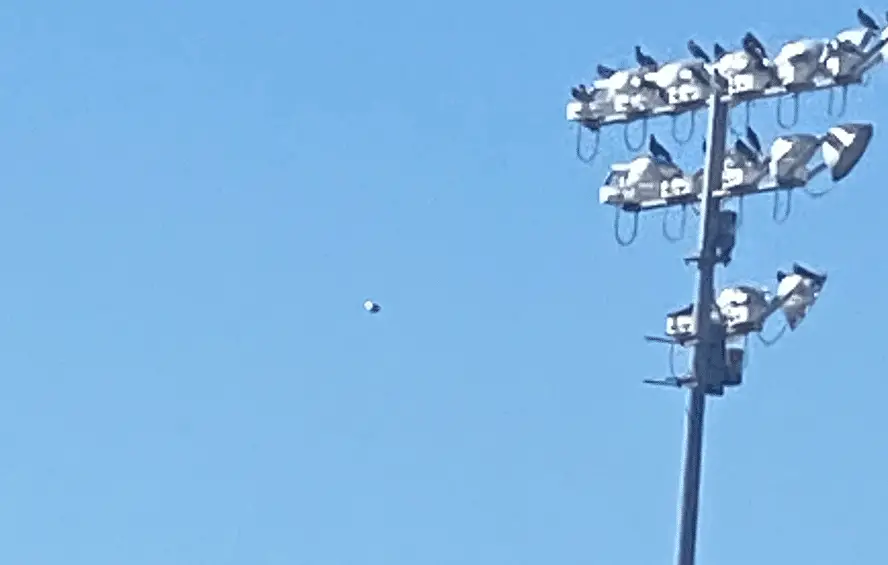
Daytime UFO video: Really fast metal object over Frisco, Texas 22-Oct-2020
This fast metal object or sphere was filmed in the sky above Frisco in Texas on 22nd October 2020.
Witness report:
I was at a stop light and looked up to see a metal sphere shape moving right under the clouds in a fast steady direction-the object seemed to have a green light coming from it whether it be an aura or steady lights I can’t say, I just know I noticed it being a metal ball and there was green on it or around it shining. I tried to video it but my video didn’t record it and I almost got in a wreck so I had to move on and pulled over and when I looked back up it was gone! Later in the day I kept looking up obsessively to try and spot it again and saw a white glowing orb just hanging out in the sky above me and I was able to film that however that wasn’t nearly as exciting as seeing what I saw at the stoplight but regardless both sightings by me in one day! So my video is of second sighting with the basic white glowing orb but not the cool sphere unfortunately. I am also attaching a video I took a few weeks ago that may or may not have been a silver balloon-don’t know.
Don’t forget to follow us on Youtube for the latest UFO videos.
When you’re a big pop star, you can say whatever you want these days and it will make the news. Demi Lovato just said she’s seen UFOs and communicated with aliens and the former Barney & Friends cast member is getting more attention than she ever received singing along with the annoying, over-stuffed purple dinosaur. But … is her close encounter overstuffed as well due to our celebrity-worshiping media and culture?
ddlovato The past few days I’ve spent in Joshua Tree with a small group of loved ones and @dr.steven.greer and his CE5 team. Over the past couple months I have dug deep into the science of consciousness and experienced not only peace and serenity like I’ve never known but I also have witnessed the most incredibly profound sightings both in the sky as well as feet away from me.
If you want to see UFOs, Joshua Tree National Park is a well-known place to spot them, with sightings dating back to the 1950s. Keith Richards went there in the 1970s with fellow musician Gram Parsons and some LSD to look for UFOs. (They didn’t see any that he remembers, but who knows – it’s Keith Richards!) Lovato didn’t go to Joshua Tree with LSD – she took a more reliable aid … Dr. Steven Greer, the well-known ufologist, disclosure-seeker, meditator and ET communicator. Lovato obviously paid for the privilege to be accompanied by Greer and she shows the fruits of her investment – photos and videos on Instagram.
“This is just some of the evidence from under the stars in the desert sky that can no longer be ignored and must be shared immediately.”
OK, we did the sharing part. Lovato also says we should download Greer’s CE5 app which she claims “will teach you the protocols to connect to life form beyond our planet!!” (her exclamations). Will you see (for a fee) the same orbs and lights she did out in the desert? Well, it seems that’s up to you.
“Ps, if it doesn’t happen on the first try – keep trying – it took me several sessions to tap into a deep enough level of meditation to make contact!”
Yes, just like Keith and Gram, Demi needed an altered form of consciousness to communicate with the ETs allegedly controlling her sighting. Lovato plugs meditation (as does Greer) and uses this as an opportunity to rally her followers to pressure government leaders to disclose their UFO and ET files and to “change our destructive habits destroying our planet” — both noble causes that the people (at least in the U.S.) are having frustratingly difficult times accomplishing. Her advice on meditation and ET communications applies here – keep trying on both counts.
Is Demi Lovato trying to get over her breakup with Max Ehrich, promote her latest recordings and acting gigs, advertise for Steven Greer, encourage meditation, reveal her UFO sightings and alien contacts, or all of the above? With the amount of criticism Tom DeLonge gets for the money-making side of his UFO and disclosure projects, it’s a fair question to ask Lovato and any other celebrities in similar situations. In Lovato’s defense, she has a lifetime of commitments to many good causes and meditation – both personal and mass – is deemed beneficial to many by many.
As for the other side of the experience she had with Steven Greer in Joshua Tree National Park, this is not Lovato’s first UFO revelation – in 2016, she told Elle magazine she had seen a “worm UFO” and in 2014 she admitted on a late night show that she believes aliens are real. Those are all interesting, but do they and the images and experiences she shared on Instagram convince you that she finally had a CE5 with real ETs?
Let’s hope Demi Lovato has more of these encounters, collects better evidence and uses her celebrity status to reveal it and push for disclosure.
A couple of days ago I wrote an article here at Mysterious Universe on the sensational and over the top story of the “alien underground base” at Dulce, New Mexico. You might think a story like that couldn’t be topped in the unlikely stakes. You would be very wrong. Check out the following. It was in the late 1980s when Ufologist Leonard Stringfield– still highly active in Ufology at the time – received the astonishing and terrible “facts” concerning an incident which supposedly occurred in early 1972, in Tong Li Sap, Cambodia, which is situated in south-east Asia, and when the Vietnam War was still raging. The story is told in Stringfield’s UFO Crash / Retrievals: The Inner Sanctum, which was self-published in July 1991. A group of expert marksmen were secretly and silently parachuted in late one night to an area that bordered closely on North Vietnam. The operation was a vitally important one: to take out a North Vietnamese facility that, U.S. Intelligence had been able to deduce, was clandestinely listening in on top secret conversations between high-ranking American personnel in South Vietnam. The team camped down for the night, fully prepared to make a full assault on the North Vietnamese team as dawn broke. It never happened. Rather, it didn’t happen the way that it was envisaged. The group made a skillful and stealthy approach on the area, using the dense foliage for cover. Only to find to their terror that something unearthly had changed the situation – and drastically so, too.
As the team got closer to the area in which the North Vietnamese unit was hunkered down, they suddenly found themselves confronted by a large, ball-like craft that sat atop three, sturdy, metallic legs. The craft suddenly began to hum – something which caused instant sickness, dizziness and disorientation on the part of the U.S. troops. Fighting the need to throw up and get out of the area quickly, they were suddenly rooted to the spot by a group of strange-looking, humanoid creatures that, today, we would call “the Greys” of UFO lore. Barely believing what they were seeing, the group was even more horrified by what the creatures were doing: handling various human body parts and placing them into large containers: arms, legs, torsos, heads; the grisly list went on and on. Some were the remains of white people, others were black. Several looked like Vietnamese. Managing to keep the sickness and dizziness under some degree of control, the team crawled forward on their stomachs. The commanding officer silently gave the order to fire: salvos of bullets slammed into bodies of the creatures – who barely seemed fazed by the assault. That is, aside from one, which was said to have been killed by a shot to the head. Several of the U.S. troops lost their lives, and others were left severely burned by the effects of an unknown weapon. The aliens then quickly retreated, loaded the containers into the craft, and vanished into the skies above.
In no time at all, another team was on the scene – “CIA types,” as one of the survivors told Stringfield. All of the surviving men were given certain, mind-altering drugs to try and make them forget the incredible affair – which, apparently, worked (so we’re told…). At least, for a while it worked. In the late 1980s, however, two members of the team started to experience dramatic and nightmarish flashbacks to those events of April 1972, which prompted one of the team to contact as many of the others who could be found. Two were dead, three could not be located, but the rest were able to meet up in August 1988 and decided that the story needing telling. After being approached with the story, Stringfield did exactly that: he published it for anyone and everyone that wanted to see it. Yep, that’s quite a story – and that’s the underestimation of the month. Possibly of the year. And I don’t care how credible the source might have been, let’s see some evidence. If it can’t be found, I suggest that we lay the whole thing to rest.
If you heard that the British government was holding photographs of a UFO taken in 1990 in Scotland that were scheduled to be released to the public in 2021, would you be interested? If you then heard that the British government decided for some undisclosed reason to ignore the rules andlock the photos up for another 50 years, would you be suspicious? Both of those happened a few weeks ago and ufologist Straiph Wilson was curious, then suspicious. Now he’s decided to take action.
A colourised image of the alleged UFO sighting in 1990
“That speaks volumes when the government does that. They’re trying to hide something. It’s one of the most important sightings in Britain, if not in the world. The pictures must be quite significant if we could get the two hillwalkers to come forward.”
Wilson, a former technician at Glasgow University and now an artist, told The Courier he’s been interested in the so-called Calvine incident ever since August 4, 1990, when two men claim to have seen a diamond-shaped UFO and watched it hover for 10 minutes before flying away at a high speed … with a number of military aircraft passing underneath it. One of the witnesses got the holy grail of UFO evidence – six color photographs of the craft in broad daylight – then did his duty as a good British citizen and turned them over to the Ministry of Defense. That was the last anyone ever saw of them … publicly.
“The analysis was nothing short of sensational. The photos hadn’t been faked. They showed a structured craft of unknown origin, unlike any conventional aircraft. There was no fuselage, no wings, no tail, no engines and no markings of any sort.”
Nick Pope saw them while he worked for the MoD and claimed he had a Fox Mulder-style poster of one on his wall … before a superior removed it. Pope is out of the MoD and has long been a proponent of disclosure, but sticks to his code of silence on classified information – even after the government announced last week that the six photos – scheduled to be made public in 2021 – would instead be kept super-classified until 2072. While Pope may be afraid to go against the government, Wilson isn’t … and he hopes the witnesses aren’t either.
“Back then people might have been scared of the government but I don’t think they’re scared now.”
In his interview with The Courier, he reached out to the still unnamed witnesses to come forward once again – assuming they’re still alive. If they are, they may not want to come forward for the same reason the government may not want to release the photos. It could be something personal or embarrassing to them or their families, or it could be something more sinister and dangerous. A threat from the enemy government that owned the UFO? A threat from the ETs that owned it? A fear of mass chaos?
Straiph Wilson took action. He’s hoping the witnesses do the same. Tom Delonge took action. He’s hoping his fans do the same. The only way to gain disclosure is through action. Demand answers from government officials by contacting them directly … again and again. Vote for candidates who support disclosure. Go out and look for UFOs yourself … and be prepared with a charged phone (or a good camera) and a steady grip on a wall (for support) and your nerves (for the courage).
You can’t find the holy grail by watching UFO shows on cable.
If you are one of the Calvine withnesses or know them, Straiph Wilson asks to contact him at info@straiph.co.uk.
Giants, Gods & Dragons: Does the Bible Say They Were Real and That They Are Coming Back?
Giants, Gods, and Dragons is a fresh look at the end of days, drawing on the worldview of the prophets and apostles, who understood that the spirit realm was far more real than we in the modern world believe.
In these programs and the new book, you’ll discover:
The identities of the Four Horsemen of the Apocalypse
Connections between Babel, Babylon, and what’s in your wallet
Three dragons that will walk the earth in the last days
The name of the first spirit to rebel against God (hint: it wasn’t Satan)
Why the “wild beasts” with the deadly Rider on the Pale Horse may be disease-causing viruses
The link between the fallen angels of Genesis and the Titans of Greek mythology
Gog of Magog’s true identity (hint: he’s not Russian)
The historic Nimrod and the true location of Babel
The connection between the reptilian figurines of Sumer and the ancient practice of human head shaping
Why the Jews of Jesus’ day and the early Christian church connected fallen angels and the Antichrist to the giant, dangerous Titans of Greek myth
Historic and prophetic links between the Watchers, Mount Hermon, the prophet Daniel, Jack the Ripper, the destroying angel called Apollyon, and the locust-like things that swarm out of the abyss during the Great Tribulation!
Ancient Alien Artifacts Site Found On Mars! Video, 100% Proof NASA Hides Evidence! UFO Sighting News.
Date of discovery: Oct 21, 2020
Location of discovery: Mars
Guys This is 100% proof that NASA hides evidence of life from the public. I was searching through a Mars photo and found hundreds of ancient artifacts in just one photo, but I focus on about 12 of the best in this video below. So if you really want to see what NASA is hiding from the public and if you think you are ready to learn the truth about aliens, then watch the video I made below. Oh, and please support my effort by subscribing to my Youtube channel.
List of items found seen in video.
1. Old warrior head
2. Jar and cylinder
3. Casket and statue
4. Ancient Temple
5. Demon face at temple
6. Two other temple entrances into the hillside, 3 total.
7. Basketball shoe
8. Circle Face Over Temple entrance.
9. Demon face at temple entrance.
10. Arm with dragon armor on it.
11. Mantle over temple entrance.
12. Warn walking path into rectangle entrance into hill.
This was filmed from Alamo, Nevada on 15th October 2020. What do you think it is?
Witness report:
On Oct 15 2020 I was observing Area 51 at 7:15 pm on a Thursday night. The weather was clear, moonless and steady breeze. The breezed picked up in a hour or so. and became quite windy. At 7:32pm I saw this Hoover UFO just hanging above the mountain terrain of Area 51. There had been previous white explosions going off from behind the mountains. But no noise. I recorded this UFO just sitting in mid air for about 2 minutes. I am having trouble loading the right file for this site. So if you seen my first post it goes along with this post. Its case number is 111909. I am unsure what this is. it could be as simple as a drone.. let me know.. thanks
Witness states: On Oct 15 2020 I was observing Area 51 at 7:15 pm on a Thursday night. The weather was clear, moonless and steady breeze. I than went from long time exposures to video and recorded this UFO in complete darkness.
From Black Mail box looking straight ahead om a SW direction, I recorded this UFO, although I am unsure what this is, it could be as simple as a drone hovering over Area 51, but the weird thing is that it sometimes appears it's two objects.
I drive 240 miles round trip every other week to catch a glimpse of what's going on out there and I recorded many craft flying over Area 51, with my Canon T6. I use long time exposures (13 seconds) (95/300mm) and occasionally video since this camera has a 300 mm zoom.
I also witnessed two white explosions behind the Area 51 mountain range, no sound was heard. The exercises stopped or paused at Area 51.. and it was impossible to get a good steady shot in complete darkness 14 miles away. It seemed like Area 51 closed down when the high winds came in. Mufon report 111909.
As soon as he saw the data, Paul Chodas knew something was strange about the near-Earth object that had been designated 2020 SO.
It should have been just another of the tens of thousands of space rocks that astronomers have spotted breezing through our neighborhood in space. This solar system rubble is mostly harmless, but scientists identify and track all they can in case an object appears to be on a collision course with Earth. As head of NASA's Center for Near-Earth Object Studies at the Jet Propulsion Laboratory in California, Chodas evaluates observations of these objects every day.
And to Chodas, 2020 SO didn't look like an asteroid. Instead, it looked like something much rarer: an abandoned rocket body that had once ferried a spacecraft to the moon.
"Even on the night it was announced, I said, 'I think this is such-and-such rocket stage. That's my guess, all circumstantial evidence points to that,'" Chodas told Space.com in late September.
Now, nearly a month of ongoing observations have confirmed that 2020 SO is moving more like a spent rocket stage than a space rock, buffeted by simply the sunlight hitting it.
"Our latest orbit calculations for this object clearly show that it is being affected by non-gravitational forces, presumably solar radiation pressure," he wrote in an email update, calling those calculations "very strong evidence" that the object is not a space rock.
"An asteroid is not easily pushed around," Chodas told Space.com during his original interview. "But an empty can, like a rocket stage, would be pushed around."
But he didn't need the ongoing observations to suspect that the erstwhile space rock was actually human debris, the spent Centaur upper stage of the rocket that, in 1966, sent a NASA mission calledSurveyor 2to the moon.
Chodas is one of the scientists who have had their eyes peeled for just such an object for more than a decade now. "We've kind of mused about whether [or] when this would this happen," he said. "I've over the years looked at asteroid orbits to see if any of them was in an orbit around the sun that was likely to have been associated with a launch."
And 2020 SO is the best match to date. Two characteristics in particular stand out about the object's journey: its slow speed and how closely its trajectory around the sun aligns with Earth's own orbit. Asteroids don't tend to behave that way — they travel much more quickly and without regard to Earth's own path around the sun.
Instead, Chodas said, 2020 SO's orbit shouts that it's a rocket body from a mission to the moon. "It was clearly not from a launch to Mars or Venus or any of the others because they would be in orbits that would carry them out toward those planets," Chodas said. "It has all of the hallmarks of a lunar mission," he said of the object's orbit.
How is NASA monitoring near-Earth objects?
In particular, 2020 SO looks like an object that was trying to land a spacecraft on the moon — gently, and therefore not particularly fast. "The spacecraft had to slow down, you want to approach the moon fairly slowly," Chodas said. "So the rocket body missed the moon and went into orbit around the sun, just barely." (Meanwhile, the Surveyor 2 spacecraft itself botched the soft landing andcrashed into the lunar surface.)
That's what caused the slow, near-Earth orbit that so stuck out to Chodas. "That's why I was suspicious in the first place that this could be a rocket body, and from a lunar mission," he said.
Chodas was thenable to rewind the orbit, so to speak, to determine when 2020 SO might have left the Earth-moon system. The answer? Late 1966. But the '60s, of course, were the height of the moon-bound space race, and between the U.S. and the Soviet Union, 10 missions launched to the moon that year.
But between the later launch date, the details of the trajectory needed to land softly on the moon rather than simply orbit it, and the relative size of the potential rocket bodies at play, Chodas was soon confident that 2020 SO is actually the Centaur upper stage used to launch NASA's Surveyor 2 mission on Sept. 20, 1966.
That identification isn't confirmed, he noted in his update email, although it's "looking increasingly likely," he wrote. He and his colleagues are still analyzing the forces that would have acted on the object over the past half century.
But the initial data is compelling circumstantial evidence, he said.
"This orbit is known so accurately that I can be very sure of the energy with which the rocket left the moon back in 1966, and the direction and geometry," Chodas said during the original interview. "Everything fits the Surveyor 2 mission — the velocity, the nearness to the moon, the date — everything matches to that launch, and it doesn't match to the other launches."
Email Meghan Bartels at mbartels@space.com or follow her on Twitter @meghanbartels. Follow uson Twitter @Spacedotcom and on Facebook.
Chang'e 6, a backup mission for this year's sample-return launch, is scheduled to head to the moon in 2023 or 2024; Chang'e 7 is planned to launch around 2024 with the dual aims of landing on the south pole of the moon and closely studying the region from orbit. An eighth mission is also in the works for later this decade.
The China National Space Administration's (CNSA) Lunar Exploration and Space Engineering Center last month opened a competitive call to relevant institutes to develop payloads for the five different spacecraft involved in the Chang'e 7 mission. (You can read it here, in Chinese.)
Attached documents show that the complex mission will consist of an orbiter, a relay satellite, a lander, a rover and a "mini flying craft." A Long March 5 rocket will be required to launch the 18,000 lbs. (8,200 kilograms) mission.
China intends for the orbiter to carry a high-resolution stereo mapping camera and synthetic aperture radar, a wide-band infrared spectrum mineral imager, a neutron- and gamma-ray spectrometer and a magnetometer. Together, these payloads will provide new data on the moon's topography, mineralogical composition, radiation environment and magnetosphere.
The relay satellite — a spacecraft similar to the Queqiao communications satellite facilitating the Chang'e 4 mission — will carry a Very Long Baseline Interferometry (VLBI) system for Earth-moon VLBI measurements. This technique involves partnering with a ground-based telescope to effectively create a telescope with the diameter of the distance between the two detectors and thus make detailed radio astronomy observations. Another instrument will study neutral atoms in the Earth's magnetosphere, the tail of which extends well beyond the orbit of the moon.
The mission's lander will carry landing and topography cameras, instruments that are also present on China's Chang'e 3 and 4 landers. Additional payloads will study volatiles and isotopes and measure heat flow through the lunar soil. The lander will also include an extreme ultraviolet camera, a thermometer and a seismograph.
The rover will carry four science payloads. Teams will compete to provide a lunar penetrating radar, a magnetometer, a Raman spectrometer for accurate analysis of mineral composition and a panoramic camera for the vehicle.
Finally, the "mini flying craft" will carry a water-molecule analyzer to take measurements in permanently shadowed areas at the lunar south pole, where the sun's very low elevation angle means the surface inside craters never receives direct sunlight. Scientists propose that water ice in such areas could remain there for a long time, and if such ice is present, it could provide resources for future crewed missions.
Chang'e 7 is part of a new phase of Chinese moon missions that officials announced after Chang'e 4 successfully landed on the far side of the moon in early 2019.
Chang'e 7 will also pave the way for Chang'e 8, another lunar south pole landing mission planned for the late 2020s. That mission will include test technology for using local resources and manufacturing with 3D printing, according to Chinese press statements.
Chang'e 6, a backup to this year's Chang'e 5 lunar sample-return mission, will also launch around 2023 or 2024. If Chang'e 5 is successful, it will be redirected to the south pole.
Scientists Warn That What Killed Past Human Species Could End Us Too
One of the greatest mysteries in science is why there is only one species of humans in the world today. In the past, there were several and they often co-existed for considerable periods. These past human species are modern humans’ older ancestors. Now, researchers believe that they know why our ancestors disappeared. Since they could not adapt to climate change the past human species became extinct, unlike Homo sapiens .
Past Human Species Who Shared the Planet
For millennia there was more than one human species roaming the earth. Indeed, they often interbred with each other, and for this reason modern humans have genes of long-extinct past human species. A group of Italian researchers decided to examine why our ancestors vanished from the face of the earth and why we were the only ones to survive.
The researchers wrote in One Earth that ‘At least six different Homo species populated the World during the latest Pliocene to the Pleistocene.’ They focused on why Homo habilis, Homo ergaster, Homo erectus, Homo heidelbergensis, and Homo neanderthalensis , all went extinct. These species of homo disappeared, the authors of the study are quoted in Science Daily as saying, “despite technological innovations including the use of fire and refined stone tools and the formation of complex social networks.”
Stone tools and simple clothing weren’t enough to save past human species.
The Italian researchers hypothesized that climate change played a key role in the demise of species such as the Neanderthals. All of them had a climatic niche, that is a climate that they had adapted to successfully. H. sapiens were included in the study to determine why they survived, unlike their relatives. Researchers examined an extensive fossil database spanning over a million years. They developed a climate emulator to create a model of past climates and how they changed over 5 million years.
Climate Change and the Extinction of Past Human Species
Using factor analysis, the experts were able to calculate how the changes in temperature and rainfall impacted the climate niche of each species . For three species, H. heidelbergensis, H. erectus, and H. neanderthalensis , they found that ‘their climatic niche widths shrunk suddenly just before they vanished,’ reports One Earth .
This means that the climate changed, making their environment challenging and they could not adapt to the new environment. This contributed greatly to their extinction. In the case of the Neanderthals, this was “made even worse by competition with H. sapiens,” according to Dr. Pasquale Raia of Naples University.
Neanderthals had to compete with Homo sapiens too.
The data from the climatic simulator offers strong evidence that the three extinct species of Homo were not able to cope with rising or cooling temperatures. Raia is quoted by Science Daily as saying that “We were surprised by the regularity of the effect of climate change.”
While there is evidence, based on the geographical distribution of remains, that the archaic humans tried to move to more favorable climates they were not able to adjust to the new conditions. Dr. Raia is quoted by The Independent as saying that:
“It was crystal clear, for the extinct species and them only, that climatic conditions were just too extreme just before extinction and only in that particular moment.”
Why Modern Humans Survived
In One Earth the study’s authors wrote that ‘Our results show striking differences in vulnerability between H. sapiens and the significantly more vulnerable extinct species .’ It appears that our Homo sapiens ancestors were less vulnerable to environmental changes. They had a much wider climatic niche, that is to say, that they could endure and adapt to changing temperatures and environmental conditions. Their cognitive abilities and technologies, such as fire , meant that they could ‘mitigate the effects of climate change on their survival by effectively manipulating their own microclimates or moving rapidly to settle under better conditions’ states One Earth .
However, the study noted that climate change also often had a profound impact on H. sapiens and could again in the future. At a time of rapid climate change the results of the study on early humans’ extinctions are truly relevant. Dr. Raia is quoted by The Independent as saying that “It is worrisome to discover that our ancestors, which were no less impressive in terms of mental power as compared to any other species on Earth, could not resist climate change.”
A Thunderous Warning Message
Unlike in the past, the current changes in the climate are almost certainly linked to human activities. The Independent quotes Dr. Raia as stating that “I personally take this as a thunderous warning message.” The research shows that modern humans are as vulnerable as our ancient extinct relatives, such as the Neanderthals, to climate change . We too may one day be as helpless as they were when their environment changed. Just because we successfully adapted in the past , that does not mean that we can in the future.
Top image: Several past human species went extinct due to climate change.
NASA’s mission to land an unmanned craft on asteroid Bennu was a resounding success, the agency reported earlier today.
Artistic rendering of the asteroid and OSIRIS-REx. Image credits Kevin Gill / Flickr.
The OSIRIS-REx spacecraft successfully completed its “touch-and-go” landing on Tuesday evening, with the confirmation message reaching ground control some 18 minutes after the actual event (due to the distances involved). All in all, the craft took the samples it set out to obtain, although we don’t clearly know how much material the probe recovered right away. We’ll have a rough idea in a few days, and we’ll know for sure after it makes the 200 million-mile trek back home, sometime in 2023.
Engineers at Lockheed Martin celebrated when NASA’s OSIRIS-REx spacecraft touched down and collected a sample of asteroid Bennu on Oct. 20, 2020.
Unmanned success
“Transcendental. I can’t believe we actually pulled this off,” said Dante Lauretta, the mission’s principal investigator, during NASA’s live broadcast of the operation. “The spacecraft did everything it was supposed to do.”
Although it only landed on the asteroid for a few seconds, the team is confident that the probe managed to collect the samples we require. The confirmation signal reached Earth at 6:11 pm ET. The team is now waiting to see if the collected sample is large enough — they were aiming for at least 2.1 ounces (60 grams) of material.
But why would we go to such lengths (pun intended) to get a handful of space dirt? Well, for starters, there is a real possibility that Bennu will crash into Earth sometime in the next century. It’s also been frozen in time from the early days of the Universe, so studying its nature and chemical make-up can help us gain a better idea of how planets formed, and maybe even information about the origins of life.
On a more practical side, Bennu will serve as a case study for future space travel. Such endeavors will need to stop at and mine asteroids for vital resources such as water, which can be split into oxygen to fuel the crew and hydrogen to fuel the engines. Bennu could help us better understand what asteroids to look out for in the future.
“Bennu is one of the most potentially hazardous asteroids, with a non-negligible chance of impacting the Earth at some point in the 22nd century,” Lauretta said in September.
“Part of our science investigation is about understanding its orbital trajectory, refining the impact probability, and documenting its physical and chemical properties so that future generations can develop an impact-mitigation mission, if that’s necessary.”
If all ends well, OSIRIS-REx will be the first-ever mission to return samples of rock from the birth of the solar system, giving researchers the chance to ask (and answer, hopefully) completely new questions about where the Earth and its neighbors come from.
You can watch NASA’s live broadcast of the craft landing on Benuu here:
There have long been tales of mysterious monsters and entities prowling the wilds of our world, and these have become fixtures in the world of cryptozoology, or the search for hidden and undiscovered animals. Yet, there are often strange things just as unusual that lie within the realm of trees and plants, which are every bit as bizarre and inexplicable. At times these can include trees and plants that seem to be very dangerous indeed, and here we will take a detour off into the brush and deep forests of the remote areas of our world, in order to come face to face with deadly cryptid plants.
With many of the deadly mystery plants supposedly encountered by explorers throughout history, we have something with which it is difficult to separate fact from pure myth. This is surely the case with a type of legendary grass common in Irish lore that is known as féar gortach, or literally “Hungry Grass.” Often said to be cursed or under the influence of some sort of entity such as fairies, Hungry Grass was said to cause an insatiable hunger, possibly even starvation, and profound weakness in anyone who walked across it, with the only way to pass safely being to carry some food. In some versions of the tale this grass is somewhat snake-like, and will actively wrap itself around unwary passersby. The grass was also said to corrupt and eat other crops, and was so persistent in lore that it was blamed in part for the Irish Potato Famine of the 1840s. In some areas, such as a place called Hungry Hill, the grass was supposedly so plentiful that it was considered to be a death sentence to venture there, with those who entered never returning.
There are numerous other mythical supposed man-eating plants that are similarly within the shadows of legend, any reality they have uncertain. One of these is the so-called “Man-Eating Lotus of Nubia,” which was an enormous lotus tree renowned for its gorgeous flowers and also known to lure in prey with sweet, succulent fruit, only to lash out to kill and consume them. In an 1881 travelogue called Under the Punkah, explorer Phil Robinson told of how one of these man-eating plants had attacked his uncle. The uncle was reported as having emptied his firearm into the blood-thirsty tree, after which he had hacked away at it with a knife as it grabbed and stabbed at him with vines and branches. He was finally able to barely escape with his life, but one of his native guides had not been so lucky, and was devoured. Robinson described the Man-Eating Lotus:
This awful plant, that rears its splendid death-shade in the central solitude of a Nubian fern forest, sickens by its unwholesome humours all vegetation from its immediate vicinity, and feeds upon the wild beasts that, in the terror of the chase, or the heat of noon, seek the thick shelter of its boughs ; upon the birds that, flitting across the open space, come within the charmed circle of its power, or innocently refresh themselves from the cups of its great waxen flowers ; upon even man himself when, an infrequent prey, the savage seeks its asylum in the storm, or turns from the harsh foot-wounding sword-grass of the glade, to pluck the wondrous fruit that hang plumb down among the wondrous foliage. And such fruit! Glorious golden ovals, great honey drops, swelling by their own weight into pear-shaped translucencies. The foliage glistens with a strange dew, that all day long drips on to the ground below, nurturing a rank growth of grasses, which shoot up in places so high that their spikes of fierce blood-fed green show far up among the deep-tinted foliage of the terrible tree, and, like a jealous body-guard, keep concealed the fearful secret of the charnel-house within, and draw round the black roots of the murderous plant a decent screen of living green.
As similarly deadly flowering tree was known as the “Kumanga Killer Tree,” of Madagascar, which was first heard about by outsiders by the Czech explorer Ivan Mackerle in 1998. Natives claimed that this particular tree was found on only one part of the island and was said to have colorful flowers that exuded an extremely poisonous gas. The natives claimed to know where such a tree was and guided Mackerle to its location. During the trek, the expedition members were so concerned about the poisonous nature of the plant that they actually wore gas masks. When they arrived at the alleged Kumanga Killer Tree, they found no gas spewing flowers, but did find several animal skeletons under the tree. The lack of flowers, the natives explained, was due to the tree not being in bloom. Mackerle also uncovered a story of a former British army officer who allegedly took photographs of a tree on the island that had various animal skeletons strewn about its base. Whether this particular tree was either one of the aforementioned carnivorous trees or something new is uncertain. It is also unknown what became of these photographs, or if indeed they ever existed at all.
Interestingly, Mackerle only chanced upon this supposed discovery because he was in the region looking for yet another legendary man-eating tree, originally known from an old account brought back from the deepest jungles by the German explorer Carl Liche in 1878. The account describes in horrific detail the sacrifice of a village woman of the Mkodo tribe to a giant flesh eating tree. In a letter published in The South Australian Register in 1881, Liche described the unsettling scene that unfolded before him and his cohort, a man only known as Hendrick. Liche writes:
The slender delicate palpi, with the fury of starved serpents, quivered a moment over her head, then as if instinct with demoniac intelligence fastened upon her in sudden coils round and round her neck and arms; then while her awful screams and yet more awful laughter rose wildly to be instantly strangled down again into a gurgling moan, the tendrils one after another, like great green serpents, with brutal energy and infernal rapidity, rose, retracted themselves, and wrapped her about in fold after fold, ever tightening with cruel swiftness and savage tenacity of anacondas fastening upon their prey.
The tree itself was described as being around 8 feet in height, and having an appearance reminiscent of a pineapple, with eight long, pointed leaves that hung down from its top to the ground. The trunk of the tree was topped with a sort of receptacle that contained a thick liquid said to have soporific qualities that drugged potential prey and was believed to be highly addictive. Surrounding this receptacle were long, hairy tendrils with six white palpi resembling tentacles. The tree possessed white, transparent leaves that reminded Liche of the quivering mouthparts of an insect. This one account created great interest in the possibility that such a tree existed, prompting several expeditions to the region looking for it, of which Mackerle’s was one of them. Unfortunately, he was never able to find it, and the Man-Eating Tree of Madagascar is largely confined to folklore.
Courtesy of Karl Shuker and Enigmas Magazine
Yet another supposed killer tree was first described in 1870 by the missionary Reverend Henry Callaway in his book The Religious System of the Amazulu. In the remote wilds of South Africa was said to lurk a tree or bush that the natives called the Umdhlebe, which was said to constantly be surrounded by the skeletons of the animals it consumed. It supposedly killed its prey through an extremely potent toxin, which could kill small animals such as birds instantly, and which had profound effects on humans as well. It was said that anyone approaching the tree would develop bloodshot eyes, fevers, and delirium, and if one were to get too close they would be stricken by a condition in which they would be unable to sleep or even sit down, and would pace relentlessly until they wasted away and died. Interestingly, the only way to cure this mystery sickness was supposedly to use the fruit of the tree to concoct a antidote, a feat which only a few could pull off.
Besides deadly trees, there have also been accounts of other types of predatory legendary plants, and one of the most frightening of these must be a vampiric, blood-drinking vine said to dwell in the deepest swamps of Nicaragua. The vine is referred to by the natives as “The Devil’s Snare,” and is described as being rather like an octopus in appearance. The plant was described by one naturalist by the name of Mr. Dunstan, who came face to face with its horrifying nature while spending two years studying the plants and animals of the region. In the account, Dunstan claimed to have come across the plant while in a swamp region near Lake Nicaragua. Dunstan, who was collecting plant and insect specimens in the area, suddenly heard his dog let out a high pitched whine of terror, pain, or both. Dunstan allegedly hurried to the source of the cries and found his dog enveloped by a network of rope-like roots and fibers. These fibers were of a dark, nearly black hue, and were covered with a thick gum that seemed to exude from some sort of pores. This gum was reportedly extremely adhesive and had a foul, animal odor. The ensnared dog struggled within this fibrous network and was wailing as if in a great deal of pain.
Once the startled Dunstan was able to recover from this gruesome sight, he tried desperately to cut the dog free with his knife, but found the vines to be surprisingly difficult to cut and to his horror found that the plant’s rope-like tendrils actively wrapped and curled themselves around his hands like sinuous fingers. Dunstan was able to extricate the animal only after an enormous amount of effort and he noticed that the grasping vines had left the skin of his hands red and blistered. He also noticed to his amazement that the dog was bloodstained and covered in spots that seemed puckered as if they had been sucked. The dog, though still alive, was extremely disoriented and had difficulty walking. The naturalist told the natives of his encounter and they explained that the vine was well known and feared in the area, warning him to stay well away from it. Undaunted, Dunstan tried to collect more information on the bizarre vine, but found it to be very difficult to approach or handle. However, through his observations he deduced where the plant’s remarkable suction abilities derived from and how it fed. He reported:
The plant’s power of suction is contained within a number of infinitesimal mouths or little suckers, which, ordinarily closed, open for the reception of food. If the substance is animal, the blood is drawn off and the carcass or refuse then dropped. A lump of raw meat being thrown to it, in the short space of five minutes the blood will be thoroughly drunk off and the mass thrown aside. Its voracity is almost beyond belief.
Dunstan also described how the plant was extremely hard to get off once it latched on, and could only be pulled away with a great deal of effort and possibly lost skin. He eventually gave up his studies on the vampire vine and very little else is known about it. Another supposed predatory vine was also reported in 1852 from the impenetrable, uncharted rain forests of interior Africa. According to Beachcombing’s Bizarre History Blog, one newspaper report of the era described the bizarre plant as follows:
According to some Italian journals, a new organised being has been discovered in the interior of Africa, which seems to form an immediate link between vegetable and animal life. This singular production of nature has the shape of a spotted serpent. It drags itself along on the ground; instead of a head, it has a flower, shaped like a bell, which contains a viscous liquid. Flies and other insects, attracted by the smell of the juice, enter into the flower, and are caught by the adhesive matter. The flower then closes, and, remains shut until the prisoners are bruised and transformed into chyle. The indigestible portions, such as the head and the wings, are thrown out by two aspiral openings. The vegetable serpent has a skin resembling leaves, a white and soft flesh, and, instead, of a bony skeleton, a cartilaginous frame filled with yellow marrow. The natives consider it a delicious food.
Finally, we have the strange story of an apparent giant, man-eating flower supposedly native to the forgotten South Pacific islet of El Banoor, a place said to be home to a man-eating flower known only as “The Death Flower.” The flower’s existence is mostly known of through the 1581 account of the explorer Captain Arkwright, who wrote of it in his journals of his travels. He described the plant as basically a huge, brightly colored flower with very large petals. The flower reportedly could release a soporific, sleep inducing aroma, whereupon the victim would lie down upon one of the petals. Once this happened, the flower would close and digest its sleeping prey alive. It seems like a fascinating account, but since it is only one report and the location of El Banoor is not specifically explained, it seems unlikely we will ever know for sure just how much veracity the account holds. Indeed, is there any truth to any of these, or are they tall tales told by travelers and explorers? We may never know for sure, and such accounts will perhaps always instill bafflement and a sense of wonder at what lies out there in the wild places of our world.
When most people think of sweat baths (the non-porn kind), they usually think of the ancient Romans or sometimes certain neighborhoods in New York City. However, archeologists trace the first (and possibly the best) steam rooms back to the Maya civilization which created the hot, steamy rooms in Mesoamerica somewhere around 900 BCE. Hot, steamy rooms in hot, steamy tropical lands? These rooms obviously had more ritual purposes than just cleaning out the pre-Columbian pores. A recent discovery in Guatemala reveals one unusual purpose of these steam rooms, the goddess associated with them and their connection to reptilian births. Wait … what?
“No other structure in Mesoamerica–sweat bath or otherwise–looks like this building. It would seem that when someone enters the front of the structure, they are entering the amphibian goddess who personified the sweat bath.”
You get the idea.
Smithsonian Tropical Research Institute (STRI) archaeologist Ashley Sharpe co-authored a study, published in the Cambridge Archaeological Journal, which described the discovery of this unusual Maya steam bath and the search for its unique purpose. Maya steam baths themselves are not unusual – they generally have vented roofs and a firebox and were often built outside the homes of the elite. However, some have been found inside other buildings and had attached rooms for changing or recovering. Most were built for cleansing the body and the mind, helping heal the sick, talking to the gods or members of the underworld, or for other rituals. This particular one was different.
“Linking notions of birth to reptilian figures, however, is not uncommon among the Classic Maya as they express the verb ‘to birth’ as an upended reptilian mouth glyph. What we see at Xultun is an example where this reptilian goddess, as well as the ideas and myths she embodied, are expressed as a physical place.”
Boston University archaeologist Mary Clarke, main author of the study, reveals in a press release that this bath, discovered at the Xultun archeological site in modern Guatemala and named ‘Los Sapos’, was used for birthing – a tool that midwives believed aided in the process and produced healthier babies. To aid in the process, the steam bath was dedicated to a Classic Maya goddess (name not known but possibly ‘ix.tzutz.sak’) who is depicted “squatting in a toad-like position with legs ornamented with iguanas and cane toads.” The steam bath appears to have been built around 250 CE and used for 300 years before being buried. It appears to have been discovered about 300 years later and put back into use – not for steaming but for making offerings to the reptilian goddess that further solidified the purpose of the original bath.
She sounds hot!
“Because of the iconography on the outside of Los Sapos and because we know it was a sweat bath, we have a rare case where we can associate the offerings–an infant, figurines of women, and frogs and iguanas–with the role the structure played in the community.”
The offerings were found in an area that had been set on fire, so it’s difficult to determine if the infant had been a live sacrifice to the reptilian goddess, but human sacrifices were common to the Maya culture. Based on Clarke’s description of the reptilian goddess, that may have been the case.
“This supernatural figure is a ferocious embodiment of the Earth. When displeased, she may take revenge or withhold the things people need to survive. The offering at Los Sapos was both an attempt to appease this goddess and an act of resilience.”
The fire took place around 900 CE, at the end of the Maya civilization, so the people could have been negotiating with the gods to slow their demise. While the Maya are gone, their steam baths remain in the temazcal – round sweat lodges often run by shamans and popular in Mexico and Central America with tourists (when we could still be tourists … sigh).
Just be careful not to squat in one or you may get a surprise from the reptilian birthing goddess.
The Anunnaki Movie ~ The Mysterious Origins of Humanity
Welcome to The Anunnaki Movie! This is a special edition of The Sumerian Epic which combines Episodes 4 through 7 of the Sumerian Epic into a 2+ hour movie! Along with an additional 15 minutes of bonus footage never before seen in the original episodes!
The film continues the exploration of the Sumerian Mythology, and the curious interpretations around them concerning the Anunnaki, and the legends of human origin.
Even more curious, how these ancient Sumerian and Babylonian myths made their way into the modern world today, in the form of the Bible. Could the “God” of Genesis actually be describing an Anunnaki from an even older Sumerian Myth?
Our Moon is an Ancient Anunnaki's Ark That Arrived About 12,000 Years Ago, Constance Victoria Briggs via Leak Project
Our Moon is an Ancient Anunnaki’s Ark That Arrived About 12,000 Years Ago, Constance Victoria Briggs via Leak Project
The idea that the moon is like a weigh station or “ rest area”/checkpoint makes sense. Maybe that’s why some larger planets have more moons. Kinda like when traveling through borders, you stop in, state your reason for coming or WHO you will be visiting. And humans are also there working along side different races/ beings like a “NWO” type of treaty, plan or mission monitoring all incoming and outgoing traffic, Ashley May
I was about 6 years old when my parents woke me up to watch the moon landing and take off. As they took off, I asked my parents how did they film the take off if there’s no one left on the moon. They got really angry with me because as a kid, I shattered their reality. Dr. Jones
Fleet of UFOs Pass Over Walmart Over Oakland, California, Oct 18, 2020, UFO Sighting News.
Date of sighting: Oct 18, 2020
Location of sighting: Oakland, California, USA
Source: MUFON
For the life of me I just could not see any wings on these objects in the sky, but just like the eyewitness...at first I thought it was a flock of birds, but its not. Guys, this is a lot of UFOs moving fast and low over Oakland, California three days ago. Something big is going on for so many UFO sightings world wide to be occurring. UFOs often try to disguise themselves with cloaks, clouds, fog, impersonating planes and even trying to look like birds. Be warned, sometimes what you see...are what aliens want you to see.
Scott C. Waring
MUFON Report:
A friend and I went on our break at Walmart when we noticed a silver looking object crossing the sky. The sun was reflecting off of it as it spun. At first I thought it was a helium balloon because of the color but then my friend said it stopped moving. I then went to activate my video recorder on my phone but then noticed a v shaped formation of white lights crossing the blue sky. I started recording them instead of the the silver thing. the V shaped suddenly changed into a C shape. as if on command. I knew they were not birds because they were moving too fast and these things didn't have wings flapping. They also stayed in perfect formation even when changing shape. They looked like tic tacs or oval shaped. No sound or exaust.
Guy Catches Long Slow UFO Over Milpitas, California, Oct 20, 2020, UFO Sighting News.
Date of sighting: Oct 20, 2020
Location of sighting: Milpitas, California, USA
Source: MUFON #111905
Here is a fun eyewitness video just in today. A person caught sight of a UFO shooting across the sky very slowly so it must be very high. It almost looks like a comet with its tail, but NASA says no comets will be seen this month. That is one massive object and its slow speed...makes it impossible to be a meteor and its even too slow to be a jet. The UFO was probably headed in the direction of the ocean to get to an under ocean floor alien base. I would love to see NASA attempt to tell us what this one is.
Scott C. Waring - Taiwan
Eyewitness states:
At 09:28:27am I was walking my dog, at Albert Augustine Park in Milpitas, Ca. I observed a fire ball over my head. I started a video on my Android phone. It was traveling south. It looked like my previous case (106239) A Disk disguised as a Meteorite. I recorded until it was not visible with my eyes.
White Disk Recorded over South Korea Oct 11, 2020, UFO Sighting News.
Date of sighting: Oct 11, 2020
Location of sighting: Korea
This is absolutely fantastic! A person in South Korea uses his meditation skills to summon UFOs to him and this time he does it to show his best friend (his dog...so cute) that they are real. I have tried meditation (mentally calling aliens) and it worked the first time with an orb coming 2 meters from my face (camera on tripod focused opposite direction so missed it), but on no other occasions did it work for me. This is 100% proof that sending telepathic messages to UFOs and aliens works! Mentally calling a UFO with kind and thoughtful thoughts...works.
Scott C. Waring - Taiwan
Eyewitness states:
I told him to come to my factory. My friend wanted to meet him, so I recorded a video and sent it to my friend. I recorded it on October 11, 2020 at 9:14 AM. Anyone can communicate with him. It is very common with meditation. I can't say anything more. Because I don't have evidence, it's useless.
I told him to come to my factory. My friend wanted to meet him, so I recorded a video and sent it to my friend. I recorded it on October 11, 2020 at 9:14 AM.
Alien Spacecraft firing huge laser beam caught near the Sun
NASA's Satellite Lasco C2 has transmitted images of an alien spacecraft near the Sun on October 12, 2020. A day later probably the same UFO, has been captured again, but now much further away from the sun.
The UFO which appears to be firing a huge laser beam into space is only visible in a single frame Skip to the slow motion clip at 1.50 minutes if you want to see clear images of the UFO at 1.55 and 2.42 minutes.
It’s known that high energy particles hitting the camera all the time and sometimes it turns out that an unidentified object is just a camera reflection but in recent years enough evidence has been gathered to know that many objects near the sun are not always reflections or high energy particles but huge spacecraft mostly under under intelligent control.
Hiko, NV:UFO Hovers over Area 51 – Video from Black Mail Box15-Oct-2020
This footage was filmed from Hiko, Nevada and it allegedly show a UFO activity in the sky aboveArea 51.
Witness report:
On Thursday Oct 15 2020 at 7:29pm, it was a moonless night with light winds but latter they picked up. I recorded many craft flying over Area 51, with my Canon T6. I use long time exposures (13 seconds) (95/300mm) and occasionally video since this camera has a 300 mm zoom. I am unsure But I think I zoomed into 300 mm to get the video shot and than focused it better. I suspect the 8 craft I caught flying over Area 51 were drones. I also have images of them. I saw a stationary object that appeared to be a drone coming down(digital image 531) and than hoovering(Video 0532). I than went from long time exposures to Video and recorded this UFO for about 2 minutes and 15 seconds. At the 2 minute mark it turned off its lights and never came back.
This video shows the craft hovering, although it some times appears its two crafts.. From Black Mail box looking straight ahead om a SW direction, its over Area 51. I also witnessed two white explosions behind the Area 51 mountain range, no sound was heard. It doesn’t appear I have caught them on my files. I stayed a little bit longer, but the wind picked up,, the exercises stopped or paused at Area 51.. and it was impossible to get a good steady shot in complete darkness 14 miles away. A late model Chevy car pulled up to Black Mail Box, after I was just about done.. I waited for the person to get out.. they never did. I left and went home early that night, you just cant shoot any thing reliable under those conditions. It seemed like Area 51 closed down when the high winds came in. I also reestablished the Black Mail Box back in June 2019.. so far its still there.
Note:
That was a Thursday nite,, it may appear, Bob Lazar Night which was Wednesdays, may have moved to Thursdays. Because I have shot nothing on Wednesdays in last few months. I drive 240 miles round trip every other week to catch a glimpse of what’s going on out there.
Meer van UFO'S of UAP'S, ASTRONOMIE, RUIMTEVAART, ARCHEOLOGIE, OUDHEIDKUNDE, SF-SNUFJES EN ANDERE ESOTERISCHE WETENSCHAPPEN - DE ALLERLAATSTE NIEUWTJES


 UFO Sightings in New York, Ohio, Arizona, Canada, UK


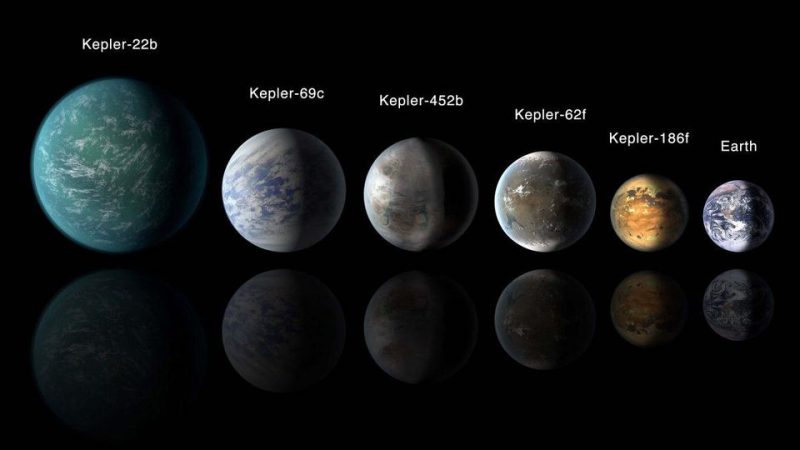


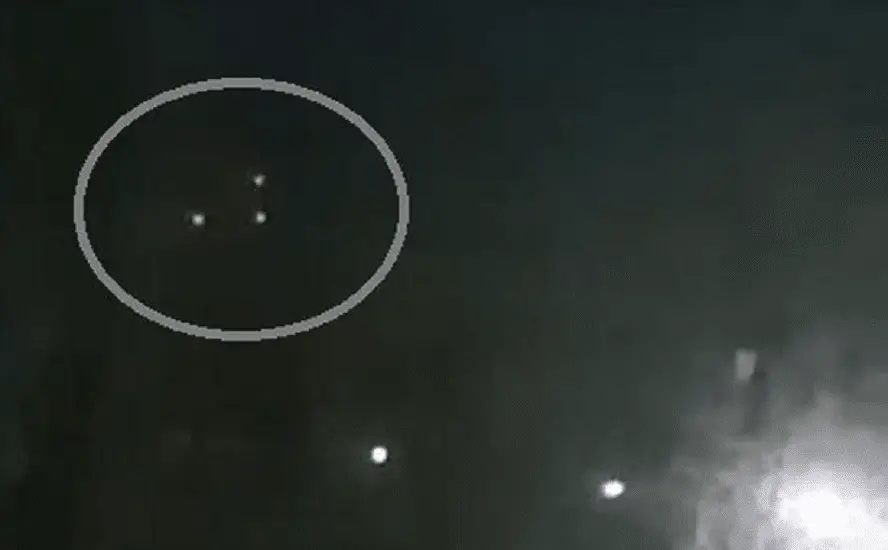


 Early human ancestors were using fire to make tools 300,000...
 Hundreds of Spinosaurus teeth unearthed in ancient river bed...
 Face of an Egyptian boy who died THOUSANDS of years ago is...
 Ancient Egyptian burial shaft with 13 completely sealed...