Ontdek de Fascinerende Wereld van UFO's en UAP's: Jouw Bron voor Onthullende Informatie!
Ben jij ook gefascineerd door het onbekende? Wil je meer weten over UFO's en UAP's, niet alleen in België, maar over de hele wereld? Dan ben je op de juiste plek!
België: Het Kloppend Hart van UFO-onderzoek
In België is BUFON (Belgisch UFO-Netwerk) dé autoriteit op het gebied van UFO-onderzoek. Voor betrouwbare en objectieve informatie over deze intrigerende fenomenen, bezoek je zeker onze Facebook-pagina en deze blog. Maar dat is nog niet alles! Ontdek ook het Belgisch UFO-meldpunt en Caelestia, twee organisaties die diepgaand onderzoek verrichten, al zijn ze soms kritisch of sceptisch.
Nederland: Een Schat aan Informatie
Voor onze Nederlandse buren is er de schitterende website www.ufowijzer.nl, beheerd door Paul Harmans. Deze site biedt een schat aan informatie en artikelen die je niet wilt missen!
Internationaal: MUFON - De Wereldwijde Autoriteit
Neem ook een kijkje bij MUFON (Mutual UFO Network Inc.), een gerenommeerde Amerikaanse UFO-vereniging met afdelingen in de VS en wereldwijd. MUFON is toegewijd aan de wetenschappelijke en analytische studie van het UFO-fenomeen, en hun maandelijkse tijdschrift, The MUFON UFO-Journal, is een must-read voor elke UFO-enthousiasteling. Bezoek hun website op www.mufon.com voor meer informatie.
Samenwerking en Toekomstvisie
Sinds 1 februari 2020 is Pieter niet alleen ex-president van BUFON, maar ook de voormalige nationale directeur van MUFON in Vlaanderen en Nederland. Dit creëert een sterke samenwerking met de Franse MUFON Reseau MUFON/EUROP, wat ons in staat stelt om nog meer waardevolle inzichten te delen.
Let op: Nepprofielen en Nieuwe Groeperingen
Pas op voor een nieuwe groepering die zich ook BUFON noemt, maar geen enkele connectie heeft met onze gevestigde organisatie. Hoewel zij de naam geregistreerd hebben, kunnen ze het rijke verleden en de expertise van onze groep niet evenaren. We wensen hen veel succes, maar we blijven de autoriteit in UFO-onderzoek!
Blijf Op De Hoogte!
Wil jij de laatste nieuwtjes over UFO's, ruimtevaart, archeologie, en meer? Volg ons dan en duik samen met ons in de fascinerende wereld van het onbekende! Sluit je aan bij de gemeenschap van nieuwsgierige geesten die net als jij verlangen naar antwoorden en avonturen in de sterren!
Heb je vragen of wil je meer weten? Aarzel dan niet om contact met ons op te nemen! Samen ontrafelen we het mysterie van de lucht en daarbuiten.
Berichten van 1 november 2021 tot 30 november 2021
What Happened to the Astronauts Who Were Lost in Space for 311 Days?
Mankind has already attained several milestones in the field of modern space exploration. We have put several humans on the surface of the moon, sent unmanned space probes to foreign planets, and are currently even making plans to permanently colonize other celestial bodies.
In view of present and future achievements, however, we should not forget that the foundations of manned space flight were not laid out of pure scientific interest, but rather because of the political turmoil of the time.
In order to prove to their hated adversary that their own nation possessed the most advanced technology of all time, the United States and the Soviet Union showed little regard for casualties during the Cold War.
We'd like to join you in taking a look at a somewhat lesser-known side of the "race to space." We take a look at the stories of some Soviet cosmonauts, which raise the critical question of how much human suffering is acceptable for the sake of technical progress.
Additional:
1. Vladimir Mikhaylovich Komarov (16 March 1927 – 24 April 1967) was a Soviet test pilot, aerospace engineer, and cosmonaut. In October 1964, he commanded Voskhod 1, the first spaceflight to carry more than one crew member. He became the first Soviet cosmonaut to fly in space twice when he was selected as the solo pilot of Soyuz 1, its first crewed test flight. A parachute failure caused his Soyuz capsule to crash into the ground after re-entry on 24 April 1967, making him the first human to die in a space flight.
2. On June 16, 1963, aboard Vostok 6, Soviet Cosmonaut Valentina Tereshkova becomes the first woman to travel into space. After 48 orbits and 71 hours, she returned to earth, having spent more time in space than all U.S. astronauts combined to that date.
But, was Soviet Cosmonaut Valentina Tereshkova the first woman to travel into space?
The Torre Bert Recordings.
The Judica-Cordiglia brothers are two former amateur radio operators who made audio recordings that allegedly supported the conspiracy theory that the Soviet space program had covered up cosmonaut deaths in the 1960s.
On May 19, 1961, the Torre Bert listening station ( Judica-Cordiglia brothers) in northern Italy purportedly picked up a transmission of a woman’s voice, sounding confused and frightened as her craft began to break up upon reentry.
Is this the first woman in space?
The supposed recording of a Soviet space flight in 1961. In it, a Russian woman can be heard complaining about the increasing temperature inside the craft before it is destroyed attempting re-entry.
This was recorded by the Judica-Cordiglia brothers in 1961. It is reportedly one of many transmissions intercepted by the two brothers that prove the existence of the lost cosmonauts.
The following is a translation of what the woman is saying:
five…four…three …two…one…one two…three…four…five… come in… come in… come in… LISTEN…LISTEN! …COME IN! COME IN… COME IN… TALK TO ME! TALK TO ME!… I AM HOT!… I AM HOT! WHAT?… FORTYFIVE?… WHAT?… FORTYFIVE?… FIFTY?… YES…YES…YES… BREATHING… BREATHING… OXYGEN… OXYGEN… I AM HOT… (THIS) ISN’T THIS DANGEROUS?… IT’S ALL… ISN’T THIS DANGEROUS?… IT’S ALL… YES…YES…YES… HOW IS THIS? WHAT?… TALK TO ME!… HOW SHOULD I TRANSMIT? YES…YES…YES… WHAT? OUR TRANSMISSION BEGINS NOW… FORTYONE… THIS WAY… OUR TRANSMISSION BEGINS NOW… FORTYONE… THIS WAY… OUR TRANSMISSION BEGINS NOW… FORTYONE… YES… I FEEL HOT… I FEEL HOT… IT’S ALL… IT’S HOT… I FEEL HOT… I FEEL HOT… I FEEL HOT… … I CAN SEE A FLAME!… WHAT?… I CAN SEE A FLAME!… I CAN SEE A FLAME!… I FEEL HOT… I FEEL HOT… THIRTYTWO… THIRTYTWO… FORTYONE… FORTYONE AM I GOING TO CRASH?… YES…YES… I FEEL HOT!… I FEEL HOT!… I WILL REENTER!… I WILL REENTER… I AM LISTENING!… I FEEL HOT!…
“A race of Venus came to planet Earth millions of years ago”
The Ancient Astronaut theory is being taken more and more seriously by science. But who were these beings and where did they come from? According to a new hypothesis, some of these beings could come from Venus.
According to science, Venus is an inhospitable place.
In recent years, the existence of extraterrestrial life in scientific nuclei has been discussed more , reaching the point of questioning whether we have not been visited for thousands of years. A new theory could show that beings from Venus came to Earth long before humans evolved.
Beings of Venus on Earth?
For decades, NASA has shown various aspects of the physical nature of Venus, thanks to space probes.
Spokesmen for exploration missions have stated that its environment is extremely hostile , with air laden with carbon dioxide and infernal barometric pressure . It also has a heat that exceeds 100 degrees Celsius along with dense clouds of sulfuric acid.
In short, on Venus it would be impossible for life to be born. But a declassified archive from 1989, which is practically unknown , could change our perception of that world.
The document relates to the different contacts that have existed between Earth and Venus and how the inhabitants of the latter came thousands of years ago , and continued to come to “meet” the human being.
They even talk about the “selection” of people they have had over the years, highlighting people from the field, the humble, even scientists and government officials.
This declassified document presents, then, a direct contradiction to what NASA has explained about the inhospitable nature of Venus.
Obviously, many people prefer to trust what science has said and forget everything that changes the official version .
However, there is a question … Why was a document that, supposedly, contradictory, was classified and kept hidden for more than 30 years?
Obviously, theorists around the world have started to make statements, blaming NASA and the elites for hiding information about space.
Venusians have been visiting Earth for thousands of years.
“They want to help humanity”
If scientists, the only ones with the ability to study beyond Earth’s borders, have lied to us in the past, why not distrust their information about Venus?
The possibility of life on Venus completely changes general thinking about our Solar System. This is because we have been led to believe that the galaxy is an immense desert with only one oasis; the earth.
Obviously, there is another possibility; that terrestrial technology is not advanced enough to locate life on that planet.
According to this report, we can understand that the civilization of Venus managed to solve all the problems that afflict humanity today. An example of this are wars, crime, corruption and other issues that do so much damage to society in general.
This is due to the development of peaceful collective values that are based on respect, understanding and love. Through their frequent contacts with different personalities on Earth, Venusians came to offer us help in solving all these issues that prevent us from evolving as humanity.
The problem is that this support is always accompanied by a request for the abandonment of weapons of mass destruction. Reason that makes us understand why this document has been classified and, subsequently, hidden.
If there is a developed civilization on Venus and NASA has hidden it or does not know of its existence, it is something that we will probably never know. However, if we manage to make contact with a civilization that supports us in our evolution, would we react correctly?
The hacker who was able to access NASA and saw alien ships (Video)
One of the most important hackers in history is Gary MacKinnon, better known as Solo, revealed that NASA has alien secrets in its files.
Gary McKinnon
Born in February 66, Gary McKinnon is considered one of the most dangerous alleged hackers . He was accused of robbing 97 computers, both military and NASA between 2001 and 2002.
The most dangerous hacker in history
He was only in charge of reviewing secrets from the Army, Navy, Defense Department, Air Force and the Pentagon.
The costs of tracking and correcting the problems the hacker created are believed to be as high as $ 700,000 .
According to experts, if the extradition to the United States had been carried out, McKinnon would have faced up to 70 years in prison . He even expressed fear many times that he had been sent to Guantánamo.
But what did Solo see? During an interview with the BBC, he claimed that he was able to access military networks thanks to a simple script in the Perl programming language.
He explained that there were many computers with their default passwords. Something that allowed him easy access.
Being a fan of UFOs, I was looking for related information. Supposedly, he found a list of Non-Terrestrial Officers . This includes ship names that were not listed in any official Navy catalog in a ship-to-ship freight movement log .
He also observed a photograph of a cigar-shaped ship that the military. Also from an antigravity propulsion system manufactured by the military through reverse engineering.
MacKinnon’s discovery
This finding is said to be kept hidden because the implementation of this technology would generate free energy , ending dependence on fossil fuels.
In other interviews, the hacker said that among the high officials of the army are extraterrestrial. And it is not ruled out that other governments in the world also have them.
He also discovered that NASA has photographs of alien spacecraft, both on and off the planet.
In March 2002, due to a mistake he made in the schedules, he entered a computer and officials realized that he was being remotely interfered with.
They quickly found his whereabouts and through this event, the hacker’s legal ordeal began. The United States requested the extradition of Gary McKinnon, but it never proceeded.
This case raises many questions. From a logical perspective, Solo could not be blindly believed, especially if these are not backed up with tacit evidence.
If you want to know more about the subject, you can watch the following video from Snakedos.
Scientist invents technology to see multidimensional beings
Daniel Nemes scientist and inventor, originally from Spain but residing in Colombia, since he was 14 years old he became interested in astronomy and science. He was a member of the astronomical group of Madrid, Spain.
He says that the project started when he read an article in a magazine about the Dark Matter of the universe and the multidimensional universe momentarily interested him and called attention so he had the initiative to perform mathematical calculations and optical experiments to be able to capture images of ” the beyond”.
He discovered a method of capturing far superior to infrared, ultraviolet, black light, video camera with TV without antenna, etc. And that method I call ENERGIVISION . I use special lenses, ultrasensitive screens of his invention and above all sunlight. The images that he captures are of unknown origin. He explains that his theory is that they are images of other planes. However he says he has not traveled to other places to expose the invention. He has tried to make known to the scientific community and only answered a scientific body of the USA and in a rude way. The media have ignored and silenced the discovery along with the images captured.
Daniel Nemes says: “The only way I have to publicize my invention and the captures are by Facebook, since 2015 I have posted 1000 photos on my facebook. When I started to publish my images on my social network I had a lot of rejection, it was very hard and even insults towards me, fortunately my images are now more known and when I post on my facebook or in other groups it is rare to receive a disqualification or insult ” .
Judge for yourself the following images, the note is at the discretion of each person.
If you want more information about this technology I suggest you go to the following link: Daniel Nemes
Discussion of unidentified flying objects — or, as they have recently been rebranded, unidentified aerial phenomena(UAP) — was long relegated to society's fringes. The topic was toxic, and many people avoided serious engagement with it out of fear of being branded a crackpot.
But that has begun to change in the past few years. Prominent scientists now openly push for serious study of UFOs, and the U.S. Navy recently drew up new guidelines that encourage pilots to report curious or confusing sky sights.
Read on for a brief history of UFO sightings, potential explanations for them and cultural attitudes toward the phenomenon.
People have seen intriguing or confounding objects in the sky for as long as we've been looking up.
Over the eons, for example, many different cultures have regarded meteors and comets as supernatural phenomena, or at least processed them through a supernatural lens. These dramatic sky lights have been deemed manifestations of a deity's displeasure or interpreted as signs that something wonderful, terrible or simply consequential is soon to happen.
Evidence of this view can be found in the 11th-century Bayeux Tapestry, which chronicles the events leading up to the Norman conquest of England in 1066 CE. The famous Halley's Comet zoomed through the inner solar system that same year, and the 230-foot-long (70 meters) tapestry depicts it blazing ominously above the head of England's King Harold II.
"We see the new king sat on a throne, with nobles to the left and Archbishop Stigand to the right," the Reading Museum wrote in a description of the tapestry's comet scene. (Harold was crowned on Jan. 6, 1066.)
"At the far side, he is cheered on by the masses," the description continued. "On the far right, Halley's Comet appears in the sky. People think it an evil omen and grow terrified. News of the comet is brought to Harold. Beneath him, a ghostly fleet of ships appears in the lower border, a hint of the Norman invasion to come."
Harold was killed by William the Conqueror's troops during the decisive Battle of Hastings, on Oct. 14, 1066.
UFOS: THE EARLY YEARS
The UFO phenomenon as we know it today is much more recent, dating to the era of powered flight. This makes a lot of sense; there weren't nearly as many flying objects to be puzzled by in William the Conqueror's day.
UFOs really took off during World War II, when Allied pilots in both the European and Pacific theaters reported seeing puzzling lights or objects in the sky. They called these curiosities "foo fighters," a term better known today as the band fronted by former Nirvana drummer Dave Grohl.
Then, in June 1947, American businessman and aviator Kenneth Arnold reported seeing nine shiny, mysterious craft zipping through the skies near Washington's Mount Rainier. Some newspaper stories described these UFOs as "flying disks" or "flying saucers," and the latter term soon wormed its way into the public consciousness.
UFO reports surged in the wake of Arnold's sighting, some of them even winding up in the pages of The New York Times. One of the items the Times picked up was the discovery of some seemingly exotic wreckage on a ranch in Lincoln County, New Mexico in 1947.
In July of that year, a public information officer at the (relatively) nearby Roswell Army Air Field described the debris as a "flying disk," briefly igniting a firestorm of confused interest. Army officials quickly retracted that statement, explaining that the material in question was the remains of a crashed weather balloon, and the "Roswell incident" faded into obscurity.
(It came roaring back three decades later, however, revived by UFO enthusiasts who claimed that the U.S. government had found an alien spacecraft in New Mexico, perhaps even with extraterrestrials inside, and covered the whole thing up. Some conspiracists believe the wreckage was spirited to a hush-hush military site in southern Nevada called Area 51, where study of the aliens and their craft continues to this day.)
The U.S. military, concerned that some of these UFOs might pose a threat to national security, soon began to investigate sightings systematically. The Air Force established Project Sign to this end in 1947, then followed that with the similarly short-lived Project Grudge in 1948. The more well-known Project Blue Book got started in 1952 and ran all the way to 1969, examining more than 12,600 UFO reports along the way.
One of the sightings Project Blue Book investigated was that of Betty and Barney Hill, who claimed they were captured and examined by extraterrestrials in rural New Hampshire in September 1961. The couple's account started getting picked up by newspapers in 1965, becoming the first-ever widely publicized alien-abduction story, as History.com noted.
UFO sightings didn't end when Project Blue Book wrapped up, of course; they've kept on rolling in over the decades.
Some of the most famous ones in the past half-century include that of Travis Walton, an Arizona man whose 1975 alien-abduction claim was dramatized in the 1993 film "Fire in the Sky;" the Rendlesham Forest incident, a string of mysterious observations near England's Royal Air Force Woodbridge station in December 1980; and the Phoenix Lights, which confused many Arizonans in March 1997.
And, in November 2004, several U.S. Navy pilots flying off the coast of San Diego reported seeing bizarre craft zooming through the sky, seemingly maneuvering in ways that exceeded the limits of known technology. Other Navy pilots had similar experiences off the U.S. East Coast a decade later, making a series of intriguing observations from June 2014 to March 2015.
The pilots captured infrared video of some of these encounters using their onboard camera systems. Three of these videos went viral in December 2017 when The New York Times published them as part of a blockbuster story about a previously secret military UFO-investigating effort called the Advanced Aerospace Threat Identification Program, or AATIP for short.
Politico and The Washington Post also published deep dives into AATIP, which was first funded at the request of then-Senator Harry Reid (D-Nev.) and appears to have been a driving force in the rebranding of UFOs to UAP, a term with less historical baggage. The program ran from 2007 until a funding phaseout in 2012, though AATIP personnel have said its work continued in an unofficial capacity for a few years after that.
AATIP has a successor, and it was born in the sunlight, comparatively speaking. In the summer of 2020, the Pentagon announced the establishment of the Unidentified Aerial Phenomena Task Force (UAPTF), whose mission is "to detect, analyze and catalog UAPs that could potentially pose a threat to U.S. national security."
We've seen some of the task force's work already. In June 2021, the Office of the Director of National Intelligence (DNI) released a congressionally mandated report outlining what the UAPTF, the FBI and the Office of Naval Intelligence make of 144 recent UFO encounters documented by U.S. government sensors, with a focus on sightings by Navy pilots between November 2004 and March 2021.
The report, a preliminary nine-page assessment that you can read here, found that 18 of the 144 UFOs moved in odd or unexpected ways.
"Some UAP appeared to remain stationary in winds aloft, move against the wind, maneuver abruptly or move at considerable speed, without discernible means of propulsion. In a small number of cases, military aircraft systems processed radio frequency (RF) energy associated with UAP sightings," the report states.
UFOs are undeniably real; people often see things in the sky that they can't identify. But that doesn't necessarily mean there's anything exotic going on.
Alien-abduction stories are more complicated, as they tend to involve more psychological components. But some research suggests that at least some such reports may be explained by lucid dreaming, an odd sleep state in which people can control their dreams.
Project Blue Book got to the bottom of the vast majority of the 12,600 sightings it investigated, ascribing most of them to natural phenomena such as clouds, stars and bright planets. The Air Force researchers could not explain 701 of the encounters, but they concluded that none displayed evidence of otherworldly technology or posed a threat to national security.
The 2021 DNI report evinces less certainty, positively identifying just one of the 144 examined UAP. (That lone demystified object was a large, deflating balloon.) The investigators stressed that more data are needed to understand UAP, which likely have multiple explanations. For example, strange and seemingly inexplicable movement patterns "could be the result of sensor errors, spoofing or observer misperception and require additional rigorous analysis," the report states.
Advanced technology developed by foreign adversaries is another potential cause. If foreign tech is indeed behind some of these sightings, UAP would "represent a national security challenge," the report adds.
This possibility has spurred the U.S. military to take the UAP issue more seriously than ever before. In 2019, for example, the Navy formalized its UFO-reporting guidelines, a revision that could remove much of the stigma that has long been associated with sightings, as Politico noted.
The 2021 DNI assessment does not explicitly mention the alien hypothesis; it's implicitly lumped into a catch-all "other" category of possible explanations. And there are good reasons not to leap to the E.T. conclusion, experts say.
For example, the Navy pilots' sightings in 2004, 2014 and 2015 occurred in coastal waters, which is where you might expect to find advanced reconnaissance craft operated by rival nations, pointed out Seth Shostak, a senior astronomer at the SETI (Search for Extraterrestrial Intelligence) Institute in Mountain View, California. (Flights over the U.S. mainland would be much easier to detect.) And some of the encounters apparently occurred shortly after the Navy jets' radar systems were upgraded, suggesting a glitch of some kind might be responsible.
Indeed, it may be telling that imagery of UFOs, no matter what era it was captured in, tends to depict the objects as fuzzy blobs.
"The sightings always recede to the edge of what technology allows you to do," Shostak told Space.com in 2019. "The aliens are kind of keeping pace with technology."
Common sense also argues for relatively mundane, terrestrial explanations, and not just because of Occam's Razor (the simplest explanation is usually the best one). For example, if some UFOs are indeed alien spacecraft, what exactly are they up to?
"If the aliens are here, you gotta say they're the best houseguests ever, because they never do anything," Shostak said. "They just buzz around. They don't address climate change; they don't steal our molybdenum."
Still, the E.T. idea should not be dismissed or ridiculed, Shostak and others argue. It's not very scientific to eliminate a hypothesis out of hand, after all, and some UAP encounters are very difficult to explain.
For example, the November 2004 Navy sightings off the California coast were made by four pilots in two different jets, and they saw the bizarre, fast-moving object with their own eyes, two of the aviators told the CBS news program "60 Minutes" in 2021. That rules out the possibility that an instrument glitch was responsible in that case. And the same UAP was also documented by radar.
"It's not trivial to say what these things are," Shostak said.
There's a growing willingness to entertain all possible explanations, including the alien hypothesis, for such encounters. For example, in July 2021, Harvard astronomer Avi Loeb and colleagues announced a venture called the Galileo Project, which will look for evidence of extraterrestrial civilizations (ETCs) using a network of new telescope systems around the world.
Among other aims, the Galileo Project will attempt to determine the true nature of UAP and odd bodies such as 'Oumuamua, the first interstellar object ever observed in our own solar system.
'Oumuamua's strangeness led Loeb to suggest that the visitor may be a defunct alien spacecraft. This notion, while still well out of the scientific mainstream, is less outre today than it would have been just a decade or so ago, largely because of the exoplanet revolution.
In recent years, astronomers have learned that roughly 20% of the Milky Way's 200 billion or so stars probably harbor a rocky planet in their "habitable zone," the range of orbital distances in which liquid water could exist on a world's surface. And a world doesn't have to be in the habitable zone to harbor habitable environments. Multiple moons in our own solar system, such as Jupiter's Europa and Saturn's Enceladus, sport huge oceans beneath their icy shells, after all.
"Given the recently discovered abundance of habitable-zone exoplanets, with potential for extraterrestrial life, the Galileo Project is dedicated to the proposition that humans can no longer ignore the possible existence of ETCs," Loeb said in a July 2021 statement.
"Science should not reject potential extraterrestrial explanations because of social stigma or cultural preferences that are not conducive to the scientific method of unbiased, empirical inquiry," he added. "We now must 'dare to look through new telescopes,' both literally and figuratively."
Mike Wall is the author of "Out There" (Grand Central Publishing, 2018; illustrated by Karl Tate), a book about the search for alien life. Follow him on Twitter @michaeldwall. Follow us on Twitter @Spacedotcom or Facebook.
At first glance there doesn’t seem to be anything all that remarkable about the town of Carman, in the Pembina Valley Region of southern Manitoba, Canada. The small agricultural town of around 3,000 is mostly rural, a quiet and serene place surround by a rich prairie agricultural belt as far as the eye can see, where not much ever really happens. It is the sort of place one could drive right on by without paying much attention to it. Yet in the years of 1975 and 1976, this rural hamlet of farms would become the center of one of the strangest and well-witnessed UFO sighting flaps in Canadian history, when the area would be visited by a persistent, mischievous, almost playful UFO that would affectionately come to be known as “Charlie Red Star.”
It seems to be unclear just when exactly the wave of sightings and the overall phenomena started, but it is most often said to have begun in February of 1975, when a farmer was going about his daily chores near his barn when he saw a “red light that looked like a ball” and measuring 14 to 18 inches in diameter swoop down to buzz right over his head. It would apparently emit a searing heat and disorient the farmer for the duration of its appearance, before shooting off into the night. After this, a strange red light or fireball would frequently be seen hovering and bobbing about the area, and the sightings would start to come in at a good clip, sometimes reporting a smallish orb of light that seemed to dart towards people and dart away as if playing, while other reports seem to describe objects more akin to a traditional UFO or “flying saucer,” sometimes even making mention of a larger object with the orbs dancing about it, and some of the reports particularly stand out.
One of these occurred on March 27, 1975, when a young girl was woken in the middle of the night by a piercing screaming noise outside that sounded sort of like a siren. As she sat there in her bed, she claimed that the whole house began to shudder as if an earthquake was happening and she rushed to the window to look outside. As she did, she claimed that she had seen a blazing red ball of light pass her window, flooding the room with light and emanating so much heat that she at first thought that it had set her home ablaze. As it rose up it passed over the house and then flew back in front of her, hovering there in the night and so bright that she would describe it as “looking like the Sun was coming up” before finally whizzing off into the distance, illuminating the ground along the way.
The following month, on April 10, 1975, a couple by the names of Bob and Elaine Diemert were out at a private airfield on their rural farmland property when they were startled to see a large red slow-moving light hovering over the tree line not far away. When they approached, they could see through the light that it was a disk shaped object with a dome attached. The object hovered there for about 5 minutes, immersed in a “red, pulsing light,” before flying straight at them and then suddenly veering off to fly off over the tree tops. After this, the mysterious object began to visit their farm on a nearly nightly basis, to the point that droves of curiosity seekers began showing up every evening to see the light show for themselves, with most witnesses describing it as playful and mischievous. Hovering over them, shooting back and forth, approaching observers, and repeatedly flying over their heads in a breathtaking display of aerial acrobatics, it was quite the sight to behold. It was at around this time that people began referring to the object as “Charlie Red Star,” delighting whole crowds of people. A Royal Canadian Mounted Police (RCMP) Constable by the name of Ian Nicholson also came to the Diemert farm to see the object for himself, describing it as “as an oval red light, surrounded with an X-shaped white halo.” The Constable would
I sat there for two or three minutes just looking at the object, which appeared stationary at the time. Then I decided to get a closer look at it. I drove west…and I can say I was moving pretty fast. As I was going west, the object seemed to be flying in a northeasterly direction. I continued for approximately 12 miles, keeping the object in sight, trying to get somewhat abreast of it so that if the opportunity presented itself, I could have driven north toward it. About 16 miles west of Carman, I stopped the car. I’d seen there was no way I was going to catch up to it. So I just stopped the car and watched the object go out of sight over the tree line on the horizon.
In the meanwhile, the UFO (or UFOs) was being spotted all over the area by people from all walks of life, most often described as a large bright red, domed disc, sometimes with fiery orbs darting about it. Word was getting out about the very strange phenomena in the skies of the area of Carman, and before long people were pouring into the region to get a look, causing traffic jams and making a big fuss. Many of those who saw the phenomena were traditionally reliable witnesses such as law enforcement officers and pilots. One airline pilot by the name of Roger Pitts saw it, and would say of his experience:
It was flying on a 45-degree angle, but it was still flying straight at us. As we watched, it didn’t turn around. It just went directly the other way straight away from us. It just went off into the distance away from us, and a puff of smoke appeared – an odd shape, like a small cloud, and it disappeared in that.
Image by Steve Baxter
One of the strangest events concerning Charlie Red Star allegedly occurred on the night of May 13, 1975, when a TV news crew comprised of a Bill Kendricks, John Berry, and two others arrived in Carman to see if they could try and film whatever Charlie Red Star was. The crew had arrived on May 11, but had seen absolutely nothing of interest except a far-off slow-moving light that they wrote off as an airplane, but on May 13, things would get strange. Kendricks headed out to try again, along with a crew including film technician Alan Kerr and newspaper editor Howard Bennett. This time they would witness a light that rose up over the tree line, flashed a bright light, and then shot straight up into the sky at breathtaking speed. The group then split up and the object then returned, and Bennet would say of what he saw:
I could see this big glow behind some trees less than half a mile away off to the right and ahead of us … It was smoky red, a hazy glow, and to me the thing was higher than the trees, maybe 50 feet tall. It was about 20 feet thick and was sitting at an angle of about 45 degrees. The edges were fuzzy and not sharply defined. It was much like seeing a drive-in movie screen from the side.
The other groups also saw it, describing it as looking “like a blood red Moon” bobbing up and down through the trees, always completely silent. Allen Kerr, the cameraman, was even able to capture a few seconds of footage of the object as it flew overhead, although since it merely shows a red light in the sky it is inconclusive. The team would return to the site a few days later with a radiation meter and claim to have found several spots with radiation anomalies. What was going on here and what did this crew see and film? Sightings would continue on through the summer. On June 4, 1975, a farmer was out in his pasture when he saw a huge, glowing red disk with two domes on top. It was so frightening to him that he tried to leave in his truck but the craft allegedly made his engine die before flying off. On July 1st, a group of three witnesses saw the object hovering and moving about erratically around a grain elevator before landing in a nearby field and then flying off. These witnesses would give a very detailed description of the object, with one of them reporting:
It was about 85 feet in diameter and perfectly round so round it was unbelievable. It was saucer shaped…and the top and bottom travelled in different directions. The bottom one spun…to the right, and the top one spun to the left. There was a center section that didn’t move, about six to eight feet in width, and there were oval shaped windows in it. I’d say that there were about 16 windows in the whole circumference, eight looking on the side we were on.
The very next day, another witness claimed that the object had landed in one of his fields and left behind an oval patch of dead vegetation and “tripod marks.” The sightings went on throughout the summer, and the Carman region was becoming well-known nationwide as a UFO watching hotspot. People from all over Canada and the United States came in large numbers to catch a glimpse, with some even claiming to have chased it in their cars, and there were hundreds of sightings reported throughout the summer. Sightings of Charlie Red Star would continue on through the fall and winter, and well into 1976 before decreasing in frequency and then just stopping altogether to leave the area in bafflement. UFO researcher Grant Cameron would provide the most in-depth account of these events in his book Charlie Red Star: True Reports of one of North America’s Biggest UFO Sightings, where there is a treasure trove of more sightings like these in great detail, and Cameron himself even says he witnessed Charlie Red Star on several occasions. He would wait over 30 years before publishing his research on the strange flap, and would later speculate that whatever it was, it had been drawn to secret nuclear facilities in the region just south of the U.S. and Canadian border. He would find that the missiles being stored there had been removed at the end of 1975, and that this might have a connection with the phenomena stopping.
In the end there is little that we can do to come to terms with all of these sightings. We don’t know what the objects or objects were, or what they wanted. Why did this happen here in this nondescript little place? Where did it come from and what did it want? Was this all hallucinations and a massive hoax, or was it something else? It remains unknown.
Researchers Discovered A Method To Manipulate Orbiting Debris With Spinning Magnets
Eddie Gonzales Jr. – MessageToEagle.com –Space has become a trash heap. According to NASA, there are more than 27,000 pieces of space debris bigger than the size of a softball currently orbiting Earth, and they are traveling at speeds of up to 17,500 mph, fast enough for a small chunk to damage a satellite or spacecraft like an intergalactic cannonball.
A computer-generated image representing the locations, but not relative sizes, of space debris as could be seen from high Earth orbit.
Image credit: NASA
Consequently, cleaning up this space junk will be an important task if agencies are to shoot more rockets and satellites into orbit. University of Utah mechanical engineering professor Jake J. Abbott is leading a team of researchers that has discovered a method to manipulate orbiting debris with spinning magnets. With this technology, robots could one day gently maneuver the scrap to a decaying orbit or further out into space without actually touching it, or they could repair malfunctioning objects to extend their life.
Their research is detailed in the paper, “Dexterous magnetic manipulation of conductive non-magnetic objects,” published this month in the science journal, Nature. The co-authors include U graduate students Lan Pham, Griffin Tabor and Ashkan Pourkand, former graduate student Jacob L. B. Aman, and U School of Computing associate professor Tucker Hermans. You can read a copy of the paper here.
The concept involves moving metallic, non-magnetized objects in space with spinning magnets. When the metallic debris is subjected to a changing magnetic field, electrons circulate within the metal in circular loops, “like when you swirl your cup of coffee and it goes around and around,” says Abbott.
The process turns the piece of debris into essentially an electromagnet that creates torque and force, which can allow you to control where the debris goes without physically grabbing it.
While the idea of using these kinds of magnetic currents to manipulate objects in space is not new, what Abbott and his team have discovered is that using multiple magnetic-field sources in a coordinated fashion allows them to move the objects in six degrees of movement, including rotating them. Before, it was only known how to move them in one degree of movement, like just pushing them.
“What we wanted to do was to manipulate the thing, not just shove it but actually manipulate it like you do on Earth,” he says. “That form of dexterous manipulation has never been done before.”
With this new knowledge, scientists for example could stop a damaged satellite from wildly spinning in order to repair it, something that would not have been possible before.
“You have to take this crazy object floating in space, and you have to get it into a position where it can be manipulated by a robot arm,” Abbott says. “But if it’s spinning out of control, you could break the robot arm doing that, which would just create more debris.”
This method also allows scientists to manipulate objects that are especially fragile. While a robot arm could damage an object because its claw applies force to one part of it, these magnets would apply a gentler force to the entire object so no one section is harmed.
To test their research, the team used a series of magnets to move a copper ball on a plastic raft in a tank of water (the best way to simulate slow-moving objects in microgravity). The magnets moved the sphere not only in a square, but they also rotated the ball.
Abbott says this newly discovered process could be used with a spinning magnet on a robotic arm, a stationary magnet that creates spinning magnetic fields, or a spinning super-conductive electromagnet like those used in MRI scanners.
Abbott believes this principle of manipulating non-magnetic metallic objects with magnets could also have applications beyond the clearing of space debris.
“I’m starting to open my mind to what potential applications there are,” he says. “We have a new way to apply a force to an object for precise alignment without touching it.”
But for now, this idea could immediately be applied to help fix the problem of space junk orbiting the Earth.
“NASA is tracking thousands of space debris the same way that air traffic controllers track aircraft. You have to know where they are because you could accidentally crash into them,” Abbott says. “The U.S. government and the governments of the world know of this problem because there is more and more of this stuff accumulating with each passing day.”
I found a small face on Mars near the NASA rover. The photos were taken today and show a small fossil face with some bone fragments not far from it. The face is more like from the movie Shrek, big rounded, troll like. Its clearly has a lot of human features. Its eye ridges are massive and its nose several times our own. Its upper lip is extending farther than its lower lip. Its cheeks long, its ear behind the eye ridge. It even appears to have a muscle wrinkle at the mouth edge...a smile line from so much smiling perhaps.
I believe this to be an alien fossil. The detail and the uniqueness make it highly unlikely that its a sculpture. The detail is just too good. Also there are thick bone fragments not far from the head. Why is the face so well preserved? Well, if an alien species has more than 3 strands of DNA, it would actually harden the skin, muscles, bones...making them more compact, more difficult to break down in the environment The more strands of DNA the species has, the less it will break down. The face is only about 2 inches or 4cm across. Very small, yet only 1/2 meter from the rover itself...and NASA ignored it.
100% proof that NASA is not doing their job on Mars with the Rovers! NASA has no intention of telling the public the truth. If they did, it would create a race to get there by other countries, to find ancient technology left behind.
Scott C. Waring - Taiwan
NASA put the photos into false color, which hides detail, so I put it back into normal color mode.
A woman is visited by strange men in black suits after an eerie light show. Alaska is a hotbed for UFO sightings, abductions and extraterrestrial encounters. Why are these otherworldly visitors drawn to America’s last frontier? Shocking new evidence and personal testimony from local witnesses shed light on the alien activity.
New Research Rewrites History of Egyptian Mummification Process!
There is new research to show that the ancient Egyptians started using their complex mummification process a good 1000 years before previously believed. This startling revelation will be made in National Geographic’s new season of its documentary series called ‘ Lost Treasures of Egypt ’. The mummy that is behind this discovery was found in 2019, and it was thought to be 1000 years younger than the recent dating analysis has found. If this discovery is reinforced by further evidence, it could lead to a rewriting of history books!
The finding indicates mummification was well understood and used ten centuries before any previous evidence found in Egypt has indicated. The Khuwy mummification was very advanced and involved the use of superior-quality linen bandaging and a lot of excellent resin, reports The Guardian .
More important for some researchers is the fact that the mummy of the high-ranking nobleman called Khuwy is from one of oldest Egyptian tombs ever discovered. Khuwy’s tomb was dated to the Old Kingdom, 2700–2200 BC but the mummy was thought younger due to the mummification processes used and hence the condition of its preservation.
Egyptian archaeologists examining the inside of Khuwy’s tomb, where the earliest example of advanced mummification was discovered and dated to the Old Kingdom period.
The 2019 Saqqara Discovery Rewrites Mummification History
The original discovery of the new Saqqara mummy in 2019 figured in an earlier season of National Geographic’s program. The mummy was found in a very well-appointed tomb in the necropolis at Saqqara. A well-researched article appeared on the Ancient Origins website detailing the fascinating discovery.
The mummy was found while listing the collection of pyramids from the time of Pharaoh Djedkare Isesi. He was the last king of the Fifth Dynasty of Egypt which ruled for approximately 150 years from the early 25th century BC to mid-24th century BC. The Third, Fourth, Fifth and Sixth dynasties are clubbed together as Egypt’s Old Kingdom period . The entrance to the tomb replicated the architecture of royal pyramids from the Fifth Dynasty.
Although the pottery in the pyramid dated to the Old Kingdom, the mummy’s state of preservation and the materials used in the process originally misled the archaeologists involved in the excavation and so they believed he was younger than the artifacts recovered from his tomb by 1,000 years.
However, subsequent dating and analysis of the mummy revealed its age and its advanced mummification process . It is the investigation into this process as well as the discoveries it has led to that will be aired in an episode of the new season of National Geographic’s Lost Treasures show.
A cow being slaughtered as depicted in the nobleman’s tomb where the mummification process was suddenly found to be 1,000 years older than previously believed.
Now Scientists Have To “Rewrite” The Old Kingdom Period
Hieroglyphics found in the Saqqara tomb revealed that the body was that of Khuwy, who was related to the royal family and lived more than 4000 years ago.
As reported in the Guardian, Salima Ikram, a member of the archaeology team who is head of Egyptology at the American University in Cairo, said:
“If this is indeed an Old Kingdom mummy, all books about mummification and the history of the Old Kingdom will need to be revised. This would completely turn our understanding of the evolution of mummificationon its head. The materials used, their origins, and the trade routes associated with them will dramatically impact our understanding of Old Kingdom Egypt.”
She further stated,
“Until now, we had thought that Old Kingdom mummification was relatively simple, with basic desiccation – not always successful – no removal of the brain, and only occasional removal of the internal organs. Indeed, more attention was paid to the exterior appearance of the deceased than the interior. Also, the use of resins is far more limited in the Old Kingdom mummies thus far recorded. This mummy is awash with resins and textiles and gives a completely different impression of mummification. In fact, it is more like mummies found 1,000 years later.”
The embalming process in ancient Egypt involved bathing the body in resins from tree sap which served to preserve the flesh. The cadaver was then wrapped in linen cloth bandages. Khuwy’s body was coated with high-quality resins and wrapped in fine linen bandages . According to Ikram such good-quality linen was seen only around the time of the 21st Dynasty of Egypt. Astonishingly, the 21st Dynasty reigned more than 1000 years after Khuwy lived!
In many ways, our understanding of Egypt’s mummies and mummification can be dramatically revised when an older mummy or tomb is discovered, as Khuwy’s tomb has so clearly proven.
Top image: The tomb of Egyptian nobleman Khuwy, where evidence showed that advanced mummification process knowledge existed 1,000 years earlier than previously thought.
Aerial Survey Reveals Hundreds of Olmec and Maya Sites in Mexico
Researchers from the University of Arizona recently completed a groundbreaking and breathtaking aerial survey of large areas of southern Mexico that were once occupied by Olmec and Maya civilizations, the builders of ancient Mesoamerica’s first great civilizations. The survey was groundbreaking because it was the largest aerial imaging study ever carried out, covering more than 32,000 square miles (84,000 square kilometers) in five southern Mexican states. The results were breathtaking because the researchers were able to identify the remains of 478 Olmec and Maya ceremonial complexes, an extraordinary result that could profoundly impact modern archaeology’s understanding of both cultures.
This massive research project utilized an imaging technology known as LiDAR to detect the Olmec and Maya ritual centers, most of which would have been constructed between the years 1,100 BC and 400 BC. The territories surveyed covered most of ancient Olmec territory and the western Maya lowlands, which on modern maps represents the entire state of Tabasco, southern Veracruz, and smaller sections of Chiapas, Oaxaca, and Campeche.
What was most remarkable about the survey results, which have just been published in the journal Nature Human Behavior , is the close relationship they revealed between Olmec and Maya ceremonial construction practices and themes.
Mexico’s Aguada Fénix archaeological site as seen from the air reveals little about Olmec and Maya similarities and imitations in ritual architectural design. It took a LiDAR survey, see image below, to reveal what was really there!
In 2020, the same team of researchers, led by University of Arizona anthropologist Takeshi Inomata, discovered the oldest and largest Maya ceremonial site ever found, which they dubbed Aguada Fénix .
This long, flattened, rectangular mound is almost one mile (1.6 kilometers) in length and is raised between 33 and 50 feet (10 and 15 meters) off the ground. It features 20 much smaller platforms built around its perimeter, and from the air resembles a long banquet or pool table. Aguada Fénix was constructed between 1,000 BC and 800 BC, in the pre-classical stage of the Maya civilization .
Many of the religious complexes discovered in Maya territory during the latest survey greatly resemble Aguada Fénix in shape and design. Most significantly, all of these sites seem to mimic a newly discovered rectangular ceremonial complex found at San Lorenzo , the oldest and one of the most important Olmec population centers . It is here that the famed colossal heads that depict Olmec rulers were discovered, along with other signs of a complex culture that created the first great Mesoamerican civilization in the second millennium BC.
The newly discovered ceremonial monument at San Lorenzo is 3,300 (1,000 meters) long and 900 feet (275 meters) wide, with 20 raised platforms arranged around its edges. It was clearly a gathering place of some sort, and important religious ceremonies or rituals were almost assuredly held there, the researchers believe.
The monument’s resemblance to Aguada Fénix and the other freshly detected Maya sites is unmistakable. Yet it was constructed two or three centuries earlier, which has led the University of Arizona researchers to speculate that the San Lorenzo site may have acted as a template for Maya ceremonial site construction.
"People always thought San Lorenzo was very unique and different from what came later in terms of site arrangement," Inomata said, in a University of Arizona press release announcing his research team’s discoveries. "But now we show that San Lorenzo is very similar to Aguada Fénix – it has a rectangular plaza flanked by edge platforms. Those features become very clear in LiDAR and are also found at Aguada Fénix, which was built a little bit later. This tells us that San Lorenzo is very important for the beginning of some of these ideas that were later used by the Maya ."
A LiDAR view of the same landscape shown in the previous picture at the Aguada Fénix archaeological site that reveals the Maya building complex and its similarities to Olmec design.
According to Inomata and his colleagues, the Maya would have been imitating Olmec building practices because the two cultures shared elements of the same metaphysical belief system.
“City plans symbolizing cosmologies have long been recognized as a defining element of Mesoamerican civilizations,” they noted in their Nature Human Behavior paper.
After analyzing the orientations of the ancient Olmec and Maya sites carefully, the researchers discovered that most are aligned with the sunrise on certain dates. These choices appear to be related specifically to zenith passage day, when the sun at its highest point is aligned directly overhead the ground level observer, at a 90-degree angle to the horizon.
Zenith passage day varies by latitude and occurs on May 10 in the region surveyed. The researchers found that many of the Maya and Olmec sites were oriented to face the sunrise exactly 40, 60, 80, or 100 days before that date. Mesoamerican calendars are based on the number 20, which would explain why such orientations were chosen. It would also explain why there were 20 small platforms placed around the edges of the larger ceremonial platforms built at San Lorenzo, Aguada Fénix, and other newly discovered Maya sites.
"This means that they were representing cosmological ideas through these ceremonial spaces," Inomata declared. "In this space, people gathered according to this ceremonial calendar."
Zenith passage day was important to Mesoamerican civilizations because it represented the arrival of both maize planting season and the rainy season that would help new crops grow tall and strong. But the coordination of monumental structures with important astronomical alignments was a common practice among virtually all the ancient cultures in the Americas, including the Olmecs, the Maya, the Aztecs, and the Hopewell culture of North America.
One mystery archaeologists and ancient historians have pondered over the years is how much influence Olmec practices and customs had on their Maya neighbors. If San Lorenzo was indeed an inspiration for the Maya ceremonial building practices, it would seem the influence was quite strong, at least in this one vitally important area.
This Olmec style stone face on the Lamanai Mayan temple in Belize is almost identical to the later Maya temple shown in the main image at the top of this article.
This extraordinary new study has enlightened scholars about the deep connections that may have developed between the Olmec and Maya cultures, which existed side-by-side in Mesoamerica for approximately 1,500 years. This research was only possible because of the LiDAR remote-sensing system, which has been a boon to archaeologists seeking to study ruins and artifacts on a broader and more inclusive scale.
LiDAR, which stands for “light detection and ranging,” is an aerial sensing technology that uses pulsed laser reflections to create precise three-dimensional images of the earth’s surface. This methodology can be used to spot ruins that would otherwise be hidden by trees, vegetation, or shallow layers of earth.
"The advantage of LiDAR is that it provides a three-dimensional, birds-eye view of the landscape and modifications to it made by humans - ancient and modern - in the form of building, transportation, agricultural and water control infrastructure," study participant Juan Carlos Fernandez-Diaz, who works at the University of Houston's National Center of Airborne Laser Mapping, told Reuters .
In addition to producing superior imagery, LiDAR technology also gives archaeologists the ability to explore large sections of the land from the air. The process is swift and efficient, making studies like this new one far easier to complete.
This ambitious research project fully leveraged the capabilities of LiDAR, more so than any other study that has been carried out in the area so far. It will likely be used again to explore these regions, as archaeologists and historians continue to search for more information about the great pre-Columbian civilizations that once flourished in ancient Mesoamerica.
Top image: Olmec and Maya architecture have more than a few things in common as has been recently revealed by a massive LiDAR survey project in southern Mexico. The Olmecs came first but the Mayas copied their approach to ritual architecture. This image shows a Maya building in the Lamanai archaeological reserve in Belize. Source: vadim.nefedov / Adobe Stock
Early in his presidency, former president Donald Trump was widely reported to have asked during a hurricane briefing why the military couldn’t drop a nuclear bomb into the eye of a storm, detonate it and weaken or eliminate the hurricane. While Mr. Trump later denied asking the question, the National Oceanic and Atmospheric Administration (NOAA) was concerned enough to post a page explaining why a nuclear bomb would not alter the storm but would release radioactive fallout that would spread quickly with the trade winds already moving the hurricane towards North and Central America. Proving that bad ideas don’t die … they just move to another country, a politician in Spain has proposed bombing a volcano to stop it from erupting. What could possibly go wrong … that hasn’t already been demonstrated with Mentos and Diet Coke?
“Isn’t there a plane that could fly and drop [a bomb]? It arrives, drops and boom. And it sends the lava in a different direction? Maybe it’s madness, but I get the impression from a technological point of view that it should be tried.”
What could possibly go wrong?
The La Cumbre Vieja volcano in Spain’s Canary Islands has been erupting constantly since September 19, 2021, with no sign of letting up. Lava flows have destroyed buildings on the southwest part of La Palma, forcing at least 7,000 island residents to evacuate. At the same time, recent earthquakes – one a magnitude 5.0 – caused the partial collapse of the volcano’s cone and reconfigured the lava flows. Casimiro Curbelo, the president of the La Gomera Municipal Council (La Gomera is another Canary Island), wants to protect his constituents so he recently proposed taking a drastic measure — using military planes to bomb the volcano into submission.
Hasn’t the history of warfare shown this doesn’t work? Actually, the history of bombing volcanoes is a better gauge.
“Hours after bombs were dropped by U.S. Army Air Corps airplanes, Jaggar declared the bombing a success on a radio broadcast. “Our purpose was not to stop the lava flow, but to start it all over again at the source so that it will take a new course,” he said. The bombs were successfully dropped (“direct hits on all targets”), but Jaggar waited to see any effects on the lava flow.”
On December 27, 1935, Thomas A. Jaggar, Director of the Hawaiian Volcano Observatory, ordered bombs dropped on the lava flows of the Humu‘ula volcano flow to redirect them away from the nearby city of Hilo. Jaggar thought the bombs slowed the flow and helped stop it in 1936, but a study in the 1970s concluded it was already dying out and the bombs had no effect.
In 1983, an erupting Mouth Etna in Sicily was threatening a nearby village so engineers placed around 900 pounds (408 kilograms) of explosives, enclosed in water-cooled pipes, next to the flow. The explosion successfully redirected the lava flow to an artificial trench, but it also split another part of the lava stream which had to be redirected manually. While touted as a success, the Mount Etna explosion still caused other problems and was not a true bomb dropping.
What about a giant stopper?
Will Casimiro Curbelo get his wish to have the La Cumbre Vieja volcano bombed into submission? Live Science reports that Spain’s military has not responded to Curbelo’s suggestion, and neither has Spanish Prime Minister Pedro Sanchez. The eruption hasn’t caused any deaths and most of the population lives away from the volcano’s active west side. In other words, it hasn’t affected tourism or cost those in charge any money … yet.
Let’s hope cooler heads prevail and cut the fuse on this bomb of a scheme to stop an active volcano.
Wingless Object, Madison Heights, Michigan Nov 1, 2021, UFO Sighting News.
Date of sighting: November 1, 2021 Location of sighting: Madison Heights, Michigan, USA Source: MUFON
This raw footage is just blowing my mind! Its amazing to watch this white circular craft moving across the sky and yet, it has no wings! It's not a rocket, it's not a jet or helicopter nor drone, so that only leaves Unidentified Flying Object. The US government cannot alway see them on flight radars. The radars used across the world are old style and have had few upgrades in the last three decades. So I believe that its easy for most UFOs to go undetected by radar and thus we don't see a lot of military fighter jets intercepting them.
Scott C. Waring - Taiwan
Eyewitness states:
White object no clouds were near it and there was a plane underneath it far away but the object didn’t have any wings or anything it was just a circle. White circle no wings like an airplane would have it was just a white circle that kept going.
UFO During Sunset, Bluffton, South Carolina Nov 1, 2021, UFO Sighting News.
Date of sighting: Nov 1, 2021 Location of sighting: Bluffton, South Carolina, USA Source: MUFON
Watch this UFO caught during sunset in South Carolina yesterday. The object flashes once as it moves across the sky. The wingless craft is sphere shaped and as big as a bus. It's seen in a cloudless sky and was probably darting to the next cloud to hide within. This white sphere is one of the most common types of UFOs seen world wide, however its usually seen on top of the Rocky Mountains in Denver, Colorado. But this is far from Denver. 100% proof that UFOs are everywhere and not limited by country or borders. All it takes to see one is a little time and patience...but only if you look up from your phones.
UFO Fleet Over Salt Lake City, Utah Oct 31, 2021, Video, UFO Sighting News.
Date of sighting: Oct 31, 2021 Location of sighting: Salt Lake City, Utah, USA Source: MUFON
Some eyewitnesses in Salt Lake City, Utah caught sight of several long objects moving across the sky. They swear its not geese or ducks and the objects were obviously going much too fast for geese in the video. The long objects we are seeing in the video are UFOs, or at least...the front edge of them. You see, UFOs often cloak themselves to hide, and sometimes these cloaks are vulnerable and have glitches, like what we see here. The UFOs from edges are visible because its pushing clouds out of the way, carrying with it some parts of the clouds, compounded with the lights from the city below reflection off of them. Thus...we see the front edges of UFOs above Salt Lake City. The craft itself is much larger since only 4% is showing, 96% of the craft is invisible. Probably scanning the population to measure how much covid, variants are spreading and effecting the public. With winter here...covid only grows stronger.
Scott C. Waring - Taiwan
Eyewitness states:
This happened last night (10-31-2021) at 7:20pm, time of video is at 7:24 less than 1 mile from downtown Salt Lake City I was in my backyard letting one of my dogs go to the bathroom and I had a sudden feeling a star to the west was feeling at me. I looked at it and could feel the connection for a moment, when out of nowhere five of these giant waves of ships (I believe) suddenly started glowing in the sky. I know for a fact it wasn’t geese, as five minutes before a flock flew by and were, as a matter of fact, not glowing orange-yellow. Plus, they were loud with their squawking. After taking in the sight for a moment, and truly feeling so much, I quickly ran inside to get my wife and our friends screaming; “YOU GUYS HAVE TO COME QUICK, THERE’S A FLEET OF UFOS OUTSIDE!! I then proceeded to break my coat rack as I ran back out the door to go see and show everyone. The giant wave that came by was first, probably spanning a mile wide. They seemed to be just above the clouds. Then the second and third came! It was amazing. Truly, cool. It was at this time I realized I didn’t have my phone on me and had to run inside to grab it. By the time I got out to take the video, there was a little of the second to last (just above the clouds) and the last one coming in nice and slow. I also saw two of the ships break off and fly west, (or up?). I have an impression of who they could be, and I’d love to hear your feedback! My intuition told me that was Commander Ashtar’s fleet. I haven’t heard too much about them, but when I think on this I get chills. Sorry for the quality, the day before I dropped my phone on some gravel at work and cracked my lens cover so that’s why some parts are kinda blurry. The darkness in the middle of the video is light interference from the building right next to me, as seen just after.
MOGELIJK VOOR HET EERST EEN PLANEET ONTDEKT DIE ZICH NIET IN ONZE MELKWEG BEVINDT
Vivian Lammerse
Na een zinderende speuractie hebben astronomen mogelijk een exoplaneet ontdekt op maar liefst tientallen miljoenen lichtjaren afstand.
Astronomen speuren al jaren de nachtelijke hemel af, op zoek naar planeten die zich buiten ons zonnestelsel ophouden. En dat werpt zijn vruchten af. Op dit moment zijn er al duizenden planeten rond andere sterren ontdekt. Deze exoplaneten bevinden zich echter allemaal op minder dan 3000 lichtjaar afstand van de aarde. Onderzoekers komen nu echter met spannend nieuws. Want mogelijk hebben ze voor het eerst een planeet buiten ons Melkwegstelsel ontdekt, op maar liefst tientallen miljoenen lichtjaren afstand.
Messier 51 De onderzoekers kwamen de ‘exoplaneet-kandidaat’ op het spoor met behulp van NASA’s Chandra X-ray Observatory. De vermoedelijke planeet bevindt zich in het dubbelstersysteem M51-ULS-1, te vinden in het draaikolkstelsel Messier 51: een interagerend spiraalvormig sterrenstelsel op een afstand van ongeveer 28 miljoen lichtjaar van de Melkweg. Dit is, zoals je je kunt voorstellen, veel te ver weg om een planeet direct waar te nemen. De onderzoekers zochten dan ook naar kleine dipjes in de helderheid van de dubbelster, bekend als de transit-methode. Want dergelijke afnames kunnen namelijk veroorzaakt worden doordat een planeet voorlangs beweegt en tijdelijk een deel van het sterlicht tegenhoudt.
Transit-methode Veel telescopen die jagen op exoplaneten – denk aan de ondertussen gepensioneerde telescoop Kepler en planetenjager Tess – gebruiken de zogenaamde transit-methode. Hierbij wordt de helderheid van sterren langdurig in de gaten gehouden in de hoop dat deze met regelmaat afneemt. Zo’n regelmatige afname in de helderheid van het sterrenlicht kan namelijk wijzen op de aanwezigheid van een planeet die zo af en toe voor de ster langs beweegt en daarbij een deel van het sterrenlicht tegenhoudt. De mate waarin de helderheid van de ster afneemt, vertelt vervolgens meer over de omvang van de planeet; hoe groter de afname, hoe groter ook de straal van de planeet.
In de nieuwe studie zochten de onderzoekers echter niet naar dipjes in optisch licht, maar naar afnames in de helderheid van röntgenstraling. Het bestudeerde dubbelstersysteem M51-ULS-1 bestaat namelijk uit een neutronenster of zwart gat, dat gas aanzuigt van een begeleidende ster. Het materiaal in de buurt van de neutronenster of zwarte gat raakt vervolgens oververhit en gloeit in röntgenstraling.
Röntgenstraling Omdat het gebied dat heldere röntgenstraling produceert klein is, zou een planeet die ervoor langs trekt de meeste of zelfs alle röntgenstraling kunnen tegenhouden. En dat is exact wat de onderzoekers ontdekten. Met behulp van het Chandra-observatorium vonden ze een ongeveer drie uur durende dip in de röntgenhelderheid van de dubbelster in Messier 51. En dat kan dus betekenen dat de dubbelster vergezeld wordt door een planeet. Op basis van verschillende informatie schatten de onderzoekers dat de vermoedelijke planeet ongeveer zo groot is als Saturnus uit ons eigen zonnestelsel en zich in een wijde baan – van ongeveer twee keer de afstand tussen Saturnus en onze zon – rond de neutronenster of zwarte gat bevindt.
*Samengesteld beeld van Messier 51. Het vierkantje geeft het dubbelstersysteem aan waar de vermoedelijke planeet zich mogelijk ophoudt.
Afbeelding: X-ray: NASA/CXC/SAO/R. DiStefano, et al.; Optical: NASA/ESA/STScI/Grendler
Het zijn prikkelende bevindingen. Want het betekent dat onderzoekers nu mogelijk voor het eerst een planeet buiten ons eigen Melkwegstelsel hebben ontdekt. Toch houden ze tegelijkertijd een slag om de arm. Zo benadrukken ze dat er meer onderzoek nodig is om resultaten te verifiëren. En daar kan nog weleens wat tijd overheen gaan. Vanwege de wijdse baan van de planeet, kan het mogelijk nog zo’n 70 jaar duren voordat ie wederom voor zijn sterren langs beweegt en röntgenstraling tegenhoudt. “Om te bevestigen dat we een planeet zien, moeten we waarschijnlijk tientallen jaren wachten om een andere transit te zien,” aldus onderzoeker Via Imara. “En omdat we ook niet precies weten hoe lang het duurt voordat de planeet een baantje heeft voltooid, weten we ook niet wanneer we moeten kijken.”
Is het wel een planeet? Ook is het nog niet helemaal zeker of het dipje in de röntgenhelderheid daadwerkelijk door een planeet is veroorzaakt. Al lijkt een alternatieve verklaring zoals een stofwolk ook onwaarschijnlijk. Tot nu toe lijken alle aanwijzingen nog altijd in de richting van een planeet te wijzen. “We weten dat we een opwindende en gewaagde bewering doen,” zegt onderzoeker Julia Berndtsson. “We verwachten dan ook dat andere astronomen er heel zorgvuldig naar zullen kijken. Maar we denken dat we een sterk argument hebben.”
Mocht er inderdaad een planeet in het dubbelstersysteem te vinden zijn, dan heeft deze waarschijnlijk een behoorlijk tumultueuze geschiedenis achter de rug. Zo is ie in dat geval waarschijnlijk getuige geweest van de gewelddadige supernova-explosie waar de neutronenster of het zwarte gat uit is gevormd. Ook de toekomst ziet er turbulent uit. Op een gegeven moment zal namelijk de begeleidende ster tevens als supernova kunnen exploderen. En dat betekent dat de vermoedelijke planeet wederom gebombardeerd zal worden met extreem hoge stralingsniveaus.
NEGEN FEITJES OVER HET VRIJWEL ONVERWOESTBARE BEERDIERTJE
Caroline Kraaijvanger
Piepklein, maar niet klein te krijgen. Dat is het beerdiertje in een notendop. Maar er valt nog zoveel meer over te vertellen.
En dat doen we dit weekend aan de hand van negen feitjes waarmee je op een verjaardag of bij de koffiemachine op het werk moeiteloos de blits kan maken. Want beerdiertjes zijn hartstikke cool!
1. Klein en overal te vinden (ook in Nederland!) Beerdiertjes – ook wel waterberen genoemd – zijn heel kleine, meercellige organismen. Ze kunnen tot een halve millimeter lang worden en hebben acht pootjes, waarmee ze kunnen lopen én rennen. Hét beerdiertje bestaat niet; er zijn meer dan 1000 soorten beerdiertjes bekend! En die leven in uiteenlopende omgevingen; van bergtoppen tot diepe zeeën en van tropische regenwouden tot op Antarctica. Ook in Nederland komen beerdiertjes voor. Zo zijn ze bijvoorbeeld aangetroffen op de stranden langs de Oosterschelde.
2. Beerdiertjes zijn stokoud Zo’n 66 miljoen jaar geleden sloeg op aarde een planetoïde in. Het bleek de laatste nagel aan de doodskist van de dinosaurussen en tal van andere soorten te zijn. Het is misschien wel de bekendste massa-extinctie die de aarde trof. En hoe catastrofaal de gevolgen ook waren; het beerdiertje heeft deze massa-extinctie overleefd. Net als de vier(!) grote massa-extincties daarvoor, want wetenschappers denken dat het beerdiertje al zo’n 540 miljoen jaar op aarde voorkomt.
3. Het beerdiertje gaat waarschijnlijk nog wel even mee Hoewel de beerdiertjes al heel wat jaren meegaan en menig catastrofe het hoofd hebben weten te bieden, denken veel onderzoekers dat er voor de minuscule beestjes nog veel meer in het verschiet zit. Zo suggereerde een studie in 2017 dat eigenlijk alleen het sterven van de zon tot het uitsterven van de taaie beerdiertjes zou kunnen leiden. Het zou betekenen dat beerdiertjes nog zo’n 10 miljard jaar voor de boeg hebben.
4. Kou is geen probleem… Waar wij bij een paar graden vorst al flink beginnen te klagen, geven beerdiertjes geen krimp. Sterker nog: je kunt ze jaren invriezen en er vervolgens als je ze ontdooit, getuige van zijn hoe ze hun leven moeiteloos weer oppakken! Dat ontdekten onderzoekers een jaar of vijf geleden, toen ze beerdiertjes aantroffen in Antarctisch mos dat 30 jaar eerder voor onderzoeksdoeleinden was ingevroren. Ze ontdooiden twee beerdiertjes en zagen vervolgens hoe één ervan zijn in 1983 stilgelegde leven weer succesvol oppakte en een week of zes na zijn ontdooiing zelfs eitjes legde die ook nog eens bijna allemaal uitkwamen. Ook een eitje dat in het mos werd aangetroffen, kwam na ontdooiing – en dus met zo’n 30 jaar vertraging – uit en het beerdiertje dat daar uit kwam zetten, plantte zich ook weer succesvol voort.
Een beerdiertje. Afbeelding: Schokraie E, Warnken U, Hotz-Wagenblatt A, Grohme MA, Hengherr S, et al. (2012)
5. …en gevaarlijke UV-straling ook niet Beerdiertjes hebben in naam der wetenschap al heel wat te verduren gekregen. Zo werden ze vorig jaar bijvoorbeeld nog onder een kiemdodende ultraviolette lamp gelegd. Doel was om te achterhalen hoeveel UV-straling verschillende soorten beerdiertjes konden hebben. De meeste beerdiertjes bleken behoorlijk taai te zijn. Een dosis die voor bacteriën en rondwormen al na vijf minuutjes fataal is – bleek de meeste beerdiertjes pas na 24 uur fataal te worden. En één van de onderzochte soorten gaf helemaal geen krimp, waarop de onderzoekers besloten de dosis ultraviolet licht vier keer te verhogen. En ook deze keer gaven de mysterieuze beerdiertjes zich niet zomaar gewonnen. Ongeveer zestig procent van deze kranige beerdiertjes leefde na toetakeling nog zeker een maand door!
6. Je kunt ze ook afschieten Alsof dat experiment nog niet heftig genoeg was, gingen wetenschappers – op jacht naar de grenzen van het beerdiertje – eerder dit jaar nog een stap verder. Ze stopten bevroren beerdiertjes in een geladen geweer en schoten ze vervolgens met hoge snelheid af. Het onderzoek wees uit dat beerdiertjes inslagen tot ongeveer 900 meter per seconde kunnen overleven. “Het zijn taaie beestjes,” zo concludeerde onderzoeker Mark Butchell, die middels het experiment wilde vaststellen of beerdiertjes die tijdens een inslag op aarde samen met gesteente naar de maan worden geslingerd, dat kunnen navertellen. De experimenten suggereren dat het onder bepaalde omstandigheden denkbaar is. Of ze vervolgens ook van de maan hun thuis zouden kunnen maken, is trouwens dan weer heel twijfelachtig.
7. Of uit laten drogen Wanneer wij enkele dagen op rij niet drinken, raken we uitgedroogd. En dat is niet best. Het beerdiertje is een stuk minder afhankelijk van vocht; experimenten wijzen uit dat het diertje tot wel tien jaar zonder water kan! Zodra ze minder dan vijf procent van hun normale hoeveelheid water herbergen, gaan ze in standby-modus en maken en passant eiwitten aan die delen van hun lichaam in een soort glasachtige substantie veranderen en er zo voor zorgen dat hun cellen tegen uitdroging beschermd zijn. En als ze dan toch weer nattigheid voelen? Dan kunnen ze – zelfs als ze jaren op water gewacht hebben – in twintig minuten tijd weer tot leven komen.
8. Ze zijn al in de ruimte geweest Ruimtevaarder worden: wie droomt daar nu niet van? Voor sommige beerdiertjes is die droom al werkelijkheid geworden. In 2007 schoot ESA een bonte verzameling beerdiertjes de ruimte in. “Onze belangrijkste ontdekking is dat het vacuüm in de ruimte – en daarmee gepaard gaande uitdroging – en kosmische straling geen probleem waren voor beerdiertjes,” zo concludeerde onderzoeker Ingemar Jönsson in 2008. Hetzelfde gold voor de extreme kou waaraan de beerdiertjes in de ruimte werden blootgesteld. In de jaren erna volgden nog meer experimenten in de ruimte en stuk voor stuk bevestigden ze dat het beerdiertje over het algemeen niet erg onder de indruk is van de daar geldende omstandigheden. Wetenschappers kunnen dat nog altijd lastig verklaren en daarom zijn eerder dit jaar beerdiertjes naar het internationale ruimtestation gestuurd. Tijdens experimenten wordt gekeken wat er met de genen van beerdiertjes gebeurt wanneer ze in de ruimte vertoeven. Welke genen worden uitgezet of juist geactiveerd? En wat gebeurt er dan? Onderzoekers hopen zo meer inzicht te krijgen in de overlevingsstrategieën van het beerdiertje en daar kunnen toekomstige astronauten dan misschien weer hun voordeel mee doen. Zo kan het leiden tot nieuwe manieren om biologische materialen – zoals voedsel, maar ook medicijnen – beter te wapenen tegen extreme temperaturen, uitdroging en kosmische straling.
Naar de maan Dat de piepkleine beestjes naar het ISS zijn afgereisd en daar weleens een grote bijdrage kunnen leveren aan toekomstige ruimtemissies is al heel indrukwekkend. Maar er zijn beerdiertjes die het nog verder geschopt hebben en helemaal naar de maan zijn gevlogen. Deze beerdiertjes liftten in 2019 mee met maanlander Beresheet. De lander crashte helaas op het maanoppervlak, maar de beerdiertjes hebben de crash misschien wel overleefd. Het is echter uitgesloten dat ze de maan as we speak aan het koloniseren zijn; in de lander bevonden zich uitgedroogde beerdiertjes die alleen weer actief kunnen worden als ze aan behoorlijke hoeveelheden water worden blootgesteld en die zijn op de maan niet voorhanden.
9. Ze leggen enorme drollen (relatief gezien dan) Beerdiertjes mogen dan veel weghebben van superhelden; in bepaalde opzichten zijn ze ook weer net als wij. Zo moeten ze soms ook gewoon poepen. Maar de beerdiertjes zouden geen beerdiertjes zijn als ze ook op dat gebied niet de show zouden stelen. Zo heeft onderzoek uitgewezen dat de piepkleine beestjes enorme drollen fabriceren die soms bijna net zo groot zijn als zijzelf! En jawel, daar zijn beelden van. Klik!
A skull of a new species of ancient human has been discovered in Africa that experts believe was a direct ancestor of modern humans.
The new species has been named Homo bodoensis, and lived during the Middle Pleistocene, around 500,000 years ago.
Researchers from the University of Winnipeg hope the discovery will bring some clarity to this era, during which human evolution is poorly understood.
Dr Mirjana Roksandic, who led the study, said: 'Talking about human evolution during this time period became impossible due to the lack of proper terminology that acknowledges human geographic variation.'
A new species of ancient human has been discovered in Africa that experts believe was a direct ancestor of modern humans
(artist's impression pictured)
In their new analysis, the researchers suggest that a skull found in Bodo D'ar, Ethiopia belongs to neither H. heidelbergensis or H. rhodesiensis, but instead, is a new species entirely
What do we know about the new species?
In honour of the location in which the skull was discovered, the researchers have named the species H. bodoensis.
While little is know about the new species yet, the researchers believe that H. bodoensis had a short, stocky body adapted to conserve heat in colder climates.
Males were likely about 5 ft 9 in tall and weighed almost 10 stone, while females averaged 5 ft 2 in (157 cm) and around 8 stone.
The species went extinct around 200,000 years ago - long before modern humans migrated out of Africa.
In the study, the researchers reassessed existing fossils from Africa and Eurasia dating back to the Middle Pleistocene period.
Traditionally, these fossils have been identified as either Homo heidelbergensis or Homo rhodesiensis.
However, recent DNA evidence has shown that some fossils in Europe identified as H. heidelbergensis were actually early Neanderthals.
Meanwhile, African fossils from this period have previously been identified as both H. heidelbergensis and H. rhodesiensis, confusing things even further.
In their new analysis, the researchers suggest that a skull found in Bodo D'ar, Ethiopia belongs to neither H. heidelbergensis or H. rhodesiensis, but instead, is a new species entirely.
In honour of the location in which the skull was discovered, the researchers have named the species H. bodoensis.
While little is know about the new species yet, the researchers believe that H. bodoensis had a short, stocky body adapted to conserve heat in colder climates.
Males were likely about 5 ft 9 in tall and weighed almost 10 stone, while females averaged 5 ft 2 in (157 cm) and around 8 stone.
While little is know about the new species yet, the researchers believe that H. bodoensis had a short, stocky body adapted to conserve heat in colder climates
The species went extinct around 200,000 years ago - long before modern humans migrated out of Africa.
Going forwards, most Middle Pleistocene humans from Africa and some from Southeast Europe will be classified as H. bodoensis, while many from the latter continent will be reclassified as Neanderthals,
Predrag Radović, an author of the study, said: 'Terms need to be clear in science, to facilitate communication. They should not be treated as absolute when they contradict the fossil record.'
The team hopes the findings will help to 'cut the Gordion knot' and allow clearer understanding of the Middle Pleistocene.
Dr Roksandic added: 'Naming a new species is a big deal, as the International Commission on Zoological Nomenclature allows name changes only under very strictly defined rules.
'We are confident that this one will stick around for a long time, a new taxon name will live only if other researchers use it.'
In honour of the location in which the skull was discovered — Bodo D'ar — the researchers have named the species H. bodoensis
WHEN DID HUMAN ANCESTORS FIRST EMERGE?
The timeline of human evolution can be traced back millions of years. Experts estimate that the family tree goes as such:
55 million years ago - First primitive primates evolve
15 million years ago - Hominidae (great apes) evolve from the ancestors of the gibbon
7 million years ago - First gorillas evolve. Later, chimp and human lineages diverge
A recreation of a Neanderthal man is pictured
5.5 million years ago - Ardipithecus, early 'proto-human' shares traits with chimps and gorillas
4 million years ago - Ape like early humans, the Australopithecines appeared. They had brains no larger than a chimpanzee's but other more human like features
3.9-2.9 million years ago - Australoipithecus afarensis lived in Africa.
2.7 million years ago - Paranthropus, lived in woods and had massive jaws for chewing
2.6 million years ago - Hand axes become the first major technological innovation
2.3 million years ago - Homo habilis first thought to have appeared in Africa
1.85 million years ago - First 'modern' hand emerges
1.8 million years ago - Homo ergaster begins to appear in fossil record
800,000 years ago- Early humans control fire and create hearths. Brain size increases rapidly
400,000 years ago - Neanderthals first begin to appear and spread across Europe and Asia
300,000 to 200,000 years ago - Homo sapiens - modern humans - appear in Africa
50,000 to 40,000 years ago - Modern humans reach Europe
A year after the apparent first sighting of what is very likely to be the Air Force’s so-called ‘RQ-180’ very stealthy flying-wing surveillance aircraft above the Mojave Desert, what looks like the very same aircraft has now been photographed over Area 51, the clandestine flight test center deep within the Nevada Test and Training Range. While we still don’t know for absolute certain the details surrounding this craft, or even its official designation, the latest appearance follows a previous sighting over the Philippines in September that The War Zone was first to report and suggests perhaps that the secret drone is now edging toward a more operational, and possibly even less clandestine, status.
The latest photo of the purported RQ-180, which has all the hallmarks of a high-altitude, long-endurance type with obvious stealthy characteristics, was posted on October 31 by our friends over at the Dreamlandresort.com website, maintained by Joerg Arnu. He was on the scene and described how the sighting unfolded:
“A friend who wishes to remain anonymous and I were at the Groom Lake Road gate yesterday. I heard a faint aircraft noise and noticed a contrail straight above us, inside the Area 51 restricted airspace, heading roughly SSW. Through my IS [image stabalized] binoculars, I first thought I was looking at a B-2 until I realized it had a POINTED tail. The B-2 has a serrated tail. My friend took the enclosed photo (two enhanced versions superimposed). It is clearly a twin-engine aircraft.”
Arnu added that the photo was taken with a Canon 20Mpix camera with a 1,600-mm equivalent focal length, and he subsequently estimated that the drone was flying at around 70,000 ft. Of course, that is speculative, as we have little idea about the true dimensions of the craft. It is rumored to have a wingspan of around 120 feet, but that remains totally unverified. The aircraft was leaving two telltale contrails behind it, indicative of a closely-set twin-engine arrangement, exactly as we have seen it before. The shape is also a perfect match, with slender wings and a diamond-like center fuselage area, very much like those of Northrop’s original high-flying Advanced Technology Bomber design and the upcoming B-21 Raider. You can read more about how this configuration is something of a ‘back-to-the-future’ moment for the USAF and Northrop Grumman in this past feature of ours.
DREAMLANDRESORT.COM
The latest sighting of the apparent RQ-180, spotted over Area 51 on October 30.
Joerg thinks the direction of the aircraft was headed suggests it may be operating out of Edwards Air Force Base in California, where we believe that at least some of the RQ-180 operations have migrated, and it may have been making use of some of the capabilities at the clandestine flight test facility located at Area 51, also known as Groom Lake. The secretive base’s DYCOMS facility has the ability to measure the radar signatures of stealthy aircraft in flight for testing and verification purposes. This facility would be a regular waypoint for the RQ-180, including possibly before and after heading out on long-endurance missions.
While Arnu and his associate were watching the RQ-180, a truck hauling an apparent Soviet-era Spoon Rest air-defense early-warning radar emerged from one of the Groom gates and apparently waited at a distance for the pair to leave. While it is unlikely that the radar’s movement was in any way related, it’s interesting, at least, that this activity was taking place at the same time, especially on a Saturday, when the ranges are traditionally quieter. All types of foreign threat sensors and air defense systems are used for development and training purposes out at the NTTR.
DREAMLANDRESORT.COM
A truck that emerged from Groom Lake with an apparent Soviet-made radar system onboard, while the RQ-180 made its appearance overhead.
Whether coincidental or not, it was in October last year that we got our first look at what seems to be the RQ-180. On that occasion, the drone was sighted north of Edwards Air Force Base.
More recently, in September this year, what appeared to be the so-called RQ-180, or another aircraft with nearly exactly the same planform, was sighted over the Philippines, suggesting that the drone is now in very limited operational service, or at least very advanced real-world testing, while its development continues.
MICHAEL FUGNIT
Michael Fugint’s September photograph that appears to show the RQ-180 over the Philippines.
In all three cases, the drone was flying during the daytime, which may seem odd for an asset that is still so secretive. Then again, we are talking about an aircraft that can fly for dozens of hours, so it won’t really have a choice with regard to flying during the day or not, but mission planning can help alleviate some risk in that regard. As such, daytime movements are likely fundamental to its planned persistent operations and, as we have suggested in the past, the unusual light color scheme could even have been applied specifically to optimize the aircraft’s visual signature for high-altitude operations in daylight hours.
In addition, in the Phillippines case, it was seen crossing the coast heading east out into the open Pacific at sunrise. In this recent case, it was over highly surveilled and controlled airspace that has incredibly sparse population density below. The area north of Edwards AFB is also thinly populated and a major aerospace testing area for that reason.
HANGAR B PRODUCTIONS
A notional RQ-180 concept rendering prepared for The War Zone.
Putting the growing photographic evidence together from multiple sources leaves little question that we really are dealing with a classified, high-flying drone, the existence of which we have long discussed, but now there can no longer be any doubt that this specific configuration is indeed a reality.
Now is this the ‘RQ-180’? We really don't know for sure, but it fits perfectly with the rumored configuration of that aircraft and publicly available design studies that would have informed its design. It’s also possible that the U.S. Air Force has multiple high-altitude, long-endurance, very low-observable platforms under development. As we have discussed in-depth, there are plenty of things a notional RQ-180 could do beyond surveillance, yet using a common platform for multiple mission sets would be far more logical.
The places where it has been photographed also make all too much sense — near Edwards AFB, over Area 51, and in what is very likely to be one of its primary operating environments, right between the Phillippine and South China Seas. We also have those very peculiar high-altitude corridors leading from the Air Force’s primary testing areas in Nevada and California and heading out to the greater Pacific.
Still, even with this mysterious aircraft popping up in the most logical of places and photos of it having been in circulation for over a year, when exactly the Air Force will confirm its existence is a total unknown. It could be tomorrow or years from now. But considering how important this aircraft is likely to be to the service’s future air-combat architecture, we will probably be hearing about it sooner rather than later.
Contact the author: thomas@thedrive.com and tyler@thedrive.com
A newly named ancient species that lived over half a million years ago might have been a direct ancestor of modern humans. Scientists have officially named this ancient species Homo bodoensis.
While Homo sapiens currently inhabit the planet, there were several other ancient species that were previously alive, such as Neanderthals, Denisovans, and Homo floresiensis. And a new study has focused on another ancient species, Homo bodoensis.
Several human bones dating back between 774,000 and 129,000 years ago during the Middle Pleistocene Period (also known as the Chibanian period) were analyzed by researchers. This was a time in human evolution that is a little foggy to experts and has even been described as “the muddle in the middle” by paleoanthropologists.
Human fossils from that time period have normally been categorized as belonging to either the Homo heidelbergensis or Homo rhodesiensis species. The problem with that was they had characteristics that often contradicted each other. For example, DNA analysis has recently confirmed that several bones found in Europe that were categorized as being Homo heidelbergensis were in fact from Neanderthals.
Picture of Neanderthals by Charles R. Knight in 1920.
(Via Wikipedia)
The same thing happened with DNA analysis of numerous fossils in East Asia that were identified as being Homo heidelbergensis. Several of their facial and other features were quite different than the ones seen on the European and African bones from the same time period. The Homo rhodesiensis species was also poorly categorized.
The researchers recently analyzed a skull dating back about 600,000 years that was discovered in Bodo D’ar, Ethiopia, back in 1976, and it has been identified as being a new species that they named Homo bodoensis. Interestingly, this new species has been identified in numerous ancient fossils that were previously categorized as being either Homo heidelbergensis or Homo rhodesiensis.
Since the majority of ancient bones discovered in Africa and the Eastern Mediterranean from the Chibanian period will be reclassified as being Homo bodoensis, many more of the fossils found in Europe from the time period will be re-identified as being Neanderthals, although the researchers will study the remains to see if there are any belonging to Homo bodoensis. This means that the Homo heidelbergensis and Homo rhodesiensis names will no longer be used. As for the Chibanian remains from East Asia, they might receive their own names but more research needs to be conducted before that happens.
The experts then went a step further and suggested that this newly identified species was a direct ancestor of Homo sapiens. They would have come from a different branch of the human family tree than where Neanderthals and Denisovans came from. The study was published in the journal Evolutionary Anthropology: Issues, News, and Reviews.
An image of what Homo bodoensis may have looked like can be seen here.
Homo bodoensis may help to untangle how human lineages moved and interacted across the globe.
(Image credit: Ettore Mazza)
Homo bodoensiswas named after a 600,000-year-old skull found in Ethiopia.
Recent months have seen the UFO subject reaching a new apex, with widespread interest culminating around the delivery of a report to the Office of the Director of National Intelligence in late June.
In addition to widespread reporting on the subject—particularly in the days leading up to the report’s publication–recent surveys appear to show that many Americans have softened their skepticism toward the UFOs, even having warmed up to the idea that some of these objects could represent extraterrestrial technologies.
With all the interest in UFOs we have seen in recent days, however, many have been left asking the question, “what’s next?” More specifically, now that the UAP Task Force has delivered the first of what is expected to be periodic reports on its findings, where does the civilian UFO research effort go from here?
This may be especially pertinent for recent arrivals to this area of study, who may not yet see it as the hall of mirrors that many longtime proponents have come to recognize it for being. Going beyond a superficial look at the UFO subject often has the unsettling effect of revealing more about what it means to be human than it does in terms of pointing us in the direction toward resolving what these objects might be and where they come from.
However, something else that knowledge of the deeper history of this subject offers us is an idea about what UFO studies—or UFOlogy as it is sometimes called—has already taught us, and where researchers in decades past might have envisioned the field would find itself today.
In September 1995, Jim Klotz of the Computer UFO Network interviewed Dr. Michael Swords, who earlier that year had lectured at the MUFON International UFO Symposium in Seattle, Washington, where they met and began an ongoing correspondence. Swords would later go on to coauthor UFOs and Government: A Historical Perspective, which is widely regarded as one of the most authoritative books ever to look at the history and national security implications of the UFO subject.
So what had Swords recommended back in 1995, as far as how far UFOlogy had come, and where it might be going?
“There is essentially no UFOlogy today, and rarely has there ever been,” Swords told Klotz, adding that “There is much pseudo-UFOlogy (lacking in objectivity or any sense of the history of the subject or the scope of previous research and other relevant disciplines), and even more UFOria (sort of a wide-eyed gee whiz fooling around with “wonders”).”
Among those Swords named who were active in the field were Mark Rodeghier, Ph.D., who today still maintains the position of President and Scientific Director of the J. Allen Hynek Center for UFO Studies, which he has held since 1986. Swords also named longtime chronicler Thomas Eddie Bullard, Ph.D. and researcher Stuart Appelle. Such individuals, Swords said, “find themselves isolated in an intellectual desert filled with UFOric persons who are constantly jumping beyond the evidence,” in addition to “insisting upon concrete answers to questions” which are far from conclusive.
“The few UFOlogists who do exist should come together as a separate research community and remove themselves as much as possible from the greater carnival which continuously defeats their attempts to achieve credibility,” Swords advised.
When asked what he saw for the future of the subject, Swords provided a number of points that might be viewed today as having been prescient for their time, which he grouped in terms of possible negative and positive outcomes. Particularly striking, however, had been the warning Swords provided about how apt the UFO community seems to be at avoiding unity and teamwork, in addition to ignoring its history.
“Negatively speculating, one could easily imagine a ‘future’ like our past: no unity, no team-research, no sense of any history or anything being established, the disappearance of solid work as if it had never been done, the collapsing of FUFOR, CUFOS as key members die or move on, the disaggregation of MUFON, & the continued prejudicial ignorance of the academic community,” Swords said.
On the more positive side of the equation, Swords told Klotz that he could “easily imagine a coming together of a serious research community,” which under ideal circumstances might be capable of publishing “careful research in journals uncluttered by embarrassing ‘contributions,’ which would issue occasional ‘white papers’ commenting professionally & responsibly on issues of importance,” producing future researchers who might one day “be recognized by the more serious media as an authoritative voice of reason worth consulting on this important subject.”
As to the likelihood of this latter “positive” scenario, Swords maintained fairly bleak expectations.
“You may guess which way it is likely to go,” Swords lamented.
With hindsight on our side, one can look at events in recent years and argue that Swords’ predictions were true in many regards on both counts: efforts to move UFO studies in a more serious direction have led to the establishment of organizations like the Scientific Coalition for UAP Studies and, more recently, the Galileo Project headed by Harvard astronomer Avi Loeb. This, on the positive side of things, seems to be among the more promising developments that were among what Swords envisioned in 1995.
However, some of the negative outcomes Swords envisioned—particularly a UFO field lacking any unity or sense of history for the subject—remain present as well. Rather than collaborating and combining their efforts, much of the modern UFO debate is dominated by commentators who seem to have more concern for building their individual legacies off the subject, rather than moving our collective knowledge about it forward. As far as history, even the UAP Task Force’s preliminary assessment delivered to the Office of the Director of National Intelligence back in June cited information going no further back than 2004, with most of the data it examined having been collected within just the last two years. One has to wonder what the Task Force may think about the UFO data—collected both by civilian and government groups—that has already accumulated now for more than half a century.
Indeed, many of the points and critiques about UFOlogy that Swords made in 1995 remain valid today, if not more so now than ever before. Maybe some things really don’t ever change, do they?
As far as where we go from here, in addition to understanding the deeper history of the subject itself, by learning from past mistakes our future efforts can be concentrated on correcting some of the longstanding issues the field of UFO studies has faced since its earliest days. In other words, those interested in moving our current knowledge of the UFO subject forward might do well to look to the past for guidance.
Plane passenger caught UFO during flight over Lake Michigan, Grand Rapids area
On October 17, 2021 during a flight from Boston, MA to Denver, CO a plane passenger recorded a UFO as they flew over Lake Michigan, grand rapids area.
The passenger recorded the object for about one minute before it disappeared from sight on its eastward cruising path. It did seem to change elevation or speed.
The object which was white and cylindrical had no features.
No wings
No windows
No tail
No exhaust
No flight surfaces
Did the passenger accidentally filmed a so-called tic tac UFO?
Stationary UFO lights over Federal Way, Washington 23-Oct-2021
Stationary UFO lights were filmed over Federal Way, Washington on 23rd October 2021.
Witness report:
We thought they were planes coming in to land then we realized they weren’t moving in that manner. A friend and I were by Rodondo beach when we saw the objects just hovering and then changing positions. It was the night of the bomb cyclone. She lives there and has never seen anything like it and neither have I. It was very strange and no logical explanation
Tic Tac UFO filmed from a plane over Lake Michigan 17-Oct-2021
This fast TIC TAC UFO was filmed from a plane flying over Grand Rapids, Michigan on 17th October 2021.
Witness report:
tic tac ufo seen (video recorded) from airplane while flying over lake michigan, over grand rapids area. Was on flight UA267 from Boston, MA to Denver, CO on Oct 17, 2021. I was seated in the window seat, looking north as we flew over Lake Michigan. At 8:50 am local time, I spotted below the plane and several miles away a tic tac ufo. The object was flying east and had no features. It had no wings, no windows, no tail, no exhaust, no flight surfaces. It was white and cylindrical. I recorded a video of it for about one minute before it disappeared from sight on its eastward cruising path. It did seem to change elevation or speed.
Triangle UFO formation appeared over Long Crendon, UK 31-Oct-2021
This triangular formation appeared in the night sky above Long Crendon, a village and civil parish in west Buckinghamshire, England. Filmed on Saturday, 31th October 2021.
Witness report:
Last night in the direction of Oxford looking east to west approximately three or more brightly glowing lights hovered in the sky not far above the horizon and seemed to disappear and then reappear in slightly different locations. Then when a single light remained, it seemed to very slowly descend on the horizon.
Here on the little space rock we call Earth, humans often wonder whether or not we are alone in this universe. Though that question was not answered in 2020, many discoveries seemed to increase the prospect of extraterrestrial entities existing. Findings on the closest planet to us, in the outer solar system and the far beyond seemed to point to the possibility that other worlds could host organisms ranging from bacteria to technological beings. Perhaps, new results in the coming year will finally reveal who else might be out there.
1. Is E.T. phoning us from Proxima Centauri?
(Image credit: CSIRO/A. Cherney)
The answer to weird signals happening in the universe is never aliens, until maybe it is. Earlier this month, researchers announced that they had captured a very mysterious beam of energy in the radio part of the electromagnetic spectrum at 980 megahertz, coming from the closest star to our own. Proxima Centauri, which is just 4.2 light-years away, hosts one gas giant and one rocky world 17% larger than Earth that happens to be in its star's habitable zone, meaning liquid water could exist there. The unexplained signal reportedly shifted slightly while it was being observed, in a way that resembled the shift caused by the movement of a planet. Researchers are excited but cautious, explaining that they will need to figure out if more mundane sources, such as a comet, hydrogen cloud or even human technology, could be mimicking an alien signal, and that it will likely take time before they know one way or another if E.T. is phoning us.
2. Alien bacteria might live in the clouds of Venus
(Image credit: NASA)
Astrobiologists were a-twitter with anticipation and skepticism in September when news broke of potential evidence of life in the upper clouds of Venus. The announcement pointed to the presence of phosphine, a rare and often poisonous gas that, on Earth at least, is almost always associated with living organisms. With its hellish surface temperature, outlandish pressure and sulfuric-acid clouds, Venus has long played second fiddle to the seemingly more potentially habitable Mars. But a team aimed both the James Clerk Maxwell Telescope in Hawaii and the Atacama Large Millimetre/submillimetre Array in Chile at Venus and picked up phosphine's signature in a Venusian cloud layer with downright Earth-like temperatures and pressures. Terrestrial bacteria are known to thrive in some pretty tough conditions, making the biological explanation a not unreasonable one. The research team doesn't claim that it is airtight evidence of space bugs, and many in the community aren't quite convinced, but if nothing else it will mean more funding in the hunt for life in unlikely places.
Two years ago, scientists spotted a cigar-shaped object hurtling through the solar system. Dubbed 'Oumuamua, the entity is considered by most to be an interstellar comet flung out from around another star. But close observations showed that 'Oumuamua was accelerating, as if something were propelling it, and scientists still aren't sure why. Avi Loeb, a Harvard University astrophysicist has proposed that, instead of a comet, the interstellar visitor could have been an alien probe pushed by a lightsail — a wide, millimeter-thin piece of material that accelerates as it's pushed by solar radiation. Other scientists have thrown cold water on Loeb's idea, pointing out that hydrogen ice could have melted off the object in a way that was similar to a rocket engine or other propulsion method. But in August, Loeb fired back, writing in a study stating that hydrogen ice is very easily heated, even in the cold depths of interstellar space, and should have sublimated away before 'Oumuamua reached our system. It seems the debate might go on for a little longer at least.
4. Navy declassifies UFO videos but don't believe the hype
(Image credit: U.S. Navy)
A fair number of Earthlings don't care what ambiguous evidence scientists come up with to show that aliens are out there. They are convinced that we've been visited by technological beings many times, pointing to stories about UFOs and alien encounters (pretty much all of which have been debunked). True believers received a boost in April when the U.S. Navy released footage captured by pilots that showed odd wingless aircraft traveling at hypersonic speed, looking for all intents and purposes like bizarre alien machinery. Despite the existence of such videos, people should still be wary, argued freelance journalist Sarah Scoles in her book "They Are Already Here: UFO Culture and Why We See Saucers" (Pegasus Books, 2020). After deciding to look into the Navy evidence, Scoles was unable to determine if it really showed alien aircrafts. But she found a much more human story by speaking to leaders in contemporary UFO culture and discussing our very basic need to believe in something beyond ourselves.
Ocean worlds, which are classified as those having significant amounts of water on or just beneath their surfaces, are surprisingly common in the solar system. Earth is obviously one such place, but Jupiter's moon Europa is thought to host vast seas under its icy shell and Saturn's moon Enceladus is known to have watery geysers spewing from its exterior. Momentum is in fact building in the astronomy community to send a probe that could land on either satellite sometime in the 2030s and check if any living things might lurk under their shells. As for ocean worlds beyond our sun, in a study released in June, researchers looked at 53 exoplanets similar in size to Earth and analyzed variables including their size, density, orbit, surface temperature, mass and distance from their star. The scientists conclude that, of the 53, roughly a quarter might have the right conditions to be considered ocean worlds, suggesting that such places could be relatively common in the galaxy.
6. Earth bugs breathe hydrogen, maybe aliens do too
(Image credit: Shutterstock)
Most Earthlings require oxygen to survive. But oxygen isn't common in the cosmos, making up about 0.1% of the ordinary mass of the universe. There's far more hydrogen (92%) and helium (7%), and many planets, including gas giants like Jupiter and Saturn, are made mostly from these light elements. In May, scientists took E. coli (a bacteria found in the guts of many animals, including humans) and ordinary yeast (a fungus used to bake bread and make beer) and tried to see if they could live in different environments. Such microbes are already known to survive without oxygen and, when placed in a flask filled with either pure hydrogen or pure helium, they managed to grow, albeit at slower rates than usual. The findings suggest that when searching for organisms elsewhere in the universe, we might want to consider places that don't look exactly like Earth.
When hunting life on other worlds, most scientists stick to what they know — searching for Earth-size worlds orbiting sun-like stars. But far more exotic configurations could exist such as a planet circling around and heated by a black hole. At first glance, such a scenario seems absurd. But, contrary to popular depictions, black holes don't just suck in everything around them. Gravitationally stable orbits are possible and the light from the cosmic background radiation — a relic with temperatures at near absolute zero from the early universe that permeates all of space — would get heated as it fell into the black hole. As a paper released in March showed, this could provide warmth and energy to any organisms that happened to evolve in such a strange location.
As we hunt for beings beyond our planet, it's important to keep in mind that we might not be the only ones doing so. In October, researchers came up with a catalog of 1,004 nearby stars that would be in a good position to detect life on Earth. "If observers were out there searching [from planets orbiting these stars], they would be able to see signs of a biosphere in the atmosphere of our Pale Blue Dot," study lead author Lisa Kaltenegger, an associate professor of astronomy at Cornell and director of the university's Carl Sagan Institute, said in a statement. Using observational tools similar to the transit-timing methods that human astronomers use to study exoplanets, such alien onlookers could hunt for oxygen and water in our atmosphere and perhaps conclude that Earth is a good home for organisms.
Where there's life, there's also death. While we like to imagine that our galaxy is teeming with technological beings capable of contacting us, the flip side is recognizing that all cultures rise and fall, meaning that plenty of cosmic societies likely bit the dust long ago. A model released in December put some numbers to these truths, taking into account such things as the prevalence of sun-like stars hosting Earth-like planets; the frequency of deadly, radiation-blasting supernovas; the time necessary for intelligent life to evolve if conditions are right; and the possible tendency of tool-bearing beings to destroy themselves. The analysis found that the highest probability of life emerging in the Milky Way likely happened around 5.5 billion years ago, before our planet even formed, suggesting that humanity is a relative latecomer to the galaxy and that plenty of our potential otherworldly partners are no longer around to talk to us.
10. We should be open-minded as we search for life elsewhere
(Image credit: NASA/JPL-Caltech)
The human brain has plenty of constraints. We are misled by cognitive biases, optical illusions and inattentional blindness to things we don't expect to see. One question that has always dogged research into alien creatures is whether or not we could recognize life that is so different from what we encounter here on Earth. Scholars have long urged us to expect the unexpected, trying not to let theory too heavily influence what we count as significant. Life on other planets might not leave the same biological signatures as terrestrial organisms, making them difficult to spot from our vantage point. And, as Claire Webb, an anthropology and history of science student at the Massachusetts Institute of Technology, told Live Science in January, we must train ourselves to "make the familiar strange," looking at ourselves through an alien lens in an effort to constantly reexamine our own assumptions. That way, we might be able to better understand ourselves through the eyes of another and perhaps meet creatures on other worlds on their own terms rather than ours.
Popular culture has given us lots of ideas of what extraterrestrials might look like, behave, and interact with us. (Mostly by killing us, though occasionally by phoning home.) But it turns out a lot of serious scientists have thought about it, too. Here’s what the scientists think.
1. THEY MAY LOOK JUST LIKE US.
Simon Conway Morris, an evolutionary biologist at Cambridge, thinks there’s a good chance intelligent extraterrestrial life will look a lot like us. Different species independently evolve in similar patterns, Morris argued in The Runes of Evolution, and would likely do the same on other planets. “The things which we regard as most important,” he said in an interview, “cognitive sophistication, large brains, intelligence, tool making, are also convergent.” If there are other planets that look a lot like planet Earth — and the Kepler spacecraft is discovering that there are — then the likelihood of human-like extraterrestrial intelligence on those planets isn’t a huge stretch. “If the outcomes of evolution are at least broadly predictable,” Morris said, “then what applies on Earth will apply across the Milky Way, and beyond.”
2. THEY’LL SEND MACHINES FIRST.
Popular culture has extraterrestrials stepping off spacecraft onto Earth. But scientists, like SETI Institute astronomer Seth Shostak, dispute that idea. Because space travel is a long, far journey and a huge investment, if aliens wanted contact with planet Earth, they would most likely send robots and computers first. “It’s not like, the hatch would open and we’ll see a strange alien paw coming out,” Shostak said in an interview. “It’s more likely to be a robotic arm.”
But Shostak and other scientists have also suggested that the extraterrestrial visitors could be the machines. Steven J. Dick, an astronomer and then-chief historian for NASA, argued in a paper that extraterrestrial intelligence is most likely “post-biological” artificial intelligence. “Because of the limits of biology and flesh-and-blood brains,” he wrote, “cultural evolution will eventually result in methods for improving intelligence beyond those biological limits.” And that may make aliens in fact more likely to visit: “Silicon-based creatures are more likely to engage in space travel, having durable systems that are practically immortal,” Shostak wrote in an op-ed. “They may be the kind of the creatures we first encounter, if we encounter anyone.”
3.THEY MIGHT NOT COME IN PEACE.
Stephen Hawking has made his opinions on extraterrestrial life very clear. “If aliens ever visit us, I think the outcome would be much as when Christopher Columbus first landed in America, which didn’t turn out very well for the Native Americans,” he said in an interview. Later, he told reporters that “a civilization reading one of our messages could be billions of years ahead of us. If so, they will be vastly more powerful, and may not see us as any more valuable than we see bacteria.” Other scientists have noted that extraterrestrials, like humans, will likely prize natural resources. “I suspect resources would be finite anywhere in the universe,” Shostak said.
4. THEY MIGHT WIPE US OUT.
Cross-planetary contamination is a dangeous possibility that astrobiologists have begun to consider. Foreign microbes might be benign, said John Rummel, then NASA’s planetary protection officer, to Astrobiology Magazine. But they might not. It’s why so many safety protocols and have been established to protect Earth from unknown microbes from interstellar samples. “While there should be no similarity between the warm, wet human body and the cold, dry Martian environment, there certainly can be environments on Earth where Mars life might thrive if carried here by a probe or human mission,” wrote David Warmflash, an astrobiologist. “Environmental ecology and biospheres on Earth are notoriously complex, so we don’t want to release a native Martian microbe on Earth, particularly in ‘Mars-like‘ regions of our planet.”
5. THEY WILL BE UNPREDICTABLE.
If no one’s really sure what extraterrestrial life will look like, the form they’re in, or their motives in contacting humans, who knows how they’ll act? “It would be like humans meeting trilobytes, because aliens could be billions of years more advanced than us,” Shostak said in an interview. “They could be aggressive — because aggression is favored in a Darwinian system — but they could be peaceful. No one knows.”
It’s possible that extraterrestrials may have evolved just like humans — to be capable of both violent aggression and peaceful compromise. But if evolution is based on survival of the fittest, “we have good reason to believe that aggressive instincts will be present in extra as well,” wrote astrobiologist Pushkar Ganesh Vaidya. “To what extent alien life can curb their aggressive instincts (or else they will possibly self-destruct) is anybody’s guess.”
Meer van UFO'S of UAP'S, ASTRONOMIE, RUIMTEVAART, ARCHEOLOGIE, OUDHEIDKUNDE, SF-SNUFJES EN ANDERE ESOTERISCHE WETENSCHAPPEN - DE ALLERLAATSTE NIEUWTJES


 What Happened to the Astronauts Who Were Lost in Space for 311 Days?








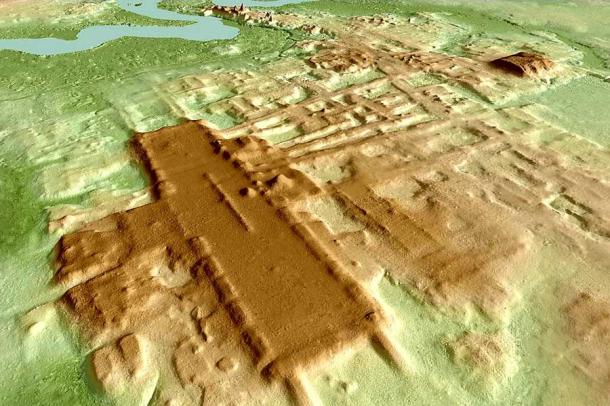



 Scientists confirm man IS Sitting Bull's living descendant...
 Early dinosaurs were SOCIABLE and moved in herds 193 million...