Ontdek de Fascinerende Wereld van UFO's en UAP's: Jouw Bron voor Onthullende Informatie!
Ben jij ook gefascineerd door het onbekende? Wil je meer weten over UFO's en UAP's, niet alleen in België, maar over de hele wereld? Dan ben je op de juiste plek!
België: Het Kloppend Hart van UFO-onderzoek
In België is BUFON (Belgisch UFO-Netwerk) dé autoriteit op het gebied van UFO-onderzoek. Voor betrouwbare en objectieve informatie over deze intrigerende fenomenen, bezoek je zeker onze Facebook-pagina en deze blog. Maar dat is nog niet alles! Ontdek ook het Belgisch UFO-meldpunt en Caelestia, twee organisaties die diepgaand onderzoek verrichten, al zijn ze soms kritisch of sceptisch.
Nederland: Een Schat aan Informatie
Voor onze Nederlandse buren is er de schitterende website www.ufowijzer.nl, beheerd door Paul Harmans. Deze site biedt een schat aan informatie en artikelen die je niet wilt missen!
Internationaal: MUFON - De Wereldwijde Autoriteit
Neem ook een kijkje bij MUFON (Mutual UFO Network Inc.), een gerenommeerde Amerikaanse UFO-vereniging met afdelingen in de VS en wereldwijd. MUFON is toegewijd aan de wetenschappelijke en analytische studie van het UFO-fenomeen, en hun maandelijkse tijdschrift, The MUFON UFO-Journal, is een must-read voor elke UFO-enthousiasteling. Bezoek hun website op www.mufon.com voor meer informatie.
Samenwerking en Toekomstvisie
Sinds 1 februari 2020 is Pieter niet alleen ex-president van BUFON, maar ook de voormalige nationale directeur van MUFON in Vlaanderen en Nederland. Dit creëert een sterke samenwerking met de Franse MUFON Reseau MUFON/EUROP, wat ons in staat stelt om nog meer waardevolle inzichten te delen.
Let op: Nepprofielen en Nieuwe Groeperingen
Pas op voor een nieuwe groepering die zich ook BUFON noemt, maar geen enkele connectie heeft met onze gevestigde organisatie. Hoewel zij de naam geregistreerd hebben, kunnen ze het rijke verleden en de expertise van onze groep niet evenaren. We wensen hen veel succes, maar we blijven de autoriteit in UFO-onderzoek!
Blijf Op De Hoogte!
Wil jij de laatste nieuwtjes over UFO's, ruimtevaart, archeologie, en meer? Volg ons dan en duik samen met ons in de fascinerende wereld van het onbekende! Sluit je aan bij de gemeenschap van nieuwsgierige geesten die net als jij verlangen naar antwoorden en avonturen in de sterren!
Heb je vragen of wil je meer weten? Aarzel dan niet om contact met ons op te nemen! Samen ontrafelen we het mysterie van de lucht en daarbuiten.
Berichten van 1 november 2021 tot 30 november 2021
Several UFO "Orbs" Filmed Flying In The Sky Over Illinois & Could This Be The Roar Of The Bigfoot?
First clip: This was sighted over Mokena and the bordering town of Tinley Park Illinois on October 20, 2021 and the witness stated the following: " My name is Jon Valente. I saw them on two different nights and the dates of the sightings are on the title of my videos. I saw both sightings in Mokena Illinois on 10/20/21 and on 11/4/21. The objects appeared to be over Mokena and the bordering town of Tinley Park Illinois. On both occasions the objects were well below cloud level. I would estimate between 1,000 to 2,500 feet above the ground."
Thanks to Jon Valente for allowing me the use of this footage and to view the original videos.....
Second clip: This was captured at Five Forks State Park in Virginia on October 10, 2021 and the witness stated the following: "My horse is very desensitized to loud sounds so he never bolts. You can shoot a gun off his back and he just stands there. I’m not sure what this was." Others after viewing the footage claimed that this is the roar of the "Hide & Seek" champion, Bigfoot but the woods are a very strange place with many peculiarities.
Many thanks to Wendigo_enthusiast for allowing me the use of her footage and to view the original:
Mysterious shards of glass strewn across Chile's Atacama Desert were likely created by an ancient exploding comet, a study has claimed.
The pieces of dark green or black glass, which came to scientists' attention a decade ago, are clustered in a vast corridor that stretches almost 50 miles (75km) across.
Some are up to 20 inches (50cm big) and look as if they've been folded and twisted into their current forms.
It had been thought they could have been created by volcanic activity or ancient grass fires — because the region wasn't always a desert — but new research led by Brown University has come to a different conclusion.
The study discovered that the glass contained tiny fragments with minerals often found in rocks of extraterrestrial origin.
Discovery: Mysterious shards of dark green or black glass strewn across Chile's Atacama Desert (pictured) were likely created by an ancient exploding comet, a new study has claimed
The pieces of dark green or black glass, which came to scientists' attention a decade ago, are clustered in a vast corridor that stretches almost 50 miles (75km) across
Out of this world: The fragments of glass contain exotic minerals such as cubanite and troilite (pictured) only found in meteorites and other extraterrestrial rocks, the researchers said
WHAT WERE THE EXTRATERRESTRIAL MINERALS FOUND IN THE DESERT GLASS?
Researchers led by Brown University collected more than 300 samples of the glass found in Chile's Atacama Desert before examining them under an electron microscope.
They then analysed the objects' chemical composition through spectroscopy.
Minerals in the glass called zircons decomposed to form baddeleyite, the study found, which would have required extremely hot temperatures of above 3,038°F (1,670°C).
The fragments also contained exotic minerals such as cubanite and troilite only found in meteorites and other extraterrestrial rocks.
They closely match the composition of material returned to Earth by NASA's Stardust mission, which sampled the particles from a comet called Wild 2, the authors said.
Those minerals closely match the composition of material returned to Earth by NASA's Stardust mission, which sampled the particles from a comet called Wild 2, the authors said.
They concluded that the minerals are likely the remains of an extraterrestrial object — most likely a comet — streamed down after an explosion that melted the sandy surface below.
'This is the first time we have clear evidence of glasses on Earth that were created by the thermal radiation and winds from a fireball exploding just above the surface,' said the study's lead author Pete Schultz, of Brown University.
'To have such a dramatic effect on such a large area, this was a truly massive explosion.
'Lots of us have seen bolide fireballs streaking across the sky, but those are tiny blips compared to this.'
Researchers collected more than 300 samples of the desert glass before examining them under an electron microscope and analysing their chemical composition through spectroscopy.
The samples showed evidence of having been twisted, folded, rolled and even thrown while still in molten form.
According to the researchers, that is consistent with a large incoming meteor and airburst explosion, which would have been accompanied by tornado-force winds.
They added that the glass fragments 'indicate nearly simultaneous (seconds to minutes) intense airbursts close to Earth's surface near the end of the Pleistocene' 12,000 years ago.
The glass is in patches across the Atacama Desert east of Pampa del Tamarugal, a plateau in northern Chile nestled between the Andes to the east and Chilean Coastal Range to the west
The minerals closely match the composition of material returned to Earth by NASA's Stardust mission, which sampled the particles from a comet called Wild 2, the authors said
Researchers collected more than 300 samples of the glass before examining them under an electron microscope and analysing their chemical composition through spectroscopy
Minerals in the glass called zircons thermally decomposed to form baddeleyite, the authors said, which would have required extremely hot temperatures of above 3,038°F (1,670°C)
WHAT WAS NASA's STARDUST MISSION?
The Stardust probe was launched back in 1999 with the primary goal of visiting the comet Wild 2.
It completed this mission in 2004, capturing dust particles from around the comet nucleus that it later returned to Earth in a capsule for study.
In 2009, this analysis revealed that a fundamental building block of life had been found in a comet for the first time, bolstering the theory that the raw ingredients of life arrived on Earth from outer space.
Traces of the amino acid glycine were found, having been captured 242million miles from Earth by the Stardust spacecraft.
However, with sufficient fuel supplies still in its tanks, NASA then decided to send the probe to the comet Tempel 1, which it swept past in 2011.
During the Pleistocene epoch, there were fertile patches in the desert with trees and grassy wetlands created by rivers extending from mountains to the east.
It had been suggested that widespread fires may have burned hot enough to melt the sandy soil into large glassy slabs.
But the amount of glass present, along with several key physical characteristics, make this theory extremely unlikely, the new research found.
Minerals in the glass called zircons thermally decomposed to form baddeleyite, the authors said, which would have required extremely hot temperatures of above 3,038°F (1,670°C), which is far hotter than a wildfire.
The glass is concentrated in patches across the Atacama Desert east of Pampa del Tamarugal, a plateau in northern Chile nestled between the Andes mountains to the east and the Chilean Coastal Range to the west.
It contains exotic minerals such as cubanite and troilite only found in meteorites and other extraterrestrial rocks, the researchers said.
'Those minerals are what tell us that this object has all the markings of a comet,' said co-author Scott Harris, a planetary geologist at the Fernbank Science Center.
'To have the same mineralogy we saw in the Stardust samples entrained in these glasses is really powerful evidence that what we're seeing is the result of a cometary airburst.'
The pieces of dark green or black glass are clustered in a vast corridor that stretches almost 50 miles (75km) across Chile's Atacama Desert
(stock image)
Researchers said more work is needed to establish the exact age of the glass, which would then help determine when the ancient comet exploded in the Atacama Desert (pictured)
Pictured is an artist's impression of the Stardust spacecraft approaching comet Wild 2 in 2004
More work needs to be done to establish the exact age of the glass, which would determine exactly when the event took place, Schultz said.
But experts believe the impact happened around the time large mammals disappeared from the region.
'It's too soon to say if there was a causal connection or not, but what we can say is that this event did happen around the same time as when we think the megafauna disappeared, which is intriguing,' Schultz said.
'There's also a chance that this was actually witnessed by early inhabitants, who had just arrived in the region. It would have been quite a show.'
The research has been published in the journal Geology.
Explained: The difference between an asteroid, meteorite and other space rocks
An asteroid is a large chunk of rock left over from collisions or the early solar system. Most are located between Mars and Jupiter in the Main Belt.
A comet is a rock covered in ice, methane and other compounds. Their orbits take them much further out of the solar system.
A meteor is what astronomers call a flash of light in the atmosphere when debris burns up.
This debris itself is known as a meteoroid. Most are so small they are vapourised in the atmosphere.
If any of this meteoroid makes it to Earth, it is called a meteorite.
Meteors, meteoroids and meteorites normally originate from asteroids and comets.
For example, if Earth passes through the tail of a comet, much of the debris burns up in the atmosphere, forming a meteor shower.
The mystery of the massive amounts of shards of glass spread across Chile’s Atacama Desert has finally been solved and it involves an exploding comet from thousands of years ago.
In a new study that was led by researchers from Brown University, they claimed that the extensive heat from a comet exploding above the ground fused the sandy soil in the desert into countless patches of dark green or black silicate glass. These shards of glass stretched across an area of about 75 kilometers (46.6 miles). This event occurred approximately 12,000 years ago. Interestingly, it was believed to have happened around the same time that large mammals disappeared from the area, although more studies need to be conducted in order to know for sure.
During their research, they studied glass samples from the desert and they found that they contained small portions of minerals that came from space. The minerals included troilite, cubanite, and calcium-aluminum-rich inclusions that were very similar to those found in samples that were collected from a comet named Wild 2 and were brought back to Earth by NASA’s Stardust mission. They were able to confidently say that the minerals found in the shards of glass in the Atacama Desert came from a space object that was probably a comet similar to Wild 2.
Scott Harris, who is a planetary geologist at the Fernbank Science Center, stated, “Those minerals are what tell us that this object has all the markings of a comet,” adding, “To have the same mineralogy we saw in the Stardust samples entrained in these glasses is really powerful evidence that what we’re seeing is the result of a cometary airburst.”
This is very significant news as it remained a mystery for such a long time, especially since experts couldn’t find any proof that they were caused by volcanic activity. Another theory was that they were caused by ancient grass fires that melted the sandy soil into glass; however, since there is so much glass as well as its space minerals, a fire seemed very unlikely. Additionally, since the glass was folded, twisted, thrown, and rolled, evidence points to an exploding comet that would have caused winds as strong as a tornado.
Furthermore, chemical analysis on the glass revealed that they contained zircon minerals that were thermally decomposed in order to create baddeleyite. This means that the temperature would have been as hot as 3,000 degrees Fahrenheit (1,649 degrees Celsius) in order to form them – much hotter than a grass fire.
Pete Schultz, who is a professor emeritus in Brown University’s Department of Earth, Environmental and Planetary Sciences, weighed in by noting, “This is the first time we have clear evidence of glasses on Earth that were created by the thermal radiation and winds from a fireball exploding just above the surface.” “To have such a dramatic effect on such a large area, this was a truly massive explosion.” (Pictures of the shards of glass stretched across the Atacama Desert can be seen here.)
This Team Of Scientists Were Exploring This Ancient Jungle When They Made An Unexpected Discovery via Unexplained Mysteries
This team of scientists were exploring this ancient jungle when they made an unexpected discovery. Today, we take a look at what this team of scientists discovered inside this jungle.
The densely growing vines and choking trees that make up the jungles of the equator are likely one of the least-understood regions of the earth, second only to the ocean. Although the uncertainty of the contents of the jungle leads some to believe that it conceals ominous and otherworldly secrets, most of the mysteries within are simply fantastical occurrences that have yet to be discovered.
Today, we take a look at this compilation of incredible jungle discoveries. Thank you for watching! Thank you to CO.AG for the background music!
Someone Just Discovered A Massive Underground Tunnel In Mexico But Didn't Expect To Find This Inside via Unexplained Mysteries
Someone Just Discovered A Massive Underground Tunnel In Mexico But Didn’t Expect To Find This Inside via Unexplained Mysteries
Someone just discovered a massive underground tunnel in Mexico but didn’t expect to find this inside. Today, we take a look at this massive underground tunnel that was just found in Mexico. Mexico is a country that has a rich history. Every year archaeologists working here discover incredible artifacts, helping to give us a glimpse into what life would have been like here thousands of years ago.
Each year researchers discover underground chambers and caves, sometimes these are emptied, but some of these are filled with artifacts and treasures. One example of this is archaeologists recently uncovered a secret ‘passage to the underworld’ at Pyramid of the Moon in Teotihuacan. Thank you for watching!
A solar-powered spacecraft, with three special passengers onboard, is currently spinning toward Jupiter for the closest encounter with the biggest planet in our solar system.
Nasa's Juno spacecraft is set to fire its main rocket engine early tomorrow morning to slow itself down from a speed of 165,000 mph (265,000 kph) and slip into orbit around Jupiter.
Hitching a ride are three 1.5-inch Lego figures depicting the 17th century Italian astronomer Galileo Galilei, the Roman god Jupiter, and the deity's wife Juno - all made from aluminium to withstand the Jupiter's harsh environment.
Scroll down for video
Unusually for a robotic space mission, Juno is carrying passengers - three Lego figures depicting the 17th century Italian astronomer Galileo Galilei (left), the Roman god Jupiter (right), and the deity's wife Juno (centre). Lego made the figures out of aluminium rather than the usual plastic so they could withstand the extreme conditions of space fligh
In Greek and Roman mythology, Jupiter drew a veil of clouds around himself to hide his mischief. From Mount Olympus, Juno was able to peer through the clouds and reveal Jupiter's true nature.
Juno holds a magnifying glass to signify her search for the truth, while her husband holds a lightning bolt.
The third Lego crew member is Galileo Galilei, who made several important discoveries about Jupiter. He used a telescope to confirm the phases of Venus and discovered the four largest satellites of Jupiter - named the Galilean moons in his honour.
'Of course, the minifigure Galileo has his telescope with him on the journey,' Lego said in a statement.
By drawing attention to these Lego characters, Nasa aims to inspire the next generation of spacecraft engineers by encouraging children to explore subjects such as science and technology.
But they are on a suicide mission. Juno, along with its three passengers, meets its demise in 2018 when it deliberately dives into Jupiter's atmosphere and disintegrates — a necessary sacrifice to prevent any chance of accidentally crashing into the planet's potentially habitable moons.
NASA'S JUNO MISSION
The Juno probe is due to reach the gas giant on at 3.18am GMT Tuesday morning after a five-year, 1.8 billion-mile journey from Earth.
It will enter a long polar orbit flying to within 3,100 miles (5,000 km) of the planet's swirling cloud tops. Once in orbit around Jupiter, Juno will skim to within just 4,200 km of the planet's clouds once a fortnight - too close to provide global coverage in a single image.
The Earth-based observations supplement the suite of advanced instrumentation on the Juno spacecraft, filling in the gaps in Juno's spectral coverage and providing the wider global and temporal context to Juno's close-in observations.
No previous spacecraft has orbited so close to Jupiter, although two others have been sent plunging to their destruction through its atmosphere.
To complete its risky mission Juno will have to survive a circuit-frying radiation storm generated by Jupiter's powerful magnetic field. The maelstrom of high energy particles travelling at nearly the speed of light is the harshest radiation environment in the Solar System.
To cope with the conditions, the spacecraft is protected with special radiation-hardened wiring and sensor shielding.
Its all-important 'brain' - the spacecraft's flight computer - is housed in an armoured vault made of titanium and weighing almost 400 pounds (172kg).
Juno was launched on 5 August, 2011. During more than 30 orbital flybys of the Jovian world, it will probe beneath the obscuring ammonia and hydrogen sulfide cloud cover and study the auroras to learn more about the planet's origins, structure, atmosphere and magnetosphere.
Juno's name comes from Greek and Roman mythology. Jupiter, the father of the Roman gods, drew a veil of clouds around himself to hide his mischief. But his wife - the goddess Juno - was able to peer through the clouds and reveal Jupiter's true nature.
During its mission of exploration, Juno will circle the Jovian world 37 times, soaring low over the planet's cloud tops.
With Juno on autopilot, the delicately choreographed move comes without any help from ground controllers.
If successful, scientists will for the first time be able to see what lies beneath Jupiter's atmosphere, and help unlock secrets about how the solar system formed.
Juno is travelling through a hostile radiation environment, 'but it should be able to withstand it,' said Kenny Starnes, programme manager for Lockheed Martin, which built the spacecraft.
Juno's camera and other instruments were switched off for the arrival so there won't be any pictures at the moment the spacecraft reaches its destination. Scientists have promised close-up views of Jupiter when Juno skims the cloud tops during the 20-month, $1.1 billion (£828m) mission.
The fifth planet from the sun and the heftiest in the solar system, Jupiter is known as a gas giant — a ball of mainly hydrogen and helium — unlike rocky Earth and Mars.
With its billowy clouds and colourful stripes, Jupiter is an extreme world that likely formed first, shortly after the sun. Unlocking its history may hold clues to understanding how Earth and the rest of the solar system developed.
Named after the Roman god Jupiter's cloud-piercing wife, Juno is only the second mission designed to spend time at Jupiter.
Scientists are using the Hubble Space Telescope to watch Jupiter's aurora (pictured) for more than a month in the hope of trying to unravel what causes these enormous light shows. The ultraviolet and X-ray aurora on Jupiter occur continuously on the giant planet and are the size of the entire planet Earth
Juno is in a harsh radiation environment, so its delicate electronics are housed in a special titanium vault. Eventually, Juno will succumb to the intense radiation and will be commanded to plunge into Jupiter's atmosphere to avoid any collision with the planet's moons. Pictured is a 1/5 scale model size of the solar-powered Juno spacecraft
Galileo, which launched in 1989, circled Jupiter for 14 years, beaming back splendid views of the planet and its numerous moons. It uncovered signs of an ocean beneath the icy surface of Europa, considered a top target in the search for life outside Earth.
Juno's mission: To peer through Jupiter's cloud-socked atmosphere and map the interior from a unique vantage point above the poles.
Among the lingering questions: How much water exists? Is there a solid core? Why are Jupiter's southern and northern lights the brightest in the solar system?
There's also the mystery of its Great Red Spot. Recent observations by the Hubble Space Telescope revealed the centuries-old monster storm in Jupiter's atmosphere is shrinking.
The trek to Jupiter, spanning nearly five years and 1.8 billion miles (2.8 bn kilometres), took Juno on a tour of the inner solar system followed by a swing past Earth that catapulted it beyond the asteroid belt between Mars and Jupiter.
Along the way, Juno became the first spacecraft to cruise this far out powered by the sun, beating Europe's comet-chasing Rosetta spacecraft. A trio of massive solar wings sticks out from Juno like blades from a windmill, generating 500 watts of power to run its nine instruments.
Plans called for Juno to swoop within 3,100 miles (5,000 kilometres) of Jupiter's clouds — closer than previous missions — to map the planet's gravity and magnetic fields.
Juno launched in 2011. This image shows an Atlas V rocket carrying the Juno spacecraft lifts off from Space Launch Complex-41 in Cape Canaveral, Florida. It was the first step in Juno's 1.8 billion-mile voyage to the gas giant planet, Jupiter
JUNO'S MISSION IN NUMBERS
—1.8 billion miles (2.8 billion kilometres)
That's the total distance travelled from launch to arrival. Juno's journey wasn't a straight shot. Because the rocket that carried Juno wasn't powerful enough to boost it directly to Jupiter, it took a longer route. It looped around the inner solar system and then swung by Earth, using our planet as a gravity slingshot to hurtle toward the outer solar system.
— 3,100 miles (5,000 kilometres)
That's how close Juno will fly to Jupiter's cloud tops. It will pass over the poles a total of 37 times during the mission on a path that avoids the most intense radiation, before it plunges into the planet's atmosphere.
— 48 minutes, 19 seconds
That's the time it takes for radio signals from Jupiter to reach Earth. During the encounter, Juno will fire its main engine for about a half hour to slow down. By the time ground controllers receive word that it started, the engine burn would have been completed, and if all goes as planned, Juno would be in orbit.
— 20 months
That's how long the mission will last. Because Juno is in a harsh radiation environment, its delicate electronics are housed in a special titanium vault. Eventually, Juno will succumb to the intense radiation and will be commanded to plunge into Jupiter's atmosphere to avoid any collision with the planet's moons.
— Nine
Juno carries a suite of nine instruments to explore Jupiter from its interior to its atmosphere. It will map Jupiter's gravity and magnetic fields and track how much water is in the atmosphere. Its colour camera dubbed JunoCam will snap close-ups of Jupiter's swirling clouds, polar regions and shimmering southern and northern lights.
— Three
Three massive solar wings extend from Juno, making it the most distant solar-powered spacecraft. The panels can generate 500 watts of electricity, enough to power the instruments
Juno is an armoured spacecraft — its computer and electronics are locked in a titanium vault to shield them from harmful radiation. Even so, Juno is expected to get blasted with radiation equal to more than 100 million dental X-rays during the mission.
Last week, stunning new images and the highest-resolution maps of Jupiter at thermal infrared wavelengths showed a glowing view of Juno's target, a week ahead of the Nasa mission's arrival at the giant planet.
The maps reveal the present-day temperatures, composition and cloud coverage within Jupiter's dynamic atmosphere, and show how giant storms, vortices and wave patterns shape the appearance of the giant planet.
The high-resolution maps and images were created from observations with the European Southern Observatory's Very Large Telescope (VLT) in Chile, using a newly-upgraded thermal imager called VISIR.
This left composite image of photographs made by Cassini on December 29, 2000 shows the Jupiter. The Great Red Spot, a fierce storm larger than Earth, can be seen. In recent years, it has been mysteriously shrinking. The right image shows a close up view of the region
Jupiter on fire! In preparation for the imminent arrival of the Juno spacecraft, astronomers used ESO's Very Large Telescope to obtain spectacular new infrared images of Jupiter using the VISIR instrument. This false-colour image was created by selecting and combining the best images obtained from many short VISIR exposures at a wavelength of 5 micrometers
The observations were taken between February and June 2016 to characterise Jupiter's atmosphere ahead of Juno's arrival.
'We used a technique called 'lucky imaging', whereby individual sharp frames are extracted from short movies of Jupiter to 'freeze' the turbulent motions of our own atmosphere, to create a stunning new image of Jupiter's cloud layers,' said Dr Leigh Fletcher of the University of Leicester.
'At this wavelength, Jupiter's clouds appear in silhouette against the deep internal glows of the planet.
WHAT ARE JUPITER'S GREAT UNKNOWNS?
Water
Like the sun, Jupiter is a ball of mostly hydrogen and helium. It was probably the first planet to form. Jupiter is 11 times wider than Earth and with 300 times the mass. Juno will hunt for water in Jupiter's atmosphere, which may help explain how Earth got its water. Previous spacecraft found only a trace amount in Jupiter's atmosphere, but scientists think they didn't look deep enough. Juno carries an instrument that can pierce through thick clouds to measure the water content.
Great red spot
A world of swirling clouds and colourful stripes, Jupiter's most prominent feature is the Great Red Spot, a fierce storm in the atmosphere larger than Earth that has lasted for centuries. In recent years, the spot has been mysteriously shrinking. Once an oval about 25,500 miles wide (41,036 kilometres) in the late 1880s, the spot shrank to its smallest observed size in 2014 — the shape of a circle about 10,250 miles across (16,495 kilometres). Juno will study how deep into the atmosphere the Great Red Spot extends in an effort to understand what may happen next to Jupiter's trademark.
Auroras
Earth's dazzling southern and northern lights are dim compared to Jupiter's auroras, the brightest in the solar system. Earth's polar lights are triggered by solar storms, which occur when a cloud of gas from the sun slams into the planet's magnetic field. Jupiter's powerful auroras are sparked by the planet's own rotation. Jupiter is the fastest-spinning planet in the solar system, taking just 10 hours to complete a rotation. As Jupiter spins, it drags its magnetic field around with it. Juno will observe the light show and learn about the driving forces behind it.
Polar regions
The first peek of Jupiter's poles came in 1974 when Pioneer 11 flew by en route to Saturn. Juno will get a more detailed look by passing over Jupiter's polar regions. During the next year, the spacecraft will circle Jupiter 37 times from pole to pole — a path that will cover the whole planet. At its closest approach, Juno will skim within 3,100 miles (5,000 kilometres) of Jupiter's cloud tops.
'Images of this quality will provide the global context for Juno's close-up views of the planet at the same wavelength.'
Dr Fletcher and his team have also used the TEXES spectrograph on NASA's Infrared Telescope Facility (IRTF) in Hawaii regularly to map Jupiter's changing appearance.
The team made observations at many different wavelengths, optimised for different features and cloud layers in Jupiter's atmosphere, to create the first global spectral maps of Jupiter taken from Earth.
'These maps will help set the scene for what Juno will witness in the coming months.
'We have seen new weather phenomena that have been active on Jupiter throughout 2016.
Juno carries a suite of nine instruments to explore Jupiter from its interior to its atmosphere. It will map Jupiter's gravity and magnetic fields and track how much water is in the atmosphere
This view compares a lucky imaging view of Jupiter from VISIR (left) at infrared wavelengths with a very sharp amateur image in visible light from about the same time (right)
These include a widening of one of the brown belts just north of the equator, which has spawned wave patterns throughout the northern hemisphere, both in the cloud layers and high above in the planet's stratosphere,' said Dr Fletcher from the University of Leicester's Department of Physics and Astronomy.
'Observations at different wavelengths across the infrared spectrum allow us to piece together a three dimensional picture of how energy and material are transported upwards through the atmosphere.'
Both sets of observations were made as part of a campaign using several telescopes in Hawaii and Chile, as well as contributions from amateur astronomers around the world, to understand Jupiter's climate ahead of Juno's arrival.
Jupiter's powerful magnetosphere extends up to two million miles into the space around the planet (illustrated) and is thought to be responsible for sending charged particles in the space around it hurtling at high speeds towards the poles
The huge aurora on Jupiter (pictured) are thought to be caused by solar particles and volcanic debris in the space around the giant planet being accelerated towards the poles by its powerful magnetic field
The ground-based campaign in support of Juno is led by Dr Glenn Orton of NASA's Jet Propulsion Laboratory.
Once in orbit around Jupiter, Juno will skim to within just 3,100 miles (5,000 km) above Jupiter's clouds once a fortnight - too close to provide global coverage in a single image.
The Earth-based observations supplement the suite of advanced instrumentation on the Juno spacecraft, filling in the gaps in Juno's spectral coverage and providing the wider global and temporal context to Juno's close-in observations.
'The combined efforts of an international team of amateur and professional astronomers have provided us with an incredibly rich dataset over the past eight months,' said Dr Orton.
'Together with the new results from Juno, this dataset will allow researchers to characterise Jupiter's global thermal structure, cloud cover and distribution of gaseous species.
False color images generated from VLT observations in February and March 2016, showing two different faces of Jupiter. The bluer areas are cold and cloud-free, the orange areas are warm and cloudy, more colorless bright regions are warm and cloud-free, and dark regions are cold and cloudy (such as the Great Red Spot and the prominent ovals). The wave pattern over the North Equatorial Band shows up in orange.
We can then hope to answer questions like what drives Jupiter's atmospheric changes, and how the weather we see is connected to processes hidden deep within the planet.'
No previous spacecraft has orbited so close to Jupiter, although two others have been sent plunging to their destruction through its atmosphere. To complete its risky mission Juno will have to survive a circuit-frying radiation storm generated by Jupiter's powerful magnetic field.
The maelstrom of high energy particles travelling at nearly the speed of light is one of the harshest radiation environments in the Solar System.
To cope with the conditions, Juno is protected with special radiation-hardened wiring and sensor shielding and its all-important 'brain' - the spacecraft's flight computer - is housed in an armoured vault made of titanium and weighing almost 400 pounds (172kg).
Dr Scott Bolton, Juno's principal investigator from Southwest Research Institute in San Antonio, US, said: 'We are not looking for trouble, we are looking for data.
'Problem is, at Jupiter, looking for the kind of data Juno is looking for, you have to go in the kind of neighbourhoods where you could find trouble pretty quick.'
Juno will study Jupiter's composition, gravitational and magnetic field, and search for clues about the planet's formation and the source of its raging winds, which can reach speeds of 384 mph (618 kph).
It will also deliver stunning colour photos via its JunoCam camera, which has a wide field of view geared for panoramic images.
To provide electrical power, the spacecraft carries three huge solar panels, each 29ft long and almost 9ft wide.
The previous record for a close approach to Jupiter was set by the American space agency Nasa's Pioneer 11 spacecraft which passed by the planet at a distance of 27,000 miles (43,000 km) in 1974.
Only one previous spacecraft, Galileo, which visited Jupiter and its moons from 1995 to 2003, has orbited the planet.
Galileo made wide orbits at distances of hundreds of thousands of kilometres that kept it out of serious danger from the radiation, although it suffered a number of technical 'anomalies'.
JUPITER'S GIANT AURORA
Jupiter's auroras were first discovered by the Voyager 1 spacecraft in 1979.
A thin ring of light on Jupiter's nightside looked like a stretched-out version of our own auroras on Earth.
But later, astronomers discovered the auroras were best visible in the ultraviolet. Scientists also discovered the planet has X-ray aurora too.
Jupiter's aurora are larger than our entire planet and unlike those on Earth, occur almost continuously.
This suggests that the mechanism causing this light show is different from that on Earth.
While Earth's Northern and Southern lights are triggered by energetic particles from the sun slamming into gas atoms high in the atmosphere, Jupiter appears to have another source.
Scientists believe its powerful magnetic field accellerates charged particles from the space around it towards its poles, to cause similar interactions.
The volcanic moon Io spews oxygen and sulfur ions into Jupiter's spinning magnetic field, which sends them hurtling towards the planet below.
Upon entering the atmosphere, their electrons are first stripped away by molecules they run into, but as they slow down they start grabbing electrons back. The 'charge exchange reaction' produces intense X-ray auroras.
Yet scientists have been baffled as to how Jupiter's magnetic field accelerates these particles.
The spacecraft sent a small probe on a one-way trip through the clouds of Jupiter, and was eventually itself crashed onto the planet at the end of its mission.
As a further safeguard, Juno is programmed to follow a long orbital path that avoids Jupiter's radiation belts as much as possible.
Despite these measures, the probe is not expected to last much longer than its planned lifespan of 20 months. At the end of he mission, Nasa plans to send the probe headlong into the Jovian atmosphere to collect as much data as possible.
Chief radiation monitoring investigator Heidi Becker, from Nasa's Jet Propulsion Laboratory, said: 'Over the course of the mission, the highest energy electrons will penetrate the vault, creating a spray of secondary photons and particles.
'The constant bombardment will break the atomic bonds in Juno's electronics.'
Juno was launched into space by an Atlas V rocket from Cape Canaveral, Florida, on August 5, 2011. The mission is part of Nasa's New Frontiers programme of robotic space missions which last year saw the New Horizons probe obtain close up views of dwarf planet Pluto
A plaque dedicated to Galileo and provided by the Italian Space Agency is also on board.
Measuring 2.8 ins (7.1 cm) across, it shows a portrait of Galileo and a text penned by the astronomer in January 1610 while observing Jupiter's four largest moons - later to be known as the Galilean moons.
Juno was launched into space by an Atlas V rocket from Cape Canaveral, Florida, on August 5, 2011.
The mission is part of Nasa's New Frontiers programme of robotic space missions which last year saw the New Horizons spacecraft obtain close up views of dwarf planet Pluto.
Juno Peers Beneath Jupiter’s Clouds to Reveal its Complex Atmosphere
Many papers are usually released at once for big space exploration missions. Usually, that happens when an entire batch of data has been analyzed. The most recent set of papers is from Juno’s explorations of Jupiter’s atmosphere. With this data dump, scientists now have the first 3D map of the atmosphere of the solar system’s largest planet.
Four main discoveries were highlighted as part of NASA’s press release of the set of papers. The first is that there are systems in Jupiter’s atmosphere similar to “Farrell cells,” which we covered in a previous UT article. Another has to do with one of the most famous of Jupiter’s features: the Great Red Spot.
This image shows the overall size of the Great Red Spot in comparison to Earth.Credit – JunoCam Image data: NASA/JPL-Caltech/SwRI/MSSS; JunoCam Image processing by Kevin M. Gill (CC BY); Earth Image: NASA
Discovered over 200 years ago, the Great Red Spot is one of the most fascinating parts of Jupiter’s atmosphere. Larger the Earth’s diameter, up until now, there had been no indication of how deep this enormous “anticyclone” protruded down into the atmosphere. Juno shed some light on the situation, but only as it flashed past at 209,000 kph.
Luckily it got to do so twice, and during those flybys, the probe turned its microwave radiometer (MWR) towards the towering atmospheric structure. Designed to look beneath Jupiter’s clouds, MWR was able to tell that the Great Red Spot extended between approximately 300-500 kilometers down into the gas giant’s atmosphere. More minor storms only reach about 60 km into the clouds, making the mother of all anticyclones even more gigantic than initially thought.
The outer atmosphere shrouds the inner core of Jupiter, but what is it actually made up of?
That giant atmospheric feature is only one of Jupiter’s well-known patterns in its atmosphere, though. Another – its distinct “belts” of certain colored clouds – are formed by powerful winds blowing in opposite directions for each belt. In addition to creating the Ferrel cells mentioned above, the belts are hiding another secret below the clouds – they have transition segments very similar to a phenomenon known as thermoclines here on Earth.
Thermoclines occur where dramatic temperature changes occur in bodies of water, usually Earth’s ocean. They are visually noticeable from their distinct optical properties, where the two temperatures of water appear very visually distinct from one another. Jupiter’s analog, named a Jovicline by its discoverers, is similar in its changing optical properties. The belt is exceptionally bright in MWR’s data at shallow depths into the atmosphere compared to surrounding systems. However, at deeper levels, the surrounding systems show up as brighter rather than the belt itself. Thermoclines have similar properties, with warmer water and colder water reflecting different wavelengths of light differently.
Want an interesting thought experiment? How about whether we could colonize Jupiter?
MWR wasn’t the only instrument trained on Jupiter during Juno’s 37 flybys so far. The Jovian Infrared Auroral Mapper (JIRAM) was also collecting data, and in particular, spent time looking at cyclones located near the planet’s poles. Eight distinct storms form an octagon near the north pole, while five distinct storms form a pentagon in the south. Typical atmospheric modeling would have one of the cyclones pulled poleward. However, there are cyclones at the center of each pole that negate that pull, leaving each storm stuck in the same pattern for years at a time.
Juno will have plenty more years to assess those storms and other features of Jupiter and some of its surrounding moons as it continues its second extended mission well into 2025. With luck, the spacecraft can go for a third extended mission more than 16 years after it initially launched.
Composite image of Jupiter in infrared and visible light. Credit – International Gemini Observatory/NOIRLab/NSF/AURA/NASA/ESA, M.H. Wong and I. de Pater (UC Berkeley) et al.
RELATED VIDEOS AND PHOTOS, selected and posted by peter2011
Jupiter’s banded appearance is created by the cloud-forming weather layer. This composite image shows views of Jupiter in infrared and visible light taken by the Gemini North telescope and NASA’s Hubble Space Telescope.
Missing 411: This Navajo Park Ranger Reveals The Truth About What's Happening To People Inside These Parks
This Navajo park ranger reveals the truth about what's happening to people inside these parks. Today, we take a look at what this Navajo park ranger said about working inside this park.
The police do incredible work, and they are usually the first ones on the scene when something goes wrong. Every so often though they will encounter something that even they can't explain.
One of the places where officers are seeing strange things is that of the Navajo Reservation of the American southwest. This location is known for mysterious and legendary stories and the police here have encountered some strange things.
One of the issues though is when police report these types of encounters, they can be mocked and locked down on. The police at Navajo Reservation however have a different view on things. They take these sightings and encounters seriously and will try to look into and understand each report.
Today, we take a look at this compilation of interesting discoveries and announcements.
This fast triangular-shaped object was flying across the sky above Cincinnati in Ohio on 5th November 2021.
Witness report:
This object was triangular or delta wing shaped. Traveling from the south headed due north and recorded this from my night vision camera attached to my tripod
Sodium Vapor Outgassing Explains Asteroid Phaethon’s Cometlike Activity
The 5.8-km-wide (3.6-mile) near-Earth asteroid Phaethon, which is the source of the annual Geminid meteor shower, brightens as it gets close to the Sun. The asteroid’s elongated, 524-day orbit takes it well within the orbit of Mercury, during which time the Sun heats the asteroid’s surface up to 750 degrees Celsius (1,390 degrees Fahrenheit).
This illustration depicts the asteroid Phaethon being heated by the Sun.
Image credit: NASA / JPL-Caltech / IPAC.
“Phaethon is a curious object that gets active as it approaches the Sun,” said Dr. Joseph Masiero, a researcher at IPAC/Caltech.
“We know it’s an asteroid and the source of the Geminids. But it contains little to no ice, so we were intrigued by the possibility that sodium, which is relatively plentiful in asteroids, could be the element driving this activity.”
Dr. Masiero and his colleagues were inspired by observations of the Geminids.
When meteoroids streak through Earth’s atmosphere as meteors, they disintegrate.
But before they do, friction with the atmosphere causes the air surrounding the meteoroids to reach thousands of degrees, generating light.
The color of this light represents the elements they contain. Sodium, for example, creates an orange tinge. The Geminids are known to be low in sodium.
Until now, it was assumed that these small pieces of rock somehow lost their sodium after leaving the asteroid Phaethon.
The new study suggests that the sodium may actually play a key role in ejecting the Geminid meteoroids from the asteroid’s surface.
The researchers think that as Phaethon approaches the Sun, its sodium heats up and vaporizes.
This process would have depleted the surface of sodium long ago, but sodium within the asteroid still heats up, vaporizes, and fizzes into space through cracks and fissures in Phaethon’s outermost crust.
These jets would provide enough oomph to eject the rocky debris off its surface.
So the fizzing sodium could explain not only the asteroid’s cometlike brightening, but also how the Geminid meteoroids would be ejected from the asteroid and why they contain little sodium.
“Asteroids like Phaethon have very weak gravity, so it doesn’t take a lot of force to kick debris from the surface or dislodge rock from a fracture,” said Dr. Björn Davidsson, a researcher at NASA’s Jet Propulsion Laboratory.
“Our models suggest that very small quantities of sodium are all that’s needed to do this — nothing explosive, like the erupting vapor from an icy comet’s surface; it’s more of a steady fizz.”
To find out if sodium turns to vapor and vents from an asteroid’s rock, the researchers tested samples of the Allende meteorite.
The meteorite may have come from an asteroid comparable to Phaethon and belongs to a class of meteorites, called carbonaceous chondrites, that formed during the earliest days of the Solar System.
The scientists then heated chips of the meteorite to the highest temperature Phaethon would experience as it approaches the Sun.
“This temperature happens to be around the point that sodium escapes from its rocky components,” said Dr. Yang Liu, also from NASA’s Jet Propulsion Laboratory.
“So we simulated this heating effect over the course of a ‘day’ on Phaethon — its three-hour rotation period — and, on comparing the samples’ minerals before and after our lab tests, the sodium was lost, while the other elements were left behind.”
“This suggests that the same may be happening on Phaethon and seems to agree with the results of our models.”
The study was published in the Planetary Science Journal.
Joseph R. Masiero et al. 2021. Volatility of Sodium in Carbonaceous Chondrites at Temperatures Consistent with Low-perihelion Asteroids. Planet. Sci. J 2, 165; doi: 10.3847/PSJ/ac0d02
Former UK Astronaut Suggests Alien Beings Are Here On Earth
(Arjun Walia) Dr. Helen Sharman was Britain’s first astronaut. She went to space 28 years ago and recently made headlines by stating that there is no doubt whatsoever that “All sorts of forms of life” exist in the universe, and it’s possible that “They’re here right now” and in some cases we “simply can’t see them” as they are so different to humanity.
Could she have been referring to beings that exist within other dimensions? Based on my research, when it comes to the topic of UFOs and the extraterrestrial hypothesis as an explanation for some of these objects, many have hypothesized that some of these craft simply pop in and out of our existence, perhaps from another dimension.
Sharman told the Observer Magazine that “Aliens exist, there’s no two ways about it” and that “There are so many billions of stars out there in the universe that there must be all sorts of forms of life.”
The chemist spent eight days as a researcher on the space mission when she was 27, making her one of the youngest people to enter orbit.
This echoes the thoughts and feelings of the majority, if not all of the scientific community right now when it comes to contemplating life beyond our own world.
The list of astronauts around the world who have shared their belief that intelligent life exists, in abundance, elsewhere in our known universe is quite long. Some have even stated that they have been privy to evidence suggesting that we have been visited, and are being visited.
Not long ago, Bigelow Aerospace CEO Robert Bigelow said that one doesn’t have to go anywhere to find this type of life, that it’s already here…
Apollo 14’s Dr. Edgar Mitchell is a great example. He spent many years creating awareness about the UFO phenomenon, and made many incredible statements throughout his life. He claimed to be “privileged enough to be in on the fact that we have been visited on this planet” and that “the UFO phenomenon is real.”
His words were verified after his passing by the leak of this document. The focal point of the document is about a meeting (and what happened after that meeting) that took place in 1997 between UFO researcher Dr. Steven Greer, Admiral Wilson, Dr. Edgar Mitchell (Apollo 14 astronaut) and other high ranking individuals within the military. This meeting was spoken about by Dr. Greer and Dr. Mitchell nearly four years prior to the leak of these documents on multiple occasions. You can learn more about this document, here.
Dr. Brian O’leary, a former astronaut and Princeton physics professor has stated that “there is abundant evidence that we are being contacted,” astronaut Story Musgrave has done the same, stating that intelligent life most certainly exists and that “they’re doing star travel, that’s how good they are.” Gordon Cooper and again, several others have done the same. Apollo 12 astronaut Al Worden has also made some interesting comments about aliens.
All of these statements are quite out-dated, and since they’ve been made it’s been proven without a doubt that the UFO phenomenon is real. The mainstream seems to be getting more acclimatized to this fact, as objets performing maneuvers that no known air-craft can have been documented via electrooptical data, like video recordings and radar trackings, as well as high ranking testimony from hundreds trained observers.
NEW YORK TIMES BESTSELLER • Impeccably researched, this riveting journalistic investigation separates fact from fiction, and documents the existence of—and government reactions to—actual UFOs. “A treasure trove of insightful and eye-opening information.”—Michio Kaku, PH.D., bestselling author of Physics of the Future
A former Pentagon official who led a secret government program to research potential UFOs, revealed in 2017, told CNN at the time that he believes there is evidence of alien life reaching Earth, and that the UFO phenomenon is part of that evidence.
We’ve see mainstream UFO disclosure ramp up quite a bit every single year, as it continues to be legitimized by articles taking the subject seriously in media outlets like the Washington Post, and the New York Times. It’s quite clear that something is going on.
For a deeper discussion into mainstream UFO disclosure, the motives, and more, you can refer to this article I recently published on the subject.
This subject is huge, and like I’ve said many times before, leaves no aspect of humanity untouched.
Two strange UFO sightings starting out in Texas then our next sightings is in Washington State.
First Video Source: MUFON Case # 118980
Second Video Source: MUFON Case # 119021
Flying Humanoid Figure Filmed In The Sky Over Maryhill In Glasgow, Scotland.
Lynsey Currie and her boyfriend filmed this strange object above his flat and at first they though it could be a weather balloon but given the odd shape to this object it looks like no weather balloon we have seen. One thing is sure it that this is a UFO as it is flying over this area in Glasgow but to me the object seem to be "Humanoid" in appearance as we can see a head, arms and legs which are attached to a body. Lynsey Currie also added " it was flying across the sky going from the northwest of Glasgow towards the southwest." Thanks to Lynsey Currie and her boyfriend for filming this.. Source and Story: Glasgow Live
Landsat 9, a joint mission between NASA and the U.S. Geological Survey (USGS) that launched Sept. 27, 2021, has collected its first light images of Earth.
Mangroves are prominent along the northwest coast of Australia. The first image collected by Landsat 9, on Oct. 31, 2021, shows mangroves clustered in protected inlets and bays on the edge of the Indian Ocean. Fluffy cumulus clouds and high-altitude cirrus clouds hover nearby. The aqua colors of the shallow near-shore waters give way to the deep, dark blues of the ocean.
Credits: NASA
The images, all acquired Oct. 31, are available online. They provide a preview of how the mission will help people manage vital natural resources and understand the impacts of climate change, adding to Landsat's unparalleled data record that spans nearly 50 years of space-based Earth observation.
"Landsat 9's first images capture critical observations about our changing planet and will advance this joint mission of NASA and the U.S. Geological Survey that provides critical data about Earth's landscapes and coastlines seen from space," said NASA Administrator Bill Nelson. "This program has the proven power to not only improve lives but also save lives. NASA will continue to work with USGS to strengthen and improve accessibility to Landsat data so decision makers in America - and around the world - better understand the devastation of the climate crisis, manage agricultural practices, preserve precious resources and respond more effectively to natural disasters."
These first light images shows Detroit, Michigan, with neighboring Lake St. Clair, the intersection of cities and beaches along a changing Florida coastline and images from Navajo Country in Arizona that will add to the wealth of data helping us monitor crop health and manage irrigation water. The new images also provided data about the changing landscapes of the Himalayas in High Mountain Asia and the coastal islands and shorelines of Northern Australia.
This image collected by Landsat and released by NASA, shows the white sands of Pensacola Beach stand out of the Florida Panhandle of the US.
(NASA/AFP)
Landsat 9 is similar in design to its predecessor, Landsat 8, which was launched in 2013 and remains in orbit, but features several improvements. The new satellite transmits data with higher radiometric resolution back down to Earth, allowing it to detect more subtle differences, especially over darker areas like water or dense forests. For example, Landsat 9 can differentiate more than 16,000 shades of a given wavelength color; Landsat 7, the satellite being replaced, detects only 256 shades. This increased sensitivity will allow Landsat users to see much more subtle changes than ever before.
Landsat 9 carries two instruments designed to work together to capture a broad range of wavelengths: the Operational Land Imager 2 and the Thermal Infrared Sensor 2. Data from both instruments are shown in this image.
Credits: NASA
"First light is a big milestone for Landsat users - it's the first chance to really see the kind of quality that Landsat 9 provides. And they look fantastic," said Jeff Masek NASA's Landsat 9 project scientist at Goddard Space Flight Center. "When we have Landsat 9 operating in coordination with Landsat 8, it's going to be this wealth of data, allowing us to monitor changes to our home planet every eight days."
Landsat 9 carries two instruments that capture imagery: the Operational Land Imager 2 (OLI-2), which detects visible, near-infrared and shortwave-infrared light in nine wavelengths, and the Thermal Infrared Sensor 2 (TIRS-2), which detects thermal radiation in two wavelengths to measure Earth's surface temperatures and its changes.
These instruments will provide Landsat 9 users with essential information about crop health, irrigation use, water quality, wildfire severity, deforestation, glacial retreat, urban expansion, and more.
"The data and images from Landsat 9 are expanding our capability to see how Earth has changed over decades", said Karen St. Germain, Earth Science Division director at NASA Headquarters in Washington. "In a changing climate, continuous and free access to Landsat data, and the other data in NASA's Earth observing fleet, helps data users, including city planners, farmers and scientists, plan for the future."
NASA's Landsat 9 team is conducting a 100-day check-out period that involves testing the satellite's systems and subsystems and calibrating its instruments in preparation for handing the mission over to USGS in January. USGS will operate Landsat 9 along with Landsat 8, and together the two satellites will collect approximately 1,500 images of Earth's surface every day, covering the globe every eight days.
"The incredible first pictures from the Landsat 9 satellite are a glimpse into the data that will help us make science-based decisions on key issues including water use, wildfire impacts, coral reef degradation, glacier and ice-shelf retreat and tropical deforestation," said USGS Acting Director Dr. David Applegate.
"This historic moment is the culmination of our long partnership with NASA on Landsat 9's development, launch and initial operations, which will better support environmental sustainability, climate change resiliency and economic growth - all while expanding an unparalleled record of Earth's changing landscapes."
John Hanson, who has spent more than two decades studying UFOs, is to make his vast collection of extraterrestrial information available to the public.
A former policeman has released thousands of UFO reports to the public.
Spaceship
John Hanson has investigated extraterrestrial sightings in the UK for the past two decades and his books on UFOs were praised by the late Prince Philip.
Hanson has 25,000 reports that will go on display at the British UFO Information Office to allow the public to look at his vast collection of documents and files.
He told The Sun newspaper: "I began collecting information and records from a number of UFO groups over the years.
"I thought it best to date all of the material - for example, if you said what happened in January 1995, I would set out four huge files showing on a day-to-day basis what was reported both by the press and the UFO groups concerned.
"I anticipate 25,000 documents, I haven't finished yet!"
Long time Live Webcam viewer Eoin O’Faodhagain recorded another strange occurrence in Scotland’s Loch Ness. On October 19th, he noticed a black object that emerged high out of the water on the northern side of the loch and began moving through the water. Based on the video and the distance that the webcam is from the loch, the object would have been at least a couple of feet out of the water. While it was moving down the water, it got closer to the surface and eventually went under as soon as a cruiser began getting closer.
Once the cruiser came into view on the webcam, the unexplained dark object was completely under the water. However, there was still a straight line wake on the surface which indicated that it was still very close to the surface and possibly even touching it. But when the cruiser reached the exact spot where the object was last viewed, it was totally gone so it must have been submerged a good distance down from the surface.
O’Faodhagain posted his recordings on YouTube where the first part of the video can be viewed here and part two can be seen here.
This is O’Faodhagain’s fifth sighting of the year. His first occurred on January 19th when he witnessed a mysterious shape in the water for about 20 minutes. Three days later, he saw two unexplained objects splashing around in the water. He noticed a black shape moving up and down in the water, followed by two mysterious objects on March 12th. And on August 22nd, he again saw two shapes moving across the surface. There were five other webcam sightings reported by other viewers this year for a total of ten so far.
As for visitors who actually witnessed the elusive creature in person at the loch, there have been six reports so far this year that included a sonar image on August 26th. The image, which was captured on board the “Nessie Hunter” of Loch Ness Cruises, showed a mysterious shape that was estimated to have been 3 to 4 meters in length (9.8 to 13.1 feet). All of the sightings can be viewed on The Official Loch Ness Monster Sightings Register page.
There was another interesting and very questionable sighting that included a drone camera but it hasn’t been accepted or listed on the register’s page. A camper named Richard Mavor was part of the great glen canoe challenge for Alzheimer’s Society when he decided to send his drone in the air to capture some footage of the loch for his YouTube channel and that’s when he allegedly filmed the Loch Ness Monster.
You too could find Nessie if you stop looking at the surfers and swimmers
However, not everyone is convinced that the footage is real and some have even called it out, saying that it was a toy used in a hoax. Maybe that’s why it hasn’t been accepted to The Official Loch Ness Monster Sightings Register page.
Rocky exoplanets are even STRANGER than we thought! Most nearby worlds are made of rock types that can't be found in our solar system - with some so exotic that scientists have had to create new names for them, study finds
Scientists have identified 'exotic' rock types that do not exist in our solar system
These rock types are so 'strange' that they have had new names created for them
The team based their results on telescope data from white dwarfs - former stars
Rocky planets outside our solar system, known as exoplanets, are composed of 'exotic' rock types that don't even exist in our planetary system, a study shows.
Researchers have used telescope data to analyse white dwarfs – former stars that were once gave life just like our Sun – in an attempt to discover secrets of their former surrounding planets.
The experts found that some exoplanets have rock types that don't exist, or just can't be found, on planets in our solar system.
These rock types are so 'strange' that the authors have had to create new names for them – including 'quartz pyroxenites' and 'periclase dunites'.
Some of these rocks would dissolve more water than rocks on Earth, which might have impacted how oceans formed on these planets prior to their demise.
Rocky debris, the pieces of a former rocky planet that has broken up, spiral inward toward a white dwarf in this illustration. Studying the atmospheres of white dwarfs that have been 'polluted' by such debris, an NSF astronomer and a geologist have identified exotic rock types that do not exist in our solar system
EXOPLANETS AND WHITE DWARFS
An exoplanet is any planet beyond our solar system. Most orbit other stars, but free-floating exoplanets, called rogue planets, orbit the galactic center and are untethered to any star.
A white dwarf is the remains of a smaller star that has run out of nuclear fuel.
While large stars – those exceeding ten times the mass of our Sun - suffer a spectacularly violent climax as a supernova explosion at the end of their lives, smaller stars are spared such dramatic fates.
When stars like the Sun come to the ends of their lives they exhaust their fuel, expand as red giants and later expel their outer layers into space.
The hot and very dense core of the former star - a white dwarf - is all that remains.
White dwarfs contain approximately the mass of the Sun but have roughly the radius of Earth, meaning they are incredibly dense.
The gravity on the surface of a white dwarf is 350,000 times that of gravity on Earth.
The new study has been led by the NSF's NOIRLab, an astronomical research centre based in Tucson, Arizona.
'While some exoplanets that once orbited polluted white dwarfs appear similar to Earth, most have rock types that are exotic to our solar system,' said study author astronomer Siyi Xu at NOIRLab.
'They have no direct counterparts in the solar system.'
So far, astronomers have discovered thousands of exoplanets orbiting other stars in our galaxy.
Some 4,374 exoplanets have been confirmed in 3,234 systems since the first exoplanet discoveries in the early 1990s.
The majority of these exoplanets are gaseous, like Jupiter or Neptune, rather than terrestrial, according to NASA's online database.
The closest exoplanet is called Proxima Centauri b, around 4.2 light years away from our Sun.
However, it's difficult to know what exactly exoplanets are made of, or whether any resemble Earth.
To try and find out more, astronomer Xu partnered with geologist Keith Putirka of California State University, Fresno, to study the atmospheres of what are known as polluted white dwarfs.
White dwarfs are the incredibly dense stellar remains of dead stars after they exhaust their nuclear fuel, shrunk down to roughly the size of Earth.
They contain foreign material from planets, asteroids or other rocky bodies that once orbited the star but eventually fell into the white dwarf and 'contaminated' or 'polluted' its atmosphere.
Roughly 98 per cent of all the stars in the universe will ultimately end up as white dwarfs, including our own Sun.
Artistic rendering of what an exoplanet might look like, with its star in the background. So far, astronomers have discovered thousands of exoplanets orbiting other stars in our galaxy, the Milky Way
NEW CLASS OF EXOPLANETS DUBBED 'HYCEAN' PLANETS COULD SUPPORT ALIEN LIFE
A new class of 'waterworld' exoplanets have been found by astronomers, who say that despite being hot, ocean-covered and hydrogen-rich - could support life.
They have been dubbed 'Hycean' world's by the team from the University of Cambridge, who say they 'greatly increase our chance of finding alien life'.
Hycean worlds are habitable and more numerous than Earth-like planets. They are hot, ocean-covered worlds with hydrogen-rich atmospheres, and are more observable than Earth-like planets due to their temperature, making them easier to detect with current telescopes.
According to the scientists, the findings could mean the discovery of biosignatures of life outside our Solar System is a real possibility within the next two or three years.
By looking for elements that wouldn't naturally exist in a white dwarf's atmosphere (anything other than hydrogen and helium), scientists can figure out what the rocky planetary objects that fell into the star were made of.
The team looked at 23 polluted white dwarfs, all within about 650 light-years of the Sun, where calcium, silicon, magnesium and iron had been detected, using the W. M. Keck Observatory in Hawai'i, the Hubble Space Telescope and other observatories.
The list of polluted white dwarfs studied included WD 1145+017, approximately 570 light-years from Earth in the constellation of Virgo.
The scientists then used the measured abundances of those elements to reconstruct the minerals and rocks that would form from them.
They found that these white dwarfs have a much wider range of compositions than any of the inner planets in our solar system, suggesting their planets have a wider variety of rock types.
'Some rock types might melt at much lower temperatures and produce thicker crust than Earth rocks, and some rock types might be weaker, which might facilitate the development of plate tectonics,' said Putirka.
Earlier studies of polluted white dwarfs had found elements from rocky bodies, including calcium, aluminum and lithium.
But these are 'minor elements' (which typically make up a small part of an Earth rock), so measurements of 'major elements' (which make up a large part of an Earth rock), especially silicon, are needed to truly know what kind of rock types would have existed on those planets.
The team studied polluted white dwarfs using the W. M. Keck Observatory in Hawai'i (pictured) and other observatories
High levels of magnesium and low levels of silicon measured in the white dwarfs' atmospheres suggest that the rocky debris detected likely came from the interiors of the planets, from the mantle, not their crust.
This is because high magnesium and low silicon are characteristic of Earth’s mantle composition.
Some previous studies of polluted white dwarfs reported signs that continental crust existed on the rocky planets that once orbited those stars.
Interestingly, Putirka and Xu found no evidence of crustal rocks, although this does not completely rule out that the planets had continental crust or other crust types.
'We believe that if crustal rock exists, we are unable to see it, probably because it occurs in too small a fraction compared to the mass of other planetary components, like the core and mantle, to be measured,' said Putirka.
SORRY EARTHLINGS: OUR SUN WILL BECOME A RED GIANT IN ABOUT 5 BILLION YEARS BEFORE SHRINKING DOWN TO A COMPACT WHITE DWARF
The Sun is only 4.6 billion years through its roughly 10-billion-year lifetime.
When hydrogen fuel at the centre of a star is exhausted, nuclear reactions will start move outwards into its atmosphere and burn the hydrogen that’s in a shell surrounding the core.
As a result, the outside of the star starts to expand and cool, turning much redder.
Over time, the star will change into a red giant and grow to more than 400 times its original size.
As they expand, red giants engulf some of their close-orbiting planets. In the Sun's case, this will mean the fiery end of all the inner planets of our Solar System, which might also include the Earth.
But don't worry - this won't happen for another 5,000,000,000 years.
Once swelled into a red giant, engulfing the inner planets and searing the Earth’s surface, it will then throw off its outer layers, and the exposed core of the Sun will be left as a slowly cooling white dwarf.
This stellar ember will be incredibly dense, packing a large fraction of the mass of the Sun into a roughly Earth-sized sphere.
According to new analysis, rocky planets found in other systems are muchmore diverse than previously thought. An astronomer named Siyi Xu from NSF’s NOIRLab and a geologist named Keith Putirka from California State University, Fresno, focused on rocky worlds that orbit nearby stars as well as “polluted” white dwarfs’ chemical compositions. Polluted white dwarfs are the collapsed dense cores that were once suns (similar to own sun). Their “contaminated” atmospheres contain materials from asteroids, planets, and other rocky worlds that orbited them at one time.
The experts were able to determine what the rocky planets were composed of by figuring out what types of foreign materials were in the atmospheres of the white dwarfs. They focused on 23 polluted white dwarfs that are all located within 650 light-years away from our sun. They used several observatories for their study that included the W. M. Keck Observatory in Hawai’i, as well as data from the Hubble Space Telescope. They were able to measure the amount of calcium, magnesium, silicon, and iron in the atmospheres of the white dwarfs. Then they used their calculations to determine which types of rock could have been formed from those specific elements and measurements.
And what the scientists found was that the rocky planets contained a large amount of different types of rock. What’s even more jaw-dropping is that several of them were previously unknown rocks that have never been found in our own Solar System. In fact, Xu and Putirka had to give names to some of the odd new rock types – “quartz pyroxenites” and “periclase dunites”.
Putirka & Xu present the first estimates of rock types on exoplanets that once orbited polluted white dwarfs — stars whose atmospheric compositions record the infall of formerly orbiting planetary objects.
Image credit: NOIRLab / NSF / AURA / J. da Silva / M. Zamani & M. Kosari, NSF’s NOIRLab.
As for these exotic rocks, Putirka described them in further detail, “Some of the rock types that we see from the white dwarf data would dissolve more water than rocks on Earth and might impact how oceans are developed.” “Some rock types might melt at much lower temperatures and produce thicker crust than Earth rocks, and some rock types might be weaker, which might facilitate the development of plate tectonics.”
Another interesting discovery was that based on the large amount of magnesium and the small amount of silicon in the atmospheres of the white dwarfs, it is believed that the rocky materials probably came from the planets’ mantle instead of the crust. “We believe that if crustal rock exists, we are unable to see it, probably because it occurs in too small a fraction compared to the mass of other planetary components, like the core and mantle, to be measured,” Putirka explained.
Triangle UFO Formation Over Rome, Italy, Nov 2, 2021, UFO Sighting News.
Date of sighting: November 2, 2021
Location of sighting: Rome, Italy
An eyewitness as sitting on a train passing near Rome when they noticed three glowing lights in the sky. The lights were in a formation of a triangle which makes me think it may have been a single UFO. Some alien craft have propulsion systems that glow when warming up. Similar to the USAF TR3B, triangle UFOs have been seen for decades across Europe and most often seen in the UK and this one is closer than we have seen in many years. Undeniable proof that UFOs exist.
Glowing UFO Over Hill In Utah On Oct 30, 2021, Photos, UFO Sighting News.
Date of sighting: Oct 30, 2021 Location of sighting: Moab, Utah, USA Source:MUFON
This eyewitness accidentally caught a UFO in a photo of an area in Utah. The glowing object moved from behind a rock to get caught in a photo. Although the UFO was not seen with the naked eye, the digital eye is more perfect and captures every detail. There are many colors of the spectrum that the human eye cannot see. For instance if the UFO is cloaked in infrared then we wont be able to see it, but every camera can detect it to some degree. All the videos of UFOs released by the US government were recorded using an infrared camera to capture them in high detail. So...such cases have been documented.
Scott C. Waring - Taiwan
Eyewitness states:
We were in Moab, Utah. One of the first couple photos that I took of a large rock formation has this object in it that appears to be elevating at an extremely high rate of speed. The object was a bit above the rock formation when I took the photo. I did not look at it until the next day when I noticed the object.
A “door seems to open” in Antarctica and fuels all kinds of theories
Theories about the ‘Hollow Earth’ are intensifying after news that a huge entrance to Earth in Antarctica has appeared on maps.
It seems that fans of conspiracy theories have been given a new topic to discuss. Onlookers have already suggested that the structure could be an entrance to the “hollow earth” or a “military cover-up.”
The huge mystery hole located on a remote island in Antarctica has been spotted again on Google Maps, sparking much debate on social media.
The discovery, whose authenticity cannot be verified, was made by the authors of the YouTube channel ThirdPhaseFromTheMoon, who published a video showing what looks like a giant cave.
Two elements continue to intrigue the channel’s hosts: the origins of this strange entrance and its impressive size.
Using Google Maps, Blake and Brett Cousins showed that the cryptic hole first appeared in 2007 only to disappear several months later.
Another detail that astonished the hosts is that such a giant structure, which is 83 meters high and 75 meters wide, did not exist in 2006.
According to the hosts, this cave could house “hundreds, if not thousands, of people”.
Speaking about the origins of this enigmatic hole, Brett Cousins said that it could be the result of a natural event.
His co-host pointed out an unusual structure leading up to the entrance that looked like a staircase or some kind of access.
“It is large enough for spaceships and flying saucers or even the assets of our military to fly into this massive opening. Is this a base? There is no indication that it is a sinkhole, ”said Brett Cousins.
Social media users added even more mystery, with some suggesting that the giant structure could be an entrance to a submarine or a secret government project.
Although other users said it could just be a melt hole.
But the theory that has taken the cake is the one that defend that the structure is actually a door to the depths of the Earth.
The NBC4 I-Team has obtained new records that add additional detail to the latest reported “jetpack” sighting near LAX. Eric Leonard reports for the NBC4 News on Wednesday, Oct. 6, 2021.
Air traffic control recordings and documents show the latest jetliner pilot to report seeing what looked like a person flying in a jetpack near Los Angeles International Airport offered a description of the flying-person’s clothing, according to records obtained from the FAA by the NBC4 I-Team under the Freedom of Information Act.
A Kalitta Air cargo pilot, using the call sign “Connie 363,” made the most recent report July 29 while lining up for final approach to the south runways at LAX, according to an FAA recording made directly from its communications network.
“Connie 363, possible jet pack man in sight at position Gate,” the pilot said while descending through 5,000 feet near the 710 and 105 freeways.
“Was he off your left or right sir?,” the controller asked.
“Uh, right wing, red outfit,” the pilot replied.
The controller, working from a remote air traffic control center referred to as “So Cal Approach,” then warned other pilots to be on the lookout for the flying object.
“Attention all aircraft use caution for the jetpack. He is just north of the final around 5000 at 'Gate' last reported.”
Minutes later, the same controller asked a FedEx cargo pilot to look for the object.
“FedEx 326 heavy let me know if you see that, uh, jet man. He was reported just up here right just now,” she said.
“I'm looking I have no [inaudible] so far, I’ll let you know, FedEx 326 heavy,” the pilot replied.
“Okay, they're all calling them Iron Man,” the controller said.
The incident was summarized in an FAA “Mandatory Occurrence Report,” which are used to document a variety of unusual events. The initial report, also obtained by the I-Team, said an LA County Sheriff’s Department helicopter crew was notified about the sighting, as it was reported in airspace above an area patrolled by the sheriff’s department.
Minutes later, the same controller, while apparently briefing another air traffic controller, said that no other pilots in the same area at the same time saw anything similar.
“Man in the jet pack was reported right here about 15 minutes ago now and no one else reported them so I think he got scared,” the controller said.
Multiple law enforcement sources have told the I-Team that, to date, no corroborating witnesses or evidence -- like cellphone video -- have been found for the July 2021 report. The first two pilot reports in August and October 2020 have reportedly led to similar dead ends.
The I-Team has confirmed that sometime after the second sighting in 2020 an LAPD helicopter crew recorded video of a flying object that resembled a, “scarecrow,” possibly being carried aloft by balloons. The LAPD denied our request for a copy of the video, which has been shared with both the FBI and FAA.
The FBI said Wednesday there was no new information to share publicly on the case, characterizing it as an open and ongoing investigation.
Is a greenhouse on Mars called… a ‘redhouse?’ While agricultural endeavors on Mars aren’t quite possible yet, scientists have made a discovery that can help us get there.
New research shows that nitrogen-fixing bacteria can help plants grow better in Mars-like soils. This finding, presented in the journal Plos One, by Franklin Harris of Colorado State University and his colleagues, increases the possibility of farming Martian regolith—a necessary achievement if humans are to set up bases on Mars for an extended period of time.
BACKGROUND: MARTIAN SOIL
While the colonization of Mars is an increasingly prevalent topic, there are plenty of reasons why it’s still a pipe dream, chief among them is the obvious incompatibility of the planet with our lifestyle as humans. If humans are to survive on Mars, we’d naturally require water and food.
Growing crops on Mars is difficult; the Martian regolith lacks essential plant nutrients and microorganisms, including nitrogen-containing molecules. On Earth, soil bacteria play a crucial role in converting—fixing—atmospheric nitrogen into molecules needed for plant growth.
This research into the performance of plant life on Mars has led scientists to several possibilities, including using hydroponic greenhouses and controlled environmental systems, like in the International Space Station, or even using advanced synthetic biology to engineer whole organisms.
The alternatives for adapting conditions for plant growth require looking to different and non-traditional sources of food, with previous research even suggesting the substitution of food with microbes.
ANALYSIS: ASTROAGRICULTURE
To examine what the introduction of nitrogen-fixing bacteria could do in the field of astroagriculture, the researchers planted clover in man-made regolith that imitated Martian soil. They inoculated some of the plants with the microbe Sinorhizobium meliloti, typically found in clover root nodules.
The experiment showed that the inoculated clover experienced 75% greater roots and shoots growth compared to the uninoculated clover. When researchers tested the soil of the inoculated clover, they found no signs of elevated NH4—a crucial nitrogen-containing molecule for plants—suggesting that the microbes helped the plant more efficiently absorb the nutrient.
This finding implies that while the symbiotic microbes boosted clover growth, they did not produce an excess of nitrogen compounds that other nearby plants could hypothetically use.
“This study shows that nodule forming bacteria Sinorhizobium meliloti has been shown to nodulate in Martian regolith, significantly enhancing growth of clover (Melilotus officinalis) in a greenhouse assay,” the authors write.
“This work increases our understanding of how plant and microbe interactions will help aid efforts to terraform regolith on Mars.”
OUTLOOK: SPACE FARMING ON MARS
While this research could potentially alleviate some of the problems posed by the lack of plant nutrients on Mars, there are other hurdles scientists still need to overcome. The Martian regolith isn’t just inadequate for plant growth; it’s also toxic, containing high levels of perchlorate compounds containing chlorine.
This new research suggests that different combinations of symbiotic bacteria could help plants avoid taking in harmful molecules.
Hopefully, with the progression of astroagriculture research, future inhabitants of Mars can enjoy more than just microbes for dinner.
Candy Chan is a journalist based in New York City. She recently graduated from Barnard College with a degree in History. Follow her reporting on her Twitter @candyschan.
Chicago Woman Spots Black Object Floating in Sky, Footage Leaves UFO Watchers Stumped
Aiyana said that the object floated in the south east direction with no significant movement. She added that the shape floated few miles in around 20 minutes.
The black wishbone shape with wings ending in a sphere, which could be seen in the video, was spotted by Aiyana from her terrace.
(Representational image: Reuters)
This world has a lot of hidden secrets and unanswered questions. Strange and bizarre occurrences often put people and experts in a dilemma. Spotting of Unidentified Flying Objects or UFOs are among these events. In one such incident, a woman from Chicago was “creeped out” when she saw a weird black object floating in the sky, reported Mirror. The woman whose name is Aiyana was left in “total confusion” after spotting the strange shape. The black wishbone shape with wings ending in a sphere, which could be seen in the video, was spotted by Aiyana from her terrace. The report quoted her saying, “I literally have no idea what it was. There is nothing comparable.” She further told that the object seemed like some ball with two long strings attached to it. The strings had knob attached to them in the middle and end.
The report further quoted Aiyana and her son saying that they had no idea what they had seen. They kept seeing the object until it was no more in sight. Aiyana said that the object floated in the south east direction with no significant movement. She added that the shape floated few miles in around 20 minutes.
To seek some clarity as to what that object was, Aiyana’s friend shared the surreal footage online with UFO watchers. But instead of getting any clarification, the UFO watchers themselves got bewildered, watching the object floating so calmly above the “windy city,” the report stated.
One of the watchers said, “I've never seen a balloon just hang still in the open air like that. It should bob, even if just a little."The watcher added that this could happen only if there was absolutely no wind.
Another watcher stumped by the footage said that they had no explanation. The person said that it seemed like some object hanging from a helicopter, sans helicopter.
One of them ruled out the possibility of the object being a balloon or rooftop antenna covered by clouds.
There’s good and bad news. Let’s start with the latter. As everyone knows—at least, those who are sane—there’s this thing called global warming. Earth is rapidly becoming uninhabitable, with polar ice caps melting and sea levels rising, and more frequent wildfires and hurricanes. This is bad news. Very bad news.
But the good news, though not really comparable in magnitude as, you know, our planet dying, is that there are people building things that could help fight climate change. So while it is easy to view our future as a dystopian hell world with rising sea levels, dead agricultural crops, and a massive die-off of the human species— The Debrief has decided to provide a nice little list of how some people are working to save our asses. So, here we go.
THE TOP 4 WAYS HUMANITY CAN BE SAVED FROM GLOBAL WARMING:
1. China’s Artificial Star
A non-negotiable way of fighting climate change is switching to renewable energy. Solar energy is one thing, but what if we can generate energy comparable to that of the Sun itself? Instead of using our Sun as a source of energy, scientists are wondering if it’s possible to create the Sun itself.
That line of research has led to the birth of an artificial star. In the hopes of finding a better way to fuel the Earth, China is betting on one of its own inventions: EAST (Experimental Advanced Superconducting Tokamak).
Harnessing the power of nuclear fusion, EAST burns at temperatures eight times hotter than the Sun. And it’s sustainable, too! Nuclear fusion reactors not only produce an extreme abundance of energy, but it also generates (practically) zero waste and is safe to use, despite having the word “nuclear” in its title.
So how does this artificial star do all this?
When particles of hydrogen nuclei collide, they fuse to form helium nuclei. The resulting helium atom is lighter than the two hydrogen ones, and since energy is conserved, the lost mass of the collision results in the creation of pure energy.
A rendering of hot plasma moving inside the EAST system. (Image: ITER)
To get enough of these hydrogen nuclei particles to collide, they need to be sped up via heat. This is basically what is going on in the Sun, and it’s the same process that is replicated in the artificial star. It’s nuclear fusion.
The problem scientists have previously faced with nuclear fusion is not blowing things up. But in the 1950s, Russian scientists discovered a way around that unfortunate side-effect. Nuclear fusion can happen safely when it’s in a donut-shaped chamber filled with magnets—a Tokamak.
So really, China’s artificial star is more of a hot nuclear donut.
EAST isn’t anywhere close to producing enough energy for consumers yet. Scientists behind the project are still focused on the goal of keeping the temperature stable for a long time, but so far, it’s looking like a positive step towards solving the energy crisis.
2. Algae photobioreactor
We’ve established that we need clean energy if we’re to fight climate change, but we also need clean water. An algae photobioreactor can help us get both.
NASA invented a new method to grow algae, clean wastewater, and capture carbon dioxide to produce biofuel.
A photobioreactor uses a light source to cultivate microorganisms. These microorganisms then generate biomass from light and carbon dioxide. NASA’s photobioreactors in particular have semi-permeable membranes which utilize osmosis to clean the water as well.
Algae-derived fuel is an emerging practice in the field of renewable energy, with similar projects coming out of Scotland-based BioEconomy (ENBIO). ENBIO’s photobioreactor uses LED technology to produce microalgae and has cultivation systems that allow for integration with local renewable energy grids.
“Since microalgae are grown using only light, CO2, and nutrients, the use of algae-based fuel could limit the impact on the environment,” said ENBIO business development officer Carole Shellcock.
While NASA and ENBIO have pushed for algae in discussions on biofuel, algae-derived fuel isn’t going to be the kind of showstopper-energy-producer that China’s EAST plans to be. Instead, algae proves to be a hub of innovation in the realm of biofuel, with more projects using the organism to refine and re-invent.
3. Alternatives to lithium-ion batteries
What good is producing energy if there’s no sustainable way to store it?
A central reason why renewable energy has yet to catch up with the petrochemical industry is because of the challenges that come with producing, storing, and disposing of this energy form. Renewable energy is already difficult to store, but the whole dilemma is made even harder when factoring in how expensive it is to create energy storage tools, and how unsustainable it is.
A rechargeable lithium-ion battery from scooter company Kumpan Electric. Great for your bike, not so great for the Earth. (Image: Kumpan Electric)
Lithium-ion batteries are currently viewed as the go-to renewable energy storage solution, but they are costly to produce and dispose of. They also require sourcing raw materials—lithium, nickel, manganese, cobalt, and graphite—a process which has led to dire ecological consequences, such as toxic black holes and ecological die-offs (like the flamingos in Chile!).
But there are innovators in search of technology that can dethrone the lithium-ion battery. Volt Storage is a new company looking to use its new vanadium redox flow storage technology. Volt Storage uses a vanadium-based liquid electrolyte, which flows through the battery cells in two separate circuits. The technology promises to be resource-saving and CO2-reducing.
Another company looking to put forth a new battery is Form Energy. With the invention of flow battery, a new type of sulfur-based battery, Form Energy promises to reform the electricity grid to run on low-cost, renewable energy.
Yet-Ming Chiang, Form Energy co-founder, said, “this battery literally inhales and exhales air, but it doesn’t exhale carbon dioxide, it exhales oxygen.”
In August, Form Energy announced that it raised $240 million in funding, with backing from investors like Bill Gates and Jeff Bezos. Talk about an energized industry!
4. Alternative meat
It’s long been understood that meat consumption is bad for the environment. Yet there’s no stopping us carnivores. The average American eats 274 pounds of meat per year, and that doesn’t include seafood. Meat and dairy production accounts for 14.5 percent of the planet’s greenhouse gas emissions. Safe to say, we should all be eating way less meat.
Targeting those who just can’t seem to give up meat, companies have started producing alternatives: laboratory-grown meat.
In the last decade, this field of cellular agriculture has raised $7 billion worth of investor and venture capital funding, with Bill Gates and SoftBank showing support. There are currently over 70 startups worldwide dedicated to the production of this alternative meat product. But what is this form of lab meat exactly, and how is it different from most of the vegan meats you can find at Whole Foods?
Cultured meat is meat created using animal stem cells. These cells are nurtured to grow into muscle cells or fat cells, then assembled to replicate the structure of meat itself. This method bypasses animal slaughter and cruelty and promises to have a smaller environmental footprint than traditional meat production.
The first time cultured meat was approved for sale was in December 2020. In Singapore, a private members club started serving chicken nuggets made by San Francisco-based Just Eat. Now companies have manufactured lab-grown Italian pork sausages and bluefin tuna.
While a report from consulting firm AT Kearney predicts that most meat in 2040 would not come from dead animals, and innovation in the field of cellular agriculture is rapidly growing, cultured meat is still a long way away from being a dinnertime staple. But at least it’s on its way.
Humanity still has a way to go to solve the climate crisis. However, if any of these ideas can become a mainstream change, there may be hope for us. Otherwise, we are all going to have to go ‘Mad Max’ for a few centuries…
Candy Chan is a journalist based in New York City. She recently graduated from Barnard College with a degree in History. Follow her reporting on her Twitter @candyschan.
ALS HET AAN WETENSCHAPPERS LIGT, GAAN BACTERIËN RAKETBRANDSTOF KNUTSELEN OP MARS
Vivian Lammerse
Het eens zo bizarre idee dat we op een dag de rode planeet zouden kunnen koloniseren, krijgt nu toch steeds meer vorm.
Sinds jaar en dag wil de mensheid al naar Mars. Het idee om de onherbergzame en exotische planeet daadwerkelijk te kunnen bewonen, prikkelt de verbeelding. Toch leek het lang niet echt realistisch. Maar daar komt langzaam maar zeker verandering in. Zeker nu onderzoekers een vernuftige methode hebben bedacht om ter plekke raketbrandstof te fabriceren.
Hulpmiddelen op Mars Zoals je je kunt voorstellen komt er een hoop bij kijken als we daadwerkelijk onze stoffige buurplaneet willen gaan bewonen. Niet alleen hebben we zuurstof, water en voedsel nodig om onszelf in leven te houden, ook raketbrandstof behoort tot het boodschappenlijstje. Want hoe kom je anders van de rode planeet weer terug op aarde? Op dit moment overweegt men methaan en vloeibare zuurstof (LOX) te gebruiken. Maar geen van beide komt van nature op Mars voor, wat betekent dat we dit vanaf de aarde zouden moeten meenemen. Dat transport is vrij prijzig; het vervoeren van de benodigde 30 ton methaan en LOX kost naar schatting zo’n 8 miljard dollar. Om deze kosten enigszins te drukken, heeft NASA voorgesteld een chemische katalyse te gebruiken om kooldioxide op Mars om te zetten in LOX. En hoewel dat op zich een prima oplossing lijkt, zou in dit geval alsnog de benodigde methaan van de aarde naar Mars moeten worden verscheept.
Oplossing Onderzoekers hebben nu echter een betere oplossing bedacht om zowel aan LOX, als aan methaan te komen. Zo willen ze op vernuftige wijze beide stoffen uit CO2 vervaardigen; een gas dat al ruimschoots op Mars aanwezig is. Een slim plan, dat de missiekosten aanzienlijk zou kunnen drukken. “Kooldioxide is één van de weinige bronnen die op Mars beschikbaar is,” zegt onderzoeker Nick Kruyer. “Wetende dat de biologie bijzonder goed is in het omzetten van CO2 in bruikbare producten, maakt dit het goedje heel geschikt voor het vervaardigen van raketbrandstof.”
Hoe werkt het? Op het ingrediëntenlijstje vinden we eigenlijk maar drie dingen, die allemaal al op de rode planeet te vinden zijn en dus niet in de reiskoffer mee hoeven: koolstofdioxide, zonlicht en bevroren water. Daarnaast moeten er wel twee microben naar Mars worden vervoerd. De eerste betreft cyanobacteriën (blauwalgen) die CO2 uit de atmosfeer van Mars halen en zonlicht gebruiken om suikers te maken. De tweede is een gemanipuleerde E.coli-bacterie, die de door de blauwalgen vervaardigde suikers omzet in een Mars-specifiek drijfgas. En daar kunnen vervolgens de raketten mee worden voortgestuwd.
Reactoren ter grootte van vier voetbalvelden, bedekt met cyanobacteriën, zouden op Mars raketbrandstof kunnen produceren.
Afbeelding: BOKO mobile study
WIST JE DAT…
…het Mars-specifieke drijfgas, dat 2,3-butanediol wordt genoemd, momenteel al bestaat? Dit wordt op aarde gebruikt om polymeren te maken voor de productie van rubber.
Een fijne bijkomstigheid: tijdens het proces komt er zo’n 44 ton overtollige schone zuurstof vrij. En dat komt natuurlijk handig van pas. Zo kan dit voor talloze andere doeleinden worden ingezet, zoals het ondersteunen van een heuse menselijke kolonie.
Zwaartekracht Het betekent dat de onderzoekers een slimme manier hebben uitgevonden om raketbrandstof te maken die een retourtje naar de aarde mogelijk maakt. Dat is overigens mede te danken aan de zwaartekracht op Mars, die slechts een derde is van de aantrekking op aarde. Dit betekent dat de onderzoekers creatief konden zijn in het bedenken van mogelijke brandstoffen. “Je hebt veel minder energie nodig om op Mars op te stijgen,” legt onderzoeker Pamela Peralta-Yahya uit. “Dit gaf ons de flexibiliteit om verschillende chemicaliën te overwegen die niet bij raketlanceringen op aarde werken.”
Uitdagingen Hoewel het een briljante oplossing lijkt, zijn er toch ook nog wat uitdagingen te overbruggen. Zo is het volledige proces aardig zwaar en zoekt het onderzoeksteam nu naar mogelijkheden om het proces lichtgewicht te maken. “Daarnaast moeten er experimenten worden uitgevoerd om aan te tonen dat blauwalgen inderdaad kunnen worden gekweekt in Mars-omstandigheden,” zegt onderzoeker Matthew Realff. “We moeten bijvoorbeeld rekening houden met het verschil in zonneschijn, zowel vanwege de afstand tot de zon als vanwege het gebrek aan atmosferische filtering van het zonlicht. Hoge ultraviolette straling kunnen de blauwalgen beschadigen.”
Al met al is er nog genoeg te doen. Maar toch is deze studie een belangrijke stap in de richting van een bewoonbare rode planeet. Het betekent dat de plannen om Mars te koloniseren, steeds meer vorm beginnen te krijgen. Het is dus niet meer de vraag of, maar wannéér we gaan.
Al eerder suggereerden onderzoekers dat microben zoals blauwalgen nodig zijn om ons verblijf op Mars een stuk aangenamer te maken. Al weten we ook dat blauwalgen niet rechtstreeks in de Martiaanse atmosfeer kunnen gedijen. Maar ook daar hebben onderzoekers een oplossing voor bedacht, zodat we deze cruciale microben toch mee kunnen nemen naar Mars. Lees hethier!
An odd video said to be dashcam footage from a UFO sighting reported by police in Canada over a decade ago has surfaced online. The material allegedly comes from a case that occurred on April 24th, 2011 in the city of Selkirk, Manitoba and was obtained by the website Vice from "a government source with knowledge of the incident." The sighting in question centered around what officers described as "an unidentified bright yellow and orange light traveling west to east" at around 2:15 in the morning. The witnesses also asserted that they were familiar with conventional aircraft and insisted that the object was no such thing.
The case was apparently intriguing enough that it wound up being sent to NORAD as well as Canada's federal transportation department, which included a post about it in their Civil Aviation Daily Occurrence Reporting System (CADORS). Alas, as with so many intriguing UFO sightings, that appears to be where the official investigation ended with no clear answer as to what the mysterious craft might have been. This dead-end is reportedly what prompted Vice's source to share the video with the website after all these years. However, the origins and nature of the footage far outweigh what can be seen on screen which is, sadly, not particularly fantastic.
In the video, a glowing ball of light can be seen slowly ascending in the sky over the city of Sekirk with no response from the officers watching the scene unfold. Opinions on the decade-old footage seems to largely fall into two camps: that the object was a plane or, failing that, a lantern. The latter theory has been met with skepticism since the possibility of a solitary lantern floating over the community at that time of night seems doubtful. However, the possibility that the UFO was a plane does seem plausible considering its trajectory in the video. That said, ten years later, the true nature of the peculiar object remains a mystery. With that in mind, what's your take on the intriguing footage? Share your thoughts with us at the C2C Facebook page.
On Thursday, in news potentially related to UFOs, a NASA sponsored report by the National Academy of Sciences, Engineering and Medicine, stated that the search for alien life is the top priority of astronomers in the next ten years.
“The coming decades will set humanity down a path to determine whether we are alone,” the report stated.
Based on much of the recent UFO and alien news, it’s understandable why they would want to take such a hard look at the issue.
One of the more interesting stories of late with regard to people witnessing UFOs comes to us from someone who says they were a passenger on a recent Jet Blue flight from Boston to Jacksonville.
The incident report, filed with the National UFO Reporting Center (NUFORC), notes that the organization “spoke at length with the witness, and consider him to be exceptionally capable, and credible.”
It begins, “In full disclosure, I have been a licensed private pilot for 24 years, and a licensed drone pilot for 6 years. Typically when I fly commercially, I tend to book a window seat… on an exit row. On this flight, I was sitting in Row 12, window seat – exit row, on the left side of the aircraft. The jet configuration was two seats on the left, an aisle, and two seats on the right.”
The witness goes on to state that at approximately 12:35 p.m. they had just entered the “pattern” for landing at Jacksonville International Airport, heading due west at approximately 2,800 feet in the air, traveling at roughly 240 MPH. Visibility was very clear.
“Flying over this part of the pattern is a thick, heavy forest. In August, the leaves on the trees are very dark green,” the witness continued.
“As I looked out the window, facing west, I saw three bright white objects flying in the opposite direction. I didn’t know what they were.”
The witness says the UFOs he saw were definitely not birds or drones.
“As they got closer, they were three long cylindrical objects. They were in a triangle pattern. They were roughly 75 feet to 150 feet above the tree line. I was above the objects. I was completely stunned what I saw. It was crystal clear and their white fuselage stuck out against the dark tree line.
“I could clearly see these ‘aircraft’. They were all white, I am guessing about the size of 2 or 3 cars (20 to 25 feet long)… maybe a bit longer. The width was about as wide as a car. They clearly had a rounded front fuselage, and a rounded rear – everything looked completely smooth. All three were the exact same size – and they were flying in a perfect triangle. These three had NO wings, NO rotors (blades), and absolutely NO exhaust. I could not see any windows.”
This UFO encounter reportedly lasted 10 to 15 seconds as once the objects flew past his Jet Blue flight they were out of his field of vision.
“I was completely stunned! After the flight, the captain of our plane was standing in the aisle outside of the cockpit. I stopped and asked him if he noticed anything on radar right before he turned the base leg. He said he did not notice anything.
“As I got into my vehicle, I was so upset that I pulled over and contacted the Jacksonville Control Tower. They took my information, and took a report. I told two people in the control tower what I saw.”
The witness says he also contacted Naval Station Mayport and left two messages, one with a Lieutenant of Air Operations.
“To say that I am upset with what I saw is an understatement,” the witness added. “Aeronautically speaking, what I observed is not possible. BUT I SAW IT!”
Footage of an apparent 'UFO' has left people scratching their heads after the mysterious object was filmed above a flat in Glasgow.
Lynsey Currie said her boyfriend had filmed the mystery object above his flat in the Maryhill area of the city.
She told Glasgow Live it was 'flying across the sky going from the northwest of Glasgow towards the southwest'.
The video footage appears to show an unidentified object floating across the city skyline, but what exactly the shape is remains a mystery.
What do you think? Is it a UFO or something a little more terrestrial? Let us know in the comments.
It was recorded from a flat in Maryhill
The latest sighting isn't the first suspected UFO that has been documented in recent weeks.
In Springfield, Missouri one man claimed to have seen a mysterious rotating metallic cube-shaped object in the sky.
Justin Johnson spotted something he just couldn't explain hovering over some shops in the city.
The 30-year-old said it left him spooked - and others have come forward with similar experiences.
And last month it was revealed that Yorkshire is a 'hot bed' for UFO encounters after hundreds were reported in the past two decades alone.
In September, a strange triangular light moved across the night sky over Kingston-upon-Hull in Humberside.
In August a large orange glowing ball of light around 300ft high was spotted moving north to south in a smooth motion at about 11.30 at night in Otley.
And the same month in Pontefract four black objects were seen in a diamond formation travelling upwards and slowly out of view at around 8:30 at night.
Across the UK in just March and April 2020 alone there were 192 UFO sighting recorded in the country - up 200 per cent from 2019.
Meet little Leti: Tiny 250,000-year-old skull discovered in South Africa is the first child found from an ancient human species known as Homo naledia which had features of humans and extinct primates
The remains were found in 28 pieces, along with six teeth that researchers reconstructed to form the partial skull of the child Homo naledia - the first to be discovered
Scientists say Leti, the name given to the child, died when it was between ages of four and six about 250,000 years ago
The location of the tiny skull suggests the body had been placed there on purpose and could have been part of an ancient ritual
Homo naledia was a species of archaic human that lived in what is now Africa during the Middle Pleistocene about 335,000 to 236,000 years ago and had a combination of human and non-human traits
A tiny skull discovered in the remote depths of the Rising Star cave in Johannesburg, South Africa is the first evidence of a Homo naledia child ever found.
A team of international researchers led by Wits University found the partial skull and teeth of the child – which they have named 'Leti' – and concluded that it was between the ages of four and six when it died roughly 250,000 years ago. The child's gender has not been disclosed.
Homo naledia was a species of archaic human that lived in what is now Africa during the Middle Pleistocene about 335,000 to 236,000 years ago and had a combination of human and non-human traits.
Remains of adults have been previously found in the Rising Star Cave System, but Leti is the first child to be unearthed, which provides insight into the growth and development of this species.
The location of the tiny skull, which was found in pieces and later reconstructed, suggests the body had been placed there on purpose and could have been part of an ancient ritual.
The placement 'adds mystery as to how these many remains came to be in these remote, dark spaces of the Rising Star Cave system,' said Professor Guy Berger of the University of Witwatersrand in Johannesburg, who led the team and made the announcement Thursday.
Scroll down for video
A team of international researchers led by Wits University found the partial skull and teeth of the child that they say died when it was between ages of four and six about 250,000 years ago
The name Leti, which means 'lost one' in Setswana, was chosen because it was found alone without any other parts of its body.
The remains were discovered in a tight passage that measures only five inches wide and 31 inches long and was located just beyond an area named the 'Chaos Chamber.'
The partial skull consists of 28 fragments and six teeth and when reconstructed, the team found it had frontal orbits and the top of the skull showed some dentition.
Dr Darryl de Ruiter, a paleoanthropologist who previously led a study of the adult skull of Homo naledi and who is a co-author on the paper, said in a statement: 'There were no replicating parts as we pieced the skull back together and many of the fragments refit, indicating they all came from one individual child.
The partial skull consists of 28 fragments and six teeth and when reconstructed, the team found it had frontal orbits and the top of the skull showed some dentition
Remains of adults have been previously found in the Rising Star Cave System, but Leti is the first child to be unearthed, which provides insight into the growth and development of this species. Pictured are the skull fragments found
Leti's brain size is estimated at around 29 to 37 cubic inches.
Leti's brain size is estimated at around 29 to 37 cubic inches
Dr Debra Bolter, co-author on the paper and a specialist in growth and development, said in a statement: 'This would have been around 90 percent to 95 percent of its adult brain capacity.
'The size of Leti's brain makes it very comparable to adult members if the species found so far,' said Bolter.
The first remains of a Homo naledi were found in 2015 in in the Rising Star cave system.
Scientists unearthed more than 1,500 bones belonging to at least 15 individuals.
Human evolution expert Prof Chris Stringer, who was involved in the 2015, work said: 'Some of Homo naledi's features, such as its hands, wrist and feet, are very similar to those of modern humans and Neanderthals.
'Other characteristics are much more primitive. The species' small brain and the shape of its upper body are more similar to the pre-human australopithecines and the very early human species Homo habilis.
Homo naledi's anatomy suggests it walked on two legs with a modern gait and an efficient long-distance stride.
A tiny skull discovered in the remote depths of the Rising Star cave in Johannesburg, South Africa is the first of a Homo naledia child ever to be found – and researchers have named it 'Leti'
Its shoulder position and shape of its fingers would have helped it climb and hang from trees and could be traits retained from a more ape-like ancestor.
'Homo naledi remains one of the most enigmatic ancient human relatives ever discovered,' said Berger.
'It is clearly a primitive species, existing at a time when previously we thought only modern humans were in Africa. Its very presence at that time and in this place complexifies our understanding of who did what first concerning the invention of complex stone tool cultures and even ritual practices.'
WHAT WE KNOW ABOUT HOMO NALEDI
- Homo naledi lived in Africa between 236,000 and 335,000 years ago
- The species' feet share many features with a modern human foot, indicating it is well-adapted for standing and walking on two feet
- Wrist bones and thumb show anatomical features that are shared with Neanderthals and humans and suggest powerful grasping and the ability to use stone tools
- Finger bones are more curved than most early fossil human species, suggesting that H. naledi still used their hands for climbing in the trees
- The species had delicate bones of the inner eye region and nose
- The average height of the Homo naledi was around 5 feet (1.5 metres)
- They had a brain the size of an orange - this is around one third the size of a human brain
- Homo naledi may have stored the dead, suggesting they were an intelligent species
Does it seem as if not a day goes by without news concerning yet another ancient human ancestor that may or may not have had sexual relations with humans? Most of these discoveries are tiny bone fragments or environmental DNA (eDNA) – cellular material from skin, feces or other sources – so the discovery of a 250,000-year-old skull of a child of the ancient species known as Homo naledi is a stop-the-presses moment (ask your grandparents what it means). Not only may it reveal more on how we’re related to this species which had both human and non-human traits, the skull was positioned purposefully in what may have been a funeral ritual. Did you say non-human traits? Is this the missing link?
“This is the first partial skull of a child of Homo naledi yet recovered and this begins to give us insight into all stages of life of this remarkable species.”
Juliet Brophy, lead author of a study of the skull and an associate professor at Louisiana State University, explained in a press release announcing the discovery that the team nicknamed the fossil “Leti” which is short for “letimela” and means “the lost one” in the South African Setswana language. The skull was found with great difficulty in the Rising Star cave where the first Homo naledi fossils were discovered in 2013. They date to the Middle Pleistocene era 335,000–236,000 years ago and the 1,550 fossil specimens have been linked to at least 15 different individuals. Homo naledi were small and had unusually small brains – Leti confirms this (photo here)
— but indications are that they could speak, use tools and intermingle with other larger-brained homo species in the Cradle of Humankind. (More photos here.) However, Lee Berger, lead researcher on the study, says Leti was very different from the other hominids at the time.
You can learn so much from a skull
“Homo naledi remains one of the most enigmatic ancient human relatives ever discovered. It is clearly a primitive species, existing at a time when previously we thought only modern humans were in Africa. Its very presence at that time and in this place complexifies our understanding of who did what first concerning the invention of complex stone tool cultures and even ritual practices.”
Perhaps the biggest ‘complexifier’ is the location where Leti’s skull was discovered in 2017 – deep within a spiderweb of passages in a narrow one only five inches wide and 31 inches long. It seems obvious the 4-to-6-year-old was carefully and painstakingly placed there for a reason. What was it?
“It is not known whether Leti was buried in the passage or whether her bones were placed there. The situation is very similar to the way Neo, and adult male Homo naledi from the Lesedi Chamber of the Rising Star system, in that he was also found in a narrow passage. However, there have been no remains of Leti’s body found yet. The situation where Leti’s skull was found is very difficult to access, making excavation difficult, but at this stage it appears that only Leti’s skull was in the passage.”
One is enough
Only the skull … that makes the discovery even more puzzling. But what a skull it is – not only is it the first skull remains of a child of Homo naledi discovered, it has a set of teeth that will help researchers better understand the growth and development of the species.
UFO Shooting Into Volcano, Mexico, Nov 2, 2021, UFO Sighting News.
Date of sighting: November 2, 2021 Source: POPOCATEPETL Live Cam Location of sighting: Volcano near Mexico City, Mexico
While watching the Popocateptetl live cam I noticed a disk shaped glowing object depending from the right side of the screen. Just as a huge plume of smoke came out of the volcano, the UFO shot toward it, all the while descending until it vanishes inside the mouth of the volcano.
For over 15 years I have been watching this live cam, and have caught dozens of UFOs entering and exiting this volcano on live cam. UFOs enter the volcano, because the mouth is inaccessible to humans since its an active volcano, making it harder for humans to accidentally stumble into the alien base. Such a thing could happen if a person were at the exact location where a UFO was descending. Because at that location, a tunnel opens...like an elevator taking the ship lower and lower until it reaches the base below...all the while, closing above them sealing up the tunnel from above. The base itself is 5-6km below the lower base of the volcano.
A routine flight turns terrifying when a bush pilot witnesses unsettling UFO activity. A former government operative A routine flight turns terrifying when a bush pilot witnesses unsettling UFO activity. A former government operative reveals top-secret coordinates to an alleged alien base. A man chases a playful pair of levitating lights across Juneau, Alaska.
Freaky moment 'UFO' orb drops suddenly to Earth sparking frenzy of theories
Night vision binoculars spotted an alleged UFO hovering above a man's house in Azpeitia, Spain. The mysterious object appeared to move incredibly fast towards the ground
A weird video shows an alleged UFO hovering in the sky before dropping very fast towards Earth – with conspiracy theorists calling it "legit".
In the clip, recorded on October 8 by Xan Bernardo with night vision binoculars, a large orb is floating in the night sky above Azpeitia, Spain.
The movement of the strange object is seen clearly with the infrared as it moves slightly from side to side above the rooftops, before dropping down extremely fast and out of sight.
It was shared on the YouTube channel The Hidden Underbelly 2.0 who described the mysterious footage and said it was "pretty cool".
He said: "This orb can not be seen with the naked eye. This has been picked up with night vision.
The grey orb is flying to the right of the aerial(Image: YouTube / The Hidden Underbelly 2.0)
"And we just see this thing hovering and then all of a sudden it just dives straight down.
"For me, this isn't the behaviour of any object that we possibly have.
"This thing just shoots right down to the ground."
Since it was uploaded, the video has been watched hundreds of times and sparked a debate about what the orb might be, with many viewers suggesting an alien craft.
One said: "Eww yeah, that's a legit one. The curvy gyro movements about an invisible axis."
UNITED STATES 479 UK 33 CANADA 23 FRANCE 21 AUSTRALIA 8 GERMANY 4 SPAIN 3 MEXICO 3 IRAN 3 SOUTH AFRICA 3 GREECE 2 AFGHANISTAN 1 CHILE 1 IRAQ 1 VIRGIN ISLANDS,BRITISH 1 BOLIVIA 1 GUATEMALA 1 SERBIA AND MONTENEGRO 1 ANTIGUA AND BARBUDA 1 COSTA RICA 1 ISRAEL 1 BELGIUM 1 PAKISTAN 1 ANTARCTICA 1 ARGENTINA 1 DENMARK 1 KAZAKHSTAN 1 BELIZE 1 ROMANIA 1
1971 was a banner year for classic UFO Cases throughout the world. Perhaps two of the most intriguing investigated that year had what we would consider trace evidence.
First, let's look at the September 4th, 1971 Lago De Cote, Costa Rica case. One of the most analyzed UFO photographs ever was taken by a Costa Rican Government plane whose crew were doing an aerial mapping mission. Since these were days long before digital photography the negative went through much testing to verify if what was on it was real, a hoax or a blemish. The flight crew and mapping engineers were considered above reproach and no hoax was suspected. However, the object in the photo was only seen later. No one on the plane observed anything below them with their own eyes.
Richard Haines and Jacques Vallee analyzed the photo in The Journal of Scientific Exploration, Volume #3, Issue number #2 and concluded "In summary, our analyses have suggested that an unidentified, opaque, aerial object was captured on film at a maximum distance of 10,000 feet. There are no visible means of lift or propulsion and no surface markings other than dark regions that appear to be nonrandom. There is no indication that the image is the product of a double exposure or a deliberate fabrication". Richard Hall of NICAP’s analysis was as follows: Very high reliability, unquestionably an authentic photograph. The lack of a visual sighting or any observed or recorded extraordinary performances reduces the "strangeness" level. Yet, the evidentiary data is strong and the investigation thorough, resulting in a well-documented and well-investigated anomaly. Ray Stanford, another longtime UFO researcher most famous for his analysis of the April 1964 Socorro New Mexico egg shaped UFO encounter of Officer Lonnie Zamora provided his take next and was at odds with his fellow contemporaries as to what was seen. He considered it may have been the bulb reflector in a common flashlight. See his analysis below.
To this day there is great debate about what was seen. Entire internet forums are dedicated to attempting to debunk the photo outright or to suggesting various types of camera artifacts such as emulsion blemishes.
Our second case took place in Delphos, Kansas on November 16, 1971 when a sixteen-year-old named Ronald Johnson saw a mushroom shape descending on the farm where he was tending sheep with his dog.
Ronald came within 25 feet of the object which was covered in multi-colored lights. The object was reported to be nine feet wide and ten feet high. Ron ran to get his parents and when they returned, the object was gone but a glowing ring was found in the dirt where the object was seen hovering.
The case has several interesting facets including possible missing time for Ron, the farm animals being disturbed at the time of the sighting and for weeks afterwards but most of all was the physical effect suffered by Ron’s mom after touching the glowing material. Her fingers became numb for days and where she wiped off the dust on her leg that area of skin became numb also. Ted Phillips initially investigated with the cooperation of the Delphos police and the story eventually appeared in the September 1985 MUFON Journal. Again, Jacques Vallee got involved and tested the soil sample finding Actinomycetes which are intermediate organisms between bacteria and fungus according to Vallee. So, was it merely the result of a natural phenomenon of fungus growth called Fairy Rings? Even noted debunker Phillip Klass got involved claiming the ring was caused by sheep urine. Phyllis Budinger, a well-known Ohio chemist who has helped MUFON on innumerable trace evidence cases, tested the samples and found Oxalic Acid which could have been the result of exhaust from low level ionization or even a combustion engine. The National Inquirer even convened a panel of well-known UFO researchers to examine the best cases of the time with a $5,000 prize on the line. The Delphos Case and Ron Johnson’s family won the prize!
Photo of the National Inquirer panel from 1975. From left: Dr. Leo Sprinkle, Dr. Frank Salisbury, Dr. James Harder, Dr. Robert Creegan, Dr. J. Allen Hynek and Mr. Jim Lorenzo of APRO. Photo credit: APRO
Claims of a crashed UFO in October 1998, possibly a vehicle of extraterrestrial origin is one that not only shares the same details of other apparent crash and retrieval operations but also shares the same official explanations of a “crashed weather balloon”.
The sudden appearance of a strange, silvery craft over a small village in Chile was witnessed by most of the local population. As was the sudden crashing to the ground of the aerial object several moments after it appeared. And while the crippled, ruined craft remained where it fell for several days, a sudden military presence, which as we will see shortly also had a discreet American “feel” to it, would suddenly descend on the village, restrict access to the area, and confiscated the remains.
Is this another case of an alien craft crashing to Earth, bringing with it proof of life elsewhere in the Universe being removed and suppressed by unknown powers? Or might the incident be one involving an equally strange military-type craft that resulted in a tragic accident during an experimental flight?
The account comes to us from several UFO researchers in the region, many of whom would visit the region in the aftermath, including Patricio Diaz, Luis Sanchez Perry, Miguel Jordan, and Roderick Bowen.
A Silvery Object That Split In Two And Crashed To The Ground
According to the report, at just before 4 pm on the 7th of October 1998, in the small village of Paihuano in the Valle de Elqui district of Chile, multiple residents of the village noticed the sudden appearance in the late-afternoon skies over the Las Mollacas hill of a strange silver disc. Reports would later suggest that the object was approximately 50 feet across.
After remaining completely motionless for several moments the object would suddenly rise into the air. It then made an equally sudden turn which seemed to “split it in two” as the residents of the town looked on.
As they watched in awe and confusion, the object came crashing to the ground. One piece of the wreckage would land on the top of the hill while the other fell a little way behind it.
According to the many reports of the locals who not only witnessed the crash but also went to inspect the wreckage, the object was definitely of a solid, metallic exterior which was silvery and shiny. So much so, the sun would reflect brilliantly off its surface. Furthermore, when it was in one piece, it was of an elongated shape.
Even stranger, in the days following the incident, several earthquakes were noticed. What’s more, the region experienced several strange blackouts. Whether they were connected, several towns in the region experienced disturbance to television and radio broadcast.
The object itself would remain on the hill where it fell for two days until a strange military-type unit “in uniform” arrived and removed the wreckage.
The report continues that the Chilean military did investigate the case. They first sent a unit on horseback who would confirm the crashed craft from a distance as the terrain of the hill area made it difficult to reach. According to the report, they did attempt to reach the wreckage, but the operation resulted in the death of one of the horses.
There is, it would appear, evidence of a cover-up taking place at this stage. Communications from the unit were seemingly intercepted by the police of the region. Shortly after, the unit received orders to vacate the area, upon which the “uniformed” unit arrived. As well as removing the wreckage, they would cordon off the area and allow no further access.
The unit would conduct extensive investigations and interviews with the local population. Furthermore, they would also extend these interviews to the residents of several nearby towns. Even stranger, according to the research of UFO investigators, several hotels in the region experienced a sudden surge of “American tourists” booking their rooms in the days following the incident, and especially following the arrival of the mysterious military unit.
One anonymous witness – a local goatherder who was familiar with many of the routes around the suddenly restricted area – claimed to have also witnessed the arrival of unmarked helicopters. These aerial vehicles would “work tirelessly from midnight until the early hours of Friday 9th March”. In their military nets, they carried away pieces of the wreckage.
These were not the only accounts of strange goings-on during the night hours. Local researcher, Patricio Diaz would collect several such accounts and it is to those where we will turn our attention to next.
Evidence Of A Heavy-Duty Operation!
According to Diaz’ files, several local residents described significant activities during the night, including the presence of helicopters over the village. One such resident, Omar Prieto who managed one of the town’s tourist resorts, would claim that he witnessed the wreckage “with his own eyes”. He would describe it as “something like the wing of a plane”.
He would also state that following the sudden activity on the evening of Thursday 8th March the wreckage had disappeared. What was left behind, though, was evidence of heavy-duty military trucks in the form of tread marks. One member of the public who did manage to get a closer look would state there were also boot markings near the tread marks, themselves leading to a “large cleft” on the hillside.
An image showing a UFO in the daytime sky
Even more suspicious was that by Monday 12 March, there appeared signs of an effort to plant disinformation at the location so as to cover up what had occurred. Many residents would find stones that had been painted with silvery and reflective paint. A number of bizarre and strange explanations would surface for the strange events. All of which was seemingly rejected by those who had witnessed the events for themselves.
Perhaps one of the strangest claims came from the El Tololo Astronomical Observatory. They would state that the crashed craft was actually an “out of control weather balloon”. However, this claim was publicly refuted by a high-ranking member of CEFAA. Gustavo Rodriguez would state no such weather balloon launches had taken place. And furthermore, any launches would require 48 hours’ notice, which he had not received.
One of the most interesting aspects of the apparent incident could be the location itself. The soil there is said to be mineral-rich, with very valuable uranium deposits. This is intriguing as uranium, according to collective research in the field, comes up often in UFO reports.
Might it be that these seemingly otherworldly vehicles are reliant on this particular mineral? Perhaps for fuel, for example?
What’s more, several months earlier in June 1998 reports of a similar crashed craft surfaced. According to the reports a “deafening noise” would ring out suddenly. At the same time so did a flash so bright that it seemed “night had turned into day”. Some reports also claim that the region experienced strange storms.
This is perhaps an interesting point. Especially when we recall that following the October incident the region experienced significant earthquake activity. Might the arrival of these crafts be responsible for such activity on Earth? Could it be possible that such activity is a result of these crafts entering our atmosphere? Or might such atmospheric storms and even earthquakes be the result of a gateway or portal? One that allows these strange crafts passage into our world?
Like the case itself, the possibilities and questions remain in abundance.
The incident of October 1998 in Paihuano is one of the most intriguing on record. Of that, there is little doubt. It perhaps also appears to be very credible. That something most definitely happened that fall afternoon is surely beyond doubt.
Of course, whether the object was a military vehicle or a craft from another world under the control of another intelligence remains open to debate. We should perhaps note that during the time there were joint military UNITAS exercises taking place. Interestingly or not between the militaries of the United States and Chile.
This itself proposes several questions. Firstly, that the craft was a secret military craft, either an American or Chilean one. Or possibly some top-secret joint effort. Or, let’s assume that there is an alien presence on our planet. Do such military operations attract the attention of these extraterrestrials? In the same way that UFO sightings increase during wartime, researchers suggest they also increase during such military exercises.
Although the incident itself occurred over two decades ago it remains of interest to UFO researchers today. Just what did come crashing to the ground that afternoon in the small Chilean village? And why was there such an effort to seemingly cover over the events? And perhaps most interesting, particularly to the larger UFO picture, what should we make of the increased but discreet American presence in the background of the crash?
The incident remains unresolved and without a satisfactory explanation
Researcher claims to have found an alien city on Titan (Saturn)
For decades, experts have claimed that Titan is one of the best places to start looking for signs of alien life. However, an image taken of Saturn’s satellite could reveal that not only is there life, but it is intelligent.
The image analyzed by Waring.
The controversial researcher and ufologist, Scott C. Waring, administrator of the web portal Ufo Sightings Daily, has published an image of Titan taken by the European Space Agency’s radar.
In it, what could be an alien ship entering a developed city is observed.
Intelligent life on Titan?
Waring stated that he was looking at a photo of the satellite , which was taken thanks to the radar of the Cassini orbiter.
In detailing it, he noticed that in the lower right corner there is a round tubular artificial structure . It’s hidden under the surface, but it’s really big.
Although it made it difficult for him to estimate its exact size, he believes it would be about 25 miles wide . The ideal size to house an alien colony.
Waring assures that it is impossible for nature to have made such a structure on Titan, so it is most likely an alien construction . The researcher suggests that it could be a ship that landed in that place to do some work or simply to rest.
On the left side, the object is also more rounded , like a disk, which is probably the front of the ship.
And this couldn’t be something totally strange, especially when many scientists have revealed over decades that Titan is a perfect candidate to search for life.
According to experts, Titan is an ideal place for life to be born.
Ideal for the formation of life?
The natural satellite of Saturn has a surface covered with lakes, rivers and seas . However, these areas are covered in liquid methane and ethane, rather than water.
This makes the surface air full of nitrogen and methane, making it toxic to human life. However, what makes us think that an alien life that has developed differently from us could not live on Titan?
Cassini-Huygens missions, over the past 20 years, have provided information on the chemical composition of the satellite. This has led experts to detect the presence of polyimine, which could lead to life in very cold temperatures .
In fact, in its early days, life on Earth began thanks to the presence of hydrogen cyanide and polyimine.
According to computer simulations by experts, all these data suggest that what has been found on Titan is a prebiotic chemistry . That is, a series of requirements that could ultimately lead to life as we know it .
Second, there is a strong possibility that there is liquid water under the surface of the icy satellite, enclosing a massive subterranean ocean.
Could this be proof that there is an alien civilization inhabiting Titan? Or, at least is it habitable enough for an advanced civilization to take it as a place of passage?
DID UFOS REALLY DISABLE NUCLEAR-ARMED AMERICAN MISSILES IN 1967?
Robert Salas’s UFO story begins as the best ones always do: on night shift, working in a top-secret facility monitoring nuclear warheads.
Then a young Air Force first lieutenant, Salas was on duty deep underground on March 14, 1967, at Montana’s Malmstrom Air Force Base when he received a phone call from the flight security controller working topside. The noncommissioned officer reported some unusual lights making strange maneuvers in the sky. It was nonthreatening but notable.
Only minutes later, the controller called back. This time his tone was frantic; over the phone, he screamed about a large, glowing red object hovering over the facility’s front gate. He and his men were ready with weapons drawn to confront whatever it was. According to an affidavit he later signed, Salas ordered the controller to not let anything past the gate.
After that, Salas woke his commanding officer, 1st Lt. Frederick Meiwald.
As Salas recounted the unfolding situation, alarms flashed red on the command console, indicating that all ten Minuteman III nuclear ICBMs under the facility’s control were unable to launch. Someone — or something — had disabled the missiles.
Some lights indicated a fault code for guidance system failure, and some of the fault lights also had the attached security violation indicators blinking brightly. It meant a security breach at the launch site. Salas quickly dispatched a team to investigate.
The team reported that personnel at the launch site had witnessed the same unexplained object, but it was already long gone.
Just as quickly as it began, the event was over. The Air Force Office of Special Investigations later told Salas not to speak about his experience again and classified the incident at the “secret” level.
Salas signed a 2010 affidavit regarding his 1967 incident, hoping the move would help other veterans come forward with their own accounts of unexplained activity. Salas, undeterred by Washington’s previous dismissals, continues his efforts to compel government officials to take veterans’ UFO experiences seriously. He also warns that UFO sightings tend to occur at nuclear weapons sites.
On Oct. 19, 2021, Salas held a press conference sharing veterans’ UFO accounts. Some had recorded their experiences before they died, such as US Navy pilot Lt. j.g. Clarence “Bud” Clem.
In 1945, Lt. j.g. Clarence “Bud” Clem helped relay radar information from the guard tower over the Hanford Site, a nuclear refinery site in Washington state that’s pictured here in 1960. Clem died in 2014, but his 2013 interview of his UFO experience lives on for investigators to reference.Photo courtesy of Wikimedia Commons.
Clem presciently recorded his account of a January 1945 incident that he witnessed over the Hanford Site in Washington state. Hanford produced plutonium for the Manhattan Project, supplying the nuclear core that went into Fat Man, the atomic bomb the US dropped on Nagasaki, Japan, on Aug. 9, 1945.
Clem and his two wingmen saw on the ground radar that an unknown aircraft had entered the area near the plutonium facility. The two other pilots jumped into their Grumman F6F Hellcat fighter aircraft. As their 2,200-horsepower engines sputtered the propellers to life, Clem went to the radar tower to relay the readings over the radio while the pilots followed the unidentified bogey. The “glowing fireball” shot off too fast for the pilots to follow.
Clem noted that the Navy logs never reflected the intrusion.
“There does indeed seem to be some sort of nexus between UAP activity and our critical nuclear technology—whether it’s propulsion, or weapons systems and whatnot,” Luis Elizondo, former director of the Pentagon’s Advanced Aerospace Threat Identification Program, told Nextgov.
EXCLUSIVE: Striking video shows pulsating orb drop down from the sky and cruise alongside two FedEx pilots flying over Mexico that experts believe is a UFO with a plasma forcefield to deflect radar
On March 19, 2020 two FedEx pilots flying a cargo airplane near Monterrey, Mexico, saw a bright light drop down from the sky
The UFO stopped at their altitude, shot them with a beam of light, then moved in tandem with the plane for over 30 minutes before flying away
Mysteriously, the UFO did not show up on the plane's radar
The captain shot video of the encounter, which was analyzed in a report by the National Aviation Reporting Center on Anomalous Phenomena (NARCAP)
In the video the captain can be heard expressing his shock at seeing a UFO, which he described as 'a brilliant yellow white plasma object, teardrop shaped'
'I thought it was a shooting star but then it stopped,' the former Air Force pilot said in the video
Aviation experts tried to explain the light as the planet Venus, and the pulsating as a deceptive effect from the camera autofocus adjusting its lens in the dark
However, the pilots told NARCAP they saw the pulsing, plasma-like appearance with their own eyes as well as capturing it on camera
NARCAP executive director Ted Roe told DailyMail.com that the pilots' account was 'very consistent with what pilots have been reporting for over 100 years'
A video exclusively obtained by DailyMail.com shows a pulsating orb caught on camera by FedEx pilots flying over Mexico – which experts say could be aUFOwith a plasma forcefield that may help it fly or deflect radar.
On March 19, 2020 two FedEx pilots were flying a cargo airplane near Monterrey, Mexico, when they saw a bright light drop down from the sky, stop at their altitude, shoot them with a beam of light, then move in tandem with the plane for over 30 minutes before flying away.
The captain shot a stunning video of the encounter, which was analyzed in a report by the National Aviation Reporting Center on Anomalous Phenomena (NARCAP), a nonprofit organization that studies pilots' brushes with UFOs to help develop safety procedures.
The report did not name the pilots, as many in the aviation industry are still wary of the stigma around UFOs despite official acknowledgement of the phenomena by the U.S. and other governments.
But NARCAP executive director Ted Roe, the author of the report, told DailyMail.com that the pilots' account was 'very consistent with what pilots have been reporting for over 100 years.'
On March 19, 2020 two FedEx pilots flying a cargo airplane near Monterrey, Mexico, saw a bright light drop down from the sky
The UFO stopped at their altitude, shot them with a beam of light, then moved in tandem with the plane for over 30 minutes before flying away
Mysteriously, the UFO did not show up on the plane's radar. Experts say it could be a UFO with a plasma forcefield that may help it fly or deflect radar
The captain of the Boeing 767 cargo plane is 'a career pilot with 19 years of experience flying wide-body aircraft for a major cargo company with an additional 10yrs flying KC-135 refueling tankers for the US Air Force,' according to the report, while the first officer was a 'career fighter pilot that flew f-15s before working in the private sector.'
NARCAP executive director Ted Roe told DailyMail.com that the pilots' account was 'very consistent with what pilots have been reporting for over 100 years'
They were described as 'competent airmen, highly experienced with observing and identifying aircraft, and are capable of determining normal observations and incidents from unusual ones.'
The plane left Queretaro International Airport north of Mexico City at 8.05pm, and was about 150 miles south of Monterrey on its way to Memphis, Tennessee, when the unidentified object appeared.
'The incident began when the First Officer, looking across to the left side of the cockpit, saw a yellowish white light descend into view from above,' the report said.
'He first believed that it was a meteor and began to say so when it suddenly stopped near the same altitude as their aircraft. The UAP [unidentified aerial phenomenon]/Light then projected an illuminating beam of bright, white, light on their aircraft, and appeared to take a collision heading.
'At this moment the Captain also saw the beam of light projected onto their aircraft from the UAP/Light. Both crewmen, in the belief that an aircraft with its landing lights on had turned onto a collision heading with their aircraft, took a defensive attitude and prepared for evasive control inputs.'
But instead of heading to crash into them, the UFO then started to move in tandem with the plane between 1,000 and 2,000 ft away.
'As they prepared to avoid the apparently approaching UAP/Light, the beam of light illuminating their aircraft ceased, and the UAP/Light suddenly accelerated to the same speed and heading of the aircraft, maintained separation, and paced the aircraft,' the report said.
In the video the captain can be heard expressing his shock and excitement at seeing a UFO, which he described as 'a brilliant yellow white plasma object, teardrop shaped.'
The report said it had 'no navigation lights or other features associated with airplanes'.
The captain took a five-minute video of the object, three other clips and eight photographs.
Mysteriously, the UFO did not show up on the plane's radar.
'I thought it was a shooting star but then it stopped,' the former Air Force pilot said in the video.
'It's like an orb man, look at that s**t. It's pulsating. This is awesome. And he's not on TCAS [the plane's radar].
'That is s**t hot… Oh man, look at that thing dude.
'That is an unidentified flying object bro, I can finally say I saw one. That is cool.'
'You saw it just drop out of the sky and just stop?' he asked his copilot.
'Yeah. I thought it was a shooting star and then it stopped,' the former F-15 pilot replied.
The plane left Queretaro International Airport north of Mexico City at 8.05pm, and was about 150 miles south of Monterrey on its way to Memphis, Tennessee, when the unidentified object appeared
The captain was flying a similar Boeing 767 cargo plane. He was described as a 'a career pilot with 19 years of experience flying wide-body aircraft for a major cargo company'
Discussing whether it could be a weather balloon, the captain said: 'The only weather balloon we have is near [inaudible], it's 15,000 ft AGL [above ground level]. This thing's above our altitude.'
The 767 was flying at approximately 575 mph at 37,000 ft when the encounter happened.
'As the aircraft and its attendant UAP/Light approached the Mexico/US border the UAP/Light began to flicker, it changed colors from yellow-white to pinkish/purple, and turned on a perpendicular heading away from the aircraft and parallel to the border without crossing into the United States,' the report said.
'We're going to lose him in the clouds, son of a b***h,' the captain said towards the end of the video.
'There's weather about 40 miles off our left wingtip where this thing seems to have disappeared. It didn't have strobes or beacon or nothing.'
The captain filmed his radar screen showing no sign of the UFO, just patches of clouds to the west of the 767.
Aviation experts on the website Metabunk, including renowned UFO debunker Mick West, tried to explain the light as the planet Venus, and the pulsating as a deceptive effect from the camera autofocus adjusting its lens in the dark.
Although the flight was not identified in the NARCAP report, West identified it from flight records matched to the times in the report as FedEx flight FDX82, which departed Queretaro 50 minutes late at 8.55pm and arrived in Memphis around 12.20am.
West dug out star maps showing Venus was in a similar location in the sky to where the pilots saw the pulsating light, sitting about 10 degrees above the horizon at that time of night.
'Out of focus with atmospheric distortion and focus seeking, it looks like a wobbly pulsating blob,' he wrote.
West posted videos on the debunking forum showing how stars can appear to flash or ripple on camera from atmospheric distortions or heat shimmer, exaggerated by an autofocus lens coming in and out of focus.
However, the pilots told NARCAP they saw the pulsing, plasma-like appearance with their own eyes as well as capturing it on camera, and described seeing the pulsing light, as well as the inexplicable movement of the object – dropping from the sky, coming to a complete stop in mid-air and then matching their speed and direction.
NARCAP executive director Ted Roe says, 'We have a database going back to 1916. It describes four basic types of UAP encounters and they are balls of light, spheres, cylinders and discs,' he said.
'I went through the analysis. There was some argument that it could have been an astronomical effect. Venus was quite bright that night.
'But when you take the entire narrative of how they describe it dropped in vertically, stopped at their altitude and then paced their aircraft, that is a very consistent story. We've had many of those.
'They flew northbound out of Queretaro Airport. Venus was quite high in the western sky at that point and bright, they were well aware of it. They were at 37,000 ft.
'When he turns the camcorder towards his radar, which is probably the most important aspect of this case and really the only reason I took it on, it confirmed what I've been saying all along which is that UAP are intermittently detected on radar. He turned his camera on his radar monitor and there was no detection.
'It also showed there were clouds to the West, and if Venus was parallel to his aircraft, appearing to be at his altitude, the clouds would have obstructed it.'
Roe said both the 'teardrop' shape that the UFO made as it moved through the air and the lack of radar return could be due to plasma surrounding it.
'We didn't get a clearly defined video of what this phenomenon was. But we have the description. It was teardrop shaped, white/yellow. I'm guessing that these things are plasma or have plasma involved in them,' he said.
'We use plasma to cut the radar cross-section on the reflectable parts of a stealth aircraft. They might use plasma actuators to absorb that signal rather than allow it to reflect.'
The plane left Queretaro International Airport (pictured) north of Mexico City at 8.05pm on its way to Memphis, Tennessee
In 2011, researchers at the University of Florida wrote a report on a 'proof-of-concept demonstration' of how plasma could be used to make a wingless object 'selflift, hover and fly'.
Their experiments, sponsored by the Air Force Office of Scientific Research, involved 'building, characterization, testing, and simulation of plasma actuators, aerodynamics, power and propulsion systems, micromachining and microfabrication.'
NARCAP was founded in 1999 specifically to investigate and document the safety implications of pilots' encounters with reports of UFOs,
It has a staff of about 50 specialists that conduct 'investigations, analysis, publications and activism related to UAP and aviation safety.'
NARCAP's chief scientist, Dr. Richard Haines, has collected 'over 3,400 cases of aviation-related observations and incidents involving unidentified aerial phenomena' according to the organization.
Roe told DailyMail.com that one of his continued frustrations is that the Federal Aviation Administration (FAA) refuses to document incidents like those of the FedEx pilots.
'The FAA literally will not accept their reports,' he said. 'The aeronautical instruction manual, which is the primary manual for air crews, tells them if they want to report a UFO they can contact a civilian UFO reporting center.
'This has been going on for decades. The information is lost to the aviation system and safety planners because the data is never presented to the aviation system to begin with.
'Recently we've had this UAP Task Force and government activity on the subject. In the report, the Director of National Intelligence on June 25 stated that UAP are a hazard to aviation, and they were rather clear about it.
'When they were out looking for data, I can't imagine what it was like going into the FAA's offices, and saying 'you guys must have all this great UFO data, we need it now,' and there isn't any because they've been telling the pilots they don't take those reports.'
Two FedEx pilots flying a cargo plane filmed a brush with what they called a pulsating orb that followed them for more than 30 minutes.
The UFO incident occurred near Monterrey, Mexico and video of the encounter has been analyzed by the National Aviation Reporting Center on Anomalous Phenomena (NARCAP).
Two FedEx pilots flying a cargo plane near Monterrey, Mexico had an encounter at 37,000 feet with a UFO that has experts perplexed.
The pilots claim that as they were flying near Monterrey, Mexico a bright light dropped down from the sky, stopped at their altitude, shot them with a beam of light, then moved in tandem with the plane for over 30 minutes before flying away, reports DailyMail.com.
The UFO incident, which occurred on March 19, 2020, was captured on video, along with audio revealing their dialogue during the sighting.
While the two pilots remain unnamed, the captain of the Boeing 767 cargo plane is “a career pilot with 19 years of experience flying wide-body aircraft for a major cargo company with an additional 10yrs flying KC-135 refueling tankers for the US Air Force,” according to a National Aviation Reporting Center on Anomalous Phenomena (NARCAP) report. The first officer is “a career fighter pilot that flew f-15s before working in the private sector.”
The initial reporting of this UFO sighting shed little light on the details surrounding it, but this week NARCAP executive director Ted Roe spoke with DailyMail.com and offered up some new insight.
‘The FAA literally will not accept their reports,’ he said. ‘The aeronautical instruction manual, which is the primary manual for air crews, tells them if they want to report a UFO they can contact a civilian UFO reporting center.
‘This has been going on for decades. The information is lost to the aviation system and safety planners because the data is never presented to the aviation system to begin with.
‘Recently we’ve had thisUAP Task Force and government activity on the subject. In the report, the Director of National Intelligence on June 25 stated that UAP are a hazard to aviation, and they were rather clear about it.
‘When they were out looking for data, I can’t imagine what it was like going into the FAA’s offices, and saying ‘you guys must have all this great UFO data, we need it now,’ and there isn’t any because they’ve been telling the pilots they don’t take those reports.’
Footage of the UFO incident near Monterrey, Mexico taken by the FedEx pilots, described as “competent airmen, highly experienced with observing and identifying aircraft, and are capable of determining normal observations and incidents from unusual ones,” was analyzed by Roe’s group at the NARCAP.
In the video, one of the pilots can be heard talking about “a brilliant yellow white plasma object teardrop shaped” object in the sky.
They were so concerned about what they were seeing that the daptain engaged the Combined TCAS and cockpit display and activated the Airborne Collision Avoidance System SSR (Secondary Surveillance radar) system.
Radar did not detect anything in the sky.
According to the NARCAP report, “The UAP/Light came from above and stopped/hovered near FL37, about the same altitude as the aircraft, shone a light on the 767 and briefly approached the aircraft. Then it instantly matched the speed, and heading of the aircraft and maintained a consistent separation.”
a. The light descended vertically, stopped abruptly, and shone a light on the 767 causing the crew to believe that there was another airliner on a collision heading with its landing lights on.
b. It changed direction from vertical descent to a sudden stop/hover, to approaching the aircraft briefly, to taking the same heading and speed of the aircraft at about the same altitude and an estimated distance of 1-2k ft.
c. It matched the altitude, speed, and heading of the aircraft, 575mph and at 37,000ft for over 32 minutes.
d. The UAP/Light changed colors and turned away from the aircraft on a perpendicular heading, West, just inside the Mexico/US border.
e. The UAP/light did not have wings or running lights. It was a new and unique observation to the experienced air crew.
These movements, the report explains, “are not consistent with known aerial phenomena but they are characteristic movements of UAP.”
“We have a database going back to 1916. It describes four basic types of UAP encounters and they are balls of light, spheres, cylinders and discs,’ Roe told DailyMail.com.
“I went through the analysis. There was some argument that it could have been an astronomical effect. Venus was quite bright that night.
“But when you take the entire narrative of how they describe it dropped in vertically, stopped at their altitude and then paced their aircraft, that is a very consistent story. We’ve had many of those.”
Roe also added that the FedEx pilots’ account of their UFO experience is “very consistent with what pilots have been reporting for over 100 years.”
“The primary difference being that this case is on video. Now there are cameras in the cockpits and they are validating what pilots have been describing anecdotally for over 80 years and the work of NARCAP over the last 20 years,” reads the report.
NASA chief Bill Nelson latest official to suggest UFOs have otherworldly origins
BY MARIK VON RENNENKAMPFF, OPINION CONTRIBUTOR
In a freewheeling Oct. 19 discussion on space policy, NASA administrator Bill Nelson spoke passionately about his agency’s mission to seek out life beyond Earth. In his comments, Nelson pivoted almost immediately to a series of U.S. military encounters with mysterious flying objects, many of which appeared to maneuver in extraordinary ways while inrestricted airspace.
After speaking with several of the naval aviators who observed the unknown craft, NASA’s chief is convinced that the pilots “saw something, and their radars locked onto it.” Asked to speculate about the nature of the phenomena, Nelson – an Army veteran, former senator and ex-astronaut – responded, “Who am I to say that planet Earth is the only location of a life form that is civilized and organized like ours?”
As surprising as his answer may be, Nelson is only the latest high-level official to hint that UFOs may have otherworldly explanations.
Asked in June about the military’s recent encounters with mysterious craft, former President Bill Clinton – like Nelson – responded by pondering the vastness of the universe and the high probability of life existing beyond Earth. Similarly, former President Obamaspeculated about the extraordinary implications if recent incidents involved otherworldly objects. Of note, Clinton and Obama retain access to top-level intelligence briefings.
But that’s just the tip of the iceberg. Queried about the Navy’s encounters with UFOs, former CIA director John Brennanspeculated that the objects might “constitute a different form of life.” Channeling Clinton, Obama and NASA’s Nelson, Brennan stated that “it’s a bit presumptuous and arrogant for us to believe that there’s no other form of life anywhere in the entire universe.”
In much the same vein, former CIA Director James Woolsey, a longtime UFO skeptic, recently signaled openness to the possibility that such encounters have otherworldly explanations.
In a series of interviews, Ratcliffe ruled out secret U.S. technology and cited “high confidence” intelligence assessments to eliminate foreign adversaries as possible explanations for the most compelling UFO encounters. According to the former head of U.S. intelligence, some UFOs exhibit “technologies that we don’t have and, frankly, that we are not capable of defending against.”
Like Ratcliffe, Sen. Mitt Romney (R-Utah) ruled out foreign powers or highly classified American technology, leaving few explanations for the phenomena.
By now, readers should be sufficiently convinced that this topic transcends America’s deepest political fault lines.
Perhaps more importantly, Luis Elizondo, former director of a Pentagon unit that analyzed military encounters with UFOs, has suggested that the most compelling incidents have extraterrestrial explanations. Ditto for Christopher Mellon, the top civilian military intelligence official during the Clinton and second Bush administrations. At the same time, U.S. intelligence analysts are reportedly considering the possibility that recent encounters involved “non-human technology.”
As surprising as these developments may seem, a holistic view of the phenomenon suggests that history is repeating itself.
Reports of unidentified craft maneuvering in extraordinary ways surged in the 1940s, shortly after the first nuclear weapons were detonated. With stark parallels to recent developments, declassified documents show that from 1947 to 1952, U.S. intelligence analysts ruled out foreign adversaries – such as the Soviet Union – or highly classified American technology as plausible explanations for the most credible and compelling UFO encounters. Unsurprisingly, top military officials began “seriously considering the possibility of interplanetary ships.”
In early 1953, however, such objective, open-minded government analyses came to an abrupt halt.
In response to these Cold War fears, the CIA convened a panel of scientists to assess the UFO phenomenon. Over the course of two days, the scientists, who – critically – were “not given access to the truly puzzling [UFO] cases,” recommended a sweeping government effort to “debunk” UFO sightings.
Fearing another flood of UFO reports, the CIA-convened panel reasoned that a “debunking” campaign would decrease “public interest in ‘flying saucers’” and reduce Americans’ “susceptibility to clever hostile propaganda.”
As investigative journalist Leslie Kean notes, the CIA’s remarkably brief, superficial meetings “would forever change both the course of media coverage and the official attitude toward the UFO subject.”
Vice Admiral Roscoe Hillenkoetter, the first director of the CIA, summarized the situation: “Through official secrecy and ridicule, many citizens are led to believe [UFOs] are nonsense. … Behind the scenes,” however, “high-ranking Air Force officers are soberly concerned…”
As the Air Force systematically discredited witnesses (many of whom had nothing to gain by coming forward), widespread public and congressional anger followed.
Unsurprisingly, the Air Force’s campaign to “debunk” UFO sightings at all costs fueled widespread perceptions of a government coverup, creating fertile ground for an array of exotic (and enduring) conspiracy theories. Moreover, by wrongfully tarring credible witnesses as kooks, the Air Force further fueled the powerful stigma that continues to stifle good-faith reporting of unidentified objects by reliable observers.
Perhaps worst of all, as astronomer and long-time consultant to the Air Force’s UFO project J. Allen Hynek bluntly stated: The 1953 CIA panel “made the subject of UFOs scientifically unrespectable.”
Ultimately, the two scientists who immersed themselves in the study of UFOs more than any of their contemporaries became fierce advocates of serious academic inquiry of the phenomenon.
Sixty year later, as high-level officials speculate openly about such extraordinary possibilities, McDonald and Hynek’s meticulous, undeniably scientific work deserves close examination.
Marik von Rennenkampff served as an analyst with the U.S. Department of State’s Bureau of International Security and Nonproliferation, as well as an Obama administration appointee at the U.S. Department of Defense. Follow him on Twitter @MvonRen.
Egypt's long-rumoured second sphinx may have been unearthed by construction workers building a new road.
According to local reports, a sphinx-like statue was found on Al-Kabbash Road, which connects the two temples of Karnak and Luxor built around 1400BC.
Officials have confirmed the statue has a 'lion's body with a human head'.
The 'second sphinx' has not yet been lifted from the ground, however, officials said tourists are welcome to visit the construction site to view the ancient statute.
No photographs of the structure have been published, the Director General of Antiquities has confirmed.
The Great Sphinx of Giza was discovered by the Great Pyramids on the west bank of the river Nile. It is the oldest and largest known monumental sculpture in the world.
Scroll down for video
Reports suggest a sphinx-like statue (stock image) has been discovered between the ancient temples of Karnak and Luxor which date to around 1400BC
Excavations first started on the Karnak and Luxor temple complexes, located within the ancient city of Thebes, back in 1884, according to RT.
This led to a flurry of significant archaeological discoveries until around 1960, when excavation work at the sites ceased.
Construction workers uncovered the 'second sphinx' during a roadworks project between the temples of Karnak and Luxor.
The Egyptian infrastructure project has been halted while the statue is examined.
According to the area's Director General of Antiquities, Mohamed Abdel Aziz, the statue can not yet be lifted 'due to the nature of the environment it is in'.
Aziz has confirmed tourists are able to visit the road to see the statue for themselves, however, he confirmed no images of the statue have been released.
The Al-Kabbash Road project to excavate and restore the road first began in 2005 and is scheduled to be finished by the end of this year at a cost of $12.7 million (£10m).
The Al-Kabbash Road project in Luxor is due to be finished by the end of this year at a cost of $12.7 million (£10m)
The Great Sphinx of Giza was found by the Great Pyramids on the west bank of the river Nile and is the oldest and largest known monumental sculpture in the world
With the body of a lion and the head of a human, Great Sphinx of Giza measures a grand 239ft (73 metres) long and 65ft (20 metres) high.
Literally translating to 'Father of Dread,' this mythical creature is believed to resemble Pharaoh Khafre, who was the ruler at the time of construction.
It is believed that Djadefre, the elder brother of Khafra, built the Sphinx to honour his father Khufu.
With the body of a lion and the head of a human, Great Sphinx of Giza measures a grand 239ft (73 metres) long and 65ft (20 metres) high
It is just next to the Great Pyramid of Giza which was built as a tomb and a symbol of eternity for the Pharaoh Khufu
This would place the time of construction somewhere between 2550 BC and 2450 BC.
However the limited evidence linking the Sphinx to Khafra is circumstantial and somewhat ambiguous.
It was constructed around during the reign of Pharaoh Khafra, and it is thought that the face of the statue was modelled on his.
Over time it gradually became buried up to its neck in sand, which helped to preserve it before it was finally excavated in 1925.
It is just next to the Great Pyramid of Giza which was built as a tomb and a symbol of eternity for the Pharaoh Khufu.
It stands 456ft (139 metres) high – just over nine double decker buses stacked on top of one another.
It was the tallest man-made structure on Earth for 3,800 years and is accompanied by the smaller pyramids of Khafre and Menkaure
WHAT IS THE VALLEY OF THE KINGS?
The Valley of the Kings in upper Egypt is one of the country's main tourist attractions, situated next to the Giza pyramid complex.
The majority of the pharaohs of the 18th to 20th dynasties, who ruled from 1550 to 1069 BC, rested in the tombs which were cut into the local rock.
The royal tombs are decorated with scenes from Egyptian mythology and give clues as to the beliefs and funerary rituals of the period.
Almost all of the tombs were opened and looted centuries ago, but the sites still give an idea of the opulence and power of the Pharaohs.
The majority of the pharaohs of the 18th to 20th dynasties, who ruled from 1550 to 1069 BC, rested in the tombs which were cut into the local rock. Pictured are godess statues in the valley
The most famous pharaoh at the site is Tutankhamen, whose tomb was discovered in 1922.
Preserved to this day, in the tomb are original decorations of sacred imagery from, among others, the Book of Gates or the Book of Caverns.
These are among the most important funeral texts found on the walls of ancient Egyptian tombs.
The Valley of the Kings in upper Egypt is one of the country's main tourist attractions, situated next to the Giza pyramid complex
A SPHINX, possibly more than 4,000 years old, has been discovered buried by workmen building a road in Egypt.
The roadworks between the ancient temples of Karnak and Luxor have been halted after the large statue was discovered featuring a “lion’s body and a human head”.
Archaeologists photographed the find alongside a metre-long measuring stick to give an idea of the sphinx's size, although much of the statue remains buried in sandCredit: Ministry of Antiquites
The relic could date as far back as 2500 BC and the reign of Pharoah Kafre.
The Director General of Antiquities Mohamed Abel Aziz announced plans to excavate the statue, which is still buried in the ground and embedded in the soil.
He added the process could take some time due to the age of the statue and the chances of damaging it after thousands of years.
Mr Abel Aziz confirmed the new find had similarities to the “classical” Great Sphinx of Giza which stands 66ft tall in front of the Great Pyramids.
Images from the site show unearthed parts of the statue, which experts say has a human head and lion's body
Credit: Ministry of Antiquites
The Great Sphinx at Giza stands 66ft tallCredit: Getty - Contributor
A mystery sarcophagus has been opened in Egypt despite a deadly history of Egyptian archaeology
What does the Sphinx represent?
A sphinx is a mythical creature usually depicted in Egypt as having a human head with the body of a lion.
Egyptian sphinxes are usually depicted as male but Greek ones are often female.
The Egyptian ones are seen as benevolent, but possessing incredible strength, and seen as guardians and can often be seen outside the entrance to temples.
Many believe the head of the sphinx at Giza to be the pharaoh Khafra.
The oldest known sphinx was found near Gobekli Tepe in Turkey and is believed to date to 9500 BC.
In Greek mythology, the sphinx was said to ask all passers-by the riddle: ""Which creature has one voice and yet becomes four-footed and two-footed and three-footed?"
The sphinx then is meant to have devoured anyone who could not answer.
Oedipus, according to legend, finally solved the riddle by replying: "Man—who crawls on all fours as a baby, then walks on two feet as an adult, and then uses a walking stick in old age"
Mysterious void discovered inside the Great Pyramid of Giza
Mysterious Void Detected Inside Giza’s Great Pyramid ...
Khaled al Anani, the national heritage chief, encouraged people to go and visit the site to see the new discovery.
Local news website Youm reported that the statue could not yet be lifted above ground “due to the nature of the environment it is in.”
The "second sphinx" was found just over six miles from the famous Valley of Kings – the burial place of the ancient Pharaohs.
It was uncovered between two the temples on the opposite bank of the River Nile.
Egyptologists and archeologists have a number of holy grails on their bucket lists – the tomb of Alexander the Great and that of Antony and Cleopatra are certainly at or near the top. A non-tomb Egyptian grail is the long rumored second Sphinx which many believe is positioned very near to the current one-and-only Great Sphinx of Giza. One would think that a statue of that size would easy to find but that hasn’t been the case, leading many to believe that ancient writings touting its existence are fakes. That hasn’t stopped sphinx-seekers like Reda Abdel Halim, who claims he’s known the location of the second sphinx since 1986 and is finally ready to reveal its location. Would this have anything to do with the fact that Reda Abdel Halim is currently the director of public relations for the Giza pyramids district at the Egyptian Ministry of Tourism and Antiquities?
“Dr. Reda Abdel Halim, Director of Public Relations at the Giza Pyramids, and the discoverer of the second Sphinx rock in the Giza pyramids area, said that this rock has existed for a long time in the tenth of King Khafre and perhaps before him, because some inscriptions found inside suggest that there is a connection between these The rock and between the ancient first Sphinx.”
(Google translation from Cairo Live)
Reda Abdel Halim announced his discovery to Cairo Live in late October and the news was met with skepticism throughout the Egyptology world, not to mention in his own department. Halim claimed he brought in a “property manager” in 1986 to measure the giant rock he found and its dimensions were 73 meters (246 feet) long, 20 meters (67 feet) high at the head, and the hands reach 15.5 meters (50.8 feet), which is … get ready … the same size as the Great Sphinx of Giza. Abdel Halim did not reveal the location, only to say it is in the area of the pyramids and he found it using research done by archeologists at Zagazig University.
“This is completely not true. The Sphinx is unique in Egypt and the world. … Any talk about discoveries of other similar statues is baseless and has only one purpose, which is creating media fanfare. Any claims about research on the Sphinx at the Zagazig University is also false. Studies and research must be published in a scientific journal so that we can respond with scientific evidence. Talks about a text that is said to have been inscribed on the Sphinx but got erased by the passage of the time mentioning the existence of another similar statue, are baseless.”
Renowned Egyptologist Zahi Hawass, former Minister of Antiquities and an archaeologist who oversaw the pyramids area for nearly 20 years, told Al-Monitor Abdel Halim’s claims are completely false and he scoffed at the ‘evidence’ – a description that was once on the Great Sphinx but is now worn off. Nevin al-Arif, media advisor to the minister of tourism and antiquities, agreed with Hawass and revealed the identity of the statue Adel Halim claims is the second Sphinx.
“The statue in question was discovered a long time ago in the area and has nothing to do with the original Sphinx. It is nothing but a normal statue.”
However, the final nail in the sarcophagus was hammered by Mohammed Hamza, the former dean of the faculty of archeology at Cairo University, who said:
“The Giza pyramids area is an active zone in terms of archaeology and tourism. If there were another Sphinx, scientists would have discovered it earlier. This area is of paramount importance, whether in the past or nowadays. Had there been any other Sphinx statue, it would have been discovered two hundred years ago. Excavations and digging operations are nonstop there.”
The Giza pyramids area is one of the most studied, looted, probed, scanned and searched archeological sites in the world. And yet, professional and amateur Egyptologists and archeologists are like Fox Mulder – they want to believe there’s a second Sphinx … so much so that they’re willing to ignore that Abdel Halim claims to have known about what would be a ‘this changes everything’ discovery since 1986.
Amerikaanse vliegtuigbouwer Boeing krijgt toestemming voor satellietconstellatie
De Amerikaanse autoriteiten hebben Boeing woensdag lokale tijd toestemming geven om 147 satellieten in een baan rond de aarde te brengen. Op die manier wil het bedrijf consumenten wereldwijd toegang geven tot breedbandinternet.
De Federal Communications Commission (FCC) "heeft een aanvraag goedgekeurd voor een vergunning om een satellietconstellatie te bouwen, te stationeren en te exploiteren", aldus een verklaring. "Boeing is van plan breedbandinternet en communicatiediensten aan te bieden aan particuliere, commerciële, overheids- en zakelijke gebruikers."
De FCC heeft 147 satellieten goedgekeurd voor Boeing, waarvan de grote meerderheid in een lage baan om de aarde (Low Earth Orbit (LEO)) zal worden gebracht. Zo worden er 132 op een hoogte van ongeveer 1.000 kilometer geplaatst, vijftien anderen zullen geplaatst worden op een hoogte tussen 27.000 en 44.000 kilometer.
Concurrerende bedrijven kwamen eerder al met plannen voor satellietconstellatieprojecten. De Amerikaanse miljardair Elon Musk, hoofd van SpaceX, heeft al meer dan 1.500 satellieten in een baan om de aarde gebracht. Amazon-oprichter Jeff Bezos heeft een soortgelijk project lopen onder de naam Kuiper.
Boeing proposes a constellation of between 1,396 and 2,956 V-band satellites in 35-74 orbital planes at 1,200 km in altitude. Each satellite's footprint would be subdivided into thousands of 8-11-km-diameter cells, with each cell using up to 5 GHz of bandwidth. Boeing also wants regulators to clear the way for a mega-constellation in C-band, athough Boeing is not planning its own C-band constellation.
UFO Fleet Seen Over Hong Kong, China On Nov 4, 2021, Video, UFO Sighting News.
Date of sighting: November 4, 2021 Location of sighting: Tai Po, Hong Kong, China
A fleet of UFOs were seen lined up on top of each other. The objects are thin disks, with a visible transparent center. much like the classic disk. The objects wobble every now and then, but they seem to be holding position in one place. I really wish the eyewitness could have gotten out of his car, but it looks like he was in a very busy part of Hong Kong and had no chance to pull over. But wow! Absolutely amazon catch. Aliens are probably keeping an eye out on Hong Kong, now that China has taken control of it.
Ok, just another day of exploration. I think I found the lost island of Atlantis. I mean only a technologically advanced civilization could construct such a massive face. It measures 4km across and over 14km tall from neck to top of head. The face looks very similar to ancient statues found on archeological digs around the world, and yet, this one is 14km long! I believe this is part of the lost island of Atlantis. I circled the island in a Google Earth photo at the bottom of this post. It looks like a sunken island that measures hundreds of km across. This could be the legendary island of Atlantis. This face...could be the face of the ancient Atlantans who lived there. A species of ancient aliens that tried to live on Earth long ago.
Even Plato told a story of Atlantis around 360 B.C. The founders of Atlantis, he said, were half god and half human. They created a utopian civilization and became a great naval power. Plato said Atlantis existed about 9,000 years before his own time, and that its story had been passed down by poets, priests, and others.
And now...we have found it! If people explore and find ancient alien technology still remaining intact...what will the world do with such technology?
Meer van UFO'S of UAP'S, ASTRONOMIE, RUIMTEVAART, ARCHEOLOGIE, OUDHEIDKUNDE, SF-SNUFJES EN ANDERE ESOTERISCHE WETENSCHAPPEN - DE ALLERLAATSTE NIEUWTJES


 LATEST UFO SIGHTINGS AND VIDEOS


 Experts find ancient Earth was bombarded with TEN TIMES the...
 Nuking an incoming asteroid COULD actually work: Detonating...
 Newly discovered Asteroid 248370 is confirmed to be an...


 Is this the home of the six-inch alien found in Chile?: UFO...
 The 'cloud black box' that could prevent plane crashes:...
 Thirty four people, 15 days and a TON of paint: Amazing...

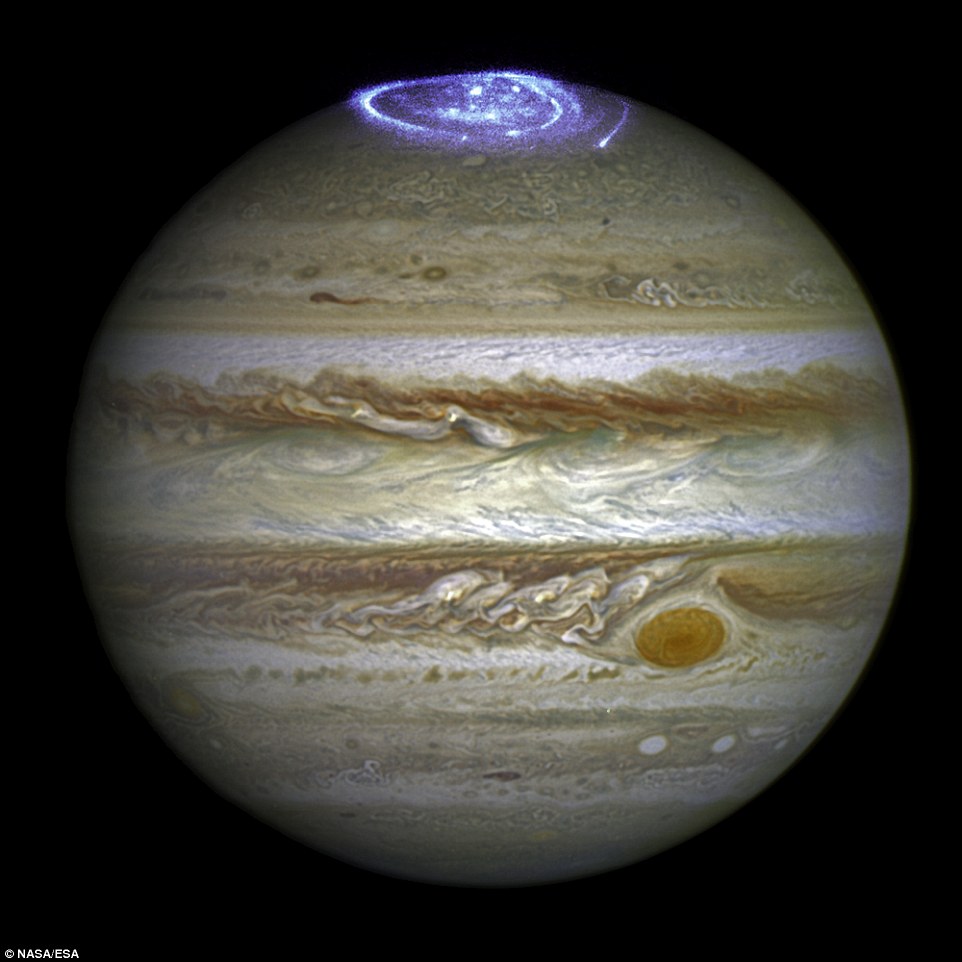






 Bizarre comet is dubbed a 'giant space volcano' because it...
 Mysterious HOT ICE thought to be common inside frozen..
 The nebula that looks like GODZILLA: NASA shares image of...
 'False positive:' Researchers think the mysterious radio...



 Meet Homo bodoensis: Newly-identified ancient human species...
 Human brain DECREASED in size 3,000 years ago when ancient...
 Stepping back in time: 6 MILLION-year-old footprints...


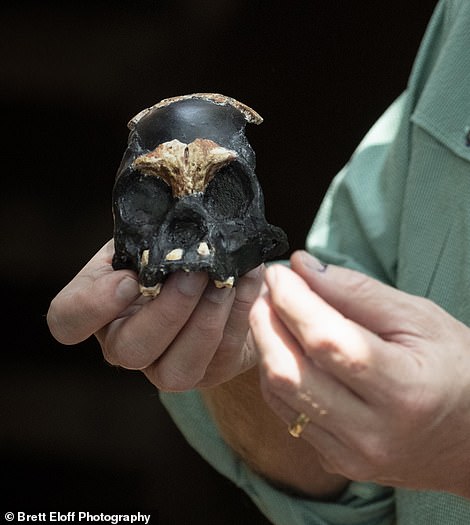
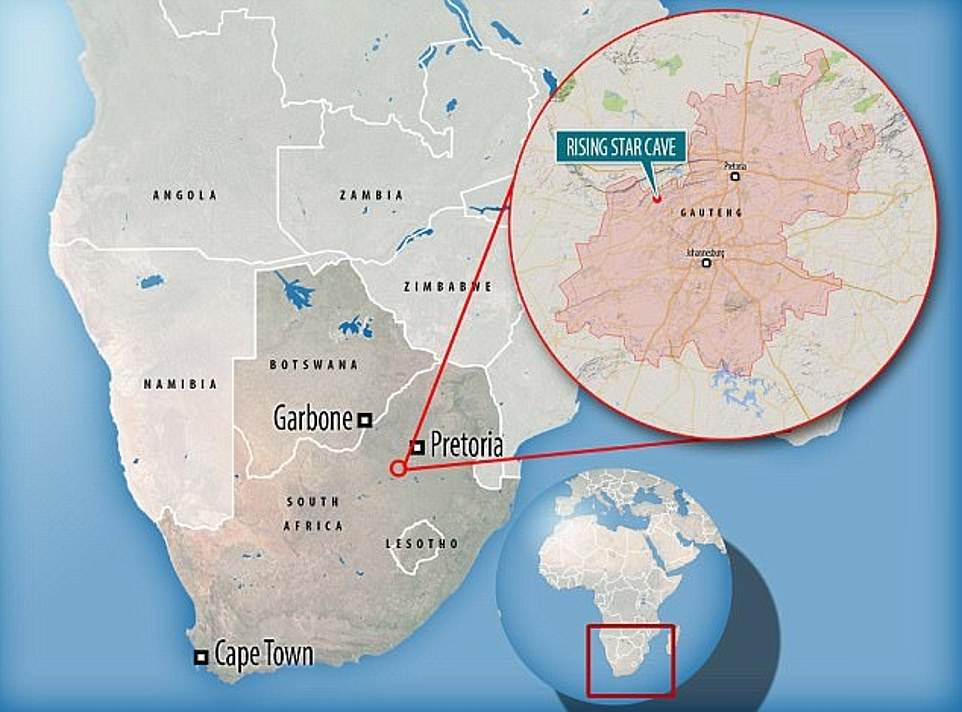





 Never waste money on makeup again: L'Oreal teams up with...
 Mary G. Ross: Google Doodle celebrates the first American...
 Could we finally treat pessimism? Neuroscientists pinpoint...
 ‘We need to rethink evolution’: Animal kingdom is OLDER than...