Ontdek de Fascinerende Wereld van UFO's en UAP's: Jouw Bron voor Onthullende Informatie!
Ben jij ook gefascineerd door het onbekende? Wil je meer weten over UFO's en UAP's, niet alleen in België, maar over de hele wereld? Dan ben je op de juiste plek!
België: Het Kloppend Hart van UFO-onderzoek
In België is BUFON (Belgisch UFO-Netwerk) dé autoriteit op het gebied van UFO-onderzoek. Voor betrouwbare en objectieve informatie over deze intrigerende fenomenen, bezoek je zeker onze Facebook-pagina en deze blog. Maar dat is nog niet alles! Ontdek ook het Belgisch UFO-meldpunt en Caelestia, twee organisaties die diepgaand onderzoek verrichten, al zijn ze soms kritisch of sceptisch.
Nederland: Een Schat aan Informatie
Voor onze Nederlandse buren is er de schitterende website www.ufowijzer.nl, beheerd door Paul Harmans. Deze site biedt een schat aan informatie en artikelen die je niet wilt missen!
Internationaal: MUFON - De Wereldwijde Autoriteit
Neem ook een kijkje bij MUFON (Mutual UFO Network Inc.), een gerenommeerde Amerikaanse UFO-vereniging met afdelingen in de VS en wereldwijd. MUFON is toegewijd aan de wetenschappelijke en analytische studie van het UFO-fenomeen, en hun maandelijkse tijdschrift, The MUFON UFO-Journal, is een must-read voor elke UFO-enthousiasteling. Bezoek hun website op www.mufon.com voor meer informatie.
Samenwerking en Toekomstvisie
Sinds 1 februari 2020 is Pieter niet alleen ex-president van BUFON, maar ook de voormalige nationale directeur van MUFON in Vlaanderen en Nederland. Dit creëert een sterke samenwerking met de Franse MUFON Reseau MUFON/EUROP, wat ons in staat stelt om nog meer waardevolle inzichten te delen.
Let op: Nepprofielen en Nieuwe Groeperingen
Pas op voor een nieuwe groepering die zich ook BUFON noemt, maar geen enkele connectie heeft met onze gevestigde organisatie. Hoewel zij de naam geregistreerd hebben, kunnen ze het rijke verleden en de expertise van onze groep niet evenaren. We wensen hen veel succes, maar we blijven de autoriteit in UFO-onderzoek!
Blijf Op De Hoogte!
Wil jij de laatste nieuwtjes over UFO's, ruimtevaart, archeologie, en meer? Volg ons dan en duik samen met ons in de fascinerende wereld van het onbekende! Sluit je aan bij de gemeenschap van nieuwsgierige geesten die net als jij verlangen naar antwoorden en avonturen in de sterren!
Heb je vragen of wil je meer weten? Aarzel dan niet om contact met ons op te nemen! Samen ontrafelen we het mysterie van de lucht en daarbuiten.
In the world of mysterious undiscovered beasts we have creatures of all shapes and sizes, with some being more bizarre than others. One corner of cryptozoology that has quite a few rather strange stories is that of various flying, winged reptiles, which have popped up in numerous cultures across the world. Perhaps standing out among the oddest of these are the various accounts of flying snakes, and here we will delve into the weird world of such stories.
The region of Arabia has long been said to be the home of some sort of flying serpent, notably in the area around the Arabian Sea. They were typically described as looking like water snakes, only with bat-like wings upon which they could take flight, sometimes in vast numbers. They were said to lurk about under frankincense trees, and farmers harvesting these trees were so afraid of them that they would burn styrax, which is the resin of the Liquidambar tree, under the trees, which was said to drive the serpents away. The only time when the region was supposedly safe from these malicious winged snakes was during spring, when they were said to migrate to Egypt. Far from mere folklore, the Arabians described these as real animals, giving a good deal of detail on their behavior and life cycle. For instance, the female was said to kill the male during mating, that the young would eat their way out of the womb, killing the mother, and that their primary predator was ibis birds. Occasionally these winged snakes were seen by outsiders, and in the fourth century B.C., Greek historian Herodotus passed through the region and learned much about these creatures from the locals. They told him of the snakes’ habitats and behaviors, even showing him the mountain pass they were said to pass through during their annual migration, and how the ibis birds would congregate there in great numbers during this time to feed on the serpents. He would claim that he had also seen large numbers of skeletons from these snakes at the pass. Herodotus would write of these creatures at length in his tome Histories, saying:
There is a region moreover in Arabia, situated nearly over against the city of Buto, to which place I came to inquire about the winged serpents: and when I came thither I saw bones of serpents and spines in quantity so great that it is impossible to make report of the number, and there were heaps of spines, some heaps large and others less large and others smaller still than these, and these heaps were many in number.” “The region in which the spines are scattered upon the ground is of the nature of an entrance from a narrow mountain pass to a great plain, which plain adjoins the plain of Egypt; and the story goes that at the beginning of spring winged serpents from Arabia fly towards Egypt, and the birds called ibises meet them at the entrance of this country and do not suffer the serpents to go by but kill them. On account of this deed it is, say the Arabians, that the ibis has come to be greatly honored by the Egyptians, and the Egyptians also agree that it is for this reason that they honor these birds. As for the serpent its form is like that of the watersnake; and it has wings not feathered but most nearly resembling the wings of the bat. Let so much suffice as has been said now concerning sacred animals.
Again, Arabia is the most distant to the south of all inhabited countries: and this is the only country which produces frankincense and myrrh and casia and cinnamon and gum-mastich. All these except myrrh are difficult for the Arabians to get. They gather frankincense by burning that storax which Phoinikes (Phoenicians) carry to Hellas; they burn this and so get the frankincense; for the spice-bearing trees are guarded by small Winged Snakes of varied color, many around each tree; these are the snakes that attack Aigyptos (Egypt). Nothing except the smoke of storax will drive them away from the trees . . .So too if the vipers and the Winged Serpents of Arabia were born in the natural manner of serpents life would be impossible for men; but as it is, when they copulate, while the male is in the act of procreation and as soon as he has ejaculated his seed, the female seizes him by the neck, and does not let go until she has bitten through. The male dies in the way described, but the female suffers in return for the male the following punishment: avenging their father, the young while they are still within the womb gnaw at their mother and eating through her bowels thus make their way out. Other snakes, that do no harm to men, lay eggs and hatch out a vast number of young. The Arabian Winged Serpents do indeed seem to be numerous; but that is because (although there are vipers in every land) these are all in Arabia and are found nowhere else. The Arabians get frankincense in the foregoing way.
Herodotus
Another region long said to be inhabited by flying snakes is the desert of the Karas Region of Namibia, on the southwest coast of Africa. The so-called Namibian Flying Snake supposedly has quite the striking appearance, measuring 9 to 25 feet in length, with a wingspan of 30 feet or more, and being yellowish brown with light spots, or black in color, with the ability to camouflage itself like a chameleon. It is said to be able to produce bioluminescence from a crest on its head, and is known for its loud, roaring vocalizations. They are said to live in caves during the day and come out at dusk, and that they are extremely territorial. Locals are apparently terrified of the beasts, which they believe prey on livestock and even people.
Despite just terrifying locals, these creatures have been reported by outsiders since the days of the first African exploration of the region, and one of the more notable accounts supposedly occurred in 1942, in the vicinity of a farm near Kirris West, in south-west Namibia. The account goes that a farmer named Michael Esterhuise was tending to his flock of sheep when he smelled something like burnt tar and looked to see an enormous snake bounding down a hill before shooting straight up into the air on huge wings a sound like “wind blowing through a pipe” and a “great roaring noise.” Esterhuise would claim to encounter the creature on two more occasions after that, and it was compelling enough that it was investigated by Marjorie Eileen Doris Courtenay-Latimer, the South African museum official who in 1938, brought to the attention of the world the existence of the coelacanth. In 1978 there was another notable sighting, when a French farmer who was tending his cattle and noticed a light approaching him. As it drew closer, he could see that the light was emanating from a crest atop the head of a vast winged serpent, which would swoop down to attack one of his cows and fly off. He would say:
I saw what looked like… as the best matching description I can give you is that it looked like a dragon, it had a white bright light on its head, which was blinding me, the color of it was brown and yellow, it had green eyes, there was a tar-like smell coming from it and it had smoke coming out of its nostrils.
In 1988, professor and explorer Roy Mackal travelled to the region to investigate such reports, and although he was unable to see one of the creatures or gather any evidence, he came away convinced that the creature was real. Europe has its share of such accounts as well, and in particular the woodland around Penllyne Castle, in the county of Glamorgan, seems to be a wellspring for flying snake accounts. The Welsh flying snakes have traditionally been described as being six to nine feet long, having feathers, and as being very beautiful, but at the same time very aggressive and dangerous. They were also supposedly ravenous as well, and often shot at by farmers trying to keep them away from their chickens. In her book Folk-Lore and Folk-Stories of Wales, author Marie Trevelyan writes of these mysterious creatures:
The woods around Penllyne Castle, Glamorgan, had the reputation of being frequented by winged serpents, and these were the terror of old and young alike. An aged inhabitant of Penllyne, who died a few years ago, said that in his boyhood the winged serpents were described as very beautiful. They were coiled when in repose, and “looked as though they were covered with jewels of all sorts. Some of them had crests sparkling with all the colours of the rainbow.” When disturbed, they glided swiftly, “sparkling all over,” to their hiding places. When angry, they “flew over people’s heads, with outspread wings bright and sometimes with eyes, too, like the feathers in a peacock’s tail.” He said it was “no old story,” invented to “frighten children,” but a real fact. His father and uncles had killed some of them, for they were “as bad as foxes for poultry.” This old man attributed the extinction of winged serpents to the fact that they were “terrors in the farmyards and coverts.” An old woman, whose parents in her early childhood took her to visit Penmark Place, Glamorgan, said she often heard the people talking about the ravages of the winged serpents in that neighbourhood.
Another recent report of a flying serpent of some sort in Wales supposedly happened in 2001 in the area of Powys. In March of that year, a British biologist and a few colleagues were doing some fieldwork in the area when they apparently encountered “a serpentine dragon.” A report on the incident in Strange Magazine says of it:
A British biologist and a few colleagues were conducting some research in the area after being notified by a local of “something” strange that was witnessed a month earlier. As they stood at the edge of some woods by a quarry they suddenly looked upon an extraordinary entity. Measuring 3 ft. or so in length, it resembled a serpentine dragon with four short limbs, but its head was shaped very like that of a sea horse, and it was airborne…undulating and wriggling as it flew about 10 ft above the surface of the quarry in a wide circle. They were unable to recall seeing any wings, but it had a long tail that ended in a pair of horizontal, whale like flukes. The entity was green in color and shimmered somewhat, but appeared solid, not translucent or ethereal. They watched it for 3-4 minutes, at a distance of approximately 50 ft, before it finally vanished into one of the numerous caves and large crevices pitting the quarry. The biologist had the distinct impression while watching this creature that it was deliberately seeking to keep them at bay, warning them off from approaching further into its territory.
Hopping across to the United States, here we also find many bizarre reports of flying, winged snakes. One spate of such sightings happened in the 1800s all over the country. In the 1850s, settlers in the state of Nebraska began telling of a giant flying “undulating serpent” with “lighted streaks along the sides” that was frequently seen soaring over the Missouri River. In 1873, several residents of Ft. Scott, Kansas saw in the sky “the form of a huge serpent, apparently perfect in form, surrounding the sun” for several minutes. In June of that same year, farmers near Bonham, Texas, saw a giant flying serpent flying along with a cloud. A report of the encounter in the Bonham Enterprise reads:
It seemed to be as large and as long as a telegraph pole, was of a yellow striped color, and seemed to float along without any effort. They could see it coil itself up, turn over, and thrust forward its huge head as if striking at something, displaying the maneuvers of a genuine snake. The cloud and serpent moved in an easterly direction, and were seen by persons a few miles this side of Honey Grove.
In Jerome Clark’s Unnatural Phenomena: A Guide to the Bizarre Wonders of North America, there is a report from September of 1875, when two young men in Leavenworth, Kansas, claimed to have actually captured a flying snake. They claimed that they had been out hunting when a flying serpent measuring one-foot-long and with spots on its body began fluttering around them on two wings about “the size of a man’s hands.” One of the men was able to swat it out of the air with his hand, and the two of them stomped it to death and put the body in a bottle of alcohol. Unfortunately, no one is really sure where this amazing physical evidence went or if it ever even existed at all.
In March of 1882, two lumberjacks in Hurleton, California, saw above the tree tops a massive flying serpent with a head like a crocodile. One of the men fired his shotgun at it, which elicited a “cry similar to that of a calf and bear combined but gave no sign of being inconvenienced or injured.” Several other people in the area also claimed to have seen the creature. In 1888, three young women in Darlington County, South Carolina claimed to have seen a giant 15-foot-long serpent gliding above them at “about the speed of a hawk” making a hissing sound. In 1897, a witness in Detroit of all places claimed to have seen something remarkable as well, saying:
Going down Grand River about 4 in the morning, the policeman I was with and I saw an object that looked to be about three feet in diameter. It was about 1,000 feet in the air and was heading east. It was a silvery color and had a tail about three blocks long. It traveled like those big sea serpents you read about skimming over the top of the water. It made a low hissing noise that we could just hear. My dad, who was leaving our home for work, also saw it as it seemed to pass right over our house on Rivard between Leland and Alexandrine.
What are we dealing with in accounts such as these? While there are known “flying snakes,” in that they can glide from tree to tree, they do not have wings and are very different than anything we have looked at here. Are these misidentifications, tall tales, or what? Certainly many such accounts have quite a colorful cast to them, suggesting pure folklore or someone having some fun on a slow news day, but could any of these have something more behind them? No matter what the answer to this question may ultimately be, these are certainly curious historical oddities that add another strange corner to the realm of cryptozoology.
John Lennon has been gone for over 40 years, but perhaps Paul McCartney could be persuaded to change one word in a beloved song from Sgt. Pepper’s Lonely Hearts Club Band written mostly by John. Why would he do that? Because new research suggest that astronomers can now see Mercury in the sky with diamonds. Will this change the exoplanetary focus of Musk and Bezos?
Mercury?
“The pressure wave from asteroids or comets striking the surface at tens of kilometers per second could transform that graphite into diamonds.”
Picture yourself in a seat at a conference – specifically, the Lunar and Planetary Science Conference held in Houston recently. There, Kevin Cannon, a geologist at the Colorado School of Mines, made the case for our solar system’s smallest planet being covered with diamonds. His explanation is actually pretty simple to follow. Mercury’s composition is primarily graphite — a crystalline form carbon. In its normal soft state, it’s perfect for pencil leads and lubricants. However, put it under high pressure and heat and it becomes diamonds. Many astronomers and geologists believe that four billion years ago, our inner solar system was in a state of cataclysmic asteroid activity called the Late Heavy Bombardment. While the asteroids pummeled Mercury, Venus, Earth and Mars, the telltale evidence was discovered in Moon rocks brought back by the Apollo missions. That’s when the Moon got a majority of its craters and it’s speculated that Mercury, with twice as many as the Moon, got twice the bombardment.
“You could have a significant amount of diamonds near the surface.”
Scientists believe the Mercury of 4 billion years ago was covered with magma and a layer of graphite upwards of 300 feet deep. As those asteroids hit Mercury, the pounding pressure turned the graphite into “shock diamonds.” What is a “significant amount”? According to Wired, Cannon estimates as much as 16 quadrillion tons! Before you book a seat and attempt to hijack a Blue Origin flight to Mercury, they’re tiny and buried all over Mercury.
Tiny diamonds found in some asteroids are thought to be shock diamonds formed by collisions. Earth and the Moon don’t have them because their surfaces aren’t covered with graphite like Mercury. Laura Lark, a researcher at Brown University in Rhode Island, also spoke at the conference and says dark spots of graphite on the surface of Mercury in images taken by cameras aboard NASA’s Messenger spacecraft between 2011 and 2015 support Cannon’s theory. Another mission could confirm it, but the next one isn’t until 2025 when BepiColombo, launched by the European Space Agency and the Japanese Space Agency reaches Mercury and drops a probe to map the surface. That mission could also verify a second theory – that a huge asteroid smashed into Mercury between 10 or 20 million years ago and smashed what was once a bigger planet into the tiny one it is today, blowing the rest of it into space and onto Earth and its close neighbors.
Will 16 quadrillion tons of diamonds entice space miners to head to Mercury with big shovels and buckets … and space suits designed to withstand temperatures ranging from 800 degrees Fahrenheit in the daytime and -290 F at night?
Picture yourself in a ship on a mission … to Mercury in the sky with diamonds.
In this series we are exploring the weird and wonderful world of astronomy jargon! You’ll feel like a brand new person after today’s topic: nova!
Ah, the nova. The most classic of the kind of cosmic explosion known as a “cataclysmic variable.” In fact, it’s so classic that the proper name for a nova is…”classical nova.”
Before the twentieth century, every kind of explosion on the night sky was called a “nova.” But once we figured out the various processes that were leading to stellar deaths, we came up with a better classification system. That’s how we got supernovae, luminous red novae, and the classical novae.
The classical nova starts off as a binary star system. One star will be more massive than the other. Because that more massive star fuses hydrogen at a faster rate, it will go through its life cycle more quickly. Eventually it will die, leaving behind a core of oxygen and carbon called a white dwarf.
Then its less massive companion finally enters old age. Towards the end of that star’s life, it will swell and become a red giant.
If the orbits of the red giant and the white dwarf get too close, with orbital periods going down to a few days, then things get interesting. The atmosphere of the red giant, which is made of mostly hydrogen, can start to spill over onto the white dwarf, pulled by the gravitational attraction of that leftover core.
That white dwarf is hot, usually having a temperature of a few hundred thousand Kelvin. As all that hydrogen spills onto its surface, the white dwarf heats it up. If conditions are just right, the hydrogen layer building up on the white dwarf can get too hot. This triggers a runaway fusion event which engulfs the entire surface of the white dwarf.
It’s a giant nuclear bomb.
Novae like this happen about ten times per year, but they will only be visible to the naked eye every 12 to 18 months. Sometimes the process can happen again and again, as the red giant continues to spill its own atmosphere onto the white dwarf in a fatal cycle.
In this serieswe are exploring the weird and wonderful world of astronomy jargon! You’ll only be visible in the southern hemisphere after today’s topic: the Magellanic Clouds!
The Magellanic Clouds are the two largest satellite galaxies of the Milky Way. They appear in the night sky of the southern hemisphere as two fuzzy patches visible to the naked eye. Inhabitants of the southern hemisphere have known about them since basically forever, but they didn’t get the attention of European astronomers until Antonia Pigafetta wrote about them after accompanying Ferdinand Magellan on his circumnavigation of the world.
The Magellanic Clouds look pretty close together, but in actuality they sit about 75,000 light-years away from each other. The larger of the two, appropriately named the Large Magellanic Cloud or LMC, is about 160,000 light-years away from the Milky Way, while the Small Magellanic Cloud (SMC) is about 200,000 light-years away.
The LMC is about 14,000 light-years across, making it roughly twice the size of the SMC, although that’s still tiny compared to the Milky Way, which is over 100,000 light-years across.
Compared to the Milky Way, the two Clouds have a lot more gas and fewer stars. They also lack a lot of elements heavier than helium, since they do not host a lot of star formation. Whatever shape they had when they first formed is long gone, as they’ve been stretched and pulled by the gravitational effects of the Milky Way. That said, radio telescopes have revealed a faint spiral structure in the hydrogen that fills their volumes.
Astronomers have a difficult time estimating the mass of both clouds, but evidence suggests that the LMC is about a tenth as massive as the Milky Way.
The two Clouds are not alone; they are joined by several dozen other dwarf galaxies that orbit the Milky Way.
In this serieswe are exploring the weird and wonderful world of astronomy jargon! You’ll be seeing double with today’s topic: gravitational lens!
Einstein’s theory of general relativity tells us that matter and energy bend and warp the fabric of spacetime. Indeed, this bending and warping is exactly what we experience as the force of gravity, since the deformations in spacetime instruct matter how to move. This bending doesn’t just apply to matter, but also to light.
The means that gravity bends the path of light in a phenomenon known as gravitational lensing. This was one of the first predictions of the theory of relativity, and an expedition led by Sir Arthur Eddington to observe the bending of starlight during a total solar eclipse was the first test of Einstein’s famous theory.
There are three kinds of gravitational lenses, divided into how strong the effect is.
The first kind is called strong gravitational lensing. Astronomers see this kind of lensing around gigantic clusters of galaxies. When light from background galaxies passes through or near the cluster, that light bends, distorts, and even sometimes follows separate paths. The background galaxy then appears warped and distorted, and in some cases can appear in multiple locations around the cluster.
The second kind is much weaker, and hence is called weak gravitational lensing. This is caused by the light from distant galaxies passing through billions of light-years of cosmic structure on its way to our telescopes. This won’t visibly distort the images of galaxies, but gently tweak them. Astronomers use this mild distortion to estimate the amount of matter between us and the galaxy, helping them to build maps of the universe.
The last kind if called microlensing, and is by far the weakest, as its na me suggests. When a small object passes between us and a star, the image of the star will briefly appear to flare and brighten, due to multiple beams of light from the star getting focused around the object. This technique allows astronomers to discover otherwise invisible things like black holes and rogue planets wandering the galaxy.
Although the Arecibo radio telescope is no more, it continues to deliver scientific discoveries. There is a wealth of Arecibo data astronomers continue to mine for new discoveries, and one of them is thanks to an astronomical technique known as planetary radar.
You’re probably familiar with radar as it’s used in weather forecasts, or when you’re caught speeding on the highway. Radar works by beaming a radio signal at an object. Some of the radio light bounces back, and from the return signal, you can tell things such as how distant an object is and where it is moving. Planetary radar involves beaming a radio signal at a planet, then picking up the scattered signal with a sensitive radio telescope. The technique was first used in the 1960s to measure the orbits of Venus and Mercury.
A radar map of Mercury showing pockets of ice (center). Credit: Rivera-Valentín et al
Over the years, radar astronomy has gotten more powerful. In the past several decades the method could be used not only to map the surface of a planet but also to identify surface composition. In the 1990s planetary radar was used to map the surface of Mercury, and it surprisingly found pockets of ice near the planet’s poles. The radar maps weren’t precise enough to determine exactly where the ice was located, but astronomers figured it must be hidden within the shadowed regions of polar craters where sunlight never reaches. Further studies in 2012 confirmed the presence of crater ice.
Then 2019 Arecibo beamed a powerful radio signal toward Mercury. The scattered signal was captured by the Green Bank Telescope in West Virginia, allowing astronomers to make a detailed radio map of Mercury, including polar regions where there are ice pockets. In this latest study, this data was combined with data from the Messenger spacecraft, which orbited Mercury from 2011 to 2015.
A detailed map of Mercury’s polar ice. Credit: Rivera-Valentín et al
The Messenger spacecraft used laser mapping to distinguish bright regions of ice from darker regolith regions. By combining the data, the team was able to better interpret data from the radar map. Although ice typically reflects more radio light than regolith, making icy regions appear bright on a radar map, regions can also appear bright for other reasons, such as scattering off a surface angled just so. The team was able to confirm that the radio bright regions of Mercury generally indicated ice. They could even get a handle on the purity of Mercury’s ice pockets.
In addition to further confirming Mercury’s polar ice, the study also lays the groundwork for radar maps of other worlds. For example, there is a great deal of interest in the location of water ice on the Moon, which would be extremely useful for future lunar astronauts. Refined radar maps of the Moon will be able to determine not only the position of lunar ice pockets but also the size and purity of these pockets. And if you are going to build a base on the Moon, it would be very helpful to have a bit of ice on the rocks nearby.
Its a well known fact among UFO researchers that aliens have done and will continue to do interbreeding research. Thats research in order to create a whole generation of alien beings breed between human and their species. They need a species that can withstand the bacteria, viruses, and planetary pressures that we have on Earth. So, they conduct experiments, gather data and yes, abduct men and women and even children for expedients. They usually erase your memory of the events, however there is always a little bit of memory that they cannot delete from you. This you must live with forever. Usually it deals with a dramatic moment with the aliens.
If she is pregnant then the aliens will come back for her. Many abduction of impregnated women have had the aliens come back, abduct her again a month before the due date, and take the baby out of her, then return her home. Thats what always happens according to dozens of past abduction reports.
Here a woman disappeared for 24 hours only to show up 65km from home and unable to speak for a while. This is 100% proof of an alien abduction happened. Its not going to stop anytime soon, worldwide such things do happen. Aliens have their own purposes and they want to learn about us, like we want to learn about others species.
Scott C. Waring-Taiwan
News states:
“Mrs. Irma Rick had a similar case back in June 2002 with an experience in Jacinto Arauz, in the house where she lives. She denounced, in a year of great activity in Argentina, the presence of an object that caused alteration effects in all the animals of the establishment; she claims to have seen a strange figure. The Police intervened at that time, finding circular burns (a microwave effect) on the ground where this object was perched, ”
Then This week she states about a new abduction on Nov 16, 2021:
She said, “I am doing medical check ups because I will have an alien pregnancy. Tomorrow I have to do ultrasounds and stuff. Supposedly I got pregnant when they took me away.” “I don't have a belly yet, I feel discomfort, things that happen to me. I have to consult the prosecutor because she doesn't want me to talk much yet, ”she concluded. "I don't even know how to explain it. My husband went to another field, I got up, drank some mates, started playing with the phone and it started making lines, like interference. Suddenly I started to hear wind, like when a window starts to buzz. I went outside thinking that he was my husband. I went out and I don't remember anything else, ”said the woman.nd he added “I remember very little, the phone began to interfere, the power went out, I walked outside and from there I don't remember anything else. The only thing I remember is a strong wind.” Given her strange disappearance and the place where she was found, she reported that “she did not know if it was night or day. I opened my eyes and saw white lights. That same clarity wouldn't let me open my eyes, that's as far as I remember. The next day I appeared sitting in the street, I don't remember how long I was sitting. When I got up, I touched myself and the phone was on. I was going around until I started to react. I looked at the phone and it was 5:30 in the morning. And she added “the first thing I did was call my children but I couldn't talk, so I wrote to them. They made video calls to me but I only moved my hands. The words did not come out". Irma Rick confirmed that it was the first time she had spoken to the press and she said “I only spoke to my family. They are as surprised as I am, they want to know what happened to me. I don't know anything until now."
Jim Marrs, Dr. Steven Greer… The Most Carefully Guarded Secret in the History of Mankind
COAST TO COAT AM 2022 – Courtesy of Reality Films Distribution: UFO Chronicles is an unprecedented and uncensored film series featuring the top authorities on the UFO enigma. Pilots, Astronauts, Government Officials, Military Officials, Medical Experts, Scientists, Religious Leaders and more reveal (in never-before-seen interviews) the ramifications of the Alien Presence on planet earth. The UFO Chronicles series discloses information you were never meant to know.
In this episode, Jim Marrs (1943-2017) and Dr. Steven Greer reveal information you were never meant to know.
Dr. Steven Greer, Founder and Director of the Disclosure Project and Project Orion, speaks frankly about his compilation of over 400 government, military and intelligence witnesses testifying to their direct, first-hand experience with UFOs, ET technology, and the cover-up and/or suppression of evidence of an Alien presence on earth..
Jim Marrs ( 1943 – 2017) was a New York Times best-selling author of books and articles on a wide range of alleged cover-ups and conspiracies. Mr. Marrs was a prominent figure in the JFK conspiracy press and his book “Crossfire” was a source for Oliver Stone’s film “JFK.” He has written books asserting the existence of government conspiracies regarding aliens, telepathy, and secret societies.
Alien life: Elon Musk reveals EVERYTHING he knows about life outside Earth
ELON MUSK has revealed everything he knows about alien life as he unveiled SpaceX’s new Starship rocket, claiming if anyone were to know about ET, it would be him.
The tech entrepreneur was speaking at the unveiling of SpaceX’s most impressive rocket to date, the Starship, in Boca Chica, Texas, when the subject ofalienscame up. Mr Musk, who reportedly has a net worth of a staggering $20.1billion (£16.1billion), told the audience he is yet to see any signs of alien activity – but he would be the one to know if there was any indication of extraterrestrial life. The 48-year-old said: “As far as we know, we’re the only consciousness, or the only life that’s out there.
“There might be other life, but we’ve seen no signs of it.
“People often ask me ‘what do you know about the aliens?’ and I’m like, ‘man, I tell you, pretty sure I’d know if there were aliens. I’ve not seen any sign of aliens’.
“The reality is, as far as we know, this is the only place, at least in this part of the galaxy or in the Milky Way, where there is consciousness.
“It appears that consciousness is a very rare and precious thing, and we should take whatever steps we can to preserve the light of consciousness.
Alien life: Elon Musk reveals EVERYTHING he knows about life outside Earth
(Image: GETTY)
Elon Musk unveiled SpaceX's Starship
(Image: GETTY)
Mr Musk added, jokingly: ”If they are here, I hope they’re nice. You know, they haven’t killed us yet — so they must be not that bad.”
On Saturday, September 28, the South African-born billionaire unveiled a prototype of the Starship Mk1rocket which will take humans to the Moon, Mars and “beyond”.
Standing in front of a prototype of the 164ft (50m) tall, 200-ton, or 1,400 tons when fully loaded, SpaceX Starship, Mr Musk said that the rocket will be placed in Earth’s orbit within six months to test the machine.
The Starship prototype, displayed alongside SpaceX’s original Falcon 1 rocket on Saturday, is constructed of eye-catching stainless steel instead than the carbon composite or aluminium-based materials.
This gives the SpaceX Starship “exceptional thermal properties” and a lower cost.
A refined Starship paired with a SpaceX Super Heavy booster stage will increase the rocket’s height to 387ft (117m) and capable of carrying 220,000 pounds.
The spaceship will also include the functions for “orbital refilling”, which would allow fuel to be transferred from spacecraft to spacecraft in Earth’s orbit – something which Mr Musk said is easier to do than docking at the International Space Station (ISS).
He added: “This is one of the other critical pieces of the puzzle to establish a base on the moon or Mars.
The James Webb Space Telescope has sent back its clearest image yet
A crucial phase of mirror alignment has been completed for the James Webb Space Telescope, and the process resulted in the highest resolution infrared image ever taken from space
The James Webb Space Telescope focused on this bright star to align its mirrors
NASA/STScI
The James Webb Space Telescope (JWST) has reached a crucial phase in the alignment of its mirrors. Images from this process have shown that everything is working even better than expected, and the telescope’s operators say that its performance will be able to meet or even exceed the goals that were originally set for it.
JWST peers into the cosmos with the help of 18 gold-plated hexagonal mirrors. For it to work properly, all of these mirrors have to be aligned with extraordinary precision – within nanometres – so that they act as one. When the observatory sent back its first images in February, the mirrors weren’t yet aligned and the images were blurry. Now, although the alignment process isn’t quite complete, the image is crystal clear.
“This is as sharp an image as you can get from a telescope of this size,” said JWST scientist Marshall Perrin at the Space Telescope Science Institute in Maryland during a 16 March press conference. It is the highest resolution infrared image ever taken from space.
The picture itself shows a bright star called 2MASS J17554042+6551277. If the alignment hadn’t been precise enough, there would be multiple copies of the star in the image, but it shows that the mirrors are now all working together to create a single image of a star flanked by distant galaxies.
“The telescope performance so far is everything that we dared hope,” said JWST scientist Jane Rigby at NASA’s Goddard Space Flight Center in Maryland during the press conference. There are a few more alignment steps before the observatory can take its first science images, which are expected in June or July.
This image of a single star is only the beginning. Once JWST begins taking science images, it should help unravel some of the universe’s biggest mysteries, from exoplanet habitability to dark energy.
Tales of a Two-headed Giant: Are the Legends of Kap Dwa Real?
Countless people have claimed to encounter giants throughout history. Greek titans, various Norse giants, the Chinese giant Pangu, and the Biblical giants Goliath and Anak are all examples of stories of extremely large beings in different cultures. This has led many to wonder if real giants ever existed. One example which has been suggested as a possibility is the giant Kap Dwa. Kap Dwa is alleged to be a Patagonian giant discovered off the coast of South America. The body is unusual not just in its gigantic stature, but also in the fact that it has two heads. Could this giant be real? It is scientifically plausible, but its association with P. T. Barnum and the fact that it has not been examined by experts call this giant’s authenticity into question.
Giant Bones in Baltimore
Kap Dwa is said to be a 12-foot (3.66 meter) tall giant, the body of which is in a museum in Baltimore, Maryland, USA. It is said to be a Patagonian giant. Patagonia was considered a land inhabited by giants for a long time. The legend of Patagonian giants goes back to a story told by the explorer Ferdinand Magellan.
English sailor offering bread to a Patagonian woman giant. Frontispiece to ‘Viaggio intorno al mondo fatto dalla nave Inglese il Delfino comandata dal caposqadra Byron’ (Florence, 1768), the first Italian edition of John Byron’s ‘A Voyage Round the World in His Majesty’s Ship the Dolphin . . .’ (London, 1767) [Rare Books Division].
Magellan and his men stopped on the beaches of South America and went inland to explore. As they explored, it is said they encountered natives that were twice the size of a normal man. This is probably because a few of the indigenous peoples of the region, namely the Tehuelche, do happen to be taller than the average European was at the time. This height difference may have been exaggerated, leading to the long-standing European myth that Patagonia was a land of giants.
Is it possible though that there may have been a few real giants in Patagonia and that Kap Dwa is an example of them?
There are two conflicting stories of the origin of Kap Dwa. According to the first, Kap Dwa was encountered by Spanish sailors in around 1673 on the beaches of Patagonia. He was captured and taken onto their ship where they strapped him to the mast. When he got free of the mast, he skirmished with them and was killed by a pike piercing his chest. After this his body was mummified and stuffed and eventually made its way first to Britain and later the United States in the 19th century; where it became the subject of many sideshows and freak shows as a spectacle of the unexplored world.
The second story is that the giant was found already dead on a beach with a spear through his chest. In this version, his body was found by Paraguay natives who mummified the body and worshiped it in a sort of religious ceremony. At some point after this, the British schooner captain George Bickle heard about it. He infiltrated Paraguay and stole the body. After having taken the body, he brought it with him to Britain.
Both stories end the same way: The body ends up in the hands of showmen who add it to their collection of curiosities.
There is some disagreement over its authenticity. Some believe it to be genuine and others are convinced it is a hoax. Let us examine the evidence and see which one sounds more likely.
Is a Two-Headed 12 Foot Man Even Possible?
Although a real two-headed giant seems pretty far-fetched, on par with discovering a real dragon or a real troll, it is not actually as unlikely as it sounds. Let us first examine the creature’s unusual height. There have been people of unusual stature due to the condition known as gigantism. The tallest person in recorded history for which there is indisputable evidence is Robert Wadlow (1918-1940) who was 8 feet 11 inches (2.47 meters) tall and still growing when he suddenly died at the age of 22.
Although people have been found who are over 8 feet tall, no living people or skeletal remains (for which the evidence is beyond dispute) have been found that are 12 feet tall. Although it may be possible for a human to grow to that size, increasing health complications make it more difficult for someone to reach that height and survive. The reason that Wadlow died is because his feet developed blisters because of the enormous weight on them. These blisters eventually became infected and he died from complications related to the infection. These health problems would only get worse for someone who was 12 feet tall.
People and animals with multiple heads have also been identified. One of the ways that conjoined twins can form is a condition called dicephalic parapagus, in which the twins will appear to have one body and two heads. Again, most cases do not survive infancy let alone to adulthood, but there are a few rare cases that do. The two most famous examples would be the Italian brothers Giovanni and Giacomo Battista Tocci (1875/1877-1940?) and the American sisters from Minnesota named Abby and Brittany Hensel (1990- present). The chances of survival for dicephalic parapagus twins is increased if their vital organs are doubled so that each twin has a separate heart, stomach, set of lungs, etc. It is thus possible for dicephalic parapagus twins to become biologically successful adults, but it is very rare.
1880's cabinet card photograph of the Tocci Brothers by Obermiller & Kern. It was sold by the Tocci Brothers.
For Kap Dwa to be genuine, we would have to suppose two very unlikely scenarios at once. We would have to presume that dicephalic parapagus twins were born who had yet another rare and lifespan-reducing disorder, gigantism, and they were somehow able to overcome all the health problems related to both conditions and become full-fledged adults that were strong and healthy enough to engage in combat with a band of sailors. While this is not out of the question, it does make the story much more unlikely and in need of considerably more evidence.
The body was allegedly examined by physicians in the 1960s who said that it showed no obvious signs of being fake. No other experts appear to have examined the body either to determine if it is genuine or if it had the internal anatomic requirements to be likely to survive as a set of dicephalic parapagus twins.
Another problem with the authenticity of the body is its association with Phineas Taylor Barnum. P.T. Barnum was a 19th century showman, businessman, and politician known for shows in which he would display creatures or items which he claimed to be the remains of mythical creatures or from distant lands. Two famous examples would be the jackalope and the Fiji mermaid. P.T. Barnum was known for telling tall tales and most of his specimens have turned out to be hoaxes, the most famous of which might be the Fiji mermaid. Any association with P.T. Barnum immediately casts doubt on the authenticity of Kap Dwa.
[Top] Fiji Mermaid, in the Folklore section at the Haus der Natur (House of Nature), a natural history collection in Salzburg, Austria. ( CC BY NC SA 2.0 ) [Bottom] P.T. Barnum’s Feejee mermaid
Furthermore, there is a strange artform known as rogue taxidermy which consists of reconstructing corpses to look like mythical creatures such as dragons, fairies, goblins, and even giants. This is not practiced very often today, but it was popular in the 19th and early 20th centuries. A two headed Patagonian giant would be a likely candidate for a specimen to be made by rogue taxidermists.
Although it is scientifically possible for Kap Dwa to be genuine as a set of dicephalic parapagus twins who suffered from gigantism, the unlikelihood of this scenario, the associations of the specimen with a man known to have produced multiple hoaxes, and the fact that no one has really examined the body since the 1960s all suggest that Kap Dwa is more likely an elaborate hoax… at least until indisputable evidence can be found.
This week, John Greenwald Jr. – creator and manager of The Black Vault, the largest privately run online repository of declassified government documents in the world – revealed the result of his Freedom of Information Act request for access to former president Barack Obama’s presidential records on the Advanced Aerospace Threat Identification Program (AATIP), photos and videos of UFOs and UAPs, and anything on the Advanced Aerospace Weapons System Application Program (AAWSAP). While Greenwald has obviously had successful requests before, even he seems surprised by the response he received from Obama’s library.
“The Obama Presidential Library just informed me they have approximately 3,440 pages and 26,271 electronic files that pertain to my request for #AATIP / #UFO / #UAP and #AAWSAP information.”
Note to self: Don’t forget to take the UFO files.
Over 3,400 pages and 26,000+ electronic files sounds like a treasure trove … until you remember that these came from a government bureaucracy finely tuned to creating mountains of paper used to hide real facts. Moreover, this doesn’t mean The Black Vault, or anyone else filing a FOIA request, will see everything – a quick look at files stored at The Black Vault shows them to be redacted … and we should expect the Obama library files to be covered in black stripes. That editing process in the name of ‘national security’ will definitely slow things down.
In the meantime, we can speculate on what these papers and files might contain. After leaving office, Obama has enjoyed teasing late night talk show hosts with hints on what he may have seen while president. He told James Corden he hoped the Tic Tac UFOs were the kind of thing “people still take seriously, trying to investigate and figure out what that is.” He told Stephen Colbert there were some questions he was not allowed to answer, and gave the reason to Jimmy Kimmel:
“The aliens won’t let it happen. You’d reveal all their secrets, and they exercise strict control over us.”
That brings us back to what might be in his presidential library. The National Archives defines a presidential library as “vast archives of documents, museums full of important Presidential artifacts, interesting educational and public programs, and informative web sites” and “papers, records and historical materials of the Presidents.” Theoretically, a presidential library could include any document touched by a president. If President Obama actually reviewed documents on UFOs, they could be in the library and conceivably valuable for review by The Black Vault and the public … unless they’re still at the White House, the Pentagon or some other place where they’re guarded as crucial to ‘national security’.
Do the files contain anything on the “tic-tac” UFOs?
If you’re thinking maybe The Black Vault should make a similar request for the papers of the late UFO-hunting Senator Harry Reid, here’s what one of his aides told Politico after a particularly frustrating quest for information by the former Senate Majority Leader.
“After a while the consensus was we really couldn’t find anything of substance. They produced reams of paperwork. After all of that there was really nothing there that we could find.”
Over the years and decades, a large number of UFO-themed government documents have been declassified into the public domain thanks to the Freedom of Information Acts of various nations. There is, however, another aspect to this: namely, the files that should have been released but that can’t be found. Anywhere. We’ll begin with the Roswell affair of July 1947. When, in the 1990s, the U.S. Government Accountability Office (previously the General Accounting Office) dug deep to try and find any documentation on Roswell, many researchers of the still-mysterious case thought that at least some degree of answers would be found. Not so. There’s no doubt that the GAO did a very good job when it came to the search for the Roswell files, but even they couldn’t find what turned out to be a significant body of files. As the GAO said: “In our search for records concerning the Roswell crash, we learned that some government records covering RAAF activities had been destroyed and others had not. For example, RAAF administrative records (from Mar. 1945 through Dec. 1949) and RAAF outgoing messages (from Oct. 1946 through Dec. 1949) were destroyed. The document disposition form does not indicate what organization or person destroyed the records and when or under what authority the records were destroyed [italics mine].” The mystery is still not clear. Now, onto another famous (or infamous) case.
(Nick Redfern)
Roswell: Files that can’t be found
In 2011, the BBC ran an online article titled “UFO files reveal ‘Rendlesham incident’ papers missing.” The BBC’s Neil Henderson wrote: “Intelligence papers on a reported UFO sighting known as the ‘Rendlesham incident’ have gone missing, files from the National Archives reveal. The missing files relate to a report of mysterious lights from US servicemen at RAF Woodbridge in Suffolk in 1980. The disappearance came to light with the release of 8,000 previously classified documents on UFOs. Officials found a ‘huge’ gap where defense intelligence files relating to the case should be, the papers show.” The files also referred to a “deliberate attempt” to “eradicate the records covering this incident.” Hmm.
(Nick Redfern)
When documents vanish…
Now, onto the matter of the Contactees of the 1950s. Or, rather, one particular Contactee: Orfeo Angelucci, who came on the UFO scene in the early 1950s.. It’s a fact that nearly all of the UFO Contactees had files opened on them by J. Edgar Hoover’s FBI. The list included George Adamski, George Van Tassel, Wayne Aho, and George Hunt Williamson. Some of those FBI surveillance files ran to more than 300 pages. By the mid-1950s, Angelucci had moved on from his job at Lockheed and he and his family were now based out of Twentynine Palms, San Bernadino County, California. And, with his book The Secret of the Saucers on the bookshelves, he was becoming a familiar face at UFO lectures and conferences. It was in this period that Angelucci caught the attention of the FBI – and for a very curious reason. As he became more adept at public speaking, and more comfortable about discussing his claimed encounters with aliens, Angelucci revealed something disturbingly eye-opening. It was something which soon had the Feds on his tail. According to Angelucci, as his profile as one of the Contactees grew and grew, he found himself approached on several occasions by what he described as a “subversive element.”On occasion, those approaches were made at Giant Rock, California, near to George Van Tassel’s Integratron.
(Nick Redfern)
George Van Tassel’s Integratron
This small group – “foreigners,” as he worded it – first approached Angelucci while he was engaged in a series of lectures along the east coast in the 1950s. Regular UFO enthusiasts, they were certainly not. They did their very best to try and encourage Angelucci to suggest to his listeners and readers that his alien comrades were communists. In correspondence with Jim Moseley, who, as we have seen, spent time addressing the matter of a communist plot to manipulate the U.S. UFO scene, Angelucci claimed that this “gang of four,” as we might describe them, bought him dinner on three occasions and plied him with plentiful amounts of booze, in plush, New York hotels and bars. Angelucci admitted to Moseley that he was “flattered” by the attention, but remained very uneasy about the agenda. Angelucci would later say of this curious affair: “Failing in their desperate attempts to convert me to communism and slant my talks along the Party Line, they invariably defiantly demanded: ‘Well, then, just what do you think is wrong with Communism?'” Angelucci was a scared man.
(Nick Redfern)
Shortly before Angelucci publicly revealed that a certain “subversive element” was mixing and stirring left-wing, extremist politics with extraterrestrials, the FBI came knocking on the front-door of the Angelucci home. While we don’t know the full story, we do at least have the bones of it, thanks to Jim Moseley. According to what Angelucci told Moseley, a pair of FBI agents visited Angelucci at his Twentynine Palms home, telling him that they had heard of the actions of this east coast group – from who, though, was something that the FBI was not prepared to reveal. The questions posed to Angelucci were many: How did he first meet the group? Did they give their names? Were they Americans? Did they offer him money to slant his tales down a politically-driven path? The list of questions went on and on. Angelucci – admittedly scared out of his wits by the fact that the FBI was onto him, even though he hadn’t really done anything wrong – blurted out just about all that he could. The group had first approached him, in an overly friendly fashion, at a lecture in New York, he told the special-agents. No names were ever given to him, but all four were well-dressed, all seemed to be around the forty-mark, and all had overseas accents. No money ever crossed hands. They invited Angelucci to dinner, which he accepted, admittedly intrigued by the prospect of developing new contacts. It was over dinner that the matter of communism surfaced its head. This mysterious group wanted Angelucci to present his lectures in a fashion that suggested the aliens were communists – and that communism was a good thing. No wonder the FBI opened a file on the man. There’s something else, though: on October 24, 2017, the FBI informed UFO researcher John Greenewald that Angelucci had indeed been the subject of a Bureau file, but that it was destroyed on October 30, 2009.
Dit is de eerste sterrenfoto van de James Webb-telescoop
De Amerikaanse ruimtevaartorganisatie NASA heeft een nieuwe foto vrijgegeven, gemaakt door de James Webb Space Telescoop. Om de spiegels juist af te stellen legden ze de ster 2MASS J17554042+6551277 vast op beeld. Het resultaat overtrof alle verwachtingen.
Martijn Peters
“Meer dan twintig jaar geleden nam het James Webb-team zich voor om de krachtigste ruimtetelescoop ooit te bouwen en bedacht vervolgens een gewaagd optisch ontwerp om de veeleisende missiedoelen te kunnen behalen. Vandaag kunnen we stellen dat dit ontwerp zijn vruchten afwerpt.” Met deze veelbelovende woorden stuurde NASA een nieuwe foto van de James Webb Telescoop de wereld in.
Sinds de aankomst van de ruimtetelescoop op zijn eindbestemming is een team van wetenschappers bezig om de 18 spiegels van het toestel af te stellen zodat ze samen als één grote spiegel werken. Ze zijn nu zo ver gevorderd dat ze er in geslaagd zijn om een foto te maken van een ruimteobject, de ster 2MASS J17554042+6551277, met de Near-Infrared camera. Dit is één van de belangrijkste instrumenten aan boord van de James Webb telescoop. Het resultaat is een nu al iconisch beeld waarop niet enkel de ster te zien is maar ook tientallen sterrenstelsels op de achtergrond. Daarnaast gaf NASA ook nog een selfie vrij van de spiegels van de James Webb.
De afstelling is zo goed verlopen dat wetenschappers verwachten dat de telescoop zijn ambitieuze missiedoelen gaat halen of zelfs zal overtreffen. Als dit nog maar een voorproefje is, dan kunnen we niet wachten als de James Webb ruimtetelescoop echt aan de slag gaat. Dat zal wel nog even duren. Het team moet in de komende maanden nog andere instrumenten afstellen. Als alles volgens schema verloopt zouden de eerste ‘echte’ opnamens in de zomer gemaakt worden.
A visit to the beach is something we often look forward to. There’s nothing quite like letting off some steam by just sitting on the coastline and enjoying the view of the sea and the waves crashing. But sometimes, an innocent wave might drop off something unexpected and take you by surprise.
SpaceX schedules spy satellite, NASA astronaut launches on the same day
The US National Reconnaissance Office (NRO) has confirmed that its next spy satellite is scheduled to launch on a SpaceX Falcon 9 rocket on the same day the company is planning to launch four NASA and ESA astronauts.
Following SpaceX’s flawless NROL-87 spy satellite launch last month, the NRO has announced that the company is on track to launch NROL-85 – another one or several unknown but potentially related spy satellites – as early as April 15th. Less than two hours prior, NASA simultaneously confirmed that SpaceX is on track to launch Crew-4 – the agency’s fourth operational astronaut transport mission – on April 15th.
Technically, SpaceX has already successfully conducted multiple pairs of launches less than 24 hours apart. The company’s all-time record is 15 hours between a Starlink mission and a Turkish communications satellite launch. More recently, SpaceX launched NROL-87 and a different Starlink mission just 22 hours apart. Lacking a specific launch time for NROL-85, Crew-4 could launch as many as 15 hours later and still occur on the same day. As such, there is plenty of precedent for same-day launches.
However, according to one Twitter user, also a fairly reliable source for SpaceX’s launch scheduling and activities, NROL-85 is actually scheduled to launch as early as ~7am PST (10 am EST) on Friday, April 15th – perhaps as few as two hours after Crew-4’s ~8am EST launch.
Launching an NRO spy satellite or commercial communications satellites shortly before or after an internal Starlink mission is one thing. Launching an NRO spy satellite and a crew of NASA and ESA astronauts hours apart for two of SpaceX’s most risk-averse customers – both of which had to sign off on the concurrence – is, however, an entirely different story. Obviously, still a month away from either launch, the odds are good that one or both missions will run into minor delays, spreading them more than two hours apart. Already, in 2022, SpaceX briefly had NROL-87 and Starlink 4-7 scheduled to launch just two hours apart before the Starlink mission was delayed for unknown reasons, resulting in a 22-hour gap instead.
Nonetheless, NASA, the NRO, and SpaceX have still intentionally scheduled Crew-4 and NROL-85 mere hours apart, which means that they have accepted the possibility that both launches might happen exactly as planned. In other words, two of SpaceX’s most exacting, cautious launch customers have full confidence in the company’s ability to launch two high-value Falcon 9 missions a few hours apart – high praise for a launch capability only a few national space agencies have been able to actually demonstrate.
Beyond Crew-4 and NROL-85, SpaceX is scheduled to launch Starlink 4-12 NET March 18th, Axiom-1 – the first fully private crewed mission to the International Space Station (ISS) – NET March 30th, and Transporter-4 – SpaceX’s fourth dedicated rideshare mission – NET “early April”. Next Spaceflight also reports that SpaceX is scheduled to launch Germany’s SARah 1 radar satellite, two batches of O3B mPOWER communication satellites, and Egypt’s Nilesat-301 geostationary communication satellite in April.
Anunnaki Exodus: Why Did the Leave Nibiru for Earth? Are They Still Here? A New Sumerian Paradigm For All
To the Anunnaki Sumerians, Nibiru was the celestial body associated with Marduk. The name means ‘crossing place’ or ‘place of transition’ in Akkadian. Most Sumerian texts refer to it as a planet. It may be located near Thuban or Kochab (Ursa Minor) in the Enuma Elish, which at the time was the pole star.
Nibiru derives from Sumerian cuneiform writings that date back 9,000 years. Nibiru means “Planet of the Crossing” in cuneiform, and its cuneiform sign was usually a cross, or a winged disc. Sumerians lived in fertile lands between the Euphrates and Tigris rivers, in the south of today’s Iraq.
Annunaki – 450,000 years ago our ancestors descended from the heavens to engineer the first human beings. To us they were Giants that ruled as Gods over mankind. Now new evidence and scientific research acknowledges their existence on earth but reveals when they will return.
The truth of their real origin and purpose is much more bizarre and amazing than anything previously believed. From the Garden of Eden to the Great Flood; from the God of the Bible to the secrets of Enoch all shall be revealed. 2017 Philip Gardener
ESA’s Gaia Just Took a Picture of L2 Neighbor JWST
Oh, hello there new neighbor! In February, the Gaia spacecraft took a picture of its new closest companion in space at the second Lagrangian point, the James Webb Space Telescope.
Gaia is an optical telescope that is mapping out our galaxy by surveying the motions of more than a thousand million stars. Astronomers for the mission realized that once JWST reached L2, it would be in Gaia’s field of view. It spied JWST when the two spacecraft were a million km apart.
This image shows the relative sizes and locations of the Gaia orbit (yellow) and the Webb orbit (blue/white). In this view Earth is located to the left, not far outside of the frame. Gaia’s Lissajous loops have L2 right in their center, while Webb’s halo orbit loops are closer to Earth by about 100,000 km on average.Credit: ESA/Gaia/DPAC.
Both spacecraft are located in orbits around the Lagrange point 2 (L2), 1.5 million km from Earth in the direction away from the Sun. Gaia has been there since 2014, and Webb arrived in January 2022. The two spacecraft aren’t quite in the same orbit, though. Gaia orbits L2 in a Lissajous orbit — a kind of boxy-shaped orbit — while JWST orbits L2 in a halo orbit, which has a more oval shape to the path it takes. L2 is not a fixed point in space, but follows the Earth around the Sun, always opposite from the Sun.
A few weeks before Webb’s arrival at L2, Gaia astronomers Uli Bastian of Heidelberg University (Germany) and Francois Mignard of Nice Observatory (France) realized that during Gaia’s continuous scanning of the entire sky, its new neighbor should occasionally cross Gaia’s fields of view.
They determined the first time they’d have the possibility of taking a picture of JWST would be February 18, 2022.
JWST appears as a tiny speck of light, as astronomers said that very little reflected sunlight came Gaia’s way from the new telescope.
Gaia’s sky mapper image showing the James Webb Space Telescope. The reddish colour is artificial, chosen just for illustrative reasons. The frame shows a few relatively bright stars, several faint stars, a few disturbances – and a spacecraft. It is marked by the green arrow.Credit: ESA.
Additionally, Gaia is not really designed to take real pictures of celestial objects. Instead, it collects very precise measurements of their positions, motions, distances, and colors. But one of the instruments uses a type of finder scope as its sky mapper, and that’s the instrument that took the picture of Webb.
Every six hours, Gaia’s sky mapper scans a narrow 360-degree strip around the entire celestial sphere. The successive strips are slightly tilted with respect to each other, so that every few months the entire sky is covered, with Gaia gathering data on everything that’s bright enough to be seen by the spacecraft’s instruments.
ESA said the sky mapper instrument was originally planned for technical servicing and engineering purposes, but during the eight-year mission they’ve also found some scientific uses for it. They decided, why not use it for a snapshot of Webb?
After the sky mapper took the picture, and the raw data was sent back to Earth, it took a few days for astronomers to find and then verify the small dot in one photo was indeed JWST.
ESA said Francois Mignard sent an email to all people involved, with an enthusiastic subject line: “JWST: Got it!!”
Maybe every spacecraft should have a buddy to keep tabs on, out there in the great beyond.
Hybrids are Real, They're Testing Humans Abilities, Abductee Wes Roberts
Wes Roberts has had experiences with Non Human Beings for Decades. Throught years of hynotic regressions and documenting physical affects, Mr Roberts has a compelling case of ET Abductions, Contact & Hybridizaion Programs.
Wes is a long-term contract college professor, teaching computer applications, business writing, and transcription to his students. In addition, he is an author, writer, and virtual assistant. Mr. Roberts also has a company that offers app training, business, blogging, and social media content writing.
Mr. Roberts is active in the UFO/Experiencer communities, having co-hosted and periodically appeared as a guest on Lesley Mitchell-Clarke’s BlogTalkRadio show called Contact. Currently, Lesley and Wes conduct interviews for their YouTube-based Contact TV channel. Some of Wes’ abduction and experiencer accounts have appeared in Terror In The Night I – Alien Abduction Exposed!, the late Bob Mitchell’s What If?: Close Encounters of the Unusual Kind, in the book he co-wrote with Lesley Mitchell-Clarke called Intersections: A True Story of Extraterrestrial Contact, and in his latest book, An Experiencer’s Garden.
If you’re interested in picking up a digital or paper copy of Wes’ latest book, please visit Amazon.com or Amazon.ca (you can also find his earlier book there as well). For a signed copy of Wes’s second book, please send an email to wes@wesgroberts.com.
The Stages of Alien Abduction Notes
Entities Using memories to project images into Abductees
Beings had brown skin and shirtless about 5 ft tall
ET’s create impossible situations
Being put on a Plane before tested with various scenarios
Going into Tunnels and Underground Bases
Early Contact in a farmhouse , telecommunications with the Tall Whites
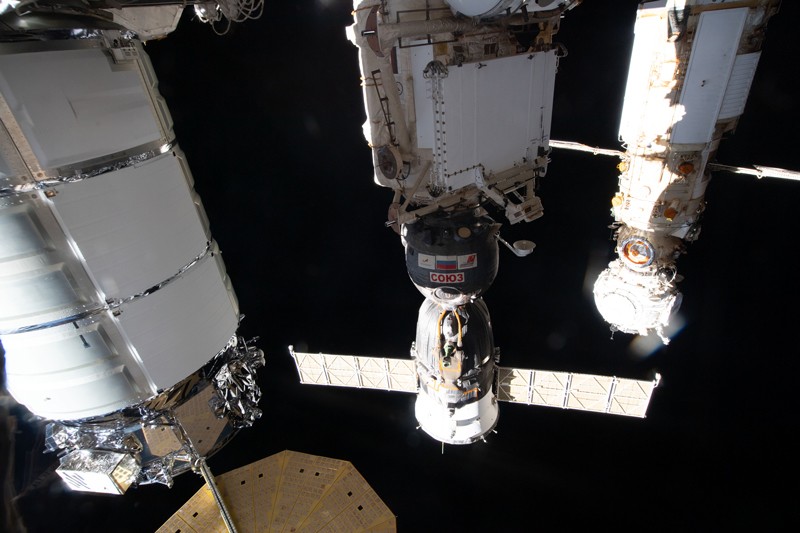
200 Meter Green Alien Floats Past Space Station On Live Cam! March 15, 2022, Video, UFO Sighting News.
Date of sighting: March 15, 2022
Location of sighting: Space station, earths orbit
Now check out this...just when I thought I've seen everything, a giant green alien figure floats past the International Space Station live cam. Yes, you heard me right. A giant green figure with a head that has two round eyes, a small nose, and big grin smile and aa large neck and chin. It also has two ears, both the same size but more like a monkey than a human. A neck attaches to the head and goes down to a huge body. Yeah...I'm sober, but really, what the hell is going on? I have never seen this in my 15 years of watching the space station cam! This is strange! I have no explanation for it. What you see is what it is. The space station is about 109 meters across, this alien figure is at least twice that at 200 meters. Wow, if this is an alien entity, it's godlike in its size, but hey, at least its smiling, which tells me its in a good mood. And its looking right at the space station...watching as it passes him. This is an infrared camera...and I have said for decades if you want to catch a UFO, use an infrared camera, it cuts through any cloaks of invisibility. Don't believe me, look into IR camera abilities. They can see through ink spilled on a newspaper, they can see through clouds, though reflections on water. Its amazing.
Guys, check this out, I was looking at the Apollo 15 image atlas and decided to use an old CSI technique I invented about twelve years ago. The technique is simple, put your phone on camera, turn off flash and take a photo of the computer screen. It actually focuses any object which are out of focus. So it makes it 10% more focused!
I made it easy to see by circling the most obvious structures, easier for the novice to see. However the every thing outside the circle that is black...is structures. The red circles only show 5% of the structures, 95% are still in the photo waiting for you to see them.
Anyways, I found some structures...actually I found a city. All the black objects are structures. There are a lot of them, and they all look like they were grown...yes, bio-mechanically grown! It's faster and they heal themselves if areas get damaged later. The structures are are highly detailed, however many people cannot see detail in black and white photos, if that is the case, that person needs to look at the photo for about 5-15 minutes until their eyes adjust to to differences.
This is more than just proof that intelligent aliens exist, its proof that there are entire cities on our moon, and thats why we never were allowed to return.
The continued research on the ancient discoveries has always stunned the archaeologists who are trying hard to collect information about previous civilizations on Earth. The Egyptian type pyramids are found around the world and share a link between different cultures that existed thousands of miles from each other. Since the 20th century, amazing ancient artifacts have been discovered underwater that include lost cities and pyramids.
In 1992, an experienced diver named Geng Wei from China discovered handcraft flagstones and stone strips at the bottom of Fuxian Lake in the Yunnan Province. Geng accidentally discovered a large pyramid and a lost sunken city that supposedly belonged to the ancient Yunnan civilization during the Han dynasty (206 BCE–220 CE).
Fuxian Lake covers an area of 212 square kilometers, stretching through Chenjiang, Jianchuan, and Huaning Counties in Yunnan Province. The lake has a depth of 155 meters that makes it the deepest lake in the Yunnan Province. Besides, it is the third deepest freshwater lake in China.
Geng heard the legends about the lake that said people could see an impression that resembled a city under the lake from the mountains. Did he discover the ancient lost city? To get assurance, he dove 35 times underwater and explored the lake’s bottom. After surveying, he called the experts from Yunnan Province.
Fuxian Lake, Yunnan Province, China
Ancient astronaut theorist Giorgio A. Tsoukalos said: “What he saw was quite extraordinary. Handcrafts limestones, roads, buildings, and it as if he had discovered an underwater. The clearest evidence of dwellings at the bottom of a lake. It was built when there was even not a lake and that would mean, we are talking about the time before the last ice age.”
In the early 2000s, a Chinese submarine archaeology team conducted an investigation under Fuxian Lake and concluded that the underwater site had two large buildings that were built on huge stone slabs, similar to Mayans, a colosseum-like structure and another structure that resembled a pyramid.
Flagstones and stone strips at the bottom of Fuxian Lake in the Yunnan Province
The pyramid at the bottom of Fuxian Lake was built of huge stone slabs with mysterious engravings. It seemed to be even more advanced than Egyptian pyramids.
The Epoch Times writes: “Amongst the many engraved stones, one stone has attracted particular attention. On the top right of the stone is carved a small circle surrounded by seven radial lines, resembling the Sun. On the left side of the stone is carved a similar circle, but with only four radial lines.”
Experts believe that the sun-like symbol on the stones is very rare and could be even older than 1,800 years.
It would be impossible to install such blocks without special equipment, as well as to bring them to their existing form. The top, consisting of two steps, was lined with sandstone and therefore collapsed. A stronger limestone foundation survived and was found.
Sonar technique used to survey the sunken city beneath the lake
Sonar technique showed that the city covers an area of 10.8 million square feet. It was said that the pyramid might have been as old as the Egyptian pyramids and taller than some of them. Archeologists managed to find out that the massive blocks have a bonding composition with each other, reminiscent of cement. There are no gaps between the huge stone blocks.
Chinese researchers also discovered some handmade stone artifacts such as clay pots beneath the lake. From the carbon dating method, the sunken city was estimated to be 1750 years old. It is assumed that the under-lake structures were constructed by the Dian people who were good at metalworking. As the Han dynasty expanded towards Yunnan province, the ancient Dian kingdom assimilated into it and disappeared by 109 BCE.
A computerized model of the underwater pyramid and surrounding city at the bottom of Fuxian Lake
Ancient astronaut theorists suggested that the lake could be the base for UFOs. There is a legend behind Fuxian Lake. According to a book titled “Cheng Jang Fu Zhi” written during the reign of Emperor Daoguang, “a flying horse-like animal that lived in the lake, described as white with red spots on its back. More intriguingly, it was a creature that could actually take to the skies. This suggests it may have been part-USO, part-UFO.”
A disk-shaped UFO was even seen by a fisherman named Zhang Yuxiang at the lake that rose from the underwater on October 24, 1991. He described the UFO as a shiny disk that tossed his boat by creating strong waves into the water.
After this amazing underwater discovery of pyramids and cities, a lot of questions have arisen. Who built that city? Why is there no record of it in the ancient Chinese texts? What happened to its inhabitants? Is it possible that the city existed before the last ice age?
It’s a fact that the origins ofArea 51 date back to the early years of the Second World War. The Nevada Test and Training Range soon came to fruition and planted the seeds for what would come in the mid-1950s: Area 51. Highly advanced aircraft, such as the U-2, the SR-71 Blackbird, the Stealth Fighter and the Stealth Bomber were all secretly test-flown from Area 51. Probably the almost legendary Aurora, too. In that sense, many might say, there is no doubt that Area 51 has a valid reason for keeping just about everything under wraps. Indeed, considering the fact that those aforementioned aircraft were being built, tested, and flown when the Cold War was still in place and the Soviet Union had still yet to fall, one can easily see why measures would be taken to ensure that the U.S. Government’s most advanced aircraft would be subject to incredible secrecy. But, is there just too much secrecy for a squadron or several of radical, futuristic aircraft? Maybe. Perhaps not. As we have seen over the years and decades, there is one thing – more than any other – that sets Area 51 apart from just about every other military or government facility in the United States: it’s the sheer extent of the government’s determination to make sure that absolutely nothing gets out of Area 51 and no-one gets in. Of course, and particularly so in today’s climate of uncertainty and threats of nuclear attacks, everyone needs to be vigilant. And that includes everyone who works out at Area 51, too. They are, when all is said and done, just like us, regular people with lives and families. The big difference, though, is that they know the reasons for so much secrecy and we don’t.
Area 51 site map, as depicted in declassified CIA documents released via its CREST program
It would be hard – in fact, impossible – to find a military installation in the United States that protects its secrets to a greater degree than Area 51. People have been forced to leave their homes and their land – solely due to U.S. Government concerns and worries that those same people just might see something they shouldn’t see. Those who stray too close to portions of the Nevada desert that the staff of Area 51 would prefer to keep under wraps risk large fines, imprisonment and even death, and all in the name of national security. Aircraft are banned from flying close to or over Area 51. They can even be shot down out of the sky, if circumstances dictate and warrant such drastic action. When, in 1974, NASA’s astronauts on-board Skylab took an aerial photo of the base, all hell broke loose in the defense- and intelligence-based communities of the United States. The CIA and the Department of Defense quickly got involved. Major concerns were expressed about how on Earth (or, in this case, off it) such a thing could have happened. Secret files were created, most of which have never publicly surfaced. Motion-detector equipment peppers the landscape. Cameras are everywhere. Guards patrol the local roads for any perceived suspicious characters. Night-vision technology ensures that no-one can penetrate the base in the early hours of the morning.
The government practically refuses to acknowledge not just the existence of Area 51, but even its name. That same government refused to offer help on the 1996 movie Independence Day, and all because a substantial portion of the movie revolved around Area 51 and the 1947 incident at Roswell, New Mexico. All of the above is astonishing. No facility in the United States comes even close to the level of secrecy and paranoia that surrounds Area 51. That brings up an important question: is all of this overwhelming secrecy just in place to protect next-generation after next-generation of aircraft? Or, are the rumors and the whispers true? You know the ones, of course: the claims that deeply hidden at Area 51 are the remains of the Roswell wreckage, recovered flying saucers, and alien corpses. Maybe, even living aliens are at the base, too. Regardless of where you, me and everyone else stands on the matter of what goes on at Area 51, there can be no doubt that it is the UFO-driven rumors and revelations which attract so much attention. Certainly, there’s no doubt that it was Bob Lazar who, in the late 1980s, set the wheels in motion for the controversy to begin and for the media and the public to sit up and take notice. And, as we have seen, accounts relative to aliens and UFOs – all in relation to area 51 – abound, and have done so for decades.
Consider the following: Annie Jacobsen’s source, Alfred O’Donnell, told her that the Roswell wreckage and the grossly mutated human crew were secretly transferred to the Nevada Test and Training Range in 1951, after previously being secretly stored at Wright-Patterson Air Force Base, Dayton, Ohio. The story suggest the bodies may well still be stored there. Perhaps in a museum-like state. The alleged May 1953 crash of a UFO in Kingman, Arizona also had a connection to the Nevada Test and Training Range. The so-called “alien interview” footage led many to believe that living aliens are housed somewhere at Area 51. Boyd Bushman told incredible stories of alien life and Area 51 connections. But, it was Bob Lazar – more than anyone else – who defined the beliefs and suspicions, and who still defines those beliefs and suspicions about Area 51. Another thing: we should note there are certain threads running through the tales of UFOs at Area 51 that should make us cautious of what we are told. Let’s not forget that Lazar, himself, told of how his mind may have been messed with – possibly using updated MK-Ultra-type technologies. Certain portions of his memories were wiped clean. He felt that his very brief glimpse of a small creature at S-4 may have been a staged event; an event designed to make him think that live extraterrestrials were hidden at the base, when they may not have been.
Note: The CIA document above was created by the U.S. Government. It is in the public domain, having been released by the terms of the U.S. Freedom of Information Act.
There can be no doubt that the alien angle of the history of Area 51 excites many. Maybe that’s what the U.S. Government is counting on. After all, not even the power of all the military-, defense-, and intelligence-based agencies in the United States can prevent a few leaks of classified information. So, perhaps to keep eager Ufologists away from stumbling on covert programs concerned with new aircraft designs, next-generation weapons-systems, mind-control techniques and more of a down to earth nature, they swamp those same Ufologists with enticing tales of extraterrestrial conspiracies, the Roswell affair, and interviews with a sickly creature from another world. For the people at Area 51, it may be a case of this: if you can’t plug the genuine leaks, then swamp them with far more tantalizing and enticing tales of E.T. A good argument could be made that this is exactly what has happened. At times, the targeted people might have been patriotic American citizens who overstepped the mark in their quests to find out if alien life really does hang out at Area 51. On other occasions, and particularly during the Cold War, the targets may have been Soviet spies, seeking the very same answers. Dangling an alien carrot – so to speak – would be the perfect way to reel in and arrest eager Russian agents. And if that carrot never really existed – except in the minds of those running the disinformation programs – then all the better.
Something that dates back decades has prompted the U.S. Government to turn Area 51 into a veritable impenetrable fortress, to steal peoples’ land and kick them to the curb, to threaten inquisitive souls at gunpoint, to chastise NASA for daring to take an overhead photo of the base, and to try and bully Hollywood movie-makers from making references to the installation. Is this all about secret aircraft? Aliens? Both? Even after the wild ride that this article details, we still don’t know. It is, perhaps, highly appropriate to end this article with the words of David Duchovny’s character of FBI Special-Agent Fox Mulder in The X-Files. Episode seventeen of the first season is titled “E.B.E.,” (which is said to be an abbreviated term used by staff at Area 51 to describe aliens: “Extraterrestrial Biological Entities”). As the episode comes to an end, Mulder says to one of his well-informed sources on the inside, dubbed Deep Throat, “I’m wondering which lie to believe.” We can all surely relate to that. Unfortunately, though, it doesn’t make things any easier for us. But, for “THEM?” Hell, yes!
Show a family photo to Scott C. Waring of UFO Sightings Daily and he will probably point out a UFO In the sky, an alien standing next to Uncle Harry and possibly some red eyes signifying your mother-in-law really is possessed by a demon. Waring spends much of his time magnifying NASA images of the Moon and Mars and Google images of Earth and he occasionally finds anomalies that make one go “Hmmm” … while making Waring go “Alien!” That happened this week when a speck on a Google Earth image of water off the coast of Peru had him declaring it was a five-mile-wide UFO on the bottom of the ocean … or the remains of Atlantis.
“Now there is a 7km UFO sitting at the bottom of the ocean. It next to a very mysterious location…Nazca, Peru famous for the giant drawings in the dirt that are hundreds of meters long. Those Nazca lines are said to be drawings to welcome the god. Back then such alien technology flying though the sky could easily be mistaken for gods. Its obvious that the two are connected.”
Obvious? What’s obvious is that Waring can really find the anomalies and that this one is off the coast of Peru … which is home to the mysterious Nazca lines. Does that mean they’re somehow connected? Peru is home to a lot of other things – could this also be an ancient llama corral? One doesn’t need to squint to see a slight resemblance to a UFO (Waring is kind enough to make his photos available to the media) but that doesn’t make it one. He obviously knew you skeptics would think that, so he provides an alternative explanation.
“As I remember, this circular shape is also the right size and shape to be the lost city of Atlantis, which I have long believed to be and alien ship that was floating on the ocean, then later submerged.”
Did Plato say Atlantis was five miles wide, a perfect circle … and located in the Pacific off the coast of South America? Even the esteemed Greek philosopher would facepalm at that broad connection of dots, but that is Waring’s calling card. If you’re not impressed, try spotting the anomaly for yourself on the original Google photo. Even if you manage to find it, does it convince you, as it does Waring, that this is “100% proof of ancient aliens”? Now that you can see it magnified on his site, what do you think it is? An unusual formation on the bottom of the ocean?
Scott C. Waring is a master at locating anomalies and his interpretations of photos and videos are quite entertaining. One of these days, he may be right.
Vlieg binnenkort zelf mee rond de maan met de eerste vlucht van het Artemis-programma
Er altijd al van gedroomd om mee te vliegen naar de maan? Dat kan! Binnenkort kan je meevliegen met de eerste vlucht van het Artemis-programma rond de maan. Althans een boardingpass met jouw naam erop kan mee de ruimte in. Dat meldt NASA op hun website.
Met deze missie gaat het Artemis-programma echt van start. De Verenigde Staten willen daarmee weer met mensen naar de maan, onder wie de eerste vrouw. Deze eerste vlucht zal een onbemande vluchttest zijn van de Space Launch System-raket en het Orion-ruimtevaartuig. Dit is de eerste keer dat dit wordt getest. Het doel van het Artemis-programma is om een langdurige menselijke aanwezigheid op de maan op te bouwen voor de komende decennia.
Al zal de Artemis 1 dus niet volledig ‘onbemand’ vliegen, want via een boardingpass met jouw naam erop kan je meevliegen naar de maan. Via de website van NASA kan je je naam achterlaten, die wordt dan op een flash drive gezet die aan boord van de Artemis 1 zal vliegen.
It’s Springtime on Mars, and the Dunes are Defrosting
Nothing says springtime on Mars like defrosting dunes.
In Mars’ northern hemisphere, springtime has arrived, and observations from the HiRISE (High Resolution Imaging Experiment)onboard the Mars Reconnaissance Orbiter has captured partially defrosted dunes on the western slope of dunes inside Kaiser Crater.
In the winter, the dark sand dunes are covered in a blanket of white seasonal ice, which you can see in the image below. But this image actually shows the beginning of Martian springtime, where the sunny side of the dunes had just begun to thaw. The lead image shows even further thawing, with the darker dunes showing through.
Ice covered dunes in Kaiser Crater on Mars. Credit: NASA/JPL/University of Arizona.
“Bright patches of frost (white in enhanced color) are clearly visible and are made up of water and carbon dioxide ices,” writes HiRISE team member Susan J. Conway. “Dark streaks of sand have flowed down the dune’s slope that sometimes covers the frost. These flows are caused by the rapid transformation of the frost from ice to gas as the sun heats the dune in the spring.”
Dunes form from Martian winds whipping across the loose regolith inside the crater.
Kaiser Crater is 207 km (129 miles) in diameter and is located in Noachis Terra west of Hellas Planitia in Mars’ northern hemisphere. This sand dune field is one of several regions of sand dunes located in the southern part of the crater floor.
You Won’t Believe What’s Buried Under the Sahara…Hidden Lost Ancient Civilizations via Bright Insight
The world’s largest non-polar desert, is actually the widespread burial grounds of countless, mysteriously unknown, ancient ruins & civilizations, that have long since been forgotten, having been consumed and hidden by the sands of time, thousands of years ago. And here’s the thing…when I say “thousands of years ago”…that’s the part where things start to get really strange…
I’m Jimmy Corsetti, and my channel is called Bright Insight.
Ancient Alien Pyramid Found On Mars, Measures 10km across! Photos, UFO Sighting News.
Date of discovery: March 16, 2022
Location of discovery: Mars, 166km above Dorsa Brevia
Google Map coordinates: 70°55'30.87"S 72°29'54.06"E
Hey guys, check this out. I found a four sided pyramid on Mars using Google Earth map. Each corner edge to top measures 5km long, so thats about 3km tall at least. Go big or go home huh? Aliens often go big. Why? They don't do the work, they have AI robots create the structures they want and the time it takes to finish it means little to the aliens since most species will live forever. We measure days, months, years of time being huge amounts of time...because we measure it to our own lifetime...the amount of time we expect ourselves to live. Thats about 75-85 years on average. But if you were an alien, you might have all the time in the universe.
Apassenger onboard a commercial flight captured the moment the aircraft came within striking distance of an unidentified flying object (UFO).
The passenger was onboard a Singapore Airlines flight on 17 January, 2022 and began filming the plane’s descent into Zurich, Switzerland, through the window.
At first the video, filmed between 7.20 and 7.50am, simply shows the picturesque landscape, complete with lakes and fields, but after the aircraft tilts to the right, a white object can be seen streaking across the sky just below its flight path.
NASA Claim To Have “Lost” Important Wreckage From The Kecksburg UFO Incident
During an investigation into an UFO crash in Kecksburg, Pennsylvania, Ben Hansen discovers an admission from the US government that NASA “lost” key evidence regarding the case.
A Tiny Asteroid was Discovered Mere Hours Before it Crashed Into the Earth
Last week, a small asteroid was detected just two hours before it impacted Earth’s atmosphere. Luckily, it was only about 3 meters (10 feet) wide, and the space rock, now known as 2022 EB5 likely burned up in Earth’s atmosphere near Iceland at 21:22 UTC on March 11.
While it is wonderful that astronomers can detect asteroids of that size heading towards our planet, the last-minute nature of the discovery definitely causes a pause. What if it had been bigger?
While every day, Earth gets bombarded with more than 100 tons of dust, sand-sized particles, those objects never reach the ground – they only give us spectacular ‘shooting stars’ or meteor showers we can safely enjoy.
NASA says about once a year, an asteroid about the size of 2022 EB5 (approximately the size of a car) hits Earth’s atmosphere, creates a really impressive fireball, and burns up before reaching the surface. Any asteroids smaller than about 20 meters (about 65 feet) will most likely burn up as they enter the Earth’s atmosphere and if what survives as smaller meteorites hit the ground, they cause little or no damage. But not always.
The epic airburst over Chelyabinsk as captured via dashcam.
The Chelyabinsk meteor, which broke up over Russia in 2013, was approximately 20 meters (65 feet) across, or the size of a six-story building. Barreling through the atmosphere, it unleashed an intense shock wave that shattered windows and collapsed buildings, leaving about 1,200 people injured.
If a rocky meteoroid larger than 25 meters (82 feet) but smaller than one kilometer (a little more than 1/2 mile) were to hit Earth, it would likely cause local damage to the impact area.
Anything larger could cause significant damage. NASA estimates that every 2,000 years or so, a meteoroid the size of a football (300 feet, 100 meters) field hits Earth. In 2019, there was a close-call, where Asteroid 2019 OK – which was an estimated 57 to 130 meters wide (187 to 427 feet), was detected just hours before it made a close pass by Earth, coming within about 73,000 kilometers (45,000 miles). That’s less than one-fifth of the distance to the Moon and is considered uncomfortably close. If an asteroid that size hit Earth, it could wipe out an entire city.
In the case of the recent small asteroid discovery, Hungarian astronomer Krisztián Sárneczky at the Konkoly Observatory near Budapest spied the car-sized 2022 EB5 on March 11, 2022, just two hours before it hit Earth’s atmosphere. Why so late?
As of now, astronomers primarily rely on ground-based observatories to detect asteroids. Small, dark space rocks are difficult to see, since they need to reflect sunlight in order to be visible. Additionally, any object that has an eccentric orbit or that has the Sun blocking its view as it comes toward us are hard to see from Earth.
Earlier this year, NASA announced the Asteroid Terrestrial-impact Last Alert System (ATLAS) had become the first survey capable of searching the entire dark sky every 24 hours for near-Earth objects. The system is comprised of four telescopes, two in the northern hemisphere telescopes on Haleakal? and Maunaloa in Hawai’i, and two additional observatories in South Africa and Chile. This all-sky survey joins other networks of observatories that search the skies, including JPL’s Near Earth Object program, the Catalina Sky Survey and PAN-STARRS.
This chart shows how data from NASA’s Wide-field Infrared Survey Explorer, or WISE, has led to revisions in the estimated population of near-Earth asteroids. Credit: NASA/JPL-Caltech
But astronomers know that dedicated space telescopes are needed to track incoming asteroids and comets. The WISE mission, originally an infrared-wavelength astronomical space telescope that launched in 2009, was reassigned a new mission after its coolant was depleted. In 2013 the spacecraft became NEOWISE, with the goal of helping identify and describe near-Earth objects (NEOs). As of March 2021, the mission had made 1,130,000 confirmed infrared observations of approximately 39,100 objects throughout the solar system.
Artist’s impression of NASA’s Double Asteroid Redirection Test (DART) spacecraft speeding toward the smaller of the two bodies in the Didymos asteroid system. Credit: NASA/Johns Hopkins University Applied Physics Laboratory
Lead image caption: 2022 EB5 captured by Paolo Bacci and Martina Maestripieri from at 21h 10min UT, which is 12 minutes before it entered the atmosphere, while it was only 12 300 km form Earth and its apparent speed close to 65?/sec. Credit: P. Bacci, M. Maestripieri
Laura Eisenhower is a Global Alchemist, Researcher and Medical and Intuitive Astrologist. She is an internationally acclaimed speaker who has presented her work world wide. Laura is the great-granddaughter of President Dwight David Eisenhower and she reveals Exopolitical information about his administration, that has been largely held in secrecy. She is considered by many to be one of North Americas leading researchers on: Health, Exopolitics, Alchemy, Metaphysics, and Galactic History. Laura works to free us from the 3-D holographic time-loop,
False Archonic systems and Military Industrial Complex and exposes hidden agendas so we can take our power back. Feeling a calling regarding her mission since she was a child, she has gained incredible insight through her wilderness adventures, psychic development and has been connecting major dots about how to guide us into higher Earth energies.
She has a deep understanding of Gaia-Sophia and our Divine Blueprint and how they connect to the Venus transits, Earth grids, Global Alchemy, DNA & ET races. Her passion is to inspire unity consciousness and bring us back to the Zero point/Unified field, the totality of our divine powers.
Security camera recorded 2 entities descending from the sky, watch the frightened dogs
Avideo that was recently released by the Mexican ufologist and journalist Jaime Maussan shows the moment in which two alleged entities descend from the sky in the presence of three dogs that bark at the entities and run frightened by the weird event in San Vicente Chicoloapan, State of Mexico.
“These are two humanoid-shaped entities. They approach a few centimeters from the ground and could possibly have walked ,” narrates the report attributed to journalist Carlos Clemente .
The presumed entities continue moving until they run into a fence and there the recording suffers a cut. "At that moment, the smallest entity is seen completely from the side together with the largest one and it is possible to see them perfectly against the light", explains the narrator and concludes: "It is an extraordinary image that reveals a mysterious aspect of the world that we do not see" reports a local news site.
Shackleton's lost ship is FOUND: Endurance is discovered at the bottom of Antarctica's Weddell Sea, 107 years after it sank – and it's still in remarkable condition - PART II
Endurance has been found 107 years after it became trapped in sea ice and sank off the coast of Antarctica
Sir Ernest Shackleton's wooden ship had not been seen since it sank in Weddell Sea, Southern Ocean in 1915
The Falklands Maritime Heritage Trust said Endurance was discovered at a depth of 9,868 feet (3,008 metres)
Shackleton planned the first land crossing of Antarctica from Weddell Sea via the South Pole to the Ross Sea
Remarkable footage of the wreck shows it has been astonishingly preserved, with the ship's wheel still intact
The Antarctic circumpolar current has acted as barrier to the larvae that could have degraded the ship's wood
The Antarctic circumpolar current — an ocean current that flows clockwise from west to east around Antarctica — has essentially acted as barrier to the larvae of deep-water species that could have eaten away at the ship's wood.
Dr Glover told MailOnline: 'The preservation of Endurance is quite remarkable, but not totally unexpected.
'Tiny "shipworms" — small bivalve molluscs — that normally eat wood in well oxygenated oceans are absent from Antarctica, just as they are absent from the Baltic and Black Seas, other remarkable wooden shipwreck "vaults".
'So the findings from the new discovery are important not just from a historical perspective but also in terms of understanding the ecology and evolution of life in Antarctica. It’s a great day for Antarctic archaeology and science.'
The expedition team has also been filming for a long-form observational documentary chronicling the expedition which has been commissioned by National Geographic to air later this year on Disney+.
Endurance was one of two ships used by the Imperial Trans-Antarctic expedition of 1914-1917, which hoped to make the first land crossing of the Antarctic.
Just as the First World War was breaking out in August 1914, the Endurance's crew set out from London with the lofty ambition of becoming the first to cross the Antarctic continent.
Carrying an expedition crew of 28 men, 69 dogs and one cat, the 144-foot-long Endurance was a three-masted schooner barque sturdily built for operations in polar waters.
Aiming to land at Antarctica's Vahsel Bay, the vessel instead became stuck in pack ice on the Weddell Sea on January 18, 1915 — where she and her crew would remain for many months.
In late October, however, a drop in temperature from 42°F to -14°F saw the ice pack begin to steadily crush the Endurance.
Sadly, Shackleton decided that the mission sled dogs and the tomcat, called Mrs Chippy, that were also on board would not survive the rest of their journey, and had them shot on October 29.
Endurance never reached land and became trapped in the dense pack ice and the 28 men on board eventually had no choice but to abandon ship.
Endurance finally sank on November 21, 1915.
After months spent in makeshift camps on the ice floes drifting northwards, the party took to the lifeboats to reach the inhospitable, uninhabited, Elephant Island. The men had allegedly had to resort to eating bodies of some of the youngest dogs that had been on board.
Most of the men remained at Elephant Island while Shackleton and five others then made an extraordinary 800-mile (1,300 km) open-boat journey in the lifeboat, James Caird, to reach South Georgia, an island in the southern Atlantic Ocean.
Shackleton and two others then crossed the mountainous island to the whaling station at Stromness.
On board the steam tug Yelcho — on loan to him from the Chilean Navy — Shackleton was able to return to rescue the rest of his crew on August 30, 1916.
MRS CHIPPY, ENDURANCE'S CAT
Pictured: Mrs Chippy, ship's cat, standing upon the shoulder of stowaway (and later Endurance's steward) Perce Blackburow
When Endurance sailed for the Antarctic, she carried not only Shackleton and his crew of 27 — but also a cat dubbed 'Mrs Chippy'.
The tiger-striped tabby was, despite its name, actually a male — the moniker came from his habit of dotingly following ship's carpenter Harry 'Chippy' McNish everywhere he went.
'Full of character', Mrs Chippy was described by the expedition as being able to climb the rigging exactly in 'the manner of a seaman going aloft'.
Despite this, poor Mrs Chippy accidentally jumped out of one of Endurance's portholes on September 12, 1914 — but was rescued when watch officer Hubert Hudson heard his cries and turned the ship around to rescue the cat from the water.
Sadly, after the Endurance was crushed by the ice, Shackleton decided that Mrs Chippy — and five of the missions sled dogs — would not survive the rest of their journey, and had them shot on October 29.
Mr McNish never forgave Shackleton for having his beloved cat killed.
View from the side of South African polar research and logistics vessel, S.A. Agulhas II, on the expedition to find the wreck of Endurance
100 after Shackleton’s death, Endurance was found at a depth of 3008 metres in the Weddell Sea, within the search area defined by the expedition team before its departure from Cape Town, and approximately four miles south of the position originally recorded by Captain Worsley
It was Sir Ernest Shackleton’s ambition to achieve the first land crossing of Antarctica from the Weddell Sea via the South Pole to the Ross Sea. Pictured, expedition team on board S.A. Agulhas II gallery
Endurance was one of two ships used by the Imperial Trans-Antarctic expedition of 1914–1917, which hoped to make the first land crossing of the Antarctic. Pictured, expedition team on board S.A. Agulhas II
Pictured is historian Dan Snow on board the South African polar research and logistics vessel, S.A. Agulhas II. Objectives for Endurance22 were to locate, survey and film the wreck
S.A. Agulhas II (pictured) is a South African icebreaking polar supply and research ship owned by the Department of Environmental Affairs
Menson Bound, director of exploration of Endurance22 expedition (left) and John Shears, expedition leader, on the sea ice of Weddell Sea, in the Antarctic with S.A. Agulhas II
Shortly following the Endurance22 expedition setting off in February, SA Agulhas II became stuck in ice at the same spot where Endurance sank over a century ago.
The SA Agulhas II became stuck after the mercury dipped to -18°F (-10°C).
Dan Snow told The Times: 'Clever people did say to me on the way, "How do you know you're not going to get iced in like Shackleton?"
'I said, "Don't worry about that. We've got all the technology." But we are now iced in.'
Fortunately, thanks to technological advances such as mechanical cranes, engine power and a case of aviation fuel, crew members managed to free the vessel.
Left to right: John Shears, expedition leader; Mensun Bound, director of exploration; and Nico Vincent, expedition sub-sea manager, looking at images of Endurance in the control room
Menson Bound, director of exploration of Endurance22 expedition (left) and John Shears, expedition leader, on the sea ice
Following the Endurance22 expedition setting off in February, SA Agulhas II became stuck in ice at same spot where Endurance sank over a century ago. Fortunately, thanks to technological advances such as mechanical cranes, engine power and a case of aviation fuel, crew members managed to free the vessel
Sir Ernest Shackleton: Famed Anglo-Irish Antarctic adventurer
Sir Ernest Shackleton during the 1908 expedition to Antarctica
Sir Ernest Henry Shackleton was an Anglo-Irish Antarctic explorer who led three expeditions to the frozen continent.
He was at the heart of a period in history that later came to be known as the 'Heroic Age of Antarctic Exploration'.
Born in Ireland, Shackleton moved to London with his family when he was 10 and first experienced polar climates as an officer on Captain Robert Falcon Scott's Discovery expedition of 1901–1904.
He was sent home early from that expedition after work experiencing poor health that had been ascribed to scurvy. New studies suggest he had beriberi.
During the Nimrod expedition of 1907–1909, Shackleton and his companions created a new recorded of farthest south latitude at 88 degrees south.
Disaster struck his next expedition, the Imperial Trans-Antarctic Expedition, 1914–1917, when the ship, the Endurance, became trapped in pack ice.
The crew were able to escape by launching lifeboats and reaching nearby islands, travelling through stormy oceans for 830 miles.
He returned to the Antarctic for one final time in 1921 with the Shackleton–Rowett Expedition, but died of a heart attack on January 5, 1922, while his ship was moored in South Georgia.
While Shackleton is best known for his exploration, his legacy is also one of enabling a considerable amount of scientific research.
His expeditions helped produce comprehensive scientific and geographical surveys — among which were the first surveys of Antarctica's interior and the effective location of the Magnetic South Pole.
'Shackleton is an iconic figure of Antarctic history with the most incredible legacy of courage and endeavour,' noted the UK Antarctic Heritage Trust's CEO, Camilla Nichol.
'But we sometimes overlook the contribution his expeditions made to science.
'To this day Antarctica is an essential barometer for climate change at the heart of climate science.
'We preserve Shackleton's legacy to inspire the next generation of pioneering scientists and explorers.'
Shackleton's lost ship is FOUND: Endurance is discovered at the bottom of Antarctica's Weddell Sea, 107 years after it sank – and it's still in remarkable condition
Endurance has been found 107 years after it became trapped in sea ice and sank off the coast of Antarctica
Sir Ernest Shackleton's wooden ship had not been seen since it sank in Weddell Sea, Southern Ocean in 1915
The Falklands Maritime Heritage Trust said Endurance was discovered at a depth of 9,868 feet (3,008 metres)
Shackleton planned the first land crossing of Antarctica from Weddell Sea via the South Pole to the Ross Sea
Remarkable footage of the wreck shows it has been astonishingly preserved, with the ship's wheel still intact
The Antarctic circumpolar current has acted as barrier to the larvae that could have degraded the ship's wood
The Endurance22 Expedition had set off from Cape Town, South Africa in February this year, a month after the 100th anniversary of Sir Ernest's death on a mission to locate it.
Endurance was found approximately four miles south of the position originally recorded by the ship's captain Frank Worsley, but within the search area defined by the expedition team before its departure from Cape Town.
Back in 1915, Sir Ernest Shackleton and his crew set out to achieve the first land crossing of Antarctica, but Endurance did not reach land and became trapped in dense pack ice, forcing the 28 men on board to eventually abandon ship.
Photo issued by Falklands Maritime Heritage Trust of the stern of the wreck of Endurance, Sir Ernest Shackleton's ship which has not been seen since it was crushed by the ice and sank in the Weddell Sea in 1915
The taffrail, ship's wheel and aft well deck on the wreck of Endurance, Sir Ernest Shackleton's ship, which has been found 100 years after Shackleton's death
The standard bow on the wreck of Endurance, which was found at a depth of 9,868 feet (3,008 metres) in the Weddell Sea, within the search area defined by the expedition team before its departure from Cape Town
Photo issued by Falklands Maritime Heritage Trust of photos, video and laser pictures of Endurance displayed in the control room on board of S.A.Agulhas II during the expedition
Endurance was one of two ships used by the Imperial Trans-Antarctic expedition of 1914-1917, whose goal was to make the first land crossing of the Antarctica. Aiming to land at Vahsel Bay, the vessel became stuck in pack ice in the Weddell Sea on January 18, 1915 — where she and her crew would remain until the ship was crushed and ultimately sank on November 21, 1915
File photo of Sir Ernest Shackleton on board the 'Quest'. 100 years after Shackleton's death, Endurance was found in the Weddell Sea approximately four miles south of the position originally recorded by Captain Worsley
Endurance was one of two ships used by the Imperial Trans-Antarctic expedition of 1914–1917, which hoped to make the first land crossing of the Antarctic. Pictured: a photograph of the vessel stuck in pack ice taken in the October of 1915, a few weeks before she sank
Carrying an expedition crew of 28 men, the 144-foot-long Endurance was a three-masted schooner barque sturdily built for operations in polar waters. Pictured: the Endurance, stuck in pack ice, listing heavily to port
Endurance in full sail in the ice side view Imperial Trans Antarctic Expedition. It's been announced that the wreck of Endurance has been found and is now designated as a protected historic site and monument under the Antarctic Treaty
ENDURANCE STATS
Type: Three-masted schooner barque
Former name: Polaris*
Builder: Framnæs shipyards, Norway
Launched: December 17, 1912
Crew complement: 28
Length: 144 feet (44 metres)
Beam: 25 feet (7.6 metres)
Tonnage: 348 register tons
Propulsion: Steam and sail
Max. speed: 10.2 knots (11.7 mph)
Sank: Weddell Sea, November 21, 1915
Notable features: Strengthened hull and denser framework custom-designed for operation in polar waters
For the mission, the expedition team worked from the South African polar research and logistics vessel, S.A. Agulhas II, assisted by non-intrusive underwater search robots.
The wreck is protected as a Historic Site and Monument under the Antarctic Treaty, ensuring that whilst the wreck is being surveyed and filmed it will not be touched or disturbed in any way, according to the Falklands Maritime Heritage Trust.
The expedition's director of exploration said footage of Endurance showed it to be intact and 'by far the finest wooden shipwreck' he has seen.
'We are overwhelmed by our good fortune in having located and captured images of Endurance,' said Mensun Bound, maritime archaeologist and director of the exploration.
'It is upright, well proud of the seabed, intact, and in a brilliant state of preservation. You can even see Endurance arced across the stern, directly below the taffrail.
'This is a milestone in polar history.'
Bound also paid tribute to the navigational skills of Captain Frank Worsley, the Captain of the Endurance, whose detailed records were 'invaluable' in the quest to locate the wreck.
Dr John Shears, the expedition leader, said his team, which was accompanied by historian Dan Snow, had made 'polar history' by completing what he called 'the world's most challenging shipwreck search'.
'In addition, we have undertaken important scientific research in a part of the world that directly affects the global climate and environment,' Dr Shears said.
Dr Adrian Glover, a deep-sea biologist at the Natural History Museum, not involved with the expedition, led a 2013 research paper predicting very good wood preservation for Endurance, based on experimental work.
Back in 1915, Sir Ernest Shackleton and his crew set out to achieve the first land crossing of Antarctica, but Endurance did not reach land and became trapped in dense pack ice, forcing the 28 men on board to eventually abandon ship
The ship was found approximately four miles south of the position originally recorded by Captain Worsley. Pictured is the the South African polar research and logistics vessel, S.A. Agulhas II
Photo issued by Falklands Maritime Heritage Trust of the South African polar research and logistics vessel, S.A. Agulhas II, on an expedition to find the wreck of Endurance
Bird's eye view shot, taken by drone, of the South African polar research and logistics vessel, S.A. Agulhas II, on the expedition surrounded by ice
Photo issued by Falklands Maritime Heritage Trust of (left to right) John Shears, expedition leader; Mensun Bound, director of exploration; Nico Vincent, expedition sub-sea manager; J.C. Caillens, off-shore manager, holding the first scan of the Endurance wreckage alongside photos from Frank Hurley, the Australian adventurer and official photographer on Sir Ernest Shackleton's Imperial Trans-Antarctic Expedition
Pictured: one of the SAAB Sabertooth autonomous submersibles used by the Endurance22 expedition to search for the wreck of Shackleton's ship
Aiming to land at Vahsel Bay, the vessel became stuck in pack ice on the Weddell Sea on January 18, 1915 — where she and her crew would remain for many months. In late October, however, a drop in temperature from 42°F to -14°F saw the ice pack begin to steadily crush the Endurance — which finally sank on November 21, 1915. Pictured: Anglo-Irish sailor and explorer Frank Wild assessed the wreckage of the Endurance, crushed by tightening pack ice
Endurance was one of two ships used by the Imperial Trans-Antarctic expedition of 1914–1917, whose goal was to make the first land crossing of the Antarctica. Pictured: 20 members of the blighted expedition, seen here during mid-1916, after the loss of the Endurance
Sir Ernest Shackleton's expeditions to cross the ice of Antarctica
Sir Ernest Henry Shackleton led three British expeditions to the Antarctic.
Born in County Kildare, Ireland, his first experience of the polar regions was as third officer on Captain Scott's Discovery expedition from 1901 to 1904.
He had to leave the voyage early for health reasons after the group set a new southern record by marching to latitude 82°S.
During the second expedition on board the Nimrod, between 1907 to 1909, he and three companions established a new record Farthest South latitude at 88°S - 97 geographical miles from the South Pole.
Shackleton returned in 1914 on board the Endurance and became trapped in the ice trying to travel from sea to sea via the the South Pole.
After being rescued during the ill-fated trip, he later went back again in 1921 but died of a heart attack while his ship was moored in South Georgia.
SCHEEPSWRAK ENDURANCE NA RUIM HONDERD JAAR IN UITSTEKENDE STAAT GEVONDEN
Tim Kraaijvanger
Honderd jaar na de dood van de beroemde verkenner Ernest Shackleton is zijn schip de Endurance gevonden. Het wrak ligt op een diepte van ruim drie kilometer op de bodem van de Weddellzee.
Het wrak is in een uitstekende staat gevonden door het Endurance22-expeditieteam. “Dit is verreweg het mooiste houten scheepswrak dat ik ooit heb gezien”, vertelt expeditieleider Mensun Bound. In het ijskoude water zijn geen micro-organismen aanwezig die het hout opeten. “Het is zelfs mogelijk om het woord Endurance te zien op de achtersteven. We hopen dat deze vondst er toe leidt dat jonge mensen geïnspireerd worden door de pioniersgeest, moed en vastberadenheid van degenen die aan boord van de Endurance naar Antarctica vaarden.”
“Het is ons gelukt om het wrak te vinden, te onderzoeken en te filmen”, vertelt Donald Lamont, voorzitter van het Falklands Maritime Heritage Trust. “Ook hebben we belangrijk wetenschappelijk onderzoek uit kunnen voeren.” Tijdens de zoektocht naar de Endurance voerden wetenschappers aan boord van de S.A. Agulhas II honderden uren aan wetenschappelijk onderzoek uit, vooral gericht op de invloed van klimaatverandering op het gebied. Zo is er onderzoek gedaan naar de dikte van het zeeijs, drijfijs en weersomstandigheden in de Weddellzee.
De masten van het schip zijn naar beneden geklapt en er is wat lichte schade aan de boeg, maar verder ziet het wrak er goed uit. Aan boord van het schip zijn zelfs laarzen en serviesgoed gevonden.
Deze onderwaterrobot van Saab – de Sabertooth – werd gebruikt om het wrak te vinden.
Het woord Endurance is duidelijk zichtbaar op de achtersteven.
Het stuurwiel is nog steeds in uitstekende staat. Let vooral op de bijzondere details, zoals de onaangetaste dunne latjes boven de ingang van de kajuit
Shackletons expeditie naar Antarctica In 1914 startte Ernest Shackleton een expeditie naar Antarctica. Hij wilde het continent dwars oversteken. Maar al heel vroeg loopt het mis. Het schip van Shackleton – zijn eigen Endurance – komt in januari 1915 vast te zitten in het ijs en vergaat. Met reddingssloepen weet Shackleton het onbewoonde Elephanteiland te bereiken.
Na een aantal maanden op hulp gewacht te hebben, weet Shackleton maar al te goed dat hij die hulp zelf zal moeten zoeken. Hij vaart samen met enkele van zijn sterkste mannen van Elephanteiland naar Zuid-Georgia. Een reis van bijna 1500 kilometer. Vervolgens wachtte Shackleton en zijn mannen een enorme uitdaging: het oversteken van het heuvelachtige Zuid-Georgia om vervolgens bij Stromness uit te komen en vanuit dit station van Noorse walvisvaarders om hulp te vragen. Shackleton redde het en haalde hulp. Alle bemanningsleden werden gered.
Honderd jaar na het overlijden van Shackleton Het is bijzonder dat het wrak van de Endurance in 2022 is gevonden. Precies honderd jaar geleden stierf Shackleton op 47-jarige leeftijd aan een hartaanval. De onderzoeker had een gaatje in zijn hart. “De detectie en behandeling van een atriumseptumdefect is vandaag de dag vrij eenvoudig, maar was voor Shackleton niet mogelijk,” vertelt onderzoeker Ian Calder.
Wie in de grote stad woont, kan erover meepraten: voor een beetje vertier moet je in het centrum zijn. In het Melkwegstelsel is het net zo.
Onze zon bevindt zich in een rustige buitenwijk, maar in het centrum, op zo’n 27.000 lichtjaar afstand, vindt de meeste activiteit plaats.
Deze spectaculaire opname toont de kosmische lichtshow die zich daar afspeelt. Met gewone telescopen is er niet zoveel van te zien: stofwolken blokkeren het zicht op het Melkwegcentrum. In plaats daarvan zien we hier energierijke röntgenstraling (weergegeven in groene, oranje en paarse tinten) en radiostraling (in grijstinten). De foto combineert metingen van NASA’s röntgensatelliet Chandra met waarnemingen van de MeerKAT-radiosterrenwacht in Zuid-Afrika.
Credit: NASA/CXC/NRF
De meeste röntgenstraling is afkomstig van hete gasbellen, lang geleden uitgeblazen door ontploffende sterren, en van kleine, compacte neutronensterren. Maar ook het exacte centrum van de Melkweg produceert röntgenstraling. Die is afkomstig van heet gas dat zich heeft opgehoopt net buiten de rand van een kolossaal zwart gat. Dat zwarte gat is 4,3 miljoen keer zo zwaar als de zon; er zwieren reuzensterren en gasslierten omheen, en regelmatig slokt het materiaal uit zijn omgeving op.
Dat die röntgenstraling in de loop van een dag snelle flikkeringen vertoont, was al bekend. Maar ook op de langere termijn is er sprake van een sterke variabiliteit. Een team van astronomen onder leiding van de El Salvadoriaanse astronoom Alexis Andrés en Nathalie Degenaar van de Universiteit van Amsterdam heeft nu metingen bestudeerd die in de afgelopen vijftien jaar zijn verricht door de Swift-satelliet. Uit hun onderzoek blijkt dat de röntgenlichtshow in het Melkwegcentrum tussen 2008 en 2012 veel minder variabel was dan daarvoor en daarna. Niemand weet nog hoe dat komt.
Een ander onderzoeksteam, onder leiding van Shuo Zhang van het Bard College in de Amerikaanse staat New York, keek naar de reflectie van röntgenlicht door gaswolken op grotere afstand van het zwarte gat. Uit die ‘röntgenecho’s’ leiden Zhang en haar collega’s af dat er aan het begin van de 20ste eeuw, zo’n 110 jaar geleden, een enorm krachtige uitbarsting plaatsgevonden moet hebben.
Het wachten is nu op een nieuwe explosie. Het röntgenbeeld van het Melkwegcentrum zal er dan compleet anders uitzien. Elk moment kan het gebeuren.
Spacecraft from the United States (left) and Russia (middle, right) docked to the International Space Station.
Credit: NASA
Russia’s invasion of Ukraine is redrawing geopolitics not only across the planet, but also in space. International collaborations are being shaken to the core as space agencies and researchers grapple with the ramifications of the war.
Among the biggest questions is the fate of the International Space Station (ISS), the orbiting outpost that is currently home to two Russian cosmonauts, four US astronauts and one European astronaut. Since 2000, when people first moved in, the ISS has generally managed to stay out of Earth-bound politics — but the Ukraine conflict could change that.
“The mood on board is probably similar to here on Planet Earth about this tragic situation,” says John Grunsfeld, a former NASA astronaut. “Keep in mind, the crew does fly over Ukraine and can look down and see the devastation, the fires and the smoke. It must just be very tense.”
Other collaborations in space are also throwing up new challenges, as Russia and Western nations pull out of joint projects. Many that remain face uncertain futures.
The war is ending partnerships that began three decades ago to bridge the divide between Russia and the West. “This will fracture that relationship built after the end of the cold war,” says Asif Siddiqi, a historian at Fordham University in New York City. “When historians look back, it will be 1991 — the collapse of Soviet Union — to 2022.”
Beyond politics?
By design, the ISS relies on Russia working together smoothly with 14 other nations. Part of the station is Russian-built and operated by cosmonauts, and the other part is built and run by the US, European, Japanese and Canadian space agencies. Each is dependent on the other for key services: the NASA-led side of the station provides electrical power to the Russian side, while Russia provides the orbital boosting that is occasionally needed to stop the ISS from falling to lower altitudes and disintegrating in Earth’s atmosphere.
According to NASA, the space station is operating as usual. None of the astronauts or cosmonauts on board has said anything publicly about the invasion of Ukraine. On 9 March, astronaut Matthias Maurer released an upbeat video tour of Europe’s science laboratory on the ISS.
“Astronauts and cosmonauts talk about how human spaceflight is beyond geopolitical tensions, because you can have cooperations that don’t exist on Earth,” says Julie Patarin-Jossec, a sociologist in Paris who has studied the relationships among the ISS partners. But now, “it’s the first time since the cold war that geopolitical tensions on the ground have had a negative impact on human spaceflight”.
Research continues
On Earth, the tensions are more apparent. The head of Russia’s space agency, Dmitry Rogozin, has been posting provocatively on social media, including tweeting a video of technicians taping over the flags of other nations on a Russian-built Soyuz rocket. Meanwhile, a Russian state-owned media organization produced a satirical video showing the Russian components of the ISS detaching from the rest.
Despite this, NASA says that its ISS operations with Russian involvement continue as planned. Three cosmonauts are to launch on a Soyuz rocket to the ISS from Kazakhstan on 18 March, and two cosmonauts and one NASA astronaut will depart the station on a Soyuz and land in Kazakhstan on 30 March.
Research aboard the station seems to be mostly continuing. According to NASA blog posts, astronauts have been working on experiments including into long-term spaceflight health and investigating how flames behave in microgravity. Future experiments continue to be planned, says Douglas Matson, a mechanical engineer at Tufts University in Medford, Massachusetts, who heads an advisory committee for US scientists who want to do research aboard the ISS. “It doesn’t appear that there is any change in the relationships,” he says.
Yet the fate of at least one experiment, the German–Russian plasma crystal laboratory called PK-4, remains uncertain. The project had been co-led by the German Aerospace Center, which has ceased all collaborations with Russia. The European Space Agency (ESA) declined to comment on the status of the experiment.
Partnerships stalled
More broadly, Russia’s space partnerships are fraying along geopolitical lines. The country halted launches from Europe’s spaceport in French Guiana and stopped rocket engine sales to the United States. Rogozin announced on 26 February that Russia would no longer work with NASA on a planned mission to Venus called Venera-D (although the two agencies did not have a formal relationship to do so). ESA is looking for a new ride for its ExoMars rover mission, after its launch aboard a Russian rocket this year was cancelled. And a German astronomy team, led by the Max Planck Institute for Extraterrestrial Physics in Garching, switched off a German-built instrument on the Russian astronomical observatory Spektr-RG halfway through its planned observations.
NASA does, however, continue to rely on a communications system in Russia to help to relay data from its Mars spacecraft back to Earth. The future of that remains unclear. NASA also has four science missions with Russian-led instrument teams, such as the neutron detector on its Curiosity Mars rover. All continue to operate.
In the years to come, Russia’s space agency will probably align itself more strongly with the rising space power of China, Siddiqi says. The two countries are already collaborating on tentative plans for a Moon base. Western and Russian space agencies had been pulling farther apart in recent years, driven in part by personalities such as Rogozin. “The Ukraine invasion just sort of broke it,” Siddiqi says.
Ukraine itself has a large space industry, known for its post-Soviet work on radars, missiles and rockets. The work is centred near the city of Dnipro — where Russian missile strikes have been reported.
Now there is a 7km UFO sitting at the bottom of the ocean. It next to a very mysterious location...Nazca, Peru famous for the giant drawings in the dirt that are hundreds of meters long. Those Nazca lines are said to be drawings to welcome the god. Back then such alien technology flying though the sky could easily be mistaken for gods. Its obvious that the two are connected. As I remember, this circular shape is also the right size and shape to be the lost city of Atlantis, which I have long believed to be and alien ship that was floating on the ocean, then later submerged.
If you look carefully at the 5 mile UFO, you will see a dome structure at its center that is higher than the rest of the disk. Thats the classic disk design we have all heard about.
This disk at the bottom of the ocean is 100% proof of ancient aliens and the technology is just sitting there on the bottom of the ocean.
A Ship From The Bermuda Triangle Reappears in the Desert 90 Years Later
The infamous Bermuda Triangle encompasses the western parts of the North Atlantic Ocean. It is quite notorious for mysterious disappearances of several aircrafts and ships. Some people have gone far enough to label it the Devil’s Triangle. Its mysterious character initially came to light in September 1950. Some reputable experts deny the existence of any supernatural powers in this area which lead to suspicious incidents but alot of people worldwide are not convinced especially because of all The mysterious stuff that keeps happening in this one part of our planet. Today, we will talk about the unprecedented disappearances which took place in the Bermuda Triangle.
We live in a world in which secret surveillance is becoming ever-more dominating. Just about every bit of data on our iPhones can be secretly accessed. Our every online activity can be scrutinized behind closed doors. Even our Smart TVs are wide open to hackers. And, who is responsible? The government, of course. As one example: regardless of what you or me think of the Edward Snowden affair and its attendant revelations, the fact is that Snowden demonstrated – to an extraordinary and disturbing degree – just how much of a 1984-like society we have become. And in an incredibly short period of time, too. The National Security Agency and other agencies of government have the ability to penetrate just about every aspect of our private lives: our medical records, where we take our vacations, what books we might buy on Amazon, and more are all issues that can be easily accessed with the right technology. But, it’s not just government that has taken us down apath to an Orwellian nightmare. The surveillance state is now a part of our culture, too: take, for example, the outrageous trend of companies now regularly demanding access to the passwords of the Facebook accounts of their employees.
Of course, the primary reason for such widespread spying – and lying about the spying – is due to the current state of the planet: the war on terror, in other words. When it comes to shutting down terrorist cells, finding and wiping out crazed bombers, and tracking down those who would do us harm, surveillance technology has achieved a great deal. The problem is, though, that it has gone too far. The lunatics are now running the asylum. Common-sense has gone out of the window. Does an eighty-year-old lady – living with just her cat for company – really need to be a victim of data-collection? No. In other words, the surveillance has reached unwarranted, outrageous proportions. All of which sets the scene for a study of another kind of surveillance, one which involves not terrorists – of the foreign or domestic kind – but none other than those people who claim to have been taken away by extraterrestrials. We’re talking about the alien abduction phenomenon. The government secretly spends vast amounts of money on monitoring those who claim to have been kidnapped by strange, unearthly beings with even stranger agendas? Most people would laugh at such a scenario. They shouldn’t though: that is exactly what is going on. And, it has been going on not just for years, but for decades. For some, the dangerous and sinister Men in Black are the cause of all the paranoia. Now, onto UFO paranoia.
(Nick Redfern)
Watching 24/7
All around the world, people have reported close encounters with extraterrestrial entities. Witnesses describe being kidnapped in the dead of night by large-headed, black-eyed creatures from other worlds. Those same creatures have become popularly known as the Greys. People subjected to alien abduction typically report intrusive experiments that revolve around genetics, human reproduction, and even the creation of alien-human hybrids. There is, however, another aspect to the alien abduction controversy. It is, perhaps, the most sinister aspect of all. Abductees very often report being followed and spied upon by military and government personnel. It is typical for abductees to see black helicopters hovering directly over their homes, in intimidating style. Mail is very often intercepted. Letters are opened. Phone-calls are monitored. Emails and social media are hacked into. Strange men dressed in black suits photograph the homes of the abductees. All of which brings us to the matter of what have become known in the domain of alien abduction research as “MILABS,” or “Military Abductions.” According to numerous abductees, after being kidnapped by alien entities, they are shortly afterwards kidnapped again…by the government.
These follow-up MILABS are the work of a powerful group hidden deep within the military and the intelligence community. It is the secret agenda of these highly classified organizations to figure out what the goal of the so-called Greys really is. And, the best way for the government to get the answers is to interrogate and monitor those who have come face-to-face with the UFO phenomenon: the abductees, themselves. The idea that agencies of the U.S. government, the military and the intelligence community are actively and secretly monitoring Americans who have been subjected to the alien abduction experience may sound outlandish to many – perhaps even paranoid. The startling reality, however, is that such a situation is not at all outlandish. And nor is it paranoia-driven. In fact, quite the opposite is the case. It’s very important to note that there is an amazing precedent to the alien abduction controversy and its connections to government spying. It all revolves around what is known as the “Contactee” phenomenon, which had its origins in the early 1950s.
(Nick Redfern)
George Van Tassel’s Integratron, a historic part of the Contactee phenomenon
It was in the summer of 1947 – specifically June 24 – when the UFO phenomenon began. That was the date on which the first report of an encounter with what quickly became known as a Flying Saucer occurred. The witness was a pilot named Kenneth Arnold. He encountered a squadron of such craft near Mt. Rainier, Washington State. In the days and months which followed, more and more sightings of such craft occurred: a phenomenon was born that is still very much with us to this day. But, in those early days, the UFOs hardly ever landed. Even when they did, their crews never exited their craft. That all changed, though, in the early 1950s when – after a few years of deliberately staying behind a curtain of secrecy – they slowly but surely showed themselves. Long before the first alien abduction incident was
reported, elements of the U.S. Government were already secretly monitoring certain figures in the United States who claimed close encounters with extraterrestrials. Agencies were carefully collating files, listening in on phone calls, and intercepting the mail of dozens of people. Those same figures became known as the Contactees. It’s important to have an understanding of the Contactee phenomenon, as it serves to demonstrate how and why it led government, military and intelligence personnel to focus on the claims of E.T. interaction – and then to do precisely the same when the abduction issue took off.
(Nick Redfern)
“Giant Rock,” California where George Van Tassel hung out. So did the FBI, now and again.
Most of the secret work in the Contactee field was carried out in the 1950s. It was undertaken to learn what was allegedly being done to American citizens by our mysterious visitors. At the time, the bulk of the work fell under the auspices of the Federal Bureau of Investigation (FBI), and at the express order of none other than almost-legendary FBI Director, J. Edgar Hoover. How do we know this? Simple: thanks to legislation brought about under the Freedom of Information Act, numerous files on the Contactees have now been released into the public domain. Real X-Files? You bet. Those files make it abundantly clear that the U.S. Government went to extraordinary steps to ensure that the Contactees were placed under careful, secret watch – and particularly so those Contactees who were clearly influencing public opinion on matters relative to not just alien visitations, but also in relation to politics, the economy, and religion. In light of all the above, it’s no wonder that both Contactees and Abductees have become paranoid about how they are/were watched by both the “others” and by government agencies.
This was just emailed to me today, by a reader who wants to remain anonymous. Wow! Check this out. A live cam caught sight of a UFO as it shot over a volcano in Hawaii a few days ago. This object left a bright green trail behind it and glowed white. Its moving too slowly to be a meteor and it is moving too fast to be a jet. This just screams out UFO! Absolutely beautiful raw footage. Lots of exciting UFO activity over Hawaii this month.
Scott C. Waring - Taiwan
If you got a UFO sighting you want to report, please send me the video, photos, or email me about it at scwaring@yahoo.com
Alien Entity Walks Out Bushes On Live Cam! Mexico, Feb 22, 2022, Video, UFO Sighting News.
Date of sighting: Feb 22, 2022
Location of sighting: San Vicente Chicoloapan State of Mexico
Source: Twitter
Watch this amazing capture on security cam as an alien entity flies over the bushes to land in a year, only to be inspected by three dogs, who were too scared to get much closer. The entity changed shape when it was flying as a thin disk, then it landed in the yard and begin to grow tall with appendages. Then it moved to the sidewalk area...where it had no legs, but seemed to hover over the sidewalk. Absolute proof that aliens exist and they visit our cities and walk among us. We are not alone.
This video of a possible triangle UFO sighting was just submitted to me through my Facebook page. This happened over Detroid, Michigan on Friday, 11th March 2022.
Witness report:
Hi, I’m from Detroit and last night I saw a UFO. I am still in shock but I have videos I am sending. It was a giant triangular craft, no wings or tail. Hovered in the sky for awhile, darted around and then flew over head. I’ve never seen anything like it. Pardon my language in the video I was in shock.The first video was me catching the craft hovering, the second is it going overhead
Some of Nikola’s facial action units (AUs). Row 1: (1) Inner brow raiser, (2) outer brow raiser, (4) brow lowerer, (5) upper lid raiser, (6) cheek raiser, (7) lid tightener. Row 2: (10) Upper lip raiser, (12) lip corner puller, (14) dimpler, (15) lip corner depressor, (16) lower lip depressor, (18) lip pucker. Row 3: (20) Lip stretcher, (22) lip funneler, (25) lips part, (26) jaw drop, (43) eyes closed. For AU 25, AU 25 + 26 is shown. Credit: RIKEN
Researchers from the RIKEN Guardian Robot Project in Japan have made an android child named Nikola that successfully conveys six basic emotions. The new study, published in Frontiers in Psychology, tested how well people could identify six facial expressions—happiness, sadness, fear, anger, surprise, and disgust—which were generated by moving "muscles" in Nikola's face. This is the first time that the quality of android-expressed emotion has been tested and verified for these six emotions.
Rosie the robot maid was considered science fiction when she debuted on the Jetson's cartoon over 50 years ago. Although the reality of the helpful robot is currently more science and less fiction, there are still many challenges that need to be met, including being able to detect and express emotions. The recent study led by Wataru Sato from the RIKEN Guardian Robot Project focused on building a humanoid robot, or android, that can use its face to express a variety of emotions. The result is Nikola, an android head that looks like a hairless boy.
Inside Nikola's face are 29 pneumatic actuators that control the movements of artificial muscles. Another six actuators control head and eyeball movements. Pneumatic actuators are controlled by air pressure, which makes the movements silent and smooth. The team placed the actuators based on the Facial Action Coding System (FACS), which has been used extensively to study facial expressions. Past research has identified numerous facial action units—such as 'cheek raiser' and 'lip pucker'—that comprise typical emotions such as happiness or disgust, and the researchers incorporated these action units in Nikola's design.
Nikola the android expressing the six emotions. Pneumatic actuators move the 'muscles' in his face.
Credit: RIKEN
Typically, studies of emotions, particularly how people react to emotions, have a problem. It is difficult to do a properly controlled experiment with live people interacting, but at the same time, looking at photos or videos of people is less natural, and reactions aren't the same. "The hope is that with androids like Nikola, we can have our cake and eat it too," says Sato. "We can control every aspect of Nikola's behavior, and at the same time study live interactions." The first step was to see if Nikola's facial expressions were understandable.
A person certified in FACS scoring was able to identify each facial action unit, indicating that Nikola's facial movements accurately resemble those of a real human. A second test showed that everyday people could recognize the six prototypical emotions—happiness, sadness, fear, anger, surprise, and disgust—in Nikola's face, albeit to varying accuracies. This is because Nikola's silicone skin is less elastic than real human skin and cannot form wrinkles very well. Thus, emotions like disgust were harder to identify because the action unit for nose wrinkling could not be included.
"In the short term, androids like Nikola can be important research tools for social psychology or even social neuroscience," says Sato. "Compared with human confederates, androids are good at controlling behaviors and can facilitate rigorous empirical investigation of human social interactions." As an example, the researchers asked people to rate the naturalness of Nikola's emotions as the speed of his facial movements was systematically controlled. They researchers found that the most natural speed was slower for some emotions like sadness than it was for others like surprise.
While Nikola still lacks a body, the ultimate goal of the Guardian Robot Project is to build an android that can assist people, particularly those which physical needs who might live alone. "Androids that can emotionally communicate with us will be useful in a wide range of real-life situations, such as caring for older people, and can promote human wellbeing," says Sato.
Wataru Sato et al, An Android for Emotional Interaction: Spatiotemporal Validation of Its Facial Expressions, Frontiers in Psychology (2022). DOI: 10.3389/fpsyg.2021.800657
Have you ever gotten emotional while texting? Was the emotion anger? Did that emotion cause you to do something you regretted later? To paraphrase an old meme, there’s a ‘bot for that. Specifically, engineers have developed a “handheld social robot” which they describe as a “mediator in text messaging between humans.” Does it work before the angry owner throws it against the wall?
“I’m sorry, I am late. The appointment slipped my mind. Can you wait another hour?”
How does that make you feel? That’s one of the questions researchers at Japan’s University of Tsukuba used to test OMOY — a handheld social robot developed to act as a buffer between an incoming text and the emotional response of the recipient. As he explains in the journal Frontiers in Robotics and AI, co-author and engineering professor Fumihide Tanaka says a text message has only written words to convey meaning – no facial expressions, vocal intonations, personal explanations or other means of controlling the emotional response of the receiver. Thus, what appears to be an upsetting message generates and upsetting or angry response that may be uncalled for.
Researchers at the University of Tsukuba create a handheld social robot that can appear to convey emotions by shifting an internal weight while reading out text messages, which may help improve digital interpersonal interactions.
Credit: University of Tsukuba
“(OMOY is) equipped with a movable weight actuated by mechanical components inside its body. By shifting the internal weight, the robot could express simulated emotions.”
Enter OMOY, the text message mediator. Instead of the recipient reading the text, OMOY reads it aloud and the recipient listens to the message. OMOY’s software then interprets the text message and gives a verbal opinion, a recommendation to stay calm, an expression of sympathy or some other response to control the recipient’s emotions. At the same time, the handheld robot makes physical movements which are designed to reinforce the calming response.
“The weight shift pattern used in this study makes the user feel strong intention of the robot.”
Ninety-four participants (51 males; 43 female) were recruited at the University of Tsukuba. Their level of anger caused by a text message was measured using ten questions with and without the OMOY mediator. The study found that with just the response and the movement of the weight shifts, most users perceived the ‘intention’ of the robot was to help them calm down and they did. This was done with a very simple robot – OMOY has no arms or legs or moveable face to make body gestures or facial expressions. Based on that, the study suggests the robot could be replaced in future tests with other handheld gadgets such as stuffed animals and cushions equipped with the movement mechanism.
Robot platform, named OMOY, used in this study. A 250 g tungsten weight is attached to the weight carrier unit, which allows the weight to move along a 2D planar space. We modified the weight carrier unit from the original version reported in Noguchi and Tanaka (2020): a linear guide rail and a Dynamixel motor were installed.
Credit: Frontiers in Robotics and AI (2022).
DOI: 10.3389/frobt.2022.790209
Can a simple handheld robot facilitate anger management during texting? Take a deep breath before responding.
Meer van UFO'S of UAP'S, ASTRONOMIE, RUIMTEVAART, ARCHEOLOGIE, OUDHEIDKUNDE, SF-SNUFJES EN ANDERE ESOTERISCHE WETENSCHAPPEN - DE ALLERLAATSTE NIEUWTJES


 Bizarre Accounts of Mysterious Flying Serpent























 Search for Shackleton's lost ship to begin NEXT MONTH:...
 The mission to find the wreck of Shackleton's Endurance:...
 Did Captain Scott underfeed his DOGS? Analysis of a..
 Has the 120-year-old mystery of Sir Ernest Shackleton's...
 Researchers looking for a lost WWII ship spot the world's...
 New T