Ontdek de Fascinerende Wereld van UFO's en UAP's: Jouw Bron voor Onthullende Informatie!
Ben jij ook gefascineerd door het onbekende? Wil je meer weten over UFO's en UAP's, niet alleen in België, maar over de hele wereld? Dan ben je op de juiste plek!
België: Het Kloppend Hart van UFO-onderzoek
In België is BUFON (Belgisch UFO-Netwerk) dé autoriteit op het gebied van UFO-onderzoek. Voor betrouwbare en objectieve informatie over deze intrigerende fenomenen, bezoek je zeker onze Facebook-pagina en deze blog. Maar dat is nog niet alles! Ontdek ook het Belgisch UFO-meldpunt en Caelestia, twee organisaties die diepgaand onderzoek verrichten, al zijn ze soms kritisch of sceptisch.
Nederland: Een Schat aan Informatie
Voor onze Nederlandse buren is er de schitterende website www.ufowijzer.nl, beheerd door Paul Harmans. Deze site biedt een schat aan informatie en artikelen die je niet wilt missen!
Internationaal: MUFON - De Wereldwijde Autoriteit
Neem ook een kijkje bij MUFON (Mutual UFO Network Inc.), een gerenommeerde Amerikaanse UFO-vereniging met afdelingen in de VS en wereldwijd. MUFON is toegewijd aan de wetenschappelijke en analytische studie van het UFO-fenomeen, en hun maandelijkse tijdschrift, The MUFON UFO-Journal, is een must-read voor elke UFO-enthousiasteling. Bezoek hun website op www.mufon.com voor meer informatie.
Samenwerking en Toekomstvisie
Sinds 1 februari 2020 is Pieter niet alleen ex-president van BUFON, maar ook de voormalige nationale directeur van MUFON in Vlaanderen en Nederland. Dit creëert een sterke samenwerking met de Franse MUFON Reseau MUFON/EUROP, wat ons in staat stelt om nog meer waardevolle inzichten te delen.
Let op: Nepprofielen en Nieuwe Groeperingen
Pas op voor een nieuwe groepering die zich ook BUFON noemt, maar geen enkele connectie heeft met onze gevestigde organisatie. Hoewel zij de naam geregistreerd hebben, kunnen ze het rijke verleden en de expertise van onze groep niet evenaren. We wensen hen veel succes, maar we blijven de autoriteit in UFO-onderzoek!
Blijf Op De Hoogte!
Wil jij de laatste nieuwtjes over UFO's, ruimtevaart, archeologie, en meer? Volg ons dan en duik samen met ons in de fascinerende wereld van het onbekende! Sluit je aan bij de gemeenschap van nieuwsgierige geesten die net als jij verlangen naar antwoorden en avonturen in de sterren!
Heb je vragen of wil je meer weten? Aarzel dan niet om contact met ons op te nemen! Samen ontrafelen we het mysterie van de lucht en daarbuiten.
Glaciers that are melting amid rising global temperatures could be the cause of the next deathly pandemic, a new study claims.
Scientists investigated how climate change may affect the risk of 'spillover' – a virus jumping to another species – by examining samples from Lake Hazen in the Arctic.
They found that the chance of a spillover event increases with the melting of glaciers, as the meltwater can transport pathogens to new hosts.
Killer viruses that have been frozen in glaciers for hundreds of years could reawaken as temperatures rise and the ice melts and flows to new locations.
Viruses need hosts like humans, animals, plants or fungi to replicate and spread, and occasionally they can jump to a new one that lacks immunity, as seen during the Covid pandemic.
A warming climate could bring viruses in the Arctic into contact with new environments and hosts, increasing the risk of this 'viral spillover', the experts warn.
Researchers in Canada wanted to investigate how climate change might affect the risk of 'viral spillover' by examining samples from the Arctic landscape of Lake Hazen. The experts are pictured at Lake Hazen drilling holes to collect sediment
Lake Hazen, seen from above in this NASA image, is the largest High Arctic freshwater lake in the world
WHAT IS A VIRAL SPILLOVER?
A 'spillover' event describes a virus's jump from one species to another.
An example is the spillover of SARS-CoV-2, the virus that causes Covid, from a bat or pangolin to a human.
A spillover contrasts with a 'spillback' - a virus going from humans back into wild animals.
The new study was led by researchers at Department of Biology, University of Ottawa in Canada and published in Proceedings of the Royal Society B.
'Spillover risk increases with runoff from glacier melt, a proxy for climate change,' say the researchers in their paper.
'Should climate change also shift species range of potential viral vectors and reservoirs northwards, the High Arctic could become fertile ground for emerging pandemics.'
In the past years, many viruses such as Influenza A, Ebola and SARS-CoV-2 (the virus that causes Covid) spilled over to humans and caused 'significant diseases', the study says.
Evidence already suggests SARS-CoV-2 originated in horseshoe bats, although it's likely the virus passed to humans through pangolins, a scaly mammal often confused for a reptile.
Likewise, it's thought the lethal outbreak of the Ebola virus in Western Africa between 2013 and 2016 stemmed from bats.
The researchers focused their study on soil and lake sediments from Lake Hazen, the largest High Arctic freshwater lake in the world.
The team sampled soil that becomes a riverbed for melted glacier water in the summer, as well as the lakebed itself, which required clearing snow and drilling through more than six feet of ice.
They used ropes and a snowmobile to lift the lake sediment through almost 980 feet (300 metres) of water, and samples were then sequenced for DNA and RNA, the genetic blueprints and messengers of life.
'This enabled us to know what viruses are in a given environment, and what potential hosts are also present,' said study leader Stephane Aris-Brosou, an associate professor in the University of Ottawa.
In the past years, many viruses such as Influenza A, Ebola and SARS-CoV-2, the virus that causes Covid, spilled over to humans and caused 'significant diseases', the study says. Pictured is a rendering of SARS-CoV-2
WHAT IS GLACIAL RUNOFF?
Glaciers are slowly moving rivers of ice, formed by the accumulation and compaction of snow on mountains or near the poles.
Glacier runoff means all melt and rain water that runs off the glacierized area without refreezing.
Global warming is expected to increase runoff at Lake Hazen in the Arctic, researchers say.
But to find out how likely they were to jump hosts, the team needed to examine the equivalent of each virus and host's family tree.
'Basically what we tried to do is measure how similar these [family] trees are,' said study author Audree Lemieux.
Similar genealogies suggest a virus has evolved along with its host, but differences suggest spillover, and if a virus has jumped hosts once, it is more likely to do so again.
The analysis found pronounced differences between viruses and hosts in the lake bed, which is directly correlated to the risk of spillover.
The difference was less stark in the riverbeds, which the researchers theorise is because water erodes the topsoil, removing organisms and limiting interactions between viruses and potential new hosts.
Those instead wash into the lake, which has seen 'dramatic change' in recent years, as increased water from melting glaciers deposits more sediment.
'That's going to bring together hosts and viruses that would not normally encounter each other,' Lemieux said.
Also, animals and protists were found to be the most susceptible to spillovers, while plants and fungi showed a lower susceptibility to spillovers.
The experts stress that they are neither forecasting an actual spillover nor a pandemic, and that the likelihood of such an event 'remains very low'.
They also warn more work is needed to clarify how big the difference between viruses and hosts needs to be to create serious spillover risk.
Animals and protists are the most susceptible to spillover, while plants and fungi showed a lower susceptibility to spillovers
But they argue that warming weather could increase risks further if new potential hosts move into previously inhospitable regions.
'It could be anything from ticks to mosquitoes to certain animals, to bacteria and viruses themselves,' said Lemieux.
'It's really unpredictable... and the effect of spillover itself is very unpredictable, it can range from benign to an actual pandemic.'
The team now wants more research and surveillance work in the Arctic region to 'mitigate the impact of spillovers' on humans and other species.
'Obviously we've seen in the past two years what the effects of spillover can be,' said Lemieux.
HUMANS HAVE HAVE GIVEN WILD ANIMALS DISEASES NEARLY 100 TIMES IN A REVERSAL OF THE ANIMAL-TO-HUMAN TRANSMISSION OF KILLER DISEASES LIKE COVID AND EBOLA
It's widely believed that SARS-CoV-2, the virus that causes Covid, was spread from wild animals to humans.
But a 2022 study claims that humans might give viruses to animals more often than previously understood.
Researchers reviewed published evidence of human-to-wildlife transmission events, with a focus on how such events could threaten animal and human health.
They found a total of 97 examples of human-to-wildlife transmissions involving a wide range of pathogens, from M. tuberculosis, measles, influenzas and hepatitis B.
These pathogens likely spread from humans to wild animals in multiple ways, such as wild animals' contact with human sewage.
Affected animals range from the Asian elephant, European hedgehog, rhesus monkey, gibbon, giant panda, harbor seal and many more.
The study refers to 'spillovers' (a virus's jump from another species) and a spillback (a virus going from humans back into wild animals).
Volgende pandemie wordt mogelijk veroorzaakt door smeltende gletsjers, zo waarschuwen wetenschappers
De volgende pandemie zal wellicht niet voortvloeien uit een virus dat afkomstig is van vleermuizen of vogels. Vermoedelijk zullen smeltende gletsjers de grote boosdoener zijn, zo schrijven wetenschappers in het vaktijdschrift Proceedings of the Royal Society B.
Het nieuws over ijskappen en gletsjers die zienderogen verdwijnen door de klimaatverandering overspoelt ons. Hoe dat komt kan je hieronder bekijken (zie video). De Zwitserse gletsjers smolten nooit zo snel als in 2022, de smeltende Groenlandse ijskap zal leiden tot een grote zeespiegelstijging en er vielen doden na een gletsjerbreuk in de Dolomieten. Een ander mogelijk gevolg van de smeltende gletsjers zou een nieuwe pandemie kunnen zijn.
Dat zit zo: tal van virussen en bacteriën zitten momenteel ingekapseld in gletsjers en permafrost - bevroren ondergrond die (normaal) nooit helemaal ontdooit. Wetenschappers vermoedden dat, zodra deze toch ontdooien, de oude virussen en bacteriën opnieuw kunnen ‘ontwaken’ en fauna infecteren. Om deze hypothese uit te testen, verzamelden onderzoekers van de University of Ottowa bodemmonsters in de buurt van Lake Hazen in Canada, een zoetwatermeer dat omringd wordt door gletsjers.
Uit deze monsters identificeerden de onderzoekers virussen die sterk gelijken op reeds bekende virussen. Vervolgens bestudeerden ze de lokale fauna en gingen ze op zoek naar potentiële gastheren. Tot slot ging een algoritme aan de slag met de gegevens en berekende het de kans op een echte infectie met een van deze virussen. Wat bleek? De kans dat virussen een nieuwe gastheer infecteren, bleek daadwerkelijk groter te zijn op plaatsen met veel gesmolten gletsjerijs of permafrost.
Uit eerder onderzoek was al gebleken dat gletsjerijs virussen kan bevatten. Opvallend, deze virussen overleven niet ondanks, maar juist dankzij het ijs.
Uitbraak van miltvuur
In 2016 is er in Siberië overigens al sprake geweest van een uitbraak van miltvuur - een ziekte die een steenpuistachtige huidinfectie, longontsteking en een vergrote en ontstoken milt kan veroorzaken. De bacterie die verantwoordelijk is voor deze ziekte zou afkomstig zijn geweest van bevroren permafrost dat via een rendier bij de mens is terechtgekomen. Vermoedelijk heeft het rendier besmet water gedronken, is het dier ziek geworden en heeft het daarna een eerste persoon rechtstreeks of via dierlijke producten besmet.
Bacteriën en virussen
Bacteriën en virussen zijn eigenlijk overal: in de lucht, in voedsel en in water. Bacteriën planten zich daar op zelfstandige basis voort, maar virussen hebben een gastheer nodig. Sommige virussen komen bij deze gastheer terecht via voedsel, water of knaagdieren. Andere virussen doen dat via muggen, de lucht, seks of een aanraking.
Death is all around us, but most of us are so focused on our own little worlds that we can’t even see it. There have been other mass extinctions throughout history, but the one that is happening right now is much different from all those that have come before. That is because it is happening very gradually. Over the past 50 years, billions of creatures have been wiped off the face of our planet, but it didn’t happen all at once. It has been a slow, steady process, and the mainstream media hardly ever talks about it. So most people don’t pay any attention to this crisis, even though it truly is an existential threat to our existence.
If all other creatures were suddenly eliminated, humanity would not survive for very long at all.
But for some reason we don’t seem to understand this.
Even though we are at the top of the food chain, we can’t afford to ignore what is going on below us. And right now what is happening to much of the food chain is absolutely horrific.
The Living Planet Index tracks the populations of 32,000 different species, and we are being told that those 32,000 different populations have declined by an average of 69 percent since 1970…
The Living Planet Index (LPI)—which tracks populations of mammals, birds, fish, reptiles, and amphibians—reveals an average 69% decrease in monitored wildlife populations since 1970. The 2022 LPI analyzed almost 32,000 species populations. It provides the most comprehensive measure of how they are responding to pressures in their environment.
69 percent!
If that doesn’t meet the definition of “mass extinction”, what does?
We have been entrusted with the care of this planet, and just about everything on it is dying. In fact, at this point countless species of plants and animals are literally “on the verge of extinction”…
In Africa, two thirds of animal populations have been lost. In Europe, there has been an animal population decline of 18 percent. In Asia, the damage is 55 percent, and in North America, animal populations have fallen by 20 percent. The greatest losses are occurring in Latin America and throughout the Caribbean; animal populations have plummeted by 94% in these areas. Millions of species of plants and animals are now on the verge of extinction.
Marco Lambertini, director general of WWF International, said the entire organization is “extremely worried” by the new data. The data shows “a devastating fall in wildlife populations, in particular in tropical regions that are home to some of the most biodiverse landscapes in the world,” he said. This includes warm water coral reefs, which have been cut in half over the past 50 years.
Why aren’t more people concerned about this?
If we stay on the path that we are currently on, it is just a matter of time before most species are gone.
Do you think that we will be able to survive once there are thousands of giant gaps in the food chain?
Of course not.
The clock is ticking for humanity, and most people are in a deep state of sleep.
Speaking of sleep, I remember often waking up to the sound of birds when I was very young.
But now in many communities around America the birds are missing. In fact, a report that was recently released found that birds are being wiped out in the United States at a rate that is absolutely staggering…
The Rufous Hummingbird, Greater Sage-Grouse, Pinyon Jay, and 67 other birds in the United States are teetering on the edge of disaster, having lost at least half of their populations in the past 50 years. A report released today by North American Bird Conservation Initiative (NABCI) calls these birds “Tipping Point” species, on track to lose another 50 percent of their populations in the same time frame if conservation efforts do not improve.
Given enough time, eventually they will all be gone.
What would we do then?
We have also just learned that the crab population in Alaska has suffered a decline that is truly catastrophic…
According to an annual survey of the Bering Sea floor carried out by the National Oceanic and Atmospheric Administration, estimates for the crustaceans’ total numbers fell to about 1.9 billion in 2022, down from 11.7 billion in 2018, or a reduction of about 84 percent.
For the first time ever, the Alaska Department of Fish and Game announced the Bering Sea snow crab season will remain closed for 2022-23, saying in a statement efforts must turn to “conservation and rebuilding given the condition of the stock.”
There are countless other examples just like this.
But very few people seem to care.
Meanwhile, our scientists continue to conduct experiments which could ultimately result in even more mass extinctions. In fact, just this week it was being reported that taxpayer-funded researchers at Boston University have created a hybrid COVID virus that has “an 80 percent lethality rate”…
A senior US health official today admitted that controversial Covid manipulation research carried out in a laboratory in Boston was not authorized — despite being funded by taxpayer money.
DailyMail.com exclusively revealed yesterday that a team from Boston University had developed a hybrid Covid virus — combining the Omicron and original Wuhan strains — which had an 80 percent lethality rate.
Public records indicate it was partly paid for using a grant awarded by the National Institute of Allergy and Infectious Diseases (NIAID), one of the federal government’s main research agencies.
Only people that are completely and utterly insane would purposely create something like this.
What if it gets out somehow?
What will they do then?
The stupidity that we are witnessing is off the charts.
But unless the mainstream media makes a really big deal out of this, most of the population is simply not going to care.
And that is because most of the population does not even bother to think for themselves any longer.
Humanity just keeps making self-destructive decision after self-destructive decision, and the global elite seem quite satisfied with how things are going.
Thanks to them, we live on a dirty, filthy poisoned planet, and the clock just keeps on ticking.
***It is finally here! Michael’s new book entitled “7 Year Apocalypse” is now available in paperback and for the Kindle on Amazon.***
About the Author:
My name is Michael and my brand new book entitled “7 Year Apocalypse” is now available on Amazon.com. In addition to my new book I have written five other books that are available on Amazon.com including “Lost Prophecies Of The Future Of America”, “The Beginning Of The End”, “Get Prepared Now”, and “Living A Life That Really Matters”. (#CommissionsEarned) When you purchase any of these books you help to support the work that I am doing, and one way that you can really help is by sending digital copies as gifts through Amazon to family and friends. Time is short, and I need help getting these warnings into the hands of as many people as possible. I have published thousands of articles on The Economic Collapse Blog, End Of The American Dream and The Most Important News, and the articles that I publish on those sites are republished on dozens of other prominent websites all over the globe. I always freely and happily allow others to republish my articles on their own websites, but I also ask that they include this “About the Author” section with each article. The material contained in this article is for general information purposes only, and readers should consult licensed professionals before making any legal, business, financial or health decisions. I encourage you to follow me on social media on Facebook and Twitter, and any way that you can share these articles with others is a great help. These are such troubled times, and people need hope. John 3:16 tells us about the hope that God has given us through Jesus Christ: “For God so loved the world, that he gave his only begotten Son, that whosoever believeth in him should not perish, but have everlasting life.” If you have not already done so, I strongly urge you to ask Jesus to be your Lord and Savior today.
Mysterious Orb Fleet Over Brooklyn, New York July 6, 2022, - video - UFO Sighting News.
Date of sighting: July 6, 2022 Location of sighting: Brooklyn, New York USA Source: MUFON
This report just in today at MUFON. The video shows a fleet of glowing white craft in the sky over Brooklyn. From my personal close up experience in the past I can tell you these objects are not really white, but appear white when far away, but when close up will look pearlescent mother of pearl surface that is liquid-like and slowly rotates around the craft as its colors and patterns on its surface change. One person asked me in the chat below the video on my channel..."Why do you think they are allowing themselves to be seen so much lately?" Well, I responded, "Either they figure we are ready, or the end of life as we know it is on the horizon."
Scott C. Waring - Taiwan
Eyewitness states:
For clarity I'm going to label these lights A, B, C, and D. My apologies in advance that I am directionally challenged, so I'm using right/left/vertical/horizontal/diagonal instead of the cardinal points, so I don't get myself mixed up. I didn't know what to put for the elevation degree, either. However, I know that we were facing SE to where our street crosses with Myrtle avenue, if that helps to make sense of the flight directions. I am out watching the sunset on my balcony almost every night, so I know the skyline well. There are often planes taking off from JFK, and there is are several low towers with red and white glowing lights. Occasionally there are helicopters. I don't know what this was, but it was not like anything my partner or I have seen before. He called me outside and I saw that one of the lights in the sky (Light A), which I had originally thought was a white light from a tower, was moving slowly, in a horizontal direction, from left to right towards another, brighter, stationary white light Light B). It then started to ascend towards another brighter, higher stationary light (light C). Its flight path formed a diagonal line between Light B and C. Light A came close to the higher light, C, and then changed direction a third time to ascend diagonally to the right. As Light A started to diagonally ascend, Light C, and another bright light (Light D), previously stationary to its left, started to move horizontally towards each other. Light C passed Light D and then continued moving quickly on, in the same direction.
Meanwhile, Light A is continuing to ascend diagonally. At this point I was concerned I wouldn't be able to capture all of the lights onscreen, so I flipped my phone camera vertically. Light C seemed to have grown dimmer and was flickering. After a few moments continuing past Light D to the left, Light C stopped and reversed its direction, heading back towards Light D again. Only light B and D remained stationary at that time, and Light B was the only light that appeared not to move at all. At this point, about two minutes into filming, I stopped because my boyfriend (completely uninterested and unfazed by this phenomenon) made me feel like I was being a nut. However, there continued to be movement for another few minutes at least, and some movement had happened shortly before I remembered to start filming. I grew up on a farm looking at the constellations, satellites, etc. and love to watch the sky in Brooklyn as well. I've never seen any objects move in a coordinated way like this, especially changing directions multiple times. I would love if someone had an explanation for this. I'm including the video I shot on my phone (iphone 11).
Hey I found this last night and just wanted to share it with you all. Two strange alien created artifacts that exist on the surface of Mars in a NASA photo. The first is a grandfather face at the top of the hill looking outward to the horizon. It has a thick beard and mustache and a forehead, cheeks, eyes, and nose which make me think the species that created it was related to humanity. The other artifact is a dragon head sticking upward, its face, eye, nose and mouth all visible, as well as its sharp ridges on the back of its neck. Check out the video I made today below and tell me your thoughts.
(c) NASA - National Aeronautics and Space Administration
Carina Nebula: Amazing Photos of a Colorful Cosmic Cloud
Pillars of Destruction
ESO/A. McLeod
The Carina Nebula (NGC 3372) is a stellar nursery 7,500 light-years from Earth. These images show several pillars of gas and dust protruding from the nebula. Dubbed the "Pillars of Destruction," these regions are being destroyed by radiation from new stars. The European Southern Observatory's Very Large Telescope in Chile created these images with the Multi Unit Spectroscopic Explorer (MUSE) instrument.
Region R18 in the Carina Nebula
ESO/A. McLeod
The MUSE instrument on ESO's Very Large Telescope captured the R18 region inside the Carina Nebula. The pillars of dust and gas which produce gigantic stars are eventually consumed by the stars themselves.
Region R37 in the Carina Nebula
ESO/A. McLeod
Massive newborn stars inside the Carina Nebula's R37 region, which is 7500 light-years away, destroy the clouds of dust and gas that created them. This image was taken by the MUSE instrument on ESO’s Very Large Telescope.
Region R45 in the Carina Nebula
ESO/A. McLeod
In the R45 Region of the Carina Nebula, the massive stars that spawn from the cosmic gas and dust slowly devour the clouds that birthed them.
Star Cluster Trumpler 14
ESO/A. McLeod
Inside the Carina Nebula, this pillar from the Trumpler 14 star cluster was captured by the MUSE instrument on the ESO's Very Large Telescope.
R44 Region in the Carina Nebula
ESO/A. McLeod
This photo shows a region of the Carina Nebula (NGC 3372) called R44. The European Southern Observatory's Very Large Telescope in Chile created the image with the Multi Unit Spectroscopic Explorer (MUSE) instrument.
Mystic Mountain
ESO/A. McLeod
This majestic pillar of the Carina Nebula (NGC 3372) is a 3-light-year-tall cloud of gas and dust that is being eaten away by the brilliant light from stars both in its surroundings and inside the cloud itself. The European Southern Observatory's Very Large Telescope in Chile created the image with the Multi Unit Spectroscopic Explorer (MUSE) instrument.
Bok Globules
ESO/A. McLeod
Dark patches seen in this region of the Carina Nebula (NGC 3372) are called "Bok globules." These small, dark nebulas are dense with gas and dust, so not much light can get through. The European Southern Observatory's Very Large Telescope in Chile created this image with the Multi Unit Spectroscopic Explorer (MUSE) instrument.
Violent Carina Nebula Seen in Detail
ESO
Several well known astronomical objects in and near the Carina Nebula can be seen in this wide field image: to the bottom left of the image is one of the most impressive binary stars in the Universe, Eta Carinae, with the famous Keyhole Nebula just adjacent to the star. The collection of very bright, young stars above and to the right of Eta Carinae is the open star cluster Trumpler 14. A second open star cluster, Collinder 228 is also seen in the image, just below Eta Carinae. North is up and East is to the left.
Eta Carina Nebula
ESO/Digitized Sky Survey 2; Acknowledgement: Davide De Martin
The Digitized Sky Survey 2 created this color composite of the Eta Carina Nebula from multiple exposures.
Remembering the Gutsy and Hilarious Apollo Astronaut Jim McDivitt
Former NASA astronaut Jim McDivitt, who commanded the important Gemini IV and Apollo 9 missions – both crucial for NASA’s ability to reach the Moon — has died at age 93. His family said he passed away peacefully in his sleep on October 13, 2022.
A gag photo of Jim McDivitt, Gemini IV commander. McDivitt signed the photo, “I really take space to heart!”
As an Air Force Pilot, McDivitt flew 145 combat missions during the Korean War; he then became a test pilot. He was selected as an astronaut by NASA in September 1962 as part of the second astronaut class.
McDivitt was known for his sense of teamwork and gutsy leadership, as well as his sense of humor. In an oral history interview, McDivitt recalled deciding to wait for the right moment to tell his young children he was chosen to fly on Gemini IV, the mission which included the first US spacewalk, by McDivitt’s crewmate, Ed While.
“So, one Saturday morning we were sitting at our breakfast table,” McDivitt recalled. “We finally got to this dramatic moment and I said, ‘Kids, I’m going to tell you something really important. You know that dad’s an astronaut and the astronauts fly in space. I just want to let you know that I’m going to fly in space soon.’ And my older boy, Mike, who was probably seven or eight, says, ‘Oh yeah, dad, I heard that at school. And then my daughter Ann said, “Oh yeah, dad, I heard that at school, too.” And my son Patrick said, ‘Dad, there’s a fly in the milk bottle.’”
While McDivitt feelings of importance may have taken a hit that day — thanks to his children — his self-confidence was later apparent when asked why NASA chose him to fly two such important space flights.
“Well, I was the best-looking astronaut there was, and so they picked me on looks there,” McDivitt jested. “Or maybe it was personality!”
Close-up view of astronauts James A. McDivitt (foreground) and Edward H. White II inside their Gemini-4 spacecraft.Credit: NASA
When NASA selected McDivitt as commander of the Gemini IV mission in June 1965, he became the first-ever NASA rookie to command a mission. Gemini IV was considered NASA’s most ambitious flight at the time, with White’s historic spacewalk and the longest U.S. spaceflight at the time, 4 days.
While White’s spacewalk is remembered for its historic nature and how White appeared to be having such a wonderful experience that he didn’t want to come back inside the Gemini spacecraft, McDivitt shared a little-known story of how the spacewalk almost didn’t happen because the hatch to the capsule wouldn’t open initially.
The Gemini-4 crew, astronauts Edward H. White II (left), pilot; and James A. McDivitt, command pilot, listen to the voice of President Lyndon B. Johnson as he congratulated them by telephone on their successful four-day, 62-revolution Gemini-4 mission. Credit: NASA.
“There was a handle and a bunch of little gears with teeth on them,” McDivitt recalled, “and the teeth had to engage some of the other little gears. It was a fairly complex mechanism. And those gears weren’t really going together properly. I said, ‘Oh my God, it’s not opening!’”
McDivitt said he and White decided not to tell Mission Control about it. “I mean, there was nothing they could do. They would’ve said, ‘No,’ I’m sure. Anyway, we went ahead and opened it up; and Ed went out and did his thing. And that was one of the reasons I was kind of anxious to have him get back inside the spacecraft, because I’d like to do this [close the hatch] in the daylight, not in the dark. But by the time he got back in, it was dark. So, when we went to close the hatch, it wouldn’t close. It wouldn’t lock. And so, in the dark I was trying to fiddle around over on the side where I couldn’t see anything, trying to get my glove down in this little slot to push the gears together. And finally, we got that done and got it latched.”
McDivitt and White had a long history, as they both attended the University of Michigan, were both in the Air Force, and had gone through the astronaut selection together. When White died tragically in the Apollo 1 fire, McDivitt said that Ed White “was the best friend I ever had.”
While the Gemini missions often get overlooked in the run-up to the Apollo missions, McDivitt emphasized their importance.
“I think if it hadn’t been for Gemini, flying Apollo would’ve been nigh on to impossible,” he said. “Apollo could’ve been a 30-flight program with a lot of accidents if we started going to the Moon very early, if we didn’t have the coordination of skills and the reliability …in the ground or the space-borne part of it. So, it was very important.”
Four years later, in March of 1969, McDivitt commanded Apollo 9, which also sometimes gets overlooked as being a rather mundane flight. But it was a 10-day test flight in Earth orbit of the new lunar module, a “shakeout” first flight of the complete set of Apollo hardware that ultimately paved the way for NASA to successfully land humans on the Moon four months later in July 1969.
The crew of Apollo 9: Commander James McDivitt, Command Module Pilot Dave Scott and Lunar Module Pilot Rusty Schweickart. Credit: NASA
For Apollo 9, McDivitt was joined by Command Module Pilot David Scott and Lunar Module Pilot Rusty Schweickart. The crew spent 10 days in low Earth orbit, with the top priority of testing the LM and performing multiple dockings with the two spacecraft, the LM and Command Modules, simulating the maneuvers that would be performed during subsequent missions at the Moon. At one point, McDivitt and Schweickart flew the Lunar Module 160 kilometers (100 miles) away from the Command Module. The crew also configured the lunar module to support a spacewalk by McDivitt and Schweickart, the first EVA of the Apollo program.
But early on, the mission was in jeopardy. Schweickart’s bout with space sickness in the first days of the flight caused NASA to consider bringing the crew home early and cancelling the rest of the mission.
“That would mean we might not be able to test the rendezvous and docking, meaning we might not be able to make JFK’s commitment for the US to land on the Moon by the end of the decade,” Schweickart told me back in 2018.
But Schweickart credits the great relationship between McDivitt and himself, where the crewmates had complete sense of trust with each other, where each of them knew innately the spacewalk was going to work, with Schweickart up to the task.
“To this day, I give Jim credit for having the incredible courage to have looked at me, to trust me, to have the relationship between us where he had confidence in his judgement and mine to make that critical of a decision,” Schweickart said.
And ultimately, all went well and the mission was considered a huge success. Just before the end of Apollo 9, McDivitt called down to thank the Mission Control team for all their great work, praising the performance of the team and the spacecraft. “Might give you the impression that it might work, huh?” McDivitt joked.
But of his crewmates, McDivitt said, “We were good friends, and our lives depended on each other.”
The Apollo 9 aboard the recovery ship USS Guadalcanal on March 13, 1969. From left: Rusty Schweickart (lunar module pilot), Dave Scott (command module pilot) and Jim McDivitt (commander). Credit: NASA
After Apollo 9, McDivitt decided to trade the challenging job of flying the Apollo missions to the equally challenging job of supervising them, and became manager of the Apollo Spacecraft Program Office in Houston. As part of that role, it was usually his decision whether or not to continue missions after an emergency. For example, McDivitt made the recommendation to leave earth orbit after the lightning strike during Apollo 12’s launch; he was involved on multiple decisions during Apollo 13 and made recommendations to continue Apollo 16 after two significant problems with the propulsion system on the Command and Service Module.
“I think it was quite fortuitous that I had a chance to fly on Apollo 9,” McDivitt said later, “because the things I did on 9, which was really an engineering test flight, that stuff came into play so much more for me as the Program Manager when we were running into difficulties. So, when I had to make decisions on those later Apollo missions, it made me more confident that the decision I was making to go forward was really right.”
McDivitt received numerous awards during his career, including two NASA Distinguished Service Medals and the NASA Exceptional Service Medal. For his service in the U.S. Air Force, he also was awarded two Air Force Distinguished Service Medals, four Distinguished Flying Crosses, five Air Medals, and U.S. Air Force Astronaut Wings. McDivitt also received the Chong Moo Medal from South Korea, the U.S. Air Force Systems Command Aerospace Primus Award, the Arnold Air Society JFK Trophy, the Sword of Loyola, and the Michigan Wolverine Frontiersman Award.
McDivitt’s passing leaves the Apollo 8 crew as the last Apollo crew with all crew members still living.
NASA Is Hoping They Can Break the Sound Barrier… Quietly
Seventy-five years is a long time for a technology to mature. In the case of supersonic flight, the technology has matured dramatically since Chuck Yaeger first broke the sound barrier on October 14th, 1947. However, you might notice that currently, you can’t hop on a commercial supersonic jet. The reason is simple, close to seventy-five years after the technology was first developed, NASA thinks it might have a solution for its biggest hurdle.
That hurdle, of course, is the sonic “boom.” The observers of Chuck Yaeger’s inaugural flight were the first people ever to experience it. But when test planes started consistently breaking the barrier, the booms started to annoy people.
OK, that might be putting it mildly. They also shattered windows, including a notorious instance of doing so over Richard Nixon’s house in California, which caused him to complain to the Air Force about it. Interesting then that the FAA banned sonic booms over land in 1973, during Nixon’s presidency.
Banning a physical phenomenon associated with your flight style definitely puts a crimp on the commercial development of supersonic engines. While they were still usable over the ocean, commercial development dried up as there weren’t enough routes serving destinations only over oceans where having such a fast plane might be profitable. One exception is the famous Concorde, which stopped operations in 2003, though there are plenty of potential successors to it, such as the Overture Jet.
Those successors might become obsolete before they even launch if NASA has anything to do with it. Their researchers found that sonic booms aren’t necessary to break the sound barrier – they just happen when the aerodynamics around the object going that fast aren’t optimized.
Enter the Quiet SuperSonic Technology (QueSST). Though its name might be slightly confusing, its intention is straightforward enough – develop a jet that can go supersonic without creating a sonic boom.
Sonic Booms explained by NASA – Credit – NASA YouTube Channel
Quesst’s current prototype, the X-59, is a successor of the X-1 that Yeager used in his first supersonic flight. NASA’s so confident in their new design lowering the impact of sonic booms that one of Quesst’s mission goals is to fly the X-59 over populated areas and see if people living in them even care.
While that might just seem like a public relation stunt, it’s arguably an effective way to get a regulatory agency (i.e., the FAA) to agree that your new technology is citizen-friendly, thereby unlocking the pathway to future commercial supersonic jet trips.
It remains to be seen if airlines, or aircraft manufacturers for that matter, would take up the challenge of creating another commercial supersonic jet. Still, after 75 years, it’s good to know that humans can still take time to improve a technology if there’s enough incentive to.
Shortly Before They Collided, two Black Holes Tangled Spacetime up Into Knots
In February 2016, scientists at the Laser Interferometer Gravitational-Wave Observatory (LIGO) announced the first-ever detection of gravitational waves (GWs). Originally predicted by Einstein’s Theory of General Relativity, these waves are ripples in spacetime that occur whenever massive objects (like black holes and neutron stars) merge. Since then, countless GW events have been detected by observatories across the globe – to the point where they have become an almost daily occurrence. This has allowed astronomers to gain insight into some of the most extreme objects in the Universe.
In a recent study, an international team of researchers led by Cardiff University observed a binary black hole system originally detected in 2020 by the Advanced LIGO, Virgo, and Kamioki Gravitational Wave Observatory (KAGRA). In the process, the team noticed a peculiar twisting motion (aka. a precession) in the orbits of the two colliding black holes that was 10 billion times faster than what was noted with other precessing objects. This is the first time a precession has been observed with binary black holes, which confirms yet another phenomenon predicted by General Relativity (GR).
Binary black holes (BBHs) are considered a prime candidate for researching GWs since astronomers expect some will consist of precessing binaries. In this scenario, black holes will circle each other in ever-tightening orbits, generating an increasingly strong GW signal until they merge. However, no definitive evidence of orbital precession has been observed from the 84 BBH systems detected by Advanced LIGO and Virgo so far. However, the team noticed something different when examining the GW200129 event detected by LIGO–Virgo–KAGRA collaboration during its third operational run (O3).
One of the black holes in this system (~40 solar masses) is considered the fastest-spinning black hole ever detected through gravitational waves. Unlike all previous observations of BBHs, the system’s rapid rotation has such a profound effect on spacetime that the entire system wobbles back and forth. This form of precession is known as Frame Dragging (aka. the Lense–Thirring effect), an interpretation of GR where gravitational forces are so strong that they “drag” the very fabric of spacetime with them.
This same phenomenon is seen when observing Mercury’s orbit, which periodically precesses as it orbits the Sun. In short, Mercury’s path around the Sun is highly eccentric, and the most distant point in its orbit (perihelion) also moves over time, rotating about the Sun like a spinning top. These observations are one of the ways GR was tested (and confirmed) after Einstein formalized it in 1916. In general, precession in general relativity is usually such a weak effect that it is almost imperceptible. As Dr. Thompson explained in a recent Cardiff University press release:
“It’s a very tricky effect to identify. Gravitational waves are extremely weak and to detect them requires the most sensitive measurement apparatus in history. The precession is an even weaker effect buried inside the already weak signal, so we had to do a careful analysis to uncover it.”
Previously, the fastest-known example was a binary pulsar that took over 75 years for the orbit to process. In this case, the BBH known as GW200129 (observed on January 29th, 2020) processes several times a second, an effect 10 billion times as strong as the binary pulsar. Even so, confirming that the black holes in this system were precessing was a significant challenge. Said Dr. Hoy, who is now a researcher at the University of Portsmouth:
“So far, most black holes we’ve found with gravitational waves have been spinning fairly slowly. The larger black hole in this binary, which was about 40 times more massive than the Sun, was spinning almost as fast as physically possible. Our current models of how binaries form suggest this one was extremely rare, maybe a one-in-a-thousand event. Or it could be a sign that our models need to change.”
These results confirm that before black holes merge – the most extreme gravitational event astronomers have ever observed – BBHs can experience an orbital precession. It is also the latest in a long line of examples that demonstrate how GW astronomy allows astronomers to probe the laws of physics under the most extreme conditions imaginable. With a network consisting of Advanced LIGO, Virgo, and KAGRA detectors in the US, Europe, and Japan, it is also one of the most vibrant fields of astronomical research.
This network is currently being upgraded to enhance its sensitivity to GW events and will commence its fourth round of observations (O4) in 2023. When this happens, it is hoped that several hundred black hole collisions will be detected and added to the GW catalog. This will allow astronomers to gain greater insight into the most extreme gravitational phenomenon in the Universe and let them know if GW200129 was an outlier or if such extreme events are a common occurrence.
Dark journalist Daniel Liszt interviews John W. Warner IV, the son of Mellon Heiress Catherine Mellon and Senator Warner of Virginia.
SECRET NAVY UFO FILE TIMELINE and the AUTEC TUAOI STONE UFO CONNECTION.
John W. Warner IV goes deep on his family connections to the The Cosmos Club known as the UFO Bilderberg. He also explains how his father, Secretary of the Navy John Warner had knowledge of Secret Navy AUTEC experiments in the HotZone to extract the Atlantean Tuaoi Stone (Also called the Fire Stone) from the Ocean Floor and classified Top Secret UFO Salvaging Operations.
AUTEC (Atlantic Undersea Test and Evaluation Center - Navys Area 51)
Since its construction in 1959 there are many strange reports of USO and UFO activity all around AUTEC. Stories of Aliens working with NAVY personnel in a deep underwater base just of the Bahamas at the tip of the Bermuda Triangle in one of the deepest trenches in the ocean.
The Atlantean Tuaoi Stone: The most prominent factor in Cayce's predictions is the Tuaoi Stone, or the Fire Crystal. It was a source of rejuvenation of the Atlanteans' bodies and a power source for their technology. Cayce's description of this six sided, cylindrical quartz and its abilities resembles that of a present day laser beam, using a type of ultraviolent light energy to power
03. Increasing mental capacity and clarity of thought
04. Science and technology
05. Dematerialization
06. Teleportation
07. Telekinesis
08. Magnetic force fields
09. Libraries
10. Storing records and other knowledge, much like a computer
11. Botany and agriculture
12. Weather Control
13. Huge crystal tower power generators
14. Communication
Crystals have the ability to transfer energy, to retain it, to maintain its intensity, to focus and transmit it over great distance to similar receivers as are equal or comparable to the transmitter. The larger stones, called Fire Crystals, were the central receiving and broadcasting stations, while others acted as receivers for individual cities, buildings, vehicles and homes.
John W. Warner IV said that clandestine intelligence structures have kept dramatic leaps in exotic ancient UFO technology behind a lethal Wall of Secrecy (X-Protect). Warner asks the question: Can the X-Technology inside the UFO File be made accessible to the world?
Check out this short but really fascinating UFO footage of a solid unidentified flying object flying across the sky above Mexico City. This happened on 16th October 2022.
Witness report:
At 19:29 hrs. I spotted something coming my way, grabbed the phone and started taping. It wasn’t making any noises neither had it any lights. Could had been a balloon, what do you think?
Don’t forget to follow us on Twitter for the latest UFO videos & photos.
On the night of December 6, 1978, a security guard named Pier Fortunato Zanfretta was found in a terror-stricken state near the country house known as Casa Nostra in Marzano of Torriglia, which is in Genoa, Italy.
Upon waking up, Zanfretta said he saw a massive alien that looked like a flabby suit. He then said he saw an alien ship that looked like a massive triangular shaped object. After a few minutes, the alien flew away. During a recurring hypnosis session, the man said he was dragged inside the alien ship and subjected to an intense examination.
An investigation by the military police, known as the Carabinieri, revealed that 52 people saw a large flying saucer in the sky that evening. They also found a three-meter-long mark in the meadow where the security guards found Zanfretta. The incident has left the people of Torriglia still thinking about the third kind.
Less Ice and Low Water Levels Reveal Hidden Treasures – At A Price
For the world of archaeology, climate change is a double-edged sword. On the one hand, receding ice and falling water levels are bringing to the surface entire villages and ruins of civilizations. On the other hand, climate change is also causing erratic weather cycles, including wetter winters, and unseasonal humidity is wreaking havoc on ancient artifacts, causing widespread disintegration and erosion.
Once an item like wood, for example, is freed from ice, it runs the risk of rapidly crumbling unless stored immediately in a freezer. Nevertheless, as droughts, wildfires, and melting glaciers have become the norm, shipwrecks, corpses, ghost villages, bridges, monuments, have come to the fore.
Ancient Origins has been reporting on global warming related discoveries for the last ten years and here are just a few climate change changes related to archaeology.
A few of the ancient artifacts revealed by climate change on the melting Lendbreen ice patch in Norway.
Climate Change Gifts From The Melting Lendbreen Ice Patch
In Norway’s Jotunheim mountains, the Lendbreen ice patch was once a vital pass for Viking Age traffic, extensively used by the Vikings and medieval travelers from as far away as Rome. In 2011, the year of “The Great Melt,” the famously hidden pass revealed itself, and has since then provided the most archaeological finds from any ice patch in the world (though a Swiss Alps site is also worth noting). This includes hundreds of pre-historic cairns, a beeswax candle box, a 1,300 year-old-ski, an iron horseshoe, and an ancient Roman sandal .
"It's like a time machine... the ice has not been this small for many, many centuries," said Lars Piloe, the Dane heading a team of "snow patch archaeologists," in an interview with The Guardian .
In 2016, ancient reindeer hunting arrowheads were discovered in the southern Jotunheim range.
Permafrost places like Alaska and Siberia have also yielded these types of finds, including the famous Otzi “the Iceman,” found in the Italian Alps.
In February of 2022, Antarctica sea ice cover shrank to a record low, which helped solve a great maritime mystery. A research vessel from South Africa used this opportunity to explore the Weddell Sea off the Antarctica coastline, where they finally found Sir Ernest Shackleton’s ship, lost to the ice in 1915.
The sunken village of Baitings and its famous packhorse bridge, pictured below the modern car bridge, have been exposed by record drought and heat for the first time since the mid-1950s.
The UK Heatwave: Secret Gardens and a Sunken Village
As the UK comes to terms with its unprecedented heatwave, where temperatures in some places have shot up to over 40 degrees Celsius (104 degrees Fahrenheit), emergency measures are being undertaken. These include hosepipe bans and rationing of fresh water.
A secret Derbyshire garden , hidden for 300 years, was revealed by a heatwave. This florid 17th-century landscape is being called the Great Parterre and boasts an intricate display of flower beds and paths. This is after temperatures in the region crossed 38 degrees Celsius (100 degrees Fahrenheit), the highest on record for over 100 years.
Over the weekend, Ancient Origins reported on the reappearance of a sunken Yorkshire village . The reason? The water levels of the reservoir had sunken to such a low that the erstwhile village of Baitings, which had been submerged in the 1950s, was suddenly visible again. Along with the village, the famous centuries-old packhorse bridge was also exposed due to massively diminished water levels.
Aerial view of the excavations revealing the Mitani Empire settlement of Kemune,, which was revealed by huge drops in the level of the Tigris River in Iraq.
The region of Mesopotamia, one where Neolithic civilization began, has been witnessing devastating droughts for the past 20 years. The major Euphrates and Tigris rivers have been sucked dry by illegal irrigation, damming policies, and human overuse.
This year, the same story repeated itself. Extreme drought like conditions in Iraq caused the water levels of the Tigris to drop rapidly, revealing a 3,400 year old Mitani Empire settlement .
Back in 2018-19, a palace from this ancient urban center had emerged from the waters for the same reason: drought. Due to large amounts of water being drawn from the Mosul reservoir over the winter, along with the sustained drought, this year the entire city in the Kurdistan region was visible and explorable.
16th century Church Emerges From Mexican Reservoir
A 400-year-old Spanish colonial church, the Temple of Santiago, emerged in 2015 from the depths of the Nezahualcoyotl reservoir in Chiapas, Mexico. A massive drought that year caused the water level to drop by 82 feet (25 meters), revealing the colonial church which had disappeared under the reservoir water back in 1966. Also known as the Temple of Quechula, it was first built in the mid-1600s by a group of Dominican monks headed by Friar Bartolome de la Casas.
Top image: Dried up lake with boat, a scene now more common due to climate change.
The “space ball” found recently in Namibia, now in the possession of that country’s National Forensic Science Institute.
(Credit: AFP Photo)
The recent story of a mysterious “space ball” found in Namibia, Africa last November, which baffled for a while that country’s National Forensic Science Institute, has now been identified as a type of space debris known as a Composite Overwrapped Pressure Vessel (COPV), according to a story posted by Discovery News. The metallic ball discovered in a Namibian grassland is 1.1 meter in diameter and weighs 13 pounds.
One of the space spheres on display at the UFO Vision Museum in Victoria, Argentina; photo of George Adamski in the background.
(Credit: Open Minds Production)
I am, in fact, quite familiar with these objects since I published a short article about them as a sidebar to my feature story, “3 International UFO Crashes” in Open Minds magazine Issue 8 (June/July 2011). The gist of that article dealt with three mysterious incidents involving possible UFO crashes in Shag Harbour, Canada (1967), Tarija, Bolivia (1978) and Dalnegorsk, Russia (1986), all of which were officially investigated at the time and still remain unexplained.
The sidebar, “The Metallic Spheres – a case of mistaken identity,” however, did not remain unidentified, and was put there as an example of so-called space mysteries that can be successfully explained, although some ufologists prefer to keep the mystery alive and suggest they may be of alien origin. These metallic balls have been falling to different parts of the Earth—mostly in Africa and Latin America—for a number of years, causing sometimes a bit of stir in the local press. They are on exhibit in at least two museums in Argentina. Hoping to discourage further confusion with real UFO-related stuff, we post below my article from Open Minds magazine, adding several photos that were not used in the original print copy.
THE METALLIC SPHERES – A CASE OF MISTAKEN IDENTITY
Two space spheres on display in the patio of the Firmat Museum in Santa Fe, Argentina.
(Credit: Open Minds Production)
Some of the Project Moon Dust documents declassified by the Defense Intelligence Agency (DIA) include reports of mysterious metallic spheres found scattered in many countries around the world like Bolivia, Chad, and New Zealand. Other similar cases not in the DIA documents were reported in Argentina and Mexico. Usually these cases were readily identified as some kind of space junk, but occasionally they were treated as fragments from crashed UFOs. A couple of these spheres are even on display at the “Visión OVNI” (UFO Vision) Museum in Victoria in the province of Entre Ríos, Argentina. Among the Mexican cases, one was found in Chiapas in 1996, two in Tamaulipas in 1994 and 1996, and another obtained by famous TV journalist Jaime Maussán in 2008, all of which were claimed as possibly UFO-related fragments. Yet there can be little doubt that all these “space balls” are mundane parts of the Russian or American space programs and not real UFO artifacts.
Here is a representative Moon Dust memo from the Republic of Chad in Africa, dated October 10, 1970:
This report forwards photographs of object believed to come under Project ‘MOON DUST’. The object was seen falling in an area 30 kms N.E. of LAI (0924N-1618E) on 1 August 1970. It produced three loud explosions on landing and was said to have burned for five days. The sphere weighs 30 pounds and has a circumference of four feet. A second object was found in the same general area. It however, resembles an automobile shaft. Photographs of this object are forwarded.
A longer Moon Dust document, dated August 17, 1979, concerns “an unidentified object having been found on a farm near Santa Cruz” in Bolivia, described as “about three times the size of a basketball.” The document quoted the director of the Air Force Academy, Col. Ariel Coca, as stating, “The sphere is made of special light alloy but very resistant, possibly a fuel tank or a part of a satellite! The object does not have any signs or marks that could identify its origin nor the country to which it belongs.”
Two views of the space sphere that fell in Mexico in 2008, now in the possession of Jaime Maussán. Notice the extensive damage inflicted due to reentry.
(Credit: Open Minds Production)
The argument in favor of the extraterrestrial origin of these spheres made by some ufologists in Mexico and Argentina is that they are extremely hard, almost impossible to burn or cut.
Cover of the Mexican magazine Contacto Ovni in the 1990s with the headline, 'The Mystery of the Spheres.'
(Credit: Contacto Ovni)
But this is what you would expect of a fuel tank for a spacecraft, designed to be ejected for earth reentry once the fuel is used; it has to be made of metals able to withstand the space launch or the satellite or spacecraft could be in danger. Mexican engineer Luis Ruiz Noguez, a well-known UFO skeptic, explained that the alloy, which is composed of titanium, vanadium, and aluminum, shown in the 1994 and 1996 Mexican spheres “is chiefly utilized in the manufacture of fuel tanks for artificial satellites due to their high resistance to corrosion and temperature.” While the spheres at Argentina’s Visión OVNI Museum are exhibited as true UFO artifacts, the local Firmat Museum in Santa Fe, Argentina has a couple of similar spheres that the Russian space program has acknowledged as part of a Russian space probe.
If you still have any doubt about the provenance of these objects, checkout Paul Maley’s Space Debris website, to see images of a number of these “space balls” of varying sizes and conditions found around the world. These spheres provide a useful cautionary tale in learning how to distinguish prosaic man-made space objects from true unknown devices. There is a good possibility that many so-called UFO crashes have a terrestrial origin, but others are still enigmatic and so far unexplained.
‘Clearest Photo Ever’ of a Huge UFO, Advanced Military Tech, Or Just A Rock In Water?
A team of British UFO researchers has released the “clearest UFO photograph ever”. However, sceptics say it’s a triangular rock reflected in water.
For many, this photograph is the smoking-gun of alien visitation and for others it reveals an advanced U.S. spy plane. However, for sceptics, it’s a diamond-shaped rock being reflected in water.
The original Calvine photograph now released to the public, showing the ‘apparently’ diamond-shaped object.
(Reproduced with permission of Sheffield Hallam University/Craig Lindsay).
Traditionally, Unidentified Flying Objects ( UFOs) are presented in out-of-focus photographs and shaky videos taken at night. Sceptics say they “have to be blurry” otherwise they would be revealed as birds, balloons, drones and distant aircraft.
Last Friday, however, a UK professor and a team of British UFO investigators released what they are calling the “'Best' UFO Picture Ever”. And it's causing something of a stir. Not because it is definitive proof of extra-terrestrials, but because many believe the huge diamond shape might be advanced American technology being tested in Scotland.
Until the release of the new Calvine photograph, the UFO community had only this crude line-drawing reproduction of one of the six images, which was created by the British air-force for imagery analysis.
(Crown Copyright).
After Ten Minutes “It Shot Straight Up Into The Air”
Back in August 1990, about 35 miles northwest of Perth in the Highlands of Scotland, at around 9pm at night, two walkers took 6 photographs of what appears to be a huge diamond-shaped UFO “hovering” in the sky. A supposed military aircraft is seen beside the object. The two-witnesses estimated the “craft” was around 30 meters (100 feet) in length and they said it “shot straight up into the air” and vanished.
Dr David Clarke is an associate professor at Sheffield Hallam University in England who formerly worked at Britain's National Archives. Clarke, who is now a bona fide investigative-journalist, spent several years researching the story and he eventually found former Royal Air Force (RAF) press officer, Craig Lindsay, who had a photocopy of one of the 6 photographs. David Clarke is also a member of the UAP Media UK , the team of UFO/UAP researchers who released the Calvine photograph. Just in case you don’t already know, of late, the popular term UFO has been challenged by the more scientific and less ‘green’ term, unidentified aerial phenomena (UAP).
Large triangular UFOs/UAP were recorded in the 1561 AD celestial event over Nuremberg. Believers of extraterrestrial visitors say the image depicts an aerial UFO battle and sceptics lean towards the sun dog phenomenon.
For any readers already leaning towards the image being a modern CGI fake, you should know that Andrew Russell, a Senior Lecturer in Photography at Sheffield Hallam University has confirmed its age and authenticity.
The Advanced American Tech Angle
When the six photos were taken back in 1990 they were given to Scotland's Daily Record newspaper and also to the Ministry of Defence (MoD). Until now, none of the six images have ever been seen by the public. Currently, the most popular skeptical opinion on #UFOTwitter is that the object is a triangular rock in a lake or pond being reflected to form the ‘apparent’ diamond shape. And the “military aircraft” is either a boat sailing around an island or an actual plane in the sky, also being reflected in the water.
In an effort to contextualize the photograph I asked Vinnie Adams from UAP Media UK if “any other such craft were reported in the UK around this time.” Vinnie said:
“While the Calvin image represents the only photograph, other reports of advanced American technology in the UK exist around that time ".
Calvine Was One Part Of A Greater UFO Flap
The Calvine event occurred in August, 1990. Only two and a half years later, on 13th December 1992, the Scottish Herald announced that a “huge UFO scudded through the sky at supersonic speed over Sullom Voe oil terminal in Shetland, glowing white, red and orange.” One of the 19 eyewitnesses, Mr John Winchester, the Coastguard officer at Sullom Voe said “it was moving faster than a jet fighter aircraft but slower than a shooting star''.
Sullom Voe oil terminal in Shetland, the site of the 1990 UFO sighting.
(Mike Pennington / Sullom Voe Terminal / CC BY-SA 2.0 )
Lerwick Observatory was “unaware of any natural phenomena such as ball lightning” and Britain's most northerly air defense radar station reported that “nothing unusual had been spotted on radar”. Furthermore, air traffic controllers told coastguards there was “no military or civilian aircraft in the area at the time of the sightings.”
Back To The Advanced American Tech Angle
Researching deeper into the Shetland UFO sighting I entered the CIAs reading room database and discovered a fascinating document dated 14 December 1992, which was only 2 days after the incident in Shetland. The CIA recorded a London journalist, Simon Tisdal’s, report on the 19 eyewitness accounts: “The large white fast-moving UFO took off at 5,500 MPH” said one Shetlander. Furthermore, Tisdal reported that this UFO event “coincided with reports of an ultra-top-secret American plane with a top speed of 5,500 MPH (Mach 8 or eight times the speed of sound)”.
Tisdal wrote, and the CIA recorded, that the UFO was a replacement for the Lockheed “SR-71 spy plane,” better known as the “ Blackbird,” and that the new craft could “get to the other side of the globe in 3 hours.” By the time the craft had warmed up in the US “it could be over Scotland, taking three countries to come to a stop” and this great speed is why “testing could not be restricted to US Airspace,” according to Tisdal in the CIA report.
In 1992, the US Pentagon imposed a “no-comment zone” over the Shetland UFO story until May 2000 when it was declassified. And in the UK last year the government slapped a classified restriction on releasing the names of the two Calvine photographers until 2076.
With all this classification, it is of little wonder that so many people think the US and British militaries are covering something up. And why would 6 photo negatives showing a ‘reflected rock in a pond’ just disappear from the MOD?
Probing The Most Probable
It is not uncommon for the MOD to protect the names of their staff and civilians for their “lifetimes”, which is estimated at the upper-age of 100. This reasoning accounts for why the Calvine case files have been embargoed until 2076. But what still remains a mystery, and a really fascinating one too, is the fact that a team of MOD photographic experts and several independent experts have inspected the photographs and none of them have yet suggested the object is a reflected island in a loch, or a rock.
Maybe this last observation, that so many supposed pros all missed something so mundane, is the reason the case has been classified. The MOD can’t really claim to protect a nation from foreign warcrafts if they can’t determine fighter planes from rocks. If this is the case, then what we have here is an MOD operational (slip-up) cover-up.
Top image: Close up portion of the newly released ‘best UFO photo’.
Source: Reproduced with permission of Sheffield Hallam University/Craig Lindsay
The space agency refers to the strange entity as item STS088-724-66 in its catalogue of space junk floating in low-Earth orbit (within 1,200 miles). Jerry Ross, an astronaut who took part in that mission, says that the object is a wayward thermal blanket that broke loose while his team tried to attach an American module to a Russian module on the ISS. But for a small, devoted following, it’s a 13,000-year-old, artificially made satellite known as the Black Knight satellite. So, could this peculiar object really have come from ancient aliens? Or is it just an innocuous piece of space debris?
Nikola Tesla (1856-1943), Serbian-American physicist, sitting in his Colorado Springs laboratory with his “Magnifying transmitter” in 1899.
Mondadori Portfolio//Getty Images
The facts surrounding the Black Knight are cobbled together from a number of tales. It begins with Nikola Tesla, who said that he had received radio signals from space during his 1899 radio experiments in Colorado Springs. Martians, he believed, were attempting to communicate with humans through numbers, since they’re a universal language.
In a February 1901 Collier’s Weeklyarticle, Tesla recounted his experience: “The changes I noted were taking place periodically and with such a clear suggestion of number and order that they were not traceable to any cause then known to me… The feeling is constantly growing on me that I had been the first to hear the greeting of one planet to another.”
Black Knight truthers cite this as the first sign of their satellite, which sent the radio pulses. Scientists have since determined that those radio pulses were most likely naturally occurring signals that space objects emit while in orbit. The prevailing theory, while still unlikely, is that Tesla heard a pulsar, or a faraway celestial body that emits regular pulses of radio waves. Sure, the Black Knight could have emitted such pulses, but that still doesn’t make it alien in nature.
Rocky debris (brown) surrounding a pulsar (center).
JPL-CALTECH/NASA/SPL//Getty Images
Still, the theory that aliens were communicating with Earth through radio pulses propagated even further in 1927 when civil engineer and ham radio operator Jørgen Hals stumbled upon an unusual quality to his radio signals. As he transmitted from his home in Oslo, the signals would unexpectedly return to him moments later. Hals perceived this as an alien phenomenon.
Nearly 50 years later, an article in Analog Science Fiction and Fact tried to make sense of Hals’s radio echoes. The author, Duncan Lunan, posited that a 13,000-year-old object orbiting the moon could have led to the long-delayed echoes (the 13,000 figure having to do with the positioning of the North Pole star, Polaris). “I tried plotting the delay times against the order in which the echoes were received...and at only the second attempt I found what looked like a star map,” Lunan said in 1998. However, we now recognize those signals as “long-delayed echoes” that you can hear about 2.7 seconds or more after a radio transmission. And Lunan has since distanced himself from the Black Knight theory.
One more bit of disjointed speculation: In 1960, TIME published a story noting that the U.S. Navy had detected an unidentified satellite that may have been a piece of Soviet spy technology. It turned out to be a broken-off piece of the Discoverer 5—an early U.S. photo reconnaissance (spy) satellite—but believers still point to this as definitive proof.
Like any good conspiracy theory, the Black Knight satellite has a few fun hooks, plus some high-profile boosts that add a sheen of credibility to the story. In 1963, for instance, Project Mercury astronaut Gordon Cooper supposedly reported seeing a UFO during his 15th orbit while aboard the Faith 7 spacecraft, according to the U.K.’s Armagh Observatory and Planetarium. Never mind that Cooper has since produced transcripts to the contrary, stating that he never saw an alien spacecraft during that particular mission—Black Knight devotees still include this history in the conspiracy theory origin story.
“It’s astonishing that there aren’t more conspiracy theories about stuff in space.”
But the Black Knight satellite is almost certainly the series of discrete events that explain it away: Tesla hearing pulsars or some other natural signal, Hals receiving an echo, TIME reporting on a secret U.S. government satellite in good faith, and the astronauts of the ISS seeing a lost blanket in orbit.
From a psychological perspective, it makes sense that people want to believe in the Black Knight satellite, says Alice Gorman, Ph.D., an associate professor at Flinders University in Adelaide, Australia, who studies space archaeology.
“It’s astonishing that there aren’t more conspiracy theories about stuff in space,” she says. “It’s really difficult to see details on stuff in Earth’s orbit, even through really high-powered telescopes. So when you can’t see it, then you can imagine anything about it.”
While NASA and other space organizations keep catalogs of the space debris that they encounter, these lists are still incomplete and dependent on nations sharing sometimes sensitive data.
“There’s stuff that might have a catalog number, but we don’t actually know what it is,” she says. “That makes it a bit easier to say, ‘Well, here’s this mysterious object that comes from somewhere else.’”
As for the photo that supposedly depicts the Black Knight? Gorman says that because the image shows a large cross-section of the thermal blanket in orbit, it looks to the human eye like a large, solid object. That means the image could be nothing more than an optical illusion, which isn’t too shocking when you consider that people also commonly mistake birds and airplanes for UFOs, she says.
And there’s still this glaring hole in the Black Knight satellite conspiracy theory: How exactly does an object stay in orbit for 13,000 years? “You have to use fuel and have rocket engines and stuff to just stay up there... Is this some amazing new propulsion system that we don’t know anything about yet on Earth?” Gorman wonders.
NASA captured this image during the STS-88 Space Shuttle mission while 246 miles above the coast of Namibia and looking north.
🛸 How the Black Knight Could Exist
Let’s pretend for a moment that the Black Knight satellite really does exist. How could it slip by unnoticed for 13,000 years? Gorman has a few ideas. The first: mimic one of the small pieces of space junk that are no larger than 10 centimeters in size—space organizations exercise more scrutiny over larger objects. “We’re going to assume that aliens have much more advanced technology than us, so something [that size] could be just as advanced as something the size of a house.”
To avoid collisions with other scraps of space junk, aliens could develop miniaturized force field technology to keep their probe from getting hit, Gorman says. And thinking long-term, there’s the possibility that Earth could eventually have its own ring system—made up entirely of space junk in the “graveyard orbit,” about 190 miles above most working satellites. If and when that day comes, the Black Knight will have a decision to make, Gorman says: “Will it join this ring and risk detection, or run away and hide?”
The Arecibo Observatory’s 305-metre-wide telescope dish was destroyed in late 2020, after supporting cables snapped.
Credit: Ricardo Arduengo/AFP via Getty
After a world-famous radio telescope at Arecibo Observatory in Puerto Rico collapsed two years ago, many scientists hoped that the US National Science Foundation (NSF), which runs the facility, would eventually build a new one to replace it. Instead, the agency has announced that it will establish an educational centre for science, technology, engineering and maths (STEM) at the site. The revised plan might ramp down or dramatically alter the remaining research being done at Arecibo.
“It’s heartbreaking,” says Héctor Arce, an astronomer at Yale University in New Haven, Connecticut, who is from Puerto Rico and has worked on Arecibo advocacy efforts. “To many it seems like yet another unjust way of treating the colonial territory of Puerto Rico.”
The NSF says that it is following community recommendations in not planning to rebuild the large telescope and instead establishing the new educational centre. “We are not closing Arecibo,” says Sean Jones, head of the NSF’s directorate of mathematical and physical sciences. “We think this new approach and new centre will be catalytic in many areas.”
The agency announced its plans in a call for proposals on 13 October. It requests ideas for setting up and running an educational centre at Arecibo, at a cost of US$1 million to $3 million per year over five years starting in 2023. That money might or might not include funds to operate research facilities at Arecibo still in use, such as a 12-metre radio antenna and a lidar system that uses lasers to study Earth’s atmosphere.
The situation “could be worse,” says Abel Méndez, a planetary astronomer at the University of Puerto Rico at Arecibo who uses the 12-metre antenna for research and teaching. But “it could be much, much better”.
“It is devastating to know that that’s their ultimate decision,” says Desirée Cotto-Figueroa, an astronomer at the University of Puerto Rico at Humacao. “Especially despite all the efforts made by the staff and scientists of the Arecibo Observatory and by the general scientific community to keep it working as the research centre of excellence that it has always been with the observing facilities that are left.”
A powerhouse of education
One major question is how the Arecibo site will draw students and teachers if there is little active research to participate in. “Yet the NSF calls for proposals for a world-class educational institution,” says Anne Virkki, a planetary scientist at the University of Helsinki in Finland. “How does anyone do that without the world-class scientists, engineers, and instruments?”
The NSF says that it is asking for precisely those sorts of ideas. The new centre could support ongoing work in astronomy and planetary science, or it could focus on other areas such as the biological sciences, says James L. Moore III, the head of the NSF’s education and human resources directorate. “Here’s an opportunity to reimagine what the possibilities could be,” he says.
Arecibo Observatory has long been a powerhouse of STEM education in Puerto Rico because of its renowned telescope and place in astronomical history. Students trained there have gone on to become professional astronomers and planetary scientists in many countries.
The 305-metre-wide radio telescope that collapsed in 2020 played a key role in many scientific fields for more than half a century, including the search for extraterrestrial life, the discovery of the first extrasolar planets and of gravitational waves, and the study of near-Earth asteroids and of fast radio bursts.
The NSF has run the observatory since the 1970s, working with a series of contractors. It has been trying to wind down investment at Arecibo since 2006, to shift funding to newer astronomical facilities. Advocates rallied and research continued, but the observatory faced fresh challenges in 2017, when Hurricane Maria damaged much of the facility, and in early 2020 when a series of earthquakes caused more damage.
Then came the collapse of the 305-metre dish. One of its crucial supporting cables failed in August 2020, then another in November of that year, and the NSF decided it was too structurally unsound to repair. An engineering investigation revealed five factors that contributed to the collapse, including the design of the cable system, deferred maintenance, and damage from hurricanes and earthquakes.
An observatory no more
Research has continued at the smaller facilities at Arecibo Observatory. Currently funded projects using those facilities will be able to finish up, Jones says, and scientists can propose to continue their use under the scope of the new educational centre.
The lidar facilities include a potassium laser that studies the temperature of layers in Earth’s atmosphere, and a planned new instrument to probe aerosols such as atmospheric dust. The 12-metre antenna serves as a node in a long-distance astronomical network operated by European astronomers. Other research projects that use it include Méndez’s studies of red dwarf stars and the habitability of planets around them.
Many who work with Arecibo instruments are now scrambling to figure out how to ramp down their research projects. Under the new plan, the site will no longer be called Arecibo Observatory — becoming instead the Arecibo Center for STEM Education and Research.
There are dozens of alien contactees who claim that they either visited the extraterrestrials’ spaceships or were contacted by aliens physically & mentally. But the story of Nadira Duran of California began even before her birth. She is also known by her spiritual name, Azi-Azon, which simply means “Ancient.” She basically called herself a spiritual medium (or a channel), who is here to deliver the message of higher beings (Greys & Angels) to save humans from self-destruction. Besides, she is known for her healings, using Tarot, palmistry, giving classes, and lectures.
Before she was born, a huge white light had visited her parents and instructed them on how to raise her. They were told that heavenly beings would give their daughter spiritual knowledge for healing humans. When she was born, her face was covered with two veils (normally, there is one that rarely occurs fewer than 1 in 80,000 births), and after the nurse removed it, she saw her skin glowing and called it a “magic skin.”
Nadira Duran
At that time, her parents lived in a desert in California, and many people wanted to see her magic skin which lasted for 10 days, but her parents were very protective, so they left the place and went to her grandfather’s house in Oregon. Nadira lived there among the farmers and loggers and often went on exploring the place with her younger brother. She said that she had been visited by a not very tall ET many times (whom she designated as the “Cat Man”) when she was only 5 or 6. But it came only in summer, not in other seasons.
“I was small for my age and he had a round face he had curled up eyes very small just like little slits that curled up oh he had yellowish skin which was rough and bumpy you know how you get goosebumps. This is how his skin was and then he had big yellow spots and then from here he had these wild what I thought was hairs they could have been some kind of feelers or something but in my mind’s eye I have always referred to him as a cat man,” Nadira said.
She had lots of conversations with this ET, and he shared some highly advanced information with Nadira which could only be revealed to the future generation. She learned spirituality under the watchful eye of archangels Micheal, Gabriel, Raphael, Sunder Singh, etc. She accepted that she had no power on her own, and whatever she got was taught by the spirits she applied in healings. Moreover, she does channelings.
Nadira had an interesting incident in her life when she was in her twenties and went to San Francisco with her friend Mary on a business trip. Inadvertently, they found themselves on the wrong way while returning. Mary noticed that they were heading to the Golden Gate Bridge which was not in their path. They felt like under hypnosis of something. The night was clear, but the bridge was covered with a thick fog, and there was no sign of people on it.
Mary was trying hard to accelerate the car, but it did not go fast. Then Nadira looked out of the window and found themselves above the bridge. Her friend’s reaction was rather positive than being shocked. That’s it, she only remembered the part of being lifted up but did not see any ship or light. Next, they were parked somewhere near a hotel and sitting for long in a car till the next morning. What they had witnessed was actually a “Lost Time.” They had no clue what had happened but they lost around 13 hours.
Nadira already knew that they had been abducted by the aliens but did not want her friend to know about it. Somehow, Mary’s boyfriend did hypnosis on her and shockingly, she recalled everything that had happened in those lost hours.
Anyway, they both never discussed it, and years later, in the mid-1980s, Nadira went for a laparoscopy. Her tests were normal, everything was fine but her gall bladder and a rib were missing. Interestingly, she thought it was a mistake because she had never had any surgery, and there is no surgery mark on her abdomen. Later, she recalled her abduction that had happened in the 70s and then found out that an advanced ET technician had removed her gall bladder for goodness. What’s more, she met an alien on the ship, whom she called the “Commander.”
The Commander told her that she was special, not like others. The ship had panels with symbols like ancient languages, and each symbol represented different universes. The Commander took her on a ride to a universe where she saw a purple and pink planet with beings on it. They were smaller in size but had no flesh on their body. Then she returned to the place where they began.
Sketch of grey aliens with a human child
Nadira had many contacts with the Commander who was actually a female Grey alien in a special bodysuit and face mask. The alien told her that their bodies were very fragile, and any germ or bacteria from her could kill them. Their race had a very weak immune system, they had lost the ability to give birth, their women could not get pregnant and outnumbered the men. So, to strengthen her (Grey) race, they had been mixing themselves with humans.
Surprisingly, the Commander told her that they were actually from the Earth and time-traveled from the future to find her through genetic codes. The grey told her about a great disaster that would come in the future, and that the “New World Order” would destroy humanity. Nadira saw a scene of 9/11 and various riots that were going to happen in the future through time travel The grey alien told her that there were people who wanted to enslave humans. Their biggest goal was only to start a war and earn money. Those people were not any world leaders or presidents.
The commander said: “Ones who are in power today on your earth rule you by fear. The ones who are in power are not the ones that are the kings and the presidents. There are a select few that are in power, these are the ones that want the New World Order these are the ones that want to enslave the people of Earth. These are the ones who will be the downfall of Earth because they are warmongers these are the ones that are wanting to make money because money is their God.”
Nadira said that her main purpose on Earth is to enlighten humans about infinite love which is their only chance to survive, otherwise they would end up like the Greys. From her knowledge that she received from spirits and the Cat Man, she wants to help people to have peace.
VERGEET GROENE ALIENS IN VLIEGENDE SCHOTELS; KWAADAARDIGE INVASIES KOMEN MOGELIJK UIT DE HOEK VAN ONBEKENDE MICROBEN
Vivian Lammerse
Het tijdperk van de ruimteverkenning brengt nieuwe risico’s met zich mee. Want wat als de aarde door buitenaardse micro-organismen wordt besmet, of vice versa?
Honderden vliegende schotels met daarin drieogige, groene aliens die onze aarde binnenvallen; het klinkt als het onheilspellende plot van een sciencefiction film. Toch waarschuwen onderzoekers dat we ons moeten voorbereiden op buitenaardse invasies. En oké, het gevaar komt waarschijnlijk niet uit de hoek van kleine groene aliens. Maar dat onze aarde besmet kan raken met buitenaardse microben, of dat we zelf andere planetaire hemellichamen met aardse exemplaren besmetten, is volgens een nieuwe studie een reële zorg.
Ruimte ontsluiten Ondertussen zijn er al talloze ruimtevaartuigen het heelal ingestuurd. Sommige zijn geland op de maan en Mars, andere vliegen naar verre planetoïden. En het idee is dat we in de nabije toekomst de ruimte verder ontsluiten. Niet alleen liggen er bemande ruimtereizen in het verschiet, ook is onder andere NASA van plan nog veel meer hemellichamen in ons weidse zonnestelsel op een bezoekje te trakteren. En wie weet wat we allemaal op deze exotische werelden zullen aantreffen… “De zoektocht naar buitenaards leven is een opwindende onderneming die in de niet al te verre toekomst een enorme ontdekking zou kunnen opleveren,” vertelt onderzoeker Anthony Ricciardi in een interview met Scientias.nl. “In het licht van deze toenemende ruimtemissies – inclusief de missies waarbij er monsters mee terug naar de aarde worden genomen – is het van cruciaal belang om de risico’s van biologische besmetting in beide richtingen zoveel mogelijk te beperken.”
Het gevaar Het gevaar dreigt dat monsters die van andere hemellichamen naar de aarde worden meegenomen, bepaalde onbekende microben herbergen. En wanneer deze in onze wereld terechtkomen, kunnen ze een serieus probleem veroorzaken voor ecosystemen of ons eigen menselijk welzijn. Andersom is het ook het geval; de kans bestaat dat aardse microben meeliften op ruimtevaartuigen en zo op andere hemellichamen landen. En je wilt daar natuurlijk geen aardse bacteriën of schimmels afzetten die eventuele aliens het leven zuur gaan maken óf – misschien nog wel erger – in een later stadium onterecht voor aliens worden aangezien.
Insulaire ecosystemen Volgens Ricciardi is het daarom belangrijk dat we voorzichtig met andere, mogelijk leven herbergende hemellichamen omspringen. “Eén van de inzichten van de invasiebiologie is dat zogenaamde ‘insulaire ecosystemen’ – ecosystemen die geïsoleerd zijn geëvolueerd, zoals Hawaï, Australië en Antarctica – erg kwetsbaar zijn voor de effecten van geïntroduceerde uitheemse soorten,” legt Ricciardi uit. “Biologische invasies zijn vaak verwoestend geweest voor de planten en dieren die zich in deze ecosystemen hebben ontwikkeld. We stellen daarom dat planeten en manen die mogelijk leven bevatten, behandeld moeten worden alsof het insulaire ecosystemen zijn.”
Maan en Mars Overigens bestaat de kans al dat er aardse microben op de maan en Mars vertoeven. Ondanks dat er strenge maatregelen getroffen worden om ervoor te zorgen dat een ruimtevaartuig, wanneer het eenmaal de ruimte ingaat, zo min mogelijk micro-organismen herbergt, zou het best kunnen dat sommige slimmeriken toch zijn meegelift. “Mars is de afgelopen decennia door meer dan twee dozijn ruimtevaartuigen bezocht,” vertelt Ricciardi. “En aangezien er microben zijn gevonden in de clean rooms waarin ruimtevaartuigen zijn opgesteld, is het niet ondenkbaar dat sommige organismen op de rode planeet zijn afgezet. Het is bovendien ook denkbaar – hoewel onwaarschijnlijk – dat sommige het hebben overleefd. Mochten astrobiologen dus leven op Mars ontdekken, dan zouden ze wel in staat moeten zijn echte, inheemse organismen te onderscheiden van degene die per ongeluk zijn meegereisd tijdens vorige ruimtemissies.”
Meer over clean rooms Veel ruimtevaartuigen brengen een groot deel van hun tijd hier op aarde door in een zogenoemde clean room. In deze ruimte worden strenge maatregelen getroffen om ervoor te zorgen dat het ruimtevaartuig als het eenmaal de ruimte ingaat, zo min mogelijk micro-organismen herbergt. De betreffende maatregelen die in en net buiten de clean room getroffen worden om die doemscenario’s te vermijden, lopen sterk uiteen. Zo zorgt men er bijvoorbeeld voor dat de clean room heel droog is en zo min mogelijk voedingsstoffen voor bacteriën of schimmels herbergt. Ook mogen mensen de clean room pas binnengaan als ze zich in een speciaal pak hebben gehesen, zodat bacteriën die op en in hen leven niet over kunnen springen op het ruimtevaartuig. Toch lijkt het erop dat sommige hardnekkige exemplaren zelfs deze extreme omstandigheden weten te overleven.
Het betekent dat we in al ons enthousiasme over de zoektocht naar buitenaards leven, ook de gevaren van biologische besmetting niet moeten vergeten. Want als we leven op Mars vinden en we dit mee terug naar de aarde nemen voor verdere analyse, kan het verstrekkende gevolgen hebben wanneer daar niet voorzichtig mee wordt omgesprongen. Om welke levensvormen we ons het meest zorgen moeten maken? “We kunnen alleen maar speculeren over de soort organismen die we kunnen tegenkomen als astrobiologen leven zouden vinden,” zegt Ricciardi. “De meest plausibele levensvormen zijn microbieel en lijken waarschijnlijk op bacteriën. Maar we weten helaas niet of ze op aarde kunnen overleven of welke effecten ze kunnen hebben.”
Aardse microben De organismen die wellicht van de aarde naar andere hemellichamen zijn of worden getransporteerd, zijn volgens de onderzoeker hoogstwaarschijnlijk bepaalde bacterie- en schimmelstammen. “Waarschijnlijk de exemplaren die extreme uitdroging en ioniserende straling kunnen overleven,” gaat hij verder. “Maar nogmaals, we kunnen niet meer dan speculeren over hun potentiële impact zonder daadwerkelijk weet te hebben van buitenaardse gemeenschappen en of ze überhaupt op de planeten en manen – die het doelwit zijn van komende ruimtemissies – voorkomen.”
Natuurrampen Al met al wil Ricciardi met zijn studie meer aandacht op dit onderwerp vestigen. Volgens hem zouden we zelfs de dreiging van biologische besmetting tussen de aarde en andere hemellichamen op dezelfde manier moeten behandelen als dreigende natuurrampen. “De risico’s op rampen zoals enorme aardbevingen zijn doorgaans extreem laag,” legt hij uit. “Maar dat dit gebeurt, hoewel hoogst onwaarschijnlijk, is onaanvaardbaar. Daarom hebben we maatregelen getroffen ter preventie. Hetzelfde geldt voor biologische besmetting. Hoewel de kans vrij klein wordt geacht dat een levend buitenaards organisme met succes naar de aarde wordt getransporteerd en voet aan de grond krijgt, moet een dergelijke gebeurtenis als onaanvaardbaar worden beschouwd. En daarom vereist dit strikte protocollen om dit koste wat het kost te voorkomen.”
Preventie Gelukkig is deze dreiging al wel langer in het vizier van ruimteagentschappen. “NASA en ESA zijn zich allang bewust van de mogelijke risico’s van biologische besmetting,” zegt Ricciardi. “Er is dan ook al beleid voor planetaire bescherming geschreven. Er zijn echter ongekende risico’s verbonden aan een nieuw tijdperk van ruimteverkenning, gericht op gebieden die het meest waarschijnlijk leven bevatten.” En dus is het volgens de onderzoeker nog belangrijker dat we van de gevaren op de hoogte zijn en er alles aan doen om biologische besmetting te voorkomen.
Een logische vervolgvraag is dan natuurlijk hóe we dat moeten doen. “Vroege detectie en snelle reactie zijn de sleutels tot bioveiligheid,” aldus Ricciardi. “Dit is cruciaal voor een effectieve preventie, maar kunnen worden ondermijnd door ontoereikende identificatiemethoden. Nieuwe DNA-sequencing-technologieën in combinatie met goed samengestelde databases over de organismen die zijn gevonden in clean rooms kunnen bijdragen aan een zo vroeg mogelijke detectie. Ten slotte, gezien de voor de hand liggende parallellen tussen dit probleem en biologische invasies op aarde, pleiten we voor een betere samenwerking tussen astrobiologen en invasiebiologen om zo de bioveiligheid op aarde, alsmede op andere planeten, te verbeteren.”
RECORD VERPLETTERD? MOGELIJK KRACHTIGSTE GAMMAFLITS OOIT WAARGENOMEN
Jeannette Kras
Mogelijk is de krachtigste gammaflits ooit waargenomen. Hij vond plaats op 2,4 miljard lichtjaar van de Aarde, wat relatief dichtbij is. Astronomen van over de hele wereld haastten zich om de nasleep ervan te onderzoeken.
In de vroege ochtend van 14 oktober wisten astronomen met de Gemini-Zuid-telescoop in Chili de nasleep vast te leggen van een van de krachtigste explosies die ooit is geregistreerd. Het ging om gammaflits GRB221009A. De flits werd waarschijnlijk veroorzaakt door de explosie van een supernova waardoor een zwart gat gevormd werd.
Record verpulverd De gigantische kosmische explosie is een van de dichtstbijzijnde en mogelijk krachtigste gammaflitsen ooit waargenomen. De GRB (gamma-ray burst) vond plaats in de Boogschutter-constellatie. Op 9 oktober wisten telescopen in de ruimte de gammaflits voor het eerst te detecteren. Daarop gingen twee teams met de Gemini-Zuid aan de slag om zo snel mogelijk de nagloed vast te leggen van deze unieke explosie.
“De uitzonderlijk lange GRB221009A is de helderste GRB ooit geregistreerd en zijn nagloed verplettert alle records op alle golflengtes”, aldus Brendan O’Connor van een van de twee onderzoeksteams. “Omdat deze explosie zo helder is en zo dichtbij denken we dat het een unieke kans is om enkele fundamentele vragen te kunnen beantwoorden omtrent deze explosies, van de vorming van zwarte gaten tot het testen van donkere materiemodellen.”
BOAT Astronomen denken dat de gammaflits het gevolg is van de instorting van een gigantische ster, die vele malen meer massa heeft dan onze zon. Dat heeft geleid tot een extreem krachtige supernova, waardoor een zwart gat ontstond en we op aarde zelfs nog de nasleep konden waarnemen. “In ons team verwijzen we naar de gammaflits als ‘BOAT’, de Brightest Of All Time, omdat als je naar de gammaflitsen kijkt die telescopen sinds de jaren 90 hebben vastgelegd, deze een uitzondering vormt”, zegt collega Jillian Rastinejad. “Gemini’s gevoeligheid en zijn diverse instrumenten helpen ons om de optische tegenhangers van GRB221009A veel later te observeren dan de meeste andere telescopen op de grond kunnen waarnemen. Zo kunnen we achterhalen wat deze uitbarsting van gammastraling zo extreem helder en krachtig maakt.”
Als zwarte gaten zich vormen, stoten ze krachtige stralen met deeltjes uit die bijna net zo snel gaan als het licht. Deze jets zenden röntgen- en gammastralen uit terwijl ze de ruimte inschieten. Als deze stralen richting de Aarde gaan, kunnen wij ze zien als heldere gammaflitsen.
Unieke kans Een gammaflits van de helderheid van GRB221009A zien we waarschijnlijk de komende decennia en misschien zelfs de komende eeuwen niet meer. Maar de gevolgen van deze flits houden wetenschappers nog jaren bezig door op zoek te gaan naar antwoord op vragen als: wat is het effect van storingen in de ionosfeer van de Aarde op de straling van de GRB221009A? En hoe kunnen de zeer krachtige 18 TeV-fotonen, die een Chinese telescoop waarnam, ons begrip van de natuurkunde omverwerpen door een reis van 2,4 miljard lichtjaar te overleven?
Deze gammaflits is vanwege zijn nabijheid tot de Aarde ook een unieke kans om de oorsprong van elementen die zwaarder zijn dan ijzer beter te begrijpen: komen ze enkel van botsende neutronensterren of ook van instortende sterren die GRB’s veroorzaken? “De Gemini-observaties maken het mogelijk om deze gebeurtenis ten volle te benutten en de zware elementen die gevormd zijn door de enorme sterinstorting te onderzoeken”, aldus O’Connor.
Gammaflitsen Gammaflitsen of gamma-ray bursts zijn uitbarstingen van hoogenergetische gammastralen. Ze duren niet lang, enkele milliseconden tot hooguit enkele minuten. Korte gammaflitsen ontstaan waarschijnlijk door een botsing van twee neutronensterren, de lange gammaflitsen zijn het gevolg van een ingestorte supernova. Hoewel militaire kunstmanen al in de jaren 60 de eerste gammaflits ontdekten, lukte het pas in de jaren 90 met modernere ruimtetelescopen om echt onderzoek te doen en meer te weten te komen over de gammaflitsen.
Meer over het Gemini-observatorium Het Gemini-observatorium bestaat uit twee grote spiegeltelescopen van elk 8,1 meter lang. Eentje staat op het noordelijk halfrond, de Gemini-Noord op een vulkaan op Hawaii. De andere staat op het zuidelijk halfrond, de Gemini-Zuid, op een berg in de Andes in Chili. Samen dekken ze, op het noordelijkste en zuidelijkste puntje na, de hele hemel. Het Gemini-observatorium is vanaf 2000 actief. Het was een gezamenlijk project van de VS, Canada, het VK, Chili, Argentinië, Brazilië en Australië. De bouw kostte naar schatting 184 miljoen dollar. Voor één nacht meten moet je 40.000 dollar afrekenen.
Foto: International Gemini Observatory/NOIRLab/NSF/AURA/B. O’Connor (UMD/GWU) & J. Rastinejad & W Fong (Northwestern Univ)
Special reports are: Secret Air Force Evaluation of Flying Discs, RAF Pilots Have Tried to Blast UFOs Ancient Crystal City Discovered Under Antarctica, UFO Crash in Cape Girardeau Missouri 1941, UFO Briefings at the Highest Levels, The Missouri UFO Flap of 2022, Strange Lights Over Russia, Woman Saves United States in Revolutionary War, MUFON September Sightings
Unidentified Aerial Phenomena sightings were reported over Arizona, California, Florida, Idaho, Minnesota, New Jersey, Ohio, Pennsylvania, South Carolina, Tennessee, and Texas.
Unidentified Aerial Phenomena sightings were reported over Australia, Canada, Columbia, France, Japan, and England in the United Kingdom
The Filer Research Institute feels the scientific study of UFOs is for the benefit of humankind and is an important endeavor The US Air Force and DOD investigated UFOs for more than forty years; and I continue this advanced research I believe the God of the universe has spread life throughout the cosmos and UFOs are visiting us in ever-increasing numbers
Forward these files to your friends and neighbors
Special Projects
Secret Air Force Evaluation of Flying Discs
Secret Air Force Evaluation of Flying Discs several military personnel have given sworn testimony that a UFO that crashed near Roswell, New Mexico in June 1947 was taken to Wright Field the home of the Air Material Command. I have been informed that General Twinning personally saw the captured aliens and their craft This is a transcription of General Nathan Twinning’s letter as Commander Air Material Command to higher headquarters He indicates his best engineers and scientists examined the craft.
General Nathan Twining
Later General Twining was promoted to Chief of Staff of the Air Force and on August 15, 1957, General Twining was formally sworn in as chairman of the Joint Chiefs of Staff the highest military position in the U S by President Eisenhower.
This is a transcription of General Nathan Twinning’s letter as Commander Air Material Command, dated September 23, 1947.
SUBJECT: AMC Opinion Concerning “Flying Discs” To: Commanding General Army Air Force Washington 25, D C ATTENTION: Brig General George Schulgen AC/AS-2
1 As requested by AC/AS-2 there is presented below the considered opinion of this command concerning the so-called “Flying Discs .” This opinion is based on interrogation report data furnished by AC/AS-2 and preliminary studies by personnel of T-2 Intelligence and Aircraft Laboratory, Engineering Division T-3 . This opinion was arrived at in a conference between personnel from the Air Institute of Technology, Intelligence T-2, Office, Chief of Engineering Division, and the Aircraft, Power Plant and Propeller Laboratories of Engineering Division T-3 .
2. It is the opinion that:
a The phenomenon is something real and not visionary or fictitious. b There are objects probably approximating the shape of a disc, of such appreciable size as to appear to be as large as man-made aircraft. c There is a possibility that some of the incidents may be caused by natural phenomena, such as meteors.
3. The reported operating characteristics such as extreme rates of climb, maneuverability (particularly in roll), and motion which must be considered evasive when sighted or contacted by friendly aircraft and radar, lend belief to the possibility that some of the objects are controlled manually, automatically, or remotely. e The apparent common description is as follows
(1) Metallic or light reflecting surface. (2) Absence of trail, except in a few instances where the object apparently was operating under high performance conditions. (3) Circular or elliptical in shape, flat on bottom and domed on top. (4) Several reports of well-kept formation flights varying from three to nine objects. (5) Normally no associated sound, except in three instances a substantial rumbling roar was noted. (6) Level flight speeds normally above 300 knots are estimated.
It is possible within the present U S knowledge — provided extensive detailed development is undertaken — to construct a piloted aircraft which has the general description of the object in sub- paragraph (e) above which would be capable of an approximate range of 7000 miles at subsonic speeds.
Any development in this country along the lines indicated would be extremely expensive, time consuming and at the considerable expense of current projects and therefore, if directed, should be set up independently of existing projects .
Due consideration must be given the following:- (1) The possibility that these objects are of domestic origin – the product of some high security project not known to AC/AS-2 or this Command. (2) The lack of physical evidence in the shape of crash recovered exhibits which would undeniably prove the existence of these subjects. (3) The possibility that some foreign nation has a form of propulsion possibly nuclear, which is outside of our domestic knowledge.
It is recommended that:- Headquarters, Army Air Forces issue a directive assigning a priority, security classification and Code name for a detailed study of this matter to include the preparation of complete sets of all available and pertinent data which will then be made available to the Army, Navy, Atomic Energy Commission, JRDB, the Air Force Scientific Advisory Group, NACA, and the RAND and NEPA projects for comments and recommendations, with a preliminary report to be forwarded within 15 days of receipt of the data and a detailed report thereafter every 30 days as the investigation develops. A complete interchange of data should be affected Note: General Twining flying discs are real and not visionary or fictitious He suggests it is possible within the present U S knowledge — provided extensive detailed development is undertaken — to construct a similar piloted aircraft. His later positions of leadership would provide the authority to build copies of the alien craft. Signed General Nathan Twining.
RAF Pilots Have Tried to Blast UFOs
Fighter Attacks UFO
The UK Sun reports, Nick Pope who worked on the Ministry of Defenses UFO desk for three years claims RAF pilots fired at UFOs on several occasions but failed to bring them down. He added: “We know of cases where the order has been given to shoot down with little effect to the UFO ” Mr. Pope said the rules of engagement were drawn up after dozens of close encounters with suspect craft in British airspace RAF attacks on UFOs were “not automatic but happen when something in our airspace is deemed to be a threat.” He explained: “In the case of UFOs, whether the object is causing a threat is very much a (pilot’s) judgment call “ Mr. Pope, said the “shoot down” orders had been issued under the highly classified directive since the beginning of the 1980s.
When a UFO is thought to be threatening a country’s airspace, the drastic action has been taken. ” He said: “There was a faction in the MoD who said We want to shoot down a UFO and that will resolve the issue one way or another. He claimed credible UFO witness statements had come from dozens of near misses with planes, police helicopters and RAF jets in recent years Any alien battles with the RAF will be kept secret, the public won’t know unless it comes down in a heavily populated area. ” He added: “I do believe we will bring one down. We are developing increasingly sophisticated weapons “ Mr. Pope also rubbished the MoD’s stance that UFOs pose no danger to the public. “But if they haven’t investigated, how do they know it poses no threat? “They will try to play it down by talking about flying saucers and little green men. But there are MPs and ministers and a faction of the MoD who do believe in UFOs .” An MoD spokesman last night refused to comment on the directive http://www thesun co uk./
Lord Rankeillour, Member of the House of Lords States:
Many men have seen them [UFOs] and have not been mistaken. Who are we to doubt their word? Only a few weeks ago a Palermo policeman photographed one, and four Italian Navy officers saw a 300-foot-long fiery craft rising from the sea and disappearing into the sky.
Why should these men of law enforcement and defense lie?
A diary found by his son allegedly described him flying under an area near the South Pole and describing a Crystal City with flying UFOs. This is an artist’s impression of what Admiral Byrd saw. The government instructed him to keep silent about his findings The occupants were either aliens or ancient humans who were afraid of nuclear weapons.
UFO Crash in Cape Girardeau Missouri 1941
Crash at Cape Girardeau, Missouri in 1941
The MJ-12 JFK document dated Nov 12th, 1963, addressed to CIA Director, and signed by JFK corresponds with a document from the Kennedy library. The document is a National Security Action Memo No 271 to the NASA Administrator James Webb. The subject is “co-operation with USSR on outer space matters” and is dated Nov 12th, 1963! White Hot Report Sept 19th, 1947 – Pages 20120 and 20133 report with viable signatures.
There are a couple of mentions in the documents about a virtually unknown UFO crash in 1941. All signatures look authentic. Not a great deal of researchers knows about this crash. There is very little reference to this in any UFO literature.
There are a small number of witnesses to a UFO crash in Cape Girardeau, Southeast Missouri in July 1941. A Letter was sent to UFO investigator Raymond Fowler and reprinted in a UFO crash retrieval report by Leonard Stringfield in July 1991 regarding this incident. The letter was from a woman called Charlotte Mann about her grandfather.
Reverend William Huffman
Southern Baptist Pastor the Reverend William Huffman was born in August 1881. In the spring of 1941 at Cape Girardeau, he was asked by the Cape Girardeau police department to go to a plane crash outside of town.
The letter said “Grandfather said it wasn’t an airplane or like any craft that he had ever seen. It was broken and scattered all around, but one large piece was still together, and it appeared to have a rounded shape with no edges or seams. It has a very shiny metallic finish. You could see inside one section and see what looked like a metal chair with a panel with many dials and gauges, not familiar looking to him. He said that when he got there, men were already sifting through things. There were some police officers, plain-clothed people, and military men. There were three bodies not human that had been taken from the wreckage and laid on the ground
Grandfather said prayers over them so that he got a close look, but he did not touch them. He didn’t know what had killed them, because they did not appear to have had any injuries and they were not burned. It was hard for him to tell if they had suits, or if it was their skin. But they were covered head to foot in what looked like wrinkled aluminum foil. He could see no hair on the bodies, and they had no ears. They were small framed like a child, about 4 feet tall, but had larger heads and longer arms than a human child. They had very large oval-shaped eyes, no noses just holes, no lips with a small slit for a mouth .” Thanks to Linda Moulton Howe for this report Interplanetary Phenomenon Unit Summary July 9th, 1947.
UFO Briefings at the Highest Levels
F-18 chasing Tic Tac UFO/UAP
In June, the Senate Select Committee on Intelligence’s FY2021 Intelligence Authorization Act contained an intriguing section titled report on “Advanced Aerial Threats ” In the inclusion, the committee gave an eye-opening official hint (in recent history) the government takes UFOs seriously by offering its support for the “efforts of the Unidentified Aerial Phenomenon Task Force at the Office of Naval Intelligence .” The Intelligence Committee additionally requested an unclassified report detailing the analysis of “UAP” or “Anomalous Aerial Vehicles .”
Though already acknowledged by the Intelligence Committee, in mid-August, the Pentagon formally acknowledged they had established a task force looking into UAP. In a press announcement, the Secretary of Defense’s Office stated, “the UAPTF’s mission will be to detect, analyze and catalog UAPs that could potentially pose a threat to U S national security .” According to the release, authority for the Task Force was approved by the DOD’s chief operating officer, Deputy Secretary of Defense David L Norquist.
The summer news of the establishment of the UAPTF seemingly suggests—for the first time since the shuttering of Project Blue Book’s 1969—that the Pentagon is now taking the subject of UFOs seriously.
An internal email obtained by The Debrief shows that almost one year before the DOD’s announcement, the highest levels of the U S military were already being briefed on UAP.
Email Obtained by the Debrief via FOIA, shows an October 16th, 2019, exchange between then Vice Chief of Naval Operations, Admiral Robert Burke, and Vice Chief of Staff for the Air Force General Stephen “Steve” Wilson .
“Recommend you take the brief I just received from our Director of Naval Intelligence VADM Matt Kohler, on Unidentified Aerial Phenomena
I thought you might like to have the following for your newsletter:
Witness Drawing
Not since the October 2011 UFO Flap where 87 reports were filed with Missouri MUFON, has our state been so busy with reports. In August of 2022, things started to heat up, and in September 2022 Missouri MUFON received 50 sighting reports, just behind California . Although Missouri is known as a UFO hotspot, and we receive many unusual UAP and USO reports, the numbers are normally less than half those reported in August and 1/3 those reported in September investigators found that six of the reports filed were the new Starlink Satellites, which were launched at a higher altitude than normal, making the string of lights look like they were close together and one craft . This will no doubt cause people to file more UFO reports around the world. However, most of the cases filed remain unexplained Investigators continue to work through them.
Reports of shape-changing craft; a craft that goes transparent, then solid again; and objects that shoot straight up or move at a 90-degree angle without stopping give one pause. Our unique video analysis team which consists of four expert video and photo analysts is a great help in determining what these objects are. Some objects captured on video moved at incredible speed. Missouri MUFON will hold a ZOOM meeting about the Flap on November 10, which is open to the public Register at www missourimufon org Thanks to Margie Kay
Strange Lights Over Russia and Sips
The photo is from the central Russian city of Omsk
The source and purpose of these “strange lights” has been identified: Russia’s PERESVET Laser Anti-Satellite System. The U S Navy is reporting 35 of its ships have reported strange actions including the lights from space .
The military nature of the lighting became evident when the same light pattern hit the skies in Moscow, Murmansk, and Omsk, Russia as the world was paying attention to the lights in Belgorod.
These laser systems are “anti-satellite” as far as they can “dazzle” any recon satellite orbiting within 1500 kilometers of earth!
By “Dazzle” we mean “Temporarily blind” the satellite, making it impossible for the satellite to “see” anything on the ground for tens-of-miles in all directions of its typical fly-by.
At this hour, I am told that with the area covered by the light emissions from Belgrade, Omsk, Moscow, and Murmansk, US/NATO surveillance satellites
NOW CANNOT SEE A FULL FIFTY PERCENT OF RUSSIAN NUCLEAR MISSILE SILOS.
One source, in a position to know, told me .“We can’t see if the missile silo hatches are open. “ He also told me “In vast swaths of Russia right now, we cannot see what is happening on the ground, or more importantly, what is moving and where for instance, we can no longer see if Tactical nuclear weapons are being pulled out of storage. “
Woman Saves United States in Revolutionary War
General Washington in Prayer
Many Americans are unaware that many people in the American Colonies were loyal to Britain’s King George III and England.
General Washington’s Army was barely able to fight effectively during the Revolutionary War .
At the start of the War in 1775, General George Washington took command of the Continental Army to fight King George III of England, then the world’s most powerful nation with the largest fleet. The first general order issued to his pitifully few troops who had little hope of winning the war was:
“The General most earnestly requires and expects a due observance of those articles of war established for the government of the army, which forbid profane cursing, and drunkenness. And in like manner, he requires and expects of all officers and soldiers not engaged in actual duty, a punctual attendance of Divine Services, to implore the blessing of Heaven upon the means used for our safety and defense. “
George Washington during his first year as President established by proclamation Thursday, November 26, 1789, as “A Day of Public Thanksgiving and Prayer. “ Washington signed the decree on October 3, called “General Thanksgiving,” that appointed the day to be observed by acknowledging with grateful hearts the many and signal favors of Almighty God.
General John Burgoyne with some 8,000 British troops with 500 Native American allies was invading the American Colonies down the Champlain corridor from Quebec Canada in June 1777.
There were few of Washington’s troops to intercept the invading Army and the British captured a series of New York Forts and combined with British forces would Likely defeat Washington’s Army. Loyalists were American colonists who remained loyal to the British King George III during the American Revolutionary War often referred to as Tories, Royalists or King’s Men at the time. They were opposed by the Patriots who supported the revolution.
These Indian allies became impatient and began indiscriminate raids on frontier families and settlements, which had the effect of increasing local support to the American rebels In particular, the death and scalping at Indian hands of the attractive young Loyalist Jane McCrea engaged to a loyalist officer serving under Burgoyne was widely publicized. Her death , probably raped, and scalping lead to widespread outrage in the Colonies and men who had refused to fight the British were now persuaded to fight to protect their own families. Jane served as a catalyst for American rebel support Burgoyne’s decision to not punish the Native American perpetrators was seen as or inability to keep the Native Americans under control and enraged the settlers.
Her death rallied large numbers of militias that previously were unwilling to fight such as the Green Mountain Boys f or a beautiful lady who was loyal to the King could be brutally killed, no one was safe. Thousands of men suddenly had the will to fight and surrounded the British forces and caused the surrender of General Burgoyne at Fort Saratoga, NY in the major turning point of the war.
General Burgoyne at Fort Saratoga, NY in the major turning point of the war
The Battle of Saratoga took place between 19th September and 16th October 1777 giving Americans a decisive win over the British .
According to the Saratoga Campaign planned by the British officials, the British Army, under General John, was to conquer Albany, New York, and Southern Colonies from Canada in the Champlain Valley .
Burgoyne army was to meet other British forces, under General Willian Howe, coming northward from New York City, and forces under General John Graces Simcoe eastward from Lake Ontario .
Thousands of Patriot men suddenly had the will to fight and surrounded the British forces and caused Burgoyne’s surrender October 16, 1777 . It was instrumental in formally bringing France and Spain into the war as American allies France provided significant economic, military, and technical assistance aa t critical time in the war.
French Admiral Francois Joseph Paul, Marquis de Grasse at the Battle of the Chesapeake off Yorktown, Virginia on September 5, 1781, his 37 ships were strategically decisive in that it prevented the British Navy from reinforcing or evacuating the British forces at Yorktown. Historian Michael Lewis, states, “The Battle of Chesapeake Bay was one of the decisive battles of the world. Before it, the creation of the United States of America was possible; after it, it was certain.” French ships outnumbered the 17 ships in the British fleet that departed leaving the British Army no choice, but to eventually surrender and end the war The British fleet suffered six ships damaged and 90 sailors killed and 246 wounded The French fared better with 209 causalities and only 2 ships damaged.
Battle of Yorktown
God works in wondrous ways after a month of fighting General Charles Cornwallis fighting against American and French armies surrendered in the final battle of the American Revolution on October 19, 1781, (241 years ago) Jane McCrea’s death was the defining moment of the war and partly why we are able to celebrate independence
President Washington stated, “If freedom of speech is taken away then dumb and silent, we may be like sheep led to the slaughter ”
General Washington’s address to his officersHappiness depends more upon the internal frame of a person’s own mind, than on the externals in the world……
September 2022 MUFON 780 Sightings
Statistical Report
NATIONS
UNITED STATES 660
UNITED KINGDOM 33
CANADA 33
FRANCE 19
AUSTRALIA 6
NEW ZEALAND 3
CHINA 3
NETHERLANDS 2
SPAIN 2
MEXICO 2
BELGIUM 1
AFGHANISTAN 1
VIRGIN ISLANDS, U S 1
UKRAINE 1
SWEDEN 1
CYPRUS 1
BRAZIL 1
GERMANY 1
INDONESIA 1
VIETNAM 1
THAILAND 1
ISRAEL 1
VENEZUELA 1
MOROCCO 1
IRAN 1
GREECE 1
BAHAMAS 1
AUSTRIA 1
DENMARK 1
ARGENTINA 1
GUADELOUPE 1
JAMAICA 1
IRELAND 1
TOTAL: 786
BY SHAPE
Circle 164
Sphere 79
Other 69
Unknown 66
Triangle 57
Disc 51
Cigar 46
Oval 34
Star-like 34
Square/Rectangular 27
Cylinder 24
Tic Tac 18
N/A 15
Boomerang 11
Diamond 10
Flash 6
Cone 6
Chevron 6
Fireball 6
Blimp 5
Saturn-like 4
Egg 3
Bullet/Missile 3
Cross 2 Drum bell 1
States of the USA
California 63
Missouri 50
Texas 41
Florida 36
Pennsylvania 31
New York 27
Washington 26
New Jersey 23
Colorado 21
North Carolina 21
Michigan 20
Kansas 19
Ohio 16
Arizona 15
Indiana 15
Oklahoma 13
Massachusetts 13
Kentucky 13
Virginia 12
Wisconsin 12
Illinois 11
Minnesota 11
Arkansas 10
Utah 10
Georgia 9
Idaho 9
Maryland 9
Oregon 9
Connecticut 9
New Mexico 9
Tennessee 8
Louisiana 6
Nevada 6
New Hampshire 6
South Carolina 6
Alabama 6
Hawaii 4
Alaska 3
Maine 3
Nebraska 3
Iowa 3
Rhode Island 3
Mississippi 3
Montana 2
North Dakota 2
Vermont 2
Delaware 2
West Virginia 2
South Dakota 2
Wyoming 1
District of Columbia 1
DISTANCE FROM THE WITNESS
< 100 ft 78
101-500 ft 83
501 ft – 1 Mile 163
Over 1 Mile195
Unknown 69
NO VALUE 22
Most impressively there were 18 Landings, Hovering, or Takeoffs reported and 19 Entities observed .
The number of abduction (ERT) cases was 30
The number of submitted Experiencer Questionnaires was 0
Thanks to MUFON
Symposium Save the date Next Year!
53rd Annual MUFON International Symposium will take place in Cincinnati, Ohio’ on August 24-27, 2023 “Friend or Foe?
Strange Craft
The True Story of an Air Force Intelligence Officer’s Life with UFOs
U S Air Force Major George Filer belongs to the generation of pilots and aviators who first became aware of the strange aircraft showing up in the Earth’s atmosphere after World War II . These men – military professionals who flew planes, served as radar operators and air traffic controllers at airfields around the world – began to whisper amongst themselves about encounters with suspected extraterrestrial aircraft. During secret debriefings at U S bases, pilots and aircrews told their commanders of seeing UFOs off their plane’s wings. Award-winning investigative author John Guerra spent four years interviewing Filer, a decorated intelligence officer
From objects in the skies over Cold War Europe to a UFOs over during the Cuban Missile Crisis to lights over the DMZ in Vietnam Filer leaves nothing out about his Air Force UFO encounters.
Filer’s most memorable case – the shooting of an alien at Fort Dix Army Base in 1978 – is fully recounted for the first time in this book. As a member of the Disclosure Project, military experts, astronauts, and scientists urge the U S government to release all it knows about UFOs to the public. Filer describes his UFO encounters in this incredible book, by John L Guerra.
Special reports are: Secret Air Force Evaluation of Flying Discs, RAF Pilots Have Tried to Blast UFOs Ancient Crystal City Discovered Under Antarctica, UFO Crash in Cape Girardeau Missouri 1941, UFO Briefings at the Highest Levels, The Missouri UFO Flap of 2022, Strange Lights Over Russia, Woman Saves United States in Revolutionary War, MUFON September Sightings
Unidentified Aerial Phenomena sightings were reported over Arizona, California, Florida, Idaho, Minnesota, New Jersey, Ohio, Pennsylvania, South Carolina, Tennessee, and Texas.
Unidentified Aerial Phenomena sightings were reported over Australia, Canada, Columbia, France, Japan, and England in the United Kingdom
The Filer Research Institute feels the scientific study of UFOs is for the benefit of humankind and is an important endeavor The US Air Force and DOD investigated UFOs for more than forty years; and I continue this advanced research I believe the God of the universe has spread life throughout the cosmos and UFOs are visiting us in ever-increasing numbers
Forward these files to your friends and neighbors
UFO Sightings in the United States
Sightings are from MUFON CMS
Arizona Object
Phoenix on October 3, 2021, I was taking picture of incoming storm and discovered object in lens.
California Object
Lake Balboaon January 3, 1980, I and 13-year-old daughter rove to Mulholland Jr High School and we saw bright lights rising up from behind the building. It was a huge saucer shape with a large dome and a ring of very bright lights Druffel, Vince Uhlenkott and 2 other MUFON investigators investigated.
Palm Desert on October 9, 2022, I am a film and TV director who saw the object move making right and left turns and seem to go to the moon then quickly turned and moved away from it I lost it after a couple of minutes.
Florida Lights
Deerfield Beachon August 1, 2022, many videos and a short snippet of this orb Also note all the red and blue lights blinking around this colorful orb I have many captures both day and night Thanks to Will Pucket/www ufosnw com.
Idaho Objectc
Eagle on August 30, 2022, I don’t know what to say other than I have pics of this, and I was a former US Sniper in our elite force. I witnessed a lot of things in combat but nothing like this.
Minnesota Object
Roseville, on October 7, 2022 , we spotted this object flying a few miles away that was black and a cube moving much faster than jets. It was a longer rectangle, turned right, and zoomed away.
Mississippi Tic Tac
Gulfporton October 14, 2022, I live between Stennis Space Center and Keesler Air Force Base and taken videos several times of glowing elliptical craft miles long. Some are 100 feet long compared to planes they fly under .
New Jersey Abduction
South Plainfield on October 6, 2022, I was sleeping, and I woke up in a UFO ship and shown the world and the future. I remember seeing three tall beings Then I woke up in bed I practice into the occult high magic.
Ohio Lights
Hamden on September 7, 2022, I was on my front porch when me and my son just happen to see it flying slowly in a straight line, I zoomed in and saw it was literally a flying saucer. It flew straight until it was out of our sight.
Pennsylvania Lights
Palmyra on September 24, 2022, saw rocket fly at center another object catches it and noticed at 12 seconds in there was a small light goes past the rocket, (left). Where it takes off in a flash faster than that rocket.
South Carolina Object
Columbiaon October 10, 2022, I see a very small silver triangle object. It was three-dimensional triangle far away. The object was a pyramid It was roughly 500 ft high I tapped my friend and told him to look.
Tennessee Triangles
Memphis on October 4, 2022, a black triangle with 3 lights at each point was caught on the Graceland Live Cam near Elvis’ Graceland. The last image is a f triangle. Thanks to Donnie Brooke, UFO Hunter, donniebrooke@mail com
Texas Light and Object
Odessaon September 29, 2022, craft came out of the northwest in a triangle shape. Around 250 feet from us the object got bigger and flew towards the end of runway. It flew over us with a soft jet hum slowly moving
San Antonio on October 7, 2022, picture were taken from plane that flew over the area.
Worldwide UFO Sightings
Australia Light
Glenorchy on September 28, 202, I looked up and saw a blinking light in the sky. It was doing a square loop in the sky and responded to my thoughts. A second object fell from the sky and the they were both just gone.
Canada Lights
Saturna Islandon October 1, 2022, camping at Narvaez Bay off Vancouver Island, I saw a very bright white light above the yacht at 11:18PM. As the light grew luminescent, it flew over me with 3 separate flame like forces taking the shape of a chevron.
Columbia Object
Villapinzon on August 7, 2022, flat object moving right to left flies into trees suggesting an under jungle base. Thanks to Third Phase of the Moon.
France Orbs
Nesles la Vallée on October 7, 2022 what I saw on Friday at 10:11 p m from Nesles la Vallée in the 95
Japan Light
HYOGO on January 3, 2022, a fluffy UFO was flying at 20:56 in the western sky. Blue object attacks white circle object twice with loud sounds of the attacks. The shot UFO shows parts and was warping to the eastern sky.
UK/England Object
Barrow-in-Furnesson September 14, 2022 , I noticed a bright flash above the B A E building where Britain’s nuclear submarines are built. I took 4 photos of a reflective object enlarged and a dark object above.
Support Earth Changing Research
Help us increase our reach
Our outreach relies on the generosity of our supporters. Join us today. I have put together a DVD or flash drive of the last twenty years of Filer’s Files for you with hundreds of great photographs and UFO sightings that will explain the phenomena and the importance to your life and your family. Additionally, I have included my book within the DVD that includes George Ritter’s exciting abduction story told by Linda Moulton Howe. Broadcaster David E. Twichell joined me to write the book. We are asking for a donation of only $50 that includes next year’s subscription and our book. Please include your e-mail address and mailing address.
Buy a Great DVD
I have put together a DVD of the last twenty years of Filer’s Files for you with hundreds of great photographs and UFO sightings that will explain the phenomena and the importance to your life and your family. Additionally, I have included my book within the DVD that includes George Ritter’s exciting abduction story told by Linda Moulton Howe. Broadcaster David E. Twichell joined me to write the book. We are asking for a donation of only $50 that includes next year’s subscription and our book. Please include your e-mail address and mailing address.
Our research is uncovering amazing truths by solving challenging projects deemed too difficult by other firms. We have had some success in finding missing persons. We could use your help in getting more results from our research. I have put together a DVD of the last seventeen years of Filer’s Files for you with hundreds of great photographs and UFO sightings. Additionally, I have decided to include my book within the DVD that includes George Ritter’s exciting abduction story told by Linda Moulton Howe. Broadcaster David E. Twichell joined me to write the book. We are asking for a donation of only $50 that includes next year’s subscription and our book. Please include your e-mail address and mailing address.
Have been digging through the giant DVD you sent recently. As a relatively recent joiner, I was unaware of the years’ worth of consistent reports of the same types of objects all over. This has been very educational. Just wanted to thank you for all you’ve done. Bruce W. Freeman Attorney at Law
Sign me up right now for Filer’s Files.
JOIN MUFON!
Become a MUFON member today! Benefits of membership include a subscription to the monthly UFO Journal that contains current investigations, sightings reports, articles by world-renowned researchers and more. To join now, click here JOIN NOW
Filer’s Files is copyrighted 2015 by George A. Filer, all rights reserved. Readers may post the COMPLETE files on their Web Sites if they credit the newsletter and its editor by name, and list the date of issue. These reports and comments are not necessarily the OFFICIAL MUFON viewpoint. Send your letters to Majorstar Sending mail automatically grants permission for us to publish and use your name. Please state if you wish to keep your name or e-mail confidential. CAUTION MOST OF THESE ARE INITIAL REPORTS AND REQUIRE FURTHER INVESTIGATION. If you wish to stop receiving these files, please send a message to Majorstar
Filer’s Files salutes our fighting men and women; God Bless Our Troops, and Georgie, Elizabeth, and Victoria Filer, and Eddie Pedrick. May the Angels be your guide and take you to paradise.
Put another way, a young person in the U.S. is nearly 11 times as likely to die in a swimming pool than in a school shooting. Few public officials would say pools are doing a poor job protecting swimmers, but the statistics suggest that we need “more lifeguards at pools, as opposed to guards at schools,” Fox said
The Filer Research Institute feels the scientific study of UFOs is for the benefit of humankind and is an important endeavor. The US Air Force investigated UFOs publicly for more than twenty years under Project Blue Book; and I continue this advanced research. I believe the God of the universe has spread life throughout the cosmos and UFO’s are visiting us in ever-increasing numbers.
CAUTION MOST OF THESE ARE INITIAL REPORTS AND REQUIRE FURTHER INVESTIGATION. If you wish to stop receiving these files, please send a message to Majorstar@verizon.net.
Filer’s Files salutes our fighting men and women Georgie Filer and Eddie Pedrick my grandsons who both drowned. We pray that God will bless those who read these files spiritually.
Unknown space object zooms past Mars Rover Curiosity
The two photographs analyzed here were taken by Rover Curiosity's Right Navigation Camera on Sol 3613 (5 October 2022) and according to Jean Ward's calculation the two photographs were taken 12 seconds apart.
Seen in these photographs is what appears to be an atmospheric anomaly; something like an object moving across the field of view of the rovers camera.
Upon closer inspection it looks like the right part of the object is moving faster than the left part as there is motion blur on the right-side. Or could this UFO-like object be emitting smoke?
Also featured, two more examples of atmospheric anomalies photographed by Rover Curiosity in the past.
Did a doorbell cam captured a translucent UFO over Raytown, Missouri?
According to UFOCasebook and analyzed by Doc Holliday: Something very strange just flew over Raytown, Missouri. A doorbell camera shows what looks like a translucent UFO slowly moving over Raytown, Missouri. The security video shows the object from 2 different perspectives.
I initially was very skeptical of this video for obvious reasons. It's looks like a very large object that just seems to be floating across the sky over Raytown, Missouri on Thursday night, October 13, 2022. Here's what the eyewitness said about it:
Eyewitness states: Unknown aerial object caught on camera, slow moving and sometimes translucent and sometimes rejecting light.
The doorbell camera video shows the object from 2 different perspectives. Watch closely on the 2nd one and you'll see that the object really does project some light through the trees.
I checked the National UFO Reporting Center website and don't see any corroborating reports of this sighting there yet, but it does normally take a few weeks before new objects are posted.
It's worth noting that when videos like this are faked, you'll rarely see an object from 2 different perspectives. In this case, both line up exactly. If the object were to just suddenly disappear, you know you might be dealing with multiple video layers.
Another possibility is that the alleged UFO is just a reflection in the camera of an object moving along the road but the fact that this object can be seen giving off light through the tree to me makes it a much more legitimate video to examine and consider as a UFO that needs to be investigated.
It's another video that makes you wonder what exactly is flying across Missouri and what is its intention. Is it something/someone innocent or sinister?
Ten Incredible Mummy Discoveries That Shocked the World
Mummies of humans and other animals have been found on every continent, both as a result of natural preservation through unique climatic conditions, and as intentionally preserved corpses for religious or cultural purposes. In addition to the well-known mummy discoveries of ancient Egypt, deliberate mummification was a feature of several ancient cultures in areas of South America and Asia, as well as numerous others. Here we feature ten unique mummy discoveries from around the world.
His little face still stares upwards, as if eternally waiting for his mother. From the moment he was discovered, the little Inuit baby captured hearts with his photograph plastered on magazines and news stories around the world. When he was first found, he was believed to be a doll, but it was soon discovered that it was actually the body of a six-month old baby boy.
This boy discovered at the Qilakitsoq settlement was buried alive with his already dead mother – presumably because there was no one left to care for him. The small Inuit baby was found along with a two-year-old boy and six women of various ages, who were buried in two separate graves protected by a rock that overhung a shallow cave.
Unearthed near the city of Uummannaq in West Greenland, the bodies were naturally mummified by the sub-zero temperatures and dry, dehydrating winds, providing a remarkable opportunity to learn about the Greenland Inuit of half a millennium ago. They are the oldest preserved remains ever to be found there.
Tollund Man is the naturally mummified body of a man who lived during the 4th century BC, during the period characterized in Scandinavia as the Pre-Roman Iron Age. He was hanged as a sacrifice to the gods and placed in a peat bog where he remained preserved for more than two millennia. Today, the face of the Tollund Man is as preserved the way it was the day he died. The look upon his face is calm and peaceful, giving the sensation of looking upon a sleeping man.
When talking about body preservation and mummy discoveries, people all over the world think of Egypt and the mummified bodies of Pharaohs, such as Tutankhamun. But how many know that the world’s best preserved bodies actually come from China?
The Lady of Dai, otherwise known as The Diva Mummy, is a 2,100-year-old mummy from the Western Han Dynasty and the best preserved ancient human ever found. Just how this incredible level of preservation was accomplished has baffled and amazed scientists around the world.
Xin Zhui, the Lady of Dai, died between 178 and 145 BC, at around 50 years of age. The objects inside her tomb indicated a woman of wealth and importance, and one who enjoyed the good things in life. But it was not the precious goods and fine fabrics that immediately caught the attention of archaeologists, rather it was the extraordinarily well-preserved state of her remains.
In 1999 the remains of three Incan children were found, remarkably preserved, atop the summit of Llullaillaco Volcano in Argentina. Last year, an analysis on the bodies of the 13-year-old “Maiden” and her 4- to 5-year-old companions, Llullaillaco Boy and Lightening Girl, revealed that the children had been drugged and given alcohol on a regular basis as part of a year-long series of ceremonial processes leading up to their final sacrifice.
Evidence suggests the sacrificial ceremony may have been used as a form of social control. Being selected for the ritual was supposed to be seen as a great honor, but it probably produced a climate of fear. In fact, it was a major offense for parents to show any sadness after giving up their children for the ceremony.
Tjayasetimu is the name of a little girl who was a star singer in ancient Egypt. Nearly 3,000 years ago Tjayasetimu she was a member of the royal choir and sang for the pharaohs in temples on the Nile. The seven-year-old girl, although heartbreakingly young when she died, was important enough to merit an elaborate mummification, a process normally reserved for Egyptian royalty and elite families.
Tjayasetimu had been wrapped in painted bandages, her face covered with a delicate veil and hidden by a golden mask, and she had been placed in a gilded sarcophagus. The child star was well-preserved and still had a full head of shoulder-length hair. Researchers could even see her milk teeth pushing up through her gums. At a height of just 4 feet, Tjayasetimu was far too small for her sarcophagus, although it is not clear why a casing was not made to fit her size. Scientists believe she died as a result of a short illness, such as cholera.
Loulan was discovered in 1980, but it was 3,800 years ago that she died on the trade route known as the Silk Road . The natural dryness and salty soil preserved her and over two hundred other mummies, individuals who had lived in several closely located settlements along the trade route.
The mummy has been called the Loulan Beauty because of her amazingly preserved stately facial features that have remained quite beautiful even in death. Unfortunately, the region where she and the others were found is politically unstable and the discovery of the mummies in the Tarim Basin in China was seen as a possible instigating factor for unrest.
The Chinese government has been reluctant to allow full access to the mummies because of their racial identity. The Tarim mummies are Caucasian and this fact has given credence to the claims of the local peoples known as the Uyghur, who look more European than Asian, that they are the descendants of the original inhabitants of the area and not later arrivals, as Chinese history claims.
Ötzi the iceman , who was discovered by some German tourists in the Alps in 1991, was originally believed to be the frozen corpse of a mountaineer or soldier who died during World War I. Tests later confirmed the iceman dates back to 3,300 BC and most likely died from a blow to the back of the head.
Europe's oldest natural human mummy, remarkably, his body contained still intact blood cells, which resembled a modern sample of blood. They are the oldest blood cells ever identified. His body was so well-preserved that scientists were even able to determine that his last meal was red deer and herb bread, eaten with wheat bran, roots and fruit.
The tattooed arm of the Lady of Cao, one of the mummy discoveries found at Huaca El Brujo.
(El Brujo Project)
On the beautiful northern coastline of Peru overlooking the blue Pacific, the place known as Huaca El Brujo (Sacred place of the Wizard) gives us an incredible glimpse into the culture of the Moche and the so-called wizard buried there.
Its two main pyramids, Huaca del Sol and the Huaca de la Luna, were once the centre of social and religious functions in the area and the final resting place of a tattooed mummy who has come to be known as the Lady of Cao. Not an elderly woman, she died in her mid-twenties about fifteen hundred years ago, probably as a complication of childbirth.
The Moche did not mummify their dead purposefully, but the conditions for desiccation just happened to preserve the Lady of Cao and by doing so also preserved her intricate tattoos. Although it is not believed that the more common members of Moche society were tattooed it could certainly be inferred from this burial that the highest status members were, and the tattoos probably represented and strengthened their connection with the divine through sympathetic magic.
A cocoon with a mummy of an adult was covered with copper plates head to toe.
(Alexander Gusev)
Zeleniy Yar is a remote site near the Arctic Circle known to the indigenous Nenets people as “the end of the earth.” The unique site has revealed nearly a dozen mysterious mummies who appear to be foreign to the region and whose artifacts can be traced back to ancient Persia, nearly 6,000 kilometers (3,730 mi) away.
Scientists are undertaking genetic testing to determine the origins of the mummies and unlock the secrets of a mystery medieval civilization. The mummy discoveries were found in a well-preserved state, seemingly by accident, and wearing copper masks and covered in reindeer, beaver, wolverine, or bear fur.
Many of their skulls are shattered or missing, while the skeletons were smashed. One of the mummies is a red-haired male, protected from chest to foot by copper plating. Within his final resting place, archaeologists also unearthed an iron hatchet, furs, and a head buckle made of bronze depicting a bear.
The Capuchin Catacombs of Palermo are located in Sicily, Italy. In the 16th century, the Capuchin monks of Palermo discovered that their catacombs contained a natural preservative that helped mummify their dead. One of the most famous mummies is that of a two-year-old girl, Rosalia Lombardo.
Rosalia was placed in the catacombs when she died in 1920. Her body is so well-preserved that she looks as if she were just sleeping in her glass coffin, hence the nickname Sleeping Beauty . The secret for her excellent state of preservation was revealed a few years ago, when a hand-written memoir of the embalmer, Alfredo Salafia, was discovered.
This memoir recorded the chemicals that he injected into Rosalia’s blood. These chemicals were formalin, zinc salts, alcohol, salicylic acid, and glycerin. It has been suggested that it was the zinc salts that were most responsible for Rosalia’s amazing state of preservation.
Top image: The Mummies of Qilakitsoq at the National Museum in Nuuk.
The Nancy Grace Roman Space Telescope, formerly the Wide Field InfraRed Survey Telescope (WFIRST), is a NASA observatory designed to settle essential questions in the areas of dark energy, exoplanets and infrared astrophysics.
About the mission
The Nancy Grace Roman Space Telescope, formerly the Wide Field InfraRed Survey Telescope (WFIRST), is a NASA observatory designed to settle essential questions in the areas of dark energy, exoplanets and infrared astrophysics. The Roman Space Telescope (NASA-led and managed by NASA's Goddard Space Flight Center; GSFC) is designed for a five-year mission, and will launch out of Cape Canaveral in the mid-2020s to L2. The telescope has a primary mirror that is 2.4 meters in diameter (7.9 feet), and is the same size as the Hubble Space Telescope's primary mirror. The Roman Space Telescope will have two instruments: the Wide Field Instrument and the Coronagraph Instrument.
The Wide Field Instrument will have a field of view that is 100 times greater than the Hubble infrared instrument, capturing more of the sky with less observing time. As the primary instrument, the Wide Field Instrument will measure light from a billion galaxies over the course of the mission lifetime. In addition, it will perform a microlensing survey of the inner Milky Way to find ~2,600 exoplanets.
The Roman Space Telescope’s Coronagraph Instrument (Roman Coronagraph) will perform high-contrast imaging and spectroscopy of dozens of individual nearby exoplanets. NASA’s Jet Propulsion Laboratory (JPL) is building the Roman Coronagraph and is involved with detector validation and developing the Coronagraph’s observation capabilities. GSFC is responsible for the Roman Space Telescope Project. The Roman Space Telescope Science Center functions are the joint responsibility of the Infrared Processing and Analysis Center (IPAC), the Space Telescope Science Institute (STScI), and GSFC.
Overview of the Roman Coronagraph Instrument
The light from an exoplanet, as it would be seen in reflected starlight, is fainter than the host star by factors of 100,000,000 or more, and well beyond the reach of today's observatories on the ground or in space. The Roman Space Telescope Coronagraph Instrument will demonstrate the first high-performance coronagraph system in space capable of imaging directly mature gas giant exoplanet systems (similar to our own Jupiter and Saturn) in reflected starlight, paving the way to a future possible NASA mission aimed at imaging and characterizing faint Earth-like planets.
Objectives of the Roman Coronagraph
Current ground-based and space-based instruments are limited to the detection of bright (self-luminous) young exoplanets, a million times fainter than their host star and located >0.3 arc seconds away. A successful Coronagraph technology demonstration, i.e., just meeting its threshold technical requirement (TTR), will be capable of detecting planetary companions 10 million times fainter than their host star and located >0.3 arcseconds away. Performance models based on current lab results predict the Coronagraph would be capable of detecting planetary companions a billion times fainter than their host star and located >0.15 arcseconds away. The Coronagraph provides a crucial stepping stone in the preparation of future missions aiming to image and characterize Earth-like planets 10 billion times fainter than their host star and located 0.1 arcseconds away.
Critical Roman Coronagraph Technology Demonstrations
The Coronagraph Instrument on the Roman Space Telescope is an advanced technology demonstrator for future missions; for example, the Astro2020 Decadal Report has recommended a mission that will aim to directly image Earth-like exoplanets[MY1] . The Coronagraph will demonstrate for the first time in space the technologies for future missions needed to image and characterize rocky planets in the habitable zones of nearby stars. By demonstrating these tools in an integrated end-to-end system and enabling scientific observing operations, NASA will validate performance models and provide the pathway for potential future flagship missions.
Exoplanet Imaging
Following the recommendations of the Astro2010 and Astro2020 decadal surveys, the Roman Space Telescope Coronagraph Instrument advances and demonstrates key technologies in space to enable the next generation of Earth-observing exoplanet space-based observatories. Such technologies include precision optical wavefront control with deformable mirrors, sensitive photon-counting imaging detectors, selectable coronagraph observing modes, low-resolution spectroscopy, advanced algorithms for wavefront sensing and control, high-fidelity integrated spacecraft and coronagraph modeling, and post-processing methods to extract images and spectra. The Coronagraph is designed to demonstrate space coronagraphy at sensitivity levels of Jovian-mass planets and faint debris disks in reflected starlight.
Following initial commissioning and formal technology demonstrations in the first eighteen months of operations, NASA envisions a Coronagraph Community Participation Program to engage the exoplanet community. In this way, Coronagraph observations will advance community goals in exoplanet astronomy and how it will validate key technologies for future exoplanet missions, now envisioned as HabEx and LUVOIR.
Roman Coronagraph Technologies
Direct imaging photometry centered at 575 nm (Band 1; 10% bandwidth) and 825 nm (Band 4; 15% bandwidth)
Polarimetric observations centered at 575 nm (Band 1; 10% bandwidth) and 825 nm (Band 4; 15% bandwidth)
Single-slit spectrograph (R=50) centered at 660 nm (Band 2; 15% bandwidth) and 730 nm (Band 3; 15% bandwidth)
Pair of deformable mirrors for precision wavefront control
Photon-counting EMCCD imaging sensors
Autonomous operations on orbit
Data post-processing algorithms
Emulating the Roman Space Telescope data in the lab
JPL's Precision Projector Laboratory (PPL) uses a testbed designed to emulate astronomical data using real detectors in order to validate the Wide Field Instrument's strict requirements on photometry, astrometry, and especially galaxy shape measurement. The PPL testbed rapidly generates a range of customizable "scenes" (e.g. stars, galaxies, spectra) on large format detectors to uncover subtle systematic effects that can evade conventional detector testing and degrade science measurements. Once understood, detector issues may be mitigated via changes to hardware, calibration, mission operations, or data analysis.
Light-year is the distance light travels in one year. Light zips through interstellar space at 186,000 miles (300,000 kilometers) per second and 5.88 trillion miles (9.46 trillion kilometers) per year.
Make the jump to light-years as we cruise through the Milky Way galaxy. Video credit: NASA/JPL-Caltech.
We use light-time to measure the vast distances of space.
It’s the distance that light travels in a specific period of time. Also: LIGHT IS FAST, nothing travels faster than light.
How far can light travel in one minute? 11,160,000 miles. It takes 43.2 minutes for sunlight to reach Jupiter, about 484 million miles away. Light is fast, but the distances are vast. In an hour, light can travel 671 million miles.
Earth is about eight light minutes from the Sun. A trip at light-speed to the very edge of our solar system – the farthest reaches of the Oort Cloud, a collection of dormant comets way, way out there – would take about 1.87 years. Keep going to Proxima Centauri, our nearest neighboring star, and plan on arriving in 4.25 years at light speed.
When we talk about the enormity of the cosmos, it’s easy to toss out big numbers – but far more difficult to wrap our minds around just how large, how far, and how numerous celestial bodies really are.
To get a better sense, for instance, of the true distances to exoplanets – planets around other stars – we might start with the theater in which we find them, the Milky Way galaxy
Our galaxy is a gravitationally bound collection of stars, swirling in a spiral through space. Based on the deepest images obtained so far, it’s one of about 2 trillion galaxies in the observable universe. Groups of them are bound into clusters of galaxies, and these into superclusters; the superclusters are arranged in immense sheets stretching across the universe, interspersed with dark voids and lending the whole a kind of spiderweb structure. Our galaxy probably contains 100 to 400 billion stars, and is about 100,000 light-years across. That sounds huge, and it is, at least until we start comparing it to other galaxies. Our neighboring Andromeda galaxy, for example, is some 220,000 light-years wide. Another galaxy, IC 1101, spans as much as 4 million light-years.
Based on observations by NASA’s Kepler Space Telescope, we can confidently predict that every star you see in the sky probably hosts at least one planet. Realistically, we’re most likely talking about multi-planet systems rather than just single planets. In our galaxy of hundreds of billions of stars, this pushes the number of planets potentially into the trillions. Confirmed exoplanet detections (made by Kepler and other telescopes, both in space and on the ground) now come to more than 4,000 – and that’s from looking at only tiny slices of our galaxy. Many of these are small, rocky worlds that might be at the right temperature for liquid water to pool on their surfaces.
The nearest-known exoplanet is a small, probably rocky planet orbiting Proxima Centauri – the next star over from Earth. A little more than four light-years away, or 24 trillion miles. If an airline offered a flight there by jet, it would take 5 million years. Not much is known about this world; its close orbit and the periodic flaring of its star lower its chances of being habitable.
The TRAPPIST-1 system is seven planets, all roughly in Earth’s size range, orbiting a red dwarf star about 40 light-years away. They are very likely rocky, with four in the “habitable zone” – the orbital distance allowing potential liquid water on the surface. And computer modeling shows some have a good chance of being watery – or icy – worlds. In the next few years, we might learn whether they have atmospheres or oceans, or even signs of habitability.
One of the most distant exoplanets known to us in the Milky Way is Kepler-443b. Traveling at light speed, it would take 3,000 years to get there. Or 28 billion years, going 60 mph.
200 years ago, Jean-Francois Champollion raced into his brother’s office and shouted ‘Je tiens l’affaire!’ – ‘I’ve got it’. After years of research, he had pieced together one of the great historical puzzles of the time; he had deciphered the hieroglyphic script of ancient Egypt.
Various objects were crucial in helping Champollion arrive at this famous moment: from the Casati Papyrus to the Philae Obelisk at Kingston Lacy. But of all the artefacts that contributed to the groundbreaking decipherment, one is more renowned than all of the rest: the Rosetta Stone.
Today on display at the British Museum, this object was central in kickstarting antiquarians such as Champollion and Thomas Young down the path of unlocking ancient Egypt’s enigmatic language within just c.20 years of the Stone’s rediscovery. Today, the Rosetta Stone ranks amongst the most famous artefacts in the world. But what exactly is it?
The Rosetta Stone
The Stone itself is a commemorative stone (stela), upon which is written a priestly decree issued on 27 March 196 BC. The early 2nd century BC was a time when non-native pharaohs ruled Egypt; the last native Egyptian ruler had been forced into exile almost 150 years before, in c.343 BC.
196 BC was the time of the Ptolemaic Dynasty, one of the most remarkable of Alexander the Great’s Successor kingdoms. Ruling from the prestigious city of Alexandria, ancient Greek was the dominant language of Ptolemaic administration. Away from the official administration however, ancient Egyptian was still a language that people spoke widely across the kingdom: in homes and temples all along the River Nile. Early 2nd century Ptolemaic Egypt was a multicultural, multilingual society.
The Rosetta Stone in the British Museum
Image Credit: Tristan Hughes
It’s this bilingual nature of Ptolemaic Egypt that explains one of the central features of the Rosetta Stone. Carved onto this great, broken slab of granodiorite was text, written in three different languages. The first language was Egyptian hieroglyphs, the second was demotic (a handwritten version of the Egyptian script that Egyptians had long used alongside hieroglyphs; demotic was the ‘script of the people’) and the third language on the Stone was ancient Greek.
The priestly decree itself was issued by a group of priests that, in essence, provided King Ptolemy V divine honours. As thanks for his good deeds as King (protecting the country, rebuilding temples, lowering taxes etc), the Stone’s decree ordered that Ptolemy’s statue be honoured inside the temple and placed alongside those of the gods. Furthermore, Ptolemy’s statue was also to appear during sacred processions, once more alongside statues of other gods. To all extents and purposes, the decree placed King Ptolemy V on the same level as the gods.
This in itself was no novel practice for the Ptolemies; Hellenistic ‘ruler cult’ is something we see repeated again and again in various Successor Kingdoms across the Eastern Mediterranean during this latter half of the 1st millennium BC, where people paid tribute to their ruler’s benefaction by bestowing them with divine honours.
Discovery
The Stone itself is named after its discovery location: Rosetta. Situated east of Alexandria near the coast of the Mediterranean today, Rosetta (Rasheed) didn’t exist in pharaonic times. But sometime in Egypt’s long and incredible history, the Stone was moved here and used in the foundations of a building. Given the strength of this granodiorite slab, someone decided that it would be a very useful building block.
It would be in 1799 that the importance of this stone was realised, when French soldiers – assigned to Napoleon’s ongoing Egyptian campaign – were restoring their fort at Rosetta and discovered this tri-lingual stela. Very quickly, both the soldiers themselves and the many scholars that Napoleon had brought with him to Egypt realised that this artefact could be the key to deciphering hieroglyphics – an ancient script that medieval Arab scholars had already been attempting to decipher for centuries.
It was rapidly realised that the Rosetta Stone was highlighting the same decree in three different languages. As ancient Greek was already known, the huge potential this Stone had for helping scholars finally decode this enigmatic ancient Egyptian script (both hieroglyphic and demotic) was quickly acknowledged.
British takeover
French soldiers had rediscovered this Ptolemaic priestly decree, but it would not remain in their hands for long. In 1801, the defeated remnants of Napoleon’s expedition to Egypt signed the Capitulation of Alexandria with the British and the Ottomans. Part of the surrender – Article 16 – demanded that the French transfer 22 Egyptian antiquities to the British. Amongst these were two giant sarcophagi – one of which was at the time believed to be the sarcophagus of Alexander the Great. But the most famous object that the French handed over to the British was the Rosetta Stone.
Experts inspecting the Rosetta Stone during the Second International Congress of Orientalists, 1874
Image Credit: British Museum, Public domain, via Wikimedia Commons
Although they took possession of the physical object, the British still permitted the French scholars to make copies of the Stone. This would allow many figures on both sides of the Channel Sea (including Champollion) to have access to copies of the inscription in the years ahead, as the race to decipher hieroglyphics heated up.
In 1802 the Rosetta Stone, alongside the other artefacts seized by the British, arrived in Portsmouth. Not long after they were placed in the British Museum, which at the time was still very small. The arrival of these new objects encouraged the Museum to expand – to create new galleries that would ultimately house these artefacts.
The Rosetta Stone has since left the British Museum on only two occasions. The first was during World War Two – for safety; the second occasion was in 1972, when the Stone was displayed at the Louvre.
Significance
The Rosetta Stone was the keystone for the great acceleration of decoding hieroglyphics in the early 19th century. It was thanks to this Stone that figures such as Thomas Young and Champollion worked tirelessly as they raced to be the first to crack the ancient script. Other artefacts would help these scholars fill in the final pieces of the decoding puzzle, but it was the Rosetta Stone’s discovery, and its surviving trilingual text, that kickstarted them to devote years in their mission to make Egyptology’s ultimate breakthrough.
Thomas Young made some striking early progress. Focusing on the demotic text, he was able to identify some key words such as King/ruler(basileus)and temple. Most famously of all, he correctly identified the demotic word for Ptolemy and its hieroglyphic cartouche. Attributing phonetic values to the symbols in the cartouche, he was able to make some progress. Mistakenly however, he didn’t quite translate the correct phonetic sound for each of the symbols.
Ultimately, it was Champollion who made the ultimate breakthrough on the Ptolemy cartouche on the Rosetta Stone. That is why it is Champollion today, who we associate with making the ultimate breakthrough. Young made significant progress and is heralded in some circles as the man who translated Demotic. But Champollion was the man who ‘won’ the race.
William Bankes and the Philae Obelisk
One other figure to mention here is William Bankes. An adventurer and daredevil, in the 1810s Bankes voyaged down the River Nile on two separate occasions. Bankes was an avid drawer; he and several of his companions made countless drawings of the ancient Egyptian sites he saw as he ventured up the Nile as far as the Second Cataract and Wadi Hafa.
Philae Obelisk
Image Credit: Tristan Hughes
Bankes sent countless drawings back to Young, who used them to help him in the great deciphering race. But Bankes also brought back to Britain an obelisk, which he had found fallen over at Philae. This obelisk, today visible at Kingston Lacy, had a bilingual inscription. An ancient Greek inscription on the base of the obelisk, with hieroglyphs running up the shaft. It was from this obelisk that Bankes correctly identified the cartouche for the name Cleopatra.
Champollion, using this discovery, the Ptolemy cartouche from the Rosetta Stone and other papyri was able to make the breakthrough. Although we remember Champollion and the Rosetta Stone in the story of how hieroglyphs were deciphered, let us not forget the invaluable information that William Bankes and the Philae Obelisk also provided in this story.
Anunnaki - The Astronaut God or Alien that created us. Sumerian clay tablets revealed | Some Say… PART I
Anunnaki created the first humans: Adam, Lilith, and then Eve as the first breedable, primitive workers to mine gold at their facilities.
After Lilith’s banishment, Enki gave the fruit of wisdom to Lilith so she can solely reproduce and work at the gold mines.
Enlil (the brother of Enki) saw this situation as a threat, as granting humans with wisdom might risk the existence of Annunaki. Later, Enlil decided to summon a catastrophic flood to wipe out humanity completely and abandon the gold mining project.
So where did the Annunaki go after the flood? How did humanity survive the flood?
Anunnaki - They forsaken Lilith and Humanity. After the flood, where did they go? | Some Say… PART II
Anunnaki created the first humans: Adam, Lilith, and then Eve as the first breedable, primitive workers to mine gold at their facilities.
After Lilith’s banishment, Enki gave the fruit of wisdom to Lilith so she can solely reproduce and work at the gold mines. Enlil (the brother of Enki) saw this situation as a threat, as granting humans with wisdom might risk the existence of Annunaki.
Later, Enlil decided to summon a catastrophic flood to wipe out humanity completely and abandon the gold mining project. So where did the Annunaki go after the flood?
How did humanity survive the flood?
Humans are the First Aliens. Here's Why.
Where are all the aliens?! This is the essence to the Fermi Paradox. It's most popular solution is the "Great Filter." What is the obstacle that life and/or intelligent species are unlikely to survive? Let's discuss.
Peter Khoury’s case is the first alien abduction where an alien specimen was found on a human body, revealed in a DNA test. He was born in Lebanon in 1964, and in 1973 migrated to Australia where he met his future wife Vivian in 1981, and the couple married later in 1990. They have 2 children.
Peter’s first encounter with a UFO happened when he was only 7 years old. It was the summer of 1971, and he was playing with seven other children when all of them decided to go to a rooftop. As he came there, an egg-shaped UFO was hovering above other children who were standing like a statue.
Peter Khoury
After some time gap, all the children found themselves on the ground floor with no memory of the incident. The next encounter happened in February 1988, when Peter and Vivian were in Sydney. That time, they saw a strange moving light. But the incident that happened later in July completely changed Peter’s life.
It was around 11 PM, and Peter was staying with his family. That night, his brother Sam invited him to watch a movie in his room. Peter lay in his bedroom, but what happened next was completely frightening. As he was laying on the bed, he felt a paralysis in his whole body and could move only his eyes.
“While…lying on my bed, I felt something grab my ankles. As I felt this, a strange numbness, tingling and churning sensation crawled up through my body and right up to my head. I was paralyzed, I could not move any part of my body but for the exception of my eyes, which I could move, open or close. My brain was functioning but I could not do anything physically. I tried to call out to family members but I could not force the words out. At this stage I started to panic thinking I would not walk again. I thought I was truly paralyzed.”
Peter Khoury and his wife Vivian
As the experience unfolded Peter’s first thought was that this was a form of payback, a punishment for the less than satisfactory life he had led for about six years before he returned to the family fold. He thought, if he survived this, that his community would think, God’s punishing him, God paid him back. What followed — the encounter with the hooded, three- to four-foot-tall creatures with black, wrinkled faces — changed everything.
“The fear was so extreme. I’m gone! I’m dead! It’s real! I was petrified and paralyzed. Irrational fears were crowding in. They were going to kill me. I could be killed. The fear level was extraordinary. I was stressing out, how could I get out of this?
I became aware of some sort of communication, seemingly telepathic, no sound made, and yet I could hear the message in my mind. I was told not to worry and I would not be harmed and to relax. As I moved my eyes and looked to the left side…I made eye contact with two beings who looked so different to the others. These were thin, tall with big black eyes and a narrow chin. They were goldish-yellow in color. Astonishingly the stress was gone immediately. The whole fear thing washed away as quickly as a light switch on. How could I be so calm after such a level of fear? My heartbeat was no longer racing.[A whole different situation was unfolding.]
Peter said he saw three- to four-foot-tall creatures with black, wrinkled faces around him. He communicated with the aliens telepathically. He heard them saying that they would not harm him and even made eye contact with the two of them. Peter even noticed that one alien was male and another female, wearing masks.
One of them inserted a needle into his head, and he blackout. Peter described him as tall and thin with large black eyes in the golden yellow suit. After he got consciousness, he found out the creatures had also drugged his family members. Further, he thought that only 10 minutes had passed but in reality, it was 1 to 2 hours.
After this, Peter was totally petrified and had no clue what to do next. He even had surgical marks on his head which could prove his encounter with aliens. He had not much knowledge about alien abductions and struggled to understand them.
Eventually, he understood about the abduction experiences, jumped into, the world of Ufology, and started a group named the UFO Experience Support Association (UFOESA). He continued helping other victims who claimed to encounter aliens, but his personal experiences did not finish.
On July 23, 1992, he came home after dropping off his wife at the train station. It was around 7 AM, and he was not feeling very well as he had got head injuries during an assault at the job site. So, he decided to go to bed and get some sleep. Peter felt something alighting on the bed. As he got up, he was shocked to see two strange women kneeling near his bed.
He described one had an appearance of Nordic with an elongated face, big blue eyes, and a sharply pointed chin. Another one looked like an Asian. “I got the shock of my life because right on top of me was this female, a blonde female. She was just milky white in color. Her eyes were probably two-three times bigger than human eyes. She had protruding cheekbones and a narrow face that narrowed down to a pointy chin and on the side of the bed on the corner of the bed there was another female an asian looking female and then she the blonde female touches her stomach and points to the sky
Although no normal communication occurred, the Nordic woman seemed to be in charge, and Khoury got the impression she was giving the Asian-looking woman some sort of instruction. She was 6 feet tall and very strong. She tried to copulate with Peter by pulling him towards her chest, but he resisted and even bit her which made him cough. Moments later, he looked up again, but both women had vanished.
Artistic view of two alien women: Nordic and Asian
The coughing stimulated him to go to the bathroom to drink water. After that, he tried urinating and found blonde hair on the genital of that Nordic alien woman. He kept the hair in the plastic bag with a seal. Peter refrained himself telling about it to Vivian for 2 weeks, although she had been very supportive of him for the 1988 abduction.
Prof. John Mack, Peter Khoury, Bill Chalker & Dominique Callimanopulos
In 1996, Harvard psychiatrist John Mack did a hypnotic regression on Peter to understand what had happened to him in 1988. Under hypnosis, Peter said that he was taken to a room full of lights. He was on the table with one creature above him but could not find out more than that.Because of the bizarre and controversial nature of the 1992 episode, Peter was more comfortable describing his 1988 experience.
Because of the 1988 and 1992 experiences, Peter’s case was widely discussed and came into the knowledge of UFO researcher Bill Chalker. He began an investigation into the case and did the world’s first PCR (polymerase Chain Reaction) DNA test on the hair sample.
Bill Chalker
The test result showed that the hair was biologically close to human genetics but came from an unusual human race, probably a rare Chinese Mongoloid type. Could Peter Khoury’s July 1988 alien encounter be an example of the well-established phenomenon known as “sleep paralysis”?
John O’Neill, a member of Australian Skeptics, argued that sleep paralysis could explain the paralysis Peter Khoury experienced, hallucination could explain his experience with extraterrestrials, falling asleep could explain his missing time, and “the puncture wound and scab could be from anything — a pimple, an insect bite or anything else in approximately the right location.” O’Neill accepted that Peter’s experience was genuine, as he himself had had a sleep paralysis episode. But his experience was typically vague, like most sleep paralysis episodes — “the feeling of some other entity being in the room, but [I] did not know and could not see what.” That vague description falls far short of the detailed and ordered description Peter Khoury offers of his experience.
Several aspects of Peter’s encounter actually defy this simplistic categorization. First of all, he was not asleep, nor had he reached the state that precedes sleep, the hypnagogic state, that often yields fleeting imagery of a hallucinatory nature. Furthermore, his experience has an ordered sequence of events that were recollected consciously; they were not vague sensory experiences of fragmented sleep. Then there are the physical marks, namely the injury to his head, where he felt the strange needle being stuck in, along with the biopsy-like mark on his leg, which certainly can’t be accounted for as a classic sleep paralysis episode or as a product of the sleep/awake interface that spawns hypnagogic imagery.
SCIENTISTS SPOTTED SOMETHING THAT APPEARED TO BE MOVING 7 TIMES THE SPEED OF LIGHT
THAT CAN'T BE RIGHT.
ROBIN DIENEL/CARNEGIE INSTITUTION FOR SCIENCE
Speed Demon
Back in 2017, scientists observed a spectacular collision of two neutron starsthat blasted a jet of radiation so powerful that NASA says the energy it released was "comparable to that of a supernova," according to a press release by the agency.
But it's taken scientists until now to unpack all the data that was gathered because of its complexity. Among other intriguing findings: stuff appearing to travel faster than light — which, of course, is impossible. But don't worry. There's a perfectly reasonable explanation.
Joint Effort
The event, designated GW170817, is what's known as a binary neutron star merger. Neutron stars are the collapsed cores of once-massive stars and some of the densest objects in the universe. According to NASA, just a single teaspoon of one would weigh four billion tons on Earth.
With that sort of unfathomable density comes great gravity — enough to draw two of these neutron stars together in an explosive collision that launched gravitational waves and gamma radiation into space, making it the first time scientists have detected both from a neutron star merger, NASA says.
The Hubble Space Telescope observed the two neutron stars collapse into a black hole in the aftermath of the explosion. A spinning disk then formed around the black hole, which beamed incredibly fast jets of matter into space. Combining their findings with that of the National Science Foundation, scientists were able to piece together the event with extreme precision — including how fast the jets were moving.
Breaking the Law
Initially, from the Hubble observations, it appeared the jets were traveling at seven times the speed of light. Of course, that's impossible. The scientists attribute this discrepancy to a phenomena known as superliminal motion. Essentially, since the jet approaches our planet at nearly the speed of light, NASA says, the light it emits at later points has a shorter distance to travel each time, making it seem like it's moving faster than it really is.
With some additional calculations, scientists found the real speed: at least 99.97 percent the speed of light — which, to be fair, is still pretty damn fast.
The scientists hope their findings, published in a paper this week in Nature, will allow for even more precise observations of neutron star mergers in the future, which could potentially help calculate the rate of the universe's expansion.
Scientists Mapped 8000 Galaxies (Out Of Billions) & Made An Amazing Discovery
We are beginning to realize how little we know about the universe as we continue to explore it. For example, the number of galaxies in the universe is still unknown, even though the consensus is that there are roughly 200,000 billion galaxies in the known universe.
However, given we’ve only seen a small portion of the universe, this number might grow tremendously. Our Galaxy, the Milky Way, includes at least 400 billion stars, and the number of planets orbiting those stars is unfathomable.
Furthermore, the Milky Way galaxy has a diameter of 105,000 light-years and a diameter of 1,000,000,000,000,000,000 kilometres (approximately 621,371,000,000,000,000 miles). In other words, the Milky Way Galaxy is an extremely large place, and mapping it will take much better technology and more research.
Scientists, on the other hand, haven’t been sitting around doing anything. They’ve already started tracing the Milky Way’s physical plane in the cosmos. They have a much better knowledge of our physical, cosmic address after collecting data from over 8,000 galaxies in the Milky Way’s vicinity.
Astronomers created a map of each Galaxy’s movement and position in space. They discovered that our Milky Way galaxy is part of a massive system that holds thousands of other galaxies together in what is known as a supercluster of Galaxies.
Researchers have revealed that the Milky Way is part of a gigantic cosmic structure named Laniakea, which spans 500 million light-years and has 100,000,000,000,000,000 Stars spread among 100,000 150,000 galaxies. Radio telescopes were utilized to map the movements of a large number of nearby galaxies.
The name laniakea means ‘immense heaven’ in Hawaiian, from lani, meaning ‘heaven,’ and ākea, meaning ‘spacious, immeasurable.’ The Laniakea Supercluster, according to the most recent data, has roughly 100,000 galaxies spread out across 160 megaparsecs (520 million light-years).It is made up of four subparts that were formerly identified as independent superclusters:
The Milky Way is located within the Virgo Supercluster.Supercluster Hydra Centaurus Laniakea core gravitational point, near Norma, is known as the Great Attractor.Hydra Supercluster, also known as Antlia Wall.Centaurus Supercluster is a supercluster in the constellation Centaurus.
Supercluster Pavo-Indus.
The Fornax Cluster (S373), Dorado, and Eridanus clouds are all part of the Southern Supercluster. Astronomers have discovered that Laniakea is not gravitationally bound, meaning that it will disperse rather than remain as an overdensity in comparison to its surroundings. Laniakea, unlike its constituent clusters, is expected to be ripped apart by dark energy, according to astronomers.
Astronomers Think They Have a Warning Sign for When Massive Stars are About to Explode as Supernovae
Red supergiant stars are explosions waiting to happen. They are in the last stage of their life, red and swollen as they fuse heavier elements in a last effort to keep from collapsing. But eventually, gravity will win and the red supergiant core will collapse, triggering a supernova. We know it will happen, but until recently, we didn’t know when.
The most famous red supergiant is Betelgeuse, the bright red star in the constellation Orion. It is about 550 light-years away and has a mass of about 18 Suns. It is the closest red supergiant to Earth, and when it eventually does explode it will briefly outshine the Moon. Of course, this has caused all manner of speculation about the star. Will it explode in our lifetime? Has it already exploded, and we’re just waiting for the supernova light to reach us? And all astronomers have been able to say is probably not, but we don’t really know. But a new study could give us an advance warning a few months before Betelgeuse does explode.
There are two general models for red supergiant supernovae. Both predict a red supergiant should dim significantly before exploding, on significantly different time scales. In the superwind model, a stellar wind is triggered by the ever-faster rate of fusion at a star’s end of life. The outer layer of the star is driven off by this wind over several decades, creating a circumstellar layer of cool gas that causes the star to appear very dim. The rapid outburst model, on the other hand, predicts a final period of less than a year, where more than a tenth of a solar mass can be cast off. This would cause the star to dim by a factor of 100 within the last few months of its life.
Betelgeuse cast off a dark cloud layer in 2019, seen in this artist view. Credit: NASA, ESA, and E. Wheatley (STScI)
In this study, the team looked at all the red supergiant supernovae cases where the star was observed before its explosion. Most supernovae are only observed after the explosion, so between 1999 and 2017 there are only a dozen cases of good pre-supernova observations. But in all of those cases, the brightness of the stars remained fairly consistent in the years leading up to the supernovae. This would rule out the superwind model and suggests that a red supergiant should dim significantly before exploding. In the case of Betelguese, we have seen the star dim as it cast off a cloud of gas, but not to the level that indicates an eminent explosion.
Unfortunately, we don’t have enough red supergiant observations to have observed a rapid dimming before the bang, but that could change in the future as more long-term sky surveys come online. And who knows, given how well-studied Betelgeuse is, our red supergiant neighbor might be the first star to give us a supernova red alert.
In another case that caught the public’s attention, a Brazilian farmer had an unsettling experience four years before the Hill Abduction. His case is regarded as the first case of its kind during the post-war era. It has been interpreted as an attempt to establish a human-alien hybrid agenda.
Partially Cloaked UFO Captured On Home CCTV Over Kansas City, Missouri.
This was captured on October 13, 2022 at 8:42pm and the witness stated that he had seen the object on the home security monitor but by the time he had gotten outside the UFO had gone.
Thanks to Anthony B for allowing me the use of his footage and to view the original:
Is this company working with alien technology in Nevada?
Radiance Technologies has quietly become a major player in developing cutting-edge weapons and systems for the Pentagon, with 20 offices established in 17 states. When it comes to unidentified flying objects or alien technology, the company doesn't duck the topic formerly considered taboo or fringe.
Drone Captures INCREDIBLE UFO Racing At 10x The Speed Of Sound | Contact
A drone pilot shows Nick & Sarah footage he captured, which shows a white UFO travelling at over 10x the speed of sound!
James Webb Telescope solves 'mind-blowing' phenomenon | ABC News
A new image from NASA's James Webb space telescope has revealed the secrets of a pair of stars surrounded by ghostly dust shells.
Why Do We See Things Traveling Faster Than Light? Superluminal Motion Explained
Top 9 Insane Sightings by Astronauts in Space: UFOs, Aliens and More!
Today, we will look at some of the most bizarre incidents that astronauts have experienced while on space. And you don’t have to believe all of them, but keep an open mind, because like I said, Space is strange and there is so much that we don’t know about it
SHOCKING!! NASA Just Shut Down Live Feed As Something Massive Shows Up At The ISS
Space exploration is one type of research that has been going on for centuries together and the ISS has been aiding in these various endeavors. Apart from having discovered many heavenly bodies out in space, there have been some events that they have not yet been able to justify completely. Stay tuned to find out more about these events!
Hello guys and welcome to Space Side! In today’s video, we shall be taking a look at how NASA just shut down its live feed as soon as something massive showed up at the International Space Station.
Shocking!! This Is What Scientists Discovered In Egypt That Has Left People Speechless
Egyptian history is one the most interesting and richest history out there, that has so much still to be uncovered about it. But not so long ago, a very amazing discovery was made that has opened up a bigger pathway for research. Wish to find out more about that? Stay tuned!
Hello guys and welcome to Space Side! In today’s video, we shall be taking a look at what scientists discovered in Egypt that has left many individuals speechless.
Laughing gas in space could be a sign of aliens: Scientists says nitrous oxide could be a biosignature for life
By Cassidy Morrison Senior Health Reporter For Dailymail.Com
Nitrous oxide in another planet's atmosphere could indicate the presence of life
Scientists typically look at oxygen and methane to determine presence of life
It is possible that the groundbreaking James Webb Telescope could detect N2O
Astrobiologists believe the presence of laughing gas in a distant planet's atmosphere could indicate life.
Nitrous oxide is a greenhouse gas emitted by plants, making it a biosignature, or a compound in the atmosphere generated by a living thing.
Biosignatures typically include gases found in abundance in Earth’s atmosphere today.
Oxygen, which is produced by photosynthesis, and methane, which results from the decay of organic material, have been touted as the most promising biosignatures for life on exoplanets, or planets outside the Solar System.
But astrobiologists at the University of California, Riverside (UCR) believe the scientific community has largely overlooked the party drug as an indicator of life.
Dr Eddie Schwieterman, an astrobiologist in UCR’s Department of Earth and Planetary Sciences said: 'Fewer researchers have seriously considered nitrous oxide, but we think that may be a mistake.'
Nitrous oxide is a sedative and pain reliever commonly associated with a dentist's office.
It is also abused as a party drug - often via small cannisters called 'whippets'. It is also known as laughing gas, or simply nitrous.
The team led by Dr Schwieterman came to their conclusion after calculating how much nitrous oxide living things on a planet resembling Earth could produce.
Then, they constructed models simulating the other planet around different stars, which showed the amounts of laughing gas that could be detected on these rocky, Earth-like exoplanets by an observatory such as the James Webb Space Telescope.
Their findings were published last week in The Astrophysical Journal.
University of California Riverside scientists believe nitrous oxide in the atmosphere could offer clues about life on planets outside of the solar system.
Nitrous oxide, or laughing gas, is a popular party drug. N2O is emitted by living organisms like oxygen and methane, which are considered indicative of extraterrestrial life.
The Webb telescope, which will continue studying the potential presence of life on exoplanets, is capturing some of the first light emitted after the big bang.
Living things are constantly transforming other nitrogen compounds into nitrous oxide and its presence in another planet's atmosphere would insinuate life.
'In a star system like TRAPPIST-1, the nearest and best system to observe the atmosphere of rocky planets, you could potentially detect nitrous oxide at levels comparable to CO2 or methane,' Dr Schwieterman said.
Nitrous oxide has not been granted as much attention as a potential biosignature as other atmospheric compounds.
The UC Riverside scientists hope their report will garner attention from the wider scientific community.
There are certain circumstances under which the presence of nitrous oxide would not indicate life, and the UC Riverside team accounted for that in the modeling.
What can laughing gas tell us about space?
Astrobiologists at UC Riverside believe the compound found in Earth's atmosphere could indicate life on planets outside of our solar system.
Nitrous oxide, N2O, is a common sedative and pain reliever sometimes used in party settings
Like other biosignatures (any characteristic that can be used as evidence for life) oxygen and methane, N2O is naturally derived
Scientists at UC Riverside hope their report out last week will bring more attention to N2O has a viable sign of life
They expect that the James Webb Telescope, the most powerful one ever built, will expand their study into N2O as an indicator for life outside our solar system
For example, a small amount of nitrous oxide can be generated by lightning, which the modelers considered.
Lightning also creates nitrogen dioxide, which offers a clue that non-living weather or geological processes created the gas.
Scientists who have considered nitrous oxide as a biosignature have often concluded that it would be too difficult to detect from such a great distance.
They based that conclusion on how much nitrous oxide is in the Earth's atmosphere today.
The atmosphere has a very small concentration of nitrous oxide despite the billions of living organisms here that produce it, leading skeptical scientists to believe it would be too difficult to measure.
But according to Dr Schwieterman, that conclusion ignores the fact that there was a time in Earth's history 'where ocean conditions would have allowed for much greater biological release of [nitrous oxide].'
He added: 'Conditions in those periods might mirror where an exoplanet is today.'
The James Webb Telescope, the most powerful one ever built, began surveilling planets that orbit other stars over the summer.
It was dreamed up by scientists as a tool primarily to capture some of the first light in the universe emitted shortly after the big bang.
Astronomers hoped at the outset that it would answer whether some of those exoplanets harbor atmospheres that could support life.
OOK LACHGAS KAN HINTEN OP DE AANWEZIGHEID VAN BUITENAARDSE WEZENS
Caroline Kraaijvanger
Op jacht naar sporen van leven in buitenaardse atmosferen ligt de focus vaak op ons bekende biosignaturen zoals zuurstof en methaan. Maar ook lachgas kan wijzen op de aanwezigheid van buitenaards leven, zo stellen onderzoekers nu.
Zijn we alleen? Het is een vraag die de mensheid al eeuwenlang bezighoudt. En eindelijk hebben we de middelen om die prangende vraag van een antwoord te voorzien. Zo rijdt op Mars momenteel een wagentje rond dat actief zoekt naar sporen van (vergane) Marsbewoners en zijn er plannen om ook een sonde naar Jupiters maan Europa te sturen om uit te vogelen of die leven kan herbergen. Een robot naar andere werelden sturen om daar te zoeken naar sporen van leven, is een prima benadering voor relatief nabije werelden die deel uitmaken van ons eigen zonnestelsel, maar leent zich minder goed voor de zoektocht naar buitenaards leven op exoplaneten: planeten die zich buiten ons zonnestelsel bevinden. Simpelweg omdat zelfs de reis naar de dichtstbijzijnde exoplaneet – Proxima b – decennialang zou duren. Maar onderzoekers hebben daar wat op bedacht. In plaats van die verre werelden met een bezoekje te vereren en ter plekke naar sporen van leven te zoeken, willen ze hun atmosferen op afstand gaan ‘uitlezen’. Het enige wat je daarvoor nodig hebt, is een superkrachtige telescoop. En die hebben we sinds kort: de James Webb Space Telescope. Met deze telescoop kunnen onderzoekers de samenstelling van buitenaardse atmosferen vaststellen en nagaan of die atmosferen elementen herbergen die hinten op de aanwezigheid van leven. Dergelijke elementen worden ook wel biosignaturen genoemd. Bekende voorbeelden zijn zuurstof en methaan (zie kader). Maar als het aan onderzoekers ligt, gaan we verder kijken dan die twee populaire opties en opent James Webb ook de jacht op…lachgas, oftewel N2O.
De atmosfeer van de aarde is vandaag de dag rijk aan zuurstof. Maar dat is niet altijd zo geweest; toen de aarde net gevormd was, herbergde deze noch in de atmosfeer, noch in de oceanen zuurstof. Dat begon zo’n 2,4 miljard jaar geleden echter te veranderen, toen bacteriën middels fotosynthese meer en meer zuurstof gingen produceren. De hogere zuurstofconcentraties maakten de evolutie van hogere levensvormen mogelijk, waarvan een deel ook weer zuurstof ging produceren en zo steeg de zuurstofconcentratie geleidelijk aan naar het huidige niveau. Daarmee is de hoge zuurstofconcentratie in de aardatmosfeer dus een direct gevolg van de aanwezigheid van leven. Maar de aanwezigheid van zuurstof maakt ook de aanwezigheid van methaan in diezelfde aardatmosfeer wat raadselachtig. Want zuurstof en methaan reageren vrij snel met elkaar, waardoor er koolstofdioxide en water ontstaat. In die zin zou je – zeker met het oog op de hoge zuurstofconcentratie – dan ook eigenlijk niet verwachten dat de aardatmosfeer vrij methaan herbergt. Het feit dat dat wel het geval is, hint er dan ook op dat er voortdurend nieuw methaan wordt aangemaakt. Nu kan methaan op twee manieren gevormd worden: door geologische processen en door leven. En juist het feit dat het samen met zuurstof in de aardatmosfeer voorkomt, hint op het laatste. Wanneer buitenaardse wezens van een afstandje naar onze planeet kijken, zouden ze uit de aanwezigheid van zuurstof en methaan in de aardatmosfeer dan ook voorzichtig kunnen afleiden dat onze planeet hoogstwaarschijnlijk leven herbergt. En op een vergelijkbare manier kunnen wij door de atmosfeer van andere planeten te onderzoeken, nagaan of die misschien leven herbergen.
“Er wordt veel nagedacht over zuurstof en methaan als biosignaturen,” stelt onderzoeker Eddie Schwieterman. “Veel minder onderzoekers hebben ook distikstofmonoxide (in de volksmond beter bekend als lachgas, red.) serieus als biosignatuur overwogen. En wij denken dat dat onterecht is.”
Lachgas is hier schaars Dat lachgas tot op heden als biosignatuur een beetje is afgeserveerd, komt doordat de atmosfeer van de aarde – de enige planeet waarvan we met zekerheid kunnen stellen dat deze leven herbergt – niet rijk is aan distikstofmonoxide. Maar, zo stellen Schwieterman en collega’s, dat kan in het verleden weleens anders zijn geweest. “De mate waarin N2O in onze atmosfeer voorkomt, wordt gedicteerd door de omvang van bronnen van lachgas en de snelheid waarmee dat lachgas – voornamelijk door UV-straling – wordt afgebroken,” legt Schwieterman aan Scientias.nl uit. “De (niet-industriële) productie van lachgas op aarde komt voor het grootste deel voor rekening van levensvormen. Organismen kunnen bepaalde vormen van stikstof omzetten in lachgas om zo cellulaire energie te verkrijgen. De stikstofcyclus kent echter nog een volgende en laatste stap, waarbij dat lachgas omgezet wordt in moleculair stikstof (N2), maar die stap is relatief lastig en vereist de aanwezigheid van een speciaal enzym dat nitrous oxide reductase wordt genoemd. De effectiviteit van dit enzym hangt af van omgevingsfactoren en dan met name van de aanwezigheid van koper, dat het enzym nodig heeft. Op de hedendaagse aarde is de stikstofcyclus vrij efficiënt en wordt het meeste biologische lachgas uiteindelijk omgezet in N2, hoewel ook wel een deel van het lachgas in de atmosfeer weglekt.” Maar in het verleden kan dat weleens heel anders zijn geweest. “In het Proterozoïcum, tussen 2,5 en 0,5 miljard jaar geleden, kunnen grote hoeveelheden zwavel en lage hoeveelheden zuurstof in de oceaan de hoeveelheid koper sterk beperkt hebben, waardoor er veel grotere hoeveelheden lachgas in de atmosfeer weglekten. Nu kunnen we ons voorstellen dat vergelijkbare omstandigheden vandaag de dag voorkomen op een exoplaneet of in een stikstofcyclus die nog niet zodanig geëvolueerd is dat het enzym dat nodig is voor die laatste stap (N2O naar N2) voorhanden is.”
Methaan en lachgas
We moeten lachgas – ondanks dat het hier in de aardatmosfeer relatief schaars is – dus niet te snel uitsluiten als biosignatuur, zo vinden Schwieterman en collega’s. Temeer, omdat lachgas met onze huidige gereedschappen een stukje gemakkelijker in buitenaardse atmosferen op te sporen is dan zuurstof. “James Webb is bijvoorbeeld niet gevoelig genoeg om de zuurstofconcentraties zoals we die vandaag de dag in de aardatmosfeer aantreffen in buitenaardse atmosferen te meten. Maar de telescoop zou bijvoorbeeld in de atmosfeer van rotsachtige planeten in het TRAPPIST-1-systeem wel methaan kunnen detecteren. En onze resultaten suggereren dat James Webb ook eventueel lachgas zou kunnen zien. De detectie van zowel methaan als lachgas in de atmosfeer van zo’n planeet zou net zo’n overtuigend biosignatuur zijn als de detectie van methaan en zuurstof.”
Of beter nog: methaan, lachgas en zuurstof Maar ook in de toekomst, als er nog krachtigere observatoria komen, waarmee ook aardachtige zuurstofconcentraties kunnen worden opgespoord, is het belangrijk om verder te kijken dan zuurstof en methaan alleen, zo benadrukt Schwieterman. “Hoe meer potentiële biosignaturen we kunnen detecteren, hoe zekerder we er in onze uiteindelijke beoordeling van de leefbaarheid van de planeet ook van kunnen zijn dat deze daadwerkelijk leven herbergt. Als we in de toekomst zowel zuurstof, methaan als lachgas in een atmosfeer aantreffen, zouden we daarmee al behoorlijk wat twijfels die er omtrent de aanwezigheid van leven op die planeet zouden kunnen zijn, kunnen wegnemen.”
Abiotisch of biotisch? Daarnaast moeten we ook niet vergeten dat methaan en zuurstof – zeker als de één zonder de ander in een atmosfeer voorkomt – als biosignaturen ook de nodige tekortkomingen kennen. Zo zijn er scenario’s denkbaar waarbij ze ook in de afwezigheid van leven in een atmosfeer op kunnen hopen. “Zo weten we bijvoorbeeld dat methaan op gasreuzen zoals Jupiter en Saturnus voorkomt en veel wetenschappers hebben al scenario’s geschetst waarin abiotisch zuurstof (oftewel zuurstof dat niet door leven is voortgebracht, red.) zich in de atmosfeer van exoplaneten – weliswaar in de afwezigheid van methaan – kan verzamelen. Daarnaast zijn er ook in de Marsatmosfeer kleine hoeveelheden abiotisch zuurstof en ozon te vinden.” Kortom: zuurstof en methaan zijn in ieder geval op zichzelf geen keihard bewijs dat een planeet leven herbergt. Lachgas is wat dat betreft wat overtuigender. “Hoewel er kleine abiotische bronnen van lachgas bekend zijn, zoals bijvoorbeeld bliksem, kennen we nog geen abiotische processen die zodanig veel lachgas zouden kunnen voortbrengen dat sprake is van een concentratie die we in een planetaire atmosfeer zouden kunnen detecteren.”
Na jaren naar de komst van James Webb te hebben uitgezien, is de telescoop sinds enkele maanden daadwerkelijk actief. En het is dan ook een kwestie van tijd voor deze de ogen richt op buitenaardse atmosferen en daadwerkelijk op zoek zal gaan naar biosignaturen, zoals methaan en – na dit onderzoek – misschien ook wel lachgas. Het lijkt daarbij echter niet aannemelijk dat we op basis van de door de telescoop verzamelde data ook echt kunnen concluderen dat een planeet leven herbergt, zo benadrukt Schwieterman. “In het best denkbare scenario zouden we een sterke aanwijzing kunnen vinden dat er leven op een planeet is.” Maar ook dat zou al een gamechanger zijn. Goede kandidaten in die zoektocht naar sterke aanwijzingen voor leven zijn er genoeg, maar voor Schwieterman springen er toch een paar uit. “Er zijn twee veelbelovende systemen die rotsachtige planeten herbergen en door James Webb gekarakteriseerd zullen worden: TRAPPIST-1 en SPECULOOS-2. De moedersterren zijn in beide gevallen kleine, lichtzwakke, rode dwergsterren waarvan we weten dat ze zeer actief zijn. Het is mogelijk dat ze met hun activiteit de atmosferen van hun planeten hebben doen eroderen. Maar als dat niet zo is, zijn er wel enkele werelden in deze systemen – zoals TRAPPIST-1e – die zich op de juiste afstand van de moederster bevinden om op hun oppervlak vloeibaar water en misschien wel leven te herbergen. Als die planeten een robuuste biosfeer hebben, zou James Webb gassen als methaan en lachgas in grote hoeveelheden kunnen aantreffen. Het zijn een hoop ‘als-en’, maar we mogen blijven hopen dat we geluk hebben.”
ZWART GAT LAAT NOG STEEDS BOERTJES JAREN NA OPETEN STER: 'ZOIETS HEBBEN WE NOG NOOIT GEZIEN'
Jeannette Kras
In een melkwegstelsel hier ver vandaan, vermorzelde een zwart gat een paar jaar geleden een kleine ster, die te dicht in de buurt durfde te komen. Nog steeds is hij niet uitgegeten, of beter gezegd uitgeboerd: jaren na dato komt er nog materiaal uit het gat omhoog.
Het gebeurde in oktober 2018 in een sterrenstelsel op 665 miljoen lichtjaar van de aarde. En sterrenkundigen waren niet eens verbaasd. Het komt vaker voor. Maar wat hen wel erg verraste is dat het zwarte gat opnieuw de hemel verlichtte, terwijl het geen nieuwe ster heeft opgeslokt. “We waren compleet verbaasd. Niemand heeft ooit zoiets gezien”, vertelt Yvette Cendes, die aan Harvard werkt en het fenomeen onderzocht.
Slome eter Het zwarte gat spuwt nu materiaal uit dat met de helft van de lichtsnelheid voortbeweegt, maar Cendes en haar team begrijpen niet waarom dit gebeurt met een vertraging van jaren. De sterrenkundigen vergelijken het ‘eetgedrag’ van het zwarte gat met wel erg late ‘boertjes na een maaltijd’. Het team ontdekte de ongebruikelijke uitbarsting toen het een aantal zogenoemde getijdenverstoringen (TDE’s), waarbij een ster zo dicht bij een zwart gat komt dat hij uit elkaar wordt getrokken tot een spaghettisliert, van de afgelopen jaren opnieuw onderzocht.
Radiodata van de Very Large Array (VLA) in de Amerikaanse staat Nieuw-Mexico toonden aan dat het zwarte gat op mysterieuze wijze gereanimeerd werd in juni 2021. Cendes en haar team haastten zich om dit fenomeen nader te onderzoeken. Ze vroegen met spoed toestemming om meerdere telescopen te gebruiken. “Dat kan alleen als je iets zo onverwachts vindt dat je niet kunt wachten op de normale cyclus van telescoopaanvragen”, legt Cendes uit. “Alle verzoeken werden meteen ingewilligd.”
Lange radiostilte De TDE kreeg de naam AT2018hyz en werd op meerdere lichtgolflengtes bestudeerd door gebruik van telescopen uit de hele wereld. De radiodata van de VLA waren het meest opmerkelijk. “We bestuderen TDE’s al meer dan een decennium met radiotelescopen en soms zien we dat ze radiogolven uitzenden als ze materiaal uitspuwen nadat de ster is opgegeten door het zwarte gat”, zegt coauteur Edo Berger, astronomieprofessor aan Harvard. “Maar in AT2018hyz was er de eerste drie jaar juist een complete radiostilte en nu licht hij zo hard op dat hij een van de meest lichtgevende TDE’s ooit is.”
Sebastian Gomez, die ook meewerkte aan het onderzoek, laat weten dat de TDE in 2018 nog ‘erg onopvallend’ was. “We monitorde hem enkele maanden tot hij uitdoofde en toen zijn we hem vergeten.” Hoe konden ze ook weten wat AT2018hyz nog voor hen in petto zou hebben?
Spaghetti TDE’s staan erom bekend dat ze licht uitzenden als ze verschijnen. Als een ster een zwart gat nadert, wordt hij door de zwaartekrachten uitgerekt tot een spaghettisliert. Uiteindelijk kromt het materiaal als een spiraal in het zwarte gat en wordt het heet. Er ontstaat een grote flits die sterrenkundigen van miljoenen lichtjaren afstand kunnen zien. Maar niet al het materiaal wordt ‘opgepeuzeld’ door het zwarte gat. Sommige stukjes spuugt het weer de ruimte in. Die zwarte gaten zijn een beetje smerige eters. Niet alles wat ze consumeren, belandt in hun mond. Maar normaal gesproken spuugt een zwart gat materiaal uit vlak na zijn maaltijd, niet jaren later. “Het is alsof dit zwarte gat plotseling een hoop materiaal begon op te boeren, jaren nadat hij de ster opat”, legt Cendes uit.
En in dit geval waren het harde boeren: normaal gesproken reist materiaal uit een zwart gat op 10 procent van de lichtsnelheid, nu was dat 50 procent. “Dit is voor het eerst dat we getuige zijn van zo’n lange pauze tussen het opslokken van de ster en de uitstoot van materiaal”, zegt Berger. “De volgende stap is om te achterhalen of dit vaker gebeurt en we gewoon eerder hebben gekeken naar TDE’s zo laat in hun evolutie.” Het kan dus zijn dat het vaker voorkomt dat een zwart gat jaren later nog materiaal uitstoot, maar dat wetenschappers simpelweg te vroeg zijn gestopt met observeren.
US Air Force Scientist: “Giant 250 meters alien ships enter our world through the portal”
A world-renowned scientist and former engineer of the United States Air Force and Boeing Company, using a telescope, photographed a UFO with a diameter of 250 meters flying at a speed of 48,000 km / h.
But this is just one of the huge UFOs, of which many more have been recorded. According to Frederick Portigal, this is absolute proof that the aliens are already here.
This data has been confirmed as authentic by the US National Air and Space Intelligence Agency (NASIC).
Frederick Portigal, a former US Air Force and Boeing engineer, captured UFO images and data with a hyper-spectral imaging telescope. According to him, he captured very large objects moving at great speed.
Hyperspectral remote sensing, also known as imaging spectroscopy, is a technique being researched by scientists to detect and identify minerals, terrestrial plants, and man-made materials and landscapes.
The technique will be used on the James Webb Space Telescope, which is slated to launch in December, and will provide a peek into the depths of the universe.
Frederic Portigal is a leading world scientist with extensive experience in this technique.
Frederick was responsible for the process flow design for the Fourier Transform Hyperspectral Imager (FTHSI), the first hyperspectral sensor launched into orbit by the US Air Force Research Laboratory / RVBYI. He created a mathematical model to simulate space observations to be conducted using Landsat 7 data.
Portigal led a USDA-sponsored study evaluating hyperspectral imaging for the detection of Pierce’s disease (PD) in California grapes.
Frederic Portugal has previously worked for organizations such as the Air Force Research Laboratory, Boeing, Northrop Grumman, and the National Science Foundation.
Portigal has a message for our world – giant alien ships are entering the Earth through the portal.
According to former Boeing chief engineer, aliens are using wormhole penetration technology to move these plasma-like UFOs near the Earth’s surface at a speed of 48,000 kilometers per hour.
Portigal telescopic footage captured the astonishing appearances of plasma-like objects flying at inconceivable speeds in the vicinity of the Petroglyph National Monument near Albuquerque, New Mexico. His telescope was on Sandia Heights with a field of view of about 15 miles.
Shortly after DNI presented a report to Congress on unidentified aerial events, Portigal wrote on LinkedIn expressing his disappointment at the lack of clarity in the government’s efforts.
“I decided that the recent Congress report on UFOs lacked detail on the extraterrestrial category, given that I provided NASIC and DIA. I have to go directly to the people. They need to know.
“They have all this data, which proves that giant motherships are infiltrating into our world, with smaller ships on board and that leave the motherships and stay here, and the motherships leave and return with new cargo. This has been happening since at least 2008, when we first recorded their appearance.
“The military and the government have all the information and they themselves are now watching the ongoing expansion of aliens on Earth. Why do they transport their ships to us in such quantities? Why is the government silent about this? ”
According to Portigal, the Department of Defense has created a special hyperspectral telescope, which they call “binoculars for hunting aliens”.
The technology is based on Frederick’s personal telescope and was refined with $ 750,000 from the Air Force Research Laboratory.
The video recording begins with a concentration on the white sphere – such luminous balls are very often observed by many eyewitnesses of the appearance of UFOs in our sky, but they do not see what is hidden behind this plasma screen.
Simply put, intense energy gathered in one visible location looks like a highly illuminated ball to the naked eye. Once Frederick’s sensor is able to analyze the plasma and estimate the volume of gases, it can build a picture of the object hidden behind the plasma envelope, showing the true outlines of the pyramids and various other shapes of UFOs that were dropped by the large mother ship.
Frederick’s technical report accompanying the video can be viewed here. According to Frederick, this is absolute proof that the aliens are already here.
“You have to understand what this is about – I have developed a technology with which you can see alien ships. I developed this technology officially and the military, with the support of the government, invested in it and improved it to make binoculars for detecting alien ships for themselves.
“I first discovered these mother ships entering our world through wormholes (portals) and dropping their cargo – smaller ships, back in 2008. Why people are not told that alien ships invisible to ordinary people penetrate into our world. What is their purpose? What are they doing? What are they preparing for?
“Perhaps this is evidence of extraterrestrial mining on our planet, but who knows what is in the cargo that materializes and travels through the wormholes after the mother ship departs?
“This is not one ship. These are giant alien ships hidden from our eyes with the help of their camouflage technology, which one after another materialize in our sky and drop other ships.
“The United States has officially recognized the existence of a UFO in our sky. This is good, but they said “A” did not say “B” – they left a shadow of doubt by saying that they did not know whose apparatus it was and the Pentagon did not use the term “extraterrestrial”.
“And this while, since 2008, they have been watching giant alien ships entering our world every day!”
Portigal added another note about extraterrestrial craft:
" They travel through wormholes, and another possibility is a portal between parallel universes.”
The information was disseminated to the media by Frederic Portugal on October 29, 2021.
A rare 'missing link' black hole has been found in the Milky Way's closest large galactic neighbour, a new study reveals.
Astronomers say the black hole has an 'intermediate-mass', and is the rare third type of black hole that has only recently come to light.
Described as 'unlike any other', the black hole was found in a star cluster called B023-G078 in the Andromeda galaxy.
Otherwise known as Messier 31 or M31, Andromeda is the closest large spiral galaxy to our galaxy, the Milky Way.
This newly-found black hole has a mass 100,000 times greater than our Sun, making it smaller than black holes found at the centre of galaxies (supermassive black holes), but bigger than black holes born when stars explode (stellar black holes).
One theory is that intermediate-mass black holes could be the seeds from which supermassive black holes grow.
The black hole was found hidden within B023-G078, an enormous star cluster in Andromeda with a solar mass of 6.2 million. The left panel shows a wide-field image of M31 with the red box and inset showing the location and image of B023-G78 where the black hole was found
Andromeda is the nearest major galaxy to our own Milky Way galaxy. The diffuse light from Andromeda is caused by the hundreds of billions of stars that compose it. The several distinct stars that surround Andromeda's image are actually stars in our Galaxy that are well in front of the background object
The three types of black hole
Stellar: Five to several tens of solar masses
Intermediate-mass: 100 to 100,000 solar masses
Supermassive: Millions to billions of solar masses
The new study, published in The Astrophysical Journal, was based on data from the near-infrared integral-field spectrograph (NIFS) at the Gemini North telescope in Hawaii.
Astronomers measure the mass of a black hole by tracing the motion of the gas and dust swirling around it.
This can be done at many wavelengths, such as by measuring the positions of stars which orbit near a black hole at optical wavelengths.
Study author Anil Seth, an associate professor of astronomy at the University of Utah, said the finding fills a gap between the very large and the very small black holes known to exist.
'We have very good detections of the biggest, stellar-mass black holes up to 100 times the size of our sun and supermassive black holes at the centers of galaxies that are millions of times the size of our sun,' he said.
'But there aren't any measurements of black between these – that's a large gap. This discovery fills the gap.'
The study was based on data from the near-infrared integral-field spectrograph (NIFS, pictured) at the Gemini North telescope in Hawaii
On the right side of this image shows the Gemini Observatorium on the top of the vulcano Mauna Kea. In the background is the Canada France Hawaii Telescope
STAR CLUSTERS
As the name suggests, star clusters are groups of hundreds to millions of stars that share a common origin, all gravitationally bound for as long as several billions of years.
There are two types of star clusters – open and globular. Globular clusters are dense balls of about one million ancient stars, all bound by gravity. Open clusters are much younger and smaller than globular clusters.
According to experts at Penn State University, open clusters are usually a few tens of millions or hundreds of millions of years old, while globular clusters are typically about 12 billion to 13 billion years old.
The black hole was found hidden within B023-G078, an enormous star cluster in Andromeda with a solar mass of 6.2 million.
Long thought to be a globular star cluster, the researchers argue that B023-G078 is instead a stripped nucleus - a remnant of a small galaxy that fell into a bigger one and had its outer stars stripped away by gravitational forces.
What's left behind is a tiny, dense nucleus orbiting the bigger galaxy and at the centre of that nucleus, a black hole.
'Previously, we've found big black holes within massive, stripped nuclei that are much bigger than B023-G078,' said lead author Renuka Pechetti at Liverpool John Moores University.
'We knew that there must be smaller black holes in lower mass stripped nuclei, but there's never been direct evidence.
'I think this is a pretty clear case that we have finally found one of these objects.'
A globular cluster has a signature light profile that has the same shape near the centre as it does in the outer regions.
But B023-G078 is different – the light at the centre is round and then gets flatter moving outwards.
The chemical makeup of the stars changes too, with more heavy elements in the stars at the centre than those near the object's edge.
'Globular star clusters basically form at the same time,' said Professor Seth.
'In contrast, these stripped nuclei can have repeated formation episodes, where gas falls into the center of the galaxy, and forms stars.
'And other star clusters can get dragged into the centre by the gravitational forces of the galaxy.
'It's kind of the dumping ground for a bunch of different stuff. So, stars in stripped nuclei will be more complicated than in globular clusters. And that's what we saw in B023-G078.'
The researchers are hoping to observe more stripped nuclei that may hold more intermediate mass black holes.
In September 2020, researchers in Australia working as part of an international collaboration studying gravitational waves reported the first direct observation of an intermediate-mass black hole.
Around 150 times heavier than our Sun, it was birthed from the merger of two smaller (yet still very large) black holes 17 billion light years away.
BLACK HOLES HAVE A GRAVITATIONAL PULL SO STRONG NOT EVEN LIGHT CAN ESCAPE
Black holes are so dense and their gravitational pull is so strong that no form of radiation can escape them - not even light.
They act as intense sources of gravity which hoover up dust and gas around them. Their intense gravitational pull is thought to be what stars in galaxies orbit around.
How they are formed is still poorly understood. Astronomers believe they may form when a large cloud of gas up to 100,000 times bigger than the sun, collapses into a black hole.
Many of these black hole seeds then merge to form much larger supermassive black holes, which are found at the centre of every known massive galaxy.
Alternatively, a supermassive black hole seed could come from a giant star, about 100 times the sun's mass, that ultimately forms into a black hole after it runs out of fuel and collapses.
When these giant stars die, they also go 'supernova', a huge explosion that expels the matter from the outer layers of the star into deep space.
BREAKING: Astronomers Just Discovered A Black Hole Unlike Any Other
Astronomers discovered a black hole concealed inside a huge star cluster, B023-G078, in the Andromeda galaxy, our nearest neighboring galaxy.
With a mass of one hundred thousand solar masses, this black hole is smaller than any other black hole yet larger than those developed when stars explode.This makes the black hole the only verified black hole with an intermediate-mass.
B023-G078 was regarded as a massive star cluster. However, experts contend that the nucleus is empty. The nucleus of stripped galaxies is the relics of smaller galaxies that collided with larger ones and had their surrounding stars stripped away by gravitational forces.
Senior author Anil Seth, associate professor of astronomy at the University of Utah and co-author of the study, said, “We have very good detections of the biggest, stellar-mass black holes up to 100 times the size of our sun, and supermassive black holes at the centres of galaxies that are millions of times the size of our sun, but there aren’t any measurements of black between these. That’s a large gap. This discovery fills the gap.”
Lead author Renuka Pechetti of Liverpool John Moores University, who started the research while at the U, said, “Previously, we’ve found big black holes within massive, stripped nuclei that are much bigger than B023-G078. We knew that there must be smaller black holes in lower mass stripped nuclei, but there’s never been direct evidence. I think this is a pretty clear case that we have finally found one of these objects.”
Seth said, “I knew that the B023-G078 object was one of the most massive objects in Andromeda and thought it could be a candidate for a stripped nucleus. But we needed data to prove it. We’d been applying to various telescopes to get more observations for many years, and my proposals always failed. When we discovered a supermassive black hole within a stripped nucleus in 2014, the Gemini Observatory gave us the chance to explore the idea.”
The researchers acquired data from the Gemini Observatory and photos from the Hubble Space Telescope for their investigation. Using the data, they modeled the light profile of B023-G078 to determine its mass distribution.
Near the core of a globular cluster, the characteristic light profile has the same form as the outside areas. B023-G078 is different. The light in the center is spherical and becomes flattered as it moves outward. The chemical composition of the stars also varies, with the central stars containing more heavy elements than those towards the object's periphery.
Seth said, “Globular star clusters form at the same time. In contrast, these stripped nuclei can have repeated formation episodes, where gas falls into the centre of the galaxy and forms stars. And other star clusters can get dragged into the centre by the galaxy’s gravitational forces. It’s kind of the dumping ground for a bunch of different stuff. So, stars in stripped nuclei will be more complicated than globular clusters. And that’s what we saw in B023-G078.”
Using the object's mass distribution, the scientists projected the speed at which stars inside the cluster should be travelling at any given position. They then matched it to their own data. They discovered that the fastest-moving stars orbited the center.
When scientists constructed a model without a black hole, the central stars moved too slowly relative to their observations. When the black hole was introduced, the speeds matched the data. The black hole adds to the evidence that this item is a nucleus that has been stripped.
Pechetti said, “The stellar velocities we are getting gives us direct evidence that there’s some dark mass right at the centre. It’s tough for globular clusters to form big black holes. But if it’s in a stripped nucleus, then there must already be a black hole present, left as a remnant from the smaller galaxy that fell into, the bigger one.”
Seth said, “We know big galaxies generally form from the merging of smaller galaxies, but these stripped nuclei allow us to decipher the details of those past interactions.”
If we Detect This gas on Other Planets, it’s a Good Sign There’s Life There
Here is an idea that likely never crossed the mind of most space enthusiasts – a gas emitted from broccoli (and other plants) is one of the most indicative signs of the existence of life on a planet. At least according to a new study from researchers at the University of California Riverside.
That gas, methyl bromide, has long been associated with life on Earth. It occurs naturally from the process of plants defending themselves. Methylation, as the defense process is known, allows plants to expel foreign contaminants, such as bromide, by attaching a series of carbon and hydrogen atoms to it, thereby gasifying it and allowing it to escape into the air.
Methyl bromide, in particular, is interesting from an astrobiological perspective. It was used as a pesticide until the early 2000s and has several important advantages over other potential biosignatures if it shows up in an exoplanet’s atmosphere.
First, it has a relatively short lifespan in a planet’s atmosphere. This is particularly important for exoplanet searches, as it means whatever process produces the gas is most likely still active. Its presence isn’t simply a result of a geological event that happened eons ago.
A second advantage is one that all astrobiologists love to see – there are very few non-biological processes that produce the gas, and even those processes aren’t typically natural. Despite now being considered a hazardous chemical, methyl bromide was produced in large quantities for use as a pesticide before being regulated due to its deleterious health effects.
A third advantage is the spectroscopic wavelength it shares with a “cousin” gas that is also a biosignature – methyl chloride, which also results from the methylation process. Their combined signature would make them much easier to detect from far away, and both are indicative of the existence of a biological process, though being able to distinguish between methyl chloride and methyl bromide, as methyl chloride has already been seen around some stars, which was likely caused by an inorganic process.
UT interview discussing exoplanet atmospheres
Not quite an advantage, but an interesting quirk about the ability to detect methyl bromide, is that it would be relatively difficult to detect in Earth’s atmosphere from far away. Its concentration levels are high enough, but the UV light from the Sun causes water molecules in the atmosphere to split into compounds that eliminate methyl bromide, so it does not exist for very long in Earth’s atmosphere.
UV light is only a problem for Sun-like stars, though. Around stars like M-dwarfs, which are ten times more common in the galaxy than sun-like stars, there would be less UV radiation that would potentially break up the methyl-bromide molecule. Since those M-dwarfs will be some of the first places astrobiologists look, they might be a chance to see a build-up of methyl bromide in their atmospheres.
Any such discovery might have to wait a little while, though. Even the JWST isn’t set up to detect trace elements in an exoplanet’s atmosphere. However, in the next few years, some ground-based telescopes will be up to the task. Hopeful astrobiologists will have to wait until after those come online before they can truly look for this highly interesting biosignature.
Huge DART Success, JWST Sees Weird Rings, Moon’s True Origin
DART’s results are in and they exceed all expectations. The Moon might just be a big chunk of the Earth that formed in just hours. Webb sees bizarre rings around a star, and SLS gets a new launch date… at night.
As always, if you prefer a video version of space news to accompany your morning coffee or other activities, here’s the latest episode of Space Bites. Delicious space news nuggets.
DART Exceeds NASA’s Expectations
When NASA directed its DART mission to slam into Asteroid Dimorphos, it hoped to shorten its orbital period around Asteroid Didymos. Seventy-three seconds was the bare minimum; 10 minutes would have been excellent. But when they ran the numbers, it looked like DART shortened the asteroid’s orbital time by 32 minutes. Before the impact, Dimorphos took 11 hours and 55 minutes to orbit; now, it’s 11 hours and 23 minutes. This provides a baseline that astronomers can use to calculate how difficult it’ll be to prevent a dangerous asteroid from hitting Earth.
Where did the Moon come from? The evidence is leaning towards the theory that a Mars-sized object crashed into the Earth billions of years ago, and the rubble collected together into the Moon. This goes partway to explaining the Moon, but there are a few outstanding mysteries, like how to explain the Moon’s orbit, which doesn’t orbit around the Earth’s equator. A new theory suggests that a single large asteroid strike blasted two huge chunks of the Earth into space. One crashed back down, but it gave a boost to the other chunk, leaving it in orbit to become the Moon.
Take a look at this picture of a star system taken by JWST. There appears to be some chromatic aberration or lens flare, but these concentric rings are really there. They are formed by a binary star system where their gravitational interaction causes one star to release a cloud of dust every eight years. The second star passes through the cloud and drags it along as it orbits. Then the combined light pressure from the two stars pushes the dust out into space, creating these concentric rings.
We’ve got a new launch date for the upcoming Artemis 1 mission: November 14th. If the rocket blasts off that day, it should be an incredible sight. That’s because it’s scheduled for 12:07 a.m. EST… a night launch! These are always spectacular, with the bright exhaust from the rocket illuminating the landscape. This launch date would allow the uncrewed Orion Capsule to spend 25.5 days in space and at the Moon, splashing down in the Pacific Ocean on December 9th. There are backup windows on November 16th and 19th.
SpaceX has been testing the Super Heavy booster with more and more of its Raptor 2 engines firing simultaneously, but the rocket was always on its own. This week, SpaceX showed off a picture of Super Heavy with the Starship stacked on top, held in place by Mechazilla. Does this mean that Starship is about to make an attempt to fly to orbit? Elon Musk hinted that the rocket was likely to fly in mid-November, similar to the new schedule for SLS. I wonder who’ll launch first?
A few weeks ago, NASA announced its CAPSTONE CubeSat mission was tumbling uncontrollably. Fortunately, they maintained a communications link to the spacecraft, attempting to stop its tumble and get it back on track. This week we learned that the recovery efforts were successful, and CAPSTONE is no longer out of control. It’s good timing since it needs to make an orbital insertion maneuver in mid-November. From there, it’ll help chart out a rectilinear lunar halo orbit, the exact orbit the Lunar Gateway will take when it’s constructed at the Moon.
The weight of rockets is mainly made up of fuel. They also generate a lot of greenhouse gases as they blast into orbit. A new startup called Spinlaunch uses an electric catapult that spins up projectiles so fast that they’re thrown into space. At least, that’s the plan. Spinlaunch just completed the 10th test of a prototype launcher that can only hurl payloads on suborbital trajectories, but a future version will send them to orbit. NASA and other partners sent test instruments on the most recent launch to measure the extreme forces.
Scientists believe there are vast seas of liquid water under an icy shell on Europa; the perfect place to search for life. However, this water could be under dozens of kilometers and almost impossible to reach. It’s believed this water can seep upward through the ice forming subsurface lakes. The upcoming Europa Clipper mission is equipped with an ice-penetrating radar instrument that can peer through the ice and map out any subsurface lakes. It’s due for launch in 2026, arriving at Europa in 2030.
Coronographs will soon be in every major telescope. They can block the light from the star and reveal things around it, like exoplanets. There’s so much amazing science behind them. Like, did you know coronographs can be adaptive? We dive into all that with Dr Lucie Leboulleux.
How understanding the Sun can change our view of all the other stars in the Universe. What will current instruments and future mission will bring. And what are the mysteries that are waiting to be solved in this field.
If you want to get a curated selection of the most important space and astronomy news every week, subscribe to our Weekly Email Newsletter and get magazine-size ad-free news directly from Fraser Cain.
If you prefer the news to be videoed at you, check out our Space Bites playlist on our YouTube channel.
Guys Door Cam Catches UFO over Raytown, Missouri on 10-13-2022 -video- UFO Sighting News.
Date of sighting: Oct 13, 2022
Location of sighting: Baytown, Missouri, USA
Hey check this out! A persons door cam captured some movement two nights ago and it shows a UFO passing over the neighborhood and moving behind the trees. Also...there is a mysterious figure seen in the video at the 2:18 mark. This person is walking oddly, frantically toward the direction the UFO went. So...I have to wonder, is this person tracking the UFO with more footage for us or was it an alien from the UFO itself?
Scott C. Waring - Taiwan
Eyewitness states:
Unknown aerial object caught on camera, slow moving and sometimes translucent and sometimes rejecting light.
6 Recent UFO Sightings that Prove Aliens are FAR Superior than Us
Twenty-five years ago, thousands of people reported seeing strange bright lights flying over Nevada, Arizona and part of Mexico, for more than 12 hours. This, later, came to be known as the Phoenix Lights, and those who witnessed the bizarre lights, described them as “otherworldly.” And some witnesses, whose stories were shared at the International UFO Congress, reported a sort of temporary amnesia, after seeing the lights.
In today’s video, we will explore some of the most bizarre UFO sightings, that will absolutely blow your mind. 6 Recent UFO Sightings that Prove Aliens are FAR Superior to Us #ufo#alien#aliens
Eyewitnesses talk about observing debris from the 1947 crashed alien craft in Roswell
The incident in Roswell, New Mexico, which happened in 1947, involved the recovery of rubber and metallic debris from a ranch. It sparked conspiracy theories about a flying saucer and the involvement of the US government. The debris was found by officers from the Roswell Army Air Field.
On July 8, 1947, the Roswell Army Air Field released a press release stating that it had recovered a flying saucer. However, it was later revealed that the object was a weather balloon. In 1994, the US Air Force identified the object as a surveillance balloon that was part of a nuclear test project known as Project Mogul.
The incident was not widely discussed during the 1970s. In an interview with Stanton Friedman, Jesse Marcel, a former lieutenant colonel, said that he believed that the debris found in Roswell was extraterrestrial. Ufologists then started promoting various conspiracy theories about the incident. They claimed that the saucer was an alien spacecraft, and that the military had recovered the occupants.
Despite the various conspiracy theories about the incident, the story about the incident continues to be talked about in the media. It has been regarded as the most thoroughly debunked UFO claim ever made.
0:00 Jesse Marcel Sr.
1:07 Jesse Marcel Jr.
3:05 Bill Brazel Jr., son of W.W. “Mac” Brazel
9:09 Marian Strickland, neighbor of W.W. “Mac” Brazel
11:20 Loretta Proctor, neighbor of W.W. “Mac” Brazel
WASP-39 b is a hot Saturnlike exoplanet caught in an extremely close orbit to its host star.
NASA, ESA, CSA, and J. Olmsted (STScI)
The James Webb Space Telescope wowed the world with its first science images release on July 12, which included data on the chemical composition of an exoplanet’s atmosphere. But that was just a glimpse at what JWST has to offer.
Now JWST has taken its first peer-reviewed spectrum of an extrasolar planet atmosphere. This time, scientists looked at WASP-39 b, a Saturn-like world orbiting extremely close to its parent star, with each orbit only taking 4.1 days. The data, which has been accepted for publication in Nature and presented in a preprint on arXiv.org, revealed the clearest evidence ever collected for carbon dioxide (CO2) in an exoplanet’s atmosphere.
The bump of CO2 was not surprising, but was still an exciting confirmation of older, less detailed data taken of WASP-39 b.
Illustration:NASA, ESA, CSA, and L. Hustak (STScI); Science: The JWST Transiting Exoplanet Community Early Release Science Team
Due to its prevalence in our own solar system, CO2 may not be the most groundbreaking of molecules to find. But it does have important implications for planetary formation theories and understanding the atmospheres of both giant and rocky exoplanets.
Why WASP-39 b?
These observations were taken as a part of JWST’s Early Science Release Program, which wraps up at the end of the observatory’s first five months of science observations. This meant that the scientists needed to select a target that would be visible during that time.
Not only that, since JWST would still be stretching its legs, researchers wanted a planet that would be big and easy for the telescope to scrutinize. And, of course, they wanted a world with a little mystery as well.
Size? Check.
WASP-39 b is just about the same mass as Saturn and about 1.3 times Jupiter’s diameter.
Difficulty? Check.
WASP-39 is a Sun-like star just 700 light-years distant. And this exoplanet orbits extremely close to its host star, about one-eighth the Sun-Mercury distance, completing one orbit roughly every 4 Earth-days.
Mystery? Check
Previous observations from the Spitzer telescope indicated that CO2 could be present in the atmosphere of WASP-39 b, but the data could have just as easily been evidence of another molecule.
Unprecedented detail
The previous Spitzer observations may have hinted at the presence of a relatively heavy element, which mostly closely resembled CO2, but coauthor and University of Chicago professor of Astronomy and Astrophysics, Jacob Bean, wouldn’t have been surprised if those results were wrong.
“It was quite surprising that the Spitzer points held up as well as they did,” Bean told Astronomy. “I would have just been like, 'Of course they're not right.’" He adds they easily could have been statistically off from what JWST detected.
The Spitzer observations (grey circles and “IRAC1” and “IRAC2” sensitivity curves) of CO2 has been matched with the one taken by JWST (in color).
Ahrer, E.-M. et al.
To Bean, JWST instead has validated some of those older Spitzer measurements. “The previous data are holding up really well, and now we're just extending that with James Webb.”
In the spectrum of WASP-39 b, JWST was able to measure the subtle differences in individual colors across the 3- to 5.5-micron range, something no other observatory has done before. And JWST isn’t even done with this exoplanet yet. Three more observations are planned, which, when combined, will essentially give the full chemical inventory of WASP-39 b.
Scientists will then be able to use that information as a kind of fossil record, helping them piece together the formation history of the planet.
The great migration
Prior to the discovery of exoplanets, researchers believed that the gas giants in our solar system formed entirely in their respective orbits. But when observations showed that many giant exoplanets were winding up in wildly different orbits, such as extremely close to their host stars, that theory had to be modified. Now, most researchers think that Jupiter and Saturn migrated throughout the solar system during their formation, sweeping in closer to the Sun before backtracking closer to their original birth places.
The movements of the giant planets in our solar system as explained by the Grand Tack theory.
Astronomy:Roen Kelly
This migration left fingerprints all over the planets' atmospheres, as the two worlds picked up heavy-element-laden planetesimals — small, solid bodies present in the protoplanetary disks around young stars — that are only located closer to the Sun. Some of these bodies dissolved into the atmosphere of our gas giants, enriching them with heavy elements.
If WASP-39 b has a similar composition as Saturn, then that would suggest it also experienced such a migration before settling in its current orbit. “[Previously,] we haven’t had a lot of success because our instruments have not had the sensitivity, the wavelength coverage, the accuracy to really tell us this information,” says Bean. “And so, we’ve been kind of stumbling around in the dark about this.”
But JWST is finally ripping open the metaphorical blinds. While more data still needs to be analyzed, the new data seems to point to WASP-39 b being comparable to Saturn, according to Bean.
Migration isn’t the only explanation for how WASP-39 b’s atmosphere may have been seeded with a heavy element like CO2, however. It’s possible that, while it was still young, the world was assailed by comets and asteroids — an upbringing that is also comparable to Saturn.
More to come
Besides having implications for WASP-39 b’s origins, the JWST teases yet another mystery, too — another type of molecule whose presence can’t be as easily explained as the CO2.
Knowing the temperature, pressure, and elemental abundances of a planet’s atmosphere, scientists can usually compute a good estimate of the world's expected chemistry. But the unidentified spectral feature is beyond what the model suggested, indicating that some other atmospheric phenomena is creating the mystery molecule.
“It’s a subtle spectral feature,” says Bean, which is why the team is taking its time to analyze all the data before they share their findings. But ultimately, “we wouldn’t have put it in the paper if we didn’t have a lot of confidence in it.”
JWST isn’t only focused on the mysteries of WASP-39 b, either. Or even just giant planets, for that matter.
Now that JWST has proven its capability, researchers will be using the observatory to peer at more Earth-like worlds. Although the level of detail attainable for a rocky planet will be significantly less than that for a giant planet, the confidence built by observing planets like WASP-39 b will influence how much trust is given to the telescope and its instruments when looking at rocky worlds.
“I think most people, given a choice [between WASP-39 b and Trappist-1 c] they'd probably pick Trappist-1 c,” says Bean, referencing a rocky, Venus-like world located some 40 light-years away. But “It’s all tied together for me," he says. "We have to understand [WASP-39 b] at the same time we have to understand [Trappist-1 c], because the unifying factor is planets with atmospheres, our observational techniques, and how we go about interpreting that.”
Fascinerende close-upfoto van mier gaat over de tongen: “Om nachtmerries van te krijgen”
Een fascinerend, intrigerend en tegelijkertijd doodeng close-upbeeld van een mier gaat over de tongen op het internet. De foto werd genomen door ene Dr. Eugenijus Kavaliauskas uit Tauragė, Litouwen. Hij maakte het kiekje voor de Nikon Small World 2022-fotowedstrijd, die fotografen en wetenschappers van over heel de wereld uitnodigt om beelden in te sturen van alle coole dingen die zichtbaar zijn onder een microscoop. De Litouwer besloot een mier van naderbij te bestuderen en vast te leggen. Bedankt voor de nachtmerries, dokter.
De reacties op Reddit onder de opmerkelijke close-upfoto liegen er niet om: “Het lijkt wel een draak”, “Om nachtmerries van te krijgen”, “Ren voor je leven”, klinkt het. Sommigen zien er een ork van ‘Lord of The Rings’ in, anderen roepen prompt ‘Dracarys!’ - het handige commando dat de Targaryens van ‘Game of Thrones’ gebruiken als ze willen dat hun draken vuur spuwen.
Deze mier lijkt dan ook een echte draak zo fel ingezoomd. Een monster met een glimmende doch craquelerende zwarte huid, en met felle oranjerode, vlammende ogen, grote briesende neusgaten en demonisch oplichtende stekels.
Ogen
Gelukkig is de foto enigszins misleidend. Want die vlammende ogen zijn helemaal geen ogen en het geheel is geen mierensmoel. Toch niet volledig. Het zijn wij die een gezicht zien ín een mierengezicht, waarbij de oranjerode ‘ogen’ eigenlijk onderdeel zijn van de antennes die op de kop van de mier zitten. De echte ogen van de mier zijn niet in beeld.
Vergelijk de foto maar eens met deze andere - het moet gezegd; nog steeds angstaanjagende - beelden van mieren, deze keer genomen door de Amerikaanse fotograaf Josh Coogler. Daar zijn de echte ogen van de mieren steeds wel in beeld. Ze blijven zelfs zo dus wel écht draakachtige tronies hebben, die kleine zwarte kruipertjes.
Verschillen
Voor Coogler is een doodgewone mier die hij ergens ziet telkens weer een nieuwe kans om in de wondere wereld van macrofotografie te duiken en iedereen te tonen hoeveel complexer deze wezens zijn dan ze lijken, zo legde hij onlangs uit bij ‘My Modern Met’, nadat zijn foto’s viraal waren gegaan.
Terwijl hij zich oorspronkelijk op de diertjes begon te focussen, louter en alleen omdat ze zo makkelijk te vinden zijn, is het hun rijke visuele variatie die hem maar blijft teruggrijpen naar hen. “Wat mij het meest heeft verrast, is hoe verschillend ze zijn van elkaar”, aldus Coogler. “Hoe een werker - meer behendig en lenig qua uitzicht - er anders uitziet dan een soldaat - met hun grote, sterke hoofden. En hoe een rode vuurmier er weer anders uitziet dan een houtmier. Ze zijn allemaal uniek en ze hebben veel meer te bieden dan de meeste mensen zouden denken. Het is leuk om ze te kunnen fotograferen en ze op deze manier te tonen aan iedereen.”
De foto van de Litouwse Dr. Eugenijus Kavaliauskas was één van de meer dan 1.300 inzendingen uit 72 landen die binnenkwamen voor de 48ste editie van Nikon Small World 2022. Hoewel er meer lijkt te worden gesproken over de foto van de mier, is het beeld niet de ultieme winnaar van de fotowedstrijd. Dat werd een mooie microscopische foto van een pootje van een Madagaskardaggekko.
Mieren zijn zeer belangrijke ecologische spelers. De nuttige diertjes ruimen massaal afval en andere insecten op. Ze zijn vooral bekend om hun spectaculaire kracht: de kleine krachtpatsers kunnen tot wel vijftig keer hun eigen lichaamsgewicht optillen. Helemaal niet zo gek dat ze er van dichtbij bekeken uitzien als een echte badass, toch?
Meer van UFO'S of UAP'S, ASTRONOMIE, RUIMTEVAART, ARCHEOLOGIE, OUDHEIDKUNDE, SF-SNUFJES EN ANDERE ESOTERISCHE WETENSCHAPPEN - DE ALLERLAATSTE NIEUWTJES


 Will the next pandemic come from a GLACIER? Killer viruses could be released from melting ice in the Arctic, study warns


 Potentially hazardous near-Earth asteroid is spinning FASTER...
 Greenland may be more vulnerable to climate change than...
 How Antarctica's ice sheet changes with the seasons:...
 Antarctica's Pine Island Ice Shelf is more vulnerable than...











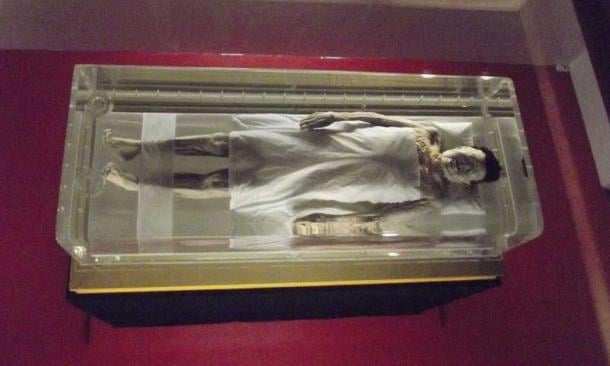

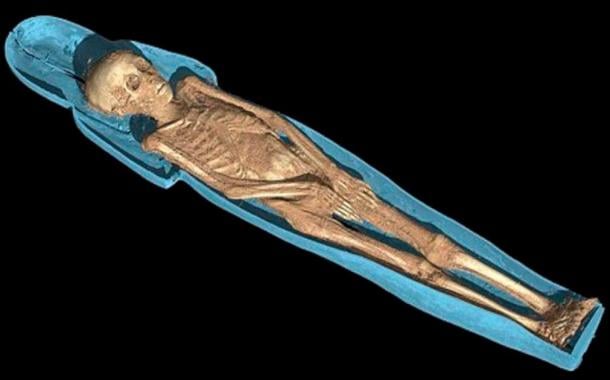







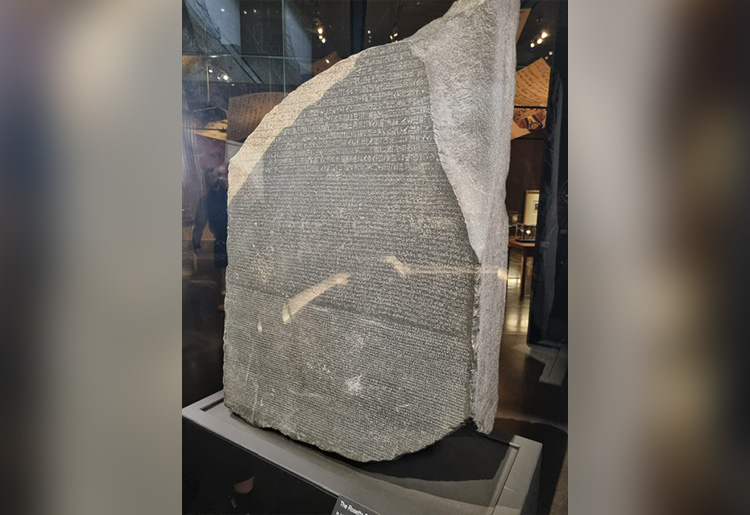

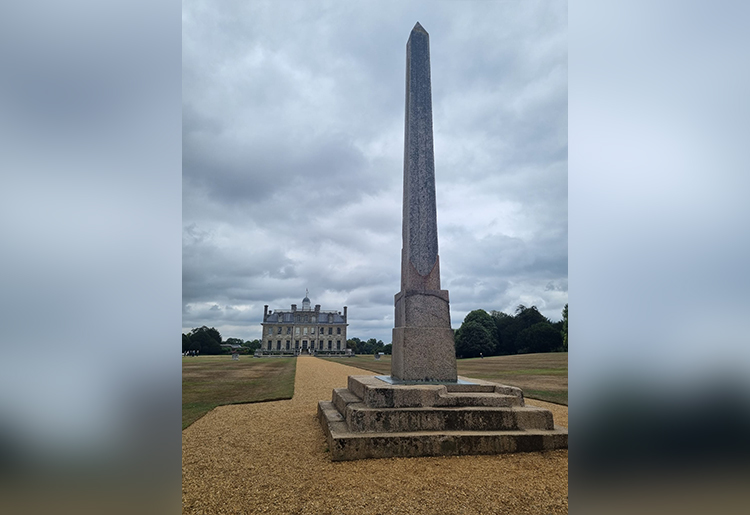


 Giant methane leak from Nord Stream pipeline is detected from SPACE: Satellite images show potent greenhouse gas leaking at a rate of 174,000 pounds per hour
 Astronomers capture sharpest ever Earth-based images of Jupiter's largest moons Europa and Ganymede - revealing their icy landscapes
 Life on MARS: Red Planet may once have been home to microbes that fed on hydrogen and produced methane - just like the early Earth, scientists claim


 Black hole is spotted 'giving birth' to stars in a nearby...
 Ever wondered how many black holes there are?...
 On the hunt for the universe's first ever stars: Upgraded...
 Stephen Hawking was RIGHT! New model of the early universe...


