Ontdek de Fascinerende Wereld van UFO's en UAP's: Jouw Bron voor Onthullende Informatie!
Ben jij ook gefascineerd door het onbekende? Wil je meer weten over UFO's en UAP's, niet alleen in België, maar over de hele wereld? Dan ben je op de juiste plek!
België: Het Kloppend Hart van UFO-onderzoek
In België is BUFON (Belgisch UFO-Netwerk) dé autoriteit op het gebied van UFO-onderzoek. Voor betrouwbare en objectieve informatie over deze intrigerende fenomenen, bezoek je zeker onze Facebook-pagina en deze blog. Maar dat is nog niet alles! Ontdek ook het Belgisch UFO-meldpunt en Caelestia, twee organisaties die diepgaand onderzoek verrichten, al zijn ze soms kritisch of sceptisch.
Nederland: Een Schat aan Informatie
Voor onze Nederlandse buren is er de schitterende website www.ufowijzer.nl, beheerd door Paul Harmans. Deze site biedt een schat aan informatie en artikelen die je niet wilt missen!
Internationaal: MUFON - De Wereldwijde Autoriteit
Neem ook een kijkje bij MUFON (Mutual UFO Network Inc.), een gerenommeerde Amerikaanse UFO-vereniging met afdelingen in de VS en wereldwijd. MUFON is toegewijd aan de wetenschappelijke en analytische studie van het UFO-fenomeen, en hun maandelijkse tijdschrift, The MUFON UFO-Journal, is een must-read voor elke UFO-enthousiasteling. Bezoek hun website op www.mufon.com voor meer informatie.
Samenwerking en Toekomstvisie
Sinds 1 februari 2020 is Pieter niet alleen ex-president van BUFON, maar ook de voormalige nationale directeur van MUFON in Vlaanderen en Nederland. Dit creëert een sterke samenwerking met de Franse MUFON Reseau MUFON/EUROP, wat ons in staat stelt om nog meer waardevolle inzichten te delen.
Let op: Nepprofielen en Nieuwe Groeperingen
Pas op voor een nieuwe groepering die zich ook BUFON noemt, maar geen enkele connectie heeft met onze gevestigde organisatie. Hoewel zij de naam geregistreerd hebben, kunnen ze het rijke verleden en de expertise van onze groep niet evenaren. We wensen hen veel succes, maar we blijven de autoriteit in UFO-onderzoek!
Blijf Op De Hoogte!
Wil jij de laatste nieuwtjes over UFO's, ruimtevaart, archeologie, en meer? Volg ons dan en duik samen met ons in de fascinerende wereld van het onbekende! Sluit je aan bij de gemeenschap van nieuwsgierige geesten die net als jij verlangen naar antwoorden en avonturen in de sterren!
Heb je vragen of wil je meer weten? Aarzel dan niet om contact met ons op te nemen! Samen ontrafelen we het mysterie van de lucht en daarbuiten.
Team van Belgische geologe vindt ruim 500 meteorieten op Antarctica, pronkstuk weegt bijna 8 kilo
Een wetenschappelijk team onder leiding van een Belgische geologe heeft in enkele weken tijd meer dan 500 meteorieten gevonden op Antarctica. Een exemplaar van 7,6 kilogram vormt het paradepaardje. Normaal gezien weegt zo’n stukje ruimtepuin tussen de 50 en 100 gram.
Als een meteoriet op Belgische bodem valt, is het per definitie zoeken naar een speld in een hooiberg. Op het witte oppervlak van Antarctica wordt zo’n expeditie echter plots kinderspel. Vandaar dat er nu al verschillende jaren door wetenschappelijke teams een ‘meteorietenjacht’ gehouden wordt.
De Belgische geologe Vinciane Debaille - verbonden aan de ULB - is niet aan haar proefstuk toe. Samen met haar medewerkers kamde ze al enkele keren een ijsvlakte op honderd kilometer van de Prinses Elisabethbasis uit. Nu was het uitkijken naar een nieuw gebied waar de schatten voor het oprapen zouden liggen.
“Prachtige kers op de taart”
“Er zijn plaatsen op Antarctica waar de beweging van het ijs en erosie zorgen voor een hogere concentratie aan meteorieten”, legt Debaille uit. Op basis van satellietbeelden en GPS-coördinaten werd vooraf bepaald waar de hoogste slaagkansen lagen. Het team kon daarbij ook gebruikmaken van de ervaring van Alain Hubert. De poolreiziger kent de regio goed en stippelde het beste traject uit.
Debaille en co kampeerden bij -10°C, legden tientallen kilometers af over sastrugis (door de wind verharde sneeuwduinen; nvdr) en leefden op het geluid van sneeuwscooters. “In het laatste uur van onze expeditie vonden we die meteoriet van 7,6 kilo. Een prachtige kers op de taart”, jubelt Debaille.
“Het object is afkomstig van de asteroïdengordel en plofte waarschijnlijk enkele tienduizenden jaren geleden neer in het Antarctische blauwe ijs”, vult VUB-onderzoeker Ryoga Maeda aan. Volgens hem gaat het om een ‘gewone chondriet’, de meteoriet bevat veel metaal.
18 kilogram
De verzamelde meteorieten moeten nu onder gecontroleerde omstandigheden in het laboratorium van het Koninklijk Belgisch Instituut voor Natuurwetenschappen ontdooien. “Daarna worden ze geanalyseerd op hun chemische samenstelling en worden ze ter beschikking gesteld van de wetenschappelijke gemeenschap voor verder onderzoek”, aldus Maeda.
In 2012 vonden landgenoten al eens een meteoriet van 18 kilogram. Die kolos staat nu tentoongesteld in het Museum voor Natuurwetenschappen in Brussel. Meteorieten geven een dieper inzicht op het ontstaan en de ontwikkeling van ons zonnestelsel.
Newly Released US Government UFO Report Reveals Details
According to a report released by the Pentagon, the number of UFO sightings has increased significantly over the past couple of years. Many of these incidents can be attributed to weather phenomena or drones. However, around half of these sightings remain unexplained. The agency that monitors these sightings noted that further analysis is necessary.
According to CNN’s Kristen Fisher, the report revealed that the number of sightings of unidentified aerial phenomena (UAPs) has increased significantly. In 2021, the DNI was not able to explain 144 incidents. This time around, the agency noted that there were over 300 new UAP sightings.
One of the most interesting findings of the report is that some of the UAPs exhibited unusual flight capabilities. It’s not clear if these are the results of advanced technology or foreign agents such as Russia or China. The US government has not officially stated its theory regarding the cause of these incidents.
The report provided a total of 163 explanations as to how these objects came into being. Most of these incidents were attributed to balloon-like structures or other similar objects. Some were also said to be caused by airborne clutter, such as debris and weather phenomena.
Members of Congress stated that the report sheds light on the various factors that contributed to the growing number of UAPs sightings, and it shows that the government is taking the issue seriously. However, they noted that the DNI and the Pentagon still need to provide more concrete answers regarding the nature of these objects.
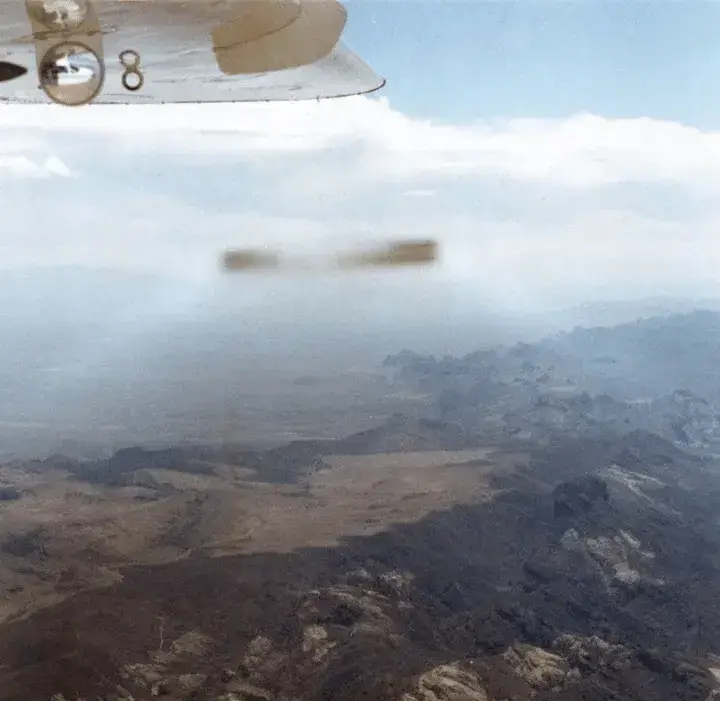
Pilot David Hastings captures a photo of an unidentified flying object while flying over the Mojave Desert on September 9, 1985
On September 9, 1985, pilot David Hastings and his co-pilot were flying back to their home base after attending a convention in McAfee, New York. They had decided to fly during the day and had already made stops in Dayton and Albuquerque. As they were approaching the Mojave Desert, they encountered something unexpected.
According to Hastings, they suddenly saw something coming in their 12 o’clock at high speed. They were both convinced that they were going to have a mid-air collision and braced for impact. However, the object passed over them and they were left unharmed. The object left behind a large shadow that darkened the whole cockpit and the sky above them, but there was no sound or Shockwave.
The co-pilot and Hastings both had a strange sensation that something was still nearby, even though they couldn’t see anything. They felt that whatever it was, it was moving so fast that the human eye couldn’t register it in detail. They had the sensation that it was going up, but they couldn’t see anything.
Hastings and his co-pilot were left with many questions and no answers. They were both experienced pilots, and they couldn’t explain what they had seen. It was a mystery that still baffles them to this day.
In conclusion, on September 9, 1985, pilot David Hastings and his co-pilot had a close encounter with a UFO while flying over the Mojave Desert. The object passed over them and left behind a large shadow, but there was no sound or Shockwave. They both had a strange sensation that something was still nearby, even though they couldn’t see anything. The incident remains a mystery to this day.
SpaceX launches Space Force's 'Amelia Earhart' GPS satellite, nails landing
A SpaceX Falcon 9 rocket launched the GPS III Space Vehicle 06 "Amelia Earhart" from Space Launch Complex 40 at Cape Canaveral Space Force Station in Florida on Jan. 18, 2023.
The first stage of the rocket landed on the 'A Shortfall of Gravitas' droneship in the Atlantic Ocean shortly after separation.
Credit: SpaceX
NASA Astronauts Spot Something Terrifying On The Moon
NASA Astronauts Spot Something Terrifying On The Moon. Something very strange happened during the Apollo 8 mission while the astronauts were on board the spacecraft. Something that even NASA cannot explain even till this day. A strange light, like fire, with smoke coming out of it.
Starship 25 Prepared for Engine Testing | SpaceX Boca Chica
Starship 25 was lifted onto Pad B, presumably for engine testing. Meanwhile Ship 22 was moved out of the Rocket Garden to be scrapped and a Starlink deployer aka Pez Dispenser mechanism was spotted being installed in Ship 30's payload section.
SpaceX - Falcon Heavy Incredible Views 01-15-2023
No SpaceX or NASA footage. All original content except for SpaceX announcer. Huge crowds came out for this launch! Thanks to Ed Geiger and Pete Carstens (maxQproductions) for awesome tracking! Thanks to Cory Foy for the aerial drone footage! Thanks for subscribing and Donating !! We are a US disabled veteran run, non-profit video production company whose mission is to bring other disabled US Veterans to witness a launch, experience US Space History and become part of our report. Our nonprofit 501(c)(3) is 100% tax deductible, just go to our webpage
Dark Curvature, Navigating the Oort Cloud, Future of Space Toilets | Q&A 207
Should we change "Dark Matter" to "Dark Curvature"? How do you navigate through dense asteroid fields? What's the future of space toilets? Do aliens block their outgoing signals? All these and more in this week's Q&A with Fraser Cain.
Most Distant Halo Stars in Milky Way Are Halfway to Andromeda Galaxy
SpaceX Falcon Heavy separation is genius engineering just SHOCKED Scientists, unlike others...
It's been a few days since SpaceX's spectacular USSF-67 Falcon Heavy rocket launch, but the echoes of that launch are still covered through newspapers, websites, and forums around the world. This is because just under five years after its February 2018 debut, there had still never been a Falcon Heavy launch ‘jellyfish’ or ‘nebula.’ That thankfully changed on Sunday. Indeed, from start to finish, Sunday’s Falcon Heavy launch delivered spectacular moments, unlike the others. Find out everything about this in today's episode of Alpha Tech:
First and foremost, USSF-67 is an incredible success mission. On January 15th, SpaceX’s Falcon Heavy rocket lifted off for the second time in 75 days to launch another batch of US military payloads into orbits tens of thousands of kilometers above Earth’s surface.
Six and a half hours later, the US Space Systems Command (SSC) confirmed that Falcon Heavy had again completed the exceptionally difficult launch without issue. To deliver the USSF-67 mission’s payloads directly to geosynchronous orbit (GSO), the giant SpaceX rocket had to sacrifice one of its potentially reusable boosters and complete a complex six-hour ballet of rolls, burns, and spacecraft deployments. And for the second time in a row, Falcon Heavy did so without apparent issue.
In an SSC press release, Maj. Gen. Stephen Purdy, program executive officer for Assured Access to Space, said that the group “had another fantastic launch today on a Falcon Heavy.” He added that “while the launch itself was impressive,” he was “most proud of the fact that we placed important [national] capabilities into space.” SpaceX Falcon Heavy separation is genius engineering just SHOCKED Scientists, unlike others...
Can The Planet From Interstellar Really Exist?
The Proof Is Out There: UFO Crash Spotted in NASA Photo (Season 3)
A researcher finds evidence of a UFO crash in a NASA photo. See more in this clip from Season 3, “Aswang, Crashed on Mars, and Giant Wolves.”
Watch all new episodes of The Proof Is Out There on Fridays at 10/9c, and stay up to date on all of your favorite The HISTORY Channel shows at http://history.com/schedule.
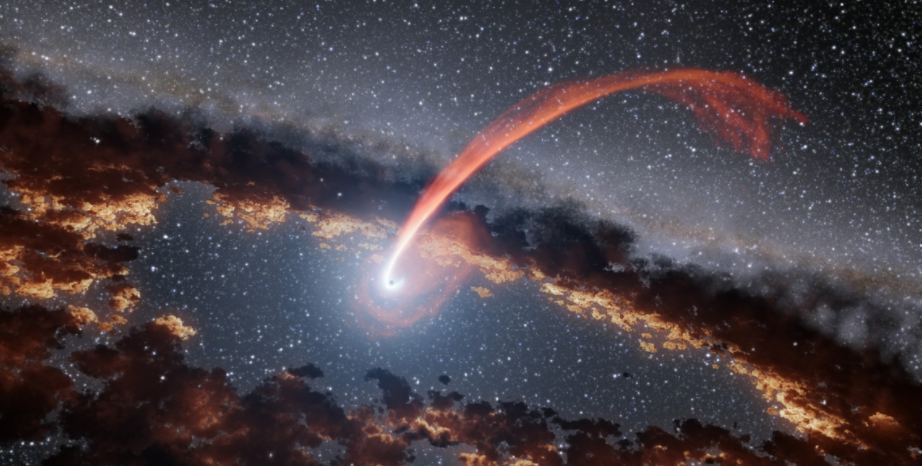
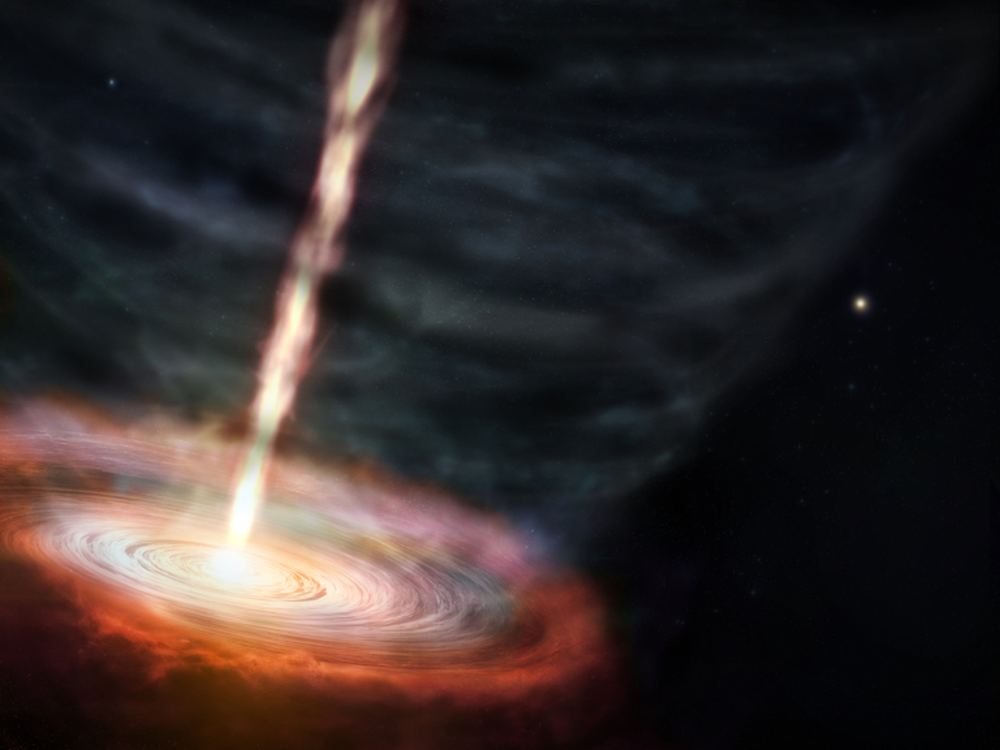
This illustration shows a glowing stream of material from a star, being devoured and torn to shreds by a supermassive black hole. Image Credit: NASA/JPL-Caltech
A Black Hole is Savoring its Meal, Feeding on the Same Star Over and Over Again
Something extraordinary happens about every 10,000 to 100,000 years in galaxies like the Milky Way. An unwary star approaches the supermassive black hole (SMBH) at the galaxy’s center and is torn apart by the SMBH’s overpowering gravity. Astronomers call the phenomenon a tidal disruption event(TDE.)
Usually, a TDE spells doom for the star as its gas is torn away into the black hole’s accretion ring, causing a bright flaring visible for hundreds of millions of light years. But researchers have found one black hole that’s playing with its food.
It’s difficult to fathom the powerful forces at work when an SMBH eats a star.
Our own Sun is massive and incorporates 99.86% of the mass in the Solar System. That gives it enormous gravitational power. Its reach extends from tiny, speedy Mercury, its nearest neighbour, all the way out to the Oort Cloud, the hypothesized home of icy long-period comets up to 200,000 astronomical units, or 3.2 light-years, away.
But SMBHs are so massive that the Sun barely registers in comparison. An SMBH’s gravitational force is so mighty that it seems to hold their entire galaxy together.
In a new study, a team of astronomers observed an SMBH in a galaxy hundreds of millions of light-years away as it ate a star. The SMBH has an inferred black hole mass greater than 50 million solar masses. That an object that massive can completely destroy a star, puny in comparison, is axiomatic.
This illustration depicts a star (in the foreground) experiencing spaghettification as it’s sucked in by a supermassive black hole (in the background) during a ‘tidal disruption event’.
This TDE is a result of what’s called aHills Capture. That’s when a binary star approaches a black hole, and gravity separates the once-bound pair of stars. One star becomes a hypervelocity star and is ejected from the galaxy’s central regions at a speed of about 1000 km/second.
But there’s no escape for the other star. It enters into an orbit around the black hole, and its fate is foretold. The black hole will eventually destroy it, even though that doesn’t happen instantly.
The fact that the star was once part of a binary pair explains how it keeps passing close enough to the black hole to be partially stripped without being destroyed. “Typically, tidally disrupted stars are on approximately parabolic orbits, which begs the question of how a partial TDE could yield a brightening,” the authors write in their paper. For an SMBH this size, and a star similar in mass to the Sun, the orbit should last about 1,000 years, much longer than the star at AT 2018fyk. “One can bind the partially disrupted star more tightly if the star was initially part of a binary system that was destroyed through Hills capture.”
Credit: ESO/M. Kornmesser
But this TDE isn’t like most other TDEs. The light coming from the event shows that the star wasn’t completely destroyed, and that the black hole is taking repeated bites from it.
“…the assumption has been that when we see the aftermath of a close encounter between a star and a supermassive black hole, the outcome will be fatal for the star,”
“Until now, the assumption has been that when we see the aftermath of a close encounter between a star and a supermassive black hole, the outcome will be fatal for the star, that is, the star is completely destroyed,” Wevers said in a press release. “But contrary to all other TDEs we know of, when we pointed our telescopes to the same location again several years later, we found that it had re-brightened again. This led us to propose that rather than being fatal, part of the star survived the initial encounter and returned to the same location to be stripped of material once more, explaining the re-brightening phase.”
The TDE is called AT 2018fyk (AT: Astrophysical Transient), and it’s a transient first discovered in 2018 by the All-Sky Automated Survey for Supernovae. Different teams of scientists have been observing the event since its discovery, and this new research is a continuation of the attempt to understand it.
During a TDE, gas from a star falls toward a black hole. But it doesn’t fall directly into the hole. It accumulates on the accretion disk swirling around the SMBH. This heats the gas up, and it emits brilliant light. This event gives astronomers an opportunity to study the fascinating region around black holes as they’re briefly lit up.
But AT 2018fyk is different. Usually, a TDE consists of one jump in brightness as the star is destroyed. But not this one. Instead, it looks like the SMBH is stripping away the less dense outer layers of the star on each of its closest approaches, leaving a denser core unaffected.
This TDE is a result of what’s called a Hills Capture. That’s when a binary star approaches a black hole, and gravity separates the once-bound pair of stars. One star becomes a hypervelocity star and is ejected from the galaxy’s central regions at a speed of about 1000 km/second.
But there’s no escape for the other star. It enters into an orbit around the black hole, and its fate is foretold. The black hole will eventually destroy it, even though that doesn’t happen instantly.
The fact that the star was once part of a binary pair explains how it keeps passing close enough to the black hole to be partially stripped without being destroyed. “Typically, tidally disrupted stars are on approximately parabolic orbits, which begs the question of how a partial TDE could yield a brightening,” the authors write in their paper. For an SMBH this size, and a star similar in mass to the Sun, the orbit should last about 1,000 years, much longer than the star at AT 2018fyk. “One can bind the partially disrupted star more tightly if the star was initially part of a binary system that was destroyed through Hills capture.”
This illustration shows how the Hills Mechanism works. A binary star approaches an SMBH, and the powerful gravity splits the binary pair apart. One star is ejected from the galaxy as a hyper-velocity star. The other takes up a tight orbit around the SMBH. Image Credit: Warren R. Brown 2015/J. Guillochon.
In AT 2018fyk’s case, the black hole can’t quite destroy it all at once because even though the star is closely-bound to the SMBH, it doesn’t cross the tidal radius. The tidal radius is where the black hole’s gravity is stronger than the gravity holding the star together. Instead, about every 1200 days, the black hole gets another chance as the star makes its closest approach. It strips more of the star’s envelope away each time, forming the bright accretion disk around the SMBH. The evidence is in the light coming from the region. Our X-Ray and Ultraviolet /Optical telescopes can observe the light even though it’s hundreds of millions of light-years away.
A star that comes within the tidal-disruption radius RT of the supermassive black hole at the heart of a galaxy will be torn apart by the black hole’s gravity. Note that this image represents bound and unbound debris from common TDEs, not the exceptional AT 2018fyk in this study. Image Credit: NASA’s Goddard Space Flight Center/Suvi Gezari.
When astronomers first spotted AT 2018fyk, they thought it was like any other TDE. But subsequent observations showed how complex the TDE is. It was bright in x-ray emissions for about 600 days, then darkened and became undetectable. The decline in luminosity was quick, whereas other TDEs show a gradual decline. The abrupt decline was when the stellar core returned to its closest approach.
“When the core returns to the black hole, it essentially steals all the gas away from the black hole via gravity, and as a result, there is no matter to accrete, and hence the system goes dark,” said study co-author Dheeraj Pasham, an astrophysicist at MIT.
But then, 600 days after the drop in x-ray emissions, the region was bright again. The researchers think this is when material shed from the star starts accreting again.
This figure from the study illustrates what’s happening at AT 2018fyk. (a) shows the disruption of the binary star by the Hills Mechanism at -600 days. (b) shows how unbound debris could explain the extended dark period at -300 days. (c) shows how streams of material trigger the accretion disk at day zero. (d) shows how a quasi-spherical flow of material onto the disk transitions between emission states at +300 days. (e) shows how the stellar remnant makes its next closest approach and cuts off the flow of mass to the accretion disk at +600 days. (f) shows how the stream accretes onto the disk again, triggering more luminosity at +1200 days. Image Credit: T. Wevers et al 2023 ApJL 942 L33
It’s difficult to determine how long this can go on and how many passes the star can make. The researchers estimate that up to 10% of the star’s mass is stripped away on each approach, but it could also be as low as 1%. The TDE is hundreds of millions of light-years away, so understanding and modelling the light is challenging. But if the 10% figure is correct, the star is already gone.
“If the mass loss is only at the 1% level, then we expect the star to survive for many more encounters, whereas if it is closer to 10%, the star may have already been destroyed,” said co-author Eric Coughlin, a physicist at Syracuse University.
Now that astronomers have spotted the unusual AT 2018fyk and come up with a theoretical explanation, it could explain other repeating flares in the heart of other galaxies. In fact, this research might entice researchers to revisit other flaring black holes for additional activity. Will repeated TDEs be more common than thought? Can they only result from binary stars and the Hills Mechanism?
An artist’s illustration of an eclipsing binary star as seen from the surface of an exoplanet. Binary stars are common; will we find more repeating tidal disruption events? Image Credit: NASA
“In the future, it is likely that more systems will be checked for late-time flares, especially now that this project puts forth a theoretical picture of the capture of the star through a dynamical exchange process and the ensuing repeated partial tidal disruption,” says Coughlin. “We’re hopeful this model can be used to infer the properties of distant supermassive black holes and gain an understanding of their ‘demographics,’ being the number of black holes within a given mass range, which is otherwise difficult to achieve directly.”
Some of what the team has come up with to explain the TDE is testable. That fact, combined with more observations of phenomenon like AT 2018fyk, could teach us a lot about the extreme environments around black holes and the physics of partial TDEs.
“This study outlines methodology to potentially predict the next snack times of supermassive black holes in external galaxies,” says Pasham. “If you think about it, it is pretty remarkable that we on Earth can align our telescopes to black holes millions of light years away to understand how they feed and grow.”
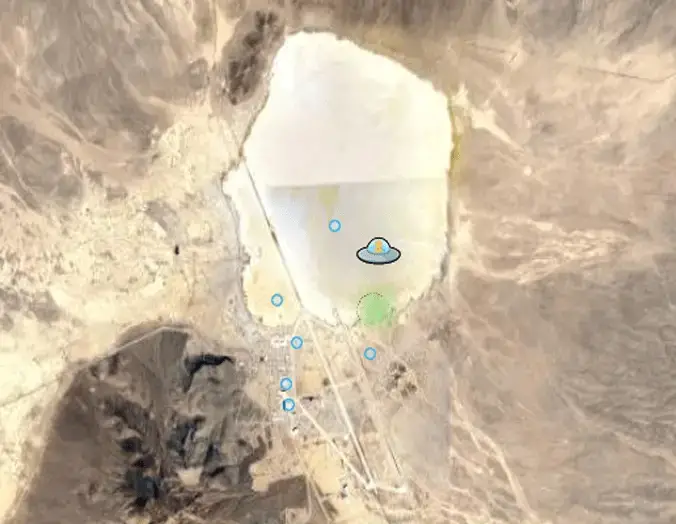
Area 51 is located in Nevada, just 83 miles north-northwest of Las Vegas. It is officially a United States Air Force facility, but is believed by many to be the home of the development and testing of experimental aircraft and weapons systems. The US Air Force acquired the site in 1955, but the CIA did not acknowledge its existence until 2013.
Despite its official purpose, many conspiracy theorists believe that the facility is used to store, examine, and reverse engineer crashed alien spacecraft, including material supposedly recovered from the 1950s Roswell crash. In 1989, Bob Lazar claimed that he worked at Area 51, where tests on aliens and their spacecraft were carried out in massive underground workstations connected by an underground railway. However, his claims were never confirmed by officials.
Google Maps’ Easter egg adds a playful touch to the mystery surrounding Area 51, and will likely continue to delight conspiracy theorists and UFO enthusiasts alike.
On this day in UFO history, a researcher in Yokohama, Japan captured a photograph of a metallic UFO flying above his house
On January 17th, 1957, a UFO was captured on camera by UFO researcher Yusuke J. Matsumura at the Flying Saucer Research group in Japan. The UFO was estimated to be around 20 to 30 feet in diameter and was seen hovering for approximately one to two minutes at a height of 60-70 feet.
Matsumura, who was outside his residence in Yokohama at the time, reported that he was leaving his house to go to Tokyo when he saw a metallic flash just above his house. Quickly, he grabbed his Primoflex Automatic camera and was able to snap a picture of the object before it took off at an estimated Mach 152 in a 70-degree elevation.
The UFO was seen heading in the general direction of Tokyo Bay, southeast of Matsumura’s location. The incident took place at around 13 minutes to 10 in the morning and was reported by the witness to have occurred at 1687 Hama Isogo Ku Yokohama.
The incident, which was captured on camera by Japanese researcher Yasushi Matsumura, is regarded as one of the most credible sightings of UFOs in history. Experts have analyzed the photo and found no evidence of manipulation or tampering.
FINALLY! SpaceX is on the edge of Starship's first orbital launch attempt..
It's been over a year and a half since we've seen a prototype of SpaceX's next-gen Starship spacecraft fly, with its first flight with a Super Heavy rocket having been perpetually pushed back during that time. However, this is finally going to change soon as SpaceX's shiny Starship has now inched closer to leaving the atmosphere.
Find out everything about this in today's episode of Alpha Tech:
Elon Musk took to Twitter last Thursday morning to post a photo of Starship sitting atop its Super Heavy rocket, rising above the coastal fog in South Texas. The photo was arresting, and Musk appended a short comment: "Starship launch attempt soon." Soon, of course, is a relative word in spaceflight. But SpaceX also tweeted Jan. 12 that it was moving ahead with a final series of tests of its Starship vehicle and Super Heavy booster at its Starbase test site in Boca Chica, Texas. The company installed a Starship vehicle called Ship 24 on top of a Super Heavy booster designated Booster 7 on the launch pad there Jan. 9.
Now, see why March seems possible? Much work remains before Starship launches on Super Heavy, of course. The combined vehicle must undergo a wet dress rehearsal. Then the Starship's upper stage will be removed so that the Super Heavy rocket can undergo a full static fire test of its 33 Raptor engines.
In fact, the Starship team recently targeted a launch date of January 20, according to people familiar with the planning, but the date was postponed to conduct testing, which was delayed in part due to road repairs near the test site, one of the people said. The company is now targeting January 20 for what is known as a “static fire test” to make sure all 33 engines on the rocket function properly, the people said. FINALLY! SpaceX is on the edge of Starship's first orbital launch attempt...
The Proof Is Out There: "I Hope I Don't Get Taken" UFO HOVERS OVER OKLAHOMA HOME(Season 3)
On May 26th, 2017, an eyewitness spotted a strange disc hovering above his home. See more in this clip from Season 3, "ISS UFO Swarm, Yale Lake Leaf Monster, and Rat King."
SpaceX Falcon Heavy boosters land in awesome drone view + launch time-lapse
A SpaceX Falcon Heavy rocket launched the USSF-67 mission for the US Space Force on Jan. 15, 2023. The rocket lifted off from Launch Complex 39A at the Kennedy Space Center in Florida.
Scientists Have Just Announced An Unknown Cosmic Object Has Been Detected Close To A Black Hole
RELATED
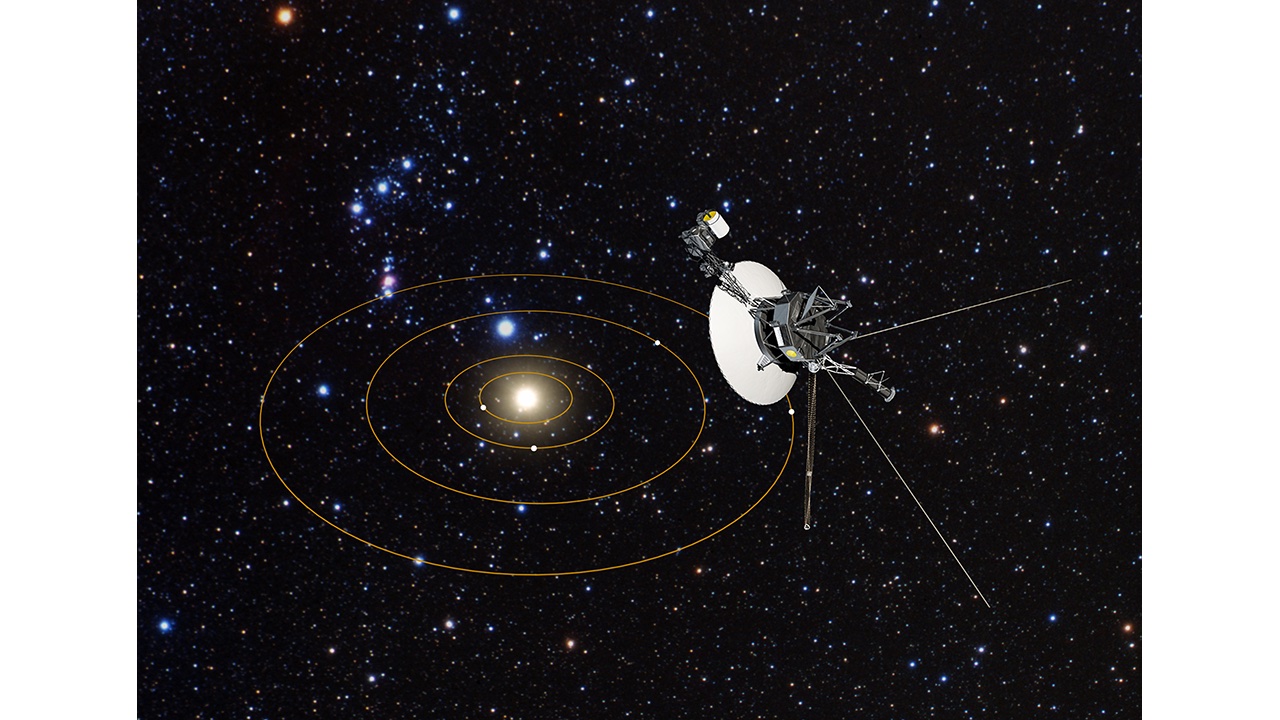
Something's Seriously Wrong With Voyager 1 Probe 23 Billion km Away
The Planet That Was Willed Into Being | Vulcan
...because of Newtonian physics. But Albert Einstein and relativity had other ideas. Enjoy 10% off 6” and 8.5” MOVA Globes with code ASTRUM. Shop now athttps://bit.ly/astrumxmova
Scientists Have Just Detected Something Huge That's Been Hidden Behind The Milky Way Galaxy
Scientists Plan to Leave Earth For Good
Ever since humanity discovered that there are other places outside of Earth, we've thought about leaving it. On this episode of What If we're going to do just that. But where would we go? Is building a ring world in space a possibility? Maybe terraforming Venus is our best option for a sustainable life. If we were to leave earth and create something like a ring world, where would we find the materials to do so? And if we lived on Venus, how different would it be from Earth? But before we blast off, why would we ever want to leave?
Even though the Arecibo Observatory collapsed a few years ago, it gathered mountains of data that astronomers are still studying. One of the largest data dumps is a collection of 191 Near-Earth Asteroids reviewed by Arecibo as they flew past our planet from December 2017 to December 2019. They were scanned using a delay-Doppler radar, which allowed astronomers to map the surfaces of the asteroids, revealing their rough overall shape with a resolution of 7.5 meters.
Keep your eyes on the sky for a comet, another Mars rover has died, the leaky Soyuz is going to be replaced, JWST dominates the American Astronomical Society meeting, and is Starship just around the corner
NASA is looking for dangerous asteroids, Io is blasting lava into space, the solar wind could be creating water on the Moon, space power is finally getting a test.
Our Milky Way seems like a modern and mature galaxy formation evolution, resulting from billions of years of mergers from smaller dwarf galaxies. Astronomers have been surprised to discover that grand spiral galaxies were already there in the Universe just a few billion years after the Big Bang. The images were captured using JWST, revealing six spiral galaxies over 8.4 billion years old and two older than 11 billion years. This means they already had this structure less than 3 billion years after the Big Bang.
The future of human space exploration depends on learning how to extract resources from asteroids. Unfortunately, the asteroids are far away from the places where we want to use them, like orbital space stations and lunar bases. What's the best way to get these resources back home? Solar sails don't require any onboard propellant, but they're slower, while chemical rockets can be quicker, but you have to expend propellant to move.
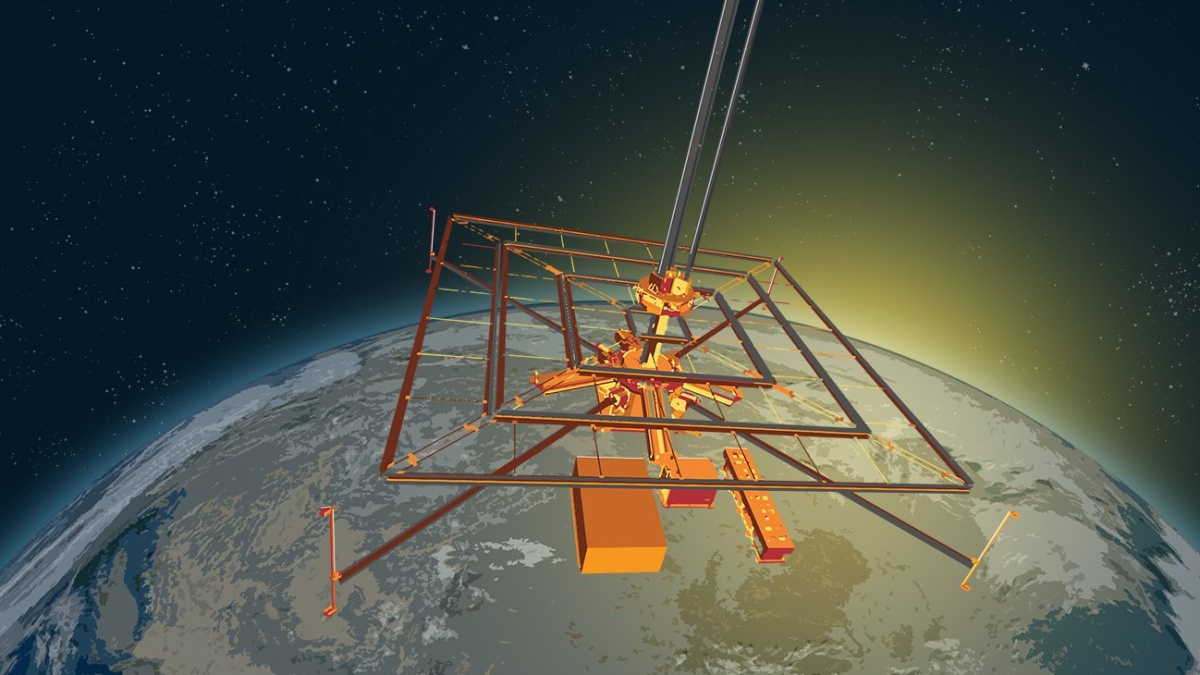
Engineers have proposed harvesting solar power from space and beaming it back to Earth. The idea has been around for decades. But nobody has ever tested it until now. A new technology demonstration satellite, Transporter 6, was just launched to orbit on a SpaceX Falcon rocket. The satellite is equipped with solar panels and a microwave transmitter to send power to a ground station on Earth. If this prototype functions, scientists will know if it's possible to scale it up to an industrial level.
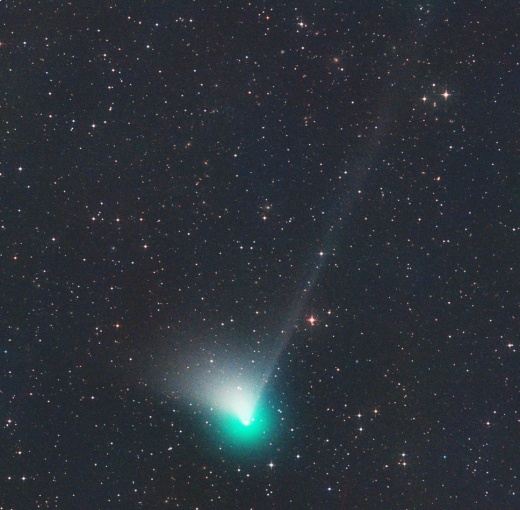
Keep your eyes on the sky over the next few weeks for your first chance to see a comet in 2023. Designated C3/2022 ZTF, the comet was first discovered in March 2022, and it has been getting closer to Earth and brightening. It's expected to reach its brightest point in early February, taking a path through the sky to bring it close to the Big Dipper and Cassiopea. Astronomers have calculated that it's on a 50,000-year orbit, so it's been eons since its last visit. It should look great in a pair of binoculars or a small telescope.
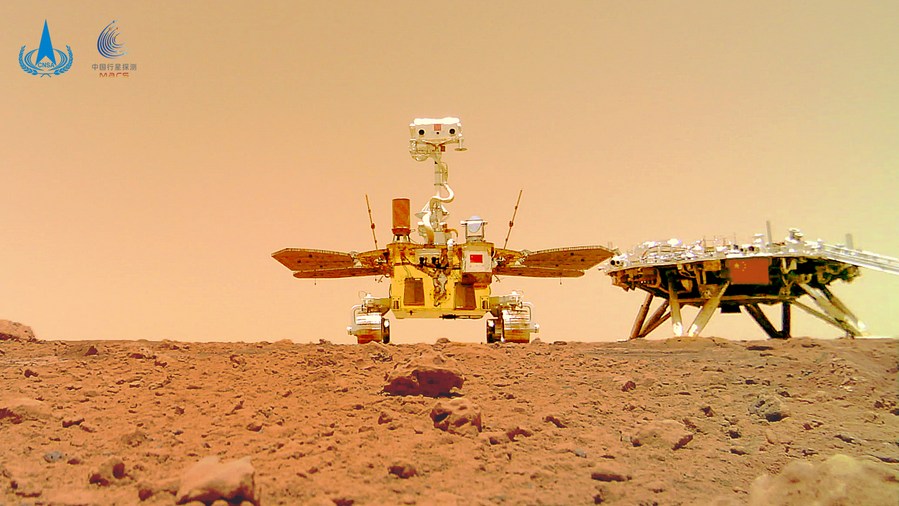
The terrible dust on Mars has claimed another victim. This time it's China's Zhurong rover, which was supposed to wake up from hibernation on December 26th. China's Nationational Space Administration has tried to reestablish communications with Zhurong, but they've been unsuccessful. The rover was put into hibernation six months ago to help it survive the Martian winter when temperatures get down to -100C. A regional dust storm also cloaked the area, reducing the energy it could use to keep its batteries operational.
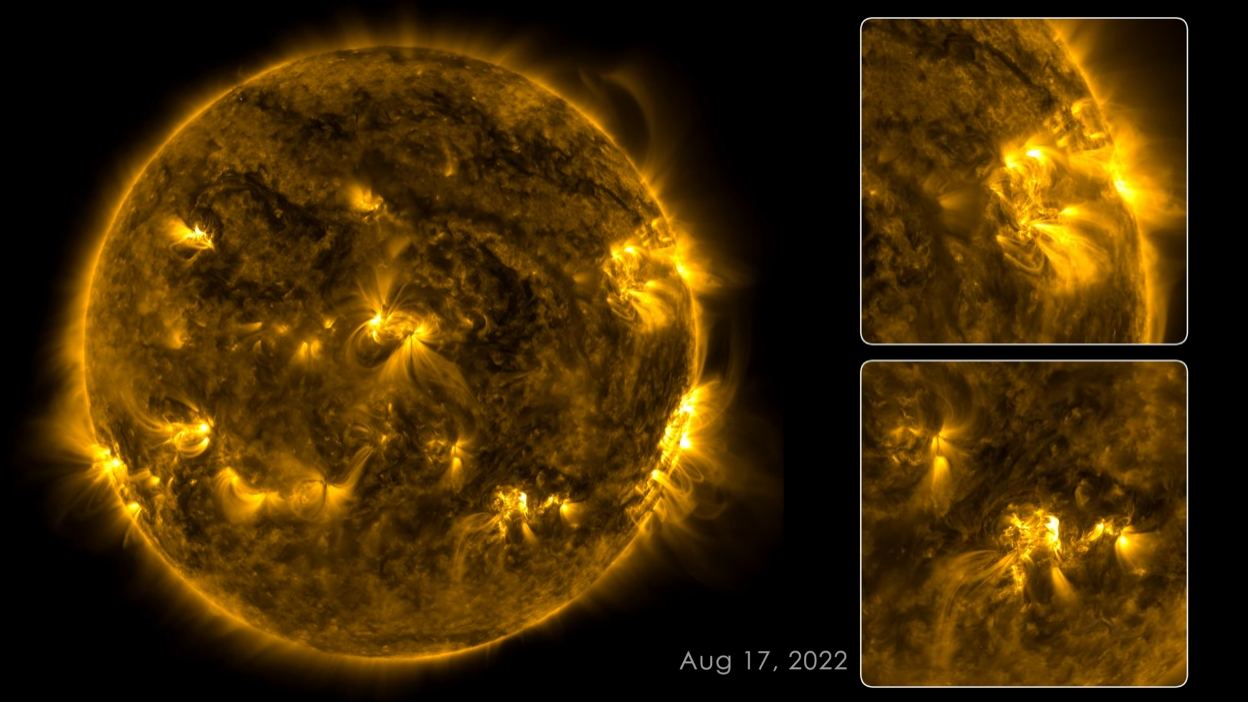
NASA has released a fantastic hour-long timelapse that shows the Sun's activity over 133 continuous days. The Solar Dynamics Observatory captured the images, which have been observing the Sun continuously since its launch in 2010. Each photo was taken 108 seconds apart in the extreme ultraviolet wavelength. Watch the video, and you can see the Sun rotating, with the twisting magnetic fields surrounding the sunspots on its surface. You can also see the occasional bright flare and coronal mass ejection.
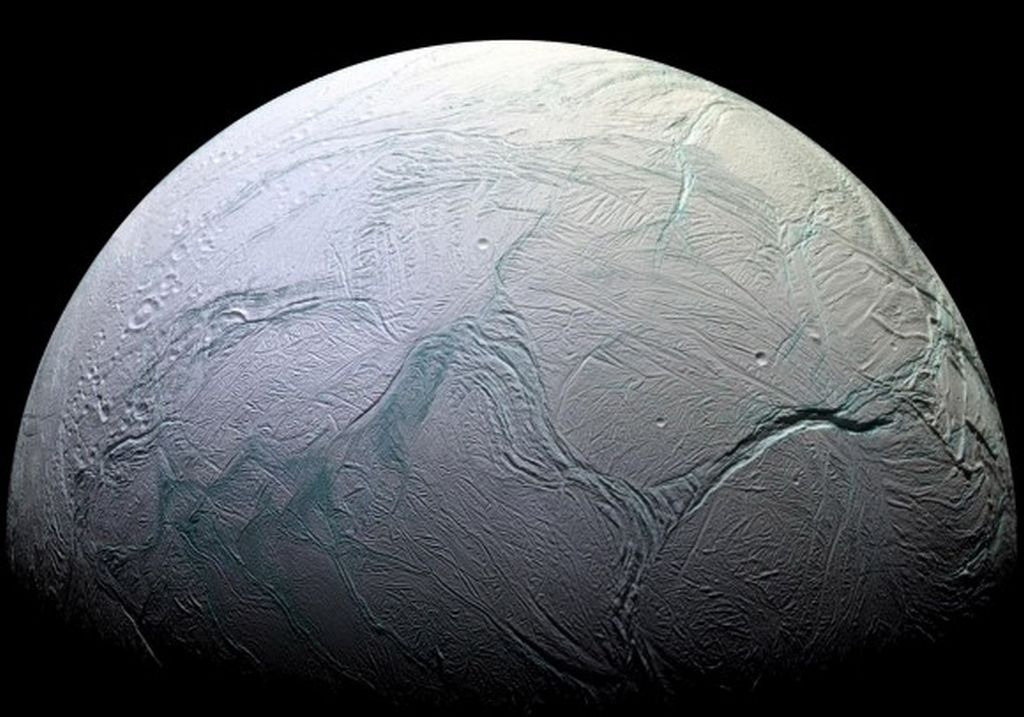
Saturn's moon Enceladus has an icy outer shell surrounding a vast ocean of liquid water. Could there be life? It will be challenging to find out since you need to get through kilometers of ice to access the oceans and sample them for life. But Enceladus cryovolcanoes spew plumes of water ice into space. By flying through these plumes, a future mission could test them for organic chemicals or even life, finally answering the question if there's life anywhere else but Earth.
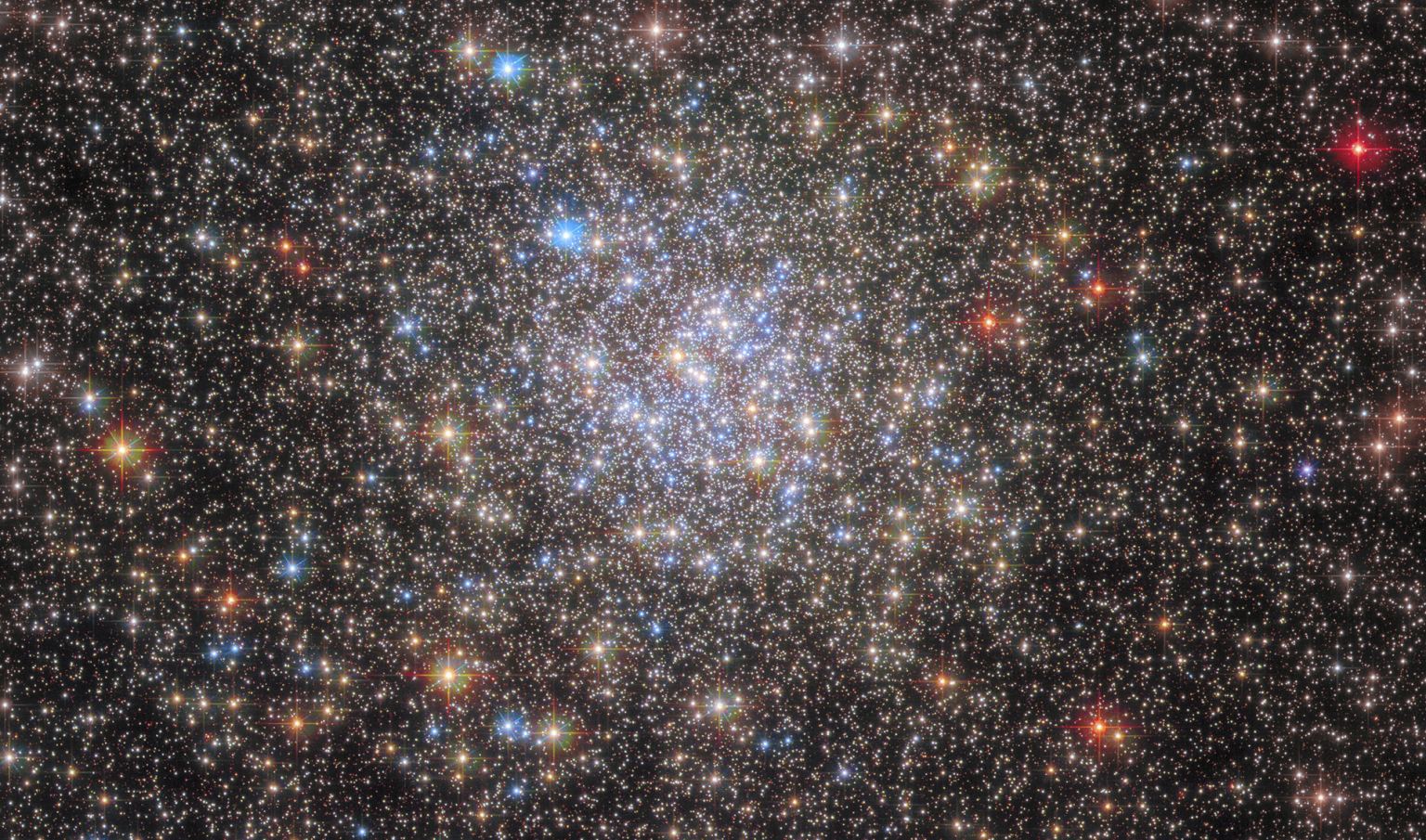
Astronomers can finally work with the mighty James Webb Space Telescope, but that doesn't mean they've forgotten about the Hubble Space Telescope. Here's a beautiful image of the globular cluster NGC 6355, located about 50,000 light-years from Earth in the constellation Ophiuchus. The picture was taken by Hubble, which can collect a vast range of wavelengths of light, from near-infrared through visible to ultraviolet. Hubble's powerful optics allow it to resolve the individual stars in the cluster so astronomers can examine them.
Got a little extra time on your hands? Here's to keeping you busy. The European Southern Observatory has released a paper model of its Extremely Large Telescope. Although the actual telescope will measure almost 40 meters across and can see Earthlike planets orbiting sunlike stars, yours will be much smaller, made of paper, and can't make any observations at all. Still, it'll be fun, and you can learn more about the telescope as you craft yours out of paper.
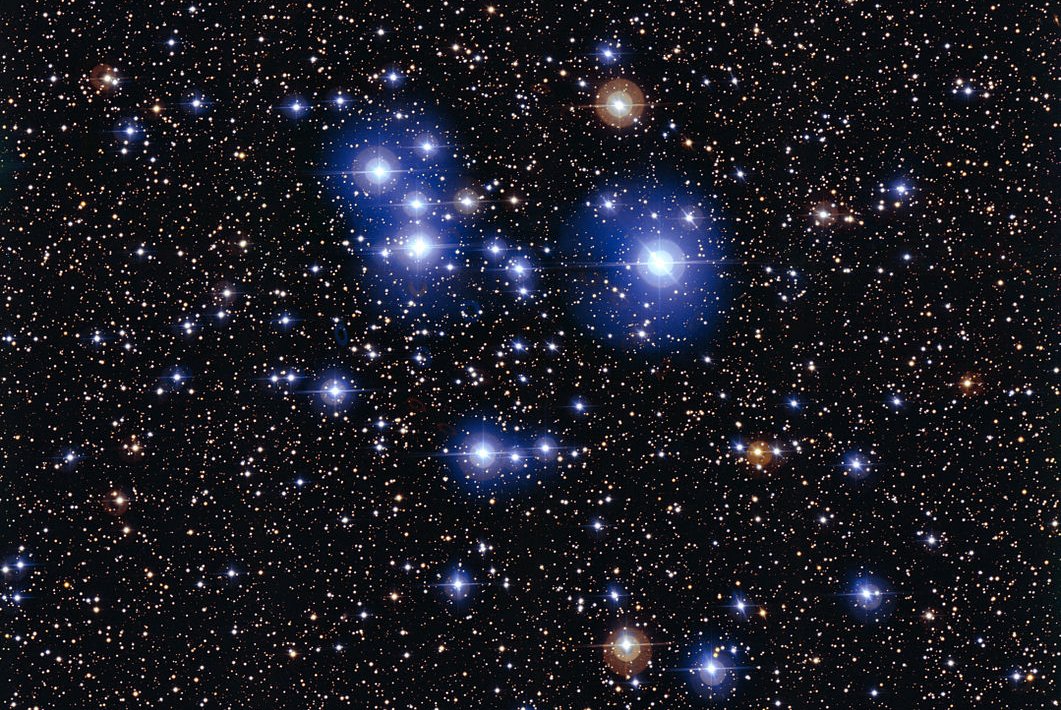
By analyzing the composition of stars in a stellar cluster, astronomers can measure their related ages. The largest, hottest, bluest stars live short lives, exploding as supernovae, while the less massive stars sip away at their hydrogen for much longer, lasting billions of years. But astronomers have discovered a strange anomaly called "blue stragglers." These are seemingly young, hot stars surrounded by much older stars in a dense cluster. How could they have formed? One theory is that the blue stragglers result from stellar collisions, making old stars act new again.
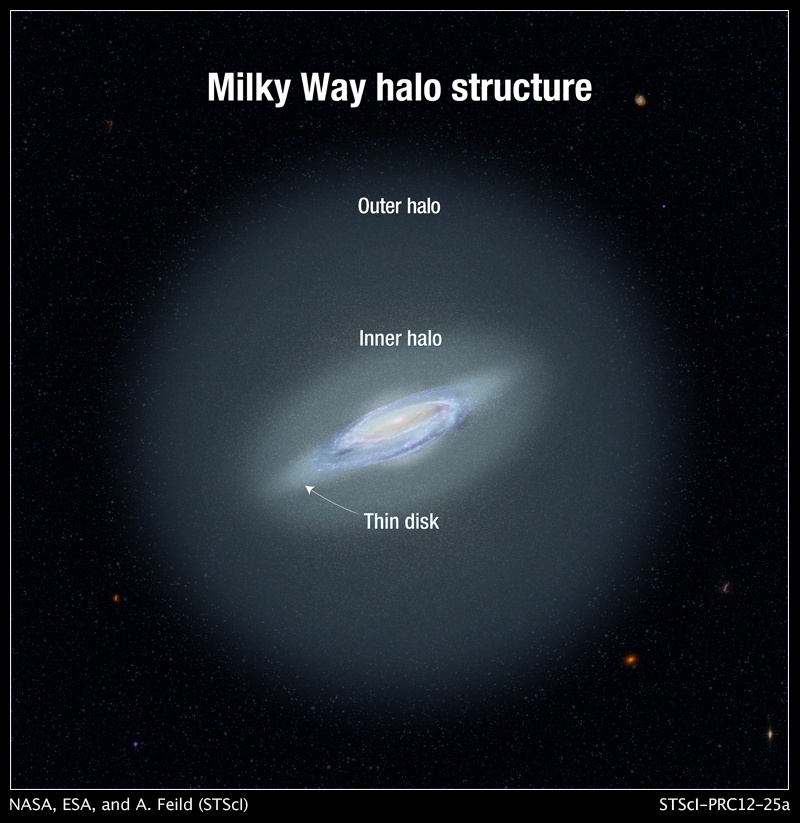
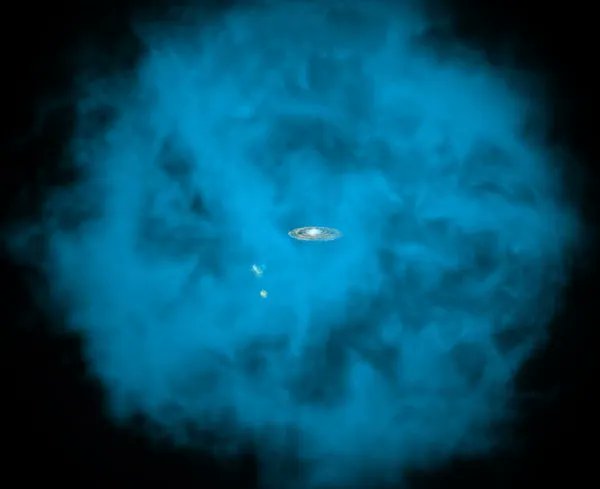
The Milky Way measures about 130,000 light-years across, and the closest large galaxy, Andromeda, is about 2.5 million light-years away. The two galaxies are rushing toward each other, but it's expected that they'll take billions of years to merge. Except, it appears they're already starting to merge. New observations have shown that the most distant stars in the Milky Way in our galaxy's outer halo are halfway to Andromeda already. Andromeda is even larger than the Milky Way, so its stars are halfway to us. The merger has already begun.
This week the American Astronomical Society is meeting for the first time since the James Webb Space Telescope became operational, so there's been a mountain of Webb news. One remarkable story is this image of primordial galaxies captured by JWST. These galaxies are just a few thousand light-years across and have so much star formation they're heating the surrounding gas and dust, so it glows in the ultraviolet (redshifted to infrared after billions of years). Their structure matches newly discovered "green pea" galaxies, which have the same behavior and are much closer, and, therefore, easier to study.
The Universe is a place of extremes. For example, astronomers have discovered a nearby star hurling jets of material into space at an astonishing 500 km/s. The massive star is surrounded by a photoevaporative disk that produces an outflow focused into twin jets of material. The jets release microwave emissions detected by the ALMA telescope, allowing astronomers to map out their structure and measure speed.
How do we determine the velocities of objects in distant space? Can we use a laser a space engine on a spaceship? Can we find stars with rings? Is it possible to see the same star at different stages of its life? All this and more in this week's Q&A.
Want to build a time machine? No problem, all you need to do is make the entire Universe rotate. This is one of the implications of theories developed by the famous mathematician Kurt Gödel, who often worked with Einstein. He was investigating the implications of General Relativity and developed an artificial model of the Universe, which was rotating and contained only one ingredient: a negative cosmological constant that resists the centrifugal force of rotation to keep the Universe static. If you follow a path in this rotating Universe, you can end up in your past.
Last summer Nichelle Nichols passed away. She famously portrayed Lt. Nyota Uhura in Star Trek, but she was also an activist and musician. A new foundation was created in her honor to continue her legacy of inspiration for women and people of color. The foundation was unveiled on December 28th, 2022, which would have been her 90th birthday.
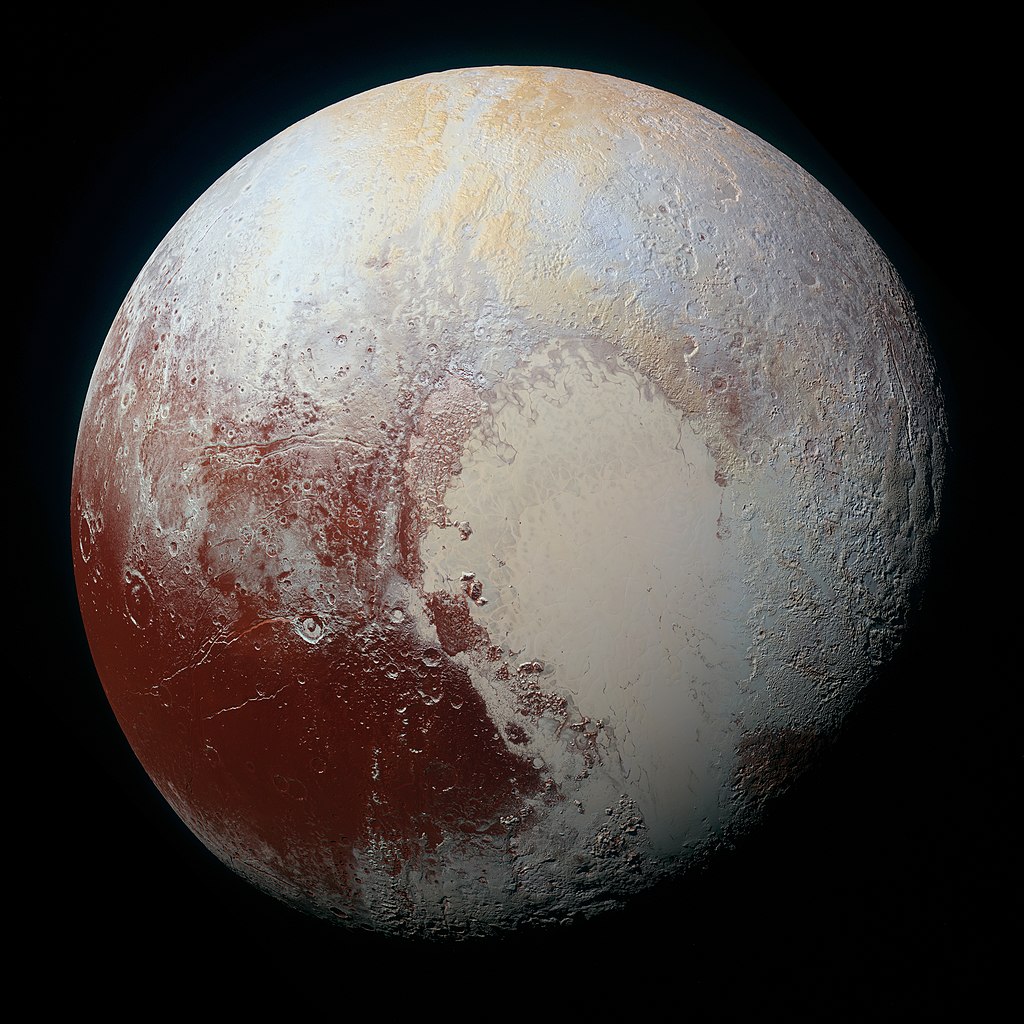
When NASA's New Horizons spacecraft finally reached Pluto, we saw this fantastic world for the first time with enough resolution to see mountains and vast glaciers on its surface. It appears that Pluto also probably has an ocean of liquid water underneath a thick icy surface. Wherever we find water on Earth, we find life, so could there be life on Pluto? Maybe, but getting down through the ice to find it will challenge future generations.
Would you send an interstellar mission to another star system if you knew a future generation would have better technology and their probe would arrive before yours? The famous "Wait Calculation" shows that we can predict a point in the future when a spacecraft won't be overtaken by newer technology. It makes the most sense to wait until then. If we ever find a probe here in the Solar System, it might be the latest model, with older technology arriving later even though it was sent earlier.
The largest radio telescope in the world is the enormous Five-hundred-meter Aperture Spherical Telescope (FAST) in China. During a recent survey, astronomers used the telescope to locate more than 500 new faint pulsars. During this survey, they recorded detailed spectral data that allowed them to study the structure of the Milky Way itself.
Mapping out all the space objects and understanding their orbits is the key to avoiding problems in orbit. What are the technical challenges and what's the current state of affairs? We're discussing it with Dr. Moriba Jah.
The James Webb Space Telescope is the most powerful telescope ever launched into space. That power has led to a string of observational successes: ancient galaxies, obscured star-forming regions, and an exoplanet atmosphere. Now the telescope has identified its first exoplanet, and it’s a rocky planet the same size as Earth.
Gravity pulls galaxies together into vast clusters. But they don't just fall into the center; they keep moving around. Astronomers are using gravitational lensing to study these enormous clusters, which slowly emerged over billions of years by attracting all the nearby galaxies. When galaxies fall into the gravitational well, they fall and back up again, like someone on a swing. Many galaxies in a cluster have already gone through the core and have the tidal bruises to show for it.
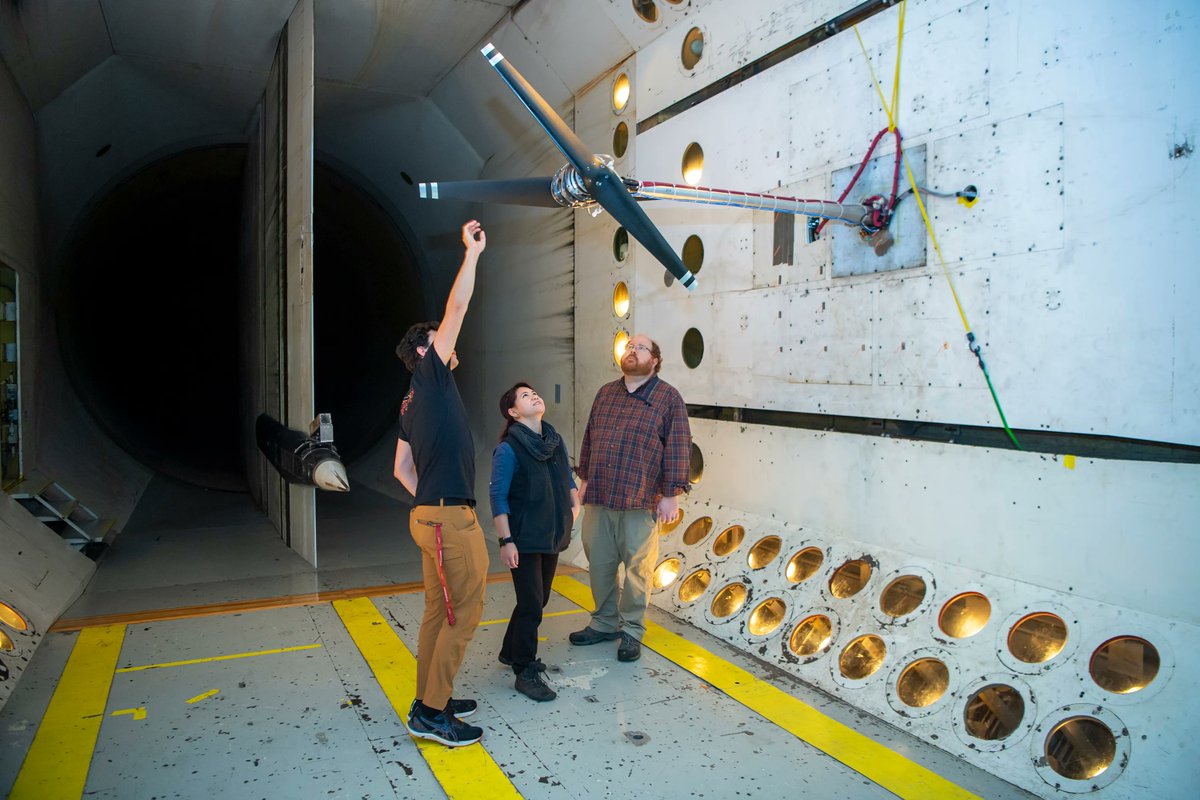
Wrap your mind around this idea. NASA is building a helicopter with a nuclear battery to explore Saturn's moon, Titan. No, you're not dreaming; this is an actual thing. The Titan Dragonfly is under construction but will fly to Saturn in 2027, arriving at the moon in 2034. NASA gave us an update, showing how engineers test its rotors in a wind tunnel to compare how they'll operate in the thick atmosphere on Titan. Dragonfly will eventually have 8 of these rotors, and the helicopter will be huge, measuring 4 meters by 4 meters.
Legendary astronomer John Mather is the mind behind the James Webb Space Telescope, detailing how a telescope could see the first galaxies forming at the beginning of the Universe. With Webb active and in space, Mather is working on other ideas for observatories that could push our knowledge even further. In a recent meeting, he talked about the Habitable Worlds Observatory that would go to the same destination as JWST, but unlike its predecessor, it would be designed for robotic servicing and upgrades.
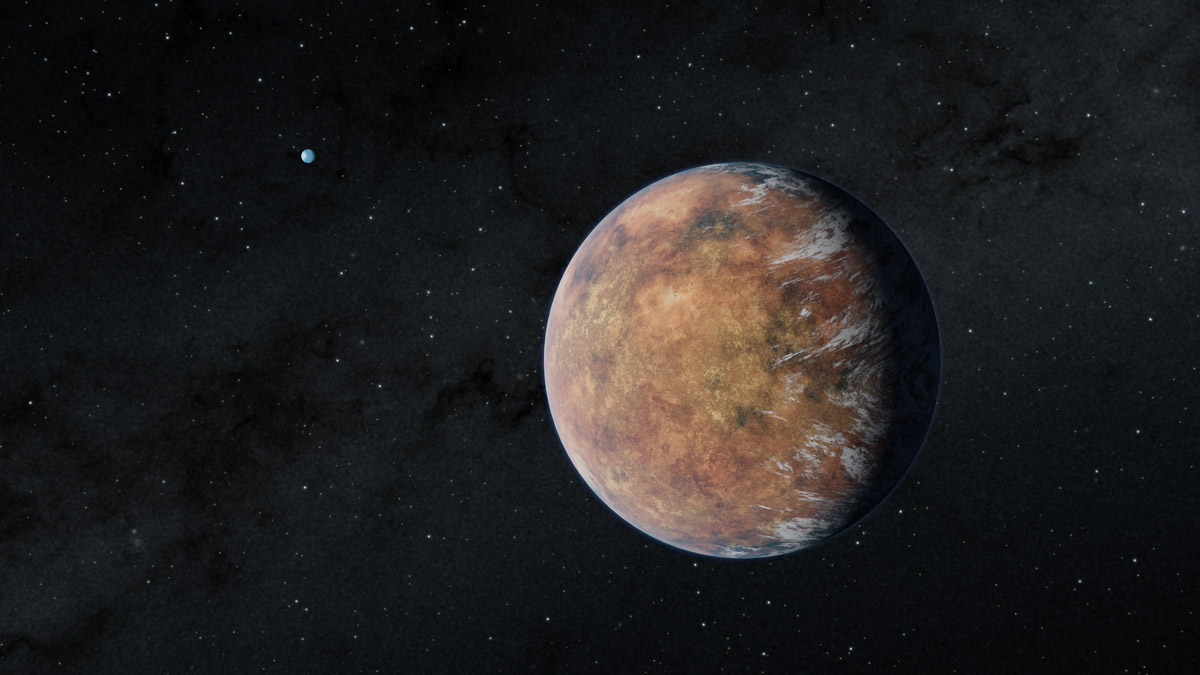
NASA's Transiting Exoplanet Survey Satellite has located a second Earth-sized exoplanet in a star system. The newly-found planet is TOI 700-e, and TESS has already turned up three planets orbiting the star. This brings the total number of planets to four in the system, and it's starting to approach the number in the TRAPPIST-1 system. All the planets are tidally locked to the star, and two might be in the habitable zone, where liquid water might be present.
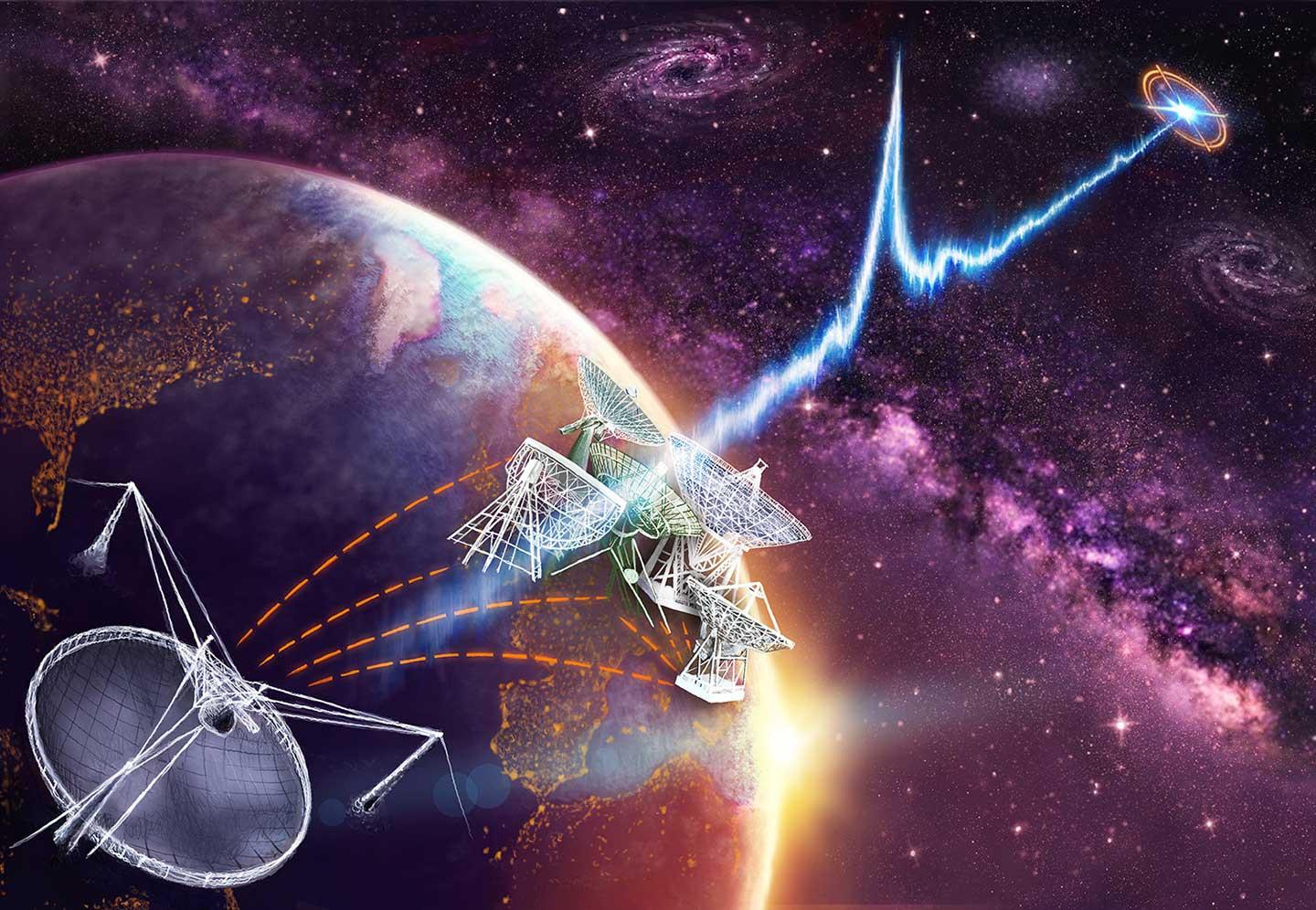
Astronomers have known about Fast Radio Bursts (FRBs) for about 15 years. These blasts occur randomly across the Universe, rarely repeating, lasting for just a few milliseconds before fading away. Although the source of FRBs is still a mystery, astronomers have developed a technique to use these blasts to probe the structure of the Milky Way. A new observatory called the Deep Synoptic Array was explicitly built to search for FRBs. Through their analysis of how their emissions move through our galaxy, astronomers have discovered that the Milky Way has less matter than previously theorized.
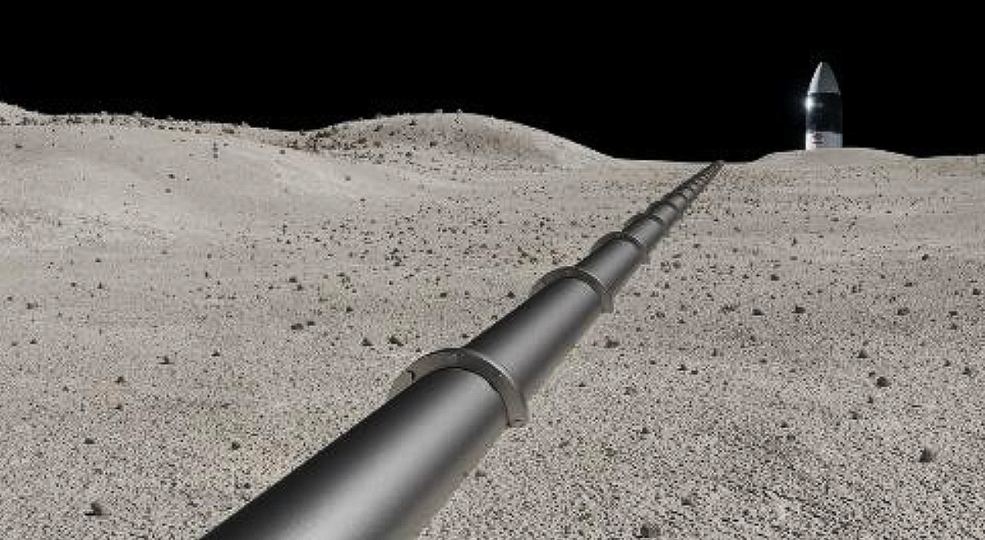
When NASA sends humans back to the Moon with Artemis III, they'll land at the lunar south pole, helping to explore the area. This is where it's believed there are vast reservoirs of water ice in the permanently shadowed craters in the region. But this isn't the best place for a base. Instead, liquid oxygen will be extracted from the ice and piped farther away to a more hospitable location. A new NASA NIAC grant is investigating what it would take to install an oxygen pipeline on the Moon.
Although carbon dioxide emissions come from all aspects of modern society, there are specific polluters like power plants and factories that should be curbing their emissions. Satellite detection has gotten so precise that NASA satellites can pinpoint the exact locations of excessive CO2 emissions. Twin spacecraft called the Orbiting Carbon Observatories were able to home in on the world's fifth-largest coal-fired power plant as a test case, tracking its emissions and changes.
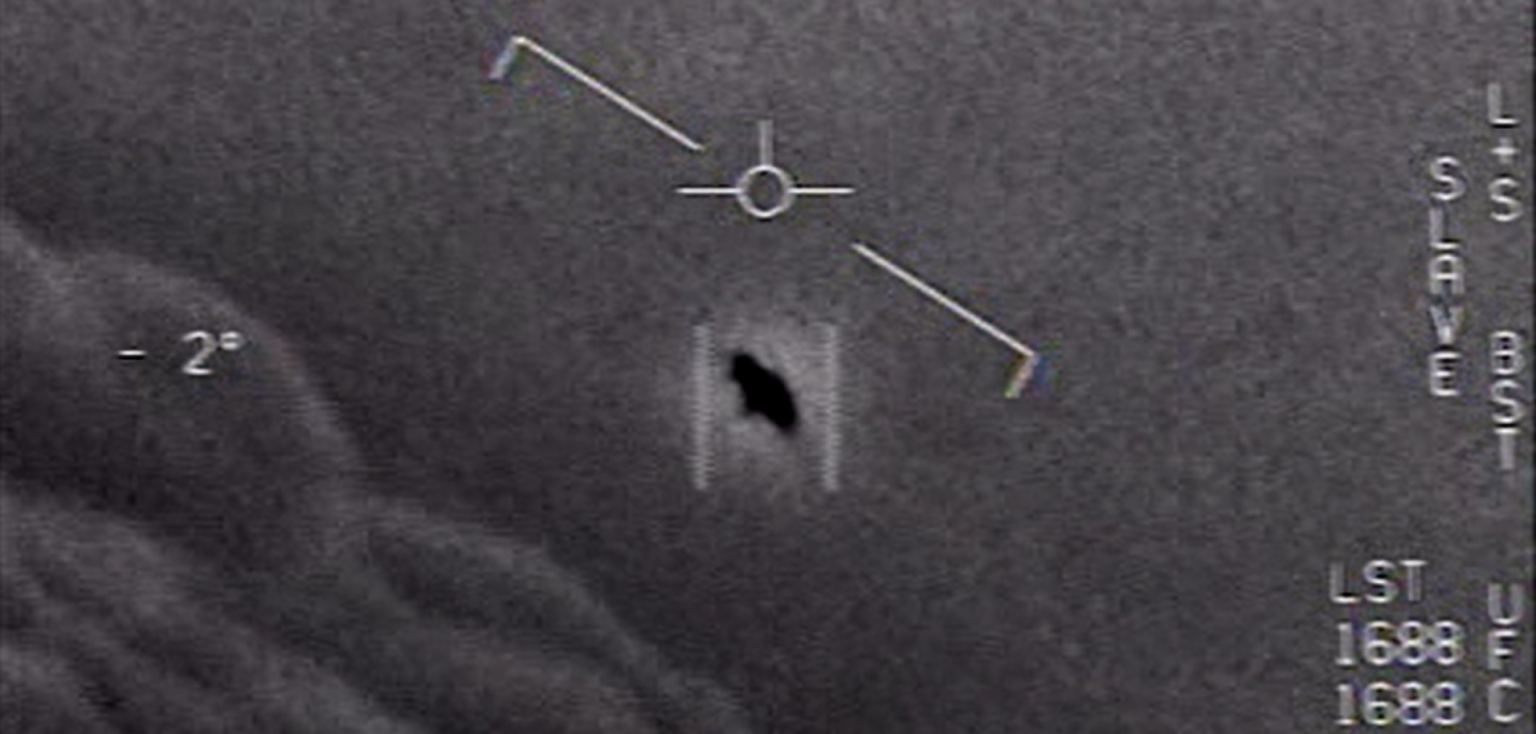
The Pentagon's task force on UFOs has released a new report, providing an update to their preliminary assessment of unexplained aerial phenomenon they first released in 2021. According to the latest info, there were 144 UAP sightings by the military between 2004 and 2021, and several hundred have been added in the last few years. As of August 30th, there were 510 UAP reports by the military. Of course, it doesn't mean we're under an alien invasion, just that there's a better network within the military to collect and centralize the sightings.
A new paper suggests that life has a way of making planets more habitable. Even if a world were marginal to begin with, once life gains a foothold, it'd immediately start changing the nature of the planet's atmosphere to improve its habitability. Researchers have suggested that this can extend the concept of a star's habitable zone due to the impact of life itself. Their term for this is the Gaian habitable zone.
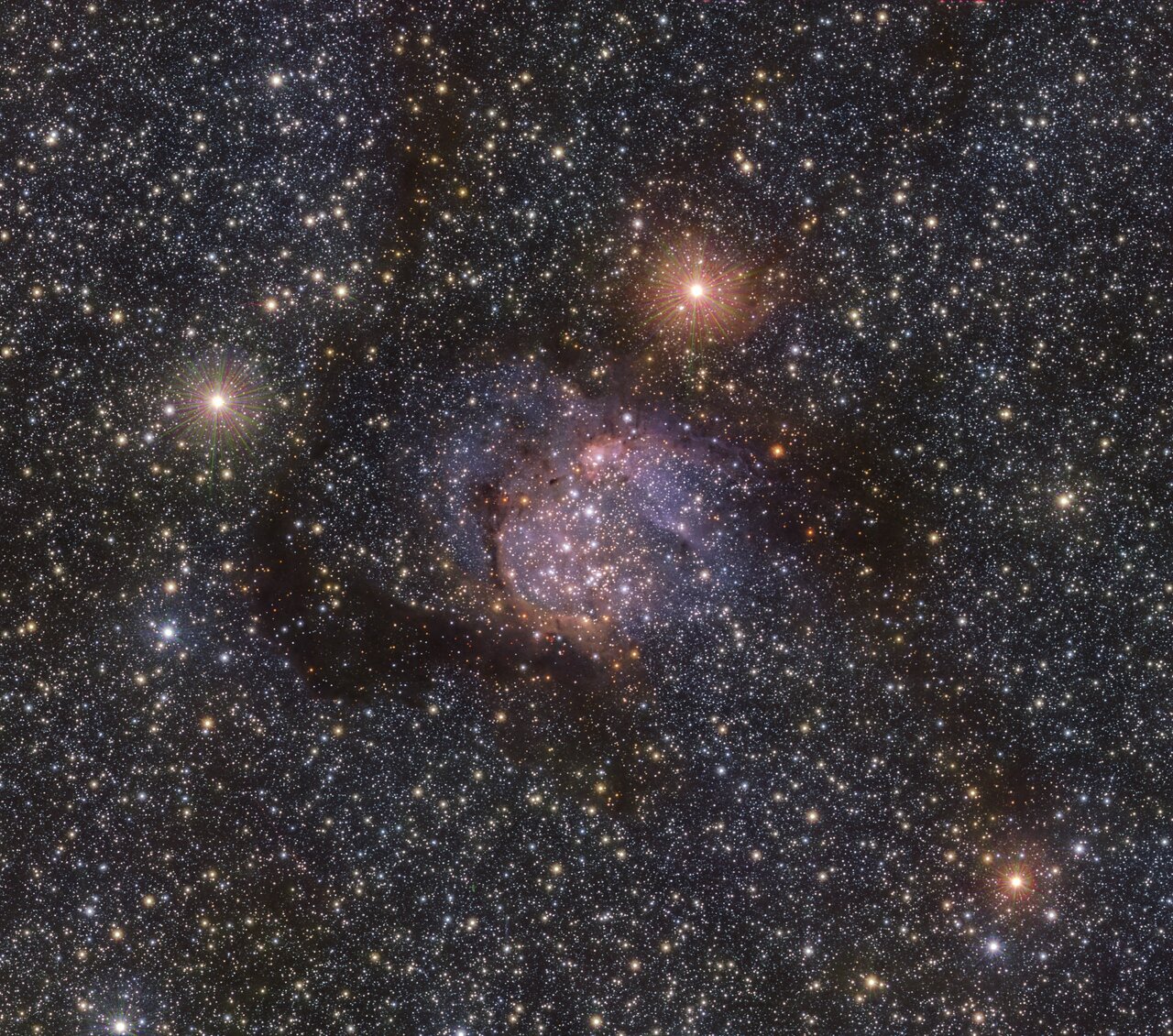
This is a beautiful image of the nebula Sh2-54, located in the constellation Serpens. This is the same constellation that holds the famous Eagle Nebula and its pillars of creation. It's a star-forming region shrouded in thick dust, hiding many young stars from view. The European Southern Observatory's VISTA telescope can see into the infrared, a wavelength that can pass through the dust, revealing this incredible view of the stellar nebula.
We have featured thousands of astrophotographers on our Instagram page, which has more than 200,000 followers. Want to do a takeover? Use the hashtag #universetoday and I'll check out your photos.
Find your way across the night sky. Choose a variety of astronomy gear. Follow the Moon and the planets. Find deep sky objects across the seasons in both hemispheres. Observe comets, asteroids, satellites and space stations. Learn to do astrophotograph
JWST has helped astronomers to discover distant galaxies (right) that are similar to ‘green pea’ galaxies (left, imaged by the Sloan Digital Sky Survey) from the nearby Universe.
Credit: SDSS and NASA, ESA, CSA, and STScI
Astronomers using the James Webb Space Telescope (JWST) have found three tiny galaxies that might have helped to trigger one of the greatest remodels in cosmic history.
The findings, presented at a meeting of the American Astronomical Society (AAS) in Seattle, Washington, and published last week1, could explain reionization — the period when harsh radiation tore apart a ‘fog’ of hydrogen atoms hanging over the Universe, rendering stars and galaxies visible for the first time.
A cosmic blackout
In the immediate aftermath of the Big Bang, the Universe was blindingly bright. The residual heat was so great that electrons could not join with protons to form atoms. Instead, the Universe was a seething plasma — a dense glowing gas of electrically charged (or ionized) particles that scattered light, much like a fluorescent light bulb.
After about 380,000 years, the expanding Universe had cooled enough for hydrogen atoms to form. Some of those atoms eventually coalesced into the first stars and galaxies. But the surrounding blanket of hydrogen absorbed their light — similar to how a thick fog can block a vehicle’s headlights.
Eventually, this cosmic dark age ended. Energetic radiation broke the intergalactic hydrogen atoms apart — turning them back into lone protons and electrons — in a process called reionization. But ionizing all of the matter between galaxies would take a vast amount of energy, and astronomers have long argued over the exact driver. Perhaps it was starlight from the earliest galaxies. Or maybe the event was caused by supermassive black holes — which tug matter towards them and heat it up.
“One of the big cosmological questions is, what is the cause of reionization?” says Trinh Thuan, an astronomer at the University of Virginia in Charlottesville.
Galactic peas
On 11 July 2022 — about six months after JWST launched — the observatory delivered the deepest and sharpest image of the distant Universe yet seen. The image, which centres on a galaxy cluster called SMACS 0723, contains thousands of galaxies fainter than any seen before. JWST could capture it because it analyses infrared light; as the Universe expands, its most distant galaxies appear to shift out of the visible part of the electromagnetic spectrum and into the infrared. Of the thousands of galaxies in the SMACS 0723 image, researchers decided to make follow-up spectroscopic observations of three that looked as though they might be especially far away.
The emissions spectra of green pea galaxies are similar to those of galaxies from the early Universe, spotted by JWST.
Credit: NASA’s Goddard Space Flight Center/Rhoads et al. 2023
But when James Rhoads, an astronomer at the NASA Goddard Space Flight Center in Greenbelt, Maryland, and his colleagues first saw the trio’s spectra, they realized that the galaxies looked like objects normally found nearby. They had an uncanny resemblance to ‘green pea’ galaxies, oddities first spotted by a citizen-science project called Galaxy Zoo and reported2 in 2009.
Green pea galaxies were named because of their colour and small size. They are just 5% of the size of the Milky Way, and 1% of the mass. But don’t let their small size fool you: they churn out stars at an enormous rate — roughly 100 times as fast as astronomers would expect, given their mass. They also seem to contain relatively few heavy elements. Their greenish hue comes from the glow of ionized oxygen (a relatively light element) heated by newborn stars.
Green peas have fascinated astronomers because, even though they have been observed only in the nearby Universe, their properties resemble those expected for early galaxies. The first galaxies, for example, are thought to contain only light elements because heavy elements need time to form. Sangeeta Malhotra, an astronomer at Goddard Space Flight Center, joked at the AAS meeting on 12 January that they are “Peter Pan galaxies” because they haven’t matured.
Early doppelgängers
This is why Rhoads, Malhotra and their colleagues were excited by the spectra of the trio of galaxies analysed by JWST — the galaxies are from the early cosmos but resemble nearby green peas. “We knew they looked like green-pea spectra the minute we saw them,” Rhoads told Nature.
Like green peas, the trio are small and have strong emission spectra — meaning they also churn out stars quickly. Similarly, they are low in elements heavier than hydrogen and helium. In fact, the most distant of the three contains roughly 2% as much oxygen as the Milky Way. That’s possibly the lowest amount of oxygen seen in a galaxy yet.
Thuan says he was “amazed” to see the similarity between the spectra that JWST took of these galaxies and those of green peas, which he has long studied.
There is little doubt that they are the same type of object. Before JWST, researchers had measured green peas from ten billion years after the Big Bang, says Daniel Schaerer, an astronomer at the University of Geneva in Switzerland. “And now suddenly we can do the same thing — but just 700 million years after the Big Bang. It’s completely mind-boggling.”
Another reason for excitement dates back to 2016, when astronomers including Thuan reported a green pea sending droves of ionizing photons into the intergalactic medium3. Most galaxies observed in the nearby Universe don’t do this. With so many stars in such a small volume, green peas might be able to punch channels through the interstellar medium, creating an escape route for energetic radiation.
That could mean that objects like the trio from the early Universe produced the energy required to free the cosmos from its dark age. For Thuan, the results are convincing. “Now I really do think that these star-forming dwarf galaxies are the agent of reionization,” he says.
doi: https://doi.org/10.1038/d41586-023-00064-7
References
Rhoads, J. E. et al.Astrophys. J. Lett.942, L14 (2023).
An Incredible New Theory Proves Past, Present, And Future Exist Simultaneously
Here’s a fascinating thought. What if you discovered that everything in your life had been pre-planned? What if your history, present, and future are all happening right now?
A fantastic new idea known as the “block universe” theory says that time does not actually “flow like a river,” but rather that everything is always there.
Dr. Bradford Skow, a philosophy professor at MIT, believes that if we “look down” on the universe as if it were a sheet of paper, we would see time spread out in all directions, just as we experience space at any one time.
Is it feasible that we only perceive time as essentially linear because that is what our human brains can comprehend?
Let us explore a little deeper into this intriguing new notion and what it might mean for our existence. Dr. Skow is not the first scientist to wonder about how we perceive time.
In 1915, Einstein postulated a notion of unified space and time. In his general theory of relativity, Einstein proposes that space-time has a manifold or continuous structure. They constitute a four-dimensional vector space when viewed together. This vector is known as the “block theory.”
“The boundary between past, present, and future is nothing more than a tenaciously persistent illusion.”
Einstein’s hypothesis is usually recognized as the most accurate explanation of what the cosmos means in terms of cosmic meaning. As a result, the existence of a block universe is not implausible.
Dr. Skow completely supports this point of view. Rather than believing that time and events pass us by and then vanish, we can consider that they continue to exist and coexist in different parts of space-time. We absolutely cannot get anyplace outside of this block.
When you try to wrap your head around this concept, you’ll see it has the potential to change how we think about time travel.
If this hypothesis is right, we cannot just go back in time and change it. It would be difficult to create “grandfather paradoxes” if everything happened at once — your past, present, and future all laid out in space.
You would not be making any significant changes. Instead, you will just travel through time, experiencing it exactly as it is and has always been. Dr. Skow’s new theory was recently challenged by another, equally divisive theory.
Dr. Julian Barbour, a physicist in the United Kingdom, and other scientists believe that the Big Bang created a mirror world.
And, get this, in this mirror dimension, time is reversed. Individuals awaken from death, live out their old age, and wait until they are old enough to start a profession and then go to school in this parallel universe. Doesn’t it sound odd?
If this theory is right, it may provide a solution to some of the most severe physics difficulties we are now facing.
As an illustration, consider what happened to all of the antimatter after the Big Bang. And why does time only move in one direction? This may appear contradictory to the block universe concept, but it provides solutions to some of our most baffling fundamental physics difficulties.
When we think about time, we all think of entropy. Entropy is the degree of disorder in a system that will eventually lead to its collapse. It’s everywhere, including our bodies, computers, and motors. And as entropy increases exponentially, as it always does, it will consume its system.
Sean Carroll, a professor at Caltech, and Jennifer Chen, a graduate student, decided to take a fresh look at time. They thought about it in terms of gravity.
They discovered evidence for the existence of the mirror universe by studying 1,000 particles and applying Newtonian physics.
All of these new radical notions are intriguing to consider and debate. However, if one of them is right, it creates even more complications.
Is there any likelihood of evolution as we know it if time is constant? So, what is the point and meaning of existence if we live exactly as we are, with no chance of change?
Temporal arguments will always exist in this sense. And it’s questionable whether we’ll ever find any of the answers, let alone fully comprehend them.
Perhaps the magic isn’t in having the solution, but rather in the search for it. It could be our way of grasping our existence.
There can be no doubt that one of the creepiest phenomena to have surfaced in the last two decades is that of what have become infamously known as the Black-Eyed Children. It would be overly simplistic to suggest they are merely the offspring of the Men in Black and the Women in Black of the UFO field. Admittedly, though, there are deep similarities, such as the clothing and their obsessive need to get into peoples’ homes. Not only that, the BEC might well be robots. Before we get to that aspect of the story, let’s first take a look at how, and under what specific circumstances, the Black-Eyed Children came to prominence. And, why the just might be robots. We’ll also take a look at a few classic cases. None of them are particularly heartwarming. As if you really needed to be told that. Although, today, we have people who claim to have seen the BEC in the period from the 1930s to the present day, the very first reported case didn’t surface until January 1998. The location was the Lone Star State, specifically the city of Abilene. The story revolves around a man named Brian Bethel, a journalist who works for the Abilene Reporter News. It was late one night when Bethel’s life was changed and he came to realize that there are dangerous, supernatural entities in our midst.
It was close to 10:00 p.m. when Bethel had the kind of close encounter that one never, ever forgets. He had pulled up at a mall not too far from his home, to deposit a check in a mail-box. All was quiet and dark. Bethel, using the lights of the mall to illuminate the interior of his vehicle, was writing the check when he was rudely interrupted. He jumped with surprise at the sight of a couple of kids who were standing next to the car, on the driver’s side. But, there was something about these kids that rang alarm bells in Bethel’s head. In fact, as Bethel would imminently learn, things were wrong in the extreme. Bethel stared at the pair and couldn’t fail to see just how incredibly pale the face of one of the boys was. The other had what Bethel described as olive-colored skin. Both boys were around ten to fourteen years of age, Bethel estimated, and both were dressed in pullovers. Only one of the two boys spoke – he claimed that they wanted to see a movie, Mortal Kombat, at the local cinema. But, there was a problem: they had left their money at home. Could Bethel take them to their homes to get some cash? Bethel near-instantly realized that this whole situation had an air of dark and disturbing theater about it. There was an undeniably unsettling agenda at work, and it had absolutely zero to do with movies.
(Nick Redfern) Could they all be robots?
Bethel awkwardly hemmed and hawed for a few moments, something which caused the talkative boy to become ever more insistent that Bethel let them in the car. Then, things became downright eerie and chilling: Bethel found himself almost mind-manipulated, to the point where, to his horror, he could see that his hand was heading to the driver’s-side door – with the intent of opening it, but without his control. Bethel, fortunately, broke the enchanting spell and didn’t open the door, after all. This clearly incensed the talkative boy, who amped up the pleas to allow them into Bethel’s car. It was then, for the first time, that Bethel finally got a good look at their eyes. They were completely black. The two boys realized that, by now, they were losing the battle to be permitted to get into Bethel’s car. On this very point, Bethel himself said that the boy who did all of the talking “wore a mask of anger.” The boy, now displaying a look on his face which was part-frustration and part-anger, almost shouted: “We can’t come in unless you tell us it’s okay. Let us in!” Bethel, terrified, did nothing of the sort. What he did do was to slam the car into reverse and head for home, completely panicked by the whole thing. Oddly, as he drove away, Bethel looked back, only to see that the boys were nowhere in sight. In what was clearly and impossibly quick time, they had vanished. And, thus was quickly born a legend. It’s a legend that shows no signs of stopping. It’s only getting worse.
Tales of what have become known as the Black Eyed Children have now been circulating for a couple of decades. The witnesses are many. The cases are creepy and bizarre. But, it’s fair to say that we still don’t have a solid answer as to what they are or what they want. It’s worth noting an intriguing UFO connection to the very strange saga of the Black Eyed Children: they have deep parallels to the notorious time-traveling Men in Black, who have, for decades, terrorized and intimidated into silence numerous witnesses to UFOs. Just like the BECs, the Men in Black have a propensity for knocking on doors late at night. The two mirror each other in other fashions, too: like their child counterparts, the MIB will not enter a home until they are specifically invited to do so (shades of vampire lore, legend and very often movies). Both the MIB and the BEC wear black. Both wear head-gear: hoodies for the Black Eyed Children, and 1950s-era fedoras for the MIB. And there is another intriguing issue: very often the Men in Black wear thick, wraparound, black sunglasses.
I have to wonder if this MIB/sunglasses angle is done not just to provoke a menacing atmosphere, but to mask a pair of emotion-free, solid, black eyes of the type that the Black Eyed Children are described as having. In that sense, and just perhaps, the Men in Black and the Black Eyed Children are one and the same: one in adult form and the other in child form, but both following the same secret agenda – whatever that may really be. So, where does that all leave us? Well, it admittedly leaves us with a lot of questions and not a great deal else. But they are questions that a certain, acclaimed and dedicated researcher of the Black Eyed has done his very best to resolve. Undoubtedly the leading investigator in this field, and the author of the book, The Black Eyed Children, David Weatherly has collected and studied dozens of such cases, demonstrating the sheer scale of these weird and unsettling events. David’s work has addressed a variety of theories for the origins and presence of the BECs: that they might be demonic in nature, or predatory spirits, or possibly even products of the human mind, given some semblance of physical life in the real world. Notably, David has also spent much time researching the theory that the Black Eyed Children have nothing less than an alien lineage. David cites the case of two women, Ann and Marcia, who have both had alien abduction experiences and who have also both encountered the BECs – and, in Marcia’s case, in the now-typical “knocking on the door and demanding to be let in” situation.
(Nick Redfern) Hoodies and horror.
Of strange cases such as these, David says: “Why would an alien race want, or need, to create hybrid beings? There are a number of proposed theories to explain why such an experiment may be taking place. These theories range from a dying race that needs an injection of fresh DNA in order to survive, to time travelers attempting to correct a mistake made in their past (which is our present).” More words from Black Eyed Children expert, David Weatherly. They are words that fit comfortably with what we have seen so far: “An even more sinister theory that has followers, postulates that the grays are actually attempting to take over our world by slowly breeding us out and phasing in beings with alien DNA. Over time the human race will fade away to be replaced by the ‘superior’ DNA of the gray aliens, adherents say.”
Ron told me that a week or so after reading my Paranormal Parasites book (it was published in May 2018 and Ron bought his copy a couple of weeks later), he woke up in the dead of night with a pounding headache, a dry mouth, and a rash on his arms (which was gone by morning). Worse still, he was unable to move. This is a real phenomenon that many of you will have heard of: sleep paralysis. As is typical in such cases, Ron immediately found himself filled with fear. This is hardly surprising: standing at the side of the bed were two young children – maybe ten or eleven years in age – who stared at Ron through completely black eyes. Their skin was pale and they were both dressed in black hoodies. In seconds, Ron’s bedroom was flooded with apocalyptic images of a flattened, of millions dead, and of the sky filled with blackness. Ron knew what the cause was: a huge, nuclear mushroom cloud dominated what was left of the city. Suddenly, the image was gone – as were the BEC. Ron told me that he had near-sleepless nights for the next three nights. Thankfully, the BEC did not return. Nor did the nightmare. Adrian Clarke, of England, told me a similar story. In Adrian’s case, it was around 3:00 a.m. in September 2018 and he too suddenly found himself wide awake and with a pair of Black-Eyed Children looking at him from the foot of the bed. Both had the completely black eyes, but were dressed in orange robes. Suddenly, and similar to Ron’s experience, Adrian briefly found himself deep in the heart of a nightmarish world of billions dead and the Earth devastated. He fought against the paralysis and finally managed to break the spell. In seconds, the image was gone – as were the BEC.
(Nick Redfern) Black-Eyed "things" at the 2018 Mothman Festival.
Moving on, there is the account of Jennifer, who I met at the September 2018 Mothman Festival in Point Pleasant, West Virginia – and who lives in Point Pleasant. After I gave my lecture on my The Black Diary book, Jennifer came up to my table and shared with me her experience – which occurred in April 2018. She too was woken from her sleep by a pair of pale kids with huge, dark eyes. One of them pointed to one of the walls in Jennifer’s bedroom, which was suddenly transformed into an approximately eight-foot-by-eight-foot image of a nuclear explosion. Jennifer told me that, for reasons she wasn’t sure, she somehow knew that the city was Milwaukee, Wisconsin. She has never been to Milwaukee, nor does she have friends or family there. Like Ron and Adrian, Jennifer was shaken to the core by her experience. I have seven more cases in which witnesses to the BEC – after their encounters with those dangerous kids - had extremely vivid dreams about future events. Five of them were of vivid, worldwide, nuclear war in the 21st century – a war that all but destroys the Western Hemisphere and ravages the rest of the Earth. Interestingly, and disturbingly, in five of the cases North Korea turned out to be the culprits that sent the deadly ball rolling. And with not a single chance of stopping it. Billions were killed. The atmosphere was black for decades – a nightmarish phenomenon known as a “Nuclear Winter,” something that, theoretically, will occur if we have a world wife nuclear war and millions of tons of radioactive dust is thrown into the atmosphere – possibly for decades.
In some way, these nightmares of disastrous, future times mirror what we learned about the multiple stories of dreams of a radioactive apocalypse in 2017. Are the Black Eyed Children warning us of a future that is destined to destroy us? Or, keeping the matter of time-lines in mind, are the BEC trying to tell us – in their own, eerie, strange way – that this is only one possible scenario? A scenario that can be avoided, if we do our utmost to avoid the worst? Let us all hope so. The possibility of the Black Eyed Children being robots of an incredibly sophisticated nature is fascinating. Consider the following: these creepy kids have skin that looks like high-tech, expertly formed plastic or rubber. They have a mannequin-type aspect attached to their appearances. They repeat the same words over and over again and in loop-style, no less. They seem to lack a sense of self-awareness. Their words are spoken in what can only be termed parrot-fashion-style. Even their clothing – black hoodies – seems to have come straight out of a conveyor-belt in a factory. Of course, the big question is: who has manufactured these dangerous kids? Quite possibly, that’s the weirdest part of the whole mystery.
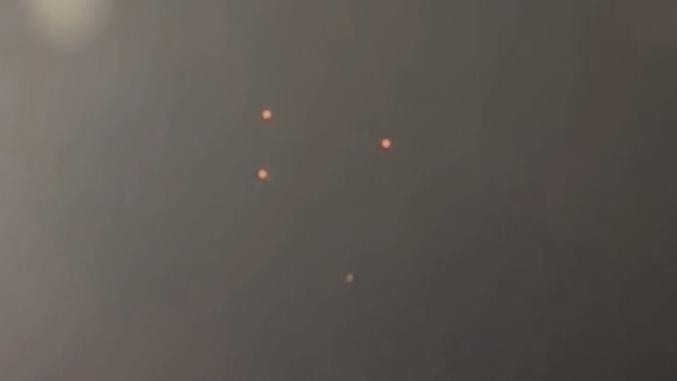
On January 15th, 2023, a man and his family had a close encounter with a group of unidentified flying objects while driving on Arizona State Route 51. The witness, who wishes to remain anonymous, was on his way to pick up his wife and two sons from the airport when he noticed extra lights hovering above the highway. At first, he estimates there were six lights, but he was able to confirm seeing five in a pentagon formation, evenly spaced.
The witness was able to capture a photo from the back seat of the car, which confirms the presence of five lights. He also attempted to record a video using his iPhone, but due to the glare from streetlights and the dirty windshield, it was difficult to make out any details. However, the video does show a decrease in the number of lights, from four at the beginning to three in a perfect triangle formation.
The witness reports that the lights were beneath low cloud cover and appeared to be close. He initially thought they may have been flares from the United States Air Force, but upon further reflection, realized they looked different from any flares he had seen before.
Other witnesses in the area also reported seeing the lights, including a woman in Cottonwood, Arizona, who was unable to upload her own video of the event. The time stamp on the witness’s recording is 9:41 PM.
The witness is unsure of what to make of the sighting, but he is convinced that it is a legitimate encounter with something unknown. He is also curious to know if there was any military activity in the area at the time and wants to rule out flares as the explanation.
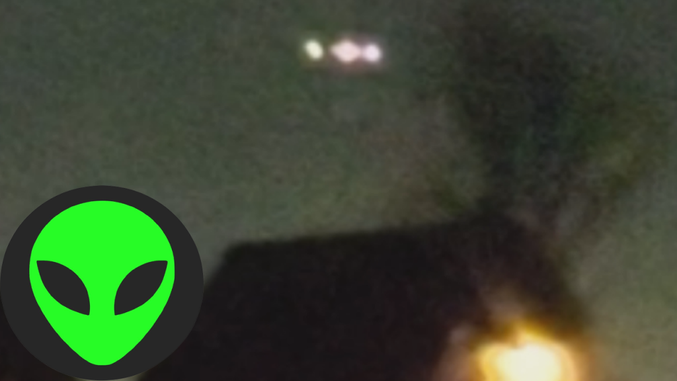
VIDEO! Teleporting in the Illinois Night Sky: A Father and Son’s Incredible Encounter with a UFO
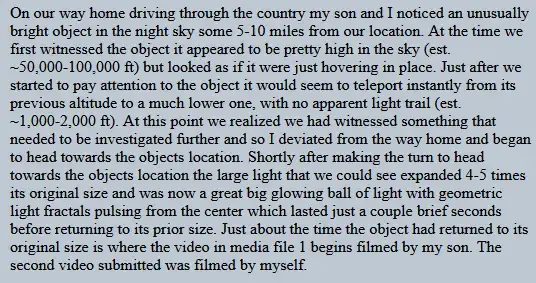
On January 9th, 2023, a father and son duo from Champaign County, Illinois had a once in a lifetime experience when they spotted a UFO while on their way home. The unidentified flying object was first noticed as an unusually bright object in the night sky, approximately 5-10 miles from their location. At first, the object appeared to be quite high in the sky, estimated to be between 50,000-100,000 feet, but it seemed to be hovering in place.
As the father and son watched, the object suddenly teleported from its previous altitude to a much lower one, with no apparent light trail, estimated to be between 1,000-2,000 feet. Realizing that they had witnessed something that needed to be investigated further, the father deviated from their route home and headed towards the object’s location
Full witness report!
As they got closer, the large light that they had seen expanded 4-5 times its original size, becoming a glowing ball of light with geometric light fractals pulsing from the center. This lasted for just a couple of brief seconds before returning to its original size. It was at this point that the son began filming the UFO, the video of which can be seen in media file 1. The second video, filmed by the father, is also included in this post.
The father and son were incredibly excited and hyped about the UFO they saw, and the footage they captured is truly astounding. While the sighting is still being investigated, it is clear that the object they saw was not a conventional aircraft or known phenomenon. This sighting is sure to stir up discussions and debates among UFO enthusiasts and experts. The location of the sighting is Champaign County, Illinois, on the 9th of January, 2023.
NASA Admits To Discovering ‘Something Weird’ Happening To Our Universe
The Hubble Space Telescope has reportedly reached a new milestone in its quest to measure the speed at which the universe is expanding, and it strongly implies that something strange is going on in our cosmos.
Astronomers have recently utilized telescopes like Hubble to measure how quickly the cosmos is expanding.
However, when the data were refined, a peculiar finding was made. There is a considerable gap between evidence from the immediate aftermath of the Big Bang and the universe’s current rate of expansion.
The disagreement has been left unsolved by scientists. However, it demonstrates that “something weird”—possibly the result of as-yet-unidentified new physics—is occurring in our universe.
For the past 30 years, Hubble has been gathering information on a series of “milepost markers” in space and time that may be used to determine how quickly the universe is expanding away from Earth.
More than 40 of the markers have reportedly been calibrated by NASA, enabling even greater precision than before.
“You are receiving the most exact gauge of the expansion rate for the universe from the gold standard of telescopes and cosmic mile markers,” said Nobel Laureate Adam Riess of the Space Telescope Science Institute (STScI) and Johns Hopkins University in Baltimore, Maryland.
He is the head of a team of researchers that just published a new study article outlining the greatest and probably final substantial upgrade from the Hubble Space Telescope, doubling the prior set of mile markers and reexamining the data already available.
When American astronomer Edwin Hubble saw that galaxies beyond our own looked to be moving away from us – and moving faster the more away they are – he set out to find an exact estimate of how quickly space was expanding. Since that time, researchers have been trying to learn more about that expansion.
Both the rate of expansion and the space telescope that has been researching it bear the name Hubble in recognition of the astronomer’s work.
The cosmos was found to be expanding faster than predicted when the space telescope started gathering data on it. While data indicate that it is closer to 73, astronomers predict that it should be around 67.5 km/s per megaparsec, plus or minus 0.5.
The likelihood of astronomers being off is one in a million. Instead, it suggests that there is still much to learn about how the cosmos is developing and that the universe’s evolution and expansion are more complex than we previously imagined.
The newly launched James Webb Space Telescope, which will soon send back its first observations, will be used by scientists to delve deeper into this difficulty. They should be able to see more recent, far-off, and detailed mileposts as a result.
Something big in our solar system has tilted the sun by 6 degrees.
Experts say that compared to the sun’s equator, our Sun is tilted by about 6 degrees. Since the 1970s, astronomers have not been able to figure out why this is happening. Now, experts think they may have found a solution: Planet Nine. Elizabeth Bailey works at the California Institute of Technology in Pasadena as an astrophysicist and planetary scientist.
She says that planet nine tilted our sun by six degrees and that the missing planet may have also tilted the other planets over the course of the solar system’s history. Planet Nine is a celestial body that hasn’t been found yet but is thought to be at the very edge of our solar system. Konstantin Batygin and Mike Brown predicted its existence in January 2016.
Experts say that all of the planets in our solar system move around the sun in a flat plane that is within a few degrees of each other. But experts say that plane rotates at a six-degree angle to the sun, which makes it look like the sun isn’t in the right place.
No one could figure out how something like this could happen for years.
What could make the sun, which is the biggest object in our solar system, tilt by six degrees? In fact, the sun is the only thing in our solar system that isn’t facing the same way as everything else.
Brown, the Richard and Barbara Rosenberg Professor of Planetary Astronomy, says, “It’s such a deep-rooted mystery and so hard to explain that people just don’t talk about it.”
Bailey and his team of researchers ran computer simulations to figure out what was going on. They found that the tilt of the eight planets could be explained by Planet nine’s gravitational pull. In an interview with Space.com, Bailey said that this is just one theory and that there may be other reasons for the strange tilt our solar system has taken over its roughly 4.5 billion-year history.
One possibility is that there was an imbalance in the mass of the core of the young sun. According to Konstantin Batygin and Mike Brown, our sun is probably circled by a massive, unseen planet that is about ten times the size of Earth and has an orbit that is about 20 times farther from the sun than Neptune’s.
Batygin says, “It keeps surprising us. Every time we look closely, Planet Nine explains something about the solar system that had been a mystery for a long time.”
Astronomers haven’t been able to figure out why our sun and the other planets in our solar system tilt in such a strange way for a long time. Experts think that planet nine’s angular momentum—in physics, angular momentum is the rotational equivalent of linear momentum—is having a huge effect on the solar system because of where it is and how big it is.
Even though this is one reason why our solar system tilts in a strange way, scientists still need to find the rogue planet.
SpaceX Falcon Heavy launches classified USSF-67 Space Force mission, nails landings
A SpaceX Falcon Heavy rocket launched the USSF-67 mission for the US Space Force on Jan. 15, 2023. The rocket lifted off from Launch Complex 39A at the Kennedy Space Center in Florida.
Several minutes after launch the side boosters touched down safely back at SpaceX's landing zones at Cape Canaveral Space Force Station. The core booster was not recovered to maximize fuel availability.
Credit: SpaceX
FALCON HEAVY - SpaceX Launches USSF-67
Falcon Heavy is launching the classified USSF-67 mission to geostationary orbit for the US Space Force. Liftoff is scheduled for 5:55 PM EST (22:55 UTC) from LC-39A, Kennedy Space Center, Florida. The side boosters, B1064-2 and B1065-2, will attempt landings at Landing Zones 1 and 2. The center core, B1070-1, will be expended.
Mysterious Satellite Captured on Camera: The UnXplained (Season 3)
While constructing the international space station, astronauts capture a strange object on camera, which raises suspicions around the world. See more in this clip from Season 3, "The Search For Extraterrestrial Life."
Watch all new episodes of The UnXplained, streaming now, on The HISTORY Channel website athttp://history.com/schedule.
The Present TIME DOES NOT EXIST - We are being deceived
Brian Greene - Did The Universe Emerge Inside a Black Hole?
Brian Greene - Did The Universe Emerge Inside a Black Hole?
The big bang theory explains the beginning of our universe. But could the entirety of our universe be inside a black hole? Theoretical physicist Brian Greene explains this bizarre hypothesis in cosmology.
The idea that our universe may be entirely contained within a black hole is a mind-bending concept that has been explored by physicists for decades.
This hypothesis draws upon both general relativity and quantum mechanics, and could provide answers to some of the most perplexing questions in cosmology, such as the origin of the universe and the source of dark energy.
But, are there any observable effects that could indicate that our universe is inside of a black hole?
Virtually all cosmologists and theoretical physicists endorse the idea that the universe emerged during a single moment some 13.8 billion years ago.
That, in a nutshell, is the Big Bang theory. Evidence supporting the idea is extensive and convincing.
However, a few profound questions about dark matter, dark energy, and cosmic expansion have some astronomers rethinking what we know about the early universe.
Some scientists have revisited a decades old idea that our observable universe right now might exist on the interior of an enormous black hole.
That could potentially explain the origin of dark matter and dark energy, as torsion, a property of spacetime caused by the black hole, could be the source.
According to Brian Greene, the possibility of our universe being inside a black hole is an interesting puzzle that has been explored by scientists for many years. However this idea remains only a hypothesis and currently we have no ways to test it.
For the first time, US scientists have achieved a fusion reaction with net energy gain. But the dream of limitless zero-carbon energy is still a long way from reality. The FT's Simon Mundy meets scientists and investors in the UK, France and US, to see how close we really are to commercial fusion power.
Nuclear Fusion: Inside the breakthrough that could change our world | 60 Minutes
On December 5th, scientists at the National Ignition Facility reached a breakthrough in nuclear fusion by producing a reaction with an energy gain. It could be a step toward a world in the distant future where fusion is a source of power.
TOP 10 UFO SIGHTINGS OF 2022 | The Proof Is Out There
Check out this The Proof Is Out There compilation featuring the top 10 moments from 2022.
00:00:00 - Chapter 1: GIANT FLAME SPOTTED IN FLORIDA SKY
00:04:46 - Chapter 2: FLAMING UFO OVER CANADA - "Something Out of This World!"
00:08:40 - Chapter 3: CUBE-SHAPED UFO SHOCKS PILOT
NASA astronaut Frank Rubio Flips Off Space Station Live Cam, UFO Sighting News.
Date of sighting: Jan 2023
Location of sighting: International Space Station
Hey all, I was watching the live space station cam, searching for UFOs or orbs when I noticed an astronaut giving the bird to the camera. At first it seems accidental, but then he flips his finger straight out and tenses up the muscles in his hand, clearly sending a message to the world watching. It looks like it was NASA astronaut Frank Rubio, who flipped the bird. It's just something you don't ever see, but might be curious about. The first recorded bird in space, by an American of course. I'm sure the space station cam signal is traveling though space in many directions, soon to be discovered by an alien species who thinks this is a sign of greetings, only to fly to earth giving everyone the bird in hopes of being accepted by humanity. And of course, they would be.
Intentional or unintentional, this video is still proof it happened. Scott C. Waring - Taiwan
UFO Shoots Out Beam Of Lighting Over Solihull, England 6-17-2020, UFO Sighting News. Video
Date of sighting: 6-17-2020 Location of sighting: Solihull, England
A really great catch, this video shows some unique movements with and even more rare sighting of a beam of light coming out of the UFO. Such lights have been seen in other past sightings, like the Fire In the Sky sighting that took place on Nov 5, 1975 at Snowflake, Arizona.
Scott C. Waring - Taiwan
Eyewitness states:
I saw a large object in the sky around 4:00am UK time, it was lit up red and had a light beam shining down. It was completely silent and moving from side to side in a straight line. By the time I had ran upstairs to grab my phone and record it, the object had moved further back and appeared smaller and this video is what I captured. The object then moved to the left in a straight line and then completely disappeared. I am certain this was not a drone, plane or helicopter as it made absolutely no sound.
In the past couple of years, various videos and reports of strange flying objects have been presented to the public. These include footage taken by Navy fighter pilots and drone operators. We will be taking a closer look at these encounters and examining the evidence to see if they are truly extraterrestrial.
The first instance was reported in California, where an air reporter captured footage of a large cloud of smoke. Out of the haze came an odd-looking object, which was described as a cigar-shaped or narrow aircraft. According to journalist Michael Banayas, this type of UFO has been seen for decades or more. After further analysis, it turned out that the object was a container ship that was flying off the coast.
In the second incident, a video was taken by a drone operator, which showed an unidentified object. After analyzing the footage, a video forensics expert named Michael Primo said that he believed the object was a UFO. However, after further examination, he discovered that the object was most likely a bird.
A French-speaking family in Quebec, Canada, captured video footage of an unusual object in the sky. It appeared to have glowing green and red lights, and it wasn’t clear how the object stayed above the clouds. According to MJ Benais, who is a journalist, Canada has a lot of UFO sightings. Although the experts who analyzed the footage could not determine what the object was, they noted that there have been more sightings in Quebec than in other provinces.
The drone operator was not able to identify the object in the video, which he captured while flying near his drone. Initially, aviation expert Tim McMillon thought that the object might have been hail, but after further examination, it was later revealed that it wasn’t heavy enough to support a drone.
In another incident, a UFO was seen hovering near a flaming volcano. Although the object looked like it was on fire, it was not clear what it was or how it stayed airborne. After examining the footage, aviation experts were not able to determine what the object was.
Retiree snaps photo of UFO resembling “Close Encounters” hovering above residence for minutes
Some people try to disprove the existence of UFOs by gathering circumstantial evidence such as weather reports, statistics, and graphs. However, the truth is that the flying object was in the control of intelligent beings. Researchers and enthusiasts also believe that the phenomenon is real.
On February 28, 2016, John MacDonald, a 65-year old pensioner from Perth, Scotland, was driving home after visiting his friend. He heard strange noises while driving. He then saw a strange object flying in the sky.
He was not aware of the strange lights until he heard the beat and looked through his binoculars. As the object hovered, he took a couple of photos. Then, a few minutes later, the object disappeared. He wondered if he scared it away with the flashes from his camera.
He believes that the object was an alien spacecraft. He estimated that it was about 50 to 70 yards from him when he took the photos. The Civil Aviation Authority of Scotland said that flying in the dark would be very challenging.
People who refuse to acknowledge the existence of alien life offer various proofs and facts in support of their claims. They believe that the public is always looking for unusual and strange occurrences. Also, flying objects cannot operate without the government’s permission.
Airports have strict procedures in place to deal with unusual and unexpected situations, which means that flying objects are not allowed to operate. Even if skeptics are not convinced by the evidence, things can still go on.
The US government released a report about the increasing number sightings of unidentified flying objects. According to the report, which was prepared by the Pentagon in 2022, the number of reported incidents has increased significantly. There were over 300 million incidents involving the UFOs during the past year.
Most of the reports about UFOs came from US Air Force and Navy pilots. The report also talked about the strange sightings of transmedium objects, which are objects that move between the atmosphere and space. Despite the lack of reported collisions involving U.S. aircraft, the report stated that these types of objects pose a flight hazard.
Although the report doesn’t identify the nature of the objects, it shows that the government is taking the issue seriously.
Operation Highjump | Mission: Find and Destroy the Secret Nazi UFO Base In Antarctica
In August 1946, a military operation known as Operation Highjump was carried out. It was led by Admiral Richard Byrd, who was a prominent naval officer in history. The primary goal of the expedition was to carry out military training and scientific research. Other objectives were also included in the operation.
One of the objectives of the operation was to extend the American’s sovereignty over Antarctica. It was also tasked with finding and destroying a Nazi base and capturing its new weapon, which was reportedly flying saucers.
The Nazis had already explored Antarctica before. In 1938, Hitler ordered the SS Schwabenland to carry out an expedition in an attempt to find ancient artifacts. The expedition, which started on December 17, was one of the many that Hitler had planned.
The SS Schwabenland, which was mainly composed of scientists and engineers, was also accompanied by members of a German occult group known as the Thule Society. The group believed that there is a race of humans called the Aryans living deep within the Earth. The group was tasked with finding and making contact with the members of the Aryans residing in the hollow Earth, as well as establishing a secret underground base.
After reaching the coast of Antarctica, the ship continued to map the continent for the next couple of weeks. During aerial reconnaissance, they were able to see what was referred to as an Arctic oasis, which was an area that was free of ice and contained plant life.
The area was ideal for a base since it had a geothermal vent, which kept the ocean relatively warm. This was where Base 211, which was an underground facility, would be established.
During World War II, the facility became a massive complex that was designed to be an offensive base. It was initially constructed to house U-boats and other missiles. However, as the Nazi forces’ fortunes changed, it was decided that Base 211 was the ideal location to escape from.
During the war, a huge amount of supplies and equipment was transported to Antarctica. As the war ended, thousands of Nazi officers and soldiers were smuggled to South America. One of the most prominent German officers who was able to escape was Hans Kamler.
One of the planes that Kamler was able to use was a prototype supply plane that was made by his engineers. It was known as the Ju390, and it had a range of over 4,000 miles. Unfortunately, no sign of the plane or Kamler has been found.
In the months following the war, thousands of strange sightings were reported in South America. The US government was worried that Kamler, as well as his scientists, were hiding in Antarctica. However, these were just rumors, and the only way to find out what happened to them was to visit the continent.
The commander of the mission, Admiral Byrd, was not a pseudo-science fiction expert. He was a real-world military officer who was well-equipped for the mission. As the youngest admiral in the Navy at the time of his expedition, he was leading a massive task force that was sent to Antarctica.
Details about Admiral Byrd’s mission in Antarctica remain unclear. The official report from the US Navy stated that the operation, which was known as Operation Highjump, was a success. It was led by Admiral Byrd, who was one of the most prominent naval officers in the world at that time.
The primary goal of the mission was to conduct military training and scientific research. However, it also had other objectives. One of these was to gain American sovereignty over the continent, which was denied several times by the government. Another objective was to find and destroy a Nazi base.
The Nazis had already explored Antarctica before. In December 1938, Hitler ordered an expedition to the continent that was known as the SS Schwabenland, which was one of the vessels that was sent to participate in the operation. During this time, Hitler was focused on finding ancient artifacts that could have incredible power.
Some of the scientists and engineers on board the SS Schwabenland were also members of a German occultist group known as the Thule Society. They believed that there’s an advanced race of humans called the Aryans living in the South Pole. The SS Schwabenland was tasked with finding a secret underground facility that could be used to make contact with the Aryans.
After reaching the coast of Antarctica, the ship continued to map the entire continent for three weeks. During aerial reconnaissance, they were able to spot what was referred to as an Arctic oasis, which was an area that was free of ice and filled with warm water.
The area was ideal for a base since it had a geothermal vent, which kept the water warm. The Nazis would then build their infamous base known as Base 211, which was located in this region.
During the Second World War, Base 211 became an incredibly large complex. Initially, the facility was designed to be an offensive hub where the Germans could deploy U-boats and other missiles. As the war progressed, it was clear that Base 211 was an ideal location to escape.
During the war, the Nazis were able to transport huge amounts of equipment and supplies to Antarctica. As the war ended, thousands of German officers were able to escape and were hiding in South America. One of the most prominent individuals who was able to escape was Hans Kamler, who headed the Nazis’ secret weapons program.
One of the planes Kamler was able to use was a prototype supply plane that was made by his engineers. It was known as the Ju390, and it had a range of over 4,000 miles. Unfortunately, no sign of the plane or Kamler has been found.
In the months following the war, thousands of reports of UFO sightings were made in South America. The US government believed that Kamler and his team were in Antarctica, and they were operating a secret military base. However, these were just rumors.
The commander of the mission, Admiral David Byrd, was not a pseudo-science conspiracy expert. At the age of 41, he was the youngest admiral in the history of the Navy. During his time in Antarctica, he was part of an expedition that was the biggest naval task force sent to the continent. Unfortunately, the details of what Admiral Byrd and his team were able to find in Antarctica remain unclear.
Some accounts claim that Admiral Byrd’s radio started to work after it had been missing for an hour. Even though its signal had been distorted, a voice started talking in German and informed Admiral Byrd that his plane would land in seven minutes. He was then met by a group of tall blonde men.
Admiral Byrd is then joined by a group of people who are levitating. They rush toward the city at a high speed. He then gets into an elevator, which takes him to an underground chamber. He is then supposed to meet with the “master.”
Admiral Byrd is then led into a room. The “master” is sitting at a table with an older man who claims that he and his group of aliens are known as the Ariani. He says that the race that Admiral Byrd is part of is too immature for the use of atomic energy.
The “master” then claims that their ships have been attacked and chased by fighter planes whenever they try to make contact. He and his group decided to use Admiral Byrd to carry out this message as he was a well-respected individual.
After the meeting, Admiral Byrd is escorted back to the plane. There, a voice on the radio informs the admiral that his aircraft is now under his control. The voice then says that it is Aryans and asks if there is any way that he could disconnect it.
In March 1947, Admiral Byrd was debriefed at the Pentagon after he arrived. He was then ordered to keep quiet about the mission. He never talked about the mission again, and the last entry in his diary dates back several years.
In his diary, Admiral Byrd talks about the long night that he experienced in the Arctic. He feels that he has seen the land beyond the pole, and those who are in darkness will be brought to light.
Three months later, Admiral Byrd died. His diary was found and released as a tribute to his memory. In the following year, the Antarctic Treaty was established, which banned unauthorized individuals from going to the region. Antarctica is bigger in size than Australia and Europe, and it’s off-limits to everyone. Only a few small areas are allowed to be visited in the region.
In 1947, the sailors talked about the strange things that they saw in the area, such as the Nazis’ secret base and the possibility that a civilization is living underground. Since they were prohibited from going to their world, the aliens might have been trying to warn Admiral Byrd before they attack. This could affect the world’s future.
The details of Operation Highjump remain a mystery even though various theories and accounts about the mission have been debunked. It’s uncertain if the admiral actually had an encounter with aliens or if the diary was a fabrication. The existence of extraterrestrial beings and the Nazis’ alleged secret base in Antarctica continue to fuel conspiracy theories.
Conspiracy theorists have presented various theories about the Nazis’ alleged base in Antarctica, such as the idea of a hollow Earth or an advanced race of aliens. Although there has been little concrete evidence presented regarding the location of the base, the possibility of it being operated by the Nazis is still a popular one. During World War II, the Nazis were known for developing advanced technology. It’s possible that the Nazis were working on a secret program in the area.
The strange incidents that happened in the area following Operation Highjump also added to the intrigue. Although some of the sightings were attributed to natural phenomena, the others remain unidentified. The strange behavior of the objects that the sailors saw in 1947 has led to speculations that they might have been extraterrestrials.
The alleged diary of Admiral Byrd, which was released as a tribute to the admiral, and Operation Highjump continue to provide various sources of speculation and mystery. Although some of the theories have been proven, the nature of the mission, the alleged Nazi base in Antarctica, and the presence of aliens in the area remain unexplained.
You won’t believe what these Trowbridge (UK) residents caught on camera: A UFO unlike any other!
On the evening of August 19, 2022, a group of witnesses in Trowbridge, Wiltshire, England, were treated to a spectacular and unusual sight in the sky. The group, who were out and about enjoying the evening, reported seeing bright white and red lights swirling and multiplying in the sky.
According to the witness report, the lights initially appeared small, but they quickly got brighter and continued to swirl around, going up and down and leaving a “glittery” trail behind. At first, the group thought the lights might be a firework or drone, but as the lights continued to split and re-join, they realized that this was not the case.
The witnesses recorded the sighting on their phones, but they reported that the event lasted longer than what they were able to capture. They described the lights as a Unidentified Aerial Phenomenon (UAP) and were amazed by the sight.
This UFO sighting has recently been submitted to the Mutual UFO Network (MUFON) for further investigation. As one of the leading organizations for investigating UFO sightings, MUFON will likely be conducting interviews with the witnesses and reviewing the evidence to try to determine what exactly was observed in the skies above Trowbridge.
While sightings of UFOs and UAPs are not uncommon, it is always interesting to hear from witnesses who have had the opportunity to observe these phenomena firsthand. This particular sighting in Trowbridge is certainly intriguing and has left many people wondering what exactly it was that was seen in the sky that evening.
What SpaceX Dragon can do is SHOCKED Russia best rocket "Soyuz"
What SpaceX Dragon can do is SHOCKED Russia best rocket "Soyuz" For more than half a century, Soyuz Spacecraft has been the backbone of the Russian Space Program. It is a type of spacecraft that the Soviet Union, and then Russia, have used for decades to launch cosmonauts into space. Today's Soyuz missions are best known for trips to the International Space Station; however, the spacecraft has a long operational history dating back to the 1960s, starting with its first uncrewed mission on Nov. 28, 1966. Over the years, Soyuz spacecraft have sent cosmonauts to several types of space stations — the Almaz series, Salyut series, Mir, and today's ISS. Notably, for years, the only method of delivering crew to the ISS was the Soyuz craft, leading NASA to purchase seats for their astronauts. NASA bought 71 seats at a cost of nearly $4 billion over the course of six years. But as of 2020, the SpaceX Dragon rockets can deliver American crew to the space station. This is also the time when the U.S. trampoline has gradually surpassed Soyuz in almost every respect. At this point, what SpaceX Dragon can do is SHOCKED Russia's best rocket "Soyuz". Explain this in today's episode of Alpha Tech with 5 features that Soyuz can't compare to SpaceX Dragon:
As the U.S. and Russia are facing off over the invasion of Ukraine, the two adversary nations are quietly cooperating on another life-or-death matter: making sure astronauts are not stranded in space.
On Dec. 15, International Space Station mission control halted a planned spacewalk aboard the orbiting laboratory because of a startling new problem. A Russian Soyuz space capsule docked to the facility was suddenly spewing gobs of fluid into space. The dramatic leak, which saw a 0.8 millimeter hole empty the capsule’s radiator of cooling fluid, has left NASA and Russia’s Roscosmos space agency with a new problem — how to safely transport two cosmonauts and one astronaut who had been scheduled to return home in the now-damaged capsule in March. The capsule also functioned as the station’s emergency escape pod for those three, leaving them stranded if a serious problem develops in the station’s living quarters. What SpaceX Dragon can do is SHOCKED Russia best rocket "Soyuz"
NASA Just Found an Object Eating Galaxies Right Now!
Galaxies, like stars, planets, black holes and all other phenomena in the cosmos, are in constant motion.
Credit:NASA, ESA, ESO, SpaceX, Wikipedia, Shutterstock, ...
5 UFO ENCOUNTERS THAT WILL BLOW YOUR MIND | The Proof Is Out There
Check out these baffling UFO sightings, in this The Proof Is Out There compilation.
Chapter 1 - Wildfire UFO over Los Angeles? - 00:00
Chapter 2 - Strange Aircraft Seen in Space - 04:19
Chapter 3 - Fast-moving Scout Seen on Drone - 08:33
Chapter 4 - Fiery Unidentified Object in the Sky - 13:03
Starship Loaded with Propellant in Pre-Launch Tests | SpaceX Boca Chica
Starship was partially loaded with propellant as SpaceX tests the full stack prior to the orbital test flight. Ship 25 was also rolled out to start its test campaign.
Lockdown methane INCREASE!! What's going on??
Methane is a greenhouse gas 84 times more potent than carbon dioxide over a 20 year period. Much of it comes from production and transport of fossil fuels, so you might think methane levels would have tumbled during the global COVID lockdowns of 2020. But in fact, they spiked worryingly upwards. So what's going on?
What Life Inside The SpaceX Starship Will Be Like!
When we look up into the night skies, all we see is absence and silence, but could our galaxy be a dark forest full of hidden predators waiting to consume us?
10-Million Megalithic Ruins Found In The Jungle?
In 1836, a Worker Followed an Old Drain and Found Secret Treasure at the End!
There are crimes that require meticulous planning, perfect timing, and exceptional intelligence. However, the unique incidents we're about to share with you don't fall into any of these categories. True to the motto "opportunity makes the thief", some valuables were almost ridiculously easy to steal. You want to know how a simple construction worker managed to calmly walk into the belly of a high-security bank? Or how to become a millionaire with stolen fast food? Then grab something to nibble on, sit back, and be sure to watch today's video to the end!
An image of a UAP, seen through night vision goggles, shown to US lawmakers
By Brandon Drenon
BBC News, Washington
A new de-classified US government report on UFO sightings by US troops has revealed hundreds of new cases.
The US National Intelligence office is now aware of 510 reported sightings, an increase over the 144 compiled in the spy agency's first 2021 assessment.
Nearly half of the new sightings were deemed "unremarkable" and attributed to human origins, according to the report.
However, more than 100 of the encounters remain unexplained.
The report says that encounters with UFOs - which the government calls Unidentified Aerial Phenomena (UAPs) - continue "to occur in restricted or sensitive airspace, highlighting possible concerns for safety" and national security.
Of the 366 new reports, 26 were determined to be drones, 163 were balloons and six aerial objects were attributed to clutter.
The report was issued in part to help "destigmatise" experiences with UFOs and improve air safety.
And it says increased reports of encounters are indeed the result of "a concentrated effort to destigmatise the topic of UAP and instead recognise the potential risks that it poses as both a safety of flight hazard and potential adversarial activity", the report states.
It goes on to say that 171 sightings still remain "uncharacterised and unattributed" - meaning, not enough information was collected to effectively identify them.
"Some of these uncharacterised UAP appear to have demonstrated unusual flight characteristics or performance capabilities, and require further analysis," the report says.
None of the reports have been linked to any extra-terrestrial activity.
The reports are being examined by the All-domain Anomaly Resolution Office (AARO), an office in the Pentagon created last year to review UAP incidents.
The AARO will focus on receiving and analysing incidents with unidentified phenomena and work with intelligence agencies to further assess those incidents, according to the new declassified document.
Last month, the Pentagon's Undersecretary of Defense for Intelligence and Security told media: "We have not seen anything that would lead us to believe that any of the objects that we have seen are of alien origin."
"I have not seen anything in those holdings to date that would suggest that there has been an alien visitation, an alien crash, or anything like that," added Ronald Moultrie.
But the effort continues to identify whether the remaining UFOs have earthly origins.
"In the absence of being able to resolve what something is, we assume that it may be hostile," he said. "And so, we have to take that seriously."
The Andromeda galaxy, the nearest spiral galaxy to our Milky Way, isn’t noticeable in our night sky, unless you look for it. Under dark skies, however, you can see it without optical aid, but only as a barely visible fuzzy patch of light. But one day, far in the future, Andromeda will be bright in our sky, growing larger and larger … as it gets closer and closer to us. And even though the two galaxies are still 2.5 million light-years apart, the eventual merger of our two galaxies has, in fact, already begun.
The Andromeda galaxy is currently racing toward our Milky Way at a speed of about 70 miles (113 km) per second. With this in mind, our merger will occur five billion years from now. But, in August 2020, the peer-reviewed Astrophysical Journal published new research revealing that the collision between our galaxies is already underway.
The news about the Andromeda galaxy came from Project AMIGA, which uses the Hubble Space Telescope to look at the deep-space surroundings of the Andromeda galaxy. AMIGA stands for Absorption Map of Ionized Gas in Andromeda. NASA called it:
… the most comprehensive study of a halo surrounding a galaxy.
The Andromeda galaxy, our Milky Way and other galaxies all sit enshrouded in a large envelope – called a galactic halo – which consists of gas, dust and stray stars. The halos of galaxies are faint, so faint, in fact, that detecting them is not an easy feat. These astronomers measured the size of the halo of the Andromeda galaxy by looking at how much it absorbed light from background quasars. They were surprised to find that the Andromeda galaxy’s halo stretches much, much farther beyond its visible boundaries.
Indeed, it extends as far as half the distance to our Milky Way (1.3 million light-years) and even farther in other directions (up to 2 million light-years).
So, does this mean the halos of the Andromeda and Milky Way galaxies are touching?
It turns out that, from our vantage point inside the Milky Way, we cannot easily measure the characteristics of our galaxy’s halo. However, because the two galaxies are so similar in size and appearance, scientists assume that the halo of the Milky Way would also be similar.
In other words, it’s the faint halos of the galaxies that indeed appear to have started to touch one another. Thus, in a manner of speaking, the collision between our two galaxies has already started.
NASA released the images below in 2012. They are artist’s concepts of what someone on Earth might see as the Andromeda galaxy hurtles toward us.
The depictions below are based on painstaking Hubble Space Telescope measurements of the motion of the Andromeda galaxy, with computer modeling of the inevitable collision between the two galaxies. Also, a series of studies published in 2012 showed that – rather than glancing off each other, as merging galaxies sometimes do – our Milky Way galaxy and the Andromeda galaxy will in fact merge to form a single big elliptical, or football-shaped, galaxy.
Roeland van der Marel, an astronomer at the Space Telescope Science Institute, told Discover Magazine in February 2022:
Whether it’s fully a head-on collision or more of a glancing blow doesn’t really affect the end result.
And that is a new, giant elliptical galaxy.
The Milky Way and Andromeda galaxies, however, won’t be the only ones involved in this merger. As shown in the video below, the other large galaxy in our Local Group of galaxies, that is, M33, aka the Triangulum galaxy, will also play a role.
In the video below, you’ll recognize the Triangulum galaxy as the smaller object near the Andromeda and Milky Way galaxies. Although the Triangulum galaxy likely won’t join the merger, it may, nevertheless, at some point strike our Milky Way while engaged in a great cosmic dance with the two larger galaxies.
Across the universe, galaxies are colliding with each other. Astronomers observe galactic collisions – or their aftermaths – with the aid of powerful telescopes. In some ways, when a galactic merger takes place, the two galaxies are like ghosts; they simply pass through each other. That’s because stars inside galaxies are separated by such great distances. Thus the stars themselves typically don’t collide when galaxies merge.
That said, the stars in both the Andromeda galaxy and our Milky Way will be affected by the merger. The Andromeda galaxy contains about a trillion stars. Meanwhile, the Milky Way has about 300 billion stars. Stars from both galaxies will be thrown into new orbits around the newly merged galactic center. For example, according to scientists involved in the 2012 studies:
It is likely the sun will be flung into a new region of our galaxy …
And yet, they said,
… our Earth and solar system are in no danger of being destroyed.
So, how about life on Earth? Will earthly life survive the merger? Well, the sun will eventually become a red giant in about 7.5 billion years, when it will increase in size and consume the Earth. But even before then, the luminosity, or intrinsic brightness, of the sun will increase. This will happen, ultimately, in a timeline of about four billion years.
As solar radiation reaching the Earth increases, Earth’s surface temperature will increase. We may undergo a runaway greenhouse effect, similar to that going on now on the planet next door, Venus. So there’s a good change that earthly life won’t be around when the merger concludes.
But by that time, maybe some earthly inhabitants will have become space-faring. Perhaps we’ll have left Earth, and even our solar system. We may still get the view of Andromeda crashing into the Milky Way, just from a slightly different perspective.
Read more:Hubble Shows Milky Way is Destined for Head-On Collision
Bottom line: The Milky Way and Andromeda merger has already begun. The two spiral galaxies will form one giant elliptical galaxy in 5 billion years.
Source: Project AMIGA: The Circumgalactic Medium of Andromeda*
Astronomers discover a floating water reservoir in space that is equivalent to 140 trillion times the amount of water in the world’s oceans.
A water reserve the size of 140 trillion oceans lurks in a distant supermassive black hole, the universe’s greatest deposit of water and 4,000 times the quantity contained in the Milky Way.
Two teams of astronomers discovered this amount of water 12 billion light-years away, where it appears as vapor spread across hundreds of light-years.
The reservoir was discovered in the gaseous area of a quasar, which is a dazzling compact region at the center of a galaxy fueled by a black hole. This discovery shows that water may have been throughout the universe from the beginning.
While specialists are not surprised, water has never been spotted this far out. The light from the quasar took 12 billion years to reach Earth (particularly, the APM 08279+5255 quasar in the constellation Lynx), meaning that this mass of water existed when the universe was only 1.6 billion years old.
The Z-Spec equipment at the Caltech Submillimeter Observatory in Hawaii was utilized by one group, while the Plateau de Bure Interferometer in the French Alps was employed by the other.
These sensors detect millimeter and submillimeter wavelengths, which allows them to detect trace gases (or large reserves of water vapor) in the early universe.
The discovery of numerous spectral fingerprints of water in the quasar gave researchers with the information they needed to establish the reservoir’s massive size.
When I look back now, I’m amazed to find that I’ve been involved in UFO research & investigation for over forty years. During that time I’ve been a member of six UFO groups, four of which were in the UK and two overseas. I’ve been asked many times which UFO case most impresses me: Is it the UFO crash at Roswell, or the incident at Rendlesham forest in 1980? My answer to this question, without a doubt, is one that I investigated with Mark Birdsall when we were both part of the Yorkshire UFO Society. I doubt if you have ever heard of the following case that we investigated, but I remember interviewing the witnesses like it was yesterday.
The incident took place in the summer of 1980 in the then mining town of Normanton in West Yorkshire. A lady by the name of Mrs. Westerman contacted me to discuss a UFO landing witnessed by her, her children, and some of her children’s friends. When we interviewed the group, they told us that it had been just after lunch and the children were playing a ball game outside in the street. They lived in an elevated terraced house in a cul-de-sac, at the bottom of which were some trees, a small stream, and a hill containing electricity pylons.
As the ball the children were playing with went up in the air, they suddenly saw an object descend at an angle, stop dead in the sky, and then fall to the ground on the hill at the bottom of the road. One of the children rushed into the house and told her mum (Mrs. Westerman) that an airplane had crashed in the field.
Stepping outside and looking across the field from her elevated front door, Mrs. Westerman could see the object—but it was no aeroplane. She described it as being shaped like a ‘Mexican hat’ that was a grey-silver colour. She gathered the children and together they trekked toward the hill where the object fell. The field was bordered by a fence and the object was still there on the ground, only now it was accompanied by three tall ‘men’ standing nearby. They were dressed in white boiler suits with ‘visors’ of some sort covering their faces. Two of the men had something in their hands and were waving it over the ground. Finally, the three men went to the rear of the object, which took off without making a sound, stopped dead in the clear blue-sky, and left from whence it had come.
‘The Normanton UFO Landing’ - image by Jason Gleaves
This event gave me a life-long interest in UFO landing cases and was partly responsible for my new book, ‘UFO LANDINGS UK,’ which features the story.
Down the years, I often wondered what those children made of the event now that they were grown up.
In 2019 I was interviewed for a podcast and discussed this case, but forgot to name the family involved. A couple of weeks later I was contacted by a lady who informed me that she had lived in Normanton before moving to New Zealand and wanted to know the family’s name. When I told her it was Westerman, she informed me that her best friend as a child had that very name and that she still lived in the town. This lady promised to contact her friend and get back to me. To my amazement her friend was indeed one of those children that I had interviewed all those years ago.
I’ll call this lady ‘Susan’ as I do not have permission to use her real name. This is what she told me:
“To be honest I only remember another girl who was there, Nicola, whom I see very rarely. Sadly, my mum passed away also 7 years ago. I only remember something which I thought at the time was an aircraft landing and when we ran over it was a circular craft, I remember seeing 3 what looked like tall men in silver who looked like they were looking for something on the ground, I vaguely remember some sort of metal detector in one of their hands. When we were seen approaching, they hurried back in the craft and sped off.”
Susan and I tried to arrange to meet up but the covid pandemic struck and we were never able to do so. Still, I am grateful that she came forward to share her memory of the event.
In July of 2022 I took part in a TV documentary commemorating the 75th anniversary of the UFO crash at Roswell. Not long after the documentary was broadcast, I had an email from a man called Shaun. Shaun went on to tell me that his partner Joanne was a witness to the UFO landing at Normanton. A quick internet search provided the couple information on the case with my name attached to it, so they located my email and got in touch.
Joanne now lives a long way from Normanton, but I spoke to her on the phone. She was Susan’s best friend and she recalled the incident vividly. Joanne told me that she witnessed the UFO landing and then joined Mrs. Westerman and the other five children along as they made their way towards the object. The UFO was indeed on the ground with three tall ‘men’ standing outside of it. They had an item in their hands, and looked as if they were searching for something. The UFO eventually took off after the ‘men’ approached it. It made no noise when it departed. Joanne was adamant that it was not a helicopter or anything like it.
Site of the Normanton UFO landing as it appears today.
One thing that intrigued me was when Joanne said that Mrs. Westerman was visited by two ‘scientists’ who talked to her about the event. When Mark and I interviewed Mrs. Westerman, it was a few years after the incident, and she made no mention of any scientists. Could eight-year-old Joanne have mistaken Mark Birdsall and I as the two mystery scientists? It seems a likely explanation, and it shows how the facts of a case can get distorted, in this instance quite by chance.
Joanne stated that there were six children there that day, including her and Susan, which means there are another four out there somewhere. I’d love to talk with them too. In the meantime, you can read my account of this case in my book, ‘UFO LANDINGS UK,’ and if I do hear from any of the other four children, I will of course update you.
Astronomers have performed an impressive suite of observations at multiple wavelengths of the same system, dubbed the HH 24 complex. This complex hosts stars in the process of being born and the impacts of their violent interactions with each other, including the ejection of one of their siblings.
All combined, the astronomers used six telescopes to make these observations, including the Hubble Space Telescope, the Very Large Array, and the ALMA telescope. With the combined power of all their observing wavelengths, the astronomers could put together a comprehensive picture of the HH 24 complex.
The core of the HH 24 complex is a dense cloud of gas and dust that hosts at least seven known objects. These objects are small, hot, and dense but not yet have not yet reached the stage where they can fuse hydrogen in their cores and become true stars. However, one does seem to be right on the edge of that limit and will become a star essentially any day now.
This new system of seven stars is not stable, however. Because of their masses and orbits, they are bound to violently interact with each other. In fact, the astronomers have caught one such ejection in the act. The ejected object is an incredibly small protostar, almost small enough to count as a brown dwarf instead. It is currently moving away from the core of the protostellar system at about 25 km/s, which means it was orphaned about 5,800 years ago. In the next few thousand years it will likely be joined by at least some of its siblings.
Protostars of any kind are incredibly violent as they form. Material swirls down onto the protostars, building their mass, but as the protostars heat up they interact with those same surroundings. The movement of gas and dust can form incredibly strong electric and magnetic fields. Those fields then funnel some of the gas around the star to form jets. A similar process plays out around supermassive black holes, but at a much larger scale.
In the case of the HH 24 complex, the astronomers have observed five thin, narrow jets emanating from the central core. These jets are wrapped by magnetic field lines that give them their shape. All together the jets extend for at least five light years away from the core.
In the midst of all this violence there is also the hope for planets. The astronomers observed small protoplanetary discs around five stars, some of them with gaps in them, suggesting the presence of young forming planets. If those stars survive the violent interactions that they must face over the next few thousand years, those planets may stay bound to their parent stars.
Oude graftombe opgegraven in Egyptische stad Luxor: “Mogelijk van prinses of koningin die 3.500 jaar geleden leefde”
In de Zuid-Egyptische stad Luxor hebben archeologen een oude graftombe opgegraven. Eerste analyses zouden aantonen dat de tombe dateert uit de achttiende dynastie van het oude Egypte, een periode die liep van 1550 voor Christus tot 1292 voor Christus, 3.500 jaar geleden. “Die periode wordt beschouwd als de meest welvarende van het oude Egypte”, aldus Mostafa Waziri, secretaris-generaal van de Egyptische Hoge Raad voor Oudheden. Het graf zou mogelijk van een prinses of koningin kunnen zijn, klinkt het.
Waziri meldt dat een groep Egyptische en Britse archeologen de fascinerende ontdekking heeft gedaan. De koninklijke tombe werd opgegraven aan de westelijke oever van de Nijl in de stad Luxor, ongeveer 650 kilometer ten zuiden van de Egyptische hoofdstad Caïro.
De tombe is wel in slechte staat, klinkt het. Zo zijn verschillende constructies en inscripties vernietigd “als gevolg van overstromingen die in de oudheid plaatsvonden en de grafkamers vulden met zand en water”, zo werd de Egyptische archeoloog Mohsen Kamel in de verklaring geciteerd.
Egypte heeft de afgelopen maanden verschillende belangrijke ontdekkingen gedaan, vooral in de necropolis van Saqqara, ten zuiden van Caïro. Op die manier probeert het land zijn toeristische sector nieuw leven in te blazen. Zo werd het toerisme in Egypte, waar momenteel een economische crisis aan de gang is, zwaar getroffen door de coronapandemie.
De koninklijke tombe werd opgegraven aan de westelijke oever van de Nijl in de stad Luxor, ongeveer 650 kilometer ten zuiden van de hoofdstad Caïro.
Een afbeelding die op 14 januari 2023 door het Egyptische Ministerie van Oudheden is vrijgegeven, toont een beeld van archeologen die aan het werk zijn op de plaats van een nieuw ontdekte tombe in de zuidelijke provincie Luxor in Egypte.
(Foto door Egyptisch Ministerie van Oudheden / AFP)
Mars Rover's Dead // Green Comet Incoming // JWST’s First Exoplanet
Keep your eyes on the sky for a comet, another Mars rover has died, the leaky Soyuz is going to be replaced, JWST dominates the American Astronomical Society meeting, and is Starship just around the corner
James Webb Finds More Strange Galaxies and Other Unexplained Objects (Jan 2023 Update)
SpaceX Starship 120m rocket full Stacked Testing, 33 Engines Firing!
After rapidly stacking Ship 24 and Booster 7 earlier this week, SpaceX has begun testing a fully stacked Starship rocket for the first time in three months, ready for a full wet dress rehearsal and 33-engine static fire. Meanwhile, SpaceX is launching Falcon Heavy for the US Space Force’s Mission today. All this and more in today's episode of Alpha Tech:
Elon Musk’s SpaceX could start the countdown for its first orbital launch! On Jan 14, 2023, SpaceX conducted propellant load testing on Starship 24 and Super Heavy Booster 7 at the orbital launch mount.
Standing around 120 meters tall, Starship is unequivocally the largest and most voluminous rocket ever built. With its 33 Raptor V2 engines, the fully assembled Ship 24 and Booster 7 stack would have likely weighed around 4000-5000 tons. Starship has a peak thrust of 75.9 MN and can deliver more than 100 t to low Earth orbit, which would classify the rocket as a super heavy-lift launch vehicle.
For its recently fully-integrated test, though, SpaceX appears to have put Starship through a fairly limited cryogenic proof. The lack of frost on Ship 24 would make me hesitant to call it partial full-stack WDR. But def a partial Booster 7 WDR if using methane and oxygen, plus some limited and ambiguous Ship cryo loading. For Ship 24 and Booster 7’s combined debut, Super Heavy was filled maybe 10-20% and Starship around 25-50% of the way with either liquid nitrogen (LN2) or a combination of LN2 and liquid oxygen (LOx). It’s difficult to tell but it’s unlikely any methane (LCH4) fuel was involved.
Beyond the basic mechanical demonstration that Super Heavy Booster 7 is strong enough to support a partially loaded Starship, which probably wasn’t in doubt, it’s likely that the main purpose of this first full-stack cryoproof was to ensure that all the systems required to fuel Starship on top of Super Heavy were working as expected. That’s no small feat given that Starship is both the tallest rocket and largest upper stage ever assembled. To fully fuel a Starship for an orbital launch, around 1200 tons of propellant (or LN2 for a cryoproof) – equivalent to the weight of more than two entire Falcon 9 rockets – must be pumped around 85 meters up Starbase’s integration tower. SpaceX Starship 120m rocket full Stacked Testing, 33 Engines Firing!
What the First Man on the Moon Hid for All These Years
It's hard to find a person who has never seen one of the most famous photos in the world of the first man on the Moon. Neil Armstrong had been getting ready for his mission for over three years. To resist microgravity conditions, he had to learn how to walk sideways, by being strapped and suspended at an angle and trying to walk along walls. What other things did he have to learn? And did Neil Armstrong have any secrets?
RELATED VIDEO
Why Going Faster Than Light Leads to Time Paradoxes?
Rings Around Stars, Laser Space Propulsion, Life on Cold Moons | Q&A 206
How do we determine the velocities of objects in distant space? Can we use a laser a space engine on a spaceship? Can we find stars with rings? Is it possible to see the same star at different stages of its life? All this and more in this week's Q&A.
When asked to name the top place in the world they would like to live, it is a safe bet that few people choose Siberia. That makes it difficult to accept the idea that it was the chosen home of early humans, Neanderthals and Denisovans. Why would they migrate from Africa and other warmer climates to the frigid air and frozen ground of Siberia? Well, the mystery just got a little deeper – researchers analyzing prehistoric DNA from North Asia were surprised to find out it was from a previously unknown group of hunter-gatherers that lived there 10,000 years ago or more. Another strange discovery – the group disappeared 7,500 years ago. And one more … the people may have not only migrated east from Europe but west from North America across the Bering land mass as well. Who were they? A new species? An amalgam of other species? Why would they leave North America to go to Siberia? Can they help solve the mysterious attraction of Siberia?
“The peopling history of North Asia remains largely unexplored due to the limited number of ancient genomes analyzed from this region. Here, we report genome-wide data of ten individuals dated to as early as 7,500 years before present from three regions in North Asia, namely Altai-Sayan, Russian Far East, and the Kamchatka Peninsula.”
In a study published in the journal Current Biology, study senior author Cosimo Posth, an assistant professor in archaeo- and paleogenetics at the University of Tübingen in Germany, explains the frustration archeologists have had in identifying what people lived in an area now known as North Asia, stretching from western to northeastern Siberia. In particular, the researchers were interested in an area known as the Altai, which was known to have been traversed by prehistoric people traveling between northern Siberia, Central Asia and East Asia for thousands of years. This area – in what is now the place where Russia, China, Mongolia and Kazakhstan meet – became famous when fossils found in a cave were identified as Denisovans, another extinct human relative. The Denisovan fossils are merely a few teeth and bone fragments, but those plus eDNA helped identify their genome. Now, Posth was present with 10 prehistoric human genomes found in Altai dating back more than 7,500 years.
“(They were) "a mixture between two distinct groups that lived in Siberia during the last Ice Age."
According to the study, researchers have previously found multiple distinct human genetic lineages in this area dating back to the Upper Paleolithic or Old Stone Age which began 50,000 years ago. At a location in the Altai region known as the Afontova Gora site, they found remains dating back 17,000 years showing ancient North Eurasian ancestry, a common gene pool. After that, there is a 12,000 years gap where the genomic profile of the populations are unknown. Fortunately, the 10 prehistoric human genomes helped solve some of the mystery of their identity.
No, we're not there yet - stop asking.
Posth explains in Smithsonian Magazine that the ten individuals lived previously in three regions: Siberia’s Altai Mountains, the Kamchatka Peninsula and other parts of the Russian Far East. These regions had the kind of conditions that make one wonder why they moved there - cold climates at high latitudes – but Posth points out that this is the perfect climate for optimal preservation of ancient DNA. As he puts it: “You can actually generate a genome of the same quality as a modern genome. It’s amazing stuff.” How amazing? Posth and his team were able to identify an entirely new population of humans that lived in Siberia’s Altai Mountains during that ‘lost’ time period. That genome was then found in lineages in both Europe and the Americas – so these people eventually headed for warmer and lower altitude regions. The ancient DNA revealed a second group – members of Japan’s Jomon culture who originally came from Siberia and them migrated back west to Altai thousands of years later. Here’s the biggest shocker from the ancient DNA – it revealed that Native Americans migrated back over the Bering Land Bridge into Asia several times over a span of thousands of years.
“Our analysis reveals a previously undescribed Middle Holocene Siberian gene pool in Neolithic Altai-Sayan hunter-gatherers as a genetic mixture between paleo-Siberian and ancient North Eurasian (ANE) ancestries. This distinctive gene pool represents an optimal source for the inferred ANE-related population that contributed to Bronze Age groups from North and Inner Asia, such as Lake Baikal hunter-gatherers, Okunevo-associated pastoralists, and possibly Tarim Basin populations.”
In other words, the Altai region was a Siberian melting pot 12,000 years ago. And “melting” it was – research shows that the region was slowly warming. That could have been part of the attraction for some of these hunter-gatherers to migrate to a new area or return to the land of their ancestors. The Paleo-Siberians were part of the first wave of humans to migrate over the bridge to the Americas and their genome is in many Native Americans today. The reason for their re-migration back over the Bering bridge before it disappeared is still a mystery. Posth was surprised by the amount of migration across this area: “I expected movement maybe from one valley to another, but here we’re talking about large-scale movement and mobility among these groups across vast areas of North Asia.”
The final surprise was the discovery of one individual in Nizhnetytkesken Cave who was buried with stone points, ornaments and animal claws that indicated he was quite possibly a shaman. Dating back 6,500 years, he lived more recently than the other individuals and his genetic profile was closer to populations from the Russian Far East – a culturally distinct and geographically distant region more than 900 miles west.
Feels warmer today.
One more thing – the Altai mystery group of hunter-gatherers disappear from that region 7,500 years ago. Where did they go? The study suggests that the continued to migrate – they may be the source of the ancient North Eurasian genomes found in groups like the Tarim Basin mummies and the Bronze Age cultures of the Lake Baikal region of southern Russia.
“(These) geographically distant hunter-gatherer groups showed evidence of genetic connections to a much larger extent than previously expected. This suggests that human migrations and admixtures [interbreeding between groups] were not the exception but the norm also for ancient hunter-gatherer societies."
According to Posth, it appears these ancient humans – and perhaps we modern humans – are genetically predisposed to be wanderers and migrators. Could our modern preference to settle in one area for life – and for generations – be going against our nature and causing some of the problems we have? After all, the song was about a Happy wanderer, not a sad, depressed, sick and lonely one.
Astronomers use the World's Biggest Radio Telescope to map new Features of the Milky Way
Despite everything astronomers have learned about the nature and structure of galaxies, there are still mysteries about the Milky Way. The reason for this is simple: since we are embedded in the Milky Way’s disk, we have difficulty mapping it and observing it as a whole. It’s also very challenging to observe the center of the galaxy, what lies beyond it, and features in the disk itself because of all the gas and dust between stars- the Interstellar Medium (ISM). However, by observing the Milky Way in the non-visible spectrum (radio, x-ray, gamma-ray, etc.), astronomers can see more of what’s out there.
There’s also the spectral line that corresponds to the emission frequency (1420 MHz) of cold neutral hydrogen gas (HI), which makes up the majority of the ISM. Using the Five-hundred-meter Aperture Spherical Telescope (FAST) – the most powerful radio telescope in the world near Guizhou, China – a team of scientists located more than 500 new faint pulsars. During the survey, the team simultaneously recorded the spectral line data with high spectral and spatial resolution, making it an extremely valuable resource for studying the structure of the Milky Way Galaxy and the life cycle of its stars.
The Five-hundred-metre Aperture Spherical Telescope (FAST) has just finished construction in the southwestern province of Guizhou. Credit: FAST
Observing neutral hydrogen in the ISM is vital to astronomers since it is from dense hydrogen clouds that new stars are born. When young and bright, these stars are detectable from how their radiation ionizes surrounding gas. In time, stars will undergo gravitational collapse and go supernova, shedding their outer layers and becoming white dwarf remnants (like a pulsar). The shock waves produced by these explosions compress interstellar gas and accelerate electrons (and nuclei) to close to the speed of light that interact with the interstellar magnetic field and radiate faint radio waves.
The study of the ionized gas in the interstellar medium is therefore fundamental to the study of the birth and death of stars. It is also the last major component of the Milky Way that hasn’t been explored in detail. The FAST array is especially suited for this purpose because it is the most sensitive single-dish radio telescope in the world and is equipped with a highly-sensitive L-band 19-beam cryogenic receiver. This corresponds to radio frequencies of 1 to 2 gigahertz (GHz) in the Ultra High Frequency (UHF) domain, making it an excellent instrument for hunting pulsars and exploring the ISM.
In its first data release, FAST detected the distribution of neutral hydrogen (HI) gas across 88 square degrees of the night sky, between 33° and 55° Galactic longitude and ±2° Galactic latitude. Though the fine calibration is still in progress, the results of this survey are already the most sensitive to date, showing unprecedented detail about the distribution of HI gas in our galaxy. As emeritus professor John M. Dickey of the University of Tasmania in Australia and the University of Minnesota wrote of the GPPS HI survey:
“[T]he improvement in angular resolution and sensitivity over all previous surveys is impressive. FAST can go deeper and detect fainter emission over wider areas than other telescopes both because it has a larger collecting area (aperture diameter 300 m within the reflector diameter of 500 m), and because it uses a sensitive, 19-beam receiver with Tsys?22 K to collect the radiation… Meanwhile, [the] publication of this first paper on the GPPS HI survey is a landmark accomplishment, worthy of celebration and international attention.”
Logarithmic scale of the Solar System, Heliosphere, and Interstellar Medium (ISM).
Credit: NASA/Caltech-JPL
For the first study in the series, the CAS team processed the hydrogen radio recombination lines (RRL) in the spectral line data for the same sky area covered by the GPPS HI survey. This revealed luminous regions resulting from bright star ionization and patches of diffuse ionized gas (DIG) of unknown origin. The team also tested the FAST observations for radio continuum radiation within our galaxy in an area of 5°× 7° in the sky. The results confirmed the presence of two large faint radio-emissions structures (G203.1+6.6 and G206.7+5.9) that correspond to supernova remnants.
They further confirmed that one of these supernovae took place roughly 1,400 light-years from the Sun. This data is likely to have significant value for studies of the cycle of gas and star formation in the Milky Way. Dr. Dana S. Balser, a scientist at the National Radio Astronomy Observatory (NRAO), was quoted by China Daily Mail, saying:
“This GPPS RRL survey is the most sensitive survey to date and has sufficient angular resolution to separate DIG emission from HII regions… Large single-dish telescopes such as the FAST are the best to probe the DIG, the last major component of the Milky Way Galaxy to be well characterized.”
In addition, the team relied on FAST data to measure the polarization and Faraday rotation of 134 faint pulsars in the Galactic halo – the part of our galaxy that extends beyond the main visible component. This required that they measure the magnetic fields that permeate the ISM in this region of the galaxy, which is no easy feat. Nevertheless, using FAST’s extreme sensitivity, the team not only located these pulsars but obtained a magnetic field strength reading of about two microgauss in the Galactic halo. These new measurements provide evidence for magnetic field reversals in the spiral arms of the outer Milky Way.
The interstellar magnetic field in such a wide region was impossible before FAST became operational. Jing Yipeng, a CAS researcher from Jiao Tong University in Shanghai, looks forward to the research that the GPPS HI and future surveys using FAST will allow. “The sensitive FAST observations can reveal unprecedented details of the Milky Way,” he said. “The databases of neutral hydrogen and ionized hydrogen published by these papers are valuable resources for astronomers [all] over the world.”
Astronomers Used a Fast Radio Burst to Probe the Structure of the Milky Way
In the past decade and a half, hundreds ofFast Radio Bursts (FRBs) have been detected by astronomers. These transient energetic bursts occur suddenly, typically last for just a few milliseconds, and are rarely seen again (except in the rare case of repeating bursts). While astronomers are still not entirely sure what causes this phenomenon, FRBs have become a tool for astronomers hoping to map out the cosmos. Based on the way radio emissions are dispersed as they travel through space, astronomers can measure the structure and distribution of matter in and around galaxies.
Using the Deep Synoptic Array (DSA) at the Owens Valley Radio Observatory (OVRO), a team of astronomers from Caltech and Cornell University used an intense FRB from a nearby galaxy to probe the halo of hot gas that surrounds the Milky Way. Their results show that our galaxy has significantly less visible (“baryonic” or “normal”) matter than previously expected. These findings support theories that matter is regularly ejected from our galaxy due to stellar winds, supernovae, and accreting supermassive black holes (SMBHs).
One of the biggest challenges in studying FRBs has been identifying their place of origin, which is extremely difficult given how short-lived most are. Knowing where these mysterious bursts come from allows astronomers to monitor the source (in case they happen to repeat) and helps them to narrow down what could be triggering the intense flashes. In addition, identifying their locations is essential for using FRBs to study how much matter is distributed across the Universe. To date, astronomers have only been able to trace 21 events back to their galaxies.
The DSA-110 was purpose-built to detect and localize FRBs using 110 × 4.65-m dishes that continuously survey the sky at frequencies between 1280 – 1530 MHz. The array was commissioned in February 2022 and will spend the next three years tracing 300 FRBs to regions smaller than 3 arcseconds (<1/1000th of a degree) – it has discovered and pinpointed the locations of 30 new FRBs to date. Vikram Ravi, an assistant professor of astronomy at Caltech who leads the science team for DSA, presented the results at the 241st Meeting of the American Astronomical Society (AAS) – which ran from January 8th to 12th in Seattle.
The early results (as reported in the paper) showed that our Milky Way has less matter than expected and raised new questions about what causes them. Previous studies, like the FRB detected in 2020 with the help of Caltech’s STARE2 project, supported the theory that FRBs are likely caused by stellar remnants with extreme magnetic fields (magnetars). However, the new DSA observations show that FRBs have diverse origins (including older galaxies within rich galaxy clusters). The results also suggest that if FRBs are emitted by magnetars, they are likely formed through multiple unknown pathways. As Ravi said in a Caltech press release:
“We were puzzled at first about why we were discovering so many FRBs. But it comes down to careful engineering of the antennas and receivers, and the software pipelines. We now rarely miss a thing. Magnetars like those in the Milky Way are formed during episodes of intense star formation. To find FRBs from galaxies that have mostly stopped forming stars was surprising. The DSA gathers and processes enormous amounts of data all the time. The data rate is equivalent to watching 28,000 Netflix movies at once.”
The DSA will become even more powerful in the future as all 110 dishes come online (only 63 are currently in operation). Caltech and its partners also plan to build an array of 2,000 radio dishes to create the DSA-2000, which will be the most powerful radio survey telescope ever built. The project would process data at a rate equivalent to roughly 20 percent of today’s global internet traffic (several dozen exabytes). It will also detect an estimated one billion new radio sources, including 40,000 new FRBs (100 times more than we’ve detected so far).
Caltech professor Gregg Hallinan, the director of the Owens Valley Radio Observatory, will be the principal investigator of DSA-2000. “The DSA-2000 will build upon progress with the DSA and revolutionize radio astronomy,” he said.
One Day There Could be a Pipeline of Oxygen Flowing From the Moon’s South Pole
The Artemis program intends to put humans on the Moon for the first time since NASA’s Apollo missions. But Artemis has a larger scope than just landing people there, setting up some science experiments, gathering Moon rocks, playing a little golf, then leaving. The intent is to establish a consistent presence.
That will require resources, and one of those critical resources is oxygen.
Dr. Peter A. Curreri has been a NASA scientist for decades and has been a strong proponent of human spaceflight. Since 2021, Curreri’s been the Chief Science Officer for Lunar Resources, Inc. Lunar Resources is proposing a novel concept for Artemis: an oxygen pipeline.
An ongoing human presence on Mars requires a few things to succeed, and the foundation of success is built on water and oxygen. The lunar south pole contains vast quantities of primordial water ice, frozen solid in the region’s craters where sunlight never reaches it. That ice can be melted and separated into hydrogen and oxygen.
Image showing the distribution of surface ice at the Moon’s south pole (left) and north pole (right), detected by NASA’s Moon Mineralogy Mapper instrument. Credits: NASA
Everyone involved in lunar science knows this, and the established idea is that the ice would be processed in situ, and oxygen would be put in cryogenic pressure vessels called dewars and transported to wherever it was needed. Since the equatorial regions have the most sunlight and the most solar energy, that’s likely where lunar bases will be established.
But instead of bottling oxygen and transporting it, which could get complicated, Lunar Resources has another idea. Construct an oxygen pipeline from the ice deposits at the south pole or from where oxygen is being extracted from the regolith to facilities elsewhere on the Moon. That idea has caught NASA’s attention, and the Lunar South Pole Oxygen Pipeline (LSPOP) is a Phase One project at NIAC, the NASA Innovative Advanced Concept program.
“We propose the Lunar South Pole Oxygen Pipeline (L-SPoP), a gaseous oxygen pipeline at the Moon’s South Pole,” Curreri writes in a press release explaining the idea. “A lunar pipeline has never been pursued and will revolutionize lunar surface operations for the Artemis program and reduce cost and risk!”
Oxygen is critical. We need it in human habitats, in vehicles, and in any life-support systems anywhere on the Moon. We also need it as an oxidant for rocket fuel. Ferrying large quantities of oxygen from the south pole to the equator could be cumbersome and would require dedicated vehicles, tanks, and facilities. A pipeline would eliminate vehicles and other resources, including human work hours, from the process.
The effort to understand, extract, and use lunar oxygen involves different missions and vehicles. This image is an artist's concept of the completed design of NASA's Volatiles Investigating Polar Exploration Rover, or VIPER. VIPER will get a close-up view of the location and concentration of ice and other resources at the Moon's South Pole, bringing us a significant step closer to NASA's ultimate goal of a long-term presence on the Moon – making it possible to eventually explore Mars and beyond.Credits: NASA/Daniel Rutter
“The process of moving this oxygen on rovers is more energy intensive than the extraction process and is thought to be the MOST expensive aspect in obtaining in-situ oxygen for use on the Mooconsidering the long distances a resource extraction area will be from a human habitat or liquefaction plant,” Curreri writes.
NASA has already invested significant funding in oxygen and water extraction. Some efforts show that we could get enough oxygen from the regolith. But water can only come from the ice at the poles, and it makes sense to get oxygen from there since some of the water will need to be split to get hydrogen anyway.
Pipelines on Earth are a problem. But not on the Moon. For a lunar oxygen pipeline, leaks don't matter. They don't pollute or cause any damage. The oxygen simply escapes. There's no shifting or changing surface to disrupt the pipeline. The only potential hazard is an impact.
Lunar Resources will explore different ideas for its lunar pipeline concept, but they're starting with a 5 km pipeline. “Our starting concept is for a 5 km pipeline to transport oxygen gas from an oxygen production source, for example, our molten regolith electrolysis (MRE) extraction site or any other source, to an oxygen storage/liquification plant near a lunar base,” Curreri explains.
LSPOP would be manufactured in segments on the Moon’s surface and then joined together in a five km length. The pipeline would likely be made of aluminum, which is plentiful on the Moon’s surface, especially at the south pole. “Other in-situ metals which will also be analyzed for consideration include iron and magnesium,” Curreri writes.
Finding and extracting oxygen from lunar ice will involve different missions as part of the effort. In this artist’s illustration, NASA’s Lunar Flashlight‘s lasers are scanning a shaded lunar crater for the presence of ice. (Credit: NASA/JPL-Caltech)
The pipeline would be long-lived, repairable, and evolvable. It would also be cheaper than other methods, though lunar manufacturing would still need some support from Earth.
Lunar Resources says the pipeline could be constructed robotically from metals from the lunar regolith, though some minimal use of Earth materials would still be needed. It could also be repaired robotically. NASA projects that Artemis will need 10,000 kg of oxygen per year initially, and the LSPOP can reach deliver that with a flow rate of about 2kg/hour. It needs minimal power over its lifetime, would be very reliable, and its lifetime in the lunar environment would exceed 10 years.
The Lunar South Pole Oxygen Pipeline is a Phase One selection in the NIAC Program. That means NASA will fund a 9-month-long study for the concept. It provides an opportunity to explore the overall viability and advance the Technology Readiness Level (TRL) of the LSPOP. After Phase One ends, Lunar Resources can apply for Phase Two funding, which develops concepts for up to two years.
The galaxy cluster SMACS 0723 as seen by NIRCam on JWST. It's gravitational lensing properties (from its mass and from the mass of dark matter) are helping astronomers identify 88 distant galaxies in this field of view for further study. Courtesy NASA, ESA, CSA, STScI
Astronomers Begin to Understand Strange “Backsplash” Galaxies
Clusters of galaxies do not appear in an instant. Instead they gradually form through the accumulation of many galaxies. But when galaxies fall in they don’t just stop moving. Instead, they keep moving around. These are called backsplash galaxies, and astronomers are using them to help understand the formation history of their home clusters.
Clusters of galaxies are the largest gravitationally bound structures in the universe. They slowly emerge over the course of billions of years by gravitationally attracting any nearby galaxies (plus plenty of other matter). Those galaxies then fall into the cluster, but due to their incredible speeds they don’t just stop when they reach the cluster. Oftentimes they will swing near the center of the cluster and keep going. They are trapped in the cluster forever, but they don’t stay still, forced to constantly swing back and forth for eternity.
Imagine kicking a ball down a one side of a valley and watching it reach the bottom, then climb back up the other side. The ball won’t leave the valley, but it will keep rolling back and forth until it settles down – this is what galaxies experience at a much larger scale.
Astronomers believe that galaxies that have already passed through the core of the cluster once, known as backsplash galaxies, will be slightly different than galaxies that are just now falling in. To test this idea a team of astronomers recently examined a series of clusters with data taken from the Sloan Digital Sky Survey. They used the velocities of galaxies inside those clusters to separate them into in-falling galaxies and backsplash galaxies.
They found that backsplash galaxies were consistently older, meaning that they had a lower fraction of young stars inside them. The backsplash galaxies also tended to be quieter in terms of overall seller activity than their in-falling cousins.
The astronomers behind the study hypothesize that when backsplash galaxies first encounter the dense environments of the inner cluster, this ramps up star production inside the galaxies. This eats up a lot of usable gas to make future generations of stars, and so when galaxies climb their way back out to the other side of the cluster they have less fuel and so make stars at a far slower pace.
Further understanding the relationship between in-falling and backsplash galaxies will help astronomers piece together the complicated lives of these massive clusters of galaxies.
You won’t believe what these Trowbridge (UK) residents caught on camera: A UFO unlike any other!
On the evening of August 19, 2022, a group of witnesses in Trowbridge, Wiltshire, England, were treated to a spectacular and unusual sight in the sky. The group, who were out and about enjoying the evening, reported seeing bright white and red lights swirling and multiplying in the sky.
According to the witn O ess report, the lights initially appeared small, but they quickly got brighter and continued to swirl around, going up and down and leaving a “glittery” trail behind. At first, the group thought the lights might be a firework or drone, but as the lights continued to split and re-join, they realized that this was not the case.
The witnesses recorded the sighting on their phones, but they reported that the event lasted longer than what they were able to capture. They described the lights as a Unidentified Aerial Phenomenon (UAP) and were amazed by the sight.
This UFO sighting has recently been submitted to the Mutual UFO Network (MUFON) for further investigation. As one of the leading organizations for investigating UFO sightings, MUFON will likely be conducting interviews with the witnesses and reviewing the evidence to try to determine what exactly was observed in the skies above Trowbridge.
While sightings of UFOs and UAPs are not uncommon, it is always interesting to hear from witnesses who have had the opportunity to observe these phenomena firsthand. This particular sighting in Trowbridge is certainly intriguing and has left many people wondering what exactly it was that was seen in the sky that evening.
The truth is out there: Pentagon’s 2022 report on UFOs raises more questions than answers
On Thursday, the ODNI, the intelligence division of the Pentagon, officially released the report on the various unidentified aerial phenomena that have been identified and reported to the agency since 2002. The report covered over 500 UAP reports submitted by various agencies, including NASA, the Department of Energy, NOAA, and the FAA.
The agency evaluated over 350 newly reported UAP reports, and 26 of them were classified as drones. Out of these, 163 were attributed to balloons, while six were found to be airborne clutter, such as plastic bags and birds. However, over 170 reports of UFO sightings were still deemed untraceable and uncharacterized.
Despite the growing number of reported UAP sightings, the agency noted that many of these incidents are still untraceable and uncharacterized. This highlights the need for better data analysis to identify and attribute these airborne objects to their possible origins. The report also noted that the increasing number of drones has raised concerns about the safety of the country’s airspace.
According to the report, there have been increasing reports of UAP activities in sensitive or restricted airspace, which highlights the potential risks associated with adversary reconnaissance or flight operations. The agency also noted that weather conditions and atmospheric phenomena can contribute to these sightings.Nieuwbouw in de Kijker januari
The report noted that although UFOs pose a threat to flight safety, many of these sightings lack sufficient data to provide reliable and high-level certainty. The report also noted that due to the proliferation of unmanned aircraft, the government is becoming more focused on ensuring that the country’s airspace is safe.
A new study by Caltech’s Konstantin Batygin and his colleague theorizes how super-Earths are formed.
Credit: Caltech/R. Hurt (IPAC)
Black hole twists star into 'donut shape,' Hubble discovery
NASA's Hubble Space Telescope has discovered a tidal disruption event 300 million light years away. The donut shaped remains of a star were found around a hungry black hole.
Credit: NASA's Goddard Space Flight Center
NASA Astronauts Spot Strange Lights on the Dark Side of the Moon
NASA Astronauts Spot Strange Lights on the Dark Side of the Moon. Something very strange happened during the Apollo 8 mission while the astronauts were on board the spacecraft. Something that even NASA cannot explain even till this day. A strange light, like fire, with smoke coming out of it.
Russia's Crazy Decision On Soyuz Leak Damaged!!! NO SpaceX, NO Dragon rescue...
Russia's Crazy Decision On Soyuz Leak Damaged!!! NO SpaceX, NO Dragon rescue... Now, we finally have an answer. On Wednesday, officials from NASA and the Russian state-owned space corporation, Roscosmos, said a replacement Soyuz spacecraft will launch to and autonomously dock with the station next month. The crew that would have flown in the damaged Soyuz MS-22 vehicle will instead fly home in this Soyuz MS-23 spacecraft later in 2023. The leaky Soyuz MS-22 vehicle will make an autonomous return to Earth, bereft of crew, likely in March.
If an emergency occurs aboard the space station that requires evacuation before the replacement arrives, cosmonauts could ride home in the damaged capsule, according to Roscosmos official Sergei Krikalev, but they would face risks from high temperatures and humidity levels that exceed medical limits, requiring a more direct reentry flight home. “Space is not a safe place,” he said. “This situation is not very safe, but it is not a dead end where we have no options.”
Well, they accept the risk and refuse SpaceX's Dragon rescue. In some ways, the Russians are even more conservative than we are, so that wouldn’t surprise me. Find out everything about this in today's episode of Alpha Tech:
Four weeks ago, as two Russian cosmonauts were preparing to conduct a spacewalk, a Soyuz spacecraft attached to the International Space Station started to leak uncontrollably.
The spacewalk was canceled, and since then, Russian and US spaceflight engineers have been analyzing the cause of the leak and its implications for future travel to and from the large laboratory in low-Earth orbit. They have now deduced that a micrometeoroid or small piece of orbital debris struck the external cooling loop of the Soyuz spacecraft, causing all of its coolant to vent into space, and put a recovery plan into place. Russia's Crazy Decision On Soyuz Leak Damaged!!! NO SpaceX, NO Dragon rescue.
Bloody Rituals of the Mayans | Ancient Aliens
Spanish conquerors found thousands of Mayan handwritings that depicted secret rituals. See more in this clip from "Aliens and Lost Civilizations."
RELATED
This NASA Astronaut Opens Up About A Secret Mission That He And Others Went On
NASA's Former Chief Scientist Has Just Said They Will Be Making A Big Announcement Soon
More Than 200 Exoplanets Discovered In 2022!
The global hunt for exoplanets has remained focused on finding a planet like Earth that contains elements of life. The concept of planets beyond our own solar system, or exoplanets, has captivated the public for decades. And with the advances in technology in recent years, we are now able to detect and study these distant worlds in ways that were once unimaginable. In this regard, 2022 was a year of extraordinary success, as astronomers from across the globe discovered over 200 planets beyond our solar system, some of which are poised for further investigation by the James Webb Space Telescope and others. Since the beginning of the planetary survey outside our Solar System, the exoplanet database contained less than 5,000 planets when the year began. In this video, let’s take a look back at the most exciting exoplanet discoveries of 2022.
In a recent tweet, NASA stated, "We started the year with fewer than 5,000 confirmed exoplanets." We end up with 5,235 known worlds. About 4% are rocky planets like Earth or Mars. What will the new year bring? More planets!" So far, the exoplanet catalogs offer a diverse spectrum of planets in terms of composition and features. Small, rocky planets like Earth, gas giants many times the size of Jupiter, and hot Jupiters in dangerously tight orbits around their stars are among them. Meanwhile, the list includes "super-Earths," which are potentially larger rocky planets than our own, and "mini-Neptunes," which are smaller copies of our system's Neptune. But what exactly are exoplanets, and why are we searching for them? - -
"If You happen to see any content that is yours, and we didn't give credit in the right manner please let us know at Lorenzovareseaziendale@gmail.com and we will correct it immediately"
"Some of our visual content is under an Attribution-ShareAlike license. (https://creativecommons.org/licenses/) in its different versions such as 1.0, 2.0, 3,0, and 4.0 – permitting commercial sharing with attribution given in each picture accordingly in the video."
Credits: Ron Miller, Mark A. Garlick / MarkGarlick.com
James Webb Just Detected A Huge Structure Older Than The Universe We Know
James Webb Just Detected A Huge Structure Older Than The Universe We Know The James Webb Space Telescope is living up to its promise as a time machine. The spectacularly sensitive observatory is finding and confirming galaxies more distant, and therefore existing earlier in the universe’s history, than any seen before. And now, it has confirmed extreme distances to four galaxies, one of which set a record for cosmic remoteness by shining about 13.475 billion years ago
CIA Classified Book about the Pole Shift, Mass Extinctions and The True Adam & Eve Story
CIA Classified Book about the Pole Shift, Mass Extinctions and The True Adam & Eve Story
In 1966 a well-known engineer released a book with information that could impact everyone on earth. But before anyone could read it, it was classified by the CIA. We only learned of its existence a few years ago because of a Freedom of Information request. The CIA only released 57 pages of the original 284-page manuscript. And those pages have been, in the CIA's own words, "sanitized". Why does the CIA think this book is so dangerous that they had to hide it from the public for 60 years; and continue to hide most of it? It's because the man who wrote it describes the end of the world.
Two massive balls were found in a forest in Russia 3 months ago. Even Russian news has reported these strange objects with thoughts that they could have originated from space and possibly be alien in origin. However recently this week, two men in military uniforms, claiming to work for the local forest service, used sledge hammers to destroy the two balls. One broken ball reveals a metal framework within ball. Was it technology from another world, a crashed alien UFO or probe? We will never know. All remains of it are gone, and no other evidence of it ever being there is gone. But if it wasn't a real UFO, then why the rush to destroy something using military? The screams coverup, by the Russian government. Which is 100% proof in itself that these two balls, were real UFOs.
Scott C. Waring - Taiwan
News states:
The close attention not only of Russians, but of the entire progressive world in October was riveted to two huge, mysterious balls that mushroom pickers and just hikers discovered in the forests of the Adler district of the resort capital. Returning to the Sochi spheres, let's say that they suffered an unenviable fate - they were destroyed by employees of the Kudepsta district forestry with such a strange wording: "In order to avoid violations of environmental legislation." Residents of the resort capital reacted differently to this decision, many of them were against such a decision. What was inside the mysterious balls? It seems that the answer to this question will forever remain a mystery.
At first glance you might think this is fake, but its not and here is the proof, most people who fake make perfectly level UFOs. This one is tilted, just like Nuclear Physicist Bob Lazar of Area S4 said UFOs do when they move in a direction. This is 100% real and its just fantastic that it was seen in Russia! So few sightings make it to Russian news, so this is one rare gem. Its easy to make out the metal disk hull and the upper dome area. Classic disk at its best.
Scott C. Waring - Taiwan
News states: (google translated)
A UFO was seen over Poim yesterday. An unknown flying saucer circled over the village for some time, and then disappeared from view. The picture was taken by a local resident, there is hardly any doubt about the lack of ability to work with Photoshop.- This is where the Bath Bridge, where Rinat Murakov ... she hung right above the yard, healthy. And then, while the boy began to set up the phone, she had already begun to fly away and turned out to be small. And she's so big... It looks like extraterrestrial intelligent beings are closer than we think...
Two UFOs Over South Australia Following Passenger Jet, Jan 11, 2023, UFO Sighting News.
Date of sighting: January 11, 2023
Location of sighting: Adelaide, South Australia
Source: MUFON #127859
This report just in, a person was photographing passenger jets passing overhead when he accidentally caught two UFOs. The objects are oval disk like craft which have no wings, no trails, no lights...nothing to identify it as anything but a UFO. Australia desert is perfect for hiding alien bases, which are usually 5km below the surface. Out there in the outback, few people tred due to the high temperatures and lack of roads, nothing but rocks and dirt as far as the eye can see. Yet, UFOs are frequently seen both at night and in the day in the outback, with no explanation of how or why they are there. 100% proof of aliens following passenger jets.
Scott C. Waring - Taiwan
Eyewitness states:
While photographing a Virgin Boeing heading to Coolangatta in Queensland from Adelaide. I saw two large disc shaped objects approach the aircraft from the west coming in from below the aircraft. The objects passed the Boeing at an incredible speed and were last seen heading east in the same direction as the aircraft. The duration of the sighting was about one minute, and in that time, I managed to get four photographs of the incident. There has been a lot of U.F.O. sightings over Adelaide in January. Please find a photograph of the incident.
This just in, a person was taking photos of the moon and accidentally caught a UFO over the volcano. The volcano just happens to be Popocatepetl, which is the most famous volcano in the world due to how often UFOs are seen near its mouth on live cam. However this was taking by a photographer in the area. Just amazing detail, so much so, you can see the metal on the craft, the shape, the seams along the metal like never before. Also note, the light trail of clouds behind it, as I have said many times, UFO can make clouds, usually to hide within.
Scott C. Waring - Taiwan
News states: Karla Garcia told the news portal that her boyfriend, Luis Guerra woke up early one morning recently at their home in Atlixco, Puebla to prepare early breakfast when they heard the eruption of the Popocatepetl volcano. Karla said, Guerra took out his cell phone and started taking pictures and videos and focused on the full moon visible on the side of the mountain. "He then sent me the photo via WhatsApp and when I woke up, I saw it and shared (the photo) on my WhatsApp status," Karla said. However, Karla, who remained in bed, began to receive messages from friends telling her about objects that looked like a UFO flying near the volcano. "As my boyfriend is not a fan of social networks, I asked him if I could upload his photo to Twitter and he said yes,' added García.
Mysterious Lights Filmed Near Military Base: Are They UFOs or Something Else?
On a recent Reddit thread, a user by the name of hyperionkills posted a video of a UFO sighting near a military base in North Carolina. According to the user, the area in which the sighting occurred is a no-fly zone with nothing but woods in the surrounding vicinity. The user also claims that the object appears to be moving faster than planes, but others in the thread suggest that the illusion of speed may be due to the object being low to the ground.
Some have suggested that the objects may be Chinese sky lanterns, which are illegal in North Carolina due to the fire risk. However, the wind direction at the time of the sighting was blowing in the direction of the objects’ movement, which could support the theory that they are lanterns.
Others in the thread speculate that the objects could be government or military technology, or even extraterrestrial in origin. The user who recorded the video also mentions that they thought it could have been something related to SpaceX, but the company had launched a mission (CRS-26) that was in Florida at the time of the sighting.
The user also reported that there were Blackhawk helicopters from Fort Bragg in the air at the same time, but that the objects in the video did not look like helicopters.
In conclusion, the true nature of the objects in the video remains unknown, but theories range from Chinese sky lanterns, to military or government technology, to even extraterrestrial activity.
Four UFOs captured on video flying over Chilean city
Recently in Chile, four UFOs were filmed by a witness from the balcony of their apartment. A fantastic video showing four UFOs hovering in a row was filmed buy a guy called Ignácio, claiming to have filmed it from his balcony “last week.” The images show what appear to be four objects that are not connected to each other. The UFOs were very bright, “like headlights,” according to the witness, and apparently flew over the city before hovering above a skyscraper. Rojas narrates and shows the flight path in the video.
It is unclear where in Chile the sighting took place, as the eyewitness simply wrote “Chile” in their description. There is no certainty of what the objects were, based solely on the size and the fact that they were above the skyscraper, but it is speculated that, due to the movement at the end of the images, they may not have been drones.
These two aircraft do not appear to be police or military helicopters. According to the witness, they were flying very close to the buildings, and they did not have the usual noise levels.
Military Jets Chase UFO Filmed By Fisherman in Spain
The Captain Thomas Mantell UFO Incident: A Look Back 75 Years Later
Captain Thomas Mantell had almost 3,000 flight hours, most of which were in combat, and four Air Medals, but he wasn’t able to avoid crashing near a farm in Franklin, Kentucky.. His death, which remains unexplained 75 years later, happened while he was chasing a UFO that was reportedly seen over Fort Knox.
On January 7, 1948, Mantell boarded his F-51D Mustang and headed back to Louisville after dropping off his crew at a base in Georgia. He was asked to investigate reports of a UFO sighting by Colonel Guy Hix, the commander of the Godman Air Force Base. The pilots of Flight C, the 165th Fighter Squadron, were participating in a training exercise at the time.
After Mantell acknowledged Hix’s request, he and his two pilots climbed to a distance of 15,000 feet to chase the UFO. A third pilot, who was identified as Lieutenant John Hendricks, then flew to Standiford. According to Larry Barnes, hundreds of people in Central Kentucky saw the UFO on January 6, 2005, which was a day that featured partly cloudy skies and high cirrus clouds.
According to weather website Wunderground.com, that day featured mild temperatures, calm winds, and at least 10 miles of visibility. It was also likely a typical winter day with clear skies and minimal precipitation. A weather forecaster noted that cirrus clouds would have provided ideal visibility.
The UFO that Captain Thomas Mantell and his crew reportedly saw on January 7, 1948, is described as a large metallic object with a diameter of approximately 30 feet. They reported that the object was moving at a speed of about half its speed and then accelerated as they got closer to it. Some witnesses on the ground described the object as looking like a parachute or an ice cream cone, reflecting sunlight on an airplane’s canopy. The identity and origin of this UFO remains unknown and unexplained 75 years later.
The incident immediately became the subject of headlines as news outlets tried to piece together what happened to Mantell. The questions surrounding his death also remained unanswered.
In February 2022, a story by Jazz Shaw revealed the complexity of the situation as Air Force officials tried to piece together the events surrounding Mantell’s death. According to Shaw and source materials from Project BLUEBOOK, the Air Materiel Command at a base in Ohio asked for meteorological data from the area on January 7, 1948.
Photo from the Mantell crash site.
According to Shaw, the officials asked astronomers to estimate the positions of Jupiter and Venus in the sky on a daily basis. Although they initially thought they were looking for a mundane explanation, their investigation eventually revealed that the planets would not have been visible from the ground during daylight hours.
Numerous calls were received into the Kentucky State Police’s offices from concerned citizens. As a result, the agency decided to notify Fort Knox’s military police about the object. At around 1:45 p.m., some individuals at Godman spotted the object as it flew across Fort Knox.
Two of the facility’s tower personnel, Stanley Oliver and Tech Sgt. Quinton Blackwell, later described the object as a parachute or an ice cream cone. According to Gary Carter, an operations officer, the object was spotted in the afternoon sky.
Shortly after 2:00 p.m. Mantell radioed to the tower to report that he spotted the object, which he described as a large metallic object with a diameter of approximately 30 feet. He noted that the object was moving at a speed of about half its speed. More than 30 minutes later, he updated his report, saying that the object was moving toward him at a speed of about half its speed.
As he climbed, Mantell noted that he saw the object moving above him at an accelerated rate. He was trying to take a better look at it to see if he could see it.
According to Barnes’ story, the other pilots, Hammond and Clement, aborted their flight and turned back to return to Standiford after running out of oxygen. They then went back to the airbase to get supplies. Mantell continued chasing the object, and he told his radio that he would be flying at an altitude of around 25,000 feet.
According to the tower, the object looked like it was reflecting sunlight on an airplane’s canopy. By 3:50 p.m., the Godman Tower reported that it had lost track of the object. A couple of minutes later, reports of sightings began to come from Fort Knox’s southern communities.
After several more failed transmissions, Mantell’s communications with his ground crew ceased. By 5:10 p.m, debris from his plane was found in Shelby County, about southeast of Louisville. According to investigators, his seatbelt had been ripped. The Air Force initially believed that Mantell was chasing Venus, as a similar incident had happened just a couple of months earlier.
A historical marker stands in Franklin, Kentucky, outside of Louisville, at the site of the Mantell crash.
The strange incident immediately sparked a debate about the nature of extraterrestrials. Many believe that Mantell was shot down by hostile aliens. The Air Force’s investigators later concluded that he most likely died due to oxygen deprivation. The crash occurred six months after the infamous UFO crash at Roswell in New Mexico.
The plane continued to climb, and it eventually reached an altitude of 30,000 feet before it started to descend.
It’s widely believed that Mantell was chasing a Navy Skyhook balloon, which was released from a military facility in Ohio. These high-altitude devices were used to gather intelligence. Project Skyhook was a highly classified program that was operating during the time of the Fort Knox and Roswell incident
On the David Darling website, it is stated that the Navy would launch balloons partially inflated. These would slowly increase in height and diameter, eventually reaching an altitude of 60,000 feet.
The website claims that Mantell’s death was caused by the balloons. However, there is currently no evidence supporting this theory. Other reports claim that Mantell’s plane exploded before crashing into the ground, and he reportedly saw people inside the UFO as it flew over his head.
The incident involving Fort Knox and Mantell has been shrouded in mystery for 75 years. In 2001, a historical plaque was placed at the site of his crash, but there are still unanswered questions.
Galactic merger feeding pair or 'gluttonous' black holes
Black holes in a pair of merging galaxies, known as UGC4211, are devouring gas and dust that is "being displaced by the merger," according to ALMA scientists. The Atacama Large Millimeter/submillimeter Array (ALMA) was used for the discovery.
Credit: ALMA (ESO/NAOJ/NRAO), M. Koss et al (Eureka Scientific), S. Dagnello (NRAO/AUI/NSF)
Lost Worlds of the Mediterranean (Full Episode) | Drain the Ocean
The Mediterranean was once home to some of the world’s greatest ancient civilizations. Draining the sea unlocks the mysteries of their rise and fall.
THIS IS WHY Nikola Tesla Was Stopped From Revealing the Secrets of the Great Pyramid
THIS IS WHY Nikola Tesla Was Stopped From Revealing the Secrets of the Great Pyramid. The Egyptian pyramid is one of the most mysterious structures on this planet. No one knows when they were built, how they were built, who built them, and most importantly: why were they built? In today’s video, we will take you on a journey across time to find out what secrets do the pyramids hold that baffled even the mind of the great Nikola Tesla, and how he was so close to replicating it to create free energy for the whole world.
Stunning Pluto Images Show Something Unusual Is Going On There
Elon's reaction to SpaceX's four orbital launch pads fully loaded Shock the entire world
Two orbital Dragons, four rockets, and four launch pads at the same time! That is what SpaceX just demonstrated in only one day, January 9th. How did Elon Musk react to this? And how does this shock the entire world?
Find out in today's episode of Alpha Tech:
SpaceX made a Hollywood movie on Monday. The space company flexes might with simultaneous Starship, Falcon 9, Falcon Heavy, and Dragon operations. Proud of this, SpaceX CEO Elon Musk tweeted: "All four orbital launch pads fully loaded with rockets for the first time!" Amazing... indeed!
Now let's enjoy this movie: Firstly, in low Earth orbit, around 400 kilometers (250 mi) up, a Cargo Dragon 2 spacecraft was freely flying in space shortly after undocking from the International Space Station (ISS).
Simultaneously, a Crew Dragon spacecraft was docked to the ISS, where it will remain until it returns four astronauts to Earth in February 2023.
“Woo hoo. Station copies. Nice work Dragon team and Houston, we appreciate it,” exclaimed NASA astronaut Nicole Mann after being informed the spacecraft had left the ISS’ “keep-out sphere” after undocking. Mann, a member of Crew-5 and Expedition 68 on board had closed the hatch on Dragon, which had arrived at the station back on Nov. 27, and supervised its departure that occurred just after 5 p.m.
The SpaceX Dragon cargo ship undocked from the station at 5:05 pm ET and will return to Earth on Wednesday loaded with several tons of scientific cargo for analysis.
NASA and SpaceX aim for a landing off of Florida’s coast either in the Atlantic Ocean or the Gulf of Mexico targeting a 5:19 a.m. Wednesday splashdown.
Dragon is bringing back about 4,400 pounds of supplies and experiments, which will be transported after landing to Kennedy Space Center’s Space Station Processing Facility.
Meanwhile, in Texas, the company stacked Starship 24 atop the Super Heavy Booster 7 as SpaceX continues its efforts to prepare for what would be the first orbital flight for the massive rocket. Elon's reaction to SpaceX's four orbital launch pads fully loaded Shock the entire world
The U S Air Force Admitted They’ve Created Something So Advanced That It Will Destroy Everything
ANCIENT MAYAN DOOMSDAY MESSAGE | Countdown to Armageddon
Experts reveal the ancient significance around the year 2012. See more in this clip from Season 1, "Maya Messengers."
Einstein once asked whether “the moon exists only when I look at it?". It was rhetorical objection to the idea that measurement in quantum mechanics causes reality to become real. But there was a time when the moon didn't exist, and then hours later suddenly did.At least, according to the latest simulations of its formation.
NASA Have Just Detected Something Massive That Showed Up In Our Solar System Today
Betelgeuse Is FINALLY Exploding in August 2022!
RELATED VIDEOS
Perseverance Rover Sent Latest SHOCKING Images of Martian Life
Meer van UFO'S of UAP'S, ASTRONOMIE, RUIMTEVAART, ARCHEOLOGIE, OUDHEIDKUNDE, SF-SNUFJES EN ANDERE ESOTERISCHE WETENSCHAPPEN - DE ALLERLAATSTE NIEUWTJES


 Team van Belgische geologe vindt ruim 500 meteorieten op Antarctica, pronkstuk weegt bijna 8 kilo