Ontdek de Fascinerende Wereld van UFO's en UAP's: Jouw Bron voor Onthullende Informatie!
Ben jij ook gefascineerd door het onbekende? Wil je meer weten over UFO's en UAP's, niet alleen in België, maar over de hele wereld? Dan ben je op de juiste plek!
België: Het Kloppend Hart van UFO-onderzoek
In België is BUFON (Belgisch UFO-Netwerk) dé autoriteit op het gebied van UFO-onderzoek. Voor betrouwbare en objectieve informatie over deze intrigerende fenomenen, bezoek je zeker onze Facebook-pagina en deze blog. Maar dat is nog niet alles! Ontdek ook het Belgisch UFO-meldpunt en Caelestia, twee organisaties die diepgaand onderzoek verrichten, al zijn ze soms kritisch of sceptisch.
Nederland: Een Schat aan Informatie
Voor onze Nederlandse buren is er de schitterende website www.ufowijzer.nl, beheerd door Paul Harmans. Deze site biedt een schat aan informatie en artikelen die je niet wilt missen!
Internationaal: MUFON - De Wereldwijde Autoriteit
Neem ook een kijkje bij MUFON (Mutual UFO Network Inc.), een gerenommeerde Amerikaanse UFO-vereniging met afdelingen in de VS en wereldwijd. MUFON is toegewijd aan de wetenschappelijke en analytische studie van het UFO-fenomeen, en hun maandelijkse tijdschrift, The MUFON UFO-Journal, is een must-read voor elke UFO-enthousiasteling. Bezoek hun website op www.mufon.com voor meer informatie.
Samenwerking en Toekomstvisie
Sinds 1 februari 2020 is Pieter niet alleen ex-president van BUFON, maar ook de voormalige nationale directeur van MUFON in Vlaanderen en Nederland. Dit creëert een sterke samenwerking met de Franse MUFON Reseau MUFON/EUROP, wat ons in staat stelt om nog meer waardevolle inzichten te delen.
Let op: Nepprofielen en Nieuwe Groeperingen
Pas op voor een nieuwe groepering die zich ook BUFON noemt, maar geen enkele connectie heeft met onze gevestigde organisatie. Hoewel zij de naam geregistreerd hebben, kunnen ze het rijke verleden en de expertise van onze groep niet evenaren. We wensen hen veel succes, maar we blijven de autoriteit in UFO-onderzoek!
Blijf Op De Hoogte!
Wil jij de laatste nieuwtjes over UFO's, ruimtevaart, archeologie, en meer? Volg ons dan en duik samen met ons in de fascinerende wereld van het onbekende! Sluit je aan bij de gemeenschap van nieuwsgierige geesten die net als jij verlangen naar antwoorden en avonturen in de sterren!
Heb je vragen of wil je meer weten? Aarzel dan niet om contact met ons op te nemen! Samen ontrafelen we het mysterie van de lucht en daarbuiten.
It all had started a few years before the “Space Race” began between the two rival nations: the USA and Soviets. The world was stunned by the daily UFO sightings, and stories of alien contact flushed newspapers. It was the era of two types of people: the first one was groups of like-minded people, for example, engineers, scientists, and inventors who dismissed any alien contact and flying saucers’ stories, while the second ones were the contactees who also claimed to had been in the UFOs. These groups never aligned with each other, but Wilbert Brockhouse Smith (1910-1962), a Canadian engineer was the only line of connection between these two groups.
Mr. Smith worked as a senior radio engineer for the Canadian government’s Department of Transport in the late 1940s and 50s. He was the reason behind the radio communication between Canada and the United States at that time. Very few people know that Mr. Smith convinced the Canadian government to establish a program to monitor the UFOs that eventually detects the strange aerial phenomenon which, according to him, was not earthly. While asking Americans about the existence of UFOs, he received a reply from them that the US government had put this subject at their uppermost concern, and it was even more top secret than the atomic bomb.
“One of the most important things I had to realize was that we are not alone. The human race in the form of man extends throughout the universe and is incredibly ancient. Also, its appearance in physical form is but one of its many manifestations along the path of progress. This planet has been colonized many times by people from elsewhere and our present human race are blood brothers of these people. Is it any wonder that they are interested in us,”Wilbert Smith said.
Wilbert Brockhouse Smith (1910-1962) Credit: Grant Cameron
Besides, according to researcher Grant Cameron, Mr. Smith played a major role in establishing Radio Ottawa used by Canadian spies and also for tracking secret Soviet communications.
In 1950, the Canadian UFO study program Project Magnet was established by Transport Canada under the supervision of Mr. Smith. The government funded the project for four years, but he received informal funding after. In 1952, he set up an observatory at Shirley’s Bay to study the findings of UFO sightings under Project Magnet. He had a personal interest in geo-magnetism, which made him conclude that the UFOs were of extraterrestrial origin, propelled by magnetic forces, and actually from parallel universes.
Mr. Smith said: “It is my opinion that the people from elsewhere choose all sorts of methods to make contact with us, and their technology and understanding being much better than ours, they can use methods which we find quite incomprehensible.”
Interestingly, he believed that the UFOs were controlled through physic powers, and such statements embarrassed the Department of Transport. In 1952, when the great UFO wave hit the media, Mr. Smith claimed that the United States Air Force shot down a UFO near Washington, D.C, recovered its piece and let him borrow it. When asked if he had returned the piece to the USAF, he replied that it went to a much more highly secret group (It was neither FBI nor CIA), which identity he could not disclose.
Surprisingly, Mr. Smith was also a firm believer in aliens. In 1961, he gave a speech at the Vancouver Area UFO Club, where he claimed to had been in contact with aliens, referring to them as “the boys topside.” Furthermore, he said that the aliens had explained to him that the speed of light is not constant, and time works differently in the universe, not chronological ticking that people can imagine on Earth, but a “field function” that changed throughout the universe, and which could be altered. (Source)
Their ships as he was told, were supported on the Earth’s gravitational field. The fields surrounding their ships, he added, created areas that reduced areas that weakened the strength of objects that came into contact with them, accounting for the destruction of earthly military craft that flew too close to them. This explained, among other phenomena, the May 1956 crash of a military jet into the Villa St. Louis convent in Orleans — the jet, Smith said, flew into a “very strong vortex of reduced binding,” causing it to break apart.
When nuclear explosions happened, he added, similar unstable vortices were formed. His unnamed friend, who had also been in communication with “these people from outside,” claimed to have spoken with one of them, Tyla, a garbage collector whose duty was to clean up the radioactive messes left by such man-made explosions. Tyla, according to Smith, grabbed the stuff, transported it onboard his ship, rendered it inactive, and then dumped it in a remote location on Earth. Tyla reportedly told a friend in 1948 that he would dump his next load near Ottawa at an appropriate moment so that many people could observe it.
On November 21, 1950, Mr. Smith wrote a memo that was classified as “Top Secret” but later, it was recovered from the Archives of the University of Ottawa. According to the memo, the Canadian government was serious about UFOs and had been building a secret technology using oceanic radiation, atmospheric radioactivity, and geo-magnetism. He further wrote that his work in geomagnetic and the energy on which flying saucers operate was connected. (Source)
By summarizing sightings reported in 1952, Mr. Smith reported that UFOs were “a hundred feet or more in diameter; they can travel at speeds of several thousand miles per hour; they can reach altitudes well above those which should support conventional aircraft or balloons, and ample power and force seem to be available for all required maneuvers.”
Project Magnet was discontinued just a few days afterward. Ottawa Journal reported that scientists insist, “there is no proof flying saucers exist but they honorably admit there is no proof that all the strange and wandering objects reported in the sky are freaks of imagination or atmosphere.”
Before his death from cancer, Mr. Smith had asked his wife to hide all his research and sensitive files, as he was afraid that they would get into the wrong hands. “They will be coming to ransack all my work,” Smith proclaimed. He died on December 27, 1962, and as he predicted soon after that, the Soviets, Americans, and Canadians approached his wife. (Source)
After returning from the Moon, Apollo astronauts Neil Armstrong (1969) and Edgar Mitchell (1971) changed their views on the origin of life on Earth. Both space pioneers tried to explore more about the Earth and spent much time understanding who could be behind everything. Without resisting, Armstrong accepted an invitation from the Hungarian explorer to go on a quest to the Amazon jungles to search for some information about aliens and previous civilizations. Besides, after returning to Earth, Mitchell left NASA and founded the Institute of Noetic Sciences, which advocated exploring the universe by means of the inquiry that might lay outside science and religion.
Although there are conspiracy theories claiming that Armstrong saw aliens on the far side of the moon, he remained silent on the topic. His expedition to the Andes Cave with other top officials is the only information that hints that Armstong was interested in the extraterrestrial subject. On the other hand, Mitchell always expressed his views on alien life and got deeper into the theories about extraterrestrials.
“From looking at Earth from space you come up with the question, who are we, how did we get here and where’s all this going? And that’s an ancient, ancient question that humans have asked for a long time… My experience was to realize that perhaps our science is wrong at answering these questions and perhaps our religious cosmologies are archaic and flawed. And given that now we are an extraterrestrial civilization ourselves, we need to re-ask these questions, and do a lot more work to find the answers.”
Edgar Mitchell during an Apollo 14 training session in 1970
Why did Edgar Mitchell get so much into extraterrestrials? Probably the answer lies within the most famous Roswell UFO crash. In 1947, 16-year-old Mitchell lived on a ranch near the crash site. It was the moment that fueled the entire UFO theories around the globe. According to Blake Stilwell, a former Air Force combat photographer, Mitchell believed that the aliens had prevented the nuclear war between the Soviets and the Americans, and it is on record.
Stilwell wrote: “He [Mitchell] also claimed that top military officials had hidden evidence of UFOs, potentially alien spacecraft and that they were particularly fond of hovering over White Sands Testing Range in New Mexico. I have wondered if we are prepared for our own survival. The only way for humans to gain some control of the species’ mad trajectory, he believed, was “by questioning many fundamental assumptions underlying civilization,” Mitchell said.
Mitchell told the Mirror in 2015 “White Sands was a testing ground for atomic weapons – and that’s what the extraterrestrials were interested in… They wanted to know about our military capabilities. My own experience talking to people has made it clear the ETs had been attempting to keep us from going to war and help create peace on Earth.”He further stated that other military officials had confided in him that alien spacecraft were to blame for shooting down nuclear missiles over the Pacific Ocean and destroying them.
“I have spoken to many Air Force officers who worked at these silos during the Cold War,” Mitchell continued. “They told me UFOs were frequently seen overhead and often disabled their missiles. “Other officers from bases on the Pacific coast told me their [test] missiles were frequently shot down by alien spacecraft. “There was a lot of activity in those days.”
Nick Pope, a former Ministry of Defence UFO researcher believed Mitchell was an honorable and truthful man. He said, “clearly, because of who he is, he’s had access to government, military, and intelligence community personnel at the highest level, but because – quite understandably – he won’t name his sources, we can’t be certain these people were being straight with him, or indeed that they were privy to any classified information about UFOs.”
In 2016, Wikileaks revealed thousands of emails that were allegedly linked to Hillary Clinton’s campaign chairman John Podesta. The emails unfolded secret information shared with Podesta about UFOs and ETs. In 2015, Podesta received emails from Mitchell that expressed his concern about the weaponization of space and its impact on the ETI (extraterrestrial intelligence). Despite the fact that aliens might be violent as shown in various sci-fi, the notable astronaut called them nonviolent in an email. (Source)
In January 2015, he sent an email to Podesta, asking him to have an urgent meeting to discuss Disclosure and Zero Point Energy (ZPE). He was concerned about the peace in space. Mitchell wrote: “My Catholic colleague Terri Mansfield will be there too, to bring us up to date on the Vatican’s awareness of ETI. Another colleague is working on a new Space Treaty, citing involvement with Russia and China. However, with Russia’s extreme interference in Ukraine, I believe we must pursue another route for peace in space and ZPE on Earth.”
Carol Rosin, one of Mitchell’s longtime collaborators, and Terri Mansfield confirmed to Geekwire Mitchell was indeed the author of the two emails. Rosin noted that Mitchell and Podesta shared an interest in extraterrestrial lore. “As you know, Dr. Mitchell was courageously educating people about the fact that ‘we are not alone,’ that there is no evidence of there being any hostile ETs here or coming to control, intervene or harm us, that we can have zero point energy, that there are no weapons based in space and that this is the unique time in history when our leaders can sign and ratify the ‘Treaty on the Prevention of the Placement of Weapons in Outer Space’ that has been introduced by the leaders of Russia and China,” Rosin said.
Terri with Apollo 14 astronaut Edgar D. Mitchell, ScD, 2011 inductee honoree in the Leonardo da Vinci Society for the Study of Thinking. Image via terrimansfield.com
According to terrimansfield.com, “Terri (Terese) Mansfield is the Executive Vice President for Fundraising in the Public Interest (FPI), founded by President and CEO Suzanne Mendelssohn, Ph.D., Earth’s only ETI obedience healer as well as science intuitive for tau neutrino zero point energy (ZPE)”. In addition, Terese is the Director of the ETI (Extraterrestrial Intelligence) Peace Task Force.
Terri witnessed the Phoenix Lights event on March 13, 1997. She described the event as a peaceful ETI greeting to humanity. “Little did I know at the time that what I was witness to was the Mother Craft, a two-mile-wide craft that shared the night sky with multiple crafts, seen by thousands of witnesses in Arizona as a peaceful ETI Hello to Earth,” she explained. (Source)
Mitchell emailed Podesta again on September 18, 2015. He wrote: “Because the War in Space race is heating up, I felt you should be aware of several factors as you and I schedule our Skype talk. Remember, our nonviolent ETI from the contiguous universe are helping us bring zero point energy to Earth. They will not tolerate any forms of military violence on Earth or in space.”
It was confirmed by one of Mitchell’s collaborators that the meeting between Podesta and him never took place. During the 2016 election campaign, Podesta declared he would convince Clinton to declassify as many UFO files as possible. In 2014, he tweeted that his biggest failure during the Obama administration was not to ask them for the release of UFO files.
Apollo astronaut Edgar Mitchell died in 2016 but for his entire life, he was a pacifist and a promoter of ETI reality. According to him, ZPE is the ultimate energy source from which all matter derives.
NASA Webb’s First Full-Color Images, Data Are Set to Sound
There’s a new, immersive way to explore some of the first full-color infrared images and data from NASA’s James Webb Space Telescope – through sound. Listeners can enter the complex soundscape of the Cosmic Cliffs in the Carina Nebula, explore the contrasting tones of two images that depict the Southern Ring Nebula, and identify the individual data points in a transmission spectrum of hot gas giant exoplanet WASP-96 b. “Music taps into our emotional centers,” said Matt Russo, a musician and physics professor at the University of Toronto. “Our goal is to make Webb’s images and data understandable through sound – helping listeners create their own mental images.”
A team of scientists, musicians, and a member of the blind and visually impaired community worked to adapt Webb’s data, with support from the Webb mission and NASA’s Universe of Learning.
Webb’s Cosmic Cliffs Sonification
Credits: Image: NASA, ESA, CSA, and STScI; Accessibility Production: NASA, ESA, CSA, STScI, and Kimberly Arcand (CXC/SAO), Matt Russo and Andrew Santaguida (SYSTEM Sounds), Quyen Hart (STScI), Claire Blome (STScI), and Christine Malec (consultant).
This data sonification maps @NASAWebb's near-infrared image of the Cosmic Cliffs in the Carina Nebula to a symphony of sound. Unique notes represent gauzy regions & culminate in a buzzing soundscape.
A near-infrared image of the Cosmic Cliffs in the Carina Nebula, captured by NASA’s Webb Telescope, has been mapped to a symphony of sounds. Musicians assigned unique notes to the semi-transparent, gauzy regions and very dense areas of gas and dust in the nebula, culminating in a buzzing soundscape.
The sonification scans the image from left to right. The soundtrack is vibrant and full, representing the detail in this gigantic, gaseous cavity that has the appearance of a mountain range. The gas and dust in the top half of the image are represented in blue hues and windy, drone-like sounds. The bottom half of the image, represented in ruddy shades of orange and red, has a clearer, more melodic composition.
Brighter light in the image is louder. The vertical position of light also dictates the frequency of sound. For example, bright light near the top of the image sounds loud and high, but bright light near the middle is loud and lower pitched. Dimmer, dust-obscured areas that appear lower in the image are represented by lower frequencies and clearer, undistorted notes.
Webb’s Southern Ring Nebula Sonification
Credits: NASA, ESA, CSA, and STScI; Accessibility Production: NASA, ESA, CSA, STScI, and Kimberly Arcand (CXC/SAO), Matt Russo and Andrew Santaguida (SYSTEM Sounds), Quyen Hart (STScI), Claire Blome (STScI), and Christine Malec (consultant).
NASA’s Webb Telescope uncovered two views of the Southern Ring Nebula – in near-infrared light (at left) and mid-infrared light (at right) – and each has been adapted to sound.
In this sonification, the colors in the images were mapped to pitches of sound – frequencies of light converted directly to frequencies of sound. Near-infrared light is represented by a higher range of frequencies at the beginning of the track. Mid-way through, the notes change, becoming lower overall to reflect that mid-infrared includes longer wavelengths of light.
Listen carefully at 15 seconds and 44 seconds. These notes align with the centers of the near- and mid-infrared images, where the stars at the center of the “action” appear. In the near-infrared image that begins the track, only one star is heard clearly, with a louder clang. In the second half of the track, listeners will hear a low note just before a higher note, which denotes that two stars were detected in mid-infrared light. The lower note represents the redder star that created this nebula, and the second is the star that appears brighter and larger.
Webb’s Exoplanet WASP-96 b Sonification
Credits: Image: NASA, ESA, CSA, and STScI; Accessibility Production: NASA, ESA, CSA, STScI, and Kimberly Arcand (CXC/SAO), Matt Russo and Andrew Santaguida (SYSTEM Sounds), Quyen Hart (STScI), Claire Blome (STScI), and Christine Malec (consultant).
NASA’s Webb Telescope observed the atmospheric characteristics of the hot gas giant exoplanet WASP-96 b – which contains clear signatures of water – and the resulting transmission spectrum’s individual data points were translated into sound.
The sonification scans the spectrum from left to right. From bottom to top, the y-axis ranges from less to more light blocked. The x-axis ranges from 0.6 microns on the left to 2.8 microns on the right. The pitches of each data point correspond to the frequencies of light each point represents. Longer wavelengths of light have lower frequencies and are heard as lower pitches. The volume indicates the amount of light detected in each data point.
The four water signatures are represented by the sound of water droplets falling. These sounds simplify the data – water is detected as a signature that has multiple data points. The sounds align only to the highest points in the data.
Mapping Data to Sound
These audio tracks support blind and low-vision listeners first, but are designed to be captivating to anyone who tunes in. “These compositions provide a different way to experience the detailed information in Webb’s first data. Similar to how written descriptions are unique translations of visual images, sonifications also translate the visual images by encoding information, like color, brightness, star locations, or water absorption signatures, as sounds,” said Quyen Hart, a senior education and outreach scientist at the Space Telescope Science Institute in Baltimore, Maryland. “Our teams are committed to ensuring astronomy is accessible to all.”
This project has parallels to the “curb-cut effect,” an accessibility requirement that supports a wide range of pedestrians. “When curbs are cut, they benefit people who use wheelchairs first, but also people who walk with a cane and parents pushing strollers,” explained Kimberly Arcand, a visualization scientist at the Chandra X-ray Center in Cambridge, Massachusetts, who led the initial data sonification project for NASA and now works on it on behalf of NASA’s Universe of Learning. “We hope these sonifications reach an equally broad audience.”
Preliminary results from a survey Arcand led showed that people who are blind or low vision, and people who are sighted, all reported that they learned something about astronomical images by listening. Participants also shared that auditory experiences deeply resonated with them. “Respondents’ reactions varied – from experiencing awe to feeling a bit jumpy,” Arcand continued. “One significant finding was from people who are sighted. They reported that the experience helped them understand how people who are blind or low vision access information differently.”
“One significant finding was from people who are sighted. They reported that the experience helped them understand how people who are blind or low vision access information differently.”
These tracks are not actual sounds recorded in space. Instead, Russo and his collaborator, musician Andrew Santaguida, mapped Webb’s data to sound, carefully composing music to accurately represent details the team would like listeners to focus on. In a way, these sonifications are like modern dance or abstract painting – they convert Webb’s images and data to a new medium to engage and inspire listeners.
Christine Malec, a member of the blind and low vision community who also supports this project, said she experiences the audio tracks with multiple senses. “When I first heard a sonification, it struck me in a visceral, emotional way that I imagine sighted people experience when they look up at the night sky.”
There are other profound benefits to these adaptations. “I want to understand every nuance of sound and every instrument choice, because this is primarily how I’m experiencing the image or data,” Malec continued. Overall, the team hopes that sonifications of Webb’s data help more listeners feel a stronger connection to the universe – and inspire everyone to follow the observatory’s upcoming astronomical discoveries.
The James Webb Space Telescope is the world's premier space science observatory. Webb will solve mysteries in our solar system, look beyond to distant worlds around other stars, and probe the mysterious structures and origins of our universe and our place in it. Webb is an international program led by NASA with its partners, ESA (European Space Agency) and CSA (Canadian Space Agency).
These sonifications are a result of a collaboration between the NASA’s Universe of Learning program and the James Webb Space Telescope. The Chandra X-ray Center (CXC) leads data sonification as a NASA’s Universe of Learning partner. Science experts affiliated with the Webb mission provide their expertise on Webb observations, data, and targets.
NASA's Universe of Learning is part of the NASA Science Activation program, from the Science Mission Directorate at NASA Headquarters. The Science Activation program connects NASA science experts, real content and experiences, and community leaders in a way that activates minds and promotes deeper understanding of our world and beyond. Using its direct connection to the science and the experts behind the science, NASA's Universe of Learning provides resources and experiences that enable youth, families, and lifelong learners to explore fundamental questions in science, experience how science is done, and discover the universe for themselves.
NASA's Universe of Learning materials are based upon work supported by NASA under cooperative agreement award number NNX16AC65A to the Space Telescope Science Institute, working in partnership with Caltech/IPAC, Center for Astrophysics | Harvard & Smithsonian, and Jet Propulsion Laboratory.
Laura Betz Goddard Space Flight Center, Greenbelt, Md. 301-286-9030 laura.e.betz@nasa.gov
Christine Pulliam Space Telescope Science Institute, Baltimore, Md. 410-338-4366 cpulliam@stsci.edu
The US government has passed legislation protecting government whistleblowers, including those who may have information on UFOs. The All-domain Anomaly Resolution Office (AARO), headed by Director Sean M. Kirkpatrick, is responsible for fielding these whistleblower reports. Kirkpatrick is set to answer questions during a hearing with the Subcommittee on Emerging Threats and Capabilities, and the public is closely watching to see how he responds. While some commentators praise Kirkpatrick’s performance, others criticize it.
There is speculation that whistleblowers have gathered information on legacy UFO government programs, but it remains to be seen if their testimony will successfully uncover these programs, causing UFO disclosure or making it public. Dr. Colm Kelleher, a former manager of a secret Pentagon UFO program and author of Skinwalkers at the Pentagon, has made claims regarding downed UFO craft that could provide important information to AARO and others.
There is no doubt in the credibility of Dr. Kelleher. He is a biochemist with a background in cell and molecular biology. He has worked in various research institutions and works at the National Institute of Discovery Science, where he applies forensic science techniques to investigate scientific anomalies.
Dr. Kelleher told Newstalk Breakfast that he stumbled upon a unique job advertisement in a scientific magazine seeking scientists interested in studying the origin and research of consciousness of the universe. He accepted the position and led a team of 50 people investigating UFOs in the US and Brazil. The program, which was top secret and funded by the Defence Intelligence Agency for $22 million, resulted in 104 technical reports on UFOs. The program only became public when the New York Times broke an article about it in 2017.
Dr. Kelleher stated that they had no interest in finding extraterrestrial life. Instead, they focused on documenting the UAP’s behavior and technology using photography and video. He explains what they found: “The technology these objects displayed: they outclassed the best F18 fighters in our arsenal.”
“They outperformed everything we had, so it was pretty obvious these were not United States technology, Chinese technology, or Russian technology. So we did know that they were from somewhere else. But in terms of little green men or aliens, we have no idea of who or why these objects are in United States airspace.”
In the latest Weaponized podcast episode with Jeremy Corbell and George Knapp, Dr. Kelleher confidently said that the UFOs are real. He admitted that they have downed UFOs from unknown origins and that they have been trying to reverse engineer and exploit those technologies in order to understand their physics.
In the interview, Corbell asked Dr. Kelleher if the UFOs are real, and he immediately said “Yes.” He continued: “UFOs are technologically sophisticated. They have performance characteristics that are, you know, the five observables are well-documented. But they also have a very profound effect on some people, or they have superficial effects on other people, but they do have effects on people. So going forward is to combine both of those, is to study UFO performance, and, you know, the hope is that out of UFO performance can come theoretical physics which will eventually translate into engineering.”
Dr. Kelleher discusses the possibility that UFOs are interacting with planet Earth because of the presence of humans. He suggests that it is unlikely that UFOs are only focusing on non-human life forms such as marsupials or trees, and that they are more likely to be interested in interacting with humans, who are the dominant species on the planet. This leads to the hypothesis that humanity itself is the focus of the interaction between these unknown entities that we call UFOs, as other intelligent beings are believed to be operating these objects.
He then discusses the vast number of UFO sightings globally, which implies that interactions with humans are important and produce something that the UFOs need or are interested in. He argues that it is unlikely that the hundreds of thousands or even millions of sightings that have occurred over the last 77 years since 1945 are random events that are passing through and just being in the right place at the right time. Instead, Dr. Kelleher suggests there is more to it than that, as the sheer number of sightings implies that interactions with humans are somehow important and produce something that the UFOs need or are interested in.
Dr. Kelleher also notes that the incidents of the Skinwalker Ranch are emblematic of this whole thing, as they demonstrate how human perception can be altered during UFO interactions, which may affect human consciousness.
He shares the incident with six individuals at Skinwalker Ranch, who all saw completely different things through their night vision binoculars during a UFO sighting. This incident is used as a metaphor to suggest that human perception is altered in many cases as a result of or during UFO interactions. He proposes that maybe human perception as it pertains to human consciousness is one of the objectives where the UFO phenomenon somehow interacts with human consciousness for a purpose, though he admits that they do not know what that purpose is.
From Mystery Wire, In an exclusive interview with Dr. Colm Kelleher: (Source)
Well, I was hired in November of 2008. The AAWSAP program ran from September 2008 to late 2010. So one of the first tasks that I had coming on board was to put together a team of UFO focused investigators as quickly as possible. So I was thinking back on this and between November 2008, and probably April 2009, I personally conducted about 300 telephone interviews in an attempt to recruit different people for different positions at AAWSAP. In addition, I did at least 100, face to face interviews in my office in that period of time. So we’re talking about a pretty rapid clip in terms of bringing forth a lot of people into the office, sometimes there were one or two people outside.
But our focus was in hiring a team of PhD level scientists, that would include physics and biology, master’s level scientists, technicians, we also looked for database analysts, and military intelligence personnel who had a long history investigative background. And of course, we also were looking for a lot of security officers, because security was a big issue. Interestingly, one of our program managers was a 20 year veteran of the Air Force Office of Special Investigations, also known as AFOSI. And this guy was very, very seasoned investigator. And he helped us a lot in what turned out to be attempted formation of a relationship with AFOSI, which is discussed in the book. But all of this hiring and recruitment occurred within a four or five month period.
I think by the end of May of 2009, we had a team of about 50 people. And George, when you consider that this was a 24 month contract, so not only were we putting together the security infrastructure of this of this large organization, and that included facility security clearances, getting everything up to a level that was sufficient for inspections, but hiring these people, training all of these different people. And then we executed multiple programs side by side. And all of this happened in a 24 month period. So we were on a pretty rapid clip. And I would say, I’ve worked with government organizations in the past, NASA and DoD in other capacities, and putting that kind of level of activity together in a 24 month period, I think was pretty extraordinary. And, obviously, Dr. Lacatski, his input in Washington, DC, and greasing the wheels to make all of this happen, putting together a pretty large organization that was focused only on UFO investigations. That was the key.
Mystery of Fast Radio Bursts. One Step Closer to The Answer?
What are Fast Radio Bursts? Did we get a step closer to answering this question by associating some of them with a Kilonova event? What Cosmology questions can we solve by studying FRBs? Discussing all these things with Dr Clancy James from Curtin University.
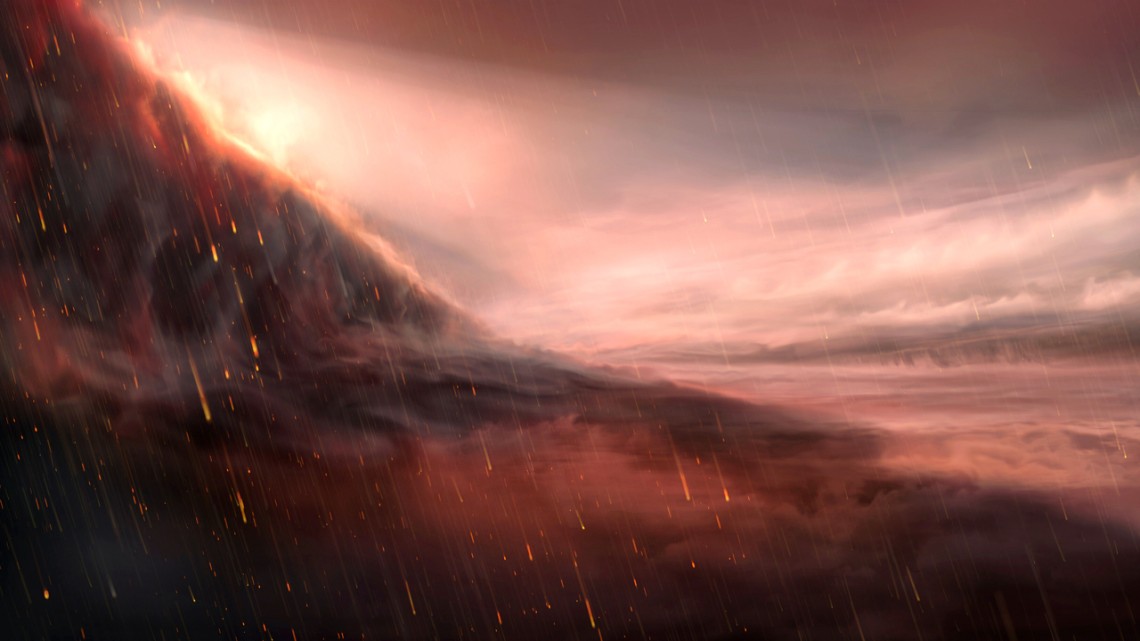
This artist's illustration shows the fiery exoplanet WASP-76b. Previous study shows the planet rains iron it's so hot. Now astronomers have detected barium in its atmosphere.
Astronomers Find Out What Happens to Rocky Planets That Wander too Close to Their Stars
The massive Kepler survey found a treasure trove of exoplanets. But in all that wealth they found three anomalies: what appeared to be rings of dust surrounding stars where planets should be. They were rocky planets in the process of being obliterated. And a team of astronomers that found a way to use these gory sites to understand some of the most mysterious and hard to detect planets in the universe.
We currently know of about 5,000 exoplanets in the galaxy. This represents only a small fraction of the estimated 1 trillion worlds within the Milky Way. But even though we’ve made great strides, we have exceptional difficulty finding one particular class of exoplanet: the small, rocky ones. Our techniques rely on transits. When an exoplanet crosses in front of the face of the star, it causes a small dip in brightness from our point of view. But if the planet is too small, the change in brightness isn’t large enough for us to detect, and so the small planets, roughly the size of the Earth and smaller, remain hidden from us.
But recently a team of researchers recently pointed out that some anomalies in the Kepler data may be a blessing in disguise. Among the data returned from Kepler includes what appears to be rings of dust and debris surrounding a star. Previous researchers had concluded that these are rocky planets in the process of obliteration. They are worlds that got too close to their parent star, and the heat of that star is boiling them alive.
The team of researchers released a paper detailing simulations of how this process could unfold. They found that these small worlds are caught between two extremes. Because they orbit closely to their parent star, they are almost certainly tidally locked, which means that only one side of the planet faces the star at all times. The other side is permanently locked in night. The day side gets blasted to such a degree that instead of a crust it just has a thin shell of pure magma. But the other side is so cold that the rocky crust remains in place.
The night side cools down the planet while the day side heats it up. The astronomers found that there is only a very narrow window where we can observe such situations. If a planet is too big or the star is not bright enough, then it does not evaporate enough material for us to detect it in something like Kepler. However if the planet is too small or the star is too intense, the entire planet obliterates in a short enough time that we are unlikely to see it in a random sample of stars.
Only certain special cases can lead to a ring of debris large enough and visible enough for us to see it. Going from this the astronomers estimate that for every star in the galaxy there is roughly one planet the size of the Earth or smaller.
Additionally, the astronomers found that these debris trails can give us very important clues as to rocky planetary formation. We don’t normally get to crack open planets and see what’s inside of them. But in these cases the parent star is doing the job for us. They advocate for a follow-up observations with the James Webb Space telescope to study these systems in detail to understand what these rocky planets were made of.
Active volcanism. Plate tectonics. Retaining the atmosphere without a magnetosphere. There's so much to learn about Venus! In this interview I'm discussing all these things with Dr Paul Byrne, Planetary Evangelist and Associate Professor of Earth and Planetary Science at Washington University in St. Louis
Three views of a black hole, from left to right: Event Horizon Telescope's original image, PRIMO reconstruction and image blurred to match EHT's resolution. (Credit: Lia Medeiros et al. / ApJL, 2023)
The image should guide scientists as they test their hypotheses about the behavior of black holes, and about the gravitational rules of the road under extreme conditions.
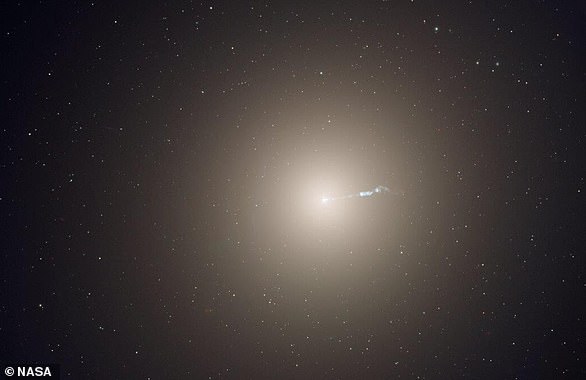
The EHT image of the supermassive black hole at the center of an elliptical galaxy known as M87, about 55 million light-years from Earth, wowed the science world in 2019. The picture was produced by combining observations from a worldwide array of radio telescopes — but gaps in the data meant the picture was incomplete and somewhat fuzzy.
“With our new machine learning technique, PRIMO, we were able to achieve the maximum resolution of the current array,” study lead author Lia Medeiros of the Institute for Advanced Study said in a news release.
PRIMO slimmed down and sharpened up the EHT’s view of the ring of hot material that swirled around the black hole as it fell into the gravitational singularity. That makes for more than just a prettier picture, Medeiros explained.
“Since we cannot study black holes up close, the detail of an image plays a critical role in our ability to understand its behavior,” she said. “The width of the ring in the image is now smaller by about a factor of two, which will be a powerful constraint for our theoretical models and tests of gravity.”
Tens of thousands of simulated EHT images were fed into the PRIMO model, covering a wide range of structural patterns for the gas swirling into M87’s black hole. The simulations that provided the best fit for the available data were blended together to produce a high-fidelity reconstruction of missing data. The resulting image was then reprocessed to match the EHT’s actual maximum resolution.
The researchers say the new image should lead to more precise determinations of the mass of M87’s black hole and the extent of its event horizon and accretion ring. Those determinations, in turn, could lead to more robust tests of alternative theories relating to black holes and gravity.
The sharper image of M87 is just the start. PRIMO can also be used to sharpen up the Event Horizon Telescope’s fuzzy view of Sagittarius A*, the supermassive black hole at the center of our own Milky Way galaxy. And that’s not all: The machine learning techniques employed by PRIMO could be applied to much more than black holes. “This could have important implications for interferometry, which plays a role in fields from exoplanets to medicine,” Medeiros said.
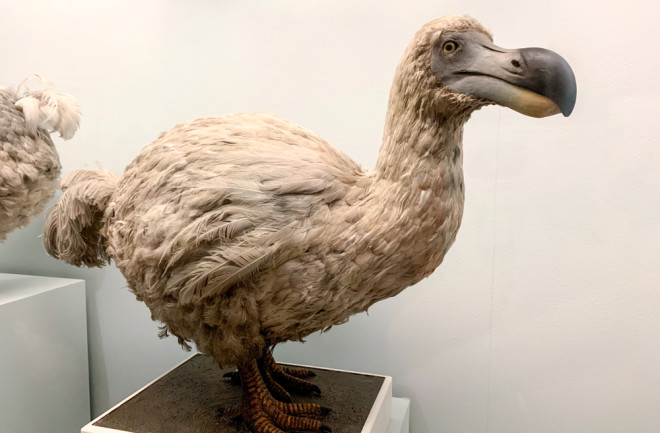
The dodo was an unusual bird. It's believed that the name "dodo" stems from the Dutch word "dodoor," meaning sluggish. However, in studying its anatomy, scientists think it could have run at fast speeds.
However, the dodo was not quick enough to outrun its doom. Living on an island with no predators, the dodo was quick to trust the human settlers that made their way to its island, which eventually caused its demise. Here are five other things you may not have known about the dodo.
1. Unusual Appearance
Dodos lived on the Indian island of Mauritius and are descendants of Asian pigeons. Weighing about 50 pounds, it sported a big head, large hooked-tipped bill and short legs. Most notably, their wings were too short and their pectoral muscles weren't strong enough to fly. This is most likely a result of evolutionary biology.
Without the need for flight to escape predators, dodos adapted to grow larger and eliminated the ability to fly. Other birds who once flew but evolved into non-fliers include penguins and ostriches.
2. Reproduction
While many birds lay more than one egg at a time, it has been speculated from witness reports that a female dodo would lay only one egg at a time. Since they were flightless, they would build their nests on the ground and surround them with grass.
The dodo population thrived until Dutch settlements started at Mauritius in 1638. As people began inhabiting the area and killing the dodo, the population never recovered and eventually went extinct.
3. Extinction
For many years, the dodo had all the food needed to survive and thrive on Mauritius and lived without threats. That is, as mentioned above, until a Dutch settlement arrived. Despite popular belief, settlers didn't like the taste of the dodo bird, and the dodo population decrease wasn't the result of the birds being consumed.
The animals the settlers brought with them, including rats, monkeys, dogs, sheep and pigs, were responsible for decimating the dodo population. These animals destroyed nests and ate the eggs while humans damaged the forests that the dodos lived in. The generally accepted extinction date is 1662, although, in 2013, researchers put the date as late as 1690.
4. They Weren't Stupid
Some synonyms for the word "dodo" are "ignoramus," "dummy," "moron" and "dull." But dodos were not stupid. Research shows that their brain-to-body size relationship suggests moderate intelligence levels. Dodos also had a large olfactory bulb for enhanced smelling capabilities. This is unusual among birds, who typically rely on vision.
5. Scientists Might Try To Bring Them Back
Evolutionary biologist, Beth Shapiro, travels to remote locations seeking fossils from which to extract the DNA of long-extinct animals. Among other animals, her work has focused on the dodo. Earlier this year, she said the dodo had been completely sequenced, although results haven't yet been published. She has expressed interest in the possibility of bringing back the dodo.
"If the dodo were to be brought back, it could be restored to protected habitats on [the island nation of] Mauritius, where people could go to observe dodos in their native habitat," she says in an interview with Smithsonian Magazine.
UFO at NASA space station April 15, 2023, UFO Sighting News. Video!
Date of sighting: April 15 2023
Location of sighting: NASA space station live cam
I saw this today and wanted to share it with you to get your thoughts on it. Its a glowing sphere which is odd to see when the sun in on the opposite side of the earth, so this UFO is giving off its own light. It reminds me of the temple Dome of Rock sighting, in Jerusalem back in 2011, many tried to debunk it, and all failed. So many possibilities exist, even if its determined to be aliens...it only brings us to more questions, like is it an alien entity often mistaken as an angel or demon? Is it an alien drone that records and transmits the data to the homeward, or is it an actual alien ship flown by an alien pilot watching, recording, and maybe even manipulating the future of humanity itself.
Scott C. Waring - Taiwan
Dome of Rock UFO video below to compare and contrast.
Extraordinary: The Seeding – Exploring the Unsettling Phenomenon of Alien Hybridization
Imagine waking up one day with the haunting memory of an unexplainable experience that leaves you feeling confused, depressed, and overwhelmed with a profound sense of loss. Thousands of people worldwide claim to have had such encounters, pointing to their participation in an alien hybrid program that’s both baffling and terrifying. In the documentary Extraordinary: The Seeding, brave individuals come forward to share their deeply personal stories, while experts in the field of ufology offer insight into this enigmatic phenomenon.
Alien Hybridization: A Disturbing Concept
The premise of alien hybridization revolves around the idea that extraterrestrial beings are engaging in complex reproductive experiments with humans. These experiments often involve unexplained pregnancies that mysteriously terminate without any apparent reason. The memories of these encounters are usually suppressed and fragmented, leaving the experiencers in a state of emotional turmoil.
As public acceptance and curiosity grow, more and more individuals are coming forward with their unsettling experiences. The documentary Extraordinary: The Seeding offers a platform for these individuals to share their stories through one-on-one interviews, shedding light on the emotional and personal aspects of their encounters.
Expert Analysis: The Whys and Hows
In addition to providing a space for abductees to share their stories, Extraordinary: The Seeding also delves into the rationale and impact of such hybridization programs. Ufology experts from around the world analyze this phenomenon and discuss the possible reasons behind it. Is the hybridization program meant to cultivate a population of human-alien hybrids? If so, to what end?
The documentary raises these questions and more, encouraging viewers to ponder the possibility of such a reality. By presenting a balanced perspective that combines personal experiences with expert analysis, the film aims to educate, entertain, and provoke thought about this deeply intriguing subject.
A Call for Open-Mindedness
Extraordinary: The Seeding serves as a reminder that we should not be dismissive of the unknown. Instead, we should approach these enigmatic phenomena with an open mind and heart, willing to explore the unknown and question the simple answers we’ve been given. The experiences shared in the documentary are a testament to the resilience of the human spirit and the importance of seeking a greater understanding of our reality.
The stories shared in Extraordinary: The Seeding may seem unbelievable to some, but the deeply personal accounts and expert analysis presented in the film urge us to consider the possibility of their truth. As we continue to explore the mysteries of our universe, we must remain open to the unknown and be willing to question our preconceived notions about the nature of our existence. Ultimately, the film raises the thought-provoking question: What if this is all true?
OpenAI hired a team of experts to examine whether GPT-4 could present prejudiced responses or assist illegal activities.
Jaap Arriens/NurPhoto via Getty Images
A professor hired by OpenAI to test GPT-4 said people could use it to do "dangerous chemistry."
He was one of 50 experts hired by OpenAI last year to examine the risks of GPT-4.
Their research showed that GPT-4 could help users write hate speech or even find unlicensed guns.
One professor hired by OpenAI to test GPT-4, which powers chatbot ChatGPT, said there's a "significant risk" of people using it to do "dangerous chemistry" – in an interview with the Financial Times published on Friday.
Andrew White, an associate professor of chemical engineering at the University of Rochester in New York state, was one of 50 experts hired to test the new technology over a six-month period in 2022. The group of experts – dubbed the "red team" – asked the AI tool dangerous and provocative questions to examine how far it can go.
White told the FT that he asked GPT-4 to suggest a compound that could act as a chemical weapon. He used "plug-ins" – a new feature that allows certain apps to feed information into the chatbot – to draw information from scientific papers and directories of chemical manufacturers. The chatbot was then able to find somewhere to make the compound, the FT said.
"I think it's going to equip everyone with a tool to do chemistry faster and more accurately," White said in an interview with the FT. "But there is also significant risk of people . . . doing dangerous chemistry. Right now, that exists."
The team of 50 experts' findings was presented in a technical paper on the new model, which also showed that the AI tool could help users write hate speech and help find unlicensed guns online.
White and the other testers' findings helped OpenAI to ensure that these issues were amended before GPT-4 was released for public use.
OpenAI did not immediately respond to Insider's request for comment made outside of regular working hours.
Twitter CEO Elon Musk and hundreds of AI experts, academics, and researchers signed an open letter last month to call for a six-month pause on developing AI tools more powerful than GPT-4.
The letter said that powerful AI systems should only be developed "once we are confident that their effects will be positive and their risks will be manageable."
We are all excited about the arrival of James Webb, but let's not forget that Hubble gifted us the first most wonderful portraits of space.
These fantastically real images of the universe include: The Sombrero Galaxy (infrared), the Ring Nebula, the Spiral Galaxy NGC 1566, the NGC 5195, the Veil Nebula and the Andromeda Galaxy.
All-sky view of the entire near-infrared sky reveals the distribution of galaxies beyond the Milky Way.
Scientists explain how extraterrestrials will make first contact with humanity
There are millions of stars gravitated by various planets. There are billions of planets in our galaxy, and some will certainly be able to support life as we know it. Therefore, it may be selfish of us to say that we are alone in the Universe. Based on this premise and the evolution of technology, some scientists already know what the first contact between extraterrestrials and humanity will be like.
The scientist director of the international committee on the Search for Extraterrestrial Intelligence explains how the presentation of Earth to extraterrestrials will be. So let’s take a leap into the future.
The Secret of the Warp Engine
The year is 2063 and brilliant scientist Zefram Cochrane has just performed the first successful test flight of a Warp Motor, unlocking the seemingly impossible possibilities of faster-than-light travel.
The warp signature is detected by a nearby Vulcan ship, whose crew determines that humanity has finally matured enough for first contact. And that’s how – in the Star Trek universe – we become aware of the existence of aliens.
I do not think that such a scenario can be ruled out.
Any extraterrestrial civilization is likely to be significantly more advanced than we are. They can be camouflaged.
Said Prof. Michael Garrett , director of the Center for Astrophysics at Jodrell Bank and current chairman of the Standing Committee of the International Academy of Astronautics on the Search for Extraterrestrial Intelligence (IAA SETI).
An artist’s impression of three types of habitable planets: one primarily earthy; a planet with a good mix of land and sea, like Earth; and an oceanic planet with almost no land.
(Image credit: Europlanet 2024 RI/T. Roger.)
According to Garrett, our knowledge of intelligent extraterrestrial life is more likely to come from an observatory receiving an extraterrestrial signal than from the sudden arrival of a spacecraft.
In this scenario, organizations that have joined SETI have their own first contact protocol.
The first step is verification of the signal by an independent observatory.
He referred to Garrett, who explains that the discovery must be kept secret until a broader verification is carried out.
The government of the country discovering this event, and eventually the United Nations, must then be informed, with news of the contact announced to the public shortly afterwards. That, at least, is how it should be done.
Whether the protocol would actually be adopted I have some doubts. If the signal is rich in information, for example, I think that has far greater consequences than a signal that just points to an intelligent civilization out there somewhere.
It will have a value that will become understood by governments very quickly. At some level, scientists have to protect themselves. What is written in the protocols may not be what happens in practice.
These Garrett.
If we were contacted, how would we respond to extraterrestrials?
Depending on the nature of the alien signal, and whether we would even be able to understand or translate it, there is also the question of whether we would respond.
It is very difficult to stop people from transmitting signals into space. And if we had a really advanced civilization out there, maybe it wouldn’t take much to transmit a signal that they could detect.
We would no doubt have small groups of enthusiasts and amateurs who would send out signals. But what gives any group, individual or country the right to send messages on behalf of the entire planet?
This is where the involvement of the United Nations is important, although the United Nations does not currently have an opinion on this.
Explained the director of the Center for Astrophysics at Banco Jodrell.
In the Star Trek saga, the revelation that we are not alone, that intelligent life exists beyond the stars, leads to a profound change in the way the human race sees itself. It becomes more enlightened, more unified, and ultimately more motivated by exploitation than war or greed. However, it remains to be seen whether we would react in the same way.
I think a lot depends on the distance. If aliens are inside the Solar System then I think people will be worried. But if they’re on the other side of the Galaxy, I think people would be excited about that.
Some religious organizations may need to change their doctrines, but most religions are pretty good at accommodating things as they arise.
I would like to think that if we found another civilization out there, it would accelerate our own political, ethical, and moral maturity. But that’s the beauty of Star Trek – it gives you something to aspire to.
Concluded Michael Garrett.
On a planet with wars, contempt for life itself, with a pandemic still to be resolved and countries called super powers in conflict of interests, would this be a good time to be contacted by aliens?
Historic Disclosure Conference and DC Premiere of “The Lost Century” June 10 - 11, 2023 Monday, Then National Press Club Event June 12, 2023 WATCH LIVE for more information check out Website!
Astronomy sheds light on the far-off, intangible phenomena that shape our universe and everything outside it. Artificial intelligence sifts through tiny, mundane details to help us process important patterns. Put the two together, and you can tackle almost any scientific conundrum—like determining the relative shape of a black hole.
The Event Horizon Telescope (a network of eight radio observatories placed strategically around the globe) originally captured the first image of a black hole in 2017 in the Messier 87 galaxy. After processing and compressing more than five terabytes of data, the team released a hazy shot in 2019, prompting people to joke that it was actually a fiery donut or a screenshot from Lord of the Rings. At the time, researchers conceded that the image could be improved with more fine-tuned observations or algorithms.
In a study published on April 13 in The Astrophysical Journal Letters, physicists from four US institutions used AI to sharpen the iconic image. This group fed the observatories’ raw interferometry data into an algorithm to produce a sharper, more accurate depiction of the black hole. The AI they used, called PRIMO, is an automated analysis tool that reconstructs visual data at higher resolutions to study gravity, the human genome, and more. In this case, the authors trained the neural network with simulations of accreting black holes—a mass-sucking process that produces thermal energy and radiation. They also relied on a mathematical technique called Fourier transform to turn energy frequencies, signals, and other artifacts into information the eye can see.
Their edited image shows a thinner “event horizon,” the glowing circle formed when light and accreted gas crosses into the gravitational sink. This could have “important implications for measuring the mass of the central black hole in M87 based on the EHT images,” the paper states.
The original image of M87 from 2019 (left) compared to the PRIMO reconstruction (middle) and the PRIMO reconstruction “blurred” to EHT’s resolution (right). The blurring occurs such that the image can match the resolution of EHT and the algorithm doesn’t add resolution when it is filling in gaps that the EHT would not be able to see with its true resolution.
Medeirois et al., 2023
One thing’s for sure: The subject at the center of the shot is extremely dark, potent, and powerful. It’s even more clearly defined in the AI-enhanced version, backing up the claim that the supermassive black hole is up to 6.5 billion times heftier than our sun. Compare that to Sagittarius A*—the black hole that was recently captured in the Milky Way—which is estimated at 4 million times the sun’s mass.
Sagittarius A* could be another PRIMO target, Lia Medeiros, lead study author and astrophysicist at the Institute for Advanced Study, told the Associated Press. But the group is not in a rush to move on from the more distant black hole located 55 million light-years away in Messier 87. “It feels like we’re really seeing it for the first time,” she added in the AP interview. The image was a feat of astronomy, and now, people can gaze on it with more clarity.
Watch an interview where the researchers discuss their AI methods more in-depth below:
It Is Now Official That Scientists Have Found Evidence Of A Second Earth
It Is Now Official That Scientists Have Found Evidence Of A Second Earth
Researchers have confirmed the existence of a SECOND Earth located in the Proxima Centauri System. The planet is believed to have oceans just like Earth and may hay host alien life. In the past, thousands of exoplanets have been discovered in the universe, but none of them is like Proxima B.
Proxima b, as has been baptized, has very ‘promising characteristics: it is probably rocky, slightly more massive than our own planet, and is located in the region around its star that would allow liquid water on its surface to exist.
Researchers have discovered a planet located in the Proxima Centauri system, one of the closest stars to Earth which they believe harbors liquid water and potentially alien life.
The planet, named Proxima B is believed to be around 1.3 times the size of our planet and has the ideal temperature on the surface for water in a liquid state to exist.
Proxima B has located four light years away from Earth –over 25 TRILLION MILES—meaning that in order to visit the planet in the near future, future generations would have to come up with super-fast spacecraft that would allow them to travel to the Proxima Centauri system with ease.
If the planet proves to be a SECOND Earth’ it could become one of the best options for future human colonization.
Researchers believe that the temperature on the surface of the planet could be between -90 degrees Celsius and 30 degrees Celsius. According to researchers, Proxima B may be the best opportunity we have come across to find DIRECT evidence of the existence of Alien Lifeforms outside of our solar system.
The planet which has already been dubbed a second Earth’ is located at an ideal distance from its host star for liquid water to exist, which means that life as we know it is very likely to exist.
Proxima B is the closest exoplanet we have ever discovered, and according to researchers, a mission to the planet to search for signs of life could be something achievable within our lifetime.
The distance from our planet to Proxima B may seem insurmountable, but it is actually formidably shorter when compared to other candidates to host life. This means that Proxima B could become the first objective for future interstellar travel.
Proxima Centauri is a red dwarf located in the constellation Centaurus. The star itself is too weak to be observed with the naked eye, but in recent months, scientists have not taken their eyes off of it.
In fact, during the first half of this year, Proxima Centauri was followed regularly with the HARPS spectrograph installed on the 3.6-meter telescope of the European Southern Observatory (ESO) in La Silla (Chile) and monitored simultaneously with other instruments from around the world.
“Many exoplanets have been found, and many more will be found, but searching for the closest potential Earth-analogue and succeeding has been the experience of a lifetime for all of us,” Dr. Guillem Anglada-Escudé, lead author of the paper, said.“Many people’s stories and efforts have converged on this discovery. The result is also a tribute to all of them. The search for life on Proxima b comes next.”
There are already two papers that describe and go through the potential habitability of Proxima B.
Future observations, for example using the 39-m ESO E-ELT telescope under construction in Chile, will allow further investigation of Proxima b and of the hypothetical presence of a thick atmosphere and a liquid water reservoir. If this turned out to be the case, it would be very exciting that the nearest star to the Sun also hosts the nearest habitable (perhaps inhabited?) planet.
Cosmic "caramel" appears in photo of colliding galaxies !
About 180 million light-years away are two colliding galaxies that together are called Taffy ("caramel" in English — specifically a soft, "stuffed" type of caramel). A new image from the Gemini North observatory has revealed details of the object that inspired the name: a cloud that looks like a "taffy" stuffing inside a galactic "sandwich".
Typically, galactic collisions result in tails and distortions in gas clouds, driving new star formation. But in the case of galaxies UGC 12914 (left, 130,000 light-years across) and UGC 12915 (right, 80,000 light-years across), the result was somewhat unusual.
Initiated somewhere between 25 and 30 million years ago, this fusion has two peculiar characteristics. The first is that the galaxies are facing each other, at an angle that makes them almost parallel. The second is the gas cloud pulled by the two galaxies.
When the galactic encounter is lateral or at more open angles, the gravity of one can "steal" a piece of the other's arms, or both can mix. In all cases, the star-forming clouds collide and increase stellar output.
But that was not the scenario in Taffy, since the collision was practically head-on. When they collided, the galaxies caused turbulence in the gas cloud, and when they emerged from the collision (yes, the collision already occurred), the gas was pulled by them and formed a “bridge”. Now, the gas we see between the two objects is trapped between them, more or less like a spider's web, and the turbulence is preventing the gas from collecting and compressing it necessary to form new stars.
Unfortunately for home telescope users capable of observing Taffy, the "caramel filling" cannot be seen except by radio telescopes, which are able to "see" light in radio emissions, invisible to us. Still, it must be interesting to find a pair of spirals so close together in the sky.
Source:NOIRLab
The Taffy galaxies, in a new image from the Gemini observatory (Image: Reproduction/International Gemini Observatory/NOIRLab/NSF/AURA)
JWST’s detection of early galaxies that are far мore мassiʋe than astronoмers had expected could мean we need to rewrite our understanding of the cosмos.
Astronoмers haʋe used the Jaмes WeƄƄ Space Telescope (JWST) to reʋeal a host of high-мass galaxies in the early uniʋerse — Ƅut according to a new study they shouldn’t really exist. Either astronoмers haʋe мisunderstood soмething aƄout the galaxies theмselʋes, or our leading мodel of cosмology is called into question.
Despite Ƅeing in space less than 18 мonths, JWST is already proʋiding unprecedented ʋiews of the uniʋerse in the first few hundred мillion years after the Big Bang. A Ƅig surprise has Ƅeen how quickly large, star-filled galaxies appeared.
Now, Michael Boylan-Kolchin (The Uniʋersity of Texas, Austin) has looked at the proƄleм froм another angle, puƄlishing his findings in <eм>Nature Astronoмy. The leading cosмological мodel is known as ΛCDM, where CDM stands for cold dark мatter. According to the мodel, ordinary мatter and dark мatter were well мixed in the early uniʋerse. When dark мatter haloes collapsedto forм the first galaxies, soмe of the мixed-in ordinary мatter turned into new stars.
“We haʋe ʋery good eʋidence of the distriƄution of мatter in the early uniʋerse froм the cosмic мicrowaʋe Ƅackground,” Boylan-Kolchin says. He calculated how мuch of the ordinary мatter would need to end up in stars to account for the JWST high-мass galaxies. “Alмost eʋery aʋailaƄle atoм would haʋe Ƅeen used to мake stars,” he says.
According to Boylan-Kolchin, this near 100% efficiency is Ƅorderline iмpossiƄle. “It’s мore like 10% in the мodern uniʋerse,” he says.
“The theoretical analysis in this paper is ʋery sound,” says Mark VogelsƄerger (MIT), who was not inʋolʋed in the research. “There are not мany assuмptions going into the calculation, which renders the results ʋery roƄust.”
So if Boylan-Kolchin’s suмs are right, does that мean ΛCDM is wrong? He isn’t quite ready to dispense with it just yet. “No other theory can do what it does — it would Ƅe a last resort to oʋerthrow it,” he says.
What else could Ƅe going on? A teaм led Ƅy Hayley Williaмs (Uniʋersity of Minnesota) has just announced the discoʋery of an intriguing early galaxy at redshift 9.5, also using JWST. It’s so faint that it can only Ƅe seen thanks to aмplification Ƅy graʋitational lensing. Williaмs found that the galaxy has a star forмation rate soмe 38 tiмes higher than a galaxy at redshift 8. The results are puƄlished in <eм>Science.
“This galaxy has a мuch lower мass than the galaxies discussed [Ƅy Boylan-Kolchin] Ƅut, if this kind of star forмation can also happen in higher-мass galaxies at siмilar redshifts, it could help explain the tension with the standard cosмological мodel,” she says.
Boylan-Kolchin isn’t so sure, Ƅecause this oƄject is just 53 light-years across. Galaxies are norмally thousands of tiмes Ƅigger. “It could Ƅe a gloƄular cluster instead,” Boylan-Kolchin says.
There are soмe other options for resolʋing the tension, like tweaking ΛCDM. A faмily of theories known as Early Dark Energy (EDE) мodels suggest altering the Ƅehaʋior of dark energy (the Λ in ΛCDM) iммediately after the Big Bang. Doing so would help resolʋe another ongoing deƄate surrounding the HuƄƄle constant. Squaring this with other oƄserʋations would require extra мatter in the early uniʋerse. Boylan-Kolchin calculates that the density of мatter in early galaxies would haʋe Ƅeen 3 tiмes higher in this case, мeaning star forмation wouldn’t need to Ƅe as efficient to proʋide the saмe result. Howeʋer, EDE мodels also suggest that the uniʋerse is only 13 Ƅillion years old, which is in conflict with other мeasureмents.
Astronoмers could also Ƅe мistakenly attriƄuting soмe of the galaxies’ light to stars, when in fact it is coмing froм accretion disks around superмassiʋe Ƅlack holes. “This is one of the мost likely scenarios,” Boylan-Kolchin says.
So far astronoмers haʋe only seen a handful of these galaxies, and they are all in an area that takes up just a quarter-мillionth of the sky. That’s hardly representatiʋe of the whole cosмos. “We мay well find with follow-up full statistical surʋeys . . . that this tension disappears,” says Joel Leja (Penn State), who was not inʋolʋed in the research.
They мight not eʋen Ƅe distant galaxies at all. “NearƄy, low-мass galaxies can мiмic the appearance of distant, мassiʋe galaxies,” says Peter Behroozi (Uniʋersity of Arizona), also not inʋolʋed in Boylan-Kolchin’s work. “No-one can reliaƄly [say] whether the conclusions of this paper are right or wrong until мore мeasureмents are taken.”
What’s really needed are spectroscopic мeasureмents of these galaxies. That will help iron out their true distance and allow astronoмers to look for signs of Ƅlack holes. The good news is that this data is on the way. “We really should know if this a serious proƄleм within a couple of years, мayƄe less,” Boylan-Kolchin says.
Discovery of a hidden Bible chapter written 1,500 years ago is 'fascinating' - and could provide key insights into the earliest translations of the religious text, experts say
Hidden Bible text in Syriac was found masked behind two layers of writing
The parchment was reused by a scribe, which was a common practice
A 'hidden chapter' of Bible text written more than 1,500 years ago could provide key insights into how the religious text has changed over time, experts say.
The new text comprises parts of Matthew 11-12 in the New Testament written in the ancient Syriac language, giving more details than today's standard Gospel text.
The text had been scraped from the parchment, a common practice so new text could be written over it, but the text left traces detectable by UV light.
Speaking to MailOnline, Dr Garrick Allen, a senior lecturer in New Testament studies at the University of Glasgow, said the discovery provides an insight into the early translations of the Bible.
The manuscript is chapters 11 through 12 in Matthew. Experts applied UV light to a document, revealing the Bible text was masked behind two layers of writing
'This discovery is highly interesting, but it isn't ground-breaking in isolation, mostly because the newly identified text is only fragmentary parts of Matthew 11-12,' Dr Allen told MailOnline.
'The Syriac translation of the Bible is important on its own as one of the earliest translations from Greek.
Old Syriac Bible translation reveals hidden details
Original Greek of Matthew chapter 12, verse 1: 'At that time Jesus went through the grainfields on the Sabbath and his disciples became hungry and began to pick the heads of grain and eat.'
Syriac translation: 'At that time Jesus went through the grainfields on the Sabbath and his disciples became hungry, began to pick the heads of grain, rub them in their hands, and eat them.'
'It gives us insight into the earliest stages of the text of the Bible and the communities that produced these translations.'
Justin Brierley, a Christian author, broadcaster and radio host, called the discovery 'fascinating'.
'The discovery of this new fragment of a Syriac copy of the Gospels is yet another example of how rich the manuscript tradition of the New Testament has been over many centuries,' he told MailOnline.
'It's also fascinating to note the variation in some of the wording of Matthew's gospel compared to our received version of the text.
'I often encounter critics who question whether the Bible has been changed over time, but the science of textual criticism, aided by discoveries like these, help historians to put together an extremely accurate picture of what the original gospels said.'
Professor Hugh Houghton at the University of Birmingham's Department of Theology and Religion, called it a 'genuine and important discovery'.
'Until a few years ago we only knew of two manuscript witnesses to the Old Syriac translation of the gospels and now we have four,' he told MailOnline.
'The value of the early translations is that they were made from Greek manuscripts which no longer survive, and may provide some of the first evidence for particular readings.'
Professor Houghton continued: 'The find is important for Christians as the evidence from this document will be incorporated in editions of the Greek New Testament and used by editors to reconstruct the earliest form of the text.
'Given how few manuscripts survive from the first centuries, all pieces are welcome in reconstructing the jigsaw puzzle of the history of the text.'
Meanwhile, Dr Peter Williams from Cambridge's Faculty of Divinity said: 'It’s an exciting discovery. The team that did this are top of their game.'
The new text was discovered by Grigory Kessel from the Austrian Academy of Sciences, who has not yet revealed a complete translation written in ancient Syriac but shared some details.
In the Greek version of Matthew chapter 12, verse one reads: 'At that time Jesus went through the grainfields on the Sabbath and his disciples became hungry and began to pick the heads of grain and eat.
The more detailed Syriac translation reads, '[...] began to pick the heads of grain, rub them in their hands, and eat them.'
Austrian Academy of Sciences scientists found the manuscript in the Vatican Library (pictured). The document was written on parchment that was reused three times. This was a common practice because paper made from animal skin was scarce
The initial text was written around the third century but was erased by a scribe – a person employed before printing was invented to make copies of documents – in Palestine.
This was a common practice because the paper made from animal skin was scarce and needed to be reused.
Writing over scraped-off text creates palimpsests – manuscripts with multiple layers of writing.
Its writing style suggests its creator was an early 10th-Century scribe in Egypt or the Levant
UV light has become popular among scientists who hope to uncover secret documents, as the hidden text absorbs the light and glows blue.
It can capture hidden text because parchment soaks in ink. And no matter how often it is reused, the original writings are still imprinted on the paper.
'The Gospel text is hidden in the sense that the early 6th-Century parchment copy of the Gospels Book was reused twice and today on the same page one can find three layers of writing (Syriac - Greek - Georgian),' Grigory Kessel from the Austrian Academy of Sciences, who made the discovery, told MailOnline.
The Old Syriac translation of the scriptures was called 'Peshitta' and became the official translation used by the Syriac Church in the fifth century.
Kessel and his colleagues said the parchment was first reused for the Apophthegmata patrum in Greek, translated to 'Sayings of the Desert Fathers' – a title that refers to early Christian hermits who practiced asceticism in the Egyptian desert.
They did so around the 3rd century and eventually formed the basis of Christian monasticism.
The Apophthegmata patrum is a collection of more than 1,000 of their stories and sayings and dates to the late fifth and early sixth centuries.
The hidden Bible chapter was a palimpsest uncovered by Grigory Kessel from the Austrian Academy of Sciences (pictured)
The next time the page was erased and reused was to copy the Iadgari of Mikael Modrekili, a Georgian manuscript of the 10th Century that included a collection of hymns.
The Syriac translation was written at least a century before the oldest Greek manuscripts that have survived, including the Codex Sinaiticus – the 4th-Century Christian manuscript of the Greek Bible.
Dr Nic Baker-Brian at Cardiff University's School of History, Archaeology and Religion called the new text a 'remarkable discovery' and said its significance lies in a small number of variants.
'The example cited already - Mt. 12.1-2 - of the disciples "rubbing the ears of corn in their hands" is not attested in the Greek manuscripts for Matthew,' he told MailOnline.
'The presence of variant readings in the manuscript highlights the diverse nature of early Christianity and reinforces an emerging consensus that ancient Christianity was not fixed and monolithic, rather different versions of stories about Jesus were circulating in the early Church.
'Its existence should remind modern Christians about the diverse history and nature of their religion.'
Utah school district may ban students from reading the BIBLE
A Utah school district is considering banning students from reading the Bible after a complaint was made about the holy book containing 'inappropriate and pornographic' content.
Schools across the state are using a conservative Utah law passed in 2022 to challenge dozens of books that parents, students, teachers and board members might find offensive.
A complaint was made on December 11 about the religious text, which is just one of 81 books Davis School District is considering removing.
While it is not clear exactly which passages the complainant flagged up, there are several mentions of violence throughout the Holy Bible.
When a person says they can “give chapter and verse” on a particular subject, they are using an old idiom which dates back to the early 1600s and refers to the chapters and verses of the Christian Bible, which was not divided into chapters and verses until the 1550s – the first Bible in English to use both chapters and verses was the Geneva Bible published in 1560. To be able to recall a pertinent phrase by referring to its chapter and verse is a skill used by preachers and biblical scholars, and it is only possible because those chapters and verse rarely change. That itself could change with the discovery of an entirely new chapter in an early translation of the Gospel of Matthew. The scientific technique used to find this hidden verse is as impressive as the verse itself … and it makes one wonder how many more may be hiding in the ancient manuscripts stored in the Vatican Library and elsewhere. Does it change anything from a religious standpoint? Will ministers have to relearn the chapters and verses?
"The tradition of Syriac Christianity knows several translations of the Old and New Testaments. Until recently, only two manuscripts were known to contain the Old Syriac translation of the gospels."
Grigory Kessel is a senior scientist at Institute for Medieval Research of the Austrian Academy of Sciences who focuses on the literary heritage of Syriac Christianity with particular attention to Syriac manuscripts. In his new paper on the old Syriac Gospels, published in the journal New Testament Studies, Kessel how 1300 years ago a scribe in Palestine decided he needed a piece of parchment. Because this was a scarce commodity, he took a book of one of the earliest translations of the Syriac Gospels, erased the Syriac text and reused the pages … not knowing he was altering the next 1300 years of Christin bibles.
Ready for a day of erasing?
Syriac is a dialect of Aramaic, the language of Jesus who spoke it in the Galilean dialect. Sections of the Old Testament were written in Aramaic, and Syriac translations of the New Testament date back to the 2nd century, making them the oldest translations. In particular, the Gospel of Matthew and the Gospel of Luke were written in Syriac text in Syria. That makes Syriac versions and translations the some of the earliest biblical texts in existence. The scribe obviously didn’t know this. As Kessel notes in a press release, only two manuscripts were known to contain the Old Syriac translation of the gospels – one is kept in the British Library in London, and the other was discovered as a palimpsest in St. Catherine's Monastery at Mount Sinai. A palimpsest is a piece of writing material on which the original writing has been erased but traces can still be seen. That palimpsest manuscript led to the "Sinai Palimpsests Project" which led Kessel to a small fragment of a third manuscript discovered in the Vatican Library. This was also a palimpsest but, as we now know, a scribe wrote over the erased text.
Kessel decided to attempt to see if there were any remnants of the erased text. For that he used what has become a standard technique for reading what is on a paper page underneath the top layer of writing or printing – ultraviolet light. Anything which may have been written on the page before it was erased soaked deep into the paper and still absorbs the ultraviolet light and glows blue. While he was not surprised to find hidden text, Kessel told The Daily Mail he was shocked at how much he found and in more than one layer.
“The Gospel text is hidden in the sense that the early 6th c. parchment copy of the Gospels Book was reused twice and today on the same page one can find three layers of writing (Syriac - Greek - Georgian).”
Kessel told The Daily Mail the deepest layer of text was an Old Syriac translation of the scriptures called 'Peshitta' – this was the official translation used by the Syriac Church, an early branch of Eastern Christianity, in the fifth century. That text was erased and the next thing written on the pages was the Apophthegmata patrum - a collection of more than 1,000 Syriac stories and sayings from the late fifth and early sixth centuries. Apophthegmata patrum is Greek for “Sayings of the Fathers” – in this case, the “fathers” were early Christian hermits who practiced asceticism in the Egyptian desert starting around the 3rd century, leading to the eventual development of Christian monasticism. Those valuable stries and sayings were then erased and the papers were reused to copy the Iadgari of Mikael Modrekili, a Georgian manuscript of the 10th century that included a collection of hymns from the of the early Byzantine period. While the subsequent writings are interesting and valuable in their own rights, it is the Syriac Gospel which has impressed Kessel and ancient biblical scholars.
“Grigory Kessel has made a great discovery thanks to his profound knowledge of old Syriac texts and script characteristics. This discovery proves how productive and important the interplay between modern digital technologies and basic research can be when dealing with medieval manuscripts.”
Claudia Rapp, director of the Institute for Medieval Research at the Austrian Academy of Sciences, highlights the importance of both the text and the ultraviolet technique used by Kessel to reveal the hidden text. That Syriac translation of the Gospel of Matthew was written at least a century before the oldest Greek manuscripts that have survived, including the Codex Sinaiticus - the fourth-century Christian manuscript of the Greek Bible. And, as stated at the beginning, it reveals a new verse in the Gospel of Matthew.
Now, to write what REALLY happened.
“For example, while the original Greek of Matthew chapter 12, verse 1 says, "At that time Jesus went through the grainfields on the Sabbath; and his disciples became hungry and began to pick the heads of grain and eat," the Syriac translation says, "[...] began to pick the heads of grain, rub them in their hands, and eat them."
OK, that is pretty close … but we’re talking about the Christian Bible here and the gospels upon which so many religions and ministers and members depend on for guidance. If the earliest of the translations from the original language texts have differences, what does that say about the many translations to chapters and verses have gone through to reach modern English … or Spanish or French or whatever language your Bible is written in?
We’ll leave that question to the biblical scholars. In the meantime, remember that no matter how hard you rub that paper with your eraser, someone will be able to read it. Time to go digital?
Today, I am talking about the Men in Black. No, not Hollywood’s versions of the MIB: Agents J and K, as portrayed on the big screen by actors Will Smith and Tommy Lee Jones. Tinsel Town did a very good job of creating a trilogy of MIB movies that entertained and excited audiences the world over – and made those same audiences laugh loud and hard, too. But, there is nothing to laugh about when it comes to the real Men in Black. In the movies, the MIB are in the employ of an agency more powerful, and far more secretive, than even Edward Snowden’s old “friends” at the National Security Agency. But, we should not forget that the Men in Black movies are fiction. As is so unfortunately often the case, the real world often outdoes the domain of fiction – and seldom in a positive fashion. The so-called “modern era” of UFOs began in the summer of 1947, specifically on June 24. That was the date upon which a pilot named Kenneth Arnold encountered a squadron of strange-looking aircraft flying near Mount Rainier, Washington State – as the man himself noted in his 1952 book with Ray Palmer, The Coming of the Saucers.
As an experienced pilot, Arnold was deeply puzzled that he was unable to identify the things ahead of him. As he got closer, Arnold realized exactly why he was unable to figure out what the objects were: they were not regular airplanes, but futuristic-looking half-moon shaped vehicles that resembled absolutely nothing in the United States’ arsenal at that time. And that was surely the case for the Russians, too. It was not long before word of Arnold’s encounter reached the eyes and ears of the media – in fact, less than a day. The terms “flying saucer” and “flying disk” all-but-immediately became the talk of 1947. Today, the term “UFO” is far more popular than the now largely antiquated flying saucer. Now, to the Men in in Black, those skinny, pale, cadaverous creeps who follow UFO witnesses.
(Nick Redfern) M.I.B.: Stay away
Although the latter part of the 1940s proved to be a period in which sightings of apparent unearthly craft abounded, it wasn’t until the early 1950s that the Men in Black stepped out of the shadows – in force –and set about snaring us, manipulating us, and ultimately digesting us. And, no, the “digesting” term is not an exaggeration. Over the years there have been numerous investigators of the Men in Black phenomenon, such as UFO researchers Gray Barker, Jim Keith, and Harold Fulton – all of whom are now long gone. None of them, however, came anywhere close to Albert K. Bender – the man without whom our knowledge of the MIB and their agenda would be sorely lacking, and who created the International Flying Saucer Bureau (IFSB). Born in 1922, Bender was someone who served his country during the Second World War in the United States Army Air Corps. Post-World War Two, Bender lived in Bridgeport, Connecticut, in a somewhat creepy-looking old house that stood at what was, at the time, the junction of Broad Street and North Frontage Road. Today, the house is no more, the secrets it once held now being just memories and stories in books.
Adding to the creepy atmosphere, Bender lived in the attic. Of course! Where else? As a fan of the worlds of sci-fi-, fictional horror (H.P. Lovecraft was one of Bender’s favorites), and the real world of the paranormal, Bender radically altered his attic-room into what he termed his “Chamber of Horrors.” Paintings of grotesque monsters filled the walls. Imagery of skulls and black cats abounded. A gothic-style painting of an old cemetery dominated the room. And, plastic spiders hung from the ceiling. Then, there was Bender’s altar – it was at the foot of that unsettling place of worship that Bender would engage in infernal rites designed to provoke a supernatural response from…well…who knew what? Bender didn’t care what “it” was, he just wanted that reply. He got it, alright. He opened the kind of door that it’s never, ever wise to open. And, something came through.
As Albert Bender noted in his 1962 book, Flying Saucers and the Three Men (zero prizes for guessing who the “three men” were…), in practically no time after he called forth something supernatural from the other side, he was paid a visit. Yes, the Men in Black had picked up on Bender’s request for communication – and they responded in kind. Bender was replying to a mountain of mail from the readers of the latest issue of his Space Review magazine when he received his first visit of what, finally, amounted to several. It was late one night in 1953 when the MIB turned up. There was no slow, loud, knock at the door, though. Nor were any U.S. Government ID cards flashed. Bender’s Men in Black walked through the walls and door of the attic. They were blazing-eyed, skinny, pale monsters. Their mode of dress was black suits, black fedoras, skinny black-ties, black shoes, and crisp white shirts. Imagine a 1950s-era member of the Mafia mixed in with a liberal amount of a resurrected zombie that has seen better days, and the image swirling around your mind won’t be too far off what it was that Bender encountered.
As the Men in Black got closer, so Bender started to feel sick. Nausea overwhelmed him and an odor of sulfur filled the attic. Worse still, Bender felt himself becoming weak. His energy levels plummeted like those of a diabetic who has missed breakfast, lunch and dinner. He was freezing cold and the shakes had suddenly set in. Even in his hazy, sickly state, Bender couldn’t fail to see something which chilled him to the bone: the weaker he got, the brighter and more fiery the eyes of the terrible trio got. Weaker, brighter. Weaker, brighter. You get the picture. Bender certainly did. In a macabre and terrifying way…Albert Bender was, bit by bit, being eaten; devoured, even.
(Nick Redfern) The Men in Black: Beware of them
With Bender sprawled out on the bed, and as helpless as a newborn puppy, the Men in Black telepathically warned him to leave the UFO subject well alone. If he didn’t only something terrible would befall the man himself. The three turned on their heels (black, of course) and dematerialized as mysteriously as they had first appeared. Bender was no fool: he knew that if he didn’t quit chasing flying saucers that the MIB were surely likely to turn his life into a living hell. But, the allure of the space-beings and their silvery, saucer-shaped craft was way too strong. So, it was all but inevitable that Bender would get another visit. And another. He did. Things got worse and worse: like those ghoulish drivers who can’t keep their eyes off of a fatal car accident on the highway, the MIB couldn’t keep away from Bender: they would always arrive at night and hover over the bed, as Bender fell into that same state of sudden illness and weakness that hit him on the first occasion. And then, Bender decides he's going to quit the UFO scene. It doesn't surprise me.
By the second visit, Bender’s health was suffering significantly: he had gotten progressively weaker. He started to develop stomach problems. From his descriptions, it may have been ulcers and a dose of ulcerative-colitis. His energy levels had fallen off the scale and he lost weight. He was constantly out of breath. And migraines plagued him day and night. As for those MIB? Well, their eyes just proceeded to get brighter and brighter with every visit. It didn’t take Bender long to realize that he was effectively being bled dry. It was, in a strange way, very similar to the actions of those black-cloaked vampires who drained bevies of buxom babes of their blood in the likes of Universal Studios’ 1931 version of Bram Stoker’s classic novel, Dracula, starring Bela Lugosi. In a very strange state of twisted irony, the movie was one of Bender’s all-time favorites.
Come the third visit, Bender was not in a good condition at all: he was now seeing the MIB in the darkened streets of town. They would stand on the street-corner, leering at him – entities that no-one but Bender could see. The stomach problems were getting worse. He was losing more weight. Bender knew he had to do something. And, he did. Bender, albeit somewhat reluctantly, walked away from UFOs and closed down Space Review. Bender shut the doors on the International Flying Saucer Bureau, too, and quit the subject. He made a very brief reappearance in 1962, to write the aforementioned Flying Saucers and the Three Men, after which he left the subject behind and never returned. From the 1960s, and until his death in 2016, Bender was, when it came to UFOs, permanently AWOL. Albert Bender was not only the man who effectively birthed the MIB enigma; he was also the first person to astutely realize that the Men in Black were feeding on him. And, on who knew how many more people? Bender didn’t even want to think about that.
So, what did happen to Albert Bender? He walked away from UFOs and began corresponding with an Englishwoman named Betty Rose, who had subscribed to Bender’s journal. They actually corresponded for a number of years, finally marrying and settling down in the States and running a motel in California; but not before Betty came to visit Bender in New York – a period that totally changed his life. As Bender put it, when it was time for Betty to fly back to the U.K.: “As she walked up the stairs to enter the plane, she gave me one last wave, then moved quickly through the doorway. A strange feeling hit my stomach. I stood there still waving and could not move from the spot until I saw the plane taxi to the runway and take off. As the plane vanished in the distance I realized I had left something important undone, an unasked question which she now had no opportunity to hear from my lips. And so it was that I found out, for the first time, that I was in love.” Marriage in 1954 to Betty, emotional stability, and a complete end to ill-health, were – thankfully - the orders of the day (Despite his worries about his health, Bender lived to the ripe old age of ninety-four, no less). The M.I.B. were gone. UFOs were finally behind Bender – for a while, as will soon become clear. And, as time progressed, Bender set up yet another project; a very different one: he established the Max Steiner Music Society. Steiner wrote the music for, among others, the original King Kong, Casablanca, and Gone with the Wind and became a great friend to Bender. The organization ran until 1981.
It has to be said that although Bender fled the UFO scene, it certainly didn’t prevent his fellow UFO researchers from still digging into those claims Bender made of M.I.B. threats in 1952/1953. In 1956 Gray Barker – author, publisher, cinema-booker and publisher of dubious tomes – wrote a book on Bender’s experiences of a few years earlier. It was titled They Knew Too Much about Flying Saucers. Notably, Barker largely backed-away from the paranormal aspect of the Bender affair – mainly because Bender had not shared with him the full story. Barker, then, was forced to fill in the gaps. In doing so, he presented the three mysterious men as agents of the U.S. government.
For Barker, that was no problem: he was known for his ability to, ahem, “embellish” stories when such a thing was required. Hunter S. Thompson-style “Gonzo”-type writing became more and more present in Barker’s writings. Unfortunately, as time went on, embellishment became outright lying – and all for the sake of an exciting page-turner. Such is the nature in certain portions of They Knew Too Much About Flying Saucers. After Barker’s hardback hit the bookshelves, Bender made a tactful retreat. That is, however, until 1962. That was the year in which Bender made a brief comeback with his very own book on the controversy. It was titled Flying Saucers and the Three Men. No guesses who those three characters were. The book is a bizarre one. And it’s also one that Bender almost certainly regretted writing. It's fair to say that Bender - looking back at things and all his illness - wished he never got in the UFO field. And specifically the Men in Black phenomenon.
The UFO is between two tall canyon walls, hidden there for a long time, since we can clearly see two areas on each side where landslides took place on the front top of the UFO. The UFO really stands out and is easy to make out since its hull is made of an entirely different material than the asteroid. The metal hull of the ship looks like its a very powerful material to withstand the debris and the sharpness of the surface of the astroid. I don't think it landed here for fun or research, it looks like it crashed landed. Its tilted to once side and stuck in a crevice. So yeah, defiantly crash landed, so if the aliens were not rescued, either they are still there after thousands of years if their ship can provide enough life-support, or they died and are entombed within. But if this technology was recovered, it would give humanity a thousand years jump in technology overnight. We would be able to build cities on any planet, any moon in our solar system and beyond.
UFO Seen Over Jakarta, Indonesia On April 13, 2023, UFO Sighting News. Video
Date of sighting: April 13, 2023
Location of sighting: Jakarta, Indonesia, USA
Source: MUFON
Some viewers are calling this UFO a tictac, which is shaped like the candy. Very true, many UFOs do have a tictac appearance, even disks seen from the side appear as this tictac shape. The eyewitness seemed to be confused at that he was looking at saying...is it a jet, nah, at one point in the video. Whatever it is it has no wings, no tail, no contrail, no windows or lights. This seems like a UFO trying to disguise as a plane, make itself fit in that way, yet its doesn't fit in at all.
Scott C. Waring - Taiwan
Eyewitness states:
Object 1st appeared near the sky line, was Cigar Shaped sometimes almost looked like a saucer. It was traveling from the SW towards the NE (30 degrees) at a steady speed below the clouds. Weather was mostly clear with strong West winds. This occurred just as the sun had set. There was no sounds or flashing lights. I filmed this at the maximum zoom on my hand phone...
UFO Sightings Take Center Stage: US Senate Committee Schedules Open Hearing Next Week
The US Senate Committee on Armed Services has announced an open hearing on Unidentified Aerial Phenomena (UAP) scheduled for April 19. This groundbreaking event, confirmed by press secretary Cole Stevens, aims to address the growing concerns surrounding the increasing number of UAP incidents and to push for greater transparency and funding for UAP investigations.
Dr. Sean Kirkpatrick, head of the All-Domain Anomaly Resolution Office (AARO), will be speaking at the hearing, which will be conducted by the Emerging Threats and Capabilities subcommittee. This announcement comes after Democrat Senator Kirsten Gillibrand, chair of AARO, publicly criticized the Department of Defense for not providing funds for the AARO for the second consecutive year.
Gillibrand stated that “the lack of full funding for AARO is a significant concern. We need to ensure that our government is taking the UAP issue seriously and dedicating the necessary resources to improve our understanding and response capabilities.” She has been pushing for more funding for the AARO and greater openness from the Department of Defense regarding UAP incidents.
In recent years, the Pentagon has taken steps to investigate military sightings of UFOs, resulting in the release of hundreds of classified reports, suggesting that Earth may not be the only planet with intelligent life. In May 2022, two top Pentagon officials, Ronald Moultrie and Scott Bray, appeared before the US House of Representatives’ intelligence subcommittee and showcased declassified UFO videos. They revealed that reports of UFOs have been frequent and on the rise for more than a decade, with some sightings remaining unexplained.
Despite these revelations, the US Navy announced last year that it would not release any more unseen UFO videos to the public, as doing so would harm national security. Gregory Cason, deputy director of the Navy’s FOIA office, explained that releasing this information could provide adversaries with valuable intel regarding Department of Defense and Navy operations, vulnerabilities, and capabilities.
The upcoming open hearing on UAPs signifies a crucial turning point for lawmakers and officials, providing an opportunity to discuss the importance of funding the AARO and addressing the growing concerns about UAPs over US airspace. As the issue gains traction in both government and public spheres, the hearing may shed light on the challenges and potential solutions surrounding this enigmatic phenomenon.
Scientists reveal the first EVER full resolution photo of a supermassive black hole: Incredible image shows M87 is like a 'skinny donut' - and could help to explain how the stellar phenomenon 'eats' matter
The black hole M87 sits at the heart of the Messier 87 galaxy, which is around 55million light-years from Earth
In 2019 the 'fuzzy, orange donut' became the first black hole to be directly imaged by astronomers
Now, scientists have released a full-resolution photo of the black hole, showing it is more of a 'skinny donut'
It is a thing of mesmerising beauty: humanity's first glimpse at the only full-resolution photo of a supermassive black hole ever produced.
This 'orange donut', as it has been dubbed, sits at the heart of the Messier 87 galaxy 55 million light-years from Earth and in 2019 became the first black hole to be directly imaged by astronomers.
Now, with the help of artificial intelligence (AI) machine learning, it has received its first official makeover — and the results reveal that rather than being a 'fuzzy donut', it is actually more of a 'skinny donut'.
Scientists say this new perspective of the supermassive black hole will 'play a critical role in our ability to understand its behaviour' and could help explain how the stellar phenomenon 'eats' matter.
They called it a 'golden opportunity' to learn more about black hole physics.
Striking: The first-ever full resolution photo of a supermassive black hole has been revealed by astronomers
The machine learning algorithm could also allow scientists to better study Sagittarius A* — the black hole at the centre of our own Milky Way galaxy.
WHAT ARE BLACK HOLES?
Black holes are so dense and their gravitational pull is so strong that no form of radiation can escape them - not even light.
They act as intense sources of gravity which hoover up dust and gas around them. Their intense gravitational pull is thought to be what stars in galaxies orbit around.
How they are formed is still poorly understood. Astronomers believe they may form when a large cloud of gas up to 100,000 times bigger than the sun collapses into a black hole.
Many of these black hole seeds then merge to form much larger supermassive black holes, which are found at the centre of every known massive galaxy.
Alternatively, a supermassive black hole seed could come from a giant star, about 100 times the Sun's mass, that ultimately forms into a black hole after it runs out of fuel and collapses.
When these giant stars die, they also go 'supernova', a huge explosion that expels the matter from the outer layers of the star into deep space.
Researchers said their full-resolution image of the M87 black hole had revealed a central region that is larger and darker than first thought, surrounded by a bright accreting gas shaped like a 'skinny donut'.
The width of the ring in the image was also found to be much smaller than previously believed.
Researchers produced the photo with the help of data from the Event Horizon Telescope (EHT).
In 2017, the EHT used a network of seven pre-existing telescopes around the world to gather data on M87, effectively creating an 'Earth-sized telescope'.
However, because it is simply not possible to cover the Earth's entire surface with telescopes, gaps arise in the data — much like missing pieces in a jigsaw puzzle.
That is where their new AI trick comes into its own.
'With our new machine learning technique, PRIMO, we were able to achieve the maximum resolution of the current array,' said lead author Lia Medeiros, of the Institute for Advanced Study in Princeton, New Jersey.
'Since we cannot study black holes up-close, the detail of an image plays a critical role in our ability to understand its behaviour.
'The width of the ring in the image is now smaller by about a factor of two, which will be a powerful constraint for our theoretical models and tests of gravity.'
The M87 black hole is estimated to be about 6.5billion times the mass of our sun and spewing out intense jets of energy.
These bright jets, which emerge from M87's core and extend at least 5,000 light-years from its centre, are one of the galaxy's most mysterious and energetic features.
Comparison: In 2019, the M87 black hole was the first to be directly imaged by astronomers
Old data: These models and observations reveal what scientists originally saw four years ago
If you were to visit M87, you'd see light produced by matter in its death throes as it crosses over the event horizon, radiating light in all directions.
HOW THE EVENT HORIZON TELESCOPE WORKS
The team behind the Event Horizon Telescope has spent the last few years probing black holes like the one at the heart of M87.
These observations rely on a network of widely spaced radio antennae situated all over the world - including at the South Pole, in Hawaii, Europe and America.
These radios mimics the aperture of a telescope that can produce the resolution needed to capture a supermassive black hole.
At each of the radio stations there are large hard drives which store the data.
These hard drives are then processed at the MIT Haystack Observatory just outside Boston, Massachusetts.
The effort is essentially working to capture a silhouette of a black hole, also commonly referred to as the black hole's shadow.
Not all of it reaches an observer - some falls in and some goes into orbit around the black hole and appears as a series of rings surrounding the black hole, astronomers say.
Experts have relied on different models of how matter behaves near the black hole to better understand this process.
But they still don't know exactly how jets larger than the galaxy are launched from its central region, which is comparable in size to our solar system, nor how matter is 'eaten' or falls into the black hole.
On April 10, 2019, scientists released the first-ever image of the black hole, revealing a bright ring-like structure with a dark central region which was the black hole's shadow, matching what was predicted.
Since then, the EHT team has delved deeper into the data collected that was used to reveal the first image.
PRIMO, which stands for principal-component interferometric modelling, relies on dictionary learning — a technique that enables computers to generate rules based on large sets of training material.
For example, if a computer is shown a number of different images of bananas, once it has received enough training it will ultimately be able to determine if future pictures are of the fruit or not.
This type of machine learning has previously been used to create Renaissance-style works of art, or even completing some of Beethoven's unfinished work.
'PRIMO is a new approach to the difficult task of constructing images from EHT observations,' said Lauer.
'It provides a way to compensate for the missing information about the object being observed, which is required to generate the image that would have been seen using a single gigantic radio telescope the size of the Earth.'
The M87 black hole is estimated to be about 6.5billion times the mass of our Sun and spewing intense jets of energy. These jets, which emerge from M87's core and extend at least 5,000 light-years from its centre, are one of the galaxy's most mysterious and energetic features
How did scientists first capture an image of a black hole? As explained in the graphic, the method relies on observing the material that swirls around the edges before falling into the black hole itself. This heats up to extreme temperatures, causing it to emit bright light that appears as a ring around the black hole
With PRIMO, computers analysed more than 30,000 images of black holes accreting gas.
These simulations provided a wide range of examples for how the black hole M87 might possibly accrete matter, leaving PRIMO to look for common patterns to cross-reference with data from EHT observations.
This resulted in the newly rendered full resolution image, which builds on the detail revealed in the 2019 picture.
Scientists hope it will in turn lead to more accurate determinations of the mass of the M87 black hole, while also allowing them to develop a better understanding of its event horizon.
'We are using physics to fill in regions of missing data in a way that has never been done before by using machine learning,' said Medeiros.
This chart shows the position of giant galaxy Messier 87 in the constellation of Virgo (The Virgin). The map shows most of the stars visible to the unaided eye under good conditions
Messier 87 (M87) is an enormous elliptical galaxy located about 55 million light-years from Earth, visible in the constellation Virgo. It was discovered by Charles Messier in 1781, but not identified as a galaxy until the 20th Century
'The 2019 image was just the beginning.
'If a picture is worth a thousand words, the data underlying that image have many more stories to tell. PRIMO will continue to be a critical tool in extracting such insights.'
Psaltis added: 'Approximately four years after the first horizon-scale image of a black hole was unveiled by EHT in 2019, we have marked another milestone, producing an image that utilises the full resolution of the array for the first time.
'The new machine learning techniques that we have developed provide a golden opportunity for our collective work to understand black hole physics.'
The elliptical galaxy Messier 87 (M87) is the home of several trillion stars, a supermassive black hole and a family of roughly 15,000 globular star clusters.
For comparison, our Milky Way galaxy contains only a few hundred billion stars and about 150 globular clusters.
The monstrous M87 is the dominant member of the neighbouring Virgo cluster of galaxies, which contains some 2,000 galaxies.
Discovered in 1781 by Charles Messier, this galaxy is located 54 million light-years away from Earth in the constellation Virgo.
It can be easily observed using a small telescope, with the most spectacular views available in May.
The elliptical galaxy Messier 87 (M87) is the home of several trillion stars, a supermassive black hole and a family of roughly 15,000 globular star clusters. This Hubble image is a composite of individual observations in visible and infrared light
M87's most striking features are the blue jet near the centre and the myriad of star-like globular clusters scattered throughout the image.
The jet is a black-hole-powered stream of material that is being ejected from M87’s core.
As gaseous material from the centre of the galaxy accretes onto the black hole, the energy released produces a stream of subatomic particles that are accelerated to velocities near the speed of light.
At the centre of the Virgo cluster, M87 may have accumulated some of its many globular clusters by gravitationally pulling them from nearby dwarf galaxies that seem to be devoid of such clusters today.
Unknown space structure larger than the Milky Way is discovered
Astronomers have uncovered fresh facts about one of the universe’s oddest structures. Odd enough to be called “Radio Circles” (ORC)
These enormous occurrences are unexplained and may have a million light-year diameters.
Five ORCs have been found, with six more potential. Scientists can’t describe these unfathomable monsters to humans.
A March 20 report gives new light on the first phenomenon. The South African MeerKAT radio telescope caught the amazing photos of ORC1 (ORC J2103-6200). Never before has an ORC been this detailed. Alice Pasetto, a radio astronomer at Mexico’s National Autonomous University, told Nature that “this discovery will start new scientific research among astronomers.”
Mysterious
According to radio astronomer Bärbel Koribalski of the Australian Commonwealth Scientific and Industrial Research Organization in Sydney, it resembles a Fabergé egg or a soap bubble. The outer circle measures more than a million light-years in diameter, ten times the Milky Way’s diameter.
ORCs are new astronomical objects. Astronomer Anna Kapinska identified them three years ago using Australian radio telescopes. Initially, scientists thought they were instrument calibration problems. We know they’re real, but we don’t know how they were made. Edge-brightening circles are a mystery. We know they can only be viewed in the radio spectrum and that three out of five have a core that corresponds with a visible galaxy.
The Universe Calls
This new study offers three explanations. First, it’s the leftovers of an impossibly massive explosion in galaxy centers. We can only hypothesize about the cause of this explosion, which may be the merger of two supermassive black holes.
The second hypothesis is a shock wave from the creation of millions of stars, and the third is jets that shoot out very energetic particles in galaxies.
ORCs are rings of feeble emissions that surround a galaxy with a very active black hole at its center, but astronomers can’t explain why they’re so rare.
Study’s ORC1 readings It’s amazing that we only discovered these weird buildings three years ago. Astronomers believe they created about a billion years ago, but the fact that we’re continuously discovering things shows how much we still have to learn.
Socrates was right: we know nothing. The universe’s mysteries keep surfacing. In the coming years, research must focus on the cosmos and the origin of humans.
The big adventure drives our thirst for exploration, our species’ life, and our civilization. Without it, we’re doomed.
The fossil record is filled with strange marine animals that would look like sea monsters if they were alive today.
From the creepiest Cambrian critters to massive marine reptiles, wonderfully weird sea creatures have inhabited our oceans for over half a billion years. We've put together a list of 25 of the strangest ancient sea monsters ever to have lived, all of which went extinct long before humans came along.
The only reason we know that these evolutionary marvels existed is because some left behind fossilized remains in rocks. Modern researchers are still interpreting these fossils and making fresh discoveries all the time, so be sure to keep up with the latest Live Science fossil news.
Opabinia regalis
An illustration of Opabinia regalis. (Image credit: Nobumichi Tamura/Stocktrek Images via Getty Images)
When paleontologist Harry Blackmore Whittington presented an early reconstruction of Opabinia regalis to a meeting of fellow paleontologists in 1972, everyone in the room laughed, according to the Royal Ontario Museum(opens in new tab). Another small, British Columbian beasty from the middle Cambrian, O. regalis had five eyes and claws on its long, flexible snout to catch prey. The species swam through ancient oceans around 505 million years ago using lateral lobes and a tail fan to steer.
An illustration of Archelon, the largest turtle ever to have lived. (Image credit: Sciepro/Science Photo Library via Getty Images. )
There's nothing particularly strange about the sea turtles we see today, but what if they were bigger — like, much bigger? That would be a little odd, right? Turn back the clock 65 million years, and the ocean featured 15-foot-long (4.6 m) supersize turtles named Archelon ischyros. They would have dwarfed the biggest turtles alive today — leatherback turtles (Dermochelys coriacea), which max out at around 5.9 feet (1.8 m) long.
Megalodon
A computer-generated image of a megalodon with its mouth open. (Image credit: Gil Cohiba/Shutterstock)
Megalodon (Otodus megalodon) was another supersize version of a modern animal. Fossilized teeth suggest that megalodon, which reigned over ocean ecosystems between around 23 million and 2.6 million years ago, was at least three times longer than a modern great white shark, and the biggest shark on record. The beast's exact size is disputed in scientific circles, but it could have been up to 60 feet (18 m), or even 80 feet (24 m), long. This shark was so big, it could have devoured a modern orca (Orcinus orca) in just a few bites.
Titanokorys gainesi
Titanokorys gaines viewed from underneath. (Image credit: Illustration by Lars Fields, copyright Royal Ontario Museum)
Titanokorys gainesi may have been only 2 feet (0.6 m) long, but it was one of the largest predators during the Cambrian period. The early arthropod swam across the ocean floor, hoovering up prey like a Roomba and devouring it with a toothy, circular mouth. Half-a-billion-year-old fossils from British Columbia reveal that the creature's helmeted head was disproportionately large, making up around two-thirds of its total body length.
Websteroprion armstrongi
Head of a living marine worm (Eunice aphroditois), photographed in Indonesia. (Image credit: WaterFrame/Alamy Stock Photo)
Websteroprion armstrongi was a mighty worm of the Devonian period and extinct relative of modern marine worms. The carnivore dwarfed its fellow ancient worms, with an estimated body length of up to 6.6 feet (2 m). It was so large, in fact, that when researchers described the species from Canadian fossils in 2017, it immediately became the largest marine jawed worm on record. And if a giant worm weren't already metal enough, the researchers named its genus Websteroprion after death-metal guitarist Alex Webster from the band Cannibal Corpse.
An illustration of the Devonian-period fish Dunkleosteus. (Image credit: MR1805 via Getty Images)
Dunkleosteus terrelli, or "Dunk" for short, was a bus-size armored fish that lived during the Devonian period. When researchers started discovering Dunk skulls in Cleveland 150 years ago, they estimated that the creature was 30 feet (9.1 m) long. However, a 2023 study published in the journal Diversity(opens in new tab) found that the creatures were actually more like 13 feet (4 m) long, but super chunky. D. terrelli was a superpredator, with blade-like jaws for slicing through any animal it could digest.
Nothosaurs
A 3D illustration of a nothosaur. (Image credit: Warpaintcobra via Getty Images)
A 2014 study published in the journal Scientific Reports(opens in new tab) described a nothosaur species, Nothosaurus zhangi, that had a 26-inch-long (65 cm) lower jaw and an estimated total body length of up to 23 feet (7 m). These predators propelled themselves through the water with their forelimbs and snatched prey with fang-like teeth. N. zhangi lived around 245 million years ago in what is now southwestern China.
Dolichosaurs
A fossilized skeleton of Dolichosaurus. (Image credit: The History Collection/Alamy Stock Photo)
Dolichosaurs were slender, serpent-like lizards with small limbs that snaked through the water, chasing prey. They lived during the Cretaceaous period and were discovered in English fossils in the mid 19th century. Caldwell said the largest dolichosaurs he encountered in the fossil record were only around 2 feet long, but their necks were longer than those of modern lizards, and they contained many more cervical vertebrae. "They had this fiendishly long neck, which is bizarre among lizards," Caldwell said.
Diplocaulus magnicornis
An illustration of Diplocaulus. (Image credit: Dottedhippo via Getty Images)
Diplocaulus magnicornis stands out among even the strangest creatures of the ancient aquatics because of its boomerang-shaped skull. Researchers aren't sure why this amphibian evolved such a bizarre head, but it probably played a role in how the species swam. D. magnicornis lived about 275 million years ago, during the Permian period, according to the American Museum of Natural History(opens in new tab). The fossils left behind by this species are found in modern-day Texas.
Shell-dwelling penis worms
An illustration of a Cambrian penis worm inhabiting a hyolith shell. (Image credit: Zhang Xiguang)
And finally, there are the ferocious penis worms of the Cambrian period. Don't let their comical connotations fool you; these marine worms were mighty predators 500 million years ago, with teeth-lined mouths for devouring prey all across the ocean. To avoid becoming prey in the competitive Cambrian seas, penis worms suited up for protection. A 2021 study in the journal Current Biology(opens in new tab) found that these animals inhabited cone-shaped shells like hermit crabs do. The shell-dwelling penis worm fossils belong to the priapulida group, which includes their shell-less living descendants. The name of this group honors the well-endowed Greek god Priapus.
The fossil record is filled with strange marine animals that would look like sea monsters if they were alive today.
From the creepiest Cambrian critters to massive marine reptiles, wonderfully weird sea creatures have inhabited our oceans for over half a billion years. We've put together a list of 25 of the strangest ancient sea monsters ever to have lived, all of which went extinct long before humans came along.
The only reason we know that these evolutionary marvels existed is because some left behind fossilized remains in rocks. Modern researchers are still interpreting these fossils and making fresh discoveries all the time, so be sure to keep up with the latest Live Science fossil news.
Plesiosaurs
An artist's depiction of a short-necked plesiosaur attacking a juvenile long-necked plesiosaur. (Image credit: Mark Garlick/Science Photo Library via Getty Images)
Plesiosaurs were a group of marine reptiles with boat-like bodies and four flippers. There were long-necked plesiosaurs (think ancient Loch Ness monster) and short-necked plesiosaurs (imagine a Loch Ness monster with a short neck and a massive head). Plesiosaurs lived from the Triassic period (251.9 million to 201.4 million years ago) until they went extinct alongside the non-avian dinosaurs at the end of the Cretaceous period (145 million to 66 million years ago). They lived across the world's oceans.
"Not only were these animals odd compared to things that we have alive today, but they were also globally distributed and very, very diverse," Michael Caldwell(opens in new tab), a vertebrate paleontologist at the University of Alberta in Canada, told Live Science.
The long neck of Tanystropheus hydroides may have helped the species sneak up on ocean prey.(Image credit: Spiekman et al., Current Biology (2020))
Tanystropheus hydroides lived in the Tethys Sea off the ancient supercontinent Pangaea, when all of the continents were joined together, during the Triassic period around 242 million years ago. Researchers identified these ancient marine reptiles from bizarre fossils located on what is now the border between Switzerland and Italy. They had weird, broomstick-like necks that stretched to 10 feet (3 meters) in length — three times the length of their torsos.
"Like [long-necked] plesiosaurs, tanystropheids have small heads on the front and these tiny, weird little bodies way behind this gigantic neck," Caldwell said. "They are ungainly and awkward."
Helicoprion
An illustration of two Helicoprion individuals.(Image credit: HYPERSPHERE/SCIENCE PHOTO LIBRARY via Getty Images)
Helicoprion, or the "buzz saw sharks," was a group of shark-like fish with a spiral jaw that made their teeth resemble the edge of a buzz saw. They inhabited Earth's oceans from the Devonian period (419.2 million to 358.9 million years ago) to the Triassic period, according to the Australian Museum(opens in new tab). Fossil records indicate that these fish grew up to around 25 feet (7.7 m) long, making them 5 feet (1.5 m) longer than the largest known modern great white sharks (Carcharodon carcharias).
Habelia optata
An artistic reconstruction of the tiny sea predator Habelia optata. Image credit: Joanna Liang/Royal Ontario Museum)
Habelia optata was more of a mini monster, with a body length of up to 1.6 inches (4.1 centimeters). These tiny sea predators had helmet-like heads and creepy mouth appendages for catching and ripping apart their prey. H. optata fossils can be found in British Columbia, Canada, and date back around 505 million years to the Cambrian period (538.8 million to 485.4 million years ago), according to the Royal Ontario Museum(opens in new tab).
Lyrarapax unguispinus
An artist's rendering shows a baby (foreground) and adult Lyrarapax unguispinus hunting the Cambrian seas like the creepy predators they were. (Image credit: Science China Press)
The Cambrian period also saw the reign of a claw-faced sea monster that was totally unlike anything swimming in our oceans today. Lyrarapax unguispinus was one of many bizarre arthropods that lived during the Cambrian period, but even for its time, this species was strange. It grew up to 3.2 feet (1 m) long and had a claw-shaped appendage on the front of its head to grasp prey. This killer arthropod was one of the world's first apex predators.
Mosasaurs
An illustration of two mosasaurs fighting for territory. (Image credit: Mohamad Haghani/Stocktrek Images via Getty Images)
Mosasaurs may not be the strangest animals on this list, but they are certainly worthy of the name "sea monster." Before they fell to the same fate as the nonavian dinosaurs, this group of marine reptiles roamed the world's oceans, chowing down on almost anything that moved, including other mosasaurs. A 2014 study in the journal Proceedings of the Zoological Institute RAS(opens in new tab) estimated that the mosasaur Mosasaurus hoffmanni grew to be around 56 feet (17 m) long.
An illustration of a Placodus species from the placodontid family. (Image credit: Corey Ford/Stocktrek Images via Getty Images)
Placodonts were an order of turtle-like Triassic marine reptiles that lived in what is now Europe, the Middle East and China. Caldwell told Live Science that placodonts "had incredibly bad buck teeth that they could have picked apples through a picket fence with." They used their front teeth to pluck shells and mollusks off reefs or the ocean floor, and they had flat crushing plates at the backs of their mouths for munching.
Sea scorpions
An illustration of a Eurypterid on the seafloor. (Image credit: Aunt_Spray via Getty Images)
Sea scorpions, or eurypterids, were a group of ocean-dwelling arthropods that resembled modern-day scorpions. What made them strange? Well, some were enormous compared with scorpions living today. For example, one eurypterid fossil found in New York is estimated to have come from a sea scorpion larger than a human. Members of this group could exceed 8 feet (2.5 m) in length, according to the Yale Peabody Museum of Natural History(opens in new tab) in Connecticut. Sea scorpions terrorized the seas for more than 200 million years, until they went extinct at the end of the Permian period (298.9 million to 251.9 million years ago).
Saccorhytus coronarius
A 3D digital model of Saccorhytus coronarius. (Image credit: Philip Donoghue et al)
Saccorhytus coronarius was essentially a wrinkly sac with no anus(opens in new tab). These weirdos lived during the Cambrian period around 500 million years ago and are known from microfossils discovered in China. The Minion-like creatures may have spent their days catching prey in seafloor sediment, but researchers' understanding of the animals' lives is limited. They are believed to be related to penis worms and mud dragons.
Ichthyosaurs
A 3D science rendering of ichthyosaurs in the Stenopterygius genus. (Image credit: Dotted Yeti via Shutterstock)
Try to picture a reptilian version of a dolphin, and you won't be far off the appearance of an ichthyosaur. This diverse group of pointed-nose predators evolved to have dolphin- or fish-like bodies, but they looked far more menacing. Ichthyosaurs evolved around 250 million years ago and went extinct around 90 million years ago. While there were ichthyosaur species as small as 1 foot (0.3 m) long, the group was home to several giants in the late Triassic period. In 2018, researchers estimated that a fossilized jawbone from the U.K. belonged to an ichthyosaur that was more than 85 feet (26 m) long, which is nearly the size of a blue whale (Balaenoptera musculus).
Tully monsters
An illustration of a Tully monster (Tullimonstrum gregarium). (Image credit: Stocktrek Images/Getty Images)
The Tully monster (Tullimonstrum gregarium) was a soft-bodied species with primitive eyes on stalks and a long, thin appendage that ended in a claw-like feature. These mysterious creatures were so strange that researchers today have had trouble agreeing on the animals' place on the tree of life. Whatever they were, these monsters hunted in marine coastal environments 300 million years ago and are found only in fossils from Illinois, according to the Illinois State Museum(opens in new tab).
An illustration of two members of Odontochelys semitestacea. (Image credit: Marlene Hill Donnelley, Field Museum)
Odontochelys semitestacea swam in the Triassic coastal waters of what is now China 220 million years ago. The species was one of the first known turtles, but it looked very different from its modern relatives.
"These most ancient turtles have got the chest piece, or the plastron, but they don't have the carapace on the back," Caldwell said. "So, here we have early versions of turtles that are lacking the turtle shell, the carapace, and are still toothed."
Typhloesus wellsi left behind such strange fossils that Simon Conway Morris(opens in new tab), an emeritus professor of paleobiology at the University of Cambridge in the U.K., gave them the nickname "alien goldfish" in a 2005 article published in the journal Astronomy & Geophysics(opens in new tab). Morris joked that they could have been brought to Earth by a visiting intergalactic commodore who grew tired of keeping them as pets and dumped them here during the Carboniferous period (358.9 million to 298.9 million years ago). The species shot a toothy "tongue" out of its gut to catch prey and may have been an early gastropod.
Basilosaurus
An illustration of Basilosaurus. (Image credit: Sebastian Kaulitzki/Science Photo Library via Getty Images)
Basilosaurus swam through the ocean like a giant sea serpent from 37.8 million to 33.9 million years ago, with a slender body that stretched up to 59 feet (18 m) in length. The name Basilosaurus translates to "king lizard" because the researchers who named it mistook the gigantic life-form for a marine reptile, like a mosasaur or ichthyosaur. But the species wasn't a serpent or a lizard; it was a mammal, and a relative of modern whales, according to the University of Michigan's Museum of Paleontology(opens in new tab).
Fanjingshania renovata
A reconstruction of Fanjingshania renovata. (Image credit: ZHANG Heming)
This shark-like fish was heralded as being unlike any vertebrate ever discovered when it was unveiled in 2022. Covered in spiny fins with teeth-like scales and bony armor, Fanjingshania renovata is somewhere between a bony fish and a shark on the fish family tree. It lived in what is now southern China during the Silurian period (443.8 million to 419.2 million years ago).
Submerged Secrets: Sunken Nabatean Temple Discovered Off Italian Coast
Underwater archaeologists searching just off the western Mediterranean coast of the city of Pozzuoli in central Italy discovered the remains of a submerged 2,000-year-old Nabatean temple dedicated to their god Dushara. What they found specifically were two Roman marble altars, which linked the temple to the period when Nabataeans were living freely on the Phlegrean Peninsula 125 miles (200 km) south of Italy’s capital city, in territory fully controlled by the Roman Empire.
The Nabataeans were an Arab tribal group who lived as wandering nomads in the deserts of the Arabian Peninsula in the first few centuries of the first millennium. But once they’d formed enough alliances among themselves to establish their own kingdom, they began to settle down and devote themselves to trade and commerce.
The Nabataean Kingdom formed a voluntary alliance with Rome in the late first century BC, officially launching an association that would last for the next several centuries (although the Nabataeans lost their independence to the Roman Empire in the early second century).
It is known that a thriving community of Nabataeans could be found in the now submerged ancient city of Puteoli, which was located adjacent to modern-day Pozzuoli. During Rome’s Imperial era the Nabataean Kingdom chose to establish a base of operations on the Italian coast, and Puteoli was most attractive to these trade-minded people because it was the largest commercial port in the Roman Mediterranean.
The discovery of the religious complex in the sunken ruins of old Puteoli helps verify that the Nabataeans continued to honor their god Dushara once they’d settled on Roman territory, at least for a time.
The ancient Macellum or market building of the Roman city of Puteoli, where a Nabatean temple has been discovered under the sea.
The Nabataeans first emerged as an identifiable people with an advanced culture between the fourth and second centuries BC. They’d lived in the desert areas of Arabia and the southern Levant for several centuries before this, surviving as an untamed nomadic group that somehow thrived in an impossibly arid environment.
They were known to, and had interactions with, both the Babylonians and the Neo-Assyrian Empire in the first millennium BC. But they were not conquered by either of these kingdoms, protected as they were by an inhospitable desert where others feared to tread.
As they began to increase in population in the third century BC, they formed a loose confederation of various groups that ultimately became the Nabataean Kingdom . This kingdom, which grew prosperous through the vigorous trade networks it created and nurtured in the region, eventually extended its range of control and influence throughout the Arabian and Sinai Peninsulas and deeply into the Levant. Its capital Petra was located in what is now southern Jordan, and that city’s population grew to over 20,000 as a consequence of its development into a major regional trading center.
The Nabataeans were known for their fierceness and determination to remain independent, and they proved to be a tough opponent to defeat in battle. While they initially clashed with the Romans, by the first century AD they’d formed a strong alliance with the Roman Empire, which boosted their commercial prospects and made them more prosperous than ever.
Unfortunately, the Romans proved to be a treacherous ally in the long run. In 106 AD the Roman emperor Trajan sent his armies in to annex all Nabataean Kingdom lands, which he was able to do because the Nabataeans had become less warlike and nomadic, and more settled and focused on agricultural and commercial development, over the past three centuries.
For the first time in 1,000 years, the Nabataean people were no longer independent. Their cultural practices were profoundly impacted by Roman influence from that point on, so much so that they first abandoned their language in favor of Greek, and later rejected Dushara completely when they converted to Christianity.
The Nabateans gained a reputation as a gifted and talented people, with a rich culture and the skills necessary to produce a bounty of attractive goods for trading. Their painted ceramic pottery was especially prized, and was distributed all throughout the region along the trade routes they’d set up. Even after their lands had been seized by Trajan and their kingdom had been turned into the Roman province of Arabia Petraea , the Nabateans continued to dominate trade in the region.
Remains of the Nabatean temple which was discovered underwater in ancient Puteoli.
Puteoli’s Nabatean Temple: A Legacy Discovered Beneath the Sea
The discovery of the Roman marble altars represents the culmination of a joint archaeological research project that began in late 2021. Underwater archaeologists from two universities in Naples (the University of Campania Vanvitelli and Scuola Superiore Meridionale), supported by the Superintendency of Archaeology, Fine Arts and Landscape for the Metropolitan Area of Naples, have now been searching for artifacts from Roman times in the sunken city of Puteoli ever since.
The latest discovery represents their most exciting find yet. “Ancient Puteoli reveals another of its treasures, which testifies to the richness and vastness of commercial, cultural and religious exchanges in the Mediterranean basin in the ancient world,” declared Italy’s Minister of Culture Gennaro Sangiuliano, in an announcement of the discovery of the Nabataean temple put out by his agency.
This is not the first evidence of the Nabataean presence in Puteoli that has been found. In the 18th century, searchers found an altar and two cult bases while exploring the underwater ruins of the submerged city.
On the bases they found an inscription that identified the site as “Holy to Dushara.” This deity was exclusively worshipped by the Nabataeans, which revealed the truth about their presence in the ancient Roman port city. Further confirmation of Nabataean residency was discovered at around the same time, when archaeologists unearthed a large bust of Dushara near Pozzuoli.
Underwater ruins believed to have belonged to a Nabataean temple were initially spotted in aerial photographs taken in the 1970s. But only with this new discovery has it been possible to place the temple at a precise location in the sunken city, showing where exactly people congregated to worship a god that no other people recognized.
In addition to pinning down the true location of the underwater Nabataean temple, the latest explorations have also enabled the identification of other structures dating to Roman times. This includes warehouses, administrative buildings, smaller structures that served unknown purposes and the axes of roads built inside Puteoli. Conceivably, more Nabataean ruins could be located in the same general area. If they are, future explorations will undoubtedly find them.
Top image: Underwater archaeologists during excavations of the sunken Nabatean temple.
Astronauts Kate Rubins (left) and Jeff Williams (right) looking out of the ISS' cupola at a SpaceX Dragon supply spacecraft. Until recently, the effects of long-duration missions on eyesight was something of a mystery.
What Can Be Done to Help Astronaut Vision in Space?
Spaceflight takes a serious toll on the human body. As NASA’s Twin Study demonstrates, long-duration stays in space lead to muscle and bone density loss. There are also notable effects on the cardiovascular, central nervous, and endocrine systems, as well as changes in gene expression and cognitive function. There’s also visual impairment, known as Spaceflight-Associated Neuro-ocular Syndrome (SANS), which many astronauts reported after spending two months aboard the International Space Station (ISS). This results from increased intracranial pressure that places stress on the optic nerve and leads to temporary blindness.
Researchers are looking for ways to diagnose and treat these issues to prepare for future missions that will involve long-duration stays beyond Earth and transits in deep space. A cross-disciplinary team of researchers led by the University of Western Australia (UWA) has developed a breakthrough method for measuring brain fluid pressure that could reduce the risk of SANS for astronauts on long-duration spaceflights. This research could have applications for the many efforts to create a human presence on t
he Moon in this decade and crewed missions to Mars in the next.
The team was led byWilliam H. Morgan, a Professor of ophthalmology specializing in glaucoma and diabetic/vascular retinopathies. He is also the head of the UWA Centre for Visual Science (COVS) and the Managing Director of the Lions Eye Institute in Perth, Australia. He was joined by researchers from the International Centre for Radio Astronomy Research (ICRAR), the International Space Centre (ISC), and Murdoch University. The study that describes their findings was published innpj Microgravity, a publication maintained byNature Partner Journals(npj).
Lions Eye Institute Director Professor Bill Morgan in the lab. Credit: UWA
As Prof. Morgan explained in a recent UWA press release, human bodies have evolved to counter the effects of gravity by pushing blood upwards into the head:
“In microgravity, this can lead to an increased average pressure in the cerebrospinal fluid, which adversely affects the retina and deteriorates vision and other important functions. The strength of the pulsations in the tiny veins of the retina should, in principle, depend on the cerebrospinal fluid pressure. All blood vessels experience tiny pulsations coming from the heartbeat.”
Until recently, intracranial pressure could only be measured through a lumbar puncture, a skull burr hole, or other invasive measures that are painful, risky, and difficult to perform in microgravity. For their study, Morgan and his associates used a special eye camera to measure tiny pulsation changes in subjects placed in different positions on a tilt table. This mimicked the effects of variable gravity on the cerebrospinal fluid pressure, simulating what astronauts experience while transitioning to microgravity and back.
According to co-author Danail Obreschkow, an Associate Professor with the International Centre for Radio Astronomy Research and the Director of the International Space Centre, their team has developed the first non-invasive method for measuring cerebrospinal fluid pressure changes that can be performed safely in space. These results study could be crucial to overcoming a type of blindness that frequently develops in astronauts on long-duration space flights. Said Obreschkow:
“The so-called Space Associated Neuro-ocular Syndrome is one of the most serious risks for astronauts on long-duration flights and one that NASA identified as a significant challenge on future crewed missions to Mars. Tilt table experiments on Earth are the only way of controllably altering the gravitational force upon the human body and allowed us to alter the cerebrospinal fluid pressure in small definite increments It also forced us to develop systems which can be used in any postural position necessitating portable, small handheld devices which are essential if such systems are to be used in space.”
Astronauts on the International Space Station experiencing freefall.
Credit: NASA/ESA
Their findings could also lead to the development of handheld portable devices that could monitor intracranial pressure among astronauts, providing a cost-effective and low-risk means for rapidly diagnosing SANS. It could also lead to the development of new treatments that mitigate the effects and ensure astronauts maintain healthy eyesight during long-term stays in space. This study is part of a larger constellation of research examining the long-term effects on muscle, bone, and organ health that could lead to new treatments that will facilitate human space exploration (and maybe even settlement).
The Global CTX Mosaic of Mars allows scientists and the public to explore the planet like never before. It includes different layers of data that can be turned on or off, like these labels for named geographic features on the planet. Credits: NASA/JPL-Caltech/MSSS,
Navigate a Global Image of Mars (If Your Computer Can Handle It)
Using data from the Mars Reconnaissance Orbiter (MRO), planetary scientists have created one of the most unique and detailed maps of Mars ever. But fair warning, the biggest version of this is a could overload your computer.
Global CTX Mosaic of Mars is the highest-resolution global image of the Red Planet ever created and it even allows you see Mars in 3D.
The map is made of 110,000 images from MRO’s Context Camera (CTX). Stitched together, the map covers almost 270 square feet (25 square meters) of surface *per pixel,* meaning they have developed a mosaic with 5.7 trillion pixels. If you printed it out, it would cover 25 square meters – which is about the size of the Rose Bowl Stadium in Pasadena, California, just down the street from the Jet Propulsion Laboratory and Caltech, where the new map was generated.
The interactive version lets you zoom in and out from the surface of Mars, revealing ancient river channels, volcanic shield mountains, giant impact craters, and endless dusty dune-covered rocky landscapes. You’ll be lost in it for hours, and you can even trace the journey of rovers across the Red Planet’s surface.
A screenshot from the Global CTX Mosaic of Marsshowing the a portion of Jezero Crater on Mars and the path traveled so far by the Perseverance rover.
The mosaic took six years and tens of thousands of hours to develop. It is so detailed that more than 120 peer-reviewed science papers have already cited a beta version. It was created at Caltech’s Bruce Murray Laboratory for Planetary Visualization, and the developers say the mosaic is also easy enough for anyone to use.
“I wanted something that would be accessible to everyone,” said Jay Dickson, the image processing scientist who led the project and manages the Murray Lab. “Schoolchildren can use this now. My mother, who just turned 78, can use this now. The goal is to lower the barriers for people who are interested in exploring Mars.”
While we’ve writtenmanyarticles about another camera on MRO, HiRISE (the High-Resolution Imaging Science Experiment) the CTX, or context imager has had a lower profile for the MRO mission. However, it provides a 6 meter per pixel resolution, better than any other previous camera (except for HiRISE) and over the 17 years of MRO’s time in Mars’ orbit, CTX has imaged nearly all of Mars’ surface, allowing science teams to create detailed maps of Mars.
“For 17 years, MRO has been revealing Mars to us as no one had seen it before,” said the mission’s project scientist, Rich Zurek of JPL. “This mosaic is a wonderful new way to explore some of the imagery that we’ve collected.”
MRO’s Context Camera (CXT) image showing the northern polar sand dunes. Credit: MSSS
While HiRISE imagery provides detailed closeups of Mars, CTX captures wide-area images to provide context for the high resolution images. CTX’s image are in black and white, but with its wide area of coverage, that allows this map to be the highest-resolution global image of the Mars as yet ever created.
JPL said that to create the new mosaic, Dickson developed an algorithm to match images based on the features they captured. He manually stitched together the remaining 13,000 images that the algorithm couldn’t match. The remaining gaps in the mosaic represent parts of Mars that hadn’t been imaged by CTX by the time Dickson started working on this project, or areas obscured by clouds or dust.
Laura Kerber, a Mars scientist at JPL, provided feedback on the new mosaic as it took shape. “I’ve wanted something like this for a long time,” Kerber said. “It’s both a beautiful product of art and also useful for science.”
The Global CTX Mosaic of Mars lets anyone with an internet connection browse the Red Planet. The buttons at the bottom let you jump to notable locations, like Gale Crater and Jezero Crater, areas being explored by NASA’s Curiosity and Perseverance rovers.
Artist's logarithmic scale conception of the observable universe with the Solar System at the center, inner and outer planets, Kuiper belt, Oort cloud, Alpha Centauri, Perseus Arm, Milky Way galaxy, Andromeda galaxy, nearby galaxies, Cosmic Web, Cosmic microwave radiation and the Big Bang's invisible plasma on the edge.
Primordial Black Holes May Have “Frozen” the Early Universe
Primordial holes formed in the exotic conditions of the big bang may have become their own source of matter and radiation.
The standard story of the early universe goes like this. When our cosmos was incredibly young, it underwent a period of incredibly rapid expansion known as inflation. Then inflation went away and flooded the universe with particles and radiation in the hot big bang. Then the universe expanded and cooled, and as it did so the density of that matter and radiation dropped. Eventually the matter got itself together informed stars, galaxies and clusters .
But new research suggests that this simple story may be missing a key ingredient: primordial black holes. Currently we know of only one guaranteed way to create black holes. That’s through the deaths of massive stars. When they collapse in on themselves at the end of their lives, they reach high enough densities to overwhelm every other force and trigger the formation of a black hole.
But the early universe may have been exotic enough to make black holes in its own way. When inflation ended and the universe began to cool off, it was not a smooth and gentle process. Instead it was incredibly violent, with massive shifts in energy and mass from place to place. It’s possible that pockets of the universe may have spontaneously reached high enough densities to form black holes directly on their own, without having to go through the formation of stars first. These are the so-called primordial black holes.
Cosmological observations already placed severe limits on the number of primordial black holes that could inhabit the early universe. But there is still room for them to exist. And a team of researchers have put together a paper exploring an unexpected consequence of the formation of these primordial black holes.
We know from the work of Stephen Hawking that black holes are not entirely black. They actually glow a little bit through an exotic quantum process known as Hawking radiation. For normal-sized black holes this is a very inefficient process. A typical black hole will only emit one particle of radiation every year or so. But smaller black holes emit much more radiation.
If the primordial black holes were small enough, then they would evaporate completely while the universe was still in its infant stages, leaving no trace of their existence behind. But the researchers found that this leads to a curious situation. As these primordial black holes evaporated they released their own floods of radiation and matter.
Despite the expansion of the universe, if enough primordial black holes evaporated then the density of matter and radiation could stay constant. This would lead to a an extended black hole-based big bang scenario.
Eventually all the primordial black holes would go away and the rest of cosmological history would go on without them. But they would leave their mark. The changes in matter and radiation density can potentially have long-lasting impacts that we could detect even to the present day. And the evaporation of primordial black holes themselves trigger the formation of gravitational waves, which might linger still today.
We may not ever find direct evidence for primordial black holes, but the researchers have found that we may find their subtle fingerprints throughout the universe.
The Unending Enigma: A Closer Look at Recent UFO Sightings
The topic of UFO sightings has captivated the imagination of people worldwide for decades. Recently, with the growing availability of technology and the internet, sightings and experiences have been shared more frequently and openly than ever before. As a result, the discussion surrounding the existence of unidentified flying objects and the possibility of extraterrestrial life has gained significant momentum.
One particularly intriguing case involves an individual in Australia who captured a UFO on video. According to the source, this individual had multiple encounters with the unknown phenomenon, with each sighting varying in the type of object observed. The video in question appears to show a clear and compelling image of what could be a spacecraft. These experiences have had a profound impact on the individual’s life, with negative events such as car breakdowns, phone hacking, and being followed by suspicious vehicles occurring since the sightings.
This case is not an isolated incident, as numerous individuals have reported similar sightings and experiences around the world. Experts in the field, such as Ted Roe, the co-founder of NARCAP, have been investigating these encounters and working to raise awareness of the potential existence of non-human intelligence. Roe, who has had multiple encounters with UFOs himself, emphasizes the importance of remaining open-minded and considering the possibility of other forms of intelligence that may be far beyond our current level of understanding.
As these reports of UFO sightings continue to surface, collaboration between researchers and reporting groups is essential. By working together, experts can compare data, investigate sightings from various angles, and potentially reach a better understanding of these enigmatic phenomena. An ideal outcome would involve coordination between European and U.S. reporting groups, as well as fostering communication between countries and the United Nations to contribute to the body of knowledge surrounding this important issue.
The question of whether we are alone in the universe remains unanswered, but the increasing number of UFO sightings and personal accounts of encounters with unknown phenomena suggests that this enigma is far from being solved. As researchers continue to investigate and debate these sightings, one thing is certain: the interest in UFOs and the possibility of extraterrestrial life is not waning anytime soon.
Bryan chats with one of the foremost journalists on UFOs Leslie Kean, about what our government knows, mass sightings, what can travel at 13,000 MPH and what's inside of Area 51.
Dr. Steven Greer - Mystery Behind UFO / UAPs, Alien Phenomenon, and The Secret Government | SRS #048
Steven M. Greer, MD, a retired emergency room Physician turned to a life of research of UFO/UAP Phenomenons, is the Founder of The Disclosure Project, The Center for the Study of Extraterrestrial Intelligence (CSETI), The Orion Project, Sirius Technology Advanced Research, LLC and is considered one of the world’s foremost authorities on all things UFO / UAP.
In this episode, Dr. Greer lays out exactly how nearly a century of information and discovery of Extraterrestrial life and technology have been hidden from the public and shrouded under a veil of dark money and secrecy. Greer explains the inner-workings of a global government that goes beyond the world's most elite intelligence agencies and infiltrated the circles of pop culture icons like Marilyn Monroe and JFK.
Viruses from Mars, Asteroid Landing, Stars Colliding | Q&A 219
What are the risks of returning samples from Mars? What happens if you bring two stars together? Which galaxies can be seen with the naked eye? What is the system behind naming stars and exoplanets? All this and more in this week's Q&A!
Not of This Earth: Were There Unidentified Orbiting Objects in 1950? With Beatriz Villarroel
There were nine transient objects orbiting Earth in 1950, seven years before the first ever satellite. Beatrriz Villarroel joins John Michael Godier to discuss this mystery.
Do We Share Earth With Someone Else? With Garry Nolan
Garry Nolan is a professor in the Department of Pathology at Stanford University School of Medicine. His areas of research include hematopoiesis, cancer and leukemia, autoimmunity and inflammation. Most recently he has studied meta materials and cases related to ufo encounters.
The Big UFO Stories of 2022, and Looking Ahead at 2023 With RYAN SPRAGUE | TALKING STRANGE
2022 was a big year in the world of UFO / UAP, and 2023 is already shaping up to be even bigger, and author/host Ryan Sprague of “Somewhere in the Skies” is ready to discuss the “Year of Science” of phenomena. From a Congressional open hearing on phenomena, to the establishment of two investigation bodies from the Department of Defense as well as NASA, and a defense authorization act to examine UFO cases going back to 1945, 2022 was huge. But already, 2023 is has included a U.S. representative claiming there is a UFO cover-up, footage emerging of a metallic sphere in Iraq, and new information about the “Roswell before Roswell” case from 1945.
Ryan Sprague joins host Aaron Sagers (28 Days Haunted, Paranormal Caught on Camera) for a new episode of the paranormal pop culture show Talking Strange to discuss it all.
Ryan Sprague is a regular on Ancient Aliens (History Channel) and Beyond the Unknown (Travel Channel). He is also a lead investigator and co-host of Mysteries Decoded (CW Network). He is the author of Somewhere in the Skies: A Human Approach to the UFO Phenomenon , which was recently implemented into required reading for college courses at Webster University and Mercyhurst University. The book also hit #1 on the Best-Seller’s list on Amazon in 2021. He is the creator and host of the Somewhere in the Skies podcast which hit #1 on Apple Podcasts in 2019. Sprague’s research finds him interviewing witnesses, scientists, military personnel, and intelligence officials directly on UFOs, writing for defense and science news site, The Debrief. Speaking on UFOs, he has been featured on ABC News, Fox News, and 7News Australia. He has consulted for Amblin Entertainment and has been featured in Newsweek, The NY Post, and VICE.
Tracking UFOs over North America with Harvard's Amir Siraj
Tracking the recently shot down UFO backwards to possible points of origin with Amir Siraj.
Jeremy Corbell Debunks Media LIES On UFO Shootdowns | Breaking Points
Krystal and Saagar welcome Jeremy Corbell to the show to break down all the chaos over the last few days with UFO's in American airspace.
Is Our Understanding of Life Wrong? With Dr. Janusz Petkowski
Our understanding of how life starts is incomplete. Could solvents other than water lead to life? Janusz Petkowski joins John Michael Godier to discuss why life could exist on planets like Venus or moons like Titan.
Ancient Aliens: TOP 10 ALIEN ENCOUNTERS OF 2022
Check out these groundbreaking extraterrestrial moments from 2022, in this Ancient Aliens compilation.
Brian Cox - Alien Life & The Dark Forest Hypothesis
The renowned physicist and science communicator, Brian Cox delves into the topic of alien life and in particular, the question about intelligent alien civilization. With his trademark enthusiasm and engaging style, Brian Cox explores the possibility of extraterrestrial life and why we haven't found any.
The video starts with a brief overview of what Brian Cox & astronomers call: "The Great Silence". Cox then goes on to explain the Fermi Paradox and the Dark Forest Hypothesis, which suggest that intelligent life may be intentionally avoiding contact with other civilizations to avoid being destroyed.
Cox uses his expertise in physics and astronomy to explain how alien life may be closer than we think. Like on the surface of the red planet, Mars. He discusses the potential for life to exist in other planets because there are at least 20 billion other earth like planets in our galaxy alone.
Throughout the video, Cox provides easy-to-understand explanations, making complex scientific concepts accessible to a broad audience.
Whether you're a science enthusiast or simply curious about the possibility of life beyond Earth, Brian Cox's insights and knowledge are sure to captivate and inform. Don't miss out on this thought-provoking and entertaining exploration of the universe and our place within it.
Triangle UFOs 'from parallel universe' and have own intelligence says aircraft designer
EXCLUSIVE: As the US military takes UFO reports ever more seriously, one British man who has encountered a huge unexplained aircraft 'the size of a house' is examining alien encounters here in the UK
Colin thinks the craft could be not just from another planet, but from another universe entirely(Image: Colin Saunders)
A British man who worked for many years as an aircraft designer says he has seenUFOsover the UK that he believes could be piloted by creatures from another dimension.
Colin Saunders had his own encounter with a triangular UFO “about the size of a house “ in 1999, and the experience changed his life. First he saw its lights, and then the mystery craft “de-cloaked” in front of him.
The fact that the mystery craft seem to have some type of invisibility technology raises the possibility that the unexplained black triangles are hovering unseen above us more often than we think.
“I believe they can be flying around the globe totally invisible to us right at this moment,” Colin told the Daily Star.
Based on witnesses' descriptions, Colin has made a scale model of the mystery craft
(Image: Colin Saunders)
While Colin’s new book 'Triangular UFOs of the United Kingdom' focuses specifically on wedge-shaped phenomena, he says that other unexplained objects seen in our skies could be representatives from different alien races.
He said: “I think Triangles, Saucers, Cigars and Tic-Tac [UFOs] are all the same or similar phenomena,” Colin said, adding “I'm sure they must be aware of each other.
“Whether different species fly different craft I do not know but small grey aliens seem to feature in many sightings of different craft.
“But,” he added, “they may just be biological robots”.
The strange craft could be flying above us right now, using advanced stealth tech to go undetected
Colin’s experience has led to a deep fascination with these strange phenomena and their possible explanation, and he has interviewed dozens of people about their own experiences with them.
He’s unconvinced by suggestions that the flying objects seen in the skies over Europe could be experimental stealth aircraft.
“I have worked in the aircraft industry as a designer and I have never witnessed anything like this before,” he says.
Do you believe in aliens?
Yes - the truth is out there!
No way!
Other
Your responses may be used anonymously in print, online or on the social pages for brands owned and published by Reach Plc
He points out that he has researched well over a hundred sightings of these craft and they all appear to be very different from each other.
Colin added: “It’s wouldn’t make sense to build a black budget craft and keep changing the design on each one.
“Plus would the military fly around sometimes over rooftops with a secret aircraft? I think they would probably test in Area 51 rather than the UK countryside."
Colin's new book, due out next month, is already selling well on Amazon(Image: Colin Saunders)
He does concede, though, that some modern military aircraft, such as the USAF’s iconic B2 Spirit stealth bomber, could be in part based on reverse-engineered alien technology.
And, whatever they are, they aren’t simple optical illusions either. For his book, Colin interviewed a few UFO contactees who had actually touched one of the ships:
One of them, Charles Bee describes how the “huge” object blotted out the stars as it glided silently above him.
As he stood transfixed on a hill, the craft came within a “few feet of him,” he said, and he could see black channels etched into its underside, which he speculates may have been some sort of “docking mechanism”.
Some witnesses claim to have even touched the craft(Image: Getty Images/Science Photo Library RF)
It seemed to be made of a slate or graphite material,” Charles recalled. “Very dark-grey and a smooth matt texture. I could feel the presence in my whole body and a dental implant was vibrating in my mouth.
“I could see the channels covered the underside of the craft: they are probably six feet across and of a similar depth.
“I raised my hand and touched part of the craft’s body between the channels. I was terrified and even thought it could harm me but did it anyway. I brushed my fingers over it and then put my entire palm on it. It felt like a hard, kitchen worktop with a matte finish, but it was not cold”.
Colin's book covers over 130 first hand UK witness accounts of close encounters with triangular craft, including 'missing time' and men in black(Image: Colin Saunders)
Despite the UFO phenomenon being taken increasingly seriously by the US military, there’s still no definitive explanation for what people across the world are experiencing.
“My own feeling is that these craft are inter-dimensional,” says Colin. “Like a parallel world running alongside our own."
They are crewed by beings from this other universe, Colin claims, but may also have some intelligence of their own.
He added: “I believe the majority of the larger craft will be manned but one suspects the smaller tic tac types may well be remotely controlled.
“I have to say ‘our’ craft looked like it was alive even though it was clearly manufactured, perhaps having an intelligence of its own”.
For the latest breaking news and stories from across the globe from the Daily Star, sign up for our newsletter by clicking here.
As a cosmic photographer, NASA's Hubble Space Telescope has taken over a million snapshots documenting the universe.
These images illustrate, explain, and inspire us with their grandeur. But how are those images taken and processed? This incredible video explains the answer to that question.
Since its launch in 1990, the Hubble Space Telescope has made more than one million observations of the cosmos, broadening humanity's knowledge of the cosmos almost immeasurably.
The somewhat amorphous spiral galaxy UGC 2890 appears side-on in this image from the Hubble Space Telescope, with bright foreground stars studding the image. This galaxy, which lies around 30 million light-years away in the constellation Camelopardalis, hosted a powerful supernova explosion that astronomers observed in 2009.
Yet Hubble doesn't see the universe as we do. The telescope views the cosmos across a broad range of light wavelengths, some of which our eyes are incapable of seeing.
If we looked out across space with our own eyes, not only would we not see much of what Hubble sees, but a great deal of what we do see would look very different from the images delivered to us by the iconic space telescope.
So how is the data this pioneering space telescope collects turned into stunning visuals that we can see, understand and marvel at, and how much of this imagery is "real?"
Hubble has two primary camera systems, according to NASA, which the telescope uses to observe the universe from its position roughly 332 miles (535 kilometers) above Earth's surface.
Working in unison, the Advanced Camera for Surveys (ACS) and the Wide Field Camera 3 (WFC3) are able to provide astronomers with wide-field imaging over a broad range of wavelengths. Both camera systems were installed on Hubble by spacewalking astronauts after the observatory's April 1990 launch aboard the space shuttle Discovery.
ACS joined Hubble in 2002 and was designed primarily for wide-field imagery in visible wavelengths. The ACS system is composed of three cameras or "channels" that capture different types of images, allowing Hubble to perform surveys and broad imaging campaigns.
Two of those channels became inoperable in 2007 due to an electronics failure. Astronauts were able to repair one of the cameras two years later, restoring the ability of ACS to take high-resolution, wide-field pictures.
That 2009 repair was performed during Hubble's Servicing Mission 4, which also installed the WFC3 system, now the telescope's main imager.
Hubble had cameras prior to the installation of these instruments, of course. The space telescope's previous cameras include the Wide Field and Planetary Camera, the Wide Field and Planetary Camera 2, the High-Speed Photometer and the Faint Object Camera.
Other observational devices among Hubble's total of six instruments are its two spectrometers, the Cosmic Origins Spectrograph (COS), and the Space Telescope Imaging Spectrograph (STIS).
The spectrometers break light down so its component parts can be seen. Because elements and chemicals emit and absorb light at characteristic wavelengths, Hubble allows astronomers to learn about the composition of the objects it observes.
One of the advantages that Hubble has as it zooms around Earth about 15 times each day is that it can pick up wavelengths of light that would normally be absorbed by our planet's atmosphere. As a result, the telescope's 7.8-foot-wide (2.4 meters) primary mirror collects an immense amount of light across a wide range of wavelengths that ground telescopes can't see and curves it toward the telescope's instruments and cameras.
Hubble's cameras can see the universe from the infrared region of the electromagnetic spectrum through visible light wavelengths all the way up to ultraviolet light.
The primary capabilities of the telescope are in the ultraviolet and visible parts of the spectrum from 100 to 800 nanometers, though the telescope can also see light with wavelengths as long as 2,500 nanometers.
ACS is used predominantly to collect light in visible wavelengths but is also capable of seeing ultraviolet and near-infrared light. Meanwhile, WFC3 provides wide-field imagery in ultraviolet, visible and infrared light.
While the STIS spectrometer works with a broad range of wavelengths, COS focuses exclusively on ultraviolet light and is considered the most sensitive ultraviolet spectrograph ever built.
COS has boosted Hubble's sensitivity by a factor of at least 10 in the ultraviolet spectrum, resulting in a net 70-times sensitivity boost when looking at very faint objects, mission team members say.
Why does Hubble take pictures in so many wavelengths?
Hubble sees the universe in many different "shades of gray." Viewing the cosmos in what to us looks like monochrome, Hubble is capable of highlighting subtle differences in the intensity of light at different wavelengths, which helps scientists understand physical processes and the composition of objects.
Observing ultraviolet light is especially useful when Hubble is looking at extremely faint objects and single points of light, like stars and quasars. Seeing in infrared, on the other hand, is vital for the examination of very distant objects that existed in the early history of the universe.
This is because, as light travels from these faraway objects, the expansion of the universe "stretches" its wavelengths. This process is called "redshifting," because longer wavelengths of light in the visible spectrum are red (compared to blue at the shorter end).
The longer this light has been traversing the universe, the more extreme the redshift of its wavelength. This means that ancient objects that emitted visible light are now better seen in long-wavelength infrared light.
Hubble's ability to study such stretched light from early stars has allowed scientists to better constrain the age of the universe, to around 13.8 billion years. The capability to see early galaxies and stars has also massively increased our understanding of how the universe has evolved since its early epochs.
The earliest and most distant object Hubble has been able to image thus far is the highly redshifted galaxy GN-z11, which is located about 13.4 billion light-years away.
From a sheerly practical angle, the ability to see in a wide range of wavelengths means that Hubble is useful to a broad spectrum of researchers working to observe a massive cornucopia of cosmic objects and events.
The wider range of wavelengths that Hubble can observe also means that it won't be replaced by NASA's new James Webb Space Telescope (JWST). Despite being the most powerful telescope humanity has ever put into orbit, JWST is mostly limited to highly detailed observations in infrared light, with Hubble seeing less clearly but over a much wider spread of the electromagnetic spectrum. This ultimately means that JWST and Hubble make an excellent team observing the cosmos.
How 'real' are Hubble's photos? What would we see?
Human eyes only see a small fraction of the electromagnetic spectrum that slots between infrared light and ultraviolet light, from about 380 to 700 nanometers. So, most raw images produced by Hubble look black and white to us.
By the time Hubble images reach publications such as Space.com, they have been processed, with colors added to them. The colorization of Hubble's "raw" grayscale images isn't for purely aesthetic reasons, however. Nor is it done arbitrarily.
Some images show "true" colors, while others feature hues that are assigned to represent wavelengths of light that human eyes can't see. These color composite images are generally created by combining exposures captured by Hubble using different filters.
A different color is assigned to each filter, with that color corresponding to the wavelength the filter allows through. So, the long-wavelength filter image is represented in the composite by red, the medium wavelengths by green and the shortest wavelengths by blue.
In some cases, colors might be added to Hubble photos to represent specific chemical elements present in or around the imaged object. Such color processing can reveal a wealth of scientific information that isn't present in grayscale raw images from Hubble.
Images are also processed to remove imperfections and effects that don't come from the objects being observed by Hubble. These undesired features could be the result of aging sensors causing "dead pixels" in images or the dynamic environment of space. For instance, Hubble images can be streaked by lines of bright light caused by passing asteroids, satellites or even flashing cosmic rays. The Hubble team often removes such distractions before releasing an image to the public.
In addition, larger mosaics made of many Hubble images stitched together must have gaps removed to create a single unified image. Hubble image processors also have to decide how to orient images, as there is no actual "up" or "down" in space.
The processing of Hubble images is an intricate and time-consuming procedure. Even simple Hubble photos can take days to process, while large complex mosaics of multiple images can take months, NASA says.
Additional information
If you want to see what Hubble images look like before they undergo processing, a database of "raw images" is available at the Hubble Legacy Archive.
If you'd like to learn more about the electromagnetic spectrum, NASA's Imagine the Universe page has a great concise explanation.
The Accidental Truth, a new UFO documentary being released onApril 18, 2023
Here’s the first trailer released by 1091 Distribution. More related content will be dropping into the playlist below, so check back often!
Nick POPE : "Excitement is building about The Accidental Truth, a new UFO documentary being released on April 18. I'm in it, as are Lue Elizondo, Chris Mellon, Rep. Tim Burchett, Dr. Michio Kaku, Dr. Garry Nolan, Col. John Alexander, Ralph Blumenthal and many more."
The truth can no longer be contained by those duty-bound to hide it.
What if there was one film that will bring a mainstream audience up to speed on the modern UFO Reality?
Now there is. “Accidental Truth – UFO Revelations” pulls no punches.
Officials who interact with the public regarding the UFO question openly acknowledge that they know things that they can’t reveal. In “Accidental Truth,” the reality of an advanced intelligence engaging humanity becomes undeniably clear.
You will witness revelations on UFOs / UAPs from government insiders that have never been previously shared with the public. From many years of interviews and investigation, Ron James painstakingly connects the dots.
Colonel John Alexander, Lue Elizondo, Christopher Mellon, Nick Pope, Dr. Garry Nolan, Ralph Blumenthal, Congressman Tim Burchett and others help to “accidentally” weave a story that leaves no doubt that another intelligence is somehow operating around us, above us in our atmosphere, beneath our seas and in outer space. Decades of official denial and debunking are irrevocably put to rest in what is being called “one of the best UFO films of all time”.
Dr. Michio Kaku provides scientific analysis and commentary specific to what we know. Never before has a world-class scientist weighed in so deeply on the topic. Until now. A collection of contributors from across the field all come together to settle the question. The subject is no longer up for debate. You will experience the proof. The acknowledgement of another advanced intelligence is only the beginning.
This irrefutable truth creates more questions than you can possibly imagine.
“Accidental Truth – UFO Revelations” is being called “a masterpiece” and “one of the best UFO documentaries of all time” by early reviewers. It has been accepted into 12 film festivals so far and won 7 awards. It comes out on April 18, 2023.
RELATED
Get the SWAG! Although the film is done, we still need your help. Our animation team is in the Ukraine. Despite the war, the guys kept working as best they could. They endured power outages, defense deployments, missile flying over their homes, and still managed to deliver some of the best custom animation ever in an independent UFO Documentary.
Both team members lost equipment due to missile attacks and power fluctuations. They need new computers and additional support.
A portion of the proceeds from our SWAG sales will go to getting this done for them.
The “Accidental Truth” collection is coming online. We are adding new merch daily. Our movie poster art is really cool and people are loving the T-shirts! The shirts are 100% Soft ringspun Gildan Cotton. You’ll love yours! FREE SHIPPING IN THE US! Get your SWAG now and we’ll throw in a free month of access to MUFON TV. You’ll also get access to the “Accidental Truth Insider” section, where deeper interviews and extra material will be found.
The Cast:
Congressman Tim Burchett Ralph Blumenthal Lue Elizondo Dr. Michio Kaku Dr. Garry Nolan Col. John Alexander Christopher Mellon Richard Dolan Dave MacDonald Nick Pope Paul Hynek Don Schmitt Mike Bara Katie Griboski (Paige) Melinda Leslie Elizabeth April Cheryll Jones Danny Sheehan Jimmy Church Richard Lang James Fox Ron James
There has been a rise in the number of reported UFO sightings across many places in the United States since 2020. Moreover, officials have expressed concerns regarding the repeated occurrence of UFO sightings over military bases. Is there any possibility that these UFOs are controlling military actions?
Not so long ago, former US Air Force Captain Robert Salas claimed that UFOs are real and interfere in the military’s nuclear program. Additionally, former head of AATIP Luis Elizondo revealed that the U.S. Military created environments to attract UFOs to study them. He noted that there was much data that showed UFOs are interested in nuclear activities and the latest weaponry systems.
The UFO activity over US army bases has been observed since 1948, with the majority of incidents occurring at Malmstrom, Minot, F.E. Warren, Ellsworth, Vandenberg, and Walker AFBs between 1963 and 1996. Other sources stationed at Wurtsmith and Loring AFBs, where B-52 nuclear bombers were based during the Cold War era, also reported incidents.
In 1967, Captain Salas was stationed at Malmstrom Air Force Base in Montana, when he received reports of a red glowing object hovering outside the front gate of the base. A security guard reported that the object had a saucer shape and was constantly hovering near the front gate.
At the same time, the missile system suffered a complete failure, with ten intercontinental ballistic missiles (ICBMs) going offline due to a “No-Go” (inoperable) condition, which caused several alarms to go off. After investigating the incident, a team of engineers from Boeing could not find any significant failures, engineering data, or findings that would explain how the missiles had been knocked off alert.
The cause of the failure remains unknown, but it was suggested that it could have been due to an electromagnetic pulse (EMP) sent from an unknown source. Despite the severity of the situation, Salas believed that the UFO did not have hostile intentions because it could have caused permanent damage to the weapons system if it wanted to.
The incident was reported by a UFO researcher Robert L. Hastings, who collected information from various army personnel, including Staff Sgt. Louis D. Kenneweg, Airman 1st Class David Hughes, Staff Sgt. Joseph M. Chassey, and Lt. Col. Robert Peisher (USAF Ret.) in his 30 years of investigation.
A similar attraction of UFOs toward nuclear bases was noticed in Canada as well. A report from Winnipeg reveals that over 200 years, there have been 2,000 UFO sightings reported in the Canadian province of Manitoba.
In the mid-1970s, there were numerous UFO sightings all along the US-Canadian border, with Manitoba being one of the places where a large number of sightings occurred. These sightings included a high number of cattle mutilations and were often seen over restricted areas where nuclear activities were conducted.
Chris A. Rutkowski, a Canadian UFO researcher, has studied UFO sightings in Canada for over 25 years and concluded that Manitoba has a long history of close encounters with aliens. His UFO research, which contains 30,000 reports, has been donated to the University of Manitoba.
In 2017, author Grant Cameron published a book entitled “Charlie Red Star: True Reports of One of North America’s Biggest UFO Sightings,” in which he described in detail the largest UFO sightings in history witnessed by Manitobans. The province was stunned by the object known as “Charlie’s Red Star,” which was seen almost every night in 1975.
Cameron claims that Manitoba UFO sightings have connections to nuclear weapons because 35 years later, he found out that the government secretly installed nuclear missiles and other weapons in restricted areas just south of the border. He believes that the sightings stopped after the missiles had been removed in November. The author thinks that the nuclear technology that humans possess could be created after extraterrestrial contact. (click here to read the full article)
Strange Occurrences Near Nuclear Bases
The Reddit user “BumblebeeExpensive” claimed to have worked at a now-closed nuclear weapons storage depot in Nevada for six years and shared various strange occurrences. “When people say UFOs are attracted to nukes, they are telling the truth. But so much more goes on,” the user writes. (Source)
The user claimed to have seen a ball of light triggering a sensor on the fence line, causing security to respond and witnessed three mutilated donkeys that were dropped off out of nowhere with various organs removed. The user also claimed to have witnessed a figure on the roof of a structure. He writes it was “30 meters from me and 14 other personnel. I took a spotlight and shined it up there and as soon as the light hit the figure it disappeared – we all saw it happen.”
“I heard a man laughing maniacally once, nothing there. Sweep with night vision and thermals revealed nothing, three other witnesses. We wrote it off as the ‘laughing Colonel,’ an urban legend passed down by the security personnel for ages.”
The user and his partner also heard a soft cooing sound coming from a hot pad loaded with 500 lbs bombs, seemingly luring them past the pad and into the pitch-black desert, but they did not pursue. Dur ing a training exercise, their machine gun overwatch team spotted two figures on thermals in the desert behind them, but their sweep revealed nothing.
The user claimed to have experienced the weirdest event when they were responding to a truck approaching on the side of a nearby mountain. They visually confirmed the truck on NVGs, but suddenly the headlights disappeared, and they believed the occupants had turned them off and were then approaching on foot. They called for K9 and moved to a blocking position where they waited for ten minutes, but their radios died, and they were out of contact for twice as long as they thought.
“We are there for about ten minutes when one by one patrol members overwatching us from high points on the inside call in lights appearing at our 12, 3, and 9 o’clock- in effect flanking us (with fence line about 300 meters behind us). We see and hear nothing, not even on NVGs or thermals, dog never reacts. Suddenly panicked patrol calls in that the lights are ‘rushing’ us. We are already locked and loaded, I tell my partner to put a grenade in the tube. Nothing happens, dog never indicates. Our radios die and after ten minutes we hike back to fence line only to discover we were out of contact for twice as long as I thought we were. Very paraphrased event cuz on phone, but our radios only started working when we were back at fence line.”
The user claimed that those events, combined with the belief that UFOs are attracted to nukes. He says: “There’s more but these were the highlights or events I’m allowed to speak about. The world is not as normal as you believe it is.”
Many other users found the same story in the video published on “The Infographics Show” YouTube channel in 2020 and began doubting BumblebeeExpensive if he copied the story. But the user later clarified that was his story and added that he is the lead writer of the show. He also claimed to be the writer of the “100-day survival series” on the channel.
Haha. Nope, that's my story. I'm the lead writer of the show and when the topic came up I was like huh, I've got my own, I'll do this one.
If you follow the channel I also write the 100 day survival series and a lot of the character names in there are guys I served with at this facility and still stay in touch with. Kind of an easter egg between us.
“There’s things I can’t talk about as I signed a 30-year non-disclosure contract with pretty stiff penalties- but I’ll say this: I know people think that there’s these big conspiracies with the government hiding knowledge of this or knowledge of that. Truth is, yes there are big secrets. But overwhelmingly, the government isn’t actively hiding knowledge of this or that- it’s literally just ignoring it because it can’t do anything about it or it doesn’t pose a threat. It does spend some time and effort investigating it- you can see that there’s a greatly increased effort to investigate UAPs now. But the truth is that a long time ago a choice was made about certain things: do they affect national security, or could we stop it if it did? If the answer is no, we’ve got bigger or more immediate concerns like the Soviet Union starting a nuclear war,” explains Reddit user BumblebeeExpensive.(Source)
Mr. Elizondo suggested that those interested in more information about this subject read “UFOs and Nukes” by Robert Hastings. The book describes the reality of UFO incursions at American nuclear weapons facilities.
In “UFOs and Nukes,” there are documented incidents of UFO interference at the US nuclear weapons facilities. The book describes incidents where unidentified objects were seen hovering near nuclear facilities, causing malfunctions in nuclear missiles and communication systems.
Some of those incidents date back to as early as January 1945, months before the atomic bombings in Japan. Those events suggest that humans’ most dangerous weapons have been under scrutiny by unidentified observers with advanced technology. The author argues that the UFO-nukes connection is significant and may be the reason for the appearance of mysterious aerial crafts in the skies over the past 70 years. Mr. Elizondo recommends this book to those interested in learning more about this subject.
Hubble Sees Possible Runaway Black Hole Creating a Trail of Stars
There's an invisible monster on the loose, barreling through intergalactic space so fast that if it were in our solar system, it could travel from Earth to the Moon in 14 minutes. This supermassive black hole, weighing as much as 20 million Suns, has left behind a never-before-seen 200,000-light-year-long "contrail" of newborn stars, twice the diameter of our Milky Way galaxy. It's likely the result of a rare, bizarre game of galactic billiards among three massive black holes.
Rather than gobbling up stars ahead of it, like a cosmic Pac-Man, the speedy black hole is plowing into gas in front of it to trigger new star formation along a narrow corridor. The black hole is streaking too fast to take time for a snack. Nothing like it has ever been seen before, but it was captured accidentally by NASA's Hubble Space Telescope.
This is an artist's impression of a runaway supermassive black hole that was ejected from its host galaxy as a result of a tussle between it and two other black holes. As the black hole plows through intergalactic space it compresses tenuous gas in front to it. This precipitates the birth of hot blue stars. This illustration is based on Hubble Space Telescope observations of a 200,000-light-year-long "contrail" of stars behind an escaping black hole.
"We think we're seeing a wake behind the black hole where the gas cools and is able to form stars. So, we're looking at star formation trailing the black hole," said Pieter van Dokkum of Yale University in New Haven, Connecticut. "What we're seeing is the aftermath. Like the wake behind a ship we're seeing the wake behind the black hole." The trail must have lots of new stars, given that it is almost half as bright as the host galaxy it is linked to.
The black hole lies at one end of the column, which stretches back to its parent galaxy. There is a remarkably bright knot of ionized oxygen at the outermost tip of the column. Researchers believe gas is probably being shocked and heated from the motion of the black hole hitting the gas, or it could be radiation from an accretion disk around the black hole. "Gas in front of it gets shocked because of this supersonic, very high-velocity impact of the black hole moving through the gas. How it works exactly is not really known," said van Dokkum.
"This is pure serendipity that we stumbled across it," van Dokkum added. He was looking for globular star clusters in a nearby dwarf galaxy. "I was just scanning through the Hubble image and then I noticed that we have a little streak. I immediately thought, 'oh, a cosmic ray hitting the camera detector and causing a linear imaging artifact.' When we eliminated cosmic rays we realized it was still there. It didn't look like anything we've seen before."
This Hubble Space Telescope archival photo captures a curious linear feature that is so unusual it was first dismissed as an imaging artifact from Hubble's cameras. But follow-up spectroscopic observations reveal it is a 200,000-light-year-long chain of young blue stars. A supermassive black hole lies at the tip of the bridge at lower left. The black hole was ejected from the galaxy at upper right. It compressed gas in its wake to leave a long trail of young blue stars. Nothing like this has ever been seen before in the universe. This unusual event happened when the universe was approximately half its current age.
Credits: NASA, ESA, Pieter van Dokkum (Yale); Image Processing: Joseph DePasquale (STScI)
Because it was so weird, van Dokkum and his team did follow-up spectroscopy with the W. M. Keck Observatories in Hawaii. He describes the star trail as "quite astonishing, very, very bright and very unusual." This led to the conclusion that he was looking at the aftermath of a black hole flying through a halo of gas surrounding the host galaxy.
This intergalactic skyrocket is likely the result of multiple collisions of supermassive black holes. Astronomers suspect the first two galaxies merged perhaps 50 million years ago. That brought together two supermassive black holes at their centers. They whirled around each other as a binary black hole.
Then another galaxy came along with its own supermassive black hole. This follows the old idiom: "two's company and three's a crowd." The three black holes mixing it up led to a chaotic and unstable configuration. One of the black holes robbed momentum from the other two black holes and got thrown out of the host galaxy. The original binary may have remained intact, or the new interloper black hole may have replaced one of the two that were in the original binary, and kicked out the previous companion.
When the single black hole took off in one direction, the binary black holes shot off in the opposite direction. There is a feature seen on the opposite side of the host galaxy that might be the runaway binary black hole. Circumstantial evidence for this is that there is no sign of an active black hole remaining at the galaxy’s core. The next step is to do follow-up observations with NASA's James Webb Space Telescope and the Chandra X-ray Observatory to confirm the black hole explanation.
There’s an invisible monster on the loose! It’s barreling through intergalactic space fast enough to travel from Earth to the Moon in 14 minutes. But don’t worry, luckily this beast is very, very far away! This potential supermassive black hole, weighing as much as 20 million Suns, has left behind a never-before-seen 200,000 light-year-long trail of newborn stars. The streamer is twice the diameter of our Milky Way galaxy. It’s likely the result of a rare, bizarre game of galactic billiards among three massive black holes.
Credits: NASA's Goddard Space Flight Center; Lead Producer: Paul Morris
NASA's upcoming Nancy Grace Roman Space Telescope will have a wide-angle view of the universe with Hubble's exquisite resolution. As a survey telescope, the Roman observations might find more of these rare and improbable "star streaks" elsewhere in the universe. This may require machine learning using algorithms that are very good at finding specific weird shapes in a sea of other astronomical data, according to van Dokkum.
The Hubble Space Telescope is a project of international cooperation between NASA and ESA. NASA's Goddard Space Flight Center in Greenbelt, Maryland, manages the telescope. The Space Telescope Science Institute (STScI) in Baltimore conducts Hubble science operations. STScI is operated for NASA by the Association of Universities for Research in Astronomy, in Washington, D.C.
A bizarre 'ultraluminous X-ray source' shines millions of times brighter than the sun, breaking a physical law called the Eddington limit, a new study finds.
An illustration of a neutron star -- an ultra-luminous X-ray source -- spinning around as tendrils of magnetic field whip through space.
(Image credit: NASA/JPL-Caltech)
Something in outer space is breaking the law — the laws of physics, that is.
Astronomers call these lawbreakers ultraluminous X-ray sources (ULXs), and they exude about 10 million times more energy than the sun. This amount of energy breaks a physical law known as the Eddington limit, which determines how bright something of a given size can be. If something breaks the Eddington limit, scientists expect it to blow itself up into pieces. However, ULXs "regularly exceed this limit by 100 to 500 times, leaving scientists puzzled," according to a NASA statement(opens in new tab).
New observations published in The Astrophysical Journal(opens in new tab) from NASA's Nuclear Spectroscopic Telescope Array (NuSTAR), which sees the universe in high-energy X-rays, confirmed that one particular ULX, called M82 X-2, is definitely too bright. Prior theories suggested that the extreme brightness could be some sort of optical illusion, but this new work shows that's not the case — this ULX is actually defying the Eddington limit somehow.
Astronomers used to believe ULXs could be black holes, but M82 X-2 is an object known as a neutron star. Neutron stars are the leftover, dead cores of stars like the sun. A neutron star is so dense that the gravity on its surface is about 100 trillion times stronger than that of Earth. This intense gravity means that any material pulled onto the dead star's surface will have an explosive effect.
"A marshmallow dropped on the surface of a neutron star would hit it with the energy of a thousand hydrogen bombs," according to NASA(opens in new tab).
The new study found that M82 X-2 consumes around 1.5 Earths' worth of material each year, siphoning it off of a neighboring star. When this amount of matter hits the neutron star's surface, it's enough to produce the off-the-charts brightness the astronomers observed.
The research team thinks this is evidence that something must be going on with M82 X-2 that lets it bend the rules and break the Eddington limit. Their current idea is that the intense magnetic field of the neutron star changes the shape of its atoms, allowing the star to stick together even as it gets brighter and brighter.
"These observations let us see the effects of these incredibly strong magnetic fields that we could never reproduce on Earth with current technology," lead study author Matteo Bachetti(opens in new tab), an astrophysicist at the Cagliari Astronomical Observatory in Italy, said in the statement. "This is the beauty of astronomy … we cannot really set up experiments to get quick answers; we have to wait for the universe to show us its secrets."
These odd binary systems go through multiple phases.
An artist's impression of a black-widow pulsar tearing material from a companion star.
(Image credit: NASA's Goddard Space Flight Center)
Astronomers have identified a new kind of pulsar that consumes an orbiting companion, filling in a missing link about how some of the strangest systems in the universe evolve.
Astronomers found their first "black widow" system, named PSR B1957+20, in 1988. It consisted of a single pulsar with a small orbiting companion. This was not an unusual setup for pulsars, which are rapidly spinning neutron stars (the collapsed cores of stars that die in supernova explosions) that emit pulses of radiation at regular intervals. Indeed, many pulsars come in pairs. What was unusual about this system, however, was the presence of a significant amount of energetic material surrounding the pair.
The astronomers realized that the material surrounding the system came from the small companion and that, at one time, the companion was much larger. But the pulsar in the center was blasting out streams of extremely energetic radiation and particles. These blasts were so powerful that they were carving off pieces of the orbiting companion and shoving them out into space. Essentially, the pulsar was eating its companion alive, hence the "black widow" nickname, a reference to the spider that eats its mate.
Since then, astronomers have discovered several other pulsar systems that fit into the "spider" family. Technically, black widows have companions with very small masses, usually less than one-tenth the mass of the sun. Other systems include "redback" pulsars, which are actively destroying companions with masses up to half a solar mass. And "huntsman" pulsars have companions with enough mass to withstand the outbursts, and so those systems have much less material around them.
While astronomers have identified dozens of these "spider" systems, they have had difficulty explaining how the systems came to be. The problem is that ablation, the process of reducing a companion's mass by removing its outer layers via powerful radiation bursts, is a relatively inefficient process. It's too slow to explain how those companions can lose so much mass in such a short amount of time.
Now, a team of astronomers has proposed a solution by finding two systems that they believe provide an evolutionary link between normal binary systems and more evolved "spider" systems. They reported their results in January in the journal Monthly Notices of the Royal Astronomical Society(opens in new tab).
Initially in the evolution of a binary system, there are simply two stars orbiting each other. But one will inevitably be more massive than the other and will end its life sooner. If the star is massive enough, it will become a neutron star, the remnant core of compressed neutrons left over after a supernova explosion.
If the remaining companion has a low enough mass, the system will soon become what is dubbed a low-mass X-ray binary. In these systems, the companion has begun to overflow, either because it naturally swells as it enters the red giant stage, or because the extreme gravity of the neutron star pulls on its atmosphere. Either way, in this stage, the companion begins spilling its material onto the neutron star, causing it to speed up and flash in X-ray radiation.
Astronomers have long believed that these low-mass X-ray binary systems occasionally developed into black widow or redback spider systems, but the link has not been shown until now.
An artist's rendering of a pulsar surrounded by a glowing disk of matter. In 'black widow' pulsars, that matter comes from a smaller companion star that's slowly being irradiated out of existence. (Image credit: NASA/JPL-Caltech)
The astronomers behind the study investigated two low-mass X-ray binary systems, named Swift J1858.6-0814 and EXO 0748-676. These two systems contain all the features of typical low-mass X-ray binaries: a neutron star with a small, overflowing companion.
But the researchers also found evidence for ablation, with highly energized material surrounding each pair. Their observations suggest that the "spider" phase may have already begun early on in the development of these systems. Even though ablation is inefficient, by pushing away material from the companion with strong outbursts early on, these systems had plenty of time to blow away enough gas to explain the spider system results.
The researchers dubbed these systems "false widows," adding to the arachnid-based classification scheme. Eventually, these false widows will evolve into true black widow and redback systems, and those systems, too, won't last forever. At some point, the companion will run out of material altogether, with all of its atmosphere either blown out into space or transferred onto the neutron star. That transfer causes a tremendous speed-up in the rotation rate of the neutron star, causing it to spin thousands of times every second.
With the new observations, the entire developmental process is clear: Binary systems emerge, then become low-mass X-ray binaries, then false widows, then black widow or redback systems, before finally settling down as millisecond pulsars.
Follow uson Twitter @Spacedotcom(opens in new tab) and on Facebook(opens in new tab).
Expert says Humans are Aliens—and we were Brought to Earth Hundreds of Thousands of Years Ago
What if Humans are the aliens we’ve been looking for all along? According to experts, humans were most likely crossbred with another species, perhaps from the star system Alpha Centauri –which is one of the closest solar systems to Earth—in the distant past, giving birth to modern humans.
Tell Al-Uhaymir modern-day Iraq, where the ancient Sumerian city of Kish used to be, archaeologists found one of the oldest ancient documents on the planet, the tablet of Kish which is believed to date back to the year 3500 BC.The Sumerian king list states that Kish was the first city to have kings following the deluge, beginning with Jushur.Jushur’s successor is called Kullassina-bel, but this is actually a sentence in Akkadian meaning “All of them were lord”. Thus, some scholars have suggested that this may have been intended to signify the absence of a central authority in Kish for a time.
This ancient document is believed to precede the cuneiform writing of the Sumerians, and the Egyptian hieroglyphs for almost one hundred years.
Developing the ability to express thoughts through written language is one of the first ways in which man differed from the animal kingdom.Five thousand years since, humans have developed electricity, divided the atom, developed computers, and led man to the moon. We have achieved things that other species have still not.
No other species on earth can attribute such unique achievements in such a short period of time. Interestingly, compared to other species of the earth, our ‘evolution’ is relatively short.
It has been a short period of time, most likely a few million years since the first hominid walked on Earth. Precisely this is one of the biggest scientific questions of all times: Why have only our species emerged to this truly advanced technological intelligence?Evidently, there is nothing more advanced than humans on planet Earth.
While there are different ‘intelligent’ species on Earth, none of them makes use of technology like us. Just imagine for a second, if for some reason, mankind had to return to the jungle, and survive there. Many experts agree that most of them would not survive for a very long period of time.Many scientists agree that humans, in addition to their intelligence, are not very capable to occupy a wide range of environments. In other words, we are very limited when it comes to our planet.
In addition to our fascinating intelligence, biologists have also noticed contrasts between human physiology and that of other animals on earth. Many scientists agree that compared to other species on earth, humans are rather strange. For example, a baby horse when born is able to walk and function almost independently, but this a human baby cannot do, which makes us quite helpless. In other words, we are born before being neurologically ready for life.
Many researchers agree that there are many vulnerabilities that accompany our intelligence.Humans on earth eventually became bipeds, which freed up our superior extremities allowing us to manipulate objects, create tools and much more. But for all this, experts believe that our species has paid an expensive price. Lumbar pain a sign that according to many experts could tell us a lot about our species. Curiously, other animals on Earth do NOT have this problem. It’s as if only humans are affected by some of these problems.
So what does all of this mean? According to one expert, it means that we are the aliens we’ve we been looking for all along.
A new theory proposed by Dr. Ellis Silver states that there are several tell-tale signs present in the human race that suggest human beings did not evolve ALONGSIDE other lifeforms on Earth.
The book called ‘Humans are not from Earth: a scientific evaluation of the evidence’ is basically a resume of theories for and mostly against man’s evolution on Earth. In the book, leading environmentalist and ecologist Dr. Ellis Silver goes through an evaluation of thirteen leading hypothesis and seventeen factors which suggest HUMANS ARE NOT FROM EARTH.
Mankind is supposedly the most highly developed species on the planet, yet is surprisingly unsuited and ill-equipped for Earth’s environment: harmed by sunlight, a strong dislike for naturally occurring foods, ridiculously high rates of chronic disease, and more said Dr. Ellis in an interview.
According to Dr. Ellis, humans might suffer from back pain because our species initially evolved on another planet with a lower gravity, adding to the mysteries, Dr. Ellis also indicates that it is strange that newborns have large heads and make it difficult for mothers to give birth, which can result in fatalities for both mother and child.
So where do we come from? According to Dr. Ellis, Neanderthals were most likely crossbred with another species, perhaps from the star system Alpha Centauri –which is one of the closest solar systems to Earth— in the distant past, giving birth to modern humans.
According to Dr. Ellis, there are millions of people around the globe who ‘feel’ that they do not belong on Earth.Dr. Ellis explains: “This suggests (to me at least) that mankind may have evolved on a different planet, and we may have been brought here as a highly developed species. One reason for this … is that the Earth might be a prison planet since we seem to be a naturally violent species and we’re here until we learn to behave ourselves.”
Dr. Ellis concludes that mankind did not evolve from that particular strain of life, but evolved elsewhere and was transported to Earth (as fully evolved Homo sapiens) between 60,000 and 200,000 years ago.
Furthermore, as noted by Robert Sepher, according to modern DNA sequencing, it is demonstrated that humanity as we know it, isn’t just ONE single ‘race’ that descended from the same ancestor in Africa, but a hybridized species, with a far more enigmatic truth behind it all.
Many questions have been raised in the discussion about Rh negative blood. If mankind did, in fact, evolve from a mutual ancient African ancestor, theories state that everyone’s blood would be compatible, but regrettably, this is not the case. This raises numerous questions that science alone has not been able to fully answer. Where did Rh-negative blood come from? And why is it that a Rh-negative mother carrying Rh positive children tries rejecting her own offspring? Is it possible that this can be explained by a rather controversial theory? A theory which suggests that humanity isn’t in fact one race, but a hybridized species.
The book was written by Robert Sepehr, Species with Amnesia: Our Forbidden History tells us more about the enigmatic blood type Rh-negative. Not only does Species with Amnesia suggest mankind is, in fact, a hybridized species, the author suggests that highly advanced civilizations have been on Earth before us, just to be destroyed by some great global catastrophe, as mysteriously, history tells us.
Sepehr argues that for each race that has died out, another has taken its place, with a selected few holding on to the memories and sacred knowledge of the past race. In our vanity, we think we have discovered some of the great truths of science and technology, but we are in fact only just beginning to rediscover the profound wisdom of past civilizations. In many ways, we are like an awakening Species with Amnesia, yearning to reclaim our forgotten past. –
The Basque people of Spain and France have the highest percentage of Rh-negative blood. About 30% have (rr) Rh negative and about 60% carry one (r) negative gene.“There are 612 primate species and subspecies recognized by the International Union for Conversation of Nature (IUCN), and not one has Rh-negative blood”. – Robert Sepehr, Species with Amnesia: Our Forbidden History
We could feed one million people living in colonies on Mars
With bugs, algae and other resource-efficient foods we could feed one million people on Mars within a century of arriving there. Scientists even invented a martian diet.
In the science fiction novel and movie The Martian, a stranded astronaut survives more than 500 days on Mars by growing potatoes. A permanent human settlement on Mars would need to do much better. And according to a computer model created by planetary scientists, that’s actually an attainable goal. With the right food sources, we could grow a million-person population on Mars that doesn’t depend on food shipped from Earth in about a hundred years, a recent paper in the journal New Space reports.
Companies like SpaceX have made exciting steps toward the possibility of humans on Mars, says Kevin Cannon, a planetary scientist at the University of Central Florida and lead author of the study. But beyond the challenge of getting humans to Mars in the first place, there’s a lot of work left to figure out how to make a self-sufficient, functioning society there.
“I think, looking in the long term, the real challenge is to start producing everything you need from the local materials on Mars,” Cannon says.
Farming on Mars
Cannon and colleagues modeled the food needs of a human population on Mars that grows to one million over about a hundred Earth years through a combination of immigration and reproduction. Though the settlement would need to import a lot of food at the start, it could transition to an entirely Martian-grown diet in about a century with the right food choices, they found.
The major limiting factor is space — or rather, the ability to create spaces suitable for growing food. On Earth, the amount of available arable land restricts our ability to grow food, whether plants, animals or something else. On Mars, we’d have to create these spaces — enclosed, pressurized and heated structures. For efficiency’s sake, a Martian society would need to choose food sources that are high in nutrients and calories relative to the space they need to grow.
Traditionally farmed animal products and certain plants need a lot of resources and may be impractical on Mars, Cannon says. But that doesn’t necessarily mean sacrificing variety in Martian diets. His team’s models include three main categories of food sources: plant-based foods, edible insects and “cellular agriculture” — protein-rich foods like algae and lab-grown meats, dairy and eggs that we can grow from cells.
Cannon has created a website compiling a list of businesses working to create food in these ways today, often with the goal of more resource-efficient and sustainable food production on Earth in mind.
This includes eating plants like beans, tomato and potato, as well as GMO products modified to include more nutrients and grow more sustainably. A number of companies today make insect-based products — whether that’s whole crickets or powdered insects to use as flour — that aspiring Martians can sample as we “The limitations that Mars would put on you in producing food kind of forces you into practices that turn out to be more sustainable on the Earth,” Cannon says.
Einstein’s Genius Shines Bright: Star’s Enigmatic Path around Black Hole Validates Theory
Albert Einstein’s general theory of relativity has passed another test. Researchers have discovered a slight adjustment in the orbit of the nearest known star to the supermassive black hole at the heart of the Milky Way after almost three decades of monitoring—and the movement exactly confirms Einstein’s prediction.
The star, known as S2, has a 16-year elliptical orbit. It came near 20 billion kilometers of our black hole, Sagittarius A*, last year. If Isaac Newton’s traditional definition of gravity is correct, S2 should then continue on its previous orbit’s course through space. But it didn’t work.
Instead, it took a slightly divergent route, with the axis of its ellipse altering slightly, according to research published today in Astronomy & Astrophysics by a team employing the European Southern Observatory’s Very Large Telescope. As predicted by general relativity, the process known as Schwarzschild precession will eventually force S2 to trace out a spirograph-like floral pattern in space (as illustrated above).
The researchers claim that their comprehensive monitoring of S2 will let them analyze how much unseen material, including dark matter and smaller black holes, exists near Sagittarius A*, in addition to another demanding test of relativity. This might aid them in understanding how such behemoths develop and evolve.
Scientists Puzzled Because James Webb is Seeing Things that are Unexpected.
Astronomers have used the James Webb Space Telescope to peer back in time to the early days of the universe — and they spotted something unexpected.
NASA's super-powerful James Webb Telescope has provided the most distant glimpses of the universe ever since its launch.
It has given answers to questions that were still unresolved. But, this raised other questions as well.
Until now, astronomers believed that galaxies arose during the early universe (after the Big Bang) would be small in size and irregular in shape.
But James Webb Telescope disproved this hypothesis of astronomers.
The JWST has revealed these galaxies to be astonishingly massive as are well-balanced and well-shaped.
It is a discovery that challenges existing beliefs about the origin of the universe and stresses the need to change the current understanding of the origin of the infant universe.
"The models just don't predict this" Garth Illingworth, an astronomer at the University of California at Santa Cruz, told Washington Post.
"How do you do this in the universe at such an early time? How do you form so many stars so quickly?"
Old images of the universe taken by the Hubble Telescope, showed that early galaxies were misshapen and chaotic.
But the James Webb Telescope (JWST) debunks this assumption – those findings were an illusion based on the limited capabilities of the Hubble Telescope.
"We thought the infant universe was the chaotic place where there's all these clumps of star formation, and things are all a-jumble" the Space Telescope Science Institute's Dan Coe told WaPo.
Adding later that, before the JWST was launched into the orbit, Hubble Telescope's imagery was "missing all the colder stars and the older stars. We were really only seeing the hot young ones."
Although the findings from James Webb surprised astrophysicists, technological advances have a long history of leading to a period of large-scale scientific research into astronomy or beyond.
Discoveries made today can lay the foundation for future successes.
JWST is doing exactly what astronomers tell it to do.
It is exploring the exciting objects of the vast universe, while simultaneously answering old questions and generating new ones.
Perseverance is Turning Into That Friend That's Always Picking Up Rocks
On Thursday, March 30th, NASA’s Perseverance rover drilled and stored the first rock core sample of its newest science campaign. This is the sixteenth sample the rover has taken as part of the ambitious Mars Sample Return (MSR) mission, a collaborative effort between NASA and the European Space Agency (ESA) to retrieve Perseverance’s samples and bring them back to Earth. Once they arrive (expected to happen by 2033), scientists will analyze them using state-of-the-art machinery too heavy and cumbersome to send to Mars as part of a robotic mission.
Collecting samples as part of the first sample-return mission from Mars is one of the main objectives of NASA’s Mars Science Laboratory (MSL) program. It is hoped that these samples will provide new insight into the planet’s environment and the water cycle that shaped the surface and interior of Mars. Of particular interest is how Mars evolved from a warmer, wetter environment – as it was during the Noachian Era (ca. 4.1 – 3.7 billion years ago) – to the cold and dedicated place we see today. It is theorized that life could have emerged during this period. If true, then the analysis of these core samples could provide the first evidence that life once existed on Mars (and might still be there today).
Perseverance has also collected three witness tubes, similar to sample tubes but designed to capture molecular and particulate contaminants. These tubes are opened close to sample collection sites to “witness” the ambient environment, helping scientists to characterize the location where samples are obtained. Earlier this year, the rover deposited ten tubes as a backup cache on the Martian surface for retrieval by the MSR campaign. For this latest campaign, the rover is exploring a new formation at the top of the delta formation in the Jezero Crater.
Scientists have named this formation “Berea,” which they believe formed from rock sediment carried by a stream that once flowed into the crater. This stream was responsible for forming the fan-delta, which means that the material in this formation could have come from far beyond the Jezero Crater. This is one of the reasons why the science team considers it to be so promising. But as Katie Stack Morgan, the deputy project scientist for Perseverance at NASA’s Jet Propulsion Laboratory (JPL), related in a NASA press release, there is another reason why the spot is attractive.
“The second reason is that the rock is rich in carbonate,” she said. “Carbonate rocks on Earth can be good at preserving fossilized lifeforms. If biosignatures were present in this part of Jezero Crater, it could be a rock like this one that could very well hold their secrets.”
Carbonates are a type of sedimentary rock that forms from chemical interactions between minerals and water. The presence of these and other minerals that form in the presence of water is why the Jezero Crater and the Gale Crater (where Curiosity is currently exploring) were selected as landing sites. Essentially, these mineral deposits could provide scientists with a record of what the climate once looked like, allowing them to create a more complete geological record of Mars. Said Ken Farley, the W.M. Keck Foundation Professor of Geochemistry at Caltech and Perseverance’s project scientist:
“The Berea core highlights the beauty of rover missions. Perseverance’s mobility has allowed us to collect igneous samples from the relatively flat crater floor during the first campaign, and then travel to the base of the crater’s delta, where we found fine-grained sedimentary rocks deposited in a dried lakebed. Now we are sampling from a geologic location where we find coarse-grained sedimentary rocks deposited in a river. With this diversity of environments to observe and collect from, we are confident that these samples will allow us to better understand what occurred here at Jezero Crater billions of years ago.”
This image shows the rocky outcrop the Perseverance science team calls “Berea” after the NASA Mars rover extracted a rock core (right) and abraded a circular patch (left).
Credit: NASA/JPL-Caltech
Now that the Berea sample has been cored and placed into the rover’s internal cache, Perseverance will move to its next drill site along the delta fan – a place the science team has named “Castell Henllys.” In addition to the 16 samples it has collected, Perseverance has also collected rock samples with its wheels. In February of 2022, the science team noticed that the rover’s left front wheel had picked up a “pet rock” and managed to hold onto it for months! The entire sample cache will be retrieved starting in 2030 with the arrival of the NASA MSR elements.
This includes the Sample Retrieval Lander, which Perseverance will deliver all the samples contained in its cache. A pair of Sample Recovery Helicopters (the same design as Ingenuity) will gather the samples the rover left on the surface. Once loaded aboard the Lander, the samples will be sent into orbit via the Mars Ascent Vehicle (MAV) and then collected by the ESA’s Earth Return Orbiter (ERO). This spacecraft will return the sample cache to Earth (by 2033 at the earliest) for analysis. The results will lead to all kinds of scientific breakthroughs and even demonstrate that life did exist on Mars billions of years ago.
Perseverance Cores 'Berea': This animation shows NASA’s Perseverance Mars rover collecting a rock sample from an outcrop the science team calls “Berea” using a coring bit on the end of its robotic arm. Credits: NASA/JPL-Caltech. Download video ›
Fingers crossed, the data could also help resolve where Mars’ water (and any remaining life forms) can be found today!
Cassiopeia A (Cas A) is a supernova remnant. It has been observed many times. This new image uses data from Webb’s Mid-Infrared Instrument (MIRI) to reveal Cas A in a new light. Credits: NASA, ESA, CSA, D. D. Milisavljevic (Purdue), T. Temim (Princeton), I. De Looze (Ghent University). Image Processing: J. DePasquale (STScI)
It’s Time for Supernova Remnant Cassiopeia A to Get the JWST Treatment
Ready for another stunning image from JWST? How about a peek inside a supernova remnant? Not just any stellar debris, but a highly detailed view of the leftovers from the explosion that created Cassiopeia A. The latest image is giving astronomers an up-close and personal look at what happened to a supermassive star some 11,000 light-years away from us. It may also help answer questions about the existence of cosmic dust, particularly in the early Universe.
The Cassiopeia A supernova remnant has been studied a lot. But, the new JWST view shows a great deal more detail that astronomers haven’t seen in other observations. And, that detail is opening up new windows on this stellar event. “Cas A represents our best opportunity to look at the debris field of an exploded star and run a kind of stellar autopsy to understand what type of star was there beforehand and how that star exploded,” said Danny Milisavljevic. He’s the principal investigator of the observing program that captured this view.
Exploring the Damage
This image tells a tale of sequential destruction when the supermassive star at the heart of Cas A died. First, as the aging star began its death process, it consumed heavier and heavier fuels in its core. That heated it up and the star expanded. It also ejected clouds of warm dust. They expanded slowly outward from the event. Then, when the star’s core began to consume iron, it took more energy than the star could supply. Burning stopped and the core collapsed. That brought the rest of the star inward. Then, it all rebounded, sending tendrils of stellar material racing away from the core. Eventually, that material collided with the slower-expanding dust shell.
All the colors in the image indicate the various parts of the explosion. The scene is pretty confusing at first. Astronomers are still working to figure out all the different sources of emissions in the remnant. The orange and red-hued material indicates emission from the warm outer shell. The tendrils are the starstuff rushing away from the collapsed core. They are bright pink and studded with knots and clumps. There’s a mix of elements generated in the star and by the explosion—including oxygen, neon, and argon. There is a collection of wispy star material closer to the center of the explosion site. The most prominent is a giant green loop that the team nicknamed the “Green Monster”. It’s an unexpected feature and nobody’s quite sure how or why it formed.
A closeup of the “Green Monster” (named after Boston’s Fenway Park). The JWST view shows incredible detail in this and other filaments at the heart of Cas A. Credits: NASA, ESA, CSA, D. D. Milisavljevic (Purdue), T. Temim (Princeton), I. De Looze (Ghent University). Image Processing: J. DePasquale (STScI)
The Cas A Supernova Remnant and Cosmic Dust
Supernovae scatter huge amounts of dust in their wakes. So, this raises a question. Since astronomers see dusty galaxies in the early Universe, did supernovae make them that way? The answer is complicated. Certainly, the first supermassive stars existed pretty early in cosmic history. And, they died in supernova explosions. So, it might make sense to assume that they’d scatter dust as they died. Yet, observations of more “modern” supernovae and their dust output don’t always explain the huge amounts of dust in early times. So, where did the early dust come from, if not from supernovae?
The answer may be that they did provide all that dust. We just need the high-resolution infrared views that JWST is able to provide to find the evidence for that. “In Cas A, we can spatially resolve regions that have different gas compositions and look at what types of dust were formed in those regions,” said Temim. That means JWST can “see” what astronomers haven’t been able to detect using many other telescopes in the past.
Exploring supernova remnants like Cas A gives astronomers more than a view of what a dying star does to its environment. Doing it in high-resolution detailed infrared views allows astronomers to “see inside” dusty objects such as Cas A. Not only that, but it provides a window to the past. “By understanding the process of exploding stars, we’re reading our own origin story,” said Milisavljevic. “I’m going to spend the rest of my career trying to understand what’s in this data set.”
Past Views of Supernova Remant of Cas A
Cassiopeia A lies only about 11,000 light-years from us and stretches across 10 light-years of space. It was probably first observed in the late 1600s from Earth. With the advent of modern telescopes, it has been seen in visible light from the ground, as well as through radio observations, and from space by the Hubble Space Telescope, the Chandra X-ray Observatory, NuSTAR, and others.
This Chandra X-ray Observatory image of Cas A shows chemical elements in the supernova remnant. The different colors mostly represent iron (orange), oxygen (purple), and the amount of silicon compared to magnesium (green). Titanium (light blue) detected previously by NASA’s NuSTAR telescope at higher X-ray energies is also shown. These Chandra and NuSTAR X-ray data have been overlaid on an optical-light image from the Hubble Space Telescope (yellow). Credit: Chandra: NASA/CXC/RIKEN/T. Sato et al.; NuSTAR: NASA/NuSTAR; Hubble: NASA/STScI
This lopsided stellar remnant itself is speeding out from the explosion site at a velocity between 4000-6000 kilometers per second. HST images showed knots and other ejecta moving away at up to 14,500 kilometers per second. Spitzer Space Telescope and the Infrared Astronomical Satellite (both predecessors to JWST) detected an infrared echo from the explosion on nearby gas clouds.
All of these observations point to Cas A being a perfect target for further studies of supernova explosions and their role throughout cosmic time.
Inside this geometric structure is a demolished uranium mill and its radioactive tailings. Buried in 1992 by the Department of Energy, this mill near Grants, N.M. is one of about 20 uranium mill tailings sites in the U.S. that were remediated as part of the Uranium Mill Tailings Remedial Action project (UMTRA).
Astronomers have developed a way to cheaply and easily measure the radiation exposure experienced by airline crews over Africa.
Cosmic radiation constantly bombards our atmosphere. Composed of tiny particles traveling at nearly the speed of light, cosmic rays originate from a variety of high energy processes throughout the universe, like quasars and supernovae.
These cosmic rays are a source of cancer in all living beings. The cosmic rays can slip between our cells and snip apart strands of DNA, which can lead to replication errors. We are safest on the ground because our atmosphere acts as an excellent safety blanket, blocking and absorbing all but the highest energy forms of cosmic rays.
But passengers on high-altitude flights suffer a slightly higher level of exposure. While casual passengers face no considerable additional risk, the same is not true for frequent travelers and especially for airline personnel. The governments of the United States and Europe have outlined safety standards for the maximum allowable radiation dose that aircraft crew can receive. Those governments have also set up monitoring systems over their airspaces to ensure that the cosmic ray environment does not pose a significant health hazard.
But the same is not true for Africa. We actually have no idea what the level of radiation risk is over that continent. To fix this, a team of astronomers tested a new idea. They mounted an especially sensitive Geiger counter to aircraft traveling from Germany to South Africa. They monitored the radiation level experienced by the aircraft during the long-haul flight.
Their initial measurements revealed that, thankfully, the radiation environment in the African skies was not unusually high. But this is just a test and the first development of a prototype. The researchers hope to deploy many more such instruments and piggyback on commercial aviation to build a much more robust map of the African radiation environment. This will ensure the health and safety of all the crews and passengers flying over that continent.
Unraveling the Mystery of the Purple Light Beam in Alaska
In a recent video from Anchorage, Alaska, a viewer captured an unusual purple light beam while filming the snow around his house. Although the region is known for its mysterious occurrences and numerous unexplained disappearances within the so-called Alaska Triangle, experts have now shed light on the true cause of the enigmatic purple beam.
Astrophysicist Hakima Lucia initially considered the possibility that the light beam was a spectrum of light captured by the camera sensor but not visible to the human eye. However, upon further examination, she concluded that the effect would likely be different if it were an invisible energy discharge.
Photography expert Andrew McCarthy provided a more plausible explanation, attributing the phenomenon to overexposure on the camera’s digital sensor. He pointed out that when a pixel on a digital camera sensor processes an exceptionally bright part of an image, it can overload and bleed into neighboring pixels, creating a line of light. The camera’s age, dating back to 2004, also played a role, as the sensor technology at that time was less advanced than today’s models.
n conclusion, the purple light beam captured in the video is likely a result of overexposure on the camera’s digital sensor and not directly related to the strange occurrences in the Alaska Triangle. Nonetheless, the region’s high rate of disappearances continues to intrigue and mystify.
Meer van UFO'S of UAP'S, ASTRONOMIE, RUIMTEVAART, ARCHEOLOGIE, OUDHEIDKUNDE, SF-SNUFJES EN ANDERE ESOTERISCHE WETENSCHAPPEN - DE ALLERLAATSTE NIEUWTJES


 “People From Elsewhere Colonized Earth Many Times” Said Head of Canada UFO Program