Alien Activity on The Dark Side of the Moon

Alien Activity on The Dark Side of the Moon
NASA rover discovers boulder
Perseverance encountered the boulder while traversing the Neretva Vallis, a dried river delta that flowed into the crater billions of years ago, on its way to an area inside the rim where rocky outcrops are being examined for sediment that could shed light on Mars' history, said NASA. The rover had changed course along its route to avoid rough terrain when, traveling a short cut through a dune field, it reached a hill that scientists have dubbed Mount Washburn.
The hill was covered with boulders, some of which NASA described as belonging to "a type never observed before on Mars."
One small boulder particularly intrigued the scientists working with Perseverance from Earth. Measuring roughly 18 inches across and 14 inches tall, the speckled and conspicuously light-toned rock was spotted among a field of darker boulders on the hill.

"The diversity of textures and compositions at Mount Washburn was an exciting discovery for the team, as these rocks represent a grab bag of geologic gifts brought down from the crater rim and potentially beyond," said Brad Garczynski of Western Washington University, who co-leads the current Perseverance mission, in a statement. "But among all these different rocks, there was one that really caught our attention."
Garczynski and his team nicknamed the mysterious boulder Atoko Point, and a deeper examination of the rock using the rover's instruments suggested that it was composed of the minerals pyroxene and feldspar. NASA said the size, shape and overall arrangement of minerals in Atoko Point, as well as the potential composition of the boulder on a chemical level, put the rock "in a league of its own" in terms of Martian sediment, at least among those already known to scientists.
Pyroxene and feldspar are minerals also found in the Earth's crust and on the moon, according to the U.S. Geological Survey and NASA. The space agency said that some scientists on the Perseverance team speculated that the minerals detected on Atoko Point may have come from magma that originated below the surface of Mars and became exposed on the rim of the Jezero crater over time because of erosion.
Other members of the team suggested that the boulder may have appeared out of place on Washburn Hill if it was really produced on a different part of the planet and moved with the ancient river channel to its present location on the rim. But NASA said all of the Perseverance scientists believe that more rocks with a similar composition must exist elsewhere on Mars.The rover discovered Atoko Point in the midst of its fourth "campaign" on Mars, which focuses on finding evidence of carbonate and olivine deposits in the interior of the Jezero crater. Both groups of minerals exist on Earth, with carbonate typically found in deposits near the shores of lakes and olivine typically associated with volcanic activity.
They are of interest to scientists studying Mars —and they've both been observed already by Perseverance— because of their abilities to encapsulate remnants of the past for long periods of time. Identifying carbonate in the Martian crater could theoretically give scientists access to traces of ancient life on the planet preserved within the mineral itself, and olivine helps them understand when in history the Martian climate may have been conducive to organic compounds, like flowing water, and, potentially, life.
Scientists say that learning about the makeup of Mars, and what it may have been like long ago, could help them figure out whether the planet's current landscape could ever be habitable for humans. It could also offer important clues about the origins and evolution of life on Earth.

Credit: NASA / JPL-Caltech / ASU / MSSS

The Perseverance rover found an exceptional boulder on Mars, thought to be an anorthosite.
Credit: NASA / JPL-Caltech / ASU

The NASA team hopes to discover many more rocks like Atoco Point in a couple of months when Perseverance reaches the crater rim.
Credit: NASA / JPL-Caltech / University of Arizona
![]()
Scientists spot mysterious object at the center of our Milky WayScientists have discovered a mysterious object at the center of our Milky Way that does not fit the criteria of anything else in the galaxy.
The team found the object emits microwaves, which suggests it contains dust and fast-moving gas that is traveling nearly 112,000 miles per hour from a very small area in the heart of our galaxy.
Astronomers have considered a range of options for what the object could be, from a black hole to a collapsing cloud and evolved star, but found 'its features do not match well with those of any known type of astronomical body.'
The team found the object emits microwaves, which has suggested it contains dust and fast-moving gas. The gas was detected moving nearly 112,000 miles per hour from a very small area in the heart of our galaxy© Provided by Daily Mail
‘The center of our Galaxy contains billions of stars, tens of millions of solar masses of gas, a supermassive black hole, a tenth of our Galaxy's ongoing star formation, and an extensive graveyard of stellar remnants,’ researchers shared in the study published in the Astrophysical Journal Letters.
‘It is therefore the likeliest place to find new classes of objects. We present one such object in this work.
The object, labeled G0.02467–0.0727, was discovered using the Atacama Large Millimeter/submillimeter Array (ALMA) observatory in Chile.
'We consider several explanations for the Millimeter Ultra-Broad Line Object (MUBLO), including protostellar outflow, explosive outflow, collapsing cloud, evolved star, stellar merger, high-velocity compact cloud, intermediate mass black hole, and background galaxy,' the team wrote.
'Most of these conceptual models are either inconsistent with the data or do not fully explain it.'
The object was observed while the team was ALMA to study a special area in the center of our galaxy, known as the central molecular zone (CMZ).
The CMZ, measuring about 700 light-years across, contains nearly 80 percent of all the dense gas in the galaxy and is home to giant molecular clouds and massive star forming clusters that are poorly understood.
Astronomers detected millimeter waves coming from the object, with the surrounding dust showing broad, spread-out signals.
The object also gave off continuous radiation, which appeared to come from the dust and emitted specific signals from certain molecules like carbon monosulfide and sulfur monoxide.
Carbon monosulfide has been detected in molecular clouds and sulfur monoxide has been observed around Io, one of Jupiter's moons.
Scientists have discovered a mysterious object at the center of our Milky Way that does not fit the criteria of anything else in our universe
© Provided by Daily Mail
The gas's temperature was around -436 degrees Fahrenheit, much colder than what has been typically seen in this part of the galaxy.
Researches also found that the gas molecules were not traveling in a simple ring, which suggested they could be flowing away from an exploding star, reported Nature.
However, shock waves create specific chemicals that MUBLO lacks.
Researchers said that the most plausible explanations would be an intermediate-mass black hole or a pair of merging stars obscured by dust.
But they also noted that the object does not fit either definition.
'The MUBLO is, at present, an observationally unique object,' the team concluded in the study.
{ Dailymail.com }
NASA is Considering Other Ways of Getting its Mars Samples Home

In 2021, NASA’s Perseverance rover landed in the Jezero Crater on Mars. For the next three years, this astrobiology mission collected soil and rock samples from the crater floor for eventual return to Earth. The analysis of these samples is expected to reveal much about Mars’ past and how it transitioned from being a warmer, wetter place to the frigid and desiccated place we know today. Unfortunately, budget cuts have placed the future of the proposed NASA-ESA Mars Sample Return (MSR) mission in doubt.
As a result, NASA recently announced that it was seeking proposals for more cost-effective and rapid methods of bringing the samples home. This will consist of three studies by NASA and the Johns Hopkins University Applied Physics Laboratory (JHUAPL). In addition, NASA has selected seven commercial partners for firm-fixed-price contracts for up to $1.5 million to conduct their own 90-day studies. Once complete, NASA will consider which proposals to integrate into the MSR mission architecture.
As Administrator Bill Nelson stated in a NASA press release
“Mars Sample Return will be one of the most complex missions NASA has undertaken, and it is critical that we carry it out more quickly, with less risk, and at a lower cost. I’m excited to see the vision that these companies, centers and partners present as we look for fresh, exciting, and innovative ideas to uncover great cosmic secrets from the Red Planet.”
The MSR mission represents the culmination of decades of efforts to learn more about the early history of Mars. NASA had originally hoped that the first crewed mission (planned for 2033) would retrieve the samples and transport them back to Earth. However, delays and budget concerns have led to growing concerns that a crewed mission will not reach Mars until 2040 (at the earliest). As a result, NASA and the European Space Agency adopted a joint mission architecture consisting of multiple robotic elements that would return the samples by 2031.
This included the Sample Retrieval Lander (SRL), two Sample Recovery Helicopters (SRH), the Mars Ascent Vehicle (MAV), the Earth Return Orbiter (ERO), and the Earth Entry System (EES). However, the current budget environment forced NASA to announce that the 15-year MSR mission architecture (which would cost $11 billion) was too expensive and that waiting until 2040 was impractical. As a result, NASA has adopted a revised plan that leverages current technology and will return the Mars samples by the 2030s. As NASA Administrator Bill Nelson said at the time:
“Mars Sample Return will be one of the most complex missions NASA has ever undertaken. The bottom line is, an $11 billion budget is too expensive, and a 2040 return date is too far away. Safely landing and collecting the samples, launching a rocket with the samples off another planet – which has never been done before – and safely transporting the samples more than 33 million miles back to Earth is no small task. We need to look outside the box to find a way ahead that is both affordable and returns samples in a reasonable timeframe.”
In addition to the NASA-led studies, seven aerospace companies have been selected to develop sample-return concepts. They include NASA’s regular commercial partners, such as Lockheed Martin, SpaceX, Aerojet Rocketdyne, Blue Origin, and Northrop Grumman, as well as relative newcomers Quantum Space and Whittinghill Aerospace. A total of $10 million has been awarded to these companies to develop their concepts, the full list of which can be found here.
Once again, NASA is facing a budget crunch and has reached out to its commercial partners to develop cost-effective alternatives. This is in keeping with NASA’s long history of collaborating with the commercial sector to develop key mission concepts. However, the need to outsource major elements of its Moon to Mars program highlights the agency’s ongoing budget problems. As independent experts have concluded, a budget increase is necessary if NASA is to realize its ambitious goals for the future.
Further Reading:
Baby Stars are Swarming Around the Galactic Center

The vicinity of Sagittarius A* (Sgr A*), the supermassive black hole at the Milky Way’s center, is hyperactive. Stars, gas, and dust zip around the black hole’s gravitational well at thousands of kilometers per hour. Previously, astronomers thought that only mature stars had been pulled into such rapid orbits. However, a new paper from the University of Cologne and elsewhere in Europe found that some relatively young stars are making the rounds rather than older ones, which raises some questions about the models predicting how stars form in these hyperactive regions.
Astronomers have known about the highly mobile stars surrounding Sgr A* for over thirty years now. They even have their own categorization, known as S stars. However, researchers lacked the equipment to analyze the age of some of these stars, and theories pointed to older, dimmer stars being the most likely to survive near a black hole.
But then, as it does so often with science, evidence that challenged the old and dim star theory began to pile up. Twelve years ago, researchers found an object they believed was a cloud of gas that was in the process of being eaten by Sgr A*. More recently, evidence has begun to hint that that gas cloud might surround a newly born star, known as a “Young Stellar Object” (YSO) in astronomy jargon.
Video showing the motion of stars around Sgr A*, from the corresponding author of the new paper.As Sgr A* started to receive more observational time with more powerful telescopes over the years, researchers were able to focus in on other interesting objects, the paper describes dozens of potential YSOs in the vicinity of the previously known S stars. Interestingly, they also seem to follow similar orbits.
Those orbits have the new YSOs zipping in front of the black hole at thousands of kilometers per hour, much faster than typical star formation theories allow. Maybe some intricacy of the black hole’s gravitational field is causing this dramatic motion, or maybe there is some other unknown aspect of stellar formation that can account for these fast-moving young stars, but for now, how they are formed remains a mystery.
However, the researchers made another interesting discovery as part of their work. They found that these YSOs, along with their S star counterparts, orbit in very well-defined formations. In a press release from the University of Cologne, they compare this to how bees from the same hive fly in formation when together. In this case, the black hole appears to be forcing them into this common formation, though other explanations could also account for it, and that analysis wasn’t part of the current research.
Fraser digs into the long term future of our supermassive black hole.The pattern they formed was three-dimensional, so it wasn’t as simple as one stellar object following the orbital path of another around the black hole. However, the complexity still needs to be studied in detail, and theories that would account for this new information about orbital patterns are hard to come by.
As more telescope time on increasingly powerful systems is devoted to watching one of the most intriguing parts of our galaxy, there will be plenty of data for future astronomers to puzzle over. But for now, this is a step toward understanding the hyperactive world around Sgr A* and the world of stellar birth more generally and how extreme forces play a role in both.
Learn More:
Lead Image:
Don't Get Your Hopes Up for Finding Liquid Water on Mars

In the coming decades, NASA and China intend to send the first crewed missions to Mars. Given the distance involved and the time it takes to make a single transit (six to nine months), opportunities for resupply missions will be few and far between. As a result, astronauts and taikonauts will be forced to rely on local resources to meet their basic needs – a process known as in-situ resource utilization (ISRU). For this reason, NASA and other space agencies have spent decades scouting for accessible sources of liquid water.
Finding this water is essential for future missions and scientific efforts to learn more about Mars’s past, when the planet was covered by oceans, rivers, and lakes that may have supported life. In 2018, using ground-penetrating radar, the ESA’s Mars Express orbiter detected bright radar reflections beneath the southern polar ice cap that were interpreted as a lake. However, a team of Cornell researchers recently conducted a series of simulations that suggest there may be another reason for these bright patches that do not include the presence of water.
The research team was led by Daniel Lalich, a research associate at the Cornell Center for Astrophysics and Planetary Science (CCAPS). She was joined by Alexander G. Hayes, a Jennifer and Albert Sohn Professor, the Director of CCAPS, and the Principal Investigator of the Comparative Planetology & Solar System Exploration (COMPASSE), and Valerio Poggiali, a CCAPS Research Associate. Their paper that describes their findings, “Small Variations in Ice Composition and Layer Thickness Explain Bright Reflections Below Martian Polar Cap without Liquid Water,” appeared on June 7th in the journal Science Advances.
When the first robotic probes began making flybys of Mars in the 1960s, the images they acquired revealed surface features common on Earth. These included flow channels, river valleys, lakebeds, and sedimentary rock, all of which form in the presence of flowing water. For decades, orbiters, landers, and rovers have explored Mars’ surface, atmosphere, and climate to learn more about how and when much of this surface water was lost. In recent years, this has led to compelling evidence that what remains could be found beneath the polar ice caps today.
The most compelling evidence was obtained by the Mars Advanced Radar for Subsurface and Ionosphere Sounding (MARSIS) instrument aboard the Mars Express orbiter. This instrument was designed by NASA and the Italian Space Agency (ASI) to search for water on the Martian surface and down to depths of about 5 km (3 mi). The radar returns indicated that the bright patches could be caused by layered deposits composed of water, dry ice, and dust. These South Polar Layered Deposits (SPLD) are thought to have formed over millions of years as Mars’ axial tilt changed.
Subsequent research by scientists at NASA’s Jet Propulsion Laboratory (JPL) revealed dozens of other highly reflective sites beneath the surface. The implications of these findings were tremendous, not just for crewed missions but also for astrobiology efforts. In addition to being a potential source of water for future missions, it was also theorized that microbial life that once existed on the surface might be found there today. However, the findings were subject to debate as other viable explanations were offered.
While the same bright radar reflections have detected subglacial lakes on Earth (such as Lake Vostok under the East Antarctic Ice Sheet), Mars’s temperature and pressure conditions are very different. To remain in a liquid state, the water would need to be very briny, loaded with exotic minerals, or above an active magma chamber – none of which have been detected. As Lalich said in a recent interview with the Cornell Chronicle:
“I can’t say it’s impossible that there’s liquid water down there, but we’re showing that there are much simpler ways to get the same observation without having to stretch that far, using mechanisms and materials that we already know exist there. Just through random chance you can create the same observed signal in the radar.”
In a previous study, Lalich and his colleagues used simpler models to demonstrate that these bright radar signals could result from tiny variations in the thickness of the layers. These variations would be indiscernible to ground-penetrating radar and could lead to constructive interference between radar waves, producing reflections that vary in intensity and variability – like those observed across the SPLD. For their latest study, the team simulated 10,000 layering scenarios with 1,000 variations in the ice thickness and dust content of the layered deposits.
Their simulations also excluded any of the unusual conditions or exotic materials that would be necessary for liquid water. These simulations produced bright subsurface signals consistent with observations made by the MARSIS instrument. According to Lalich, these findings strongly suggest that he and his colleagues were correct in suspecting radar interference. In essence, radar waves bouncing off of layers too close together for the instrument to resolve may have combined, amplifying their peaks and troughs and appearing much brighter.
The team is not prepared to rule out the possibility that future missions with more sophisticated instruments could find definitive evidence of water. However, Lalich suspects that the case for liquid water (and potential life) on Mars may have ended decades ago. “This is the first time we have a hypothesis that explains the entire population of observations below the ice cap, without having to introduce anything unique or odd. This result where we get bright reflections scattered all over the place is exactly what you would expect from thin-layer interference in the radar. The idea that there would be liquid water even somewhat near the surface would have been really exciting. I just don’t think it’s there.”
If so, future missions may be forced to melt polar ice deposits and permafrost to get drinking water or possibly chemical reactions involving hydrazine (a la Mark Watney). In addition, astrobiology efforts may once again be placed on the back burner as they were when the Viking Landers failed to find conclusive evidence of biosignatures in 1976. But as we’ve learned, Mars is full of surprises. While the results of the Viking biological experiments were disappointing, these same missions provided some of the most compelling evidence that water once flowed on Mars’ surface.
Artist’s impression of water under the Martian surface. If underground aquifers exist, the implications for human exploration and eventual settlement of the Red Planet would be far-reaching.
Credit: ESA
Moreover, scientists once suspected that the Red Planet was geologically dead, but data obtained by NASA’s InSight Lander showed that it is actually “slightly alive.” This included evidence that hot magma still flows deep in the planet’s interior and that a massive magma plume still exists beneath the Elysium Planitia region, which may have caused a small eruption just 53,000 years ago (the most recent in Martian history). Perhaps the same will hold true for briny patches of liquid water around the poles and the equatorial region.
With any luck, some of these patches may even house countless microorganisms that could be related to life on Earth. How cool would that be?
Further Reading:
The Great Red Spot Probably Formed in the Early 1800s

Jupiter’s Great Red Spot (GRS) is one of the Solar System’s defining features. It’s a massive storm that astronomers have observed since the 1600s. However, its date of formation and longevity are up for debate. Have we been seeing the same phenomenon all this time?
The GRS is a gigantic anti-cyclonic (rotating counter-clockwise) storm that’s larger than Earth. Its wind speeds exceed 400 km/h (250 mp/h). It’s an icon that humans have been observing since at least the 1800s, possibly earlier. Its history, along with how it formed, is a mystery.
Its earliest observations may have been in 1632 when a German Abbott used his telescope to look at Jupiter. 32 years later, another observer reported seeing the GRS moving from east to west. Then, in 1665, Giovanni Cassini examined Jupiter with a telescope and noted the presence of a storm at the same latitude as the GRS. Cassini and other astronomers observed it continuously until 1713 and he named it the Permanent Spot.
Unfortunately, astronomers lost track of the spot. Nobody saw the GRS for 118 years until astronomer S. Schwabe observed a clear structure, roughly oval and at the same latitude as the GRS. Some think of that observation as the first observation of the current GRS and that the storm formed again at the same latitude. But the details fade the further back in time we look. There are also questions about the earlier storm and its relation to the current GRS.
New research in Geophysical Research Letters combined historical records with computer simulations of the GRS to try to understand this chimerical meteorological phenomenon. Its title is “The Origin of Jupiter’s Great Red Spot,” and the lead author is Agustín Sánchez-Lavega. Sánchez-Lavega is a Professor of Physics at the University of the Basque Country in Bilbao, Spain. He’s also head of the Planetary Sciences Group and the Department of Applied Physics at the University.
“Jupiter’s Great Red Spot (GRS) is the largest and longest-lived known vortex of all solar system planets, but its lifetime is debated, and its formation mechanism remains hidden,” the authors write in their paper.
The researchers started with historical sources dating back to the mid-1600s, just after the telescope was invented. They analyzed the size, structure, and movement of both the PS and the GRS. But that’s not a simple task. “The appearance of the GRS and its Hollow throughout the history of Jupiter observations has been highly variable due to changes in size, albedo and contrast with surrounding clouds,” they write.
This figure from the research compares the Permanent Spot (PS) and the current GRS. a, b, and c are drawings by Cassini from 1677, 1690, and 1691, respectively. d is a current 2023 image of the GRS.
Image Credit: Sánchez-Lavega et al. 2024.“From the measurements of sizes and movements we deduced that it is highly unlikely that the current GRS was the PS observed by G. D. Cassini. The PS probably disappeared sometime between the mid-18th and 19th centuries, in which case we can say that the longevity of the Red Spot now exceeds 190 years at least,” said lead author Sánchez-Lavega. The GRS was 39,000 km long in 1879 and has shrunk to 14,000 km since then. It’s also become more rounded.
Four views of Jupiter and its GRS. a is a drawing of the Permanent Spot by G. D. Cassini from 19 January 1672. b is a drawing by S. Swabe from 10 May 1851. It shows the GRS area as a clear oval with limits marked by its Hollow (drawn by a red dashed line). c is a Photograph by A. A. Common from 1879. d is a photograph from Observatory Lick with a yellow filter on 14 October 1890. Each image is an astronomical image of Jupiter with south up and east down.
Image Credit: Sánchez-Lavega et al. 2024.
The historical record is valuable, but we have different tools at our disposal now. Space telescopes and spacecraft have studied the GRS in ways that would’ve been unimaginable to Cassini and others. NASA’s Voyager 1 captured our first detailed image of the GRS in 1979, when it was just over 9,000,000 km from Jupiter.
Jupiter’s Great Red Spot as imaged by Voyager 1 in 1979. The intricate wave patterns were unseen until this image.
Image Credit: By NASA – http://photojournal.jpl.nasa.gov/catalog/PIA00014,
Public Domain, https://commons.wikimedia.org/w/index.php?curid=86812
Since Voyager’s image, the Galileo and Juno spacecraft have both imaged the GRS. Juno, in particular, has given us more detailed images and data on Jupiter and the GRS. It captured images of the planet from only 8,000 km above the surface. Juno takes raw images of the planet with its Junocam, and NASA invites anyone to process the images, leading to artful images of the GRS like the one below.
A different take on Jupiter and its GRS.
Image Credit: NASA / SwRI / MSSS / Navaneeth Krishnan S © CC BY
Juno also measured the depth of the GRS, something previous efforts couldn’t achieve. Recently, “various instruments on board the Juno mission in orbit around Jupiter have shown that the GRS is shallow and thin when compared to its horizontal dimension, as vertically it is about 500 km long,” explained Sánchez-Lavega.
Jupiter’s atmosphere contains winds running in opposite directions at different latitudes. North of the GRS, winds blow in a westerly direction and reach speeds of 180 km/h. South of the GRS, the winds flow in the opposite direction at speeds of 150 km/h. These winds generate a powerful wind shear that fosters the vortex.
In their supercomputer simulations, the researchers examined different forces that could produce the GRS in these circumstances. They considered the eruption of a gigantic superstorm like the kind that happens, though rarely, on Saturn. They also examined the phenomenon of smaller vortices created by the wind shear that merged together to form the GRS. Both of those produced anti-cyclonic storms, but their shapes and other properties didn’t match the current GRS.
“From these simulations, we conclude that the super-storm and the mergers mechanisms, although they generate a single anticyclone, are unlikely to have formed the GRS,” the researchers write in their paper.
The authors also point out that if either of these had happened, we should’ve seen them. “We also think that if one of these unusual phenomena had occurred, it or its consequences in the atmosphere must have been observed and reported by the astronomers at the time,” said Sánchez-Lavega.
However, other simulations proved more accurate in reproducing the GRS. Jupiter’s winds are known to have instabilities called the South Tropical Disturbance (STrD). When the researchers performed supercomputer simulations of the STrD, they created an anti-cyclonic storm very similar to the GRS. The STrD captured the different winds in the region and trapped them in an elongated shell like the GRS. “We therefore propose that the GRS generated from a long cell resulting from the STrD, that acquired coherence and compactness as it shrank,” the authors write.
These images from the research show how the GRS formed. a is a drawing by T. E. R. Phillips in 1931–1932 of the STrD. The red arrows indicate the flow direction with the longitude scale indicated. b and c are maps drawn from images taken by the New Horizons spacecraft. The yellow arrows mark position-velocity changes in the STrD. The STrD trapped winds and created a long cell that generated the Great Red Spot.
Image Credit: Sánchez-Lavega et al. 2024.
The simulations show that over time, the GRS would rotate more rapidly as it shrank and became more coherent and compact until the elongated cell more closely resembled the current GRS. Since that’s what the GRS appears like now, the researchers settled on this explanation.
That process likely began in the mid-1800s when the GRS was much larger than it is now. That leads to the conclusion that the GRS is only about 150 years old.
Are Plants Really Intelligent?
The tall goldenrod (Solidago altissima), a North American species of goldenrod in the family Asteraceae, can perceive other plants nearby without ever touching them, by sensing far-red light ratios reflected off leaves. When goldenrod is eaten by herbivores, it adapts its response based on whether or not another plant is nearby. Is this kind of flexible, real-time, adaptive response a sign of intelligence in plants?
Plant induced responses to environmental stressors are increasingly studied in a behavioral ecology context. This is particularly true for plant induced responses to herbivory that mediate direct and indirect defenses, and tolerance. These seemingly adaptive alterations of plant defense phenotypes in the context of other environmental conditions have led to the discussion of such responses as intelligent behavior. In their paper, Kessler & Mueller consider the concept of plant intelligence and some of its predictions for chemical information transfer in plant interaction with other organisms.
Image credit: Becky.
“There are more than 70 definitions that are published for intelligence and there is no agreement on what it is, even within a given field,” said Professor André Kessler, a chemical ecologist at Cornell University.
“Many people believe that intelligence requires a central nervous system, with electrical signals acting as the medium for processing information.”
“Some plant biologists equate plant vascular systems with central nervous systems, and propose that some kind of centralized entity in the plant allows them to process information and respond.”
But Professor Kessler and his colleague, Cornell University doctoral student Michael Mueller, disagree with that idea.
“There is no good evidence for any of the homologies with the nervous system, even though we clearly see electrical signaling in plants, but the question is how important is that signaling for a plant’s ability to process environmental cues?” Professor Kessler said.
To make their argument for plant intelligence, the authors narrowed their definition down to the most basic elements: the ability to solve problems, based on the information that you get from the environment, toward a particular goal.
As a case study, Professor Kessler points to his earlier research investigating goldenrod and its responses when eaten by pests.
When leaf beetle larvae eat goldenrod leaves, the plant emits a chemical that informs the insect that the plant is damaged and is a poor source of food.
These airborne chemicals, called volatile organic compounds (VOCs), are also picked up by neighboring goldenrod plants, prompting them to produce their own defenses against the beetle larvae.
In this way, goldenrod move herbivores on to neighbors, and distribute damage.
In 2022, Professor Kessler and co-authors ran experiments to show that Solidago altissima can also perceive higher far-red light ratios reflected off leaves of neighboring plants.
When neighbors are present and goldenrods are eaten by beetles, they invest more into tolerating the herbivore by growing faster yet also start producing defensive compounds that help the plants fight off insect pests.
When no neighbors are present, the plants don’t resort to accelerated growth when eaten and the chemical responses to herbivores are markedly different, though they still tolerate quite high amounts of herbivory.
“This would fit our definition of intelligence. Depending on the information it receives from the environment, the plant changes its standard behavior,” Professor Kessler.
“Neighboring goldenrod also exhibit intelligence when they perceive VOCs that signal the presence of a pest.”
“The volatile emission coming from a neighbor is predictive of future herbivory.”
“They can use an environmental cue to predict a future situation, and then act on that.”
“Applying the concept of intelligence to plants can inspire fresh hypotheses about the mechanisms and functions of plant chemical communication, while also shifting people’s thinking about what intelligence really means.”
“The latter idea is timely, as artificial intelligence is a current topic of interest. For example, artificial intelligence doesn’t solve problems toward a goal, at least not yet.”
“Artificial intelligence, by our definition of intelligence, is not even intelligent. It is instead based on the patterns it identifies in information it can access.”
“An idea that interests us came from mathematicians in the 1920s who proposed that perhaps plants functioned more like beehives.”
“In this case, each cell operates like an individual bee, and the entire plant is analogous to a hive.”
“What that means is, the brain in the plant is the entire plant without the need of central coordination.”
“Instead of electrical signaling, there is chemical signaling throughout the superorganism.”
“Studies by other researchers have shown that every plant cell has broad light spectrum perception and sensory molecules to detect very specific volatile compounds coming from neighboring plants.”
“They can smell out their environment very precisely; every single cell can do it, as far as we know.”
“Cells might be specialized, but they also all perceive the same things, and they communicate via chemical signaling to trigger a collective response in growth or metabolism.”
“That idea is very appealing to me.”
UAP Over Agua de Castilla, Departamento de Potosí, Bolivia, June 10, 2024, UFO Sighting News.

Credit:
UFO over Novosibirsk, Novosibirsk Oblast, Russia on June 8 and 9, 2024, Photos, UAP Sighting News.
Former Defense Minister Paul Hellyer Confirms UFOs: Unveiling Extraterrestrial Encounters

In an extraordinary revelation, Paul Hellyer, the former Canadian Minister of National Defence, has unequivocally confirmed the existence of UFOs. Hellyer, known for his significant contributions to Canadian defense and transportation, has become a vocal advocate for UFO disclosure. His testimony sheds light on extraterrestrial encounters, government secrecy, and the broader implications for humanity.
Paul Hellyer, born in 1923, graduated from the University of Toronto in 1949 with a degree in Aeronautical Engineering. He began his political career in the early 1950s, serving in various roles, including as Minister of National Defense for Canada from 1963 to 1967 under Prime Minister Lester B. Pearson. During his tenure, Hellyer oversaw the unification of the Canadian Army, Navy, and Air Force into a single entity, the Canadian Forces.
After leaving active politics, Hellyer became known for his outspoken views on UFOs and extraterrestrial life. In the early 2000s, he gained international attention for advocating full disclosure of alleged government knowledge about UFOs and extraterrestrial encounters.

In a 2013 symposium at the University of Toronto, Hellyer made a groundbreaking statement: “UFOs are as real as the airplanes flying overhead.” This declaration marked him as the first person of cabinet rank in the G8 group of countries to confirm the existence of UFOs unequivocally.
Hellyer recounted an incident from the 1960s when a flotilla of UFOs headed south, crossing into NATO territory in Europe. The commander-in-chief of the Supreme Allied Headquarters in Europe was alarmed, fearing they were Russian aircraft. However, before the panic button was pushed, the flotilla turned around and headed back north. An investigation concluded that at least four species had been visiting Earth for thousands of years.
Hellyer emphasized that these extraterrestrial visitors are not a homogenous group; they consist of different species with potentially different agendas. He mentioned that, according to reports, there are live extraterrestrials currently on Earth, some possibly working with the U.S. government. One of the species Hellyer highlighted is the “Tall Whites,” who allegedly collaborated with the United States Air Force at Indian Springs in Nevada.
Hellyer advocates for near-total disclosure of government-held information on UFOs, believing that the public has the right to know. However, he cautions that a small percentage of information might not yet be suitable for public release.
Hellyer argues that the revelation of extraterrestrial life could profoundly impact humanity. He believes that the knowledge of not being alone in the cosmos could unify humanity, encouraging cooperation on global issues such as climate change and renewable energy. Hellyer envisions a future where advanced technologies and renewable energy sources could create a utopian society, provided humanity chooses to use this knowledge for the greater good.
However, he also warns that the secrecy surrounding UFOs is maintained by a “cabal” comprising international banking and oil cartels, intelligence organizations, and select military members. This group, according to Hellyer, aims to establish a world government accountable to no one.
Paul Hellyer’s testimony is a powerful call for transparency and openness regarding UFOs and extraterrestrial life. His insights challenge us to reconsider our place in the cosmos and the potential for a unified, cooperative global society. As more whistleblowers come forward, the push for UFO disclosure continues to gain momentum, promising to unveil one of humanity’s greatest mysteries.
In a world filled with uncertainties, Hellyer’s revelations provide a compelling argument for why we must embrace the truth about UFOs and work together to build a better future for all.
Webb Sees Asteroids Collide in Another Star System

The James Webb Space Telescope (JWST) continues to make amazing discoveries. This time in the constellation of Pictor where, in the Beta Pictoris system a massive collision of asteroids. The system is young and only just beginning its evolutionary journey with planets only now starting to form. Just recently, observations from JWST have shown significant energy changes emitted by dust grains in the system compared to observations made 20 years ago. Dust production was thought to be ongoing but the results showed the data captured 20 years ago may have been a one-off event that has since faded suggesting perhaps, an asteroid strike!
Beta Pictoris is a young star located 63 light years away in the constellation Pictor. It has become well known for its fabulous circumstellar disk of gas and dust out of which a new system of planets is forming. It has been the subject of many a study because not only does it provide an ideal opportunity to study planetary formation but one of those planets Beta Pictoris b has already been detected.
Wind the clock back 20 years and the Spitzer infra-red observatory was observing Beta Pictoris. It was looking for heat being emitted by crystalline silicate minerals which are often found around young stars and on celestial bodies. Back in 2004-2005 no traces were seen suggesting a collision occurred among asteroids destroying them and turning their bodies into find dust particles, smaller even than grains of sand and even powdered sugar.
Radiation was detected at the 17 and 24 micron wavelengths by Spitzer, the result of significant amounts of dust. Using JWST, the team studied radiation from dust particles around Beta Pictoris and were able to compare with these Spitzer findings. They were able to identify the composition and size of particles in the same area around Beta Pictoris that was studied by Spitzer. They found a significant reduction in radiation at the same wavelengths from 20 years ago.
The Spitzer Space Telescope observatory trails behind Earth as it orbits the Sun.
Credit: NASA/JPL-Caltech
According to Christine Chen, lead astronomer from the John Hopkins University ‘With Webb’s new data, the explanation we have is that, in fact, we witnessed the aftermath of an infrequent, cataclysmic event between large asteroid-sized bodies, marking a complete change in our understanding of this star system.’
By tracking the distribution of particles across the circumstellar disk, the team found that the dust seems to have been dispersed outward by radiation from the hot young star. Previously with observations from Spitzer, dust surrounded the star which was heated up by its thermal radiation making it a strong thermal emitter. This is no longer the case as that dust has moved, cooled and no longer emits those thermal features.
The discovery has adjusted our view of planetary system formation. Previous theories suggested that small bodies would accumulate and replenish the dust steadily over time. Instead, JWST has shown that the dust is not always replenished with time but that it takes a cataclysmic asteroid impact to seed new planetary systems with new dust. The team estimate the asteroid that was pulverised was about 100,000 times the size of the asteroid that killed the dinosaurs!
Source :
EINSTEIN TELESCOPE TO USHER NEW ERA IN ASTROPHYSICS WITH OBSERVATIONS OF GRAVITATIONAL WAVESA state-of-the-art new gravitational wave detector could mark the beginning of a new era in astrophysics with the development of the Einstein Telescope.
The telescope, currently still in the planning stages, will employ advanced laser technology to measure gravitational waves and help scientists peer even more deeply at phenomena associated with some of the universe’s greatest secrets. Construction could begin in Europe, and the project could revolutionize our understanding of cosmic events, including the collisions of neutron stars and black holes.
The Einstein Telescope will build on the 2015 discovery of gravitational waves and observations in 2017 produced by the collision of two neutron stars. This unprecedented achievement marked the first time such events were detected both optically and as a spacetime-rippling gravitational wave.
The remnants of burnt-out stars, neutron stars, are relatively small but extremely dense objects that weigh slightly more than the Sun. When these celestial objects collide, they are so powerful that atomic nuclei are ripped apart, resulting in the ejection of large amounts of mass that produce heavy atoms like gold.
Professor Achim Stahl, an astrophysicist from RWTH Aachen University, says that when compared to the mass of the neutron stars themselves, very little gold is created by comparison, comparable in mass to the size of Earth’s moon. Yet most of the gold in the universe was likely produced by such explosions.
In other words, the gold rings, necklaces, and other jewelry we wear probably have origins that would have allowed them to witness events in galactic history.
The recent dawn of gravitational wave detection has opened a new chapter in astrophysics. Created when extremely massive objects orbit each other and eventually collide, the resulting “ripples” in spacetime provide us with a once unimaginable way to perceive distant cosmic events.
The initial gravitational wave detected in 2015 was very short, lasting slightly more than 0.2 seconds. However, subsequent detections like the one logged in 2017 lasted 100 seconds, revealing the collision of two neutron stars and the first simultaneous observation of both gravitational waves and electromagnetic signals.
Such advancements are significant since most of the history of astronomy has relied on observations that were limited only to the visible spectrum. However, predictions first made by Einstein more than a century ago revealed the theoretical existence of gravity waves, which only became detectable and able to be measured with the help of laser interferometry, a process that allows movements smaller than the diameter of an atom to be registered.
The new Einstein Telescope, representing the third generation of gravitational wave detectors, will be ten times as sensitive as any current detector.
“We want to examine an area that is a thousand times larger than what is possible today for gravitational waves,” Professor Stahl said in a statement. “This also applies to heavier objects that emit gravitational waves at lower frequencies.”
Comprised of a trio of nested detectors, each possessing 10-kilometer arms and built 250 meters belowground to provide shielding from electromagnetic interference, the observatory will represent the pinnacle of multi-messenger astronomy, a nascent approach in astronomy that collects and interprets information from a variety of different signals produced by different astrophysical processes, which include gravitational waves and electromagnetic radiation, as well as particles like neutrinos, and cosmic rays.
Measurements obtained by the Einstein Telescope will rely on international cooperation due to their complexity and will form a network in conjunction with the U.S. Cosmic Explorer, with the project included in the European Strategy Forum on Research Infrastructures (ESFRI) Roadmap in 2021. Currently, construction of the new telescope could begin as early as 2026, and observations may begin as soon as 2035.
New laser technologies are also being developed for the new telescope, which is being produced by a team that includes engineers from RWTH Aachen University and the Fraunhofer Institute for Laser Technology ILT. Such technologies could be beneficial beyond the detection of gravity waves, potentially extending to areas that include quantum and medical technologies.
“With gravitational waves, we can look much further into the universe than with normal telescopes,” Professor Stahl said in a recent statement. Once it enters operation sometime in the next decade, the Einstein Telescope will mark a new horizon in observations of distant galaxies and their formation, as well as glimpses at some of the first stars in the universe as it peers deeper into universal history than optical telescopes can allow.
“In astrophysics, looking further into the universe means – above all – looking back in time,” Stahl said. “With the Einstein Telescope, we will receive signals from the time when the galaxies and the first stars were formed. This goes back further than is possible with optical means.
“And we will hear cosmic explosions live with the gravitational waves before we see them,” Stahl added.
Along with expanding our perspective of the universe and its formation, the telescope will also help scientists perform systematic measurements of cosmic events and yield other exciting developments for the future of astrophysics.
Something 'kicked' this hypervelocity star racing through the Milky Way at 1.3 million miles per hour (video)Related:
To crack the secrets of this hypervelocity star, University of California, San Diego Professor of Astronomy and Astrophysics Adam Burgasser turned to the W.M. Keck Observatory in Maunakea, Hawaii, aiming to observe its infrared spectrum.
This investigation revealed that the star belongs to a class of the oldest stars in the Milky Way: L subdwarfs. These stars are very rare and remarkable because of their highly low masses and relatively cool temperatures.
The team's spectral data was combined with a new set of atmospheric models created specifically to study L subdwarfs. This revealed J1249+36's position and velocity through the Milky Way. "This is where the source became very interesting," Burgasser said in a statement. "Its speed and trajectory showed that it was moving fast enough to potentially escape the Milky Way."
The question is, what launched this subdwarf star on its rapid escape trajectory? Well, that brings us to our two suspects.
In the first scenario used to explain the hypervelocity nature of J1249+36, Burgasser and colleagues hypothesized that the low-mass star was once the stellar companion of a type of a "dead" star called a white dwarf.
White dwarfs are born when smaller stars like the sun exhaust the hydrogen supply in their cores. When that happens, a star's nuclear fusion ceases. This cuts off the outward flow of energy that supports the star against the inward pressure of its own gravity. While this ends the lives of lonely, isolated stars like the sun, however, white dwarfs in binary systems can return from the grave by cannibalistically feeding on stellar material stripped from a nearby "donor" star.
This material piles up on the white dwarf until that stellar remnant's mass exceeds the Chandrasekhar limit of around 1.4 times the mass of the sun, above which a star can go supernova. This results in a type of cosmic explosion called a "Type Ia supernova" that completely obliterates the white dwarf.

"In this kind of supernova, the white dwarf is completely destroyed, so its companion is released and flies off at whatever orbital speed it was originally moving, plus a little bit of a kick from the supernova explosion as well," Burgasser explained. "Our calculations show this scenario works. However, the white dwarf isn’t there anymore, and the remnants of the explosion, which likely happened several million years ago, have already dissipated, so we don’t have definitive proof that this is its origin."
The second scenario considered by the team sees this hypervelocity star begin life in a globular cluster, a dense and compact conglomeration of stars bound together by gravity. These spherical clusters can contain anywhere from tens of thousands to many millions of stars.
The stars are concentrated toward the center of globular clusters, where scientists theorize that black holes of varying masses also lurk. These black holes can come together and form binaries that are adept at launching any stars that venture too close to them out of their home systems.
"When a star encounters a black hole binary, the complex dynamics of this three-body interaction can toss that star right out of the globular cluster," Kyle Kremer, an incoming Assistant Professor in UC San Diego's Department of Astronomy and Astrophysics, said.

Simulations generated by Kremer revealed that, on rare occasions, these kinds of interactions can kick a low-mass subdwarf out of a globular cluster and put them on trajectories similar to what's observed with J1249+36.
The team also traced the trajectory of this hypervelocity star back to an extremely crowded region of space, which could indeed be the location of a currently undiscovered globular cluster — or, perhaps. more than one.
The team will now look at the elemental composition of J1249+36 in an attempt to determine which of these ejection scenarios is the correct one. Composition could be a possible indication of origin because when white dwarfs "go nova," they pollute the stars they kick away. In addition to this, stars born in globular clusters have distinct chemical compositions.
Whatever the origins of this star are, its discovery offers scientists the unique opportunity to investigate hypervelocity stars as a whole. And it's all very cool.
Burgasser presented the team's results at a press conference on Monday (June 10) during the 244th national meeting of the American Astronomical Society (AAS) in Madison, Wisconsin.
Boeing’s Starliner Will Attempt A First-Of-Its-Kind Landing For A U.S. Capsule
Watch out for Starliner’s unique landing as early as next week.

Two astronauts will break from American spaceflight tradition next week, when their capsule drops down onto land, instead of splashing at sea.
As early as next Tuesday, the Boeing Starliner will undock from the International Space Station (ISS) with two astronauts inside. Instead of landing in the ocean, as their fellow NASA Commercial Crew Program partner, SpaceX, has been successfully doing with its Crew Dragon at least twice each year since 2020, Starliner will become the first and only American orbital crew capsule to touch down on land.
Capsules of the Mercury, Gemini, and Apollo programs landed in the ocean. The Space Shuttles touched down on land, but they coasted onto a runway, a much different approach.

An illustration of the Boeing Starliner landing on land.
Fortunately, most modern astronauts have experience with soft landing in capsules on land. When the Space Shuttle retired in 2011, and up until Crew Dragon’s Demo-2 mission in 2020 restarted the launch of astronauts from American soil, the U.S. would pay for seats onboard Russian Soyuz capsules to get their astronauts to and from space. Soyuz would and still does touch down on land, over open terrain in Kazakhstan.
Soon it will be Starliner’s turn to utilize this approach. It is in the midst of its Crew Flight Test, which got underway when NASA astronauts Suni Williams and Butch Wilmore successfully launched inside a Starliner called Calypso on June 5. The duo are now onboard the ISS, but as early as June 22, they’ll reboard Calypso to come home.
The Boeing Starliner is important because it provides dissimilar redundancy — a backup plan, in essence — for NASA’s Commercial Crew Program. If SpaceX has a problem, or vice versa, the other company offers a different way for astronauts to continue visiting low-Earth orbit.

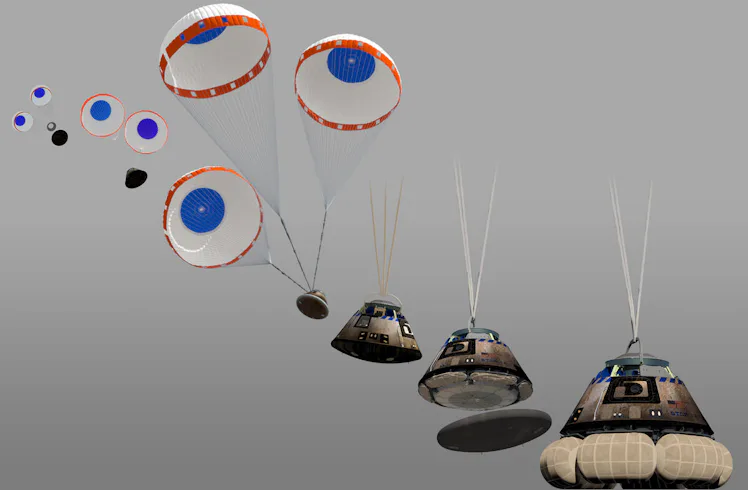
An illustration of the parachute and airbag sequence for Starliner’s landing.
One difference is how their astronauts come home. Crew Dragon’s latest return from space for the Crew-7 mission in March delivered four astronauts to the calm waters off the coast of Florida. Teams on boats mobilized to fish the capsule out of the water, and onto a ship, where the hatch was successfully opened roughly 42 minutes after splashdown.
Both Starliner and Crew Dragon begin their descents with parachutes to slow them down.
When Calypso is about 3,000 feet off the ground, the heat shield on its base will jettison. This exposes the Starliner’s airbags. They’ll absorb the initial force of landing at touchdown.
According to NASA astronaut Mike Fincke, who is part of the Starliner Commercial Crew Program, the Starliner can deploy an extra airbag if an emergency water landing must be made.
Boeing will only use this for emergencies, he adds. Salt water is abrasive. This makes refurbishing the capsule tough to do after exposure to the ocean. Landing on land is one way Boeing aims to have the reusable Starliner capsules ready on time with a six-month turnaround.
'Pregnant' aliens mummies found in Peru set to be tested to ‘prove authenticity’
One of the odd looking corpses is said to look pregnant as the mysterious 'mummified' finds could soon finally be tested by experts after being discovered in Peru years ago

Some unusual looking corpses that have been compared to mummified aliens are soon to be tested
(Image: Anadolu Agency via Getty Images)
A set of infamous Nazca 'alien mummies' are set to undergo tests in attempts to finally get to the bottom of what they really are and where they have come from.
The discovery of the unusual mummified corpses with three fingers and elongated skulls in Peru has long been shrouded in mystery with scientists declaring they could be very real and need further examination.
Now those very corpses, one of which is said to look pregnant, are finally being tested in attempts to to prove their authenticity. It's as a UFO expert claims they are proof of extraterrestrial life and could be hybrids.
READ MORE:

The unusual figures were discovered in Peru's Nazca region but have stumped the world since gaining significant media attention last year and mass speculation about their origins.
Jaime Maussan, journalist and UFO researcher, says there is a possibility they are alien-human hybrids.
He gained significant attention when presenting the mummies. found in Palpa and Nazca in Peru to the Mexican Government in 2023.

They were purportedly found by local farmers in 2017 and subsequently brought to the attention of researchers but for years they weren't professionally examined.
A team of experts was later put together to change that. The team includes Dr James Caruso, chief medical examiner and coroner of the city and county of Denver, Dr William Rodriguez, a forensic anthropologist and Maryland State medical examiner.

Elsewhere, Dr John McDowell, a retired professor at the University of Colorado and forensic odontologist, rounds off the team
Maussan now claims there is an ongoing legal battle with Peru to get the "mummies" to more advanced labs in the US for further testing which could prove their authenticity once and for all.
A man named Jois Mantilla too said he believed he'd made a breakthrough with the mummies' DNA.
Aliens could be hiding among us every day - and we don't even know it
A study at a top university reckons aliens could be visiting Earth to see alien friends that are already blending in, disguised among us without anyone even knowing

Research from one of the world's top unis says aliens could be disguised among humans - and we don't even know it
(Image: Getty Images)
UFOs could be coming to Earth so that aliens can visit their pals already living secretly among us, say researchers at one of the world's best universities.
According to the study, conducted at Harvard University, extraterrestrials could very possibly be living as one with humans already - with us none the wiser. It says this could be underground or on the Moon.
As part of the deep dive, the people behind the research also suggest UFOs might be alien spaceships that are visiting to meet their otherworldly friends living here on Earth - expertly disguised among us.
READ MORE:
As part of the research paper, they mention the idea that UFOs - also referred to as UAPs - could be spaceships visiting Earth-based "alien friends".

The paper also states that the author is aware of the depth of evidence and theory that supports another extraterrestrial explanation. That is the ''crypto terrestrial” hypothesis (CTH), linking UAP activity to the action of hidden non-human entities.
Put together by Harvard University's Human Flourishing Programme, which researches the factors that contribute to human well-being and flourishing, the paper has since been taken down from ResearchGate, where it was published. But it can still be accessed using Internet Archive.
In other extraterrestrial news, a set of infamous Nazca 'alien mummies' are set to undergo tests in attempts to finally get to the bottom of what they really are and where they have come from.
The discovery of the unusual mummified corpses with three fingers and elongated skulls in Peru has long been shrouded in mystery with scientists declaring they could be very real and need further examination.
No UFOs; Never Has Been, Never Will BeDo you have a burning desire to spend all your money to travel to distant jungles to strike up convos with screeching monkeys in trees?
I’m not dressing up posts with header images anymore. Clean and simple. But, for this one, I’ll make an exception. It’s funny, and it drives the point home.
For the past couple of years, I’ve been intrigued by the sudden government-sanctioned “limited hangouts” on UFOs. Some folks, like Tucker Carlson, have latched onto them, prompting me to shake my head in disbelief. Here’s the deal: for 35 years, I’ve held firm that there are no UFOs, never have been, and never will be. Logic is on my side, and I’ll outline why below.
I’m giving out #31 of my 114 No-Pill Advantages. Originally drafted 35 years ago, it has undergone a few revisions, but the core logic and conclusion remains unchanged. As you read through this, keep in mind it was written decades ago. Ask yourself: has anything fundamentally changed? Are there actual bodies now? Artifacts like a phaser or some tricorder gadget? An actual spacecraft dissected? Nope, just the same old grainy photos and blurry videos.
… In an age where everyone has had a phone in their pocket for 20 years, and high-resolution cameras for at least the last decade, where are the clear photos? Modern phones excel even in low-light conditions, yet I’ve never seen a decent, high-res shot of a supposed UFO. Not one.
What gives rise to this post is that I got wind of an article in The Hill. It’s a ridiculous piece, based on a so-called “Harvard study” that I can’t even find. It’s just a bunch of nonsense, really. I don’t even want to dignify it. What it screams to me is the same old pattern in society: blind deference to so-called authorities.
… You know why people really have a problem with totalitarian regimes? What’s the chief distinction between the U.S. government or the EU, or whoever, and a totalitarian regime? The chief distinction is that a totalitarian regime doesn’t have a “God,” doesn’t have a higher authority. People bristle at the idea that there’s no imaginary-friend-personally-looking-out-for-you check on their government’s authority.
So, in the case of the U.S., we have a secular check, which is the Constitution and the separation of powers. It kinda works—except when it usually doesn’t. But then you have the church, right? You can’t really be a successful politician in America without making your obeisance to some form of God. For America, that pretty much has to be Jehovah or Jesus. In countries like where I live, Thailand, you gotta be a Buddhist.
But here’s the kicker: the UFO thing represents a kind of backup authority. Governments need people who have faith in a higher power, higher intelligence, or higher knowledge. If God or whatever manifestation of God isn’t working out quite as well as they’d hoped, they roll out the space aliens. Eventually, they’ll reveal themselves. And of course, since they could get here, they must know everything. They know where we came from. They know the origin story. They’ll be able to tell us all sorts of stuff. Just have faith in that.
They’re looking out for us.
It’s the same faith as religion. Exactly the same on fundamental levels. And that’s what I keep harping on: the lack of agency among individual human beings. People are supposed to be their own authority. Their job in life is to look around, assess what’s real, and distinguish it from what’s not real. Act accordingly. Make mistakes, learn from them, and go forth to do better and better. Be a little less wrong about everything every day, rather than holding up a book written 2000 years ago and claiming it’s right about everything.
OK, enjoy this piece. Keep in mind it was drafted 35 years ago. Ask yourself: Does anything we currently think we know about UFOs make anything said here false? If you’re honest, you’ll say no, it doesn’t. So what’s the big hullabaloo all about?
As with all forms of mysticism, the acceptance of myths ranging from astrology and UFOs to religion and the concept of God can have detrimental effects on an individual’s thinking and integration processes. In fact, this acceptance can severely hinder a person’s personal power, productive competence, financial well-being, psychuous pleasures, and long-range happiness.
When one embraces mysticism, they often surrender critical thinking and rationality in favor of beliefs that lack empirical evidence or logical reasoning. By doing so, they limit their ability to objectively analyze and understand the world around them. This impaired thinking can prevent individuals from making informed decisions, solving problems effectively, and adapting to new situations.
Moreover, the integration processes of a person, which involve synthesizing different aspects of their life and experiences, are also compromised. The acceptance of myths can create cognitive dissonance and conflicts within an individual’s belief system, leading to a fragmented sense of self and difficulty in establishing coherent values and principles. This lack of integration can hinder personal growth and development, as well as negatively impact relationships and social interactions.
Furthermore, embracing mysticism can have adverse effects on an individual’s personal power and sense of agency. By relying on external forces such as astrological predictions or supernatural entities, people may feel disempowered and dependent on factors beyond their control. This can lead to a sense of helplessness and passivity, preventing individuals from taking charge of their own lives and pursuing their goals with determination.
In addition, the acceptance of myths can impede productive competence. Instead of focusing on acquiring practical skills, knowledge, and expertise, individuals may invest their time and energy in pursuits that lack a solid foundation in reality. This diversion of resources can hamper professional growth, limit career opportunities, and hinder financial well-being.
Moreover, the pursuit of psychuous pleasures, which encompass both physical and emotional gratification, can be compromised by the acceptance of myths. By attributing supernatural or cosmic significance to experiences, individuals may overlook the genuine sources of joy and fulfillment in their lives. This can lead to a perpetual search for external validation or transcendent experiences, neglecting the simple pleasures and meaningful connections that can bring long-lasting happiness.
Ultimately, the acceptance of myths in various forms of mysticism can have far-reaching consequences. It can cripple an individual’s thinking and integration processes, limiting their personal power, productive competence, financial well-being, psychuous pleasures, and long-range happiness. By embracing critical thinking, rationality, and evidence-based beliefs, individuals can open themselves up to a world of possibilities, empowering themselves to live a more fulfilled and successful life.
Many popular myths rely on so-called “scientific” evidence to create an illusion of credibility. Supporters of astrology argue that the incredibly weak celestial forces that interact with humans have an impact on their thoughts, actions, behavior, and fate. They use the example of how the moon’s gravitational forces cause ocean tides as “proof.” However, facts and rational thinking demonstrate that humans are solely responsible for their own destiny. A person’s mind has the ability to overpower all the forces of nature combined. In a society that values freedom, an individual’s conscious mind has much more control over their future than all the obvious, direct influences of nature, government, and religion combined.
One’s destiny is primarily determined by their own choices rather than their surroundings. With the exception of natural disasters or oppressive totalitarian regimes, the impact of nature and social environment on an individual’s long-term future is minimal or negligible when compared to the power of the rational conscious mind.
To allow one’s future to be impacted by natural forces like the weather, wind, or rain would diminish the power of their mind and actions. However, astrologers take it a step further by suggesting that even the faintest celestial forces from outer space can influence human beings and their minds. This perspective undermines the potential of the human mind, eroding confidence and self-esteem. Furthermore, those who allow themselves to be controlled or influenced by nonexistent forces like the God myth face even more serious consequences in their confidence and self-esteem.
There is a common misconception among many individuals that the authority of government and religion surpasses their own power. This belief is understandable, given the historical destructive impact these forces have had on humanity. However, it is important to recognize that government and religious influences, although often destructive, do not have to control an individual’s present or future. By employing critical thinking and rational decision-making, one can typically evade or reduce the impact of government and religion on their personal lives, enabling them to live independently, productively, and happily.
Sometimes, the devastating impacts on individuals can be caused by various entities such as the government, religion, or even natural occurrences like earthquakes, floods, and tornadoes. The government has the power to seize or exploit someone’s belongings, as well as imprison or unjustly kill innocent individuals. Religion has the potential to harm a person’s mental well-being and overall happiness. Additionally, when the church wields direct political influence, it has historically inflicted torture and death upon countless innocent people, exemplified by instances like the Dark Ages, Inquisitions, Jonestown, Ayatollah Iran, Witch Trials, and the crusades. However, none of these potential or actual forces essentially govern or determine the course of human lives or destiny. The human mind, in conjunction with the choices made throughout an individual’s life, ultimately shapes the life and future of a productive person, unless they are directly incapacitated or destroyed by government or religious forces.
Believing in “scientific” myths like UFOs, which are unidentified flying objects from intelligent outer space, can have negative effects on a person’s self-esteem and their ability to experience pleasure and happiness. Similar to astrology and other forms of “scientific” mysticism[1], UFO advocates use a scientific-sounding foundation to create the illusion of credibility. They often take the valid hypothesis that there are millions of Earth-like planets in outer space with advanced civilizations and technology beyond our own. These civilizations would likely be capable of communication or even traveling across vast distances to reach Earth, as their conscious beings would have achieved biological immortality a long time ago.
The aforementioned hypotheses hold statistical validity and are likely factual. Based on statistical data, it is plausible to conclude that there are millions, if not billions, of Earth-like planets harboring intelligent life forms across the universe. It is highly probable that a significant number of these civilizations, being far more advanced than ours, have the capability to establish contact with Earth. However, logical reasoning and statistical evidence suggest that these civilizations would not think to contact Earth or any number of other millions of civilizations on par with Earth’s advancement, or more primitive.
The primary rationale for holding the belief that Earth has never been contacted by any extraterrestrial civilization is the lack of any compelling evidence suggesting such an encounter. Any purported evidence that has surfaced thus far has been deemed dubious, fraudulent, or scientifically invalid. Had there been actual contact with intelligent extraterrestrial life, the proof would have been both instantaneous and overwhelmingly convincing. Take, for instance, the highly sophisticated artifacts that would inevitably be left behind by any civilization devoid of mysticism, yet possessing the necessary technological prowess and energy to establish contact with Earth.
Surely, numerous highly sophisticated civilizations within the cosmos possess the technology to reach and communicate with Earth. However, using the following rationale, it is unlikely that they would make contact. The advancement of any civilization is directly proportional to the amount of energy it can harness. This energy capacity is a direct reflection of scientific knowledge and technological development. The energy necessary for interstellar communication and travel far outweighs Earth’s total energy capacity, given our current technological state. Therefore, a civilization capable of reaching us would be significantly more advanced. This implies that such a civilization would have surpassed the Nuclear-Decision Threshold. This critical juncture is one that every advanced civilization must navigate successfully to ensure survival. Currently, our civilization is at this threshold. The Nuclear-Decision Threshold represents the stage at which a civilization’s energy, knowledge, and technology have evolved to the extent that they can produce enough artificial energy (such as nuclear energy) to obliterate all life on their planet. From this point, all civilizations must select one of two paths:
(1) Follow a philosophical system that is irrational, altruistic, and Platonistic, where authoritarian initiatory force persuades others to back “higher” mystical causes that support the deceptive livelihoods of parasitical elites. Such systems will ultimately result in either complete nuclear warfare[2] or a regression to an anti-technological Dark Ages where the majority of knowledge and technology are lost. Regardless of the outcome, the majority of the world’s population will perish and civilization will be destroyed due to the manipulation of pointless mysticism to provide false power and deceptive livelihoods to those who destroy value.
(2) Adopt or transition to a rational, business-oriented, Aristotelian philosophical system that excludes the use of initiatory force. This system enables civilization to securely progress past the Nuclear-Decision Threshold.
Therefore, any civilization that has significantly surpassed this threshold would naturally exist in a logical Aristotelian society (logic: 1+1=2; identity: A is A). This would imply a free-market business society where initiating force is eliminated as it’s uncompetitive, powerless, and immoral. In such a progressed society, all forms of mysticism would naturally have been discredited and abandoned as foolish and harmful. This business-oriented society would be devoid of politicians, theologians, mooching leaches, oppressive governments, quasi-state fascistic Big Corp, and other exploiters and parasites. Actions would be grounded in reality-based logic exercised by free individuals living harmoniously and competitively in line with their sensible best interests.
In a highly advanced society, there would be no logical rationale or discernible advantages to justify the excessive time and energy needed to communicate with Earth or comparable extraterrestrial civilizations. Such an endeavor would neither be scientifically intriguing nor profitable for a civilization possessing such advanced knowledge and technology.
In other words, once a civilization reaches a point of technological progress where it can communicate with other civilizations, the incentive or desire to do so, along with the advantages gained from it, may decrease. This is because such societies would naturally be reasonable and self-serving. People within these societies would be capable of satisfying all their material, emotional, and developmental needs within a reasonable geographic boundary, even though they have the capacity to explore further into space. In addition, these developed civilizations could have access to an imagined universal interstellar computer network. Such a network would manage and provide all crucial knowledge for sharing among developed, advanced civilizations. It would require no access keys. Attaining the advanced knowledge to detect it would, in itself, be the access key.
To sum up, it’s likely that thousands or even millions of highly advanced civilizations exist in the cosmic realm, equipped with the technology to reach out to Earth. However, due to their non-altruistic, profit-driven nature, these societies would lack a rational reason or incentive to invest their time and energy in such contact.[3]
Our civilization would need to transition from our present Platonistic/altruistic philosophical foundation to an Aristotelian/rationally self-interested, business-like philosophical foundation to significantly progress beyond our existing Nuclear-Decision Threshold.
Interestingly, our current stage of civilization allows us to reap substantial economic, technological, and scientific rewards from studying outer space and venturing beyond our solar system. By transitioning to a rational and logical society, our civilization will significantly surpass the Nuclear-Decision Threshold. This will result in our knowledge, technology, and well-being advancing at such a rapid and extensive pace that when we have the energy capacity to communicate with civilizations in distant outer space, the logical reasons or incentives for such contact (economic, social, scientific) will become less relevant. This is because within such an advanced and benevolent society, each individual’s potential can be fully realized, representing the total creative power available in the universe. Upon reaching this potential, there is no need for anything more from outer space, especially once our scientists, driven by business interests, learn to tap into the universal interstellar computer.
The answer, therefore, to the outer-space UFO question reduces to:
[1] “Scientific” mysticism often stems from the desire to find external forces or “authorities” that can relieve the human mind from the task of thinking. Mystics yearn for an effortless guide to knowledge and life, steered by forces beyond their control. However, such an effortless guide does not exist. No external force can replace the work of an individual’s mind. Instances such as the U.S. president relying on astrology or the U.S.S.R. government funding research into ESP, psychokinesis, PK, and other pseudosciences, highlight the intellectual inadequacy of these governments and their leaders. In truth, these governments appear foolish and their leaders are merely jesters. They are gradually becoming obsolete due to the global exposure of their many incompetencies.
[2] Ironically, unilateral peace and disarmament movements, often championed by professional mystics and looters, are not just dishonest and mystical, but they also push the world towards nuclear annihilation. On the other hand, a well-prepared and rational society can not only effectively guard against nuclear war but also thrive in the future. This is because self-protection is a fundamental moral duty. Therefore, developing an efficient Strategic Defense Initiative (SDI) or “Star-Wars” defense system is the most logical and ethical action any country could take to safeguard its citizens and their property. (Refer to No-Pill Advantage #110 for an in-depth discussion on the inherent right to self-defense.)
[3] The only plausible reason for a highly advanced civilization to communicate beyond their immediate star system might be the imminent death of their sun, their primary energy source, through a cataclysmic event or eventuality. Such a civilization would likely seek to explore and colonize planets in nearby star systems. Given the ever-shifting positions of stars within our Milky Way galaxy, Earth could, at certain instances, become a “nearby” star system (for instance, less than a hundred light years away) to a civilization needing to abandon their own solar system due to an impending solar detonation or other disaster. Under such circumstances, Earth could become a target for exploration or even colonization from space. However, statistically, the chance of such a convergence of events is extremely low.
STUDY FINDS UFO WITNESSES MAY HAVE PERSONALITY TRAITS THAT INCREASE LIKELIHOOD OF SIGHTINGSAccording to findings in a recent study, UFO witnesses may not be prone to misperceptions or related cognitive factors but instead may possess specific personality traits that increase their likelihood of encountering such phenomena.
Clinical Psychologist Dr. Daniel Stubbings from Cardiff Metropolitan University and his team found there are numerous factors that contribute to an individual thinking they witnessed what the U.S. Department of Defense now calls unidentified anomalous phenomena (UAP).
Their study, published in the Journal of Scientific Exploration, examines the big five personality traits: extraversion, neuroticism, openness, agreeableness, and conscientiousness, along with schizotypy traits (behaviors that resemble schizophrenia), to help determine if UAP experiencers could be distinguished from those who had not reported seeing a UAP.
In the 1970s, two research teams—one led by Paul Costa and Robert R. McCrae of the National Institutes of Health and the other by Warren Norman and Lewis Goldberg of the University of Michigan at Ann Arbor and the University of Oregon—found that most human character traits can be explained by five dimensions. Surveys of thousands of individuals uncovered these mostly distinct traits:
Dr. Stubbings’ experiment involved 206 participants, including 103 who said they had witnessed or self-reported seeing a UAP. The team analyzed personality traits to see how participants naturally grouped together.
The study consisted of three groups. Group one had average traits, whereas the second group, designated the Neurotic/Schizotypy group, was high on neuroticism and schizotypy traits. The last controlled group, labelled O-ACE, was found to have high openness, agreeableness, conscientiousness, and extraversion but low neuroticism and schizotypy traits.
“These were the groups that ‘emerged’ out of the data analysis,” Dr. Stubbings told The Debrief. “The latent profile analysis demonstrated these three patterns of personality profiles. Prior research looked at correlation and regression (predictive patterns) but not a latent (underlying) profile.”
“This was a new finding,” Stubbings told The Debrief.
The study concluded that the third group, O-ACE, was more likely to see UAPs. Over the years, stigma and stereotypes have helped create narratives that people who see UAPs are more than likely emotionally reactive; in other words, they may display neurotic behavior and are prone to perceptual and cognitive abnormalities.
However, the recent data does not appear to support this narrative. Instead, Dr. Stubbings and his coauthors state in their paper that the “descriptive UAP accounts by the general public were similar to the descriptions provided by military witnesses.”
Stubbings, when asked why people with high conscientiousness see UFOs, said it is difficult to answer such a question based on the current data in-hand.
“Our data indicates that there is a small statistical relationship, but further research should explore why that relationship exists,” Stubings told The Debrief. “But my guess is that people who are high in conscientiousness might be more willing to admit to themselves that they have seen something and believe it is the right thing to do to admit it.”
However, Stubbings notes that conscientiousness alone is probably not everything in this equation, but instead, combinations of other variables—specifically low scores in Neuroticism and higher scores in Openness, also contribute.
“We need further research to explore the nuances of these personality factors in the emergence of both belief and experience.”
Dr. Stubbings also noted that “only 28 percent of participants reported their sightings anywhere, and 14 percent used a UFO reporting organization, which suggests that events are vastly underreported.” His paper also suggested that stigma and a lack of proper reporting avenues were the main obstacles impacting their willingness to report their sightings.
Dr. Stubbings initiated his research by referencing an older academic paper on UAPs published in the Applied Cognitive Psychology Journal in 2011, which found that certain personality factors were predictors of an individual’s belief in UFOs.
“This is relevant to the UFO topic more broadly because what people perceive and recall tends to be in line with their beliefs,” Stubbings told The Debrief. “If beliefs can be predicted by personality factors, then it supports the notion that it is a particular kind of person who is more prone to belief in UAPs, and in turn, they end up seeing and recalling what they believe to be true.”
“In other words, people see UAP not because they are there but because of the conviction of their beliefs, which are influenced by their personality dispositions.
“So the idea was born to change the dependent variable of ‘belief’ to ‘have you had a sighting.’ Those who believe in UFOs/UAP might not have the same characteristics [as] those that report to have seen what they believe to be a UAP.”
Fundamentally, Stubbings says that in addition to understanding the kinds of personality traits and psychological drivers that may contribute to a person’s likelihood of observing and reporting UAP, scientists need to be engaging in dialogue about the assessment, diagnosis, formulation, and treatment of mental health distress in individuals who claim to have observed UAP or even had direct contact with purported NHI.
“This topic is one of the most fascinating areas,” Stubbings told The Debrief, “and I believe other scientists from around the world need to help address this mystery.”
Stubbings and his colleagues Sophie Ali and Alexander Wong’s new paper, “Who Sees UFOs? The Relationship Between Unidentified Anomalous Phenomena Sightings And Personality Factors,” appeared in the Spring 2024 issue of the Journal of Scientific Exploration.
NASA rover discovers mysterious Mars boulder unlike any othersIf looking at this Mars vista conjures up childhood memories of the song, "One of these things is not like the others," NASA scientists are right there with you.
Perseverance, a car-size lab on six wheels, traveled into the Red Planet's Neretva Vallis last week. Though this region may look like a barren desert, it was once an ancient river channel that fed into the Jezero crater billions of years ago.
As Perseverance traversed the inlet, the rover came upon a hill covered in boulders, with one in particular attracting the science team's attention: a light speckled rock amid a sea of dark lumps.
"Every once in a while, you'll just see some strange thing in the Martian landscape, and the team is like, 'Oh, let's go over there,'" Katie Stack Morgan, deputy project scientist of NASA's Mars 2020 mission, told Mashable. "This was like the textbook definition of (chasing) the bright, shiny thing because it was so bright and white."
The boulder is so exceptional, scientists have said it's in a league of its own. Closer analysis with the rover's instruments shows it is likely an anorthosite, a rock type never seen before while exploring Mars, Stack Morgan said, though there have been signs such rocks should exist. Not even the Curiosity rover, which has observed more variety in Gale Crater, has seen one quite like this.
The Perseverance rover found an exceptional boulder on Mars, thought to be an anorthosite.
© Provided by Mashable
Though such anorthosite rocks are on the moon and in mountain ranges on Earth, they're generally considered rare in the solar system. True Martian examples have eluded researchers, including within our planet's inventory of Red Planet meteorites that traveled through space to get here.
"This was like the textbook definition of (chasing) the bright, shiny thing."
The rover team named the special boulder, about 18 inches wide and 14 inches tall, "Atoco Point" after a landmark in the Grand Canyon.
"Seeing a rock like Atoco Point is one of these hints that, yes, we do have anorthosites on Mars, and this might be a sampling of that lower crust material," Stack Morgan said. "If we see it later on in the context of other rocks, it can give us a sense for how the earliest crust of Mars kind of came to be."
Anorthosites are predominantly made of feldspar, a mineral linked to lava flows. Feldspars are more rich in silica than basalts and some of the last stuff to crystallize out of magma. On the other hand, basalts, dark volcanic rocks rich in iron and magnesium, are ubiquitous on Mars' surface.
Many of Perseverance's scientists think magma below the surface made the minerals in Atoko Point, and that a giant impact on Mars may have excavated the rock to the surface, a chunk later falling from the crater rim to its present site. Others think the boulder was made somewhere else far away and a gushing ancient river carried it there.
Whether scientists will ever get their hands on this rock or one like it remains to be seen. Perseverance has been collecting samples from Jezero crater since 2021. The region, an ancient dried delta, is one where scientists think microscopic organisms might have existed long ago. But the plan to fly rocks and dust grains to Earth, a complex mission called Mars Sample Return, is in jeopardy. Its rising costs have led to layoffs and warnings of cancellation from Congress. The agency is now making a desperate plea for ideas to save the mission.
Perhaps surprisingly, the rover team chose to drive away from Atoco Point without even taking a sample, despite its significance. That's because the team hopes to discover many more like it in a couple of months when the rover reaches the crater rim. Finding examples from its original location could provide the scientists with a lot more context.
"We said, 'OK, let's keep this rock in mind,'" Stack Morgan said. "'Maybe we'll come back here if we don't find this elsewhere in the crater rim.'"
Private space-junk-inspection probe spots discarded rocket in orbit up close (photo)This is how decades-old space junk drifting in Earth's orbit would look like seen from just 50 meters (164 feet) away.
You are looking at the spent upper stage of a discarded Japanese rocket that launched an Earth observation satellite back in 2009. The rocket body was imaged up close on May 23 by the ADRAS-J satellite, which was designed by private Japanese company Astroscale to approach and study a non-communicative, uncontrollable piece of orbital debris.
Images and data collected during these inspections record the condition of the dead satellite, including how structurally intact it is after drifting in the harsh space environment for years. The satellite does not transmit GPS signals to Earth, so by closely approaching, imaging and potentially removing it from orbit in the future, ADRAS-J proves technologies that on-orbit services can be used for things like satellite maintenance or capturing and deorbiting space debris objects, according to Astroscale.
ADRAS-J, which is short for Active Debris Removal by Astroscale-Japan, launched into orbit atop Rocket Lab's Electron rocket on Feb. 18. By April the 330-pound (150-kilogram) probe had used its onboard cameras and successfully maneuvered within a few hundred meters of its target — the upper stage of the Japanese H-2A rocket that launched the GOSAT Earth-observation satellite back in 2009. This striking photo released late April memorialized the achievement.


ADRAS-J - Astroscale, Securing Space Sustainability
Related:
In an update posted today (Friday, June 14), Astroscale wrote that ADRAS-J had completed a safe and controlled approach to the rocket, which spans 36 feet long by 13 feet wide (11 by 4 meters). The latest image is one of many ADRAS-J captured while holding a fixed position relative to the upper stage, the company said, adding that the mission will soon try snapping additional pictures of the target through various close approach operations.
Spaceflight historian Gunther Krebs previously noted that ADRAS-J is not the first mission to capture close-up images of space junk. In 2003, the U.S. Air Force Research Laboratory's XSS-10 satellite had photographed the used upper stage of a Delta II rocket; those tasks were less complex than ADRAS-J's.
Following the successful safe and controlled approach of the dead rocket, in late April, the Japan Aerospace Exploration Agency (JAXA) chose Astroscale for the second phase of the mission, which will progress onto capturing and removing the rocket body using a robotic arm that is lighter version of the one on the International Space Station.
"This next phase holds significance in addressing the space debris issue and laying the foundation for a sustainable environment for future generations," Eddie Kato, the president of Astroscale Japan, said in a previous statement.
The 4 most convincing UFO sightings in Florida history

Photo courtesy of Albert Antony via Unsplash.
According to the National UFO Reporting Center Online Database, or NUFORC, as of April 2023, 8,350 UFO sightings have been reported in Florida since the center began collecting data in 1974 — a figure topped only by California’s more than 16,000 sightings.
As Peter Davenport, director of NUFORC — a non-profit, Washington state-based corporation – told USA Today, people most commonly report sightings of non-identified lights in the sky; objects shaped like circles, ovals, triangles, or diamonds; and orbs or fireballs. All of these common sights and more are regularly reported to NUFORC by Floridians who simply could not believe their eyes.
Ready to dive into some of the most hair-raising UFO sightings ever reported in Florida’s history? Read on.

As the story goes, Florida’s most infamous string of UFO sightings — immortalized as The Gulf Breeze Sightings — began when Ed Walters, a building contractor based in this small, Panhandle town, took Polaroids from his front yard on November 11, 1987, that show an unidentified aircraft shooting a blue beam of light toward the camera.
According to Walters, the craft hovered about 200 feet above the ground before landing on a nearby road and dropping off five alien beings. Walters returned inside his home to find one of the beings staring into his window. The being communicated with Walters in both English and Spanish via telepathy before presenting him with a book filled with pictures of dogs. Then, a blue beam of light lifted Walters three feet off the ground, immobilizing him for a few moments.
Walters claimed he witnessed and photographed this alien activity several times during the fall and winter of 1987. One photo shows his wife trying to outrun the blue beam. Another incident occurred when Walters was driving sometime after midnight. Suddenly, he realized he could no longer see any streetlights or cars on the road in his rearview mirrors. He pulled over, stepped outside, and saw a bright light heading his way. When he got back in his car, the light soared toward the sky, and the next thing he knew, he was on the side of the road as morning traffic whizzed past him. Walters could not account for the 5-6 hours that had lapsed between his recollections. Overall, Walters and his family reported 19 sightings in total.
Walters wasn’t alone — after word spread of what he saw, several Gulf Breeze residents, including local politicians, began claiming they, too, spotted UFOs in their skies. Yet, many considered (and still consider) Walters’ photos to be a hoax.
When Walters moved from his home in 1990, the house’s new owners found a model of a flying saucer in the attic. Wrapped in drafting paper, the model was composed of foam plates, cardboard, and colored, plastic gel. Though Walters later said the model was planted to discredit his claims, Pensacola News Journal photographers utilized the model to stage a recreation of Walters’ photos. The results? Photographs nearly identical to what Walters had produced.
Still, many curious minds hold the Gulf Breeze Sightings of 1987 to be irrefutable evidence that humans are not alone in this universe.
It was a cool and crisp evening in October 1951 — perfect conditions for a gentle stroll through Jacksonville’s Brentwood Park, also known as Catherine Hester McNair Park. As reported to NUFORC, a pair of sisters were traveling south through the park toward downtown when one spotted an anomaly in the sky above them: a circular patch of blackness, obscuring the twinkle of the stars.
The sisters passed it off as a passing cloud, but upon second glance, they noticed the dark circle was moving slowly, silently, and inexplicably toward the direction they had just witnessed it a minute before. They craned their heads back to take in this giant form flying lower in the sky than a typical aircraft before taking a seat on a bench near their home to enjoy the evening’s full moon rise. Upon standing to return home, one of the sisters spotted something neither could make any sense of.
In the shadows of a cluster of magnolias, a domed saucer about the size of a Volkswagen bus sat a couple of feet above the ground, resting on a set of slender rods. As the sisters watched in amazement, the dull metallic craft’s left edge began to move. Like a hydraulic awning, the rim of the craft began to open in a skyward direction. The sisters grabbed tightly to each other and tiptoed backward into their home; therefore, no account exists documenting just who or what was manning this unidentified flying object.
According to the NUFORC archives, on a breezy October evening one week before Halloween in 2014, an individual in their late fifties went for a neighborhood walk with their dog around Pembroke Pines, a suburb about 25 miles north of Miami. Upon reaching a curve in the street, the person noticed a form that stopped them dead in their tracks.
Standing still and peering across 10 feet of distance, this South Floridian resident beheld a bony, pale, and hairless figure. The eyewitness held tightly to their dog’s leash but noted their pet didn’t bark or show any signs of distress at encountering this stranger.
When the unidentified being noticed the attention it was receiving from this person and their furry companion, it looked over its right shoulder to glance at the human and dog in turn. Then, it took off running down the road, away from its audience. As it ran, the eyewitness noticed its knees were facing backward. Within moments, the unidentified being began fading, the edges of its appearance slowly vanishing until no trace remained.
In reporting this bone-chilling account to NUFORC, the eyewitness noted that they refrain from using substances like alcohol and marijuana, a sobering detail that makes this sighting all the more convincing.
Two separate eyewitnesses have spoken to NUFORC concerning a mysterious, triangle-shaped aircraft they encountered as kids living in Gainesville in May of 1967.
As one account details, a group of five neighbors ranging in age from around 8 to 14 were standing in the street one warm and clear night, trying to catch a glimpse of a satellite that had launched from Cape Canaveral earlier that day. They didn’t see any NASA crafts that evening, but they did spot something they’d never forget: a spacecraft shaped like an equilateral triangle, with one softly glowing red light illuminating each corner. The children ran ahead of the craft, which was flying toward them at a slow pace, soundlessly, its form just clearing the tops of the oaks and pines that cover this north central Florida town. When the kids hollered for their parents to come outside, one dad took a look at the craft and immediately returned inside, never to speak of what he saw again.
This report is confirmed in another eyewitness account given to NUFORC — the craft that flew above the children’s heads was about the size of a city bus, yet no engine sounds could be heard. When the children alerted their parents to the strange sight, the craft rose higher in the sky as it continued its southerly journey, blending in with the night sky until it became invisible.
UFOs May Be Evidence Of "Cryptoterrestrials" Secretly Living Among Us

Could advanced Earthlings be hiding their UFOs under the sea?
Image credit: TSViPhoto/Shutterstock.com
Aliens passing as humans meet an advanced reptilian race living in a subterranean kingdom. Sounds like the script of a Mork and Mindy vs Teenage Mutant Ninja Turtles crossover episode, but it’s actually the contents of a fantastically speculative new paper about UFOs.
Penned by researchers from Harvard’s Human Flourishing Program and Montana Technological University, the wild study – as yet not peer-reviewed – delves into the slightly insane world of "cryptoterrestrials", which encompasses a bizarre cast of “intelligent beings concealed in stealth here on Earth (e.g., underground), and/or its near environs (e.g., the moon).” According to the authors, these clandestine Earth-dwellers may in fact be responsible for many of the unidentified aerial phenomena (UAP) that are typically attributed to intergalactic visitors.
Jumping down the rabbit hole, the researchers present their first category of potential UFO pilot, which they call “human cryptoterrestrials”. These are described as “a technologically advanced ancient human civilization that was largely destroyed long ago (e.g., by flood), but continued to exist in remnant form.”
Possibly lurking in volcanoes or deep beneath the ocean, these few surviving ancient superhumans were apparently exposed by Albert Einstein’s former assistant Dr Shirley Wright, who claimed that she and her famous boss were invited to inspect the “biological entities” recovered from the supposed Roswell UFO crash in 1947. Speaking in 1993, Wright said the pilots were “just humans, but an advanced form,” and that their species “reside underground on our planet.”
Other subtypes of cryptoterrestrials may include highly-advanced non-human primates or reptiles that store their aircraft beneath mountains. For instance, the Popocatepetl volcano in central Mexico and California’s Mount Shasta are both UFO sighting hotspots, and have therefore been identified as possible residences for these secret yet highly intelligent beings.
Navy personnel reports of Unidentified Submersible Objects (USOs) traveling at incredible speeds, meanwhile, have fuelled speculation that some of these cryptoterrestrials may in fact reside in the ocean. In one such report from 1987, a New Zealand frigate was supposedly followed by a 243-meter-long (800 foot) USO that traveled at a top speed of around 4,800 kilometers per hour (2,980 miles per hour).
The authors also cite wild claims by the highly controversial Harvard astrophysicist Avi Loeb - who, surprisingly, had nothing to do with the study - that the Moon may in fact be a cryptoterrestrial base, and houses many of these strange creatures and their incredible spacecraft. Finally, the researchers say that the engineers behind most UFOs could be hiding in plain sight, and may just be aliens that have mastered the art of blending in as humans.
Admittedly, this all pretty fanciful stuff, and much of the rationale for these claims comes from sources even more dubious than Loeb – including podcaster Joe Rogan and believers in the sunken realm of Atlantis.
Recognizing the many flaws in their proposals, the authors explain that “although this idea is likely to be regarded sceptically by most scientists, such are the nature of some UAP that we argue this possibility should not be summarily dismissed.” They also admit that they themselves consider the existence of cryptoterrestrials to be “unlikely” – but not impossible.
Based on all the available evidence regarding UFOs, the researchers rate the possibility of cryptoterrestrials actually existing as 10 percent. Most observers will probably see that figure as pretty generous.
The study, which has been accepted for publication in the journal Philosophy and Cosmology, is currently available as a preprint.
Did UFOs deactivate US missiles, collect vital information on nuclear arsenals and ICBMs? What did Pentagon mandarins say?
Open Minds UAP News: UAP Analysis and Science with Dr. Doug Buettner
In this episode we discuss UAP Analysis and Science with Dr. Doug Buettner, Deputy Chief Scientist at the Acquisition Innovation Research Center (AIRC). Dr. Buettner has recently joined the board of the Scientific Coalition for UAP Studies and has been analyzing cases, including the NYC case we recently reviewed on this show. We also cover recent UAP headlines and look at a couple Enigma UFO sighting reports.
Enigma UFO Sightings Dr. Buettner’s bio:
Dr. Buettner’s recent paper: Enhancing Space Situational Awareness to Mitigate Risk: A Single-Case Study in the Misidentification of a Recently-Launched Starlink Satellite Train as a UAP in Commercial Aviation:
Website of the Coalition for UAP Studies:
UAP Discovery:
ENIGMA LABS UAP VIDEO ANALYSIS
Link to Enigma Labs UAPs:
Known object:
Possibly identified object:
Download the Enigma app:
Report your sighting to Enigma:
Feedback:
Subscribe to the podcast:
Links to articles and info discussed:
Exploring the First 2024 Crop Circle at Wilton Windmill
The serene landscape of Wilton Windmill in Wiltshire has once again become the stage for an intriguing phenomenon – a crop circles reported on June 12th, 2024. This year’s formation, located just east of the historic windmill, has already captivated the imagination of enthusiasts and researchers alike. With a rich history of similar formations dating back to 2004, Wilton Windmill continues to be a focal point for these mysterious occurrences.
Wilton Windmill is no stranger to crop circles. Over the past two decades, this peaceful and picturesque location has witnessed several intricate formations, including notable appearances in 2020, 2016, 2011, 2010, and 2004. Each of these formations has added to the site’s reputation as a hotspot for crop circle activity, drawing visitors and researchers from all over the world.
The discovery of the 2024 crop circle is shrouded in mystery. Located in a field of lush winter barley standing at approximately 120cm tall, the formation is not visible from surrounding areas. The farmer, known for his meticulous care of the land, has ensured easy access for visitors via a wooden gate and a mown grass strip alongside the field. However, the exact path into the formation is less obvious, encouraging respectful navigation to avoid trampling the crops.
Spanning over 50 meters in width and 100 meters in length, the 2024 crop circle is significantly larger than it appears in aerial photographs. The design comprises a series of concentric circles and additional smaller circles connected by straight lines, forming a complex geometric pattern. Interestingly, the formation does not align with the existing tramlines, and its centers are off-tramline, adding to its mysterious allure.
One of the most striking features of this crop circle is the number of stalks bent at the first node, creating a semi-laid effect across the formation. This bending, approximately 150° at the nodes, suggests a pattern that is not a result of regrowth but possibly due to an unknown force. The texture of the laid crop, described as soft and partly messy, reveals interesting visual effects from above, hinting at a stippled or chequered pattern.
Despite the intrigue, documenting the formation has been challenging. Current photographs lack detail and accuracy, making it difficult to capture the full essence of the crop circle. Additionally, the secrecy surrounding reporting sources in the English crop circle community hampers verifiable research. There is a clear need for high-quality overhead photographs and detailed field studies to better understand this phenomenon.
As with all crop circles, the origins of the Wilton Windmill formation are the subject of much debate. Popular theories include:
For those planning to visit the Wilton Windmill crop circle, it is crucial to respect the farmer’s land and follow the suggested access routes to avoid damaging the crops. By doing so, we can ensure that this mysterious and beautiful formation remains intact for further study and appreciation.
The 2024 crop circle at Wilton Windmill is a fascinating addition to the site’s history of enigmatic formations. Its complex geometry, unique physical characteristics, and the mystery of its origins make it a subject of great interest and speculation. As researchers and enthusiasts continue to explore this phenomenon, each new formation adds a layer to our understanding of these mysterious creations.
Trip naar Mars zo gevaarlijk voor de nieren dat Marsreizigers
Slecht nieuws voor mensen die een reisje naar Mars wel zien zitten: het gaat je behalve een hoop geld en inspanning waarschijnlijk ook je nieren kosten. Tot die conclusie komen onderzoekers na experimenten met onder meer muizen.
Die experimenten onthullen namelijk dat langdurige ruimtevluchten de structuur en functie van de nieren veranderen en zelfs tot permanente nierschade kunnen leiden. Dat is te lezen in het blad Nature Communications.
Gezondheidsrisico’s
Dat (langdurige) ruimtemissies niet zonder gezondheidsrisico’s zijn, is al veel langer bekend. Zo heeft onderzoek onder astronauten die bijvoorbeeld in het internationale ruimtestation (ISS) hebben vertoefd, al uitgewezen dat zij onder meer te maken kunnen krijgen met een verlies aan botmassa, verminderd of wazig zicht en de ontwikkeling van nierstenen.
Kosmische straling
Veel van deze problemen lijken hun oorsprong te vinden in blootstelling aan kosmische straling: hoogenergetische straling afkomstig uit de ruimte. Hier op aarde beschermt het aardmagnetisch veld ons tegen die straling. Maar het internationale ruimtestation – waar veel astronauten vandaag de dag naartoe gaan en dat zich in een lage baan om de aarde bevindt – wordt slechts deels door het aardmagnetisch veld beschermd. En daardoor worden astronauten in het ISS aan veel meer kosmische straling blootgesteld, met alle gevolgen van dien.
Het roept vanzelfsprekend de vraag op wat er gebeurt als we mensen straks dieper de ruimte in sturen, naar plaatsen ver voorbij de beschermende werking van het aardmagnetisch veld, zoals Mars. Het antwoord op die vraag moeten onderzoekers ons schuldig blijven. Er zijn tot op heden slechts 24 mensen geweest die geheel zonder de bescherming van het aardmagnetisch veld aan kosmische straling zijn blootgesteld. En dat zijn de mensen die naar de maan zijn gereisd. Hun ruimtemissies duurden echter maar kort; zes tot twaalf dagen. En dus weten we niet goed wat er met bijvoorbeeld de nieren en andere organen gebeurt als mensen veel langer – zoals tijdens een minimaal 1,5 jaar durende trip naar Mars – aan kosmische straling worden blootgesteld. “We weten dat astronauten tijdens relatief korte ruimtemissies te maken kregen met een toename aan gezondheidsproblemen,” vertelt onderzoeker Keith Siew. “Wat we niet weten, is waarom die problemen ontstaan. Ook weten we niet wat er gebeurt als astronauten langer in de ruimte zijn, zoals tijdens voorgestelde missies naar Mars.”
Nieuw onderzoek
Om daar wat meer duidelijkheid over te krijgen, hebben wetenschappers nu een nieuw onderzoek opgezet, waarin ze specifiek keken welke impact langdurige, verre ruimtemissies op de nieren hebben. De onderzoekers bestudeerden hiertoe de gegevens van mensen en muizen die aan meer dan 40 ruimtemissies hadden deelgenomen – waarvan de meeste naar het ISS hadden gevoerd. Ook bestudeerden ze ratten en muizen die een gesimuleerde ruimtemissie hadden meegemaakt. In zeven van deze simulaties waren de knaagdieren blootgesteld aan doses kosmische straling die vergelijkbaar zijn met de dosis die mensen voor hun kiezen krijgen tijdens een 1,5 of 2,5 jaar durende missie naar Mars.
Nierbuisjes
Het onderzoek onthult dat zowel de menselijke als dierlijk nieren door de omstandigheden in de ruimte veranderen. Zo zagen de onderzoekers bijvoorbeeld dat nierbuisjes die verantwoordelijk zijn voor het handhaven van de calcium- en zoutbalans (zie kader) na minder dan een maand in de ruimte al tekenen van krimp vertonen.
Dat de nierbuisjes van ruimtereizigers krimpen, komt volgens de onderzoekers voornamelijk door het gebrek aan zwaartekracht dat in de ruimte wordt ervaren en dus niet zozeer door blootstelling aan kosmische straling. Tegelijkertijd kunnen ze op dit moment niet uitsluiten dat de kosmische straling de door een gebrek aan zwaartekracht ingegeven veranderingen in de nieren verergert of versnelt. Vervolgonderzoek moet daar meer duidelijkheid over geven.
Nierstenen
Het huidige onderzoek lijkt wel wat meer inzicht te geven in waarom astronauten soms nierstenen ontwikkelen. Eerder werd dat voornamelijk in verband gebracht met een verlies aan botmassa. Daardoor zou zich meer calcium ophopen in de urine, waardoor de kans op nierstenen toeneemt. Maar het nieuwe onderzoek suggereert nu dat door ruimtemissies ingegeven veranderingen in de nieren ook een belangrijke rol spelen in de totstandkoming van ‘buitenaardse’ nierstenen.
Permanente schade
Maar nierstenen zijn misschien nog niet eens de grootste tegenvaller die toekomstige Marsastronauten te verwerken krijgen. Want experimenten met muizen onthullen tevens dat een 2,5 jaar durende blootstelling aan kosmische straling kan resulteren in permanente schade aan de nieren en ervoor kan zorgen dat de nieren zelfs niet langer functioneren.
Dialyse
Nu lijkt 2,5 jaar in de ruimte misschien een beetje lang. Maar als je bedenkt dat de reis naar Mars in het gunstigste geval al 9 maanden duurt – en de terugreis dus ook – en je op Mars ook nog even rond wilt kijken en wat onderzoek wilt doen, ben je toch al gauw 2,5 jaar onderweg. En het lijkt erop dat je dan toch heel anders thuiskomt dan je vertrokken bent, zo waarschuwt Siew. “Als we geen manieren vinden om de nieren te beschermen, zou ik zeggen dat als een astronaut Mars haalt, deze op de terugweg waarschijnlijk aan de dialyse moet. We weten dat de nieren pas laat tekenen van stralingsschade vertonen. Dus tegen de tijd dat die schade tot uiting komt, kan het al te laat zijn om nierfalen te voorkomen en dat kan wel eens catastrofaal zijn voor de succeskansen van ruimtemissies.”
Het is weinig opbeurend en doet misschien zelfs bijna vermoeden dat Mars dan toch te hoog gegrepen is voor ons aardbewoners. Maar die conclusie willen de onderzoekers niet trekken. Sterker nog: ze hopen juist dat hun studie de kans op een succesvolle bemande Marsmissie kan vergroten. Want de kans op succes wordt nu eenmaal groter als we op voorhand alle hindernissen in kaart brengen en zoveel mogelijk uit de weg ruimen. “Onze studie laat zien dat als je een ruimtemissie plant, de nieren er echt toe doen,” vertelt onderzoeker Stephen Walsh. De uitdaging is nu om manieren te vinden om de nieren van Marsreizigers te beschermen. “Mogelijk kunnen we technologische of farmaceutische oplossingen vinden om langdurige ruimtereizen toch mogelijk te maken.” En als dat lukt, kunnen ook mensen die bij voorkeur of noodgedwongen op aarde blijven, daar baat bij hebben. “Medicijnen ontwikkeld voor astronauten kunnen ook nuttig zijn voor gebruik op aarde,” legt Walsh uit. “Bijvoorbeeld doordat ze de nieren van kankerpatiënten beter bestand maken tegen een hogere dosis bestraling.”
The Real Government Conspiracy Isn’t About UFOsOfficials aren’t suppressing evidence that alien life forms exist, they’re just embarrassed to admit that they don't know.
This object has landed and been identified.
Photographer: Sam Yeh/AFP
Three months ago, following last summer’s congressional hearings on UFOs, the Pentagon’s All-Domain Anomaly Resolution Office issued a 63-page report evaluating almost 80 years of evidence. Its conclusion — not altogether surprising, given the name of the office — can be summarized as follows: Not much to see here. Please move on.1
The Senate Intelligence Committee isn’t buying it. The Intelligence Authorization Act , which it passed last week, among other things calls for review of the All-Domain Anomaly Resolution Office . The bill would also limit research into what are now called UAPs (for unidentified anomalous phenomena) unless Congress is informed and add whistleblower protections for anyone who might wish to step forward and speak their minds.
Less plausible claims about UAPs have been achieving greater circulation in part because of the efforts of David Grusch, who testified before Congress last year about hidden alien bodies, crashed vehicles and secret conspiracies. Those claims, which primary witnesses have not corroborated, defy belief, and the ensuing controversy has helped make concerns about UAPs appear silly.
Nonetheless, the truth remains that there are systematic sightings and sensor data of fast-moving entities that the government cannot explain. You don’t have to think they are space aliens to realize that they are threats to national security. At the very least, the mere fact that some experienced military pilots entertain the more speculative alien-linked hypotheses suggests that the military is not processing information effectively. Does it make anyone feel better when reports from pilots are dismissed as crazy?
UAPs will remain an issue as long as China and Russia (and possibly other nations) remain national security threats, because the US military will always want to identify possible entrants to its airspace. No report or bureaucratic process can make those concerns go away. And so there is a kind of paralyzed equilibrium, where a very strong force — the desire to know — has met an immoveable object — a lack of knowledge.
In this sense, the frustration of the Senate Intelligence Committee — as expressed by its unanimous 17-0 vote — is understandable. The Pentagon’s report presents many of the weaker UAP allegations and notes that there is no serious evidence to back them up. And it simply dismisses some of the stronger UAP puzzles, such as the Nimitz or Gimbal incidents.
It is not until Page 26 that the report concedes: “A small percentage of cases have potentially anomalous characteristics or concerning characteristics. AARO has kept Congress fully and currently informed of its findings. AARO’s research continues on these cases.” Those sentences should have been on the first page, and then the report should have presented the evidence about those cases. If this were an undergraduate term paper, I would have given it a D+.
The chatter among insiders, some of which surely reaches senators, is that some of the data is very hard to explain. Some people, such as John Brennan, former head of the CIA, have even speculated that the available evidence might imply contact with a non-human civilization. Agree or disagree, the admission is a marker of our ignorance.
The conspiracy, to the extent there is one, is not to suppress evidence of different life forms; it is to avoid admitting the embarrassing absence of any real answers. So at the very least, the Senate Intelligence Committee deserves credit for reopening the issue.
It can be hard to wrap your head around such huge questions. People are often more concerned with dismissing the possibility of alien life than with admitting the possibility of genuine uncertainty. And since even partial evidence of aliens might scare the public too much, there is an overriding incentive to keep matters under wraps.
When I think about all this, I try to keep two questions separate. First, is there a major puzzle to account for? And second, what is the best explanation for that puzzle? It helps to focus on the first question in isolation, since we can’t seem to keep our heads on straight when it comes to the second.
By admitting that there is a real puzzle to be solved, the Senate Intelligence Committee has moved decisively to answer the first question. Once we clarify exactly what the puzzle is, maybe we’ll be able to make some progress explaining it.
More From Tyler Cowen:
US Military Has Machine That Can Levitate UFO Metal, Confirms Stanford Top ScientistProfessor Garry Nolan is one of the most reputable experts examining the enigma of Unidentified Aerial Phenomena (UAPs). He has been studying UAP materials for many months and has made numerous astonishing statements about UFOs. His contributions lend credibility to this particular mystery, which many mainstream scientists hesitate to discuss.
Dr. Nolan works at Stanford University as a professor of Immunology. He was nominated for the Nobel Prize, which is a big honor. He is known as one of the best immunologists in the world. He has many patents and has written a lot of research papers. He has also started two companies listed on the NASDAQ stock exchange because of his successful inventions.
In June 2022, Australian investigative journalist Ross Coulthart interviewed Dr. Nolan and learned from him shocking UAP information that the U.S. government had been investigating for the past few years. Dr. Nolan said that one thing he is sure about is that we do not know what UAPs are: “We do know that there is something here something that I think defies explanation but that something can be studied from a scientific Viewpoint.”
Although this interview was recorded in 2022, Dr. Nolan adheres to David Grusch’s statement that the U.S. government has been lying about UAPs for the last 60-70 years. He believes the reason behind this is that the U.S. government itself does not know what they are dealing with. “Absolutely, there is a cover-up,” says Dr. Nolan. “I mean, there has been both a cover-up and a disinformation campaign to make people appear as if they were crazy.”
Coutlhart questions the potential dangers of admitting one’s thoughts on these mysterious events, to which Dr. Nolan responds, “I think it’s dangerously necessary… ignoring the physics of what these things are capable of doing.” Coutlhart further asks, “Let’s talk about ‘It.’ What is it?”
Dr. Nolan replies, “You know, I wish I knew… Whatever it is appears to be so far advanced from us that it beggars understanding.” When pressed further by Coutlhart if he believes the phenomenon to be of human origin, Dr. Nolan decisively states, “I’m sure it’s not human..I think it’s whatever it is it’s been here a long time so and certainly it’s been here longer than we’ve been civilizedbso at the very least who really owns the planet who was here first uh I’m not sure it was.”
Dr. Nolan explained he studied the brains of pilots who claimed to have encountered the phenomena. After their UAP/ UFO encounters, they all got damaged or hurt such as buzz noises in their head, got sick, etc. Most of them have had similar kinds of bad things. He showed the MRIs of some people that revealed damage in the middle of the basal ganglia – an area responsible for motor control and other core brain functions, including intuition.
Dr. Nolan said the damage should have killed those people, yet they were alive. He obtained MRIs of some prior to their encounters and they had the damage, so they were most likely born with it. “These are all so-called high-functioning people. They’re pilots who are making split-second decisions, intelligence officers in the field, etc,” he said.
Former Pentagon UFO official Lue Elizondo shared a truly eye-opening statement in his interview with James Iandoli of Engaging The Phenomenon on June 11, 2021. They discussed crash retrievals and materials related to unidentified flying objects (UFOs) or unidentified aerial phenomena (UAPs). Elizondo acknowledged the sensitivity of the topic and the potential consequences of discussing it openly.
However, Elizondo expressed his belief that the US government does possess exotic materials but could not provide further details due to the lack of transparency from the government. He mentioned the three layers of analysis that can be conducted on a piece of material, namely physical, chemical, and atomic or nano-level research.
Coulthart asked the Stanford professor about this research on a peculiar material known as Bismuth magnesium. Dr. Nolan described it as a layered substance consisting primarily of bismuth, with traces of lead and magnesium. Despite his assessment of its isotope ratios showing nothing out of the ordinary, he expressed his intent to study a significantly larger sample in the future. This expanded sample size would allow him to conduct more comprehensive tests, potentially shedding light on its properties.
Coulthart speculated on the material’s ability to levitate when exposed to a specific waveform. While Nolan acknowledged hearing about such claims, he had not personally witnessed or tested the phenomenon. When pressed by Coulthart about whether he had attempted any experiments, Nolan clarified that the required waveform for levitation would be “Terahertz Waves,” which he had not utilized.
Coulthart highlighted that the U.S. Army possessed the necessary terahertz transmitter for potential experiments with the Bismuth magnesium material. However, Dr. Nolan remained tight-lipped about the specifics, stating he could not discuss whether such research had been conducted.
Coulthart mentioned that Tom Delonge’s To the Stars Academy (TTSA) worked with the U.S. Army to study this material using the right equipment. Coulthart wondered why the U.S. government keeps such materials if stories about flying objects are just made up. Nolan thinks there is a lot of false information out there but believes there might be real materials that we should know about. He wants the government to tell us clearly if those special materials are real or not.
In 2019, Tom DeLonge claimed that his UFO research organization had acquired “potentially exotic materials featuring properties not from any known existing military or commercial application.” “The structure and composition of these materials are not from any known existing military or commercial application,” Steve Justice, TTSA’s COO and former head of Advanced Systems at Lockheed Martin’s Skunk Works said in a statement. (Source)
According to the press release, some of these materials were in the possession of investigative journalist and UFO researcher Linda Moulton Howe, who, in 2004, gave a presentation at the Xcon Conference regarding these materials. In her lecture, a video of which has been on the Internet for years, she suggests that the material could become a “lifting body” with the right amount of electromagnetic static and certain RF frequency. These are undoubtedly the same materials mentioned by Tom DeLonge on his Joe Rogan interview where he stated, “if you hit it with enough terahertz, it’ll float.”
In this video, Dr. David Chester, a scientist from Quantum Gravity Research, makes several references to pulsed terahertz waves. Towards the end, he mentions that pulsed terahertz waves in a metamaterial can slow down the speed of light. He further explains that this is beneficial for anti-gravity engineering. According to him, due to the way everything couples together in the equations, a reduced speed of light requires less energy to achieve the desired anti gravitic effects.
This is some really interesting information on terahertz, thanks to Observing The Anomaly.
AAWSAP commissioned 37 scientific papers that are now public. Someone FOIA’d about UAP materials being studied and DIA responded with 5 of these papers. One paper was on spintronics and another on metamaterials. TTSA bought an alleged sample of Roswell crash material and gave it to the Army to study in 2019. According to Puthoff it appeared to be a metamaterial that acts as a waveguide at the terahertz frequency. The two papers on spintronics and metamaterials also touches on creating materials that operate at this frequency and specifically that such materials would be radiation resistant and ideal for long space travel.
Hal Puthoff also discusses the sample with UFO Joe. Notice the bolded statement below. (Source)
So the answer is, we don’t, yet, really know where it came from. And it’s true that ten years ago Linda Howe provided us with a sample. And we did a lot of tests. Got electron microscope pictures and irradiated it with various gigahertz frequencies, megahertz frequencies and so on. We couldn’t make anything out of it. So it kind of went on the shelf. And it was only after this paper on meta-materials was published, we said, “Oh my gosh. The claim here, that this could have some real utility as microscopic waveguides, would actually fit the structure, you know, that we see there.” Okay, well where do we go with that?
Well, the truth of the matter is, that piece is actually pretty mangled and what you’d really like to do is say, “Okay, well let’s have a nice, clean piece of this, and let’s irradiate with terahertz frequencies, first of all, to see if it really does act as a microscopic waveguide for terahertz frequencies. And then, if that works, we’ll iradiate it with other kinds of fields and see if there are any unexpected responses and so on.” So it is still, despite the fact it gets unbelievable publicity out there, it’s still an absolutely unknown. It does range all the way from…this was a fraud of junk material sent to us, to…no, this came off the wedge of an ET craft.
We don’t know the answer to that, and the only way we are going to get something of value is to determine its properties or maybe reproduce it under nice conditions and determine its properties. So, it is still a giant question mark out there. So even though it’s, you know, it’s like…a few percent of our effort at TTSA, it’s like 99% of our criticisms (laughs). That’s just what you get in this field. That’s the way it goes. Some of us have developed very hard skins. Another question?
Puthoff elaborates further in another interview: (Source)
Well, years later, decades later actually, finally our own science moves along. We move into an area called metamaterials, and it turns out exactly this combination of materials at exactly those dimensions turn out to be an excellent microscopic waveguide for very high frequency electromagnetic radiation terahertz frequencies. So, the wavelength is 60 microns, which is a pretty small size. But it turns out because of the metamaterial aspect of this material, those bismuth layers that act as waveguides can be one twentieth the size of the wavelength, and usually when you make a waveguide it’s gotta be about the size of the wavelength. So, in fact this turned out to be a material that would propagate sub-wavelength waveguide effects. Why somebody wants to do that we still don’t know the answer to that.
Dr. Nolan is said to have a good friendship with Jacques Vallée, Kit Green, Eric Davis, and Colm Kelleher. They all came to him to analyze the UAP materials after he had developed some wonderful instruments using mass spectrometry.
“Some of the objects are nondescript, and just lumps of metal. Mostly, there’s nothing unusual about them except that everywhere you look in the metal, the composition is different, which is odd. It’s what we call inhomogeneous. That’s a fancy way of saying ‘incompletely mixed.’ The common thing about all the materials that I’ve looked at so far, and there’s about a dozen, is that almost none of them are uniform. They’re all these hodgepodge mixtures. Each individual case will be composed of a similar set of elements, but they will be inhomogeneous,” he explained.
Dr. Nolan found out that some of the fragments from the so-called UFO crash in Brazil have extraordinarily altered isotope ratios of magnesium. He explained:
“It was interesting because another piece from the same event was analyzed in the same instrument at the same time. This is an extraordinarily sensitive instrument called a nanoSIMS – Secondary Ion Mass Spec. It had perfectly correct isotope ratios for what you would expect for magnesium found anywhere on Earth. Meanwhile, the other one was just way off. Like 30 percent off the ratios. The problem is there’s no good reason humans have for altering the isotope ratios of a simple metal like magnesium. There’s no different properties of the different isotopes, that anybody, at least in any of the literature that is public of the hundreds of thousands of papers published, that says this is why you would do that. Now you can do it. It’s a little expensive to do, but you’d have no reason for doing it.”
Dr. Vallée collected purported metal from the UFO cases dated back to 1947 and brought them to Stanford University for analysis. Dr. Gary Nolan, a Stanford microbiologist analyzed the 3-D atomic structure of the unknown metal with a state-of-the-art Multiparameter Ion Beam Imager (MIBI) capable of discerning the precise composition of matter at the level of its isotopes.
The result might be shocking for non-believers, as when he put the sample in the vacuum chamber of the machine, he found out that their composition was unlike any other known metal on Earth.
“If you’re talking about an advanced material from an advanced civilization you’re talking about something that I’ll just call it an ultra material right it’s something which has properties where somebody is putting it together again at the atomic scale so we’re building our world with 80 elements somebody else is building the world with 253 different isotopes,” Dr. Nolan said.
Could humans be altering the isotopes in these strange objects for unknown purposes? Dr. Nolan speculates that it is possible, but proving it requires getting down to the atomic level, possibly with a super quantum interference device (SQUID). However, neither his budget nor the budgets of the groups analyzing UFO/UAP encounters have that kind of funding yet.
Huge amount of water frost "unexpectedly" found on Mars' volcanoes

An international team of planetary scientists has recently discovered patches of water frost atop the Tharsis volcanoes on Mars. These volcanoes are not only the tallest on Mars but in the entire solar system.
This is the first time frost has been observed near Mars’ equator, challenging existing views of the planet’s climate.
“We thought it was improbable for frost to form around Mars’ equator, as the mix of sunshine and thin atmosphere keeps temperatures during the day relatively high at both the surface and mountaintop — unlike what we see on Earth, where you might expect to see frosty peaks,” said lead author Adomas Valantinas, a postdoctoral fellow at Brown University who led the work as a PhD student at the University of Bern.
“What we’re seeing may be a remnant of an ancient climate cycle on modern Mars, where you had precipitation and maybe even snowfall on these volcanoes in the past.”
The study revealed that this frost is present only for a few hours after sunrise before evaporating in the sunlight. It is incredibly thin, likely about one-hundredth of a millimeter thick, roughly the width of a human hair.
Despite its thinness, the frost covers a significant area. Researchers estimate that at least 150,000 tons of water cycles between the surface and atmosphere daily during the cold seasons, equivalent to about 60 Olympic-size swimming pools.
The Tharsis region, where the frost was found, contains numerous towering volcanoes, some of which are one to two times the height of Earth’s Mount Everest. Olympus Mons, for example, is as wide as France.
The frost is located in the calderas of these volcanoes, large hollows at their summits formed during past eruptions. The team suggests that air circulation above these mountains creates a unique microclimate allowing the frost to form.
Modeling the formation of these frosts could help scientists uncover more of Mars’ secrets, including the distribution and movement of water and the planet’s complex atmospheric dynamics.
This is crucial for future exploration and the search for potential signs of life.
The frost was detected using high-resolution color images from the Colour and Stereo Surface Imaging System (CaSSIS) onboard the European Space Agency’s Trace Gas Orbiter.
The findings were validated with observations from the High Resolution Stereo Camera on the ESA’s Mars Express orbiter and the Nadir and Occultation for Mars Discovery spectrometer on the Trace Gas Orbiter.
The researchers analyzed over 30,000 images to initially find and then confirm the frost. Valantinas filtered the images based on their location, time of day, and season to isolate spectral signatures indicative of water frost and identify where it formed on Mars’ surface.
“This notion of a second genesis, of life beyond Earth, has always fascinated me,” said Valantinas, who began analyzing the images in 2018.
As he transitions to his role at Brown, Valantinas plans to continue exploring Martian mysteries, pivoting towards astrobiology.
Working with Brown planetary scientist Jack Mustard, he aims to characterize ancient hydrothermal environments that could have supported microbial life.
Samples from these environments might be returned to Earth by the NASA-led Mars Sample Return mission.

a, Global view of Mars with white box marking the location of Olympus Mons. b, HRSC wide-angle image of Olympus Mons acquired in the early morning (LST = 7:20, Ls = 346.7°, latitude = 18.2° N, longitude = −133.2° E). The black dashed line indicates the orbit of the TGO corresponding to the images in d and e. The white box highlights the close up in c. c, Zoomed-in view of the Olympus Mons caldera. The white and blue dashed rectangles show the footprints of the CaSSIS and NOMAD-LNO observations, respectively. d, High-resolution (4.5 m pixel–1) CaSSIS colour image of frost on the caldera floor and northern rim of Olympus Mons (LST = 7:11, Ls = 344.1°). Frost is absent on the well-lit steep slopes. The blue rectangle marks the footprint of the one NOMAD-LNO observation that falls within the frost-covered area. e, NOMAD-LNO channel observation of the Olympus Mons caldera. The ice index values (Methods) indicate the presence of frost over the caldera floor (>µ + 3σ). The coloured areas on the plot indicate the confidence intervals. HRSC image ID: hn889_0000 (b,c). CaSSIS colour image ID: MY36_022332_162_0_NPB (d). NOMAD-LNO observation ID: 20221125_082524 (e). Credit: b, ESA/DLR/FU Berlin; d, ESA/TGO/CaSSIS under a Creative Commons license CC-BY-SA 3.0 IGO.
Signs of life on Mars have been a subject of intense scientific investigation. Researchers have been particularly interested in the presence of water, as it’s a crucial ingredient for life.
Mars rovers like Curiosity and Perseverance have found evidence of ancient riverbeds, lake beds, and mineral deposits that typically form in water, suggesting that Mars once had liquid water on its surface.
Additionally, organic molecules, which are the building blocks of life, have been detected in Martian soil samples.
Methane detection has also piqued interest because on Earth, methane is predominantly produced by biological processes. However, methane can also be generated by geological processes, so its presence alone does not confirm life.
The seasonal fluctuations of methane observed by the Curiosity rover suggest that the gas may be produced and destroyed through unknown processes.
Despite these promising signs, no definitive evidence of current or past life on Mars has been found yet. Future missions aim to bring back samples to Earth for detailed analysis, which may provide clearer answers.
New theory: Gravity can exist without mass, so dark matter does not existFor centuries, scientists have grappled with the fundamental forces that govern our universe, chief among them being gravity, and more recently, dark matter.
Gravity is the invisible force that attracts objects with mass towards each other, playing a crucial role in shaping the cosmos, from the formation of galaxies to the orbits of planets.
However, as our understanding of the universe has expanded, so too have the mysteries surrounding it.
One of the most perplexing of these mysteries is the concept of dark matter, a hypothetical form of matter that is believed to make up a significant portion of the universe's total mass.
Unlike ordinary matter, which we can see and interact with directly, dark matter does not emit, absorb, or reflect light, making it invisible to telescopes and other detecting instruments.
Dark matter's existence, first suggested by Dutch astronomer Jan Oort in 1932, is inferred solely from the gravitational effects it exerts on visible matter, such as the rotation curves of galaxies and the motion of galaxies within clusters. This leads scientists to question the very nature of gravity itself.
These observations suggest that there is far more matter present in the universe than can be accounted for by visible matter alone.
Gravity is one of the four fundamental forces of nature, alongside electromagnetism, the strong nuclear force, and the weak nuclear force. It is the force that attracts objects with mass towards each other, and it plays a crucial role in shaping the universe at all scales.
At the Earth's surface, gravity pulls objects towards the center of the planet, giving them weight and keeping them grounded.
On a larger scale, gravity governs the orbits of planets around the sun, the motion of stars within galaxies, and the formation and evolution of galaxies and galaxy clusters.
According to Albert Einstein's theory of general relativity, gravity arises from the curvature of space-time caused by the presence of mass and energy. The more massive an object is, the greater its gravitational influence on other objects.
Despite its ubiquity and importance, gravity remains one of the least understood forces in physics, with ongoing research seeking to reconcile it with the principles of quantum mechanics and to explain phenomena such as dark matter and dark energy.
Taking a fresh perspective, a recent study by Dr. Richard Lieu at The University of Alabama in Huntsville (UAH) hopes to solve the puzzle by adding a new twist to this age-old problem.
Published in the Monthly Notices of the Royal Astronomical Society, Lieu's paper demonstrates, for the first time, how gravity can exist without mass.
This radical and thought-provoking research provides an alternative theory that could potentially mitigate the need for dark matter.
"My own inspiration came from my pursuit for another solution to the gravitational field equations of general relativity," says Lieu, a distinguished professor of physics and astronomy at UAH.
"This initiative is in turn driven by my frustration with the status quo, namely the notion of dark matter's existence despite the lack of any direct evidence for a whole century."
Lieu contends that the "excess" gravity necessary to bind a galaxy or cluster together could be due to concentric sets of shell-like topological defects in structures commonly found throughout the cosmos.
These defects were most likely created during the early universe when a cosmological phase transition occurred, a physical process where the overall state of matter changes together across the entire universe.
"It is unclear presently what precise form of phase transition in the universe could give rise to topological defects of this sort," Lieu says.
"Topological effects are very compact regions of space with a very high density of matter, usually in the form of linear structures known as cosmic strings, although 2D structures such as spherical shells are also possible."
The shells proposed in Lieu's paper consist of a thin inner layer of positive mass and a thin outer layer of negative mass.
While the total mass of both layers is exactly zero, a star lying on this shell experiences a large gravitational force pulling it towards the center of the shell.
As gravitational force fundamentally involves the warping of space-time itself, it enables all objects to interact with each other, whether they have mass or not.
Massless photons, for example, have been confirmed to experience gravitational effects from astronomical objects.
"Gravitational bending of light by a set of concentric singular shells comprising a galaxy or cluster is due to a ray of light being deflected slightly inwards -- that is, towards the center of the large-scale structure, or the set of shells -- as it passes through one shell," Lieu notes.
He explains that as light traverses through multiple shells, the cumulative effect results in a measurable deflection that closely resembles the gravitational influence typically attributed to the presence of a significant amount of dark matter, akin to the observed velocities of stellar orbits within galaxies.
The deflection of light and stellar orbital velocities are the only means by which one gauges the strength of the gravitational field in a large-scale structure, be it a galaxy or a cluster of galaxies.
Lieu's paper contends that the shells it posits are massless, suggesting that there may be no need to perpetuate the seemingly endless search for dark matter.
Questions for future research will likely focus on how a galaxy or cluster is formed by the alignment of these shells, as well as how the evolution of the structures takes place.
"Of course, the availability of a second solution, even if it is highly suggestive, is not by itself sufficient to discredit the dark matter hypothesis -- it could be an interesting mathematical exercise at best," Lieu concludes.
Lieu emphasizes that his research does not aim to address the issue of structure formation in the universe, and acknowledges that there are still open questions regarding the initial state of the shells and how to definitively confirm or refute their existence through targeted observations.
Despite these limitations, Lieu asserts that his work represents the first demonstration of the possibility of gravity existing without mass.
In summary, Dr. Richard Lieu's fascinating research challenges the century-old notion of dark matter and offers a revolutionary perspective on the nature of gravity.
By demonstrating how gravity can exist without mass through the concept of massless shells, Lieu's work opens up new avenues for understanding the universe and its fundamental forces.
While further investigation is necessary to confirm or refute the existence of these massless shells, this study represents a significant leap forward in our comprehension of the cosmos.
As the scientific community continues to explore the implications of Lieu's findings, we may be on the cusp of a new era in astrophysics, one that reshapes our understanding of the mysterious force that binds galaxies and clusters together.
Ontcijferd manuscript blijkt oudste geschreven tekst over “tweede mirakel” uit Jezus’ kindertijdEen manuscript op papyrus uit de 4de of 5de eeuw, bewaard in een bibliotheek in het Duitse Hamburg, werd altijd beschouwd als een banaal document. Maar wetenschappers hebben de tekst nu ontcijferd en concluderen dat het fragment “van buitengewoon belang voor onderzoek” is.
De tekst is meer dan 1.600 jaar oud, maar had volgens wetenschappers geen grote waarde. “Er werd gedacht dat het een stuk uit een alledaags document was, zoals een privébrief of een boodschappenlijstje, omdat het handschrift zo knullig lijkt”, aldus Lajos Berkes, een van de twee onderzoekers die het manuscript hebben ontcijferd. “Eerst viel ons het woord ‘Jezus’ op in de tekst. Door een vergelijking met talloze andere gedigitaliseerde papyri, konden we het vervolgens letter voor letter ontcijferen en beseften we al snel dat het geen alledaags document kon zijn.”
De tekst blijkt te gaan over de kindertijd van Jezus Christus. Het zou de oudste bekende kopie van het Kindheidsevangelie van Thomas zijn, een tekst die vermoedelijk dateert van halverwege de tweede eeuw en die Jezus’ jeugd vertelt, van zijn vijfde tot twaalfde levensjaar. Zoals het zogenaamde tweede mirakel van Jezus, of het verhaal van het tot leven wekken van vogels. Jezus zou als vijfjarig kind 12 mussen van klei hebben gekneed bij een beek en die, na een berisping van zijn vader Jozef, in levende vogels hebben veranderd door in zijn handen te klappen.
Het is het begin van dat mirakel dat in dertien regels is neergeschreven in Griekse letters op het stuk papyrus, dat stamt uit de 4de of 5de eeuw van het laat-antieke Egypte, toen nog een christelijke samenleving. Het is een apocrief verhaal, dat door de Kerk niet als echt wordt erkend en ook niet in het Oude Testament van de Bijbel staat omdat sommige vroegchristelijke schrijvers twijfelden aan de juistheid ervan.
De oudst bekende Griekse versie van het Kindheidsevangelie van Thomas was tot nu toe een codex uit de 11e eeuw. Maar de pas ontcijferde tekst van het papyrusfragment is 600 jaar ouder. Volgens Gabriel Nocchi Macedo van de universiteit van Luik - de andere expert die de tekst mee ontcijferde - bewijst hun werk dat “het Kindheidsevangelie van Thomas oorspronkelijk in het Grieks werd geschreven, zoals al aangenomen”. Macedo en Berkes geloven dat het manuscript werd geschreven als schrijfoefening op school of in een klooster en dat de tekst die zij onderzochten de oudste is.
'I'm a former MoD UFO researcher - and I'm convinced there's alien life out there'

Nick Pope worked in the Ministry of Defence and has been outspoken about his belief in extraterrestrial life (
Nick Pope spent two decades working for the UK Ministry of Defence and was tasked with investigating potential defence, national security, and aviation safety implications of UFO
A former UK Ministry of Defence employee who spent two decades investigating unidentified flying objects (UFOs) is confident that alien life exists. Nick Pope's role in the ministry was crucial, as he was tasked with examining the potential defence, national security, and aviation safety implications of UFO sightings.
After leaving government service, Pope became a well-known figure in the media, regularly appearing on television news programmes and documentaries. His expertise has not only educated audiences but also influenced popular culture, as seen by his work as a consultant and spokesperson for various UFO and extra-terrestrial-themed films.
Such is his influence that he's been dubbed "the real-life Fox Mulder," a clear reference to the X-Files, one of the most popular sci-fi shows of the 90s. Pope is convinced that there is life beyond Earth, telling Express US: "I'm a firm believer that there's life 'out there.'".
Pope remains "open-minded about extra-terrestrial visitation." He said: "Because the laws of physics and chemistry seem to be constant in the observable universe, so unless we thought there was something almost literally magic about Earth, there seems to be no good reasons why life shouldn't arise elsewhere."
"My view is that there's some intriguing evidence in some of the better quality UFO cases and testimony, but that we don't have definitive proof."
The spread of conspiracy theories and the close association between belief in extra-terrestrial life and a conspiratorial mindset often leads to scepticism.
Nick Pope, with his extensive experience in the field, provides unique insights. The idea that governments are hiding the truth about UFOs is fundamental to many conspiracy theories, and according to Pope, this suspicion isn't entirely without merit.
Historically, governments have indeed been secretive about their UFO investigations, which has only served to ignite speculation and distrust.
This distrust is further fuelled by the occasional release of information that is either incomplete or heavily redacted, resulting in more questions than answers. When the government releases documents with large sections obscured, it inevitably makes people wonder what is being concealed.
This opacity is fertile ground for the growth of conspiracy theories.
Moreover, the psychological allure of these theories cannot be underestimated. Belief in a vast conspiracy can provide a sense of order and an explanation for the inexplicable.
In terms of UFOs, it offers a potential answer to whether we are alone in the universe and, if not, why the truth might be kept hidden from us.
The internet and social media have turned up the volume on these concerns, creating spaces where individuals with similar views can echo and bolster their beliefs. Online forums are hotbeds for the quick spread and debate of UFO sightings and theories, often bypassing critical examination, leading to echo chambers ripe for conspiracy theories.
This scepticism isn't solely aimed at governments but also at scientific bodies. When scientists dismiss UFO reports without in-depth probes, it reinforces the idea that there's a concerted effort to hide the truth.
Nick Pope weighs in: "part of what makes conspiracy theories appealing is likely psychological, and ties in with our search for meaning. In the UK, for example, many people struggled to accept that Princess Diana could be killed in such a trivial way as a car accident; they felt there had to be something more. Yet, the driver had been drinking, the car was traveling on a difficult road at high speed, and she wasn't wearing a seatbelt."
Discussing common misconceptions about conspiracy theories, Pope points out that "the idea that the government is a monolithic, all-powerful entity acting like a supervillain in a James Bond movie," is off the mark. "The government," he continues, "is really just a bunch of people - generally speaking, trying to do the best they can."
The most outrageous theory he's ever encountered?
Without a doubt, it's Project Blue Beam. This theory suggests that there's a secret plan to simulate the Second Coming or an alien invasion using a combination of Hollywood-style special effects, holographic projections, and psychological warfare techniques.
The conspiracy theory posits that the Deep State or the Illuminati would use the ensuing chaos to establish a New World Order. Pope is particularly intrigued by false flag alien invasion theories, especially since he's been accused of being part of such plots!
"The accusation," he notes with a hint of humour, "is that I'm still secretly working for the government and that my role is to help prepare for the operation by using my mainstream news media platform to ramp up the threat narrative about UFOs. It's not true, of course, but that's the thing about conspiracy theories - my denial just generates responses along the lines of 'well he would say that, wouldn't he?'".
Pentagon engineer reveals mesmerising encounter with glowing blue UFO

A Pentagon engineer claims he had an encounter with an electric blue ‘barbell’ UFO.
Just over 10 years ago, on August 28, 2013, three witnesses reported that they spotted a UFO half the length of a football field, which glowed an eerie ‘indigo blue’.
The claim sparked a decade of research.
The US Department of Defense contractor said he and two other witnesses observed the phenomenon in a seven-minute encounter on an old logging road in southwestern Ontario, Canada.
According to Mail Online, at around 9.40pm, the three witnesses were returning from a black bear hunting expedition.
The Defense contractor, who wished to remain anonymous, said: ‘The very first thing that was intense was just how bright this thing was.
‘It was spectacular. Having been involved with optical systems in the past, we’re talking about a vehicle that looked like a stadium lighting scenario – it was brilliant.’

He claimed the object flew slowly above the tree line, and described ‘an indigo plasma that covered most of the craft’, which was bone-shaped or barbell-shaped and extended around 170-feet long, 60-feet wide and 20-feet tall.
‘The craft rotated slowly around its centre while emitting an electrical spark-like shower, always opposite of the direction of travel,’ the Defense contractor said, ‘but without a specific origin point.’
The contractor said he first attempted to film the UFO with two devices that he was carrying, a Motorola phone and a Sony HD camera, but the devices malfunctioned, acting like they were in a ‘boot sequence’.
To get a closer look, he observed the UFO through his rifle sight, and said the light being emitted looked more like a laser light.
When he tried to capture the UFO on his camera, only static would appear.
The case’s first investigators told Mail Online that the electronic data from the filmed footage showed ‘white noise’ pulses in the video that occur in one-second loops identical to the strobing light from the UFO itself.

The case caught the attention of Robert Powell, a UFO investigator, and his co-investigator Phil Leech, a retired former police detective, who have spent a decade looking into what happened. They conducted the investigation for the civilian group, the Mutual UFO Network (MUFON).
Mr Powell told Mail Online that UFO cases with this shape are so rare only around ‘50 to 60 cases’ exist ‘throughout history'.
At first, they looked at the static footage through an oscilloscope – a device that tracks changes in electrical voltages, frequency, and other specs to troubleshoot electronics.
This ‘interference’ matched the rhythm of the UFO’s light show, and, according to them, this ‘perfect pulsation function’ was behaving like a very large version of a normal alternating current (A/C) motor.
By using their own experience at producing plasma at a smaller scale, the investigators said that ‘a minimum of 160MW (160 million watts)’ of power would be needed to surround the craft in plasma’, which he suspects is the UFO’s propulsion system.
However, Mr Powell is aware that without proof, the whole case is still anecdotal, and he told Mail Online he is still in contact with the witness, attempting to get the raw footage copy of the video.
STUDY FINDS UFO WITNESSES MAY HAVE PERSONALITY TRAITS THAT INCREASE LIKELIHOOD OF SIGHTINGS

According to findings in a recent study, UFO witnesses may not be prone to misperceptions or related cognitive factors but instead may possess specific personality traits that increase their likelihood of encountering such phenomena.
Clinical Psychologist Dr. Daniel Stubbings from Cardiff Metropolitan University and his team found there are numerous factors that contribute to an individual thinking they witnessed what the U.S. Department of Defense now calls unidentified anomalous phenomena (UAP).
Their study, published in the Journal of Scientific Exploration, examines the big five personality traits: extraversion, neuroticism, openness, agreeableness, and conscientiousness, along with schizotypy traits (behaviors that resemble schizophrenia), to help determine if UAP experiencers could be distinguished from those who had not reported seeing a UAP.
In the 1970s, two research teams—one led by Paul Costa and Robert R. McCrae of the National Institutes of Health and the other by Warren Norman and Lewis Goldberg of the University of Michigan at Ann Arbor and the University of Oregon—found that most human character traits can be explained by five dimensions. Surveys of thousands of individuals uncovered these mostly distinct traits:
Dr. Stubbings’ experiment involved 206 participants, including 103 who said they had witnessed or self-reported seeing a UAP. The team analyzed personality traits to see how participants naturally grouped together.
The study consisted of three groups. Group one had average traits, whereas the second group, designated the Neurotic/Schizotypy group, was high on neuroticism and schizotypy traits. The last controlled group, labelled O-ACE, was found to have high openness, agreeableness, conscientiousness, and extraversion but low neuroticism and schizotypy traits.
“These were the groups that ‘emerged’ out of the data analysis,” Dr. Stubbings told The Debrief. “The latent profile analysis demonstrated these three patterns of personality profiles. Prior research looked at correlation and regression (predictive patterns) but not a latent (underlying) profile.”
“This was a new finding,” Stubbings told The Debrief.
The study concluded that the third group, O-ACE, was more likely to see UAPs. Over the years, stigma and stereotypes have helped create narratives that people who see UAPs are more than likely emotionally reactive; in other words, they may display neurotic behavior and are prone to perceptual and cognitive abnormalities.
However, the recent data does not appear to support this narrative. Instead, Dr. Stubbings and his coauthors state in their paper that the “descriptive UAP accounts by the general public were similar to the descriptions provided by military witnesses.”
Stubbings, when asked why people with high conscientiousness see UFOs, said it is difficult to answer such a question based on the current data in-hand.
“Our data indicates that there is a small statistical relationship, but further research should explore why that relationship exists,” Stubings told The Debrief. “But my guess is that people who are high in conscientiousness might be more willing to admit to themselves that they have seen something and believe it is the right thing to do to admit it.”
However, Stubbings notes that conscientiousness alone is probably not everything in this equation, but instead, combinations of other variables—specifically low scores in Neuroticism and higher scores in Openness, also contribute.
“We need further research to explore the nuances of these personality factors in the emergence of both belief and experience.”
Dr. Stubbings also noted that “only 28 percent of participants reported their sightings anywhere, and 14 percent used a UFO reporting organization, which suggests that events are vastly underreported.” His paper also suggested that stigma and a lack of proper reporting avenues were the main obstacles impacting their willingness to report their sightings.
Dr. Stubbings initiated his research by referencing an older academic paper on UAPs published in the Applied Cognitive Psychology Journal in 2011, which found that certain personality factors were predictors of an individual’s belief in UFOs.
“This is relevant to the UFO topic more broadly because what people perceive and recall tends to be in line with their beliefs,” Stubbings told The Debrief. “If beliefs can be predicted by personality factors, then it supports the notion that it is a particular kind of person who is more prone to belief in UAPs, and in turn, they end up seeing and recalling what they believe to be true.”
“In other words, people see UAP not because they are there but because of the conviction of their beliefs, which are influenced by their personality dispositions.
“So the idea was born to change the dependent variable of ‘belief’ to ‘have you had a sighting.’ Those who believe in UFOs/UAP might not have the same characteristics [as] those that report to have seen what they believe to be a UAP.”
NASA Returns Voyager 1 Spacecraft to Normal Science Operations
Voyager 1 is conducting science operations for the first time following a technical issue that arose in November 2023.
Voyager 1 launched from Florida’s NASA Kennedy Space Center on September 5, 1977, 16 days after its twin, Voyager 2. This artist concept depicts one of NASA’s twin Voyager spacecraft.
Image credit: NASA / JPL-Caltech.
Voyager 1 stopped sending readable science and engineering data back to Earth on November 14, 2023, even though the mission controllers could tell the spacecraft was still receiving their commands and otherwise operating normally.
They partially resolved the issue in April, 2024 when they prompted Voyager 1 to begin returning engineering data, which includes information about the health and status of the spacecraft.
On May 19, they executed the second step of that repair process and beamed a command to the spacecraft to begin returning science data.
Two of the four science instruments returned to their normal operating modes immediately.
Two other instruments required some additional work, but now, all four are returning usable science data.
The four instruments study plasma waves, magnetic fields, and particles.
This infographic highlights NASA’s Voyager mission’s major milestones, including visiting the four outer planets and exiting the heliosphere, or the protective bubble of magnetic fields and particles created by the Sun.
Image credit: NASA / JPL-Caltech.
The twin Voyager probes are NASA’s longest-operating mission and the only spacecraft ever to explore interstellar space.
Launched in 1977, both probes traveled to Jupiter and Saturn, with Voyager 1 moving faster and reaching them first.
Together, they unveiled much about the Solar System’s two largest planets and their moons.
Voyager 1 is more than 24 billion km (15 billion miles) from Earth, and Voyager 2 is more than 20 billion km (12 billion miles) from the planet.
The probes will mark 47 years of operations later this year.
“Voyager 1 and Voyager 2 are the only spacecraft to directly sample interstellar space, which is the region outside the heliosphere — the protective bubble of magnetic fields and solar wind created by the Sun,” the NASA engineers said.
“While Voyager 1 is back to conducting science, additional minor work is needed to clean up the effects of the issue.”
“Among other tasks, we will resynchronize timekeeping software in the spacecraft’s three onboard computers so they can execute commands at the right time.”
“We will also perform maintenance on the digital tape recorder, which records some data for the plasma wave instrument that is sent to Earth twice per year.”
Unveiling the Mysteries of the Dark Side of the Moon: Alien Activity and NASA Cover-Up
The far side of the moon, often shrouded in mystery, has been the subject of numerous conspiracy theories and speculative claims, particularly surrounding alleged alien activity and NASA cover-ups. This article delves into these claims, examining the evidence presented by astronauts, whistleblowers, and declassified documents.
On May 25, 1961, President John F. Kennedy set an ambitious goal for the United States: landing a man on the moon and returning him safely to Earth by the end of the decade. This declaration intensified the space race between the U.S. and the Soviet Union, each striving to claim lunar supremacy.
By 1965, lunar probes from both superpowers had begun sending back the first images of the moon’s far side, revealing it to be a crater-filled, barren landscape. However, some claims suggest these initial observations might have missed crucial details. Astronaut Michael Collins, while orbiting the moon during the Apollo 11 mission, reported eerie sounds during periods of radio silence when he was out of contact with Earth. Similarly, the crew of Apollo 10 described hearing “whistling space music” while on the far side of the moon.
Several Apollo missions recorded unexplained phenomena. For instance, transcripts from Apollo 11 allegedly include Neil Armstrong and Buzz Aldrin discussing unidentified structures on the moon’s surface, although these transcripts are unofficial and likely fabricated. Despite this, numerous whistleblowers have come forward with startling claims.
Carl Wolf, a technician at NASA’s Lunar Orbiter Project in 1965, reported seeing photographs of structures on the moon’s far side, including mushroom-shaped buildings and towers. After revealing these findings, Wolf’s life ended mysteriously in an unsolved accident. Dr. Ken Johnston, another NASA contractor, claimed to have seen photos of alien cities and ancient machinery. Despite being dismissed by NASA, Johnston held onto one set of pictures, though their authenticity is debated.
Donna Hare, who had secret clearance at NASA, claimed that UFO images were routinely airbrushed out of photographs. Her allegations, while compelling, are supported only by her testimony. Similarly, Robert Dean, a former US Army Major, asserted that NASA had destroyed rolls of film depicting cigar-shaped UFOs and large structures on the moon.
Photographic evidence from lunar missions has fueled speculation about artificial structures on the moon. For example, the Zan object in the Zan crater has been cited as a possible giant spacecraft. Overlapping and enhancing images of the crater reveal censored sections, leading some to theorize about hidden alien bases.
Other anomalies include giant footprints, pyramids, obelisks, and mile-high towers. The Chinese moon rover’s 2021 photo of a “mystery hut” further sparked curiosity. NASA often attributes these phenomena to pareidolia, the tendency to see familiar objects in random patterns, but such explanations do little to satisfy conspiracy theorists.
Before the Apollo missions, both the US and Soviet Union had military plans for the moon. Project Horizon, an American initiative, aimed to establish a lunar base. However, by 1972, both nations had ceased their lunar programs. Some speculate that an unspoken agreement between the superpowers might have been influenced by an external force, possibly extraterrestrial.
Interest in the moon has surged in recent years. China’s Chang’e 6 mission collected samples from the far side of the moon, and NASA’s Artemis 3 mission aims to send astronauts to the lunar South Pole by 2026. Other countries and private companies are also planning lunar missions, indicating a renewed space race.
The moon’s far side continues to intrigue and mystify. While hard evidence of alien activity remains elusive, the combination of unexplained phenomena, whistleblower testimonies, and ongoing interest in lunar exploration ensures that the mysteries of the moon will captivate our imaginations for years to come. Whether these mysteries will be unraveled or remain the stuff of speculation is a question that future missions may help to answer.
A Radio Telescope Captured the Noise Humanity Leaks Into Space

A radio telescope on its way to the Moon captured a “selfie” of our planet’s radio waves, updating a vintage 1990s science experiment by Carl Sagan.
The ROLSES instrument rode to the Moon aboard Intuitive Machines’ Odysseus lander in February 2024, which arrived in a crater near the lunar South Pole in February. Along the way, the team measured the spectrum of radio waves rippling out into space from Earth. It’s not possible yet to decipher all that radio traffic, but it provides an electronic fingerprint of a civilization busily chattering over the airwaves — and leaking that chatter out into space. University of Colorado physicist Jack Burns and his colleagues hope to compare Earth’s radio fingerprint to their observations of other worlds from a telescope they plan to build on the far side of the Moon.

One of the antennas on the ROLSES instrument deployed partway to the Moon, so Burns and his colleagues decided they might as well take some measurements of Earth — and it’s a good thing they did, because they only got about 20 minutes’ worth of data once ROLSES landed on the Moon.
INTUITIVE MACHINES AND JACK BURNS
Along the way to the Moon, ROLSES repeated a famous Carl Sagan experiment from 1993: It captured the spectrum of radio waves pouring from our planet out into space. What they measured was an electronic fingerprint of all the wavelengths of radio broadcasts that passing aliens could see if they, too, pointed a radio spectrometer at Earth. They hope the data will give them a more detailed idea of what to look for in radio data from planets around nearby stars.
In 1993, Carl Sagan used the Galileo spacecraft — then on its way to Jupiter — to measure Earth’s atmospheric composition and radio signature.
“The presence of narrow-band, pulsed, amplitude-modulated radio transmission seems uniquely attributable to intelligence,” wrote Sagan in his 1993 paper in the journal Nature. “These observations constitute a control experiment for the search for extraterrestrial life by modern interplanetary spacecraft.” In other words, Sagan hoped that an alien’s-eye view of Earth from Galileo could help astronomers interpret what they saw in observations of planets orbiting other stars. If we could see what the signs of life on Earth looked like from a distance, then we might recognize them if we ever saw them on a distant world.
Astronomical instruments have come a long way since 1993, both literally and figuratively. With the James Webb Space Telescope (JWST), astronomers are finally able to measure how light filters through the atmospheres of planets like the TRAPPIST-1 worlds as they pass in front of their stars. And the radio spectrometer on ROLSES could measure Earth’s radio output in much more detail than the Galileo spacecraft’s instruments could.
“We can re-do the Sagan experiment from 1993 with a much improved radio spectrum,” says Burns in a presentation at the 244th American Astronomical Society conference on Monday.

In case you ever wondered what Earth’s radio signature looks like from space, this is it.
JACK BURNS ET AL.
ROLSES was meant to spend about 8 days gathering data about how much radio energy from Earth, and the Sun, reaches the southern pole of the Moon. But Intuitive Machines’ Odysseus Lander had a difficult landing in Malapert A crater, and it came to rest with one broken leg, leaning on a nearby slope at about a 30-degree angle. That left the lander’s high-gain antenna pointed at the lunar surface, instead of back toward Earth.
“We were supposed to have 8 days worth of data. We ended up with an hour and a half to 2 hours worth of data,” says Burns.
ROLSES spent only about 20 minutes doing radio astronomy from the surface of the Moon — still a major first and (Burns and others hope) a precursor to full-scale radio observatories on the far side of the Moon. Because the observation time was so short, the data is more noise than signal. The rest, about an hour and a half of much clearer data, was collected on the way to the Moon, when ROLSES wasn’t supposed to have been up and running at all, which underscores how much of spaceflight still relies on being able to improvise quickly.

This artist’s illustration shows LuSEE-Night, ROLSES’s future successor on the Moon.
FIREFLY AEROSPACE
Burns and his colleagues have ambitious plans for their hour and a half of data from ROLSES.
“As a control experiment, what we're looking forward to is comparing this Earth spectrum to ones of nearby exoplanets that we hope to observe with our FARSIDE array of radio telescopes,” says Burns. FARSIDE would be an array of 128 radio antennas arranged over about 6 square miles of the Moon and connected to a base station. It’s received some design funding from NASA so far.
The FARSIDE antennas will listen for faint signals from the Cosmic Dark Ages, but Burns also wants to use them to scan about 2,000 nearby star systems for signs of intelligent, radio-using life — and compare those signals with the ones Galileo and ROLSES measured coming from Earth.
Burns and his colleagues are also working with Texas-based Lunar Resources, INc. to design a 5-square-mile array of radio antennas sprawling across a lunar plain. Picture something like an old-fashioned television antenna; now picture roughly 100,000 of them, lined up end-to-end in a series of zig-zags. Combined, those antennas will act as one giant radio receiver.
Picture something like an old-fashioned television antenna; now picture roughly 100,000 of them, lined up end-to-end in a series of zig-zags.
The concept competing with Farview is basically a lunar version of the now-defunct Arecibo Observatory (RIP) called the Lunar Crater Radio Telescope, a semicircle of wire mesh about a third of a mile wide, lining the bottom of a 1.9-mile-wide crater on the Moon. Both projects have received some funding from NASA for development and design, but neither is fully funded for actually building or launch.
Before either of those ambitious projects actually break lunar ground, two more small radio telescopes will launch to the Moon in 2026. One is a second, upgraded version of ROLSES. The second is LuSEE-Night, which, if everything goes to schedule, will land on the far side of the Moon in January 2026 and deploy a pair of spring-loaded, 20-foot-long radio antennas. The little telescope will test whether the far side of the Moon is really as good a vantage point for radio astronomy as everyone hopes. It will also give us our first, albeit low-resolution, glimpse of the galaxy at the low radio frequencies we can't see from Earth.
The Inner and Outer Milky Way Aren’t the Same Thickness, and that’s Surprising

At first glance, the universe and night sky seem largely unchanging. The reality is very different, even now, a gas cloud is charging toward the Milky Way Galaxy and is expected to crash into us in 27 million years. A team of astronomers hoping to locate the exact position of the expected impact site have been unsuccessful but have accidentally measured the thickness of the Milky Way! Analysing radio data, they have been able to deduce the thickness of the inner and outer regions and discovered a dramatic difference between the two.
The team of astronomers from the US National Science Foundation’s Green Bank Observatory were attempting to study the Smith Cloud. This high velocity cloud of hydrogen gas is located in the constellation Aquila at a distance of somewhere between 36,000 and 45,000 light years. Previous studies from the Green Bank Observatory have shown the cloud contains at least 1 million times the mass of the Sun and measures 9,800 light years long by 3,300 light years wide.
A false-color image of the Smith Cloud made with data from the Green Bank Telescope (GBT). New analysis indicates that it is wrapped in a dark matter halo.
Credit: NRAO/AUI/NSF
The plan was simple enough, to observe the spot where the cloud is currently interacting with the Milky Way. The observation is tricky enough though as the cloud is on the far side of the Milky Way and there is a lot of stuff in the way! The team, led by Toney Minter used the 20m Green Bank Telescope to search for dust and emissions from hydroxyl molecules (composed of a hydrogen and oxygen molecule.) What the team expected to see was a difference in composition in the region of the Milky Way interacted with the cloud which, should have very little dust and hydroxyl molecules. Clouds in the Milky Way tend to have both so a difference should be detectable.
The Robert C. Byrd Green Bank Telescope.
Credit: Jay Young.
Minter was candidly open about the study joking ‘I knew there was a low probability that I’d find what I was looking for—and I didn’t,. But this is all part of the scientific process. You learn from what you DO and DON’T find.’
Disappointingly the team did not detect any differences in composition but what they did find was equally as interesting. The study revealed information about the Milky Way itself and the structure of its inner regions. Minter and his team had to look through the Milky Way’s inner regions for their study and what they were able to determine was the thickness of the layer of molecules in the inner Galaxy. The information enabled them to deduce the scale height of the clouds of molecular gas in the inner Milky Way. The results showed that the layer of molecules in the inner region measured 330 light years thick while those in the outer parts measured twice as much, around 660 light years.
The discovery still leaves questions unanswered. The observation certainly shows the difference in thickness between the inner and outer regions but it doesn’t give any clue as to what is driving the difference. Further observations are now required to follow up on this discovery to try and model the underlying process. Of course one other question remains unanswered and that is the nature and mechanics of the Smith Cloud and how it will impact our own Galaxy. Far from being disappointed though, Minter stated ‘That’s why astronomy is exciting, our knowledge is always evolving’
Source :
Starliner Has Five Leaks

Many space fans have been following the successful launch of the Boeing Starliner, another commercial organisation aiming to make space more accessible. It successfully reached the International Space Station, delivering Butch Wilmore and Suni Williams into orbit but it wasn’t without a hitch. Three of its thrusters experienced problems and there were ‘five small leaks on the service module.’ The crew and ground teams are working through safety checks of power and habitability. To ensure a safe return of the astronauts NASA has extended the mission by four days to 18th June.
Boeing Starliner is a reusable (partly) spacecraft designed to transport crews to low Earth orbit. NASA is the lead customer so, once certification has been achieved, will be used to deliver astronauts regularly to the ISS. It consists of a crew capsule that can be used ten times and an expendable service module. Measuring 4.6 metres in diameter it is slightly larger than the Apollo Command module that was a part of the historic Armstrong, Aldrin and Collins mission to the Moon.
The Apollo 10 command/service module nicknamed “Charlie Brown” orbiting the Moon as seen from the lunar module.
Credit: NASA
The Boeing Starliner launch marked its first crewed trip into orbit, with the objective of data collection for certification by NASA for regular crewed missions to ISS. The tests are numerous and include; running the spacecraft in minimal power mode (for when docked to ISS), checking suitability to support crew on its own in the event of an emergency, performing habitability studies for a four person crew and a multitude of other system checks. The module has been docked to ISS since 6th June.
Teething problems for any new module are always expected but when the word ‘leak’ pops up it is most definitely a cause for concern. In the case of Starliner, five small leaks have been detected in the service module helium manifolds. When Starliner launched, the ground team already knew there was one leak in the propulsion system but now, four more have been detected! The flight engineers initially suspected a flaw in a manifold seal or possibly even faulty installation but now, with the four additional leaks they’re trying to understand if there is a common problem.
The leaks are not the only problem that has been experienced. As Starliner approached ISS, it relied upon precise pulses from the 28 reaction control thrusters. During this critical phase of the docking process, five of them failed. More accurately, the spacecraft control software deduced they were not working and deselected them. The first docking window was missed as a result but the crew were able to test and restart four of the five engines allowing them to safely dock. Engineers are still looking into the thruster problem but are confidence it will allow the safe return of the astronauts.
International Space Station.
Credit: NASA
As for the helium leak, flight engineers have examined the leak rate and confirmed that Starliner has sufficient margin to support a return trip to Earth. With Starliner docked to the ISS the manifolds are all closed preventing any helium loss until the return trip which takes just seven hours. Even with the manifolds open and the rate of leak there is sufficient helium to support 70 hours of flight time.
Ground support teams are continuing to work through the problems and the return plan. They will explore tolerances and possible operational mitigations for the remainder of the mission. As the team depart from the ISS, no earlier than 18th June they will slowly adjust orbit away from the Space Station. A deorbit burn will be completed before entering the atmosphere and landing in south-western United States.
Source :
Video: Ret. Navy Rear Admiral sounds alarm over UFO

A video that initially surfaced in 2021 depicting unidentified objects surrounding a Navy ship is again raising concerns over potential Maritime security threats.
In the video, which was shared by News Nation, the USS Omaha appears to be surrounded by numerous unidentified flying objects (UFOs). Due to the video source, the Department of Defense analyzed the video.
While the footage was deemed to be likely unaltered, according to a preliminary report issued by the Pentagon, the recorded objects were not considered to be a matter of immediate national security concern.
Instead, the report provided five potential explanations for the objects, including airborne clutter, natural atmospheric phenomena, classified U.S. government programs, foreign adversary systems (technology released from other governmental sources), and “other.”
The report, however, admits limitations to the study and assessment, noting, “The limited amount of high-quality reporting on unidentified aerial phenomena (UAP) hampers our ability to draw firm conclusions about the nature or intent of UAP.” The entire report was not made available to the general public, with an annex to the report remaining “classified.”
Tim Gallaudet, a retired rear admiral in the U.S. Navy, remains concerned over the phenomenon.
In a March 2024 report for the Sol Foundation, Gallaudet stated, “The fact that unidentified objects with unexplainable characteristics are entering US water space and the DOD is not raising a giant red flag is a sign that the government is not sharing all it knows about all-domain anomalous phenomena.”
The objects in the video display capabilities that “jeopardizes U.S. maritime security, which is already weakened by our relative ignorance about the global ocean,” Gallaudet said, according to Fox News.
Gallaudet is urging further research and study of UAP, arguing that the endeavor is “scientifically valid” and that “to meet the security and scientific challenges, transmedium UAP and USOs should be elevated to national ocean research priorities.”
To facilitate that research, the Pentagon reestablished a UAP task force in 2020. According to Defense Scoop, by the end of fiscal year 2024, the All-domain Anomaly Resolution Office (AARO) is expected to reach full operational capability.
Dreams May Predict the Future

Exploring the phenomena of precognitive dreams involves examining their definition, context within history, and intriguing theories about the nature of time as it relates to dreams.

Summary: A new study reveals that some neurons in the brain not only replay past events during sleep but also anticipate future experiences, which may explain how dreams can sometimes predict the future. This research, published in Nature, involved observing individual neurons in the hippocampus of rats during rest after navigating a maze. The study utilized a novel machine-learning approach to track the spatial tuning of neurons, discovering that while many neurons stabilize memories during sleep, others adapt to anticipate future experiences, highlighting significant neuroplasticity during sleep.
Key Takeaways:
Some dreams may, in fact, predict the future: New research has found that during sleep, some neurons not only replay the recent past but also anticipate future experiences.
The discovery is one in a series of insights afforded by a study on sleep and learning published in Nature by a team of researchers from Rice University and the University of Michigan. The research offers a view of how individual neurons in the hippocampus of rats stabilize and tune spatial representations during periods of rest following the animals’ first time running a maze.
“Certain neurons fire in response to specific stimuli,” says Kamran Diba, PhD, an associate professor of anesthesiology at Michigan and corresponding author on the study, in a release. “Neurons in the visual cortex fire when presented with the appropriate visual stimulus. The neurons we’re studying show place preferences.”
Together with collaborators in Michigan’s Neural Circuits and Memory Lab led by Diba, Rice neuroscientist Caleb Kemere, PhD, has been studying the process by which these specialized neurons produce a representation of the world after a new experience. Specifically, the researchers tracked sharp wave ripples, a pattern of neuronal activation known to play a role in consolidating new memories and, more recently, also shown to tag which parts of a new experience are to be stored as memories.
“For the first time in this paper, we observed how these individual neurons stabilize spatial representations during rest periods,” says Kemere, associate professor of electrical and computer engineering and bioengineering at Rice, in a release.
Sleep is critical for memory and learning; science has quantified this age-old intuition by measuring performance on memory tests after a nap as opposed to after a period of waking or even sleep deprivation.
A couple of decades ago, scientists also discovered that neurons in the brains of sleeping animals that had been allowed to explore a new setting just before resting were firing in ways that replayed the animals’ trajectories during exploration.
This finding aligned with the knowledge that sleep helps new experiences crystallize into stable memories, thus suggesting that the spatial representations of many of these specialized neurons in the hippocampus are stable during sleep. However, the researchers wanted to see if there was more to the story.
“We imagined that some neurons might change their representations—reflecting the experience we’ve all had of waking up with a new understanding of a problem,” Kemere says in a release. “Showing this, however, required that we track how individual neurons achieve spatial tuning, ie, the process by which the brain learns to navigate a new route or environment.”
The researchers trained rats to run back and forth on a raised track with a liquid reward at either end and observed how individual neurons in the animals’ hippocampus would “spike” in the process. By calculating an average spiking rate over many laps back and forth, the researchers were able to estimate the neurons’ place field—or the area in the environment that a given neuron “cared” about most.
“The critical point here is that place fields are estimated using the behavior of the animal,” Kemere says in a release, highlighting the challenge of assessing what happens to place fields during rest periods when the animal is not physically moving through the maze.
“I’ve been thinking for a long time about how we can evaluate the preferences of neurons outside of the maze, such as during sleep,” Diba says in a release. “We addressed this challenge by relating the activity of each individual neuron to the activity of all the other neurons.”
This was the study’s key innovation: The researchers developed a statistical machine-learning approach that used the other neurons surveyed to map out an estimate of where the animal was dreaming of being. They next used those dreamed positions to estimate the spatial tuning process for each neuron in their data sets.
“The ability to track the preferences of neurons even without a stimulus was an important breakthrough for us,” Diba says in a release.
Both Diba and Kemere commended Kourosh Maboudi, a postdoctoral researcher at Michigan and the lead author on the study, for his role in the development of the learned tuning approach.
The method confirmed that the spatial representations that form during the experience of a new environment are, for most neurons, stable across several hours of postexperience sleep. But as the researchers had anticipated, there was more to the story.
“The thing that I loved the most about this research and the reason that I was so excited about it is finding that it’s not necessarily the case that during sleep the only thing these neurons do is to stabilize a memory of the experience,” Kemere says in a release. “It turns out some neurons end up doing something else.
“We can see these other changes occurring during sleep, and when we put the animals back in the environment a second time, we can validate that these changes really do reflect something that was learned while the animals were asleep. It’s as if the second exposure to the space actually happens while the animal is sleeping.”
This is significant because it constitutes direct observation of neuroplasticity as it is happening during sleep. Kemere underscored that almost all plasticity research, which examines the mechanisms that allow neurons to rewire and form new representations—looks at what happens during waking periods as stimuli are being presented rather than during sleep when the relevant stimuli are absent.
“It seems like plasticity or rewiring in the brain requires really fast timescales,” Diba says in a release, pointing to the fascinating relationship between the duration of actual experience, “which can take up the span of seconds, minutes but also hours or days,” and actual memories, “which are super compressed.”
“If you remember anything, the memory, it’s instant,” Diba says in a release, referencing a famous literary passage by French modernist writer Marcel Proust in which a childhood memory unspools a whole lost world of past experience at barely a moment’s notice.
The study is an example of advancements in neuroscience enabled in the past few decades by technological progress in the design of stable, high-resolution neural probes as well as by machine learning-backed computation power.
In light of these advancements, Kemere says brain science stands poised to make significant progress in the future, while at the same time expressing concern for the impact of recent budget cuts on continued research.
“It’s quite possible that if we were starting this work today, we might not have been able to do these experiments and get these results,” Kemere says in a release. “We’re definitely grateful that the opportunity was there.”

Some Dreams May, in Fact, Predict Future, Neuroscientists Say
University of Michigan anesthesiologist Kamran Diba and colleagues have found that during sleep, some neurons not only replay the recent past but also anticipate future experience.
To track the spatial tuning of neurons dynamically during offline states, Maboudi et al. used a new Bayesian learning approach based on the spike-triggered average decoded position in ensemble recordings from freely moving rats.
“Certain neurons fire in response to specific stimuli,” Dr. Diba said.
“Neurons in the visual cortex fire when presented with the appropriate visual stimulus. The neurons we’re studying show place preferences.”
In their research, Dr. Diba and co-authors aimed to study the process by which these specialized neurons produce a representation of the world after a new experience.
Specifically, they tracked sharp wave ripples, a pattern of neuronal activation known to play a role in consolidating new memories and, more recently, also shown to tag which parts of a new experience are to be stored as memories.
“For the first time in this paper, we observed how these individual neurons stabilize spatial representations during rest periods,” said Dr. Caleb Kemere, a neuroscientist at Rice University.
“We imagined that some neurons might change their representations — reflecting the experience we’ve all had of waking up with a new understanding of a problem.”
“Showing this, however, required that we track how individual neurons achieve spatial tuning, i.e., the process by which the brain learns to navigate a new route or environment.”
The researchers trained rats to run back and forth on a raised track with liquid reward at either end and observed how individual neurons in the animals’ hippocampus would ‘spike’ in the process.
By calculating an average spiking rate over many laps back and forth, the researchers were able to estimate the neurons’ place field — or the area in the environment that a given neuron ‘cared’ about most.
“The critical point here is that place fields are estimated using the behavior of the animal,” Dr. Kemere said.
“I’ve been thinking for a long time about how we can evaluate the preferences of neurons outside of the maze, such as during sleep,” Dr. Diba added.
“We addressed this challenge by relating the activity of each individual neuron to the activity of all the other neurons.”
The scientists also developed a statistical machine learning approach that used the other neurons surveyed to map out an estimate of where the animal was dreaming of being.
They next used those dreamed positions to estimate the spatial tuning process for each neuron in their data sets.
“The ability to track the preferences of neurons even without a stimulus was an important breakthrough for us,” Dr. Diba said.
The method confirmed that the spatial representations that form during the experience of a new environment are, for most neurons, stable across several hours of postexperience sleep.
But as the authors had anticipated, there was more to the story.
“The thing that I loved the most about this research and the reason that I was so excited about it is finding that it’s not necessarily the case that during sleep the only thing these neurons do is to stabilize a memory of the experience. It turns out some neurons end up doing something else,” Dr. Kemere said.
“We can see these other changes occurring during sleep, and when we put the animals back in the environment a second time, we can validate that these changes really do reflect something that was learned while the animals were asleep.”
“It’s as if the second exposure to the space actually happens while the animal is sleeping.”
This is significant because it constitutes direct observation of neuroplasticity as it is happening during sleep.
“It seems like plasticity or rewiring in the brain requires really fast timescales,” Dr. Diba said.
De voorspellingen van Nostradamus voor 2024 onthuldNostradamus was een Franse astroloog geboren aan het begin van de 16e eeuw. Hij werkte als arts, maar hij staat bekend om zijn veronderstelde vermogen om de toekomst te voorspellen, en er wordt gezegd dat hij veel grote wereldgebeurtenissen heeft voorzien. Sommigen beweren dat hij met succes de opkomst van Adolf Hitler, het begin van de coronaviruspandemie en zelfs de moord op de Amerikaanse president John F. Kennedy heeft voorspeld. Welnu, voorspellingen van de mysticus voor 2024 beweren dat er drama zou kunnen zijn voor de koninklijke familie, een uitbraak van oorlog en een grote tsunami.
Gefascineerd? LEES verder om een huiveringwekkende voorspelling voor 2024 te ontdekken, met dank aan Nostradamus.
©Getty Images
Wie was Nostradamus?
Hoewel we hem maar bij één naam kennen, werd hij eigenlijk geboren als Michel de Nostredame. Nostradamus is de Latijnse vorm van zijn naam. Hij werd geboren op 14 December 1503 in het zuiden van Frankrijk in Saint-Rémy-de-Provence.
©Getty Images
Zijn eerste profetieën kwamen voort uit verdriet
Men gelooft dat Nostradamus de toekomst begon te voorspellen na de tragische dood van zijn vrouw en kinderen door een pestepidemie in Frankrijk. Hij begon door Europa te reizen en leerde over Joodse mystiek en astrologische technieken.
©Getty Images
Zijn grootste werk
Toen Nostradamus terugkeerde naar de Provence, publiceerde hij de eerste van zijn profetieën in 1555 in wat zijn grootste werk werd, 'De Profetieën'. Het boek bestond uit 942 voorspellingen.
©Getty Images
Zijn voorspellingen worden tot op de dag van vandaag geanalyseerd
Een van de redenen waarom de voorspellingen van Nostradamus mensen blijven fascineren, is omdat ze altijd vaag waren en nooit data bevatten.
©Getty Images
Voorspellingen voor 2024
Zijn voorspellingen konden daarom worden toegepast op verschillende dramatische gebeurtenissen door de eeuwen heen. Klik verder om te zien wat 2024 in petto zou kunnen hebben!
©Getty Images
Klimaatverandering wordt catastrofaal
Nostradamus gebruikte bijbelse beeldspraak als het ging om zijn visioenen van de wereld, vooral toen hij schreef over het einde van de wereld.
©Getty Images
Klimaatverandering wordt catastrofaal
En die beelden zijn geloofwaardiger geworden met de ontwikkeling van de klimaatverandering.
©Getty Images
Klimaatverandering wordt catastrofaal
Volgens verschillende interpretatoren van zijn profetieën leggen zijn eerdere geschriften de basis voor een wereld die geconfronteerd wordt met de catastrofale gevolgen van de opwarming van de aarde, en 2024 zal niet anders zijn
©Getty Images
Klimaatverandering wordt catastrofaal
Verschillende van zijn analisten wijzen op een tekst die kokende zeeën, rivieren en meren beschrijft, naast de voorspelling van een grote droogte. Zij suggereren dat dit het bewijs is dat Nostradamus klimaatverandering voorspelde die ertoe zou leiden dat delen van de aarde onleefbaar zouden worden voor mensen en dieren.
©Getty Images
Een enorme tsunami kan een grote hongersnood veroorzaken
Nostradamus voorspelde ook tsunami's, want hij beweerde dat een serie "grote overstromingen" delen van de wereld zal treffen, gevolgd door een "grote hongersnood".
©Getty Images
Een enorme tsunami kan een grote hongersnood veroorzaken
Zijn grimmige voorspellingen luiden als volgt: "De droge aarde zal meer uitgedroogd raken en er zullen grote overstromingen zijn."
©Getty Images
Een enorme tsunami kan een grote hongersnood veroorzaken
Hij schreef ook over een "zeer grote hongersnood door pestgolf", wat zou duiden op de mogelijkheid dat de tsunami landbouwgrond zou treffen.
©Getty Images
Een door oorlog verscheurde tijd
De afgelopen jaren werd de wereldwijde nieuwscyclus gedomineerd door het uitbreken van oorlog. In Februari 2022 viel Rusland Oekraïne binnen, waardoor de spanningen tussen de supermachten van de wereld toenamen.
©Getty Images
Een door oorlog verscheurde tijd
En in de herfst van 2023 verklaarde Israël de oorlog aan de Palestijnse militante groep Hamas na hun aanval, die leidde tot hevige bombardementen op de Gazastrook en nog eens duizenden doden.
©Getty Images
Een door oorlog verscheurde tijd
Analisten van het werk van Nostradamus beweren dat zijn teksten helaas nog meer conflicten voorspellen voor 2024.
©Getty Images
Verwacht een enorme zeeslag
Nostradamus voorzag specifiek escalerende conflicten in de oceanen, omdat niet alleen "grote overstromingen" zullen plaatsvinden, maar ook "angst" door de oceanen zal sijpelen.
©Getty Images
China zal betrokken raken bij conflict
Bovendien voorspelde Nostradamus "gevechten en zeeslagen" en zei hij dat een "rode tegenstander bleek zal worden van angst en de grote oceaan zal doen vrezen". Sommigen geloven dat de "rode tegenstander" zou kunnen verwijzen naar China.
©Getty Images
China zal betrokken raken bij conflict
De "zeeslag" zou kunnen verwijzen naar China's spanningen met Taiwan. Beijing heeft momenteel de grootste marine ter wereld.
©Getty Images
China zal betrokken raken bij conflict
Sommigen hebben dit zelfs geïnterpreteerd als een mogelijke confrontatie tussen China en de NAVO, wat zou duiden op het begin van een nieuw Chinees-Russisch pact.
©Getty Images
Er zou een nieuwe paus kunnen komen
Paus Franciscus, die op 17 December 2024 88 jaar wordt, heeft de laatste tijd gezondheidsproblemen. Hij beklom het hoogste ambt van het Vaticaan in 2013 na het aftreden van zijn voorganger.
©Getty Images
Er zou een nieuwe paus kunnen komen
In 2023 moest hij de VN-klimaatconferentie COP28 in Dubai overslaan vanwege een longontsteking en ademhalingsproblemen als gevolg van griep.
©Getty Images
Er zou een nieuwe paus kunnen komen
Volgens de voorspellingen van de astroloog zou Paus Franciscus binnenkort een vervanger kunnen krijgen. "Door de dood van een zeer oude paus, zal een Romein van goede leeftijd worden gekozen, Van hem zal worden gezegd dat hij zijn zie verzwakt, Maar lang zal hij zitten en in bijtende activiteit," schreef hij.
©Getty Images
Er zou een nieuwe paus kunnen komen
De geschreven regels voorspellen de dood van de paus en zijn vervanging door een jonge Romein. Hoewel "Romein" in dit geval aantoonbaar verwijst naar de Kerk zelf.
©Getty Images
Koning Charles III's regeerperiode zal worden ingekort
Eén belangrijke voorspelling van Nostradamus verwijst naar een "koning van de eilanden" die "met geweld wordt verdreven".
©Getty Images
Koning Charles III's regeerperiode zal worden ingekort
Hoewel er niet wordt verwezen naar een bepaald koninklijk boegbeeld, geloven sommige experts dat het om Koning Karel zou kunnen gaan. Nostradamus' bewering luidt: "Koning van de eilanden met geweld verdreven... vervangen door iemand die geen merkteken van een koning zal hebben."
©Getty Images
Koning Charles III's regeerperiode wordt ingekort
Analist en auteur Mario Reading gelooft dat de koning zou kunnen aftreden vanwege "aanhoudende aanvallen op zowel hemzelf als zijn tweede vrouw".
©Getty Images
Koning Charles III's regeerperiode zal worden ingekort
Hoewel prins William de volgende in lijn is, hebben sommige analisten beweerd dat de uitspraak "geen teken van een koning" suggereert dat prins Harry de troon zal bestijgen!
Bronnen:
A Recent Solar Storm Even Had an Impact on Mars

Planet Earth is in for some amazing geomagnetic storms in the next year or so. That’s because it’s in a period of peak activity called “solar maximum” (solar max, for short). But, what happens at other planets, especially Mars, during this time? Mars mission scientists got a sneak peek at the effect of a major solar storm thanks to one hitting the Red Planet on May 20th, 2024.
During that event, the Curiosity Mars rover’s Radiation Assessment Detector (RAD) measured a very sharp increase in radiation during the solar storm. At the same time, the navigation camera captured views of a wind gust stirring up surface dust. The radiation count was the highest the instrument has seen since the rover landed on Mars. In space, the Mars Odyssey orbiter’s star camera also experienced a shower of solar particles. The bombardment knocked the camera out for a short time. During its recovery time, the spacecraft continued collecting data. That included information about the x-rays, gamma rays, and other charged particles streaming from the Sun.
NASA’s MAVEN spacecraft also collected data about the bombardment from the May 20th event. “This was the largest solar energetic particle event that MAVEN has ever seen,” said MAVEN Space Weather Lead, Christina Lee of the University of California, Berkeley’s Space Sciences Laboratory. “There have been several solar events in past weeks, so we were seeing wave after wave of particles hitting Mars.”
There’s not much we as a species can do to protect our planet from a solar storm. However, we’re lucky—we have a strong magnetic field to ward off the worst solar outbursts. Mars is not so lucky. It doesn’t have as much of a magnetic field to ward off the deadly radiation. Space weather experts estimated that if someone had been standing on the Martian surface during that storm, they would have been irradiated with the equivalent of 30 chest X-rays in just a short time.
That storm, and others have sparked auroras on Mars (as well as on Earth). A storm earlier in May sparked off major auroral displays on Earth on May 10-11, but otherwise didn’t severely damage any vital systems. Solar storms, however, do offer a good chance for scientists to track the Sun’s outbursts as they rampage across the Solar System. The data they get gives more insight into solar activity. However, the data from the Mars missions also provides a chilling look at just what kind of risky environment Mars is for future explorers.
Here on Earth, if we have plenty of notice of a solar outburst, people can get ready for the inevitable damage a solar storm can cause. For example, satellite operators can prepare their assets to protect them. NASA can advise astronauts in space to take shelter and other precautions. Ground-based power and telecommunications operators have plans in place to protect their systems from the tremendously strong ground currents that get stirred up by solar storms.
But, what if you’re on your way to Mars when a storm hits? Or, you’re actually ON Mars? Those questions occupy a lot of study time at NASA and other space agencies. People in space, whether orbiting Earth or en route to the Moon or Mars can take shelter inside their craft. In those cases, they have to depend on hardened shelters to keep them safe. But, on Mars, things are different. There’s no strong magnetic field to ward off the strong particles from the Sun. Inhabitants will have to take shelter, according to Don Hassler of Southwest Research Institute’s Solar System Science and Exploration Division.
“Cliffsides or lava tubes would provide additional shielding for an astronaut from such an event. In Mars orbit or deep space, the dose rate would be significantly more,” Hassler said.“I wouldn’t be surprised if this active region on the Sun continues to erupt, meaning even more solar storms at both Earth and Mars over the coming weeks.”
The storm that Curiosity recorded began with an X12-class solar flare. That’s one of the strongest solar flares recorded and, if it had been aimed at Earth, could have caused some major damage. As it turns out, Mars was in the pathway of that flare and a subsequent coronal mass ejection. It launched a cloud of charged particles through space. When the outburst from the flare and the CME arrived at Mars, it triggered auroral displays on the Martian night side. At the same time, the outbursts showered the surface with charged particles. If someone had been on Mars and working outside a shelter, they would have been dosed with the equivalent of 30 chest X-rays. That’s not a deadly exposure, but over time if someone experienced many such events, the damage to their body would add up.
Luckily, the storm did no damage to Curiosity or any of the spacecraft at Mars. But, that won’t always be the case, and mission planners can use the data from this storm and others to figure out how best to protect future explorers.
A NASA video about how a solar storm affected Mars.
UFOs could be due to 'stealth civilization' on Earth as scientists reveal potential bases
Efforts to declassify vast swathes of classified information surrounding UFOs has led to scientists trying to ensure all possible angles and explanations are being considered

What lurks in the depths
(Image: Getty Images)
A secret alien civilisation may have been living on Earth all along, scientists have claimed.
Questions over Earth's popularity with UFOs could be explained by claims from a pair of Harvard University boffins they have been hiding on or in Earth all along. The pair claim there could be a one in 10 chance that the secret civilisation could have been “cryptoterrestrial” – meaning hiding among us.
In a new study, they said: “While this notion may sound unlikely on first hearing, many observers are persuaded that it is at least conceivable,” adding, “not least because whole swathes of our planet remain virtually unexplored and uncharted.”
READ MORE:
They are pointing to a variety of uninhabited and unexplored areas in our immediate proximity, including deep-ocean trenches and unexplored caves on the dark side of the moon. The paper is set to appear in the Journal of Philosophy and Cosmology this month, where the scientis say: “If another intelligent species had inhabited Earth (or Mars) long before Homo sapiens, it is possible that we could have no idea”.

It comes amid efforts in the US government to declassify vast swathes of information surrounding UFOs, and this paper marks scientists trying to ensure all possible angles and explanations have been considered.
The study identified a number of places on Earth and nearby as areas worth investigating for cryptoterrestrial life’s secret base including isolated parts of Alaska known for UFO sightings and disappearances.

They also point to signs of civilisation that predate known civilisation, including a submerged stone structure at Yonaguni Jima in Japan. The Earth’s interior, which is largely unexplored, was also highlighted as a source of interest.
The team wrote: “The internal structure of Earth is still mostly a mystery,” adding, “For instance, it was recently found that the mantle transition zone (255 to 410 miles underground) acts as a large reservoir of water.”

They said it was possible that hundreds of miles under the Earth's surface "another hominid species, or even a branch of Homo sapiens, could have adapted to live underground".
Opinion: The shocking history of UFOs and nuclear weaponsUFOs are no laughing matter on Capitol Hill. Beyond alleging the existence of surreptitious government programs to retrieve and reverse-engineer exotic craft of “non-human” origin, Congress mandated that the Department of Defense document and report any UFO incidents “associated with military nuclear assets, including strategic nuclear weapons and nuclear-powered ships.”
Lawmakers are right to focus on the nexus between UFOs and nuclear technology. Many of the best-known and most credible unexplained sightings occurred in alarming proximity to our most sensitive nuclear assets and facilities.
In 2004 and 2015, for example, U.S. Navy fighter jets flying off nuclear-powered aircraft carriers recorded the three UFO videos that catalyzed significant public and congressional interest in the phenomena.
But interactions between UFOs and ultra-sensitive U.S. nuclear assets date back nearly eight decades. New Mexico, ground zero for America’s nuclear weapons development programs, is the site of a remarkable number of baffling, unsolved UFO incidents.
In late 1948, for example, dozens of pilots, defense personnel and scientists associated with the famed Los Alamos and Sandia nuclear weapons programs began seeing mysterious “green fireballs” in the sky. Such objects were frequently observed flying on a perfectly horizontal trajectory, often moving directly toward nearby aircraft. In 1949, two major Los Alamos conferences on the incidents, which drew the likes of famed nuclear weapons physicist Edward Teller, failed to identify the source of the phenomena.
The bizarre incidents, along with their apparent connection to nuclear weapons research, remain unexplained.
Nearly a decade after the first “green fireball” sightings, an extraordinary UFO incident was reported at Kirtland Air Force Base, a key nuclear weapons testing and storage facility in New Mexico.
On Nov. 4, 1957, two control tower operators with more than 20 years of combined experience said they watched from a remarkably close range as an elongated wingless and engineless object descended slowly over the runway and hovered over the base’s nuclear weapons storage area. The craft then shot off at a remarkable speed. Radar confirmed the presence of the unknown object, which was ultimately lost from scopes as it shadowed a departing cargo plane at an uncomfortably close distance of half a mile.
A few years later, on April 24, 1964, Socorro, New Mexico, police officer Lonnie Zamora reported observing a similarly strange, elongated UFO, this time on the ground. Upon seeing Zamora’s approaching cruiser, he said, two small human-looking beings beside the UFO entered the craft, which then rapidly departed. Amid a national media frenzy, authorities mounted a sweeping investigation of the incident.
Army and Air Force officers, FBI agents and meteorite expert LaPaz all vouched for Zamora’s credibility and reliability. Moreover, a passing motorist corroborated his account, stating that he had briefly observed the craft, along with Zamora’s vehicle. A fellow Socorro police officer, arriving moments after the UFO would have departed, discovered a visibly shaken Zamora as well as smoldering vegetation where the craft would have been standing.
Importantly, this extraordinary encounter took place in the vicinity of the Trinity Site, where the first nuclear weapon was detonated in July 1945.
While credible observers reported countless other confounding UFO incidents in the vicinity of key New Mexico nuclear facilities, the UFO connection to nukes is not limited to the American Southwest.
One of the most perplexing reported UFO incidents, involving a multitude of simultaneous radar and visual observations, occurred in the skies over two of the largest nuclear weapons storage facilities outside of the U.S.
During the Cold War, British air bases RAF Lakenheath and Bentwaters hosted U.S. forces and nuclear weapons.
Over several hours on the night of Aug. 13, 1956, radar stations at Lakenheath and Bentwaters tracked multiple unidentified objects conducting extraordinary maneuvers, often at astounding speeds, in the skies above these two key nuclear-equipped bases.
The bizarre radar tracks were corroborated visually by witnesses on the ground and via radar and visually by pilots in at least two aircraft. Perhaps most remarkably — and disturbingly — radar operators watched in shock as the mysterious object outmaneuvered and subsequently chased the first of two British fighter jets scrambled to intercept it.
Twenty-four years later, it happened again. In a series of startling incidents in December 1980, the deputy base commander of RAF Bentwaters and several Air Force personnel reported observing mysterious objects at close range in a forested area just south of the base. According to the deputy commander, the UFOs were also observed via radar.
In an affidavit, the commander, who initially intended to debunk UFO rumors swirling around the base, stated that at least one of the mysterious objects projected “beams of light” around the nuclear weapons storage area at RAF Bentwaters. Audio recorded during the incident seems to corroborate such observations. According to the commander, other UFOs “moved in sharp angular patterns as though they were doing a grid search.”
In 1979, just one year before the events in eastern England, the New York Times and the Washington Post had reported on a series of alarming incidents at key nuclear weapons facilities in the United States.
The Post, citing then-recently released Defense Department documents, reported that “a string of the nation’s supersensitive nuclear missile launch sites and bomber bases were visited by unidentified, low-flying and elusive objects” in the fall of 1975. The incidents involved “unknown entities and brightly lighted, fast-moving vehicles that hovered over nuclear weapons storage areas and evaded all pursuit efforts.”
“Numerous daily updates,” the Times reported, “kept the Joint Chiefs of Staff informed of these incursions.”
The unnerving events have notable parallels to allegations by former Air Force missile officers, that UFOs had rendered nuclear weapons inoperable at Minot Air Force Base in 1966 and Malmstrom Air Force Base in 1967.
Astronomer J. Allen Hynek, the Air Force’s long-time scientific consultant on UFOs, described how an unknown object high above Minot’s nuclear silos interfered with a missile command station’s communications equipment in August 1966. A local Minot, N.D., newspaper reported the extraordinary incident shortly after Hynek talked about it.
Hynek also described how a Border Patrol officer observed a metallic, disk-shaped object at remarkably close range just days before and not far from the Minot incident.
According to the officer, the silvery disk “was on its edge floating down [the] side of [a] hill wobbling from side to side about 10 feet from the ground.” The craft then “flattened out” and hovered briefly, exposing a “dome on top,” before tilting “back on edge” and disappearing “rapidly into the clouds.”
This incident was reported in the middle of a large field of Minot nuclear missile silos, the closest being only a mile and a half away. And the Border Patrol officer also reported that his radio stopped working as the metallic disk moved closer to him.
Hynek interviewed the officer and was left “personally satisfied that he is above reproach.” Moreover, according to government records, the officer “was not seeking publicity” and “stated that if his sighting was publicized he would deny any knowledge of the occurrence.”
In recent years, a weeks-long series of bizarre “drone” incidents observed by dozens of individuals in rural Colorado, Nebraska and Wyoming left federal and state officials stumped. Notably, some of the strange sightings were “clustered in an area that has quite a few [nuclear missile] sites.”
The nearby Air Force base denied any involvement in the perplexing incursions. Following an exhaustive, multi-agency investigation, the Federal Aviation Administration concluded “with high confidence” that the odd incidents were “not covert military activities,” which only deepens the mystery.
In one instance, a Nebraska deputy sheriff reported “observing 30 to 50 [objects] flying independently of each other with a larger ‘mothership’ hovering for hours.”
At the same time, multiple reports described the objects as flying “in a grid pattern,” seemingly reminiscent of the “grid search” movements observed during the 1980 UFO incidents over the Bentwaters air base in England.
Some witnesses and media outlets undoubtedly observed planes and hobbyist drones during the 2019-20 incidents. But one of the objects passed just 200 feet above a Kansas Highway Patrol officer, who said that the brightly lit craft “made absolutely no sound at all, even though the wind was calm.”
Another witness, a retired meteorologist, also reported there was no sound as one of the objects “hovered over a [nuclear] missile command station within sight of his farm.”
In an astounding historical parallel, over the course of three nights in 1965, more than 140 Air Force personnel stationed at the same nuclear missile silos in Wyoming and Nebraska had reported nearly 150 mysterious craft exhibiting the same characteristics — “flashing lights,” “no sound” and only flying at night — as the unknown objects during the 2019-2020 incidents.
Harvard scientists say aliens could be living on earth in ‘stealth civilisation’
by RYAN PRICE

A team of scientists from Harvard and Montana Technological University have published a new report that suggests that aliens could currently be living on earth in deep underground bases and disguising themselves as humans.
In a new research paper, titled ‘The Cryptoterrestrial Hypothesis‘, the scientists estimate that there is a one in 10 chance that the true solution to the UFO mystery could be ‘cryptoterrestrial’ — meaning they belong to an advanced species hiding on Earth.
The work is a collaboration between scientists who have independently tried to make sure that all viable theories are considered for the UFO mystery, which has seen a major effort effort for government declassification in recent months.
Studies conducted on recent activities of intelligent beings could suggest that they “exist in stealth here on Earth (e.g., underground), and/or its near environs (e.g., the Moon), and/or even ‘walking among us’ (e.g., passing as humans).”
The group admit that “while this notion may sound unlikely on first hearing, many observers are persuaded that it is at least conceivable, not least because whole swathes of our planet remain virtually unexplored and uncharted.”
They claim the theory “deserves genuine consideration in a spirit of epistemic humility and openness.”
The article proposes that “if another intelligent species had inhabited Earth (or Mars) long before Homo sapiens, it is possible that we could have no idea.”
Multiple regions on Earth and near Earth were cited in the new study as worthwhile candidates for investigating the chances of a ‘cryptoterrestrial’ species’ secret base.
Remote and sparsely populated regions such as the ‘Alaskan Triange’ and large underwater caves and structures such as Yonaguni Jima in Japan feature as prominent examples.
TAORMINA (Sicily), ITALY – SEPTEMBER 18: Caves are explored during a scuba dive on September 18, 2023 off the coast of Taormina (sicily), Italy.
With 80 percent of our oceans unmapped, it would be a big job to rule the possibility out.
The researchers didn’t stop there, even suggesting that these cryptoterrestrials may take on different, non-human primate or even reptile forms.
Beyond residing deep underground, they even speculate that this mysterious species could even be concealing themselves on the Moon or have mastered the art of blending in as human beings, a folk theory that has inspired countless works of science fiction.
Another explanation, as put forward by controversial Harvard astrophysicist Avi Loeb, suggests that other ancient civilizations may have lived on “planets like Mars or Earth” but a “billion years apart and hence were not aware of each other.”
Of course, these are all “far-fetched” hypotheses, as the scientists themselves admit, and deserve to be regarded with plenty of skepticism.
Related Links:
Phil Schneider and the Alien Wars: A Mysterious Tale of Government Secrets

In the realm of UFO lore and conspiracy theories, few figures are as enigmatic as Phil Schneider. A geologist and engineer, Schneider claimed involvement in covert government projects that included constructing underground military bases. His accounts, if true, expose a world of secretive operations, extraterrestrial encounters, and advanced technology that challenge our understanding of reality.
Phil Schneider’s professional life was steeped in secrecy. He worked on high-security projects, including the construction of deep underground military bases. Schneider’s career in geology and engineering afforded him a high level of security clearance, which, according to him, brought him into contact with classified information and extraterrestrial beings.
Schneider is perhaps best known for his allegations regarding the Dulce Base incident in 1979. He claimed that during a routine operation to build an underground facility in Dulce, New Mexico, he and his team drilled into a cavern that was home to large, foul-smelling alien beings. A confrontation ensued, resulting in the death of 60 humans, according to Schneider. He himself was injured, losing several fingers and sustaining other serious injuries.
Schneider did not stop at sharing tales of alien encounters. He also disclosed information about black budget projects and advanced technologies supposedly developed in collaboration with extraterrestrial beings. He asserted that the U.S. government had been aware of UFOs since 1933 and had been involved in secret projects costing billions annually. Schneider described metals that could withstand extreme temperatures and mentioned weapons and surveillance technologies far beyond the publicly known capabilities.
In the 1990s, Schneider transitioned from a secretive government worker to a public whistleblower. He began giving lectures, displaying what he claimed were physical artifacts from his encounters, and warning about the dangers of unchecked government secrecy. His public presentations were filled with shocking claims, including the existence of numerous underground bases worldwide and a sinister agenda involving extraterrestrial races.
On January 29, 1996, Schneider was found dead under suspicious circumstances. The official cause of death was a stroke, but the coroner’s report hinted at possible strangulation. This discrepancy fueled speculation that Schneider had been assassinated to silence him. His widow reported that intelligence agencies had confiscated much of his photographic and documentary evidence, further deepening the mystery.
Schneider’s claims continue to polarize the UFO and conspiracy theory communities. Skeptics question the lack of verifiable evidence and the extraordinary nature of his stories. However, his accounts have left a lasting impact, keeping the debate about government secrecy and extraterrestrial life alive.
Adding another layer to the intrigue, Phil Schneider discovered classified documents and photographs in his father’s belongings after his death. Oscar Schneider, Phil’s father, was revealed to have been involved in the Philadelphia Experiment and Operation Crossroads, both shrouded in conspiracy theories. These discoveries linked Phil’s own experiences with historical events that have long been the subject of speculation.
Phil Schneider was not alone in his quest to reveal the truth. He collaborated with Ron Rummel, a former Air Force intelligence agent, to publish “The Alien Digest.” This magazine sought to expose government secrets about extraterrestrial life. However, their collaboration ended abruptly when Rummel was found dead under mysterious circumstances in 1993, an event that further fueled conspiracy theories.
Phil Schneider’s life and claims paint a picture of a world filled with hidden truths and dangerous secrets. Whether or not his allegations hold up to scrutiny, they have undeniably contributed to the ongoing fascination with UFOs and government conspiracies. Schneider’s legacy is a testament to the enduring allure of the unknown and the lengths to which individuals will go to uncover it. As we continue to explore these mysteries, the case of Phil Schneider remains a provocative and controversial chapter in the annals of conspiracy theory and extraterrestrial lore.
Deze delen van de Bijbel zijn waar©Shutterstock
Deze delen van de Bijbel zijn waar
Zoals elke religieuze tekst, staat ook de Bijbel open voor interpretatie en is niet per se feitelijk accuraat. Echter blijkt dat sommige delen van de tekst volgens de wetenschap wel op waarheid berusten.
Nieuwsgierig naar wat er waar is van het meest verkochte boek aller tijden? LEES dan verder!
©Shutterstock
De aarde is rond
Hoewel sommige samenzweringstheorieën iets anders beweren, heeft de wetenschap bevestigd dat onze planeet rond is. Dit wordt ook in de Bijbel genoemd: 'Hij troont boven de kring der aarde' (Jesaja 40:22).
©Shutterstock
De kern van de planeet is heet
Job 28:5 vermeldt: 'De aarde, waaruit voedsel komt, wordt van beneden getransformeerd als door vuur.'
©Shutterstock
De aarde zweeft in de ruimte
En als je op zoek bent naar Bijbelse bevestiging dat de aarde in de ruimte zweeft, zoek dan niet verder dan Job 26:7. Daar staat: 'Hij spreidt de noordelijke hemel uit over lege ruimte; hij hangt de aarde boven niets.'
©Shutterstock
Er bestaat een waterkringloop
De waterkringloop, ook wel de hydrologische kringloop genoemd, is een bekend fenomeen. Het blijkt dat de Bijbel het meer dan eens vermeldt. Prediker 1:7 zegt: 'Alle stromen stromen in de zee, maar de zee is nooit vol. Naar de plaats waar de stromen vandaan komen, daar keren ze weer terug.'
©Shutterstock
Er bestaat een waterkringloop
Amos 9:6 vermeldt het ook in één deel: 'Hij roept om de wateren van de zee en giet ze uit over het oppervlak van het land.' En dat doet Job 36:27-28 ook: 'Hij trekt de waterdruppels omhoog, die als regen naar de stromen sijpelen; de wolken gieten hun vocht neer en overvloedige regenbuien vallen op de mensheid.'
©Getty Images
Er bestaat een waterkringloop
Een ander voorbeeld is te vinden in Psalm 135:7, waar staat: 'Hij laat wolken opstijgen van de uiteinden van de aarde; hij zendt bliksem met de regen en laat de wind uit zijn voorraadschuren komen.'
©Shutterstock
De zondvloed is waarschijnlijk echt gebeurd
De zondvloed en de ark van Noach is een van de meest populaire verhalen uit de Bijbel. En volgens geologisch bewijs zou de zondvloed van Noach echt kunnen hebben plaatsgevonden.
©Shutterstock
De ark zou hebben gefunctioneerd
Volgens Genesis 6:13-22 waren Gods instructies aan Noach als volgt: 'De ark moet 140 meter lang, 23 meter breed en 14 meter hoog zijn.'
©Shutterstock
De ark zou hebben gefunctioneerd
Het blijkt dat de wiskunde correct is. Volgens berekeningen gemaakt door natuurkundestudenten aan de Universiteit van Leicester in 2014, zou de ark daadwerkelijk drijven en solide genoeg zijn om twee paren van elke diersoort te kunnen dragen.
©Shutterstock
Er zijn talloze sterren aan de hemel
Natuurlijk weten we dat het universum veel sterren heeft. En met veel bedoelen we wel een biljoen sterren per melkwegstelsel. En er wordt geschat dat er ongeveer 100 miljard sterrenstelsels in het heelal zijn!
©Shutterstock
Er zijn talloze sterren aan de hemel
De Bijbel vermeldt dit in Jeremia 33:22: 'Ik zal de nakomelingen van mijn dienaar David en de Levieten die voor mij dienen zo ontelbaar als de sterren aan de hemel en zo onmetelijk als het zand aan de kust.'
©Shutterstock
Sterren verschillen onderling
De Bijbel vermeldt ook dat de helderheid of grootte van sterren varieert. 'De zon heeft een soort pracht, de maan heeft een andere soort pracht en de sterren weer een andere; elke ster verschilt van pracht.' (Korinthiërs 15:41).
©Shutterstock
Hemellichamen hebben niet het eeuwige leven
We weten nu dat sterren en andere astronomische lichamen sterven. De wetenschap heeft dit bevestigd, maar de Bijbel vermeldt het ook.
©Shutterstock
Hemellichamen hebben niet het eeuwige leven
Mattheüs 24:35 luidt: 'Hemel en aarde zullen voorbijgaan, maar mijn woorden zullen nooit voorbijgaan.'
©Shutterstock
Het universum is gemaakt van onzichtbare deeltjes
Hebreeën 11:3 luidt: 'Door geloof begrijpen we dat het heelal op Gods bevel werd gevormd, zodat het zichtbare niet werd gemaakt uit het zichtbare.'
©Shutterstock
Het universum is gemaakt van onzichtbare deeltjes
It sounds like the Bible is talking about atoms. Protons, neutrons, and electrons on their own are invisible to the naked eye. Atoms make up pretty much everything, including us.
©Getty Images
David zou Goliath daadwerkelijk hebben kunnen verslaan
Een kleine jongen die een reus verslaat klinkt misschien onwaarschijnlijk, maar het verhaal van David en Goliath in 1 Samuël 17 verteld het net iets anders.
©Shutterstock
David zou Goliath daadwerkelijk hebben kunnen verslaan
Een katapult is misschien niet het krachtigste wapen, maar de stenen uit Elah Valley waren gemaakt van bariumsulfaat, dat extreem massief is en Goliath zou daarmee gemakkelijk uitgeschakeld kunnen worden.
©Shutterstock
David zou Goliath daadwerkelijk hebben kunnen verslaan
Maar er is meer. Als reus leed Goliath waarschijnlijk aan Acromegalie (overproductie van groeihormoon). Dit kan problemen met het gezichtsvermogen veroorzaken en het centrale (perifere) gezichtsvermogen kan beperkt zijn, wat handig zou zijn geweest voor David.
©Shutterstock
Er zijn bergen onder water
Deze landvormen worden eigenlijk zeebergen genoemd en worden in de Bijbel genoemd.
©Shutterstock
Er zijn bergen onder water
Psalm 104:6 luidt: 'U bedekte het met de waterige diepten als met een kleed; de wateren stonden boven de bergen.'
©Shutterstock
De zon stopte echt met schijnen
Er vond namelijk een verduistering plaats. Jozua 10:12 luidt: 'Op de dag dat de Heer de Amorieten aan Israël overgaf, zei Jozua tot de Heer in het bijzijn van Israël: 'Zon, sta stil boven Gibeon, en jij, maan, over de vallei van Ajalon.''
©Shutterstock
De zon stopte echt met schijnen
Dit was hoogstwaarschijnlijk een zonsverduistering, die onderzoekers hebben gedateerd op 30 oktober 1207 v.Chr..
©Shutterstock
Wezens kunnen niet leven zonder bloed
De meesten van ons zijn bekend met het verhaal van Adam en Eva uit de Bijbel. Mensen hebben in feite een vrouwelijke biologische voorouder genaamd Mitochondriale Eva, die voorafgaat aan onze soort: Homo sapiens. Er is echter één ding dat ons alle levende wezens verbindt: bloed.
©Shutterstock
Wezens kunnen niet leven zonder bloed
'Want het leven van een schepsel is in het bloed, en ik heb het u gegeven om voor uzelf te verzoenen te doen op het altaar; het is het bloed dat verzoening doet voor iemands leven' (Leviticus 17:11).
©Shutterstock
Ontsmetten is echt belangrijk
De pandemie heeft ons allemaal pro's gemaakt in het ontsmetten van onze handen en kleding om verspreiding van ziektekiemen te voorkomen, maar de Bijbel noemde het belang ervan al lang geleden.
©Getty Images
De zieken moeten zich isoleren
Hoewel er zich later in de geschiedenis behoorlijke quarantaines ontwikkelden, adviseerde de Bijbel al 'de getroffen persoon zeven dagen af te zonderen', en als ze niet beter zijn, 'ze nog zeven dagen te isoleren' (Leviticus 13:1-5).
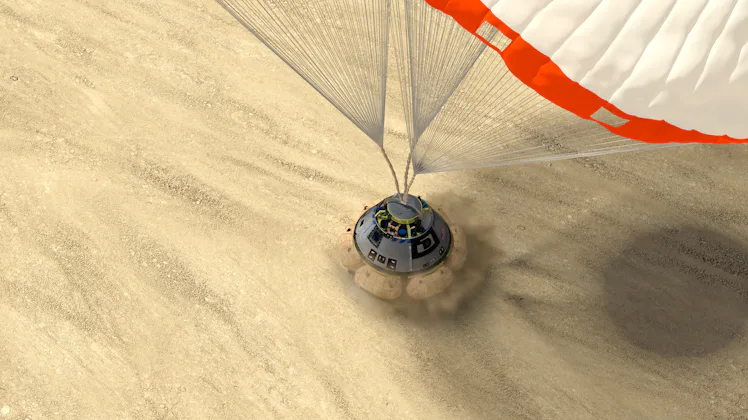
©Shutterstock
Ontsmetten is echt belangrijk
Leviticus 11:28 zegt bijvoorbeeld: 'Iedereen die hun karkassen ophaalt, moet zijn kleren wassen, en ze zullen tot de avond onrein zijn. Deze dieren zijn onrein voor jullie.'
Bronnen: