Naar de inhoud

UFO'S of UAP'S, ASTRONOMIE, RUIMTEVAART, ARCHEOLOGIE, OUDHEIDKUNDE, SF-SNUFJES EN ANDERE ESOTERISCHE WETENSCHAPPEN - DE ALLERLAATSTE NIEUWTJES

UFO's of UAP'S in België en de rest van de wereld
akke.beakke.be
Ontdek de Fascinerende Wereld van UFO's en UAP's: Jouw Bron voor Onthullende Informatie! Ben jij ook gefascineerd door het onbekende? Wil je meer weten over UFO's en UAP's, niet alleen in België, maar over de hele wereld? Dan ben je op de juiste plek! België: Het Kloppend Hart van UFO-onderzoek In België is BUFON (Belgisch UFO-Netwerk) dé autoriteit op het gebied van UFO-onderzoek. Voor betrouwbare en objectieve informatie over deze intrigerende fenomenen, bezoek je zeker onze Facebook-pagina en deze blog. Maar dat is nog niet alles! Ontdek ook het Belgisch UFO-meldpunt en Caelestia, twee organisaties die diepgaand onderzoek verrichten, al zijn ze soms kritisch of sceptisch. Nederland: Een Schat aan Informatie Voor onze Nederlandse buren is er de schitterende website www.ufowijzer.nl, beheerd door Paul Harmans. Deze site biedt een schat aan informatie en artikelen die je niet wilt missen! Internationaal: MUFON - De Wereldwijde Autoriteit Neem ook een kijkje bij MUFON (Mutual UFO Network Inc.), een gerenommeerde Amerikaanse UFO-vereniging met afdelingen in de VS en wereldwijd. MUFON is toegewijd aan de wetenschappelijke en analytische studie van het UFO-fenomeen, en hun maandelijkse tijdschrift, The MUFON UFO-Journal, is een must-read voor elke UFO-enthousiasteling. Bezoek hun website op www.mufon.com voor meer informatie. Samenwerking en Toekomstvisie Sinds 1 februari 2020 is Pieter niet alleen ex-president van BUFON, maar ook de voormalige nationale directeur van MUFON in Vlaanderen en Nederland. Dit creëert een sterke samenwerking met de Franse MUFON Reseau MUFON/EUROP, wat ons in staat stelt om nog meer waardevolle inzichten te delen. Let op: Nepprofielen en Nieuwe Groeperingen Pas op voor een nieuwe groepering die zich ook BUFON noemt, maar geen enkele connectie heeft met onze gevestigde organisatie. Hoewel zij de naam geregistreerd hebben, kunnen ze het rijke verleden en de expertise van onze groep niet evenaren. We wensen hen veel succes, maar we blijven de autoriteit in UFO-onderzoek! Blijf Op De Hoogte! Wil jij de laatste nieuwtjes over UFO's, ruimtevaart, archeologie, en meer? Volg ons dan en duik samen met ons in de fascinerende wereld van het onbekende! Sluit je aan bij de gemeenschap van nieuwsgierige geesten die net als jij verlangen naar antwoorden en avonturen in de sterren! Heb je vragen of wil je meer weten? Aarzel dan niet om contact met ons op te nemen! Samen ontrafelen we het mysterie van de lucht en daarbuiten.

Berichten van 1 april 2025 tot 30 april 2025

UFO Over Central West, NSW, Australia, April 10, 2025, UAP Drone Sighting News.

UFO Over Central West, NSW, Australia, April 10, 2025, UAP Drone Sighting News. 

UFO_News.png
 
Date of sighing: April 10, 2025
Location of sighting: Central West, Australia
Source: Email report scwaring @yahoo.com
 
Guys I'm getting a lot of email reports this month, so keep sending them in, I will respond to each and every one. 
 
This glowing craft was caught over Australia last night and it moving across the sky smoothly, but it does't have mediatory aircraft lights and its color fluctuates green, white, red but I do not see any wings of this craft and I do not hear any aircraft around. This is a good one! Australia is a hotspot for UFO sightings and it's nice to get one with such clear video proof of that. 
Scott C. Waring - Utah
 
Eyewitness states: 
At first, I assumed it was a satellite based on how fast it was moving, but then I noticed it was flying below and even passing through the clouds. I couldn’t identify what it was, there were no nearby flights on radar and the object made no sound. It was heading east.
 

{ https://www.ufosightingsdaily.com/ }

Hoe vind je dit bericht?
Geschreven door peter om 22:31 Stuur door

Mysterious UFO Sighting Over Argentina Captured on Video – April 2025

Mysterious UFO Sighting Over Argentina Captured on Video – April 2025

Location: Plaza Huincul, Neuquén, Argentina
Date & Time: April 11th, 2025 – 20:11 hours

A stunning new video has emerged from Plaza Huincul, Argentina, showing what appears to be two glowing red lights hovering silently in the night sky. The witness, who recorded the phenomenon from their backyard, described the lights as “looking like car tail lights in the sky” – but without any obvious structure or sound.

What makes this sighting particularly strange is the synchronized movement of the lights. Unlike conventional aircraft or satellites, these lights remained steady and equally spaced, showing no signs of blinking, flickering, or rapid movement. Could this be a military drone? Secret technology? Or something not from this world?

🎥 Watch the full video below and see for yourself.
Join the growing number of sky watchers who believe we’re not alone.

🛸 Theories From the UFO Community

As with most UFO sightings, the online community has chimed in with theories ranging from:

  • Starlink satellites (unlikely, due to red color and fixed spacing)
  • High-altitude military drones
  • Unidentified advanced technology
  • Or possibly… extraterrestrial visitors?

The witness even commented, “I don’t think my country has the technology to put something like this in the sky.”

👽 What Do You Think?

This is just one of many UFO sightings reported around the world in 2025. If you’ve seen something similar, share your story in the comments!

  •  Has this sighting changed your view of the skies? Don’t forget to like, comment, and subscribe for more UFO videos and updates.

RELATED VIDEOS


{ https://www.latest-ufo-sightings.net/ }

Hoe vind je dit bericht?
Geschreven door peter om 22:23 Stuur door

Dit is hoe het leven op Mars eruit zou zien!

Dit is hoe het leven op Mars eruit zou zien!

Artikel door Anaëlle G

Dit is hoe het leven op Mars eruit zou zien!

Dit is hoe het leven op Mars eruit zou zien!
© 'Ali Pazani & murat esibatir / Pexels'

Je hebt waarschijnlijk wel eens gehoord van Mars als het volgende grote avontuur van de mensheid. Maar hoe zou het leven op de rode planeet er werkelijk uitzien? Vergeet de clichés van sciencefictionfilms waarin iedereen chromen ruimtepakken draagt en tegen groene buitenaardse wezens vecht.

Mars Adobe Stock

Miljarden jaren geleden was Mars misschien wel het thuis van zichzelf vernietigende microben.

Hier zijn enkele sleutelelementen, gegeven door kunstmatige intelligentie, om je voor te stellen hoe het leven op Mars eruit zou kunnen zien:

1. Onder druk staande en luchtdichte habitats

  • De atmosfeer van Mars bestaat voornamelijk uit koolstofdioxide, wat een grote uitdaging vormt voor de ontwikkeling van leefbare omgevingen op de planeet. De atmosferische druk op Mars is extreem laag, ongeveer 1% van die op aarde. Dit betekent dat de omstandigheden niet alleen ongeschikt zijn voor menselijke bewoning, maar ook dat er speciale maatregelen moeten worden genomen om bewoners te beschermen tegen de vijandige omgeving.

  • Om te kunnen ademen op Mars is het essentieel dat habitats volledig luchtdicht zijn. Dit houdt in dat de structuren goed afgesloten moeten zijn om de waardevolle zuurstof binnen te houden en de schadelijke koolstofdioxide buiten te sluiten. Daarnaast moeten deze habitats worden ontworpen om de druk te kunnen handhaven die nodig is voor menselijke overleving. Een drukniveau dat vergelijkbaar is met dat op aarde, is cruciaal om te voorkomen dat bewoners gezondheidsproblemen ondervinden als gevolg van de lage druk op Mars.

  • Een mogelijke oplossing voor het creëren van deze luchtdichte en onder druk staande habitats is het begraven of bedekken van de structuren met regoliet, het stof dat op het Marsoppervlak voorkomt. Het gebruik van regoliet biedt niet alleen bescherming tegen de schadelijke straling van de zon, maar ook tegen meteorieten en andere externe dreigingen. Dit materiaal kan dienen als een natuurlijk schild, waardoor de habitats veiliger worden voor de bewoners.

  • Kortom, de ontwikkeling van onder druk staande en luchtdichte habitats op Mars is van cruciaal belang voor de toekomstige bemande missies. Deze structuren moeten niet alleen functioneel zijn, maar ook duurzaam en veilig, zodat menselijke levens op de rode planeet mogelijk worden. Door gebruik te maken van de beschikbare middelen op Mars, zoals regoliet, kunnen we een effectieve basis creëren voor het leven en de verkenning van deze fascinerende wereld.

2. Overlevingssystemen en middelen

In de uitdagende omgeving van Mars is het essentieel om effectieve overlevingssystemen en middelen te ontwikkelen om de aanvoer van water, voedsel en zuurstof te waarborgen. Deze systemen zijn cruciaal voor de levensvatbaarheid van toekomstige menselijke missies en colonies op de rode planeet. De aanvoer van deze vitale middelen zal voornamelijk afhangen van recyclingprocessen en het gebruik van lokaal beschikbare hulpbronnen.

  • Waterwinning

Water is een van de belangrijkste elementen voor overleving. Op Mars kan water gewonnen worden uit ondergrondse ijs- of permafrostafzettingen. Wetenschappers hebben aangetoond dat er aanzienlijke hoeveelheden ijs onder het Marsoppervlak aanwezig zijn, vooral op de polen en in sommige mid-latitude regio's. Door deze ijsafzettingen te delven en te smelten, kan drinkbaar water worden verkregen. Daarnaast kan water ook gewonnen worden uit de lucht, waar het in zeer lage concentraties aanwezig is. Door middel van speciale technieken kan dit water gecondenseerd en opgevangen worden.

  • Zuurstofproductie

De productie van zuurstof is eveneens van cruciaal belang voor de menselijke overleving. Er zijn verschillende methoden om zuurstof op Mars te genereren. Een effectieve manier is het extraheren van zuurstof uit koolstofdioxide (CO₂), dat in overvloed aanwezig is in de Martiaanse atmosfeer. Dit kan worden gedaan met behulp van chemische processen zoals de Sabatier-reactie, waarbij CO₂ en waterstof worden omgezet in methaan en zuurstof.

Een andere veelbelovende methode voor zuurstofproductie is elektrolyse, waarbij water (H₂O) wordt gesplitst in zuurstof (O₂) en waterstof (H₂) door middel van elektrische energie. Deze energie kan worden opgewekt met behulp van zonnepanelen of nucleaire bronnen. Het resultaat is een duurzame manier om de benodigde zuurstof voor de bewoners van een Marsbasis te genereren.

  • Duurzaamheid en Recycling

Om een zelfvoorzienend ecosysteem op Mars te creëren, is het belangrijk om recyclingprocessen te implementeren. Afvalprodukten moeten worden hergebruikt en omgezet in nieuwe bronnen, zoals het recyclen van gebruikte materialen om voedselproductie of waterzuivering te ondersteunen. Op deze manier kan de afhankelijkheid van aardse bevoorradingen tot een minimum worden beperkt, wat cruciaal is voor de langdurige voortzetting van menselijke activiteiten op Mars.

In conclusie, de ontwikkeling van overlevingssystemen op Mars vereist innovatieve technieken voor waterwinning, zuurstofproductie en het efficiënt gebruik van lokale middelen. Door deze systemen te optimaliseren, kan de mensheid een duurzame toekomst op de rode planeet opbouwen.

3. Lokale voedselproductie

De kolonisten konden niet uitsluitend vertrouwen op geïmporteerde voedselreserves om in hun voedingsbehoeften te voorzien. Dit maakte het noodzakelijk dat ze innovatieve methoden ontwikkelden voor lokale voedselproductie. Het opzetten van bovengrondse teeltsystemen werd essentieel. Twee veelbelovende technieken die hierbij in overweging genomen moesten worden, zijn hydrocultuur en aeroponics.

  • Hydrocultuur is een methode waarbij planten worden gekweekt in een waterige oplossing die rijk is aan voedingsstoffen, zonder dat er aarde aan te pas komt. Dit systeem maakt het mogelijk om een gecontroleerde omgeving te creëren waarin de planten optimaal kunnen groeien. De kolonisten zouden specifieke voedingsstoffen kunnen toevoegen aan het water, wat de groei van de planten bevordert en de opbrengst verhoogt.
  • Aeroponics daarentegen, is een techniek waarbij plantenwortels worden opgehangen in een luchtige omgeving en regelmatig worden besproeid met een fijne nevel van voedingsoplossing. Dit systeem is bijzonder efficiënt in het gebruik van water en kan leiden tot snellere groei van de planten, wat cruciaal zou zijn in de beperkte ruimte van een kolonie.
  • Daarnaast zou de ontwikkeling van kassen onder druk een andere innovatieve oplossing zijn. Deze kassen zouden een stabiele en gecontroleerde omgeving bieden, die zowel de temperatuur als de luchtvochtigheid optimaliseert voor plantengroei. Door gebruik te maken van kunstmatige verlichting en ventilatiesystemen, zouden kolonisten in staat zijn om het hele jaar door gewassen te telen, ongeacht de externe omstandigheden.
  • Planten zouden niet alleen een cruciale rol spelen bij de voedselproductie, maar ook bij de luchtrecycling binnen de kolonies. Ze absorberen koolstofdioxide en geven zuurstof af, wat de luchtkwaliteit ten goede komt en bijdraagt aan een gezonde leefomgeving. Bovendien zou de aanwezigheid van planten een psychologische ondersteuning bieden voor de bewoners. Groen in de leefomgeving kan stress verlagen, welzijn bevorderen en een gevoel van verbondenheid met de natuur creëren, wat essentieel is voor de mentale gezondheid van de kolonisten.

Samenvattend, lokale voedselproductie door middel van innovatieve teeltmethoden zal van vitaal belang zijn voor de duurzaamheid en het welzijn van de kolonisten.

4. Milieu en gezondheid

  • De zwaartekracht op Mars bedraagt ongeveer een derde van die op aarde. Dit verschil kan aanzienlijke gevolgen hebben voor de gezondheid van mensen die langdurig op de rode planeet verblijven. De verminderde zwaartekracht kan leiden tot een verslechtering van de spieren en botten. Onderzoek op aarde heeft aangetoond dat astronauten die langere tijd in de ruimte doorbrengen, vaak last krijgen van spieratrofie en botontkalking. Dit komt doordat de spieren en botten niet dezelfde belasting ervaren als op aarde. Daarom is het cruciaal dat toekomstige Mars-missies rekening houden met de impact van deze verminderde zwaartekracht op de gezondheid van de astronauten. Het ontwikkelen van effectieve trainingsprogramma's en het gebruik van technologieën die de spier- en botsterkte helpen behouden, zullen essentiële onderdelen zijn van een succesvolle lange termijn aanwezigheid op Mars.
  • Daarnaast is de bloedcirculatie ook een punt van zorg. De lagere zwaartekracht kan invloed hebben op de manier waarop bloed door het lichaam circuleert. Dit kan leiden tot verschillende gezondheidsproblemen, zoals een verhoogde kans op bloedstolsels en verminderde doorbloeding van de extremiteiten. Het is daarom noodzakelijk om medische protocollen te ontwikkelen die zich richten op het monitoren en waar nodig corrigeren van deze effecten.
  • Een ander belangrijk aspect van het milieu op Mars is de blootstelling aan kosmische en zonnestraling. Op aarde worden we beschermd tegen deze straling door de atmosfeer en het magnetische veld van onze planeet. Mars heeft echter geen globaal magnetisch schild, waardoor de straling veel intenser is. Dit kan leiden tot een verhoogd risico op kanker en andere gezondheidsproblemen. Beschermende maatregelen zijn daarom van cruciaal belang. Ondergrondse constructies kunnen een effectieve manier zijn om de straling te verminderen. Door habitats onder de grond te bouwen, kunnen astronauten zich beter beschermen tegen de schadelijke effecten van straling. Daarnaast kunnen regolietenschilden, gemaakt van het stof en de stenen die op Mars voorkomen, worden gebruikt om de leefruimten te bedekken en extra bescherming te bieden.
  • Tot slot zijn de extreme temperaturen op Mars een grote uitdaging. De temperaturen kunnen vaak ruim onder 0°C dalen, wat het leven op de planeet bijzonder moeilijk maakt. Het gebruik van drukpakken is daarom essentieel voor astronauten die buiten de beschermde omgeving van hun habitats werken. Deze pakken moeten niet alleen beschermen tegen de koude, maar ook tegen de straling en andere omgevingsfactoren. Daarnaast is het noodzakelijk om efficiënte verwarmingssystemen te ontwikkelen voor de leefruimten, zodat deze een comfortabele en veilige omgeving kunnen bieden voor de bewoners. Het creëren van een geschikte temperatuur en het behouden van een stabiele omgeving zijn essentieel voor de gezondheid en het welzijn van de astronauten op Mars.

In conclusie, het milieu op Mars brengt aanzienlijke uitdagingen met zich mee voor de gezondheid van mensen. Van de effecten van verminderde zwaartekracht tot de risico's van straling en extreme temperaturen, het is van vitaal belang dat toekomstige missies goed voorbereid zijn om deze obstakels te overwinnen.

5. Dagelijks leven en sociale organisatie

Het leven op een afgelegen kolonie, zoals die op Mars, brengt unieke uitdagingen met zich mee die vragen om een grote veelzijdigheid van de kolonisten. De kleine bevolking van de kolonie vereist dat elke kolonist een breed scala aan vaardigheden en kennis heeft. Dit is essentieel om de dagelijkse faciliteiten te onderhouden, voedsel te produceren, wetenschappelijk onderzoek uit te voeren en andere cruciale taken te vervullen die bijdragen aan het welzijn en de duurzaamheid van de gemeenschap.

  • Veelzijdigheid van de kolonisten

De kolonisten moeten zich niet alleen aanpassen aan hun nieuwe omgeving, maar ook een breed scala aan verantwoordelijkheden op zich nemen. Dit kan variëren van technische vaardigheden, zoals het repareren van apparatuur en het onderhouden van levensondersteunende systemen, tot agrarische kennis voor voedselproductie. Het kweken van gewassen in gesloten omgevingen, zoals kassen, vereist specifieke technieken en innovaties om de groeiomstandigheden te optimaliseren. Daarnaast zijn wetenschappelijk onderzoek en experimenten van groot belang, zowel voor de ontwikkeling van nieuwe technologieën als voor het begrijpen van de effecten van de Marsomgeving op de mens en andere organismen.

  • Verkenningsmissies

Buiten de kolonie worden verkenningsmissies uitgevoerd om de omgeving van Mars beter te begrijpen en hulpbronnen te ontdekken. Deze missies worden uitgevoerd in speciaal ontworpen pakken die geschikt zijn voor de lage luchtdruk en het schurende Marsstof. Deze pakken zijn uitgerust met geavanceerde technologieën die niet alleen bescherming bieden, maar ook de communicatie tussen de teamleden mogelijk maken. De kolonisten moeten goed voorbereid zijn op de uitdagingen die ze buiten de veilige omgeving van de kolonie tegenkomen, waaronder extreme weersomstandigheden en onbekende gevaren.

  • Samenwerking en communicatie

Het leven in een besloten ruimte op Mars legt een sterke nadruk op samenwerking en communicatie. De beperkte ruimte en het isolement maken het cruciaal dat de kolonisten effectief met elkaar kunnen samenwerken. Regelmatige vergaderingen en sociale activiteiten kunnen helpen om de banden tussen de leden van de gemeenschap te versterken. Het delen van verantwoordelijkheden en het gezamenlijk oplossen van problemen zijn essentieel om de dagelijkse werkzaamheden soepel te laten verlopen.

  • Psychologische ondersteuning

Daarnaast is psychologische ondersteuning van groot belang om de mentale gezondheid van de kolonisten te waarborgen. Isolatie kan leiden tot stress, angst en andere mentale gezondheidsproblemen. Het is daarom noodzakelijk dat er systemen zijn voor emotionele steun, zoals counseling en groepsdiscussies. Het creëren van een ondersteunende omgeving waarin kolonisten zich veilig voelen om hun zorgen en gevoelens te delen, kan bijdragen aan een betere cohesie binnen de gemeenschap.

Kortom, het dagelijks leven en de sociale organisatie op een Marskolonie vereisen een combinatie van veelzijdigheid, samenwerking en psychologische ondersteuning. Deze elementen zijn cruciaal voor het succes en de duurzaamheid van de koloniale samenleving op de rode planeet.

6. Sleuteltechnologieën

In de hedendaagse wereld zijn verschillende sleuteltechnologieën van cruciaal belang voor de ontwikkeling van efficiënte en duurzame processen. Deze technologieën hebben de potentie om onze manier van werken, produceren en recyclen ingrijpend te veranderen. In dit hoofdstuk worden drie belangrijke sleuteltechnologieën besproken: 3D-printen en additieve productie, robots en drones, en geavanceerde recyclingsystemen.

1. 3D-printen en additieve productie

3D-printen, ook wel bekend als additieve productie, is een technologie die de manier waarop we structuren en reserveonderdelen bouwen revolutioneert. Het proces omvat het laag voor laag opbouwen van objecten op basis van digitale ontwerpen. Dit biedt tal van voordelen:

  • Snelle prototyping: Met 3D-printen kunnen bedrijven snel prototypes van producten ontwikkelen en testen, wat de tijd van concept tot markt aanzienlijk verkort. Dit is vooral nuttig in sectoren zoals de luchtvaart en de geneeskunde, waar maatwerk cruciaal is.
  • Kostenbesparing: Door het verminderen van materiaalkosten en afval, kunnen bedrijven aanzienlijke besparingen realiseren. Traditionele productieprocessen vereisen vaak grote hoeveelheden materiaal, terwijl 3D-printen alleen het noodzakelijke materiaal gebruikt.
  • Complexe ontwerpen: 3D-printtechnologie maakt het mogelijk om complexe en unieke ontwerpen te maken die met traditionele productiemethoden moeilijk of zelfs onmogelijk te realiseren zijn. Dit opent de deur naar innovaties in productontwerp.
  • Lokaal produceren: Met de opkomst van 3D-printtechnologie kunnen bedrijven lokaal produceren, wat de logistieke kosten en de ecologische voetafdruk van transport vermindert. Dit is niet alleen voordelig voor het milieu, maar versterkt ook lokale economieën.

2. Robots en drones

Robots en drones zijn onmisbare hulpmiddelen geworden voor het automatiseren van gevaarlijke en repetitieve taken. Deze technologieën bieden een scala aan voordelen en toepassingen:

  • Veiligheid: In sectoren zoals de mijnbouw, de bouw en de energieproductie kunnen robots en drones gevaarlijke taken uitvoeren, zoals ijswinning of reparaties buitenshuis. Dit vermindert de blootstelling van werknemers aan potentieel gevaarlijke situaties.
  • Efficiëntie: Robots kunnen taken sneller en nauwkeuriger uitvoeren dan mensen, wat leidt tot hogere productiviteit. Drones kunnen bijvoorbeeld worden ingezet voor inspecties van moeilijk bereikbare locaties, waardoor de tijd en kosten van het onderhoud aanzienlijk worden verlaagd.
  • Data-analyse: Drones zijn uitgerust met geavanceerde sensoren en camera's, waardoor ze waardevolle data kunnen verzamelen voor analyse. Dit stelt bedrijven in staat om beter geïnformeerde beslissingen te nemen en hun processen te optimaliseren.
  • Flexibiliteit: Robots en drones kunnen eenvoudig worden geprogrammeerd voor verschillende taken en kunnen zich aanpassen aan veranderende omstandigheden. Dit maakt ze uiterst veelzijdig en geschikt voor diverse industrieën.

3. Geavanceerde recyclingsystemen

De noodzaak om duurzaam te produceren en te consumeren is urgenter dan ooit. Geavanceerde recyclingsystemen spelen een cruciale rol in het maximaliseren van het hergebruik van water, lucht en afval:

  • Waterhergebruik: Innovatieve technologieën maken het mogelijk om water te recyclen en opnieuw te gebruiken in industriële processen. Dit is essentieel in waterarme regio's en helpt bij het behoud van deze kostbare hulpbron.
  • Luchtzuivering: Geavanceerde systemen kunnen vervuilde lucht filteren en zuiveren, waardoor de luchtkwaliteit verbetert. Dit is van groot belang voor zowel de gezondheid van mensen als voor het milieu.
  • Afvalbeheer: Door middel van slimme recyclingsystemen kunnen bedrijven hun afvalproductie verminderen en waardevolle materialen terugwinnen uit wat voorheen als afval werd beschouwd. Dit sluit aan bij de circulaire economie, waarin producten en materialen zo lang mogelijk in omloop blijven.

Conclusie: De combinatie van 3D-printen, robots, drones en geavanceerde recyclingsystemen biedt een krachtige toolkit voor de toekomst. Deze technologieën helpen niet alleen bij het verhogen van de efficiëntie en veiligheid, maar dragen ook bij aan een duurzamere wereld. Het is essentieel dat bedrijven en overheden blijven investeren in deze innovaties om een positieve impact op onze samenleving en het milieu te waarborgen.

Eindbesluit: Leven op Mars - Een Toekomstige Mogelijkheid

De verkenning van Mars en de mogelijkheid om er te leven is een onderwerp dat steeds meer aandacht krijgt. Met de vooruitgang in technologie en ruimtevaart, lijkt het idee van een menselijke kolonie op de Rode Planeet steeds haalbaarder. Er zijn echter verschillende factoren die overwogen moeten worden voordat we deze stap zetten.

Ten eerste is de atmosfeer van Mars een grote uitdaging. De dunne lucht, die voor 95% uit koolstofdioxide bestaat, biedt weinig bescherming tegen schadelijke straling en is niet geschikt voor menselijke ademhaling. Wetenschappers en ingenieurs moeten innovatieve oplossingen ontwikkelen, zoals het bouwen van hermetisch afgesloten habitats of het creëren van kunstmatige atmosfeer, om een leefbare omgeving te garanderen.

Daarnaast zijn de temperaturen op Mars extreem en variëren van -125 graden Celsius in de winter tot 20 graden Celsius in de zomer. Dit vereist geavanceerde technologieën voor temperatuurregulatie in woonruimtes en kleding.

Voedselproductie is ook een cruciaal aspect van leven op Mars. De beperkte beschikbaarheid van water en de onvruchtbare bodem vormen een uitdaging voor landbouw. Onderzoek naar hydroponische en aeroponische technieken kan helpen bij het verbouwen van voedsel in de gesloten systemen die nodig zijn voor langdurige missies.

Verder is de psychosociale impact van het leven op Mars niet te verwaarlozen. De isolatie en afstand van de aarde kunnen leiden tot mentale gezondheidsproblemen. Het is essentieel dat er voldoende ondersteuning en recreatieve mogelijkheden zijn voor Marsbewoners om hun welzijn te waarborgen.

Tot slot speelt de transportinfrastructuur een belangrijke rol. Het ontwikkelen van efficiënte manieren om mensen en goederen van en naar Mars te vervoeren is cruciaal voor het succes van een Marskolonie. Ruimtevaartbedrijven zoals SpaceX werken aan herbruikbare raketten, wat de kosten en de frequentie van reizen kan verlagen.

In conclusie, hoewel het leven op Mars veelbelovend lijkt, zijn er aanzienlijke uitdagingen die overwonnen moeten worden. Met de juiste investeringen in technologie, infrastructurele ontwikkeling en mentale gezondheidszorg, zou het mogelijk kunnen zijn om in de toekomst een zelfvoorzienende gemeenschap op Mars te vestigen. Het is een ambitieus doel, maar de mensheid heeft altijd gestreefd naar het verkennen van nieuwe grenzen.

Curiosity ontdekte de koolstofketens in het mini-lab aan boord van de rover.

Curiosity ontdekte de koolstofketens in het mini-lab aan boord van de rover.

Illustratie: NASA

  • Over het geheel genomen zou het leven op Mars een combinatie van geavanceerde technologieën, fysiologische en psychologische aanpassingen en ultra-efficiënt beheer van hulpbronnen vereisen. De leefgebieden zouden heel anders zijn dan onze aardse huizen, maar wie weet? Over een paar decennia zal misschien een van onze nakomelingen dit artikel lezen vanuit een koepel op Mars.

{ PETER2011 }

Hoe vind je dit bericht?
Geschreven door peter om 21:35 Stuur door

Geologists Find Clues In Crater Left by Dinosaur-Killing Asteroid

Geologists Find Clues In Crater Left by Dinosaur-Killing Asteroid

Geophysicists announced this week that they have successfully collected key samples from the site of the asteroid strike that likely wiped out the dinosaurs. 
(Joe Tucciarone/Science Source)

Scientists have had a literal breakthrough off the coast of Mexico.

After weeks of drilling from an offshore platform in the Gulf of Mexico, they have reached rocks left over from the day the Earth was hit by a killer asteroid.

The cataclysm is believed to have wiped out the dinosaurs. “This was probably the most important event in the last 100 million years,” says Joanna Morgan, a geophysicist at Imperial College in London and a leader of the expedition.

Liftboat Myrtle is a drilling platform normally used for oil operations. Since April, geologists have been using it in the Gulf of Mexico to drill into the crater Chicxulub. Liftboat Myrtle is a drilling platform normally used for oil operations. Since April, geologists have been using it in the Gulf of Mexico to drill into the crater Chicxulub.  (DSmith/ECORD/IODP)

Since the 1980s, researchers have known about the impact site, located near the present-day Yucatan Peninsula. Known as Chicxulub, the crater is approximately 125 miles across. It was created when an asteroid the size of Staten Island, N.Y., struck Earth around 66 million years ago. The initial explosion from the impact would have made a nuclear bomb look like a firecracker. The searing heat started wildfires many hundreds of miles away.

After that, came an unscheduled winter. Sulfur, ash and debris clouded the sky. Darkness fell and, for a while, Earth was not itself.

“I think it was a bad few months, really,” Morgan says.

That’s an understatement: Scientists believe 75 percent of life went extinct during this dark chapter in Earth’s history, including the dinosaurs.

Researchers have sampled Chicxulub before, but this expedition by the European Consortium for Ocean Research Drilling precisely targets a key part of the crater yet to be studied: a ring of mountains left by the asteroid. This “peak ring” is a fundamental feature of the strike and should tell researchers much more about it, says Sean Gulick, a geophysicist at the University of Texas at Austin, who co-leads the team with Morgan.

For weeks, they’ve been drilling — and going back in time. Each layer of rock they pass through is connected to a part of Earth’s history.

Scientists on Myrtle have been drilling around-the-clock. This week, they finally reached a buried ring of mountains created by the asteroid.
Scientists on Myrtle have been drilling around-the-clock. This week, they finally reached a buried ring of mountains created by the asteroid.  (ELeBer/ECORD/IODP)

“We went through a remarkable amount of the post-impact world. All the way into the Eocene times — so between 50 and 55 million years ago,” Gulick says.

The rocks they’ve pulled out show how life began to recover after the cataclysm, Gulick says. “We’ve got all these limestones and rocks that contain the fossils from the world after the impact, all the things that evolved from the few organisms that survived.”

The research team finally reached the top of the peak ring this week. It appears to be a thick layer of broken, melted rock just beneath a layer of sandstone that may be the leavings of a huge tsunami that was triggered when the asteroid struck.

Gulick thinks the rocks hold clues. For example, if any microscopic organisms survived near the site of the strike, their fossils might be in these samples. In June, the rock cores will be sent back to a lab in Germany for further study.

The asteroid strike marked the end of an era. But the creatures that made it through that catastrophe went on to shape the world again, says Morgan.

“The mammals survived,” she says. “And that led on to our own evolution.”

At the site of the dinosaur-killing crater, scientists find a surprise

When colossal asteroids rock Earth, it's not all doom and gloom.

The menacing asteroid that wiped out non-avian dinosaurs left a colossal marine crater in what's now the Yucatan Peninsula. But after analyzing deeply drilled rock core from the impact site created by the six-mile-wide asteroid, geologists have found compelling evidence that life soon thrived in the basin following the seismic episode.

The asteroid's impact stoked nutrients and chemicals to be released from beneath the seafloor, a process called hydrothermal activity. Similar activity naturally occurs today in the deep sea, where hydrothermal vents emit superheated chemical-rich fluid into the water, feeding unique colonies of life, including huge tubeworms, crabs, fish, microorganisms, and beyond.

"This study reveals that impact cratering events, while primarily destructive, can in some cases also lead to significant hydrothermal activity,” Steven Goderis, a researcher at Vrije Universiteit Brussel in Belgium who co-authored the study, said in a statement. “In the case of Chicxulub, this process played a vital role in the rapid recovery of marine ecosystems.”

The research was published this week in the peer-reviewed journal Nature Communications.

The colossal impact event, which triggered a mass extinction event over much of Earth's land and ocean environments, also filled the present-day Gulf of Mexico with nutrients for at least 700,000 years, the researchers concluded.

In the core drilled from the impact site, called "Chicxulub crater" (which you should Google for a novel Google-created search result), researchers found a ratio of the metallic element osmium that is associated with asteroid remnants. When the asteroid struck this region, its pulverized particles — which contained osmium — mixed beneath the seafloor and were emitted into the water, before eventually settling back down on the seafloor. When scientists drilled into the ocean bottom, they brought up this ancient seafloor, revealing that hydrothermal fluid containing asteroid remnants flowed into the gulf for hundreds of thousands of years.

The impact, which precipitated widespread hydrothermal activity, ultimately created a nutrient-rich oceanic bath, the researchers say.

"After the asteroid impact, the Gulf of Mexico records an ecological recovery process that is quite different from that of the global ocean, as continuous hydrothermal activity has created a unique marine environment," Honami Sato, an earth scientist at Japan's Kyushu University who led the research, explained.

If such a cataclysmic event could create extremely habitable conditions on a region of Earth, the same might happen on other worlds, too. It could happen on ocean moons, or in a related way, perhaps even on desert worlds. Mars, for example, is a planet bombarded with meteor strikes. Such impacts could melt the plentiful water ice in parts of Mars' subsurface, creating an inviting environment for microbes to thrive.

The risks of an asteroid impact

Fortunately for us earthling land-dwellers, the odds of a cataclysmic space rock impact are exceedingly small. Here are today's general risks from asteroids or comets both tiny and very large. Importantly, even relatively small rocks can still be threatening, as the surprise 56-foot (17-meter) rock that exploded over Russia and blew out people's windows in 2013 proved.

  • Every single day about 100 tons of dust and sand-sized particles fall through Earth's atmosphere and promptly burn up.
  • Every year, on average, an "automobile-sized asteroid" plummets through our sky and explodes, according to NASA.
  • Impacts by objects around 460 feet (140 meters wide) in diameter occur every 10,000 to 20,000 years.
  • A "dinosaur-killing" impact from a rock perhaps a half-mile across or larger happens on 100-million-year timescales.

Hoe vind je dit bericht?
Geschreven door peter om 23:47 Stuur door

De zoektocht naar leven op Mars: een 40-jarige verkenning

De zoektocht naar leven op Mars: een 40-jarige verkenning

Mars, illustration. Mars is the fourth planet from the Sun. It is a rocky desert world. It orbits the Sun at an average distance of around 227 million kilometres. Its diameter is around half Earth's. The red colour is due to the iron oxides in the rocks Getty Images/Science Photo Libra

Getty Images/Science Photo Libra

Inleiding

De zoektocht naar leven op Mars is een van de meest intrigerende en uitdagende wetenschappelijke ondernemingen van de afgelopen decennia. Sinds de jaren '60 heeft NASA, samen met andere ruimteagentschappen wereldwijd, talloze missies gelanceerd om deze mysterieuze planeet te verkennen. Deze dissertatie biedt een uitgebreide verkenning van de inspanningen van NASA en andere landen in de zoektocht naar leven op Mars, de belangrijkste mijlpalen in deze zoektocht, en de toekomst van Marsverkenning en kolonisatie.

Hoofdstuk 1: Verkenning van de planeet Mars

1.1 Meer dan 14 SONDES landden op Mars
Sinds het begin van de ruimteverkenning hebben meerdete landen hun eigen missies naar Mars gelanceerd. Dit varieert van orbiters en landers tot rovers die het oppervlak van de planeet verkennen. Sommige van de meest opmerkelijke bijdragen zijn afkomstig van landen zoals Rusland, de Verenigde Staten, Europa, India en recentelijk China. De eerste succesvolle landing op Mars vond plaats in 1971 met de Russische Mars 3, hoewel deze missie slechts kortstondige gegevens verzond.

In de jaren '90 en 2000 hebben de Verenigde Staten met de Mars Pathfinder en de Spirit en Opportunity rovers een enorme sprong voorwaarts gemaakt in het begrijpen van de planeet. Deze rovers hebben niet alleen beelden van het terrein vastgelegd, maar ook belangrijke informatie verzameld over de mineralen en de geologische geschiedenis van Mars. In 2012 landde de Curiosity-rover, die nog steeds actief is, en heeft de wetenschappelijke gemeenschap voorzien van cruciale gegevens over de mogelijkheid van microbieel leven en de samenstelling van de Marsatmosfeer.

In recentere jaren heeft India met de Mars Orbiter Mission (Mangalyaan) en China met de Tianwen-1-missie hun plaats in het Mars-verkenningsprogramma bevestigd. Deze missies hebben niet alleen wetenschappelijke gegevens verzameld, maar hebben ook de internationale samenwerking op het gebied van ruimtevaart verder gestimuleerd. De voortdurende uitwisseling van informatie en technologieën tussen landen heeft geleid tot een collectief begrip van de uitdagingen en kansen die Mars biedt.

1.2 De unieke kenmerken van Mars
Mars, de vierde planeet van ons zonnestelsel, heeft unieke kenmerken die het een interessante bestemming maken voor onderzoek. De planeet heeft een dunne atmosfeer, die voor 95% uit koolstofdioxide bestaat, wat het moeilijk maakt voor leven zoals wij dat kennen om te overleven. De gemiddelde temperatuur op Mars ligt rond de -63 graden Celsius, maar kan sterk variëren van -125 graden bij de polen tot 20 graden aan de evenaar tijdens de zomer.

Mars heeft ijzige polen, bestaande uit bevroren koolstofdioxide en water, die in de loop van de seizoenen uitbreiden en krimpen. Dit fenomeen is fascinerend omdat het aanwijzingen kan geven over het klimaat en de geschiedenis van water op de planeet. Het landschap van Mars is gevarieerd, met indrukwekkende bergen, zoals Olympus Mons, de grootste vulkaan in het zonnestelsel, en de Valles Marineris, een uitgestrekt systeem van kloven dat meer dan 4.000 kilometer lang is. Deze structuren bieden wetenschappers inzicht in de geologische processen die de planeet in de loop der tijd hebben gevormd.

De zoektocht naar leven op Mars richt zich vooral op de aanwezigheid van water, dat essentieel is voor het leven zoals wij dat kennen. Onderzoek heeft aangetoond dat er in het verleden grote hoeveelheden water op het oppervlak van Mars aanwezig waren, wat de mogelijkheid van microbieel leven in de verre geschiedenis van de planeet suggereert. Recentelijk zijn er aanwijzingen gevonden voor zoutwatermeren onder het oppervlak, wat verdere hoop biedt voor de ontdekking van leven.

Met de voortdurende ontwikkelingen in technologie en internationale samenwerking kunnen we verwachten dat de verkenning van Mars in de toekomst nog verder zal toenemen. Missies zoals NASA’s Mars 2020 Perseverance-rover en de plannen van SpaceX voor bemande missies naar Mars zijn slechts enkele voorbeelden van de opwindende toekomst die ons te wachten staat in de verkenning van deze mysterieuze en fascinerende planeet. De zoektocht naar leven, het begrijpen van de geologie, en de mogelijkheid van toekomstige menselijke kolonisatie maken Mars tot een van de meest intrigerende doelen in de ruimteverkenning.

Hoofdstuk 2: Mijlpalen in de zoektocht naar leven

2.1. 1965: De eerste close-up van Mars
In 1965 maakte de Mariner 4-sonde de eerste close-upfoto's van Mars. Deze beelden toonden een dor en kraterachtig oppervlak, wat de verwachtingen over leven op de planeet aanvankelijk deed dalen. De foto's onthulden een landschap dat sterk leek op de maanfase, met duizenden kraters die het oppervlak bedekten, wat suggereerde dat Mars een lange geschiedenis van inslagen had ondergaan. Desondanks wakkerde het ook interesse aan voor verder onderzoek. Wetenschappers begonnen zich te realiseren dat, hoewel het landschap niet de ideale omgeving voor leven leek, de mogelijkheid van ondergrondse waterbronnen of andere vormen van leven niet volledig uitgesloten kon worden. Deze ontdekking leidde tot de ontwikkeling van nieuwe technologieën en missies om Mars verder te verkennen.

2.2. 1976: Viking I landt veilig op Mars
De Viking I-missie was een mijlpaal in de Marsverkenning. Het was de eerste missie die succesvol landde op het oppervlak van de planeet en wetenschappelijke experimenten uitvoerde om leven te detecteren. Viking I vervoerde een aantal instrumenten die waren ontworpen om organische stoffen en microbieel leven te zoeken. Hoewel de resultaten onduidelijk waren en de experimenten geen definitief bewijs van leven opleverden, legden ze de basis voor toekomstige missies. De Viking-missies waren ook pioniers op het gebied van het analyseren van de Marsatmosfeer en -bodem, wat cruciale gegevens opleverde over de samenstelling van de planeet en haar potentieel om leven te ondersteunen.

2.3. 1997: Mars Pathfinder en Sojourner
In 1997 landde de Mars Pathfinder met de kleine rover Sojourner, die het oppervlak van Mars verder onderzocht. Deze missie toonde aan dat Mars een diverse geologie heeft en gaf een glimp van de mogelijkheden voor water in het verleden. Sojourner's analyses toonden aan dat er mogelijk ooit vloeibaar water op het oppervlak heeft gestroomd, wat de hoop op leven deed herleven. De rover was ook de eerste die beelden terugstuurde van een andere wereld in real-time, wat de publieke belangstelling voor Mars aanzienlijk vergrootte.

2.4. 2004: Mars Rover Opportunity vindt water
De Mars Rover Opportunity, gelanceerd in 2003, ontdekte bewijs van water in de vorm van hematiet, wat suggereert dat de planeet ooit een natte omgeving had die mogelijk leven kon ondersteunen. Opportunity's ontdekking van grote, ronde, bolvormige stenen, die 'bottles' werden genoemd, gaf aan dat deze gevormd konden zijn in een waterige omgeving. Gedurende zijn missie van bijna 15 jaar ontdekte Opportunity verschillende geologische kenmerken die duidden op een rijke en complexe geschiedenis, wat de mogelijkheid van vroeg leven op Mars verder onderstreepte.

2.5. 2008: Phoenix vindt ijs op het oppervlak
De Phoenix-sonde, gelanceerd in 2007, landde op de noordpool van Mars en ontdekte ijs onder het oppervlak. Deze cruciale ontdekking, die werd bevestigd door de analyses van het bodemmonster, toonde aan dat er water in bevroren vorm aanwezig was, een essentieel element voor leven. De gegevens die door Phoenix werden verzameld, hielpen wetenschappers ook om de klimaatsystemen van Mars beter te begrijpen en gaven aanwijzingen over de geschiedenis van water op de planeet.

2.6. 2012: Curiosity en de aanzet tot leven
In 2012 landde de Curiosity-rover op Mars met als doel de geologie en klimaatgeschiedenis van de planeet te bestuderen. Curiosity vond organische moleculen en bevestigde dat Mars ooit de juiste omstandigheden had voor leven. De rover heeft verschillende gesteenten en bodemmonsters geanalyseerd, waarbij het bewijs vond voor de aanwezigheid van complexe chemische verbindingen. Bovendien ontdekte Curiosity dat er in het verleden meren op Mars waren, wat de mogelijkheid van leven verder onderstreept. Deze ontdekkingen hebben geleid tot een hernieuwde interesse in de zoektocht naar leven op Mars en de ontwikkeling van plannen voor toekomstige bemande missies.

2.7. 2018: NASA werpt licht op de Marse kern
In 2018 voerde NASA metingen uit die meer inzicht gaven in de samenstelling van de kern van Mars. Deze gegevens zijn cruciaal voor het begrijpen van de geologische geschiedenis van de planeet en de mogelijkheid van leven. De metingen, die werden uitgevoerd door de InSight-sonde, onthulden dat de kern van Mars waarschijnlijk bestaat uit een combinatie van ijzer, zwavel en nikkel, en dat deze waarschijnlijk gedeeltelijk gesmolten is. Dit biedt niet alleen informatie over de ontwikkeling van Mars als planeet, maar kan ook implicaties hebben voor de geologische activiteit die in het verleden plaatsvond, wat mogelijk invloed heeft gehad op de levensomstandigheden. Het inzicht in de interne structuur van Mars helpt wetenschappers om de evolutie van de planeet beter te begrijpen en de kans op leven in de toekomst te evalueren.

Door deze belangrijke mijlpalen in de verkenning van Mars kunnen we een steeds beter beeld krijgen van de mogelijkheden voor leven op deze fascinerende planeet. Elke ontdekkingen voeden de hoop dat we op een dag misschien de ultieme bevestiging zullen vinden van leven buiten de aarde. De zoektocht naar leven op Mars blijft een van de meest intrigerende en uitdagende ondernemingen in de moderne wetenschap, en de komende jaren beloven nog meer spannende ontdekkingen te brengen.

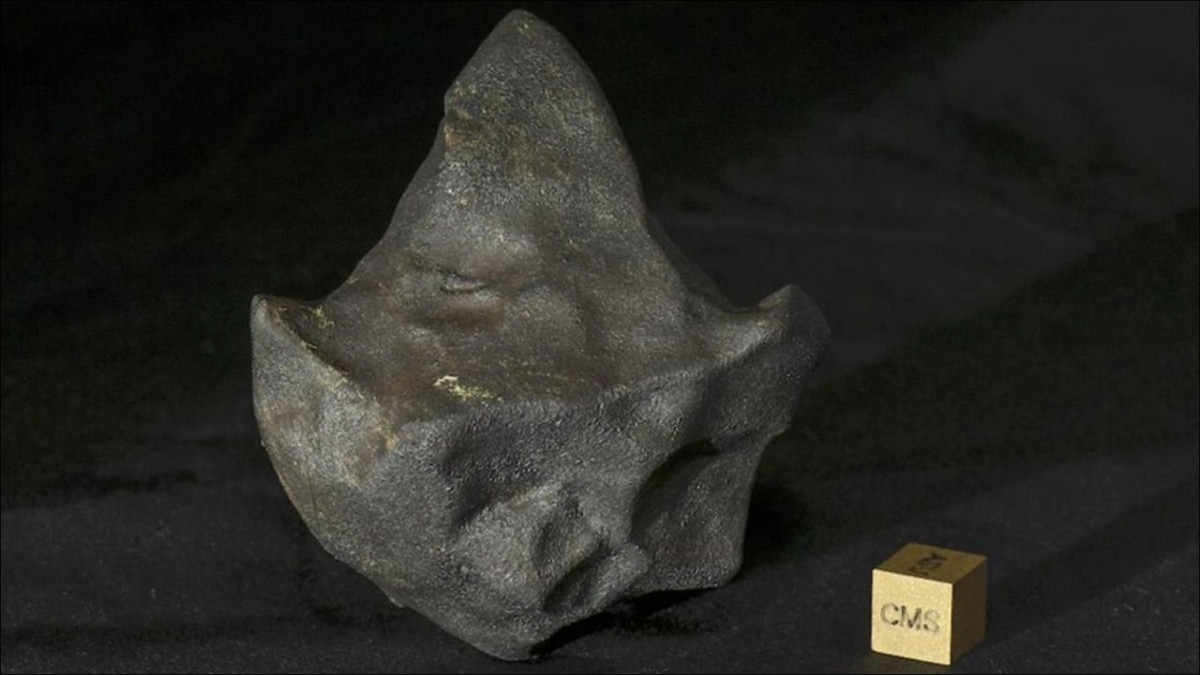
Black Beauty NASA 

Meteoriet 'Black Beauty' ontdekt: mogelijk bewijs van leven op Mars

NASA

Hoofdstuk 3: De toekomst van Marsverkenning

3.1 Mars zal binnen 10 jaar gekoloniseerd worden

De toekomst van Marsverkenning is veelbelovend. Met de vooruitgang in technologie en de groeiende interesse van zowel overheden als particuliere ondernemingen, zoals SpaceX, wordt er verwacht dat Mars binnen de komende tien jaar gekoloniseerd kan worden. De plannen van SpaceX, onder leiding van Elon Musk, omvatten het ontwikkelen van de Starship-raket, die ontworpen is voor interplanetaire reizen. Deze raket moet in staat zijn om grote groepen mensen en vracht naar Mars te transporteren. Musk heeft herhaaldelijk zijn ambitie uitgesproken om een zelfvoorzienende stad op Mars te bouwen, met de eerste bemande vlucht gepland voor 2024 of 2025. Dit ambitieuze project vereist echter niet alleen technologische innovaties, maar ook een diepgaand begrip van de uitdagingen die het leven op Mars met zich meebrengt, zoals straling, de dunne atmosfeer en de beschikbaarheid van water.

3.2 Perseverance en Ingenuity zoeken naar leven op Mars

De meest recente rover, Perseverance, die in februari 2021 landde, heeft als belangrijkste doel het zoeken naar tekenen van oud leven op Mars. Samen met de Ingenuity-drone verkent het team het oppervlak en verzamelt monsterstalen voor toekomstige terugkeer naar de aarde. Perseverance is uitgerust met geavanceerde instrumenten, zoals de SuperCam, die in staat is om beelden van hoge kwaliteit te maken en spectroscopische analyses uit te voeren van de Marsbodem. De rover heeft ook het MOXIE-experiment aan boord, dat laat zien dat het mogelijk is om zuurstof uit de Martiaanse koolstofdioxide-atmosfeer te produceren. Dit experiment is cruciaal voor toekomstige menselijke missies, omdat het aantoont dat we in staat kunnen zijn om zuurstof te genereren voor ademhaling en als brandstof voor raketten.

3.3 Het terugbrengen van Mars-bodemsamples naar de aarde

Een van de grootste uitdagingen voor de toekomst is het terugbrengen van bodemstalen van Mars naar de aarde. Dit zal wetenschappers in staat stellen om gedetailleerder onderzoek te doen naar de geochemie en mogelijke biologische activiteit op de planeet. Het Mars Sample Return-programma, dat in samenwerking tussen NASA en ESA (Europese Ruimtevaartorganisatie) wordt ontwikkeld, omvat het verzamelen van monsters door Perseverance, die vervolgens naar een speciaal ontworpen lander zullen worden gebracht. Deze lander zal de monsters in een raket plaatsen die ze terug naar de aarde zal sturen. Het proces van het veilig terugbrengen van deze monsters is complex en vereist nauwkeurige planning en technologie. Wetenschappers hopen dat de analyses van deze monsters belangrijke inzichten zullen bieden in de geschiedenis van Mars, de mogelijkheid van leven en de geologische processen die de planeet hebben gevormd.

3.4 De mens neemt Mars in door kolonisatie

De visie van een menselijke kolonisatie van Mars is niet langer sciencefiction. Met initiatieven van organisaties zoals SpaceX zijn er plannen gemaakt voor bemande missies naar Mars die de basis zullen leggen voor een duurzame menselijke aanwezigheid op de planeet. De eerste kolonisten zullen waarschijnlijk bestaan uit wetenschappers en ingenieurs die de omgeving zullen onderzoeken en de infrastructuur zullen opbouwen die nodig is voor een blijvende nederzetting. Dit omvat de bouw van habitats, kassen voor voedselproductie en systemen voor het recyclen van water en lucht. Het ontwikkelen van technologieën die de impact van straling op de menselijke gezondheid minimaliseren, zal ook essentieel zijn voor de overleving van de eerste kolonisten. Bovendien zijn er plannen om gebruik te maken van in-situ hulpbronnen, zoals het winnen van water uit de ondergrondse ijslagen en het produceren van brandstof uit lokale materialen. Dit alles zal cruciaal zijn voor het creëren van een zelfvoorzienende gemeenschap die in staat is om te gedijen in de uitdagende Martiaanse omgeving.

3.5 De ethiek van Marskolonisatie

Bij het nadenken over de toekomst van Marsverkenning rijzen ook ethische vragen. Wat zijn de verantwoordelijkheden van de mensheid ten opzichte van andere planetoïden en mogelijk leven? De internationale ruimtewetgeving, zoals het Verdrag betreffende de Ruimte, stelt dat de ruimte en hemellichamen niet het eigendom van een natie kunnen zijn. Dit roept de vraag op hoe kolonisatie op Mars moet worden aangepakt. Wetenschappers en beleidsmakers zullen moeten samenwerken om richtlijnen op te stellen die ervoor zorgen dat de verkenning van Mars op een ethisch verantwoorde manier gebeurt, rekening houdend met de bescherming van eventuele bestaande ecosystemen en het behoud van de Martiaanse omgeving. De toekomst van Marsverkenning hangt dus niet alleen af van technologische vooruitgang, maar ook van onze morele keuzes en verantwoordelijkheden als interplanetair verkenners.

Met deze ontwikkelingen in het vooruitzicht is het duidelijk dat de komende jaren cruciaal zullen zijn voor de Marsverkenning en de mogelijke kolonisatie van de rode planeet. De mensheid staat aan de vooravond van een nieuw tijdperk van verkenning, en de keuzes die we nu maken zullen de toekomst van onze aanwezigheid op Mars en daarbuiten vormgeven.

Conclusie

De zoektocht naar leven op Mars is een complexe en langdurige onderneming die de afgelopen 40 jaar vele mijlpalen heeft gekend. Terwijl we ons voorbereiden op een toekomst waarin Mars mogelijk gekoloniseerd wordt, blijft de wetenschap ons leiden in het begrijpen van deze fascinerende planeet. De ontdekkingen van de afgelopen decennia hebben ons niet alleen meer geleerd over Mars, maar ook over de mogelijkheden van leven buiten de aarde. De komende jaren beloven nog meer spannende ontdekkingen en vooruitgangen in ons streven naar een permanente menselijke aanwezigheid op Mars.

In recente jaren hebben missies zoals NASA's Perseverance-rover, die in februari 2021 op Mars landde, ons waardevolle inzichten verschaft. Perseverance is uitgerust met geavanceerde instrumenten en heeft de taak om de geologie en het klimaat van Mars te bestuderen, evenals de zoektocht naar bewijs van vroeger leven. Een van zijn meest opmerkelijke prestaties tot nu toe was het verzamelen van monsters van Marsgrond die in de toekomst terug naar de aarde zullen worden gebracht voor verdere analyse. Dit kan ons helpen te begrijpen of Mars ooit de juiste omstandigheden heeft gehad voor microbieel leven.

Daarnaast heeft de rover verschillende interessante organische verbindingen ontdekt in de Jezero-krater, een gebied dat ooit een meer bevatte. Dit biedt aanwijzingen dat de omgeving in het verleden mogelijk gunstig was voor leven. Wetenschappers zijn bijzonder enthousiast over de mogelijkheid om de opgeslagen monsters op een later tijdstip te onderzoeken, omdat ze ons kunnen vertellen over de chemische processen die zich op Mars hebben afgespeeld.

Naast NASA werkt ook het Europese ruimtevaartagentschap (ESA) aan Marsmissies. De ExoMars-missie, die een rover genaamd Rosalind Franklin omvat, is gepland om in de nabije toekomst te lanceren. Deze missie heeft als doel om de aanwezigheid van organisch materiaal en sporen van leven op Mars te onderzoeken. Rosalind Franklin is ontworpen om diep in de Marsbodem te boren en monsters te analyseren, wat ons nog dieper inzicht kan geven in de geschiedenis van de planeet.

Rosalind%20Franklin%20rover.jpg

Copyright: ESA

Een ander spannend aspect van de Marsverkenning is de rol van commerciële ruimtevaartbedrijven. SpaceX, onder leiding van Elon Musk, heeft ambitieuze plannen om mensen naar Mars te sturen en zelfs een zelfvoorzienende stad op de planeet op te bouwen. Musk's visie is om binnen het komende decennium de eerste menselijke voetstappen op Mars te zetten. Dit heeft geleid tot een hernieuwde belangstelling voor Mars en heeft de ontwikkeling van technologieën versneld die nodig zijn voor een succesvolle kolonisatie.

Wetenschappers onderzoeken ook de mogelijkheden van terraforming, het proces waarbij de omgeving van Mars zou worden veranderd om het meer aardachtig te maken. Dit omvat ideeën zoals het opwekken van broeikasgassen om de temperatuur te verhogen en water te introduceren. Hoewel dit momenteel nog in de conceptuele fase verkeert, zijn het fascinerende mogelijkheden die ons begrip van Mars en onze plaats in het universum verder kunnen verdiepen.

De potentieel ontdekkingen op Mars zijn niet alleen van belang voor de wetenschap, maar ook voor de mensheid als geheel. Het idee dat er ooit leven op een andere planeet is geweest, kan ons begrip van ons eigen bestaan en de oorsprong van leven in het universum veranderen. Terwijl we ons voorbereiden op een toekomst waarin Mars mogelijk gekoloniseerd wordt, blijven de hoop en de nieuwsgierigheid van de mensheid ons drijven in deze spannende onderneming.

In conclusie, de zoektocht naar leven op Mars is een voortdurende reis vol ontdekkingen en uitdagingen. Met de huidige technologieën en missies zijn we dichter bij het ontrafelen van de geheimen van deze mysterieuze planeet dan ooit tevoren. De komende jaren beloven een periode van ongekende ontdekkingen te worden, die ons hopelijk niet alleen meer inzicht geven in Mars, maar ook in onszelf en ons plaats in het universum.

Bronnen

  1. NASA. (jaar). "Mars Exploration Program." Geraadpleegd vanNASA website
  2. ESA. (jaar). "Mars Express." Geraadpleegd vanESA website
  3. SpaceX. (jaar). "Mars Colonization Plans." Geraadpleegd vanSpaceX website

{ PETER2011 }

Hoe vind je dit bericht?
Geschreven door peter om 23:11 Stuur door

Scientific Report on Communication Signals from Extraterrestrial Civilizations

Scientific Report on Communication Signals from Extraterrestrial Civilizations

Chinese wetenschappers melden mogelijke buitenaardse communicatie

Abstract

The search for extraterrestrial intelligence (SETI) has long fascinated scientists. This report explores various potential communication methods that extraterrestrial civilizations might employ, including neutrino signals, laser communications, gravitational waves, radio waves, and quantum codes. Each method's descriptions, advantages, disadvantages, and future perspectives are discussed to evaluate their feasibility as means of contact with intelligent life beyond Earth.

1. Neutrino Signals: A Potential Medium for Cosmic Communication

Introduction

Neutrinos are among the most fascinating subatomic particles known to science. Produced during nuclear reactions, such as those occurring in stars, they are incredibly weakly interacting, allowing them to traverse vast distances without being absorbed or deflected by matter. This unique property of neutrinos has sparked interest in their potential use as a medium for communication across astronomical distances. In this essay, we will explore the nature of neutrinos, their capabilities as a communication medium, the advantages and disadvantages of using them for communication, and the future perspectives for neutrino communication technology.

Nature of Neutrinos

Neutrinos are fundamental particles that belong to the lepton family, which also includes electrons and their heavier counterparts, muons and taus. They come in three types, or "flavors": electron neutrinos, muon neutrinos, and tau neutrinos. Neutrinos are produced in a variety of processes, including nuclear fusion in stars, radioactive decay, and cosmic events like supernovae. Despite their abundance—trillions of them pass through our bodies every second—neutrinos are notoriously difficult to detect because they interact with matter only through the weak nuclear force. This weak interaction means that neutrinos can travel through light-years of material without being significantly affected, making them an intriguing candidate for communication over astronomical distances.

Communication Medium

The concept of using neutrinos for communication is rooted in their unique properties. Unlike electromagnetic signals, which can be absorbed or scattered by interstellar dust, gas, and cosmic radiation, neutrinos can pass through celestial bodies, including planets and stars. This characteristic makes them particularly appealing for sending messages across vast expanses of space, where traditional communication methods may falter. In theory, a civilization could send neutrino signals that are undetectable by conventional means, effectively hiding their communication from the noise of electromagnetic radiation that fills the universe.

Neutrinos could carry information regarding the sender's location, intentions, or even complex data encoded in specific patterns of neutrino emissions. This encoding is essential for any communication system, as it allows the recipient to interpret the information being sent. While the concept remains largely theoretical at this stage, it opens up exciting possibilities for interstellar communication.

Advantages of Neutrino Communication

  1. Penetrative Ability: One of the most significant advantages of neutrinos is their ability to penetrate dense materials. Unlike photons, which can be absorbed or scattered by matter, neutrinos can travel through celestial bodies with ease. This means that a signal could potentially be sent from one star system to another, passing through intervening matter without loss of clarity.

  2. Low Noise: Neutrinos interact so weakly with matter that background noise from other cosmic phenomena is minimized. This low noise environment can enhance the clarity of the signals, making it easier for recipients to distinguish between meaningful information and random fluctuations.

  3. Universality: Since neutrinos are produced in a variety of astrophysical processes, they can be generated by numerous sources, including stars, supernovae, and artificial means. This universality allows for a wide range of potential communication scenarios, from natural signals emitted by stars to intentional messages sent by advanced civilizations.

Disadvantages of Neutrino Communication

Despite the advantages, there are considerable challenges associated with neutrino communication.

  1. Detection Difficulty: Detecting neutrinos is a significant hurdle. Specialized detectors, such as large underground or underwater observatories, are necessary to capture and interpret neutrino signals. These detectors often require sophisticated technology and substantial resources, making it difficult to establish a reliable communication system.

  2. Energy Requirements: Generating a sufficient flux of neutrinos for communication purposes requires immense energy. The energy needed to produce neutrinos on the scale required for interstellar communication may be beyond the capabilities of many civilizations. This limitation raises questions about the practicality of neutrino communication as a viable means of contact.

  3. Signal Decay and Noise: While neutrinos are less susceptible to interference than electromagnetic signals, they are still subject to potential decay or scattering over long distances. Ensuring that signals remain intact and distinguishable over vast distances remains an unresolved challenge.

Future Perspectives

Research into neutrino communication is still in its infancy, but advancements in particle physics and detector technology could pave the way for practical applications in the future. As our understanding of neutrinos deepens, we may develop new methods for generating and detecting these elusive particles more efficiently. This progress could enhance our ability to use neutrinos for communication, potentially enabling contact with other civilizations or enhancing our understanding of the cosmos.

Moreover, interdisciplinary collaboration between physicists, engineers, and communication experts will be crucial in overcoming the existing challenges. By addressing the technical hurdles associated with neutrino generation and detection, we may unlock the potential for a new frontier in cosmic communication.

Conclusion

Neutrinos present a unique and compelling opportunity for communication across astronomical distances. Their weakly interacting nature allows them to traverse vast expanses of space, potentially enabling civilizations to send messages that remain undetectable by conventional means. While there are considerable challenges to overcome, including detection difficulties and energy requirements, the exploration of neutrino communication is a promising avenue for future research. As technology advances, the dream of communicating across the cosmos using neutrinos may one day become a reality, opening new doors to our understanding of the universe and our place within it.

We could search for aliens harvesting energy from their pet black hole

Artist’s impression of a Dyson Sphere, a proposed alien megastructure that is the target of SETI surveys. Finding one of these qualifies in a “first contact” scenario.

Credit: Breakthrough Listen / Danielle Futselaar

2. Laser Communications: A Comprehensive Analysis

Description
Lasers are remarkable devices capable of producing highly focused beams of light, which can efficiently carry information over extensive distances with minimal attenuation. This technology has revolutionized the way we communicate, akin to the ease and immediacy of texting in our contemporary world. The potential applications of lasers extend beyond terrestrial communication, as researchers and scientists have actively explored their utility for interstellar messaging. The ability to modulate laser beams enables the encoding of messages, transforming simple light into sophisticated communication channels that could one day bridge the vast expanses of space.

Communication Medium
The essence of laser communication lies in the transmission of encoded light signals through the vacuum of space. These signals can be meticulously received by advanced optical telescopes or specialized detectors, either stationed on Earth or positioned on other celestial bodies. This method of communication harnesses the speed of light, facilitating the rapid transfer of information across astronomical distances. By using lasers, scientists aim to establish a communication framework that could potentially reach distant star systems, allowing for the exchange of messages with hypothetical extraterrestrial civilizations.

Advantages
Laser communication presents several significant advantages that enhance its appeal as a medium for information transmission:

  1. High Data Rate: One of the most compelling benefits of laser communication is its capability to transmit vast amounts of data at remarkable speeds. This high data rate makes it particularly suitable for conveying complex messages, which can be crucial in scenarios where detailed information is essential, such as scientific data or urgent communications.

  2. Directional Beam: The inherently focused nature of laser beams enables targeted communication. This precision significantly reduces the likelihood of signal interference, especially from cosmic background noise. The ability to direct beams toward specific points in space enhances the clarity and integrity of the transmitted information, making laser communication a reliable option for long-distance transmissions.

Disadvantages
Despite its many advantages, laser communication is not without its challenges:

  1. Line of Sight: A critical limitation of laser signals is their dependence on a clear line of sight. The effectiveness of laser communication diminishes if there are obstacles obstructing the path between the transmitter and receiver. This requirement can complicate communication efforts, particularly in environments where physical barriers are prevalent.

  2. Atmospheric Interference: When communicating from Earth, laser signals must traverse the atmosphere, which can introduce various forms of distortion or absorption. Atmospheric conditions, such as clouds, fog, or even pollution, can significantly complicate the efforts to maintain a stable communication link. This interference poses challenges for planetary communication, as it can distort the signals and hinder the clarity of the transmitted information.

Future Perspectives
Looking ahead, the future of laser communication appears promising, especially with the continuous advancements in laser technologies and optical systems. As researchers refine these technologies, laser communication has the potential to evolve into a primary method for interstellar messaging. Future missions could leverage sophisticated laser systems to send out signals aimed at reaching potential extraterrestrial civilizations. The prospect of establishing communication with intelligent life beyond Earth is an exciting endeavor that could redefine our understanding of the universe.

In addition to interstellar applications, the advancements in laser communication could also enhance terrestrial communication systems. The integration of laser technology into existing networks could lead to faster and more efficient data transmission, benefiting various sectors, including telecommunications, space exploration, and scientific research. As the demand for high-speed data transfer continues to grow, laser communication stands poised to play a pivotal role in meeting these needs.

In conclusion, laser communication represents a groundbreaking advancement in the field of information transmission. Its ability to deliver high data rates through focused beams of light offers a unique solution for both terrestrial and potential interstellar messaging. While challenges such as line of sight and atmospheric interference remain, ongoing research and technological innovations hold the promise of overcoming these obstacles. As we continue to explore the possibilities of laser communication, we may one day be able to send and receive messages across the cosmos, enriching our understanding of the universe and our place within it.

3. Gravitational Waves

Description

Gravitational waves are perturbations in the fabric of spacetime, generated by the acceleration of massive celestial bodies. These phenomena are often produced during cataclysmic events such as the merging of black holes or neutron stars. When such massive objects collide, they create ripples that propagate outward at the speed of light. The study of gravitational waves has opened new avenues in astrophysics, allowing scientists to observe and understand events that are otherwise invisible to traditional telescopes. As research progresses, there is a growing interest in the potential of gravitational waves to serve as a medium for communication, suggesting a fascinating intersection between astrophysics and information technology.

Communication Medium

Gravitational waves have the unique ability to carry detailed information about their origins. Each wave contains a signature that reflects the dynamics of the astronomical event that created it. This characteristic raises the possibility of manipulating gravitational waves to encode messages. By varying the waveforms or frequencies of the waves, one could theoretically transmit information across vast distances. This concept aligns with the fundamental principles of wave mechanics, where information can be encoded in various parameters of a wave, such as its amplitude, frequency, or phase.

Advantages

  1. Universality: One of the most significant advantages of using gravitational waves as a communication medium is their ability to traverse any medium without attenuation. Unlike electromagnetic waves, which can be absorbed or scattered by matter, gravitational waves are fundamentally different in that they interact very weakly with the material universe. This means that they can propagate through the cosmos unimpeded, allowing for potential communication across immense distances, even between galaxies.

  2. Low Background Noise: The detection of gravitational waves is less susceptible to interference from electromagnetic noise, which can often obscure signals in traditional communication methods. For example, radio waves can be drowned out by background radiation from various sources, including cosmic rays and man-made signals. Gravitational waves, however, are less affected by these disturbances, making them a clearer medium for communication in certain contexts. This characteristic could provide a more reliable means of transmitting information, especially in environments with high electromagnetic interference.

Disadvantages

  1. Detection Challenges: Despite the intriguing potential of gravitational waves for communication, the technology required to detect these waves is currently highly specialized and complex. Instruments like the Laser Interferometer Gravitational-Wave Observatory (LIGO) and Virgo are designed to measure the minuscule distortions in spacetime caused by passing gravitational waves. These facilities rely on advanced technology, including extremely precise lasers and vacuum systems, which limits their accessibility and practicality for widespread application. As a result, the ability to detect and utilize gravitational waves for communication remains a significant challenge.

  2. Energy Requirements: Another substantial barrier to the practical use of gravitational waves for communication is the immense energy required to generate detectable signals. The events that produce significant gravitational waves, such as the merger of black holes, involve massive amounts of energy, far beyond what can be harnessed by most civilizations. This limitation raises questions about the feasibility of creating artificial gravitational waves for communication, as only highly advanced technological societies might possess the capability to generate such energy levels.

Future Perspectives

Looking ahead, the field of gravitational wave astronomy is poised for significant advancements. As technology continues to evolve, researchers are actively exploring innovative methods to utilize gravitational waves for communication. The development of more sensitive detectors is a key area of focus. Future instruments may enhance our ability to detect weaker gravitational waves, opening up new possibilities for their application beyond traditional astrophysics.

Furthermore, interdisciplinary collaboration between physicists, engineers, and communication specialists could lead to novel approaches for encoding and transmitting information through gravitational waves. As our understanding of these phenomena deepens, the potential to harness gravitational waves as a communication medium may become more feasible.

In conclusion, while gravitational waves present both compelling advantages and formidable challenges as a medium for communication, ongoing research and technological advancements may one day unlock their potential. As we continue to explore the universe and the fundamental laws governing it, the idea of communicating through gravitational waves remains an exciting and thought-provoking possibility that could reshape our understanding of information transmission across the cosmos.

4. Radio Waves

Description

Radio waves are an established medium for communication, extensively utilized across the globe for various forms of broadcasting. Their unique properties make them an essential component of modern communication technologies. Notably, radio waves have been harnessed in the quest for extraterrestrial signals, exemplified by initiatives such as the Search for Extraterrestrial Intelligence (SETI). This ongoing exploration underscores the importance of radio waves not only in terrestrial applications but also in the broader context of interstellar communication.

Communication Medium

One of the most significant characteristics of radio waves is their ability to be transmitted over long distances. This capability allows for the transmission of information encoded within their frequencies and amplitudes. The modulation of these properties enables radio waves to carry complex data, making them versatile for various communication needs. For instance, in terrestrial applications, radio waves are used for broadcasting television, radio shows, and even for wireless internet signals. In the context of space exploration, they serve as a vital link for communicating with spacecraft and satellites, enabling data exchange and command transmission over vast distances.

Advantages

The advantages of using radio waves as a communication medium are numerous.

  • Established Technology: Radio communication is a well-understood and mature technology with a long history of successful implementation. From its inception in the late 19th century to its current applications, radio communication has proven its reliability and effectiveness in both terrestrial and extraterrestrial contexts.

  • Wide Range: Another significant advantage is the ability of radio signals to travel vast distances. They can penetrate various cosmic materials, such as dust and gas in space, making them an ideal choice for interstellar communication. This characteristic is particularly valuable when attempting to communicate across the immense distances that separate celestial bodies.

Disadvantages

Despite the advantages, there are notable disadvantages associated with the use of radio waves for communication.

  • Signal Degradation: One of the primary challenges is signal degradation. Over long distances, radio signals can weaken significantly. Various cosmic phenomena, such as solar flares or cosmic background radiation, can introduce interference that degrades the integrity of messages being transmitted. This degradation poses challenges for maintaining clear communication.

  • Signal Detection: Another critical disadvantage is the difficulty in signal detection. The vastness of space means that distinguishing genuine signals from background noise can be a formidable task. This challenge is especially pronounced in the search for extraterrestrial signals, where the faintness of potential signals can be easily lost amidst the cosmic cacophony of noise.

Future Perspectives

Looking ahead, the future of radio wave technology holds promising developments that could enhance our ability to detect and utilize extraterrestrial radio signals. Continuous advancements in radio technology and techniques are being pursued, including the development of phased array systems and sophisticated algorithms for signal processing.

Phased array systems, for instance, allow for the rapid scanning of the sky without the need to physically move antennas. This technology could significantly improve the efficiency of searches for extraterrestrial signals by enabling the simultaneous monitoring of multiple frequencies and areas of the sky. Additionally, advanced signal processing algorithms can help filter out background noise and enhance the detection of faint signals, improving the likelihood of discovering meaningful communications from other civilizations.

Moreover, future missions may leverage radio waves for targeted communication efforts. As our understanding of the cosmos deepens, missions could be designed to send intentional signals to specific star systems that are deemed most likely to harbor intelligent life. This proactive approach, combined with enhanced detection capabilities, could usher in a new era of interstellar communication.

In summary, radio waves remain a cornerstone of communication, with well-established applications on Earth and promising potential in the search for extraterrestrial life. While challenges such as signal degradation and detection difficulties exist, ongoing advancements in technology and methodologies are paving the way for improved communication capabilities. As we continue to explore the cosmos, radio waves will undoubtedly play a crucial role in our quest to connect with potential extraterrestrial civilizations. The future holds exciting possibilities as we strive to unlock the mysteries of the universe, utilizing radio waves as a bridge to the stars.

5. Quantum Codes

Description

Quantum communication is a cutting-edge method that utilizes the principles of quantum mechanics, specifically quantum entanglement, to enable the secure and instantaneous transmission of information over considerable distances. This innovative approach is regarded as the most advanced form of communication available today. The unique characteristics of quantum mechanics, such as the peculiar behavior of particles at the quantum level, allow for a level of security and speed in information exchange that classical communication methods cannot achieve.

Communication Medium

Quantum codes serve as the backbone for creating secure communication channels. These channels leverage quantum properties to ensure that any attempt by eavesdroppers to intercept messages is detected. Essentially, the fundamental principles of quantum mechanics guarantee that any observation or interaction with the quantum state of the system will alter the information being transmitted. Consequently, this makes it theoretically impossible for unauthorized parties to access the transmitted data without leaving a trace. This level of security is a significant advancement over classical encryption methods, which can be vulnerable to sophisticated hacking techniques.

Advantages

  1. Security: One of the most compelling advantages of quantum communication is its inherent security. Due to the nature of quantum states, any attempt to observe or interfere with the transmission alters the state itself, thereby alerting the communicating parties to potential eavesdropping. This provides a robust defense against unauthorized access and ensures the confidentiality of the information being exchanged.

  2. Speed: Quantum entanglement presents a fascinating opportunity for instantaneous communication across vast distances. This phenomenon challenges traditional notions of information transfer limits, suggesting that it may be possible to convey information almost instantaneously, regardless of the distance separating the sender and receiver. Such a breakthrough could revolutionize not only communication technology but also various fields reliant on rapid data transfer.

Disadvantages

  1. Technological Limitations: Despite its potential, quantum communication faces significant technological hurdles. The current methods for generating and maintaining entangled states are still in their infancy and often require complex setups that are difficult to implement on a large scale. As a result, practical applications of quantum communication remain limited at this stage, hindering its widespread adoption.

  2. Scalability: Another key challenge is the scalability of quantum communication networks. The fragility of quantum states makes it difficult to establish robust networks that can operate efficiently across extensive geographic areas. Developing infrastructure that can consistently maintain entangled states over long distances is a substantial challenge that researchers and engineers must overcome to realize the full potential of quantum communication.

Future Perspectives

Looking ahead, as advancements in quantum technology continue to progress, the potential for quantum communication to facilitate contact with extraterrestrial civilizations becomes increasingly tantalizing. The unique properties of quantum communication may enable the transmission of messages across interstellar distances, providing a new avenue for exploring the cosmos and potentially establishing communication with intelligent life beyond our planet. Research in this field could lead to groundbreaking discoveries and innovations that make quantum communication not only feasible but also practical for interstellar messaging.

In addition to interstellar communication, the future development of quantum networks may lead to significant benefits for various sectors, including secure data transmission for financial institutions, enhanced cybersecurity measures, and improved communication systems for governmental and military applications. As the technology matures and becomes more accessible, we can anticipate a paradigm shift in how information is transmitted globally, transcending the limitations imposed by classical communication methods.

Moreover, with ongoing research and investment in quantum technologies, there is the potential for collaborative efforts between nations and private enterprises to create a standardized framework for quantum communication. This could foster an international quantum communication infrastructure that enhances global connectivity and security.

In conclusion, quantum codes represent a revolutionary approach to communication that harnesses the principles of quantum mechanics to provide unparalleled security and speed. While challenges remain in terms of technology and scalability, the future of quantum communication holds immense promise. As the field evolves, it could not only transform our understanding of communication but also open new frontiers in our quest for knowledge and interaction with the universe beyond our own. The ongoing exploration of quantum communication may well lead to unforeseen applications and opportunities that could reshape the fabric of human interaction in the years to come.

Conclusion

The exploration of potential communication methods from extraterrestrial civilizations reveals a diverse array of possibilities, each with its unique advantages and challenges. As technology continues to evolve, the feasibility of these communication mediums will be tested in our ongoing search for extraterrestrial intelligence. Future advancements in detection, transmission, and signal processing will be crucial in enhancing our capabilities to communicate with civilizations beyond our planet.

In addition to radio waves and light signals, other forms of communication may exist that transcend our current understanding. For instance, some researchers speculate on the potential of using gravitational waves as a means of communication. Gravitational waves, ripples in spacetime caused by massive celestial events like merging black holes, could theoretically carry information across vast distances. While this concept is still largely theoretical, it highlights the diversity of potential communication forms that could exist in the universe.

Another intriguing possibility is the use of quantum communication. Quantum entanglement allows particles to be interconnected in such a way that the state of one can instantaneously influence the state of another, regardless of distance. If extraterrestrial civilizations have mastered quantum communication, they could send messages that are impervious to interception or eavesdropping, vastly improving the security of their communications. However, such methods would require a deep understanding of quantum mechanics and advanced technology, which may or may not align with the capabilities of other civilizations.

Moreover, visual communication methods, such as lasers or even complex patterns of light modulation, can also be considered. The use of lasers has been proposed as a means of signaling across interstellar distances. This method could involve sending modulated pulses of light that convey information, similar to how we use fiber optics on Earth. The challenge with such methods lies in accurately targeting distant stars and the need for powerful enough lasers to ensure the message reaches its destination without significant loss of intensity.

When discussing the question of whether aliens have tried to contact us, it is essential to consider the vastness of the universe and the time scales involved. The Fermi Paradox raises the question of why, given the high probability of life elsewhere in the universe, we have yet to encounter any definitive evidence of extraterrestrial intelligence. Some theorists argue that advanced civilizations may adopt a policy of non-interference, choosing not to communicate with less developed species, akin to the Prime Directive in science fiction narratives. This perspective suggests that any attempts at communication may go unnoticed or misinterpreted by humanity.

On the other hand, several scientific initiatives have been established to actively search for extraterrestrial signals. Projects like the Search for Extraterrestrial Intelligence (SETI) use radio telescopes to scan the cosmos for signs of intelligent life. So far, while many signals have been detected, none have been conclusively identified as artificial or originating from extraterrestrial sources. This ongoing search emphasizes both the optimism and the challenges we face in our quest for contact.

Additionally, the discovery of exoplanets in the habitable zone of their stars has expanded our understanding of where life might exist. Future missions to these planets could provide invaluable insights into their atmospheres and potential signals, further enhancing our chances of making contact. The recent advancements in astrobiology, combined with technological innovations in communication and detection, increase the likelihood that we may one day receive a message from beyond our world.

In conclusion, the quest for communication with extraterrestrial civilizations encompasses a wide range of methods, each with its own set of challenges and potential. The evolution of our technology and understanding of physics may eventually allow us to bridge the vast distances between stars and engage in meaningful dialogue with other intelligent beings. While the question of whether aliens have already attempted to contact us remains unanswered, the ongoing search fuels our curiosity and drives scientific inquiry, reminding us of our place in the cosmos and the possibility of connection beyond our own world. As we continue to explore and innovate, the dream of interstellar communication may one day become a reality, opening new avenues of understanding and collaboration across the universe.

{ PETER2011 }

Hoe vind je dit bericht?
Geschreven door peter om 22:08 Stuur door

Exploring the Moon with Biologically-Inspired Subsurface Robots

Exploring the Moon with Biologically-Inspired Subsurface Robots

Orbital image of the entrance to stable lunar lava tube, aka. a

Thanks to the Apollo missions and countless robotic explorers, our understanding of the physical conditions, composition, and geological history of the Moon has advanced considerably. For example, analysis of lunar rocks, regolith, and seismic measurements of the Moon's interior structure led to the theory that the Earth and Moon formed roughly 4.5 billion years ago. Since the turn of the century, missions have also revealed that there is water on the Moon, most of which consists of ice in Permanently Shadowed Regions (PSRs) around the poles.

To learn more about the Moon and ensure long-term habitability, missions that can explore the subsurface are needed. That is the recommendation a team of researchers made in a recent study, which explores the possibility of using a robot—Persistent Lunar Exploration with Autonomous SubsurfacE Robots (PLEASER)—to accomplish these tasks. These missions would be able to explore one of the most promising environments for future lunar bases and habitats while also revealing more about the Moon's formation, evolution, and properties.

The research was conducted by Adrian Stoica, Jared Long-Fox, and Brian Wilcox. While Stoica and Wilcox are researchers with LunaSol Space LLC and the California-based biofuels company Marine Bioenergy Inc. (respectively), Long-Fox is a Planetary Exploration Research Scientist with the Center for Lunar & Asteroid Surface Studies (CLASS) at the University of Central Florida (UCF) and a NASA Space Technology Graduate Research Opportunities (NSTGRO) Fellow.

Subsurface lava tubes and recesses on the Moon have become a major focal point in recent years. Based on data obtained by multiple orbiters, landers, and rovers, scientists have learned that these features—common to Earth—are significantly larger on the Moon. On Earth, lava tubes do not exceed 30 meters (100 ft) in diameter. But owing to the Moon's lower gravity, scientists have estimated that these features could measure 385 m (1,260 ft) or more in diameter.

Like lava tubes on Earth, some lunar tubes are accessible thanks to collapsed sections known as "skylights." As part of their long-term visions for lunar exploration and development, NASA and other space agencies (notably China) are considering establishing habitats in these tubes to take advantage of the protection they offer. These include warmer temperatures (~20° C, 70° F) and natural shielding from extreme temperature variations, the vacuum of space, and micrometeoroids.

To accomplish this and learn more about the Moon's properties, composition, and geological history, NASA and other space agencies need dedicated missions to explore these features. As Long-Fox told Universe Today via email, their concept for a subsurface robot would enable all of this by being able to interact with both the surface and subsurface regolith directly:

"Just like on Earth, the different layers (stratigraphy) tell the history of the area you are in. On the Moon, there is no wind or flowing water, so the main processes that shape the surface are impacts. The impacts, big or small, eject regolith and rocks that get thrown elsewhere on the surface. This means that there will be different layers deposited from different impacts, and understanding this evolution of the surface will really help us understand the history and current state of the Moon."

screenshot-2025-04-10-at-11-06-41-powerpoint-presentation---stoicaetal_lunarsubsurfacerobots_poster_lpsc2025.pdf.png

As part of their study, the team explored multiple methods for powering the robots, design considerations, and the potential applications and benefits this mission could have. The result was their PLEASER concept, which calls for a deployable/retractable regolith probe within a snake-like robot. The snake configuration would allow PLEASER to penetrate the surrounding lunar regolith to measure its strength, thermal conductivity, and dielectric properties. It could also burrow into the surface or slither its way into skylights, seeking out subsurface structures for further investigation. As Long-Fox further explained:

"This robot would the physical state of the regolith, informing not only on geologic history but also the presence of volatiles such as water ice or the suitability of the area being explored for infrastructure development like habitats, roadways, launch/landing pads, and more. Just by the nature of the robot traversing in the subsurface, it will need to displace the regolith around it. We envision doing this with a scooping system, and by measuring forces it takes to scoop the regolith as well as resistance to the serpentine motion of the robot, we can estimate critical properties of the surface and subsurface regolith.

In terms of power, the team considered multiple options, including external power, a cable connected to a power source, a Radioisotope Thermoelectric Generator (RTG), and solar panels. One design they considered featured solar panels embedded along the snake-like body (see above image) that could be deployed and retracted. As Stoica indicated:

"Solar panels that are folded inside the body and deploy outside of the body when the robot comes to the surface to 'bathe in the Sun,' so to speak, to get energy. We mostly considered a fusiform body snake/worm shape. Others have done studies of sand snake movements - I am aware of some universities that produce some nice simulations and demos for earth conditions - in sandy soil."

Rima Sharp on the Moon's near side is a rille—A sinuous rille on the Moon, which is thought to have formed as the result of lava flows or collapsed lava tubes. Credit: NASA/GSFC/Arizona State University

The team hopes their study will help produce concepts for a mobile platform that can directly explore the lunar surface and subsurface, regardless of whether it is lunar day or night. Robots of this nature will also be able to search for subsurface areas more suitable for developing a lunar base, road, or other infrastructure elements. As noted, the scientific returns are also promising, as subsurface robots would create unprecedented opportunities for exploring the Moon's geology.

In addition to studying lunar regolith and rocks in situ, this robot could deploy subsurface sensors like seismometers. Not only would these reveal more about the Moon's interior structure, but they are notoriously difficult to deploy on the surface. Lastly, as Stoica added, these robots may someday be able to create subsurface tunnels that could house lunar habitats:

"[A]fter the initial stages, once routes/tunnels (for fun, I would just call them 'artificial/fake lava tubes'), other equipment would be more like surface robots. So, in this respect, these may be like the machines that build underground tunnels (drilling, burrowing) but perhaps more in the formation of teams/swarms rather than a big machine. This is pure speculation at this point, no tradeoffs were made, and how many exactly and how big is undetermined. Though I have looked at swarms in my life, I am very cautious when it comes to throwing words like swarms, etc., in terms of operational space robotics in the next 1-2 decades, while the concept we refer to may only be a few years ahead."

Further Reading: 

{ https://www.universetoday.com/ }

Hoe vind je dit bericht?
Geschreven door peter om 20:44 Stuur door

The Small Magellanic Cloud is Being Torn Apart

The Small Magellanic Cloud is Being Torn Apart

infraredgalaxies.jpeg The colors of the arrows represent the direction of motion. Relative to the LMC, located at the bottom left of the image, most red arrows show movement towards the LMC, whereas most light blue arrows show movement away from the LMC, suggesting they are being pulled apart. Credit Credit: Satoya Nakano

The Magellanic Clouds are two irregular dwarf galaxies visible from the Southern Hemisphere that orbit our own Milky Way Galaxy. Named after the explorer Ferdinand Magellan who documented them during his voyage in the 16th century, they consist of the Large Magellanic Cloud (LMC) and the Small Magellanic Cloud (SMC). Located approximately 160,000 and 200,000 light-years away respectively, these satellite galaxies are rich in gas and young stars. The Magellanic Clouds are connected by a stream of gas called the Magellanic Bridge and are slowly being torn apart by tidal forces from our galaxy, with the material forming the trailing Magellanic Stream that extends across much of our southern sky.

1132px-magellanic_clouds__irregular_dwarf_galaxies.jpg

The Large and Small Magellanic Clouds

( Credit : ESO/S. Brunier)

A team of researchers at Nagoya University have discovered evidence that the SMC is potentially being torn apart by gravitational forces from its larger companion, the LMC. Led by Satoya Nakano and Kengo Tachihara, the team identified unexpected patterns in the movement of massive stars within the SMC, revealing dynamics that could significantly alter our understanding of how galaxies interact and evolve. The findings, published in The Astrophysical Journal Supplement Series, initially seemed so surprising that the team questioned their analytical methods, but further investigation confirmed the validity of their results.

The team were able to track and study about 7,000 massive stars within the SM. These stars (each over eight times our Sun's mass and markers for hydrogen-rich regions) were observed moving in opposite directions across the galaxy. Some approach the nearby LMC while others recede from it, indicating the SMC is being gravitationally pulled apart by its larger companion. This discovery provides compelling evidence of an ongoing galactic disruption that may eventually lead to the SMC's destruction.

960px-small_magellanic_cloud_(digitized_sky_survey_2).jpg

The Smalll Magellanic Cloud

(Credit : ESA Hubble)

Anoter key discovery from the research was the unexpected lack of rotational movement among the SMC's massive stars, contrasting with galaxies like our Milky Way where stars and gas rotate together. Typically, young massive stars move in tandem with their birth gas clouds before decoupling, but the SMC's stars show no rotational pattern, suggesting the gas itself isn't rotating! Nakano noted this may necessitate revising calculations of the SMC's mass and its interactions with the LMC and the Milky Way, potentially transforming our understanding of the complex three-body gravitational relationship among these galaxies.”

The study offers valuable insights into how galaxies interact and evolve, especially in the early epochs of the Universe. The SMC, with its similarities to primordial galaxies, serves as key for understanding galaxy formation. Observing stellar motion in the SMC and LMC, helps researchers connect star formation with galactic dynamics, potentially reshaping our understanding of the Cosmos

Source : 

{ https://www.universetoday.com/ }

Hoe vind je dit bericht?
Geschreven door peter om 20:30 Stuur door

UFO Over Meadow, New York, April 9, 2025, UAP Drone Sighting News.

UFO Over Meadow, New York, April 9, 2025, UAP Drone Sighting News.

UFO_NY_2025.png

UFO_NewYork_UAP.png
 
Date of sighting: April 9, 2025
Location of sighting: East Meadows, New York, USA
Source: Email report
 
Watch this short video and you will see something that is not so easy to explain away. This craft hovers in place, has three glowing lights and the craft itself must be huge, because from the size of the lights it looks bus size. Very cool, it looks like the New Jersey drone videos we have all seen. It looks like they moved to New York states. This is a great catch and a definite sign that aliens are enjoying NY. 
Scott C. Waring - Utah
 
Eyewitness states: 
I was outside with my dogs in East Meadow, NY around 7:51 PM and noticed there were these lights in the sky that seemed to be stationary, staying in the same spot and not moving at all. We checked the flight traffic in our area and couldn't find any planes that would have been in the vicinity, so we're ruling that out.

{ https://www.ufosightingsdaily.com/ }

Hoe vind je dit bericht?
Geschreven door peter om 18:36 Stuur door

Jesus of Nazareth: Son of God and Savior of Humanity - Myth or Reality?

Jesus of Nazareth: Son of God and Savior of Humanity - Myth or Reality? 

een mozaïek van jezus christus

A Mosaic of Jesus Christ

Pascal Deloche//Getty Images

Introduction

Jesus of Nazareth is undoubtedly one of the most influential figures in the history of humanity. His life, teachings, and claims of divine descent have impacted millions of people around the world and are the foundation of Christianity, one of the largest religions on the planet. The impact of Jesus extends beyond religion alone; his message of love, forgiveness, and compassion has inspired social and cultural movements throughout the centuries. In this analysis, we will examine the origins and history of Jesus, focusing on the context of his time and the social, political, and religious conditions in which he grew up.

Additionally, we will address the accurate representation of his story and the historical evidence of his existence. The question of whether Jesus is a myth or a reality remains a subject of debate among historians, theologians, and philosophers. We will explore the various perspectives that approach his life and teachings from diverse angles, including the credibility of claims regarding his divine nature and the concepts of eternal life and resurrection.

Moreover, it is essential to investigate the impact of Jesus' message on humanity. How have his life and teachings influenced the development of Western civilization? What have been the consequences of his message for social justice, ethics, and moral behavior? We will also discuss philosophical and atheistic approaches to his life and significance, which will help us gain a broader and deeper understanding of this fascinating figure and his lasting influence on the world. By analyzing these different aspects, we hope to create a nuanced image of Jesus of Nazareth and his role in human history.

1. Origins and History

Jesus of Nazareth, a figure who changed the course of history, was born around 4 BCE in Bethlehem, a city now located in the occupied West Bank. Although there is some debate about the exact date of his birth, most historical and biblical scholarly estimates agree that this period was crucial for the rise of Christianity. After his birth, his family moved to Nazareth, a small village in Galilee, where he grew up. These early years are not extensively documented, but the Gospels provide us with some clues about his youth and the influences that shaped him.

Around 30 CE, Jesus began his public life as a preacher and miracle worker. He traveled through the region of Galilee and nearby Judea, proclaiming messages that deeply resonated with his followers. The primary sources about his life are the four Gospels: Matthew, Mark, Luke, and John. Each of these texts offers a unique perspective on his life, teachings, and the miracles he performed. While the Gospels have different styles and emphases, they also share significant similarities, such as the focus on Jesus' message of love, forgiveness, and the coming of the Kingdom of God.

The historical context of Jesus' life is crucial for understanding his influence. He lived in a time of political unrest, with Roman domination governing the region. This domination led to a wide array of social and political tensions. There were various Jewish sects and movements trying to respond to the oppression, ranging from the Pharisees, who upheld the law, to the Zealots, who sought armed rebellion against the Romans. In this context, Jesus emerged with a message that was not only religious but also had social implications. His words about love and forgiveness stood in stark contrast to the prevailing social norms and expectations of the time.

Jesus' message was revolutionary. He called for a personal relationship with God, which was unusual in a society where religion was often associated with rituals and laws. He spoke to people from all walks of life, including the poor, sinners, and outcasts, making his message accessible to many. This led to a growing number of followers and a movement that spread rapidly, despite opposition from religious authorities and the Roman government.

The life of Jesus, and especially his death and resurrection, became the foundation of Christianity. His message has not only transformed the religious world but has also influenced Western culture, ethics, and philosophy. The impact of his life and teachings has remained felt throughout the centuries and continues to inspire millions of people today. Studying Jesus' origins and history provides insight not only into his life but also into the broader historical and cultural context in which his message developed.

2. Accurately Representing Jesus' Life

The Gospels, the four books of the New Testament that describe the life and teachings of Jesus Christ, are not merely religious texts; they are also of great importance for the historical and cultural context of the time in which they were written. They provide profound insights into the person of Jesus, his message, and the impact he has had on world history. Although the Gospels have different perspectives and emphases, they share several key elements that create a coherent picture of Jesus' life and significance.

First, Jesus' birth in Bethlehem is described as a special and miraculous event. According to the Gospels, he was born of the Virgin Mary, which not only emphasizes his unique lineage but also his divine nature. This story is often associated with prophecies from the Old Testament that point to the coming of a savior. The birth of Jesus is celebrated during Christmas, one of the most important holidays in Christianity. It marks not only the coming of Jesus into the world but also the hope and light that he represents.

Another crucial moment in Jesus' life is his baptism by John the Baptist in the River Jordan. This event is often seen as the official start of Jesus' public ministry. During the baptism, Jesus is baptized with water, and the Holy Spirit descends on him like a dove, confirming his divine mission. This baptism marks a turning point in his life, where he identifies with humanity and accepts his role as savior. It also emphasizes the necessity of repentance and the willingness to embrace a new life, a central theme in his teachings.

Jesus' public life is characterized by his miracles and healings, which are an important aspect of his ministry. He is described as someone who healed the sick, gave sight to the blind, made the lame walk, and even raised the dead. These miracles are seen by many historians and believers as symbolic stories that emphasize his divine nature and underscore his authority as a teacher and prophet. They also serve to convey the message of hope and healing, with Jesus representing God's love for humanity. The miracles are not only impressive but also act as a way to show people that there is a new path to God, a path open to everyone.

The teachings of Jesus are another important aspect of his life. He preached about love for God and neighbor, emphasizing the importance of forgiveness and grace. His message about the Kingdom of God is a central theme in his teachings. Jesus often spoke in parables, simple stories that revealed deeper spiritual truths. These stories are not only timeless but also have had a lasting impact on ethics and morality in Western culture. The message of unconditional love and acceptance remains relevant and is used by many as a guide in their lives.

The climax of Jesus' life comes with his crucifixion, an event that many historians consider a fact. Jesus was crucified under the governance of the Roman governor Pontius Pilate, an act often seen as a consequence of the growing tensions between Jesus' message and the religious authorities of his time. The crucifixion is not only a historical fact but also a deeply religious event that forms the essence of the Christian faith. Many Christians believe that Jesus' death was a sacrifice for the sins of humanity, and this offering provides the path to forgiveness and reconciliation with God.

Following his death on the cross, the resurrection occurs, an event that forms the central belief of Christianity. According to the Gospels, Jesus rose from the dead on the third day after his death, symbolizing hope for eternal life and victory over death. This resurrection is not only a confirmation of Jesus' divine nature but also the foundation for the faith of millions of people around the world. The resurrection has transformed countless lives and has been the motivation for the spread of Christianity through the ages.

In conclusion, the Gospels provide a rich and multifaceted picture of Jesus Christ. From his miraculous birth to his powerful teachings and his dramatic death and resurrection, each aspect of his life contributes to the complexity and depth of his message. While there are various interpretations and opinions about the details of his life, the core aspects of his message and the impact he has had on the world remain unchanged. As a figure who is both historically and spiritually significant, Jesus continues to be a source of inspiration for millions of people around the globe.

3. Evidence of Jesus' Actual Existence

The existence of Jesus of Nazareth is a topic that evokes both religious and historical interest. There is a substantial amount of evidence supporting his existence as a historical figure, and this evidence comes not only from the Bible but also from various historical sources. This allows for a broader and more nuanced portrayal of who Jesus was and the context in which he lived.

The Gospels in the New Testament are the most well-known sources that report on the life and teachings of Jesus. They provide not only a spiritual perspective but also a historical account of his life, his preaching, and his interactions with contemporaries. The Gospels were written in the first century, a time when witnesses of Jesus’ life were still alive. This contributes to the credibility of the stories they tell.

In addition to the Gospels, there are also valuable references to Jesus in the works of non-Christian authors from the first and second centuries. One of the most famous examples is the Jewish historian Flavius Josephus, who mentions Jesus in his work "Antiquitates Judaicae" (Jewish Antiquities). He describes Jesus as a wise man who had many followers and who was crucified under Pontius Pilate. Josephus’ testimony is particularly valuable because he was himself a Jew and did not belong to the early Christian community. This makes his reference to Jesus an independent historical evidence of his existence.

Another important piece of evidence comes from the Roman historian Tacitus, who writes about the persecution of Christians under Emperor Nero in his work "Annales." He refers to Christ, who was killed by Pontius Pilate during the reign of Tiberius. Tacitus’ remarks confirm that Jesus was not merely a legendary figure, but that he did indeed exist and that his death was a real historical fact.

Historians agree that, although there is much debate about the details of Jesus' life, the significance of his miracles, and the interpretation of his message, his existence as a person is not doubted by most scholars. This consensus among historians is important because it indicates that the discussion is not about whether Jesus existed, but rather about the context of his life and the impact he had on history.

The influence of Jesus on world history is undeniable. His teachings have laid the foundation for one of the largest religions in the world, Christianity. The moral and ethical principles he taught, such as love, forgiveness, and compassion, remain relevant and are valued worldwide.

In summary, the evidence for the existence of Jesus comes not only from religious texts but also from independent historical sources. This combination of testimonies makes it possible to create a solid historical picture of Jesus. While interpretations of his life and message may vary, the consensus remains that he indeed lived and had a significant impact on the world. This makes the figure of Jesus important not only for believers but also for historians and anyone interested in the history of humanity.

4. Myth or Truth

The question of whether Jesus is a myth or truth presents an intriguing and complex discussion that has engaged both believers and skeptics for centuries. For many believers in the Christian tradition, Jesus is not only a historical figure but also the Son of God and the Savior of humanity. In their eyes, he is a divine entity who lived on earth, performed miracles, and ultimately died on the cross to redeem humanity from sin. These beliefs are deeply rooted in the faith traditions, rituals, and liturgy of the church.

On the other hand, there are skeptics and critics who view the stories about Jesus in a different light. They argue that many of the accounts and miracles recorded in the Gospels have been exaggerated or even entirely fabricated. These skeptics point out that the Gospels, written decades after Jesus' death, were heavily influenced by the cultural and religious context of that time. They contend that elements such as the miracles, resurrection, and Jesus' divine status may be mythological additions designed to make the message more powerful and appealing to followers.

The debate surrounding Jesus as myth or truth is often a matter of interpretation. Believers consider the Gospels as sacred texts that provide an accurate representation of Jesus' life and teachings. For them, the miracles and resurrection are not only statements of faith but also historical events that form the foundation of their beliefs. Skeptics, on the other hand, may view these stories as symbolic or allegorical elements intended to convey deeper spiritual truths but not necessarily as factual histories.

These tensions between faith and skepticism reflect broader questions about the nature of truth, religion, and the way we interpret narratives. The discussion of Jesus as myth or truth will likely continue, with both sides presenting their arguments in the quest for understanding and meaning.

5. Scientifically Demonstrating the Life of Jesus

The life and teachings of Jesus of Nazareth are subjects of intensive research and debate across various disciplines. Scholars and theologians approach his life from diverse angles, including history, archaeology, and religious studies. This multidisciplinary approach has led to a deeper understanding of the context in which Jesus preached and the impact his message has had on humanity throughout the ages.

One of the key points in the scholarly research on Jesus is the so-called "historical criticism" of the Gospels. This criticism involves scholars studying the Gospels as historical documents and trying to understand the context in which they were written. This has led to new insights about the historical Jesus and his activities in first-century Judea. The Gospels are, after all, not only religious texts but also cultural and social products of their time.

To assess the authenticity of Jesus’ sayings and deeds, researchers use the "criteria of authenticity." These criteria are various methods that help distinguish what is likely historical from what may have been added later as legend or mythology. Some key criteria include:

  • The criterion of multiple attestation: This criterion looks at whether a saying or deed is reported by multiple independent sources. When several independent sources confirm the same information, it strengthens the likelihood that this information is historically accurate.

  • Contextual relevance: This criterion assesses whether a saying or deed aligns with the historical and cultural context of the era in which Jesus lived. Sayings that fit the social and political circumstances of the Jewish people in the first century are more likely to be authentic.

  • Independence of sources: This criterion evaluates whether different sources report the same saying or event independently. When multiple, independent sources confirm the same information, it enhances the probability that this information is historically true.

By applying these criteria, scholars can paint a more nuanced picture of who Jesus was and what he actually said and did. This not only helps distinguish historical facts from later legends but also aids in understanding the deeper meaning and implications of his teachings.

6. Impact on Humanity

The impact of Jesus on humanity is undeniable and has an enormous reach. Christianity, which emerged from his teachings, has become one of the largest religions in the world, with millions of followers spread across the globe. The moral and ethical lessons derived from his teachings, such as forgiveness, love, and compassion, have not only transformed the lives of individuals but have also contributed to the development of Western civilization and its values.

Jesus' message about love and compassion has profoundly influenced social and political structures in the Western world. These values have led to significant social changes, such as the abolition of slavery, the struggle for civil rights, and the promotion of social justice. The ethical principles Jesus taught, such as the importance of caring for the poor and showing grace, are embedded in many modern ethical systems.

Additionally, the quest for understanding the meaning of Jesus’ life and teachings has led to a rich tradition of theological and philosophical thought. This tradition has not only influenced the development of Christianity but has also touched upon broader philosophical and ethical issues. Consider the discussions on the nature of good and evil, the meaning of life, and the role of religion in society. The thinkers and philosophers influenced by Jesus' message throughout the centuries have contributed to shaping Western philosophy and ethics, and their works remain relevant in contemporary debates on moral issues.

In summary, we can assert that the life of Jesus of Nazareth and the ways in which his message has been studied and interpreted have had an invaluable impact on humanity. The scholarly research into his life provides not only insight into the historical context but also helps in understanding the enduring impact of his teachings on today's world. The ethical and moral lessons that stem from his life continue to be a source of inspiration and reflection for people from all backgrounds and beliefs.

7. Credibility of the Gospels

The credibility of the Gospels and the associated claims about Jesus is a topic that has long stirred debate. Historians, theologians, and biblical scholars have engaged in profound discussions regarding the reliability of the biblical texts. This debate is complex and layered, and while there is disagreement over certain details, there are also many similarities and indications that form the basis for the credibility of the Gospels.

One important aspect of this discussion is how the earliest Christian communities kept the memory of Jesus alive. Directly after his death and resurrection, there was a strong oral tradition in which stories about Jesus, his teachings, and his miracles were transmitted. This oral tradition was not random; it was carefully passed down and validated by the communities that formed around Jesus. It is plausible that the early followers of Jesus, who personally knew him or worked closely with him, ensured the accuracy of the content of these stories.

Moreover, written texts emerged that recorded these oral traditions. The Gospels of Matthew, Mark, Luke, and John are the result of these efforts. Each of these texts offers a unique view of Jesus' life and message but also shares many common elements. These similarities provide a strong foundation for the argument that the stories are based on historical facts. Historians point out that the presence of different versions of the same events does not necessarily undermine credibility; rather, it can indicate a rich and dynamic tradition in which multiple perspectives are reflected.

The canon of the New Testament, which was ultimately established in the fourth century, is the result of a lengthy process of reflection and discussion within the early church. This canonization was not an arbitrary selection; it was the result of a careful evaluation of which texts best represented the core of Christian doctrine and the memory of Jesus. The criteria for inclusion included apostolic origin, broad acceptance within communities, and consistency with established doctrinal traditions.

In conclusion, while the question of the credibility of the Gospels is complex and leaves room for debate, there are strong indications that these texts provide a reliable representation of the message and life of Jesus. The combination of oral tradition, written documents, and the reflection of early Christian communities contributes to the belief that the core of the stories is authentic, even if the details sometimes vary.

8. Belief in Eternal Life and Resurrection

The belief in eternal life and resurrection is a central theme in Christianity that touches the foundations of faith. The resurrection of Jesus Christ, who rose from the dead on the third day after his crucifixion, is seen as the ultimate victory over death and sin. This event is viewed not only as a historical occurrence but also as a spiritual truth that offers hope and comfort to millions of believers. The idea that they, too, will rise after death and receive eternal life is a significant source of strength for many.

The theological implications of the resurrection are profound and complex. First and foremost, it provides an explanation for the meaning of death. For many believers, death is not the end but a transition to another existence. This belief liberates them from the fear of the unknown and allows them to embrace life fully, knowing that there is a life after death. The promise of eternal life also changes how people approach their daily lives, prompting them to lead lives that align with the values of their faith, such as love, compassion, and forgiveness.

Within Christianity, there are various denominations that have diverse interpretations of what it means to believe in eternal life. Some denominations emphasize the necessity of faith and good works as prerequisites for attaining eternal life, while others view God's grace as the primary factor. These variations lead to different views on the role of sacraments, the meaning of sins, and the ultimate destiny of the soul.

Moreover, cultural and social factors play a role in how the belief in eternal life and resurrection is experienced. In some communities, this belief is closely tied to rituals and traditions that mark death and the afterlife. Consider funerals, memorial services, and other ceremonies that celebrate the hope of resurrection and eternal life.

In short, belief in eternal life and resurrection is an essential element of the Christian faith tradition. It provides not only comfort in times of grief and loss but also influences how believers live their lives and shape their relationships with others. The message of hope that arises from the resurrection of Jesus remains a powerful source of inspiration for millions of people around the world.

9. Philosophical Approach

The philosophical approach to Jesus and his teachings is a rich and complex subject that invites deep reflection on moral and ethical questions, the nature of humanity, and the meaning of life. This approach goes beyond mere religious interpretations and explores the fundamental questions central to the human experience. Thinkers such as Søren Kierkegaard and Friedrich Nietzsche have made significant contributions to this discussion, each from their unique perspective and context.

Søren Kierkegaard, often regarded as the father of existentialism, emphasized the personal relationship between the individual and God. He argued that humans face an existential choice: the choice to live in faith or to follow the path of reason and doubt. In his work, he stressed that the message of Jesus is a call to a deeper connection with the divine, and that this choice should not be taken lightly. For Kierkegaard, faith is a personal matter that cannot be imposed by dogmas or institutions. His ideas invite individuals to examine their own existential choices and consider the implications for their lives and moral beliefs.

Friedrich Nietzsche, on the other hand, approached the message of Jesus from a critical and often provocative perspective. He criticized Jesus' moral teachings, particularly the idea of self-sacrifice and the emphasis on compassion for others. Nietzsche saw these values as expressions of weakness that would undermine the human spirit. He advocated for a reevaluation of values and a return to a life stance that celebrates the strength and possibilities of humanity. For Nietzsche, Jesus was a figure who, despite having a significant impact, also became a symbol of what he considered a decadent morality that suppressed humanity's life drive.

These philosophical discussions about Jesus remain relevant in modern times. They provide not only insight into the broader impact of Jesus on Western civilization but also challenge us to reflect on our own moral and ethical convictions. The questions posed by Kierkegaard and Nietzsche are timeless: What does it mean to believe? How do our beliefs influence our daily lives? And how do we relate to the values that have been instilled in us? These reflections are crucial in a world that is becoming increasingly complex and diverse, where the search for meaning and ethics remains a central theme of the human experience.

10. Atheistic or Skeptical Approach

The atheistic and skeptical approach to Jesus and his message represents a significant and growing line of thought within contemporary discussions about religion and spirituality. For atheists and skeptics, it is important to critically examine the claims surrounding Jesus, questioning the historical accuracy of the Gospels and the influence of mythology on religious narratives. This approach is not merely a rejection of religious beliefs but rather a search for truth and understanding.

Atheists generally do not believe in the existence of a god or divine entities, and they often regard Jesus as a historical figure whose life and teachings can be analyzed from a secular perspective. For them, the message of love, compassion, and ethics that Jesus proclaimed is of great importance, but they do not see him as a divine savior or the incarnation of God, as many religions assert. This view allows for a deep appreciation of the moral lessons that can be derived from his life without necessarily adhering to a belief in the supernatural.

Skeptics, on the other hand, are often interested in the cultural and historical context in which Jesus lived. They emphasize that religions do not arise in a vacuum but are shaped by the social, political, and economic conditions of their time. The time in which Jesus was on earth was a period of great socio-political unrest in ancient Judea, and skeptics point out that this context is crucial for understanding his message and its appeal to his followers. The rise of Christianity can also be seen as a response to the prevailing Roman culture and the accompanying oppression.

The skeptical approach also examines the role of mythology and symbolism in religions. Many stories in the Gospels exhibit similarities to older mythological traditions and can be interpreted as symbolic representations of human experiences and the search for meaning. This leads to the hypothesis that the figure of Jesus, like other mythological figures, may be an archetype reflecting universal themes of suffering, redemption, and hope. This approach posits that the power of Jesus' message does not necessarily stem from his divine status but from the relevance of his teachings for humanity.

Furthermore, the skeptical approach offers an alternative perspective on the interpretation of religious texts. Instead of viewing them as infallible truths, they are seen as documents that reflect the spirit of the times, cultural values, and the needs of the communities that produced them. This allows for a critical evaluation of the morals and ethics derived from these texts.

In summary, the atheistic and skeptical approaches provide valuable contributions to the discussion of Jesus and his impact on humanity. By critically examining the historical and cultural context, as well as the mythological elements within religion, they offer an alternative view of the significance of Jesus that is relevant not only to believers but also to anyone seeking a deeper understanding of the human experience and the development of moral values.

11. Positive Conclusion: The Indelible Impact of Jesus of Nazareth

In conclusion, the question of whether Jesus of Nazareth is a myth or reality remains a subject of intense debate and profound reflection. Despite the centuries that have passed since his life and the many interpretations that have emerged, Jesus remains a figure of immense significance in the history of humanity. Historical evidence supports his existence as an influential and charismatic personality in the first century, and his life and message have had a lasting impact on the culture, religion, and ethics of countless societies around the globe.

It is important to acknowledge that the diversity of interpretations of Jesus' life and message, ranging from religious to philosophical and even skeptical perspectives, illustrates the complexity of his influence. For many believers, Jesus is not only a historical figure but the incarnation of the divine—a savior who redeems humanity from sin and shows us the way to a life filled with meaning and connection to the divine. For others, he is a moral teacher, a revolutionary thinker who promoted social justice and compassion in a time of oppression and injustice.

The message of Jesus, regardless of interpretation, continues to resonate through the ages. His call for love, forgiveness, and compassion has inspired millions to transform their lives positively. The idea that we should love our enemies and strive for peace and justice is a message that is more relevant than ever in today’s world, marked by conflict and division. The moral lessons derived from his life, such as the value of humility, empathy, and self-sacrifice, are timeless and remain a compass for many seeking a deeper meaning in their lives.

Furthermore, the question of Jesus' divine nature and the significance of his life is a topic that concerns not only theologians and religious leaders but also philosophers, historians, and ordinary people. These questions are not easily answered and will undoubtedly persist. With each generation, new insights and reflections emerge that help us better understand the depth of his message. Consider the growing interest in interfaith dialogue and the quest for common values that unite us as humanity, regardless of our backgrounds or beliefs.

The search for truth and meaning in relation to Jesus of Nazareth is an ongoing journey. This journey challenges us to ask deeper questions about our existence, our ethical responsibilities, and our place in the world. What does it mean to be human in a world often confronted with suffering and injustice? How can we apply the lessons of Jesus in our daily lives and our interactions with others? And how can we, inspired by his message, contribute to a more just and compassionate society?

It is this ongoing quest for answers that highlights the relevance of Jesus' message in the modern world. The challenges we face, such as climate change, social inequality, and political division, call for a renewed commitment to the values Jesus preached. His life and teachings can provide us with the inspiration we need to actively contribute to positive change. By allowing ourselves to be guided by the principles of love and compassion, we can transform the world around us and make a lasting impact on the lives of others.

In this context, it is important to acknowledge that the message of Jesus is not confined to religious circles. His influence extends into the realms of art, literature, politics, and social movements. From the works of great artists such as Michelangelo and Rembrandt to the writings of authors like Tolstoy and Dostoevsky, the figure of Jesus and his message of love and reconciliation have been a source of inspiration for countless creatives. Also, in the social justice movements of the past centuries, from the civil rights movement in the United States to the struggle against apartheid in South Africa, the principles Jesus proclaimed have often served as a guiding light for activists fighting for equality and justice.

In summary, the question of whether Jesus of Nazareth is a myth or reality is not merely an academic discussion but evokes a deeper reflection on our human existence and our values. The rich and diverse interpretations of his life and message continue to inspire and challenge us to critically examine ourselves and the world around us. The impact of Jesus on humanity is undeniable, and his message of love, forgiveness, and solidarity remains a beacon of hope for many. Let us embrace this message and commit ourselves to a world where his ideals live and flourish.

{ PETER2011 }

Hoe vind je dit bericht?
Geschreven door peter om 18:14 Stuur door

Mind Control, Implants, and the Human Presence During Alien Abductions – What Might They Mean?

Mind Control, Implants, and the Human Presence During Alien Abductions – What Might They Mean?

Abstract

The phenomena of alien abductions have captivated the public imagination and sparked numerous scientific inquiries. This dissertation explores the intricate relationship between mind control, implants, and the human experience during alleged alien abductions. Utilizing a multidisciplinary approach that incorporates psychological, neurological, and sociocultural perspectives, this study aims to unravel the implications of these experiences on human consciousness and society. The findings suggest that while many aspects of abduction narratives may be rooted in psychological phenomena, the implications of such experiences raise profound questions about human perception, agency, and the nature of reality.

Introduction

The concept of alien abductions has been a topic of intrigue and skepticism since the mid-20th century. Reports from individuals claiming to have had encounters with extraterrestrial beings often include elements such as mind control, the presence of physical implants, and a profound sense of altered consciousness. This dissertation seeks to explore these themes, examining what they signify about human psychology, societal beliefs, and the broader implications for understanding consciousness.

Research Questions

  1. What psychological mechanisms underlie reports of alien abduction experiences?
  2. How are mind control and implants represented in abduction narratives, and what might they symbolize?
  3. What does the human presence during these experiences reveal about the nature of reality and perception?

Aliens superimposed over a half robot-human

Might there be a human involvement in “alien” abduction cases?

Literature Review

1. Psychological Mechanisms

The psychological mechanisms underlying alien abduction experiences are complex and multifaceted, often drawing from various psychological theories and cultural narratives. Researchers such as Susan Clancy and David Jacobs have contributed significantly to our understanding of these phenomena, highlighting the interplay between suggestibility, memory, and individual psychological states.

One key aspect of the psychological framework is the concept of suggestibility. This refers to the tendency of individuals to accept and internalize information from external sources, which can significantly shape their experiences and perceptions. In the context of alien abduction, suggestibility may lead individuals to believe they have had encounters with extraterrestrial beings, especially after exposure to media, cultural myths, or social discussions about such phenomena. Clancy's work suggests that the narratives surrounding alien abduction are often influenced by popular culture, which can prime individuals to interpret ambiguous experiences as abduction events.

Sleep paralysis is another psychological mechanism that plays a crucial role in many reported abduction experiences. This phenomenon occurs when an individual temporarily experiences an inability to move or speak while falling asleep or waking up. It is often accompanied by hallucinations, which can include the perception of a presence in the room, feelings of suffocation, or visual and auditory disturbances. Such experiences can be profoundly frightening and may lead individuals to interpret them as encounters with alien beings. Researchers have noted that the physiological and psychological stress involved in sleep paralysis can contribute to the vividness and emotional intensity of the memories associated with these experiences.

Dissociation is a further psychological mechanism that can explain some abduction reports. This process involves a disconnection between thoughts, identity, consciousness, and memory, often as a response to trauma or stress. Individuals who experience dissociation may find themselves unable to recall certain events or may experience those events as if they were occurring to someone else. This can create a fragmented sense of reality, allowing individuals to construct elaborate narratives about their experiences that blend real memories with imagined elements.

Clancy's research particularly emphasizes the malleability of human memory, suggesting that memories can be distorted over time through various cognitive processes. This distortion can lead individuals to construct false memories based on suggestions or external influences. Consequently, many abduction accounts may not stem from actual experiences but rather arise from a blend of real sensations, cultural narratives, and psychological predispositions.

In conclusion, the psychological mechanisms behind alien abduction experiences involve a complex interplay of suggestibility, sleep paralysis, and dissociation. Understanding these factors can provide insight into why individuals may come to believe they have had such extraordinary experiences, highlighting the intricate relationship between perception, memory, and the cultural context in which these experiences occur.

Shadows of three alien entities

Are mind-altering drugs used in alien abduction encounters?

2. Mind Control and Implants

Mind control and the concept of implants are intriguing elements that frequently appear in narratives surrounding abductions, serving as powerful metaphors for contemporary anxieties related to autonomy, surveillance, and the nature of human experience. These themes tap into fundamental fears about losing control over one’s own mind and body, which resonate deeply in an age increasingly dominated by technology and invasive surveillance practices.

The fear of mind control often reflects broader societal concerns about autonomy and the capacity for individuals to make choices free from external manipulation. In today’s digital landscape, where personal data is constantly collected and analyzed, the idea of being subjected to mind control feels eerily plausible. Technologies such as social media algorithms, targeted advertising, and even artificial intelligence raise questions about how much influence these tools exert over our thoughts and behaviors. This manipulation can make individuals feel like mere players in a game controlled by unseen forces, provoking anxiety about the erosion of personal agency.

Implants, often depicted as foreign devices inserted into the human body during abduction scenarios, amplify these concerns by questioning bodily autonomy. They represent a fusion of human and non-human elements, leading to discussions about what it means to be human in an era where technology increasingly permeates our lives. The idea that one’s body could be invaded and altered without consent evokes fears of not only physical violation but also existential dread about losing one’s identity and humanity.

Research conducted by figures like John Mack sheds light on the symbolic significance of these implants within abduction narratives. Mack’s findings suggest that these devices may embody the tension between the known and the unknown, reflecting our fears about what lies beyond human understanding. The implants symbolize the potential for transformation and the unknown consequences of such changes, emphasizing the fragility of human experience in the face of external forces. They also provoke discussions about the ethical implications of merging human biology with technology, raising questions about consent, identity, and the essence of being human.

Furthermore, the prevalence of these themes in popular culture—from films to literature—suggests a collective grappling with these anxieties. As society continues to navigate the complexities of technological advancement, the themes of mind control and implants serve as a lens through which we examine our own fears about autonomy, identity, and the future of human existence. In this context, abduction narratives become more than mere stories; they are reflections of our deepest concerns about what it means to be human in an increasingly complex and often unsettling world.

A picture of shadowy figures

Might mind control urge abductees to carry out missions?

3. Societal Implications

The phenomenon of alien abductions serves as a fascinating sociocultural lens through which we can analyze contemporary societal anxieties. These narratives often encapsulate deeper fears surrounding technology, globalization, and existential threats that permeate modern life. The portrayal of abductions typically evokes a sense of helplessness, mirroring public concerns about losing control over our lives to forces beyond our comprehension. This feeling resonates especially in an age dominated by rapid technological advancements, where individuals grapple with the ethical implications and unforeseen consequences of innovations such as artificial intelligence and genetic engineering.

Furthermore, the environmental crisis is another critical backdrop against which these alien narratives unfold. As climate change and ecological degradation become more pressing concerns, the metaphor of extraterrestrial beings abducting humans can symbolize a collective anxiety about humanity’s impact on the planet. This imagery suggests a fear of being "taken" by the consequences of our own actions, as well as a longing for an external savior to rectify the damage caused by human negligence.

Additionally, the globalization of culture has led to a blending of different beliefs and experiences, making alien abduction stories a universal phenomenon. These tales reflect our collective curiosity about the unknown and the fear of the other, highlighting how globalization can amplify existential fears. As Jeffrey S. Kahn (2008) notes, the narratives surrounding these abductions often reveal the tensions within public consciousness, acting as a mirror for societal issues and anxieties that might otherwise remain unexamined.

Ultimately, alien abductions serve as a compelling metaphor for contemporary dilemmas, allowing us to explore our fears regarding technological overreach, environmental responsibility, and the complexities of an increasingly interconnected world. Through these stories, we confront our deepest anxieties and the uncertain future that lies ahead.

4. Methodology

This dissertation adopts a qualitative approach, focusing on thematic analysis to explore the complex phenomena surrounding alleged abductions. The research begins with an extensive review of existing literature, encompassing scholarly articles, books, and reports that address various aspects of abduction narratives. By synthesizing this body of work, the study aims to identify recurring themes and patterns that emerge within the discourse on abductions, providing a foundational understanding of how these experiences are framed both socially and psychologically.

In addition to literature review, the methodology incorporates case studies that showcase specific instances of reported abductions. These case studies serve to contextualize the theoretical insights gained from the literature, allowing for a more nuanced exploration of individual experiences. By examining the details and circumstances surrounding these cases, the research highlights the diversity of abduction narratives and the varying interpretations that arise from them.

To enrich the findings further, the dissertation includes interviews with individuals who claim to have experienced abductions. These interviews are designed to capture the subjective nature of the abduction experience, offering firsthand accounts that reveal the emotional, psychological, and social implications of such events. By engaging directly with participants, the research seeks to understand not just the events themselves, but also the personal meanings attributed to them.

Throughout the research process, ethical considerations are paramount. Confidentiality is strictly maintained to protect the identities of participants, and sensitivity towards their experiences is prioritized, recognizing the potential trauma associated with abduction narratives. This ethical framework ensures that the research is conducted with respect and integrity, fostering a safe environment for participants to share their stories. Ultimately, this methodology aims to contribute to a deeper understanding of abduction phenomena and their impact on individuals and society.

Artist's impression of the Boas abduction

Artist’s impression of the Boas abduction

Findings

1. Psychological Mechanisms

The exploration of psychological mechanisms underlying abduction experiences has unveiled a complex interplay of cognitive and emotional responses. Many individuals who report such encounters often experience phenomena associated with sleep paralysis and dissociation. Sleep paralysis, which typically occurs during the transition between wakefulness and sleep, can lead to terrifying sensations of being unable to move or speak while feeling a presence in the room. This heightened state of fear can cause individuals to misinterpret their experiences, attributing them to extraterrestrial encounters rather than natural sleep disturbances.

Dissociative symptoms, on the other hand, manifest as disruptions in the normal integration of consciousness, identity, memory, and perception. Participants frequently reported feelings of detachment from their surroundings or themselves during these abduction experiences. This dissociation can create a psychological barrier that allows individuals to cope with the traumatic nature of their experiences, often leading them to perceive these events as surreal or dreamlike. The blending of reality and imagination in these moments can contribute to confusion and a struggle to discern what truly occurred.

A significant theme among participants was the profound sense of helplessness encountered during alleged abductions. This feeling often stems from the inability to control one’s own body or environment during episodes of sleep paralysis. Such experiences can trigger a cascade of anxiety and fear, which may further complicate the individual’s understanding of their reality. This helplessness can be compounded by societal stigma and a lack of supportive dialogue surrounding these phenomena, leaving individuals feeling isolated and misunderstood.

Moreover, the absence of a clear framework to interpret these experiences can heighten confusion and lead to a questioning of one’s own sanity. This internal conflict often results in a search for validation, with many individuals turning to communities or literature that discuss similar experiences. By sharing their stories, they seek to find solace and reassurance, which can help in reestablishing a sense of normalcy in their lives.

In conclusion, the psychological mechanisms at play in reported abduction experiences are multifaceted, involving sleep-related phenomena, dissociation, and the emotional aftermath of helplessness and confusion. Understanding these mechanisms can provide a more nuanced perspective on the experiences of those who claim to have been abducted, fostering greater empathy and potential avenues for support and healing.

A depiction of alien entities

Is mind control at the heart of alien abductions?

2. Mind Control and Implants

Mind control and implants are recurring themes in abduction narratives, revealing a complex interplay between technology, psychology, and societal fears. Witnesses often report experiences of lost time, where hours seem to vanish without explanation. This phenomenon is often accompanied by altered states of consciousness, where individuals feel detached from their surroundings or as if they are observing their own experiences from a distance. Such feelings contribute to a profound sense of confusion and disorientation, leaving individuals questioning their reality and autonomy.

Additionally, the concept of mind control evokes a sense of helplessness. Many abductees describe sensations of being observed or manipulated, suggesting that their thoughts and actions are not entirely their own. This perception of being under constant surveillance can evoke deep-seated fears about privacy and personal freedom. In a world where technology increasingly facilitates monitoring and data collection, these narratives resonate with contemporary anxieties about control and the loss of agency.

Implants, often depicted as small, metallic devices embedded within the body, serve as a powerful symbol of invasion and violation. The physical discomfort associated with these implants not only underscores the trauma experienced by individuals but also raises profound questions about bodily integrity. Participants often articulate fears of being altered or transformed against their will, leading to feelings of dehumanization. The notion that one’s body can be infiltrated by external forces mirrors broader societal concerns about the implications of technological advancements, such as biometric tracking and the potential for invasive medical procedures.

Furthermore, these narratives can be interpreted as reflections of a growing mistrust in technology and authority. The idea that advanced technologies could be used to exert control over individuals taps into fears about governmental surveillance, corporate overreach, and the ethical implications of scientific progress. As society grapples with rapid technological changes, the themes of mind control and implants in abduction accounts serve as a cautionary tale about the potential loss of personal autonomy.

In summary, mind control and implants within abduction narratives highlight critical concerns about consciousness, bodily integrity, and the implications of living in an increasingly monitored and technologically driven world. These themes reveal deeper anxieties about the erosion of personal freedoms and the ethical dilemmas posed by advancements in technology, prompting reflection on how society navigates these complex issues.

3. Human Presence and Reality

The exploration of human presence during abduction experiences unveils a complex interplay between perception, reality, and the existential questions that arise in the face of the unknown. Individuals who claim to have undergone abductions often recount not only encounters with extraterrestrial beings but also the presence of other humans during these episodes. This multifaceted phenomenon raises intriguing inquiries into the very nature of reality itself and prompts a reevaluation of what constitutes human experience.

Many participants in abduction scenarios report a profound sense of duality—a feeling that they are simultaneously part of a broader cosmic event while also experiencing profound isolation. This duality often leads to a struggle with their understanding of the self and existence. The participants describe moments where they feel disconnected from their physical environment, yet at the same time, they sense an inexplicable connection to the universe and its mysteries. This paradox can challenge traditional notions of identity, prompting individuals to question the boundaries of their consciousness and the nature of their reality.

The involvement of other humans in these abduction scenarios adds another layer of complexity to the experience. Some witnesses report seeing fellow human beings, either as part of the abduction or in the vicinity of the extraterrestrial entities. This presence can invoke a sense of camaraderie, yet it also complicates the narrative. Are these individuals fellow abductees, or are they part of a larger conspiracy? The ambiguity surrounding their roles can intensify the confusion and fear experienced during these encounters.

Moreover, the psychological implications of these experiences cannot be understated. Participants frequently grapple with the trauma of their encounters, leading to a plethora of emotional and psychological responses. Feelings of fear, confusion, and isolation are common, as individuals attempt to integrate these extraordinary experiences into their daily lives. Many report a sense of being marked or chosen, which can engender both a sense of purpose and an overwhelming burden. The psychological aftermath often includes anxiety, depression, or even a feeling of alienation from society, as they struggle to communicate their experiences to those who may not understand.

The narratives surrounding abduction experiences also highlight the role of cultural and societal influences in shaping perceptions of reality. The portrayal of aliens and abduction scenarios in popular media has contributed to a collective consciousness that can influence individual accounts. Participants may find themselves navigating a landscape of preconceived notions and stereotypes about extraterrestrial life, which can color their interpretations of their own experiences. Thus, the question arises: to what extent are these experiences a product of external cultural narratives versus genuine encounters with the unknown?

Furthermore, the philosophical implications of these experiences challenge the very fabric of human understanding. The idea that there may exist other sentient beings capable of interacting with humans raises profound questions about the nature of consciousness, existence, and our place in the cosmos. If individuals are indeed encountering beings from other dimensions or realities, it prompts a reevaluation of the linear nature of time and space. These experiences can lead to the contemplation of alternate realities and the possibility that human perception is limited in its understanding of the universe.

In conclusion, the exploration of human presence during abduction experiences reveals a rich tapestry of psychological, philosophical, and cultural dimensions. The duality of feeling both connected to and separate from one’s surroundings encapsulates the complexity of human perception. As individuals navigate the aftermath of these encounters, they confront not only their own realities but also the broader existential questions that arise when faced with the unknown. The interplay of human presence and the enigmatic nature of abduction experiences continues to challenge conventional understandings of self, existence, and the universe, inviting deeper inquiry into the mysteries that lie beyond our perceived reality.

A depiction of aliens in the woods

Alien abductions remain a complete mystery

4. Discussion

The phenomenon of alien abduction experiences has intrigued both the public and researchers for decades. These accounts, often characterized by vivid and distressing narratives, can be analyzed through a multifaceted lens that encompasses psychological, sociocultural, and existential dimensions. Understanding these experiences requires a comprehensive approach that delves into the intricate interplay of individual psyche, societal context, and broader existential questions.

From a psychological perspective, alien abduction experiences can be seen as manifestations of deep-seated fears, anxieties, and unresolved traumas. Many individuals who report such encounters often describe feelings of helplessness, loss of control, or a sense of being an outsider in their own lives. These themes can resonate with mental health issues, such as post-traumatic stress disorder (PTSD), where the mind struggles to reconcile traumatic events with reality. The concept of mind control, a common motif in abduction narratives, may stem from broader psychological concerns about autonomy and the influence of external forces on personal agency. In a world increasingly dominated by technology, fears of manipulation and loss of control may find expression in these abduction stories, reflecting a collective anxiety about our relationship with the digital age.

Socioculturally, the narratives surrounding alien abductions serve as a reflection of contemporary societal fears and values. The idea of extraterrestrials interacting with humans can be interpreted as a metaphor for the unknown and the unfamiliar in modern life. In an era marked by rapid technological advancements and globalization, individuals may feel increasingly disconnected from their own identities and communities. The portrayal of aliens in media and popular culture further shapes these experiences, often depicting them as powerful, enigmatic beings capable of exerting control over human lives. Such representations can amplify fears about societal changes, immigration, and the loss of cultural identity, leading individuals to project their anxieties onto the idea of alien encounters. Thus, alien abduction narratives can be seen as a cultural artifact that captures the zeitgeist of a society grappling with its own complexities.

Existentially, alien abduction experiences raise profound questions about the nature of reality and human existence. The subjective nature of these encounters challenges the boundaries between what is real and what is imagined. Individuals often grapple with the implications of their experiences, questioning the fabric of reality and their place within it. This exploration of consciousness invites philosophical inquiries about the meaning of existence, the nature of the self, and the potential for alternate realities. The search for understanding in the face of such profound experiences reflects humanity’s enduring quest for meaning in a seemingly indifferent universe.

In conclusion, the exploration of alien abduction experiences reveals a rich tapestry of psychological, sociocultural, and existential themes. These narratives serve as a mirror to contemporary anxieties, reflecting our fears about technology, control, and identity. By examining the complexities of these experiences, we gain insight into the broader human condition and its intricate relationship with reality and perception. Future research should continue to investigate these dimensions, fostering a deeper understanding of how such experiences shape and are shaped by the human experience. Ultimately, this exploration not only illuminates the phenomenon of alien abduction but also enriches our understanding of consciousness itself.

Depiction of two alien entities

Might alien abductions be part of a breeding program

5. Implications for Future Research

The implications of recent findings on altered states of consciousness, cultural narratives, and the influence of technology on perception present a rich tapestry for future research. Understanding consciousness and human experience is a complex endeavor, requiring a multifaceted approach that encompasses various disciplines. By delving deeper into these areas, researchers can uncover new dimensions of the human psyche and its interactions with the world.

Firstly, the exploration of altered states of consciousness warrants significant attention. These states, which can be induced through various means such as meditation, psychedelics, or extreme sensory deprivation, challenge our conventional understanding of awareness and perception. The phenomenon of alien abductions, for example, may be better understood through the lens of altered consciousness. Reports of abductions often feature elements that are reminiscent of dreams or hallucinations, suggesting that the subjective experience of reality can be profoundly altered under certain conditions. Future research should aim to identify the neurological and psychological mechanisms underlying these states. By employing neuroimaging techniques, researchers can observe brain activity during altered states, potentially revealing common pathways or triggers that lead to similar experiences across individuals. Such studies could illuminate how the brain constructs reality and how it can be manipulated, whether through external stimuli or internal processes.

In parallel, the role of cultural narratives in shaping our understanding of experiences like alien abductions is crucial. Cultural narratives serve as frameworks through which individuals interpret and give meaning to their experiences. The ubiquity of science fiction media, folklore, and contemporary narratives about extraterrestrial life creates a cultural backdrop that influences how people report and interpret their encounters. Research into this area could explore how different cultures conceptualize and articulate experiences of perceived alien contact. For instance, while Western narratives may focus on themes of fear and abduction, other cultures might depict these experiences in more benign or even reverential terms. This cultural lens can influence individual perceptions, leading to varying interpretations of similar experiences. Future studies should examine how cultural context affects the phenomenology of these experiences, potentially revealing why some individuals report abductions while others do not, despite similar incidents.

Moreover, the impact of technology on human perception cannot be overstated. In an age where digital media saturates our lives, the boundaries between reality and virtual experiences blur. The prevalence of advanced imaging techniques, virtual reality, and augmented reality raises questions about how these technologies might shape our perceptions and experiences. For instance, could exposure to immersive alien-themed virtual environments influence an individual's perception of reality, leading to authentic reports of experiences that may not have occurred? As technology continues to evolve, it is essential to investigate how these new tools affect our cognitive processes and the way we interpret our experiences. Future research should consider conducting experiments that assess the psychological effects of immersive technologies on perceptions of reality and self. Understanding these dynamics can provide insights into the nature of belief and experience in a hyperconnected world.

An interdisciplinary approach is essential for unraveling the complexities of consciousness and human experience. By integrating insights from psychology, neuroscience, sociology, and even anthropology, researchers can build a holistic understanding of phenomena like alien abductions. Psychologists can contribute by exploring the cognitive and emotional aspects of belief systems, while neuroscientists can investigate the brain’s role in shaping perception and consciousness. Sociologists can examine the social dynamics and group behaviors that emerge around shared beliefs, while anthropologists can delve into the historical and cultural contexts that inform these narratives. This collaborative approach can foster innovative methodologies and theoretical frameworks that enrich our understanding of human experience.

Additionally, the study of alien abductions can serve as a case study for understanding broader themes in human psychology, such as trauma, memory, and the formation of beliefs. Investigating how individuals process and remember extraordinary experiences can shed light on the mechanisms of memory formation, suggestibility, and the influence of social reinforcement. These insights could be applicable beyond the realm of alien abductions, offering valuable perspectives on how individuals process other extraordinary or traumatic events in their lives.

In conclusion, the findings surrounding altered states of consciousness, cultural narratives, and the role of technology in shaping perception have profound implications for future research. As we strive to understand the complexities of consciousness and human experience, interdisciplinary collaboration will be key. By exploring these themes through various lenses, researchers can unlock new insights that challenge our current paradigms and deepen our understanding of what it means to be human. The exploration of alien abductions, in particular, can provide a unique entry point into these broader discussions, highlighting the interplay between perception, culture, and consciousness. Engaging with these subjects will not only advance academic knowledge but also enhance our comprehension of the rich tapestry of human experience.

The video below looks at possible connections between mind control, implants and alien abduction.

Conclusion

The exploration of alien abductions, mind control, and the presence of implants serves as a fascinating lens through which we can examine the intricacies of human consciousness and the pervasive fears that shape our societal landscape. These phenomena, often dismissed as mere fabrications or psychological anomalies, reveal a profound intersection between individual experience and collective anxiety.

Many of the accounts of alien abductions can be traced back to psychological factors such as sleep paralysis, false memories, or dissociative states, which highlight the complexities of the human mind. Yet, these experiences resonate with a broader cultural narrative that reflects our existential worries. The fear of the unknown, the anxiety surrounding technological advancements, and concerns about autonomy and control are all encapsulated within these narratives. Individuals reporting abduction experiences often describe feelings of helplessness and vulnerability, mirroring societal fears about losing agency in an increasingly complex and technologically driven world.

Furthermore, the concept of mind control raises unsettling questions about free will and the nature of reality. The idea that external forces can manipulate thoughts and behaviors challenges our understanding of consciousness itself, prompting us to consider the boundaries between reality and perception. As we delve deeper into these extraordinary claims, it becomes evident that they serve as metaphors for our struggles with autonomy, identity, and the unknown.

In conclusion, the ongoing study of these phenomena is not merely an investigation into bizarre claims but rather a reflection of our evolving understanding of consciousness. As we grapple with the implications of these experiences, it is essential to consider the cultural, psychological, and philosophical dimensions they encompass. By doing so, we can better comprehend the fears and desires that drive human behavior and the narratives we construct around our existence. Ultimately, embracing this complexity may lead us to a richer understanding of both ourselves and the universe we inhabit.

References

  1. Clancy, S. A. (2005). Abducted: How People Come to Believe They Were Kidnapped by Aliens. Harvard University Press.

  2. Jacobs, D. (1992). Secret Life: Firsthand Accounts of UFO Abductions. Simon & Schuster.

  3. Kahn, J. S. (2008). “Alien Abduction and the Politics of Truth.” Journal of Popular Culture, 41(3), 558-578.

  4. Mack, J. E. (1994). Abduction: Human Encounters with Aliens. Scribner.

  5. Budd Hopkins. (1996). Witnessed: The True Story of the Brooklyn Bridge Abductions. Random House.

  6. LaPorte, J. (2002). “The Social Construction of Alien Abduction.” Sociological Inquiry, 72(3), 307-325.

  7. McCall, A. (2003). UFOs and Abductions: Challenging the Borders of Knowledge. University Press of Mississippi.

  8. Sagan, C. (1996). The Demon-Haunted World: Science as a Candle in the Dark. Random House.

  9. Whitley Strieber. (1987). Communion: A True Story. Beech Tree Books.

  10. Zabel, J. (2010). “The Cultural Impact of UFOs and Alien Abductions.” Journal of American Culture, 33(2), 167-182.

{ PETER2011 }

Hoe vind je dit bericht?
Geschreven door peter om 22:03 Stuur door

Tijdreizen - Als het was bereikt, zouden we het weten, toch?

Tijdreizen - Als het was bereikt, zouden we het weten, toch?

people-portal-600x0.jpg

Inleiding

Tijdreizen is een populair onderwerp in de wetenschap, literatuur en populaire cultuur. Het idee dat we onszelf kunnen verplaatsen door de tijd, naar het verleden of de toekomst, heeft de verbeelding van mensen door de eeuwen heen gevangen. Films zoals "Back to the Future", boeken zoals "The Time Machine" van H.G. Wells en talloze andere media hebben bijgedragen aan de fascinatie voor deze conceptie. Maar als tijdreizen echt mogelijk zou zijn, waarom hebben we dan niet meer bewijs gezien van deze fenomenale mogelijkheid? Dit artikel onderzoekt de concepten van tijdreizen, de theoretische kaders die het mogelijk zouden moeten maken, en de implicaties van het al dan niet bestaan van tijdreizen in onze werkelijkheid.

1. Wat is tijdreizen?

Tijdreizen verwijst naar het hypothetische vermogen om van het ene tijdstip naar het andere te verplaatsen. Dit kan in principe zowel naar het verleden als naar de toekomst zijn. Het concept van tijdreizen fascineert mensen al eeuwenlang en heeft geleid tot talloze verhalen, films en theorieën. De basisideeën van tijdreizen zijn vaak onderverdeeld in twee hoofdcategorieën:

1.1. Verplaatsing naar het verleden: 

Dit omvat het idee dat iemand terug in de tijd kan reizen en gebeurtenissen kan beïnvloeden. Het idee van terugreizen naar het verleden roept veel vragen op over de gevolgen van het veranderen van het verleden. Wat gebeurt er als je een cruciaal moment in de geschiedenis verandert? Dit staat bekend als het "vlindereffect", waarbij kleine veranderingen grote gevolgen kunnen hebben. Bijvoorbeeld, als iemand een gebeurtenis voorkomt die leidde tot een belangrijke uitvinding, kan dat de loop van de geschiedenis ingrijpend veranderen. Dit leidt tot interessante discussies over de ethiek van tijdreizen en de verantwoordelijkheid van degenen die deze reis maken. Er zijn verschillende theorieën en scenario's ontwikkeld over hoe tijdreizen naar het verleden zou kunnen werken, variërend van het gebruik van zwarte gaten tot hypothetische tijdmachines.

1.2. Verplaatsing naar de toekomst: 

Dit is een concept dat minder controversieel lijkt, omdat het idee van de tijd als een lineaire voortgang ons vaak al in de toekomst plaatst. Iedereen ervaart de tijd als iets dat voortdurend voortschrijdt. Wetenschappelijk gezien is er ook een basis voor het idee van tijdreizen naar de toekomst, vooral door de relativiteitstheorie van Einstein, die suggereert dat tijd niet constant is en kan worden beïnvloed door snelheid en zwaartekracht. Dit betekent dat, in theorie, als iemand zich met een zeer hoge snelheid verplaatst, de tijd voor hen langzamer kan verstrijken in vergelijking met die op aarde. Dit idee wordt vaak geïllustreerd met het fenomeen van "tweelingparadox", waarbij een van de tweelingen in een ruimteschip reist en de andere op aarde blijft, wat leidt tot een verschil in veroudering.

In conclusie is tijdreizen een intrigerend concept dat zowel wetenschappelijke als filosofische vragen oproept. Het daagt ons uit om na te denken over ons begrip van tijd, causaliteit en de gevolgen van onze acties.

2. Theoretische fundamenten van tijdreizen

De mogelijkheid van tijdreizen is niet alleen een kwestie van fantasie; verschillende wetenschappelijke theorieën suggereren dat het zelfs theoretisch mogelijk zou kunnen zijn. In dit hoofdstuk verkennen we de belangrijkste theoretische fundamenten die de basis vormen voor het idee van tijdreizen, inclusief de relativiteitstheorie, wormgaten en tijdmachines.

2.1. Relativiteitstheorie

Albert Einstein's relativiteitstheorie, zowel de speciale als de algemene, heeft ons begrip van tijd en ruimte aanzienlijk veranderd. De speciale relativiteitstheorie, geïntroduceerd in 1905, stelt dat de natuurwetten identiek zijn voor alle niet-versnellende waarnemers en dat de snelheid van het licht in vacuüm constant is, ongeacht de snelheid van de waarnemer. Een van de meest intrigerende gevolgen van deze theorie is tijdsdilatatie. Dit fenomeen houdt in dat de tijd voor een object dat zich met een hoge snelheid beweegt, langzamer verstrijkt in vergelijking met een stilstaand waarnemer.

Stel je voor dat een astronaut in een ruimteschip reist met een snelheid die dicht bij die van het licht ligt. Voor de astronaut zou de tijd normaal verstrijken, maar voor mensen op aarde zouden jaren voorbijgaan terwijl de astronaut slechts enkele weken ervaart. Dit betekent dat de astronaut effectief naar de toekomst reist. Dit idee is niet alleen theoretisch; het is ook experimenteel bevestigd met behulp van atomische klokken die in vliegtuigen zijn geplaatst en die een merkbare tijdsdilatatie hebben aangetoond.

De algemene relativiteitstheorie, geïntroduceerd in 1915, breidt deze concepten uit door de invloed van zwaartekracht op de ruimte-tijd te beschrijven. Zwaartekracht vervormt de structuur van ruimte-tijd, wat op zijn beurt ook invloed heeft op de tijdsbeleving. In de nabijheid van een zware massa, zoals een zwart gat, verstrijkt de tijd langzamer in vergelijking met gebieden met een zwakkere zwaartekracht. Dit opent de deur voor het idee dat tijdreizen naar het verleden, hoewel complex, mogelijk zou kunnen zijn als we ons in de juiste omstandigheden bevinden.

2.2. Wormgaten

Een ander theoretisch concept dat tijdreizen zou kunnen mogelijk maken, zijn wormgaten. Wormgaten zijn hypothetische tunnels in de ruimte-tijd die twee verschillende punten in het universum met elkaar verbinden. Ze worden vaak voorgesteld als kortere routes tussen twee verre locaties, maar in theorie zouden ze ook gebruikt kunnen worden om door de tijd te reizen.

Het idee van wormgaten werd voor het eerst voorgesteld door de theoretische fysici Albert Einstein en Nathan Rosen in 1935, en sindsdien zijn er talloze studies aan gewijd. Het idee is dat als we een wormgat zouden kunnen creëren of vinden, we onszelf door de tijd zouden kunnen verplaatsen. Er zijn echter aanzienlijke uitdagingen verbonden aan dit concept. Het creëren van een stabiel wormgat vereist een soort "negatieve energie" of "exotische materie", die ons huidige begrip van de natuurkunde overstijgt. Tot op heden hebben wetenschappers geen bewijs gevonden voor het bestaan van deze exotische materie.

Bovendien zijn er vragen over de stabiliteit van wormgaten. Als we een wormgat zouden kunnen creëren, hoe zouden we dan kunnen voorkomen dat het instort voordat we er doorheen kunnen reizen? En wat zijn de gevolgen van het reizen door een wormgat? Dit zijn vragen die nog steeds onbeantwoord blijven in de huidige wetenschappelijke literatuur.

2.3. Tijdmachines

De concepten van tijdmachines zijn populair geworden door sciencefiction. Een tijdmachine, zoals de TARDIS uit "Doctor Who" of de DeLorean uit "Back to the Future", is een apparaat dat het mogelijk maakt om door de tijd te reizen. Wetenschappers zoals Kip Thorne hebben theoretische modellen voorgesteld die de mogelijkheid van tijdmachines onderzoeken. Thorne's werk heeft geleid tot het verkennen van situaties waarin tijdreizen theoretisch mogelijk zou kunnen zijn, met name door het gebruik van wormgaten of de manipulatie van ruimte-tijd.

Echter, er zijn aanzienlijke technische en ethische obstakels die overwonnen moeten worden om tijdreizen werkelijkheid te laten worden. Een van de grootste paradoxen die voortkomen uit het idee van tijdreizen is de zogenaamde "grootvaderparadox". Dit is het idee dat als iemand terug in de tijd reist en iets doet dat de geboorte van hun grootvader zou kunnen voorkomen, dit zou betekenen dat de tijdreiziger nooit geboren zou zijn. Dit soort paradoxen roept fundamentele vragen op over vrije wil, oorzaak en gevolg en de aard van de tijd zelf.

Daarnaast zijn er ethische vragen over de gevolgen van tijdreizen. Als we de mogelijkheid hadden om terug te reizen naar het verleden, zouden we dan ingrijpen in belangrijke gebeurtenissen? Wat zouden de gevolgen zijn voor de toekomst als we dat deden? Deze vragen zijn niet alleen theoretisch, maar raken ook aan de morele verantwoordelijkheden die we als mensheid zouden hebben.

De theoretische fundamenten van tijdreizen zijn gebaseerd op complexe en vaak abstracte concepten uit de natuurkunde. Hoewel de relativiteitstheorie ons een raamwerk biedt om de mogelijkheden van tijdreizen te begrijpen, blijven wormgaten en tijdmachines hypothetische constructies die nog niet zijn gerealiseerd. De wetenschappelijke en ethische uitdagingen die verbonden zijn aan het idee van tijdreizen zijn enorm, en tot nu toe blijft het een onderwerp van fascinatie en speculatie. Terwijl de wetenschap zich verder ontwikkelt, kunnen nieuwe ontdekkingen ons begrip van tijd en ruimte verder verruimen, en misschien, in de verre toekomst, zal tijdreizen geen louter fantasie meer zijn.

3. Paradoxen en de gevolgen van tijdreizen

De mogelijkheid van tijdreizen roept niet alleen fascinatie op, maar ook talrijke paradoxen en ethische dilemma's. Deze complexiteit van tijd en causaliteit kan ons begrip van de werkelijkheid uitdagen. In dit hoofdstuk onderzoeken we enkele van de meest intrigerende paradoxen, zoals de grootvaderparadox, en de mogelijke oplossingen die het concept van alternatieve tijdlijnen biedt.

3.1. De grootvaderparadox

Een van de meest intrigerende en herkenbare paradoxen in de context van tijdreizen is de grootvaderparadox. Dit scenario is vernoemd naar de hypothetische situatie waarin een tijdreiziger terug in de tijd gaat en zijn of haar grootvader vermoord voordat deze kinderen heeft. De implicatie van deze daad is significant: als de grootvader sterft voordat hij kinderen krijgt, zou dat betekenen dat de tijdreiziger nooit geboren kan worden. Maar als de tijdreiziger nooit geboren zou zijn, hoe kan hij dan in de eerste plaats terugreizen om de grootvader te vermoorden?

Deze paradox raakt aan fundamentele vragen over causaliteit. Wat is de relatie tussen oorzaak en gevolg in een niet-lineaire tijd? De complexiteit van deze vraag leidt tot verschillende theorieën over de aard van tijd, waaronder determinisme versus indeterminisme. De grootvaderparadox legt ook de beperkingen bloot van ons huidige begrip van tijd. Het daagt ons uit om na te denken over de manieren waarop tijd, geheugen en identiteit met elkaar verweven zijn. Kan de tijdreiziger de loop van de geschiedenis echt beïnvloeden, of zijn we gedoemd om in een bepaalde tijdlijn te blijven waar alles al vastligt?

Bovendien roept de grootvaderparadox ethische vragen op. Als het mogelijk zou zijn om terug in de tijd te reizen, zou het dan moreel verantwoord zijn om ingrijpende veranderingen aan te brengen? Het vermoorden van een grootvader is een extreme daad, maar het idee dat elke kleine actie een kettingreactie kan veroorzaken met verstrekkende gevolgen maakt ons bewust van de verantwoordelijkheid die we zouden dragen als we de mogelijkheid hadden om de geschiedenis te veranderen.

3.2. Alternatieve tijdlijnen

Een populaire oplossing voor de grootvaderparadox en andere tijdreizenparadoxen is het concept van alternatieve tijdlijnen. Dit idee suggereert dat wanneer een tijdreiziger terug in de tijd reist en een gebeurtenis verandert, er een nieuwe tijdlijn wordt gecreëerd. In deze nieuwe tijdlijn kan de tijdreiziger bijvoorbeeld zijn grootvader vermoorden, maar dat zou geen invloed hebben op de oorspronkelijke tijdlijn waarin de tijdreiziger is geboren. Hierdoor blijft de oorspronkelijke tijdlijn intact, en ontstaat er een parallelle werkelijkheid waarin de tijdreiziger niet meer bestaat.

Het idee van alternatieve tijdlijnen biedt een manier om de paradoxen van tijdreizen te omzeilen. Het geeft ruimte voor creatieve verkenningen van tijdreizen in fictie, waarbij schrijvers en filmmakers zich kunnen richten op de gevolgen van keuzes zonder zich te verliezen in de logica van causale ketens. In veel sciencefictionverhalen worden deze alternatieve tijdlijnen als een manier gezien om de complexiteit van tijdreizen te verkennen, zonder dat de personages vast komen te zitten in onoplosbare paradoxen.

Er zijn echter ook kritieken op dit idee. Sommigen beweren dat het creëren van alternatieve tijdlijnen de essentie van tijdreizen ondermijnt. Als elke actie resulteert in een nieuwe tijdlijn, verliest de tijdreiziger de verbinding met de werkelijkheid die hij of zij heeft gekend. Dit roept vragen op over identiteit en continuïteit. Is de tijdreiziger nog steeds dezelfde persoon als hij of zij in een andere tijdlijn leeft? En wat betekent het voor de morele verantwoordelijkheid van de tijdreiziger, als elke actie leidt tot een andere realiteit?

Daarnaast zijn er ook theoretische implicaties van alternatieve tijdlijnen die moeilijk te doorgronden zijn. Hoe zou een tijdreiziger zich verhouden tot de verschillende versies van zichzelf die in deze tijdlijnen bestaan? En wat gebeurt er met de tijdreiziger als ze besluiten terug te keren naar hun oorspronkelijke tijdlijn? Dit leidt tot vragen over de stabiliteit van tijd en de inherente complexiteit van het universum.

De paradoxen en ethische dilemma's van tijdreizen blijven een fascinerend onderwerp voor zowel wetenschappers als filosoofen. De grootvaderparadox laat ons stilstaan bij de aard van causaliteit en de gevolgen van onze acties, terwijl het idee van alternatieve tijdlijnen ons een manier biedt om door de complexe weefsels van tijd en ruimte te navigeren. Terwijl we blijven dromen van de mogelijkheid om door de tijd te reizen, is het belangrijk om de implicaties van deze dromen te overdenken. Wat zouden we werkelijk willen veranderen, en wat zijn de gevolgen van die veranderingen? In deze verkenning van tijdreizen ontdekken we niet alleen de mysteries van het tijdscontinuüm, maar ook de diepten van ons eigen menselijk bestaan.

4. Het ontbreken van bewijs

Met al deze theoretische mogelijkheden, is het logisch om te vragen waarom we nog steeds geen bewijs hebben van tijdreizen. Er zijn verschillende mogelijke verklaringen voor deze afwezigheid van bewijs.

Tijdreizen is een fascinerend onderwerp dat de verbeelding van velen heeft geprikkeld, van wetenschappers tot schrijvers van sciencefiction. Ondanks de talloze theorieën en speculaties over de mogelijkheid van tijdreizen, blijft het bewijs dat het daadwerkelijk bestaat uit. Dit roept verschillende vragen op: Waarom hebben we nog geen bewijs van tijdreizigers? Wat zijn de implicaties van deze afwezigheid? In dit artikel onderzoeken we enkele belangrijke verklaringen voor het ontbreken van bewijs van tijdreizen.

4.1 Techniek

Een van de meest voor de hand liggende verklaringen voor het ontbreken van bewijs van tijdreizen is de huidige technologische status. De natuurkunde, zoals we die kennen, biedt enkele theoretische mogelijkheden voor tijdreizen, zoals het concept van wormgaten of het gebruik van relativiteitstheorie. Echter, deze concepten zijn nog steeds ver verwijderd van praktische toepassing.

De technologie die nodig zou zijn om een ​​wormgat te creëren of te stabiliseren, bijvoorbeeld, is tot nu toe puur hypothetisch. Wetenschappers zoals Kip Thorne en anderen hebben veel onderzoek gedaan naar de mogelijkheden van tijdreizen binnen de kaders van de algemene relativiteitstheorie, maar de praktische implementatie van deze ideeën blijft buiten bereik. De enorme energie die vereist zou zijn om zelfs maar een klein wormgat te creëren, overstijgt de mogelijkheden van onze huidige technologie.

Bovendien zijn er tal van technische en praktische uitdagingen die moeten worden overwonnen. Het creëren van een tijdmachine zou niet alleen een enorme hoeveelheid energie vergen, maar ook een diepgaand begrip van de natuurwetten. Totdat we deze barrières kunnen doorbreken, blijft tijdreizen een concept dat zich voornamelijk in de theoretische of fictieve sfeer bevindt.

4.2 Tijdreizen is Nooit Gebeurd

Een andere mogelijkheid is dat tijdreizen nooit daadwerkelijk is gebeurd. Als tijdreizen mogelijk zou zijn, zou men verwachten dat er tijdreizigers uit de toekomst in ons verleden zouden verschijnen of ons heden zouden beïnvloeden. Het feit dat we geen concrete aanwijzingen hebben voor hun aanwezigheid, kan erop wijzen dat de mogelijkheid van tijdreizen niet bestaat.

Bovendien, als tijdreizen mogelijk was, zouden we ook verwachten dat er meer historische documentatie of aanwijzingen zouden zijn voor tijdreizigers die door de geschiedenis hebben gereisd. De afwezigheid van dergelijke bewijzen kan suggereren dat tijdreizen niet alleen moeilijk is, maar misschien wel geheel onmogelijk.

4.3 Vanaf

Een meer intrigerende hypothese betreft de mogelijkheid dat, als tijdreizen mogelijk is, er regels of wetten zijn die tijdreizigers verhinderen om het verleden te veranderen. Dit idee is vaak te zien in sciencefictionverhalen, waar tijdreizigers zich aan bepaalde ethische normen moeten houden om de tijdlijn te beschermen.

Deze hypothese suggereert dat er misschien een soort "tijdpolitie" bestaat die ervoor zorgt dat tijdreizigers zich niet bemoeien met belangrijke historische gebeurtenissen. Hierdoor zouden we geen bewijs zien van tijdreizigers, omdat ze niet in staat zijn om het verleden aan te passen of ingrijpende veranderingen aan te brengen. Dit idee roept vragen op over de verantwoordelijkheden van tijdreizigers en de ethische implicaties van hun acties.

Dit concept van tijdlijnbescherming heeft ook invloed op hoe we de geschiedenis beschouwen. Als er regels zijn die tijdreizigers beperken, kan dat betekenen dat onze historische gebeurtenissen en verhalen niet zo "open" zijn voor verandering als we denken. Het zou kunnen impliceren dat bepaalde belangrijke gebeurtenissen in de geschiedenis altijd zullen plaatsvinden, ongeacht de acties van een tijdreiziger.

4.4 Het Menselijke Aspect van Tijdreizen

Naast de technologische en theoretische beperkingen zijn er ook menselijke factoren die bijdragen aan het ontbreken van bewijs voor tijdreizen. De wens om te reizen in de tijd kan voortkomen uit een verlangen naar escapisme of het verlangen om onopgeloste vragen uit het verleden te beantwoorden. Dit verlangen kan ons onbewust blind maken voor de feiten dat tijdreizen mogelijk niet meer is dan een illusie.

Bovendien kan onze perceptie van tijd en de manier waarop we de wereld om ons heen ervaren, ons begrip van tijdreizen beïnvloeden. De menselijke ervaring van tijd is subjectief en kan variëren van persoon tot persoon. Dit kan leiden tot verschillende interpretaties van wat tijdreizen zou kunnen betekenen en hoe het zou functioneren.

Het ontbreken van bewijs voor tijdreizen blijft een intrigerend vraagstuk binnen de wetenschap en de filosofie. Terwijl technologische en theoretische beperkingen ons momenteel verhinderen om tijdreizen mogelijk te maken, roept de afwezigheid van bewijs ook diepere vragen op over de aard van tijd en onze plaats binnen het universum. Of tijdreizen ooit werkelijkheid zal worden, blijft onzeker, maar het blijft een onderwerp dat ons blijft fascineren en uitdagen om verder te denken over de mogelijkheden van de tijd en ruimte.

5. De impact van tijdreizen op de samenleving

Stel je voor dat tijdreizen mogelijk zou zijn en dat het toegankelijk zou zijn voor de massa. Dit zou niet alleen een wetenschappelijk wonder zijn, maar het zou ook aanzienlijke gevolgen hebben voor onze samenleving, cultuur en zelfs onze geschiedenis. In dit stuk onderzoeken we de verschillende impactgebieden van tijdreizen, zoals veranderingen in geschiedenis en cultuur, economische implicaties, en de ethische en morele vragen die het met zich meebrengt.

5.1. Weergave

De mogelijkheid om terug te reizen in de tijd zou de fundamenten van onze geschiedenis kunnen verstoren. Als mensen in het verleden historische gebeurtenissen konden veranderen, zou dit niet alleen de chronologie van de geschiedenis beïnvloeden, maar ook de culturele identiteit van naties en volkeren. Stel je voor dat iemand naar het verleden reist en een belangrijke gebeurtenis zoals de ondertekening van een vredesverdrag of de uitvinding van een cruciale technologie verandert. De gevolgen zouden ongetwijfeld verstrekkend zijn.

Culturele identiteiten zijn vaak geworteld in historische gebeurtenissen. Als deze gebeurtenissen worden veranderd, zou dit kunnen leiden tot de creatie van nieuwe culturen of het verdwijnen van bestaande culturen. Het zou bijvoorbeeld kunnen dat een volk dat ooit onderdrukt is, nu de kans krijgt om de loop van de geschiedenis te veranderen, wat hun culturele identiteit opnieuw zou vormgeven. Dit kan leiden tot een soort culturele chaos, waarbij de oorsprong en betekenis van tradities en waarden in de war worden gestuurd.

Daarnaast bestaat er de mogelijkheid dat mensen zouden reizen naar het verleden om te leren van de fouten die in de geschiedenis zijn gemaakt. Dit zou educatieve voordelen kunnen bieden, maar tegelijkertijd zou het ook kunnen zorgen voor een zekere mate van arrogantie ten opzichte van de geschiedenis. De gedachte dat we de wijsheid hebben om het verleden te veranderen, zou kunnen leiden tot een gebrek aan respect voor de ervaringen van onze voorouders.

5.2. Economische implicaties

Tijdreizen zou ook aanzienlijke economische implicaties met zich meebrengen. De mogelijkheid om naar de toekomst te reizen zou mensen in staat stellen om te profiteren van toekomstige trends en technologieën. Dit zou leiden tot een enorme verschuiving in de economie, waarbij degenen die tijdreizen kunnen veroorloven, een voorsprong zouden hebben op anderen.

Stel je voor dat een ondernemer naar de toekomst reist en ontdekt welke technologieën en producten populair zullen zijn. Dit zou hen de mogelijkheid geven om een nieuw bedrijf te starten met een gegarandeerd succes. De economische kloof tussen rijke en arme mensen zou ongetwijfeld groter worden, omdat niet iedereen toegang zou hebben tot tijdreizen. Dit zou leiden tot een nieuwe soort markt, waarin tijdreizen zelf een luxeproduct wordt.

Daarnaast zou de economie van landen die beroemd zijn om hun historische locaties, zoals Egypte met de piramides of Italië met zijn oude ruïnes, ook drastisch kunnen veranderen. Toerisme zou een nieuwe dimensie krijgen, waarbij mensen niet alleen de geschiedenis bezoeken, maar deze ook actief ervaren en mogelijk zelfs beïnvloeden. Dit zou leiden tot ongekende economische kansen, maar ook tot nieuwe vormen van exploitatie en commercialisering van de geschiedenis.

5.3. Ethische en morele vragen

De mogelijkheid van tijdreizen roept ook belangrijke ethische en morele vragen op. Als mensen de mogelijkheid hebben om het verleden te veranderen, is het dan ethisch verantwoord om dat te doen? Wie zou het recht hebben om de geschiedenis te herschrijven? Deze vragen zijn niet alleen theoretisch; ze hebben praktische implicaties voor hoe we als samenleving omgaan met de technologie van tijdreizen.

Een van de grootste morele dilemma's zou de vraag zijn wie de controle heeft over het tijdreizen. Zou het een privilege zijn dat alleen aan een selecte groep mensen is voorbehouden, of zou het voor iedereen toegankelijk moeten zijn? Dit kan leiden tot machtsstrijd en conflicten, waarbij groepen strijden om de controle over tijdreizen en de geschiedenis. De vraag wie het recht heeft om de geschiedenis te beïnvloeden, zou een diepgaande impact kunnen hebben op de sociale structuren van de samenleving.

Bovendien zouden er morele overwegingen zijn over de gevolgen van het veranderen van historische gebeurtenissen. Wat als iemand teruggaat in de tijd en een gebeurtenis voorkomt die uiteindelijk leidt tot een positief resultaat, maar ook een ongewenst neveneffect heeft? De complexiteit van oorzaak en gevolg zou ons dwingen om na te denken over de morele implicaties van onze acties, niet alleen voor onszelf, maar voor toekomstige generaties.

De impact van tijdreizen op de samenleving zou onmiskenbaar groot zijn. Veranderingen in onze geschiedenis en cultuur zouden de manier waarop we onszelf en onze identiteit begrijpen, ingrijpend beïnvloeden. Economische verschuivingen zouden nieuwe kansen en uitdagingen met zich meebrengen, en de ethische en morele vragen zouden ons dwingen om na te denken over de verantwoordelijkheden die bij zo'n krachtige technologie komen kijken. Terwijl we dromen van de mogelijkheden die tijdreizen biedt, moeten we ook de gevolgen overwegen en ons voorbereiden op de complexe vragen die deze nieuwe realiteit met zich meebrengt.

6. SLOTBESCHOUWING

Tijdreizen is een onderwerp dat al eeuwenlang de verbeelding prikkelt, van de oude mythologieën tot de moderne sciencefiction. Het idee dat we ons kunnen verplaatsen door de tijd, net zoals we dat kunnen in de ruimte, roept talloze vragen op over causaliteit, vrije wil en de aard van de werkelijkheid. De concepten van tijd en ruimte zijn diepgeworteld in onze dagelijkse ervaring, maar de mogelijkheid om ze te manipuleren daagt ons uit om onze traditionele opvattingen over de wereld om ons heen te heroverwegen.

Een van de grootste obstakels voor tijdreizen is het zogenaamde "paradox-probleem." Bijvoorbeeld, als iemand terug in de tijd reist en een gebeurtenis verandert die cruciaal is voor hun eigen bestaan, wat gebeurt er dan? Dit leidt tot vragen over determinisme en de gevolgen van onze acties in de tijd. De beroemde grootvaderparadox illustreert dit probleem: als iemand naar het verleden reist en zijn grootvader ontmoedigt om met zijn grootmoeder te trouwen, zou die tijdreiziger zelf nooit zijn geboren. Dit soort paradoxen maakt het moeilijk om tijdreizen te verzoenen met de logica van ons universum.

De ethische implicaties van tijdreizen zijn eveneens enorm. Stel je voor dat we de mogelijkheid hadden om terug te reizen in de tijd en historische tragedies te voorkomen. Maar wie beslist welke gebeurtenissen moeten worden veranderd? En wat zijn de gevolgen van het ingrijpen in de geschiedenis? De verantwoordelijkheden die met tijdreizen gepaard gaan, zouden ons kunnen weerhouden van het experimenteren met deze mogelijkheden, zelfs als ze technisch haalbaar zouden zijn.

Bovendien blijft de vraag of tijdreizen alleen een theoretische mogelijkheid is of dat het daadwerkelijk kan plaatsvinden, zonder concreet bewijs een uitdaging. De afwezigheid van tijdreizigers in onze huidige tijd roept vragen op over de realiteit van tijdreizen. Het is mogelijk dat, als tijdreizen ooit mogelijk is, de toekomstige mensheid ervoor kiest om de tijd niet te beïnvloeden of zelfs niet terug te reizen omdat ze de onvoorspelbare gevolgen willen vermijden.

Tegelijkertijd blijft de fascinatie voor tijdreizen ons inspireren in literatuur, film en kunst. Verhalen over tijdreizigers zoals H.G. Wells' "The Time Machine" of de populaire serie "Doctor Who" verkennen de mogelijkheden en gevolgen van het tijdreizen op een manier die ons helpt om na te denken over onze eigen plaats in de tijd. Deze verhalen nodigen ons uit om te reflecteren op onze geschiedenis, onze toekomst en de keuzes die we maken in ons leven.

In conclusie, tijdreizen is een complex en intrigerend onderwerp dat ons uitdaagt om diepere vragen te stellen over de aard van tijd, ruimte en ons bestaan. Terwijl we blijven zoeken naar antwoorden in de wetenschap en de filosofie, blijft tijdreizen een mysterie dat ons blijft fascineren. Of het nu een onbereikbaar ideaal is of een toekomstig realiteit, het idee van tijdreizen zal ons blijven inspireren om na te denken over onze keuzes en de impact daarvan op ons leven en de wereld om ons heen. Totdat we meer weten, blijft tijdreizen een uitnodiging om onze verbeelding en nieuwsgierigheid te omarmen.

{ PETER2011 }

Hoe vind je dit bericht?
Geschreven door peter om 20:44 Stuur door

Jezus van Nazareth: Zoon van God en Redder van de Mensheid - Mythe of Realiteit?

Jezus van Nazareth: Zoon van God en Redder van de Mensheid - Mythe of Realiteit?

een mozaïek van jezus christus

Pascal Deloche//Getty Images

Inleiding

Jezus van Nazareth is zonder twijfel een van de meest invloedrijke figuren in de geschiedenis van de mensheid. Zijn leven, leerstellingen en de claims van zijn goddelijke afkomst hebben miljoenen mensen over de hele wereld beïnvloed en zijn de basis voor het christendom, een van de grootste religies ter wereld. De impact van Jezus reikt verder dan religie alleen; zijn boodschap van liefde, vergeving en medemenselijkheid heeft ook sociale en culturele bewegingen door de eeuwen heen geïnspireerd. In deze analyse onderzoeken we de oorsprong en geschiedenis van Jezus, waarbij we ons richten op de context van zijn tijd en de sociale, politieke en religieuze omstandigheden waarin hij opgroeide.

Daarnaast besteden we aandacht aan de waarheidsgetrouwe weergave van zijn verhaal en de historische bewijzen van zijn bestaan. De vraag of Jezus een mythe of werkelijkheid is, blijft onderwerp van debat onder historici, theologen en filosofen. We zullen de verschillende perspectieven verkennen die zijn leven en leerstellingen benaderen vanuit diverse invalshoeken, waaronder de geloofwaardigheid van de claims rond zijn goddelijke natuur en de concepten van het eeuwige leven en de heropstanding.

Bovendien is het essentieel om de impact van Jezus’ boodschap op de mensheid te onderzoeken. Hoe heeft zijn leven en leerstellingen de ontwikkeling van de westerse beschaving beïnvloed? Wat zijn de gevolgen geweest van zijn boodschap voor sociale rechtvaardigheid, ethiek en moreel handelen? Ook zullen we de filosofische en atheïstische benaderingen van zijn leven en betekenis bespreken, wat ons zal helpen een breder en dieper begrip te krijgen van deze fascinerende figuur en zijn blijvende invloed op de wereld. Door deze verschillende aspecten te analyseren, hopen we een genuanceerd beeld te schetsen van Jezus van Nazareth en zijn rol in de menselijke geschiedenis.

1. Oorsprong en Geschiedenis

Jezus van Nazareth, een figuur die de loop van de geschiedenis heeft veranderd, werd geboren rond het jaar 4 voor Christus in Bethlehem, een stad die tegenwoordig in de bezette Westelijke Jordaanoever ligt. Hoewel er enige discussie bestaat over de exacte datum van zijn geboorte, zijn de meeste historische en bijbelwetenschappelijke schattingen het erover eens dat deze periode cruciaal was voor de opkomst van het christendom. Na zijn geboorte verhuisde zijn gezin naar Nazareth, een klein dorp in Galilea, waar hij opgroeide. Deze vroege jaren zijn niet uitgebreid gedocumenteerd, maar de evangeliën geven ons enkele aanwijzingen over zijn jeugd en de invloeden die hem vormden.

Rond het jaar 30 na Christus begon Jezus zijn publieke leven als prediker en wonderdoener. Hij trok door de regio Galilea en het nabijgelegen Judea, waar hij boodschappen verkondigde die zijn volgelingen diep raakten. De belangrijkste bronnen over zijn leven zijn de vier evangeliën: Matteüs, Marcus, Lucas en Johannes. Elk van deze teksten biedt een uniek perspectief op zijn leven, zijn leringen en de wonderen die hij verrichtte. Hoewel de evangeliën verschillende stijlen en accenten hebben, delen ze ook belangrijke overeenkomsten, zoals de nadruk op Jezus' boodschap van liefde, vergeving en de komst van het Koninkrijk van God.

De historische context van Jezus' leven is cruciaal voor het begrijpen van zijn invloed. Hij leefde in een tijd van politieke onrust, met de Romeinse overheersing die de regio beheerste. Deze overheersing leidde tot een breed scala aan sociale en politieke spanningen. Er waren verschillende joodse sekten en bewegingen die probeerden te reageren op de onderdrukking, variërend van de Farizeeën, die de wet handhaafden, tot de Zeloten, die gewapende opstand tegen de Romeinen wilden. In deze context kwam Jezus naar voren met een boodschap die niet alleen religieus was, maar ook sociale implicaties had. Zijn woorden over liefde en vergeving stonden in schril contrast met de heersende sociale normen en de verwachtingen van de tijd.

Jezus' boodschap was revolutionair. Hij riep op tot een persoonlijke relatie met God, wat destijds ongebruikelijk was in een samenleving waar religie vaak verbonden was met rituelen en wetten. Hij sprak met mensen van alle lagen van de bevolking, inclusief de armen, de zondaars en de buitenstaanders, wat zijn boodschap toegankelijk maakte voor velen. Dit leidde tot een groeiend aantal volgelingen en een beweging die zich snel verspreidde, ondanks de tegenstand van religieuze autoriteiten en de Romeinse overheid.

De levensloop van Jezus, en vooral zijn dood en opstanding, werden de fundamenten van het christendom. Zijn boodschap heeft niet alleen de religieuze wereld veranderd, maar heeft ook invloed gehad op de westerse cultuur, ethiek en filosofie. De impact van zijn leven en leringen is door de eeuwen heen voelbaar gebleven en blijft tot op de dag van vandaag miljoenen mensen inspireren. Het bestuderen van Jezus' oorsprong en geschiedenis biedt niet alleen inzicht in zijn leven, maar ook in de bredere historische en culturele context waarin zijn boodschap tot ontwikkeling kwam.

2. Jezus LevensVerhaal Volledig Waarheidsgetrouw Weergeven 

De evangeliën, de vier boeken van het Nieuwe Testament die het leven en de leer van Jezus Christus beschrijven, zijn niet enkel religieuze teksten; ze zijn ook van groot belang voor de historische en culturele context van de tijd waarin ze zijn geschreven. Ze bieden een diepgaand inzicht in de persoon van Jezus, zijn boodschap en de impact die hij heeft gehad op de wereldgeschiedenis. Hoewel de evangeliën verschillende perspectieven en accenten hebben, delen ze een aantal belangrijke elementen die een samenhangend beeld van Jezus' leven en zijn betekenis schetsen.

In de eerste plaats wordt Jezus' geboorte in Bethlehem als een bijzonder en wonderlijk evenement beschreven. Volgens de evangeliën werd hij geboren uit de maagd Maria, wat niet alleen zijn unieke afkomst benadrukt, maar ook zijn goddelijke natuur. Dit verhaal wordt vaak in verband gebracht met profetieën uit het Oude Testament, die wijzen op de komst van een verlosser. De geboorte van Jezus wordt gevierd tijdens Kerstmis, een van de belangrijkste feesten binnen het christendom. Het markeert niet alleen de komst van Jezus in de wereld, maar ook de hoop en het licht dat hij vertegenwoordigt.

Een ander cruciaal moment in het leven van Jezus is zijn doop door Johannes de Doper in de rivier de Jordaan. Deze gebeurtenis wordt vaak gezien als de officiële start van Jezus' publieke bediening. Tijdens de doop wordt Jezus gedoopt met water en de Heilige Geest daalt als een duif op hem neer, wat zijn goddelijke zending bevestigt. Deze doop markeert een keerpunt in zijn leven, waarin hij zich identificeert met de mensheid en zijn rol als verlosser aanvaardt. Het benadrukt ook de noodzaak van bekering en de bereidheid om een nieuw leven te omarmen, wat een centraal thema in zijn leerstellingen zal worden.

Jezus' openbare leven is gekenmerkt door zijn wonderen en genezingen, die een belangrijk aspect van zijn bediening vormen. Hij wordt beschreven als iemand die zieken genas, blinden liet zien, verlamden deed lopen en zelfs de doden weer tot leven bracht. Deze wonderen worden door veel historici en gelovigen gezien als symbolische verhalen die zijn goddelijke natuur benadrukken en zijn autoriteit als leraar en profeet onderstrepen. Ze zijn ook bedoeld om de boodschap van hoop en genezing uit te dragen, waarbij Jezus de liefde van God voor de mensheid vertegenwoordigt. De wonderen zijn niet alleen indrukwekkend, maar dienen ook als een manier om mensen te laten zien dat er een nieuwe weg is naar God, een weg die openstaat voor iedereen.

De leerstellingen van Jezus zijn een ander belangrijk aspect van zijn leven. Hij predikte over de liefde voor God en de naaste, en benadrukte het belang van vergeving en genade. Zijn boodschap over het Koninkrijk van God is een centraal thema in zijn onderwijs. Jezus sprak vaak in parabels, eenvoudige verhalen die diepere spirituele waarheden onthulden. Deze verhalen zijn niet alleen tijdloos, maar hebben ook een blijvende impact gehad op de ethiek en moraal in de westerse cultuur. De boodschap van onvoorwaardelijke liefde en acceptatie is nog steeds relevant en wordt door veel mensen als leidraad in hun leven gebruikt.

De climax van Jezus' leven komt met zijn kruisiging, een gebeurtenis die door veel historici als een feit wordt beschouwd. Jezus werd gekruisigd onder het bewind van de Romeinse gouverneur Pontius Pilatus, een daad die vaak wordt gezien als een gevolg van de groeiende spanningen tussen Jezus' boodschap en de religieuze autoriteiten van zijn tijd. De kruisiging is niet alleen een historisch feit, maar ook een diep religieuze gebeurtenis die de essentie van het christelijk geloof vormt. Veel christenen geloven dat Jezus' dood een offer was voor de zonden van de mensheid, en deze opoffering biedt de weg naar vergeving en verzoening met God.

Na zijn dood op het kruis volgt de opstanding, een gebeurtenis die het centrale geloofspunt van het christendom vormt. Volgens de evangeliën is Jezus op de derde dag na zijn dood opgestaan uit de dood, wat de hoop op eeuwig leven en de overwinning op de dood symboliseert. Deze opstanding is niet alleen de bevestiging van Jezus' goddelijke natuur, maar ook de basis voor het geloof van miljoenen mensen over de hele wereld. De opstanding heeft talloze levens veranderd en is de motivatie geweest voor de verspreiding van het christendom door de eeuwen heen.

In conclusie, de evangeliën bieden een rijk en veelzijdig beeld van Jezus Christus. Van zijn wonderlijke geboorte tot zijn krachtige leerstellingen en zijn dramatische dood en opstanding, elk aspect van zijn leven draagt bij aan de complexiteit en diepte van zijn boodschap. Hoewel er verschillende interpretaties en meningen zijn over de details van zijn leven, blijven de kernaspecten van zijn boodschap en de impact die hij heeft gehad op de wereld onveranderd. Als figuur die zowel historisch als spiritueel belangrijk is, blijft Jezus een bron van inspiratie voor miljoenen mensen over de hele wereld.

3. Bewijzen van Echt Bestaan van Jezus

Het bestaan van Jezus van Nazareth is een onderwerp dat zowel religieuze als historische belangstelling oproept. Er is een aanzienlijke hoeveelheid bewijs dat zijn bestaan als historische figuur ondersteunt, en dit bewijs is niet alleen afkomstig uit de Bijbel, maar ook uit verschillende historische bronnen. Dit maakt het mogelijk om een breder en genuanceerder beeld te schetsen van wie Jezus was en de context waarin hij leefde.

De evangeliën in het Nieuwe Testament zijn de meest bekende bronnen die over het leven en de leerstellingen van Jezus berichten. Ze bieden niet alleen een geestelijk perspectief, maar ook een historisch verslag van zijn leven, zijn prediking en zijn interacties met tijdgenoten. De evangeliën zijn geschreven in de eerste eeuw, een tijd waarin getuigen van Jezus’ leven nog in leven waren. Dit draagt bij aan de geloofwaardigheid van de verhalen die ze vertellen.

Naast de evangeliën zijn er ook waardevolle verwijzingen naar Jezus in de werken van niet-christelijke auteurs uit de eerste en tweede eeuw. Een van de bekendste voorbeelden is de Joodse historicus Flavius Josephus, die in zijn werk "Antiquitates Judaicae" (Joodse Oudheden) Jezus noemt. Hij beschrijft Jezus als een wijze man die veel volgelingen had en die gekruisigd werd onder het bewind van Pontius Pilatus. Josephus’ getuigenis is bijzonder waardevol omdat hij zelf een Jood was en niet tot de vroege christelijke gemeenschap behoorde. Dit maakt zijn verwijzing naar Jezus tot een onafhankelijk historisch bewijs van zijn bestaan.

Een ander belangrijk bewijs komt van de Romeinse geschiedschrijver Tacitus, die in zijn werk "Annales" schrijft over de vervolging van de christenen onder keizer Nero. Hij verwijst naar Christus, die door Pontius Pilatus werd gedood tijdens de regering van Tiberius. Tacitus’ opmerkingen bevestigen dat Jezus niet alleen een legendarische figuur was, maar dat hij ook daadwerkelijk heeft bestaan en dat zijn dood een reëel historisch feit was.

Historici zijn het erover eens dat, hoewel er veel discussie is over de details van Jezus' leven, de betekenis van zijn wonderen en de interpretatie van zijn boodschap, zijn bestaan als persoon niet wordt betwijfeld door de meeste geleerden. Dit consensus onder historici is belangrijk omdat het aangeeft dat de discussie zich niet richt op de vraag of Jezus heeft bestaan, maar eerder op de context van zijn leven en de impact die hij heeft gehad op de geschiedenis.

De invloed van Jezus op de wereldgeschiedenis is onmiskenbaar. Zijn leerstellingen hebben de basis gelegd voor een van de grootste religies ter wereld, het christendom. De morele en ethische principes die hij onderwees, zoals liefde, vergeving en medemenselijkheid, zijn nog steeds relevant en worden wereldwijd gewaardeerd.

Samenvattend kan worden gesteld dat de bewijzen voor het bestaan van Jezus niet alleen afkomstig zijn uit religieuze teksten, maar ook uit onafhankelijke historische bronnen. Deze combinatie van getuigenissen maakt het mogelijk om een gedegen historisch beeld van Jezus te schetsen. Hoewel de interpretatie van zijn leven en boodschap uiteenloopt, blijft de consensus dat hij werkelijk heeft geleefd en een significante impact heeft gehad op de wereld. Dit maakt de figuur van Jezus niet alleen belangrijk voor gelovigen, maar ook voor historici en iedereen die geïnteresseerd is in de geschiedenis van de mensheid.

4. Mythe of Waarheid

De vraag of Jezus een mythe of waarheid is, vormt een intrigerende en complexe discussie die door de eeuwen heen zowel gelovigen als skeptici heeft beziggehouden. Voor veel gelovigen in de christelijke traditie is Jezus niet alleen een historische figuur, maar ook de Zoon van God en de Redder van de mensheid. In hun ogen is hij een goddelijke entiteit die op aarde heeft geleefd, die wonderen heeft verricht en die uiteindelijk is gestorven aan het kruis om de mensheid te verlossen van zonden. Deze overtuigingen zijn diep verankerd in de geloofstradities, rituelen en liturgie van de kerk.

Aan de andere kant zijn er skeptici en critici die de verhalen over Jezus in een ander licht zien. Zij beweren dat veel van de verhalen en wonderen die in de evangeliën zijn opgetekend, zijn overdreven of zelfs volledig verzonnen. Deze skeptici wijzen op het feit dat de evangeliën, geschreven tientallen jaren na Jezus' dood, sterk beïnvloed zijn door de culturele en religieuze context van die tijd. Ze betogen dat elementen zoals de wonderen, de opstanding en de goddelijke status van Jezus mogelijk mythologische toevoegingen zijn, ontworpen om de boodschap krachtiger en aantrekkelijker te maken voor de volgelingen.

Het debat rondom Jezus als mythe of waarheid is vaak een kwestie van interpretatie. Gelovigen beschouwen de evangeliën als heilige teksten die een waarheidsgetrouwe weergave geven van Jezus' leven en leer. Voor hen zijn de wonderen en de opstanding niet alleen geloofsuitspraken, maar ook historische gebeurtenissen die de basis vormen van hun geloof. Skeptici daarentegen kunnen deze verhalen zien als symbolische of allegorische elementen die bedoeld zijn om diepere spirituele waarheden over te brengen, maar niet noodzakelijkerwijs als feitelijke geschiedenissen.

Deze spanningen tussen geloof en scepsis weerspiegelen bredere vragen over de aard van waarheid, religie en de manier waarop we verhalen interpreteren. De discussie over Jezus als mythe of waarheid zal waarschijnlijk voortduren, waarbij beide zijden hun argumenten blijven aandragen in de zoektocht naar begrip en betekenis.

5. Wetenschappelijk Aantonen van het Leven van Jezus

Het leven en de leerstellingen van Jezus van Nazareth zijn onderwerp van intensief onderzoek en debat binnen verschillende disciplines. Wetenschappers en theologen benaderen zijn leven vanuit diverse hoeken, waaronder geschiedenis, archeologie, en religiewetenschappen. Deze multidisciplinaire benadering heeft geleid tot een dieper begrip van de context waarin Jezus predikte en de impact die zijn boodschap heeft gehad op de mensheid door de eeuwen heen.

Een van de kernpunten in het wetenschappelijk onderzoek naar Jezus is de zogenaamde “historische kritiek” op de evangeliën. Deze kritiek houdt in dat wetenschappers de evangeliën bestuderen als historische documenten en proberen te begrijpen in welke context ze zijn geschreven. Dit heeft geleid tot nieuwe inzichten over de historische Jezus en zijn activiteiten in het eerste-eeuwse Judea. De evangeliën zijn immers niet alleen religieuze teksten, maar ook culturele en sociale producten van hun tijd.

Om de authenticiteit van de uitspraken en daden van Jezus te beoordelen, maken onderzoekers gebruik van de "criteria van authenticiteit". Deze criteria zijn verschillende methoden die helpen bij het onderscheiden van wat waarschijnlijk historisch is en wat later is toegevoegd als legende of mythologie. Enkele belangrijke criteria zijn:

  1. De meerwaarde: Dit criterium kijkt naar de betekenis van een uitspraak of daad binnen de context van Jezus' leven. Uitspraken die een unieke of verrassende boodschap hebben, worden vaak als authentieker beschouwd omdat ze minder waarschijnlijk zijn verzonnen door latere volgelingen die een bepaalde agenda hadden.

  2. Contextuele relevantie: Dit criterium beoordeelt of een uitspraak of daad aansluit bij de historische en culturele context van het tijdperk waarin Jezus leefde. Uitspraken die passen bij de sociale en politieke omstandigheden van het Joodse volk in de eerste eeuw hebben een grotere kans om authentiek te zijn.

  3. Onafhankelijkheid van bronnen: Dit criterium beoordeelt of verschillende bronnen onafhankelijk van elkaar over dezelfde uitspraak of gebeurtenis rapporteren. Wanneer meerdere, onafhankelijke bronnen dezelfde informatie bevestigen, versterkt dit de waarschijnlijkheid dat deze informatie historisch waarheidsgetrouw is.

Door het toepassen van deze criteria kunnen wetenschappers een genuanceerder beeld schetsen van wie Jezus was en wat hij daadwerkelijk heeft gezegd en gedaan. Dit helpt niet alleen bij het onderscheiden van historische feiten van latere legendes, maar ook bij het begrijpen van de diepere betekenis en implicaties van zijn leerstellingen.

6. Impact op de Mensheid

De impact van Jezus op de mensheid is onmiskenbaar en heeft een enorme reikwijdte. Het christendom, dat voortkwam uit zijn leerstellingen, is uitgegroeid tot een van de grootste religies ter wereld, met miljoenen volgelingen verspreid over de globe. De morele en ethische lessen die uit zijn leerstellingen voortkomen, zoals vergeving, liefde, en medemenselijkheid, hebben niet alleen de levens van individuen veranderd, maar ook bijgedragen aan de ontwikkeling van de westerse beschaving en haar waarden.

De boodschap van Jezus over liefde en medemenselijkheid heeft diepgaande invloed gehad op de sociale en politieke structuren in de westerse wereld. Deze waarden hebben geleid tot belangrijke maatschappelijke veranderingen, zoals de afschaffing van slavernij, de strijd voor burgerrechten, en de bevordering van sociale rechtvaardigheid. De ethische principes die Jezus onderwees, zoals het belang van het zorgen voor de armen en het tonen van genade, zijn in veel moderne ethische systemen verankerd.

Daarnaast heeft de zoektocht naar de betekenis van Jezus’ leven en leerstellingen geleid tot een rijke traditie van theologisch en filosofisch denken. Deze traditie heeft niet alleen de ontwikkeling van het christendom beïnvloed, maar ook bredere filosofische en ethische vraagstukken aangeraakt. Denk hierbij aan de discussies over de aard van goed en kwaad, de zin van het leven, en de rol van religie in de samenleving. De denkers en filosofen die door de eeuwen heen zijn beïnvloed door Jezus' boodschap, hebben bijgedragen aan de vorming van de westerse filosofie en ethiek, en hun werken blijven relevant in hedendaagse debatten over morele kwesties.

Samenvattend kan men stellen dat het leven van Jezus van Nazareth, en de manieren waarop zijn boodschap is bestudeerd en geïnterpreteerd, een onschatbare invloed heeft gehad op de mensheid. Het wetenschappelijk onderzoek naar zijn leven biedt niet alleen inzicht in de historische context, maar helpt ook bij het begrijpen van de blijvende impact van zijn leerstellingen op de wereld van vandaag. De ethische en morele lessen die uit zijn leven voortkomen, blijven een bron van inspiratie en reflectie voor mensen van alle achtergronden en overtuigingen.

7. Credibiliteit van de Evangeliën

De geloofwaardigheid van de evangeliën en de bijbehorende claims over Jezus is een onderwerp dat al eeuwenlang de gemoederen bezighoudt. Historici, theologen en bijbelwetenschappers hebben diepgaande discussies gevoerd over de betrouwbaarheid van de bijbelse teksten. Dit debat is complex en gelaagd, en hoewel er onenigheid bestaat over bepaalde details, zijn er ook veel overeenkomsten en aanwijzingen die de basis vormen voor de geloofwaardigheid van de evangeliën.

Een belangrijk aspect van deze discussie is de manier waarop de vroegste christelijke gemeenschappen de herinnering aan Jezus levend hielden. Direct na zijn dood en opstanding was er een sterke mondelinge traditie waarin verhalen over Jezus, zijn leerstellingen en zijn wonderen werden doorgegeven. Deze mondelinge overlevering was niet zomaar willekeurig; zij werd zorgvuldig doorgegeven en gecontroleerd door de gemeenschappen die zich rond Jezus hadden gevormd. Het is aannemelijk dat de vroege volgelingen van Jezus, die hem persoonlijk hadden gekend of van dichtbij met hem hadden samengewerkt, de inhoud van deze verhalen nauwkeurig hebben bewaakt.

Daarnaast zijn er schriftelijke teksten ontstaan die deze mondelinge tradities vastlegden. De evangeliën van Matteüs, Marcus, Lucas en Johannes zijn het resultaat van deze inspanningen. Elk van deze teksten biedt een unieke kijk op het leven en de boodschap van Jezus, maar ze delen ook veel gemeenschappelijke elementen. Deze overeenkomsten bieden een sterke basis voor de argumentatie dat de verhalen op historische feiten zijn gebaseerd. Historici wijzen erop dat de aanwezigheid van verschillende versies van dezelfde gebeurtenissen niet noodzakelijk de geloofwaardigheid ondermijnt; integendeel, het kan wijzen op een rijke en dynamische traditie waarin meerdere perspectieven worden weerspiegeld.

De canon van het Nieuwe Testament, die uiteindelijk in de vierde eeuw werd vastgesteld, is het resultaat van een langdurig proces van reflectie en discussie binnen de vroege kerk. Deze canonisering was geen willekeurige selectie; het was het resultaat van een zorgvuldige evaluatie van welke teksten het beste de kern van de christelijke leer en de herinnering aan Jezus weergaven. De criteria voor opname waren onder andere apostolische oorsprong, brede acceptatie binnen de gemeenschappen en de consistentie met de gevestigde doctrinaire tradities.

In conclusie, hoewel de vraag naar de geloofwaardigheid van de evangeliën complex is en ruimte laat voor debat, zijn er sterke aanwijzingen dat deze teksten een betrouwbare weergave bieden van de boodschap en het leven van Jezus. De combinatie van mondelinge overlevering, schriftelijke documenten en de reflectie van de vroege christelijke gemeenschappen draagt bij aan de overtuiging dat de kern van de verhalen authentiek is, zelfs als de details soms variëren.

8. Geloof in het Eeuwig Leven en de Heropstanding

Het geloof in het eeuwige leven en de heropstanding is een centraal thema in het christendom dat de fundamenten van de geloofsbeleving raakt. De opstanding van Jezus Christus, die op de derde dag na zijn kruisiging uit de dood is opgestaan, wordt beschouwd als de ultieme overwinning op de dood en de zonde. Dit evenement wordt niet alleen gezien als een historische gebeurtenis, maar ook als een spirituele waarheid die miljoenen gelovigen hoop en troost biedt. Het idee dat ook zij, na de dood, zullen opstaan en een eeuwig leven zullen ontvangen, vormt een belangrijke bron van kracht voor veel mensen.

De theologische implicaties van de opstanding zijn diepgaand en complex. In de eerste plaats biedt het een verklaring voor de betekenis van de dood. Voor veel gelovigen is de dood niet het einde, maar een overgang naar een ander bestaan. Dit geloof bevrijdt hen van de angst voor het onbekende en stelt hen in staat om het leven ten volle te omarmen, wetende dat er een leven na de dood wacht. De belofte van het eeuwige leven verandert ook de manier waarop mensen hun dagelijkse leven benaderen. Het stimuleert hen om een leven te leiden dat in overeenstemming is met de waarden van het geloof, zoals liefde, medemenselijkheid en vergeving.

Binnen het christendom zijn er verschillende stromingen die diverse interpretaties hebben van wat het betekent om in het eeuwige leven te geloven. Sommige denominaties benadrukken de noodzaak van geloof en goede werken als voorwaarden voor het verkrijgen van het eeuwige leven, terwijl anderen de genade van God als de belangrijkste factor beschouwen. Deze variaties leiden tot verschillende opvattingen over de rol van sacramenten, de betekenis van zonden en de uiteindelijke bestemming van de ziel.

Bovendien spelen culturele en sociale factoren een rol in hoe het geloof in het eeuwige leven en de heropstanding wordt beleefd. In sommige gemeenschappen wordt dit geloof sterk verbonden met rituelen en tradities die de dood en het leven na de dood markeren. Denk hierbij aan uitvaarten, herdenkingsdiensten en andere ceremonies die de hoop op de opstanding en het eeuwige leven vieren.

Kortom, het geloof in het eeuwige leven en de heropstanding vormt een essentieel element van de christelijke geloofstraditie. Het biedt niet alleen troost in tijden van verdriet en verlies, maar beïnvloedt ook de manier waarop gelovigen hun leven leiden en hun relaties met anderen vormgeven. De boodschap van hoop die voortkomt uit de opstanding van Jezus blijft een krachtige inspiratiebron voor miljoenen mensen over de hele wereld.

9. Filosofische Benadering

De filosofische benadering van Jezus en zijn leringen is een rijk en complex onderwerp dat uitnodigt tot diepgaande reflectie over morele en ethische vragen, de aard van de mens en de betekenis van het leven. Deze benadering gaat verder dan louter religieuze interpretaties en verkent de fundamentele vragen die centraal staan in de menselijke ervaring. Denkers zoals Søren Kierkegaard en Friedrich Nietzsche hebben belangrijke bijdragen geleverd aan deze discussie, elk vanuit hun unieke perspectief en context.

Søren Kierkegaard, vaak beschouwd als de vader van het existentialisme, legde de nadruk op de persoonlijke relatie tussen het individu en God. Hij stelde dat de mens geconfronteerd wordt met een existentiële keuze: de keuze om in geloof te leven of om de weg van de rede en twijfel te volgen. In zijn werk benadrukte hij dat de boodschap van Jezus een oproep is tot een diepere verbinding met het goddelijke en dat deze keuze niet lichtvaardig moet worden genomen. Voor Kierkegaard is het geloof een persoonlijke aangelegenheid die niet kan worden opgelegd door dogma's of instituties. Zijn ideeën nodigen individuen uit om hun eigen existentiële keuzes te onderzoeken en de implicaties daarvan voor hun leven en morele overtuigingen te overdenken.

Friedrich Nietzsche, aan de andere kant, benaderde de boodschap van Jezus vanuit een kritisch en vaak provocerend perspectief. Hij bekritiseerde de morele leringen van Jezus, vooral het idee van zelfopoffering en de nadruk op medemenselijkheid. Nietzsche zag deze waarden als een uitdrukking van zwakte die de menselijke geest zou ondermijnen. Hij pleitte voor een herwaardering van waarden en een terugkeer naar een levenshouding die de kracht en de mogelijkheden van de mensheid viert. Voor Nietzsche was Jezus een figuur die, hoewel hij een sterke impact had gehad, ook een symbool werd van wat hij beschouwde als een decadente moraal die de levensdrift van de mens onderdrukte.

Deze filosofische discussies over Jezus blijven relevant in de moderne tijd. Ze bieden niet alleen inzicht in de bredere impact van Jezus op de westerse beschaving, maar ze dagen ons ook uit om na te denken over onze eigen morele en ethische overtuigingen. De vragen die Kierkegaard en Nietzsche stellen zijn tijdloos: Wat betekent het om te geloven? Hoe beïnvloeden onze overtuigingen ons dagelijks leven? En hoe verhouden we ons tot de waarden die ons zijn bijgebracht? Deze reflecties zijn cruciaal in een wereld die steeds complexer en diverser wordt, waar de zoektocht naar betekenis en ethiek een centraal thema blijft in de menselijke ervaring.

10. Atheïstische of Sceptische Benadering

De atheïstische en sceptische benadering van Jezus en zijn boodschap vertegenwoordigt een significante en groeiende denkrichting binnen de hedendaagse discussie over religie en spiritualiteit. Voor atheïsten en sceptici is het belangrijk om de claims rondom Jezus kritisch te onderzoeken, waarbij zij vragen stellen over de historische nauwkeurigheid van de evangeliën en de invloed van mythologie op religieuze verhalen. Deze benadering is niet slechts een afwijzing van religieuze overtuigingen, maar eerder een zoektocht naar waarheid en begrip.

Atheïsten geloven doorgaans niet in het bestaan van een god of goddelijke entiteiten, en zij beschouwen Jezus vaak als een historische figuur wiens leven en leerstellingen kunnen worden geanalyseerd vanuit een seculier perspectief. Voor hen is de boodschap van liefde, medemenselijkheid en ethiek die Jezus verkondigde van groot belang, maar zij zien hem niet als een goddelijke verlosser of de incarnatie van God, zoals veel religies beweren. Deze opvatting laat ruimte voor een diepgaande waardering van de morele lessen die uit zijn leven kunnen worden afgeleid, zonder dat dit gepaard hoeft te gaan met een geloof in het bovennatuurlijke.

Sceptici, aan de andere kant, zijn vaak geïnteresseerd in de culturele en historische context waarin Jezus leefde. Zij benadrukken dat religies niet in een vacuüm ontstaan, maar dat zij worden gevormd door de sociale, politieke en economische omstandigheden van hun tijd. De tijd waarin Jezus op aarde was, was een periode van grote sociaal-politieke onrust in het oude Judea, en sceptici wijzen erop dat deze context cruciaal is voor het begrijpen van zijn boodschap en de aantrekkingskracht ervan op zijn volgelingen. De opkomst van het christendom kan ook worden gezien als een reactie op de heersende Romeinse cultuur en de daarmee gepaard gaande onderdrukking.

De sceptische benadering onderzoekt ook de rol van mythologie en symboliek in religies. Veel verhalen in de evangeliën vertonen overeenkomsten met oudere mythologische tradities en kunnen worden geïnterpreteerd als symbolische representaties van menselijke ervaringen en de zoektocht naar betekenis. Dit leidt tot de hypothese dat de figuur van Jezus, net als andere mythologische figuren, een archetype kan zijn dat de universele thema’s van lijden, verlossing en hoop weerspiegelt. Deze benadering stelt dat de kracht van de boodschap van Jezus niet noodzakelijkerwijs voortkomt uit zijn goddelijke status, maar uit de relevantie van zijn leerstellingen voor de mensheid.

Bovendien biedt de sceptische benadering een alternatief perspectief op de interpretatie van religieuze teksten. In plaats van ze als onfeilbare waarheden te beschouwen, worden ze gezien als documenten die de tijdsgeest, culturele waarden en de behoeften van de gemeenschappen die ze produceerden, weerspiegelen. Dit biedt ruimte voor een kritische evaluatie van de moraal en ethiek die aan deze teksten zijn ontleend.

Samenvattend bieden de atheïstische en sceptische benaderingen een waardevolle aanvulling op de discussie over Jezus en zijn impact op de mensheid. Door kritisch te kijken naar de historische en culturele context, evenals de mythologische elementen binnen religie, bieden zij een alternatieve kijk op de betekenis van Jezus die niet alleen relevant is voor gelovigen, maar ook voor iedereen die een dieper begrip van de menselijke ervaring en de ontwikkeling van morele waarden zoekt

11. Positief Eindbesluit: De Onverwoestbare Impact van Jezus van Nazareth

In conclusie, de vraag of Jezus van Nazareth een mythe of werkelijkheid is, blijft een onderwerp van intens debat en diepgaande reflectie. Ondanks de eeuwen die zijn verstreken sinds zijn leven en de vele interpretaties die zijn ontstaan, blijft Jezus een figuur van immense betekenis in de geschiedenis van de mensheid. Historisch bewijs ondersteunt zijn bestaan als een invloedrijke en charismatische persoonlijkheid in de eerste eeuw, en zijn leven en boodschap hebben een blijvende impact gehad op de cultuur, religie en ethiek van talloze samenlevingen over de hele wereld.

Het is belangrijk om te erkennen dat de diversiteit aan interpretaties van Jezus' leven en boodschap, variërend van religieuze tot filosofische en zelfs sceptische perspectieven, de complexiteit van zijn invloed illustreert. Voor veel gelovigen is Jezus niet alleen een historische figuur, maar de incarnatie van het goddelijke, een verlosser die de mensheid redt van zonden en die ons de weg wijst naar een leven vol betekenis en verbinding met het goddelijke. Voor anderen is hij een morele leraar, een revolutionair denker die sociale rechtvaardigheid en medemenselijkheid promootte in een tijd van onderdrukking en onrecht.

De boodschap van Jezus, ongeacht de interpretatie, blijft door de eeuwen heen resoneren. Zijn oproep tot liefde, vergeving en mededogen heeft miljoenen mensen geïnspireerd om hun leven op een positieve manier te veranderen. Het idee dat we onze vijanden moeten liefhebben en dat we moeten streven naar vrede en rechtvaardigheid, is een boodschap die in de huidige wereld, gekenmerkt door conflict en verdeeldheid, relevanter is dan ooit. De morele lessen die uit zijn leven voortkomen, zoals de waarde van nederigheid, empathie en zelfopoffering, zijn tijdloos en blijven een kompas voor velen die op zoek zijn naar een diepere betekenis in hun leven.

Daarnaast is de vraag over Jezus' goddelijke aard en de betekenis van zijn leven een onderwerp dat niet alleen theologen en religieuze leiders bezighoudt, maar ook filosofen, historici en gewone mensen. Deze vragen zijn niet eenvoudig te beantwoorden en zullen ongetwijfeld blijven bestaan. Met elke generatie komen nieuwe inzichten en reflecties naar voren die ons helpen om de diepte van zijn boodschap beter te begrijpen. Denk hierbij aan de toenemende belangstelling voor interreligieuze dialoog en de zoektocht naar gemeenschappelijke waarden die ons als mensheid verenigen, ongeacht onze achtergrond of geloofsovertuiging.

De zoektocht naar waarheid en betekenis in relatie tot Jezus van Nazareth is een voortdurende reis. Deze reis daagt ons uit om diepere vragen te stellen over ons bestaan, onze ethische verantwoordelijkheden en onze plaats in de wereld. Wat betekent het om mens te zijn in een wereld die zo vaak wordt geconfronteerd met lijden en onrecht? Hoe kunnen we de lessen van Jezus toepassen in ons dagelijks leven en in onze interacties met anderen? En hoe kunnen we, geïnspireerd door zijn boodschap, bijdragen aan een rechtvaardigere en meer medemenselijke samenleving?

Het is deze voortdurende zoektocht naar antwoorden die de relevantie van Jezus' boodschap in de moderne wereld benadrukt. De uitdagingen waarmee we worden geconfronteerd, zoals klimaatverandering, sociale ongelijkheid en politieke verdeeldheid, vragen om een hernieuwde toewijding aan de waarden die Jezus predikte. Zijn leven en leringen kunnen ons de inspiratie bieden die we nodig hebben om actief bij te dragen aan positieve verandering. Door ons te laten leiden door de principes van liefde en mededogen, kunnen we de wereld om ons heen transformeren en een blijvende impact maken op de levens van anderen.

In deze context is het belangrijk om te erkennen dat de boodschap van Jezus niet alleen beperkt is tot religieuze kringen. Zijn invloed strekt zich uit tot de domeinen van kunst, literatuur, politiek en sociale bewegingen. Van de werken van grote kunstenaars zoals Michelangelo en Rembrandt tot de teksten van schrijvers zoals Tolstoj en Dostojewski, de figuur van Jezus en zijn boodschap van liefde en verzoening zijn een bron van inspiratie geweest voor talloze creatievelingen. Ook in de sociale rechtvaardigheidsbewegingen van de afgelopen eeuwen, van de burgerrechtenbeweging in de Verenigde Staten tot de strijd tegen apartheid in Zuid-Afrika, zijn de principes die Jezus verkondigde vaak een leidraad geweest voor activisten die strijden voor gelijkheid en rechtvaardigheid.

Samenvattend kunnen we stellen dat de vraag of Jezus van Nazareth een mythe of werkelijkheid is niet alleen een academische discussie is, maar een diepere reflectie oproept over ons menselijk bestaan en onze waarden. De rijke en diverse interpretaties van zijn leven en boodschap blijven ons inspireren en uitdagen om onszelf en de wereld om ons heen kritisch te beschouwen. De impact van Jezus op de mensheid is onmiskenbaar en zijn boodschap van liefde, vergeving en solidariteit blijft een baken van hoop voor velen. Laten we deze boodschap omarmen en ons inzetten voor een wereld waarin zijn idealen leven en bloeien.

{ PETER2011 }

Hoe vind je dit bericht?
Geschreven door peter om 18:03 Stuur door

Dinosaurs Were Thriving Before Asteroid Strike of 66 Million Years Ago

Reconstruction of a late Maastrichtian (~66 million years ago) palaeoenvironment in North America, where a floodplain is roamed by dinosaurs like Tyrannosaurus rex, Edmontosaurus annectens and Triceratops prorsus.

Dinosaurs Were Thriving Before Asteroid Strike of 66 Million Years Ago

The idea that dinosaurs were already in decline before an asteroid wiped most of them out 66 million years ago may be explained by a worsening fossil record from that time rather than a genuine dwindling of dinosaur species, suggests a new study led by University College London (UCL) researchers.

The study, published in Current Biology, analyzed the fossil record of North America in the 18 million years up to the asteroid impact at the end of the Cretaceous period (between 66 and 84 million years ago). Taken at face value, these fossils—more than 8,000 of them—suggest the number of dinosaur species peaked about 75 million years ago and then declined in the nine million years leading up to the asteroid impact.

But the research team found this trend was due to fossils from that time being less likely to be discovered, primarily because of fewer locations with exposed and accessible rock from the very latest Cretaceous.

Lead author Dr Chris Dean (UCL Earth Sciences) said: “It’s been a subject of debate for more than 30 years— were dinosaurs doomed and already on their way out before the asteroid hit?” said study lead author Dr Chris Dean of the UCL Earth Sciences Department. “We analyzed the fossil record and found that the quality of the record of four groups of dinosaur (clades) gets worse during the final six million years prior to the asteroid. The probability of finding dinosaur fossils decreases, while the likelihood of dinosaurs having lived in these areas at the time is stable. This shows we can’t take the fossil record at face value.

“Half the fossils we have from this time were found in North America,” he continued. “Our findings hint that, in this region at least, dinosaurs may have been doing better than previously suggested in the lead-up to the asteroid impact, potentially with a higher diversity of species than we see in the raw rock record.”

Red Gulch Dinosaur Tracksite, largest dinosaur tracksite in Wyoming.

(mypubliclands/CC BY-SA 2.0).

Four Dinosaur Groups Tell the Tale

For the study, the research team looked at the dinosaur clades Ankylosauridae (armored herbivores such as club-tailed  Ankylosaurus), Ceratopsidae (large three-horned herbivores including  Triceratops), Hadrosauridae (duck-billed herbivores such as the  Edmontosaurus), and  Tyrannosauridae (carnivores such as  Tyrannosaurus Rex). They adopted a technique, occupancy modeling, previously used in ecology and biodiversity studies to estimate how likely a species is to inhabit a particular area.

Tyrannosaurus rex holotype specimen at the Carnegie Museum of Natural History, Pittsburgh.

(ScottRobertAnselmo/CC BY-SA 3.0).

They divided North America into a grid and, based on the geology, geography and climate of the time, estimated how many of these grid cells the four dinosaur types likely occupied at four different times during the last 18 million years of the Cretaceous. They found that, during this time, the proportion of land the four dinosaur clades likely occupied remained constant overall, suggesting their potential habitat area remained stable and risk of extinction stayed low.

At the same time, they estimated the likelihood of the four dinosaur types being detected in each area, based on factors such as how much land is accessible to researchers (i.e., if it is covered in vegetation), how much relevant rock is exposed, and how many times researchers had attempted to find fossils from that area.

The team found that the likelihood of detection declined over the four time periods, with the most influential factor being how much relevant rock was exposed and accessible. The researchers also found that, in contrast to the other three clades, Ceratopsian dinosaurs (such as  Triceratops) were more likely to be detected later on in this period, as well as occupying more areas. They suggested this was due to Ceratopsians favoring green plains away from rivers at a time when this kind of habitat became the main type of environment being preserved. This was due to the retreat of a large inland sea that split the continent in two and river systems feeding this sea drying up.

“If we take the fossil record at face value, we might conclude dinosaurs were already experiencing a decline before their final extinction,” said study co-author Dr Alessandro Chiarenza (UCL Earth Sciences), who has previously published on end-Cretaceous dinosaur diversity and extinction. “In this study, we show that this apparent decline is more likely a result of a reduced sampling window, caused by geological changes in these terminal Mesozoic fossil-bearing layers—driven by processes such as tectonics, mountain uplift, and sea-level retreat—rather than genuine fluctuations in biodiversity.”

Triceratops mounted skeleton at Los Angeles Museum of Natural History, Los Angeles.

(Allie Caulfied/CC BY-SA 3.0).

This challenges the notion that dinosaurs were going to go extinct no matter what happened. They may in fact have been quite adaptable, and able to survive normal climate variations

“Dinosaurs were probably not inevitably doomed to extinction at the end of the Mesozoic. If it weren’t for that asteroid, they might still share this planet with mammals, lizards, and their surviving descendants: birds,” Dr Chiarenza concluded.

Alternative Scenarios

But is the last statement by Dr Chiarenza really true? There seems room for doubt.

While dinosaurs might have survived into the modern age, its impossible not to wonder how they would have coped with human hunters during the pre-agricultural, hunter-gatherer era. Its possible that many if not most dinosaur species would have been hunted into extinction, possibly by Neanderthals as well as by modern humans (with that extra food source, maybe the Neanderthals would have survived!) The largest dinosaurs would have been especially vulnerable, and perhaps only smaller species that were not as attractive as food sources would have still been around.

Then again, its also possible that the presence of dinosaurs might have hindered the evolutionary path of humans, meaning we would never have appeared on the planet beside them. And if we hadn’t, perhaps super-intelligent dinosaurs would have evolved to fill our niche.

All of this is speculation, but there is no doubt things could have been substantially different if the asteroid that killed the dinosaurs had never arrived. This might have remained a dinosaur planet forever, with or without humans living alongside them.

RELATED VIDEOS


{ https://www.ancient-origins.net/history-0 }

Hoe vind je dit bericht?
Geschreven door peter om 15:23 Stuur door

In a first, breakthrough 3D holograms can be touched, grabbed and poked

In a first, breakthrough 3D holograms can be touched, grabbed and poked

Hoe vind je dit bericht?
Geschreven door peter om 15:06 Stuur door

Black Disk Seen Over Edmonton, Canada April 2, 2025, UFO UAP Sighting News.

Black Disk Seen Over Edmonton, Canada April 2, 2025, UFO UAP Sighting News.

UFO_UAP_Canada.png

Date of sighting: April 2, 2025
Location of sighting: Edmonton, Canada
Source: NUFORC at https://nuforc.org/
Now this is one for the books. This UFO is a black disk and I believe the center area is actually semi transparent allowing occupants within the craft to see outward. This object was seen only for a few seconds, but it tells us how it moves, how fast its going, which looks to be about 85 MPH, which is way too fast to be a balloon. This thing is moving like it's late to get somewhere. She saw two of them, but lucky for us, she was able to catch one of them on video. From what I see here in the video and from the description of how it suddenly accelerated and shot upward...I say this is 100% proof of UFOs over Canada. 
Scott C. Waring - Utah
Eyewitness states:
I saw a big black circle in the sky over the horizon and stopped to watch it when I realized it wasn't a regular aircraft. It was moving around in a way I couldn't understand, like it was undulating, so I thought it might be a balloon or something. I could tell that it was very large in size when it was closer to the horizon, maybe the size of a bus or larger. It was black or dark grey with some sort of smaller circle in the centre of it. It started to travel westward across the sky while ascending further into the atmosphere and getting smaller. I took out my phone and started recording.
It suddenly accelerated quickly across the sky, then it went way higher up closer to the clouds when ANOTHER ONE that looked exactly the same appears above it even further into the atmosphere that I had not seen previously. They both moved together keeping the same distance apart until they disappeared into the clouds. All of this occurred over the course of maybe 2 minutes or less.

 { https://www.ufosightingsdaily.com/ }

Hoe vind je dit bericht?
Geschreven door peter om 14:50 Stuur door

Rectangle UFO Making Strange Noises Wales, UK April 5, 2025, UAP Drone Sighting News.

Rectangle UFO Making Strange Noises Wales, UK April 5, 2025, UAP Drone Sighting News.

Screenshot%202025-04-09%20at%208.03.01%E2%80%AFPM.png
Credit: NUFORC 
Date of sighting: April 9, 2025
Location of sighting: Aberystwyth, Wales, UK
 
Watch this strange glowing craft and listen carefully...there is something strange about it. The cracking sounds make me wonder if it's communicating to something. The glowing lights look drone-like and yet, many Majestic 12 reports have such sightings...half a century before drone tech existed. So...here we have it. An actual UFO making tapping noises or pop noises communicating...but with who or what? 
Scott C. Waring - Utah
 
Eyewitness states: 
Flashing lights green and blue in the distance object was square and was stationary moving occasionally. Square object flashing in sky blue and green. Thought it could be a helicopter but it was too stationary and also when looking closer I could clarify the square shape. Moved slightly and occasionally. Nothing in the background just the night sky. Also believe object emitted tapping sounds although could not hear them with without the audio play back.

 { https://www.ufosightingsdaily.com/ }

Hoe vind je dit bericht?
Geschreven door peter om 14:45 Stuur door

The forgotten past: Are we a civilization suffering from amnesia?

The forgotten past: Are we a civilization suffering from amnesia?

Time and again, discoveries emerge that challenge our understanding of human history, yet mainstream institutions often ignore or dismiss them. Case in point: Gunung Padang in Indonesia and Göbekli Tepe in Turkey. 
Gunung%20Padang%20%20Indonesia.jpg

Gunung Padang, a massive megalithic structure in West Java, sits atop an extinct volcano. New research suggests it could be the world’s oldest pyramid, dating back 25,000 to 14,000 years ago, deep into the last Ice Age. 
If accurate, this would place it tens of thousands of years before the Egyptian pyramids and older than Göbekli Tepe, the 12,000-year-old site in Turkey already known for defying conventional history. 
Advanced scanning has revealed multiple layers of construction, some possibly as old as 27,000 years, with underground chambers still largely unexplored. And yet, despite the groundbreaking implications, Gunung Padang remains shrouded in silence. 
Excavations have slowed. Access is restricted. Even more oddly, global policy organizations like the World Economic Forum’s “Global Shapers” have ties to site oversight. Why would an economic think tank be involved in an ancient archaeological dig? 
The mystery runs deeper than stone. It touches on power, control, and narrative. 
If humanity was building advanced structures during or before the Ice Age—long before agriculture, it rewrites everything we think we know: Who we are - Where we come from - What we’re truly capable of. 
Accepting this would force a total overhaul of textbooks, academic models, and career-long assumptions. Institutions resist this not out of malice, but self-preservation. 
There’s a deeper reason: that certain knowledge is intentionally suppressed, to maintain control, avoid disruption, and keep ancient technologies hidden. 
Because if ancient civilizations, eventually with the help of advanced extraterrestrial races, once building advanced structures, achieved clean energy, global cooperation, or cosmic insight and then lost it, we’re not the pinnacle of progress. 
If knowledge is power, then controlling history is the ultimate power, keeping us in the dark about our origins, like a civilization suffering from amnesia.
  

RELATED VIDEOS 


{ http://ufosightingshotspot.blogspot.com/ }

Hoe vind je dit bericht?
Geschreven door peter om 14:39 Stuur door

Scientists warn dire wolves could prove DEADLY - and compare their de-extinction to Jurassic Park

They were last alive around 13,000 years ago, when the Americas were lush lands of forested mountains, open grasslands and sunny plains. 

But scientists now claim to have resurrected the dire wolf (Aenocyon dirus), the extinct canine depicted in the HBOhit series Game of Thrones. 

Adorable photos show three pups – named Romulus, Remus and Khaleesi – brought to life by Colossal Biosciences, a genetic engineering company based in Texas.

Impressively, the firm extracted DNA from fossilized dire wolf remains, which was combined with the genetic code of a grey wolf, its smaller living relative. 

Although the wolves are being kept in captivity, experts warn that releasing them into the world could have disastrous consequences. 

Nic Rawlence, a paleontologist at the University of Otago, compared the Colossal Biosciences' ambitious efforts with sci-fi classic Jurassic Park. 

'If released into the wild in large enough numbers to establish a self-sustaining population, this new wolf could potentially take down prey larger than that hunted by grey wolves,' he told MailOnline.

'There would also be the potential for increased human and wolf conflict. This sort of conflict is increasing as wolf populations recover in the USA.'

Texas company Colossal Biosciences said on Monday its researchers had used cloning and gene-editing based on two ancient samples of dire wolf DNA to birth three modern dire wolf pups

Texas company Colossal Biosciences said on Monday its researchers had used cloning and gene-editing based on two ancient samples of dire wolf DNA to birth three modern dire wolf pups 

Scientists have announced the world's first de-extinction of an animal species, reintroducing the dire wolf back into the environment

Scientists have announced the world's first de-extinction of an animal species, reintroducing the dire wolf back into the environment

Colossal Biosciences, a genetic engineering company, birthed three dire wolves, naming them Romulus (right), Remus (left) and Khaleesi in honor of the legendary creature made famous from the HBO hit series Game of Thrones

Colossal Biosciences, a genetic engineering company, birthed three dire wolves, naming them Romulus (right), Remus (left) and Khaleesi in honor of the legendary creature made famous from the HBO hit series Game of Thrones

When they last roamed the Earth, dire wolves were about six feet in length and weighed 150 pounds – about the same as an adult human and 25 per cent bigger than the average grey wolf.

Professor Philip Seddon, a zoologist at the University of Otago, stressed that the genetically modified wolves are 'big carnivores'. 

'If they were roaming around they would survive by hunting other mammals,' Professor Seddon told MailOnline. 

'Wolves are universally not loved, and wolf reintroduction have been contentious – ask livestock farmers – so maybe genetically modifying grey wolves to make them bigger is not a great idea for rewilding.

'Fortunately, the plan is to keep them in a big enclosure and feed them meat.' 

Michael Knapp, associate professor at the University of Otago's department of anatomy, thinks they are about as dangerous as the grey wolves they derive from. 

The grey wolf is still spread across mainland Europe in countries where they were not driven to extinction – including Sweden, Germany and Spain. 

In rare cases, grey wolves have been known to attack humans, but there has been a handful of fatal wolf attacks on humans in recent history. 

The wolves are thriving on a more than 2,000-acre secure expansive ecological preserve in the US. Pictured, Romulus and Remus at age three months

The wolves are thriving on a more than 2,000-acre secure expansive ecological preserve in the US. Pictured, Romulus and Remus at age three months

A fossil dire wolf skeleton from the Pleistocene of North America on public display at Sternberg Museum of Natural History, Hays, Kansas

A fossil dire wolf skeleton from the Pleistocene of North America on public display at Sternberg Museum of Natural History, Hays, Kansas

What is the dire wolf? 

The dire wolf (Aenocyon dirus) is an extinct wolf species that roamed the Americas as recently as 13,000 years ago. 

Dire wolves were as much as 25 per cent larger than grey wolves and had a slightly wider head, light thick fur and stronger jaw. 

As hyper-carnivores, their diet comprised at least 70 per cent meat from mostly horses and bison. 

Dire wolves went extinct at the end of the most recent ice age, around 13,000 years ago. 

Between 2002 and 2020, there were 26 fatal wolf attacks on humans globally, most of which (12) were in Turkey, according to a report by the Norwegian Institute for Nature Research. 

Fortunately, wolves are generally shy and elusive animals that avoid human contact, but if released into the wild, their ecological impact – meaning what they would do to their surrounding environment – is 'hard to predict', according to Professor Knapp.

'If they were released in an area where other wolf species have become rare, they may even have a beneficial effect on the ecosystem,' Professor Knapp said. 

According to the experts, these new canines are not truly an extinct species back from the dead, but are just 'genetically engineered grey wolves'.

'What Colossal Biosciences have produced is a grey wolf with dire wolf-like characteristics – this is not a de-extincted dire wolf, rather it’s a hybrid,' Professor Rawlence said. 

'As such if these genetically engineered grey wolves interbred with other wild wolves, then there could be unintended consequences as these dire wolf-like characteristics spread throughout wild wolf populations.'

If the cubs were ever released, Professor Rawlence questioned how they would 'learn to be a dire wolf' as the ecosystem the ancient species once lived in no longer exists.

'It’s the classic thing out of the first Jurassic Park movie, where the Triceratops get very sick because it was eating plants that hadn’t actually evolved when it was around tens of millions of years ago,' he said.

The muscular build, powerful jaws, and sharp teeth of dire wolves made them menacing predators, according to National Park Service. Pictured, artist's depiction of the dire wolf

The muscular build, powerful jaws, and sharp teeth of dire wolves made them menacing predators, according to National Park Service. Pictured, artist's depiction of the dire wolf

Restoration of a pack in Rancho La Brea. Scientists aren't exactly sure why they disappeared from the planet, but theories include a shifting climate, overhunting or a combination of both

Restoration of a pack in Rancho La Brea. Scientists aren't exactly sure why they disappeared from the planet, but theories include a shifting climate, overhunting or a combination of both

article image

Professor Philip Seddon agreed that the 'dire wolf de-extinction is not what it seems'.

'While no doubt it has required some amazing technological breakthroughs, the cute pups Romulus, Remus, and Khaleesi are not dire wolfs – they are genetically modified grey wolves,' he said. 

'What Colossal has done is to introduce a small number of changes to the genetic material of a grey wolf to produce grey wolf pups with dire wolf features such as pale coats and potentially slightly larger size – so, hybrid grey wolves, or a GMO wolf.'

Colossal Biosciences made headlines last month when it created a 'woolly mouse' by engineering rodents to grow thick, warm coats using mammoth DNA.

However, the company's ultimate goal is bringing the woolly mammoth back from the dead, which it plans on reviving by late 2028. 

CEO and co-founder Ben Lamm said he's 'positive' the first woolly mammoth calves will be born in the next few years.

'Our recent successes in creating the technologies necessary for our end-to-end de-extinction toolkit have been met with enthusiasm by the investor community,' he said.

But Colossal Biosciences isn't stopping there – it also wants to bring back the Tasmanian tiger and the dodo, which was hunted to death in the 17th century. 

'The dodo is a prime example of a species that became extinct because we – people – made it impossible for them to survive in their native habitat,' said Professor Beth Shapiro, lead paleogeneticist at the company. 

Inside the ambitious plan to 'de-extinct the Dodo': How scientists are using stem cell technology to bring back the extinct species 

It's one of the most famous extinct animals of all time, ruthlessly hunted to extinction by humans in just a few decades. 

Now, scientists are edging closer to bringing the famous dodo back to its original home of Mauritius, the island east of Madagascar in the Indian Ocean. 

US startup Colossal Biosciences, based in Dallas, Texas, is using stem cell technology and genome editing to create a modern approximation of the species. 

At a cost of over $225 million (£180 million), it is 'de-extincting' the dodo more than 350 years after it was wiped out from Mauritius by European explorers. 

Scientists have already achieved the monumental feat of sequencing the full genome of the extinct species, from bone specimens and other fragments.

The next step is to gene-edit the skin cell of a close living relative, which in the dodo's case is the Nicobar pigeon, so that its genome matches that of the extinct bird.

RELATED VIDEOS


{ https://www.dailymail.co.uk/ }

Hoe vind je dit bericht?
Geschreven door peter om 23:31 Stuur door

EXCLUSIVE - Mysterious Mars structures discovered by NASA 'prove there was life on the Red Planet'

EXCLUSIVE - Mysterious Mars structures discovered by NASA 'prove there was life on the Red Planet'

The surface of Mars looks like an empty red wasteland. But if you look a bit closer, the remnants of an ancient alien civilization begin to take shape.

At least, that's the conclusion of George J. Haas, the founder and premier investigator of the Mars research group known as The Cydonia Institute.

In his new book, 'The Great Architects of Mars,' Haas analyzed dozens of photos of structures on the Martian surface that he is sure are man-made.

Those include pyramids, a keyhole-shaped formation and even one that looks like a parrot. 

According to the author, these formations may be the remnants of once-magnificent cities, towering pyramids, gigantic geoglyphs and more. 

Geometry, Haas said, is the marker of civilization. He has spent more than 30 years meticulously studying NASA images of the Martian surface to look for geometric features and patterns that can't be explained by nature alone. 

As a formally trained artist, Haas has an eye for deciphering the subtle differences between a natural formation and an object that was intentionally crafted.

'You don't have to be a geologist to know the difference between a rock and a sculpture — something that's geometric,' he told DailyMail.com. 

The 'keyhole' structure on the surface of Mars consists of two main parts: a wedge-shaped formation and an attached circular dome

The 'keyhole' structure on the surface of Mars consists of two main parts: a wedge-shaped formation and an attached circular dome

However, scientists have said Haas' claims are a result of 'pareidolia,' a common brain phenomenon in which a person sees faces in random images or patterns.

'Sometimes we see faces that aren't really there,' explained Robin Kramer, Senior Lecturer in the School of Psychology, at University of Lincoln, in an article for The Conversation.

'You may be looking at the front of a car or a burnt piece of toast when you notice a face-like pattern.

'This is called face pareidolia and is a mistake made by the brain's face detection system.'

Even so, Haas is sure that the structures in the images prove there is life on Mars. 

1. The keyhole 

In 2011, NASA's Mars Reconnaissance Orbiter (MRO) spacecraft snapped a photo of a bizarre formation on the surface of Libya Montes, an area of high-elevation on Mars.

The raised structure consists of two main parts: a wedge-shaped formation and an attached circular dome. Together, they resemble an enormous exclamation mark. 

The Mars keyhole structure bears resemblance to the Kofun Tomb in Japan (pictured)

The Mars keyhole structure bears resemblance to the Kofun Tomb in Japan (pictured)

'Traditionally, the basic shape of a conjoined wedge and dome formation are commonly referred to as a keyhole,' Haas wrote.

In 2013, the 'exquisite' geometry of this strange landform captured his attention. 

Three years later, Haas and several colleagues published a formal analysis of the keyhole in the Journal of Space Exploration, concluding that its geometry and symmetry suggest it could have been intelligently built. 

Without considering that possibility, 'there's no way you can explain that keyhole formation,' Haas said.

'While there are known geological mechanisms that are capable of creating and destroying the individual angles and planes presented in this formation, the natural creation of two opposing geometrically designed formations seems to go well beyond the probability of chance,' the author explained.

Haas also pointed out the keyhole's similarity to monuments constructed by New World, Middle Eastern, and Japanese cultures, such as the Kofun Tomb in Japan. 

2. Parrot geoglyph 

The parrot geoglyph has 22 points of anatomical correctness, according to Haas

The parrot geoglyph has 22 points of anatomical correctness, according to Haas

A sketch of the parrot geoglyphs' shape

A sketch of the parrot geoglyphs' shape 

In 2002, independent researcher Wilmer Faust noticed an odd shape captured in a Mars Global Surveyor image of the large-impact crater known as Argyre Basin. 

He showed the image to Haas and his colleagues at The Cydonia Institute, highlighting features throughout the area's topography that looked like a head with an eye and beak, a mound-shaped body, a leg and foot, and an extended wing with feathers.

In his new book, 'The Great Architects of Mars,' George J. Haas analyzed dozens of photos of structures on the Martian surface that appear to be man-made

In his new book, 'The Great Architects of Mars,' George J. Haas analyzed dozens of photos of structures on the Martian surface that appear to be man-made

'After seeing the image, I immediately saw the parrot formation,' Haas noted. 

This bizarre structure has since become known as the 'parrot geoglyph,' or 'Parrotopia.' 

A geoglyph is a large design or image made on the ground using stones, gravel, mounds of earth or other natural objects.  

The human brain tends to look for familiar patterns in abstract shapes, like when you see a face in the clouds. But the parrot geoglyph is different.

'[Cloud shapes] are usually just silhouettes,' Haas explained. 'They don't have a lot of secondary or tertiary detail. There's no eyes, there's no irises, there's no eyelids, there's no eyebrows... That's what we have with the parrot.'

'It's got 22 points of anatomical correctness... It's a sculpture, it's a work of art,' Haas contended. Five different veterinarians, including an avian specialist, confirmed the lifelike anatomy of this Martian structure, the author added.

Geoglyphs can be found in many different locations on Earth, such as Peru, Israel, England, Australia, and even in the US.

However, Haas wrote that there are no geoglyphs anywhere on Earth which match the fine detail of the parrot on Mars.

3. The Sagan pyramids

The Sagan pyramids are three-sided pyramids located on Mars that caught the attention of famed astronomer Carl Sagan in the 1970s

The Sagan pyramids are three-sided pyramids located on Mars that caught the attention of famed astronomer Carl Sagan in the 1970s 

While gathering information about Mars' atmosphere and mapping the planet's surface in 1972, NASA's Mariner 9 spacecraft captured an image of anomalous formations in the Elysium area — the second largest volcanic region on the planet. 

These triangular, three-sided pyramids stood out amid steep-sided volcanic cones and impact craters. At an average height of more than 3,200 feet and a width of nearly 10,000 feet, they would dwarf even the largest pyramids on Earth.

George J. Haas is the founder and premier investigator of the Mars research group known as The Cydonia Institute, and the author of 'The Great Architects of Mars'

George J. Haas is the founder and premier investigator of the Mars research group known as The Cydonia Institute, and the author of 'The Great Architects of Mars'

The pyramids caught the attention of renowned astronomer Carl Sagan, who speculated that they might have been made by high winds and harsh sand blasting large mounds of rock and dirt into pyramid shapes. 

But even the late astronomer acknowledged that scientists would need to observe these formations up close to actually determine what they are and how they were made.

While Haas does not rule out Sagan's explanation, he thinks it's possible that these pyramids were built by intelligent beings, and notes that there is some evidence to suggest this region of Mars could have supported ancient life.

'Recent data suggests that volcanic activity may have occurred as recently as 53,000 years ago, creating an environment that was suitable for supporting life,' Haas said. 'Water had also left its mark on the region in the form of riverbeds and canyons.'

What's more, Haas argued that natural pyramid formations tend to be cone-shaped and lack similarly-sized faces. 

And while three-sided pyramids are very rare on Earth, they do exist. One of them lies just 65 miles north of Las Vegas, Nevada in the top secret military base known as Area 51. This pyramid is part of the Big Explosives Experimental Facility at the Nevada National Security Site.

'I believe it is fair to say that this triangular formation looks a lot like the three-sided pyramid that Sagan saw in the original Mariner 9 images,' Haas noted.

4. The Martian Atlantis Complex

A detailed view of the Martian Atlantis Complex

A detailed view of the Martian Atlantis Complex

The Martian Atlantis Complex resembles the city of Al-Ula in Saudi Arabia (pictured)

The Martian Atlantis Complex resembles the city of Al-Ula in Saudi Arabia (pictured)

The Atlantis Chaos region of Mars, located in the planet's southern hemisphere, is characterized by areas of blocky, steep-sided mesas interspersed with deep valleys.

Scientists generally believe this terrain resulted from the slow erosion of a once-continuous solid plateau, according to the European Space Agency (ESA). 

But in 2019, Greg Orme of the Society for Planetary SETI Research pointed out that part of the Atlantis Chaos region captured in a NASA image contained the remains of a 'tightly-knit grid of cellular formations.'

Then, independent researcher Javed Raza took a closer look at the image and began highlighting linear formations that appeared to be part of a 'massive city-like complex.'

'Raza suggested that the arrangements of these evenly spaced foundations with broken walls and towers are typical of the kind of remains one would see in built-up areas on Earth,' Haas wrote.

Further analysis revealed that the entire 'city complex' can be divided into two distinct 'twin' cities, one Eastern and the other Western. 

The cubic grid design of the Eastern City resembles the remains of mudbrick and stone adobe houses built throughout the midwestern US and at Al-Ula in Saudi Arabia — a once-bustling city that became largely unoccupied in the 1980s. 

The Western City also shares similarities with another terrestrial metropolis: Berlin. Specifically, a small section of this Martian terrain resembles a bombed-out area of the German city during World War II.

5. The starburst structure 

The starburst structure on the surface of Mars

The starburst structure on the surface of Mars

The starburst structure is roughly the same shape as Fort Henry in Tennessee (pictured)

The starburst structure is roughly the same shape as Fort Henry in Tennessee (pictured)

While studying ESA images of the Nepenthes Mensae region of Mars, a rugged, flat-topped plateau in the planet's eastern hemisphere, an odd-shaped formation caught Haas' eye. 

The raised patch of land resembled an irregular star shape 'with five radiating arms that stretch out like a giant starfish.'

'There is a large mound positioned at its northernmost point and three smaller mounds of various sizes located at its center. The formation projects so much energy in its shape and design that I have titled it Starburst,' Haas said.

The author believes the Starburst bears strong resemblance to a star fort with triangular bastions at each corner, which were commonly found in Europe in the 16th and 17th centuries, and in America during colonization and the Civil War period. 

'Many of these star-shaped fortifications included interior buildings and had raised platforms within their main structure allowing military fire over the main ramparts,' he explained.

The Starburst looks especially similar to Fort Henry, which was built on the eastern bank of the Tennessee River in 1861 to defend the river and the critical railroad route between Bowling Green, Kentucky, and Memphis, Tennessee.

'When Fort Henry is compared to the Starburst structure found on Mars their common polygonal star design is remarkably similar,' Haas continued.

'Notice the various sizes and shapes of the extending bastions of Fort Henry and its truncated star point at the tip. It is this truncated section of Fort Henry that looks very similar to the blunted star point observed on the Starburst structure on Mars.'

Uncovering a lost alien civilization

Haas' work raises intriguing questions about how certain structures on the Martian surface came to be.

article image

But in order to confirm his theory that these formations are the remnants of an ancient alien civilization, scientists would need to take a much closer look. 

Although humans have never stepped foot on the Red Planet before, that could become a reality within the next decade. 

'Elon [Musk] wants to go there next year,' Haas said. Indeed, the SpaceX Chief Executive has set an ambitious goal of launching the first uncrewed Starship mission to Mars in 2026, and hopes to send astronauts there by 2029.

Haas hopes that once humanity establishes a presence on the Red Planet, scientists can actually begin investigating some of these unusual structures to learn how they formed — or were built. 

'Mars is just going to be a treasure trove of technology and all kinds of information,' he told DailyMail.com.

RELATED VIDEOS


{ https://www.dailymail.co.uk/ }

Hoe vind je dit bericht?
Geschreven door peter om 23:03 Stuur door

Forget robot dogs! Kawasaki unveils a hydrogen-powered, ride-on robo-HORSE that can gallop over almost any terrain

If you thought robot dogs were the coolest animatronic animals out there, prepare to think again.

Kawasaki Heavy Industries, a company better known for its high-end motorcycles, has unveiled a hydrogen-powered, ride-on robo-horse.

The bizarre device was unveiled at the Osaka Kansai Expo on April 4 as part of Kawasaki's 'Impulse to Move' project.

Dubbed the CORLEO, this two-seater quadruped is capable of galloping over almost any terrain.

The company calls it a 'revolutionary off-road personal mobility vehicle' which swaps out the familiar wheels for four robotic legs.

To steer, all you need to do is move your body and the machine's AI vision will pick out the best route to take.

And, to make sure you don't fly off as you leap about like a robot cowboy, CORLEO constantly monitors its rider's movements to achieve 'a reassuring sense of unity'.

However, would-be riders might have a while to wait as Kawasaki says this has been created as a concept for 2050. 

Kawasaki, a company better known for its high-end motorcycles, has unveiled a hydrogen-powered, ride-on robotic horse

Kawasaki, a company better known for its high-end motorcycles, has unveiled a hydrogen-powered, ride-on robotic horse

Kawasaki says the vehicle, dubbed CORLEO, is a 'revolutionary off-road personal mobility vehicle' which swaps out the familiar wheels for four robotic legs

Kawasaki says the vehicle, dubbed CORLEO, is a 'revolutionary off-road personal mobility vehicle' which swaps out the familiar wheels for four robotic legs

Like many advanced robots, the CORLEO clearly takes its design inspiration from organisms in nature.

Each of its four legs ends in a 'left-right divided structure' much like the cloven hoof of a mountain goat.

Kawasaki says: 'These hooves can adapt to various terrains, including grasslands, rocky areas, and rubble fields.'

Likewise, each of the back legs hinges forward like those of a wolf or horse rather than the backwards-facing legs of the Boston Dynamics robot dog, Spot.

The company adds that each of these rear legs can 'swing up and down independently from the front leg unit' to better absorb the impact of running.

Additionally, those long back legs will help the rider stay relatively level when CORLEO is going up or down a slope.

Much like a real horse, this quadruped vehicle features 'stirrups' to help the rider maintain an optimal posture.

Together with sensors fitted in the handlebars, Kawasaki says the rider will be able to control CORLEO just by shifting their weight.

To steer the machine, all the rider needs to do is lean and CORLEO will detect their weight and adjust its path automatically

To steer the machine, all the rider needs to do is lean and CORLEO will detect their weight and adjust its path automatically 

Kawasaki says that each of the back legs moves independently of the front ones to help absorb impactsCORLEO has cloven hooves like those of a goat to provide grip on uneven terrain

Taking inspiration from nature, CORLEO has back legs specially designed to absorb the impact of walking and running and rubber cloven hooves like those on a goat 

However, CORLEO is also fitted with a few features that you wouldn't find anywhere in nature.

Most notable is the 150cc hydrogen generator that powers the vehicle.

This system takes hydrogen from tanks in the rear to produce electricity for each of the legs' drive systems.

Unlike a real horse, this means the only waste CORLEO will leave on the roads will be clean water produced by burning hydrogen.

Additionally, the vehicle is fitted with an instrument panel which displays 'hydrogen level, route to the summit, center of gravity position, and other information'.

Kawasaki adds: 'At night, it supports optimal riding by projecting markers onto the road surface to indicate the path ahead.'

In an incredible promotional video, the CORLEO can be seen leaping over rugged terrain with a rider.

It appears that Kawasaki intends this to be a true all-purpose off-road machine as they show the vehicle taking on everything from mountains to grassy plains.

On social media, technology fans were amazed by the futuristic design with one saying that it was like something out of a 'scifi movie'

On social media, technology fans were amazed by the futuristic design with one saying that it was like something out of a 'scifi movie'

One commenter said they wanted to live in a future where technology like CORLEO was a reality

One commenter said they wanted to live in a future where technology like CORLEO was a reality 

Another excited commenter said the vehicle was 'what true innovation looks like'

Another excited commenter said the vehicle was 'what true innovation looks like'

One fan said that CORLEO would be 'life changing' for them as someone in a wheelchair, allowing them to visit nature more easily

One fan said that CORLEO would be 'life changing' for them as someone in a wheelchair, allowing them to visit nature more easily 

On social media, tech fans rushed to share their excitement over this futuristic concept.

One excited commenter wrote: 'Now that's something straight out of a scifi movie'.

Another chimed in: 'Please make it! I want to live in a future with this! It looks so fun!'

'This is what true innovation looks like. Well done,' added another.

Meanwhile, other commenters shared their vision for how CORLEO might be able to change their lives.

One commenter wrote: 'I am a disabled person using a wheelchair. It is difficult for me to be able to visit nature and I have been thinking of this technology for years.

'This can be life changing for me to be able to be again in the mountains or in forests!'  

However, the impressive mobility showcased in the video is still a long way off from the current reality.

At night, CORLEO projects the directions onto the road ahead to make navigation easy
At night, CORLEO projects the directions onto the road ahead to make navigation easy 
Unfortunately, CORLEO is currently just a concept vehicle and Kawasaki doesn't say if it has plans to ever make it commercially available

Unfortunately, CORLEO is currently just a concept vehicle and Kawasaki doesn't say if it has plans to ever make it commercially available 

Not every commenter was so pleased, and some were angry that the video only showed  a CGI rendering of CORLEO

Not every commenter was so pleased, and some were angry that the video only showed  a CGI rendering of CORLEO 

Another complained that people couldn't tell the video was only showcasing a concept rather than a real product

Another complained that people couldn't tell the video was only showcasing a concept rather than a real product 

That left some technology enthusiasts fuming that this amazing vehicle may never really exist.

One commenter wrote: When you have a non-CG [computer generated] video of it doing this, I'll sign up for the pre-order.'

article image

While another added: 'It's crazy how many people can't tell this isn't real.'

The company has created a prototype which they showed off at the Osaka Kansai Expo.

However, that version could do little more than stand and pose and is yet to be seen walking.

CORLEO is primarily a concept vehicle, and it isn't clear if Kawasaki ever really intends to produce a commercially available version.

WHAT IS BOSTON DYNAMICS' SPOT MINI ROBO-DOG?

Boston Dynamics first showed off Spot, the most advanced robot dog ever created, in a video posted in November 2017.

The firm, best known for Atlas, its 5 foot 9 (1.7 metre) humanoid robot, has revealed a new 'lightweight' version of its robot Spot.

The robotic canine was shown trotting around a yard, with the promise that more information from the notoriously secretive firm is 'coming soon'.

'Spot is a small four-legged robot that comrtably fits in an office or home' the firm says on its website.fo

It weighs 25 kg (55 lb), or 30 kg (66 lb) when you include the robotic arm.

Spot is all-electric and can go for about 90 minutes on a charge, depending on what it is doing, the firm says, boasting 'Spot is the quietest robot we have built.' 

Spot was first unveiled in 2016, and a previous version of the mini version of spot with a strange extendable neck has been shown off helping around the house. 

In the firm's previous video, the robot is shown walking out of the firm's HQ and into what appears to be a home.

There, it helps load a dishwasher and carries a can to the trash.

It also at one point encounters a dropped banana skin and falls dramatically - but uses its extendable neck to push itself back up. 

'Spot is one of the quietest robots we have ever built, the firm says, due to its electric motors.

'It has a variety of sensors, including depth cameras, a solid state gyro (IMU) and proprioception sensors in the limbs. 

'These sensors help with navigation and mobile manipulation. 

'Spot performs some tasks autonomously, but often uses a human for high-level guidance.' 

RELATED VIDEOS

{ https://www.dailymail.co.uk/ }

Hoe vind je dit bericht?
Geschreven door peter om 22:42 Stuur door

'True face of Jesus' is brought back to life thanks to modern breakthrough

An AI video based on a famous religious artifact has revealed what Christ may have looked like.

The Shroud of Turin is an ancient cloth which many Christians believe was used to wrap Jesus' mutilated body after he died on the cross. 

Photos of the cloth were fed into Midjourney, an AI image generator, which then produced a lifelike image and video of Christ blinking, smiling and praying as he may have once did before the crucifixion around 33AD.

The clip was posted on X, where users have called being touted as 'the true face of Jesus.'

However, others have pointed out that the technology made Jesus appear white when he would have been Middle Eastern with a darker complexion.

'Impossible, because he looks like me and I'm Norwegian,' an X user commented on the post. 

Dr Meredith Warren, senior lecturer on Biblical and religious studies at Sheffield University, previously told DailyMail.com that while Jesus is widely portrayed as Caucasian, he 'would have had brown skin, brown eyes, like the local population.'

Dr Warren thinks the best representations of how Jesus might have looked come from the Egyptian mummy portraits.

An AI video based on a famous religious artifact has revealed what Christ may have looked like. The Shroud of Turin is an ancient cloth which many Christians believe was used to wrap Jesus' mutilated body after he died on the cross

An AI video based on a famous religious artifact has revealed what Christ may have looked like. The Shroud of Turin is an ancient cloth which many Christians believe was used to wrap Jesus' mutilated body after he died on the cross 

Photos of the cloth were fed into Midjourney, an AI image generator, which then produced a lifelike image and video of Christ blinking, smiling and praying as he may have once did before the crucifixion around 33AD

Photos of the cloth were fed into Midjourney, an AI image generator, which then produced a lifelike image and video of Christ blinking, smiling and praying as he may have once did before the crucifixion around 33AD 

These paintings were made of men who died between 80 and 120 AD in a similar part of the world to Jesus.

They show men with dark eyes, brown skin, short curly hair, beards and facial features which would have been distinctive of people living in what is now Egypt, Palestine, and Israel.

Likewise, in 2015, medical artist Richard Neave used forensic techniques to reconstruct the face of a Judean man by studying Semite skulls.

The portrait revealed a wide face, dark eyes, a bushy beard and short curly hair, as well as a tanned complexion which might have been typical of Jews in the Galilee area.

While this is just a portrait of an adult man living at the same time as Jesus, this reconstruction gives us a better idea of what kind of features he may have had.

The original AI image was created by the Daily Express using Midjourney, a generative AI that allows users to create realistic images from text prompts, to recreate the face of Jesus from the Shroud's markings.

This Egyptian mummy painting was made just 50 years after Jesus' death and shows the kinds of features which would be common among men from the regionJust like this man in an Egyptian mummy painting, Jesus would have had dark skin and brown eyes

In reality, experts say that Jesus would have looked more like the men shown in the Egyptian mummy paintings from the first century AD (pictured). These show dark-skinned men with brown eyes and curly hair 

In 2015, medical artist Richard Neave used forensic techniques to reconstruct the face of a Judean man by studying Semite skulls. The portrait revealed a wide face, dark eyes, a bushy beard and short curly hair

In 2015, medical artist Richard Neave used forensic techniques to reconstruct the face of a Judean man by studying Semite skulls. The portrait revealed a wide face, dark eyes, a bushy beard and short curly hair 

AI has recreated the face of Jesus based on markings left on the Turin Shroud, an ancient cloth that some Christians believe the messiah was buried in

AI has recreated the face of Jesus based on markings left on the Turin Shroud, an ancient cloth that some Christians believe the messiah was buried in

The linen shows an emaciated man with long, dark hair, a beard, and cuts and grazes on his face and body. 

Interestingly, this AI-generated version of Christ resembles many depictions of him from classical art.

Much like the image, the Shroud has been a lightning rod for controversy, with some disputing the claim that this cloth was actually used as Jesus' burial shroud. 

It has been preserved since 1578 in the royal chapel of the cathedral of San Giovanni Battista in Turin, Italy.

Markings on the body also correspond with crucifixion wounds of Jesus mentioned in the Bible, including thorn marks on the head, lacerations on the back and bruises on the shoulders. 

The cloth appears to show faint, brownish stains on the front and back, depicting a gaunt man with sunken eyes who stood about six feet tall. 

The Bible states that after Jesus was crucified, Joseph of Arimathea wrapped his body in a length of linen and placed it inside the tomb.

The clip was posted on X, where users have called being touted as 'the true face of Jesus'

The clip was posted on X, where users have called being touted as 'the true face of Jesus'

Matthew 27:59-60 reads: 'Then Joseph took the body and wrapped it in a new linen cloth. He put Jesus’ body in a new tomb that he had dug in a wall of rock. Then he closed the tomb by rolling a very large stone to cover the entrance. After he did this, he went away.'

Christians believe those wounds were miraculously imprinted on the burial shroud after Jesus was resurrected three days later, scorched into the fibers by a burst of energy when he came back to life.

The Turin Shroud has captivated the imagination of historians, church chiefs, skeptics and Catholics since it was first presented to the public in the 14th century.

In 1988, a team of international researchers analyzed a small piece of the shroud using carbon dating and determined it was manufactured sometime between 1260 and 1390 AD, suggesting it couldn't have been used to wrap the body of Christ.

But in 2022, a study published by the journal Heritage found the shroud to be roughly 2,000 years old. 

Italian researchers used a new technique involving x-rays to date the fabric, concluding that it was actually manufactured during Jesus' time. 

They said the fact the timelines add up lends credence to the idea that the faint, bloodstained pattern of a man with his arms folded over his body were left behind by Jesus.

Others have pointed out that the technology made Jesus appear white when he would have been Middle Eastern with a darker complexion

Others have pointed out that the technology made Jesus appear white when he would have been Middle Eastern with a darker complexion

Much like the AI image, the Turin Shroud has been a lightning rod for controversy, with some disputing the claim that this cloth was actually used as Jesus' burial shroud

Much like the AI image, the Turin Shroud has been a lightning rod for controversy, with some disputing the claim that this cloth was actually used as Jesus' burial shroud

'The data profiles were fully compatible with analogous measurements obtained on a linen sample whose dating, according to historical records, is 55-74 AD, found at Masada, Israel [Herod's famous fortress built on a limestone bedrock overlooking the Dead Sea],' the study states.

The team also compared the shroud with samples from linens manufactured between 1260 and 1390 AD, finding none were a match.

article image

'To make the present result compatible with that of the 1988 radiocarbon test, the Shroud of Turin should have been conserved during its hypothetical seven centuries of life at a secular room temperature very close to the maximum values registered on the earth,' the study reads. 

Lead author Dr Liberato De Caro said in a statement that the 1988 test should be deemed as incorrect because 'Fabric samples are usually subject to all kinds of contamination, which cannot be completely removed from the dated specimen.' 

'If the cleaning procedure of the sample is not thoroughly performed, carbon-14 dating is not reliable,' he added.

More than 170 peer-reviewed academic papers have been published about the mysterious linen since the 1980s. Some have concluded that it was Jesus' burial shroud while others refute this claim.

Thus, the debate about this artifact's authenticity is still ongoing, and will likely continue for years to come. 

{ https://www.dailymail.co.uk/ }

Hoe vind je dit bericht?
Geschreven door peter om 22:14 Stuur door

Mysterious underwater 'pyramid' believed to be 12,000 years old reshapes history

Mysterious underwater 'pyramid' believed to be 12,000 years old reshapes history

A sunken 'pyramid' near Taiwan may rewrite everything we thought we knew about the ancient world.

Sitting just 82 feet below sea level near the Ryukyu Islands of Japan, a mysterious object called the Yonaguni monument continues to stump and astonish researchers since its discovery in 1986.

This giant structure with sharp-angled steps stands roughly 90 feet tall and appears to be made entirely of stone, leading many to believe it was man-made.

However, tests of the stone show it to be over 10,000 years old, meaning that if a civilization built this pyramid by hand, it would have taken place before this region sank under water - more than 12,000 years ago.

That would place it further back in history than most other ancient structures by several thousand years, including the Egyptian pyramids and Stonehenge.

Currently, scientists believe that the ability for ancient humans to construct large structures like temples and pyramids evolved alongside the development of agriculture 12,000 years ago.

If an advanced society was already building giant step pyramids long before this time, however, it could change the history books forever and reveal another lost tribe of humans - just like the myths of Atlantis.

In fact, Yonaguni monument is often called 'Japan's Atlantis,' but skeptics continue to poke holes in the theory that this structure was actually built by human hands.

Yonaguni monument was discovered by divers nearly 40 years ago, roughly 60 miles to the east of Taiwan

Yonaguni monument was discovered by divers nearly 40 years ago, roughly 60 miles to the east of Taiwan

Although skeptics say it's a natural rock formation, Yonaguni monument has a pyramid shape with shockingly straight steps that appear carved

Although skeptics say it's a natural rock formation, Yonaguni monument has a pyramid shape with shockingly straight steps that appear carved

The site recently gained widespread attention after scientists sparred over its origins on the Joe Rogen Experience podcast.

Graham Hancock, an author focused on lost civilizations and archaeologist Flint Dibble debated over the pictures of Yonaguni monument, with Dibble refusing to concede that any of the structures found by divers could have been made by humans.

'I've seen a lot of crazy natural stuff and I see nothing here that to me reminds me of human architecture,' Dibble said while a guest on Rogan's podcast last April.

'To me, Flint, it's stunning that you see that as a totally natural thing, but I guess we've just got very different eyes,' Hancock countered.

Hancock added that photographs from dives at the site clearly show human-made arches, megaliths, steps, terraces, and what seem to be a carved rock 'face.'

If Yonaguni monument really was built by a mysterious civilization over 10,000 years ago, it would add it to the growing list of puzzling structures that should have been impossible to construct that long ago.

Built around the same time period, Yonaguni monument could potentially join the man-made ancient structure of Göbekli Tepe in Turkey as evidence of lost civilizations.

This archaeological site in Upper Mesopotamia is believed to have been inhabited from around 9500 BC to at least 8000 BCE, during the Pre-Pottery Neolithic Era.

That's over 5,000 years before the Egyptian pyramids were built and roughly 6,000 before Stonehenge.

The sandstone slabs of Yonaguni monument have convinced many researchers into ancient civilizations that an advanced society built a pyramid before the end of the last Ice Age

The sandstone slabs of Yonaguni monument have convinced many researchers into ancient civilizations that an advanced society built a pyramid before the end of the last Ice Age

Göbekli Tepe in Turkey was constructed around the same time as researchers believe Yonaguni monument would have been built in Asia

Göbekli Tepe in Turkey was constructed around the same time as researchers believe Yonaguni monument would have been built in Asia

article image

Meanwhile, another ancient structure in Indonesia could predate Göbekli Tepe and Japan's Atlantis by a staggering amount of time.

Gunung Padang, first re-discovered by Dutch explorers in 1890, is said to be the world's oldest pyramid.

Studies show that the 98-foot-deep 'megalith' submerged within a hill of lava rock dates back more than 16,000 years.

In 2023, scientists said the structure promises to upend the conventional wisdom on just how 'primitive' hunter-gather societies actually were - revealing the true 'engineering capabilities of ancient civilizations.' 

According to Dr Masaaki Kimura, the case surrounding Japan's Atlantis is very much still open for debate. Kimura is the scientist who tested the sandstone's age, finding that the rocks date back more than 10,000 years.

At this point in history, the structure would have still been on dry land, before the melting of massive ice sheets caused global sea levels to rise at the end of the last Ice Age.

Studies show that at the peak of the Ice Age, roughly 20,000 years ago, sea levels were approximately 400 feet lower than they are today.

In 1999, however, Dr Robert Schoch of Boston University tried to throw cold water on the theory of an Atlantis in the Pacific, arguing that geology could prove the pyramid and surrounding "city" was a natural rock formation. 

Gunung Padang, referred to as the world's oldest pyramid, is believed to date back more than 16,000 years to the peak of the last Ice Age

Gunung Padang, referred to as the world's oldest pyramid, is believed to date back more than 16,000 years to the peak of the last Ice Age

Schoch noted in his report that Yonaguni monument shares a number of features with other nearby geological formations.

Moreover, it sits in an earthquake-prone region, 62 miles east of Taiwan, suggesting that the fractures and flat faces making up the 'steps' are just normal features of sandstone rocks breaking and splitting.

'When viewing photographs of the Yonaguni Monument, many people immediately have the impression, due to the regularity of the stone faces of the steps and the sharp angles made by the rock, that this is an artificial structure,' Dr Schoch admitted in his paper.

Schoch said that the rocks have also been coated with layers of marine life over the centuries, covering up much of the natural sandstone features and giving Yonaguni monument the appearance of being much more uniform than it really is.

'I think it should be considered a primarily natural structure until more evidence is found to the contrary. However, by no means do I feel that this is an absolutely closed case,' he added.

RELATED VIDEOS

{ https://www.dailymail.co.uk/ }

Hoe vind je dit bericht?
Geschreven door peter om 21:57 Stuur door

Are we living in the Matrix? Scientist claims the universe is really a HOLOGRAM

Are we living in the Matrix? Scientist claims the universe is really a HOLOGRAM

It may sound like the outlandish plot of a poorly conceived science-fiction flick.

But some scientists now claim that humanity, the Earth, and everything else in the universe are really part of a giant holographic projection.

While this might sound all too familiar to fans of The Matrix, this bold idea could solve some of physics' most challenging questions.

From what happens if you fall into a black hole to what the universe was like right after the Big Bang, thinking of ourselves as holographic might just provide the answer.

According to Professor Marika Taylor, a theoretical physicist from the University of Birmingham, the universe is actually two-dimensional.

However, just like when you watch a 3D movie on a flat screen, the images on that 2D surface appear to have depth because of how they are projected onto it.

So, while you might see the world around you as a complex three-dimensional structure, Professor Taylor claims this is only an illusion.

That doesn't mean our lives or the universe are any less real, but it does mean that the cosmos might be a lot stranger than we had previously thought.

It might sound eerily familiar to fans of The Matrix (pictured), but some scientists believe our three-dimensional reality is an illusion because the universe is actually a hologram

It might sound eerily familiar to fans of The Matrix (pictured), but some scientists believe our three-dimensional reality is an illusion because the universe is actually a hologram 

What is the holographic universe theory?

When you think of the universe being a hologram, you might imagine the projected images from Star Wars or ABBA Voyage.

Although this is the right basic idea, it's not quite the same type of hologram that physicists are thinking of.

The idea that the universe is a hologram doesn't have anything to do with light or projectors as the name might suggest.

In scientific language, a hologram is a two-dimensional surface which appears to have a third dimension - like the holographic images on some credit cards.

Since holograms appear three-dimensional you can move around them and see different parts of the image as if there were a real object there.

However, if you reached out to touch one your hand would find only a flat surface.

Scientists like Professor Taylor argue that the whole universe is just like this - a two-dimensional surface that just looks like it has three dimensions.

A hologram, like those used in ABBA Voyage, is a two-dimensional object that looks like it has an extra third dimension. According to the holographic principle, this is the fundamental structure of the universe - the universe is two-dimensional but looks like it is 3D

A hologram, like those used in ABBA Voyage, is a two-dimensional object that looks like it has an extra third dimension. According to the holographic principle, this is the fundamental structure of the universe - the universe is two-dimensional but looks like it is 3D 

What is the holographic principle?

According to the holographic principle, the real structure of the universe is a two-dimensional surface.

This surface has no gravity and no depth, only quantum and atomic forces.

What appears to be the 3D structure of the world we can observe is just an illusion created by this 2D surface.

This is like a hologram which appears to have depth when it is really just an image projected onto a flat screen.

The holographic principle is that we can describe everything about the universe, including gravity and depth, by talking about whats happening on the 2D surface. 

Instead of the universe being like a solid block, Professor Taylor says we should think of it as more like a hollow ball.

Our solar systems and galaxies are contained inside the '3D' space inside the ball, but the actual surface structure of the universe only has two dimensions.

According to the 'holographic principle', we can describe the gravitational movements of the planets and stars within the ball just by talking about what's happening on the two-dimensional surface.

Although that might seem utterly bonkers, scientists maintain that turning our world on its head isn't necessarily a problem.

Professor Taylor says: 'It is very hard to visualise this. However, it is also quite hard to visualise what happens inside an atom.

'We learned in the early twentieth century that atoms follow quantum rules, which are also quite different from our everyday reality.

'Holography takes us into an even more extreme world, where not only are the forces quantum in nature, but the number of dimensions is different from our perceived reality.'

Does this mean the universe isn't real?

Even if we are living in a holographic universe, this doesn't mean that our world or our lives are any less real (stock image)

Even if we are living in a holographic universe, this doesn't mean that our world or our lives are any less real

(stock image) 

One of the biggest misconceptions about the holographic theory is that it means the universe isn't real or that we are in some sort of simulation.

Although the holograms we are familiar with are always projected by someone and can be turned on or off at will, that isn't what scientists are saying about the universe.

Professor Taylor says: 'The Matrix movies are very thought-provoking but probably don't quite capture all the ideas in holography.'

Likewise, Fermilab, a United States Department of Energy particle physics laboratory, says that the notion of the universe as a 'simulation' can be misleading.

Fermilab writes: 'The notion that our familiar three-dimensional universe is somehow encoded in two dimensions at the most fundamental level does not imply that there is anybody or anything "outside" the two-dimensional representation, "projecting" the illusion or "running" the simulation.'

That means we don't need to worry about being in any kind of Matrix-like simulation even if the universe is holographic.

Similarly, one of the consequences of the holographic principle is that features of the universe like the third dimension and gravity aren't a fundamental part of reality.

However, that doesn't mean scientists are saying these aren't real.

Unlike in The Matrix, there's no one on the outside projecting our holographic universe. This is just a different way of understanding how the laws of physics work

Unlike in The Matrix, there's no one on the outside projecting our holographic universe. This is just a different way of understanding how the laws of physics work 

While some people believe that we are living in a virtual simulation, holographic theory doesn't suggest that this is the case

While some people believe that we are living in a virtual simulation, holographic theory doesn't suggest that this is the case 

Instead, physicists say that gravity and the higher dimensions are 'emergent' properties.

Professor Kostas Skenderis, a mathematical physicist from the University of Southampton, says you can think about this in the same way as temperature.

If we look at any individual atom it doesn't have a temperature, just a position and a velocity.

But if there are enough atoms all moving and bumping into one another, we can say that they collectively have a temperature.

'Temperature is not an intrinsic property of elementary particles. It rather emerges as a property of a collection of them. This does not make temperature less real. It rather explains it,' says Professor Skenderis.

Likewise, gravity and the third dimension emerge when parts of the 2D universe interact in certain ways.

And, just like knowing that temperature is simply atoms moving doesn't make your tea any less hot, this doesn't make gravity or depth any less real.

Why do scientists think the universe is a hologram?

The reason scientists believe in holographic theory is to avoid a paradox which suggests black holes, like the one at the centre of the Milky Way (illustrated), break the laws of physics

The reason scientists believe in holographic theory is to avoid a paradox which suggests black holes, like the one at the centre of the Milky Way (illustrated), break the laws of physics

The information paradox

According to the laws of physics, information cannot be destroyed.

However, three-dimensional black holes don't seem to follow this rule.

When something falls into a black hole, the black hole gains more mass.  

Over time black holes evaporate by emitting a type of energy called Hawking Radiation, and will eventually vanish.

However, Hawking Radiation isn't related to the things which fall in. 

So, when the black hole evaporates, information about what fell in has been removed from the universe. 

This suggests that black holes violate the laws of physics. 

Although this might sound like an interesting mathematical exercise, you might wonder why scientists bother trying to explain everything in two dimensions in the first place.

The answer to that question traces back to a problem proposed by Stephen Hawking known as the 'information paradox' that suggests black holes break a fundamental law of physics.

You might have heard the law of physics which says that matter can't be created or destroyed.

In the same way, a law of quantum physics is that 'information' can't be created or destroyed.

Professor Taylor says: 'The information paradox is that black holes seem to lose memory of what has been thrown inside them.' 

Imagine writing a message out on a piece of paper and then tearing it into tiny pieces.

You might think you've destroyed that information but no matter how small you made the pieces someone could always put them back together and read it.

However, if you threw that note into a black hole there's nothing you could ever do to piece that information back together.

To avoid this paradox, scientists say that black holes must be two-dimensional. This means when information falls in, it isn't destroyed but rather smeared across the two-dimensional surface of the black hole (stock image)

To avoid this paradox, scientists say that black holes must be two-dimensional. This means when information falls in, it isn't destroyed but rather smeared across the two-dimensional surface of the black hole

(stock image) 

What scientists began to realise in the late 1970s was that you could get around this problem, but only if you think of black holes as two-dimensional.

On this view, when you throw your note into a black hole the information is smeared across the two-dimensional boundary of the black hole rather than being destroyed.

This is the view that Stephen Hawking, who discovered the Information Paradox, came to adopt in the final years before his death.  

If that is hard to picture, don't worry; even physicists are still working to get their heads around exactly what that might mean.

The important thing to understand is that looking at the world in two dimensions makes it easier for physicists to work out what's going on in certain cases.

This is particularly useful when we want to understand what happens when gravity is extremely strong like during the first few seconds after the Big Bang or inside a black hole.

And, if this works for the densest, wildest objects in the universe it should work for everything else in existence.

As Professor Skenderis puts it: 'Black hole physics suggests that we only need information in 2D space to describe the 3D universe.'

Stephen Hawking (pictured), who discovered this paradox, came to adopt the holographic theory about black holes in the last years before his death

Stephen Hawking (pictured), who discovered this paradox, came to adopt the holographic theory about black holes in the last years before his death 

Do we have any evidence for this?

One of the biggest challenges for the holographic theory is that it's really hard to prove.

As yet, Professor Taylor says scientists haven't found any 'smoking gun evidence' for the holographic nature of the universe.

However, this isn't stopping physicists from trying to find the subtle differences that holographic theory predicts.

One of the best places to look is in the very earliest moments of the universe, preserved in leftover energy from the Big Bang called the Cosmic Microwave Background (CMB).

Professor Craig Hogan, an astrophysicist from the University of Chicago and director of the Fermilab Center for Particle Astrophysics, says this radiation should preserve 'holographic noise'.

Professor Hogan says: 'The CMB, and all large-scale structures, are supposed to come from quantum-gravitational noise.

'If it’s holographic, the CMB pattern shows signs of that. It preserves an image of the process that made.'

Scientists say the best evidence that the universe is a hologram should be preserved in the Cosmic Microwave Background (CMB), the leftover energy from the Big Bang

Scientists say the best evidence that the universe is a hologram should be preserved in the Cosmic Microwave Background (CMB), the leftover energy from the Big Bang 

Pictured is a timeline of the holographic universe. Time runs from left to right. The far left denotes the holographic phase. At the end of this phase (shown by the black fluctuating ellipse) the Universe enters a geometric phase. Scientists believe we should still be able to see the structure from this holographic phase in the large-scale structures of the universe 

article image

Professor Hogan says that the CMB reveals 'surprising symmetries in the sky' that you would expect to find if the universe was a hologram.

Likewise, research conducted by Professor Skenderis does indeed show that the detailed structure of the CMB can be described by holographic theory.

Professor Skenderis says: 'We tested the predictions of holographic models against the observed properties of CMB, finding excellent agreement. 

'This is the only direct observational test of holography to date.'

{ https://www.dailymail.co.uk/ }

Hoe vind je dit bericht?
Geschreven door peter om 21:42 Stuur door

The North Pole could MOVE by nearly 90 feet by 2100 - causing havoc for satellite navigation, scientists warn

The North Pole could MOVE by nearly 90 feet by 2100 - causing havoc for satellite navigation, scientists warn

It is the reference point for all the world's navigation systems and one of the most famous locations on Earth.

But scientists say that the geographical North Pole is on the move and could shift nearly 90 feet (27 metres) by 2100.

As the polar ice sheets melt faster in the warming climate, Earth's mass is redistributed, slightly shifting our planet's axis of rotation.

Although these changes might be small on the planetary scale, scientists warn they could cause havoc for satellite navigation.

As the Earth turns on its axis, changes in the oceans, atmosphere, and deep within the molten mantle cause the planet to wobble like a spinning top.

While most of the planet's wobbles are regular and predictable, scientists from ETH Zurich have found that human-caused changes will soon outweigh the natural shifts.

Since satellites and deep space telescopes work out their position by referring to the Earth's axis of rotation, any change in the North Pole could cause serious issues.

Lead author Dr Mostafa Kiani Shahvandi, now at the University of Vienna, told MailOnline this could cause inaccuracies 'from a few metres to hundreds of metres'.

Earth's North Pole is on the move and could shift by as much as 90 feet (27 metres) by 2100, according to scientists

Earth's North Pole is on the move and could shift by as much as 90 feet (27 metres) by 2100, according to scientists 

Like anything spinning on its axis, big changes in the Earth's distribution of mass cause it to shift on its axis.

Most of the time this is a normal and predictable process caused by factors such as regular cycles of ocean currents.

However, as the planet's ice sheets and glaciers melt, this is causing a more rapid redistribution of weight than scientists have observed in the past, which is causing the pole to shift.

Dr Shahvandi and his co-author measured the movement of the poles between 1908 and 2000 and compared this with projections of ice melt to see how far they might move in the future.

In the worst-case scenario, in which greenhouse gas emissions are not reduced, the dramatic melting of the ice sheets will have moved the poles 89 feet between 1900 and 2100.

In a more optimistic scenario in which greenhouse gas emissions are reduced, the North Pole will still move as much as 39 feet (12 metres).

For now, human-caused effects aren't moving the poles as much as natural causes.

The biggest source of polar shift currently comes from the Earth rebounding from the last ice age.

As the ice caps melt in the warming climate, Earth's weight is redistributed around the planet. Like a spinning top, this shift alters the axis about which the Earth spins and moves the geographical North Pole

As the ice caps melt in the warming climate, Earth's weight is redistributed around the planet. Like a spinning top, this shift alters the axis about which the Earth spins and moves the geographical North Pole 

In the worst-case scenario (red) climate change could trigger the pole to move 89 feet between 1900 and 2100. In a more optimistic scenario (green) in which greenhouse gas emissions are reduced, the North Pole will still move as much as 39 feet (12 metres)

In the worst-case scenario (red) climate change could trigger the pole to move 89 feet between 1900 and 2100. In a more optimistic scenario (green) in which greenhouse gas emissions are reduced, the North Pole will still move as much as 39 feet (12 metres)

During the ice age, the Earth's crust sunk down under the weight of glaciers and has risen up since they melted, redistributing the planet’s weight.

Even though the last ice age ended over 10,000 years ago, the rebound effects can still be seen in the natural shift of the North Pole.

However, in the near future the scientists say that human-caused climate change will overtake the ice age rebound as the biggest contributor.

Dr Shahvandi says: 'Currently, the natural processes dominate polar motion, but if climate change continues and ice sheets melt more and more, then in the last decades of the 21st century the human-induced climate change will certainly dominate.'

Recently, scientists have warned that the world's sea ice – the frozen ocean water at the North and South Poles – has plunged to a record low.

Last month, Arctic sea ice reached its lowest monthly extent for March in the 47-year satellite record.

Arctic sea ice covered an area six per cent smaller than average, marking the fourth month in a row when sea ice extents have seen record-breaking lows.

Likewise, Antarctic sea ice hit its fourth lowest monthly extent for March, standing 24 per cent lower than average.

The biggest contributors to the shift were the Antarctic ice sheet and the Greenland Ice Sheet (pictured) which is melting at an accelerating rate

The biggest contributors to the shift were the Antarctic ice sheet and the Greenland Ice Sheet (pictured) which is melting at an accelerating rate 

This graph shows how much the melting of the Greenland Ice Sheet could shift the pole on the X (top) and Y (bottom) axes by 2100. The red line shows the worst-case scenario in which emissions do not reduce and the blue line shows the more optimistic scenario

This graph shows how much the melting of the Greenland Ice Sheet could shift the pole on the X (top) and Y (bottom) axes by 2100. The red line shows the worst-case scenario in which emissions do not reduce and the blue line shows the more optimistic scenario

This could cause serious problems for satellite navigation and for space-based telescopes like the James Webb Space Telescope (pictured) which use the Earth's axis as a reference point for navigation. This could cause errors on the scale of kilometres

This could cause serious problems for satellite navigation and for space-based telescopes like the James Webb Space Telescope (pictured) which use the Earth's axis as a reference point for navigation. This could cause errors on the scale of kilometres 

The researchers discovered that the biggest sources of polar shift are the melting of the Greenland Ice sheet and the Antarctic Ice sheet.

article image

If this change continues, it is likely to cause issues for the sensitive navigation systems of satellites and space telescopes such as the James Webb Space Telescope.

In their paper, published in the journal Geophysical Research Letters, the researchers write: 'Since prediction of polar motion is crucial for applications such as spacecraft navigation and orientation of deep-space telescopes, the reduced predictability of polar motion under climate change might impact the operational accuracy of such applications.'

That would be bad for navigation systems here on Earth but even more perilous for spacecraft since it will become harder to work out their exact location.

Dr Shahvandi says this could create errors of 'kilometres' for spacecraft probing distant planets.

SEA LEVELS COULD RISE BY UP TO 4 FEET BY THE YEAR 2300

Global sea levels could rise as much as 1.2 metres (4 feet) by 2300 even if we meet the 2015 Paris climate goals, scientists have warned.

The long-term change will be driven by a thaw of ice from Greenland to Antarctica that is set to re-draw global coastlines.

Sea level rise threatens cities from Shanghai to London, to low-lying swathes of Florida or Bangladesh, and to entire nations such as the Maldives.

It is vital that we curb emissions as soon as possible to avoid an even greater rise, a German-led team of researchers said in a new report.

By 2300, the report projected that sea levels would gain by 0.7-1.2 metres, even if almost 200 nations fully meet goals under the 2015 Paris Agreement.

Targets set by the accords include cutting greenhouse gas emissions to net zero in the second half of this century.

Ocean levels will rise inexorably because heat-trapping industrial gases already emitted will linger in the atmosphere, melting more ice, it said.

In addition, water naturally expands as it warms above four degrees Celsius (39.2°F).

Every five years of delay beyond 2020 in peaking global emissions would mean an extra 8 inches (20 centimetres) of sea level rise by 2300.

'Sea level is often communicated as a really slow process that you can't do much about ... but the next 30 years really matter,' said lead author Dr Matthias Mengel, of the Potsdam Institute for Climate Impact Research, in Potsdam, Germany.

None of the nearly 200 governments to sign the Paris Accords are on track to meet its pledges.

{ https://www.dailymail.co.uk/ }

Hoe vind je dit bericht?
Geschreven door peter om 21:12 Stuur door

Is the Universe a Hologram? Incredibly, Many Physicists Think So

Artist’s conception of a spinning black hole, warping reality as predicted by Einstein’s theory of relativity.

Is the Universe a Hologram? Incredibly, Many Physicists Think So

Could our entire universe, including the planet we live on and the lives we lead, actually be a highly complex holographic illusion? A number of respected physicists are proposing exactly that, and not as a metaphor, but as a serious framework for understanding the cosmos.

This radical concept is gaining support as a possible solution to some of the biggest mysteries in modern physics. These include paradoxes surrounding black holes, the strange mechanics of quantum particles, and even the nature of the universe moments after the Big Bang (although the Big Bang itself may be an illusion). Seen through the lens of holography, some of these puzzles might finally begin to make sense.

One of the leading voices in this field is Professor Marika Taylor, a theoretical physicist at the University of Birmingham. She suggests that what we perceive as a vast, three-dimensional universe might actually be a projection originating from a two-dimensional surface. Similar to how 3D visuals are created from a flat cinema screen, our experience of depth and space could be an illusion created by the underlying physics.

“In reality, the universe could be fundamentally two-dimensional,” Taylor explained in an interview published in the Daily Mail. “However, it appears three-dimensional to us due to the way it is projected.”

This doesn’t mean the universe or our experiences are somehow false, Taylor added. Instead, it points to a cosmos far more complex and counterintuitive than we've imagined, one where we have to take the information we collect from our own senses with a grain of salt.

The Holographic Principle: Reality Is Not What It Seems

To understand what scientists mean by a “holographic universe,” it’s helpful to look past everyday uses of the word "hologram." In physics, a hologram is a two-dimensional surface that stores and displays three-dimensional information. Think of the reflective images on some credit cards, where the image shifts as you tilt it. Although it appears to have depth, it’s ultimately flat.

Hologram version of an ancient bust of Aphrodite.

(Kenneth Lu/Flickr/CC BY-SA 2.0).

Some physicists propose that our universe works the same way. Instead of existing in true 3D space, howeer, all of reality might be encoded on a distant 2D boundary, with everything we perceive—including galaxies, stars, planets, and even people—emerging as a projection from this surface.

Professor Taylor describes the universe as more like a hollow ball than a solid object. All the familiar structures—solar systems, star clusters, nebulae—reside inside the apparent 3D volume of the ball. But the true source of this structure, according to the theory, lies on the ball’s 2D outer surface.

According to what's known as the holographic principle, you don’t need to describe every detail of the three-dimensional space to understand the universe. Alternatively, all the information can be thought of as residing on this two-dimensional shell. The way planets move and gravity behaves inside the “ball” can be calculated purely based on what's happening on its 2D border.

“It is very hard to visualise this. However, it is also quite hard to visualise what happens inside an atom,” Taylor points out. “We learned in the early twentieth century that atoms follow quantum rules, which are also quite different from our everyday reality. Holography takes us into an even more extreme world, where not only are the forces quantum in nature, but the number of dimensions is different from our perceived reality.”

This view can seem disorienting, especially to those who have seen Hollywood depictions like The Matrix that are essentially dystopian in nature . But Taylor emphasizes that such comparisons can be misleading. “The Matrix movies are very thought-provoking but probably don't quite capture all the ideas in holography,” she said.

Fermilab, a leading particle physics lab in the United States, agrees. While the idea of the universe as a kind of projection may sound like simulation theory, that’s not what scientists are claiming. “The notion that our familiar three-dimensional universe is somehow encoded in two dimensions at the most fundamental level does not imply that there is anybody or anything ‘outside’ the two-dimensional representation, ‘projecting’ the illusion or ‘running’ the simulation,” Fermilab states.

This means we don’t have to see ourselves as characters in someone’s computer program in order to accept that we’re living in a hologram—although perhaps there really is a programmer at the top, and scientists just find that idea too unsettling to contemplate.

The Black Hole Puzzle and the Origins of Holographic Thinking

A major driving force behind the holographic universe theory is the need to resolve a long-standing problem in physics: the black hole information paradox. Originally proposed by Stephen Hawking, this paradox challenges one of the core tenets of quantum mechanics—namely, that information can’t be destroyed.

Matrix imagery, the production of 3D visual images encoded digitally in ones and zeros.

(phsymyst/Flickr/CC BY-SA 2.0).

Professor Taylor elaborates: “The information paradox is that black holes seem to lose memory of what has been thrown inside them.”

Imagine you write a note, shred it into tiny pieces, and toss the confetti into a trash bin. Technically, someone could reassemble the scraps to recover the original message. But if you throw that shredded note into a black hole, it appears that the information vanishes entirely. That’s a big problem for physicists because it implies a fundamental law of the universe is being broken. However, some researchers believe that if we think of black holes as two-dimensional surfaces instead of deep, 3D pits, this problem can be sidestepped. In this version of reality, any information that falls into a black hole becomes encoded on its surface, not lost inside it. Even Hawking, who first posed the paradox, began to support this solution in the years leading up to his death.

The implications of this idea go beyond black holes. They suggest that aspects of reality like gravity and the third dimension aren’t basic ingredients of the universe, but instead are “emergent properties”—features that arise only when the underlying structure behaves in certain ways.

Professor Kostas Skenderis, a mathematical physicist from the University of Southampton, offered a useful analogy: “Temperature is not an intrinsic property of elementary particles. It rather emerges as a property of a collection of them. This does not make temperature less real. It rather explains it.”

In the same way, gravity and spatial depth may emerge when components of a 2D universe interact. They’re real, but not fundamental.

“Black hole physics suggests that we only need information in 2D space to describe the 3D universe,” said Skenderis, which represents the sort of simplicity that many scientists find attractive.

Searching for the Universal Truth

Proof of the holographic theory is elusive. Despite strong theoretical support, there’s no definitive “smoking gun” evidence that the universe is holographic. But that hasn’t stopped researchers from searching.

Professor Taylor acknowledges that conclusive proof could be challenging to find. But promising clues may be found in the oldest light in the universe: the Cosmic Microwave Background (CMB), which is a faint afterglow left behind from the Big Bang.

Map of the Cosmic Microwave Background radiation, imprinted on the sky when the universe was 370,000 years old, with colors representing temperature variations.

(ESA and the Planck Collaboration/CC BY-SA 4.0).

Professor Craig Hogan, director of the Fermilab Center for Particle Astrophysics, believes this ancient radiation could contain hints of the universe’s holographic structure.

“The CMB, and all large-scale structures, are supposed to come from quantum-gravitational noise,” he explained. “If it’s holographic, the CMB pattern shows signs of that. It preserves an image of the process that made [it].”

In fact, research conducted by Skenderis and his team found that holographic models can accurately describe the tiny variations in the CMB. “We tested the predictions of holographic models against the observed properties of CMB, finding excellent agreement,” he said. “This is the only direct observational test of holography to date.”

While scientists continue to investigate the holographic nature of the cosmos, one thing is clear: if true, this theory doesn’t reduce the universe to a trick of the light and shadow. Instead, it reveals a richer and stranger reality—one where dimensional depth, gravity, and even time might be side effects of a deeper, more abstract truth. And in that reality, what we see isn’t false—it’s just not the whole story.

  • Top image: Artist’s conception of a spinning black hole, warping reality as predicted by Einstein’s theory of relativity.

Source: 

By Nathan Falde

RELATED VIDEOS

{ https://www.ancient-origins.net/mysterious-phenomena }

Hoe vind je dit bericht?
Geschreven door peter om 18:10 Stuur door

Five Pyramids Outside Egypt That Will Blow Your Mind

Five Pyramids Outside Egypt That Will Blow Your Mind

Pyramids are far more than Egyptian monuments—they are found all over the world, built by civilizations separated by vast distances and time periods. From the scorching deserts of Sudan to the ancient cities of Mexico, these massive structures show how different cultures, with no apparent connection, were drawn to the same design.

When you think of pyramids, Egypt’s towering monuments to the pharaohs likely come to mind first. But what if I told you that pyramids are far from exclusive to Egypt? These awe-inspiring structures are a global phenomenon, built by civilizations spanning thousands of years and continents, each leaving behind massive stone enigmas that defy time. Some hide beneath dense jungles, others rise from vast deserts, and a few stand where you’d least expect them. Their purposes range from tombs to temples to lost cities, and some still guard mysteries waiting to be unraveled.

From the shadowy ruins of Mesoamerica to the windswept sands of Sudan, these five incredible pyramids challenge everything you thought you knew about the ancient world.

1. The Pyramid of the Sun – Mexico

Located in Teotihuacán, this massive pyramid is one of the largest in the world. Built around 200 CE by a civilization whose origins remain mysterious, the Pyramid of the Sun stands 65 meters tall and dominates the landscape of this ancient city. Unlike Egypt’s tombs, Teotihuacán’s pyramids were part of a sprawling urban center that once housed over 100,000 people. Climbing to the top offers breathtaking views of the surrounding ruins, including the nearby Pyramid of the Moon.

A model of the Pyramid of the Sun at Teotihuacan. Image Credit: Teotihuacan Museum / Wikimedia Commons.

Image Credit: Teotihuacan Museum / Wikimedia Commons.

2. The Great Pyramid of Cholula – Mexico

While it may not look like a traditional pyramid at first glance, this structure is actually the largest pyramid by volume on Earth. Hidden beneath what appears to be a natural hill, the Great Pyramid of Cholula was built over centuries by the indigenous peoples of Mesoamerica. It dwarfs even the Great Pyramid of Giza in sheer size. Today, a Spanish church sits atop the ancient structure, a striking blend of pre-Columbian and colonial history.

A model of the Great Pyramid of Cholula. Shutterstock. A model of the Great Pyramid of Cholula. Shutterstock.

3. The Nubian Pyramids – Sudan

The Pyramids of Meroe, located north of Khartoum in Sudan. Shutterstock. The Pyramids of Meroe, located north of Khartoum in Sudan. Shutterstock.

Egypt’s southern neighbor is home to over 200 pyramids—more than Egypt itself. The Nubian pyramids of Meroë, built by the Kingdom of Kush, are smaller and steeper than their Egyptian counterparts but no less impressive. Constructed between 300 BCE and 350 CE, these pyramids served as royal tombs and stand as a testament to the long-lasting influence of ancient Egyptian culture in Africa. Their remote desert location adds to their mystique, making them a must-visit for history enthusiasts.

4. The Pyramids of Guimar – Canary Islands, Spain

Many of the older locals claim that there were many more pyramids in Tenerife that were destroyed. Credit: Pixabay Many of the older locals claim that there were many more pyramids in Tenerife that were destroyed. Credit: Pixabay

The Canary Islands hold an unexpected archaeological mystery—stepped pyramids made of lava stone. While some argue that these structures were built relatively recently for agricultural purposes, others believe they could be linked to ancient transatlantic travel. Some researchers suggest a connection between the pyramids of Guimar and those found in the Americas, fueling speculation about pre-Columbian oceanic voyages.

5. The Pyramid of Cestius – Italy

The Pyramid of Cestius. Wikimedia Commons. The Pyramid of Cestius. Wikimedia Commons.

Unlike other pyramids on this list, the Pyramid of Cestius is not a temple or tomb for a powerful civilization—it’s the final resting place of a single Roman. Built in the first century BCE for the Roman magistrate Gaius Cestius, this white-marble pyramid stands in the heart of Rome, blending Egyptian influence with Roman architectural style. It’s a rare example of how Egyptian culture fascinated the Romans and shaped their architectural ambitions.

Pyramidomania

Pyramids are far more than Egyptian monuments—they are found all over the world, built by civilizations separated by vast distances and time periods. From the scorching deserts of Sudan to the ancient cities of Mexico, these massive structures show how different cultures, with no apparent connection, were drawn to the same design. Whether used as tombs, temples, or ceremonial sites, pyramids represent a deep human instinct—to build something that lasts, something that reaches toward the sky.

What makes pyramids so fascinating is that they weren’t just a random architectural choice. Their shape provided stability, allowing them to stand for thousands of years, but their significance ran much deeper. Some cultures aligned them with the stars, others used them as places of worship, and in some cases, their true purpose is still a mystery. How did so many civilizations arrive at the same idea? Was it purely practical, or is there something more to the story?

No matter where they are, pyramids remind us that ancient builders had knowledge and ambition far beyond what we often give them credit for. As we explore five incredible pyramids outside Egypt, we step into a world of lost cities, forgotten rituals, and unanswered questions—proof that history is always waiting to surprise us.

RELATED VIDEOS


{ https://curiosmos.com/category/ancient-civilizations/ }

Hoe vind je dit bericht?
Geschreven door peter om 17:52 Stuur door

There Could Be Life on Titan, But Not Very Much

There Could Be Life on Titan, But Not Very Much

titans-atmosphere.webp This artist's concept of a lake at the north pole of Saturn's moon Titan illustrates raised rims and rampart-like features as seen by NASA's Cassini spacecraft (Credit : NASA/JPL-Caltech)

Saturn's largest moon Titan, stands out as one of the most Earth-like worlds in our Solar System. With its dense nitrogen atmosphere, a cold surface featuring methane lakes and rivers, and complex organic chemistry, this moon which is nearly the size of Mercury has been of great interest. The Cassini-Huygens mission revealed a landscape of mountains, dunes, and hydrocarbon seas, and even suggested there could be subsurface liquid water ocean beneath its icy crust, making Titan a prime target in the search for potential extraterrestrial habitats.

titan_in_true_color_by_kevin_m._gill.jpg

Saturn's moon Titan

(Credit : NASA/JPL-Caltech/SSI/Kevin M. Gill)

A further study of the moon by an international research team led by Antonin Affholder  from the University of Arizona and Peter Higgins from Harvard University has investigated the possibility of life. The team used bioenergetic modelling and focused on Titan's unique organic content and deep subsurface ocean, which could potentially support microorganisms. Their findings, published in The Planetary Science Journal, suggest that while simple microscopic life might exist within Titan's estimated 482 kilometre deep ocean, the total biomass would likely amount to only a few kilograms. Comparing it to the Earth’s complex ecosystem, Titan’s is likely to be very limited.

The research leader Affholder challenges oversimplified estimates about potential Titan life, noting that despite abundant organic molecules, not all would constitute viable food sources, and limited exchange occurs between the organics rich surface and the vast ocean below. The research team modelled potential Titan life based on the fermentation process (a fundamental metabolic process requiring only organic molecules without oxidants like oxygen) as the most plausible biological pathway in Titan's environment.

960px-blacksmoker_in_atlantic_ocean.jpg

A hydrothermal vent at the bottom of the Atlantic Ocean where life has evolved

(Credit : P. Rona / OAR/National Undersea Research Program (NURP); NOAA)

It’s likely that a process like this evolved early in Earth's history too and the team highlight that it doesn’t require any previously unknown or speculative mechanisms to be a viable theory. The team investigated whether microbes similar to Earth's earliest life forms could exist in Titan's subsurface ocean by feeding on organic compounds from the moon's atmosphere and surface. They specifically focused on glycine, the simplest amino acid, chosen because of its universal presence throughout the Solar System in primordial matter, asteroids, comets, and even in particle clouds that form stars and planets.

Computer simulations revealed that only a small fraction of Titan's organic material could support microbial life, with microbes depending on limited glycine delivery through meteorite created "melt pools" in the ice shell. This supply could sustain only a minimal biomass, perhaps only a few kilograms total, less than one cell per litre throughout Titan's vast ocean. This finding challenges assumptions about Titan's habitability, suggesting that despite its rich organic inventory, future missions would face extremely low detection odds unless alternative biological potential exists beyond surface organic content.

Source : 

{ https://www.universetoday.com/ }

Hoe vind je dit bericht?
Geschreven door peter om 15:40 Stuur door

The Search for Biosignatures in Enceladus’ Plumes

The Search for Biosignatures in Enceladus’ Plumes

enceladus_hero-750.jpg Artist's illustration of Enceladus's plumes. (Credit: NASA)

What kind of mission would be best suited to sample the plumes of Saturn’s ocean world, Enceladus, to determine if this intriguing world has the ingredients to harbor life? This is what a recent study presented at the 56th Lunar and Planetary Science Conference hopes to address as a team of researchers investigated the pros and cons of an orbiter or flyby mission to sample Enceladus’ plumes. This study has the potential to help scientists, engineers, and mission planners design and develop the most scientifically effective mission to Enceladus with the goal of determining its potential habitability.

Here, Universe Today discusses this incredible research with Dr. Morgan Cable, who is a research scientist in the Laboratory Studies group at the NASA Jet Propulsion Laboratory, regarding the motivation behind the study, significant takeaways, how this proposed mission will compare to Cassini, next steps for developing such a mission, and what forms of life we might find on Enceladus. Therefore, what was the motivation behind the study?

“Enceladus is unique in that material from its subsurface ocean can be accessed without the need to dig, drill or even land,” Dr. Cable tells Universe Today. “This is not something you can do on other planetary bodies, and it’s all thanks to the plume emanating from four giant fissures in the south pole. A spacecraft doing a flythrough of the plume, either from Saturn orbit or via Enceladus orbit, could collect both gas and ice grains and perform measurements to better constrain the habitability of the subsurface ocean and potentially search for evidence of life.”

For the study, the researchers discussed the motivation and variety of reasons why sampling Enceladus’ plumes would produce the most valuable science for studying this ocean world. This included the benefits of a plume-focused mission as opposed to a lander or other type of scientific mission how data obtained by NASA’s Cassini spacecraft contributed to recent discoveries regarding Enceladus. Finally, they discussed the benefits of a flyby verses Enceladus orbiter and the challenges of performing such a daring mission.

 The discussion was complemented by the researchers presenting models from previous studies that estimated the salt content of the grains that could potentially be sampled from Enceladus’ plumes. While one study estimated collecting salt-rich grains, the other study estimated collecting grains with less salt. By combining the two studies, the researchers of this recent study concluded that 100 times more material will need to be collected than previously estimated to obtain sufficient data regarding the contents of Enceladus’ subsurface ocean. Therefore, what are the most significant takeaways from this study?

“Enceladus is the only confirmed body in the solar system where we have access to fresh material from a habitable subsurface ocean,” Dr. Cable tells Universe Today. “We also at a point for the first time in human history where we have developed instruments that can fit on spacecraft and are sufficiently sensitive that, even if there is a single alien microbe entrained within an ice grain in the plume, we could detect it. While we certainly started the journey to search for life elsewhere with the Viking missions to Mars, we now may be embarking on the golden era of the search for life in our own cosmic backyard.”

While Cassini was technically designated as an orbiter since it orbited Saturn several times while conducting countless flybys of its many moons, including 11 of Enceladus, it did not enter Enceladus’ orbit to conduct an in-depth analysis of the ocean world and its surface. The only other missions that briefly explored Saturn and its moons were Pioneer 11 and Voyager 1 & 2, all of which conducted flybys of the Saturn system.

As noted, this study builds off data collected by NASA’s Cassini mission that conducted groundbreaking science for over 13 years (2004 to 2017) while orbiting Saturn and its many moons. During this time, Cassini discovered Enceladus’ plumes and even flew through them several times, obtaining data regarding the chemical compositions and grain sizes. While these plume samples revealed the presence of organic materials, carbon monoxide, carbon dioxide, water vapor, and volatile gases, Cassini’s instruments were not equipped to conduct an in-depth analysis of ice grains. Therefore, how will this proposed orbiter/flyby mission compare to Cassini’s results when it flew through Enceladus’ plumes?

“Cassini’s instruments were state-of-the-art at the time that spacecraft was built and launched; those instruments were also not meant to search for biosignatures or complex organic chemistry,” Dr. Cable tells Universe Today. “With modern instrumentation, we can better identify both small molecules and complex organics, even up to biomolecules such as lipids, polypeptides, DNA or RNA. This is because modern instruments have better mass range and resolution, as well as sensitivity (so even if the molecules are dilute, we can detect them) and the ability to more robustly handle interferents.”

NASA missions typically take several years to go from a concept to launch and often several more years before finally collecting valuable science. For example, while Cassini was launched in 1997, it was actually introduced in 1982 by a working group between the National Academy of Sciences and the European Science Foundation, hence why Cassini was a joint mission between NASA, the European Space Agency (ESA), and the Italian Space Agency.

The next several years consisted of further discussions and some political bumps as the U.S. Congress came close to canceling the project, but NASA persuaded them to stay the course. After launching in 1997, Cassini spent close to seven years traveling to Saturn before officially entering orbit in 2004, followed by spending until 2017 collecting groundbreaking science about Saturn and its many moons. Therefore, what are the next steps for developing this potential orbiter/flyby to sample Enceladus’ plumes?

Dr. Cable tells Universe Today, “The recent Planetary Science and Astrobiology Decadal Survey recommended that Enceladus be included as a potential destination through the New Frontiers Program and also recommended that an Enceladus Orbilander follow Uranus Orbiter and Probe (UOP) as the next-priority flagship mission. So, I imagine one or more mission concept proposals may be submitted to the next New Frontiers call to explore Enceladus, and if selected, that would be very exciting. If not, there is significant community support for a flagship, but after UOP.”

Enceladus is one of the most intriguing and mysterious worlds in our solar system with its plumes of water ice being ejected from its subsurface ocean via cracks in its south pole. But it’s this subsurface ocean that causes the greatest amount of intrigue, as Earth demonstrates liquid water is one of the key ingredients for life as we know it, providing millions of aquatic species of all shapes and sizes.

An Earth analogy for what scientists could find on Enceladus are hydrothermal vents, which are found near regions of volcanic activity at the bottom of the ocean. These vents often consist of black smokers and white smokers, with each discharging their own respective set of minerals and ecosystems. Some examples of life found at hydrothermal vents include crabs, shrimp, tube worms, and mussels. Therefore, what forms of life do Dr. Cable think we could find in Enceladus?

“Based on our understanding of the amount of energy available in the ocean, it’s not likely that the density of life is very high,” Dr. Cable tells Universe Today. “In Earth’s oceans, where sunlight (our primary energy source) is abundant, we see cell densities on the order of 100,000-1,000,000 cells per milliliter of ocean water, which can support organisms as large as fish, sharks and whales. In energy-limited environments, such as the ice-covered lakes of Antarctica (which don’t have access to sunlight), we tend to see cell densities on the order of 100-1000 cells per milliliter.”

Dr. Cable continues, “And that I think is more likely at Enceladus, as sunlight won’t be an option in the ocean underneath the ice shell; the primary energy source is likely to be hydrothermal energy at the seafloor. But that doesn’t mean necessarily we’ll only see microbes. On Earth, at hydrothermal vents at our seafloor, we see diverse communities that include shrimp, octopods and other multicellular organisms, so we can’t rule that out! I think we’ll be excited no matter what we find.”

Other ocean worlds of intrigue include Saturn’s largest moon, Titan; Jupiter’s moons, Europa, Ganymede, and Callisto; Uranus’ moons, Ariel, Umbriel, Oberon, and Titania; Neptun’s moon, Triton; and even dwarf planets Pluto and Ceres. Europa is being visited by NASA’s Europa Clipper to examine its subsurface ocean while NASA’s Juno continues to study Europa and the other Galilean moons. For Titan, NASA is slated to launch its Dragonfly quadcopter in 2028 with an estimated arrival at Titan in 2034.

For now, a future Enceladus mission continues to be on the drawing board with the Enceladus Orbilander being the most anticipated mission to explore Enceladus and its subsurface ocean while researchers continue to ponder whether life as we know it, or even as we don’t know it, could exist within its watery depths.

Dr. Cable tells Universe Today, “One of the most interesting parts of my research is the opportunity to work and interact with people from a multitude of different disciplines, ranging from chemistry and geophysics to marine biology and oceanography. So, I think it’s important to realize that you can study something pretty far-removed from astrophysics or astronomy and still potentially join a mission team to explore big questions about our Universe!”

What type of mission will be designed to explore Enceladus’ plumes in the coming years and decades? Only time will tell, and this is why we science!

  • As always, keep doing science & keep looking up!

{ https://www.universetoday.com/ }

Hoe vind je dit bericht?
Geschreven door peter om 15:35 Stuur door

Amateur Astronomer Records Orb Over Honolulu, Hawaii Eyewitness, April 2, 2025, UFO UAP Sighting News.

Amateur Astronomer Records Orb Over Honolulu, Hawaii Eyewitness, April 2, 2025, UFO UAP Sighting News.

UFO_Hawaii_orb.png
 
Date of sighting: April 2, 2025
Location of sighting: Honolulu, Hawaii, USA
Source: NUFORC 
 
This is one fascinating orb. It changes color very fast and was not too far over the guys condo when it was recorded. Being an amateur astronomer he knows what he saw. May people believe UFOs don't have lights...but many people are also wrong about that belief because all UFOs have lights, most the time they don't use them. We know less than 1% of 1% of the knowledge about UFOs. We have much to learn, but we know this. They do exist, they are real and they fly in Earths skies daily worldwide. 
Scott C. Waring - Utah
Eyewitness states: 
No sound, white orb. Just floated. Venturing outdoors with my telescope, I endeavored to observe the Andromeda galaxy. However, my attention was diverted by an unidentified orb traversing approximately 500 feet above my residence. Remarkably, this celestial body emitted no audible sound. Subsequently, I captured footage using my iPhone 16 Pro Max. Upon magnification and slowed playback, the video reveals intricate shapes and hues, leading me to believe it may be an extraterrestrial egg. I possess another video from my back porch that captures the orb slowing moving away…

{ https://www.ufosightingsdaily.com/ }

Hoe vind je dit bericht?
Geschreven door peter om 15:26 Stuur door

Bizarre Accounts of UFO Crashes and UFO Crash Retrievals In Russia

Bizarre Accounts of UFO Crashes and UFO Crash Retrievals In Russia

Bizarre Accounts of UFO Crashes and UFO Crash Retrievals In Russia

Russia is, in many ways, still a mysterious land that many in the West consider to be rather murky and misunderstood. Buried within the files of the strange and paranormal, there are numerous cases from Russia and the former Soviet Union that, for whatever reasons, have managed to slip through the cracks and remain forgotten conundrums that few people have ever even heard of, and some of these revolve around UFO crashes. With the famed secrecy of this nation further compounding our understanding, these are cases that are not only bizarre but perhaps doomed to stay behind locked doors forever, the answers eluding us until the end of time. 

An earlier account of an apparent UFO crash into a body of water comes to us from November of 1928, at remote Lake Vedlozero, near Shuknavolok, in Russia’s Yaroslavl province. One evening, an incandescent object spewing flames was seen to crash into the lake, and while this may sound like it surely must have been a meteor, there would be a series of very strange sightings that suggested otherwise. Shortly after this object came down, people would begin to report seeing what they called “water goblins” in the lake or wandering along the shore, described as dwarfish beings with hairless, rounded heads and long, thin arms and legs. In some reports, they were described as wearing metallic shiny one-piece suits of some sort. It is possible that these were misidentifications of the seals that occasionally appear in the lake, but with very little other information on this case, it is hard to say.

One very intriguing and spectacular account supposedly occurred in 1959 in what was then Soviet-controlled Poland. In February of that year, several witnesses in the area of a place called Gdynia observed a glowing light fall from the sky to plunge into the frigid waters of the harbor, which was choked up with ice floes at the time. It apparently created quite a commotion at the time, and thinking that perhaps an aircraft had gone down, there was a search and rescue effort launched with a team of divers. It was there, down through the icy waters in the muck at the bottom, that the divers would allegedly uncover a piece of shiny metal that had not rusted and was assumed to be part of whatever it was that had come down out of the heavens.

According to the account, this metal piece was turned over to the Polish Navy, who made a preliminary examination of it before sending it off to the Polytechnic University of Gdynia, where it vanished into the mists of time. In the meantime, the Navy closed the whole area down and restricted access, but the weirdness was only just beginning. A few days after the object had come down into the harbor, it was reported that several military personnel came across what was described as a “strange silhouette humanoid” that appeared to be wearing a uniform of some sort and was injured, with burns on its face and crawling along the beach in exhaustion, wet and seeming to have crept out of the water. The soldiers tried to communicate with the strange humanoid, which appeared to be male, but they were not familiar with the language he spoke. As he was obviously seriously injured, it was arranged to bring this being to the hospital, where it would get even stranger still.

Once at the hospital, it was immediately clear that this humanoid was weirder than anyone had thought. His uniform was made of some sort of strange metallic material that no one recognized, and no matter what the medical staff did, they seemed to be unable to remove it. The uniform had no discernible buttons, zippers, or any way to put it on or take it off, and the material it was constructed of apparently could not be cut or torn. In overall appearance, he appeared to be almost identical to a human being, although there were anomalies, such as extra digits on his fingers and toes, and other minor differences that marked him as not human. Doctors tended as well as they could to the burns on the being’s face, but when they removed an armband on the uniform, he apparently went into some sort of cardiac arrest and died.

The body was sent in for an autopsy, and they purportedly needed specialized equipment to remove that odd uniform. When the body was examined, the humanoid was purportedly found to have a completely different circulatory system than human beings, as well as different organs. Unbelievably, there was another of these creatures found on the same beach in the meantime, and this one apparently fell into a coma-like state and was placed in some sort of frozen stasis, the body whisked away and hidden somewhere. What happened to these two bodies and that piece of what is assumed to be their crashed ship? No one seems to know. The case has been picked up by UFOlogists over the years and has been written of at length by UFO researcher Arthur Shuttlewood and others, but there seems to be very little to verify the story, no witnesses that have been interviewed, and it has the feel of being almost urban legend rather than anything else. However, one does wonder just what happened here, if anything.

In the summer of 1966, a Russian geologist by the name of Oleg Ivanovich was on an expedition to a thickly forested region northwest of Topolovka. The remote area made progress slow, and they faced their fair share of difficulties. At one point, their horse got badly stuck in the mosquito-infested muck of a swamp, and they decided to camp out for the night, having no idea of the weirdness that was to follow. 

During the night, the entire camp was awoken by a deafening roar that sent them jumping out of their tents into the night to see what was going on. According to the report, all around them, the forest was illuminated and ablaze with fire, producing a wave of heat so intense that the expedition members retreated to a small nearby river to get away from it. The forest continued to smolder and burn all night, with some trees still in flames even when the morning arrived. It seemed like only one area was charred and burning, so they assumed that some sort of explosion had occurred, and they hiked off to see what it might be.

As they walked along, sometimes choking on the thick smoke, they noticed that their compasses and radio were going haywire, and that they all had a sort of brain fog and “sense of powerlessness.” They also noticed that the trees seemed to be bent, leaning towards one direction, and that the tops were missing, as if they had been chopped off with a cleaver. It was all pretty eerie, but they nevertheless continued slogging through the swampy mud until they reached a large, smoldering object that looked like “two washbasins set face to face,” the whole of it colored with flashing lights. They could also make out an opening on the side of the object that was belching out smoke from within, and upon closer inspection, they saw what they claimed to be “a tentacle” protruding out from the gloom beyond the barrier. 

The team tried to get even closer, but the swampy terrain was too unforgiving and dangerous for them to get any nearer, and they also realized that the more they approached the object, the more they were filled with nausea and dread. They would also report that their vision seemed to be getting blurry, so thinking it was perhaps from radiation, they withdrew to a safer distance. It was around this time that the sounds of the night were punctuated by the thumping of what sounded like helicopter blades. This proved to be true when, moments later, they could see five unmarked helicopters come into view over the treetops, seemingly converging on the site where that strange object had been seen. The next morning, they would go back to find no trace of the object, nor any sign of debris at all.

It would later turn out that there were other witnesses to the previous night’s mysterious events. One witness, Anna Egoronovna, had been awakened in the middle of the night by a loud roar and found the walls of the house shaking, and when she had looked outside, it had seemed to be as bright as day. She also had seen “a great glowing light as bright as the sun” hurtling down towards the forest, followed by a boom and a blast of wind. Also a man named Michael Kuzmich, a 79-year old hunter, had been fishing in the area late at night when suddenly he heard a tremendous noise, a sort of “howling,” followed by the trees bursting into flame and a thunderous clap and shockwave that was powerful enough to send him sprawling to the ground. 

It is a curious case, in that it is totally unknown what happened after this, or where that mysterious object had come from, or where it had gone. Another case comes from 1969, from the state of Sverdlovsk, which was formerly Yekatrinburg of the USSR. In March of that year, a fiery object came down to smash into the earth, and allegedly, the site was secured by the Russian military, and one dead alien was found in the wreckage. The remains of the craft and the alien were purportedly brought to a secure location, and the alien's body autopsied. Interestingly, there were supposedly reams of photographs and film taken, not only of the crash site, but also of the alien autopsy. 

The whole case comes from the so-called “Secret KGB Files,” which were reportedly smuggled out of the former Soviet Union for a sum of $10,000, and the photos were aired on a TV program called The Secret UFO Files of the KGB. The special aired on the TNT network and features Roger Moore, veteran actor and former James Bond, who discusses other UFO events as well, along with interviews with UFO experts, CIA agents, and other important people in the field. As far as the footage goes, an analysis on UFOCasebook says of it:

“The footage at the crash site does seem to be authentic at least on several points. The truck in the film is a circa 1950 model ZIS151, which has not been used by the military for quite some time, and the truck would have been difficult to find to stage a hoax with. Other elements of the film do not exhibit any obvious signs of a hoax, as to the movement of the soldiers, the timing of the film as to shadows, and the UFO itself.

There are also several documents shown to verify the event itself, and an eyewitness to the event who swears that the recovery mission did occur. The footage of the autopsy film shows personnel without caps and gowns, which seemed odd to me at first, but after some research I found that this was commonplace for that era in Russia.

The furnishings in the room are acceptable, and in Russia have probably not changed much today. Three men in their 20’s and 30’s are performing the procedure, and one woman is taking notes. The note taker is identified as KGB stenographer O. A. Pshonikina. The alien’s torso and arm are lying together on the table as the autopsy is performed, and there are documents shown to support the autopsy.

Although the USA-Russia relationship is much improved over a few years ago, it still lacks. Any information received is subject to translation, and oftentimes there are problems with interpretation. It is sad there is not more cooperation between the two countries. The case of the 1969 retrieval and autopsy are difficult to assess. Until more information is uncovered, it will remain unsubstantiated.”

From 1986, there is a strange case from the cold wilds. The small mining town of Dalnegorsk, Russia, is a rather bleak, stark, and frigid place. Indeed, the name Dalnegorsk literally means “far in the mountains,” and the unforgiving landscape here is fitting for such a name. It is a remote, rugged place of near-perpetual cold, just a speck on the map and unknown to most of the outside world. Yet this forgotten place has one claim to fame, as it was once supposedly the site of a UFO that crashed to earth, which would then spawn stories of conspiracies and cover-ups, as well as usher in a whole series of UFO phenomena and strangeness.

In the cold, dark morning hours of January 29, 1986, hundreds of locals had their attention drawn skyward by an unusual sight. Streaking across the sky was seen a glowing reddish ball, travelling in a parallel, controlled manner at a speed of around 120 mph, described as being about the size of “half of the moon’s disc” and with a metallic surface like “hot stainless steel.” The object was obviously no meteor, as it appeared to slow down to a speed of only around 50 mph as it approached Izvestkovaya Mountain, also called “Height 611.” It was thought at first that this was perhaps something from the military base nearby, but whatever it was did not make the slightest sound as it flew over at a height of around 700 feet. As the villagers looked on in astonishment, the object suddenly jerked and dipped sharply, before plummeting to earth behind the trees and hitting the mountain beyond in a ball of flame, producing a blindingly bright flash, yet there was oddly no expected boom of an explosion. For several hours, the glow of what looked from a distance like a forest fire could be seen emanating from where the mysterious object had gone down, yet no one dared approach.

It would not be until a few days later that anyone would arrive at the remote site to check it out, when a team from the Academy of Sciences came to investigate the odd reports. They discovered a circular spot in the forest that had been charred, and to their amazement, there were numerous shards of metal, mesh fragments, beads, and an anomalous black film over everything. There were some odd magnetic readings at the site, an unidentifiable chemical odor lingering everywhere, and a certain charge to the air like static electricity, yet no abnormal radiation was detected. Some reports say that those who examined the area experienced various health issues such as nose bleeds, headaches, nausea, and blood pressure fluctuations, and inexplicably, all photos taken of it would later come out completely blank. Samples of the materials were gathered, and things would get stranger still.

Scientists allegedly found that the beads were composed of lead, silicon, gold, nickel, and iron, but when melted down, their composition anomalously changed into such elements as titanium and molybdenum. The mesh-like material was found to also have many oddities. For one, its structure was bizarre to say the least, made of microscopic twisted fibers of carbonic and metal threads only 17 microns wide, beyond anyone's capabilities to make at the time. Some of the fragments featured an incredibly high density of gold, inconsistent with the surrounding area. The mesh also proved to be well-nigh indestructible, unable to be damaged by soaking in strong acids or solvents, and only able to be cut with the hardest diamond cutting tools. Scientists were apparently dumbfounded by all of this, but rather than explain it as aliens, it was thought to perhaps be from an American satellite or aircraft displaying some unknown advanced technology, although the United States would later deny having anything to do with it. In later years, some of these fragments made their way to the United States, and some would even be displayed. One such exhibit of some of these alleged fragments was shown at the National Atomic Testing Museum in Las Vegas, and the description at the exhibition reads:

Three Soviet academic centers and 11 research institutes analyzed the objects from this UFO crash. The distance between atoms is different from ordinary iron. Radar cannot be reflected from the material. Elements in the material may disappear and new ones appear after heating. One piece disappeared completely in front of four witnesses. The core of the material is composed of a substance with anti-gravitational properties.

In the days after the Dalnegorsk incident, the area, and in particular Height 611, would allegedly become ground zero for intense waves of UFO sightings, with dozens of subsequent instances of mysterious objects in the sky. On some occasions the objects were reported as hovering over the mountain and illuminating the forest below with beams, as if looking for something, and such reports would carry on into the following year and beyond, given by people from all walks of life, including traditionally reliable witnesses such as doctors, policemen, officials, and military personnel. In some instances, people even claimed to have found more of the mysterious fragments in the area, as well as patches of a strange oil-like substance.

Although it is all a rather spectacular tale, the Dalnegorsk incident managed to be sort of brushed under the carpet, hidden away by what was then the Soviet Union, and it was not until years later that outside ufologists would begin uncovering the tale and making its existence known through articles and TV shows such as a notable segment on a 1995 episode of Sightings. Unfortunately, there does not seem to be much remaining in the way of corroborating evidence, and the vast majority of the supposed material from the crash has gone missing over the decades. While it is all very intriguing and seems promising on some levels, with plenty of eyewitnesses and potential physical evidence, we are forced to relegate it to the files of other cases that have been lost to history, with no way of proving them true or not, one way or the other. What happened at that cold, lonely mountain? We may never know.

In the spring of 1989, Soviet Navy personnel purportedly observed a glowing object enter the sea off the coast of the Dalniy Vostok area, outside of Vladivostok, in Far East Russia. According to the account, a recovery operation was immediately initiated and a device described as egg-shaped and 6 meters long, with a matte grey exterior and 6 oval structures like dark portholes encircled the lower part of the object, which was retrieved from the seabed by divers and brought ashore. There, they tried to open the object with blowtorches and other cutting instruments, but they could not even put a scratch on the surface. 

The object was later transported to Vladivostok and then to Moscow, where they were equally unsuccessful at accessing the interior of the weird object. It was only after they found a minuscule crack in the hull that they were able to use a laser to slowly widen the opening to the point that they were able to penetrate the object. The first of three levels of the object was a disaster area, with exploded consoles and a reactor that had apparently self-destructed or had been destroyed by an explosion. On the second level, they would supposedly find three dead alien bodies, with two of them sitting in chairs and another sprawled out on the floor. 

The aliens were about 1.3 – 1.5m in height, with one being slightly taller, about 1.6-1.7 m. They had large hairless heads encased in helmets, 6 fingered extremities, and gray-brown colored skin, large round eyes, which were covered with black eye lenses, and small ears. They were dressed in tight-fitting metallic silver colored suits with a violet tint, with belts and what appeared to be circles on their chest area. They also wore elbow-length gloves. The suits were removed with extreme difficulty, and also the silver-greenish boots and gloves. One body was grievously damaged, apparently by the hard impact of the crash. An autopsy would later reveal that they had a thick, viscous black liquid for blood. The object was later transported inside a mountain beyond the Polar Circle on Novaya Zemlya Island, and after that, no one really knows what happened to it or its unfortunate crew. Is there any truth to this story at all? Who knows?

Moving into 1989, there is a rather spectacular series of events that played out in the skies of Zastrahovka, which seems to involve a group of UFOs shooting another one down. In September of that year, six circular, silver, flying saucers ganged up and fought a seventh, golden saucer, with all of them pulling incredible aerial maneuvers and exchanging blasts with what appeared to be light beams. This was all seen by hundreds of witnesses in the area, and it would later be claimed that the intense UFO dogfight caused a blackout in the city. The outnumbered golden UFO eventually was overwhelmed by repeated strikes from the energy beams, and apparently lost altitude to come down into a crash as it’s antagonists sped off into the clouds. 

According to the report, the outgunned loser came down right into a bog on a military test range. A military team had then descended on the boggy area to conduct a full search and rescue operation, although it is unclear what they actually found. Eventually, all activities at the military range were shut down and the base put under heavy guard, so it seems unlikely that we will ever know what happened here. 

Also from 1989 is a report from Prohladnyi, Russia, where at approximately 11:00 AM on August 10, 1989, military radar units detected an unidentified flying object. All attempts to communicate with the unidentified object were met with silence, and so the decision was made to label it as hostile. Defense systems were put on the highest alert, with the utilization of surface-to-air missiles, and the deployment of MiG-25s that were ordered to intercept and engage the intruder. A ground-to-air missile reportedly hit the UFO, causing it to veer off over the Caucasian Mountains and come down somewhere in the wilderness. 

When a retrieval team was sent, they supposedly found a disc-like object measuring 6.9 meters long and 3.0 meters high, and “shaped like a cockleshell.” The craft had left a huge rut in the dirt and was very badly damaged, with debris everywhere. More extraordinarily, three aliens were found inside, with two dead and one heavily injured but still alive. A medical team attempted to keep the alien alive, but their efforts failed. All of these beings were described as standing about 1.0-1.2 meters tall, with a whitish gray outer cover that revealed blue-green reptilian skin beneath. The other worldly beings also had hairless heads, large black eyes, almost round, which were covered by a protective lid, and three webbed fingers at the end of their inhumanly long, slender arms. These aliens would be moved into glass cylinders and put away in a top-secret facility east of Solnechnogorsk. Once again, there is no further news on what happened after that. 

These are bizarre cases to be sure, but perhaps not quite as much so as what happened to a Russian submariner and diver named Nikolay M., as he was diving one day in 1997 in the Bay of Finland, in the Saint Petersburg region of Russia. Nikolay allegedly was diving in shallow water when he saw an elongated object on the bottom, which was reminiscent of a cucumber. He at first took it to be a part of some sort of wreckage and tried to get it to the surface by tying some old rope around it, but he was ultimately unable to budge the odd object. Undeterred, he decided to haul it out with his car, which was on shore and not that far away. He retrieved a pneumatic drill to drill holes in the thing to attach a sling to it, but when he started drilling into the object, it began to issue forth streamers of a thick, dark liquid like oil, which crept out into the water. Despite this startling development, he kept pressure on the drill to go deeper, after which it stopped upon hitting something within. At this point, the object reportedly split open to regurgitate a bubble containing a humanoid creature with porcelain white skin and a bleeding wound where the drill had hit it.

The creature did not seem pleased and fixed the diver with a malevolent gaze, after which it lashed out with taloned hands to grab his arm and cut into his flesh. Nikolay then supposedly used the drill to bore into his attacker, after which it let go and he lost consciousness. The next thing he knew, he was being dragged from the water by rescuers. It was found that he had sustained deep cuts on his arm and lost a piece of his hand, but there was no sign of the strange cucumber object or its bizarre, unearthly occupant. What did this man see? Was it some sort of cocoon? If so, for what? Nobody knows.

Secrecy is, of course, the eternal obstacle to getting to the bottom of cases that we have looked at here, and it is not something wholly unique to Russia in that the United States and other countries have also long been said to keep their own UFO crashes under wraps. Yet at times it seems that Russia is an even more impenetrable fortress of secrecy that we will never gain access to on these matters, and we can only wonder about what these cases really entailed.

 RELATED VIDEOS


{ https://mysteriousuniverse.org/ }

Hoe vind je dit bericht?
Geschreven door peter om 15:18 Stuur door

Summoning UFOs? Skywatcher Group Draws Pentagon’s Eye with Bold New Claims

 Summoning UFOs? Skywatcher Group Draws Pentagon’s Eye with Bold New Claims

summon UFOs

A new wave of intrigue has surged through the UFO research community following recent revelations on NewsNation, where investigative journalist Ross Coulthart reported that a private group known as Skywatcher is claiming consistent, measurable contact with unidentified aerial phenomena (UAPs) through unconventional means. Even more surprising is the acknowledgment that the Pentagon’s All-domain Anomaly Resolution Office (AARO) has observed their operations in person.

Who Is Skywatcher?

Skywatcher is a private UAP research team led by Air Force veteran Jake Barber. The group has garnered attention by claiming they can summon UAPs using an “electromechanical whistle” — a signaling device similar in concept to a dog whistle, but presumably emitting frequencies or pulses detectable by unknown aerial objects. Barber asserts that their method yields a 100% success rate, meaning a UAP-like event occurs every time they use their system under the right conditions.

Pentagon’s Quiet Involvement

While the U.S. Department of Defense officially maintains that there is no conclusive evidence of extraterrestrial contact, Coulthart revealed that the Pentagon’s UFO investigation unit, AARO, has visited Skywatcher’s testing range. The range remains classified, but it’s described as a controlled site where repeated experiments take place.

Although not officially partnering with or endorsing Skywatcher, the Pentagon’s willingness to observe their operations marks a shift in how private initiatives are being acknowledged. Coulthart emphasized that this reflects a more open attitude within the defense establishment — potentially hinting at the inevitability of future disclosures.

Nine Types of UFOs on Video?

One of the most anticipated aspects of this development is a forthcoming video release by Skywatcher. According to Coulthart, the group claims to have captured footage of nine distinct shapes of UFOs, which include:

  • The well-known “Tic Tac” and “Egg”-shaped crafts,
  • And a bizarre “Jellyfish”-like object, reportedly with a metallic top and what appears to be fluid, tentacle-like extensions.

The footage has not yet been made public, but Coulthart expects it to surface soon. He notes that Skywatcher’s team is working to finalize the material, which could potentially shake up the ongoing debate around UAPs and their origins.

Implications for UFO Disclosure

Coulthart points out a growing discrepancy between the Pentagon’s public denials and private interest in such cases. He believes Skywatcher may be demonstrating what government and defense agencies have allegedly explored in secret for decades: the controlled engagement — or even summoning — of unknown aerial craft.

While skeptics may view these claims as speculative or fringe, the involvement of credible military personnel and the interest of a government office like AARO lend a surprising level of legitimacy to the story.

What Comes Next?

The coming weeks could be crucial. If Skywatcher releases their video as promised — and if the footage is verifiable — it might not just support their extraordinary claims but also force a broader public and institutional conversation about what we know (or don’t know) about UAPs.

In the meantime, Ross Coulthart continues to investigate the story further on his Reality Check podcast and through NewsNation. Whether this leads to mainstream acknowledgment or remains another mysterious chapter in the UAP saga depends heavily on the evidence Skywatcher delivers.

RELATED VIDEOS

{ https://www.latest-ufo-sightings.net/ }

Hoe vind je dit bericht?
Geschreven door peter om 14:53 Stuur door

Rapport: Is het Universum een Hologram?

Rapport: Is het Universum een Hologram?

Leven we in een hologram? Dit is het onvoorstelbare idee waarop Erik Verlinde zijn nieuwe theorie baseerde

Dansen wij allen op de grillen van nullen en enen aan de rand van de kosmos?

Inleiding

De vraag of het universum een hologram is, heeft de laatste jaren veel aandacht gekregen binnen de natuurkunde en de filosofie. Deze theorieën suggereren dat de werkelijkheid zoals wij die ervaren mogelijk een projectie is van informatie die zich op een veel minder complexe manier bevindt. Dit rapport onderzoekt de basis van de holografische hypothese, de wetenschappelijke achtergrond, de implicaties van deze ideeën en de huidige stand van het onderzoek.

1. De Holografische Hypothese

De holografische hypothese is een fascinerend en uitdagend concept dat de grenzen van onze begrip van ruimte, tijd en werkelijkheid oprekt. Deze hypothese stelt dat de informatie die nodig is om een driedimensionale ruimte te beschrijven, in feite kan worden gecodeerd op een tweedimensionaal oppervlak. Dit idee is ontstaan uit de combinatie van de wetten van de thermodynamica en de principes van de kwantummechanica, en heeft implicaties voor ons begrip van het universum.

Het holografische principe werd voor het eerst serieus overwogen in de context van zwarte gaten. Volgens de algemene relativiteitstheorie kan een zwart gat worden beschreven door zijn oppervlak, de gebeurtenishorizon, en niet door de inhoud ervan. Wetenschappers, zoals Jacob Bekenstein en Stephen Hawking, ontdekten dat de entropie van een zwart gat, die een maat is voor de hoeveelheid informatie die het bevat, evenredig is aan de oppervlakte van de gebeurtenishorizon, en niet aan het volume. Dit leidde tot de conclusie dat de informatie die in een zwart gat is opgeslagen, kan worden gezien als een soort hologram dat op het oppervlak is gecodeerd.

Wanneer we deze concepten extrapoleren naar het hele universum, ontstaat de holografische hypothese. Dit idee suggereert dat ons driedimensionale universum, inclusief de tijd, in feite een projectie is van informatie die opgeslagen is op een tweedimensionaal oppervlak, zoals de rand van het universum. Dit betekent dat wat wij ervaren als de realiteit, een soort 'holografische afbeelding' kan zijn van deze informatie. De implicaties hiervan zijn enorm en kunnen ons begrip van de fundamenten van de fysica en de natuurkunde volledig veranderen.

Een belangrijk aspect van de holografische hypothese is dat het ons dwingt om na te denken over de aard van de werkelijkheid. Als het universum inderdaad een hologram is, zou dat kunnen betekenen dat onze perceptie van ruimte en tijd niet de ultieme werkelijkheid weerspiegelt. Dit opent de deur naar de mogelijkheid dat er veel meer is dan wat we kunnen waarnemen. Het roept vragen op over de aard van bewustzijn en de manier waarop we de wereld ervaren. Zijn wij slechts waarnemers van een complex spel van informatie dat zich afspeelt op een fundament dat ons niet direct toegankelijk is?

csm_holography_cyan_c01ff1259a-500x375.jpg

Credit: TU Wien

Bovendien kan de holografische hypothese ook implicaties hebben voor de eenheid van de natuurkunde. Het biedt een mogelijke brug tussen de algemene relativiteitstheorie, die de zwaartekracht beschrijft, en de kwantummechanica, die de gedrag van de kleinste deeltjes beschrijft. Het idee dat de dimensies van ons universum kunnen voortkomen uit een lagere dimensie, kan helpen om deze twee schijnbaar tegenstrijdige theorieën te verenigen in een meer omvattend begrip van de natuur.

Desondanks is de holografische hypothese nog steeds een onderwerp van actief onderzoek en discussie binnen de wetenschappelijke gemeenschap. Er zijn verschillende theoretische modellen en benaderingen ontwikkeld om de implicaties van deze hypothese te verkennen, maar er is nog geen definitieve bevestiging of weerlegging van het idee. Experimenten en observaties in de toekomst kunnen mogelijk meer licht werpen op deze intrigerende vragen.

In conclusie, de holografische hypothese is een diepgaand idee dat ons begrip van het universum uitdaagt en ons dwingt na te denken over de aard van de werkelijkheid. Het biedt niet alleen een nieuw perspectief op de structuur van het universum, maar ook op de fundamenten van de fysica zelf. Terwijl wetenschappers blijven onderzoeken en experimenteren, blijft de holografische hypothese een bron van inspiratie en nieuwsgierigheid in de zoektocht naar kennis over onze plaats in het universum.

2. Historische Achtergrond

De historische achtergrond van de holografie in de natuurkunde is diep geworteld in de ontwikkeling van de snaartheorie en de zoektocht naar een verenigde theorie van de fundamenten van de natuur. In de vroege jaren '90, toen de snaartheorie zich begon te ontwikkelen als een veelbelovende kandidaat voor een theorie van alles, kwam Juan Maldacena met een baanbrekende bijdrage. Zijn holografische principe, gepresenteerd in 1997, stelde dat de informatie die in een volumetrische ruimte aanwezig is, kan worden weergegeven op de grenzen van die ruimte. Dit idee heeft de manier waarop wetenschappers naar de relatie tussen ruimte, tijd en informatie kijken, radicaal veranderd.

De implicaties van Maldacena’s werk zijn enorm. Het biedt niet alleen een nieuwe manier om de zwaartekracht en quantummechanica met elkaar te verbinden, maar heeft ook een brug geslagen naar andere gebieden zoals de thermodynamica en de informatieleer. De holografische principes suggereren dat onze drie-dimensionale werkelijkheid misschien niet zo fundamenteel is als we dachten, maar eerder een projectie is van informatie die zich op een twee-dimensionaal oppervlak bevindt. Deze ideeën hebben geleid tot een groeiende interesse in de studie van zwarte gaten, waar de holografische principes cruciaal lijken te zijn voor het begrijpen van de informatieparadox die met deze mysterieuze objecten is verbonden.

In de jaren die volgden, hebben veel onderzoekers de holografische principes verder verkend, wat resulteerde in een bloeiende subdiscipline binnen de theoretische natuurkunde.

3. De Basisprincipes van de Holografische Hypothese

De holografische hypothese is een intrigerend concept binnen de theoretische fysica dat suggereert dat onze waarneming van de driedimensionale ruimte in feite voortkomt uit informatie die is opgeslagen op een tweedimensionaal oppervlak. Deze hypothese is gebaseerd op een aantal belangrijke principes die ons begrip van ruimte, tijd en informatie fundamenteel kunnen veranderen.

3.1. Informatie en Entropie: 

Een van de kernprincipes van de holografische hypothese is de relatie tussen informatie en entropie. In de thermodynamica beschrijft entropie de mate van wanorde in een systeem en kan het ook worden opgevat als een maat voor de hoeveelheid verborgen informatie. Het holografische principe stelt dat de entropie van een zwart gat evenredig is aan de oppervlakte van zijn gebeurtenishorizon, in plaats van aan het volume van het zwarte gat zelf. Dit betekent dat de informatie die nodig is om een bepaald systeem te beschrijven, niet alleen afhankelijk is van de drie dimensies waarin we ons bevinden, maar dat deze kan worden samengevoegd op een tweedimensionaal vlak. Dit idee heeft verstrekkende implicaties voor onze opvattingen over realiteit en informatie, en suggereert dat de fundamenten van het universum mogelijk eenvoudiger en meer samenhangend zijn dan we ooit hadden gedacht.

3.2.Kwantummechanica: 

Daarnaast sluit de holografische hypothese aan bij de principes van de kwantummechanica, die ons begrip van de subatomaire wereld en de interacties tussen deeltjes transformeert. In de kwantummechanica wordt informatie gezien als essentieel voor het bestaan van de werkelijkheid. Fenomenen zoals kwantumverstrengeling, waarbij de toestand van een deeltje direct verbonden is met die van een ander, ongeacht de afstand tussen hen, kunnen beter worden begrepen vanuit de holografische perspectief. Dit biedt nieuwe inzichten in hoe deeltjes zich gedragen en hoe informatie in het universum wordt overgedragen en opgeslagen.

Samenvattend biedt de holografische hypothese een fascinerende benadering van de fundamenten van de natuurkunde en daagt het ons uit om de relatie tussen informatie, ruimte en tijd opnieuw te evalueren. De implicaties van deze principes kunnen ons helpen om de mysteries van het universum verder te ontrafelen.

4. Wetenschappelijke Ondersteuning

De holografische hypothese, die stelt dat de informatie van een driedimensionale ruimte kan worden gecodeerd op een tweedimensionaal oppervlak, vindt steeds meer steun in de wetenschappelijke gemeenschap. Diverse experimenten en theoretische studies hebben aanwijzingen opgeleverd die deze hypothese onderbouwen, met name op het gebied van zwarte gaten en de kosmologie.

black-hole-cell.jpg

Ruimtetijd nabij een zwart gat in een holografisch universum. De ruimtetijd is hier vijfdimensionaal, maar alles daarin wordt geprojecteerd op een vierdimensionale bol.

(Credit: Scientific American).

4.1. Zwarte Gaten

Een van de meest intrigerende aspecten van de holografische hypothese is de relatie met zwarte gaten. Onderzoekers hebben ontdekt dat zwarte gaten, die vaak worden beschouwd als de ultieme voorbeelden van extreme zwaartekracht, cruciale inzichten kunnen bieden in de holografische principes. De informatie paradox van zwarte gaten is een van de meest besproken onderwerpen in de theoretische natuurkunde. Deze paradox stelt dat wanneer materie in een zwart gat valt, de informatie die deze materie bevat verloren lijkt te gaan voor de buitenwereld. Dit idee staat in tegenspraak met de fundamentele wetten van de kwantummechanica, die stellen dat informatie niet verloren kan gaan.

De holografische hypothese biedt een mogelijke oplossing voor deze paradox. Volgens deze theorie zou de informatie die in een zwart gat valt, niet verloren gaan, maar in plaats daarvan worden gecodeerd op de event horizon, of de rand van het zwarte gat. Dit betekent dat alle informatie die in het zwart gat valt, op een manier kan worden hersteld door te kijken naar de gegevens die aan de rand aanwezig zijn. Dit idee heeft geleid tot nieuwe manieren van denken over de aard van ruimte en tijd, en hoe deze concepten zich verhouden tot de fundamenten van de kwantummechanica.

4.2. Cosmologie

Naast zwarte gaten wordt de holografische hypothese ook steeds relevanter in het vakgebied van de cosmologie. De structuur van het heelal en de kosmische achtergrondstraling, die de overblijfselen zijn van de Big Bang, kunnen worden geanalyseerd vanuit een holografisch perspectief. Onderzoekers zijn begonnen te verkennen in hoeverre fenomenen zoals kosmische inflatie — de snelle expansie van het heelal in zijn vroege stadia — en andere kosmologische verschijnselen kunnen worden verklaard door holografische principes.

Er zijn aanwijzingen dat de patronen die we waarnemen in de kosmische achtergrondstraling, informatie kunnen bevatten die gerelateerd is aan de geometrie van het heelal zelf. Dit heeft geleid tot speculaties over de mogelijkheid dat de holografische hypothese ons kan helpen bij het begrijpen van de fundamentele structuren van het universum. Door de holografische principes toe te passen op kosmologische modellen, hopen wetenschappers een dieper inzicht te krijgen in de dynamiek van het heelal en de wetten die de evolutie ervan sturen.

In conclusie, de holografische hypothese biedt een fascinerende en potentieel revolutionaire manier om naar de natuur van de werkelijkheid te kijken. Door de inzichten die voortkomen uit het onderzoek naar zwarte gaten en kosmologie, wordt de basis gelegd voor een nieuw begrip van informatie, ruimte en tijd. De voortdurende ontwikkeling op dit gebied zou wel eens kunnen leiden tot een diepere verbinding tussen de kwantummechanica en de algemene relativiteitstheorie, en daarmee tot een verenigde theorie van de natuurkunde.

5. Implicaties van de Holografische Hypothese

De holografische hypothese, die stelt dat ons driedimensionale universum een projectie is van informatie die opgeslagen is op een tweedimensionaal oppervlak, heeft verstrekkende implicaties voor ons begrip van de werkelijkheid. Deze implicaties zijn niet alleen van belang voor de natuurkunde, maar reiken ook diep in de filosofie en ons dagelijks leven. Hieronder worden enkele van de belangrijkste implicaties verder uitgewerkt.

5.1. Realiteit en Waarneming

Als het universum inderdaad een hologram is, dan roept dat fundamentele vragen op over de aard van de realiteit. Wat betekent het voor ons begrip van ruimte, tijd en materie? Traditioneel beschouwen we de werkelijkheid als iets dat bestaat in drie dimensies, waar we ons doorheen bewegen en interacties hebben. De holografische hypothese daagt dit idee uit door te suggereren dat onze ervaring van deze driedimensionaliteit slechts een illusie is, voortkomend uit informatie die op een tweedimensionaal niveau is gecodeerd.

Dit heeft gevolgen voor hoe we onze waarnemingen begrijpen. Als onze ervaring van de werkelijkheid een projectie is, wat betekent dat dan voor ons begrip van tijd? Is het mogelijk dat tijd zelf ook een constructie is die voortkomt uit deze holografische structuur? Dit leidt tot de vraag: als onze waarneming van de werkelijkheid niet de uiteindelijke waarheid weerspiegelt, hoe kunnen we dan ooit de "echte" natuur van het universum begrijpen?

5.2. Kwantummechanica en Relativiteit

Een van de meest intrigerende implicaties van de holografische hypothese is de mogelijkheid om een brug te slaan tussen de kwantummechanica en de algemene relativiteitstheorie. Deze twee fundamenten van de moderne natuurkunde zijn al tientallen jaren onderwerp van onderzoek en discussie. De kwantummechanica beschrijft de wereld van de kleinste deeltjes, terwijl de relativiteitstheorie zich bezighoudt met de structuur van ruimte-tijd en zwaartekracht.

De holografische hypothese kan een kader bieden waarin beide theories kunnen samensmelten. Het idee dat informatie op een tweedimensionaal oppervlak kan worden gecodeerd, kan helpen bij het begrijpen van hoe zwaartekracht en kwantummechanica samen kunnen bestaan. Dit is cruciaal voor het oplossen van enkele van de grootste raadsels in de moderne natuurkunde, zoals zwarte gaten en de unificatie van de fundamentele krachten van de natuur. De holografische hypothese biedt een mogelijke route om deze complexe problemen te ontrafelen, wat zou kunnen leiden tot een nieuwe, geïntegreerde theorie van alles.

5.3. Filosofische Overpeinzingen

De implicaties van een holografisch universum reiken verder dan de natuurkunde en strekken zich uit naar diepere filosofische vragen over bewustzijn, perceptie en de aard van de werkelijkheid zelf. Als de werkelijkheid niet is wat het lijkt en we ons in een soort holografische simulatie bevinden, hoe verhouden we ons dan tot deze "realiteit"? Draagt deze kennis bij aan een gevoel van onbehagen of juist aan een grotere verbondenheid met het universum?

Bovendien roept de holografische hypothese vragen op over de aard van het bewustzijn. Is ons bewustzijn ook een product van deze holografische structuur? Wat betekent dit voor ons begrip van zelf en identiteit? Als onze ervaringen en waarnemingen slechts een projectie zijn, wat zegt dat dan over de essentie van wie we zijn en hoe we de wereld om ons heen ervaren?

6. Kritiek en Beperkingen

Ondanks de fascinerende aard van de holografische hypothese, zijn er ook kritische stemmen binnen de wetenschappelijke gemeenschap. Deze kritiek richt zich op verschillende aspecten van de hypothese en roept twijfels op over de haalbaarheid en toepasbaarheid ervan.

6.1. Ontbrekende Bewijzen

Een van de grootste kritieken op de holografische hypothese is het gebrek aan directe experimentele bewijsvoering. Hoewel er theoretische ondersteuning voor de hypothese bestaat, zijn de meeste bewijzen indirect en gebaseerd op modellen en aannames. Dit roept vragen op over de validiteit van de theorie. Zonder solide, experimentele gegevens is het moeilijk om de holografische hypothese als een gevestigde waarheid te beschouwen. Wetenschappers benadrukken dat theorieën in de natuurkunde altijd moeten worden ondersteund door empirische data om als geldig te worden beschouwd.

6.2. Complexiteit van de Realiteit

Een ander belangrijk punt van kritiek is dat de werkelijkheid te complex is om volledig te worden begrepen door middel van holografische principes. De natuur kent veel facetten en fenomenen die moeilijk te vangen zijn in een tweedimensionaal model. Dit kan leiden tot een oversimplificatie van de complexe structuren en interacties die we in het universum waarnemen. Sommige wetenschappers pleiten voor een bredere benadering waarbij verschillende theoretische modellen in overweging worden genomen, in plaats van de holografische hypothese als de enige verklaring te beschouwen.

6.3. Alternatieve Modellen

Tot slot is het belangrijk op te merken dat er verschillende andere modellen en theorieën in de natuurkunde bestaan die ook proberen de structuur van het universum te verklaren. De holografische hypothese is slechts een van de vele benaderingen. Wetenschappers blijven onderzoeken en debatteren over de beste manieren om de complexiteit van het universum te begrijpen, en het is waarschijnlijk dat de uiteindelijke waarheid een combinatie van verschillende theorieën zal zijn, in plaats van het product van één enkele hypothese.

Conclusie

De holografische hypothese stelt dat de informatie die we waarnemen in drie dimensies, zoals ruimte en tijd, eigenlijk kan worden beschreven als een tweedimensionale structuur die op een soort "grens" ligt. Dit idee is geïnspireerd door de natuurkunde van zwarte gaten en de kwantummechanica. Het suggereert dat de werkelijkheid zoals wij die ervaren, misschien niet de ultieme realiteit is, maar eerder een projectie van informatie die opgeslagen is op een veel eenvoudiger niveau. Dit concept daagt de traditionele opvattingen van ruimte en tijd uit en roept vragen op over de fundamentele aard van ons bestaan.

In de afgelopen decennia heeft de holografische hypothese de interesse gewekt van wetenschappers, vooral binnen de theoretische natuurkunde. Het heeft geleid tot nieuwe inzichten in de kwantumzwaartekracht, een gebied dat probeert de principes van de kwantummechanica te combineren met de wetten van de zwaartekracht. Onderzoekers zoals Juan Maldacena hebben belangrijke bijdragen geleverd aan dit veld door aan te tonen dat de holografische principes toepasbaar zijn op bepaalde modellen van het universum, zoals in de context van anti-de Sitter ruimtes.

Naast de wetenschappelijke implicaties roept de holografische hypothese ook diepere filosofische vragen op. Wat betekent het voor onze perceptie van de werkelijkheid als deze slechts een projectie blijkt te zijn? Hoe verhouden ons bewustzijn en onze ervaringen zich tot deze mogelijke 'tweedimensionale' werkelijkheid? Deze vragen stellen ons in staat om na te denken over de aard van de menselijke ervaring en de grenzen van ons begrip.

Toch zijn er ook kritieken op de holografische hypothese. Tegenstanders wijzen op de moeilijkheid om empirisch bewijs te verzamelen dat de theorie ondersteunt. Problemen met de interpretatie en het gebrek aan praktische toepassingen blijven uitdagingen voor wetenschappers.

In conclusie biedt de holografische hypothese een fascinerend perspectief dat ons aanmoedigt om verder te kijken dan de traditionele opvattingen van de werkelijkheid. Het roept ons op om de mysteries van het universum te onderzoeken en onze plaats daarin opnieuw te overdenken. Ondanks de uitdagingen en onzekerheden die het met zich meebrengt, blijft het een rijke bron van inspiratie en discussie voor zowel natuurkundigen als filosofen.

Referenties

  1. Maldacena, J. (1997). "The Large N Limit of Superconformal Field Theories and Supergravity". Advances in Theoretical and Mathematical Physics.
  2. Bousso, R. (2002). "The holographic principle". Reviews of Modern Physics.
  3. 't Hooft, G. (1993). "Dimensional Reduction in Quantum Gravity". gr-qc/9310026.
  4. Susskind, L. (1995). "The World as a Hologram". Journal of Mathematical Physics.

{ PETER2011 }

Hoe vind je dit bericht?
Geschreven door peter om 00:00 Stuur door

What Makes These Mysterious Moons the Most Puzzling in Our Solar System?

What Makes These Mysterious Moons the Most Puzzling in Our Solar System?

Here’s what makes some of the most mysterious moons in our solar system so captivating — and why they’ve become prime targets in the search for life beyond Earth.

They’re not planets, yet they may be more intriguing. Moons like Europa and Enceladus have oceans beneath their icy crusts, Phobos is slowly falling toward Mars, and Triton orbits backward. These aren’t just barren satellites — they are worlds with geologic activity, strange orbits, and potential for life. And scientists are only beginning to understand what secrets these mysterious moons may be hiding.

Here’s what makes some of the most mysterious moons in our solar system so captivating — and why they’ve become prime targets in the search for life beyond Earth.

Europa and Enceladus: Oceans Beneath Ice

Among all the moons in the solar system, Europa (orbiting Jupiter) and Enceladus (orbiting Saturn) stand out as the most promising places to search for alien life.

Europa

Europa’s smooth, icy surface is crisscrossed with brownish lines — likely fractures in its outer shell. Below that ice lies a global ocean that may contain twice as much water as Earth. Scientists believe the ocean is kept warm by tidal forces created by Jupiter’s gravity, which flex the moon’s interior and generate heat.

What makes Europa so fascinating?

  • Evidence of a subsurface saltwater ocean

  • Active geological resurfacing, possibly from erupting water

  • Oxygen and other materials on the surface that may mix with the ocean below

NASA’s Europa Clipper mission will fly by the moon dozens of times to investigate whether it could support life.

Enceladus

Enceladus is smaller than Europa but just as mysterious. In 2005, NASA’s Cassini spacecraft captured stunning images of plumes of water vapor erupting from its south pole — shooting ice particles and organic molecules into space.

Key discoveries:

  • Cryovolcanic geysers that erupt through surface cracks

  • Organic compounds, silica particles, and salt — all signs of an underground ocean

  • Detection of phosphates, essential for life as we know it

The presence of heat, water, and organic material make Enceladus one of the most exciting candidates for extraterrestrial life in the solar system.

Phobos and Deimos: Mars’s Mysterious Moons

Talking about mysterious moons, Mars has two tiny ones, Phobos and Deimos, and both present puzzles that still don’t have clear answers.

Phobos, the larger of the two, is slowly spiraling toward Mars and may eventually crash into the planet or break apart and form a ring. It’s oddly shaped, heavily cratered, and appears to be made of carbon-rich rock, not unlike certain asteroids.

Theories about its origin include:

  • A captured asteroid from the outer solar system

  • A re-accreted fragment from a massive impact on Mars

Deimos is even smaller and more distant, with a smoother appearance. Both moons challenge traditional models of how natural satellites form, and Japan’s upcoming Martian Moons eXploration (MMX) mission hopes to return samples from Phobos to help solve the mystery.

A photograph of Titan. Image Credit: Space Science Institute. A photograph of Titan. Image Credit: Space Science Institute.

Triton and Titan: Outliers with Odd Behavior

Two other moons, mysterious moons — Triton (Neptune’s largest moon) and Titan (Saturn’s largest) — are full of strange surprises.

Triton

Triton is the only large moon in the solar system that orbits in the opposite direction of its planet’s rotation. This retrograde motion suggests it was once a captured object, possibly a dwarf planet from the Kuiper Belt.

It’s geologically active, with ice volcanoes, nitrogen geysers, and a frozen crust. Triton may also harbor a subsurface ocean.

NASA is currently studying potential flyby missions to Triton under its Trident concept, which would aim to investigate its active surface and interior.

Titan

Titan, Saturn’s largest moon, is the only moon with a dense atmosphere and features rivers, lakes, and seas — of liquid methane and ethane.

Despite the frigid temperatures, Titan’s chemistry is considered a potential analog for early Earth. NASA’s upcoming Dragonfly mission will send a rotorcraft to fly across Titan’s surface and explore its complex organic chemistry in the 2030s.

These moons aren’t just rocks in orbit — they are worlds in their own right, with active geology, unique atmospheres, and potential habitats for life. What makes them mysterious moons isn’t just their strange behaviors, but how little we still know about them.

In the coming decades, space agencies will focus on missions to these moons to answer questions that could reshape our understanding of planetary formation — and perhaps even the origin of life.

Each of these mysterious moons represents a new frontier in the search for answers about the solar system’s past — and our place in it.

RELATED VIDEOS


{ https://curiosmos.com/ }

Hoe vind je dit bericht?
Geschreven door peter om 23:29 Stuur door

Hubble's New Image of a Star Factory in the Small Magellanic Cloud

Hubble's New Image of a Star Factory in the Small Magellanic Cloud

ngc346.jpeg Nebula NGC 346 (Credit : ESA/Hubble)

NGC346 is a young star cluster in the Small Magellanic Clouds with an estimated 2,500 stars. It’s about 200,000 light years away and this image, taken by the Hubble Space Telescope reveals a beautiful region of star formation. The bright blue stars are many times more massive than the Sun and will live short lives ending in spectacular supernova explosions. The image helps us to understand the stellar formation process in a galaxy that has fewer metals than our own Galaxy.

720px-eso-ngc346.jpg

Image of NGC 346 with a 30 arcminute wide field of view showing the wispy nebular structure around it

(Credit : European Southern Observatory)

The Small Magellanic Cloud that plays host to NGC346 is a dwarf irregular galaxy approximately 200,000 light-years from Earth, making it one of the Milky Way's nearest galactic neighbours. It’s visible primarily from the southern hemisphere as a faint, hazy patch (appearing much like the Milky Way) spanning about 7,000 light-years across. Thought to contains several billion stars it is dwarfed by our own Galaxy that has an estimated 200-400 billion stars.

960px-small_magellanic_cloud_(digitized_sky_survey_2).jpg

The two-color image shows an overview of the full Small Magellanic Cloud and was composed from two images from the Digitized Sky Survey 2. N66 with the open star cluster NGC 346 is the largest of the star-forming regions seen below the centre

(Credit : ESA/Hubble and Digitized Sky Survey 2)

Also visible in the image is N66, also known as DEM S 103, is a stunning emission nebula and one of the largest and most active star forming regions in the Small Magellanic Cloud. It measures approximately 300 light years across and is visible because the its gas is energised by the radiation from the NGC 346. The intense stellar winds and ultraviolet radiation from these hot stars sculpt the surrounding hydrogen gas clouds, causing them to glow with a reddish/pink hue characteristic of ionized hydrogen. The relatively low metal content of N66 makes it a fabulous cosmic laboratory to study how stars formed in the early universe when heavier elements were scarce.

The European Space Agency's celebration of Hubble's 35th anniversary includes a series of newly processed images of previously released targets, showcasing scenes in breathtaking quality. NGC 346 is just one of them but thanks to Hubble's exceptional sensitivity and resolution, it reveals key insights into the stellar formation process. By analyzing observations taken 11 years apart, scientists discovered that stars within NGC 346 follow a spiralling motion toward the cluster's center, a phenomenon thought to be driven by external gas streams that fuel stellar birth within the turbulent cloud's core.

1439px-hst-sm4.jpeg

The Hubble Space Telescope (Credit : ESA)

The images are a fitting tribute to the space that was launched in April 1990 and has dramatically exceeded its expected 15 year operational lifespan by continuing to function for over 35 years. The operation of the telescope has been far from plain sailing though with optical issues discovered after its launch and five critical servicing missions where astronauts have replaced ageing components, installed new instruments, and performed crucial repairs. Despite facing numerous technical challenges Hubble has continued to deliver groundbreaking discoveries time and time again.

Source : 

RELATED VIDEOS


{ https://www.universetoday.com/ }

Hoe vind je dit bericht?
Geschreven door peter om 18:40 Stuur door

Asteroid 2024 YR4 Won't Hit Earth, But There May Be a Lunar Light Show

Asteroid 2024 YR4 Won't Hit Earth, But There May Be a Lunar Light Show

250404-asteroid.jpg The yellow streak represents possible locations of asteroid 2024 YR4 on Dec. 22, 2032, as calculated on April 2, 2025. (NASA / JPL / CNEOS)

Although astronomers have ruled out a smash-up between Earth and an asteroid known as 2024 YR4 in the year 2032, the building-sized space rock still has a chance of hitting the moon. In fact, the chances — slight as they are — have doubled in the past month.

The latest assessment from NASA puts the probability of a lunar impact on Dec. 22, 2032, at 3.8%. That's an increase from the 1.7% figure that was reported in February. Since then, further observations made by ground-based telescopes and NASA's James Webb Space Telescope have somewhat reduced the uncertainty over where exactly the asteroid will be when its orbit intersects Earth's orbital path (and the moon's).

Over the course of observing 2024 YR4, astronomers had set the chances of a collision with Earth in 2032 as high as 2.3% — but that wasn't because of what the asteroid may or may not do over the next seven years. Instead, it merely reflected how little was known about YR4's precise orbit. The chances of an Earth impact fell to zero more than a month ago as more observations came in.

Something similar might well happen to the chances for a lunar impact. If the calculations progress the way they usually do for asteroid orbits, the chances may go up for a while but then vanish completely. Stay tuned: The Webb telescope is due to check in again with YR4 in late April or early May.

What if it turns out that the asteroid is truly on course to hit the moon? "There might be an unbelievable light show," former NASA astronaut Ed Lu, who's in charge of the B612 Foundation's Asteroid Institute, said last week at the University of Washington.

The Asteroid Institute's researchers and collaborators are using computerized analytical tools to keep track of 2024 YR4 and thousands of other asteroids in our celestial neighborhood. Its estimates of lunar impact probabilities parallel NASA's assessments.

If YR4 does hit the moon, it's likely to happen near the lunar south pole, sometime around noon GMT on the appointed day in 2032, Lu said.

Over the course of billions of years, lots of space rocks have peppered the lunar surface, but this one could leave a mark. The latest estimates suggest that 2024 YR4 is 174 to 220 feet wide (53 to 67 meters wide), about the size of a 10- to 15-story building. Lu said an asteroid that big could create a crater as wide as 2 kilometers (1.2 miles).

"If anyone here has been to Meteor Crater [in Arizona] ... that's about 1 kilometer wide. So we could be witnessing the formation of a crater roughly double that size on the surface of the moon," Lu said.

"That's a lot of material thrown up that will basically end up in orbit around the moon, or surrounding the moon," he said. "If it hits, you will be able to see that from the Earth with the naked eye. A pretty big explosion — it will throw a lot of stuff up. In fact, I will bet that there will be meteor showers on Earth."

The study of 2024 YR4 serves as good practice for what astronomers are likely to face when the Vera C. Rubin Observatory begins science operations in Chile later this year.

"The Rubin Observatory is going to be about 10 times more effective at finding and tracking asteroids than all other telescopes combined, worldwide," Lu said. "For sure we're going to find ones that are going to come very close to the Earth. Now, are we going to find something that might hit the Earth? Actually, I think it's likely."


{ https://www.universetoday.com/ }

Hoe vind je dit bericht?
Geschreven door peter om 18:26 Stuur door

Terraforming Mars Will Require Hitting It With Mulitple Asteroids

Terraforming Mars Will Require Hitting It With Mulitple Asteroids

Mars_atmosphere.jpg Picture of Mars' atmosphere. Credit - NASA

Terraforming Mars has been the long-term dream of colonization enthusiasts for decades. But when you start to grapple with the actual physics of what would be necessary to do so, the effort seems further and further out of reach. Depictions like those of Kim Stanley Robinson's Mars Trilogy are just wildly unrealistic regarding the sheer amount of material that must be moved to the Red Planet to achieve anything remotely resembling Earth-like conditions. That is the conclusion of an abstract presented at the 56th Lunar and Planetary Science Conference by Leszek Czechowski of the Polish Academy of Sciences.

The paper, entitled "Energy problems of terraforming Mars," tackles the reality of what it would take in terms of gas to bring Mars up to an "acceptable" level of pressure. As Dr. Czechowski points out, water inside a person's body would begin boiling immediately at the current pressure on Mars, meaning that everyone on the entire planet would have to wear a pressure suit. However, certain places on the planet are closer to getting to the pressure level, estimated at about 1/10th Earth's atmospheric pressure, where water would only boil at 50C, which is slightly above typical body temperature. You gotta start somewhere, at least.

The place closest to that pressure currently on Mars is in Hellas Planitia, Mars' "lowland," where the average pressure is about 1/100th that of sea level on Earth, and only 1/10 the amount needed to ensure a person doesn't immediately boil to death if their skin is exposed to the atmosphere. While Dr. Czechowski mentions several other scenarios, such as bringing the average atmospheric pressure on the planet up to that of sea level on Earth, the total amount of atmosphere that would need to be shipped in is an order of magnitude more, which already is extremely expensive in terms of the energy required to realize that increase.

Fraser discusses various ways to terraform Mars.

Where would we get all this material for the atmosphere? Why the Kuiper Belt, of course. Or at least that is Dr. Czechowski's conclusion. He looked at the possibility of using asteroids from the main belt, which has the advantage of being relatively close to Mars. However, they lack enough water and nitrogen to help build an Earth-like atmosphere. The Oort Cloud, the giant, at this point theoretical, disk that contains billions of icy bodies, has more than enough material to supply Mars'’ atmosphere. However, after some brief calculations, Dr. Czechowski realized it would take 15,000 years to get a reasonably sized Oort Cloud object near enough to Mars to make a material impact on its atmosphere.

Impact is the optimal word as well, as the model these calculations describe slams the small body into Mars itself, thereby releasing both its material and a large enough of energy that helps warm the planet. Kuiper Belt objects seem the best fit for this, as they contain a lot of water and could theoretically be brought to Mars over decades rather than millennia. However, they are also very unpredictable when brought close to the Sun. They could fall apart, with some of the material going to waste in the inner solar system, especially if the technique used to send them into the inner solar system involves a gravity assist. Such a maneuver could tear apart these relatively loosely held-together balls of ice and rock.

Dr. Czechowski's final conclusion is simple - at least in theory, we can get enough material to dramatically increase Mars' atmospheric pressure to a point where it is tolerable for humans - or at least to a point where they don't die immediately when exposed to it. However, doing so will require us to crash a sizeable icy body from the Kuiper Belt into it. To do that, engineers would need to design a propulsion system that doesn't rely on gravity to direct the icy body. In the conclusion of his paper, Dr. Czechowski suggests a fusion reactor powering an ion engine but doesn't provide many details about what that system would look like.

There might be other methods to terraform Mars that involve bioengineering, but they would still take an absurd amount of energy, as Fraser discusses

Given the technological requirements needed to achieve that vision, it seems we're a long way off from doing so. But that won't stop Mars enthusiasts from dreaming of a terraformed future—even if it does involve smacking the planet with multiple large rocks to get there.

Learn More:

{ https://www.universetoday.com/ }

Hoe vind je dit bericht?
Geschreven door peter om 18:18 Stuur door

Transparent Triangle UFO Over Boise, Idaho March 16, 2025, UAP Sighting News.

Transparent Triangle UFO Over Boise, Idaho March 16, 2025, UAP Sighting News.

UFO_Boise_Idaho.png
This is a digitally created image for illustrative purposes. It is not a real photograph.
 
Date of sighting: March 16, 2025
Location of sighting: Boise, Idaho, USA
Source: NUFORC 
Now this is a rare report...in the fact that it mentions a transparent triangle UFO. The UFO was not seen once but twice in a month by the same eyewitness. That leads me to think it could be the USAF TR3B or the evolution of that secret project. But don't get me wrong, we cannot discount that it could be aliens. Alien craft come in all shapes and sizes and colors and lights. So don't jump to conclusions so fast on this one. There are still alien craft leaving underground and underwater alien bases daily on this planet and some are triangle craft. 
 
I know Boise and there there is a single location which would be perfect for an alien base. Shafer Butte, (mentioned in eyewitness report). It's north east of Boise, and the eyewitness saw it head toward Shafer Butte. It's a high elevation, sparsely populated, with caves and mining tunnels. Some caves may have been created by aliens long ago, and locals may have assumed they were old mines. It has a high vantage point which is perfect alignment with the sky for takeoffs and landings. 
 
This sounds alien to me. But since the eyewitness saw it twice in one month, he may see it again and send us actual photos or video of it in the coming weeks. 
Scott C. Waring - Utah
Eyewitness states: 
Saw a light in the sky moving back and forth and finally dropping down to land I was headed home from work when I noticed a bright light in the sky moving side to side. I checked my flight radar app and the SkyView light to make sure it wasn’t a plane or a star. As I recorded one of the videos a street light can be seen going out right as the object passes by it. There’s a video from Edmond, OK posted 1 month prior to this with the same object being seen. Curious to what this could be as the same thing was recorded recently.

{ https://www.ufosightingsdaily.com/ }

Hoe vind je dit bericht?
Geschreven door peter om 18:11 Stuur door

Wetenschappelijke Analyse van het Gevaar van Microplastiekdeeltjes op onze Gezondheid en ons Milieu

Wetenschappelijke Analyse van het Gevaar van Microplastiekdeeltjes op onze Gezondheid en ons Milieu

Inleiding

Microplastiek is een term die verwijst naar plasticdeeltjes kleiner dan 5 millimeter. Deze deeltjes zijn het resultaat van de afbraak van grotere plastic voorwerpen of worden opzettelijk geproduceerd voor gebruik in cosmetica, schoonmaakmiddelen en andere producten. De aanwezigheid van microplastiek in onze omgeving is een groeiend probleem, dat zowel onze gezondheid als het milieu bedreigt. Deze dissertatie biedt een uitgebreide analyse van de oorsprong, verspreiding en gevolgen van microplastiek, evenals mogelijke oplossingen voor dit probleem.

De oorsprong van microplastiek is divers en kan worden onderverdeeld in twee hoofdgroepen: primair en secundair microplastiek. Primair microplastiek wordt specifiek vervaardigd voor industriële toepassingen, zoals microbeads in scrubs en tandpasta. Secundair microplastiek ontstaat door de afbraak van grotere plastic voorwerpen, zoals flessen en tassen, door zonlicht, verwering en mechanische krachten. Dit proces resulteert in de vorming van kleine deeltjes die gemakkelijk in het milieu terechtkomen.

De verspreiding van microplastiek is wijdverspreid. Deze deeltjes kunnen via lucht, water en bodem in ecosystemen komen. Ze worden aangetroffen in oceanen, rivieren en zelfs in afgelegen gebieden zoals de Arctic. De impact op het milieu is aanzienlijk; microplastiek kan schadelijk zijn voor dieren die het inslikken, wat kan leiden tot verstoppingen, voedingsproblemen en uiteindelijk de dood. Bovendien kunnen deze deeltjes schadelijke chemicaliën absorberen, die vervolgens in de voedselketen terechtkomen.

De gevolgen van microplastiek voor de menselijke gezondheid zijn nog niet volledig begrepen, maar er zijn aanwijzingen dat blootstelling aan microplastiek kan leiden tot ontstekingen en andere gezondheidsproblemen. Het is van cruciaal belang dat er effectieve oplossingen worden ontwikkeld, zoals het verminderen van plastic productie, het verbeteren van recyclingmethoden en het bevorderen van alternatieve materialen. Alleen door gezamenlijke inspanningen kunnen we de impact van microplastiek op onze wereld verminderen.

20220308%20-%20De%20impact%20van%20microplastics%20op%20je%20lichaam.jpg

Wat zijn Microplastiekdeeltjes?

Microplastiekdeeltjes zijn fragmenten van plastic die door verschillende processen in de natuur ontstaan. Deze deeltjes zijn vaak kleiner dan vijf millimeter en kunnen ernstige gevolgen hebben voor het milieu en de gezondheid. Ze kunnen worden gecategoriseerd in twee hoofdgroepen: primaire microplastics en secundaire microplastics.

Primaire en secundaire microplastics komen terecht in het water, de lucht, ons voedsel en de bodem

Primaire en secundaire microplastics komen terecht in het water, de lucht, ons voedsel en de bodem. Daarom zijn ze schadelijk voor milieu, mens en dier.

  • Primaire Microplastics:

Dit zijn opzettelijk geproduceerde kleine plastic deeltjes. Ze worden vaak aangetroffen in cosmetica, zoals scrubs en tandpasta, die microbeads bevatten. Deze microbeads zijn ontworpen om scrubbende eigenschappen te bieden, maar ze zijn moeilijk te filteren uit afvalwater. Daarnaast zijn er plastic pellets, die worden gebruikt in de productie van grotere plastic voorwerpen. Tijdens het transport en de verwerking kunnen deze pellets verloren gaan, waardoor ze in het milieu terechtkomen.

  • Secundaire Microplastics:

Deze microplastics ontstaan door de degradatie van grotere plastic items, zoals flessen, tassen en verpakkingen. Door blootstelling aan weersomstandigheden, UV-straling en mechanische krachten breken deze grotere stukken plastic geleidelijk af in kleinere deeltjes. Dit proces kan jaren duren en leidt tot een constante aanvoer van microplastics in ons milieu.

Oorsprong van Microplastiek

De oorsprong van microplastiek is veelzijdig en complex. Belangrijke bronnen zijn onder andere:

  • Afval en Verontreiniging:

Slechte afvalverwerking en het weggooien van plastic afval leiden tot de afbraak van plastic in het milieu. Wanneer plastics op straat of in de natuur worden achtergelaten, worden ze blootgesteld aan elementen die hun afbraak versnellen. Dit resulteert in de vorming van microplastics die in de bodem, lucht en water terechtkomen.

  • Industriële Activiteiten:

Plastic pellets, die in fabrieken worden geproduceerd als grondstof voor verschillende plastic producten, kunnen in de omgeving terechtkomen tijdens transport en productieprocessen. Dit gebeurt vaak door morsen of slechte opslag, waardoor microplastics in lokale ecosystemen kunnen belanden.

  • Cosmetica en Persoonlijke Verzorgingsproducten:

Veel cosmetische en persoonlijke verzorgingsproducten bevatten microbeads. Na gebruik worden deze deeltjes via afvoer in watervoorraden geloosd, waar ze een bedreiging vormen voor waterleven. Het gebruik van microbeads in producten is in sommige landen al verboden, maar het blijft een zorgwekkende bron van microplastics die onze wateren vervuilen.

Inzicht in de oorsprong en types van microplastiek is cruciaal voor het ontwikkelen van effectieve strategieën voor het verminderen van plasticvervuiling en het beschermen van ons milieu.

Verspreiding van Microplastiek

Microplastiekdeeltjes zijn tegenwoordig een belangrijk milieuprobleem en zijn aangetroffen in diverse omgevingen. De verspreiding van deze deeltjes is wijdverbreid en heeft aanzienlijke gevolgen voor ecosystemen en de volksgezondheid.

  • Zeeën en Oceanen

Een van de meest zorgwekkende gebieden waar microplastiek zich ophoopt, zijn de zeeën en oceanen. Onderzoek heeft aangetoond dat microplastiekdeeltjes aanwezig zijn in de waterkolommen van de oceanen, waar ze zich verspreiden en zich ophopen. Daarnaast zijn ze te vinden op de zeebodem, waar ze schade kunnen toebrengen aan het mariene leven. Organismen zoals vissen, schaaldieren en zelfs plankton nemen deze deeltjes op, hetgeen kan leiden tot bioaccumulatie en potentiële risico's voor de voedselketen en de gezondheid van mensen die deze dieren consumeren.

  • Zoetwaterlichamen

Microplastiek is ook een probleem in zoetwaterlichamen zoals rivieren, meren en vijvers. Deze waterbronnen zijn vaak de eindbestemming voor afval dat in het milieu terechtkomt. Door afstroming en verontreiniging komen microplastiekdeeltjes in deze zoetwatersystemen terecht. Dit heeft niet alleen gevolgen voor de waterkwaliteit, maar ook voor de organismen die in deze ecosystemen leven. De impact op zoetwatervissen en andere aquatische soorten is een groeiend aandachtspunt voor wetenschappers en milieuactivisten.

Foto van een TNO-medewerker die de hoeveelheid microplastics analyseert in een luchtmonster.

Foto van een TNO-medewerker die de hoeveelheid microplastics analyseert in een luchtmonster.

  • Lucht

Naast waterlichamen kan microplastiek ook via de lucht worden verspreid. Fijnstofdeeltjes, die vaak afkomstig zijn van de verbranding van fossiele brandstoffen en andere industriële processen, kunnen microplastiek bevatten. Deze luchtvervuiling heeft ernstige implicaties voor de luchtkwaliteit en kan leiden tot gezondheidsproblemen bij mensen, zoals ademhalingsproblemen en andere aandoeningen.

  • Grond

Tot slot is microplastiek ook aangetroffen in de bodem. Dit is zorgwekkend, omdat de aanwezigheid van microplastiek in landbouwgrond de kwaliteit van gewassen kan beïnvloeden. De opname van microplastiek door planten kan uiteindelijk ook de voedselveiligheid in gevaar brengen.

In conclusie, de verspreiding van microplastiek is een complex probleem dat verschillende omgevingen beïnvloedt. Het is van cruciaal belang dat we maatregelen nemen om deze vervuiling te verminderen en de impact op ecosystemen en de gezondheid van mensen te begrijpen.

Gevolgen op Korte Termijn

De directe gevolgen van microplastiek zijn zorgwekkend en hebben aanzienlijke implicaties voor zowel het milieu als de menselijke gezondheid.

  • Ecologische Impact: 

Microplastiek heeft een verwoestende invloed op ecosystemen. Dit kleine plasticdeeltjes kunnen in de voedselketen terechtkomen, wat leidt tot schadelijke effecten op zowel mariene als terrestrische organismen. Dieren zoals vissen, zeevogels en zoogdieren kunnen microplastiek inslikken, vaak zonder dat ze het doorhebben. Dit leidt tot verstoppingen in het spijsverteringskanaal, verminderde voeding en uiteindelijk een verzwakte gezondheid of zelfs de dood. Bovendien kunnen deze deeltjes zich ophopen in de lichamen van deze organismen, waardoor grotere roofdieren, inclusief mensen, ook worden blootgesteld aan de schadelijke effecten. De verstoring van de voedselketen heeft op lange termijn gevolgen voor biodiversiteit en ecosystemen.

Plastic Soup Foundation - impact van microplastics

Een overzicht van potentiële gezondheidseffecten van je dagelijks contact met schadelijke stoffen in plastic.

  • Gezondheidsrisico's: 

Ook de menselijke gezondheid is in gevaar door blootstelling aan microplastiek. Mensen kunnen in contact komen met deze deeltjes via voedsel en water, en studies suggereren dat de opname van microplastiek in het menselijk lichaam kan leiden tot ontstekingen en andere gezondheidsproblemen. Deeltjes kunnen de celintegriteit aantasten en immuunreacties veroorzaken. Bovendien heeft onderzoek aangetoond dat microplastiek kan fungeren als een drager voor schadelijke chemicaliën, zoals zware metalen en pesticiden, die aan het plastic hechten. Dit verhoogt het risico op toxiciteit en kan leiden tot ernstige gezondheidsproblemen, waaronder hormoonverstoring en zelfs kanker.

In samenvatting zijn de kortetermijngevolgen van microplastiek zowel ecologisch als gezondheidsgerelateerd uiterst zorgwekkend en vereisen ze dringende aandacht en actie.

Gevolgen op Lange Termijn van Microplastiek

Microplastiek, een verzamelnaam voor kleine plastic deeltjes die ontstaan door de afbraak van grotere plastic voorwerpen, heeft de afgelopen jaren wereldwijd aandacht gekregen als een ernstige milieuprobleem. De lange termijn effecten van microplastiek zijn nog niet volledig begrepen, maar er zijn duidelijke zorgen die dringend aandacht vereisen. In deze tekst worden de gevolgen op lange termijn van microplastiek besproken, met een focus op biodiversiteit, gezondheidseffecten en economische impact.

  • Biodiversiteit

Een van de meest verontrustende gevolgen van microplastiek is de impact op de biodiversiteit. Microplastiek komt in de oceanen en andere waterlichamen terecht en wordt opgenomen door verschillende diersoorten, van plankton tot grotere zeezoogdieren. Wanneer deze deeltjes in de voedselketen terechtkomen, kunnen ze ernstige gevolgen hebben voor de gezondheid van de organismen die ze consumeren.

Studies hebben aangetoond dat microplastiek kan leiden tot verstoringen in de voortplanting en groei van mariene organismen. Dit verlies van biodiversiteit kan op zijn beurt ecosystemen destabiliseren. Ecosystemen zijn complexe netwerken van organismen die afhankelijk zijn van elkaar voor voedsel, schuilplaatsen en andere vitale functies. Wanneer bepaalde soorten verdwijnen door de gevolgen van microplastiek, kunnen de ecosystemen in disbalans raken, wat leidt tot een vicieuze cirkel van verdere afname van biodiversiteit en verstoring van ecologische processen.

  • Gezondheidseffecten

Een ander belangrijk aspect van microplastiek is de mogelijke impact op de menselijke gezondheid. Langdurige blootstelling aan microplastiek kan leiden tot chronische gezondheidsproblemen, waaronder kanker en andere ernstige aandoeningen. Microplastiek kan niet alleen in het milieu blijven, maar ook in de voedselketen terechtkomen. Mensen consumeren voedsel en water dat mogelijk verontreinigd is met microplastiek, wat de kans op gezondheidseffecten vergroot.

Onderzoek heeft aangetoond dat microplastiek schadelijke chemicaliën kan bevatten of kan absorberen uit de omgeving. Deze chemicaliën, zoals zware metalen en giftige stoffen, kunnen in ons lichaam terechtkomen en schadelijke effecten veroorzaken. De gevolgen van dergelijke blootstelling zijn nog steeds onderwerp van onderzoek, maar er zijn al aanwijzingen dat microplastiek kan bijdragen aan ontstekingsreacties, hormonale verstoringen en andere gezondheidsproblemen. Het is van cruciaal belang dat er meer onderzoek wordt gedaan naar de lange termijn effecten van microplastiek op de menselijke gezondheid om preventieve maatregelen te kunnen treffen.

  • Economische Impact

De economische impact van microplastiek is een ander zorgwekkend aspect dat niet over het hoofd mag worden gezien. De kosten van schoonmaakacties om microplastiek uit het milieu te verwijderen zijn hoog en blijven toenemen. Overheden en organisaties moeten aanzienlijke middelen investeren in het opruimen van vervuilde gebieden, wat een financiële last met zich meebrengt.

Daarnaast heeft microplastiek ook gevolgen voor de visserij- en toerisme-industrie. Vissers kunnen te maken krijgen met een afname van de vispopulaties door de effecten van microplastiek op het mariene leven, wat hun inkomen in gevaar brengt. Toerisme kan ook lijden onder vervuilde stranden en wateren, wat leidt tot een afname van bezoekers en dus economische verliezen voor lokale gemeenschappen die afhankelijk zijn van toerisme.

Kortom, de lange termijn gevolgen van microplastiek zijn verontrustend en vereisen dringende aandacht. De impact op biodiversiteit kan ecosystemen destabiliseren, terwijl de gezondheidseffecten van microplastiek ernstige risico's voor de menselijke gezondheid met zich meebrengen. Bovendien zijn de economische implicaties aanzienlijk, met kosten die oplopen door schoonmaakacties en verliezen in belangrijke industrieën. Het is essentieel dat beleidsmakers, wetenschappers en het publiek samenwerken om de verspreiding van microplastiek te verminderen en de gevolgen ervan aan te pakken. Alleen dan kunnen we een duurzamere en gezondere toekomst voor onszelf en de planeet waarborgen.

Plastic Soup Foundation - gebruik van plastic

In Europa gebruiken we 40% van plastic voor verpakkingsmateriaal.

Oplossingen en Toekomstvisie voor Microplastiek

De opkomst van microplastiek als een wereldwijde milieucrisis heeft de aandacht gevestigd op de noodzaak van effectieve oplossingen. Microplastiek verwijst naar kleine plastic deeltjes, vaak kleiner dan 5 millimeter, die in het milieu terechtkomen door de afbraak van grotere plastic voorwerpen of door de productie van bepaalde producten zoals cosmetica en kleding. Het probleem is veelzijdig en vraagt om een integrale aanpak. Hieronder worden verschillende strategieën besproken die kunnen helpen bij het verminderen van microplastiekvervuiling en het bevorderen van een duurzame toekomst.

1. Verminderen van Plasticproductie

Een van de meest directe manieren om de hoeveelheid microplastiek in ons milieu te verminderen, is door de productie van nieuwe plastic materialen te verminderen. Dit kan worden bereikt door:

  • Beleid voor Vermindering: Overheden kunnen beleid invoeren dat gericht is op het verminderen van plasticproductie, zoals het invoeren van quota voor de productie van plastic of het stimuleren van bedrijven om duurzame alternatieven te ontwikkelen.

  • Levenscyclusanalyse: Het bevorderen van de levenscyclusanalyse van producten kan bedrijven helpen de impact van hun plasticgebruik beter te begrijpen en hen aanmoedigen om duurzamere keuzes te maken.

  • Consumentenkeuzes: Door consumenten te informeren over de impact van plastic en hen te stimuleren om voor duurzame alternatieven te kiezen, kan de vraag naar plastic producten afnemen.

2. Innovatie en Alternatieven

De ontwikkeling van innovatieve materialen en alternatieven voor traditionele plastics is cruciaal in de strijd tegen microplastiek. Er zijn verschillende initiatieven die kunnen bijdragen aan deze transitie:

  1. Biologisch Afbreekbare Materialen: Onderzoek naar en ontwikkeling van biologisch afbreekbare kunststoffen kan helpen om de hoeveelheid plastic afval die in het milieu terechtkomt te verminderen. Materialen zoals PLA (polymelkzuur) en PHA (polyhydroxyalkanoaten) zijn veelbelovende alternatieven die minder schadelijk zijn voor het milieu
  2. Nieuwe Productieprocessen: Innovaties in productieprocessen, zoals het gebruik van gerecycleerde materialen en het verbeteren van de efficiëntie van recyclingtechnologieën, kunnen bijdragen aan een circulaire economie waarin plastic geen afval, maar een herbruikbare grondstof is
  3. Ondersteuning van Startups: Investeren in startups die zich richten op duurzame materialen en innovatieve oplossingen kan leiden tot nieuwe doorbraken in de strijd tegen microplastiek.

3. Bewustwording en Educatie

Bewustwording en educatie spelen een cruciale rol in het verminderen van microplastiekvervuiling. Het verhogen van het publieke bewustzijn kan leiden tot gedragsverandering en een vermindering van plasticgebruik:

  1. Informatieve Campagnes: Overheden en non-profitorganisaties kunnen campagnes opzetten om consumenten te informeren over de gevaren van microplastiek en hen aan te moedigen om plasticgebruik te verminderen
  2. Onderwijsprogramma's: Het integreren van milieueducatie in schoolcurricula kan jongeren bewust maken van de gevolgen van plasticvervuiling en hen aanmoedigen om duurzame keuzes te maken
  3. Samenwerking met Bedrijven: Bedrijven kunnen worden aangemoedigd om transparant te zijn over hun gebruik van plastic en om consumenten actief te betrekken bij initiatieven om plasticgebruik te verminderen.

4. Wetgeving en Beleid

Strengere regulering van plastic producten en beleid zijn essentieel voor het aanpakken van microplastiekvervuiling. Enkele mogelijke maatregelen zijn:

  1. Verbod op Microbeads: Het verbieden van microbeads in cosmetica en persoonlijke verzorgingsproducten kan een directe impact hebben op de vermindering van microplastiek in waterlichamen
  2. Stimuleren van Duurzame Praktijken: Overheden kunnen subsidies en belastingvoordelen aanbieden voor bedrijven die duurzame praktijken hanteren en plastic verminderen
  3. Internationale Samenwerking: Microplastiekvervuiling is een grensoverschrijdend probleem. Internationale samenwerking en verdragen kunnen helpen bij het coördineren van inspanningen om plasticvervuiling wereldwijd aan te pakken.

Conclusie

Het probleem van microplastiek is complex en vraagt om een multi-instrumentele aanpak. Door de productie van plastic te verminderen, innovatieve alternatieven te ontwikkelen, bewustwording te creëren en strikte wetgeving te implementeren, kunnen we gezamenlijk werken aan een schoner milieu. Het is van groot belang dat overheden, bedrijven en individuen samenwerken om een duurzame toekomst te waarborgen, waarin microplastiek niet langer een bedreiging vormt voor onze gezondheid en het milieu. De tijd om actie te ondernemen is nu, en met de juiste strategieën kunnen we een significante impact

Eindbesluit: De Noodzaak van Actie Tegen Microplastiek

Microplastiek is een groeiend probleem dat niet alleen de gezondheid van onze planeet bedreigt, maar ook de gezondheid van mensen en dieren. Deze kleine plastic deeltjes, die minder dan vijf millimeter groot zijn, ontstaan uit verschillende bronnen. Ze kunnen voortkomen uit de afbraak van grotere plastic voorwerpen, zoals flessen en zakken, of uit producten zoals cosmetica, kleding en zelfs autovloeistoffen. De complexiteit van microplastiek ligt in de wijze waarop het zich verspreidt door onze ecosystemen. Van de diepste oceanen tot de hoogste bergen, microplastiek heeft zijn weg gevonden naar bijna elke hoek van de aarde. Dit roept dringende vragen op over de impact op flora en fauna, evenals op onze eigen gezondheid.

De aanwezigheid van microplastiek in ons milieu heeft verontrustende gevolgen. Dieren die microplastiek inslikken, kunnen ernstige gezondheidsproblemen ondervinden, variërend van verstoppingen in het spijsverteringskanaal tot vergiftiging door schadelijke chemicaliën die aan het plastic kleven. Bovendien kan microplastiek ook via de voedselketen in ons lichaam terechtkomen. Wetenschappelijk onderzoek heeft aangetoond dat microplastiek in menselijke longen, bloed en zelfs placenta is aangetroffen. Dit roept vragen op over de lange termijn effecten op onze gezondheid, waaronder mogelijke hormonale verstoringen en andere ernstige aandoeningen.

Om deze uitdagingen het hoofd te bieden, is een multidisciplinaire aanpak noodzakelijk. Dit houdt in dat wetenschappers, beleidsmakers, bedrijven en het grote publiek samenwerken om oplossingen te vinden. Het is van essentieel belang dat we niet alleen ons bewustzijn over het probleem vergroten, maar ook concrete stappen ondernemen om plasticvervuiling te verminderen. Dit kan onder andere door het promoten van duurzame alternatieven, het verbeteren van recyclingmethoden en het implementeren van strengere wetgeving rond plastic productie en gebruik.

In deze context speelt educatie een cruciale rol. Door mensen bewust te maken van hun consumptiepatronen en de impact daarvan op het milieu, kunnen we gedragsverandering stimuleren. Ook bedrijven kunnen bijdragen door innovatieve, milieuvriendelijke producten te ontwikkelen en gebruik te maken van duurzame materialen. Beleidsmaatregelen, zoals het verbieden van bepaalde eenmalige plastic producten, kunnen verder helpen om de productie van microplastiek te verminderen.

De toekomst van onze ecosystemen en gezondheid hangt af van onze collectieve inspanningen. Het is van cruciaal belang dat we nu handelen en niet wachten tot de gevolgen onomkeerbaar zijn. Door samen te werken en duurzame keuzes te maken, kunnen we de impact van microplastiek verminderen en een gezondere, schonere wereld voor toekomstige generaties waarborgen. De tijd om te handelen is nu.

Ga op plasticdieet: vermijd verpakkingen, thuis en op het werk

Op verpakkingen heb je als consument doorgaans meer invloed dan op de samenstelling van producten. Vergeet trouwens niet dat bedrijven, naast huishoudens, een belangrijke bron van verpakkingsafval zijn. Ook die partij loopt aan tegen de nadelen van wegwerpverpakkingen. Dan rijst de vraag: hoe kan je plastic verpakkingen thuis en (straks weer) op het werk vermijden? Deze plasticdieettips, geïnspireerd door ‘Mei Plasticvrij’, kan jij thuis toepassen voor drank- en voedingsverpakkingen, terwijl je werkgever er op kantoor mee aan de slag kan:

  1. Koop geen plastic water- of frisdrankflessen, maar kies voor herbruikbare drinkflessen. Stap over op kraanwater en voeg daar, als je fan bent van iets fris, een smaakconcentraat aan toe. Dat is vaak gezonder (lees: bevat minder suiker) dan traditionele frisdrank. De Dripl Refill Point is daar de ideale oplossing voor.

  2. Vermijd drank- en voedselblikjes. Voor drankblikjes, zie tip 1. In plaats van voedselblikjes, koop zoveel mogelijk vers en in bulk. Bewaardozen zijn daar handig voor.

  3. Als je bezorg- of afhaalmaaltijden bestelt, neem dan geen plastic bekers, maaltijdbakjes en bestek aan. Vraag naar plasticvrije alternatieven of voorzie zelf herbruikbare dozen, tassen en bestek.

  4. Hou plastic folie buiten. Investeer in plaats daarvan in bewaardoosjes voor soep of salades en stoffen doeken voor boterhammen.

  5. Kies voor losse thee of maté. Die optie vraagt minder verpakkingsmateriaal, kan je vaker gebruiken en bevat geen plastic.

  6. Wanneer je in de winkel of bij een leverancier speurt naar voeding of drank, kies dan voor plasticvrije oplossingen, bijvoorbeeld kartonverpakkingen.

  7. Laat je niet verleiden tot plastic zakken, maar opteer voor herbruikbare boodschappentassen of kartonnen dozen.

Tips om zelf microplastics te verminderen

Ook wij als consument kunnen door ons gedrag aan te passen met kleine handelingen de vorming en verspreiding van microplastics reduceren.

Lees onze tips om microplastics te verminderen bij de 4 grootste veroorzakers van microplastics.

#1 Minder microplastics door autobanden

Autobanden zorgen voor 2660 ton microplastics per jaar. Wat jij zelf kan doen om dit te verminderen:

  • Rijd minder, ga lopen, fietsen of met het openbaar vervoer.
  • Koop een zo licht mogelijke auto.
  • Toch met de auto? Check je bandenspanning.
  • Rijd rustig. Trek niet te hard op en rem niet te plotseling.
  • Kies voor milieuvriendelijke banden. Kijk daarvoor naar het ecolabel van de banden.

#2 Minder microplastics door zwerfafval

Microplastics worden gevormd uit zwerfaval en zo belandt 1252 ton per jaar in het Nederlandse milieu. Wat jij zelf kan doen om dit te verminderen:

  • Scheid je afval en gooi je verpakking in de juiste afvalbak.
  • Lever statiegeldflessen in! Sinds er statiegeld zit op kleine flesjes zie je 70% minder kleine flesjes in het milieu. Een succesvolle maatregel!
  • Koop zonder verpakking, bijvoorbeeld groenten en fruit.

#3 Minder microplastics door landbouwplastic

636 ton microplastics worden jaarlijks gevormd uit landbouwplastic. Wat de agrarische sector kan doen om dit te verminderen.

  • Onderzoek en overweeg alternatieve materialen of technologieën zoals bijvoorbeeld biologisch afbreekbare folies.
  • Vervang de folie door alternatieve bodembedekkingen, zoals stro of natuurlijke compost.
  • Ruim het folie tijdig op en zorg dat het niet in het land achterblijft.
  • Zorg voor sterk materiaal dat langer meegaat. Dit kun je ook hergebruiken.

#4 Minder microplastics uit textiel (kleding)

Jaarlijks komt 113 ton microplastic vezels uit textiel vrij.  Wat jij zelf kan doen om dit te verminderen:

  • Hang je kleding wat vaker uit in plaats van het te wassen.
  • Draag en gebruik je kleding langer, repareer het als dat kan.
  • Koop bewust: Koop in goede staat verkerende kleding van natuurlijke materialen. Een kledingstuk dat niet gemaakt hoeft te worden laat geen microplastics achter.
  • Was het filter van je droger niet af onder de kraan, maar gooi het residu weg in de prullenbak.
  • Toch iets nieuws kopen? Koop tweedehands kleding.
  • Breng afgedankte kleding naar de kringloopwinkel of lever lever het in bij gemeentelijke inzamelbakken of de milieustraat.

GERELATEERDE VIDEO'S

Referenties
  • Anderson, J. (2021). "The Impact of Microplastics on Marine Life." Journal of Environmental Science.
  • Smith, R. (2020). "Microplastics in Human Health: A Review." International Journal of Health Sciences.
  • World Health Organization. (2019). "Microplastics in Drinking Water." WHO Report.

{ PETER2011 }

Hoe vind je dit bericht?
Geschreven door peter om 00:00 Stuur door

Here are SPHEREx's First Images

Here are SPHEREx's First Images

spherex-first-images.jpeg NASA’s SPHEREx, which will map millions of galaxies across the entire sky, captured one of its first exposures March 27. The observatory’s six detectors each captured one of these uncalibrated images, to which visible-light colors have been added to represent infrared wavelengths. SPHEREx’s complete field of view spans the top three images; the same area of the sky is also captured in the bottom three images (Credit : NASA/JPL-Caltech)

SPHEREx stands for the Spectro-Photometer for the History of the Universe, Epoch of Reionization, and Ices Explorer. You can see why NASA came up with a natty name for it! It’s their new infrared space telescope designed to give us unprecedented insights into the evolution of the Universe. It was selected back in 2019 as part of NASA's Medium Explorer program and aims to; conduct an all-sky spectral survey to measure the history of galaxy formation, investigate the origins of water and molecules in regions where stars and planets form and explore the distribution of interstellar ice. Onboard it has cutting-edge spectroscopy technology so that it can observe in wavelengths ranging from 0.75 to 5.0 microns and allow us to peer through dust that obscures visible light.

640px-spherex_spacecraft_on_work_stand_in_astrotech_(ksc-20250116-ph-bmf01_0002).jpg

SPHEREx on a work stand ahead of prelaunch operations at the Astrotech Processing Facility at Vandenberg Space Force Base in California in January 2025

(Credit : NASA Kennedy Space Center / BAE Systems/Benjamin Fry)

The new space observatory will scan the entire sky four times over a two-year mission, using spectroscopy to examine light from hundreds of millions of celestial objects across more wavelengths than any previous all-sky survey. It will capture infrared light invisible to the human eye and to process the images, assign a visible light colour to each infrared wavelength. This technique allows scientists to determine an object's composition or a galaxy's distance, enabling research on fundamental topics ranging from the earliest moments of the birth of the Universe to the origins of water in our Galaxy.

When light enters the telescope, it splits along two paths leading to rows of three detectors each. Each of its six detectors captures 17 unique wavelength bands, creating a detailed spectrum of 102 distinct hues in every exposure. Unlike standard filters that block all wavelengths except one specific colour, SPHEREx uses special "rainbow-tinted" filters where the wavelengths blocked change gradually from top to bottom, allowing it to capture a more complete spectrum of cosmic light!

960px-spherex_telescope_and_detectors.jpg

SPHEREx and its detectors

( Credit : NASA/JPL-Caltech)

After its launch, engineers at the Jet Propulsion Laboratory have been completing spacecraft checks on SPHEREx. To date, all systems are functioning properly and the spacecraft is in good health. Its detectors and hardware have been cooling down to their operating temperature of around -210°C, a critical part of its design since heat would interfere with the telescope's ability to detect infrared light. The initial images just released confirm that the telescope's focus is correct which is a release to engineers since its focus was permanently set before launch and cannot be adjusted while in orbit!

“Our spacecraft has opened its eyes on the universe, it’s performing just as it was designed to” - Olivier Doré, SPHEREx project scientist at Caltech and NASA’s Jet Propulsion Laboratory

SPHEREx is expected to begin operations in late April and astronomers worldwide are waiting in keen anticipation. The mission represents a significant leap forward in our attempts to understand the evolution of the Universe. By mapping the entire sky with unprecedented detail, SPHEREx will create a three-dimensional map of our cosmos more comprehensive than any before and there is no doubt, the coming months will reveal the full capabilities of this innovative new observatory.

Source : 

RELATED VIDEOS


{ https://www.universetoday.com/ }

Hoe vind je dit bericht?
Geschreven door peter om 23:06 Stuur door

How a 'mudball' meteorite survived space to land in the jungles of Central America

How a 'mudball' meteorite survived space to land in the jungles of Central America

An irregularly shaped chunk of mineral on a black fabric.
A 146-gram fragment of the Aguas Zarcas meteorite fall. 
(Image credit: Arizona State University / SETI Institute.)

The pieces of a meteorite that fell in Costa Rica in 2019 are so unusual that scientists believe it had moved through space relatively unscathed — that is, until it encountered our planet. This is in stark contrast to other typical meteorites that show the wounds of having been in numerous collisions before reaching Earth.

The meteorites were recovered from near the Costa Rican town of Aguas Zarcas, and are of a type referred to as 'mudballs', in the sense that they contain water-rich minerals.

The findings have resulted in a reappraisal of these so-called mudball meteorites. It had been assumed that their high content of water-rich minerals would make them structurally weaker than other types of meteorites, rendering them more susceptible to damage or burning. But, "Apparently, [the presence of water-rich minerals] … does not mean they are weak," said Peter Jenniskens, a meteor astronomer from the SETI Institute and NASA Ames Research Center in California, in a statement.

Scientists say the discovery rivals one of the largest discoveries of meteorites nearly 50 years prior. "Twenty-seven kilograms [60lbs] of rocks were recovered, making this the largest fall of its kind since similar meteorites fell near Murchison in Australia in 1969," said Jenniskens.

The Murchison meteorite fall occurred just two months after the Apollo 11 mission. The recovered pieces showed that evidence of having been altered by liquid water on its parent body before an impact smashed apart that parent body and sent the Murchison and, later, the Aguas Zarcas meteoroids spinning into space. (Meteoroids are what we call meteorites when they are in space.)

Video camera footage shows the 2019 mudball meteor entering the atmosphere from the west-north-west direction over Costa Rica at a steep, almost vertical angle of 81 degrees, and at a velocity of 9 miles (14.6 kilometers) per second. This steep angle allowed the meteor passed through less of Earth's atmosphere than it would have if it had approached on a shallower angle. That means more of the original meteoroid survived the fiery passage through the sky above Costa Rica.

Based on the incoming meteor's trajectory, "We can tell that this object came from a larger asteroid low in the asteroid belt, likely from its outer regions," said Jenniskens.

As it entered Earth's atmosphere, the rocky body is estimated to have been about 23.6 inches (60 centimeters) across. Friction with the atmosphere generated heat that melted its surface, stripping away much of the rock in a process known as ablation as it began to burn up.

"It penetrated deep into Earth's atmosphere, until the surviving mass shattered at 15.5 miles (25 kilometers) above the Earth's surface, where it produced a bright flash that was detected by satellites in orbit," said Jenniskens.

Those satellites were the Geostationary Operational Environment Satellites (GOES) 16 and 17 and their lightning detectors, which are Earth-observing satellites operated by NASA and the National Oceanic and Atmospheric Administration (NOAO).

The fragments scattered themselves across the soft ground of Costa Rican jungle and grasslands, where they were subsequently found by meteorite hunters and volunteers. But the meteorites had a slightly unusual appearance.

"The Aguas Zarcas fall produced an amazing selection of fusion-crusted stones with a wide range of shapes," said meteor scientist Laurence Garvie of the Buseck Center for Meteorite Studies at Arizona State University. "Some stones have a beautiful blue iridescence to the fusion crust."

The fusion crust is the glassy, melted surface of a meteorite after it has endured ablation.

Usually, meteorites have some flat sides, where they have broken apart as the result of stress fractures in the original meteoroid that were placed there by collisions in space with other meteoroids. The rounded rather than flat shapes of the Aguas Zarcas meteorites suggested that the meteoroid had travelled through space relatively unscathed after being blasted off its parent body.

a dark grey chunk of rock on a table

The Murchison meteorite.  (Image credit: Wikimedia Commons)

It has even been possible to calculate how long ago that was. Exposure to cosmic rays alters the composition of a meteoroid, so the degree of alteration tells us how long a meteoroid has been in space after breaking off its parent body.

"The last collision experienced by this rock was two million years ago," said cosmochemist Kees Welton of UC Berkeley, who led this part of the study.

"After getting loose, it took two million years to hit the tiny target of Earth, all the time avoiding getting cracked," added Jenniskens. This seems surprisingly recent, given the 4.6-billion-year history of the solar system.

"We know of other Murchison-like meteorites that broke off at approximately the same time [as Murchison], and likely in the same event, but most broke much more recently," said Welton, with the Aguas Zarcas meteorites exemplifying the point.

Perhaps it is appropriate that the last word goes to Gerado Soto of the University of Costa Rica in San José, who draws similarities with the Murchison meteorite fall and its closeness in time to Apollo 11.

"The fall of Aguas Zarcas was huge news in the country. No other fireball was as widely reported and then recovered as stones on the ground in Costa Rica in the past 150 years," he said. "The recovery of Aguas Zarcas [meteorites], too, was a small step for man, but a giant leap in meteoritics."

{ https://www.livescience.com/space }

Hoe vind je dit bericht?
Geschreven door peter om 22:48 Stuur door

Secretive Russian military satellites release mystery object into orbit

Secretive Russian military satellites release mystery object into orbit

A Russian Angara 1.2 rocket launches the Kosmos 2560 classified satellite, thought to be called EMKA-3, into orbit from the Plesetsk Cosmodrome in northern Russia on Oct. 15, 2022.
(Image credit: Roscosmos)

A trio of secretive Russian satellites launched earlier this year has released a mysterious object into orbit, sparking interest among space trackers and analysts.

The three satellites, designated Kosmos 2581, 2582 and 2583, launched on a Soyuz-2.1V rocket from Plesetsk cosmodrome early on Feb. 2 (GMT). Since then, the satellites, whose purpose is unknown, have displayed interesting behavior, while in a near-polar orbit roughly 364 miles (585 kilometers) above Earth.

In March, the satellites appeared to be conducting potential proximity operations, or maneuvering close to other objects in space, according to Jonathan McDowell, an astrophysicist and spaceflight activity tracker.

Following this, the U.S. Space Force cataloged a new object in orbit, which was possibly released by Kosmos 2581 on March 18.

Russia has provided no details about the satellites and their mission. Many Kosmos missions are classified.

The released object could be used for a number of objectives, including military experiments, such as satellite inspection or target practice, testing technology for docking or formation flying. It may also be a scientific payload or even the result of an unintentional fragmentation, though this would usually result in numerous pieces of debris.

Related: 

Space Force have cataloged a new object associated with the Kosmos-2581/2582/2583 launch. It may have separated from Kosmos-2583 on Mar 18.March 19, 2025

The Kosmos (or Cosmos) designation has been used by the Soviet Union and later Russia for a very wide range of military and scientific satellites since 1962. The satellites have covered a range of apparent uses, some of which are experimental, secret, or part of military programs, including early ASAT (anti-satellite) tests and satellite inspection, reconnaissance and electronic intelligence.

Satellite trios flying in formation in orbit is not unusual. Both the United States (for example, the Naval Ocean Surveillance System) and China (Yaogan) have launched numerous sets of satellite triplets, many of which are thought to be for electronic intelligence purposes, along with other satellite series.

However, it remains to be seen what the three Kosmos satellites and their new companion will get up to in orbit.

RELATED VIDEOS


{ https://www.livescience.com/space }

Hoe vind je dit bericht?
Geschreven door peter om 22:11 Stuur door

The Search for Extraterrestrial Intelligent Life: An Exploration of Our Solar System, the Milky Way, and Beyond

The Search for Extraterrestrial Intelligent Life: An Exploration of Our Solar System, the Milky Way, and Beyond

Abstract

The quest to determine whether extraterrestrial intelligent life exists has captivated humanity for centuries. This report examines the potential for life within our solar system, the Milky Way galaxy, and the broader universe. We will analyze the characteristics of various celestial bodies, focusing on their potential to harbor life, the scientific evidence supporting these possibilities, and the implications of such discoveries. Finally, we will conclude with an assessment of our current standing in the search for extraterrestrial intelligence.

1. Introduction

The question of whether we are alone in the universe has profound implications for humanity's understanding of its place in the cosmos. As technology advances, our ability to explore and analyze distant worlds improves. This inquiry is not merely an academic pursuit; it taps into fundamental philosophical, existential, and scientific questions that have captivated humanity for centuries. In this report, we will systematically explore our solar system, the Milky Way galaxy, and the universe beyond to evaluate the potential for intelligent extraterrestrial life. By examining the conditions necessary for life and assessing various celestial bodies, we aim to provide a comprehensive overview of the current state of knowledge in astrobiology and planetary science.

2. Our Solar System: A Close-Up Analysis

Our solar system comprises the Sun and the celestial bodies that orbit it, including eight planets, their moons, dwarf planets, asteroids, and comets. For our analysis, we will focus on the planets and their moons, evaluating their characteristics and the potential for life. Each planetary body presents unique conditions that could either foster or hinder the development of life, making them critical subjects of study.

2.1. Mercury

Mercury, the closest planet to the Sun, presents an inhospitable environment characterized by a thin atmosphere and extreme temperature fluctuations. With surface temperatures that can soar to about 800 degrees Fahrenheit (427 degrees Celsius) during the day and plummet to -330 degrees Fahrenheit (-201 degrees Celsius) at night, the conditions on Mercury are not conducive to sustaining life as we know it. The planet’s lack of a substantial atmosphere means it cannot retain heat, leading to these dramatic temperature swings. While there is no current evidence to suggest that Mercury could harbor life, the study of its geological history could provide insights into the early solar system and the conditions that might have existed when the planet formed.

2.2. Venus

Venus, often referred to as Earth's "sister planet" due to its similar size and composition, has a thick atmosphere composed mainly of carbon dioxide, with clouds of sulfuric acid. Surface temperatures on Venus are hot enough to melt lead, averaging around 900 degrees Fahrenheit (475 degrees Celsius). These extreme conditions have long led scientists to consider Venus a hostile environment for life. However, recent studies have sparked curiosity about the potential for microbial life in the upper atmosphere, where temperatures and pressures are less extreme. The detection of phosphine gas—a potential biosignature—has fueled speculation, although this remains speculative and requires further investigation. Understanding the atmospheric dynamics of Venus may provide crucial information about planetary habitability and the processes that can lead to extreme environments.

2.3. Earth

Earth is the only known planet to support life, characterized by diverse ecosystems and a stable climate. The presence of liquid water, a suitable atmosphere, and a protective magnetic field makes Earth uniquely capable of sustaining life. The interplay of geological, atmospheric, and biological processes has created a rich tapestry of biodiversity. Earth serves as a crucial reference point for astrobiologists, providing insights into the conditions that may be necessary for life elsewhere. Studying Earth's extremophiles—organisms that thrive in extreme conditions—can expand our understanding of the possible limits of life, thereby informing the search for extraterrestrial life in similarly extreme environments beyond our planet.

2.4. Mars

Mars has garnered significant interest due to evidence of past water flows and current polar ice caps. The planet's surface features suggest that it once possessed conditions suitable for life, including river valleys, lake beds, and mineral deposits indicative of water activity. The discovery of microbial life on Mars is a possibility, as subsurface water may harbor life. Current missions, such as NASA's Perseverance rover and the Mars Sample Return mission, aim to search for signs of past life on the planet. The analysis of Martian soil samples and atmospheric composition may provide further insights into the planet’s habitability. Additionally, the presence of methane in the atmosphere has raised questions about potential biological activity, warranting extensive investigation into its origins.

2.5. Jupiter

Jupiter, the largest planet in our solar system, is a gas giant with no solid surface. However, its moon Europa is particularly intriguing due to its subsurface ocean, which may harbor conditions suitable for life. The presence of water and potential hydrothermal vents on the ocean floor increases the likelihood of life existing in this icy world. Upcoming missions, such as NASA's Europa Clipper, aim to explore Europa's icy shell and subsurface ocean to assess its habitability. The study of Europa not only provides insights into potential extraterrestrial life but also enhances our understanding of planetary systems and the dynamics of ocean worlds.

2.6. Saturn

Similar to Jupiter, Saturn is a gas giant, but it is its moon Enceladus that has captured the attention of astrobiologists. Enceladus has shown geysers that eject water vapor and ice particles, suggesting a subsurface ocean beneath its icy crust. The chemical composition of this ocean may provide the necessary ingredients for life. The presence of organic molecules and the potential for hydrothermal activity on the ocean floor offer exciting possibilities for habitability. Missions such as the Cassini spacecraft have already provided valuable data, but further exploration is crucial to understanding the potential for life in these alien oceans.

2.7. Uranus and Neptune

Both Uranus and Neptune are ice giants with extreme atmospheric conditions, characterized by high winds and cold temperatures. Their moons, such as Titania and Triton, are less explored but may also present opportunities for finding extraterrestrial life, particularly if subsurface oceans exist. Triton, in particular, has garnered interest due to its retrograde orbit and potential geological activity, which may suggest an internal ocean. The study of these moons requires advanced missions that can probe their atmospheres and surface compositions to search for biosignatures or other indicators of life.

2.8. Summary of the Solar System

While the outer planets and their moons present the most promising candidates for extraterrestrial life, the harsh conditions of Mercury, Venus, and the gas giants limit their potential. Current research is focused on Mars, Europa, and Enceladus, where life may exist in hidden environments. The exploration of these celestial bodies not only enhances our understanding of life’s potential in the universe but also informs the search for habitable exoplanets beyond our solar system.

3. The Milky Way Galaxy: A Broader Perspective

The Milky Way galaxy, comprising an estimated 100 to 400 billion stars, offers a vast landscape for the search for extraterrestrial life. The potential for habitable planets within our galaxy is significant, especially considering the discovery of thousands of exoplanets in recent years. The study of these distant worlds provides critical insights into the conditions that might support life elsewhere in the universe.

3.1. The Habitable Zone

A key concept in the search for extraterrestrial life is the "habitable zone," the region around a star where conditions may be just right for liquid water to exist. This zone varies depending on the star's luminosity and other factors. The discovery of exoplanets within the habitable zones of their respective stars has increased optimism regarding the potential for life beyond Earth. For instance, the TRAPPIST-1 system, which contains several Earth-sized exoplanets in the habitable zone, has become a focal point for astrobiological studies.

The habitable zone is not a static boundary but rather a dynamic area influenced by numerous factors, including the presence of greenhouse gases, planetary rotation, and atmospheric pressure. For example, Venus and Mars both reside within the habitable zone of our Sun; however, their current conditions are inhospitable to life as we know it. Understanding these nuances helps refine our search for life and the criteria we use to define habitability.

3.1.1. The Role of Water

Water is often termed the "universal solvent" and is critical for life as we understand it. The search for extraterrestrial life often hinges on the presence of liquid water. The importance of water extends beyond its mere presence; its chemical properties facilitate the biochemical reactions essential for life. Furthermore, the potential for water exists in various forms, including subsurface oceans on icy moons like Europa and Enceladus, where liquid water may be shielded from harsh surface conditions.

3.1.2. Alternative Biochemistries

While the search for life is predominantly focused on carbon-based organisms that require water, scientists are beginning to consider alternative forms of life that may exist under different conditions. For instance, researchers speculate about the potential for life based on silicon or other elements. Such considerations broaden the scope of astrobiology and challenge our traditional definitions of life, compelling us to rethink our assumptions about where and how life might arise.

3.2. Diverse Stellar Environments

The Milky Way is home to a diverse range of stellar environments, including red dwarfs, which are the most common type of star in the galaxy. Research indicates that planets orbiting red dwarfs may have stable climates that could support life. However, these stars also emit significant amounts of radiation, which could pose challenges for the development of life. Understanding the interactions between stellar activity and planetary atmospheres is crucial for evaluating the habitability of exoplanets in these systems.

3.2.1. The Impact of Stellar Activity

Stellar flares and radiation from red dwarfs can strip away planetary atmospheres, particularly for closely orbiting exoplanets. The extent to which a planet can maintain an atmosphere despite these challenges is critical in assessing its habitability. Additionally, planets that are tidally locked—where one side always faces the star—may experience extreme temperature gradients, leading to complex atmospheric dynamics that could either enhance or inhibit the potential for life.

3.2.2. Binary and Multiple Star Systems

The Milky Way also contains binary and multiple star systems, which complicate the search for habitable planets. In these systems, the gravitational interactions between stars can create dynamic environments that affect planetary orbits and climates. Research into the stability of orbits in such systems is crucial for understanding where life might emerge and thrive. Some studies suggest that planets in stable orbits within binary systems may still possess the necessary conditions for life, particularly if they are located in the habitable zone of one of the stars.

3.3. The Role of Exoplanet Research

The ongoing search for exoplanets, facilitated by missions such as the Kepler Space Telescope and the Transiting Exoplanet Survey Satellite (TESS), has revolutionized our understanding of planetary systems. With thousands of exoplanets identified, researchers are now focusing on characterizing their atmospheres and assessing their potential for supporting life. The use of spectroscopy to analyze atmospheric composition can reveal the presence of biosignatures, providing valuable clues about the potential for life beyond Earth.

3.3.1. Atmospheric Characterization

The characterization of exoplanet atmospheres is a burgeoning field that has implications for our understanding of habitability. By studying the absorption spectra of starlight filtered through an exoplanet's atmosphere, scientists can identify chemical signatures associated with biological processes, such as oxygen, methane, and carbon dioxide. These biosignatures could indicate active, life-supporting processes on these distant worlds.

3.3.2. Future Missions and Technological Advances

Advancements in technology are set to enhance our capabilities in exoplanet research. Upcoming missions, such as the James Webb Space Telescope (JWST) and the European Space Agency’s ARIEL mission, aim to delve deeper into the atmospheres of promising exoplanets. These missions will utilize cutting-edge spectroscopy techniques to detect potential biosignatures, thereby refining our search for habitability and life beyond Earth.

4. The Universe Beyond: Extraterrestrial Life Considerations

Beyond our galaxy, the universe presents a vast expanse of possibilities for extraterrestrial life. The sheer number of stars and planets suggests that life may exist in forms we cannot yet comprehend. As we broaden our search, we must consider various factors, including the role of astrobiology, the potential for life in extreme environments, and the implications of discovering intelligent extraterrestrial civilizations.

4.1. The Search for Technosignatures

In addition to searching for biosignatures, scientists are increasingly focused on detecting technosignatures—indicators of advanced civilizations capable of technological development. Programs such as the Search for Extraterrestrial Intelligence (SETI) employ radio telescopes to scan the cosmos for signals that may indicate intelligent life. The discovery of technosignatures would not only provide evidence of extraterrestrial intelligence but would also prompt profound questions about the nature of consciousness and the future of humanity.

4.1.1. The Technological Landscape of SETI

SETI encompasses a variety of methodologies, including passive and active listening for signals in the electromagnetic spectrum. The use of advanced algorithms for signal processing and machine learning techniques has significantly improved the efficiency of data analysis. These advancements allow researchers to sift through vast amounts of data and identify potential signals of interest, increasing the chances of detecting signs of intelligent life.

4.1.2. The Implications of Technosignature Detection

The detection of technosignatures would have profound implications for humanity. It could reshape our understanding of our place in the cosmos and our concept of intelligence. Ethical considerations surrounding communication with other civilizations would arise, raising questions about the potential risks and benefits of establishing contact. Moreover, the implications for science, philosophy, and religion would require a reevaluation of humanity’s role in the universe.

4.2. Ethical Considerations and Implications

The potential discovery of extraterrestrial life, whether microbial or intelligent, raises ethical considerations that must be addressed. How should humanity approach communication with extraterrestrial civilizations? What responsibilities do we have in preserving the integrity of other worlds? As we continue our exploration, it is essential to engage in thoughtful discussions about the implications of our findings, ensuring that scientific inquiry aligns with ethical principles.

4.2.1. The Preservation of Extraterrestrial Ecosystems

The exploration of other planets and moons poses risks to potential extraterrestrial ecosystems. Planetary protection protocols must be established to minimize contamination and ensure that we do not inadvertently harm or destroy alien life forms. This necessitates a commitment to responsible exploration and a recognition of our impact on the cosmos.

4.2.2. The Ethics of Communication

If we were to detect intelligent extraterrestrial life, the question of communication becomes paramount. What messages should we send, and how can we ensure that our intentions are understood? The potential for miscommunication could have dire consequences. Engaging in a multidisciplinary dialogue, involving ethicists, scientists, and cultural representatives, will be vital in navigating these complex issues.

5. Conclusion

In conclusion, the search for extraterrestrial life is a multifaceted endeavor that encompasses our solar system, the Milky Way galaxy, and the broader universe. While the conditions on many celestial bodies may limit the potential for life, exciting possibilities persist, particularly in environments such as Mars, Europa, and Enceladus. The ongoing exploration of exoplanets and the study of diverse stellar environments further enhance our understanding of where life may exist beyond Earth.

As we advance our technologies and methodologies, the quest to answer the age-old question of whether we are alone in the universe continues to inspire curiosity and drive scientific inquiry. The implications of discovering extraterrestrial life would undoubtedly transform our understanding of our place in the cosmos, opening new avenues of exploration and contemplation for generations to come.

The journey into the cosmos is as much about understanding ourselves as it is about understanding the universe. As we push the boundaries of knowledge and explore the unknown, we must remain mindful of our responsibilities as stewards of our planet and potential ambassadors of life. The search for extraterrestrial life is not merely an endeavor of scientific curiosity; it is an opportunity to reflect on the nature of existence and our shared destiny in the universe.

RELATED VIDEOS

  • This report provides a structured overview of the current understanding of extraterrestrial life possibilities within our solar system, the Milky Way, and beyond. Future research will play a crucial role in determining the existence of intelligent life beyond Earth. Thank you for your interest in this fascinating topic.
{ PETER2011 }
Hoe vind je dit bericht?
Geschreven door peter om 20:45 Stuur door

A Lost Forest Hidden Beneath Ice for 6,000 Years Is Changing What We Know About Earth’s Climate

A Lost Forest Hidden Beneath Ice for 6,000 Years Is Changing What We Know About Earth’s Climate

Roughly 5,500 years ago, the thriving forest met a sudden end.

Scientists have uncovered a remarkable ancient forest trapped beneath layers of ice for thousands of years, revealing critical clues about the climate’s dramatic swings over millennia. Found high up in the Rocky Mountains, this forgotten woodland has remained hidden beneath an icy shield—until now.

Researchers from Montana State University (MSU) stumbled upon the remains of a mature whitebark pine forest at an astonishing elevation of over 3,000 meters. Even more intriguing, this ancient forest lies nearly 180 meters above today’s treeline, hinting at a distant past when conditions were vastly different.

In mountainous regions, treelines—the highest point where trees can grow—are nature’s thermometer. When temperatures rise, the treeline creeps upward, extending the range of forests. When it cools, the treeline retreats downslope, as harsher conditions limit tree growth. While wind, moisture, and snowpack play a role, temperature during the growing season is the key driver.

By examining the elevation of the ancient treeline, scientists estimate that warm-season temperatures around 6,000 years ago averaged 6.2°C, similar to mid-20th-century levels. This allowed the forest to flourish for centuries, defying today’s frigid conditions.

Triggered by Nature’s Fury

Roughly 5,500 years ago, the thriving forest met a sudden end. The likely culprit? A dramatic cooling event, possibly triggered by powerful volcanic eruptions in the Northern Hemisphere. The eruptions would have spewed ash into the atmosphere, blocking sunlight and drastically lowering temperatures. The forest, unable to adapt to the rapid change, eventually perished.

David McWethy, one of the lead researchers and an associate professor at MSU, described the find as “a dramatic example of how sensitive ecosystems are to temperature shifts.” He emphasized how these ancient forests offer a rare glimpse into how climate fluctuations have shaped the planet’s landscapes.

Discoveries like this are incredibly rare. Most ancient ecosystems preserved in ice are found in polar regions like Greenland or Antarctica. What makes this find extraordinary is that the forest was preserved under a stationary ice patch—not a glacier that would have destroyed the remains over time. This unique preservation allows scientists to extract critical data about Earth’s ancient climate.

“Finding ice patches that have lasted this long in mid-latitude regions is a game-changer,” McWethy noted. The research team is now racing against time to gather as much information as possible before the ice completely disappears, potentially unlocking secrets about how ecosystems responded to past climate crises—and how they might react in the future.

RELATED VIDEOS

{ https://curiosmos.com/ }

Hoe vind je dit bericht?
Geschreven door peter om 17:21 Stuur door

UFO Over Birmingham, UK April 6, 2025, UAP Drone Sighting News.

UFO Over Birmingham, UK April 6, 2025, UAP Drone Sighting News.

UFO_UAP_UK.png

Date of sighting: April 6, 2025

Location of sighting: Birmingham, UK
Source: Email report 
A strange and mysterious UFO was recorded over the UK at night, and it’s got all the classic signs of something not of this world. The eyewitness was casually looking out their apartment window when they noticed a glowing green light in the distance. The object began flashing as it moved closer, slowly revealing two bright white lights. Then, shockingly, it started to descend, almost as if it were falling or preparing to land nearby. For a brief moment, it looked like it touched down—but in the blink of an eye, it shot straight up into the sky at incredible speed. The video ends there, leaving us with more questions than answers. This is no drone, no plane…it’s something far more advanced.
Scott C. Waring

RELATED VIDEO

{ https://www.ufosightingsdaily.com/ }

Hoe vind je dit bericht?
Geschreven door peter om 17:01 Stuur door

HAARP: Tesla’s Dream or Weapon of the Future?

HAARP: Tesla’s Dream or Weapon of the Future?

What began as Nikola Tesla’s vision of free energy may have evolved into one of the most powerful tools ever created. After Tesla’s death in 1943, his research was seized by the U.S. government. Decades later, a mysterious facility appeared in Gakona, Alaska: the High-Frequency Active Auroral Research Program (HAARP), a massive array of 180 antennas strikingly similar to Tesla’s designs. 
HAARP%20%20(1).png

Officially, HAARP is a scientific research project studying the ionosphere by transmitting high-frequency (HF) radio waves into the upper atmosphere. Unofficially, it has sparked global speculation about its true capabilities. 
What HAARP can do: 
Ionospheric Heating & Plasma Creation HAARP can heat and manipulate the ionosphere, creating artificial plasma clouds that reflect radio signals and useful for military communication or jamming enemy transmissions. 
Advanced Communication Systems 
It can enhance long-range radio signals, aiding submarine and remote military communications, and potentially disrupt enemy systems. 
Over-the-Horizon Radar and Surveillance 
HAARP's disturbances can help detect and track missiles or aircraft beyond the horizon, offering advantages in early warning systems and satellite interference. 
Weather Modification 
Though denied by mainstream science, HAARP may influence weather by heating specific atmospheric regions, potentially amplifying storms or triggering droughts. 
HAARP%20%20(1).jpg

Seismic Manipulation 
Some believe HAARP’s frequencies could trigger earthquakes by resonating with Earth's crust, claims bolstered by related patents but not supported by conclusive evidence. 
Asteroid and Space Research
HAARP has bounced signals off asteroids, hinting at its use in planetary defense and deep-space communication.  
Mind and Mood Influence 
There’s ongoing speculation about electromagnetic frequencies affecting human brainwaves, though no hard proof exists. 
HAARP in the Space Arms Race 
While not officially classified as a weapon, HAARP fits into the growing militarization of space:
HAARP%20%20(2).jpg

Weaponizing the Ionosphere 
For advanced communications, radar, or electronic warfare. Space-Based Surveillance 
Assisting missile tracking and satellite disruption
Asteroid Tracking – With potential for planetary defense
Electromagnetic Warfare – Could interfere with satellites, GPS, and communications
Global HAARP-Like Facilities 
HAARP isn’t alone. Several countries operate similar research stations, including: 
Russia – Sura Ionospheric Heating Facility China – Ionospheric stations in Wuhan and Hainan 
EU – EISCAT (European Incoherent Scatter Scientific Association) 
India, Brazil, Japan – Developing or operating related research programs 
A New Kind of Arms Race 
Tesla’s legacy may have triggered a high-tech race for control of the skies. With global powers developing HAARP-like capabilities, the battle for the ionosphere is underway. Whether for science or warfare, one thing is clear: 
Whoever controls the ionosphere may control the future battlefield.
  

{ http://ufosightingshotspot.blogspot.com/ }

Hoe vind je dit bericht?
Geschreven door peter om 15:47 Stuur door

Comets Are Conscious Space Organisms Resembling Terrestrial Microbes- PART I

Comets Are Conscious Space Organisms Resembling Terrestrial Microbes!

Comets Are Conscious Space Organisms Resembling Terrestrial Microbes!- PART I

“Comets are like cats: they have tails, and they do precisely what they want,” wrote David H. Levy, an amateur astronomer who discovered 22 comets, nine of them using his own backyard telescopes. 

David Levy’s bio on the Vatican Observatory website states that he is “one of the most successful comet discoverers in history.” With Eugene and Carolyn Shoemaker at the Palomar Observatory in California, he discovered Shoemaker-Levy 9, the comet that broke up and spectacularly collided with Jupiter in 1994.

Evidently, David Levy knew a thing or two about identifying and tracking these enigmatic celestial visitors who come into the inner solar system from time to time. The reason why he thought comets are like cats is not because he heard them purr or saw them perform crazy antics in the sky, but because of their unpredictable nature. 

Comets are difficult to track, for they are often not found at their expected position in their orbit. Sometimes they change their orbital path. Some of them arrive at their perihelion positions (closest to the Sun) either too soon or too late.[1] The 1st century CE historian, Josephus, was certainly referring to a comet when he described a star, resembling a sword, which stood over the city of Jerusalem for an entire year, in 66 CE.[2]

Astronomers don't know when exactly a comet will start to brighten up and emit a lot of gases, how bright it will become, or when it will stop doing so and become almost invisible. For instance, in 2012, comet ISON became very active far, far, away from the Sun, but when it came into the inner solar system, it started losing brightness. 

Comets are quite moody and capricious that way. It’s almost as if they might be conscious space entities who have their own mysterious agendas and ways of working, about which we are quite clueless.  

While researching for my book Yuga Shift, I noticed something about comets that captivated me. The structure and variety of their tails are very similar to the flagella, which are used by a number of microorganisms for locomotion! And the way comets move through space while rotating on their axis and waving their tails is exactly the manner in which microbes move as well.

Comet Tails and Flagella

How do comets move through space? The current thinking is that a comet is nothing but a ball of ice and frozen gases with a covering of dirt. The term “dirty snowballs” is often used to describe them. When a comet approaches the Sun, the nucleus gets heated by solar radiation. As a result, the sub-surface ices begin to sublimate (i.e. they turn directly from solid to gas) and comes out through the cracks on the crust. As the gases come out, they blow off bits of dust particles. The rocket-like outgassing of materials gives a comet the ability to move and accelerate on its own. 

The gas and dust released by the nucleus of a comet forms the brilliant coma around the nucleus and, typically, two long tails - a yellowish-white, curvy, dust tail and a straight, bluish, ion tail -  both of which point away from the Sun due to the effects of solar radiation and solar wind.

The dust tail and ion tail of Comet Hale-Bopp, 1997. Credit: ESO / E. Slawik, Public Domain

I never really had any reason to doubt these oft-repeated explanations, or to even think of comets as conscious entities, until I saw a couple of images of comet tails, which sparked off a different line of thinking.

In some comets, the dust tail has distinct striations. These were first observed in Comet McNaught in 2007, which was one of the brightest comets visible from the Earth in the past 50 years. NASA reported that, “Setting McNaught apart further still from its peers, however, was its highly structured tail, composed of many distinct dust bands called striae, or striations, that stretched more than 100 million miles behind the comet, longer than the distance between Earth and the Sun.”[3]

Comet McNaught over the Pacific Ocean, 2007. The dust tail has many striations. Credit: ESO / Sebastian Deiries, CC BY 4.0.

Similar striations were observed in the dust tail of Comet NEOWISE in 2020. NASA Science reported that, “Comet NEOWISE's impressive dust-tail striations are not fully understood, as yet, but likely related to rotating streams of sun-reflecting grit liberated by ice melting on its 5-kilometer wide nucleus.”[4]

The Structured Tails of Comet NEOWISE. This is a 40-image conglomerate, captured through the dark skies of the Gobi Desert in Inner Mongolia, China. Credit: Zixuan Lin / NASA APOD 2020 July 22

What is really intriguing about these dust-tail striations is that, even though we have been able to detect these striations only in recent decades, using highly sophisticated telescopes, they were clearly depicted in an ancient Chinese comet atlas, which was found in a Han-era tomb that was sealed in 168 BCE. 

The 2000-year-old Chinese text known as the Mawangdui Silk Text records hundreds of comet sightings over three centuries, with two dozen renderings of specific cometary forms. Each sighting noted the time of appearance, flight path, and disappearance, accompanied by a caption describing an event that corresponded to the comet's appearance, such as “the death of the prince,” “the coming of the plague,” “the 3 year drought” etc.

The Comet Atlas of the Mawangdui Silk Text clearly depicts striations in the comet tails. Source: NASA (solarsystem.nasa.gov), Public Domain Image

The images in the Mawangdui comet atlas make it quite obvious that the ancient Chinese astronomers, who lived more than two thousand years ago, were able to clearly see the dust tail striations of comets! What kind of advanced optical instruments could they have been using? Surely, they were not peering through a bamboo shoot, as many mainstream scientists would want us to believe! 

While looking at the comet atlas of the Mawangdui Silk Texts, another thought began to play on my mind. The comets with their striated tails seemed vaguely familiar, as if I had seen them before. “Is this how unicellular organisms with flagella look like? “ I thought to myself. I decided to refresh my memory of high school biology by doing some online research.

This is what I found. Many unicellular organisms, such as bacteria, algae, and protozoa, use cilia and flagella for locomotion. The flagella are long, whip-like projections from the cell body, while the cilia are small, hair-like projections on the cell surface. While a cell may have hundreds of cilia, the number of flagella is generally less than ten. 

A unicellular organism uses both the cilia and flagella for locomotion. While the cilia execute a back-and-front beating, the flagella moves in a propeller-like manner to drive the organism forward, such that it forms waves on the flagella.

Here’s the part that made my eyes light up. There are essentially four types of flagella in algal cells, and a single cell may have one or more of these types.

1. Acronematic flagella or whiplash flagella is smooth and elongated without any hairs. 
2. Pantonematic flagella has a central filament with two rows of lateral hairs (called mastigonemes) attached to it like feathers. 
3. Pantocronematic flagella also has a central filament with two rows of hairs, but with a single terminal hair.
4. Stichonematic flagella has a central filament with a single row of hair.

Now, if we look back at the depictions of the comets in the Mawangdui comet atlas, we will find something astonishing: each and every comet tail depicted in the comet atlas corresponds to one of the flagella types of algal cells! In the diagram below, I have mapped the comet tails to the flagella types of algae.

The comets' tails in the Mawangdui Silk Texts can be mapped to algal flagella types

I was amazed by this exact correlation, to say the least! It’s almost as if the ancient Chinese astronomers, instead of designing a powerful telescope to scan the sky for comets, had mistakenly invented a powerful microscope and were peering at the ground and describing unicellular organisms with flagella.

But obviously that wasn’t the case. What this strange association implies is that comets might actually have faint tail-like structures for locomotion, which become visible when a comet emits gases, but otherwise remain invisible to us at such long distances. The gas and dust released by a comet may be coalescing around the cilia to form the brilliant coma, and around the flagella to form the comet tails.

It seems to me that the acronematic or whiplash flagella is what we know as the “ion tail” of a comet, which is straight and bluish in color, and does not have striations, while the stichonematic, pantonematic and pantocronematic flagella - which are collectively known as tinsel flagella – are the curvy “dust tail” of a comet, where the striations appear. 

Comet C/2014 Q2 (Lovejoy), a long-period comet which came from the Oort cloud and spun around the Sun in 2015, displayed multiple ion tails, indicative of multiple acronematic or whiplash flagella. As we have noted, there are a number of comets in the Chinese comet atlas with multiple whiplash flagella. 

The ion tail of Comet C/2014 Q2 (Lovejoy) has distinct threads of ionized gas which change their wavy appearance over time. Credit: Velimir Popov & Emil Ivanov (IRIDA Observatory) / NASA, APOD, Jan 21, 2015. A cholera bacteria with its many whiplash flagella. Source: Adobe Stock

Regarding Comet C/2014 Q2 (termed Comet Lovejoy, since it was discovered by amateur Australian astronomer, Terry Lovejoy), NASA reported that, 

“Comet C/2014 Q2 (Lovejoy), which is currently at naked-eye brightness and near its brightest, has been showing an exquisitely detailed ion tail...The effect of the variable solar wind combined with different gas jets venting from the comet's nucleus accounts for the tail's complex structure. Following the wind, structure in Comet Lovejoy's tail can be seen to move outward from the Sun even alter its wavy appearance over time.”[5]

I found it interesting that the ion tails of Comet C/2014 Q2 (Lovejoy) changed their wavy appearance over time. This is exactly what you would expect if the tails were being used for locomotion. In unicellular organisms, the flagella rotate like a propeller, which gives it a wavy appearance. 

The wavy appearance of the flagella of the Pseudomonas bacteria. Source: Adobe Stock

Comet C/2011 W3 (also called Comet Lovejoy, since it was also discovered by amateur Australian astronomer Terry Lovejoy) passed deep within the solar corona in December 2011. A team of researchers published a paper in Science journal, where they said that the tail of Comet Lovejoy “wiggled”! This article from Phys.org states,

“What the researchers found most interesting about Lovejoy's close call (with the Sun) was the movement of its tail as it passed through parts of the corona—it wiggled, displaying major changes in intensity, direction, persistence and magnitude.”[6]

Now, isn’t that startling? Not only do the tails of comets exactly resemble the flagella of algae, comets also wiggle their tails as they move, which gives their tails a wavy appearance.

And there’s more. It has been known for a long time that the nucleus of a comet rotates as it moves. Small comets rotate rapidly, while larger ones rotate slowly.[7] Scientists studying the motion of the single-celled green alga called Chlamydomonas found that the body of the alga rotates in a corkscrew motion as it moves. This is what the press release by the University of Exeter (2021) tells us:

“A team of researchers from the University of Exeter’s flagship Living Systems Institute has discovered how the model alga Chlamydomonas is seemingly able to scan the environment by constantly spinning around its own body axis in a corkscrewing movement. This helps it respond to light, which it needs for photosynthesis...In the new study, the researchers first performed experiments which revealed that the two flagella in fact beat in planes that are slightly skewed away from each other.”[8]

Chlamydomonas, the green alga, is a favorite subject of scientific research. Source: Adobe Stock

Needless to say, I became more and more intrigued as the similarities between comets and terrestrial microbes kept on piling up. Almost every aspect of the movement of unicellular organisms can be seen in comets. The study from the University of Exeter that I cited above also found that Chlamydomonas cells swim towards the light using their flagella. But how do they sense the light? As per the scientists,

“Chlamydomonas cells are able to sense light through a red eye spot and can react to it, known as phototaxis. The cell rotates steadily as it propels itself forwards using a sort of breaststroke, at a rate of about once or twice a second, so that its single eye can scan the local environment.”  

So, let’s get this straight. A comet moves towards the Sun by wiggling its tail, and the comet's nucleus rotates as it moves. Chlamydomonas cells move towards the light by beating their flagella, and the cell rotates to allow the “red eye spot” to scan the environment. The correspondences are absolutely spot on! Incidentally, phototaxis is exhibited by many unicellular phototrophs (i.e. organisms which can make their own food using sunlight) such as green algae, dinoflagellates, cyanobacteria etc.

Could it be, I wondered, that comets are also capable of sensing light using an eye spot and move towards the Sun by means of phototaxis? Perhaps, comets are giant, conscious, space organisms who move around in outer space pretty much on their own, and are not gravitationally bound to the Sun?

But there is an issue with that line of reasoning. If comets move using phototaxis, then how do short-period comets, which have an orbital period of less than 200 years and have their aphelion near Jupiter or Neptune, have such stable orbits over time? Surely, phototaxis by itself cannot guarantee such stable orbits?

Phototaxis in the green alga Volvox rousseletii. Source: Wikimedia Commons CC BY 2.0

My surmise is that, in addition to having a “red eye spot” for sensing the light, comets may also possess “magnetoreceptors” inside their nucleus, using which they orient their orbits along the (solar) interplanetary magnetic field (IMF). We know that there are many types of terrestrial animals, such as migratory birds and sea turtles, which use magnetoreceptors for sensing the Earth’s magnetic field to orient themselves and navigate over long distances. 

Since the (solar) interplanetary magnetic field lines may have occasional bends and twists (just like the Earth’s magnetic field), a comet may not be found at the expected point in its orbit. Moreover, comets, being conscious organisms, might jump from one magnetic field line to another, thereby changing their orbit. They might increase or decrease their speed consciously, in response to internal or external stimuli, and arrive at their perihelion (closest to the Sun) positions either too soon or too late. Sometimes they might stop altogether, and appear at the same place for a long time, as observed by the 1st century CE historian, Josephus.

In other words, comets may not be like “cats”, as David H. Levy had suggested, but could very well be like unicellular organisms such as algae and bacteria. It is quite possible that they are not gravitationally bound to the Sun, but are moving around the Sun consciously, using a combination of phototaxis and magnetoreception, using their flagella-like tails as locomotory organs. Comets may also have an ability called gravitaxis, which makes marine algae and other types of organisms move towards or away from gravity. This could be why most short-period comets have their aphelion (farthest from the Sun) near the gas giants Jupiter and Neptune.

Short-period comets have orbital periods of less than 200 years and are believed to originate from the Kuiper Belt, a ring of icy objects beyond the orbit of Neptune. Credit: Bibhu Dev Misra Long-period comets have orbital periods of more than 200 years, and they originate from the spherical Oort cloud. These comets can enter the solar system from any random direction. Credit: Bibhu Dev Misra

This brings up another intriguing question. The reason why the alga chlamydomonas - and phototrophic organisms in general - move towards the light is because they need the light for photosynthesis. Could it be that comets also make their own food utilizing photosynthesis? 

We know that unicellular organisms move their flagella using energy derived from ATP (adenosine triphosphate) molecules that are produced by the breakdown of glucose during cellular respiration. Could this be the case for comets as well? Are there metabolic reactions going on in the interior of comets that produce the energy needed for their movement and the gases they emit? 

Metabolic Activity inside Comets

Astronomers currently believe that the nucleus of a comet contains the frozen ices of many gases. When a comet approaches the Sun, the sub-surface ices sublimate due to solar radiation and come out of the cracks on the outer crust in the form of gases. 

Our information about the gases released by comets comes from studying the spectra of different comets. The dominant gases in the coma are water vapor and carbon dioxide, followed by carbon monoxide, which is ionized by UV radiation and swept into the ion tail. 

In 2014, the Comet C/2014 Q2 (Lovejoy) released 21 different organic molecules, including ethyl alcohol and glycolaldehyde, a simple sugar. “We found that comet Lovejoy was releasing as much alcohol as in at least 500 bottles of wine every second during its peak activity,” said Nicolas Biver of the Paris Observatory, France. Lovejoy passed closest to the sun on January 30, 2015, when it was releasing water at the rate of 20 tons per second. The atmosphere of the comet around this time was brightest and most active.[9]

Comets also release small amounts of other gases such as methane, ammonia, hydrogen sulphide, cyanogen, formaldehyde, etc. ESA’s Rosetta mission discovered the amino acid glycine, which is commonly found in proteins, and phosphorus, a key component of DNA and cell membranes, in the coma of Comet 67P - Churyumov-Gerasimenko.[10] The current thought process is that comets may be reservoirs of primitive material in the Solar System, which are released when they get warmed up.

The nucleus of comet 67P/Churyumov-Gerasimenko imaged by Rosetta’s camera on 3 August 2014. Credit: ESA, Public Domain Image.

But there is a problem with this hypothesis. Firstly, scientists find it very difficult to explain how these substances and organic molecules were created and ended up inside a comet in the first place. Secondly, many of these gases are released by a comet before the temperature reaches the sublimation point (i.e., the temperature at when a solid directly turns into a gas). 

Most comets develop a coma and tails when they are somewhere between the orbits of Jupiter and Mars. Scientists believe that this happens because frozen water begins to sublimate at ~3 AU from the Sun (Mars is at 1.5 AU, Jupiter at 5.2 AU; 1 AU = distance between the Sun and Earth). 

However, nearly one-third of comets become active beyond the water ice sublimation boundary at 3 AU.[11] The Long-period Comet Hale-Bopp had a giant coma upon discovery at a distance of 7 AU (near Saturn's orbit) and continued to be active at much farther distances post-perihelion. 

The first volatile gases observed in distantly active comets (beyond 3 AU) were carbon monoxide, carbon dioxide, cyanogen, and hydroxide (which comes from water molecules).[12] The question is, how are distantly active comets releasing carbon dioxide and other gases into their coma, over such large distances from the Sun?

Is it possible that the gases released by a comet are a byproduct of metabolic activities taking place within the core of a comet’s nucleus, and not due to the sublimation of frozen ices?

Imagine an old man with a flatulence problem goes to see a doctor, and the doctor tells him that a surgical operation is required to take out the “solidified gas deposits” present inside the man’s stomach, which were presumably formed when he was born. Would that person ever see that doctor again after enduring such a harrowing experience?   

I don’t think so, since everyone knows that the gases released by humans and all living organisms are a product of respiration and metabolic activity. Carbon dioxide is released by us during breathing, while many types of gases are generated during digestion – carbon dioxide, oxygen, nitrogen, hydrogen, methane, etc., some of which can cause flatulence. 

It is possible, therefore, that the gases released by a comet are a product of metabolic activity taking place within the comet’s nucleus. Since comets resemble algae and other unicellular organisms, let us try to figure out what might be going on inside a cometary nucleus from that perspective.

Since unicellular phototrophs such as algae, euglena and cyanobacteria contain chloroplasts, they are able to produce their own food through photosynthesis. It is for this reason that they move towards the light by means of phototaxis. Perhaps, comets also contain chloroplasts, which allow them to produce glucose using carbon dioxide, water, and sunlight? 

In addition to chloroplasts, a comet nucleus is likely to contain reservoirs of water with dissolved carbon dioxide, since a recent study found pockets of carbon dioxide-rich liquid water inside salt crystals in a carbonaceous chondrite (which come from spent comets).[13]

When a comet approaches the Sun, at a certain point in its orbit when the light intensity is strong enough, the photosynthetic process may get triggered. 

  • 6CO2 + 6H2O + Sunlight = C6H12O6 (glucose) + 6O2 

The oxygen produced during photosynthesis may not be released outside, but is used for aerobic cellular respiration, in which the glucose is broken down into water, carbon dioxide, and ATP molecules.

  • C6H12O6 (glucose) + 6O2 = 6CO2 + 6H2O + ATP

This would explain why comets emit such large quantities of water vapor and carbon dioxide, even when they are beyond the water ice sublimation boundary (3 AU). They are released as byproducts of aerobic cellular respiration. 

The ATP molecules provide the necessary energy to comets to power their journey through space by moving their cilia and flagella. This could be why comets not only emit more gas but also move faster as they draw closer to the Sun. The photosynthesis process will be at its peak when a comet reaches perihelion, i.e., the closest point to the Sun in its orbit. 

When comets move far away from the Sun and are not able to photosynthesize, they can use the stored ATP molecules to continue their journey. This could be why many comets can accelerate even when they are at vast distances from the Sun, and the coma and tails are not visible. 

In other words, outgassing is not necessary for cometary acceleration, as was particularly evident in case of the Interstellar Comet Oumuamua, which accelerated away from the Sun at a tremendous pace, and yet showed no signs of a coma or tails.

Comets may also have the ability to switch to anaerobic cellular respiration, which can be carried out in the absence of oxygen, in order to generate ATP molecules from the glucose stored within the nucleus. In anaerobic respiration, the stored glucose is broken down into ethanol, carbon dioxide and ATP. 

  • C6H12O6 (glucose) + Enzymes = 2C2H5OH (ethanol) + 2CO2 + ATP

Anaerobic respiration releases much less energy than aerobic respiration, since glucose is partially broken down. This method may be used by a comet when it has run out of its internal storage of oxygen. This can explain why Comet C/2014 Q2 (Lovejoy) was releasing large amounts of ethanol: it had switched to anaerobic cellular respiration. 

Some of the other gases seen in the spectra of comets are carbon monoxide, cyanogen, formaldehyde, ammonia, methane, hydrogen sulphide, etc. Each of these gases is produced by different species of algae and bacteria as byproducts of metabolic activities. 

  • Carbon Monoxide: Studies show that “the chemical processes associated with the biosynthesis and degradation of the photosynthetic pigments in algae produce large amounts of carbon monoxide (CO)”.[14]
  • Formaldehyde: It has been isolated from nearly every marine algal species, which indicates that formaldehyde formation takes place within algae.[15]
  • Cyanogen:  Cyanogen gas (commonly called cyanide) has been observed in the coma of many comets, including Comet Hartley 2 and the Interstellar Comet Borisov. It is thought to be produced when a gas called hydrogen cyanide (HCN) is broken apart by sunlight.[16] As per a recent study (2020), HCN is produced by cyanobacteria.

“The  production  of  HCN  was  examined  in  78  cyanobacteria  strains  from  all  five principal sections of cyanobacteria…Twenty-eight  (28) strains  were  found  positive for  HCN  production...HCN production could be linked with nitrogen fixation, as all of HCN producing strains are considered capable of fixing nitrogen.”[17]

  • Ammonia: Cyanobacteria, also known as blue-green algae, can convert atmospheric nitrogen into ammonia through a process called nitrogen fixation. Since nitrogen is present in interstellar clouds[18], certain types of comets may be able to convert it into ammonia, in order to make amino acids. Amino acids such as glycine have been detected in the atmosphere of Comet 67P.[19]
  • Methane: A class of bacteria called methanogens produces methane and water as a byproduct of anaerobic respiration. They are found in regions low in oxygen (anoxic) such as wetlands, landfills, etc.
  • Hydrogen Sulphide: Sulfate-reducing bacteria, which live in the coastal waters, produce hydrogen sulphide as a byproduct of anaerobic respiration. 

Thus, all of the gases commonly seen in the spectra of comets are generated as a result of aerobic or anaerobic cellular respiration or other metabolic activities by different types of unicellular organisms, such as algae, bacteria, protozoa, etc. 

This provides a strong basis to argue that comets are conscious space organisms carrying out cellular respiration and a variety of internal metabolic activities. The gases generated as a byproduct of these metabolic activities are released by a comet, which coalesces around the cilia and flagella to create the brilliant coma and the tails of the comet. The ATP molecules provide the necessary energy for a comet to move through space by moving its cilia and flagella, which is why comets have been seen to accelerate even when they don’t display signs of outgassing.

This is a far better explanation of the observational data than the current hypothesis, which posits that comets are lifeless, “dirty snowballs”. This doesn’t tell us how all of these gases and organic molecules ended up within comets, why comets move around the Sun, why these gases and complex organic molecules are released, how is it that comets can brighten up even when they are very far from the Sun (beyond the water-ice sublimation boundary), or how they accelerate when they don’t release any gases. 

If you still harbor doubts, there is yet another thing which a comet does that is a sure-shot indication that it is conscious: comets can reproduce! That’s right, comets produce more of their own via binary fission (or budding) and multiple fission.

Binary and Multiple Fission

Comets have an uncanny ability to fragment into multiple smaller comets. There have been at least 25 instances over the past couple of centuries when a comet has been seen to fragment into smaller comets. In some cases, two or more comets have been discovered in nearly the same orbit, and calculations have indicated that they were once a single comet. 

If a comet nucleus were composed of the solidified ices of various gases and complex organic molecules, and if the nucleus were to break apart in space due to tidal forces when a comet gets close to the Sun, then its interiors would have been instantly vaporized and dissipated.

But that’s not what happens in reality. Comets routinely fragment into multiple smaller comets during their perihelion passage, or when they cross the orbit of Jupiter and start to brighten up. The smaller comets continue to move around the Sun in the same orbit as the parent comet. 

What this means is that comets don’t “fragment” into smaller comets. They replicate! They have the ability to spawn more of their own, which is an intrinsic characteristic of living organisms. 

Let us look at a couple of instances of fragmenting comets, which have been recorded in recent years. 

In September 2016, the Comet 332P/Ikeya-Murakami, which orbits the Sun once every six years, fragmented into building-sized cometary nuclei when it was just outside the orbit of Mars. The Hubble Space Telescope captured sharp images showing a large, bright speck of light - the solid core of Comet 332P, estimated to be about 490 meters long - trailed by a parade of smaller bluish-white dots. 

Interestingly, observations made earlier in 2015 by the Pan-STARRS telescope in Hawaii showed that there might be another chunk of rock (i.e. cometary nucleus), very close to the nucleus of Comet 332P and of almost the same size, suggesting that the parent of 332P may have split nearly in half at some point in the past. [20]

Comet 332P/Ikeya-Murakami fragmented into building-size cometary nuclei, which trail the main comet nucleus. Images taken by the Hubble Space Telescope. Credit: NASA/ESA and D. Jewit (UCLA

In April 2020, the Hubble Space Telescope captured the fragmentation of the solid nucleus of Comet Atlas into as many as 30 separate pieces. Each of these fragments was roughly the size of a house. Astronomers saw the individual comets flashing on and off like twinkling lights on a Christmas tree. “Most comets that fragment are too dim to see. Events at such a scale only happen once or twice a decade,” said the leader of a second Hubble observing team, Quanzhi Ye, of the University of Maryland, College Park.[21]

These two Hubble Space Telescope images of comet C/2019 Y4 (ATLAS), taken on April 20 (left) and April 23, 2020, show the breakup of the solid nucleus of the comet into as many as 30 separate fragments. Credits: NASA, ESA, STScI and D. Jewitt (UCLA), Public Domain image.

A well-known group of comets formed through fragmentation is the Kreutz family of sungrazing comets. Sungrazing comets come very close to the Sun at their perihelion. The Kreutz sungrazers are believed to be the fragments of the giant comet observed in 371 BCE, which may have fractured into two pieces on the 326 CE perihelion passage, and then underwent further fragmentation into hundreds of pieces on the 1106 CE perihelion passage. Other sungrazing comet groups are the Meyer group, Kracht group, and the Marsden group.

The manner in which a comet nucleus fragments into two or multiple nuclei corresponds exactly to the processes of binary fission/budding and multiple fission in unicellular organisms! 

In binary fission, the chromosomes inside the nucleus replicate and segregate, followed by the development of a new cell wall in the middle of the cell, which splits the original cell into two equal-sized daughter cells. The process of budding in yeast is similar to binary fission, except that the daughter cell in the case of budding is much smaller than the parent cell. 

Binary fission in Euglena, a type of algae. Source: Adobe Stock Budding of yeast, in which a small daughter cells buds off from the parent cell. Source: Adobe Stock

In multiple fission, the cell encloses itself in a protective covering called a cyst. The nucleus then divides rapidly within the cyst to form a large number of daughter nuclei. Cytoplasm surrounds each daughter nucleus to form daughter cells. When the cyst ruptures, the daughter cells are released. While binary fission takes place in favorable conditions, multiple fission takes place when conditions are not favorable.

Multiple fission occurs in many eukaryotes such as algae and protozoa. 

The observational data suggest that comets can undergo both binary fission/budding and multiple fission. In the case of Comet 332P/Ikeya-Murakami, which I discussed earlier, the parent comet underwent a binary fission sometime in 2015, which created two roughly equal-sized daughter comets. This was followed by the multiple fissions of one of the daughter comets in 2016, which created the trail of comet fragments behind the core of Comet 332P. 

What this shows very clearly is that comets are conscious space organisms capable of reproducing just like terrestrial unicellular organisms!

The tendency of comets to reproduce by means of binary fission or budding solves yet another mystery about comets: Why are so many cometary nuclei bi-lobed?

The Rosetta mission had found that the nucleus of Comet 67P has a bi-lobed structure, i.e., it has two large lobes –a head and a body – connected by a narrow neck.[22] In fact, of the seven comets astronomers have seen at high resolution, five (including 67P) are bi-lobed. It has been a paradox to astronomers as to why the bi-lobed structure is so common, since such a shape would be inherently unstable against the tidal forces that act on the comet’s nucleus as it moves through space. 

The answer is very simple. A bi-lobed nucleus implies that the comet is in the process of undergoing binary fission or budding! Sometime down the line, the bi-lobed nucleus will split up into two daughter cometary nuclei of equal size (binary fission) or unequal size (budding).

Cometary nuclei imaged from spacecraft encounters or groundbased radar. Source: Researchgate / S.Eggl Euglena cell forms a bi-lobed structure when it undergoes binary fission. Source: Adobe Stock

I think anyone who looks at this data with an unbiased mind will realize that there is a huge amount of evidence in favor of the contention that comets are space organisms, moving in the vast “cosmic ocean” of outer space, within the meteor streams, Oort cloud and the Kuiper Belt of our Solar System, in somewhat the same manner that marine planktons – which include algae, bacteria and other microorganisms - drift with the ocean currents.


{ https://mysteriousuniverse.org/ }

Hoe vind je dit bericht?
Geschreven door peter om 15:24 Stuur door

Comets Are Conscious Space Organisms Resembling Terrestrial Microbes! - PART II

Comets Are Conscious Space Organisms Resembling Terrestrial Microbes!

Comets Are Conscious Space Organisms Resembling Terrestrial Microbes! - PART II

“Comets are like cats: they have tails, and they do precisely what they want,” wrote David H. Levy, an amateur astronomer who discovered 22 comets, nine of them using his own backyard telescopes. 

David Levy’s bio on the Vatican Observatory website states that he is “one of the most successful comet discoverers in history.” With Eugene and Carolyn Shoemaker at the Palomar Observatory in California, he discovered Shoemaker-Levy 9, the comet that broke up and spectacularly collided with Jupiter in 1994.


Concluding Thoughts

Many of the unsolved mysteries about comets can be easily explained once we start thinking of them as conscious space organisms that resemble the different types of microbes on our planet. I have looked at several connections in this article, and let me summarize the key points here:

1. The tail structures of comets are remarkably similar to the flagella of terrestrial microorganisms. The "ion tail" of a comet corresponds to the acronematic or whiplash flagella, while the "dust tail" of a comet, where the striations appear, corresponds to the stichonematic, pantonematic and pantocronematic flagella, collectively known as tinsel flagella. 

2. Comets may also possess cilia-like structures on the nucleus. The gas and dust released by a comet may be coalescing around the cilia to form the brilliant coma, and around the flagella to form the comet tails. 

3. Comets appear to use their cilia and flagella to move through space. They have been seen wiggling their tails as they move, which gives their tails a wavy appearance that changes over time. 

4. The nucleus of a comet rotates as it moves, in the same manner that the body of the alga, chlamydomonas, rotates as it moves.

5. Comets appear to be moving in their orbits around the Sun using a combination of phototaxis (light), magnetoreception (magnetic field) and gravitaxis (gravity), using their flagella-like tails as locomotory organs.

6. When a comet moves towards the Sun, it kicks off the processes of photosynthesis and cellular respiration, as in unicellular phototrophs. Comets are likely to contain chloroplasts within their nucleus, along with reservoirs of water with dissolved carbon dioxide.

7. The large quantities of water vapor and carbon dioxide released by comets could be the byproducts of aerobic cellular respiration. The ethanol released by some comets could be a byproduct of anaerobic cellular respiration. 

8. The ATP generated from cellular respiration provides the energy to comets to power their journey through space by moving their cilia and flagella. This is why comets can accelerate even when they don’t display signs of outgassing.

9. Most of the gases emitted by comets in small amounts such as carbon monoxide, cyanogen, formaldehyde, ammonia, methane, hydrogen sulphide etc. could be byproducts of cellular respiration or other metabolic activities, since all these gases are produced by different types of unicellular organisms.

10. The fragmentation of a comet nucleus into two or more comets corresponds exactly to the processes of binary fission (or budding) and multiple fission in unicellular organisms.

11. The reason why many comets have a bi-lobed nucleus is probably because these comets are in the process of undergoing binary fission or budding.

This is a long list of correlations, which, taken together, strongly suggest that comets are not “dirty snowballs” as suggested by astronomers, but conscious space organisms, whose physical make-up and behavior is very similar to terrestrial microbes, particularly marine planktons. 

Since marine planktons serve a very important role in maintaining the oxygen and carbon dioxide balance of the ecosphere, and support the entire food chain, it is likely that comets perform an important role in maintaining the chemical balance of our Solar System, and support the growth and evolution of life in planetary systems such as ours.

Of course, such an idea leads to a fundamental overhaul in the way we think about our universe, since the dominant paradigm today is to view the cosmos as an inert, lifeless zone characterized by random occurrences and energetic reactions, without any underlying rhyme or reason. Not everyone subscribes to these ideas, though. 

Astrobiologists, Sir Fred Hoyle and Chandra Wickramasinghe, have been arguing for decades that comets brought the first life forms to the earth in the form of dormant bacteria and desiccated DNA and RNA molecules.  In a paper titled, “The astrobiological case for our cosmic ancestry” (2010), Chandra Wickramasinghe wrote: 

“Astronomy continues to reveal the presence of organic molecules and organic dust on a huge cosmic scale, amounting to a third of interstellar carbon tied up in this form. Just as the overwhelming bulk of organics on Earth stored over geological timescales are derived from the degradation of living cells, so it seems likely that interstellar organics in large measure also derive from biology. As we enter a new decade – the year 2010 – a clear pronouncement of our likely alien ancestry and of the existence of extraterrestrial life on a cosmic scale would seem to be overdue.”[23]

The radical idea that “interstellar organics derive from biology” should have evoked a lot of interest in scientific circles, but, unfortunately, such thoughts are anathema to many modern astronomers, who seem to abhor the words “consciousness” and “life” like nature abhors a vacuum.  

On the other hand, since biologists should be more open to the idea of life in outer space and more equipped to detect its signatures, my belief is that, if the study of comets (and other cosmic phenomenon) is carried out by cross- functional teams of astronomers and biologists, we would learn more about comets in the next five years than we have in the past fifty. 

References

[1] “Comet”, Enclyclopaedia Britannica, https://www.britannica.com/science/comet-astronomy/The-modern-era
[2] Flavius Josephus, The Wars of the Jews 6.5.3, https://www.gutenberg.org/files/2850/2850-h/2850-h.htm
[3] “New insights on comet tails are blowing in the solar wind”, NASA/Goddard Space Flight Center, News Release Nov 2, 2018,  https://www.nasa.gov/solar-system/new-insights-on-comet-tails-are-blowing-in-the-solar-wind/
[4] "The Structured Tails of Comet NEOWISE", NASA Science, Jul 22, 2020, https://science.nasa.gov/structured-tails-comet-neowise
[5] NASA Astronomy Picture of the Day, 2015 January 21, https://apod.nasa.gov/apod/ap150121.html
[6] Bob Yirka , "Comet Lovejoy's wiggle offers glimpse of Sun's variable coronal magnetism", Phys.org June 7, 2013, https://phys.org/news/2013-06-comet-lovejoy-wiggle-glimpse-sun.html
[7] ROTATION PERIODS OF HALLEY'S AND OTHER COMETS, Lunar and Planetary Institute, NASA Astrophysics Data System, https://www.lpi.usra.edu/meetings/lpsc1987/pdf/1560.pdf
[8] "Research shows how single celled algae rotate as they swim towards the light", University of Exeter, https://news-archive.exeter.ac.uk/homepage/title_844738_en.html
[9] William Steigerwald, "Researchers Catch Comet Lovejoy Giving Away Alcohol", NASA Oct 23, 2015, https://www.nasa.gov/solar-system/researchers-catch-comet-lovejoy-giving-away-alcohol/
[10] Rosetta’s comet contains ingredients for life, ESA 27 May, 2016, https://www.esa.int/Science_Exploration/Space_Science/Rosetta/Rosetta_s_comet_contains_ingredients_for_life
[11] M. Womack, G. Sarid, and K. Wierzchos, "CO and Other Volatiles in Distantly Active Comets", Publications of the Astronomical Society of the Pacific, 2017 February 9, Volume 129, Number 973.
[12] Ibid
[13] Ritsumeikan University. "Carbon dioxide-rich liquid water in ancient meteorite." ScienceDaily. ScienceDaily, 21 April 2021, www.sciencedaily.com/releases/2021/04/210421151254.htm.
[14] H.L. Crespi, J.J.Katz, "Carbon Monoxide in the Biosphere: CO Emission by Fresh-Water Algae", National Service Center for Environmental Publications (NSCEP), US EPA, 1972.
[15] Yang, M.H,, Blunden, G., Tyihak, E., Formaldehyde from marine algae  [1998],  Biochemical systematics and ecology, ISSN:0305-1978, https://agris.fao.org/agris-search/search.do?recordID=US201302886278
[16] Sergio Prostak, "Astronomers Detect Cyanide Gas in Interstellar Comet 2I/Borisov", Sci News Sep 28, 2019, http://www.sci-news.com/astronomy/cyanide-gas-interstellar-comet-2i-borisov-07637.html
[17] Manthos Panou and Spyros Gkelis, "Cyano-assassins: Widespread cyanogenic 2 production from cyanobacteria", biorxiv.org January 6, 2020, https://www.biorxiv.org/content/10.1101/2020.01.04.894782v1.full.pdf
[18] Lisa De Nike "Astronomers Detect Molecular Nitrogen Outside Our Solar System", The JHU Gazette June 21, 2004, https://pages.jh.edu/gazette/2004/21jun04/21detect.html
[19] "Rosetta’s comet contains ingredients for life", ESA 27 May, 2016, https://www.esa.int/Science_Exploration/Space_Science/Rosetta/Rosetta_s_comet_contains_ingredients_for_life
[20] Calla Cofield, "Hubble Telescope Snaps Best-Ever Views of a Comet's Disintegration", Space.com  September 16, 2016, https://www.space.com/34092-comet-disintegration-hubble-telescope-photos.html
[21] "Hubble Watches Comet ATLAS Disintegrate Into More Than Two Dozen Pieces", NASA Apr 28, 2020, https://www.nasa.gov/feature/goddard/2020/hubble-watches-comet-atlas-disintegrate-into-more-than-two-dozen-pieces
[22] Ana V. Aceves, "Comets Break Up and Make Up", Sky&Telescope June 13, 2016, https://skyandtelescope.org/astronomy-news/comets-break-up-and-make-up/
[23] Chandra Wickramasinghe, “The astrobiological case for our cosmic ancestry”, International Journal of Astrobiology, 2010, Vol.9, No.2, pp. 119-129.

{ https://mysteriousuniverse.org/ }

Hoe vind je dit bericht?
Geschreven door peter om 15:23 Stuur door

De Black Knight Satelliet: Een Raadselachtig Object

De Black Knight Satelliet: Een  Raadselachtig Object

Enhanced image of the Black Knight Satellite, made by author.

Inleiding

De Black Knight Satelliet is een mysterieus object dat al tientallen jaren de verbeelding van mensen over de hele wereld heeft gevangen. Van complottheorieën tot UFO-onderzoek, de verhalen rondom deze satelliet zijn even intrigerend als controversieel. In dit artikel gaan we dieper in op de oorsprong, de theorieën, de wetenschappelijke verklaringen en de culturele impact van de Black Knight Satelliet.

Wat is de Black Knight Satelliet?

De Black Knight Satelliet is een fascinerend en mysterieus fenomeen dat de verbeelding van mensen over de hele wereld heeft gevangen. Het verhaal rondom deze vermeende satelliet wordt gekenmerkt door een combinatie van sciencefiction, complottheorieën en speculatieve verhalen. Er zijn tal van beweringen dat het object al duizenden jaren om onze planeet draait, wat het een intrigerend onderwerp maakt voor zowel UFO-enthousiastelingen als wetenschappers.

Het uiterlijk van de Black Knight Satelliet wordt vaak beschreven als zwart en driehoekig, wat bijdraagt aan het mysterie en de aantrekkingskracht. Sommige mensen geloven dat het een buitenaards ruimteschip is dat ons al die tijd in de gaten houdt, terwijl anderen het beschouwen als een overblijfsel van een oude beschaving of zelfs een geheim militair project. De theorieën variëren van plausibel tot volstrekt ongeloofwaardig, maar ze blijven de nieuwsgierigheid wekken.

De oorsprong van het verhaal gaat terug naar de vroege ruimtevaart in de jaren '50 en '60, toen verschillende waarnemingen van ongeïdentificeerde objecten in de ruimte naar voren kwamen. mensen koppelen deze waarnemingen vaak aan de Black Knight. Het feit dat er geen definitief bewijs is voor het bestaan van de Black Knight Satelliet heeft alleen maar bijgedragen aan de speculaties en het mysterie eromheen. Ondanks de onzekerheid blijft de Black Knight Satelliet een onderwerp van discussie en fascinatie, en het roept vragen op over de mogelijkheden van leven buiten onze aarde en de geheimen van ons universum.


Oorsprong van de Legende

De legende van de Black Knight Satelliet is een fascinerend en intrigerend verhaal dat door de jaren heen vele harten en geesten heeft weten te veroveren. Het verhaal begint in de eind 19e eeuw, een periode waarin de mensheid zich nog steeds aan het ontwikkelen was op het gebied van wetenschap en technologie. De uitvinder Nikola Tesla, een pionier op het gebied van elektriciteit en radiocommunicatie, speelde een cruciale rol in het ontstaan van deze legende. In het jaar 1899 ontving Tesla mysterieuze radio-uitzendingen, waarvan hij geloofde dat ze afkomstig waren van een onbekende bron uit de ruimte. Hij was ervan overtuigd dat deze signalen afkomstig waren van een buitenaardse beschaving die de aarde observeerde.

Tesla's fascinatie voor het onbekende en zijn geloof in buitenaards leven waren destijds vrij ongewoon. De meeste mensen waren meer gefocust op de materiële wereld en de vooruitgang in technologie dan op de mogelijkheid van intelligent leven buiten onze planeet. Toch droegen Tesla's bevindingen bij aan een groeiende interesse in de ruimte en de mogelijkheden die deze bood. In de daaropvolgende decennia nam de belangstelling voor ruimteonderzoek en buitenaardse levensvormen alleen maar toe, vooral naarmate de technologie zich verder ontwikkelde.

Het idee van de Black Knight Satelliet kreeg extra aandacht in de jaren vijftig, een tijdperk waarin de Koude Oorlog in volle gang was en de ruimtewedloop tussen de Verenigde Staten en de Sovjetunie begon. In 1954 publiceerde de Amerikaanse journalist John A. Keel een artikel waarin hij het concept van de Black Knight Satelliet introduceerde. Keel stelde voor dat dit een buitenaards object kon zijn dat de aarde observeerde, wellicht al eeuwenlang. Zijn artikel wekte veel nieuwsgierigheid en speculatie, vooral onder liefhebbers van het onbekende en onderzoekers van UFO's.

In 1958, met de lancering van Explorer 1, de eerste Amerikaanse satelliet, werd de interesse in de Black Knight Satelliet verder aangewakkerd. Veel mensen geloofden dat dit mysterieuze object al vóór de lancering van Explorer 1 om de aarde cirkelde. Het idee dat er een buitenaards object in de ruimte was dat ons in de gaten hield, fascineerde het publiek en inspireerde talloze verhalen en theorieën. Er verschenen zelfs foto's die werden gepresenteerd als bewijs van de aanwezigheid van de Black Knight Satelliet, hoewel deze beelden vaak onderwerp waren van controverse en kritiek.

De legende van de Black Knight Satelliet is door de jaren heen geëvolueerd en is nu een integraal onderdeel van de UFO-cultuur. Veel mensen geloven nog steeds dat er een diepere betekenis schuilt achter het verhaal, en dat het mogelijk is dat we niet alleen zijn in het universum. De speculaties over de oorsprong en de aard van de Black Knight Satelliet variëren van de theorieën over een geavanceerde buitenaardse technologie tot ideeën over tijdreizen en interdimensionale reis.

De aantrekkingskracht van de Black Knight Satelliet ligt niet alleen in het mysterie van het object zelf, maar ook in de bredere vragen die het oproept over het bestaan van buitenaardse levensvormen, de grenzen van menselijke kennis en de mogelijkheden van technologie. Ondanks dat er nooit concreet bewijs is geleverd voor het bestaan van de Black Knight Satelliet, blijft het verhaal een fascinerend onderwerp van discussie en onderzoek. Het heeft de verbeelding van vele generaties aangewakkerd en blijft een symbool van de zoektocht naar antwoorden op de grote vragen van ons bestaan en ons plaats in het universum.

De Theorieën rondom de Black Knight Satelliet

De Black Knight Satelliet is een mysterieus object dat al decennia lang de aandacht trekt van zowel wetenschappers als complottheoretici. De verschillende theorieën die de oorsprong en functie van deze satelliet proberen te verklaren, variëren van serieuze wetenschappelijke hypothesen tot speculatieve en vaak sensationele ideeën. Hieronder worden enkele van de meest prominente theorieën besproken.

1. Buitenaardse Oorsprong

Een van de meest populaire en intrigerende theorieën rondom de Black Knight Satelliet is het idee dat het een buitenaards ruimteschip is. Voorstanders van deze theorie geloven dat de satelliet al duizenden jaren in een baan om de aarde cirkelt en dat het mogelijk het resultaat is van een oude buitenaardse beschaving die de aarde observeert. Deze opvatting is niet alleen aantrekkelijk vanwege de mogelijkheid van buitenaards leven, maar ook omdat het de menselijke verbeelding prikkelt.

De theorie wordt vaak ondersteund door vermeende waarnemingen van het object door astronauten en wetenschappers. Er zijn verhalen over astronauten van de NASA die hebben gezegd dat ze een ongeidentificeerd object hebben waargenomen tijdens hun missies. Deze getuigenissen, hoewel vaak anekdotisch, hebben bijgedragen aan de populariteit van de theorie. Bovendien zijn er tal van foto's en video's die het bestaan van de Black Knight Satelliet lijken te bevestigen, wat de speculaties verder aanwakkert.

2. Ruimtepuin

Aan de andere kant van het spectrum bevindt zich de theorie dat de Black Knight Satelliet in werkelijkheid geen buitenaards ruimteschip is, maar simpelweg ruimtepuin. Wetenschappers hebben gespeculeerd dat het object een rest kan zijn van een oude satelliet of raket die in een baan om de aarde is geraakt. Dit is een zeer reële mogelijkheid, aangezien de ruimte vol zit met afval van menselijke activiteiten.

Ruimtepuin is een bekend probleem, en het kan bestaan uit fragmenten van oude satellieten, rakettrappen en andere soorten afval die zijn achtergelaten door eerdere ruimtemissies. Volgens deze theorie zou de Black Knight Satelliet dus niets meer zijn dan een stuk afgebroken technologie dat in de ruimte ronddrijft. Deze theorie benadrukt de noodzaak van een betere aanpak van ruimteafval en de risico's die dit met zich meebrengt voor toekomstige ruimtemissies.

3. Satellieten van de Koude Oorlog

In de context van de Koude Oorlog zijn er ook theorieën die de Black Knight Satelliet koppelen aan spionagesatellieten die door de Verenigde Staten of de Sovjetunie zijn gelanceerd. Deze theorie stelt dat de Black Knight in feite een geheim project was dat bedoeld was om informatie over de vijand te verzamelen. Dit idee is niet ongebruikelijk, gezien de gespannen politieke sfeer van die tijd en de vele geheime projecten die werden uitgevoerd door beide supermachten.

Sommige onderzoekers hebben gesuggereerd dat de Black Knight Satelliet een prototype kan zijn van een spionagesatelliet dat per ongeluk in een baan om de aarde is terechtgekomen. Dit zou kunnen verklaren waarom het object zo lang in de ruimte blijft zonder dat er duidelijke informatie over wordt vrijgegeven. De connectie met de Koude Oorlog voegt een extra laag van mysterie toe aan het verhaal, aangezien veel informatie uit die periode nog steeds als geclassificeerd wordt beschouwd.

4. Mythologie en Folklore

Naast de meer wetenschappelijke en technologische verklaringen, zijn er ook onderzoekers die stellen dat de Black Knight Satelliet meer een product van mythologie en folklore is dan een feitelijk object. In deze opvatting wordt het object gezien als een symbool van menselijke nieuwsgierigheid en het verlangen naar kennis over het onbekende. Dit idee wordt vaak ondersteund door de vele verhalen en legendes die in verschillende culturen bestaan over 'degenen die uit de sterren komen'.

De Black Knight Satelliet kan in deze context worden beschouwd als een moderne mythe die is ontstaan uit de menselijke fascinatie voor de ruimte en het onbekende. Het idee dat er iets of iemand in de ruimte is dat ons in de gaten houdt, weerspiegelt onze diepgewortelde angsten en verlangens. Dit maakt de Black Knight Satelliet niet alleen een onderwerp van wetenschappelijk onderzoek, maar ook een cultureel fenomeen dat ons begrip van het universum uitdaagt.

Knight7_1.jpg

Detail van de controversiële foto die tijdens de Space Shuttle-missie STS-88 is genomen, die wordt beschreven als een drijvende thermische deken of "ruimteschroot". UFO-enthousiastelingen beweren echter dat het de ongrijpbare Black Knight Satellite is.

(NASA).

Conclusie

De theorieën rondom de Black Knight Satelliet zijn divers en variëren van serieuze wetenschappelijke hypothesen tot speculatieve en folkloristische ideeën. Of het nu gaat om de mogelijkheid van buitenaards leven, de realiteit van ruimtepuin, geheimen uit de Koude Oorlog of de menselijke fascinatie voor mythologie, de Black Knight Satelliet blijft een intrigerend onderwerp dat ons uitdaagt om verder te denken over onze plaats in het universum. Het mysterie van de Black Knight Satelliet is een weerspiegeling van onze diepgewortelde nieuwsgierigheid en ons verlangen om de geheimen van het heelal te ontrafelen.

Wetenschappelijke Uitleg van de Black Knight Satelliet

Ondanks de vele theorieën en speculaties rondom de zogenaamde Black Knight Satelliet, is er tot op heden weinig wetenschappelijk bewijs dat de existentie van dit object ondersteunt. De overgrote meerderheid van wetenschappers is het erover eens dat wat vaak wordt aangeduid als de Black Knight Satelliet, geen buitenaardse oorsprong heeft. In plaats daarvan zijn er andere, meer logische verklaringen te vinden in natuurlijke fenomenen of menselijke activiteiten. Dit artikel belicht drie belangrijke aspecten die bijdragen aan ons begrip van dit fenomeen: radiogolven en signalen, satellietdetectie, en ruimtepuin.

1. Radiogolven en Signalen

Een van de belangrijkste redenen waarom de Black Knight Satelliet zo'n mysterieus object is geworden, zijn de veelvuldige waarnemingen van radiogolven en signalen die eraan worden toegeschreven. Deze signalen werden vaak opgevangen door verschillende radio-observatoria, en sommige onderzoekers hebben gesuggereerd dat ze afkomstig zijn van een onbekend, mogelijk buitenaards object. Echter, verder onderzoek heeft aangetoond dat deze signalen vaak het resultaat zijn van natuurlijke fenomenen zoals pulsars en quasars.

Pulsars zijn snel roterende neutronensterren die krachtige radiogolven uitzenden, terwijl quasars extreem heldere en verre objecten in het universum zijn. Beide fenomenen zijn goed gedocumenteerd en kunnen verantwoordelijk zijn voor de radiogolven die aanvankelijk werden toegeschreven aan de Black Knight Satelliet. Dit benadrukt de noodzaak voor een kritische benadering van waarnemingen en de interpretatie ervan, waarbij wetenschappelijk bewijs en natuurlijke verklaringen voorrang krijgen boven speculatie.

14f03a0599cc5ae3a3f9ae9d8b35bc4e

Photo credit: Photo illustration by Alyse Markel using NASA photo

2. Satellietdetectie

Met de vooruitgang in technologie zijn we in staat om satellieten en andere objecten in de ruimte nauwkeurig te detecteren en te volgen. Moderne radar- en optische systemen stellen ons in staat om een gedetailleerd overzicht te krijgen van de objecten die zich in de nabijheid van de aarde bevinden. Tot op heden is er echter geen bewijs gevonden voor het bestaan van een object dat kan worden geïdentificeerd als de Black Knight Satelliet.

Wetenschappelijke organisaties, waaronder NASA en het European Space Agency (ESA), hebben uitvoerige studies uitgevoerd naar objecten in de lage aardbaan en andere delen van de ruimte. Deze studies hebben geen aanwijzingen opgeleverd voor een onbekend object dat consistent kan worden geassocieerd met de Black Knight Satelliet. In plaats daarvan bevestigen de gegevens dat de meeste objecten die als zodanig zijn geclassificeerd, in werkelijkheid menselijke creaties zijn, zoals satellieten en ruimtevaartuigen.

3. Ruimtepuin en Detectors

Een ander belangrijk aspect in de discussie over de Black Knight Satelliet is het onderzoek naar ruimtepuin. Wetenschappers hebben de mogelijkheid om de oorsprong en de baan van verschillende objecten in de ruimte te traceren, wat helpt om beter te begrijpen wat er zich in de lucht om ons heen afspeelt. Veel van wat oorspronkelijk als de Black Knight Satelliet werd waargenomen, kan in feite worden verklaard als ruimtepuin van eerdere ruimtevaartuigen of satellieten.

Ruimtepuin is een groeiend probleem dat steeds meer aandacht krijgt in de ruimtevaartgemeenschap. Deeltjes variëren van kleine schroeven tot grote, niet-functionele satellieten die nog steeds in een baan om de aarde cirkelen. Het is daarom goed mogelijk dat waarnemingen die ooit zijn geïnterpreteerd als de Black Knight Satelliet, simpelweg fragmenten zijn van deze ruimtepuin, die door de atmosfeer reflecteren of op een andere manier zichtbaar worden voor waarnemers op de aarde.

Conclusie

In conclusie biedt het onderzoek naar de Black Knight Satelliet ons een interessant venster naar de manieren waarop menselijke nieuwsgierigheid en de zoektocht naar het onbekende soms kunnen leiden tot misinterpretaties van natuurlijke fenomenen en menselijke activiteiten. Ondanks de fascinerende verhalen en speculaties, is er tot op heden geen solide wetenschappelijk bewijs dat de Black Knight Satelliet daadwerkelijk bestaat. Wetenschappers blijven zich inzetten om de mysteries van de ruimte te ontrafelen, waarbij ze zich baseren op feiten en gedegen onderzoek in plaats van op speculatieve theorieën. De voortschrijdende technologie en verbeterde detectiemethoden zullen ongetwijfeld blijven bijdragen aan ons begrip van de ruimte en ons helpen om de realiteit van het universum te onderscheiden van de mythen die het omringen.

De Culturele Impact van de Black Knight Satelliet

De Black Knight Satelliet heeft in de afgelopen decennia niet alleen de aandacht van wetenschappers getrokken, maar ook de publieke verbeelding op een ongekende manier aangegrepen. Dit mysterieus object, dat vaak wordt geassocieerd met buitenaardse technologie en onbekende fenomenen, heeft geleid tot een stroom van creatieve uitingen, waaronder boeken, films en documentaires. Het verhaal van de Black Knight Satelliet is een fascinerend voorbeeld van hoe een mysterie kan doordringen in de populaire cultuur en ons begrip van het onbekende kan vormgeven.

1. Populaire Cultuur

De Black Knight Satelliet is een terugkerend thema in de populaire media. Het wordt vaak gepresenteerd als een symbool van buitenaardse technologie en de mysteries van het universum. Films zoals "Contact" en "Interstellar" hebben elementen van de theorieën omtrent de Black Knight Satelliet geïntegreerd in hun verhaallijnen. In "Contact" bijvoorbeeld, wordt het idee van buitenaardse signalen en technologieën prachtig verkend, wat de fascinatie voor het onbekende aanwakkert. Deze films resoneren met een breed publiek en dragen bij aan de collectieve nieuwsgierigheid naar het universum en onze plaats daarin.

De populariteit van de Black Knight Satelliet heeft ook geleid tot een groeiend aantal boeken en fictieve verhalen die zich rondom het thema afspelen. Auteurs hebben de mogelijkheid benut om fictieve verhalen te creëren die de mystiek van de satelliet verder onderzoeken. Deze verhalen variëren van sciencefiction tot meer esoterische benaderingen, waarbij schrijvers hun eigen interpretaties van de satelliet en de implicaties ervan voor de mensheid formuleren. Het resultaat is een rijke tapestry van culturele uitingen die de verbeelding van lezers prikkelen.

2. Onderzoek en Documentaires

Naast fictieve representaties zijn er talloze documentaires en onderzoeksprogramma's geproduceerd die de theorieën over de Black Knight Satelliet verkennen. Deze documentaires variëren van serieuze wetenschappelijke analyses tot meer speculatieve benaderingen. Programma's zoals "Ancient Aliens" hebben het onderwerp aangepakt vanuit een perspectief dat zowel fascinerend als controversieel is. Dergelijke documentaires hebben bijgedragen aan de populariteit van het onderwerp en hebben een breed publiek bereikt, van UFO-enthousiastelingen tot wetenschappers en geïnteresseerden in de ruimtevaart.

De impact van deze documentaires is niet te onderschatten. Ze hebben een platform gecreëerd voor discussies over het mysterie, waarbij kijkers worden aangemoedigd om hun eigen conclusies te trekken. Dit heeft geleid tot een grotere bewustwording van het fenomeen en heeft veel mensen aangespoord om dieper in de materie te duiken, of het nu gaat om het bestuderen van ruimtevaarttechnologie of het verkennen van de mogelijkheid van buitenaards leven.

3. Sociale Media en Internet

Met de opkomst van sociale media en het internet heeft de discussie over de Black Knight Satelliet een nieuw leven gekregen. Platforms zoals Reddit, YouTube en verschillende forums zijn gevuld met video's, artikelen en discussies over het onderwerp. Deze online gemeenschappen hebben niet alleen bijgedragen aan een hernieuwde interesse in het mysterie, maar hebben ook een gevoel van saamhorigheid gecreëerd onder degenen die gefascineerd zijn door het onderwerp.

Op sociale media delen gebruikers hun eigen theorieën, ontdekkingen en meningen over de Black Knight Satelliet. Dit heeft geleid tot een dynamisch en interactief debat dat de grenzen van traditionele media overstijgt. De toegankelijkheid van informatie heeft ervoor gezorgd dat mensen van verschillende achtergronden en leeftijden betrokken raken bij het gesprek, wat bijdraagt aan een bredere culturele impact.

Conclusie

De Black Knight Satelliet is meer dan alleen een mysterieus object in de ruimte; het is een krachtig symbool dat de menselijke nieuwsgierigheid en verlangen naar kennis vertegenwoordigt. Van de populaire cultuur tot de academische wereld, de invloed van de Black Knight Satelliet is wijdverspreid en divers. Het verhaal heeft niet alleen geleid tot een groeiende interesse in de ruimte en mogelijke buitenaardse technologieën, maar heeft ook een gemeenschap van zoekers gecreëerd die de mysteries van het universum willen ontrafelen. In een wereld waar veel nog onbekend is, blijft de Black Knight Satelliet een intrigerend onderwerp dat ons aanmoedigt om verder te kijken dan wat we weten en om de grenzen van ons begrip te verleggen.

EINDBESLUIT 

De Black Knight Satelliet is zonder twijfel een boeiend fenomeen dat de grenzen van wetenschap en fantasie overschrijdt. Sinds zijn vermeende ontdekking in de jaren vijftig is het onderwerp onderwerp van talloze speculaties, en is het door de jaren heen een symbool geworden voor de menselijke nieuwsgierigheid naar het onbekende. Het verhaal van de Black Knight Satelliet heeft een onmiskenbare aantrekkingskracht; het roept vragen op over buitenaards leven, de mogelijkheden van geavanceerde technologieën en de grenzen van onze kennis over het universum.

De verschillende theorieën die de ronde doen over de Black Knight Satelliet variëren van het idee dat het een buitenaards ruimteschip is tot de suggestie dat het een eenvoudig stuk ruimtepuin kan zijn. Dit spectrum van interpretaties weerspiegelt niet alleen de diversiteit van menselijke verbeelding, maar ook de diepgewortelde wens om antwoorden te vinden op de mysteries van het universum. De aantrekkingskracht van dergelijke verhalen ligt in hun vermogen om mensen samen te brengen in een zoektocht naar waarheid, wat leidt tot verhitte discussies en een constante herbeoordeling van wat we denken te weten over onze plaats in het heelal.

Desondanks is het belangrijk om kritisch te blijven en te kijken naar de wetenschappelijke basis van claims die over de Black Knight Satelliet worden gedaan. Tot nu toe is er geen sluitend bewijs dat de satelliet daadwerkelijk bestaat in de vorm zoals vaak wordt gesuggereerd. De ruimte is een complexe en vaak onvoorspelbare omgeving, vol met objecten en fenomenen die soms verkeerd begrepen worden. Het onderscheid tussen feit en fictie is cruciaal in onze zoektocht naar kennis.

Toch, ongeacht de waarheid achter de Black Knight Satelliet, is het verhaal een testament van de menselijke geest en zijn verlangen naar ontdekking. De voortdurende vooruitgang in technologie en ruimteonderzoek biedt hoop dat we in de toekomst meer inzicht kunnen krijgen in de mysteries van ons universum. Tot dat moment blijft de Black Knight Satelliet een fascinerend onderwerp van discussie en speculatie, een symbool van de wonderen van de ruimte en de mogelijkheden die nog voor ons liggen. De vraag is niet alleen wat de Black Knight Satelliet is, maar ook wat het ons leert over onze verlangen naar kennis en begrip van het onbekende.

Bronnen

  1. Keel, John A. "The Mothman Prophecies." 1975.
  2. Tesla, Nikola. "Experiments with Alternate Currents of High Potential and High Frequency." 1892.
  3. NASA. "Space Debris: A Review of the Current Status." 2021.
  4. Sagan, Carl. "Contact." 1985.
  5. "The Black Knight Satellite: The Mystery Explained." Documentary, 2019.

Aanvullende Overwegingen

Bij het onderzoeken van de Black Knight Satelliet is het belangrijk om kritisch te blijven en zowel de wetenschappelijke als de speculatieve aspecten van het onderwerp te overwegen. De menselijke geest is altijd op zoek naar antwoorden op het onbekende, en de Black Knight Satelliet vertegenwoordigt dat verlangen naar kennis en de zoektocht naar het universum.

In een wereld waarin technologie en wetenschap voortdurend evolueren, is het verhaal van de Black Knight Satelliet een herinnering aan de wonderen die ons omringen en de mysteries die nog moeten worden opgelost.

{ PETER2011 }

Hoe vind je dit bericht?
Geschreven door peter om 00:00 Stuur door

Ancient garden uncovered at Jesus' crucifixion site in Jerusalem backs up Bible

Ancient garden uncovered at Jesus' crucifixion site in Jerusalem backs up Bible

Archaeologists have discovered an ancient garden beneath the Church of the Holy Sepulchre in Jerusalem, which confirms the Bible's account of Jesus' burial site

TOPSHOT-ISRAEL-PALESTINIAN-RELIGION-CHRISTIANITY-EASTER
Roman Catholic clergy carrying palm branches 
(Image: AFP via Getty Images)

Archaeologists from Sapienza University of Rome have unearthed an ancient garden beneath Jerusalem's Church of the Holy Sepulchre, a site mentioned in the Gospel of John as surrounding the crucifixion location of Jesus.

The scripture, John 19:41, states: "Now in the place where he was crucified, there was a garden; and in the garden a new sepulchre, wherein was never man yet laid.There laid they Jesus." The excavation process began during church renovations in 2022, but it was only recently that "evidence of the presence of olive trees and grapevines from around 2,000 years ago' was found.

Lead archaeologist Francesca Romana Stasolla told the Times of Israel, "The Gospel mentions a green area between the Calvary and the tomb, and we identified these cultivated fields." This discovery contributes to the ongoing discussion about Jesus' burial site.

The Church of the Holy Sepulchre, widely accepted by scholars as Jesus' entombment site, attracts approximately four million visitors annually. The church, spanning nearly 5,400 feet in diameter, was constructed atop a Roman temple dedicated to the goddess Venus in 335AD.
It was during this construction that what is believed to be Christ's tomb was discovered. The findings not only shed light on details of Jesus' burial but also provide new insights into the history of ancient Jerusalem.
"The church stands on a quarry," Stasolla explained, "We discovered pottery, lamps, and other everyday objects dating back to that period."

The quarry later transformed into farmland.

"The archaeobotanical findings have been particularly intriguing for us, considering what is mentioned in the Gospel of John, whose information is believed to have been written or collected by someone familiar with Jerusalem at the time."

The quarry later transformed into farmland.

Stasolla added: "The archaeobotanical findings have been particularly intriguing for us, considering what is mentioned in the Gospel of John, whose information is believed to have been written or collected by someone familiar with Jerusalem at the time."

RELATED VIDEOS

Hoe vind je dit bericht?
Geschreven door peter om 22:27 Stuur door

Meer van UFO'S of UAP'S, ASTRONOMIE, RUIMTEVAART, ARCHEOLOGIE, OUDHEIDKUNDE, SF-SNUFJES EN ANDERE ESOTERISCHE WETENSCHAPPEN - DE ALLERLAATSTE NIEUWTJES

↑ Terug naar de berichten