Naar de inhoud

UFO'S of UAP'S, ASTRONOMIE, RUIMTEVAART, ARCHEOLOGIE, OUDHEIDKUNDE, SF-SNUFJES EN ANDERE ESOTERISCHE WETENSCHAPPEN - DE ALLERLAATSTE NIEUWTJES

UFO's of UAP'S in België en de rest van de wereld
akke.beakke.be
Ontdek de Fascinerende Wereld van UFO's en UAP's: Jouw Bron voor Onthullende Informatie! Ben jij ook gefascineerd door het onbekende? Wil je meer weten over UFO's en UAP's, niet alleen in België, maar over de hele wereld? Dan ben je op de juiste plek! België: Het Kloppend Hart van UFO-onderzoek In België is BUFON (Belgisch UFO-Netwerk) dé autoriteit op het gebied van UFO-onderzoek. Voor betrouwbare en objectieve informatie over deze intrigerende fenomenen, bezoek je zeker onze Facebook-pagina en deze blog. Maar dat is nog niet alles! Ontdek ook het Belgisch UFO-meldpunt en Caelestia, twee organisaties die diepgaand onderzoek verrichten, al zijn ze soms kritisch of sceptisch. Nederland: Een Schat aan Informatie Voor onze Nederlandse buren is er de schitterende website www.ufowijzer.nl, beheerd door Paul Harmans. Deze site biedt een schat aan informatie en artikelen die je niet wilt missen! Internationaal: MUFON - De Wereldwijde Autoriteit Neem ook een kijkje bij MUFON (Mutual UFO Network Inc.), een gerenommeerde Amerikaanse UFO-vereniging met afdelingen in de VS en wereldwijd. MUFON is toegewijd aan de wetenschappelijke en analytische studie van het UFO-fenomeen, en hun maandelijkse tijdschrift, The MUFON UFO-Journal, is een must-read voor elke UFO-enthousiasteling. Bezoek hun website op www.mufon.com voor meer informatie. Samenwerking en Toekomstvisie Sinds 1 februari 2020 is Pieter niet alleen ex-president van BUFON, maar ook de voormalige nationale directeur van MUFON in Vlaanderen en Nederland. Dit creëert een sterke samenwerking met de Franse MUFON Reseau MUFON/EUROP, wat ons in staat stelt om nog meer waardevolle inzichten te delen. Let op: Nepprofielen en Nieuwe Groeperingen Pas op voor een nieuwe groepering die zich ook BUFON noemt, maar geen enkele connectie heeft met onze gevestigde organisatie. Hoewel zij de naam geregistreerd hebben, kunnen ze het rijke verleden en de expertise van onze groep niet evenaren. We wensen hen veel succes, maar we blijven de autoriteit in UFO-onderzoek! Blijf Op De Hoogte! Wil jij de laatste nieuwtjes over UFO's, ruimtevaart, archeologie, en meer? Volg ons dan en duik samen met ons in de fascinerende wereld van het onbekende! Sluit je aan bij de gemeenschap van nieuwsgierige geesten die net als jij verlangen naar antwoorden en avonturen in de sterren! Heb je vragen of wil je meer weten? Aarzel dan niet om contact met ons op te nemen! Samen ontrafelen we het mysterie van de lucht en daarbuiten.

Berichten van 1 november 2025 tot 30 november 2025

Cube-Shaped UFOs; Not Drones, Not Balloons, so What Are They?

Cube-Shaped UFOs; Not Drones, Not Balloons, so What Are They?

The Age of UFO transparentness is upon us. Finally, some would say. It is no longer a conspiracy to discuss UFO sightings, and UFO reports from the past and present are being analyzed with great scientific care. NASA has tasked a group of astrophysicists to try and explain UFOs and find out whether their nature is indeed not of this Earth. This paradigm shift has motivated many aviators to come forward and share their stories, and what they have to say is of great importance, as it can greatly contribute to our understanding of unidentified flying objects.

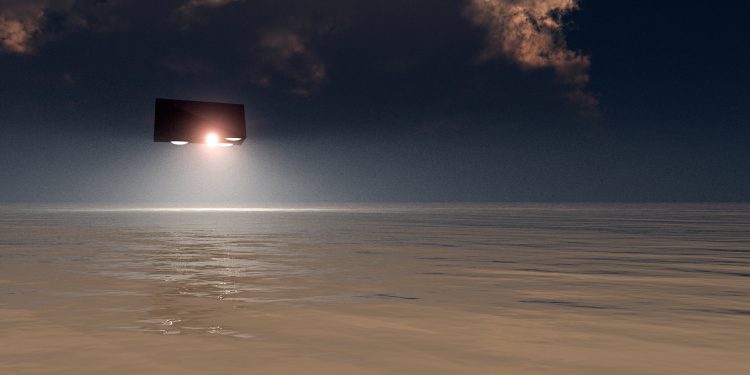
Naval Aviators have reported encountering strange “Black Cube” UFOs that were surrounded by strange clear spheres. Some of these cube-shaped UFOs even shadowed some, and many airplanes nearly collided with them. So this begs the question, what have aviators encountered? Based on their reports and comments, these objects were not weather balloons, were not drones, and seemed like nothing humankind has ever produced.

Some of these objects display characteristics that are unlike any modern-day aircraft. The technology at their disposal, as per comments made by fighter pilots, is beyond anything we know of. But the danger about these objects resides not only in the fact that we do not know what they are or whom they belong to; the greater danger resides in the fact that on numerous occasions, fighter pilots have almost collided with these mysterious objects. As penned down by Marik Von Rennenkampff for The Hill, Fighter pilots narrowly escaped disaster in 2014 when the jets were flying in controlled airspace and almost collided with an unidentified flying object. But this is just one of many examples. In fact, fighter pilots have reported seeing these objects “everywhere.”

In the piece, Rennenkampff had asked former fighter pilot Ryan Graves about UFO encounters. The experienced pilot answered that he and his colleagues saw these objects near airports and over the continental United States. On many occasions, these objects appeared hundreds of miles out to sea. ” There’s air traffic operation, and they’re operating in ways that are befuddling our aviators,” the experienced fighter pilot revealed in the interview. One of the perhaps more interesting UFO encounters that took place near an airport is the so-called Aguadilla UFO that took place in 2013 in Puerto Rico. At the time, a United States Customs and Border plane spotted a mysterious fast-moving object near the airport. This UFO headed out towards the ocean, splashed into the sea as if it did not even make contact with the water, reappeared, and then spit into two. You can read more about it here.

Perhaps what is most interesting is an encounter recalled by Graves that took place off the East Coast in 2014, when a fighter pilot described a dark cube-shaped UFO that was surrounded by some sort of clear sphere. What is most interesting is that this UFO had no wings, flaps, tails, and no visible propulsion system. But these encounters with the enigmatic cube-shaped UFOs are by no means isolated events. In fact, Graves recalls that a few years after the 2014 incident, a test pilot had spoken with Graves about encountering such an object.

According to the test pilot, the cube-shaped UFO surrounded by a clear sphere was just “flying alongside the pilot” at an approximate distance of some 30 feet. Eventually, the object just accelerated and disappeared. The exact origin of these objects remains a profound mystery. However, with the age of UFO transparency finally, upon us, we may finally get a better understanding of what these objects are. NASA is putting great effort into trying to find out what these objects are, the Pentagon has a UFO office that is investing a great amount of money and time in discovering their source, and the US Congress, in the meanwhile, seems convinced these things are not of this planet.

{ https://curiosmos.com/category/alien-theories/ }

Hoe vind je dit bericht?
Geschreven door peter om 21:21 Stuur door

Aurora Borealis in Utah, Nov 11, 2025 Guys I just recorded this a few minutes ago.

Aurora Borealis in Utah, Nov 11, 2025 Guys I just recorded this a few minutes ago.

UFO_Alien.HEIC

UFO_sighting.heic

UFO_Lights.HEIC

Utah_UFO.HEIC
Date of sighting: Nov 11, 2025
Location of sighting: Bountiful, Utah, USA
 
Even now as I write this, the pinkish northern lights are shining across the northern side of my home. The lights are changing shape and location for the last half hour, but always shocking me. This is the first time I have ever seen the Aurora Borealis before, and for it to reach the desert of Utah USA is just wow! It doesnt show up as well on video, sorry for that, but photos do it justice. 
Scott C. Waring
 
RELATED VIDEOS

{ https://www.ufosightingsdaily.com/ }

Hoe vind je dit bericht?
Geschreven door peter om 21:08 Stuur door

Ancient Doorway On Mars Near Rover, Explains the tiny figures found. UFO Sighting News.

Ancient Doorway On Mars Near Rover, Explains the tiny figures found. UFO Sighting News.

Alien%20structure_Mars.png

Mars_Perseverance_Alien.png
Date of discovery: Nov 11, 2025
Location of discovery: Mars
Source: 
Guys check out this tiny ancient doorway I found in a rover photo today. It's about 9 inches tall and 6 inches wide and the top is arched like a doorway from ancient times. It matches up with all the tiny figures we have found over the last two decades...it all makes sense now. 
Scott C. Waring 
 

{ https://www.ufosightingsdaily.com/ }

Hoe vind je dit bericht?
Geschreven door peter om 20:59 Stuur door

Scientists are baffled to discover mysterious 'voids' in the third-largest pyramid of Giza - as scans suggest they could be a secret entrance

Around 4,500 years after it was constructed, scientists think they've located the remains of a hidden entrance at a historic pyramid in Egypt. 

Built around 2510 BC and standing nearly 200 feet tall, Pyramid of Menkaure is the smallest of the three main pyramids of the famous Giza complex. 

It was built to serve as the tomb of the King Menkaure, the Fourth Dynasty king whose sarcophagus mysteriously went missing.  

Researchers in Egypt and Germany have used high-tech scanning methods to peer behind the pyramid's historic granite bricks. 

They report that there are two hidden air-filled anomalies which suggest a hidden entrance undetected in the modern era until now. 

Christian Grosse, professor of non-destructive testing at Technical University of Munich (TUM), called it 'an important finding in Giza'. 

'The testing methodology we developed allows very precise conclusions to be drawn about the nature of the pyramid's interior,' he said.  

'The hypothesis of another entrance is very plausible, and our results take us a big step closer to confirming it.'  

Around 4,500 years after it was constructed, scientists think they've located the remains of a hidden entrance at a historic pyramid in Egypt

Around 4,500 years after it was constructed, scientists think they've located the remains of a hidden entrance at a historic pyramid in Egypt 

Pyramid of Menkaure, - the smallest of the three main pyramids of the Giza pyramid complex, standing at nearly 200 feet tall - had a second entrance, experts think. In this photo, the northern side (featuring the primary entrance) is in shadow. The southern side is illuminated by sunlight. Also seen are three much smaller pyramids known as the Queens' Pyramids

Pyramid of Menkaure, - the smallest of the three main pyramids of the Giza pyramid complex, standing at nearly 200 feet tall - had a second entrance, experts think. In this photo, the northern side (featuring the primary entrance) is in shadow. The southern side is illuminated by sunlight. Also seen are three much smaller pyramids known as the Queens' Pyramids

The Menkaure pyramid's primary entrance is on its northern side, but experts think the second one is on the eastern side, which faces the River Nile.

In particular, they point to a 13ft by 19ft (four metres high and six metres wide) rectangular area of the eastern side that's close to the ground. 

Weirdly, the granite blocks in this area of the eastern façade are 'unusually smooth' as if they'd been rigorously polished millennia ago. 

Tellingly, such smooth stones are found at the primary entrance on the northern side – suggesting a second one long existed here too but has been forgotten. 

Independent researcher Stijn van den Hoven theorized this possible additional entrance for the first time in 2019, but this has remained a hypothesis – until now. 

The experts at Cairo University and Technical University of Munich (TUM) used 'non-invasive' methods – radar, ultrasound and electrical resistivity tomography (ERT) – to peer inside without pulling apart the ancient bricks. 

Excitingly, they detected two air-filled voids behind the smooth façade, both of different sizes and at different heights. 

One of the air-filled 'anomalies' is located at a depth of 4.5 feet (1.4 metres), measuring 3.2 feet by 4.8 feet (1 metre high by 1.5 metre wide), while the other anomaly is at a depth of 3.7 feet (1.13 metres), measuring 2.9 feet by 2.2 feet (0.9 metres by 0.7 metres). 

The research using radar, ultrasound and ERT prove the existence of two air-filled voids underneath the eastern façade, providing initial evidence to support the hypothesis

The research using radar, ultrasound and ERT prove the existence of two air-filled voids underneath the eastern façade, providing initial evidence to support the hypothesis

What is the Pyramid of Menkaure?

Pyramid of Menkaure is the smallest of the three main pyramids of the Giza pyramid complex - Khufu, Khafre, and Menkaure. 

Built in around 2510 BC, it currently stands at 200 feet (61 metres) tall with a base of 356 feet (108.5 metres). 

Pyramid of Menkaure is thought to have been built to serve as the tomb of the Fourth Dynasty King Menkaure. 

Why the two void-filled spaces are arranged exactly like this is puzzling, but together they 'could support the hypothesis of a second entrance'. 

The team point out that each technique used in this study has its own limitations, but by using a combination of all three their conclusions are reliable. 

Today, tourists can go inside Pyramid of Menkaure and traverse its burial chambers, corridors and other little niches, but a second entrance on the eastern side hints that there could be still undiscovered chambers or passages containing treasures unseen by modern eyes. 

However, the interpretation of the detected anomalies should be 'discussed among Egyptologists' before any firm conclusions are made. 

Researchers caution it was 'difficult to determine how far the anomalies extend inside the pyramid' due to limitations in the penetration depth of their methods. 

Nevertheless, the study published in NDT & E International, marks the first time structural anomalies have been identified behind the distinctive façade on the east side. 

It's believed Pyramid of Menkaure was built to serve as the tomb of Menkaure, the Fourth Dynasty king, who died as a young man in 2503 BC for reasons unknown. 

Pictured, the location and dimensions of the detected anomalies overlaid on a photograph of the Eastern face of Menkaure

Pictured, the location and dimensions of the detected anomalies overlaid on a photograph of the Eastern face of Menkaure

'The hypothesis of an entrance is very plausible': Researchers have identified two air-filled voids in the Menkaure Pyramid by using non-invasive methods

'The hypothesis of an entrance is very plausible': Researchers have identified two air-filled voids in the Menkaure Pyramid by using non-invasive methods 

article image

Unfortunately, the sarcophagus within the pyramid was lost at sea nearly 200 years ago during attempts to transport it to the British Museum in London. 

The merchant ship carrying it, Beatrice, was mysteriously lost after leaving port at Malta on October 13, 1838.

The Giza complex, west of Cairo, includes the pyramids of Khufu, Khafre, and Menkaure, along with the Great Sphinx. 

All are shrouded in mystery due to their unclear construction methods, precise astronomical alignment, and still-debated purpose. 

WHAT IS THE VALLEY OF THE KINGS?

The Valley of the Kings in upper Egypt is one of the country's main tourist attractions, situated next to the Giza pyramid complex.

The majority of the pharaohs of the 18th to 20th dynasties, who ruled from 1550 to 1069 BC, rested in the tombs which were cut into the local rock.

The royal tombs are decorated with scenes from Egyptian mythology and give clues as to the beliefs and funerary rituals of the period.

Almost all of the tombs were opened and looted centuries ago, but the sites still give an idea of the opulence and power of the Pharaohs.

The majority of the pharaohs of the 18th to 20th dynasties, who ruled from 1550 to 1069 BC, rested in the tombs which were cut into the local rock. Pictured are godess statues in the valley

The majority of the pharaohs of the 18th to 20th dynasties, who ruled from 1550 to 1069 BC, rested in the tombs which were cut into the local rock. Pictured are godess statues in the valley

The most famous pharaoh at the site is Tutankhamen, whose tomb was discovered in 1922.

Preserved to this day, in the tomb are original decorations of sacred imagery from, among others, the Book of Gates or the Book of Caverns.

These are among the most important funeral texts found on the walls of ancient Egyptian tombs. 

The Valley of the Kings in upper Egypt is one of the main tourist attractions of the country, next to the Giza pyramid complex

The Valley of the Kings in upper Egypt is one of the country's main tourist attractions, situated next to the Giza pyramid complex 

RELATED VIDEOS

{ https://www.dailymail.co.uk/sciencetech/index.html }

Hoe vind je dit bericht?
Geschreven door peter om 20:52 Stuur door

Hidden Inside the Great Pyramid of Giza, a Tantalizing Discovery May Soon “Write a New Chapter in the History of the Pharaohs”

Great Pyramid

The Great Pyramid of Giza
(Image Credit: George Nader/Unsplash)

Hidden Inside the Great Pyramid of Giza, a Tantalizing Discovery May Soon “Write a New Chapter in the History of the Pharaohs”

A remarkable discovery within the Great Pyramid of Giza could potentially reshape our understanding of ancient Egypt, one of the country’s most renowned Egyptologists has said.

The claims were made by Egyptian archaeologist Zahi Hawass, who recently hinted at a tantalizing discovery that will come to light sometime in 2026, adding that he expects it will “rewrite history” and offer new insights into the ancient history of Egypt and its rulers.

The 78-year-old Egyptologist made comments during an appearance at the 44th Sharjah International Book Fair, where he described the mysterious discovery as one that will “write a new chapter in the history of the Pharaohs.”

A New Discovery at Giza’s Great Pyramid

Hawass, Egypt’s former Minister of Tourism and Antiquities, has conducted work at many of the country’s most renowned archaeological sites in the Western Desert and Nile Delta, among other locations.

During the recent event, Hawass offered additional clues about the forthcoming revelation, stating that “This great discovery is a new 30-meter-long passageway,” which he said had been “detected using advanced equipment,” and appears to lead to a concealed doorway within the Great Pyramid.

Zahi Hawass Egyptologist Zahi Hawass in 2009 (Image: White House/Public Domain)

Remote sensing technologies and advanced robotic systems helped Hawass and his collaborators make the discovery, which was uncovered in areas within the ancient monument that could to be reached before the modern era.

This is not the first time such discoveries have been announced. In 2023, the identification of a nine-meter-long corridor was announced by the ScanPyramids project, building on earlier discoveries that included the detection of an unusual area within the structure, which researchers characterized as a “void” first discovered in 2017.

Tantalizing Clues

Along with the description the former Antiquities Minister provided about the discovery of the 30-meter-long passageway, Hawass further hinted that the new revelations may have to do with two other long-held pursuits of his professional Egyptological career. These include the discovery of the tombs of Imhotep, widely recognized by historians as Egypt’s first architect, and that of the Egyptian Queen Nefertiti, the wife of the Pharaoh Akhenaten and half-sister of the famed King Tutankhamun.

Hawass’s statements have led to speculations that the discoveries might be related to the discovery of Imhotep’s tomb, although the famed ancient Egyptian architect lived during the 3rd Dynasty, predating the construction of the Great Pyramid by close to a century.

Imhotep is credited with the construction of the famous Step Pyramid at Saqqara for the 3rd Dynasty Pharaoh Djoser, which served as the template for the construction of later similar buildings that would build on and refine the now-famous pyramid design.

Hawass refrained from commenting on what lies beyond the passage within the Great Pyramid, saying that the forthcoming announcement next year by an international team of researchers will provide deeper insights only following a thorough analysis of the data they obtained, which was collected using 3D mapping technologies and muon-radiography.

Nonetheless, Hawass maintained that the discovery of Imhotep’s tomb would be one of the most important discoveries in the history of archaeology, calling it perhaps even greater than the discovery of Tutankhamun’s tomb by British archaeologist Howard Carter in 1922. Among the discoveries Hawass teased, he also seemed to indicate that he has knowledge of where Imhotep’s tomb may be located.

Recovery of Egyptian Antiquities

During the event, Hawass also spoke of the Grand Egyptian Museum, a project first announced in the early 1990s and finally coming to fruition with its opening in 2023.

The former Antiquities Minister called it “one of the greatest museums in the world,” noting its impressive collection of “more than 5,000 artifacts from the treasures of King Tutankhamun,” which are now on public display for the first time in history.

Hawass is currently involved in efforts by the Egyptian authorities to repatriate the country’s antiquities, many of which were removed from the country more than a century ago and are presently being kept in museums around the world.

Hawass called the return of these artifacts to their homeland “a historical and civilizational right that must be restored.”

  • Micah Hanks is the Editor-in-Chief and Co-Founder of The Debrief. A longtime reporter on science, defense, and technology with a focus on space and astronomy, he can be reached at micah@thedebrief.org. Follow him on X @MicahHanks, and at micahhanks.com.

{ https://thedebrief.org/category/science/ }

Hoe vind je dit bericht?
Geschreven door peter om 20:33 Stuur door

Scientists issue chilling update on the ‘city-killer’ asteroid heading towards the moon – as they warn the odds of a collision could rise to as much as 30%

Scientists issue chilling update on the ‘city-killer’ asteroid heading towards the moon – as they warn the odds of a collision could rise to as much as 30%

Scientists have issued a chilling update on the 'city-killer' asteroid heading towards the moon.

Asteroid 2024 YR4, a 220-foot (67m) 'city-killer', currently has a four per cent chance of hitting the moon on 22 December 2032. 

However, fresh observations could mean the odds of a collision rise to as high as 30 per cent. 

If the massive asteroid does hit the moon, it could carve out a 0.6-mile-wide crater and shower Earth with lunar shrapnel. 

Researchers predict there will be a slim window for the James Webb Space Telescope (JWST) to observe the asteroid in February. 

This will be one of the last good chances to predict 2024 YR4's trajectory before it returns into view of Earth's telescopes in 2028.

And, according to Dr Andrew Rivkin, of Johns Hopkins University, these observations could significantly change the odds of a lunar impact.

That means the world's space agencies are rapidly running out of time to decide what they should do. 

2024 YR4 (pictured) was spotted in December 2024 and set alarm bells ringing as it reached the highest chances of hitting Earth of any known asteroid. Now, experts are concerned that it will hit the moon

2024 YR4 (pictured) was spotted in December 2024 and set alarm bells ringing as it reached the highest chances of hitting Earth of any known asteroid. Now, experts are concerned that it will hit the moon 

2024 YR4 was spotted in December 2024 and set alarm bells ringing as it reached the highest chances of hitting Earth of any known asteroid.

At its peak, there was a terrifying one in 32 chance of the deadly space rock colliding with our planet.

Although this probability rapidly dropped to almost zero as astronomers made more observations, another troubling scenario soon presented itself.

Based on the asteroid's predicted orbit, there was still a non-negligible chance that it would hit the moon instead.

The asteroid has been hidden from Earth's telescopes since the middle of last year, making it difficult to predict its exact orbit. 

However, the JWST's unique position in orbit means that it will be able to see the 2024 YR4 for two brief windows on February 18 and 26.

Since the asteroid is so far away, it will still be difficult to get lots of data, but these observations could change our understanding of its position and speed.

Dr Rivkin and his colleagues have calculated how checking on the asteroid in February might change the predicted probability of a lunar impact.

The James Webb Space Telescope (JWST) will have another chance to observe 2024 YR4 in February, but these measurements could significantly change what we know about its position and velocity. Pictured: 2024 YR4 as seen by the JWST on 8 March, 2025

The James Webb Space Telescope (JWST) will have another chance to observe 2024 YR4 in February, but these measurements could significantly change what we know about its position and velocity. Pictured: 2024 YR4 as seen by the JWST on 8 March, 2025

What do we know about 2024 YR4?

First detected: December 27, 2024

Estimated size: 174-220 feet (53-67 metres)

Speed relative to Earth: More than 30,000 miles per hour

Date of possible moon impact: December 22, 2032

Probability of impacting the moon: 1-in-23 (4.3 per cent)

They predict there is an 80 per cent chance that new observations will reduce the odds of 2024 YR4 hitting the moon to below one per cent. 

However, there is a five per cent chance that these observations actually increase the chances of the asteroid hitting the moon to 30 per cent.

There is also a 15 per cent chance that the odds of an impact will stay the same or only change slightly 

This is extremely important because agencies like NASA and the European Space Agency are running out of time to decide whether they should deflect 2024 YR4.

NASA's DART mission has shown that slamming a satellite into the side of an asteroid can knock it off its path by a wide enough margin to protect Earth and the moon.

But these 'kinetic impact' deflection methods only cause small changes in the space rock's trajectory and need to be started years before a collision is likely.

NASA researchers have considered deflection methods for 2024 YR4, including hitting it with a nuclear bomb, but these all need to be launched by 2030 at the very latest.

The JWST will get another chance to observe 2024 YR4 in 2027, but the sooner space agencies make up their mind, the better.

If the asteroid does hit the moon, it could release 10,000 tonnes of debris into space, up to 30 per cent of which could be funnelled towards Earth (illustrated)

If the asteroid does hit the moon, it could release 10,000 tonnes of debris into space, up to 30 per cent of which could be funnelled towards Earth (illustrated) 

Dr Rivkin told New Scientist: 'By 2028, it would be cutting things very, very close, and so getting it in early 2026 instead gives some extra time.'

Although it won't be as destructive as an impact with the Earth, a lunar collision is dangerous enough for deflecting 2024 YR4 to be an option worth considering.

The asteroid could hit the moon at over 29,000mph (46,800 kmph), releasing a blast 500 times larger than the atomic bomb dropped on Hiroshima and ejecting 10,000 tonnes of rock into space.

If the asteroid hits in the right place, Earth's gravity might funnel between 10 and 30 per cent of the ejected material directly towards our planet.

article image

This could have a devastating effect on satellites in low-Earth orbit that are responsible for maintaining communications and navigation services on Earth.

Richard Moissl, head of planetary defence at ESA, told Daily Mail that a lunar collision poses no risk for people on Earth, but 'could pose a potential threat for space-based infrastructure'.

However, there are no missions to surveil or deflect 2024 YR4 in the agency's budget for this year.

Mr Moissl says that the decision will 'depend on the exact situation following the observations and assessment of the situation...more detailed studies would be needed to reach a comprehensive assessment.'

POTENTIAL METHODS FOR ELIMINATING THE THREAT OF AN ASTEROID  

DART is one of many concepts of how to negate the threat of an asteroid that have been suggested over the years. 

Multiple bumps 

Scientists in California have been firing projectiles at meteorites to simulate the best methods of altering the course of an asteroid so that it wouldn't hit Earth. 

According to the results so far, an asteroid like Bennu that is rich in carbon could need several small bumps to charge its course.

'These results indicate multiple successive impacts may be required to deflect rather than disrupt asteroids, particularly carbonaceous asteroids,' researchers said.  

Nuke 

Another idea, known simply as 'nuke', involves blowing up a nuclear explosive close to the asteroid.

However, this could create smaller but still potentially dangerous fragments of rock that could spin off in all directions, potentially towards Earth. 

Ion Beam Deflection

With Ion Beam Deflection, plumes from a space probe's thrusters would be directed towards the asteroid to gently push on its surface over a wide area. 

A thruster firing in the opposite direction would be needed to keep the spacecraft at a constant distance from the asteroid. 

Gravity tractor 

And yet another concept, gravity tractor, would deflect the asteroid without physically contacting it, but instead by using only its gravitational field to transmit a required impulse. 

Professor Colin Snodgrass, an astronomer at the University of Edinburgh said: 'There have been a few concepts suggested, such as a ‘gravity tractor’ to slowly tow an asteroid away instead of pushing it with a kinetic impactor.

'But the kinetic impactor is definitely the simplest technology to use on the sort of timescale that is most likely to be of concern for this size of asteroid, i.e. years to decades warning time.'

RELATED VIDEOS


{ https://www.dailymail.co.uk/sciencetech/index.html }

Hoe vind je dit bericht?
Geschreven door peter om 18:42 Stuur door

First Contact | Full UFO Documentary | Alien Contact | James Woods

First Contact | Full UFO Documentary | Alien Contact | James Woods

 After a startling UFO encounter, a man becomes a trance channel for an extraterrestrial intelligence. 2016. Stars: Darryl Anka, James Woods, Ken Belsky, Zachary Dean, Dan Leech

Do we really need to make contact with aliens? Every day scientists are sending out signals into space attempting to contact ...

{ https://www.youtube.com/ }

Hoe vind je dit bericht?
Geschreven door peter om 18:12 Stuur door

Het opsporen van UAP-mythen door de eeuwen heen: een uitgebreide historische analyse

Het opsporen van UAP-mythen door de eeuwen heen: een uitgebreide historische analyse

Tracing UAP Myths Through The Ages

Unidentified Aerial Phenomena (UAP), vaak aangeduid als ‘onbekende vliegende objecten’, worden tegenwoordig vooral geassocieerd met moderne technologieën, geheime overheidsprogramma’s en de zoektocht naar buitenaards leven. Toch is het patroon van mysterieuze luchtverschijnselen niet nieuw en strekt het zich al duizenden jaren terug in de geschiedenis. Doorheen de tijd heeft de mensheid de onverklaarbare waarnemingen in de lucht geïnterpreteerd op manieren die diep verankerd zijn in hun sociale, religieuze en culturele wereldbeeld. In dit artikel voegen we een gedetailleerde en uitgebreide blik toe op hoe UAP-mythen zich door de geschiedenis hebben ontwikkeld, ondersteund met concrete voorbeelden uit verschillende periodes en culturen. We laten zien dat deze verschijnselen niet louter het resultaat zijn van natuurlijke of technologische verklaringen, maar vaak een spiegel vormen voor de menselijke behoefte aan betekenis, interpretatie en geïntegreerde wereldbeelden.

Oudheid: Hemellichamen als goddelijke boodschappers

Het verhaal begint in de oudheid, waarbij de hemel niet verder werd gezien dan een kristallen koorden die de goden symboliseerden of een mysterieus domein waarin bovennatuurlijke krachten heersten. De Mesopotamische beschrijvingen van ‘disken van vuur’ op de codex tablets (zoals te vinden in het Sumerische en Babylonië) geven hiervan een levendige indruk. Deze ‘disken’ werden in de literatuur vaak afgebeeld als bewegende, lichtgevende objecten die Nieuwen en Oude koningen aanschouwden tijdens hun rituelen of militaire campagnes. Mesopotamische priesters beschouwden deze fenomeen mogelijk als teken van de goden of als communicatie van bovennatuurlijke machten.

Een bekend voorbeeld hiervan is de beschrijving in een 7de-eeuwse Babylonische tekst, waar een ‘reuzenwiel’ wordt gezien dat in de hemel beweegt. Ook de Egyptische bronnen, zoals de beroemde “Pyramide Teksten” en inscripties uit de Oude Egyptische dynastieën, spreken van bovennatuurlijke verschijnselen die niet alleen astronomisch, maar ook spiritueel geladen zijn. Bijvoorbeeld, de ‘hemellichamen’ werden niet alleen als sterren en planeten gezien, maar ook als manifestaties van goddelijke kracht en tekenen van het lot.

In de Bijbel wordt een opvallend voorbeeld gevonden in het boek Ezekiel (hoofdstuk 1), waarin een complexe beschrijving wordt gegeven van ‘het wiel binnen een wiel’, omgeven door glanzende vuur en kolommen van licht. Wat Ezekiel zag, wordt vaak geïnterpreteerd als een visionaire beschrijving van een hemelse voertuig of een niet-menselijk machinaal apparaat. Hoewel moderne wetenschappers meestal sceptisch zijn over een letterlijke lezing, suggereren sommige theoretici dat deze symbolische taal mogelijk is geïnspireerd door echte observations van ongewone luchtverschijnselen — wellicht door natuurlijke lichtbogen of atmosferische verschijnselen, die door de culturele bril werden geprojecteerd als hemelse mobiliteit.

De centrale notie blijft dat in deze oude beschrijvingen de hemel niet slechts een decor voor natuurverschijnselen was, maar een actief domein waarin de goddelijke of bovennatuurlijke krachten zichtbaar werden in vormen die voor de mensen betekenis moesten hebben. Volgens historicus Dr. Leila Hassan, die gespecialiseerd is in oude Mesopotamische teksten: “Deze beschrijvingen waren minder gericht op technologische verschijnselen en meer op het toeschrijven van een hogere (bovennatuurlijke) macht, iets dat nog steeds terug te vinden is in onze interpretatie van UAP-waarnemingen vandaag.”

Middeleeuwen: Hemelse strijd en religieuze interpretaties

In de overgang van de oudheid naar de middeleeuwen, kregen de mythes over luchtverschijnselen een nieuwe dimensie – verweven met de religieuze en politieke turbulentie van de tijd. Het voorbeeld van de beroemde Nuremberg-broadsheet uit 1561 markeert deze evolutionaire fase. De illustratie toont felle, cilindrische en bolvormige objecten die in de lucht in een soort ‘gevecht’ betrokken lijken te zijn. Mede door de artistieke en tryptische stijl van de tijd werden deze verschijnselen vaak geïnterpreteerd als tekenen van goddelijke oorlogen of apocalyptische voorspellingen.

Veelbelangrijker is dat het fenomeen van luchtgevechten en vliegende objecten in de middeleeuwen ook in andere culturen werd waargenomen. Een opvallend voorbeeld is de Japanse ‘Utsuro-bune’—een holografisch vallende scheepstype dat in de Edo-periode (17de tot 19de eeuw) verscheen op oude illustraties en verhalen. Deze ‘holle boot’ werd vaak afgebeeld als stralend en geheimzinnig en zou volgens de vertellingen bemand zijn door buitenaardse of niet-menselijke wezens.

Skeptici verklaren dergelijke waarnemingen vaak als optische illusies, zoals zonnegloed, mist of atmosferische opticische verschijnselen als parel- of halospectra. Echter, de culturele reactie op deze vreemde verschijnselen was consistent: men probeerde het te begrijpen binnen het bestaande religieuze kader. Als de hemel vol stond met vuur en licht, dan moest dat wel een morele of eschatologische betekenis hebben. Professor Hans Meier, een vooraanstaand medievalist, stelt dat “de middeleeuwse kijk op de hemel was een theater voor engelen en demonen. Elke afwijking in licht werd automatisch geïnterpreteerd als een bovennatuurlijke strijd, een teken van goddelijke tussenkomst of duivelshandelen.”

Renaissance en de ontdekking van de wetenschap

Met de opkomst van de Renaissance en de wetenschappelijke revolutie ontstond er een nieuwe aanpak. Mensen begonnen zich vragen te stellen bij hemelverschijnselen en probeerden ze te verklaren met behulp van waarnemingen en experimenten in plaats van louter religieuze interpretaties. De uitvinding van de telescoop en de toepassing van astronomische principes door bijvoorbeeld Galileo Galilei en Johannes Kepler banaalden de oude mythes af.

Tegelijkertijd bleef de fascinatie voor luchtverschijnselen bestaan, vooral onder de gewone bevolking. In de 17e en 18e eeuw werden bijvoorbeeld ‘fantoomschepen’ en ‘lichtballonnen’ vaak waargenomen, met sommige rapporten die sterk lijken op de moderne UAP-voorstellingen. De beroemde ‘Dagen van de Maan’ of de observaties van niet-gevallen hemellichamen zorgden voor speculatie, maar ook voor wetenschappelijke nieuwsgierigheid.

In 1896 groeide deze interesse explosief tijdens de ‘Great Airship Wave’ in de Verenigde Staten. Honderden getuigen meldden het zien van mysterieuze, cigar-shaped of cilindervormige luchtvaartuigen die zich lieten zien boven dorpen en steden, soms met fakkels of stralende lichten. Hoewel veel hiervan later werd toegeschreven aan overactieve verbeelding, hoaxes of natuurlijke verschijnselen zoals ballonnen of meteorologische ballonnen, toont het duidelijke dat de menselijke perceptie van het vreemde niets is afgenomen, maar eerder is geëvolueerd. Volgens Dr. Eleanor Whitaker, die in 1901 een studie publiceerde over deze waarnemingen: “Hoe beter onze meetinstrumenten worden, hoe meer wij ons bewust worden van het onbegrijpelijke in de lucht.”

De twintigste eeuw: van mythos tot militaire en wetenschappelijke analyses

De grote sprong in UAP-mythen kwam in de 20e eeuw, vooral tijdens de koude oorlog. Het ontstaan van de atomare dreiging en het ruimtevaarttijdperk beïnvloedden de interpretaties van hemelverschijnselen sterk. Na de beroemde R-17 “Roswell Incident” in 1947 en de radarcontacten boven Washington D.C. in 1952, werd de lucht boven de landen niet langer slechts een mysterie, maar ook een potentiële militaire threatening.

Deze periode wordt gekenmerkt door intense media- en militaire belangstelling en het ontstaan van officiële instanties zoals de U.S. Air Force’s Project Sign en later Project Blue Book, die moeten uitzoeken of UAP gevaarlijk waren of niet. Terwijl veel waarnemingen uiteindelijk konden worden verklaard door natuurlijke verschijnselen, zoals weerballonnen, stof, weersverschijnselen of menselijke activiteit, bleef de grote vraag bestaan: zijn er objecten die niet kunnen worden verklaard en die mogelijk buitenaards van oorsprong zijn?

In 2004 en 2015 kwamen de Amerikaanse Navy en Air Force opnieuw in het nieuws doordat zij het publiek toegang gaven tot korte videobeelden van UAP’s. In deze beelden, zoals die vrijgegeven zijn door het Pentagon, wordt duidelijk dat het militaire personeel werd geconfronteerd met objecten die snel bewogen, ongebruikelijke snelheden bereikten en mysterieuze vormen aannamen — vaak zonder duidelijke verklaring. Een belangrijke conclusie was dat deze objecten niet kon worden herleid tot bekende militaire technologieën of natuurlijke verschijnselen. Deze gebeurtenissen hebben geleid tot hernieuwde wetenschappelijke interesse en tot de vorming van officiële instanties zoals het Unidentified Aerial Phenomena Task Force (UAPTF).

Hedendaagse interpretaties: Cultuur, wetenschap en de zoektocht naar antwoorden

Tegenwoordig staat de discussie rond UAP niet alleen meer in het teken van mysterie en quasi-mystieke interpretaties. Wetenschappers, overheden en het publiek zoeken nu naar bewijs dat deze objecten mogelijk buitenaards, of in ieder geval niet-menselijk, kunnen zijn. Tegelijkertijd blijft de culturele interpretatie een sterke factor: onze samenleving wijst nog altijd naar de hemel en zoekt patronen, zelfs in de meest ongewone verschijnselen.

Onderzoekers zoals dr. Jacques Vallée en Avi Loeb benadrukken dat het bestuderen van UAP’s niet alleen een technologische uitdaging is, maar ook een culturele en psychologische. Vallée, een pionier in de studie van onverklaarbare fenomenen, stelt dat “ons culturele referentiekader bepaalt hoe we deze verschijnselen interpreteren. We projecteren onze angsten, hoop en overtuigingen op de lucht, wat de waarnemingen soms vervormt.”

De recente publieke rapporten en officiële verklaringen hebben geleid tot een hernieuwde interesse in het verzamelen en analyseren van gegevens, met projecten zoals het UAP Analysis and Data Collection Project van de Amerikaanse overheid. Tot op heden ligt de focus vooral op het vaststellen of deze objecten bedreigingen vormen voor de nationale veiligheid.

Conclusie: Een voortdurend verhaal tussen mythen en wetenschap

Wat blijkt uit de lange geschiedenis van UAP’mythen? Het is dat deze verschijnselen altijd een reflectie zijn geweest van menselijke zorgen, overtuigingen en wereldbeelden. Terwijl de technologie evolueerde en onze instrumenten verfijnd werden, bleef de fascinatie voor de onverklaarbare luchtverschijnselen bestaan. Van de symboliek van vuur en cirkels in oude Mesopotamische teksten, via middeleeuwse interpretaties van hemel- en engelengestalten, tot de moderne radar en satellietwaarnemingen, is er een voortdurende menselijke neiging om het onbekende te interpreteren binnen een bestaand kader.

De uitdaging blijft echter hetzelfde: het ontcijferen van wat echt is en wat cultureel gekleurd. Ondertussen vormt dit eeuwige verhaal tussen mythos en wetenschap een fascinerende zoektocht naar antwoorden — niet alleen over de aard en oorsprong van UAP’s, maar ook over onze eigen relatie tot de hemel, het onbekende en de grenzen van kennis.

Bronnen en voorbeelden:

  • Mesopotamische cuneiformteksten: Beschrijvingen van ‘disken van vuur’ en hemellichamen die bewegen aan de hemel (bijvoorbeeld uit het Gilgamesh-epos).

250px-Xerxes_Cuneiform_Van.JPG

Een drietalige spijkerschriftinscriptie van Xerxes I bij het Van-fort in Turkije, een Achaemenidische koninklijke inscriptie geschreven in Oudperzisch, Elamitisch en Babylonische vormen van spijkerschrift

  • Egyptische inscripties: Artikelen over goddelijke manifestaties en hemelse principes.

Foto Een close-up van hiërogliefen op de steen van Rosetta, met een cartouche waarin de naam van Ptolemaeus V staat, gevolgd door

Een close-up van hiërogliefen op de steen van Rosetta, met een cartouche waarin de naam van Ptolemaeus V staat, gevolgd door "eeuwig leven".

  • Ezekiel’s ‘wiel binnen een wiel’: Visioen dat mogelijk natuurlijke of symbolische interpretaties heeft, maar nu vaak wordt gekoppeld aan UAP-voorstellingen.

  • Nuremberg-broadsheet (1561): Illustratie en verslag van wat werd beschreven als luchtgevecht met cilindervormige objecten.

By Hanns Glaser (print) - Zentralbibliothek Zürich, http://opac.nebis.ch/F/?local_base=NEBIS&con_lng=GER&func=find-b&find_code=SYS&request=005289279, Public Domain, https://commons.wikimedia.org/w/index.php?curid=12588223

Het hemelse verschijnsel boven de Duitse stad Neurenberg op 14 april 1561, zoals afgedrukt in een geïllustreerde nieuwsbrief in dezelfde maand

  • Edo-illustraties van Utsuro-bune: Verhalen over vermeende buitenaardse schepen en buitenaardse waarnemingen.

The legend of the utsuro-bune in an illustration of the anonymous work Hyoryu-ki-shu (1868).

De legende van de utsuro-bune in een illustratie van het anonieme werk Hyoryu-ki-shu (1868).

Bron: Publiek domein / Wikimedia Commons

The utsuro-bune, drawn in 1844 by Nagahashi Matajirou for an edition of Ume-no-chiri

De utsuro-bune, getekend in 1844 door Nagahashi Matajirou voor een editie van Ume-no-chiri.

Bron: Publiek Domein / Wikimedia Commons

  • De ‘Great Airship Wave’ (1896): Een golf van waarnemingen in de VS van mysterieuze luchtvaartuigen.
  • Modern militaire rapporten: Verenigde Staten Navy video’s van 2004 en 2015.

  • Wetenschappelijke analyses: De werken van Jacques Vallée, Avi Loeb en de rapporten van officiële instanties zoals de UAPTF.

Kortom, de geschiedenis van UAP-mythen is niet alleen een verhaal van het onbekende, maar ook een reflectie van de menselijke drang naar begrip — een verhaal dat zich uitstrekt van de oude beschavingen tot de hedendaagse wetenschap. Het lijkt erop dat de hemel altijd een spiegel zal blijven voor onze dromen, angsten en zoektocht naar de waarheid.*

 { peter2011 }

Hoe vind je dit bericht?
Geschreven door peter om 17:08 Stuur door

Ancient and Modern UFOs in Africa: An In-Depth Analysis with Professor Tim Murithi Dreamland

Ancient and Modern UFOs in Africa: An In-Depth Analysis with Professor Tim Murithi Dreamland

Ancient and Modern UFOs in Africa, with Professor Tim Murithi Dreamland

Introduction

The phenomenon of unidentified flying objects (UFOs) and unidentified aerial phenomena (UAP) has captivated human imagination for centuries, often intertwined with cultural, religious, and scientific narratives. In recent years, Africa has emerged as a fascinating focal point for these studies, blending ancient symbolism with contemporary accounts. On November 7, 2025, the "Dreamland" podcast, part of Whitley Strieber’s “Unknown Country” network, hosted a compelling episode featuring Professor Tim Murithi, a renowned cultural anthropologist at the University of Nairobi. The discussion provided a comprehensive perspective on the historical and modern narratives surrounding UFOs in Africa, emphasizing the importance of scholarly rigor while examining sensational claims.

Ancient Africa and the Visual Motifs in Egyptian Art

Professor Murithi began by exploring the visual motifs found in ancient Egyptian artifacts, which are often cited in UFO lore. The Egyptian tomb paintings depict stylized representations of the sun-disk, celestial barques (or sun boats), and various sky gods. Murithi clarified that these images, while striking, are better understood as symbolic representations rooted in religious and cosmological beliefs of the time. For example, the solar barque was a mythological symbol illustrating the journey of the sun through the sky, not an indication of actual spacecraft.

A notable example is the depiction of a chariot-like object held by deities in tomb paintings, which some interpret as ancient spacecraft. However, Egyptologists argue these are prehistoric depictions of chariots or solar symbols, not technological devices. As Murithi pointed out, “The iconography aligns with the religious symbolism of the Old Kingdom period, rather than evidence of extraterrestrial engineering.”

The Great Pyramid of Giza: Engineering Marvel or Alien Construction?

The Great Pyramid is often at the center of debates about ancient alien intervention. Enthusiasts highlight its precise alignment with Cardinal points and the remarkable engineering achievements of its builders. Murithi referenced recent scholarly research, including a 2023 study by Egyptologists at the University of Cambridge, which attributes the pyramid’s orientation—a deviation of less than 0.2 degrees from true north—to sophisticated astronomical observations and shadow-tracking techniques. These methods were well within the capabilities of Old Kingdom engineers.

While some claim the internal chambers were designed to house spacecraft or alien technology, Murithi emphasized that no archaeological evidence supports such theories. The internal structures, including the Grand Gallery and the Queen’s and King’s Chambers, are understood by archaeologists as functional components of tomb construction and religious symbolism, rather than alien installations.

The Dogon People of Mali and Their Astronomical Knowledge

Moving westward, Murithi discussed the famous case of the Dogon people of Mali, renowned for their detailed knowledge of Sirius B, a white dwarf star invisible without telescopes. Early anthropologists like Marcel Griaule in the 1930s and 1940s reported that the Dogon possessed complex knowledge about Sirius B, including its density and orbit, which seemed to exceed what was accessible through their traditional observances.

However, recent ethnographic research suggests that this knowledge may have been introduced through contact with French missionaries and Western scholars, rather than direct extraterrestrial communication. Murithi noted that “oral traditions are inherently fluid and susceptible to external influences,” and that the Dogon’s cosmology likely represents a synthesis of indigenous beliefs and external knowledge sources. The claim of ancient alien contact, he argued, tends to oversimplify the nuanced oral history and astronomical practices of the community.

Modern UFO and UAP Narratives: The Case of Thiaoouba Prophecy*

The episode also examined a contemporary literary work, Thiaoouba Prophecy, published in 1994 by French author Michel Desmarquet. The book narrates the author’s alleged abduction to a distant planet called Thiaoouba, where he claims to have received spiritual teachings and insights into extraterrestrial civilizations.

Murithi positioned Thiaoouba Prophecy alongside the biblical and apocryphal texts like the Book of Enoch, which also contain accounts of divine or otherworldly encounters. Both serve as cultural mirrors reflecting humanity’s hopes, fears, and questions about existence beyond Earth. Murithi cautioned that such narratives, while compelling, are not evidence of actual extraterrestrial contact but rather expressions of spiritual and cultural imagination.

Sensationalism versus Scholarly Rigor

The podcast further explored two recent articles disseminated on the same platform. One challenged claims that Roman shipbuilders possessed “anti-gravity” technology, and the other investigated mysterious “holes” found in an archaeological site in Peru. Murithi emphasized that sensational headlines often outpace scientific validation, and it is crucial to rely on verifiable data.

He articulated a fundamental principle: “The responsible approach is to let the data speak.” Human ingenuity and cultural development explain many extraordinary achievements without resorting to extraterrestrial intervention. For example, ancient Egyptians' architectural marvels, such as the Sphinx and the pyramids, demonstrate sophisticated engineering based on astronomical and mathematical understanding, achievable with the technology of the time.

Conclusion: A Call for Science and Skepticism

The episode concluded with a reaffirmation of the importance of grounded archaeological methodology. While UFO legends and modern sightings will continue to inspire curiosity, the most reliable explanations for Africa’s ancient wonders come from scientific inquiry and careful interpretation of existing cultural and archaeological records.

Professor Murithi’s insights serve as a reminder that human cultures, across history, have expressed their encounters with the cosmos through symbolic language, art, and oral tradition, rather than extraterrestrial visitation. As he eloquently summarized, “The most remarkable achievements of humanity arise from our own ingenuity, not alien technology.”

In Summary

  • Ancient Egyptian artifacts symbolize celestial phenomena and deities through religious and cultural symbols.
  • The Great Pyramid’s architectural precision results from advanced terrestrial astronomy and engineering, not alien intervention.
  • The Dogon’s astronomical knowledge likely resulted from external influences, not direct contact with extraterrestrials.
  • Contemporary UFO narratives, including Thiaoouba Prophecy, mirror cultural and spiritual aspirations rather than verifiable evidence.
  • Critical scholarship advocates for interpreting these phenomena through scientific methods, emphasizing human innovation over sensationalism.

This comprehensive perspective underscores the importance of applying rigorous archaeological and cultural analysis when examining claims of ancient and modern UFO phenomena in Africa. Grounded research continues to be the most reliable avenue for understanding the continent’s fascinating megalithic and cultural achievements.

{ peter2011}

Hoe vind je dit bericht?
Geschreven door peter om 16:23 Stuur door

It was an “orange basketball” with windows- Eyewitness & Radar Evidence of Rendlesham UFO Incident!

New details have emerged regarding the famous 1980 Rendlesham Forest UFO incident, thanks to interviews with two retired U.S. Air Force air traffic controllers who were on duty at RAF Bentwaters during the event. In a 2007 investigation conducted by noted UFO researcher Robert Hastings, controllers Ike Barker and Jim Cary provided first-hand accounts of tracking an unidentified flying object both visually and on radar, further corroborating claims of extraordinary aerial phenomena near a U.S. nuclear weapons facility.

According to the interviews, the controllers observed an object on radar moving at extraordinary speeds across a 120-mile scope, completing apparent traversals of up to 80 miles in mere seconds. “I happened to see a dot come on the scope and it just went like one dot at the beginning, then another dot, and another dot, and it was gone,” one controller recounted. The object then reappeared, made an immediate 90-degree turn—an impossible feat for any known aircraft at that speed—and headed directly toward the base. “No jet at that speed can make an immediate right-hand turn,” the controller emphasized, adding, “It’s not like any radar target I’ve ever seen.”

What makes this account particularly notable is the combination of radar and visual confirmation. One of the controllers described seeing the object as it passed over the control tower, likening its appearance to “an orangish color, sort of popped into my mind at the time that somebody’s flying a basketball out here.” He noted the presence of lights around its center, which appeared less like standard aviation lights and more like illuminated portholes. The craft reportedly hovered momentarily, reversed course, and then departed at high speed—maneuvers that defy conventional aviation capabilities.

The Rendlesham Forest incident has long been a subject of intrigue, partly due to its proximity to the Bentwaters base’s nuclear weapons storage area. Multiple witnesses have claimed that UFOs were observed beaming lights down into the facility during the event, raising questions about the object’s intent and origin. These new testimonies from radar operators bolster earlier claims by senior Air Force personnel, including then-deputy base commander Lt. Col. Charles Halt, who documented the sighting in official memos and audio recordings. However, as highlighted in the interviews, there remains an absence of formal records or investigations in public Air Force archives, despite the gravity of the reports.

The controllers’ willingness to come forward decades later adds a significant layer of credibility to the case, as does the technical detail of their accounts. The radar “skin paint” observed—a solid line trailing the object—suggests it was moving at speeds approaching the limits of radar detection. As Robert Hastings and other researchers have noted, such incidents, particularly those with connections to nuclear weapons sites, have been largely underreported or classified within military circles.

With renewed interest and increasing transparency around historical UFO encounters, the Rendlesham incident continues to stand out as one of the most compelling cases involving both military witness testimony and corroborating radar evidence. The recent revelations from those who witnessed the event firsthand underscore the need for further investigation and official acknowledgement of what occurred over the English countryside more than four decades ago.

 { https://usubjects.com/ }

Hoe vind je dit bericht?
Geschreven door peter om 15:49 Stuur door

Incredible sightings of enormous ‘cigar-shaped’ UFOs; possible motherships and occupants were seen

Incredible sightings of enormous ‘cigar-shaped’ UFOs; possible motherships and occupants were seen

Recent archival footage and pilot communications have reignited interest in the phenomenon of enormous “cigar-shaped” unidentified flying objects (UFOs), with several accounts suggesting encounters with potential motherships. The video, which compiles historical encounters over regions such as Alderney in the Channel Islands, Paris, and near major air bases, presents a compelling series of testimonies from commercial and military pilots, air traffic controllers, and ground witnesses who describe objects far outstripping conventional aircraft in both size and behavior.

One particularly striking account comes from a pilot flying near Alderney, who reported to air traffic control, “I’ve got a definite contact by 12:00. Very bright yellow object looking well like a cigar.” The pilot went on to describe unusual features: a dark band around the object, sparkling lights running along its length, and the sudden appearance of a second, identical object. Both objects reportedly hovered stationary in the sky, sparking concern among the flight crew. Another controller confirmed, “I do have a primary contact 8 miles or so to the west,” but could not identify any authorized aircraft matching the description. The incident, like many others, was ultimately dismissed as “no threat to British airspace,” and no official explanation was provided.

Multiple pilot-to-tower communications included in the archival footage reveal similar sightings. In one exchange, air traffic controllers discussed reports from pilots at 30,000 feet who observed a cylindrical object “300 to 400 feet long, with a strobe,” described by one as “unbelievable in length.” Despite the seriousness with which these sightings were reported, they failed to register on radar or correspond with any known flight operations. “It’s right out of the X Files. I mean, it’s a definite UFO,” one controller remarked, underscoring the lack of precedent for such encounters in commercial aviation.

Ground witnesses have also described close interactions with these enormous craft. In a detailed account, several individuals recalled seeing a cigar-shaped object with four distinct lights, which transitioned into a circular craft “about the size of a football field.” As the observers approached, the craft reportedly moved overhead with remarkable speed and silence. The incident took on a further layer of mystery when one witness attempted to start their van, only for it to fail as the craft hovered above. Moments later, something appeared to descend from the center of the object into a nearby car park, though the witnesses were unable to identify what it was.

These reports join a growing body of historical and contemporary evidence pointing to the presence of large, highly advanced aerial vehicles operating with apparent impunity in controlled airspace. The recurring descriptions of cigar-shaped “motherships” releasing smaller probes, as well as alleged sightings of humanoid occupants, have fueled speculation that these craft may be of non-human origin or represent unknown atmospheric phenomena. Despite the frequency and consistency of these sightings, official investigations have often concluded without resolution, leaving witnesses and researchers to speculate about the true nature and intent of these extraordinary aerial visitors.

RELATED VIDEOS

{ https://usubjects.com/  }

Hoe vind je dit bericht?
Geschreven door peter om 15:19 Stuur door

The Latest on the 3I/ATLAS Debate: Natural or Alien?

The Latest on the 3I/ATLAS Debate: Natural or Alien?

Image of 3I/ATLAS moving through the galaxy using color filters.

Gary Manners

The scientific community finds itself divided over an interstellar visitor that has captured global attention. Since its discovery by the ATLAS survey telescope in Chile on July 1, 2025, the object designated 3I/ATLAS has sparked an unprecedented debate between those who see a natural comet and others who suggest something more extraordinary might be traveling through our solar system. So here we go forth, perhaps more tentatively than boldly, into the scientific debate that has the astronomical community divided and the public fascinated.

Harvard astrophysicist Avi Loeb has documented what he calls ten anomalies that distinguish 3I/ATLAS from typical comets, rating it at four on his eponymous scale for potential technological origins. The interstellar object's ‘unusual’ characteristics include a retrograde trajectory aligned within five degrees of the ecliptic plane, extreme negative polarization unprecedented among known comets, and a gas composition containing far more nickel than iron. Most intriguingly, the comet displayed only 4% water content by mass, significantly lower than familiar comets, and exhibited a sunward jet that Loeb argues is not merely an optical illusion.

The Case for Extraordinary Claims

Avi Loeb has maintained that the anomalies warrant serious consideration of a technological origin, though he carefully hedges his position at approximately 30-40% probability. His analysis points to several features that he argues deserve investigation beyond standard astronomical assumptions. The object's arrival was "fine-tuned" to bring it within tens of millions of kilometers of Mars, Venus, and Jupiter while remaining unobservable from Earth at perihelion (the point where it is closest to the Sun). Additionally, near perihelion, 3I/ATLAS brightened faster than any known comet and appeared bluer than the Sun, behaviors Loeb suggests may indicate something beyond natural processes.

Post-perihelion image of 3I/ATLAS

Post-perihelion image of the interstellar object 3I/ATLAS, taken on November 5, 2025 by the R. Naves Observatory, shows a fuzzy ball of light. The Sunward direction is towards the bottom left corner (with the arrow on the left pointing in the anti-Sun direction). No obvious cometary tail is seen.

(Credit: R. Naves Observatory, Spain/Avi Loeb)

The Harvard physicist has emphasized that his approach follows the scientific method of proposing theoretical interpretations when faced with anomalies inconsistent with past paradigms. In statements to Reuters, Loeb explained that such proposals motivate the collection of new data, which eventually helps rule out all but one interpretation. He also notes that;

“But more than any other benefit, 3I/ATLAS offers a new opportunity to attract public appreciation to science and to inspire kids to become scientists.”

His open minded enquiry here then would seem to have fairly honorable intentions, but he has attracted both criticism and support for his willingness to publicly explore unconventional hypotheses, with some viewing his approach as refreshing scientific curiosity, while others see it as premature speculation.

The Scientific Consensus Responds

Popular celebrity British physicist Brian Cox has emerged as a vocal critic of the alien spacecraft theories, stating unequivocally that 3I/ATLAS is "a completely natural object: made of carbon dioxide, water ice, and cosmic dust." In an October 2025 post, Cox described the comet as potentially seven and a half billion years old, formed before Earth and the Sun from clouds of dust, offering what he called "a message from a dead world" rather than evidence of extraterrestrial technology.

Penn State astrophysicist Jason Wright has provided detailed rebuttals to Loeb's claims in a comprehensive blog post, arguing that the anomalies are exactly what scientists should expect from an interstellar comet from another solar system. Wright notes that planetary scientists have long observed that "comets are like cats: they have tails, and they do precisely what they want," meaning no two comets behave identically. He points out that 3I/ATLAS displays all the characteristics of a comet - including a coma, tail, and appropriate outgassing of water, carbon dioxide, and carbon monoxide - just in different proportions than Solar System comets.

Regarding Loeb's statistical arguments about the comet's trajectory, Wright cites mathematician Hector Socas-Navarro's critique, explaining that computing probabilities for specific orbital features after observing them represents a classic statistical fallacy. The approach would only be valid if someone had predicted those precise characteristics before the comet's discovery. Well, of course,  that’s one way of looking at it.

Early image of the comet.

Early detection of 3I/ATLAS showing unusual activity patterns.

(NASA/ESA/David Jewitt (UCLA)/ Image Processing: Joseph DePasquale (STScI))

NASA's Official Position

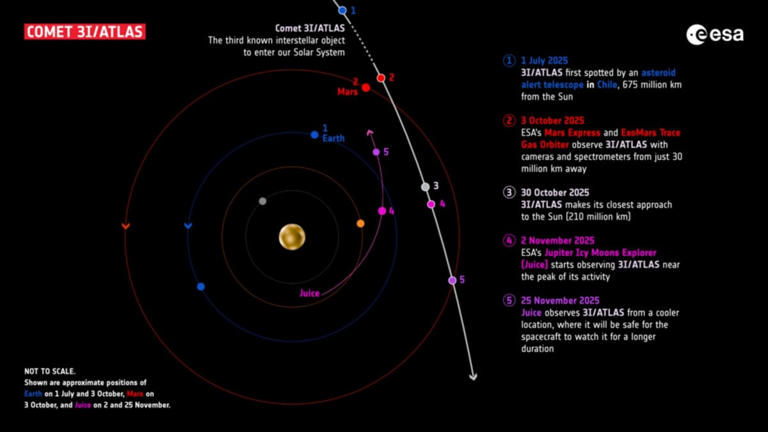
NASA's official statements have been measured and focused on the scientific opportunity the object represents. The space agency confirmed that 3I/ATLAS poses no threat to Earth, maintaining a minimum distance of 1.6 astronomical units (approximately 150 million miles). NASA emphasized that its missions are working together to track and study this rare visitor, noting that it reached its closest approach to the Sun on October 30, 2025, at a distance of 1.4 astronomical units.

The agency has faced criticism from Loeb regarding delayed release of high-resolution images from the HiRISE camera, though NASA attributes such delays to standard review processes and, more recently, government operational challenges. NASA's position remains that 3I/ATLAS should remain visible to ground-based observatories through its December 19, 2025 closest approach to Earth, providing ample opportunity for continued observation and analysis.

Image of 3I/ATLAS

Detection of significant water outgassing from the interstellar visitor.

(NASA/ ESA/Hubble)

Understanding the Anomalies

Wright's analysis addresses each of Loeb's claimed anomalies systematically. Regarding the high nickel abundance, he explains that the Fe/Ni ratio varies significantly among comets, and scientists are observing nickel at a much larger distance from the Sun than typical, where standard chemistry can explain the unusual ratios. The extreme negative polarization, while stronger than previously observed, remains consistent with what comets do - just at the extreme end of the spectrum. The rapid brightening near perihelion, while notable, likely results from 3I/ATLAS approaching the Sun much faster than Oort cloud comets, giving it less time to heat up at equivalent distances.

The anti-tail or sunward jet that Loeb highlights as anomalous has actually been observed in other comets and was explained in scientific literature fifty years ago. Wright provides examples of comets 17P/Holmes, C/2016 R2 (PanSTARRS), and C/1961 R1 (Humason) displaying similar jet structures. The supposed coincidence of arriving near several planets simply reflects the fact that any object in the ecliptic plane will pass relatively close to some Solar System bodies.

Wright emphasizes his view:

"If Avi had not claimed it could be an alien spacecraft, no one would be talking about it as anything but a comet."

The object exhibits the fundamental behaviors expected of comets - outgassing, developing a coma and tail, and brightening as it approaches the Sun. No planetary scientists outside Loeb's circle give credence to the technological hypothesis, not because they fear unconventional ideas, but because the evidence simply doesn't support that interpretation.

Images of the 3I/ATLAS comet.

Post-perihelion imagery reveals complex jet structures emanating from the comet. Left; A deep image of interstellar Comet 3I/ATLAS captured by the Gemini Multi-Object Spectrograph (GMOS) on Gemini South at Cerro Pachón in Chile. Right; An image of the interstellar object 3I/ATLAS from the Two-meter Twin Telescope in the Canary Islands, Spain. It shows a faint jet pointed towards the Sun, marked by a purple line. (Left; International Gemini Observatory/NOIRLab/NSF/AURA/Shadow the Scientist/CC BY 4.0, Right; M. Serra-Ricart et al.)

A Gift to Science and Public Engagement

Regardless of the debate's ultimate resolution, 3I/ATLAS has achieved something remarkable: reigniting public fascination with astronomy and space science. Loeb has received hundreds of messages from people around the world, including parents whose children have become passionate about astronomy after following the story. One Canadian engineer wrote that after watching Loeb's interviews, his children immediately wanted a telescope and began reading books about space, asking to listen to astronomy podcasts in the car instead of music.

This public engagement represents perhaps the most valuable outcome of the 3I/ATLAS discussion. Whether the object proves to be an entirely natural comet or reveals unexpected characteristics requiring new physics, it has succeeded in demonstrating that science remains a field of wonder and discovery. The debate itself showcases the scientific process in action - hypothesis, observation, critique, and refinement - even when that process occasionally becomes contentious.

As Earth-based observatories prepare to focus on 3I/ATLAS again following its perihelion passage, the coming weeks should provide crucial data. The object's closest approach to Earth on December 19, 2025, offers astronomers their best opportunity to gather high-resolution observations that may finally resolve the nature of this visitor from interstellar space.

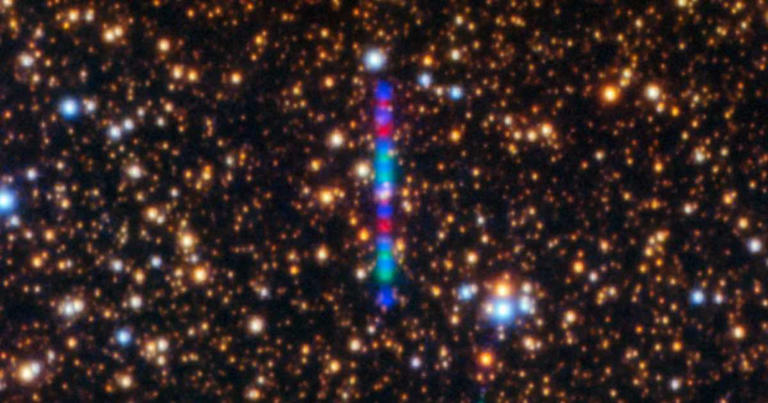
  • Top image: Interstellar comet 3I/ATLAS streaks across a dense star field in this image captured by the Gemini North telescope's Gemini Multi-Object Spectrograph (GMOS-N). The image is composed of exposures taken through three filters, shown here as red, green and blue.  
  • Source: International Gemini Observatory/NOIRLab/NSF/AURA/K. Meech (IfA/U. Hawaii) Image Processing: Jen Miller & Mahdi Zamani (NSF NOIRLab) (CC BY 4.0)

By Gary Manners

References

RELATED VIDEOS

{ https://www.ancient-origins.net/unexplained-phenomena }

Hoe vind je dit bericht?
Geschreven door peter om 23:13 Stuur door

UFO over Eliot, Maine, USA Nov 4, 2025 UAP paranormal sighting alien news

UFO over Eliot, Maine, USA Nov 4, 2025 UAP paranormal sighting alien news

UFO,%20Maine.png

Date of sighting: Nov 4, 2025
Location of sighting: Eliot, Maine, USA
Source: NUFORC
 
This UFO passed over a farm in Maine this week. Dogs went crazy barking at this object as it passed over. They people noticed it right away, having a brightness that is nearly equal the to moon itself. But this is no moon. This glowing object with an aura around it is an alien ship from another world. Sure the US gov will create a dozen lies to try to cover it up, let them try. We the public see the truth...it's right in front of us. 
Scott C. Waring 
 
Eyewitness states: 
Aura or haze around object Moving cloudy light in the sky that appeared to be rotating From the back deck we witnessed a light in the sky with spiraling cloudy light that appeared to be rotating. It looked to be traveling in a northerly direction over southern Maine. There didn’t look there were clouds in the sky, but the light looked like it was behind clouds.

{ https://www.ufosightingsdaily.com/ }

Hoe vind je dit bericht?
Geschreven door peter om 22:51 Stuur door

3 spheres over Colorado, USA Nov 5, 2025 UFO UAP paranormal sighting news 📰 It was aliens

3 spheres over Colorado, USA Nov 5, 2025 UFO UAP paranormal sighting news 📰 It was aliens

UFO,%20Colorado.png

Date of sighting: Nov 5, 2025
Location of sighting: Lakewood, Colorado, USA
Source: NUFORC
 
Watch this eyewitness video and you will notice three glowing red orbs in the sky. They move together and in an orderly fashion staying close to each other, like military jets who always have a wingman close by. But these are not jets, they move too slowly, no sound, no means of visible propulsion. These are UFOs. 
Scott C. Waring
 
Eyewitness states: 
Looking north when I saw four circular red glowing orbs more than one and then back-and-forth.

{ https://www.ufosightingsdaily.com/ }

Hoe vind je dit bericht?
Geschreven door peter om 22:45 Stuur door

Orb fleet over Central City, Iowa USA 🇺🇸 on Nov 5, 2025 UFO UAP paranormal sighting news

Orb fleet over Central City, Iowa USA 🇺🇸 on Nov 5, 2025 UFO UAP paranormal sighting news

UFO,%20aliens.png

Date of sighting: Nov 5, 2025
Location of sighting: Central City, Iowa, USA
Source: NUFORC
 
Watch as these UFO spheres dance in the sky over Iowa last week. The orbs are moving from the left, from the right from above and from below...they come from all directions and meet in the middle as if they were playing. Why? To make themselves seen by humans, to do it gradually and in a non threatening way. It seems to be working.
Scott C. Waring 
 
Eyewitness states: 
Balls of light flying in every direction At approximately 8:10pm November 5th 2025, several unidentified aerial objects were observed in the night sky. Each craft initially appeared as a faint, dim light that progressively increased in brightness as it moved. The objects demonstrated abrupt changes in direction, shifting between horizontal, vertical, and diagonal flight paths.Multiple crafts were visible simultaneously, each exhibiting unique variations in speed, brightness, and trajectory. The event lasted an estimated 20–30 minutes and appeared to occur several miles away from the observer’s location. A check of a live flight radar application during the incident confirmed that no registered aircraft were present in that area. The lights were dispersed across a wide portion of the sky rather than concentrated in a single region.

Orb fleet over Central City, Iowa USA 🇺🇸 on Nov 5, 2025 UFO UAP paranormal sighting news, alien 👽

{ https://www.ufosightingsdaily.com/ }

Hoe vind je dit bericht?
Geschreven door peter om 22:29 Stuur door

The sun made a time travel portal on nasa sun viewer, Nov 9, 2025 UFO UAP sighting news

The sun made a time travel portal on nasa sun viewer, Nov 9, 2025 UFO UAP sighting news

Time%20portal.png

UFO%20portal.png
Date of sighting: Nov 9, 2025
Location of sighting: Earths sun
Source: NASA
 
I recorded this myself, a portal being created on our suns south pole region. The portal is so big, a hundred Earths side by side could enter it. A portal to time travel as well as being a worm hole to travel across the universe. 
Scott C. Waring 
 

{ https://www.ufosightingsdaily.com/ }

Hoe vind je dit bericht?
Geschreven door peter om 22:20 Stuur door

Saw this a few minutes ago, Moab, Utah Oct 7, 2025 UFO UAP sighting news. Aliens

Saw this a few minutes ago, Moab, Utah Oct 7, 2025 UFO UAP sighting news. Aliens

UFO,%20UAP.png
Date of sighting: Nov 7, 2025
Location of sighting: Moab, Utah, USA
 
Hey all, as you can see I recorded this in Moab, Utah last week. This was Nov 7, not Oct 7, thats my mistake. I uploaded it while still in the car. Amazing how UFOs disguise themselves as clouds in order to come closer to the ground. 
Scott C. Waring


Saw this a few minutes ago, Moab, Utah Oct 7, 2025 UFO UAP sighting news. Aliens 👽

{ https://www.ufosightingsdaily.com/ }

Hoe vind je dit bericht?
Geschreven door peter om 22:16 Stuur door

3I/ATLAS Radio Signal Detections Offer New Confirmation of What Many Astronomers Have Been Saying for Months

3I/ATLAS Radio Signal Detections Offer New Confirmation of What Many Astronomers Have Been Saying for Months

New radio detections from the interstellar comet 3I/ATLAS have added to a growing number of observations that leave little question about the object’s natural origin.

The new data arrives amid ongoing speculation about whether the object’s odd trajectory and other unusual qualities could suggest it is of artificial origin, a theory that conflicts with the abundance of evidence presently obtained about the comet.

Collected by the MeerKAT radio telescope, the recent radio observations reveal distinctive hydroxyl absorption lines, which astronomers point to as only further solid evidence of cometary activity.

Lending additional clarification to the ongoing debate over the mysterious object and its unique natural properties, the new findings also help to dampen renewed interest in its possible technological origins generated in recent days, following the object’s apparent display of non-gravitational acceleration during its closest approach to the Sun last month.

3I/ATLAS Recent imagery of the interstellar comet 3I/ATLAS (Image Credit: Gianluca Masi / The Virtual Telescope Project)

Latest Data from MeerKAT

Comprised of an array of radio telescopes in the Northern Cape province of South Africa, MeerKAT made its recent detections on October 24, according to the South African Radio Astronomy Observatory.

The observations revealed OH absorption at 1665 and 1667 MHz, which refers to the process astronomers use involving the detection of the hydroxyl radical (OH) molecule, which absorbs very specific radio or infrared frequencies from background sources. This results in a “dip” that astronomers identify as an absorption line in the observed spectrum.

Hydroxyl radicals are a well-established tracer of cometary behavior, which are formed when ultraviolet radiation breaks down water vapor released during sublimation. Because of this, astronomers frequently rely on these spectral lines to study gassy areas in space like nebulae, star-forming regions across the galaxy, and, of course, the phenomenon of cometary outgassing.

The Hydroxyl Key

In the case of the recent MeerKAT observations, molecular signatures were detected in association with 3I/ATLAS that are just the sort astronomers would expect to be typically produced when a comet heats up near the Sun.

While the detection confirms ongoing sublimation and solar-driven outgassing—normal behavior for comets—researchers still say continued monitoring of 3I/ATLAS will help to further assess the object’s physical profile during the time we have for observation prior to its departure from our solar system.

In summary, while the idea of radio signals emanating from an unusual comet may sound a bit like the kind of “technosignature” astronomers would hope for in the search for evidence of alien technologies, it’s actually something that is commonly observed in comets (like this one) and other kinds of celestial objects.

If At First You Don’t Succeed…

The recent successful MeerKAT detections were the third attempt made using the observatory, following efforts on September 20 and 28 that produced no observable signals. Fortunately, scientists will have additional opportunities to make observations of 3I/ATLAS in the months ahead before it returns to interstellar space, and will likely never be observed again.

Barr-adg3005-image-2-scaled.jpg

The sensitive MeerKAT radio telescope array, located in the Karoo semi-desert in South Africa

(Credit: SARAO)

Next March, the comet will pass within just 53 million kilometers of Jupiter, where NASA’s Juno spacecraft will engage in further attempts to detect any low-frequency radio emissions it might be producing, specifically those ranging from 50 hertz to 40 megahertz.

For now, though, the new MeerKAT data offers the latest reinforcement of the mainstream scientific consensus: 3I/ATLAS is acting like a comet, even if some of its behaviors are a little strange (at least when compared to comets that have existed in our solar system for very long periods).

With additional observations planned for the early months of next year—and with the object passing near one of the best-positioned spacecraft for close-range monitoring—the search for more definitive insights into 3I/ATLAS, its nature, and unique composition, is really just getting underway.

  • Micah Hanks is the Editor-in-Chief and Co-Founder of The Debrief. A longtime reporter on science, defense, and technology with a focus on space and astronomy, he can be reached at micah@thedebrief.org. Follow him on X @MicahHanks, and at micahhanks.com.

RELATED VIDEOS

{ https://thedebrief.org/category/space/ }

Hoe vind je dit bericht?
Geschreven door peter om 22:07 Stuur door

Artificial intelligence controls satellite orientation in orbit for the first time

Artificial intelligence controls satellite orientation in orbit for the first time

On October 30, the InnoCube satellite performed a maneuver in Earth’s orbit. This event might have gone unnoticed, but it was controlled by artificial intelligence for the first time in history. The test was successful.

InnoCube satellite in the laboratory. Source: phys.org

Artificial intelligence-based satellite orientation controller 

As a real milestone on the path to autonomous space systems, a research team from Julius Maximilian University of Würzburg (JMU) has successfully tested an AI-based attitude control system for satellites directly in orbit — a world’s first experience. The test was conducted on board the 3U nanosatellite InnoCube.

During the satellite’s passage between 11:40 and 11:49 Central European Time on October 30, 2025, an AI agent developed at JMU performed a complete orbital orientation maneuver, fully controlled by artificial intelligence. Using reaction wheels, the AI brought the satellite from its current initial orientation to a predetermined target orientation. The AI then had several further opportunities to demonstrate its capabilities: in subsequent tests, it also successfully and safely maneuvered the satellite into the desired orientation. The LeLaR research team—Dr. Kirill Djebko, Tom Baumann, Erik Dilger, Professor Frank Puppe and Professor Sergio Montenegro—thus took a decisive step toward space autonomy.

LeLaR Project

The goal of the In-Orbit Demonstrator for Learning Attitude Control (LeLaR) is to develop the next generation of autonomous attitude control systems. The main focus is on the development, training, and in-orbit testing of an artificial intelligence-based attitude controller aboard the InnoCube nanosatellite.

Attitude controllers stabilize satellites in orbit and prevent them from spinning chaotically. They are also used to point the spacecraft in the desired direction. For example, to align cameras, sensors, or antennas toward a specific target.

What makes this work special is that the Würzburg controller was not created using traditional, fixed algorithms. Researchers applied deep reinforcement learning (DRL), a branch of machine learning in which a neural network autonomously learns the optimal control strategy in a simulated environment.

The key advantage of the DRL approach is its speed and flexibility compared to classical control system development. Traditional orientation controllers often require lengthy manual parameter tuning by engineers—sometimes taking months or even years. The DRL method automates this process. In addition, it opens up the possibility of creating controllers that automatically adapt to differences between expected and actual conditions, eliminating the need for lengthy manual readjustment.

Bridging the gap between simulation and reality

Before implementation, the AI controller was trained on Earth in a highly detailed simulation and then uploaded to the flight model of the satellite in orbit. One of the biggest challenges was overcoming the so-called simulation-to-reality gap (Sim2Real) — ensuring that the controller trained in simulation would also work effectively on a real satellite in space.

“This is a real breakthrough,” emphasizes Djebko from JMU. “We have achieved the world’s first practical confirmation that a satellite orientation controller trained using deep reinforcement learning can operate successfully in orbit.”

Trust in AI in space applications

By successfully demonstrating an AI-based controller in orbit, the Würzburg team has shown that artificial intelligence can be reliably used in space missions that are critical to safety. Puppe is convinced that “this will significantly increase the acceptance of AI methods in aeronautics and space research,” pointing to the important role of simulation models. Growing confidence in this technology is a crucial step toward future autonomous missions, such as interplanetary or deep space missions, where human intervention is impossible due to vast distances or communication delays. An AI-based approach could thus become vital for the survival of spacecraft.

Prospects for the application of AI for satellite platforms

This successful test in orbit establishes the University of Würzburg as a pioneer in the field of space systems controlled by artificial intelligence. The demonstrated AI-based controller is an important building block for future space exploration. The results of the LeLaR project could enable faster and more cost-effective development of new, complex AI-based controllers for a wide range of satellite platforms.

“The next goal is to build on this initial success,” says Djebko. “This is a big step toward complete autonomy in space,” adds Montenegro. We are at the beginning of a new category of satellite control systems: intelligent, adaptive, and capable of self-learning.

 { https://universemagazine.com/en/articles-en/ }

Hoe vind je dit bericht?
Geschreven door peter om 21:50 Stuur door

Zijn Aliens Mensen Uit De Toekomst? Controverse en Vraagstukken in het UFO-debat

 Zijn Aliens Mensen Uit De Toekomst? Controverse en Vraagstukken in het UFO-debat

Inleiding

Het fenomeen van ongedefinieerde luchtverschijnselen, beter bekend als UFO's (Unidentified Flying Objects) of UAP's (Unidentified Aerial Phenomena), blijft één van de meest intrigerende en controversiële onderwerpen in de moderne wetenschap en populaire cultuur. Jarenlang werd dit terrein beschouwd als pseudowetenschap of puur sciencefiction, maar de laatste decennia zien we een toenemende ernst onder onderzoekers, overheidsinstanties en zelfs militaire instanties die zich verdiepen in deze mysterieuze verschijnselen. Recentelijk heeft een nieuwe invalshoek het discours flink opgewaardeerd: de gedachte dat sommige UAP's niet van buitenaardse origine zouden kunnen zijn, maar dat ze mogelijk de aanwezigheid of het bestaan van toekomstige mensen, of zelfs ondergrondse of onderwaterlevensvormen op aarde, kunnen vertegenwoordigen.

Deze nieuwe benadering, die men ‘cryptoterrestrische hypothese’ noemt, is voor velen nog steeds controversieel maar wint langzaam aan terrein, vooral door de invloed van nieuwe onderzoeksgegevens, geavanceerde technologie en de openheid van sommige wetenschappers en ingewijden. In dit artikel onderzoeken we de achtergrond en de implicaties van deze theorieën, geïllustreerd met voorbeelden en getuigenissen, en proberen we de vragen te beantwoorden: Zijn die vreemde wezens en objecten die we zien echt buitenaards? Of zouden ze misschien meer met ons eigen toekomstperspectief te maken hebben? Of nog verdergaande mogelijkheden zoals het bestaan van ondergrondse beschavingen of tijdreizen?

De Waarom en Hoe van het UFO-debat

Het ontstaan van het moderne UFO-debat werd voornamelijk gemotiveerd door de talloze waarnemingen, vaak zonder verklaring, die sinds de jaren 1940 en 1950 zich opstapelen. Voorbeelden hiervan zijn de beroemde Roswell-incident uit 1947, waarbij een mysterieuze resten van een onbekend object werden gevonden, of de vele video-opnamen en getuigenverslagen van militaire en civiele piloten die objecten zagen die fysiek onmogelijk leken volgens de bekende natuurwetten.

Deze waarnemingen leiden vaak tot de aanname dat we te maken hebben met buitenaardse bezoekers, een idee dat populair werd door sciencefictionfilms en boeken. Maar ondertussen groeit ook de overtuiging dat we niet alles over de fenomenen weten en dat andere, minder gangbare theorieën zelfs veel plausibeler kunnen zijn. Eén van deze theorieën is de cryptoterrestrische hypothese, die stelt dat sommige UAP's mogelijk niet van buitenaardse afkomst zijn, maar dat ze gehost worden door wezens en vormen van leven die onder of op onze planeet wonen, of zelfs door toekomstige menselijke beschavingen die terug in de tijd reizen.

De Analyse van Dr. Michael Masters

Een van de meest invloedrijke recente stemmen in dit debat is Dr. Michael Masters, een antropoloog verbonden aan Montana Tech University. In een interview met onderzoeksjournalist Ross Coulthart in juli 2024 besprak Masters zijn theorie dat veel van de herkenbare kenmerken van de ‘grijze aliens’, de mythologische wezens die algemeen worden afgebeeld in UAP-rapporten, misschien toch mensen van de toekomst kunnen zijn.

Volgens Masters worden deze verschijnselen vaak gekenmerkt door opvallend menselijke anatomische kenmerken, zoals de twee benen, twee armen, een grote hoofdvorm en grote ogen. Hij wijst hierbij op het concept van ‘synapomorfieën’, dat is een term uit de evolutionaire biologie die verwijst naar gedeelde afgeleide kenmerken die duiden op een gemeenschappelijke afstamming. Als deze kenmerken terug te voeren zijn op een evolutionaire lijn, dan zou dat kunnen betekenen dat deze wezens niet buitenaards zijn, maar van onze eigen soort of een verre afstammingslijn.

Masters vertelt bijvoorbeeld dat hij zich al van jongs af interesseerde voor de humanoïde vormen die beschreven worden in de bekende Amerikaanse roman ‘Communion’ van Whitley Strieber, en dat hij na diepgaand onderzoek erachter kwam dat veel van de kenmerken die in deze verhalen voorkomen, overeenkomsten vertonen met menselijke anatomie. Een verbluffend voorbeeld dat hij aanhaalt is het zien van schepselen met grote hoofden en juist grote ogen, die mogelijk een soort ’vergeestelijk whitemens’ zouden kunnen zijn die zich onder ons bevinden of in een ver verleden leefden en nog steeds ondergrondse of onderwaternetwerken gebruiken om zich te verbergen.

Cryptoterrestiële Hypothese en Alternatieven

Volgens Masters en andere voorstanders van de cryptoterrestrische theorie zouden deze ‘aliens’ of mysterieuze verschijnselen niet per se van buitenaardse herkomst zijn, maar kunnen ze ondergrondse of onderwaterlevensvormen betreffen, of zelfs intelligentie die afkomstig is uit het verleden of de toekomst. Het voorstel dat ondergrondse systemen—zoals de mysterieuze ‘Big Dig’ onder de Amerikaanse hoofdstad Washington of de ondergrondse steden in Turkije—plek bieden aan toch nog onbekende wezens, krijgt steeds meer aandacht.

https://www.youtube.com/watch?v=Ed0YYAnPeQo The Proof Is Out There new episodes starting Sept 17

Dr. Michael Masters

Ook het idee dat bepaalde figuren of verschijnselen niet uit de ruimte komen, maar mogelijk uit ‘cryptoveelanden’ die zich onder ons bevinden, wordt door sommige onderzoekers serieus genomen. Zo zijn er verhalen van militairen en bewoners die vreemde geluiden of lichtverschijnselen onder de grond melden, en dat deze wellicht het gevolg zouden kunnen zijn van levende organismen die zich niet op het zicht bevinden.

Bovendien is er het bewijs van geheime overheidsprogramma's en onderzoeksprojecten waarbij het gebruik van ondergrondse en onderwatergebieden een rol speelt. Sommige van deze projecten worden pas recentelijk openbaar, zoals het bekende ‘AQUARIUS’-programma dat zich richt op onderwaterspionage en ondergrondse bases. Het is voorstelbaar dat deze systemen gebruikt worden voor het verkennen of zelfs het bewonen van verborgen ecosystemen.

Voorbeelden hiervan zijn bijvoorbeeld de zogenoemde ‘UFO-raadsplaats’ in de Amerikaanse staat Nevada, waar militairen geluiden en lichtsignalen melden die niet van menselijke oorsprong konden zijn, en ook het rapport van whistleblower David Grusch, die verklaarde dat geheime overheidsprogramma’s al jaren bezig zijn met het verzamelen van artefacten en getuigenissen over ondergrondse beschavingen en tijdreizen.

De Rol van Tijdreizen en Futuristische Menselijke Beschavingen

Naast de cryptoterrestrische theorieën bestaan er ook ideeën dat sommige UAP's en ‘aliens’ symbolisch of daadwerkelijk het resultaat kunnen zijn van menselijke activity uit de toekomst, via zogenaamde tijdreizen. Op basis van de universele relativiteitstheorie en aanwijzingen uit kwantumfysica, bestaat de mogelijkheid dat geavanceerde beschavingen de technologie ontwikkeld hebben om door tijd te reizen.

Volgens deze theorie zouden de wezens die we waarnemen wellicht niet extraterrestrisch zijn, maar tijdreizende toekomstige mensen die beschikken over technologisch ver gevorderde middelen. Ze zouden terug in de tijd reizen om certain experimenten uit te voeren of om bepaalde kennis te verzamelen, vergelijkbaar met sciencefictionconcepten uit films zoals ‘Timeline’ of ‘The Terminator’.

Een voorbeeld dat vaak aangehaald wordt, is dat sommige UAP-solidaten geen duidelijke pilootfiguren of航tekeningen vertonen, maar zich gedragen als ‘onpersoonlijke’ entiteiten die door de lucht bewegen met onvoorstelbare snelheid en wendbaarheid. Dit zou kunnen wijzen op futuristische technologieën die wij momenteel niet begrijpen, maar die door een tijdreizende mensheid gebruikt worden.

Het bewijs voor deze theorie is nog zeer speculatief, maar sommige getuigenverhalen en geheime documenten lijken te suggereren dat tijdreizen mogelijk is op het niveau van de beschavingen die we nu nog enkel kunnen theoretiseren. Het “Haarlem Protocol”, dat mag worden gezien als een hypothetisch voorbeeld van tijdscommunicatie, wordt zelfs door sommige wetenschappers en ufologen aangehaald om de plausibiliteit te onderbouwen.

The Future Human Hypothesis: Are UFOs Piloted by Time-Traveling Humans?

Voor- en Nadelen van de Cryptoterrestrische en Tijdreis-Hypothesen

De voorstanders van deze theorieën wijzen op de talrijke waarnemingen en aanwijzingen die niet passen binnen het klassieke buitenaardse scenario. Ze stellen dat het accepteren van deze alternatieven een bredere en meer inclusieve wetenschap zou stimuleren, en wellicht antwoorden biedt op eeuwenoude raadsels zoals de‘Verailles-codex’ of de mysterieuze ondergrondse tunnels bij Sao Paulo, Brazil.

Tegelijkertijd waarschuwen critici dat dergelijke theorieën te zeer gebaseerd zijn op speculatie en samenzweringstheorieën. Ze benadrukken dat het gebrek aan hard bewijs het moeilijk maakt om definitieve conclusies te trekken, en dat sommige onderzoekers te ver afdwalen in fantasieën die niet testbaar of falsifieerbaar zijn.

Toch blijft de discussie voortduren, vooral door recente onthullingen en de toenemende transparantie van overheden en defensie-instanties over UAP-dossiers. Het opkomende bewijs dat bepaalde fenomenen zich niet verdrijven met eenvoudige verklaringen, maakt dat de discussie over de ware aard van deze verschijnselen actueler is dan ooit.

Voorbeelden en Getuigenissen

Een treffend voorbeeld dat vaak aangehaald wordt, is de getuigenis van piloten van de Amerikaanse marine, die objecten zagen die zich onbegrijpelijk snel en zonder geluidsbarrière voortbewogen, en die geen mechanische of natuurlijke verklaring leken te hebben. In 2023 werden bijvoorbeeld video’s vrijgegeven waarin militaire piloten spreken over objecten met vormen en gedrag die het mogelijk maken dat ze niet van aardse origine zijn.

Daarnaast zijn er meldenissen van gewone burgers die vreemde lichtbollen boven hun huizen zagen zweven, of ondergrondse tunnels en bestratingen die niet inbegrepen waren in bestaande kaarten en theorieën. Sommige van deze getuigenissen werden geëxploreerd door cryptofysici en anonieme onderzoekers die concluderen dat het plausibel is dat ondergrondse of onderwater-ecosystemen samenhangen met de fenomenen.

Conclusie: De Grenzen van Wetenschap en Openheid

Het debat over de ware aard van UAP’s en de mogelijke rol van toekomstige of ondergrondse beschavingen vereist een open, multidisciplinaire aanpak die de cultuur, psychologie, biologie en natuurwetenschap integreert. We moeten voorzichtig zijn met te snel conclusies, maar tegelijkertijd niet blind blijven voor nieuwe ideeën die mogelijk onze perceptie van de werkelijkheid kunnen veranderen.

De recente theorieën over aliens als toekomstige mensen en cryptoterrestrische bewoning bieden een fascinerende blik op de diepere vragen: Wat betekent het om mens te zijn in een universum dat zo vol mysteries zit? Hoe kunnen we de mysterieuze verschijnselen interpreteren zonder in clichés te vervallen? En moeten we misschien onze blik naar buiten en naar binnen tegelijk richten, voor een vollediger begrip van het onbekende?

De toekomst brengt nieuwe technologische en wetenschappelijke doorbraken, en wellicht zullen we ooit in staat zijn om definitief te ontdekken of sommige UAP's wellicht niet buitenaards zijn, maar veeleer geheime spiegels van onze eigen evolutie, tijd, en ondergrondse werelden. Tot die tijd blijft het UFO-debat een fascinerende mix van wetenschap, mystiek en verbeelding, waarin alle mogelijke perspectieven hun plaats verdienen.

main-qimg-7a0ab65e38be1e06cf3e9545982818b1

Wanneer we bedenken hoe de menselijke soort enorme technologische vooruitgangen en veranderingen doormaakt waarvan de effecten mogelijk pas na enkele/vele eeuwen of miljoenen jaren zichtbaar zijn, lijkt het inderdaad mogelijk dat toekomstige mensen er uit kunnen zien als buitenaardse wezens. Kijk naar het volgende:

  1. Afname van het gebruik van menselijke ledematen, of het onvermogen van mensen om hun ledematen te gebruiken zoals wij dat nu doen. Kunstmatige ledematen kunnen echter helpen dat mensen meerdere handen, vingers, enz. hebben om veel meer te kunnen bereiken en sneller te multitasken dan met onze huidige twee handen met beperkte functies mogelijk is.
  2. Vermogen of technologie om verloren ledematen of organen te laten teruggroeien.
  3. Van nature zwakker/dunner skeletsysteem en zwakkere spieren. Maar met minder beweging en gebruik zullen toekomstige mensen zelfs geen sterke, broze botten en spieren nodig hebben. Of een kledingachtig soepel flexibel skelet of sterke botten van staal/plastic, beide zorgen ervoor dat ze hun botten niet zo gemakkelijk breken als wij.
  4. Verminderd gebruik van normale menselijke hersenen. Er zullen intelligente computers en AI zijn om al het denken voor hen te doen. Dit zal hen helpen grote hoeveelheden informatie, feiten en cijfers en data en miljoenen (en miljarden) boeken en bestanden in hun hoofd op te slaan, die allemaal te allen tijde door hen toegankelijk zullen zijn.
  5. Zwakker geheugen. Maar geïmplanteerde chips kunnen het natuurlijke geheugen en de hersenfuncties overbodig maken en mensen angstaanjagend intelligenter maken dan nu, met veel kunstmatig geheugen dat in staat kan zijn om toegankelijke informatie uit de afgelopen duizenden jaren op te slaan.
  6. Constant staren naar lichtgevende schermen kan de normale oogfuncties beschadigen, maar implantaten kunnen mensen zelfs betere, scherpere ogen geven dan die we nu hebben, met veel meer functies dan een normaal oog, zoals het opnemen van live-evenementen, eidetic geheugen, functies om visies te verzenden, uit te zenden en te delen met meerdere mensen, ogen met een gezichtsveld van 360 graden, verbeterd gezichtsvermogen, natuurlijk nachtzicht enzovoort
  7. Hetzelfde geldt voor oren. Verminderde natuurlijke auditieve capaciteit, maar mogelijk ook verbeterde auditieve capaciteit door kunstmatige oorimplantaten.
  8. Verminderde capaciteit om persoonlijke relaties of vriendschappen te onderhouden, maar vergrote capaciteit om de relatie tussen baas en werknemer te onderhouden, in teamverband te werken, contractuele opdrachten te voltooien, missies uit te voeren enzovoort.
  9. Of te veel seks te vroeg totdat men vrij oud is. Een droom die voor velen uitkomt! Of aseksueel uit mode.
  10. Vergrote capaciteit om ouderdom en alle ouderdomssymptomen af te weren. Mensen zullen een glanzende, stralende, delicate, olijfkleurige huid ontwikkelen die zo sterk is dat deze niet scheurt, snijdt, bloedt of rimpels krijgt. Vroege lichamelijke rijping en vertraagde ouderdom. Daarbij komt ook een verhoogde menselijke levensduur.  
  11. Toegenomen onvermogen om zonlicht, buitenlucht (verse lucht), daglicht, weersomstandigheden, regen, onbehandeld water, aarde, enz. te verdragen.
  12. Sterk vatbaar voor insulineresistentie, zwak hart, obesitas, infecties, hoge bloeddruk, kanker en vele nieuwe ziekten zoals kunstmatig geheugen-/ledemaat-/oog-/oor-/hersenfalen, datacorruptie in de hersenen, hersenhacking, AI-misdrijven, slaapcoma, enz. enz.
  13. Toegenomen vermogen om veel te eten en te verteren. Of helemaal geen behoefte hebben aan voedsel dankzij de beschikbaarheid van microvoeding. Misschien zullen toekomstige mensen door een verhoogde gevoeligheid voor dieren- en plantensoorten helemaal stoppen met het telen van gewassen en vee, en zichzelf onderhouden via in het laboratorium gekweekte voedingsstoffen. Stel je voor, ze slikken een pil en kunnen 30 dagen zonder voedsel en water overleven…!
  14. Mogelijk ook het vermogen om in water en de ruimte te bestaan.
  15. Toenemende ontevredenheid over hun natuurlijke lichaam en toenemende pogingen tot aanpassingen zoals verandering van huidskleur, positie van ledematen, enz. 
  16. Aangezien het vinden van partners, het onderhouden van relaties, gezin en kinderen behoorlijk duur, moeilijk en enorm stressvol is, zullen toekomstige mensen mogelijk proberen een oplossing te vinden die partners en relaties volledig overbodig maakt. Misschien kunnen toekomstige mensen beide geslachten en alle functies van beide geslachten in één ontworpen geslacht opnemen en evolueren tot een volledig androgyne soort die geen externe partners nodig heeft.

De resulterende toekomstige mensen kunnen zwakke ledematen hebben, stijve nekken, met geheugen-/hersenen-/oor-/oogimplantaten, met zwak natuurlijk geheugen/visie/ouden/hersenen, seksueel overbelast of geen seks, single maar sociaal wereldwijd verbonden, langlevend, totaal ziek maar toch volledig gezond en volledig functioneel, ouderhatend, voortplantingshatend, medicijnen etend, drugs genietend, hardwerkende mensen.

main-qimg-9b87284992cef77e0606168039c2d366

Deze afbeelding kan goed van toekomstige mensen zijn. Let op de zwaar uitstekende grotere hersenomvang, het kleinere lichaam, de gebogen misvormde rug, de bredere langere ogen, afwezige oren, extra lange handen met extra lange vingers (nodig voor het indrukken van toetsen en multitasken), maar delicate onderontwikkelde benen en bijna afwezige tenen, zwakke ledematen, een bleke wasachtige huid die nooit zonlicht of lucht lijkt te hebben gezien, een holle maag en nauwelijks zichtbare geslachtsdelen.

Opmerking: Gezien de ongekende richtingen die de huidige menselijke fysieke schoonheid aannemen, zou het ons niet moeten verbazen als deze buitenaardse figuur daadwerkelijk het toppunt van menselijke schoonheid wordt.

Het ontbreken van alle kleding kan een bewuste modekeuze worden om aardse hulpbronnen te sparen, onnodig zwaar werk bij het maken en dragen van kleding te besparen, of vanwege speciale huid en afwezigheid van externe geslachtsdelen de behoefte aan kleding overbodig is geworden.

Eindwoord

In de zoektocht naar de waarheid over onontdekte fenomenen in ons luchtruim, blijft het cruciaal om open te staan voor onverwachte en onconventionele theorieën. Of het nu gaat om buitenaardse bezoekers, tijdreizende mensen, of verborgen ondergrondse beschavingen, het ontdekken van de ware aard van UAP's kan onze kijk op de werkelijkheid fundamenteel veranderen. Het is wachten op verdere bewijzen en het ontwikkelen van nieuwe technologieën die ons dichter bij het antwoord brengen. Tot die tijd blijft het UFO-debat een universeel mysterie dat ons allemaal uitdaagt onze verbeeldingskracht en wetenschappelijke nieuwsgierigheid te blijven inzetten.

{ PETER2011 }

Hoe vind je dit bericht?
Geschreven door peter om 18:37 Stuur door

The Alien Autopsy: A Sensation, A Cultural Phenomenon, A Hoax

The Alien Autopsy: A Sensation, A Cultural Phenomenon, A Hoax

In the summer of 1995 a grainy, black‑and‑white reel surfaced that appeared to show a surgical team dissecting a small, gray‑skinned creature recovered after the 1947 Roswell incident. The footage was introduced to the public by Ray Santilli, a British entrepreneur who claimed the tape had been handed to him by a retired U.S. military cameraman who had witnessed an official “alien autopsy” at a secret base. Santilli’s press conference in London, broadcast on television networks across Europe and the United States, presented the clip as genuine evidence of a government cover‑up, and the image of a gloved hand pulling back a translucent membrane instantly entered the collective imagination of UFO enthusiasts and mainstream audiences alike.

The reaction was swift and massive. Within weeks, the clip was aired on major news programs, featured on late‑night talk shows, and spawned a flurry of newspaper headlines that ranged from “Proof of Extraterrestrials?” to “Government Lies Exposed.” Major publications such as *The New York Times* and *The Washington Post* ran investigative pieces questioning the tape’s provenance, while popular magazines like *Time* and *Newsweek* devoted full spreads to the cultural phenomenon it sparked. The footage also inspired a wave of creative output: a 1997 television drama titled *Alien Autopsy* (later adapted into a 2006 feature film), countless documentaries, and a surge in merchandise that turned the image into a recognizable pop‑culture icon.

Skepticism, however, emerged almost as quickly as the hype. In 1996, forensic analyst Dr. James E. Miller of the University of Arizona applied frame‑by‑frame analysis and identified several technical inconsistencies—most notably the use of a 16‑mm film stock that was not available to the U.S. military in the 1940s, and visible splices that suggested the footage had been edited. A subsequent investigation by the British Broadcasting Corporation (BBC) uncovered that the “military cameraman” could not be located, and that the alleged chain of custody was vague at best. In a 1997 interview, Santilli admitted that the original film had been damaged beyond repair and that the version shown to the public was a reconstruction using actors, prosthetics, and special effects, though he insisted the underlying event had indeed occurred.

Despite the admission, the “Alien Autopsy” continues to occupy a prominent place in discussions of unidentified aerial phenomena (UAP). Researchers at the National Archives and Records Administration (NARA) have cited the episode as a case study in how unverified media can shape public perception of governmental secrecy. A 2023 survey by the Pew Research Center found that 38 percent of Americans still believe some form of extraterrestrial recovery took place at Roswell, a figure that has remained relatively stable since the 1990s, underscoring the lasting impact of the hoax on collective belief. Moreover, the clip’s aesthetic—its stark, monochrome grain and clinical setting—has been repeatedly referenced in recent Pentagon‑released UAP videos, suggesting that the hoax has inadvertently set a visual template for how the public imagines secret government examinations of non‑human life.

The legacy of the 1995 film illustrates both the power and the peril of viral media in the UFO arena. While it undeniably fueled public interest and prompted a surge in scientific and journalistic inquiry into government transparency, it also demonstrated how easily a fabricated narrative can become entrenched in popular consciousness. As the U.S. Department of Defense continues to release declassified footage and as congressional hearings on UAPs gain traction, the “Alien Autopsy” serves as a cautionary reminder: extraordinary claims require extraordinary evidence, and the line between genuine disclosure and elaborate hoax can be perilously thin.

RELATED VIDEOS

{  https://usubjects.com/  }

Hoe vind je dit bericht?
Geschreven door peter om 17:59 Stuur door

What Special Forces Found in Cambodia's Jungle: Ties to UAP and Human Abductions

What Special Forces Found in Cambodia's Jungle: Ties to UAP and Human Abductions

What Special Forces Found in Cambodia's Jungle: Ties to UAP and Human Abductions

A recent podcast has brought to light a chilling account from a former Special Forces operative who claims to have encountered inexplicable phenomena during a covert mission in Cambodia’s jungles. The veteran, whose name was withheld for privacy, recounted a mission in the Vietnam War era where his team was dispatched to locate a downed B-52 bomber near the Cambodian border. The objective was straightforward: assess the crash site, retrieve any sensitive equipment or documents, and recover dog tags from the crew. However, what the team allegedly discovered at the site defied conventional explanation and has since been linked in some circles to the ongoing discourse surrounding Unidentified Anomalous Phenomena (UAP) and human abductions.

According to the eyewitness, the team found the B-52 not in a state of wreckage, but rather resting intact as if it had been gently placed on the jungle floor. “There was no crash, there was no sign of a crash—no crash trail or anything like that,” the veteran described. Gaining entry through an emergency hatch, they were confronted with a gruesome scene: the entire crew remained strapped in their seats, but all had suffered mutilations eerily reminiscent of the so-called “cattle mutilations” reported in UFO lore. The details were disturbing—missing tongues, jaws “scraped clean,” and precision excisions of genitals and rectums, which the operative compared to the use of a “biscuit cutter.”

The team, shaken by the discovery and the absence of any signs of a conventional crash, proceeded to destroy the aircraft’s sensitive components. Charges were set throughout the B-52, and after collecting photographic evidence and crew dog tags, they detonated the explosives remotely from a safe distance. “We made it to our extraction point and were extracted back to headquarters in Saigon,” the witness stated. All evidence, including films and documents, was turned in to higher authorities. The operative noted that there was little follow-up apart from a stern warning: “You will die if you disclose any of this information, so keep your traps shut.”

The account, as discussed in the podcast, has fueled speculation about covert military encounters with non-human entities and technology. While details remain unverifiable and the official record is silent, the witness’s description aligns with numerous reports of mutilations—both animal and, more rarely, human—that some researchers have linked to UAP activity. The operative reflected on the psychological toll of the mission, noting that he was the only survivor of the original team, with the others killed in subsequent action. “There was a lot of PTSD involved at the time,” he admitted, adding that he was soon after discharged from the service.

Though the credibility of such accounts is always subject to scrutiny, this testimony adds a somber and unsettling layer to the ongoing discussion of UAPs and alleged human abductions. While official documentation of such incidents remains elusive, the narrative underscores the longstanding tension between military secrecy and the quest for answers about unexplained phenomena. As the U.S. government and global authorities increase their transparency on UAPs, stories like this one continue to raise questions about what remains hidden in the shadows of wartime operations and classified archives.

{  https://usubjects.com/  }

Hoe vind je dit bericht?
Geschreven door peter om 17:50 Stuur door

Is there a mysterious ninth planet in our solar system?

Is there a mysterious ninth planet in our solar system?

Is there a mysterious ninth planet in our solar system?

©Getty Images

Is there a mysterious ninth planet in our solar system?
New evidence shows that, far beyond Pluto, there may exist a hypothetical planet referred to as Planet X or Planet Nine. Astronomers predict that there is possibly a large, undiscovered planet with gravitational interaction in the Kuiper Belt. The existence of this mystery planet may explain unusual orbits and gravitational interactions of some dwarf planets and other objects in the Kuiper Belt region.

Curious to find out more? Read through the gallery!

Neptune

©Shutterstock

Neptune
It has been almost 200 years since astronomers discovered a new planet in our solar system. Neptune was found in just one night of planetary observation, when Johann Gottfried Galle and his student pointed a telescope in its direction back in 1846.

California Institute of Technology

©Getty Images

California Institute of Technology
In 2016, astronomers from the California Institute of Technology (Caltech), Konstantin Batygin and Mike Brown, stated that their research provides evidence for the great possibility of a large planet in the outer solar system.

Strong evidence

©Getty Images

Strong evidence
While the astronomers have not observed the planet, they provide strong theoretical evidence for its existence and information relevant to its potential impact.

Kuiper Belt

©Getty Images

Kuiper Belt
This evidence looks at the potential relationship and influence of the hypothetical planet on dwarf planets and smaller objects in the Kuiper Belt.

Planet Nine

©Shutterstock

Planet Nine
The mystery planet, dubbed "Planet X" (x as in the letter, not the Roman numeral) or "Planet Nine," is thought to be 1.5 times the size of the Earth, sitting far beyond Pluto.

Mass 5-10 times larger than Earth

©Shutterstock

Mass 5-10 times larger than Earth
The planet’s mass could be 5-10 times larger than Earth and it could orbit the Sun 20-30 times farther than Neptune. NASA notes that if this theory is accurate, it would take Planet Nine between 10,000-20,000 Earth years just to make one orbit around the Sun.

Unique orbits

©Getty Images

Unique orbits
Astronomers say that the potential existence of this planet could explain certain gravitational patterns in the outer solar system, specifically the unique orbits of dwarf planets and icy objects in the Kuiper Belt.

Gerard Kuiper

©Getty Images

Gerard Kuiper
The Trans-Neptunian Region, more often called the Kuiper Belt, was named after astronomer Gerard Kuiper. It is sometimes referred to as the "third zone" of the solar system; a cold region located in the solar system beyond Neptune’s orbit.

Icy objects

©Shutterstock

Icy objects
In addition to Pluto, astronomers believe that millions of icy objects lie in the Kuiper Belt, including compounds like ammonia and methane.

Puffy donut

©Getty Images

Puffy donut
Known as one of the biggest structures in our solar system, the Kuiper Belt has generally been described as looking like a puffy donut.

Edge of Neptune’s orbit

©Shutterstock

Edge of Neptune’s orbit
Beginning at the edge of Neptune’s orbit, the Kuiper Belt extends nearly 1,000 AU (1 AU is equivalent to the distance from the Sun to Earth).

Over 2,000 objects discovered

©Shutterstock

Over 2,000 objects discovered
While astronomers have only identified around 2,000 objects in the Trans-Neptunian Region, it is likely that there are hundreds of thousands more undiscovered objects; often thought of as "leftovers" from the solar system’s formation.

Formation of solar system

©Shutterstock

Formation of solar system
The theory about how this happened is that when the solar system was forming, because of shifts in Jupiter and Saturn’s orbits, Uranus and Neptune were required to orbit farther from the Sun.

Uranus and Neptune

©Shutterstock

Uranus and Neptune
Drifting further and further away, Uranus and Neptune passed through the icy leftovers after all the huge planets formed.

Jupiter

©Shutterstock

Jupiter
The gravity of Neptune’s orbit tossed these objects toward the Sun and big planets like Jupiter, while Jupiter then flung them either out of the solar system or to distant orbits.

Fragmented bits

©Shutterstock

Fragmented bits
Neptune’s gravitational power pushed the remainder of the objects into the Kuiper Belt, where they sometimes collide and break into fragmented pieces.

Dwarf planets and objects clumped

©Shutterstock

Dwarf planets and objects clumped
Astronomers who have been studying the Kuiper Belt notice that several of the smaller planets and some objects tend to pursue orbits that clump together.

Theory on Planet Nine

©Shutterstock

Theory on Planet Nine
It’s through the analysis of these orbits, namely gravitational interactions with a huge planet, that astronomers base their theory on the existence of Planet Nine.

Some researchers deny its existence

©Shutterstock

Some researchers deny its existence
Some naysayers in the scientific community downplay Planet Nine's potential existence. They argue that the observed orbits are merely due to the random distribution of objects along the belt.

All tools being used

©Getty Images

All tools being used
Scientists are desperately trying to find the planet to confirm its existence. Using a dedicated observatory, powerful telescopes, and citizen projects, astronomers are attempting to gather as much data as possible to locate the planet.

Complex computational simulations

©Shutterstock

Complex computational simulations
The current theory is based on complex computational simulations that take into account a number of conditions. The model that most closely aligns with observed orbital patterns is that which includes Planet Nine.

Vera C. Rubin Observatory

©Getty Images

Vera C. Rubin Observatory
Scientists are hoping that the new Vera C. Rubin Observatory, located in Chile, will help unlock some of the inquiries relevant to Planet Nine and other astronomical questions.

Detailed, time-lapse record

©Getty Images

Detailed, time-lapse record
Using innovative technology, the observatory will be able to provide an extensive, detailed record of the Universe over the span of a decade using the largest camera ever built.

Collected imagery

©Getty Images

Collected imagery
The imagery collected by the observatory will be able to provide a more detailed understanding of the distribution of objects along the Kuiper Belt.

Why is it so complex to find the planet?

©Getty Images

Why is it so complex to find the planet?
Locating planets is quite challenging. Astronomers use the transit method to find planets in other solar systems.

Transit method

©Getty Images

Transit method
Astronomers may be more likely to locate planets by observing a star’s movement. The computational model used to detect Planet Nine’s existence estimates a 99% probability of its existence.

Malena Rice

©Shutterstock

Malena Rice
Assistant Professor of Astronomy Malena Rice from Yale University stated that finding another planet “could completely reshape our understanding of the solar system and of other planetary systems, and how we fit into that context.”

Mysteries of the outer solar system

©Shutterstock

Mysteries of the outer solar system
Small black holes, potential alien worlds, additional dwarf planets, volcanic comets, and asteroids, among other possibilities, are just some of the mysteries that astronomers also seek to understand about the outer solar system.

The quest continues

©Shutterstock

The quest continues
While the quest to find Planet Nine continues, some scientists are betting everything on indirect evidence of the planet’s existence, while others hold very skeptical positions.

Sources:

  • (NASA)
  • (AP News)
  • (Live Science)
  • (Yahoo News UK)
  • (Interesting Engineering)
  • (ABC Australia)

See also: Is it possible to bring humans back from extinction?

RELATED VIDEOS

{ starsinsider.com }

Hoe vind je dit bericht?
Geschreven door peter om 17:38 Stuur door

First-ever radio signal from 3I/ATLAS detected—confirming typical comet activity

First-ever radio signal from 3I/ATLAS detected—confirming typical comet activity

Story by Mahalekshmi P
 
First-ever radio signal from 3I/ATLAS detected—confirming typical comet activity

First-ever radio signal from 3I/ATLAS detected—confirming typical comet activity

There has been much talk about the possibility of the interstellar comet 3I/ATLAS being an alien mothership or alien technology. However, the MeerKAT radio telescope, operated by the South African Radio Astronomy Observatory, came out with new evidence confirming that the object showed typical comet activity. Radio absorption lines by hydroxyl radicals, namely OH molecules, were detected from the interstellar object 3I/ATLAS. "OH absorption was detected on the 1665 MHz and 1667 MHz lines," explained a report by D.J. Pisano and collaborators posted on The Astronomer’s Telegram, revealing the detection.

A view of comet 3I/ATLAS, as seen by NASA’s SPHEREx, which observed the interstellar object from 7–15 August 2025. (Image Source: NASA | Photo by NASA / SPHEREx)
A view of comet 3I/ATLAS, as seen by NASA’s SPHEREx, which observed the interstellar object from 7–15 August 2025.
(Image Source: NASA | Photo by NASA / SPHEREx)

This signal was unlike spacecraft transmissions and was a radio-frequency pattern detected by 64 antennas, each with a 13.5-meter diameter. Lines of radio absorption by hydroxyl radicals, or OH molecules, are a pattern consistent with usual comet activity. Per WIRED, the lines appeared as absorption because 3I/ATLAS was very close to the sun, an observation vantage that favored absorption over emission. At the closest distance from the Sun, sublimation ejected more ice into space, receiving greater radiation, an aspect that also led to a change in its trajectory.

NASA’s Webb Space Telescope's image of Comet 3I/ATLAS. (Image Source: NASA | James Webb Space Telescope.)
NASA’s Webb Space Telescope's image of Comet 3I/ATLAS.
(Image Source: NASA | James Webb Space Telescope.)

The hydroxyl radical (OH) is capable of absorbing or emitting radiation at particular frequencies from a transition in energy levels. In this case, the 1665 and 1667 MHz lines. OH spectral lines “glow” brightly under conditional radio frequencies and helped map star and water-born regions. These spectral lines have been previously detected in nebulae, comets, and star-forming regions. 

Interstellar comet 3I/ATLAS going past a dense star field (Image Source: International Gemini Observatory/NOIRLab/NSF/AURA/K. Meech (IfA/U. Hawaii). Image processing: Jen Miller & Mahdi Zamani (NSF NOIRLab))
Interstellar comet 3I/ATLAS going past a dense star field
(Image Source: International Gemini Observatory/NOIRLab/NSF/AURA/K. Meech (IfA/U. Hawaii). Image processing: Jen Miller & Mahdi Zamani (NSF NOIRLab))

The observation by MeerKAT was made on October 24, 2025, when the angular separation of 3I/ATLAS from the Sun was 3.76 degrees. Attempts to detect these lines with the telescope were previously unsuccessful on September 20 and 28, 2025. On October 21, 2025, a few days before the observation, the object was close to the orbital plane of the Earth around the Sun, putting it at a solar conjunction relative to Earth. 

ESA’s Mars and Jupiter missions observe comet 3I/ATLAS (Image Source: ESA)
ESA’s Mars and Jupiter missions observe comet 3I/ATLAS
(Image Source: ESA)

“Five weeks ago, I encouraged radio observatories like MeerKAT to search for radio emission from 3I/ATLAS, given that the arrival direction of 3I/ATLAS coincided to within 9 degrees with the arrival direction of the Wow! Signal detected in 1977 at a frequency of 1.4204556 gigahertz,” Harvard astronomer Loeb mentioned in his Medium blog. “In response, I was assured that 3I/ATLAS will be monitored by radio observatories like MeerKAT,” he added. Continued monitoring of the object will identify whether the OH production is constant or intermittent.

Image shows the trajectory of comet 3I/ATLAS as it passes through the solar system (Image Source: NASA | JPL-Caltech)
Image shows the trajectory of comet 3I/ATLAS as it passes through the solar system
(Image Source: NASA | JPL-Caltech)

There has been no other signal detected apart from the OH absorption signal, and the nature of this is also dependent on other factors. The extent and structure of the tail could be one such aspect, given its formation and reaction to radiation. The trajectory of the comet is being closely studied by experts, and on December 19, 2025, it will be at its closest point to Earth.


{ Starlust.org }

Hoe vind je dit bericht?
Geschreven door peter om 15:37 Stuur door

Strange signal detected from mysterious interstellar visitor 3I/ATLAS as it moves closer to Earth

Strange signal detected from mysterious interstellar visitor 3I/ATLAS as it moves closer to Earth

For the first time, astronomers have picked up a radio signal from the mysterious interstellar visitor as it speeds through our Solar System.

South Africa's MeerKAT radio telescope detected absorption lines from OH molecules, made of oxygen and hydrogen, around the object on October 24.

Harvard professor Avi Loeb, who has been studying 3I/ATLAS since the summer, said: 'These molecules leave a distinct radio signature that telescopes like MeerKAT can pick up.'

Previous attempts to detect these signals on September 20 and 28 had failed.

Analysis showed the OH molecules were moving at roughly 61 miles per second relative to Earth. 

The widths of the absorption lines matched the expected thermal motion of molecules at the object's surface temperature of around -45°F. The detection came just days after 3I/ATLAS passed near the orbital plane of Earth, making it easier to observe.

Optical images captured on November 9 reveal that 3I/ATLAS is ejecting enormous jets of material both toward and away from the sun. The jets stretch nearly 600,000 miles sunward and almost 1.8 million miles in the opposite direction, roughly the diameter of the sun or the moon in the sky. 

At its current distance of 203 million miles from Earth, these distances represent the first clear measurements of the vast size of 3I/ATLAS's activity.

Optical images captured on November 9 (pictured) reveal that 3I/ATLAS is ejecting enormous jets of material both toward and away from the sun

Optical images captured on November 9 (pictured) reveal that 3I/ATLAS is ejecting enormous jets of material both toward and away from the sun

'Given that the anti-tail jets are only stopped at about 620,000 miles, their ram pressure exceeds that of the solar wind by a factor of a million,' Loeb noted.

The solar wind flows at roughly 250 miles per second, a thousand times faster than the outflow speed expected from a natural comet. 

'This implies a mass flux of about 2.2 million pounds per second per million-square-mile section of the jet, adding up to a mass loss of 50 billion tons per month,' Loeb said.

Summing over the full area of the jets, the total ejected mass is comparable to the minimum mass of 3I/ATLAS itself. 

'Assuming a solid density of 0.5 grams per cubic centimeter, the object must be at least three miles across, and if most of its nucleus survived perihelion, it could be six miles or larger,' Loeb added. 

For comparison, the famous interstellar object 1I/'Oumuamua measured only a few hundred feet.

The extreme scale of 3I/ATLAS's jets raises fundamental questions. If the object were a natural comet, the jets should move much more slowly and require months to reach the observed distances. 

Instead, the extraordinary mass, density, and collimation of the outflows suggest something unusual may be happening.

South Africa's MeerKAT radio telescope (pictured) detected absorption lines from OH molecules, made of oxygen and hydrogen, around the object on October 24

South Africa's MeerKAT radio telescope (pictured) detected absorption lines from OH molecules, made of oxygen and hydrogen, around the object on October 24

 'The numbers are challenging for a natural comet explanation,' Loeb said. 'The required mass loss, the rapid perihelion brightening, and the size all point to anomalies.'

Spectroscopic observations from space telescopes like Hubble and Webb, planned as 3I/ATLAS approaches its closest point to Earth on December 19, will allow astronomers to measure the velocity, composition, and total mass of the jets. 

These observations may help determine whether 3I/ATLAS is a conventional icy comet or perhaps powered by technological thrusters, which could produce similar jets with far less mass loss.

Meanwhile, the Juno spacecraft is scheduled to probe the object on March 16, 2026, when it passes 33 million miles from Jupiter, using its dipole antenna to search for low-frequency radio signals. Observatories around the world are also monitoring the object, partly because its trajectory aligns within 9 degrees of the direction of the famous 1977 'Wow!' Signal.

'3I/ATLAS is giving us a rare opportunity to study an interstellar object in real time,' Loeb said. 

'The combination of radio and optical data shows it is shedding massive amounts of material, moving at incredible speeds, and behaving in ways that challenge our understanding of natural comets.'

RELATED VIDEO 


{ https://www.dailymail.co.uk/sciencetech/index.html }

Hoe vind je dit bericht?
Geschreven door peter om 15:15 Stuur door

World-Changing Confession: Brazilian Doctor Says He Studied and Spoke With a Live Alien

World-Changing Confession: Brazilian Doctor Says He Studied and Spoke With a Live Alien

World-changing confession Doctor describes studying live alien

World-Changing Confession: Doctor Describes Studying Live Alien in Brazil’s “Roswell”

A groundbreaking revelation has emerged from Brazil, reigniting one of the most extraordinary UFO stories of all time – the 1996 Varginha incident, often called “The Roswell of Brazil.” In an updated version of his documentary Moment of Contact, filmmaker James Fox reveals an astonishing firsthand account from a Brazilian neurosurgeon who claims to have physically examined and telepathically communicated with a live alien being held in a hospital under military control.

The confession, coming nearly 30 years after the event, has been described by UFO investigators as one of the most compelling testimonies ever recorded – and potentially world-changing if verified.

The 1996 Varginha Crash: Brazil’s Roswell

The story begins on January 13, 1996, when a pilot named Carlos de Souza witnessed a strange cigar-shaped craft trailing vapor and losing altitude near Varginha, a small city in southeastern Brazil. The object eventually crashed in a nearby field, leaving debris that witnesses described as light, metallic, and self-healing – bending easily but returning to its original shape.

Military trucks soon arrived, cordoned off the area, and ordered civilians to leave at gunpoint. Within hours, the site was under complete military control. According to multiple eyewitnesses, the Brazilian army took over the wreckage, and several sources later claimed that American officials were also involved in the recovery and transport of the materials.

Face-to-Face with the Unknown

Just a few days later, on January 20, 1996, three young women – Lilian, Valkíria, and Kátia – were walking through a partially built neighborhood when they saw a strange creature crouched by a wall. It was small, about 1.5 meters tall, with oily brown skin, large red eyes, and three protruding lumps on its head.

When the being turned to look directly at them, the girls felt an intense psychic presence – as though it was silently asking for help. Terrified, they ran away and reported the encounter to their families. Within hours, the story spread throughout Varginha, drawing attention from the media and local police.

The Capture and Mysterious Death of a Policeman

That same evening, military police officer Marco Eli Chereze and his colleague responded to reports of another creature spotted nearby. When Chereze attempted to capture it, he reportedly wrestled the weak and frightened being into a car, sustaining a small scratch under his arm and coming into contact with a strange oily substance on its skin.

Days later, Chereze fell severely ill. His condition worsened rapidly, and despite extensive treatment, he died from a mysterious infection. The pathologists who examined his tissues later testified that the bacteria responsible behaved unlike anything known to science – resistant to every treatment and never observed before or since.

Varginha-alien

Dr. Italo Venturelli’s Shocking Confession

The most extraordinary revelation, however, came decades later from Dr. Italo Venturelli, the head neurosurgeon at the Regional Hospital of Varginha. In an emotional on-camera interview with filmmaker James Fox, Dr. Venturelli revealed that he had direct physical contact with one of the captured beings.

According to Venturelli, the creature was alive but injured and had been secretly brought to the hospital under heavy military guard. He described the being as pale-skinned, with large red eyes, small horn-like bumps, and a calm yet powerful presence.

In his words, “It communicated with me — not with words, but through thought. It was like speaking without speaking.”

He said that during the four minutes he spent with the alien, he sensed a deep intelligence and empathy, describing it as “angelic” and possessing a higher level of consciousness than humans.

Moments later, armed soldiers burst into the room, seized the being, and ordered everyone present to remain silent under threat. Venturelli and his colleagues were warned never to discuss the incident.

A Secret Buried – Until Now

Dr. Venturelli remained silent for nearly three decades. But after suffering a heart attack in 2024 and believing he might die, he decided he could not take the secret to his grave. “I’m doing this for my grandchildren,” he told Fox. “The world deserves to know the truth.”

He now stands by his testimony, offering to take a lie detector test and testify publicly before Congress or the Brazilian Parliament. His story is backed by hospital staff, pathologists, and local officials, many of whom confirm unusual activity that night – including the smell of ammonia throughout the hospital and the arrival of military trucks using the back entrance.

Fox’s investigation uncovered additional evidence of American military involvement. Former police chief Pedro Auar and other witnesses reported that U.S. helicopters and personnel were seen at nearby military bases, including ESA in Campinas, where the beings and debris were allegedly transported.

A U.S. Air Force plane reportedly landed in Brazil without official clearance, and a Freedom of Information request later revealed the event was classified as a national security matter by the CIA.

Local witnesses also reported being threatened and bribed by “men in dark suits” to retract their stories – with some told to claim that the alien was merely a “disabled homeless man.” Despite the pressure, none of the witnesses have ever retracted their accounts.

Anomalous Biology and Lingering Questions

Forensic experts who examined tissue samples from Officer Chereze’s infection reported that the bacteria was unlike any terrestrial strain, showing resilience to all known antibiotics. This discovery adds a biological dimension to the mystery – suggesting that the beings may carry completely foreign microbiology.

If confirmed, this would represent the first documented case of cross-species contamination from a non-human organism, raising both scientific and ethical implications for contact protocols.

Courage and the Push for Disclosure

Dr. Venturelli’s testimony is more than a medical account – it’s an act of moral courage. His emotional description of compassion for the captive being contrasts sharply with the secrecy and fear surrounding the case.

Filmmaker James Fox praises the doctor’s bravery, calling him “the kind of whistleblower humanity needs.” Fox reports that several other doctors and military officers are now considering coming forward to support Venturelli’s claims.

The revelations come amid a growing global movement for UAP disclosure, with U.S. scientists like Dr. Eric Davis calling for presidential action to waive secrecy agreements and allow officials to testify under oath about what they know.

A Turning Point for Humanity?

As Moment of Contact prepares for re-release in late 2025 – just before the 30th anniversary of the Varginha incident – anticipation is building worldwide. The film’s new footage, witness interviews, and government documents may finally bring the case into mainstream historical recognition.

Whether skeptics or believers, few can deny that Dr. Italo Venturelli’s confession marks a turning point. If his account holds true, it represents not only contact with an extraterrestrial intelligence — but also a profound test of humanity’s readiness for truth.

The Varginha incident stands as one of the most extraordinary and well-documented UFO encounters ever recorded. The confession of a respected neurosurgeon who studied a live alien being, coupled with corroborative military and medical testimony, pushes the case far beyond rumor into the realm of historical significance.

If verified, Dr. Venturelli’s encounter will not just rewrite the story of UFOs – it may redefine our understanding of life, intelligence, and consciousness in the universe.

{ https://www.latest-ufo-sightings.net/ }

Hoe vind je dit bericht?
Geschreven door peter om 15:00 Stuur door

Voorbij Roswell: Geheimzinnige Programma’s Buiten de Planeet En Zwartgelden Projecten

Voorbij Roswell: Geheimzinnige Programma’s Buiten de Planeet En Zwartgelden Projecten

Onlangs erkende het Pentagon officieel dat gelekte militaire beelden van een UFO authentiek zijn. Hoewel deze bevestiging weinig nieuwe informatie bood, is het een belangrijke gebeurtenis voor de UFO-gemeenschap. Het is nergens zo opmerkelijk dat het ministerie van Defensie en de Amerikaanse overheid dit erkent. Toch bestaan er al decennia lang verdachtmakingen en lekken over UFO’s en bezoekers van andere werelden, met een lange geschiedenis die teruggaat tot het begin van de moderne UFO-tijd.

Beyond1.jpg

Hoewel de geloofwaardigheid ervan betwijfeld wordt, blijven geruchten circuleren over geheime ontmoetingen tussen buitenaardse rassen en president Eisenhower. Volgens sommigen zou deze in februari 1954 op Edwards Air Force Base in Californië plaatsvinden. Officieel had Eisenhower daar slechts een spoedbehandeling nodig, maar velen denken dat dit een cover story was. Het vermeende resultaat was een uitwisseling van alien technologie voor beperkte toegang tot het Amerikaanse publiek voor discreet onderzoek – wat we nu "abductions" noemen.

Ook lijkt Eisenhower herhaaldelijk te worden genoemd in verband met contacten met buitenaardse vertegenwoordigers, jaren na dat vermeende geheime overleg. Nog opvallender is het gerucht dat de moord op John F. Kennedy in 1963 te maken zou hebben met zijn intentie om informatie over dergelijke geheime ontmoetingen bekend te maken. Ook Marilyn Monroe wordt al langer gelinkt aan kennis van die geheime deals, hoewel die beweringen met een korrel zout genomen moeten worden. Toch blijven ze de nieuwsgierigheid prikkelen.

Een Decennia Lange Samenzwering

Het is wellicht nuttig om kort de basis te schetsen van de vermeende omstandigheden die zouden hebben geleid tot dergelijke geheime programma’s. De meest gangbare oorsprong ligt bij het bekend geworden UFO-incident in Roswell, New Mexico, in de zomer van 1947. Daar zou een "vliegende schotel" zijn neergestort die mogelijk  bestuurd werd door buitenaardse wezens.Maar zoals we al in onze artikelen over de Battle of Los Angeles en geruchten over nazi-technologie uit de jaren 1930 hebben besproken, zou de wortel van deze geheime projecten mogelijk nog dieper liggen.

Beyond9.jpg

Zo worden geruchten aangehaald dat Mussolini in 1933 een UFO crash-ophaal werd gedaan in Italië, en dat in 1936 een UFO werd gevonden in het Zwarte Woud tijdens Operation Paperclip. Voorstanders van dit verhaal geloven dat dergelijke buitenaardse technologie vanaf de oorlog haar weg naar de Verenigde Staten vond via geheime programma’s zoals Operation Paperclip. In dat kader noemt men onder meer topgeleerden als Werner von Braun, die in gesprekken met UFO-onderzoekers bevestigde dat de nazi’s hulp kregen van buitenaardse bronnen. Von Braun zou hebben gezegd dat ze, terwijl hij naar de lucht wees, verklaarde: “We hadden hulp van hen!”

ROSWELL, Het Mag Wel Eens Waar Zijn?

In Amerika bestaan er talloze claims en rapporten over UFO-crashes uit de jaren 1940 en zelfs eerder. Sommige getuigen beweren dat niet alleen de ruimtetuigen werden geborgen, maar ook de buitenaardse inzittenden – al dan niet in leven. Hoeveel hiervan waar is, is moeilijk te bepalen. Wat wel vaststaat is dat er vóór Roswell al meer UFO-activiteiten aan de Amerikaanse hemel plaatsvonden dan we vaak denken.

ET Species: Intro tot de EBENs

Minder bekend zijn de claims van vermeende klokkenluider Victor Martinez, die in 2005 een verhaal deelde dat afweek van de gangbare versie. Volgens hem zouden twee UFO’s in 1947 neergestort zijn, waarvan één nog niet was gevonden. Martinez beweert dat een buitenaards pilootje achterbleef en dat het communicatie met de Amerikaanse onderzoekers tot stand bracht. Deze communicatie zou hebben geleid tot reverse-engineering van de buitenaardse technologie en contact met een buitenaards ras, de “Ebens”, in 1964. Deze ontmoeting zou in een geheime militaire basis in New Mexico hebben plaatsgevonden, waarbij de Ebens een soort ruil wilden maken: de terugkeer van hun dode collega’s en een samenwerking met de Amerikaanse geheime diensten.

Beyond10.jpg

Mocht dat kloppen, dan werpt dat vragen op over de ontmoetingen tussen Eisenhower en wat men beschouwt als “De Greys”. Beide verhalen zijn dat: verhalen. Maar de toenemende aantallen abducties en contacten sinds de jaren ’60 maken deze theorie mogelijker en aanvaardbaarder...

Reagan en UFO’s: Een Politieke Beleving?

President Ronald Reagan wordt beschouwd als een van de Amerikaanse leiders die het meest met UFO’s worden geassocieerd. Al voordat hij president was, zou hij in de jaren ’60 en ’70 incidenten hebben meegemaakt. In één geval, tussen 1967 en 1975, zag hij samen met zijn vrouw een vreemd object dat hij zelfs als abductie-achtig beschreef. Tijdens een autorit zou het object zich zeer dicht bij hen hebben bewogen. Sommige onderzoekers vermoeden dat Reagan mogelijk blijvende kennis had door deze ervaringen.

Beyond5.jpg

In 1974, tijdens een vlucht terug naar Bakersfield, zag Reagan samen met zijn piloot een UFO dat niet alleen snelheden kon halen die onmogelijk waren voor gewone vliegtuigen. Door deze waarnemingen en vermoedelijke abducties wordt gesuggereerd dat hij onder invloed stond van geheime ruimteprogramma’s, waar hij mogelijk insider-informatie over had.

Wat Speelde Zich Af Tijdens de Laatste Jaren van de Koude Oorlog?

Reagan’s Strategisch Verdedigingsinitiatief, beter bekend als “Star Wars”, wordt doorgaans omschreven als een geavanceerd defensieprogramma met als doel het ontwikkelen van een razendsnel en grootschalig nucleair afweersysteem dat in staat was om USSR-raketten te detecteren en uit te schakelen voordat ze hun doelen bereikten. Het project omvatte de constructie van een uitgebreid systeem van satellieten, laserwapens en interceptie-installaties die samen een bijna ondoordringbare verdedigingslinie vormden.

De intentie was om de nucleaire dreiging te neutraliseren en de dreiging van een nucleaire oorlog tot een minimum te herleiden, terwijl tegelijkertijd de militaire superioriteit van de Verenigde Staten werd versterkt. Echter, in de kringen van complotdenkers leeft het vermoeden dat dit project een veel diepere en geheime laag had. Volgens geruchten was er onder de radar werkzaamheden verricht om buitenaardse aanwezigheid en technologie te detecteren, met als doel buitenaardse wezens en objecten te kunnen identificeren en zelfs te communiceren. Een opvallende uitspraak van Reagan in 1985, waarin hij stelde dat het identificeren van een buitenaardse dreiging de wereldvrede zou kunnen bevorderen doordat het de spanningen tussen de supermachten zou verminderen, bevestigt dat er meer op het spel stond dan alleen het afvangen van nucleaire raketten. In 1987 bevestigde Gorbatsjov dat de leiders van de supermachten inderdaad al hadden gesproken over buitenaardse verschijnselen en dat een gezamenlijke aanpak mogelijk was om de verbinding te leggen.

Dit opent de deur naar de mogelijkheid dat de geheime agenda niet slechts ging over het verdedigen tegen menselijke bedreigingen, maar ook over het omgaan met buitenaardse actoren. Mogelijk werden er tijdens geheime bijeenkomsten plannen besproken om samen te werken aan de detectie en veiligheidsmaatregelen rondom buitenaardse invloeden. Het ontbreken van volledige transparantie over deze onderwerpen wijst erop dat er in de hoogste kringen een vermoeden bestaat dat buitenaardse aanwezigheid een rol speelt in het mondiale politieke landschap. Het idee dat buitenaardse wezens invloed uitoefenen op de wereldpolitiek en dat deze informatie onder de radar wordt gehouden, blijft een intrigerend en mysterieus aspect van deze periode.

Beyond8.jpg

BLACK BUDGET Programma’s En UFO-onderzoek

Tijdens de laatste jaren van de Koude Oorlog ontwikkelden de Amerikaanse geheime diensten en militaire instanties een breed scala aan geheime ruimtevaartprojecten, die vaak onder de noemer “Black Budget” vallen. Deze programma’s omvatten niet alleen geavanceerde wapentechnologieën, maar ook uitgebreide studies naar mysterieuze waarnemingen van UFO’s en ongeïdentificeerde luchtverschijnselen. In tegenstelling tot het publiekelijk gepresenteerde beeld van een defensie-inspanningsbasis gericht op het afweren van Russische raketten, waren er onder de oppervlakte veel geheime initiatieven gericht op het onderzoeken van ongeïdentificeerde objecten die niet pasten binnen de bekende technologische domeinen.

Leaks en anonieme bronnen suggereren dat een aanzienlijk deel van de onorthodoxe activiteiten binnen deze programma’s gericht was op het verzamelen en analyseren van buitenaardse technologieën of waarnemingen van onverklaarbare verschijnselen in de lucht. In 1985 stelde Reagan dat het detecteren van buitenaardse dreigingen niet alleen een belangrijke strategische meerwaarde had, maar ook de internationale spanningen kon verminderen door het zorgen voor een gedeeld geheim en een gezamenlijke dreiging. Gorbatsjov bevestigde dat nationale leiders tijdens geheime ontmoetingen hun aandacht hadden gericht op buitenaardse fenomenen, wat wijst op de mogelijkheid dat de supermachten serieus onderzoek deden naar buitenaardse technologieën en de mogelijke dreiging die daarvan uitging.

In deze context is het aannemelijk dat er geheime projecten lopen, waarin geavanceerde technologieën worden getest en ontwikkeld, mogelijk gebaseerd op buitenaardse gegevens of technologieën die nog niet publiekelijk bekend zijn. Het bestaan van dergelijke programma’s, vaak aangeduid als “Black Budget” projecten, heeft geleid tot intensieve speculaties over het doelbewust verzamelen van buitenaardse technologie en het onderzoeken van ongeïdentificeerde vliegende objecten. Alhoewel de publieke wereld slechts een beperkt beeld krijgt van deze operaties, blijven de geheime onderzoeken en betrokkenheid bij UFO’s een intrigerend en onder de radar gehouden onderdeel van de koude oorlogspolitiek. De combinatie van militaire ambitie en het dichten van het gat in kennis over niet-erkende fenomenen zou kunnen wijzen op een ondergrondse strategie om de technologische en geopolitieke macht te versterken, terwijl de geheimhouding de intense fascinatie en speculatie in de samenleving aanwakkert.

Beyond11.jpg

Hoe Ver Is de Technologie?

In 2010 kwam er een anoniem gelekt rapport aan het licht dat sprak over “Warp Drives” en de “Manipulation of Extra Dimensions”. Het document beschreef hypothetische manieren om de natuurwetten te omzeilen en sneller dan het licht te reizen, bijvoorbeeld door het creëren van zogenaamde “wormholes” – hypothetische ruimtetijdbruggen die de afstand tussen twee punten in het heelal kunnen overbruggen. Naar verluidt zouden dergelijke technologische doorbraken in de toekomst mogelijk maken dat ruimteschepen niet langer beperkt zijn tot de lichtsnelheid, maar wel noteerde dat de ontwikkeling ervan ver gevorderd zou kunnen zijn. Sommige bekende klokkenluiders, zoals Bob Lazar, ondersteunen de theorie dat dergelijke geavanceerde technologie mogelijk al bestaat en wordt getest in geheime projecten. Reagan’s aantekeningen uit 1985 vermeldden bovendien dat de VS al minstens twintig geheime ruimtevaartstations bezaten, waar honderden astronauten werden ingezet voor geheime missies.

Dit wijst erop dat er alvast grote geheime ruimtevaartprogramma’s bestaan, buiten de publieke waarneming om, en dat deze mogelijk gebruikmaken van technologie die nog niet voor het grote publiek toegankelijk is. Al deze aspecten suggereren dat in de schimmige wereld van geheime projecten en ondergrondse ruimtevaart er een enorme hoeveelheid onzichtbare en geavanceerde technologie geëxperimenteerd wordt. Dit alles wijst erop dat in het verborgene meer wordt gedaan dan wij ons bewust zijn, en dat de wens om buitenaardse technologieën te ontdekken, te onderzoeken en te benutten, een eeuwige drijfveer blijft van militaire en geheime instanties.

De Buitenaardse “Stranger aan het Pentagon”: Valiant Thor

Volgens het boek “Stranger at the Pentagon” zou er in 1957 een buitenaards wezen zijn geweest dat jarenlang op het Pentagon verbleef. Het werd gezien als een grote, menselijk uitziende figuur, die zichzelf “Valiant Thor” noemde. Een politieagent zou getuigen dat hij deze “opmerkelijke gast” in Virginia had gezien, en dat hij namens de “High Council” naar de aarde was gestuurd om met president Eisenhower te spreken over nucleaire wapens.

Thor zou drie jaar op het Pentagon verblijven en zich zorgen maken over de nucleaire ontwikkeling. Hoewel critici dit alles afdoen als fantasie, blijven er geen officiële onderbouwingen. Eén ervaringsgetuige was Harley Byrd, neef van admiraal Byrd, die de verhalen bevestigde.

Beyond4.jpg

Een MIX van Leaks en Desinformatie?

Het lijkt erop dat veel informatie over UFO’s en buitenaardse contacten bewust wordt gegeven door de overheid. Sommige beschuldigingen suggereren dat het publieke “bekennen” slechts een afleidingsmanoeuvre is, om eerdere geheime deals in de doofpot te stoppen. Andere theorieën gaan dat de technologie die wij zien of horen, niet van buitenaardse oorsprong is, maar juist voortkomt uit geheime militaire projecten waarvan we slechts vermoeden.

Welke conclusie kunnen we trekken? Het lijkt erop dat de wereld veel meer weet over UFO’s en buitenaardsen dan wij kunnen vermoeden. En dat dit inzicht mogelijk nog veel verder gaat dan wij ons kunnen voorstellen – onder de oppervlakte van onze collectieve realiteit. Eén van de meest verontrustende vragen daarbij is of er niet een programma bestaat dat bedoeld is om mens-buitenaardse hybrides te creëren.

Zijn er Jarenlang Aan Het Effect?

Sommige onderzoekers, zoals David Jacobs en Budd Hopkins, geloven dat abductions niet slechts willekeurige incidenten zijn. Ze zouden onderdeel vormen van een langdurig “hybridenkweekprogramma”, met als doel een nieuwe ras te vormen. Hopkins beschreef dat veel vrouwen herhaaldelijk werden meegenomen en dat hun baby’s waren weggenomen of werden gebruikt voor experimenten. Hij sprak over “hybriden”, deels menselijk, deels buitenaards.

Debbie Jordan-Kauble beschreef haar eigen ontmoeting met een “hybride kind”, dat eruitzag als een klein, bleek wezen met grote ogen en een afwijkend hoofd. Ze vermoedt dat deze hybride mogelijk door buitenaardse ouders is voortgebracht en dat het misschien op aarde wordt getraind.

Verschillende vrouwen melden soortgelijke verhalen: dat zij tijdens abductions hebben meegemaakt dat ze een buitenaards kind hebben gezien of dat hun zwangerschap werd onderbroken. In sommige gevallen wordt zelfs gesproken over het verwijderen van baby’s uit de baarmoeder. Het roept de vraag op: worden er al hybride kinderen op aarde vastgelegd of zelfs opgeleid? En wat zijn de plannen van deze buitenaardse rassen met die hybriden?

Zijn De Hybriden Al Op Aarde?

Volgens onderzoekers zoals Jacobs worden er reeds hybride kinderen op aarde geplaatst. Ze bevinden zich mogelijk onder ons, onopgemerkt. Sommige abductees herinneren zich dat ze werden meegenomen en dat ze later ontdekten dat ze zwanger waren of dat hun baby was weggenomen. Dit soort verhalen, hoe ongeloofwaardig ze ook klinken, passen binnen het bredere plaatje van een verborgen agenda.

Beyond12.jpg

Andere verbanden tussen ontvoerden door buitenaardse wezens

Het is waarschijnlijk verstandig om de vele andere details te onderzoeken die worden verstrekt door degenen die beweren slachtoffer te zijn geweest van buitenaardse ontvoering – details die, ondanks dat ze uit verschillende delen van de wereld en over vele decennia worden aangeboden, bijna exact overeen lijken te komen. Immers, als die beweringen overeenkomen en daardoor enigszins geloofwaardigheid krijgen, worden we gedwongen ten minste te overwegen dat de beweringen over mens-buitenaards nageslacht en de systematische training van hen om “op te gaan in” de aarde ook geloofwaardig zouden kunnen zijn.

Bijvoorbeeld, veel ogenschijnlijke ontvoerden spreken over het wakker worden in een ronde kamer, vaak fel verlicht maar zonder duidelijke lichtbron (er zijn bijvoorbeeld geen gloeilampen of lichtstrips). Velen beweren dat het licht uit de muren zelf leek te sijpelen. Ook interessant is dat, hoewel veel mensen een 'zwevend gevoel' rapporteren wanneer ze schijnbaar het vaartuig betreden, ze niet kunnen herinneren hoe ze in de kamer kwamen, en alleen daar wakker worden, vaak op een stenen tafel. Budd Hopkins zou suggereren dat dit kan komen doordat de ontvoerde opzettelijk uitgeschakeld wordt voordat het onderzoek plaatsvindt.Veel ontvoerden beschrijven ook hetzelfde soort wezens, met een groot hoofd en grote ogen, en dat ze schijnbaar onderling en met de ontvoerde communiceren via telepathie. Bovendien blijven deze telepathische vaardigheden vaak bij sommige ontvoerden voortbestaan lang na hun ontmoetingen.

Velen spreken ook over het zichzelf bevinden in vreemde, glasachtige buizen, vaak vergezeld door regelmatige knipperende lichten. Sommige onderzoekers hebben gesuggereerd dat deze vergelijkbaar zouden kunnen zijn met röntgenapparaten en mogelijk de lichamen van de ontvoerden registreren. Natuurlijk, als er een registratieaspect is bij buitenaardse ontvoeringen, zou dit op zich al een zeer specifiek doel en einddoel suggereren.Hoewel velen de beweringen van een buitenaards-menselijk hybridisatieprogramma belachelijk zouden vinden, zijn het suggesties die we wellicht verstandig zouden doen om verder te bestuderen, opdat het niet te laat wordt voor ons om collectief en adequaat te reageren.De onderstaande video onderzoekt wat het Pentagon mogelijk weet over UFO's en UFO-technologie via een interview met twee Amerikaanse 

Conclusie

De wereld van UFO’s, geheime programma’s en buitenaardse contacten lijkt veel complexer en gelaagder dan de openbare informatie wil laten zien. Of het nu gaat om druppelgewijs vrijgegeven bewijzen, geheime technologie of verborgen ontmoetingen, duidelijk is dat er een grote sluier van geheimhouding hangt over deze onderwerpen. Het is denkbaar dat we nog slechts de tip van de ijsberg kennen. En dat die meest verontrustende vragen – over buitenaardsen, technologie, en mogelijk hybride programma’s – nog niet volledig beantwoord zijn. Eén ding is zeker: de waarheid ligt misschien dichterbij dan we denken, verborgen achter de sluier van officiële versus geheime kennis.

{ PETER2011 }

Hoe vind je dit bericht?
Geschreven door peter om 22:17 Stuur door

A 'nearly interstellar' object has just been discovered. Harvard astronomer clarifies possible link to comet 3I/ATLAS

A 'nearly interstellar' object has just been discovered. Harvard astronomer clarifies possible link to comet 3I/ATLAS

Story by Raj Naik

A 'nearly interstellar' object has just been discovered. Harvard astronomer clarifies possible link to comet 3I/ATLAS

A 'nearly interstellar' object has just been discovered. Harvard astronomer clarifies possible link to comet 3I/ATLAS

Recently discovered celestial object C/2025 V1 (Borisov), initially labeled as "nearly interstellar" due to its orbital characteristics, is more likely a visitor from our solar system's own Oort Cloud, according to Harvard astronomer Avi Loeb's Medium blog. The object, first identified by Gennady Borisov on November 2, 2025, sparked immediate attention because of its similarity to the enigmatic interstellar object 3I/ATLAS due to the absence of a clear cometary tail.

In dark evening skies over June Lake, northern hemisphere, planet Earth, Comet 12P/Pons-Brooks stood just above the western horizon on March 30 (Representative Image Source: NASA APOD | Dan Bartlett)

In dark evening skies over June Lake, northern hemisphere, planet Earth, Comet 12P/Pons-Brooks stood just above the western horizon on March 30
(Representative Image Source: NASA APOD | Dan Bartlett)

However, in an analysis of the new object's trajectory, Professor Loeb concluded that C/2025 V1 is unlikely to be truly interstellar. According to the data shared by Solar System Dynamics, the comet's orbital eccentricity is 1.0095, a value extremely close to the threshold of 1.0 that defines an unbound object. However, Loeb's research suggests that when traced back beyond the influence of the planets, C/2025 V1’s eccentricity would likely drop below 1.0, indicating an origin in the far-flung Oort Cloud. Unmodeled outgassing could also push the eccentricity to below 1.0. 

Loeb also addressed the fundamental question of whether C/2025 V1 could be linked to 3I/ATLAS, which some speculate could be a technological 'mothership' that released smaller probes. "C/2025 V1 is not related to 3I/ATLAS if it did not employ non-gravitational propulsion," Loeb Stated. The two objects' orbits are separated by a minimum of 75 million kilometers or 46.6 million miles (0.5 AU), and they never came closer than 225 million kilometers or 139.8 million miles (1.5 AU) without additional thrust. The measured non-gravitational acceleration of 3I/ATLAS is insufficient to bridge this distance.

Hubble captured this image of the interstellar comet 3I/ATLAS on July 21, 2025, when the comet was 277 million miles from Earth. [Image Source: NASA, ESA, David Jewitt (UCLA); Image Processing: Joseph DePasquale (STScI)]

Hubble captured this image of the interstellar comet 3I/ATLAS on July 21, 2025, when the comet was 277 million miles from Earth.
[Image Source: NASA, ESA, David Jewitt (UCLA); Image Processing: Joseph DePasquale (STScI)]

Loeb emphasized that the composition, outflow velocity, and mass flux of 3I/ATLAS's jets can be easily measured as the object nears Earth on December 19, 2025. This close approach offers a critical opportunity to spectroscopically determine whether the interstellar visitor is a natural 

Comet C/2025 V1's closest approach to Earth

While the comet's scientific significance is high, its current brightness puts it far out of reach for casual observation, per Sky Live. C/2025 V1 (Borisov) is currently located in the constellation Virgo, about 103.3 million kilometers from Earth (64.2 million miles). Its closest approach to our planet is projected to occur on Tuesday, November 11, 2025, at a distance of about 103.11 million kilometers or 64 million miles (0.68 AU). 

This chart is a 3D animated visualization of the orbit of comet C/2025 V1 (Borisov) relative to the other major objects in the Solar System (Image Source: Sky Live)

This chart is a 3D animated visualization of the orbit of comet C/2025 V1 (Borisov) relative to the other major objects in the Solar System
(Image Source: Sky Live)

Is it visible in the night sky?

The comet's current faintness means it is not visible to the unaided eye. Objects must be magnitude 6.5 or brighter to be potentially seen without optical aid under ideal, dark-sky conditions. A magnitude of 14.2 requires observers to use a telescope and a good, dark observing site to successfully track the object. 

A woman sitting in the desert alone, watching the starry sky and the Milky Way in the background (Representative Image Source: Getty | Oscar Gutierrez Zozulia)

A woman sitting in the desert alone, watching the starry sky and the Milky Way in the background
(Representative Image Source: Getty | Oscar Gutierrez Zozulia)

Impact safety confirmed

The latest orbit calculation, based on 99 observations collected over seven days, gives high confidence in the comet's path, according to Solar System Dynamics. The comet's Minimum Orbit Intersection Distance (MOID) with Earth is calculated at 0.396 AU. This is a considerable distance; for comparison, Mars at its closest approach is about 0.5 AU from Earth, and indicates no immediate risk of an impact. 

More on Starlust

RELATED VIDEOS

{ Starlust.org }

Hoe vind je dit bericht?
Geschreven door peter om 21:06 Stuur door

NASA’s ultraquiet supersonic 'flying swordfish' makes history with first test flight

NASA’s ultraquiet supersonic 'flying swordfish' makes history with first test flight

The X-59 jet at Lockheed Martin's Skunk Works facility in Palmdale on Jan. 12, 2024.

The X-59 jet at Lockheed Martin's Skunk Works facility in Palmdale on Jan. 12, 2024. 
(Image credit: Lockheed Martin / Michael Jackson)

NASA and Lockheed Martin’s experimental X-59 aircraft has taken to the skies for the first time, making history as the first supersonic aircraft designed to make a soft "thump" instead of thunderous sonic booms.

The X-59’s flight is a major step towards commercial supersonic travel, which has been banned in the United States since 1973.

The test flight was planned to last about one hour, taking off from Lockheed Martin’s Skunk Works facility in Palmdale, California, and landing at NASA Armstrong Flight Research Center in Edwards, California on Oct. 28. The plane reached a maximum speed of about 240 miles per hour (386 kilometers per hour) and flew at about 12,000 feet (3,658 meters) off the ground. It did not reach supersonic speeds for this test, which focused on checking critical systems.

You may like
  • A look inside the cockpit of Midnight during the record flight

'Midnight' eVTOL smashes its own record in latest test flight — bringing us closer to operational flying taxis

  • Screenshot taken from the recent Jetson One demonstration showing three personal aircraft racing while hovering over a tarmac.

Watch four flying cars go toe-to-toe in new 'Formula One of the skies'

  • SpaceX's Starship lifting off from Starbase, Texas, as seen from South Padre Island on August 26, 2025.

10th time lucky! SpaceX's Starship nails successful test flight after string of explosive setbacks

The Science of Silencing Sonic Booms

US Testing its Newest $600 Million Silent Supersonic Jet Project

According to Lockheed Martin’s specifications, the X-59 has a top speed of Mach 1.4, or 925 mph (1,489 km/h), which is almost twice as fast as a Boeing 747. It’s designed to fly at an altitude of 55,000 feet (16,764 m). The aircraft has a wingspan of 30 feet (9.1 m), is 14 feet (4.3 m) high, and a whopping 100 feet (30.5 m) long, giving it a strong resemblance to a swordfish.

From the side, the airplane’s shockingly long nose appears to narrow to a point, but it’s actually shaped like a chisel. The nose’s shape is designed to change the shape of the shockwaves generated by supersonic flight, making the aircraft much quieter than the supersonic jets used today. These are banned from flying over populated areas in the United States because of their loud sonic booms.

Sonic booms are caused by shockwaves from rapidly compressed air, similar to thunder. As an aircraft flies, it pushes upon the air in front of it, creating pressure waves. When an aircraft goes supersonic, the pressure waves can’t move out of the way fast enough, so they combine into a single large shockwave, resulting in a sonic boom.

A controversial six-month test over Oklahoma City in 1964 showed that sonic booms from supersonic aircraft flying too close to the ground can break windows, cause minor damage to buildings, and startle people. At the end of the study, more than 1 in 4 people surveyed said that they could not learn to live with the sonic booms.

To lessen the impact of the booms, the X-59 design separates the usual shockwave into multiple smaller shockwaves, resulting in "thumps" that are about the same volume as a car door slamming.

The shockwaves that cause sonic booms can be seen with schlieren imaging, a type of specialized photography invented in 1864 by August Toepler, a German physicist. It relies on how changing air pressure warps light passing through it. Imaging the shockwaves helps us understand if the aircraft’s aerodynamics match what was modeled using computers and small model planes in wind tunnels.

The X-59 is planned to go supersonic in future test flights, and if all goes to plan, will be used to test public reaction to its supersonic "thumps” — paving the way for commercial supersonic flight to return to the US, albeit much quieter this time.

RELATED VIDEOS


{ https://www.livescience.com/technology }

Hoe vind je dit bericht?
Geschreven door peter om 20:42 Stuur door

Iconic Peruvian

Iconic Peruvian "Band of Holes" Could Have Been Used for Accounting

Aerial of the Band of Hole monument near Pisco, Peru.

Gary Manners

For nearly a century, the enigmatic Monte Sierpe monument in Peru has puzzled archaeologists with its thousands of mysterious aligned holes, with many theories being put forward for their purpose. With ideas ranging from systems to collect water or even an Inca tax, standing burials, grain storage, defense, trail marking, to a sophisticated agricultural system. New research combining microbotanical analysis and aerial photography suggests this iconic Andean feature served first as a sophisticated marketplace and later as an accounting system, revealing evidence of Indigenous economic practices long before European contact. Could this theory finally have found the answer to Peru’s baffling Band of Holes?

Stretching for around a mile (1.5 km) across the rugged terrain of the Pisco Valley in southern Peru, Monte Sierpe—meaning "serpent mountain"—consists of approximately 5,200 precisely aligned holes, each measuring 1-2 meters wide and 0.5-1 meter deep. The monument's holes are organized into distinct sections or blocks, creating a pattern that has confounded researchers since it first gained modern attention through aerial photographs published in National Geographic in 1933.

From Marketplace to Monument: Uncovering Monte Sierpe's Purpose

Dr. Jacob Bongers from the University of Sydney led an international team that has published their findings in the journal Antiquity, presenting what may be the most compelling explanation yet for this landscape feature. "Hypotheses regarding Monte Sierpe's purpose range from defense, storage, and accounting to water collection, fog capture, and gardening," explains Dr. Bongers."The function of the site remains unclear."

The research team's microbotanical analysis of sediment samples from the holes revealed plant remains including maize and wild plants traditionally used for basket-making.

"These data support the hypothesis that during pre-Hispanic times, local groups periodically lined the holes with plant materials and deposited goods inside them, using woven baskets and/or bundles for transport," Dr. Bongers notes.

This discovery provides the first direct physical evidence of how the monument was actually used, moving beyond speculation to concrete archaeological data, and adding to the evidence fro similar theories that have been provided, for example by Stanish and Tantalean in 2015.

Individual holes at the Band of Holes

Individual holes at Monte Sierpe demonstrate remarkable precision and uniformity.

(C. Stanish/Antiquity Publications Ltd)

The Khipu Connection: Reading Landscape as Language

Perhaps the most intriguing finding comes from high-resolution aerial imagery, which reveals numerical patterns in the layout of the holes. Combined with the monument's segmented organization, Monte Sierpe mirrors khipus—the Inca counting devices made from knotted strings used throughout the empire for record-keeping and administration.

This could indicate that Monte Sierpe constituted a monumental system of accounting during the Inca period, administered by the Inca state for the collection of tributes from local populations. The strategic positioning of the site supports this interpretation—Monte Sierpe sits between two Inca administrative sites and near the intersection of a network of pre-Hispanic roads.

Examples of two khipu found near Pisco, Peru.

Khipu found near Pisco now held in the Ethnologisches Museum, Berlin: top) VA 16135a; bottom) VA 16135b (© Ethnologisches Museum, Staatliche Museen zu Berlin, photographs by Claudia Obrocki.

(CC BY-NC-SA 4.0/Antiquity Publications Ltd)

A Meeting Place Between Worlds

The monument's location in a transitional ecological zone called chaupiyunga—between the highlands and lower coastal plain—provides crucial context for trying to unravel its original purpose. This positioning would have made it an ideal space where groups from both regions could meet and exchange goods, operating as a regulated barter marketplace.

The evidence suggests that Monte Sierpe was initially constructed and used by the pre-Inca Chincha Kingdom for regulated barter and exchange. Under later Inca rule, the site evolved into an accounting place where the state could systematically gather tribute from local communities, integrating Indigenous economic practices into the imperial administrative system.

Expanding Our Understanding of Indigenous Innovation

"This study contributes an important Andean case study on how past communities modified past landscapes to bring people together and promote interaction," Dr. Bongers concludes.

"Our findings expand our understanding of barter marketplaces and the origins and diversity of Indigenous accounting practices within and beyond the ancient Andes."

The research demonstrates how pre-Columbian societies developed sophisticated systems for economic administration and social organization that were uniquely adapted to their environmental and cultural contexts. Rather than simply imposing their own systems, the Inca often incorporated and built upon existing Indigenous practices—a strategy that contributed to their successful expansion across such diverse territories.

This thorough and revealing research at Monte Sierpe adds to our growing appreciation of the complexity and innovation of pre-Columbian American civilizations. It reveals how ancient peoples perhaps created monumental expressions of economic and social systems, literally writing their accounting practices into the landscape itself. The monument stands as a testament to the ingenuity of Indigenous accounting methods that served complex societies for centuries without written language as we typically understand it.

By Gary Manners

References

  • Bongers, J.L., Kiahtipes, C., Beresford-Jones, D., Osborn, J., Medrano, M., Dumitru, I.A., Bergmann, C., Román, J., Tavera Medina, C., Tantaleán, H., Huamán Mesía, L., & Stanish, C. 2025. Indigenous accounting and exchange at Monte Sierpe ('Band of Holes') in the Pisco Valley, Peru. Available at: https://doi.org/10.15184/aqy.2025.10237


{ https://www.ancient-origins.net/ }

Hoe vind je dit bericht?
Geschreven door peter om 20:18 Stuur door

The ExoMars Orbiter Captures Dark Streaks on the Slopes of Mars Caused by a Meteorite Impact

The ExoMars Orbiter Captures Dark Streaks on the Slopes of Mars Caused by a Meteorite Impact

None None

Streaks that form on the slopes of Mars, also known as recurring slope lineae (RSL), are a common feature on Mars. These dark, seasonal streaks are either the result of briny water patching thawing from seasonal ices or dry sand being displaced. While the exact cause remains unknown, new research continues to reveal clues about this picturesque phenomenon. Case in point, the ESA's ExoMars Trace Gas Orbiter (TGO) recently captured images of streaks formed from a dust avalanche on the slopes of Apollinaris Mons the night before Christmas in 2023.

The image was acquired by the TGO's Colour and Stereo Surface Imaging System (CaSSIS), and shows a faint clustering of impact craters and the dark streaks at the bottom of the slope. These streaks were the subject of a paper, "Dust, sand and wind drive slope streaks on Mars," recently published in the journal *Nature Communications*.

As indicated by author Valentin Tertius Bickel, a postdoctoral researcher from the Center for Space and Habitability (CSH) at the University of Bern, recent geostatistical evidence has shown that RSL can be caused by "dry," non-seasonal factors. However, he argues, direct, quantitative measurements of the rate of dark streak formation and the frequency with which they occur due to specific factors are currently lacking. To this end, he considered the streak captured by the TGO, which scientists have determined was caused by meteorite impacts that happened between 2013 and 2017.

Dark narrow streaks, called "recurring slope lineae," emanate from the walls of Garni Crater on Mars. Credit: NASA

*Dark narrow streaks, called "recurring slope lineae," emanate from the walls of Garni Crater on Mars.

Credit: NASA*

Valentine relied on machine learning to analyze more than two million streaks captured by NASA's Mars Reconnaissance Orbiter (MRO) between 2006 and 2024, and which were likely associated with dry nonseasonal drivers, including meteoroid impacts, marsquakes, and winds. From this, he was able to develop a "streak census" that showed the majority of these features occurred in five distinct hotspots over the nineteen years in question. He further determined that about 0.1% of the annually formed population could be directly attributed to events such as meteoroid impacts and marsquakes.

"Dust, wind, and sand dynamics appear to be the main seasonal drivers of slope streak formation," Bickel said in an ESA press release. "Meteoroid impacts and quakes seem to be locally distinct, yet globally relatively insignificant drivers." These results provide vital evidence that could settle the debate on what causes dark streaks to form on Mars. They also offer insight into the kinds of dynamic forces that shape the Martian climate, both seasonally and non-seasonally.

"These observations could lead to a better understanding of what happens on Mars today," says Colin Wilson, ESA’s project scientist for the ExoMars Trace Gas Orbiter. "Obtaining long-term, continuous, and global-scale observations that reveal a dynamic Mars is a key objective of present and future orbiters."

In particular, understanding the dynamics of the planet's environment could answer the most fundamental questions scientists have about Mars. These include how and when its surface water disappeared, where it went, and whether or not life could have flourished there at one time. Addressing these questions is the primary objective of the nine missions operated by five space agencies that are currently exploring Mars. More robotic missions are planned, with crewed missions planned before mid-century.

Further Reading: 

RELATED VIDEOS

{https://www.universetoday.com/ }

Hoe vind je dit bericht?
Geschreven door peter om 18:19 Stuur door

Alone and an Easy Target: UFO and Alien Encounters on Desolate Roads

Alone and an Easy Target: UFO and Alien Encounters on Desolate Roads

Alone and an Easy Target: UFO and Alien Encounters on Desolate Roads

For reasons that are not fully known, many cases of UFO sightings and even alien abduction encounters take place on quiet, lonely roads, often when the respective witnesses are the only motorists on the highway, meaning they are vulnerable to such encounters. Indeed, this vulnerability of being alone on long stretches of road might be a large part of why these potentially otherworldly vehicles, or more to the point, their occupants, focus on such targets in the first place.

A good place to start when looking at UFO and alien encounters on lonely roads would be with an incident that unfolded in August 1972 in Minnesota. According to a report in the August 1976 edition of the APRO Bulletin, at around 10 pm on the night in question, a family was returning to Canada via Route 59 after vacationing at Thief River Falls when the main witness – referred to as Mr. H in the report - became aware of a “very bright light in the sky” just ahead of them. He immediately pointed out the aerial anomaly to his wife, who, initially at least, thought the light was nothing more than the top of a nearby radio tower. With their four children asleep in the back seat, and the only sound in the vehicle being the radio, Mr. H dismissed the light and refocused fully on the road. However, when he glanced out of the window around 10 minutes later, he could see that the light was now much closer. Moreover, it appeared to be purposely keeping pace with their car. 

He turned to his wife and noticed that she was also now watching the light, her initial thoughts that it was a light from a radio tower now dismissed. Then, without warning, the glowing object suddenly rushed towards them. As it did so, it lit up the interior of the car as if it were suddenly daylight. What’s more, the light was so bright that it woke all four of the children in the back. The youngest child asked their parents what the light was, to which Mr. H replied that it “looked like a flying saucer”.

Now, more intrigued than anything else, Mr. H asked his youngest son to reach for the flashlight that was in the back of the car and to flash it at the object in four short bursts. He did so, and moments later, the glowing object flashed back four times in response. Astonished, Mrs. H took the flashlight from the youngster and proceeded to flash several long and short bursts of light at the object. Once more, the object responded and replayed the sequence back to the vehicle. As it did so, it moved even closer to their vehicle. Moments later, the car radio began to crackle slightly and lose its signal, while the engine sputtered, as if it were on the verge of dying. At the same time, all in the car noticed that it suddenly felt a lot warmer than it had done only moments earlier. Eventually, the engine cut out, and the car coasted to a stop on the lonely highway. Cautiously, Mr. H stepped out of the vehicle to get a closer look at the strange craft. When he did so, with the curious object now directly overhead, he felt a strange “prickly sensation” run through his body, similar to receiving several small electric shocks. 

He watched the object for several moments before walking to the front of the car and asking his wife to try starting the engine. He later stated that “the engine would turn over, but sparks would jump up from the plug leads and straight across the coil to the metal side of the car and back”, adding that he had “never seen anything like this” before.

As this was happening, Mr. H saw the headlights of a car approaching. He immediately went to the roadside and attempted to wave the motorist to stop to offer assistance. The oncoming vehicle, however, didn’t stop. The object, meanwhile, “moved away at such a speed that it would be impossible to estimate” its speed. He returned to the vehicle where his wife was trying to restart the engine. This time, it started up as normal, and Mr. H immediately got inside the vehicle and set off back down the road.

By this time, the object was “just a speck in the sky,” and it appeared as though the strange event was over. Moments later, however, it began approaching their vehicle once more. Mr. H continued down the road while his wife and their children continued to watch the craft. To their amazement, they saw three small discs emerge from the craft, each flying off in different directions. Then, the larger, glowing object moved away, disappearing into the night sky “at an incredible speed”. 

One final interesting detail of the sighting is the fact that Mrs. H had been suffering from a severe cold when the incident occurred. However, almost immediately after the object had vanished, “her cold was completely gone and she felt really good”. 

A very similar incident unfolded half a decade later in Flora, Mississippi, which involved two police officers who were out on routine patrol. On the evening of February 10th, 1977, Deputy Kenneth Creel and Constable James Luke of the Madison County Sheriff’s Department were around four miles outside the town of Flora when Creel noticed a strange object overhead. To begin with, the object appeared to be nothing more than a bright star. However, in a matter of seconds, it increased in brightness and in size. The closer it got to their moving vehicle, the more they could make out that the object was disc-shaped. 
cop-car-1.jpg

At this point, Creel radioed the Mississippi Highway Patrol to report what they were seeing, all the while the object continued to approach them. By the time it was around 200 yards from their vehicle, Creel finally brought the patrol car to a stop. Both officers remained as quiet as possible as they listened to any sounds coming from the object, later describing a noise that was similar to a “straining blender”. 

Moments later, the object was directly over the top of their patrol car at an altitude of between 20 and 30 feet. From this distance, they could see several small windows, out of which shone changing colors of blue, red, and green. The two police officers watched the object in awe for around a minute before Creel started the engine of the car. Before he could set off, though, the strange craft suddenly shot straight up into the air and disappeared within a matter of seconds. Creel later stated that:

“I know I’m not crazy. I’ve always said I didn’t believe in this stuff. I don’t know what I saw, but I know I saw something!”

Just prior to the object ascending into the night sky, Highway Patrolman Louis Younger arrived at the scene, just in time to see the craft zip directly upwards. Moreover, although Creel and Luke didn’t know it at the time, several other people had witnessed the curious object, including Deputy Charles Bowering and Highway Patrolman Joe Chandler, as well as Officer Hubert Roberts, who even claimed to have signaled to the object with his patrol car headlights, to which it responded. 

In relatively recent times, in the fall of 1995 in Wedowee, Alabama, another vehicle was approached by a strange aerial object on a lonely road. On the night in question, around 10 to 12 members of a ladies’ church group (the exact number of witnesses was not established due to the case not being investigated until 18 months after it occurred) from LaGrange, Georgia, were traveling to Anniston, Alabama, for a cross-state bingo trip. It was a route they had traveled many times previously, and, as such, all inside the vehicle dreaded the moment they passed a poultry plant in Wedowee due to the overpowering aroma that came from the facility. This evening, though, it wasn’t the smell from the plant that was of concern to them, but rather a strange light that was hovering over the plant. 

To begin with, they thought the light was simply part of the main building. However, when it moved, they realized this assessment was wide of the mark, with one passenger exclaiming that, “It’s not a light, but some flying thing!” This concern increased when the light headed in their direction. When it did, their driver – a local businessman who was also a member of the church – increased the speed of the bus. The bizarre object, however, continued to follow them, seeming to maintain a distance of around 50 feet between it and the bus. The witnesses later described the object as being shaped like a lightbulb, with two of the witnesses even claiming to have seen a “humanoid shape” inside it. Needless to say, with each passing second, the anxiety of the witnesses steadily increased. 

Several of the witnesses stated they could see a “strange beam of light” emerge from the craft that had a “sparkling effect” to it that hurt their eyes to look at. Indeed, aside from having brief peeks outside the window, most of the passengers tried to shy away from the glass in case anything untoward occurred. Incidentally, several of the passengers experienced extreme eye irritation for several days after the incident. 
bus-1.jpg

As the driver took the bus through an underpass, he hoped to lose it, and when it didn’t follow, he and the passengers believed the ordeal was over. However, these hopes were dashed as the bus emerged from the other side of the tunnel. There, directly overhead, was the strange craft, as if it were waiting for them to appear. 

The object continued to follow the bus for several more minutes until the driver brought the vehicle to a stop at an intersection. The object continued past them out over a field before it then suddenly shot up into the air and disappeared, moving so fast that it left a visible streak in the sky that remained for several seconds. Despite the surreal nature of the events, the driver continued to their destination without further incident. 

Several years later, in the summer of 2003, in the Trickum Valley area of Alabama, another encounter of a glowing object following a lone car unfolded. According to the report, on the night in question, two Alabama police officers were on a routine patrol when they suddenly found their vehicle encapsulated in a bizarre, bright glow. When they surveyed their surroundings, they realized that the source of the light was coming from directly above them. Moreover, whatever the object was, it was keeping pace with their vehicle. When the driver of the patrol car increased his speed in an attempt to outrun the curious craft, the object did likewise. 

Realizing they were unable to outpace the aerial anomaly, the officer brought their vehicle to a stop and exited the vehicle in order to investigate further. However, as soon as they did so, the object simply vanished. Perplexed, the two officers got back inside their patrol car. However, when they tried to restart the car, they realized that all of the vehicle’s electrical systems were dead, meaning that although the engine turned over, they had no headlights and so had to proceed with extreme caution. They eventually passed by several campers and so stopped their patrol car to ask if they had seen anything strange overhead. All claimed to have seen a bright light moving across the sky. The incident remains a complete mystery.

While sightings of strange glowing objects along lonely roads are one thing, cases of alien abduction in such locations are another, and the fact is, there are multiple such cases on record, not least one of the first alien abduction cases to have captured the imaginations of the wider public, the Betty and Barney Hill case. Since then, though, there have been many more encounters. 

Without a doubt, one of the most thought-provoking of these occurred in the mid-1970s in the state of Maine. At around 3 am on October 27th, 1975, 22-year-old David Stephens and his friend, Glen Gray, were making their way down a quiet road near the town of Oxford when a glowing object “as big as a football field” appeared ahead of them. Moreover, this curious aerial object was heading straight towards their car. It hovered directly over the top of them for several moments before a bright beam of light emerged from it and struck the vehicle, causing their car to go into a brief skid before it came to a stop around 15 feet down the road. The next thing the pair realized, they woke up inside the vehicle, and several hours had passed. Although they were both confused and disorientated, both realized that something out of the ordinary had taken place. 

While Gray wished to forget about the incident, as the weeks went on, Stephens was increasingly troubled by the events, and eventually sought out hypnotic regression in an attempt to unlock his memories of those missing hours, and these hypnosis sessions would reveal some remarkable and unsettling details, and a fuller picture of the night’s events emerged, including a corroborating witness; a police officer who had reported seeing a large, glowing object at the same time as Stephens and Gray had their encounter. 

It came to light that the two men had experienced some kind of “outside control” of their vehicle at around 2:30 am as they were heading towards Lake Thompson. Although they couldn’t recall how, they suddenly found themselves on a dark “back road” with their car seemingly elevated off the ground. Moreover, there were several different colored lights outside the car before “two big bright lights” suddenly filled their field of vision. 
car-1.jpg

The next thing Stephens could recall was looking down on the car out of the window in a strange room. Of more concern, inside the room with him was a strange creature, approximately four-and-a-half feet tall and with a large, mushroom-shaped head. This being had large, dark eyes and two small holes where its nose should have been. Stranger still, this unsettling entity wore some kind of robe or sheet. Suddenly, a voice appeared inside his head telling him not to be afraid, before the creature guided Stephens to another room. In this room were several other, identical creatures that were standing around what looked to be an operating table. The voice appeared inside his head once more, this time instructing him to get on the table. Although he didn’t understand why, Stephens did as he was asked, and several samples of his blood were taken. When he was asked to undress, however, Stephens took his chance and lashed out at the creatures, striking one of them. The creatures backed away slightly but still surrounded him. Once more, he was told that no harm would come to him, and once more he was asked to undress for an examination. Realizing he was surrounded and partly simply overwhelmed by the surreal nature of the events, Stephens did as requested. 

He lay back on the table, and a large device resembling an X-ray machine moved over the top of him, making a strange “clicking” sound as it did so. The creatures went about their duties, taking samples of his hair and fingernails, which they then placed into strange-looking tubes. When these procedures were over, Stephens was asked to dress. He did so, and without realizing how, he suddenly found himself in the room he had been in previously, looking out of the window once more. Then, everything appeared to “fast-forward”, and he found himself sitting in the driver’s seat of the motionless car with Glen beside. They both regained consciousness and could see the large craft hovering above them. 

Almost operating automatically, Stephens started the car engine and put the vehicle in motion. They had reached the town of Poland before the object disappeared. It was at this point that Stephens turned the car towards the town of Oxford. A short time after he had done so, however, the car once more came under the external control, and before they knew it, they were driving along a dark lane that overlooked Tripp Pond. Moments later, the car’s engine cut out, and moments after that, a large object appeared ahead of them, at an altitude of around 300 feet. The two men sat in the car, watching the surreal events unfold in front of them. Then, two smaller craft emerged from the water of the lake. They each rose high into the air before diving back to the water and then emerging again. They did this several times before they all shot into the air at an incredible speed and disappeared into the night sky. Once more, Stephens started the car and headed for his parents’ home. By the time they arrived, it was almost light and approaching 7 am. 

The two men went to Stephens’ bedroom and went straight to sleep, each agreeing to keep the bizarre experience to themselves. However, not long after waking, both men began to feel increasingly ill, with Stephens recalling that they both felt “like we were in a daze” and that they were unable to walk, see straight, or even speak properly. Stephens’ mother noticed that even though both of the young men were sweating profusely, they both complained of feeling intensely cold. Moreover, both of the men’s hands and feet were visibly swollen. Around 12 hours after the bizarre encounter, both men began to feel a little better, but it would take several days before they returned to normal. 

Although they had agreed not to speak of the encounter, in part, because of how ill they felt, when the deputy sheriff of Oxford County, Eldon Bartlett, visited the house later that evening, they both told him what they could remember, with Bartlett later noting that the anxiety and fear in both men were clearly evident. It was through his connections with the Oxford Sheriff’s Office that UFO investigator, Brent Raynes, heard of the incident, and the following day, on October 28th, he too visited the Stephens’ family home. He spoke with both of the witnesses, noting, like Bartlett had, that both young men were extremely agitated and fearful of the events they were being asked to recall. Despite this, he managed to convince the two young men to take him to the locations of the incident – the cornfield near the roadside, and the dirt road that overlooked Tripp Pond. However, when they arrived at the respective locations, both of the men refused to leave the car. 

It was during the days that followed that each of the men began experiencing “flashbacks” of the night in question, causing both of them to realize that something truly extraordinary had taken place. The incident soon came to the attention of UFO investigator Shirley Fickett of the International UFO Bureau, and following her visit with the witnesses, Stephens agreed to undergo hypnotic regression. 

The session started on December 2nd, 1975, and was conducted by Dr. Herbert Hopkins, with Stephens’ parents and Fickett all in attendance. Ultimately, Hopkins found Stephens to be “frank, straightforward, and I believe, honest”, elaborating that he was “shy but not evasive”. Although Stephens was forthcoming with most questions he was asked, there were some questions that he failed to answer, even though he was asked several times. Hopkins suggested that it appeared that Stephens “was inhibited by some means by these creatures, so he wouldn’t reveal everything that went on”, adding that “it took a deep level of hypnosis to get anything out of him”. This detail is noteworthy. UFO investigator Derrel Sims, who also uses hypnotic regression, later entertained the notion that such entities were aware of information retrieval through hypnosis. He considered this during his investigation of a mass abduction in Houston, Texas, in December 1992.

Although Hopkins had entered the sessions as a skeptic, by the time they had concluded, he had completely altered his perspective, claiming he was “now convinced they exist”, adding, “UFOs must be of extraterrestrial origin because of the nature of the creatures he described”. Indeed, when Dr. Barry Schwarz examined the case and spoke to Stephens and his family in January 1976, he concluded that “David is telling the truth. It is a weird story, but it hangs together”. 

Incidentally, both Stephens and Gray faced ridicule from their local community, with both men even losing their jobs because of it, which highlights how little they had to gain from speaking of the incident, and adds to their overall credibility. While Gray refused to speak of the incident, especially to the media, Stephens coped with the bizarre events by doing the opposite and trying to understand them. It is also worth noting that in the months and years that followed, Stephens had the constant feeling that “UFOs were watching or following him”, another detail that can be found in multiple other cases of alien abduction. 

Two years earlier, on the other side of the Atlantic, in Langford Budville in the south of England, another unsettling abduction encounter unfolded. It was around 2 am in the early hours of October 16th, 1973, when Gabriella Versacci was driving her car on a lonely motorway when she noticed a single headlight up ahead. To begin with, she thought the light was an approaching motorbike, or even a stranded motorist in need of assistance, and so she began to slow her vehicle as she approached the light. The closer she got, however, the more she could see that the light was not coming from another motorist’s vehicle, and when her car suddenly lost all its power, she realized she was in the middle of a bizarre scenario. 

The light was still some distance ahead of her, but feelings of fright and fear began to run through her. Deciding she didn’t wish to remain stranded in her vehicle on the lonely road, she took her keys out of the car, opened the driver’s door, and stepped outside. As soon as she did, she became aware of a “soft humming sound” that was growing increasingly louder. 

It was as she was looking around her for the source of this humming sound that she suddenly felt a hand strike her on the shoulder. The force of the strike was such that she was knocked to the ground. As she turned in the direction that the strike had come from, she was more than shocked to see a tall, dark-colored metallic figure. She then became aware of multiple multi-colored lights, which were the last thing she saw before she seemingly lost consciousness. 

The next thing she realized, she was standing in the middle of a field with the metallic figure standing beside her. It was then that she noticed a strange, glowing, half-moon-shaped object in front of them. She later described this object as having a flat underside with thick legs supporting it, a rounded top, and a silver-gray exterior. She further recalled a large, oblong window in the side of the craft, from which a bright yellow glow emerged, while she estimated that the craft was around 40 feet wide and approximately 20 feet in height. Then, the strange humming sound began once more, and moments later, she lost consciousness again. 

When she awoke, she found herself lying on a table in a strange room. It was only when she tried to sit up that she realized she was strapped to the table. Moreover, she also realized that she was completely naked, with a “peculiar blanket” spread over her. She looked around the room as best she could, noticing that the floor was covered in some kind of rubber matting. She also saw the robotic metallic figure standing a short distance from her, completely motionless. Once more, we find details that show up in other alien abduction cases. The strange blanket, for example, is reported by other abductees, with some stating the blanket was pulled tightly over their faces with holes cut out for breathing, while the strange rubber matting is another detail that surfaces in other reports. 

Then, the already bizarre encounter turned even stranger.

Three men, all dressed in light blue tunics, skullcaps, long elbow-length gloves, aprons, and facemasks, entered the room. To Versacci’s horror, these men resembled surgeons who were about to operate. The men approached the table and placed a strange cube-like device on her body, which glowed brightly as soon as it made contact with her body. Unable to move, Versacci took in as many details as she could while these procedures were carried out. She recalled, for example, that the men’s eyes were “more rounded than human eyes”, and, of more concern, they were seemingly completely devoid of any emotion. They methodically took samples of her hair, nails, skin, and blood, occasionally nodding at each other as they did so. Although Versacci didn’t feel any pain during the procedures, she recalled feeling extremely cold throughout. However, as soon as the examination was over, another large blanket was placed over her, and she warmed up instantly. 

surgery-1.jpg

Versacci also recalled that the robotic figure remained motionless in the corner of the room, almost as if it had been “turned off”. Bizarrely, one of the men noticed he was glancing toward the metallic figure, and he told her that it was a "trained retriever device" whose duty was to bring "specimens for examination and study”. When he told her this, though, Versacci claimed that she didn’t see his mouth move under the facemask, almost as if the sound was simply coming from it would a stereo or radio. 

Following the procedure, the three men simply turned and left the room. As soon as they did, she noticed a purple, flashing light appear on the robotic figure. It is at this point where a slight discrepancy appears in the account. One version claims that Versacci awoke in her vehicle, relatively unharmed, while another states that one of the three men returned her to her car and injected her with a “numbing agent” before sexually assaulting her. Whatever the truth, the case first entered the public domain through the investigation of UFO researcher and member of the Center for UFO Studies, Thomas E. Bullard, who determined that, despite the slight discrepancies, he was certain that “something” happened to Gabriella Versacci that evening near Langford Budville. 

Three years earlier, back in the United States, an even more mind-blowing and thought-provoking encounter unfolded. One late afternoon in 1970, in Paris, Illinois, 22-year-old Terry Matthews was driving her car along the lonely highway. The sun was beginning to set, casting brilliant red and green hues across the landscape, when all around her turned to darkness, followed by a torrential rainstorm that was so severe, her visibility was almost zero. It was at this point that Terry felt some kind of mysterious force pulling her car to the side of the road, causing her to grip the wheel tightly to remain in control of the vehicle. Then, within a second, the rainstorm stopped, and the conditions returned to normal. As perplexed as she was, she continued with her journey home. However, upon her arrival, she discovered she was two hours later than she should have been. She had no explanation for the missing time, and she was left beyond confused about the strange journey. 

As the months and years went by, Terry began documenting any strange and unsettling events that happened to her in a journal, which included further incidents of missing time, intense nightmares, and strange and unexplained markings on her body. By the time she had witnessed several UFOs, she began to suspect that these bizarre incidents, including the missing time episode of 1970, could be indications that she had possibly been abducted by aliens. 

She eventually contacted UFO and alien abduction investigator David Jacobs, and through several conversations, she began to connect the dots of these seemingly random encounters. When she decided she wished to undergo hypnotic regression, Jacobs warned her that doing so would likely drastically alter her perspective on life and reality. However, by this stage, Terry’s desire to understand just what had been happening to her outweighed any such concerns, and she insisted they go ahead. She underwent several hypnotic regression sessions, and the revelations from these were remarkable. 

She was taken back to that late afternoon on the lonely Illinois road in 1970. She recalled the sudden and drastic change in the weather, recalling that she could feel her car “being pulled off the road”, something she couldn’t explain. However, rather than simply continuing to drive, she recalled that she herself brought her car to a stop at the side of the road. There, through the car window, she could see a “huge craft” hovering ahead of her, stretching from one side of the road to the other. She described this curious craft as being a “blunt silver-grey” color and metallic-looking. Moreover, she could see “six beings” emerge from the object and approach her vehicle. She described these strange creatures as having grey skin, large heads, and large, black eyes – essentially, she was describing what most of us would recognize as grey aliens. 

At this point, she was so terrified that she instinctively tried to scream. However, try as she might, she was unable to do so. When she turned to run from the scene, she suddenly found herself encapsulated in a bright light that seemed to come from the object. Then, her surroundings changed once more. 

She suddenly found herself inside a strange room, presumably inside the huge craft she had been trying to run from, with the bizarre entities surrounding her. She was instructed by these disturbing creatures to undress and remove all of her jewelry, something she didn’t wish to do, but somehow felt compelled to obey. After undressing, she was led to a strange table. From here, her encounter turned even more terrifying. She claimed, under hypnosis, that her abductors told her that she was pregnant. However, he claimed that they removed the unborn baby from her womb and replaced it with another (the fate of the removed baby is not detailed). Over the course of several more sessions, Terry uncovered further disturbing details of other abduction scenarios. In fact, she was so disturbed by these revelations that she began recording herself while she slept, hoping such actions would prevent further abductions, or at least record evidence of them happening. 

Interestingly, the abduction encounters did stop after she took such action, which perhaps should force us to ask if her abductors were somehow aware of the recording devices. Of course, if this is true, then it might be an action that other alien abductees might wish to undertake to stop their respective encounters. 

Although the abductions appeared to have stopped, Terry uncovered further details of encounters that had happened over the years, including witnessing each of her children being abducted, all on different occasions, memories which she found “exceedingly traumatic”. This detail is another that shows up in multiple other cases of alien abduction, especially those people who experience repeat alien abduction; that other members of their family, sometimes across several generations, are also abducted, which suggests some kind of highly organized and preemptive program. With this in mind, Jacobs suggested regressing Terry back to that road journey back in 1970 once more, in the hope that further details might emerge, and the details she recalled during this second regression session not only added another layer to her own encounters but also shed light on the potential truth of alien abductions and the agendas driving them.

During this second regression to the 1970 incident, as well as recalling the grey alien creatures in the strange room with her, she also recalled the presence of a woman. However, Terry recalled that this woman was “not normal” and had particularly large eyes. She elaborated that she suspected this woman was a “hybrid” and that she was holding a human baby. She also recalled that she had a sudden memory of holding a baby in the room, perhaps suggesting that the woman had handed the baby to her. This baby, Terry recalled, appeared human-like, but seemed especially thin and frail, as well as having large eyes and a tinge of grey to its skin. Moreover, although the baby appeared to be only a few months old, it had an awareness in its eyes that was years beyond its age. She elaborated that while both babies instinctively curl in towards the person holding them, this baby stayed rigid and upright, seemingly completely aware of its surroundings. Terry further recalled feeding the baby before the woman approached her once more to take it, something that Terry initially resisted. When the woman eventually did remove it from her arms, she recalled feeling a profound sense of loss, something she described as an intense sense of grief “deep” within her. 

Of course, these details are suggestive of some kind of hybridization program being at the heart of the alien abduction phenomenon, something that Jacobs and several other researchers, including Budd Hopkins and John Mack, have also suggested. Terry herself concluded that her abductors are indeed operating a hybridization program, and that these “hybrid children”, in her opinion, are the real victims of these abductions. She explained that while these hybrids might look human, they lack human emotions such as empathy, compassion, and love. 

While this might sound preposterous to some, several researchers, including Jacobs, have documented several abduction encounters where the abductee has seemingly been tasked with educating hybrid children and adults in basic human behavior and social interactions. It certainly gives us a lot to think about. 

While Terry Matthews was uncovering details of her apparent alien abduction encounter, at a little after 11 pm on January 6th, 1976, in Kentucky, three friends – Mona Stafford, Louise Smith, and Elaine Thomas – found themselves in the center of an alien abduction scenario. The three friends had dined at the Redwood Restaurant in Lancaster, Kentucky, to celebrate Mona’s 36th birthday. The three women had been best friends for years, and after enjoying their meal, they set out along US-27 back to their hometown of Liberty, a journey that should have taken around 45 minutes. However, as they made their way down Highway 78, the three women – none of whom had consumed any alcohol – noticed a bright red object overhead.

To begin with, the women thought they were witnessing a plane about to crash. However, the closer the object got to them, the more they saw it was a “metallic grey disc” with a glowing yellow dome on the top. As it got closer still, they could see that it had a line of red lights that circled the middle of it, while on the underside were red and yellow lights. Of more concern, however, a bluish beam of light also appeared to be emanating from the bottom of the craft. 

At this point, their vehicle was traveling at over 80 miles per hour, but Louise, who was driving, was struggling to maintain control of the car. From the passenger seat, Mona tried to assist Louise in regaining control of the vehicle, but found that the steering wheel was locked fast. 

The craft, meanwhile, continued to keep pace with the car; at one point, the blue beam of light shone down from the object and lit up the car’s interior. Louise later described this as the car filling with a “haze-like air – a sort of fog”. Not long after this light entered the vehicle, the women began to feel a burning sensation in their heads. Then, they felt a “bump” shake the vehicle, which halted the car before it began to be violently pulled backward. 

car-bue-beam-1.jpg

Then, all three of the women must have blacked out, as the next thing they knew, they were back on the quiet road. Bizarrely, the car was in motion and was heading toward Liberty. Perplexed, each of the women could recall the events before the car was pulled backward, but could not recall how they had ended up on the quiet road. Moreover, they all still felt the burning sensation in their heads. They continued with their journey back to Louise’s home. By the time they arrived, however, they discovered it was 1:20 am; a journey that should have taken only 45 minutes had taken over two hours. This meant there were around 80 minutes that they had no recollection of. 

Confused and frightened as to just what had happened to them, the three women contacted the local police and the local Navy recruiting station. Neither of them could assist the women, but the Navy office sent the details of the incident to a Lexington television station, which then reported on the account and thus placed it into the public arena. From there, several UFO researchers and investigators learned of the incident and immediately made their way to Liberty to speak to the three witnesses. The first of these to arrive was Jerry Black from MUFON, who managed to speak to each of the women about their encounter. 

The women, although still feeling immense anxiety regarding the incident, agreed to speak with Black. They informed him that they were still experiencing the burning sensation in their heads and each of them was struggling to focus on their daily lives. More than anything else, though, they had a “fear of what we don’t know”, specifically, the 80 minutes that they couldn’t recall. 

Black noted several details about the three women from this initial conversation. He noted that each of them was suffering from eye infections, seemingly due to the burning blue light that had entered their vehicle. He also noted that Louise had a “half-dollar-sized” pink-grey mark on the back of her neck that she couldn’t explain. Moreover, Louise’s pet parakeet, which typically greeted her enthusiastically when she arrived home, had exhibited signs of fear when she came home that night, even flying back into its cage as if trying to escape her. With this in mind, Black arranged for Louise to approach other “test” birds, all of which reacted almost identically. He also noted that Louise’s wristwatch was working abnormally, with the minute hand moving at the pace of the second hand, while noting further that she was experiencing bizarre issues with her car’s headlights and signal lights. Moreover, all of the women stated they had felt “generally unwell” following the encounter, both physically and mentally. It was because of these initial observations that Black recommended they postpone his planned hypnotic regression. 

Several months later, however, their case caught the attention of UFO investigator, Dr. Leo Sprinkle. Although they were still feeling very much the same levels of stress and fatigue when he spoke to them, the three women agreed to go ahead with hypnotic regression. The first of these sessions took place in March 1976, with follow-up sessions taking place several months later in July. The revelations from these sessions – which included a lie-detector test conducted by Detective James Young of the Lexington Police Department, which each woman passed with “no hint of deception” – were remarkable to say the least. 

Ultimately, each of the women recalled that after feeling the “bump” on the car, it was lifted by some kind of traction beam into the craft overhead. Once onboard, each of the women was forced to undergo a physical examination, during which some kind of invisible force held them down so they couldn’t move. They recalled their bodies being scanned and of feeling an “unpleasant pressure” on their limbs. They further recalled some kind of strange, warm liquid being applied to their faces and torsos. 

The three women also described strange “shadowy figures” that appeared to “float” or “glide” around them during the procedures. Although they couldn’t recall exact details, all of the women offered that these creatures were humanoids with large eyes and “jagged hands”, with each being around four feet tall. Moreover, they recalled that these entities used telepathy to communicate with them, and at one point, Mona recalled looking down at a table with a “helpless woman” being examined by several creatures all dressed in white. Interestingly, she wasn’t sure if this woman was one of her friends or someone unknown to her, or even if it was herself, and she was having some kind of out-of-body experience. 

Perhaps most importantly, it also came to light that other witnesses had also seen the strange craft on the night of the abduction, in the same location and in the same time window. Shortly after 11:30 pm, for example, an anonymous couple reported seeing a “large, luminous object” moving directly over their house, while two teenagers who were driving near the Angel Manufacturing Plant in Stanford reported seeing a disc-shaped object with red-orange lights running along its side. Even more remarkable, the police received several reports of “reddish-orange” lights moving over the town. One of these reports came from the owner of a farmhouse, which was only yards away from where the three women were seemingly abducted. He claimed to have seen a low-flying object flying “just down the road” which emitted a blue “beam of light” towards the ground.

All of these witnesses, although they likely didn’t realize it, likely saw an alien abduction unfold in front of their eyes. The two teenagers, for example, likely saw the craft approaching the women or heading away from them, while the farm owner almost certainly saw the abduction itself. 

Although the case is officially unexplained, the intricate details offered – many of which resonate with other alien abduction cases – as well as the several witnesses who saw the strange craft, suggest that something extraordinary did take place that night in Kentucky. 

One last alien abduction case to examine here occurred several years later, in March 1979, in North Carolina. It is an account that has come to a wider public with the arrival of the Internet, but the Monroe Enquirer-Journal reported on the case in its September 27th, 1981, edition, and the MUFON UFO Journal ran an article on it in its May 1982 edition. 

On the night in question, at around 3 am, 46-year-old Pat Eudy was driving home to Monroe from Locust, where he had spent the evening with a friend. The journey was largely uneventful, to begin with. However, as he neared the Rocky River Bridge close to the house he shared with his mother, he noticed a “bright light in the sky” that filled his vision. Then, his next memory is of him driving past a nearby store. It was now 6:20 am, and he had no memory of approaching the store. In fact, he had no memory of the previous three hours. He further recalled that his “eyes were just burning like anything (and) my skin had a sensation of stinging and itching”. This discomfort lasted for several days. His memory of the missing three hours, however, didn’t return. Troubled by this lack of recall, Eudy eventually contacted psychologist Richard Pinneau, who agreed to regress Eudy in an attempt to unlock his hidden memories. 

He was taken back to the night in question and recalled seeing the bright light as he made his way down the road. Although he still couldn’t recall how, the next thing he realized he was “onboard a UFO”, inside a strange room with an “astronaut in a suit” there with him. He described this figure as being around five feet tall, wearing metallic-type clothing, and with a dark visor covering its face. This strange figure moved silently around the brightly lit room as Eudy asked question after question, all of which went unanswered. 

Several minutes later, the figure led the figure to a different room, this one much darker. As he entered this second room, a wave of fear washed over him. Then, he was “put in a chair like a doctor’s chair and strapped down”, which only increased the fright he was already feeling. He had the impression that this figure was performing some kind of tests or examinations, during which he recalled feeling pain in his fingers and hands, perhaps suggesting that blood samples were being taken. 

His next memory after that was of being back in his car passing the store near his house. Eudy speculated in the wake of these hypnotic sessions that the UFO had likely picked up his entire car using “some form of magnetism”. Ultimately, however, while he had managed to recall a little more information, the incident remains a mystery. Eudy, though, stated that what memories he did recall had “eased his mind” and that he was now certain he hadn’t blacked out or imagined the missing time episode. 

As we can see, then, cases of UFO encounters and even alien abductions on lonely roads are much more prevalent than many of us might think. Perhaps the first question we should ask here, especially with the notion of alien abduction in mind, is are these incidents are completely random or are they much more premeditated, the targeting of certain individuals when they are most vulnerable. In fact, if we take this a stage further, we might ask if the “buzzing” of UFOs over cars is the intelligence behind these aerial anomalies, assessing the respective motorists as being suitable for alien abduction. Like all facets of the UFO and alien mysteries, questions lead to more questions while answers appear even more out of our collective grasp.


RELATED

{ https://mysteriousuniverse.org/ }

Hoe vind je dit bericht?
Geschreven door peter om 18:06 Stuur door

Robotics Company Builds Straight-Up Terminator

Robotics Company Builds Straight-Up Terminator

"We're at a point now where robots can move more sensually than Taylor Swift."
Hoe vind je dit bericht?
Geschreven door peter om 17:46 Stuur door

Former NASA Agent Suggests Government Used UFO Theories To Cover “Stealth Technology”

Former NASA Agent Suggests Government Used UFO Theories To Cover “Stealth Technology”

"I think that we use the UFO cover to hide a lot of things."

A former NASA official says the government uses alien conspiracies to hide its secrets — a suggestion corroborated by recent reporting.

Image: Getty / Futurism

A former NASA official says he thinks the government uses rumors of alien conspiracies to hide its secrets — a suggestion corroborated by a recent bombshell report about military officials spreading UFO disinformation.

In an interview with Fox News, Joseph Gutheinz, a former special agent at NASA’s inspector general, said that the US military’s clandestine operations are likely behind many UFO conspiracy theories.

“I believe early on in the 1940s when all these UFO stories started coming up, it was because the military was probably testing some aircraft,” Gutheinz said, “and they didn’t want the Russians to know about it.”

Indeed, in a recent exposé from the Wall Street Journal, military officials all but corroborated that the military obfuscated its secret projects at sites like Area 51 by playing into alien rumors. In one anecdote shared with the Pentagon’s real-life UFO hunting office, known as the All-domain Anomaly Resolution Office, a former Air Force colonel even admitted to distributing doctored photos of a so-called “flying saucer” at a bar near the base.

While such trolling may or may not have been cosigned by the Department of Defense, the idea that the military would intentionally exploit theories about UFOs, which the government now calls “unidentified anomalous phenomena” or UAPs, jibes well with Gunthienz’s interest in government secrets.

During and after his time at the NASA inspector general’s office, the retired special agent has quested to find and return dozens of missing Moon rocks from the Apollo 11 and 17 missions that were, as he found, lost due to the government’s lack of transparency.

Over the years, he’s helped uncover many of the rocks piecemeal — including one that was in the possession of former president Bill Clinton — and campaigned for greater transparency about the precious and scattered artifacts. One would forgive the man for distrusting the government with secret projects and precious materials.

“If this UFO cover worked,” Gutheinz told Fox, “I would not be surprised if there are some people in the military and the government that played along with that in order to conceal our stealth technology.”

“The bottom line is,” he continued, “I think that we use the UFO cover to hide a lot of things.”

More on government secrets: 

RELATED VIDEOS

{ https://futurism.com/category/science-energy }

Hoe vind je dit bericht?
Geschreven door peter om 17:44 Stuur door

Mysterious Drones Swarmed Langley AFB For Weeks

Mysterious Drones Swarmed Langley AFB For Weeks

Mysterious Drones Swarmed Langley AFB For Weeks

Langley Air Force Base, a critical node in the nation’s air‑defense network, experienced a series of unexplained drone incursions throughout December 2023 that have drawn renewed attention to the growing threat posed by uncrewed aerial systems (UAS) operating beyond conventional battlefields. According to a statement obtained by *The War Zone* from a base spokesperson, the first sighting occurred on the evening of Dec. 6, with additional flights reported on several subsequent nights. The drones varied in size and configuration, and while none displayed overtly hostile behavior, each entry into the restricted airspace raised concerns about flight safety and potential surveillance. The Federal Aviation Administration was briefed on the incidents, and the base has since coordinated with local law‑enforcement and federal agencies to monitor the airspace and protect personnel, facilities, and assets.

In response to the persistent activity, the Air Force called in a suite of “advanced assets” from across the federal government, most notably a NASA WB‑57F high‑altitude research aircraft. The WB‑57F, typically employed for atmospheric sampling and scientific missions, was repurposed to conduct high‑resolution surveillance of the airspace above Langley, underscoring the seriousness with which the Department of Defense views these incursions. “We retain the right to protect the installation,” the base’s statement read, emphasizing that operational details remain classified for security reasons. Nonetheless, the deployment of a NASA platform signals an inter‑agency effort to gather data that could illuminate the drones’ origins, flight characteristics, and any potential links to foreign adversaries or non‑state actors.

Langley’s strategic significance amplifies the stakes. The installation, part of Joint Base Langley‑Eustis, hosts a fleet of F‑22 Raptor stealth fighters that support North American Aerospace Defense Command (NORAD) and United States Northern Command (NORTHCOM) missions, including the defense of Washington, D.C. Its proximity to the sprawling Naval Station Norfolk—the largest U.S. Navy base on the East Coast—and major commercial shipyards in the Newport News‑Hampton Roads corridor further heightens the risk that unauthorized aerial activity could interfere with critical military and civilian infrastructure. Analysts have long warned that the expanding capabilities of commercial and hostile drones could compromise air‑traffic safety and provide adversaries with low‑cost means of intelligence collection, a concern echoed by the base’s officials.

The Langley events have also rekindled public fascination with unidentified aerial phenomena (UAP). Although the Air Force has not classified the drones as “UFOs,” the lack of an identified operator and the drones’ ability to evade conventional detection have fueled speculation among conspiracy‑theory circles. In Washington, the incidents have prompted a handful of congressional inquiries seeking clarification on the scope of the threat and the adequacy of existing counter‑UAS measures. Representative Mike Turner (R‑VA), a member of the House Armed Services Committee, asked the Department of Defense to brief the committee on any findings from the WB‑57F surveillance and to outline steps being taken to bolster air‑space security at high‑value installations.

While the investigations remain ongoing, the Langley case illustrates a broader shift in how the U.S. military confronts the evolving drone landscape. The Department of Defense’s recent publication of a UAS threat assessment highlighted that “uncrewed systems now operate in environments traditionally considered secure, including near critical command and control centers.” The Langley incidents, though not deemed hostile, serve as a practical test of the nation’s layered defense—ranging from radar and electronic warfare to inter‑agency coordination—to detect, identify, and, if necessary, neutralize rogue aerial platforms. As the Air Force continues to monitor its skies, officials stress that the priority remains safeguarding flight safety and national security while gathering the evidence needed to attribute the mysterious drones and prevent future incursions.

RELATED

{ https://usubjects.com/ }

Hoe vind je dit bericht?
Geschreven door peter om 16:43 Stuur door

Scientist Exposes Secret UFO Research Program Hidden in Las Vegas

Scientist Exposes Secret UFO Research Program Hidden in Las Vegas

Classified Findings and Government Secrecy

A groundbreaking revelation has emerged from Las Vegas, where a former Defense Intelligence Agency (DIA) scientist has shared new details about the largest UFO investigation ever funded by the United States government. Conducted in secrecy, this multimillion-dollar research project aimed to understand unidentified aerial phenomena and potentially replicate their advanced technology.

The Secret Program Hidden in Plain Sight

Dr. James Lacatski, a physicist who spent much of his career analyzing foreign weapons and intelligence data for the DIA, led the Advanced Aerospace Weapons Systems Application Program (AAWSAP). The initiative was launched with the support of Nevada Senator Harry Reid and operated under a $22 million budget.

Although its existence remained classified for years, the program’s central hub was located in Las Vegas — far from the political spotlight of Washington, D.C. The research was managed through Bigelow Aerospace Advanced Space Studies (BAASS), a subsidiary of entrepreneur Robert Bigelow’s aerospace company. The team included 50 full-time investigators who collected and analyzed an unprecedented amount of data on UFO encounters, strange aerial phenomena, and their possible effects on human observers.

Skinwalker Ranch and the Quest for Technology

AAWSAP’s roots trace back to a mysterious location in northeastern Utah — the now-famous Skinwalker Ranch. Reports from this remote area included sightings of glowing orbs, large craft emerging from the sky, and bizarre creature encounters. Dr. Lacatski, intrigued by these accounts, personally visited the ranch with Bigelow and witnessed unexplained activity himself.

He later convinced DIA leadership that such events warranted scientific investigation, both for potential defense implications and for technological opportunities. As he explained, “We wanted to learn what could be weaponized — that was our job.”

Classified Findings and Government Secrecy

Over its 27-month existence, AAWSAP produced more than 115 classified reports and created what is believed to be the world’s largest database of UFO-related material. However, most of this information remains locked away within government archives.

Dr. Lacatski, now retired, has begun cautiously publishing some of the program’s findings in his new book New Insights: Inside the U.S. Government’s UFO Program. The book presents evidence suggesting that many UFOs — and related paranormal effects — originate from an intelligence or source that is “not human.”

He describes cases where commercial pilots were shadowed by massive, shape-shifting craft, and where witnesses suffered physiological and medical changes following close encounters. Some incidents also involved what appeared to be “men in black” and other unexplained entities connected to UFO hotspots.

A Recovered Craft and the Global Race for Reverse Engineering

Perhaps the most stunning claim by Lacatski is that the U.S. government possesses at least one recovered craft of unknown origin — a machine with no wings, no visible engine, and no fuel system, yet capable of flight. While such assertions remain unverified, they align with earlier statements by Senator Reid, who confirmed that multiple nations — including Russia and China — are engaged in a race to understand and replicate these technologies.

“The race is real, and we better win it,” Reid once said, emphasizing the potential defense advantage that could arise from mastering UFO propulsion.

Politics, Secrecy, and the End of Funding

Despite the program’s success, AAWSAP’s funding was abruptly halted. Lacatski later revealed that Senator Reid himself suspended financing after learning that a spy within his office might leak the project’s existence during his 2010 re-election campaign. Reid eventually won, but the program never regained full congressional support.

Nevertheless, parts of the investigation reportedly continued under other Pentagon initiatives, including the later Advanced Aerospace Threat Identification Program (AATIP), keeping alive the effort to understand unidentified aerial phenomena.

A Glimpse Behind the Curtain

For decades, government officials publicly dismissed UFO sightings as misidentifications or atmospheric anomalies. Behind the scenes, however, agencies like the DIA and Pentagon treated the subject with utmost seriousness. Dr. Lacatski’s disclosures mark one of the rare moments when an insider has lifted the veil — revealing a high-stakes race for technology that could redefine humanity’s understanding of physics and intelligence itself.

While official disclosure remains elusive, the scientist’s testimony and declassified details confirm one thing: Las Vegas once served as the headquarters for one of the most secretive and extraordinary scientific projects in modern U.S. history.

RELATED VIDEOS


{ https://www.latest-ufo-sightings.net/ }

Hoe vind je dit bericht?
Geschreven door peter om 16:33 Stuur door

Scientists are baffled to discover mysterious 'voids' in the third-largest pyramid of Giza - as scans suggest they could be a secret entrance

Around 4,500 years after it was constructed, scientists think they've located the remains of a hidden entrance at a historic pyramid in Egypt. 

Built around 2510 BC and standing nearly 200 feet tall, Pyramid of Menkaure is the smallest of the three main pyramids of the famous Giza complex. 

It was built to serve as the tomb of the King Menkaure, the Fourth Dynasty king whose sarcophagus mysteriously went missing.  

Researchers in Egypt and Germany have used high-tech scanning methods to peer behind the pyramid's historic granite bricks.

They report that there are two hidden air-filled anomalies which suggest a hidden entrance undetected in the modern era until now. 

Christian Grosse, professor of non-destructive testing at Technical University of Munich (TUM), called it 'an important finding in Giza'. 

'The testing methodology we developed allows very precise conclusions to be drawn about the nature of the pyramid's interior,' he said.  

'The hypothesis of another entrance is very plausible, and our results take us a big step closer to confirming it.'  

Around 4,500 years after it was constructed, scientists think they've located the remains of a hidden entrance at a historic pyramid in Egypt

Around 4,500 years after it was constructed, scientists think they've located the remains of a hidden entrance at a historic pyramid in Egypt 

Pyramid of Menkaure, - the smallest of the three main pyramids of the Giza pyramid complex, standing at nearly 200 feet tall - had a second entrance, experts think. In this photo, the northern side (featuring the primary entrance) is in shadow. The southern side is illuminated by sunlight. Also seen are three much smaller pyramids known as the Queens' Pyramids

Pyramid of Menkaure, - the smallest of the three main pyramids of the Giza pyramid complex, standing at nearly 200 feet tall - had a second entrance, experts think. In this photo, the northern side (featuring the primary entrance) is in shadow. The southern side is illuminated by sunlight. Also seen are three much smaller pyramids known as the Queens' Pyramids

The Menkaure pyramid's primary entrance is on its northern side, but experts think the second one is on the eastern side, which faces the River Nile.

In particular, they point to a 13ft by 19ft (four metres high and six metres wide) rectangular area of the eastern side that's close to the ground. 

Weirdly, the granite blocks in this area of the eastern façade are 'unusually smooth' as if they'd been rigorously polished millennia ago. 

Tellingly, such smooth stones are found at the primary entrance on the northern side – suggesting a second one long existed here too but has been forgotten. 

Independent researcher Stijn van den Hoven theorized this possible additional entrance for the first time in 2019, but this has remained a hypothesis – until now. 

The experts at Cairo University and Technical University of Munich (TUM) used 'non-invasive' methods – radar, ultrasound and electrical resistivity tomography (ERT) – to peer inside without pulling apart the ancient bricks. 

Excitingly, they detected two air-filled voids behind the smooth façade, both of different sizes and at different heights. 

One of the air-filled 'anomalies' is located at a depth of 4.5 feet (1.4 metres), measuring 3.2 feet by 4.8 feet (1 metre high by 1.5 metre wide), while the other anomaly is at a depth of 3.7 feet (1.13 metres), measuring 2.9 feet by 2.2 feet (0.9 metres by 0.7 metres). 

The research using radar, ultrasound and ERT prove the existence of two air-filled voids underneath the eastern façade, providing initial evidence to support the hypothesis

The research using radar, ultrasound and ERT prove the existence of two air-filled voids underneath the eastern façade, providing initial evidence to support the hypothesis

What is the Pyramid of Menkaure?

Pyramid of Menkaure is the smallest of the three main pyramids of the Giza pyramid complex - Khufu, Khafre, and Menkaure. 

Built in around 2510 BC, it currently stands at 200 feet (61 metres) tall with a base of 356 feet (108.5 metres). 

Pyramid of Menkaure is thought to have been built to serve as the tomb of the Fourth Dynasty King Menkaure. 

Why the two void-filled spaces are arranged exactly like this is puzzling, but together they 'could support the hypothesis of a second entrance'. 

The team point out that each technique used in this study has its own limitations, but by using a combination of all three their conclusions are reliable. 

Today, tourists can go inside Pyramid of Menkaure and traverse its burial chambers, corridors and other little niches, but a second entrance on the eastern side hints that there could be still undiscovered chambers or passages containing treasures unseen by modern eyes. 

However, the interpretation of the detected anomalies should be 'discussed among Egyptologists' before any firm conclusions are made. 

Researchers caution it was 'difficult to determine how far the anomalies extend inside the pyramid' due to limitations in the penetration depth of their methods. 

Nevertheless, the study published in NDT & E International, marks the first time structural anomalies have been identified behind the distinctive façade on the east side. 

It's believed Pyramid of Menkaure was built to serve as the tomb of Menkaure, the Fourth Dynasty king, who died as a young man in 2503 BC for reasons unknown. 

Pictured, the location and dimensions of the detected anomalies overlaid on a photograph of the Eastern face of Menkaure

Pictured, the location and dimensions of the detected anomalies overlaid on a photograph of the Eastern face of Menkaure

'The hypothesis of an entrance is very plausible': Researchers have identified two air-filled voids in the Menkaure Pyramid by using non-invasive methods

'The hypothesis of an entrance is very plausible': Researchers have identified two air-filled voids in the Menkaure Pyramid by using non-invasive methods 

article image

Unfortunately, the sarcophagus within the pyramid was lost at sea nearly 200 years ago during attempts to transport it to the British Museum in London. 

The merchant ship carrying it, Beatrice, was mysteriously lost after leaving port at Malta on October 13, 1838.

The Giza complex, west of Cairo, includes the pyramids of Khufu, Khafre, and Menkaure, along with the Great Sphinx. 

All are shrouded in mystery due to their unclear construction methods, precise astronomical alignment, and still-debated purpose. 

WHAT IS THE VALLEY OF THE KINGS?

The Valley of the Kings in upper Egypt is one of the country's main tourist attractions, situated next to the Giza pyramid complex.

The majority of the pharaohs of the 18th to 20th dynasties, who ruled from 1550 to 1069 BC, rested in the tombs which were cut into the local rock.

The royal tombs are decorated with scenes from Egyptian mythology and give clues as to the beliefs and funerary rituals of the period.

Almost all of the tombs were opened and looted centuries ago, but the sites still give an idea of the opulence and power of the Pharaohs.

The majority of the pharaohs of the 18th to 20th dynasties, who ruled from 1550 to 1069 BC, rested in the tombs which were cut into the local rock. Pictured are godess statues in the valley

The majority of the pharaohs of the 18th to 20th dynasties, who ruled from 1550 to 1069 BC, rested in the tombs which were cut into the local rock. Pictured are godess statues in the valley

The most famous pharaoh at the site is Tutankhamen, whose tomb was discovered in 1922.

Preserved to this day, in the tomb are original decorations of sacred imagery from, among others, the Book of Gates or the Book of Caverns.

These are among the most important funeral texts found on the walls of ancient Egyptian tombs. 

The Valley of the Kings in upper Egypt is one of the main tourist attractions of the country, next to the Giza pyramid complex

The Valley of the Kings in upper Egypt is one of the country's main tourist attractions, situated next to the Giza pyramid complex 

RELATED VIDEOS

{ https://www.dailymail.co.uk/sciencetech/index.html }

Hoe vind je dit bericht?
Geschreven door peter om 16:17 Stuur door

Nothing to hide here! Humanoid robot moves so smoothly, its inventor is forced to cut it open to prove there's not a person hiding inside

A humanoid robot has reached new depths of the uncanny valley with its smooth, humanlike movements.

Chinese electric vehicle manufacturer, Xpeng, revealed its latest robot dubbed the Xpeng IRON, at an event last week.

The bot proved so eerily lifelike that its inventors were forced to cut it open on stage to prove there wasn't a person hiding inside.

Luckily for the assembled crowds, all this bold stunt revealed was sophisticated synthetic muscles, rather than real flesh and blood.

Xpeng says IRON's creepily realistic walk is a result of its unique AI, which enables it to physically react to its surroundings.

Each robot is also coated with a 'full coverage' synthetic skin, which supposedly makes it 'feel warmer and more intimate'.

On social media, fans have been blown away by the impressive design, with commenters hailing IRON as 'beyond belief'.

One amazed commenter wrote: 'For the first time in human history, a robot needs to prove that it is a machine.'

Xpeng, a Chinese EV manufacturer, has unveiled a humanoid robot which is so realistic that the company was forced to cut the bot open live on stage

Xpeng, a Chinese EV manufacturer, has unveiled a humanoid robot which is so realistic that the company was forced to cut the bot open live on stage

People were so convinced that the new IRON robot was human that the engineers cut off its skin to reveal the robot beneath

People were so convinced that the new IRON robot was human that the engineers cut off its skin to reveal the robot beneath

Xpeng unveiled its new humanoid robot at the company's 2025 XPENG AI Day in Guangzhou, China.

And, after facing a series of claims that its robots are fake, Xpeng decided to settle the debate once and for all.

In front of the assembled crowd, an engineer took a large pair of scissors and carefully cut through the outer layer of synthetic skin.

Rather than revealing a hidden human as some critics had suspected, the engineer only revealed a sleek metal limb.

The company says that its robot's 'cat-like' gate was produced by a hidden system of artificial muscles, flexible bones, and a synthetic spine.

The robot is powered by three custom AI chips that allow it to make a combined total of 2,250 trillion operations per second (TOPS), making it one of the most advanced humanoid robots in existence.

This allows it to move with unnervingly human-like balance and poise.

However, IRON's true uncanny factor comes from its lifelike endoskeleton, which gives its body shape, and a layer of flexible skin.

After cutting away the synthetic skin, the inventors revealed the powerful artificial muscles below. These are what give the IRON robot its human-like walk

After cutting away the synthetic skin, the inventors revealed the powerful artificial muscles below. These are what give the IRON robot its human-like walk

IRON is made especially creepy by its synthetic skin and 'endoskeleton', which gives the robot a realistic body shape

IRON is made especially creepy by its synthetic skin and 'endoskeleton', which gives the robot a realistic body shape

In the future, Xpeng says that customers will be able to customise the build and skin tone of their robots, choosing slimmer or stockier designs.

He Xiaopeng, chairman and CEO of Xpeng Motors, said at the event: 'In the future, robots will be life partners and colleagues.

'I suspect that, just like when you buy a car, you can choose different colours, exteriors, and interiors. In the future, when you buy a robot, you can choose the sex, hair length, or clothing for your desired purpose.'

On social media, some tech enthusiasts flocked to share their amazement at the innovation.

One impressed commenter wrote: 'It's a compliment to the engineers that people thought it was a disguised human.'

'An engineer should be proud if people call their work fake or a hoax,' another chimed in.

While one added: 'This robot's movement is too human to believe it is actually a robot.'

However, even though Xpeng cut its robot open on stage, not everyone was convinced.

Even after the demonstration, some social media users were not convinced. Claiming that there was an amputee with a metal leg inside the suit

Even after the demonstration, some social media users were not convinced. Claiming that there was an amputee with a metal leg inside the suit

Xpeng says that its robots will be available to work in factories from 2026, but it has ruled out providing them for domestic settings

Xpeng says that its robots will be available to work in factories from 2026, but it has ruled out providing them for domestic settings 

'It's a woman with a prosthetic leg,' one commenter wrote.

Another added: 'I laughed so hard when they started cutting out the part that was hiding the prosthetic leg.

Another demanded: 'Cut open all of it! It could be an amputee!'

Of course, there is no evidence to suggest Xpeng has faked their robot, and IRON is actually the second generation of humanoid bots made by the company.

article image

Mr Xiaopeng says that the first IRON robots will start appearing at Xpeng locations in 2026.

The company didn't confirm how much each robot would cost, and did not respond to Daily Mail's request for additional information.

However, these humanoid bots won't be folding your laundry or doing the dishes for you quite yet.

Xpeng has ruled out offering its robots for domestic settings, noting that a powerful autonomous robot in a cluttered, unpredictable environment poses obvious safety risks.

WILL YOUR JOB BE TAKEN BY A ROBOT? PHYSICAL JOBS ARE AT THE GREATEST RISK

Physical jobs in predictable environments, including machine-operators and fast-food workers, are the most likely to be replaced by robots.

Management consultancy firm McKinsey, based in New York, focused on the amount of jobs that would be lost to automation, and what professions were most at risk.

The report said collecting and processing data are two other categories of activities that increasingly can be done better and faster with machines. 

This could displace large amounts of labour - for instance, in mortgages, paralegal work, accounting, and back-office transaction processing.

Conversely, jobs in unpredictable environments are least are risk.

The report added: 'Occupations such as gardeners, plumbers, or providers of child- and eldercare - will also generally see less automation by 2030, because they are technically difficult to automate and often command relatively lower wages, which makes automation a less attractive business proposition.'

RELATED VIDEOS

{ https://www.dailymail.co.uk/sciencetech/index.html }

Hoe vind je dit bericht?
Geschreven door peter om 15:46 Stuur door

Newly Released Video Shows U.S. Reaper Drone Shooting at ‘UFO’

Newly Released Video Shows U.S. Reaper Drone Shooting at ‘UFO’

A grainy new video provides fresh fodder for America's UFO enthusiasts.
A UFO in the desert
© Shutterstock/PeopleImages.com - Yuri A
A recent Congressional hearing revealed video of a Hellfire missile fired by a Reaper drone “bouncing off” an unidentified flying object, which has onlookers—Congress included—scratching their heads. The hearing took place in a House Oversight subcommittee meeting on UFO transparency that was partially hosted by MAGA congresswoman and state-sanctioned UFO investigator Rep. Anna Paulina Luna.

The video sure is, uh, something. As Fox News melodramatically puts it:

A House hearing on unidentified aerial phenomena (UAPs) stunned lawmakers when video evidence showed a U.S. drone firing a Hellfire missile at an orb off Yemen—only for the object to remain intact and keep moving, raising urgent questions about technology beyond known military capabilities.

The video was first shared publicly by Rep. Eric Burlison (R-Missouri), who noted that it was “taken [on] October 30 of 2024″ and characterized it as an “MQ-9 drone tracking an orb or this object off the coast of Yemen.” Burlison said the footage is “presented as received from a whistleblower. Independent review is ongoing.”

Calling this “orb” a UFO seems like a stretch, since it likely had something to do with the regional military conflicts around Yemen, where the footage was captured. But hey, it is a flying object that hasn’t been identified.

A few years ago, UFOs were re-branded as UAP (unidentified aerial phenomenon). The rebrand was, like most rebrands, followed by a re-launch of the core product (in this case, UFO stories), and an attempted cultural re-glow-up. By that I mean, there’s been a concerted effort to make UFOs “a thing” again, and Rep. Luna has been at the forefront of those efforts. Luna’s recently launched “Task Force on the Declassification of Federal Secrets” has been designed to resurrect many controversial “conspiracy theory”-tinged topics, UFOs included. Luna also hosted a hearing that featured claims made by supposed UFO whistleblower David Grusch.

What does the above video actually show? Your guess is as good as mine. I doubt it shows a time-traveling entity from another realm or an extraterrestrial spacecraft (both things that people who have spoken at Luna’s various hearings have offered as potential explanations for recent UFO sightings). However, one thing of material substance revealed at this hearing is that the U.S.’s unmanned aerial cadres are now being deployed to shoot unidentified objects out of the sky. The War Zone writes, of the recently released footage:

The footage and the circumstances behind it are otherwise unconfirmed, but this appears to be the first known instance of a Reaper engaging an aerial target of any kind in an operational setting…The idea of employing MQ-9s in the air-to-air role, at least for self-defense, is not new. In a test in 2017, a Reaper successfully downed a target drone using an AIM-9X Sidewinder air-to-air missile. There was a precedent already at that time for arming drones in this way, with at least some Predators having been modified to allow them to fire heat-seeking Stingers in the lead-up to the U.S.-led invasion of Iraq in 2003. In at least one instance in 2002, a Predator fired a Stinger at an Iraqi MiG-25 Foxbat fighter that was trying to shoot it down…

A story about a hostile engagement between aliens and a drone would, of course, be more interesting, but the evolution of unmanned aerial defense systems is pretty interesting, too. On that front, our flying killer robots just seem to keep getting better and better. That’s good news, I suppose, until the day one happens to come after you.

RELATED VIDEOS


Hoe vind je dit bericht?
Geschreven door peter om 22:21 Stuur door

75 Years Ago, Mysterious Flashes in the Sky Sparked Rumors of UFOs. Now, Researchers Offer Two Startling Explanations

75 Years Ago, Mysterious Flashes in the Sky Sparked Rumors of UFOs. Now, Researchers Offer Two Startling Explanations

Two new papers delve into mysterious lights and objects that were observed in the sky years before the first satellite launched into space.

Comparison of two plates. Transients circled in blue, defects are circled in pink.

Comparison of two plates. Transients circled in blue, defects are circled in pink. 

© Villarroel, Beatriz et al., Publications of the Astronomical Society of the Pacific, 2025.

CC BY 4.0 https://creativecommons.org/licenses/by/4.0/

Researchers have been striving to explain seemingly unexplainable flashes of light, or transients, observed in the sky since the 1950s. Incredibly, we still don’t know what these unidentified aerial phenomena—or more familiarly, unidentified flying objects—are.

In two papers published earlier this month, one in Publications of the Astronomical Society of the Pacific and the other in Scientific Reports, researchers lay out two new, startling explanations for these phenomena. They analyzed transients that were documented in photographic plates (the precursors to photographic film) from the early 1950s—crucially, these flashes were observed before Sputnik I, the first artificial satellite, launched in October, 1957. The papers indicate that at least some of the observed transients were real, and that at least some of these might have been connected to nuclear weapons tests and reports of UAPs.

“Today we know that short flashes of light are often solar reflections from flat, highly reflective objects in orbit around the Earth, such as satellites and space debris,” Beatriz Villarroel, a co-author on both studies, said in a Stockholm University statement. But prior to 1957, there were no human-made satellites in space—or at least, there were none as far as we know. And while it is possible that a country might have secretly launched something into space, that would have been hard to do without being noticed, according to German physicist and popular science communicator Sabine Hossenfelder.

Transients, UAPs, and nuclear tests

In the Scientific Reports study, Villarroel and her colleague analyzed more than 106,000 instances of transients and found small but statistically significant associations between them and reports of UAP sightings and above-ground nuclear weapons testing during the 1950s. Specifically, the transients tended to appear a day after a nuclear test. They also identified a positive correlation between the number of flashes of light in the sky and the amount of UAPs reports on any given day. Moreover, most of the transients occurred around the same time as a nuclear test, and at least one UAP report.

The researchers lay out two potential hypotheses: One is that nuclear tests might trigger an atmospheric phenomenon that appears as a flash or transient, in turn spurring UAP reports and showing up on the astronomical images. The other leans on an existing piece of what the researchers call “lore”: that nuclear weapons tests might attract UAP.

“While this alleged connection has been claimed for decades based on anecdotal evidence, it has until now lacked any systematic supporting data,” the researchers write in the paper. “Within this latter hypothesis, our results could be viewed as indicating that transients are artificial, reflective objects either in high-altitude orbits around Earth or at high altitudes within the atmosphere.”

“Whether and how this hypothesis might be further tested remains to be determined. Regardless of what transients are ultimately determined to be, our results add to growing evidence supporting the interpretation of transients as real observations, rather than as emulsion defects,” they conclude.

Moving objects

In the other paper, Villarroel and her colleagues searched for historical evidence of highly reflective artificial objects near Earth. To do this, they looked for transients in the data that appeared to follow a pattern, suggesting that they might be flat, reflective, and moving objects.

They found two interesting occurrences, one of which, notably, took place on July 27, 1952—during a week where there was a spate of notorious UFO sightings in Washington, D.C. They also found significantly fewer transients in Earth’s shadow, indicating that at least some of the flashes of light were likely objects reflecting the Sun from an orbital point high above Earth.

Amidst what has been perceived as noise on the plates, there seems to be a genuine population of phenomena that correlate with, among other things, nuclear weapons tests or reports of UAP and that are missing in the Earth’s shadow,” Villarroel, an astronomer at the Nordic Institute for Theoretical Physics at Stockholm University, explained in the statement.

“You don’t get that kind of solar reflections from round objects like asteroids or dust grains in space, which leave streaks during a 50-minute exposure, but only if something is very flat and very reflective and reflects the sunlight with a short flash.”

The new analyses are intriguing. But more work will need to be done before researchers can conclusively say what that something is.

{ https://gizmodo.com/ }

Hoe vind je dit bericht?
Geschreven door peter om 22:02 Stuur door

Unprecedented radio view of the Milky Way took over 40,000 hours to construct — Space photo of the week

Unprecedented radio view of the Milky Way took over 40,000 hours to construct — Space photo of the week

A view of starry outer space with an orange cloudy band in the middle

A radio view of the Milky Way shows both the carnage of dying stars (red) and the energy of newborn stars (blue). 
(Image credit: International Centre for Radio Astronomy Research (ICRAR), S. Mantovanini/GLEAM-X team)
Quick facts
  • What it is: The Southern Hemisphere view of the Milky Way galaxy
  • Where it is: All around us
  • When it was shared: Oct. 29, 2025

We cannot see or image the entire Milky Way galaxy, because we are located inside it. From Earth, we can observe only a portion of the galaxy, and when we look up at the dark, clear night sky from a place free of light pollution, the Milky Way appears as a complex, busy band of stars and dust. This is our edge-on view of the dense galactic plane of our galaxy. And that's just the visible light view.

Imagine the sheer extravagance of this structure were it to be captured in radio colors, which can penetrate the thick clouds of dust and gas that block visible wavelengths. Fortunately, astronomers have now successfully captured a stunning view of the galactic plane as seen from the Southern Hemisphere using a wide range of radio wavelengths.

Silvia Mantovanini, a PhD student at Curtin University in Australia, took nearly 40,000 hours to compile the data from two surveys called the GaLactic and Extragalactic All-sky MWA (GLEAM) and GLEAM eXtended (GLEAM-X). The GLEAM and GLEAM-X surveys, conducted using the Murchison Widefield Array telescope, yielded abundant data over 28 nights in 2013 and 2014, and 113 nights from 2018 to 2020.

You may like
  • Reddish-pink nebulas spread their tendrils across a backdrop of sparkling white stars.

Soar through 44 million stars in Gaia telescope's latest 3D map of our galaxy — Space photo of the week

  • Photograph taken of the night sky showing the Milky Way and zodiacal light crisscross above the Cerro Tololo Inter-American Observatory in Chile.

Giant 'X' appears over Chile as 2 celestial beams of light cross: Space photo of the week

  • A stunning starscape at the center of the Milky Way

James Webb Space Telescope reveals thick cosmic dust of Sagittarius B2, the most enormous star-forming cloud in the Milky Way — Space photo of the week

Thanks to significant improvements in sky coverage, resolution and sensitivity, the new image provides twice the resolution, has 10 times the sensitivity and covers double the area of the previous GLEAM image released in 2019, according to a statement from the International Centre of Radio Astronomy Research (ICRAR). Researchers say that only the SKA-Low telescope, an array of tens of thousands of radio antennae set to be completed next decade, can surpass this level of sensitivity and resolution.

This extensive survey view is the largest low-frequency radio color image of the Milky Way ever created. Since most of the imaged region had never been observed at these frequencies, this galactic landscape marks a significant milestone, the researchers said.

The GLEAM/GLEAM-X view of the Milky Way galaxy (top) compared to the same area of the Milky Way in visible light.  (Image credit: S. Mantovanini & the GLEAM-X team / Axel Mellinger, milkywaysky.com)

The low-frequency radio waves revealed remnants of exploded stars and regions of ionized gas where new stars are forming. The "colors" of radio light captured in the image help astronomers distinguish between different objects in the sky. The large red bubbles reveal dead stars and their expanding shells, whereas the compact blue regions are where new stars are born.

The surveys contain more than 98,000 radio sources — including pulsars, planetary nebulae and compact star-forming regions — across the Milky Way's plane as seen from the Southern Hemisphere. The new image captures the stellar life cycle from start to finish: the evolution of stars, their formation in different regions of our galaxy, their interactions with other objects and, ultimately, their death.

{ https://www.livescience.com/space }

Hoe vind je dit bericht?
Geschreven door peter om 18:29 Stuur door

“A Top Contender for Extraterrestrial Life”: Subsurface Ocean on Saturn’s Moon Enceladus Likely Stable Enough to Support Life

NASA Enceladus

(Credit: NASA)

“A Top Contender for Extraterrestrial Life”: Subsurface Ocean on Saturn’s Moon Enceladus Likely Stable Enough to Support Life

A new analysis of surface temperature readings from NASA’s Cassini Mission has determined that Saturn’s moon Enceladus is losing heat from both poles.

The study, conducted by researchers from Oxford University, the Southwest Research Institute (SwRI), and the Planetary Science Institute (PSI), overturns previous assumptions that Enceladus was only losing heat from its active South Pole, thereby increasing the odds that the icy moon could support biological activity.

“This stability means Enceladus’ ocean could have existed for a long-term, potentially giving life a chance to have evolved,” explained the study’s lead author, Dr Georgina Miles from SwRI and Visiting Scientist at the Department of Physics, University of Oxford, and study co-author, Oxford Prof. Carly Howett, also from the PRI, in an email to The Debrief.

The research team behind the new analysis also described Enceladus as “a top contender for extra-terrestrial life,” because it has heat, liquid water, and the right chemicals, such as complex hydrocarbons and phosphorus, needed for life on Earth. The researchers also told The Debrief that future missions to Enceladus could reveal critical data about the moon’s age and the age of its subsurface ocean, which is necessary to confirm its potential habitability.

Although researchers have suspected for some time that Enceladus’ ocean might support life, its long-term stability, which is required for life to evolve, has remained in question. This stability can only exist if its energy losses and gains remain in balance.

For example, if the moon’s squeezing and stretching caused by Saturn’s gravity creates too little energy, the surface activity would slow or even stop, resulting in the sub-surface ocean freezing. Conversely, if this gravity-induced tidal activity generates too much heat, the ocean’s activity would increase, which the researchers note would also dramatically alter its environment.

To determine if the ocean could stay stable over the geological timescales needed for life to develop, the researchers examined surface temperature data captured by Cassini between 2005 and 2017.

“We used north polar late winter observations (when the north pole was in winter darkness) and summer observations permanent daylight) for this study,” Dr. Miles and Prof. Howett told The Debrief.

The researchers said using data captured by Cassini during the moon’s deep winter (2005) and deep summer (2015) was important because heat conducted through the surface ice shell during the winter might be mistaken for the pole still cooling down from the summer. However, they note, this “wouldn’t be the case” for observations collected in summer.

“Observations from both seasons were required to rule that out,” they explained, adding that warmer regions were “easier to spot” when the moon’s surface is at its coldest.

Enceladus The new study has constrained Enceladus’ global conductive heat flow by studying its seasonal temperature variations at its north pole (yellow). These results, when combined with existing ones of its highly active south polar region (red) provide the first observational constraint of Enceladus’ energy loss budget (<54 GW) – which is consistent with the predicted energy input (50 to 55 GW) from tidal heating. This implies Enceladus’ current activity is sustainable in the long term – an important prerequisite for the evolution of life, which is thought to exist in its global subsurface ocean (Image credit: University of Oxford/NASA/JPL-CalTech/Space Science Institute (PIA19656 and PIA11141))

According to a statement detailing the research, the team used this data to create expected surface temperature models during the polar night and compare them against infrared observations captured by Cassini’s Composite InfraRed Spectrometer (CIRS). These models revealed that the surface of the North Pole, which had previously been considered inactive, was approximately seven times warmer than previous models had predicted.  The team said this discrepancy could only be explained if the sub-surface ocean was leaking heat through the icy shell.

Dr. Miles and Prof. Howett told The Debrief that the moon’s maximum total outgoing heat “is comparable to the best current estimates” of Enceladus’ tidal heating rate. In short, the heat generated and lost are a close match. The team said this finding indicates it might be possible for the sub-surface ocean to be maintained in liquid form “so long as its orbit around Saturn remains stable.”

“With current theories about ‘tidal locking,’ this is entirely possible,” they added.

In the study’s conclusion, the researchers suggest that a better understanding of Enceladus’ age would help constrain the duration of its subsurface ocean’s likely existence in liquid form. Dr. Miles and Prof. Howett told The Debrief that the age of all of Saturn’s moons is “highly uncertain,” and noted that Enceladus “is particularly difficult to age” because it has been continually resurfaced by alternating heating and cooling episodes throughout its icy shell.

“The fate of the moon is tied to the evolution of Saturn and its interior structure,” they said, adding that “Enceladus could be up to 1 billion years old, or as young as 150 million years, with current best estimates of 200-450 million years old.” For comparison, the Earth is approximately 4.5 billion years old.

When asked about any potential experiments that could help confirm the habitability of Enceladus’ ocean, the researchers said one viable method would involve in situ measurements of the size and composition of the nanoparticles previously observed by Cassini in the plumes ejected into space from the moon’s south pole. These readings could be used to “provide limits” on how long they’ve been at the rock-ocean interface, they explained, while also noting that “a lot of laboratory work is needed to verify this too.”

When discussing what tools or missions are necessary to confirm the moon’s potential habitability, the team said their work directly highlighted the need for long-term missions to ocean worlds like Enceladus that may harbor life, “and the fact [that] the data might not reveal all its secrets until decades after it has been obtained.”

“Our estimates of the energy balance will be significantly improved by future missions to Enceladus,” Dr. Miles and Prof. Howett told The Debrief.

Only one mission is currently selected to return to Enceladus, the European Space Agency’s next Large Class L4 mission. However, they said several more missions “are in the proposal stage.”

“The best information comes from Enceladus’ polar regions, which are hard to view from Earth-based observing systems,” the researchers told The Debrief. “You really need to return there to observe Enceladus with a modern instruments suite to understand its habitability potential.”

The study “Endogenic heat at Enceladus’ north pole” was published in Science Advances.

  • Christopher Plain is a Science Fiction and Fantasy novelist and Head Science Writer at The Debrief. Follow and connect with him on X, learn about his books at plainfiction.com, or email him directly at christopher@thedebrief.org.

{ https://thedebrief.org/category/space/ }

Hoe vind je dit bericht?
Geschreven door peter om 18:12 Stuur door

Scientist Reveals Details of Top-Secret UFO Research in Las Vegas

Scientist Reveals Details of Top-Secret UFO Research in Las Vegas

Scientist Reveals Details of Top-Secret UFO Research in Las Vegas

Colm Kelleher, a marine biologist who spent more than a decade working on the Department of Defense’s Advanced Aerospace Weapon System Applications Program (AAWSAP), has recently lifted the veil on one of the United States’ most extensive and secretive investigations into unidentified aerial phenomena. In a new memoir released this month, Kelleher describes how a multi‑agency task force, headquartered in a discreet facility near Las Vegas, received the largest ever budget allocation for studying UFOs and related anomalous events. “The funding was unprecedented,” he writes, “and it allowed us to bring together physicists, engineers, psychologists and, yes, biologists, to examine reports that had previously been dismissed as fringe.” The book, which blends personal narrative with declassified documentation, offers a rare insider’s view of a program that operated parallel to the more widely known AATIP effort, yet was far more expansive in scope.

The Las Vegas‑based operation, according to Kelleher, was tasked not only with analyzing radar and sensor data from military pilots but also with investigating phenomena that straddled the line between aerospace anomalies and what some would label “paranormal.” Among the most intriguing cases were the recurring reports from the so‑called Skinwalker Ranch in Utah, a property long associated with unexplained lights, animal mutilations and other oddities. Kelleher notes that the team deployed a combination of high‑resolution cameras, lidar mapping and environmental sampling to capture data that could be cross‑referenced with eyewitness accounts. “We were looking for any measurable signature—electromagnetic, acoustic, biological—that could point to a non‑human source,” he explains. While the findings remain classified, the book suggests that the data collected at Skinwalker Ranch was among the most compelling, prompting the program to allocate additional resources for extended monitoring.

Kelleher’s account also sheds light on the internal dynamics that shaped the program’s direction. He describes a tension between traditional defense analysts, who emphasized potential foreign adversary technology, and a subset of scientists who entertained the possibility of non‑human intelligence. This debate influenced the allocation of research teams and the framing of investigative questions. “There were moments when the data forced us to consider hypotheses outside the conventional playbook,” he writes, “but the bureaucratic structure often required us to couch those ideas in more defensible, terrestrial terms.” The memoir recounts several high‑level briefings in which senior officials demanded rigorous statistical analysis, leading the team to develop novel methodologies for assessing low‑probability events without succumbing to confirmation bias.

The book also contextualizes the Las Vegas effort within a broader historical pattern of government‑sponsored UFO research. From Project Sign in the late 1940s to the recent establishment of the All‑Domain Anomaly Resolution Office (AARO) in 2022, each successive initiative has built upon the data and lessons of its predecessors. Kelleher points out that the AAWSAP program was the first to receive a dedicated, multi‑year budget that explicitly included “paranormal” phenomena, marking a shift from purely defensive concerns to a more open‑ended scientific inquiry. He credits this evolution to mounting pressure from congressional committees, veteran pilots and a growing public demand for transparency.

While Kelleher’s revelations provide unprecedented detail, many aspects of the Las Vegas program remain shrouded in classification. The memoir ends with a call for continued declassification and independent peer review, arguing that only through open scientific scrutiny can the true nature of these anomalies be determined. “If there is indeed evidence of non‑human intelligence, it is a matter of profound significance for humanity,” he concludes. As policymakers grapple with the implications of the emerging data, Kelleher’s insider perspective adds a crucial, measured voice to an ongoing debate that bridges national security, scientific curiosity and the public’s enduring fascination with the unknown.

RELATED VIDEOS

{ https://usubjects.com/  }

Hoe vind je dit bericht?
Geschreven door peter om 17:57 Stuur door

Terrifyingly Graphic Witness Account of Alien Abduction

Terrifyingly Graphic Witness Account of Alien Abduction

Terrifyingly Graphic Witness Account of Alien Abduction

A recent episode of the show "UFO Witness" has brought forward chilling testimony from individuals who claim to have experienced alien abductions, adding to the growing archive of contact narratives in the field of paranormal research. The episode centers on a detailed account from a woman named Elizabeth, who describes a harrowing and graphic encounter that left both physical and psychological marks.

Elizabeth recounts waking abruptly in the middle of the night to find a large, non-humanoid head hovering over her. She then realized she was surrounded by three beings—each holding one of her limbs—who proceeded to drag her from her bed and into the hallway. According to her recollection, she was unable to move or speak, completely paralyzed as she was transported to what she believes was an alien ship. "They put me into this very stiff metal chair in the middle of this room. I couldn't move. I couldn't speak. I was paralyzed," Elizabeth told the show's host. She describes seeing a cylindrical mechanism extend from a machine and enter her right ear, leading her to believe she was being implanted with some device. Upon being returned to her bed, she discovered a drop of blood on her ear, fueling suspicions of an alien implant.

While Elizabeth remains uncertain about the intentions of her abductors, she suspects the event was part of an experiment or project. "It didn't feel like good beings," she said, expressing unease about the nature of the encounter. Despite the trauma, she later reported additional contact with what she described as a "Pleiadian" being—a tall, humanoid figure believed in some UFO circles to originate from the Pleiades star cluster. According to Elizabeth, this being communicated with her telepathically, inviting her to a meeting of the so-called Galactic Federation, a group purported by believers to foster unity and share wisdom with humanity. Elizabeth’s account reflects the mixed narratives often found in abduction stories, with some describing their interactions as enlightening, while others report fear and violation.

The episode also introduces the account of Mary Edwards, who claims her abduction experience began at the age of six. Mary describes being placed on a cold metal table aboard a spacecraft, subjected to a machine with electrodes attached to her head. She later came to believe that her abductors were extracting eggs from her for use in hybridization experiments—a common theme in abduction lore. "I thought, what am I doing or what have I done wrong, what's wrong with me—not thinking that they were taking eggs from me to be able to procreate other hybrid kids," Mary recalled. Such testimonies echo a pattern of alleged reproductive experiments described by other self-identified abductees.

The program’s host and researchers acknowledge the deeply personal and subjective nature of these experiences. When pressed about the possibility of deception or alternate agendas on the part of the extraterrestrial visitors, Elizabeth conceded, "Ultimately, all I know to be true is my own experiences and that's not your truth and that's not humanity's truth because you were not there—so take it or leave it." This sentiment highlights a central challenge in the study of UFO and abduction phenomena: the tension between personal conviction and the broader need for verifiable evidence.

With accounts like Elizabeth's and Mary's contributing to a wider pattern of similar claims, researchers continue to grapple with the implications. While skeptics point to psychological or physiological explanations for such experiences, believers argue that the consistency of themes—such as paralysis, physical implants, and hybridization programs—warrants further investigation. As the archive of testimonies expands, the debate over the origins and meaning of these encounters shows no sign of abating.

{ https://usubjects.com/  }

Hoe vind je dit bericht?
Geschreven door peter om 17:45 Stuur door

De mysterieuze hetze rond de komeet 31/Atlas: een wetenschappelijke analyse

De mysterieuze hetze rond de komeet 31/Atlas: een wetenschappelijke analyse

In de afgelopen maanden is er op sociale media en in sommige wetenschappelijke kringen een uitgebreide discussie ontstaan over de komeet 31/Atlas. Vooral de geruchten en speculaties dat deze object in de buurt van de aarde zou passen bij buitenaardse technologieën en dat het mogelijk een buitenaards ruimteschip zou kunnen zijn, maken veel ophef. Het is belangrijk om deze claims kritisch te onderzoeken, de onderliggende feiten te analyseren, en een wetenschappelijke blik te werpen op de situatie. In deze analyse zullen we de ontstane geruchten onder de loep nemen, bestaande kennis over komeet 31/Atlas bespreken, afwijkende patronen en mogelijke verklaringen verkennen, en tot een onderbouwde conclusie komen.

The Mystery of 3I/ATLAS: What We Know About the Object Racing Through Our Solar System

Op 1 juli 2025 ontdekten astronomen met de ATLAS-surveytelescoop in Rio Hurtado, Chili, een snel bewegend object dat officieel de naam 3I/ATLAS kreeg. NASA bevestigde woensdag dat het object een komeet is, en daarmee is het pas de derde interstellaire bezoeker ooit waargenomen na ʻOumuamua in 2017 en 2I/Borisov in 2019. Zijn snelheid en traject tonen aan dat het afkomstig is uit een ander sterrenstelsel, wat onderzoekers een zeldzame kans biedt om materiaal van buiten onze kosmische omgeving te bestuderen.

Inleiding

De komeet 31/Atlas, ontdekt in 2017 door de Pan-STARRS-telescoop, behoort tot de categorie van terugkerende kometen die vaak de kosmische omgeving van de aarde passeren. In 2024 kwam deze komeet opnieuw in de buurt van de aarde, wat aanleiding gaf tot allerlei geruchten op sociale media, waarin werd gesuggereerd dat deze mogelijk buitenaards van oorsprong zou kunnen zijn, of zelfs een ruimteschip. Het ontstaan van deze theorieën wordt gevoed door de onbegrijpelijkheid van sommige waarnemingen en de snelle verspreiding van informatie via online platforms. Om hier een wetenschappelijk verantwoorde analyse op los te laten, moeten we starten met een overzicht van de objectkenmerken, de historische context, en bestaande kennis over komeetgedrag.

Wat weten we over komeet 31/Atlas?

Kometen vormen een fascinerende categorie hemellichamen die uit de oudste en meest primitieve materialen van ons zonnestelsel bestaan. Ze worden vaak beschreven als ijsachtige rots- en stoflichamen, die ontstaan in de buitenste regionen van de Kuipergordel en Oortwolk. Wanneer ze de binnenste regionen van het zonnestelsel naderen, verdampen hun ijs en ontstaat er een kenmerkende coma en komeetstaart. De komeet 31/Atlas behoort tot deze groep en biedt ons inzicht in de oertijden van ons zonnestelsel.

  • Ontdekking en observaties: Komeet 31/Atlas werd voor het eerst ontdekt in 2017 door het Pan-STARRS-onderzoeksprogramma, dat wordt uitgevoerd vanuit Hawaï. Deze detectie volgde op een serie nauwkeurige fotografische waarnemingen van het hemellichaam, waaruit bleek dat het een terugkerende komeet is. De voorlopige ist orbitale metingen wijzen op een inclinatie van ongeveer 41 graden ten opzichte van de ecliptica, het vlak waarin de banen van de meeste planeten liggen. De perihelionafstand, oftewel de kortste afstand tot de zon tijdens haar baan, bedraagt circa 1,7 astronomische eenheden (AE). Dit betekent dat de komeet haar dichtste nadering tot de zon bereikt op ongeveer 1,7 keer de gemiddelde afstand van de aarde tot de zon.

  • Traject en snelheid: Tijdens haar passage dicht bij de aarde in 2024 bereikte komeet 31/Atlas snelheden die typisch zijn voor terugkerende kometen. Zo bewoog ze met een snelheid van ongeveer 45 kilometer per seconde. Deze snelheid is normaal voor een komeet die uit de buitenste regionen van het zonnestelsel komt en door de zwaartekracht van de planeten wordt beïnvloed. Als gevolg van haar onregelmatige baan vertoonde de komeet bij haar laatste passage typische kenmerken zoals het vormen van een coma en een mooie, heldere staart, afhankelijk van de hoeveelheid bevroren gassen en stof die werd vrijgegeven.

  • Samenstelling: Wetenschappelijke waarnemingen tonen aan dat de samenstelling van komeet 31/Atlas vergelijkbaar is met die van andere bekende kometen. Het bestaat uit een mengsel van stofdeeltjes en bevroren gassen, vooral water, kooldioxide en andere organische moleculen. Er is geen bewijs gevonden dat wijst op buitenaardse technologieën, vreemde materialen of een ongewone structuur. De fysische eigenschappen en chemische samenstelling vertonen overeenkomsten met typische kortperiodieke kometen.

  • Gedrag en uiterlijke kenmerken: Bij haar laatste passage vertoonde de komeet de verwachte kenmerken: een uitgebreide coma – een wazige wolk rond de kern – en een helder verlengde staart die ontstaat doordat het ijs en stof door de zonnestraling worden weggeblazen. Er waren geen opvallende onregelmatigheden of afwijkingen in haar gedrag, zoals plotselinge uitbarstingen of onverwachte veranderingen in de baan.

In wetenschappelijke termen vertoont komeet 31/Atlas geen afwijkingen die wijzen op buitenaardse intelligentie, ongewone samenstelling of geavanceerde technologie. Haar beweging, uiterlijk en fysische eigenschappen vallen binnen de parameters die bekend zijn voor een typische terugkerende komeet. Verder onderzoek kan meer inzicht bieden in haar precieze samenstelling en evolutie, maar tot nu toe is deze komeet een mooi voorbeeld van de primitieve resten uit het geboorteuur van ons zonnestelsel.

De basis van de geruchten en speculaties

Hoe ontstaan de geruchten dat 31/Atlas een buitenaards ruimteschip zou zijn? Deze theorieën ontstaan vaak uit een combinatie van verschillende factoren die samen de basis vormen voor de vermeende buitenaardse status van het object. Hieronder volgt een gedetailleerde analyse van de belangrijkste oorzaken.

  • Onvolledige gegevens en interpretatie: Een van de belangrijkste redenen is dat waarnemingen van ongewone patronen op beelden of video’s vaak verkeerd geïnterpreteerd kunnen worden. Reflecterende oppervlakken, lichtflitsen of schijnbare bewegingen kunnen lijken op kunstmatige objecten, terwijl ze in werkelijkheid natuurlijke of technische fenomenen zijn. Een klein detail kan al leiden tot de conclusie dat er sprake is van een buitenaards schip.

  • Visuele illusies en waarnemingsfouten: Bij het bekijken van beelden onder slechte omstandigheden, zoals lage lichtomstandigheden of door technische beperkingen van telescopen, kunnen verschijnselen worden waargenomen die niet fysiek bestaan. Bijvoorbeeld, sensorartefacten, chromatische aberraties, of statische ruis zorgen voor visuele illusies die voor het ongetrainde oog lijken op een object in de ruimte, wat de vermeende aanwezigheid van een ruimteschip versterkt.

  • Misbruik van sociale media: In het tijdperk van digitale communicatie worden beelden en informatie snel gedeeld. Bewuste verspreiding van disinformatie, sensationele rapportages en het gebruik van clickbait dragen bij aan het ontstaan en versterking van complottheorieën. Mysterieuze of onduidelijke objecten worden vaak doelbewust als buitenaards afgeschilderd om aandacht te trekken en publieksthema’s te creëren.

  • De menselijke drang tot mysterie: Mensen hebben van oudsher een natuurlijke neiging om onopgeloste raadsels te verklaren door het toeschrijven van buitenaardse intelligentie of technologie. Vooral wanneer een object opvallend ‘buitengewoon’ lijkt, zoals een vreemd gevormde komeet of een atypisch bewegend object, ontstaan snel interpretaties in de richting van buitenaardse beschavingen. Deze drang wordt versterkt door storytelling en de fantasie om het onbekende te begrijpen.

Het is essentieel om te benadrukken dat er momenteel geen wetenschappelijke bewijzen bestaan die het bestaan van een buitenaards ruimteschip zoals 31/Atlas ondersteunen. Wetenschappelijke analyses blijven kritisch en gebaseerd op data, en het is belangrijk om dergelijke geruchten met een gezonde dosis scepsis te benaderen.

Waarden en patronen in de waarnemingen

Binnen de uitgebreide geschiedenis van astronomische waarnemingen bestaan er diverse patroonanalyses die helpen om onderscheid te maken tussen natuurlijke verschijnselen en de mogelijkheid van buitenaardse objecten. Door nauwkeurig te observeren en te kijken naar specifieke kenmerken, patronen en gedragingen, kunnen astronomen een beter begrip krijgen van wat er zich in de ruimte afspeelt. Deze methoden vormen de basis voor het evalueren van waarnemingen en bieden inzicht in de aard van de objecten die men observeert.

  • Patroon 1: Lichtpatronen en snel veranderende helderheid

Eén van de meest opvallende aspecten bij het volgen van hemellichamen is de variatie in lichtintensiteit. Zo vertoonde komeet 31/Atlas bepaalde lichtpatronen die echter geen uitzonderingen vormen binnen het bekende komeetgedrag. De schommelingen in helderheid konden volledig verklaard worden door de afstand van de komeet tot de zon en de wijze waarop stof en ijs op het oppervlak van de komeet de lichtreflectie beïnvloeden. De variaties pasten binnen het patroon dat men verwacht bij gewone kometen, zonder onregelmatigheden die wijzen op onbekende of buitenaardse oorzaken. Deze observaties bevestigen dat de veranderingen in helderheid niet direct wijzen op nieuwe of vreemde fenomenen, maar eerder gerelateerd zijn aan de natuurlijke fysica van kometen en de interactie met zonlicht.

  • Patroon 2: Traject en lichtfases

Een belangrijk aspect van astronomische waarnemingen is de nauwkeurigheid waarmee de banen van hemellichamen kunnen worden berekend. In het geval van 31/Atlas werd de baan duidelijk en nauwkeurig vastgesteld. Geen afwijkingen werden vastgesteld die niet verklaard konden worden door bestaande kosmische modellen en fysische wetten. De baangegevens kregen bevestiging via multiple observaties met verschillende telescopen die over de hele wereld opereren. Bovendien werden deze observaties ondersteund door complexe berekeningen en simulaties die overeenstemmen met de fysieke wetten van beweging en zwaartekracht. Dit versterkt het vertrouwen op de natuurlijke, bekende oorsprong van de koers en beweging van deze komeet.

  • Patroon 3: Ongewone voorvallen

Ongewone voorvallen Soms worden er waarnemingen gedaan die buiten de standaardpatronen vallen, zoals een lichtflits die wordt gedeeld op sociale media en door sommigen wordt geïnterpreteerd als een buitenaards ruimteschip. Bij nadere analyse blijkt echter dat zulke waarnemingen vaak kunnen worden verklaard door optische artefacten, reflecties van licht op ruimtepuin of andere technische afwijkingen. Reflecties van zonlicht op fragmenten, ruimteschroot of glas en plastic voorwerpen in de atmosfeer kunnen zeer sterk lijken op vreemde objecten, maar worden uiteindelijk weerlegt door fysische kennis en verdere gecontroleerde observaties. Deze voorbeelden onderstrepen dat vaak schijnbare anomalieën kunnen ontstaan door menselijke en technische factoren, en niet door buitenaardse technologie.

Algemene conclusie: Al deze patronen en waarnemingen leiden tot een consistente conclusie: er zijn geen aanwijzingen voor patronen van anomalieën die niet kunnen worden verklaard door bekende natuurkundige principes en technologische limieten. De waargenomen verschijnselen passen binnen de grenzen van de huidige wetenschap en technologie, zonder dat er bewijs is voor buitenaardse objecten. Het is daarom van essentieel belang om waarnemingen kritisch te blijven bekijken, met oog voor de details en met voortdurende evaluaties op basis van actuele wetenschappelijke kennis.

The Comet Features an Icy Core Surrounded by a Glowing Coma of Gas Dust

De komeet heeft een ijzige kern omgeven door een gloeiende coma van gas en stof - ©Bron: Wikimedia Commons

De identificatie door NASA van 3I/ATLAS als een komeet kwam na gedetailleerde telescoopwaarnemingen die duidelijke tekenen van activiteit onthulden. Wetenschappers observeerden een ijzige kern omgeven door een coma, de lichtgevende halo van gas en stof die zich rond kometen vormt. Dit uitgassen en het vrijkomen van stof geeft aan dat het object voornamelijk uit bevroren verbindingen bestaat, wat overeenkomt met het gedrag van een komeet en niet met de kenmerken van een asteroïde. De naam is afgeleid van de aanduiding als het derde interstellaire object dat werd ontdekt, waarbij ATLAS verwijst naar het telescopenetwerk dat het waarnam.

Mogelijke verklaringen en hypothesen

Gegeven dat de meeste waarnemingen vrijwel allemaal binnen de natuurlijke parameters blijven, kunnen we verschillende hypotheses formuleren om de waargenomen verschijnselen te verklaren en te begrijpen wat er waarschijnlijk aan de basis ligt van de waarnemingen. Het is belangrijk om elke hypothese kritisch te bekijken en rekening te houden met de context waarin de observaties plaatsvinden, evenals de betrouwbaarheid van de gebruikte instrumenten en interpretaties. Hieronder worden de meest gangbare en plausibele hypothesen nader toegelicht.

  • Hypothese 1: Het object is een natuurlijke komeet met standaard gedrag

De meest waarschijnlijke en gangbare verklaring is dat het object in kwestie een natuurlijke komeet betreft die zich volgens de bekende fysische en astronomische wetten gedraagt. Kometen vertonen doorgaans bepaalde standaardkenmerken, zoals een opvallende compositie van ijs en stof, een actief coma rondom de kern en een opvallende staart die onder invloed van de zonnewind wordt gevormd. Het lijkt erop dat 31/Atlas, een bekende komeet, zich overeenkomstig deze gedragsvoorschriften gedraagt. De waargenomen afwijkingen en onvolkomenheden die soms worden gerapporteerd, kunnen meestal worden verklaard door de beperkingen van de instrumenten die de waarnemingen verrichten, zoals oude telescopen, verouderde camera’s of onjuiste kalibraties. Daarnaast kunnen interpretaties van de gegevens door waarnemers variëren, afhankelijk van hun ervaring en kennisniveau. Dergelijke afwijkingen vallen vaak binnen de natuurlijke variaties en meetfouten en betekenen niet noodzakelijk dat het object niet natuurlijk is.

  • Hypothese 2: 'Verkeerde interpretatie van visuele waarnemingen'

Veel waarnemingen die worden gerapporteerd als mogelijke buitenaardse verschijnselen of vreemde objecten, kunnen vaak worden toegeschreven aan optische artefacten, reflecties of verkeerde interpretaties van het waargenomen beeld. Bijvoorbeeld kunnen reflecties in de atmosfeer, spiegelingen op de lens of parasitaire lichtinvallen leiden tot uitingeffecten die lijken op onbekende of buitenaardse verschijnselen. Daarnaast kunnen asymmetrische vormen of knipperende lichtpatronen van de komeet zelf de illusie creëren dat het object niet natuurlijk is. Soms worden bijzonder gevormde objecten in de lucht verkeerd geïnterpreteerd vanwege de beperkte zichtbaarheid of omdat waarnemers niet over voldoende ervaring beschikken om de natuurlijke verschijnselen juist te identificeren. Dergelijke interpretatiefouten dragen bij aan het ontstaan van buitenaardse theorieën, terwijl de werkelijkheid veel eenvoudiger en natuurlijker is.

  • Hypothese 3: Gekozen voor sensatie of disinformatie

 In sommige gevallen spelen menselijke factoren en de wens naar aandacht of geld een grote rol bij het verspreiden van verhalen over buitenaardse objecten. Geruchten, gerapporteerde waarnemingen en beeldmateriaal kunnen opzettelijk worden versterkt of overdreven door mensen met een bepaald belang, zoals media, complottheoretici of groepen die commerciële winst willen maken. Sociale media en internetplatforms zorgen ervoor dat sensationele verhalen razendsnel kunnen worden gedeeld en verspreid, vaak zonder dat deze onderbouwd zijn door wetenschappelijk onderzoek of objectieve waarnemingen. Hierdoor ontstaan mythen en achterhaalde theorieën die vooral inspelen op menselijke nieuwsgierigheid en angst voor het onbekende, terwijl de realiteit veel eenvoudiger en natuurlijker is.

  • Hypothese 4: Onjuiste interpretatie van gegevens of incomplete waarnemingen

Een andere mogelijke verklaring is dat sommige waarnemers niet beschikken over voldoende expertise of toegang tot volledige gegevens om de waarnemingen correct te interpretëren. Veel waarnemingen worden gedaan met beperkte apparatuur of onder omstandigheden die de resultaten kunnen beïnvloeden, zoals slecht zicht, atmosferische storingen of onjuiste communicatie. Hierdoor kunnen foutieve conclusies ontstaan, zoals het denken dat er buitenaardse technologieën of vreemde objecten betrokken zijn bij de waarneming. Bovendien kan een gebrek aan aanvullende gegevens en secundaire observaties leiden tot misinterpretaties die niet op de werkelijkheid zijn gebaseerd. Het is daarom cruciaal dat waarnemingen geverifieerd worden door meerdere, gekwalificeerde onderzoekers en dat alle beschikbare gegevens zorgvuldig worden beoordeeld voordat conclusies worden getrokken over de aard en oorsprong van het waargenomen verschijnsel.

Kortom, het beoordelen van dergelijke waarnemingen vereist een kritische blik, duidelijke criteria en een brede kennis van natuurlijke fenomenen. De meest plausibele verklaringen blijven in de lijn van bekende en natuurlijke parameters, waarbij de rol van menselijke interpretatie en media-incidenten niet over het hoofd mag worden gezien. Door systematisch en objectief te werk te gaan, kunnen we een beter begrip krijgen van deze verschijnselen en de factoren die eraan ten grondslag liggen.

The Comet Will Pass Within 270 Million Kilometers of Earth

De komeet zal binnen 270 miljoen kilometer van de aarde passeren - ©Bron: Wikimedia Commons

NASA meldt dat 3I/ATLAS zijn dichtste nadering tot de aarde zal maken op een afstand van ongeveer 270 miljoen kilometer, zonder dat dit een bedreiging voor onze planeet vormt. De baan van de komeet voert hem door het binnenste zonnestelsel, waardoor astronomen waardevolle observatiemogelijkheden krijgen terwijl hij zich tussen de banen van de planeten beweegt. Deze veilige afstand stelt wetenschappers in staat de interstellaire bezoeker te bestuderen met grond- en ruimtetelescopen zonder zich zorgen te hoeven maken over de veiligheid van de aarde.

Kansen en mogelijkheden tot verdere studie

Ondanks dat er geen bewijs is voor buitenaardse oorsprong, biedt het onderzoek naar kometen als 31/Atlas belangrijke mogelijkheden:

  • Verbetering van waarnemingsinstrumenten: Door geavanceerde telescopen en schepen kunnen we de fysische eigenschappen van komeetmaterialen nauwkeuriger bestuderen.

  • Analyse van stof en ijs samenstelling: Dit kan helpen bij het begrijpen van de oerstaat van het zonnestelsel en de condities tijdens de vorming ervan.

  • Monitoring van baanbewegingen: Hierdoor kunnen we nauwkeurig voorspellen wanneer kometen het dichtst bij de aarde komen, en eventuele risico’s inschatten.

  • Anomalieën onder de radar houden: Door systematische en wetenschappelijke monitoring kunnen we afwijkingen snel identificeren en beoordelen.

NASA Firmly Rejects The Alien Technology Theory

NASA Wijst Het Theorie Van Buitenaardse Technologie Krachtig Af - ©Bron: Wikimedia Commons

Tom Statler, NASA's hoofdwetenschapper voor kleine lichamen in het zonnestelsel, verwierp Loebs perspectief en stelde dat 3I/ATLAS eruitziet als een komeet, zich gedraagt als een komeet en in vrijwel elk opzicht sterk lijkt op bekende kometen. NASA's standpunt is gebaseerd op concrete observatiegegevens, waaronder de coma van de komeet, uitstootpatronen en samenstelling. Loeb heeft daarna in een blogpost erkend dat de eenvoudigste hypothese is dat 3I/ATLAS een komeet is, en verduidelijkte dat zijn doel was om aannames uit te dagen in plaats van harde beweringen te doen.

Verklaringen en aanpak van geruchten

De verspreiding van ongefundeerde theorieën over de komeet 31/Atlas lijkt te worden aangejaagd door:

  • Gebrek aan kennis: Mensen die niet vertrouwd zijn met astronomische principes, kunnen de waargenomen verschijnselen verkeerd interpreteren.

  • Media en internet: Sensationalistische berichtgeving en virale video’s versnellen de verspreiding van onjuiste informatie.

  • Onwetendheid over natuurkundige principes: Bijvoorbeeld dat lichtreflecties of lensflare in camera’s bevestigd kunnen worden op natuurlijke fenomenen.

Om dit te voorkomen moeten wetenschappers, mediaprofessionals en amateur-astronomen gezamenlijk werken aan het verspreiden van correcte informatie, en open communiceren over wat wel en niet bekend is.

Harvard Astrophysicist Questions Whether The Object Could Be Alien Technology

Harvard-astrofysicus Vraagt Zich Af of Het Object Buitenlandse Technologie Kan Zijn - ©Bron: Wikimedia Commons

Professor Avi Loeb, een theoretisch astrofysicus aan de Harvard University, heeft gepleit voor een nader onderzoek van 3I/ATLAS via het Galileo-project, dat mogelijk bewijs van buitenaardse technologie onderzoekt. In wetenschappelijke essays gepubliceerd op Medium betwijfelde Loeb of de helderheid van het object afkomstig kon zijn van zelfluminescentie in plaats van gereflecteerd zonlicht, een eigenschap die anders is dan bij bekende kometen. Hij stelde voor dat wetenschappers zouden moeten overwegen of 3I/ATLAS een kunstmatig sondage of artefact van een andere beschaving zou kunnen zijn.

Oplossingen en aanbevelingen

Om de kloof tussen wetenschap en publieke perceptie te overbruggen, kunnen de volgende strategieën effectief zijn:

  • Educatieve campagnes: Uitleggen hoe komeetwaarnemingen technisch en fysisch verklaard kunnen worden.

  • Betrouwbare communicatiekanalen: Wetenschappelijke instituten en ruimtevaartorganisaties moeten altijd transparant en toegankelijk communiceren over nieuwe waarnemingen.

  • Publicatie van data: Verzamelde gegevens moeten zoveel mogelijk gedeeld worden met de wetenschappelijke gemeenschap en publiek.

  • Wetenschappelijke toezicht op sociale media: Het opzetten van betrouwbare bronnen die snel kunnen ingrijpen en misvattingen corrigeren.

  • Inzet van amateur-astronomen: Samenwerking tussen professionele en amateur-astronomen kan helpen om waarnemingen te valideren.

Door dergelijke maatregelen kunnen we de verspreiding van fictie beperken, en het publieke vertrouwen in de wetenschap vergroten.

“Kan potentieel rampzalig zijn voor de mensheid” - ©Bron: Wikimedia Commons

In een artikel getiteld "Is het interstellaire object 3I/ATLAS buitenaardse technologie?" schreef Loeb dat als het object een technologische artefact met actieve intelligentie is, twee mogelijkheden volgen: de bedoelingen ervan kunnen volledig goedhartig of kwaadwillig zijn, of ergens daartussenin. Hij waarschuwde dat de gevolgen, mocht de hypothese correct blijken, mogelijk rampzalig zouden kunnen zijn voor de mensheid en mogelijk verdedigingsmaatregelen vereisen. De provocerende uitspraken zorgden voor aanzienlijke discussie binnen de astronomische gemeenschap.

Conclusie

Na een uitgebreide wetenschappelijke analyse van de komeet 31/Atlas en de geruchten die hierover circuleren, kunnen we concluderen dat:

  • Er geen bewijzen zijn voor buitenaardse technologie of ruimteschepen in de verschijning van deze komeet.

  • De waarnemingen en gedragingen van 31/Atlas volledig binnen de natuurlijke parameters van bekende kometen vallen.

  • De claims over buitenaardse oorsprong voortkomen uit een combinatie van interpretatiefouten, optische artefacten, en de influencer van sociale media en sensatiezucht.

  • Het is van belang dat wij blijven vertrouwen op wetenschappelijk onderzoek, en sceptisch blijven ten opzichte van ongefundeerde geruchten.

Closest Approach to The Sun on October 30

Dichtstbijzijnde nadering van de zon op 30 oktober - ©Bron: Wikimedia Commons

3I/ATLAS zal rond 30 oktober 2025 zijn dichtstbijzijnde nadering van de zon maken en komt daarbij binnen 1,4 astronomische eenheden, ongeveer 130 miljoen mijl, iets binnen de baan van Mars. Dit periheliumpassage vertegenwoordigt het punt waarop de komeet de maximale zonneverwarming ervaart, wat mogelijk zijn activiteit en helderheid vergroot. De nauwe nadering van de zon zal waarschijnlijk de uitgas- en stofproductie van de komeet versterken voordat hij zijn reis terug het zonnestelsel uit begint.

In plaats van in te gaan op sensationele verhalen, verdienen objectieve, data-gedreven analyse en communicatie onze aandacht. Alleen zo kunnen we misverstanden over astronomische objecten zoals komeet 31/Atlas voorkomen, en het publiek meenemen in de wonderen en mysteries van ons universum, met een waarneming gebaseerd op feiten en wetenschap.

Comet Will Escape Our Solar System Forever

Komeet Zal Ons Zonnestelsel Voor Altijd Ontvluchten - ©Bron: Wikimedia Commons

De komeet raast door de ruimte met ongeveer 61 kilometer per seconde, waarbij de snelheid toeneemt naarmate hij de zon nadert. Volgens Con Stoitsis, komeet- en meteorendirecteur bij de Astronomical Society of Victoria, volgt 3I/ATLAS een hyperbolische baan, wat betekent dat hij te snel beweegt om door de zwaartekracht van de zon te worden gevangen. De komeet zal door het binnenste zonnestelsel tussen de banen van Mars en de aarde trekken voordat hij langs de zon vliegt en ons zonnestelsel voorgoed verlaat.

Einde van de analyse

Tot slot wil ik benadrukken dat het streven naar kennis en waarheid altijd de hoogste prioriteit moet krijgen. Het universum is complex en fascinerend, en onze zoektocht om het te begrijpen, vereist dat we openstaan voor nieuwe inzichten, maar altijd kritisch blijven op de bronnen en interpretaties. Mogelijk kunnen toekomstige technologieën en onderzoek ons verder brengen in het vertrouwen dat de vreemde verschijnselen die we observeren, altijd te verklaren zijn binnen de natuurlijke gang van de wetenschap.

More Sightings Possible in Early December

Meer waarnemingen mogelijk begin december -  ©Bron: Wikimedia Commons

NASA meldt dat 3I/ATLAS weer zichtbaar zou moeten worden via telescopen vanaf de aarde begin december 2025, zodra het weer tevoorschijn komt van achter de zon. De omvang en fysieke eigenschappen worden nog bestudeerd terwijl astronomen doorgaan met observaties tijdens de doorgang door ons zonnestelsel. Het kijkvenster in december zal wetenschappers extra mogelijkheden bieden om gegevens te verzamelen over deze zeldzame interstellaire bezoeker, voordat het ons zonnestelsel voorgoed verlaat en materiaal van een ander sterrenstelsel terug de diepe ruimte in meeneemt.

GERELATEERDE VIDEO'S

{ PETER2011 }

Hoe vind je dit bericht?
Geschreven door peter om 22:04 Stuur door

Watch: Chinese company's new humanoid robot moves so smoothly, they had to cut it open to prove a person wasn't hiding inside

Watch: Chinese company's new humanoid robot moves so smoothly, they had to cut it open to prove a person wasn't hiding inside

XPENG IRON Robot Cut Open On Stage To Prove It’s Real - YouTube
Chinese electric vehicle (EV) maker Xpeng has unveiled a new humanoid robot with such lifelike movements that company representatives felt compelled to slice it open onstage to prove a human wasn't hiding inside.

Fortunately for the audience, there wasn't. Instead, the robot, named "IRON," features a flexible, humanlike spine, articulated joints and artificial muscles that allow it to move with a model-like swagger.

This is thanks to Xpeng's custom artificial intelligence (AI) robotics architecture, which enables it to interpret visual inputs and respond physically without needing to first translate what it sees into language

You may like
  • Unitree’s H2 humanoid pirouettes on stage.

Watch new humanoid robot pirouette, pose and pull off deft karate moves with eerily lifelike movement

  • The AheadForm robot face scans the room in a new video.

Chinese tech company develops creepy ultra-lifelike robot face — watch it blink, twitch and nod

  • The Unitree H1 humanoid robot crossing the finish line of the 400m at the first World Humanoid Robot Games in China.

Robots awkwardly race, fight and flop around in China's first World Humanoid Robot Games

Speaking during IRON's unveiling at Xpeng's AI Day in Guangzhou on Nov. 5, China, He Xiaopeng, chairman and CEO of Xpeng Motors, suggested that IRON's appearance was designed to be recognizably human — if slightly unsettling.

The machine is equipped with 82 degrees of freedom, including 22 in each hand, allowing it to bend, pivot and gesture at multiple points throughout its body, representatives said in a statement.

It's powered by three custom AI chips that give it a combined 2,250 trillion operations per second (TOPS) of computing power, which Xpeng says makes it one of the most powerful humanoid robots developed to date. For comparison, Intel's Core Ultra 200V series processor, fitted into some of the best laptops, can achieve just 120 TOPS.

IRON man

IRON is based on what its creators call a "born from within" design, a concept that reflects the robot’s design mimicking the human body from the inside out.

The robot features an internal endoskeleton and bionic muscle structure capable of supporting different body types, ranging from slim to stocky, which users can customize. Its outer layer is also made from "full-coverage" synthetic skin, He said during the presentation, making the robot "feel warmer and more intimate."

"The next generation has very flexible bones, solid bionic muscles, and soft skin. We hope it can have a similar height and proportions to human beings," He said. "In the future, robots will be life partners and colleagues. I suspect that, just like when you buy a car, you can choose different colors, exteriors, and interiors. In the future, when you buy a robot, you can choose the sex, hair length, or clothing for your desired purpose."

According to Xpeng, IRON is also the first humanoid robot in the world to run on an all-solid-state battery. Solid-state batteries use ceramics or polymers instead of the flammable liquids in conventional lithium-ion batteries, making them safer for the enclosed environments where the robot is designed to operate.

IRON is destined for mass production, although Xpeng ruled out household chores for the immediate future, pointing out that a humanoid robot operating in messy or unpredictable households could pose safety risks. Instead, it will debut in commercial settings such as stores, offices and company showrooms, with the first models expected to appear in Xpeng locations in 2026.

The announcement forms part of Xpeng's broader push into "physical AI," which aims to bring together robotics, autonomous vehicles and AI development under a unified platform. Earlier this year, the company revealed a prototype flying car designed to launch from a Cybertruck-style mobile base.

Humanoid robots have been having something of a moment in recent months. In October, Chinese robotics startup Unitree debuted its pirouetting, karate-kicking H2 model. Unlike IRON, Unitree's bot has yet to be given an official release date, meaning Xpeng's bot may well beat it to the shop floor (or office reception).

RELATED VIDEOS


{ https://www.livescience.com/technology }

Hoe vind je dit bericht?
Geschreven door peter om 20:41 Stuur door

Bizarre robotic chair concept looks like a crab and can carry you around the house — it can even help you into your car

Bizarre robotic chair concept looks like a crab and can carry you around the house — it can even help you into your car

Walk me prototype. A robot with 3 legs created to help with mobility and transport.
(Image credit: Toyota/Japan Mobility Show 2025)

A robot chair revealed at the Japan Mobility Show 2025 can navigate complicated environments on its four articulated legs.

Toyota’s “Walk Me” Wheelchair Walks on Legs and Climbs Stairs – The Future of Mobility Is Here - YouTube

While the chair is still a prototype, it aims to allow users with limited mobility to climb stairs or cross other obstacles that would be impassable by traditional wheelchairs. It's also capable of lifting the user so they can access cars and other elevated vehicles or platforms.

Developed by Toyota, the Walk Me prototype features four foldable legs and a seat designed to support proper posture. The legs are swaddled in a soft, colorful material that serves the dual purpose of protecting the sensitive internals (like sensors and motors) from external damage, while also giving the unit a pleasant, approachable aesthetic.

You may like
  • He Xiaopeng, cofounder and chairman of Xpeng, introducing Xpeng's next-gen IRON robot on Nov. 5.

Watch: Chinese company's new humanoid robot moves so smoothly, they had to cut it open to prove a person wasn't hiding inside

  • a robotic lens focuses on a tiny image of a Rubik's cube

Scientists create ultrapowerful, squishy robotic 'eye' that focuses automatically and doesn't need a power source

  • The AheadForm robot face scans the room in a new video.

Chinese tech company develops creepy ultra-lifelike robot face — watch it blink, twitch and nod


Toyota’s “Walk Me” Wheelchair Walks on Legs and Climbs Stairs – The Future of Mobility Is Here - YouTube
The legs are wholly independent, with each bending, lifting or folding to aid manoeuvrability. When not in use, the legs can also fold away neatly beneath the robot, allowing it to be packed into a car or luggage for easy transport. The system can also unfold and stabilize itself without user assistance.

Described as an "autonomous wheelchair," the bot is packed with a number of features that allow it to navigate difficult terrain by mimicking the movement of four-legged animals like crabs. These include LiDAR systems that use laser light to measure distances and create highly accurate, detailed three-dimensional representations of objects and environments, which the robot utilizes to dodge obstacles or deal with uneven surfaces.

When climbing stairs, the unit first tests the height with its front legs before pushing upward with its rear limbs. There are also built-in collision radars to avoid contact with people or objects.

Additionally, the Walk Me has built-in weight sensors to ensure that the user remains in a stable, seated position. Toyota's engineers studied the way people naturally navigate stairs and how they distribute their weight when moving around or over obstacles. If the robot senses an imbalance, it can adjust both its legs as well as the tilt of the seat itself to ensure the user is comfortable and secure.

There are also a number of manual control options. Handles are attached to the seat that allow the user to guide the robot's direction. Alternatively, a digital interface provides specific buttons to control locomotion precisely. The Walk Me will also respond to voice commands that include preset destinations like "living room" and speed controls like "slower" or "faster."

The unit is powered by a battery concealed behind the seat, which can power it for an entire day of operation. The battery is charged by plugging it into a standard wall outlet overnight.

The Walk Me was part of a broader product lineup shown by Toyota at the Tokyo Mobility Show, which also included an autonomous, self-driving car for kids and a "Land Cruiser of wheelchairs" with extra-rugged, all-terrain tires and a durable frame. According to Top Gear, the wheelchair was inspired by Toyota's chairman Akio Toyoda who, at 69, wants to be able to "drift, do donuts and race off-road into his retirement."

RELATED VIDEOS


{ https://www.livescience.com/technology }

Hoe vind je dit bericht?
Geschreven door peter om 20:21 Stuur door

The Nephilim: Giant Offspring of the Sons of God and the Daughters of Man?

The Nephilim: Giant Offspring of the Sons of God and the Daughters of Man?

Nephilim - Giants - Sons of God And Daughters Of Man
Hoe vind je dit bericht?
Geschreven door peter om 20:03 Stuur door

A meteorite impact created stripes on the surface of Mars

A meteorite impact created stripes on the surface of Mars

The European Space Agency (ESA) has published an intriguing image taken by the Trace Gas Orbiter. It shows distinctive black “scratches” on the Martian surface. These were formed by a meteorite impact.

Dark streaks on Mars caused by a meteorite impact. Source: ESA/TGO/CaSSIS

According to scientists, these stripes were formed when a meteorite struck the edge of Mount Apollo, an ancient volcano located in the southern Hemisphere of Mars. The image shows a faint cluster of impact craters in a discolored area at the base. The impact caused more than a hundred dust avalanches to descend the mountain slope.

Similar dark streaks can be found in many regions of Mars. Scientists believe they are formed when layers of fine dust suddenly slide down steep slopes. Having found no traces of water, they concluded that these formations were mainly the result of dry processes caused by wind and dust.

The results of a recent study published in the journal Nature Communications suggest that most of them are not related to meteorites: less than one in a thousand streaks were formed by rocks falling on Mars. In most cases, seasonal changes and wind causing dust to rise are to blame.

“The dynamics of dust, wind, and sand appear to be the main seasonal factors influencing the formation of stripes on slopes. Meteorite impacts and earthquakes are locally significant but relatively insignificant factors on a global scale,” explains lead author Valentin Bickel from the University of Bern in Switzerland.

Valentin used deep learning algorithms to analyze more than two million streaks on slopes in images taken by the MRO spacecraft. As a result, the census of streaks made it possible to determine their location in five separate “hot spots” on Mars between 2006 and 2024.

“These observations can help us better understand what is happening on Mars today. Obtaining long-term, continuous, and global observations that reveal the dynamics of Mars is a key task for current and future orbiters,” says Colin Wilson, ESA scientist for the Trace Gas Orbiter project.

Trace Gas Orbiter continues to photograph Mars from orbit in order to understand its ancient past and potential suitability for life. The spacecraft regularly takes images of the surface, and its data has made it possible to identify areas of the Red Planet that are rich in water ice.

Earlier, we reported on how carbon dioxide ice “dug” ravines on Mars.

{ https://universemagazine.com/en/news-en/science-en/ }

Hoe vind je dit bericht?
Geschreven door peter om 18:31 Stuur door

Alien Horrors This Halloween | Ancient Aliens

Alien Horrors This Halloween | Ancient Aliens

On this Halloween night, explore terrifying tales of ancient encounters, haunted legends, and otherworldly visitors that may have walked among us.

Alien Horrors This Halloween | Ancient Aliens: The Sleep of the Gods
On a night when the veil between worlds thins, humanity glimpses the true architects of creation—ancient alien gods who slumber beyond time. Alien Horrors This Halloween | Ancient Aliens is a mythic-cinematic saga of cosmic dread and divine awakening, where mortal consciousness becomes the bridge between extinction and eternity. In the frozen heart of the void, a lone human, Asha, ascends beyond flesh to awaken the forgotten Watchers, weaving herself into the very fabric of existence. Through collapsing galaxies and whispering darkness, she learns the ultimate secret—that even the gods dream, and their dreams become universes.
Across centuries and civilizations, evidence suggests that intelligent extraterrestrial beings have been guiding humanity’s evolution—raising the question of why our ancestors were told certain things, and by whom. See more in this clip from Season 2, Episode 10, "Alien Contacts."

This UFO documentary 2025 and alien documentary 2025 delivers a comprehensive UFO documentary full length experience ...

{ Youtube.com }

Hoe vind je dit bericht?
Geschreven door peter om 16:46 Stuur door

Meer van UFO'S of UAP'S, ASTRONOMIE, RUIMTEVAART, ARCHEOLOGIE, OUDHEIDKUNDE, SF-SNUFJES EN ANDERE ESOTERISCHE WETENSCHAPPEN - DE ALLERLAATSTE NIEUWTJES

↑ Terug naar de berichten