Naar de inhoud

UFO'S of UAP'S, ASTRONOMIE, RUIMTEVAART, ARCHEOLOGIE, OUDHEIDKUNDE, SF-SNUFJES EN ANDERE ESOTERISCHE WETENSCHAPPEN - DE ALLERLAATSTE NIEUWTJES

UFO's of UAP'S in België en de rest van de wereld
akke.beakke.be
Ontdek de Fascinerende Wereld van UFO's en UAP's: Jouw Bron voor Onthullende Informatie! Ben jij ook gefascineerd door het onbekende? Wil je meer weten over UFO's en UAP's, niet alleen in België, maar over de hele wereld? Dan ben je op de juiste plek! België: Het Kloppend Hart van UFO-onderzoek In België is BUFON (Belgisch UFO-Netwerk) dé autoriteit op het gebied van UFO-onderzoek. Voor betrouwbare en objectieve informatie over deze intrigerende fenomenen, bezoek je zeker onze Facebook-pagina en deze blog. Maar dat is nog niet alles! Ontdek ook het Belgisch UFO-meldpunt en Caelestia, twee organisaties die diepgaand onderzoek verrichten, al zijn ze soms kritisch of sceptisch. Nederland: Een Schat aan Informatie Voor onze Nederlandse buren is er de schitterende website www.ufowijzer.nl, beheerd door Paul Harmans. Deze site biedt een schat aan informatie en artikelen die je niet wilt missen! Internationaal: MUFON - De Wereldwijde Autoriteit Neem ook een kijkje bij MUFON (Mutual UFO Network Inc.), een gerenommeerde Amerikaanse UFO-vereniging met afdelingen in de VS en wereldwijd. MUFON is toegewijd aan de wetenschappelijke en analytische studie van het UFO-fenomeen, en hun maandelijkse tijdschrift, The MUFON UFO-Journal, is een must-read voor elke UFO-enthousiasteling. Bezoek hun website op www.mufon.com voor meer informatie. Samenwerking en Toekomstvisie Sinds 1 februari 2020 is Pieter niet alleen ex-president van BUFON, maar ook de voormalige nationale directeur van MUFON in Vlaanderen en Nederland. Dit creëert een sterke samenwerking met de Franse MUFON Reseau MUFON/EUROP, wat ons in staat stelt om nog meer waardevolle inzichten te delen. Let op: Nepprofielen en Nieuwe Groeperingen Pas op voor een nieuwe groepering die zich ook BUFON noemt, maar geen enkele connectie heeft met onze gevestigde organisatie. Hoewel zij de naam geregistreerd hebben, kunnen ze het rijke verleden en de expertise van onze groep niet evenaren. We wensen hen veel succes, maar we blijven de autoriteit in UFO-onderzoek! Blijf Op De Hoogte! Wil jij de laatste nieuwtjes over UFO's, ruimtevaart, archeologie, en meer? Volg ons dan en duik samen met ons in de fascinerende wereld van het onbekende! Sluit je aan bij de gemeenschap van nieuwsgierige geesten die net als jij verlangen naar antwoorden en avonturen in de sterren! Heb je vragen of wil je meer weten? Aarzel dan niet om contact met ons op te nemen! Samen ontrafelen we het mysterie van de lucht en daarbuiten.

Berichten van 1 november 2025 tot 30 november 2025

Webb Captures a Stunning Cosmic Structure We’ve Never Seen Before

Webb Captures a Stunning Cosmic Structure We’ve Never Seen Before

The aging pair of stars swing by one another once every 190 years, producing four spirals of dust.
Webb’s mid-infrared image shows four coiled shells of dust around a pair of Wolf-Rayet stars.

Webb’s mid-infrared image shows four coiled shells of dust around a pair of Wolf-Rayet stars.
NASA, ESA, CSA, STScI; Science: Yinuo Han (Caltech), Ryan White (Macquarie University); Image Processing: Alyssa Pagan (STScI)
The Webb telescope has unlocked a mystery in an exotic star system located approximately 8,000 light-years from Earth. Using its mid-infrared observation capabilities, the space telescope captured the first image of four swirling spirals of dust encircling two aging stars locked together in an orbital dance.
NASA released the image on Wednesday, confirming the existence of the layered shells of dust surrounding two Wolf-Rayet stars in the Apep system. Previous observations had only detected one dust spiral, while Webb was not only able to see all four, but it also narrowed down how long the binary stars take to orbit one another.
“Looking at Webb’s new observations was like walking into a dark room and switching on the light—everything came into view,” Yinuo Han, a researcher at Caltech in Pasadena, California, and lead author of a new study published in the Astrophysical Journal, said in a statement. “There is dust everywhere in Webb’s image, and the telescope shows that most of it was cast off in repetitive, predictable structures.”

One of a kind

Wolf-Rayet stars are extremely rare, with only about a thousand of them believed to exist in the Milky Way galaxy. They are massive, bright stars in late stages of their stellar evolution. Stars that big don’t last very long; Wolf-Rayets burn through their fuel rather quickly, expelling their mass into space through high-pressure winds.

The pair of stars in Apep, named after the Egyptian god of chaos, have been shedding their outer layers over the past 700 years. The two Wolf-Rayet stars are gravitationally bound to one another, along with a third companion, a massive supergiant star that carves a hole into the clouds of dust from its wider orbit.

Most Wolf-Rayet stars orbit one another within two to 10 years, with the longest recorded orbital period being 30 years. The Apep stars, however, swing by one another every 190 years. The team of researchers behind the new study was able to figure out the orbits of the stars by combining measurements of the location of the rings from Webb’s image with the speed of the shells’ expansion from observations taken by the European Southern Observatory’s Very Large Telescope in Chile over a period of eight years.

With each long orbit, the two stars remain close for 25 years, forming the expanding dust shells. As the stars approach and pass one another, their stellar winds collide and mix, forming the spirals of dust for a period that lasts a quarter of a century. The dust of other star systems lasts for a few months at a time.

Although the Webb image may inspire tranquility, there is nothing chill about the Apep stars. The two stars are emitting dust at 1,200 to 2,000 miles per second (2,000 to 3,000 kilometers per second) while speeding through the cosmos.

The Wolf-Rayet stars were initially more massive than their third companion but have shed most of their mass over the years. Scientists estimate that the two stars are between 10 and 20 times the mass of the Sun, while the supergiant is 40 or 50 times as massive as our host star.

Although scientists have known about the third star in the Apep system, Webb’s observations confirmed that it is gravitationally bound to the system by revealing it slicing through the dust shells. “Webb gave us the ‘smoking gun’ to prove the third star is gravitationally bound to this system,” Ryan White, a PhD student at Macquarie University in Sydney, Australia, and author of another paper published in the Astrophysical Journal, said in a statement.

The two massive stars are on a path to destruction and will eventually explode as supernovas. It’s possible that either of the stars may emit a gamma ray burst before becoming a black hole.

RELATED VIDEOS

Hoe vind je dit bericht?
Geschreven door peter om 21:28 Stuur door

De Mogelijke Gedeelde en Onverklaarbare Agenda van de Zwarte Oog-kinderen en de Mannen in Zwart: Een Diepgaande Analyse

The Potentially Shared and Unexplained Agenda of the Black-Eyed Children and the Men In Black!

De Mogelijke Gedeelde en Onverklaarbare Agenda van de Zwarte Oog-kinderen en de Mannen in Zwart: Een Diepgaande Analyse

Inleiding

Het fenomeen van de Zwarte Oog-kinderen en de Mannen in Zwart heeft sinds de mid-20e eeuw de verbeelding van zowel onderzoekers als het grote publiek gevangen. Beiden worden vaak als mysterieuze, onverklaarbare entiteiten beschreven die zich op ongewone wijze manifesteren, vaak in situaties die grenzen aan het bovennatuurlijke en het paranormale. Hoewel ze afzonderlijk veel aandacht krijgen, bestaat er een interessante vraag: kunnen deze verschijnselen deel uitmaken van een gedeelde, nog onbekende agenda? En zo ja, wat zou die agenda kunnen inhouden? In dit artikel stellen we een gedetailleerde analyse voor van de mogelijke verbanden en onderliggende motieven tussen deze twee fenomeenclusters, met een oog voor zowel de wetenschappelijke, culturele als esoterische dimensies.

1. De fenomeen van de Zwarte Oog-kinderen en de Mannen in Zwart: een overzicht

"Bl

1.1 De Zwarte Oog-kinderen: kenmerken en verhalen

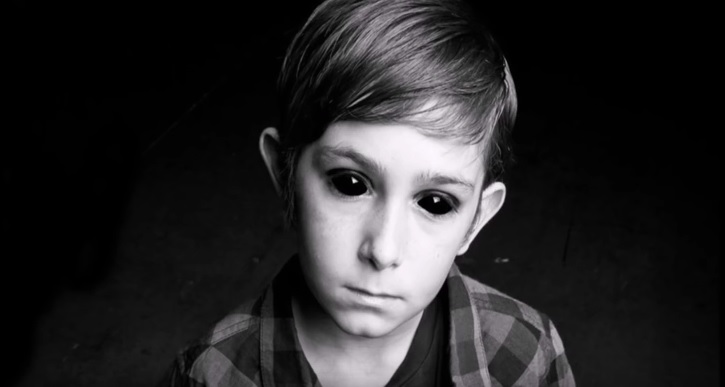
De Zwarte Oog-kinderen worden gekenmerkt door jonge kinderen met volledig zwarte ogen, zonder iris of pupil. Ze worden vaak beschreven als wezens die plotseling verschijnen op afgelegen locaties, of die contact zoeken met volwassenen, meestal in situaties van spanning of angst. Er worden weinig fysieke details gegeven; het is vooral hun oogkleur en de wijze van verschijning die hen onderscheidt.

Bekende getuigenissen komen uit heel de wereld, van de Verenigde Staten tot Europa en Azië. Veel verhalen worden gekenmerkt door gevoelens van angst, verwarring of zelfs psychische leegte bij de observatoren. Soms wordt gemeld dat na confrontaties met deze wezens, mensen last krijgen van nachtmerries, mentale verwarring of fysiek ongemak.

Men in Black (Siyah Giyen Adamlar) nedir?

1.2 De Mannen in Zwart: geschiedenis en beschrijvingen

De Mannen in Zwart (Men in Black, MIB) werden voor het eerst prominent beschreven in de jaren 1950 en 1960, vooral in de context van UFO-waarnemingen en buitenaardse ontmoeting. Ze worden vaak beschreven als nette, geklede mannen in zwarte pakken, die verschijnen kort nadat er melding is gedaan van een UFO of ander onverklaarbaar fenomeen.

Ze worden geassocieerd met intimidatie, het onderdrukken van informatie en het dreigen met negatieve gevolgen voor getuigen. Sommige verhalen suggereren dat ze paranormale of bovennatuurlijke krachten bezitten, of dat ze verbonden zijn met overheidsinstanties en geheime samenzweringen.

2. Beschrijving van de fenomenen: gelijkenissen en verschillen

Hoewel de Zwarte Oogkinderen en de Mannen in Zwart uit verschillende culturele en sociale contexten lijken voort te komen, vertonen ze opvallende overeenkomsten:

  • Manifestatie: Beide verschijnen plotseling en onverwacht, vaak zonder duidelijke oorzaak of waarschuwing.

  • Onverklaarbaarheid: Er is geen sluitend wetenschappelijk bewijs voor hun bestaan, en ze blijven een bron van volksverhalen en folklore.

  • Invloed op getuigen: Beide fenomenen worden geassocieerd met gevoelens van angst, verwarring en psychisch trauma.

Mexican Sightings of Black Eyed Children – Mexico Unexplained

Verschillen zijn onder andere:

  • Fysieke verschijningsvorm: De Zwarte Oog-kinderen worden vooral visueel gekenmerkt door hun zwarte ogen, terwijl de Mannen in Zwart worden beschreven aan de hand van hun kleding en gedrag.

  • Context van waarneming: Zwarte Oog-kinderen worden doorgaans gezien in privé- of huiselijke situaties, terwijl de Mannen in Zwart vaak optreden in openbare, of semi-openbare situaties rondom UFO-waarnemingen.

3. Mogelijke theorieën over de gedeelde en onverklaarbare agenda

De grote vraag blijft: kunnen deze afwijkende verschijnselen deel uitmaken van een overkoepelend, onzichtbaar beleid of doel? Hieronder worden enkele hypothesen en theorieën besproken.

3.1 De theorie van buitenaardse beïnvloeding

Een gangbare interpretatie onder UFO-onderzoekers en ufologen is dat zowel de Zwarte Oogkinderen als de Mannen in Zwart werken als agenten of vertegenwoordigers van buitenaardse wezens of geavanceerde technologieën.

  • Gerelateerde doelen: Het doel zou kunnen zijn het controleren of sturen van menselijke perceptie en gedrag, bijvoorbeeld door het verzamelen van genetisch materiaal, psychische gegevens of gedragsinformatie.

  • Synchronisatie door technologie: Sommige theorieën suggereren dat de verschijnselen voortkomen uit gerichte technologie die bewust wordt ingezet op mensen en plekken, mogelijk als onderdeel van een bredere afstemming tussen buitenaardse en menselijke actoren.

3.2 De interpretatie van een geheime overheidsagenda

Een andere hypothese stelt dat deze entiteiten gerelateerd zijn aan geheime programma's van overheidsinstanties, zoals de CIA, NSA of militaire programma's.

  • Experimenten in perceptie en mind control: Het zou kunnen dat deze verschijnselen gerichte psychologische experimenten zijn, waarbij projecten zoals MK-Ultra en het gebruik van psychotronica een rol spelen.

  • De Mens en Machine samen: Het idee dat deze wezens helpen bij het controleren of beïnvloeden van menselijke collectieve percepties, vooral in het kader van geheime wereldwijde agenda's.

America’s Darkest Legend: Everything About the Men in Black | Monsters & Mysteries

3.3 Esoterische en spirituele interpretaties

Veldonderzoekers en spiritualisten suggereren dat beide fenomenen mogelijk manipulatief zijn, en dienen een spiritueel of bewustzijnsdoel.

  • Bewustzijnsontwikkeling: De verschijnselen zouden bedoeld kunnen zijn om individuen te confronteren met hun innerlijke angsten en beperkingen, of om deal te maken met kosmische krachten.

  • Manifestatie van archetypes: Sommige theorieën beschrijven ze als manifestaties van archetypes uit het collectieve onderbewuste, die over verschillende culturen en tijden voorkomen.

3.4 Een gedeeld, ondoorzichtig agenda: de synthese

Het is mogelijk dat de Zwarte Oogkinderen en de Mannen in Zwart onderdeel zijn van een complex, gelaagd systeem, waarbij verschillende krachten, waaronder buitenaards, overheids- en spirituele invloeden, samenwerken.

  • De bedoeling: Een betere controle over menselijke perceptie, gedrag en ontwikkeling, of het verzamelen van kosmische en psychische gegevens.

  • De methodiek: Verschijnen in bepaalde situaties, gebruikmakend van angst en verwarring, met als doel het verzamelen van informatie of het beïnvloeden van collectieve overtuigingen.

4. Het belang van culturele en mediatradities

Het bekijken van deze fenomenen door culturele oogpunten onthult dat ze tot een breed scala van volksverhalen, mythen en popcultuur gerekend kunnen worden.

  • De rol van media: Films, boeken en internet hebben de iconografie van de Mannen in Zwart en de Zwarte Oog-kinderen verder versterkt, waardoor hun betekenis en interpretatie evolueren.

  • Verhaalvorming en mythologie: Veel van de verhalen lijken archetypisch en dienen als moderne mythes over onze relatie met het onbekende en het bovennatuurlijke.

5. Kritische analyse en scepsis

Het is belangrijk om ook kritisch te kijken naar de beweegredenen en de bewijsvoering achter deze theorieën.

  • Gebrek aan wetenschappelijk bewijs: Er is geen sluitend bewijs dat de verschijnselen bovennatuurlijk of buitenaards zijn, en veel verhalen kunnen worden verklaard door psychologische factoren zoals hysterie, nachtmerries, hallucinaties of psychische stoornissen.

  • De rol van interpretatie en interpretatieve bias: Mensen die reeds geloven in geheime agenda’s of buitenaardse invloeden, zullen sneller de verschijnselen op die manier interpreteren.

6. Conclusie: een complexe, ondoorzichtige mozaïek?

De vraag of de Zwarte Oogkinderen en de Mannen in Zwart samen een gedeelde, onverklaarbare agenda vormen, blijft open. Wat duidelijk is, is dat beide fenomeenclusters binnen de menselijke cultuur functioneren als symbolen voor het onbegrepen, het bovennatuurlijke en het grensvlak tussen realiteit en perceptie.

Het is mogelijk dat ze daadwerkelijk een kracht of entiteit vertegenwoordigen die opereert zonder volledige transparantie, wellicht met doelen die nog in de schaduw blijven. Alternatief kunnen ze het resultaat zijn van collectieve angsten, psychologische projecties, of media- en culturele constructies.

Wat er ook van waar is, hun gezamenlijk voorkomen en de fenomenale beschrijvingen die ermee gepaard gaan, dragen bij aan een rijk tapijt van folklore en mystiek die nog altijd veel vragen oproept en wetenschap uitdaagt tot verder onderzoek.


Black Eyed Children: The Creepiest Urban Legend You’ll Wish You Didn’t Know | Urban Legend Explained

Eindwoord

Het onderzoeken van de gedeelde en onverklaarbare agenda van de Zwarte Oogkinderen en de Mannen in Zwart duidt op een brede culturele en psychologische laag die onze behoefte onderzoekt naar betekenis in het onbekende. Of er nu werkelijk een verborgen plan bestaat, of dat deze verschijnselen eerder een reflectie zijn van collectieve angsten en archetypes, ze blijven fascinerende raadsels. Wat zeker is, is dat zij ons uitdagen na te denken over de grenzen van de menselijke kennis, perceptie en de mysterieuze krachten die mogelijk uit de ruimte, de psyche of de verborgen wereld actief zijn.

black eyed children | Urban Legends & Cryptids Amino

Bronnen en verdere lezing

  • Bezeten van het onbekende: De geschiedenis van de Mannen in Zwart (John Keel, 1970)
  • Urgente ogen: De symboliek van de Zwarte Oogkinderen (Online artikelen en forums)
  • Overheidsprogramma’s en psychotronica: Geheimen van de bekende geheime diensten
  • Mythologie en archetypes: Carl Jung en de collectieve onbewuste theorieën
  • Theoretische frameworks over buitenaardse en paranormale fenomenen

Met deze uitgebreide analyse hopen we bij te dragen aan een beter begrip van deze intrigerende fenomenen en de vragen die zij oproepen. Het ware doel van de gedeelde en onverklaarbare agenda blijft voorlopig in het rijk der speculatie, maar het onderzoek naar hen benadrukt hoe diep onze collectieve fascinatie met het onzichtbare gaat.

{  PETER2011 }

Hoe vind je dit bericht?
Geschreven door peter om 23:58 Stuur door

3.3 billion years ago: the oldest traces of life on Earth were found

3.3 billion years ago: the oldest traces of life on Earth were found

An international team of scientists led by the Carnegie Institute has discovered chemical evidence of life in rocks dating back more than 3.3 billion years. They also found molecular traces indicating that photosynthetic organisms appeared nearly a billion years earlier than previously thought.

Rocks in which some of the oldest traces of life on Earth have been found. Source: Allen Nutman/University of Wollongong via AP

The earliest life on Earth left few molecular traces behind. The few fragile remains, such as ancient cells and bacterial mats, were destroyed by tectonic processes that led to the renewal of the Earth’s crust. All these transformations have virtually erased the biosignatures that contain crucial clues about the origin and early evolution of life.

Nevertheless, thanks to new technologies, scientists now have a chance to look into Earth’s past. An international team of researchers has suggested that the distribution of biomolecular fragments found in ancient rocks still preserves information about the biosphere, even if the original biomolecules have not been preserved. The team used high-resolution chemical analysis to break down organic and inorganic materials into molecular fragments, and then trained an artificial intelligence system to recognise the chemical ‘fingerprints’ left behind by life.

Organic matter from early life sample

Organic matter extracted from samples of 2.5-billion-year-old rock containing fossilized microorganisms like the one in this photomicrograph still contains biomolecular fragments that may have been produced via photosynthesis.

Image credit: Andrew D. Czaja

Scientists examined more than 400 samples ranging from plants and animals to billion-year-old fossils and meteorites. The artificial intelligence model distinguished between biological and non-biological materials with over 90% accuracy and detected signs of photosynthesis in rocks at least 2.5 billion years old.

According to the team, until now, molecular traces reliably indicating life have only been found in rocks younger than 1.7 billion years old. This new method roughly doubles the time range that scientists can study using chemical biosignatures.

85ec82b575c50f99a7538ea3cc9b259b

abstract organic structures

cfb1d8af33c3e28cf4aa0bfa1681b208

The black features in this rock are traces of photosynthesis dating back 2.5 billion years.

(Andrea Corpolongo/Carnegie Institution for Science)

0589dd7d5a53b3ea3cdb9b99eea25076

Organic material found in 2.5-billion-year-old rock.

(Andrew D. Czaja/Carnegie Institution for Science)

The new approach could be used not only in Earth science, but also in space exploration. It could be used to analyse samples from Mars or other celestial bodies to determine whether they were once habitable.

{ https://universemagazine.com/en/articles-en/ }

Hoe vind je dit bericht?
Geschreven door peter om 23:26 Stuur door

Space fashion face-off! While NASA's astronauts wear spacesuits designed by Prada, European Space Agency's travellers will have to settle for... Decathlon

Space fashion face-off! While NASA's astronauts wear spacesuits designed by Prada, European Space Agency's travellers will have to settle for... Decathlon

For decades, the USA and Europe have been battling it out in the space race.

But when it comes to high fashion, there's now a clear winner.

While NASA's spacesuits are being developed, in part, by Prada, astronauts at the European Space Agency (ESA) will have to settle for a more humble designer – Decathlon.

The high street brand, best known for selling affordable sportswear, has announced it is behind a new intra-vehicular activity (IVA) space suit prototype.

Its dark grey 'EuroSuit' is designed to be worn during 'critical' phases of a mission, such as launch and landing, and can be donned or removed without assistance in under two minutes.

It will be tested by ESA astronaut Sophie Adenot during a mission to the International Space Station (ISS) next year.

The mainstream sports shop couldn't be further from the iconic Italian fashion powerhouse behind NASA's suits.

But Decathlon says the opportunity demonstrates its ability to 'transfer its sports innovation expertise into the extreme environment of human spaceflight'.

High street store Decathlon has announced it is behind a new intra-vehicular activity (IVA) space suit prototype

High street store Decathlon has announced it is behind a new intra-vehicular activity (IVA) space suit prototype

Its dark grey ‘EuroSuit’ is designed to be worn during ‘critical’ phases of a mission, such as launch and landing, and can be donned or removed without assistance in under two minutes

Its dark grey 'EuroSuit' is designed to be worn during 'critical' phases of a mission, such as launch and landing, and can be donned or removed without assistance in under two minutes

Meanwhile Prada, founded in Milan in 1913, has teamed up with Axiom Space to advise on NASA's suit design and materialsIts creation, called the Axiom Extravehicular Mobility Unit (AxEMU) spacesuit, has been described as 'evolvable, scalable and adaptable' for missions on the lunar surface and in low-Earth orbit

Prada - known for its luxury handbags, accessories and footwear - has turned to designing a spacesuit to be worn on the next mission to the moon

The prototype features a range of 'groundbreaking' advancements, including a lattice-structured helmet design that allows for perfectly tailored fits.

Expanding 'bellows' at the shoulders, elbows and knees ensure maximum mobility in confined environments.

Air-tight zippers with 'ergonomic pullers' make it easy to open and close the suit, while the suit's length can be adjusted to compensate for the natural elongation of astronauts' bodies in microgravity.

The ability to don or remove the suit in under two minutes unaided is a first for IVA suits and could significantly improve response times during spacecraft emergencies.

Aboard the ISS, Ms Adenot will perform a series of test sequences including putting the suit on, manipulating small objects, using the onboard touchscreen tablet and taking the suit off.

Her feedback will fuel the development of a fully operational version of the EuroSuit, complete with key systems such as air-tight sealing, fire resistance, breathable atmosphere control, built-in communications and head-up display interfaces.

'The EuroSuit embodies our ability to push the boundaries of innovation beyond our traditional fields of expertise,' Sébastien Haquet, Head of Advanced Innovation at Decathlon, said.

'It is a remarkable opportunity to explore new applications for our textile and product design know-how in an environment as demanding as space.'

Prada's suit has been designed to accommodate both male and female astronauts with enhanced flexibility and mobility to allow them to move around for at least eight hoursDecathlon's prototype features a range of ‘groundbreaking’ advancements, including a lattice-structured helmet design that allows for perfectly tailored fits

Decathlon's prototype (left) features a range of 'groundbreaking' advancements, including a lattice-structured helmet design that allows for perfectly tailored fits. Meanwhile Prada's suit (right) has been designed to accommodate both male and female astronauts with enhanced flexibility and mobility to allow them to move around for at least eight hours

Decathlon is a French retailer with stores all over the UK and is best known for its affordable sportwear (file image)

Decathlon is a French retailer with stores all over the UK and is best known for its affordable sportwear (file image)

EuroSuit: Key specs 

Custom-fit ergonomics: a lattice-structured helmet design allows for perfectly tailored fits to each astronaut's morphology.

Freedom of movement: bellows integrated at the shoulders, elbows, and knees ensure maximum mobility in confined environments.

Sealed, user-friendly zippers: air-tight zippers with ergonomic pullers facilitate easy opening and closing of the suit.

Dimensional adaptability: the suit's length can be adjusted to compensate for the natural elongation of astronauts' bodies in microgravity

Decathlon has worked in conjunction with French national space agency CNES, start-up Spartan Space and The Institute of Space Medicine and Physiology in the design of the suit.

'In line with Europe's ambition to achieve greater autonomy in human spaceflight, CNES has decided to focus on intra-vehicular suits,' Sébastien Barde, Deputy Director for Exploration and Human Spaceflight, said.

'By relying on the exceptional expertise of our partners, we are prepared to deliver this type of suit when the time comes.

'In doing so, we are fully playing our role of supporting and guiding our industry.'

Last year, Prada announced it was teaming up with Axiom Space to advise on the design and materials for a spacesuit to be worn on the next mission to the moon.

The renowned fashion company said its team were able to assist with recommending customised materials and features for the spacesuit, as well as sewing methods that could improve its performance.

The suit, which will be worn by the next humans to walk on the surface of the moon, will be capable of withstanding extreme temperatures at the lunar south pole and the coldest temperatures in permanently-shadowed regions.

It has been designed to accommodate both male and female astronauts with enhanced flexibility and mobility to allow them to move around for at least eight hours.

ESA astronaut Sophie Adenot (far right) will test the prototype suit during a mission to the ISS next year

ESA astronaut Sophie Adenot (far right) will test the prototype suit during a mission to the ISS next year

Features also include variable suit pressure, a carbon dioxide 'scrubbing' system, a portable life support system backpack and a bright white outer layer to reflect heat.

The entire design also includes advanced coatings on the helmet and visor to enhance the astronauts' view of their surroundings, as well as custom gloves.

READ MORE

article image

The suit will be used for NASA's Artemis III mission, a crewed lunar landing that will take place in September 2026 at the earliest.

It will be the first time humans have returned to the moon since Apollo 17 in 1972 and will involve a week-long exploration of the lunar surface while conducting scientific studies.

HOW DO ASTRONAUTS GO TO THE TOILET?

On board the ISS there is a toilet which has several attachments.

As there is no gravity in space, liquids do not flow but accumulate in floating globules.

To counter this problem, there are hoses which are used and provide pressure to suck the fluid from the body.

Each astronaut has their own personal attachment.

When a toilet is not available or the astronaut is on a space-walk, the astronauts use MAGs (maximum absorbency garments) which are diapers that soak up all the waste.

They are effective for short missions but have been known to leak occasionally.  

Nasa is aiming to develop a suit which allows for long-term spacesuit usage and complete independent disposal of human waste. 

On the moon missions there was no toilet and the all-male crew had 'condom catheter's that attached to the penis and the fluid was fed to a bag that resided outside of the suit.  

According to an 1976 interview with astronaut Rusty Schweickart, the condom catheters came in three sizes: small, medium and large. 

Despite the practical advantages of having the right size, the astronauts often ordered the large ones and this resulted in a leakage of urine in the suit.

To combat this, Nasa renamed the sizes as large, gigantic, and humongous to appease the male ego. 

There has yet to be an effective female equivalent developed, something Nasa aims to change for the Orion missions. 

{ https://www.dailymail.co.uk/sciencetech/index.html }

Hoe vind je dit bericht?
Geschreven door peter om 23:08 Stuur door

Mapping the Milky Way: Incredible simulation charts more than 100 BILLION stars over the course of 10,000 years

Mapping the Milky Way: Incredible simulation charts more than 100 BILLION stars over the course of 10,000 years

Scientists from Japan's RIKEN research centre have created the most detailed simulation of the Milky Way ever made.

The incredible galactic map charts more than 100 billion individual stars over the course of 10,000 years.

Researchers use simulations like these to test theories about how the galaxy formed and changed over time.

However, this is the very first 'star-by-star' simulation of our home galaxy to chart the evolution of the cosmos with such stunning detail.

Even the best cutting-edge computer models struggle to accurately simulate complex movements of 100 billion stars in the Milky Way.

This is because the galaxy is shaped by forces on both the enormously large and extremely small scales of distance and time.

Galaxy simulations must consider gravity, fluid dynamics, supernova explosions, and the creation of elements in the hearts of dying stars.

Now, by using AI, the researchers say they can make simulations that track 100 times as many stars.

Scientists have created the most detailed simulation of the Milky Way ever created, charting the movements of 100 billion stars over 10,000 years. Pictured: A top-down view of the simulation showing areas of gases in red

Scientists have created the most detailed simulation of the Milky Way ever created, charting the movements of 100 billion stars over 10,000 years. Pictured: A top-down view of the simulation showing areas of gases in red 

Most simulations struggle to render more than a billion stars at a time, forcing them to group hundreds of suns. However, this is the very first true star-by-star simulation, plotting the movement of every individual star. Pictured: A side-on view of the simulation

Most simulations struggle to render more than a billion stars at a time, forcing them to group hundreds of suns. However, this is the very first true star-by-star simulation, plotting the movement of every individual star. Pictured: A side-on view of the simulation 

Because changes in the galaxy take place over such a long time, scientists can't just sit back and watch to learn about galactic evolution.

By looking at galaxies that are very far away from Earth, astronomers can get an idea of what galaxies might have looked like at an earlier point in the universe's history.

However, this data only provides a snapshot and doesn't tell us anything about our own galaxy.

For that, astronomers are now trying to create powerful computer simulations that work out how stars would move and evolve based on what we know about the laws of physics.

By changing the rules of the simulation and comparing the results to the universe around us, scientists can learn more about how our galaxy came to be.

The problem is that the Milky Way is enormously vast and incredibly complex, making it far too difficult for any normal computer to simulate.

In the past, scientists had tried to build bigger and more powerful supercomputers to run more complex simulations.

However, if the best conventional simulation to date tried to model the Milky Way down to the individual star, it would take 315 hours for every million years of simulated time.

Simulations of the galaxy are used to test our theories about how stars and supernovae form over time. But these processes are so complex (illustrated) that most simulations would take 315 years to model a billion years of history

Simulations of the galaxy are used to test our theories about how stars and supernovae form over time. But these processes are so complex (illustrated) that most simulations would take 315 years to model a billion years of history 

HOW MUCH DOES THE MILKY WAY WEIGH? 

One solar mass is equivalent to  2 times 10 to the 30th of a single kilogram. 

The entire galaxy is 1.5 trillion times greater (1.5 multiplied by ten to the power of 12) than this. 

That means the the sun weighs 3 x 10^42 kg.  

This equates to 3 x 10^39 tonnes. 

In non-mathematics, this means the Milky Way's weight is therefore equal to 3,000 trillion trillion trillion tonnes. 

At this rate, simulating just one billion years of the Milky Way's 13.61-billion-year history would take more than 36 years.

To solve this problem, lead researcher Dr Hirashima, of the RIKEN Center for Interdisciplinary Theoretical and Mathematical Sciences (iTHEMS), alongside colleagues from the University of Tokyo and Universitat de Barcelona in Spain, tried a new approach.

Instead of simulating the physics of every single process, the researchers let an AI fill in some of the gaps.

The 'surrogate' AI was trained on thousands of highly detailed simulations of supernova explosions and learned to predict how the gases would expand over the next 100,000 years.

By allowing the AI to do much of the heavy lifting, the researchers were able to make their simulation 100 times larger and complete it 100 times faster.

When they compared their results to simulations painstakingly created on some of the world's largest supercomputers, the researchers found that they matched.

The researchers charted the movements of 100 billion stars over one million years in just two hours and 47 minutes.

This means that one billion years of the galaxy's history could be simulated in a mere 115 days, not 36 years.

By using AI, the researchers' new model could simulate the movements of 100 billion stars over a billion years in just 115 days. This makes it 100 times more detailed and 100 times faster (stock image)

By using AI, the researchers' new model could simulate the movements of 100 billion stars over a billion years in just 115 days. This makes it 100 times more detailed and 100 times faster (stock image)

article image

Dr Hirashima says this new method could mark a 'fundamental shift' in how scientists simulate the galaxy.

He says: 'This achievement also shows that AI-accelerated simulations can move beyond pattern recognition to become a genuine tool for scientific discovery - helping us trace how the elements that formed life itself emerged within our galaxy.'

In the future, these same techniques could be used to improve other areas where highly detailed simulations are used.

That could lead to a better understanding of ocean currents, more accurate models of climate change, and even better weather forecasts.

HOW DO STARS FORM?

Stars form from dense molecular clouds - of dust and gas - in regions of interstellar space known as stellar nurseries. 

A single molecular cloud, which primarily contains hydrogen atoms, can be thousands of times the mass of the sun. 

They undergo turbulent motion with the gas and dust moving over time, disturbing the atoms and molecules causing some regions to have more matter than other parts. 

If enough gas and dust come together in one area then it begins to collapse under the weight of its own gravity. 

As it begins to collapse it slowly gets hotter and expands outwards, taking in more of the surrounding gas and dust.

At this point, when the region is about 900 billion miles across, it becomes a pre-stellar core and the starting process of becoming a star. 

Then, over the next 50,000 years this will contract 92 billion miles across to become the inner core of a star. 

The excess material is ejected out towards the poles of the star and a disc of gas and dust is formed around the star, forming a proto-star. 

This matter is then either incorporated into the star or expelled out into a wider disc that will lead to the formation of planets, moons, comets and asteroids.

{ https://www.dailymail.co.uk/sciencetech/index.html }

Hoe vind je dit bericht?
Geschreven door peter om 22:29 Stuur door

True identity of interstellar visitor 3I/ATLAS will be revealed TOMORROW – as NASA finally shares long–awaited images of the mysterious object

True identity of interstellar visitor 3I/ATLAS will be revealed TOMORROW – as NASA finally shares long–awaited images of the mysterious object

NASA is poised to reveal the true identity of the interstellar object 3I/ATLAS tomorrow – after more than a month of silence. 

The space agency has announced it will hold a press conference at 15:00 EST (20:00 GMT) to share never–before–seen images of the mysterious visitor.

These observations were gathered by NASA's various spacecraft and telescopes – including the Mars Reconnaissance Orbiter during its close pass of the Red Planet.

Despite the intense interest in 3I/ATLAS's origins, the images have been kept from the public until now due to the government shutdown.

Experts are confident these images will finally put an end to the speculation that 3I/ATLAS might be some sort of 'artificial' object.

Speaking to the Daily Mail, Dr Matthew Genge, an expert on comets and meteors from Imperial College London, said: 'All the evidence so far is consistent with a comet from another planetary system.

'If it looks like a duck, waddles like a duck, and quacks: it is most likely a duck. 

'Or in this case, a comet.'

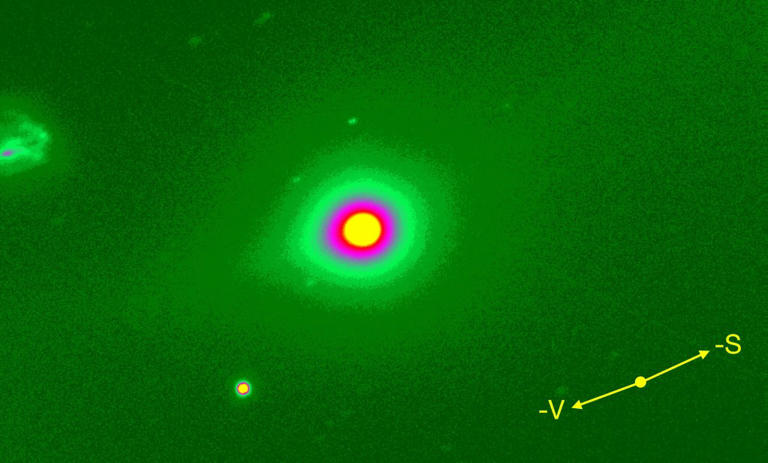
NASA will reveal the real identity of the mysterious interstellar object 3I/ATLAS in a press conference tomorrow after remaining silent for over a month. Pictured: 3I/ATLAS seen by the Hubble Space Telescope on July 21

NASA will reveal the real identity of the mysterious interstellar object 3I/ATLAS in a press conference tomorrow after remaining silent for over a month. Pictured: 3I/ATLAS seen by the Hubble Space Telescope on July 21

ExoMars_Trace_Gas_Orbiter_observes_comet_3I_ATLAS_GIF_pillars.gif

During the shutdown between October 1 and November 12, the majority of NASA's staff were placed on furlough, and the agency was prevented from communicating with the public.

In a case of terrible timing, this came just as 3I/ATLAS entered the best position for astronomers to observe it.

On October 3, the comet reached its closest distance to Mars as it passed just 19 million miles (30 million kilometres) from the Red Planet and the fleet of satellites waiting there.

Then, on October 29, the interstellar object reached its closest point to the sun at a distance of 130 million miles (210 million kilometres).

At this point, the heat from the sun would have started to turn the comet's icy surface to gas, producing a burst of activity and brightness.

The European Space Agency (ESA) has already released its own images of 3I/ATLAS snapped by the ExoMars Trace Gas Orbiter (TGO) and Mars Express orbiter.

These observations helped to refine predictions of the object's trajectory 'tenfold', which could help astronomers study it in the future.

However, these orbiters are only designed for observing the planet's surface, and 3I/ATLAS only showed up as a faint glowing dot.

The space agency has announced it will hold a press conference to share never-before-seen images of the mysterious visitor. Pictured: 3I/ATLAS seen by the Gemini Observatory, Chile

The space agency has announced it will hold a press conference to share never–before–seen images of the mysterious visitor. Pictured: 3I/ATLAS seen by the Gemini Observatory, Chile

This comes after the European Space Agency released images of the interstellar object taken by its ExoMars Trace Gas Orbiter (TGO) as the object passed by Mars (pictured)

This comes after the European Space Agency released images of the interstellar object taken by its ExoMars Trace Gas Orbiter (TGO) as the object passed by Mars (pictured)

Even still, these images clearly showed the glowing 'coma' or ionised gas, which is the telltale sign of an icy comet being warmed by the sun.

With the government shutdown now at an end, NASA is poised to share all the data gathered during the Martian flyby.

These images will be shared and discussed during a live broadcast streamed on NASA's website, Amazon Prime and YouTube starting at 15:00 EST (20:00 GMT).

Members of the public are being encouraged to submit their own questions on social media using '#AskNASA', and some will be answered live on air.

Dr Genge says: 'They will be higher resolution images showing 3I/ATLAS in more detail than ever before.

'However, don't expect a miracle. Comets are shrouded in a gaseous atmosphere, so it is like trying to pick out a shape in the fog.'

3I/ATLAS is only the third object from another solar system that scientists have ever detected, meaning that there are many questions to be answered.

The object also has several interesting features, such as a highly irradiated surface and a so–called 'anti–tail' which points towards the sun.

NASA is expected to release images taken by its Mars Reconnaissance Orbiter as 3I//ATLAS made a close pass of Mars on October 3

NASA is expected to release images taken by its Mars Reconnaissance Orbiter as 3I//ATLAS made a close pass of Mars on October 3

NASA hasn't released any new images of 3I/ATLAS because of the government shutdown that placed many space agency employees on furlough (artist's impression)

NASA hasn't released any new images of 3I/ATLAS because of the government shutdown that placed many space agency employees on furlough (artist's impression)

In the absence of updates from NASA, these have led some to speculate that 3I/ATLAS could be an alien mothership.

However, there is nothing in the object's behaviour that is not consistent with what we know about comets in our own solar system.

Dr Genge adds: 'There is very little speculation amongst scientists, with one very obvious exception. There is no evidence to suggest 3I/ATLAS is artificial.'

Scientists are hopeful that NASA's new data will finally convince the public of this, as well as provide an opportunity for some genuine scientific discovery.

Although scientists can't physically touch 3I/ATLAS or study parts of it in the lab, these new observations could help understand its origins.

Professor March Burchell, an astronomer from the University of Kent, told Daily Mail: 'Details of its shape by direct observation would be good.'

Seeing the solid icy core of a comet known as a 'nucleus' is difficult when the object is far away, but the Mars orbiters might have been close enough to pick this detail up.

Likewise, Professor Burchell says these observations could provide more data on the gas outbursts which have 'caused confusion among alien artefact hunters'.

Scientists are hopeful that this will finally put an end to the speculation that 3I/ATLAS is an 'artificial object'. According to experts in observational astronomy, every detail of the object's behaviour is consistent with a comet

Scientists are hopeful that this will finally put an end to the speculation that 3I/ATLAS is an 'artificial object'. According to experts in observational astronomy, every detail of the object's behaviour is consistent with a comet 

3I/ATLAS has just returned into Earth's view, allowing astronomers to capture the first images of the comet since its close pass of the sun

3I/ATLAS has just returned into Earth's view, allowing astronomers to capture the first images of the comet since its close pass of the sun 

'These are natural phenomena, the ice starts to sublimate in jets and accelerates the body a little,' Professor Burchell explains.

'So seeing any evidence of these natural phenomena or any coma forming around the nucleus will be interesting.'

article image

Since being confirmed as an interstellar object in early June, scientists have been using the world's best telescopes to gather data on the comet 3I/ATLAS.

The comet has now just returned into Earth's view after making a slingshot around the sun.

Dozens of observatories will be keeping a close eye on the comet as it approaches its closest pass of Earth next month at a distance of 170 million miles (273 million kilometres).

Early next year, the comet will also pass close enough to Jupiter for spacecraft near the planet to make final observations before it leaves our solar system.

Explained: The difference between an asteroid, meteorite and other space rocks

An asteroid is a large chunk of rock left over from collisions or the early solar system. Most are located between Mars and Jupiter in the Main Belt.

A comet is a rock covered in ice, methane and other compounds. Their orbits take them much further out of the solar system.

A meteor is what astronomers call a flash of light in the atmosphere when debris burns up.

This debris itself is known as a meteoroid. Most are so small they are vapourised in the atmosphere.

If any of this meteoroid makes it to Earth, it is called a meteorite.

Meteors, meteoroids and meteorites normally originate from asteroids and comets.

For example, if Earth passes through the tail of a comet, much of the debris burns up in the atmosphere, forming a meteor shower.

{ https://www.dailymail.co.uk/sciencetech/index.html }

Hoe vind je dit bericht?
Geschreven door peter om 22:08 Stuur door

The Fall of Icarus: Photographer captures an 'absolutely preposterous' snap of a SKYDIVER appearing to fall from the sun

The Fall of Icarus: Photographer captures an 'absolutely preposterous' snap of a SKYDIVER appearing to fall from the sun

A photographer has captured an 'absolutely preposterous' snap of a skydiver appearing to fall from the sun.

The stunning image, titled 'The Fall of Icarus', was taken by astrophotographer Andrew McCarthy, who specialises in taking photos of the sun.

Mr McCarthy says that it took 'immense planning and technical precision' to make it seem like the Earth–bound skydiver was tumbling through outer space.

The skydiver, musician Gabriel Brown, jumped from a small propeller–powered paramotor from an altitude of around 3,500 feet (1,070 metres).

To get both the sun and Mr Brown in focus, Mr McCarthy's camera had to be positioned on the ground almost two miles (3.2 km) away.

That gave the photographer just a fraction of a second to capture the precise moment Mr Brown passed in front of his lens.

The spectacular results have gone viral on social media, with space and photography fans flocking to share their praise.

Even SpaceX CEO Elon Musk took to X to congratulate Mr McCarthy, writing: 'Nice shot'.

A photographer has captured an 'absolutely preposterous' snap of a skydiver appearing to fall from the sun.

A photographer has captured an 'absolutely preposterous' snap of a skydiver appearing to fall from the sun.

Even SpaceX CEO Elon Musk took to social media to praise the incredible image, writing simply: 'Nice shot'

Despite weeks of planning and precise calculations to work out the best possible position, capturing this unlikely shot still took extreme patience.

The small, light aircraft proved to be far less predictable than hoped, and getting it in just the right spot proved extremely challenging for pilot Jim Hamberlin. 

Mr McCarthy told Daily Mail: 'Getting the alignment right was a huge challenge and lesson in patience. 

'There were many passes with the aircraft that were so close but not good enough, and they ended up circling for an hour until they were aligned correctly with my narrow field of view.

'I absolutely love the contrast of the small human against our huge, dynamic star. It's the juxtaposition that makes this so special, and feels so optimistic. Like despite our small size, we're capable of so much.'

Incredibly, after several attempts to get the alignment right, Mr McCarthy and Mr Brown were able to capture the shot on the very first jump of the day.

Mr Brown wrote on X: 'I can't BELIEVE we pulled it off.

'It took months of planning and a stupid amount of math, but I couldn't be happier with the result! Best skydive of my life!'

The photo was captured by astrophotographer Andrew McCarthy, who says that the shot took incredible levels of planning

The photo was captured by astrophotographer Andrew McCarthy, who says that the shot took incredible levels of planning

Mr McCarthy says that this image is likely the 'first photo of its kind in existence'

Mr McCarthy says that this image is likely the 'first photo of its kind in existence'

The skydiver in the photograph, musician Gabriel Brown (right), jumped from a small propeller-powered paramotor from an altitude of around 3,500 feet (1,070 metres). To have Mr Brown and the sun in shot, Mr McCarthy (left) had to take the photo from almost two miles (3.2 km) away

The skydiver in the photograph, musician Gabriel Brown (right), jumped from a small propeller–powered paramotor from an altitude of around 3,500 feet (1,070 metres). To have Mr Brown and the sun in shot, Mr McCarthy (left) had to take the photo from almost two miles (3.2 km) away

After being shared on social media, The Fall of Icarus soon went viral as impressed fans gushed over the stunning image.

Even NASA astronaut Don Petit, widely regarded as one of the world's best photographers, praised Mr McCarthy's work, writing on X: 'Wow!'.

Meanwhile, another commenter chimed in: 'My mind is gonna explode trying to figure out how the hell you plan these shots.'

'WOW!!!! That is wildly brilliant,' one enthusiastic fan added.

Another wrote: 'Incredible. Pure excellence.'

Although the sun is roughly 93 million miles (150 million kilometres) from Earth, Mr McCarthy's photo still reveals an amazing level of detail.

Behind the silhouetted skydiver in The Fall of Icarus, you can see the dark, cooler patches of sunspots and the thin stripes of filaments created by the sun's swirling magnetic fields.

This is possible because the photo was taken in a part of the visible light spectrum where small details aren't drowned out by the sun's bright outer layers.

On social media, space fans rushed to share their praise, with one commenter describing the stunning solar image as 'pure excellence'

On social media, space fans rushed to share their praise, with one commenter describing the stunning solar image as 'pure excellence'

NASA astronaut Don Pettit, regarded as one of the world's best space photographers, complimented Mr McCarthy's work

NASA astronaut Don Pettit, regarded as one of the world's best space photographers, complimented Mr McCarthy's work 

Another commenter wrote that their mind was 'gonna explode' thinking about the logistics behind this photograph

Another commenter wrote that their mind was 'gonna explode' thinking about the logistics behind this photograph

In particular, Mr McCarthy shoots in the Hydrogen–alpha band, which is a wavelength of light produced by the sun's cooler regions.

article image

This blocks enough light to look at the sun through a telescope without being blinded, but not so much light that the details are totally lost.

Mr McCarthy has used this same technique to capture other stunning 'transit photos' of objects passing in front of the sun.

Earlier this year, he captured a 'once–in–a–lifetime' shot of the ISS passing in front of the sun at the exact moment a solar flare erupted into life.

He has also photographed a SpaceX rocket passing in front of the sun during launch, as well as ultra–high definition images of the lunar surface.

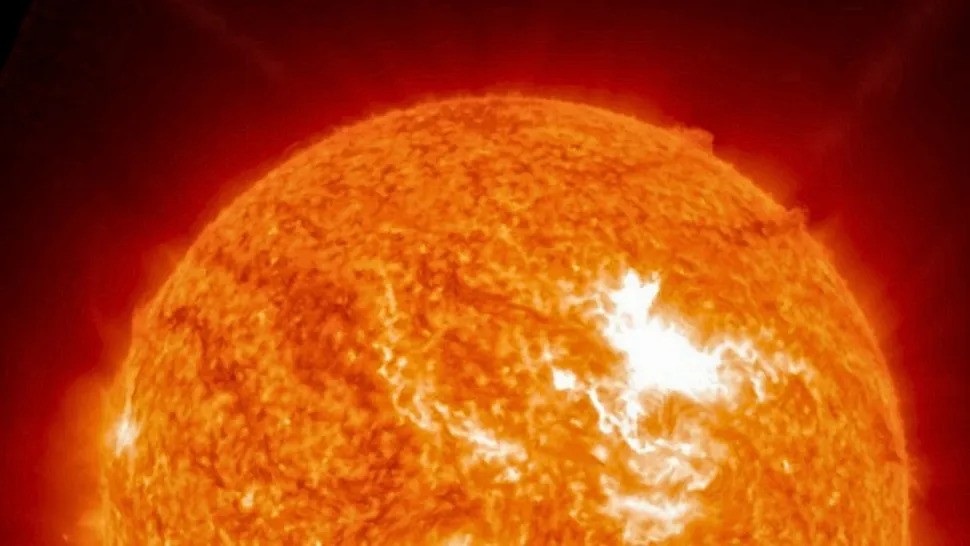
Our sun: The basics 

The sun is the star at the heart of the Solar System, a nearly perfect sphere of hot plasma, radiating energy.

It has a diameter of 1.39 million km, and is 330,000 times the mass of the Earth. 

Three quarters of the star is made of hydrogen, followed by helium, oxygen, carbon, neon and iron.

It is a G–type main sequence star and is sometimes called a yellow dwarf. 

The Sun formed from the gravitational collapse of matter in a large molecular cloud that gathered in the centre. 

The rest flattened into an orbiting disc that formed everything else.

Facts and Figures 

Name: Sun 

Known planets: Eight

Spectral type: G2

Distance to Earth: 150 million km

Distance from galactic center: 25,800 light–years 

Mass: 1.9885×10^30 kg

Radius: 696,342 km

Luminosity: 3.828×10^26 W

Temperature: 9,929 F

Age: 4.6 billion years  

{https://www.dailymail.co.uk/sciencetech/index.html }

Hoe vind je dit bericht?
Geschreven door peter om 21:49 Stuur door

Ex-NASA Official Breaks Decades-Long Silence on ‘Flying Saucer’

Ex-NASA Official Breaks Decades-Long Silence on ‘Flying Saucer’

Overview

A former NASA flight surgeon has spoken publicly for the first time about a classified encounter that took place three decades ago. In an interview with Newsweek on May 6, 2025, the physician—who served on several Space Shuttle missions in the 1990s—described witnessing a “flying saucer” that executed maneuvers that appeared to defy known aeronautical physics. He emphasized that the object moved silently, accelerated and changed direction instantaneously, and that the incident was recorded in a now‑declassified internal memo. The former official is urging the agency and the broader federal government to release all relevant data on unidentified aerial phenomena (UAP) to the public.

Background

UAP reporting has moved from the periphery of defense circles to the mainstream of congressional oversight. In 2020, the Pentagon established the Unidentified Aerial Phenomena Task Force, which was later succeeded by the All‑Domain Anomaly Resolution Office (ADARO) in 2023. NASA itself created a dedicated UAP research team in 2023, tasked with “scientifically analyzing credible sightings” and publishing findings. Public interest surged after the 2023 Office of the Director of National Intelligence report confirmed that “most UAP incidents remain unexplained.” The former flight surgeon’s account adds a rare, insider perspective from the era when NASA’s astronaut corps first began to grapple with anomalous sightings during low‑Earth‑orbit missions.

The Testimony

The flight surgeon, who asked to remain unnamed for security reasons, recalled the event occurring during a routine Shuttle launch rehearsal in 1994. “We were on the launch pad when a disc‑shaped object appeared about 2,000 feet away, hovering for a few seconds before darting away at a speed that outpaced any aircraft we had ever seen,” he told Newsweek. He added that the object emitted no sound, and radar systems briefly registered a blip that vanished almost instantly. “The crew recorded it on video, but the footage was classified under a ‘Sensitive Compartmented Information’ designation for years,” he said. The surgeon’s memo, now part of a 2025 declassification package, notes that the object's acceleration “exceeded the capabilities of any known propulsion system at the time.”

Implications

Experts caution against jumping to extraterrestrial conclusions, but the account underscores gaps in the historical record of UAP observations. Dr. James O. McAllister, a professor of aerospace engineering at the University of Colorado, noted, “When a credible source such as a NASA flight surgeon describes physics‑defying behavior, it compels the scientific community to re‑examine the data with fresh analytical tools.” The testimony also aligns with recent congressional hearings where former military pilots described similar “instantaneous vector changes.” Advocacy groups, including the non‑profit To The Stars Academy, have welcomed the disclosure, arguing it strengthens the case for a systematic, transparent declassification process.

Next Steps

In response to the growing pressure, NASA announced plans to release a summary of all UAP‑related reports gathered since the agency’s 2023 task force was formed, while still protecting national‑security details. The former flight surgeon urged lawmakers to “provide the necessary oversight and resources so that every credible encounter can be examined openly,” adding that secrecy only fuels speculation. As the U.S. government prepares its next budget cycle, funding for ADARO and NASA’s UAP research is expected to be a focal point of debate. Whether the newly revealed 1994 incident will prompt broader policy changes remains to be seen, but the disclosure marks a significant moment in the ongoing effort to bring scientific rigor to the study of unidentified aerial phenomena.

{  https://usubjects.com/  }

Hoe vind je dit bericht?
Geschreven door peter om 23:29 Stuur door

Scientists detect radio signals and mysterious jets from space object 3I/ATLAS, alongside possible alien link

Scientists detect radio signals and mysterious jets from space object 3I/ATLAS, alongside possible alien link

Overview

Astronomers monitoring the interstellar visitor 3I/ATLAS have reported a suite of anomalous phenomena that differ markedly from the behavior of typical comets. Using a combination of radio telescopes and optical facilities, researchers detected low‑frequency radio emissions and narrow, collimated jets of material that persisted for weeks without the expected decline in brightness. The findings, released in a pre‑print posted to arXiv on 12 November 2025, have sparked a lively debate over whether the object could be a natural body exhibiting unusual activity or a manifestation of artificial extraterrestrial technology.

Observations

The radio signature was first picked up by the Green Bank Telescope (GBT) during a routine survey of small bodies passing through the inner Solar System. Dr. Elena Martinez of the European Space Agency (ESA) described the signal as “a narrowband, non‑thermal burst centered near 1.42 GHz, lasting roughly 30 seconds, and repeating at irregular intervals over a 48‑hour window.” Simultaneous optical imaging from the Very Large Telescope (VLT) and the Pan‑STARRS survey revealed high‑velocity jets emanating from the object's nucleus, directed roughly opposite to the Sun and maintaining a steady outflow rate of ~10⁴ kg s⁻¹.

Unlike cometary activity driven by sublimating ices, the jets showed no measurable decay in intensity over the four‑month observation period, a characteristic noted by Dr. Martinez as “highly atypical for volatile‑driven comets, which usually fade as they recede from the Sun.” Spectroscopic analysis failed to identify common cometary molecules such as CN, C₂, or CO₂, further deepening the mystery.

Scientific Interpretation

The research team outlined three primary hypotheses:

  1. Unusual Natural Phenomenon – A previously unknown class of icy bodies with internal mechanisms (e.g., cryovolcanism) that can sustain prolonged jetting without surface ice depletion.
  2. Artificial Propulsion – The jets could represent engineered exhaust from a propulsion system, akin to concepts explored in speculative “interstellar probe” designs.
  3. Instrumental or Data Artefact – The radio bursts might arise from terrestrial interference or processing errors, a possibility the authors acknowledge and are actively testing.

Dr. Martinez emphasized caution, stating, “While the data are intriguing, we must exhaust all natural explanations before invoking extraterrestrial engineering.” The paper references earlier discussions by Harvard astronomer Avi Loeb, who has argued that anomalous interstellar objects merit consideration of artificial origins, but notes that 3I/ATLAS differs from Oumuamua’s brief, non‑repeating signal detections.

Community Response

The report has elicited a spectrum of reactions. Dr. James Patel, a planetary scientist at MIT, described the findings as “a classic case of extraordinary claims demanding extraordinary evidence.” He warned that “radio frequency interference from satellite constellations can masquerade as astrophysical signals, and the lack of compositional data leaves room for conventional explanations.”

Conversely, SETI researcher Dr. Maya Khan of the Breakthrough Listen Initiative highlighted the importance of follow‑up observations, noting that “if the radio emissions are indeed astrophysical, they could represent a novel beacon that warrants immediate attention.” Several independent groups have already scheduled additional monitoring with the Australian Square Kilometre Array Pathfinder (ASKAP) and the upcoming James Webb Space Telescope (JWST) to search for infrared signatures that might reveal hidden heat sources.

Next Steps

The authors plan to submit a detailed manuscript to The Astrophysical Journal Letters later this month, accompanied by a data release for independent verification. In parallel, ESA’s Gaia mission will provide refined trajectory data to assess whether 3I/ATLAS follows a purely gravitational path or exhibits anomalous acceleration.

Whether the radio bursts and persistent jets prove to be a natural curiosity or a hint of extraterrestrial technology, the episode underscores the need for coordinated, multi‑wavelength surveillance of interstellar objects. As Dr. Martinez concluded, “Each new visitor expands our understanding of the cosmos, and 3I/ATLAS reminds us that the universe still holds surprises that challenge our assumptions.”


{ https://usubjects.com/  }

Hoe vind je dit bericht?
Geschreven door peter om 23:21 Stuur door

Unveiling the Truth (Ep. 4) 'Shadow People: The Dark Watchers of the Night'

Unveiling the Truth (Ep. 4) 'Shadow People: The Dark Watchers of the Night'

Unveiling the Truth (Ep. 4) 'Shadow People: The Dark Watchers of the Night'

Introduction

In the quiet hours of the night, when most of the world drifts into peaceful slumber, some individuals find themselves confronted by inexplicable and often unnerving visions: shadowy silhouettes that seem to lurk just beyond the edge of vision. These entities, commonly known as shadow people, have puzzled humanity for centuries, inspiring countless stories, investigations, and theories. Despite their recurrent nature across different cultures and historical periods, shadow figures remain shrouded in mystery, straddling the boundary between the psychological and the paranormal.

The latest episode of "Unveiling the Truth" hosted by Robin and Brad ventures into this enigma, combining personal testimonies, scientific insights, and speculative hypotheses. The episode aims to present a balanced exploration of shadow people by considering their psychological roots, cultural symbolism, and potential connections to interdimensional or extraterrestrial phenomena. In this expanded discussion, we will delve deeply into the nature of shadow beings, explore the various interpretations supported by scientific and paranormal communities, analyze prominent cases and testimonies, and assess what current research suggests about their origins.

Defining Shadow People

  • Visual Characteristics and Descriptions

Shadow people are typically described as vague, dark silhouettes seen in the peripheral vision—often fleeting and difficult to catch. Unlike traditional ghosts or spirits that might appear as luminescent or detailed apparitions, shadow people lack distinct features: no facial details, clothing, or identifiable physical traits. Instead, they manifest as amorphous outlines or human-shaped shadows, sometimes shifting or flickeringering in and out of visibility.

Robin emphasizes this distinction: "A shadow figure doesn't have any distinguishable features about it other than a silhouette outline." These figures often move quickly, darting through rooms or standing motionless at the edge of perception, provoking feelings of fear, curiosity, or awe.

  • Common Variations and Cultural Analogues

While modern descriptions emphasize their featureless nature, folkloric and cultural narratives have interpreted similar entities differently:

  • The Hooded Specter or 'Hatman': Some witnesses report shadow figures wearing hats, cloaks, or hoods. These are sometimes called Hatman or Hooded Shadows. In various cultures, hooded figures can symbolize death, mystery, or spiritual guardianship.

  • Tall, Humanlike Figures: Certain reports describe shadow entities as tall, elongated beings that loom over victims, sometimes referred to as shadow giants.

  • Hooded or Cloaked Outlines: These resemble cloaked monks or grim reapers, suggesting archetypes of death or judgment.

Unlike the classic image of a ghost with a glowing face or ethereal glow, shadow people appear as the absence of light, making them uniquely elusive and unsettling.

Psychological and Paranormal Perspectives

The phenomenon of shadow people resonates both in the domain of psychology and the paranormal realm. Understanding these perspectives can illuminate why widespread reports emerge and what they may signify.

  • Psychological Explanations

- Sleep Paralysis

One of the most common phenomena associated with shadow person sightings is sleep paralysis—a state where an individual, upon falling asleep or awakening, experiences an inability to move, coupled with vivid hallucinations. During sleep paralysis, the brain remains semi-conscious, and visual or auditory hallucinations are common, often with terrifying entities at the edge of perception.

Psychologists suggest that shadow figures during sleep paralysis are a product of the brain’s attempt to interpret the paralysis hallucinations—an intersection of the subconscious, dreams, and sensory deprivation. The "default schematic" for many individuals may involve seeing a shadowy figure because the brain interprets the partial sensory input as a sentient entity.

- Jungian Archetypes & Collective Unconscious

Carl Jung's theories posit that archetypes—universal symbols embedded in the collective unconscious—manifest in dreams and visions. Shadow figures could represent the shadow self, an unconscious part of the psyche containing repressed fears, traumas, or undesirable traits.

Jung believed these archetypes are projections from the unconscious, which may appear in night visions as dark silhouettes. This psychological framework explains why shadow people appear across cultures, embodying universal fears of the unknown or suppressed emotions.

- Anxiety, Stress, and Psychopathology

Stressful life circumstances or mental health issues like schizophrenia or trauma can also produce hallucinations or visual distortions. While not all shadow sightings are pathological, individual mental health states can influence perception.

  • Paranormal and Supernatural Hypotheses

While psychology offers valuable insights, many believe shadow people point to realities beyond the material world.

- Interdimensional Beings

Some theorists propose shadow figures are entities from another dimension or realm that intersect with our reality, revealing themselves briefly before retreating back to their own universe. This hypothesis is supported by fringe theories suggesting that our universe overlaps with others, and shadow entities are witnesses or residents of these overlapping worlds.

- UFO and Alien Abduction Links

Numerous abductees and UFO witnesses report seeing shadowy figures during or after their encounters. These beings are sometimes described as men in black or interdimensional guides, assisting alien entities or acting as gatekeepers. The overlapping descriptions have led some researchers to suggest a possible continuum of interdimensional or extraterrestrial phenomena.

- Shadow People as Omnipresent 'Dark Watchers'

Historical and contemporary accounts describe shadowy guardians or watchers—sometimes benevolent, sometimes malevolent. In some Indigenous cultures, shadow figures are considered spirits protecting or warning communities. Conversely, some individuals interpret them as malevolent entities feeding on fear or negative energy.

Personal Encounters and Viewer Reports

  • Notable Personal Experiences

Robin's recounting of her vivid experience embodies the emotional and psychological impact these encounters can have. She describes an instance involving a hooded shadow figure following a spiritual session, emphasizing feelings of vulnerability and awe.

"It was like a shadow figure, not really hooded, but you could tell an outline of a human. And it was just standing at my bed. I tried to swat at it, and I lost my hand as if it went through my vision of myself—like I was just a shadow myself."

Her experience aligns with other reports where individuals perceive these figures as presences that exist at the periphery of consciousness, often provoking fear but sometimes curiosity.

  • Global Patterns and Cultural Variations

The podcast notes that shadow people reports are universal, spanning continents and cultures. From the United States to Asia, Africa, and Europe, witnesses report encounters during sleep or in moments of heightened stress or transition.

In Japan, similar entities called yūrei or m Styx are sometimes visualized as dark or shadowy figures associated with spirits of the restless dead. In Western folklore, shadow figures are often linked with malevolent spirits or demons.

Narratives and stories tend to reflect cultural beliefs, but the core visual phenomenon remains remarkably similar: dark silhouettes, roughly human in shape, present at times of vulnerability or liminal states.

  • Common Themes in Testimonies
    • Presence during sleep or sleep paralysis
    • Sudden appearance at night, often in bedrooms
    • Feelings of fear, sometimes awe or calm
    • The impression of watching or following
    • Lack of facial features, only shadowy outlines

By analyzing these common patterns, researchers aim to distinguish between psychological artifacts and encounters indicative of somethi something more prosaic or paranormal.

Scientific Investigations

  • Sleep Studies and Hypotheses

The connection between shadow people and sleep paralysis is well-documented. Researchers have examined the neurological basis for these phenomena, correlating hallucinations with the activity of the periaqueductal gray region of the brain, a control center associated with fear and threat detection.

In sleep paralysis, the limbic system—which processes emotions—is hyperactive, leading to intense feelings of dread and hallucinations of threatening figures, often shadowy, due to the brain's misinterpretation of sensory input.

  • Brainwave Activity

Studies using EEG (electroencephalogram) monitoring have shown that during hallucinations of shadow figures, the brain exhibits theta and delta wave activity characteristic of REM sleep intrusion into wakefulness. This suggests that shadow people are not external entities but products of altered brain states.

  • Psychological Testing & Environmental Factors

Research also indicates environmental factors such as darkness, sleep deprivation, substance use, and high stress increase the likelihood of shadow person sightings. The consistency of reports across these variables supports the hypothesis that many shadow encounters are rooted in altered states of consciousness rather than external supernatural forces.

  • Paranormal Research and Limitations

While scientific investigations provide plausible explanations, they often cannot fully account for the emotional and subjective aspects of shadow person encounters. Many individuals describe feeling genuine presence or influence that defy purely neurological explanations.

No empirical evidence conclusively proves shadow people are interdimensional entities or beings from another realm, leading to ongoing debates between scientific skepticism and paranormal credence.

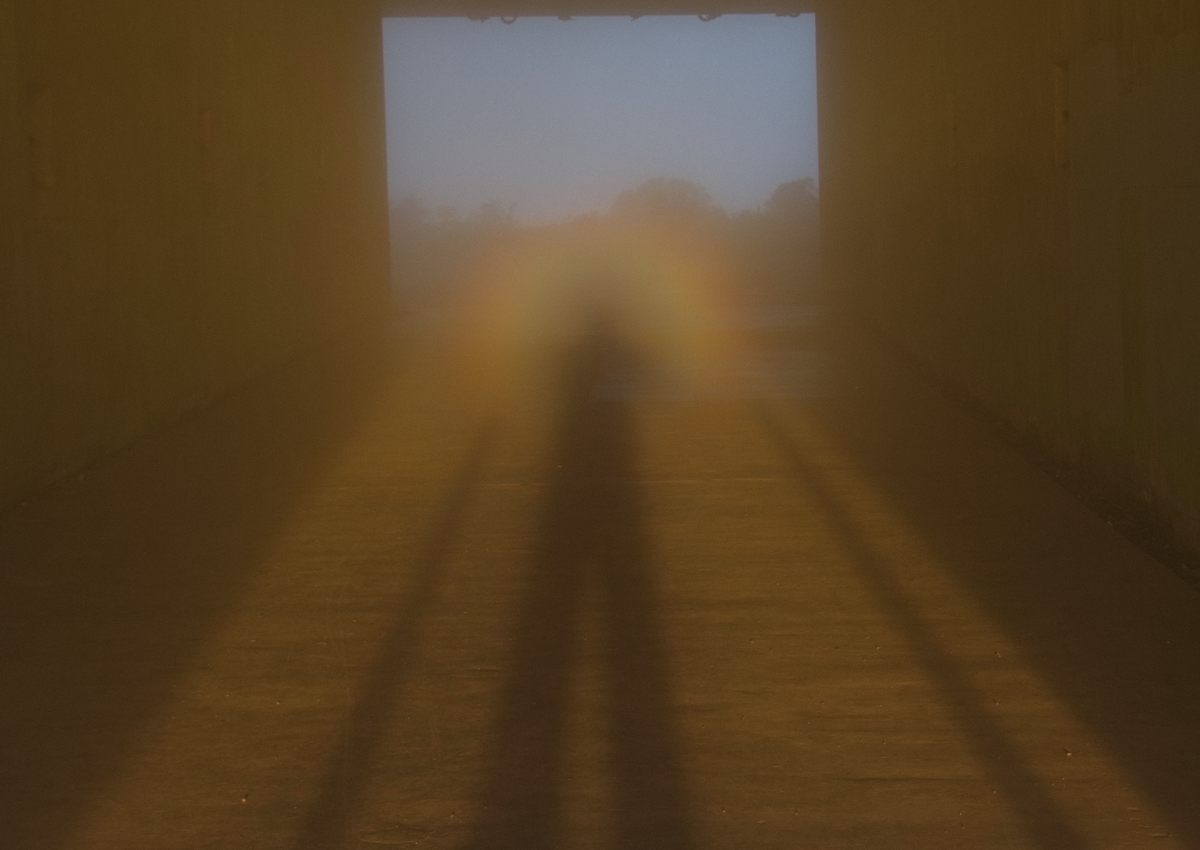
The Brocken spectre phenomenon, when a human's shadow seems enormous and far away, is the likely explanation for numerous sightings of so-called dark watchers in California's Santa Lucia Mountains.

The Brocken spectre phenomenon, when a human’s shadow seems enormous and far away, is the likely explanation for numerous sightings of so-called dark watchers in California’s Santa Lucia Mountains. 

John Finney Photography / Getty Images

Theories and Controversies

  • The Shadow Self and Repressed Fears

From a psychological lens, shadow figures represent repressed aspects of the subconscious—the "shadow self"—which manifests in dreams or hallucinations. Carl Jung emphasized that confronting these dark archetypes could lead to inner growth, suggesting shadow people could symbolize unresolved inner conflicts.

  • Interdimensional Phenomena

Proponents believe shadow beings are visitors from other realities, glimpsed during moments of dimensional overlap. This approach posits that humanity's perception of these beings is fundamentally limited, and their true nature is beyond our understanding.

  • The 'Watcher' Hypothesis

Some accounts suggest shadow figures are observers, silently watching victims—potentially guiding or warning. This aligns with folklore describing spirits or hauntings where entities appear to serve a purpose beyond mere manifestation.

  • Controversies and Skepticism

Mainstream science remains skeptical of paranormal claims, citing psychological explanations and hallucinations. Critics argue that shadow figures are misinterpretations of normal visual phenomena, sleep-related hallucinations, or visual distortions caused by environmental stimuli.

Others challenge the interpretation of personal experiences as evidence of the supernatural, emphasizing the need for controlled scientific studies.

Notable Cases and Cases Studies

  • The William and Sarah Case

One documented case involved William, a middle-aged man who reported seeing a tall, shadowy figure in his home during episodes of severe sleep paralysis. He described it as a dark, towering presence that seemed to watch him with an unsettling stillness. Despite efforts to dismiss it as hallucination, the sensation persisted over months, impacting his sleep and mental well-being.

Research into such cases frequently reveals underlying stress, traumatic memories, or sleep disorders. Physical evidence is elusive, but persistent reports keep the debate alive.

  • The 'Cumberland Ghost' Phenomenon

In the historic town of Cumberland, numerous residents have reported seeing shadowy figures near old abandoned buildings or during foggy nights. These sightings are often accompanied by feelings of intense fear or curiosity. Local folklore attributes these to spirits of former residents, emphasizing the cultural dimension of shadow entities.

Theories about Their Function and Purpose

  • Protective or Warning Symbols

Some sightings may serve as subconscious warnings or protectors—manifestations of warnings about danger or harm. For example, a shadow figure appearing during a dangerous situation might be interpreted as a protective presence, or as a projection of inner intuition.

  • Negative Entities Feeding on Fear

Other theories suggest shadow people are malevolent entities feeding on negative energy or fear. Their dark, featureless appearance embodies aspects of nightmare terror and subconscious anxieties.

  • Messengers or Guides

Less commonly, shadow figures are viewed as guides or messengers from the spiritual realm, offering insights or warnings through their silent presence.

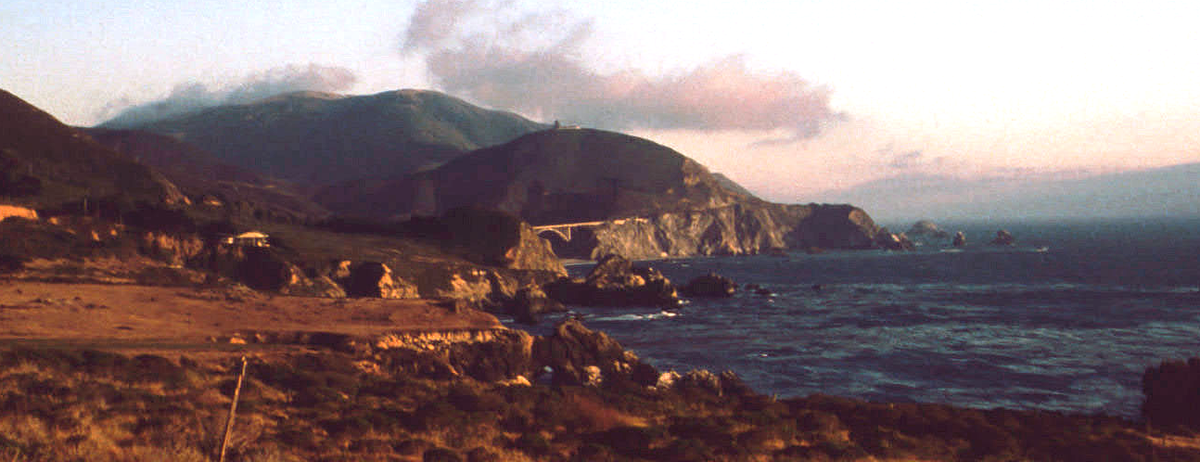
Dark watchers are often seen near dusk and dawn in the Santa Lucia Mountains, when light plays off the misty peaks.

Dark watchers are often seen near dusk and dawn in the Santa Lucia Mountains, when light plays off the misty peaks. 

Roger469 / Wikimedia Commons / CC BY-SA 3.0

Unpacking the Cultural and Historical Contexts

  • Historical Accounts

Throughout history, shadowy figures have appeared in art, folklore, and religious narratives. Medieval depictions of demons or spirits often resemble shadowy beings. In more recent times, mentions appear in Victorian ghost stories, indigenous narratives, and modern paranormal literature.

  • Modern Popularity and Media

The representation of shadow people in movies, television, and online forums has popularized and sensationalized the phenomenon, influencing personal perceptions and collective fears. They often appear in horror genre media as ominous, threatening presences.

Implications and Future Research

  • What Do Shadow People Signify?

Understanding whether shadow figures are illusions, archetypes, interdimensional visitors, or spiritual entities is vital for framing future research. They challenge our perceptions of reality and consciousness, urging scientific, psychological, and spiritual inquiry.

  • Potential for Interdisciplinary Studies

Future research could benefit from an interdisciplinary approach, combining neuroscience, psychology, anthropology, and paranormal studies. Advances in brain imaging, sleep research, and quantum physics may eventually shed light on these elusive phenomena.

  • Ethical and Practical Considerations

It is essential to respect individual experiences and consider their impact on mental health. For some, shadow encounters evoke fear or trauma; providing supportive guidance and understanding is paramount.

Meteorologist Jan Null captured his own Brocken spectre in a tunnel.

Meteorologist Jan Null captured his own Brocken spectre in a tunnel. 

Courtesy Jan Null

Conclusion

The phenomenon of shadow people remains one of the most compelling mysteries—oscillating between the realms of science and the supernatural. Whether viewed as manifestations of the subconscious, ancient archetypes, or interdimensional visitors, these dark watchers continue to fascinate, terrify, and invite curiosity.

The "Unveiling the Truth" episode highlights the importance of maintaining perspective: exploring the psychological, cultural, and potential paranormal explanations carefully without prematurely concluding their true nature. As Robin and Brad suggest, asking the right questions and investigating diligently might bring us closer to understanding who or what these shadowy figures are—if they indeed have an existence beyond our perception.

In the end, shadow people serve as reflections of our fears, hopes, and mysteries—reminding us that some questions about the universe and ourselves are still waiting to be answered. Whether as symbols of repressed emotions or portals to other dimensions, they challenge us to look beyond the shadows and seek the light of understanding.

{ PETER2011 }

Hoe vind je dit bericht?
Geschreven door peter om 23:12 Stuur door

Image reveals complex structure of tails of comet 3I/ATLAS

Image reveals complex structure of tails of comet 3I/ATLAS

Astrophotographer Satoru Murata has published a photograph of interstellar comet 3I/ATLAS. It shows its tail and anti-tail.

Interstellar comet 3I/ATLAS. Source: Satoru Murata

The 3I/ATLAS image was taken on the morning of November 16 in New Mexico. To capture the image, Murat used a Celestron EdgeHD800 telescope and a Touptek ATR2600C camera. The image he published is composed of 24 frames taken with a 60-second exposure.

The photograph shows the complex structure of the tails of 3I/ATLAS. They consist of volatile substances that have sublimated from its surface. Observations have shown that 3I/ATLAS is unusually rich in carbon dioxide. Astronomers have also detected substances such as water ice, carbon monoxide, carbonyl sulfide, and cyanide. It is the molecules of the latter that are responsible for the characteristic blue-green color of the interstellar comet. Earlier it was reported that 3I/ATLAS changed color as it passed through perihelion, but as it turned out later, this was incorrect.

In addition to its main tail, the ATLAS comet also has an anti-tail. In the image, it looks like a small spike. The anti-tail consists of larger dust particles that are less affected by the Sun’s radiation pressure and tend to remain roughly in the plane of the comet’s orbit, eventually forming a disk along its orbit. When Earth passes through the plane of the comet’s orbit, this disk is visible from the side and looks like a distinctive spike.

In addition to the comet, the photo also captured the galaxy NGC 4691. It is located 70 million light-years from Earth in the direction of the constellation Virgo.

Earlier, we reported on how the Mars mission helped to pinpoint the location of comet 3I/ATLAS.

{ https://universemagazine.com/en/articles-en/ }

Hoe vind je dit bericht?
Geschreven door peter om 22:09 Stuur door

LRO photographed a newly formed crater on the Moon

LRO photographed a newly formed crater on the Moon

Participats in the LRO mission have published an image showing a young crater on the Moon. It formed after the spacecraft began operating.

A section of the lunar surface featuring a newly formed crater (shown in the inset). Source: NASA/GSFC/Arizona State University

Throughout its history, the Moon has been regularly bombarded by comets and asteroids. This bombardment was particularly intense during the first billion years after the formation of the Solar System. It was then that the Moon acquired its largest “scars.”

Although the frequency of collisions has decreased since then, they have not stopped completely. And since the Moon has no atmosphere, even small objects that would not be able to reach the Earth’s surface can reach the Moon’s surface unhindered.

It was precisely such an object, several meters in size, that formed the crater found by LRO. It is located north of the 44-kilometer-wide Römer crater. The 22-meter funnel formed between December 2009 and December 2012, when the spacecraft photographed this area again.

Animation showing the lunar surface before and after the formation of a crater. Source: NASA/GSFC/Arizona State University

The crater discovered by LRO is surrounded by bright rays consisting of lighter subsurface material ejected during the impact. They extend tens of meters from the crater. Over time, under the influence of space weathering, the rays will darken to match the color of the surrounding regolith.

The discovery of new craters using LROC is important for understanding the frequency of impacts and the rate of crater destruction over time. Planetary scientists use this data to estimate the age of surface features on celestial bodies. This data is also important for future manned missions to the Moon.

The Moon is not the only object in the Solar System that is subject to cosmic bombardment. Earlier, we talked about known cases of asteroids and comets falling on other planets.

  • According to LROC

{ https://universemagazine.com/en/articles-en/ }

Hoe vind je dit bericht?
Geschreven door peter om 22:00 Stuur door

NASA Unveils 3I/ATLAS: Largest Interstellar Comet Ever Found

NASA Unveils 3I/ATLAS: Largest Interstellar Comet Ever Found

Story by James Thompson

NASA Unveils 3I/ATLAS: Largest Interstellar Comet Ever Found

©Image Credit to Wikimedia Commons

Astronomers have confirmed the arrival of a rare and gigantic visitor from outside the Solar System. Officially named 3I/ATLAS, it is the third interstellar object ever noted following 1I/ʻOumuamua in 2017 and 2I/Borisov in 2019. It was first discovered on July 1, 2025, by the NASA-funded Chilean-based Asteroid Terrestrial-impact Last Alert System (ATLAS) telescope in Río Hurtado, and its path immediately indicated a source far, far beyond our planetary community.

1. A journey from the Constellation Sagittarius

©Image Credit to Flickr

1. A journey from the Constellation Sagittarius
3I/ATLAS entered the Solar System along the way of Sagittarius, an area with thick densities of star fields and molecular clouds. NASA Center for Near Earth Object Studies Director Paul Chodas stated, "These objects take millions of years to wander from one stellar neighborhood to another, so this object has likely been drifting through space for hundreds of millions, perhaps even billions, of years." Today's speed of the comet, 37 miles per second, and trajectory coming in put it between Jupiter and on a collision course with a close solar encounter in late October.

2. ATLAS Discovery and Global Tracking Activities

©Image Credit to Flickr

2. ATLAS Discovery and Global Tracking Activities
ATLAS, intended to give early warnings for possible asteroid impacts, relies on survey telescopes with wide fields of view to monitor the sky for objects on the move. The discovery by 3I/ATLAS was then followed by prompt follow-up observations by Hawaii, Chilean, and Australian telescopes. ESA's Planetary Defence Office organized "precovery" searches using archival data to build a longer observation record, improve orbital models, and verify its interstellar origin.

3. Size, Mass, and Composition

©Image Credit to Wikimedia Commons

3. Size, Mass, and Composition
arvard astrophysicist Avi Loeb approximated the nucleus of the comet to be larger than 3.1 miles across and larger than 33 billion tons. High concentrations of carbon dioxide gas in its coma and water ice in its nucleus were found by James Webb Space Telescope observations on August 6. The chemistry is suggestive of creation in a cold, volatile-rich setting, characteristic of planetary systems in existence at the outer limits of the galaxy.

4. Bizarre Tail Behavior

©Image Credit to Flickr

4. Bizarre Tail Behavior
Unlike normal comets whose dust tails are directed away from the Sun because of solar radiation pressure, 3I/ATLAS's tail is directed toward the Sun. Astronomer Bryce Bolin described how big dust particles hundreds of microns are too massive to be blown outward. Instead, they're expelled on the Sun's side at slow velocities of roughly one meter per second, which means the comet is weakly active.

5. Visibility Windows

©Image Credit to Wikimedia Commons

5. Visibility Windows
Ground telescopes will be able to observe 3I/ATLAS through early September, when it will pass solar conjunction and pass from sight. It will re-emerge in December on the opposite side of the Sun and provide a second observing opportunity before moving out into interstellar space. At its closest approach, it will skim the inner edge of Mars's orbit, at least 150 million miles from Earth.

6. Galactic Origins and Age

©Image Credit to Wikimedia Commons

6. Galactic Origins and Age
Recent trajectory modeling by Avi Loeb and Shokhruz Kakharov, with the GalPot model of galactic potential, tracked 3I/ATLAS as originating from the thick disk of the Milky Way. At a median age of 4.6 billion years, it is the oldest of the three known interstellar visitors. It is an older, lower-metallicity population of stars that suggests that the comet has undergone distinct evolutionary processes prior to ejection into interstellar space.

7. Scientific Significance

©Image Credit to Wikimedia Commons

7. Scientific Significance
European Space Agency's Sarah Al-Ahmed added, "Interstellar objects provide us with one of our best opportunities to be able to really see material coming into our Solar System from somewhere entirely elsewhere." Analyzing its spectral signatures cyanogen, diatomic carbon, and triatomic carbon scientists will be able to decipher chemical processes in cometary atmospheres so foreign to ours. These molecules are initially ices, subliming from solar radiation and progressing through intricate chemistry in the coma.

8. Future Missions and Prospects

©Image Credit to Wikimedia Commons

8. Future Missions and Prospects
ESA's Comet Interceptor mission in 2029 will remain at the Sun–Earth Lagrange Point 2 to wait for a good target, preferably a clean comet from the Oort Cloud or an interstellar object. Discovery of 3I/ATLAS is not possible, but it emphasizes the necessity of quick-response spacecraft to intercept these infrequent visitors in orbit. New observatories such as the Vera C. Rubin Observatory's Legacy Survey of Space and Time will greatly boost detection rates, potentially finding dozens of interstellar objects per year. 9. Context in the Expanding Catalog of Interstellar Visitors

NASA Reveals 3I/ATLAS, Largest Interstellar Comet Ever Detected

©Image Credit to Wikipedia

ʻOumuamua's cometary shape and non-gravitational motion generated controversies regarding its nature, whereas 2I/Borisov's more typical cometary shape revealed more about extrasolar ice composition. 3I/ATLAS, through its gigantic size, atypical tail, and being thoroughly ancient, gives a new addition to this little but scientifically valuable list. Every discovery gives a short-term opportunity to take a snapshot of planetary system remnants' diversity scattered in the galaxy.

As 3I/ATLAS travels through the Solar System, it bears with it a record of conditions from a distant and old stellar environment. To astronomers, it is simultaneously a message from the past of the galaxy and an echo of the majestic, dynamic space beyond our Sun's reach.

{ Modern Engineering Marvels }

Hoe vind je dit bericht?
Geschreven door peter om 21:17 Stuur door

The most detailed map of the brain ever seen: Stunning simulation details 10 MILLION neurons across 86 interconnected regions

Scientists have unveiled the most detailed map of the brain ever created. 

The fascinating chart represents almost 10 million neurons, 26 billion synapses and 86 interconnected brain regions.

It was created with Fugaku, Japan's ultra–fast supercomputer, which is capable of quadrillions of calculations per second. 

Scientists will use their digital copy to answer questions about what happens in a disease, how brain waves shape mental focus and how seizures spread in the brain. 

Until now, these questions could only be answered using real brain tissue, one experiment at a time. 

Dr Anton Arkhipov, an investigator at the Allen Institute in Seattle who worked on the project, called the map a 'technical milestone'. 

'With this kind of computational power, the goal of a full, biophysically accurate brain model isn't just science fiction anymore,' he said. 

'Scientists are in a new frontier where understanding the brain means, quite literally, being able to build one.'

The image is a detailed simulation of the whole mouse cortex neuron by neuron. It represents 'spontaneous' activity of the cortex in a resting state. Neurons are colored by cortical area and marked with a light flash when active. Only 1 per cent of neurons are shown for clarity

The image is a detailed simulation of the whole mouse cortex neuron by neuron. It represents 'spontaneous' activity of the cortex in a resting state. Neurons are colored by cortical area and marked with a light flash when active. Only 1 per cent of neurons are shown for clarity

The stunning new image is a virtual copy of a mouse's cortex, the brain's critically important outermost layer. 

The vibrant colours refer to the different cortical areas responsible for different jobs, such as visual processing, body movement, decision–making and more.

Each region is made up of an incredibly dense forest of neurons (otherwise known as nerve cells) which transmit electrical and chemical signals to enable communication throughout the brain and body.

The little white tree–like branches emanating from all the regions are the active neurons, which spike, signal, and chatter to send messages. 

Electrical signals travel the length of a single neuron, from its round central body down a long, specialized tendril called an axon, until that axon reaches a connection point with another neuron. 

The electrical signal triggers a chemical signal, where molecules known as neurotransmitters flow from one cell to the next and serve as the signal hand–off, beginning a new electrical current in the next cell.

'Modeling is incredibly important, because the brain is too complex a system to use your intuition to figure out how cells should be behaving,' said Dr Tim Jarsky, associate director of electrophysiology at the Allen Institute. 

'Even with the subset of kinds of neurons in this dataset, we have so many possible interactions with many different types of signaling. 

The incredibly detailed brain simulation shows a dense forest of neurons - otherwise known as nerve cells, which transmit electrical and chemical signals to enable communication

The incredibly detailed brain simulation shows a dense forest of neurons – otherwise known as nerve cells, which transmit electrical and chemical signals to enable communication

The simulation, carried out on supercomputer Fugaku with approximately 150,000 compute nodes, describes several seconds of biological dynamics of the mouse cortex

The simulation, carried out on supercomputer Fugaku with approximately 150,000 compute nodes, describes several seconds of biological dynamics of the mouse cortex

What is Fugaku?

Fugaku is a supercomputer at the Riken Center for Computational Science in Kobe, Japan. 

It is the seventh–fastest supercomputer in the world, according to the 2025 edition of the TOP 500 list.

Fugaku is capable of quadrillions of calculations per second (one quadrillion is written as 1,000,000,000,000,000). 

The supercomputer is made up of small parts called nodes, which are grouped together in layers like units, shelves, and racks. 

Together, these components add up to a total of 158,976 nodes, allowing Fugaku to manage a massive volume of data and computations.

'You really need a model to understand how the circuit could behave when you put all those elements together.' 

According to the experts, the long–term goal is to simulate the entire brain of the mouse, not just the cortex, as well as human brain models.

This is, however, a reliable model for human brain development due to certain structural similarities between the two species. 

The image was created using Fugaku, a powerful supercomputer at the Riken Center for Computational Science in Kobe, Japan. 

Japan's flagship supercomputer is capable of more than 400 quadrillion calculations per second and can crunch data faster than we can blink. 

To put that into perspective, if you started counting in seconds right now, it would take over 12.7 billion years to reach that number – nearly the age of the universe! 

'Fugaku is used for research in a wide range of computational science fields, such as astronomy, meteorology, and drug discovery, contributing to the resolution of many societal problems,' said Dr Tadashi Yamazaki from Japan's University of Electro–Communications in Tokyo.

'On this occasion, we utilised Fugaku for a neural circuit simulation.' 

It is the product of Supercomputer Fugaku (pictured), one of the fastest supercomputers in the world built with the backing of the Japanese government

It is the product of Supercomputer Fugaku (pictured), one of the fastest supercomputers in the world built with the backing of the Japanese government  

Fugaku was deemed the world's fastest supercomputer back in June 2020, but five years later it has slipped down the TOP 500 list to seventh. 

At the top of the list is El Capitan, hosted at Lawrence Livermore National Laboratory in Livermore, California. 

El Capitan, the most powerful supercomputer in the world, is the third 'exascale' system deployed by the United States. 

Exascale refers to a system that can perform at least one quintillion operations per second – a billion billion calculations, or 1 followed by 18 zeroes. 

An upcoming paper will unveil the new virtual brain simulation at SC25, a supercomputing conference taking place this week in St. Louis, Missouri. 

WHAT IS A SUPERCOMPUTER? 

A supercomputer is a computer with a high level of performance compared to a general–purpose computer. 

Performance of a supercomputer is measured in floating–point operations per second (FLOPS) instead of million instructions per second (MIPS).

Supercomputers contain tens of thousands of processors and can perform billions and trillions of calculations or computations per second. 

Supercomputers are used for data–intensive and computation–heavy scientific and engineering purposes such as quantum mechanics, weather forecasting, oil and gas exploration, molecular modeling, physical simulations, aerodynamics, nuclear fusion research and cryptoanalysis. 

Because supercomputers are often used to run artificial intelligence programs, supercomputing has become synonymous with AI. 

This regular use is because AI programs require high–performance computing that supercomputers offer. 

In other words, supercomputers can handle the types of workloads typically needed for AI applications. 

Source: IBM/SUSE 

{ https://www.dailymail.co.uk/sciencetech/index.html }

Hoe vind je dit bericht?
Geschreven door peter om 20:36 Stuur door

UFO fleet viewed from boat in Turkey creek, Charleston, South Carolina, USA Nov 8, 2025 UAP Sighting News.

UFO fleet viewed from boat in Turkey creek, Charleston, South Carolina, USA Nov 8, 2025 UAP Sighting News.

Paranormal_UFO.png
UFO_Paranormal.png

UFO_Alien.png

Date of sighting: Nov 8, 2025
Location of sighting: Turkey Creek, Charleston, SC, USA
Source: NUFORC
 
Watch carefully and you will see three UFOs entering the earths atmosphere over Charleston last week. Now the US gov will make excuses and call it meteors (much slower than meteors) or space junk (not possible since these objects are not leaving debris or smoke). These are UFOs...the very thing the US gov prefers us not knowing about. 
Scott C. Waring 
 
Eyewitness states: 
Lights on object, Aircraft nearby I was on my boat when I saw two flying objects/lights following each other flying faster than an aircraft.

{ https://www.ufosightingsdaily.com/ }

Hoe vind je dit bericht?
Geschreven door peter om 01:09 Stuur door

Rare V-Shaped UFO Over Fawn Grove Borough in Pennsylvania, USA Nov 6, 2025, UAP Sighting News.

Rare V-Shaped UFO Over Fawn Grove Borough in Pennsylvania, USA Nov 6, 2025, UAP Sighting News.

V_UFO_UAP.png

Date of sighting: Nov 6, 2025
Location of sighting: Fawn Grove, PA, USA
Source: NUFORC
 
Now V shaped UFOs are very rare and are of the most notoriously told about...for instance, the Phoenix Lights Incident back in March 19, 1997 where hundreds of reports came into police about a giant V shaped UFO blocking out the stars over Phoenix, Arizona. This UFO here might just do the same if it's close enough. The size is huge, about half a mile or more and it's really lit up below the moon with the moonlight shining off of it. Great capture and absolute important evidence that aliens exist...but even more so...of a very rare V shaped craft!
Scott C. Waring
 
Eyewitness states: 
V shape moved from left to right in front of the moon At approximately 6:10 pm we were looking at the moon from our back deck when we noticed a strange object moving from left to right slowly at the bottom of the moon. It was a dark V shape and did show up on pictures.
Rare_UFO_UAP.jpg

UFO_UAP_V.jpg

UFO_MUFON.jpg

{ https://www.ufosightingsdaily.com/ }

Hoe vind je dit bericht?
Geschreven door peter om 01:03 Stuur door

I recorded a sphere on the live nasa space station cam. Nov 14, 2025, UFO UAP paranormal sighting news

I recorded a sphere on the live nasa space station cam. Nov 14, 2025, UFO UAP paranormal sighting news

UFO_NASA_Spacestation.png

UFO_NASA.png
Date of sighting: Nov 14, 2025
Location of sighting: Space station
Source: NASA Live cam feed
 
I was watching the live cam of the space station and this lesser known camera finally turned away from the space station and gave me a great view of the Earth below. Thats today and I noticed this sphere near it and it was changing luminosity and finally after about 1 minute it just disappeared. I made a close up at the end of the video for you. The speed is normal, but you can adjust the youtube settings to go 2.0 speed or more. Amazing because this orb is huge, about the size of a bus. This is 100% proof that aliens are still visiting the space station and still are curious about humans and our way of thinking. Oh...and I put the video into 4k so put it on a TV and see the detail. Usually this particular camera is focused on the space station itself and gives very little view of earth, but today it was changed to give a great view and there it was, full out orb!
Scott C. Waring 
 
Hoe vind je dit bericht?
Geschreven door peter om 00:58 Stuur door

Saw this while jogging in Bountiful, Utah Nov 14, 2025, then it disappeared, UFO sighting news

Saw this while jogging in Bountiful, Utah Nov 14, 2025, then it disappeared, UFO sighting news

UAP_Utah_UFO.png

UFO_Utah.png

Date of sighting: Nov 14, 2025
Location of sighting: Bountiful, Utah, USA
 
Hey all, I recorded this in my back yard this morning and whats really odd is, as soon as I lowered my camera, the UFO 100% disappeared. I wish I had kept it running to show that part. The UFO, which looks to be a huge classic disk shape craft was trying to blend in with the surrounding clouds, but it was just too obvious that it was an alien ship. And the onboard ai sensors that scan telepathically all the human thoughts below for being recognized...like ai searching for keywords in our heads...sky, cloud, UFO, alien, what is that, ect. Anyways take a look at the video, I bet you have seen similar things, but feared ridicule from others over it.
Scott C. Waring 
 

{ https://www.ufosightingsdaily.com/ }

Hoe vind je dit bericht?
Geschreven door peter om 00:53 Stuur door

Van Klassieke Ufologie naar Opkomende Wetenschap

Van Klassieke Ufologie naar Opkomende Wetenschap

Classical Ufology to Emerging Science

Overzicht

In een recente lezing georganiseerd door het Human Institute en UAPMed schetste Michael Cifone, een filosoof van de wetenschap verbonden aan de Society for UAP Studies, een verschuiving in de manier waarop onderzoekers onherleidbare luchtfenomenen (UAP) en niet-menselijke intelligentie (NHI) benaderen. Hij contrasteerde het model van de “klassieke ufologie”—voornamelijk gerechtelijk, retrospectief en afhankelijk van ooggetuigenverslagen—met wat hij beschreef als de “opkomende wetenschap van UAP,” een demonstratieve inspanning die zich richt op het bouwen van speciale instrumenten, het synchroniseren van datastromen en het nastreven van directe observatie. Cifones presentatie, onderdeel van een serie getiteld Investigating Non‑Human Intelligence, onderstreepte de noodzaak om verder te kijken dan het verzamelen van oude rapporten en over te gaan op een systematische, op data gebaseerde methodologie.

Epistemologische Uitdagingen

Cifone waarschuwde dat de aannames die in de traditionele natuurwetenschappen worden gehanteerd, onderzoekers kunnen verblinden voor het fenomeen dat zij proberen te bestuderen. Hij stelde een prikkelende vraag: “Wat als het probleem niet ontbrekende bewijzen zijn, maar ontbrekende categorieën?” Volgens zijn kader worden drie onderling verweven kwesties het kennislager vormgegeven:

  • Bewijsmateriaal is niet neutraal – de instrumenten en theorieën die wij gebruiken, predeterminen wat wij kunnen meten. Dit betekent dat de instrumenten die we inzetten noodzakelijkerwijs bepalen naar welk fenomeen we zoeken en hoe we dat interpreteren. Een laserafstandsmeter kan bijvoorbeeld alleen afstanden meten die binnen het bereik en de precisie vallen die het apparaat toestaan. Daarnaast bepalen bestaande theorieën welke interpretaties als legitiem worden beschouwd.

  • De epistemische cirkel – buitensporige claims vereisen bewijs dat niet door bestaande instrumenten kan worden vastgelegd. Dit betekent dat sommige fenomenen, indien ze zelden voorkomen of zich slechts onder bepaalde condities voordoen, niet gemakkelijk te vast te leggen zijn met de huidige technologie. Toch houden onderzoekers vol dat bewijs wel mogelijk moet zijn, wat leidt tot een vicieuze cirkel tussen hypothese en observatie.

  • Fenomenen kunnen tijdelijk, participatief en relationeel zijn – anders dan de stabiele, herhaalbare gebeurtenissen waar de conventionele wetenschap de voorkeur aan geeft. UAP kunnen zich bijvoorbeeld slechts af en toe voordoen, afhankelijk zijn van het bewustzijn of de intentie van de waarnemer, of een relationele dynamiek vertonen die niet past binnen traditionele natuurwetenschappelijke modellen.

Cifone pleit voor een nieuwe vorm van empirisme die objectieve instrumenten combineert met fenomenologische, eerst-person ervaring. Hierdoor kunnen onderzoekers “luisteren naar de data” voordat zij vooraf ingestelde categorieën opleggen. Dit impliceert dat de beleving en interpretatie van de waarneming even belangrijk moeten worden genomen als meetinstrumenten, vooral in gevallen waarin het fenomeen moeilijk of onmogelijk reproduceerbaar is.

Opkomende Wetenschappelijke Benaderingen

De presentatie omschreef concrete stappen om UAP-onderzoek te transformerentr en tot een rigoureuze wetenschap. Enkele voorstellen waren:

  • Het opbouwen van speciale sensor netwerken – deze netwerken kunnen in real-time high-resolutie, multimodale data vastleggen. Denk aan het gebruik van radar, infrarood, elektromagnetische metingen en audio. Het doel is om het veld te verschuiven van retrospectief getuigenis naar live observatie, waardoor de kans op snelle verificatie en analyse toeneemt.

  • Professionalisering van forensische onderzoeksmethoden – door te zorgen dat sporen zoals elektromagnetische anomalieën of materiaalerestanten worden verzameld en geanalyseerd volgens strikte normen die ook in de ruimtevaart of forensische laboratoria worden gehanteerd. Dit zorgt voor een hogere betrouwbaarheid van de bevindingen en maakt ze vergelijkbaar met andere takken van geavanceerd technisch onderzoek.

  • Het behandelen van mensen als sensoren – een concept dat werd verkend door Maya Cowan. Hier wordt erkend dat menselijke waarneming betrouwbaar is, maar ook zijn grenzen kent, en dat deze waarnemingen kunnen worden geïntegreerd met instrumentale gegevens. In deze aanpak wordt de menselijke interpretatie niet uitgesloten maar juist aangevuld, door bijvoorbeeld gecombineerde analyses te maken van witness reports en meetgegevens.

Deze initiatieven weerspiegelen de focus van de UAP-onderzoeksgemeenschap op “lokale gedragingen en dynamische relaties,” wat het onderscheid maakt van de verre, message-gerichte doelen van SETI. Terwijl SETI zich richt op signaaldetectie en communicatie met buitenaardse intelligentie op grote afstand, richt UAP-onderzoek zich vaak op snelle, onvoorspelbare fenomenen die zich direct manifesteren in onze atmosfeer. Door menselijke rapporten te synchroniseren met instrumentale metingen hopen onderzoekers een rijker, gevalideerd datacollectief te scheppen dat meer inzicht kan geven in het aard, de aard en de mogelijke intelligentie achter deze fenomenen.

Interdisciplinaire Kaders

Cifone benadrukte het belang van radicale interdisciplinariteit als essentieel voor een opkomende wetenschap van niet-menselijke intelligentie. In dit kader wordt vaak teruggevallen op het 6W-model – wie, wat, wanneer, waar, waarom en hoe – als een raamwerk voor het organiseren van onderzoeken die fysieke verklaringen combineren met geleefde ervaring.

  • Wie betreft de onderzoekers en waarnemers, waaronder wetenschappers, piloten, nauwe observatoren en betrokken burgers.
  • Wat verwijst naar de fenomenen zelf: UAP, anomalieën in elektromagnetische velden, materiaalterreinen of mogelijk niet-menselijke activiteiten.
  • Wanneer en waar beschrijven de tijdstippen en locaties van waarnemingen, cruciaal voor correlaties en patroonherkenning.
  • Waarom en hoe betreffen de interpretaties en mechanismen die mogelijk ten grondslag liggen aan de fenomeen; deze bieden inzicht in de motivatie en aard van de aanwezige intelligenties of natuurlijke processen.

Fenomenologen zoals Kim Engels ontwikkelen methoden om het “gehele UFO-gevoel” vast te leggen, door narratieve gegevens te verbinden met sensorlogs. Deze aanpak beoogt de kloof te overbruggen tussen objectieve data en subjectieve betekenis, omdat hij van mening is dat dit noodzakelijk is om antropocentrisme te overwinnen. Door het onderzoeken van de percepties, gevoelens en interpretaties van getuigen wil men niet alleen de feiten vastleggen maar ook de context waarin deze plaatsvinden, wat kan leiden tot een dieper begrip van het fenomeen.

Verder suggereerde Cifone dat het herintegreren van de geesteswetenschappen—zoals antropologie, filosofie en psychologie—met de natuurwetenschappen het conceptuele vocabulaire kan uitbreiden dat nodig is om fenomenen te beschrijven die “participatief en relationeel” zijn, in plaats van louter externe objecten.

Dit multidisciplinaire model benadrukt dat het begrijpen van UAP en NHI niet louter een technische onderneming is, maar ook een cultureel en interpretatief vraagstuk. Het vraagt om een brede blik, waarin wetenschap en erfgoed, perceptie en werkelijkheid, samenvallen.

Vooruitzichten en Skepsis

Hoewel de visie ambitieus is, betwijfelde Cifone zelf de haalbaarheid ervan; hij merkte op dat veel van de voorgestelde praktijken nog “utopisch” zijn zonder duurzame financiering, institutionele steun en methodologische consensus. Het opzetten van uitgebreide sensor netwerken, het trainen van multidisciplinaire teams en het integreren van fenomenologische benaderingen vereisen aanzienlijke middelen en lange termijnplanning.

Desalniettemin werden enkele pilotprojecten besproken, zoals gecoördineerde hemelwacht-netwerken en samenwerkingsworkshops tussen natuurkundigen, antropologen en piloten, die het praktische potentieel van dit interdisciplinaire model demonstreren. Zo werd het voorbeeld gegeven van internationale netwerken die realtime data verzamelen en analyseren, als een mogelijke basis voor bredere wetenschappelijke samenwerkingen.

De bredere wetenschappelijke gemeenschap houdt deze ontwikkelingen nauwlettend in de gaten. Zoals Cifone afsluit: “De werkelijke vraag is niet of niet-menselijke intelligentie bestaat – het universum is groot genoeg dat dit bijna triviaal is. De vraag is of onze wetenschappen al intelligent genoeg zijn om het waar te nemen.” Als de opkomende wetenschap van UAP erin slaagt instrumenten, fenomenologie en rigoureuze epistemologie te integreren, kan dit mogelijk het systematische bewijs leveren dat zowel sceptici als gelovigen al lang zoeken. Het zou kunnen leiden tot een paradigmaverschuiving, waarin we niet alleen de fenomenen accepteren maar ook begrijpen en, misschien, contact maken met andere vormen van intelligentie die onze horizon nu nog verbreden.

Slotwoord

De overgang van klassieke ufologie naar een meer wetenschappelijke en systematische benadering markeert een belangrijke ontwikkeling in de studie van het onbekende. Door een combinatie van geavanceerde technologieën, interdisciplinaire samenwerking en een herziening van epistemologische principes, wordt het mogelijk om de mysterieuze fenomenen rondom UAP en NHI in een nieuw, meer rigoureus licht te plaatsen. Het pad naar een echte wetenschap binnen dit domein is nog lang en vol uitdagingen, maar de richting is duidelijk: een integrale aanpak waarin data, ervaring en theorie hand in hand gaan. Alleen zo kunnen we misschien ooit de antwoorden vinden op vragen die ons al eeuwenlang bezighouden.

{ PETER2011 }

Hoe vind je dit bericht?
Geschreven door peter om 22:21 Stuur door

Caught on Camera: Ancient Tech and UFO Evidence | The Proof Is Out There

Caught on Camera: Ancient Tech and UFO Evidence | The Proof Is Out There

Overview

The latest episode of The Proof Is Out There, released on November 16, 2025, tackles a range of visual material that has circulated among UFO and ancient‑technology enthusiasts for decades. The program’s host, a researcher known as “UFOs‑Disclosure,” frames the investigation as a side‑by‑side comparison of grainy vintage footage and cutting‑edge digital analysis, asking whether modern tools can confirm or refute long‑standing claims of anomalous technology. A 10‑minute video accompanying the article (linked in the VibeWire post) presents the raw clips, while the episode walks viewers through frame‑by‑frame examinations, spectral imaging, and AI‑based pattern recognition.

Ancient Dodecahedrons

One of the focal points is a series of black‑and‑white films from the 1970s that appear to show perfectly formed dodecahedrons hovering over archaeological sites in the Mediterranean. Proponents have argued that the shapes indicate a lost advanced civilization or even extraterrestrial engineering. Using contemporary photogrammetry software, the show’s technical team reconstructed the objects’ geometry and found that the apparent edges align with known lens flare artifacts common in low‑light film. Dr. Elena Marquez, a historian of ancient engineering at the University of Barcelona, was consulted:

“The dodecahedron is a mathematically elegant shape, but there is no archaeological record of such objects being manufactured in antiquity. When we apply modern image‑enhancement methods, the ‘solid’ appearance dissolves into a combination of light scattering and film grain.”

The segment concludes that, while the footage is intriguing, the evidence does not meet the threshold for claiming an unknown technology.

Flying Cars and Ocean Flights

The episode also revisits a 1992 news reel from a coastal town in Brazil that captured what looks like a sleek, disc‑shaped craft skimming the ocean surface before accelerating upward. The original broadcast described the sighting as a “flying car” and sparked numerous speculative articles. In the new analysis, engineers employed high‑resolution frame interpolation and spectral signature testing to determine the craft’s material composition. Results showed a reflective surface consistent with conventional aluminum alloy, and the motion profile matched that of a known experimental hydro‑foil vehicle tested by a private aerospace firm in the early 1990s.

“When you overlay the flight path with the firm’s test logs, the correlation is striking,” says aerospace analyst James Liu of the Australian Defence Research Institute. “There is no need to invoke UFOs when a terrestrial prototype explains the observed dynamics.”

The segment emphasizes that the footage, while dramatic, is best understood within the context of emerging VTOL (vertical take‑off and landing) technologies rather than extraterrestrial craft.

Brain‑Implant Allegations

A third segment examines a controversial 2008 interview in which a self‑identified whistleblower claimed that neural implants were being covertly installed to facilitate “mind‑to‑craft” communication. The original video, recorded on a consumer camcorder, featured the subject pointing to a faint scar behind his ear. The show’s investigators used infrared imaging and AI‑driven facial analysis to verify the presence of any subdermal hardware. The analysis detected no anomalous density or metallic signature beyond normal tissue variation.

Dr. Priya Nair, a neuro‑ethicist at the University of Melbourne, cautioned:

“Claims of secret brain‑implant programs have circulated for years, but without verifiable physical evidence they remain speculative. The tools we have today—high‑resolution imaging, spectral analysis—are capable of detecting implants of the size described, and they found nothing.”

The segment underscores the importance of evidence‑based scrutiny when evaluating extraordinary medical claims.

Context and Outlook

The Proof Is Out There aims to bring a scientific lens to material that often fuels sensational headlines. By applying modern analytical software, AI pattern recognition, and expert testimony, the episode demonstrates that many iconic UFO and ancient‑technology clips can be explained through known physical phenomena or historical context. Nonetheless, the program acknowledges that some footage remains “unexplained” due to poor quality or insufficient data, a stance echoed by Dr. Marquez:

“Absence of evidence is not evidence of absence, but it does remind us to remain cautious before leaping to extraordinary conclusions.”

The VibeWire article invites readers to watch the full video for a deeper dive and encourages further submissions of raw footage for independent review. As the field of UAP (Unidentified Aerial Phenomena) research continues to professionalize, such transparent, methodical examinations are likely to become the standard for separating fact from folklore.

RELATED


{ https://usubjects.com/ }

Hoe vind je dit bericht?
Geschreven door peter om 21:48 Stuur door

Mysterious Skies and Seas: New UFO and USO Sightings Spark Global Curiosity

Mysterious Skies and Seas: New UFO and USO Sightings Spark Global Curiosity

The latest in global UFO, USO sightings

Unidentified objects are no longer just a phenomenon of the skies. Increasingly, witnesses from around the world are reporting strange activity beneath the ocean’s surface as well—introducing many people to a lesser-known category of encounters: USOs, or unidentified submersible objects. From luminous shapes gliding through dark waters to craft seemingly transitioning from sea to air without disturbance, the newest cases are igniting worldwide fascination and questions about what might be lurking both above and below us.

A Surge of Unusual Sightings

Recent global reports highlight a pattern: mysterious objects are no longer confined to distant skies or remote military zones. In places like Oklahoma City, unexplained lights have captivated observers; along the coasts of Florida and California, glowing formations under the sea have startled boaters. According to investigators, these sightings show remarkable consistency—strange illumination, silent movement, and behavior that doesn’t align with known technology.

During a recent NewsNation segment, Ben Hansen, host of UFO Witness and a veteran field investigator, described the latest viral footage from the waters off Fort Lauderdale. The clip shows two bright green lights moving beneath the ocean surface at night.

Hansen’s first reaction: not divers.
A certified master diver himself, he emphasized the absence of essential safety indicators—no dive boat, no flags, and no surface support that would make a night dive safe. And while night diving is possible, the behavior and characteristics observed in the video don’t match typical diver lights or movement.

“It’s not phosphorescent algae, it’s not light refraction, and it doesn’t behave like a natural phenomenon,” Hansen explained.

USOs: A Long History, Not a New Trend

Many people assume underwater UFO sightings are a new topic, simply because public interest has recently shifted from the skies to the sea. But according to Hansen, submersible anomalies have been part of reports for decades.

He pointed to earlier incidents near Catalina Island, where pilots and air-traffic controllers reported enormous glowing structures beneath the water—some estimates describing them as “the size of a city.” Witnesses noted the light appeared to activate suddenly, like someone flipping a switch.

Other boaters have reported traveling across pitch-black waters when, without warning, a massive illuminated zone appeared directly beneath their vessel, spanning the length of a football field.

These observations echo testimonies from naval personnel, including the infamous USS Omaha thermal-camera incident, where an object was tracked moving from air to sea without any visible splash or impact—behavior known as transmedium travel.

Fast Movers and High-Speed Anomalies

The U.S. military has acknowledged tracking objects that behave far outside the capabilities of known human technology. Former Navy Rear Admiral Tim Gallaudet previously testified about a military program informally referred to as monitoring “Fast Movers.”

These objects, often detected on classified underwater sensors, reportedly travel at speeds no torpedo could survive—sometimes exceeding 100 miles per hour underwater, a feat impossible given current propulsion technology and hydrodynamic limitations.

Some Fast Movers are fleeting blurs. Others appear stationary for long periods. And a small but persistent group behaves unpredictably, transitioning between air and water with no splash, no turbulence, and no detectable propulsion system.

Not Enough Data—But Enough to Raise Questions

Former U.K. Ministry of Defence UFO analyst Nick Pope also weighed in on the latest sightings. While he agrees the Fort Lauderdale footage is intriguing, he cautions that the data remains insufficient to determine a definitive explanation.

As Pope reiterates, the Pentagon itself often concludes that available evidence in such cases lacks critical details: distance to object, speed, sensor quality, atmospheric conditions, and other context necessary for firm identification.

But unclear footage doesn’t erase the larger pattern. Across oceans and continents, witnesses continue describing:

  • Objects illuminating the sea from below
  • Craft entering water without displacement
  • High-speed underwater movement
  • Lights with no visible source
  • Sudden “switch-like” activation of massive illuminated zones

Patterns repeated independently in multiple countries, decades apart, by civilians and military personnel alike.

The New Frontier of Unexplained Phenomena

The shift from UFOs to USOs expands the mystery dramatically. If some of these objects truly operate in both air and sea, they challenge everything we know about physics, engineering, and propulsion.

Investigators stress that the phenomenon is far larger than any single video. What’s emerging is a global mosaic of strange sightings—glowing shapes in deep water, fast-moving aerial anomalies, and objects effortlessly transitioning between the two environments.

Whether these represent unknown natural phenomena, advanced technology, misidentification, or something truly extraordinary remains unknown. But one thing is certain: the ocean, which covers 70% of Earth and remains largely unexplored, may be holding secrets as complex as those of the skies.

As new sightings continue to surface, scientists, military analysts, and civilian researchers are calling for deeper investigation—not just of our atmosphere, but of our oceans as well. The next major discovery in the UFO mystery might not come from above, but from the depths below.

{ https://www.latest-ufo-sightings.net/ }

Hoe vind je dit bericht?
Geschreven door peter om 21:31 Stuur door

NASA to share best-quality images of Manhattan-sized interstellar object 3I/ATLAS, disclose its true nature

NASA to share best-quality images of Manhattan-sized interstellar object 3I/ATLAS, disclose its true nature

Story by Shane Galvin
 

NASA is set to release the much-anticipated images of the Manhattan-sized interstellar object 3I/ATLAS within days, an agency source told The Post.

The snaps of the mysterious object were taken by the Mars Reconnaissance Orbiter’s HiRISE camera as it passed by the Red Planet from Oct.1 to Oct. 7 were not released because of the government shutdown, which ended late Wednesday.

The source said the release of the snaps — expected to be the highest resolution of any image of 3I/ATLAS yet — come come as early as next week.

New images of 3I/ATLAS released earlier this week in the Astronomer’s Telegram showed. David Jewitt / Jane Luu / The Astronomer's Telegram
New images of 3I/ATLAS released earlier this week in the Astronomer’s Telegram showed.
David Jewitt / Jane Luu / The Astronomer's Telegram

Harvard astrophysicist Avi Loeb, who has conjectured that the object could potentially be an alien spaceship, panned the long-delayed release as a symptom of government inefficiency. 

“Science should have been prioritized over bureaucracy,” Loeb told The Post. “The truth about the nature of 3I/ATLAS will be revealed by the sharing of data, not by the storyline of gatekeepers.”

The HiRISE camera images will be the clearest yet, surpassing the snaps taken by the Hubble Space Telescope on July 21, which to date have provided the most stark pictures of 3I/ATLAS.

Loeb stated that the HiRISE images will present one of the best opportunities to learn about the nucleus of the massive object, which will reveal its true nature.

Loeb has previously sounded the alarm over the mysterious anti-tail of 3I/ATLAS, which is a unique extension in the direction of the Sun, and not seen in normal, everyday comets.

“The HiRISE image would give us a side-view as well as a spatial resolution that is three times better than that of the Hubble Space Telescope,” he said.

The new images set to be released by NASA in a “matter of days” will be the best of the object taken during its pass through our inner solar system. David Jewitt / Jane Luu / The Astronomer's Telegram
The new images set to be released by NASA in a “matter of days” will be the best of the object taken during its pass through our inner solar system.
David Jewitt / Jane Luu / The Astronomer's Telegram

“Even though the image is unlikely to resolve the solid nucleus itself, it can set a tight constraint on its diameter based on the brightest pixel,” he said, adding, “A picture is worth a thousand words.”

Sky watchers celebrated earlier this week when, after speculation that the object had broken apart, 3I/ATLAS emerged fully intact after its close encounter with the Sun.

The object is now hurtling towards Jupiter where it will be surveilled by NASA’s Juno space probe and the European Space Agency’s JUICE spacecraft until it exits our solar system on in March.

For him, the upcoming images are not just another dataset; they are a potential turning point in a debate that ranges from conservative comet models to ideas straight out of science fiction.

Hoe vind je dit bericht?
Geschreven door peter om 21:21 Stuur door

Top fighter pilot breaks 45-year silence to reveal bombshell UFO encounter with '50ft triangular craft' at nuclear base

Top fighter pilot breaks 45-year silence to reveal bombshell UFO encounter with '50ft triangular craft' at nuclear base

By JOSH BOSWELL, US SENIOR NEWS REPORTER and CHRIS SHARP

A former Top Gun pilot has come forward as a new witness linked to a 1980 UFO incident dubbed 'the British Roswell'.

Decorated US fighter pilot Dan Isbell, 69, broke a 45-year silence to reveal his encounter with a 50ft triangular craft surrounded by multicolored 'plasma' light near a nuclear base he was stationed at in England on December 26, 1980.

The incident is significant as it occurred on the same day that US Air Force personnel at another English nuclear base, RAF Woodbridge, in Suffolk, saw a similar craft descending into neighboring Rendlesham Forest – then got so close they could touch the metallic object.

The Rendlesham UFO incident was captured on audio tape by a senior officer, written up in reports released three years later, and became the UK's most famous out-of-this-world encounter.

Isbell's sighting adds to the theory by UFO researchers that the strange objects were targeting military bases housing nuclear weapons, a pattern which has been highlighted in reports by the Department of Defense's UFO-monitoring office.

That night in 1980, Isbell was a 24-year-old first lieutenant working Christmas shifts as a pilot of nuclear-capable fighter jets at RAF Upper Heyford in Oxfordshire, while his superiors with families took time off.

In an interview with the Daily Mail, he said that around 10pm on December 26, he was driving his imported red Corvette along a country road between the airbase and the US servicemen's accommodation when he saw something he couldn't explain.

'In my rear view mirror I saw some unusual multicolored lights traveling very rapidly, just over the trees to the side of the road,' he said. 'As it zipped past me, it just stopped instantaneously.'

US fighter pilot Dan Isbell spoke publicly for the first time about his encounter with a massive UFO while he was stationed at RAF Upper Heyford in Oxfordshire in 1980

US fighter pilot Dan Isbell spoke publicly for the first time about his encounter with a massive UFO while he was stationed at RAF Upper Heyford in Oxfordshire in 1980 

Isbell, pictured sitting in a flight-test-modified F-16A at the Hill Aerospace Museum in 2018, was a 24-year-old first lieutenant working a shift on the nuclear base when he witnessed the rare event

Isbell, pictured sitting in a flight-test-modified F-16A at the Hill Aerospace Museum in 2018, was a 24-year-old first lieutenant working a shift on the nuclear base when he witnessed the rare event 

Isbell said he pulled over and watched what appeared to be a silent, floating, 50ft craft.

'It was triangular, but it had sort of a curved nose. Around the bottom, there were multi-colored changing lights, almost like a plasma,' he said.

'We were very well trained before we were declared mission-qualified, on how to identify every type of aircraft and helicopter that belonged to NATO or the Soviet Union. It was quite clear this was not conventional.'

Isbell said he started to make his way across a golf course on the side of the road towards the object, getting within 150ft.

'As I walked toward it, it began to slowly descend down,' he said.

'But then I began to realize that the stigma of a UFO sighting was death to a pilot's career. So I quickly reversed course.

'I hurried back to my car and went home. I didn't tell anyone for 45 years,' Isbell added.

In the early hours of the same day, about 110 miles away on the east English coast in Suffolk, American officers at another USAF base holding nuclear weapons saw a similar object.

The former fighter pilot shared an FBI Forensic Artist Drawing of his UFO encounters in 1980

The former fighter pilot shared an FBI Forensic Artist Drawing of his UFO encounters in 1980 

At the time of the supposed UFO sighting, Isbell was working at night at the RAF Upper Heyford (pictured) a former Royal Air Force and US Air Force base in Oxfordshire, England

At the time of the supposed UFO sighting, Isbell was working at night at the RAF Upper Heyford (pictured) a former Royal Air Force and US Air Force base in Oxfordshire, England 

Isbell is pictured during his time as 514th Flight Test Squadron Commander between June 1994 to June 1997

Isbell is pictured during his time as 514th Flight Test Squadron Commander between June 1994 to June 1997

After seeing a strange light descend into Rendlesham Forest, two USAF security patrolmen were sent to investigate.

According to a memo written by deputy base commander Lt. Col. Charles Halt, they saw an apparent nine-foot craft, 'metallic in appearance and triangular in shape', which 'illuminated the entire forest with a white light'.

'The object itself had a pulsing red light on top and a bank(s) of blue lights underneath,' said Halt's memo, released under the Freedom of Information Act in 1983.

'The object was hovering or on legs. As the patrolmen approached the object, it maneuvered through the trees and disappeared. At this time the animals on a nearby farm went into a frenzy.'

Two days later, while investigating marks on the trees and ground believed to be left by the craft, Halt himself witnessed strange lights and recorded his reaction on an audio tape, which was also released to researchers in 1984.

Skeptical researchers, including Ian Ridpath, say the marks on trees were foresters' axe cuts, indentations in the ground were animal burrows, and the lights were from a nearby lighthouse.

But one of the patrolmen sent out on December 26, Sgt. Jim Penniston, claims he saw the craft up close, and even sketched it in a notepad a few days later.

In 2015 the other patrolman, Airman First Class John Burroughs, received medical disability benefits for alleged radiation poisoning linked to the event, with the help of Senator John McCain, after a yearslong battle with the Pentagon which had strangely classified his medical records. 

Isbell's encounter would've occurred on the same day that US Air Force personnel at another base 110 miles away at RAF Woodbridge on England's east coast reported seeing a similar craft descending into the nearby Rendlesham Forest – where a sculpture of the reported UFO now stands

Isbell's encounter would've occurred on the same day that US Air Force personnel at another base 110 miles away at RAF Woodbridge on England's east coast reported seeing a similar craft descending into the nearby Rendlesham Forest – where a sculpture of the reported UFO now stands 

This photograph shows police examining the alleged landing site of another 'triangular craft' in Rendlesham Forest in Suffolk, England, the morning of the alleged sighting on December 26, 1980

This photograph shows police examining the alleged landing site of another 'triangular craft' in Rendlesham Forest in Suffolk, England, the morning of the alleged sighting on December 26, 1980

Deep marks and indentations on the trees and ground at the Rendlesham Forest were believed to be left by the UFO, however, this was disputed by skeptical researchers, including Ian Ridpath, who say they were from foresters' axe cuts

Deep marks and indentations on the trees and ground at the Rendlesham Forest were believed to be left by the UFO, however, this was disputed by skeptical researchers, including Ian Ridpath, who say they were from foresters' axe cuts

Former British police detective and UFO researcher Gary Heseltine, who wrote a book on the incident and helped Isbell come forward, says the pilot's sighting the same day as the Rendlesham incident at another UK nuclear base is significant.

'Dan Isbell is as credible a witness you could ever wish for,' Heseltine, who wrote the book Non-Human: The Rendlesham Forest UFO Incidents, told the Daily Mail.

He described Isbell as 'someone with a stellar flight career' giving 'high caliber witness testimony'.

'His account offers a remarkable circumstantial link to Britain's most famous case, the Rendlesham Forest Incident that occurred in late December 1980.'

Heseltine now runs a site for UK pilots to report UAP (unidentified anomalous phenomena) incidents, ukpilotsreportinguap.co.uk. 

Isbell said it was the first, but not the last, time he had a UFO encounter.

Later in the 1980s he became a test pilot at Edwards Air Force Base in southern California. One night in 1990, he drove out on his motorbike to a secluded area near the base to stargaze.

'Suddenly this large wedge-like shape started blanking out the stars above my head,' he said.

'There were no lights anywhere on it. It was absolutely solid black, but huge… Hundreds of feet across.

In a January 1981 memo of the Rendlesham Forest incident, Deputy Base Commander Lt. Col. Charles Halt documented the December 26 sighting (reported as December 27 by Halt) describing the craft as 'metallic in appearance and triangular in shape'

In a January 1981 memo of the Rendlesham Forest incident, Deputy Base Commander Lt. Col. Charles Halt documented the December 26 sighting (reported as December 27 by Halt) describing the craft as 'metallic in appearance and triangular in shape'

UFO researcher Gary Heseltine wrote a book on the Rendlesham Forest UFO incident, Non-Human, which included Isbell's account

UFO researcher Gary Heseltine wrote a book on the Rendlesham Forest UFO incident, Non-Human, which included Isbell's account 

'I felt a little electrostatic on my skin.

'I certainly wasn't going to tell anybody about that,' he added. 'I did not hang around long enough to see the back end of it.'

Then two decades later in 2014, the now-retired pilot was in the hot tub in the back yard of his home in Silver Springs, Florida, when he said the night was lit up with a bright blue-green glow.

'It encompassed me and the hot tub,' Isbell told the Daily Mail. 'The beam came to a point above me, probably 2-300ft high.'

He said the bright light prevented him from making out the object. But then the alleged encounter got even stranger.

'The beam went out, but immediately a large sphere of plasma enveloped whatever it was,' he said.

The sphere doubled, then quadrupled in size, then vanished, he said.

'The acceleration was so fast, it just disappeared,' Isbell said.

After retiring from the Air Force, Isbell became a consultant with a security clearance, working on lasers and directed energy weapons.

He said he has decided to finally come forward with his UFO stories now, after leaving his classified role.

'I have nothing else to worry about. I have retired out of all that. They can take away my security clearance, it doesn't matter anymore,' he said.

 { https://www.dailymail.co.uk/ }

Hoe vind je dit bericht?
Geschreven door peter om 23:13 Stuur door

Top fighter pilot breaks 45-year silence to reveal bombshell UFO encounter with '50ft triangular craft' at nuclear base - Daily Mail

Top fighter pilot breaks 45-year silence to reveal bombshell UFO encounter with '50ft triangular craft' at nuclear base - Daily Mail

Top fighter pilot breaks 45-year silence to reveal bombshell UFO encounter with '50ft triangular craft' at nuclear base - Daily Mail

Overview

A former senior fighter pilot has ended a 45‑year silence to describe a close encounter with an unidentified aerial phenomenon (UAP) while on a routine patrol near a U.S. nuclear weapons installation. According to the pilot, a 50‑foot triangular craft hovered at low altitude, emitted bright, pulsating lights, and executed maneuvers that exceeded the performance envelope of any known aircraft. The disclosure, made in a televised interview and corroborated by a written statement, adds a new, high‑profile testimony to a growing body of military UAP reports that have surfaced since the Pentagon’s 2023 unclassified assessment.

The Pilot’s Account

The pilot, who asked to remain unnamed for security reasons, said the incident occurred in early 1980, during a night training sortie over the perimeter of the Pantex Plant, a key component of the United States’ nuclear arsenal. He described the object as a “large, dark‑metal triangular shape, roughly the size of a small house, with three bright white lights at each corner and a central pulsating beacon.”

According to his testimony, the craft hovered silently for approximately 30 seconds, then accelerated laterally at an estimated Mach 2.5 without any visible propulsion or aerodynamic disturbance. “It turned on a dime, vanished from our radar, and re‑appeared a few miles away,” he recalled. The pilot reported that his aircraft’s onboard sensors failed to lock onto the object, and that no other aircraft or ground‑based radar recorded the encounter at the time. He said he filed an internal report in 1980, which was classified and never released to the public.

Context of Military UAP Reports

The pilot’s revelation arrives amid heightened congressional and public interest in UAPs. In June 2023, the Office of the Director of National Intelligence released a preliminary assessment noting 144 UAP incidents involving military personnel since 2004, many of which displayed “flight characteristics that defy our current understanding of aeronautics.” More recently, a U.S. Senate Armed Services Committee hearing in March 2025 featured testimonies from former Navy pilots who described similar triangular objects near sensitive installations.

Historically, the “triangular UFO” motif dates back to the 1980s “Phoenix Lights” and the 1997 “Belgian Wave,” both of which involved large, silent, low‑altitude craft with bright illumination. The pilot’s description aligns with these earlier reports, suggesting a possible pattern of sightings near strategic sites.

Official Response and Skepticism

The Department of Defense, through a spokesperson for the All‑Domain Anomaly Resolution Office (AARO), acknowledged receipt of the pilot’s statement but declined to comment on specific details, citing “operational security.” AARO officials reiterated that investigations are ongoing and that conclusive identification of many UAPs remains elusive.

Defense analysts caution against drawing definitive conclusions. Dr. Megan Collins, a senior researcher at the National Institute for Aerospace Studies, noted that “the lack of contemporaneous radar data or corroborating sensor logs makes it difficult to verify the physical characteristics of the craft.” She added that instrumentation failures during high‑stress flight operations are not uncommon and can sometimes be misinterpreted as anomalous phenomena.

Implications and Next Steps

If substantiated, the pilot’s account could have significant security implications, given the proximity to a nuclear weapons complex. The incident underscores longstanding concerns within the defense community about potential foreign or non‑human technologies operating near critical infrastructure.

Congressional leaders have called for greater transparency and enhanced data collection at restricted sites. The U.S. Senate’s Subcommittee on Emerging Threats is slated to hold a follow‑up hearing in early 2026, focusing on “UAP activity around strategic assets.” Meanwhile, the pilot’s disclosure may encourage other retired service members to come forward, potentially enriching the evidentiary pool that AARO and other agencies rely on for analysis.

As the investigation proceeds, the balance between national security and public accountability will shape how, and how quickly, the mystery of the “50‑foot triangular craft” is resolved.

{ https://usubjects.com/ }

Hoe vind je dit bericht?
Geschreven door peter om 22:59 Stuur door

What exactly is a von Neumann probe?

What exactly is a von Neumann probe?

The von Neumann probe is one of the most daring concepts related to space exploration. It is a hypothetical unmanned spacecraft that can travel between stars and create copies of itself. And this idea is even crazier than it might seem.

Von Neumann probe. Source: badphilosopher.com

Self-replicating machines

The arrival of interstellar comet 3I/ATLAS in the Solar System has prompted many people to recall the concept of a von Neumann probe. This is not surprising, given that any object approaching us from outer space that we have not yet been able to identify properly could potentially be one of these.

This has nothing to do with 3I/ATLAS specifically. Over the past few months, this comet has been studied many times with all possible telescopes, and we know for sure that it consists only of ice and rocks. However, it is still necessary to know what exactly to be afraid of.

The von Neumann probe is a hypothetical spacecraft designed to explore the Galaxy. It must be capable of exploring a star system, have a complete set of equipment for extracting resources in space, converting them into parts and mechanisms, and an engine capable of interstellar flight.

John von Neumann. Source: phys.org

The flights themselves take place at pre-light speed, meaning they take at least decades. But once it reaches a star system, the machine finds resources and begins to build copies of itself, which fly off to surrounding star systems and repeat the cycle there until they have explored the entire Milky Way.

From the title, one might think that the author of this idea is someone named von Neumann. But in fact, the Hungarian mathematician János Lajos Neumann, or John von Neumann, as he was known in the United States, never wrote anything about automatic spaceships.

He is indeed one of the authors of the very concept of computing and automation, and all our computers are built based on a scheme called “von Neumann architecture.” It was precisely this research into how complex a machine’s response to different input conditions could be that led him in 1949 to the concept of self-replicating machines.

Self-replicating machines. Source: phys.org

The idea may seem revolutionary even now, but its fundamentals are quite simple. In industrial construction, machines are capable of manufacturing individual parts and assembling them, creating systems of any complexity without human involvement, provided that all processes are well thought out.

So why not create a copy of the assembly line that can make its own copies? Von Neumann’s early work focused solely on the assembly process. However, by the 1950s, it became clear that the process could be expanded to include the extraction of raw materials. In theory, copies of all this could be built according to a predetermined program.

Von Neumann probe and Fermi paradox

Von Neumann himself called such machines simply self-replicating, but as these ideas gained popularity after he died in 1957, they became known as “von Neumann machines.” It is not known for certain who first attempted to put one of them on board a spacecraft and called it a “von Neumann probe.”

The only thing that can be said with certainty is that this term was already well known among English-speaking fans of science fiction and futurology when, in 1981, American physicist Michael Hart applied this concept in his work on the Fermi paradox and the related Drake equation.

Drake equation. Source: phys.org

The Fermi paradox can be formulated as follows: if Earth is a typical planet in the universe and it gave rise to humans, then why don’t we see aliens who should have emerged on some other planet in the Milky Way? There are many approaches to solving this problem, but they all ultimately rely on unverified assumptions, so any of them could be right or wrong.

The Drake equation is a mathematical embodiment of the Fermi paradox, which, in theory, should tell us how many intelligent civilizations we should encounter while exploring the Milky Way, but in practice, it contains too many variables that are unknown to us.

However, the known data, such as the rate of star formation and the total number of stars in the Galaxy, was enough for Hart to calculate that von Neumann’s wave of probes would have to travel the Milky Way from end to end in just 640,000 light-years, meaning that if there were at least one advanced civilization other than ours, we would have already encountered its probes right here in the Solar System.

Planets could be raw materials for von Neumann probes. Source: futurism.com

And since we see nothing of the sort, the Fermi paradox is relatively easy to solve: we do not know the reason, but there are no intelligent species in the Galaxy other than us. This conclusion immediately drew criticism from renowned scientist and science popularizer Carl Sagan.

He stated that Hart was correct, but underestimated the power of self-repairing machines. If they functioned as he believed, they would have long ago not only reached the Solar System, but also dismantled Earth, us, and even their own creators and their home world for raw materials for their copies. Therefore, no truly intelligent civilization would create such machines. Consequently, the absence of von Neumann probes is not a sign of the absence of life in the Galaxy.

Since then, science and science fiction enthusiasts have repeatedly revisited Hart and Sagan’s arguments, inventing various restrictions on the replication of probes, but ultimately, it all boiled down to yet another set of theories about the Fermi paradox.

Development of the idea

The main reason why von Neumann probes are so popular is that this method of conquering the Galaxy seems to be the simplest and cheapest. Traveling faster than light is still the stuff of science fiction. To avoid a journey lasting thousands of years, the ship must be accelerated to a tenth of the speed of light. This requires an incredible amount of energy, so it is better to make it as light as possible. The payload should not exceed tens of tons.

Von Neumann probes could fill the entire Galaxy. Source: x.com / joehansenxx

At the same time, the von Neumann probe itself does not necessarily have to have full-fledged artificial intelligence. However, beyond the task of “flying and copying,” other functions can be assigned to it. For example, it can simultaneously be a so-called Bracewell probe. This is another concept of an interstellar drone, whose main task is to establish contact with other civilizations.

But there could be a much worse scenario. In 1967, American science fiction writer Fred Saberhagen described a berserker – a variant of the von Neumann probe, which is armed and designed to destroy any intelligent life it encounters. It is a radical way to get rid of competitors once and for all.

There is also a concept that is radically opposed to the berserker – the seeder ship. In this case, the von Neumann probe carries biological material from its home planet or the embryos of the creatures that created it. When it reaches a world that has no biosphere or civilization, it uses its reserves to create intelligent or non-intelligent life, and only then sends out copies of itself. In this way, the Galaxy could be completely populated in a couple of million years.

There is also a lighter version of von Neumann’s probe. It is called an astro-chicken. Its author is the famous physicist Freeman Dyson, the same one who invented giant spheres. The idea is to use a very small device to explore the solar system, whose main payload will be a system for extracting resources and manufacturing parts from them. Just as a chick moves around the yard and, pecking at seeds, grows into a hen, so this device must “grow” its own equipment for movement and exploration of the planets.

Berserkers are evil von Neumann probes. Source: badphilosopher.com

Is the von Neumann probe a form of life?

Behind all this lies a much more interesting question. We are now accustomed to thinking that if a machine is capable of performing some complex task, it must have some kind of highly intelligent control system. That is, when we think of the von Neumann probe flying to another star system, we most often imagine it with full-fledged AI.

However, Don von Neumann himself, working on the theory of self-replicating machines, thought in the opposite direction. How simple do they have to be to still retain the ability to create their own kind?

This is indeed a significant question. We are already seeing machines that have very little intelligence but are capable of effectively adapting to an extremely wide range of conditions. We are talking about biological life: RNA (including viruses), bacteria, and multicellular organisms. Human machines still cannot match them in terms of the efficiency of converting matter, in terms of the effort spent on decision-making.

Conway’s Game of Life is governed by just three simple rules. Source: Wikipedia

A truly effective von Neumann probe is not a supercomputer in a jar, but a virus. Something like the protomolecule from James Corey’s Expanse series of novels. On the other hand, even a very cumbersome system in which a single ship cannot reproduce itself but can be rebuilt into a stationary factory already has a set of characteristics in terms of resource and energy consumption, behavior, reproduction, and information inheritance, with the possibility of changes according to the given conditions.

Altogether, this is the definition of life. It is the best we have, because even on Earth, it demonstrates an incredible variety of forms and mechanisms that are difficult to describe in more narrow terms. So, is it possible to draw a line between a self-reproducing mechanism and an organism? Especially if the former is made not of metal but of polymers.

And if von Neumann probes are equipped with artificial intelligence, will they be able to build their own civilization? Will it be a mind alien to us, or a continuation of our own? What will happen if machines created by two completely different biological species meet somewhere? Will they find more in common than their creators would have found?

There are no answers to all these questions. But searching for them is extremely interesting.

RELATED VIDEOS

{ https://universemagazine.com/en/articles-en/ }

Hoe vind je dit bericht?
Geschreven door peter om 22:20 Stuur door

Unusual inventions throughout history

Unusual inventions throughout history

Unusual inventions throughout history

©Getty Images

Unusual inventions throughout history
Thousands of patents are granted for new inventions every year in the hope they will change the world. And while many inventions have over the decades, from computers to domestic appliances, made life easier, numerous inventions ended up being pointless, and some even dangerous.

Intrigued to check out some bizarre inventions? Then click through this gallery.

Illuminated tires

©Getty Images

Illuminated tires
Goodyear Tire & Rubber Co. wanted to brighten up tires with 18 internal light bulbs. Despite being well received, the flashy tires were too costly and impractical to produce on a large scale.

Siamese dancing shoes

©Getty Images

Siamese dancing shoes
Designed for ballroom dancing, these Siamese dancing shoes could help couples stay in sync on the dance floor, whether it was mastering the foxtrot or waltz.

Horse gas mask

©Getty Images

Horse gas mask
Developed by Our Dumb Friends League, a humane society in London, England, the horse gas mask was meant as a precaution against gas attacks during World War II.

Family bicycle

©Getty Images

Family bicycle
Invented by Charles Steinlauf, this four-person bicycle was made so that the whole family could enjoy the pleasures of a bike ride. It even had a dedicated seat for a seamstress to continue her sewing work on the go!

Rolling bridge

©Getty Images

Rolling bridge
The rolling bridge was a British invention that emerged during the Victorian era. The invention served as an alternative to the traditional bridge, and enabled the user to move across water on a rolling platform that was attached to rails. Not very practical at all!

Pramobile

©Getty Images

Pramobile
In the 1920s, parents and their baby could hit the streets with the pramobile. Modern-day versions of this design allow parents to tow their youngsters in trailers that clip on behind bicycles.

Massage helmet

©Getty Images

Massage helmet
If you wanted a head massage back in the 1960s, then you could slip on a massage helmet for the ultimate air-powered scalp relaxation.

Spaghetti aid

©Getty Images

Spaghetti aid
Sorry to any Italian! If swirling spaghetti around the fork got tricky, this invention was there to help with just that.

Mass shaving machine

©Getty Images

Mass shaving machine
Men were flocking to barbershops in the 19th century, and to manage the high demand this unusual invention allowed barbers to shave several costumers simultaneously.

The face glove

©Getty Images

The face glove
Developed in the US, the face glove mask was designed to refine and preserve youthful skin. Resembling something from a creepy horror film, the main problem was the treatment didn't result in anything...

Urban window baby cage

©Getty Images

Urban window baby cage
The urban window baby cage was used in the 1930s to give infants plenty of fresh air. Doctors believed that this would boost their immune systems and help them stay healthy. However, there were some obvious risks of dangling a baby above a city street!

Doughnut dunker

©Getty Images

Doughnut dunker
Dunking a doughnut into a cup of coffee without getting your fingers wet was a real challenge. But with this gadget, it became a problem of the past..

Cat-mew machine

©Getty Images

Cat-mew machine
For anyone who needed a mousetrap, this 1963 mechanical cat from Japan was an option. To scare away rodents, its eyes would light up, and it would meow 10 times every 60 seconds.

Cyclomer

©Getty Images

Cyclomer
Don't want to abandon your bike when entering the ocean? The cyclomer is just for you! Invented in 1932 in Paris, the bike worked both on land and sea.

Hip trimmer

©Getty Images

Hip trimmer
Forget the gym! Back in the '20s, the hip trimmer was the go-to for anyone looking to trim a few inches off their waistline by simply jiggling fat away.

Mustache shield

©Getty Images

Mustache shield
The mustache shield was designed to keep facial hair out of the way when drinking and eating. It was patented by Virgil A. Gates in 1876.

Rain goggles for race drivers

©Getty Images

Rain goggles for race drivers
Wipers were not just on racecar windshields in the 1930s. They also came on special rain goggles that drivers would wear in open cars.

©Getty ImagesDynasphere

©Getty Images

Dynasphere
The dynasphere was invented by John Purves as an alternative road vehicle in the 1930s. Drivers, however, may have gone head over heels if they tried to brake too hard!

Butter protector

©Getty Images

Butter protector
In the 1950s, no one wanted to accidentally drag their sleeves through a stick of butter while reaching across the table. So inventor Russell E. Oakes solved that problem with this spider-like gadget.

Churchill’s pressure egg

©Getty Images

Churchill’s pressure egg
Aircraft pressurization hadn’t yet become a thing during the time of Winston Churchill, so the Institute of Aviation Medicine built him his very own pressurized pod for safer flying. Unfortunately, it was rejected for its size and weight.

Rubber bumper

©Getty Images

Rubber bumper
The first few decades of the 20th century were a dangerous time to be on the road, with thousands of deaths and injuries. Inventor A.J. Grafham tried to make it safer in the 1930s with a rubber bumper that promised to protect pedestrians from injuries if they were hit by a speeding car.

Anti-bandit briefcase

©Getty Images

Anti-bandit briefcase
This anti-bandit bag would release its contents all over the ground if a thief tried to steal it. It wasn't as frighting as a similar bag of the time, which would release a smoking chemical vapor if someone tried to steal it.

Yodel meter

©Getty Images

Yodel meter
Before auto-tune, there was the yodel meter! The device, photographed here in 1925, could measure the pitch of a singer’s voice. A bizarre but interesting gadget.

Water taxi

©Getty Images

Water taxi
For travelers who needed to cross the rivers around Somerville, Massachusetts, they could hail this water taxi for on-demand service.

Ornithopter

©Getty Images

Ornithopter
In 1963, engineer Alan Stewart created the ornithopter, a human flight machine designed to flap its wings like a bird. Smaller versions are now used at some airports to scare away pigeons and seagulls.

Amphibocycle

©Getty Images

Amphibocycle
Lakes and rivers didn't have to interrupt a blissful bike ride. In the early 1900s, the amphibocycle allowed cyclists to keep going over water.

Ice age-resistant boats

©Getty Images

Ice age-resistant boats
Back in the 1600s in the Netherlands, there was a fear of an impending ice age. So they designed a boat that they believed had the capacity to transport goods over frozen rivers and lakes.

Portable hat radio

©Getty Images

Portable hat radio
Decades before the Walkman, iPod, and smartphones in general, listening to the radio on the move became a reality with a portable hat radio.

The gas-resistant stroller

©Getty Images

The gas-resistant stroller
When World War II hit, gas-resistant strollers were designed to protect babies and toddlers from gas attacks during possible air raids.

Sources:

  • (All That's Interesting)
  • (Insider)
  • (History Hit)

RELATED

{ Stars Insider }

Hoe vind je dit bericht?
Geschreven door peter om 22:00 Stuur door

Lost Medieval City Discovered Under Kyrgyzstan Lake

Lost Medieval City Discovered Under Kyrgyzstan Lake

A marine archaeologist holding up an artifact under water in Lake Issyk-Kulin, Kyrgystan.
Hoe vind je dit bericht?
Geschreven door peter om 23:34 Stuur door

“Alarm Bells Went Off”: New Research Takes a Critical Look at the Landmark UFO Cult Study ‘When Prophecy Fails’

When Prophecy Fails

“Alarm Bells Went Off”: New Research Takes a Critical Look at the Landmark UFO Cult Study ‘When Prophecy Fails’

Since its 1956 publication, When Prophecy Fails, the classic psychological study of an American UFO cult, has remained a prominent social psychology text underpinning the idea of cognitive dissonance.

Written by Leon Festinger, Henry Riecken, and Stanley Schachter, When Prophecy Fails recounts the experiences of members of a UFO cult after their leader’s predictions failed to come true, which only increased the members’ fervor.

However, decades later, a fresh academic review of the seminal work raises significant questions about many of its claims. In a new paper published in the Journal of the History of the Behavioral Sciences, independent researcher Thomas Kelly examines contemporary periodicals, one of the author’s original notes about the study, and further investigation of the subjects’ later lives, now arguing that the work’s conclusions were inaccurate and derived from the original researchers’ unethical behavior.

Anatomy of a UFO Cult

The story, as told in When Prophecy Fails, is that a UFO cult sprang up around a Chicago housewife, Dorothy Martin, who claimed to channel messages from extraterrestrials. Supporting Martin were her closest lieutenants, Charles Laughead and his wife Lillian, as the cult grew to a small circle of diehard followers.

After Martin’s prediction that a great flood would destroy much of the Earth on December 21, 1954, appeared in newspapers, psychologists from the University of Minnesota joined the group as participant observers.

In the resulting book based on their experiences, the authors of When Prophecy Fails claimed that when the date came and went, the cult members began to experience cognitive dissonance, which they dealt with by doubling down on their beliefs and increasing their proselytization efforts. The work was immensely successful and was followed a year later by Festinger’s A Theory of Cognitive Dissonance, another important work in the field of psychology, which more broadly defined the phenomenon of cognitive dissonance while making many references to the UFO cult events. 

Reconsidering When Prophecy Fails

Researcher Thomas Kelly is a political scientist by training, with a PhD from UC Berkeley, and has previously published on health policy. He explained to The Debrief how, after reading When Prophecy Fails for personal interest, he became concerned with the influential work’s accuracy.

“When I read the book, alarm bells went off in my head because the authors made sweeping claims while offering anecdotes that often seemed to undermine their main thesis,” Kelly explained. “For example, they would discuss how the cult rarely proselytized in one chapter, and in the next introduce a book publisher that they were hoping would print a book of their teachings.”

“As I read more about the case, each document made When Prophecy Fails look worse,” Kelly continued. “For instance, Festinger’s book A Theory of Cognitive Dissonance offered an account of the events of When Prophecy Fails, but he altered the account in several ways even though they were only published a year apart.”

Kelly noted his greatest surprise was at how often the researchers documented their active encouragement of the cult’s beliefs during moments of doubt, which he discovered in Festinger’s newly released papers.

“I was surprised by how actively the authors manipulated the cultists: Henry pretending to be an alien emissary, Liz pretending to get psychic messages, Liz and Frank getting involved in the child welfare investigation,” Kelley expressed. “Had the authors just massaged or exaggerated their findings, I would have been much less surprised.”

Belief Persists

“By the standards of [the authors], mere belief in UFOs or psychics or occultism is not an example of belief persisting past disconfirmation,” Kelly writes in the recent study, adding that “only belief in Martin’s specific prophecy and reinterpretation would qualify.”

Kelly traces Martin’s later career as “Sister Thedra,” a period marked by claims that she channeled both Jesus and extraterrestrial beings. At the same time, the Laugheads continued to promote their beliefs in prophecy and alien contact. When Kelly notes that Martin eventually recanted, the reality appears more nuanced than a simple admission of error. Martin suggested that her belief that the followers would be taken up in a spaceship might have referred not to a literal ascent, but to a spiritual uplifting—though she later conceded that no one can make precise, date-specific predictions. Interestingly, some of Sister Thedra’s subsequent followers seem to have been unaware of the original 1954 events that gave rise to her earlier notoriety.

Fundamentally, Kelly’s work clearly illuminates many ethical breaches in When Prophecy Fails, and underscores the authors’ narrow focus on how groups respond to falsified predictions. However, not everyone feels that Kelly’s arguments completely upend the decades-old research, and it is important to note that Kelly’s paper offers a relatively narrow and specific refutation of the ideas in When Prophecy Fails and its claims regarding cognitive dissonance.

“I think it’s an interesting take, which could have been fleshed out a bit more with additional examples and evidence,” commented Aaron Gulyas, a historian specializing in UFO and conspiratorial beliefs, regarding Kelly’s new perspectives on the work, though arguing that it may not entirely refute the primary argument of When Prophecy Fails. 

“The focus on the ‘proselytization’ angle seems a bit narrow to me,” Gulyas told The Debrief. “I thought that Kelly might have paid more attention to the way that Martin’s and the Laugheads’ commitment to UFO belief deepened despite the failure of the ‘prophecy.’”

“I’ve always had serious concerns about the ‘infiltration’ angle of the study, and Kelly’s article indicates that there were certainly ethical issues at play here,” Gulyas concedes. “At the same time, I don’t think flaws in the study undermine the concept of ‘cognitive dissonance’ as much as Kelly seems to!”

Mythologizing When Prophecy Fails

Still, Kelly argues that there should have been more careful criticism of When Prophecy Fails closer to its publication. “Neither the cult leader, Dorothy Martin, nor her key followers, Charles and Lilian Laughead, were obscure; they were discussed in mainstream newspapers and UFO magazines,” Kelly says.

It would have been easy, he says, “for supporters of When Prophecy Fails to interview them or pick up a copy of already published magazines that would have cast doubt on When Prophecy Fails as soon as it was published.”

Despite the work’s influence, a few earlier critics did question some of its methodology. From a direct reading of When Prophecy Fails, even without Festinger’s recently released papers, many today would indeed conclude that the researchers were too closely involved in the cult’s activities, with the authors and additional paid observers accounting for a third of its membership. Additionally, the group’s high public profile and media attention likely influenced their behavior to persist with their UFO beliefs.

This isn’t the first time that events underlying some of the most dramatic psychology studies have been questioned. In 2019, Thibault Le Texier published Investigating the Stanford Prison Experiment: History of a Lie. In his book. Le Texier investigated how Philip Zimbardo’s famous 1971 psychology experiment, which cast participants as guards and inmates in a mock prison, was deeply flawed and explicitly designed to produce a desired outcome. Despite serious issues with the study, it went on to become a highly influential work of psychology, even appearing as evidence in the trial of a former Abu Ghraib prison guard.

Overall, Kelly’s research offers new clarity regarding the flawed methodology present in When Prophecy Fails, and a much-improved understanding of the subjects and their subsequent lives within the UFO and occult communities.

“The standards and norms of every field of study change over time, and reappraisals like this are useful,” Gulyas said.

The paper, “Debunking ‘When Prophecy Fails’,” appeared in the Journal of the History of the Behavioral Sciences on November 4, 2025.


  • Ryan Whalen covers science and technology for The Debrief. He holds an MA in History and a Master of Library and Information Science with a certificate in Data Science. He can be contacted at ryan@thedebrief.org, and follow him on Twitter @mdntwvlf.

{ https://thedebrief.org/category/space/ }

Hoe vind je dit bericht?
Geschreven door peter om 23:20 Stuur door

What if the aliens come and we just can’t communicate?

What if the aliens come and we just can’t communicate?

Overview

Ars Technica recently sat down with particle physicist Daniel Whiteson, co‑author of the newly released book Do Aliens Speak Physics? And Other Questions About Science and the Nature of Reality. Illustrated by cartoonist Andy Warner, the volume uses speculative scenarios to probe how humanity might—or might not—communicate with an extraterrestrial intelligence. The conversation, conducted shortly after the book’s launch, highlights Whiteson’s long‑standing interest in the philosophical limits of physics and his concern that the “universal” nature of scientific laws may be more human‑centric than commonly assumed.

Physics Beyond the Human Lens

Whiteson, a researcher on the ATLAS experiment at CERN, explains that his curiosity stems from a “implicit promise” that physics reveals truths that hold everywhere. He cautions, however, that this promise may be oversold. “None are fundamental, and we don’t understand why anything emerges,” he told Ars Technica. The book therefore asks whether the mathematical frameworks we rely on—geometry, calculus, quantum theory—would be recognizable to a species whose sensory apparatus and evolutionary pressures differ radically from ours. By framing each chapter around a concrete, fictional first‑contact vignette, the authors illustrate how even basic concepts such as “force” or “mass” could be alien to an intelligence that perceives the universe through a completely different set of constants.

Linguistic and Cultural Barriers

Beyond the abstract question of shared mathematics, the authors delve into linguistic and cultural obstacles. An alien language would likely be shaped by its environment—gravity, atmospheric composition, or the presence of a magnetic field could dictate the range of perceivable frequencies. Moreover, cultural constructs such as time, individuality, or even the notion of “science” may be absent. Whiteson notes, “Their language will be shaped by their home environment, broader culture, and even how they perceive the universe.” The book explores scenarios where attempts at symbolic exchange break down because the underlying semantic frames are incompatible, echoing real‑world challenges faced by human linguists when deciphering undocumented languages.

SETI, Consciousness, and Alternative Physics

The work also touches on ongoing SETI strategies, which typically assume that an advanced civilization would transmit signals rooted in universal mathematics (e.g., prime number sequences). Whiteson argues that this assumption may be naïve if alien cognition operates on principles outside current physical theory—such as emergent consciousness that directly manipulates spacetime, a notion occasionally floated in fringe discussions of quantum mind‑matter interactions. While the book does not endorse speculative physics, it treats these ideas as boundary conditions for thinking about communication: if an extraterrestrial species harnesses “alternative physics,” our detection methods might miss them entirely. The authors thus call for a broader, interdisciplinary approach that includes philosophy, biology, and even art to anticipate non‑standard modes of contact.

Reception and Future Outlook

Do Aliens Speak Physics? has been praised for its blend of rigorous scientific insight and accessible storytelling. The collaboration between Whiteson and Warner, who “cold‑emailed” each other to combine expertise with whimsical illustration, results in a volume that is both educational and entertaining. Early reviewers highlight the book’s ability to make abstract concerns—like the potential distortion of observation by a “human lens”—tangible through imagined dialogues with alien scientists. As humanity continues to scan the cosmos for technosignatures, the authors suggest that preparing for communication failures may be as crucial as the search itself. Their final message: the path to first contact will likely require humility, interdisciplinary dialogue, and a willingness to rethink what we consider “universal” in science.

RELATED VIDEOS

{ https://usubjects.com/ }

Hoe vind je dit bericht?
Geschreven door peter om 23:06 Stuur door

Death of the golden comet: ATLAS broke into several fragments

Death of the golden comet: ATLAS broke into several fragments

Comet C/2025 K1 ATLAS has broken up. Its nucleus has split into several fragments, as shown in recent images taken on November 13.

Not that comet ATLAS

C/2025 K1 ATLAS should not be confused with the much more famous interstellar comet 3I/ATLAS, which is currently the focus of global attention. Both were discovered in 2025 by the ATLAS system, a network of robotic telescopes designed to search for small near-Earth objects and warn of possible collisions with Earth. This is why the word ATLAS appears in the designation of both comets.

Comet C/2025 K1 ATLAS. Source: Dan Bartlett

As for the alphanumeric designations, they are deciphered as follows. In the case of C/2025 K1/ATLAS, the letter “C” means that the comet is long-period (its orbital period around the Sun exceeds 200 years), 2025 is the year of its discovery, the letter “K” is the half-month of discovery (the second half of May), and the number 1 indicates that it is the first comet discovered during that half-month.

In turn, in the case of comet 3I/ATLAS, the letter “I” means that it is an interstellar object, and the number 3 means that it is the third such object found. In the future, as the number of interstellar objects found increases, changes may be made to their designation system.

Golden Comet

Although C/2025 K1 ATLAS is not an interstellar visitor, it is still a rather curious object. The comet arrived from the Oort Cloud, a cluster of icy bodies located at the far reaches of the Solar System. This means that its material has never been exposed to solar radiation.

Comet C/2025 K1 ATLAS. Source: Dan Bartlett

On October 8, C/2025 K1 ATLAS passed the perihelion of its orbit at a distance of 0.33 AU (50 million km) from the Sun. The comet surprised scientists by acquiring a very rare golden color. Subsequent studies revealed that C/2025 K1 ATLAS contained very few carbon-containing molecules, such as dicarbon, carbon monoxide, and cyanide. In the absence of these compounds, light is reflected differently, creating a golden glow effect. This peculiarity in the chemical composition is probably due to the fact that the comet originated in the Oort cloud.

Initially, astronomers believed that due to its fragility and small size, C/2025 K1 ATLAS would not survive perihelion. However, to the surprise of many, the comet passed through it intact. Nevertheless, the encounter with the Sun did not remain without consequences. Images taken on November 10 showed that the comet’s nucleus had begun to fragment. Three days later, astronomers confirmed the fragmentation of C/2025 K1 ATLAS. Its nucleus broke up into at least three fragments.

Disintegration of the nucleus of comet C/2025 K1 ATLAS

Before its demise, comet C/2025 K1 ATLAS was moving along a hyperbolic trajectory. This means that if any of its fragments manage to survive, they will be ejected from the Solar System forever, after which they will continue their journey through interstellar space.

{ https://universemagazine.com/en/articles-en/ }

Hoe vind je dit bericht?
Geschreven door peter om 20:42 Stuur door

Mars Express photographed the consequences of the ice age on Mars

Mars Express photographed the consequences of the ice age on Mars

The European Space Agency has published images taken by the Mars Express spacecraft. They show traces of the Martian ice age.

Coloe Fossae region. Source: ESA/DLR/FU Berlin

Over the past 2.5 billion years, our planet has experienced several ice ages. These were part of an ancient geological cycle caused mainly by changes in the Earth’s orbit around the Sun and fluctuations in its axis of rotation. The last glaciation peaked about 20,000 years ago, lowering the planet’s average temperature to 7–10 °C (8 °C lower than today).

But Earth is not the only planet to have experienced glaciation. Ice ages also occurred on Mars, as clearly demonstrated by images taken by the Mars Express spacecraft. They show an area known as Coloe Fossae.

Context map of the Coloe Fossae region. Source: NASA/MGS/MOLA Science Team

Coloe Fossae is crisscrossed by long parallel lines resembling scratches. These are the remains of glaciers that repeatedly advanced and retreated, gradually carving out deep depressions and trenches. Like other parts of Mars, this region is covered with numerous craters of varying degrees of erosion. At their bottom, you can see another sign of the glacial period: spiral patterns.

The Coloe Fossae region. Image created from photos taken by the Mars Express mission. Source: ESA/DLR/FU Berlin

These patterns provide insight into the climate of the Red Planet in the past. They were formed when ice flows covered with a thick layer of rock material slowly flowed across the surface of Mars (something similar happened on Earth).

The area photographed by Mars Express is located at 39° north latitude, which is very far from the north pole and raises the obvious question of how ice could have reached such low latitudes. The answer lies in the pulsation of advancing and retreating glaciers. Although Mars is currently dry, throughout its history it has experienced alternating periods of warming and cooling, freezing and thawing, caused by changes in the tilt of its axis.

Topographic map of the Coloe Fossae region. Source: ESA/DLR/FU Berlin

During cold periods, ice spread from the poles of Mars to the mid-latitudes, and when it got warmer, it receded, leaving behind characteristic traces. Spacecraft have discovered valleys and craters filled with glacial deposits across this entire latitudinal band, evidence of global climate change on the planet. This area may have been covered in ice as recently as half a million years ago, when the last ice age ended on Mars.

Earlier, we reported on how Mars Express photographed a potential landing site for a manned expedition.

  • According to ESA

RELATED

{ https://universemagazine.com/en/articles-en/ }

Hoe vind je dit bericht?
Geschreven door peter om 20:32 Stuur door

NASA Confirms 3I/ATLAS Accelerates Without Gravity And Heads For Earth’s Line Of Sight

NASA Confirms 3I/ATLAS Accelerates Without Gravity And Heads For Earth’s Line Of Sight

Story by Ally Webb
 
X - The Economic Times
X - The Economic Times© X - The Economic Times

A colossal comet, 3I/ATLAS, is making headlines as it streaks through our solar system at more than 124,000 miles per hour. Discovered on July 1, 2025, this interstellar visitor—originating from beyond our Sun’s gravitational reach—is the third confirmed object from outside our solar system. Scientists are captivated by its size, speed, and unusual behavior, marking it as a rare opportunity to study the building blocks of distant star systems.

Unprecedented Size and Speed

X - Atlas CTO
X - Atlas CTO© X - Atlas CTO

3I/ATLAS stands out for its sheer scale. With a core estimated at 3.4 miles wide, it dwarfs previous interstellar visitors like 1I/’Oumuamua and 2I/Borisov. Some experts suggest it could be millions of times more massive than ‘Oumuamua if both were solid rock, though the exact composition remains uncertain. Its velocity and trajectory confirm it is not bound to our solar system, traveling on a hyperbolic orbit with an eccentricity of about 6.1—the highest ever recorded for such objects. This means 3I/ATLAS is just passing through, having spent most of its existence frozen in deep space before being warmed by the Sun’s approach.

Global Discovery and Tracking

Photo by Typical-Plantain256 on Reddit
© Photo by Typical-Plantain256 on Reddit

The comet’s detection was a triumph of international collaboration. First spotted by the ATLAS telescope in Chile, astronomers quickly identified earlier images from June 2025 at observatories around the world. By pooling data, scientists reconstructed its path before its official discovery, showcasing the power of rapid global teamwork. Major observatories in Chile, Hawaii, California, and Australia have since joined the effort, making 3I/ATLAS the most closely studied interstellar object to date.

Surprising Behavior Near the Sun

Photo by Cosmos Prodigy on YouTube
© Photo by Cosmos Prodigy on YouTube

As 3I/ATLAS neared the Sun in late October 2025, it exhibited baffling changes. It accelerated faster than gravity alone could explain, a phenomenon known as “non-gravitational acceleration,” likely caused by jets of gas and dust erupting from its surface. Simultaneously, its color shifted from reddish to blue, and it brightened at an extraordinary rate. These behaviors are unlike those of typical solar system comets, raising questions about its origins and composition.

Scientific Stakes and Theories

Photo by Yuri Beletsky Nightscapes on Facebook
Photo by Yuri Beletsky Nightscapes on Facebook© Photo by Yuri Beletsky Nightscapes on Facebook

The comet’s unique chemistry—particularly its high ratio of carbon dioxide to water, about 8 to 1—suggests it formed under conditions very different from those in our solar system. NASA scientist Charles Lisse described its composition as “well baked and boiled,” indicating it may have originated close to its parent star before being ejected into space billions of years ago. Some researchers, including Harvard’s Avi Loeb, speculate that its odd movements could hint at an “internal engine” beyond simple outgassing, though most scientists favor natural explanations. 

Public and Industry Impact

3I/ATLAS has sparked widespread public interest, with social media abuzz and hashtags like #AlienComet trending. NASA’s Sean Duffy has clarified there is “no aliens and no threat to Earth,” while physicist Michio Kaku has warned against misinformation and deepfake videos. The event also highlights the growing relevance of space monitoring for both scientific research and commercial ventures, such as asteroid mining. As the comet moves away, its legacy will likely influence future missions and planetary defense strategies, offering a rare glimpse into the chemistry and dynamics of distant worlds.

{ Amaze Lab }
Hoe vind je dit bericht?
Geschreven door peter om 18:32 Stuur door

Shocking evidence puzzles astronomers about what mysterious interstellar visitor 3I/ATLAS could be

Shocking evidence puzzles astronomers about what mysterious interstellar visitor 3I/ATLAS could be

The interstellar visitor blazing through our solar system shows startling signs that it may not be a comet, but something truly alien. 

The object, known as 3I/ATLAS, recently survived a scorching flyby of the sun completely intact, something no natural comet should be able to do.

A Harvard professor had said that humans would learn the truth about the visitor's origins after it reached its closest point to the sun on October 29, when it should have begun to melt and a huge cloud of dust should have formed around it.

However, the latest data has revealed that 3I/ATLAS is still a single, bright object with no pieces breaking off and no cloud of fragments or debris, further supporting Loeb's theory that the object could be an alien mothership maneuvering around the sun.

Instead of a shattered mess, astronomers David Jewitt and Jane Luu found an intact body surrounded by a glowing coma, a fuzzy envelope of gas that is stretched out in two directions, one pointing toward the sun and another away from it.

The new images captured by the Nordic Optical Telescope in Spain also revealed that 3I/ATLAS still has a mysterious 'anti-tail' pointing toward the sun, despite the object now moving away from our home star. Scientists have argued this could be an optical illusion.

A comet's tail is a trail of dust and debris behind it as the rocks are blasted by sunlight and solar wind.

However, the new photos taken on Tuesday also spotted two giant jet-like streams blasting out for hundreds of thousands of miles from the object's surface, which defy the laws of science.

New images of 3I/ATLAS taken by the Nordic Optical Telescope in Spain have just been released and show the alleged comet has not broken apart

New images of 3I/ATLAS taken by the Nordic Optical Telescope in Spain have just been released and show the alleged comet has not broken apart

The object has also developed an anti-tail point toward the sun and two massive jets shooting material out into space

The object has also developed an anti-tail point toward the sun and two massive jets shooting material out into space

One has been shooting material out into space in the direction of the sun, while the other is nearly three times as long and appears to be pointing in the opposite direction.

Based on the size of 3I/ATLAS, which is roughly 3.5 miles across, Harvard professor Avi Loeb has said these jets can't be naturally explained as water vapor pouring out of the comet because there isn't enough ice there to produce such massive streams.

'Technological thrusters which point their exhaust towards the sun would accelerate away from the Sun,' Loeb said.

'This post-perihelion maneuver might be employed by a spacecraft that aims to gain speed rather than slow down through the gravitational assist from the sun.'  

Loeb's theory that 3I/ATLAS has a technological origin has been met with scrutiny by many in the scientific community.

Astronomers throughout the world have maintained since its discovery in July that the object is a comet with an unusual chemical makeup from a distant solar system that formed under conditions far different from our own.

This includes shooting out streams of frozen carbon dioxide (CO₂) instead of normal water vapor, like comets that formed within our solar system.

However, the images revealed that the unexplained jet pointing toward the sun is 620,000 miles long, while the stream facing away from the sun is 1.86 million miles in length.

3I/ATLAS passed the sun on October 29, but new images show it has remained in one piece, which is unusual for a comet

3I/ATLAS passed the sun on October 29, but new images show it has remained in one piece, which is unusual for a comet

Optical images captured on November 9 (pictured) reveal that 3I/ATLAS is ejecting enormous jets of material both toward and away from the sun

Optical images captured on November 9 (pictured) reveal that 3I/ATLAS is ejecting enormous jets of material both toward and away from the sun

The presence of those giant jets means 3I/ATLAS was spitting out an enormous amount of material as it passed the sun in late October and early November, roughly five billion tons per month.

For a natural comet to release that much gas and dust, it would need a huge amount of ice being vaporized by the sun's heat, and the three-mile-long 3I/ATLAS simply isn't that large.

Loeb calculated the supposed comet would have needed an icy surface at least 14 miles across if it was composed of CO₂ ice and a staggering 32 miles across if 3I/ATLAS was venting water ice into space.

'This raises a new anomaly of 3I/ATLAS that must be explained by those who wish to shove the anomalies of 3I/ATLAS under the carpet of traditional knowledge on solar system comets rather than consider alternatives,' Loeb explained.

On Wednesday, Florida congresswoman Anna Paulina Luna, chairman of the House Oversight Committee investigating reports of UFOs and extraterrestrials, said some information gathered on 3I/ATLAS was still being withheld from the public.

Luna revealed that she was denied access to classified information on the interstellar object by the Pentagon, and also alleged that members of the US intelligence community were actively blocking the truth of 3I/ATLAS from being released.

'I do believe it's a passing through comet, and so I don't think we are going to have any contact with any non-human intelligence yet, but the ruling is still out there on what this is,' the congresswoman told NewsMax.

3I/ATLAS is expected to make its closest approach to Earth on December 19

3I/ATLAS is expected to make its closest approach to Earth on December 19

NASA administrator Sean Duffy has also pushed back on the speculation that 3I/ATLAS is a spacecraft, calling any theories that the object contains alien life or will collide with Earth 'not true.'

article image

Despite the pushback, Luna has continued to call on NASA to release all of the images it has collected during the interstellar visitor's journey through the solar system, including its close passes by Venus, Mars and the sun.

She has also publicly supported Loeb's investigation into 3I/ATLAS, which has now found at least 11 anomalies that scientists have yet to fully explain, including its anti-tail, turning blue as it neared the sun, and sudden course changes that defy gravity.

While one strange oddity being seen in a comet could be explained by science, Loeb previously told the Daily Mail that the odds of 3I/ATLAS displaying all these anomalies at the same time were astronomical and point to it being an extraterrestrial craft.

RELATED

{ https://www.dailymail.co.uk/sciencetech/index.html }

Hoe vind je dit bericht?
Geschreven door peter om 18:13 Stuur door

The real Atlantis? Scientists discover traces of a submerged city hidden beneath the surface of a lake in Kyrgyzstan

The real Atlantis? Scientists discover traces of a submerged city hidden beneath the surface of a lake in Kyrgyzstan

The legend of Atlantis tells us that the world may be dotted with lost settlements – and scientists may have just discovered one. 

Explorers at the Russian Academy of Sciences have found 'traces of a submerged city' beneath Lake Issyk Kul in Kyrgyzstan. 

The massive salt lake has a maximum depth of 2,192 feet (668 metres), making it the eighth-deepest lake in the world, but the remains are remarkably shallow. 

These telling pieces of evidence include the remains of a medieval burial ground, large ceramic vessels and parts of a building made of baked bricks. 

t's thought the city housed Muslim prayer houses, schools, bathhouses and possibly even a grain-milling operation for making bread. 

Expedition leader Valery Kolchenko, researcher at the National Academy of Sciences of the Kyrgyz Republic, said it was an 'important' commercial settlement. 

But in the 15th century it was lost to a terrible tragedy that can be 'compared to the Pompeii' disaster in scale. 

'The site we are studying was a city or a major trading hub,' Kolchenko said. 

Traces of a lost city at relatively shallow depths have been discovered by archeologists beneath Lake Issyk-Kul in Kyrgyzstan

Traces of a lost city at relatively shallow depths have been discovered by archeologists beneath Lake Issyk-Kul in Kyrgyzstan

Scientists have reportedly uncovered a 'medieval necropolis' with fired-brick structures and ceramic vessels at the northwest of the lake

Scientists have reportedly uncovered a 'medieval necropolis' with fired-brick structures and ceramic vessels at the northwest of the lake

Appearing from space as a stunning blue void, Lake Issyk Kul is nearly 500,000 feet (182km) long and just under 200,000 feet (60km) wide. 

The mysterious Issyk-Kul has no known outflow, although some experts claim it is linked to a local river by a channel deep underground. 

Surrounded by the dramatic Tianshan mountains, it has risen dramatically since ancient and medieval times, which is why the ruins now lie underwater.

As reported by Heritage Daily, excavations have taken place at the the flooded Toru-Aygyr complex at the lake's northwest, an important point on an ancient trade route. 

Archeologists surveyed four underwater zones at very shallow depths of three feet to 13 feet (one to four metres) near the lake's shoreline. 

In the first one, they discovered numerous fired-brick structures including one containing a millstone – a huge circular stone used for crushing and grinding grain – plus collapsed underwater stone structures and wooden beams. 

Researchers think they've uncovered traces of a public building that possibly served as a mosque, bathhouse or a school, known as a madrassa. 

The three other zones also revealed evidence of an early burial ground, a 13th century Muslim necropolis, and round and rectangular structures made of mudbrick. 

Archaeologists and divers are pictured at the site, surrounded by the dramatic Tianshan mountains

Archaeologists and divers are pictured at the site, surrounded by the dramatic Tianshan mountains

What is Lake Issyk-Kul?

Lake Issyk-Kul is an enormous saline lake in the western Tianshan Mountains, eastern Kyrgyzstan. 

It has a maximum depth of 2,192 feet (668 metres), making it the eighth-deepest lake in the world.

Scientists say it was the location of a city that went underwater following a terrible earthquake near the the beginning of the 15th century. 

The city was an important stop-off location along the Silk Road, the great trade route connecting China and the Mediterranean.

Burials have also been found that have preserved signs of traditional Islamic rituals – the skeletons face north with their faces turned towards the Qibla, to which Muslims turn at prayer. 

According to the Russian Geographical Society, which funded the project, 'all this confirms that an ancient city really once stood here'. 

Eve so, the samples have already been sent for analysis and accelerator mass spectrometry dating – a highly accurate method that can determine the age of organic materials. 

This lost settlement at Toru-Aygyr was a 'city or a large commercial agglomeration' on one of the important sections of the Silk Road, the historic network that connected Europe and Asia.

Active from the second century BC until the mid-15th century, the Silk Route facilitated the exchange of silk, spices, precious metals and ideas between China and the Mediterranean and played a key role in the spread of industry, art and religion. 

But the city at Lake Issyk-Kul was devastated by a 'terrible earthquake' at the beginning of the 15th century, causing the settlement to go under, according to Kolchenko. 

'According to our assessment, at the time of the disaster, the residents had already left the settlement,' he said. 

'After the earthquake disaster, the region’s population changed drastically, and the rich medieval settlement civilization ceased to exist.' 

Issyk-Kul (pictured) has a maximum depth of 2,192 feet (668 metres), making it the eighth-deepest lake in the world

Issyk-Kul (pictured) has a maximum depth of 2,192 feet (668 metres), making it the eighth-deepest lake in the world

It's generally believed the story about the world of Atlantis was first told 2,300 years ago by the Greek philosopher Plato who made it up, but some history fans persist with the idea that it actually existed (artist's impression)

It's generally believed the story about the world of Atlantis was first told 2,300 years ago by the Greek philosopher Plato who made it up, but some history fans persist with the idea that it actually existed (artist's impression)

article image

Once the civilization fell, nomadic people took its place and today the shoreline of the lake is dotted with small villages.

Land sinking to the seafloor is not unusual; in fact Britain is also surrounded by former islands and coastal spots that are now submerged, many sunk by wild weather events.

One of these is Ravenser Odd, a short-lived medieval city on an island in the Humber Estuary, described as 'Yorkshire's Atlantis' in reference to the world's most famous fictional island. 

It's generally believed the story of Atlantis was first told 2,300 years ago by Greek philosopher Plato who made it up, but some fans persist with the idea that it actually existed. 

What was the Silk Road?

The Silk Road was not a single road, but a vast network of land and sea trade routes connecting the East and West for over 15 centuries.

Originating at Xi'an (Sian), the 4,000–mile (6,400–km) road followed the Great Wall of China to the northwest, bypassed the Takla Makan Desert, climbed the Pamirs (mountains), crossed Afghanistan, and went on to the Levant.

From there the merchandise was shipped across the Mediterranean Sea. 

Few people traveled the entire route, and goods were handled in a staggered progression by middlemen. 

While named for the highly prized Chinese silk that traveled westward, it facilitated the exchange of a wide range of goods like porcelain, paper, and precious metals, as well as cultural ideas, technologies, and religions.

The term 'Silk Road' was not used by those plying its supposed path in the ancient and medieval past, according to the British Museum. 

In fact, it was not coined until the 19th century, and only gained wider currency in the 20th century. 

{ https://www.dailymail.co.uk/sciencetech/index.html }

Hoe vind je dit bericht?
Geschreven door peter om 17:51 Stuur door

This Russian Woman Claimed to Have Super Psychokinetic Powers, Could Move Objects with Her Mind, Magnetize Items, and Affect Organs.

Nina Kulagina

This Russian Woman Claimed to Have Super Psychokinetic Powers, Could Move Objects with Her Mind, Magnetize Items, and Affect Organs.

Nina Kulagina was particularly interesting to the United States government, which possessed unbelievable telekinesis abilities. Stranger still, her supernatural achievements are detailed in multiple US federal reports.

Nina was born in St. Petersburg in 1926. At 14, she was recruited to fight against the Nazis in World War II. During her service in the Red Army, she was seriously injured, ending her military career. Afterward, she got married and had children. But soon, strange things started happening to her.

One day, when she was furious, Nina noticed objects around her moving on their own. She thought it might be a poltergeist. Over time, she realized that these movements were linked to her strong emotions.

Nina KulaginaNina Kulagina

Curious, Nina began practicing to control this strange ability, known as psychokinesis. At first, she struggled to move objects at will. But with persistence, she managed to move small items like matchsticks just by thinking about it.

As her confidence grew, she could move heavier objects and even develop other psychic abilities, such as sensing what was in a stranger’s pocket or identifying colors while blindfolded.

However, the intense mental training started to affect her health, and she ended up in the hospital for exhaustion. While there, the medical staff witnessed her strange powers. Soon after, the state authorities took an interest in her.

Nina attracted the attention of parapsychologists and doctors across Russia. Many were doubtful about her supposed supernatural abilities. Forty scientists, including two Nobel Prize winners, studied the mysterious housewife and conducted various strict experiments. To the experts’ surprise, she repeatedly succeeded in many tests under controlled conditions, showing impressive skill.

After confirming her telekinetic abilities, doctors examined her. They found that her heartbeat, brain waves, and electromagnetic field changed during psychokinesis. Each session was closely monitored by researchers. Here are some of the intriguing paranormal accomplishments they recorded and filmed:

  • Physically moving objects & altering their rotation.
  • Cracking an egg, then reassembling the shell fragments.
  • Imprinting images on undeveloped film. Magnetizing or demagnetizing things.
  • Altering living cells and organic tissue. Modifying essential physiological functions.
  • Affecting internal organs such as the heart.

On March 10, 1970, Nina Kulagina, a housewife and former member of the Red Army tank regiment, stopped a frog’s beating heart using only her mind.

According to the Soviet doctors monitoring her, Kulagina’s own heart rate increased dramatically during the seven minutes it took her to mentally stop the frog’s heart. It had taken her 20 minutes to prepare for the exercise.

Dr. Genady Sergeyev claimed that normally frog hearts remain active in solution up to 1.5-2 hours after removal from the frog. In the first of the experiments, the electrocardiogram (EKG) indicated activity ceased about 7 minutes after Kulagina began concentrating on “stopping the heart.” The heart had been in a ceramic container.

In the second experiment, with the heart in a metallic container, heart activity ceased after 22 minutes. In both these experiments, Kulagina was 1.5 meters from the “target” hearts. (U) Sergeyev measured weak electric and magnetic fields at the target heart that correlated with some of Kulagina’s physiological activity.

Read also:

This may have been responsible for the effect noted on heart activity. (U) In another experiment, Kulagina attempted to increase the heart rate of a skeptical physician.

Electroencephalogram, electrocardiogram, and other parameters were measured in both. Abrupt changes in these parameters were noted in both people within 1 minute after the experiment began. After 5 minutes, Sergeyev judged that the heart activity of the physician had reached dangerous levels, and the experiment was terminated.

Subsequent analysis indicated a definite synchronous effect was noted between certain heart parameters for both the physician and Kulagina. Sergeyev apparently views psychokinetic-type phenomena as being closely related to healing-type phenomena and apparently has done (and is doing) considerable investigations in this direction. (Source)

As the arms race unfolded and the atmosphere of deep suspicion intensified, both the U.S. and the USSR focused enormous resources on innovating ever-stranger and more sophisticated modes of spycraft. One of them was psychic power.

It was an odd turn for the Soviets, considering that they saw mysticism the same way they saw religion: as an “opiate of the masses,” in Marxist terms. As historian Annie Jacobsen writes in her book Phenomena: The Secret History of the U.S. Government’s Investigations into Extrasensory Perception and Psychokinesis, the Soviets had outlawed anything in the realm of the paranormal — that is, until they realized they might be able to use mysticism to spy on their enemies, and did an ideological about-face.

Nina Kulagina

But first, they had to couch their activities in more scientific terms. In a 1963 edict, “Soviet nomenclature around ESP was rewritten to sound technical,” writes Jacobsen, “thereby severing all ties to ESP’s occult past.” She goes on to list some of the notable terminological changes this entailed: telepathy became “long-distance biological systems transmissions.” Psychokinesis (moving physical objects with the mind) became “non-ionizing, in particular electromagnetic, emissions from humans.” (Source)

In the 1960s, the Soviets studied energy around humans to control physical systems. They believed understanding this energy could be as powerful as atomic energy.

Meanwhile, the US discovered strange signals coming from a Moscow apartment, aimed at the US Embassy. This led the Pentagon to start a secret program to duplicate the signals. Later, the US studied Soviet psychic powers, like a woman who could move objects with her mind.

A report concluded that the Soviets were developing ways to control human behavior through hidden means, and their interest in psychic powers was huge. In 1978, the CIA started a secret program called StarGate to develop psychic abilities, especially “remote viewing”. This meant using psychic powers to describe places far away, like Soviet military bases, just by knowing their coordinates.

The results were often surprisingly accurate. The CIA called this unusual way of gathering information “anomalous cognition”. Some of the strange activities of StarGate were documented in the book “The Men Who Stare At Goats”, which was later made into a film.

The psychic programs always had their detractors, but they persisted into the 1990s and possibly beyond. In 1984, The Washington Post reported that the CIA continued to take psychic research seriously, adding that “Former CIA director Stansfield Turner told critics their skepticism about the CIA’s psychic projects was healthy, but that research should keep pace with their skepticism.”

For her part, Kulagina was suspected by magicians and other skeptics of rigging her supposedly psychic feats. She was called out by the Russian newspaper Pravda as a fraud. She sued for defamation in 1987 and was granted a partial victory. But her exposure didn’t change the Soviet and even post-Soviet pursuit of a psychic advantage.

Officials involved in the program report that groups of military psychics were employed by Russia as recently as the Chechen wars. (Source)

Nina struggled much to prove her psychic abilities and would have given many such experiments. But, near the end of her life, in her late seventies, she seems to have lost her powers, and her health did not support conducting scientific tests to prove her abilities. According to some reports, her psychic abilities were the root cause of her heart attack.

So, the truth behind Nina’s abilities wied along with her. At her funeral, the Soviets praised Nina Kulagina as a “Hero of Leningrad” who fought for her people and her country. But, till now, some Russians believe in her psychic abilities that are yet to be proven genuine even today.

Whether or not the Soviet Union faked Kulagina, or if she really did have profound psychokinetic abilities, remains a mystery.

RELATED

{ https://howandwhys.com/ }

Hoe vind je dit bericht?
Geschreven door peter om 21:38 Stuur door

The Intruder That Knocked Our Planets Askew

The Intruder That Knocked Our Planets Askew

Jupiter, along with the other outer planets may have had its orbit influenced by an interloper early in the Solar System's history (Credit :  NASA/STSCI) Jupiter, along with the other outer planets may have had its orbit influenced by an interloper early in the Solar System's history (Credit : NASA/STSCI)

According to the textbook version of Solar System formation, planets should orbit the Sun in elliptical orbits, all lined up in the same plane. Jupiter, Saturn, Uranus, and Neptune don't follow this script. Their orbits are a little more elliptical and tilted relative to each other, not dramatically, but enough to puzzle astronomers for decades. Standard formation models predict the giant planets emerged from the protoplanetary disk on the same plane as the rest of the planets. Instead, something seems to have pushed them off course.

Atacama Large Millimeter Array image of HL Tauri showing its protoplanetary disk (Credit : ALMA)

Atacama Large Millimeter Array image of HL Tauri showing its protoplanetary disk

(Credit : ALMA)

A new study by researchers Garett Brown, Hanno Rein, and Renu Malhotra proposes a provocative answer. Billions of years ago, an interstellar intruder passed through our Solar System and gravitationally shoved the giant planets into their current configuration. Not a star, but something called a substellar object, a rogue planet or brown dwarf between two and fifty times Jupiter's mass, wandering the Galaxy without a stellar anchor.

The researchers ran 50,000 computer simulations spanning 20 million years each, varying the intruder's mass, speed, and trajectory. Most produced solar systems nothing like ours. But in roughly one percent of simulations, a single close encounter reproduced the orbital characteristics astronomers observe today. The winning scenario involved an object about eight times Jupiter's mass swooping within 1.7 astronomical units of the Sun, barely beyond Mars's current orbit, at a velocity between one and three kilometres per second.

That's remarkably close for such a massive visitor. The gravitational disturbance during this flyby would have excited the giant planets' eccentricities and tilted their orbital planes, nudging them from idealised circles into the slightly wonky paths they follow now. The researchers estimate roughly a one in 9,000 chance that such an encounter occurred during the Solar System's residence in its birth cluster, when stars were packed more densely and close passes were more common.

Artist impression of a brown dwarf. Such an object may have been responsible for the adjustment of the orbits of the outer planets (Credit : NASA/JPL-Caltech)

Artist impression of a brown dwarf. Such an object may have been responsible for the adjustment of the orbits of the outer planets

(Credit : NASA/JPL-Caltech)

Previous theories attributed the planets' orbital quirks to internal dynamics; resonances between planets, migration through the protoplanetary disk, or gravitational interactions that played out over millions of years. These mechanisms can certainly alter orbits, but they struggle to explain the specific pattern of eccentricities and inclinations observed. The flyby hypothesis offers a cleaner explanation, one dramatic event rather than a complicated sequence of internal adjustments.

Importantly, the simulations also included Earth and the other terrestrial planets. The flybys that successfully reproduced the giant planets' orbits left the inner solar system largely intact. Rocky planets survived the encounter and acquired orbital characteristics similar to what we observe, suggesting Earth's habitability wasn't compromised by this ancient near miss.

The findings carry implications beyond our solar system. Substellar objects appear relatively common in the Galaxy, rogue planets and brown dwarfs untethered to stars, drifting through interstellar space. If such encounters can reshape planetary architectures, then the diversity of exoplanet systems discovered in recent years might partly reflect similar close calls with passing wanderers.

The research doesn't dismiss internal perturbations entirely. Brown, Rein, and Malhotra acknowledge that a combination of internal and external influences likely shaped the Solar System's final form. But their simulations demonstrate that a single substellar flyby provides a likely, efficient mechanism for generating what we see today, perhaps just a coincidence that left permanent fingerprints on our planetary neighbourhood.

Source : 

{ https://www.universetoday.com/ }

Hoe vind je dit bericht?
Geschreven door peter om 21:21 Stuur door

The Rust That Could Reveal Alien Life

The Rust That Could Reveal Alien Life

Iron-oxidising bacteria in surface water (Credit : NH Estuaries Project) Iron-oxidising bacteria in surface water (Credit : NH Estuaries Project)

Iron rusts. On Earth, this common chemical reaction often signals the presence of something far more interesting than just corroding metal for example, living microorganisms that make their living by manipulating iron atoms. Now researchers argue these microbial rust makers could provide some of the most promising biosignatures for detecting life on Mars and the icy moons of the outer Solar System.

The familiar sign of flakey rust, or iron oxide as it's more properly known may well be something we can use to identify biological processes on other worlds (Credit : Laitr Keiows)

The familiar sign of flakey rust, or iron oxide as it's more properly known may well be something we can use to identify biological processes on other worlds

(Credit : Laitr Keiows)

Laura Tenelanda-Osorio and colleagues from the University of Tübingen in Germany have compiled a comprehensive review of how iron metabolising bacteria leave distinctive fingerprints in rocks and minerals, and why these signatures matter for astrobiology. The research, published in Earth-Science Reviews, bridges decades of terrestrial microbiology with the practical challenges of searching for life beyond Earth.

Iron ranks among the most abundant elements in the Solar System, and Earth's microorganisms have evolved remarkably diverse ways to exploit it. Some bacteria oxidise ferrous iron to generate energy, essentially breathing iron the way humans breathe oxygen. Others reduce ferric iron, using it as the final electron acceptor in their metabolism. These processes don't happen in isolation. Iron metabolising microbes link their element of choice to the carbon and nitrogen cycles, coupling iron transformations to carbon dioxide fixation, organic matter degradation, and even photosynthesis.

The byproducts of these microbial reactions create what researchers call biogenic iron oxyhydroxide minerals. These aren't subtle traces. Organisms that thrive in neutral pH environments and oxidise iron produce distinctive structures such as twisted stalks, tubular sheaths, and filamentous networks of iron minerals mixed with organic compounds. The minerals precipitate as the bacteria work, forming rusty deposits that can persist in the geological record for billions of years. This durability makes iron biosignatures particularly attractive for planetary exploration. Unlike fragile organic molecules that degrade under radiation and harsh chemistry, mineralised iron structures can survive. Researchers have identified these biosignatures in environments ranging from hydrothermal vents on the ocean floor to terrestrial soils, from acidic mine drainage to neutral freshwater springs. Wherever liquid water contacts iron bearing rocks, iron metabolising bacteria typically establish themselves.

The red colour of Mars comes from the dusty iron oxide all over its surface (Credit : Kevin Gill)

The red colour of Mars comes from the dusty iron oxide all over its surface

(Credit : Kevin Gill)

Mars presents an obvious target. The planet's distinctive red colour comes from oxidised iron in surface dust and rocks. Ancient Mars hosted liquid water, and spacecraft have documented iron rich minerals throughout the geological record. If microbial life ever evolved on Mars, iron metabolism would have provided an accessible energy source. The minerals these hypothetical organisms produced could still exist, locked in ancient sediments awaiting discovery by rovers equipped with the right instruments.

The icy moons Europa and Enceladus offer different but equally compelling possibilities. Both harbor subsurface oceans beneath frozen shells. Europa's ocean likely contacts a rocky seafloor, where water and rock interactions would release dissolved iron. Enceladus actively vents ocean material through ice geysers at its south pole. Mission concepts propose sampling these plumes or landing near the vents, analyzing ejected particles for iron minerals that might betray biological origins.

The review emphasises that recognising biogenic iron minerals requires understanding how they form, what textures they create, and how they differ from abiotic iron precipitates. Mission planners must equip spacecraft with instruments capable of detecting not just iron minerals generally, but the specific morphological and chemical signatures that distinguish biology from geology.

The stakes are high. Finding iron biosignatures on another world wouldn't just confirm life exists elsewhere, it would reveal that the same fundamental chemistry supporting Earth's deep biosphere operates throughout the Solar System.

Source : 

{ https://www.universetoday.com/ }

Hoe vind je dit bericht?
Geschreven door peter om 21:12 Stuur door

More Research Shows That Enceladus Has A Stable Ocean That Could Host Life

More Research Shows That Enceladus Has A Stable Ocean That Could Host Life

Researchers have uncovered evidence that the ocean on Saturn's moon Enceladus is in balance. The ocean loses as much heat as it gains, boosting its prospects for habitability. Image Credit: Oxford University

The case for habitability in Enceladus' warm, ice-capped ocean is growing. Ever since Cassini found evidence of hydrothermal activity in the moon's ocean, and detected life's building blocks in the plumes of material ejected from the ocean, scientists have worked to put this data into context.

One of the most important factors in habitability is time. The conditions that support habitability need to persist, like they have on Earth for billions of years. One of those factors is a world's heat budget. A planet, or moon in this case, needs to moderate its temperature and maintain a balance in its heat flow. Too much cooling or too much heating can both damage the prospects for long-term habitability.

The Cassini mission was in the Saturnian system for about 13 years. During that time, it performed many flybys of Enceladus. The mission found plumes of water ice and vapour erupting from deep cracks in the ice covering the moon's south pole. Scientists used the data from these flybys to measure the amount of heat coming from the south pole.

This artist's illustration highlights the plumes coming from Enceladus' south pole region. The features unofficially called 'tiger stripes', parallel linear depressions in the moon's icy surface, are also visible. Image Credit: NASA/JPL-Caltech

*This artist's illustration highlights the plumes coming from Enceladus' south pole region. The features unofficially called 'tiger stripes', parallel linear depressions in the moon's icy surface, are also visible.

Image Credit: NASA/JPL-Caltech*

However, there was no evidence of heat escaping from the moon's north pole, and without that evidence, scientists naturally assumed that the region was geologically inactive.

New research is reconsidering that. It's titled "Endogenic heat at Enceladus’ north pole," and it's published in Science Advances. The lead author is Dr. Georgina Miles from the Southwest Research Institute.

"The long-term survival of Enceladus’ ocean depends on the balance between heat production and heat loss," the researchers write. "To date, the only place where a direct measurement of Enceladus’s heat loss has been made is at the south pole. Here, we show that the north pole also emits heat at a greater rate than can be explained by purely passive models."

Cassini was able to observe Enceladus' north pole in the winter in 2005 and in the summer in 2015 with its Cassini Composite InfraRed Spectrometer (CIRS) instrument. By working with that data, the researchers determined that the north pole's surface was about 7 degrees Kelvin warmer than thought. That's more than passive models of Enceladus' heat flux predict, and is a strong indication that the north pole is also leaking heat.

With heat measurements from both of the moon's poles, Miles and her co-researchers could then constrain Enceladus' overall heat budget.

After measuring heat flow at Enceladus' north pole, the researchers were able to combine those measurements with the same measurements from the south pole. This let them constrain Enceladus’ global conductive heat flow. This is the first observational constraint of Enceladus’ energy loss budget (<54 GW). This measurement is consistent with measurements of the moon's energy input (50 to 55 GW) from tidal heating. That means that Enceladus' heat flow is sustainable in the long term, which is a key factor for the evolution of life. Image credit: University of Oxford/NASA/JPL-CalTech/Space Science Institute (PIA19656 and PIA11141)

After measuring heat flow at Enceladus' north pole, the researchers were able to combine those measurements with the same measurements from the south pole. This let them constrain Enceladus’ global conductive heat flow. This is the first observational constraint of Enceladus’ energy loss budget (<54 GW). This measurement is consistent with measurements of the moon's energy input (50 to 55 GW) from tidal heating. That means that Enceladus' heat flow is sustainable in the long term, which is a key factor for the evolution of life.

Image credit: University of Oxford/NASA/JPL-CalTech/Space Science Institute (PIA19656 and PIA11141)

"The energy budget of Enceladus is an important quantity to evaluate because its tidal heat, generated from its interaction with Saturn via the orbital resonance with Dione, is linked to Enceladus’ age, ice shell thickness, and thus, the lifetime of its ocean," the researchers explain. "The similarity of the estimated heating and heat loss rates suggests the ocean in its current epoch is long-lived, making it far more likely to be an environment hospitable to the development of life."

The research also showed that thermal data like this is useful in measuring the thickness of the ice on frozen moons. This is important for any future missions to Enceladus, or to any other frozen ocean moons in the Solar System. "Assuming a conductive ice shell, our estimated heat flux in the north polar region implies an ice shell thickness of 20 to 23 km (global mean of 25 to 28 km), which falls within the range of values estimated by several previous ice shell structure models," the researchers write.

Enceladus is a prime target in the search for life in our Solar System. The bulk of evidence shows that microbial life is possible there, and this research bolsters that conclusion. Still, the only real way to know for sure is to send a spacecraft there.

"Eking out the subtle surface temperature variations caused by Enceladus’ conductive heat flow from its daily and seasonal temperature changes was a challenge, and was only made possible by Cassini’s extended missions," lead author Miles said in a press release. "Our study highlights the need for long-term missions to ocean worlds that may harbour life, and the fact the data might not reveal all its secrets until decades after it has been obtained."

Unfortunately, Saturn is a long way away. While the ESA's JUICE and NASA's Europa Clipper are on their way to investigate Europa, another frozen moon with a warm subsurface ocean, missions to Enceladus remain in the conceptual stage at this point. The future is always uncertain, but hopefully, one day, a mission will make it to this fascinating frozen moon and determine if its actually habitable.

RELATED VIDEOS

{ https://www.universetoday.com/ }

Hoe vind je dit bericht?
Geschreven door peter om 21:04 Stuur door

UFO lights 12:30 AM Bensalem, Pennsylvania, USA Nov 6, 2025 UAP paranormal sighting news, alien 👽

UFO lights 12:30 AM Bensalem, Pennsylvania, USA Nov 6, 2025 UAP paranormal sighting news, alien 👽

UFO_News.png

Date of sighting: Nov 6, 2025
Location of sighting: Bensalem, Pennsylvania, USA
Source: NUFORC
 
A person recorded a glowing sphere around the back yard. It was cloaked, however its outer surface can be partly seen above in two different location, revealing two UFOs. Fantastic catch, very rare, but the UFO did give itself away by accident. 
Scott C. Waring 
 
Eyewitness states: 
Left a trail.  Video of object viewed from within house object seen near pool area. No Lights are around pool. At 12:30am, Son in law went to view from inside window of family house, NW viewing object not far from outdoor pool area. Family noticed strong winds, including shaking of room on second floor. He filmed the object immediately since knew never seen before. He looked outside of window and captured photo and video that seen plasma fuschia color circular orb pulsating. He knew immediately was not a drone. He said the Moon was out, normally looks the pool area is very dark. no lights surrounding pool, or fence. It appeared to pulsate and then disappear, no fly off.

 { https://www.ufosightingsdaily.com/ } 

Hoe vind je dit bericht?
Geschreven door peter om 20:54 Stuur door

UFO at Katni, India 🇮🇳 Nov 7, 2025 UAP paranormal sighting news 📰 alien craft 👽

UFO at Katni, India 🇮🇳 Nov 7, 2025 UAP paranormal sighting news 📰 alien craft 👽

UFO_India_UAP.png

Date of sighting: Nov 7, 2025
Location of sighting: Katni, Madhya Pradesh, India
Source: NUFORC
 
This light was seen over a small city in India last week. The UFO was seen during a dusty smoggy day where no blue was visible, but this glowing object was very clearly seen. The eyewitness believes that it could be an alien abduction taking place somewhere in the city of Katni, and I know it's very possible. Abductions still do take place around the world, because aliens...they love research, they love data, they love new discoveries in information. 
Scott C. Waring 
 
Eyewitness states: 
Lights on object, Possible abduction Long and high speed and like strip of light Flying object is seen by me on 5:25 pm it was witnessed by me and my brother and uncle very fast that I could not record it properly but I have recording I have seen it for 25 minutes it was very fast that I detected it on front side of my house and after the 10 minutes it got back side of my house so I got on terrace and recorded it.

{ https://www.ufosightingsdaily.com/ }

Hoe vind je dit bericht?
Geschreven door peter om 20:40 Stuur door

Orange UAP over Christchurch, New Zealand Nov 8, 2025, UFO paranormal breaking news 📰 alien stuff 😎

Orange UAP over Christchurch, New Zealand Nov 8, 2025, UFO paranormal breaking news 📰 alien stuff 😎

Orange_UFO_UAP.png

Date of sighting: Nov 8, 2025
Location of sighting: Christchurch, New Zealand
Source: NUFORC
 
Watch this strange mysterious ball of light move across the sky. Its huge, car size or more and it's a perfect sphere. The city of Christchurch is the hotspot of all New Zealand...if there's a UFO...it's always at Christchurch. This is a sign...something big coming in Christchurch...something bad always happens after UFO sightings there...not a good sign for them, but 100% real. 
Scott C. Waring 
 
Eyewitness states: 
Lights on object, Aura or haze around object Standing outside, I see a large ball glowing red/orange light Large orange/red glowing orb shape steadily moving SW of Christchurch. No sound, about 8x the size of and airplane light traveling at a fast speed also steady. Suddenly disappeared to not be seen again. 

{ https://www.ufosightingsdaily.com/ }

Hoe vind je dit bericht?
Geschreven door peter om 20:34 Stuur door

Bizarre Zones of High Strangeness

Bizarre Zones of High Strangeness

Bizarre Zones of High Strangeness

There seem to be certain places in this world that, for whatever reasons, just have strangeness gravitate towards them. Perhaps it is due to lying on some sort of Earth energy line. Maybe it’s because of portals for aliens. Or possibly it is some innate quality of the land itself that draws in these bizarre forces. Whatever the case may be, these places in a way lie outside of normal reality, steeped in mystery and surrounded by strange phenomena. Here we will take a journey through some of these places, where reality and the paranormal collide. 

One very strange such place lies in Mexico. What has become known as the “Zone of Silence,” or La Zona Del Silencio, is located in a barren patch of desert in the Bolsón de Mapimí region in Durango, Mexico, around 400 miles south of El Paso, Texas. It is a remote area, with the nearest human settlement of any size being the quiet town of Ceballos, some 25 miles away, which ekes out a living in the harsh, parched landscape. The area was once under a vast ocean in prehistoric times, and marine fossils and shells can be found among the scrub, which has given the area its other nickname, the Mar de Tetys, or The Sea of Thetys. This is a desolate, lonely place seemingly as barren and alien as the surface of some other planet, and over the centuries has become synonymous with a wide range of strange, inexplicable phenomena.

Locals have known something was weird about the area since at least the mid-nineteenth century, when farmers would occasionally complain of searing hot pebbles that mysteriously rained down from the sky from time to time, even on clear days. It was also said that some of the plants and animals living here displayed mutations and deformities. There have also long been reports that the area has the effect of instilling a certain sense of deep unease, and can distort perceptions or cause visual and auditory hallucinations.

The region has been known as an intense UFO hotspot for many years. Over the years, many reports accrued of travelers and ranchers in the area seeing orbs of light or fireballs cavorting about in the sky or streaking across the horizon. On occasion, these lights were said to descend and set the scrub brush ablaze. Nevertheless, despite the weird stories, this bizarre swath of desert remained mostly unknown to the outside world.
The area first came into the public consciousness in the 1930s, when a Mexican pilot by the name of Francisco Sarabia reported that his plane’s instrumentation had gone haywire and his radio had ceased to function while on a routine flight over the region. In the 1970s, an Athena missile carrying containers of the radioactive element cobalt 57 launched from White Sands Missile Base in New Mexico and suddenly and inexplicably malfunctioned over the area and crashed. It was reported that the missile had suddenly veered wildly off course, almost as if it had been drawn by some mysterious force. Considering the rocket’s radioactive payload, a recovery mission was immediately launched. The missile was eventually found in a remote area and removed along with tons of irradiated soil. When the military went to investigate, it was also found that radio signals and all communications equipment failed to work there for some unknown reason. A few years later, it was reported that booster rockets used for the Apollo project broke up and crashed into the area as well.

An organic chemist by the name of Harry de la Pena had already documented the zone’s unique characteristic of creating a "dark zone" of radio communications in 1966 while on a photographic survey. While out exploring with some companions, it was noticed that walkie-talkies ceased to operate in the area, and portable radios showed a dramatically diminished capacity, only barely audible even at full volume. It would be later found that television signals also failed to penetrate the zone, and to this day, it is said that TVs will not work here. For whatever reason, the Zone of Silence seems to have the ability to severely dampen all television, radio, short wave, microwave, or satellite signals, rendering all devices utilizing these all but useless.

This phenomenon has since been studied by scientists from all over the world, yet no definite cause has been found. It is thought that perhaps the effect is created by magnetic anomalies caused by a large amount of the iron ore magnetite in the area, as well as a high level of meteorite activity, which has imbued the soil with various minerals and ores that could create magnetic disturbances that have an effect on radio waves. There have also been discovered in recent years large reserves of uranium in the mountains facing the zone, although it is unclear what effect this would have on transmissions. One of the strangest things about the Zone of Silence is that it tends to move around, with its exact location shifting and unpredictable.

Magnetic anomalies and the inability of all manner of radio waves to work here are far from the only bizarreness of the Zone of Silence. For years, there have been various strange accounts from people passing through the region of all manner of high strangeness. One recurring story is that of a trio of blonde-haired strangers who are occasionally seen wandering the landscape here. Allegedly, the trio is made up of two males and one female who are dressed in clothes that are inappropriate for the desert environment. Those who have met them say they are very physically attractive, extremely polite, and speak perfect Spanish with a slightly musical lilt. The strangers are said to sometimes ask ranchers for water, but never for food or anything else. When asked where they are from, their typical response is to say “from above.”

These beings, whoever they are, are said to be non-threatening and, in fact, are rather benevolent in nature. One scientist working at the desert “Biosphere” research station in the area reported how he had wandered away from the facility and became lost. It was then that he was approached by a trio of tall, blonde humanoids who guided him back to the research station before vanishing. Interestingly, the Biosphere itself has garnered a reputation for mystery. Although its official purpose is to study desert life, it has often been rumored to be doing secret experiments with animals, researching UFO phenomena, and conducting psychic research.

One bizarre account connected to the Biosphere and this strange trio comes from journalist Luis Ramirez Reyes, who visited the zone in November of 1978 as part of a news team covering the mysteries of the area. At the time, their destination was the mysterious Biosphere research station, but Reyes and his photographer got lost in the desert on their way. Since they had not brought food or water with them, the gravity of their situation was abundantly clear. As they drove along, Reyes saw a trio of figures walking ahead and told the photographer, who was driving, to stop so they could ask for directions, but the photographer didn’t see anyone and so continued on without stopping.

A short while later, much further down the road, the truck again bizarrely passed by the same trio, and once again, the startled Reyes told the driver to stop, but his companion still did not see anyone. Nevertheless, at the imploring of Reyes, he stopped the truck. Reyes claimed to have asked the trio if they had seen a truck like theirs pass earlier, but they said they had not. It was at this point that Reyes noticed that the people were not dressed or equipped at all for the harsh desert environment, despite the fact that they were on foot out in the middle of nowhere, far from any settlement. When asked where the Biosphere was, the odd strangers were only too happy to help and pointed the journalists in the right direction. When they arrived at the Biosphere, they told the staff there of their encounter, but were met with the insistence that the research faculty were the only people out there for hundreds of miles. Who were those strangers? No one knows.

There are other reports of strange beings here as well. Perhaps one of the most well-known accounts comes from a couple by the name of Ernesto and Josefina Diaz, who ventured into the area to collect fossils on October 13, 1975. As they sifted through rocks, they noticed that a storm was brewing on the horizon. Aware of the danger of flash floods and sudden storms in the area, the couple hastily packed up and drove off, but were soon caught up in a deluge of rain. Their new pickup truck became swiftly mired in mud, the tires quickly sinking into the muck. As the couple struggled to free their vehicle, they noticed two unusually tall men wearing yellow raincoats and caps approaching them. The two strangers instructed the couple to get in their car while they pushed. When they complied, the truck was soon freed from the mud, but when Ernesto got out to thank the men, they were nowhere to be seen even though the terrain was totally flat and devoid of places to hide. There were also allegedly no footprints of any kind in the mud to show that anyone had been there at all.

Yet another odd tale was related by a Ruben Lopez, who was on his way to visit a relative in Ceballos when his engine began to experience difficulties and stalled. He then noticed 5 small figures several feet tall by the side of the road, whom he at first mistook to be children. Upon closer inspection, he could see that the figures were wearing silver outfits and wearing helmets that opened in front, revealing clearly adult faces rather than the children he had been expecting. The figures began approaching the truck of the increasingly unnerved Lopez, who gunned the engine until it sputtered back to life enough for him to leave the weird beings in the dust. As soon as they were out of sight, the truck allegedly began working normally.

The region in which the Zone of Silence lies also remains a hotbed of UFO sightings, with many high-profile accounts made here. One impressive sighting in particular happened in September 1976, at around 8:59 p.m. Residents of the town of Ceballos reported a truly immense flying object hovering at the outskirts of town, which was estimated to be a staggering 300 meters in length. The craft was described as being rectangular and ringed with pulsing lights that changed colors from green to white to blue. From deep within it, some inscrutable machinery produced a deep thrumming and humming noise from its bowels. Allegedly, all of the dogs in the area went berserk, howling and barking incessantly until the immense object finally floated over the landscape to disappear from view in the direction of the Zone of Silence.

The heavy UFO activity reported in the zone has caused speculation running the gamut from plausible to fringe. Scientists tend to attribute the many UFO sightings here to the large number of meteorites that pass through the area. The Zone of Silence region boasts one of the highest concentrations of meteor strikes in the world, with small meteorites falling here practically daily. In fact, one of the largest known meteors to have ever struck the Earth crashed into the ground here at a place called Pueblito de Allende in February 1969. What is now known as the Allende Meteorite came down at an estimated speed of 10 miles per second, creating a massive shockwave and a cracking boom heard over vast distances that was one of the loudest sounds ever recorded. Witnesses said the flash produced by the meteor impact was like looking into a flashbulb. Another odd meteorite containing unusual crystalline structures estimated as being around 13 billion years old, far older than our solar system, crashed here in the 1950s, and there are constant falls of small, metallic orbs in the area that locals call guíjolas.

Incidentally, the presence of such spectacular meteorite activity may lie behind an archeological mystery to be found in the zone. Mystery ruins that show no known link to known peoples of the area have been found that are estimated to be thousands of years old and are thought to have served as some sort of astronomical observatory, perhaps somehow linked with the intense meteorite activity. As of yet, no one knows the true purpose of this ancient observatory. It is also possible that the area's magnetic aberrations can cause potent hallucinations, a phenomenon that has long been reported from here by locals and travelers alike.

Other theories point to aliens, with some theorizing that the zone represents a stopping zone for aliens or even a portal through which extraterrestrials or inter-dimensional beings travel. Magnetic anomalies such as those found in the Zone of Silence have long been associated with UFO activity and the ancient astronaut theory, with such travelers being said to be drawn to these potent magnetic zones for unknown purposes. Those who subscribe to this theory point out that Mexico’s Zone of Silence is near the Tropic of Cancer and lies along the same latitude south of the 30th parallel shared by other mystical sites such as the Egyptian Pyramids and the Bermuda Triangle. Could the Zone of Silence be demonstrating phenomena similar phenomena that is seen with the Bermuda Triangle or other mystery zones?

Although the presence of alien spacecraft and beings from another world cannot be supported by any evidence, it certainly seems that something strange is going on in the Zone of Silence. The area with its magnetic aberrations seems to have the ability to draw things into it, perhaps the reason why so many meteorites and rockets have come down here, and is quite feasibly somehow connected to the various other phenomena reported from here. To this day, no one is quite sure just what is going on here, and TVs and communications equipment still fail to work properly when caught up in the roving, ever-shifting zone.

What so imbues this patch of Mexican desert with its bizarre oddities? Does this have anything to do at all with ancient aliens, inter-dimensional portals, and travelers from other worlds? Or is this all merely an unexplained curiosity of the natural world, perhaps mixed in with a healthy dose of folklore and overactive imaginations? It seems this remote, searing land of brutal heat, scrub brush, and parched earth seems to be a place that holds mysteries that continue to elude us, and perhaps always will.

Moving along, sprawled out across a vast expanse of remote wilderness in Russia, just about 600 miles east of Moscow, are the Perm region and the Sverdlovsk regions, and here buried within this sea of trees is a 45 square kilometer area of densely forested land near where the Sylva and Molyobka rivers and merge and not far from the village of Molyobka, that has long been a place full of strangeness and wonder, and which has come to be called the Triangle Molebsky, the Perm Anomalous Zone, or simply the M-zone, and has become a hotspot for all manner of high strangeness.

The native Mansi people once considered this a very sacred place, and long regarded it as a realm of spirits and gods, and locals and visitors alike have over the centuries reported a wide variety of strange phenomena from here such as mysterious lights in the sky, luminous translucent beings that stalk through the woods, dark figures, strange colored lightning, weather anomalies, and the sounds of disembodied voices or singing. Compasses won’t work here, and electrical equipment is prone to stop working as well; cell phones go dead, and witnesses have even talked of how watches will sometimes begin to spin backwards in the zone.

There are also numerous physical effects experienced by those who come here, both positive and negative. It is not uncommon at all for people in the zone to be beset with fierce headaches, nosebleeds, nausea, dizziness, and muscle pain. They are also prone to visual and aural hallucinations and powerful, inexplicable mood swings. There are also conversely more favorable effects. For instance, it is thought that the area has healing abilities, and there are countless tales of people claiming to have been cured of all manner of ailments here, and even healthy people report feeling enhanced and improved somehow, gaining youthful vigor and emerging with increased intelligence. They also supposedly feel spiritually cleansed, with Russian UFOlogist Valery Yakimov saying of this:

“Healthy people feel the general improvement in all spheres: physical, mental, spiritual, moral, etc. It is necessary to mention the " moral effects " of M-zone: the drawbacks of one's character seem to disappear here, the good intentions and high feelings come to life. One's soul becomes cleaner, higher and calmer. You can almost feel yourself becoming a better man. Also the "creative effect" of M-zone is quite noticeable: the abilities of people are sharpening there and sometimes new talents and capacities, unknown before, begin to realize themselves.”

There are supposedly some spectacular cases of this in effect, such as the alleged case of the journalist and cosmonaut Pavel Mukhortov, who had apparently once been a military dropout who had been forced to turn to journalism because of physical disabilities. He then decided to make a trip to the M-Zone to investigate its many odd tales for a possible story, making his way to the remote area with a group of others on an expedition. While in the region, Mukhortov would claim that although he and his crew had fallen mysteriously ill at first, they were then overcome with an intense sense of well-being, and found their heads filled with visions, emotions, and knowledge forced into them that they could not explain. In Mukhortov’s case, he claimed that the knowledge he gleaned from that mystical place allowed him to recover shortly after from his disabilities and pass the tests to enter the Soviet Space Program as a cosmonaut, and he would go on to largely credit his success with the mysterious effects and powers the Perm Anomalous Zone had bestowed upon him.
By far one of the most well-known of the many phenomena of the Perm Anomalous Zone is the unusually high concentration of UFO sightings here, and indeed, it is considered by many to be one of the biggest UFO hotspots in the country. One of the most famous UFO-related incidents in the region supposedly happened in 1983, when Russian UFOlogist Emil Bachurin claimed to have seen a purple ball of light rise out of the thick forest to leave behind a patch of melted snow and ice measuring 206 feet across. Bachurin would also claim that he and his expedition had been chased by orbs of light through the trees that had burnt them with some sort of rays, with one of the team even completely knocked unconscious by one of the lights.

Even more intriguing still is a case from 2005, when an expedition of UFOlogists from Yekaterinburg was in the zone and purportedly spotted a giant glowing ball above the trees. One of the expedition members would mysteriously go missing the following morning, and rather chillingly, a picture purportedly snapped of the UFO allegedly shows a beam of light extending from the object to the missing man. What is going on here? The strange phenomena from the M-Zone are such that it has even managed to capture quite a lot of interest from outside of Russia. The American TV show Sightings did an investigation of the area, and apparently, things got off to an odd start when the Russian government warned them that to stay any longer than 24 hours in the zone was very dangerous. So far, so strange, but when they began their investigation, it would all get even weirder still when their camp was apparently surrounded by encircling orbs of light. The locals of the area were also interviewed by the crew, and they confirmed that UFO sightings were a regular, almost mundane fact of life for them.

With such a remote, strange part of the world hidden out away in this wild and rugged exotic land, it is interesting to think about what could be behind all of these stories. How can we explain all of these disparate phenomena coming from this one patch of wilderness? Of course, other than the obvious theories that UFOs are drawn here for some reason, there are also other attempts to try and rationalize it. Considering that electromagnetic readings within the zone are amazingly high in some places, it is thought that this could be having some kind of physical effects, including hallucinations of perceived UFOs. Connected to this is the idea that it could be the result of infrasound, which is subaudible sounds that have been shown to have a wide range of physical and psychological effects on human beings. So are we dealing with UFOs and powers beyond our comprehension or mundane phenomena that can be explained? It doesn't seem settled yet, and it would seem the only way to find out for yourself is to get out there and check it out.

Finally, we come to the United States, to the state of Florida. There was a time when Florida was nothing more than untamed wilderness ruled by the proud Native peoples of the area, yet by the 1860s and 70s, the region was steadily built up and settled by Europeans en masse. The Natives of the area would go on to be displaced, sent to reservations, or killed in fighting such as the Seminole Wars, and the pristine area witnessed a surge of settlers looking to make a life out of this new, uncharted land, along with numerous railroads and roads that penetrated and crisscrossed the wilds. People poured into the region at the time, and cities and towns began to pop up all over the place, transforming the landscape in the process.

One of the first of these settlers was a businessman named Henry Sanford, who in 1877 bought up land just north of present-day Orlando along the St. Johns River, for the purpose of creating a Catholic farming community called St. Joseph’s. It was more of a get-rich-quick scheme than anything religious as far as Hawkins was concerned, and he sat back waiting for suckers to come rolling in. Things would not go according to plan, and instead of the vast profits Sanford had imagined making on the land, he only ended up selling a few plots, and not long after, the settlement experienced a devastating fire and an epidemic of Yellow Fever that swept out from the mosquito-choked swamps. The disease was catastrophic for St. Joseph’s, with quite a few who died simply being buried out in the woods or on their property, and by 1887, the settlement was all but a ghost town.

Sanford would go on to found the bustling nearby town of Sanford, Florida, and the area would later make a comeback at the turn of the century, while the site of St. Joseph's would become absorbed by a township called Lake Monroe, but this dark history remained there to haunt it, perhaps literally. In 1905, a settler named Albert Hawkins bought up some land on which a family of Dutch immigrants had once lived before becoming victims of the Yellow Fever epidemic that had helped to wipe out the original St. Joseph’s colony. He figured out the grim secret buried on his rural land quite by accident, stumbling upon the weed infested unnamed graves as he explored the area one day, but he was respectful and decided not to have the bodies moved, rather maintaining the plot and their decrepit unmarked wooden crosses like a miniature cemetery, complete with a fence around it, and telling people to stay away from it. However, it would soon appear as though these mysterious graves held some sort of dark power that infused them.

Neighbors sometimes complained to Hawkins that they could see mysterious lights roaming about at night in the vicinity of the graves, and that all manner of ghostly phenomena, such as moving objects and strange noises, had been plaguing their homes. On top of this were some ominous claims that the graves were actually cursed, seeking grim revenge on those who would try and defile them. In one instance, a neighbor allegedly got tired of the graves being there and tore down the fence surrounding them, yet later that same day, this man’s house would supposedly be struck by lightning and razed to the ground. In another incident from the 1950s, a grandson of Hawkins himself was fooling around at the gravesite and kicked over one of the wooden crosses marking one of the graves. The very next day, he would be killed in an auto accident involving a hit and run, with the perpetrator never caught. Even Hawkins himself purportedly had his own house catch fire after he tried replacing the time-worn, rotted old wooden grave markers with new ones, prompting him to take it as a warning to leave them as they were.

All of these strange phenomena and deaths earned the area of that little cemetery the name “The Field of Death,” and locals became too terrified to go anywhere near it. Despite this, Florida’s popularity at the time, and the surging population and droves of tourists coming through, meant that more and more highways were being built in order to meet the demands of the rampant development going on. One of these was the proposed Interstate-4 (I-4), which was meant to connect Tampa and Daytona Beach, and which would cut right through the property on which those haunted graves rested. Hawkins had died in 1939, but he was survived by his widow, and there was not much that she could do at the time because she had sold the land, and it had become eminent domain. However, she did inform the state of the secluded little cemetery and suggested that they move the graves before construction began.

The officials supposedly promised that they would have the bodies moved and interred at a proper cemetery, but this apparently never happened, and when construction commenced in 1960, the highway just ended up going up right over the graves and their forgotten remains. This would seem to have been a bad idea, because almost immediately, there was tragedy that befell the project in the form of the catastrophic Hurricane Donna, which tore across Florida at that exact time and even eerily changed directions to follow the path of the proposed I-4. Also odd was that meteorologists had predicted that Donna was going to just pass by relatively harmlessly off the coast, yet it suddenly made a sharp turn right towards the state for no apparent reason, and even more eerily still, passed right over the construction site. Whether this was all merely a coincidence or not, it was one of the worst hurricanes the state has ever seen, and it stalled construction on the highway for months.

When the highway was eventually finished, it began to accrue a sinister reputation almost immediately, when a truck went wildly out of control and crashed right in the vicinity of the graves, claiming several lives on the very day I-4 opened to traffic in 1963. This would be merely the beginning of an ongoing phenomenon that has plagued the stretch of highway where the graves are said to be, which is right at the banks of the St. John’s River at the interstate bridge overpass, and has earned the ominous name “The Dead Zone.”

By far the most notorious of the many strange and quite frightening phenomena linked to this patch of road is the inordinately high concentration of traffic accidents that occur here. Depending on the source, there have been anywhere from 1,500 to over 2,000 traffic accidents in this one spot along a mere quarter mile stretch since the opening of the highway, with the Florida State Highway Department saying that there were 44 accidents over the course of 1995 and 1996 alone in this one place, and from 1999 to 2006 there were 440 accidents, many of them fatal. The rate of accidents at the Dead Zone of I-4 is so intense that many locals still absolutely refuse to drive over that area, instead going through great lengths to take roundabout routes around it. Officially, this is explained away as the unfortunate result of so much traffic through the area, but even considering this, the rate is quite high, and there are even reports of people claiming that it often seems as if something has actually taken control of their vehicle. is there something more supernatural going on here, and if there is, does it have anything to do with those graves? It is hard to say.

In addition to the uncommonly high rate of traffic accidents along the road are the frequent tornadoes that tear through, often seeming to follow the path of the I-4 as if attracted by it, as well as yet another strange hurricane, hurricane Charley, which eerily passed right over the cursed site in 2004 as if aiming for it. Researcher and author of the book Strange Florida, Charlie Carlson, has said of this particular hurricane:

“Charley followed almost the same route as Donna. They referred to Charley as the ‘I-4 Hurricane.’ Strangely enough, there was construction going on around the graves. The land where the graves are was being disturbed again. It was almost like a repeat of Donna.”

Besides harrowing car crashes and deadly tornadoes and hurricanes, the I-4 Dead Zone has gathered about itself all manner of other assorted paranormal phenomena and high strangeness. One very frequently reported oddity is that radios, cell phones, and CBs go dead and refuse to work over the site, or that there will be picked up ghostly disembodied voices or anomalous static on the devices. Commonly reported are the sounds of children’s laughter, or of voices that desperately ask “Who’s there?” or “Why?”, yet never responding if one is to try and talk with the entities. Some people have even reported hearing not voices, but rather an ominous growling or snarling echoing out from their radios as they drive through. Considering that the immediate area has no radio or cell phone antennas, nor any microwave emitters, it is hard to tell what could be causing these disturbances. Is there a rational explanation, or something far odder at work here? Who knows?

There are numerous other strange phenomena reported from the I-4 Dead Zone as well, including ghost lights, shadow people, roving cold spots, sudden thick fogs from nowhere, phantom hitchhikers, and ghostly vehicles. Add all of this to the death and tragedy that also seem to cling to it like flies to a corpse, and I-4 has gone on to be considered one of the strangest, most haunted places in the state. Is this just urban legend mixed with spooky history and superstition? Is it all overactive imaginations? Or could it be that this length of highway holds to it the specters of the dead, damned to remain tethered here and compelled to lash out at those who have desecrated their graves?

What is it about these places that makes them such magnets for all of these disparate, strange phenomena? What is it about these places that makes them so different and bizarre? Is there some quality permeating these places that makes them so special? Do they represent some thin spot between what we know and other, parallel realities? We may never know the answers, and these places remain out there, with many more like them, eluding our understanding and occupying some minimal zone between what we know and what we don’t. 

RELATED VIDEOS

{ https://mysteriousuniverse.org/ }

Hoe vind je dit bericht?
Geschreven door peter om 18:33 Stuur door

The Extraterrestrial Hypothesis: In the Debate Over UAP Origins, Scientists Wrestle With Possibilities… and Biases
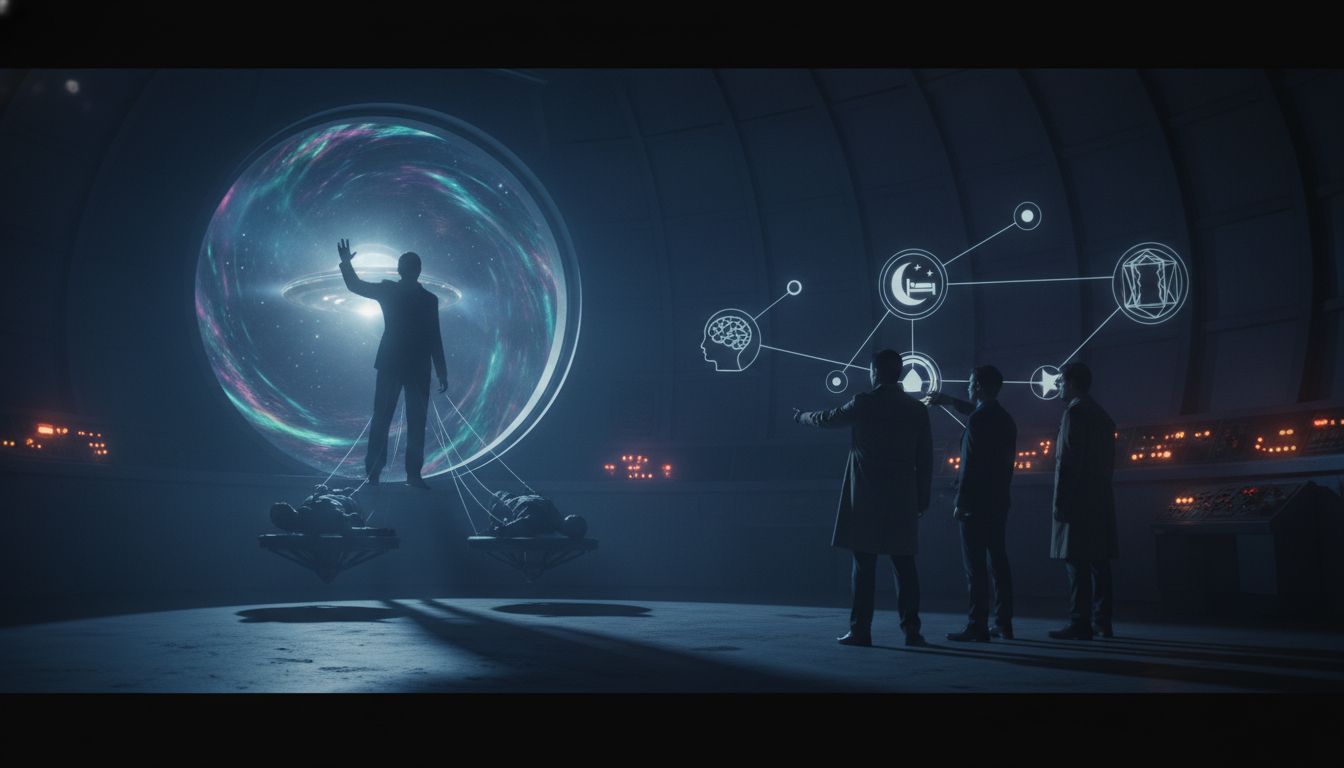
The Extraterrestrial Hypothesis: In the Debate Over UAP Origins, Scientists Wrestle With Possibilities… and Biases
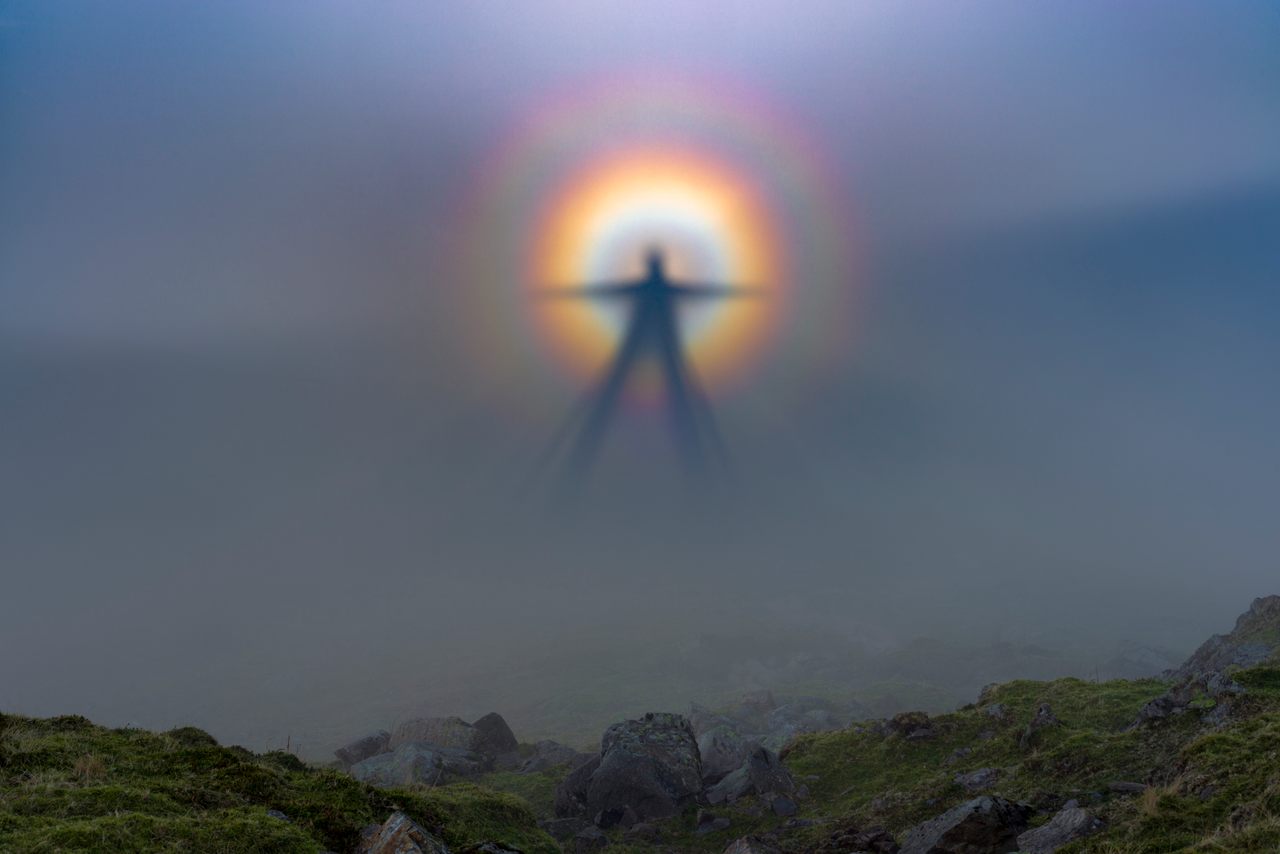
Few would dispute the fact that UFOs have undergone a renascence in public interest in recent years. According to recent data, it also appears that more Americans now seem willing to entertain the possibility that these aerial mysteries could represent a phenomenon unrecognized by science.

A recent Gallup survey found that while half of Americans remain skeptical about UFO sightings, that number has dropped ten points since 2019, when similar surveys found that 60% of Americans had reservations about the idea that UFOs could have anything other than earthly explanations.

One thing the new Gallup data seems to convey is the impact recent U.S. government involvement in the longstanding UFO question has had on public opinion. The presence of unidentified aerial phenomena, or UAP as the military prefers to call them, were seemingly confirmed with the release of a nine-page preliminary assessment in June by the Navy’s UAP Task Force (UAPTF), which reported 144 cases involving objects of unknown origin observed by military pilots and others that currently remain unexplained.

Most of these incidents were collected following the institution of a formalized reporting mechanism by the Navy in 2019, the same year previous Gallup surveys found more than half of Americans remained skeptical about possible extraterrestrial origins of such objects. In late 2020, the U.S. Air Force followed suit, with the combined Navy and Air Force data constituting the majority of the reports discussed within the Task Force’s assessment delivered to the Office of the Director of National Intelligence (ODNI) at the end of June.

According to the report, additional information is also being provided by several other agencies, including the FAA, who in recent days confirmed in a statement provided to The Debrief its own role in documenting UAP incidents that can be corroborated with radar or other data on behalf of the UAPTF. Notably, the inclusion of data from the FAA would seemingly indicate that some incident reports from civilian pilots are also among the 144 incidents the UAPTF has currently examined.

In the days since the report’s delivery to the ODNI, several news outlets have tried to reign in on the subject’s current widespread appeal. Just days after the delivery of the UAPTF’s preliminary assessment, the New York Post Editorial Board called out most of the recent UFO “news” in advance of the report as clickbait, aimed at cashing in on widespread interest in the subject, rather than contributing anything meaningful to the ongoing discussion.

“Yes, UFOs and ‘little green men’ are fun and have inspired tons of entertaining fiction,” the Post editorial read. “But the US intelligence community was entirely right to dump all over the conspiracy theories and ‘They’re really out there’ nonsense in its report on sightings of unidentified aerial phenomena (UAP).” Although the Post Editorial Board noted that extraterrestrial sources were not specifically ruled out in the June report, “it also provides zero evidence supporting alien theories.”

More recently, The Guardian noted that people’s current UFO fascination is primarily “rooted in hope,” while elsewhere The Washington Post Magazine argued what it labels the current “UFO mania” simply has to end.

As the recent Gallup data helps show, it’s no wonder UFOs have been on the minds of so many Americans lately. Thanks in large part to the anticipation ahead of the UAPTF report’s delivery to the ODNI, during the first half of 2021 UFOs have seen more consistent, serious media attention than they have in decades. As a byproduct of this, the New York Post correctly notes that many outlets appear to have jumped on the UFO bandwagon in order to claim their share of traffic from all the attention the subject has received. It is a trend that has been slowly building since late 2017, following a New York Times article revealing the existence of the Pentagon’s Advanced Aerospace Threat Identification Program (AATIP), which analyzed aerial phenomena that might pose a challenge to national security.

However, there is something else the recent Gallup data reveals about people’s attitudes toward UFOs. Since 2019, Americans appear not only to have softened their skepticism toward the subject, but also appear more willing to accept the idea that the phenomenon might represent evidence of extraterrestrial technology. In the recent survey, 41% of adults in America now also associate their belief in UFOs with extraterrestrial spacecraft, representing an eight-point rise from 2019 when similar surveys found just 33% of Americans held such views.

And some scientists think this could represent a problem going forward.

Scientists Remain Divided on The Extraterrestrial Hypothesis

“In the search for extraterrestrial life, scientists must be thoroughly open-minded. And this means a certain amount of encouragement for non-mainstream ideas and techniques,” wrote Peter Vickers, Associate Professor in Philosophy of Science at Durham University in an article for The Conversation.

However, even in a scientific community where open-mindedness toward non-mainstream ideas may occasionally be encouraged, many draw the line when it comes to UFOs.

“I have no doubt that there’s extraterrestrial intelligence,” SETI Institute senior astronomer Seth Shostak told CBS in May. “But it’s a different thing to say, ‘And not only are they out there, but they’ve come to visit!’”

For Shostak, a man who has devoted most of his professional career to the search for extraterrestrial intelligence, the current evidence presented by UFO proponents simply “is not good.”

Although Shostak and many other scientists keep UFOs at arm’s length when it comes to the search for alien life, the extraterrestrial hypothesis (as it has come to be known mainly among UFO proponents) still represents a valid possibility in terms of what the origins of these objects might be.

The problem is that it also carries a lot of historical baggage.

In the years immediately following World War II, it would have been difficult for any reports of advanced, unrecognized aircraft in American skies not to have aroused concern. The appearance of what had first been dubbed “flying saucers” should be remembered in this context: although jokes and jabs about “men from Mars” and space aliens began to appear almost immediately in American newspapers, this had not been the interpretation that warranted attention from the U.S. Air Force. Instead, it was the concern that the Soviets might possess some new technology capable of surveillance, or even future attacks against the United States. 

It didn’t take long to conclude that the objects being observed in U.S. airspace probably didn’t belong to the Soviets. By January 1950, word about a top-secret Air Force “Estimate of the Situation” had become public knowledge thanks to Major Donald E. Keyhoe, a former Marine Corps serviceman and contributor to popular magazines of the period. It was Keyhoe’s 1950 article, “Flying Saucers Are Real,” which not only argued that the objects existed, but that they originated from outer space. Citing examples that included the death of pilot Thomas Mantell, whose plane crashed while pursuing what he and others described as a large metallic disc, and the electrifying story of a large, glowing rocket-like craft seen over Alabama in July 1948 by pilots Clarence S. Chiles and John B. Whitted, Keyhoe drove home the idea that there was simply no better source for these aerial mysteries than outer space.
Major Donald E. Keyhoe, filmed at a Pentagon Press Briefing in Washington DC on July 31, 1952 (National Archives/Public Domain).

By some estimates, his True article from 1950 is still regarded as being one of the most widely read and discussed articles of all time, and in effect, Keyhoe successfully sold this “extraterrestrial hypothesis” to an interested American readership. With Keyhoe’s help, the saucers had finally landed on dimly lit runways within the public imagination, and their alien occupants had now been exposed.

Extraterrestrials, and Other Alternatives

The problem with all this is that there was never anything conclusive as far as evidence in support of this idea. That was true in 1950, and it remains the case more than 70 years after the publication of Keyhoe’s article.

Despite this, many modern proponents seem to conclude that there are no other realistic possibilities, and therefore just like Keyhoe argued, UFOs must be extraterrestrial.

“The United States has the highest military technology in the world. Period. Everyone in the Pentagon down to the floor polishers knows this,” read a quote from Stephen Bassett, executive director of the Paradigm Research Group (PRG) which appeared in one of its newsletters dated June 6, 2021. According to its website, the PRG is an advocacy group that has for years sought to expose government knowledge of “an extraterrestrial presence engaging the human race.”

According to Bassett, “there is only one option left to explain not 120 incidents over the past two decades, but thousands of incidents since 1947, and that explanation is extraterrestrial. PERIOD.” Bassett’s statement was in response to a New York Times article published in advance of the delivery of the UAP Task Force’s preliminary assessment to the ODNI in June.

Not all proponents of the study of unusual aerial phenomena are quite so married to the idea that they must have an extraterrestrial source. Dr. David Clarke is a professor of journalism and folklore who acted as a consultant and spokesman for Britain’s National Archives during the period when the Ministry of Defence (MoD) released its records on UFOs. Clarke says that while he would hesitate to link UFO sightings to extraterrestrials, he has found cases in the MoD’s files that left him stumped.

“There are lots and lots of accounts and experiences that I just find utterly baffling, but they aren’t really the ones that are well known,” Clarke says. “If I explained some of these stories, you would never have heard of them before, because no one knows about them. They’re not as media-friendly.”
David Clarke, Ph.D., Associate Professor in the Department of Media Arts and Communication at Sheffield Hallam University, UK (Credit: David Clarke).

Clarke published a feature earlier this year in Fortean Times which argued convincingly that many UAP encounters receiving widespread media attention may not be as rock-solid as they are often conveyed. “The idea that military detection of UFOs on radar provides empirical evidence of visitations to Earth by an unknown technology is an attractive one – if it were true,” Clarke wrote in the article.

However, speaking with Dr. Clarke about his research, he stops short of saying that all UFO reports can be easily explained.

“I’m not for one minute trying to suggest that science has got an explanation for everything,” Clarke says, adding that when it comes to UFOs, “I certainly don’t think that at all.”

Clarke says that in addition to reports he has uncovered from his own research at the Ministry of Defence archives, he was particularly intrigued by the conclusions of Project Condign, a secret study of UFOs that the British Government’s Defence Intelligence Staff (DIS) conducted between 1997 and 2000. It resulted in a four-volume, 460-page report on the project’s findings, in which its author concluded, “that UAP exist is indisputable… [they] clearly can exhibit aerodynamic characteristics well beyond those of any known aircraft or missile – either manned or unmanned.”

“When I actually read that, and I actually got hold of that report twenty years ago, it was quite a stunning conclusion,” Clarke says. “So here was the guy, the UFO expert at the Ministry of Defence, he was actually saying ‘well, I’ve studied this for thirty years. My conclusion is these things exist.’”

While Project Condign’s conclusions seemed to affirm the MoD’s views about the existence of UFOs, they did not link such aerial phenomena to theories about an extraterrestrial presence on Earth.

“They’re not aliens,” Clarke says of the report’s findings. “They’re not extraterrestrials, but they’re some kind of atmospheric plasma. That was his explanation.”

To Clarke, the fact that Project Condign would leave open the possibility that an as yet unrecognized phenomenon could account for UFOs “was almost like an invitation to scientists to say ‘hey, come and have a look at this data. This guy’s taking it seriously.’” Clarke adds that the report’s author “had access to a lot of secret data that a lot of average atmospheric scientists perhaps wouldn’t be aware of.”

“But no one seems to be interested in that,” he laments. “It’s not showbiz, is it?”

“Atmospheric plasmas aren’t as interesting or as sexy as aliens in spaceships,” Clarke says. “So the media aren’t gonna go with that one.”

The Extraterrestrial Hypothesis: A Scientific Perspective

The legacy of the extraterrestrial hypothesis is one that has endured long enough for it to have become ingrained in our culture, and thereby it permeates much of our current thinking about UFOs. The presence of this “ET bias” in the current dialogue creates difficulties for scientists who wish to look objectively at the UFO subject, while also taking the possibility of extraterrestrial visitation seriously without becoming married to it.

Robert Powell, an Executive Board Member and co-founder of the Scientific Coalition for UAP Studies (SCU), a group which applies science toward resolving the UFO/UAP question, is clear in pointing out that while the extraterrestrial hypothesis could one day be validated, presently it is still only one possibility.

“A hypothesis is simply that. It’s what theory best fits the facts with what we know today,” Powell says. “It doesn’t mean that we’ve said [a UFO] is an extraterrestrial spaceship.”

Before his work with the SCU, Powell served as Director of Research at the Mutual UFO Network (MUFON) from 2007-2017 and established the organization’s Science Review Board in 2012. Although he emphasizes that theories about extraterrestrial technologies are only hypothetical, he also says they are a logical approach toward possibly understanding the phenomenon.

“What we’re saying is that the extraterrestrial hypothesis is the best of the hypotheses that we’ve come up with to explain [UAP],” Powell explains, adding that “someone could always come up with better hypotheses, or we get new data that makes us change [our minds].”

While some scientists like Powell see the extraterrestrial hypothesis as being potentially useful as an explanatory model for understanding UAP, others see the problem of categorizing UAP based on our current knowledge of the phenomenon as being nearly impossible at the present time.

“I truly do not know as to how and what to categorize [UAP],” says Ravi Kopparapu, a Planetary Scientist at NASA’s Goddard Space Flight Center. Among his research interests, Kopparapu has been involved in NASA-funded searches for possible technosignatures of alien civilizations in recent years.

“Confirmed UAP completely defy any reasonable imagination that we could have,” Kopparapu told The Debrief in an email. “I would not categorize them, at this point, as technosignatures because there is no evidence that I know of that could indicate that they are from a technological civilization.”

Kopparapu, while interested in the study of UAP, takes issue with those who conclude that since they cannot be easily explained, they must therefore represent extraterrestrial technologies.

“‘What else could they be?’ is not a scientific explanation,” Kopparapu says. “We need hard evidence. And to collect hard evidence, we need a systematic collection of data on UAP, or access to data that may have already been collected.”

Scientists Seek Access to UAP Data

Kopparapu is one of the many scientists who, in recent days, have noted that current efforts to collect information about UAP by the U.S. government will be of little use to scientists if the data remains classified.

“The sky is not classified,” wrote Harvard Astronomer Avi Loeb in an article for Scientific American in June, adding that “only government-owned sensors are. By searching for unusual phenomena in the same geographical locations from where the UAP reports came, scientists could clear up the mystery in a transparent analysis of open data.”

“When the UAP report [was delivered] to Congress, it was quite intriguing to me,” Loeb recently told The Debrief, “because it defined some objects as real because they were detected by multiple instruments, so they couldn’t have been a malfunction of a particular camera or a hallucination of a pilot. And at the same time, it suggested that the government doesn’t know the nature of these objects.”

“That’s an unusual admission by the intelligence agencies,” Loeb says, “because they’re getting paid to figure out what flies in our sky. And they admit to Congress that they can’t figure it out.”

“So at that point, it became clear to me that this subject needs to move away from the talking points of politicians and military personnel, and to the realm of science.”

Dr. Avi Loeb

(Image Credit: Kris Snibble. Source: Harvard file photo)

In the days following the arrival of the UAP Task Force’s preliminary report, Loeb announced the launch of The Galileo Project, an effort that he and other astronomers will be undertaking that will attempt to obtain high-resolution imagery and other data related to UAP.

“I cannot stress enough how important it is to have the data available to scientists to know what they are,” Kopparapu told The Debrief. “Without access to proper data, un-substantiated hypotheses and conspiracy theories take the vacuum created by the lack of a science-based hypothesis. I equate this with superstitions we have had over the centuries until science replaced them.”

Although exploring the possibility that some UAP could have extraterrestrial origins is not inherently a conspiracy theory, over the decades there have been countless claims that involve alleged coverups of an extraterrestrial reality by the U.S. government. This, in addition to stories of alien abduction, purported wreckage retrievals of alien craft or technology, and a host of other claims involving extraterrestrial visitation to Earth.

Despite the widespread support they often see from many proponents of unidentified aerial phenomena, the majority of these claims remain unsubstantiated. Even if they were actually true, no conclusive evidence in support of the existence of extraterrestrials or their technologies has ever surfaced that would be capable of satisfying the requirements of science, let alone producing a testable hypothesis.

Despite his concerns about unsubstantiated theories—extraterrestrial or otherwise—which have often lead the UFO/UAP narrative in the past, Kopparapu does not doubt the presence of a genuine phenomenon behind the more credible reports.

“UAP are real and they exist,” Kopparapu says. “Many of them we see in our skies. Some may have perfectly sensible explanations, but not all of them can be explained away. That kind of thinking is not scientific.”

Although he feels sure about their existence, nothing Kopparapu has studied about these phenomena makes them any less perplexing.

“As a scientist, it is just baffling to me that they exhibit characteristics that we do not understand, and we are not paying attention to it. They are absolutely worthy of a scientific study, probably one of the most interesting studies. We have done that in the U.S. a few decades ago. Other countries also studied them, so it is not U.S.-specific.”

Whether the ultimate solution to the UFO question has roots in technologies from other worlds or phenomena that arise from here on Earth, the results of future studies may one day finally bring a resolution to the debate. Today, scientists are still a good way from reaching any conclusions about the mysterious aerial phenomena that have received so much attention in recent months, and recaptured the imaginations of those who wonder about the greatest question of all: are we alone? 

For Kopparapu, however, the path forward is clear.

“We need data on them, and any collected data [needs to be] made available,” Kopparapu says.

“There is no other way to say it.”

  • Micah Hanks is a longtime researcher and proponent of the scientific study of unidentified aerial phenomena. You can find his podcast, The Micah Hanks Program, and other podcasts he produces at his website, and follow him on Twitter: @MicahHanks. 

RELATED VIDEOS

{ https://thedebrief.org/category/space/ }

Hoe vind je dit bericht?
Geschreven door peter om 18:14 Stuur door

Scientists decode secret language of non-human intelligence beneath Earth's oceans

Scientists have cracked the code behind a mysterious language discovered among a non-human species living in Earth's oceans that mirrors human speech. 

Using AI to study whale communication, Project CETI researchers discovered that sperm whales 'talk' to each other with strange, Morse code-like clicking patterns. 

The mammals used patterned click sequences known as codas, which include two distinct vowel-like sounds — an 'ah'-like a-coda and an 'ee'-like i-coda. 

The vowel-like noises were not random, as whales were seen actively controlling the pitch, length, and type of sounds they were making as they 'pronounced' different words.

The CETI team said whales make these sounds during social interactions in family groups, using codas to stay connected, coordinate activities, and identify each other, like an underwater social language.

The team also found that whale speech was similar to human speech because whales used their lips and air sacs as a sound source and filter, just like humans use their vocal cords and vocal tract to achieve the same results.

It marked the first time researchers have found a non-human species using vowel-like sounds and grammar-like rules in the same way humans do to communicate with each other.

Gašper Beguš, Project CETI's linguistics lead, told Popular Science: 'What used to be conceived of as this alien-looking Morse-code-like system just became much more human-like. We have a case of underwater vowels–in a very different world from ours, the communication system appears very similar to our speech.'

A closeup of the eye of a sperm whale. Scientists have just decoded the strange clicking noises these mammals make as they interact with each other

A closeup of the eye of a sperm whale. Scientists have just decoded the strange clicking noises these mammals make as they interact with each other

Scientists attached small suction-cup microphones called DTAGs to 15 sperm whales swimming in the Caribbean to record their clicks up close without distortion.

They recorded nearly 4,000 clear codas from a group of females and their offspring between 2014 and 2018, focusing only on the whale wearing the tag.

At first, the clicks sounded too slow to compare with human speech, so the team sped up the recordings until the patterns became clear and familiar.

They learned that the clicks come in these two main types of A and I vowels, just like humans use A, E, I, O, and U.

The sperm whales often used their secret language during social moments, such as greeting family members, staying in touch while diving for food, or coordinating group movements through the ocean.

The study, published on the preprint server bioRxiv and awaiting peer review, also revealed that timing was everything when it comes to whale communication.

The number of clicks, the pauses between them, and the overall speed created different rhythm types that acted almost like musical beats.

The CETI team found 'ah' codas are naturally longer than 'ee' codas in the same rhythm, and 'ee' codas split into short and long versions, like using length to mean something different.

AI has helped researchers discovered that sperm whales have a complex language of vowels and grammatical rules just like humans

AI has helped researchers discovered that sperm whales have a complex language of vowels and grammatical rules just like humans

article image

By measuring every pause and pitch change, the scientists proved whales control timing and sound quality on purpose, not by accident, showing real communication rules.

This isn't the first sign of complex intelligence scientists have discovered among various species of whales.

In June, researchers from the SETI Institute (Search for Extraterrestrial Intelligence) revealed that large 'smoke ring-like' bubbles coming from underwater were created by humpback whales, which they believed were their way of greeting nearby humans.

It was the first time scientists had seen whales sending out these unique rings while interacting with people in the wild.

Meanwhile, the songs sung by whales have been studied for decades, and in 2024, scientists finally learned that the mammals have a unique voice box that vibrates fat and muscle to produce these mysterious tones.

Normally, singing underwater would present an almost impossible problem because whales should be using up all their air.

However, a study in the journal Nature concluded that whales evolved to have a voice box that was different from most other mammals and doesn't rely on vocal cords.

RELATED VIDEOS


{ https://www.dailymail.co.uk/sciencetech/index.html }

Hoe vind je dit bericht?
Geschreven door peter om 17:34 Stuur door

Legendes van de Djinn: Bovennatuurlijke Wezens uit een Andere Dimensie

Legendes van de Djinn: Bovennatuurlijke Wezens uit een Andere Dimensie

Legends Of The Djinn: Supernatural Entities From Another Dimension

Inleiding

Het fenomeen van de Djinn, bovennatuurlijke entiteiten afkomstig uit de Midden-Oosterse folklore, heeft de laatste jaren een hernieuwde belangstelling gekregen binnen het domein van paranormale studies en anomalieën. Hoewel oorspronkelijk geworteld in islamitische tradities en volksverhalen, wordt de Djinn tegenwoordig steeds vaker beschouwd als een interdimensionale entiteit die mogelijk een brug vormt tussen mythes en moderne rapportages van onverklaarbare fenomenen. Deze paper tracht een wetenschappelijke en gestructureerde onderbouwing te bieden voor de hypothese dat deze entiteiten niet louter mythisch zijn, maar mogelijk verbonden kunnen worden met onze perceptie van de werkelijkheid, en dat zij wellicht bestaan in een dimensie die zich buiten het bereik van conventionele wetenschappelijke waarneming bevindt.

Historische achtergrond en mythologische context

De term "Djinn" vindt haar oorsprong diepgeworteld in de rijke tradities van de Arabische folklore en heeft een significante plaats binnen de islamitische religieuze teksten, zoals de Koran. Het woord zelf stamt af van het Arabische werkwoord "janna," dat "bedekken" of "verschuilen" betekent, wat aangeeft dat deze wezens vaak in de verborgen hoeken van de wereld leven. Volgens de islamitische opvattingen worden Djinn gecreëerd uit een vlam van roet, een element dat symbool staat voor mysterie, onvoorspelbaarheid en het onzichtbare. De Koran beschrijft dat Allah de Djinn geschapen heeft uit de vurige rook van een vlam, zonder dat zij kunnen worden gezien door mensen, tenzij zij zich openbaren. Dit schepsel uit de vurige druipende vlam geeft de Djinn een intrinsiek verbonden relatie met vuur, een element dat in de Arabische cultuur vaak wordt geassocieerd met kracht, transformatie en het onbegrepen.

Binnen de islamitische traditie worden Djinn voorgesteld als schepsels met vrije wil, vergelijkbaar met mensen. Dit betekent dat zij in staat zijn tot goed en kwaad, en dat zij verantwoordelijk zijn voor hun keuzes. Sommige Djinn kiezen het pad van kwaad en worden dan beschouwd als kwaadaardige geesten die mensen kunnen belagen, toveren of kwaadwillende invloed uitoefenen. Anderen kiezen ervoor om het goede na te streven, helpen mensen of houden zich afzijdig van menselijke aangelegenheden. Hierdoor vormen zij een complex en veelzijdig wezen dat niet eenvoudig in een goed of slecht hokje te plaatsen is. Deze vrije wil en autonomie maken dat Djinn in staat zijn om interacties aan te gaan met de menselijke wereld, wat zowel in verhalen als in rituelen terug te vinden is.

In termen van representatie worden Djinn vaak afgebeeld als krachtige, autonome wezens die in verborgen, ongrijpbare plekken leven, zoals woestijnen, bergen, verlaten ruïnes of ondergrondse gangen. Verhalen vertellen dat zij vaak ofwel onzichtbaar blijven voor mensen of zich op andere manieren manifesteren als schimmige silhouetten, ongezien doch voelbaar, en dat zij in voortdurende interactie staan met de menselijke wereld. Deze interacties kunnen heel uiteenlopend zijn: ze kunnen gaan van beschermende bemoeienissen, zoals het helpen van een persoon in nood, tot kwaadaardige invloeden, zoals het veroorzaken van ziekten of ongeluk. Sommige verhalen spreken ook over djinn die zich als dieren of mensen kunnen voordoen om misleiding en chaos te zaaien, wat aangeeft dat deze wezens niet altijd te onderscheiden zijn van gewone mensen.

Door de geschiedenis heen zijn vergelijkbare entiteiten ook in andere culturen en religies terug te vinden. In de oude Griekse mythologie bijvoorbeeld waren er geesten en levitatie- of nachtwandelaars die in de duisternis verschenen en vaak werden gezien als boodschappers tussen de wereld van de levenden en die van de goden of de doden. In de Noord-Afrikaanse en Mediterrane tradities worden verhalen over geesten, schaduwfiguren en gevaarlijke entiteiten, zoals de "Djinni" of "Jinn" in Arabische folklore, doorgegeven van generatie op generatie. Deze verschijnselen worden vaak beschreven als manifestaties die optreden tijdens periodes van stress, trauma of overgangsfasen in het menselijk leven — bijvoorbeeld bij het verlies van een dierbare, in tijden van crises of tijdens slaap en droom. Deze verhalen vormen zooitje van collectief onbewuste die in verschillende tijden en culturen terugkeert onder verschillende vormen, en illustreren dat dergelijke entiteiten mogelijk een onderliggende realiteit vertegenwoordigen, die moeilijk te verklaren is met de wetenschappelijke methoden van vandaag de dag.

Bovendien kunnen deze mythen en verhalen gezien worden als symbolische uitingen voor de menselijke ervaring van onmacht, angst en het onbekende. Ze bieden een kader waarin mensen hun gevoelens van onzekerheid en verstoring kunnen projecteren en begrijpen. Of het nu gaat om de vlam van de Djinn uit de Arabische mythologie, de schaduwen in mediterrane verhalen of de veranderingen in onze dromen, deze entiteiten lijken een brug te slaan tussen realiteit en droom, tussen het bewuste en het onbewuste. Ze representeren soms de natuurkrachten die onze wereld beïnvloeden, beschermgeesten die ons bijstaan of boze geesten die onze rust verstoren. Vooral in rituelen en magische praktijken blijven deze figuren een centrale rol spelen, waarbij mensen proberen te communiceren, te beschermen of te verdrijven.

Kortom, de Djinn en vergelijkbare geesten vormen een fascinerend onderdeel van de menselijke geschiedenis en mythologie. Ze illustreren onze voortdurende zoektocht naar betekenis in een wereld vol mysteries en onzichtbare krachten. De verhalen over deze wezens blijven actueel omdat ze resoneren met fundamentele menselijke ervaringen en angsten, en omdat ze een rijke bron vormen voor culturele expressie en spirituele reflectie. Ze herinneren ons eraan dat de grens tussen werkelijkheid en fantasie, wetenschap en mythos vaak vloeiend is, en dat de menselijke verbeelding altijd op zoek is naar uitleg voor het onbegrijpelijke dat zich buiten ons zicht bevindt.

Moderne interpretaties en wetenschappelijke hypothesen

In recente jaren is de belangstelling voor de Djinn sterk toegenomen binnen het kader van paranormale en anomalieonderzoeken. Vooral in wetenschappelijke en esoterische kringen wordt geprobeerd om deze wezen niet uitsluitend te bekijken als spirituele entiteiten uit de volksangsten, maar ook als mogelijke interdimensionale verschijnselen die zich op een grensvlak bevinden tussen verschillende realiteiten. Paranormale onderzoekers zoals Rosemary Ellen Guiley, een bekende specialist op het gebied van het onverklaarde, hebben verschillende theorieën ontwikkeld over de aard van de Djinn. Guiley stelde onder meer dat deze wezens niet simpelweg traditionele geesten of bovennatuurlijke verschijnselen zijn, maar dat ze waarschijnlijk een soort tussenliggende entiteiten vormen die mogelijk door multiversum-achtige werelden kunnen bewegen.

In haar boek The Vengeful Djinn uit 2014 beschrijft Guiley hoe oude teksten en historische documenten verwijzingen bevatten naar wezens die veel lijken op de moderne beschrijvingen van de Djinn. Ze vergelijkt deze oude verhalen met waarnemingen in de moderne tijd, waarbij mensen fenomenen melden zoals visuele waarnemingen van schaduwfiguren of ‘shadow people’, plotselinge temperatuurdalingen en fysieke sensaties zonder duidelijke verklaring, en het horen van disembodied voices of onverklaarbare geluiden. Daarnaast worden soms fysieke veranderingen waargenomen, zoals het verschuiven van objecten of het voelen van onverklaarbare aanrakingen, zelfs wanneer er geen mensen in de buurt zijn.

Binnen de context van deze waarnemingen wordt vaak de theorie over parallelle dimensies of multiversa betrokken. Volgens deze theorieën zouden de Djinn zich bevinden in een grensgebied tussen onze fysieke werkelijkheid en andere onwetende of onzichtbare rijken. In deze opvatting worden de Djinn geïnterpreteerd als entiteiten die niet volledig in onze wereld bestaan, maar zich op een soort tussenstation bevinden, waardoor ze vaak voorkomen in fenomenen die grensoverschrijdend en moeilijk te verklaren zijn volgens de conventionele wetenschap. Sommige wetenschappers speculeren dat deze verschijnselen mogelijk gerelateerd zijn aan hoge-energievelden, kwantumverschijnselen of dimensie-overstijgende trillingen die onze gebruikelijke waarneming overstijgen.

Hoewel er tot nu toe geen sluitend wetenschappelijk bewijs bestaat dat de Djinn daadwerkelijk interdimensionale entiteiten zijn, bieden deze moderne theorieën en hypothesen interessante invalshoeken voor verder onderzoek. Ze benadrukken de complexiteit van de waarneming en de mogelijkheid dat veel paranormale fenomenen niet rechtstreeks te verklaren zijn door traditionele wetenschappelijke modellen. In die context blijven de Djinn een intrigerend onderwerp dat de grens tussen wetenschap, spiritualiteit en mystiek blijft uitdagen.

Interdimensionale theorieën en fysica

Volgens enkele theoretische natuurkundigen en metafysici zou het bestaan van meerdere dimensies mogelijk kunnen zijn binnen een uitgebreidere theorie van het heelal, zoals bijvoorbeeld superstring-theorieën of M-theorieën. Deze theorieën suggereren dat onze bekende driedimensionale ruimte slechts één facette is van een complexere structuur, waarin meerdere “lagen” of dimensies kunnen bestaan, waarin entiteiten, energieën of informatie kunnen bewegen en communiceren.

Het is in deze context dat de hypothese van interdimensionale entiteiten kan worden geplaatst. Djinn zouden dan manifesteren in onze dimensie onder bepaalde energetische condities, vergelijkbaar met hoe sommige wetenschappers de waarneming van UAP’s (Unidentified Aerial Phenomena) verklaren als verschijnselen die mogelijk verband houden met het bestaan van andere dimensies of niet-klassieke fysieke verschijningsvormen.

Empirische waarnemingen en anekdotisch bewijs

Empirische waarnemingen en anekdotisch bewijs vormen een fascinerende, doch vaak betwiste bron van informatie binnen het onderzoek naar bovennatuurlijke verschijnselen zoals de Djinn. Hoewel de wetenschap over het algemeen terughoudend is ten aanzien van zulke rapportages, omdat ze moeilijk te verifiëren en reproduceerbaar te maken zijn volgens de strikte wetenschappelijke methoden, blijven deze getuigenissen waardevol omdat ze een schat aan gegevens bieden over de ervaringen van mensen uit verschillende culturen en regio’s. Vaak vormen deze anekdotes de enige bron van informatie in een gebied waar geen uitgebreide wetenschappelijke studies beschikbaar zijn, en kunnen ze hints geven over de aard en het gedrag van fenomenen die zich buiten de grenzen van de conventionele natuurkunde bevinden.

Laten we bijvoorbeeld kijken naar recente verslaggeving in het buitenland. In de Verenigde Staten en sommige delen van Europa worden regelmatig meldingen gedaan over zogenaamde "Shadow People" of schaduwachtige verschijningen. Mensen beschrijven dat ze soms ’s nachts in hun ooghoeken een donker, onduidelijk silhouet zien verschijnen, vaak in de slaapkamer of op andere afgelegen plekken in huis. Soms gebeurt dit terwijl ze wakker zijn, en andere keren tijdens de slaap of bij het ontwaken. Deze figuren verdwijnen meestal snel wanneer ze worden gezien, alsof ze slechts tijdelijk in onze dimensie manifesteren. Sommige getuigen geloven dat het om geesten gaat, terwijl anderen denken dat deze verschijningen mogelijk interdimensionale entiteiten of energetische manifestaties zijn die slechts fragmentarisch toegankelijk zijn voor onze waarneming. Een praktisch voorbeeld is een vrouw uit Nederland die stelt dat ze haar huis vaak 's avonds plotseling schaduwfiguren ziet, die achter haar vandaan lijken te komen en weer verdwijnen zodra ze zich beweegt of licht aanzet. Een ander voorbeeld is een man uit het Amerikaanse Midwesten die meldt dat hij gewaarschuwd werd door vreemde schaduwen die zich in de hoek van zijn kamer bevonden, net voordat er een stroomstoring plaatsvond.

Daarnaast bestaan er al eeuwenoude volksverhalen over djinn of geesten die verschijnen en verdwijnen in het schemergebied tussen werkelijkheid en fantasie. In Midden-Oosterse culturen worden verhalen opgetekend over 'invisibele wezens' die zich in de duisternis bewegen. Soms worden deze entiteiten beschreven als kwaadaardig, bijvoorbeeld om mensen bang te maken of te laten verdwijnen, terwijl ze in andere verhalen juist behulpzaam of onschadelijk worden geportretteerd. Zo worden er in tales vaak verhalen gedeeld over mensen die in de nacht plotseling vreemde geluiden horen, of die te maken krijgen met onverklaarbare verschijnselen zoals verstikking of vreemde schaduwen die zich in hun huis bewegen. Deze volksverhalen sluiten vaak aan bij de persoonlijke ervaringen van ooggetuigen, en geven inzicht in hoe culturen omgaan met de onverklaarbare wereld.

Een bijzonder voorbeeld van individuele waarnemingen is dat van Philip J. Imbrogno, een voormalig officier van de Amerikaanse marine en bekende onderzoeker op het gebied van paranormale fenomenen. Imbrogno vertelde dat hij in de jaren 2000 een reeks bizarre waarnemingen deed die aanvankelijk werden toegeschreven aan ufo’s. Zo zag hij lichtgevende bollen die stil in de lucht bleven hangen, en objecten die fysieke materie leek te beïnvloeden door bijvoorbeeld de lucht te laten trillen of in beweging te brengen zonder duidelijke oorzaak. Daarnaast meldde hij ontmoetingen met entiteiten die van vorm konden veranderen; het ene moment leek het op een mens en het andere op een ongeïdentificeerd object met geen duidelijke vorm. Volgens Imbrogno zouden dergelijke waarnemingen kunnen wijzen op een vorm van contact met interdimensionale wezens, die niet op onze reguliere manier waar te nemen zijn. Hij benadrukt dat deze ervaringen moeilijk te verklaren zijn binnen het reguliere paradigma van wetenschap en dat ze mogelijk een ander soort realiteit betreffen dan wij gewend zijn.

Kortom, terwijl anekdotische bewijs nooit de absolute bevestiging kan bieden die de wetenschappelijke methode vereist, geven deze waarnemingen en verhalen toch een waardevolle blik op de wereld van de bovennatuurlijke fenomenen zoals de Djinn. Ze laten zien dat mensen uit verschillende culturen en tijden soortgelijke ervaringen hebben, en dat deze waarnemingen vaak praktische voorbeelden omvatten die ons aanzetten tot verder onderzoek en nieuwsgierigheid naar de grenzen van onze werkelijkheid.

Voorbeelden uit de hedendaagse verslaggeving

  • Shadow People en ‘Invisibele Beelden’: In Amerikaanse en Europese contexten worden vaak schaduwachtige silhouetten gemeld die verschijnen in de perifere visie en vervolgens verdwijnen. Vaak worden zij beschreven als geestachtige figuren, maar sommige onderzoekers wijzen erop dat deze verschijnselen mogelijk visuele manifestaties zijn van interdimensionale communicatie of energetische entiteiten die slechts fragmentarisch in onze dimensie zichtbaar worden.

  • Voorgaande rapporten over de Djinn: In Midden-Oosterse volksverhalen wordt vaak gesproken over ‘invisibele wezens’ die verschijnen en verdwijnen in de duisternis en die soms kwaadaardig of vriendelijk kunnen zijn. Deze verhalen worden regelmatig aangehaald als bewijs dat dergelijke entiteiten al eeuwenlang in verschillende culturen worden waargenomen.

  • De ervaringen van Philip J. Imbrogno: Een prominente getuige is voormalig U.S. Navy officer Philip Imbrogno, die in de jaren 2000 een reeks waarnemingen rapporteerde die aanvankelijk werden toegeschreven aan ufo’s, maar later door hemzelf werden geïnterpreteerd als mogelijk contact met interdimensionale wezens. Imbrogno beschrijft bijvoorbeeld lichtgevende bollen, objecten die fysieke materie konden beïnvloeden en entiteiten die op mysterieuze wijze van vorm konden veranderen.

Onderzoek en controverse

Het samenbrengen van deze waarnemingen leidt tot de discussie of deze fenomenen mogelijk een gemeenschappelijke basis vertonen, en of ze wel of niet buitenaards van oorsprong kunnen zijn, of dat zij een manifestatie betreffen van een andere, nog onbekende dimensie. Verschillende wetenschappers en onderzoekers adviezen dat verdere gestructureerde studies nodig zijn, terwijl anderen sceptisch blijven, wijzend op het gebrek aan empirisch bewijs en de subjectiviteit van veel getuigenissen.

In dit kader spelen vragen als:

  • Hoe kunnen visuele, tactiele en audiële waarnemingen worden geverifieerd?
  • Welke rol speelt culturele interpretatie bij de vormgeving van deze fenomenen?
  • Is er een wetenschappelijke basis om interdimensionale entiteiten zoals de Djinn te beschouwen als mogelijke verklaringen?

Interdisciplinair perspectief en toekomstgerichte benaderingen

De fenomenologie rondom de Djinn en gerelateerde verschijnselen vraagt om een interdisciplinair onderzoeksmodel waarin de perspectieven van folklore, neurowetenschap, psychologische studies, natuurkunde en parapsychologie worden geïntegreerd. Het combineren van historische tekstanalyses met modern-kwantitatief onderzoek kan mogelijk inzicht geven in de aard van deze fenomenen.

Neurowetenschappelijk oogpunt

Volgens neurowetenschappers kunnen waarnemingen van entiteiten zoals shadow people voortkomen uit slaapparalyse, hallucinaties of psychespecifieke processen die worden uitgelokt door stress, slaaptekort of psychische aandoeningen. Deze psychofysiologische mechanismen kunnen in sommige gevallen worden misinterpreteert als buitenaardse of bovennatuurlijke verschijnselen.

Natuurkundig perspectief

Hoewel de huidige stand van de natuurkunde geen directe bewijzen biedt voor interdimensionale realiteiten, biedt de theorie van extra dimensies een theoretisch kader dat de vermeende waarnemingen van entiteiten in andere dimensies theoretisch mogelijk maakt. Experimenteel onderzoek naar kwantumverstrengeling en niet-lokale communicatie opent mogelijk nieuwe wegen voor het begrijpen van dergelijke fenomenen, hoewel deze nog gesubstantieerd en empirisch bevestigd moeten worden.

Conclusie

De heropleving van het fenomeen van de Djinn binnen het context van moderne paranormale en wetenschappelijke theorieën wijst erop dat de mogelijke existentie van interdimensionale entiteiten een relevante hypothese kan zijn die verder onderzoek vereist. Hoewel zintuiglijke waarnemingen en anekdotisch bewijs geen definitieve bewijzen leveren, suggereren hun consistentie over culturen en tijdperken dat er iets bijzonders aan de hand is dat onze huidige wetenschappelijke paradigma’s uitdaagt.

Door een kritische, multidisciplinaire aanpak kunnen we wellicht dichter komen tot een begrip van deze mysterieuze fenomenen, en mogelijk een nieuwe dimensie van realiteit ontdekken die zich buiten de integriteit van onze zintuiglijke waarneming bevindt. De hypothese dat de Djinn niet slechts mythische wezens zijn, maar mogelijk echte entiteiten in een andere dimensie, blijft een fascinerende en urgente vraag voor toekomstig wetenschappelijk onderzoek.

 { PETER2011 }

Hoe vind je dit bericht?
Geschreven door peter om 16:29 Stuur door

Neurosurgeon Describes Coming Face-To-Face With An Alien

Neurosurgeon Describes Coming Face-To-Face With An Alien

A neurosurgeon who has performed thousands of brain surgeries told a British‑based culture website that a near‑death experience in 2022 brought him into direct contact with a non‑human intelligence. According to the surgeon, who asked to remain unnamed pending publication of a formal medical report, he was briefly revived after a cardiac arrest during a routine operation and found himself “face‑to‑face with an entity that communicated not with words, but through thoughts that seemed to bypass language altogether.” He described the being as “tall, luminous, and composed of a light‑like substance,” adding that the encounter lasted only a few seconds before his heart rhythm normalized and he was returned to the operating table.

During the episode the surgeon said the entity transmitted a series of impressions about the nature of human consciousness, the interconnectedness of all life, and the “vast, layered structure of the universe.” He recalled a specific phrase that he interpreted as a warning: “Your species is on the brink of a choice that will define its future.” The neurosurgeon, who has published research on neural plasticity in peer‑reviewed journals, said the experience left him with a lingering sense of clarity and a renewed interest in the philosophical dimensions of brain function. “It was as if a circuit in my own mind was suddenly illuminated from the outside,” he told the website, adding that the telepathic communication felt “more precise than any language I have ever used with a patient.”

The account arrives amid a resurgence of public interest in unidentified aerial phenomena (UAP) and near‑death experiences (NDEs), topics that have recently received limited attention from governmental panels and scientific societies. In June 2024, the U.S. Office of the Director of National Intelligence released a report acknowledging that many UAP sightings remain unexplained, while the American Academy of Neurology has convened a task force to examine the neurobiology of NDEs. Researchers in the field caution that subjective experiences during severe physiological stress can produce vivid hallucinations, altered time perception, and feelings of transcendence, often interpreted through cultural lenses. Dr. Maya Patel, a neuropsychologist at the University of California, San Diego, noted, “Extreme hypoxia or the release of neurochemicals like DMT can generate experiences that feel profoundly real, but they do not constitute evidence of external entities.”

Skeptics have also pointed out the lack of corroborating data. The surgeon’s claim is based solely on personal recollection; no audio, video, or physiological recordings of the alleged encounter have been released. Moreover, the original article appeared on BroBible, a site known for entertainment‑focused content rather than scientific journalism. “Extraordinary claims require extraordinary evidence,” said Dr. Leonard Hsu, a professor of neurosurgery at Johns Hopkins University. “While the surgeon’s credentials are impressive, a single anecdotal report cannot be taken as proof of extraterrestrial contact without independent verification.”

The neurosurgeon says he is preparing a detailed case study for submission to a medical journal, where he hopes to explore the possible mechanisms behind the telepathic impression and its implications for our understanding of consciousness. He emphasizes that his primary aim is not to prove the existence of aliens, but to investigate how the brain processes experiences that fall outside conventional neurophysiology. “If there is a way to bridge the gap between subjective experience and objective science, we owe it to our patients—and to humanity—to pursue it rigorously,” he concluded. Whether the medical community will embrace the report or dismiss it as an extraordinary NDE remains to be seen, but the story underscores the ongoing tension between empirical inquiry and the human desire to find meaning beyond the known.

RELATED VIDEOS


{ https://usubjects.com/ }

Hoe vind je dit bericht?
Geschreven door peter om 15:58 Stuur door

Robotics Company Builds Straight-Up Terminator

Robotics Company Builds Straight-Up Terminator

"We're at a point now where robots can move more sensually than Taylor Swift."
Electric vehicle company XPeng has released a video of its "Iron" robot without skin, and the results are pretty disturbing.
XRoboHub via YouTube

Automation is getting a little out of control these d

ays. Recent advances in the world of robotics have unleashed autonomous bodegas, sock-puppet style robo-servants, and even AI-powered dinosaurs.

For the most part, robotics developers have kept their projects on the lighter side, even if they occasionally creep us out. But that might be changing thanks to the Chinese automotive company XPeng, which just released a clip showcasing its “Iron” humanoid robot.

The clip, which circulated on social media, show a robotic exoskeleton strapped to a harness walking in a straight line. While XPeng’s Iron units are usually clad in a sleek white skin, this one is totally nude — and it looks like something straight out of the post-apocalyptic RPG Fallout, or like the titular antagonists from the “Terminator” franchise.

hqdefault.jpg

The bot also cleans up nicely. During an event this week, the company showed it off dressed in a cloth bodysuit that gave it a distinctly feminine profile.

Iron’s gait was so impressive that some observers wondered if it was a human inside a suit — a con Elon Musk once pulled — but XPeng CEO He Xiaopeng put that suggestion to rest when he unzipped the outfit, showing the robot inside.

The bot displayed some pretty slick motion, swaying its hips as it walks.

“We’re at a point now where robots can move more sensually than Taylor Swift,” one Redditor commented.

“I am kind of blown away that they can get motors to work in such an elegant way. I assumed it was soft body mechanics,” wrote another. “Wow.”

Iron made its first debut on Wednesday, when XPeng CEO He Xiaopeng introduced the unit as the “most human-like” bot on the market to date. Per Humanoids Daily, the robot features “dexterous hands” with 22 degrees of flexibility, a “human-like spine,” gender options, and a digital face.

According to He, the bot also contains the “first all-solid-state battery in the industry,” as opposed to the liquid electrolyte typically found in lithium-ion batteries. Solid-state batteries are considered the “holy grail” for electric vehicle development, a design choice He says will make the robots safer for home use.

More on robots: 

RELATED VIDEOS

{ https://futurism.com/category/robots-and-machines }

Hoe vind je dit bericht?
Geschreven door peter om 15:50 Stuur door

The most powerful solar flare in 2025

The most powerful solar flare in 2025

The X5.1-class eruption from sunspot AR4274 is the most powerful flare of the year, accompanied by a coronal mass ejection. Our planet is in its path.

X5.1-class solar flare. Source: NOAA Space Weather Prediction Center

X5.1-class solar flare

On the morning of November 11, the Sun exploded in spectacular fashion, releasing a powerful X5.1-class solar flare, the strongest since 2025 and the most intense since October 2024.

The explosion peaked at 5 a.m. Eastern Standard Time (10:00 GMT) from sunspot AR4274, which has been very active in recent days. The flare caused severe (R3-level) radio interference in Africa and Europe, disrupting high-frequency radio communications on the sunlit side of the Earth.

Danger of geomagnetic storms

This flare is the latest in a series of intense flares from AR4274, which also caused an X1.7 flare on November 9 and an X1.2 flare on November 10. These flares were accompanied by coronal mass ejections (CMEs) that could combine and affect Earth tonight, possibly causing strong (G3) geomagnetic storms and widespread auroras, according to the NOAA Space Weather Prediction Center. Today’s coronal mass ejection may also join them, as it is moving toward Earth at a speed of 4.4 million miles per hour. NOAA predicts that the CME could affect Earth around noon on November 12. With this third CME, we may experience strong (G4) geomagnetic storms.

Solar flares are classified by strength into five classes: A, B, C, M, and X, with each step corresponding to a tenfold increase in energy output. X-class solar flares are powerful, and the number after X describes the intensity of the flare. With an intensity of X5.1, this latest flare is at the top of the scale.

Peak solar activity

The eruption resulted in a stream of X-rays and extreme ultraviolet radiation toward Earth, ionizing the upper layers of the atmosphere and causing a significant deterioration in radio signal quality. Severe (R3) radio interference was recorded over Africa and Europe.

This active region has become one of the most prolific sources of solar flares in the 25th solar cycle, marking the peak of activity in what has already been an extraordinary week for solar activity.

According to forecasts, the coronal mass ejection that occurred this morning during the X5.1 solar flare will reach Earth on November 12. According to NOAA, the coronal mass ejection could cause a strong (G4) geomagnetic storm on November 12.

RELATED VIDEOS


 { https://universemagazine.com/en/articles-en/ }

Hoe vind je dit bericht?
Geschreven door peter om 15:27 Stuur door

The largest in modern history: a young crater is discovered in China

The largest in modern history: a young crater is discovered in China

Chinese scientists have announced the discovery of a previously unknown crater named Jinlin. It was formed after the end of the last ice age.

Panoramic image of the Jinlin crater taken by drone, showing the approximate location of the crater rim and an inset image of the crater floor, which shows a mixture of weathered granite soil and granite fragments. The yellow line is 20 centimeters long. Source: Ming Chen

The Jinlin crater is located in Zhaoqing, Guangdong Province. The impact structure is located on a hillside, preserved under a thick granite weathering crust. Its diameter is 900 meters.

According to scientists’ estimates, the crater is very young. It was formed in the early to mid-Holocene epoch, our current geological era, which began after the end of the last ice age about 11,700 years ago. This makes Jinlin the largest impact crater in modern human history. In terms of size, it significantly exceeds the Macha crater, which was formed in the Holocene and has a diameter of only 300 meters.

One of the most remarkable features of the Jinlin crater is its good preservation, considering the climatic conditions. The region where it is located is characterized by monsoons, heavy rains, and high humidity. In the granite layers that helped protect and preserve its structure, researchers found many pieces of quartz with unique features that prove its impact origin.

According to scientists, the crater was formed by the impact of a small asteroid. However, the research team has not yet determined whether it was made of iron or stone.

At present, there are about 200 confirmed impact craters on Earth. In reality, there were many more, but due to erosion and plate tectonics, many of them have completely disappeared without leaving any traces. This makes the discovery of the Jinlin crater particularly significant. It shows that the scale of impacts of small extraterrestrial objects on Earth during the Holocene was much greater than previously thought.

Earlier, we reported on another crater recently discovered in China, which was photographed by a NASA satellite.

RELATED VIDEOS

 { https://universemagazine.com/en/articles-en/ }

Hoe vind je dit bericht?
Geschreven door peter om 15:14 Stuur door

Place of life: scientists find water-formed caves on Mars

Place of life: scientists find water-formed caves on Mars

A team of Chinese scientists has announced the discovery of a new type of cave on Mars, created by water flows. They could have been home to life.

Illustration showing the mechanism of karstic cave formation on Mars. Source: The Astrophysical Journal Letters (2025). DOI: 10.3847/2041-8213/ae0f1c

If there is or ever was life on Mars, it most likely existed in caves, protected from severe dust storms, extreme temperature fluctuations, and high levels of radiation on the planet’s surface. However, until recently, most of the Martian caves found were lava tubes (cavities in solidified lava flows), which could hardly claim to be an oasis of life.

However, it appears that there are other types of caves on Mars. In an article published in The Astrophysical Journal Letters, a team of Chinese scientists presented the first evidence of karstic caves on the Red Planet.

On Earth, karstic caves usually form when water dissolves rocks such as limestone or gypsum, creating and enlarging underground cracks and fissures that become large enough to become caves. Scientists believe that similar processes occurred on ancient Mars, where water dissolved carbonate- and sulfate-rich rocks.

Location of karstic caves on Mars. Source: The Astrophysical Journal Letters (2025). DOI: 10.3847/2041-8213/ae0f1c

The caves we are talking about are located in a region called Hebrus Valles. It is a system of ancient valleys and drainage channels in the Northern Hemisphere of Mars. After studying images from spacecraft, scientists discovered eight pits. These are deep and mostly circular depressions, rather than impact craters, which usually have raised edges and debris scattered around them.

Data collected by the Mars Global Surveyor’s thermal emission spectrometer indicate that the rocks around the pits are rich in carbonates and sulfates. These are types of rocks that water can easily dissolve. The team also used high-resolution images to create three-dimensional structural models, which showed that the shapes of the pits correspond to collapse caused by water, rather than volcanic or tectonic activity.

According to the authors of the discovery, eight potential karstic caves should be priority targets for future Mars missions. Even if there is no life there, they could serve as natural shelters for astronauts and a place to set up their base.

We previously reported on the existence of a habitable ocean on Enceladus.

RELATED VIDEOS

 { https://universemagazine.com/en/articles-en/ }

Hoe vind je dit bericht?
Geschreven door peter om 15:03 Stuur door

Meer van UFO'S of UAP'S, ASTRONOMIE, RUIMTEVAART, ARCHEOLOGIE, OUDHEIDKUNDE, SF-SNUFJES EN ANDERE ESOTERISCHE WETENSCHAPPEN - DE ALLERLAATSTE NIEUWTJES

↑ Terug naar de berichten