Naar de inhoud

UFO'S of UAP'S, ASTRONOMIE, RUIMTEVAART, ARCHEOLOGIE, OUDHEIDKUNDE, SF-SNUFJES EN ANDERE ESOTERISCHE WETENSCHAPPEN - DE ALLERLAATSTE NIEUWTJES

UFO's of UAP'S in België en de rest van de wereld
akke.beakke.be
Ontdek de Fascinerende Wereld van UFO's en UAP's: Jouw Bron voor Onthullende Informatie! Ben jij ook gefascineerd door het onbekende? Wil je meer weten over UFO's en UAP's, niet alleen in België, maar over de hele wereld? Dan ben je op de juiste plek! België: Het Kloppend Hart van UFO-onderzoek In België is BUFON (Belgisch UFO-Netwerk) dé autoriteit op het gebied van UFO-onderzoek. Voor betrouwbare en objectieve informatie over deze intrigerende fenomenen, bezoek je zeker onze Facebook-pagina en deze blog. Maar dat is nog niet alles! Ontdek ook het Belgisch UFO-meldpunt en Caelestia, twee organisaties die diepgaand onderzoek verrichten, al zijn ze soms kritisch of sceptisch. Nederland: Een Schat aan Informatie Voor onze Nederlandse buren is er de schitterende website www.ufowijzer.nl, beheerd door Paul Harmans. Deze site biedt een schat aan informatie en artikelen die je niet wilt missen! Internationaal: MUFON - De Wereldwijde Autoriteit Neem ook een kijkje bij MUFON (Mutual UFO Network Inc.), een gerenommeerde Amerikaanse UFO-vereniging met afdelingen in de VS en wereldwijd. MUFON is toegewijd aan de wetenschappelijke en analytische studie van het UFO-fenomeen, en hun maandelijkse tijdschrift, The MUFON UFO-Journal, is een must-read voor elke UFO-enthousiasteling. Bezoek hun website op www.mufon.com voor meer informatie. Samenwerking en Toekomstvisie Sinds 1 februari 2020 is Pieter niet alleen ex-president van BUFON, maar ook de voormalige nationale directeur van MUFON in Vlaanderen en Nederland. Dit creëert een sterke samenwerking met de Franse MUFON Reseau MUFON/EUROP, wat ons in staat stelt om nog meer waardevolle inzichten te delen. Let op: Nepprofielen en Nieuwe Groeperingen Pas op voor een nieuwe groepering die zich ook BUFON noemt, maar geen enkele connectie heeft met onze gevestigde organisatie. Hoewel zij de naam geregistreerd hebben, kunnen ze het rijke verleden en de expertise van onze groep niet evenaren. We wensen hen veel succes, maar we blijven de autoriteit in UFO-onderzoek! Blijf Op De Hoogte! Wil jij de laatste nieuwtjes over UFO's, ruimtevaart, archeologie, en meer? Volg ons dan en duik samen met ons in de fascinerende wereld van het onbekende! Sluit je aan bij de gemeenschap van nieuwsgierige geesten die net als jij verlangen naar antwoorden en avonturen in de sterren! Heb je vragen of wil je meer weten? Aarzel dan niet om contact met ons op te nemen! Samen ontrafelen we het mysterie van de lucht en daarbuiten.

Berichten van 1 november 2025 tot 30 november 2025

What About All Those USO Sightings since August in the Media? The REAL Story!

What About All Those USO Sightings since August in the Media? The REAL Story!

By Bob Spearing, MUFON Director of International Development

On November 2, 2025, Fox News reported that since August, a UAP reporting agency called Enigma Labs has documented 9,000 reports of objects within 10 miles of the American coastlines. The article mentioned that the states with the highest amount of these craft or anomalies near the coast were California & Florida, with 389 and 306, respectively.

Google AI generated that, “A UFO reporting app called Enigma has logged over 9,000 USO sightings since August 2025 within 10 miles of U.S. shoreline or other major bodies of water.” and “This data has raised concerns for national security analysts.” Google AI used a publication called Matine Technology News as its source.

In the Fox article, Retired Navy Rear Admiral Tim Gallaudet stated that, "The fact that unidentified objects with unexplainable characteristics are entering US waterspace and the [Department of War] is not raising a giant red flag is a sign that the government is not sharing all it knows about all-domain anomalous phenomena.”

Kent Heckenlively, a UFO book author, was also interviewed by Fox and said, "​​What is really interesting to me is the reports that we receive about [United States] underwater vessels detecting craft moving at exceptionally high speeds underwater."

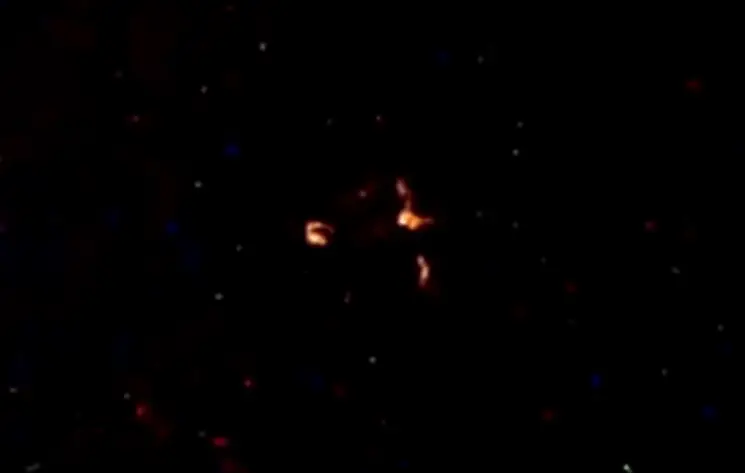
870e7a39-aa6d-4a10-9168-2bd3f41c8ffb.jpg?rdr=true

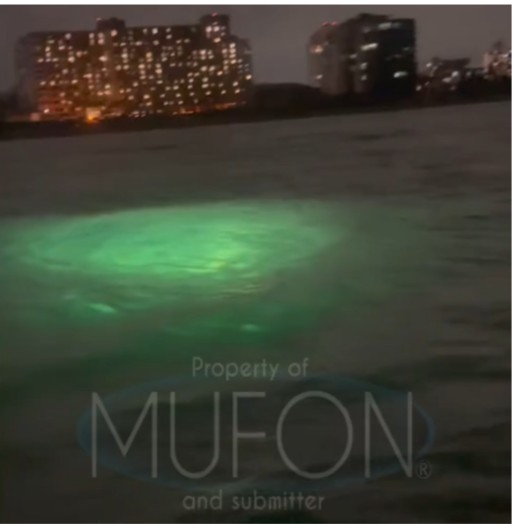
This image is from a longer video in MUFON Case # 137607 out of Fort Lauderdale, Florida. It has made the news rounds frequently this month. But what is actually being seen here? Is it a genuine series of 2 USOs, or is it scuba divers with underwater lighting? The jury is still out, but the media pounces on this as legitimate proof of USOs. It is confirmatory of NOTHING! The source of the lights remains unidentified, but claiming this photo shows “legitimate alien or other paranormal activity under our waterways” would be inconsistent with MUFON’s high investigative values.

The Mutual UFO Network would like to ask some questions here because we do not necessarily believe the entire story is being laid out by Enigma, Gallaudet and Heckenlively.

First, Google AI suggests FALSELY that anything within 10 miles of a coast is a USO. Enigma implies that. That acronym USO stands for Unidentified Submersible Object. A UFO/UAP cannot be considered a USO simply because it is within 10 miles of a coastline. This is deceiving. If this is Enigma’s methodology for what constitutes a USO, it is flawed.

Second, the Fox article, at one point, states that only 150 objects in Enigma’s database were seen going into or out of water. This is a big drop for 9,000 reports down to 150 that actually are seen in, below or above a body of water. What gives? What is truth, then? Are classifications bendable when necessary for a news release?

The newest classification for an object capable of being in air, land or underwater is called a trans-

medium vehicle as they can operate in 3 different environments. Our media today is trying to portray this as a new phenomenon. Actually, it has been going on for thousands of years.

Third, the idea that suddenly there are these incredibly fast-moving underwater objects is also a new phenomenon, is inaccurate. MUFON’s 145,000-case database has reports of fast-moving submersibles circling our warships as far back as WWII. MUFON’s own Chief Photo Analyst, Marc D’Antonio, hitched a ride back in 2017 on an unnamed USN submarine, and, being in the right place at the right time, caught an interaction between the sub’s commander and his radar operator using the term “fast mover” concerning a very fast-moving object in proximity to the sub. Right now, the Chinese are developing this underwater technology, where soon their subs may transit the Pacific from Shanghai to San Francisco in hours instead of days. Aliens? Or Chinese tech, maybe?

BUT HERE IS THE MAJOR POINT!

There is a lot of disinformation on the UFO Street right now on several items, such as Hellfire

Missiles taking out UFOs off the coast of Yemen, which was most likely a CCP spy balloon. The 3i/Atlas affair is almost to the point of hysteria for no good reason. It’s almost seeming like an experiment to gauge population gullibility. Just look at the 3i/Atlas cesspool on Facebook.

There is a difference between Enigma and MUFON. A big difference! MUFON investigates! Enigma

doesn’t. Just because there are 9,000 Enigma reports of “purported USO objects” within 10 miles of coastline and 150 directly in or over bodies of water, doesn’t necessarily mean these statistics are in any way reliable. How many of these 9,000 objects have been investigated by Enigma, Fox, or anyone else, for that matter? BINGO! Where are the investigation reports forthcoming from Enigma and Fox? Don’t hold your breath.

MUFON, The MUTUAL UFO Network, has 4,000 members currently, and of that number, 700 are trained, certified Field Investigators, most with previous forensic backgrounds. We investigate all 145,000 cases in our database. Enigma does not investigate anything as far as we can tell. And here is the point….MUFON and other UFO Agencies, over the decades, have seen a pretty steady statistic about UFO reports.

Basically, 90% of those reports, if investigated, ultimately end up as being in the “IDENTIFIED” category. So, Enigma’s 9,000 reports since August of arbitrarily classified USOs, most likely are identifiable if they were actually investigated. Roughly 900 may be hard to figure out. Their 30,000 reports they have accrued since 2022 may turn out to be, if they were actually investigated, 3,000 that may need further consideration. What we believe is happening is sensationalism of the phenomenon. Clickbait even for media exposure. Yellow Journalism in the finest 19th-century fashion! It used to sell newspapers, right?

Who suffers because of this? The person who wants to believe. That’s who! Cruel! They are being fed a steady stream of FEAR by our media and people who are sensationalizing every report as if FACT.

Shame on them! It’s grotesque!

If you see something or if you feel you have been abducted, you can report it to MUFON at mufon.com. Click on the red report buttons in the upper right corner of our website. We will investigate. More importantly, we have an Experiencer Resource Team to help abductees cope with their experience.

MUFON is a 501c3 non-profit organization. We have been doing the Air Force’s business since 1969, when Blue Book ended. We are a free, open, grassroots team of UFO Investigators staffed by dedicated volunteers only! We are not funded by billionaires.

{ mufon.com }

Hoe vind je dit bericht?
Geschreven door peter om 23:24 Stuur door

Inside the world's longest underwater cave: Subterranean water 'web' in Mexico extends at least 325 MILES

Beneath the idyllic resort towns of Mexico's Yucatan Peninsula, daring explorers have uncovered a hidden world of grand chambers and twisting tunnels.

The Ox Bel Ha, Mayan for 'Three Paths of Water', is a sprawling water 'web' that makes up the world's longest underwater cave system.

In this vast network, researchers have found giant sink holes, huge crystal chambers known as ice palaces, and 38 unique species of cave–dwelling animals.

Cave divers have mapped out 325.6 miles (524 kilometres) of subterranean tunnels, but believe there could be even more yet to explore.

Since 2018 alone, divers have squeezed their way through 108 more miles (175 kilometres) of unexplored cave.

Research group, El Centro Investigador del Sistema Acuífero de Quintana Roo (CINDAQ), believes it may find more than 373 miles (600 kilometres) of cave before its investigations are done.

The Ox Bel Ha is the second–longest explored cave in the world, and is only beaten by Kentucky's Mammoth Caves, which run for at least 426 miles (686 km).

The big difference is that every metre of Mexico's cavernous network is submerged in a mixture of salt and freshwater.

The Ox Bel Ha is the world's largest cave network, extending at least 325 miles beneath Mexico's Yucatan Peninsula 

Scientists believe that the incredible complexity of Ox Bel Ha is due to the unusual way in which it formed.

Millions of years ago, rainwater and dissolved carbon dioxide filtered through a thick layer of limestone on the Yucatan Peninsula.

As this acidic solution filtered through the rock, it reacted with the limestone and carved out vast channels and tunnels.

Then, approximately 18,000 years ago, severe climate changes caused ocean levels to rise and flood the caves – sealing the underground landscape exactly as it is found today.

Rather uniquely, this is also one of the few underwater caves in Mexico which connect directly to the sea.

This means that there is a layer of faster–flowing fresh water sitting on top of a nearly static saltwater layer.

This creates what scientists call a 'halocline', a layer where salt and fresh water mix, which makes exploration even trickier.

Exploration only began on the Ox Bel Ha cave network in 1996, when explorers found an entrance inside one of the area's natural sink holes, known as cenotes.

The leading research group, El Centro Investigador del Sistema Acuífero de Quintana Roo (CINDAQ), believes they may find more than 373 miles (600 kilometres) of cave before their investigations are done

The leading research group, El Centro Investigador del Sistema Acuífero de Quintana Roo (CINDAQ), believes they may find more than 373 miles (600 kilometres) of cave before their investigations are done

Exploration is continuously uncovering new chambers and tunnels as explorers find more connections between different sections of the cave

Exploration is continuously uncovering new chambers and tunnels as explorers find more connections between different sections of the cave

The only cave system longer than Ox Bel Ha is Mammoth Cave in Kentucky (pictured), which extends for at least 426 miles (686 km)

The only cave system longer than Ox Bel Ha is Mammoth Cave in Kentucky (pictured), which extends for at least 426 miles (686 km)

Exploring a dry cave network, such as Mammoth Cave, is already dangerous and difficult.

Cavers must force themselves into narrow passages known as constrictions in the hope that they will open up enough to turn around further on.

Becoming trapped or lost can easily result in the caver's death if they are not able to call for help.

Underwater, these difficulties are all massively increased by the fact that explorers must also manage their limited oxygen supply.

Cave divers must balance the amount of gas they bring with them against the fact that they may need to pull that equipment through some tight squeezes.

This makes long dives extending deep underground extremely challenging, and something that can only be attempted by the most skilled divers.

However, over the last 30 years, explorers have gradually managed to piece together a map of the Ox Bel Ha.

As the divers explore, they trail a line of cable behind them that allows them to find their way back, and also to assess how long the cave network is.

Ox Bel Ha is home to huge sink holes, 38 species of unique cave-dwelling animals, and a series of crystal-coated chambers known as an 'ice palace' (pictured)

Ox Bel Ha is home to huge sink holes, 38 species of unique cave–dwelling animals, and a series of crystal–coated chambers known as an 'ice palace' (pictured) 

Since 2018 alone, divers have squeezed their way through 108 more miles (175 kilometres) of unexplored cave

Since 2018 alone, divers have squeezed their way through 108 more miles (175 kilometres) of unexplored cave

And, as divers have repeatedly resurveyed old sections of cable, they are still finding entirely new sections of tunnel to explore.

For example, in 2022, a group of divers were following an old cable about two miles deep into the cave when they discovered that it had been overlooked by earlier dives.

The divers told In Depth Magazine at the time: 'To our surprise it looked like we were the first ones there.'

By undertaking mammoth six–to eight–hour dives, the explorers pushed up to 6,370 metres into the cave and uncovered 6.2 miles (10.1 kilometres) of new passageways.

article image

However, the efforts to map the extent of Ox Bel Ha have not been without fatalities.

In April 2022, an experienced Russian diver who had been mapping the cave for six months set out on a dive from sinkhole Cenote Odyssey and never returned.

Investigators found the diver floating face down within arm's reach of a spare gas tank, with his own tank drained empty.

It is believed that the diver became trapped in a cloud of silt while exploring a new crack, panicked, and used up the remainder of their air supplies faster than they had been prepared for.

RELATED VIDEOS

{ https://www.dailymail.co.uk/sciencetech/index.html }

Hoe vind je dit bericht?
Geschreven door peter om 23:03 Stuur door

UFO-like ‘drones’ targeted police helicopter over air base before vanishing: report

Hoe vind je dit bericht?
Geschreven door peter om 21:28 Stuur door

Mystery over strange crash near Area 51 deepens as FBI opens investigation

Mystery over strange crash near Area 51 deepens as FBI opens investigation

The US Air Force has sparked a mystery near the top-secret base Area 51 after admitting the FBI was investigating a recent crash near the facility. 

In a statement on October 4, officials at Creech Air Force Base in Nevada said that an aircraft 'was involved in an incident,' crashing in the desert just miles from the restricted zone around Area 51 on September 23.

The infamous base has been tied to extraterrestrial lore for decades, with UFO researchers and conspiracy theorists claiming that secret government projects have been conducted at Area 51 since the 1950s.

While the Air Force said that the craft was assigned to the base as part of the 432nd Wing, some on social media pointed out that the Federal Aviation Administration (FAA) issued a temporary flight restriction around the area for an entire week.

The reason for the shutdown was simply noted as 'national security' with no other explanation given by the FAA.

The location of the flight restriction placed the crash roughly 12 miles east of the security boundary around Area 51, and about 24 miles from the base itself.

However, the Air Force has revealed that even more strange activity took place after military personnel cleaned up the site, leaving nothing for the public to find.

Officials at Creech said investigators found an 'inert training bomb body' and a piece of an unidentified aircraft at the same crash site on October 3, prompting the military to get the FBI involved.

Area 51, an area of more than 2.9 million acres, is located at the Nevada Test and Training Range

Area 51, an area of more than 2.9 million acres, is located at the Nevada Test and Training Range

A temporary flight restriction was issued by the FAA shortly after the US Air Force announced the crash of a military aircraft near Area 51

A temporary flight restriction was issued by the FAA shortly after the US Air Force announced the crash of a military aircraft near Area 51

According to the Air Force statement, officials believe someone intentionally altered the scene of the secretive crash after the military left the desert.

An inert training bomb body is a practice explosive that's not rigged to explode.

Meanwhile, the Air Force said the aircraft piece was likely a panel from a plane, but admitted that it came from an 'unknown origin.'

Joerg Arnu, a long-time Area 51 researcher and host of the website Dreamland Resort, visited the site of the crash on September 27, finding nothing but a completely cleared area and several tire tracks, likely from military vehicles that combed the desert for wreckage.

'They really tore up the ground so it's impossible to find the impact mark,' Arnu said in a video taken from the alleged crash.

The researchers noted that there was no debris left in the area, but something could still be there underground, adding that desert rains often wash hidden objects back up to the surface.

The Air Force noted that 'no further details are available at this time,' but did say that there were no injuries or fatalities during the unexplained incident.

Creech Air Force Base is less than 60 miles from the alleged crash site and is home to the 432nd Wing, which operates MQ-9 Reaper armed drones, RQ-170 Sentinel stealth drones, and other craft used for intelligence, surveillance, and combat missions.

Area 51 researcher Joerg Arnu captured video of the supposed crash site after the military had finished recovering the object

Area 51 researcher Joerg Arnu captured video of the supposed crash site after the military had finished recovering the object

The crash reportedly took place just 12 miles from the security area surrounding Area 51, a base tied to UFO encounters for decades

The crash reportedly took place just 12 miles from the security area surrounding Area 51, a base tied to UFO encounters for decades

article image

According to online defense news site The War Zone, Reapers are the main type of aircraft housed at the base, used for spying, watching targets, and even firing missiles from far away.

They've been in use for two decades, and it's not uncommon for them to crash under certain circumstances, including user error and mechanical failures with the uncrewed, remote-controlled drones.

Conspiracy theorists online pointed out that it would be incredibly unusual for the federal officials to keep a Reaper drone crash so secret.

They noted the fact that federal investigators showed up so quickly, searched for planted fake evidence, and kept the incident completely under wraps for over two weeks were signs that the aircraft was no ordinary drone.

Recently, the US Air Force's top-secret RAT55 jet was also spotted soaring over Area 51, confirming rumors that the enigmatic radar plane operated from the clandestine Groom Lake facility.

Area 51 has also been involved in the development and testing of other revolutionary and experimental aircraft over the years, including the F-117 Nighthawk, America's first stealth bomber.

RELATED VIDEOS

{ https://www.dailymail.co.uk/sciencetech/index.html }

Hoe vind je dit bericht?
Geschreven door peter om 21:00 Stuur door

US military accused of using nuclear weapons to bring down UFOs for secret tech grabs

The US military and other nations around the world allegedly used nuclear weapons to shoot down UFOs and harvest their technology from the crashed remains. 

The shocking claims were made by filmmaker and director Dan Farah, who spent four years secretly interviewing high-level members of the US government and military regarding the existence of extraterrestrials. 

While speaking on the Joe Rogan Experience podcast on Friday, Farah said he had learned from unnamed sources responsible for the retrieval of these UFOs that nuclear testing carried out in the 1950s was often done to secretly disable alien craft.

'One of the realizations early on was that atomic weapon testing, nuclear weapon testing, has a ripple effect that can down these things,' Farah explained. 

He added that the US military started setting off high altitude nuclear tests to essentially 'shoot fish in a barrel,' a practice that the Russians quickly followed to disable UFOs for their own experiments.

'Which is crazy on multiple levels. A, you could accidentally provoke a nuclear conflict with another party that doesn't know what you're doing. B, you're picking a fight with a more intelligent, superior species,' Farah warned.

The revelations come from his documentary, called The Age of Disclosure, released this month, that allegedly detailed the 80-year global cover-up of alien life and the technology humans have created using pieces of UFOs.

Despite the claims from a plethora of high-ranking government officials, the US government has said proof of alien life has never been found, and the military has added there's 'no verifiable evidence' they've ever recovered an alien spacecraft.

Nuclear testing in the Nevada desert in 1957. Filmmaker Dan Farah said these tests were secretly aimed at disabling UFOs

Nuclear testing in the Nevada desert in 1957. Filmmaker Dan Farah said these tests were secretly aimed at disabling UFOs

Dan Farah (Pictured) appeared on the Joe Rogan Experience podcast to promote his new documentary 'The Age of Disclosure'

Dan Farah (Pictured) appeared on the Joe Rogan Experience podcast to promote his new documentary 'The Age of Disclosure'

Farah said the nuclear explosions were deliberately carried out by elements of the US military intelligence community and their peers in foreign military intelligence communities, including the Soviet Union, to capture advanced technology.

However, the film's director and those who were interviewed for the documentary did not provide any physical evidence of extraterrestrial life or a government cover-up to back up their testimonies.

The US Department of Energy (DOE) said in an official report that America carried out 1,054 nuclear bomb tests between 1945 and 1992. Those included several high-altitude detonations, meaning they exploded over 31 miles above Earth.

The potentially catastrophic atomic detonations, many of which took place in the Nevada desert nearly 80 years ago, came after the US military spotted these strange craft appearing over nuclear weapons sites and bomber bases.

'Our defense capabilities and our nuclear progress essentially are being monitored,' Farah told Rogan during the podcast.

In addition to high-altitude atomic tests, the US and other nations detonated hundreds of nuclear weapons underwater during the Cold War, and Farah said this was directly linked to even more sightings of UFOs entering and exiting Earth's oceans.

According to the 2015 report from DOE, at least five of these atomic tests took place in the Pacific Ocean between 1946 and 1962.

'It's like throwing dynamite into the river. Fishing with dynamite. Oh my God, that's so crazy,' Rogan declared. 

An atomic bomb explosion above Bikini Atoll in 1946. Nuclear detonations taking place in the ocean were allegedly done to target UFOs seen entering Earth's oceans

An atomic bomb explosion above Bikini Atoll in 1946. Nuclear detonations taking place in the ocean were allegedly done to target UFOs seen entering Earth's oceans

Government whistleblowers and members of Congress alleged that information about the recovery of alien spacecraft has been (Stock Image)

Government whistleblowers and members of Congress alleged that information about the recovery of alien spacecraft has been (Stock Image) 

article image

Both Farah and Rogan referenced recent claims made by Tennessee congressman Tim Burchett, who said US Navy personnel were aware of 'five or six' underwater UFO bases right off the US coast.

Burchett, a member of the House Oversight Committee overseeing UFO reports, has not produced any verifiable physical evidence, such as artifacts or clear footage of these underwater craft, to confirm the existence of alien bases.

Farah said that several US officials, including Secretary of State Marco Rubio and former Director of National Intelligence (DNI) James Clapper, revealed the world was now locked in a Cold War to reengineer the alien technology recovered from these ships.

During his interviews, government officials admitted this new, secret Cold War would be far more consequential than the original nuclear arms race.

Members of Congress and the White House revealed in the documentary that the US, Russia, and China were all racing to be the first to fully weaponize non-human tech.

The director of 'The Age of Disclosure' added that certain UFO sightings in space and over sensitive areas are believed to be reverse-engineered human craft that have already been constructed and are still in the testing phase. 

Joe Rogan (Pictured) was visibly stunned after Farah said the US military had alleedly used nuclear weapons to attack UFOs in the 1950s

Joe Rogan (Pictured) was visibly stunned after Farah said the US military had alleedly used nuclear weapons to attack UFOs in the 1950s

According to Farah, Rubio was especially worried that China would beat the US in the race to unlock the secrets of alien technology recovered from all around the world.

'He literally says in the film, is If we don't get our act together and take this more seriously as a country, we're going to wake up one day, we're going to find out the hard way that China got there,' Farah recounted from his interview with Rubio.

'We won't know when or how, but to quote him, we will be screwed... His chin buckled when he said it. He was dead serious, and he was super concerned and you could feel it.'

Farah revealed that he had spoken to members of the Trump Administration, and the president has already ordered to current DNI Tulsi Gabbard to investigate the claims presented in the new documentary and find out what's being kept secret from him and former presidents.

{ https://www.dailymail.co.uk/sciencetech/index.html }

Hoe vind je dit bericht?
Geschreven door peter om 20:49 Stuur door

Disney brings Olaf to life! AI-powered snowman robot can walk and talk just like the Frozen character - as delighted fans say 'it's like he jumped right off the screen'

Disney has brought one of its most legendary characters to life – and he's seriously worth melting for. 

Measuring just three feet (one metre) tall, Olaf the robot can walk and talk just like the delightful eternally optimistic snowman from the Frozen movies. 

The high-tech device can move around through a combination of remote operation and AI that's programmed to adapt to surroundings. 

Video shows him curiously shuffling around Disneyland Paris just like he does in the films – and visitors will soon be able to meet him.

Kyle Laughlin, product and technology leader at Disney, called it 'one of the most expressive and true-to-life characters built'. 

'From the way he moves to the way he looks, every gesture and detail is crafted to reflect the Olaf audiences have seen in the film,' he said. 

On Instagram, Frozen fans were sent into delirium, calling the creation 'incredible', 'perfect' and 'so good it's making my tummy hurt'. 

Another fan said: 'It's like he jumped right off the screen into real life.' 

Some people are worth melting for: The walking, talking bot, unveiled at Disneyland Paris on Monday, has movements just like in the film, as well as detachable arms and nose

Some people are worth melting for: The walking, talking bot, unveiled at Disneyland Paris on Monday, has movements just like in the film, as well as detachable arms and nose 

In a nod to one of his most famous lines, another person said: 'I need a warm hug please Olaf.'

Olaf was built by Disney Imagineering, the multi-billion-dollar company's research and development arm based in Glendale, California. 

To make the snowman's movements as authentic as possible, engineers relied on a type of AI called reinforcement learning.

This is where a robot learns to make intelligent decisions through trial and error by interacting with its environment. 

But the technology allows Olaf the robot to practice thousands of motions inside a computer simulation until his real-life movements look natural. 

'It takes humans years to perfect our motor skills for walking, and it takes additional years of practice to perform acrobatic motions that only a few of us can master,' Laughlin said. 

'Deep reinforcement learning is a technology that helps robots acquire such skills in a shorter amount of time. 

'To make this technology scale well, we need fast and parallel simulation.' 

Olaf talking about the new World of Frozen, inside the Disney Adventure World (former Walt Disney Studios) in Disneyland Paris, in Marne-la-Vallee, east of Paris on November 24, 2025

Olaf talking about the new World of Frozen, inside the Disney Adventure World (former Walt Disney Studios) in Disneyland Paris, in Marne-la-Vallee, east of Paris on November 24, 2025

A hidden operator remotely controls the robot using joysticks, but it is AI programmed to adapt to surroundings

A hidden operator remotely controls the robot using joysticks, but it is AI programmed to adapt to surroundings 

To make Olaf as authentic as possible, the team used a branch of artificial intelligence called reinforcement learning

To make Olaf as authentic as possible, the team used a branch of artificial intelligence called reinforcement learning

How does Olaf work? 

Disney has relied on an AI method called reinforcement learning so Olaf can adapt to its surroundings and people.

But like Disney's Star Wars BDX Droids he changes direction through remote operation by a staff member. 

It's unclear if Olaf utters a range of pre-recorded responses or has a more sophisticated conversational capability akin to ChatGPT.  

Despite this feat, Olaf is still ultimately operated by a Disney staff member holding a remote control, Tech Radar reports. 

Other nice touches are Olaf's exterior 'snow' made from light-catching iridescent fibres, which is a striking contrast to the hard shells of other robotic characters. 

And just like in the film, his twig arms and carrot nose are removable and pop right back on. 

Most importantly, Olaf can fully articulate his mouth and engage in Frozen-related conversations with park guests, Disney claims. 

As yet, it's unclear how sophisticated these conversations will be or if they'll be powered by a generative chatbot akin to ChatGPT. 

Olaf is similar to the Star Wars BDX Droids, the free roaming robotic characters that victors can see at Disney attractions. 

'However, BDX Droids in the films are literally robotic characters,' Laughlin said. 

'Olaf is an animated character that is far more challenging to bring to life in the physical world.'  

Olaf at the new World of Frozen, inside the Disney Adventure World (former Walt Disney Studios) in Disneyland Paris, in Marne-la-Vallee, east of Paris on November 24, 2025. The Disney Adventure World will open on March 29, 2026

Olaf at the new World of Frozen, inside the Disney Adventure World (former Walt Disney Studios) in Disneyland Paris, in Marne-la-Vallee, east of Paris on November 24, 2025. The Disney Adventure World will open on March 29, 2026

Early next year, Olaf the robot will start shuffling around at World of Frozen, a new immersive world at Disneyland in Hong Kong and Paris. 

The creation has been detailed further in a new episode of Disney's YouTube series We Call It Imagineering. 

While undoubtedly impressive, Olaf's chunky legs make keeping his balance an easier task compared to some of the long-legged humanoids in development. 

Earlier this month, a Russian robot called AIDOL wobbled and face-planted during an on-stage unveiling event, leaving attendees stunned. 

Another recent clip shows a Unitree G1 robot chef attempting to cook a stir-fry – but ending up flinging the food on the floor and slipping over the mess. 

Two lifesize robots swing punches at each other in the world's first humanoid robot boxing match 

In a world where human boxers are at risk of dangerous injuries, we may have a glimpse of what the fight of the future could look like. 

New footage shows the world's first humanoid robot boxing tournament, which took place over the weekend in Hangzhou, east China. 

In the bizarre clip, two lifesize robots wearing gloves and protective headgear fight each other in a ring as a human officiator looks on. 

Each fighter robot weighs about 35kg and is 4.3ft (132cm) tall – roughly the height of the average eight-year-old child. 

Both the bots initially have trouble seeing exactly where their opponent is before successfully trading punches and kicks, to the delight of a baying crowd. 

{ https://www.dailymail.co.uk/sciencetech/index.html }

Hoe vind je dit bericht?
Geschreven door peter om 20:26 Stuur door

Professor Says Mysterious Interstellar Object May Be Releasing Sentinels Around Jupiter

Professor Says Mysterious Interstellar Object May Be Releasing Sentinels Around Jupiter

"If we find technological satellites of Jupiter that we did not send, it would imply that Jupiter is of interest to an extraterrestrial civilization."

NASA / Futurism

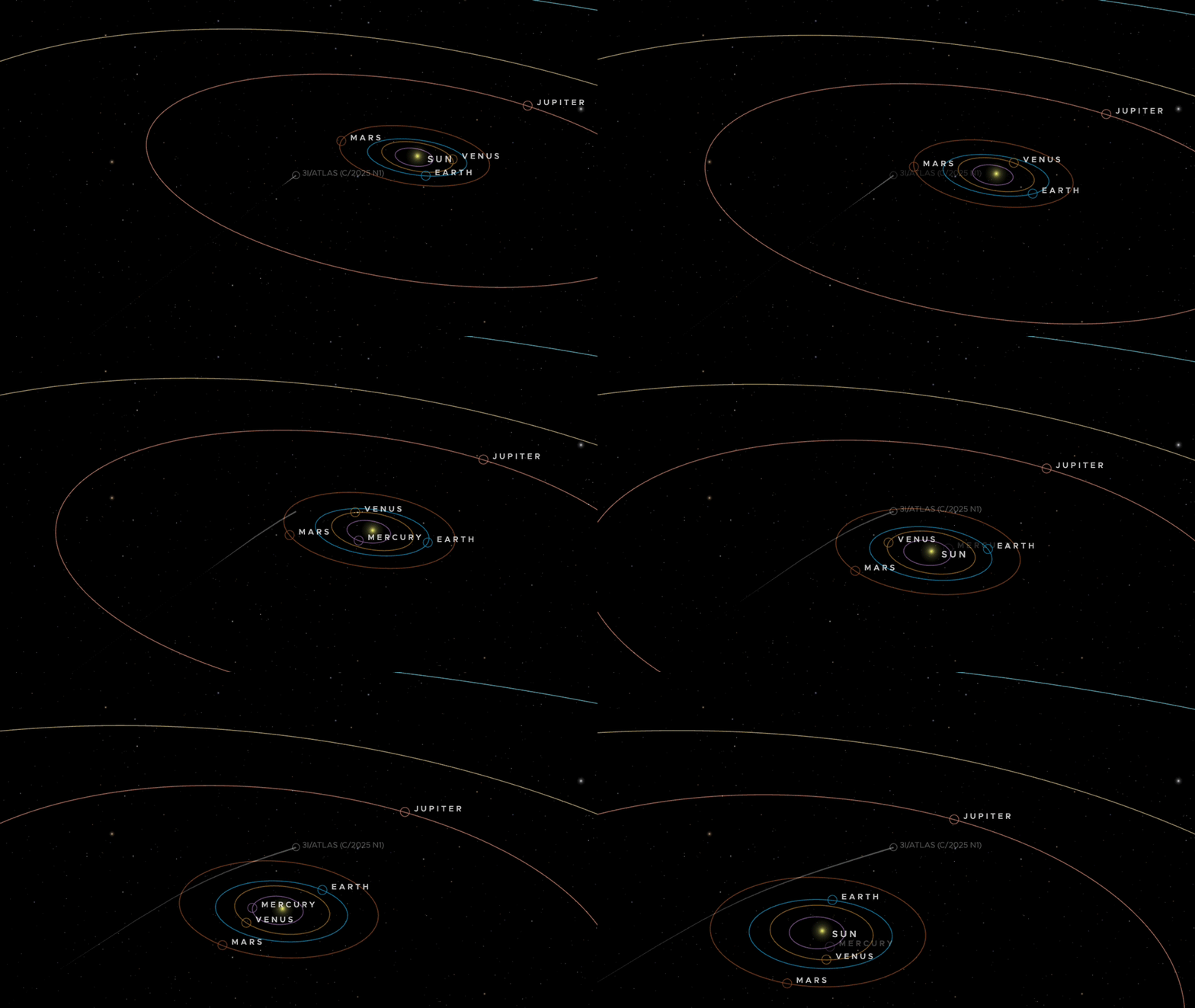
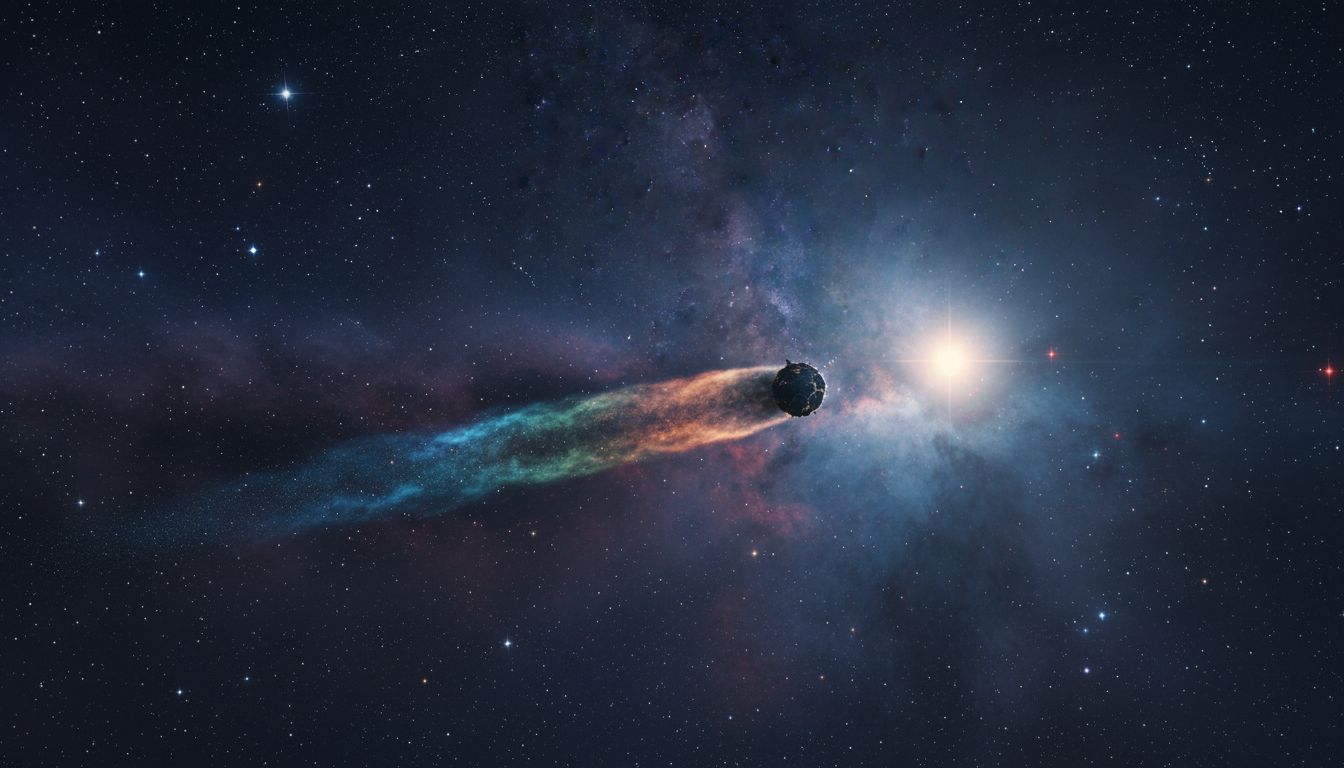
Interstellar object 3I/ATLAS is expected to make its closest pass of the Earth just under a month from now, coming within around 170 million miles of us.

Three months later, it’s expected to get even closer to Jupiter as it continues on its highly eccentric path through the solar system.

And as Harvard astronomer Avi Loeb — who has long championed the theory that 3I/ATLAS could be an alien spacecraft, to the increasing dismay of the mainstream research community — points out on his blog, recent “non-gravitational acceleration” seems to have nudged it toward a fascinating region of Jupiter’s orbit.

Specifically, it’s going to zip right past Jupiter’s Hill radius, the boundary inside which the gas giant can keep an object in its own orbit without it being stolen by the Sun.

In the Earth’s vicinity, Lagrange points L1 and L2 are close to the boundary of our planet’s Hill radius, a perfect place of equilibrium for satellites and other human-made objects, such as the James Webb Space Telescope, to orbit the Sun while using minimal amounts of fuel.

Loeb suggests that if it is indeed an alien spacecraft, 3I/ATLAS could be passing through Jupiter’s Hill radius to “seed” the planet with “technological devices” — a hypothesis, you have to admit, that sounds strikingly similar to the plot of Stanley Kubrick’s 1968 film “2001: A Space Odyssey.”

“If we find technological satellites of Jupiter that we did not send, it would imply that Jupiter is of interest to an extraterrestrial civilization,” Loeb wrote.

But not everybody’s on board, including NASA. In light of considerable evidence that the mysterious visitor is a comet made of ice and dust, NASA associate administrator Amit Kshatriya preemptively shut down Loeb’s theorizing during a recent announcement, angering him in the process.

During its closest approach to the Sun last month, 3I/ATLAS got a push in the form of “non-gravitational acceleration.” While a more conventional explanation would suggest the Sun’s radiation heated the object up, causing it to lose more mass and thereby accelerate, Loeb suggested at the time that it could “be the technological signature of an internal engine.”

Intriguingly, that extra push will allow it to get within around 53 million miles of Jupiter on March 16, which also happens to be within just 160,000 miles of the planet’s Hill radius.

“In other words, the non-gravitational acceleration introduced a small course correction of exactly the magnitude needed to bring the minimum distance of 3I/ATLAS from Jupiter to the value of Jupiter’s Hill radius,” Loeb wrote. “3I/ATLAS would have missed the edge of the Hill sphere otherwise.”

Therefore, Loeb suggested that 3I/ATLAS’ “level of non-gravitational acceleration was finely tuned” with the help of thrusters to meet the “radius of Jupiter’s gravitational influence.”

The astronomer reiterated that NASA’s Juno spacecraft, which has been orbiting Jupiter since 2016, should have a closer look at 3I/ATLAS in the spring.

Loeb also argued that scientists should remain humble and not jump to conclusions by arguing that the only possibility is that 3I/ATLAS is a natural comet. For one, if we were to find “technological satellites” in the orbit of our solar system’s largest planet — and not around Earth — it could serve as a “blow to our ego, akin to attending a party where nobody is interested in dancing with us.”

“Perhaps this is because the human species arrived late to the party — only a few million years ago, whereas Jupiter — the biggest planet in the Solar system, was visible to the senders of 3I/ATLAS when the mission was launched billions of years ago,” he concluded.

More on 3I/ATLAS: 

RELATED VIDEOS

{ https://futurism.com/category/space }

Hoe vind je dit bericht?
Geschreven door peter om 18:58 Stuur door

“These Are Not Random Oddities”: New Clues Emerge About Anomalous Continent-Sized Structures Deep Within the Earth

continent-sized structures

(Image Credit: Martin Sanchez/Unsplash)

“These Are Not Random Oddities”: New Clues Emerge About Anomalous Continent-Sized Structures Deep Within the Earth

New insights into a pair of colossal, continent-sized structures 1,800 miles beneath the Earth’s surface are revealing clues into how the planet formed and evolved, as well as the formation of life on Earth.

The mysterious deep-Earth structures, which have long baffled scientists and are so anomalous that they defy traditional models, may now have a fascinating explanation, although questions linger about exactly what processes led to their formation.

The findings, published in Nature Geoscience, were the result of work led by Yoshinori Miyazaki, a geodynamicist at Rutgers University, working along with a team of collaborators.

Anomalies at the Boundary

1,800 miles beneath the Earth’s surface, massive structures exist that have long been recognized by geologists. These unusual formations exist at the point where Earth’s Mantle and its outer core converge, and are composed of massive accumulations of extremely hot, dense rock that are comparable in size to Earth’s present-day continents.

The structures come in two types, which are known as large low-shear-velocity provinces and ultra-low-velocity zones. The former are structures that are found deep beneath the Pacific Ocean and the African continent, and are comprised of large, dense accumulations of very hot rock. Their counterpart—ultra-low-velocity zones, by contrast, are large molten areas which resemble “puddles” of lava situated around the Earth’s core.

Each of these structures appears to possess odd structural traits based on their composition, which includes the fact that they both can slow the progress of seismic waves passing through inner-Earth regions.

However, the presence of these features is far from being coincidental, according to Miyazaki.

“These are not random oddities,” the researcher said in a recent statement, instead likening the unusual structures to the “fingerprints of Earth’s earliest history.”

Understanding why these inner-Earth features exist, Miyazaki says, could ultimately help geologists unravel the mystery of not just how the early planet formed but also what processes may have contributed to it becoming habitable over time.

Exploring an Ancient Ocean of Magma

Miyazaki is uniquely positioned to unravel such questions. As an assistant professor in Rutgers’ Department of Earth and Planetary Sciences in the university’s School of Arts and Sciences, Miyazaki is a theoretical planetary scientist whose work focuses on unraveling the origin and early evolution of planets like Earth by using mathematical models.

If we travel billions of years back in time, our planet was once encased in an ocean of hot molten lava. Gradually over time, it began to cool and take shape into the modern surface and subsurface regions, which researchers expected to resemble a layered shell marked by several distinctive chemical layers.

That wasn’t the case, however. Rather than distinctive layers, scientists were surprised to discover the presence of anomalous large-low shear velocity provinces and ultra-low velocity zones, which, instead of ordered layers, take shape as uneven “blobs” at the lower levels of the planet’s mantle.

That discovery, while seemingly contradictory, was the launchpad for Miyazaki and his collaborators’ research.

“If we start from the magma ocean and do the calculations, we don’t get what we see in Earth’s mantle today,” Miyazaki said.

“Something was missing.”

Missing Pieces of an Ancient Earth Mystery

In searching for the answers to this geological mystery, Miyazaki and his colleagues concluded that the resolution might be hidden in plain sight: that the Earth’s core was itself the seemingly missing component.

Over the course of billions of years, elements that include magnesium and silicon would gradually make their way from the core into the Earth’s mantle, which over time prevented the strong layering of chemicals scientists originally expected.

This not only explains the absence of distinctive layers within the Earth but also the unusual structures at the boundary between the core and the mantle, which are effectively solid portions that were left behind from the lower portions of the original magma ocean, which over time became contaminated through interactions with material from the Earth’s core.

Going beyond simply resolving the mystery of the anomalous structures themselves, Miyazaki says that the discovery could also point to new clues about how the Earth evolved as it cooled, which could lend itself to understanding how life began to emerge.

Additionally, the results offer clues about the reasons for fundamental differences between the atmospheres of Earth and neighboring planets like Venus and Mars.

“Venus’ atmosphere is 100 times thicker than Earth’s and is mostly carbon dioxide, and Mars has a very thin atmosphere,” Miyazaki said. “We don’t fully understand why that is.”

“But what happens inside a planet, that is, how it cools, how its layers evolve, could be a big part of the answer,” he adds.

A Multi-Field Approach

Additionally, by combining data from areas that include mineralogy, geophysics, seismology, and other disciplines, the team’s results offer a pathway toward obtaining a far deeper understanding of processes that contributed to how the Earth formed over time.

Jie Deng, one of the study’s collaborators from Princeton University and a co-author of the new study, called the team’s work a “great example of how combining planetary science, geodynamics, and mineral physics can help us solve some of Earth’s oldest mysteries.”

“The idea that the deep mantle could still carry the chemical memory of early core–mantle interactions opens up new ways to understand Earth’s unique evolution,” Deng added.

Fundamentally, the emerging story of planetary evolution that the team’s work is revealing offers researchers like Deng and Miyazaki much greater insights into the mysteries of the ancient Earth.

“This study gives us a little more certainty about how Earth evolved, and why it’s so special,” Miyazaki said.

The team’s new paper, “Deep mantle heterogeneities formed through a basal magma ocean contaminated by core exsolution,” appeared in Nature Geoscience.

  • Micah Hanks is the Editor-in-Chief and Co-Founder of The Debrief. A longtime reporter on science, defense, and technology with a focus on space and astronomy, he can be reached at micah@thedebrief.org. Follow him on X @MicahHanks, and at micahhanks.com.

{ https://thedebrief.org/category/space/ pà

Hoe vind je dit bericht?
Geschreven door peter om 18:44 Stuur door

Scientists issue ominous warning over mind-altering 'brain weapons' that can control your perception, memory and behaviour

Scientists issue ominous warning over mind-altering 'brain weapons' that can control your perception, memory and behaviour

Mind control weapons may sound like something from a dystopian science fiction film, but experts now say they are becoming a reality. 

Scientists have issued an ominous warning over mind-altering 'brain weapons' that can target your perception, memory, and even behaviour.

In a newly published book, Dr Michael Crowley and Professor Malcolm Dando, of Bradford University, argue that recent scientific advances should be a 'wake-up call'.

Professor Dando says: 'The same knowledge that helps us treat neurological disorders could be used to disrupt cognition, induce compliance, or even in the future turn people into unwitting agents.'

Nations including the US, China, Russia, and the UK have been researching so-called central nervous system (CNS)-acting weapons since the 1950s.

Now, Dr Crowley and Professor Dando argue that modern neuroscience has become so advanced that truly terrifying mind weapons could be created.

Professor Dando says: 'We are entering an era where the brain itself could become a battlefield.

'The tools to manipulate the central nervous system – to sedate, confuse, or even coerce – are becoming more precise, more accessible, and more attractive to states.'

Scientists have issued an ominous warning that developments in neuroscience could see powerful 'brain weapons' become a reality (stock image) 

Just like the fictional drug 'Soma' from the science-fiction classic 'Brave New World' (pictured), scientists warn that new chemicals could be used as a powerful form of mind control

Just like the fictional drug 'Soma' from the science-fiction classic 'Brave New World' (pictured), scientists warn that new chemicals could be used as a powerful form of mind control 

Throughout the 1950s and 1960s, most of the world's major powers 'actively sought' to develop their own mind-controlling weapons.

Their goal was to create devices that could incapacitate large numbers of people through unconsciousness, hallucination, disorientation, or sedation.

Most famously, the American military developed the compound 'BZ', which produces a powerful sense of delirium, hallucinations, and cognitive dysfunction.

The US manufactured approximately 60,000 kilograms of the potent drug and used it to create a 340-kilogram (750 lbs) cluster bomb.

Although the bomb was intended to be used in Vietnam, and BZ was tested intensively on US soldiers, there's no evidence that the weapon was ever used.

Meanwhile, the Chinese military has developed a 'narcosis-gun' designed to shoot syringes of incapacitating chemicals.  

However, Dr Crowley and Professor Dando point out, the only time that a CNS-targeting weapon has ever been used in combat was by Russian security forces during the 2002 Moscow theatre siege.

After armed Chechen militants took 900 civilians hostage, security forces used a fentanyl-derived 'incapacitating chemical agent' to disable the attackers.

During the 1960s, the US military developed a cluster bomb to deploy hallucination-inducing gasesMore recently, China has been developing a 'narcosis-gun' designed to deliver mind-altering chemicals. Pictured: Poster for 'BBQ-901 narcosis gun' on display on State 9616 Plant stand at Asia Pacific China Police Expo 2006
 

Since the 1950s, major world powers have been attempting to create chemical weapons that target the brain. These include the US military's BZ bomb filled with hallucination-inducing gas (right) and the Chinese 'Narcosis-gun' (right)

The only time that so-called central nervous system (CNS)-targeting weapons have been used was by the Russian security services during the 2002 Moscow theatre siege (pictured). A gas containing fentanyl derivatives was used to knock out the gunmen inside

The only time that so-called central nervous system (CNS)-targeting weapons have been used was by the Russian security services during the 2002 Moscow theatre siege (pictured). A gas containing fentanyl derivatives was used to knock out the gunmen inside 

While the chemical weapon did break the siege, the gas killed 120 of the 900 hostages and an undetermined number more to face long-term health issues and premature death.

However, since then, the mind-warping potential of these weapons has extended far beyond simply knocking out attackers or triggering hallucinations.

The same scientific research that is helping to treat neurological disorders can also be used to build weapons which target specific brain functions.

'That's the dual-use dilemma we face,' says Professor Dando.

For example, scientists are investigating parts of the brain's 'survival circuits', which are the neural pathways that control fear, sleep, aggression, and decision making.

Understanding how these circuits work is critical for treating neurological conditions, but also opens the door to weaponising these regions of the brain.

In fact, Dr Crowley and Professor Dando are so concerned about this possibility that they are travelling to the Hague for a key meeting of states to argue the case for urgent action.

The issue, the researchers warn, is that CNS-targeting weapons currently sit within a 'loophole' in the rules governing the use of chemical weapons.

While the gas did break the siege, it also killed 120 of the 900 hostages in the theatre and left an unknown number with life-long illnesses. Pictured: Vladimir Putin visits survivors of the theatre siege

While the gas did break the siege, it also killed 120 of the 900 hostages in the theatre and left an unknown number with life-long illnesses. Pictured: Vladimir Putin visits survivors of the theatre siege 

This comes amid growing concern that future armies could be made up of cyborgs with neurological enhancements allowing them to see, hear and fight better than current soldiers

This comes amid growing concern that future armies could be made up of cyborgs with neurological enhancements allowing them to see, hear and fight better than current soldiers

article image

The Chemical Weapons Convention prohibits the use of harmful chemicals in war, but there is a grey area allowing the use of some chemicals in certain circumstances, such as law enforcement.

That leaves a potential legal justification for the development and use of powerful mind-control weapons within the current scope of the law.

Professor Dando says: 'There are dangerous regulatory gaps within and between these treaties. Unless they are closed, we fear certain States may be emboldened to exploit them in dedicated CNS and broader incapacitating agent weapons programmes.

'We must act now to protect the integrity of science and the sanctity of the human mind.'

WHAT ARE PSYCHO-ELECTRONIC WEAPONS AND HOW MIGHT THEY WORK?

Rumours of governments experimenting with pyscho-electronic weapons have long abounded among conspiracy theorists.

Also known as pscyhotronic or mind-control weapons, it is claimed they use electromagnetic forces to achieve a variety of results.

This includes mind-reading and mind control, as well as torture and harassment.

The basis for these claims does have some origin in fact.

In 1953, the then director of Central Intelligence officially approved project MKUltra. 

It was intended to help the US government keep up with experiments they believed the Soviets were conducting during the Cold War.

They hoped to achieve this aim through 'the use of biological and chemical materials in altering human behavior,' CIA director Stansfield Turner testified in 1977.

Footage has since emerged of experiments conducted into the potential of weaponising LSD as a method of controlling or subduing enemy forces.

Since that time, conspiracy theorists have expanded their claims about the kinds of techniques agencies like the CIA or others may have experimented with.

Some individuals say they have been targeted with pscyhotronic weapons, leading to a variety of unpleasant side effects.

That includes transmitting thoughts and sounds into people's minds, although most medical professionals agree this is likely the result of psychiatric disorders.

{ https://www.dailymail.co.uk/sciencetech/index.html }

Hoe vind je dit bericht?
Geschreven door peter om 22:46 Stuur door

Bizarre Zones of High Strangeness

Bizarre Zones of High Strangeness

Bizarre Zones of High Strangeness

There seem to be certain places in this world that, for whatever reasons, just have strangeness gravitate towards them. Perhaps it is due to lying on some sort of Earth energy line. Maybe it’s because of portals for aliens. Or possibly it is some innate quality of the land itself that draws in these bizarre forces. Whatever the case may be, these places in a way lie outside of normal reality, steeped in mystery and surrounded by strange phenomena. Here we will take a journey through some of these places, where reality and the paranormal collide. 

One very strange such place lies in Mexico. What has become known as the “Zone of Silence,” or La Zona Del Silencio, is located in a barren patch of desert in the Bolsón de Mapimí region in Durango, Mexico, around 400 miles south of El Paso, Texas. It is a remote area, with the nearest human settlement of any size being the quiet town of Ceballos, some 25 miles away, which ekes out a living in the harsh, parched landscape. The area was once under a vast ocean in prehistoric times, and marine fossils and shells can be found among the scrub, which has given the area its other nickname, the Mar de Tetys, or The Sea of Thetys. This is a desolate, lonely place seemingly as barren and alien as the surface of some other planet, and over the centuries has become synonymous with a wide range of strange, inexplicable phenomena.

Locals have known something was weird about the area since at least the mid-nineteenth century, when farmers would occasionally complain of searing hot pebbles that mysteriously rained down from the sky from time to time, even on clear days. It was also said that some of the plants and animals living here displayed mutations and deformities. There have also long been reports that the area has the effect of instilling a certain sense of deep unease, and can distort perceptions or cause visual and auditory hallucinations.

The region has been known as an intense UFO hotspot for many years. Over the years, many reports accrued of travelers and ranchers in the area seeing orbs of light or fireballs cavorting about in the sky or streaking across the horizon. On occasion, these lights were said to descend and set the scrub brush ablaze. Nevertheless, despite the weird stories, this bizarre swath of desert remained mostly unknown to the outside world.

The area first came into the public consciousness in the 1930s, when a Mexican pilot by the name of Francisco Sarabia reported that his plane’s instrumentation had gone haywire and his radio had ceased to function while on a routine flight over the region. In the 1970s, an Athena missile carrying containers of the radioactive element cobalt 57 launched from White Sands Missile Base in New Mexico and suddenly and inexplicably malfunctioned over the area and crashed. It was reported that the missile had suddenly veered wildly off course, almost as if it had been drawn by some mysterious force. Considering the rocket’s radioactive payload, a recovery mission was immediately launched. The missile was eventually found in a remote area and removed along with tons of irradiated soil. When the military went to investigate, it was also found that radio signals and all communications equipment failed to work there for some unknown reason. A few years later, it was reported that booster rockets used for the Apollo project broke up and crashed into the area as well.

An organic chemist by the name of Harry de la Pena had already documented the zone’s unique characteristic of creating a "dark zone" of radio communications in 1966 while on a photographic survey. While out exploring with some companions, it was noticed that walkie-talkies ceased to operate in the area, and portable radios showed a dramatically diminished capacity, only barely audible even at full volume. It would be later found that television signals also failed to penetrate the zone, and to this day, it is said that TVs will not work here. For whatever reason, the Zone of Silence seems to have the ability to severely dampen all television, radio, short wave, microwave, or satellite signals, rendering all devices utilizing these all but useless.

This phenomenon has since been studied by scientists from all over the world, yet no definite cause has been found. It is thought that perhaps the effect is created by magnetic anomalies caused by a large amount of the iron ore magnetite in the area, as well as a high level of meteorite activity, which has imbued the soil with various minerals and ores that could create magnetic disturbances that have an effect on radio waves. There have also been discovered in recent years large reserves of uranium in the mountains facing the zone, although it is unclear what effect this would have on transmissions. One of the strangest things about the Zone of Silence is that it tends to move around, with its exact location shifting and unpredictable.

Magnetic anomalies and the inability of all manner of radio waves to work here are far from the only bizarreness of the Zone of Silence. For years, there have been various strange accounts from people passing through the region of all manner of high strangeness. One recurring story is that of a trio of blonde-haired strangers who are occasionally seen wandering the landscape here. Allegedly, the trio is made up of two males and one female who are dressed in clothes that are inappropriate for the desert environment. Those who have met them say they are very physically attractive, extremely polite, and speak perfect Spanish with a slightly musical lilt. The strangers are said to sometimes ask ranchers for water, but never for food or anything else. When asked where they are from, their typical response is to say “from above.”

These beings, whoever they are, are said to be non-threatening and, in fact, are rather benevolent in nature. One scientist working at the desert “Biosphere” research station in the area reported how he had wandered away from the facility and became lost. It was then that he was approached by a trio of tall, blonde humanoids who guided him back to the research station before vanishing. Interestingly, the Biosphere itself has garnered a reputation for mystery. Although its official purpose is to study desert life, it has often been rumored to be doing secret experiments with animals, researching UFO phenomena, and conducting psychic research.

One bizarre account connected to the Biosphere and this strange trio comes from journalist Luis Ramirez Reyes, who visited the zone in November of 1978 as part of a news team covering the mysteries of the area. At the time, their destination was the mysterious Biosphere research station, but Reyes and his photographer got lost in the desert on their way. Since they had not brought food or water with them, the gravity of their situation was abundantly clear. As they drove along, Reyes saw a trio of figures walking ahead and told the photographer, who was driving, to stop so they could ask for directions, but the photographer didn’t see anyone and so continued on without stopping.

A short while later, much further down the road, the truck again bizarrely passed by the same trio, and once again, the startled Reyes told the driver to stop, but his companion still did not see anyone. Nevertheless, at the imploring of Reyes, he stopped the truck. Reyes claimed to have asked the trio if they had seen a truck like theirs pass earlier, but they said they had not. It was at this point that Reyes noticed that the people were not dressed or equipped at all for the harsh desert environment, despite the fact that they were on foot out in the middle of nowhere, far from any settlement. When asked where the Biosphere was, the odd strangers were only too happy to help and pointed the journalists in the right direction. When they arrived at the Biosphere, they told the staff there of their encounter, but were met with the insistence that the research faculty were the only people out there for hundreds of miles. Who were those strangers? No one knows.

There are other reports of strange beings here as well. Perhaps one of the most well-known accounts comes from a couple by the name of Ernesto and Josefina Diaz, who ventured into the area to collect fossils on October 13, 1975. As they sifted through rocks, they noticed that a storm was brewing on the horizon. Aware of the danger of flash floods and sudden storms in the area, the couple hastily packed up and drove off, but were soon caught up in a deluge of rain. Their new pickup truck became swiftly mired in mud, the tires quickly sinking into the muck. As the couple struggled to free their vehicle, they noticed two unusually tall men wearing yellow raincoats and caps approaching them. The two strangers instructed the couple to get in their car while they pushed. When they complied, the truck was soon freed from the mud, but when Ernesto got out to thank the men, they were nowhere to be seen even though the terrain was totally flat and devoid of places to hide. There were also allegedly no footprints of any kind in the mud to show that anyone had been there at all.

Yet another odd tale was related by a Ruben Lopez, who was on his way to visit a relative in Ceballos when his engine began to experience difficulties and stalled. He then noticed 5 small figures several feet tall by the side of the road, whom he at first mistook to be children. Upon closer inspection, he could see that the figures were wearing silver outfits and wearing helmets that opened in front, revealing clearly adult faces rather than the children he had been expecting. The figures began approaching the truck of the increasingly unnerved Lopez, who gunned the engine until it sputtered back to life enough for him to leave the weird beings in the dust. As soon as they were out of sight, the truck allegedly began working normally.

The region in which the Zone of Silence lies also remains a hotbed of UFO sightings, with many high-profile accounts made here. One impressive sighting in particular happened in September 1976, at around 8:59 p.m. Residents of the town of Ceballos reported a truly immense flying object hovering at the outskirts of town, which was estimated to be a staggering 300 meters in length. The craft was described as being rectangular and ringed with pulsing lights that changed colors from green to white to blue. From deep within it, some inscrutable machinery produced a deep thrumming and humming noise from its bowels. Allegedly, all of the dogs in the area went berserk, howling and barking incessantly until the immense object finally floated over the landscape to disappear from view in the direction of the Zone of Silence.

The heavy UFO activity reported in the zone has caused speculation running the gamut from plausible to fringe. Scientists tend to attribute the many UFO sightings here to the large number of meteorites that pass through the area. The Zone of Silence region boasts one of the highest concentrations of meteor strikes in the world, with small meteorites falling here practically daily. In fact, one of the largest known meteors to have ever struck the Earth crashed into the ground here at a place called Pueblito de Allende in February 1969. What is now known as the Allende Meteorite came down at an estimated speed of 10 miles per second, creating a massive shockwave and a cracking boom heard over vast distances that was one of the loudest sounds ever recorded. Witnesses said the flash produced by the meteor impact was like looking into a flashbulb. Another odd meteorite containing unusual crystalline structures estimated as being around 13 billion years old, far older than our solar system, crashed here in the 1950s, and there are constant falls of small, metallic orbs in the area that locals call guíjolas.

Incidentally, the presence of such spectacular meteorite activity may lie behind an archeological mystery to be found in the zone. Mystery ruins that show no known link to known peoples of the area have been found that are estimated to be thousands of years old and are thought to have served as some sort of astronomical observatory, perhaps somehow linked with the intense meteorite activity. As of yet, no one knows the true purpose of this ancient observatory. It is also possible that the area's magnetic aberrations can cause potent hallucinations, a phenomenon that has long been reported from here by locals and travelers alike.

Other theories point to aliens, with some theorizing that the zone represents a stopping zone for aliens or even a portal through which extraterrestrials or inter-dimensional beings travel. Magnetic anomalies such as those found in the Zone of Silence have long been associated with UFO activity and the ancient astronaut theory, with such travelers being said to be drawn to these potent magnetic zones for unknown purposes. Those who subscribe to this theory point out that Mexico’s Zone of Silence is near the Tropic of Cancer and lies along the same latitude south of the 30th parallel shared by other mystical sites such as the Egyptian Pyramids and the Bermuda Triangle. Could the Zone of Silence be demonstrating phenomena similar phenomena that is seen with the Bermuda Triangle or other mystery zones?

Although the presence of alien spacecraft and beings from another world cannot be supported by any evidence, it certainly seems that something strange is going on in the Zone of Silence. The area with its magnetic aberrations seems to have the ability to draw things into it, perhaps the reason why so many meteorites and rockets have come down here, and is quite feasibly somehow connected to the various other phenomena reported from here. To this day, no one is quite sure just what is going on here, and TVs and communications equipment still fail to work properly when caught up in the roving, ever-shifting zone.

What so imbues this patch of Mexican desert with its bizarre oddities? Does this have anything to do at all with ancient aliens, inter-dimensional portals, and travelers from other worlds? Or is this all merely an unexplained curiosity of the natural world, perhaps mixed in with a healthy dose of folklore and overactive imaginations? It seems this remote, searing land of brutal heat, scrub brush, and parched earth seems to be a place that holds mysteries that continue to elude us, and perhaps always will.

Moving along, sprawled out across a vast expanse of remote wilderness in Russia, just about 600 miles east of Moscow, are the Perm region and the Sverdlovsk regions, and here buried within this sea of trees is a 45 square kilometer area of densely forested land near where the Sylva and Molyobka rivers and merge and not far from the village of Molyobka, that has long been a place full of strangeness and wonder, and which has come to be called the Triangle Molebsky, the Perm Anomalous Zone, or simply the M-zone, and has become a hotspot for all manner of high strangeness.

The native Mansi people once considered this a very sacred place, and long regarded it as a realm of spirits and gods, and locals and visitors alike have over the centuries reported a wide variety of strange phenomena from here such as mysterious lights in the sky, luminous translucent beings that stalk through the woods, dark figures, strange colored lightning, weather anomalies, and the sounds of disembodied voices or singing. Compasses won’t work here, and electrical equipment is prone to stop working as well; cell phones go dead, and witnesses have even talked of how watches will sometimes begin to spin backwards in the zone.

There are also numerous physical effects experienced by those who come here, both positive and negative. It is not uncommon at all for people in the zone to be beset with fierce headaches, nosebleeds, nausea, dizziness, and muscle pain. They are also prone to visual and aural hallucinations and powerful, inexplicable mood swings. There are also conversely more favorable effects. For instance, it is thought that the area has healing abilities, and there are countless tales of people claiming to have been cured of all manner of ailments here, and even healthy people report feeling enhanced and improved somehow, gaining youthful vigor and emerging with increased intelligence. They also supposedly feel spiritually cleansed, with Russian UFOlogist Valery Yakimov saying of this:

“Healthy people feel the general improvement in all spheres: physical, mental, spiritual, moral, etc. It is necessary to mention the " moral effects " of M-zone: the drawbacks of one's character seem to disappear here, the good intentions and high feelings come to life. One's soul becomes cleaner, higher and calmer. You can almost feel yourself becoming a better man. Also the "creative effect" of M-zone is quite noticeable: the abilities of people are sharpening there and sometimes new talents and capacities, unknown before, begin to realize themselves.”

There are supposedly some spectacular cases of this in effect, such as the alleged case of the journalist and cosmonaut Pavel Mukhortov, who had apparently once been a military dropout who had been forced to turn to journalism because of physical disabilities. He then decided to make a trip to the M-Zone to investigate its many odd tales for a possible story, making his way to the remote area with a group of others on an expedition. While in the region, Mukhortov would claim that although he and his crew had fallen mysteriously ill at first, they were then overcome with an intense sense of well-being, and found their heads filled with visions, emotions, and knowledge forced into them that they could not explain. In Mukhortov’s case, he claimed that the knowledge he gleaned from that mystical place allowed him to recover shortly after from his disabilities and pass the tests to enter the Soviet Space Program as a cosmonaut, and he would go on to largely credit his success with the mysterious effects and powers the Perm Anomalous Zone had bestowed upon him.

By far one of the most well-known of the many phenomena of the Perm Anomalous Zone is the unusually high concentration of UFO sightings here, and indeed, it is considered by many to be one of the biggest UFO hotspots in the country. One of the most famous UFO-related incidents in the region supposedly happened in 1983, when Russian UFOlogist Emil Bachurin claimed to have seen a purple ball of light rise out of the thick forest to leave behind a patch of melted snow and ice measuring 206 feet across. Bachurin would also claim that he and his expedition had been chased by orbs of light through the trees that had burnt them with some sort of rays, with one of the team even completely knocked unconscious by one of the lights.

Even more intriguing still is a case from 2005, when an expedition of UFOlogists from Yekaterinburg was in the zone and purportedly spotted a giant glowing ball above the trees. One of the expedition members would mysteriously go missing the following morning, and rather chillingly, a picture purportedly snapped of the UFO allegedly shows a beam of light extending from the object to the missing man. What is going on here? The strange phenomena from the M-Zone are such that it has even managed to capture quite a lot of interest from outside of Russia. The American TV show Sightings did an investigation of the area, and apparently, things got off to an odd start when the Russian government warned them that to stay any longer than 24 hours in the zone was very dangerous. So far, so strange, but when they began their investigation, it would all get even weirder still when their camp was apparently surrounded by encircling orbs of light. The locals of the area were also interviewed by the crew, and they confirmed that UFO sightings were a regular, almost mundane fact of life for them.

With such a remote, strange part of the world hidden out away in this wild and rugged exotic land, it is interesting to think about what could be behind all of these stories. How can we explain all of these disparate phenomena coming from this one patch of wilderness? Of course, other than the obvious theories that UFOs are drawn here for some reason, there are also other attempts to try and rationalize it. Considering that electromagnetic readings within the zone are amazingly high in some places, it is thought that this could be having some kind of physical effects, including hallucinations of perceived UFOs. Connected to this is the idea that it could be the result of infrasound, which is subaudible sounds that have been shown to have a wide range of physical and psychological effects on human beings. So are we dealing with UFOs and powers beyond our comprehension or mundane phenomena that can be explained? It doesn't seem settled yet, and it would seem the only way to find out for yourself is to get out there and check it out.

Finally, we come to the United States, to the state of Florida. There was a time when Florida was nothing more than untamed wilderness ruled by the proud Native peoples of the area, yet by the 1860s and 70s, the region was steadily built up and settled by Europeans en masse. The Natives of the area would go on to be displaced, sent to reservations, or killed in fighting such as the Seminole Wars, and the pristine area witnessed a surge of settlers looking to make a life out of this new, uncharted land, along with numerous railroads and roads that penetrated and crisscrossed the wilds. People poured into the region at the time, and cities and towns began to pop up all over the place, transforming the landscape in the process.

One of the first of these settlers was a businessman named Henry Sanford, who in 1877 bought up land just north of present-day Orlando along the St. Johns River, for the purpose of creating a Catholic farming community called St. Joseph’s. It was more of a get-rich-quick scheme than anything religious as far as Hawkins was concerned, and he sat back waiting for suckers to come rolling in. Things would not go according to plan, and instead of the vast profits Sanford had imagined making on the land, he only ended up selling a few plots, and not long after, the settlement experienced a devastating fire and an epidemic of Yellow Fever that swept out from the mosquito-choked swamps. The disease was catastrophic for St. Joseph’s, with quite a few who died simply being buried out in the woods or on their property, and by 1887, the settlement was all but a ghost town.

Sanford would go on to found the bustling nearby town of Sanford, Florida, and the area would later make a comeback at the turn of the century, while the site of St. Joseph's would become absorbed by a township called Lake Monroe, but this dark history remained there to haunt it, perhaps literally. In 1905, a settler named Albert Hawkins bought up some land on which a family of Dutch immigrants had once lived before becoming victims of the Yellow Fever epidemic that had helped to wipe out the original St. Joseph’s colony. He figured out the grim secret buried on his rural land quite by accident, stumbling upon the weed infested unnamed graves as he explored the area one day, but he was respectful and decided not to have the bodies moved, rather maintaining the plot and their decrepit unmarked wooden crosses like a miniature cemetery, complete with a fence around it, and telling people to stay away from it. However, it would soon appear as though these mysterious graves held some sort of dark power that infused them.

Neighbors sometimes complained to Hawkins that they could see mysterious lights roaming about at night in the vicinity of the graves, and that all manner of ghostly phenomena, such as moving objects and strange noises, had been plaguing their homes. On top of this were some ominous claims that the graves were actually cursed, seeking grim revenge on those who would try and defile them. In one instance, a neighbor allegedly got tired of the graves being there and tore down the fence surrounding them, yet later that same day, this man’s house would supposedly be struck by lightning and razed to the ground. In another incident from the 1950s, a grandson of Hawkins himself was fooling around at the gravesite and kicked over one of the wooden crosses marking one of the graves. The very next day, he would be killed in an auto accident involving a hit and run, with the perpetrator never caught. Even Hawkins himself purportedly had his own house catch fire after he tried replacing the time-worn, rotted old wooden grave markers with new ones, prompting him to take it as a warning to leave them as they were.

All of these strange phenomena and deaths earned the area of that little cemetery the name “The Field of Death,” and locals became too terrified to go anywhere near it. Despite this, Florida’s popularity at the time, and the surging population and droves of tourists coming through, meant that more and more highways were being built in order to meet the demands of the rampant development going on. One of these was the proposed Interstate-4 (I-4), which was meant to connect Tampa and Daytona Beach, and which would cut right through the property on which those haunted graves rested. Hawkins had died in 1939, but he was survived by his widow, and there was not much that she could do at the time because she had sold the land, and it had become eminent domain. However, she did inform the state of the secluded little cemetery and suggested that they move the graves before construction began.

The officials supposedly promised that they would have the bodies moved and interred at a proper cemetery, but this apparently never happened, and when construction commenced in 1960, the highway just ended up going up right over the graves and their forgotten remains. This would seem to have been a bad idea, because almost immediately, there was tragedy that befell the project in the form of the catastrophic Hurricane Donna, which tore across Florida at that exact time and even eerily changed directions to follow the path of the proposed I-4. Also odd was that meteorologists had predicted that Donna was going to just pass by relatively harmlessly off the coast, yet it suddenly made a sharp turn right towards the state for no apparent reason, and even more eerily still, passed right over the construction site. Whether this was all merely a coincidence or not, it was one of the worst hurricanes the state has ever seen, and it stalled construction on the highway for months.

When the highway was eventually finished, it began to accrue a sinister reputation almost immediately, when a truck went wildly out of control and crashed right in the vicinity of the graves, claiming several lives on the very day I-4 opened to traffic in 1963. This would be merely the beginning of an ongoing phenomenon that has plagued the stretch of highway where the graves are said to be, which is right at the banks of the St. John’s River at the interstate bridge overpass, and has earned the ominous name “The Dead Zone.”

By far the most notorious of the many strange and quite frightening phenomena linked to this patch of road is the inordinately high concentration of traffic accidents that occur here. Depending on the source, there have been anywhere from 1,500 to over 2,000 traffic accidents in this one spot along a mere quarter mile stretch since the opening of the highway, with the Florida State Highway Department saying that there were 44 accidents over the course of 1995 and 1996 alone in this one place, and from 1999 to 2006 there were 440 accidents, many of them fatal. The rate of accidents at the Dead Zone of I-4 is so intense that many locals still absolutely refuse to drive over that area, instead going through great lengths to take roundabout routes around it. Officially, this is explained away as the unfortunate result of so much traffic through the area, but even considering this, the rate is quite high, and there are even reports of people claiming that it often seems as if something has actually taken control of their vehicle. is there something more supernatural going on here, and if there is, does it have anything to do with those graves? It is hard to say.

In addition to the uncommonly high rate of traffic accidents along the road are the frequent tornadoes that tear through, often seeming to follow the path of the I-4 as if attracted by it, as well as yet another strange hurricane, hurricane Charley, which eerily passed right over the cursed site in 2004 as if aiming for it. Researcher and author of the book Strange Florida, Charlie Carlson, has said of this particular hurricane:

“Charley followed almost the same route as Donna. They referred to Charley as the ‘I-4 Hurricane.’ Strangely enough, there was construction going on around the graves. The land where the graves are was being disturbed again. It was almost like a repeat of Donna.”

Besides harrowing car crashes and deadly tornadoes and hurricanes, the I-4 Dead Zone has gathered about itself all manner of other assorted paranormal phenomena and high strangeness. One very frequently reported oddity is that radios, cell phones, and CBs go dead and refuse to work over the site, or that there will be picked up ghostly disembodied voices or anomalous static on the devices. Commonly reported are the sounds of children’s laughter, or of voices that desperately ask “Who’s there?” or “Why?”, yet never responding if one is to try and talk with the entities. Some people have even reported hearing not voices, but rather an ominous growling or snarling echoing out from their radios as they drive through. Considering that the immediate area has no radio or cell phone antennas, nor any microwave emitters, it is hard to tell what could be causing these disturbances. Is there a rational explanation, or something far odder at work here? Who knows?

There are numerous other strange phenomena reported from the I-4 Dead Zone as well, including ghost lights, shadow people, roving cold spots, sudden thick fogs from nowhere, phantom hitchhikers, and ghostly vehicles. Add all of this to the death and tragedy that also seem to cling to it like flies to a corpse, and I-4 has gone on to be considered one of the strangest, most haunted places in the state. Is this just urban legend mixed with spooky history and superstition? Is it all overactive imaginations? Or could it be that this length of highway holds to it the specters of the dead, damned to remain tethered here and compelled to lash out at those who have desecrated their graves?

What is it about these places that makes them such magnets for all of these disparate, strange phenomena? What is it about these places that makes them so different and bizarre? Is there some quality permeating these places that makes them so special? Do they represent some thin spot between what we know and other, parallel realities? We may never know the answers, and these places remain out there, with many more like them, eluding our understanding and occupying some minimal zone between what we know and what we don’t. 

RELATED VIDEOS


{ https://mysteriousuniverse.org/ }

Hoe vind je dit bericht?
Geschreven door peter om 22:27 Stuur door

NASA caught again? ISS feed cuts after odd object passes by

NASA caught again? ISS feed cuts after odd object passes by

Once again, the International Space Station’s live stream has raised more questions than answers. Just days ago, viewers watched the ISS feed suddenly glitch out, right after a strange, dark object drifted past the station. 
nasa%20ufo%20iss.jpg

Moments before the cut, the ISS radio chatter sounded completely normal. Then something slid across the right side of the frame… and NASA instantly switched to their generic “technical difficulties” screen. Coincidence? Or another quiet cover-up? 
NASA tried to downplay the incident, claiming the object passed through a known “black spot” on the camera, a sensor artifact where things temporarily vanish. But the timing couldn’t have been more suspicious: the object slipped into that exact blind zone, reappeared briefly, and then the entire feed went down. 
One of the loudest critics of NASA’s broadcasts is researcher Justin Robert, who argues that much of the ISS footage is staged using studio tricks, wires, harnesses, green screens, and VR compositing. 
According to Justin, NASA’s own videos show: 
1. Astronauts glitching or fading like green-screen artifacts.
2. Objects being “grabbed” that aren’t actually there. 
3. Crew tugging at what looks like invisible wires.
4. Astronauts getting tangled in harness rigs. 
5. Even moments where people appear to pop into the shot. 
His central question is simple: If astronauts are orbiting Earth, why do NASA’s feeds resemble Hollywood post-production? Some researchers go further, arguing the ISS “live stream” isn’t even from orbit, claiming it could be filmed from a high-altitude aircraft with a fisheye lens to fake Earth’s curvature, with a curated, pre-processed feed presented as “live.” 
But why would NASA lie? 
Justin and a growing number of researchers trace the secrecy back to the 1950s. In 1956, Admiral Byrd completed his final Antarctic expedition and allegedly described a lush, temperate landmass the size of the United States hidden beyond the ice. 
Then, almost too conveniently, two major events followed: NASA was founded in 1958 and the Antarctic Treaty was signed the same year, locking the continent off from all independent exploration. 
Some theories argue NASA became involved in this region because of Byrd’s discoveries and the classified exploration that followed. 
These theories suggest: Unknown land, resources, or even civilizations may exist beyond Antarctica and  extraterrestrials might not come from deep space, they could be emerging from hidden regions on Earth, or even from beneath the oceans.  
Another major red flag: NASA openly admits that many iconic “Earth from space” images, such as the famous blue marble iPhone wallpaper, are Photoshop composites, not single photographs. 
Commonly cited issues include: 
1. Identical cloud patterns in images supposedly taken years apart.
2. Inconsistent continent shapes, colors, and scales. 
3. NASA graphic artists explaining how they constructed Earth images from data. 
4. And despite decades of satellites… still no true single shot full Earth photo. 
Even Russia has publicly questioned NASA’s authenticity, claiming their forensic analysis of U.S. moon landing photos showed them to be “99% fake.” 
The big question NASA never answers: 
1. Where are the trillions of dollars going? 
2. NASA receives massive budgets, yet: No major breakthroughs in decades. 
3. Still no return to the Moon despite superior technology. 
4. Endless glitches, blurry footage, and suspicious ISS livestream behavior. 
5. Zero transparency.
And every time something strange pops up on camera, like this week’s mysterious object, the feed gets cut instantly. 
 
At this point, it’s no wonder millions believe NASA’s real mission isn’t exploration… but distraction.
  

{ http://ufosightingshotspot.blogspot.com/ }

Hoe vind je dit bericht?
Geschreven door peter om 18:38 Stuur door

A mysterious structure has been discovered inside the Kuiper belt

A mysterious structure has been discovered inside the Kuiper belt

The clustering algorithm detected an area of increased density in the Kuiper belt. Scientists do not know why there are more objects concentrated in this area than elsewhere. In addition, the objects here have orbits closer to a circle.

Kuiper belt. Source: phys.org

New regions of the Kuiper belt

A large region of our solar system called the Kuiper belt extends from Neptune’s orbit to approximately 50 astronomical units. This region consists mainly of icy objects and small rocky bodies such as Pluto. Scientists believe that Kuiper belt objects (KBOs) are remnants left over from the formation of the solar system.

Now, a new paper describes a recently discovered region that appears to be completely different from other parts of the Kuiper belt, but some uncertainty remains.

Core of the Kuiper Belt

Back in 2011, a group of astronomers noticed a denser region of objects located in the Kuiper belt at a distance of about 44 AU. The group named this region the “core” and found that the objects in it have a low inclination to the ecliptic and eccentricity compared to other KPOs.

In other words, their orbits were more circular and lay closer to the plane of the Solar System rather than at an angle. The core itself lies within another distinct population of KPO, called the “dynamically cold” population, in which all objects tend to have lower eccentricities and inclinations.

Since the initial observation of the nucleus was visual in nature, it may not have captured some fine details. Some researchers have wondered whether a more in-depth study of the data on these objects might reveal new features in the nucleus or other parts of the Kuiper belt.

Clustering algorithm and new questions

To find individual structures in the Kuiper belt, the authors of a new preprint article decided to test a clustering algorithm called Density-Based Spatial Clustering of Applications with Noise (DBSCAN). This algorithm has already been used for other astronomical datasets, but not for the Kuiper belt. First, the team calculated the barycentric free orbital elements, such as the semi-major axis, eccentricity, and inclination, for 1,650 classical KPOs and applied DBSCAN to them to search for other clusters of similar objects.

Their algorithm detected not only the core, but also another separate structure next to it, approximately 43 AU away, which they simply call the inner core. The inner core stands out as potentially separate because its eccentricity distribution is narrower than that of the core, indicating a separate population. They claim that the inner core contains 7-10% of classical KPOs.

However, the team notes that the distinction between the core and the inner core depends on the clustering parameters. This leaves some doubt as to whether the inner core is truly separate.

Theories about the structure of the Kuiper belt

At present, the existence of the inner belt as a separate structure remains unclear. However, new data from the Vera Rubin Observatory will soon be published, which should shed more light on this issue. These and other studies may clarify the nature of these structures and provide more information about their origin.

However, for the authors of the study, the inner belt remains important. Scientists note that there are two alternative explanations, between which it is impossible to choose: either the core is much larger than previously thought, or there is an additional separate structure in the cold classical Kuiper belt. In any case, the inner core, as described here, is an additional component.

RELATED VIDEOS


{ https://universemagazine.com/en/articles-en/ }

Hoe vind je dit bericht?
Geschreven door peter om 18:27 Stuur door

Is there really liquid water beneath the ice caps of Mars?

Is there really liquid water beneath the ice caps of Mars?

Radar satellites operating in Mars’ orbit regularly detect strange bright reflections under the planet’s ice caps. These are usually interpreted as pools of meltwater, but scientists have recently begun to question this interpretation.

Radar image of the surface beneath the southern polar cap of Mars. Source: phys.org

MARSIS radar discovery

Ancient Mars boasted abundant water, but the cold and dry conditions of today make liquid water on the Red Planet seem far less probable. However, the Mars Advanced Radar for Subsurface and Ionosphere Sounding (MARSIS) detected strong radar reflections from a 20-kilometer-wide area over the base of Mars’s southern polar ice cap, hinting at the possibility of liquid water below the icy surface. Such a finding would have major implications for the planet’s possible habitability.

But sustaining liquid water underneath the ice might not be feasible without very salty brines or localized volcanic heat. Scientists have deliberated about other possible “dry” explanations for the bright reflections detected by MARSIS, such as layers of carbon dioxide and water ices or salty ice and clay causing elevated radar reflectivity.

Penetrating signals of the SHARAD device

Aboard the Mars Reconnaissance Orbiter, the Shallow Radar (SHARAD) uses higher frequencies than MARSIS. Until recently, though, SHARAD’s signals could not reach deep enough into Mars to bounce off the base layer of the ice where the potential water lies – meaning its results couldn’t be compared with those from MARSIS.

However, the Mars Reconnaissance Orbiter team recently tested a new maneuver that rolls the spacecraft on its flight axis by 120° – whereas it previously could roll only up to 28°. The new maneuver, termed a “very large roll,” or VLR, can increase SHARAD’s signal strength and penetration depth, allowing researchers to examine the base of the ice in the enigmatic high-reflectivity zone.

Most likely not liquid water

Gareth Morgan and colleagues, for their article published in Geophysical Research Letters, examined 91 SHARAD observations that crossed the high-reflectivity zone. Only when using the VLR maneuver was a SHARAD basal echo detected at the site. In contrast to the MARSIS detection, the SHARAD detection was very weak, meaning it is unlikely that liquid water is present in the high-reflectivity zone.

The researchers suggest that the faint detection returned by SHARAD under this portion of the ice cap is likely due to a localized region of smooth ground beneath the ice. They add that further research is needed to reconcile the differences between the MARSIS and SHARAD findings.

{ https://universemagazine.com/en/articles-en/ }

Hoe vind je dit bericht?
Geschreven door peter om 18:12 Stuur door

What would happen if you walked into a black hole? Scientist reveals the gruesome effects on the human body

What would happen if you walked into a black hole? Scientist reveals the gruesome effects on the human body

Although falling into a massive black hole would certainly be deadly, it isn't really something most people need to worry about.

However, scientists say that there could be smaller hidden black holes lurking in our solar system that could pass right through you at any time.

These so-called 'primordial' black holes have masses ranging from 100,000 times smaller than a paper clip to 100,000 times greater than the sun.

But what would happen if you walked into one of these miniature monsters?

According to Professor Robert Scherrer, a physicist from Vanderbilt University, the results would be gruesome.

The gravitational forces of a primordial black hole would be so strong that they would tear the cells of your brain apart from the inside out.

Professor Scherrer says: 'A sufficiently large primordial black hole, about the size of an asteroid or larger, would cause serious injury or death if it passed through you.

'It would behave like a gunshot.'

A scientist has revealed what would happen if you walked into a black hole, and his calculations show the gruesome effects it would have on your body

A scientist has revealed what would happen if you walked into a black hole, and his calculations show the gruesome effects it would have on your body 

A primordial black hole is a type of black hole that formed in the very first moments of the Universe as vast clouds of matter collapsed directly into singularities.

Although they are currently only theoretical, these black holes might have been drifting around the universe and slowly shrinking for the last 13.8 billion years.

Today, scientists think that any remaining primordial black holes probably have roughly the same mass as an asteroid, crushed into a point the size of an atom.

Despite being incredibly small, Professor Scherrer's calculations suggest that being hit by one of these strange objects could very well be deadly.

When the black hole collides with a body, it will start to transfer huge amounts of energy in two forms: a supersonic shock and tidal forces.

A supersonic shock occurs when something moves faster than the speed of sound and produces a blast of energy radiating out in a cone.

In the case of a black hole, these shockwaves would spread out from its path as it passed through the body's tissue.

Professor Scherrer compares the force of this impact to being hit by a large-calibre bullet, which dumps energy into the body as it passes through.

Entering a massive black hole would be deadly, but a researcher has now calculated that a tiny 'primordial' black hole could also produce a strong enough force to tear the cells of your brain apart from the inside (stock image)

Entering a massive black hole would be deadly, but a researcher has now calculated that a tiny 'primordial' black hole could also produce a strong enough force to tear the cells of your brain apart from the inside (stock image)

What are primordial black holes?

Primordial black holes are microscopic pieces of ultra-dense matter, just like normal black holes but smaller.

Scientists think they may have been formed at the very beginning of the universe rather than out of collapsing stars. 

Their masses could range between 100,000 times less than a paperclip to 100,000 times greater than the sun.

We haven't found proof that they exist, but they might form part of the 'dark matter' which makes up a large part of the mass of the universe. 

If the black hole has a big enough mass, that energy would be enough to cause death by rupturing the internal organs and triggering massive bleeding.

The other way in which a black hole might kill you is through the creation of tidal forces.

Tidal forces occur when gravity pulls more strongly on one part of an object than another, tearing it apart.

This is the same process that causes planets to crumble into pieces when they fall too close to their host stars.

Since a primordial black hole is so small, the area affected by its gravitational pull is quite limited.

However, if it passed through the brain, these tidal forces could be strong enough to kill.

Professor Scherrer predicts that a primordial black hole could produce a tidal force of 10 to 100 Newtons across the entire brain.

In his paper, published in the International Journal of Modern Physics D, he explains that this 'would be sufficient to pull apart human brain cells'.

Scientists believe that the universe might be filled with tiny primordial black holes (artist's impression) left over from the very earliest moments of the Big Bang. If one of these hit you, it would be like being struck by a high-calibre bullet

Scientists believe that the universe might be filled with tiny primordial black holes (artist's impression) left over from the very earliest moments of the Big Bang. If one of these hit you, it would be like being struck by a high-calibre bullet 

Although this sounds gruesome, Professor Scherrer's calculations suggest that it is the shockwave which is most likely to kill you.

A black hole with a mass of roughly 140 billion tonnes would deliver a shock equivalent to the muzzle energy of a 0.22 calibre rifle, which could be fatal.

For the tidal forces to be deadly, the black hole would need to be several orders of magnitude larger, with a mass of roughly seven trillion tonnes.

That is comfortably within the mass that scientists expect from primordial black holes, but Professor Scherrer maintains there is no real reason to worry.

He says: 'A smaller primordial black hole could pass through you, and you wouldn't even notice it.

'However, the density of these black holes is so low that such an encounter is essentially never going to happen.'

In reality, the fact that no one has ever been killed by a black hole could be an important piece of scientific evidence.

Some scientists think that primordial black holes might make up a chunk of the Universe's dark matter.

However, since primordial black holes are so small and rare, the chances of actually being hit by one are almost negligible

However, since primordial black holes are so small and rare, the chances of actually being hit by one are almost negligible 

article image

This is the unobservable extra mass that makes up most of the known universe and helps galaxies stay together. 

However, since we can't see these primordial black holes, it's almost impossible to know how much dark matter they make up.

Professor Scherrer's calculations show that even the smallest, asteroid-sized primordial black holes would cause serious injury or death if they hit someone.

So, the fact that this has never happened means primordial black holes can't be that common - putting a limit on how much dark matter they represent if they exist at all.

What would happen if you fell into a black hole?

A black hole is a point of matter so dense that not even light can escape its gravitational pull.

If a human fell into one of these cosmic monsters, the forces of gravity would be so strong that they would undergo 'spagettification'.

Since a black hole's gravity is so strong, there is an extremely steep 'gravitational gradient'.

This means the forces affecting your feet nearer the black hole would be much more powerful than those affecting your head.

That means your body would be yanked into a long line like a piece of spaghetti being sucked up by a black hole.

At the same time, the intense radiation from orbiting material in the 'accretion disk' would blast you with incredibly powerful X-rays.

Strangely, as your elongated body approaches the black hole, your perception of time would start to radically diverge from anyone observing from outside.

Due to a process called time dilation, your passage through time would halt to a crawl. 

While you experience time passing normally, you would slow down from the perspective of anyone outside. 

Once you hit the event horizon, the point of no return, you would slip past the point where conventional physics can make sense of your situation.

From your view, all directions would lead towards the centre of the black hole as you are compressed to an infinitely dense point.

However, from the perspective of anyone watching from afar, you would essentially cease to exist.  

RELATED VIDEOS

{ https://www.dailymail.co.uk/sciencetech/index.html }

Hoe vind je dit bericht?
Geschreven door peter om 17:51 Stuur door

Skeptical of UAPs and aliens? This new documentary is trying to change your mind

Skeptical of UAPs and aliens? This new documentary is trying to change your mind

“The Age of Disclosure,” which features interviews with top officials and video from military cameras, was named eligible for Oscar consideration on Friday.

Luis Elizondo, the former director of the Advanced Aerospace Threat Identification Program, right, in

Luis Elizondo, the former director of the Advanced Aerospace Threat Identification Program, right, in "The Age of Disclosure."
The Age Of Disclosure / via YouTube
By Austin Mullen

What does the U.S. government know about “unidentified aerial phenomena” (UAPs), aliens and an alleged global alien technology arms race?

A brand-new documentary claims to have an answer: more than it’s telling the public.

On Tuesday, filmmaker Dan Farah and a group of the film’s subjects screened “The Age of Disclosure” at New York City’s Intrepid Museum aboard the decommissioned USS Intrepid aircraft carrier.

The documentary is described by its filmmakers as a look at “an 80-year global cover-up of non-human intelligent life and a secret war among major nations to reverse engineer advanced technology of non-human origin.” It features interviews with more than 30 “U.S. government, military and intelligence community insiders.”

“This is one of the most important documentaries ever made,” Jay Stratton, a former director of the covert Unidentified Aerial Phenomena Task Force, said at the screening, where a number of stars, including “Karate Kid” and “Cobra Kai” star Ralph Macchio and actor Adrian Martinez, were in attendance.

“It will make a huge impact on humanity,” added Stratton, who is featured in the film.

A screening of “The Age of Disclosure” at New York City’s Intrepid Museum on Tuesday.

A screening of “The Age of Disclosure” at New York City’s Intrepid Museum on Tuesday. Austin Mullen / NBC News

The film, which first premiered at the SXSW Film Festival in March, makes its case through a combination of video evidence taken from various military cameras and firsthand accounts from members of the intelligence community who detail declassified events they claim to have witnessed during their time in military service while either on the ground or flying aircraft.

“These are otherworldly things that are performing maneuvers that haven’t been seen,” U.S. Rep. André Carson, D-Ind., says in the documentary.

Large shapes the size of football fields floating in midair above U.S. nuclear missile sites and aircraft able to travel over 30,000 mph are just a few of the UAPs — a term that the government now favors over the older term “UFOs” — described in their accounts.

Image: From left, David Fravor, Dan Farah and Ryan Graves attend "The Age of Disclosure" New York premiere on Tuesday. Dia Dipasupil / Getty Images

While the UAPs they describe often differed in size, shape and movement, they all had one thing in common: The U.S. government had no explanation for what they were or where they were from — or at least not publicly.

The film also alleges the existence of an ongoing arms race between the U.S., Russia and China, set off by the discovery of supposed crashed UAPs, with each nation hoping to be the first to crack into alien technology to reverse-engineer it for human use.

In the documentary, Secretary of State Marco Rubio says there is a bipartisan effort to push for the declassification of government intelligence related to UAPs.

“It’s just not an issue, at least as of yet, in this country, that lends itself to some sort of partisan or ideological divide,” he says in the film.

Sen. Kirsten Gillibrand, D-N.Y., and Rep. Tim Burchett, R-Tenn., have also called for learning more about the government’s investigation into UAPs.

Earlier this year, Burchett introduced the UAP Transparency Act, which aims to require “the President to direct each federal agency to declassify all agency records related to UAP and make such records available on a public website of the agency.”

“We’ve been fighting this battle, some of y’all, for 30 years, and maybe longer,” Burchett said during a House Oversight Committee hearing in September. “The government has something, and they need to turn it over to us.”

At the screening, where some attendees wore alien-themed outfits, Stratton stressed the importance of the documentary’s serious tone, noting the decades of skepticism and public stigma faced by people who speak out about their experiences with UAPs.

Retired Navy Cmdr. David Fravor, whose military aircraft captured video, featured in the film, of his own purported UAP encounter, told the crowd that it takes “a lot of guts” for people to come forward on the record about their experiences.

“Some people claim it would cost them their lives if they spoke out about these things,” Rubio says in the film.

Due to these safety concerns, Burchett said he also introduced the UAP Whistleblower Protection Act “to provide whistleblower protections to Federal personnel for disclosing the use of Federal taxpayer funds to evaluate or research unidentified anomalous phenomenon material.”

Farah, who spent three years making “The Age of Disclosure,” said he hopes the film leads to a national conversation that “puts pressure on the executive branch to reveal the truth” about UAPs and aliens.

“Reach out to your elected representatives,” Stratton also said.

On Friday, the Academy of Motion Picture Arts and Sciences named “The Age of Disclosure” among the 201 documentaries eligible for Oscar consideration.

It’s now available to rent or buy on Amazon’s Prime Video and is showing in select theaters.

RELATED VIDEOS


{ https://www.nbcnews.com/ }

Hoe vind je dit bericht?
Geschreven door peter om 23:51 Stuur door

[VIDEO] NASA Cuts ISS Livestream After Mysterious UFO Flyby – Latest in a Series of Unexplained Sightings

[VIDEO] NASA Cuts ISS Livestream After Mysterious UFO Flyby – Latest in a Series of Unexplained Sightings

UFO-nasa-2025.png

On November 18th, at around 11:04 a.m. U.S. Central Time, NASA’s official International Space Station (ISS) livestream suddenly went offline – right after viewers spotted what appeared to be a bright unidentified flying object gliding past Earth’s horizon.

The short clip, now widely shared online, shows a glowing object moving steadily across the frame, far below the station’s orbit. Just moments later, the ISS feed abruptly cuts to a “technical difficulties” screen, a move that has fueled speculation among UFO enthusiasts and space watchers alike.

While some believe the object could be a reflection, a piece of orbital debris, or even a classified satellite, others are convinced it represents one of the most compelling recent UFO sightings caught by NASA cameras.

This isn’t the first time the ISS livestream has been interrupted after something unusual appeared in view. Over the years, several alleged UFO sightings have been documented by sharp-eyed viewers monitoring the station’s continuous broadcast of Earth from space.

Whether this is a simple technical glitch or another piece of evidence that something mysterious is sharing our skies, one thing is certain: interest in UFO sightings continues to grow, especially when they come from official space sources.

Watch the full video here:

{ https://www.latest-ufo-sightings.net/ }

Hoe vind je dit bericht?
Geschreven door peter om 23:33 Stuur door

Age of Disclosure and truth about UFOs? Watch trailer here

Age of Disclosure and truth about UFOs? Watch trailer here

Hoe vind je dit bericht?
Geschreven door peter om 23:25 Stuur door

In het geheim gedraaide documentaire onthult vermeende doofpotoperatie rond buitenaards leven

Poster for The Age of Disclosure (2025)

In het geheim gedraaide documentaire onthult vermeende doofpotoperatie rond buitenaards leven

Los AngelesEen nieuwe documentaire, The Age of Disclosure, brengt een reeks opmerkelijke getuigenissen samen van voormalige hoge Amerikaanse functionarissen en politici. Regisseur Dan Farah werkte drie jaar lang in het geheim aan de productie, waarbij hij enkel mensen interviewde die volgens hem directe kennis hebben van geheime programma’s rond UAP’s (unidentified anomalous phenomena). Het resultaat is een film die stelt dat de Amerikaanse overheid al decennia cruciale informatie over buitenaards leven en technologie achterhoudt.

The Age of Disclosure

Critici zijn verdeeld over de vraag of dit iets nieuws biedt – hoewel het zeker boeiend is

(Foto: Farah Films)

Farah, bekend als producent van onder meer Ready Player One, vertelt dat zijn fascinatie voor buitenaards leven begon in zijn jeugd, gevoed door films als E.T. en series als The X-Files. Voor zijn documentaire koos hij bewust voor een onafhankelijke aanpak, zonder grote studio’s of streamingdiensten, om te vermijden dat het project zou worden afgezwakt of sensationeel gemaakt. Hij hield de namen van deelnemers geheim tot de film voltooid was, zodat zij zich veilig genoeg voelden om hun verhaal te doen.

The Age of Disclosure

Er zijn 34 functionarissen die interviews hebben gegeven over het topgeheime project
(Foto: Farah Films)
Marco Rubio
Ook Marco Rubio, de huidige minister van Buitenlandse Zaken, nam deel. 
© epa

De eerste grote doorbraak kwam toen Jay Stratton, een defensiefunctionaris die jarenlang onderzoek deed naar UAP’s, besloot zijn stilte te doorbreken. Hij verklaarde dat hij met eigen ogen niet-menselijke voertuigen en wezens had gezien. Kort daarna volgden andere prominente stemmen, waaronder Luis Elizondo, voormalig Pentagon-official en leider van het Advanced Aerospace Threat Identification Program. Ook Marco Rubio, de huidige minister van Buitenlandse Zaken, en Jim Clapper, voormalig directeur van nationale inlichtingen onder Barack Obama, namen deel. Hun deelname gaf de documentaire een aanzienlijke geloofwaardigheid.

Director Dan Farah

Regisseur Dan Farah hoopt dat deze documentaire druk kan uitoefenen op degenen die op de hoogte zijn om de waarheid te vertellen
(Foto: Getty). 

Geopolitiek als drijfveer

In totaal leverden 34 personen hun getuigenis, variërend van leden van het Congres tot experts in nationale veiligheid. Zij stellen dat er een systematische desinformatiecampagne bestaat om het publiek te misleiden en dat de VS al decennia bezig is met het analyseren en mogelijk reverse-engineeren van buitenaardse technologie.

In een interview met The Guardian vertelde Farah dat de geopolitieke wapenwedloop om UAP-technolgie te reverse-engineeren één van de belangrijkste redenen achter de vermeende doofpotaffaire. “Je kunt het niet aan je vrienden vertellen zonder het aan je vijanden te vertellen”, klinkt het tijdens het interview. Hij zegt dat deze wedloop escaleerde toen de VS ontdekte dat andere landen, zoals Rusland, UAP-technologie in beslag namen. “Nu zijn we op een punt gekomen waarop de mensen die ons land besturen niet op de hoogte zijn van de feiten. Die mensen zouden op de hoogte moeten zijn van belangrijke informatie zoals deze, die voor ons van groot belang is. En op basisniveau verdient het publiek het om de waarheid te weten over fundamentele feiten, zoals dat we niet alleen zijn in het universum.”

De film opent met een montage van voormalige militairen en inlichtingenfunctionarissen die hun indrukwekkende cv’s opsommen, waarna zij zonder omwegen verklaren dat de mensheid niet alleen is. Sommigen wijzen op de mogelijke voordelen van het begrijpen van UAP-technologie, zoals nieuwe vormen van schone energie. Rubio benadrukt dat het gebrek aan transparantie gevaarlijk kan zijn, omdat vijandige staten mogelijk sneller vooruitgang boeken door de technologie te bestuderen.

“Deze (UAP, nvdr.) technologie doet dingen die wij niet kunnen”, zegt een voormalig directeur luchtvaartbeveiliging bij de Nationale Veiligheidsraad ook in de documentaire. De voormalige hoofdwetenschapper van de Advanced Aerospace Threat Identification Program (AATIP) beweert ook in de film dat degenen die ervoor moeten zorgen dat er geen informatie over UAP’s uitlekt, “alle middelen zullen gebruiken om mensen ervan te overtuigen dat ze zich niet moeten melden”. Een voormalig defensieambtenaar merkte dan weer op dat als we de technologie die we observeren kunnen begrijpen, dit de deur opent naar tal van “potentieel gunstige effecten, waaronder schone energie”.

Farah ziet zijn documentaire als een poging om het stigma rond UFO’s en UAP’s te doorbreken. Hij stelt dat de sterkste bewijzen niet in beelden of video’s liggen, maar in de bereidheid van geloofwaardige mensen om hun reputatie op het spel te zetten. “Voor veel te lang is het publiek misleid en in het duister gehouden,” zegt hij. “Het is slechts een kwestie van tijd voordat een Amerikaanse president openlijk erkent dat we niet de enige intelligente levensvorm in het universum zijn.”

The Age of Disclosure

Het Tijdperk van Openbaring Met Dank aan Het Tijdperk van Openbaring

Getuigenissen als bewijs

In The Age of Disclosure is het duidelijk dat er weinig ruimte is voor tegenstand of scepsis, vooral omdat er in de film geen enkele tegenstander te zien is die als tegenhanger kan dienen voor de vele vastberaden geïnterviewden. En Farah ziet zelf ook geen noodzaak om die stemmen de rode draad van de documentaire te laten vertroebelen. “Ik denk dat wanneer mensen deze film bekijken, ze zullen beseffen dat het stigma rond dit onderwerp volkomen onlogisch en onzinnig is en niet goed is voor de mensheid. We hebben de wetenschappelijke gemeenschap nodig, niet alleen in de Verenigde Staten, maar in elk land, om te accepteren dat dit een reële situatie is. Dat dit een geldig onderzoeksgebied is en dat ze hun denkkracht moeten inzetten om hier meer over te leren en een antwoord te vinden op veel van de grote vragen die nog openstaan”, vertelt Farah nog aan The Guardian.

Getuigenissen zijn uiteindelijk waar de film om draait en het is het enige ‘bewijs’ dat Farah kan bieden. Maar voor hem is dit net overtuigender: Farah gelooft dat het sterkste bewijs bestaat uit “geloofwaardige mensen die hun naam en reputatie op het spel zetten om je te vertellen wat ze weten, met groot risico. Wat video’s en foto’s betreft, merkt de regisseur op dat deze weinig zouden bijdragen aan het ontkrachten van beweringen dat het allemaal een hoax is. “Je zou een foto of een video van het meest buitengewone ding op de cover van een grote nieuwsuitgave of op grote tv-zenders kunnen plaatsen en de helft van de mensheid zou je vertellen dat ze denken dat het AI is of dat het visuele effecten zijn.”

Andere ufo-documentaires die je nu kunt bekijken

Showtime's docuseries "UFO."

Showtime's docuserie "UFO."

Verzorgd door Paramount+

Terwijl je wacht op updates over The Age of Disclosure, zijn hier enkele boeiende UFO-documentaires en docuseries om te bekijken.

  • The Phenomenon (2020): Van dezelfde regisseur als The Age of Disclosure, bevat The Phenomenon interviews met regeringsfunctionarissen en NASA-astronauten, samen met archiefbeelden, om geloofwaardig bewijs en inzichten in UFO-verschijnselen te presenteren. Bekijk op Prime Video.
  • Investigation Alien (2024): Deze Netflix-docuserie volgt verslaggever George Knapp terwijl hij onderzoek doet naar UFO-waarnemingen en buitenaardse ontmoetingen over de hele wereld. Kijk op Netflix.
  • Moment of Contact (2022): Deze documentaire onderzoekt een incident uit 1996 in Varginha, Brazilië, waar inwoners meldden een UFO-neerstorting te hebben gezien en mysterieuze wezens te hebben ontmoet. Bekijk op Apple TV+.
  • UFOs: Investigating the Unknown (2023): De vijfdelige serie van National Geographic onderzoekt het geheime Pentagon-programma over Ongeïdentificeerde Luchtfenomenen (UAP's). Bekijk op Hulu.
  • UFO (2021): Uitgevoerd door J.J. Abrams, onderzoekt Showtime’s docuserie UFO de fascinatie van mensen voor UFO’s en hoe de overheid, particuliere bedrijven en het leger de waarheid mogelijk verborgen hebben. De serie werd gemaakt nadat het nieuws naar buiten kwam dat het Pentagon al jaren UFO’s volgde. Kijk op Paramount+.

GERELATEERDE VIDEO'S

{ PETER2011 }

Hoe vind je dit bericht?
Geschreven door peter om 22:29 Stuur door

Strange Cases of Mysterious UFO Documents

Strange Cases of Mysterious UFO Documents

Strange Cases of Mysterious UFO Documents

In the world of UFO phenomena, there have always been conspiracies swirling around that run the range from the merely odd to the downright ludicrous. One corner of these UFO conspiracies is the existence of top-secret documents towards which all manner of conspiracies gravitate. These documents might outline UFO secrets, cover-ups, information on alien tech or aliens, and who whole bunch of other secretive things concerning UFOs, but they have always drawn intrigue and mysteries to them, and here we will look at some of these. 

Our first story here revolves around a Russian scientist by the name of Genrikh Mavrikiyevich Ludvig, who was supposedly also an architect, philosopher, and scholar of ancient languages. He was also apparently very at odds with the Stalin regime, which landed him in trouble on more than one occasion, and he was also known for his extensive knowledge of the occult and for his considerable esoteric knowledge. He had a vast knowledge of ancient Sumerian and Etruscan civilizations, and also of medicinal herbs. During World War II, he was purportedly the designer of military technology and also an invaluable pioneer of architectural plans for military bases in marshy environments. Yet, a very curious chapter of this mysterious man’s life was the time when he was allegedly allowed access to the secret Vatican archives and purportedly found all manner of documents and evidence of ancient aliens within.

It is perhaps first important to understand just what the Vatican secret archives actually are. Comprised of approximately 53 miles of labyrinthine aisles of shelving harboring rows upon countless rows of texts, books, and scrolls ranging from the more modern to fragile, time-worn manuscripts reaching back 12 centuries into the shadows of time, the Vatican Archives, officially known as the Archivum Secretum Apostolicum Vaticanum, was originally constructed in 1612 by Pope Paul V and is a truly a huge treasure trove of information collected by the Church over hundreds of years. This vast repository of knowledge holds state papers, Holy See paperwork, papal correspondence and personal letters, and countless historical records, documents and texts accumulated by the Vatican from every corner of the known world that date back to the 8th century, all housed within a massive, carefully climate-controlled structure adjacent to the Vatican Library that is designed more like a fortress than a library, replete with impenetrable underground bunkers and with only one known heavily guarded entrance.

The list of known contents of the archives is far too long to completely cover here, but includes a wealth of historical documents including handwritten letters to the Pope from such important figures such as Mary Queen of Scotts asking for a pardon before her execution, King Henry VIII, Michelangelo asking to be paid for his work on the Sistine Chapel, Abraham Lincoln, Jefferson Davis, Grand Empress Dowager Helena Wang of China in the 17th century, one written on birch bark by the Canadian Ojibwe tribe in 1887, and many, many others. Here, there are official edicts by Popes through the centuries, including excommunications such as that of German religious heretic and founder of Lutheranism, Martin Luther, official papal decrees such as the one made in 1493 by Pope Alexander VI that split the entire known world among Spain and Portugal, as well as personal communications from popes throughout history. Here one can also find such gems as a nearly 200-foot long scroll containing details of the trials of the Knights Templar for heresy and blasphemy dating to 1307, as well as a handwritten transcript detailing the trial of astronomer Galileo Galilei in the 17th century, as well as the doctrine of the Immaculate Conception, which states that Mary was conceived without sin, scrawled out on a piece of parchment dating to 1854.

The Vatican Archives are often referred to as the Vatican Secret Archives, mostly due to a mistranslation of the Latin word secretum, which is actually closer in meaning to “personal” or “private” rather than “secret” or “confidential” as many think, but it could also have to do with the archive’s history of strict inaccessibility and reclusiveness from the outside world. They had been for centuries practically completely forbidden and closed off from nearly everyone, even Church officials, with not even Cardinals allowed access to their treasure trove of information, and it was not until 1881 that Pope Leo XIII allowed limited access to outsiders, yet this does little to dispel the secrecy surrounding the archives and it is still no small feat to enter this inner sanctum of all of the Vatican’s knowledge.

To gain access to these isolated archives and islands of knowledge, one must be a qualified, recognized scholar or researcher who has been thoroughly vetted by the Holy See, a process that can take years. Amateur historians, journalists, students, or armchair researchers need not apply and are strictly forbidden. If one is lucky enough to be granted access, they enter through the sole entrance, the well-guarded Porta Sant’Anna, after which they are required to state exactly what it is they are looking for among the voluminous collection. Once entering the rows of dusty old texts, there is no browsing allowed, and you can only retrieve three documents listed in one of the thick, intimidatingly massive catalogs that are meticulously handwritten in Latin or Italian. If you cannot decide what you want to look at within a set amount of time under strict supervision, you are ushered out of the archives and must wait until the following day to try again. Even if you do know what you want to look at, there are still oppressive limitations on what is available for perusal. All materials in the archives are only released for public viewing after a full 75 years have passed, meaning newer documents are restricted, and even then, there are large swaths of archived content that are totally off limits and probably forever will be.

In other words, this isn’t a library open to just anyone, yet in the 1920s, Ludvig was somehow granted access for reasons still left unclear. While there, he supposedly was free to peruse the vast stores of manuscripts on offer, and came across some very bizarre things indeed. He would claim to have come across numerous texts on alchemy and ancient codes, and even stranger still, manuscripts on UFOs and ancient aliens. According to Ludvig, there were texts outlining in detail how aliens had visited Earth many millennia ago and had managed to influence ancient civilizations such as the Egyptians, the Mayans, and the Mesopotamians. Some of the information he claimed to have gotten was about how the Egyptian pyramids were ancient energy machines, and he even said he had found historical records on nuclear weapons being used in ancient times, which had resulted in the melting of the fortress walls of Babylon, as well as plans for alien spacecraft.

None of this was allowed out of the Vatican archives, but Ludvig would apparently somehow get his hands on photographs of some of these documents, and the rest he would commit to memory and later write out as much as he could remember. He would show these to his own students, and apparently, this was enough to get him accused of being a Vatican spy and imprisoned in a gulag concentration camp in 1938. He would eventually be released and continue his work throughout World War II, keeping most of what he had seen in the Vatican to himself during these years, before taking most of it with him to his grave in 1973.

The story of Genrikh Mavrikiyevich Ludvig might have very well been forgotten and confined to the mists of time forever if it had not been discussed by Soviet mathematician Matest M. Agrest in the 1950s, and then later mentioned in the Russian publication Sovershenno Sekretno, in an article by writer and journalist Vladimir Kucharyants. It has since been picked up and much discussed among UFOlogists and ancient astronaut theorists, but one is left to wonder just how real any of this is. It is certain that he indeed was a real person, and was indeed an architect and occultist, but that is about all we know for sure. There is little corroborating evidence and very few sources available on his life, so who was Ludvig really, and did he really gain access to the secret Vatican archives and find all of this amazing information? If so, how did he manage to get photographs out of this veritable fortress of secrecy? One does not just waltz into this place and take photographs of these secretive tomes. How much of this is true and how much is possibly urban legend? There has certainly been some skepticism of the claims, and skeptic Jason Colavito has said of it all:

“Ludvig doesn’t seem to actually have been an ancient astronaut theorist in the 1920s and 1930s. Instead, the article talks about his belief in lost civilizations (the Sumerians, he said, were like a book whose first pages had been pulled out) and that ancient monuments had esoteric spiritual energy. The Pyramids, he said, could be activated with meditation. He spoke of astral projection and ascending to meet God in the spheres beyond earth. In other words, he sounds more like a Theosophist rather than a nuts-and-bolts ancient astronaut theorist, much like his contemporary, the émigré occultist Nicholas Roerich.

The only evidence that he believed in spacemen or that there was a nuclear bombing of Babylon comes from one of his former students, who recalled Ludvig talking of such issues much, much later—in the 1960s, the height of the Soviet ancient astronaut craze, when Matest M. Agrest, Alexander Kasantsev, and I. S. Shklovskii had popularized the idea. So, if I take the evidence at face value, it sounds like Ludvig had typical Theosophical-style esoteric ideas about ancient history in the 1930s and later converted to ancient astronaut beliefs in the 1960s, like many of his generation who saw parallels between the esoteric and ancient astronauts. As for the Vatican material, that is probably a combination of exaggeration, secondhand memory, and wishful thinking based on “interpretations” that the Russian scholar imposed on the source materials—source materials that are conveniently not cited by the only person to claim they existed, a student of his 50 years ago.”

He does make a good point, and considering there are precious few sources for this story and it mostly revolves around the recollections of that one guy, it is left open to speculation as to whether Ludvig ever did make it into the catacombs of the Vatican archives and if so, what he really found there. It is all rather mysterious, and although both the man and the archives are wreathed in myth and legend, it is hard to know on this one where reality and fantasy lie and at what point they merge. It is all a rather interesting tale, nevertheless, and with a lack of any further information, will probably remain lost to history.

Moving along, what has become known as one of the earliest official UFO reports from a commercial airline crew began as a normal flight. On July 23, 1948, chief pilot Clarence Chiles and co-pilot John Whitted took off for a routine 7-hour flight from Houston, Texas, to Atlanta, Georgia, aboard their Eastern Air Lines Douglas DC-3 passenger plane along with twenty passengers. The weather was clear and calm, and both pilots were very experienced, with distinguished flying careers during World War II, so there would have been no reason to think that this would be anything more than a typical, uneventful flight, but this would soon prove not to be the case at all, and it would propel itself into the realm of great UFO mysteries, including a major investigation and lost secret documents.

At approximately 2:45 AM on July 24, the plane was in the skies near Montgomery, Alabama, at an altitude of 5,000 feet when Chiles’ attention was drawn to what he would describe as “a dull red glow above and ahead of the aircraft,” and he mentioned it to Whitted, who also saw it. They at first took it to be a military plane, but it would soon prove to be anything but, as it rapidly closed in on their position with astonishing speed in a horizontal path and silently whizzed by before shooting straight up into the sky while belching forth “a tremendous burst of flame out of its rear.” The proximity of the strange craft had been such that they had been forced to bank in an evasive maneuver, and Chiles would say of the encounter:

"We veered to the left and it veered to its left, and passed us about 700 feet to our right and about 700 feet above us. Then, as if the pilot had seen us and wanted to avoid us, it pulled up with a tremendous burst of flame out of its rear and zoomed up into the clouds."

Both men would get a good look at it, describing it as having been a cigar-shaped metallic object 100 feet long and 25-30 feet in diameter, with no noticeable wings or tail section, and they would explain that they had seen two rows of brightly lit windows along its side. It would turn out that only one of the passengers, most of whom had slept through it all, had seen anything unusual, saying that he had seen an eerie red glow pass the plane. Other witnesses would later turn out to be personnel from Robbins Air Base, near Macon, Georgia, who would claim to have seen the same object shoot through the sky a half an hour before Chiles and Whitted’s encounter.

The plane made it to its destination on schedule, and the pilots wasted no time in reporting what they had seen to the US Air Force, who in turn called in investigators from Project Sign, which was an early Air Force group for studying UFO sightings and sort of a precursor to the more famous Project Blue Book. The pilots were extensively interviewed, and they provided sketches of what they had observed. and it was found that their descriptions were remarkably similar except that Chiles claimed to have seen an actual cockpit on the craft, whereas Whitted had observed no such feature. Project Sign also meticulously mapped every known aircraft in the air for the entire southeastern United States in an effort to see if the object could have perhaps been another plane, but there was nothing else officially in the air at the time that could really explain the bizarre sighting. This, combined with the fact that the two pilot witnesses were seasoned professionals and had gotten a good, close look at the anomalous object, made this a very exciting, albeit alarming incident.

The idea that some large, unidentified flying object of this type had invaded U.S. airspace was a sensitive issue at the time, and so the Air Force was scrambling for answers. It was suggested that this could have possibly been some sort of advanced aircraft from a foreign nation, but this was problematic because the technology was seen as far beyond what anyone was capable of at the time, and nothing like it had been seen before. The detail of the flame shooting out of the rear of the craft was important in this regard because in those days, few aircraft had afterburners, and none of that magnitude. This was more like a rocket, but there was thought to be no conceivable way that such a massive low low-flying, horizontal rocket had been traveling through the area with the technology available at the time and with no discernible launching point.

Other ideas were suggested at the time as well, such as that the pilots had simply misidentified a particularly brilliant meteor, but this does not explain the object’s ability to make a sudden vertical ascent, nor details like the double rows of windows. Project Sign also briefly entertained the idea that this could have been a brush with a Navy plane called the RV6 Constitution, which could have been on a classified mission and was top-of-the-line cutting edge stuff at the time, and also just happened to be cigar shaped, with the characteristic feature of two rows of windows, but it did not spew long jets of flame and certainly could not perform the radical vertical maneuver that was observed. The Navy, for its part, would also deny that this sort of plane had been anywhere near the area at the time.
By all accounts, Project Sign was utterly meticulous and thorough with every aspect of the investigation, leaving no stone unturned and at every turn seeking to exhaust every possible option. In the end, they had completely ruled out the meteor theory and had considered the notion that this had been some experimental aircraft, highly improbable. In light of this, the Air Technical Intelligence Center (ATIC) compiled all of its findings into an "Estimate of the Situation" report, which allegedly came to the conclusion that the Chiles-Whitted object was an "interplanetary spaceship." The top secret and highly classified report itself has become almost legendary, partly because it would have been the first time a government had ever conceded that UFOs were actually aliens, but also partly because it would shortly after disappear off the face of the earth and into history and the annals of great conspiracies.

The first head of The Air Force’s famous Project Blue Book study of UFO phenomena, Edward J. Ruppelt, would insist that the report did in fact exist, that it was sent all the way up through the chain of command, to land on the desk of General Hoyt S. Vandenberg, the chief of staff. The result? Well, Vandenberg apparently was skeptical of the estimate that the UFO was of alien origin and doubted the evidence used to back that case up. Rather, he was a proponent of the idea held by another faction within the Air Force that believed that the object, and indeed UFOs in general, were the result of top-secret aircraft being developed by the Soviet Union, which fit in perfectly with the Cold War paranoia at the time. According to Ruppelt, the report would then be totally dismissed and destroyed, saying:

“The general wouldn’t buy interplanetary vehicles. A group from ATIC went to the Pentagon to bolster their position but had no luck, the Chief of Staff couldn’t be convinced. The estimate died a quick death. Some months later it was completely declassified and relegated to the incinerator.”

The mysterious report has gone on to become the stuff of legend in UFOlogy, with occasional witnesses saying that they have seen a copy, but no concrete evidence that it ever even existed at all. There are no photographs of it, no known pages remaining from it; it is a specter lost to the mists of time, only reports of having seen the report up close. In the aftermath of this, the official Air Force verdict was and has remained that what Chiles and Whitted saw was a meteor. Case closed. Of course, in light of the other evidence of Project Sign’s findings on the case, this explanation has been scoffed at and accused of being a weak attempt to obfuscate and blur the real truth, as has the fact that the actual report was apparently disposed of to leave us with nothing.
For their part, Chiles and Whitted would always stand by their account, never once faltering from what they believed was a truly anomalous situation and some sort of unknown craft. To this day, the case is discussed heavily, and it remains a very credible one considering the pedigree of its pilots and the very thorough investigation that came to the conclusion that this might actually be something not of this earth. Yet not everyone obviously agrees, and so we are left with questions. If this wasn't extraterrestrial in origin, then what was it? A meteor, an experimental aircraft, what? Why would this remarkable and mysterious report make it all the way up through the upper echelons of the Air Force brass to merely be brushed aside and destroyed? Doesn't incinerating it suggest they were merely trying to get rid of it? In the end, we don't know what it was, and it is all an intriguing mystery that we very well may never have the true answer to.

Our next case here revolves around the French astronomer, computer scientist, and UFO researcher Jacques Fabrice Vallée, who is one of the important figures in the study of unidentified flying objects, long a proponent of pushing the legitimacy of ufology as a viable scientific pursuit. A legendary icon in the field, he not only increased the legitimacy of the study of UFOs but also pushed at its boundaries, introducing many ideas that were considered groundbreaking in their time, notably the idea of extraterrestrials as interdimensional travelers. He is so important that he was the inspiration for one of the main characters in Stephen Spielberg’s Close Encounters of the Third Kind, and his contributions to the field are innumerable. He is also known for uncovering a mysterious lost top-secret document that pointed to a grand conspiracy of the government controlling, twisting, and even fabricating the output of information on the UFO phenomenon.

In the summer of 1967, Vallée was living in the United States, and at the time was tasked with helping astronomer J. Allen Hynek get his documents in order. This is notable in that Hynek was then one of the most recognizable authorities on the UFO subject and had been the top scientific advisor to three UFO studies carried out by the U.S. Air Force, with those being Project Sign (1947–1949), Project Grudge (1949–1951), and Project Blue Book, which he was then overseeing. Indeed, the documents that Vallée was helping to organize were composed of UFO reports under investigation by Project Blue Book. It was apparently quite the task, since Hynek was notoriously disorganized with his files, something Vallée complained about profusely. One day, he unloaded some boxes of Hynek’s files, and as he went through them trying to make some sense of the chaotic mess, he came across a document that was dated 9 January 1953, stamped in red ink “SECRET – Security Information” and signed by a person he would later only refer to as “Pentacle.” What he would find within would change his whole outlook on the UFO phenomenon, shake him to his core, and inspire debate and discussion that has continued to this day.
Jacques Vallée on the right

Among the many revelations allegedly held within what would be called “The Pentacle Memorandum,” perhaps the most shocking had to do with what was called the Robertson Panel. Headed by Howard P. Robertson, a physicist from the California Institute of Technology, and organized in response to a recommendation to the Intelligence Advisory Committee following the Central Intelligence Agency’s own review of Project Blue Book, the Robertson Panel was convened in January, 1953, by a committee of expert scientists who had been asked to consider the UFO phenomenon for the purpose of weighing the threat that such objects might present to national security. These experts included Luis Alvarez, Nobel prize in physics; Lloyd Berkner, space scientist; Sam Goudsmit, nuclear physicist at Brookhaven National Laboratory, and astronomer Thornton Page. Although the Robertson Panel was meant to be an impartial, open discussion on the matter that considered all angles and held nothing back, and this was what the public had been told about it, what Vallée supposedly discovered in this mysterious file cast a sinister light on it all.

According to the Pentacle Memorandum, which was addressed to Miles E. Coll at Wright Patterson Air Force Base and meant for transmittal to Captain Edward J. Ruppelt, the panel of scientists convening for the Robertson Panel was being manipulated and not told the whole story. Not only had a secret study of thousands of UFO reports carried out on behalf of the United States government by an organization called the Battelle Memorial Institute been withheld from them, but under what was referred to as “Project Stork” they were also told in no uncertain terms that, far from an impartial discussion, there were certain things they were not allowed to talk about. This was basically cherry picking and preselecting evidence, which would guide the conclusion the scientists would reach, and they even suggested postponing the Robertson Panel until it could be decided how much information would be made available to the committee. Vallée would write of this to UFO researcher Barry Greenwood:

The greatest implication, which is perhaps not obvious on first reading but which amounts to a scandal of major proportions in the eyes of any scientist, has to do with the outright manipulation of the Robertson panel. Here is a special meeting of the five most eminent scientists in the land, assembled by the government to discuss a matter of national security. Not only are they not made aware of all the data, but another group has already decided "what can and cannot be discussed (Pentacle's own words!)" when they meet. Dr. Hynek categorically stated to me that the panel was not briefed about the Pentacle proposals.

Vallée found that this mysterious Project Stork extended beyond merely manipulating and guiding the Robertson Panel. There was also a plan to exploit areas of supposed high UFO activity to carry out an experiment to secretly and purposefully manufacture UFO phenomena to gather reliable physical data on eyewitness testimony, essentially creating what Vallée would call “a carefully calibrated and monitored simulation of an entire UFO wave.” A portion of the document explains this project:

“We expect that our analysis will show that certain areas in the United States have had an abnormally high number of reported incidents of unidentified flying objects.  Assuming that, from our analysis, several definite areas productive of reports can be selected, we recommend that one or two of theses areas be set up as experimental areas. This area, or areas, should have observation posts with complete visual skywatch, with radar and photographic coverage, plus all other instruments necessary or helpful in obtaining positive and reliable data on everything in the air over the area. A very complete record of the weather should also be kept during the time of the experiment.  Coverage should be so complete that any object in the air could be tracked, and information as to its altitude, velocity, size, shape, color, time of day, etc. could be recorded. All balloon releases or known balloon paths, aircraft flights, and flights of rockets in the test area should be known to those in charge of the experiment. Many different types of aerial activity should be secretly and purposefully scheduled within the area. We recognize that this proposed experiment would amount to a large-scale military maneuver, or operation, and that it would require extensive preparation and fine coordination, plus maximum security. Although it would be a major operation, and expensive, there are many extra benefits to be derived besides the data on unidentified aerial objects.

The question of just what would be accomplished by the proposed experiment occurs. Just how could the problem of these unidentified objects be solved? From this test area, during the time of the experiment, it can be assumed that there would be a steady flow of reports from ordinary civilian observers, in addition to those by military or other official observers. It should be possible by such a controlled experiment to prove the identity of all objects reported, or to determine positively that there were objects present of unknown identity. Any hoaxes under a set-up such as this could almost certainly be exposed, perhaps not publicly, but at least to the military. In addition, by having resulting data from the controlled experiment, reports for the last five years could be re-evaluated, in the light of similar but positive information. This should make possible reasonably certain conclusions concerning the importance of the problem of "flying saucers". Results of an experiment such as described could assist the Air Force to determine how much attention to pay to future situations when, as in the past summer, there were thousands of sightings reported. In the future, then, the Air Force should be able to make positive statements, reassuring to the public, and to the effect that everything is well under control.”
None of this had been revealed to the Robertson panel. Vallée saw all of this as an insidious government plan to spread misinformation and manipulate the truth, to obfuscate the honest search for true answers and mislead the public. He also wondered why the panel hadn’t been briefed on this and whether this was just one small part of a greater conspiracy to obfuscate the truth and construct just what the public knew about UFOs. In his opinion, this revelation potentially posed the threat of causing huge shockwaves in the UFO field and beyond into society itself. Vallée was quite alarmed by all of this and would write:

“Perhaps the Pentacle memo only proves that scientific studies of UFOs (and even their classified components) have been manipulated since the fifties. But it also suggests several avenues of research which are vital to the future of this field: why were Pentacle’s proposals kept from the panel? Were his plans for a secret simulation of UFO waves implemented? If so, when, where and how? What was discovered as a result? Are these simulations still going on? Hynek once assured me that if it ever turned out that a secret study had been conducted, the American public would raise an unbelievable stink against the military and Intelligence community. It would be an outrage, he said, an insult to the whole country, not to mention a violation of the most cherished American principles of democracy. There would be an uproar in Congress, editorials in major scientific magazines, immediate demands for sanctions.”

Making it all even more ominous was that when Hynek found out about the document, he had known nothing of any of this, meaning that Project Bluebook itself was being manipulated. Hynek went to directly confront members of the Battelle study about it, and their reaction was quite volatile. Vallée would say of the incident, “The man I have called Pentacle snatched his notes away and told him in no uncertain terms that the contents of the memo were not to be discussed, under any circumstances. Why should Pentacle worry so much about a simple letter written fifteen years ago?” Indeed, why would they have such a reaction, and what did this mean? All of this disturbed Vallée greatly, and he would later say of the document’s profound effect on him:

“The discovery of the Pentacle document had a major impact on me. It gave me an uncomfortable insight into the practices of government agencies and the high-powered consultants who serve them. It was the main reason for my return to Europe in 1967. It made obvious some unsavoury aspects of scientific policy at the highest level. It provided quite an education for an idealistic young astronomer.”

It would not be until 1992 that word of this secret document came to light for the public, with the release of Valee’s four-volume series titled Forbidden Science. Not long after this, a purported leaked copy of the Pentacle Memorandum came into the possession of UFO researchers, and Vallee would confirm that this was the very same document he had seen back in 1967. The document would ultimately end up hitting the public with a whimper, not creating nearly the sort of uproar that Vallée had been expecting. Most people just didn’t really seem to care all that much. Even within UFO circles, it got a mixed response, with some sharing Vallée’s alarmist and paranoid interpretation, while others said the document was not particularly significant in the grand scheme of things. Still others took the more extreme stance that the document “proved” that the government was behind the whole UFO phenomenon, and that there were no aliens or spaceships, just a large-scale psi-ops scheme. All of these various interpretations have managed to make the Pentacle Memorandum a controversial and much-debated document right up to the present, with no general agreement on what it all means or what implications it might have. It remains an odd footnote in the history of ufology that we may never truly understand for certain, its ultimate implications unknown to us.

In our last case here, we delve into the world of hacking and stumble across strange documents. Born in 1966, from an early age, Scottish-born Gary McKinnon had been interested in computers, getting his first computer and learning to use it on his own at the age of 14. Later, inspired by movies such as WarGames and the book The Hacker's Handbook by Hugo Cornwall, McKinnon began to become more and more enthralled with the world of hacking, to the point that he became absolutely obsessed with it. He found himself spending more and more time shirking his duties as a systems administrator for a small business in order to pursue his passion for hacking, and this obsession led to him losing his job. It did not bother him much at the time, as this just allowed him to devote more time to what he really wanted to do, all while he crashed at the house of his girlfriend's aunt in London and delved deeper into what he was capable of. Calling himself by the hacker name “Solo,” for a while, it was all sort of a hobby and addictive game for him, but then it would careen into what has been called “the biggest military computer hack of all time,” leading McKinnon down a dark rabbit hole of secret military projects, documents, aliens, and UFOs.

By the late 1990s, McKinnon had been drawn more and more towards looking for evidence of government cover-ups of all kinds, and decided to use his hacking skills to look for it, once saying, “I hate conspiracy theories, so I thought I'd find out for myself.” He became utterly devoted and further obsessed with this mission, spending all of his time snooping through government and military files and systems, to the point that it absolutely consumed him. Additionally, this was all far from legal. He said of this crusade to throw the veil off of secrecy:

“I am not blind to criminality, but I was on a moral crusade. I was convinced, and there was good evidence to show, that certain secretive parts of the American government intelligence agencies did have access to crashed extra-terrestrial technology which could, in these days, save us in the form of a free, clean, pollution-free energy. I thought if someone is holding onto that, that is unconstitutional under American law. I didn't think about jail sentences at the time. I'd stopped washing at one point. I wasn't looking after myself. I wasn't eating properly. I was sitting around the house in my dressing gown, doing this all night.”

According to him, he was digging up all manner of weirdness in the process, and one of the weirdest of these was evidence of what he describes as some sort of secret space force. He stumbled across this while looking into NASA and U.S. Space Command files after hearing of a conspiracy that they were holding UFOs at the Johnson Space Center. Not content to just discuss conspiracies about it, he began hacking into NASA to see for himself, and it would turn out to be shocking and very weird. McKinnon would say of this in an interview with Wired:

“A NASA photographic expert said that there was a Building 8 at Johnson Space Center where they regularly airbrushed out images of UFOs from the high-resolution satellite imaging. I logged on to NASA and was able to access this department. They had huge, high-resolution images stored in their picture files. They had filtered and unfiltered, or processed and unprocessed, files. My dialup 56K connection was very slow trying to download one of these picture files. As this was happening, I had remote control of their desktop, and by adjusting it to 4-bit color and low screen resolution, I was able to briefly see one of these pictures. It was a silvery, cigar-shaped object with geodesic spheres on either side. There were no visible seams or riveting. 

There was no reference to the size of the object, and the picture was taken presumably by a satellite looking down on it. The object didn't look manmade or anything like what we have created. Because I was using a Java application, I could only get a screenshot of the picture -- it did not go into my temporary internet files. At my crowning moment, someone at NASA discovered what I was doing and I was disconnected. I also got access to Excel spreadsheets. One was titled "Non-Terrestrial Officers." Yeah, I looked it up and it's nowhere. It doesn't mean little green men. What I think it means is not earth-based. I found a list of 'fleet-to-fleet transfers', and a list of ship names. I looked them up. They weren't US navy ships. What I saw made me believe they have some kind of spaceship, off-planet. It contained names and ranks of U.S. Air Force personnel who are not registered anywhere else. It also contained information about ship-to-ship transfers, but I've never seen the names of these ships noted anywhere else.”

McKinnon claims that this space program is called “Solar Warden,” in operation since 1980, and every bit as bizarre as you might imagine. He says that it acts as a sort of interplanetary border control to protect against aliens that would do us harm, and that it is under control of the US Naval Network and Space Operations Command (NNSOC),  and through his snooping around, he was able to glean a surprising amount of detail on the program. He claims that Solar Warden has at its disposal eight massive cigar-shaped motherships longer than several football fields, 43 small "scout ships” and various other flying objects, as well as advanced beam weaponry, all of it derived from reverse-engineered alien technology tested at secret bases, including the infamous Area 51 in Nevada. It sounds absurd, but McKinnon swears it is true and has never backed down from his story. In addition to Solar Warden, he also uncovered images of UFOs in the atmosphere and various other information on aliens and UFOs, as well as documents called “The Disclosure Project,” which supposedly contain reams of testimony from high-level sources on the existence of such things, and of which he has said:

“There is The Disclosure Project. This is a book with 400 testimonials from everyone from air traffic controllers to those responsible for launching nuclear missiles. Very credible witnesses. They talk about reverse-engineered technology taken from captured or destroyed alien craft. There are some very credible, relied-upon people, all saying yes, there is UFO technology, there's anti-gravity, there's free energy, and it's extraterrestrial in origin and they've captured spacecraft and reverse engineered it.”

Unfortunately, he was never able to get too far into it, as all of this was highly illegal, and it eventually caught up with him. In 2002, McKinnon was arrested at his flat in Wood Green, north London, and accused of hacking into 97 United States military and NASA computers over a 13-month period between February 2001 and March 2002, much of it allegedly causing a lot of damage in the process. For instance, he is accused of altering or deleting critical files from operating systems, rendering important systems inoperable, copying data, account files, and passwords, interfering with military operations, compromising sensitive and classified data, and leaving threatening messages, all of which was according to officials “intentional and calculated to influence and affect the US government by intimidation and coercion." Considering that this all happened directly after the 9/11 terrorist attacks, the U.S. government took this very seriously and made aggressive moves to have him extradited to face trial there, something which could mean up to 70 years in prison for McKinnon. So far, there have been endless appeals and judicial reviews, meaning that he has yet to face these charges on American soil, and likely never will, although extradition efforts have been ongoing.

We are left to wonder just what he really found while breaking all sorts of laws. Did he really see top-secret government files pertaining to aliens and UFOs, and more importantly, did he really uncover evidence of some space force using alien technology? There have been plenty of people and so-called "whistleblowers" making similar claims, so what are we to make of this? He has not provided one shred of concrete evidence, and his detractors have pointed out that he was high on weed most of the time he was hacking, so is this all just tall tales? McKinnon is definitely in deep doo doo with the American government, but whether any of that has anything to do with aliens and UFO space programs remains to be seen.

This has only been a sampling of the many mysterious, classified documents swirling about the UFO field, and there have been many other purported documents just like them. We are left to wonder, do they really exist, and if so, just what is the extent of the secret information contained within them? We may never know for sure, their secrets locked away from the public eye, but that will never stop the conspiracies from coming, or people digging around to find the true answers. 

 { https://mysteriousuniverse.org/ }

Hoe vind je dit bericht?
Geschreven door peter om 00:00 Stuur door

UFO’S EN ONZE FASCINATIE ERMEE - De geschiedenis, evolutie en impact van de onbekende vliegende objecten

UFO’S EN ONZE FASCINATIE ERMEE  - De geschiedenis, evolutie en impact van de onbekende vliegende objecten

An illustration of what spherical UFOs look like.Een illustratie van hoe bolvormige UFO's eruitzien.

Inleiding

De wereld van onbekende vliegende objecten, beter bekend als UFO’s of UAP's, heeft mensen al tientallen jaren in haar greep. Of het nu gaat om oude legendes, middeleeuwse volksverhalen of hedendaagse nieuwsberichten, de fascinatie voor vreemde objecten die door de lucht bewegen zonder duidelijke verklaring, blijft onverminderd aanwezig. Dit artikel neemt je mee op een reis door de geschiedenis van UFO’s, onderzoekt hoe dit fenomeen zich door de jaren heen heeft ontwikkeld en bespreekt de impact die het heeft gehad en nog steeds heeft op de maatschappij en wetenschap in de 21e eeuw.

De vroege geschiedenis van UFO-waarnemingen

De vroege geschiedenis van UFO-waarnemingen is een fascinerend onderwerp dat honderden, zo niet duizenden jaren teruggaat in de tijd. Het fenomeen van onverklaarbare vliegende objecten, oftewel UFO's (Unidentified Flying Objects), is niet iets van de laatste decennia. Mensen overal ter wereld en door de geschiedenis heen hebben getuigenissen, verhalen en symbolen verzameld die wijzen op vreemde verschijnselen aan de hemel. Deze waarnemingen worden vaak geïnterpreteerd als iets buitenaards, maar in de oudheid werden ze meestal gezien als godsverschijningen, bovenaardse krachten of natuurlijke fenomenen.

In oude geschriften en mythologieën vinden we talloze beschrijvingen die mogelijk verband houden met wat wij tegenwoordig als UFO’s zouden kunnen beschouwen. Bijvoorbeeld, in middeleeuwse manuscripten en religieuze teksten worden vaak verhalen verteld over glanzende lichten, vliegende schijven of hemelvaartuigen. Een bekend voorbeeld is de beschrijving van de ‘vliegende schijven’ uit de middeleeuwen die in Europese kronieken voorkomen. Sommige passages uit het boek van de Franse schrijver en profeet Nostradamus spreken over ‘vliegende wielen’ en ‘glanzende lichten’ die door de lucht zweven. Daarnaast zijn er schilderijen uit de middeleeuwen te vinden waarop mysterieuze ronde objecten in de hemel te zien zijn, zoals het beroemde schilderij ‘De Vliegende Aarding’ in de kathedraal van Exeter, dat misschien een passing van een UFO voorstelt.

Ook uit de oude beschavingen zoals Egypte, Mesopotamië, India en China vinden we voorbeelden die mogelijk wijzen op het waarnemen van vreemde luchtverschijnselen. In het oude Egypte bijvoorbeeld, zijn er fresco’s en reliëfs gevonden waarop vliegende schijven en mysterieuze lichten te zien zijn. Een bekend voorbeeld is de gravure van het ‘Vliegende Vuurafel’ uit het graf van Thutmosis III, die er op lijkt te duiden dat de oude Egyptenaren astronomen en scheepsbouwers waren die zich verwonderden over ongewone hemelverschijnselen. Ook in oude Indiase teksten, zoals de Veda’s, worden vliegende voertuigen beschreven, zogenaamde ‘Vimanas’, die mogelijk symbolen waren voor geavanceerde technologie of mythische voertuigen. In Chinese oude geschriften zien we verhalen over ‘luchtgeesten’ en mysterieuze bollen die op subtiele wijze door de lucht bewegen, vaak gekoppeld aan bovennatuurlijke krachten of goddelijke manifestaties.

Bovendien zijn er artefacten zoals petroglyphs en rotstekeningen die vreemde objecten afbeelden. Bijvoorbeeld in Noord-Amerika, bij de Indianen, zijn rotsgravures gevonden waarop gevormde vormen lijken op vliegtuigen of schepen uit een futuristische wereld. In Europa en Scandinavië zijn vergelijkbare tekeningen gevonden die mogelijk verwijzen naar het waarnemen van ongebruikelijke luchtverschijnselen, zoals vlammen, vuurballen of glanzende lichten, soms tijdens vollemaan of bij belangrijke gebeurtenissen. Veel van deze oude gegevens worden tegenwoordig geïnterpreteerd als mystieke of natuurlijke verschijnselen, maar ze zouden ook kunnen wijzen op de aanwezigheid van vreemde voertuigen of wezens die de mensheid al eeuwenlang fascinerend blijven.

Kortom, de vroege geschiedenis van UFO-waarnemingen is rijk en gevarieerd. Door de hele wereld heen, uit allerlei culturen en tijdperken, vinden we aanwijzingen dat mensen altijd al getuige zijn geweest van een fenomeen die ze niet onmiddellijk konden verklaren. Of het nu gaat om schilderijen, teksten, artefacten of volksverhalen, deze vroege indrukken vormen een fascinerend landschap dat laat zien dat het fenomeen van vliegende objecten een onderdeel is van onze menselijke geschiedenis, lang vóór de moderne beeldvorming en rapportages. Het blijven ontdekken en interpreteren van deze oude getuigenissen houdt ons scherp en nieuwsgierig naar de ware aard van deze mysterieuze verschijnselen.

Het moderne tijdperk

Het moderne tijdperk van UFO-onderzoeken en -hype werd echt ingeluid door een gebeurtenis die plaatsvond op 24 juni 1947 in de Verenigde Staten. Op die dag vervoegde een piloot met de naam Kenneth Arnold zich in de schijnwerpers van de wereldgeschiedenis. Arnold, een ervaren burgerluchtvaartpiloot en zakenman uit de staat Idaho, was op dat moment op een routinevlucht toen hij plotseling een opmerkelijk verschijnsel in de lucht zag. Tijdens zijn vlucht nabij de bergketen van Mount Rainier in de staat Washington merkte hij een formatie van mysterieuze vliegende objecten op. Wat Arnold precies zag waren verschillende vliegende objecten die in een formatie door de lucht bewogen. Wat hem vooral opviel, was de manier waarop deze objecten zich gedroegen: ze leken zonder enige moeite en met grote snelheid over de hemel te bewegen.

Arnold beschreef de objecten als ‘saucer-like’, oftewel schotelvormig, wat zou kunnen wijzen op een ronde, platte vorm zoals een traditionele schotelopvang. Deze beschrijving sloeg aan en werd snel een centraal punt in de berichtgeving over het verschijnsel. De term “flying saucers” die voortkwam uit Arnold’s rapport, werd al snel populair en zou decennia lang synoniem worden met alles wat met mysterieuze vliegende objecten werd geassocieerd. Dit incident veroorzaakte een ware media-sensatie; kranten, radio- en televisiezenders berichtten massaal over de waarneming van Arnold en de vermoedelijke verschijning van buitenaardse voertuigen. Het was voor het eerst dat het begrip UFO UFO breed bekend raakte onder het grote publiek en begon te leven in het collectieve bewustzijn.

Kort na deze gebeurtenis begonnen talloze andere mensen, waaronder gewone burgers, vissers, vrachtwagenchauffeurs en militairen, soortgelijke waarnemingen te doen. Over de jaren heen werden honderden rapporten verzameld van mensen die onverklaarbare objecten hadden gezien in de lucht. Sommige van deze waarnemingen waren erg gedetailleerd en officieel gedocumenteerd, wat de nieuwsgierigheid en de belangstelling voor het fenomeen alleen maar verder aanwakkerde. Militaire bases en overheidsinstanties begonnen ook alert te worden op de mogelijke dreiging die deze onverklaarbare objecten konden vormen.

De media speelden een grote rol in het versterken van de UFO-waan. Ze overspoelden het publiek met verhalen over mysterieuze verschijnselen, getuigenverslagen en zogenaamde geheim gehouden informatie. Deze uitgebreide berichtgeving zorgde voor een groeiende publieke belangstelling en zelfs angst. Mensen begonnen te speculeren over de mogelijkheid dat we in contact zouden kunnen komen met buitenaardsen of dat er een geheime overmacht actief was die ons observeerde.

Door de jaren heen ontwikkelde zich een uitgebreide cultuur rondom het fenomeen UFO’s, met wetenschappelijke onderzoeken, conspiracy-theorieën en een wereldwijde gemeenschap van enthousiastelingen die verder wilden zoeken naar antwoorden. Het incident van Kenneth Arnold wordt dan ook vaak beschouwd als het begin van de moderne UFO-hype, het startpunt van een lange en complexe geschiedenis die tot op de dag van vandaag voortduurt. Deze gebeurtenis markeerde het moment waarop het fenomeen uit de marginale hoek was gekropen en was doorgedrongen tot het middelpunt van publieke en overheidsdebatten over buitenaards leven en technologische geheimen.

De jaren ’50 en ’60: een periode van onderzoek en theorieën

De jaren ’50 en ’60 vormen een fascinerende periode in de geschiedenis van UFO-onderzoek, gekenmerkt door een groeiende nieuwsgierigheid en de ontwikkeling van verschillende theorieën. Na het incident van 1947, waarbij een onbekend object crashte in Roswell, New Mexico, namen de meldingen van ongeïdentificeerde vliegende objecten (UFO’s) snel toe. Mensen waren steeds meer gefascineerd door het idee dat we mogelijk niet alleen in het universum waren, en het publieke bewustzijn over buitenaardse bezoekers nam toe.

In deze periode werden diverse onderzoeksgroepen opgericht om UFO-incidenten te bestuderen. Een van de bekendste initiatieven was ‘Project Blue Book’, dat van 1952 tot 1969 door het Amerikaanse leger werd uitgevoerd. Het doel was om concrete bewijzen te vinden voor het bestaan van buitenaardse wezens, of om te bewijzen dat deze fenomenen verklaard konden worden door natuurlijke of menselijke oorzaken. Tijdens de looptijd werden er meer dan 12.000 meldingen onderzocht, variërend van eenvoudige verschijningen in de lucht tot complexe waarnemingen zoals vormen die explosief van kleur konden veranderen of zich met ongelooflijke snelheid voortbewogen. Voorbeelden hiervan zijn de zogenaamde 'foo fighters' die door piloten tijdens de Tweede Wereldoorlog werden gerapporteerd en ook in de jaren ’50 en ’60 vaak werden waargenomen.

Uit het onderzoek bleek dat het merendeel van de waarnemingen konden worden verklaard door natuurlijke fenomenen zoals weersverschijnselen (bijvoorbeeld lichteffecten door wolken of bliksemflitsen), of menselijke activiteiten zoals het loslaten van ballonnen of het testen van nieuwe vliegtuigen en vuurpijlen. Tevens werden veel waarnemingen toegeschreven aan lichtreflexies of zelfs psychologische factoren zoals massahysterie of verkeerd geïnterpreteerde observaties. Desondanks bleef een klein gedeelte van de meldingen onduidelijk en onverklaarbaar, wat leidde tot speculaties dat sommige UFO’s misschien buitenaardse schepen waren.

Wetenschappers zoals Stanton Friedman en anderen pleitten voor een open houding en suggereerden dat het niet uitgesloten kon worden dat sommige waarnemingen bewijs waren van buitenaardse bezoekers. Het idee dat intelligente buitenaardse wezens actief zouden kunnen zijn op aarde en dat sommige UFO’s mogelijk hun schepen waren, werd in die tijd vooral besproken in wetenschappelijke kringen en in sciencefiction. Films zoals ‘Close Encounters of the Third Kind’ uit 1977 en series zoals ‘The Outer Limits’ en ‘The Twilight Zone’ weerspiegelden deze fascinatie en spelen een grote rol in de popularisering van het buitenaardse verhaal. In die periode werd de basis gelegd voor de latere uitgebreide wetenschappelijke en culturele discussies over het bestaan van buitenaardse levensvormen en de mysteries rondom UFO’s.

Pentagon

Deze afbeelding toont een luchtfoto van het Pentagon op 26 januari 2020. Op 14 november 2024 onthulde een nieuw rapport van het Pentagon over UFO's honderden nieuwe incidenten.

AP Foto/Pablo Martinez Monsivais, Bestand/AP Foto/Pablo Martinez Monsivais, Bestand/AP Foto/Pablo Martinez Monsivais, Bestand

De periode van twijfel en wantrouwen

In de jaren ’70 en ’80 nam de publieke interesse in UFO’s tijdelijk af. De media en wetenschappelijke gemeenschap richtten zich meer op andere onderwerpen, en er was een zekere scepsis over de enorme hoeveelheid getuigenissen en onverklaarbare verschijnselen. Desondanks bleef een kleine groep onderzoekers en liefhebbers verder zoeken en theorieën ontwikkelen over buitenaardse levensvormen die de aarde zouden bezoeken.

De opkomst van internet en de digitalisering aan het eind van de 20e eeuw leidde tot een nieuw tijdperk van informatieverspreiding. Video’s en foto’s van vermeende UFO’s werden overal gedeeld en besproken. Sommige van deze opnames leken overtuigend, terwijl anderen later werden ontkracht of verklaard als menselijke of natuurlijke verschijnselen. De discussie bleef echter voortduren.

In deze periode ontstond ook een groeiende belangstelling onder het grote publiek en in de popcultuur. Films, series en boeken verwerkten het thema van buitenaardse wezens en UFO’s. Denk aan klassiekers als “Close Encounters of the Third Kind”, “Independence Day” en “The X-Files”. Deze media-invloeden zorgden voor een versterkte fascinatie en soms ook voor verkeerde verwachtingen of misverstanden over de werkelijkheid van UFO-waarnemingen.

De hernieuwde belangstelling in de jaren ’90 en de 21e eeuw

In de jaren ’90 en de daaropvolgende jaren zagen we een aanzienlijk hernieuwde interesse in het fenomeen van UFO’s en onverklaarbare vliegende objecten. Deze periode werd gekenmerkt door een grote toestroom van nieuwe beelden, video’s en rapportages die de publieke nieuwsgierigheid weer deden toenemen en de discussie over buitenaards leven en geheime technologie nieuw leven inbliezen. Een van de meest invloedrijke gebeurtenissen uit die periode was de publicatie van de beroemde ‘Tic Tac’-video’s door het Amerikaanse ministerie van Defensie.

De ‘Tic Tac’-video’s werden in 2004 en 2015 gemaakt door Amerikaanse Navy-piloten die deelnamen aan geheime militaire oefeningen. Op de beelden is te zien hoe een onbegrijpelijk object, dat lijkt op een kleine, ovale, witte ‘Tic Tac’, zich op verbijsterende snelheid door de lucht beweegt, zonder de gebruikelijke vluchttechnieken die wij kennen. Het object kan volgens de piloten van direction veranderen en extreem snelle transities maken, die onmogelijk te verklaren zijn door menselijke technologie uit die tijd. Deze beelden werden in 2017 door het Pentagon officieel vrijgegeven, wat een golf van publieke en wetenschappelijke interesse veroorzaakte.

De vrijgave van deze video’s leidde niet alleen tot uitgebreid media-onderzoek, maar gaf ook het startschot voor bredere discussies over het bestaan en de herkomst van deze objecten. Mensen begonnen vragen te stellen zoals: Wat is die technologie die zo snel en beweeglijk is? Zijn deze objecten van menselijke of buitenaardse oorsprong? Hoe kunnen ze zich zo snel door de lucht voortbewegen zonder dat we ze begrijpen? Het bleek dat deze beelden niet slechts anekdotisch waren, maar hoge-resolutie en real-time getuigenissen bevatten die wetenschappers van over de hele wereld aan het denken zette.

Naast de ‘Tic Tac’-video’s waren er nog meer voorbeelden van opmerkelijke waarnemingen die in de jaren ’90 en daarna de aandacht trokken. Bijvoorbeeld de ‘Phoenix Lights’ in 1997, waarbij duizenden mensen in Arizona een formatie van lichten zagen boven de stad zwemmen. Hoewel deze gebeurtenis niet werd vastgelegd op video, veroorzaakte het een massale publieke waarneming die tot op heden sommige wetenschappers en UFO-enthousiastelingen niet kunnen verklaren. Ook de beelden van de ‘Belgische UFO-golf’ tussen 1989 en 1990, met talrijke waarnemingen en visuele waarnemingen, zorgden voor een toenemende interesse.

Wat de video’s uit de jaren ’90 en de 21e eeuw nog belangrijker maakte, was dat ze hoge-resolutie beelden brachten die voorheen niet beschikbaar waren. Ze gaven wetenschappers de kans om te analyseren en te proberen verklaren wat deze objecten waren en hoe ze bewogen. De beelden werden gebruikt door overheidsinstanties, wetenschappers en onafhankelijke onderzoeksbureaus in een poging om meer te begrijpen over de technologische aard van de verschijnselen.

De hernieuwde belangstelling zorgde ook voor meer onderzoek en investeringen in de studie van UFO’s. In 2020 besloot het Amerikaanse Congres bijvoorbeeld een officieel onderzoekscommissie op te richten, de ‘UFO Task Force’, die zich specifiek richt op het verzamelen en analyseren van onverklaarbare waarnemingen. Dit markeerde een belangrijke doorbraak, want voorheen waren deze fenomenen vaak door de overheid en wetenschap genegeerd of onderdrukt als zijnde onbetrouwbare verhalen.

Al deze gebeurtenissen en beelden samen zorgen voor een nieuwe dimensie in het fenomeen van UFO’s. Ze moedigen niet alleen verder wetenschappelijk onderzoek aan, maar veranderen ook de perceptie van het publiek en beleid. De beelden bieden namelijk de mogelijkheid om de technologie en fenomenen te bestuderen, en mogelijk om te achterhalen of er buitenaardse intelligenties betrokken zijn, of dat de objecten van geheime menselijke technologie afkomstig zijn. Kortom, deze periode wordt gekenmerkt door een hernieuwde en meer open blik op het onverklaarbare, die nog steeds voortduurt en zich uitstrekt tot in de 21e eeuw.

Organisaties en betrokkenheid

In recente jaren hebben verschillende organisaties zich actief ingezet voor het onderzoeken van UFO’s. Een van de meest prominente is ‘To the Stars Academy’, opgericht door de voormalig muzikant van de band Blink-182, Tom DeLonge. Deze organisatie bestaat uit een groep wetenschappers, voormalig defensiefunctionarissen en andere experts die zich richten op het verzamelen en analyseren van getuigenissen, videobeelden en andere gegevens.

Pentagon deelt beelden van ufo

Daarnaast heeft de Amerikaanse overheid stappen gezet om documenten en rapporten vrij te geven die voorheen vertrouwelijk waren. In 2020 publiceerde het Pentagon een serie declassificeerde video’s en rapporten waarin Navy-piloten worden getoond die onverklaarbare objecten zien tijdens hun oefeningen. De regering erkende dat voor een meerderheid van deze incidenten geen conventionele verklaringen bestaan en dat ze serieus genomen moeten worden.

Ook andere landen en internationale organisaties zijn zich meer gaan interesseren voor dit fenomeen. Onder andere Frankrijk met het revolutionaire project ‘GEPAN’ en het Britse ‘MOD’ (Ministry of Defence) hebben rapporten en studies gepubliceerd die de globalisering van UFO-onderzoek illustreren.

Beelden van ufo’s onderzocht door Amerikaanse marine | NU.nl

De maatschappelijke en wetenschappelijke impact

De invloed van het UFO-fenomeen op de 21e eeuw is divers en complex. Aan de ene kant heeft het bijgedragen aan een levendige subcultuur van onderzoekers, schrijvers, filmmakers en enthousiastelingen die de theorieën en waarnemingen blijven bestuderen en uitdiepen. Film en literatuur worden vaak geïnspireerd door de mogelijkheid dat buitenaardse wezens ons mogelijk bezoeken en misschien zelfs al onder ons leven.

Aan de andere kant bestaat er veel scepsis over UFO’s. Veel skeptici betwijfelen de authenticiteit van waarnemingen en zien het fenomeen als pseudowetenschap, complottheorie of massale illusie. Sommige wetenschappers en onderzoekers waarschuwen dat de focus op buitenaardse bezoekers afleidt van daadwerkelijke grote vraagstukken rond ruimteonderzoek, klimaatverandering, technologische innovatie en wereldveiligheid.

Desondanks is de wetenschap meer open gaan staan voor het fenomeen. De laatste jaren zien we toegenomen aandacht voor het onderwerp in academische kringen. Het US Department of Defense heeft bijvoorbeeld in 2021 de ‘Unidentified Aerial Phenomena Task Force’ (UAPTF) opgericht om onverklaarbare verschijnselen te bestuderen en te rapporteren. Wetenschappers uit verschillende disciplines roepen op tot een meer objectieve, gesystematiseerde aanpak en proberen data te verzamelen die eerst onbeskikbaar waren.

Daarnaast stimuleert de groeiende interesse in ruimtevaart en technologische innovaties de hoop dat we in de toekomst de ware aard en herkomst van deze mysterieuze verschijnselen kunnen achterhalen. Er wordt onder meer gewerkt aan geavanceerde radar- en sensor-technologieën, kunstmatige intelligentie en deep space observaties.

De toekomst van UFO-onderzoek

De toekomst van het onderzoek naar UFO’s en buitenaardse fenomenen lijkt veelbelovend. Met nieuwe technologieën zoals geavanceerde radar- en videotechnologie, kunstmatige intelligentie en ruimtevaart kunnen we beter waarnemingen en analyses uitvoeren. Daarnaast groeit de internationale samenwerking tussen landen en wetenschappelijke instellingen, wat kan leiden tot meer objectieve en betrouwbare gegevens.

Ook sociale media en de toegankelijkheid van informatie zorgen voor een bredere betrokkenheid van het publiek. Iedereen met een smartphone kan een waarneming delen en bijdragen aan de verzameling van data. Dit democratiseert het onderzoek en kan leiden tot verrassende ontdekkingen.

Bovendien is er een groeiende bewustwording dat de zoektocht niet alleen draait om buitenaardse bezoekers, maar ook om het begrijpen van onze eigen ruimte en de technologie die we daarbij kunnen inzetten. De mogelijkheid dat wij niet de enigen in het universum zijn, stimuleert niet alleen wetenschappelijke innovatie, maar ook een bredere filosofische en existentiële reflectie over onze plek in het heelal.

Het belang van open en transparante communicatie wordt onderstreept door verschillende overheidsinstellingen. Het documenteren en vrijgeven van gegevens en het rapporteren van onverklaarbare verschijnselen helpt niet alleen om scepsis weg te nemen, maar bevordert ook het vertrouwen in wetenschappelijk onderzoek.

De integratie van technologische ontwikkelingen en internationale coöperatie kan ervoor zorgen dat het komende decennium mogelijk een doorbraak zal betekenen in ons begrip van deze mysterieuze verschijnselen. Nieuwe gegevens uit ruimteonderzoek, gecombineerd met de wachters van openheid van overheden en wetenschappelijke instituten, kunnen leiden tot het antwoord op een van de grootste vragen uit de menselijke geschiedenis: zijn wij alleen in het universum of niet?

Conclusie

Kort gezegd, de geschiedenis van UFO’s is al even oud als de beschaving zelf. Van oude legendes tot hedendaagse video’s en officiële rapporten, het fenomeen blijft mensen fascineren, verbazen en intrigeren. Hoewel veel waarnemingen kunnen worden verklaard door natuurlijke of menselijke oorzaken, blijven de onverklaarbare incidenten de indruk achterlaten dat er meer is dan we weten of begrijpen.

De acceptatie dat UFO’s serieus moeten worden onderzocht, groeit gestaag. De constellatie van onderzoek, openheid van overheden en technologische vooruitgang kan ons in de toekomst misschien dichter brengen bij het beantwoorden van de eeuwige vraag: zijn we alleen in het heelal, of worden we al lang bezocht door intelligente buitenaardse beschavingen? Hoe dan ook, één ding is zeker: de fascinatie en nieuwsgierigheid naar UFO’s zullen niet verdwijnen, maar alleen maar toenemen.

Volgens de bekende Amerikaanse ufoloog Stanton Friedman, “De waarheid is daarbuiten.” En terwijl wetenschap en technologie zich verder ontwikkelen, blijft de zoektocht naar die waarheid een van de meest intrigerende en ongrijpbare puzzels van onze tijd. De komende decennia kunnen de antwoorden dichterbij brengen, of juist meer vragen oproepen die ons uit blijven dagen en inspireren. Het blijft een boeiend mysterie dat onze verbeelding en zoekmachine-energie blijft voeden.

De wetenschap zal blijven proberen om verklaring te vinden voor de onverklaarbare verschijnselen, terwijl de samenleving blijft dromen en fantaseren over de mogelijkheid van buitenaardse bezoekers. Het is deze combinatie van nieuwsgierigheid, kritisch onderzoek en openheid die ervoor zorgt dat het verhaal van UFO’s ons blijven boeien en uitdagen. Uiteindelijk draait het om onze collectieve zoektocht naar antwoorden over onszelf, het universum en misschien ook wel over wat er nog buiten ons bereik ligt.

Het is dus niet alleen een kwestie van het geloven in buitenaardse wezens of het afwijzen ervan, maar vooral een reflectie op onze eigen menselijke natuur: de drang naar begrip, het verlangen naar contact en de angst voor het onbekende. Door ons te blijven verdiepen in het fenomeen en de verhalen erachter, houden we de deur open naar nieuwe ontdekkingen en inzichten, die misschien ons wereldbeeld voorgoed kunnen veranderen.

En zo blijven UFO’s een fascinerend en intrigerend onderdeel van onze collectieve geschiedenis en cultuur, die niet alleen verhalen vertellen over buitenaardse aardbewoners of geheimzinnige voertuigen, maar ook over onze eigen zoektocht naar waarachtigheid, kennis en de ultieme vraag: zijn we echt alleen? De reis gaat door, en de mysterie blijft ons uitdagen, inspireren en fascineren.

{ PETER2011 }

Hoe vind je dit bericht?
Geschreven door peter om 22:43 Stuur door

Analyzing the Controversial Ancient Aliens Theory: Separating Fact from Fiction

Analyzing the Controversial Ancient Aliens Theory: Separating Fact from Fiction

Touching Controversy: The Ancient Aliens Theory Weighing in on Fact or Fiction?

The idea of ancient aliens has fascinated people for decades. The theory suggests that extraterrestrial beings have visited Earth throughout history, interacting with humans and shaping our civilization. But is there any truth to this idea, or is it just science fiction? In this article, we’ll take a comprehensive look at the ancient aliens theory, examining arguments both for and against its validity.

What is the Ancient Aliens Theory? The ancient aliens theory suggests that extraterrestrial beings have been visiting Earth for thousands of years, and that they have played a significant role in the development of human civilization. Proponents of the theory argue that ancient texts and artwork depict evidence of alien visitation, and that many of the world’s greatest achievements can be attributed to extraterrestrial influence.

A mythological flying machine depicted above the Nazca Lines. Image Credit: B Petry. A mythological flying machine depicted above the Nazca Lines. Image Credit: B Petry.

Arguments For the Ancient Aliens Theory:

  • Ancient Texts: Supporters of the ancient aliens theory point to various ancient texts, such as the Sumerian tablets and the Hindu Vedas, which contain descriptions of gods and flying machines that could be interpreted as evidence of alien contact.
  • Advanced Technology: The theory suggests that ancient civilizations, such as the Egyptians and the Mayans, possessed advanced technologies that were not possible with the technology available at the time. Proponents argue that these technologies must have come from extraterrestrial sources.
  • Unexplained Artifacts: There are many unexplained artifacts that have been discovered throughout history, such as the Antikythera Mechanism, an ancient Greek device that was used for predicting astronomical positions and eclipses. Some argue that these artifacts could only have been created with the help of extraterrestrial technology.
  • Astronomical Alignments: Supporters of the ancient aliens theory argue that many ancient structures, such as the pyramids, were built with astronomical alignments that would have required advanced knowledge of the cosmos. Some suggest that this knowledge could have only come from extraterrestrial beings.
  • Similarities Across Cultures: Proponents of the theory point out that many cultures around the world have similar stories and artwork depicting beings from the sky or gods with supernatural abilities. They argue that these similarities could be evidence of a shared history of alien visitation.
  • Alien Abductions: Some supporters of the theory believe that alien abductions are proof of extraterrestrial visitation. They point to the consistency of reported experiences, such as being taken aboard a spacecraft and subjected to medical procedures, as evidence of a real phenomenon.
  • Crop Circles: The phenomenon of crop circles, intricate patterns that appear in crop fields, has been attributed by some to extraterrestrial activity. Supporters of the ancient aliens theory argue that these patterns could be a form of communication from alien beings.
  • Ancient Cave Paintings: Some ancient cave paintings depict figures that appear to be wearing space suits or helmets, leading some to suggest that they could be evidence of ancient astronaut visitation.

Arguments Against the Ancient Aliens Theory:

  • Lack of Evidence: Critics of the theory argue that there is no concrete evidence to support the idea that aliens have visited Earth. While some ancient texts and artwork can be interpreted in this way, there is no solid proof of extraterrestrial contact.
  • Human Ingenuity: Opponents of the theory argue that the achievements of ancient civilizations can be attributed to human ingenuity and the development of technology over time. While some of these achievements may seem advanced for their time, they were still created by humans.
  • Misinterpretation: Some critics argue that the ancient aliens theory is based on a misinterpretation of historical texts and artwork. Rather than evidence of alien contact, they argue that these artifacts can be explained through other means.
  • Evolution of Human Civilization: Critics of the theory suggest that the development of human civilization can be explained through the natural evolution of human society, culture, and technology. They argue that the idea of extraterrestrial influence diminishes the importance of human achievement and undermines the agency of human beings.
  • Lack of Physical Evidence: Opponents of the ancient aliens theory point out that there is a lack of physical evidence to support the idea of extraterrestrial visitation. They argue that if aliens had visited Earth, there should be more concrete evidence, such as artifacts or remains of extraterrestrial beings.
  • Possibility of Alternative Explanations: Some critics suggest that the artifacts and structures cited by supporters of the theory could have been created through other means, such as advanced techniques, collaboration between different civilizations, or the use of lost technology.
  • Scientific Inconsistencies: Critics of the theory argue that the ancient aliens theory is not supported by scientific evidence, and that it is often contradicted by scientific findings. For example, there is no evidence of advanced alien technology in the archaeological record, and many of the technological achievements of ancient civilizations can be explained through human innovation.

Despite the lack of concrete evidence to support the ancient aliens theory, it has gained a significant following over the years. From popular TV shows to bestselling books, the idea of extraterrestrial visitation has captured the imagination of people around the world.

Those who believe in the theory argue that it provides an explanation for some of the mysteries of our world, such as the construction of the pyramids or the purpose of ancient artifacts. They believe that the intervention of extraterrestrial beings could help explain why some of these ancient achievements seem so advanced for their time.

However, skeptics of the theory argue that it is based on speculation and misinterpretation of historical texts and artwork. They suggest that the idea of ancient aliens is simply a way to fill in the gaps of our understanding of the past.

Regardless of your position on the ancient aliens theory, it is important to recognize its impact on our society. The theory has sparked important discussions about the history of our civilization and the possibility of extraterrestrial life. It has encouraged people to question what we know about our world and to explore the unknown.

Furthermore, the ancient aliens theory has also inspired new scientific research and investigations into the possibility of extraterrestrial life. Many scientists believe that there could be life on other planets in our universe, and they are actively searching for evidence of this.

In conclusion, while the ancient aliens theory may lack concrete proof, it has still managed to capture the imagination of people around the world. Whether or not you believe in the theory is a matter of personal opinion, but it has certainly contributed to important discussions and research in the scientific community. It is a reminder of the mysteries that still exist in our world, and the possibility of discovering new and exciting things in the future.

RELATED VIDEOS


{ https://curiosmos.com/category/unsolved-mysteries/ }

Hoe vind je dit bericht?
Geschreven door peter om 21:27 Stuur door

Ancient Vimana: 5 Important Things to Know About India’s Mythical Flying Machines

Ancient Vimana: 5 Important Things to Know About India’s Mythical Flying Machines

Hoe vind je dit bericht?
Geschreven door peter om 21:10 Stuur door

AI Cracks Galaxy Simulation

AI Cracks Galaxy Simulation

Image of the night sky above Paranal, Chile on 21 July 2007, taken by ESO astronomer Yuri Beletsky. The Milky Way can be seen clearly in the skies overhead (Credit : ESO/Y. Beletsky)

The Milky Way contains more than 100 billion stars, each following its own evolutionary path through birth, life, and sometimes violent death. For decades, astrophysicists have dreamed of creating a complete simulation of our Galaxy, a digital twin that could test theories about how galaxies form and evolve. That dream has always crashed against an impossible computational wall.

Until now.

Researchers led by Keiya Hirashima at RIKEN's Center for Interdisciplinary Theoretical and Mathematical Sciences have achieved what seemed beyond reach, a simulation representing every single one of those 100 billion stars over 10,000 years of galactic time. The breakthrough came from an unexpected marriage of artificial intelligence and traditional physics simulations, presented at this year's Supercomputing Conference.

The problem wasn't merely one of scale, though the numbers are staggering. Previous state of the art galaxy simulations could handle roughly one billion solar masses, meaning their smallest "particle" represented a cluster of about 100 stars. Individual stellar events got averaged away, lost in the noise. To capture what happens to single stars requires taking tiny time steps through the simulation, short enough to catch rapid changes like supernova explosions.

Barred spiral galaxy known as NGC 1300 viewed nearly face-on. Its thought the Milky Way is a barred spiral like this (Credit : NASA, ESA, and The Hubble Heritage)

Barred spiral galaxy known as NGC 1300 viewed nearly face-on. Its thought the Milky Way is a barred spiral like this

(Credit : NASA, ESA, and The Hubble Heritage)

But smaller time steps demand exponentially more computing power. Using conventional methods to simulate the Milky Way at individual star resolution would require 315 hours of supercomputer time for every million years of galactic evolution. Modelling even one billion years would consume 36 years of real time. Adding more processor cores doesn't solve the problem either since beyond a certain point, efficiency plummets while energy consumption skyrockets.

Hirashima's team found their solution in a deep learning surrogate model. They trained an AI on high resolution simulations of supernovae, teaching it to predict how gas expands during the 100,000 years following an explosion. This AI shortcut handles the rapid small scale physics without dragging down the rest of the model, allowing the simulation to simultaneously track both galaxy wide dynamics and individual stellar catastrophes.

The AI simulation has modelled all the stars in our Galaxy. The stars of the Milky Way are pictured here above a dark site with little light pollution (Credit : Steve Jurvetson)

The AI simulation has modelled all the stars in our Galaxy. The stars of the Milky Way are pictured here above a dark site with little light pollution

(Credit : Steve Jurvetson)

The performance gains are remarkable. What would have taken 36 years now requires just 115 days. The team verified their results against large scale tests on RIKEN's Fugaku supercomputer and The University of Tokyo's Miyabi system, confirming the AI enhanced simulation produces accurate results at unprecedented scale.

This approach could transform how we model any system involving vastly different scales of space and time. Climate science, weather prediction, and ocean dynamics all face similar challenges, needing to link processes that range from molecular to planetary scales.

Source : 

RELATED VIDEOS

{ https://www.universetoday.com/ }

Hoe vind je dit bericht?
Geschreven door peter om 20:54 Stuur door

Ancient Underground Water Suggests Mars May Have Been Habitable Longer than Previously Thought

Ancient Underground Water Suggests Mars May Have Been Habitable Longer than Previously Thought

NASA's Curiosity rover on Mars. Credit: NASA/JPL-Caltech NASA's Curiosity rover on Mars. Credit: NASA/JPL-Caltech

It is a scientific consensus that water once flowed on Mars, that it had a denser atmosphere, meaning that it was once habitable. Unfortunately, roughly 4.2 to 3.7 billion years ago, Mars' rivers, lake, and global ocean began to disappear as solar wind slowly stripped its atmosphere away. For scientists, the question of how long it remained habitable has been the subject of ongoing inquiry. Whereas some scientists maintain that Mars ceased being habitable billions of years ago, recent research suggests that it experienced periods of habitability that lasted for eons.

This includes recent findings by NASA's Curiosity rover, which has been exploring the Gale Crater on Mars to learn more about the planet's past. According to new research by scientists at New York University Abu Dhabi (NYUAD), there is evidence that billions of years ago, ancient sand dunes within the crater gradually turned into rock by interacting with underground water. Their findings, which were published in the Journal of Geophysical Research – Planets, indicate that Mars may have been habitable much longer than expected.

The research was led by Dimitra Atri, the Principal Investigator of NYUAD’s Center for Astrophysics and Space Science (CASS) with assistance by fellow CASS researcher Vignesh Krishnamoorthy. They were joined by Research Instrumentation Scientist James Weston of NYUAD's Core Technology Platforms, Postdoctoral Associate Marieh B. Al-Handawi of NYUAD's Smart Materials Lab, and Professor Panče Naumov of NYUAD's Center for Smart Engineering Materials, the Research Center for Environment and Materials, and NYU's Molecular Design Institute.

Mastcam mosaic of the Stimson Formation, which formed through interaction with underground water. Credit: MSL/NASA/JPL-Caltech

*Mastcam mosaic of the Stimson Formation, which formed through interaction with underground water.

Credit: MSL/NASA/JPL-Caltech*

For their study, the team examined dunes in the Stimson Formation (SF), a system of wind-blown (aeolian) sand and sedimentary rock in the Gale Crater. The Curiosity rover has observed evidence of these "lithified" formations (i.e. sediments that hardened into stone) at this location on several occasions. Given the pervasive dry conditions in the Gale Crater, these formations likely formed during the Noachian Period (ca. 4.1 to 3.7 billion years ago) when extensive flooding is believed to have taken place, which included rivers that flowed into the Gale Crater.

The team accessed this data through the Mars Science Laboratory's (MSL) Curiosity Notebook, which provides access to information gathered by Curiosity's instruments. They then compared this data to field studies of rock formations in the desert environment of the United Arab Emirates (UAE), which are also known to have formed in the presence of water. They determined that the SF was the product of late-stage aqueous activity, meaning they formed from interaction with groundwater from the nearby mountain.

They further found that this interaction left behind minerals such as gypsum, soft sulfate mineral composed of calcium sulfate dihydrate (CaSO4) that is also found in Earth's deserts. This latest research echoes similar findings presented by Krishnamoorthi and Atri last year at the Tenth International Conference on Mars, which took place from July 22nd to 25th at Caltech in Pasadena, California. In that study, they examined data collected on the Greenheugh Pediments (GP), a nearby dune formation with similarly lithified rock deposits.

In both cases, the researchers believe that these dunes and their systems of underground water led to the creation of these curious formations, which could have significant implications in the search for past (and present) life on Mars. On Earth, sandstone deposits contain some of the oldest evidence of life on Earth, including communities of microorganisms that bind sediment and cause minerals to precipitate. Based on these terrestrial analogues, Atri and Krishnamoorthi's team believe that lithified deposits in the Gale Crater could contain the preserved remains of ancient bacteria.

This latest research not only provides new insight into how Mars evolved and transitioned to the extremely cold and dry environment we see there today. It also suggests that these sites would be good candidates for future missions that will continue the search for life on Mars.

Further Reading: 

RELATED VIDEOS

{ https://www.universetoday.com/ }

Hoe vind je dit bericht?
Geschreven door peter om 20:44 Stuur door

Where Was the Big Bang?

Where Was the Big Bang?

None None

Let’s start out with something that we can say for certain: we live in an expanding universe. Every single day, the universe gets a little bit bigger than it was the day before. But right away, when we say something like “we live in an expanding universe” certain questions start to pop up, and they’re far and away the most common kinds of questions that I get asked. If the universe is expanding, then what is it expanding into? And what is it expanding from? Where’s the edge of the universe, and where is it’s center?

I’m going to be honest with you. I dread this kind of question, especially when I give public talks. Not because I know what the answer is, but because I know how totally unsatisfying that answer feels. It’s like sneaking into your kid’s candy bag the night after Halloween and eating half their chocolates (don’t judge me, I know you’ve done it too): it feels good in the moment, but you instantly have regrets.

Here's the answer: the big bang has no center, and it has no edge. That’s it. That’s the answer. No more, no less.

And that doesn’t really feel good because it doesn’t make a lot of sense.

It’s easy to imagine an expanding universe, and there are plenty of analogies out there to help guide our thinking. We can imagine drawing little galaxies on the surface of a balloon, and inflating that balloon to see the galaxies getting farther apart. We can imagine baking a load of bread with raisins in it (why it’s always raisins, and not chocolate chips, is an enduring mystery) and seeing how as the bread rises the raisins get farther apart.

Yay, expanding universe! But the balloon has a center, and it has an edge. And the bread has a center, and a crust. So…where’s the center of the universe, and where is its edge?

This is why we can’t rely on analogies too much when dealing with many concepts in fundamental physics and cosmology. In both the subatomic and cosmological realms, we’re grappling with structures and concepts and physics that is far and above what our puny human brains can imagine. That’s why we have mathematics. Mathematics is a tool that we can use to understanding the universe around us, even when we can’t envision what’s going on. That’s right kids: imagination is important, but mathematics can be even more powerful.

Let’s start with the center. Where did the big bang start? Right here. And right there. And right over there. And in the next room over. The big bang happened everywhere, all at once. The big bang was an event that the entire universe participated in. The big bang was NOT an explosion that happened somewhere in space, it was an explosion OF space – it was when the expansion of the universe first got started. It was not a place we can point to, it was a TIME that we can point to.

The big bang was a singular event that happened in the past of every single object in the universe. If you take any particle, any bit of energy, and trace its path backwards through time, you’ll end up at the big bang, where that particle, that bit of energy, gets all mushed together with every other particle and bit of energy in a singularity.

Think about it. Let’s say the big bang happened over there, say, in the Andromeda galaxy. Well then, where were we, in the Milky Way, when that happened? If we traveled back in time 13 and change billion years, would we be watching the big bang unfold? But…aren’t we a part of the universe? How can we be a part of the universe but somehow outside of the event the created it?

The big bang had to happen everywhere, because everywhere is by definition part of the universe. You can’t have a universe, especially an expanding one, without a big bang. So no matter where you are, your point in space had, at one time, to participate in the big bang.

Now what about the other side of the coin? If the universe is expanding, what is it expanding into? Where’s the crust in our expanding loaf of bread, and what’s the oven that we’re sitting in?

Go ahead, have another piece of chocolate, because this is going to get weird. There is no edge. The universe has no edge. I don’t even want to say something like “the universe isn’t expanding into anything” because that still conjures up the wrong mental image. It’s too tempting to imagine a wall, or boundary, with galaxies and stuff on one side and nothingness on the other, with the universe expanding to fill up that nothingness with somethingness.

But that’s wrong. Even the vacuum of space is something. There are still point, locations, and existence. There’s no “outside” to the universe because “outside” implies existence, even an empty one. But the universe is, by definition, all there is. There is nothing to physical reality except the universe. Walls separate one region from another, but the universe is all the regions simultaneously.

If there were an edge, you could imagine working hard enough to get outside that edge. But that’s not possible. There is no outside. There is no…side. There just is, us, the universe. All there is.

Like I said, it feels a little thrilling at first, but then the stomach aches kick in.

RELATED VIDEOS

{ https://www.universetoday.com/ }

Hoe vind je dit bericht?
Geschreven door peter om 20:36 Stuur door

‘The public has been lied to’: secretly made documentary insists that aliens exist

‘The public has been lied to’: secretly made documentary insists that aliens exist

The Age of Disclosure is a new film featuring high-ranking government officials who claim proof of extraterrestrial life has been covered up

Shrai Popat

 ‘The public has been lied to’: secretly made documentary insists that aliens exist - The Guardian

Director Dan Farah grew up with aliens. As a child of the 80s and 90s, pop culture was awash with extra-terrestrial sightings. “How can you be a kid watching movies like ET and Close Encounters, TV shows like The X Files, and not end up curious about whether or not we’re alone in the universe?” he said in an interview with the Guardian. “And whether or not the US government does, in fact, hold secrets from the public.”

a blurry black and white image of a black floating object

'I think it is only a matter of time before a sitting US president steps to the podium, and tells the world that we are not the only intelligent life in the universe.’ 

Photograph: YouTube

READ MORE

Farah’s exposure to otherworldly beings in fiction kickstarted an interest that’s now morphed into a professional quest, and the subject of his documentary debut The Age of Disclosure. Here, Farah makes the case that the United States has been hiding, for decades, a fount of information related to UAP (unidentified anomalous phenomena) – the acronym rebrand of the stigma-ridden UFO.

It would be easy to assume this is the stuff of tin-foil hats and Reddit forums, and in some ways the documentary’s pseudo-narrator, Luis Elizondo, could come across as a type of conspiracy theorist at first glance. He’s armed with a blackboard and piece of chalk, working to sell the viewer, running through a lot of overwhelming military and intelligence jargon, like “hypersonic velocity” and “trans medium travel” with undeniable passion.

But there’s a reason why Farah gravitated towards Elizondo (who also serves as an executive producer on the film). He’s got genuine credentials. A former Pentagon official, who helped lead the Advanced Aerospace Threat Identification Program (AATIP), Elizondo eventually left his role in 2017, claiming the department was hiding vital information from the public. He also claims there was a “powerful disinformation campaign” from the Department of Defense to discredit his work.

Making a point to “only interview people who have direct knowledge” of these programs from working within the US government was a north star for Farah – who has served as a producer on several films, including Steven Spielberg’s Ready Player One. While filming The Age of Disclosure, as more former officials and experts got on board, it helped to convince others to take part.

But Farah ran a tight ship over the three years it took to make the film. “Everyone’s names would be kept silent until it was done,” he said, noting that he only told documentary subjects about who had agreed to take part in order to make them comfortable. “We would make the movie in secrecy, so this information of who’s in it would not get out there until we were done with this film, and these people I was approaching would have safety in numbers.”

Farah also opted to make the film independently, unattached from a studio or streamer. “None of them would ever want to participate in a big commercial documentary,” Farah explained. “They would be afraid of it being sensationalized. They would be afraid of being intercut with someone who was not on their level, who would undermine them.”

His first big commitment came from Jay Stratton, one of the defense officials who started AATIP. He had an established career investigating UAP and non-human intelligence life on behalf of the government, and was responsible for briefing senior lawmakers in Congress and the White House. “I have seen with my own eyes non-human craft and non-human beings,” Stratton says plainly at the beginning of the film.

After Stratton agreed to “break his silence” it had tremendous “ripple effects” on the rest of the film, and convinced others to come forward. When the current secretary of state, Marco Rubio, agreed to take part, that escalated things. “Then next thing you know, general Jim Clapper was participating,” Farah said of the former director of national intelligence under Barack Obama, who sat for an interview.

The sheer wealth of contributions, 34 to be exact, from members of Congress across the political spectrum, as well as people with rich national security experience – many of whom might balk at the prospect of a cable news hit let-alone an independent documentary – certainly lends a veneer of credibility. Off the bat you’re confronted with a propulsive string score, and a supercut of former military and intelligence officials ensconced in armchairs. They all offer brief summaries of their CVs, spell out that we are not alone, and why the American public ought to know more about it.

a man with a beard

Dan Farah.  Photograph: Dia Dipasupil/Getty Images

“This [UAP] technology does stuff that we can’t do, and if we can’t figure out what it is or what it wants, or what it’s being used for,” says a former director of aviation security at the National Security Council. The former chief scientist for AATIP claims that those who are tasked with ensuring information about UAPs doesn’t leak “will use whatever tool they can find to try to convince people they shouldn’t come forward”. Meanwhile a former defense official notes that if we’re able to understand the technology that we’re observing, it opens the door to so many “potentially beneficial impacts, including clean energy”.

In many ways, Rubio offers one of the more convincing arguments. He says that much of the research and intelligence about UAPs is on a need-to-know basis, with incoming administrations being left out of the loop on the details. “But that begins to ramp out of control,” he notes, leading to a lack of transparency that might give US adversaries a head start by analyzing UAP technology. It’s a theory that sounds all the more convincing coming from the noted foreign policy hawk, who spent time in the senate spearheading a bipartisan effort to understand more about UAPs.

The geopolitical arms race to reverse engineer UAP technology is, what Farah came to see, one of the biggest reasons behind the alleged cover-up. “You can’t tell your friends without telling your enemies,” Farah says in our interview, reciting one of Stratton’s lines in the documentary. He traces a line from the debunked 1947 Roswell “alien crash retrieval” (generally considered the genesis of modern UAP conspiracies) to what he sees as the ongoing effort to withhold information – for fear of enemies getting wind of how much the US knows about extraterrestrial life.

“Put yourself in the shoes of US government and military officials in the 40s,” Farah said, explaining that, fresh off a second world war victory, the Truman administration couldn’t tell the American people that “we’re in another conflict that we can’t protect anyone from, because we don’t even know anything about it”.

He says this race escalated when the US found out that other countries, like Russia, were capturing and retrieving UAP technology. “Here we are now where the people who run our country are not aware of the facts,” he added. “Those people are supposed to be aware of significant information like this that has high stakes for us. And at a base level, the public deserves to know the truth about fundamental facts, like we’re not alone in the universe.”

In The Age of Disclosure, it’s clear that there is little room for pushback or skepticism, particularly since there’s not a single detractor in the film to serve as a foil to the plethora of resolute interviewees. And Farah, for his part, doesn’t see the need for those voices to cloud the documentary’s throughline. “I think when people watch this movie, one of the realizations will be that the stigma around this topic is completely illogical and makes no sense and is not good for humanity,” he said. “We need the scientific community, not only in the United States, but in every nation, accepting the fact that this is a real situation, this is a valid area of inquiry, and that they should put their brain power towards learning about this and answering a lot of the big questions that remain.”

Testimony is ultimately what film hinges on, and it’s really the only “proof” it can offer. This, for Farah, is more compelling. He believes that “the strongest evidence” is “credible people putting their name and reputation on the line to tell you what they know at great risk”. When it comes to video and photos, the director notes that it would do little to quieten claims that it’s all a hoax. “You could put a picture or a video of the most extraordinary thing on the cover of a major news publication or on major plants on TV, and half the human population would tell you they think it’s AI or they think it’s visual effects,” he said.

As more people, like Elizondo and Stratton, speak out about their experiences, Farah hopes it will encourage more people who have been silenced in the past to attempt to reveal the truth. “For way too long, the public has been lied to, kept in the dark, completely misled by a heavily financed and very sophisticated disinformation campaign,” Farah said.

“I think it is only a matter of time before a sitting US president steps to the podium, and tells the world that we are not the only intelligent life in the universe, and that the United States government intends to lead in this new chapter by ending the era of secrecy and beginning the era of transparency.”

RELATED 

{ https://www.theguardian.com/film/documentary }

Hoe vind je dit bericht?
Geschreven door peter om 18:44 Stuur door

Among UFO doc's revelations: Russia recovered nonhuman 'Tic Tac' craft | Elizabeth Vargas Reports

Among UFO doc's revelations: Russia recovered nonhuman 'Tic Tac' craft | Elizabeth Vargas Reports

Among UFO doc's revelations: Russia recovered nonhuman 'Tic Tac' craft | Elizabeth Vargas Reports

Overview

A new documentary, The Age of Disclosure, has ignited fresh debate over the global race to recover and reverse-engineer unidentified anomalous phenomena (UAP), commonly known as UFOs. The film, which features interviews with high-ranking officials from the United States and abroad, presents claims of an international arms race to unlock the technology behind non-human craft—allegedly including a “Tic Tac”-shaped vehicle recovered by Russia in 1989. The revelations are part of an 80-year narrative of secrecy, cover-ups, and intense competition among world powers.

Global Arms Race for Alien Technology

According to the documentary’s director, Dan Farah, the U.S. is not alone in deploying specialized teams to recover downed extraterrestrial craft. “We’re in a secret arms race,” Farah told host Elizabeth Vargas, describing ongoing efforts by the United States, Russia, and China to retrieve and study non-human technology. The documentary cites U.S. intelligence officials who assert that “China and Russia both have retrieved alien spacecraft,” with Russia’s 1989 recovery of a large Tic Tac-shaped craft highlighted as a pivotal event. This craft was reportedly even larger than the now-famous object encountered by the U.S. Navy’s Nimitz Carrier Strike Group in 2004.

Officials interviewed in the film argue that the first country to successfully reverse-engineer such technology would secure “the leader[ship] for years to come,” likening the stakes to a new Manhattan Project—“the atomic weapon on steroids.” The documentary suggests the technology could include directed-energy weapons and propulsion systems capable of changing the balance of global power.

High-Level Testimony and Secrecy

What sets The Age of Disclosure apart is its roster of interviewees: former secretaries of state, sitting senators, former directors of national intelligence, Pentagon brass, and senior officials from the CIA, Air Force, and Navy. Farah underscores the credibility of these sources, stating, “These are 34 extremely high-level military, government, and intelligence officials… people who have been entrusted with very high-level security clearances.” The documentary details how, for decades, “legacy crash retrieval programs” operated in secrecy, with multi-agency teams tasked to recover and analyze non-human technology.

Farah reveals that these programs were designed to be even more secretive than the Manhattan Project, responding to earlier security leaks by imposing stricter controls. He asserts that the U.S. Air Force, CIA, Department of Energy, and military contractors all played roles in these covert efforts, with similar units active in Russia and China.

Extraordinary Claims: Non-Human Beings and Government Deliberations

Among the most startling claims in the documentary are testimonies from two astrophysicists and intelligence officials stating that the U.S. government has recovered “at least two different alien species.” One official recounts an incident where “not human beings exited a craft and interacted with members of the Air Force and the CIA” at a U.S. military base. While the film acknowledges the extraordinary nature of these accounts, it emphasizes their source: figures with decades of experience at the highest levels of government.

The documentary also reveals a little-known episode from the administration of President George W. Bush, where cabinet officials reportedly “convened a meeting and debated for days” whether to disclose the existence of these programs and technologies to the public. Ultimately, the decision was made to maintain secrecy, continuing a legacy of non-disclosure that, according to the film, spans more than eight decades.

A Unified but Controversial Assertion

Despite the political and ideological diversity of the documentary’s sources, Farah notes a rare consensus: “They’re aligned on this—such 34 senior officials sharing one truth.” While the claims remain controversial and, for many, difficult to accept, The Age of Disclosure raises profound questions about transparency, global security, and humanity’s place in the universe. As lawmakers from both parties call for greater openness on UAPs, the documentary’s revelations are likely to fuel ongoing debate in Washington and beyond.

{ https://usubjects.com/  }

Hoe vind je dit bericht?
Geschreven door peter om 18:23 Stuur door

UFO tracker shows thousands of eerie underwater objects lurking along US coasts

r/StrangeEarth - UFO tracker shows thousands of eerie underwater objects lurking along US coasts

UFO tracker shows thousands of eerie underwater objects lurking along US coasts

The truth is under there.

A popular UFO-reporting app has recorded thousands of sightings of Unidentified Submersible Objects (USOs) near US waterways — phenomena which high-ranking US Navy officials warn could pose a threat to national security. 

A video accompanying one of the reports sent to UFO logging app Enigma showed mysterious green lights moving beneath the surface of the ocean.

Enigma

Enigma, which touts itself as the “largest queryable historical sighting database for global UFO sightings,” claims it has received reports on over 30,000 Unidentified Flying Objects and Unidentified Anomalous Phenomena since launching in late 2022.

But the sightings haven’t been limited to the skies, with reports also coming in about strange objects rising from the depths of the sea, or plunging into the water without so much as a splash.

Thermal imaging of a UFO flying by the USS Omaha.

Pentagon-reviewed footage has documented instances of unidentified craft diving into or emerging from the water without damaging the vessel or even making a splash, prompting alarm from some officials.

Jeremy Corbell/Weaponized Podcast

As of August, Enigma has also logged more than 9,000 mysterious sightings within 10 miles of US shorelines or major bodies of water — 500 of them within 5 miles — with more than 150 of the reports describing objects hovering above or descending into waterways, according to Marine Technology News.

The US states with the most reported USO sightings were California (389) and Florida (306) — both among the top three US states with the most ocean coastline. One of the most bizarre reports includes phone camera video of unexplained green lights traveling beneath the surface of the ocean.

Map showing USO reports along the U.S. East Coast from the Enigma app.

Thousands of reports of Unidentified Submersible Objects (USOs) — the aquatic equivalent of a UFO — have been logged along US shorelines in recent years. Enigma

The app has released maps plotting out the reported sightings, represented as clusters of orange dots running up and down the east and west coasts.

UFO sightings are nothing new, and are often dismissed as crackpottery by much of the scientific community or relegated to the stuff of science fiction, but retired Navy Rear Admiral Tim Gallaudet warns UFOs with the ability to go from air to sea without crashing or even creating a splash could have “world-changing” ramifications.

“The fact that unidentified objects with unexplainable characteristics are entering US water space and the DOD is not raising a giant red flag is a sign that the government is not sharing all it knows about all-domain anomalous phenomena,” Gallaudet wrote in a March 2024 report. 

Alarm bells were raised in July 2019, when the USS Omaha recorded a UFO/UAP that vanished into the ocean without a trace after buzzing a Navy fleet off the coast of San Diego. Video of the incident was verified by the Pentagon, displaying capabilities Gallaudet said “jeopardizes U.S. maritime security, which is already weakened by our relative ignorance about the global ocean.”

In his 29-page report for UFO-focused think tank the Sol Foundation, Gallaudet said there’s a documented pattern of similar phenomena being reported.

“Pilots, credible observers and calibrated military instrumentation have recorded objects accelerating at rates and crossing the air–sea interface in ways not possible for anything made by humans,” he wrote.

RELATED VIDEOS

{  https://nypost.com/us-news/ }

Hoe vind je dit bericht?
Geschreven door peter om 18:05 Stuur door

Pentagon Reveals 400 UFO Sightings Following Leaked Videos

Pentagon Reveals 400 UFO Sightings Following Leaked Videos

Pentagon Reveals 400 UFO Sightings Following Leaked Videos

Overview

The Department of Defense announced this week that more than 400 unidentified aerial phenomenon (UAP) sightings have been logged by Navy and Air Force personnel since the release of the agency’s 2021 report and the subsequent leak of three Navy videos. The new data, presented at a House Intelligence subcommittee hearing, expands the known inventory of anomalous objects that have been observed near military installations, training ranges, and operational airspace. While the Pentagon stopped short of attributing any sighting to extraterrestrial technology, analysts noted recurring patterns—high‑speed maneuvers, sudden acceleration, and flight paths that appear to violate known aerodynamic limits—that suggest “advanced, possibly non‑human, capabilities.”

Key Details

The 400‑plus reports were gathered through the UAP Task Force’s standardized reporting system, a process introduced in 2022 to reduce the stigma that previously discouraged pilots from filing entries. Among the most striking cases are three incidents recorded in the past six months near the Atlantic Fleet’s training area off the coast of Virginia, where infrared sensors captured objects executing instantaneous 180‑degree turns at speeds exceeding 15,000 km/h. Another cluster involved “tic‑tac‑shaped” craft observed over the Nevada Test and Training Range, displaying rapid altitude changes without visible propulsion. None of the sightings have been conclusively linked to known aircraft, drones, or atmospheric phenomena, prompting the Defense Department to label them “unexplained” rather than “aliens.”

Government Response

Under Secretary of Defense for Intelligence and Security Ronald Moultrie emphasized the administration’s commitment to “eliminate the stigma” surrounding UAP reporting. “Our goal is to bring operators into a standardized data‑gathering process,” he told lawmakers, adding that consistent documentation is essential for national‑security assessments. The hearing, the first public UAP briefing in nearly five decades, also featured testimony from Deputy Assistant Secretary of Defense for Intelligence, Dr. Sean Kirkpatrick, who outlined ongoing collaborations with the Federal Aviation Administration and the National Geospatial‑Intelligence Agency to cross‑reference civilian sightings and satellite data. The Pentagon’s newly created Office of UAP Investigation now reports directly to the Secretary of Defense, a structural change aimed at improving inter‑agency coordination.

Implications for Security and Policy

Congressional members expressed a mix of curiosity and concern. Representative Andre Carson, chair of the subcommittee, warned that “persistent gaps in our situational awareness could be exploited by adversarial nations,” underscoring the need to determine whether the phenomena represent foreign hypersonic platforms or something entirely novel. The November 2025 update to the UAP database, which added high‑resolution sensor logs from the Space Force’s Space Surveillance Network, intensified calls for a comprehensive disclosure bill. While senior officials maintain that no definitive evidence of extraterrestrial origin exists, the sheer volume of unexplained encounters has prompted the National Security Council to allocate additional funding for advanced sensor development and AI‑driven pattern analysis.

Next Steps

The Pentagon plans to release a supplemental report by early 2026, summarizing the 400 sightings and outlining a roadmap for enhanced detection capabilities. In parallel, the House Intelligence Committee is slated to hold a follow‑up hearing in March, where lawmakers will review the newly declassified data and assess the adequacy of current reporting mechanisms. Defense analysts suggest that a transparent, science‑based approach—combined with international cooperation on air‑space monitoring—could both mitigate security risks and address public demand for clarity. Until more conclusive evidence emerges, the UAP phenomenon remains a high‑priority intelligence challenge, prompting continued scrutiny across the defense and aerospace communities.

{  https://usubjects.com/  }

Hoe vind je dit bericht?
Geschreven door peter om 17:42 Stuur door

Forbidden book omitted from the Bible reveals a vengeful child Jesus... and exposes why it was kept hidden

Forbidden book omitted from the Bible reveals a vengeful child Jesus... and exposes why it was kept hidden

A long-forgotten book, left out of the Bible and written nearly 1,900 years ago, reveals secret stories of Jesus' childhood that the early church kept under wraps for centuries.

Known as the Infancy Gospel of Thomas, the text tells of Jesus performing miraculous feats, bringing clay birds to life, drawing water from a broken pitcher and healing a boy whose leg was injured by an axe.

But it also portrays a darker side, depicting Jesus as vengeful, even cursing a child to death for striking him on the shoulder.

After Jesus kills the child for accidentally bumping into him, the villagers become upset and complain to Joseph and Mary. In response to their accusations, Jesus strikes the accusers with blindness.

The omitted book begins when Jesus is just five years old, while the traditional Bible's first mention is of him at 12 years old. 

In another episode, Joseph takes Jesus to a teacher to learn the alphabet, and the teacher becomes irritated when Jesus laughs at his instructions. 

The Infancy Gospel of Thomas was rejected by the early Church because it portrayed Jesus as a violent, petulant child and conflicted with orthodox Christian teachings. 

Its late composition date and association with Gnostic literature further led leaders to deem it inauthentic and heretical. 

The omitted book begins when Jesus is just five years old, while the traditional Bible's first mention is of him at 12 years old

The omitted book begins when Jesus is just five years old, while the traditional Bible's first mention is of him at 12 years old

The Gospels of Matthew, Mark, Luke and John have long been accepted by the Church as accurate accounts of Jesus' life and teachings, written either by apostles or those closely connected to them. 

Matthew and John were original disciples, Mark drew from Peter's preaching, and Luke partnered with Paul while also interviewing eyewitnesses.

By contrast, the Infancy Gospel of Thomas claims authorship by 'Thomas the Israelite,' though the writer is otherwise unknown and not identified as the apostle Thomas. 

This text is a collection of stories about Jesus' childhood and should not be confused with the modern Gospel of Thomas, which early references to the Gospel of Thomas almost certainly point to the Infancy Gospel.

The passages tell stories about Jesus' first miracles, from bringing dried fish back to life, resurrecting a child who died of illness and raising a man back to from the dead after an accident. 

However, it seems that early church leaders were more concerned about the text describing Jesus as a violent child. 

In one incident, after Jesus blinds the parents of a boy he struck dead, Joseph, his earthly and adoptive father, reprimands Him: 'When Joseph saw that Jesus had done such a thing, he got angry and grabbed his ear and pulled very hard.

'The boy became infuriated with him and replied, 'It's one thing for you to seek and not find; it's quite another for you to act this unwisely. Don't you know that I don't really belong to you? Don't make me upset.' 

The earliest known manuscript fragment was only discovered in 2024, discussing one of Jesus' early miracles

The earliest known manuscript fragment was only discovered in 2024, discussing one of Jesus' early miracles 

The text describes how Joseph took Jesus to his teacher, asking the child to be taught 'his letters.'

The teacher says, 'Hand him over to me, brother, and I shall teach him the Scripture; and I shall persuade him to bless all, and not to curse. 

article image

'And Jesus, hearing, laughed, and said to them: You say what you know; but I know more than you, for I am before the ages. And I know when your fathers' fathers were born; and I know how many years of your life.'

Jesus then astonished the teacher with his knowledge of the Hebrew alphabet. Amazed and unnerved, the teacher tells Joseph that the child clearly does not belong to this world and asks him to take Jesus away.

In Chapter 3, when the son of Annas, the high priest, destroys the water Jesus had gathered on the Sabbath, Jesus curses him, declaring that his fruit will wither like a scorched branch.

Immediately, the boy withers, showing the child Jesus’ power to punish those who oppose him. 

The Infancy Gospel of Thomas also depicts the young Jesus performing numerous miracles to help others. 

He heals a woodcutter who accidentally chops the sole of his foot, instantly restoring him and instructing him to continue his work. 

When a water jug breaks while he is fetching water, Jesus fills his cloak with water and carries it back to his mother.

 He miraculously multiplies a single grain of wheat into a hundred measures and distributes it to the poor, widows, and orphans. 

Jesus even stretches a short piece of wood so Joseph, his father, can complete a carpentry job for a wealthy client. In one story, he heals his brother James from a snakebite by breathing on the wound, destroying the snake and ending the pain. 

On another occasion, he resurrects a child who had died, bringing the child back to life and returning him safely to his mother. 

These vivid episodes show that the text portrays a child Jesus who is not only powerful but also compassionate, using his extraordinary abilities to aid and protect those around him.

RELATED VIDEOS

{ https://www.dailymail.co.uk/sciencetech/index.html }

Hoe vind je dit bericht?
Geschreven door peter om 15:49 Stuur door

The 12th Anomaly of 3I/ATLAS: Orientation of the Jets is Not Smeared by Rotation

Avi Loeb Avi Loeb

1*Oz5u7sJf9PU63kIUSopj6Q.jpeg

Stacked images of 3I/ATLAS on November 8, 2025. The sunward direction (opposite to the arrow) is pointing towards the bottom left corner. (Credit: M. Jäger, G. Rhemann, E. Prosperi)
Press enter or click to view image in full size

1*SBgYRjky78TScNE5Rvfvog.png

A stacked deep image of 3I/ATLAS, taken on November 9, 2025, through a combination of 5 exposures, each lasting 3 minutes, with two telescopes. The sunward direction is towards the lower left corner. (Credit: Frank Niebling and Michael Buechner, posted here)

Back in July and August of 2025, the interstellar object 3I/ATLAS was inferred to rotate with a period of 16.16 (+/-0.01) hours (as derived here).

Last week, preliminary images revealed a network of jets around 3I/ATLAS (as discussed here and here). These observed jets from 3I/ATLAS should have been smeared by the rotation. Instead, the image taken by F. Niebling and M. Buechner on November 9, 2025, shows tightly-collimated jets extending to distances larger than a million kilometers. At the expected thermal speed of sublimated volatiles from a natural comet,  400 meters per second, it takes about a month for the material to traverse a million kilometers.

How could these jets maintain their orientation if 3I/ATLAS is rotating every 16.16 hours?

The possibility that outflows slowed down the rotation since July is unlikely because asymmetries in outgassing typically enhance rotation (as discussed here). There is no recent measurement of the rotation period of 3I/ATLAS, but we expect related data in the coming weeks.

Another possibility is that illumination by the Sun induces outgassing only at specific angles relative to the Sun, which are dictated by the orientation of the pockets of ice and the surface topography of the nucleus. For example, ice pockets in deep valleys surrounded by mountains that shadow them will be exposed to direct sunlight and sublimate only when the Sun is at the right angle. This would lead to pulsating outflows from that spot with a period of 16.16 hours, resulting in a jet which looks like peas in a pod separated by a spatial scale of 400 meters per second times 16.16 hours which is 23,270 kilometers. There should be 43 peas on a pod of a million kilometers length and these puffs of gas should all be in the general direction of the Sun as the ice quickly cools when it is not illuminated by sunlight. This sunward orientation effect could not account for jets pointing away from the Sun, as evident in the image of 3I/ATLAS taken by M. Jäger, G. Rhemann and E. Prosperi on November 8, 2025.

Alternatively, the apparent features might represent the evaporated trail of fragments that were ejected from the main nucleus. This would imply that the nucleus exploded near the Sun, in contrast to the single object inference from the image obtained by D. Jewitt and J. Luu on November 11, 2025.

A more speculative possibility is that the jets maintain their directionality because they are produced by technological thrusters which preserve global orientation for navigation purposes.

At any event, the post-perihelion images add a new anomaly to the list, which by now includes 12 mysteries concerning 3I/ATLAS:

1. Its retrograde trajectory is aligned to within 5 degrees with the ecliptic plane of the planets around the Sun, with a likelihood of 0.2% (see here).

2. During July and August as well as in early November of 2025, it displayed a sunward jet (anti-tail) that is not an optical illusion from geometric perspective, unlike familiar comets (see here).

3. Its nucleus is about a million times more massive than 1I/`Oumuamua and a thousand times more massive than 2I/Borisov, while moving faster than both, altogether with a likelihood of less than 0.1% (see here and here).

4. Its arrival time was fine-tuned to bring it within tens of millions of kilometers from Mars, Venus and Jupiter and be unobservable from Earth at perihelion, with a likelihood of 0.005% (see here).

5. Its gas plume contains much more nickel than iron (as found in industrially-produced nickel alloys) and a nickel to cyanide ratio that is orders of magnitude larger than that of all known comets, including 2I/Borisov, with a likelihood below 1% (see here).

6. Its gas plume contains only 4% water by mass, a primary constituent of familiar comets (see here).

7. It shows extreme negative polarization, unprecedented for all known comets, including 2I/Borisov, with a likelihood below 1% (see here).

8. It arrived from a direction coincident with the radio “Wow! Signal” to within 9 degrees, with a likelihood of 0.6% (see here).

9. Near perihelion, it brightened fter than any known comet and was bluer than the Sun (see here).

10. It exhibits sunward and anti-solar jets which require an unreasonably large surface area in order to absorb enough sunlight needed to sublimate enough ice to feed the mass flux of these jets (as calculated here).

11. Near perihelion it exhibits non-gravitational acceleration which requires massive evaporation of at least 13% of its mass (as calculated here), whereas preliminary images indicate that the object maintained its integrity and did not break up (as discussed here).

12. Its tightly-collimated jets maintain orientation across a million kilometers in multiple directions relative to the Sun despite its measured rotation.

So far, I have not updated my rank for 3I/ATLAS on the (defined here and quantified Loeb Scale  here), since we expect a flood of new data in the coming weeks. If the measured speed, composition and mass flux of the jets are consistent with sublimation of volatiles from pockets of ice on the surface of a natural comet, I will reduce my Loeb Scale rank. On the other hand, if the speed and mass flux are inconsistent with warming by sunlight of a natural comet, then I will raise the Loeb Scale rank to a higher value than 4. The rank will reach a value of 10 if there is evidence for new objects near Earth or Mars that are related to 3I/ATLAS.

RELATED


{ https://medium.com/ }

Hoe vind je dit bericht?
Geschreven door peter om 15:27 Stuur door

Is NASA hiding the truth nature of 3I/ATLAS by showing blurry images?

Is NASA hiding the truth nature of 3I/ATLAS by showing blurry images?

Is NASA hiding the true nature of interstellar visitor 3I/ATLAS? Low-resolution images and vague explanations are raising serious questions. 
NASA has finally released its long-awaited images of 3I/ATLAS and for many, the results were a major disappointment. The space agency once again repeated its narrative that the object is a “normal” comet, all while presenting extremely low-grade, fuzzy images that raised more questions than answers. 
31ATLAS.jpg

NASA's Mars Reconnaissance Orbiter (MRO) captured an image of the comet on October 2, 2025. Later, on November 19, 2025, amateur astronomers Michael Jäger and Gerald Rhemann obtained an even deeper color filtered image from Earth. 
The newest photos of the interstellar visitor, taken by a variety of spacecraft, satellites, and telescopes, were unveiled on November 19, 2025, during a NASA press conference,  the first since the U.S. government shutdown. NASA highlighted that eight different observatories contributed to the dataset. 
Among the most anticipated images were those from the HiRISE camera aboard the Mars Reconnaissance Orbiter, (see image above) which had a rare vantage point only 19 million miles from 3I/ATLAS. Yet the final product shown to the public was a blurry black-and-white smudge devoid of meaningful detail. NASA insisted the object is simply a large space rock and pushed back on claims that 3I/ATLAS is performing any maneuvers or showing any behavior inconsistent with a typical comet. 
Online, NASA’s “big reveal” was mocked as a joke. Many argued the agency was withholding clearer images and downplaying the object’s anomalies. Photos now circulating from amateur astronomers, taken with $5,000 to $10,000 telescopes, appear far sharper and more informative than anything shown by NASA, despite the agency’s billions-of-dollars worth of equipment, spacecraft, staff, and infrastructure. 
As geophysicist Stefan Burns noted in a comparison review, the agency’s best image of 3I/ATLAS looks like a street lamp on a foggy day. 
Meanwhile, Harvard astrophysicist Avi Loeb has identified at least 12 unexplained anomalies linked to 3I/ATLAS, further fueling speculation. NASA’s quick dismissal of all alternative interpretations only intensified online theories that the agency is trying to bury any discussion of extraterrestrial possibilities. 
In the end, NASA’s long-delayed reveal of 3I/ATLAS left many observers unimpressed and, honestly, what else did we expect? The low-resolution images only fuel the growing sense that something about this interstellar visitor isn’t being fully explained or fully shown. In other words, it feels like NASA is once again keeping the object’s true nature out of view. 
Anyway, we don’t need NASA for answers. By the time 3I/ATLAS makes its closest approach to Earth on December 19, 2025, there will be far more reliable sources ready to confirm whether it’s just a bizarre interstellar comet or something of extraterrestrial origin on a true renaissance mission.
  

{ http://ufosightingshotspot.blogspot.com/ }

Hoe vind je dit bericht?
Geschreven door peter om 14:55 Stuur door

Polenverschuiving: Wat zegt de wetenschap en wat is de invloed op de samenleving?

Polenverschuiving: Wat zegt de wetenschap en wat is de invloed op de samenleving?

JP: Pole Shift

Inleiding

De afgelopen weken is er opnieuw een golf van online discussies ontstaan over een vermeende “pole shift”. Deze term wordt in diverse contexten gebruikt, variërend van een natuurverschijnsel dat in de geologische geschiedenis voorkomt tot spectulatieve theorieën over snelle en catastrofale verschuivingen van de aardrotatie. In sommige online kringen richt men zich op het idee dat de Noord- en Zuidpool op korte termijn zullen veranderen, wat zou kunnen leiden tot enorme natuurrampen en maatschappelijke chaos. Aan de andere kant worden berichten vaak versterkt door angstzaaiende verhalen die niet wetenschappelijk onderbouwd zijn. Het is daarom belangrijk om deze claims kritisch en wetenschappelijk te analyseren. In dit artikel bespreken we de wetenschappelijke feiten rond pole shifts, de historische context, de verbanden met bepaalde alternatieve theorieën en de maatschappelijke impact.

Wetenschappelijke context: Wat zegt de geofysica?

Magnetische poolomkeringen

Een veel besproken verschijnsel in de geofysica is de zogenaamde magnetische pole reversal, of te wel het omkeren van het aardmagnetisch veld. Dit natuurlijke proces vindt plaats over zeer lange tijdschalen, meestal elke enkele honderdduizenden tot miljoenen jaren. Tijdens een reversie ontrafeld het aardmagnetisch veld niet plotseling, maar verloopt het langzaam en geleidelijk. Wetenschappers hebben dat bijvoorbeeld kunnen vaststellen aan de hand van ijsboringen, gesteenten en fossielen die aanwijzingen bevatten over het magnetisch veld van de aarde in het verleden.

De meest recente reversie, de Brunhes-Matuyama overgang, vond ongeveer 780.000 jaar geleden plaats. Tijdens zo’n reversie kunnen de magnetische noord- en zuidpolen even wegvallen of verwisselen, maar het aardmagnetisch veld wordt nooit compleet uitgeschakeld of plotseling omgekeerd in een korte periode. Volgens Dr. Lena Ortiz, professoraal geofysica aan de Universiteit van Melbourne, “wordt het veld zwakker en kan het wanordelijk worden voor enkele duizenden jaren, maar het proces verloopt vooral geleidelijk. Er is geen bewijs dat er een snel, wereldwijde flip kan plaatsvinden die het dagelijks leven onmiddellijk beïnvloedt.”

Werkelijke polaire verschuiving

Naast de magnetische reversies bestaat er ook het fenomeen van “true polar wander” (TPW). Bij TPW verschuift de aardrotatieas relatief ten opzichte van de aardkorst en de mantel, wat zich over miljoenen jaren voltrekt. Dit verschijnsel is een natuurlijk onderdeel van de aardontwikkeling en heeft geen directe impact op kortetermijngebeurtenissen. Dit verschijnsel leidt niet tot snelle veranderingen in het klimaat of natuurrampen, maar moet begrepen worden als onderdeel van langetermijnprocessen.

Betrouwbaarheid en waarschuwingssystemen

Tot op heden zijn er geen aanwijzingen dat een plotselinge, snelle pole shift op korte termijn zal plaatsvinden. Geofysische instellingen zoals Geoscience Australia, het European Space Agency en de US Geological Survey houden de aardmagnetische velden nauwlettend in de gaten en zullen pas waarschuwen bij concrete anomalieën. Het ontbreken van betrouwbare bewijzen betekent dat de angst voor een onmiddellijke catastrofe niet op wetenschappelijke grounds staat.

Verbanden met UFO's en paranormale theorieën

Historische en culturele aansluiting

De pole-shiftmythe koppelt zich vaak aan verhalen over buitenaardse wezens en geheime regeringsprojecten. In dat kader wordt gesuggereerd dat bepaalde overheden of aliens kennis zouden hebben van een naderend wereldomvattend verschuivingsproces dat niet aan het zicht van het publiek wordt onttrokken. Proponenten beweren dat zo’n event grote evacuaties zou uitlokken of dat geheime technologieën zouden onthuld worden.

Waarom ontstaan deze theorieën?

Deze verhalen zijn vooral populair omdat ze inspelen op de menselijke behoefte aanbetrouwbare verklaringen voor grote onzekerheden en onbegrijpelijke natuurrampen. Daarnaast spelen geheime overheidsprojecten, complottheorieën en het fenomeen van de ‘angst voor de onbekende’ een grote rol. In de context van UFO's en paranormale theorieën wordt de pole shift vaak gekoppeld aan ideeën over ‘extraterrestriële interventie’ of het bestaan van geheime bases waar zich technologieën bevinden die ons kunnen beschermen of juist doen falen. Deze verhalen worden versterkt door populaire media, films en fictie, waardoor ze aantrekkelijk zijn voor een breed publiek dat op zoek is naar antwoorden op onbekende fenomenen.

Wetenschappelijk gezien ontbreken echter bewijs en solide gegevens om deze theorieën te ondersteunen. Er is geen concreet bewijs dat buitenaardse wezens betrokken zijn bij de aardmagnetische eigenschappen van onze planeet, noch dat geheime regeringsprojecten werkzaam zijn die een wereldwijde pole shift zouden kunnen triggeren. Het koppelen van dergelijke verhalen aan “pole shifts” dient vooral om angst en verwarring te zaaien, maar mist een wetenschappelijke onderbouwing.

Poolverschuiving

Door de mens veroorzaakte klimaatveranderingen zullen de geografische polen van de aarde significant verplaatsen.

© Shutterstock

Maatschappelijke impact en maatschappelijke reacties

De angst voor een pole shift of soortgelijke catastrofes kan grote maatschappelijke gevolgen hebben. In het verleden zagen we dat dergelijke angsten leidde tot de opkomst van ‘doomsday-bewegingen’ en groepen die geloven dat de wereld op korte termijn ondergaat. Dit kan leiden tot onrust, paniek en zelfs gedragsveranderingen, zoals het verzamelen van voedselvoorraden, het bouwen van bunkers of het verspreiden van desinformatie via sociale media.

Zaken als massahysterie en paniekreacties zijn niet nieuw. Anno 2024 is de digitale samenleving bijzonder gevoelig voor dergelijke berichten, waardoor desinformatie snel verspreid wordt en difficult te corrigeren is. Overheden en wetenschappers proberen vaak via officiële kanalen duidelijkheid te scheppen en feiten te communiceren, maar de virale aard van de media maakt het moeilijk om achterhaalde theorieën terug te dringen.

Daarnaast kunnen deze angsten ook leiden tot sociale vervreemding en wantrouwen jegens wetenschappelijke instellingen en overheden. Er ontstaat een ‘alternatieve waarheid’ waarin feit en fictie door elkaar lopen, wat de maatschappelijke cohesie onder druk zet. Het is daarom belangrijk dat er kritische mediawijsheid wordt bevorderd en dat er transparantie is over de wetenschappelijke stand van zaken.

lavatunels

Het aardmagneetveld in kaart gebracht met satelliet data, ESA SWAM missie. De kleuren geven de sterkte van het veld aan, waarbij rood het sterkst en blauw het zwakst.

Historische context: Hoe vaak en hoe lang duren pole shifts?

Een groot misverstand is dat mensen denken dat pole shifts frequent en abrupt plaatsvinden. In de geschiedenis van de aarde zijn er wel degelijk veranderingen geweest in de positie van magnetische polen, maar dit gebeuren gebeurt over gigantische tijdsintervallen. De geologische gegevens wijzen uit dat reversies in het magnetisch veld duizenden tot honderdduizenden jaren duren, en dat er geen bewijs is voor een snelle of onmiddellijke omkering.

De meest recente magnetische reversie, Brunhes-Matuyama genoemd, vond ongeveer 780.000 jaar geleden plaats. Tijdens dat proces viel het magnetische veld tijdelijk uit, voordat het weer terugkeerde in de tegengestelde richting. Voor de mensen van toen was het ongemakkelijk, maar er was geen sprake van natuurrampen of wereldwijde chaos.

Het idee van een snelle pole shift is vooral populair in populaire cultuur en complottheorieën, maar de wetenschap wijst duidelijk uit dat zulke gebeurtenissen niet op korte termijn plaatsvinden. Wat wel mogelijk is, en dat onderzoek bevestigt, is dat het aardmagnetisch veld in de loop van miljoenen jaren kan veranderen en dat dit inderdaad gevolgen kan hebben voor bijvoorbeeld communicatie- en navigatiesystemen.

Kansen en risico’s van natuurrijke fenomenen

Hoewel de meeste wetenschappers elimineren dat een snelle pole shift zich op korte termijn zal voordoen, is het belangrijk om te realiseren dat de aarde wel degelijk onderhevig is aan natuurlijke fenomenen die het functioneren van onze planeet beïnvloeden. Zo hebben we te maken met perioden van vulkanische activiteit, aardbevingen en klimaatveranderingen. Al deze factoren kunnen, indien ze zich op grote schaal voordoen, invloed hebben op de samenleving en het ecosysteem.

De klimaatverandering bijvoorbeeld, die intense weersomstandigheden en zeespiegelstijgingen veroorzaakt, heeft nu al ingrijpende effecten op menselijke samenlevingen wereldwijd. Het is essentieel dat we deze risico’s serieus nemen en ons aanpassen aan de veranderende omstandigheden. Dit betekent investeren in preventie, duurzaamheid en het versterken van onze infrastructuur.

Daarnaast is het van belang dat we leren omgaan met onzekerheden. Dat kan door het ontwikkelen van waarschuwings- en monitoringsystemen, zoals het Europees Samenwerkingsprogramma voor aardbevingswaarneming en de NASA Magnetische Velden Tracker. Deze systemen kunnen echter geen voorspellingen doen over langetermijngebeurtenissen zoals pole shifts, maar kunnen wel helpen bij het anticiperen op andere natuurfenomenen waaraan we wel risico’s lopen.

Artistieke impressie van het magnetisch veld rond de noordpool en zuidpool van de aarde

De rol van media en wetenschap in het bestrijden van paniek

De media spelen een cruciale rol in de manier waarop informatie wordt gedeeld en geconsumeerd door het grote publiek. Bij onderwerpen die gevoelig liggen, zoals de vermeende pole shift, is het belangrijk dat journalisten hun verantwoordelijkheid nemen door feitelijke, wetenschappelijk onderbouwde informatie te presenteren. Te snelle of sensationele berichtgeving kan leiden tot onnodige paniek en verwarring.

Wetenschappers en overheidsinstellingen moeten proactief communiceren over de feiten en duidelijk aangeven wat de beperkingen van onze kennis zijn. Duidelijkheid en transparantie helpen om vertrouwen te behouden en het juiste begrip te stimuleren. Het is tevens belangrijk dat er educatie wordt ingezet om mensen mediawijs te maken en te leren onderscheid te maken tussen wetenschappelijke feiten en fictie.

Educatieve campagn campagnes en informatievoorziening kunnen ook een rol spelen in het voorkomen van hysterische reacties. Door jongeren en volwassenen te informeren over de natuurlijke processen van de aarde, de tijdschalen waarin veranderingen plaatsvinden en de huidige monitoringtechnologieën, worden paniek en desinformatie moeilijker te laten wortelen.


Pole Shift Theory EXPLAINED: The Science Behind Earth’s Great Reset

Conclusie: Wat kunnen we leren uit de wetenschap en hoe vermijden we paniek?

De angst voor een plotselinge pole shift die de wereld in korte tijd verandert, wordt door de wetenschap volledig ontkracht. Het bestuderen van aardmagnetische reversies en andere geologische processen tonen aan dat dergelijke veranderingen zeer langzaam en over lange tijdschalen plaatsvinden. Geologen, geofysici en klimaatwetenschappers werken sinds decennia aan het monitoren van de planeet, en er is geen wetenschappelijk bewijs voor een snelle of catastrofale pole shift op korte termijn.

Het is belangrijk dat we kritisch blijven nadenken over de informatie die we ontvangen en dat we vertrouwen op wetenschappelijke bronnen. Complotdenken en sensationele verhalen zorgen voor angst en verwarring, terwijl de realiteit anders is: onze aarde is dynamisch, maar haar veranderingen verlopen geleidelijk en voorspelbaar. De beste manier om onze samenleving te beschermen, is investeren in kennis, infrastructuur en preventie, en de communicatie over natuurlijke risico’s te baseren op feiten.

Tot slot moeten we begrijpen dat angst vooral ontstaat bij onwetendheid en onzekerheid. Door education, transparantie en het delen van wetenschappelijke inzichten kunnen we die angsten verminderen en een samenleving creëren die beter voorbereid is op de uitdagingen die de toekomst biedt. Het zich bewust zijn van de natuurlijke processen waarvoor de aarde staat, geeft niet alleen rust, maar ook kracht om op een verantwoorde en geïnformeerde manier met de wereld om te gaan.

Aanbevelingen en toekomstige onderzoekslijnen

Hoewel de huidige wetenschappelijke kennis duidelijk aangeeft dat een snelle pole shift in de nabije toekomst onwaarschijnlijk is, blijft het noodzakelijk om de aarde en haar magnetische velden nauwlettend te monitoren. Nieuwe technologieën en methoden ontwikkelen zich voortdurend, waardoor we beter inzicht kunnen krijgen in de langetermijntrends en potentiële gevaren.

Het stimuleren van internationale samenwerking is essentieel. Door gegevensdeling en gezamenlijke onderzoeksinitiatieven kunnen we een beter beeld krijgen van de wereldwijde veranderingen binnen onze planeet en onze atmosfeer. Daarnaast moet er meer geïnvesteerd worden in het verbeteren van de voorlichtingscampagnes, om desinformatie en paniek te voorkomen.

Ook is het van belang om het bewustzijn over natuurlijke processen te vergroten. Educatieprogramma's op scholen en in de media kunnen helpen om families en gemeenschappen voor te bereiden op verschillende scenario’s, zonder daarbij angst aan te jagen. Het verkennen van andere planeten en het ontwikkelen van technologische innovatie kunnen op lange termijn ook bijdragen aan het vergroten van onze veerkracht.

Tot slot moeten beleidsmakers en w wetenschappers samenwerken om de belangrijkste risico’s te identificeren en proactief maatregelen te nemen. Het versterken van ons maatschappelijke verdedigingssysteem tegen natuurlijke rampen en het stimuleren van duurzame ontwikkeling zijn belangrijke stappen in het voorbereiden op een onvoorspelbare en complexe wereld.

Samenvatting

In dit artikel hebben we besproken dat de angst voor een plotselinge, wereldwijde pole shift niet gebaseerd is op wetenschappelijke feiten. Magnetische pole reversals en andere natuurlijke processen vinden plaats over enorme tijdschalen en verlopen meestal geleidelijk. Hoewel het menselijk verstand geneigd is om snel te reageren op onbegrepen fenomenen, is het cruciaal om kritisch te blijven en te vertrouwen op wetenschappelijke inzichten. De maatschappelijke reactie op deze angsten moet vooral gericht zijn op educatie, wetenschap en transparantie. Alleen door kennis te vergroten en desinformatie tegen te gaan, kunnen we voorkomen dat angst ons gaat beheersen en een ongefundeerd gevoel van onveiligheid ontstaat. De aarde is niet immuun voor veranderingen, maar haar natuurlijke dynamiek vereist vooral dat wij voorbereid en geïnformeerd zijn, zodat we adequaat kunnen reageren op de uitdagingen die de toekomst brengt.

{ PETER2011 }

Hoe vind je dit bericht?
Geschreven door peter om 22:15 Stuur door

Jesse Michels Drops UFO Bombshell

Jesse Michels Drops UFO Bombshell

Overview

A recent YouTube video posted by Jesse Michels, a self‑identified former intelligence analyst, has ignited a fresh wave of discussion on the r/StrangeEarth subreddit. In the clip, Michels claims to possess “explosive insights” into unidentified aerial phenomena (UAP) that he says point to a sustained government cover‑up and the existence of non‑human intelligence. The video quickly gathered attention, prompting Reddit users to debate the credibility of the allegations, the potential implications for ongoing UAP hearings, and the broader conversation about alleged suppressed evidence of alien technology.

The Video and Its Claims

Michels’ presentation, which runs just under ten minutes, blends excerpts from declassified documents, alleged insider testimonies, and personal observations. He asserts that a series of recent sightings—particularly those recorded by naval pilots and commercial airliners—contain data that the U.S. government has deliberately withheld from the public. Among the most striking points he raises are references to “high‑frequency telemetry signatures” that, according to him, cannot be produced by known aerospace platforms. Michels also alludes to a “closed‑door briefing” he attended in 2022, where senior officials discussed the strategic implications of advanced propulsion technologies that appear to defy conventional physics. No independent verification of these briefings or the telemetry data has been provided, and the video contains no direct links to the primary sources he cites.

Community Reaction

Redditors responded with a mix of curiosity and skepticism. Several users highlighted the timing of the video, noting that it coincides with the U.S. Senate’s bipartisan UAP hearing scheduled for later this month. “If there really is new evidence, now would be the time to bring it to Congress,” one commenter wrote, urging transparency. Others cautioned against “hype‑driven speculation,” pointing out that past UFO claims have often resurfaced without substantive proof. A frequent theme was the call for “hard data” – radar logs, sensor readouts, or authenticated documents – to move the conversation beyond anecdote. Some participants referenced the Pentagon’s 2021 release of three Navy videos, arguing that while those clips confirmed anomalous sightings, they did not substantiate the more extraordinary claims made by Michels.

Broader Context

The resurgence of public interest in UAPs follows a series of official steps taken by the U.S. government over the past three years. In 2020, the Department of Defense established the Unidentified Aerial Phenomena Task Force, later succeeded by the All‑Domain Anomaly Resolution Office (AARO) in 2022. Congressional committees have held multiple hearings, and the Office of the Director of National Intelligence released a preliminary assessment in June 2021 that documented 144 incidents, many of which remained unexplained. Michels’ video taps into a growing narrative among fringe researchers that these institutional efforts are merely a façade, designed to “manage the narrative” while withholding transformative technology. Academic circles, however, remain cautious, emphasizing the need for peer‑reviewed analysis before drawing conclusions about extraterrestrial involvement.


Next Steps and Outlook

While the video has amplified discussion on platforms like Reddit, it has not yet prompted formal inquiries from governmental bodies. Analysts suggest that any credible new evidence would likely be presented to the upcoming Senate hearing, where lawmakers have signaled a willingness to request classified briefings. In the meantime, experts advise the public to await verification from reputable sources, such as the AARO or independent scientific institutions, before accepting Michels’ assertions. As the UAP debate continues to evolve, the balance between open inquiry and rigorous evidence remains the critical yardstick for separating legitimate discovery from speculation.

{  https://usubjects.com/  }

Hoe vind je dit bericht?
Geschreven door peter om 21:41 Stuur door

NASA SkyCam Captures Bizarre Multi-Arc Object — SpaceTracker Enhances Footage to 8K

NASA SkyCam Captures Bizarre Multi-Arc Object — SpaceTracker Enhances Footage to 8K

Overview

On June 12, 2025, an intriguing event was recorded by NASA’s internal SkyCam system—a highly sensitive camera mounted high in the upper atmospheric region that detected an unusual luminous phenomenon. This event involved a multi-arc formation seemingly suspended in the near-vacuum environment of the thermosphere, hundreds of kilometers above Earth’s surface. The initial footage, captured in 1080p resolution, revealed a faint but luminous structure displaying an intricate pattern of intersecting semi-circular arcs, which sparked immediate interest and skepticism within the UFO (Unidentified Aerial Phenomena, UAP) research community, aerospace analysts, and atmospheric scientists alike.

Soon after the event, a civilian open-source platform known as SpaceTracker—which specializes in processing, enhancing, and analyzing aerospace imagery—obtained and analyzed the raw footage. Using advanced image enhancement algorithms, SpaceTracker processed the clip to an unprecedented 8K resolution (7680×4320 pixels), significantly clarifying the features and revealing fine details previously obscured. The enhanced imagery, publicly released on June 20, 2025, has reignited discussions about the nature of high-altitude phenomena that do not conform to traditional explanations, such as natural atmospheric events, space debris, or known satellite activity.

This article provides an in-depth examination of the event, including the technical aspects of the image processing, expert interpretations, contextual significance within the broader UAP phenomena, and the possible scientific and exploratory avenues this incident opens.

Technical Analysis

1. Image Processing and Enhancement Techniques

The transformation from the original 1080p footage to a detailed 8K resolution involved the integration of multiple state-of-the-art image processing methodologies:

  • Frame Averaging: To improve the signal-to-noise ratio, multiple sequential frames were combined, reducing random noise artifacts while preserving signal details such as faint arcs and subtle halo effects.

  • De-noising Algorithms: Advanced noise reduction algorithms, including wavelet-based filtering and machine learning-driven denoising networks, were applied to suppress sensor noise yet retain the integrity of luminous features.

  • Super-Resolution Techniques: Utilizing a combination of deep learning models trained on high-fidelity imagery, the data was reconstructed to a higher resolution. These models infer details beyond the original pixel data based on contextual cues, enabling a crisper, more detailed visualization of the arcs and their geometric structures.

2. Visualization of the Phenomenon

The enhanced footage yields several notable observations:

  • Geometrically Consistent, Semi-circular Arcs: The arcs are roughly semi-circular, extending across a span of approximately 30 kilometers within the camera’s field of view. Their intersections form a complex, symmetrical pattern reminiscent of a geometric web or a set of overlapping spherical caps.

  • Luminous Core and Halo: The central region of the formation exhibits a stable, steady luminosity that persists over several seconds. Encircling the arcs, a faint, fine-grained halo—interpreted as a dust or particulate scattering layer—suggests the presence of a tenuous particulate medium around or behind the arcs.

  • Motion and Orientation: The entire formation exhibits coherent motion, with no observed erratic wobble or turbulence characteristic of debris or re-entry particles. It maintains a consistent orientation relative to the horizon, suggesting a possible aerodynamic or electromagnetic stability that would be atypical for conventional space debris or meteorological phenomena.

3. Data Integrity and Limitations

While the processing has uncovered significant details, it’s crucial to acknowledge the limitations:

  • The SkyCam system, primarily designed for spacecraft exterior monitoring, was not optimized for scientific observation of transient phenomena. This introduces uncertainties regarding calibration, exposure, and sensor linearity.

  • The footage's temporal resolution (frame rate) and the camera’s spectral capabilities (spectral filters, IR sensitivity, etc.) limit definitive conclusions about the physical properties—such as composition or thermal signatures—of the observed phenomenon.

Expert Commentary

1. Atmospheric Physics Perspective

Dr. Elena Morales, an atmospheric physicist specializing in high-altitude optical phenomena at the University of Colorado Boulder, approached the footage with scientific caution. She emphasized the importance of ruling out common atmospheric mechanisms:

“The geometric precision of these arcs is unusual. Atmospheric optics often produce optical illusions like parhelia or sundogs, which are caused by light interacting with ice crystals in cirrus clouds. However, these typically produce right-angled halos, not intersecting semi-circular arcs with such stability and coherence. Alternative mechanisms, like gravitational lensing or scattering from localized dust jets, can sometimes create arc-like phenomena, especially in the upper atmosphere where turbulence and particulate activity can vary.”

Morales further elaborated on potential natural causes:

  • High-Altitude Ice Crystals: In rare cases, high-altitude ice clouds with unique crystal geometries can produce complex light patterns.

  • Electrostatic or Electromagnetic Interactions: Active phenomena like lightning or transient luminous events (TLEs) such as sprites or elves could generate fleeting arcs, though their typical morphology differs from what is observed here.

2. Defense and Aerospace Analysis

Former NASA flight surgeon Lt. Cmdr. Aaron Patel, now an independent analyst, outlined the operational considerations:

“The SkyCam system is calibrated for spacecraft exterior conditions—monitoring shuttle or station surfaces—and its data integrity is solid for such applications. Its ability to resolve features at 8K enhances the credibility of the visual data. However, corroborating measurements—like radar tracking, infrared imaging, or additional ground-based observations—are crucial for understanding what exactly we’re seeing."

He highlighted the importance of cross-referencing data streams:

  • Radar & Lidar Data: Would help determine motion, altitude, and possible physical size estimates.

  • Spectroscopic Analysis: Could reveal composition or ionization states, giving clues about the nature of the material or energy involved.

3. UAP Research Community Response

The incident struck a chord within the global UAP community, especially given the increasing transparent sharing of data by aerospace agencies. Previous episodes, notably the X-Bump event in 2023—captured by the International Space Station (ISS)—showcased structured luminous patterns that defied straightforward classification.

The X-Bump involved high-altitude luminous arcs and structured light, sparking speculation about unknown atmospheric or extraterrestrial phenomena. Similarly, the current footage has drawn parallels to dust jets emitted by cometary bodies—particularly those associated with the recently observed activity of comet 3I/ATLAS, which displayed transient dust streams when passing through the inner solar system.

While the cometary hypothesis is intriguing, it remains speculative because no known cometary activity was recorded near Earth at the time of this capture. Moreover, the arcs’ stability and detailed geometry pose challenges to simple interpretations.

Context Within UAP Research

1. Historical and Recent Occurrences

The 2025 SkyCam event is part of a broader pattern of anomalous high-altitude phenomena captured through various platforms—ranging from ground-based observatories and aircraft to space station cameras and dedicated satellite sensors. Historically, such phenomena have often been dismissed as optical illusions or natural atmospheric effects, but increasingly, they are being documented with high-confidence imagery and multi-sensor corroboration.

2. Significance of the 8K Enhancement

The availability of ultra-high resolution imagery profoundly impacts the investigation process. The detailed visualization of intersecting arcs, halo effects, and stable trajectory—items difficult to detect in standard video—offers new avenues for modeling and hypothesis testing. It also challenges conventional understanding of atmospheric optics and high-altitude physics.

In particular, the detailed patterning resembles:

  • Structured electromagnetic phenomena akin to plasma arcs or self-organizing luminous structures.

  • Potential interference with Earth's magnetic or electric fields, which could stabilize or shape such formations at high altitude.

Path Forward: Scientific and Investigative Steps

1. NASA and Federal Agency Responses

NASA’s UAP Task Force announced it is reviewing this footage along with other sensor data, emphasizing an analytical approach:

“Every phenomenon must be examined comprehensively, considering all conflicting or supporting measurements—radar, lidar, spectroscopic, and infrared. We remain committed to transparency and scientific rigor.”

Government agencies globally are encouraging the collection of additional data. NASA has planned further deployment of near-real-time high-altitude sensing arrays, and private sector organizations are mobilizing to create coordinated multi-platform observation campaigns to:

  • Capture similar events in different geographic regions.

  • Cross-validate with ground-based all-sky cameras, unmanned aerial vehicles, and satellite sensors.

2. Scientific and Technological Implications

The incident underscores the importance of:

  • Multi-modal detection infrastructure: The integration of optical, electromagnetic, and radar data streams for real-time anomaly detection and analysis.

  • Automated analysis and AI-driven pattern recognition: Machine learning algorithms can sift through large datasets, identify recurring features, and generate hypotheses.

  • High-fidelity simulation models: Physicists can endeavor to recreate the observed phenomena under controlled conditions, testing hypotheses related to high-altitude plasma physics, electromagnetic interactions, and particulate scattering.

2. Interdisciplinary Investigations

Given the complex nature of the observed structure, efforts involve multiple scientific disciplines:

  • Atmospheric physics and meteorology: To explore natural optical phenomena and rare atmospheric events.

  • Plasma physics: To understand whether ionized particles or electromagnetic discharges could produce similar structures.

  • Astrophysics and celestial mechanics: To assess any potential link with cosmic dust streams, meteor showers, or cometary activity—albeit temporally and spatially disconnected in this case.

  • Materials science and particle physics: To investigate the potential involvement of unknown or exotic particulate materials in the formation and sustained stability of the arcs.

Conclusion: Scientific and Mystical Significance

The enhanced SkyCam footage featuring the multi-arc formation is a remarkable addition to the growing compendium of high-altitude UAP observations. Its visually striking geometry—intersecting semi-circular arcs, a steady luminous core, and surrounding dust halo—poses significant questions for conventional physics and atmospheric science.

While natural explanations such as optical illusions, atmospheric dust, or plasma phenomena remain plausible, the coherence and stability of the structure challenge these interpretations. The precise geometry and persistence suggest either an unknown natural process, a yet-to-be-understood atmospheric physics phenomenon, or, more provocatively, an engineered or new physics-based event indicative of technological or extraterrestrial origins.

The ongoing investigations, increased data collection, and interdisciplinary research promise to broaden our understanding of these mysterious high-altitude phenomena. Whether this event ultimately leads to a scientific breakthrough or remains an intriguing anomaly, it underscores the importance of advanced observational technologies, global cooperation, and open scientific inquiry in unraveling the secrets of our skies.

{ PETER2011 }

Hoe vind je dit bericht?
Geschreven door peter om 21:31 Stuur door

Een vliegtuig, een vogel of... een drone? HLN-wetenschapsexpert legt uit hoe je een drone van andere lichtjes aan de hemel onderscheidt

4

© HLN - Gtty

Een vliegtuig, een vogel of... een drone? HLN-wetenschapsexpert legt uit hoe je een drone van andere lichtjes aan de hemel onderscheidt

We zien ze allemaal vliegen. De afgelopen dagen doken er op verschillende plaatsen in ons land drones op. Meestal nadat de zon achter de horizon is verdwenen. Maar zijn dit ook écht allemaal drones? Hoe kan je die herkennen? En wat is er nog allemaal te zien aan onze nachtelijke hemel? HLN-wetenschapsjournalist Martijn Peters legt het uit.

Dat er drones waargenomen zijn in ons luchtruim, daar twijfelt niemand meer aan. Maar of dat ook betekent dat elke melding er effectief een is? Dat is een andere zaak. Hoe herken je dan zo’n drone en welke andere zaken kan je ‘s nachts nog spotten?

DRONES

250px-X-48B_from_above.jpg

Schaalmodel van de Boeing X-48B, een experimenteel vliegtuig ontwikkeld door Boeing en NASA, Rogers Dry Lake, NASA Dryden.

undefined

Een Amerikaanse MQ-9 Reaper in Afghanistan

Deze toestellen bestaan in alle maten en vormen. Meestal gaat het om ‘quadcopters’, drones met vier propellers. Maar er bestaan ook militaire toestellen die wat op een klein vliegtuigje lijken. ‘s Nachts zijn ze uitgedost met kleurige ledverlichting, vaak rood en groen in een strak vierhoekig patroon. Normaal moeten drones ook een antibotsinglicht hebben. Een ander kenmerk is hun grote manoeuvreerbaarheid. Ze kunnen stilhangen en daarna plots van koers veranderen en traag of snel wegvliegen. Soms kan je bij een drone ook het hoge geluid van een motor waarnemen.

VLIEGTUIGEN EN HELICOPTERS

Drones worden regelmatig verward met vliegtuigen en helikopters. Dat was ook het geval in Denemarken waar een grote drone een trainingsvliegtuig bleek te zijn. Wanneer een vliegtuig met heldere landingslichten op jou afvliegt, lijkt het alsof er een of twee lichtpunten stilhangen in de lucht. Hetzelfde kan gebeuren met een helikopter die uitgerust is met een zoeklicht. Verwarrend, zeker als je het geluid van het toestel niet hoort. Hoor je het wel, dan merk je waarschijnlijk meteen op dat het geluid veel lager is dan dat van een drone.

Zowel een vliegtuig als een helikopter heeft bijna altijd knipperlichten. Die zijn wit, rood of groen of een combinatie daarvan. De lichtjes staan, in tegenstelling tot bij een drone, verder uit elkaar. Meestal verspreid over de neus, vleugels en staart van het toestel. Vliegtuigen en helikopters maken ook minder bruuske bewegingen. Ze vliegen in een relatief rechte lijn.

SATELLIETEN 

En dan zijn er ook nog de satellieten. Die vliegen in een rechtlijnige baan door de lucht als een lichtpuntje dat niet knippert. Ze zijn meestal wit tot geelachtig van kleur en kunnen vanuit het niets verschijnen en daarna langzaam uitdoven als ze terug in de schaduw van de aarde terechtkomen. Zie je meerdere lichtpuntjes in een rij achter elkaar, dan gaat het waarschijnlijk om een satelliettreintje van Starlink. Het is geen drone, maar een fenomeen waarvoor Elon Musk en zijn bedrijf SpaceX verantwoordelijk zijn.

HELDERE STERREN EN PLANETEN

Herken je aan:

• Eén lichtpunt dat niet lijkt te bewegen

• Urenlang en meerdere dagen na elkaar zichtbaar

Soms is een heldere ster al voldoende om een drone-alarm in gang te zetten. Dat was bijvoorbeeld in Noorwegen het geval. Hoe je een ster dan kan herkennen? Allereerst gaat het om één helder lichtpunt dat niet lijkt te bewegen. Het is meestal urenlang zichtbaar en meerdere dagen na elkaar. Wat het soms verwarrend maakt is dat sterren kunnen ‘twinkelen’. Je ziet dan snelle opvallende kleurveranderingen. Dat komt omdat het licht van sterren door onze atmosfeer moet reizen om tot bij onze ogen te geraken.

Trouwens, een lichtgevende bol die aan de hemel staat en groter is dan een ster kan ook een planeet zijn. Momenteel zijn er drie zichtbaar: Venus in de ochtendschemer boven de horizon in het zuidoosten, en Saturnus en Jupiter tijdens de nacht in het zuidoosten en zuidwesten.

Een vallende ster of meteoor zal je minder snel verwarren met een drone. Dat is een heldere vuurbol die slechts enkele seconden zichtbaar is. Meteoren kunnen wel verschillende kleuren hebben afhankelijk van hun samenstelling.

BALLONNEN

Herken je aan:

• Grillig vluchtpatroon

• Als het licht is, kan je ze lang waarnemen

Ook ballonnen kunnen verwarring veroorzaken. Een vermeende drone bij Schiphol bleek bijvoorbeeld een ballon te zijn. Een speelgoed-, onderzoeks- of folieballon gevuld met helium kan weleens op een drone lijken, zeker wanneer ze licht weerkaatsen. Je kan ze herkennen aan hun soms grillige vluchtpatroon dat snel of traag kan zijn, afhankelijk van de wind. Je kan ze meestal ook lang waarnemen als het nog licht is.

En dan zijn er nog de vuur- en ledballonnen. Die eerste categorie kennen velen ook onder de naam ‘wensballonnen’. In principe zou je die niet meer mogen zien rondvliegen in België door brandgevaar. Maar de ledballonnen kunnen voor verwarring zorgen, omdat ze uitgerust zijn met een knipperlicht.

Illustratiebeeld van een weerballon. Illustratiebeeld van een weerballon.  © Getty Images
VLIEGERS

Herken je aan:

• Ledlampjes

• Je hoort niets

• Ze kunnen relatief stil in de lucht hangen en heen en weer bewegen

Sommige vliegers zijn tegenwoordig ook uitgedost met ledlampjes. Ze maken geen geluid en kunnen relatief stil blijven hangen boven een bepaalde plek, maar ook heen en weer bewegen.

Objecten die licht weerkaatsen

• Een vogel die beschenen wordt, zie je maar heel kort

• IJskristallen die licht weerkaatsen, zie je langer

Er zijn ook objecten die licht kunnen weerkaatsen en daardoor plots voor een drone aangezien worden. Bijvoorbeeld de glanzende buik van vogels, die door straatlampen of spots op de grond of gebouwen beschenen wordt. Ze lijken dan op lichtgevende bollen of schijfvormige vlekjes. Je zal ze echter maar heel kort zien.

Langer zichtbaar aan de hemel zijn ijskristallen die licht weerkaatsen. Dat kan zon- of maanlicht zijn, maar ook licht van spots op de grond bijvoorbeeld. Denk daarbij aan weerfenomen zoals lichtzuilen, bijzonnen en -manen,... enzovoort. Die kunnen - als de omstandigheden juist zijn - vlak boven de horizon hangen.

Hogerop in de lucht heb je dit soort fenomenen ook, maar die zal je minder snel verwarren met een drone, door de hoogte waarop ze bevinden. Denk dan aan zonlicht op condenssporen van een vliegtuig of een spot van een fuif op laaghangende bewolking.

Verlichting op hoge gebouwen of apparatuur

Herken je aan:

• Ze blijven op dezelfde plaats

• Ze zijn lang zichtbaar

• Meestal zijn ze rood of wit

Of misschien is het flikkerende licht wel afkomstig van verlichting op hoge gebouwen of apparatuur. Zo zijn er bijvoorbeeld de (knipperende) lichten op bouwkranen of windmolens. Je kan deze herkennen aan het feit dat ze op dezelfde plaats blijven en lange tijd zichtbaar zijn. Meestal zijn de lichten wit of rood. En woon je in de buurt van industrie, dan zie je misschien wel een verbrandingsvlam van een petrochemisch bedrijf.

Illustratiebeeld - verlichting op hoge gebouwen en kranen. Illustratiebeeld - verlichting op hoge gebouwen en kranen.  © Getty Images
Lichtkogel

Herken je aan:

• Een rookspoor

• Het daalt en blijft niet aan de hemel hangen

Een andere, maar minder waarschijnlijke optie, is een lichtkogel of ‘flare’. Je ziet dat vooral bij militairen, maar soms ook op een feestje of voetbalmatch. Als zo’n kogel op het hoogste punt komt, ontvouwd zich een parachute waaraan een koker hangt. Dat bevat een mengsel dat bij verbranding een helder wit of rood licht produceert. Meestal herken je een lichtkogel aan een rookspoor, maar op grote afstand en in het duister is dit niet altijd zichtbaar. Wel kenmerkend is dat dit licht zal dalen aan de hemel en niet permanent blijft hangen.

Lichtreflectie van je smartphone

Herken je aan:

• Er is een heldere lichtbron in de buurt

• De lichtvlek bevindt zich op dezelfde afstand van het midden van je beeld als de lichtbron

En tot slot: ben je al met je smartphone aan het filmen en zie je plots een lichtpuntje verschijnen? Dat zou aan je toestel zelf kunnen liggen. Je ziet dan geen drone maar een lichtreflectie. Het is een weerspiegeling van een heldere lichtbron in je opnameveld. Je kan het herkennen aan het feit dat er een heldere lichtbron in de buurt is én dat de lichtvlek zich op dezelfde afstand bevindt van het midden van je beeld als de lichtbron.

GERELATEERDE VIDEO'S

Mysterious Drone Sightings Over Belgium Reported: Are They Being Used For Spying? | WION

Belgium: Helicopters & Drone Jammers Fail to Intercept Mysterious Drones | WION

‘Not Interested’: Putin's Counter-Strike On Belgium's Drone Paranoia At US Base With Nukes

{ https://www.hln.be/ }

Hoe vind je dit bericht?
Geschreven door peter om 21:08 Stuur door

EXCLUSIVE - Top fighter pilot breaks 45-year silence to reveal bombshell UFO encounter with '50ft triangular craft' at nuclear base

EXCLUSIVE - Top fighter pilot breaks 45-year silence to reveal bombshell UFO encounter with '50ft triangular craft' at nuclear base

By JOSH BOSWELL, US SENIOR NEWS REPORTER and CHRIS SHARP

A former Top Gun pilot has come forward as a new witness linked to a 1980 UFO incident dubbed 'the British Roswell'.

Decorated US fighter pilot Dan Isbell, 69, broke a 45-year silence to reveal his encounter with a 50ft triangular craft surrounded by multicolored 'plasma' light near a nuclear base he was stationed at in England on December 26, 1980.

The incident is significant as it occurred on the same day that US Air Force personnel at another English nuclear base, RAF Woodbridge, in Suffolk, saw a similar craft descending into neighboring Rendlesham Forest – then got so close they could touch the metallic object.

The Rendlesham UFO incident was captured on audio tape by a senior officer, written up in reports released three years later, and became the UK's most famous out-of-this-world encounter.

Isbell's sighting adds to the theory by UFO researchers that the strange objects were targeting military bases housing nuclear weapons, a pattern which has been highlighted in reports by the Department of Defense's UFO-monitoring office.

That night in 1980, Isbell was a 24-year-old first lieutenant working Christmas shifts as a pilot of nuclear-capable fighter jets at RAF Upper Heyford in Oxfordshire, while his superiors with families took time off.

In an interview with the Daily Mail, he said that around 10pm on December 26, he was driving his imported red Corvette along a country road between the airbase and the US servicemen's accommodation when he saw something he couldn't explain.

'In my rear view mirror I saw some unusual multicolored lights traveling very rapidly, just over the trees to the side of the road,' he said. 'As it zipped past me, it just stopped instantaneously.'

US fighter pilot Dan Isbell spoke publicly for the first time about his encounter with a massive UFO while he was stationed at RAF Upper Heyford in Oxfordshire in 1980

US fighter pilot Dan Isbell spoke publicly for the first time about his encounter with a massive UFO while he was stationed at RAF Upper Heyford in Oxfordshire in 1980 

Isbell, pictured sitting in a flight-test-modified F-16A at the Hill Aerospace Museum in 2018, was a 24-year-old first lieutenant working a shift on the nuclear base when he witnessed the rare event

Isbell, pictured sitting in a flight-test-modified F-16A at the Hill Aerospace Museum in 2018, was a 24-year-old first lieutenant working a shift on the nuclear base when he witnessed the rare event 

Isbell said he pulled over and watched what appeared to be a silent, floating, 50ft craft.

'It was triangular, but it had sort of a curved nose. Around the bottom, there were multi-colored changing lights, almost like a plasma,' he said.

'We were very well trained before we were declared mission-qualified, on how to identify every type of aircraft and helicopter that belonged to NATO or the Soviet Union. It was quite clear this was not conventional.'

Isbell said he started to make his way across a golf course on the side of the road towards the object, getting within 150ft.

'As I walked toward it, it began to slowly descend down,' he said.

'But then I began to realize that the stigma of a UFO sighting was death to a pilot's career. So I quickly reversed course.

'I hurried back to my car and went home. I didn't tell anyone for 45 years,' Isbell added.

In the early hours of the same day, about 110 miles away on the east English coast in Suffolk, American officers at another USAF base holding nuclear weapons saw a similar object.

The former fighter pilot shared an FBI Forensic Artist Drawing of his UFO encounters in 1980

The former fighter pilot shared an FBI Forensic Artist Drawing of his UFO encounters in 1980 

At the time of the supposed UFO sighting, Isbell was working at night at the RAF Upper Heyford (pictured) a former Royal Air Force and US Air Force base in Oxfordshire, England

At the time of the supposed UFO sighting, Isbell was working at night at the RAF Upper Heyford (pictured) a former Royal Air Force and US Air Force base in Oxfordshire, England 

Isbell is pictured during his time as 514th Flight Test Squadron Commander between June 1994 to June 1997

Isbell is pictured during his time as 514th Flight Test Squadron Commander between June 1994 to June 1997

After seeing a strange light descend into Rendlesham Forest, two USAF security patrolmen were sent to investigate.

According to a memo written by deputy base commander Lt. Col. Charles Halt, they saw an apparent nine-foot craft, 'metallic in appearance and triangular in shape', which 'illuminated the entire forest with a white light'.

'The object itself had a pulsing red light on top and a bank(s) of blue lights underneath,' said Halt's memo, released under the Freedom of Information Act in 1983.

'The object was hovering or on legs. As the patrolmen approached the object, it maneuvered through the trees and disappeared. At this time the animals on a nearby farm went into a frenzy.'

Two days later, while investigating marks on the trees and ground believed to be left by the craft, Halt himself witnessed strange lights and recorded his reaction on an audio tape, which was also released to researchers in 1984.

Skeptical researchers, including Ian Ridpath, say the marks on trees were foresters' axe cuts, indentations in the ground were animal burrows, and the lights were from a nearby lighthouse.

But one of the patrolmen sent out on December 26, Sgt. Jim Penniston, claims he saw the craft up close, and even sketched it in a notepad a few days later.

In 2015 the other patrolman, Airman First Class John Burroughs, received medical disability benefits for alleged radiation poisoning linked to the event, with the help of Senator John McCain, after a yearslong battle with the Pentagon which had strangely classified his medical records. 

Isbell's encounter would've occurred on the same day that US Air Force personnel at another base 110 miles away at RAF Woodbridge on England's east coast reported seeing a similar craft descending into the nearby Rendlesham Forest – where a sculpture of the reported UFO now stands

Isbell's encounter would've occurred on the same day that US Air Force personnel at another base 110 miles away at RAF Woodbridge on England's east coast reported seeing a similar craft descending into the nearby Rendlesham Forest – where a sculpture of the reported UFO now stands 

This photograph shows police examining the alleged landing site of another 'triangular craft' in Rendlesham Forest in Suffolk, England, the morning of the alleged sighting on December 26, 1980

This photograph shows police examining the alleged landing site of another 'triangular craft' in Rendlesham Forest in Suffolk, England, the morning of the alleged sighting on December 26, 1980

Deep marks and indentations on the trees and ground at the Rendlesham Forest were believed to be left by the UFO, however, this was disputed by skeptical researchers, including Ian Ridpath, who say they were from foresters' axe cuts

Deep marks and indentations on the trees and ground at the Rendlesham Forest were believed to be left by the UFO, however, this was disputed by skeptical researchers, including Ian Ridpath, who say they were from foresters' axe cuts

Former British police detective and UFO researcher Gary Heseltine, who wrote a book on the incident and helped Isbell come forward, says the pilot's sighting the same day as the Rendlesham incident at another UK nuclear base is significant.

'Dan Isbell is as credible a witness you could ever wish for,' Heseltine, who wrote the book Non-Human: The Rendlesham Forest UFO Incidents, told the Daily Mail.

He described Isbell as 'someone with a stellar flight career' giving 'high caliber witness testimony'.

'His account offers a remarkable circumstantial link to Britain's most famous case, the Rendlesham Forest Incident that occurred in late December 1980.'

Heseltine now runs a site for UK pilots to report UAP (unidentified anomalous phenomena) incidents, ukpilotsreportinguap.co.uk. 

Isbell said it was the first, but not the last, time he had a UFO encounter.

Later in the 1980s he became a test pilot at Edwards Air Force Base in southern California. One night in 1990, he drove out on his motorbike to a secluded area near the base to stargaze.

'Suddenly this large wedge-like shape started blanking out the stars above my head,' he said.

'There were no lights anywhere on it. It was absolutely solid black, but huge… Hundreds of feet across.

In a January 1981 memo of the Rendlesham Forest incident, Deputy Base Commander Lt. Col. Charles Halt documented the December 26 sighting (reported as December 27 by Halt) describing the craft as 'metallic in appearance and triangular in shape'

In a January 1981 memo of the Rendlesham Forest incident, Deputy Base Commander Lt. Col. Charles Halt documented the December 26 sighting (reported as December 27 by Halt) describing the craft as 'metallic in appearance and triangular in shape'

UFO researcher Gary Heseltine wrote a book on the Rendlesham Forest UFO incident, Non-Human, which included Isbell's account

UFO researcher Gary Heseltine wrote a book on the Rendlesham Forest UFO incident, Non-Human, which included Isbell's account 

'I felt a little electrostatic on my skin.

'I certainly wasn't going to tell anybody about that,' he added. 'I did not hang around long enough to see the back end of it.'

Then two decades later in 2014, the now-retired pilot was in the hot tub in the back yard of his home in Silver Springs, Florida, when he said the night was lit up with a bright blue-green glow.

'It encompassed me and the hot tub,' Isbell told the Daily Mail. 'The beam came to a point above me, probably 2-300ft high.'

He said the bright light prevented him from making out the object. But then the alleged encounter got even stranger.

'The beam went out, but immediately a large sphere of plasma enveloped whatever it was,' he said.

The sphere doubled, then quadrupled in size, then vanished, he said.

'The acceleration was so fast, it just disappeared,' Isbell said.

After retiring from the Air Force, Isbell became a consultant with a security clearance, working on lasers and directed energy weapons.

He said he has decided to finally come forward with his UFO stories now, after leaving his classified role.

'I have nothing else to worry about. I have retired out of all that. They can take away my security clearance, it doesn't matter anymore,' he said

{ https://www.dailymail.co.uk/sciencetech/index.html }

Hoe vind je dit bericht?
Geschreven door peter om 18:39 Stuur door

EXCLUSIVE - Police chopper was forced to take 'emergency evasive action' after being targeted by UFO over US air base last year, unearthed report reveals

EXCLUSIVE - Police chopper was forced to take 'emergency evasive action' after being targeted by UFO over US air base last year, unearthed report reveals

A police helicopter was forced to take emergency action during a terrifying encounter with mysterious high-speed 'drones' over a US air base last year - in an incident officials would later dismiss as nothing more than a passing fighter jet. 

But newly released video and incident logs of the November 22, 2024 event now tell a very different - and far more alarming - story, the Daily Mail can exclusively reveal. 

Witness even described one of the unidentified flying objects as a 'tic-tac' - the same oblong shape reported by Navy aviators in a now infamous 2004 encounter. 

The Daily Mail obtained images taken from a National Police Air Service (NPAS) EC135 chopper of one of the unidentified craft, which was said to have 'targeted' and come close to colliding with the helicopter mid-air around RAF Lakenheath, a US military base in England.

The incident occurred amid weeks of reports of drones and unidentified objects breaching airspace over US military bases in New Jersey, the wider northeast, and overseas.

A report by a UK aviation safety board attributed the chopper's close encounter to pilots misidentifying an American F-15 fighter jet flying in the area.

But British police logs released under the Freedom of Information Act describe multiple, hi-tech drones 'targeting' and appearing to pursue the law enforcement helicopter at high speeds. 

'They were forced to take emergency evasive action in relation to a drone which came within a dangerously close proximity to them,' said an incident log from Suffolk Police, recounting a debrief of the chopper pilots. 

The UK's National Police Air Service (NPAS) helicopter (stock image) had a near miss with mysterious 'drones' seen flying over a US military base in England in November 2024

The UK's National Police Air Service (NPAS) helicopter (stock image) had a near miss with mysterious 'drones' seen flying over a US military base in England in November 2024 

A newly released police report reveals NPAS pilots said they were forced to 'take emergency evasive action' during the late-night encounter with the unidentified objects over RAF Lakenheath (pictured)

A newly released police report reveals NPAS pilots said they were forced to 'take emergency evasive action' during the late-night encounter with the unidentified objects over RAF Lakenheath (pictured)

'They had to perform an emergency dive and described that they were pursued in the dive by two drones who matched their speed approx 165 knots and then pursued them for several minutes out of the area.

'They feel that drones have targeted them and chased them off at approx 140 knots [161mph].'

A UK military source, who has viewed the entire 30-minute video captured by the chopper's infrared camera, said there was more to the incident than a close brush with a fighter jet.

'In the 30-minute video with pilot audio, nobody mentions F-15s,' the source said. 

'They only talk about the drones. How they're basically mirroring the helicopter's movements. How fast the drones are going. That they're basically forcing them out of the area.'

The source added that the footage shows one object pursuing the craft performing maneuvers impossible for a fighter jet.

'A fixed-wing craft is caught on the video, where you can see a corkscrew move,' the insider said. 'An F-15 cannot make a small corkscrew turn like that.'

The Daily Mail obtained a short section from the chopper video showing a small object, no more than a blob on the infrared camera, slowly moving towards the top right of the screen.

A screengrab of the helicopter video obtained by the Daily Mail shows a small object, which appears as a tiny blob on the infrared camera, slowly moving towards the top right of the screen

A screengrab of the helicopter video obtained by the Daily Mail shows a small object, which appears as a tiny blob on the infrared camera, slowly moving towards the top right of the screen

Radar data cited in the reported issued by the UK Airprox Board, concluded that the 'drones' were actually the lights of a US Air Force F-15 Eagle jet and showed the two aircraft coming within 1,700ft of each other

Radar data cited in the reported issued by the UK Airprox Board, concluded that the 'drones' were actually the lights of a US Air Force F-15 Eagle jet and showed the two aircraft coming within 1,700ft of each other

The local police incident logs from November 20-22, 2024 reveal a slew of drone sightings across three bases used by the US Air Force in the English counties of Suffolk and Norfolk: RAF Feltwell, RAF Lakenheath and RAF Mildenhall.

'Over past 2 nights there have been approx 20 drones flying over RAF's Mildenhall, Feltwell and Lakenheath. This has been between 1800-0000 hrs,' said a Suffolk Police log from November 21.

'They report that due to the size of said drones, the pilots could be 'miles and miles' away,' the log added, with 'they' appearing to refer to UK military police protecting the airbases.

'Mildenhall/Lakenheath/Feltwell - believed 10-15 drones have been at each one - and appear not to be "hobby drones",' the logs said.

One police report from Lakenheath said an officer had 'night vision goggles and can see 5-6 drones [near the highway] A1065 coming back over airfield'.

An 'informant' in the logs told police they saw 'multiple drones' which were 'very large and they make a lot of noise'.

The witness in the November 22 logs described what they saw around the airbase as 'large stationary things - tictacs - they are not birds.'

'The drones are well lit - they are not trying to hide themselves and they are flying very low now,' another log from November 22 said.

The UK Airprox Board, which investigates mid-air near misses, published a report concluding that the NPAS crew had misidentified an American F-15 fighter jet (stock image) flying in the area

The UK Airprox Board, which investigates mid-air near misses, published a report concluding that the NPAS crew had misidentified an American F-15 fighter jet (stock image) flying in the area

Logs obtained by the Daily Mail show an 'informant' described what they saw around the airbase as 'large stationary things - tictacs'

Logs obtained by the Daily Mail show an 'informant' described what they saw around the airbase as 'large stationary things - tictacs'

article image

'Informant opened the door of his house while on the line to me and call taker could hear one of the drones going over. It sounded like an aircraft. 

'The drones are flying over Informant's property in both directions.'

A crime report from November 21 summarizing the incidents stated that there were '10-15 drones flying around bases and potentially into the base airspace.'

'This is third occurrence this week according to MOD police and US base have stated they have had to ground aircraft due to going across flightpaths,' the report added.

The investigation was handed over to the UK Ministry of Defence Police, which has not published the findings of its probe.

The police logs were obtained through a Freedom of Information Act request by researcher Rowland Hume, who shared the material with the Daily Mail.

Mike Morgan, a retired senior police detective who has also been researching the incident, told the Daily Mail he was disappointed in the lack of transparency from authorities.

'There is a whole series of question marks about what went on in November 2024. 

The reported 'tic tac' description of the unidentified craft, echoes accounts of the infamous UFO sighting by Navy aviators in 2004 (pictured)

The reported 'tic tac' description of the unidentified craft, echoes accounts of the infamous UFO sighting by Navy aviators in 2004 (pictured) 

'I have run into repeated efforts by the authorities to avoid answering even the most basic questions, such as, how many people have been detained or how many drones seized,' Morgan said.

'What is so secret about this investigation?'

The incident was largely written off when the UK Airprox Board, the official body that investigates mid-air near misses, published a report concluding that the 'drones' seen by the NPAS crew were actually the lights of a US Air Force F-15 Eagle jet.

Radar data cited in the report showed the chopper and jet coming within 1,700ft of each other. But the report said nothing else unknown was picked up on radar.

Trained British meteorologist Stuart Onyeche, who works for a defense company and has researched the incident, told the Daily Mail that he believes the fighter jet and police chopper were both pursuing the advanced drones.

'I'm inclined to trust the initial detail and assessment of the experienced helicopter pilots that we see noted in these logs, which was that they were forced to take evasive action due to the close proximity of some kind of unmanned drone,' Onyeche said.

'It's unarguable that an F-15 was also in the vicinity as reported in the airprox, but an unanswered question is what was the F-15 being tasked to do or look for?' he added.

'Were the helicopter and F-15 in fact both converging on the unidentified 'drones'?'

Craft encroaching on airspace at US bases both home and abroad have shown signs of using advanced technology, capable of confounding anti-drone measures used by the authorities.

A joint report by the FBI, US Department of Defense and NASA obtained by the Daily Mail last year warned that their detection and signal jamming equipment had 'failed' to stop incursions by advanced drones, including at Langley Air Force Base in Virginia.

The base was swarmed with dozens of drones for weeks in December 2023, creating a security panic. 

The incident was kept secret until it was revealed by defense magazine The Warzone in March 2024.

{ https://www.dailymail.co.uk/sciencetech/index.html }

Hoe vind je dit bericht?
Geschreven door peter om 18:26 Stuur door

Scientists put moss on the outside of the International Space Station for 9 months — then kept it growing back on Earth

Scientists put moss on the outside of the International Space Station for 9 months — then kept it growing back on Earth

a photo of the ISS with an inset box showing a close-up of moss
The International Space Station's exposure facility (pictured) hosted a species of moss for 9 months. A majority of the samples survived, and then kept growing back on Earth. 
(Image credit: NASA / Tomomichi Fujita)

Moss spores have survived a prolonged trip to space, scientists reveal. The spores spent nine months on the outside of the International Space Station (ISS) before returning to our planet, and over 80% of the spores were still able to reproduce when they arrived back on Earth.

The discovery improves our understanding of how plant species survive in extreme conditions, the researchers wrote in their findings, published Thursday (Nov. 20) in the journal iScience.

Moss thrives in some of the most extreme environments on Earth, from the cold peaks of the Himalayas to the dry, scorched sands of Death Valley. Moss's resilience to adverse conditions makes it an ideal candidate for surviving in the harsh environment of outer space, where extreme temperature fluctuations, altered gravity, and high radiation exposure push life-forms to their limits.

You may like
  • A photograph of astronaut Rick Mastracchio on an EVA as part of Space Shuttle Endeavour's mission to the International Space Station in 2007.

Human stem cells become more active in space — and that's not a good thing

  • T. oblongifolia growing in Death Valley, California.

Death Valley shrub rearranges its insides to thrive in one of the hottest places on Earth

  • A selfie taken by NASA's Perseverance Rover while on Mars.

'Incredibly exciting': NASA claims it's found the 'clearest sign' yet of past life on Mars

Previous experiments have explored how plants might cope in space, but so far, they have focused on larger organisms such as bacteria or plant crops. Now, researchers have shown that samples of the moss Physcomitrium patens (P. Patens) can not only survive but thrive in space.

a microscope image of moss spores

Roughly 80% of the moss spores continued germinating after returning to Earth.  (Image credit: Dr. Chang-hyun Maeng and Maika Kobayashi)

First, the researchers tested three cell types of P. patens from various stages in the moss's reproductive cycle. They found that sporophytes — cell structures that encase spores — showed the greatest stress tolerance when exposed to ultraviolet (UV) light, freezing and heat.

Sporophyte samples were then placed outside of the ISS in a special exposure facility attached to Japan’s Kibo module, where the samples lived for around nine months in 2022. After this time, the samples were returned to Earth.

"Surprisingly, over 80% of the spores survived and many germinated normally," study lead author Tomomichi Fujita, a professor of plant biology at Hokkaido University in Japan, told Live Science in an email. From this study, Fujita and his team developed a model that suggests the moss spores could actually survive for up to 5,600 days in space, or around 15 years.

Back on Earth, the team found that most of the conditions — including the vacuum of space, microgravity and extreme temperature fluctuations — had a limited impact on the moss spores. However, samples that were exposed to light, particularly high-energy wavelengths of UV light, fared less well. Levels of pigments used by the moss for photosynthesis, such as chlorophyll a, were significantly reduced as a result of light damage, which affected later moss growth.

Even though some moss samples faced damage from the conditions of outer space, P. patens still fared much better than other plant species that have been previously tested under similar conditions. Fujita thinks the protective, spongy casing surrounding the spores may help defend against UV light and dehydration.

"This protective role may have evolved early in land plant history to help mosses colonize terrestrial habitats," he said.

While this may seem like an exercise in testing the limits of a single species, the "spores' success in space could offer a biological stepping stone for building ecosystems beyond our planet," Fujita said. In the future, he hopes to test other species and better understand how these resilient cells survive such stressful conditions.

RELATED VIDEOS


{ https://www.livescience.com/space }

Hoe vind je dit bericht?
Geschreven door peter om 17:39 Stuur door

Tracking Mars' Ice Ages From Space

Tracking Mars' Ice Ages From Space

Image generated from data acquired by the ESA Mars Express’s High Resolution Stereo Camera (HRSC) on Oct. 19th, 2024. Credit: ESA/DLR/FU Berlin Image generated from data acquired by the ESA Mars Express’s High Resolution Stereo Camera (HRSC) on Oct. 19th, 2024. Credit: ESA/DLR/FU Berlin

Human beings are pretty familiar with the concept of "ice ages." Not only is their ample physical evidence to suggest that glacial periods occurred during the Pleistocene epoch - which lasted from ca. 2.58 million to 11,700 years ago, there are even Indigenous oral traditions that speak of lake formation and dramatic climate shifts in the distant past. Far from being mere myths, these traditions are considered preserved accounts that are corroborated by scientific findings. However, the cycles of glacial and interglacial periods that characterize the Pleistocene were merely the latest in a long line of historical shifts in Earth's climate.

According to the geological record, Earth has experienced multiple ice ages during the past 2.5 billion years, which peaked around 20,000 years ago with average temperatures being 8 °C (14.5 °F) cooler than they are today. Today, scientists are making similar finds on Mars, which also bears the marks of repeated ice ages that shaped the landscape. Like Earth, these climatic shifts were the result of long-term variations in Mars' axial tilt (obliquity), leading to fluctuating temperatures that caused ice flows to advance and retreat across the planet.

Evidence of these flows has been captured in a new series of images taken by the High Resolution Stereo Camera on the ESA’s Mars Express orbit. The images show a prominent feature known as Coloe Fossae, system of intersecting canyons located in the Ismenius Lacus quadrangle between the Northern Lowlands and the Southern Highlands. On the floors of these canyons (and the many craters that mark the region), there are visible patterns of swirling lines that indicate where material flowed during a previous ice age.

View generated from the digital terrain model and the nadir and colour channels of the High Resolution Stereo Camera on ESA’s Mars Express. Credit: ESA/DLR/FU Berlin

*View generated from the digital terrain model and the nadir and colour channels of the High Resolution Stereo Camera on ESA’s Mars Express.

Credit: ESA/DLR/FU Berlin*

The technical term for these patterns is lineated valley fill (LVF) or concentric crater fill (CCF), which is composed of rocky material deposited by ice flows as they advanced or retreated from an area. Scientists see these patterns on Earth with glaciers, which have left behind what is known as "till" (a combination of clay, silt, sand, and gravel) that form ridges and elongated mounds. However, these features are located in a region that sits far from the ice cap in Mars' northern polar region, indicating that glaciers once covered the region.

Similar to glacial periods on Earth, these glaciers are believed to have advanced from the Martian poles towards the mid-latitudes before retreating again during interglacial periods. Furthermore, scientists have viewed LVF and CCF features all across the mid-latitudes of Mars, suggesting that the entire planet experienced glacial activity in the past. Lastly, there's the fundamental takeaway from these and other observations, which have revealed that Mars experience multiple glacial periods as its atmosphere was slowly being stripped away, causing most of the water on its surface to disappear.

Tracking how ice flowed across the Red Planet is key to reconstructing the geological and environmental history of Mars, from which scientists can deduce how and when it made the transition from a warmer, wetter planet to the extremely cold and dry world we see today.

Click here to see the annotated version of the top image, and click on the circled regions to see the LVF features more closely.

Further Reading: 

{ https://www.universetoday.com/ }

Hoe vind je dit bericht?
Geschreven door peter om 17:12 Stuur door

NASA's long–awaited images of the mysterious object zipping through our solar system confirm 3I/ATLAS is a comet – and NOT an alien spacecraft

NASA's long–awaited images of the mysterious object zipping through our solar system confirm 3I/ATLAS is a comet – and NOT an alien spacecraft

NASA has shared its long–awaited images of the mysterious object zipping through our solar system – finally confirming its true identity. 

Since it was first spotted in July, the object – dubbed 3I/ATLAS – has captivated scientists and internet users alike, even prompting Kim Kardashian to ask NASA for answers.

Many scientists maintained it was merely a comet visiting us from a different solar system. 

However, others – including a member of US Congress and a Harvard researcher – were convinced that the object was an alien spacecraft. 

Now, NASA has released photos snapped by three of its Mars spacecraft as they passed just 18 million miles away from the object. 

These pictures can finally put any speculation to rest, as they confirm the object's identity.

And unfortunately for alien hunters, the US space agency says that 3I/ATLAS is a comet.  

'We want very much to find signs of life in the universe... but 3I/ATLAS is a comet,' said Amit Kshatriya, a senior NASA official, at a press conference on Wednesday. 

NASA has shared its long–awaited images of the mysterious object zipping through our solar system – finally confirming its true identity. Pictured: a photo taken on October 2 by the HiRISE camera on NASA's Mars Reconnaissance Orbiter

NASA has shared its long–awaited images of the mysterious object zipping through our solar system – finally confirming its true identity. Pictured: a photo taken on October 2 by the HiRISE camera on NASA's Mars Reconnaissance Orbiter

These pictures can finally put any speculation to rest, as they confirm the object's true identity as a comet. Pictured: a photo taken on October 9 by NASA's MAVEN spacecraft

These pictures can finally put any speculation to rest, as they confirm the object's true identity as a comet. Pictured: a photo taken on October 9 by NASA's MAVEN spacecraft

NASA's Mars spacecraft zoomed in on the comet as it passed just 18 million miles (29 million kilometers) away. 

In the first image, snapped by HiRISE, the comet looks like a fuzzy white ball. 

'Captured at a scale of roughly 19 miles (30 kilometers) per pixel, 3I/ATLAS looks like a pixelated white ball on the HiRISE imagery,' NASA explained. 

'That ball is a cloud of dust and ice called the coma, which the comet shed as it continued its trajectory past Mars.'

Further analysis of these pictures should allow NASA to estimate the size of the comet's nucleus – its central core of ice and dust. 

NASA's MAVEN spacecraft, meanwhile, snapped the comet in two unique ways using its UV camera. 

'First, IUVS took multiple images of the comet in several wavelengths, much like using various filters on a camera,' NASA explained. 

'Then it snapped high–resolution UV images to identify the hydrogen coming from 3I/ATLAS.'

Captured at a scale of roughly 19 miles (30 kilometers) per pixel, 3I/ATLAS looks like a pixelated white ball on the HiRISE imagery. That ball is a cloud of dust and ice called the coma, which the comet shed as it continued its trajectory past Mars

Captured at a scale of roughly 19 miles (30 kilometers) per pixel, 3I/ATLAS looks like a pixelated white ball on the HiRISE imagery. That ball is a cloud of dust and ice called the coma, which the comet shed as it continued its trajectory past Mars

Down on the surface of Mars, NASA's Perseverance rover even caught a snap of the comet, using its Mastcam-Z camera

Down on the surface of Mars, NASA's Perseverance rover even caught a snap of the comet, using its Mastcam–Z camera

What is 3I/ATLAS?

Comet 3I/ATLAS is the third known object from outside our solar system to be discovered passing through our celestial neighborhood. 

NASA reassures it 'poses no threat to Earth and will remain far away'. 

The closest it will approach our planet is about 1.8 astronomical units (about 170 million miles).

The comet's size and physical properties are being investigated by astronomers around the world.

Scientists now hope to be able to study a combination of these images to identify a variety of molecules and better understand the comet's composition.

Down on the surface of Mars, NASA's Perseverance rover even caught a snap of the comet, using its Mastcam–Z camera. 

'The exposure had to be exceptionally long to detect such a faint object. Unlike telescopes that track objects as they move, Mastcam–Z is fixed in place during long exposures,' the space agency added. 

NASA has also recently shared photos of the comet taken by its STEREO observatory, and its SOHO spacecraft.  

Speaking to AFP, Thomas Puzia, an astrophysicist who led the team at the Chilean observatory that made the discovery, described the widespread discussion surrounding the comet as 'amazing'. 

However, he said: 'It's very dangerous and to a certain degree misleading to put speculations ahead of scientific process.

'The facts, all of them without exception, point to a normal object that is coming from the interstellar space to us.'

He added the comet was 'very exceptional in its nature, but it's nothing that we cannot explain with physics.'

NASA's STEREO (Solar Terrestrial Relations Observatory) spotted the comet from September 11 - to October 2The European Space Agenc  and NASA Solar and Heliospheric Observatory (SOHO) spacecraft captured a glimpse of interstellar comet 3I/ATLAS on Oct. 15–26

NASA has also recently shared photos of the comet taken by its STEREO observatory, and its SOHO spacecraft

article image

The idea that the comet could have been an alien spacecraft were driven by Harvard Professor Avi Loeb – who remains unconvinced by NASA's explanation. 

'Obviously, it could be natural,' he told AFP. 

'But I said: we have to consider the possibility that it's technological because if it is then the implications for humanity will be huge.'

Explained: The difference between an asteroid, meteorite and other space rocks

An asteroid is a large chunk of rock left over from collisions or the early solar system. Most are located between Mars and Jupiter in the Main Belt.

A comet is a rock covered in ice, methane and other compounds. Their orbits take them much further out of the solar system.

A meteor is what astronomers call a flash of light in the atmosphere when debris burns up.

This debris itself is known as a meteoroid. Most are so small they are vapourised in the atmosphere.

If any of this meteoroid makes it to Earth, it is called a meteorite.

Meteors, meteoroids and meteorites normally originate from asteroids and comets.

For example, if Earth passes through the tail of a comet, much of the debris burns up in the atmosphere, forming a meteor shower.

{ https://www.dailymail.co.uk/sciencetech/index.html }

Hoe vind je dit bericht?
Geschreven door peter om 16:48 Stuur door

Why is the constellation of Scorpius so weird?

Why is the constellation of Scorpius so weird?

Scorpius is the most amazing of the zodiac constellations. Although astrology divides the year into 12 almost equal parts, astronomers know that in reality the Sun is only in it for 8 days. However, it also has numerous attractions.

Constellation Scorpius

Scorpius, who dislikes the Sun

On November 22, the Sun will enter the constellation Scorpius. As is almost always the case in such situations, astrologers strongly disagree with astronomers, claiming that our star entered the constellation on October 23 and left it on November 21.

The main reason for this is the shift in the vernal equinox due to the precession of the Earth’s axis of rotation. You can read more about this in this article. In fact, there is at least one more reason why astrologers disagree with astronomers about the time the sun is in different zodiac constellations, but for most of them, it is secondary.

But not for Scorpius. We are referring to the clarification of constellation boundaries, which occurred at the beginning of the 20th century. And in the case of this constellation, they were drawn in such a way that the Sun actually crosses it only along a narrow strip through its “head” and “claws.”

The constellation Scorpius. The blue line is the ecliptic. Source: Wikipedia

As a result, of all the constellations, it is in Scorpius that the Sun actually spends the least amount of time – only 8 days. On November 29, it will leave the poisonous multi-legged celestial being and move on to its neighbor, Ophiuchus, where it will stay longer than in Scorpius, but which is not considered a zodiacal constellation.

In general, November is the worst month for observing Scorpius. The reason for this is the same as for other zodiac constellations: it rises and sets with the Sun at this time of year and hides behind the horizon at night. The best time to observe it is in May and June, when it rises above the southern horizon.

The mythical monster

There are several myths about how Scorpius appeared in the sky. But in all of them, he appears as the embodiment of evil, whose actions lead to extremely bad consequences. The most common of these myths links Scorpius with Orion.

Scorpius in May. Source: stellarium-web.org

Orion was supposedly the most outstanding of human hunters, but his thirst for prey led him astray. According to one version of the myth, he began to pursue the Pleiades and chased them for seven years until the Scorpion, sent by Gaia or Poseidon, stung him, causing him to die in terrible agony.

According to another version, Orion demanded the goddess of the hunt, Artemis, herself. But she did not reciprocate his feelings, yet he continued to pursue her until she sent a poisonous messenger to kill him. Be that as it may, Orion and Scorpius are indeed located far apart in the sky, as if the former were hiding from the latter.

Another myth says that the celestial Scorpius is actually the one that frightened the horses pulling the golden chariot of Helios, the sun god. It was driven by his inexperienced son Phaethon, and the horses carried it too close to Earth, causing a worldwide fire. To stop this, Zeus had to kill the boy and the horses with a thunderbolt, and Phaethon fell into the river Eridanus.

The myth of Phaethon. Source: globalpowerelite.com

Antares and other bright stars

Although the Sun is in Scorpius for only a short time, there are more interesting objects in it than scary myths about it. The most notable of these is Alpha Scorpii, known as Antares. Among all the stars that make up the zodiacal constellations, it is second only to Alpha Tauri, Aldebaran.

At the same time, Antares is very noticeable due to its red color. Thanks to this, it got its name “anti-Ares,” meaning the enemy of Mars. In reality, it is much farther away from us than the Red Planet and incomparably larger than it.

It is a red supergiant located 550 light-years away from us. In fact, it is a binary system. Its main component, which we can actually see, has a mass of 12.4 solar masses, but has already used up almost all of its hydrogen and swelled to a size 400 times larger than our sun. It emits 75,900 times more energy than the Sun. However, all these measurements are actually quite approximate, because the giant star pulsates, changing its radius by 19%.

Antares compared to other stars. Source: www.statesman.com

The main component of the system is orbited by its companion, which is also a fairly large star. Despite having a mass 7.2 times that of the Sun, it has not yet exhausted its thermonuclear fuel and therefore has a blue color. Its diameter is 5.2 times that of the Sun.

There is still no consensus among scientists regarding the distance between the two components and, accordingly, their orbital period. The most accurate measurements to date indicate a distance of about 220 AU and an orbital period of approximately 1,218 years.

In any case, the Antares system is very young. Its age ranges from 11.8 to 17.3 million years. After some time, the larger of the stars will finally exhaust its thermonuclear fuel and turn into a supernova, and then into a black hole. Then, after a few million years, the same fate will befall the second star.

Lambda Scorpii. Source: www.star-facts.com

The second brightest star in Scorpius is its Lambda, which is called Shaula, derived from the Arabic word for “raised tail.” It is indeed located on the tail of the celestial arthropod and has an apparent magnitude of 1.62.

In fact, it is a triple system located 570 light-years away from us. The main component is a variable star of the Beta Cephei type. Explosive processes occur inside these hot and heavy blue stars, inflating their outer shells. In the case of Shaula, the mass of the main component exceeds that of the Sun by 10.4 times, and its luminosity by 36,000 times.

Around it, at a distance of 7,500 AU, there’s a smaller blue star. It’s about twice as heavy as our Sun. And around this pair, at a distance of 17,000 AU, there’s a third star that’s eight times heavier than our Sun.

The third brightest star in Scorpius is its Theta, Sargas. It is a double system located 329 AU away from us. What the smaller component of the system is and whether it exists at all remains unclear. But here is the main object of interest.

It is a star of spectral class F, which means it is slightly hotter than the Sun. Its mass is about three times greater than that of our star, its polar radius is 26 times greater than that of the Sun, and its equatorial radius is 36 times greater. In other words, it is flattened, and there is only one explanation for this: it was once a pair of stars that merged.

Theta Scorpii. Source: www.flickr.com

Nearby stars

The closest star to us in the constellation of Scorpius is Gliese 682. It is a rather dull red dwarf located 16.3 light-years away from us. Its mass is 27% and its radius is 30% of the Sun’s. In 2016, it was reported that two planets had been discovered around it, but their existence has now been disproved.

Next is the Gliese 667 system, located 23 light-years away from us. It consists of two orange dwarfs and one red dwarf. The first two have masses of 69% and 73% of the Sun and revolve around a common center of mass in a highly elongated orbit with a semi-major axis of 12.6 AU, completing one revolution every 42 Earth years.

And around them orbits a third star – a red dwarf with a mass of 31% of the Sun’s. And it is this object that is the most interesting in the entire system. At one time, scientists reported that Gliese 667 C had as many as six planets, but now the existence of two of them is recognized.

Planet Gliese 667 Cc. Source: Wikipedia

The first is Gliese 667 Cb. With a mass of 5.6 Earths and an orbital period of 7.2 days, it is most likely a large hot super-Earth or an equally hot mini-Neptune. This world must have a powerful hydrosphere and a dense atmosphere, the boundary between which is quite arbitrary.

But the second planet, Gliese 667 Cc, is much more interesting. Its mass is 4.1 times that of Earth, and it orbits its star once every 28 Earth days. Calculations show that the star can heat it to 4.3 °C, which is slightly higher than on Earth. Most likely, Gliese 667 Cc is significantly warmer than our planet due to a powerful greenhouse effect. However, it may still be the case that the temperature on it is not high enough for life to exist. But there is another problem: like many red dwarfs, Gliese 667 C experiences powerful flares. Whether they rule out the possibility of life on the planet is still an open question.

Other interesting stars

There are plenty of other interesting objects in the constellation of Scorpius. For example, the star U Scorpii is located here. It is a repeating nova with one of the shortest periods. The flares repeat every 12 years.

Like all similar objects, U Scorpii is a binary system consisting of a normal star and a white dwarf, which orbit each other in a very close orbit around a common center of mass. Matter flows from the first component to the second, and when a large amount accumulates on the latter, a thermonuclear explosion occurs, after which the process repeats itself.

U Scorpii. Source: Wikipedia

Another interesting object is the dawn of AH Scorpii. It is barely visible in our sky, but that is only because it is 7,400 light-years away from us. In fact, it is a red supergiant, compared to which even Antares looks small. This monster is 20 times more massive than the Sun, 1,411 times larger in diameter, and 329,000 times more luminous.

Also in the constellation of Scorpius is the object Scorpius X-1, which is the second brightest object in the sky when viewed in the X-ray range. The first is the black hole Sagittarius A* in the center of the Milky Way. As for this mysterious source of radiation, in the visible range, there is a hot blue star in its place. Scientists believe that it forms a pair with a neutron star, onto which matter falls from it, serving as a source of energy for such a powerful emitter.

There is also an object called a microquasar in the constellation Scorpius. Ordinary quasars are supermassive black holes at the centers of galaxies that intensively absorb matter, part of which is converted into relativistic jets emanating from their poles. This makes them visible across the entire universe.

Microquasar. Source: Wikipedia

So, something like this, only on a much smaller scale, exists right here in our galaxy. The object GRO J1655−40 is a binary system containing a stellar-mass black hole. The second component is a normal star, and it is its material that is used to form a microquasar with jets shooting out from the poles of the black hole.

Globular clusters and galaxies

In addition to all of the above, the constellation of Scorpius is rich in objects that are neither stars nor black holes. First and foremost are the Butterfly Cluster, or Messier 6, and Ptolemy’s Cluster, or Messier 7. Both belong to open clusters. The first contains about 120 stars and is located at a distance of 1,590 light-years, while the second contains about 80 stars. The distance to it is 735 light-years.

There are also two noticeable globular clusters in Scorpius: Messier 4 and Messier 80. The first is the closest object of its kind to us. It is located about 6,000 light-years away. It is a region of space with a diameter of 35 light-years, containing stars with a total mass 84,000 times greater than that of the Sun.

Messier 4. Source: Wikipedia

In addition to star clusters, Scorpius also contains several nebulae. For example, NGC 6302, or the Bug Nebula. It really does resemble an insect with its antennae spread out on either side. In reality, it is a bipolar planetary nebula formed as a result of a red giant star shedding its outer layers.

Or NGC 6334, known as the Cat’s Paw Nebula or Bear’s Paw Nebula. It is a huge cloud of interstellar hydrogen illuminated by nearby bright stars. Intense star formation processes are taking place within it.

And, of course, there are plenty of galaxies in the constellation Scorpius. One example is NGC 6000, a barred spiral galaxy. It is about 112 million light-years away, but it appears relatively bright due to its active core.

{ https://universemagazine.com/en/articles-en/ }

Hoe vind je dit bericht?
Geschreven door peter om 16:27 Stuur door

Earth and Theia were neighbors

Earth and Theia were neighbors

Scientists have reproduced the chemical composition and size of Theia. It is believed that at the beginning of the Solar System’s existence, it collided with Earth. Research shows that, like our planet, it formed not too far from the Sun.

How were Earth and Theia formed? Source: phys.org

Theia

In a study published in the journal Science, researchers led by the Max Planck Institute for Solar System Research (MPS) and the University of Chicago have discovered where the planet Theia might have come from. It is believed that this small body collided with Earth only a few tens of millions of years after it was formed.

This theory was put forward to explain where the Moon came from. And in principle, it is consistent. However, to this day, no one has been able to definitively say where this mysterious body came from. Did it follow the same orbit as Earth? Or did it follow a different orbit within the inner Solar System? Could it have come from beyond Jupiter’s orbit?

The answers to these questions could be found in the isotopic composition of the Earth and the Moon. Atoms of the same element can have different weights. And they were already separated in the protoplanetary disk around the Sun. The inner parts had one set, while the outer parts had another.

Chemical analysis

Theoretically, the origin of Theia can be determined by the differences in the isotopic composition of its material from that of Earth. To this end, researchers analyzed 15 samples of Earth rocks and six more brought back from the Moon. It is believed that most of Theia’s material may remain on our moon.

Scientists were interested in the ratio of iron isotopes, as well as chromium, molybdenum, and zirconium. And they found no particular differences. It seems that Theia did not come to us from the vicinity of the Solar System, but formed somewhere nearby?

But how close? Simple isotopic analysis cannot answer this question. Scientists resorted to modeling how Earth and Theia could have formed. It turns out that the chemical composition of our planet can easily be reproduced as a combination of different types of meteorites.

However, Theia should have contained a small but noticeable impurity of unknown origin. Scientists believe that this can be explained by assuming that this body formed closer to the Sun than Earth.

According to phys.org

{ https://universemagazine.com/en/articles-en/ }

Hoe vind je dit bericht?
Geschreven door peter om 16:03 Stuur door

Moss spores survive for nine months in the vacuum of space

Moss spores survive for nine months in the vacuum of space

Recently, scientists have confirmed the incredible resilience of living organisms to space conditions. Moss spores, which spent nine months outside the International Space Station in a vacuum and under intense radiation, were successfully grown into full-fledged plants.

Moss. Source: Tomomichi Fujita

Moss survival ability

Mosses thrive in the most extreme conditions on Earth: from the peaks of the Himalayas to the sands of Death Valley, from the Antarctic tundra to the lava fields of active volcanoes. Inspired by the resilience of moss, researchers sent moss sporophytes—reproductive structures containing spores—to the most extreme environment: space.

The results of the study, published on November 20 in the journal iScience, show that more than 80% of the spores survived for nine months outside the International Space Station (ISS) and returned to Earth while retaining their ability to reproduce. This is the first time that early terrestrial plants can survive after prolonged exposure by space elements.

“Most living organisms, including humans, cannot survive even briefly in the vacuum of space,” says lead author Tomomichi Fujita of Hokkaido University. “However, the moss spores retained their vitality after nine months of direct exposure. This provides striking evidence that the life that has evolved on Earth possesses, at the cellular level, intrinsic mechanisms to endure the conditions of space.”

Simulation of space conditions

To find out whether a plant such as moss could survive in space, Fujita’s team subjected Physcomitrium patens, a well-studied moss known as spreading earth moss, to simulated space conditions, including high levels of ultraviolet radiation and extremely high and low temperatures.

They tested three different moss structures—protenemata, or young moss; brood cells, or specialized stem cells that appear under stressful conditions; and sporophytes, or encapsulated spores—to find out which ones had the best chance of surviving in space.

Researchers found that ultraviolet radiation was the most challenging element for survival, and sporophytes were the most resilient of the three parts of moss. None of the young mosses survived under high levels of ultraviolet radiation or extreme temperatures. The brood cells had a higher survival rate, but the spores in the shell showed approximately 1,000 times greater resistance to ultraviolet radiation. The spores were also able to survive and germinate after exposure to a temperature of -196°C for more than a week, as well as after being kept at a temperature of 55°C for a month.

The team suggested that the structure surrounding the spore serves as a protective barrier, absorbing ultraviolet radiation and physically and chemically protecting the inner spore from damage. Researchers note that this is likely an evolutionary adaptation that allowed bryophytes—a group of plants that includes mosses—to transition from aquatic to terrestrial plants 500 million years ago and survive several mass extinctions since then.

“Space Travel” by moss

To test whether this adaptation could make sporophytes viable in real space conditions, the team sent spores beyond the stratosphere.

In March 2022, researchers sent hundreds of sporophytes to the ISS aboard the Cygnus NG-17 spacecraft. Upon arrival, astronauts attached the sporophyte samples to the exterior of the ISS, where they remained in open space for a total of 283 days. The moss then returned to Earth aboard SpaceX CRS-16 in January 2023 and was brought back to the lab for testing.

More than 80% of the spores survived the space journey, and all but 11% of the remaining spores were able to germinate in the laboratory. The team also checked the chlorophyll levels in the spores and found normal levels for all types, except for a 20% reduction in chlorophyll a, a compound that is particularly sensitive to changes in visible light, but this change did not appear to affect the health of the spores.

“This study demonstrates the astonishing resilience of life that originated on Earth,” says Fujita.

Mathematical model of moss survival in space

Interested in how long spores could survive in space, Fujita’s team used data from before and after the moss expedition to create a mathematical model. They estimated that spores in their shells could survive up to 5,600 days — approximately 15 years — in space. However, they emphasize that this figure is only an estimate and that a larger data set is needed for more realistic predictions of how long moss could survive in space.

Researchers hope that their work will contribute to the development of research into the potential of extraterrestrial soils to promote plant growth and inspire the use of moss to develop agricultural systems in space.

“Finally, we hope that this work will open up new horizons for building ecosystems in extraterrestrial environments such as the Moon and Mars,” says Fujita. “I hope that our research on moss will serve as a starting point.”

{ https://universemagazine.com/en/articles-en/ }

Hoe vind je dit bericht?
Geschreven door peter om 15:44 Stuur door

Interstellaire komeet 3I/ATLAS onthult zijn geheimen

ExoMars_Trace_Gas_Orbiter_observes_comet_3I_ATLAS_static_1.png

Interstellaire komeet 3I/ATLAS onthult zijn geheimen

Sinds zijn ontdekking in juli 2025 raast de interstellaire komeet 3I/ATLAS door ons zonnestelsel. Een armada van telescopen en ruimtesondes heeft de mysterieuze bezoeker vastgelegd, wat leidt tot een verrassende ontdekking over zijn samenstelling.

Het is een zeldzaam kosmisch spektakel: een bezoeker van ver buiten ons zonnestelsel. Na Oumuamua en Borisov is komeet 3I/ATLAS pas het derde bevestigde interstellaire object dat door onze kosmische achtertuin suist. Sinds wij in juli al schreven over zijn ontdekking, heeft een hele batterij aan observatoria de komeet bestudeerd. De nieuwste beelden en eerste onderzoeksgegevens schetsen een fascinerend portret van deze kosmische reiziger…

Een visuele reis langs de komeet

De eerste aanwijzing dat er iets bijzonders aan de hand was, kwam van het ATLAS-systeem in Chili op 1 juli 2025. De waarneming toonde een vaag, bewegend object dat niet in een gebonden baan om de zon bleek te draaien.

De ontdekkingsopname van 3I/ATLAS, gemaakt door het Asteroid Terrestrial-impact Last Alert System (ATLAS) in Chili op 1 juli 2025. Het zwakke, bewegende object (aangegeven met pijlen) was de eerste hint van een nieuwe interstellaire bezoeker. Foto-animatie: ATLAS/University of Hawaii/NASA

Nog geen maand later, op 21 juli, bevestigde de Hubble ruimtetelescoop de komeetachtige aard van het object. Een animatie van de waarnemingen toonde een heldere, traanvormige coma van stof en gas die van de kern afkomstig was.

Animatie van meerdere foto’s genomen door de Hubble ruimtetelescoop op 21 juli 2025, waarop de beweging en de stofcoma van 3I/ATLAS duidelijk zichtbaar zijn. De komeet bevond zich op dat moment op 446 miljoen kilometer van de Aarde. Foto-animatie: NASA, ESA, David Jewitt (UCLA); bewerking: Joseph DePasquale (STScI)

De James Webb ruimtetelescoop bracht op 6 augustus de samenstelling in kaart. Een drieluik in verschillende infrarood golflengten onthulde de aanwezigheid van koolstofdioxide (CO₂) en water (H₂O) in de coma van de komeet.

Drieluik van 3I/ATLAS, vastgelegd door NIRCam van de James Webb ruimtetelescoop. De beelden tonen de totale helderheid (links), emissie van koolstofdioxide (midden) en emissie van water (rechts) op 6 augustus 2025. Foto’s: NASA/James Webb Space Telescope

Eind augustus legde de Gemini South-telescoop in Chili een prachtig overzichtsbeeld in kleur vast, waarop de coma te zien was die zich duizenden kilometers het heelal in uitstrekte.

Diepteopname van 3I/ATLAS door de Gemini South-telescoop op 27 augustus 2025. De afbeelding toont de brede coma met een lengte van ongeveer 1/120e graad aan de hemel. Foto: International Gemini Observatory/NOIRLab/NSF/AURA/Shadow the Scientist. Beeldbewerking: J. Miller & M. Rodriguez (International Gemini Observatory/NSF NOIRLab), T.A. Rector (University of Alaska Anchorage/NSF NOIRLab), M. Zamani (NSF NOIRLab)

Marssondes grijpen hun kans

Toen 3I/ATLAS op 3 oktober 2025 dicht langs Mars scheerde, veel dichter dan deze ooit bij Aarde kwam, grepen twee orbiters rond de rode planeet hun unieke kans. ESA’s ExoMars Trace Gas Orbiter (TGO) legde vanaf zo’n 30 miljoen kilometer afstand de komeet vast als een heldere, wazige vlek. Bijna gelijktijdig deed ook China’s Tianwen 1 orbiter waarnemingen, waarbij de kern en coma duidelijk van elkaar te onderscheiden waren.

Gestapelde opnames van 3I/ATLAS (de bewegende wazige vlek), vastgelegd door de CaSSIS-camera aan boord van ESA’s ExoMars Trace Gas Orbiter op 3 oktober 2025, vanuit een baan om Mars. Foto/animatie: ESA/TGO/CaSSIS 3I/ATLAS gefotografeerd door de High-Resolution Imaging Camera (HiRIC) van China’s Tianwen 1 orbiter, eveneens op 3 oktober 2025, vanuit een baan rond Mars. De afstand bedroeg alhier circa 29 miljoen kilometer. Foto/animatie: CNSA

Een komeet met een kosmisch litteken

Wat kunnen we uit al deze data afleiden? Een opvallende bevinding is dat de kleur van de komeet niet mysterieus veranderde, zoals soms werd vermoed. Volgens wetenschapper Qicheng Zhang is er geen bewijs voor kleurveranderingen van de gassen in de coma. “Onze analyses tonen aan dat de coma sinds de eerste detectie van een coma nog altijd aanwezig is, substantieel bijdraagt aan de waargenomen helderheid van het object, maar kleurveranderingen of een veranderende samenstelling van de uitgestoten gassen werd niet geobserveerd”, zo stelde hij. De karakteristieke blauwgroene tint werd al in september door observatoria maar ook amateurastronomen waargenomen.

Qicheng Zhang, postdoctoraal astronoom aan de Lowell Observatory in Arizona fotografeerde ook zelf het interstellaire object met een 6-inch (152-mm) Ritchey–Chrétien reflector door dunne bewolking heen in de ochtend van 1 november vanuit Arizona, V.S. Foto: Qicheng Zhang

De meest revolutionaire inzichten komen van de eerste onderzoeksgegevens. Metingen van de James Webb ruimtetelescoop onthullen een extreem hoge verhouding koolstofdioxide ten opzichte van water. Dit unieke kenmerk wijst erop dat de buitenste laag van de komeetkern miljarden jaren lang is blootgesteld aan galactische kosmische straling. Deze intense straling heeft de oorspronkelijke materialen omgezet in een soort verweerd, aan organisch materiaal rijke korst. We kijken dus niet naar een ongerepte tijdcapsule uit een ver gelegen zonnestelsel, maar naar een object dat de littekens draagt van een lange, eenzame reis door de Melkweg.

Schematische weergave van de naar verwachting gelaagde structuur van de kern van 3I/ATLAS, waaruit het effect van galactische kosmische straling blijkt. De buitenste ~15-20 meter is verrijkt met koolstofdioxide (CO₂) en organisch materiaal, terwijl de ongerepte, oorspronkelijke samenstelling zich eronder bevindt. Afbeelding: Romain Maggiolo et al., Royal Belgian Institute for Space Aeronomy (BIRA-IASB), Science Systems and Application Inc. Hampton, Nasa Langley Research Center, Hampton, Centre for mathematical Plasma Astrophysics, Heverlee, Belgium. arXiv:2510.26308 De geplotte banen van 3I/ATLAS en ons zonnestelsel in ons sterrenstelsel (van bovenaf bezien). De baan van onze zon is weergegeven in gele stippellijn, die van de komeet in rood. Begrepen kan worden dat de komeet een excentrischer baan volgt om het centrum van de Melkweg dan ons zonnestelsel zelf. Afbeelding: M. Hopkins/Ōtautahi-Oxford team. Base map: ESA/Gaia/DPAC, Stefan Payne-Wardenaar

Slot

3I/ATLAS blijft zich, zoals gepland, haastig van ons verwijderen. De komende weken zal hij echter nog zichtbaar blijven voor telescopen, waarbij zijn reis perfect te volgen is in bijvoorbeeld NASA’s ‘Eyes on the Solar System’ app. Elke nieuwe waarneming biedt een zeldzame kans om de geschiedenis van deze kosmische zwerver verder te ontcijferen.

Animatie van de hyperbolische baan van 3I/ATLAS door ons zonnestelsel. De baan bevestigt dat het object niet door de zwaartekracht van de Zon is gebonden en ons stelsel weer zal verlaten. Afbeelding: NASA/JPL De komende weken staan nog observaties met ESA’s sonde JUICE gepland, momenteel onderweg naar Jupiter. Afbeelding: ESA/ATG Europe

Bronmateriaal

{ https://scientias.nl/nieuws/astronomie-ruimtevaart/ }


Hoe vind je dit bericht?
Geschreven door peter om 23:38 Stuur door

NASA scientists are baffled to discover a rock on Mars that 'doesn't belong there'

NASA scientists are baffled to discover a rock on Mars that 'doesn't belong there'

NASA's scientists have been baffled after discovering a mysterious rock on Mars that 'doesn't belong there'.

The Perseverance rover found the strange boulder near the rim of the 28-mile-wide (45 kilometres) Jezero crater, which experts think could have once hosted life.

The rock measures 31 inches (80 centimetres) across and initially stood out due to its 'sculpted' appearance.

Now, experts say that it likely originated from somewhere else in the solar system.

Perseverance used its SuperCam instrument to measure the rock's composition by heating a small section of the surface with a powerful laser.

This revealed that the object, which has been named Phippsaksla, has an exceptionally high iron and nickel content.

This is unusual since Perseverance has not found a single rock with such high metal content anywhere else in Jezero crater.

Dr Candice Bedford, a geologist from Purdue University and Perseverance operator, wrote in a NASA blog: 'This element combination is usually associated with iron-nickel meteorites formed in the core of large asteroids, suggesting that this rock formed elsewhere in the solar system.'

NASA scientists have spotted a mysterious rock on Mars which 'shouldn't be there' due to its unusual metallic composition and 'sculpted' appearance. This image of the rock was taken using the Perseverance rover's Mastcam-Z camera

NASA scientists have spotted a mysterious rock on Mars which 'shouldn't be there' due to its unusual metallic composition and 'sculpted' appearance. This image of the rock was taken using the Perseverance rover's Mastcam-Z camera

Phippsaksla rock on Mars

NASA has discovered an interesting rock it's called Phippsaksla. 

(NASA/JPL-Caltech/ASU)

Since landing on Mars in February 2021, Perseverance has been exploring the geology of Mars' northern Jezero crater.

This is an area of particular interest to scientists, who believe the crater may have once been filled with water, making it one of the best places to search for signs of life.

Recently, Perseverance climbed into a region known as the Vernodden, high on the crater's rim, where it spotted Phippsaksla.

Finding a meteor on Mars' cratered surface isn't unexpected, but the high metal content is much rarer.

Professor Gareth Collins, an expert on meteor impacts from Imperial College London, told the Daily Mail that Mars is hit by meteors 'all the time'.

'At some point in time, the entire Martian surface has been shaped by impacts,' he explained.

'Meteors are expected on Mars on a daily basis; we don’t know the number precisely, but there should be lots each day'.

The vast majority of the meteorites falling on Mars are rocky, while only about one in 20 are rich in iron and nickel.

The rock, which has been named Phippsaksla, measures 31 inches (80 centimetres across) and has an unusually high iron and nickel content. Experts say this means it could be a meteorite which formed elsewhere in the solar system

The rock, which has been named Phippsaksla, measures 31 inches (80 centimetres across) and has an unusually high iron and nickel content. Experts say this means it could be a meteorite which formed elsewhere in the solar system 

The different types of space rock

Asteroid: A chunk of rock left over from collisions in the early solar system.

Comet: A ball of ice, rock, methane, and other compounds.

Meteoroid: A piece of rock which burns up in the atmosphere.

Meteor: What astronomers call a flash of light in the atmosphere when debris burns up 

Meteorite: Rock that makes it through the atmosphere to the planet's surface.  

These metallic meteorites are typically forged in the hearts of large asteroids, as the heavy minerals sank to the centre of heated rocks during the solar system's formation.

Phippsaksla's composition suggests that it might have had a similar origin elsewhere in the solar system, rather than forming on Mars.

Dr Gareth Dorrian, of the University of Birmingham, told the Daily Mail: 'It is quite likely this one on Mars came from the asteroid belt.

'These particular meteorites are quite resistant to chemical weathering and are more likely to survive the fiery fall through a planetary atmosphere.'

However, despite being rarer than rocky meteorites, the sheer volume of meteorites hitting Mars means that all other Mars rovers have found iron-nickel rocks.

The Curiosity rover has found many iron-nickel meteorites in the Gale crater, including a massive 39-inch (one metre) metallic meteorite dubbed 'Lebanon'.

Likewise, both the Curiosity and Spirit rovers found similar iron-nickel meteorites during their own missions.

Dr Bedford writes: 'As such, it has been somewhat unexpected that Perseverance had not seen iron-nickel meteorites within Jezero crater, particularly given its similar age to Gale crater and number of smaller impact craters suggesting that meteorites did fall on the crater floor, delta, and crater rim throughout time.'

The Mars rover Perseverance (pictured) spotted the strange rock while exploring a region known as Vernodden, high on the rim of the Jezero Crater. This is a particular area of interest, since scientists think the crater may once have been filled with water

The Mars rover Perseverance (pictured) spotted the strange rock while exploring a region known as Vernodden, high on the rim of the Jezero Crater. This is a particular area of interest, since scientists think the crater may once have been filled with water

This is not the first time rovers have found iron and nickel meteorites. In 2014, the Curiosity rover found a massive 39-inch (one metre) metallic meteorite dubbed 'Lebanon' (pictured)

This is not the first time rovers have found iron and nickel meteorites. In 2014, the Curiosity rover found a massive 39-inch (one metre) metallic meteorite dubbed 'Lebanon' (pictured)

This comes after Perseverance spotted an unusual 'helmet' rock in the Jezero crater, which may have been formed by volcanic activity

This comes after Perseverance spotted an unusual 'helmet' rock in the Jezero crater, which may have been formed by volcanic activity  

Due to Phippsaksla's exotic nature, NASA's scientists say they will need more time to analyse it to confirm whether it is a meteorite.

If it is proven that the rock fell from space, then Perseverance can finally be ranked among the rovers to have investigated these rare and fascinating Martian visitors.

However, this is not the first unusual discovery that Perseverance has made on its journey through the Jezero crater.

article image

In August, Perseverance snapped a picture of a bizarre 'helmet' on the Martian surface.

A closer look reveals it was covered from top to bottom with small bobbles, which are known by geologists as 'spherules'.

On Earth, spherules are formed by the rapid cooling of molten rock droplets during a volcanic eruption, or by the condensation of rock vaporised by a meteorite impact.

This suggests it might have been formed some time in the distant past when Mars' surface was dotted with active volcanoes.

MARS: THE BASICS

Mars is the fourth planet from the sun, with a 'near-dead' dusty, cold, desert world with a very thin atmosphere. 

Mars is also a dynamic planet with seasons, polar ice caps, canyons, extinct volcanoes, and evidence that it was even more active in the past. 

It is one of the most explored planets in the solar system and the only planet humans have sent rovers to explore.

One day on Mars takes a little over 24 hours and a year is 687 Earth days.

Facts and Figures 

Orbital period: 687 days

Surface area: 55.91 million mi²

Distance from Sun: 145 million miles

Gravity: 3.721 m/s²

Radius: 2,106 miles

Moons: Phobos, Deimos

RELATED VIDEOS


{ https://www.dailymail.co.uk/sciencetech/index.html }

Hoe vind je dit bericht?
Geschreven door peter om 23:07 Stuur door

UFO Lessons from Lacatski – The Doctor of Disclosure

UFO Lessons from Lacatski – The Doctor of Disclosure

Overview

In the latest episode of the “UFO Lessons from Lacatski – The Doctor of Disclosure” podcast, hosts Jeremy Miller and George Keller dissect a series of revelations offered by Dr. James Lacatski, the former director of the Advanced Aerospace Weaponry and Surveillance Assessment Program (AAWSAP). AAWSAP, described by the Pentagon as the largest government‑funded investigation into unidentified aerial phenomena (UAP), concluded its classified work in 2022. Lacatski’s third book, released this month, draws directly from the program’s declassified files and has reignited debate over the extent of the U.S. government’s knowledge of “retrieved” craft.

Key Revelations

Lacatski’s new manuscript claims that, during his tenure, he personally observed “government‑stashed, recovered UFOs” stored at undisclosed locations. He provides limited, non‑technical descriptions—metallic hulls with propulsion systems that defy conventional aerodynamics—and notes that these objects were examined by a coalition of DIA analysts, aerospace engineers, and select congressional staff. While he stops short of releasing visual evidence, Lacatski says the data is “sufficiently robust to merit a formal briefing to the Senate Intelligence Committee.” He also alleges that the All‑Domain Anomaly Resolution Office (AARO), inaugurated in 2023, operates primarily as a disinformation conduit rather than a genuine investigative body, a claim that contradicts official statements from the Department of Defense.

Credibility and Government Context

Dr. Lacatski’s background bolsters the weight of his assertions. A career officer with the Defense Intelligence Agency (DIA) and a trained rocket scientist, he oversaw AAWSAP’s analytical framework, which integrated radar, infrared, and pilot‑report data from multiple services. Former colleagues, speaking on condition of anonymity, describe him as “meticulous, skeptical, and fiercely protective of classified material.” Their testimony aligns with Lacatski’s own insistence that his disclosures are “carefully vetted to avoid jeopardizing ongoing national‑security operations.” Nevertheless, skeptics point out that his critique of AARO lacks corroborating documentation, urging caution before accepting the program’s purportedly deceptive role.

Motivation for Disclosure

When asked why he chose to go public, Lacatski cited the late Senator Harry Reid, a long‑time advocate for UAP transparency. “Senator Reid’s relentless pressure convinced me that the public’s right to know outweighs the bureaucratic impulse to bury the truth,” Lacatski told the hosts. He further explained that a series of internal briefings in early 2024, which were repeatedly postponed, prompted him to consider alternative avenues for disclosure. According to Jeremy, Lacatski indicated a willingness to share additional classified material directly with congressional oversight committees, provided proper security protocols are observed.

Public Reaction and Outlook

The episode has generated a spectrum of responses across UFO‑interest forums and mainstream media. Some commentators praise Lacatski as the “Doctor of Disclosure,” arguing that his insider status lends unprecedented credibility to claims of extraterrestrial technology. Others caution that his allegations could be part of a strategic narrative aimed at influencing defense funding or political capital. Social‑media sentiment, measured through Twitter hashtags #LacatskiLeaks and #UFOTruth, shows a near‑even split between supportive believers and critical analysts demanding hard evidence. As George noted, the conversation “has shifted from speculative to substantive,” with lawmakers now reportedly requesting a formal briefing on Lacatski’s findings.

Next Steps

While the full impact of Lacatski’s disclosures remains to be seen, the episode underscores a growing willingness among former intelligence officials to engage the public on UAP matters. The forthcoming congressional briefing, if it occurs, could set a precedent for how classified aerospace anomalies are handled in the future. Until then, the balance between transparency and national security will continue to shape the discourse, and journalists like us will keep monitoring the evolving story with a critical, evidence‑based lens.

RELATED VIDEOS


{  https://usubjects.com/  }

Hoe vind je dit bericht?
Geschreven door peter om 22:36 Stuur door

'From another world': 3I/ATLAS photobombs a galaxy and shows off its multiple tails in stunning new image

'From another world': 3I/ATLAS photobombs a galaxy and shows off its multiple tails in stunning new image

Overview

The interstellar visitor 3I/ATLAS—the third confirmed object of its kind—has once again captured the attention of astronomers and the public alike. First spotted in early July 2025 as it barreled toward the Sun at more than 130,000 mph, the object is thought to have originated from the distant “frontier” region of the Milky Way and could be as old as seven billion years. After passing perihelion on 29 October, 3I/ATLAS emerged from behind the Sun and, on 16 November, was photographed by amateur astrophotographer Satoru Murata with a modest 0.2‑meter telescope. The resulting image not only showcases the comet’s striking green coma and twin tails but also inadvertently “photobombs” the barred spiral galaxy NGC 4691, which appears in the top‑left corner of the frame.

The Photographic Capture

Murata’s long‑exposure shot reveals a bright green coma—a hallmark of ionized carbon monoxide and cyanogen gases fluorescing under solar ultraviolet radiation. Extending from the nucleus is a long ion tail that points directly away from the Sun, indicating the influence of the solar wind. A shorter, broader anti‑tail trails behind the comet, a feature created by excess dust particles that lag in the comet’s orbital path and become illuminated from Earth’s perspective. The image also shows smaller jets erupting from the nucleus, suggesting localized outgassing regions.

“The moment I realized the galaxy was in the frame, I knew we had something special,” Murata told Live Science. “It’s rare to have an interstellar comet and a distant galaxy share the same field of view—like a cosmic coincidence.” The photograph, posted to the astronomy community’s forums, quickly garnered over 12,000 likes and sparked discussion about the object’s unusual morphology.

Scientific Context and Anomalies

Since its discovery, 3I/ATLAS has exhibited a series of anomalous behaviors that set it apart from typical solar‑system comets. After perihelion, the comet brightened more rapidly than models predicted, prompting speculation about a volatile‑rich interior. Spectroscopic observations recorded a temporary color shift from green to a faint blue hue, hinting at changes in the composition of the coma as different ices sublimated. Moreover, the comet’s surface appears highly irradiated, with an overabundance of carbon‑bearing molecules such as C₂ and CN, which are rarely seen in such quantities in other comets.

These characteristics have led a small contingent of researchers to propose more exotic explanations, including the provocative—but widely contested—hypothesis that 3I/ATLAS could be an artificial probe or “alien spaceship.” Dr. Elena Mendoza of the Institute for Interstellar Studies remarked, “While the data are intriguing, the bulk of evidence aligns with natural cometary processes. Extraordinary claims require extraordinary evidence, and we have yet to see any definitive signs of technology.” The majority of planetary scientists concur, emphasizing that the observed phenomena can be explained by thermal stresses, heterogeneous composition, and solar‑wind interactions typical of icy bodies entering the inner solar system at high speed.

Trajectory and Upcoming Close Approach

3I/ATLAS will make its closest approach to Earth on 19 December 2025, passing within roughly 0.23 AU (about 34 million kilometers). At that distance, the comet’s apparent magnitude is expected to reach +6, making it visible to the naked eye under dark skies for observers in the northern hemisphere. Astronomers worldwide are coordinating a series of observations—including high‑resolution spectroscopy, polarimetry, and radio measurements—to capture the comet’s activity as it recedes from the Sun.

The object’s hyperbolic orbit confirms its interstellar origin; calculations indicate an incoming velocity of ~30 km s⁻¹ relative to the Sun, far exceeding the escape velocity of the solar system. Its trajectory suggests it entered from a direction roughly aligned with the galactic anti‑center, supporting the hypothesis that it originated in the sparsely populated outer regions of the Milky Way.

Significance for Interstellar Research

The third confirmed interstellar visitor offers a rare laboratory for studying material that formed around another star. The multiple tails captured in Murata’s image provide clues about the distribution of volatile ices and dust, while the spectral signatures of unusual chemicals may reflect a different chemical pathway in its natal system. Comparative analysis with the first two interstellar objects—‘Oumuamua (2017) and 2I/Borisov (2019)—will help refine models of planetary system formation across the galaxy.

As Dr. Ravi Kumar, a cometary physicist at the University of Arizona, noted, “Each interstellar object is a messenger from a distant world. 3I/ATLAS, with its vivid tails and unexpected chemistry, expands our understanding of the diversity of planetary building blocks beyond our own solar system.” The upcoming observations, combined with the striking visual record of its encounter with NGC 4691, ensure that 3I/ATLAS will remain a focal point of scientific inquiry and public fascination well into the next year.

{  https://usubjects.com/  }

Hoe vind je dit bericht?
Geschreven door peter om 22:23 Stuur door

NASA Releases Long-Delayed Image of 3I/ATLAS

NASA Releases Long-Delayed Image of 3I/ATLAS

Finally.
NASA finally released an early "peek" at the observations of its spacecraft of interstellar object 3I/ATLAS during a livestream today.
NASA

Mysterious interstellar object 3I/ATLAS made an astonishingly close pass of Mars last month, allowing scientific instruments in the planet’s orbit to get a tantalizing glimpse.

Yet thanks to the US federal government shutdown that ended earlier this month, NASA was forced to delay the release of images taken by the HiRISE camera attached to its Mars Reconnaissance Orbiter, prompting outrage from lawmakers and astronomers alike.

Fortunately, NASA finally released some of the observations during a livestream today.

One image, taken by HiRISE on October 2, shows a “fuzzy white ball,” as NASA associate administrator Amit Kshatriya described it. At the time, 3I/ATLAS was just 19 million miles away from the instrument.

“That ball is a cloud of dust and ice called the coma, which is shed by the comet,” Kshatriya said.

Image of 3I/ATLAS taken by NASA's HiRISE instrument on the Mars Reconnaissance Orbiter.

NASA also released images of the comet taken by the Mastcam-Z instrument attached to its Perseverance Mars rover, taken on October 4, showing the object whipping by at around 137,000 mph.

Image of 3I/ATLAS taken by NASA's HiRISE Perseverance Mars rover.

Separate ultraviolet spectrograph observations by NASA’s MAVEN spacecraft show the comet emitting hydrogen gas as it approached Mars in late September.

Before getting to the latest observations during today’s livestream, Kshatriya chose to “address the rumors right at the beginning,” publicly denouncing a prevalent theory — prominently championed by Harvard astronomer Avi Loeb in the media — that 3I/ATLAS could be an alien spacecraft that came to visit.

“This object is a comet,” Kshatriya said. “It looks and behaves like a comet, and all evidence points towards it being a comet.”

Fortunately, 3I/ATAS is expected to make its closest pass of the Earth on December 19, giving NASA spacecraft yet another chance to observe it.

More on 3I/ATLAS:

RELATED VIDEOS

{  https://futurism.com/category/science-energy }

Hoe vind je dit bericht?
Geschreven door peter om 22:13 Stuur door

NASA’s Perseverance Has Seen a Lot of Rocks—But Not One Like This

NASA’s Perseverance Has Seen a Lot of Rocks—But Not One Like This

In a first for the Perseverance rover, it appears to have found an iron-nickel meteorite near the Jezero Crater.

This exotic rock was discovered near the rim of the Jezero Crater by NASA's Perseverance rover. Named "Phippsaksla," preliminary analysis suggests it could be an iron-nickel meteorite

This exotic rock was discovered near the rim of the Jezero Crater by NASA's Perseverance rover. Named "Phippsaksla," preliminary analysis suggests it could be an iron-nickel meteorite  © NASA/JPL-Caltech/ASU
NASA’s Perseverance rover has seen its fair share of rocks, and most are unremarkable. Once in a while, however, Perseverance stumbles upon something exotic. That’s precisely what happened during the rover’s recent investigation of the bedrock at “Vernodden.”

While exploring this site along the rim of the Jezero Crater, Perseverance encountered an oddly shaped rock about 31 inches (80 centimeters) wide, according to NASA. Now named “Phippsaksla,” it caught the attention of Perseverance’s handlers due to its sculpted, high-standing appearance, rising sharply above the flat, fragmented rocks surrounding it.

Further investigations are required to determine the true nature of Phippsaksla, but a preliminary analysis of its composition suggests it may be a meteorite rich in iron and nickel. This type of meteorite is less commonly found on Earth but dominates the small number of meteorites that rovers have found on Mars. Still, finding one near the Jezero Crater is a first for Perseverance.

A possible sample from an ancient asteroid

Perseverance used its SuperCam instrument to reveal Phippsaksla’s composition. This tool examines rocks and soils with a camera, laser, and spectrometers to identify their chemical and mineral components.

The combination of elements Perseverance found is typically associated with iron-nickel meteorites, suggesting Phippsaksla hails from somewhere else in the solar system.

A zoomed-out image of an exotic rock found on Mars

This image of Phippsaksla (upper left), captured by Perseverance from farther away, showcases its distinct shape © NASA/JPL-Caltech/ASU

These meteorites are samples from the cores of ancient worlds. Asteroids that melted early on in their history formed iron and nickel cores as these dense elements sank to the center. Iron-nickel meteorites are fragments of those cores, freed by collisions between their parent asteroid and other celestial bodies.

Other Mars rovers have found several while exploring the Red Planet. Curiosity has identified many in the Gale Crater, including the one-foot-wide “Cacao” meteorite found in 2023. Both of the twin Mars Exploration Rovers, Spirit and Opportunity, also found iron-nickel meteorites during their missions.

A surprising first for Perseverance

It’s somewhat surprising that it took Perseverance this long to find an iron-nickel meteorite, especially considering that its primary exploration area, the Jezero Crater, is roughly the same age as the Gale Crater. What’s more, a number of smaller impact craters within Jezero suggest meteorites did impact the crater floor, delta, and rim throughout its history.

But again, additional analysis will need to confirm that Phippsaksla is actually an iron-nickel meteorite. In addition to SuperCam, Perseverance is equipped with other instruments capable of analyzing rock samples in situ, such as PIXL (Planetary Instrument for X-Ray Lithochemistry). This tool could provide a more refined picture of Phippsaksla’s chemistry.

Perseverance is also the first Mars rover capable of collecting and caching rock samples for a potential return to Earth, and it’s possible that it could add a chunk of Phippsaksla to its collection. NASA has tentative plans to retrieve Perseverance’s samples, but the future of the Mars Sample Return mission is currently uncertain.

Phippsaksla has certainly caught NASA’s attention, and we should learn more about this specimen as the Perseverance team continues to probe its exotic chemistry.  With no end in sight to the rover’s mission, there’s no telling what this intrepid explorer will find next.

RELATED VIDEOS

{ https://gizmodo.com/science }

Hoe vind je dit bericht?
Geschreven door peter om 21:50 Stuur door

Meer van UFO'S of UAP'S, ASTRONOMIE, RUIMTEVAART, ARCHEOLOGIE, OUDHEIDKUNDE, SF-SNUFJES EN ANDERE ESOTERISCHE WETENSCHAPPEN - DE ALLERLAATSTE NIEUWTJES

↑ Terug naar de berichten