Ontdek de Fascinerende Wereld van UFO's en UAP's: Jouw Bron voor Onthullende Informatie!
Ben jij ook gefascineerd door het onbekende? Wil je meer weten over UFO's en UAP's, niet alleen in België, maar over de hele wereld? Dan ben je op de juiste plek!
België: Het Kloppend Hart van UFO-onderzoek
In België is BUFON (Belgisch UFO-Netwerk) dé autoriteit op het gebied van UFO-onderzoek. Voor betrouwbare en objectieve informatie over deze intrigerende fenomenen, bezoek je zeker onze Facebook-pagina en deze blog. Maar dat is nog niet alles! Ontdek ook het Belgisch UFO-meldpunt en Caelestia, twee organisaties die diepgaand onderzoek verrichten, al zijn ze soms kritisch of sceptisch.
Nederland: Een Schat aan Informatie
Voor onze Nederlandse buren is er de schitterende website www.ufowijzer.nl, beheerd door Paul Harmans. Deze site biedt een schat aan informatie en artikelen die je niet wilt missen!
Internationaal: MUFON - De Wereldwijde Autoriteit
Neem ook een kijkje bij MUFON (Mutual UFO Network Inc.), een gerenommeerde Amerikaanse UFO-vereniging met afdelingen in de VS en wereldwijd. MUFON is toegewijd aan de wetenschappelijke en analytische studie van het UFO-fenomeen, en hun maandelijkse tijdschrift, The MUFON UFO-Journal, is een must-read voor elke UFO-enthousiasteling. Bezoek hun website op www.mufon.com voor meer informatie.
Samenwerking en Toekomstvisie
Sinds 1 februari 2020 is Pieter niet alleen ex-president van BUFON, maar ook de voormalige nationale directeur van MUFON in Vlaanderen en Nederland. Dit creëert een sterke samenwerking met de Franse MUFON Reseau MUFON/EUROP, wat ons in staat stelt om nog meer waardevolle inzichten te delen.
Let op: Nepprofielen en Nieuwe Groeperingen
Pas op voor een nieuwe groepering die zich ook BUFON noemt, maar geen enkele connectie heeft met onze gevestigde organisatie. Hoewel zij de naam geregistreerd hebben, kunnen ze het rijke verleden en de expertise van onze groep niet evenaren. We wensen hen veel succes, maar we blijven de autoriteit in UFO-onderzoek!
Blijf Op De Hoogte!
Wil jij de laatste nieuwtjes over UFO's, ruimtevaart, archeologie, en meer? Volg ons dan en duik samen met ons in de fascinerende wereld van het onbekende! Sluit je aan bij de gemeenschap van nieuwsgierige geesten die net als jij verlangen naar antwoorden en avonturen in de sterren!
Heb je vragen of wil je meer weten? Aarzel dan niet om contact met ons op te nemen! Samen ontrafelen we het mysterie van de lucht en daarbuiten.
Power on the Moon. What Will it Take to Survive the Lunar Night?
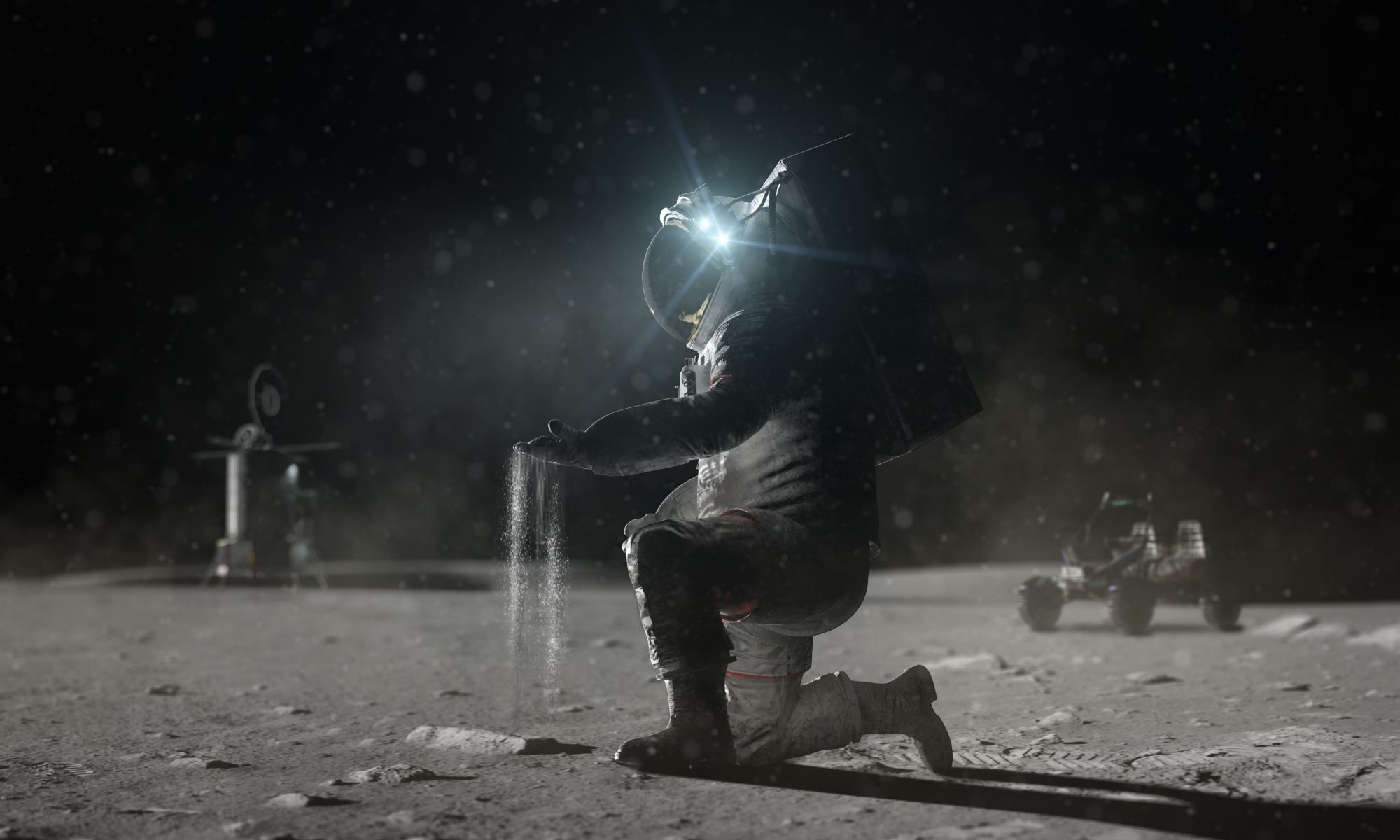
With the help of international and commercial partners, NASA is sending astronauts back to the Moon for the first time in over fifty years. In addition to sending crewed missions to the lunar surface, the long-term objective of the Artemis Program is to create the necessary infrastructure for a program of “sustained lunar exploration and development.” But unlike the Apollo missions that sent astronauts to the equatorial region of the Moon, the Artemis Program will send astronauts to the Moon’s South Pole-Aitken Basin, culminating in the creation of a habitat (the Artemis Basecamp).
This region contains many permanently-shadowed craters and experiences a night cycle that lasts fourteen days (a “Lunar Night“). Since solar energy will be limited in these conditions, the Artemis astronauts, spacecraft, rovers, and other surface elements will require additional power sources that can operate in cratered regions and during the long lunar nights. Looking for potential solutions, the Ohio Aerospace Institute (OAI) and the NASA Glenn Research Center recently hosted two space nuclear technologies workshops designed to foster solutions for long-duration missions away from Earth.
NASA’s Glenn is the home of NASA’s power systems research, where engineers and technicians work to develop advanced power generation, energy conversion, and storage methods – with applications ranging from solar, thermal, and batteries to radioisotopes, fission, and regenerative fuel cells. The Clevand-based OAI is a non-profit research group dedicated to fostering partnerships between government and industry to further aerospace research. The OAI has a long history of collaborating and contracting with NASA and the DoD.
These workshops were the latest step in NASA and the DOE’s collaborative development of nuclear technologies for crewed space exploration programs. In terms of propulsion, these efforts have aimed to advance proposals for nuclear-thermal and nuclear-electric propulsion systems (NTP/NEP). In the former case, a nuclear reactor is used to heat propellants like liquid hydrogen (LH2); in the latter, the reactor generates electricity for a magnetic engine that ionizes an inert gas like xenon (aka. Ion Propulsion).
In 2021, NASA and the DoE selected three reactor design proposals for a nuclear thermal system that could send cargo and crews to Mars and science missions to the outer Solar System. The contracts, valued at around $5 million apiece, were awarded through the DOE’s Idaho National Laboratory (INL). In June 2022, they followed up by selecting three design concept proposals for a Fission Surface Power (FSB) system that would expand on NASA’s Kilopower project and could be sent to the Moon as a technology demonstration for the Artemis Program.
The nuclear technologies workshops saw over 100 engineers, managers, and experts in power systems from across government, industry, and academia come together to discuss topics ranging from Fission Surface Power to space nuclear propulsion systems. The event featured speakers and panelists from NASA, the U.S. Department of Energy (DoE), the Department of Defense (DoD), and the commercial sector to share knowledge, results, and lessons learned from past efforts to develop nuclear technology. Todd Tofil, NASA’s Fission Surface Power project manager, explained in a NASA press release:
“Reliable energy is essential for exploration of the Moon and Mars, and nuclear technology can provide robust, reliable power in any environment or location regardless of available sunlight. As we move forward with projects like Fission Surface Power and nuclear propulsion, it makes sense to look at work that’s been done in the past at NASA and other agencies to see what we can learn.”
The first workshop (in November) included discussions on mission requirements that call for nuclear power, such as long-duration missions beyond Earth where solar power isn’t always an option. This includes the Moon’s southern polar region but also on Mars, where the increased distance and periodic dust storms can also limit solar energy. The workshop also included discussions about test hardware from previous programs that could be relevant to today’s projects. Things concluded with a tour of the seven Glenn facilities engaged in nuclear research. Said Lee Mason, associate chief of Glenn’s Power Division:
“The workshop provided an excellent opportunity to discuss technology advancements and provide the new industry teams an opportunity to learn from the past and build on the foundation that’s been established. Strong industry-government collaboration and knowledge sharing will help us be successful with Artemis and missions beyond.”
The second workshop took place in early December and saw over 500 people from 28 countries meeting (in-person and virtually) to discuss how to address the extreme challenges of operating in the Lunar Night. During the three-day workshop, attendees learned about relevant developments in the field from power and thermal technology experts from NASA and other organizations. These included those funded by NASA’s Space Technology Mission Directorate (STMD) and Exploration System Development Mission Directorate (ESDMD).
Status updates were also provided by several commercial entities that are partnered with NASA through the Commercial Lunar Payload Services (CLPS) initiative, which will begin delivering experiments and technology demonstrations to the lunar surface in early 2023. Most of these missions rely on solar panels or batteries and will face power and thermal challenges as they land in the South-Pole Aitken Basin. Since these systems need to remain in operation longer than a Lunar Day (also 14 days), CLPS providers will also benefit from advanced power systems.
Artist’s impression of astronauts on the lunar surface, as part of the Artemis Program. Credit: NASA
As Tibor Kremic, chief of the Space Science Project Office at NASA Glenn, summarized:
“The Moon is rife with extreme conditions, especially during the lunar night, that we must prepare for. We do that by bringing together leading experts from NASA, commercial partners, academia, and other government entities to share insights, review technical capabilities, and discuss the challenges and solutions ahead. The workshop was a learning experience for all of us, helping better prepare our CLPS providers and increase our understanding of the various technical capabilities and constraints as we continue to prepare for ever more ambitious payload deliveries to some of the toughest places in the solar system.”
These workshops also build on NASA’s Lunar Surface Innovation Initiative, which is dedicated to fostering partnerships that will lead to technologies needed to live and explore on the surface of the Moon. The Initiative is particularly focused on technologies that allow for in-situ resource utilization (ISRU), power generation, mitigating lunar dust, excavating and constructing on the Moon’s surface, exploring the lunar environment, and other methods that will ensure a sustainable human presence on the Moon for decades to come.
Another long-term objective of the Artemis Program is to establish the infrastructure and expertise that will allow for crewed missions to Mars in the early 2030s. This presents even greater challenges, ranging from logistics and transportation (transit times of up to nine months) to power systems for surface operations. Here too, nuclear propulsion (which could reduce transit times to 100 days) and nuclear reactors that can power surface habitats and vehicles for long-duration missions are in high demand.
This is yet another example of how this age of renewed space exploration (Space Age 2.0) is spurring the development of technologies that have been dreamt of for decades!
The Bermuda Triangle’s Strange Encounter: A Government Plane Captures a Mysterious Object Splitting
The Bermuda Triangle, located between Florida, Bermuda, and Puerto Rico, is known for its unexplained phenomena and UFO sightings. In 2013, a United States Customs and Border Patrol plane caught a strange pinkish light on thermal imaging camera as it approached the airport in Agua Dia, Puerto Rico. The footage showed a metallic sphere moving quickly around the airport before heading out to sea and appearing to splash down before resurfacing and splitting into two separate craft. The object then disappeared from view after nearly four minutes.
The footage, captured by a government plane’s infrared camera, has been analyzed by experts from the Scientific Coalition for Unidentified Aerial Phenomenon. The telemetry from the camera matched radar data, indicating that the object was real. The object’s temperature was also analyzed and found to be roughly 104 degrees, eliminating the possibility of it being a jet engine. The object’s size was estimated to be between three and five feet in diameter, ruling out the possibility of it being a balloon or a drone. The experts were also skeptical that it was a bird, due to the object’s ability to go in and out of the water and split into two separate craft.
While it is difficult to explain the exact nature of the object, the experts concluded that it is most likely a UFO. Puerto Rico has a long history of interesting sightings and encounters with USOs (unidentified submerged objects) in the area. The credible footage and analysis make this case a strong example of a possible UFO sighting.
SPLITTING ORB UFO ABOVE PUERTO RICO | The Proof is Out There: Bermuda Triangle Edition (Season 1)
U.S. customs and border patrol spot something strange while on a routine flight. See more in this clip from Season 1, "USOs & Underwater Forces."
Love watching The Proof Is Out There: Bermuda Triangle Edition? Stay up to date on all of your favorite The HISTORY Channel shows at history.com/schedule.
Massive Unidentified Object Heading To Earth Detected On NASA Live Feed!
Massive Unidentified Object Heading To Earth Detected On NASA Live Feed! The International Space Station is the largest single structure that humans have ever put into space. NASA will use lessons learned on the ISS to prepare for human missions that reach farther into space than ever before.
As with exploring any unknown terrain or space, there are bound to be encounters with the unknown. And now, the ISS might also be the place that has finally provided us with answers to the age old question “Are We Alone?”. The answer being a faint, but terrifying “No”. What does NASA know? And why does it keep cutting the Live Feed?
What SpaceX just did with Starship Nosecone is unbelievable and unlike no one...
What SpaceX just did with Starship Nosecone is unbelievable and unlike no one...
Is There Life on Mars? We Asked a NASA Scientist
Is there life on Mars? No, we have never discovered life on the Red Planet, but we have found lots of evidence that suggests Mars could have once supported life in its ancient past. There’s even a chance that Mars could be habitable beneath its surface. NASA astrobiologist Heather Graham explains more.
Strange Water Worlds and a Habitable Planet Found In Orbit of Kepler 138
TERRIFYING Update About Betelgeuse, MASSIVE Supernova Explosion Happening Soon!
Betelgeuse, Orion constellation’s most famous star, and now a bright red supergiant star, is nearing the end of its life. It will likely explode as a supernova and be visible during the daytime from Earth. And while we do not know as of yet if it is a threat or not, scientists have already discovered a telltale way to detect when a star is about to go supernova.
James Webb Telescope Finds More Mysteries: TRAPPIST-1, Red Spiral Galaxies and More
Aliens Tombs Found Within The Great Pyramid?
Why NASA's Next Telescope Will Be Even Better Than James Webb | Unveiled
In this video, Unveiled takes a closer look at NASA's next big telescope - the Nancy Grace Roman Space Telescope! Experts believe that this incredible machine will be even better than the James Webb... and, along with the Hubble Space Telescope, it will form a three-pronged strategy for the future of space exploration! This is Unveiled, giving you incredible answers to extraordinary questions!
Solomon and Sheba: Were a Famous Pharaoh and Queen the Real Protagonists in this Love Story?
The story of Solomon and Sheba is well known as one of love. But it is only when we learn their true identities that we see how much affection and adoration Solomon had for his favorite Queen. He literally moved mountains to express that love for her - well mountains of sand and soil to be precise. They still stand as long lines of great Hills today which we can look upon and sense a greater love than what went into the building of the Pyramids.
The Famous Meeting of Sheba and Solomon
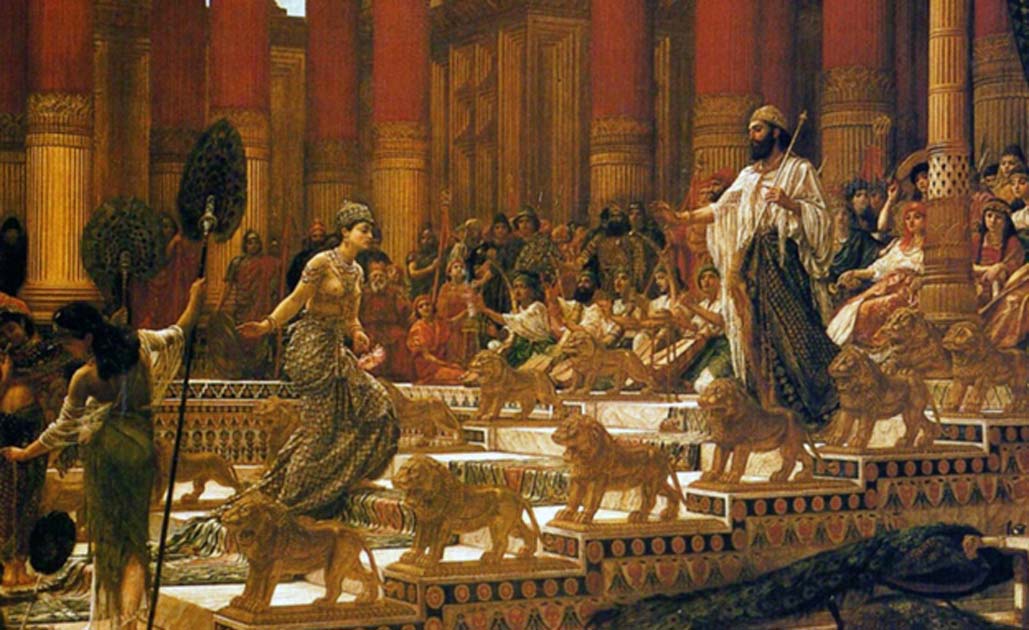
Let us look back at that famous meeting when Sheba first entered Solomon’s Palace.
“She was bidden to enter the Palace, and when she saw it she thought it was a pool of water, and bared her legs. But Solomon said, ‘It is a palace paved with glass.’ Koran, Chapter of the Ant.
‘Solomon and the Queen of Sheba’ by Giovanni Demin.
“Steadying herself on Solomon’s arm, she bent down, and removing her sandals modestly lifted the hem of her robe, and stretched out a toe to test the water. The King was taken back with surprise, fooled automatically into a momentary belief that she really did believe a river in some way flowed through the hall.
Now it was his turn to express confusion. “It isn’t water. They are only glass tiles.” Then he saw that she was only teasing, and stammered, “Well, some of my guests have thought it very true to life. But it is well done isn’t it?” The Tutankhamen Code.
Fragments of glazed tiles depicting water, fish, reeds and birds have only ever been found in the ruins of one ancient Palace, that of Ymn Htp III at Malqata near Luxor.
This fact, along with a number of other finds in Luxor, are examined in “Out of Egypt” by the British/Egyptian historian Ahmed Osman and every-one of them points only to one man as having been the legendary King Solomon , namely the Pharaoh YmnHtp III.
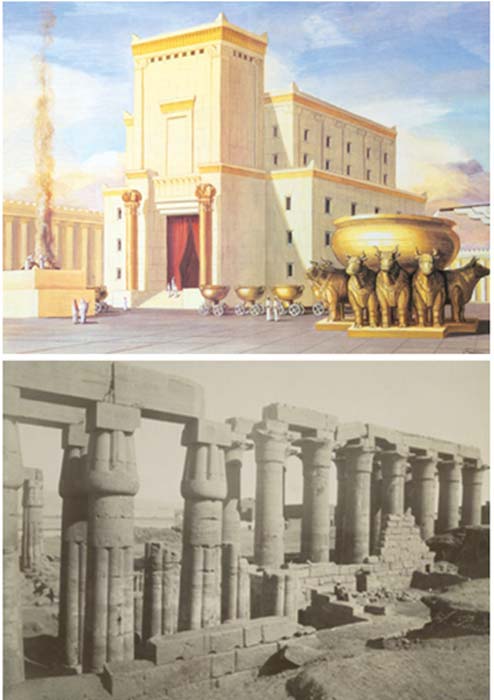
We are told in the Book of 1 Kings that Solomon’s Temple and Palace were so grand and sumptuous that there has to be some archaeological evidence for them - yet nothing has ever been found in modern day Israel despite umpteen digs over more than a hundred years. The fabulous remains in Luxor not only match all we are told in the Bible, but many of the ancient walls and columns still stand, shouting out their message that these were built by the 18th Dynasty Kings David and Solomon, otherwise known in Ancient Egypt as Dayhut and Salim Amen.
Top: Artistic interpretation of Solomon’s Temple ( CC BY 4.0 ). Bottom: Temple of Amenhotep III, Luxor, Egypt.
I can only put the blindness of those who do not see down to a religious zeal that just will not allow any belief that the Bible time-line is out by four centuries or that Israel was once a large part of Egypt, a country that they have been taught to hate, even though the Bible itself places Israel in Egypt in the Book of 1 Samuel.
Solomon and Sheba: Pharaoh Ymn Htp III and Queen Etiye Azeb
Ahmed Osman not only identified both Kings but also Solomon’s father-in-law, Joseph. The evidence is so extensive that there cannot be any doubt about either of them. The full details of such proof can be studied in Osman’s books and, if one prefers a lighter approach, in my novel The Tutankhamen Code .
Apart from some 13 facts pointed out be Ahmed Osman which match quite precisely all we are told in the book of 1 Kings I have been fortunate in recognizing 11 more. When these are also taken into account then not one iota of doubt can remain. Solomon was the Pharaoh Ymn Htp III and the love of his life was his Queen Etiye Azeb, better known to us as Sheba. Here are a few of the most significant matches of my own finds with the Bible account.
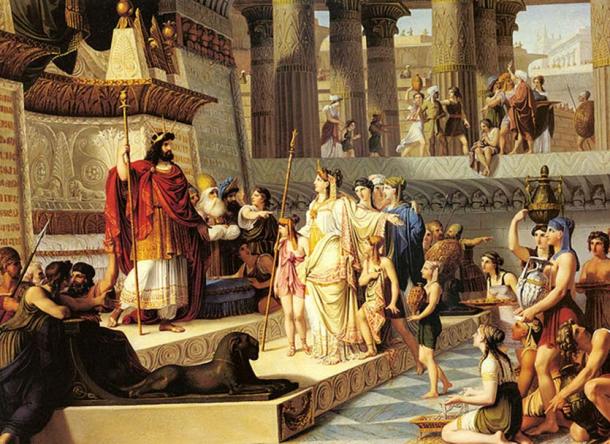
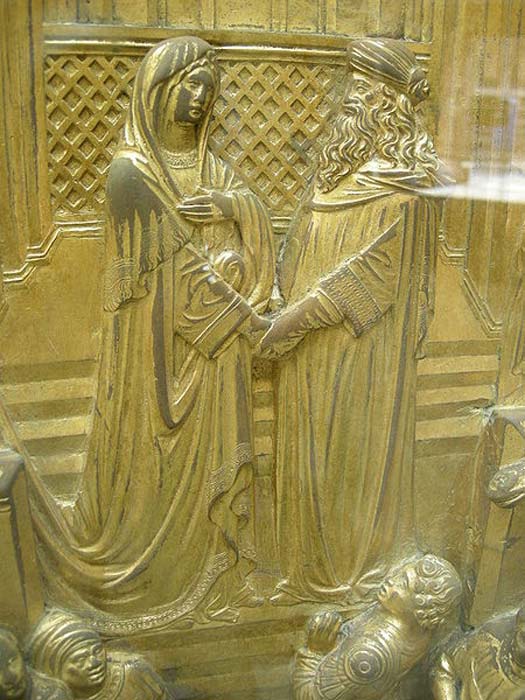
Solomon and the Queen of Sheba (Gates of Paradise).
It was the Greek Egyptian historian Manethos who wrote, “Thus it came about that 80,000 unclean individuals were rounded up and dispatched to the stone quarries”. This is the same figure given in 1 Kings 5:15. The term ‘unclean’ was used to denigrate anyone not conforming to the writer’s own religious beliefs.
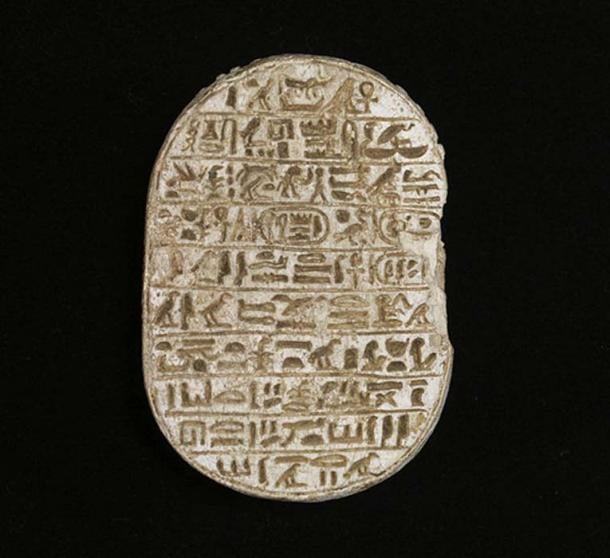
In year 10 of Solomon’s reign he married a foreign princess named Gilukhepa and a Marriage Scarab was issued with these words, “Gilukhipa, persons in her harim: 317 women”. 1 Kings 11:3 gives it as 300 concubines, a very close match.
A commemorative scarab of Amenhotep III. This scarab belongs to a class called the "marriage scarabs," which affirm the divine power of the king and the legitimacy of his wife, Tiye. Walters Art Museum, Baltimore.
The Bible tells us that Solomon’s father was King David. The father of Ymn Htp III was actually named in separate hieroglyphs as DHWT, which has to be the same for it would have been spoken something like ‘Dayhut’. A shortcut hieroglyph was occasionally used, hence a different translation of ‘DJHWT’. Like many other names this sometimes had the letter ‘Y’ added on the end just as we do in English and another suffix ‘Ms’ simply meant ‘Born of’.
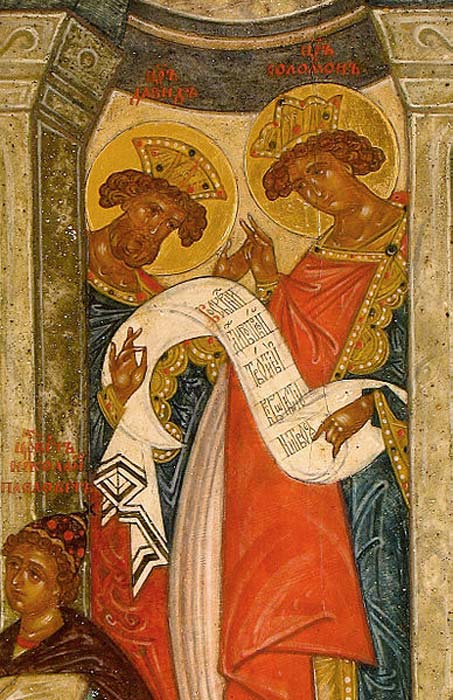
The Kebra Nagast names MenyELEk as the eldest son of Solomon and that he was also known as David. MenyELEk has the very same meaning as YmnTwtAnkh, better known today as ‘King Tut’.
The Hall of Columns at Malqata, Luxor has the same length and breadth as the measurements given in 1 Kings 7:6, within two to three centimeters.
The clincher is in his name Ymn Htp III. Ymn, the God name for the setting Sun in the West was always written as ‘AMEN’, even in Greek letters, by Manethos who was still versant with the old Egyptian language. Hetep or Hotep was the Egyptian word for Peace or Rest, which at that time in Hebrew was Salim. As a Hebrew King of Egypt, his own family and his own people would have called him Salim Amen which evolved into Salomon then Solomon. Foreign Kings ruling other countries speaking other languages and for many generations is not that unusual. Guillaume I of England is a case in point as is Georg I of England (who never spoke English.)
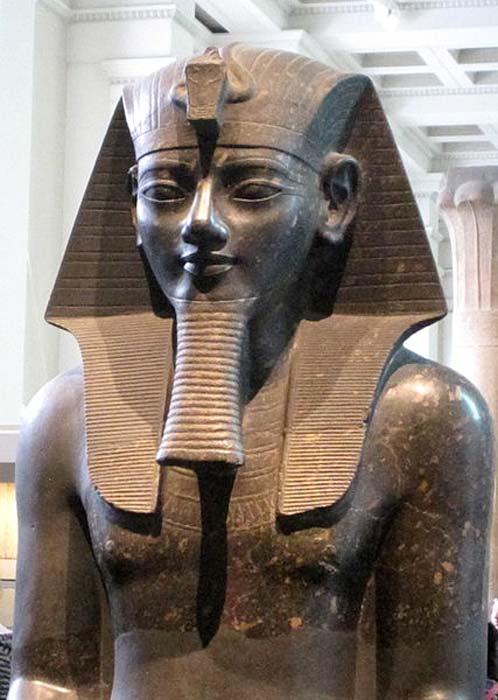
Colossal statue of Amenhotep III in the British Museum.
Robert Feather in his “The Mystery of the Copper Scroll of Qumran” suggests that the Egyptian word ‘Heprew’ is the origin of the name Hebrew and this has to be true for the hieroglyph for Heprew (Creations) was a Scarab Beetle - in Greek ‘Scarabaeus’ - and this is what St. Ambrose called the mythical Ever Coming Son, IWSA - Iesous - in the 4th century AD.
More Evidence on Solomon and Sheba’s True Identities
Ralph Ellis tells us in his “Jesus Last of the Pharaohs” that the names of Biblical patriarchs are nearly all those of other Egyptian Kings and some are even spelled exactly the same such as the Pharaoh Jacob. But there were also Kings called Joshua, Abel, Cain, Abram, Salah, Isaac, as well as Jacob, David, and Solomon.
Ahmed Osman also notes in his book that both the Koran and Jewish traditions have it that Joseph’s brothers entered the City by different gates. Ancient Thebes, now Luxor, was renowned for its many Gates and Pylons and there wasn’t another city in those days that could compare.
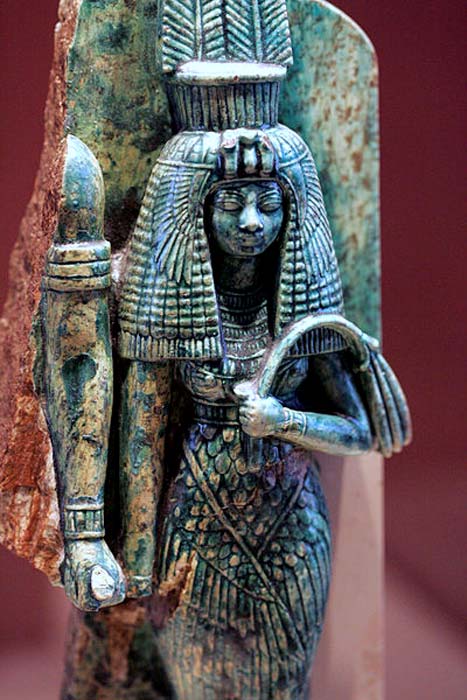
It is quite surprising that not one Egyptologist has ever noticed the legend found by Sir Wallis Budge which tells us that Solomon’s Queen was an Abyssinian girl named Eteye Azeb and then realized that the name of Ymn Htp III’s Queen they translate as ‘Tiye’ should begin with an ‘E’. This vowel was never written in Egyptian but we now know that it was from the Ethiopian spelling. Syllables were often reversed in writing so Azeb has to be Zeba or Sheba. The Kebra Nagast even tells us that Solomon and Eteye’s son was called Meny EL Ek and that he was also known as ‘David’ which is ‘Dwd’ in Hebrew and ‘Twt’ or Tut in Egyptian. Both EL and TWT were seen as Moon Gods, which explains the variation from Ymn Twt Ankh to Meny EL Ek.
We do know that the mother of Etiye, namely Tuya or Etuya, the wife of Joseph, came from the south and what is today Northern Sudan. That places a question mark over the lovely story told by Ahmed Osman about Ymn Htp having a pleasure lake built for Etiye at Zarw and presenting her with a Summer Palace. The loving Royal Couple ‘sailed thereon in the Royal Barge ‘Aten Gleams’. Osman then places Zarw as being somewhat east of the Suez Canal, which would have been close to her Israelite relatives in Goshen.
A Question of Location
The problem with that location is that the King did build a lake in front of her Palace at Malqata, with a ‘T’ shaped channel running from the Nile at Luxor and terminating in a large harbor by the Palace. A marriage scarab commemorating this wonderful gift from the King to his wife gives its length as 3,700 cubits (about 1,020 yards), and breadth about 700 cubits. One kilometer is 1093.61 yards, which is near enough the same.
Today a long line of hills marks the route of the Channel from the Nile to Malqata, each one once topped with a glorious shining Temple. Truly a Gift of Great Love.
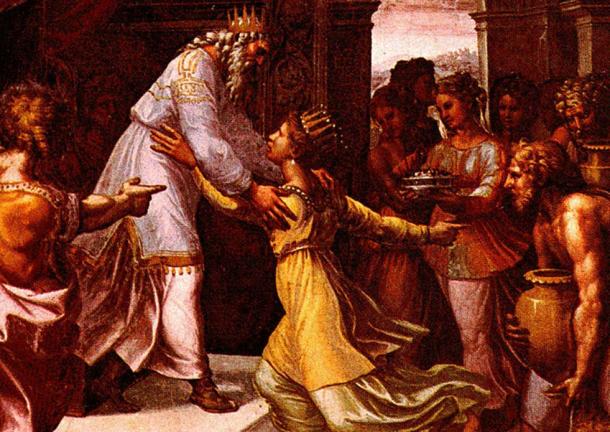
Top Image: The visit of the Queen of Sheba to King Solomon.
From an Ox to an “A”: The Ancient Egyptian Origins of the Latin Alphabet
As crazy as it sounds, it’s now well attested that the letter “A” started out its evolution as the Egyptian hieroglyph for an ox. But its truly mind-blowing transformation came when turquoise miners in ancient Egypt adapted the hieroglyph, turning it into graffiti. This seemingly unimportant simplification actually spearheaded the creation of syllabic alphabets, such as the Latin alphabet, used all over the world today.
But who were these miners and why did they do this? The story starts in Egypt almost 4,000 years ago when the turquoise mines on the Sinai Peninsula gained importance on an industrial scale. Many people from different strata of Egypt’s Bronze Age society were involved in mining activities at this mountainous location now known as Serâbît el-Khâdim. In fact, there were many mining sites for different raw materials all over the Sinai Peninsula making it a quarrying hub.
From Egyptian Hieroglyphs to the Latin Alphabet
At that time, around 1900 BC, the Egyptian language was written using hieroglyphs. These were mostly logographic which meant each symbol represented a word rather than a sound. There were thousands of Egyptian hieroglyphs making learning, memorizing and writing them a specialist skill.
Similarly, the Bronze Age Mesopotamians wrote their Sumerian language using cuneiform pictographs on clay tablets. In both Egypt and Mesopotamia, the written language played a number of different roles from the cultic to the profane. Dedications to deities, pharaohs and kings were common, as were records of produce and land ownership.
However, in spite of the widespread use of these early writing systems , they were still incredibly complicated. It was the invention of the alphabetic system that was to revolutionize the way people could read and write because it simplified the whole process of literacy.
Temple of Hathor in Serâbît el-Khâdim in Egypt. (Felipe Ligeiro FL / CC BY-SA 4.0 )
Graffiti That Revolutionized Literacy: The Temple of Hathor in Serâbît el-Khâdim
Close to the Serâbît el-Khâdim mines, located in the southwestern Sinai Peninsula of Egypt, a temple to Hathor was in use for 800 years and offered spiritual protection to those working in them. The temple went through several phases of reconstruction, taking a central role in the lives of those who spent time or passed through this desert location.
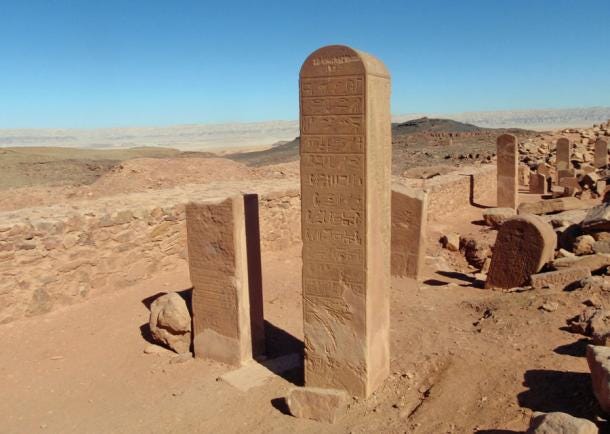
This large sanctuary consisted of a processional avenue, multiple buildings and rooms and many stelae engraved with hieroglyphic inscriptions. Priests, miners, officials, interpreters, scribes and others all left inscriptions at the temple dedicated to the goddess Hathor who was known as the “mistress of turquoise,” amongst her other epithets.
Serâbît el-Khâdim was first discovered in 1762. Over the next hundred years, various visits were made by antiquarians who were interested in the area, especially after Egyptian hieroglyphs were deciphered in 1822. It was during an expedition to the abandoned mines and the temple in 1905 that two Egyptologists realized they had made an exceptional discovery. The married couple William and Hilda Flinders Petrie noticed graffiti in and around the mines which appeared to be a different script to the Egyptian hieroglyphs etched all over the site.
During their visit they documented, mapped and photographed fourteen turquoise mines, circular enclosures near the temple and the temple itself. References to many different pharaohs were found which showed how long the area had been in use, as well as tools, altars, figurines, amulets, pottery, seals and jewelry.
The unusual graffiti symbols were on fallen stones in the vicinity of the mines, as well as on several statues within the temple grounds. This was in contrast to the more formal stelae decorated with finely carved hieroglyphs leading up to the temple. There were very few etchings to work with compared to the many hieroglyphic inscriptions, but Petrie analyzed what there were and became convinced they had found the earliest evidence for an alphabetic system.
The Irish-born British Egyptologist Hilda Petrie and her husband the British Egyptologist Flinders Petrie were the first to notice the graffiti markings at Serâbît el-Khâdim. ( Public domain )
Ancient Graffiti as Earliest Evidence of an Alphabetic System
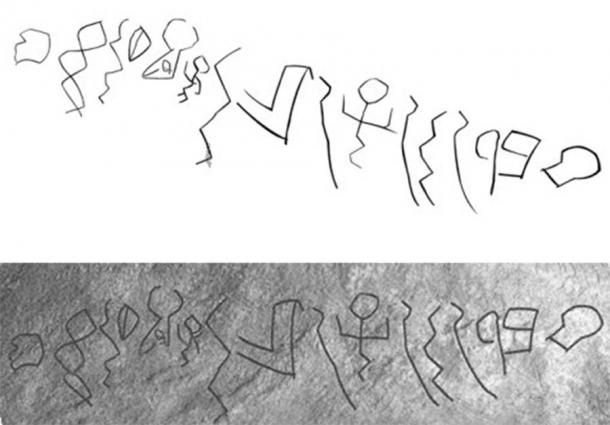
It took until 1916 for the graffiti to be translated by fellow Egyptologist Alan Gardiner. He noticed the repeated use of several characters that he thought spelled out the word Baalat when considered phonetically. In Canaanite this meant “the mistress” which he took to be the equivalent to the Egyptian goddess Hathor.
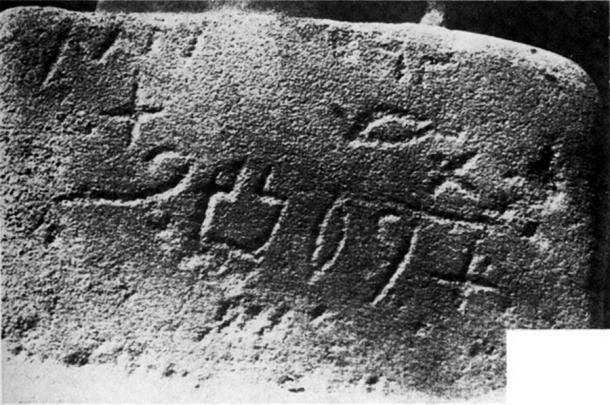
But the real key to understanding these inscriptions came when he analyzed bilingual engravings etched onto the sides of a tiny sphinx figurine found in the temple. On one side there was an inscription in Egyptian hieroglyphs saying “the beloved of Hathor,” while on the side there was an inscription in the strange graffiti saying “the beloved of Baalat.”
This was the Rosetta Stone of the day, but it went further than translating a second language. It showed that the second language was expressed in an adaptation of Egyptian hieroglyphs and was being used syllabically. It soon became apparent that Petrie’s hunch had been correct. Here was a simplified version of Egyptian hieroglyphs where each character had been used to represent a sound rather than a word. It was the earliest known syllabic script and was celebrated as the potential forerunner to alphabetic systems in general.
Now known by experts as Proto-Sinaitic, it was to evolve and spread through trade and a significant input from the Phoenicians. But who drew the graffiti and exactly when they did it is still debated. It’s most likely that these graffiti first appeared during the reign of Amenemhet III in the middle Bronze Age. The general consensus is that it was created by Asiatic people, most likely of Caananite origin hence the inscriptions featuring Baalat.
The stelae with hieroglyphic dedications by interpreters also suggest that people speaking different languages were making trips to the mines. At that time in Egypt, many Asiatic people lived in the eastern delta region and there are records of Egyptians discussing their mixed parentage. So it’s perfectly possible that these groups were part of the expeditions to the mines recorded as having taken place.
A Serabit inscription found by Flinders Petrie at Serâbît el-Khâdim which spell out the name of the goddess Baalat. ( Public domain )
Semi-Literate Origins of a Revolutionary Concept
Whether the people writing the graffiti were learned or not is another debatable point. It's been argued that they were probably drawn by semi-literate people who were not well-versed in Egyptian hieroglyphs, and so used this abstract version to express themselves in their own language. The crude and inconsistent forms of these early letters and their location on random rocks, certainly lend weight to this theory.
But there are experts who think it’s just as likely these workers were skilled and educated. If it was barely literate mine workers who invented the alphabet for their own personal use, then it’s a remarkable accident of history because it completely changed the way language is written and read in many countries and cultures.
In 1993, similar inscriptions to those at Serâbît were discovered in the Wadi el-Hôl near Luxor. The inscriptions consisted of two lines carved into limestone rocks in the valley. At first it was thought they might be older than those at Serâbît, but experts now think that they came later so it’s possible that miners from Serâbît, who were familiar with the script, travelled to Wadi el-Hôl.
The graffiti went through several transformations over a long period before forming the base of multiple alphabets in use today. Experts aren’t clear on exactly when and how these symbols travelled outside of the Sinai Peninsula to take center stage in the future of literacy. But it’s certain it took many years.
The Evolution of Egyptian Hieroglyphs into the Latin Alphabet
What’s fascinating is to see how certain Egyptian hieroglyphs evolved via this Proto-Sinatic script into the Latin letters used today. For example, the letter “B” was the Egyptian hieroglyph for a house. The letter “H” started its life as the Egyptian hieroglyph for a fence and the letter “K” originated as the Egyptian hieroglyph for a hand. The Proto-Sinaitic, Ugaritic, Phoenician and Greek alphabets all stemmed from these early symbols and made their changes to them.
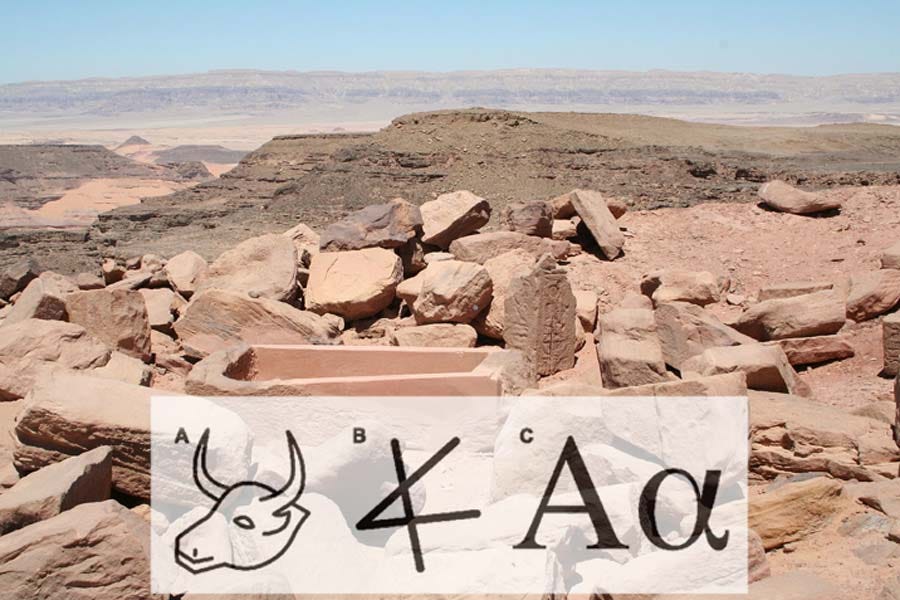
Interestingly, the early alphabets were abjads, which means they only had consonants. In Phoenician their version of the Egyptian hieroglyph for an ox represented a glottal stop, something that was of no benefit to the Greeks when they started to use the alphabet. Therefore, they changed the Phoenician letter known as “aleph” into the letter “alpha” and made it represent the vowel sound “a.”
Anyone who studies and analyses the past knows how important written language is. Texts and inscriptions give a lot of insight into the historic period that is unfortunately absent in the Neolithic and earlier. But, if it wasn’t for the introduction of the syllabic alphabet, it’s possible even less textual evidence from the past few thousands years would exist.
Of course, other factors helped the proliferation of the written language. The manufacture of paper, the improvement in education and the invention of the printing press to name but a few. However, it's clear that the syllabic alphabet made a significant contribution to the way information was recorded and passed on from the end of the Bronze Age onwards.
The origins and evolution of alphabetic systems and the Latin alphabet are complex subjects quite simplified here. But the point is that many useful inventions often start as happy accidents of history. Spoken languages also have long and convoluted stories which cannot be isolated from the multitude of factors that influenced their development.
Top image: Archaeologists have deciphered what could be the origins of the Latin alphabet in graffiti found at the Temple of Hathor near the Serâbît el-Khâdim mines. Serâbît el-Khâdim in the background and the evolution of the letter “A” in the foreground.
Colless, B.E. (2014). The Origin of the Alphabet: An Examination of the Goldwasser Hypothesis. Antiguo Oriente: cuadernos del Centro de Estudios de Historia del Antiguo Oriente , (12), pp.71-104.
Gardiner, A.H. (1916). The Egyptian origin of the Semitic alphabet. The Journal of Egyptian Archaeology , 3(1), pp.1-16.
Goldwasser, O. (2010). How the Alphabet was Born from Hieroglyphs. Biblical Archaeology Review, 36/2 pp. 40-53.
Mumford, G. (2015). The Sinai Peninsula and its environs: Our changing perceptions of a pivotal land bridge between Egypt, the Levant, and Arabia. ASAA Journal of Ancient Egyptian Interconnections, 7(1), pp. 1-24.
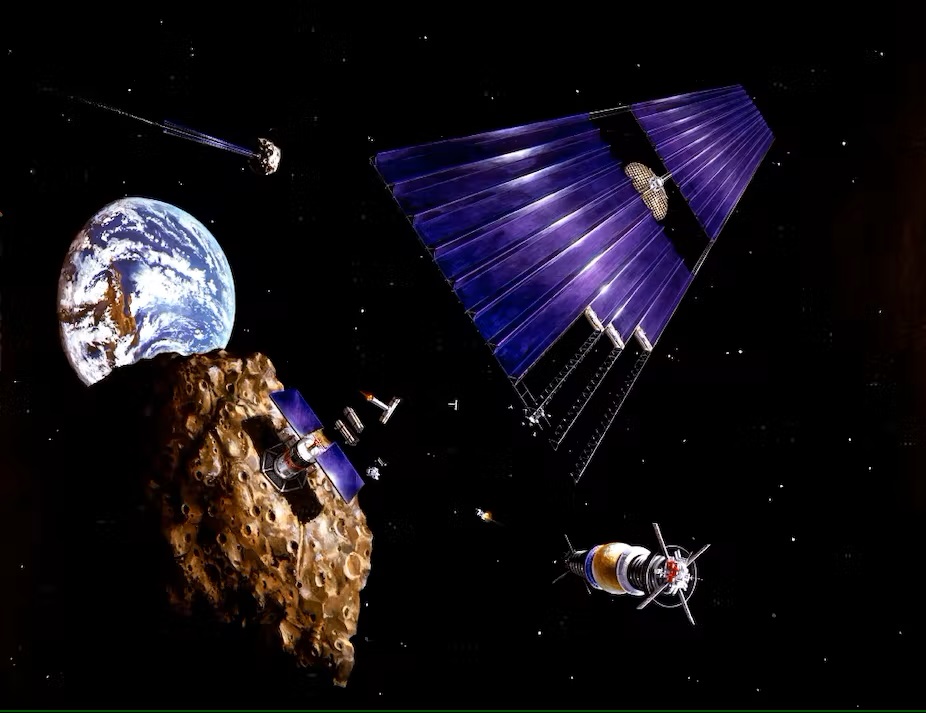
Traditional mining has been subject to a negative stigma for some time. People, especially in developed countries, have a relatively negative view of this necessary economic activity. Primarily that is due to its environmental impacts – greenhouse gas emissions and habitat destruction are some of the effects that give the industry its negative image. Mining in space is an entirely different proposition – any greenhouse gases emitted on the Moon or asteroids are inconsequential, and there is no habitat to speak of on these barren rocks. So what is the general public’s opinion on mining in space? A paper from a group of researchers in Australia, one of the countries most impacted by the effects of terrestrial mining, now gives us an answer.
Strangely, as the paper points out, no one had previously studied this particular aspect of space resources. Despite the general media interest in ventures such as Planetary Resources and the success of missions such as Hayabusa-2, no one had attempted to understand how the general public felt about space mining.
It was not a foregone conclusion, as there are some potentially negative environmental factors to mining in space. While it might not cause any immediate harm to ecosystems as it does here on Earth, it does destroy “pristine” environments that have arguably been around since the dawn of the solar system, at least in the case of the asteroids. As excellently portrayed in the Mars Trilogy by Kim Stanley Robinson, there will always be a part of humanity that will want to leave space as it is.
UT video on asteroid mining.
Another confounding factor is that the resources mined in space could, ostensibly at least, be used for products back on Earth. They could therefore end up in landfills, causing a longer-term environmental problem than if we simply recycled the material we already have in these large deposits of everything that humanity has created. So there was still an outstanding question of whether these potential downsides outweighed the risk in the eyes of the public.
Simply put, the public in a variety of countries broadly supports space mining, especially on asteroids. To get these results, the researchers performed two different studies, one involving almost 5,000 people in 27 (mostly rich) countries and another involving around 600 people in the US.
In the first study, the researchers asked a series of questions that focused on the participant’s attitudes towards mining – specifically four different kinds: in the Antarctic, on the ocean floor, on the Moon, or on asteroids. In particular, the researchers were interested in the positive and negative reactions that mining in each area elicited in their subjects.
UT interviews Dr. Phil Metzger, one of the world’s leaders in ISRU technology.
The results were unambiguous – people generally had negative feelings toward mining on the ocean floor, especially in the Antarctic, and they generally had positive feelings towards mining on the Moon, especially on asteroids. People across all 27 countries had reasonably similar responses, no matter what their income level or the environment they inhabited.
However, results from the first study were relatively shallow and did not delve too deeply into factors such as the participant’s political affiliation or individual morals. These are known to profoundly impact an individual’s stance toward terrestrial mining and its potential environmental impacts. Still, it was unclear what, if any, effect it would have on a person’s views of space mining.
Similar in structure to the first study, the second looked at people’s responses to questions about how they felt about mining in several different locations – this time including “tundra” instead of the Antarctic. However, it also delved into the individual inclinations of the person responding to the questions, including their political orientation, which is currently one of the more polarizing aspects of American life.
Isaac Arthur is also keen on asteroid mining, as he describes in this video. Credit – Isaac Arthur YouTube Channel
Neither a person’s political persuasion nor their moral foundations were found to be clear indicators of whether or not that person would support mining in space. However, there was a negative correlation with support for lunar mining, specifically by those that scored higher on a test that assessed their interest in environmental sustainability. Assumedly that is because they think of the Moon as a pristine “environment” and view mining activities as potentially harmful to it.
Overall these studies seem like a glowing endorsement of public support for asteroid mining. However, there are some other confounding factors, including, as the authors point out, that both lunar and asteroid mining are, at this point, highly abstract concepts, the real impact of which may be hard to grok for many study participants. But studies such as this have to start somewhere, and waiting until after there is already a fully-fledged mining mission on the Moon to see if it has public support might be a little late. For now, at least, those interested in moving forward with this aspect of the economic development of space have the public on their side.
Planetary Interiors in TRAPPIST-1 System Could be Affected by Solar Flares
In a recent study published in The Astrophysical Journal Letters, an international team of researchers led by the University of Cologne in Germany examined how solar flares erupted by the TRAPPIST-1 star could affect the interior heating of its orbiting exoplanets. This study holds the potential to help us better understand how solar flares affect planetary evolution. The TRAPPIST-1 system is an exolanetary system located approximately 39 light-years from Earth with at least seven potentially rocky exoplanets in orbit around a star that has 12 times less mass than our own Sun. Since the parent star is much smaller than our own Sun, then the the planetary orbits within the TRAPPIST-1 system are much smaller than our own solar system, as well. So, how can this study help us better understand the potential habitability of planets in the TRAPPIST-1 system?
“If we take Earth as our starting point, geological activity has shaped the entire surface of the planet, and geological activity is ultimately driven by planetary cooling,” said Dr. Dan Bower, who is a geophysicist at the Center for Space and Habitability at the University of Bern, and a co-author on the study. “The Earth has radioactive elements in its interior which generate heat and enable geological processes to persist beyond 4.5 Gyr. However, the question arises if all planets require radioactive elements to drive geological processes that may establish a habitable surface environment that allows life to evolve. Although some other processes can generate heat inside a planet, they are often short-lived or require special circumstances, which would advance the hypothesis that geological activity (and habitable environments?) are possibly rare.” What makes this study intriguing is that TRAPPIST-1 is known as an M-type star, which is much smaller than our Sun and emits far less solar radiation.
“M stars (red dwarfs) are the most common star type in our stellar neighborhood, and TRAPPIST-1 has garnered significant attention since it was discovered to be orbited by seven Earth-sized planets,” explained Dr. Bower. “In our study, we investigated how stellar flares from TRAPPIST-1 impacted the interior heat budget of the orbiting planets and discovered that particularly for the planets closest to the star, interior heating due to ohmic dissipation from flares is significant and can drive geological activity. Furthermore, the process is long-lived and can persist over geological timescales, potentially enabling the surface environment to evolve towards habitable, or pass through a series of habitable states. Previously, the influence of stellar flares on habitability has mostly been deemed to be destructive, for example by stripping the protective atmosphere that enshrouds a planet. Our results present a different perspective, showing how flares may actually promote the establishment of a habitable near-surface environment.” Ohmic dissipation, also known as ohmic loss, is defined as “a loss of electric energy due to conversion into heat when a current flows through a resistance.” Essentially, it’s what scientists used to calculate the amount of heat a planet loses, also known as planetary cooling, which all terrestrial planetary bodies—even Earth—encounter.
The study’s findings indicate that the planetary cooling occurring on the TRAPPIST-1 planets is enough to drive geological activity, which would lead to thicker atmospheres. The researcher’s models also predict that the presence of a planetary magnetic field can enhance these heating results.
Recently, NASA’s James Webb Space Telescope made its first observations of the TRAPPIST-1 system, finding that one of the planets in its system has a low probability of possessing a hydrogen atmosphere like the gas planets in our own solar system. This could indicate that at least one of TRAPPIST-1’s planets could possess a more terrestrial-like atmosphere like Earth, Mars, and Venus. With TRAPPIST-1 holding potential for the field of astrobiology, what follow-up research is planned for this study?
“There are two obvious avenues to pursue,” explains Dr. Bower. “First, our stellar neighborhood is dominated by M stars, so observational campaigns can assess the flaring nature of many more M stars besides TRAPPIST-1. Second, enhanced characterization of the TRAPPIST planetary system through observations and models will improve our understanding of the planetary interiors. This will enable us to refine our model in terms of whether the planets have an iron core and whether they have a large Earth-like silicate mantle.”
“We plan to run more elaborated physical simulations to better understand the effect intrinsic magnetic fields,” said Dr. Alexander Grayver, who is a Heisenberg Junior Research Group Leader at the University of Cologne, and lead author of the study. “The long-term goal is to couple our model with models of atmosphere formation and erosion.”
Do any of the TRAPPIST-1 planets contain the ingredients for life as we know it, or maybe as we don’t know it? Only time will tell, and this is why we science!
The U.S. government’s investigation into unidentified flying objects, or UFOs, has gained renewed attention in recent years, with the 2023 National Defense Authorization Act expanding the authority and scope of the investigation. In the video below, Chris Lehto explores some of the most notable UFO cases over the past 72 years, starting with the Roswell Incident of 1947.
The Roswell Incident remains one of the most well-known UFO cases to this day. It all started when a UFO allegedly crashed near Roswell, New Mexico, and the U.S. military initially claimed to have recovered the wreckage of a flying saucer. However, the story quickly changed, and the military claimed that the wreckage was actually from a weather balloon. Major Jesse Marcel was dispatched to the crash site and reported finding a piece of metal that was incredibly lightweight and couldn’t be bent, even with a sledgehammer. Marcel was ordered to transport the strange debris to Fort Worth Army Airfield, where he was met by the commanding general and told to keep quiet about the incident.
Another notable UFO case involves astronaut Gordon Cooper, who claimed to have witnessed a flying saucer while on a mission in 1951. He described seeing multiple silver and circular craft flying at higher altitudes than his jet fighter could reach. Cooper also reported seeing a negative film of a flying saucer landing on three telescoping legs, which flew off as the film crew approached.
In 1964, Robert Jacobs, a U.S. Air Force officer, claimed to have witnessed a UFO disabling an intercontinental ballistic missile during a test launch. He reported seeing a beam of light being fired at the warhead, causing it to tumble out of outer space. Jacobs faced harassment and his mailbox was destroyed after the story became public.
The Westall UFO incident of 1966 saw hundreds of students and teachers at a school in Westall, Victoria, Australia witness a low-flying UFO. The UFO was described as being disc-shaped and metallic, and it reportedly hovered over the school for several minutes before suddenly disappearing. Multiple witnesses reported seeing military personnel arrive at the school shortly after the UFO sighting, leading some to speculate that the government was involved in covering up the incident.
These are just a few examples of the many UFO cases that have garnered attention over the years. While it is impossible to say for certain what these sightings represent, they continue to fuel speculation and intrigue.
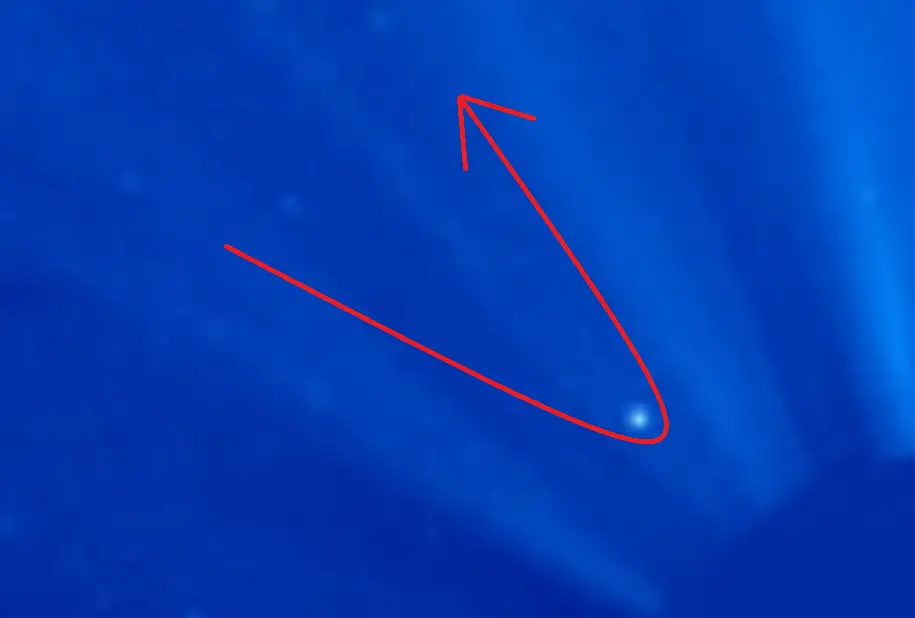
Mystery in Space: NASA Sun Satellite Observes Object Changing Course
NASA’s sun satellite recently captured a mysterious space object that appeared to suddenly change direction. The object was seen approaching the top left portion of the sun before shooting up and away, which has led to speculation about its nature.
There are several possible explanations for the object’s behavior. One possibility is that it is not actually close to the sun, but simply passed by the satellite at a high velocity. Another possibility is that it is an unidentified flying object (UFO), although there is no way to confirm this theory.
A third possibility is that the object is a clump of dust, gases, or other material that is being pushed in towards the solar system as part of the galactic current sheet. This would explain why the object appears to get bigger and brighter before becoming smaller as it moves away. If this is the case, it is possible that we will see more of these aggregated clumps as time goes on.
Regardless of what the object is, it is clear that it is a fascinating and unusual phenomenon. It will be interesting to see if further observations or analysis can provide more insight into its nature.
What's happening to these spiral galaxies? Although details remain uncertain, there sure seems to be a titanic battle going on. The upper galaxy is labelled UGC 1810 by itself, but together with its collisional partners is known as Arp 273. The overall shape of the UGC 1810 -- in particular its blue outer ring -- is likely a result of wild and violent gravitational interactions. The blue color of the outer ring at the top is caused by massive stars that are blue hot and have formed only in the past few million years. The inner part of the upper galaxy -- itself an older spiral galaxy -- appears redder and threaded with cool filamentary dust. A few bright stars appear well in the foreground, unrelated to colliding galaxies, while several far-distant galaxies are visible in the background. Arp 273 lies about 300 million light years away toward the constellation of Andromeda. Quite likely, UGC 1810 will devour its galactic sidekicks over the next billion years and settle into a classic spiral form. Arp 273: Battling Galaxies from Hubble Image Credit:
Meer van UFO'S of UAP'S, ASTRONOMIE, RUIMTEVAART, ARCHEOLOGIE, OUDHEIDKUNDE, SF-SNUFJES EN ANDERE ESOTERISCHE WETENSCHAPPEN - DE ALLERLAATSTE NIEUWTJES


 Power on the Moon. What Will it Take to Survive the Lunar Night?