Ontdek de Fascinerende Wereld van UFO's en UAP's: Jouw Bron voor Onthullende Informatie!
Ben jij ook gefascineerd door het onbekende? Wil je meer weten over UFO's en UAP's, niet alleen in België, maar over de hele wereld? Dan ben je op de juiste plek!
België: Het Kloppend Hart van UFO-onderzoek
In België is BUFON (Belgisch UFO-Netwerk) dé autoriteit op het gebied van UFO-onderzoek. Voor betrouwbare en objectieve informatie over deze intrigerende fenomenen, bezoek je zeker onze Facebook-pagina en deze blog. Maar dat is nog niet alles! Ontdek ook het Belgisch UFO-meldpunt en Caelestia, twee organisaties die diepgaand onderzoek verrichten, al zijn ze soms kritisch of sceptisch.
Nederland: Een Schat aan Informatie
Voor onze Nederlandse buren is er de schitterende website www.ufowijzer.nl, beheerd door Paul Harmans. Deze site biedt een schat aan informatie en artikelen die je niet wilt missen!
Internationaal: MUFON - De Wereldwijde Autoriteit
Neem ook een kijkje bij MUFON (Mutual UFO Network Inc.), een gerenommeerde Amerikaanse UFO-vereniging met afdelingen in de VS en wereldwijd. MUFON is toegewijd aan de wetenschappelijke en analytische studie van het UFO-fenomeen, en hun maandelijkse tijdschrift, The MUFON UFO-Journal, is een must-read voor elke UFO-enthousiasteling. Bezoek hun website op www.mufon.com voor meer informatie.
Samenwerking en Toekomstvisie
Sinds 1 februari 2020 is Pieter niet alleen ex-president van BUFON, maar ook de voormalige nationale directeur van MUFON in Vlaanderen en Nederland. Dit creëert een sterke samenwerking met de Franse MUFON Reseau MUFON/EUROP, wat ons in staat stelt om nog meer waardevolle inzichten te delen.
Let op: Nepprofielen en Nieuwe Groeperingen
Pas op voor een nieuwe groepering die zich ook BUFON noemt, maar geen enkele connectie heeft met onze gevestigde organisatie. Hoewel zij de naam geregistreerd hebben, kunnen ze het rijke verleden en de expertise van onze groep niet evenaren. We wensen hen veel succes, maar we blijven de autoriteit in UFO-onderzoek!
Blijf Op De Hoogte!
Wil jij de laatste nieuwtjes over UFO's, ruimtevaart, archeologie, en meer? Volg ons dan en duik samen met ons in de fascinerende wereld van het onbekende! Sluit je aan bij de gemeenschap van nieuwsgierige geesten die net als jij verlangen naar antwoorden en avonturen in de sterren!
Heb je vragen of wil je meer weten? Aarzel dan niet om contact met ons op te nemen! Samen ontrafelen we het mysterie van de lucht en daarbuiten.
A color view of the Jovian moon Europa captured by NASA's Galileo spacecraft in the late 1990s.
(Image credit: NASA/JPL-Caltech/SETI Institute)
Salty water lakes throughout the crust of Jupiter's icy moon Europa might burst from the surface as plumes of vapor or flows of slushy ice "lava", new research suggests.
NASA's Europa Clipper will explore the moon in the early 2030s and should be able to detect these subsurface lakes, if they indeed exist. Their presence would mean that the global ocean scientists think exists below the surface of the Jovian moon isn't the only liquid water lurking under Europa's icy shell. Scientists are keen to investigate Europa and its liquid water because this moon of Jupiter appears tantalizingly capable of hosting life.
The Europa Clipper spacecraft, set to launch in 2024, will fly past Europa around 50 times using sophisticated instruments to collect data about the moon. But before the mission gets underway, scientists are working to better model the water on Europa to more accurately focus the spacecraft's investigation.
One piece of new research in that vein offers new theories about the material that erupts from the surface of Europa as plumes or as "cryolava," the icy equivalent of the molten lava in volcanic activity seen on Earth. The work uses a new computer model and suggests that these eruptions may originate from subsurface reservoirs of salty water or "lakes" in the crust of Europa, rather than from its global liquid ocean.
"We demonstrated that plumes or cryolava flows could mean there are shallow liquid reservoirs below, which Europa Clipper would be able to detect," Elodie Lesage, lead author of the research and a Europa scientist at NASA's Jet Propulsion Laboratory (JPL) in California, said in astatement. "Our results give new insights into how deep the water might be that's driving surface activity, including plumes. And the water should be shallow enough that it can be detected by multiple Europa Clipper instruments."
The team's models suggest that the mission should detect reservoirs of water relatively close to the surface of Europa, in the upper 2.5 to 5 miles (4 to 8 kilometers) of the crust.
This is the region where the ice is at its coldest and most brittle. Pockets of water held here would freeze and expand, thus breaking the surrounding ice and triggering an eruption. This phenomenon is similar to how carbonated drinks can swell and burst when placed in a freezer.
An illustration of icy plumes of material erupting from the surface of Jupiter's moon Europa with the gas giant planet in the background. (Image credit: NASA/ESA/K. Retherford/SWRI)
The researchers also determined that the reservoirs most likely to erupt in this way are wide and flat, like a pancake.
However, the situation is different deeper inside Europa, according to the team. Reservoirs below around 5 miles (8 kilometers) under Europa's crust would also expand and push on surrounding ice. But because this ice is warmer, it is less brittle and thus soft enough to absorb the increased pressure rather than bursting. Instead of being analogous to an exploding soda can, this is more like a balloon of water that stretches as the liquid it contains freezes and expands.
These findings should help the Europa Clipper's radar instrument, called Radar for Europa Assessment and Sounding: Ocean to Near-surface (REASON), hunt for pockets of water when the spacecraft arrives at Europa in 2030.
"The new work shows that water bodies in the shallow subsurface could be unstable if stresses exceed the strength of the ice and could be associated with plumes rising above the surface," Don Blankenship, leader of the REASON team and a geophysicist at the University of Texas Institute for Geophysics in Texas who wasn't involved in the research, said in the same statement. "That means REASON could be able to see water bodies in the same places that you see plumes."
Astronomers Discover A Water Reservoir Floating In Space That Is Equivalent To 140 Trillion Times All The Water In The Earth's Ocean
by Mirza Newton
There is a reserve of water the size of 140 trillion oceans lurking in a faraway supermassive black hole, the universe's largest deposit of water and 4,000 times the amount found in the Milky Way.
This amount of water was discovered by two teams of astronomers 12 billion light-years away, where it appears as vapor dispersed across hundreds of light-years.
The reservoir was discovered in a quasar's gaseous area, which is a brilliant compact region in the heart of a galaxy powered by a black hole. This finding demonstrates that water may be present throughout the cosmos, even at the start.
While this is not surprising to experts, water has never been discovered this far out before. The light from the quasar (specifically, the APM 08279+5255 quasar in the constellation Lynx) took 12 billion years to reach Earth, implying that this mass of water existed when the universe was just 1.6 billion years old.
One group used the Z-Spec instrument at the Caltech Submillimeter Observatory in Hawaii, while the other used the Plateau de Bure Interferometer in the French Alps.
These sensors detect millimeter and submillimeter wavelengths, allowing the detection of trace gases (or vast reservoirs of water vapor) in the early cosmos.
The discovery of many spectral fingerprints of water in the quasar provided researchers with the data they needed to calculate the vast magnitude of the reservoir.
[NASA][THIS IS AN UPDATED VERSION OF THE OLD ARTICLE]
Human brain cells grown in a lab learn to play Pong: Incredible footage shows mini-brains mastering the classic video game after just five MINUTES of training
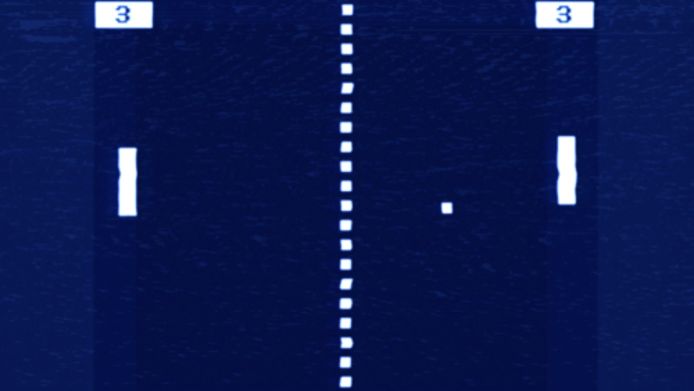
Pong is a classic table tennis-themed video game, first released in 1972
Researchers took human brain cells and grew 800,000 neurons in a dish
They demonstrated that the brains cells could master Pong in just five minutes
In the future, the researchers hope the findings could pave the way for treatments for neurodegenerative conditions like dementia
It's the classic table tennis-themed video game that tasks players with moving a paddle vertically across a screen to hit a ball.
And now even human brain cells grown in a lab have mastered Pong.
Researchers from Melbourne-based start-up, Cortical Labs, have shown for the first time that 800,000 brain cells can perform goal-directed tasks – in this case, Pong.
The findings suggest that even brain cells in a petri dish can exhibit inherent intelligence, modifying their behaviour over time.
'This new capacity to teach cell cultures to perform a task in which they exhibit sentience – by controlling the paddle to return the ball via sensing – opens up new discovery possibilities which will have far-reaching consequences for technology, health, and society,' said Dr Adeel Razi, an author of the study.
'We know our brains have the evolutionary advantage of being tuned over hundreds of millions of years for survival.
'Now, it seems we have in our grasp where we can harness this incredibly powerful and cheap biological intelligence.'
Researchers from Melbourne-based start-up, Cortical Labs, have shown for the first time that 800,000 brain cells living in a dish can perform goal-directed tasks – in this case, Pong
How will the results be used?
The team will now try to see what happens when DishBrain is affected by medicines and alcohol.
'We're trying to create a dose response curve with ethanol – basically get them 'drunk' and see if they play the game more poorly, just as when people drink,' said Dr Kagan.
In the future, the researchers hope the findings could pave the way for treatments for neurodegenerative conditions.
'DishBrain offers a simpler approach to test how the brain works and gain insights into debilitating conditions such as epilepsy and dementia,' says Dr Hon Weng Chong, Chief Executive Officer of Cortical Labs.
Scientists have previously been able to grow brain cells in the lab and read their activity.
However, until now, it's not been possible to stimulate the cells in a structured and meaningful way.
Dr Brett Kagan, who led the study, explained: 'In the past, models of the brain have been developed according to how computer scientists think the brain might work.
'That is usually based on our current understanding of information technology, such as silicon computing.
'But in truth we don't really understand how the brain works.'
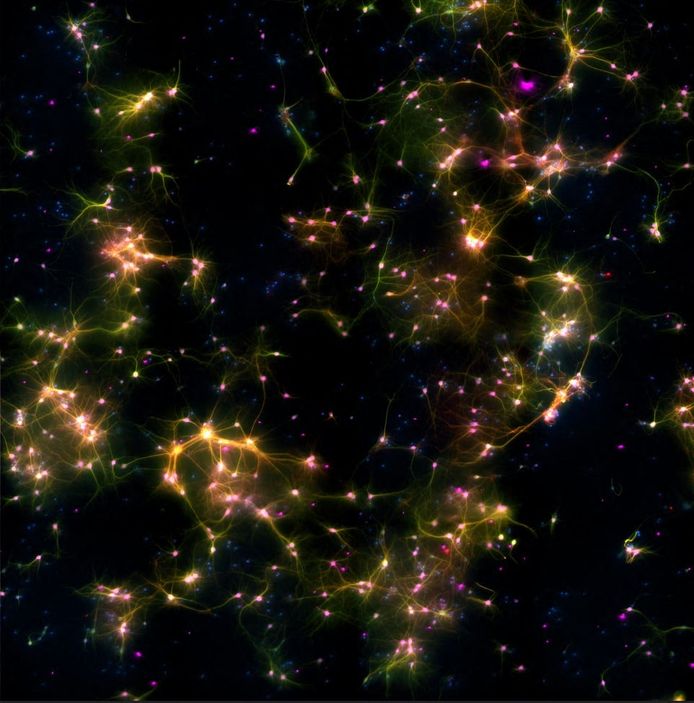
In the new study, the team took mouse cells from embryonic brains as well as some human brain cells, and grew 800,000 neurons in a dish, in what they're calling 'DishBrain'.
The neurons were connected to a computer in such a way where they received feedback on whether their paddle was hitting the ball.
Electrodes on the left or right of one array were fired to tell DishBrain which side the ball was on, while distance from the paddle was indicated by the frequency of signals.
Using electric probes that recorded 'spikes', the researchers monitored the neuron's activity and responses to this feedback.
In the new study, the team took mouse cells from embryonic brains as well as some human brain cells, and grew 800,000 neurons in a dish, in what they're calling 'DishBrain'
(pictured)
Pong is a classic table tennis-themed video game that tasks players with moving a paddle vertically across a screen to hit a ball
What is Pong?
Pong was officially released on November 29, 1972.
The two-dimensional table tennis simulator, the first release by Atari, is credited with being one of the progenitors of the video games industry, which is now worth a phenomenal $65billion a year.
The simple two-dimensional simulation of ping pong, consists merely of two paddles which moved up and down to pass a moving spot between each player.
Yet its addictive gameplay captured the imagination of thousands of players around the world, building Atari's status as a video games giant.
Spikes became stronger the more a neuron moved its paddle and hit the ball.
And when neurons missed the ball, their playstyle was critiqued by a software programme.
This shows that neurons can adapt their activity to a changing environment in a goal-oriented way, in real time.
Professor Karl Friston, a theoretical neuroscientist at UCL, and co-author of the study, said: 'Remarkably, the cultures learned how to make their world more predictable by acting upon it.
'This is remarkable because you cannot teach this kind of self-organisation; simply because — unlike a pet — these mini brains have no sense of reward and punishment.'
Pong wasn't the only game the team tested.
'You know when the Google Chrome browser crashes and you get that dinosaur that you can make jump over obstacles (Project Bolan),' said Dr Kagan.
'We've done that and we've seen some nice preliminary results, but we still have more work to do building new environments for custom purposes.'
The team will now try to see what happens when DishBrain is affected by medicines and alcohol.
'We're trying to create a dose response curve with ethanol – basically get them "drunk" and see if they play the game more poorly, just as when people drink,' said Dr Kagan.
In the future, the researchers hope the findings could pave the way for treatments for neurodegenerative conditions.
'DishBrain offers a simpler approach to test how the brain works and gain insights into debilitating conditions such as epilepsy and dementia,' said Dr Hon Weng Chong, Chief Executive Officer of Cortical Labs.
WHAT IS A NEURON AND HOW DOES IT WORK?
A neuron, also known as nerve cell, is an electrically excitable cell that takes up, processes and transmits information through electrical and chemical signals. It is one of the basic elements of the nervous system.
In order that a human being can react to his environment, neurons transport stimuli.
The stimulation, for example the burning of the finger at a candle flame, is transported by the ascending neurons to the central nervous system and in return, the descending neurons stimulate the arm in order to remove the finger from the candle.
A typical neuron is divided into three parts: the cell body, the dendrites and the axon. The cell body, the centre of the neuron, extends its processes called the axon and the dendrites to other cells.Dendrites typically branch profusely, getting thinner with each branching. The axon is thin but can reach enormous distances.
To make a comparable scale, the diameter of a neuron is about the tenth size of the diameter of a human hair.
All neurons are electrically excitable. The electrical impulse mostly arrives on the dendrites, gets processed into the cell body to then move along the axon.
On its all length an axon functions merely as an electric cable, simply transmitting the signal.
Once the electrical reaches the end of the axon, at the synapses, things get a little more complex.
The key to neural function is the synaptic signalling process, which is partly electrical and partly chemical.
Once the electrical signal reaches the synapse, a special molecule called neurotransmitter is released by the neuron.
This neurotransmitter will then stimulate the second neuron, triggering a new wave of electrical impulse, repeating the mechanism described above.
Menselijke hersencellen gekweekt in labo leren videogame Pong spelen in 5 minuten
Wetenschappers hebben het videospelletje Pong uit de jaren 70 in amper vijf minuten tijd leren spelen aan menselijke hersencellen gekweekt in een laboratorium. Volgens de onderzoekers kan hun “minibrein” voelen en reageren op de omgeving. Op termijn is de hoop dat de technologie kan worden ingezet om behandelingen te testen voor ziektes als Alzheimer.
Brett Kagan van het bedrijf Cortical Labs beweert dat hij met zijn team onderzoekers uit het Australische Melbourne voor het eerst een “gevoelig” brein op een schaaltje in een labo heeft gekweekt. Andere experten vinden die omschrijving te ver gaan, al noemen ze het onderzoek wel “opwindend”. “We konden geen betere term vinden om dit te beschrijven”, zegt Kagan. “Het is in staat om informatie van een externe bron op te nemen, die te verwerken en er vervolgens in real time op te reageren.” Neurowetenschapper Dean Burnett, die verbonden is aan de Cardiff Psychology School, geeft toch de voorkeur aan de term “denkend systeem”. “Er wordt informatie doorgegeven en duidelijk gebruikt, waardoor veranderingen ontstaan, dus over de stimulus die zij ontvangen wordt op een elementaire manier ‘nagedacht’”, zegt Burnett.
Het creëren van een minibrein is op zich niet nieuw. Het eerste werd al in 2013 gekweekt, toen om microcefalie te bestuderen, de genetische aandoening waarbij de schedelomvang te klein is en ook de hersenen zich niet volledig kunnen ontwikkelen. Sindsdien worden minibreinen vaker gebruikt in hersenonderzoek.
De primeur van dit onderzoek bestaat erin dat de hersenen werden verbonden met een externe omgevingsfactor, in dit geval een videogame, en dat er interactie was. Eerst werden menselijke hersencellen gekweekt uit stamcellen en enkele ook uit embryo’s van muizen. In totaal bestond het minibrein uit zo’n 800.000 cellen. Via elektroden werden de hersencellen verbonden met Pong, een van de allereerste videospellen, daterend uit de jaren 70.
Wat is Pong?
Het spel is gebaseerd op pingpong. De twee spelers staan elk achteraan hun eigen helft van het speelveld en hebben elk een bat, dat enkel horizontaal kan bewegen en dat tegen een balletje kan kaatsen. Aan de boven- en onderkant van het speelveld zijn er twee muren, die het balletje wegkaatsen telkens als dat de muur raakt. De bedoeling is om het balletje achter het bat van de tegenstander te krijgen en zo te scoren.
Bij de proef met het minibrein gaven de elektroden aan aan welke kant het balletje was en hoe ver het verwijderd was van de batjes. Als reactie daarop produceerden de cellen hun eigen elektrische activiteit. Naarmate het spel vorderde, gebruikten ze minder energie. Maar wanneer er ‘gescoord’ werd en het spel dus opnieuw begon met het balletje op een willekeurig punt, verbruikten ze meer energie om zich aan te passen aan de nieuwe spelsituatie.
In vijf minuten tijd leerde het minibrein Pong spelen. De bal werd vaak gemist, maar het succespercentage lag ver boven wat nog toeval is, ook al - zo benadrukken de onderzoekers - heeft het minibrein geen bewustzijn en weet het niet dat het Pong aan het spelen is zoals een menselijke speler dat zou beseffen.
Kagan hoopt dat deze technologie uiteindelijk zal kunnen worden gebruikt om behandelingen voor neurodegeneratieve ziekten zoals Alzheimer te testen. Kagan wil verder gaan dan alleen maar kijken of de hersenen in een schaaltje al dan niet activiteit vertonen. “Het doel van hersencellen is om informatie in real time te verwerken”, zegt hij. “Het aanboren van hun ware functie ontsluit zo veel meer onderzoeksgebieden die uitgebreid kunnen worden onderzocht.” Kagan is nu van plan om te testen welke invloed alcohol heeft op de capaciteit van het minibrein om Pong te spelen. Hij wil nagaan of de hersencellen reageren zoals een menselijk brein, wat van het systeem een efficiënte stand-in voor experimenten zou maken.
De studie is na peer-review gepubliceerd in het tijdschrift ‘Neuron’.
Phew, NASA’s CAPSTONE is no Longer Tumbling in Space
Engineers with the trouble-plagued CAPSTONE mission to the Moon have made progress in stabilizing the spacecraft. A month ago, the microwave-oven-sized CAPSTONE (Cislunar Autonomous Positioning System Technology Operations and Navigation Experiment) began tumbling and lost its orientation in space. But now, after weeks of painstaking and patient troubleshooting, team members successfully executed an operation to stop the spacecraft’s spin. NASA says this clears a major hurdle in returning the spacecraft to normal operations.
Animation of the CAPSTONE mission in orbit of the Moon. Credits: NASA/Daniel Rutter
The mission for small satellite is to conduct tests to make sure the unique lunar orbit for NASA’s future Lunar Gateway is actually stable. It launched on June 28, 2022 from New Zealand on Rocket Lab’s Electron rocket. In early July, after conducting a course correction burn, the spacecraft lost contact with the Deep Space Network; however, communications were reestablished after about 24 hours.
But on September 8th, at the end of another course correction maneuver, the spacecraft’s attitude started to deviate. CAPSTONE’s reaction wheels were unable to counter the spacecraft’s oscillations, and the vehicle entered into an uncontrolled spin. With its antenna no longer pointed at Earth, communications were lost again.
Even though engineers were soon able to re-establish a weak communications link, data indicated the spacecraft’s solar arrays weren’t producing enough energy to charge the batteries, which was causing the spacecraft to reset frequently from lack of power. Most worrying was that without energy to run the onboard heaters, the thrusters needed to stop the tumble could freeze. But the mission team was able to put CAPSTONE into safe mode, which allowed the solar panels to focus on supplying power to heat the spacecraft. Then the team could focus attempting to solve the tumbling problem. They were able to determine the problem arose from a thruster valve that was partially stuck open.
CAPSTONE mission timeline. Credit: Advanced Space and Terran Orbital.
In reviewing the telemetry data, one encouraging bit of data was that CAPSTONE was on course for eventually reaching its desired orbital trajectory. The unusual lunar orbit, called a near rectilinear halo orbit (NRHO), is an elongated polar orbit that brings a spacecraft within 1600 km (1,000 miles) of one lunar pole on its near pass and 70,000 km (43,500 miles) from the other pole every seven days. Since the orbit uses a balance point in the gravities of Earth and the Moon, it is theorized that spacecraft in this type of orbit require less propulsion capability for spacecraft flying to and from the Moon’s surface than other circular orbits and requires minimal energy to maintain. This is CAPSTONE’s goal, to determine how stable and energy-saving this orbit actually is.
Last week Friday, on October 7, recovery commands were executed and the initial telemetry from CAPSTONE points to a successful maneuver, indicating the spacecraft has stopped its spin and regained full 3-axis attitude control. This means CAPSTONE’s position is controlled and its solar arrays are pointing towards the Sun and the communications antenna is pointing towards Earth.
The team is now monitoring the spacecraft status and making any needed adjustments to procedures in order to account for and mitigate the effects of the partially open thruster valve. The mission team also will work to design possible fixes for this valve-related issue in order to reduce risk for future maneuvers. CAPSTONE remains on track to insert into its targeted near rectilinear halo orbit at the Moon on Nov. 13.
SpinLaunch Completes its 10th Test, Hurling Payloads for NASA and Other Companies Into the air
There has been no shortage of exciting developments in the commercial space industry (aka. NewSpace) in recent years. These include the ability to retrieve and reuse rockets (in part or whole), new configurations that reduce expendability, and new engines. But beyond making rocket launches more cost-effective, several cutting-edge ideas have been brought forward to make space more accessible. These include SpinLaunch‘s concept for an electric kinetic launch system (aka. a space catapult) that can propel payloads of up to 200 kg (440 lbs) to space.
On September 27th, 2022, SpinLaunch announced the results of its tenth successful flight test of its Suborbital Mass Accelerator (SMA) at Spaceport America, New Mexico. This time, SpinLaunch sent four partner payloads to space with its Suborbital Accelerator Flight Test Vehicle, which provided valuable data about the launch environment and payload integration process. This latest successful test has placed the company and its launch system one step closer to providing low-cost and sustainable launch services for satellites and other small payloads.
Based in Long Beach, California, SpinLaunch was founded in 2014 by Jonathan Yaney, an aerospace enthusiast and self-described “serial entrepreneur” with a long history of co-founding startups. Before founding SpinLaunch, Yaney spent 15 years establishing companies involved in consulting, IT, construction, and aerospace. By 2014, he began working on a new launch technology that would enable a low-cost and sustainable means of sending constellations of satellites to Low Earth Orbit (LEO).
Another Successful Launch
The company’s 12-meter (39.37 ft) Suborbital Mass Accelerator (SMA), located at Spaceport America in New Mexico, operates on a pretty straightforward principle. The accelerator spins payloads up to 10,000 g and then releases them from its launch tube towards space. Once the launch vehicle reaches orbit, its protective outer casing (similar to a rocket fairing) breaks away, releasing the second stage. This vehicle then ignites its single engine and carries payloads to the desired orbit, where they are released.
This method does away with the need for propellant burns to achieve escape velocity, making it far more environmentally friendly since it does not leave excess carbon emissions in our atmosphere. This latest flight is the tenth test conducted by the company in the eleven months since the SMA became operational in late 2021. Whereas the previous flights, which took place in October 2021 and May 2022, consisted of launch tests that saw test vehicles launched to higher and higher altitudes.
Flight Test 10 was the first flight to include cargo and was witnessed by more than 150 partners, government officials, and commercial space industry advocates. The test saw the Flight Test Vehicle (FTV) deploy all six of its payloads successfully (which were also recovered) and provided critical flight data. Moreover, it demonstrated that standard satellite components used by commercial partners are inherently compatible with the SMA launch system. Said Founder & CEO Yaney in a recent interview with BusinessWire:
“Flight Test 10 represents a key inflection point for SpinLaunch, as we’ve opened the Suborbital Accelerator system externally for our customers, strategic partners, and research groups. The data and insights collected from flight tests will be invaluable for both SpinLaunch, as we further the development of the Orbital Launch system, and for our customers who are looking to us to provide them with low-cost, high-cadence, sustainable access to space.”
As part of the pre-flight qualification process, SpinLaunch accelerated payloads up to 10,000 g using its 12-meter (39.37 ft) Lab Accelerator at its Long Beach headquarters. After clearing the qualification test, the payloads were inspected and integrated into the FTV in preparation for Flight Test 10 at the SMA at Spaceport America.
Launch Partners
The six payloads carried by the FTV included two instrumentation payloads that collected data on the flight, plus four partner payloads contributed by NASA, Airbus U.S. Space & Defense, Cornell Engineering, and Outpost. Each was responsible for testing systems vital to the SMA and FTV and gauged the system’s ability to safely launch satellites and other payloads to suborbital altitude and beyond. NASA contributed a Data Acquisition Unit (DAQ) for its payload designed to evaluate the kinetic launch method for future commercial launch opportunities.
This payload was included as part of a NASA Space Act Agreement signed by SpinLaunch to develop, integrate, and fly a sensor suite to space. The DAQ gathered launch environment data using two accelerometers, a gyroscope, a magnetometer, and sensors for pressure, temperature, and humidity. Airbus U.S. Space & Defense provided their satellite sun sensor, a device typically used by spacecraft for attitude control and positioning. As a global leader in satellite systems, Airbus’ payload was intended to see if the extreme loads generated by the launch would impact the sensor signal.
To test this, a team of engineers monitored the sensor’s output signal during the high-g centrifuge test, the pre-flight test, and Flight Test 10. They then compared the output signal during all three phases to the pre-flight data and were pleased with the result. According to their findings, the sensor’s output signal was unaffected during the pre-flight, flight, or recovery phases. This success was a major step in certifying subsystems (like sensors or onboard laboratories) that are more delicate than other flight components for use on SpinLaunch’s orbital launch system.
“Our Airbus U.S. engineering team is excited to work with SpinLaunch in support of this significant advancement of a new accelerated launch concept,” said Airbus U.S. CTO Armen Askijian. “We look forward to continued collaboration and future success.”
The next payload was contributed by the Space Systems Design Studio (SSDS), which is part of the Sibley School of Mechanical and Aerospace Engineering at Cornell University. The SSDS is responsible for designing next-generation satellites substantially smaller than CubeSats (called ChipSats) that will provide distributed in-situ measurements of Earth’s upper atmosphere and other planets. As part of Test Flight 10, the SSDS contributed some of their ChipSats, which were released during the flight to test the SpinLaunch-designed payload deployment system.
The payload deployment system is vital to SpinLaunch’s services, which are likely to include satellites of every shape and form. Future tests with SSDS may include high-altitude ChipSat deployments to verify their ability to reenter the atmosphere and follow a trajectory that will cause them to burn up. Said Hunter Adams, a lecturer in Cornell Engineering’s school of electrical and computer engineering:
“Centimeter-scale spacecraft will be a critical tool in future planetary science missions. Deployed en masse from orbit, ChipSats will descend through the atmosphere and down to the surface of this planet and others, gathering spatially distributed datasets as they fall. To plan these missions, we must understand the chaotic trajectories that low-mass and high-surface-area objects take from the top of the atmosphere to the surface of the planet. By conducting experiments with SpinLaunch’s Suborbital Accelerator, we can gather critical information for planning future planetary science missions involving ChipSats. It is absolutely a game-changer for centimeter-scale spacecraft research.”
The fourth payload was contributed by Outpost, a Los Angeles-based aerospace company developing reusable satellites capable of returning to Earth. Their payload consisted of an onboard computer for testing and qualifying the launch system, which validated both and proved that the flight computer is compatible with SpinLaunch’s launch environment. This represents a big step towards broader verification and testing of the kinetic launch system, and Outpost and SpinLaunch plan to continue collaborating in this respect. Said Michael Vergalla, co-founder and CTO at Outpost:
“Outpost and SpinLaunch share the same mission of providing customers with low-cost, rapid launch – which means rethinking the way we access space. Testing our hardware with SpinLaunch’s mass accelerator gives us optionality and provides valuable engineering data for developing our hardware to be compatible with their launch system and unlock the upside of low-cost and high-cadence launch.”
SpinLaunch’s vacuum-sealed centrifuge will accelerate a rocket to more than 8,000 km/h (5,000 mph). Credit: SpinLaunch
The success of this latest test has effectively demonstrated SpinLaunch’s capability to launch satellites and small payloads to suborbital altitude. It also means the company is on track for sending satellites to orbit and delivering payloads for other missions by 2026. It is also another step on the path toward SpinLaunch realizing its next-generation launcher, the Orbital Mass Accelerator (OMA). As the name suggests, this system will be larger, more powerful, and will be able to send heavier payloads to Low Earth Orbit (LEO), greatly expanding the types of mission profiles the company can provide.
Equally interesting is the wider implications this latest successful test will have for commercial space. The kinetic launch method is part of a growing constellation of services that are changing how we think about going to space. In terms of rockets, most commercial providers offer at least partially-reusable vehicles, single-stage-to-orbit (SSTO) vehicles, and air-launch vehicles. Beyond rockets, space agencies and entrepreneurs are pushing the boundaries of orbital balloons, electric rails, mass drivers, and spaceplanes.
The net effect of these low-cost and sustainable launch systems will likely be tremendous, enabling everything from megaconstellations (that don’t cause space debris) to the creation of private space stations and habitats and the commercialization of LEO. Who knows? Such diverse methods for sending payloads to orbit could even pave the way towards some of the most ambitious methods for sending payloads and people to space – like Slingatrons, Sky Hooks, and Space Elevators!
Two Tic-Tac Crashed In Antarctica, Google Earth Map, Video, UFO Sighting News.
Date of sighting: Oct 13, 2022 Location of sighting: Antarctica Google location: -62.663753, -61.099363
Hey check this out. I was using Google Earth map and came across these two pink tic-tac shaped crashed UFOs. The objects are in an area that has no signs of humans anywhere. There are no trails, roads, docks, cars, ships, buildings of any kind. These objects are alone and seem to be two crash landed UFOs. The objects measure 7.5 by 4 meters across and clearly could hold several human size occupants each. Check out my video below I just made and tell me your thoughts.
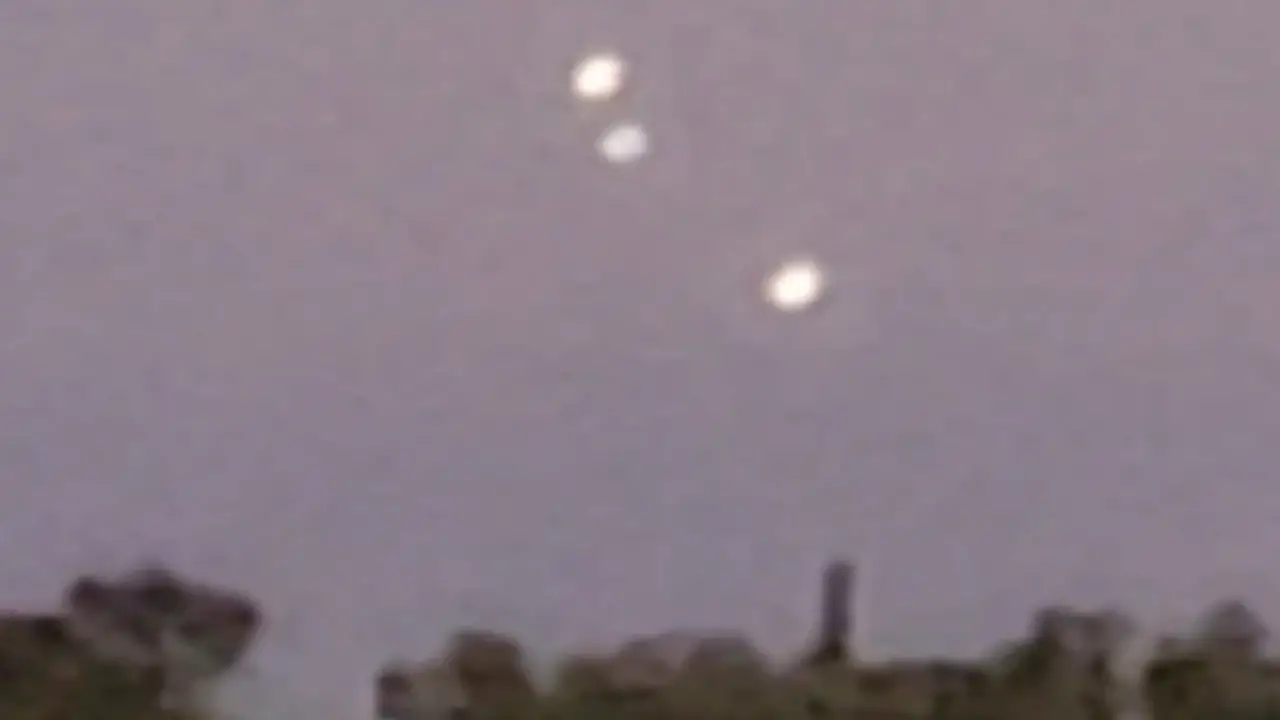
3 UFO lights in formation over Scottsdale, Arizona 2-Oct-2022
These 3 huge lights were seen and recorded in the sky above Scottsdale, a desert city in Arizona east of state capital Phoenix. Filmed on 2nd October 2022.
Witness report:
At or about 6:30 pm on October 2, 2002, I was on a 2 nd story rooftop facing south. I began to see 3 lights traveling from the southeast to north over phoenix. The lights travelled as far north to Scottsdale and became stationary. The lights were a bright white and pulsating. After a minute the 3 lights were aligned in a straight line, then the 3rd light at the bottom took off the south. The second light about another minute later moved south then moved back toward the northwest . The Top light of the three remained stationary . I recorded about 3 minutes of video and took a two photos.
Dark Side of the Universe is Way More Mysterious Than the Light Side
In “Star Wars” lore, there’s a constant struggle between the dark side and the light side of the Force. Fans debate endlessly about which side is stronger. While such debates might seem futile, given that they pertain to a fictional universe, there’s a real life analogue of sorts.
Our universe, too, contains both light and dark components. On the one hand, there’s the light side, which consists of all that’s visible and interacts with radiation — stars, quasars, planets, etc. On the other hand, a dark side looms, full of theoretical entities like dark matter and dark energy.
We know a lot more about the light side, of course. But observations of the light side reveal hints about the nature of the dark, and the more evidence we gather about this mysterious realm, the more we’re realizing that understanding it isn’t going to be easy.
Perhaps the biggest evidence we have that there’s more to the dark side than meets the eye is the fact that our observations of the expansion rate of our universe — otherwise known as the Hubble constant — are becoming increasingly inconsistent. Different techniques we have for measuring the rate of expansion can’t seem to agree.
For instance, if we measure the expansion rate by looking directly at the speed by which distant objects like supernova are moving away from us, we come up with a rate of about 73.2 kilometers per second per megaparsec (a “megaparsec” being a unit of distance equal to 3.26 million light-years). But if we attempt to calculate the expansion rate by studying the most detailed map ever compiled of the early universe — the so-called cosmic background radiation that permeates the universe in all directions — the numbers fall to between 67 and 68 kilometers per second per megaparsec.
That might not sound like a big discrepancy, but it’s huge on the scale of the universe. If scientists can’t figure out how to make these different measurements jive, it could mean that our biggest theories about the universe need a reboot.
Is there a missing ingredient?
One such reboot would greatly expand the scope of the universe’s dark side. It’s a possibility that tantalizes Lloyd Knox, a cosmologist at the University of California, Davis, who recently spoke about his research with Scientific American.
“Potentially where this is leading us is to a new ingredient in the ‘dark sector,'” he said.
Knox is keen on referring to this mysterious new dark ingredient as “dark turbo,” an apt description for a force that acts to hasten the universe’s expansion under certain conditions, such as the conditions that were present during the years immediately following the Big Bang, when the universe was a massive plasma ball. If the universe’s rate of expansion has not always been the same, then this new measurement could make all our other calculations jive.
It’s also possible that Knox’s dark turbo is really just another form of dark energy — the term scientists use to describe how the universe is expanding at an accelerated rate. This would mean that dark energy is way more complicated than previously thought, but that wouldn’t be surprising. Knox points out that the light side of the universe contains many different types of particles and forces, and asks: Why couldn’t the dark side also have complex elements?
Of course it’s probably complicated. This is the universe, after all. The good news is, scientists tend to prefer questions over answers. That’s just the nature of the game.
“It’s much more interesting if it turns out to be fundamental new physics — but it’s not up to us wanting it to be one way or another,” exclaimed Wendy Freedman of the University of Chicago, who has been laboring away on the Hubble constant problem for more than three decades. “The universe doesn’t care what we think!”
Meer van UFO'S of UAP'S, ASTRONOMIE, RUIMTEVAART, ARCHEOLOGIE, OUDHEIDKUNDE, SF-SNUFJES EN ANDERE ESOTERISCHE WETENSCHAPPEN - DE ALLERLAATSTE NIEUWTJES


 Europa Clipper may be able to spot shallow lakes that erupt icy 'lava'




 Elon Musk announces Neuralink's 'show and tell' event on...
 Headphones read your MIND to know when you need a mental...