Ontdek de Fascinerende Wereld van UFO's en UAP's: Jouw Bron voor Onthullende Informatie!
Ben jij ook gefascineerd door het onbekende? Wil je meer weten over UFO's en UAP's, niet alleen in België, maar over de hele wereld? Dan ben je op de juiste plek!
België: Het Kloppend Hart van UFO-onderzoek
In België is BUFON (Belgisch UFO-Netwerk) dé autoriteit op het gebied van UFO-onderzoek. Voor betrouwbare en objectieve informatie over deze intrigerende fenomenen, bezoek je zeker onze Facebook-pagina en deze blog. Maar dat is nog niet alles! Ontdek ook het Belgisch UFO-meldpunt en Caelestia, twee organisaties die diepgaand onderzoek verrichten, al zijn ze soms kritisch of sceptisch.
Nederland: Een Schat aan Informatie
Voor onze Nederlandse buren is er de schitterende website www.ufowijzer.nl, beheerd door Paul Harmans. Deze site biedt een schat aan informatie en artikelen die je niet wilt missen!
Internationaal: MUFON - De Wereldwijde Autoriteit
Neem ook een kijkje bij MUFON (Mutual UFO Network Inc.), een gerenommeerde Amerikaanse UFO-vereniging met afdelingen in de VS en wereldwijd. MUFON is toegewijd aan de wetenschappelijke en analytische studie van het UFO-fenomeen, en hun maandelijkse tijdschrift, The MUFON UFO-Journal, is een must-read voor elke UFO-enthousiasteling. Bezoek hun website op www.mufon.com voor meer informatie.
Samenwerking en Toekomstvisie
Sinds 1 februari 2020 is Pieter niet alleen ex-president van BUFON, maar ook de voormalige nationale directeur van MUFON in Vlaanderen en Nederland. Dit creëert een sterke samenwerking met de Franse MUFON Reseau MUFON/EUROP, wat ons in staat stelt om nog meer waardevolle inzichten te delen.
Let op: Nepprofielen en Nieuwe Groeperingen
Pas op voor een nieuwe groepering die zich ook BUFON noemt, maar geen enkele connectie heeft met onze gevestigde organisatie. Hoewel zij de naam geregistreerd hebben, kunnen ze het rijke verleden en de expertise van onze groep niet evenaren. We wensen hen veel succes, maar we blijven de autoriteit in UFO-onderzoek!
Blijf Op De Hoogte!
Wil jij de laatste nieuwtjes over UFO's, ruimtevaart, archeologie, en meer? Volg ons dan en duik samen met ons in de fascinerende wereld van het onbekende! Sluit je aan bij de gemeenschap van nieuwsgierige geesten die net als jij verlangen naar antwoorden en avonturen in de sterren!
Heb je vragen of wil je meer weten? Aarzel dan niet om contact met ons op te nemen! Samen ontrafelen we het mysterie van de lucht en daarbuiten.
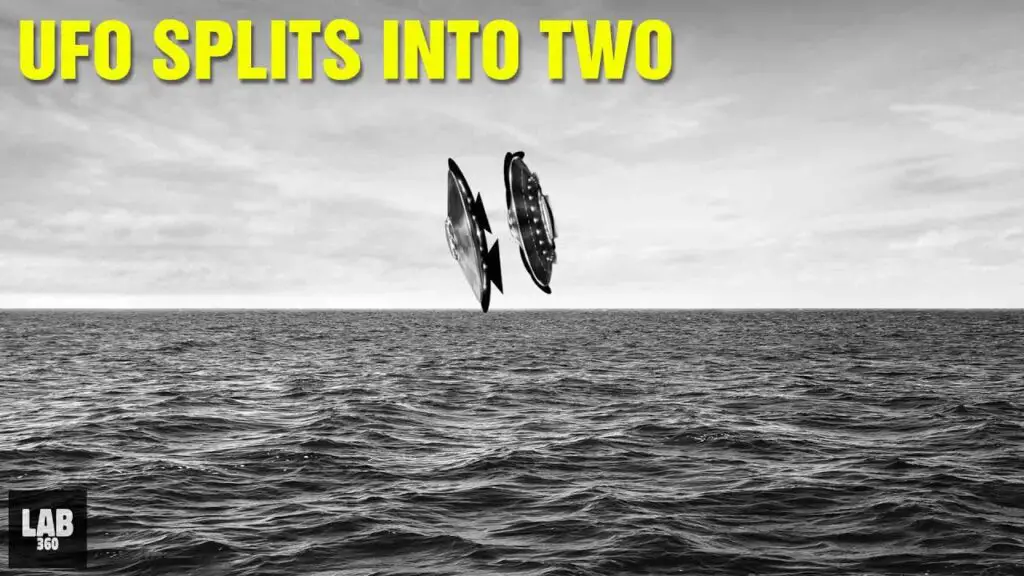
The Most Bizarre UFO Sighting Caught on Camera Till Date
Over the years, there have been numerous UFO sightings in Puerto Rico. In April 2013, a group of US Customs and Border Protection agents was taking off from a mission in the town of Agudiya when they saw a strange light. The pilot then turned on his thermal imaging camera.
The aircraft’s camera immediately captured the object. This was by far the most bizarre UFO sighting that we have seen so far. If an alien race has the technology to produce such footage, what else can they do?
Over 800 Ancient Monuments Found in Polish Forest with LiDAR!
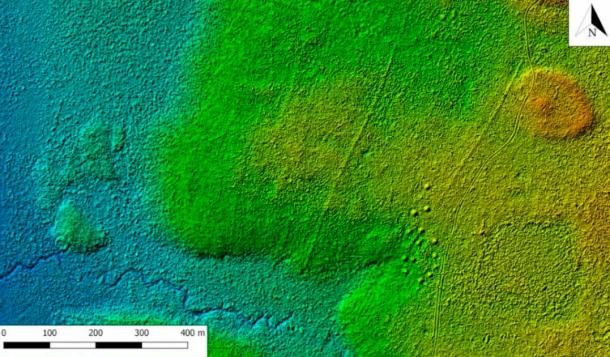
One of the last primeval forests in Europe, Białowieża forest in Poland, is the subject of a fascinating new LiDAR (Light Detection and Ranging) survey. It has yielded a vast and incredible array of hidden treasures from prehistory all the way up until World War II, including 577 ancient burial barrows, 246 charcoal kiln sites, 54 tar plants, 19 complexes of ancient farmlands, 51 semi-dugouts and 17 war cemeteries.
Some of the mounds are dated to the early Middle Ages, but most are from the Roman period, i.e., 2nd – 5th century AD. In total, the 800+ ancient monuments are of various functions, as explained by the team of scientists and archaeologists from the Institute of Archaeology of the Cardinal Stefan Wyszynski University (IA UKSW) in Warsaw.
The project was headed by Prof. Przemysław Urbańczyk. They have brought to a close a lengthy 5 year research project of the Polish half of the Białowieża Forest, which lies on the border with Belarus, reports PAP. The research has been funded by the National Science Center of Poland.
"Thanks to the use of innovative research methods, combined with numerous natural analyzes, we have obtained, despite the initial pessimism, amazing results”, the main project coordinator, Dr. Joanna Wawrzeniek from the IA UKSW told PAP. “In accordance with the current conservation doctrine, we mainly used non-invasive tests. The output information was provided by aerial laser scanning,” she added.
Aerial laser scanning is a highly efficient non-invasive research method, that allows for a comfortable bypassing of the need for archaeological excavations, by allowing a top-down view of the topography. Dense forests and tough terrain do not act as a hindrance and allow for all kinds of structures to be seen and identified – natural and human-made (like burial structures and mounds for example).
The purpose of the ancient barrows in the Polish forest is not certain, but they are thought to be burial mounds. This is where LiDAR’s efficiency draws a line. Therefore, archival queries, geophysical surveys, drilling, and survey research methods were also employed.
Mounds from the Middle Ages contained skeleton and cremation burials, but the ones from the ancient periods lacked human remains, reports Heritage Daily and may have been ritualistic .
Some of the ancient structures spotted with LiDAR in Białowieża Forest in Poland
(M. Szubski, M. Jakubczak)
Occupation Through Time
Earlier on in pre-history, people inhabited the forest on small elevations that had access to a river or a stream, which could be places inhabited for a long time. Evidence of habitation is also gained from two structures, first of which is located in the Strict Reserve of the Białowieża National Park, and the other is in the Wilczy Jar Forest District.
They did not play a defensive role, or act as strongholds, but are more likely to have played some kind of ritualistic role. Only archaeological excavations can provide insight into what this ritualistic role potentially could be.
The first structure that was examined has a diameter of 36 meters (118.1 feet), with a small embankment that is 3 meters (9.8 feet) wide. From this structure, Slavic pottery from the early and late Middle Ages was found, along with ancient flint relics. The second structure was less than half of the first in diameter – 17 meters (55.77 feet). Here, there is evidence of the site being used in two distinct periods – first in prehistory (4th-3rd century BC), and the second from the 7 th-10th century AD.
The second structure had, alongside it, a compact pavement, a shallow pit, and traces of a dowel discovered on the embankment. Also found was the fragment of a courtyard, with lightly burned animal bones in the vicinity. It also possessed a vessel from the Roman period, though there was no other proof of occupation from the Roman period.
Further publications are planned, which will describe the results of this exciting archaeological research, and with over 800 monuments discovered, there is still much to be revealed!
Top image: An ancient burial mound in Poland, Tumuli in Wesiory (representational image). Artur Henryk / Adobe Stock
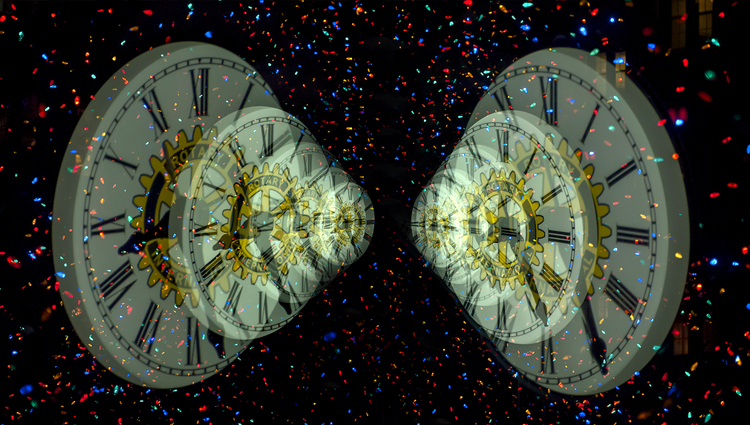
From HG Wells’ “The Time Machine” to the “Back to the Future” franchise, time travel has been a hallmark of science fiction for more than a century.
Part of its appeal has been that famous physicists like Albert Einstein have come up with theories that explain weather phenomena in ways that don’t rule out the possibility of time travel.
Einstein’s special theory of relativity proposes that time moves relative to an observer and is an illusion.
In his 1905 theory, space and time combined into a singular entity known as “space-time”, which physicists have been able to verify.
However, in an article published in The Conversation , Barak Shoshany, an assistant professor of physics at Brock University in Canada, wrote about the possibility of time travel, but with certain conditions.
One of the biggest obstacles to time travel is the practical requirement of “exotic matter,” which is matter with negative energy, as opposed to the matter around us, which consists of positive energy.
However, Professor Shoshany adds that there is no evidence that it is impossible to create exotic matter in sufficient quantities.
“In addition, other equations can be discovered that allow time travel without requiring exotic matter,” explains Professor Shoshany.
Another hurdle is the possibility of time paradoxes, where an action done in the past could have ripple effects in the present that undo the need for time travel.
A classic example of this is the famous “ grandfather paradox ”, where pundits ponder whether a time traveler would cease to exist if he went back in time to kill his grandfather when he was young.
“In physics, a paradox is not an event that can actually happen, it is a purely theoretical concept that points to an inconsistency in the theory itself,” adds the Canadian physicist.
“In other words, the paradoxes of consistency not only imply that time travel is a dangerous endeavor, but that it simply cannot be possible.”
Theoretical physicist Igor Dmitriyevich Novikov attempted to solve the problem of time travel paradoxes with a self-consistency conjecture, which essentially states that you can travel to the past, but you cannot change it.
But Professor Shoshany, along with his students Jacob Hauser and Jared Wogan studied time travel, and in a recent study they discovered that there are time travel paradoxes that the Novikov conjecture cannot resolve.
“We show that allowing for multiple histories (or in more familiar terms, parallel timelines) can resolve paradoxes that the Novikov conjecture cannot,” Shoshany writes.
“In fact, it can solve any paradox you throw at it.”
According to his theory, when a person steps out of a time machine, they arrive in a different timeline, where they can do whatever they want, including destroying their time machine five minutes before they were supposed to use it.
In this theory, changes to this new timeline would have no effect on the original timeline.
“After working on time travel paradoxes for the past three years, I have become increasingly convinced that time travel might be possible, but only if our universe can allow multiple histories to coexist,” he continues. explaining the physical
The team of researchers now seeks to formulate a concrete theory of time travel that complies with the law of general relativity.
Professor Shoshany adds that even if they do manage to find such a theory, this would not be enough to prove that time travel is possible, but it would at least mean that time travel is not ruled out by consistency paradoxes.
In short: multiple timelines would allow you to travel to a different timeline and kill your grandparents, let’s ignore the ‘why’ for the sake of debate, without causing a paradox.
Of course, once this happens, there is no reason to believe that that Universe will continue exactly as ours has.
It is likely that the “butterfly effect” of your arrival has changed it, it is also likely that you have selected a limited number of similarities, no matter how great they are.
Still, this would be a (still extremely far-fetched) way to experience the past, without affecting the present or creating paradoxes.
Every Black Hole Contains Another Universe – Equations Predict
Like part of a cosmic Russian doll, our universe may be perfectly nested inside a black hole that is itself part of a larger universe. In turn, all the black holes found so far in our universe—from the microscopic to the supermassive—may be ultimate doorways into alternate realities.
According to a mind-bending new theory, a black hole is actually a tunnel between universes—a type of wormhole. The matter the black hole attracts doesn’t collapse into a single point, as has been predicted, but rather gushes out a “white hole” at the other end of the black one, the theory goes.
In a paper published in the journal Physics Letters B, Indiana University physicist Nikodem Poplawski presents new mathematical models of the spiraling motion of matter falling into a black hole. His equations suggest such wormholes are viable alternatives to the “space-time singularities” that Albert Einstein predicted to be at the centers of black holes.
According to Einstein’s equations for general relativity, singularities are created whenever matter in a given region gets too dense, as would happen at the ultra-dense heart of a black hole.
Einstein’s theory suggests singularities take up no space, are infinitely dense, and are infinitely hot—a concept supported by numerous lines of indirect evidence but still so outlandish that many scientists find it hard to accept. If Poplawski is correct, they may no longer have to.
According to the new equations, the matter black holes absorb and seemingly destroy is actually expelled and becomes the building blocks for galaxies, stars, and planets in another reality.
A supermassive black hole sits inside the galaxy Centaurus A, as seen in a composite picture.
IMAGE COURTESY NASA/CXC/CFA/R.KRAFT ET AL., MPIFR/ESO/APEX/A.WEISS ET AL. AND ESO/WFI
Every Black Hole Contains Another Universe?
And our universe may sit in another universe's black hole, equations predict.
BYKER THAN FOR NATIONAL GEOGRAPHIC NEWS
Like part of a cosmic Russian doll, ouruniverse may be nested inside a black hole that is itself part of a larger universe.
In turn, all the black holes found so far in our universe—from the microscopic to the supermassive—may be doorways into alternate realities.
According to a mind-bending new theory, a black hole is actually a tunnel between universes—a type of wormhole. The matter the black hole attracts doesn't collapse into a single point, as has been predicted, but rather gushes out a "white hole" at the other end of the black one, the theory goes.
In a recent paper published in the journal Physics Letters B, Indiana University physicist Nikodem Poplawski presents new mathematical models of the spiraling motion of matter falling into a black hole. His equations suggest such wormholes are viable alternatives to the "space-time singularities" that Albert Einstein predicted to be at the centers of black holes.
According to Einstein's equations for general relativity, singularities are created whenever matter in a given region gets too dense, as would happen at the ultradense heart of a black hole.
Einstein's theory suggests singularities take up no space, are infinitely dense, and are infinitely hot—a concept supported by numerous lines of indirect evidence but still so outlandish that many scientists find it hard to accept.
If Poplawski is correct, they may no longer have to.
According to the new equations, the matter black holes absorb and seemingly destroy is actually expelled and becomes the building blocks for galaxies, stars, and planets in another reality.
The notion of black holes as wormholes could explain certain mysteries in modern cosmology, Poplawski said.
For example, the big bang theory says the universe started as a singularity. But scientists have no satisfying explanation for how such a singularity might have formed in the first place.
If our universe was birthed by a white hole instead of a singularity, Poplawski said, "it would solve this problem of black hole singularities and also the big bang singularity."
Wormholes might also explain gamma ray bursts, the second most powerful explosions in the universe after the big bang.
Gamma ray bursts occur at the fringes of the known universe. They appear to be associated with supernovae, or star explosions, in faraway galaxies, but their exact sources are a mystery. (Related: "Gamma-Ray Burst Caused Mass Extinction?")
Poplawski proposes that the bursts may be discharges of matter from alternate universes. The matter, he says, might be escaping into our universe through supermassive black holes—wormholes—at the hearts of those galaxies, though it's not clear how that would be possible.
There is at least one way to test Poplawski's theory: Some of our universe's black holes rotate, and if our universe was born inside a similarly revolving black hole, then our universe should have inherited the parent object's rotation.
If future experiments reveal that our universe appears to rotate in a preferred direction, it would be indirect evidence supporting his wormhole theory, Poplawski said.
Wormholes Are "Exotic Matter" Makers?
The wormhole theory may also help explain why certain features of our universe deviate from what theory predicts, according to physicists.
Based on the standard model of physics, after the big bang the curvature of the universe should have increased over time so that now—13.7 billion years later—we should seem to be sitting on the surface of a closed, spherical universe.
But observations show the universe appears flat in all directions.
What's more, data on light from the very early universe show that everything just after the big bang was a fairly uniform temperature.
That would mean that the farthest objects we see on opposite horizons of the universe were once close enough to interact and come to equilibrium, like molecules of gas in a sealed chamber.
Again, observations don't match predictions, because the objects farthest from each other in the known universe are so far apart that the time it would take to travel between them at the speed of light exceeds the age of the universe.
To explain the discrepancies, astronomers devised the concept of inflation.
Inflation states that shortly after the universe was created, it experienced a rapid growth spurt during which space itself expanded at faster-than-light speeds. The expansion stretched the universe from a size smaller than an atom to astronomical proportions in a fraction of a second.
The universe therefore appears flat, because the sphere we're sitting on is extremely large from our viewpoint—just as the sphere of Earth seems flat to someone standing in a field.
Inflation also explains how objects so far away from each other might have once been close enough to interact.
But—assuming inflation is real—astronomers have always been at pains to explain what caused it. That's where the new wormhole theory comes in.
According to Poplawski, some theories of inflation say the event was caused by "exotic matter," a theoretical substance that differs from normal matter, in part because it is repelled rather than attracted by gravity.
Based on his equations, Poplawski thinks such exotic matter might have been created when some of the first massive stars collapsed and became wormholes.
"There may be some relationship between the exotic matter that forms wormholes and the exotic matter that triggered inflation," he said.
The new model isn't the first to propose that other universes exist inside black holes. Damien Easson, a theoretical physicist at Arizona State University, has made the speculation in previous studies.
"What is new here is an actual wormhole solution in general relativity that acts as the passage from the exterior black hole to the new interior universe," said Easson, who was not involved in the new study.
"In our paper, we just speculated that such a solution could exist, but Poplawski has found an actual solution," said Easson, referring to Poplawski's equations.
Nevertheless, the idea is still very speculative, Easson said in an email.
"Is the idea possible? Yes. Is the scenario likely? I have no idea. But it is certainly an interesting possibility."
Future work in quantum gravity—the study of gravity at the subatomic level—could refine the equations and potentially support or disprove Poplawski's theory, Easson said.
Wormhole Theory No Breakthrough
Overall, the wormhole theory is interesting, but not a breakthrough in explaining the origins of our universe, said Andreas Albrecht, a physicist at the University of California, Davis, who was also not involved in the new study.
By saying our universe was created by a gush of matter from a parent universe, the theory simply shifts the original creation event into an alternate reality.
In other words, it doesn't explain how the parent universe came to be or why it has the properties it has—properties our universe presumably inherited.
"There're really some pressing problems we're trying to solve, and it's not clear that any of this is offering a way forward with that," he said.
Still, Albrecht doesn't find the idea of universe-bridging wormholes any stranger than the idea of black hole singularities, and he cautions against dismissing the new theory just because it sounds a little out there.
"Everything people ask in this business is pretty weird," he said. "You can't say the less weird [idea] is going to win, because that's not the way it's been, by any means."
Astronomer Have Discovered A Mysterious Object, Which Is 570 Billion Times Brighter Than The Sun
So bright that it pushes the energy limit of physics.
Billions of light years away, there is a giant ball of hot gas that is brighter than hundreds of billions of suns. It is hard to imagine something so bright. So what is it? Astronomers are not really sure, but they have a couple theories.
They think it may be a very rare type of supernova — called a magnetar — but one so powerful that it pushes the energy limits of physics, or in other words, the most powerful supernova ever seen as of today.
This object is so luminous that astronomers are having a really difficult time finding a way to describe it. “If it really is a magnetar, it's as if nature took everything we know about magnetars and turned it up to 11,” said Krzysztof Stanek, professor of astronomy at Ohio State University and the team's co-principal investigator, comedically implying it is off the charts on a scale of 1 to 10.The object was first spotted by the All Sky Automated Survey of Supernovae (ASAS-SN or “assassin”), which is a small network of telescopes used to detect bright objects in the universe. Although this object is ridiculously bright, it still can’t be seen by the naked eye because it is 3.8 billion light years away.
ASAS-SN, since it began in 2014, has discovered nearly 250 supernovae, however this discovery, ASASSN-15lh, stands out because of its sheer magnitude. It is 200 times more powerful than the average supernova, 570 billion times brighter than the sun, and 20 times brighter than all the stars in the Milky Way Galaxy combined.
“We have to ask, how is that even possible?” said Stanek. “It takes a lot of energy to shine that bright, and that energy has to come from somewhere.”
Todd Thompson, professor of astronomy at Ohio State, has one possible explanation. The supernova could have generated an extremely rare type of star called a millisecond magnetar — a rapidly spinning and very dense star with a crazy strong magnetic field.
This is how crazy magnetars are: to shine as bright as it does, this magnetar would have to spin at least 1,000 times a second, and convert all of that rotational energy to light with pretty much 100 percent efficiency — making it the most extreme example of a magnetar that is physically possible.
Given those constraints,” Thompson said, “will we ever see anything more luminous than this? If it truly is a magnetar, then the answer is basically no.”
Over the coming months, the Hubble Space Telescope will try to solve this mystery by giving astronomers time to see the host galaxy surrounding this object. The team may find that this bright object lies in the very center of a large galaxy — meaning the object is not a magnetar at all — and the gas around it is actually evidence of a supermassive black hole.
If that is the case, then the bright light could be explained by a new kind of event, said study co-author Christopher Kochanek, professor of astronomy at Ohio State. It would be something that has never, ever been seen before at the center of a galaxy.
Whether it is a magnetar, a supermassive black hole, or something else entirely, the results are probably going to lead to new thinking about how objects form in the universe.
Dit is de beste close-upfoto van Europa in decennia (en de chaos is niet te missen)
Ruimtesonde Juno scheerde vorige week rakelings langs de maan Europa en toen kon het ijsmaantje zijn verfomfaaide uiterlijk echt niet langer verhullen.
CAROLINE KRAAIJVANGER
Dat de scheervlucht in mooie close-upbeelden heeft geresulteerd, is geen verrassing. Vorige week lichtte NASA namelijk al een tipje van de sluier op door onderstaande foto vrij te geven.
Afbeelding: NASA / JPL-Caltech / SWRI / MSSS.
Op deze foto zien we een gebied iets ten noorden van de evenaar, ook wel aangeduid als Annwn Regio. “Het is nog een beetje vroeg, maar alles wijst erop dat Juno’s scheervlucht langs Europa een groot succes was,” vertelde Scott Bolton, hoofdonderzoeker van Juno, toen. “Deze eerste foto geeft slechts een glimp van de nieuwe inzichten die zullen voortkomen uit de gegevens die Juno tijdens zijn scheervlucht langs de ijzige maan verzamelde.”
Nieuwe foto En nu heeft NASA dus een nieuw kiekje vrijgegeven. Voor deze foto heeft Juno nog wat verder op het oppervlak van Jupiters maan Europa ingezoomd en wordt de totale chaos die daar heerst nog beter zichtbaar.
Beetje licht in de nacht Op de foto zien we een gebied dat ongeveer 150 bij 200 kilometer groot is. Ruimtesonde Juno fotografeerde het gebied toen deze zo’n 412 kilometer van het oppervlak van Europa verwijderd was en terwijl deze met een snelheid van zo’n 24 kilometer per seconde langs de maan vloog. Op dat moment was het nacht op het stukje Europa dat je hier ziet. Gelukkig werd het stukje oppervlak toch nog enigszins belicht en wel door zonlicht dat door de wolkentoppen van Jupiter gereflecteerd werd.
Afbeelding: NASA / JPL-Caltech / SwRI.
Dankzij dat kleine beetje licht is het oppervlak toch nog goed zichtbaar. Dat oppervlak bestaat uit ijs; Europa is namelijk bedekt met een kilometers dikke ijskap. Dat ‘jasje’ van ijs is echter tamelijk verfomfaaid; het wordt gekenmerkt door breuken en richels. En dat is op de close-upbeelden van Juno wel heel goed te zien.
Breuken Zo zien we tal van dunne lijntjes over het oppervlak lopen. Dat zijn breuken in de ijskap. Wat daarnaast opvalt, zijn de lijnen die in tweetallen en paralel aan elkaar over het oppervlak lopen. Het zijn waarschijnlijk omlijnde verhogingen of richels in de ijskap. Ook zijn op de foto donkere vlekken te zien. Onderzoekers vermoeden dat ze ontstaan zijn door erupties, waarbij materiaal afkomstig van onder de ijskap aan het oppervlak komt.
Waardevol “Deze foto onthult een gebied dat we nog niet eerder in zo’n hoge resolutie en onder zo’n onthullende belichting, in beeld hebben gebracht, in ongelofelijk detail,” stelt onderzoeker Heidi Becker. “Deze oppervlaktekenmerken zijn zo intrigerend. Een beter begrip van hoe ze ontstaan zijn – en hoe ze in de geschiedenis van Europa passen – kan ons weer vertellen welke interne en externe krachten de ijskap vormgeven.”
Uniek De beelden zijn daarmee heel waardevol én tamelijk uniek. De laatste keer dat een ruimtesonde Europa van zo dichtbij bekeek, is alweer twee decennia geleden. Toen scheerde ruimtesonde Galileo langs Europa.
Hoewel Juno fantastische foto’s van Europa heeft gemaakt, was dat niet het primaire doel van de ruimtesonde. Juno is namelijk specifiek ontworpen om Jupiter te onderzoeken. Maar toen die missie er bijna opzat, besloot NASA deze te verlengen en daarbij ook tijd te maken om eens een blik te werpen op enkele interessante manen van Jupiter. Eerder scheerde Juno bijvoorbeeld ook al langs Ganymedes. En in 2023 staat nog een scheervlucht gepland langs Io.
Europa mag zich de komende tijd in aanzienlijk meer aandacht verheugen. Zo maakt NASA zich zelfs op voor een missie waarin de maan centraal staat; in 2024 moet ruimtesonde Europa Clipper koers zetten richting de ijzige maan, om daar vervolgens in 2030 aan te komen. De sonde moet onder meer uit gaan zoeken hoe leefbaar Europa is. Want hoewel de maan met die kilometersdikke ijskap niet meteen heel gastvrij lijkt, wordt deze toch gezien als één van de beste kandidaten voor leven. Onder de ijskap lijkt namelijk een vloeibare oceaan schuil te gaan waarin de omstandigheden – voor zover we dat nu in kunnen schatten – gunstig kunnen zijn voor het ontstaan en gedijen van leven.
In Ancient Mesopotamia, Sex Among The Gods Shook Heaven And Earth
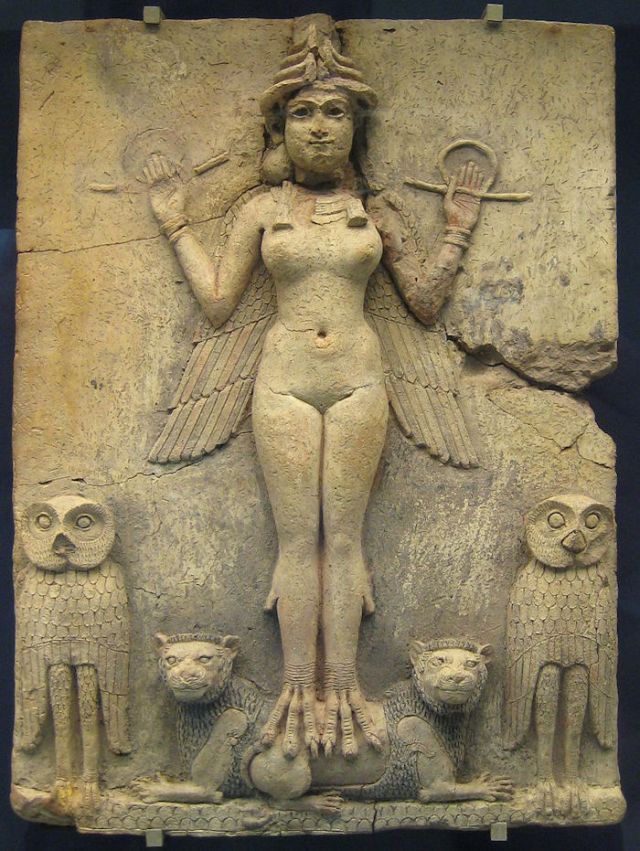
The “Burney Relief,” which is believed to represent either Ishtar, the Mesopotamian goddess of love and war, or her older sister Ereshkigal, Queen of the underworld (c. 19th or 18th century BC).
Credit: British Museum
Sexuality was central to life in ancient Mesopotamia, an area of the Ancient Near East often described as the cradle of western civilisation roughly corresponding to modern-day Iraq, Kuwait, and parts of Syria, Iran and Turkey. It was not only so for everyday humans but for kings and even deities.
Mesopotamian deities shared many human experiences, with gods marrying, procreating and sharing households and familial duties. However when love went wrong, the consequences could be dire in both heaven and on earth.
Scholars have observed the similarities between the divine “marriage machine” found in ancient literary works and the historical courtship of mortals, although it is difficult to disentangle the two, most famously in so-called “sacred marriages”, which saw Mesopotamian kings marrying deities.
Divine sex
Gods, being immortal and generally of superior status to humans, did not strictly need sexual intercourse for population maintenance, yet the practicalities of the matter seem to have done little to curb their enthusiasm.
Sexual relationships between Mesopotamian deities provided inspiration for a rich variety of narratives. These include Sumerian myths such as Enlil and Ninlil and Enki and Ninhursag, where the complicated sexual interactions between deities was shown to involve trickery, deception and disguise.
In both myths, a male deity adopts a disguise, and then attempts to gain sexual access to the female deity — or to avoid his lover’s pursuit. In the first, the goddess Ninlil follows her lover Enlil down into the Underworld, and barters sexual favours for information on Enlil’s whereabouts. The provision of a false identity in these myths is used to circumnavigate societal expectations of sex and fidelity.
Sexual betrayal could spell doom not only for errant lovers but for the whole of society. When the Queen of the Underworld, Ereshkigal, is abandoned by her lover, Nergal, she threatens to raise the dead unless he is returned to her, alluding to her right to sexual satiety.
The goddess Ishtar makes the same threat in the face of a romantic rejection from the king of Uruk in the Epic of Gilgamesh. It is interesting to note that both Ishtar and Ereshkigal, who are sisters, use one of the most potent threats at their disposal to address matters of the heart.
The plots of these myths highlight the potential for deceit to create alienation between lovers during courtship. The less-than-smooth course of love in these myths, and their complex use of literary imagery, have drawn scholarly comparisons with the works of Shakespeare.
Love poetry
Ancient authors of Sumerian love poetry, depicting the exploits of divine couples, show a wealth of practical knowledge on the stages of female sexual arousal. It’s thought by some scholars that this poetry may have historically had an educational purpose: to teach inexperienced young lovers in ancient Mesopotamia about intercourse. It’s also been suggested the texts had religious purposes, or possibly magical potency.
Several texts write of the courtship of a divine couple, Inanna (the Semitic equivalent of Ishtar) and her lover, the shepherd deity Dumuzi. The closeness of the lovers is shown through a sophisticated combination of poetry and sensuousness imagery - perhaps providing an edifying example for this year’s Bad Sex in Fiction nominees.
Ancient Sumerian cylinder seal impression showing Dumuzid being tortured in the Underworld by the galla demons.
Credit: British Museum
In one of the poems, elements of the female lover’s arousal are catalogued, from the increased lubrication of her vulva, to the “trembling” of her climax. The male partner is presented delighting in his partner’s physical form, and speaking kindly to her. The feminine perspective on lovemaking is emphasised in the texts through the description of the goddess’ erotic fantasies. These fantasies are part of the preparations of the goddess for her union, and perhaps contribute to her sexual satisfaction.
Female and male genitals could be celebrated in poetry, the presence of dark pubic hair on the goddess’ vulva is poetically described through the symbolism of a flock of ducks on a well-watered field or a narrow doorway framed in glossy black lapis-lazuli.
The representation of genitals may also have served a religious function: temple inventories have revealed votive models of pubic triangles, some made of clay or bronze. Votive offerings in the shape of vulvae have been found in the city of Assur from before 1000 BC.
Happy goddess, happy kingdom
Divine sex was not the sole preserve of the gods, but could also involve the human king. Few topics from Mesopotamia have captured the imagination as much as the concept of sacred marriage. In this tradition, the historical Mesopotamian king would be married to the goddess of love, Ishtar. There is literary evidence for such marriages from very early Mesopotamia, before 2300 BC, and the concept persevered into much later periods.
The relationship between historical kings and Mesopotamian deities was considered crucial to the successful continuation of earthly and cosmic order. For the Mesopotamian monarch, then, the sexual relationship with the goddess of love most likely involved a certain amount of pressure to perform.
Some scholars have suggested these marriages involved a physical expression between the king and another person (such as a priestess) embodying the goddess. The general view now is that if there were a physical enactment to a sacred marriage ritual it would have been conducted on a symbolic level rather than a carnal one, with the king perhaps sharing his bed with a statue of the deity.
Agricultural imagery was often used to describe the union of goddess and king. Honey, for instance, is described as sweet like the goddess’ mouth and vulva.
A love song from the city of Ur between 2100-2000 BC is dedicated to Shu-Shin, the king, and Ishtar:
In the bedchamber dripping with honey let us enjoy over and over your allure, the sweet thing. Lad, let me do the sweetest things to you. My precious sweet, let me bring you honey.
Sex in this love poetry is depicted as a pleasurable activity that enhanced loving feelings of intimacy. This sense of increased closeness was considered to bring joy to the heart of the goddess, resulting in good fortune and abundance for the entire community — perhaps demonstrating an early Mesopotamian version of the adage “happy wife, happy life”.
The diverse presentation of divine sex creates something of a mystery around the causes for the cultural emphasis on cosmic copulation. While the presentation of divine sex and marriage in ancient Mesopotamia likely served numerous purposes, some elements of the intimate relationships between gods shows some carry-over to mortal unions.
While dishonesty between lovers could lead to alienation, positive sexual interactions held countless benefits, including greater intimacy and lasting happiness.
Written by Louise Pryke - Lecturer, Languages and Literature of Ancient Israel, Macquarie University
TicTac During Lightning Storm Over Albuquerque, New Mexico Photos, UFO Sighting News.
Date of sighting: 8-7-2022
Location of sighting: Albuquerque, New Mexico, USA
UFOs are often recorded around violent weather phenomenon, leading me to conclude that the UFOs are either causing the disturbances or recording data about the effects of violent weather. Its not rare to catch a UFO during lightning storms, its actually very common. Making me think that there must be a base in New Mexico desert somewhere 5km below the ground.
Scott C. Waring - Taiwan
Eyewitness states:
Videoing lightning and reviewing video and taking screenshots of the lightning. In one of my screenshots there appeared a white tic tax looking object.
Strange UFO light hovering in evening sky and changing direction and light intensity – Canton, MI
Check out this latest UFO sighting video of a bright orb making maneuvers in the night sky above Canton, charter township of Wayne County in the U.S. state of Michigan. This happened yesterday, on 7th October 2022.
Witness report:
Walking dog at 730 pm on Friday, Oct 7. Evening sky with low cloud cover. Saw a white light hovering in the west over Ridge Rd. in Canton, near Proctor Rd. Light intensity seemed to change, which caught my attention. At first thought it was a drone, but no red or green lights visible. It hovered and moved and changed directions. Flickered out a few times and returned. Started to descend behind houses. Seemed to change to red as descended. No idea what this was. Never seen anything like this. Sound of jets were audible, but didn’t seem to be coming from the light. We live in area with lots of airport traffic overhead. This was too low and slow to be a plane. Took video and tried to convince myself it was a drone, but I’m not so sure.
The map above shows the planet Mars during the late Noachian Period, around 3.8 billion years ago, labeled with modern feature names.
Until around 3.5 billion years ago, Mars had a thicker atmosphere and was warmer than the present day, and evidence suggests that liquid water flowed on its surface, carving the many river channels that remain there today. The lakes shown on this map are lakes that are theorized to have existed around this time. In the north was an ocean, though it was probably never as high a sea level as shown here. At the north pole of the red planet was the ocean hundreds of meters deep. It is believed that much of this water was lost to space, carried away over time by the solar wind, and that which remains on Mars today is frozen in the polar ice caps and is also likely to be found frozen and buried across the planet under the surface layer of dust.
Meer van UFO'S of UAP'S, ASTRONOMIE, RUIMTEVAART, ARCHEOLOGIE, OUDHEIDKUNDE, SF-SNUFJES EN ANDERE ESOTERISCHE WETENSCHAPPEN - DE ALLERLAATSTE NIEUWTJES


 The Most Bizarre UFO Sighting Caught on Camera Till Date