Naar de inhoud

UFO'S of UAP'S, ASTRONOMIE, RUIMTEVAART, ARCHEOLOGIE, OUDHEIDKUNDE, SF-SNUFJES EN ANDERE ESOTERISCHE WETENSCHAPPEN - DE ALLERLAATSTE NIEUWTJES

UFO's of UAP'S in België en de rest van de wereld
akke.beakke.be
Ontdek de Fascinerende Wereld van UFO's en UAP's: Jouw Bron voor Onthullende Informatie! Ben jij ook gefascineerd door het onbekende? Wil je meer weten over UFO's en UAP's, niet alleen in België, maar over de hele wereld? Dan ben je op de juiste plek! België: Het Kloppend Hart van UFO-onderzoek In België is BUFON (Belgisch UFO-Netwerk) dé autoriteit op het gebied van UFO-onderzoek. Voor betrouwbare en objectieve informatie over deze intrigerende fenomenen, bezoek je zeker onze Facebook-pagina en deze blog. Maar dat is nog niet alles! Ontdek ook het Belgisch UFO-meldpunt en Caelestia, twee organisaties die diepgaand onderzoek verrichten, al zijn ze soms kritisch of sceptisch. Nederland: Een Schat aan Informatie Voor onze Nederlandse buren is er de schitterende website www.ufowijzer.nl, beheerd door Paul Harmans. Deze site biedt een schat aan informatie en artikelen die je niet wilt missen! Internationaal: MUFON - De Wereldwijde Autoriteit Neem ook een kijkje bij MUFON (Mutual UFO Network Inc.), een gerenommeerde Amerikaanse UFO-vereniging met afdelingen in de VS en wereldwijd. MUFON is toegewijd aan de wetenschappelijke en analytische studie van het UFO-fenomeen, en hun maandelijkse tijdschrift, The MUFON UFO-Journal, is een must-read voor elke UFO-enthousiasteling. Bezoek hun website op www.mufon.com voor meer informatie. Samenwerking en Toekomstvisie Sinds 1 februari 2020 is Pieter niet alleen ex-president van BUFON, maar ook de voormalige nationale directeur van MUFON in Vlaanderen en Nederland. Dit creëert een sterke samenwerking met de Franse MUFON Reseau MUFON/EUROP, wat ons in staat stelt om nog meer waardevolle inzichten te delen. Let op: Nepprofielen en Nieuwe Groeperingen Pas op voor een nieuwe groepering die zich ook BUFON noemt, maar geen enkele connectie heeft met onze gevestigde organisatie. Hoewel zij de naam geregistreerd hebben, kunnen ze het rijke verleden en de expertise van onze groep niet evenaren. We wensen hen veel succes, maar we blijven de autoriteit in UFO-onderzoek! Blijf Op De Hoogte! Wil jij de laatste nieuwtjes over UFO's, ruimtevaart, archeologie, en meer? Volg ons dan en duik samen met ons in de fascinerende wereld van het onbekende! Sluit je aan bij de gemeenschap van nieuwsgierige geesten die net als jij verlangen naar antwoorden en avonturen in de sterren! Heb je vragen of wil je meer weten? Aarzel dan niet om contact met ons op te nemen! Samen ontrafelen we het mysterie van de lucht en daarbuiten.

Archief

Actual 8-Second Footage Of UFO Landing At Holloman Air Force Base

Actual 8-Second Footage Of UFO Landing At Holloman Air Force Base
Due to the increasing number of reported sightings of unidentified flying objects (UFOs) by military aircrews, the US Senate Select Committee for Intelligence has renamed these phenomena as “unidentified aerospace-underwater phenomena.” This clarifies the scope of the agency’s investigations. For instance, the incident involving the Holloman Air Force Base occurred in May 1971.

Due to the nature of the incident, the government only released 8 seconds of the footage that it had captured during the incident to Robert Emenegger, a film maker. The base where the incident occurred is located in New Mexico. It is about six miles southwest of Alamogordo, and is known for being one of the US Air Force’s facilities in the state.

Robert Emenegger

Robert Emenegger

In 1971, Emenegger and Allan Sandler were invited by the government to discuss the possibility of a UFO sighting at the Norton Air Force Base in California. The two were then tasked with creating a documentary about the incident.

No official explanation has been given as to why the government allowed the release of secret footage of the incident for the purpose of a documentary film. It’s believed that the Nixon administration wanted to show its scientific capabilities during the 1972 presidential election.

According to Emenegger, the Air Force officials who invited him to their base promised him that they would get the real footage of the incident. The footage showed the extraterrestrial visitors emerging from the craft that approached the base. Despite his skepticism, the Air Force still gave him the footage as authentic.

Paul Shartle, a military official, claimed in a 1988 television broadcast that he saw three disc-shaped objects in the 16mm film. One of them landed on the surface of the surface, while the others flew away.

Two of the objects landed on the surface of the ground, while the third one flew away. Although one of the objects appeared to be in trouble, it managed to land on multiple pods. It also had a sliding door that was extended, and three extraterrestrials emerged from the craft. They were reportedly human-sized, and they wore tight-fitting clothes that looked like they were wearing communication devices.

The government allowed Emenegger and his production team to access top-secret files at the Department of Defense. They were also able to take help from some of the military officials who were involved in the UFO phenomenon. Some of these include William Coleman, a colonel from Project Blue Book, and George Weinbrenner, the head of the Foreign Technology division at Wright Patterson Air Force Base.

According to Emenegger, the aliens appeared to be human-sized and had vertical slits in their eyes. They also reportedly had thin and slitlike mouths. The Air Force was supposed to provide him with a film of the incident, but it was denied due to the “Watergate Scandal.” Despite this, Emenegger and Sandler were still asked to describe the incident as a hypothetical event.

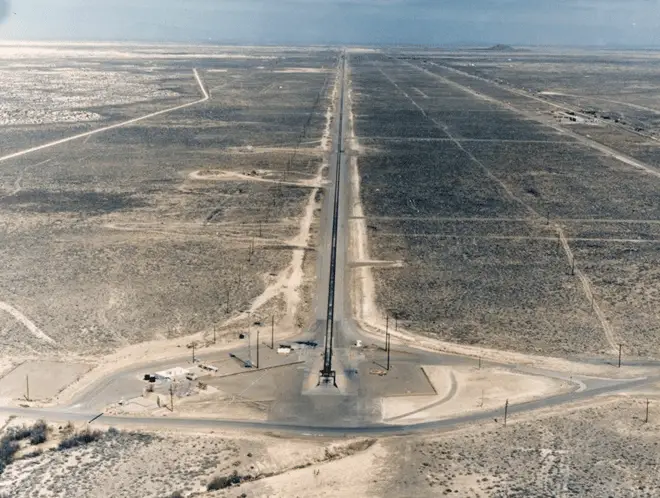
Holloman High Speed Test Track

After months of research and production, Emenegger felt cheated when the government decided not to allow him to use real footage from the incident. In 1974, he released his documentary, which was nominated for a Golden Globe award. The film was praised for its innovative use of data provided by the Department of Defense. Emenegger was also forced to add an animated version of the alleged incident that happened at the Air Force’s Wright Patterson Base.

According to Emenegger, the alleged footage was not completely missing from the original film. He noted that some of the frames used during the reconstruction process were taken from the footage that was provided by the Air Force. The viewers were able to see a bright disc moving in the distance as it flew toward the Holloman region.

VIDEO:

  • Robert Emenegger on using actual footage from a UFO landing at Holloman AFB for his 1974 documentary

In 2017, Grant Cameron, a UFO researcher, held an interview with Emenegger in his hotel room during the Alien Cosmic Expo in Toronto. He discussed the film “The Incident” and its alleged footage of an alien landing at the Holloman Air Force Base.

During the interview, Emenegger revealed that he was able to provide a key story that proved that the government was not covering up the incident.

In 1973, Pentagon approached Emenegger and Alan Sandler, two film producers based in Los Angeles. They asked them to make a documentary about the alleged alien landing. Emenegger, who was a skeptic at that time, was asked what he thought about the incident. He then said that the Air Force had provided him with footage of the alleged alien ship landing. After Emenegger provided the security manager of the base with the footage, he was allowed to use it in his documentary.

After seeing the documentary, Cameron noted that there were eight seconds of the alleged footage from the air force base in the film. He then contacted Emenegger to discuss the matter.

Video:

  • Holloman Air Force Base UFO landing

Emenegger noted that the footage did not show anything. However, he was allowed to use the small portion to imply that the incident happened. The classified portion of the footage was then removed.

The film was then re-released in 1979 with additional footage and new information. Film director Jacques Vallée added several minutes of narration. He also talked about the ancient astronaut theory.

RELATED VIDEOS ( peter2011)

{ https://www.latest-ufo-sightings.net/ }

Hoe vind je dit bericht?
Geschreven door peter om 17:59 Stuur door

NASA's Perseverance Rover Investigates Geologically Rich Mars Terrain

NASA's Perseverance Rover Investigates Geologically Rich Mars Terrain

NASA’s Perseverance rover puts its robotic arm to work around a rocky outcrop called “Skinner Ridge” in Mars’ Jezero Crater.

Perseverance Workspace at ‘Skinner Ridge’: NASA’s Perseverance rover puts its robotic arm to work around a rocky outcrop called “Skinner Ridge” in Mars’ Jezero Crater. Composed of multiple images, this mosaic shows layered sedimentary rocks in the face of a cliff in the delta, as well as one of the locations where the rover abraded a circular patch to analyze a rock’s composition.

Credits: NASA/JPL-Caltech/MSSS. Download image ›

  • The latest findings provide greater detail on a region of the Red Planet that has a watery past and is yielding promising samples for the NASA-ESA Mars Sample Return campaign.

NASA’s Perseverance rover is well into its second science campaign, collecting rock-core samples from features within an area long considered by scientists to be a top prospect for finding signs of ancient microbial life on Mars. The rover has collected four samples from an ancient river delta in the Red Planet’s Jezero Crater since July 7, bringing the total count of scientifically compelling rock samples to 12.

“We picked the Jezero Crater for Perseverance to explore because we thought it had the best chance of providing scientifically excellent samples – and now we know we sent the rover to the right location,” said Thomas Zurbuchen, NASA’s associate administrator for science in Washington. “These first two science campaigns have yielded an amazing diversity of samples to bring back to Earth by the Mars Sample Return campaign.”

Two Perseverance Sampling Locations in Jezero’s Delta

Two Perseverance Sampling Locations in Jezero’s Delta: NASA’s Perseverance rover collected rock samples for possible return to Earth in the future from two locations seen in this image of Mars’ Jezero Crater: “Wildcat Ridge” (lower left) and “Skinner Ridge” (upper right).

Credits: NASA/JPL-Caltech/ASU/MSSS. Download image ›

Twenty-eight miles (45 kilometers) wide, Jezero Crater hosts a delta – an ancient fan-shaped feature that formed about 3.5 billion years ago at the convergence of a Martian river and a lake. Perseverance is currently investigating the delta’s sedimentary rocks, formed when particles of various sizes settled in the once-watery environment. During its first science campaign, the rover explored the crater’s floor, finding igneous rock, which forms deep underground from magma or during volcanic activity at the surface.

“The delta, with its diverse sedimentary rocks, contrasts beautifully with the igneous rocks – formed from crystallization of magma – discovered on the crater floor,” said Perseverance project scientist Ken Farley of Caltech in Pasadena, California. “This juxtaposition provides us with a rich understanding of the geologic history after the crater formed and a diverse sample suite. For example, we found a sandstone that carries grains and rock fragments created far from Jezero Crater – and a mudstone that includes intriguing organic compounds.”

Sample Collection and Rock Analysis at ‘Wildcat Ridge’

Sample Collection and Rock Analysis at ‘Wildcat Ridge’: Composed of multiple images from NASA’s Perseverance Mars rover, this mosaic shows a rocky outcrop called “Wildcat Ridge,” where the rover extracted two rock cores and abraded a circular patch to investigate the rock’s composition.

Credits: NASA/JPL-Caltech/ASU/MSSS. Download image ›

“Wildcat Ridge” is the name given to a rock about 3 feet (1 meter) wide that likely formed billions of years ago as mud and fine sand settled in an evaporating saltwater lake. On July 20, the rover abraded some of the surface of Wildcat Ridge so it could analyze the area with the instrument called Scanning Habitable Environments with Raman & Luminescence for Organics & Chemicals, or SHERLOC.

SHERLOC’s analysis indicates the samples feature a class of organic molecules that are spatially correlated with those of sulfate minerals. Sulfate minerals found in layers of sedimentary rock can yield significant information about the aqueous environments in which they formed.

Perseverance Explores the Jezero Crater Delta: NASA’s Perseverance Mars Rover has arrived at an ancient delta in Jezero Crater, one of the best places on the Red Planet to search for potential signs of ancient life. The delta is an area where scientists surmise that a river once flowed billions of years ago into a lake and deposited sediments in a fan shape.

Credits: NASA/JPL-Caltech/ASU/MSSS. Download video ›

What Is Organic Matter?

Organic molecules consist of a wide variety of compounds made primarily of carbon and usually include hydrogen and oxygen atoms. They can also contain other elements, such as nitrogen, phosphorus, and sulfur. While there are chemical processes that produce these molecules that don’t require life, some of these compounds are the chemical building blocks of life. The presence of these specific molecules is considered to be a potential biosignature – a substance or structure that could be evidence of past life but may also have been produced without the presence of life.

In 2013, NASA’s Curiosity Mars rover found evidence of organic matter in rock-powder samples, and Perseverance has detected organics in Jezero Crater before. But unlike that previous discovery, this latest detection was made in an area where, in the distant past, sediment and salts were deposited into a lake under conditions in which life could potentially have existed. In its analysis of Wildcat Ridge, the SHERLOC instrument registered the most abundant organic detections on the mission to date.

“In the distant past, the sand, mud, and salts that now make up the Wildcat Ridge sample were deposited under conditions where life could potentially have thrived,” said Farley. “The fact the organic matter was found in such a sedimentary rock – known for preserving fossils of ancient life here on Earth – is important. However, as capable as our instruments aboard Perseverance are, further conclusions regarding what is contained in the Wildcat Ridge sample will have to wait until it’s returned to Earth for in-depth study as part of the agency’s Mars Sample Return campaign.”

The first step in the NASA-ESA (European Space Agency) Mars Sample Return campaign began when Perseverance cored its first rock sample in September 2021. Along with its rock-core samples, the rover has collected one atmospheric sample and two witness tubes, all of which are stored in the rover’s belly.

The geologic diversity of the samples already carried in the rover is so good that the rover team is looking into depositing select tubes near the base of the delta in about two months. After depositing the cache, the rover will continue its delta explorations.

“I’ve studied Martian habitability and geology for much of my career and know first-hand the incredible scientific value of returning a carefully collected set of Mars rocks to Earth,” said Laurie Leshin, director of NASA’s Jet Propulsion Laboratory. “That we are weeks from deploying Perseverance’s fascinating samples and mere years from bringing them to Earth so scientists can study them in exquisite detail is truly phenomenal. We will learn so much.”

More About the Mission

A key objective for Perseverance’s mission on Mars is astrobiology, including caching samples that may contain signs of ancient microbial life. The rover will characterize the planet’s geology and past climate, pave the way for human exploration of the Red Planet, and be the first mission to collect and cache Martian rock and regolith.

Subsequent NASA missions, in cooperation with ESA, would send spacecraft to Mars to collect these sealed samples from the surface and return them to Earth for in-depth analysis.

The Mars 2020 Perseverance mission is part of NASA’s Moon to Mars exploration approach, which includes Artemis missions to the Moon that will help prepare for human exploration of the Red Planet.

JPL, which is managed for NASA by Caltech, built and manages operations of the Perseverance rover.

For more about Perseverance:

Explore with Perseverance ›

  • Mars Rock Samples Collected by Perseverance Rover

Mars Rock Samples Collected by Perseverance Rover ›

  • Location Map

Where Is Perseverance Right Now?

{ http://www.nasa.gov/ }

Hoe vind je dit bericht?
Geschreven door peter om 00:55 Stuur door

NASA's Perseverance Rover Investigates Geologically Rich Mars Terrain

NASA's Perseverance Rover Investigates Geologically Rich Mars Terrain

NASA’s Perseverance rover puts its robotic arm to work around a rocky outcrop called “Skinner Ridge” in Mars’ Jezero Crater.

Perseverance Workspace at ‘Skinner Ridge’: NASA’s Perseverance rover puts its robotic arm to work around a rocky outcrop called “Skinner Ridge” in Mars’ Jezero Crater. Composed of multiple images, this mosaic shows layered sedimentary rocks in the face of a cliff in the delta, as well as one of the locations where the rover abraded a circular patch to analyze a rock’s composition.

Credits: NASA/JPL-Caltech/MSSS. Download image ›

  • The latest findings provide greater detail on a region of the Red Planet that has a watery past and is yielding promising samples for the NASA-ESA Mars Sample Return campaign.

NASA’s Perseverance rover is well into its second science campaign, collecting rock-core samples from features within an area long considered by scientists to be a top prospect for finding signs of ancient microbial life on Mars. The rover has collected four samples from an ancient river delta in the Red Planet’s Jezero Crater since July 7, bringing the total count of scientifically compelling rock samples to 12.

“We picked the Jezero Crater for Perseverance to explore because we thought it had the best chance of providing scientifically excellent samples – and now we know we sent the rover to the right location,” said Thomas Zurbuchen, NASA’s associate administrator for science in Washington. “These first two science campaigns have yielded an amazing diversity of samples to bring back to Earth by the Mars Sample Return campaign.”

Two Perseverance Sampling Locations in Jezero’s Delta

Two Perseverance Sampling Locations in Jezero’s Delta: NASA’s Perseverance rover collected rock samples for possible return to Earth in the future from two locations seen in this image of Mars’ Jezero Crater: “Wildcat Ridge” (lower left) and “Skinner Ridge” (upper right).

Credits: NASA/JPL-Caltech/ASU/MSSS. Download image ›

Twenty-eight miles (45 kilometers) wide, Jezero Crater hosts a delta – an ancient fan-shaped feature that formed about 3.5 billion years ago at the convergence of a Martian river and a lake. Perseverance is currently investigating the delta’s sedimentary rocks, formed when particles of various sizes settled in the once-watery environment. During its first science campaign, the rover explored the crater’s floor, finding igneous rock, which forms deep underground from magma or during volcanic activity at the surface.

“The delta, with its diverse sedimentary rocks, contrasts beautifully with the igneous rocks – formed from crystallization of magma – discovered on the crater floor,” said Perseverance project scientist Ken Farley of Caltech in Pasadena, California. “This juxtaposition provides us with a rich understanding of the geologic history after the crater formed and a diverse sample suite. For example, we found a sandstone that carries grains and rock fragments created far from Jezero Crater – and a mudstone that includes intriguing organic compounds.”

Sample Collection and Rock Analysis at ‘Wildcat Ridge’

Sample Collection and Rock Analysis at ‘Wildcat Ridge’: Composed of multiple images from NASA’s Perseverance Mars rover, this mosaic shows a rocky outcrop called “Wildcat Ridge,” where the rover extracted two rock cores and abraded a circular patch to investigate the rock’s composition.

Credits: NASA/JPL-Caltech/ASU/MSSS. Download image ›

“Wildcat Ridge” is the name given to a rock about 3 feet (1 meter) wide that likely formed billions of years ago as mud and fine sand settled in an evaporating saltwater lake. On July 20, the rover abraded some of the surface of Wildcat Ridge so it could analyze the area with the instrument called Scanning Habitable Environments with Raman & Luminescence for Organics & Chemicals, or SHERLOC.

SHERLOC’s analysis indicates the samples feature a class of organic molecules that are spatially correlated with those of sulfate minerals. Sulfate minerals found in layers of sedimentary rock can yield significant information about the aqueous environments in which they formed.

Perseverance Explores the Jezero Crater Delta: NASA’s Perseverance Mars Rover has arrived at an ancient delta in Jezero Crater, one of the best places on the Red Planet to search for potential signs of ancient life. The delta is an area where scientists surmise that a river once flowed billions of years ago into a lake and deposited sediments in a fan shape.

Credits: NASA/JPL-Caltech/ASU/MSSS. Download video ›

What Is Organic Matter?

Organic molecules consist of a wide variety of compounds made primarily of carbon and usually include hydrogen and oxygen atoms. They can also contain other elements, such as nitrogen, phosphorus, and sulfur. While there are chemical processes that produce these molecules that don’t require life, some of these compounds are the chemical building blocks of life. The presence of these specific molecules is considered to be a potential biosignature – a substance or structure that could be evidence of past life but may also have been produced without the presence of life.

In 2013, NASA’s Curiosity Mars rover found evidence of organic matter in rock-powder samples, and Perseverance has detected organics in Jezero Crater before. But unlike that previous discovery, this latest detection was made in an area where, in the distant past, sediment and salts were deposited into a lake under conditions in which life could potentially have existed. In its analysis of Wildcat Ridge, the SHERLOC instrument registered the most abundant organic detections on the mission to date.

“In the distant past, the sand, mud, and salts that now make up the Wildcat Ridge sample were deposited under conditions where life could potentially have thrived,” said Farley. “The fact the organic matter was found in such a sedimentary rock – known for preserving fossils of ancient life here on Earth – is important. However, as capable as our instruments aboard Perseverance are, further conclusions regarding what is contained in the Wildcat Ridge sample will have to wait until it’s returned to Earth for in-depth study as part of the agency’s Mars Sample Return campaign.”

The first step in the NASA-ESA (European Space Agency) Mars Sample Return campaign began when Perseverance cored its first rock sample in September 2021. Along with its rock-core samples, the rover has collected one atmospheric sample and two witness tubes, all of which are stored in the rover’s belly.

The geologic diversity of the samples already carried in the rover is so good that the rover team is looking into depositing select tubes near the base of the delta in about two months. After depositing the cache, the rover will continue its delta explorations.

“I’ve studied Martian habitability and geology for much of my career and know first-hand the incredible scientific value of returning a carefully collected set of Mars rocks to Earth,” said Laurie Leshin, director of NASA’s Jet Propulsion Laboratory. “That we are weeks from deploying Perseverance’s fascinating samples and mere years from bringing them to Earth so scientists can study them in exquisite detail is truly phenomenal. We will learn so much.”

More About the Mission

A key objective for Perseverance’s mission on Mars is astrobiology, including caching samples that may contain signs of ancient microbial life. The rover will characterize the planet’s geology and past climate, pave the way for human exploration of the Red Planet, and be the first mission to collect and cache Martian rock and regolith.

Subsequent NASA missions, in cooperation with ESA, would send spacecraft to Mars to collect these sealed samples from the surface and return them to Earth for in-depth analysis.

The Mars 2020 Perseverance mission is part of NASA’s Moon to Mars exploration approach, which includes Artemis missions to the Moon that will help prepare for human exploration of the Red Planet.

JPL, which is managed for NASA by Caltech, built and manages operations of the Perseverance rover.

For more about Perseverance:

{ http://www.nasa.gov/ }

Hoe vind je dit bericht?
Geschreven door peter om 00:51 Stuur door

DeepMind AI invents faster algorithms to solve tough maths puzzles

DeepMind AI invents faster algorithms to solve tough maths puzzles

AlphaTensor was designed to perform matrix multiplications, but the same approach could be used to tackle other mathematical challenges.

Credit: DeepMind

Researchers at DeepMind in London have shown that artificial intelligence (AI) can find shortcuts in a fundamental type of mathematical calculation, by turning the problem into a game and then leveraging the machine-learning techniques that another of the company’s AIs used to beat human players in games such as Go and chess.

The AI discovered algorithms that break decades-old records for computational efficiency, and the team’s findings, published on 5 October in Nature1, could open up new paths to faster computing in some fields.

“It is very impressive,” says Martina Seidl, a computer scientist at Johannes Kepler University in Linz, Austria. “This work demonstrates the potential of using machine learning for solving hard mathematical problems.”

Algorithms chasing algorithms

Advances in machine learning have allowed researchers to develop AIs that generate language, predict the shapes of proteins2 or detect hackers. Increasingly, scientists are turning the technology back on itself, using machine learning to improve its own underlying algorithms.

RELATED

The AI that DeepMind developed — called AlphaTensor — was designed to perform a type of calculation called matrix multiplication. This involves multiplying numbers arranged in grids — or matrices — that might represent sets of pixels in images, air conditions in a weather model or the internal workings of an artificial neural network. To multiply two matrices together, the mathematician must multiply individual numbers and add them in specific ways to produce a new matrix. In 1969, mathematician Volker Strassen found a way to multiply a pair of 2 × 2 matrices using only seven multiplications3, rather than eight, prompting other researchers to search for more such tricks.

DeepMind’s approach uses a form of machine learning called reinforcement learning, in which an AI ‘agent’ (often a neural network) learns to interact with its environment to achieve a multistep goal, such as winning a board game. If it does well, the agent is reinforced — its internal parameters are updated to make future success more likely.

AlphaTensor also incorporates a game-playing method called tree search, in which the AI explores the outcomes of branching possibilities while planning its next action. In choosing which paths to prioritize during tree search, it asks a neural network to predict the most promising actions at each step. While the agent is still learning, it uses the outcomes of its games as feedback to hone the neural network, which further improves the tree search, providing more successes to learn from.

Each game is a one-player puzzle that starts with a 3D tensor — a grid of numbers — filled in correctly. AlphaTensor aims to get all the numbers to zero in the fewest steps, selecting from a collection of allowable moves. Each move represents a calculation that, when inverted, combines entries from the first two matrices to create an entry in the output matrix. The game is difficult, because at each step the agent might need to select from trillions of moves. “Formulating the space of algorithmic discovery is very intricate,” co-author Hussein Fawzi, a computer scientist at DeepMind, said at a press briefing, but “even harder is, how can we navigate in this space”.

To give AlphaTensor a leg up during training, the researchers showed it some examples of successful games, so that it wouldn’t be starting from scratch. And because the order of actions doesn’t matter, when it found a successful series of moves, they also presented a reordering of those moves as an example for it to learn from.

Efficient calculations

The researchers tested the system on input matrices up to 5 × 5. In many cases, AlphaTensor rediscovered shortcuts that had been devised by Strassen and other mathematicians, but in others it broke new ground. When multiplying a 4 × 5 matrix by a 5 × 5 matrix, for example, the previous best algorithm required 80 individual multiplications. AlphaTensor uncovered an algorithm that needed only 76.

“It has got this amazing intuition by playing these games,” said Pushmeet Kohli, a computer scientist at DeepMind, during the press briefing. Fawzi tells Nature that “AlphaTensor embeds no human intuition about matrix multiplication”, so “the agent in some sense needs to build its own knowledge about the problem from scratch”.

RELATED

The researchers tackled larger matrix multiplications by creating a meta-algorithm that first breaks problems down into smaller ones. When crossing an 11 × 12 and a 12 × 12 matrix, their method reduced the number of required multiplications from 1,022 to 990.

AlphaTensor can also optimize matrix multiplication for specific hardware. The team trained the agent on two different processors, reinforcing it not only when it took fewer actions but also when it reduced runtime. In many cases, the AI sped up matrix multiplications by several per cent compared with previous algorithms. And sometimes the fastest algorithms on one processor were not the fastest on the other.

The same general approach could have applications in other kinds of mathematical operation, the researchers say, such as decomposing complex waves or other mathematical objects into simpler ones. “This development would be very exciting if it can be used in practice,” says Virginia Vassilevska Williams, a computer scientist at Massachusetts Institute of Technology in Cambridge. “A boost in performance would improve a lot of applications.”

Grey Ballard, a computer scientist at Wake Forest University in Winston-Salem, North Carolina, sees potential for future human–computer collaborations. “While we may be able to push the boundaries a little further with this computational approach,” he says, “I’m excited for theoretical researchers to start analysing the new algorithms they’ve found to find clues for where to search for the next breakthrough.”

  • doi: https://doi.org/10.1038/d41586-022-03166-w

References

  1. Fawzi, A. et al. Nature 610, 47–53 (2022).

    Article Google Scholar 

  2. Jumper, J. et al. Nature 596, 583–589 (2021).

    PubMed Article Google Scholar 

  3. Strassen, V. Numer. Math. 13, 354–356 (1969).

    Article Google Scholar 

Download references

Related Articles

{https://www.nature.com/ }

Hoe vind je dit bericht?
Geschreven door peter om 20:05 Stuur door

Here are the High-Resolution Images of Europa Captured by Juno During its Recent Flyby

Here are the High-Resolution Images of Europa Captured by Juno During its Recent Flyby

It’s been over twenty-two years since we’ve been able to see Jupiter’s enticing moon Europa close-up. But now the Juno spacecraft has made its closest pass of Europa, sending back some amazing pictures of the icy mini-world, which likely has an ocean that contains more water than all of Earth’s oceans combined.

Observations from the spacecraft’s 45th orbit around Jupiter brought it close enough to give us some of the best views of Europa that we’ve ever had.

Another view of Europa from Juno’s JunoCam. Credit: NASA/JPL-Caltech/SwRI/MSSS/processed by Kevin M. Gill.

The Galileo mission was the last spacecraft that flew past Europa during its 8-year mission, which started in 1995. Galileo flew past Europa at 350 km (218 miles) away in 2000.

Most of the images here were taken by JunoCam, the outstanding public outreach camera, and images here have been downloaded and processed by members of the public who have been actively processing Juno’s images since it reached Jupiter in 2016. The images here are by Kevin M. Gill, as well some below by with additional editing by Navaneeth Krishnan and AkaSci on Twitter.

Surface features of Jupiter’s icy moon Europa are revealed in an image obtained by Juno’s Stellar Reference Unit (SRU) during the spacecraft’s Sept. 29, 2022, flyby. Credit: NASA/JPL-Caltech/SwRI

However, NASA says this image, above, is the highest-resolution photo that Juno has ever taken of a specific portion of Europa’s surface and it was taken by another camera, the Stellar Reference Unit (SRU), a star camera used to orient the spacecraft.

It obtained the black-and-white image during the spacecraft’s flyby of Europa on Sept. 29, 2022, at a distance of about 412 km (256 miles). It reveals a detailed view of a puzzling region of the moon’s heavily fractured icy outer crust.

The image covers about 150 kilometers (93 miles) by 200 km (125 miles) of Europa’s surface, revealing a region crisscrossed with a network of fine grooves and double ridges (pairs of long parallel lines indicating elevated features in the ice).

Near the upper right of the image, as well as just to the right and below center, are dark stains possibly linked to something from below erupting onto the surface, possibly a collapse in the ice shell.

The SRU has a resolution that ranges from 256 to 340 meters (840 to 1,115 feet) per pixel, and the image was captured as Juno raced past at about 24 km per second (15 miles per second) over a part of the surface that was in nighttime, dimly lit by “Jupiter shine” – sunlight reflecting off Jupiter’s cloud tops.

“This image is unlocking an incredible level of detail in a region not previously imaged at such resolution and under such revealing illumination conditions,” said Heidi Becker, the lead co-investigator for the SRU. “The team’s use of a star-tracker camera for science is a great example of Juno’s groundbreaking capabilities. These features are so intriguing. Understanding how they formed – and how they connect to Europa’s history – informs us about internal and external processes shaping the icy crust.”

The SRU was designed for low-light conditions, and the team said it has also proven itself a valuable science tool, discovering shallow lightning in Jupiter’s atmosphere, imaging Jupiter’s enigmatic ring system, and now providing a glimpse of some of Europa’s most fascinating geologic formations.

In addition to the images of Europa, all of the spacecraft’s science instruments were collecting data both during the Europa flyby and then again as Juno flew over Jupiter’s poles just 7 ½ hours later.

“Juno started out completely focused on Jupiter. The team is really excited that during our extended mission, we expanded our investigation to include three of the four Galilean satellites and Jupiter’s rings,” said Juno Principal Investigator Scott Bolton. “With this flyby of Europa, Juno has now seen close-ups of two of the most interesting moons of Jupiter, and their ice shell crusts look very different from each other. In 2023, Io, the most volcanic body in the solar system, will join the club.”

Further reading/viewing:

More information about the Juno Mission at NASA and SWRI
JunoCam

The post Here are the High-Resolution Images of Europa Captured by Juno During its Recent Flyby appeared first on Universe Today.

Citizen scientist Andrea Luck processed this global image of Jupiter's moon Europa, taken by NASA's Juno orbiter on September 29, 2022.

Citizen scientist Andrea Luck processed this global image of Jupiter's moon Europa, taken by NASA's Juno orbiter on September 29, 2022

NASA/JPL-CALTECH/SWRI/MSSS/ANDREALUCK

The complex, ice-covered surface of Jupiter’s moon Europa was captured by NASA’s Juno spacecraft during a flyby on Sept. 29, 2022. At closest approach, the spacecraft came within a distance of about 219 miles (352 kilometers).
The complex, ice-covered surface of Jupiter’s moon Europa was captured by NASA’s Juno spacecraft during a flyby on Sept. 29, 2022. At closest approach, the spacecraft came within a distance of about 219 miles (352 kilometers).
NASA/JPL-CALTECH/SWRI/MSSS
Citizen scientist Andrea Luck processed this global image of Jupiter's moon Europa, taken by NASA's Juno orbiter on September 29, 2022.

NASA/JPL-CALTECH/SWRI/MSSS/ANDREALUCK
Citizen scientist Kevin Gill processed this global image of Jupiter's moon Europa, taken by NASA's Juno orbiter on September 29, 2022.
Citizen scientist Kevin M. Gill processed this global image of Jupiter's moon Europa, taken byNASA's Juno orbiter on September 29, 2022. 
NASA/JPL-CALTECH/SWRI/MSSS/KEVIN M. GILL
Citizen scientist Kevin M. Gill processed this global image of Jupiter's moon Europa, taken by NASA's Juno orbiter on September 29, 2022.

Citizen scientist Kevin M. Gill processed this global image of Jupiter's moon Europa, taken by NASA's Juno orbiter on September 29, 2022.

NASA/JPL-CALTECH/SWRI/MSSS/KEVIN M. GILL

Citizen scientist Kevin M. Gill processed this global image of Jupiter's moon Europa, taken by NASA's Juno orbiter on September 29, 2022.

Citizen scientist Kevin M. Gill processed this global image of Jupiter's moon Europa, taken by NASA's Juno orbiter on September 29, 2022. 

NASA/JPL-CALTECH/SWRI/MSSS/KEVIN M. GILL

Source: 
Hoe vind je dit bericht?
Geschreven door peter om 18:31 Stuur door

The CIA, UFOs and “Material”

In this short episode, I breakdown a few documents likely related, describing UFO “material” years after the U.S. government / military’s investigation into UFOs known as Project Blue Book.

The documents show that within the walls of the CIA, despite the U.S. government’s public stance, officials and personnel continued to watch UFO developments. They even reference “material” and something “handcarried” to the office of one of the CIA scientists. What was it? A document? A post it note? Piece of wreckage?

Here’s a breakdown, along with what happened when The Black Vault tried to get both documents further declassified.

RELATED VIDEOS, selected and posted by peter2011

{ https://www.theblackvault.com/ }

Hoe vind je dit bericht?
Geschreven door peter om 17:55 Stuur door

NASA’s DART Mission Hits Asteroid in First-Ever Planetary Defense Test

After 10 months flying in space, NASA’s Double Asteroid Redirection Test (DART) – the world’s first planetary defense technology demonstration – successfully impacted its asteroid target on Monday, the agency’s first attempt to move an asteroid in space.

Mission control at the Johns Hopkins Applied Physics Laboratory (APL) in Laurel, Maryland, announced the successful impact at 7:14 p.m. EDT.

As a part of NASA’s overall planetary defense strategy, DART’s impact with the asteroid Dimorphos demonstrates a viable mitigation technique for protecting the planet from an Earth-bound asteroid or comet, if one were discovered.

“At its core, DART represents an unprecedented success for planetary defense, but it is also a mission of unity with a real benefit for all humanity,” said NASA Administrator Bill Nelson. “As NASA studies the cosmos and our home planet, we’re also working to protect that home, and this international collaboration turned science fiction into science fact, demonstrating one way to protect Earth.”

DART targeted the asteroid moonlet Dimorphos, a small body just 530 feet (160 meters) in diameter. It orbits a larger, 2,560-foot (780-meter) asteroid called Didymos. Neither asteroid poses a threat to Earth.

The mission’s one-way trip confirmed NASA can successfully navigate a spacecraft to intentionally collide with an asteroid to deflect it, a technique known as kinetic impact.

The investigation team will now observe Dimorphos using ground-based telescopes to confirm that DART’s impact altered the asteroid’s orbit around Didymos. Researchers expect the impact to shorten Dimorphos’ orbit by about 1%, or roughly 10 minutes; precisely measuring how much the asteroid was deflected is one of the primary purposes of the full-scale test.

“Planetary Defense is a globally unifying effort that affects everyone living on Earth,” said Thomas Zurbuchen, associate administrator for the Science Mission Directorate at NASA Headquarters in Washington. “Now we know we can aim a spacecraft with the precision needed to impact even a small body in space. Just a small change in its speed is all we need to make a significant difference in the path an asteroid travels.”

The spacecraft’s sole instrument, the Didymos Reconnaissance and Asteroid Camera for Optical navigation (DRACO), together with a sophisticated guidance, navigation and control system that works in tandem with Small-body Maneuvering Autonomous Real Time Navigation (SMART Nav) algorithms, enabled DART to identify and distinguish between the two asteroids, targeting the smaller body.

These systems guided the 1,260-pound (570-kilogram) box-shaped spacecraft through the final 56,000 miles (90,000 kilometers) of space into Dimorphos, intentionally crashing into it at roughly 14,000 miles (22,530 kilometers) per hour to slightly slow the asteroid’s orbital speed. DRACO’s final images, obtained by the spacecraft seconds before impact, revealed the surface of Dimorphos in close-up detail.

Fifteen days before impact, DART’s CubeSat companion Light Italian CubeSat for Imaging of Asteroids (LICIACube), provided by the Italian Space Agency, deployed from the spacecraft to capture images of DART’s impact and of the asteroid’s resulting cloud of ejected matter. In tandem with the images returned by DRACO, LICIACube’s images are intended to provide a view of the collision’s effects to help researchers better characterize the effectiveness of kinetic impact in deflecting an asteroid. Because LICIACube doesn’t carry a large antenna, images will be downlinked to Earth one by one in the coming weeks.

“DART’s success provides a significant addition to the essential toolbox we must have to protect Earth from a devastating impact by an asteroid,” said Lindley Johnson, NASA’s Planetary Defense Officer. “This demonstrates we are no longer powerless to prevent this type of natural disaster. Coupled with enhanced capabilities to accelerate finding the remaining hazardous asteroid population by our next Planetary Defense mission, the Near-Earth Object (NEO) Surveyor, a DART successor could provide what we need to save the day.”

With the asteroid pair within 7 million miles (11 million kilometers) of Earth, a global team is using dozens of telescopes stationed around the world and in space to observe the asteroid system. Over the coming weeks, they will characterize the ejecta produced and precisely measure Dimorphos’ orbital change to determine how effectively DART deflected the asteroid. The results will help validate and improve scientific computer models critical to predicting the effectiveness of this technique as a reliable method for asteroid deflection.

“This first-of-its-kind mission required incredible preparation and precision, and the team exceeded expectations on all counts,” said APL Director Ralph Semmel. “Beyond the truly exciting success of the technology demonstration, capabilities based on DART could one day be used to change the course of an asteroid to protect our planet and preserve life on Earth as we know it.”

Roughly four years from now, the European Space Agency’s Hera project will conduct detailed surveys of both Dimorphos and Didymos, with a particular focus on the crater left by DART’s collision and a precise measurement of Dimorphos’ mass.

Johns Hopkins APL manages the DART mission for NASA’s Planetary Defense Coordination Office as a project of the agency’s Planetary Missions Program Office.

For more information about DART, visit:

{ https://www.theblackvault.com/ }

Hoe vind je dit bericht?
Geschreven door peter om 17:40 Stuur door

Dark Craft Over Mundelein, Illinois On Oct 5, 2022, Video, UFO Sighting News.

Dark Craft Over Mundelein, Illinois On Oct 5, 2022, Video, UFO Sighting News.

ovni,%20omni,MUFON,%20%E7%9B%AE%E6%92%83%E3%80%81%E3%82%A8%E3%82%A4%E3%83%AA%E3%82%A2%E3%83%B3,%20%20UFO,%20UFOs,%20sighting,%20sightings,%20alien,%20aliens,%20ET,%20anomaly,%20anomalies,%20ancient,%20archaeology,%20astrobiology,%20paleontology,%20waarneming,%20.png

Date of sighting: Oct 5, 2022

Location of sighting: Mundelein, Illinois, USA
 
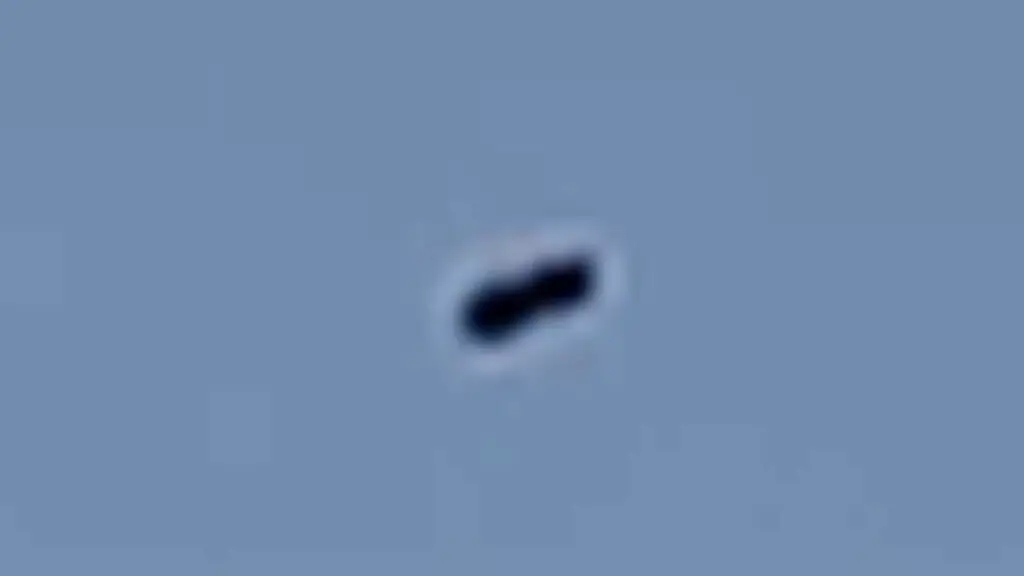
Watch this great catch that was made while fishing in Mundelein, Illinois this week. The object was black, circular on two ends, but thin in the middle. It also kept its flat surface perfectly balanced to the ground. Dark UFOs are often seen near the water areas just as this one is seen. UFOs often travel below water as easily as in the air or space. Absolute proof that aliens exist in Illinois, USA. 
Scott C. Waring - Taiwan 
 
Eyewitness states: 
Noticed what looked like 2 thick vinyl records spinning in the air. At first we thought they were balloons but it remained level so I started recording. We are in a flight path and saw several planes before during and after the sighting. While recording the object continues spinning at a leveled rotation and not floating away like a balloon. The object passes a cloud and seems to glow.

{ https://www.ufosightingsdaily.com/ }

Hoe vind je dit bericht?
Geschreven door peter om 17:33 Stuur door

UFO passes by boat at sunset Mundelein, Illinois 5-Oct-2022

UFO passes by boat at sunset Mundelein, Illinois 5-Oct-2022

louisiana-ufo-sighting-1024x576.jpg

This daytime glowing object was flying across the daytime sky over Mundelein, a village in Lake County, Illinois, United States and a northern suburb of Chicago. Filmed on 5th October 2022.

Witness report:

Noticed what looked like 2 thick vinyl records spinning in the air. At first we thought they were balloons but it remained level so I started recording. We are in a flight path and saw several planes before during and after the sighting. While recording, the object continues spinning at a leveled rotation and not floating away like a balloon. The object passes a cloud and seems to glow.

{  https://www.latest-ufo-sightings.net/ }

Hoe vind je dit bericht?
Geschreven door peter om 15:51 Stuur door

Meer van UFO'S of UAP'S, ASTRONOMIE, RUIMTEVAART, ARCHEOLOGIE, OUDHEIDKUNDE, SF-SNUFJES EN ANDERE ESOTERISCHE WETENSCHAPPEN - DE ALLERLAATSTE NIEUWTJES

↑ Terug naar de berichten