Ontdek de Fascinerende Wereld van UFO's en UAP's: Jouw Bron voor Onthullende Informatie!
Ben jij ook gefascineerd door het onbekende? Wil je meer weten over UFO's en UAP's, niet alleen in België, maar over de hele wereld? Dan ben je op de juiste plek!
België: Het Kloppend Hart van UFO-onderzoek
In België is BUFON (Belgisch UFO-Netwerk) dé autoriteit op het gebied van UFO-onderzoek. Voor betrouwbare en objectieve informatie over deze intrigerende fenomenen, bezoek je zeker onze Facebook-pagina en deze blog. Maar dat is nog niet alles! Ontdek ook het Belgisch UFO-meldpunt en Caelestia, twee organisaties die diepgaand onderzoek verrichten, al zijn ze soms kritisch of sceptisch.
Nederland: Een Schat aan Informatie
Voor onze Nederlandse buren is er de schitterende website www.ufowijzer.nl, beheerd door Paul Harmans. Deze site biedt een schat aan informatie en artikelen die je niet wilt missen!
Internationaal: MUFON - De Wereldwijde Autoriteit
Neem ook een kijkje bij MUFON (Mutual UFO Network Inc.), een gerenommeerde Amerikaanse UFO-vereniging met afdelingen in de VS en wereldwijd. MUFON is toegewijd aan de wetenschappelijke en analytische studie van het UFO-fenomeen, en hun maandelijkse tijdschrift, The MUFON UFO-Journal, is een must-read voor elke UFO-enthousiasteling. Bezoek hun website op www.mufon.com voor meer informatie.
Samenwerking en Toekomstvisie
Sinds 1 februari 2020 is Pieter niet alleen ex-president van BUFON, maar ook de voormalige nationale directeur van MUFON in Vlaanderen en Nederland. Dit creëert een sterke samenwerking met de Franse MUFON Reseau MUFON/EUROP, wat ons in staat stelt om nog meer waardevolle inzichten te delen.
Let op: Nepprofielen en Nieuwe Groeperingen
Pas op voor een nieuwe groepering die zich ook BUFON noemt, maar geen enkele connectie heeft met onze gevestigde organisatie. Hoewel zij de naam geregistreerd hebben, kunnen ze het rijke verleden en de expertise van onze groep niet evenaren. We wensen hen veel succes, maar we blijven de autoriteit in UFO-onderzoek!
Blijf Op De Hoogte!
Wil jij de laatste nieuwtjes over UFO's, ruimtevaart, archeologie, en meer? Volg ons dan en duik samen met ons in de fascinerende wereld van het onbekende! Sluit je aan bij de gemeenschap van nieuwsgierige geesten die net als jij verlangen naar antwoorden en avonturen in de sterren!
Heb je vragen of wil je meer weten? Aarzel dan niet om contact met ons op te nemen! Samen ontrafelen we het mysterie van de lucht en daarbuiten.
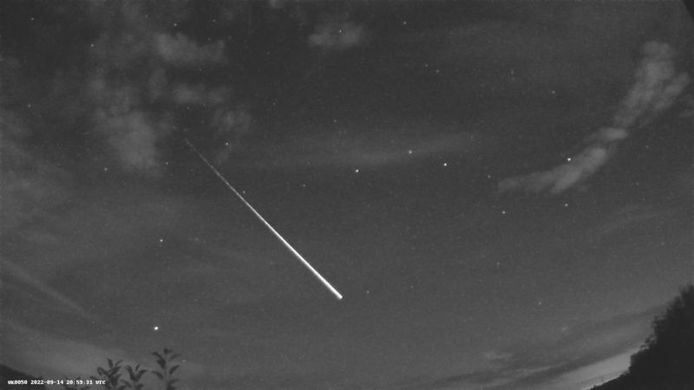
Grote vuurbal gespot boven Verenigd Koninkrijk: "Vermoedelijk geen meteoor maar ruimteafval”
Er zijn gisteravond in het Verenigd Koninkrijk honderden getuigenissen binnengelopen van mensen die een grote vuurbal door de lucht zagen klieven. Wetenschappers proberen te achterhalen wat het fenomeen geweest kan zijn. De eerste resultaten wijzen in de richting van ruimteafval dat terugkeerde naar de Aarde en niet naar een meteoriet.
De vuurbal werd woensdagavond rond 22 uur gespot boven Noord-Ierland, Schotland en het noorden van Engeland. Heel wat getuigen deelden op sociale media spectaculaire beelden van de wit-groenachtige bol die een lange streep achter zich trok aan de nachtelijke hemel.
Er liepen intussen al meer dan 1.000 getuigenissen binnen bij de ‘American Meteor Society’ en haar partners en tien video’s waarop het fenomeen te zien is. Sommige getuigen in Schotland zeggen zelfs dat ze een rommelend geluid hoorden.
Fenomeen
Het is niet duidelijk wat het fenomeen precies was. Wetenschappers onderzoeken of het om een meteoriet ging - gesteente uit de ruimte - of om puin van menselijke activiteit rond de Aarde. De eerste resultaten lijken in de richting te wijzen van het tweede. “Er is een vrij hoge kans dat het op ruimteafval gaat, jammer genoeg”, aldus Luke Daly, een planetoloog aan de University of Glasgow, in het wetenschappelijk tijdschrift ‘New Scientist’.
“De vuurbal had een erg lage ingangshoek, een aanzienlijke hoeveelheid fragmentatie die typerend is voor ruimteafval en hij vloog traag. Ruimterotsen verplaatsen zich meestal iets sneller”, vult hij nog aan. Verder onderzoek zal uitwijzen wat het definitieve verdict is.
Starlink
Het ‘UK Meteor Network’ meldt dat het intussen de baan van de Starlink-satellieten van Elon Musk gecontroleerd heeft, maar dat die gisteravond niet in de buurt kwam van het Verenigd Koninkrijk. “Op dit moment zien we geen bekend ruimteafval of geen baan van een satelliet die de vuurbal veroorzaakt kan hebben. We gaan de data herbekijken”, klinkt het op Twitter.
The 2 billion year old natural nuclear reactor in Gabon, Africa
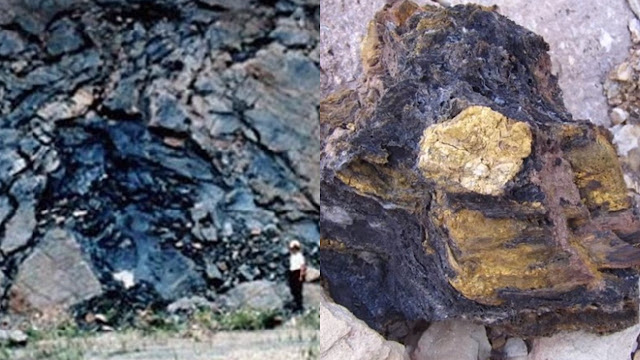
In Gabon, Africa is a strange geologic phenomena. Approximately 1.7 billion years ago, a natural nuclear reactor formed without any human intervention at what is now the Oklo Mine.
It formed due in part to an unusually dense uranium deposit alongside a consistent supply of groundwater. Thus, for several hundred thousand years, a natural fission reaction took place.
This video, made by a geologist who is based in Arizona, will discuss this fascinating geologic oddity.
Despite all the wild claims, there's a very real deep state. Listen to long-time expert USAF (Ret) Kevin Randle unpack the true story.
WHEN WILL THEY OPEN THE FILES!?
Mothman: International Moth of Mystery (short documentary) - The Only News That Matters
A lot of folks know about the Mothman & the Silver Bridge collapse associated with his appearance.. but do they know the intriguing cast of characters that Mothman's appearance brought together? Furthermore, what does a smiling man named Indrid Cold & Adam West's "Batman" have to do with the whole situation? What kinda name is Apol? And who is Chief Cornstalk?! Santanon is here with some answers & another episode of The Only News That Matters. He dives into all the high-strangeness that happened in & around Point Pleasant, WV (both before and after the Mothman's first appeared). Tune in to hear all about it & the amazing tales of Mary Hyre & John Keel as well as testimony from the townsfolk of Point Pleasant. God Bless & Hail Santa!
Subtitles/Closed Captions are available on all of our videos!
UFOs: The Situation in Germany | Robert Fleischer Presentation for UFORQ
UFOs: The Situation in Germany UFOs don't exist in Germany - officially, at least. While the German government denies any interest in flying saucers, its military seriously claims that they never had anything unusual on their radar screens which they could not eventually identify. Thus, you hardly ever hear anything from Germany about UFOs. The German journalist and researcher Robert Fleischer is trying to change that. For more than 13 years, he has been working to find out what the German government really knows about UFOs, digging into government archives and asking questions to politicians and the military. In his presentation, he discusses what the German Bundestag knows about Flying Saucers, how the German intelligence agency BND investigated UFO reports during the Cold War, what politicians say about the subject and how it all relates to the situation in Germany after World War II.
About Robert Fleischer:
Robert is a TV journalist, presenter and filmmaker. He has worked for a number of German public broadcast TV networks and writes articles for magazines in Germany and abroad. In 2007, he founded Exopolitics Germany (www.exopolitik.org) and in 2013, he launched ExoMagazin.tv, a subscription-based online TV magazine for open-minded people. He not only reports on UFOs and the paranormal but also on a wide array of subjects, including politics, future sciences and consciousness research. His work has been featured in major TV and radio shows as well as newspaper articles. He holds a university degree in conference interpreting for French and Spanish and has given talks in many European countries, including Austria, Switzerland, Italy, Spain, Portugal, the Czech Republic and the UK.
*Information and opinions presented at these meetings do not necessarily reflect the views of UFO Research Queensland Inc and are presented by speakers for research purposes only.
The UFO Lie: Shocking truth of Pentagon AAWSAP program | The Basement Office
Everything you were told is wrong. In 2017, the New York Times released a bombshell story revealing AATIP, the Pentagon's "UFO program" and Lue Elizondo, the director of that program. It proclaimed a shocking truth: UFOs are real. Since then, that story has been reprinted hundreds and thousands of times across the world and Mr. Elizondo has reached the status of cultural icon. But we've since learned that the whole story... was wrong. In this episode, we reveal the real story of the Pentagon's AAWSAP program - led by scientist James Lacatski - and it's even crazier than you could possibly imagine: $22 million in taxpayer money spent on werewolves, ghosts, goblins, and "dinobeavers" at the infamous Skinwalker Ranch in Utah. But UFO advocates, who are currently lobbying Congress to spend money on UFO investigations, hope you never find out about that. | Season 3, Episode 1
PODCAST - John Greenewald Jr gets into an interesting conversation about UFO/UAP disclosure within the US DOD and Senate, and also discuss the counter intelligence "Game" being played out. Will a significant public disclosure on UAP ever happen ?.
IS DIT DE ECHTE REDEN DAT TWEE GROTE OUDE BESCHAVINGEN ZIJN VERDWENEN?
Jeannette Kras
Het is vaak gissen hoe het oude beschavingen is vergaan. Verdwenen ze door klimaatverandering, rampen, oorlogen of ziektes? Een nieuw onderzoek werpt licht op de ondergang van het Oude Rijk in Egypte en het Akkadische Rijk.
Een onderzoeksteam van het Max Planck Institute en de British School in Athene heeft bewijs gevonden dat beide beschavingen vermoedelijk niet ten onder zijn gegaan door klimaatverandering, maar door ziekten. Ze vonden daarvan sporen in de tanden van menselijke resten uit de bronstijd. Deze tanden zijn gevonden in de grot Hagios Charalambos op het eiland Kreta.
Droogte Eerder onderzoek toonde aan dat de bevolking van het Oude Rijk in Egypte (2639-2216 voor Christus) en van het Akkadische Rijk (2350–2170 voor Christus) plotseling sterk slonk. Klimaatverandering in de vorm van extreme droogte werd aangewezen als een van de oorzaken. Dit zou ook hebben geleid tot schade aan infrastructuur, een ingestorte handel en grote culturele veranderingen. Maar in deze nieuwe studie hebben onderzoekers ontdekt dat ziektes mogelijk ten grondslag lagen aan de ondergang van beide beschavingen.
De onderzoekers bestudeerden tanden van menselijke resten die teruggaan tot 2290 en 1909 voor Christus. Daarin vonden ze bewijs van de typische mondbacteriën die ook nu nog in onze mond zitten en die kunnen leiden tot tandbederf. Maar belangrijker: ze vonden tekenen van de Yersinia pestis, de pestbacterie en van salmonella, de bacterie die verantwoordelijk is voor buiktyfus. De bevindingen doen dus vermoeden dat een epidemie kan hebben geleid tot de ondergang van een of beide beschavingen uit de bronstijd.
Andere bacteriën Er is wel een kleine kanttekening: de pestbacterie die is gevonden in de tanden van de oude Egyptenaren was niet dezelfde als die Europa eeuwen later zou teisteren. De bacterie is uitgestorven, net als de gevonden salmonellavariant. Daardoor is onduidelijk hoe besmettelijk de bacteriën waren of hoe dodelijk. Toch betekent het bewijs van de bacteriën dat geschiedkundigen de mogelijkheid mee moeten nemen dat ziektes de oorzaak waren van de val van twee grote beschavingen. Verder genetisch onderzoek van oude menselijke overblijfselen moet uitwijzen hoe wijdverspreid de ziektes waren.
Het Oude Rijk Met het Oude Rijk wordt een periode in de tijd van het grote Egyptische rijk aangeduid tussen grofweg 2700 en 2200 voor Christus. Het omvat de derde tot de zesde dynastie en staat ook bekend als de ‘Eeuw van de Piramides’, omdat in die tijd de grote piramidebouwers uit de vierde dynastie heersten, zoals koning Sneferu en de koningen Khufu, Khafre en Menkaure, die de piramides van Gizeh bouwden. Het oude Egypte bereikte zijn eerste beschavingspiek in deze periode. Het rijk liep van de Nijldelta naar het zuiden tot Abu en tot de Sinaï-woestijn in het oosten. De ondergang van het rijk werd ingeluid door een tanende macht van de farao en toenemende controle van regionale heersers. In de decennia na de dood van farao Pepi II werd het rijk geteisterd door burgeroorlogen. De extreme droogte in de 22ste eeuw voor Christus deed er nog een schepje bovenop en leidde tot hongersnood. Maar mogelijk waren het dus ziektes, die het definitieve einde betekenden van het Oude Rijk.
Het Akkadische Rijk Het Akkadische rijk omvatte tussen 2350 en 2170 voor Christus grote delen van Mesopotamië, in de regio, waar nu Irak, Iran en Syrië liggen. Sargon de Grote heeft de stad Akkad, waarnaar het rijk vernoemd is, waarschijnlijk machtig gemaakt. Van daaruit breidde hij zijn rijk uit. Daaropvolgende heersers gingen zich koning van Sumer en Akkad noemen, omdat het zuidelijke deel van Mesopotamië, Sumer (een van de oudste beschavingen ter wereld), ook bij het rijk ging horen. De Goeteeërs, een bergvolk, zouden het Akkadische rijk hebben vernietigd en de stad Akkad zo erg hebben verwoest dat er nooit meer iets van is teruggevonden. Dezelfde droogte die het Oude Rijk in Egypte in ellende stortte zou ook het Akkadische rijk in de problemen hebben gebracht. Maar mogelijk waren het dus ook hier ziektes die de oude beschaving echt de das omdeden.
PISSEBED ONTDEKT DIE 25 KEER GROTER IS DAN DE EXEMPLAREN IN JOUW ACHTERTUIN
Vivian Lammerse
En hij ziet eruit als een echte Pokémon!
Onderzoekers hebben in de Golf van Mexico een gigantische en vrij griezelige zee-pissebed ontdekt. Het gaat om een nieuwe soort uit het geslacht Bathynomus – een mysterieuze en primitieve groep die leeft in de diepste uithoeken van de oceaan; plekken die nog nauwelijks door mensen zijn verkend. Het nieuw ontdekte, reusachtige, roomgele familielid is ongeveer 26 centimeter lang en doet volgens de onderzoekers vooral erg denken aan een Pokémon.
B. yucatanensis De reuzenpissebed werd gevonden voor de kust van het schiereiland Yucatán, op een diepte van ongeveer 600 tot 800 meter. Het dier heeft de naam B. yucatanensis gekregen, vernoemd naar zijn vindplaats. Hoewel de pissebed er misschien een beetje eng uitziet – ze zijn maar liefst 25 keer groter dan de exemplaren in jouw achtertuin – is hij volkomen ongevaarlijk, zo benadrukken de onderzoekers.
Foto van B. yucatanensis.
Afbeelding: Dr Ming-Chih Huang, Journal of Natural History
Dat het hier overigens om een nog onbekende soort ging, was niet meteen duidelijk. Aanvankelijk zagen onderzoekers de pissebed namelijk aan voor B. giganteus; de grootste bekende pissebed die wel bijna 50 centimeter lang kan worden.
Nieuwe soort De verwarring is niet onbegrijpelijk. In 2017 werd er bijvoorbeeld nog een B. giganteus op precies dezelfde plek en op dezelfde diepte gevangen. Bovendien lijken B. giganteus en B. yucatanensis op elkaar. Zo hebben ze bijvoorbeeld hetzelfde aantal stekels op hun achterlijf. “Oppervlakkig onderzoek, waarbij er alleen gekeken wordt naar deze stekels, heeft er gemakkelijk toe kunnen leiden dat de nieuwe soort ten onrechte werd herkend als B. giganteus,” schrijven de onderzoekers in hun studie.
Unieke kenmerken Toen onderzoekers echter een betere blik wierpen, ontdekten ze enkele onderscheidende kenmerken. Zo is B. yucatanensis bijvoorbeeld een stuk slanker en net iets korter dan zijn tegenhanger. Daarnaast heeft B. yucatanensis langere antennes op zijn kop. De vlekkerige, roomgele kleur van de schaal onderscheidt hem verder van zijn grijze verwanten. Om er toch honderd procent zeker van te zijn dat het hier om een nog onbekende soort ging, voerden de onderzoekers een genetische analyse uit waarbij ze B. giganteus en B. yucatanensis vergeleken. “Vanwege verschillende sequenties van twee genen, in combinatie met verschillen in morfologie, identificeerden we B. yucatanensis als een nieuwe soort,” zo luidt de conclusie van de onderzoekers.
Verwant Ondanks dat, zijn B. yucatanensis en B. giganteus wel het nauwst verwant aan elkaar. “Dit geeft aan dat de twee soorten waarschijnlijk een gemeenschappelijke voorouder hadden,” aldus de onderzoekers. Bovendien sluiten ze niet uit dat er mogelijk nog meer onbekende familieleden op ontdekking wachten.
Internethit Op dit moment zijn er zo’n 20 levende soorten reuzenpissebedden die tot het geslacht Bathynomus behoren, bekend. Door hun vreemde en ongebruikelijke afmetingen zijn de pissebedden een ware internethit geworden. Er zijn zelfs een reeks producten op de markt gebracht die hun vertederende en bizarre uiterlijk vieren; denk aan pluchen speelgoed tot aan telefoonhoesjes.
Ondanks dat er er nog niet grootschalig op de reuzenpissebedden gevist wordt, worden ze weleens aangetroffen op het menu van Aziatische visrestaurants. “Sommige soorten Bathynomus zijn het doelwit geworden van diepzee-visserij,” zo waarschuwen de onderzoekers. En daarom is het volgens hen nóg belangrijker dat de verschillende soorten goed uit elkaar worden gehouden. “Hoewel de gigantische pissebedden slechts sporadisch worden geëxploiteerd, is het voor het beheer van de Bathynomus-visserij en het behoud van de dieren belangrijk om precies te weten welke soorten er worden gevangen,” besluiten ze.
Hubble Sees Red Supergiant Star Betelgeuse Slowly Recovering After Blowing Its Top
Analyzing data from NASA's Hubble Space Telescope and several other observatories, astronomers have concluded that the bright red supergiant star Betelgeuse quite literally blew its top in 2019, losing a substantial part of its visible surface and producing a gigantic Surface Mass Ejection (SME). This is something never before seen in a normal star's behavior.
Our Sun routinely blows off parts of its tenuous outer atmosphere, the corona, in an event known as a Coronal Mass Ejection (CME). But the Betelgeuse SME blasted off 400 billion times as much mass as a typical CME!
The monster star is still slowly recovering from this catastrophic upheaval. "Betelgeuse continues doing some very unusual things right now; the interior is sort of bouncing," said Andrea Dupree of the Center for Astrophysics | Harvard & Smithsonian in Cambridge, Massachusetts.
These new observations yield clues as to how red stars lose mass late in their lives as their nuclear fusion furnaces burn out, before exploding as supernovae. The amount of mass loss significantly affects their fate. However, Betelgeuse's surprisingly petulant behavior is not evidence the star is about to blow up anytime soon. So the mass loss event is not necessarily the signal of an imminent explosion.
Dupree is now pulling together all the puzzle pieces of the star's petulant behavior before, after, and during the eruption into a coherent story of a never-before-seen titanic convulsion in an aging star.
This illustration plots changes in the brightness of the red supergiant star Betelgeuse, following the titanic mass ejection of a large piece of its visible surface. The escaping material cooled to form a cloud of dust that temporarily made the star look dimmer, as seen from Earth. This unprecedented stellar convulsion disrupted the monster star’s 400-day-long oscillation period that astronomers had measured for more than 200 years. The interior may now be jiggling like a plate of gelatin dessert.
"We've never before seen a huge mass ejection of the surface of a star. We are left with something going on that we don't completely understand. It's a totally new phenomenon that we can observe directly and resolve surface details with Hubble. We're watching stellar evolution in real time."
The titanic outburst in 2019 was possibly caused by a convective plume, more than a million miles across, bubbling up from deep inside the star. It produced shocks and pulsations that blasted off the chunk of the photosphere leaving the star with a large cool surface area under the dust cloud that was produced by the cooling piece of photosphere. Betelgeuse is now struggling to recover from this injury.
Weighing roughly several times as much as our Moon, the fractured piece of photosphere sped off into space and cooled to form a dust cloud that blocked light from the star as seen by Earth observers. The dimming, which began in late 2019 and lasted for a few months, was easily noticeable even by backyard observers watching the star change brightness. One of the brightest stars in the sky, Betelgeuse is easily found in the right shoulder of the constellation Orion.
Even more fantastic, the supergiant's 400-day pulsation rate is now gone, perhaps at least temporarily. For almost 200 years astronomers have measured this rhythm as evident in changes in Betelgeuse's brightness variations and surface motions. Its disruption attests to the ferocity of the blowout.
The star's interior convection cells, which drive the regular pulsation may be sloshing around like an imbalanced washing machine tub, Dupree suggests. TRES and Hubble spectra imply that the outer layers may be back to normal, but the surface is still bouncing like a plate of gelatin dessert as the photosphere rebuilds itself.
Though our Sun has coronal mass ejections that blow off small pieces of the outer atmosphere, astronomers have never witnessed such a large amount of a star's visible surface get blasted into space. Therefore, surface mass ejections and coronal mass ejections may be different events.
Betelgeuse is now so huge now that if it replaced the Sun at the center of our solar system, its outer surface would extend past the orbit of Jupiter. Dupree used Hubble to resolve hot spots on the star's surface in 1996. This was the first direct image of a star other than the Sun.
NASA's Webb Space Telescope may be able to detect the ejected material in infrared light as it continues moving away from the star.
The Hubble Space Telescope is a project of international cooperation between NASA and ESA (European Space Agency). NASA's Goddard Space Flight Center in Greenbelt, Maryland, manages the telescope. The Space Telescope Science Institute (STScI) in Baltimore, Maryland, conducts Hubble science operations. STScI is operated for NASA by the Association of Universities for Research in Astronomy, in Washington, D.C.
Once again, advances in technology have forced archaeologists to change their interpretations of history. A new study published in Antiquity has concluded that the world-renowned Machu Picchu site in Peru was in use more than 20 years earlier than previously thought.
So, What’s the Real Age of Machu Picchu?
One of the top tourist destinations in the world, Machu Picchu in Peru is known not only for its ancient Inca ruins, but for its stunning natural setting. Hiking the Inca Trail has become a pilgrimage for backpackers from all over, so much so that the authorities have had to put strict limits on the number of tourists who can hike the trail per day (500). The ruins itself are visited by about 6,500 people per day, according to BD Destinations .
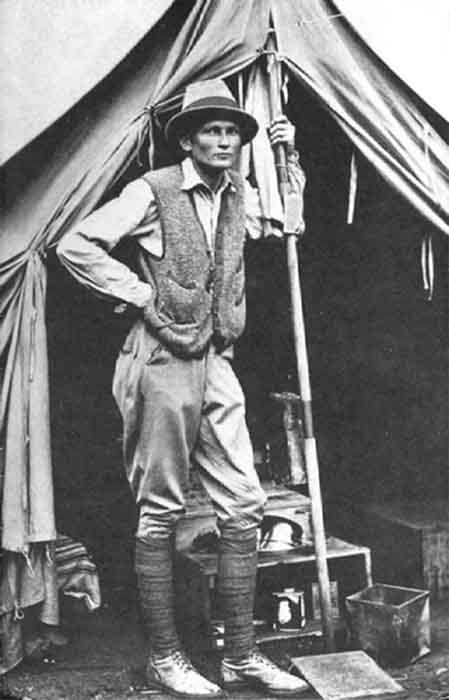
Although it has become known as the “lost city” discovered by American explorer Hiram Bingham in 1911, in reality it was never “lost” as locals knew it was there all along. What is surprising is that with such a huge influx of visitors, and income, there is still more to be learned about this stunning World Heritage Site, including its age and ancient origins.
The construction of an Indiana Jones-style narrative, in which American explorer Hiram Bingham found the “lost” Inca city of Machu Picchu, has added to its allure.
The legendary story of the Inca ruler Pachacuti has been told and retold for generations, and repeated as part of the tours of Machu Picchu . It is believed that he rose to power thanks to a vision involving Inti, the Sun god, who inspired him to defend the city of Cusco from the Chanca. The first Inca ruler with imperialistic aspirations for an Inca Empire he has been recognized as the creator of “the most powerful empire in pre-Colombian America,” explains an Antiquity press release.
Pachacuti has also been credited with building Machu Picchu , located to the north of Cusco. In fact, the ancient ruins are often described as having been his private estate. The Inca citadel was chosen as one of the Seven Wonders of the Modern World in a contest organized by the New7Wonders Foundation back in 2007, alongside Petra and the Great Wall of China. It was famously built using differently-shaped polished stones which fit together like a jigsaw puzzle to create walls without the use of mortar.
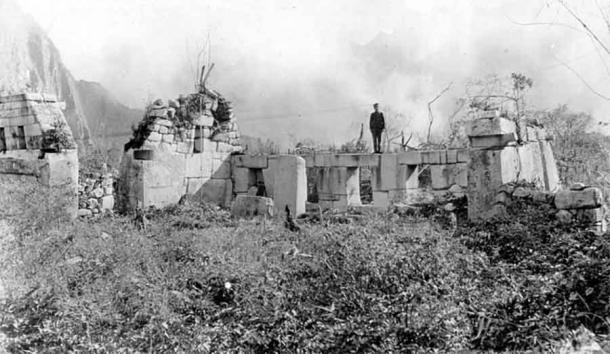
Researchers at Machu Picchu in 1911, shortly before the remains dated in the new study were recovered.
Applying New Technology to Discover the Age of Machu Picchu
“Determining a site’s archaeological age isn’t always easy,” explained Erin Blakemore in a National Geographic article which gave a simple run-through of the ways in which archaeologists calculate the date of ancient sites. Assessing the age of Machu Picchu is no different.
Richard Burger, a professor from Yale University and the lead author of the paper published in Antiquity explained why the famed Peruvian ruins have been labeled with the incorrect age in the past. “Until now estimates of its antiquity and the length of its occupation were based on contradictory historical accounts written by Spaniards in the period following the Spanish conquest,” he stressed. Remember, the Inca themselves had no written language, apart from a system of knotted cords known as khipu.
A team made up of professionals from several institutions in the United States decided to apply the technique of accelerator mass spectrometry (AMS) in order to more precisely date the human remains which have been exhumed at Machu Picchu. This technology has been successful in dating human remains when minimal organic matter has been left behind.
Most history books state that Machu Picchu was built by Pachacuti in the mid-1400s. Nevertheless, the team used AMS dating technology to date bone and teeth from 26 skeletons found in cave burials which had been excavated back in 1912. Although past attempts had failed to provide consistent results, this new research concluded that Machu Picchu was actually in use from 1420 to 1530 AD.
The construction date of Machu Picchu has now been pushed back thanks to dating technology.
Changing the History of the Inca Empire and the Age of Machu Picchu
If this is true, it would mean that the scripted guided tours of Peru’s top tourist destination have been mistaken for decades. If Machu Picchu was in use from 1420, then this would push back the date of Pachacuti’s rise to prominence, as well as the age of the ancient citadel, by at least two decades.
The Antiquity study also puts into sharp relief the importance of continued application of groundbreaking technology to archaeology and ancient history. “The results suggest that the discussion of the development of the Inca empire based primarily on colonial records requires revision,” emphasized Burger.
“Modern radiocarbon methods provide a better foundation for understanding Inca chronology than the contradictory historical records,” explained the lead author of the study. The idea that our understanding of history is versatile and apt to change as technology evolves assures that the study of famous sites like Machu Picchu will continue to be an adventure as we unravel the “lost” reality of the past.
Top image: Experts are reassessing the age of the Peruvian ruins at Machu Picchu.
NASA's Perseverance rover has collected some intriguing samples of Martian rock. Just wait till we get them into a lab on Earth.
Amanda Kooser
Perseverance inspects a sedimentary sample site called Skinner Ridge.
NASA, JPL-Caltech, ASU, MSSS
This story is part of Welcome to Mars, our series exploring the red planet.
In just a year and a half on Mars, NASA's Perseverance rover has rocked its science mission. The space agency hosted a briefing Thursday to discuss highlights from the mission so far, and it was a celebration of rock samples and the discovery of organic matter.
Organic molecules in Wildcat Ridge
A rock named Wildcat Ridge, located in an ancient river delta region of Jezero Crater, was one of the stars of the show. Percy successfully collected two samples from the mudstone rock. Wildcat Ridge is particularly exciting because the organic molecules (called aromatics) found in it are considered a potential biosignature, which NASA describes as a substance or structure that could be evidence of past life but may also have been produced without the presence of life.
The rover team emphasized that finding organic matter doesn't mean it's found evidence of ancient life. Organic molecules have been spotted on Mars before, by the Curiosity rover in Gale Crater and also by Perseverance, which found carbon-containing molecules earlier in the mission.
Enlarge ImagPerseverance collected two core samples from Wildcat Ridge and also abraded a round patch to inspect the rock with its Sherloc instrument.
NASA, JPL-Caltech, ASU, MSSS
The rover's Sherloc instrument investigated the rock. (Sherloc stands for Scanning Habitable Environments with Raman & Luminescence for Organics & Chemicals.) "In its analysis of Wildcat Ridge, the Sherloc instrument registered the most abundant organic detections on the mission to date," NASA said.
Scientists are seeing familiar signs in the analysis of Wildcat Ridge. "In the distant past, the sand, mud and salts that now make up the Wildcat Ridge sample were deposited under conditions where life could potentially have thrived," said Perseverance project scientist Ken Farley in a statement. "The fact the organic matter was found in such a sedimentary rock -- known for preserving fossils of ancient life here on Earth -- is important."
Perseverance isn't equipped to find definitive evidence of ancient microbial life on the red planet. "The reality is the burden of proof for establishing life on another planet is very, very high," said Farley during the press conference. For that, we need to examine Mars rocks up close and in person in Earth labs.
Sample drop
Percy currently has 12 rock samples on board, including the Wildcat Ridge pieces and samples from another sedimentary delta rock called Skinner Ridge. It also collected igneous rock samples earlier in the mission that point to the impact of long-ago volcanic action in the crater.
NASA is so happy with the diversity of samples collected that it's looking into dropping some of the filled tubes off on the surface soon in preparation for the future Mars Sample Return (MSR) campaign. MSR is an ambitious plan to send a lander to Mars, pick up Percy's samples, rocket them off the surface and bring them back to Earth for close study. The mission is under development. If all goes as planned, those rocks could be here by 2033.
The complexity and importance of MSR means NASA and its partners are working out ways to ensure the samples can be collected. There's hope Perseverance will still be operating in good condition by the time the MSR lander arrives, and will be able to meet it and personally deliver samples. Leaving some samples on the ground this early in the mission at a cache site in the crater will give MSR another opportunity to get the precious rocks on board.
Percy has been collecting paired samples. For example, it could keep one Wildcat Ridge tube on board and drop the other on the ground. "That we are weeks from deploying Perseverance's fascinating samples and mere years from bringing them to Earth so scientists can study them in exquisite detail is truly phenomenal," said NASA JPL Director Laurie Leshin. "We will learn so much."
What's next for Percy
As thrilling as the delta has been, the rover team is looking ahead at future adventures beyond it. Perseverance could wander up the crater rim, with the team eyeing several possible paths for the climb. Its companion Ingenuity helicopter is in good health and expected to take to the air again.
NASA chose Jezero Crater for exploration because of its fascinating history of water and how the rocks there might preserve evidence of ancient life, if it existed during more habitable times on Mars. Sherloc scientist Sunanda Sharma likened the mission to a treasure hunt for organic life on another planet, saying the samples with aromatics are a clue. The Martian mystery is only just beginning to unfold.
The Mystery of Egyptian Tomb KV55 in the Valley of the Kings
Tomb KV55 in the Valley of the Kings was discovered by Edward R. Ayrton on January 6, 1907. Ayrton’s sponsor, Theodore M. Davis, published a summary of the excavation (The Tomb of Queen Tiye) in 1910.
KV55 is from the 18th dynasty, being a problematic archaeological site as it seems to have been used for several burials: the first is attributed to Queen Tiye, based on the broken wooden shrine dedicated to her (Tiye was brought here after the abandonment of Amarna, and finally brought to KV35).
The mummy found here may be that of her son, the pharaoh Akhenaten, although that of his successor, Smenkhkare (if this was a man) was also considered.
In 1923, Harry Burton used it as a darkroom to develop his photographs during the excavation of Tutankhamun’s tomb by Howard Carter.
Egyptian Tomb KV55: Description
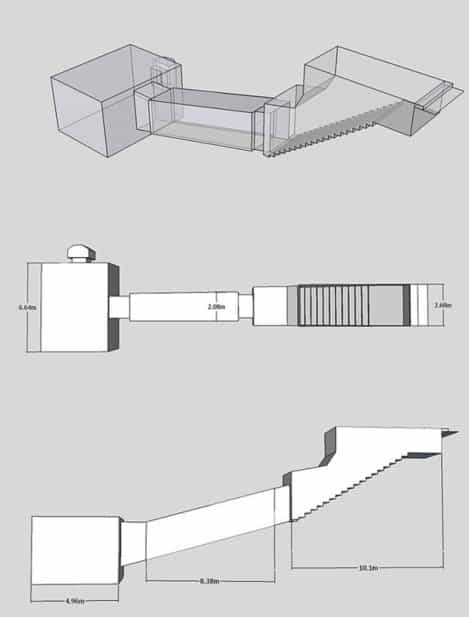
KV55 is a relatively small royal tomb, its total length is only 27.61 meters. It is located next to KV6, the tomb of Ramses IX , above KV7 (of Ramses II) and near KV62, the tomb of Tutankhamun.
Its entrance is open in the rock, heading east. It leads to a system of stairs that lead to a slightly sloping corridor and the burial chamber.
On the south side of this chamber there is passage to a small antechamber, and red masonry markings on the east wall indicate the planning of another room, which had it been built would have matched the layout of Tutankhamun’s tomb.
Although the walls of the tomb are laid out in plaster, which is unusual for a royal tomb, they are not decorated. A drawing on an ostracon found by Lyla Pinch Brock in 1993, has been interpreted as the plan of the tomb, suggesting that its original entrance had been enlarged, corroborated by the marks found on the walls of the tomb.
The place was altered in antiquity, and therefore it is difficult to interpret. Evidence from the tomb complicates its attribution.
The door seals bore Tutankhamun’s name, evidently from the time its tenant was buried a second time; the canopic jars found in the tomb are similar to those of Akhenaten’s secondary wife, Kiya; the broken shrine, whose panels are distributed throughout the chamber, bear the name and representations of Akhenaten‘s mother, Queen Tiye.
Akhenaten’s name appears in a series of “magical bricks” found in the tomb, as well as that of his father, Amenhotep III, and his daughter and wife.
All these data are reminiscent of the main figures of the Amarna period, hence the popular name of the tomb: the Amarna cache.
It is thought that the tomb was initially designed for the burial of some nobleman or official, using it later for a royal burial, as later happened with the tomb of Tutankhamun.
One of the four Egyptian alabaster canopic jars found in KV55, depicting what is thought to be the likeness of Queen Kiya
Identification of the mummy
When the tomb was opened in 1907 the only mummy found inside was that of a male. This mummy was thought to be Akhenaten, due to the presence of some funerary items (mainly magical bricks) as well as the vandalism of the sarcophagus (Akhenaten was later vilified as a heretic).
The cartouches with the mummy’s name are erased and the uraeus removed. In addition, the mummy has several similarities to that of Tutankhamun.
Profile view of the skull recovered from KV55
This identification was not fully accepted because although KV55 does not contain any mention of Smenkhkare, some insisted on identifying the mummy with him. DNA analysis in 2010 confirmed that it was the remains of the famous Akhenaten.
Nicholas Reeves suggests a theory: Akhenaten and his mother, Queen Tiy, were originally interred in the new capital, Amarna, but their bodies were transferred to KV55 during the reign of Akhenaten’s son Tutankhamun and his secondary wife, Kiya.
The door was sealed with the name of Tutankhamun. There the mummies remained for about 200 years, until the tomb was discovered by workers excavating the nearby tomb of Ramses IX..
At that time Akhenaten was despised as the heretic king, so the sarcophagus of Queen Tiye was hastily removed from his desecrating presence, except for the gilded wooden shrine that covered it, which had to be dismantled to remove the sarcophagus. .
The portraits of Akhenaten were erased with a chisel, in his sarcophagus the golden mask was torn and the cartouche with his name removed, to condemn him to eternal oblivion. As a final insult, a large rock was thrown at the coffin, smashing the supports of the lion-shaped sarcophagus.
Meer van UFO'S of UAP'S, ASTRONOMIE, RUIMTEVAART, ARCHEOLOGIE, OUDHEIDKUNDE, SF-SNUFJES EN ANDERE ESOTERISCHE WETENSCHAPPEN - DE ALLERLAATSTE NIEUWTJES


 Grote vuurbal gespot boven Verenigd Koninkrijk: "Vermoedelijk geen meteoor maar ruimteafval”