Ontdek de Fascinerende Wereld van UFO's en UAP's: Jouw Bron voor Onthullende Informatie!
Ben jij ook gefascineerd door het onbekende? Wil je meer weten over UFO's en UAP's, niet alleen in België, maar over de hele wereld? Dan ben je op de juiste plek!
België: Het Kloppend Hart van UFO-onderzoek
In België is BUFON (Belgisch UFO-Netwerk) dé autoriteit op het gebied van UFO-onderzoek. Voor betrouwbare en objectieve informatie over deze intrigerende fenomenen, bezoek je zeker onze Facebook-pagina en deze blog. Maar dat is nog niet alles! Ontdek ook het Belgisch UFO-meldpunt en Caelestia, twee organisaties die diepgaand onderzoek verrichten, al zijn ze soms kritisch of sceptisch.
Nederland: Een Schat aan Informatie
Voor onze Nederlandse buren is er de schitterende website www.ufowijzer.nl, beheerd door Paul Harmans. Deze site biedt een schat aan informatie en artikelen die je niet wilt missen!
Internationaal: MUFON - De Wereldwijde Autoriteit
Neem ook een kijkje bij MUFON (Mutual UFO Network Inc.), een gerenommeerde Amerikaanse UFO-vereniging met afdelingen in de VS en wereldwijd. MUFON is toegewijd aan de wetenschappelijke en analytische studie van het UFO-fenomeen, en hun maandelijkse tijdschrift, The MUFON UFO-Journal, is een must-read voor elke UFO-enthousiasteling. Bezoek hun website op www.mufon.com voor meer informatie.
Samenwerking en Toekomstvisie
Sinds 1 februari 2020 is Pieter niet alleen ex-president van BUFON, maar ook de voormalige nationale directeur van MUFON in Vlaanderen en Nederland. Dit creëert een sterke samenwerking met de Franse MUFON Reseau MUFON/EUROP, wat ons in staat stelt om nog meer waardevolle inzichten te delen.
Let op: Nepprofielen en Nieuwe Groeperingen
Pas op voor een nieuwe groepering die zich ook BUFON noemt, maar geen enkele connectie heeft met onze gevestigde organisatie. Hoewel zij de naam geregistreerd hebben, kunnen ze het rijke verleden en de expertise van onze groep niet evenaren. We wensen hen veel succes, maar we blijven de autoriteit in UFO-onderzoek!
Blijf Op De Hoogte!
Wil jij de laatste nieuwtjes over UFO's, ruimtevaart, archeologie, en meer? Volg ons dan en duik samen met ons in de fascinerende wereld van het onbekende! Sluit je aan bij de gemeenschap van nieuwsgierige geesten die net als jij verlangen naar antwoorden en avonturen in de sterren!
Heb je vragen of wil je meer weten? Aarzel dan niet om contact met ons op te nemen! Samen ontrafelen we het mysterie van de lucht en daarbuiten.
Two Supermassive Black Holes Are Expected To Collide Within Next 3 Years And We Will Watch It In Real-Time
According to astronomers, one of the most anticipated occurrences in modern astronomy may be upon us soon.
Fluctuations in light measurements from the galaxy SDSS J1430+center 2303 lead to the likelihood of a large collision between two supermassive black holes with a combined mass of around 200 million Suns, according to research.
If the scientists' interpretation of the data is correct, the collision, along with the first black hole image captured by the Event Horizon Telescope, may rank among the biggest modern astronomical events. According to the scientists' data, the black holes in this condition will merge within the next three years, which is a very short period of time in the context of scientific investigations.
The findings of the study can be found on the pre-print portal ArXiv and have been accepted for publication in the journal Astronomy & Astrophysics.
The event was detected in 2015 as a result of gravitational waves created by the first black hole merger, which rippled through space-time. However, the gravitational force from that collision, as well as subsequent observations, had an impact for years after it occurred. As a result, the collision at the core of SDSS J1430+2303 could be the first time astronomers have witnessed such an occurrence.
There is one crucial caveat in the run-up to this cosmic calamity. The gravitational wave range produced by supermassive black holes is too narrow for our current gravitational wave detectors to detect. Virgo and LIGO, which are both capable of detecting ripples in the frequency created by binary black holes, have identified nearly all black hole mergers to date.
Astronomers expect to be able to observe the event's massive outpouring of light using other observatories, which will continue to produce light over the full spectrum. If and when it happens, it could significantly increase our understanding of the formation of supermassive black holes.
Although there is some evidence that binary black hole mergers may be the source of the genesis of supermassive black holes, we still don't fully understand how they grow to be that large.
Astronomers will direct their telescopes to the region of space where the galaxy J1429+2303 is expected to witness a catastrophic supermassive black hole collision in order to examine the data before and after the event and better understand its implications as well as the processes that led up to it.
For a country with a population of just over 10 million people, it’s impressive that Sweden can maintain one of the best fighter aircraft programs.
An aircraft’s effectiveness is no longer determined mainly by how fast it can fly. Now it’s about how instant AI can interpret information and present the data for pilots to act upon in battle.
Unlike US or Russiαn fighters, Swedish Gripen can’t carry the most weapons, has no real stealth. To be clear, it isn’t the longest-range, the fastest, or even the cheapest jet.
Sweden has chosen another niche to compete. The country’s focus is to develop a fighter jet with the most advanced electronics to become a nightmare for its closest adversary – Russiα.
Scientists Find One of the Most Massive Black Holes With 34 Billion Times The Mass of Our Sun
Scientists just revealed the finding of the most massive black hole ever detected in the early Universe. It weighs 34 billion times as much as our Sun and eats one per day.
The research, headed by the National University of Australia (ANU), disclosed how large the Universe's fastest-growing black hole is, as well as how much stuff it can absorb. The same study team detected the black hole, known as 'J2157,' in 2018.
The report revealing the huge black hole's features was published in Monthly Notices of the Royal Astronomical Society.
According to Dr. Christopher Onken and his colleagues, this object has a mass 34 billion times that of the Sun and consumes the equivalent of one Sun per day. That's billion with a capital B. The gigantic black hole has a mass nearly 8,000 times that of Sagittarius A*, the black hole at the heart of the Milky Way galaxy.
“If the Milky Way’s black hole wanted to get fat, it would have to swallow two-thirds of all the stars in our galaxy,” explains Onken.
The object was analyzed by scientists when the Universe was just 1.2 billion years old, or less than 10% of its present age, making it the largest known black hole in terms of mass in the early Universe.
“It is the largest black hole ever measured in this early period of the Universe,” says Onken.
The team is now on the search for more black holes in the hopes of discovering some answers as to how black holes grow to be so huge so early in the Universe's infancy.
“We knew we were with a very massive black hole when we realized its rapid growth rate,” says team member Dr. Fuyan Bian, an astronomer at the European Southern Observatory (ESO). “How much black holes can devour depends on how much mass they already have. For this object to be devouring matter at such a high rate, we thought it could become a new record holder. "And we now know," he says.
The team, which included researchers from the University of Arizona, utilized the Very Large Telescope (VLT) of the European Southern Observatory (ESO) in Chile to accurately determine the mass of the black hole.
“With such an enormous black hole, we’re also excited to see what we can learn about the galaxy in which it’s growing,” Onken said. “Is this galaxy one of the behemoths of the early Universe, or did the black hole swallow up an extraordinary amount of its surroundings? We’ll have to keep digging to figure that out.”
J2157 is the name given to a huge black hole in the heart of a quasar galaxy. Observations with the similarly huge 10-meter Keck telescope in Hawaii and the 8-meter Very Large Telescope in Chile let astronomers understand more about the cosmic monster.
Astronomers were able to calculate the quasar's distance as well as its total brightness. This allowed them to determine the black hole's size and how much stuff from the disc it might swallow.
The black hole is enormous, measuring nearly 200 billion kilometers in diameter. It is so massive that if it were replaced by our Sun, it would engulf the whole solar system.
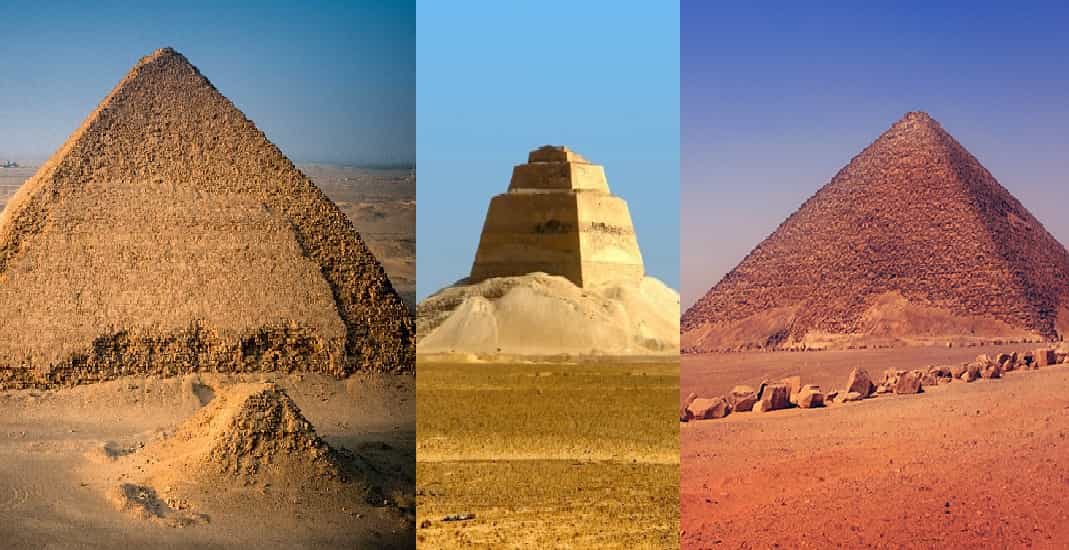
At the beginning of the Fourth Dynasty,Sneferu wanted to go one step further in achieving a perfect pyramid to be his abode of eternity. In this search, the pharaoh built at least three of these great monuments.
Contrary to what might be thought, the greatest pyramid builder in the history of Egypt was not Khufu, the pharaoh to whom the Great Pyramid of Giza is owed.
That title actually corresponds to his father Sneferu, who, according to scholars have calculated, used for the construction of the three pyramids that are attributed forty percent more cubic meters of stone than his son Khufu, the builder of the Great Pyramid of Giza.
Furthermore, Sneferu was the first Egyptian pharaoh to build a perfect pyramid with smooth faces and to develop the classical structure of Egyptian funerary complexes, which would last for several centuries.
The three great funerary monuments created by Sneferu crowned the sensational development of Egyptian funerary architecture from Dynasty III onwards.
King Djoser, thanks to his well-known architect Imhotep, was the first to build his tomb entirely in stone, thus offering a sense of eternity to buildings that were previously made of adobe and therefore soon faded away.
In addition, in this great work that he carried out in Saqqara (a necropolis near Memphis, the capital of Egypt), Imhotep dispensed with the typical mastaba, a rectangular funerary building with sloping walls.
He replaced it with a stepped pyramid, made up of a total of six levels that reached 62 meters in height. It should be noted that this was the tallest building in the world until Sneferu’s reign.
Engineering feat and embodiment of the power of the pharaonic state, the stepped pyramid had a characteristic structure, in which scholars have seen the reflection of a stellar symbolism typical of Egyptian culture at that time.
Thus, the main axis of the complex, 544 meters long, is oriented from north to south and the entrance to the pyramid is located on the north side, as is the funerary temple of the pharaoh, attached to the pyramid on a base of two meters high.
Furthermore, the so-called serdab – a room on the north side of the pyramid in which the statue of the pharaoh’s ka (his spirit or life force) was placed – had two openings through which a statue of Djoser could observe Dubhe and Kochab, two important circumpolar stars.
Sneferu, The pharaoh who built three pyramids
During Dynasty III, the kings Sekhemkhet and Khaba erected buildings in Saqqara and Zawiyet el-Aryan similar to the step pyramid of Djoser.
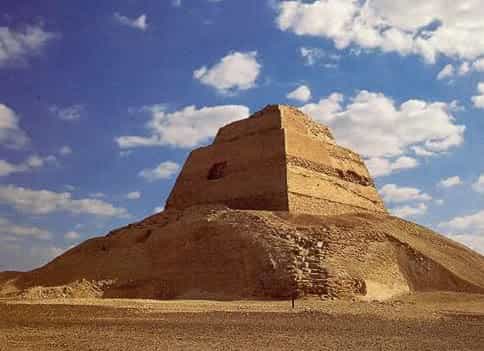
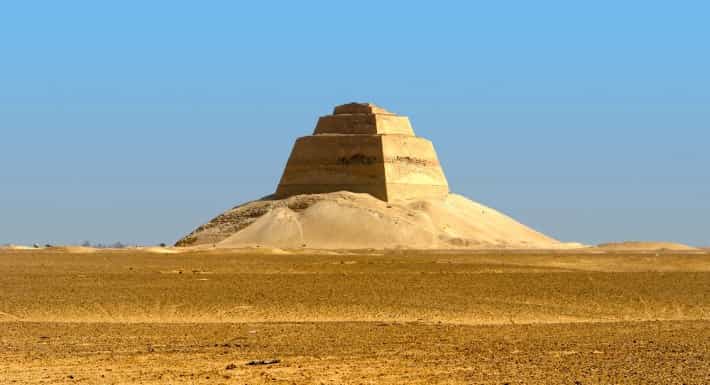
The same did Sneferu at his pyramid at Meidum, a necropolis located 55 kilometers south of the stepped pyramid at Saqqara. There the pharaoh erected a great funerary monument in the form of an eight-step pyramid, with a central masonry tower and sloping walls, to which superimposed layers were added, also sloping with a 75º inclination.
However, at the end of his reign Sneferu launched a third constructive phase that would radically change the appearance of the Pyramid of Meidum.
At the base, the workers raised a leveled platform of limestone blocks, and on this they were placing successive horizontal courses of stone.
Finally, the entire construction received an exterior cladding of fine limestone from Tura. In this way, a perfect pyramid was obtained, with four smooth faces of 51º inclination, 144 meters in base and 92 in height.
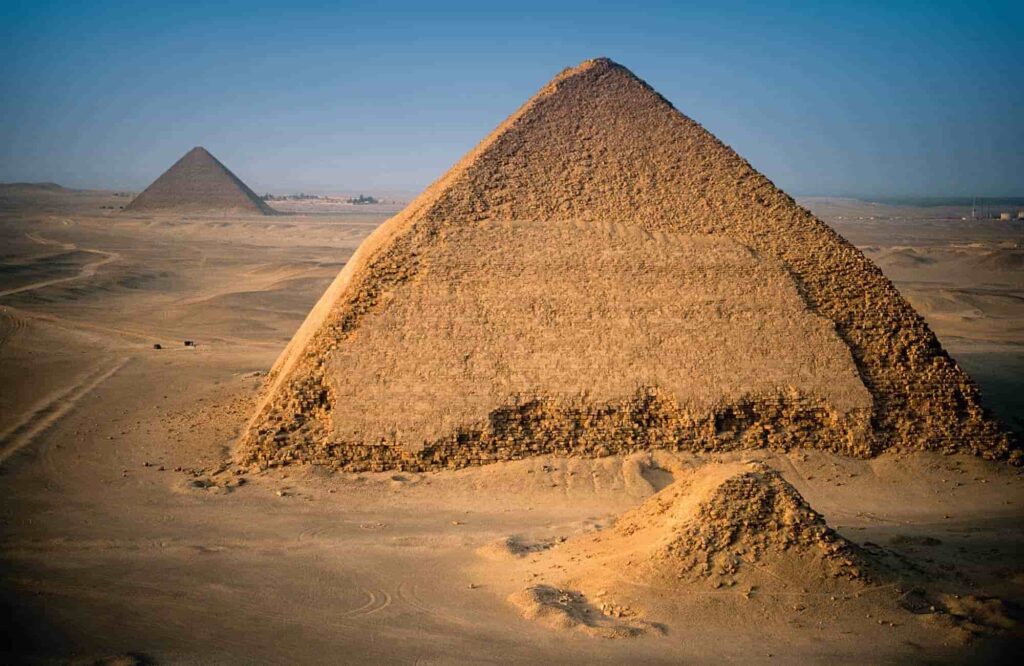
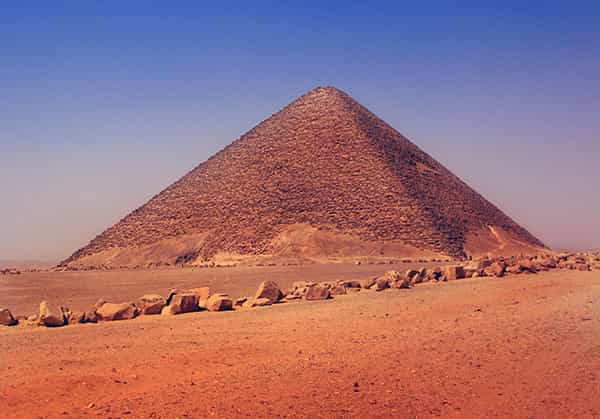
The pyramids of Dahshur. The image shows the Bent pyramid in the foreground, rising out of the Dahshur plain; in the background the Red pyramid can be seen. Both were built by Sneferu.
The pyramid of Meidum
The architectural innovation promoted by Sneferu in Meidum is related to the rise of the solar cult during Dynasty IV, which promoted the identification of the pharaoh with the sun god Ra.
It is no coincidence that Huni, Sneferu’s predecessor, was the first monarch to inscribe his name and titles on a cartouche, the oval that symbolizes Ra’s journey; nor that Djedefre, Sneferu’s grandson, was the first pharaoh to be called Son of Ra.
According to this vision, the pyramid would symbolize the benben, the primordial hill, that first piece of land that, after the creation of the solar god Atum, emerged from the waters of the nun, the inert, dark and silent primordial ocean.
The pyramid, like the primeval hill, represents creation and rebirth and becomes the vehicle for the revitalization of the deceased pharaoh.
If the pyramids of Dynasty III symbolized stairs to the starry sky, now the pyramid, as a solar element, could also express the idea of the rays of the Sun that allowed the king to rise to the solar divinity.
With their smooth faces that glowed thanks to their coating with white limestone from Tura.
According to this new conception, the main construction axis of the funerary complex became the east-west, instead of the previous north-south.
This is how it was intended to promote the union of the king with the solar god in his daily journey, from when he appeared in the east in the form of the Khepri beetle, passing through its culmination at noon as Ra, in the form of a solar disk, and its sunset by the west in the form of a ram, Atum.
The pyramid of Meidum marked the definitive triumph of this new model of funeral ensemble. Sneferu’s work includes for the first time all the characteristic elements of pharaonic funerary complexes from then on:
A satellite pyramid next to the main one, a funerary temple, another temple located on the river bank and a ramp that linked these two buildings. .
According to the solar model, the funerary temple was attached to the eastern face of the pyramid, instead of the northern one, although access to the interior was still from the north side, as in the pyramid of Djoser.
From this entrance, about 18 meters high, a descending corridor of almost 60 meters in length and an inclination of 28º starts.
The Bent Pyramid
Sneferu built a second pyramid at the Dashur necropolis, 45 kilometers north of Meidum. The final form this monument took is unique. Started as a pyramid with a 60º inclination, later an envelope made of blocks inclined 6º inwards and a reduction of the slope by five degrees was added.
From 47 meters in height, the slope of the faces of the pyramid was reduced to 43º, thus giving it the peculiar appearance of a “rhomboid pyramid”or the Bent Pyramid, as it is known.
It is not known whether this change in slope was due to structural problems that had to be solved on the fly or if it had a symbolic meaning:
The double slope would represent, for example, the unity of Upper and Lower Egypt. Once completed, the pyramid reached 105 meters in height, with a base of 188 meters on each side.
The Red pyramid of Dahshur
The internal structure of the Bent pyramid is unusual because of its two entrances. One is, as was customary, on the north side, 12 meters high, and leads to a corridor 80 meters long that leads to a horizontal corridor; this, in turn, leads to a chamber with a false vault 17 meters high.
The second entrance, originally camouflaged behind a cladding block, is on the west side, 33 meters high. It opens onto a descending corridor that continues as a horizontal corridor after 65 meters, where two chambers with closing blocks were arranged and, finally, a burial chamber with a false vault 16 meters high.
The third pyramid of Sneferu, popularly known as the “Red pyramid“, was built two kilometers north of the previous one, in Dahshur.
It is the second pyramid with the highest base (220 meters), only ten meters less than that of the Great Pyramid. However, it is also the one with the lowest slope of its faces (43º), so it only reached 105 meters in height.
Its access is 28 meters high on the north side, and from there starts a descending corridor of 63 meters that ends in a horizontal corridor.
This passes through two chambers with a false vault and then gives access to a burial chamber, located at a higher level, also with a false vault and almost 15 meters high. Perhaps the pharaoh was buried there.
Flying to (Hypothetical) Planet 9: Why visit it, how could we get there, and would it surprise us like Pluto?
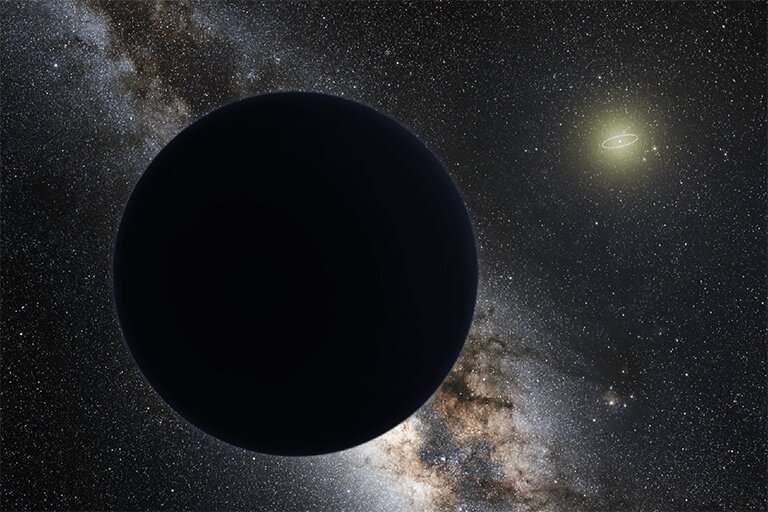
In a recent study submitted to Earth and Planetary Astrophysics, an international team of researchers discuss the various mission design options for reaching a hypothetical Planet 9, also known as “Planet X”, which state-of-the-art models currently estimate to possess a semi-major axis of approximately 400 astronomical units (AU). The researchers postulate that sending a spacecraft to Planet 9 could pose scientific benefits much like when NASA’s New Horizons spacecraft visited Pluto in 2015. But does Planet 9 actually exist?
Artist’s rendition of the hypothetical Planet 9, with Neptune’s orbit displayed as a bright ring orbiting the sun.
Credit: European Southern Observatory/Tom Ruen/nagualdesign
“It is hard to put a specific number on the confidence level because so many uncertainties remain,” said Dr. Manavsi Lingam, who is an Assistant Professor at the Florida Institute of Technology, and a co-author on the study. “For now, I would say that it seems likely that there is an unusual clustering of extreme trans-Neptunian objects. We do not know what is causing this clustering, but Planet 9 appears to be a promising candidate.”
Before NASA’s New Horizons arrived at Pluto in 2015, the only images scientists had of Pluto were fuzzy pictures from Earth-based telescopes, and even the Hubble Space Telescope couldn’t get anything better. The science about Pluto was equally scant, as we had an estimate for its mass, but since we couldn’t make out surface features, we knew very little about its atmosphere, geologic diversity, and interior. As the researchers point out, the “wealth of new data” from New Horizons surpassed the old, but could we be just as surprised with Planet 9 data if a spacecraft were to visit there?
“It is very likely,” said Dr. Andrew Hein, who is an Associate Professor/Chief Scientist at the University of Luxembourg, and a co-author on the study. “Even the best telescopes are vastly inferior to close-up observations from a probe flying by a celestial body. This is even more true for bodies which are far away and faint, which is the case for Planet 9. The reason is physics. The fainter an object, the larger your telescope needs to be to collect more light from that object and the longer you need to observe. The farther away the object, the more light you need to collect and the larger the telescope needs to be.”
For how to get to Planet 9, the researchers propose several mission designs. These include, Jupiter gravity assist, using either Jupiter’s or the Sun’s gravity well to accelerate the spacecraft, chemical rockets, nuclear propulsion, and laser sails. With the exception of laser sails, the amount of time each method would need to reach Planet 9 ranged from just under 40 years to 100 years. With laser sails, the researchers estimated that a spacecraft could reach Planet 9 within 6.5-7 years. But what steps are being taken to make this technology a reality?
“Laser sail technology is currently being pursued by Breakthrough Starshot, a project I am part of, and which has significantly advanced the technology over the last 6 years, including laboratory prototypes,” said Hein. “While flight technology is conceptual for now, some of the technology building blocks already exist in the lab. The project’s aim is to launch a laser sail to another star, but a small-scale version should be feasible to develop within the next 10-15 years or so with a budget of less than the one for a traditional space probe (few hundreds of millions of dollars). This small-scale version could be used to reach Planet 9 within a few years, once developed. But once the laser beamer is developed, such probes could be launched on a weekly basis at costs hundreds of times cheaper than current probes.”
For now, Planet 9 remains purely a hypothesized member of our vast and illustrious solar system, but would the vast time it takes to get there using conventional methods prevent us from potentially visiting this mysterious object so far from the Sun?
“Although we find that minimum mission times of 40-50 years are required (except for light sails), this long flight time ought not deter us,” said Lingam. “The Voyager spacecraft have been functional for roughly the same duration and continue to provide a wealth of data. A putative mission to Planet 9 (should it exist) would not only revolutionize our understanding of the outer Solar system, but it can also enable us to study other targets along the way – for instance, some of the maneuvers take us close to Jupiter and the Sun, indicating that these worlds could also be surveyed.”
As always, keep doing science & keep looking up!
Featured Image:Artist’s rendition of the hypothetical Planet 9, with Neptune’s orbit displayed as a bright ring orbiting the Sun. (Credit: European Southern Observatory/Tom Ruen/nagualdesign)
Barb Bergfeld on witnessing & filming a triangular-shaped UFO & lights in the sky, Owensville, 1994
Nov. 10, 1994; Owensville, OH 2:00 AM. Multiple witnesses reported a silent triangular configuration of lights that were captured on a home video camera. A dangerous rollover maneuver, putting the “aircraft” upside down at the conclusion of the roll, would seem to preclude this object being a stealth flight over populated areas.
The Navy admitted it has a lot more footage of UFOs — but won't share them anytime soon.
The U.S. Navy confirmed in a letter that the agency has unreleased footage of UFOs, which have been deemed national security secrets.
(Image credit: Getty/ Bettmann)
The U.S. Navy holds unseen videos of unidentified flying objects (UFOs) — or unidentified aerial phenomena (UAP), as the Department of Defense (DOD) prefers to call them — but will not release the footage publicly because it would "harm national security," a Navy spokesperson wroteWednesday (Sept. 7).
The admission came in response to a Freedom of Information Act (FOIA) request filed by the government transparency site The Black Vault, which has previously shared thousands of pages of UFO-related documents received via FOIA requests to the CIA and other government agencies. The Black Vault filed the FOIA request to the U.S. Navy in April 2020 — just one day after the Navy declassified three now-infamous videos shot by Navy pilots showing high-tech aircraft moving in seemingly impossible ways. The Black Vault requested that the Navy now turn over any and all other videos related to UAP.
More than two years later, the government responded with a letter that both confirmed that more UAP videos exist and denied the request to turn them over due to national security concerns.
"The release of this information will harm national security as it may provide adversaries valuable information regarding Department of Defense/Navy operations, vulnerabilities, and/or capabilities," Gregory Cason, deputy director of the Navy's FOIA office, wrote in a response letter. "No portions of the videos can be segregated for release."
Cason added that the Navy was able to declassify the three UAP videos released in April 2020 only because the videos had been previously leaked to the media and had already been "discussed extensively in the public domain." The Navy deemed it possible to officially release the footage "without further damage to national security," Cason wrote.
Interestingly, in its response to The Black Vault's request, the Navy did not make any attempts to conceal the existence of additional UAP videos. There are clearly more videos of inexplicable UFO encounters in the Navy's archives, but how many and what they depict will have to remain a mystery for now.
It's clear, however, that the U.S. military takes the potential threat of UAP very seriously. In May 2022, the DOD held its first public hearing on UFOs since the 1960s. The hearing primarily discussed a June 2021 Pentagon report that revealed U.S. Navy pilots had reported 144 UAP sightings since 2004. More recently, the DOD announced that it will receive federal funding to open a new office focused exclusively on managing reports of UFO sightings by the U.S. Army, Navy and Air Force.
Originally published on Live Science.
ALL RELATED VIDEOS, selected and posted by peter2011
Big Difference Between Neanderthal and Modern Human Brains Discovered
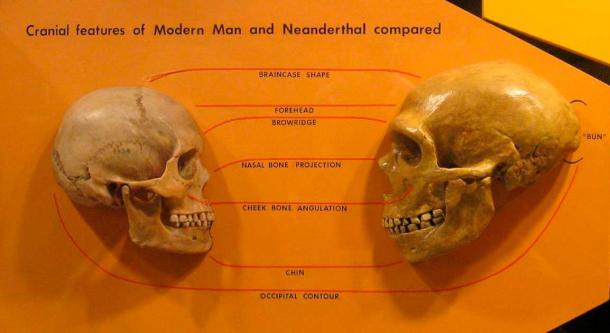
Neanderthals, a subspecies of archaic humans who split from modern humans sometime between 300,000 and 80,000 years ago, have been the subject of a new study. This study has revealed the presence of a single amino acid difference possessed by modern humans that dramatically increased the number of brain cells created, leading to a split in development and providing a cognitive edge for Homo sapiens over their Neanderthal cousins. This is being claimed as the first physical proof modern humans were smarter than Neanderthals.
How Did Modern Human Brains Outcompete Their Older Cousins?
For a long time, scientists and historians have been perplexed about the question – what makes modern humans unique? What sets them apart from other cousins on the evolutionary spectrum ? The study, published in Science, shows an increase in brain size and subsequent neuron production during brain development, even though Neanderthals and modern humans had brains of a roughly similar size.
“One concrete fact is that wherever Homo sapiens went, they would basically out-compete other species there. It’s a bit weird,” said Professor Laurent Nguyen, of the University of Liège, who was not involved in the latest research. “These guys [Neanderthals] were in Europe a long time before us and would have been adapted to their environment, including pathogens. The big question is why we would be able to out-compete them,” he said, quoted in a Guardian report.
Researchers from the Max Planck Institute of Molecular Cell Biology and Genetics (MPI-CBG) focused on a variation that was identified in Homo sapiens brains. This variation, occurring in our neocortex, boosts the brain progenitor cell counts, which implies that as a species, we made more neurons during the development process, compared to the Neanderthals during theirs, around 130,000 to 40,000 years ago.
“Making more neurons sets the basis for higher cognitive function ,” said Wieland Huttner, who led the work at the Max-Planck-Institute of Molecular Cell Biology and Genetics. “We think this is the first compelling evidence that modern humans were cognitively better than Neanderthals.”
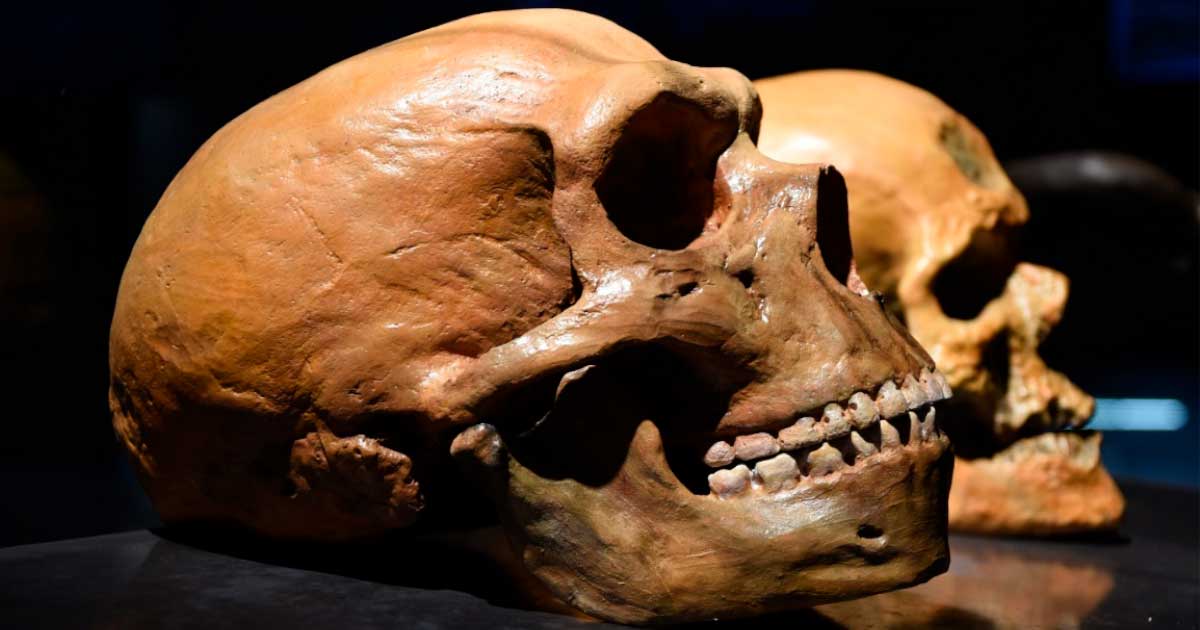
Detailed wax figure of Neanderthal prehistoric caveman. Faster development of modern human brains eventually helped Homo sapiens out-compete Neanderthals
Comparing Modern Human Brains vs. Neanderthal Brains
For the study, the scientists inserted a Neanderthal brain gene into mice, ferrets, and blobs of lab-grown tissue called organoids. Organoids are tiny, self-organized three-dimensional tissue cultures derived from stem cells, sometimes called ‘mini brain structures’, reports Nature.
They focused on the gene TKTL1 (protein transketolase-like 1), which is heavily involved in the neuronal production in a developing brain. The Neanderthal version of this same gene differs by one letter from the modern human version. In modern humans, TKTL1 contains an arginine at the sequence position, whereas in the Neanderthals, it is the related amino acid lysine.
"We found that with the Neanderthal-type of amino acid in TKTL1, fewer basal radial glial cells were produced than with the modern human-type and, as a consequence, also fewer neurons. This shows us that even though we do not know how many neurons the Neanderthal brain had, we can assume that modern humans have more neurons in the frontal lobe of the brain, where TKTL1 activity is highest, than Neanderthals,” concluded Anneline Pison, first author of the study.
From these experiments, it was determined that the Neanderthal version of the gene created neurons slowly during the brain’s cortex development. This slower pace could be a huge factor that explains the superior cognitive abilities of modern humans. It wouldn’t be farfetched to say that it was all in the mind!
Therefore, if the production of neurons in the neocortex is greater during fetal development, it can be speculated that modern humans cognitive abilities associated with the frontal lobe were promoted, leading to better tools, weaponry, language, art, symbolism, and ultimately, smarter brains. Moving forward, Pinson hopes to understand the mechanisms through which TKTKL1 drives the birth of brain cells.
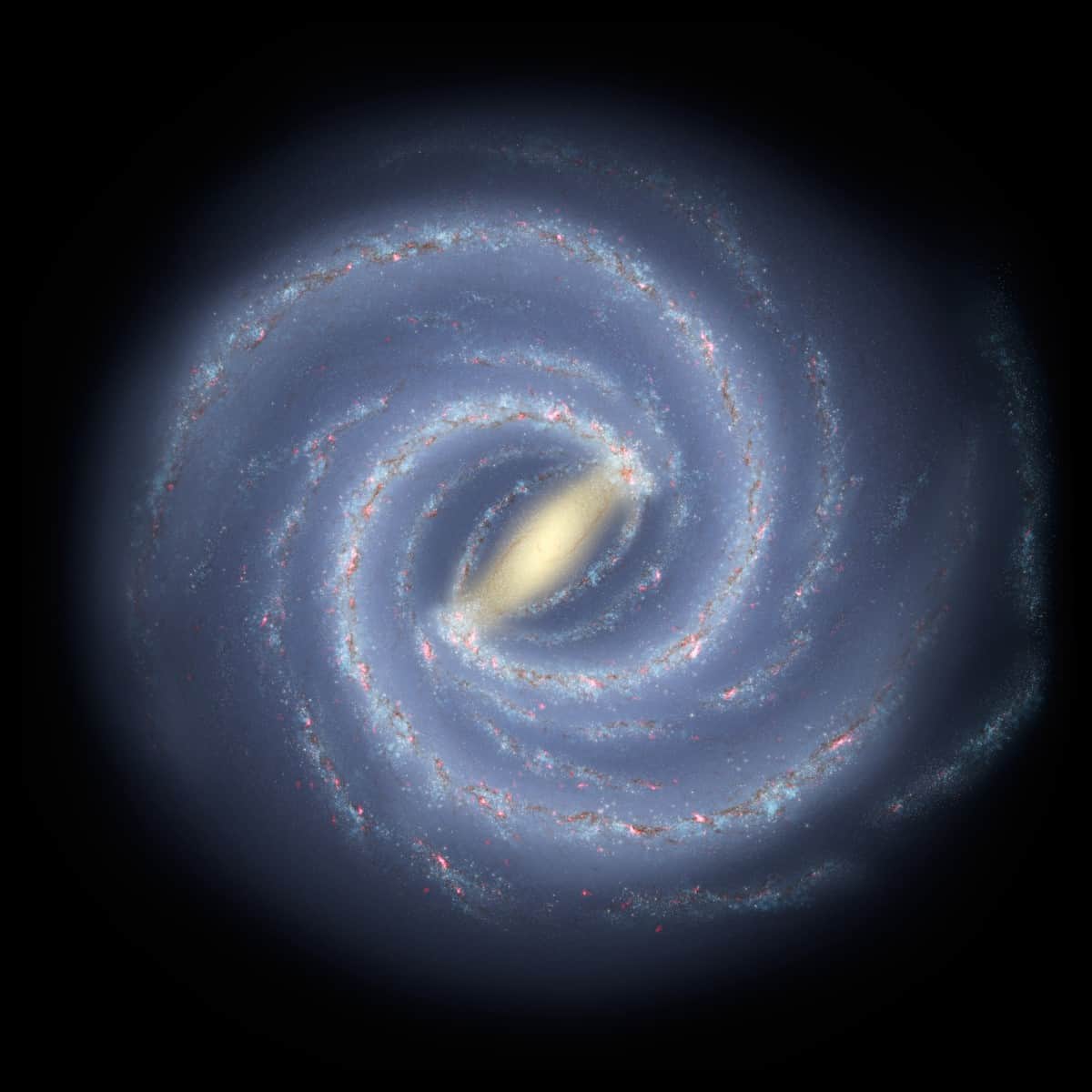
Earth’s crust grew faster when our planet passed through the Milky Way’s spiral arms, study suggests
Galactic voyage Artist’s impression of the Milky Way showing its spiral arms. (Courtesy: NASA/JPL-Caltech/ESO/R Hurt)
The rate at which Earth’s continental crust builds up goes through cycles, peaking around every 200 million years when the solar system travels through one of the Milky Way’s spiral arms. That is the conclusion of an international team of researchers, who argue that crustal production is boosted when more high-energy comets crash into the Earth. They say that these comets are dislodged from the Oort cloud by the influence of regions of space with dense interstellar clouds.
“As geologists, we normally think about processes internal to the Earth being really important for how our planet has evolved,” says team member and isotope geologist Chris Kirkland of Australia’s Curtin University. “But we can also think about the much larger scale and look at extraterrestrial processes and where we fit in the galactic environment.”
So far, Earth is the only planet that we know has continents and active plate tectonics. These features have helped make Earth hospitable to life because they influence the atmosphere, hydrosphere and biosphere.
Ancient crust
In their study, Kirkland and colleagues analysed zircon crystals deposited in the North American craton in Greenland and the Pilbara craton in western Australia — two regions that preserve some of Earth’s oldest continental crust, which dates to the Archean Eon.
By measuring the decay of uranium within the crystals, the team established a timeline for the formation of the cratons, spanning from around 2.8–3.8 billion years ago. They also looked at hafnium isotopes, which allowed them to identify times of juvenile magma influx associated with crust production. Analysis revealed a longer period, 200-million-year-long oscillation in the data, which correlates with Earth’s motion through the Milky Way. This finding is also mirrored in oxygen isotope data.
More specifically, they found that the observed rate of crustal production tracks the solar system repeatedly passing into the Milky Way’s spiral arms. “Our solar system and the four spiral arms of the Milky Way are both spinning around the supermassive black hole at the galaxy’s centre, yet they are moving at different speeds. The spiral arms orbit at 210 km/s, while the Sun is speeding along at 240 km/s, meaning our solar system is surfing into and out of the galaxy’s arms,” the researchers.
Stellar traffic jam
“You can think of the spiral arms as dense regions that slow the passage of stars, much like a traffic jam, which only clears further down the road,” they said, adding: “This model results in approximately 200 million years between each entry our solar system makes into a spiral arm of the galaxy.”
Every time the solar system makes one of these entries, Kirkland and his team propose that interactions occur between the galaxy’s relatively dense spiral arms and the Oort cloud of icy planetesimals that surrounds the solar system. This increases the rate at which comets are ejected from the Oort cloud, with some of these icy bodies ending up hurtling towards Earth. These comets strike the Earth with considerably more energy than the more frequent meteorites that come from the asteroid belt.
Kirkland points out that this higher energy is important because it results in greater melting of the crust upon impact. “When it hits, it causes larger amounts of decompression melting, creating a larger uplift of material, creating a larger crustal seat.”
Spherule beds
Further evidence linking periods of increased crustal generation with higher rates of comet impacts come in the form of spherule beds. These are deposits containing small spheres formed either directly from molten impact ejecta or rained out from rock and vapour plumes in the wake of an impact event. The researchers note that the known ages of spherule beds around the globe also correspond with the solar system’s movement into the Milky Way’s spiral arms around 3.25–3.45 billion years ago. The dating of additional spherule deposits in the future could provide more evidence to support the hypothesis.
The team hopes that its findings will motivate further investigation of how forces from outside the solar system have shaped the planet on which we live. “It’s very hard to prove these things,” says team member and astrophysicist Phil Sutton of the UK’s University of Lincoln. He adds, “We want to make that link and start the conversation to look at geological processes beyond the Earth, beyond the solar system, and what might drive those. We didn’t just form in isolation.”
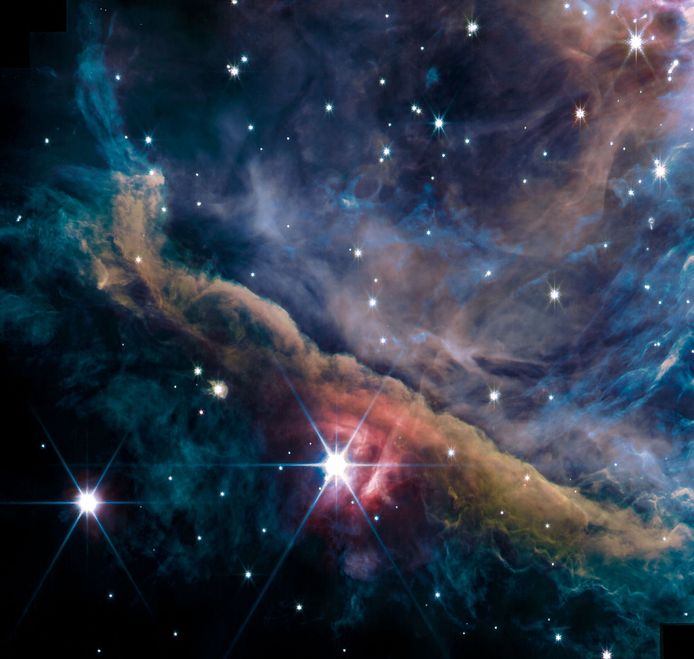
James Webbtelescoop maakt “uitzonderlijk gedetailleerde" foto die toont waar sterren geboren worden
De James Webbtelescoop pakt alweer uit met een indrukwekkende foto. Dit keer wordt de Orionnevel - een enorme gas- en stofwolk in het sterrenbeeld Orion - in de schijnwerpers gezet. De uitzonderlijk gedetailleerde foto gunt ons zelfs een blik achter de schermen van de kraamkliniek voor piepjonge sterren (en planeten).
Het is amper een week geleden dat NASA nog een nieuw beeld van de James Webbtelescoop deelde. Toen ging het om de Tarantulanevel met duizenden “nooit eerder waargenomen sterren”, dit keer gaat het om de Orionnevel, een plaats waar sterren geboren worden. “Dankzij deze adembenemende beelden kunnen we weer iets beter begrijpen hoe massieve sterren de gas- en stofwolken transformeren waarin ze ontstaan”, aldus astrofysicus Eva Peeters van Western University (Canada).
“We zijn reeds in 2017 met dit project gestart en wachten dus al meer dan vijf jaar op deze gegevens”, zegt Peeters nog. Het geduld van de astronomen werd misschien op de proef gesteld, maar evenzeer beloond met de nieuwe beelden: “Deze tonen ons hoe grote sterren precies ontstaan. Het is verbazingwekkend hoe scherp en gedetailleerd de beelden zijn.”
Wat we dan precies moeten zien op de foto? De astronomen duidden enkele jonge sterren aan met daarrond enkele gas- en stofwolken. “We zien als het ware een kraamkamer voor jonge sterren. Daarnaast is er ook sprake van enkele protosterren (sterren die nog niet geboren zijn, red.).”
Over James Webb
De James Webb ruimtetelescoop is de opvolger van de Hubble. Het is onze grootste en geavanceerde ruimtetelescoop ooit. Zeker 10.000 mensen hebben aan dit project dat 20 jaar duurde meegewerkt. Met de James Webb telescoop kunnen we elke fase van ons universum bestuderen, ook de geboorte van de eerste sterren zo’n 13,5 miljard jaar geleden.
Meer van UFO'S of UAP'S, ASTRONOMIE, RUIMTEVAART, ARCHEOLOGIE, OUDHEIDKUNDE, SF-SNUFJES EN ANDERE ESOTERISCHE WETENSCHAPPEN - DE ALLERLAATSTE NIEUWTJES


 Two Supermassive Black Holes Are Expected To Collide Within Next 3 Years And We Will Watch It In Real-Time