Ontdek de Fascinerende Wereld van UFO's en UAP's: Jouw Bron voor Onthullende Informatie!
Ben jij ook gefascineerd door het onbekende? Wil je meer weten over UFO's en UAP's, niet alleen in België, maar over de hele wereld? Dan ben je op de juiste plek!
België: Het Kloppend Hart van UFO-onderzoek
In België is BUFON (Belgisch UFO-Netwerk) dé autoriteit op het gebied van UFO-onderzoek. Voor betrouwbare en objectieve informatie over deze intrigerende fenomenen, bezoek je zeker onze Facebook-pagina en deze blog. Maar dat is nog niet alles! Ontdek ook het Belgisch UFO-meldpunt en Caelestia, twee organisaties die diepgaand onderzoek verrichten, al zijn ze soms kritisch of sceptisch.
Nederland: Een Schat aan Informatie
Voor onze Nederlandse buren is er de schitterende website www.ufowijzer.nl, beheerd door Paul Harmans. Deze site biedt een schat aan informatie en artikelen die je niet wilt missen!
Internationaal: MUFON - De Wereldwijde Autoriteit
Neem ook een kijkje bij MUFON (Mutual UFO Network Inc.), een gerenommeerde Amerikaanse UFO-vereniging met afdelingen in de VS en wereldwijd. MUFON is toegewijd aan de wetenschappelijke en analytische studie van het UFO-fenomeen, en hun maandelijkse tijdschrift, The MUFON UFO-Journal, is een must-read voor elke UFO-enthousiasteling. Bezoek hun website op www.mufon.com voor meer informatie.
Samenwerking en Toekomstvisie
Sinds 1 februari 2020 is Pieter niet alleen ex-president van BUFON, maar ook de voormalige nationale directeur van MUFON in Vlaanderen en Nederland. Dit creëert een sterke samenwerking met de Franse MUFON Reseau MUFON/EUROP, wat ons in staat stelt om nog meer waardevolle inzichten te delen.
Let op: Nepprofielen en Nieuwe Groeperingen
Pas op voor een nieuwe groepering die zich ook BUFON noemt, maar geen enkele connectie heeft met onze gevestigde organisatie. Hoewel zij de naam geregistreerd hebben, kunnen ze het rijke verleden en de expertise van onze groep niet evenaren. We wensen hen veel succes, maar we blijven de autoriteit in UFO-onderzoek!
Blijf Op De Hoogte!
Wil jij de laatste nieuwtjes over UFO's, ruimtevaart, archeologie, en meer? Volg ons dan en duik samen met ons in de fascinerende wereld van het onbekende! Sluit je aan bij de gemeenschap van nieuwsgierige geesten die net als jij verlangen naar antwoorden en avonturen in de sterren!
Heb je vragen of wil je meer weten? Aarzel dan niet om contact met ons op te nemen! Samen ontrafelen we het mysterie van de lucht en daarbuiten.
Spionage, moord of louter toeval? FBI start onderzoek nadat zeker tien experts met toegang tot staatsgeheimen sterven of verdwijnen
Een briljante kernfysicus die voor zijn huis wordt doodgeschoten. Een luchtmachtgeneraal die ogenschijnlijk van de aardbol lijkt verdwenen. Een ruimtevaartingenieur die nooit terugkeert van een wandeling. Zeker tien vooraanstaande onderzoekers met toegang tot uiterst gevoelige informatie zijn de afgelopen jaren plots overleden of verdwenen. Wat online begon als voer voor complotdenkers, is in de Verenigde Staten inmiddels uitgegroeid tot een zaak van nationale veiligheid.
Karen Van Eyken - Journalist bij HLN
KIJK : 11 scientists have gone missing or perished?? What's going on??
De FBI neemt de situatie serieus en leidt inmiddels een grootschalig, federaal onderzoek. “We werken hierin nauw samen met de ministeries van Energie en Defensie om antwoorden te vinden”, bevestigde een woordvoerder.
Ook de Amerikaanse politiek eist opheldering. De toezichtscommissie van het Huis van Afgevaardigden, geleid door de Republikeinen, is een eigen onderzoek gestart. Zij willen per direct tekst en uitleg van de FBI, het Pentagon, het ministerie van Energie en NASA. Hun voornaamste zorg is een “mogelijk crimineel verband” tussen het tragische lot van deze experts, die naar verluidt stuk voor stuk toegang hadden tot uiterst gevoelige informatie. NASA meldde op X dat ze overlegt en samenwerkt met de betrokken instanties.
Vanuit het Witte Huis klinkt een gelijkaardige bezorgdheid. President Donald Trump noemde de kwestie onlangs “behoorlijk serieus” en sprak de hoop uit dat het slechts toeval was. “Over anderhalve week weten we hopelijk meer”, liet hij doorschemeren na intern topoverleg.
Dit heeft de hoogste prioriteit voor het Congres. We zien dit als een mogelijke bedreiging voor onze nationale veiligheid
Republikein James Comer
“Dat dit toeval is, lijkt me uiterst sterk”, stelde de Republikein James Comer, voorzitter van de toezichtscommissie, onomwonden bij ‘Fox News’. “Dit heeft de hoogste prioriteit voor het Congres. We zien dit als een mogelijke bedreiging voor onze nationale veiligheid.”
Toch gelooft niet iedereen in Washington dat er een verband is tussen deze zaken. Democraat James Walkinshaw tempert de paranoia en wijst op de grote schaal van de Amerikaanse wetenschapssector. “We hebben duizenden nucleaire wetenschappers en experts rondlopen. Geen enkele buitenlandse mogendheid kan ons programma serieus ontwrichten door er tien individuen uit te pikken.”
Het eerste incident dat bij de autoriteiten op de radar verscheen, vond in 2023 plaats bij NASA’s prestigieuze Jet Propulsion Laboratory (JPL). Michael David Hicks (59), een expert in kometen en asteroïden, overleed onverwachts. Omdat er geen doodsoorzaak werd gedeeld, kregen online complottheorieën al snel vrij spel. Zijn dochter Julia kijkt het lede ogen aan. “Mijn vader had al langer een kwakkelende gezondheid”, vertelde ze zichtbaar aangedaan aan ‘CNN’. “Er is werkelijk geen enkele logische reden om zijn dood te linken aan dit onderzoek. Soms moet ik er een beetje om lachen, maar inmiddels neemt de speculatie wel erge vormen aan.”
Niet lang daarna stierf ook ruimtevaartspecialist Frank Maiwald (61) in Los Angeles. En in juni 2025 verdween Monica Reza (60), directeur bij een NASA-lab, spoorloos tijdens een wandeling in de Californische bossen.
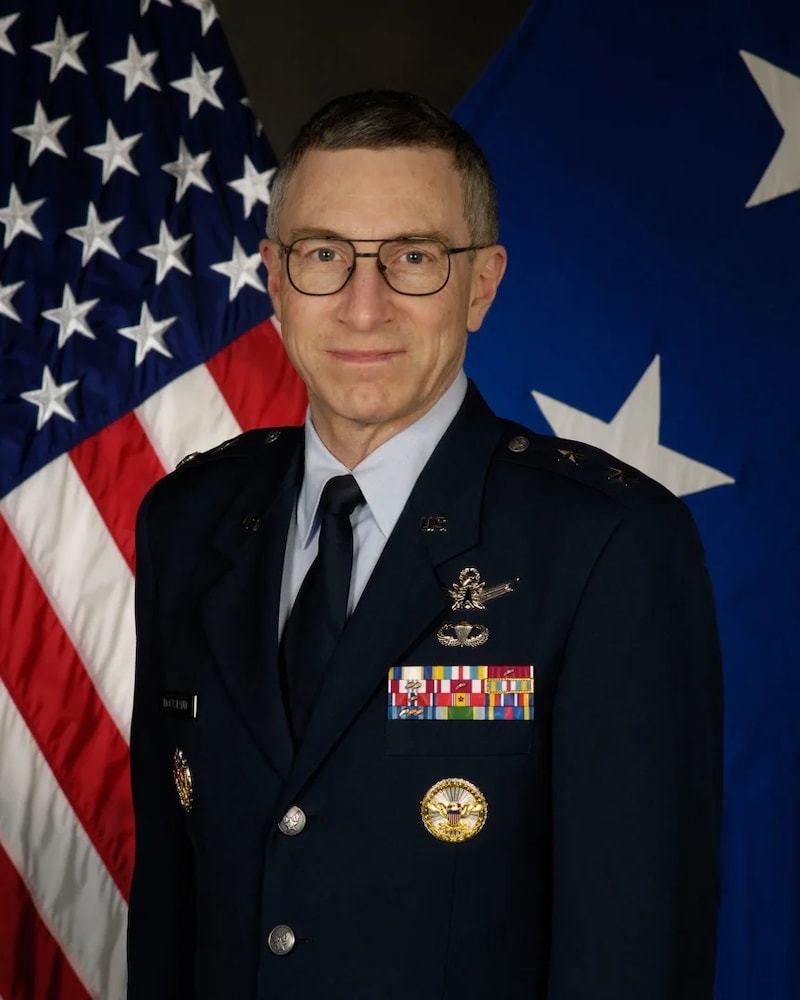
Een van de meest in het oog springende zaken is de verdwijning van William Neil McCasland. De gepensioneerde luchtmachtgeneraal verliet eind februari zijn huis in New Mexico en is sindsdien niet meer gezien. Zijn telefoon, bril en smartwatches liet hij gewoon thuis.
McCasland was geen doorsnee militair; hij stond aan de wieg van geavanceerd ruimtevaartonderzoek en leidde ooit de basis Wright-Patterson. Binnen de ufologie is dat een legendarische locatie waar volgens wilde geruchten de wrakstukken van het beruchte ‘Roswell-incident’ zouden liggen opgeslagen. De speculaties staken zo hevig de kop op dat zijn vrouw, Susan, zich genoodzaakt zag om de complottheorieën via Facebook te ontkrachten. “Neil wist niets van buitenaardse wezens of brokstukken. Er is echt geen enkele reden om hem te ontvoeren.”
Rond diezelfde tijd raakten bij het Los Alamos National Laboratory, het Amerikaanse nucleaire onderzoekscentrum in New Mexico, eveneens twee medewerkers vermist. Melissa Casias (53) liet haar spullen thuis, net als haar telefoon, die was teruggezet naar de fabrieksinstellingen.
Korte tijd later raakte ook Anthony Chavez (78) vermist. Voor zijn pensioen hield hij als bouwopzichter toezicht op werkzaamheden in het complex. Zijn vriend Carl Buckland vertelde aan ‘CNN’ dat hij blij is dat de autoriteiten de zaak onderzoeken: “Het werd hoog tijd.”
Wat de onrust de afgelopen maanden verder heeft aangewakkerd, is het geweld waarmee enkele recente sterfgevallen gepaard gingen. MIT-professor Nuno F.G. Loureiro (47), een gevierde kernfysicus, werd voor zijn huis in Boston doodgeschoten door een schutter die ook twee studenten op de campus van de Brown University ombracht. Astrofysicus Carl Grillmair (67) onderging in februari hetzelfde trieste lot op zijn oprit in Los Angeles.
En dan is er nog Matthew James Sullivan (39), een voormalige inlichtingenofficier die vorig jaar overleed vlak voordat hij als klokkenluider zou getuigen in een rechtszaak over UFO’s. Volgens het Republikeinse congreslid Eric Burlison was zijn dood “wel heel erg verdacht.”
Toch smeken veel families om het hoofd koel te houden. Na de dood van de jonge onderzoekster Amy Eskridge (34) wees haar familie op haar chronische pijnklachten. “Mensen moeten beseffen dat wetenschappers ook gewoon mensen zijn die ziek worden of sterven. Zoek er niet te veel achter”, klonk het.
De Amerikaanse autoriteiten kiezen het zekere voor het onzekere. FBI-directeur Kash Patel toont zich vastberaden. “We onderzoeken nauwgezet of er een link is met toegang tot staatsgeheimen of de mogelijke betrokkenheid van buitenlandse actoren”, verklaarde hij zondag op Fox News. “Als we ook maar één aanwijzing vinden voor een complot of crimineel handelen, zal de FBI niet aarzelen om arrestaties te verrichten.”
Within days, three separate UFO-linked stories spiraled into online speculation, as an alleged suicide, a scientist's death from the archives, and a politician's receipt of death threats caused conspiracy theories to swirl once more.
On April 20th, David Wilcock, 53, died from a "self-inflicted gunshot wound" in his Colorado home.
Police arrived minutes after a 911 call. The cause was put down to a mental health crisis. But hours earlier, Wilcock gave a warning on a
"People are disappearing. Scientists are going missing. The president himself is looking into this. It's a little bit scary."
This is from David Wilcock's final video.
In his own words:
undefinedPeople are disappearing. Scientists are going missing. The President himself is looking into this. It's a little bit scary.undefined pic.twitter.com/5JLYQ27yye
undefined DeepState Illuminate (@TheDeep_State6) April 22, 2026
Wilcock was a familiar face on TV and spent decades demanding the government reveal what it knows about UFOs.
On April 18th, Wilcock acknowledged he was having a difficult time: "I've had some very intense stuff going on this weekend," he said.
My Dear Family,
I am not yet sure if I am doing a show tomorrow. I've had some very intense stuff going on this weekend.
Either way, I want you all to know how much I love and appreciate you!
Always remember that the Creator is within -- and we live in a loving universe.
But some of the X community refused to believe it was a legitimate suicide.
Denial. Screenshot from X.
Even Congressman Tim Burchett told The Daily Mail on April 22nd: "I just don't think there's any chance that this is just all coincidental."
Whether this is linked to the 11 other scientists who have died or gone missing remains unclear. It was on record that Wilcock said back in 2022 that he didn’t want to kill himself:
I plan on LIVING. Not suicidal at all. Just concerned about what happens when you prove God is real.
Text messages that she sent to her business partner Samuel Reed a month before death explicitly read “If anything happens to me – suicide or an accident – it wasn’t, it’s suspicious, treat it as such.”
This evidence is being treated as predictive or suspicious in hindsight. However, it also comes with the fact that family statements, especially from her father Richard Eskridge, reject conspiracy claims, as he said: “scientists die also, just like other people.”
As the count of dead or missing scientists amounts to 11 (6 dead and 5 missing) the conversation about UFO speculation finally has entered the mainstream, under an avalanche of news.
NASA press secretary Bethany Stevens even put forward an institutional commitment to coordinating with the authorities concerned, though stepped short of calling it a national security crisis.
NASA is coordinating and cooperating with the relevant agencies in relation to the missing scientists. At this time, nothing related to NASA indicates a national security threat. The agency is committed to transparency and will provide more information as able.https://t.co/92dTXGAxQn
When Congressman Burchett told journalist Piers Morgan that he himself had received death threats, it was enough to make the UFO community shudder:
“I’ve been warned many times about doing certain events… I’m not sure if it’s about [UAP] or just that I’ve got a big mouth. I’m sick of the American public being lied to… If that makes me a target, so be it.”
Rep. Tim Burchett tells Piers Morgan he receives constant death threats — “I worry about it”
“I’ve been warned many times about doing certain events… I’m not sure if it’s about [UAP] or just that I’ve got a big mouth. I’m sick of the American public being lied to… If that…pic.twitter.com/5Qt1ICJEez
As Burchett remains one of the politicians tied to the associations with the scientists, one might wonder if politicians will be next to become embroiled in the matter, or if they will seek to distance themselves.
What happens next is anyone's guess, but it seems that this meteoric escalation of the disclosure question is set to go the distance.
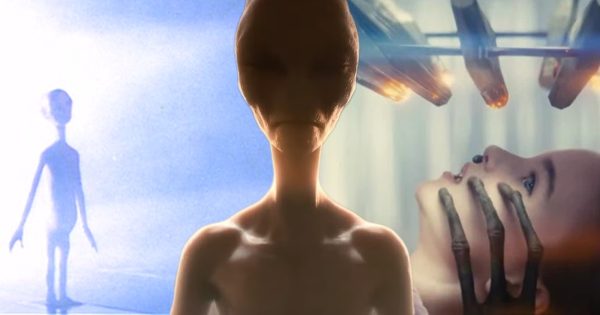
Spielberg delivers a close encounter with extraterrestrials this year with Disclosure Day, but this ain’t his first rodeo…
Steven Spielberg might be 80 this year, but he’s showing no signs of slowing down. This June, his latest blockbuster Disclosure Day arrives, and the trailer promises plenty of Spielbergian magic. We can expect UFOs, aliens, and potentially world-ending threats from the extra-terrestrials as a group of humans tries to deal with their close encounters.
Of course, this genre isn’t alien to Spielberg. His long and storied history as one of the pre-eminent blockbuster specialists has covered just about everything possible, but the master filmmaker has regularly cast his cinematic eye out to space and the mysterious beings that might exist out there. So, in advance of Disclosure Day, it’s time to look back at Spielberg’s alien films…
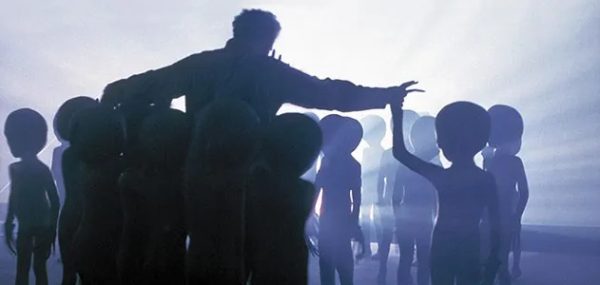
Close Encounters of the Third Kind
Coming in the wake of Star Wars, Spielberg’s first sci-fi movie, which dealt with alien life forms, was built more on wonder and intrigue than on the intergalactic wars of George Lucas’ cinema-redefining epic.
Spielberg had effectively laid the foundations for the blockbuster formula with Jaws, which Lucas cemented with Star Wars. Close Encounters then continued in ensuring Hollywood had a huge shift in the types of movies mass audiences wanted to see.
Close Encounters is decidedly patient in comparison to the modern formula (and Star Wars), teasing us with mysterious UFO encounters in small-town America. The film was a box office smash. Not Star Wars ground-shifting level, but still, the third-highest-grossing film of the year. It had Spielberg quickly perfecting his ability to create magical and timeless family blockbuster entertainment. John Williams also produced an iconic score to add to his even more iconic score in Star Wars that same year.
E.T. the Extra-Terrestrial
Whilst Close Encounters largely focused on the unidentified flying objects, with only a brief glimpse of aliens at the end, this encounter from Spielberg switched things up and focused on the relationship between a young boy (Henry Thomas) and the lost extra-terrestrial who wants to get home.
If his first dalliance with outer space was more about intrigue and build-up, E.T is more direct. You have childhood wonder and impetuousness, with the inherent comedy of a stumpy alien that the kids are doing a bad job of trying to hide. There’s also more of a sense of adventure with the infamous bicycle sequences throughout the film.
Much like Close Encounters, E.T was a mega hit (the highest-grossing film of the year and of all time until that point). It’s a perfect crowd pleaser that’s funny, charming, heartfelt, and thrilling. Williams once again knocks it out of the park. The young Thomas and the even younger Drew Barrymore are also great.
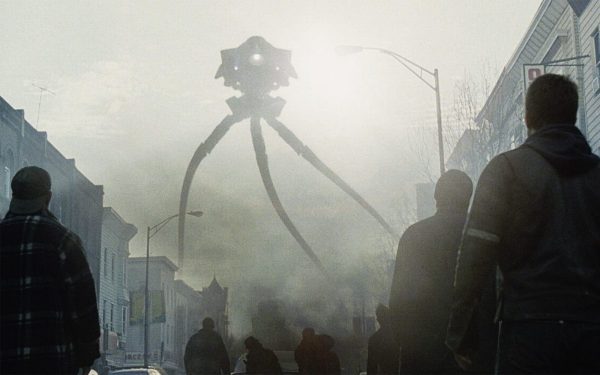
War of the Worlds
By this point, Spielberg had done something largely different from most alien encounter films by having the visiting creatures interested in peace or exploration rather than domination. War of the Worlds was a change-up, though, based on H.G. Wells’ legendary, genre-defining book. Not the first adaptation, but the largest-scale, biggest budget version.
Spielberg went into this at the top of his game, with Tom Cruise as his leading man. The film isn’t often regarded as one of Spielberg’s top-tier films, but despite that, it’s still considered one of the best adaptations of the innumerable TV and film versions out there (including one of mine, War of the Worlds: The Attack).
Spielberg’s assured filmmaking ensures that the set pieces and world-ending threat the aliens pose result in loads of eye-catching spectacle. Few do set pieces as well as Spielberg, of course. If there’s an inherent flaw from following reasonably close to the source novel, it’s that the ending feels a little too easy and abrupt.
Indiana Jones and the Crystal Skull
After a long time with his whip in the closet, Harrison Ford returned as Indiana Jones in a long (long) awaited fourth film. It would ultimately prove to be the least popular in the franchise (to that point), and one of Spielberg’s more lukewarmly received and divisive blockbusters. Did the world want and need another Indy adventure? It probably did. Was the 50s setting and nod to Roswell era conspiracies, really the best choice for a story backdrop? Maybe not.
Indy isn’t evading Nazi’s, chasing grails or Arks here. This time, he’s after an alien crystal skull, whilst dealing with the discovery that he has a son. Whether it’s CGI gophers, nuking the fridge, or swinging on vines with Monkey’s, so much felt like Spielberg was pandering a little too much to a potential new/younger audience.
Still, everything up until the shift from evading Russians and searching for a lost professor, to the alien part of the story, is actually pretty good. The opening set piece feels like classic Jones, and Harrison Ford gamely throws himself around. Once they get to the jungle, the film does seriously derail before crawling to a limp finish. In the end, though, it’s much better than Dial of Destiny.
A.I Artificial Intelligence
Now, you might be thinking A.I. should be on the list of Spielberg/alien films. Many film fans (and for years, myself included) believed the final act of A.I. had aliens in it. When it comes to film, the initial response was mixed, with some finding it a philosophical, deep, and extremely well-made film that was perhaps more mawkish than it needed to be. Others felt it was a big misfire that didn’t live up to the potential that this film could have been had Stanley Kubrick made it (as originally intended).
However, Haley Joel Osment is great as the A.I., Pinocchio-like robot, made to fill the void of a family who lost their son, but cast asunder when they ultimately reject him. He then finds himself in a world of lost and rejected A.I’s just trying to survive and dealing with existential angst.
By the last act of the film, he’s with strange ‘alien’ creatures who aren’t aliens but actually descendants of those first sentient A.I.s. In time, more people are growing to appreciate the visual scope and comparative complexity of Spielberg’s blockbuster. It’s too long perhaps, but certainly visually spectacular (there are some incredible visual effects in the film), and the topic itself has made it rather timely.
What’s your favourite Spielberg alien film? Are you looking forward to Disclosure Day? Let us know on our social channels @FlickeringMyth…
About Tom Jolliffe
Tom Jolliffe is an award-winning screenwriter, film journalist and passionate cinephile. He has written a number of feature films including 'Renegades' (Danny Trejo, Lee Majors), 'Cinderella's Revenge' (Natasha Henstridge) and 'War of the Worlds: The Attack' (Vincent Regan). He also wrote and produced the upcoming gothic horror film 'The Baby in the Basket'.
RELATED
Spielberg's Disclosure Day Is Closer To Truth Than Fiction
UFO Disclosure is Coming THIS YEAR. Maybe.
Sooner or later everyone arrives at the ufo truth.
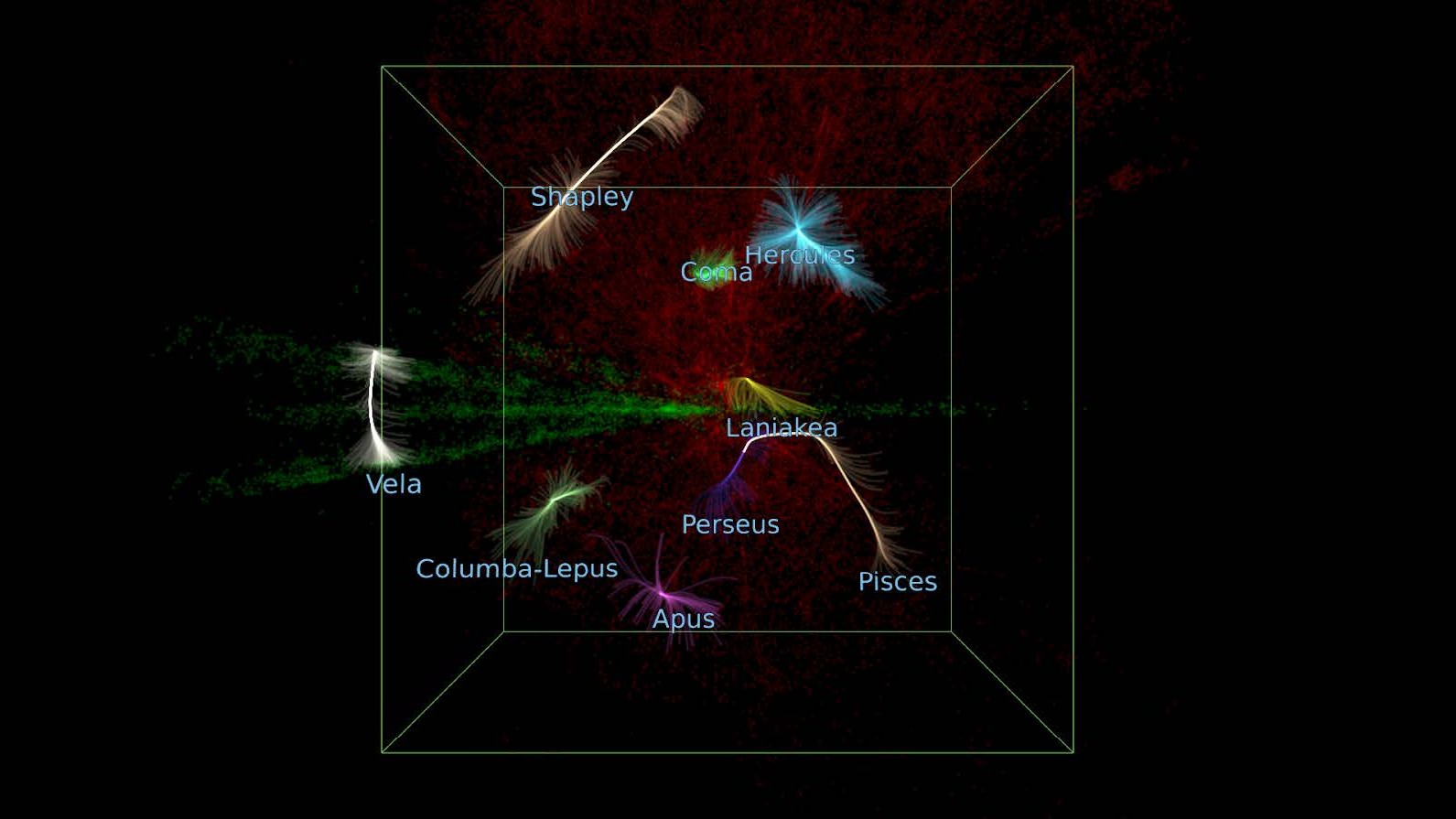
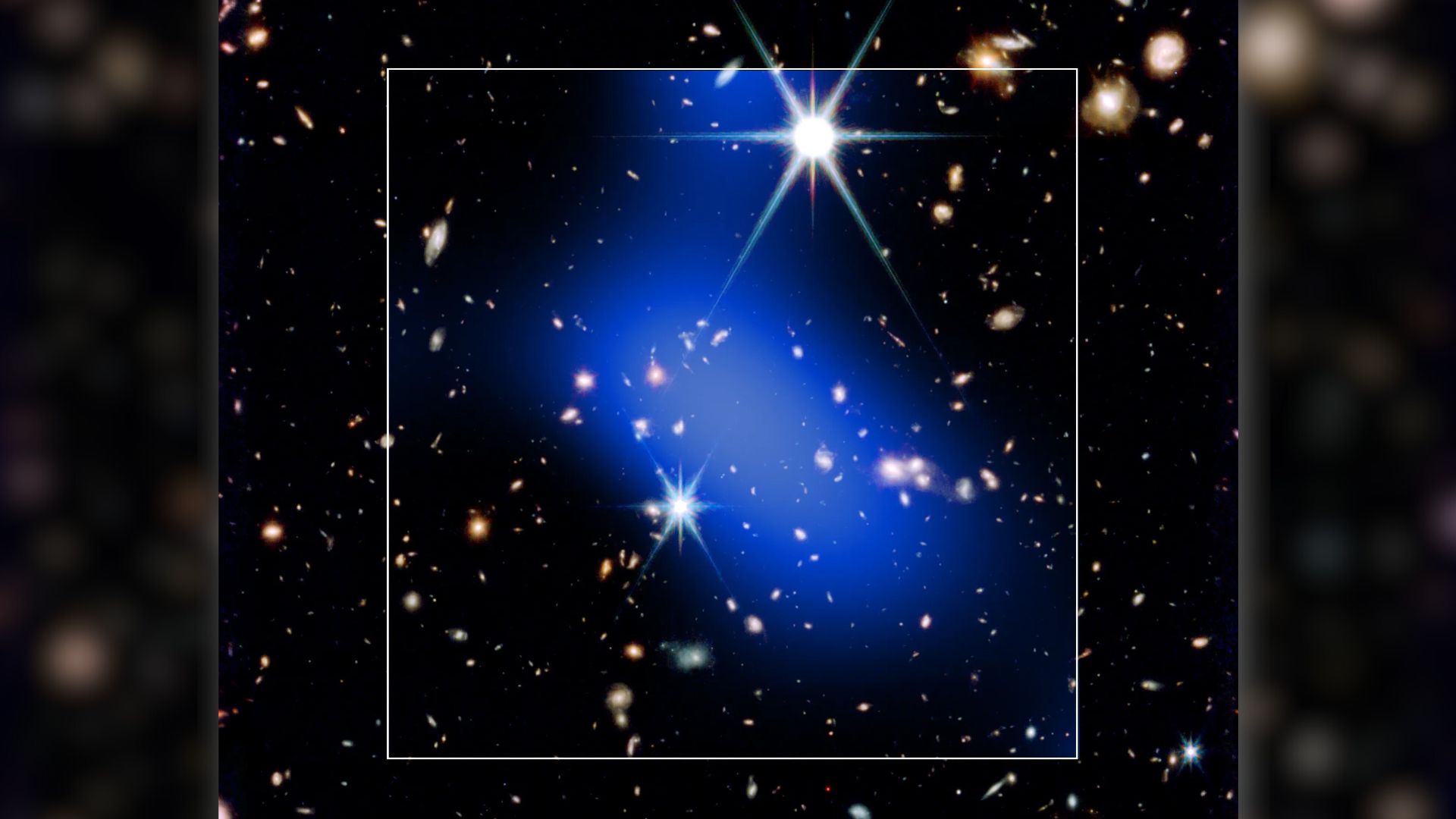
Scientists have mapped the extent of the Vela Supercluster for the first time, and determined that it is one of the largest structures in the universe.
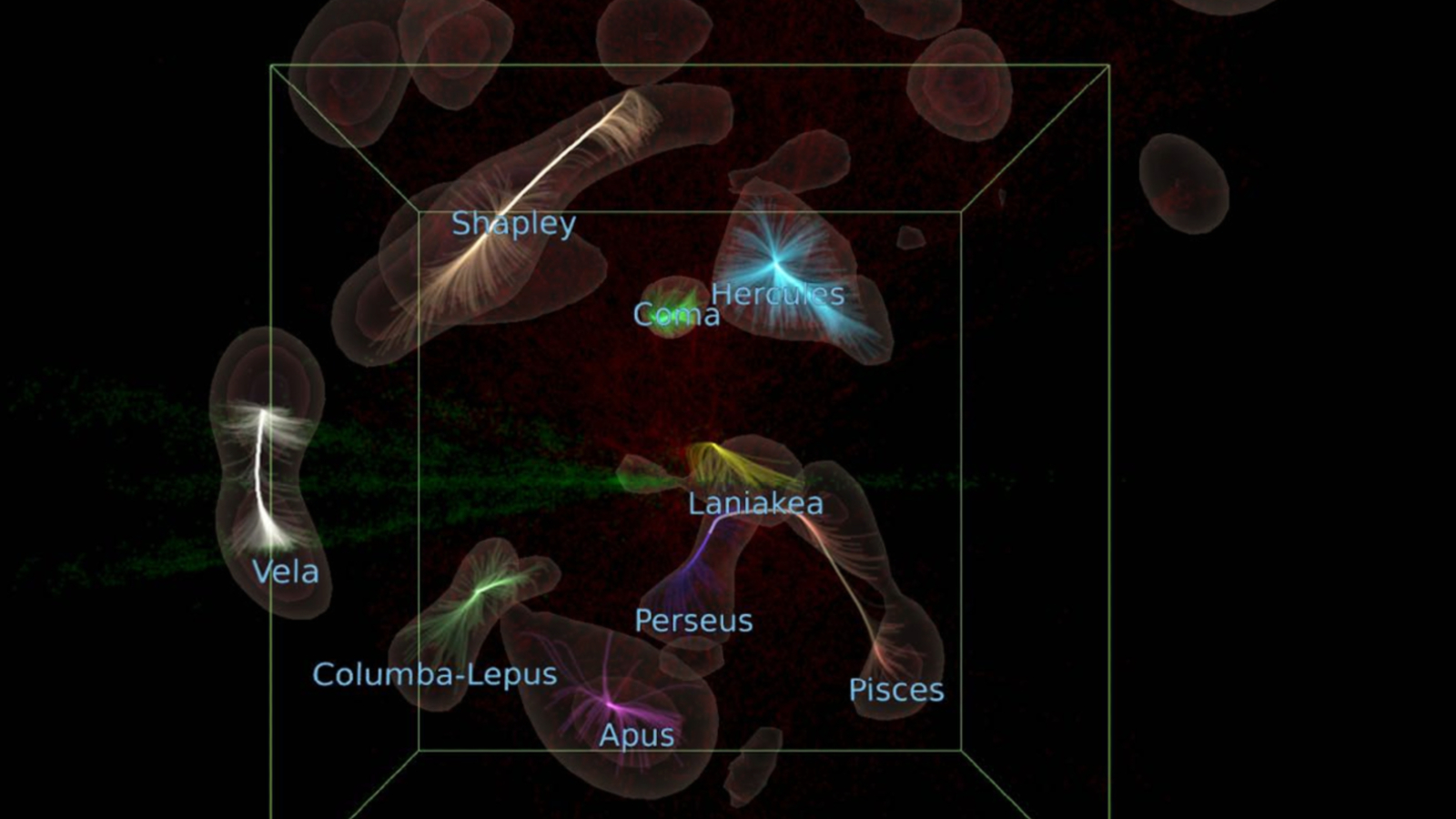
A map showing the relative sizes of galaxy superclusters in the universe. Vela, recently mapped for the first time, is at the far left.
(Image credit: Jérôme Léca, RSA Cosmos)
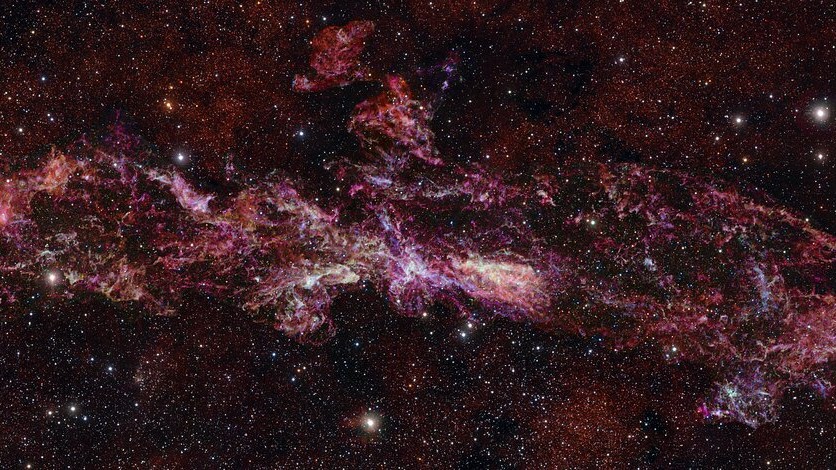
Astronomers have finally mapped out a mysterious galactic "supercluster" that has been almost completely hidden from Earth since it was discovered 10 years ago. The results reveal that the structure is far larger than we realized, and it now ranks among some of the most massive objects in the known universe.
The Vela Supercluster is a collection of at least 20 galaxy clusters, each of which contains hundreds or thousands of galaxies, all gravitationally bound into a single entity. Despite its immense size, the supercluster was just discovered in 2016 because of its location: It lies around 800 million light-years from Earth within a region that experts call the "Zone of Avoidance" — the part of the night sky where we see the Milky Way, which is so full of stars and dust that it's almost impossible to view anything behind it.
The supercluster was initially dubbed "Terra incognita," which means "unknown land" in Latin, and its cosmic hiding place had prevented researchers from determining its true size.
"James Webb Telescope Discovers a Giant Cosmic Structure from the Dawn of Time!"
But in a new study, uploaded March 10 to the preprint server arXiv, researchers loosely mapped the Vela Supercluster by measuring the movements of galaxies within and around the galactic swarm's edge.
Their findings revealed that the structure is around 300 million light-years across — about 3,000 times wider than the Milky Way — and contains an enormous amount of matter equivalent to about 30 quadrillion suns, the researchers wrote in a statement. The new map also shows that most of this mass is distributed into two cores that are moving toward each other.
The team was "delighted" to confirm that the supercluster is "a coherent large-scale structure comparable in size and mass to some of the largest and well-known superclusters in the local universe," study co-author Renee Kraan-Korteweg, an astronomer at the University of Cape Town who specializes in the Zone of Avoidance, told Live Science in an email.
The Vela Supercluster now ranks as more massive than Laniākea, the supercluster that contains Earth and the rest of our galaxy, and is "a close second" to the Shapley Supercluster, which is widely considered the largest supercluster of galaxies, Kraan-Korteweg said. (Other structures, such as the Hercules-Corona Borealis Great Wall and the recently discovered "Quipu," are even larger, but they are considered a step above a supercluster — essentially, clusters of superclusters.)
The researchers also gave the supercluster a new nickname: Vela-Banzi, which means "revealing widely" in the Xhosa language used by Indigenous people in South Africa, where most of the telescopes used in the study are based.
A 3D illustration showing the size of the Vela Supercluster compared to other galaxy clusters (Image credit: Dr Jérôme Léca/RSA Cosmos/SARAO)
Peering through the Milky Way
The Zone of Avoidance has long frustrated astronomers who want to know what lies behind the thick disk of stars, gas and dust of the Milky Way, which covers up to 20% of the visible night sky.
"The millions/billions of stars forming the disk are so dense [and so] close to the galactic plane that we cannot easily see through it," Kraan-Korteweg wrote. "Moreover, where we have stars, we also have lots of minuscule dust particles, and like the stars, this dust layer gets thicker and thicker as you approach the plane."
To get around this, the researchers combined 65,000 existing galaxy distance measurements with around 8,000 new redshift observations of other galaxies. (Redshift measures how fast something is moving away from Earth by calculating how much its light has been stretched by the expansion of the universe.)
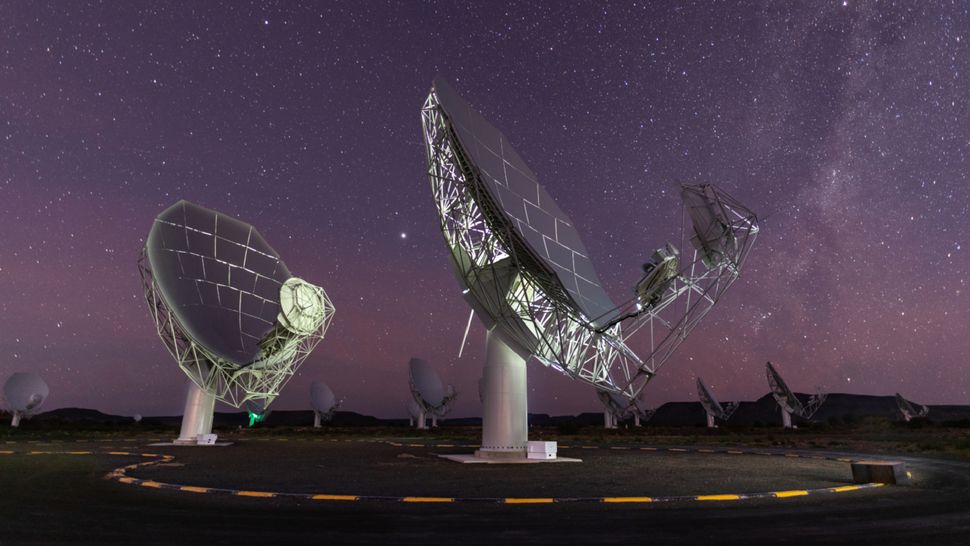
Of these observations, the most important were around 2,000 redshift measurements captured by South Africa's MeerKAT telescope, which detects infrared radiation shining from the giant clouds of hydrogen gas that permeate most galaxies. This allowed the team to take direct measurements of galaxy movements within Vela that had never been seen in visible light.
South Africa's MeerKAT telescope is made up of an array of 64 radio dishes and was able to spot clouds of hydrogen within galaxies obscured by the Milky Way. (Image credit: SARAO/MeerKAT)
The researchers think it may be possible to create more accurate maps of the Vela Supercluster with more powerful radio telescopes in the future. However, not all galaxies contain large amounts of hydrogen that we can see, so parts of the structure will likely always "remain partly shrouded to us," Kraan-Korteweg said.
A better understanding of the largest structures in the universe will help astronomers confirm their models of cosmology. However, to do this, they need to know both the size and the speed of these objects, which is why the new findings are so exciting.
"To understand the one, we need to know the other," Kraan-Korteweg said. "And if we have both, we will be [able] to check if we can reconcile these observations with the models of the universe."
Article Sources
Hollinger, A. M., Courtois, H. M., Kraan-Korteweg, R. C., Mould, J., & Rajohnson, S. H. A. (2026, March 10). Hidden Vela Supercluster revealed by first Hybrid Redshift & Peculiar Velocity Reconstruction. arXiv.org. https://arxiv.org/abs/2603.09339
RELATED VIDEOS
Astronomers Just Mapped the Supercluster Hidden Behind the Milky Way
NOW! Scientists Detect Motion In One of the Biggest Structures Ever Found
The Universe’s Largest Structures Are So Big They Shouldn’t Fit Inside the Observable Cosmos
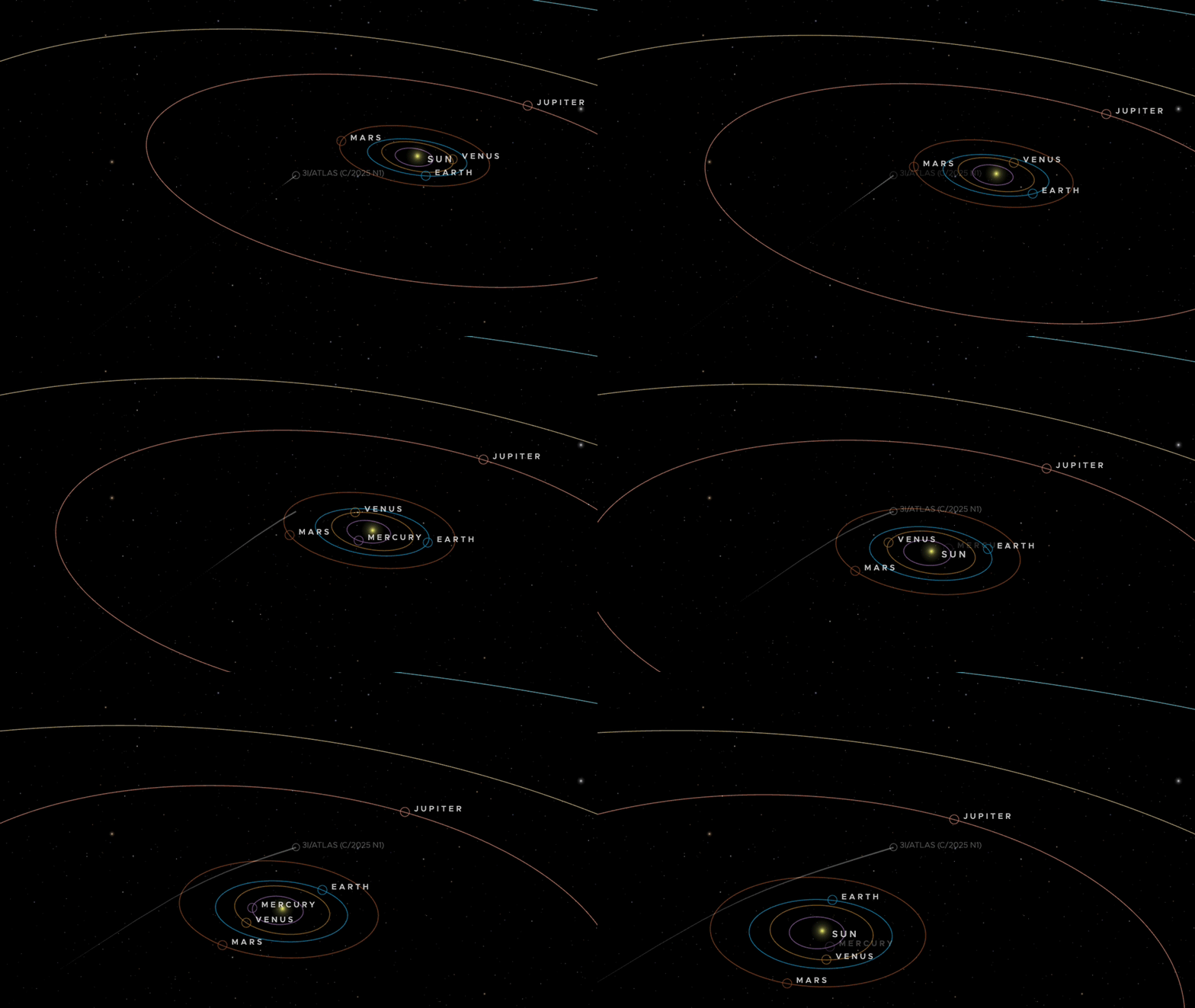
Interstellar comet 3I/ATLAS born in a cold environment
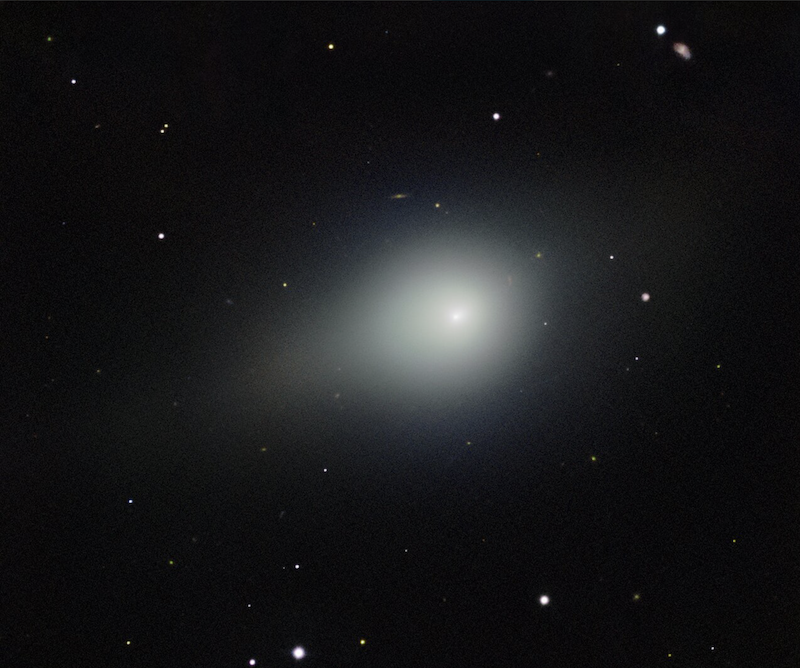
Comet 3I/ATLAS, about 3 weeks after its closest approach to the sun. The Gemini North telescope on Mauna Kea in Hawaii obtained this optical image on November 26, 2025. Image via International Gemini Observatory/ NOIRLab/ NSF/ AURA/ B. Bolin/ J. Miller/ M. Rodriguez/ T.A. Rector/ M. Zamani (CC BY 4.0).
Interstellar comet 3I/ATLAS is only the 3rd interstellar object known. It came from another star system.
So astronomers are eager to learn more. And recently they learned it contains 30 times more water with a different chemical makeup than in our solar system’s comets.
This finding is clue to where 3I/ATLAS formed. It suggests its home star formed in a much colder environment than the one that created our sun.
Comet 3I/ATLAS is raising new questions about star formation
Astronomers first spied this object in July 2025, at about three times Mars’ distance from our sun. And, once they had tracked its path through space, they knew it originated in another star system. 3I/ATLAS, as it’s come to be called, is only the 3rd such interstellar object known. We don’t know where or how it escaped that distant star system in order to pass through our solar system. But astronomers said this month they have new clues about its past. They said it formed in an environment much colder than the one that created our sun and planets.
Radio telescopeobservations detected high levels of water containingdeuterium– an isotope of hydrogen – in the comet. That’s often called “heavy water.” And it’s a sign of cold conditions in the star-formingmolecular cloudthat birthed 3I/ATLAS’ star. It’s colder than conditions that formed our sun. This is an intriguing finding because it shows that star formation can occur under different physical and chemical conditions than those that created our solar system.
Our new observations show that the conditions that led to the formation of our solar system are much different from how planetary systems evolved in different parts of our galaxy.
The researchers published their findings in the peer-reviewed journal Nature Astronomy on April 23, 2026.
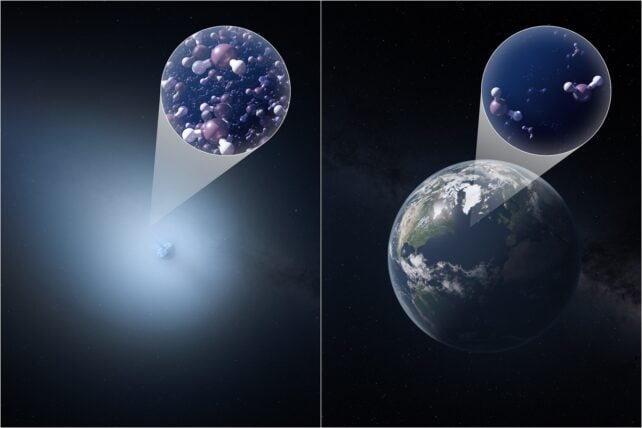
An artist's impression compares the semi-heavy water content of interstellar comet 3I/ATLAS (left) and Earth (right). Insets illustrate the relative abundance of deuterated water (HDO) molecules. 3I/ATLAS contains over 30 times more HDO than is found in Earth's oceans.
Astronomers sometimes refer to comets as “dirty snowballs” because they contain a lot of water. They’re icy remnants from the formation of our solar system, 4.6 billion years ago. Therefore, comets contain a record of the early conditions from which our sun and planets emerged.
Comets in our solar system come from distant reservoirs of icy objects called the Kuiper Belt and Oort Cloud. Sometimes, gravitational perturbations jostle some of these objects from their stable orbits. As a result, they fall into highly elliptical orbits that bring them close to the sun. Near the sun, sunlight heats these objects causing the release of gas and dust that form a tail.
Interstellar visitors
Astronomers know of three objects that are interstellar visitors. Besides 3I/ATLAS, the only other known interstellar comet is 2I/Borisov, that appeared in 2019. And there’s 1I/Oumuamua, not a comet but a cigar-shaped object that passed through in 2017.
3I/ATLAS and 2I/Borisov most likely formed in the far outskirts of their home systems, just like comets in our solar system. Therefore, they too contain a record of the early environment that formed their stellar systems.
3I/ATLAS has a high abundance of water containing deuterium
Water, chemically called H20, is made of two hydrogen atoms and one oxygen atom. Hydrogen, which formed shortly after the Big Bang, has one proton in its nucleus. However, the Big Bang also created another type of hydrogen, but in much smaller quantities. It’s called deuterium, and it has one neutron and one proton in its nucleus.
Most water on Earth contains hydrogen but there is a small amount of naturally occurring water containing deuterium, called deuterated water or heavy water. (Its chemical name is HDO, one atom each of hydrogen, deuterium, and oxygen.)
When astronomers looked at 3I/ATLAS with radio telescopes, they discovered, to their surprise, that it had a lot more deuterated water compared to comets in our solar system.
The amount of deuterium with respect to ordinary hydrogen in water is higher than anything we’ve seen before in other planetary systems and planetary comets.
Comets in our solar system have one molecule of deuterated water for every 10,000 molecules of ordinary water. However, in 3I/ATLAS, that ratio was 30 times higher. And compared to water in our oceans, that ratio was 40 times higher.
An artist's impression compares the semi-heavy water content of interstellar comet 3I/ATLAS (left) and Earth (right). Insets illustrate the relative abundance of deuterated water (HDO) molecules. 3I/ATLAS contains over 30 times more HDO than is found in Earth's oceans.
Molecular clouds are where stars form. There is a higher ratio of deuterium to hydrogen in cold molecular clouds, compared to the ratio created in the Big Bang. That’s due to a complex series of chemical reactions.
Molecules containing deuterium instead of hydrogen are more stable at low temperatures. So when molecular interactions replace hydrogen with deuterium in water molecules, that’s called “deuterated.” Those water molecules sticking to dust grains form deuterated ice, which is more likely to last in a colder environment.
This new study shows that conditions under which stars are created can vary. In 3I/ATLAS, the higher ratio of deuterated water suggests that the environment where its star formed was colder and had lower levels of radiation, compared to the environment in which our sun was born.
The chemical processes that lead to the enhancement of deuterated water are really sensitive to temperature and usually require environments colder than about 30 Kelvin, or about minus 406 degrees Fahrenheit.
Radio telescope observations of 3I/ATLAS
For this study of 3I/ATLAS, the researchers used radio telescopes at the Atacama Large Millimeter/submillimeter Array (ALMA) in Chile.
The radio telescopes detected the distinct signature of deuterated water in the comet. But the telescopes could not directly detect ordinary water. Therefore, the researchers used a mathematical model to determine the amount of ordinary water present based on methanol measurements.
They observed the comet on November 4, 2025, just six days after its closest approach to the sun. Teresa Paneque Carreño, a paper co-author, noted:
Most instruments can’t point toward the sun, but radio telescopes like ALMA can. We were able to observe the comet within days after perihelion, just as it peeked out from its transit behind the sun. This gave us a constraint on these molecules that’s not possible using other instruments.
Each interstellar comet brings a little bit of its history, its fossils, from elsewhere. We don’t know exactly where, but with instruments like ALMA we can begin to understand the conditions of that place and compare them to our own.
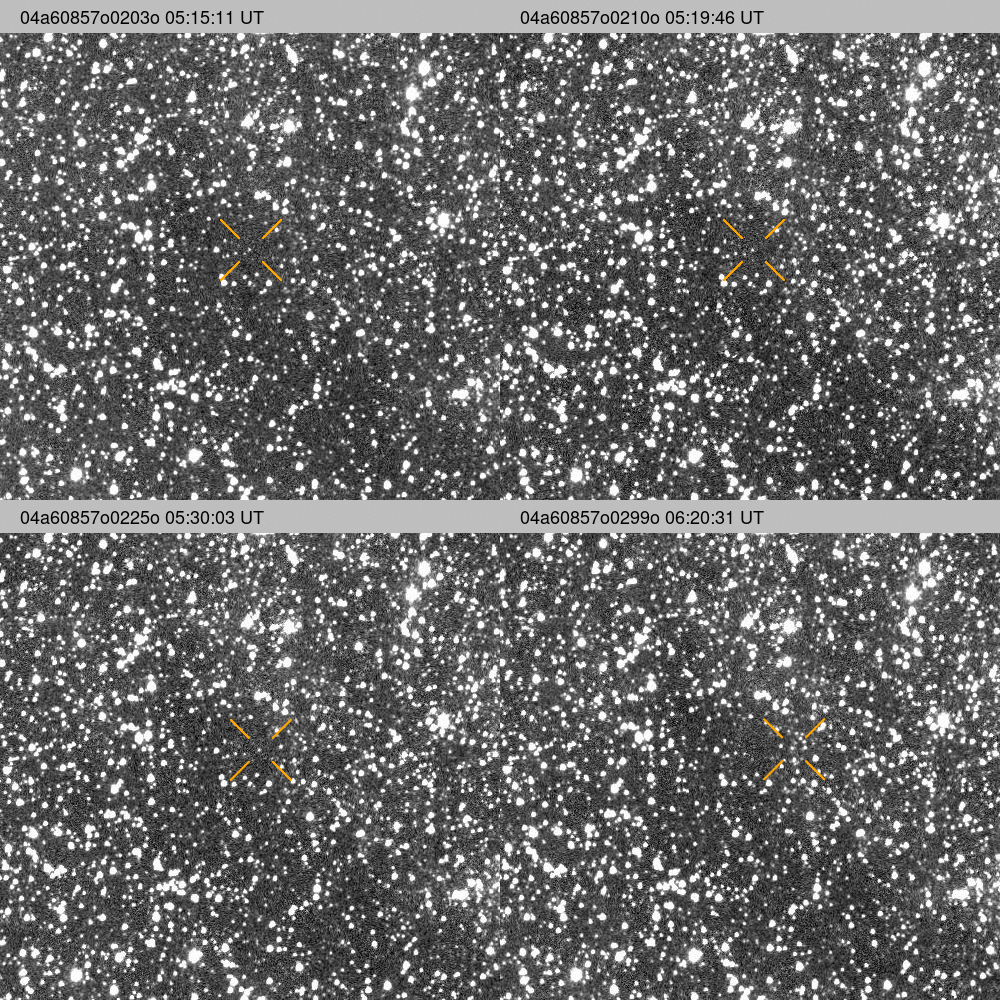
This animation shows the observations of comet 3I/ATLAS when it was discovered on July 1, 2025. The NASA-funded ATLAS survey telescope in Chile first reported that the comet originated from interstellar space.
ATLAS/University of Hawaii/NASA
Bottom line: The chemistry of water in interstellar comet 3I/ATLAS indicates that its home star formed in colder conditions compared to that of our sun.
New research reveals that the mysterious interstellar visitor 3I/ATLAS, which has intrigued astronomers and space enthusiasts alike for the better part of a year, comes from a very cold alien environment.
According to new research from the University of Michigan, published in Nature Astronomy, 3I/ATLAS comes from a much colder region with significantly less radiation than our solar system, marking a breakthrough in the characterization of these interstellarobjects.
This assertion is based on an analysis of the water 3I/ATLAS has released during its journey through our solar system, which showed it contained deuterium, also known as heavy hydrogen.
Strange Water on 3I/A
“Our new observations show that the conditions that led to the formation of our solar system are much different from how planetary systems evolved in different parts of our galaxy,” said lead author Luis Salazar Manzano.
Deuterium is a stable Hydrogen isotope with one proton and one neutron, unlike most hydrogen atoms, which have only a proton. Hydrogen, as most are aware, is one of the two ingredients in water’s H2O formula. Heavy water like this, containing high levels of deuterium, does exist on Earth, but it is relatively rare compared to its proportion on 3I/A. In fact, the amount of deuterium is 40 times as much as on Earth, and 30 times as much as on any other known comet.
Earlier this year, The Debrief reported on the high volume of deuterium present on 3I/ATLAS. The new research essentially builds on those findings, which are helping bring more clarity to the unusual origins of the most mysterious interstellar object observed to date.
“The amount of deuterium with respect to ordinary hydrogen in water is higher than anything we’ve seen before in other planetary systems and planetary comets,” Salazar Manzano said.
Following 3I/ATLAS
The researchers note that it was fortunate that 3I/ATLAS came to the attention of astronomers so early in its approach to our solar system. The University of Michigan team had enough advance notice to secure observation time at Arizona’s MDM Observatory, allowing them to make some of the earliest observations of gas emission from 3I/ATLAS.
They followed up by moving their work to Chile’s Atacama Large Millimeter/submillimeter Array, or ALMA, providing essential tools for analyzing the comet’s chemical makeup. ALMA’s extreme sensitivity enabled the team to separate deuterated water from conventional water at such high resolution that it could accurately determine their ratio.
This marked a notable first, as it had never been accomplished previously with an interstellar object.
“Being at the University of Michigan and having access to these facilities was the key to making this work possible,” Salazar Manzano said. “We were part of a team that was very talented and very experienced in multiple areas, all of us complemented each other and that’s what allowed us to analyze and interpret these data sets.”
Where 3I/ATLAS Formed
Examining this unusual water makeup provided the University of Michigan researchers with clues about the type of environment 3I/ATLAS originated in. Crucially, the researchers compared this evidence with the conditions of our early solar system during its formation, and found stark contrasts between the two.
“This is proof that whatever the conditions were that led to the creation of our solar system are not ubiquitous throughout space,” co-author Teresa Paneque-Carreño said. “That may sound obvious, but it’s one of those things that you need to prove.”
3I/ATLAS is only the third known interstellar object to pass through our solar system, and 1I/ʻOumuamua, the first confirmed interstellar object, was only discovered in 2017. With rapidly advancing sensing capabilities, astronomers expect to discover more of these exotic visitors in the years ahead, and at an increasing rate.
Ryan Whalen covers science and technology for The Debrief. He holds an MA in History and a Master of Library and Information Science with a certificate in Data Science. He can be contacted at ryan@thedebrief.org, and follow him on Twitter @mdntwvlf.
Who is behind the disappearance and deaths of scientists?
Joshua LeBlanc, a 29-year-old aerospace engineer at NASA, died in a car crash in Huntsville, Alabama, on July 22, 2025. He had been working directly on nuclear propulsion systems, contributing to NASA’s Space Nuclear Propulsion program and the DRACO project, an initiative focused on developing nuclear thermal engines for deep-space missions.
Now consider that alongside a growing list of individuals (now 12) connected to aerospace, defense, and nuclear research who have died or gone missing in recent years. They all surfaced under very different circumstances, yet within the same narrow field of expertise.
It does raise a reasonable question: at what point do these cases stop being viewed as isolated incidents? When placed side by side, the overlap becomes difficult to ignore.
Like many of the missing or dead scientists, also LeBlanc reportedly left behind his phone, wallet, and other personal belongings before leaving his home. More details on LeBlanc’s death can be found on Skywatch Signal.
Still, an important question remains: are all of these scientists truly missing or deceased as reported? Taken together, they would represent a highly specialized group, exactly the kind of team capable of developing advanced, potentially groundbreaking technologies in secrecy. It may sound far-fetched, but it leads to speculation: could some have been quietly recruited into covert programs, while others who refused faced darker outcomes?
To explore this idea, I posed the question to Chatgpt: “Who is behind the disappearance and deaths of scientists?”
The response featured an image generated by ChatGPT that pointed toward several possible explanations:
Click the image to view in full size.
Who is behind the disappearance and deaths of scientists
Global institutions, black budget syndicates, shadow networks or corporate or institutional control structures
Motives such as suppressing disruptive technologies, maintaining dominance over energy, defense, and information systems, protecting massive financial interests, and preventing large-scale societal shifts.
To keep control over classified programs
Reverse engineering efforts
Suppressed technologies
Breakthroughs in energy and propulsion
Highly classified space initiatives
Non-human technology
A broader pattern
The idea that transformative change is resisted
That knowledge equates to power, and power tends to protect itself
And that, in extreme interpretations, controlling the future could involve silencing those creating it
These ideas remain speculative, but when patterns appear, even loosely connected ones, they tend to invite deeper scrutiny.
20 Scientists Missing, Killed In Mysterious Deaths? Mystery Disappear Shake US, China | Watch
By CHRIS MELORE, DEPUTY SCIENCE EDITOR FOR DAILYMAIL.COM
A young scientist researching technology that could revolutionize space travel and energy production reported being harassed for government secrets before her death.
Amy Eskridge, 34, was found dead on June 11, 2022, with a gunshot wound to the head. While her death was ruled a suicide, a resurfaced video has raised chilling questions about what may have really happened.
Speaking to fellow researchers in May 2020, Eskridge said: 'I've been roofied multiple times. Like my extended team has been roofied multiple times, like it's the f***ing roofie party over here.'
Eskridge added that she was afraid to continue her research in public due to what she described as a 'social engineering' campaign, in which strangers approached her with detailed knowledge of her life and questioned her about her work.
'Then all of a sudden the people in the bar around me are like, "What do you do for a living? Tell us, do you work for the government... you're sitting there at your laptop, it looks cool, tell us what you're doing."'
Franc Milburn, a retired British paratrooper and intelligence officer who claimed to have been in contact with Eskridge before her death, shared messages he said she sent him.
One dated May 13, 2022, read: 'If you see any report that I killed myself, I most definitely did not. If you see any report that I overdosed, I most definitely did not. If you see any report that I killed anyone else, I most definitely did not.'
Milburn told the Daily Mail that after her death, individuals who said they knew Eskridge contacted him anonymously, claiming they had also been targeted, including reports of suspected drink spiking, break-ins and slashed tires.
Amy Eskridge was a scientist researching anti-gravity technology before her death in 2022 at age 34
Former intelligence officer Franc Milburn shared disturbing messages he said he received from Eskridge, claiming she had been targeted by people in public
Eskridge, a graduate of the University of Alabama in Huntsville, had co-founded The Institute for Exotic Science with her father, Richard Eskridge, in 2018, a company focused on 'speculative research,' including the creation of gravity-defying engines.
This technology has been linked to extraterrestrials by UFO researchers who claim anti-gravity propulsion has been responsible for the unexplainable sightings of aircraft moving at incredible speeds and in ways that defy the laws of physics.
Her father, a former NASA scientist, has refuted claims that his daughter's death was suspicious. The Daily Mail has attempted to contact Richard for comment.
Eskridge claimed during her 2020 interview that she may have been drugged after feeling extremely drunk at a bar near her Alabama residence, despite just arriving.
'Like twice or three times it's like I'm really f****** drunk, I shouldn't be this drunk, I didn't drink enough to be this drunk, what's happening? Why am I so messed up?' Eskridge recounted.
'Then all of a sudden the people in the bar around me are like "what do you do for a living? Tell us, do you work for the government? What do you do? You're sitting there at your laptop, it looks cool, tell us what you're doing."'
Eskridge claimed that she had been experiencing acts of intimidation and harassment for four to five years.
She would reveal in 2020 that over the previous year, the incidents had reportedly escalated to the point where she could no longer go to bars alone out of fear for her safety.
Eskridge, a graduate of the University of Alabama in Huntsville, had co-founded The Institute for Exotic Science with her father, Richard Eskridge, in 2018, a company focused on 'speculative research,' including the creation of gravity-defying engines
'I don't go to bars by myself anymore, even though it's my most productive zone because in the past 12 months, if I sit down at a bar by myself, some dude will come, like some 50-year-old dude will come and sit next to me and turn to me and say "do you want one roofie in your drink or two?"'
'Then he'll like drop buzzwords that are relevant to my life, and I'll be like I'm getting the f*** out of here,' the scientist said.
Eskridge added that she was coming up with a plan to effectively disclose the existence of UFOs to the public, fearing that she needed to move quickly due to the growing number of threats allegedly sent to her and break-ins at her home.
'Over the past 12 months, it's been escalating, like more aggressive, more invasive digging through my underwear drawer and sexual threats.'
In 2018, Eskridge and her father delivered a presentation on behalf of their company, HoloChron Engineering, describing both historical and modern experiments related to gravity modification, including alleged black projects said to be developing triangular anti-gravity craft known as the 'TR3B.'
It was during this time that Eskridge alleged she and her colleagues had become the targets of repeated physical and psychological attacks, reportedly aimed at isolating the 34-year-old from her staff.
Milburn told the Daily Mail: 'After she died, her co-workers and her friends, people she'd worked with, they came forward anonymously and said to me, "yeah, look, we were attacked, we were roofied, my house was broken into, my car tires were slashed."'
The intelligence officer claimed that some of her co-workers said their food had also been poisoned, making their entire families sick.
'It had "Amy Eskridge" written on the bag, and [these are] people who are living hundreds of [miles] away out of state from Amy Eskridge. So this wasn't just random events, this was happening to her and people around her,' Milburn claimed.
According to documents shared online, Eskridge's now-closed research company was working on anti-gravity technology they claimed had been used in UFO-inspired aircraft
Milburn shared a picture he said showed Eskridge sitting in her home - near the window which she claimed was scorched by an 'energy weapon'
In 2022, Eskridge reportedly told Milburn, whom she had befriended online and had asked for help regarding the alleged harassment, that she was working on a highly sensitive project for Homeland Security when the attacks against her turned physical.
Eskridge was reportedly working from home on a project designed to detect chemical or biological threats in the nation's subway systems when she was struck by a directed energy weapon, a device that fires rays of energy, such as microwaves, at a target.
Eskridge shared images with Milburn, apparently showing her hands, feet, neck and back with burns and lesions after the alleged attack by this weapon.
Milburn told the Daily Mail the images even appeared to show a scorch mark on Eskridge's home window, where the 'energy weapon' allegedly passed and struck her in the hands and head while she was working on her laptop.
Milburn shared a picture, which he claims shows Eskridge's hands burned and discolored after allegedly being struck by an 'energy weapon'
On May 19, 2022, Milburn said Eskridge messaged him to report that a member of her research lab with advanced weapons experience was convinced a directed energy weapon had caused her injuries.
'My ex-CIA weapons guy on my team saw my hands when they were burned really badly a couple months ago, and he saw that window pane in person,' she wrote.
'He said he had built things like that, and that it was most likely an RF k-band emitter run by five car batteries strung together from inside an SUV.'
Less than a month later, the 34-year-old was dead, reportedly by her own hand.
Milburn has disputed the report and conducted his own investigation into the case, concluding that Eskridge was 'murdered by a “private aerospace company” in the US because she was involved in the UAP conversation.'
While the claims have not been proven to be true, Milburn's findings were presented to Congress in 2023, and Representative Eric Burlison has noted that he and other lawmakers consider the case suspicious.
Artist’s rendition of UAP over the New Jersey coast [Credit: Americans for Safe Aerospace]
Back in 1999, when I was working as an air traffic controller at Fort Worth Center, one of my co-workers ended up on Coast to Coast AM with Art Bell.
He had submitted audio of unusual aerial activity over the Dallas-Fort Worth area, something people now refer to as UAPs (unidentified anomalous/aerial phenomena). I remember listening to the show and laughing as Bell treated the recording as if it were a leak from a secret government source.
He even said they were using a fake name to protect the controller’s identity—until my co-worker interrupted and told him, “That’s actually my real name.”
Being an air traffic controller was a fascinating job. Most of us held secret clearances, but even then, I only encountered classified information twice in 26 years: once after 9/11, while helping coordinate combat air patrols after the attacks, and once in connection with a specific UAP event I can’t discuss.
Lights Over Arkansas
A year earlier in 1998, I was flying from Texas to Arkansas with my flight instructor, a lifelong friend, to take my instrument check ride. We finished late and headed home after dark. Somewhere along the route, five bright lights appeared between our 12 and one-30 o’clock positions, maybe a mile away at our altitude.
I radioed the controller to ask about nearby traffic. He said the closest aircraft was a 727 40miles ahead. I told him we had five aircraft right in front of us, evenly spaced. For a second, I thought they might be military helicopters. Then my instructor and I looked back—and they were gone.
They didn’t blink out like lights switching off. It was as if they turned or sped away at an incredible rate. Years later, when I saw a video of the Phoenix Lights, I couldn’t shake the feeling that what we saw that night looked eerily similar.
Five years later, I told that story over lunch with some old high school friends. My instructor was there, sitting right beside me. I finished the story and turned to him for confirmation. He hesitated and said, “I don’t know what you’re talking about.”
Image of a UAP captured by a U.S. Navy pilot in the cockpit of a fighter jet [Credit: U.S. Navy]
I couldn’t believe it. I started to wonder if I’d imagined the whole thing. Then, decades later, he called me out of nowhere and said, “Do you remember those lights we saw over Arkansas?” When I reminded him how he’d denied it before, he laughed softly.
“I just didn’t want to talk about it back then,” he said.
What struck me through the years wasn’t the classified work—it was how little we weren’t told.
The FAA never ordered us to stay silent about unusual radar returns, UFO or UAP reports, and activities. More than a few controllers shared recordings or data with reporters.
One thing I can say with certainty is that controllers hate unknowns in their airspace. It goes against the heart of what we do. If I know about it, I can control it or at least steer the aircraft I am responsible for around it.
I often watched with incredulity as controllers complained about these unknown aircraft or whatever, not with awe and wonder but with frustration and anger at the possible safety hazard they present.
Most people remember early February 2023, when a Chinese surveillance balloon crossed the continental U.S. before being shot down off the coast of South Carolina.
We had raw radar and tracked it carefully. But one afternoon over Montana it behaved unlike any balloon I have ever seen. It was drifting southeast at about 45 knots. Then, suddenly, it reversed course and accelerated sharply to the northeast. Within seconds, the radar showed it moving over 700 knots before disappearing entirely.
My best guess? The computers dropped the target because they weren’t programmed to follow anything faster than an SR-71. Since the balloon was being tracked with raw radar and did not have a transponder, when the radar updated, the primary radar target on the next update was too far the last one to be the same object, so it stopped tracking it.
Pilot Lounge Conversations
For years, pilots avoided sharing strange stories for fear of losing their medical certificates or being labeled unstable, delusional, or psychotic if they reported a UFO sighting. But that’s changing.
An unmanned aerial system is observed during Naval exercises off the U.S. East Coast in early 2022. The object in this image was first classified as an unidentified anomalous phenomena before being reclassified as a UAS based on additional information and data from other UAP sightings. [Credit: Department of Defense]
Now, working as a professional pilot, I spend hours in lounges across the country trading stories. When the conversation lags, I love to ask about UAP or other strange things that they have seen or experienced while flying. At first, people are cautious. But once I mention that I retired from the FAA as an air traffic supervisor and that I took UAP reports almost weekly, they open up and the stories start rolling.
The more people talk, the more the stigma fades, replaced by genuine curiosity and professional concern. I am not sure exactly what it was about changing the name of these events from UFO to UAP, but it seems that has made it more acceptable to talk about these experiences.
So kudos to whomever relabeled them and removed the stigma about bringing up these events.
New Era of Openness
Ever since the Navy released videos of UAPs tracked by their aircraft cameras, it feels like something has shifted. It seems suddenly OK to report objects that are unexplainable given our current understanding of science and our universe.
Some of these encounters are surely experimental technology, many from our own military. But others—like the “cube in sphere” objects reported by Navy pilots off the East Coast—don’t fit any known category. These translucent spheres, each with a faint cube suspended inside, reportedly flew in tight formation with Navy fighters, even splitting squadrons mid-flight.
Encounters like that are hard to shrug off.
Why I’m Writing This
I believe pilots and controllers are in a unique position to help us understand what’s happening above us. For much of my career, it felt taboo to talk about these things. Now, it feels important.
Are we alone in the universe? I doubt it. The idea that life exists only here feels far too small for such a vast and creative cosmos. Whether what we’re seeing is human technology or something entirely different, the truth matters—not just for science, but for who we are as a species.
As humanity prepares to return to the moon through NASA’s Artemis program, I think about the last time we stood there.
It was December 1972, during Apollo 17, when Gene Cernan became the last human to walk on the lunar surface. It’s been more than 50 years since we left. The same curiosity that once carried us that far is the same curiosity that keeps our eyes turned skyward even now.
Closing Thought
We’re finally going back to the moon—half a century after Cernan brushed lunar dust rom his boots for the last time.
As we take those steps outward again, I hope we also find the courage to look inward, to face the mysteries that drift above our heads and linger in our memories. Because the search for truth—out there or here at home—has always been what makes us human.
Leven buiten de Aarde: De Mogelijkheden van het Leven in het Jupiter-systeem en de Toekomst van Kolonisatie van Europa
Onze zoektocht naar buitenaards leven en de mogelijkheden voor menselijke kolonisatie heeft zich niet beperkt tot de nabijgelegen planeten en manen. De buitenste regionen van ons zonnestelsel, met name de gasreuzen en hun manen, bieden een fascinerende en veelbelovende arena voor ontdekkingen die onze kennis over het universum kunnen veranderen. In dit artikel richten we ons op Jupiter, de grootste planeet in ons zonnestelsel, en haar meest intrigerende maan: Europa. Daarnaast verkennen we de mogelijke aanwezigheid van buitenaards leven, de wetenschappelijke ontdekkingen die onze perceptie beïnvloeden, en de toekomst van menselijke exploratie en kolonisatie in deze mysterieuze wereld.
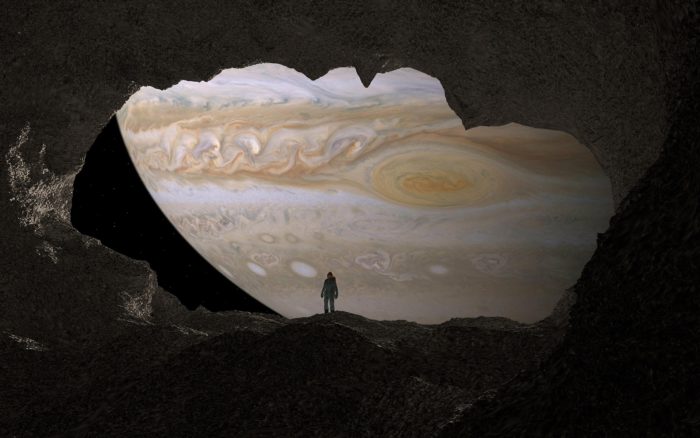
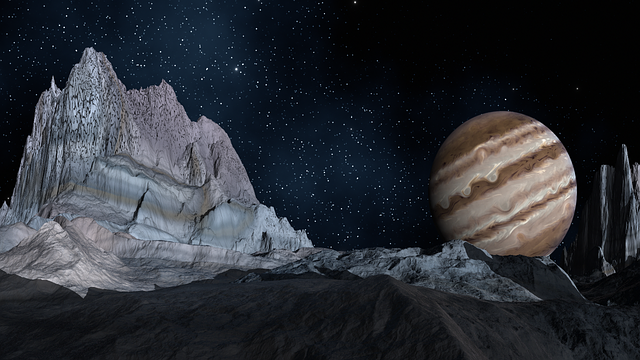
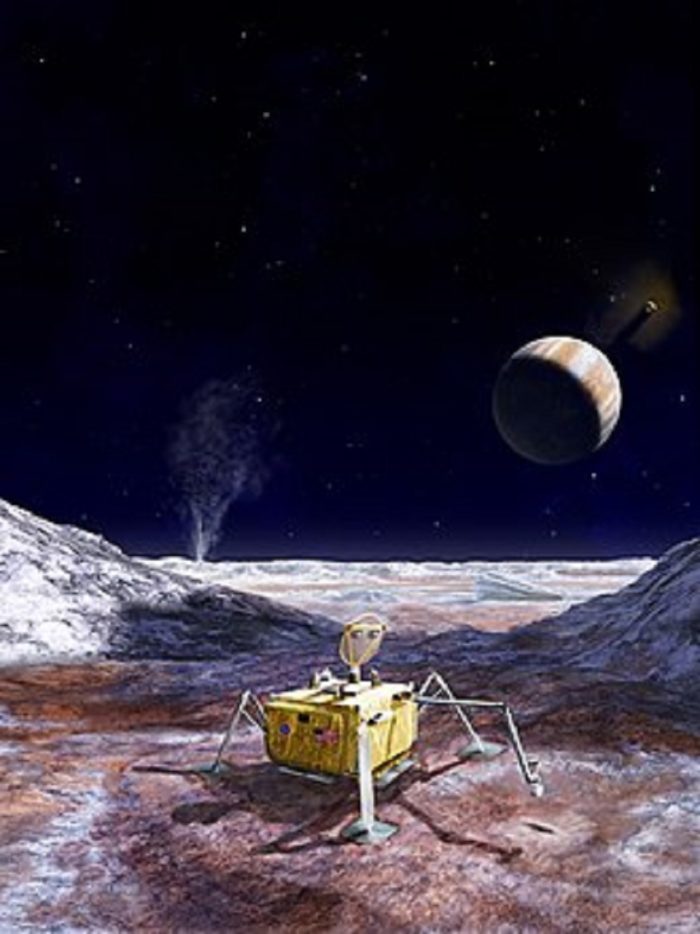
Artistieke impressie van het kijken naar Jupiter vanaf Europa
De Magnifieke Wereld van Europa
Europa, een ijzig maan omringd door een dikke laag ijs, bevindt zich in de schaduw van Jupiter, maar haar potentieel voor het ondersteunen van leven maakt haar tot een van de meest veelbelovende doelwitten in het zonnestelsel. Het oppervlak van Europa wordt gekenmerkt door een complexe structuur van ijsvlakten, scheuren en mogelijk onderliggende oceanen van vloeibaar water. Hoewel het lijkt op een bevroren wereld, kan deze omgeving, onder de ijskorst, een enorme oceaan herbergen met condities die vergelijkbaar zijn met die op aarde.
Waarom Europa zo interessant is voor het zoeken naar buitenaards leven
De aanwezigheid van vloeibaar water is volgens de huidige wetenschap een belangrijke voorwaarde voor het ontstaan van leven zoals wij dat kennen. Op aarde is water essentieel voor al het bekende leven, en de ontdekking van water op andere hemellichamen verhoogt de kans dat er elders in het universum vergelijkbaar leven kan bestaan. Europa biedt, volgens wetenschappers, een ondergrondse oceaan die mogelijk twee keer zoveel water bevat als alle oceanen op aarde samen. Deze enorme hoeveelheid water, in combinatie met de chemische stoffen die via scheuren en ondergrondse processen worden vrijgegeven, creëert een potentieel leefbare omgeving.
Recent wetenschappelijk onderzoek
In 2017 rapporteerden wetenschappers dat ze bewijs hadden gevonden voor "sliding tectonic plates" onder Europa’s ijslaag. Dit betekent dat er mogelijk geologische activiteit plaatsvindt, vergelijkbaar met die op aarde, wat cruciaal is voor het leveren van voedingsstoffen en energie aan ondergrondse ecosystemen. Daarnaast werden waterdamp en mogelijk waterwolken ontdekt in de atmosfeer van Jupiter, inclusief binnen de beroemde Grote Rode Vlek. Hoewel het nog onduidelijk is of deze waterdamp de aanwezigheid van vloeibaar water onder de ijslaag van Europa bevestigt, geeft het wetenschappers nieuwe kansen om de dynamiek van de maan beter te begrijpen.
Het Mysterie van de Grote Rode Vlek
De Grote Rode Vlek is een gigantisch stormgebied dat al eeuwenlang de atmosfeer van Jupiter domineert. Sinds de eerste observaties in 1830 weten we dat het een immense storm is met wind snelheden tot 400 mijl per uur. Recentelijk werd ontdekt dat er waterdamp en mogelijk waterwolken aanwezig zijn in dit gebied, wat de theorie voedt dat ook in de atmosfeer van Jupiter water in vloeibare vorm kan voorkomen.
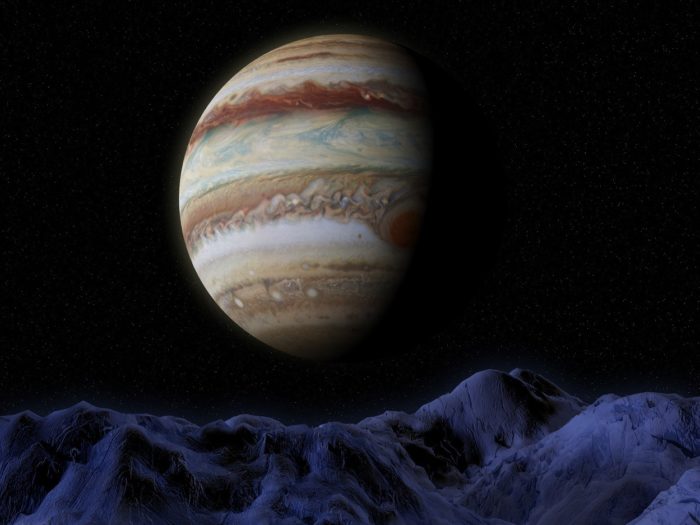
Artists impressie van Jupiter vanaf Europa
Imaginatie en speculatie: intelligent ontwerp of natuurlijke fenomenen?
Het feit dat water in de atmosfeer van Jupiter wordt gevonden, roept vragen op over de aard van deze gigantische planeet. Sommige wetenschappers speculeren dat de waterwolken en de bijzondere kenmerken van de Grote Rode Vlek mogelijk tekenen zijn van een soort intelligent ontwerp, een idee dat vaak in de conjuratie- en complottheorieën opduikt. Anderen beschouwen deze verschijnselen als natuurlijke, zij het zeldzame, kosmische fenomenen die onze kennis over de dynamiek van gasreuzen uitbreiden.
Artistieke impressie van Jupiter vanaf Europa
De Mogelijkheid van Leven op Jupiter en Zijn Manen
Hoewel Jupiter zelf, door zijn enorme massa en de intense straling in de atmosfeer, zeer onwaarschijnlijk wordt geacht als leefbare omgeving, bieden haar manen, zoals Europa en Enceladus, wel degelijk kansen voor buitenaards leven. Europa wordt vaak genoemd als het meest veelbelovende object in ons zonnestelsel voor het vinden van buitenaards leven, vanwege haar ondergrondse oceaan en geologische activiteit.
Enceladus: Een andere potentiële leefwereld
Naast Europa wordt ook de maan Enceladus van Saturnus als een belangrijke kandidaat beschouwd. Deze ijsmaan vertoont geisvorming en spuwt waterdampen en ijsdeeltjes uit geisers, wat wijst op een ondergrondse oceaan die mogelijk geschikt is voor leven. Het lijkt erop dat systemen van grote manen in ons zonnestelsel meerdere ondergrondse waterreservoirs bevatten die de sleutel kunnen zijn tot het vinden van microbieel of mogelijk complexer leven.
Tectonische Activiteit op Europa en de Mogelijkheid voor Leven
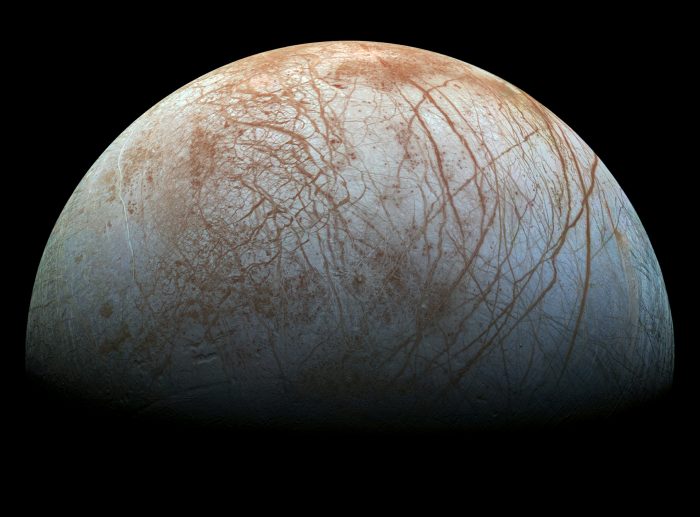
Close-up van Europa
Een van de meest intrigerende ontdekkingen over Europa was dat van mogelijke tectonische bewegingen onder de ijslaag. Tectonische activiteit is van vitaal belang omdat het voedingsstoffen en energie naar de ondergrondse oceanen kan brengen, wat essentieel is voor het ondersteunen van leven.
Hoe werkt tectoniek op Europa?
Op aarde ontstaat tectonische activiteit door beweging in de aardkorst en het in en uit zakken van platen in de mantel. Bij Europa wordt aangenomen dat zout in het onderliggende water een soortgelijke beweging kan veroorzaken, wat de mogelijkheid opent dat er geologische processen plaatsvinden die vergelijkbaar zijn met die op aarde.
Wat betekent dit voor de zoektocht naar leven?
Als deze tectonische beweging inderdaad bestaat, betekent dit dat Europa niet alleen een koude ijswereld is, maar een dynamisch systeem met de potentie voor het onderhouden van een ecosysteem dat voedingsstoffen en energie ontvangt. Dit verhoogt de kans dat microbieel leven, en mogelijk meer complexe organismen, zich onder de ijslaag kunnen bevinden.
Toekomstige Missies en Onderzoeksmogelijkheden
De komende jaren staan in het teken van verdere verkenning van Europa. NASA en de Europese ruimtevaartorganisatie (ESA) plannen meerdere missies om de maan beter te bestuderen en mogelijke landingsplaatsen te identificeren. Een van de meest veelbelovende initiatieven is de Europa Lander Missie, die erop gericht is om direct op het oppervlak te landen en te zoeken naar tekenen van leven.
De Europa Lander Missie
Deze missie heeft tot doel om een apparaat op Europa te laten landen dat onder andere de samenstelling van de ondergrondse oceaan onderzoekt, en op zoek gaat naar biosignaturen, oftewel tekenen van leven. Het plan is dat de lander wordt gelanceerd in de jaren 2020 of 2030 en na een reis van enkele jaren op Europa landt. Het apparaat zou enkele weken tot maanden data verzamelen en transmissies naar de aarde sturen.
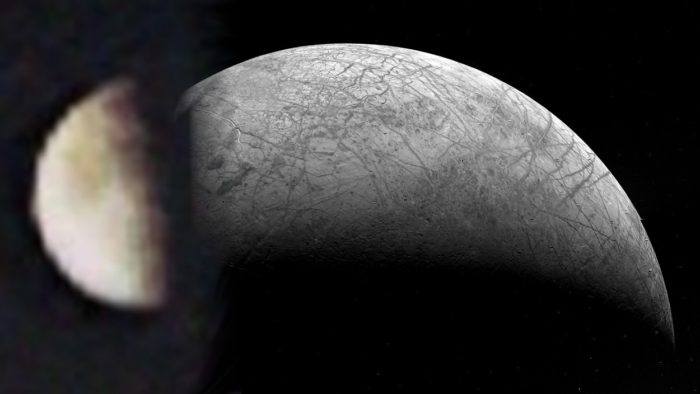
De eerste afbeelding van Europa uit de jaren '70 (links) en een veel duidelijkere afbeelding uit de late jaren '90 (rechts)
De technische uitdagingen
Omdat Europa wordt gekenmerkt door een intense straling van Jupiter, moeten lander- en onderzoeksapparatuur worden uitgerust met speciale beschermingssystemen. Daarnaast moet de landing zeer precies plaatsvinden, omdat het oppervlak van Europa bedekt is met ijs en scheuren die gevaarlijk kunnen zijn voor landingsvoertuigen.
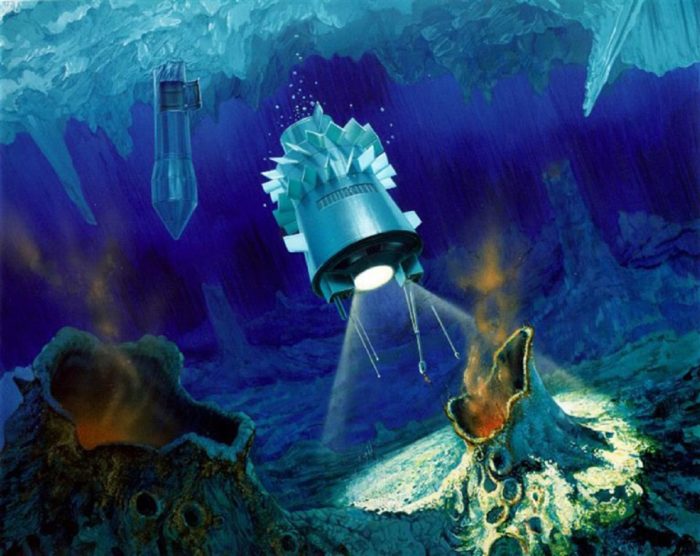
Artistieke impressie van missies naar de oceanen van Europa
De Toekomst van Menselijke Exploratie en Kolonisatie
Het idee om ooit mensen op Europa te laten landen, is nog ver weg, maar niet onmogelijk. Verschillende wetenschappers en ruimtevaartorganisaties onderzoeken al de technische en logistieke uitdagingen die hiermee gepaard gaan.
Artistieke impressie van een landingsrobot op Europa
De technische hindernissen
* Temperatuur en straling:Europa bevindt zich in een extreem koude omgeving, met temperaturen die kunnen dalen tot ver onder de -200 graden Celsius. Daarnaast wordt de maan blootgesteld aan krachtige straling van Jupiter, die de gezondheid van astronauten kan bedreigen.
* Veiligheid en infrastructuur: Een menselijke missie zou uitgebreide infrastructuur vereisen, zoals ondergrondse bases of drijvende stations onder de ijslaag, om bescherming te bieden en te voorzien in levensonderhoud.
* Voedsel en water: Het meest cruciale is de beschikbaarheid van water en voedsel. De ondergrondse oceaan zou een bron van water kunnen zijn, maar het is nog onduidelijk hoe we dat zouden kunnen benutten.
Hoe zou een menselijke missie eruit kunnen zien?
Een plausibele benadering zou zijn dat robots en autonome systemen het eerste onderzoek uitvoeren, gevolgd door bemande missie die gebruik maakt van geavanceerde technologieën zoals ondergrondse habitats, krachtige shielding tegen straling, en systemen voor het winnen van water en voedsel uit de omgeving.
Economische en Politieke Overwegingen De exploratie van Europa en andere manen in het Jupiter-systeem brengt niet alleen wetenschappelijke uitdagingen met zich mee, maar ook grote economische en politieke vragen. Wie financiert deze ambitieuze projecten? Welke landen en bedrijven zouden betrokken zijn? En hoe wordt de waarde van potentiële buitenaardse hulpbronnen gewogen?
Ruimte-industrie en commerciële belangenDe mogelijkheid om mineralen en andere hulpbronnen te winnen uit de atmosfeer van Jupiter of de ijsmanen kan een grote drijfveer worden voor commerciële activiteiten. Dit zou kunnen leiden tot een nieuwe economische sector, met ruimte-miningbedrijven die de buitenaardse economie aanwakkeren.
Risico’s en ethische vragen - Bovendien rijst de vraag of we het recht hebben om te investeren in het koloniseren van buitenaardse werelden, vooral als dat mogelijk ecologische of ethische problemen met zich meebrengt. Het beschermen van eventueel bestaande ecosystemen en het voorkomen van contaminatie zijn belangrijke overwegingen.
Conclusie: Een Nieuwe Horizon voor Mens en Machine
De verkenning van Europa en andere hemellichamen in ons zonnestelsel brengt een nieuwe fase in de menselijke geschiedenis. Met technologische innovaties, internationale samenwerking, en een diepgeworteld verlangen om de mysteries van het universum te ontrafelen, wordt de stap naar buitenaards leven en kolonisatie steeds realistischer.
Hoewel we nog ver verwijderd zijn van het daadwerkelijk zetten van voet op Europa's ijsvlakte, zetten de lopende en geplande missies de eerste stappen in een reis die mogelijk het begrip van leven, het universum en onze plaats daarin fundamenteel zal veranderen. Of het nu gaat om het zoeken naar microbieel leven in ondergrondse oceanen, het bestuderen van de dynamiek van gasreuzen, of het voorbereiden van menselijke vestigingen in de meest extreme omstandigheden, de ruimte biedt ons ongekende kansen en uitdagingen.
De toekomst van de mensheid ligt niet alleen in het verkennen van onze eigen planeet, maar ook in het ontdekken van de wonderen die de kosmos ons te bieden heeft. En misschien, heel misschien, zullen we op een dag niet alleen de mysteries van Europa ontrafelen, maar ook onze eigen bestemming daar buiten de Aarde vinden.
Meer van UFO'S of UAP'S, ASTRONOMIE, RUIMTEVAART, ARCHEOLOGIE, OUDHEIDKUNDE, SF-SNUFJES EN ANDERE ESOTERISCHE WETENSCHAPPEN - DE ALLERLAATSTE NIEUWTJES


 Spionage, moord of louter toeval? FBI start onderzoek nadat zeker tien experts met toegang tot staatsgeheimen sterven of verdwijnen