Ontdek de Fascinerende Wereld van UFO's en UAP's: Jouw Bron voor Onthullende Informatie!
Ben jij ook gefascineerd door het onbekende? Wil je meer weten over UFO's en UAP's, niet alleen in België, maar over de hele wereld? Dan ben je op de juiste plek!
België: Het Kloppend Hart van UFO-onderzoek
In België is BUFON (Belgisch UFO-Netwerk) dé autoriteit op het gebied van UFO-onderzoek. Voor betrouwbare en objectieve informatie over deze intrigerende fenomenen, bezoek je zeker onze Facebook-pagina en deze blog. Maar dat is nog niet alles! Ontdek ook het Belgisch UFO-meldpunt en Caelestia, twee organisaties die diepgaand onderzoek verrichten, al zijn ze soms kritisch of sceptisch.
Nederland: Een Schat aan Informatie
Voor onze Nederlandse buren is er de schitterende website www.ufowijzer.nl, beheerd door Paul Harmans. Deze site biedt een schat aan informatie en artikelen die je niet wilt missen!
Internationaal: MUFON - De Wereldwijde Autoriteit
Neem ook een kijkje bij MUFON (Mutual UFO Network Inc.), een gerenommeerde Amerikaanse UFO-vereniging met afdelingen in de VS en wereldwijd. MUFON is toegewijd aan de wetenschappelijke en analytische studie van het UFO-fenomeen, en hun maandelijkse tijdschrift, The MUFON UFO-Journal, is een must-read voor elke UFO-enthousiasteling. Bezoek hun website op www.mufon.com voor meer informatie.
Samenwerking en Toekomstvisie
Sinds 1 februari 2020 is Pieter niet alleen ex-president van BUFON, maar ook de voormalige nationale directeur van MUFON in Vlaanderen en Nederland. Dit creëert een sterke samenwerking met de Franse MUFON Reseau MUFON/EUROP, wat ons in staat stelt om nog meer waardevolle inzichten te delen.
Let op: Nepprofielen en Nieuwe Groeperingen
Pas op voor een nieuwe groepering die zich ook BUFON noemt, maar geen enkele connectie heeft met onze gevestigde organisatie. Hoewel zij de naam geregistreerd hebben, kunnen ze het rijke verleden en de expertise van onze groep niet evenaren. We wensen hen veel succes, maar we blijven de autoriteit in UFO-onderzoek!
Blijf Op De Hoogte!
Wil jij de laatste nieuwtjes over UFO's, ruimtevaart, archeologie, en meer? Volg ons dan en duik samen met ons in de fascinerende wereld van het onbekende! Sluit je aan bij de gemeenschap van nieuwsgierige geesten die net als jij verlangen naar antwoorden en avonturen in de sterren!
Heb je vragen of wil je meer weten? Aarzel dan niet om contact met ons op te nemen! Samen ontrafelen we het mysterie van de lucht en daarbuiten.
Inside the Government’s 80-Year UFO and Alien Cover-Up
By Albert Harmon
For over 80 years, the U.S. government has maintained a massive, secretive program investigating UFOs and non-human technology. This article explores firsthand accounts of contact events, recovered alien crafts, and the challenges posed by extreme secrecy and over-classification. It also discusses the potential for disclosure, the need for amnesty, and the role of political leaders in revealing the truth to the public.
For decades, the topic of UFOs and extraterrestrial life has been shrouded in secrecy and skepticism. However, recent revelations and insider accounts suggest that the U.S. government has been running a massive, covert program investigating non-human crafts and beings for over 80 years. This article delves into the details of this cover-up, the nature of contact events, the challenges faced by scientists and officials, and the prospects for public disclosure.
Contact Events and Encounters
One of the most striking revelations involves multiple contact events between non-human crafts and U.S. military and intelligence officials. A notable incident occurred at Helerman Air Force Base, where two non-human crafts approached the base. One of these crafts landed, and beings described as tall, slender, and humanoid emerged to interact with Air Force and CIA officials. Several individuals involved have gone on record discussing this event.
In another chilling account, a senior intelligence community member described an interaction with a dying non-human being. The being communicated telepathically, conveying the message: "You humans don't know your full potential." Such encounters underscore the profound and mysterious nature of these interactions.
The Scale and Secrecy of the Legacy Program
Contrary to popular belief that only a handful of people are involved, the legacy program investigating UFOs and alien technology is vast. Thousands of personnel work daily on these matters, making it one of the most extensive and secretive operations in government history.
This program dwarfs even the Manhattan Project in scale and secrecy. While the Manhattan Project, which developed the atomic bomb, had a multi-billion-dollar budget and eventually leaked information, the UFO program has been kept even more tightly under wraps. It involves significant funding, counterintelligence measures, and compartmentalization to prevent leaks.
Compartmentalization and Over-Classification
The program is highly compartmentalized, with different teams assigned specific tasks without full knowledge of the overall project. For example, some teams focus on understanding propulsion systems, while others analyze metallurgy. One intriguing detail is that recovered materials appear to be 3D printed, lacking seams or traditional manufacturing marks.
This extreme secrecy has hindered scientific progress. Scientists and defense contractors often face challenges due to over-classification, which limits access to necessary information and personnel. For instance, a plan to transfer a recovered craft from Lockheed Martin to the UAP (Unidentified Aerial Phenomena) Task Force was abruptly shut down by the CIA, halting further study.
Challenges in Scientific Inquiry and Whistleblowing
Many scientists involved express frustration over the barriers created by secrecy. The inability to share information freely or collaborate openly slows down understanding and innovation. Moreover, whistleblowers face significant risks, including threats to their careers and personal safety.
Stronger legal protections for whistleblowers are urgently needed to encourage insiders to come forward without fear of retaliation. Without such protections, many choose silence over disclosure.
The Need for Amnesty and Full Disclosure
A critical obstacle to transparency is the potential legal and political fallout for those who have lied to Congress, misappropriated funds, or otherwise engaged in wrongdoing to maintain secrecy. To overcome this, some experts advocate for a national security amnesty program. This would allow individuals involved in the program to share their knowledge without fear of prosecution, enabling a comprehensive understanding of what has been learned.
Senator Marco Rubio, featured in the documentary film on this subject, emphasizes that the goal is not to punish but to uncover the truth for the benefit of taxpayers and national security.
Political Leadership and the Path Forward
For true disclosure to occur, a sitting U.S. president may need to publicly acknowledge the reality of non-human technology and the ongoing secret programs. Such a statement would level-set the facts and rally scientific and public support for further research.
Former President Donald Trump has been aware of these issues and reportedly considered making a public announcement during his administration. He tasked Tulsi Gabbard with investigating the matter further. However, entrenched bureaucratic resistance and classification barriers have prevented full transparency.
The release of recent films and increased public interest may provide the momentum needed for a future president to step forward. This would mark a historic moment, akin to President Kennedy's famous speech initiating the space race, inspiring a new era of scientific exploration and international competition.
The Role of Industry Leaders and the Scientific Community
Leaders in the aerospace industry, including SpaceX, are believed to be aware of these secret programs. While public figures like Elon Musk remain discreet, their involvement in space technology suggests they have access to classified information.
A secret screening of the documentary at the National Space Symposium, attended by key industry figures, indicates a growing acknowledgment within the scientific and defense communities.
Conclusion
The government’s 80-year cover-up of UFOs and alien technology represents one of the most significant and complex secrets in modern history. With thousands of people involved, recovered crafts, and direct contact events, the reality of non-human presence and technology is undeniable.
Overcoming the challenges of secrecy, over-classification, and political resistance will require bold leadership, legal reforms, and a cultural shift within the scientific community. The potential benefits for humanity are immense, from technological breakthroughs to a deeper understanding of our place in the universe.
As public awareness grows and insiders come forward, the day may soon come when the truth is finally revealed, ushering in a new chapter in human history.
Copy this article
This article has been created using the same AI that powers Galaxy.ai's YouTube summarizer. You can copy it and easily use it on your website or blog.
The European Space Agency (ESA) is working on an innovative self-repairing spacecraft technology. This project, created in collaboration with Swiss companies CompPair and CSEM and Belgian firm Com&Sens, focuses on developing a self-healing composite material for space transportation systems. This material, HealTech, is capable of autonomously repairing damage that may occur during space missions. It promises to enhance spacecraft durability, reduce mission costs, and ensure a more sustainable approach to space exploration.
The Technology Behind HealTech: A Self-Repairing Composite
At the heart of this development is a specially designed composite material, which combines carbon fiber reinforced polymers with advanced self-healing properties. As highlighted by the ESA, composite materials are increasingly used in spacecraft because of their strength, lightness, and resistance to corrosion. However, they are also vulnerable to damage, especially when subjected to repeated stresses or impacts during space missions. HealTech has been designed to address these vulnerabilities by incorporating an autonomous repair system. The composite material contains a healing agent that activates when the material is heated, enabling it to repair cracks and minor damages.
Holding Cassandra test panel. Credit: CompPair
The key to HealTech’s effectiveness lies in the integration of sensors and a heating element into the material. These sensors monitor the structural integrity of the spacecraft and detect damage early on. Once a crack or microfracture is identified, the material is heated through an integrated system of 3D-printed aluminum grids. The heat activates the healing agent inside the composite, allowing the material to self-repair. This self-healing process could significantly reduce the need for costly and time-consuming manual repairs during and after space missions.
Why HealTech Is a Game Changer for Space Transportation
One of the most exciting aspects of HealTech is its potential to transform space transportation. “Implementing this technology into our systems could have enormous benefits for space transportation,” says ESA’s Bernard Decotignie. “It will help develop reusable space infrastructure and reduce mission costs. This really proves what European innovation can do for the space sector.” With reusable launchers and spacecraft becoming an integral part of future space missions, the ability to repair materials autonomously could reduce maintenance costs and improve the longevity of these systems.
Infrared images of Cassandra repair process on a test sample through heating Credit: CompPair
The technology could prove especially valuable for missions that involve frequent launches and landings, as it helps reduce the wear and tear that typically occurs with repeated use. In traditional space missions, spacecraft components often suffer from micro-cracking or other forms of stress damage. HealTech addresses these issues by providing a solution that allows spacecraft to repair themselves, thereby extending their operational life and reducing waste.
The Role of CompPair in Revolutionizing Spacecraft Materials
CompPair, the company responsible for developing HealTech, has been at the forefront of innovation in composite materials for space travel. According to Robin Trigueira, CompPair’s Chief Technology Officer, the development of HealTech represents a major leap forward for space technology.
“I’m excited by the autonomy and durability benefits we can bring for future spacecraft and launchers, closing the gap between science fiction and reality! This project is a major step for CompPair in the space sector,” he says. “HealTech is unlocking unprecedented technological advancement for composite material health monitoring and management, clearly highlightingthe possibilities brought by healable composites for reusable space structure costs efficiency.”
CompPair’s technology not only promises to make spacecraft more durable but also more autonomous. This autonomous damage repair system will be critical for future space exploration missions, as it reduces the need for human intervention and ensures that spacecraft can operate for longer periods in harsh space environments without the risk of critical damage.
Advancing Spacecraft Durability and Performance
The development of HealTech is not just about improving the repairability of spacecraft; it’s also about enhancing overall spacecraft performance. Cecilia Scazzoli, the Head of Research and Development for CompPair, highlights the potential of HealTech for ensuring the integrity of spacecraft during challenging missions. “I’m thrilled that we have demonstrated that HealTech composites with health monitoring and heating systems show autonomous damage sensing and healing and high resistance to micro-cracking. This makes them suited to the demanding requirements of propellant tanks and reusable space structures, and paves the way for lighter, more maintainable spacecraft components,” she explains.
The integration of self-healing technology into spacecraft could lead to the creation of lighter, more resilient spacecraft components that can withstand the extreme conditions of space travel. This could ultimately help to make space missions more cost-effective and sustainable, as spacecraft will require fewer repairs and replacements over time. The ability to maintain spacecraft in space without the need for frequent service missions or manual repairs could also make long-term missions, such as those to Mars or beyond, more feasible.
Scientists have successfully grown chickpeas in soil that mimics the Moon’s surface. This exciting achievement, led by researchers at the University of Texas at Austin, could change the future of space travel by showing that astronauts might be able to grow their own food on the Moon during long missions.
As NASA prepares to send astronauts back to the Moon with itsArtemis missions, one of the biggest challenges is how to feed them during extended stays. The new research shows that growing food on the Moon might actually be possible, with chickpeas becoming thefirst cropto thrive in a material designed to simulate lunar soil.
Growing in Simulated Moon Soil
Lunar regolith, the material covering the Moon’s surface, isn’t exactly plant-friendly. It’s made up of tiny particles that lack the organic matter and microorganisms plants need to grow on Earth. Not only that, but it also contains heavy metals that can be harmful to plants.
“The research is about understanding the viability of growing crops on the moon,” said Sara Santos, a postdoctoral fellow at the University of Texas Institute for Geophysics (UTIG), associated with the Jackson School of Geosciences. “How do we transform this regolith into soil? What kinds of natural mechanisms can cause this conversion?”
According to the study, published in the journal Scientific Reports, conducted by the University of Texas and Texas A&M University, simulating this environment on Earth was the first big challenge. To do so, the researchers used simulated moon dirt from Exolith Labs, which closely resembles the regolith brought back during the Apollo missions.
The relationship between chickpea plants (CP), arbuscular mycorrhizae (AMF), and vermicompost (VC) in the rhizosphere.
Credit: Scientific Reports
The next step was improving this moon dirt to make it more suitable for growing crops. The team added vermicompost, nutrient-rich material created by earthworms, to the mix. This helped give the chickpeas the nutrients they needed to grow, turning the sterile moon dirt into something much more plant-friendly.
Fungi Helped Chickpeas Survive Moon Soil
What really made this experiment stand out was the use of arbuscular mycorrhizal fungi. These fungi form a partnership with plant roots, helping them absorb nutrients and water, which is especially important in a harsh environment like simulated moon soil. The researchers coated the chickpea seeds with these fungi before planting them.
Chickpea sprout emerging from lunar soil simulant. Credit: University of Texas Institute for Geophysics
The results were promising. As stated in the latest research, chickpeas treated with the fungi survived much longer than those without it. The fungi also helped limit the uptake of harmful metals from the soil, which is a big deal when it comes to growing food on the Moon. Plus, the fungi stuck around in the simulated lunar soil, meaning they could potentially continue to support plant growth over time in future lunar farming systems.
Are Moon-Grown Chickpeas Safe to Eat?
While growing chickpeas on the Moon is an exciting step forward, there’s still a lot more to figure out. Scientists now face the task of determining if these chickpeas are safe to eat. They need to check if the plants absorbed any harmful metals from the soil and whether they’re nutritious enough for astronauts.
Jessica Atkin noted that, the first author of the study, the next phase of research will focus on analyzing the nutritional content of the crops. If everything checks out, this could pave the way for astronauts to grow their own food on the Moon.
“We want to understand their feasibility as a food source,” she said Jessica Atkin.“How healthy are they? Do they have the nutrients astronauts need? If they aren’t safe to eat, how many generations until they are?”
Right now, the scientists are taking a measured approach, advancing one step at a time. This study is just the starting point, with plenty of work ahead before crops grown in space can be a trusted food source for lunar explorers.
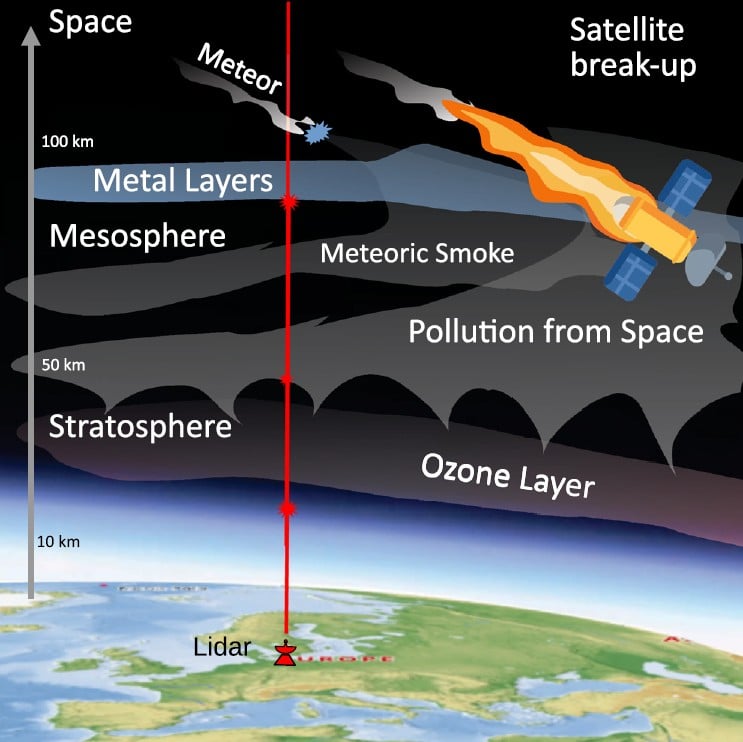
Figure 1 from the paper shows the lidar system and how pollution might affect the atmoshpere. Credit - R. Wing et al.
Back in February 2025, a SpaceX rocket that had delivered 22 Starlink satellites to orbit had a malfunction. It failed to execute a planned deorbit burn and drifted for 18 days in orbit before beginning an uncontrolled descent about 100km off the west coast of Ireland. Some parts of the rocket landed in Poland, and while they didn’t injure anybody, there was enough concern about the lack of communication that Poland dismissed the head of its space agency. But that wasn't the only lasting impact of this failure. A new paper from Robin Wing and her colleagues at the Leibniz Institute for Atmospheric Physics, published in Communications Earth & Environment ties that specific rocket reentry to a massive plume of pollution for the first time.
To do this, they used a highly sensitive resonance fluorescence lidar system, located in Kühlungsborn, Germany. But they weren’t doing it specifically to check for the fallout from this launch. They were simply monitoring the upper atmosphere, like atmospheric scientists tend to do. But right around midnight on February 20, 2025, they noticed a spike in lithium vapor levels.
Lithium is not something typically found at high concentrations in the atmosphere, but it is one of the primary components of a Falcon 9 rocket stage. In the atmosphere, lithium levels are regularly around 3 atoms per cubic centimeter. Just 20 hours after the Falcon 9 rocket descended, the density spiked up to 31 atoms per cubic centimeter - crucially at an altitude of between 94.5 and 96.8km.
Fraser discusses the problems of dealing with space junk.
Extraordinary claims require extraordinary evidence, and tying the plume of lithium back to a specific rocket entry will take more than just saying “ohh look, this rocket just crashed, and there are higher lithium levels now.” So the authors turned to atmospheric modeling. They ran 8,000 simulations of backward wind paths from their lidar station in Germany back to the reentry point of the rocket over Ireland. They then checked other possible sources, and everything came back negative.
The lithium itself was an important factor in this determination. As discussed, it exists in the atmosphere in only trace amounts, but even meteorites only supply around 80 grams of the stuff per day to the entire planet. By contrast, a Falcon 9 upper stage has an estimated 30 kilograms of lithium in it, spread throughout lithium-ion batteries as well as an aluminum-lithium alloy hull plating. Another key finding from the paper is that that hull plating would begin melting at precisely 98.2km - matching the observations from the lidar station.
We’ve reported before on the concern scientists are expressing about the chemicals we’re putting into the atmosphere from burning up rocket stages and satellites. This represents the first time a specific incident has been tied to such a pollution plume. But it begs wider questions - what impact will this influx of lithium have on atmospheric chemistry? Since satellites are intentionally deorbited, is there some way we can limit the pollution risk when they do?
CBS coverage of the failed Falcon 9 launch that caused the lithium plume.
Credit - CBS LA YouTube Channel
These are still questions without answers for now. As more and more satellites are launched into megaconstellations to maintain our communications, and we use more and more rockets to do so, they are becoming increasingly important. This paper represents a first step in tracking the actual environmental fallout from an unintentional space debris reentry. It certainly won’t be the last.
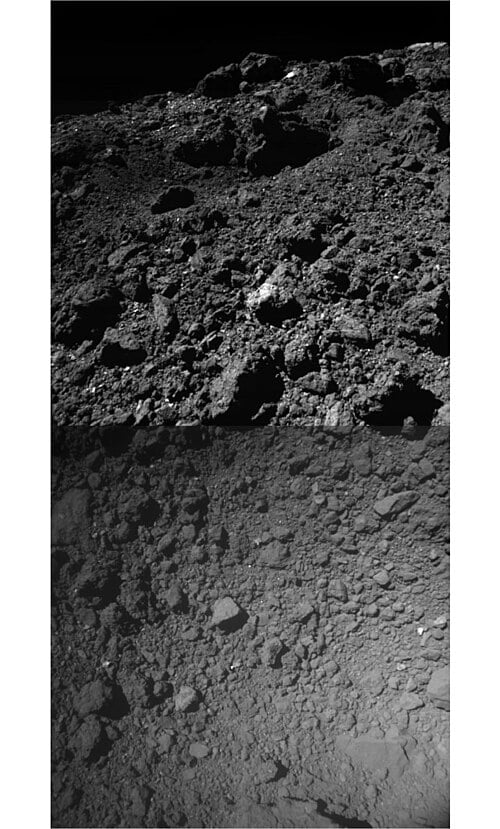
Images of the surface of Ryugu taken by the navigation camera on Hayabusa-2. Credit - JAXA, Chiba Institute of Technology, University of Tokyo, Kochi University, Rikkyo University, Nagoya University, Meiji University, University of Aizu, AIST
Asteroids are critical to unlock our understanding of the early solar system. These chunks of rock and dust were around at the very beginning, and they haven’t been as modified by planetary formation processes as, say, Earth has been. So scientists were really excited to get ahold of samples from Ryugu when they were returned by Hayabusa-2 a few years ago. However, when they started analyzing the magnetic properties of those samples, different research groups came up with different answers. Theorizing those conflicting results came from small sample sizes, a new paper recently published in JGR Planets from Masahiko Sato and their colleagues at the University of Tokyo used many more samples to finally dig into the magnetic history of these first ever returned asteroid samples.
So why would this study be important for understanding the early solar system? When asteroids formed, they were in part affected by the prevailing magnetic fields in the solar system at the time. These magnetic fields are what brought the gas and dust together that would eventually form planets, so understanding their strength (or weakness) is a key input to planetary formation theory.
There is a chance that on a planet itself, the current magnetic fields could impact the measurements. For example, meteorites, which are mainly asteroid samples returned by more natural means, are too affected by their time in Earth’s magnetic field to provide the early solar system insights scientists are looking for. To prevent this contamination, the Ryugu samples were isolated during descent and reentry, and handled extremely carefully once opened.
Fraser talks about the possibility of us mining asteroids.
Even with all those precautions, several different groups that looked at the samples from a magnetic perspective came to wildly different conclusions. One said the samples had a stable magnetic “memory” of the early solar system. Another found that the asteroid had formed in a “dead zone” with no magnetic field to speak of. And yet another argued that whatever magnetic field signals were found in the other studies were just caused by accidental contamination by Earth-based magnetic fields anyway.
According to the new paper, the problem was the small sample size the original papers were based on. In total, other research had only looked at 7 samples returned from the asteroid. To alleviate this problem, the new paper decided to look at 28 of them - four times the amount that had been previously studied, and much better for statistical relevance tests.
Determining if a rock “remembers” the magnetic field it was created in is a delicate process. When magnetic minerals form or cool down inside a magnetic field, their internal microscopic structures, called domains, align in the direction the field was pointing. Once the rock solidifies, those directions are locked in, allowing scientists to see which way the magnetic field was pointing, and how strong it was. But first, the weaker, more modern magnetic contamination must be stripped away, which the scientists did using a process called Stepwise Alternating Field Demagnetization.
John Michael Godier discusses the possibility of contamination of Ryugu samples.
Credit - John Michael Godier YouTube Channel
After being cleaned of modern contaminants, the 28 samples told a relatively clear-cut story. Twenty-three of them had stable magnetic memories locked inside of them, while five didn’t. Interestingly, the strength of the field in the ones that did ranged from 16.3 microTeslas (uT) up to 174 uT - for comparison Earth’s magnetic field is around 50uT. And some of those samples had magnetic memories that pointed in multiple different directions in the same sample.
That last point proved that the memories were not caused by contamination, since Earth’s magnetic field points in only one direction consistently. Those samples in particular must have been magnetized before they were mashed together into Ryugu. When they were, they might have been smashed together surrounded by liquid water. The material holding these magnetic memories, known as framboidal magnetite, forms when liquid water interacts with rock in a process called aqueous alteration. So, at some point in Ryugu’s past, there was flowing liquid water in its core that chemically altered the rock and then locked the magnetic field in when the rock solidified.
The authors estimate that process happened around 3.1 to 6.8 million years after the very first solids were formed in the solar system. So Ryugu truly is an exemplar of the early solar system. Now that we have a better understanding of the magnetic environment in those early times, the next step will be updating planetary formation models with this new information.Who would have thought that a few specks of dirt from a rubble pile floating in space would have such an impact on our wider understanding of the universe.
Recently, the whole world’s attention has once again turned to our natural satellite. The Moon, which for decades was considered only a temporary stop on the way to distant worlds, suddenly found itself at the epicenter of global economic and technological strategies. Previously, mining minerals on another planet was considered science fiction, but today it is becoming a real business plan in which various companies are already investing.
The dawn of the industrial era beyond Earth: Astrolab’s FLEX electric harvester conducts its first tests of lunar regolith mining under the supervision of NASA astronauts. Illustration generated by Gemini AI
Over the past year, there has been a significant paradigm shift in space exploration. Elon Musk, whose ambitions to colonize Mars have dominated media headlines for decades, has shifted his focus somewhat. In the near term, SpaceX is increasingly focusing on activities on the lunar surface. The idea is simple but ingenious: use local resources (regolith, ice, and minerals) to build large satellites and bases directly in space, instead of overcoming Earth’s gravity with heavy cargo each time.
A similar shift has taken place within NASA. Whereas previously the focus was on the Gateway orbital station, which was to orbit the Moon, the agency is now increasingly talking about building stationary elements of the base directly on the surface. This “lunar alliance” between the state and private capital has created ideal conditions for the emergence of a new generation of startups.
Duet of dreamers
In March 2026, two ambitious lunar startups, Astrolab and Interlune, officially announced a strategic partnership. Their goal is not just research, but the creation of a full-fledged industrial infrastructure on the Moon.
Astrolab, led by Jarrett Matthews, is developing universal transport platforms (rovers) that are set to become the “workhorses” for NASA and commercial customers. Interlune, led by former Blue Origin president Rob Meyerson, has set itself an even more ambitious goal: to become the first company in the world to extract helium-3 on the Moon.
The fuel of the future and treasure in regolith
Why is helium-3 causing such a stir? This isotope is practically non-existent on Earth in its natural state. Humankind obtains it as a by-product of nuclear reactors or the decay of radioactive substances. However, it has been accumulating on the Moon for billions of years, carried there by solar wind.
Scientists consider helium-3 to be the ideal fuel for future thermonuclear reactors – it can provide clean energy without dangerous radioactive emissions. However, even before the advent of commercial fusion, this resource is critically important. It is indispensable in cryogenic technology and quantum computing, where cooling to temperatures close to absolute zero is required. Interlune already has preliminary contracts to sell thousands of liters of this gas. There is only one problem: it needs to be delivered from the Moon.
The evolution of lunar rovers
The companies’ collaboration will begin with a small but confident step – the FLIP (Flexible Logistics and Exploration) mission. This is a small rover, about the size of a go-kart, which is scheduled to be launched to the Moon at the end of this year aboard Astrobotic’s Griffin landing module.
FLIP will carry a multispectral camera from Interlune on board. Its task is to scan the lunar soil (regolith) and confirm the data on the concentration of helium-3, which scientists previously obtained only on the basis of samples from the Apollo program. This will be the first real “geological exploration” with a focus on industrial extraction.
The next stage will be FLEX – a true giant among rovers. The size of a minivan, this rover has a unique horseshoe-shaped chassis. This design allows it to be the “Swiss Army knife” of space:
Transport astronauts over long distances.
Transport heavy equipment for base construction.
Serve as a platform for the Interlune mobile harvester.
The versatility of FLEX lies in the fact that any payload can be placed under its body – from excavators to scientific laboratories.
Logistics and testing
The implementation of these plans is closely linked to the success of SpaceX Starship. The FLEX rover is expected to be part of one of Starship’s first unmanned missions to the Moon in 2027 or 2028. This will allow equipment of a size previously unimaginable to be delivered to the surface of the satellite.
In parallel with preparations for the flight, the companies have already begun ground tests. Prototype testing will take place at the new Space Institute at Texas A&M University in Houston. This facility, which is being built directly at the Johnson Space Center (NASA), will become the main testing ground for developing technologies for extracting resources in extraterrestrial conditions.
Why is this important for humanity?
The Astrolab and Interlune project is more than just another space mission. It marks the beginning of a transition from passive observation of space to active management of it. If humanity learns to extract energy and materials on the Moon, it will not only open the way to distant planets but also help solve energy and environmental problems on Earth itself.
Today, we are witnessing the birth of a new industry. Space harvesters are just around the corner, and the Moon seems ready to reveal its most precious secrets to those who dare to challenge the void.
Imagine a satellite that repairs itself in space, removing microcracks. It sounds like science fiction. However, this could become a reality very soon if European engineers succeed in creating a device based on the self-repairing composite they have developed.
Self-repairing material for satellites. Source: www.esa.int
Self-healing material
At first glance, all spacecraft that do not encounter friction in a vacuum can operate practically forever. However, in reality, their structures, especially those made of composite materials, are constantly subjected to complex influences that can lead to their destruction.
But what if spacecraft could repair their own structure when microcracks are detected? This incredible idea may soon become a reality thanks to engineers from the Swiss company CompPair and CSEM and their colleagues at Com&Sens.
They are working on the Cassandra project for the European Space Agency. It involves integrating sensors and heating elements into the composite material. These elements are designed to teach it to heal itself.
Cracks in composite material
In general, composite materials are a very good option for spacecraft. They consist of a reinforcing element immersed in a matrix, which allows combining the advantages of both without their disadvantages. As a rule, these are carbon fibers in a polymer medium, which allows creating very light and strong structures.
However, sooner or later, microcracks will appear in any polymer material, begin to grow, and eventually destroy the entire element. This is precisely the problem that the Cassandra project aims to solve. The approach involves integrating not only reinforcing elements into the composite material, but also sensors and a metal mesh through which an electric current can be passed.
The idea is quite simple. If the sensors detect microcracks in the element, for example, due to a change in stress, current is supplied to the heating elements, which melts the material and closes the breach in integrity.
Research results
However, this is all in theory. In practice, engineers have only conducted initial tests. Various samples ranging in size from 2×10 to 40×40 cm were used for these tests. Damage was inflicted in a controlled manner, as the scientists were primarily interested in whether the sensors would respond adequately to it. However, resistance to thermal shock, i.e., sudden cooling, was also tested at the same time.
In principle, all tests can be considered successful. Microcracks were successfully eliminated. However, engineers did not check thermal stability for nothing. They understand that the technology can only be truly evaluated on a real part. Therefore, next time they will make an entire cryogenic tank out of them.
Scientists from Tuskegee University, exploring conceptual light sails for interstellar travel, have demonstrated a photonic light-crystal sail design that is more efficient than earlier designs.
Based on the concept of directed energy propulsion, light sails propelled by massive lasers could accelerate unmanned probes to as fast as 20% thespeed of light, enabling missions to nearby stars in a few decades rather than the hundreds of thousands of years conventional chemical rockets would need to reach Earth’s nearest stellar neighbor, Proxima Centauri.
Light Sails Traveling at 20% Light Speed Could Reach Proxima Centauri in 20 Years
To reach space, humans rely exclusively on chemical rockets. To explore beyond Earth’s orbit, those rockets must carry additional fuel. However, adding fuel adds weight, necessitating even more fuel. Engineers have quantified this trade-off with a mathematical tool called the rocket equation.
While some emerging alternatives, such as electric propulsion, enable satellites to maneuver in orbit or even explore deep space, their low speeds also limit the distances they can travel within a human lifetime. The Debrief has covered some sci-fi-sounding alternatives, such as the Wind Rider plasma magnets and warp drives, but those options are either too slow or too theoretical to serve as viable interstellar propulsion systems.
More recently, researchers have explored the concept of light sails. Similar to the more well-known concept of solar sails that “sail” on the pressure of the solar wind, light sails use the energy from a light source to sail at increasingly faster speeds. This design removes the need for onboard propellant.
Some estimates, such as the proposed Breakthrough Starshot initiative, suggest that current technology could design a light-sail-equipped microprobe driven by a powerful laser capable of reaching up to 20% of the speed of light. At that speed, such a probe could reach Proxima Centauri in a little over 20 years.
Light sail by Masumi Shibata, courtesy of Breakthrough Initiatives
While a seemingly practical alternative to chemical propulsion, the practical application of light sails has been limited by engineering challenges. For example, current designs propose metal-coated polymer films. These materials offer a favorable combination of energy reflectivity and strength.
However, these designs also absorb some of the directed energy and convert it into heat. Efforts to capture this wasted heat by increasing reflectivity involve adding materials, thereby increasing weight. As a result, designers of light sails have encountered a tradeoff similar to the rocket equation.
How Photonic Light Crystal Sails Increase Reflectivity and Propulsion
According to a statement announcing the proposed photonic light crystal sail design, the sail’s structure consists of nanoscale patterns from three dielectric components. The first layer is composed of germanium pillars, the second of air holes, and the final layer of a polymer matrix.
Where conventional light sails are made of two material photonic structures, the three-layer dielectric material combination of high-index germanium pillars, low-index air voids, and the polymer host form a wavelength-selective photonic bandgap structure that the research team described as “optimized for propulsion-specific reflectivity.”
Nanoscale features of a laser-driven light sail showing germanium pillars and air holes embedded in a poly(methyl methacrylate) matrix, designed to achieve high wavelength-selective reflectivity. Image Credit: Dimitrov and Harris.
“This configuration establishes a narrow photonic band gap centered at the propulsion wavelength, resulting in high reflectivity within that spectral window while remaining largely transparent outside the designed band,” they explain.
The researchers attributed the exceptional reflectivity of their light sail design to nanoscale patterns in the dielectric materials that control light propagation. They also noted that the ability to arrange materials with different ‘refractive indices,” they were able to create a photonic gap, defined as “a range of wavelengths that cannot pass through the structure and are instead reflected.”
“By designing a narrow photonic band gap aligned with the propulsion laser frequency, the proposed sail can stay mostly transparent to ambient solar radiation while maintaining high reflectivity in the specific operating band,” explained study author Dimitar Dimitrov, an assistant professor at Tuskegee University.
Experiments Confirm Improved Sail Material Performance
To test the concept, the Tuskegee team designed a photonic crystal structure using plane-wave expansion and finite-difference time-domain simulations. After running several simulations, the team achieved approximately 90% reflectivity at a wavelength of 1.2 micrometers.
After the successful simulations, the team fabricated real-world ‘proof-of-concept’ material membranes, such as those used in light sails. Due to the delicate nature of the finished product, the team used electron-beam lithography and vacuum deposition.
“The membranes were fabricated using a sequential nanolithography and material infill process involving patterned polymer templating, selective germanium deposition, lift-off processing, and secondary electron-beam structuring,” they explained.
According to the team, this multi-step fabrication approach allowed them to create three-dielectric photonic crystal architectures “at the sub-200-nanometer scale.” The final versions of the fabricated structures contained 200-millimeter-wide germanium pillars and 400-nanometer-diameter air holes embedded in a 200-nanometer-thick polymer layer.
The team was able to confirm this level of precision engineering and nanoscale patterning with an electron microscope. Dimitrov said demonstrating the feasibility of constructing these precise, multi-dielectric crystal nanostructures was a “key continuation: of the team’s work.
“The results show that these can be engineered to combine low mass, strong wavelength selectivity, and scalable fabrication potential,” the researcher explained.
Devices for Laser-Driven propulsion Enabling Future Interplanetary Exploration
To see if light sails made with their process would maintain reflectivity in simulated spaceflight conditions, the researchers modeled a one-square-meter sail and illuminated it with a 100-kW laser. As hoped, these tests showed that their design could generate continuous thrust. These results also suggested that a light sail made with the three-dielectric material could accelerate a probe to “speeds of several hundred meters per second within one hour under idealized conditions.”
While this speed is far below what would be required for an interstellar mission, the researchers said it is also robust and reflective enough to enable light sails designed for interplanetary missions within our solar system to take a fraction of the time of current rocket-propelled missions. They also concede that further research will be needed before a photonic light crystal sail is deployed in space, while noting that their work “demonstrates a possible pathway from theoretical design to fabrication.”
“Despite current limitations, our research could serve as a foundation for the design and fabrication of multi-dielectric photonic crystal sails,” Dimitrov explained. “It may provide a pathway to experimentally validated, scalable, lightweight devices for laser-driven propulsion, enabling future interplanetary exploration with minimal onboard mass,”
Christopher Plain is a Science Fiction and Fantasy novelist and Head Science Writer at The Debrief. Follow and connect with him on X, learn about his books at plainfiction.com, or email him directly at christopher@thedebrief.org
Astronomers have discovered the brightest and most distant "megamaser" to date. The cosmic energy beam is shooting toward Earth from 8 billion light-years away and was spotted thanks to a weird space-time trick first predicted by Einstein
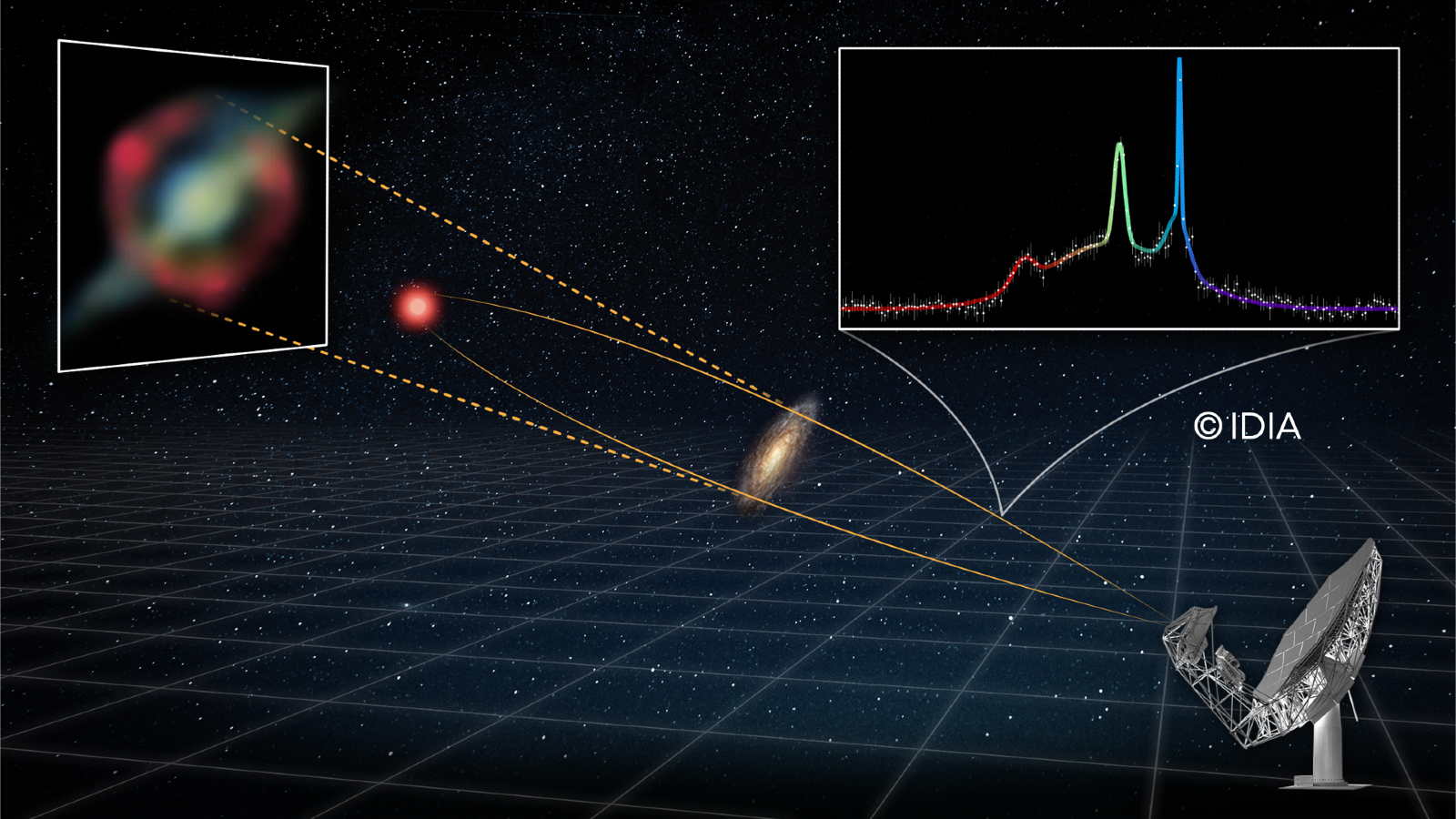
Researchers have detected a powerful beam of microwaves, or megamaser, coming from a distant galaxy merger around 8 billion light-years from Earth. The rare signal was only detected thanks to a phenomenon known as gravitational lensing, which magnified the incoming radiation.
(Image credit: Inter-University Institute for Data-Intensive Astronomy (IDIA))
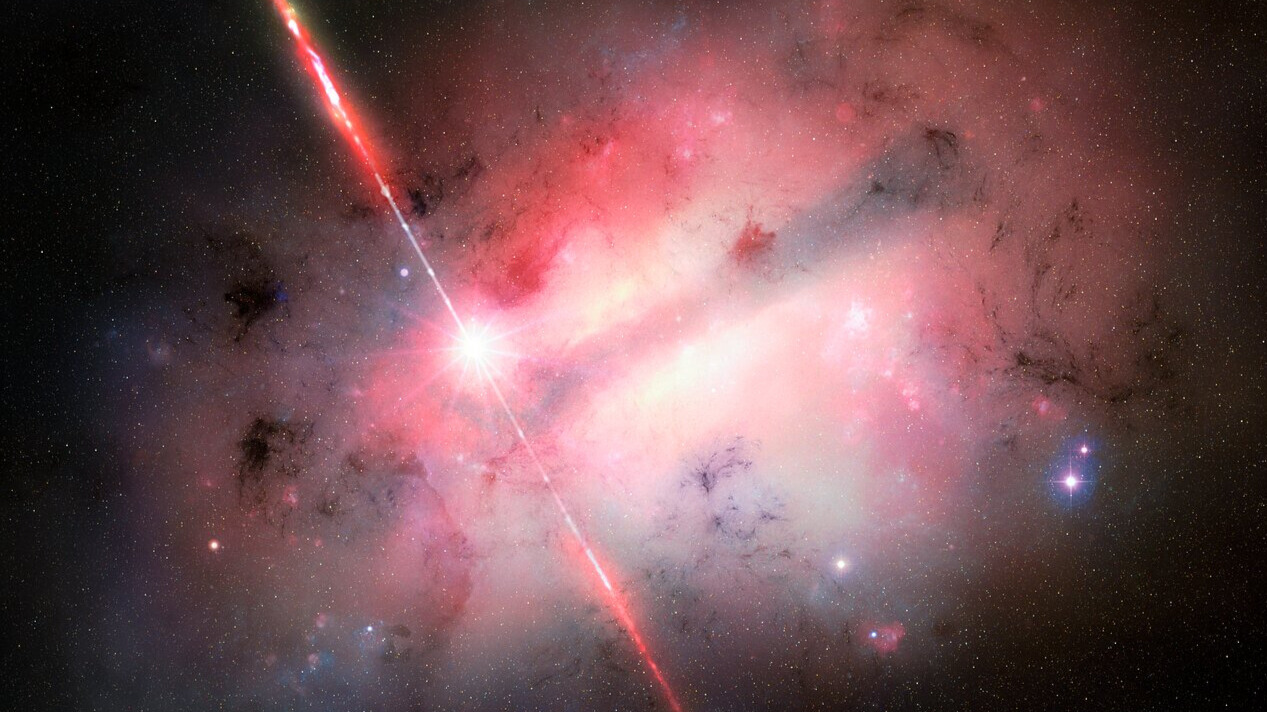
Astronomers have discovered a supercharged space laser shooting at Earth from halfway across the universe. The cosmic energy beam, which was partially revealed to us via a weird space-time trick first predicted by Einstein, is the brightest and most distant of its kind ever seen.
The natural laser, called a "hydroxyl megamaser" is essentially a giant beam of electromagnetic radiation emitted when a pair of galaxies violently merge. During these cosmic collisions, giant clouds of gas are compressed, exciting large reservoirs of hydroxyl (OH) molecules that release high-energy microwaves.
This is similar to human-made lasers, which work by exciting particles and then amplifying the resulting light waves with mirrors. But for masers, microwaves are amplified instead of visible light — hence the "M" at the beginning of their name. (Laser is an acronym for "light amplification by stimulated emission of radiation"; replace "light" with "microwave" and you get a maser.)
Researchers are particularly interested in megamasers because they can shed light on how ancient galaxies form, grow, evolve and die. As a result, they are often dubbed "cosmic beacons."
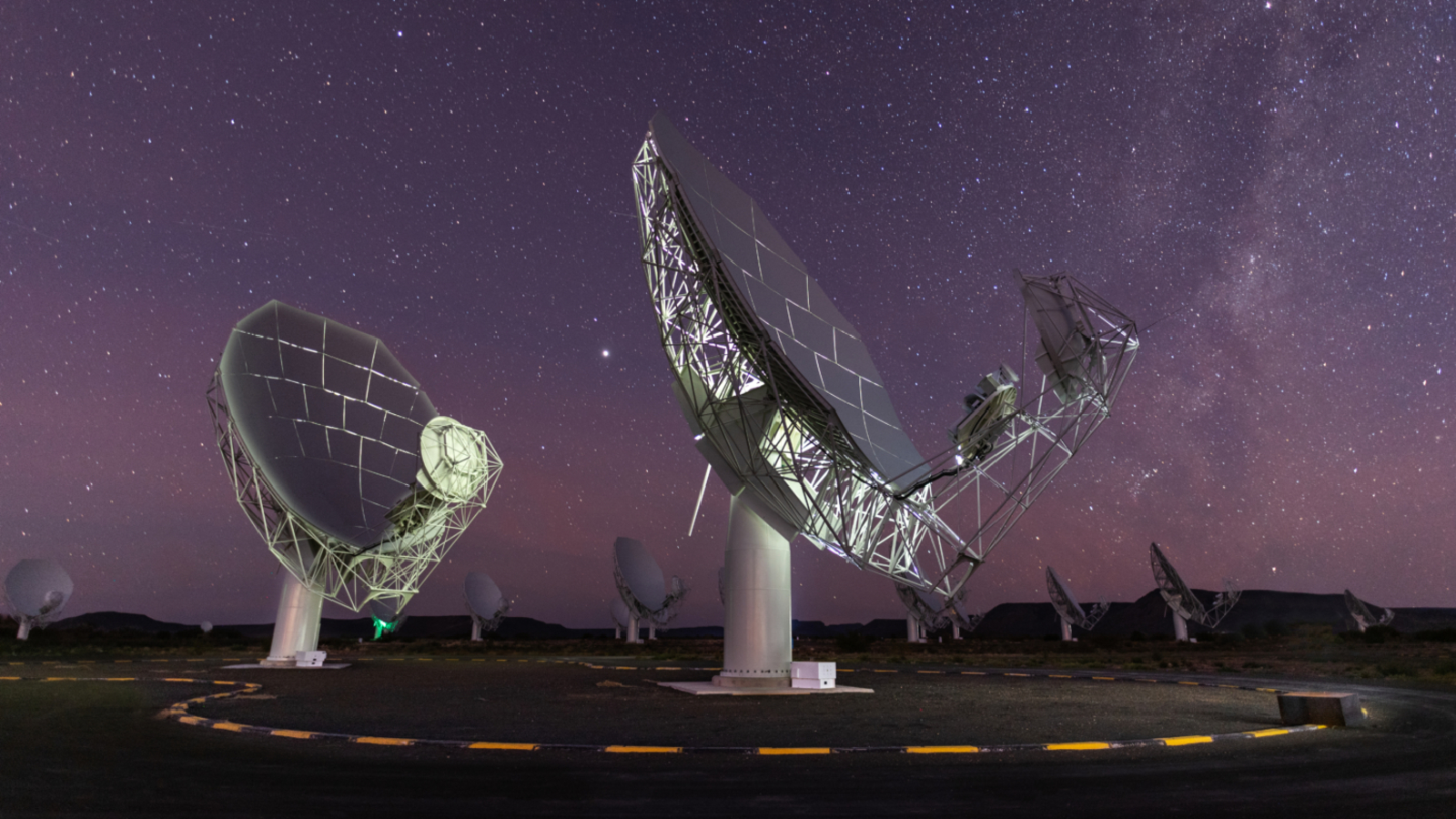
In a new study, uploaded Feb. 13 to the preprint server arXiv and accepted for future publication in the journal Monthly Notices of the Royal Astronomical Society: Letters, researchers using the MeerKAT telescope — an array of 64 radio dishes located in South Africa — discovered a new hydroxyl megamaser coming from a pair of colliding galaxies dubbed HATLAS J142935.3–002836.
The megamaser coming from HATLAS J142935.3–002836 was detected by the MeerKAT telescope in South Africa, which is made up of 64 linked radar dishes. (Image credit: SARAO/MeerKAT)
The microwaves shooting out of this system are very stretched, around 18 centimeters in length (7 inches or 1,665 megahertz), and are so much brighter than other megamasers that the researchers have proposed that the signal should be classified as a "gigamaser" — the next theoretical order of magnitude for these space lasers.
"Truly extraordinary"
HATLAS J142935.3–002836 was first discovered in 2014 and is around 8 billion light-years from Earth, meaning the microwaves we see were emitted when the universe was about half its current age. This comfortably makes it the most distant megamaser seen to date.
"This system is truly extraordinary," study first author Thato Manamela, an astronomer at the University of Pretoria in South Africa, said in a statement. "We are seeing the radio equivalent of a laser halfway across the universe."
Normally, signals from so far away are too faint to be picked up by telescopes like MeerKAT. However, the maser shooting from HATLAS J142935.3–002836 has been further amplified by a rare phenomenon, dubbed gravitational lensing, which was first predicted by Albert Einstein's theory of relativity in 1905.
HATLAS J142935.3–002836 is only visible to us thanks to a phenomenon known as gravitational lensing. These 2014 images, captured by the Hubble Space Telescope (left) and the Atacama Large Millimeter/submillimeter Array (ALMA) telescope (right), show a partial "Einstein ring" of magnified light from the distant galaxy merger. (Image credit: ALMA (ESO/NAOJ/NRAO)/NASA/ESA/W. M. Keck Observatory)
Gravitational lensing occurs when electromagnetic radiation from a distant object, such as a galaxy, is bent around a massive object positioned directly between the source and the observer. Obviously, the radiation doesn't actually bend (because light always travels in a straight line): Instead, it passes through warped space-time that has been pulled out of shape by the immense gravity of the middle object.
The team is now planning to point MeerKAT at similar systems in the hopes of discovering more secret megamasers or gigamasers lurking within gravitationally lensed objects, which could drastically increase the number of these otherwise rare space lasers they can study.
"This is just the beginning," Manamela said. "We don't want to find just one system — we want to find hundreds to thousands."
Betty en Barney Hill Ontvoering | De Eerste Buitenaardse Ontmoeting Die Amerika Veranderde
De Betty en Barney Hill Ontvoering: Amerika’s Eerste UFO-ontvoering Die Alles Veranderde
Op 19 september 1961 maakten Betty en Barney Hill, een gemengd getrouwd echtpaar uit Portsmouth, New Hampshire, een gebeurtenis die de manier waarop de Verenigde Staten en de wereld naar het onbekende keken voor altijd zou veranderen. Wat begon als een gewone autorit door de White Mountains, werd het toneel van de eerste officieel gedocumenteerde UFO-ontvoering in de Amerikaanse geschiedenis. Deze gebeurtenis zette een nieuwe standaard voor het begrijpen van buitenaardse ontmoetingen, introduceerde concepten die decennia lang de UFO-onderzoeken zouden domineren en beïnvloedde de populaire cultuur op een onvoorstelbare manier.
In dit artikel nemen we je mee op een uitgebreide reis door de gebeurtenissen van dat bewuste nacht, de achtergronden van het echtpaar, de fysieke en psychologische bewijzen, de wetenschappelijke en maatschappelijke gevolgen en de blijvende erfenis van de Betty en Barney Hill-zaak. We bespreken alles dat nodig is om te begrijpen waarom deze gebeurtenis niet alleen een mysterie is, maar ook een venster op de complexiteit van menselijke perceptie, collectief geheugen en culturele invloed.
De Nacht Die Alles Veranderde: 19 september 1961
Het begon als een gewone reis. Betty en Barney Hill waren op weg van hun vakantie in Niagara Falls terug naar huis in Portsmouth, New Hampshire. Ze waren ongeveer drie uur onderweg langs Route 3 door de White Mountains, toen ze plots een opvallend, helder licht aan de hemel zagen dat hun aandacht trok. Betty, een sociale werker, en Barney, een postbode en burgerrechtenactivist, waren geen onbekenden met het observeren van vreemde verschijnselen; ze hadden eerder lichtverschijnselen en onverklaarbare objecten gezien, maar niets bereikte de intensiteit en het detail van wat hen die avond overkwam.
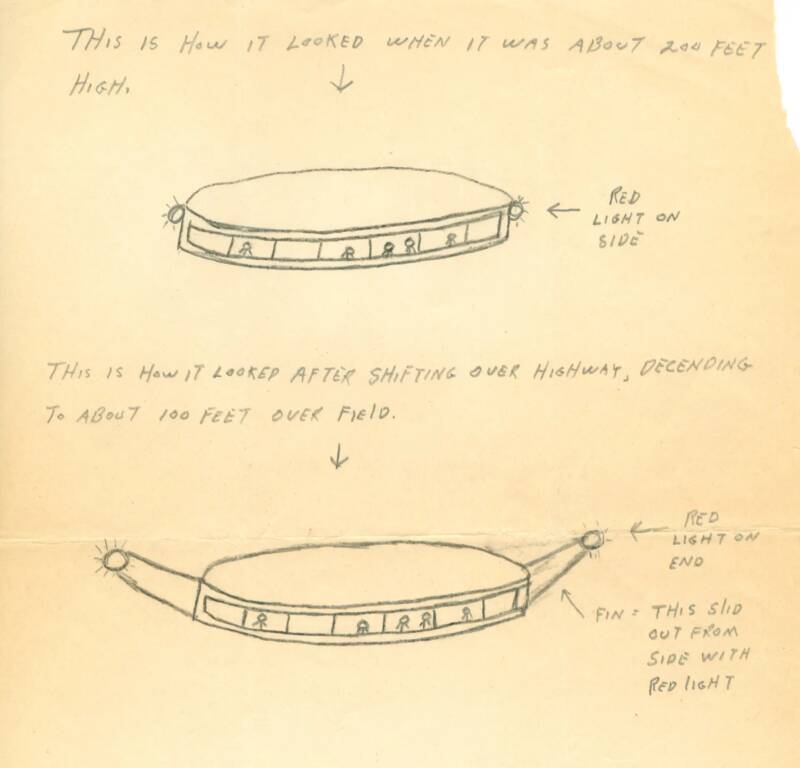
Het licht leek zich te gedragen als een ster, maar beweegde onregelmatig en leek te volgen op een manier die niet overeenkwam met gewoon luchtverkeer. Betty merkte op dat het object, dat aanvankelijk erg klein leek, langzaam dichterbij kwam en uiteindelijk de vorm aannam van een grote, ronde schijf met verlichte ramen en humanoïde figuren zichtbaar door een verrekijker. Barney, nieuwsgierig en bezorgd, haalde zijn verrekijker tevoorschijn en observeerde het fenomeen nauwkeurig. Wat hij zag, was een gestructureerd vaartuig van 12 tot 18 meter doorsnede, met rijen lichtende ramen waarbinnen humanoïde wezens zich bewogen.
Wat daarna gebeurde, markeerde een keerpunt in de geschiedenis van UFO-onderzoek: de twee getuigen herinnerden zich later dat ze werden meegenomen aan boord van het ruimteschip, waar ze medische onderzoeken ondergingen en telepathisch communiceerden met de buitenaardse wezens. Deze herinneringen werden later bevestigd door hypnotische regressie en vormen sindsdien het basispatroon van het moderne abductieverhaal.
Universal History Archive/UIG via Getty Images Barney en Betty Hill waren een Amerikaans koppel dat naar verluidt door buitenaardse wezens werd ontvoerd.
De Achtergrond van Betty en Barney Hill
Het bijzondere aan dit verhaal is niet alleen de gebeurtenis zelf, maar ook wie Betty en Barney waren. In 1961 was een gemengd huwelijk nog bijzonder en controversieel. Betty, een witte vrouw uit Newton, New Hampshire, was werkzaam als sociaal werker en actief in de burgerrechtenbeweging. Barney, een Afro-Amerikaanse postbode, was betrokken bij de NAACP en streed voor gelijke rechten. Hun relatie was een daad van moed in een tijd van raciale segregatie en discriminatie.
Betty kwam uit een middenklassefamilie en had een opleiding gevolgd, waardoor ze een gerespecteerde rol in haar gemeenschap had. Barney was een trotse en actieve burgerrechtenstrijder, die niet alleen voor gelijke rechten vocht, maar ook een voorbeeld was binnen hun gemeenschap. Hun sociale status en reputatie gaven hun getuigenis een zekere geloofwaardigheid, ondanks de ongeloofwaardigheid van het verhaal zelf.
De Reis Van Montreal Naar Portsmouth
De reis begon op 19 september 1961 na een vakantie in Montreal. Het was een donkere, rustige avond. Betty en Barney reden langs Route 3, een bekende route door de White Mountains, en waren zich niet bewust van het onheil dat zou volgen. Rond 22:30 uur zagen Betty een helder, sterachtig object dat zich anders gedroeg dan een gewoon hemellichaam. Aanvankelijk dacht Betty dat het een satelliet of een vliegtuig was, maar al snel werd duidelijk dat het object ongewoon gedrag vertoonde en zich op een onverklaarbare manier bewoog.
Het eerste waarneming was relatief onschuldig: een licht dat in de hemel verscheen en zich leek te bewegen. Maar naarmate Barney de verrekijker gebruikte en het object beter kon bekijken, veranderde de sfeer. Het vaartuig kreeg een gestructureerde vorm met lichtende rijen ramen en humanoïde figuren die binnen zichtbaar waren. Barney beschreef de wezens als kleine, grijze, humanoïde vormen met grote, zwarte ogen. Het was het begin van een ervaring die hun leven voor altijd zou beïnvloeden.
Wat gebeurde er die avond precies?
Het mysterieuze object bleef enkele minuten observeren, terwijl Betty en Barney zich ongemakkelijk begonnen te voelen. Toen het vaartuig begon te dalen en richting hun auto kwam, werden ze achtervolgd door een gevoel van angst. Barney haalde zijn verrekijker uit het dashboard en richtte die op het object. Wat hij zag, was een gestructureerd schip met ramen en menselijke figuren die hem aankeken. Op dat moment voelde Barney een plotselinge angst die hem verlamde, terwijl Betty zich eveneens angstig begon te voelen.
Het bizarre is dat ze zich later niet meer konden herinneren wat er precies gebeurde tijdens de volgende uren. Ze hadden een periode van ongeveer twee uur waarin hun herinneringen ontbraken. Pas later, onder hypnose, zouden ze details terugkrijgen over de medische onderzoeken, de communicatie met de buitenaardse wezens en de terugkeer naar hun auto.
Charles Walker Collection/Alamy Stock Photo
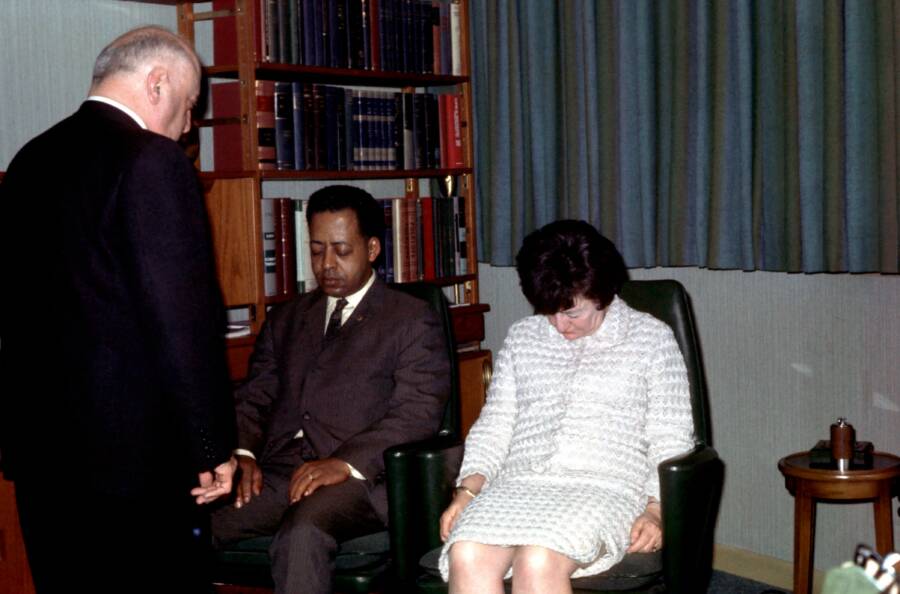
Dr.Benjamin Simon conducting hypnosis therapy on Betty and Barney Hill.
De "Missing Hours en Physical Evidence"
Het meest opvallende aspect van hun verhaal is de zogeheten 'missing time' — de periode waarin ze geen herinneringen hadden aan wat er gebeurde. Toen Betty en Barney na hun reis thuiskwamen, ontdekten ze dat er iets niet klopte. Hun auto vertoonde onverklaarbare sporen: cirkelvormige inscripties op de motorkap, beschadigingen aan de antenne, en kleine metalen deeltjes in de verf die niet konden worden verklaard door normale slijtage. Betty’s jurk vertoonde scheuren en een roze poeder dat niet te identificeren was. Barney’s schoenen hadden mysterieuze schrammen.
Ze waren uitgeput, verward, en hadden een gevoel dat ze iets buitenaards hadden meegemaakt. Ze hadden ook fysieke klachten: Betty had een pijnlijke, brandende plek op haar huid, en Barney voelde zich erg moe en verward. Het feit dat hun horloges waren gestopt en dat er fysieke sporen op hun auto en kleding waren, gaf het verhaal meer geloofwaardigheid.
Onderzoek en Hypnose
De eerste reactie van Betty en Barney was om medische hulp te zoeken en contact op te nemen met de militaire autoriteiten. Op 21 september 1961 rapporteerden ze hun waarneming aan Pease Air Force Base, die de zaak serieus nam. De militaire autoriteiten begonnen een onderzoek, dat later onderdeel werd van Project Blue Book, het Amerikaanse programma dat UFO-waarnemingen onderzocht.
In de daaropvolgende jaren werden Betty en Barney onder hypnose gebracht door de bekende psychiater Dr. Benjamin Simon. Tijdens deze sessies, begin jaren 60, gaven Betty en Barney gedetailleerde beschrijvingen van de wezens, de ruimtevaartuigen, en de medische onderzoeken. Betty herinnerde zich een driedimensionale sterrenkaart die ze had gezien aan boord van het schip, die later werd bestudeerd door astronomen.
Universiteit van New Hampshire
De UFO gezien door Betty en Barney Hill, zoals getekend door Betty Hill..
De Beschrijvingen van de buitenaardse wezens
De getuigenissen onder hypnose onthulden dat de wezens ongeveer 1,20 tot 1,50 meter groot waren, met grote, zwarte ogen en een grijze huid. Ze droegen strakke, donkere uniforms en vertoonden hiërarchisch gedrag, waarbij één figuur leek op de leider. De communicatie verliep via telepathie, waarbij de wezens geruststellende gedachten overbrachten en geen gesproken taal gebruikten.
De medische onderzoeken omvatten het nemen van haar- en huidmonsters, het inbrengen van een dunne naald in Betty’s navel (wat later werd geïnterpreteerd als een zwangerschapstest) en het afnemen van biologische monsters. Onder hypnose herinnerden Betty en Barney zich dat ze werden onderzocht op een medische tafel in een ruimte met vreemde instrumenten.
De Star Map en de Betekenis
Betty herinnerde zich dat ze aan boord van het schip een sterrenkaart had gezien, die ze later probeerde te tekenen. Haar tekening werd later bestudeerd door amateur-astronoom Marjorie Fish, die suggereerde dat de kaart mogelijk de Zeta Reticuli-sterrenstelsel vertegenwoordigde, ongeveer 39 lichtjaar van de aarde. Hoewel deze interpretatie controversieel is, blijft de sterrenkaart een van de meest besproken elementen van de zaak.
Charles Walker Collection/Alamy Stock Photo Een artistieke weergave van de buitenaardse wezens zoals beschreven door Barney en Betty Hill.
De beschrijvingen van de aliens en de technologie werden onderdeel van de archetypische 'Gray' -alien en vormen sindsdien de basis voor talloze abductieverhalen en popcultuur.
De Reproductie van de Sterrenkaart en de Betekenis
Betty’s tekening van de sterrenkaart werd een belangrijk document. Fish bouwde een driedimensionaal model dat leek overeen te komen met bepaalde nabijgelegen sterrenstelsels. Deze vondst gaf de zaak een wetenschappelijke dimensie, maar werd door de meeste astronomen betwist omdat de interpretatie van de kaart te selectief was en geen sluitend bewijs bood voor buitenaardse afkomst.
Schematic from Betty Hill's sketch
Marjorie Fish's interpretation applied to Betty's schematic
Legend:
1) Zeta 1 Reticuli
5) Gliese 86
9) Kappa Fornacis
D) 107 Piscium
2) Sun
6) Gliese 59
A) Tau 1 Eridani
E) 54 Piscium
3) Alpha Mansae
7) Gliese 86.1
B) 82 Eridani
F) Gliese 67
4) Zeta 2 Reticuli
8) Gliese 95
C) Tau Ceti
Betty Hill-kaart en Marjorie Fish-interpretatie
De Impact op de Maatschappij en UFO-onderzoek
De publicatie van het boek The Interrupted Journey door journalist John Fuller in 1966 bracht de zaak in de mainstream. Het boek bevatte transcripties van hypnotische sessies, medische rapporten en uitgebreide analyses. Het werd een bestseller en zette de basis voor het moderne abduction-genre.
De zaak leidde ook tot een televisiefilm in 1975, The UFO Incident, met James Earl Jones en Estelle Parsons, die de gebeurtenissen dramatiserden en miljoenen kijkers bereikten. Dit maakte Betty en Barney Hill beroemdheden en veranderde de perceptie van UFO's in de Amerikaanse samenleving.
De rol van skeptici en onderzoekers
Niet iedereen was overtuigd van de echtheid van de verhalen. Skeptici wezen op de mogelijke rol van slaapverlamming, nachtrusttekort, suggestieve hypnotische technieken en culturele invloeden zoals sciencefictionfilms. Psychologen benadrukten dat herinneringen onder hypnose gemakkelijk kunnen worden vervormd of geïmplant. De sterrenkaart werd vooral als toeval of confirmatiebias gezien.
Aan de andere kant zagen gelovigen in de zaak een bewijs van echte buitenaardse contacten en gebruikten ze de details van de beschrijvingen en fysieke bewijzen om hun overtuiging te versterken.
De Betekenis van de Zaak
De Betty en Barney Hill-ontvoering markeerde een keerpunt in de geschiedenis van UFO-onderzoek. Het introduceerde het concept van abducties, het idee dat buitenaardse wezens mensen ontvoeren voor medische experimenten en genetisch onderzoek. Het legde ook de basis voor het archetype van de 'Gray' -alien en de typische medische onderzoeken die in talloze latere verhalen terugkeren.
Daarnaast had de zaak een grote maatschappelijke impact: het was een van de eerste keer dat een gemengd huwelijk publiekelijk getuigde van een buitenaardse ontmoeting, wat een brug sloeg tussen sociale taboes en het universele mysterie van het onbekende.
De Kritiek en de Hedendaagse Reflectie
Sinds de jaren 60 is de zaak uitvoerig bestudeerd en bekritiseerd. Moderne psychologie en neurowetenschap tonen aan dat herinneringen, vooral onder hypnose, niet betrouwbaar zijn en gemakkelijk kunnen worden vervormd door suggestie en culturele invloeden. De fysieke bewijzen, zoals de mysterieuze vlekken op de auto en de metalen deeltjes, werden nooit definitief bevestigd of verklaard.
Tegelijkertijd blijft de zaak een krachtig symbool voor de menselijke zoektocht naar het onbekende en een voorbeeld van hoe verhalen over buitenaardse ontmoetingen worden gevormd door een complexe interactie van psychologie, cultuur en wetenschap.
De Nieuwe Wetenschappelijke Inzichten
Tegenwoordig begrijpen we dat menselijke herinneringen malleus zijn en dat suggestieve technieken zoals hypnose de neiging hebben om valse herinneringen te creëren. De theorie van 'false memory syndrome' wijst op de kracht van de geest om overtuigende maar onware verhalen te fabriceren, vooral onder druk of suggestie.
Daarnaast verklaren technologische en militaire ontwikkelingen in de jaren 50 en 60 dat veel waarnemingen en fenomenen kunnen worden toegeschreven aan geheime vliegtuigprojecten, zoals de U-2 en de SR-71, of aan experimentele technologie die pas later werd bekendgemaakt.
De rol van geheime militaire projecten
In de jaren 60 ontwikkelden de Amerikaanse luchtmacht en defensie-instellingen geavanceerde vliegtuigen en technologieën die voor de burgerwereld onzichtbaar waren. Sommige van deze projecten produceerden ongewone vliegbewegingen en geluiden die door getuigen als buitenaardse verschijnselen werden geïnterpreteerd. De geheime testvluchten over de White Mountains en de regio rond Portsmouth kunnen dus een belangrijke rol hebben gespeeld in de waarnemingen van Betty en Barney.
De conclusies en de blijvende vraagstukken
Ondanks de uitgebreide onderzoeken, de technologische verklaringen en de psychologische analyses, blijven veel vragen onbeantwoord. Was het een echte ontmoeting met buitenaardse wezens? Of een complex samenspel van suggestie, culturele invloeden en geheime militaire experimenten? Of misschien een combinatie van beide?
De zaak blijft een fascinerend voorbeeld van hoe menselijke perceptie, geheugen en cultuur de realiteit kunnen vervormen, vooral bij het omgaan met het onverklaarbare.
De Erfenis en de Betekenis Vandaag
De Betty en Barney Hill-zaak heeft niet alleen de UFO-gemeenschap gevormd, maar ook de manier waarop we denken over geheugen, perceptie en bewijs. Het heeft de dialogen geopend over de betrouwbaarheid van herinneringen, de invloed van cultuur en media, en de grenzen van wetenschappelijke kennis over het onbekende.
Ze symboliseren ook de moed van een gemengd paar dat, ondanks maatschappelijke druk en persoonlijke angsten, besloot hun verhaal te delen. Hun verhaal blijft een krachtig symbool van menselijke nieuwsgierigheid en het verlangen om het universum te begrijpen.
Conclusie
De ontvoering van Betty en Barney Hill op 19 september 1961 markeerde een keerpunt. Het was de eerste keer dat een dergelijk verhaal op grote schaal werd gedocumenteerd, onderzocht en publiekelijk besproken. Het stelde belangrijke vragen over de aard van herinneringen, de betrouwbaarheid van getuigenissen onder hypnose en de mogelijkheid van buitenaardse intelligentie.
Hoewel veel aspecten van hun verhaal wetenschappelijk worden betwijfeld, heeft de zaak een blijvende invloed op de cultuur, de wetenschap en de manier waarop wij het onbekende benaderen. Het is een verhaal dat ons uitdaagt om verder te kijken dan de bekende horizon, om kritisch te blijven, maar ook om open te staan voor de mysteries die nog altijd in het heelal en in onze eigen geest verborgen liggen.
De Betty en Barney Hill-zaak blijft zo een ultiem symbool voor de menselijke zoektocht naar waarheid, begrip en de grenzen van onze perceptie. Het herinnert ons eraan dat, ondanks alle wetenschap en technologie, het onbekende altijd een stukje verder ligt, wachtend om ontdekt te worden.
Meer van UFO'S of UAP'S, ASTRONOMIE, RUIMTEVAART, ARCHEOLOGIE, OUDHEIDKUNDE, SF-SNUFJES EN ANDERE ESOTERISCHE WETENSCHAPPEN - DE ALLERLAATSTE NIEUWTJES


 Inside the Government’s 80-Year UFO and Alien Cover-Up