Naar de inhoud

UFO'S of UAP'S, ASTRONOMIE, RUIMTEVAART, ARCHEOLOGIE, OUDHEIDKUNDE, SF-SNUFJES EN ANDERE ESOTERISCHE WETENSCHAPPEN - DE ALLERLAATSTE NIEUWTJES

UFO's of UAP'S in België en de rest van de wereld
akke.beakke.be
Ontdek de Fascinerende Wereld van UFO's en UAP's: Jouw Bron voor Onthullende Informatie! Ben jij ook gefascineerd door het onbekende? Wil je meer weten over UFO's en UAP's, niet alleen in België, maar over de hele wereld? Dan ben je op de juiste plek! België: Het Kloppend Hart van UFO-onderzoek In België is BUFON (Belgisch UFO-Netwerk) dé autoriteit op het gebied van UFO-onderzoek. Voor betrouwbare en objectieve informatie over deze intrigerende fenomenen, bezoek je zeker onze Facebook-pagina en deze blog. Maar dat is nog niet alles! Ontdek ook het Belgisch UFO-meldpunt en Caelestia, twee organisaties die diepgaand onderzoek verrichten, al zijn ze soms kritisch of sceptisch. Nederland: Een Schat aan Informatie Voor onze Nederlandse buren is er de schitterende website www.ufowijzer.nl, beheerd door Paul Harmans. Deze site biedt een schat aan informatie en artikelen die je niet wilt missen! Internationaal: MUFON - De Wereldwijde Autoriteit Neem ook een kijkje bij MUFON (Mutual UFO Network Inc.), een gerenommeerde Amerikaanse UFO-vereniging met afdelingen in de VS en wereldwijd. MUFON is toegewijd aan de wetenschappelijke en analytische studie van het UFO-fenomeen, en hun maandelijkse tijdschrift, The MUFON UFO-Journal, is een must-read voor elke UFO-enthousiasteling. Bezoek hun website op www.mufon.com voor meer informatie. Samenwerking en Toekomstvisie Sinds 1 februari 2020 is Pieter niet alleen ex-president van BUFON, maar ook de voormalige nationale directeur van MUFON in Vlaanderen en Nederland. Dit creëert een sterke samenwerking met de Franse MUFON Reseau MUFON/EUROP, wat ons in staat stelt om nog meer waardevolle inzichten te delen. Let op: Nepprofielen en Nieuwe Groeperingen Pas op voor een nieuwe groepering die zich ook BUFON noemt, maar geen enkele connectie heeft met onze gevestigde organisatie. Hoewel zij de naam geregistreerd hebben, kunnen ze het rijke verleden en de expertise van onze groep niet evenaren. We wensen hen veel succes, maar we blijven de autoriteit in UFO-onderzoek! Blijf Op De Hoogte! Wil jij de laatste nieuwtjes over UFO's, ruimtevaart, archeologie, en meer? Volg ons dan en duik samen met ons in de fascinerende wereld van het onbekende! Sluit je aan bij de gemeenschap van nieuwsgierige geesten die net als jij verlangen naar antwoorden en avonturen in de sterren! Heb je vragen of wil je meer weten? Aarzel dan niet om contact met ons op te nemen! Samen ontrafelen we het mysterie van de lucht en daarbuiten.

Archief

What the U.S. government has already revealed about UFOs
What the U.S. government has already revealed about UFOs

Herb Scribner

Scott Bray, former deputy director of Naval Intelligence, testifies during a House hearing on UAPs in 2022.

Scott Bray, former deputy director of Naval Intelligence, testifies during a House hearing on UAPs in 2022.

Photo: Kevin Dietsch/Getty Images

President Trump's decision to release government files related to aliens and UFOs is reigniting one of America's longest-running mysteries.

The big picture: While it's unclear whether any new significant surprises await, the belief that government secrets may prove extraterrestrial life exists has fueled curiosity and speculation for decades.

  • The latest chapter started when former President Obama said last week that aliens are real. He later clarified that he hadn't seen any evidence of aliens making contact with Earth.
  • But his remarks prompted Trump to suggest this was classified information and promise to release new records.

Here's what the government has previously shared:

What's confirmed by the government

Between the lines: Much of what's been confirmed has been about unidentified anomalous phenomena (UAPs) rather than "UFOs." UAPs are airborne objects that are not immediately identifiable.

  • The Office of the Director of National Intelligence (ODNI) confirmed in a 2021 report that UAPs are real, but there's no confirmation they stem from some extraterrestrial origin.
  • The Pentagon has largely maintained that there is no evidence of alien technology nor any hidden programs within the government related to UAPs.

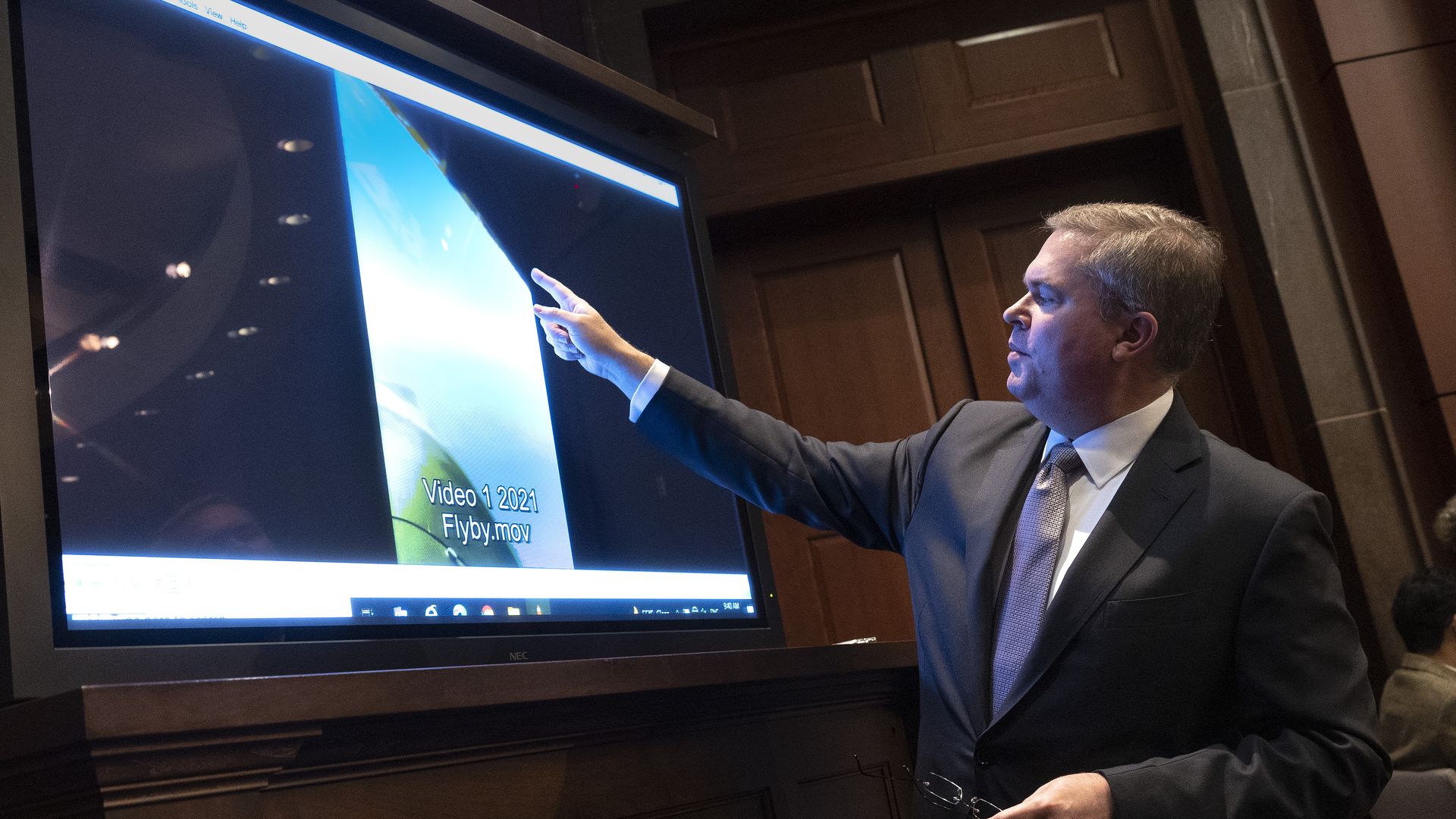
Yes, but: The Pentagon released three declassified UFO videos in 2020 filmed by U.S. Navy pilots in 2004 and 2015.

Congress hearings investigate UAPs

UFOs have been on Congress' radar for years, mostly due to bipartisan concerns about transparency and national security.

  • Congress held a series of hearings from 2022 to 2024 as part of an investigation into UAPs and national security.
  • Several officials testified that UAP sightings have simple explanations — that they were actually balloons, drones and optical effects.
  • Officials also confirmed that hundreds of UAP reports exist, including military cases.

What they said: Sean Kirkpatrick, director of AARO, testified in April 2023 that many sightings involved "metallic orbs" — though he did not confirm extraterrestrial technology.

  • Whistleblower David Grusch testified in July 2023 that he believed the government was withholding evidence and information about UAPs.
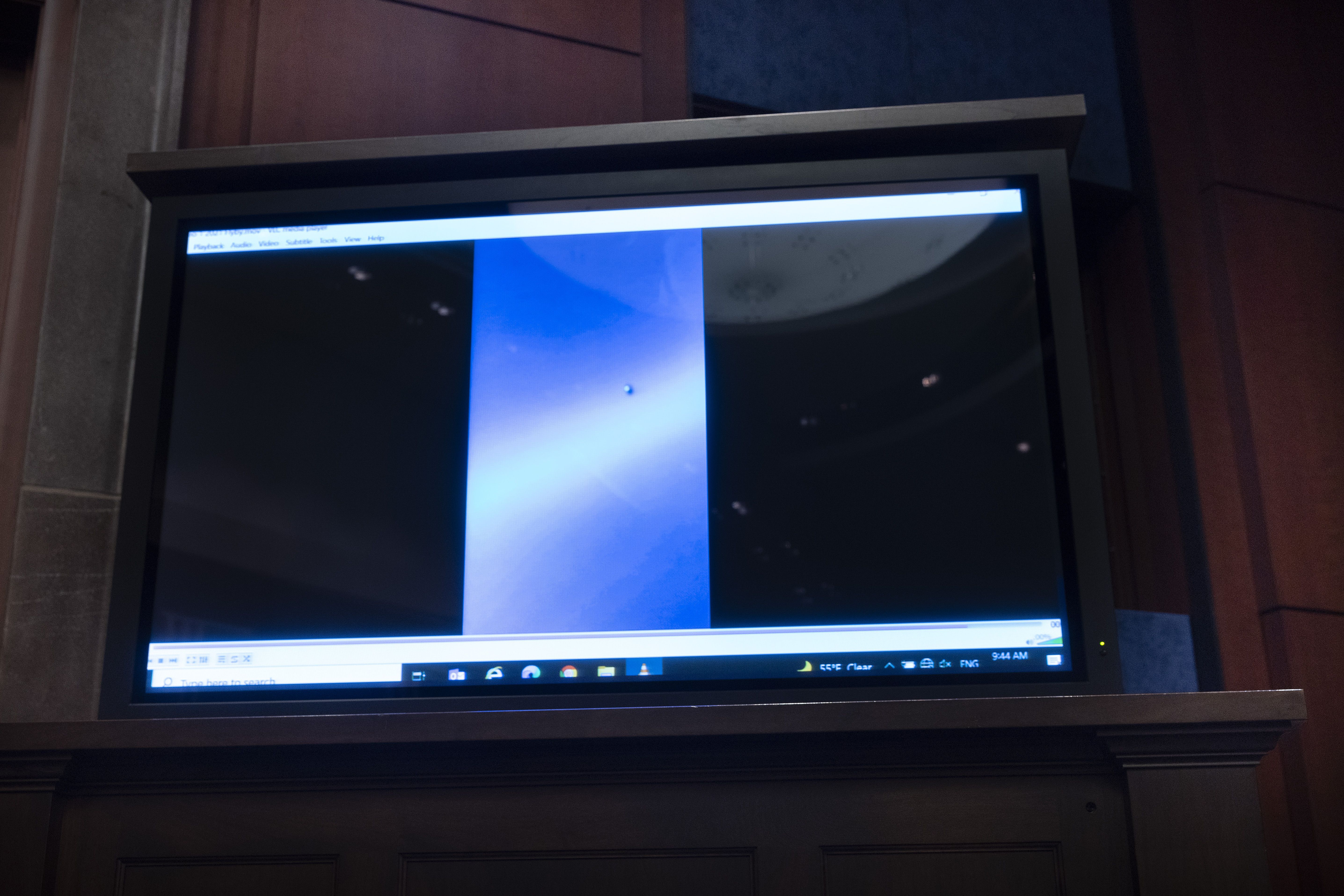
A video of unidentified aerial phenomena plays during a House Intelligence subcommittee hearing in 2022. A video of unidentified aerial phenomena plays during a House Intelligence subcommittee hearing in 2022. Photo: Kevin Dietsch/Getty Images

NASA, Pentagon downplay sightings

Flashback: In 2023, NASA released a report from its UAP study team that found no evidence of aliens.

  • However, the government agency said they aren't sure what UAP technically are and that more research could be done into defining the unidentified objects.

An unclassified 2024 Pentagon report gave the public insight into what we know and don't know about UFOs.

  • The report mainly found that several of the sightings in the 1950s and '60s were likely caused by tests of advanced U.S. spy planes and other tech.
  • The report said there was no evidence of confirmed extraterrestrial activity related to UAPs.

Reported UFO sightings per 100k residents

Jan. 1, 1995, to Feb. 19, 2026; Approximate locations of 140,406 sightings submitted to the National UFO Reporting Center

A U.S. state map of reported UFO sightings per 100,000 residents from 1995 to 2026, as of February 19, 2026. About 140,000 sightings were reported in that time period, with the most sightings relative to population in Vermont (100 per 100,000 residents), Washington (95) and Montana (94).
Map of UFO sightings per capita in the US. : r/MapPorn

Oregon

88.7 sightings per 100k residents

3,790 total sightings
Data: National UFO Reporting Center; Map: Jacque Schrag/Axios

Where UFOs are spotted

Americans share reported sightings all the time to the National UFO Reporting Center, which catalogs all reports for the public to read.

  • The most recent claim was on Feb. 10, when someone reported seeing a UAP in Cave Junction, Oregon, that was "a shooting star" that made "a zigzag pattern."
  • Of course, these reports are unconfirmed and anyone can file them.

By the numbers: The NUFORC collects data on where the most sightings have happened throughout the world.

  • California remains the state with the most reported sightings at 17,061 as of February 2026, per NUFORC.
  • The NUFORC reports offer varying details of what the unidentified objects look like.
  • More than 10,000 people described the UFOs as a "fireball," with 14,000 spotting a "triangle."

The bottom line: The truth is out there, and Trump's order could provide new evidence for believers and skeptics to seize on.

RELATED VIDEOS

{ https://www.axios.com/ }

Hoe vind je dit bericht?
Geschreven door peter om 22:31 Stuur door

Government UFO files would be an avalanche of info: Elizondo

Government UFO files would be an avalanche of info: Elizondo

Michael Ramsey

Government UFO files would be an avalanche of info: Elizondo - NewsNation

(NewsNation) — President Trump’s promise to disclose any government-held information about UFOs and extraterrestrials will be no simple lift if it comes to fruition, says Luis Elizondo, a former Pentagon insider who has long advocated for the feds to be transparent.

He notes the government has amassed a secret trove of information for more than 80 years and suggests the potential quantity of information could dwarf the millions of documents in the Epstein files.

“Now, the real hard work begins,” Elizondo told “CUOMO” on Friday. “The government has been sitting on this information for so long. There’s so much documentation right now, within our own holdings — within the intelligence community, within the defense communities, within the Department of Energy — that this is going to be a tremendous undertaking.”

First, Elizondo said, Trump will need to sign an executive order that obligates agencies under his control to comply with his transparency directive.

On Thursday, the president said on Truth Social he would direct the Pentagon and other government agencies to release files about “alien and extraterrestrial life”; unidentified anomalous phenomena, aka UAPs; UFOs; and “any and all other information connected to these highly complex, but extremely interesting and important, matters.”

Among skeptics who doubt Trump will ultimately make good on his promise is investigative journalist Ross Coultart of NewsNation’s “Reality Check” podcast.

“It’s very important to note Donald Trump is not saying, in what he’s announced to date, that he is going to declassify anything,” he says. “All they are talking about is reviewing records.”

The issue of UFOs — purists prefer the broader term UAP, which includes objects traveling in bodies of water — has gained traction in recent years after several whistleblowers have stepped forward to claim the government has covered up vital information. The whistleblowers include David Grusch, who told lawmakers the federal government is operating a UFO retrieval program.

A widely publicized 2025 documentary, “The Age of Disclosure,” featuring a bipartisan roster of policymakers and officials, suggested the U.S. and rival nations are in a race to reverse-engineer alien tech that has been recovered.

The UAP category can also include drones, which have become increasingly sophisticated.

Upcoming govt agency report lists more than 150 UFO encounters: Josh ...

Public ready for truth on UFOs, extraterrestrials: Journalist

Journalist Marik Von Rennenkampff, a former State Department analyst who writes about UAPs, says Trump’s timing is perfect given the “critical mass” the issue seems to have achieved.

“I think we’re ready for it,” Von Rennenkampff says of the public at large. “I think the big question is what happens the day after — geopolitically, economically, socially and culturally.”

Harvard prof doesn't back down from claims that alien spacecraft may be ...

Scientists could help evaluate UFO info: Avi Loeb

The Harvard astrophysicist who made a splash with his study of the comet 3I/ATLAS said the government files, if they see the light of day, could yield higher-quality images than the public is used to seeing when discussions about UFOs come up.

“In addition, there could be some materials that were retrieved and are puzzling,” Avi Loeb told “Jesse Weber Live” on Friday. “The best way to figure things out to share it, if we are sure it’s not coming from adversarial nations.”

 { https://www.newsnationnow.com/ }

Hoe vind je dit bericht?
Geschreven door peter om 22:11 Stuur door

George Knapp investigates: Drone swarm mystery and new UAP revelations

George Knapp investigates: Drone swarm mystery and new UAP revelations

Overview

Chief Investigator George Knapp of 8 News Now has produced an investigative report on a series of unidentified drone swarms that appeared over U.S. civilian and military sites between late 2024 and early 2025. The sightings spanned multiple states—including New Jersey, Nevada, Florida, Texas and California—and affected high‑security installations such as Langley Air Force Base and Wright‑Patterson AFB, where air traffic was briefly halted. While federal officials initially described the events as “no known national‑security threat,” a White House briefing on January 29, 2025 claimed the FAA had authorized the flights for research purposes, a conclusion that Knapp and other analysts say raises further questions about inter‑agency coordination and public disclosure.


George Knapp investigates: Drone swarm mystery and new UAP revelations

The FAA Explanation and Immediate Reactions

National Security Communications Advisor John F. Kirby and other officials asserted that the government could not trace the origin of the craft, prompting criticism from state and local leaders. New Jersey Assemblyman Brian Bergen labeled the response “amateur hour,” and President‑elect Donald Trump suggested the administration was withholding information. The White House spokesperson Karoline Leavitt later announced that the “mystery had been solved” by attributing the drones to FAA‑approved research missions. Knapp highlighted a key inconsistency: if the FAA had indeed authorized the flights, why did the FBI, Department of Defense and the FAA jointly issue statements in December 2024 describing the swarms as an unknown phenomenon requiring advanced detection technology?

Historical Context of UAP Incidents

The 2024 drone swarms echo earlier unidentified aerial phenomena (UAP) events that have drawn congressional and Pentagon attention. In July 2019, more than 100 unknown objects were reported near ten U.S. Navy warships off the Pacific coast, many appearing as wingless orbs with no detectable propulsion. The June 2021 Pentagon report on 144 UAP incidents concluded that most were not attributable to classified U.S. programs, while leaving open the possibility of foreign or non‑human origins. A separate 2023 incident at Langley AFB saw dozens of objects operating for two weeks despite sophisticated radar and defense systems. These precedents have fueled calls for a permanent, well‑funded UAP investigative body.

Expert Commentary and Legislative Concerns

Rep. Tim Burchett (R‑TN) warned that the drone incursions represent a “test” of America’s air‑space security that the nation is currently failing. Former Nevada Senator Harry Reid, a long‑time advocate for UAP transparency, noted that the government’s admission of “not knowing” what the objects are marks a “significant, albeit preliminary, step.” Former AATIP director Lue Elizondo argued that the technology observed by pilots exceeds known terrestrial capabilities, suggesting a global phenomenon rather than a domestic secret project. Former Navy commander David Fravor added that the persistence of such technology over decades makes it unlikely to be a covert U.S. program, given the difficulty of maintaining secrecy for 15‑20 years.

Conclusion and Outlook

The investigation concludes that the White House’s attribution of the late‑2024 swarms to FAA‑approved research drones does not fully resolve the underlying issues of transparency and inter‑agency communication. Lawmakers and UAP experts continue to press for a permanent, adequately funded investigative office capable of identifying and analyzing objects that demonstrate flight characteristics beyond current human technology. As the public and congressional committees await further clarification, the broader mystery of unidentified aerial phenomena remains open, underscoring the need for systematic, scientifically rigorous study of America’s skies.

RELATED

{  https://usubjects.com/  }

Hoe vind je dit bericht?
Geschreven door peter om 21:52 Stuur door

17 things commonly mistaken for UFOs

17 things commonly mistaken for UFOs

Think you've seen a UFO in the sky? Consider the following possibilities...

BY Ezzy Pearson

Thousands of people across the world have reported unidentified objects in the night sky, many under the impression that they have witnessed a visiting alien spacecraft.

Reports often feature lights zipping across the sky, changing direction in manoeuvres that seem to defy the laws of physics, not to mention huge shapes that move silently overhead and strange objects that suddenly explode.

We've all heard the stories of the Roswell UFO incident, or the supposed alien species that many 'believers' think inhabits a star orbiting Zeta Reticuli.

The term 'flying saucer' has now entered our common vocabulary. Credit: KTSDesign / Science Photo Library

UFO sightings have a long history. In 1950, the UK Ministry of Defence opened an official desk to investigate every flying saucer report in the UK.

Rather than looking for little green men, however, it was tasked with investigating possible hostile aircraft that may have secretly entered UK airspace.

The desk was closed in November 2009 and after nearly 60 years of reports, not one resulted in a genuine threat to the UK.

But rather than uncovering an extra-terrestrial conspiracy, the last batch of files released by the National Archives revealed that at the time of the closure the MoD had "no opinion" on the existence of extra-terrestrial beings, and seemed a little fed up by the hundreds of reported UFO sightings that they were receiving each year.

The reports do make interesting reading, and can all be accessed online at the National Archive UFO webpage.

But the truth is that the vast majority of UFO sightings have Earthly origins – optical illusions and rare weather among them. Here we'll look at some of the most likely suspects.

So, the next time you see something in the sky and you think it might be a UFO, consider the following possibilities.

Military aircraft

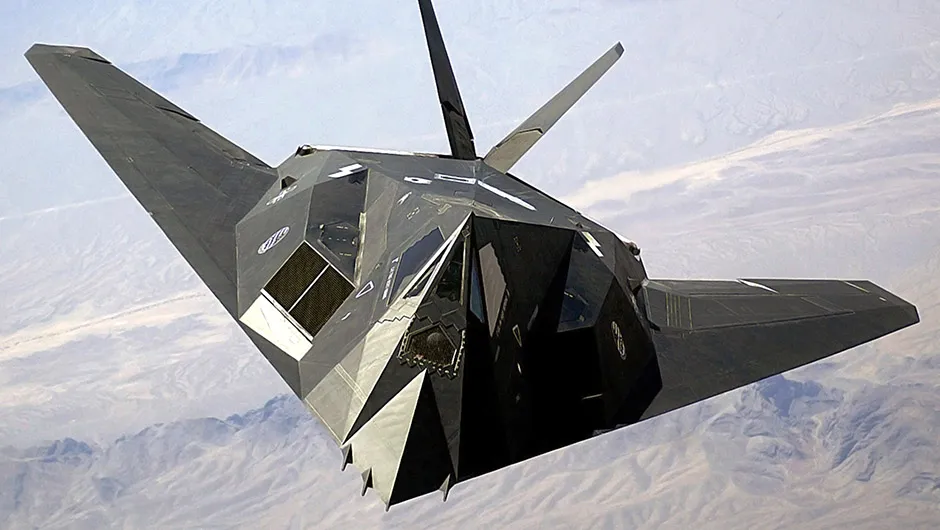
Lockheed's F-117A Nighthawk © Wikimedia Commons

Top secret spyplanes like the Blackbird (Lockheed SR-71) were often taken to be UFOs during the Cold War.

In recent years, the triangular-shaped stealth fighter (F-117A Nighthawk) and bomber probably have been, too.

Who knows how many new sightings are down to top-secret craft we don’t even know about – perhaps even saucer-shaped ones?

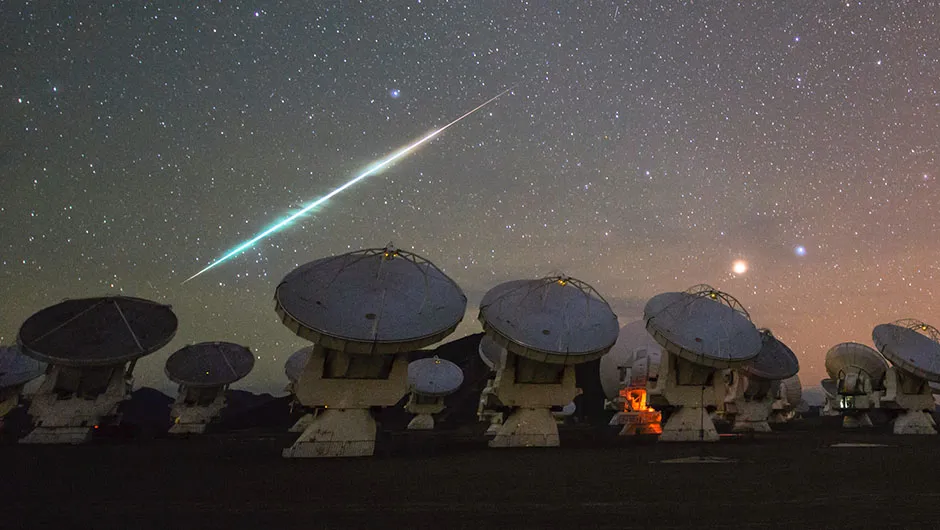
Meteor fireballs

Meteor fireballs over the Atacama Large Millimeter/submillimeter Array (ALMA) in Chile © Wikimedia Commons

A yellow-ish object appears out of nowhere, flying fast and silent across the sky and leaving a glowing trail behind it.

The object suddenly breaks into smaller pieces before vanishing into thin air – all in under a minute.

Over-anxious witnesses might run screaming to the media, but astronomers will be content to have seen a spectacular meteor fireball.

Lens flare

Have you captured a strange glowing orb in a photo? Might it just be lens flare? Credit: Strixcode / Getty Images Have you captured a strange glowing orb in a photo? Might it just be lens flare? Credit: Strixcode / Getty Images

If you’ve been observing for a long time you’ll be all too aware that light sometimes bounces off the lens elements in your camera, binoculars or telescope, causing a lens flare.

Some flares can look like solid objects and, if they’re accidentally framed in the right place, a newbie might well mistake them for an unworldly spacecraft.

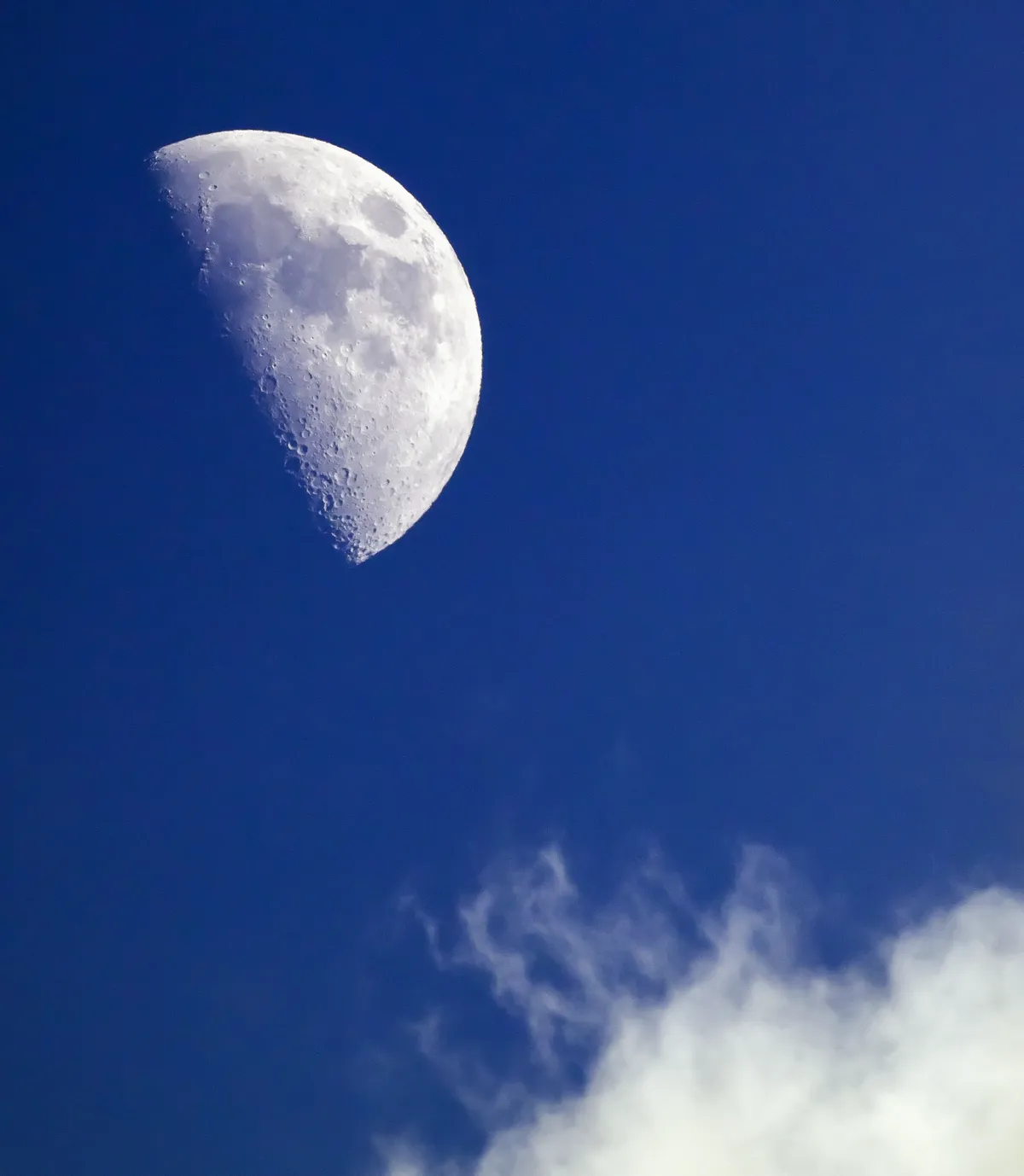
The Moon

Credit: Dan Fleetwood, Rugby, Warwickshire, 27 July 2020.

Sometimes all rational thought seems to go out of the window.

In 2007, a woman phoned South Wales Police to report a ‘bright stationary object’ that had been floating in the air for 30 minutes.

Later that evening, the police control room radioed to check what an officer had found.

The officer replied: “It’s the Moon. Over.”

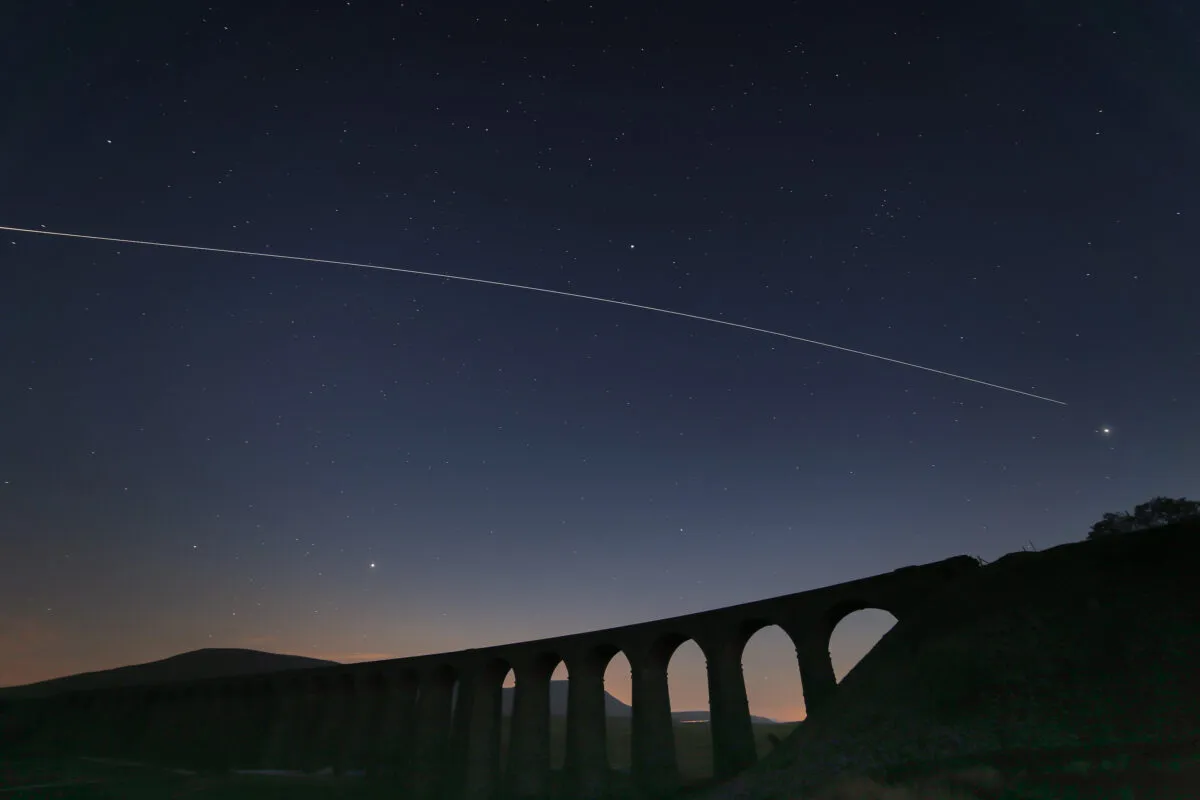
The International Space Station

International Space Station over Ribblehead Viaduct by Pete Collins, Yorkshire Dales. Equipment: Canon 6D, Samyang 14mm f2.8 lens at f4, iso200.

The International Space Station is larger than Wembley’s football pitch and significantly brighter than most night sky objects.

It moves fast, taking just a few minutes to cross the sky from one horizon to the other.

It’s also silent, perhaps startling and confusing onlookers who are used to the din of aeroplane engines.

If you do want to see it, read our guide on how to see the International Space Station.

Oddly shaped clouds

A lenticular cloud can look remarkably like a flying saucer or UFO. Credit: Atosan / Getty Images A lenticular cloud can look remarkably like a flying saucer or UFO. Credit: Atosan / Getty Images

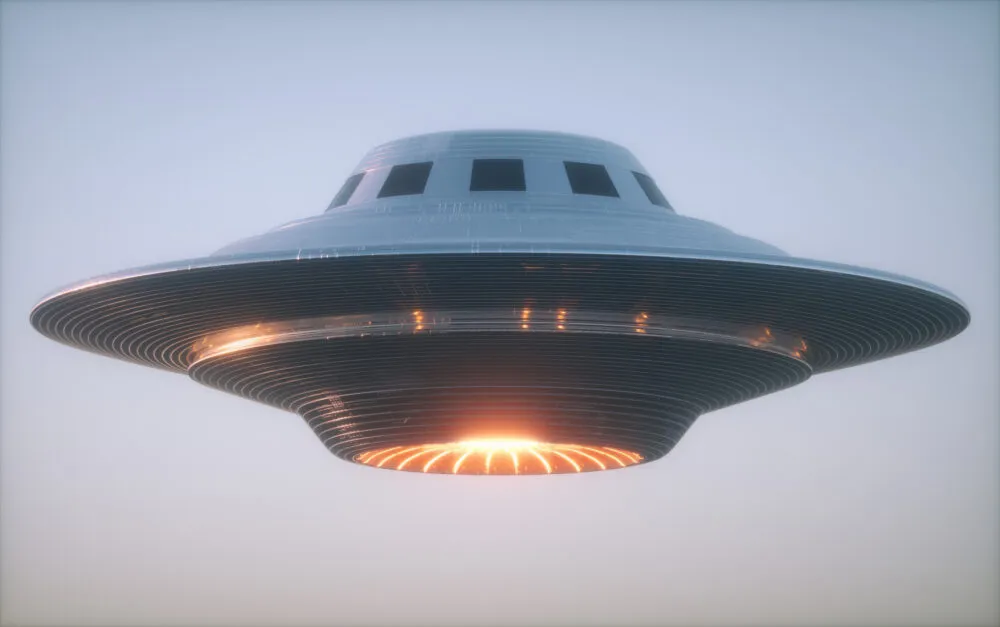
The closest you’ll get to seeing a classic flying saucer shape is the so-called lenticular cloud (Altocumulus lenticularis).

They form at high altitudes, near or atop mountains that have moist air blowing over them.

Although the wind speeds are high, the clouds remain stationary.

It’s not hard to imagine you’re seeing a hovering UFO, or a saucer concealed inside the cloud.

A SpaceX frozen exhaust plume

Jeremy Tuck witnessed the strange cloud spiral over North Yorkshire, 8pm UTC, 24 March 2025 Jeremy Tuck witnessed this strange cloud spiral over North Yorkshire, 8pm UTC, 24 March 2025. It turned out to be the exhaust plume from a SpaceX Falcon 9 rocket.

Have you just seen a strange, spiral-shaped glowing cloud in the night sky?

The chances are it could be a SpaceX Falcon 9 rocket dumping leftover fuel as it launches a satellite into Earth orbit.

This leftover fuel freezes at high altitudes and rotates rapidly due to the movement of the spacecraft.

Sunlight reflects off the spiral cloud and makes it glow, making for a rather strange sight in the night sky.

Sky lanterns

Sky lanterns set off during the Yi Peng (Loi Krathong) festival in Thailand © Wikimedia Commons

They’ve been used in Asia for centuries, and now sky lanterns are now becoming increasingly popular around the world. Using the heat generated by a small candle, the paper lanterns can rise up to over 1km in altitude – and if there is little wind when they are released, they can appear to hover overhead.

Several lanterns are often released at once, sometimes tied together so they appear to fly in formation. From the ground it’s easy to mistake this for a single solid object. Today, sky lanterns are the number one cause of UFO reports. In 2009, the number of sightings reported to the MoD’s UFO desk tripled, with most eventually being attributed to these floating lights.

Military satellites

In the 1970s, the US Navy launched a series of surveillance satellites to track Russian vessels.

Dubbed NOSS (Naval Ocean Surveillance System) by civilians, these consist of a trio of satellites that orbit in a triangle formation and are sometimes visible to the naked eye.

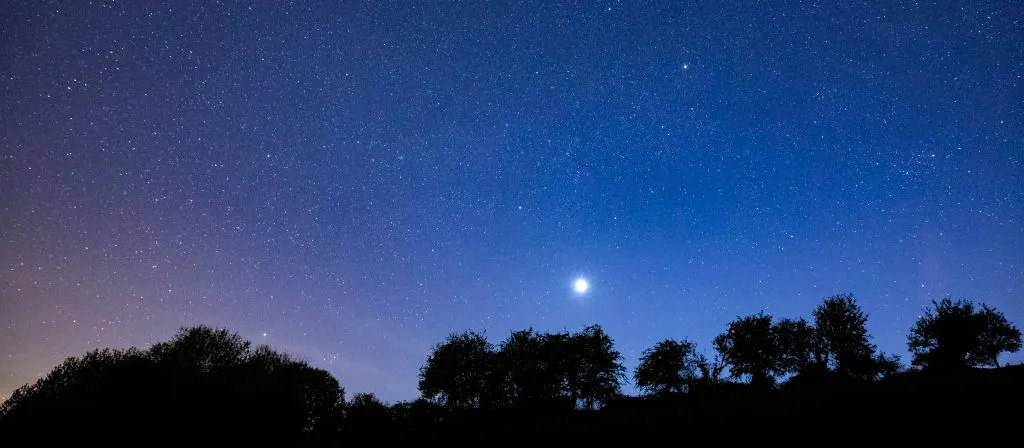
Venus

Venus and a starry night sky over the Cotswolds. Photo by Tim Graham/Getty Images

Seen either before sunrise or after sunset, Venus is so bright it’s often mistaken for the landing lights of an aeroplane.

Unlike a plane, though, Venus is pretty much stationary, which gives imaginative observers the impression of something ‘hovering’.

Bright, orangey red Jupiter is another planet frequently taken to be a UFO.

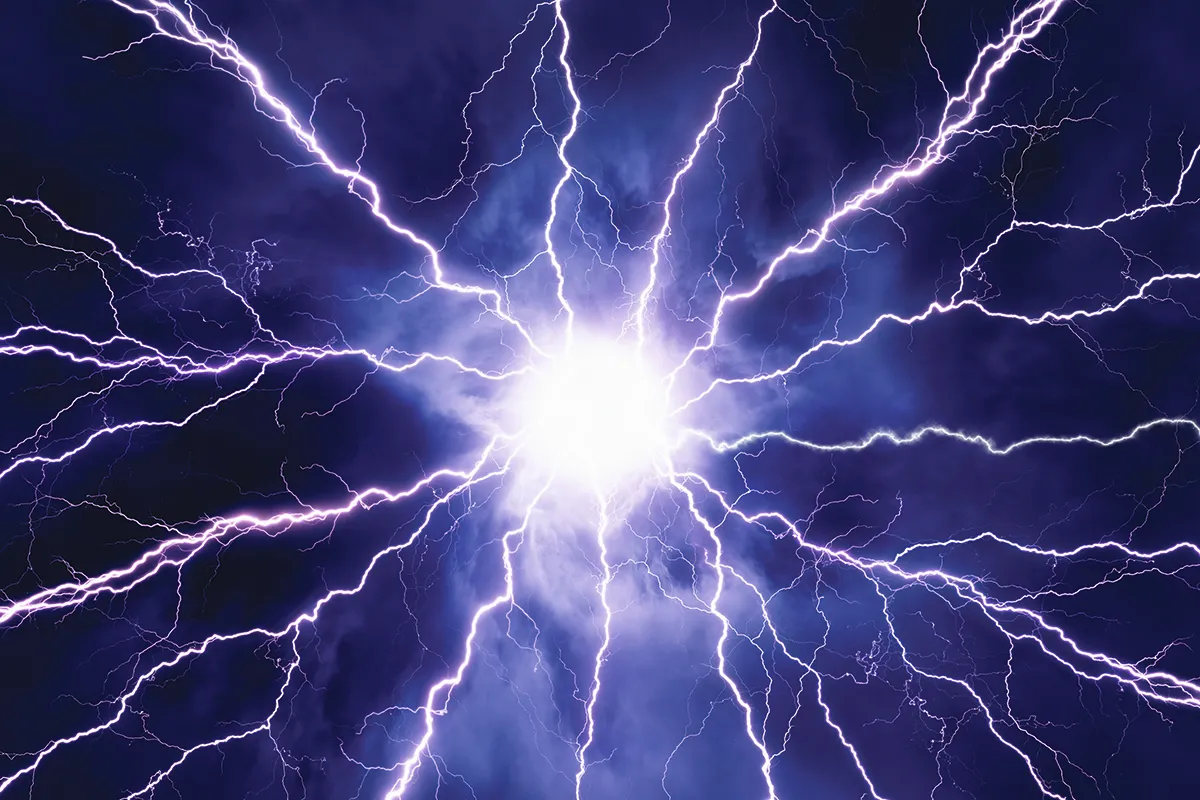
Ball lightning

Credit: ThinkStock

No one is sure what causes this electrical phenomenon, which can measure as much as 1m across. Though often associated with thunderstorms, ball lightning tends to last much longer than a lightning bolt – up to a minute rather then a split-second. It has been reported to move erratically, or hover in place, before either silently fading from view or exploding loudly.

Due to its rare and unpredictable nature there has been little study of ball lightning, but reported sightings date back centuries. There are even reports that the glowing spheres have come into people’s homes down chimneys and through windows.

Space debris

Credit: janiecbros / Getty Images

Junk in low Earth-orbit has become a major problem, with inoperable satellites left behind to become what is collectively known as space junk.

Eventually, atmospheric drag slows them down to the point that they fall to Earth, streaking across the sky as huge fireballs that can last for up to a minute.

Different materials in the debris can create brightly coloured trails as they burn up, adding to their otherworldly appearance.

Sometimes pieces can make it to the ground, leaving behind strangely shaped debris, which some mistake as wreckage from spacecraft of a less terrestrial origin.

Weather balloons

Credit: MileHighTraveller / Getty

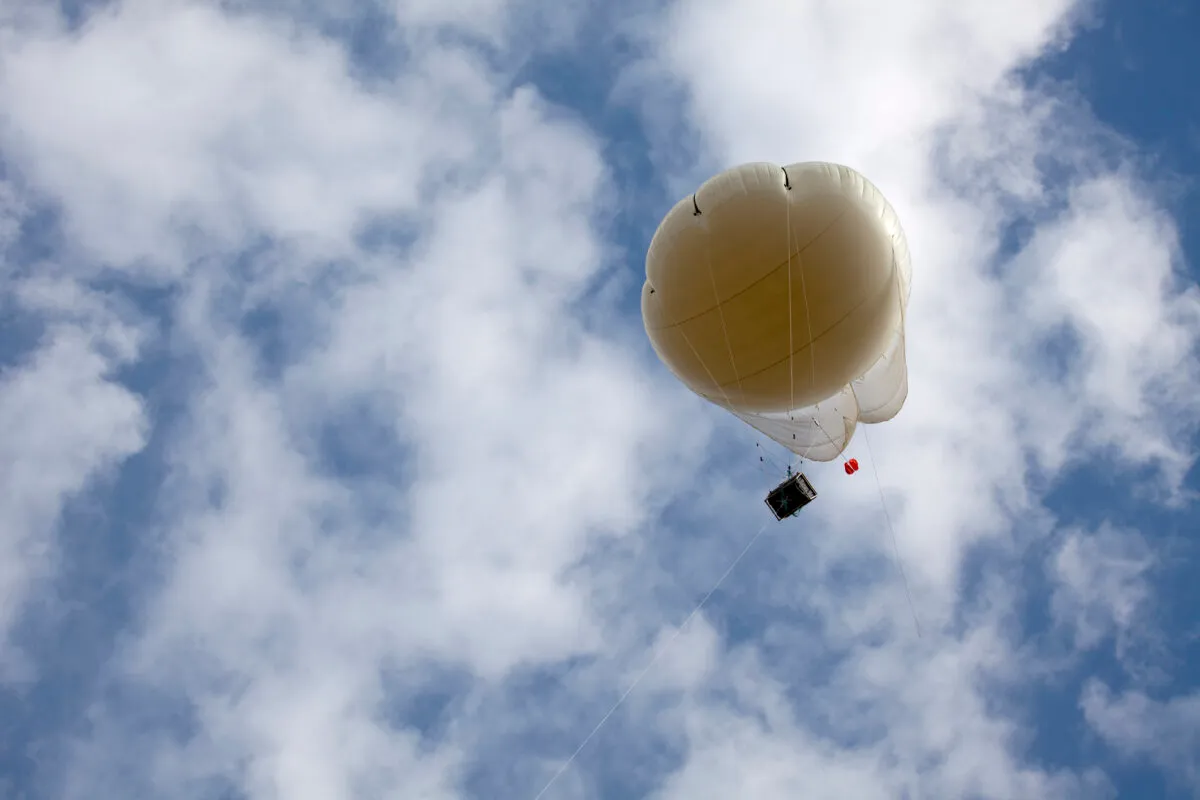
Weather stations all around the world release balloons on a daily basis, to monitor current conditions and provide better forecasts. However, an increasing number of weather balloons are being used by members of the public for scientific experiments, educational purposes or simply to capture video from the upper atmosphere.

The balloons can rise to altitudes of 40km, at which point they burst and fall to Earth. From the ground this is often mistaken for an exploding plane or spacecraft. A balloon was responsible for the most famous of all UFO sightings, the 1947 Roswell incident.

Rocket misfires

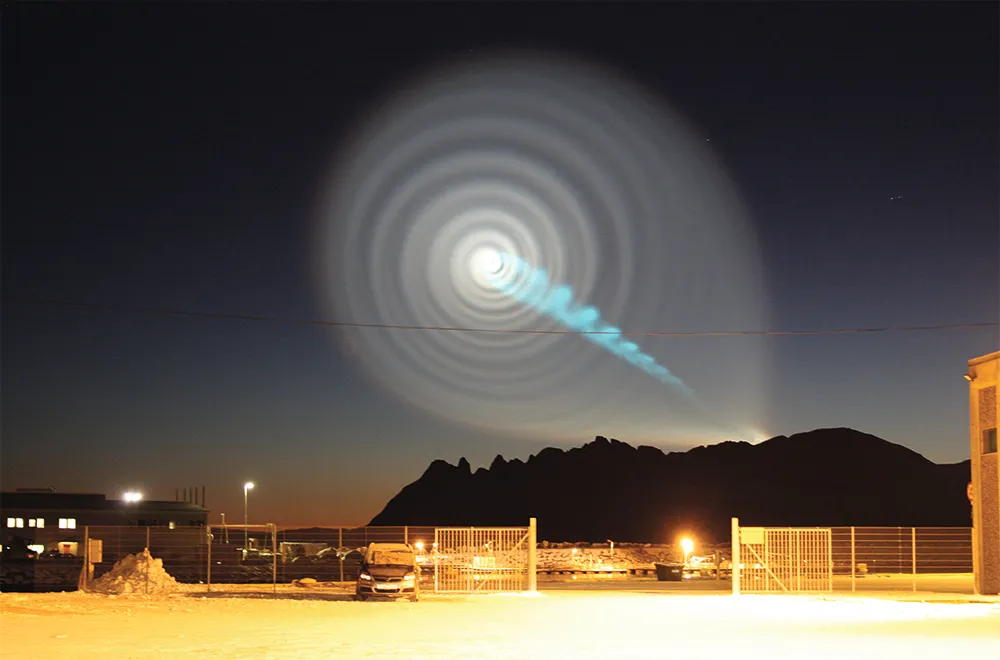
A Russian bulava missile misfired in December 2009 to produce this strange spectacle. Credit: Jan Petter Jorgensen / REX

In the early hours of the morning on 9 December 2009, a strange white spiral appeared in the skies over Norway. It seemed to be emitting a blue beam from its centre. The weird formation was the result of a Russian Bulava missile test, in which the missile malfunctioned high in the atmosphere. The rocket went wild, venting gas from the side, making the craft spin.

Though it was still night for people on the ground, the Sun had reached the upper atmosphere, illuminating the gas as a white spiral. The light also caused fuel leaking from the missile to glow blue, giving the illusion of a ray beam emanating from the spiral.

Flares from aircraft

A plane shooting flares shooting flares, Qatar, 9 May 9, 2018. Photo by Smith Collection/Gado/Getty Images

In 1997, several hundred people saw a V of lights flying over Phoenix, Arizona. It was later revealed that the lights were the result of a routine training exercise run by the Maryland Air National Guard, in which a group of planes flew in formation, dropping flares.

This kind of exercise is commonly undertaken without being noticed, but on clear nights the flares can be seen from up to 50km away. The intense heat from the flares can create currents in the surrounding air, causing them to hover. If the conditions are mild then the flares can hold their formation, creating the optical illusion of a solid object.

Searchlights

Credit: Andrew TB Tan / Getty Images

Massive searchlights outside clubs, theme parks and festivals are a common sight, sweeping back and forth across the clouds, but when viewed from several miles away they can look like mysterious objects moving in the night. The light

beam is so weak that it cannot be seen, leaving only the bright spots of white light.

These can be mistaken as shining through the clouds, rather than being cast on them. They often appear to be darting back and forth across the sky, but are in reality the work of a lighting technician.

Contrails

Vapour trails lit by the setting Sun. Credit: Ashley Cooper / Getty

Perspective can easily fool the untrained eye. When a plane is flying at right angles towards the horizon and leaving a trail of artificial clouds known as a contrail behind, it can appear to be an object crashing to the ground. The effect of the wind blowing the cloud formations wider emphasises this illusion, and red light from a setting Sun can make them glow red, as if on fire.

Light glinting off the underside of a plane can make it appear as if there is a bright core to the cloud. However the object will appear to be moving very slowly. If something is really falling to Earth, it will move very quickly across the sky, even when seen from a distance.

RELATED VIDEOS

{ https://www.skyatnightmagazine.com/ }

Hoe vind je dit bericht?
Geschreven door peter om 21:36 Stuur door

If we made contact with aliens, what would happen? UFO defence expert reveals how prepared we really are

If we made contact with aliens, what would happen? UFO defence expert reveals how prepared we really are

Alien contact: Is there a playbook? Or is it time to create one? A real-life alien defence expert reveals the truth

 BY Nick Pope

What would happen if humanity encountered aliens? If there a plan? And if not, should we have one?

Numerous movies and TV shows feature humanity encountering extraterrestrials.

In films such as Independence Day and War of the Worlds, the scenario is an alien invasion.

Elsewhere, encounters are more ambiguous and the extraterrestrials more enigmatic, as we see in movies such as Contact or Arrival. But what if any of this happened for real?

More on alien life

We can't rule out a visit to Earth from alien beings. Credit: Devrimb / Getty Images

Credit: Devrimb / Getty Images

Over the past few years in the US, the subject of UFOs (or UAPs – unidentified anomalous phenomena – as they're officially designated) has transitioned from fringe to mainstream.

This resulted from the release of photos and videos of UAP taken from various military platforms, and led to classified briefings and public hearings in Congress.

The Pentagon set up a unit to investigate UAP called the All-Domain Anomaly Resolution Office (AARO), and the subject is now being treated as a defence and national security issue.


Are we prepared?

All this brings into focus the question of what would happen if we actually found aliens – or if they found us.

It would be the biggest scientific discovery in history, and would likely have profound – but difficult to predict – effects on every aspect of society, from politics and religion, through to science, technology, the economy and philosophy.

Individuals would probably react in different ways, some with fear and panic; others with awe and wonder.

Surprisingly perhaps, there doesn't seem to be a co-ordinated, overall plan for an eventuality like this.

While the Search for Extraterrestrial Intelligence (SETI) Institute authored a document titled the Declaration of Principles Concerning the Conduct of the Search for Extraterrestrial Intelligence, these protocols only cover what to do if a radio signal from another civilisation is detected, and the document isn't legally binding on nation states.

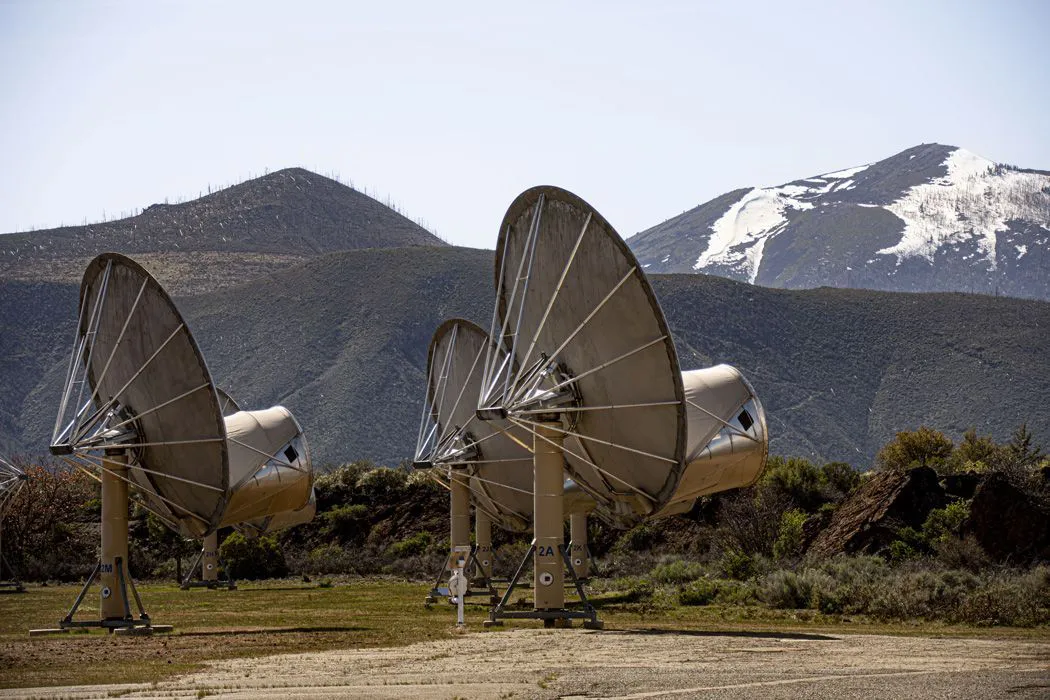
The Allen Telescope Array in California is dedicated to the search for extraterrestrial intelligence. Credit: Simon Steel / SETI The Allen Telescope Array in California is dedicated to the search for extraterrestrial intelligence. Credit: Simon Steel / SETIBeyond this, it's theoretically possible that there's a highly classified government plan, the existence of which is known only to a few key personnel.

However, I got no hint as to the existence of any such document when I handled the UAP issue for the British Ministry of Defence in the 1990s, and neither has such a plan been mentioned in any of the Congressional hearings on UAP.

The nearest Britain came to a plan for making contact with aliens was in 2023, when the Department for Science, Innovation and Technology (DSIT) produced an outline report titled ‘UK readiness for black swan scientific events: Case Study – The discovery of life beyond Earth’.

DSIT's Ideas Lab wrote an eight-page draft before the study was indefinitely paused in 2024.

'Alien' could mean the discovery of microbes on an icy moon like Europa, or it could mean finding an advanced, intelligent species. Credit: NASA/JPL/DLR 'Alien' could mean the discovery of microbes on an icy moon like Europa, or it could mean finding an advanced, intelligent species. Credit: NASA/JPL/DLR

What do we mean by alien?

A key problem in devising any plan is the wide range of variables when it comes to alien life.

Discovering microbial life in our Solar System, for example, would raise the issue of planetary protection – we don't want to be wiped out by the Venusian flu.

Detecting a radio signal from another civilization would raise very different issues: could we decipher a message from aliens; should we reply; what should we say; and who should reply?

The last question raises the issue of who could truly speak for Planet Earth.

No political or religious leader could speak for everyone, and while a scientist or an academic might be a better choice, what about the billions of people who effectively have no voice? Who speaks for them?

These issues were explored during two meetings at Britain’s Royal Society, held in 2010.

The first was titled, ‘The detection of extra-terrestrial life and the consequences for science and society’ and the second, ‘Towards a scientific and societal agenda on extra-terrestrial life’.

These were multidisciplinary events with participation not only from astronomers and astrophysicists, but also from psychologists, anthropologists and theologians.

It was apparent that the religious implications of finding alien life would be profound and potentially controversial in terms of the possible challenges posed to faith and doctrine.

Some senior theologians are already thinking about how to incorporate alien life into their belief systems.

Father José Gabriel Funes, a Jesuit priest who served as director of the Vatican Observatory, has stated: "How can we rule out that life may have developed elsewhere?

"Just as we consider Earthly creatures as ‘brother’ and ‘sister’, why should we not talk about an ‘extraterrestrial brother’? It would still be part of creation."

But what if aliens don't come in peace? Stephen Hawking once warned: "If aliens visit us, the outcome would be much as when Columbus landed in America, which didn't turn out well for the Native Americans."

This ties in with the Dark Forest hypothesis, which suggests alien civilizations generally remain silent, for fear of encountering a more advanced hostile civilization.

As Cambridge University palaeontology professor Simon Conway Morris said at the first of the Royal Society meetings: "If the cosmic phone rings, don't answer."

It's a sobering thought that in a Universe nearly 14 billion years old there might be civilizations a billion years ahead of us.

Science fiction writer Arthur C Clarke said that "any sufficiently advanced technology is indistinguishable from magic".

So, we can forget about those Hollywood movies where Earth defeats an alien invasion, because one of the few good assumptions we can make about extraterrestrials is that, if they arrive here, having mastered interstellar travel, their technology will be orders of magnitude above anything we have.

In a 1987 address to the United Nations, President Reagan suggests that a universal threat from alien life could unite humanity. Find it towards the end, at 29 minutes

Reagan’s UN address

The idea that we might encounter hostile extraterrestrials was raised by President Ronald Reagan in a 1987 address to the United Nations General Assembly.

Towards the end of his speech, he remarked: "I occasionally think how quickly our differences worldwide would vanish if we were facing an alien threat from outside this world."

And returning to the question of who speaks for Planet Earth, it's the United Nations that many believe should take a lead role in formulating policy on this issue.

The United Nations Office for Outer Space Affairs (UNOOSA) would be the logical focal point but, speaking at the second of the Royal Society meetings held in 2010, UNOOSA's then director, Dr Mazlan Othman, was lukewarm.

Understandable, perhaps, as this followed light-hearted media speculation that she was to be appointed as an ‘alien ambassador’.

Artist's impression of a UFO visiting Earth. Credit: Ray Massey / Getty Images Artist's impression of a UFO visiting Earth. Credit: Ray Massey / Getty Images

Dangers to avoid

If a plan was drawn up, it would have to cover the different possible scenarios, then identify and address risks and opportunities.

Risks include the danger of contaminating the biosphere with alien germs, or alerting a super-predator civilisation to our existence by sending a targeted radio signal.

Opportunities include discovering what science writer Timothy Ferris calls a ‘galactic internet’ – a repository of knowledge from other civilizations.

This might include information that could solve terrestrial problems such as hunger, disease and energy needs, though there are risks here too, as advanced technologies might be capable of being weaponised.

Contingency planners would probably regard finding alien life as a ‘low probability, high impact’ event, where even if the chances of it occurring are judged to be small, the consequences would be immense – and potentially catastrophic.

So, let's start a conversation about such a plan. After all, it's better to have one and not need it, than need one and not have it.

{ https://www.skyatnightmagazine.com/ }

Hoe vind je dit bericht?
Geschreven door peter om 20:03 Stuur door

Wat Zou Er Gebeuren Als We Conta{ct Maken Met Buitenlanders? Een Ufo-Verdedigingsexpert Onthult Hoe Goed We Echt Voorbereid Zijn

Wat Zou Er Gebeuren Als We Contact Maken Met Buitenlanders? Een Ufo-Verdedigingsexpert Onthult Hoe Goed We Echt Voorbereid Zijn

If we made contact with aliens, what would happen? UFO defence expert reveals how prepared we really are - BBC Sky at Night Magazine

Inleiding

Het idee dat wij als mensheid mogelijk in contact kunnen komen met buitenaards intelligent leven, is al langer een onderwerp van intrigue en fantasie. Van sciencefictionfilms tot serieus wetenschappelijk onderzoek, de gedachte eraan roept zowel opwinding als bezorgdheid op. Recentelijke gebeurtenissen en rapportages over onverklaarde fenomenen aan de hemel hebben de discussie over deze mogelijkheid echter naar een nieuw niveau getild, waarbij het niet meer enkel om speculatie gaat, maar om relevante veiligheids- en beleidskwesties.

In dit artikel bekijken we wat er zou gebeuren als we daadwerkelijk contact maken met buitenaards leven, welke voorbereidingen er momenteel bestaan, waar de tekortkomingen liggen, en wat de politieke en veiligheidsuitdagingen zijn. We bespreken ook de aanbevelingen voor een betere voorbereiding en waartoe we ons zouden moeten richten als we niet willen dat dit moment een chaos of ramp wordt.

De Evolutie van de Ufo-discussie en het Bewustzijn

Voor decennia werd het veld van ufo-onderzoek gezien als marginaal en vol mysterie en complottheorieën. Echter, de laatste jaren heeft een hernieuwde interesse geleid tot meer officiële erkenning van onverklaarde luchtverschijnselen. De Amerikaanse overheid heeft bijvoorbeeld in 2020 haar Apex-onderzoek naar UAP’s (Onbekende Anomale Phenomenen) herzien en de bevindingen gedeeld. Het Pentagon richtte een nieuw kantoor op: het All-Domain Anomaly Resolution Office (AARO). Ook in het Verenigd Koninkrijk wordt de zaak serieuzer genomen, met bewakingssystemen en een toenemende publieke discussie.

De aanwezigheid van video’s en sensordata die niet meteen kunnen worden verklaard, heeft geleid tot een verschuiving van de publieke perceptie. Wat voorheen werd weggezet als ‘onverklaarbare rookpluimen’ of ‘storm in een glas water’, krijgt nu meer serieuze aandacht omdat het bewijs lijkt te blijven toenemen. Tegelijkertijd wordt de vraag actueel: zijn wij goed voorbereid op een eerste contact?

Wat We Weten Over Onze Huidige Monitoring en Reactie‑strategieën

Momenteel beschikken zowel de Verenigde Staten als het Verenigd Koninkrijk over mechanismen om onverklaarde luchtverschijnselen op te sporen en te analyseren. De Amerikaanse AARO verzamelt gegevens van de luchtmacht, marine en inlichtingendiensten, en rapporteert aan de hoogste defensieleiding. Dit systeem is vooral gericht op het identificeren van potentiële bedreigingen voor de nationale veiligheid.

In het Verenigd Koninkrijk wordt nog steeds zowel civiele als militaire waarnemingen verzameld door het Ministerie van Defensie, alhoewel de publieke communicatie beperkt is door beperkte middelen en middelen voor onderzoek. Deze systemen zijn vooral gericht op het beschermen van de nationale luchtvaart en het voorkomen van gevaarlijke botstingen, niet op wetenschappelijke of diplomatieke doeleinden.

Gaten in Voorbereiding en Beleid

Er bestaat geen universeel en bindend internationaal protocol dat duidelijk regelt hoe te handelen bij het eerste contact met buitenaards leven. Hoewel het SETI-instituut een ‘Declaration of Principles’ heeft opgesteld met richtlijnen voor passieve zoektocht naar buitenaardse intelligentie via radiosignalen, blijft dit een niet-bindend document dat geen concrete procedures bevat voor actieve communicatie of reactie.

In 2023 publiceerde het Verenigd Koninkrijk een ‘readiness’ rapport dat de mogelijke wetenschappelijke en veiligheidsuitdagingen van een onverwachte ontdekking besprak. Dit document werd echter in 2024 stopgezet, waardoor een belangrijke beleidsruimte onbenut blijft. In de Verenigde Staten is er geen openbaar plan dat vergelijkbare richtlijnen biedt, en de hoorzittingen over UAP’s hebben slechts zijdelings uitzicht gegeven op de inhoud van eventuele geheime plannen.

Politieke en Veiligheidsuitdagingen

Indien er een ontmoeting plaatsvindt, zal de reactie waarschijnlijk verdeeld en chaotisch zijn. Mensen kunnen reageren met angst, verwondering, maar ook met paniek of onzekerheid. Overheden weten niet altijd welke instantie de leiding moet nemen: defensie, wetenschap, diplomatie, of een nieuwe inter-agency commissie.

Veiligheid is daarbij een grote zorg. Een onbekende technologie zou als een bedreiging worden gezien en defensieve maatregelen zouden snel worden genomen, mogelijk zonder overleg. Dit kan leiden tot escalatie, militaire conflicten, of het missen van wetenschappelijke kansen. Het ontbreken van een vooraf vastgestelde strategie verhoogt het risico op ongecontroleerde of ongecoördineerde acties, met alle gevolgen van dien.

De Weg Naar Een Betere Paraatheid

Wetenschappers, beleidsmakers en defensieadviseurs benadrukken dat het tijd is om proactiever te worden en structureel te plannen. Het ontwikkelen van internationaal bindende protocollen, vergelijkbaar met het Verdrag inzake het bananenruimtevaart, zou kunnen helpen om een gezamenlijke, overzichtelijke aanpak te formuleren.

Het opzetten van een permanent intergouvernementeel team dat snel kan reageren op eventuele waarnemingen of contactpogingen, is een andere cruciale stap. Dit team zou bestaan uit vertegenwoordigers van defensie, wetenschap, diplomatie en inlichtingendiensten, die onderling goed kunnen samenwerken en communiceren.

Daarnaast wordt gewezen op het belang van regelmatige scenario-oefeningen. Simulaties van contact-scenario’s kunnen de voorbereiding verbeteren en het vertrouwen vergroten dat de juiste stappen worden gezet. Ook zou openbaar onderwijs en communicatie helpen om paniek en misinformatie te voorkomen, door het publiek te informeren over de mogelijke risico’s en voordelen van contact.

De Toekomst: Waarschijnlijkheid en Implicaties

Hoewel veel wetenschappers en beleidsmakers nog steeds sceptisch zijn over de mogelijkheid van contact met buitenaards leven, geloven de meesten dat het slechts een kwestie van tijd is voordat het gebeurt. De snelheid waarmee onverklaarde fenomenen worden bestudeerd en gedeeld, suggereert dat het moment van echte communicatie misschien dichterbij is dan we denken.

Wanneer dat moment aanbreekt, zal het grote vraag blijven of wij klaar zijn – niet alleen technisch en logistiek, maar ook mentaal en diplomatiek. Een vreedzame en ordentelijke aanpak vereist een goede voorbereiding, transparantie en internationale samenwerking.

Conclusie: Klaar voor de Onzekerheid

De realiteit is dat we momenteel niet volledig voorbereid zijn op een eerste contact met buitenaards leven. Hoewel er verschillende systemen en plannen bestaan, ontbreken er nog universele, bindende protocollen en uitgebreide voorbereidingen. De risico’s van onnadenkend handelen, misverstanden, en escalaties zijn aanzienlijk.

Het is daarom cruciaal dat internationale samenwerkingen worden versterkt, dat er duidelijke en transparante plannen komen, en dat we zowel wetenschappelijk als maatschappelijk klaar zijn voor dat ene onvermijdelijke moment: de dag dat we een antwoord krijgen uit de sterren. Het bieden van een solide fundament voor dit unieke encounter kan bepalen of het een epochale mijlpaal wordt voor de mensheid of een gebeurtenis die onbedoeld chaos en gevaar met zich meebrengt.

Door proactief te plannen, educatie te stimuleren en open te staan voor internationale samenwerking, kunnen wij hopelijk de controle behouden en het beste uit de mogelijke ontmoeting met buitenaardse beschavingen halen. Want als het moment ooit aanbreekt, willen we niet achterblijven, maar voorbereid en stevig in ons schoenen staan.

  • NOTA ; Dit artikel is een uitgebreide verkenning van de huidige stand van zaken rondom de voorbereiding op contact met buitenaards leven, en dient als waarschuwings- en actiepunt voor beleidsmakers, onderzoekers en het publiek. De toekomst ligt in onze handen, en het is tijd om de juiste stappen te zetten.

{ PETER2011 }

Hoe vind je dit bericht?
Geschreven door peter om 18:40 Stuur door

The UFO Lie

The UFO Lie

Overview

Investigative journalist Steven Greenstreet has released a series of exclusive reports on the New York Post alleging that U.S. government agencies and mainstream media have deliberately concealed information about unidentified aerial phenomena (UAP) for decades. The pieces, published over the past month, claim that coordinated “psy‑ops” campaigns were used to discredit credible witnesses and shape public perception. The revelations have sparked intense discussion on social‑media platforms, especially within the #ufotwitter community, where users are circulating excerpts and demanding official accountability.

Key Findings

Greenstreet’s investigation draws on dozens of Freedom of Information Act (FOIA) requests, leaked internal memos, and interviews with former defense‑department analysts. Among the most striking allegations are:

  • Systematic suppression of radar data from Navy and Air Force encounters dating back to the 1990s, with senior officials allegedly ordering the files to be classified under “national security” without clear justification.
  • A covert media‑influence program run by a joint task force of the Pentagon and the Department of State, designed to promote skeptical narratives and label UFO reports as “hoaxes” or “misidentifications.”
  • Psychological‑operations (psy‑ops) briefings delivered to journalists, encouraging the use of dismissive language such as “flying saucer” or “alien conspiracy” to steer public discourse away from serious inquiry.

Greenstreet cites a 2018 internal briefing titled “Strategic Narrative Management for Unidentified Aerial Phenomena” that outlines a “consistent messaging framework” aimed at preserving “operational secrecy” while minimizing public alarm.

Reactions from Officials and Experts

The Department of Defense (DoD) issued a brief statement acknowledging the existence of a “UAP Task Force” but denied any coordinated effort to mislead the public. “The DoD remains committed to transparency while safeguarding legitimate national‑security interests,” the statement read. A spokesperson for the Office of the Director of National Intelligence declined to comment on the specific documents cited by Greenstreet.

UFO researchers have expressed mixed views. Dr. Jacques Vallée, a veteran in the field, called the claims “concerning and worth further scrutiny,” emphasizing the need for independent verification. Conversely, astrophysicist Dr. Emily Zhao warned that “without access to the original classified files, it is difficult to assess the veracity of these allegations, and we must guard against speculation that could erode public trust.”

Context and Historical Background

The UAP topic has gradually moved from fringe speculation to congressional attention. In 2021, the Senate Intelligence Committee released a report acknowledging “unexplained aerial objects” and recommending a more systematic approach to data collection. In 2023, the DoD formally declassified several Navy videos showing anomalous flight characteristics, prompting the establishment of the All‑Domain Anomaly Resolution Office (AARO). Greenstreet’s exposé suggests that these recent steps may be part of a broader strategy to control the narrative rather than a genuine shift toward openness.

The #ufotwitter surge reflects a broader cultural moment where citizens demand transparency about phenomena that intersect national security, scientific inquiry, and public curiosity. Hashtags such as #UFOTruth and #UAPCoverup have amassed millions of impressions, prompting several lawmakers to request additional hearings on the matter.

Next Steps and Outlook

While Greenstreet’s series has ignited public debate, the lack of direct access to the classified documents means that definitive conclusions remain elusive. Advocacy groups have filed new FOIA suits seeking the release of the “Strategic Narrative Management” briefing and the suppressed radar logs. Meanwhile, the House Oversight Committee has announced a hearing for later this year to examine potential “information suppression” regarding UAPs.

Whether these developments will lead to substantive policy changes or simply reinforce existing secrecy protocols is uncertain. What is clear, however, is that the conversation about UFOs is now anchored in both investigative journalism and legislative scrutiny, marking a departure from the era when the topic was relegated to late‑night talk shows. As the debate unfolds, stakeholders—from government agencies to scientific institutions—will need to balance national‑security concerns with the public’s right to know.

RELATED VIDEOS
{  https://usubjects.com/  }

Hoe vind je dit bericht?
Geschreven door peter om 17:56 Stuur door

Trump says he's directing the Pentagon to release files related to UFOs and aliens

Trump says he's directing the Pentagon to release files related to UFOs and aliens

Trump's comments came hours after he claimed that former President Barack Obama shared "classified information"' when he told a podcaster recently that he believed aliens were real.

President Donald Trump said Thursday that he was directing agencies to release files pertaining to “alien and extraterrestrial life.”

Trump wrote on Truth Social that “based on the tremendous interest shown,” he would be directing Defense Secretary Pete Hegseth and officials at other relevant agencies “to begin the process of identifying and releasing Government files related to alien and extraterrestrial life, unidentified aerial phenomena (UAP), and unidentified flying objects (UFOs), and any and all other information connected to these highly complex, but extremely interesting and important, matters.”

w=1440,h=810

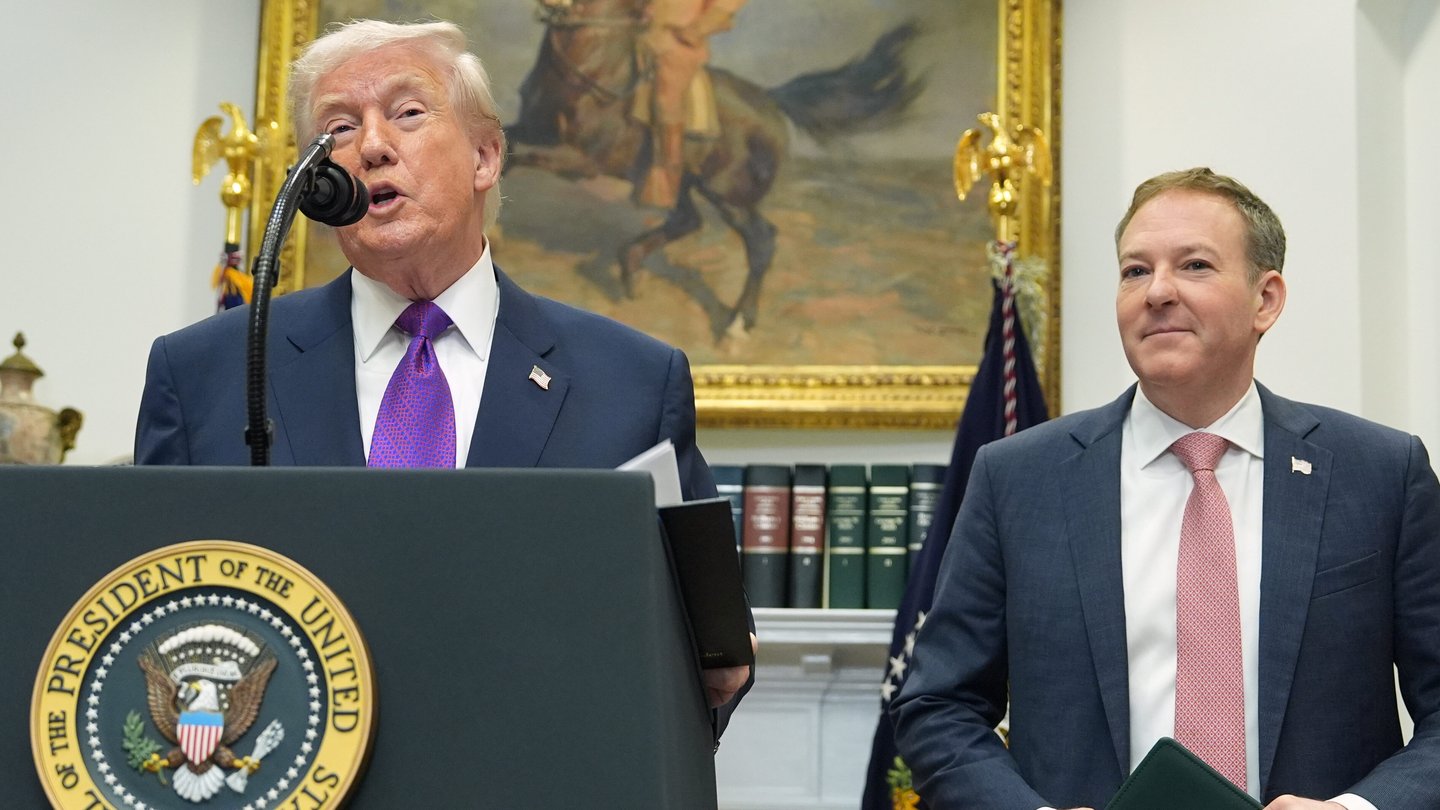
President Donald Trump speaks during an event with Environmental Protection Agency director Lee Zeldin announcing that the EPA will no longer regulate greenhouse gases, in the Roosevelt Room of the White House, Thursday, Feb. 12, 2026, in Washington.

(AP Photo/Evan Vucci)

Trump’s announcement comes after former President Barack Obama said in a podcast interview that aliens were real, later clarifying that he meant “the odds are good there’s life out there.” Obama added in his clarification that he had seen “no evidence” of alien existence during his time in office.

Obama was answering a series of questions during a "lightning round" of the podcast interview, when he was asked whether aliens were real.

"They're real," Obama said, "but I haven't seen them, and they're not being kept in Area 51. There's no underground facility unless there's this enormous conspiracy and they hid it from the president of the United States."

The podcaster, Brian Tyler Cohen, then asked Obama what was the first question he had wanted answered when he took office.

"Where are the aliens?" Obama responded.

Trump, asked by a reporter about Obama’s remarks Thursday, said Obama had given classified information.

“He’s not supposed to be doing that,” Trump added.

Following a 2024 hearing, the Pentagon said it received hundreds of reports on UAPs and 21 that merited “further analysis” because of “anomalous characteristics and/or behaviors” — but found no evidence of extraterrestrial activity.

Responding to Trump’s directive Thursday night, Hegseth posted a screenshot of Trump’s post with an alien emoji and a saluting emoji.

Some lawmakers reacted to Trump's announcement Thursday. Sen. John Fetterman, D-Pa., said in an interview on Fox News, "If he’s going to release all of the X-Files, I think that could be a bipartisan thing," referring to the 1990s television show about FBI agents investigating — among other things — government conspiracies about aliens, which Fetterman said he "grew up watching."

Rep. Anna Paulina Luna, R-Fla., thanked Trump, writing: "Looks like we are about to have a ton of hearings on this :)!"


{ https://www.nbcnews.com/ }

Hoe vind je dit bericht?
Geschreven door peter om 17:44 Stuur door

NASA delays astronaut moon mission again after new rocket problem

NASA delays astronaut moon mission again after new rocket problem

Story by Marcia Dunn
 
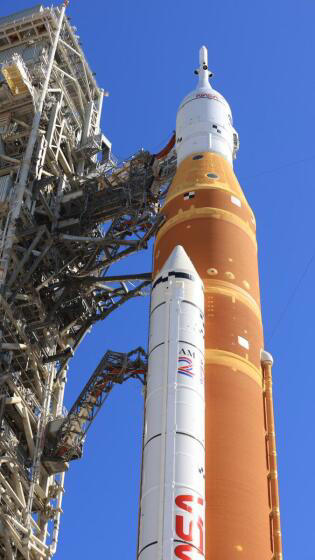
NASA's moon rocket sits on a launchpad at Kennedy Space Center in Florida on Thursday. ((NASA / Associated Press))
NASA's moon rocket sits on a launchpad at Kennedy Space Center in Florida on Thursday.
((NASA / Associated Press))© (NASA / Associated Press)

In the latest setback to return astronauts to the moon, NASA delayed the highly anticipated flight yet again after a new problem cropped up with the rocket Saturday.

April is now the earliest that the four Artemis II astronauts could fly to the moon.

NASA revealed the latest problem a day after targeting March 6 for Artemis II, the first manned flight to the moon in more than half a century. Overnight, the flow of helium to the rocket’s upper stage was interrupted, officials said. Solid helium flow is essential for purging the engines and pressurizing the fuel tanks.

This helium issue has nothing to do with the hydrogen fuel leaks that marred a countdown dress rehearsal of the Space Launch System rocket earlier this month and forced a repeat test.

NASA Administrator Jared Isaacman said a bad filter, valve or connection plate could be to blame for the stalled helium flow. Regardless of the cause, he noted, the only way to access the area and fix the problem is in the Vehicle Assembly Building at Kennedy Space Center.

“We will begin preparations for rollback, and this will take the March launch window out of consideration,” Isaacman said via X. NASA's next opportunities would be at the beginning or end of April.

“I understand people are disappointed by this development,” Isaacman said. “That disappointment is felt most by the team at NASA, who have been working tirelessly to prepare for this great endeavor.”

Earlier in the day, NASA said it was preparing to move the 322-foot rocket back to the Vehicle Assembly Building at Kennedy Space Center while raising the possibility of the work being done at the pad.

The situation is dynamic, said spokeswoman Cheryl Warner. Whether the fixes are at the pad or in the hangar, the rollback preparations alone rule out any chance of a March launch, she said.

Hydrogen fuel leaks had already delayed the Artemis II lunar fly-around by a month. A second fueling test on Thursday revealed hardly any leaks, giving managers the confidence to aim for a March liftoff. The four astronauts went into their two-week quarantine Friday night, mandatory for avoiding germs.

The interrupted helium flow is confined to the SLS rocket's interim cryogenic propulsion stage. This upper stage is essential for placing the Orion crew capsule into the proper high-altitude orbit around Earth for checkout, following liftoff. After that, it's supposed to separate from Orion and serve as a target for the astronauts inside the capsule, allowing them to practice docking techniques for future moon missions.

During NASA's Apollo program, 24 astronauts flew to the moon from 1968 through 1972. The Artemis program has completed only one flight so far, a lunar-orbiting mission without a crew in 2022. That first test flight was also plagued by hydrogen fuel leaks before blasting off, as well as a helium issue similar to the one that arose Saturday.

The upcoming mission will not involve landing on or orbiting the moon. The first lunar landing with a crew under Artemis is at least a few years away.

  • Dunn writes for the Associated Press.

Hoe vind je dit bericht?
Geschreven door peter om 17:27 Stuur door

Science news this week: China's AI kung fu robots, physicists' re-creation of the Big Bang soup, and a teenager buried with her father's bones on her chest

Science news this week: China's AI kung fu robots, physicists' re-creation of the Big Bang soup, and a teenager buried with her father's bones on her chest

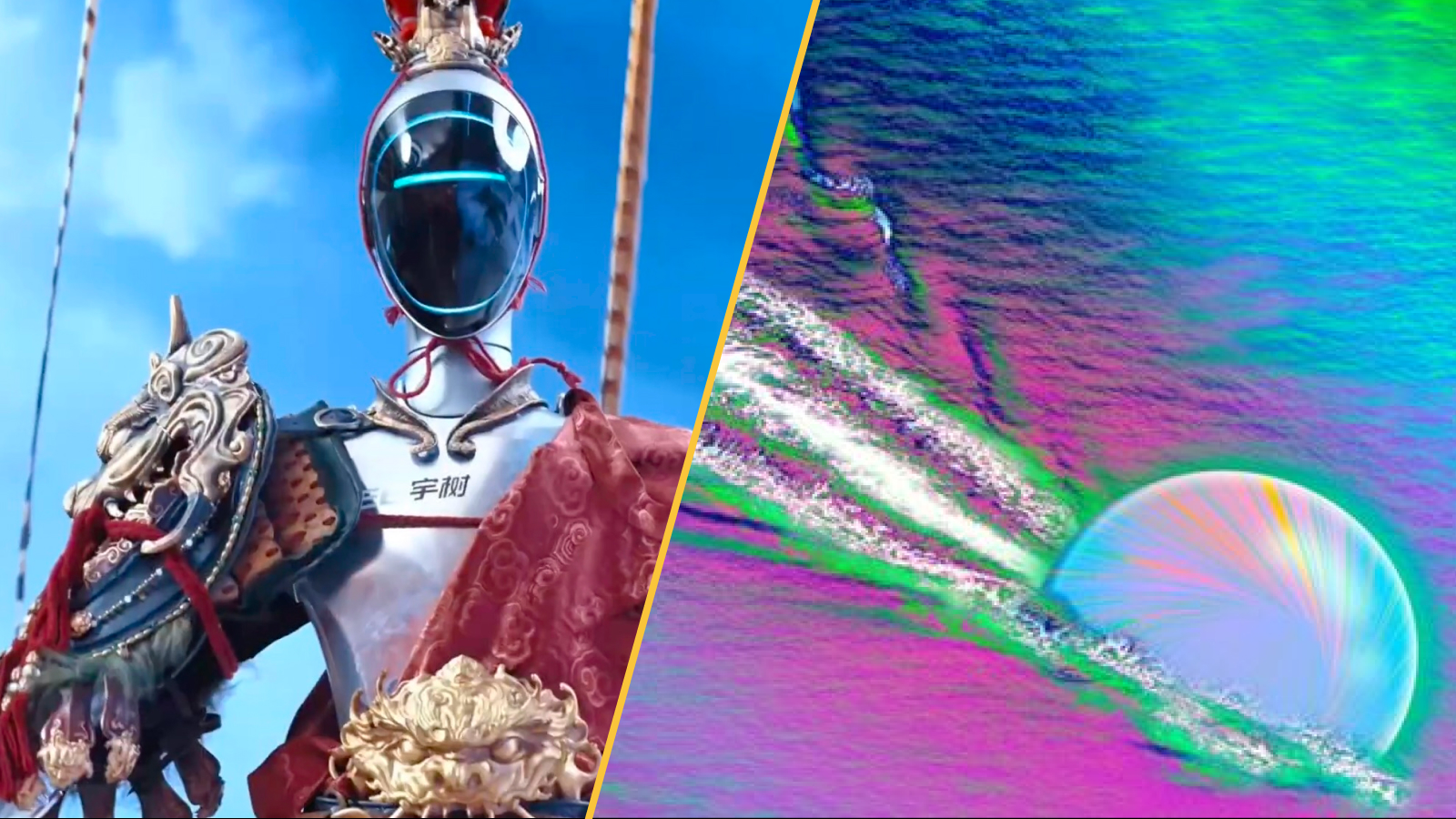
A Unitree robot and a quark moving through a quark-gluon fluid China's AI kung fu robots and physicists' re-creation of the Big Bang soup were two of this week's top science stories.  (Image credit: Unitree | Jose-Luis Olivares, MIT)

This week's science news was filled with some astonishing — and creepy — displays of technology's accelerating progress.

Top of the bill was a stunning demonstration of Chinese company Unitree Robotics' humanoid robots, which somersaulted, flipped and kicked in a kung fu performance at this year's Lunar New Year festival. The robots' eerily fluid movements were a sight to behold on their own. But compare them with the stiff and cumbersome moves by similar robots just a year earlier, and it's clear how much the tech — has advanced, thanks to better algorithms and cluster control platforms.

Also in China, the world's first megawatt-class flying wind turbine produced enough power to electrify a house for two weeks. And elsewhere, Microsoft made waves with a laser breakthrough that could see terabytes of data stored on ordinary glassware for up to 10,000 years.

Physicists make a Big Bang soup

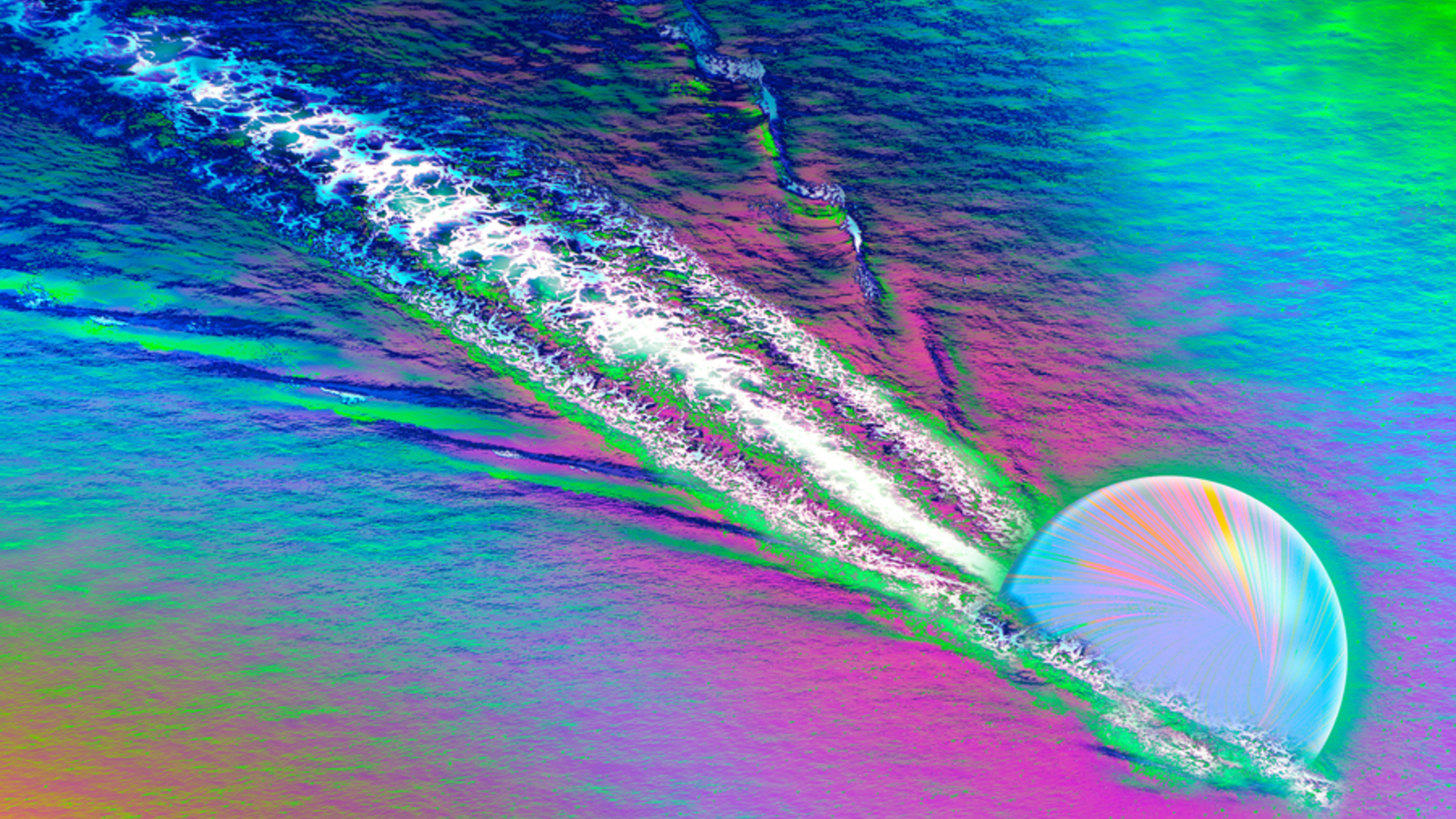
A colorful image shows a opalescent sphere carving a streak through a rainbow colored surface, kicking up white streaks behind it

Physicists at CERN recreated the soupy conditions of the very early universe.  (Image credit: Jose-Luis Olivares, MIT)

In the most ambitious instance of experimental home cooking we covered this week, physicists at the Large Hadron Collider (LHC) recreated the primordial state of the early universe and found it was more like soup than first thought.

The discovery comes from the LHC's Compact Muon Solenoid, which smashed together two heavy atomic nuclei at near light speed to create an extremely short-lived quark-gluon plasma, believed to be the stuff of our universe in the first microseconds following the Big Bang.

The findings could have enormous implications for how our cosmos, and the stuff it's made of, first formed.

Life's Little Mysteries

A person wearing blue long-sleeve scrubs and white gloves holds a piece of paper standing over a metal table with a body covered in a white sheet with only its feet sticking out on top. The bare feet face the camera and have a label attached to the right foot's big toe

Rigor mortis is the result of some complex cellular processes.  (Image credit: Darrin Klimek via Getty Images)

Not long after death, a sea change takes hold within the human body — a sequence of natural, cellular-level steps that result in a process called rigor mortis. But what are these steps? And why does rigor mortis happen to nearly all human bodies?

Teenager buried with her father's bones

a human skeleton with other human bones on top, being excavated from the ground

A hunter-gatherer cemetary on a Swedish island has revealed the complex familial relationships of ancient societies.  (Image credit: Göran Burenhult (CC BY))

Archaeologists who performed a DNA analysis of skeletons excavated from a Neolithic cemetery in Sweden have uncovered some surprising family burial practices this week, showing that some of Europe's last hunter-gatherers had detailed knowledge of their family lineages.

The society, called the Pitted Ware culture, was a hunter-gatherer community that lived on the western Swedish island of Gotland 5,500 years ago. Evidence of burials and reburials, with graves shared by up to third-degree relatives, suggests people of this culture paid scrupulous attention to their social connections and honored them long after death.

Discover more archaeology news

Also in science news this week

Science long read

A cartoon showing a series of figures carrying different dark blue numbers walking across a green and yellow circuit board. In the background, a human brain floats in the center of blue concentric circles with a circuit board pattern in the shape of the brain

Could AI take mathmeticians' jobs? Or will it drown them in slop?  (Image credit: James Boldry for Live Science)

At a secret meeting in Berkeley, California, last year, some of the world's leading mathematicians gathered to discuss the fate of their profession. The agenda was clear: Was artificial intelligence (AI) on the precipice of taking their jobs? And would the best math no longer be produced by humans?

Yet during the discussion, an even more troubling question appeared. In the past, confidence and a good argument were signs a proof was right, as only the best would be convincing to the rest of the field. Now, however, AI is spewing out hundreds of proofs that could be flawed but are too complex to verify. In this long read, Live Science investigated mathematicians' fight to figure out if the machines are right.

Something for the weekend

If you're looking for something a little longer to read over the weekend, here are some of the best analyses, opinions and crosswords published this week.

Science news in pictures

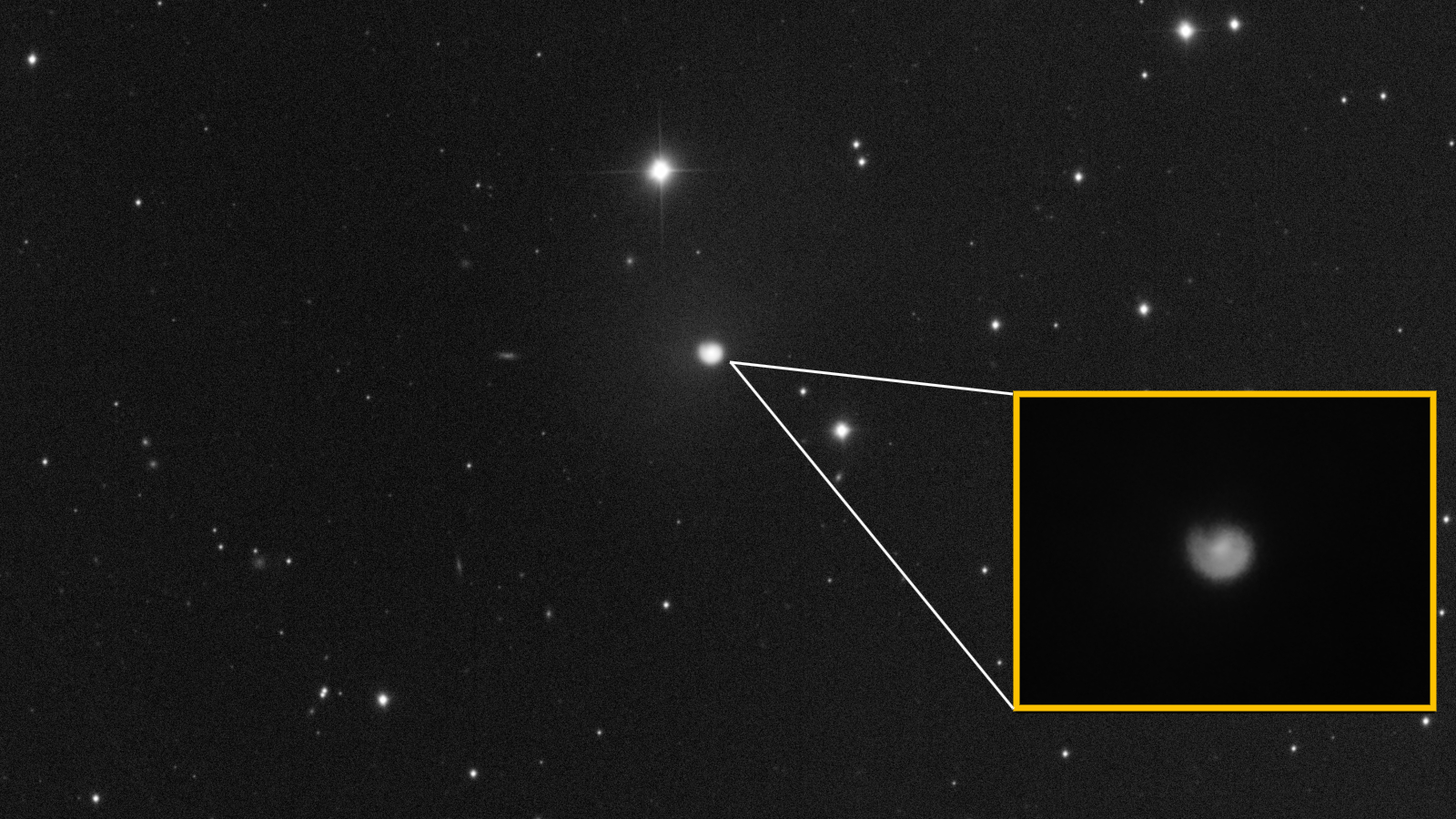
Photo of comet with a close-up of its coma showing off a distinctive spiral shape

The 'snail-shell' comet, also known as Comet 29P/Schwassmann-Wachmann  (Image credit: Eliot Herman)

This photo shows Comet29P/Schwassmann-Wachmann, an ice ball three times the length of Manhattan, erupting into a cosmic snail shell as it circles the inner solar system.

29P/Schwassmann-Wachmann is an example of a cryovolcanic comet, which explodes after its icy shell soaks up too much solar radiation. This causes the icy gas and dust on its surface to sublimate outward, forming a fuzzy cloud.

{ https://www.livescience.com/technology }

Hoe vind je dit bericht?
Geschreven door peter om 23:48 Stuur door

Meer van UFO'S of UAP'S, ASTRONOMIE, RUIMTEVAART, ARCHEOLOGIE, OUDHEIDKUNDE, SF-SNUFJES EN ANDERE ESOTERISCHE WETENSCHAPPEN - DE ALLERLAATSTE NIEUWTJES

↑ Terug naar de berichten