Naar de inhoud

UFO'S of UAP'S, ASTRONOMIE, RUIMTEVAART, ARCHEOLOGIE, OUDHEIDKUNDE, SF-SNUFJES EN ANDERE ESOTERISCHE WETENSCHAPPEN - DE ALLERLAATSTE NIEUWTJES

UFO's of UAP'S in België en de rest van de wereld
akke.beakke.be
Ontdek de Fascinerende Wereld van UFO's en UAP's: Jouw Bron voor Onthullende Informatie! Ben jij ook gefascineerd door het onbekende? Wil je meer weten over UFO's en UAP's, niet alleen in België, maar over de hele wereld? Dan ben je op de juiste plek! België: Het Kloppend Hart van UFO-onderzoek In België is BUFON (Belgisch UFO-Netwerk) dé autoriteit op het gebied van UFO-onderzoek. Voor betrouwbare en objectieve informatie over deze intrigerende fenomenen, bezoek je zeker onze Facebook-pagina en deze blog. Maar dat is nog niet alles! Ontdek ook het Belgisch UFO-meldpunt en Caelestia, twee organisaties die diepgaand onderzoek verrichten, al zijn ze soms kritisch of sceptisch. Nederland: Een Schat aan Informatie Voor onze Nederlandse buren is er de schitterende website www.ufowijzer.nl, beheerd door Paul Harmans. Deze site biedt een schat aan informatie en artikelen die je niet wilt missen! Internationaal: MUFON - De Wereldwijde Autoriteit Neem ook een kijkje bij MUFON (Mutual UFO Network Inc.), een gerenommeerde Amerikaanse UFO-vereniging met afdelingen in de VS en wereldwijd. MUFON is toegewijd aan de wetenschappelijke en analytische studie van het UFO-fenomeen, en hun maandelijkse tijdschrift, The MUFON UFO-Journal, is een must-read voor elke UFO-enthousiasteling. Bezoek hun website op www.mufon.com voor meer informatie. Samenwerking en Toekomstvisie Sinds 1 februari 2020 is Pieter niet alleen ex-president van BUFON, maar ook de voormalige nationale directeur van MUFON in Vlaanderen en Nederland. Dit creëert een sterke samenwerking met de Franse MUFON Reseau MUFON/EUROP, wat ons in staat stelt om nog meer waardevolle inzichten te delen. Let op: Nepprofielen en Nieuwe Groeperingen Pas op voor een nieuwe groepering die zich ook BUFON noemt, maar geen enkele connectie heeft met onze gevestigde organisatie. Hoewel zij de naam geregistreerd hebben, kunnen ze het rijke verleden en de expertise van onze groep niet evenaren. We wensen hen veel succes, maar we blijven de autoriteit in UFO-onderzoek! Blijf Op De Hoogte! Wil jij de laatste nieuwtjes over UFO's, ruimtevaart, archeologie, en meer? Volg ons dan en duik samen met ons in de fascinerende wereld van het onbekende! Sluit je aan bij de gemeenschap van nieuwsgierige geesten die net als jij verlangen naar antwoorden en avonturen in de sterren! Heb je vragen of wil je meer weten? Aarzel dan niet om contact met ons op te nemen! Samen ontrafelen we het mysterie van de lucht en daarbuiten.

Archief

Mars Doorways Found And Cat-Like Head Statue On Hill, UFO UAP Sighting News.

Mars Doorways Found And Cat-Like Head Statue On Hill, UFO UAP Sighting News.

%20%E7%9B%AE%E6%92%83%E3%80%81%E3%82%A8%E3%82%A4%E3%83%AA%E3%82%A2%E3%83%B3,%20%20UFO,%20UFOs,%20%D0%9D%D0%9B%D0%9E%20,%20NLO,%20sighting,%20sightings,%20alien,%20aliens,%20ET,%20anomaly,%20anomalies,%20ancient,%20astrobiology,%20vreemdelinge,%20%203%20copy%208.png
Date of discovery: Feb 16, 2026
Location of discovery: Mars Sol 1769 Perseverance
Source photo: 
Hey check this out. Not only did I find a doorway into a rock on Mars, but there are a dozen of them or more. The others are partly visible, but covered partly in sand. But the first one I show in the video really explains it all. It's a rectangle doorway entrance that is about 1 foot tall by 8 inches wide. It really fits with the dozens of human-like figures that me and others have discovered over the last ten years in Mars photos, most were under 1 foot tall, but highly detailed. I am 100% confident that these entrances are to primitive homes under the surface and that the face I found on the hilltop reveals to me the face of the species that lived here. A cat-like bipedal species. Bipedal because the door is tall, it's obvious they were standing up as they entered the structures. Also all the figures we have found in the past were two legged, similar to humans. 
Scott C. Waring - Taiwan
 

{ https://www.ufosightingsdaily.com/ }

Hoe vind je dit bericht?
Geschreven door peter om 23:23 Stuur door

AI–pocalypse! Artificial intelligence will create a small elite class living in luxury – while the majority will suffer, ex–Google boss warns

AI–pocalypse! Artificial intelligence will create a small elite class living in luxury – while the majority will suffer, ex–Google boss warns

The world is teetering on the edge of an Artificial Intelligence (AI) disaster in which a tiny elite class live in luxury while the majority suffer.

That's according to Dex Hunter–Torricke, a former communications chief at Google's AI arm DeepMind, who has worked for Mark Zuckerberg and Elon Musk.

Mr Hunter–Torricke, who is a non–executive board member of HM Treasury, wrote in an essay that Big Tech's leaders are driving society towards a radical and disastrous transformation.

He writes: 'By mid–century, on this trajectory, we arrive at something that goes beyond inequality and begins to look like economic speciation.

'An elite class with AI–augmented capabilities enabling lives of luxury, equipped with medical breakthroughs that deliver longer lifespans, living in parallel with a global majority whose economic prospects, healthcare access, and political power have been permanently curtailed.

'This is not a prediction I make lightly. We can see the forces already clearly in motion.'

The main thrust of Mr Hunter–Torricke's dire prediction is the idea that rapid advances in AI will lead to the majority of jobs being displaced by automation,

Dramatically, he claims the International Monetary Fund's estimates that 60 per cent of jobs are vulnerable to replacement 'low–ball the true impacts'.

This comes after Dario Amodei, founder of leading AI firm Anthropic, warned that humanity was not ready to handle the consequences of the AI his firm seeks to create

Dex Hunter–Torricke (pictured), former communications chief for Google DeepMind, says AI risks a crisis that would create a small wealthy elite who live in luxury while the rest of the world suffers

Mr Hunter¿Torricke, who is a non¿executive board member of HM Treasury, wrote in an essay that Big Tech's leaders are driving society towards a radical and disastrous transformation

Mr Hunter–Torricke, who is a non–executive board member of HM Treasury, wrote in an essay that Big Tech's leaders are driving society towards a radical and disastrous transformation

Mr Hunter–Torricke's predictions come from having spent over 15 years working with Silicon Valley's leaders in the AI revolution.

The former PR boss has worked with Google's Eric Schmidt, Meta's Mark Zuckerberg, and SpaceX's Elon Musk.

He says that he has spent 'nearly two decades with people who are supposed to be making the plan for the future'.

However, after dramatically leaving his job with Google's AI arm, Mr Hunter–Torricke claims: 'It's crystal clear to me now: there is no plan.'

At the heart of this argument is the idea that AI is developing far faster than anyone is prepared for.

While critics have consistently argued that AI's capabilities are 'flattening', successive generations of new models appear to show rapid advances.

Critically, Mr Hunter–Torricke also claims that these developments are trending towards a more general form of intelligence, one that can be applied to almost any task or activity.

While the Industrial Revolution replaced manual labour with machines, it opened up new avenues for work in jobs that require thinking and decision–making.

Mr Hunter–Torricke previously worked for Elon Musk (pictured), and warns that tech bosses like Musk are 'profoundly incurious about the full consequences of what they are building'

However, since a more general form of AI can do anything, some experts warn that it won't leave any gaps in the job market at all.

While the economic benefits will likely be vast, Mr Hunter–Torricke is more concerned about how those gains will be distributed.

He writes: 'The productivity gains will be real – but there is no automatic mechanism that translates them into broadly shared prosperity.

'The most likely outcome is an economy in which corporate profits explode as labor costs fall, while workers' share of output shrinks. Wealth concentrates at an unprecedented rate at the top, while the vast middle loses ground.'

Based on the current fractured state of global and domestic politics, the former Google chief adds that these changes will likely lead to mass political upheaval.

'The demagogues of today will look restrained compared to what fills that space,' he ominously concludes.

Mr Hunter–Torricke is not alone in his scepticism over the societal benefits of AI.

Recently, the head of safeguarding at leading AI company Anthropic quit his position, writing on X: 'The world is in peril.'

This comes after Dario Amodei, founder of leading AI firm Anthropic, warned that humanity was not ready to handle the consequences of the AI his firm seeks to create 

Even Anthropic's founder, Dario Amodei, recently warned that the world isn't yet ready to face the consequences of AI.

Mr Amodei wrote in an essay: 'Humanity is about to be handed almost unimaginable power, and it is deeply unclear whether our social, political, and technological systems possess the maturity to wield it.

Separately, leading AI researcher Professor Michael Wooldridge warned that the technology could face a 'Hindenburg moment'.

He told The Guardian: 'The Hindenburg disaster destroyed global interest in airships; it was a dead technology from that point on, and a similar moment is a real risk for AI.

article image

'Because AI is embedded in so many systems, a major incident could strike almost any sector.'

Mr Hunter–Torricke now predicts that the world's governments and institutions have 'roughly ten years left to rethink many of the fundamental assumptions'.

He has founded a new London–based non–profit, the Center for Tomorrow, which will address the issue.

The firm has pledged not to accept any funding from Big Tech and instead has funding from the Scottish billionaire Sir Tom Hunter, who is the uncle of Mr–Torricke's wife.

The 44 professions at risk of being replaced by AI

AI win rate against human professionals:

  1. Counter and rental clerks: 81%
  2. Sales managers: 79%
  3. Shipping, receiving, and inventory clerks: 76%
  4. Editors: 75%
  5. Software developers: 70%
  6. Private detectives and investigators: 70%
  7. Compliance officers: 69%
  8. First–line supervisors of non–retail sales workers: 69%
  9. Sales representatives, wholesale and manufacturing, except technical and scientific products: 68%
  10. General operations managers: 67%
  11. Medical and health services managers: 65%
  12. Buyers and purchasing agents: 64%
  13. Personal financial advisers: 64%
  14. Administrative services managers: 62%
  15. Customer service representatives: 59%
  16. First–line supervisors of retail sales workers: 59%
  17. First–line supervisors of production and operating workers: 58%
  18. Nurse practitioners: 56%
  19. Real estate brokers: 54%
  20. News analysts, reporters, and journalists: 53%
  21. Computer and information systems managers: 52%
  22. First–line supervisors of police and detectives: 49%
  23. Sales representatives, wholesale and manufacturing, technical and scientific products: 47%
  24. Lawyers: 46%
  25. Project management specialists: 42%
  26. Child, family, and school social workers: 42%
  27. Medical secretaries and administrative assistants: 42%
  28. Securities, commodities, and financial services sales agents: 42%
  29. First–line supervisors of office and administrative support workers: 41%
  30. Financial investment analysts: 41%
  31. Recreation workers: 37%
  32. Registered nurses: 37%
  33. Property, real estate, and community association managers: 34%
  34. Financial managers: 32%
  35. Producers and directors: 31%
  36. Audio and video technicians: 30%
  37. Concierges: 29%
  38. Order clerks: 28%
  39. Real estate sales agents: 27%
  40. Pharmacists: 26%
  41. Accountants and auditors: 24%
  42. Mechanical engineers: 23%
  43. Industrial engineers: 17%
  44. Film and video editors: 17%

Source: Open AI, GPDval 2025 

RELATED VIDEOS

{  https://www.dailymail.co.uk/sciencetech/index.html }

Hoe vind je dit bericht?
Geschreven door peter om 23:07 Stuur door

The moon is SHRINKING: Scientists discover more than 1,000 new cracks on the lunar surface – and they could be disastrous for NASA

The moon is SHRINKING: Scientists discover more than 1,000 new cracks on the lunar surface – and they could be disastrous for NASA

If you look up in the night sky and think the moon looks rather small, you're not wrong.

A new study has confirmed that the moon is shrinking. 

Scientists from the National Air and Space Museum's Center for Earth and Planetary Studies have uncovered more than 1,000 previously unknown cracks on the lunar surface.

This shows the moon is contracting and reshaping itself, according to the experts. 

Worryingly, the findings suggest that astronauts who may one day explore or live on the lunar surface may be at risk of devastating quakes. 

'We are in a very exciting time for lunar science and exploration,' said Cole Nypaver, lead author of the study.

'Upcoming lunar exploration programs, such as Artemis, will provide a wealth of new information about our moon. 

'A better understanding of lunar tectonics and seismic activity will directly benefit the safety and scientific success of those and future missions.'

Scientists from the National Air and Space Museum's Center for Earth and Planetary Studies have uncovered more than 1,000 previously unknown cracks on the lunar surface

Scientists from the National Air and Space Museum's Center for Earth and Planetary Studies have uncovered more than 1,000 previously unknown cracks on the lunar surface

Since 2010, scientists have known that the moon is gradually shrinking, as its interior cools and the surface contracts. 

This shrinking has created distinctive landforms, known as 'lobate scarps', in the lunar highlands. 

These structures form when the moon's crust compresses and the resulting forces push material up and over adjacent crust along a fault, creating a ridge.

However, in their new study, the researchers spotted strange cracks across a different area called the lunar maria – the vast, dark plains on the moon's surface.

They've named these cracks 'small mare ridges' (SMRs). 

'Since the Apollo era, we've known about the prevalence of lobate scarps throughout the lunar highlands, but this is the first time scientists have documented the widespread prevalence of similar features throughout the lunar mare,' said Mr Nypaver.

'This work helps us gain a globally complete perspective on recent lunar tectonism on the moon, which will lead to a greater understanding of its interior and its thermal and seismic history, and the potential for future moonquakes.' 

In the new study, the team discovered 1,114 SMRs, bringing the total found on the moon to 2,634. 

Since 2010, scientists have known that the moon is gradually shrinking, as its interior cools and the surface contracts

Since 2010, scientists have known that the moon is gradually shrinking, as its interior cools and the surface contracts

On average, the SMRs date back around 124 million years, while the lobate scarps are around 105 million years old. 

While this might sound old, it actually makes SMRs and lobate scarps some of the youngest geological features on the moon. 

'Our detection of young, small ridges in the maria, and our discovery of their cause, completes a global picture of a dynamic, contracting moon,' said Tom Watters, who first discovered the cracks in 2010.

article image

While the discovery of cracks helps to aid our understand of the moon's geological features, it could prove disastrous for space agencies who have probes on the moon – as well as those planning to send humans there. 

Most notably, this includes NASA, which aims to land people on the lunar surface by 2028 as part of its Artemis III mission. 

'The distribution of SMRs may also be of relevance to any long–term lunar habitation due to the hazards that shallow moonquakes pose to human–made lunar infrastructure,' the researchers cautioned in their study, published in The Planetary Science Journal. 

Artemis II: Key facts

Launch date: NASA has identified three possible launch windows for Artemis II in the coming months: From February 6 to February 11, from March 6 to March 11, and from April 1 to April 6.

Mission objective: To complete a lunar flyby, passing the 'dark side' of the moon and test systems for a future lunar landing.

Total distance to travel: 620,000 miles (one million km)

Mission duration: 10 days 

Estimated total cost: $44 billion (£32.5 billion)

  • NASA Space Launch System rocket: $23.8 billion (£17.6 billion)
  • Orion deep–space spacecraft: $20.4 billion (£15 billion)

Crew: 

  • Commander Reid Wiseman
  • Pilot Victor Glover
  • Mission Specialist Christina Koch
  • Mission Specialist Jeremy Hansen

Mission Stages:

  1. Launch from Kennedy Space Centre Launch Pad 39B
  2. Manoeuvre in orbit to raise the perigee using the Cryogenic Propulsion Stage
  3. Burn to raise apogee using the Cryogenic Propulsion Stage
  4. Detach from Cryogenic Propulsion Stage and perform translunar injection
  5. Fly to the moon over four days
  6. Complete lunar flyby at a maximum altitude of 5,523 miles (8,889 km) above the moon's surface
  7. Return to Earth over four days.
  8. Separate the crew module from the European Service Module and the crew module adapter
  9. Splashdown in the Pacific Ocean  

RELATED VIDEOS

{  https://www.dailymail.co.uk/sciencetech/index.html }

Hoe vind je dit bericht?
Geschreven door peter om 22:46 Stuur door

Archaeologists found an architectural marvel in one of the ancient world’s driest cities

Archaeologists found an architectural marvel in one of the ancient world’s driest cities

Story by Elizabeth Rayne

Here’s what you’ll learn when you read this story:

  • The ‘Ain Braq aqueduct, which supplied water to ancient Petra, was thought to have only one conduit, or channel, until the recent discovery of a second one.
  • Although most of the lead pipe is no longer present in the conduit, its former extent can be inferred by matching its imprint to still-extant lead pipe fragments in the area.
  • Long and narrow, this pipe was most likely used as an inverted siphon, with water passing through a header tank before it flowed through to a series of reservoirs.

The importance of finding water supplies in a harsh desert climate is a central theme in Frank Herbert's classic science-fiction novel Dune (and in its latest film adaptation by Denis Villeneuve). Rising from dusty sands and carved out of red sandstone, Jordan’s ancient city of Petra is reminiscent of the desert landscapes and stone edifices of Herbert's faraway science-fiction desert planet. But Petra already had aqueducts and water systems thousands of years ago that were far ahead of any on fictional Arrakis—so no one in Petra ever needed a stillsuit to survive.

Petra was an urban hub of the ancient world despite its location in a semiarid climate that brought hardly any rain. It stood as the capital of the Nabatean kingdom until it became part of the Roman province of Arabia in the early 2nd century C.E. As an important administrative and trading center, Petra needed water for purposes beyond keeping its people alive. Its hydraulic systems filled baths, kept gardens and agriculture thriving, gushed from a sacred fountain known as a nymphaeum, and filled up basins in temples, sanctuaries, and tombs. Now, on the abandoned city’s southeast edge, archaeologists have discovered that the ‘Ain Braq aqueduct running through the Jabal al-Madhbah massif into Petra was even more sophisticated than they previously believed.

As part of a 2023 excavation conducted as part of the Urban Development of Ancient Petra project, a research team led by Niklas Jungmann of the Humboldt-Universität zu Berlin studied the system that brought water into Petra. These included cisterns, basins, a reservoir with a dam, and the ‘Ain Braq aqueduct. In the course of their research, Jungmann and his team discovered something that the aqueduct had been hiding for millennia. It featured not just one, but two different main conduits that kept water flowing into Petra. Researchers had long known about the first channel lined with terracotta pipes to carry water into the city. What the researchers didn't expect was to unearth the imprint of a second conduit that once held a pressurized lead pipeline supplying water to basins and reservoirs on az-Zantur hill.

University of California Press Engineering in the Ancient World, Revised Edition

University of California Press Engineering in the Ancient World, Revised Edition
© amazon.com

“The discovery of numerous water structures on the plateau directly above the rock slopes with the presumed aqueduct channel and the dam, raised broader questions about the engineering and chronology of this area,” Jungmann said in a study recently published in Levant. “As [the existence of a second conduit] was not mentioned in prior research, examining how the aqueduct entered the city became a primary research objective.”

Measuring roughly 380 feet (116 meters) in length, the newly-discovered pipeline used a welded metal pipe that was made of lead and encased in mortar. Further evidence that the Nabateans used a lead pipe in the second conduit includes its significantly larger diameter compared to the terracotta pipes found in the area, and the regular surface of the imprint it left behind in the underlying stone, as opposed to the irregular surface imprint typical of channels that held terracotta pipes. A later excavation backed this hypothesis when Nabatean conduit blocks were discovered during a survey of the city center. In the hardened mortar was section of lead pipe, whose imprint texture and dimensions matched those of the earlier find and left no more doubts about the overall composition of the aqueduct’s second main conduit.

Jungmann concluded that such a long and narrow lead pipe was probably used as an inverted siphon within the ‘Ain Braq aqueduct. It was buried in concrete to transport water beneath the city, bypassing obstacles on the surface. Water in the system would have flowed through a header tank before entering the aqueduct’s two conduits. Previously, one theory posited that the conduit could have taken a detour to supply water to another part of the city before arriving at its destination. However, the conduit was found to head west, probably to reach the reservoirs of az-Zantur hill. A detour would have not even been viable, since only an uninterrupted pipeline that generates enough internal pressure can allow water in a siphon to run from the header tank to the basin or reservoir it was meant to fill.

“Overall, this study underscores the potential for further research into Nabataean water management,” said Jungmann. “While some hypotheses about the aqueduct’s two branches into the city have been proposed above, more fieldwork is required in order to provide a fuller understanding of the distribution system and its evolution over time.”

Hoe vind je dit bericht?
Geschreven door peter om 22:13 Stuur door

Het buitenaardse wezen dat leeft in de diepten van de Antarctische Oceaan

Het buitenaardse wezen dat leeft in de diepten van de Antarctische Oceaan

Buitenaards uitziend wezen gevonden in de Antarctische Oceaan

©The Daily Digest

Buitenaards uitziend wezen gevonden in de Antarctische Oceaan
Een paar jaar geleden deed een groep mariene biologen aan boord van een onderzoeksschip in de ijskoude wateren van Antarctica een verbazingwekkende ontdekking: een buitenaards uitziend wezen met 20 armen.

Negen jaar durende expeditie

©The Daily Digest

Negen jaar durende expeditie
De bevindingen werden in juli gepubliceerd in het 'Invertebrate Systematics Journal' en maakten deel uit van een negen jaar durende expeditie die duurde van 2008 tot 2017 .

Antarctische veersterren

©The Daily Digest

Foto: Fox13

Antarctische veersterren
Het doel van deze expeditie was om ongrijpbare zeedieren te vinden die behoren tot de soort ' Promachocrinus fragarius ', beter bekend als Antarctische haarsterren, zoals het exemplaar dat ze vonden (zie foto).

“Buitenaards uiterlijk tijdens het zwemmen”

©The Daily Digest

Foto: Fox13

“Buitenaards uiterlijk tijdens het zwemmen”
"Hoewel ze lijken op andere ongewervelde zeedieren, zoals zeesterren en zeekomkommers, onderscheiden haarsterren zich door hun grote formaat en buitenaardse uiterlijk tijdens het zwemmen", schreven de onderzoekers in het artikel.

Diep in de oceaan

©The Daily Digest

Diep in de oceaan
Veersterren kunnen op diepten leven die variëren van 215 voet tot een verbazingwekkende 3.840 voet onder het oppervlak van de oceaan, schatten de auteurs.

2030

©Aangeboden door The Daily Digest

Meer Antarctische veersterren
Naast de 20-armige Antarctische veerster identificeerde het team er zeven andere soorten die behoren tot de 'Promachocrinus fragarius ' die nog nooit eerder door de wetenschappelijke gemeenschap zijn beschreven of benoemd , zo meldde de Miami Herald.

Het juiste ding doen

©The Daily Digest

Voorheen onbekende soorten blijken veersterren te zijn
Jarenlang werd gedacht, maar het is niet bevestigd, dat exemplaren die tijdens eerdere expedities waren gevonden, tot de groep 'Promachocrinus' (Antarctische haarsterren) behoorden, tot nu toe, zo vertelde een auteur van de studie aan Insider.

DNA- en morfologisch onderzoek

©The Daily Digest

Foto: Antarctische haarster vastgelegd door EVNautilius (Ocean Exploration Trust).

DNA- en morfologisch onderzoek
Volgens de wetenschappers was de classificatie mogelijk dankzij onderzoek naar zowel het DNA als de fysieke morfologie, oftewel de vorm, van de ontdekte organismen.

Potentieel onontdekte zeedieren

©The Daily Digest

Foto: Chase Baker/Unsplash

Potentieel onontdekte zeedieren
Volgens de onderzoekers zijn de ontdekkingen een herinnering aan de vele potentieel onbekende zeedieren die in de uitgestrekte oceanen van onze planeet leven. Onderzoek is dan ook van cruciaal belang.

Overvloed aan leven in de Antarctische wateren

©The Daily Digest

Foto: Henrique Setim/Unsplash

Overvloed aan leven in de Antarctische wateren
"Een uitgebreide verkenning zal onmisbaar zijn om zelfs maar een basisbegrip te verkrijgen van de rijkdom aan leven in de Antarctische wateren", concludeerden ze in het wetenschappelijke artikel.

RELATED VIDEO

{ The Daily Digest }

Hoe vind je dit bericht?
Geschreven door peter om 21:46 Stuur door

“If Melting Ice Releases These Microbes, These Genes Could Spread”: Ancient Bacteria Frozen for 5,000 Years Show Resistance to Modern Antibiotics

Image by PublicDomainPictures from Pixabay.

“If Melting Ice Releases These Microbes, These Genes Could Spread”: Ancient Bacteria Frozen for 5,000 Years Show Resistance to Modern Antibiotics

Laboratory tests of defrosted strains of  5,000-year-old ancient bacteria recovered from the Scarisoara Ice Cave in Romania revealed one strain resistant to several modern antibiotics used to treat a wide range of infections.

Although the ancient samples of the resistant strain, dubbed Psychrobacter SC65A.3, were retrieved from a frozen ice deposit deep in a Romanian cave, the research team behind the discovery said there is a real threat that melting ice could lead to these infectious organisms entering the modern environment, where they could pass along some of their antibiotic resistance genes to modern-day bacteria.

The 5,000-year-old strains also showed the ability to inhibit the growth of other antibiotic-resistant bacteria, suggesting their genetic profiles could be used to develop therapies to combat modern, drug-resistant strains and offer new insights into how antibiotic resistance spreads.

“Studying microbes such as Psychrobacter SC65A.3 retrieved from millennia-old cave ice deposits reveals how antibiotic resistance evolved naturally in the environment, long before modern antibiotics were ever used,” explained Dr. Cristina Purcarea, a senior scientist at the Institute of Biology Bucharest of the Romanian Academy and a senior author of the study detailing the discovery.

ancient bacteria

Scarisoara Ice Cave in Romania. Image Credit:
Paun V.I.
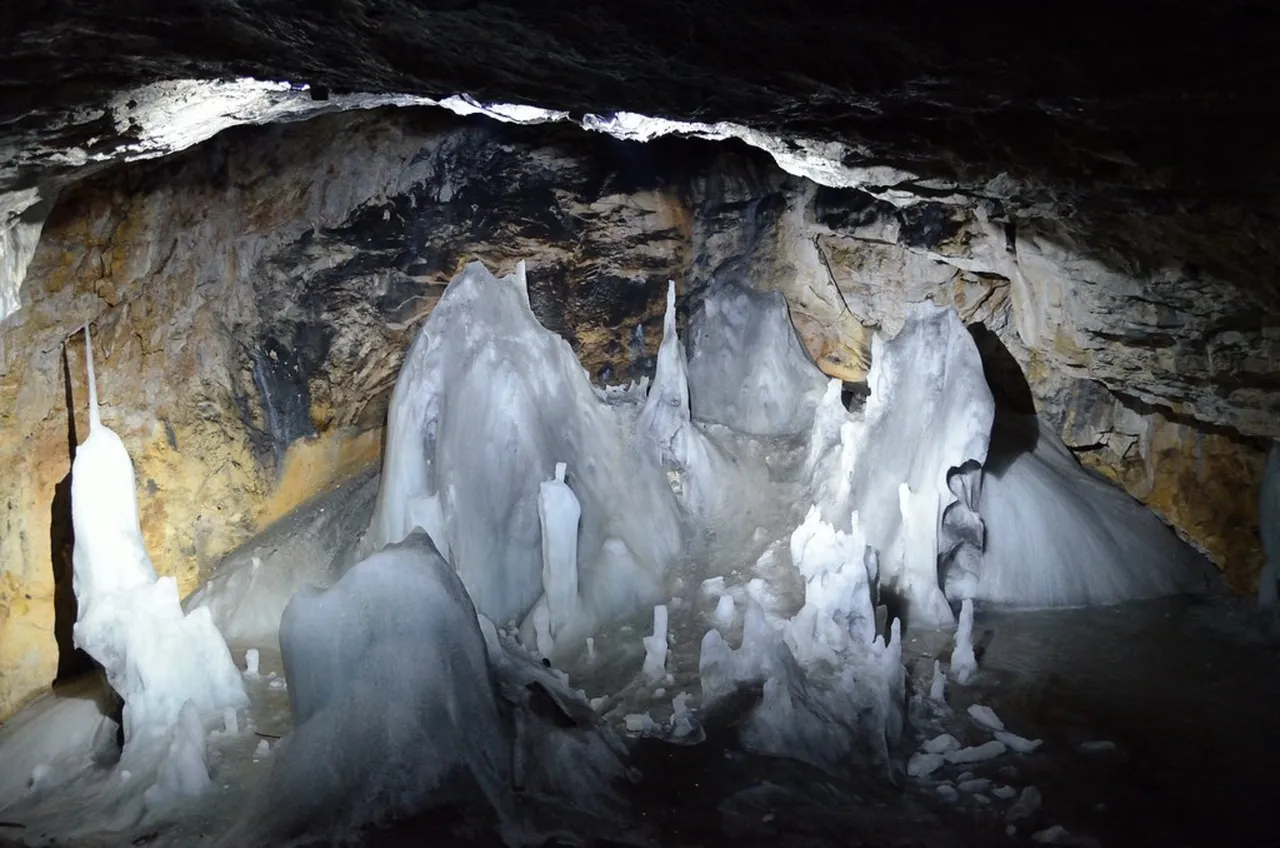
5,000-year-old antibiotic-resistant bacteria found in Romanian ice cave

Scarisoara Ice Cave holds one of the world’s largest underground glaciers, with ice estimated to be more than 10,000 years old.

(flickr/Florina) / Others

5,000-Year-Old Ancient Bacteria Retrieved from Deep Inside an Ice Cave

According to a statement, Dr. Purcarea and colleagues drilled a 25-meter ice core into the frozen floor of a section of the ice cave known as the Great Hall. Collecting samples from this depth enabled the team to study ice deposited over the past 13,000 years.

antibiotic resistance ancient bacteria

The team drilled a 25-meter ice core from the area of the cave known as the Great Hall.

Credit: Itcus C.

Next, the team placed the ice core samples in labeled, sterile bags to avoid contamination. While remaining frozen, the ice core samples were transported back to the lab for examination.

During their initial analysis, the researchers isolated various bacterial strains and sequenced their individual genomes. Along with revealing the genetic identity of each strain, the research team said sequencing the genomes of bacteria that survive in these extreme climates also helped identify which genes confer low-temperature survivability.

During this process, the team identified the presence of Psychrobacter SC65A.3, a bacterial genus known for its adaptation to cold environments. Notably, some Psychrobacter strains cause infections in animals and humans.

Ancient Psychrobacter Strain Demonstrates Resistance to 10 Modern Antibiotics

In a series of tests designed to measure the resistance of the SC65A strain to commonly used modern-day antibiotics, the team selected 28 antibiotics from 10 classes used to treat bacterial infections. According to the team, several of those antibiotics “have previously been identified to possess resistance genes or mutations that give them the ability to resist drug effects.”

After running a series of tests using the Psychrobacter strains collected from the Romanian Ice cave, the team found that the ancient bacteria appeared to successfully resist 10 of the 28 tested modern-day antibiotics. This data was consistent with the genetic analysis, which identified several genes associated with antibiotic resistance.

“The Psychrobacter SC65A.3 bacterial strain isolated from Scarisoara Ice Cave, despite its ancient origin, shows resistance to multiple modern antibiotics and carries over 100 resistance-related genes,” Purcarea explained.

The researcher also noted that the 10 antibiotics are widely used “to treat a range of serious bacterial infections in clinical practice.” For example, the tests revealed resistance to rifampicin, vancomycin, and ciprofloxacin, which are used to treat diseases such as tuberculosis, colitis, and UTIs.

The ancient, 5,000-year-old bacteria also showed resistance to trimethoprim, clindamycin, and metronidazole, which are used to treat infections of the lungs, skin, or blood, and the reproductive system. The researchers note that SC65A.3 is the first Psychrobacter strain to show resistance to these three antibiotics.

If Melting Ice Releases These Microbes, These Genes Could Spread

When discussing the significance of the team’s findings, Dr. Purcarea said their ability to resist modern antibiotics could represent a potential health risk, especially if they were allowed to share genetic material with modern bacteria.

“If melting ice releases these microbes, these genes could spread to modern bacteria, adding to the global challenge of antibiotic resistance,” the researcher explained.

Conversely, the researchers found several potential benefits in the ancient Psychrobacter strain. For example, they found 11 specific genes that may stop or even kill the growth of other bacteria, viruses, or fungi. Purcarea said this strain produces “unique enzymes and antimicrobial compounds” that could lead to the development of new antibiotics, industrial enzymes, and other biotechnological innovations.

“It can also inhibit the growth of several major antibiotic-resistant ‘superbugs’ and showed important enzymatic activities with important biotechnological potential,” Purcarea explained.

During the genetic analysis, the team found nearly 600 genes they described as having “unknown functions.” Given the organisms stron resistance profile, they said these uncharacterized genes could represent an “untapped source” for discovering novel biological mechanisms that could be exploited.

“These ancient bacteria are essential for science and medicine,” Purcarea concluded, “but careful handling and safety measures in the lab are essential to mitigate the risk of uncontrolled spread.”

The study “First genome sequence and functional profiling of Psychrobacter SC65A.3 preserved in 5,000-year-old cave ice: insights into ancient resistome, antimicrobial potential, and enzymatic activities” was published in Frontiers in Microbiology.

  • Christopher Plain is a Science Fiction and Fantasy novelist and Head Science Writer at The Debrief. Follow and connect with him on X, learn about his books at plainfiction.com, or email him directly at christopher@thedebrief.org.

{ https://thedebrief.org/category/science/ }

Hoe vind je dit bericht?
Geschreven door peter om 23:48 Stuur door

Easter Island’s Enigmatic Collapse Was More Complex Than Past Theories Suggest, as Researchers Point to Compelling New Evidence

(Image Credit: Walkerssk/Pixabay)

Easter Island’s Enigmatic Collapse Was More Complex Than Past Theories Suggest, as Researchers Point to Compelling New Evidence

Rapa Nui, more commonly known as Easter Island, is often cited as one of history and archaeology’s best examples of environmental mismanagement: the widely known ecocide hypothesis for its downfall suggests that deforestation led to social collapse on the island long before Europeans arrived.

Recent research, however, now suggests a different turning point in the island’s history. Researchers report the discovery of evidence that a severe drought began around 1550, leading to a significant drop in rainfall on the island. This prolonged dry period, the researchers say, coincided with changes in ritual practices, political structures, and settlement patterns, although there is still little evidence of a sudden societal collapse before European contact.

The findings, published in Communications Earth & Environment by a team from the Columbia Climate School, provide important new environmental context for one of archaeology’s most debated case studies.

Reading Rainfall in Leaf Waxes

Scientists from the Lamont-Doherty Earth Observatory studied past rainfall by collecting sediment cores from two of the island’s few freshwater sites: Rano Aroi, a wetland at a higher elevation, and Rano Kao, a crater lake.

Lake and wetland sediments accumulate in layers, preserving chemical signatures of past environmental conditions. Previous studies on Rapa Nui used pollen, plant fragments, elemental analysis, and sediment accumulation rates to reconstruct the island’s history. While these approaches provide important information, changes in temperature and human activity can influence their results. In this study, the research team focused on plant leaf waxes as a more direct indicator of past rainfall.

“We think leaf waxes on Rapa Nui are only recording information about local rainfall and aridity,” lead author Redmond Stein explained. By measuring the ratio of “heavy” to “light” hydrogen preserved in those waxes, the researchers reconstructed 800 years of rainfall history. The data shows that rainfall declined sharply in the mid-1500s and remained low for more than a hundred years.

A Significant Rainfall Drop on Easter Island

Isotope measurements show that rainfall decreased by about 600 to 800 millimeters, or 24 to 31 inches, each year compared to the previous three centuries. This drop in rainfall would have been especially significant for an island that already had few freshwater resources.

Notable cultural shifts also took place during this time. Fewer ceremonial ‘ahu’ platforms were built, and Rano Kao became an important ritual site. A new social system called Tangata Manu emerged, in which leaders were chosen through athletic contests rather than through family ties to the moai statues.

Archaeologists continue to debate exactly when and why these changes took place. The researchers note that climate was not the only cause, yet their results show that the island’s society underwent significant change after the drought began.

Rethinking the Ecocide Theory

According to the popular ecocide theory, the people on Rapa Nui overused the forests, which led to conflict and a population collapse before Europeans arrived on the island in the 1700s. Many have told this story as a warning about the dangers of environmental destruction. However, there is little proof that the population dropped sharply before Europeans arrived.

“Our research is not intended to produce a new parable for the modern times but rather push against the old one,” Stein said.

While the researchers agree that deforestation occurred and likely affected the environment, the new evidence shows that people on the island were also dealing with other climate-related problems. A decrease in rainfall may have led to more soil erosion, less drinking water, changes in vegetation, or forced communities to reorganize around scarce freshwater resources. The findings suggest that Rapa Nui’s history is more complex than a simple story of self-inflicted collapse.

A 50,000-Year Climate Archive

Rapa Nui is located more than 3,000 kilometers from the coast of Chile and over 1,500 kilometers from the nearest inhabited island. This isolation makes it one of the few land-based sediment records in the Southeast Pacific. As a result, it is especially valuable for studying long-term atmospheric circulation patterns, which are still difficult for climate models to simulate accurately.

The research team is now studying a much longer leaf-wax isotope record from Rano Aroi that covers about 50,000 years. If future studies confirm and extend these findings, the record could provide important insights into how Pacific climate systems have changed over tens of thousands of years.

  • Austin Burgess is a writer and researcher with a background in sales, marketing, and data analytics. He holds a Master of Business Administration, a Bachelor of Science in Business Administration, and a Data Analytics certification. His work combines analytical training with a focus on emerging science, aerospace, and astronomical research.

RELATED


{ https://thedebrief.org/category/science/ }

Hoe vind je dit bericht?
Geschreven door peter om 22:43 Stuur door

Congressman Eric Burlison Questions Alleged Large Abroad UAP Construction • Newest UFO Sightings

Congressman Eric Burlison Questions Alleged Large Abroad UAP Construction • Newest UFO Sightings

Congressman Eric Burlison Questions Alleged Large Abroad UAP Construction • Newest UFO Sightings

Missouri Congressman Eric Burlison has drawn renewed consideration to unidentified aerial phenomena (UAP) following a current tv interview during which he mentioned reviews of an unusually massive object allegedly situated exterior the US. Talking publicly concerning the matter, Burlison emphasised that he has not personally verified the claims however is actively searching for entry by congressional oversight channels.

Allegations of a Construction Constructed Round an Object

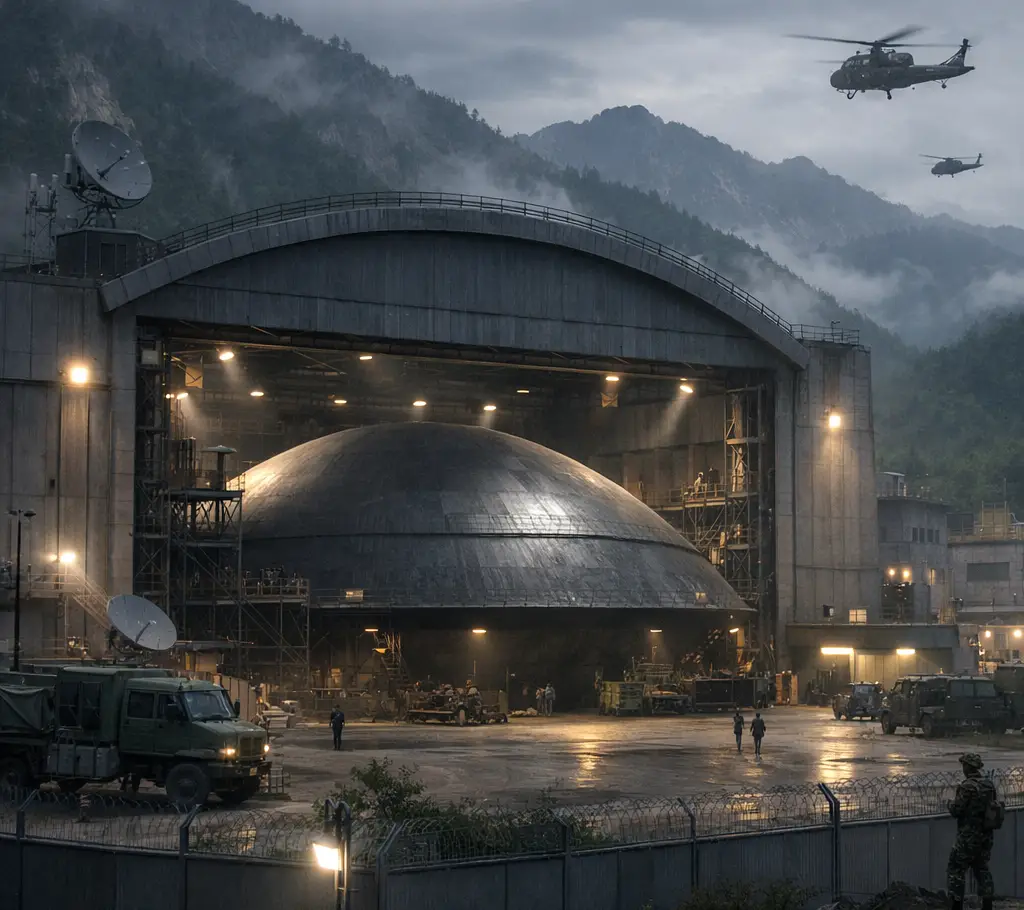
Through the interview, Burlison defined that he has obtained data from sources each inside and outdoors the federal authorities suggesting the existence of a large unidentified object in a foreign country. In line with the accounts relayed to him, the item is reportedly so massive that it couldn’t be transported. As a substitute, a construction was allegedly constructed round it.

The congressman clarified that he can’t reveal the nation concerned, stating that a few of the data was obtained in labeled settings. He additionally famous that extensively circulated reviews figuring out a selected constructing in media protection don’t match what he has been advised.

Importantly, Burlison harassed that he doesn’t but possess “laborious proof” confirming the item’s existence. His feedback mirror ongoing efforts to find out whether or not the claims have benefit and whether or not extra transparency is warranted.

Growing Congressional Attention on UAPs

Burlison, a member of the House Oversight Committee, has increasingly pushed for greater transparency on UAP matters. In August 2025 he introduced the Unidentified Anomalous Phenomena (UAP) Disclosure Act of 2025 as an amendment to the National Defence Authorisation Act, which would require the preservation and public release of government records on UAPs and provide oversight mechanisms.

The proposal aims to ensure federal agencies cannot destroy or hide records, a move supporters argue would bring clarity to what authorities know about unexplained aerial phenomena. Critics say such measures risk leaking sensitive defence information. Burlison's interest in UAP disclosure aligns with broader congressional concern about how governments classify sensitive sightings. Lawmakers have criticised the Pentagon and Department of Defence offices for withholding information on apparent encounters reported by military personnel.

Oversight Challenges and Bureaucratic Resistance

Burlison, who serves on committees engaged in UAP-related inquiries, acknowledged that getting access to delicate services—whether or not in the US or overseas—isn’t easy. He described important institutional resistance rooted in jurisdictional disputes, interagency secrecy, and committee turf safety inside Congress.

In line with him, even makes an attempt to go to home websites reportedly related to UAP analysis or reverse-engineering applications have confirmed troublesome. Entry to an alleged abroad location would require cooperation at a number of ranges, together with coordination with international governments and labeled authorization channels.

Regardless of these obstacles, Burlison indicated that he intends to proceed pursuing oversight alternatives.

What Did Burlison Actually Say?

The Reddit thread suggests Burlison may have referenced the UFO site in connection with Dr Stephen Greer's claims, a controversial figure in the UFO disclosure world, though the congressman himself has not publicly confirmed this. One Reddit commenter noted that if such an object were truly 'too big to move', it would be difficult to keep secret, particularly in a highly developed region like South Korea. Another added scepticism about the idea of such an installation near major population centres.

Dr. Steven Greer’s Further Claims

Additionally showing within the interview was Steven Greer, founding father of the Disclosure Mission. Greer claimed that one such object is situated within the mountains exterior Seoul, South Korea. He asserted that the item is extraordinarily massive—doubtlessly a whole bunch and even hundreds of ft throughout—and that its materials composition makes it resistant to traditional reducing instruments.

Greer additional acknowledged that his data comes from whistleblowers who allegedly had entry to extremely labeled applications. Nevertheless, these claims stay unverified by impartial proof.

When requested whether or not the item in query was a spacecraft, Greer answered affirmatively. He advised that comparable objects might exist in different places, together with inside the US.

Transparency Versus Nationwide Safety

Burlison emphasised that if he have been to acquire definitive proof—whether or not bodily, photographic, or documented—he believes the American public would should know. On the similar time, he acknowledged the necessity to stability transparency with nationwide safety issues.

The dialogue additionally referenced previous public feedback from former President Barack Obama, who has beforehand addressed extraterrestrial questions in interviews. Obama has acknowledged that he has seen no proof of alien craft being hidden in services like Space 51, although he has additionally famous that sure labeled applications might not all the time be totally accessible even to presidents.

Greer countered by suggesting that some data might not have been totally shared with senior officers. These assertions, like others within the dialog, stay a part of an ongoing debate fairly than confirmed truth.

Evidence That Raised Eyebrows

Rep Burlison has repeatedly brought attention to UAP issues during congressional hearings. In September 2025 he played a previously unseen video, reportedly taken by a US military drone, showing what he described as a Hellfire missile striking an unidentified object off the coast of Yemen, 'and it kept going'. The Pentagon's All-domain Anomaly Resolution Office (AARO) said it had no comment on the video's authenticity and noted that many unexplained UAP reports remain under investigation without confirmation of extraterrestrial origin.

Broader Oversight Efforts

Burlison's remarks are part of a broader congressional push to scrutinise how federal agencies handle UAP reports. In late 2024, he questioned a former Pentagon employee on alleged secret UFO programmes and non-human 'biologics', claims that government critics often cite as evidence of cover-ups. However, mainstream experts and Defence officials continue to stress the distinction between unexplained aerial phenomena and extraterrestrial visitation, pointing out that many sightings are eventually attributed to misidentified aircraft, drones, atmospheric phenomena, or data errors.

Public Reaction and Scientific Scepticism

Views on Burlison's implied South Korea UFO claim range widely. UFO enthusiasts online argue that such hints deserve serious investigation. Sceptics counter that Reddit-based interpretation of Burlison's comments cannot be treated as verification of classified knowledge. Scientific communities emphasise that open inquiry must be grounded in verified data rather than speculation about hidden sites or unverified testimonies.

Unanswered Questions

A number of important questions stay unresolved:

  • What precisely is the alleged object?
  • When did it first come to gentle?
  • Which companies or governments can be accountable for overseeing it?
  • Why has no verifiable proof surfaced publicly?

At current, there aren’t any authenticated paperwork, satellite tv for pc imagery, or bodily supplies confirming the existence of the item described.

A Persevering with Investigation

The interview displays the broader nationwide dialog surrounding UAP investigations. In recent times, Congress has held hearings and requested briefings aimed toward clarifying unexplained aerial sightings and potential superior applied sciences.

Whereas Burlison’s remarks don’t present proof of extraterrestrial craft, they underscore ongoing tensions between public curiosity, congressional oversight, and labeled nationwide safety applications. Whether or not additional inquiry will result in concrete findings stays to be seen.

For now, the claims stay allegations—severe sufficient to immediate oversight efforts, however unverified within the public area.

{ https://interspaceskyway.com/ }

Hoe vind je dit bericht?
Geschreven door peter om 22:08 Stuur door

Congressman Eric Burlison Questions Alleged Massive Overseas UAP Structure

Congressman Eric Burlison Questions Alleged Massive Overseas UAP Structure

ufo-military.png

Missouri Congressman Eric Burlison has drawn renewed attention to unidentified aerial phenomena (UAP) following a recent television interview in which he discussed reports of an unusually large object allegedly located outside the United States. Speaking publicly about the matter, Burlison emphasized that he has not personally verified the claims but is actively seeking access through congressional oversight channels.

Allegations of a Structure Built Around an Object

During the interview, Burlison explained that he has received information from sources both inside and outside the federal government suggesting the existence of a massive unidentified object in another country. According to the accounts relayed to him, the object is reportedly so large that it could not be transported. Instead, a structure was allegedly constructed around it.

The congressman clarified that he cannot reveal the country involved, stating that some of the information was obtained in classified settings. He also noted that widely circulated reports identifying a specific building in media coverage do not match what he has been told.

Importantly, Burlison stressed that he does not yet possess “hard evidence” confirming the object’s existence. His comments reflect ongoing efforts to determine whether the claims have merit and whether additional transparency is warranted.

Oversight Challenges and Bureaucratic Resistance

Burlison, who serves on committees engaged in UAP-related inquiries, acknowledged that gaining access to sensitive facilities—whether in the United States or abroad—is not straightforward. He described significant institutional resistance rooted in jurisdictional disputes, interagency secrecy, and committee turf protection within Congress.

According to him, even attempts to visit domestic sites reportedly connected to UAP research or reverse-engineering programs have proven difficult. Access to an alleged overseas location would require cooperation at multiple levels, including coordination with foreign governments and classified authorization channels.

Despite these obstacles, Burlison indicated that he intends to continue pursuing oversight opportunities.

Dr. Steven Greer’s Additional Claims

Also appearing in the interview was Steven Greer, founder of the Disclosure Project. Greer claimed that one such object is located in the mountains outside Seoul, South Korea. He asserted that the object is extremely large—potentially hundreds or even thousands of feet across—and that its material composition makes it resistant to conventional cutting tools.

Greer further stated that his information comes from whistleblowers who allegedly had access to highly classified programs. However, these claims remain unverified by independent evidence.

When asked whether the object in question was a spacecraft, Greer answered affirmatively. He suggested that similar objects may exist in other locations, including within the United States.

Transparency Versus National Security

Burlison emphasized that if he were to obtain definitive proof—whether physical, photographic, or documented—he believes the American public would deserve to know. At the same time, he acknowledged the need to balance transparency with national security concerns.

The discussion also referenced past public comments from former President Barack Obama, who has previously addressed extraterrestrial questions in interviews. Obama has stated that he has seen no evidence of alien craft being hidden in facilities like Area 51, though he has also noted that certain classified programs may not always be fully accessible even to presidents.

Greer countered by suggesting that some information may not have been fully shared with senior officials. These assertions, like others in the conversation, remain part of an ongoing debate rather than confirmed fact.

Unanswered Questions

Several critical questions remain unresolved:

  • What exactly is the alleged object?
  • When did it first come to light?
  • Which agencies or governments would be responsible for overseeing it?
  • Why has no verifiable evidence surfaced publicly?

At present, there are no authenticated documents, satellite imagery, or physical materials confirming the existence of the object described.

A Continuing Investigation

The interview reflects the broader national conversation surrounding UAP investigations. In recent years, Congress has held hearings and requested briefings aimed at clarifying unexplained aerial sightings and potential advanced technologies.

While Burlison’s remarks do not provide proof of extraterrestrial craft, they underscore ongoing tensions between public curiosity, congressional oversight, and classified national security programs. Whether further inquiry will lead to concrete findings remains to be seen.

For now, the claims remain allegations—serious enough to prompt oversight efforts, but unverified in the public domain.

{ https://www.latest-ufo-sightings.net/ }

Hoe vind je dit bericht?
Geschreven door peter om 21:51 Stuur door

Scientists found 7,000-year-old mummies that don't share human DNA

Scientists found 7,000-year-old mummies that don't share human DNA

Story by Jack Hobbs
 Egyptian mummy head close up detail of
Egyptian mummy head close up detail of
© Getty Images/iStockphoto

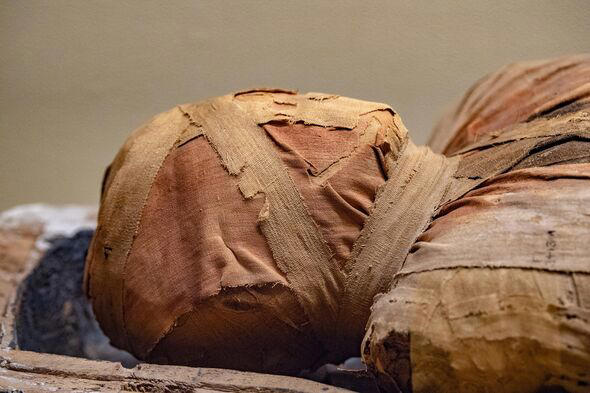
Scientists made a shocking discovery after they revealed that they had unearthed two mummified corpses that, according to the scientists, were almost 7,000 years old and had no traces of modern human DNA.

Led by archaeogeneticist Nada Salem, the group discovered the corpses in a sheltered area of the Takarkori rock formation and reportedly identified DNA markers from a group with no known connection to modern humans. According to DNA testing, the two corpses were identified as two female herders from the time period when the Saharan Desert was lush and verdant.

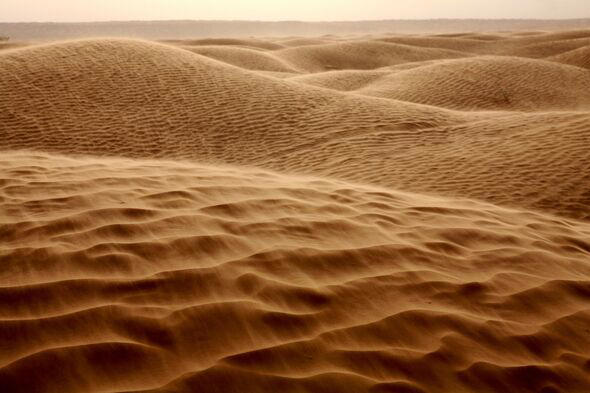
It was reported that the time period known as the African Humid Period, between 14,800 and 5,500 years ago, which is now just rolling hills of sand, held abundant water and even supported life. "The majority of Takarkori individuals' ancestry stems from a previously unknown North African genetic lineage that diverged from sub-Saharan African lineages around the same time as present-day humans outside Africa and remained isolated throughout most of its existence," Salem's study reads after being published in Nature.

According to the study, the Takarkori are closer in age to the 15,000-year-old foragers from Taforalt Cave in Morocco than they are to modern-day humans. Both lineages, the study says, contain the same genetic distances as Sub-Saharan groups that existed at the time.

Tunisia, Sand dunes in the Sahara desert, Great Eastern Erg
© Getty Images/Westend61

"Our findings suggest that pastoralism spread through cultural diffusion into a deeply divergent, isolated North African lineage that had probably been widespread in Northern Africa during the late Pleistocene epoch," Salem's team wrote. According to the study, the Takarkori are thought to have inherited their genes from a hunter-gatherer group that existed before animals were domesticated and farming began.

The study added that the group was primarily hunter-gatherers; however, Salem did note that they made advances in the manufacture of pottery, baskets, and tools made of wood and bone. It was also noted that the group did migrate beyond their native lands.

It was stated that the group's lack of movement is allegedly due to the diversity of environments in the Sahara. These ranged from lakes and wetlands to woodlands to grasslands, savannas, and even mountains. Such differences in habitats were barriers to interaction between human populations.

Salem's study noted that mummified corpses were discovered in what is now southwestern Libya.

DON'T MISS:

Shadows of a camel caravan across the Sahara Desert
Shadows of a camel caravan across the Sahara Desert© Getty Images

Journey to the past

The discovery comes as archaeologists have uncovered mummies believed to be among the oldest ever found. The remains were found across Southeast Asia and are estimated to be approximately 14,000 years old.

These mummies, which are roughly 10,000 years older than their Egyptian counterparts, were excavated throughout southern China, Vietnam, the Philippines, Laos, Thailand, Malaysia, and Indonesia. It comes after ancient footprints were found that could rewrite human history.

It was reported that the individuals were discovered in hunched or crouching positions, with some showing signs of fire exposure. According to GB News, Professor Peter Bellwood, the study's co-author, stated: "We found that in southern China and southeast Asia, there were many archaeological sites that contain human burials that are between 4,000 and 14,000 years old."

RELATED VIDEOS

Hoe vind je dit bericht?
Geschreven door peter om 21:33 Stuur door

Meer van UFO'S of UAP'S, ASTRONOMIE, RUIMTEVAART, ARCHEOLOGIE, OUDHEIDKUNDE, SF-SNUFJES EN ANDERE ESOTERISCHE WETENSCHAPPEN - DE ALLERLAATSTE NIEUWTJES

↑ Terug naar de berichten